Pacific Islands Monthly
News Magazine Of The South Pacific
Registered at G.P.0., Sydney, for transmission by post as a newspaper.
August, 1970
Australia 40C New Zealand 45C
U.S. Pacific Territories 70C
French Pacific Islands (Frcs. Cfp.) 65
P.-N.G., Fiji, Other Pacific Territories 35C
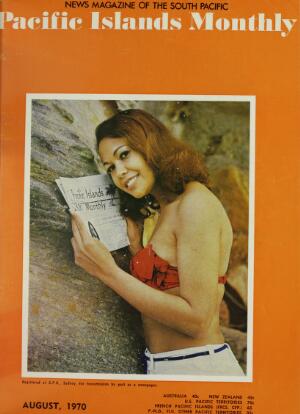
Our Cover
Lillian Tinsley is an Islands girl— she comes from Yule Island, in Papua —and this is why photographer Bruce Adams selected her to enhance a copy of the first issue of PIAA. PIM this month is almost twice Lillian's age, and this is our anniversary issue.
Advertisements & other items, pp. 2-16 (7 items)
August, 1970 Pacific Islands Month Lj
Anchor
F°* v .
the *
fl oH*
c 0 YEA RS
OVE r 5 tR O sTED h
*o** IH TH
Cl^ ,c
'.aND
brA iSL aHD s -
(jiltedpie
m
HOR
ANCHOR
FLOUR
MAINTOP HIGH PROTEIN
BISCUIT FLOURS AND WHEATMEALS
Gillespie flours are milled from selected high quality Australian wheats and are entoleted for purity. Their consistent high quality has made them the best-known, most asked-tor, brands of flour in the Islands. (Entoletion is a special purification process which reduces the risk of insect infection.)
GILLESPIE BROS. PTY. LTD.
HEAD OFFICE:
52 Union St., Pyrmont, Sydney, N.S.W. (G.P.O. Box 2518, Sydney, 2001).
Phone: 660-4933
CABLE ADDRESS:
“GILLESPIE",
Sydney and Brisbane
BRISBANE OFFICE:
Albion, Brisbane, Queensland. (P.O, Box 8, Albion, Brisbane, 4010).
Phone: 6-1121
<b % * N> O *
Here's a new
Shipping Date!
M.S. Taiyuan brings a new
Passenger-Cargo Service to the
South West Pacific and Australia
J.B. CHECK OUT THIS TRANSPORT DEAL! in the Pacific Area and very big on THE SOUTH WEST PACIFIC SERVICE OF f
THE CHINA NAVIGATION CO, VCN/
General Agents: SWIRE & GILCHRIST Pty. Ltd., 8 Spring St., Sydney, 2000.
Cargo Bookings: SYDNEY: 27-4701 • BRISBANE : 31-1 551 • MELBOURNE : 60-0381.
Agents in: MELBOURNE: P. & 0. Lines of Australia Pty. Ltd. BRISBANE: Wills Gilchrist & Sanderson Pty. Ltd. NOUMEA: Etablissements Ballande, Service Maritime. LAUTOKA/SUVA: Morris Hedstrom Ltd. PAPUA/NEW GUINEA: Steamships Trading Co. Ltd. KAVIENG & WEWAK * Burns Philp (N.G.) Ltd.
m s
THE WORLD'S LARGEST EARTHMOVING EQUIPMENT DISTRIBUTOR
services the South Pacific too!
PAPUA - NEW GUINEA • SOLOMONS • FIJI • NEW HEBRIDES • NEW CALEDONIA
BLACKWOOD HODGE (AOST.) PTY. LID.
CUMMINS DIESEL SALES & SERVICE (AOST.) PIY. LID.
TEREX
Rear dumps, single-engine and twinpower scrapers, crawler tractors, front end loaders. (Excluding New Caledonia, Fiji, and New Hebrides.) Diesel engines for marine, automotive and industrial uses.
P&H Mining shovels, truck cranes.
QIUUTY t SERVICE
SINCE 1114
FRANKLIN Loggers and skidders.
Cutting edges Hydraulic a ripper points. and logging rigging.
Power transmission equipment anc marine gears.
High-line logging equipment, and logging yarders. backhoes.
ORMD.
Medium and heavy duty road graders.
LAE BRANCH
AIRGORPS Rd. P.O. BOX 158. LAE. ’Phone: 2692 Cables: SUNTRACT
I
TRANSARC
rrp* jym-x
Industrial Gases
Comweld
Gas welding and cutting.
Plants, Rods and Fluxes, Flame cleaning, Flame hardening and flame heating equipment EMF Electric
Welding Equipment
Arc welding machines Automatic welding machines Automatic wires and fluxes Electrodes
Arnold-DeVilbiss spray
painting equipment
including spray guns, air filters and compressors, multi-purpose units with spray booths, and a full range of automatic equipment.
CIG FOR ALL
YOUR WELDING &
SPRAY FAINTING
EQUIPMENT
CIG
CIG supply centres throughout Papua-New Guinea
New Guinea LAE: CIG New Guinea Pty Ltd, Phone 2641
PORT MORESBY:
CIG New Guinea Pty Ltd, Boroko Phone 5 3870 MADANG: Madang Slipways Pty Ltd, RABAUL: Rabaul Metal Industries Pty Ltd, WEWAK; B & G Motors Pty Ltd, GOROKA: Collins and Leahy Pty Ltd.
KAINANTU: Kainantu Trading Co Ltd, KUNDIAWA: Collins & Leahy Pty Ltd,
MT. HAGEN:
Kala Motors Pty Ltd, CIG Fiji Ltd. Cnr. Vetaia & Nukuwatu Streets Lami Suva CG4380/70 SAM ARAL Belesana Slipways Pty Ltd, BANZ: Kamarl Coffee Plantation
LORENGAU:
Edgell 8- Whiteley Ltd, KIETA: Breckwoldt & Co (NG) Pty. Ltd,
Qrnott's Biscuits
in triple wrapped, tropical packs
m icVv Sco
COY 1 ®
BIS
fin# er '
IL Ai
Sco Arnott’s SCOTCH FINGER Biscuits.
A butter-rich, chunky biscuit with the true flavour of shortbread. m Arnott’s CHEESE JATZ Biscuits.
Crisp cracker biscuit with a fine cheese flavour perfect for entertaining. ... -a; * vr 03 Arnott’s SALTINE Biscuits.
Light, tangy, crisp cracker biscuit. . . perfect with salads, cheese, soup or eaten plain m me Bisect yOdf Arnott’s MILK ARROWROOT Biscuits.
A wholesome, nourishing biscuit especially suitable for children, but a favourite with all the family.
m m 4 pis c w\o
MonU
Arnott’s SAO Biscuits.
A light, crisp cracker biscuit. . . delicious with butter and cheese, ham, jam or other spreads.
Arnott’s MONTE CARLO Biscuits.
Crisp short biscuits, flavoured with pure honey and coconut, sandwiched with vanilla cream and raspberry jam. m
wSSSB®
Arnott’s SHREDDED WHEATMEAL Biscuits, A wholesome biscuit with the nutty flavour of crunchy whole wheatmeal.
Delicious plain or buttered. aB m Arnott’s NICE Biscuits.
A sweet plain short-texture biscuit sprinkled with fine sugar. Popular for morning tea.
There is no Substitute for
E 670
AV CONTENTS 50 MADE IN AUSTRALIA
Brymay
Waterproof matches
Greenlltes
Bright new label
and still the only matches in
the world that light when wet.
Greenlites are made for your part of the world.
They’re tropical matches —waterproof matches.
Ask for them.
MADE IN AUSTRALIA BY BRYANT & MAY
SM23P
CAPTURE THE
LOCAL COLOR
You’ll get true-to-life pictures every time with a Kodak Instamatic camera outfit. And, when the sun doesn’t shine, pop on a flashcube and throw a bright light on the subject.
The Kodak Instamatic 33 outfit comes with Kodak black-and-white film; the 133 and 233 color outfits with Kodacolor film. All contain everything you need for great picture taking a Kodak Instamatic camera, drop-in cartridge of Kodak film, flashcube, battery and instructions.
All Kodak Instamatic cameras can take color or black-and-white pictures; also color slides.
KODAK (Australasia) PTY. LTD. 379 George Street, SYDNEY. 2000.
Kcxtak dealers throughout the Islands.
Kodak
Hu f'L - Kodak Instamatic 233 Color Outfit K 2554
Today, the major components
for low-cost buildings
are made by...
* r m n w A ;V S * , Your Brownbuilt distributor is now a one-stop shop for your industrial building" and housing needs. Brownbuilt don’t just make one or two building components . . . they make the lot.
Cladding, decking, purlins, girts, wall panels, ceiling systems, feature gutters, U-Foam insulation and building panels . . . everything.
And they’re all made for each other.
Designed to fit together quickly and easily.
So your building’s up fast.
And remember, only Brownbuilt offers the protection of Colorarmor.
So next time you’re thinking of building ... or extending, call in and see your Brownbuilt distributor and save yourself a run-around.
Brownbuilt
LIMITED
Building Products Division
6 Brunker Road Chullora NSW 2190 Resident Representative JOHN DWYER Saraga Street Six Mile Port Moresby Telephone 53144
DISTRIBUTORS
Port Moresby Morobe Constructions Pty Limited John Stubbs & Sons (Papua) Limited D. C. Watkins Limited Fiji Reddy Construction Company (Fiji) Limited Narain Construction Company Limited Rabaul Rabaul Metal Industries Pty Limited Lae Lae Plumbing Limited Watkins (Overseas) Limited Madang Madang Building Supplies Mt. Hagen South Pacific Hardware Distributors Honiara Tischler Constructions Pty Limited ■ b Pit
Big new industry for the Territory
Now you can buy agricultural insecticides and weedicides made in the Territory!
The new ICI (N.G.) Pty. Ltd. plant at Lae is the first, and only, manufacturing plant in T.P.N.G. making and stocking a complete range of agricultural chemicals catering for the major part of the Territory’s needs.
It symbolises our confidence in the growth and prosperity of the Territory, ranks T.P.N.G. with the many countries where ICI has been first to recognise the scope of the future.
From now on, all Territorians can get full information on i T.l C t agricultural chemicals, ‘Visqueen’ polythene film, ammunition, explosives, swimming pool care, pharmaceuticals, and all general chemicals direct from ICI (N.G.) Pty. Ltd. at Lae.
Call us for immediate service!
ICI (N.G.) Pty. Ltd., Box 1105, Post Office, Lae.
Telephone: Lae 3301 Cables: ‘lmpkemix’.
ICI
A
great bunch
of flours.
Robert Hutchinson makes the greatest bunch of flours in the Pacific. Bakers’ flour.
Superlite cake and sponge flours.
Biscuit flour and cracker flour.
Wheatcn sharps and wheaten meal.
We’re particularly proud of our bunch of flours. So we have a technical advisory service to help you use them properly.
So next time you see a Robert Hutchinson flour (or even one of our Hutmill stock feeds), remember it’s just one of the bunch. m wm mr mm*
ROBERT
HUTCHINSON
LIMITED
the flour people
Hartington Street, Glenroy, Victoria, Australia. 3046. Telephone Melbourne 306 7261 «■<,<>.
1
Paris, Rome, Tokyo—
wherever the jet routes meet.
#1 ISA"}
Swesfflt
Peter Stuyvesant is there.
A wide new world of taste.
Rich choice tobaccos.
Miracle Filter — so much more to enjoy! * 1677 1597
OBA cC ° S
f S uou
RICH
S\ZE
king 0: •• The Internationa! Passport to Smoking Pleasure.
WORLD COPYRIGHT,
Stone-Chance
World's
largest range
of fight ana
sound
equipment
No one knows more about navigational aids than Stone- Chance. Whether for terminals, platforms, radio towers, off-shore obstructions, headlands, estuaries, islands or any other marine hazard, Stone-Chance have got total capabilitv . . . and the experience to go with it. And that combination can work for you.
There’s a free consultancy service to advise you on the oest system for your needs. There’s also a complete project service from installation through to commissioning and subsequent servicing and maintenance.
Stone-Chance navigational aids are operationally sophisticated and they do the job they’re designed for dependably.
We think that’s the most important consideration when vou’re protecting the massive capital investment involved in marine installations.
I ,ike to know more ? Send for our publications on short to medium range, and medium to long range navigational aids.
STONE-CHANCE NAVIGATIONAL AIDS
Stonc-Platt Australasia Pty. Ltd., 66 Helen Street, Sefton, N.SAV., Australia. 1. ZF 30 Lantern -1 lori/.ontal range up to 16 miles plus azimuth illumination. 2. Powertonc- Sound through 360° in horizontal plane—with down-sweep. 3. Diver—Glass fibre buoy also available with battery operated flashing light. 4. Gannet Channel marker buoy in glass fibre (other types available in steel). 5. Osprey 1 ,arge general purpose buoy in glass fibre (10 other types available in steel). 6. Power Beam Beacon—A variety of flashing characters by revolving lens for static installations. 7. Albatross —Directional beam leading: light. - ; :
MMM
m m
Balance
■«. :• ■■ m i v- ■ . w tuu osV* £ Sporty or sensible? Extras or economy? Or a smashing new sedan that lets you forget about
decisions like th[s-the Mazda 1300.
Look at it from any angle: speed and sporty style,
safety, extra economy.
Whatever it is you’re looking for in a car the Mazda 1300’s got it, and so much more.
A car for the whole family, for the years to come.
Mazda 1300.
mHAIDA ma SEDAN
From the world's most creative automaker Toyo Kogyo Ca,Ltd., Hiroshima, Japan
The Welcome
Additions.
r White Mushrogm Sauce 9 . \ Cheese Sauce White Sauce Brown Onion Sauce *
1
ACIFIC ISLANDS MONTHLY AUGUST, 1970
2
AUGUST, 1970 PACIFIC ISLANDS MONTHL
3
CIFIC ISLANDS MONTHLY AUGUST, 1970
4
AUGUST, 197 0 PACIFIC ISLANDS MONTH
10
AUGUST. 1970 PACIFIC ISLANDS MONTHL
Up Front
with the Editor
Some very attractive gifts, in the form of tributes from dis tinguished readers, were still coming into the PIM office when this 40th anniversary issue went to press.
You will find some of them below, others won’t now be published until next month, and still others you will find inside this issue, in our special anniversary supplement which begins on page 67. That supplement recalls how PIM was started 40 years ago by R. W. Robson, and it tells some thing of what we’ve attempted to do.
What I especially like about the tributes we’ve got is that they are not mere routine expressions of good will, using the hackneyed phrases.
Our readers tend to wax eloquent.
As you will see on p. 86, the Administrator of Norfolk Island decided he wanted to write us 1,000 words no less, about his thoughts on PIM. Professor A. H. K. Spate, of the Australian National University, breaks into blank verse. Many others have anecdotes to tell.
Surprise packages all.
One tribute you won’t find among the panel, but which I especially treasure, is a few words from that grand old Melanesian Missionary of the Solomons, Dr. C. E. Fox. They weren’t written for the anniversary issue; they were contained in a recent, personal letter to me, which mentions a number of subjects, and which was not written for publication.
I don’t think Dr. Fox will mind if I quote him as saying; “I write with deep gratitude for PIM, a truly splendid magazine and a help to us all. I lend it to leading young Solo mon Islanders. What a lot we owe to Robson for PIM.”
And what a lot we owe to Dr.
Fox, 92 in October!
Here are some of the latest tributes!
Premier of the Cook Islands, Mr.
Albert Henry: For better or for worse, pearls of wisdom are precisely what they are —rare and hard to come by. I there fore, do not for one moment imagine that anything I may say now is likely
to crystallise a dramatic change in the whole history of “Pacific Islands Monthly”. I should, however, like to congratulate your publication on its 40th anniversary and be assured PIM has my best wishes for another 40 years.
There is today so much strife and human suffering attributable directly to a lack of understanding between countries and peoples. I would most dislike to see this happening to Pacific Islanders. Any attempt, there fore, or any publication, such as yours, which strives to demolish all barriers prohibiting effective com munication or which seeks to build a bridge of understanding between Island territories, will always have my wholehearted support.
A publication must surely do more than merely inform. Man must be made to realise that his world is rapidly getting smaller, and his is but a brief sojourn on earth. More Islands territories are becoming independent. Let us, therefore, promote greater Pacific understand ing.
I enjoy reading in PIM what is happening in and around our part of the world. I am, however, at times disappointed with the lack of journal istic impartiality of some of your correspondents from the Cook Islands. Notwithstanding, I wish PIM all the best.
Acting President, Territorial As sembly of New Caledonia, Mr. Yann Celene Uregei; On the occasion of the 40th an niversary of PIM, I am happy to send you my good wishes for the successful continuation of your work.
We have always appreciated the objectivity and clarity with which you treat Caledonian affairs. We hope that you will be able to maintain your extensive coverage of the numerous aspects of Caledonian problems.
Likewise we appreciate the ap
port unity offered by PIM to get to know the problems of our Islander neighbours in the Pacific. With our best wishes and warm support, we wish you many more years ahead for PIM.
Australian Government Trade Com missioner for the Pacific Islands, Mrs.
F. Beryl Wilson; For forty years “PIM” has formed an important link between Australia and the Pacific Islands and between the various territories themselves.
Through its columns many Australian manufacturers gained their first export successes when Australian manufacturing was in its infancy.
A more sophisticated era has arrived as modern transportation re moves their former isolation. Rapid development in such things as mining, manufacturing and tourism are caus ing the various nations and territories of the Pacific to import a widening and increasingly complex range of goods.
This is a market attracting the keen interest of major trading nations throughout the world. Consequently Australian exporters will need to be on their mettle to retain their existing large market in the Pacific and to share in the exciting growth of the Islands.
Forty years of service by the “Pacific Islands Monthly” to Aus tralian exporters is ample testimony that the journal will continue to play an important role, not only in assist ing Australian exporters to maintain and extend their sales in the area in the years to come, but also in bring ing Australian and Pacific Islands interests closer together.
Governing director, Tait Group of Companies: Mr. C E. Tait: As, perhaps, one of the oldest of PIM readers and admirers, I am glad of the opportunity offered, on the occasion of your 40th anniversary, to mention the satisfaction I have enjoyed during the full term of your publication by reading the up-to-date news of the South Sea Islands.
This is news which would seldom, if ever, reach the inhabitants of other South Sea Isles, were it not for your monthly magazine.
Greatly appreciated and, in many instances, relied upon by the Islanders is your information regarding inter island air and shipping services, produce markets, etc. May l your monthly journal continue to prosper and bring news of interest to its readers, wherever they may be, so that when my own organisation
celebrates its centenary in just 20 years time, it will still wish to be a subscriber to PIM.
Managing Director, W. Kopsen & Co. Pty. Ltd., Mr. William Kyle Kopsen: W. Kopsen & Co., one of Aus tralia’s oldest and leading marine equipment distributing ( shipchandlers) joined PIM as one of the originals, by advertising in the earliest PIM editions.
Since that time this long and friendly association has continued and on behalf of this company, I must say a successful one to both.
PIM has allowed this marine com pany, as well as many other organisa tions, the wonderful opportunity to advertise their products directly to the people of the Pacific, backed by the additional interest for their readers of first-class editorial and newsworthy articles.
We, at W. Kopsen & Co., have been closely associated with the Pacific area ever since the founder of this company, William Gustaf Kopsen, established this close link after living in the Islands. He estab lished the original shipschandling firm of Smith & Kopsen in 1878, at Suva, with his partner Smith.
Chairman of the Steamship Trad ing Company Ltd., Mr. H. D.
Underwood: For 40 years “PIM” has been the one medium by which news, items of interest and comment from the many islands of the Pacific have been brought together into one publication.
This “family newsletter” of the Pacific has done excellent service during these years in keeping each “member” informed on events of common interest, their problems and how they have met them. To readers in Australia particularly it has presented a more knowledgeable and deeper understanding of events in the Pacific than would be available to them through daily press media.
I join “PIM” in celebrating its 40th anniversary and wish it con tinued success in the years to come.
Pacific Islands
Monthly
Established 1930; 40th Year of Publication.
Owned And Published By
Pacific Publications (Aust.) Pty. Ltd.,
29 Alberta St., Sydney, N.S.W., 2000.
Postal Address: G.P.O. BOX 3408, SYDNEY,
N.S.W., 2001.
Telegraphic Address: PACPUB, Sydney.
Telephones: 61-9197, 61-7101, 61-4369.
Chief Executives: Managing Director: R. W. Robson.
Executive Director/Publisher: Judy Tudor.
Executive Director/Business Manager: Selwyn Hughes.
Executive Director/Chief Editor: Stuart Inder.
Pacific Islands Monthly
Editor: Stuart Inder.
Advertising Manager: W. A. Gasnier.
Branch Offices
Melbourne: Newspaper House, 247 Collins St., Victoria, 3000. Tel.: 63-7053.
Fiji: Pacific Publications (Fiji) Ltd., Fiji Times Building, 20 Gordon Street, Suva. Tel.: 25601.
Fiji Times Office, Mayfair Building, Namoli Ave., LAUTOKA. Telex: 1144. Tel.: 60-422.
Papua-New Guinea: Pacific Publications (N.G.) Pty. Ltd. Representatives: PORT MORESBY, P.O.
Box 16; LAE, P.O. Box 227; RABAUL, Mr.
Steve Simpson, P.O. Box 433 (c/- Rabaul Photographic. Tel.; 2677).
Representatives
Queensland: Advertising—Beale Media Services, 232 St. Paul's Terrace, Fortitude Valley, Qld., 4006. Tel.; 51-5827.
New Zealand: General.—J. D. Whitcombe, C.P.O.
Box 2229, Queen St., Auckland. Tel.: 456056.
Advertising.—J. E. Sanders, P.O. Box 25-015, Auckland. Tel.: 583-563.
United Kingdom: S. R. Warman, Park House, 22 Park Street, Croydon, CR9 3NP. Tel.: 01-6884177.
H. A. Mackenzie, 4A Bloomsbury Square, London, W.C.I. Tel.; Holborn 3779.
Japan: Advertising—Universal Media Corpora tion, C.P.O, Box 46, Tokyo. Tel.; 666-3036.
Agents
All main trading firms and stores in the Pacific Islands.
Pacific Publications Pty. Ltd. is the Australian agent for THE FIJI TIMES.
Subscription Rates:
"Pacific Islands Monthly" is air-freighted to all subscribers and agents in the South Pacific; copies to other areas go by surface mail.
Australia (incl. Lord Howe Is., and Thursday Is.): $4.50 Aust.; Papua-New Guinea, Norfolk Is., Nauru, 8.5.1., G. & E, Group, Tonga and New Hebrides: $4.00 Aust.; New Zealand: $5.25 NZ; Cook Is., Niue and Western Samoa: $4.00 (local currency); Fiji $4.00 (local currency); American Samoa and U.S. Pacific Territories: $B.OO (local currency); French Pacific Territories —New Caledonia, Tahiti, etc.: 750 French Pacific francs; United States of America: $9.00 U.S.; United Kingdom and elsewhere: £2/15/- Stg.
Airmail postage to USA, UK and elsewhere is additional.
Copyright ©, 1970, Pacific Publication* (Aust.) Pty. Ltd.
Advertisements & other items, p. 18 (1 item)
Guinea
m
A magazine
of fact
and ideas !
NEW
GUINEA
AND AUSTRALIA, THE PACIFIC
AND SOUTH-EAST ASIA
July issue, now on sale, discusses the Bougainville situation.
75c A COPY
At your bookstore or from: The Sydney & Melbourne Publishing Co. Pty. Ltd. 29 Alberta St., Sydney, N.S.W. 2000. (Postal Address; Box 1813, 6.P.0.
Sydney, N.S.W., 2001.)
In This Issue
Vol. 41. No. 8, August, 1970
General
New air services 41, 46 PIM anniversary 67 Battleground South Pacific 106
American Samoa
George Wray's air service 63 Volcanoes below the sea 117
Cook Islands
Killer dogs 25 New jetstrip 27
Bibliography 106
Starfish catching contest 151
Fiji
Palm toddy 20 Plans for independence 21 Games hero 21 Land speculators 22 Student immigration 29 Visitor who didn't forget 32 New name for Fiji Airways 46 Multi-million tourist resort 63 Tourist catering plans 64 Old military fort 65 Trade policy 127 Beef industry 127 Building boom 129 Oil palm 129
Prospecting 130 "Tui" Johnson retires 131 "Colourful" guest houses 149
French Polynesia
Castaways 25 Future of The Bomb 30 South Pacific Games 37
Gilbert And Ellice Islands
Robati's miraculous survival 25 Future of "bubuti" 31 "Migrations, Myth and Magic" 106 Containerisation 113 "Teraka's" future 116
Lord Howe
Ship changes 117
New Caledonia
Military developments 30 South Pacific Games 37 John Griffin's report 51 Fishing techniques 11l Freight rises 116 Battle for "Bulletin" 126 Bakery sold 127 Fighting inflation 130 Nestles' campaign 132
New Hebrides
New Hebrides Airways 44 Manganese again 126
Norfolk Island
Open verdict on fire 32 Administrator writes on PIM 86
Papua-New Guinea
ANZAAS conference 19 Mr, Gorton's visit 23 Takeover of Patair 39 Profile —Herbert Kienzle 41 Bougainville developments 128 Japanese parliamentary mission 147
Solomon Islands
Governing Council meets 18 Christmas stamp 31 Education for manpower 35 Rev. J. R. Metcalfe's papers 106 Boat building company 127
Tonga
Vavau airfield 26 Missing parcels 30 Princess Siuilikutapu's marriage ... 33 Record budget 131 Oil exploration 131
U.S. Trust Territory
Political status 27 New ship route 115
Western Samoa
Air crash inquiry 25 Trade mission 127
DEPARTMENTS; Up Front with the Editor, 15; Inside New Guinea, with John Ryan, 28; Editor's Mailbag, 30; Tropicalities, 31; Footnotes, with Percy Chatter ton, 38; From the Islands Press, 61; Magazine Section, 91; Yesterday, 101; Book Reviews, 104; Shipping, 111; Cruising Yachts, 121; People, 125; Business and Development, 126; Produce Prices, 133; Shipping and Airways Schedules, 135; Deaths, 141; Advertisers' Index, 142.
Pacific Islands Monthly
The Solomons has 'its own thing'— but it's not 'Goodbye Britain'
From DAVID KEATING, in Honiara Outside stood a small crowd, mostly Solomon Islanders, watching the police parade; inside, public servants and their wives, members’ wives, and local dignatories tried to find somewhere to sit in the small public gallery—some in the end had to sit on the floor. They were all waiting for the High Commissioner to arrive at the High Court to open the first meeting of the new Governing Council; and at 9 a.m., July 15, the Solomon Islands took a significant step forward.
The significant step is the fact that the Governing Council has 17 elected members, 6 Public Service members and 3 ex-officio Public Service mem bers and, therefore, for the first time the elected members have a majority.
After the members had been sworn in, the High Commissioner, Sir Michael Gass, addressed the House.
His speech reviewed existing aspects of life in the Solomons and the changes there had been. He referred to the shift of power from Public Service members to elected members and stressed the new responsibility of elected members.
Reference was also made to the financial position of the Solomons.
In 1970 grant in aid from Britain will amount to $2.3 million and capital aid will amount to $2.6 million. On this point Sir Michael said. “I am sure, however, that it will be agreed that we should aim to match our political development with the eventual eradication of the grant in aid, and eventually of capital aid.
“There can be no true political self government without financial indepen dence, and I would hope that by the time the country comes of age politically, it will be meeting the full costs of the recurrent budget from its own revenue, even if this should require a retrenchment in some services.” He added that the answer lay in increased productivity and that the greatest effort must be made in the field of economic development.
While everyone will agree that economic development is the priority, not everyone will accept the concept that economic viability is a pre requisite of self-goverment or inde pendence, and certainly any sug
gestion that any service should be cut back will not be accepted by Solomon Islanders. Indeed it’s hard to imagine what service could be held back, let alone cut back.
The idea of financial independence being established before political independence may have been the aim of the British Government in the past with its former territories, but while financial independence is, of course, desirable, the trend with developing countries now seems to follow the American idea of achieving political independence with the continuance of financial aid if necessary.
Although Sir Michael said that Britain could not be expected to go on paying for ever, the Solomons occupy too important a position in the Pacific for Britain or more likely, Australia, to run the risk of losing its influence over these islands for a mere $5 million a year.
The Governing Council is now in existence, but what do the local people think of this new constitutional step? What is the Governing Council going to do? Will it just create plenty of discussion and little action? or will it live up to the faith and hope that everyone is putting into it?
In his speech Sir Michael said it was an opportunity for the growth of a true national identity. Will this particular opportunity be taken? Or will island rivalries continue or even become exaggerated?
Quite clearly the ordinary Solomon Islanders realise the significant factor of the new Governing Council, namely a majority of the elected members over the official members.
So far as Malaita is concerned, they consider that at last they have got what they wanted in the Marching Rule days.
It’s early yet to say what effect the Governing Council will have. No doubt to begin with there will be a few teething troubles as everyone learns to adjust to this new system.
If, however, the Governing Council does not have any practical effect, the High Commissioner has power to pass or veto any legislation without it. This power can also be applied if the council goes against the advice of the High Commissioner. If this power were to be exercised it might well be the end of the Governing Council and some other form of government would have to be sought.
Presumably, therefore, it will only be used in an emergency, if at all.
At the moment everyone has great hopes that it will be a real success and the Public Service is obviously
doing all it can to help. The Public Service appears to have accepted that it will be working for Governing Council, not with it or against it.
One fear is that as the local councils have little authority, small administrative local matters will have to be dealt with by the Governing Council and that this will increase insular attitudes, so that members will be more concerned with their own constituencies than the Solomons as a whole.
The criticism has already been made that there is no formulated policy for the take-over of admin istrative work from the district offices by the local councils. Ultimately the president of the local council should be a more important figure than the district commissioner and while this may be the declared intention of the government, no definite steps have been decided upon towards achieving it.
In other developing countries tribal rivalries have increased as self-gov ernment progressed. While one can not expect tribal or island rivalries to vanish overnight in the Solomons, it would be a decided benefit if small local issues could be kept local. At the present moment the local councils have so little power and finance that decisions on many minor matters, have to be referred to the government through the district offices. Perhaps the Governing Council will see to it that the local councils have a part to play in dealing with local issues.
The success of the Governing Council will to a great extent depend on the personalites in it. More than normal interest has been shown in the election of members. Registered voters increased from 39,101 to 51,904 and the number of persons voting increased from 17,689 to 26,136 making a 3 per cent, increase in the vote to 55.40 per cent, of the electorate.
Only one, European was elected, Archdeacon Peter Thompson for North Central Malaita, who got in with a handsome majority of nearly 75 per cent, of the vote. He was very much the exception; elsewhere the /ote tended to be against Europeans 3r part-Europeans, although Joseph Bryan, a candidate for East Guadal canal, a European planter, only lost by some 20 votes. The successful, candidate there was Leone Laku.
On the whole there were few elec ion surprises. Some were surprised Jiat Archdeacon Kiva for Savo, the Rmssells, and Gela was elected, because of the small part he played when a member of the former Legislative Council, and some were surprised that Jack Campbell, the
former member for Makira, in the Legislative Council did not stand.
The fact that his cousin Albert Kuper stood, may have influenced him, for fear of a split vote.
The membership of the council is not settled yet. Joseph Bryan has lodged an election petition alleging that the votes of two polling stations were rejected because they had been marked either by the presiding officer or the polling assistant. He is seeking a new election. The petition is due to be heard in August after the present session of the council, which will leave sufficient time for a fresh election if necessary before the next session.
One member who is the subject of much speculation is Peter Salaka, no doubt because he is the member for Honiara. At the moment he seems a
lone wolf and is very much an un known quantity. One of his promises to the electorate was to double the wages of unclassified workers. Un classified workers receive between $l4 to $lB per month and, while other elected members might not accept a 100 per cent, increase, they would probably back a 30 per cent, increase.
At the moment it is up to Peter Salaka to start this particular ball rolling.
Other issues in the offing are: a motion to revoke the charges for medical attention and hospital treat ment of public patients. New rules creating charges for these services came into force on July 1. It looks as though this motion will be success ful; and a bill amending the Mining Ordinance to provide for up to 5
per cent, of royalties to be paid too landowners instead of local councils..* Other likely topics will no doubt!' be living conditions, health, timben royalties, resettlement schemes, legislation relating to native landb definition of tribal areas and educa-j tion.
The three elected members whoo have been chosen chairmen of three oft the five committees (David Kausimaea —Natural Resources, Gordon Siamas —Communications and Works, and) William Betu—Education and Social* Welfare) are considered to be welll chosen, and with these men, thea general good calibre of the elected) members and the support of thoi Public Service, the new Governing Council has every opportunity to work well and live up to the hopes? of everyone.
Council Chairmen
In the new Governing Council there are four committees (each making virtually “cabinet” decisions). Chairman of each sits on the Finance Committee.
The chairmen are, Communica tions and Works, Mr. Gordon Siama; Education and Social Welfare, Mr. Willie Betu; Health and Internal Affairs, Mr. Roy Davies; Natural Resources, Mr.
D. Kausimae. Mr. Mariano Kelesi, Father Peter Thompson and Mr. Solomon Mamaloni, are also on the Finance Committee, whose chairman is the Financial Secretary, Mr. Tom Russell.
Advertisements & other items, p. 21 (1 item)
It's a scientific
m
papua&newguinea:
papua&newguinea:
wwwwwwwwwwwww mmM m
PAPUA&NEWGUINEA
nilMMMItf lIMIMM
PAPUA&NEWGUINEA
It's a scientific
New Guinea
The scientific spotlight will be focussed in August on Port Moresby, where more than 1,000 scientists will be attending the 42nd congress of the Australian and New Zealand Association for the Advancement of Science.
This is the first time the territory has had that honour—the result of many years ' work by many people, which began with proposals by the late G. A. V. Stanley. ANZAAS president is Professor S. W.
Carey, now Professor of Geology at the University of Tasmania, and a former long-time territorian, who has also worked hard to get the congress to New Guinea.
The P-NG Society is sponsoring the congress and host is the University of P-NG. “Science in Emergent Countries” is the congress theme and a big number of the papers to be delivered have a New Guinea or Islands bids.
Of significance will be a symposium on the conservation of natural resources. There will be a look at the political questions involved in conservation.
One of the more unusual topics will be the study of linguistics as a means of understanding the evolution of the pattern of human settlement in P-NG.
Altogether, there will be four separate symposia concentrating on collating a wide slab of knowledge.
Of the many important questions to be discussed will be the need for scientific manpower in emergent countries and the necessity for a well-defined national policy for science and technology.
A second intersection symposium will deal with the human environment in the tropics, with a progressive look at the adaption of man to climate, settlement and agricultural systems.
Disciplines in which papers will be introduced include physics, engineering, town planning, zoology, economics and history.
A special set of P-NG stamps is being issued to mark the congress. They feature four men of science involved in the study of New Guinea—sc, Nickolaj Miklouho-Maclay, scientist, explorer: 10c—Bronislaw Malinowski, anthropologist- 15c—Tommaso Salvador!, ornithologist; R. R. Schlechter, botanist.
'Toddy please, barmaid!'
From VIJENDRA KUMAR, in Fiji Fiji drinkers are being introduced to a new mildly alcoholic beverage—palm toddy.
The liquid is the bitter-sweet sap extracted from a wild variety of date palms growing in large numbers at Nadi, just a couple of miles away from the airport.
A 61-year old jack-of-all-trades, Mr. Dayal Bhola, is tapping them for a small Suva-based company which sees a bright market for the drink, both in Fiji and in other Pacific territories. Mr. Bhola came to Fiji as an indentured labourer while still in his teens. At various times in his life, he worked as a restaurant keeper, taxi driver, odd-job man, market-vendor, until somebody found out he possessed the art of tapping palms for toddy.
A frail-looking, lean and white-headed man, but with plenty of vigour still in him, he scales a 20-ft tall palm tree with the ease and grace of a chimpanzee, even though they are covered in needle-like spikes.
“My father and the rest of my folk back in India were experts at toddy-tapping. I learnt the art from them but never had occasion to use it in Fiji until now,” he told me when I met him last month.
He showed me the simple trick of extracting the sap.
Armed with a double-edged chisel, a sharp-edged cane knife, and a plastic can about the size of a petrol container, hooked on his belt, he strapped a rubber hose around his waist and then looped it around the tree-trunk. He scaled a 12-ft high palm easily. See right.
Just below the foliage, he scraped out a “tap” with the chisel. As the whitish liquid began trickling out, he cut two dry leaves from one of the fronds and improvised a funnel out of them. He inserted the funnel to the tap so that the sap flowed through it into the plastic can which he tied around the stem.
This finished his work for the time being. After 24 hours, he and his two assistants would remove the can, containing about a gallon of sap or toddy.
“We work an average of 15 palms a day, and some times we collect about 10 gallons of toddy every morning,” Mr. Bhola told me.
He gave me a bottle of freshly-tapped toddy to taste.
I found it very pleasant. It tasted somewhat like coconut water but bitter-sweet, like yoghurt. I was
told it had the same alcoholic content as beer, bin after downing the whole bottle in two or three largs swigs, I still carried a clear head on my shoulders* However, Mr. Bhola assured me that the drink became very potent after it fermented.
The palm-tapping venture has been launched be Mr. Venilal Morris, a printer and merchant, and Mi] Jamnadas Daybhai, both of Suva. Buoyed by then initial success, they are planning to start exportinn toddy to other Pacific islands and territories. The comr pany, named Fiji Toddy Company, has already mads arrangements to get two expert tappers from Indisj They would train local people.
Marketing the toddy at $2.10 per gallon, Mr. Morrn was hopeful of putting up a factory after a few yearn depending on the success of the venture. Nobodb knows who brought the first palm to Fiji, but thee have been long established.
Everything's sweet (including sugar)
as Fiji independence nears
Prom a Suva correspondent On July 20, a barely-noticeable paragraph appeared in The Fiji Times. It gave notice that the "iji Independence Bill, giving Fiji fully responsible status within the Commonwealth, had just passed ts committee and report stages without amendment in the House of Commons and been given an un ipposed third reading.
Just as well, because the same day t was reported that Fiji’s new tational flag, to be raised on October 0, was already on order from Aus ralia and Japan. In addition to ,024 flags in the three large sizes, ome 200,000 small hand-waving ags, eight inches by four inches, ave been ordered.
Plans for independence celebrations re proceeding apace, under the hairmanship of Ratu Penaia Ganilau.
Tie tentative programme includes isits to Ovalau, Vanua Levu and le Western Division by the Queen’s jpresentative, who will be Prince Charles, heir to the Throne. (After rards he will visit the GEIC).
The preliminary programme pro ides for the royal representative to rrive at Nadi on October 9 and fly ) Nausori the same day. Visits to le civic centres and Albert Park >r lavish Indian and Fijian welcom ig ceremonies are envisaged and the iji Military Forces will beat retreat id lower the Union Jack in the irk at sunset.
No flags will fly until the next lorning when the new air-force ue Fiji flag will be ceremonially listed at 10 o’clock.
Fijian and Indian entertainment ill follow the flag-raising. Albert ark is to be the venue for a festival : youth in the afternoon and for i Islands night in the evening. On ctober 11, a thanksgiving service r all denominations will be held in e park.
Sports events are scheduled for e afternoon of October 11 and the md of the Fiji Police Force will ve a concert in the Botanical ardens that night. Indian concerts e also planned.
On the Cession Day holiday, ctober 12, the programme provides r the young Prince Charles to sit Levuka, where the Deed of cssion was signed almost 100 years ;o.
The tiny town will be bursting the seams with visitors from :arby islands and descendants of ose early chiefs who signed the
deed, placing Fiji under the protec tion of Queen Victoria. For outside visitors however, there’ll be little chance of accommodation, for the tourist tide hasn’t reached Levuka yet.
The itinerary provides for the royal visitor to go to Labasa, Matei and Savusavu on October 13 and leave Fiji on October 15 after visiting the Western Division.
The Suva Chamber of Commerce has asked the organising committee for as much information as possible about the form and size of the celebrations, so that businessmen can go ahead with plans for decorating their premises.
Hotels are preparing themselves for maximum bookings, particularly in view of the fact that the 10th Fiji Tourism Convention will be held from October 7 to 9 at Korolevu.
Several hundred people will be gathered for that and will un doubtedly stay on for the celebra tions.
The Indian community will take a leading part in the entertainment programme on and around October 10—and on October 9, 20 minutes have been set aside for Indian girls
to garland the royal visitor and the Governor, Sir Robert Foster.
After a Fijian meke lasting about three-quarters of an hour, a further 35 minutes will be available for wel coming entertainment by Indian people.
Performances by Indian school children, the Indian concert at Albert Park and Indian entertain ment after a rugby match on October 12 are also being arranged.
Mr. Ram Charitra, who was nominated to the organising com mittee by the Leader of the Op position, Mr. S. M. Koya, is in charge of organising the Indian con tribution to the October 10 celebra tions.
The most ominous ripple on Fiji’s political pond in July was in sugar country, where farmers had been refusing to cut cane on Sundays for some weeks. Some young canecutters in the Nadi district were reported to be demanding double rates of pay for Sunday harvesting despite a joint call by the Chief Minister, Ratu Sir Kamisese Mara and the Leader of the Opposition, Mr. S. M. Koya, to cut cane on the Sabbath.
The Chief Minister was reported to have told the farmers to “cut every stick of cane and deliver it to the mill, so when the time comes to buy the mill you will have some money in your pocket”.
The Sunday harvesting issue was said to be linked with elections on July 8 to the Lautoka Sugar Advisory Council, which resulted in National Federation Party members winning seven out of eight nominations.
Only one candidate sponsored by the Alliance Cane Contract Com mittee was successful.
The names were to be submitted to the Governor, who would select four of the nominees for a three year appointment to the council.
By the end of July, the South Pacific Sugar Mills reported, the majority of farmers were back harvesting cane on Sundays. “Only a few small pressure groups, in places
like Lambasa, are not,” said a spokesman.
During the second week in July, Fiji’s four sugar mills achieved the highest ever tonnage of cane crushed in one week in the history of the country’s sugar industry. The total was 100,691 tons—over 7,000 tons more than the previous highest total, set in September, 1968.
Common roll showed its head above the presently peaceful' surface of the pond. Like the iceberg, nine tenths of the controversy is hidden below.
At the annual convention at Nadi of the National Federation Party, leader, Mr. Koya, urged patience on common roll. The advocates of common roll had waited patiently for many years—surely they could now wait a few more years for its introduction, he urged.
Mr. Koya said advocates had to realise that in a complex society such as Fiji’s and in the context of present political conditions in Fiji, it was virtually impossible to obtain ac ceptance of common roll by the NFP’s political opponents.
A common roll could become a reality and a viable proposition, and a successful method of election, only if significant numbers of Fijians accepted it. Mr. Koya said that the number of Fijians did not necessarily have to be a majority.
He told delegates that “having regard to the national good and Fiji’s political future, I have already declared that it was not the intention of the National Federation Party to impose this system of election on our Fijian people”.
In the future, the party intended to maintain its party campaign and obtain acceptance of common roll elections by persuasion.
“The other side has not closed its door on us in this vital question and is prepared to continue dialogue with us on the subject,” he said.
A government team led by the Chief Minister opened talks with Suva City Council about the common roll issue on July 21. The statement issued after the meeting gave little away, but said that the council would consider the matter further.
More talks would follow.
At a previous meeting, all mem mers except NFP councillors —who did not take part in the debate— unanimously agreed to reject the principle of common roll.
The Lautoka Town Council decided to inform the Ministry for Local Government and Fijian Affairs that it no longer stood by its 1966 resolution calling for common roll elections.
Saimoni, Sth. Pacific
Lone Games Hero
Saimoni Tamani, of Fiji, took nearly two seconds off his previous best time to take an inspired bronze medal in the 400 m. at the Edinburgh Common wealth Games in July. Saimoni, Fiji’s only athletics competitor, collapsed after crossing the tape in 45.8 seconds. At the Port Moresby Games in 1969 he won the 400 m. in 48.85. Bowls teams from Fiji and Papua-New Guinea both finished well down the table at Edinburgh.
The next Commonwealth Games, in 1974, will be in
Christchurch, NZ.
Advertisements & other items, p. 23 (1 item)
21
ACIFIC ISLANDS MONTHLY AUGUST, 1970
Fiji land speculators
come under attack
From Sue Wendt in Suva In Suva these days real estate deals have to be big, to be worthr a mention—and by “big” I mean BIG. People are talking in millions, nothing less, and the fashionable thing now is something with at Fijian flavour.
In July alone—no, within the first two weeks of July—there was news of an agreement which could mean $300,000 a year for Fijian land owners at Nadi Bay; a proposal to develop a multi-million dollar self sufficient island resort on Mana Island; rumours that the money making Trade winds Hotel in Suva was about to be sold to Americans, along with the not-so-successful Hotel Isa Lei and the Northern Hotel chain, plus half-share in The Fijian (what a takeover THAT would be); confirmation that the Paradise Beach resort on the Coral Coast had been bought as a camp-site for workers involved in the huge Deuba develop ment, and, as if to justify all this joyful speculation, a prediction from the Boeing Corporation that Fiji might expect 200,000 stop-over visitors in 1975.
In another move, a business alli ance was formed between two com panies which own land at Natadola Beach, on the Viti Levu coast. And the plan to develop the whole Nata dola area as a tourist resort of five or six hotels was that much further ahead.
Everyone is talking in millions of dollars; the stream of overseas specu lators, with its sprinkling of genuine buyers, has widened to a flood. I was talking to a man in the Grand Pacific Hotel the other night and he said HIS client had £2 million to spend.
But he didn’t want concrete jungles, he wanted something with a Fijian flavour. It’s fashionable to say that in Fiji, just now. And sensible.
The Mana Island development is proposed by an Australian syndicate which has obtained a six-month option on a 99-year lease. The option is held in the names of Mr. J. Clarke and Mr. W. Sinclair, both of Sydney, but there are others, including a Peakhurst publican, involved.
It’s proposed to build the resort in three stages, the first involving 150 rooms, the second between 300 and 450 and the third stage combining the two.
Initial expenditure, said Mr. Clarke,
would be $1 million. “But the atmos~{ phere of Mana, which is 22 milesg; from Nadi Beach, will always bea maintained,” he added. See p. 63.
An agreement which could meanti a $300,000 annual windfall for Fijiann landowners involves Denarau Islandb in Nadi Bay and the adjacent islandsaJ of Wadigisewa, Wadigi, Nacevavou„i Vunarara, Vunasili, Vavoce an db Vaquimoto.
It is reported to have been signedb between the American-backed Com-i mercial Investment Properties Ltd.,,, registered in Fiji, and of the land-owning units of theses islands.
The Roko Tui Ba, Ratu Napolioniii Dawai, hailed the agreement as “ae golden eagle that has landed on Nadi!
Bay”. And well he might.
Other main points include: • Rentals based on $2OO per yearn per acre to apply until the end off the second year of operation for thesi first two hotels built. • After that, rentals to be 2i pen; cent, of the gross receipts, subject tos a maximum of $150,000 per year, om the combined gross proceeds of the hotels. • If a third hotel is built, thea. rental at the end of its second yearn of operation is to be H per cent, ofi* gross receipts, with a maximumrr limitation of $40,000. • If any more hotels are built th©. rental, after the end of second yearn of operation, to be 2 per cent, ofic gross receipts, subject to a 1 imitations of $30,000 per year per hotel.
The agreement also provides foie the revaluation of unimproved land>i in the lease area every 10th yean Rentals for the first 10 years hav©\ been based on a valuation of $4,000( an acre.
He added that the terms were ex x ceptional and should not be takers as a yardstick for future leasing otc Fijian-owned land.
In the agreement, Commercial Inn vestment Properties is believed to] have undertaken to lease the islandsb for a rental of $2OO per acre pera year. But $lOO of the rent for unn
developed areas will be put aside for options on shares in companies tak ing part in the development of the islands.
The agreement also calls for the granting of 5 per cent, of all stock carrying the right to participate in profits in companies developing the areas.
In a series of articles on land transactions in the Fiji Times in July, it was estimated that some 25,000 to 30,000 acres of freehold Fiji land had been snapped up by overseas in vestors since the land rush really began three years ago.
Related to the total amount of free hold land—some 446,000 acres— this makes a fairly significant hole.
Also, the land bought tends to be the land with the greatest money jarning potential.
An editorial in the Fiji Times pre licted that some of the land pur chases would result in some serious lamage to Fiji’s economy, because hey had been conducted by specu ators who merely trade in options )r in land bought cheaply, without idding anything to the productivity )f the areas involved.
Dealers in city properties also :ame under attack. The actions of ome have been the cause of spiral ing rents, which were already caus ng hardship among Suva families.
It’s not unusual for executive-level iomes to be $4OO a month in well seated suburbs; the rent for small, wo-bedroomed flats is $7O and up.
I home on the main road with a iew of Suva Harbour is currently ar sale for $30,000. It would fetch ttle more than half that in Aus ralia).
But the boom-time for speculators lay not last much longer, for the amblings of discontent have reached egCo; and the Minister of Finance, Ir. Wes Barrett, has declared verbal ar on “get-rich-quick speculators •om overseas who have no interest i the advancement of the country.”
The Minister for Natural Re lurces, Mr. D. W. Brown, has ad ised Legislative Council that the iew Zealand Land Settlement pro motion and Land Acquisition mendment Act is being studied.
The government would decide how arts of the act may be adapted to lit Fiji’s needs, Mr. Brown assured ic House.
The act—said to have stopped eculation completely—r estr i c t s rge-scale buying of land to residents : New Zealand or companies which e at least 75 per cent. New Zea nd-controlled. The final say about e sale of scenic and coastal areas ;s with the Land Valuation Court.
Welcome Mr. Gorton, sir. . .Go home, Gorton!
From JOHN RYAN, in Port Moresby Australia’s Labour Opposition leader, Gough Whitlam, was in New Guinea December-January for 14 days, and promised self government in 1972 and independence in 1976 if he became Aus tralia’s Prime Minister.
Early last month, Prime Minister, John Grey Gorton, toured for six days and promised: • More territory control, with Canberra to begin taking a back seat (perhaps because the new Admin istrator, L. W. Johnson, is a very strong-willed man, and would brook no interference from Canberra by retiring Administrator D. O. Hay). • More local power for the six elected native members of parliament with ministerial rank in the Admin istrator’s Executive Council. • Significantly greater local con trol over budget-making especially recurrent expenditure and minor works money. • A spokesman in parliament for the Administrator’s Executive Council. • Conscious attempts by the Aus tralian Federal Executive Council and the Governor-General, to
exercise even less the Canberra veto over legislation from the territory. • For Ministerial Members of Parliament, much greater depart mental and portfolio responsibility for education, public health, tourism, co-operatives, business advisory services, workers’ compensation, industrial training, posts and tele graphs, territory revenue including taxation, price control, coastal ship ping, civil defence, corrective institu tions, registration of customary land, land-use, leasing of land, town planning and urban development.
To try to counter Whitlam’s barn storming tour in January, Gorton in July had to make as many genuine promises as possible—without cutting across the planning of the territory’s Parliamentary Select Comimttee on Constitutional and Political Develop ment. In fact, Gorton was told politely before coming to New
Australian Prime Minister John Gorton being greeted in Port Moresby in July by Administrator David Hay, Mrs. Hay and Territories Minister C. E. Barnes.
Guinea, that he’d better keep off the constitutional grass.
PM Gorton warned the territory that Australia —forking out something like SAI3O million for New Guinea in 1970-71—will go on holding a fairly tight rein . . . “The authority which we wish and must at this stage retain final authority, are the judiciary, the enforcement of law and order, internal security, external affairs, external trade, and of large scale development projects in agri culture, forestry, transportation . . . in those things that make up the five year development plan of which we are now some half-way through, and which will for the most part, be financed by the Australian taxpayer rather than ... the territory.”
In his Port Moresby policy speech before a four-day flying tour of the Highlands and the Rabaul and Bougainville troublespots, PM Gorton described the announced developments as “very significant steps forward along the road towards transferring power to the representative members of the territory ...”
On the question of those all-im portant Australian dollars for New
Guinea: “For the present and fore seeable future, we intend to provide that assistance at least, which we provide now [$A 122,600,000 in 1969-70]”.
The pace of change?—“. . . I know, in some areas these advances will be thought of as going too fast and which I know, in other areas of the territory, will be thought of as not going far enough . . . but, looked at from both ends, are necessary steps towards a future which must, at some time, hold full internal self government and full independence.”
Gorton refused to set a target-date: “I believe it against all logic and all sense to put a timetable on this.
We don’t want to remain in the ter ritory one week, against the wishes of the majority of its people.
“We don’t think we ought to get out of the territory against the wish of the majority of its people. Wc don’t want to rule any people, with out their consent.
“We don’t think it proper to move out, and possibly help a vocal minority rule of majority without that majority’s consent.”
Predictably, Port Moresby’s urban
and native academic elite press* hard for timetables and early se: government, but the Prime Minis! carefully avoided anything vague like a promise or a hint.
In the Highlands, he was pn dictably greeted with appeals ft Australia to ignore the coastal ta about self-government.
In the Islands (New Britain at Bougainville) the anti-Australia Mataungans gave him a boistero>< cat-calling reception; and on Bougai ville, spokesmen at a public meeti asked him (and he refused) for official referendum to let Bouga£ ville’s 75,000 villagers decide whetH they’ll quit the rest of New Gumi join the Solomons or become republic.
Only one man asked for s© government in 1972: Pangu Pai (immediate home-rule) member, K Lus, MHA, but much of the strenjj of his appeal was lost when he 1 came involved in a scuffle with poll as PM Gorton left the area.
• See, "Inside New Guinea", 28, and "Footnotes", p. 38.
Demonstrators at Port Moresby air[?] have a different kind of welcome for tt[?] Prime Minister. They were a minorii[?] Photos: Chin H. Me[?]
Advertisements & other items, pp. 25-26 (2 items)
23
ACIFIC ISLANDS MONTHLY AUGUST, 1970
. . . Go home, Gorton!
24
AUGUST, 1970 PACIFIC ISLANDS MONTH LI
42 days and 1,500 miles
in a drifting canoe
For the second time this year the people of French Polynesia have had proof that a boat is not necessarily lost if it disappears for a period in the vast, empty surrounding waters. And the Gil bertese people have just learned, with joy, that one of their number has survived 42 days at sea in a canoe which drifted 1,520 miles.
The marathon drifter was Robati Teinamati, 50, married with one daughter, chief councillor of Onotoa Island, Southern Gilberts. He was blown off course while fishing in an 8 ft canoe on April 23, and 42 days later was blown to Tanga Islands off New Ireland, New Guinea. From there he went to Rabaul, where his story was told to Gilbertese students at Chanel College, Kokopo.
He said he survived by catching Bsh, and drinking fish blood. When he first ran out of the water he had brought, he plucked the eyeballs of a sword fish he had caught, “drinking ihem ravenously”, and then “fell asleep, satisfied and grateful for my hck”.
“After a few days in the ocean,” ae said, “I was unable to tell the lays of the week. Nevertheless I vas counting the number of days )n a piece of string. Since the first )f the storm in which I was carried iway, there had not been a drop )f rain. I started fishing again and :aught a medium sized shark. I tabbed it with the knife and luenched my thirst with its blood.
“My main problem was to sleep n the night when it was fine, but if t was not, I had to keep awake to tiake sure everything went well with ny canoe. . . .”
He had some bizarre adventures. )ne evening he nearly capsized /hen a killer shark came up under be boat. Although very weak he it down a line and the shark took 1 and towed the canoe until its death, lobati then drank its blood and ate be flesh. Another time the boat ctually capsized after hitting a large sh and he nearly lost the craft, uckily he hung onto the sail which ad attached itself to the canoe and e was able to save both.
Some time after that an 18 ft 'hale actually leapt over the canoe, fe found it was not playing games ut wanted a small fish near the oaL He gave it some shark meat nd it went away apparently satisfied.
Later: “I watched the moon by ight and observed that I must have
been at sea a month or more. Dur ing one night I observed the light of a ship but very far away. I saw ships passing about four times but once again they were on the edge of the horizon. . . .
“During the night my canoe was hit by a big fish. I noticed the craft was sinking slowly. Luckily I felt the damage with my feet. One plank had moved a little bit from its place.
So I put some of the shark’s flesh between them and pushed them back into place. The sinking stopped.
“A few days later I sighted land.
I hoisted a hopeful sail using my paddle as a mast. Floating closer to land I saw two men fishing. They were a different people from my people. They were black and I thought they were cannibals. But it was a different story. I asked them if they were kristos; they said yes. A Catholic missionary came and I was taken to hospital.”
Robati spent 10 days in hospital on Tanga before being sent to Rabaul, and was expected back home —to a great welcome—in late July.
Earlier this year in French Poly nesia, 17 people who had left Takaroa Atoll on February 21 in two whale boats to sail the short distance to Manihi were found in March to have safely drifted to Apataki Atoll, while aircraft vainly scoured the seas for them.
And on June 22 the Greek passenger liner Ellinis deposited four men on Papeete after they had drifted 10 days in a fishing boat, Rai manatai. They had been picked up 200 miles south of Maiao, from where they had set off to go to Moorea, about 40 miles to the east.
An air search for them had been abandoned on June 21. Governor of French Polynesia, Mr. Pierre Angeli, said the rescue proved that one should not give up hope of finding castaways alive even after 10 days, and in future, searches would con tinue until all hope was lost. The men are Philippe Cowan, Etienne Adams, Lucien Ratinassamy and Etera Teahui.
War On Killer
Dogs
Police in Rarotonga are shoot ing packs of semi-wild dogs which have made lives of local residents, especially those travel ling on the roads, a misery in recent months.
Dog owners are now required to register dogs and females must be spayed. Those found un registered will be shot. It’s estimated in the Avarua area alone over 300 dogs will have to be destroyed. Many owners have neglected (or have been unable) to feed their dogs, forcing them to join packs.
It’s these packs which have been responsible for quite a number of road accidents.
No negligence
in tragic air crash
From an Apia correspondent There were no suspicious cir cumstances—or any negligence —surrounding the crash in January of a Polynesian Airlines DCS, when all 32 on board were killed. This is the finding of the official inquiry into the accident, the report of which was released
in July in Apia.
The inquiry was conducted by the Chief Inspector of Air Accidents in New Zealand, Mr. E. F. Harvie, by arrangement with the Western Samoan Government.
The aircraft was piloted by Captain S. I. Arvidson, and carried a first officer, hostess and 29 passengers, including eight children, when it set off from Samoa’s Faleolo Airport for Pago Pago, American Samoa, about 3 a.m. on January 13.
Within a minute or two of take-off, the aircraft was seen to dive into the sea and explode.
The inquiry found that the aircraft had taken off head-on into a violent squall which caused the pilot to lose control at a critical time.
The inquiry added that in principle, to put a captain of only limited ex perience with an almost brand-new first officer would not be considered normal practice in most airlines. But in mitigation, it was “important to record that in a small airline with
only two other full crews available for duty at a busy time of year, and in consideration of difficulties bound to be associated therewith, they may well have been no reason able alternative”.
In any event, there was no justification for believing the pilot was responsible for the accident, and there was nothing wrong with the aircraft maintenance.
Captain Harvie said an impression did persist that because the flight was running late, a need to hurry was imperative in the minds of all con nected with the dispatch of the aircraft. Many factors did seem to add up “to a belief that, had there been less general haste, and every part of every operation, both on the ground and in the air, been taken at a normal pace, quietly and calmly, the consequences might have been different”.
Captain Harvie was critical of the interference with parts of the wreck age of the aircraft by sightseers and people who had gone into the sea to look for survivors. Switches, levers and other controls, the study of which might have helped the inquiry, had been interfered with, although probably not maliciously.
Samoans have greeted the accident report with a scepticism they usually reserve for any official explanation.
There are still plenty of people who believe the true story has not been told at this exhaustive and thorough inquiry. The Samoan public would rather speculate about unknown fac tors than consider the case closed.
They were, in fact, disappointed they couldn’t find a scapegoat for the tragedy.
New Posting
Mr. L. M. Davies, CMG, Chief Secretary of the Western Pacific High Commission since 1965, has been appointed Deputy Governor of the Bahamas and will leave Honiara on September 10.
Advertisements & other items, p. 27 (1 item)
25
ACIFIC ISLANDS MONTHLY AUGUST, 1970
Will Vavau's latert airfield be third time unlucky?
Prom a Vavau correspondent
The people of Vavau, Tonga,
are currently wondering if third time lucky will prove true of their long awaited airfield. As the 1970 estimates have allotted $T37,900 for the Vavau field, they have some reason to hope; but they have, too, a long history
of disappointments.
The first field built on the top of the cliffs beyond the village of Leimatua was finished late in 1967 and several trial landings were made by Beechcraft planes carrying gov ernment officials. However the field never came into general use, for inspectors sent out by the British Government (which financed the field) condemned it. Up-currents of air could catch a plane and cause it to be dashed to pieces against the cliffs, they decided.
As the site had been chosen by a British airfield expert and was no fault of Tongan officials, the British Government agreed to build another field.
In 1969 a site about H miles inland from the first field was surveyed and partly cleared. But work was delayed from month to month until, without any official reason being given, it became clear that the project had been abandoned.
Now, for the third time, a site has been chosen and in June was surveyed. This time it is an entirely
different location—on the south side of the main island near the village of Makave. At first glance it seems even less promising than former sites; for it is to run over the small island of Tulie and surrounding tidal flats, and will require a vast amount of dredging as well as the removal of several small hills on Tulie and the mainland.
The change of location for the field is generally attributed to the recent interest of King Taufa’ahau in strips running out into the sea, and his desire to save all possible cultivable land for agricultural purposes.
Whatever reasons, political or otherwise, the Vavau people are showing little of the enthusiasm that they displayed over the previous fields. Undoubtedly their interest would revive quickly were work to be actually started. In the meantime, they are wondering if third time will be lucky or unlucky.
Chief Justice of Papua-New Guinea in succession to Sir Alan Mann, who died in June, is Mr. Justice J. P.
Minogue. The new Chief Justice has been a Supreme Court judge in the territory since 1962. Senior puisne judge of the Supreme Court is Mr.
Justice S. T. Frost.
A fine-looking airstrip, this one at Vavau.
But it was the first one, and it can't be used.
jetstrip in the Cooks
Everything hinges on the new jetstrip in the Cooks
From W. H. PERCIVAL, in Rarotonga It’s expected that at least one hotel will be ready for visitors to Rarotonga when the new international jetport is opened in two years time.
The first construction work on the jetport started on June 11 when Premier of the Cook Islands, Mr.
Albert Henry, turned the first sod during a public ceremony. Material surplus to airport construction re quirements is being used for land reclamation on the northern coast near Avatiu harbour.
Ancillary works for the jetport have included the construction of a new radio receiving station in Arorangi and a telecommunications centre in Avarua. In addition, a former backroad, the ancient Ara Metua, is being upgraded into a main highway in the vicinity of the airport.
Many families have had to be moved from their homes close to the airport, and rehoused in a new settlement in Nikao and elsewhere.
Work on 10 transit accommodation units in Aitutaki has commenced.
These are for passengers arriving by air from New Zealand during the period when Rarotonga’s airport is being reconstructed.
Development of telecommunica tions is proceeding, but demand for overseas circuits is expected to in crease rapidly with the influx of airport contractors. Plans are in hand to upgrade telecommunication within the Cook Islands in readiness for an inter-Cook Islands air service.
The government has investigated the possibility of an airstrip in the Southern Cooks, and will be partners with Air New Zealand in an internal air service.
The airport was mentioned by the High Commissioner, Mr, J. Davis, at the opening of the 14th session of the Legislative Assembly in July. He said its completion would mean the real beginning of the visitor industry.
The government planned to meet this major change with a determina tion to retain Cook Islands’ culture and traditions while at the same time reaping the benefits to the economy the visitor industry would bring.
Mr. G. Labeau, an advisor on the training of hotel staff, arrived at Rarotonga on July 11, to start more :ourses for waitresses, housemaids md barmen.
The three-months courses entail Doth classroom and practical work,
and tuition is free. Successful students receive diplomas and are registered by the tourist authority.
The first licences for the building of hotels in Rarotonga are expected to be issued by the authority in August.
Mr. Labeau, in Rarotonga to assess the needs for hotel training for the coming visitor industry, was sent by the ILO, a UN agency. This first visit was part of an overall assess ment of the South Pacific. After Rarotonga he was to spend a week each in Honiara, Tarawa, Tonga, Western Samoa, and Fiji.
The High Commissioner in the July Assembly reported these other developments in the Cooks: • A new 40 bed hospital for Aitutaki should be started in Sep tember. Improved clinical facilities have been established in Rarotonga. • A housing authority was set up last October, and cabinet approved an additional SNZIOO,OOO for housing loans. Last year 193 houses were built under the housing loan scheme, including some built at the new housing settlement at Te Puka, near Rarotonga’s airstrip. The government plans to acquire more land for a new housing estate. • Two amendments to the con stitution were to be placed before the current session of the Assembly.
The first limits the appointment of “special” posts to departmental heads, and not more than one senior post on each of the outer islands. The second increases the maximum number of cabinet ministers to the Premier and six ministers (formerly there were five). • A Companies Bill was to be introduced, providing for the registra tion and control of companies in the Cook Islands. Closely linked with this bill is a bill amending the Cook Islands Co-operative Societies Regula tions 1953, also to be placed before the Assembly.
This provides for the registration of. special societies which are mainly interested in investment in companies carrying on business exclusively in the Cook Islands. The bill allows large numbers of small investors to unite in their investments.
stalemate
Micronesian stalemate
The United States and the US Trust Territory of Micro nesia have currently reached a stalemate on Micronesia’s political future. The Political Status Delegation of the Con gress of Micronesia reported this to the Micronesian Con gress in July.
Hie delegation was estab lished in August last year by the congress to “actively seek, support, and press for an early resolution and determination of the future political status of Micronesia”. Its historic report to the congress is a detailed but clear account of American and Micronesian discussions to date, and revealsi a serious gap in respective attitudes.
In it, the delegation tells congress that the delegates had pressed the US for Micronesia to have a free association with the US, or independence. The US had rejected both proposals.
America had proposed Com monwealth status for Micro nesia, but the Micronesians had rejected this.
The US and Micronesia would have to continue discus sions in an effort to find a solution.
The delegation was extremely critical in its report of US attitudes. It said US security interests in Micronesia seemed to be the over-riding considera tion in US discussions. There also seemed to be implicit the belief by the US that most Micronesians naturally wanted to become Americans, and that the US could best determine Micronesia’s future and not the Micronesians themselves.
The delegation said it re jected this attitude and said only an internally self-govern ing Micronesia could preserve the Micronesian heritage.
It added: “Uuder our present quasi-colonial status, the identity, individuality and dignity of the people of Micro nesia are being suppressed.
American power and influence are currently so dominant in Micronesia that Micronesia and its people are being ‘America nised’ at an ever-increasing rate. This is having a tremen-
Continued on p. 140
dous affect upon all aspects of Micronesian life and society, and it will be impossible to control this influence until the people of Micronesia can establish their own govern ment.
“Your delegation believes that self-government is essential for Micronesia, and that it is extremely important that it be achieved as soon as possible.”
The delegation said it was confident its views conformed to those of the Congress of Micronesia and the people.
The Comfmonwealth status offered by the US and rejected by the delegation proposed that Micronesia would become part of the US; the relationship not being as close as that of a state, nor one that implied any further change politically, as is the case with an un incorporated territory.
Some powers would be Micronesian, others would be shared with the US Govern ment and still others would be reserved to the US—such as foreign affairs and defence.
The US Government could acquire land.
Micronesians would be US nationals, but by simple ap plication could become US citizens with free access to the US. Trade would be free between US and Micronesia.
The delegation’s report added that in January this year, the US had informally presented it with a draft bill which would have made Micronesia an unincorporated territory of the US like Guam or the Virgin Islands, but “this was found to be almost totally obpectionable”. The bill was in manifest conflict with the intent of the US Trusteeship Agreement.
Inside New
Guinea
With John Ryan
Prime Minister J. G. Gorton came to New Guinea determined not to be provoked into anything rash.
It was a diplomatic mission. In his own short-sleeved, faintly nasal dinkum Aussie manner, J. G.
Gorton reassured New Guinea’s 38,000 Europeans and the million native Highlanders.
Diplomatically, he offered local politicians more power, promised continuing and big Australian dollar-aid, and (trying to not cut across the Parliamentary Select Committee on Constitutional De velopment) laid down the law about self-government.
“No timetable . . . not 1972 ... not until the majority is ready” he told New Guinea in radio broadcasts, and at public meetings.
Holding his temper at Rabaul, he let Mataungan rebel leaders, John Kaputin and Oscar Tammur, MHA, have their political heads in a rowdy, anti-Australian airport welcome that shocked some Aus tralians.
Gorton was paternal while in New Guinea.
Only when the Mataungans pounced on government land soon after his departure did the Prime Minister start saying what he’d wanted to say while on tour.
As the Mataungan-Keravat land crisis escalated from day to day towards month’s end, PM Gorton: “New Guinea could become another Biafra . . . there cannot be self-government at least until 1974 . . . I’m authorising native troops to be used against Mata ungan, if the Administrator needs them.”
Gorton made one important discovery on tour: New Guinea and its tribes are much, much closer to South-East Asia than to Australia, the old continent we Australians stole from the
Aborigines. To make a reason able success of decolonising New Guinea, the tribes would have to be given a strong lead by Aus tralia . . . might (possibly) is right.
And first on the list for the lesson in strength would be Rabaul’s Mataungan boss, John Kaputin.
Farewelling New Guinea, Gorton broadcast the warning that Australia would not allow anybody in New Guinea to ignore the rule of law . . . Mataungan Tolai tribespeople squatting on some of the 16,000 acres of gov ernment land near Keravat would get off, or they’d be thrown off.
With the Gorton green light on, retiring Administrator D. O.
Hay passed the message down the line to Acting Police Com missioner, B. J. Holloway, and Rabaul District Commissioner Harry West. One thousand police men were flown in.
Mataungan and Kaputin were to be taught a lesson.
Mataungan is the most sophis ticated of New Guinea’s numer ous (over the years) local “inde pendence” movements, but it’s cer tainly not the first.
Tommy Kabu tried it in Papua’s Gulf District long before World War 11, Paliau Moloat, MHA, tried it on Manus with ideas noted during the war, the Navuneram Tolais tried it (for slightly dif ferent reasons) in 1958 in a bitter confrontation with police, Hahalis Welfare Society boss, John Teosin, tried it from 1961 on Buka Island, and his movement still teeters along; Bosmailik and his brother tried it on New Hanover (near Kavieng) in 1964; and now John Kaputin, Oscar Tammur, MHA, and the Mataungan “independ ence” movement.
Many New Guinea people, in cluding “foreigners” from Aus tralia, have been wishing Kaputin
and Tammur the best of luck.
Some government men have even publicly applauded Kaputin’s original initiative in trying to get the Tolais to do something economically, socially and politic ally for themselves, instead of having local government and gen eral development theories con tinually rammed down their throats by Kiaps.
But much of the pro-Mata ungan feeling has been frittered away by the bashings-up last De cember, the Kaputin-Tammur in tractibility in negotiation, and their (foolish) insistence on trying to shame the central government, rather than putting central gov ernment in its place and then pro ceeding to use as many central government services (agricultural and fiscal help) as possible, to get Mataungan strongly off the ground.
But Kaputin has said the only way for the 70,000 Tolais (includ ing the unknown number of Mataungan hard-core supporters) to stand on their own feet, is to rid themselves of foreign control in a revolutionary situation.
An old Indian gentleman achieved the same revolutionary aims against Britain in 1947, and won independence for his nation with polite, passive resistance.
Only the bully-boys on the fringe of India’s movement engaged in violence.
With the Keravat land situation worsening daily and the evictions about to begin, a Papuan politician telegramed Kaputin: “If you have any regard for the international reputation of New Guinea and any regard for your own Tolai people, I strongly recommend passive re sistance —not violence.”
Watching nervously overall, re tiring Administrator Hay must have been yearning for the quiet, well-ordered hallways of Can-
berra’s Department of External Affairs. New Guinea was becoming a bad headache.
The PM gave him a go-ahead to use native troops to help the 1,000 policemen at Keravat, if required. Then, Speaker of Parliament, John Guise, the Roman Catholic Archbishop of Port Moresby, Archbishop Copas, the Moderator-General of the United Churches, the Rev. Jack Sharp, the Anglican Rector of Port Moresby, lan Stuart, two politicians and trade unionist-Pangu Part Secretary, Albert Maori Kiki, demanded (in a public statement) that Hay call off any threat of violence or use of troops.
The show-of-strength Gorton wanted against Kaputin was bemg watered down by local politics.
And nobody was really too happy about a difficult political situation exploding on the very eve of incoming Administrator L. W. Johnson’s return to New Guinea.
Yet, somehow, the showdown was avoided.
Kaputin is out to embarrass the central government and he’ll go on pin-pricking; central govern ment has got to get used to this ... and to the idea that there’ll be more Kaputins.
Only when the Kaputins ignore the rule of law, will central gov ernment be able to pounce with political impunity . . . and even then, it will have to satisfy local politicians and churchmen that it’s doing the right thing.
In a paternal colonial situation, police, soldiers and real live bullets are hard to justify, In time, the Kaputin movement will “mature” and the Mataun gans will realise its cheaper, easier and much more effective if they win their battles in the courts, and in parliament.
For Kaputin and Tammur, the real danger is that the easily-led Mataungans will turn on them if the self-styled leaders fail to comp up with the goods. There’s a little bit of cargo thinking in the Tolais yet.
Kissing Cousins
Oscar Tammur and John Kaputin discuss strategy at the rowdy Rabaul 'welcome' for Mr. Gorton.
When a student's too
qualified to get into Australia
From SUE WENDT , in Suva Do what you can today—let tomorrow look after itself. This appeared to be the strange reasoning behind the Australian
Immigration Department’s most
recent rejection of a Fiji student’s application to stay in Australia.
According to statements from the department, Fiji-born Mr. Yogesh Kanji Jogia, would have been wasting his time in pursuing a post-graduate degree in science, specialising in bio chemistry, as he sought to do.
In confirming the ban, the Minister for Immigration, Mr. P. Lynch, said: “Mr. Jogia had been unsuccessful in his application to undertake post graduate studies because there was no demand in Fiji for the qualifications he wished to obtain.”
Inquiries, it seemed, had shown that people with an MSc degree just weren’t needed in Fiji. Yet, that is.
Those with a bachelor of science degree, as Mr. Jogia has, were more fortunate.
Mr. Lynch said the main aim of ad mitting overseas students to Australia is to enable them to obtain qualifica tions which would be of use to them when they return home.
And if they are TOO qualified?
According to the department’s reason ing, that’s as useless as not having a degree at all.
It all seems rather short-sighted.
It doesn’t seem too unreasonable to suppose that there might in the near future be scope for qualified bio chemists—at institutions such as the Fiji School of Medicine, perhaps, the Fiji School of Agriculture or the University of the South Pacific.
Back in Fiji, Mr. Jogia, who gained his BSc degree, specialising in bio chemistry, from the University of Western Australia, has applied for a position as assistant lecturer at the University of the South Pacific.
In July, a spokesman for the USP said that since applications for the job had not yet closed overseas, they had not yet been considered.
Mr. Jogia, the son of a Suva busi nessman, was in Australia for eight years as a private student. He com pleted his secondary education in Melbourne and later went to the University of Western Australia.
Letters
"Missing" Parcels
Sir, —This is to inform you that I have learned from your PIM (June, p. 37), of a person whose name is SELA LATU, who has a letter relating to her parcels lost or missing in the Nukualofa post office. This is absolutely not true, and I am afraid such a letter gives a bad name not only to the Postal Department but to the Tonga Government. Please forward at your earliest convenience the full and correct name and address of Miss Latu, which is urgently required for further
investigation.
S. K. Holani,
Chief Postmaster Nukualofa, Tonga.
Sir, —I read in the June issue of PIM a letter about missing parcels, under the signature of “Sela Latu”. Knowing that there is no other Tongan in Sydney of that name I would like to state that I did not write that letter.
I do not know anything about the postal work in Tonga in connection with missing parcels; at all times I have received my mail from home safely, and they have always received anything I have sent, and I certainly have no complaint to make about the postal services.
I would like to apologise to the postal staff in Tonga for any trouble this letter may have caused them and to assure them that I did not write it, but some person used my name to cover his or her identity, a very unpleasant trick.
Sela Latu
Newtown,
Nsw.
• The letter published in June “PIM” over Sela Latu’s name bore a false signature and address. The forged letter has been handed to the police.
We apologise for the embarrass ment its publication has caused to the chief postmaster and his staff and to Miss Latu.
France will close two of its Pacific test sites
its Pacific test sites
French Minister for National Defence, Mr. Michel Debre, was in Noumea in July to witness the French nuclear tests in Tahiti. He gave as the second reason for his visit a need to study the re organisation of the French Armed Forces in the Pacific.
At a news conference on July 9 he stated that the French Government considered there was no risk of pollu tion of the air or water due to the French nuclear tests. The govern ment was thus planning to continue its policy of nuclear experimentation.
The government also had to arrive at a greater efficiency in its Pacific military posts. In New Caledonia, the Gendarmerie corps was to be re inforced. He referred to the 24 new gendarmes who had arrived in the territory the previous week, in sup port of the extra 20 who arrived towards the end of last year.
The Minister declared that the first “Alouette” helicopter for the Gendarmerie had left Marseille and a second could be expected in the terri tory in a few months. The poor state of Caledonian roads was given as one of the reasons requiring an in crease in the number of gendarmes on duty.
The Minister said that France is also planning to increase the number of assistant-gendarmes, who would be recruited locally. The main Gendarmerie reinforcements are ex pected to be in the administrative centres of Poindimie, Kone and La Foa.
The gendarmes are used in a multi tude of police and administrative duties outside Noumea. They will be largely occupied in keeping contact with Melanesian tribes and inland mining centres.
During his two-day visit Mr. Debre was accompanied by Noumea-based Admiral Behic and General Perron on inspection tours of navy, marines and gendarme installations. A visit to the camp of 150. paratroopers at Plum, outside Noumea, was cancelled at the last minute, possibly due to the fact that a new detachment of paratroopers was expected that night to replace the existing force, return ing to France.
Other French military statements in July included one from the leader of the current nuclear tests, General Roger Guernon, that France was to close two of its three Pacific test sites following the 1970-71 tests.
His statement, which added that
personnel at the test sites would be cut by 20 to 30 per cent, at the end of the tests, was taken to indicate that France was satisfied that its nuclear arsenal was now sufficient.
Forty French warships have been de ployed around the Mururoa area for a series of nuclear bomb tests, de signed to move France close to the design of a miniature warhead.
Meanwhile in France, all has not been a matter of assent to the tests.
French author, Jean Toulat, who wrote The Bomb Or Life, demanded to know, if there was no contamin ation from the bomb tests, why the next ones could not be made off Brest or Toulon instead of in the Pacific.
A group of French scientists, headed oy biologist, Jean Rostand, said that even if there was no apparent fallout contamination in the Mururoa lagoon, there was still great danger of fallout further afield, especially Chile or Peru.
Mr. Debre had earlier in the month demonstrated his faith in the “clean liness” of the tests by going for a brave swim in the South Pacific. He said all anti-contamination precau tions had been taken.
Last word from the French pre sident, Georges Pompidou. At a Paris news conference on July 3, he was asked if he believed there was a possibility of nuclear collaboration between Great Britain and France. He replied: “Everything is always possible.
Agreements on nuclear matters be tween France and Great Britain are indeed possible, and probably even desirable, but there are some boundaries that one cannot hope to make us cross and, in particular, one cannot hope to make us re-enter
Nato.
• Norfolk Island held its council elections on July 1. Elected were Wilfrid Metcalfe Randall, Gregory Gilbert Quintal, Charles Leopold Evans, Albert Stuart Bathie, Richard Albert Bataille, John Healey Ryves, Bruce Colin Mackenzie and Roy Andrew Smith.
Advertisements & other items, p. 32 (1 item)
30
AUGUST. 197 0 ~P ACJFIC ISLANDS MONTHLY
Tropicalities
"Bubuti" May Be Dying On Tarawa
A fascinating side-effect of the Gilbert and Ellice Islands’ new judicial policy of fining court offenders where possible rather than imprisoning them, is that the bubuti system—whereby an offender often relies on his relatives and friends to pay his fine—might be on the way out.
Up to now many islanders con victed of minor offences, especially drunkenness, have proved that crime DOES pay by not only expecting their relatives and friends to cough up for the fine by right of bubuti, but for more drink as well! Now there’s just not enough money around to pay for all these fines.
Bubuti means that if a man asks a relative or friend for something, he is honour bound to give it to him.
As Joyce Summers said in a July issue of the Colony Information Notes : “The question is now how fast is the bubuti system dying out.
Dying, it undoubtedly is on Tarawa, probably hurried along by the higher court fines which must increase a relative’s reluctance to ‘foot the bill’.”
The judicial policy, however, has had one excellent effect. The prisons are less crowded with minor offenders and government revenue is increasing.
Drunks in fact are helping the economy. Half the crimes on Tarawa
are due to drinking and in the past six months of the new system, $9,584 in fines have been levied. Last year a total of only $339,5 was levied in fines, according to the C1N report.
In 1969, 28 per cent, of the cases appearing before the Senior Magis trate’s Court on Tarawa paid fines.
For the first six months of this year (the new system started in January), 71 per cent, of people have paid fines.
And the fines have been higher.
Offenders can choose imprisonment or a fine.
The new policy is based on the theory that if a man can find the money to get drunk he can find the money to pay a fine.
Although it’s too early to say defi nitely yet, there appear to be fewer minor offenders in the courts because people are aware of the severity of the fines.
BSIP Christmas stamp
— a world winner
When it comes to issuing Christmas stamps, the Solomon Islands are far ahead of anybody—anybody in the whole world in fact. The stamp on the left, the BSIP 1969 Christmas stamp, has won the 11 Collezionista- Italia Filatelica magazine contest as the world’s most beautiful stamp in 1969.
Stamps from no less than 187 countries participated in the contest and the honour conferred on the stamp is a direct compliment to de-
signer, Mr. L. D. Curtis, who has also designed this year’s Christmas stamps: the 8 cent issue is above.
This year’s Christmas 8 cent stamp is based on a full-sized wooden angel carved some years ago by a Solomon Islander. The 45 cent denomination depicts a highly decorated carved altar of traditional Solomon Islands architecture.
Coming up for sale on September 1 are four Gilbert and Ellice Islands stamps commemorating the arrival of the London Missionary Society preacher, the Rev, S, J. Whitmee, 100 years ago on board the John Williams 111.
Another interesting set released on July 1 is a New Hebrides 30th anni versary issue of the rallying of the territory to the Free French under General de Gaulle. The designs all feature the general in uniform at the the time of his “call to arms” in 1940.
Ikini will talk on
peace and progress
A Cadet Information Officer with the Department of Information and Extension Services in Port Moresby, 18-year-old Ikini Yaboyang, has gone to New York, as one of two repre sentatives of the young people of Papua-New Guinea, at the United Nations World Youth Assembly.
The other representative is Martin Buluna from the University of Papua and New Guinea. Ikini was nomina ted by the Girl Guides Association of Papua-New Guinea.
Ikini comes from Gurunko village,
in the Finschhafen area. Educated at Dregerhafen Primary School and the Busu High School, Lae, she is currently an active guider in Port Moresby, while working at her journalist career.
The theme of the assembly is “peace, progress and international co-operation”, and Ikini, with girls from all over the world, will have an opportunity to give expression to views on a wide range of problems concerning peace and progress.
It’s a long way from a village at Finschhafen, New Guinea, to UN headquarters in New York, and as big a gap to be bridged between the life of a young girl in a relatively new and unsophisticated society and her present role at the World Youth Assembly.
But Ikini Yaboyang, with her balanced personality, initiative, self possession and interest in other people, will be an intelligent spokes man for the youth of the territory.
Tiga produces yet
another notable
A student from New Caledonia has become the first such Melanesian to gain a double degree from a French university. Jacques lekawe, has graduated in law and political and economic science, after four years at the University of Bordeaux.
Jacques, 24, from the small island of Tiga off Lifou, in the Loyalty group, is the second Melanesian to graduate from a French university, the first having been a 1967 maths, graduate, Poagoune Rockli, of the Poyes tribe near Touho, on the east coast of the mainland.
Jacques lekawe is the only son of a former territorial councillor, and his parents have just flown off to France to spend the summer vacation with him. The young graduate is reported as hoping to enter the French Ecole Nationale d’Administration, in order to work in the public service in New Caledonia.
Among other notable men Tiga has produced is Mr. Yann Celene Uregei, currently acting-President of the New Caledonian Territorial Assembly. Mr. Uregei has replaced President, Armand Ohlen, who is in Paris for health reasons.
Norfolk fire: open
verdict
It looks as though no-one will ever know the cause of the fire that gutted Norfolk Island’s museum, public library and broadcasting studio on June 17. Norfolk coroner, Mr. R. H. H. Nobbs, said in July after an official investigation that he was unable to find the cause of the fire. He was able to report, how ever, that it started on the first floor.
A visitor who
didn't forget
The people of remote Ono-i-Lau in the Fiji Group won’t quickly forget the Peace Corps volunteer, John Pohlman, who taught at their school in 1968.
In July, the islanders received a visit from John’s parents, Mr. and Mrs. H. J. Pohlman, of North Edwards, California, who took them the sad news of their son’s death in Vietnam. They were also told of a memorial fund set up by friends who knew how John had felt about the school and the people he’d met at Ono-i-Lau.
The fund had grown to $3,000 said Mr. Pohlman, a school principal. It would be deposited in a Suva bank and administered by four trustees from the island.
“I hope the people will use it in any way they can to develop the school,” he said. “John wanted us to meet these people. He loved them.
When we went to visit them, we found out why he liked them so much. They are great people. He planned on coming back to serve a second year.”
John was drafted after serving 12 months in Fiji. He went to Vietnam as a helicopter pilot in March this year and was killed five weeks later.
When Mr. and Mrs. Pohlman ar rived at the island in the Air Pacific Mallard, islanders paddled their canoes into the lagoon to greet them.
Others lined the shore and children cheered and waved. The couple were “treated like royalty” and regaled with feasts and mekes for three days.
The Peace Corps in Fiji, while numbering 163 volunteers scattered right throughout the group, rarely attract the limelight. Volunteers are not publicity-seekers, though they work hard to endear themselves to the people among whom they work.
There are school teachers in re mote and, by US standards, highly primitive, village outposts. One young man has begun a very success ful co-operative for the selling of high - standard Fijian handicrafts.
Others are involved in the develop ment of new agricultural techniques.
Some, in the other islands, are help ing to organise a reliable supply of fresh fish to be brought into Suva.
It could be the start of a proper fishing industry.
Their efforts are useful, though they often go home quite unheralded at the end of their term in Fiji. It is gestures like that of Mr. and Mrs.
Pohlman that make Fiji people realise that volunteers too sometimes achieve something valuable and last ing from their stay.
Crocs help education
in the Solomons
That crocodile which was reported in PIM (July, p. 43) to have been fought off by a school teacher armed with an umbrella, has bene fitted Rawake village in the Solomons to the tune of $43.
The croc, known as Uncle, had previously seriously injured a young girl, and was therefore caught and killed. Its skin was sent to Honiara where it fetched $43. The hunters donated the money to the Rawake school fund. It was further im mortalised in the Queen’s celebrations when Pamua girls featured Uncle in their dancing.
Since then another croc has been caught in the same area and the money from its skin donated to the school.
Looks like crocs may be the indirect means of educating a good many of the children of Rawake.
A Conservative gain
They’re not giving away his name, but it’s reported that a Honiara resident successfully backed Mr.
Heath to win the British general elections—at odds of 25 to 1. He placed $lOO seven months ago with a bookmaker in the UK at these odds and it looks as though he’s going to come into a tidy fortune at Mr.
Wilson’s expense.
Ikini Yaboyang.—Photo: "Post-Courier".
The princess' new marriage: (that last
one was just 'social suicide')
From I FUTA HELU, in Nukualofa Fatal, the Nukualofa residence of Tonga’s Premier —Prince Fatafehi Tuipelehake—has been the scene of great jubilation every Friday night since the second week of June. The occasion for the re joicing is the forthcoming marriage in August of Princess Siuilikutapu—the Premier’s eldest daughter —to the Hon. Kalaniuvalu-Fotofili, one of the highest and most powerful chiefs of Tonga.
Earlier in the year the same princess caused a great sensation, both here and abroad, by marrying a Tongan student in Auckland.
Siosiua Liava’a, who is in NZ on a scholarship from the Tongan Govern ment, is the son of a well-known member of the Tongan civil service.
He and the princess met in NZ while she was visiting in that country.
The marriage, however, was later annulled by King Taufa’ahau, who is elder brother to the Premier and uncle of the princess. A clause in our constitution empowers the monarch to cancel the marriage of any mem ber of the royal house who is likely to ascend the throne.
Kalaniuvalu-Fotofili is also closely related to the king and even more so to his wife-to-be, Princess Siuilikutapu. They are second cousins.
He is the king’s aide-de-camp and was educated in NZ as was also the princess.
Kalaniuvalu-Fotofili would have
Marriage, a form of social security, was formerly based upon different motives, all of social significance; factors such as economic power, social status, influence, social or national expediency and a host of other things. But never on love. In fact no social institution can be based upon a feeling, not even now when our psychologists tell us that love is not a single emotion but a sentiment —a patchwork of emotions.
The plight of broken marriages has reached a critical stage in modern times, to an extent that marriage counseling is necessary in most countries. This situation may be traced to the fact that modern marriage no longer holds any value for society. I repeat, marriage cannot be based on an idiosyncracy.
Viewed from this perspective, the cancellation of the former marriage had been in keeping with the highest power for organisation, but its critics betray a dire need—education.
been Tui Tonga if that office was still in existence. The Tui Tonga was the name of the greatest kingly line of ancient Tonga—a sort of Dalai Lama, both spiritual priest and secular king.
As such the Tui Tonga was the repository of not only absolute temporal power but also the ac cumulated, hard won, and jealously guarded knowledge and experience of long ages.
The annulment by the king of the princess’ former marriage sparked off discussions and debates, some with much warmth, both here and abroad. Some NZ newspapers were especially censorious of the king’s action.
The motives for the king’s action are not exactly known, but it certainly was the only and most prudent step to take. Not only was it face-saving for the royal family, but it preserved the integrity and solidarity of the society. Some of the king’s critics have not, for the most part, studied the differences— which are vast—between the founda tions of Tongan society and a society like that of, say, England or America.
In Tonga, where social solidarity is largely proportional to the degree of remoteness of the royal family, acquiescence in such a marriage would amount to social suicide.
These are social values of supreme importance and should be heeded before our individual selfishness is taken into account.
What may prove more important, however, is that the annulment of the marriage serves as a reminder that in Tonga—as in many other countries—marriage has ceased to have any meaning for society. In olden days the practice here was to have marriages arranged by the families of the bridegroom and bride —a practice still observed by our royal family.
Today, however, marriage is attempted on “love”, which for most of our eligible young people simply means infatuation.
Princess Siuilikutapu.
Hon. Kalaniuvalu-Fotofili.
• Last month a Tongan schoolteacher outlined his objections to a school curriculum which turned out "fishermen and farmers". Now a correspondent in the British Solomon Islands looks at education in his part of the South Pacific—and sees the church as a plain educator of Melanesians to live in Melanesia, the government as an educator of people to serve the country's particular needs.
Advertisements & other items, p. 36 (1 item)
It had to be better,
* . ; %* i t w -’v.r ■ u . 4 m When we at Sansui decided to throw our hai into the tape recorder manufacturing ring, w/ knew we'd have to come up with somethim better if we were to be successful.
So we put a premium on tape protectiou one ensuring a longer life for your valuable collection. The new 4-track 2-channel SD- 700 C with 3 motors, 4 heads and a relay/solenoie controlled tape transport section, has any num ber of devices that help provide such insurance Too many to list them all here. But among tH most important is a time delay circuit whio precludes breaks in going from Fast Forward « Rewind to Stop and then to Play.
This very advanced FET-equipped deck aid puts special emphasis on ease of operatioc with such hard-to-find features as Automatt Rewind and Repeat in addition to Automatt Reverse, all by either recorded 20Hz signals attached sensing strips. It's got a Mono/Sterr L + R Recording Mode switch, Source/Playba'f Monitor switch, automatically resetting r© clampers, self-locking Pause switch, Sle<! switch and much, much more.
And when it comes to performance, the Sl< 7000 is unexcelled, attaining a 15 to 25,000 l( frequency response, limiting distortion t 00.069 at 7)4 ips, and offering a S/N ratio of bett than 60dB.
See your nearest authorized Sansui dealt and ask about the better tape deck.
The SD-7000.
ScUISTMJ. L
Matching components, matchless stereo.
It had to be better,
and it is.
PRABHU BROTHERS LTD.
P.O. Box 183, Nadi, Fiji Islands Tel. 70183 / SERVONNAT Rue des Polius, Tahitiens Papeete, Tahiti Tel. 03-299 SANSUI ELECTRIC CO., LTD. 14-1, 2-chome, Izumi, Suginami-ku, Tokyo, Japam
education policy
Church v Government on education policy
From DAVID KEATING, in Honiara A recent event in the Solomons which has gone more or less unnoticed, but which will have a significant effect on the Solomons and secondary education in particular, was a manpower survey.
Although the results are not yet known, it is expected that they will say that far more students with school certificates will be needed [last year there were 13) as well as i larger number completing four years secondary education, if localisation is :o be at all realistic.
Secondary education is provided iy the government and the churches, The government has one secondary ichool which serves the whole Solonons, the King George VI school on he outskirts of Honiara on the road )ut to the airfield. At a cost of over Si million it accommodates 320 jupils with an ultimate capacity of 140-350. It has an annual intake of 100 pupils. They each stay on for wo years; at the end of two years, i°me 60 go on to complete the final wo years and take the school certificate.
In February, the Anglican church >pened Selwyn College, 16 miles east )f Honiara, which will also provide i four year secondary course, al though not yet complete, it will >e a completely different establishnent to King George VI school.
Jnhke the former, which starkly ronts the coast road with a neat asortment of concrete buildings, >elwyn College is approached by a r ery quiet back track and spreads >ut oyer a fairly large campus. The chool buildings are all one storey and ire scattered in among the trees on he site. At present there are 195 mpils but it is planned to have an innual intake of 90 who will stay or two years, and of whom 60 each fear will go on for a further two ♦ io -i 4 , tt • mile i of Homara s tne Roman Catholic Secondary
School, St. Pauls, which has 90 pupils.
The Seventh-day Adventist School, Betikama, which is close to King George VI, provides two years of secondary education but is going to extend its course for the full four years. , On Malaita, the South Sea Evangel leal Church provides two years secondary education at Sala.
In the Western Solomons, there is Goldie College, which provides two years of secondary education.
The manpower survey will no doubt say that so many persons should be trained in this field and so many in that and so on. It is the governments aim that King George VI and the other schools will produce the re quired numbers for the different vocations and trainings. When I asked how the government would achieve the co-operation of the churches if they were otherwise minded, I was told by financial con trol—presumably meaning the with drawal of subsidies if a church school was unco-operative, or the in crease in extension of subsidies if they were co-operative, However, even now the govern ment subsidies only apply to the first two years of secondary education.
Some church education officials inter pret this as a government attempt to limit church schools to the first two years of secondary education and for King George VI to provide all subsequent education, This is however, denied by the Director of Education. As the church schools have decided to go ahead with a full secondary education programme, despite the lack of gov eminent subsidies above second year
there is every indication that they would carry on with whatever policy had been decided upon.
Some church education officials think that the government is con centrating too much on secondary education, whereas primary educa tion should be the main concern.
They allege that the present primary system is inadequate to supply the secondary schools, and that the present education system is an in verted pyramid. The churches also have grave misgivings about the policy for KG VI, which has induced them to provide secondary education, rather than concentrate on primary education alone.
The church secondary schools certainly do not have the facilities of KG VI, but the churches say that they are anxious that their pupils should still lead a life at school which does not alienate them from their village surroundings. For this reason the buildings are kept at a low cost as well as saving funds. The churches also feel that the pupils should maintain certain village activities at school, in particular tending school gardens, not so much as to provide food (though this is no doubt a great help), but to
prevent the pupils from becoming disdainful of their follow countrymen w h o are mostly subsistence farmers, Some church education officials fear that KG VI will produce a white-collar elite, able to survive in , Honiara hut unable and t o fltllva™ge liCe If substance fa (he church . s fears, then the difficulty would lie wj(h those secondary pupils w h o did ite make the gra( j e> , f nr ; mnrv nlin ;ic A large number of primary pupils do not go onto secondary education but until recently k ve T^ d no difficulty in finding work. The gov eminent now only recruits persons who have had a minimum of two years at secondary school and entrance to the technical institute; and for nurses, training is now con ditional on having had at least two y ears secondary education.
These standards will more than likely be raised again as the number of pupils completing four years secondary education increase. The day will soon arrive when second y^ a r secondary pupils will no longer find it easy to get work, and will either have to return to their villages, or remain unemployed in Honiara.
Those who have become alienated from village life, the churches say, will not return happily to their villages but will try and stay on in Honiara thereby creating a new social problem for the Solomons.
One further difference in policy; between the churches and the govera-i ment is the churches’ adamantr opinion that it’s morally wrong to train young people specifically foie a certain number of posts, merely because manpower survey says thafi so many of this type and so many, of that type are needed.
The churches define their policy: as educating their pupils to live in: Melanesia, and while they would noic train them specifically for white collar government posts once t h e ir educas f i(m was ove] P they would assist therm to find work in the vocation which su jted them, , The government feels secondary education should be given to as many: people as possible and that those whoi receive it should be trained feeoi the needs of the Solomons as showni by the manpower survey.
Secondary education has a lon«r way to go in the Solomons. At thtr moment there is still a lot of prestige i n being a secondary pupil, but itV: go i ng to get more competitive for thid pupils. If the government endeavour* to enforce an education policy ore aU secondary schools, which is noo acceptable to the churches, there there is going to be a tussle and ther government will need to do morn than just apply financial controls tot win. The ones who will be a ff ect £ ( '3 will be the future peoples ot ttwri Solomons.
Are they educating an elite, and encouraging more school dropouts?
Class at King George VI.
Advertisements & other items, p. 37 (1 item)
Guinea
A Magazine of
Fact and Ideas!
NEW
GUINEA
AND AUSTRALIA, THE PACIFIC
AND SOUTH-EAST ASIA
Don't miss reading
in the latest issue
now on sale . . . *Bougainville: A Chronicle of Grievance . .
W. R. Stent Fr. W. Fingleton *Brown Doctors: White Prejudice Hank Nelson 75 cents a copy ($2.80 Aust. a year) at your bookstore, or direct from:
THE SYDNEY AND MELBOURNE
PUBLISHING CO. PTY. LTD.
29 ALBERTA STREET, SYDNEY, 2000.
(Postal Address. Box 3408, G.P.0., Sydney, N.S.W. 2001.)
They’Re Taking French
Sports Rivalry Very
Seriously In Noumea
Rivalry between the French territories of New Caledonia and French Polynesia promises to be especially keen at the forthcoming South Pacific Games in Tahiti, September next year.
From HELEN ROUSSEAU, in Noumea
Swimmers in Noumea are expected to begin serious training in mid- August, after a one month closing of the pool used by the Cercle des Nageurs Caledoniens.
Only about half a dozen youngsters have been training regularly this winter, with water in the pool under 70 deg. Heating equipment did not arrive when expected, but it’s hoped it will be available for installation in the pool shortly.
Meanwhile it’s known locally that stronger competition may be expec ted in Tahiti next year—especially since the opening of the pool in Port Moresby, where the climate is also more favourable for winter training.
One of New Caledonia’s main hopes for Tahiti, Marie-Jose Kersaudy, has not trained for several months, but is expected to start getting into form around October. In mid-July, young Marlene Hanner and Dolores Anewy, flew off to France to enter the national field.
Happy events of the swimmers’ month, was the marriage in France 3f Simone Hanner and Jean-Yves Mamelin. The possibility of this pair continuing their racing :areer, is now in doubt, however.
Main encouragement for the new season will be the arrival from Paris n August of French national swim ming coach, Francois Oppenheim.
If swimming has slackened off luring the Caledonian winter, soccer m the other hand has seen various keenly disputed competitions.
The international season opened in Slay, with the visit to Noumea of he Jardine Soccer Club from Hong ■Cong. In an evening match against i Caledonian selection, the Chinese 3layers won 2-1.
Much-awaited encounters were then held in Tahiti in early July, between the Swiss of Zurich, Tahitians and Caledonians.
The Caledonians defeated Tahiti in the first match 2-0, but a second prolonged encounter brought a 4-2
score in favour of Tahiti. The Swiss were then beaten by Tahiti but defeated New Caledonia.
The Caledonian coach, Guy Elmour, was at the time in France for training. As an indication of the importance attached to the Tahiti performances, however, Mr. R.
Siener, director of the Department of Youth and Sports in Noumea, asked the Territorial Assembly to sponsor his trip to Tahiti to study this impor tant rival for the September Games.
Mr. Siener was also to prepare the December visit of some 58 Cale donian athletes to Tahiti.
To seek out new prospects for the Caledonian athletics team, the Department of Youth and Sports was planning trials throughout inland centres during July-October.
In the tennis field, a team of Caledonian players earlier visited Sydney for a series of valuable matches against suburban clubs.
Finally, in volley-ball, the famous so-called “Racing Club de France” team arrived in Noumea on July 16, to play a series of three. matches.
This champion French team was also scheduled to play one match in the New Hebrides and five in Tahiti.
This visit was another indication of the keen interest Paris is taking in the preparation of its French Pacific athletes for next September in Tahiti.
Port Moresby basketballers hoped to establish a world record for goal throwing during a “throwathon” in early August. During the throwathon, to raise funds to send a territory team to the South Pacific Games, four teams were to attempt to throw as many goals as possible in a six hour period.
Rugby may be dropped
at Papeete
Rugby Union may well be scrapped altogether from the Fourth South Pacific Games to be played in Papeete next year.
At Port Moresby in 1969, Fiji handed out such a trouncing to the other sides that the sport was declared an optional rather than a compulsory sport in future. And now with the problem of transporting large teams all the way to French Polynesia with another trouncing ahead, many sides are dropping out.
Tonga, Fiji’s only serious Rugby rival, is not sending a team, and Western Samoa is having serious doubts. From the distance point of view, Papua- New Guinea will have to do some hard thinking if it is pre pared to send its side, but the Cook Islands, the closest of the other territories to French Poly nesia, has signified its willing ness to be represented in Rugby.
If Rugby is deleted from the sports at Papeete, it will mean that more contestants can enter smaller events such as spear fishing and archery (two new sports for next year) and boxing, cycling, golf or judo.
Footnotes
When Australia’s Prime Minister made his after dinner “keynote” speech in Port Moresby on the evening of Monday, July 6, I was listening to him “live” for the first time, and, fortified by a well lined tummy, I was quite impressed. He is an incisive and persuasive speaker, and a great deal of what he said sounded to me like good sense.
He was right in claiming that the changes his govern ment is now proposing to make are just another step in a process of gradual advance towards self-government which has been going on during the past few years and will continue into the future.
He was right, too, in claiming that the plan he outlined is a compromise between the desire of the radicals to rush ahead and that of the conservatives to emulate the snail. It is.
But at this point of time can we afford not to move ahead a bit faster? Conservatives would do well to consider the possibility that the more slowly we move towards full self-government the more radical will be the complexion of the party which comes to power when we do get there.
The snails could win in 1972, but not, I fancy in 1976.
Mr. Gorton accused those who call for a target date of “dangerously simplifying the prob
lem”. Surely it is he himself who dangerously simplifies it by declaring that full self-government must wait until a majority of Niuginians want it.
This would be a reasonable propo sition if the ratio of those who want early self-government and those who do not was reasonably uniform throughout Niugini. But we all know that it isn’t.
A referendum on early self government would clearly produce an overwhelming “No” vote in the High lands, and, as the bulk of our popula tion is there, the Highlands vote would dominate a nation-wide poll.
In the coastal and islands areas the
voting would be much more divided, with the possibility of a “Yes” majority in some of them. Is it realistic politics to say to the people of these areas, who have been under colonial rule for nearly a century, “You want self-government, but you can’t have it until the people of the Highlands are ready for it too”?
Naturally enough, the people of the Highlands want to be satisfied that self-government, when it comes, will mean that they govern themselves, not that their white kiaps are replaced by bumptious young men from the coast.
I couldn’t sympathise with them more, just as I couldn’t sympathise more than I do with those Papuans who fear that, in a united Niugini, they will become a depressed, and possibly a repressed, minority group.
But Mr. Gorton was off target when he suggested that those who want early self-government are just power hungry self-promoters who want to lord it over their fellow countrymen. Of course there are self promoters in this country, as in all countries. They are not all radicals; I know some pretty power-hungry conservatives too. However, I have a good deal of
confidence in the ability of Niuginians to cut their big heads down to size.
It is quite unfair, I believe, to most of those who are in favour of early self-government to represent them as big-heads who want to seize power and run the whole country. Many of them have a very limited concept of “the whole country” anyway.
But they do feel that in their own areas they are ready to run their own show at a higher level than the local government level, and they want to give it a go. I repeat, that it is not realistic politics to tell them that they must wait till the Highlanders are ready too.
A placard held aloft before the Prime Minister at: Mount Hagen bore the words “We want unity before self-government”. An admirable sentiment indeed. But is it not becoming abundantly clear that a too gradual approach to self-government without even a tentative target date to spur us to preparedness is much more likely to promote disunity than unity?
Apparently Mr. Gorton himself sensed this as hisi tour proceeded. When, at the end of it, he returned: to Port Moresby, he broadcast a farewell message in which, after reiterating his rejection of a target date,, he added these significant words: “In the meantime,,
the possibility of different regional re sponsibilities for regions at different; levels of development could well be; examined”.
In my view the first step along this; trail could be taken now, without pro longed “examination”, without elaborate: organisation, and without great ex pense.
This could be done by enacting ai “Provincial Government Ordinance” oni the lines of the existing “Local Govern ment Ordinance”.
When local government was intro duced to Niugini 20 years ago, there; was no attempt to carve the whole: country into local government areas; and establish councils in all of therm
simultaneously. The ordinance was an enabling one r empowering the Administrator in Council to declare ae given area a local government area and establish as council therein.
Local government has been built up gradually oven two decades until it now covers nearly, though still not quite, the whole of Niugini. Moreover, the powers? and responsibilities of local government councils are permissive, not mandatory. The ordinance says what they may do, not what they must do; and each council] is free to bite off as much as it can chew.
As I envisage it, a Provincial Government Ordinance would be constructed on similar lines. It would not( seek to divide the whole territory willy-nilly into provinces; but it would empower the Administrator’s Executive Council to declare either a single district or a group of two or more contiguous districts a “province” and establish a provincial council therein.
As with local government councils, the powers ana responsibilities of provincial councils could be defined permissively rather than mandatorily; and provincial
With Percy Chatterton
in Port Moresby
councils, like local government councils, could bite off as much as they could chew.
The members of a provincial council need not be, and in my opinion should not be, chosen by popular vote. The council could comprise those members of the House of Assembly whose electorates lie within the province, together with the presidents, and perhaps additional representatives, of the province’s local govern ment councils.
A council so constituted would be less likely to get at loggerheads with national government on the one hand or local government on the other than a separately elected one. Indeed it would form a much needed bridge between local and national government.
Actually bodies such as those here proposed already exist on a non-statutory basis. Local government councils periodically hold conferences at district level, to which it is customary for the district’s MHA’s to be invited. The kind of ordinance I have suggested would formalise these conferences, make them statutory bodies, and provide them with teeth and something to chew.
If Mr. Gorton is looking for gradualism, here is gradualism. If he is looking for compromise solutions, here is a compromise between his rejection of a target date and the Mataungan Association’s demand for “piecemeal self-government”.
If he wants to hold out an olive branch to Papuans tired of, and angry at, being ignored or brushed aside by visiting missions, touring politicians and supercilious planners, here it is.
Perhaps Prime Minister Gorton was thinking of pushing flower-power instead of black-power when he accepted this hat from students at Ma dang airport. Anyway, as the saying goes, if the hat fits—wear it! Photo: John C. Graham.
Advertisements & other items, p. 40 (1 item)
38
AUGUST, 1970 PACIFIC ISLANDS MONTHLW
Wider horizons for Papuan Airlines
From DENIS FISK, in Port Moresby
Papuan Airlines Pty. Ltd.,
Papua-New Guinea’s biggest
locally-owned airline, has been
sold to Ansett Transport In dustries Ltd.—owners of Ansett Airlines.
It was announced on July 27 that Papuan Airlines’ shareholders had agreed to accept 4i fully paid 50c ATI shares for each $2 fully paid share in Papuan Airlines. On that date, Ansett had accepted the offer from 95 per cent, of Patair share holders, and expected to receive the remainder.
The move means that Ansett transport Industries Ltd. will now :ontrol Patair; Stol Commuters (an ur charter company); the leading Gateway Hotel at Port Moresby; the Totel Tapini; and Airport Freestores *ty- Ltd., which operates the duty free ihop at the Port Moresby airport.
Fhe first approach was made by Patair.
The negotiations had been going
on for a considerable time, and they involved the politics of allowing “foreign” interests to take over what is likely to become New Guineas overseas national carrier come in dependence, unless a new airline is invented meanwhile.
Under the arrangements, the Ad ministration has an option to pur chase a 20 per cent, interest in Patair within the next five years.
The negotiations have awakened national feelings in some parts of New Guinea, after beginning merely as a means of liquidating some money for a few of the Patair share holders, notably the planter and cattle raiser and mainstay of Patair, Mr. Bert Kienzle, of Kokoda.
On a sentimental basis, they have been reluctant to agree to see the 18-year-old airline pass out of Papuan shareholders’ hands. It has a total of 11 aircraft—three DC3’s, two Skyvan SC7’s, two PA3I Navajos, two PC6B Pilatus Porters, and two P 166 Piaggios.
But Patair is coming to the point where it must face financing new
generation aircraft to expand in keep ing with its growing services, and the prospect of becoming Papua-New Guinea’s national carrier. So Ansett’s entree could be a blessing in disguise, depending on how you look at it.
A ...
As a possible national carrier (at present Ansett-MAL really serves onl >: the New Guinea side of the J errlt o>-y). Ansett would also be, able to lay claim to an international ute ;r^ a L favourite—Australia- Por t Moresby-Guam—is sure to come ”p a Bf. m for negotiation with the Australian Government if the merger ls successful.
Papuans don’t want to see Patair go to someone outside, for fear their services will suffer. The bottom half ma * n . island in the territory 18 not especially well served with airstnps ’. and * hose services there are, are pr ? ci °us. Papua ha s been catching up with New Guinea, which had lion’s share of strips in the ’sos and early ’ 6os because of the need to impress the United Nations with the progress in the Trust Territory, and because there was more economic progress which would come as a
Political implications
result of building airstrips. Papua is much poorer in natural resources, and has fewer people (600,000 com pared with 1,700,000) also.
Patair at present serves 25 ports, including Mt. Hagen in the New Guinea Highlands, and operates 63 scheduled services weekly.
In the House of Assembly in June, Papuan member for Ijivitari, and a leading politician, Paulus Arek, asked the government to look into the possibility of the Australian Admini stration here buying Patair on behalf of the people to stop foreign interests gaining control. He said it was an opportune time to give the territory its own airline, because when in dependence came it would want one of its own.
The Assistant Administrator and senior representative of the Admini stration in the House, Mr. Tony Newman, said the negotiations were very confidential, but the Admini stration was well aware of “the pro posed share integration transaction” between Patair and Ansett. He would say only that the Administration was discussing it with the Federal Gov ernment, and “the House could be assured that the interests of the territory were being more than care fully considered”.
During the Prime Minister’s visil to the territory in early July, Mr, Arek told Mr. Gorton he had received a letter from Sir Reginald Ansett offering the future government of an independent (or self-governing perhaps) Papua-New Guinea a pro portion of control of the airline.
There’s likely to be growinj pressure for services through Papua New Guinea to be international, ir addition to the once weekly Qanta! 707 service to the Philippines.
During the June sitting, Mr. Wall} Lussick (MHA for New Ireland; put forward a motion calling for ai international service to Guam. Th< motion still has to be voted on, bu the Assistant Ministerial Member fo: Transport (minister-in-training) Mr Joseph Lue, said the Administrate regarded a Guam/Papua-New Guinei air link as essential for co-operatioi with Pacific states, in particular Fiji The Administration was raising th( matter with the Federal Government Mr. Lussick based his argument oi the fact that Guam was a crossroad for American tourists. Many couh be diverted through Papua-Nev Guinea if the service was available instead of them having to go tj Sydney first, as at present, at mud greater cost. Consequently, it wa vital to Papua-New Guinea’s touns
growth for a Guam service to begin.
The service could be organised quite readily by Ansett using Boeing 727’5.
Mr. Cliff Jackson, managing direc tor of Patair, has had his eye on a service to Micronesia for some time, although it has always depended on getting the licence and the money for the necessary aircraft.
His preference would be to fly :o Truk, which is about 700 miles :loser, and link with the Air Micro nesia services to join the route that lirline now operates between the [rust Territory and Honolulu at one ;nd and Okinawa at the other. It’s i twice weekly service now, and is sxpected to grow as Continental Virlines (the United States airline vhich has a large lump of Air Micronesia) builds the planned chain )f 25 hotels across the Trust Terri ory island groups—the Marianas, Marshalls and the Carolines. The irst on Truk is almost completed.
Advertisements & other items, p. 42 (2 items)
40
AUGUST. 19 7 0 -PACIFIC ISLANDS MONTHL
Cadbury
o <
When you buy chocolate
always say —‘I want Cadbury’s’
Nothing else has got that Cadbury taste because there is a glass and a half of pure, fresh, full-cream milk in every half-pound of Cadbury Dairy Milk Chocolate.
Look for the famous purple wrapper.
CADBURY
DAIRY MILK CHOCOLATE
the biggest selling block chocolate in Australia
MDS/32/Q
American Airlines
In the South Seas
The long-heralded American Air ines services across the South Pacific >egin in August.
The flights, by 707’s, start August from New York, and August 3 from lydney. There will be seven services . week. Three of them will be from Jew York to Sydney, two from New r ork to Auckland and two from Jew York to Fiji, terminating at Jadi.
American would have liked more srvices to Sydney, but can’t get uthority, and thus it decided on the nusual step of terminating at Nadi.
Northbound services will depart *om Sydney on Saturdays, Sundays nd Mondays—the Sunday service utting down at Nadi and the other vo flying direct Sydney-Honolulu. forthbound services leave Auckland n Tuesdays and Thursdays, flying to [onolulu via Pago Pago on the uesday and via Nadi on the Thurs ay. Northbound services from Nadi spart Wednesdays, Thursdays, ridays and Sundays—all flying to awaii direct.
The President of American Air nes, George Spater, will be in in August for the inaugura -3n of the services and is expected 1 make a statement on frequencies, e said last year in Sydney that merican Airlines wanted a minimum lily frequency across the Pacific, id expected to spend millions on Ivertising the South Pacific to tract people from the eastern and id-western areas of the US.
The planter behind the airline
Herbert Kienzle of the Yodda Valley, Papua, is a monument to private enterprise and of devotion to his chosen country. He has spent nearly 43 years of peace and war be tween Port Moresby and the Yodda, via Kokoda.
His father was Alfred Karl Kienzle who left Germany as a youth and became a naturalised Briton in England.
He went to Fiji before 1900 and settled at Levuka, where he had copra and banana plan tations in various districts as well as being manager of a German trading firm.
He married the daughter of the Harbourmaster, Captain Wallace Wilson, and had two sons and two daughters. Bert was the eldest, born in May, 1905, and his brother, Wallace, was the youngest, the mother dying on the day he was born, in 1914.
Alfred married again, a few months later, his second wife being a Miss Pearse of Western Australia. By this time the war had broken out, and after a few quiet years the exploits of Count von Luckner started a wave of intense anti-German feeling in Fiji (for more on von Luckner see p. 83). Alfred was arrested and sent to intern ment in Australia, despite his British passport.
His four children and their Australian stepmother were sent to internment camps in
New South Wales. In these camps Bert picked up his first knowledge of the German lan guage.
In 1920 the family was re united in Sydney, and as they had lost all their properties in Fiji, Alfred started an import export firm in Sydney. Bert and his two sisters were sent to their grandfather Kienzle in Germany for schooling, while young Wallace went to school in Sydney. After five years in Germany, Bert returned to Sydney to join his father’s busi ness.
By 1927 Bert was 22, and he sailed for Papua to become an assistant on Kanosia Estate, a rubber plantation west of Port Moresby. Seven years later he became manager of Yodda Goldfields Ltd., and also began planting rubber on his own account. In 1936 he married Meryl Holliday, and they have three sons and two daughters. Bert’s younger brother Wally joined him in 1935, and their father, Alfred, also joined them, having changed his name to Kingsley to renounce all ties with Nazi Germany.
When the Japanese War broke out, Bert was on leave in Australia with his family. He left them there and returned to his work on the Yodda.
When the Japanese landed at Rabaul a few months later he reported to ANGAU at Port
A Brett Hilder Profile
Advertisements & other items, pp. 43-44 (3 items)
41
ACIFIC ISLANDS MONTHLY-AUGUST, 1970
42
AUGUST, 1970 PACIFIC ISLANDS MONTHL
Annual Scholarship
m
S.C.E.G.G.S.
Sydney Church of England Girls’ Grammar School Wollongong and Moss Vale Day and Boarding Schools for girls from Kindergarten to Higher School Certificate—Matriculation.
Annual Scholarship
Examination, 1970
S.C.E.G.G.S. Council offers Scholarships ranging from those which cover full tuition fees and part boarding fees to Scholarships covering part tuition fees.
Applicants must be under 13 years of age on December 31,1970. The Scholarships will be awarded on the results of an examination to be held on September 26, 1970 for entry into Form I (Secondary School).
Scholarship examinations will also be held later in the year for entry into Fifth Form.
Entries close August 10,1970 —application forms and further information may be obtained from the Headmistress.
Mrs. H. S. Woodhouse, b.a., 1.t.c.1. Miss V. Horniman, b.a., MEd., (Phone: Wollongong 24283) (Phone: Moss Vale 222) S.C.E.G.G.S., “Gleniffer Brae”, S.C.E.G.G.S., Suttor Road, Keiraville, Moss Vale. N.S.W. 2577.
Wollongong. N.S.W. 2500.
All enquiries whether by phone or letter should quote the following reference code: PIM.
Bert Kienzle
(From previous page)
Moresby and was ordered to cease work on the plantation and goldfield, and to start making a road along the Kokoda Trail and set up lines of communication.
He guided the first company, the “B” Company of the 39th Battalion (Capt. Sam Temple ton), 20th Brigade of the 7th Division and settled them at Kokoda, while he set up stag ing posts and organised native labour and food supplies. While the next two companies were on the trail the Japanese patrols reached Kokoda and the big campaign began.
Bert arranged native car riers, and stretcher-bearers to evacuate the wounded in almost impossible conditions. Bert crossed the ranges eight times during the campaign, and suffered a heavy fall on one occasion, injuring his hip. This has caused him trouble ever since. All during the enemy’s desperate advance towards Port Moresby, and their eventual defeat and retreat, Bert’s efforts and local knowledge were of great value.
He was later awarded the MBE and his work is written up in the official and unofficial histories of the Owen Stanley Campaign. He was made captain, and when the enemy was cleared from the area he was given the job of re-starting production on the plantations until peace returned in 1946.
Since then Bert’s interests have extended beyond the Yodda to Port Moresby, in the development of Papuan Air lines, and the building of the Gateway Hotel. He is also a director of the Papua and New Guinea Development Bank, with his eyes continually on the future development of the country.
His work was recently recog nised by the award of the CBE, a fitting distinction for this fine, tall, rather shy gentleman of the old school.
Brett Hilder
Beautiful Complexion
The Secret of a Beautiful Complexion
Retain a flawless, petal-soft complexion throughout your life by observing simple basic beauty-care. Nature always appreciates a helping hand and will readily co-operate in making you look more beautiful, irrespective of the years. Here are some suggestions that will assist you in the attainment of that dearly prized perfect complexion.
Beautify Your Complexion
For sheer loveliness in complexion beauty there is one simple but important rule to follow. Every day, before making up, smooth a film of tropical moist oil over the face and neck to beautify the skin at depth and ease away all trace of wrinkle-dryness and ageing lines. Besides beautifying and protecting your skin, oil of Ulan will give your make-up a perfect matt finish and a lovely line-free com plexion.
Create a Dewy, Youthful Skin Bloom Endow your complexion with the nourish ing and moisturising elements it needs every day for optimum health and beauty.
Stroke a film of tropical moist oil over your skin and you stimulate nature’s way of replenishing sub-surface cells with isotonically balanced oil and moisture and help your skin to bloom with new vitality, recapture its youthful elasticity and radiant splendour. This unique fluid beautifier is hygroscopic in character, continually attracting and drawing in moisture from the atmosphere to discourage wrinkle dryness and tiny lines. Used as an in visible base for make-up, oil of Ulan will encourage your complexion to retain its flowerlike loveliness and flawless texture all day long.
Beauty for Mature Years Towards maturity, cherish your skin with special nourishment and moisture to smooth away wrinkle-dryness and keep facial lines at bay. Each evening work a layer of rich Ulan vitalizing night cream into the face and neck, massaging it with the fingertips in small circular move ments that spiral upwards and outwards.
For daytime care give your skin the nourishing and beautifying benefits of isotonic oil of Ulan.
Smoothed over your face and neck each day, oil of Ulan acts as an ideal base for make-up.
Eliminate any sagging of the neck muscles by gently stroking in Ulan vitalizing cream each night.
"It's a modern business now, but it
still has its romantic moments"
From TESSA FOWLER, in Vila Flying in a light plane in the South Pacific is probably the next most romantic thing to being a bird. You fly high enough to see the complete outline of islands and the perfect circle of the horizon under the blue dome of sky, yet low enough to recognise trading ships, watch the white caps break ing and admire the beauty of awesomely rugged mountains covered in thick jungle, with the trees so tangled in vines that individual outlines are obscured.
The jungle is broken only where smoke rises leisurely from a tiny group of thatched huts, and its drift is intently observed by the piloi as an indication of wind direction.
Breathtakingly beautiful turquoise, pools in the blue-black sea indicate reefs clearly, framing tiny islands each set in its own circle of white sand.
It is a refreshing contrast to most people’s experience of flying today, shut in an apparently motionless box with a beautiful but remote hostess, tinkling ice drinks, preten tious meals and often a film to make sure that no one under any circum stances looks out of the windows, which are as small as possible.
When New Hebrides Airways recently celebrated the 10th anniver sary of its first flight (which was on May 31, 1960) the tendency seemed to be to deprecate the romance and emphasise the new similarity to major airlines.
“There is no longer any adventure in flying in the New Hebrides. It is now just a simple matter of getting business people quickly from one place to another,” says a British government official. And he is right.
It is indeed true that the element of danger once associated with pioneer aviation is gone.
In the 10 years of its history New Hebrides Airways has grown from a partnership between a local planter and a Canadian pilot owning one second-hand Drover, to a member of the pool called “Air Melanesiae”, or “Air Melanesia”, if you like. At the moment, Air Melanesia is New Hebrides Airways, as the pool partner, Hebridair, is defunct. Controlling in terest is held by Qantas and BOAC, and shareholders include Bob Paul, the founder, and Mrs. Paul Burton, the widow of the Canadian pilot.
They operate three Aztecs and one Navajo, but there are plans for re equipment. [lt is reported in Syd ney that the airline will use three Britten Norman Islander aircraft].
In this past decade the government has made considerable investment in airfields and meteorological services, with the public wholeheartedly in favour. For example, the Advisory Council of 1968 virtually forced the government to raise addiUonal taxes m order to be able to spend $40,000 more than the original sum provided for the improvement of island airstrips.
Bob Paul, managing director of New Hebrides Airways, recently received the OBE from the hands of the Queen during her recent tour of Australia. Bob is a conscientious member of the Advisory Council, but the OBE is a recognition of the gratitude that everyone in the islands feels when they contrast the beauty of a half-hour’s flight to the seasick n V sery^ of - a . robin S c 9P ra , b ? a j when the simplest journey often lasted for several days, since the boat had
to trade as well as travel. Too much travelling in these boats has given me, along with a host of other people in the South Pacific, so rigid an as sociation of ideas that I cannot smell copra without feeling seasick, However, that gratitude is frivolous com pared to the feeling of a person SU( jdenly taken ill, who has been brought to a hospital in one of the little planes of Air Melanesiae. The Administration, feeling that Air Melanesiae provides a complete service for the evacuation of the sick and the injured, recently refused an offer by the Australian Flying Doctor Service to operate in the New Hebrides. This was a great tribute to an airline which is primarily com mercial.
Almost every Sunday, when there are no commercial flights, the pilots fi n( j th e y have to stand by in case there might be a difficult birth in Aoba, or perhaps a boy in Pentecost may need an X-ray to gauge internal injuries sustained in a fall from a tree. Several trips have been made under charter to the Condominium
Ten years have seen more modern aircraft but less adventurous flying for New Hebrides Airways. Here is pilot, Geoffrey Ede.
Medical help by air
Administration to Noumea, to carry patients to the more extensive medical facilities available there.
Medical problems in the New Hebrides have been—and to some extent still are—a question of trans port. The population of 700 in Erro manga, for instance, would not keep a doctor occupied full time, but the island is infrequently visited by ship ping and the distance means about 12 hours by boat to the nearest hospital—a distance that could mean the difference between life and death. A forest expert died of acute appendicitis while he was being carried down from the bush in Erromanga a few years ago.
Air Melanesiae’s history is not an unqualified success story from a financial point of view. There has been more promise than performance.
Though the airline is subsidised by the Condominium Administration, shareholders are far from finding it a gold mine. The directors feel that the subsidy would not be necessary if Air Melanesiae, like domestic air lines in most countries, could be granted the monopoly of internal traffic. At present Air Melanesiae must compete with Fiji Airways and UTA on the most lucrative route, between Vila and Santo. Travelling between the two towns of the New Hebrides, even local people seem to forget what is due in the way of loyalty to the local airline. The little airport building in Santo is quite crowded with local people on their way to Vila, but when Fiji Airways and UTA have both taken
off, I am the only passenger left for Air Melanesiae.
The Condominium Administration contends that Air Melanesiae does not have sufficient planes to carry all the passengers between Vila and Santo. The airline in return, points out that it cannot buy more planes until it has the promise of the monopoly. The problem will no doubt be resolved when UTA flies a Cara velle into Vila and no longer calls at Santo.
Perhaps local people are merely in a hurry—and certainly Air Mela nesiae does not fly fast. But tourists, if they choose to fly the international airlines, make a bad bargain. They miss the opportunity of savouring the romance of flying in a light air craft, of seeing the islands and meeting some of the island charac ters. Isolation often has the effect of accentuating eccentricities and making people over-emphasise their per sonalities. Most people who have lived in the New Hebrides for any length of time feel it their duty to be eccentric, colourful and an island personality straight out of the pages of Conrad, Maugham, James Michener or Tom Harrisson.
The airline’s four young pilots, however, are certainly not island characters. On the contrary, they are the epitome of restraint. Two of them are the butt of many jokes because they are both very blond, very tall, very thin and very new to the islands. Old-timers who are not used to meeting strangers, can not tell them apart. The pilots are unruffled, dignified, silent and absolutely untypical of the New Hebrides.
It is Air Melanesiae’s agents who are the colourful characters. Picture a neat flat rectangle of lawn, the only break in miles of luxuriant green jungle. It is the airfield. There are usually no buildings, no sign of any human habitation. For the pas sengers, sometimes as little as 20 minutes away from the comparative civilisation of Vila and Santo, Air Melanesiae’s agent is the only com fort as they cross the bridge between
Uriah, the haven of help.
Bob Paul, managing director of New Hebrides Airways is, —unlike the pilots— a colourful New Hebrides character. Here he engages in some horseplay with a Tanna native after exploring a local cave.
Photo: Sheree Lipton.
bundle of energy
these two worlds. For a pittance of seven per cent, of the value of tickets sold, the agent meets every plane, is kind to passengers be wildered by their sudden transfer to the stone age, and often, in the ab sence of hotels and restaurants, entertains them out of sheer good will. As there are often no roads he does not have to provide much in the way of transport, merely pointing out the path along which passengers must tramp to their destination.
At Lamap (where there are some times as many as four planes a day) Father Zerger, a priest of the Roman Catholic Mission, is the agent. He is a bearded bundle of energy, enthusiasm and kindliness. So energetic that he cannot stand still even while the plane is landing, but must welcome it by waving his arms wildly and throwing a child (he is always surrounded by children) onto his shoulder so the little one can see better. At Santo there is Dick McWilliam, so much an admirer of the quaint little shanty town that he will find any excuse for turning the bus trip from the airport into a guided tour, although it may not be readily apparent to the visitor exactly what it is about Santo that makes its inhabitants love it so much.
At Pentecost is Rene Thevinin, typical of the colons irascible, dogmatic and kindly. Hard work and intelligent organisation have made his property on Pentecost one of the finest plantations on the islands, so that Rene, who was nearly destitute in the 1930’5, will soon be counting his fortune in hundreds of thousands.
At Norsup is good-looking Peter Wright. Born in the Wallis Islands, bred in Fiji, married in Noumea, and making good in the New Hebrides, he is one of the first cosmopolitan Pacific Islanders.
At Tanna, the agent is Bob Paul, the founder and managing director of New Hebrides Airways. He is tall and blond and used to be thin like the pilots he employs. Of all Bob’s many accomplishments, the one I like best is his gift as raconteur and con versationalist. Particularly when the talk turns to flying, because for Bob, flying is the adventure to end all adventures. One must sometimes wonder if he did not start New Hebrides Airways to make up for the quirk of fate which gave him a career other than that of pilot.
Air Melanesiae has its head office in Vila but the only person the average traveller meets is Uriah, a Fijian who is a haven of help for new arrivals.
Uriah makes the reservations, weighs the bags, drives the bus, loads the plane, talks to the agents on the radio, and dispenses a mass of information about the islands.
Air Melanesiae has one more curious characteristic. It is the bridge between two life styles—the modern technological world of the West and the social harmony of the stone age.
International travellers talk about “jet lag”, the difficulty of adjust ment when one has covered thousands of miles in a few hours. If they travelled with Air Melanesiae, they would realise that difference is not dependent on distances. Vila and Santo are small towns, offering most of what can be found in big cities: cars, air-conditioning, beds, hotels, doctors, cool drinks, imported fresh fruit, milk, cream and butter. But in 20 minutes you can reach another world: no bed but the dirt floor, no food but yam and taro cooked in leaves, no transport but the slow silent passage of a canoe over coral reefs. The polished manners and white shirts of Air Melanesiae’s pilots are exchanged for a filthy, friendly black canoe paddler.
I have travelled dozens of times with Air Melanesiae but each time this change comes as a shock of surprise; yet it is this change which keeps me living in these islands, for their beauty is such that is makes all the discomfort worthwhile.
Fiji Airways
Changes Name
The Suva-based Pacific regional carrier Fiji Airways in July finally decided on a new name—a matter which had been long exercising its mind.
From more than 120 sug gestions, the board has decided the airline will become Pacific Islands Airways.
Said Captain G. U. (“Scotty”) Allan, chairman of Fiji Airways, after the board meeting in Suva which decided on the change: “It’s a sad thing to have to part with such a good name. But there was a feeling that the name should reflect the regional aspect.”
The “short list” of names included South Pacific Airways, Air South Pacific and Air Oceania.
The airline will not change its name for several months yet, however. It’s expected that the flying marlin emblem will be retained as will the present colour scheme.
Services
New Air
With the introduction in August of a new carrier into the South Pacific—American Air lines—there are already signs of the air war hotting up.
Two important new plans are the proposal by PanAm to introduce Jumbo Jets services across both the North and South Pacific in October, and a proposal by Qantas for special Pacific circle fares.
The Qantas proposal will be put to the lata traffic conference in Honolulu in September. Qantas sug gests discounts of 20-30 per cent, on tours taking in the US West Coast, Honolulu, Japan, Hong Kong, the Philippines, NZ, Fiji and other Pacific Islands. Main aim of the scheme is to encourage American travellers headed for the East to return home via Australia and the South Pacific instead of by the direct route.
However, BOAC general marketing manager, Mr. H. O. Baker, said in Sydney he didn’t feel there was any room for such a discount in the Pacific at the moment. Pacific traffic is still comparatively small.
He said, “When air fares go down, hotel and other ground costs go up”.
A classic example was the Caribbean, where many places had priced them selves out of the market.
He said the South Pacific should be promoted separately as a tourist area. It was possible, for instance, to double tourist traffic from the UK to the South Pacific in the next five years.
PanAm is awaiting approval from various governments to introduce 747 services between the US and Australia on October 1 and from the US to Saigon, via Honolulu and Guam on the same date. Wake Island and Manila would also get services.
Other new services in the South Pacific include a UTA twice weekly flight from Sydney to Tontouta (Noumea) and Vila from August 15, an extension of Air NZ’s Thursday Auckland-Nadi flight to Honolulu from August 20, and a weekly, instead of fortnightly service between Brisbane and Nauru by Air Nauru Falcon jet. The increased Nauru service has already started.
Construction of the first airstrip on Niue, NZ dependency east of Tonga, is ahead of schedule and the first commercial service is expected early next year.
Advertisements & other items, p. 49 (1 item)
Is A Fascinating Pacific
PACIFIC ISLANDS MONTHLY
PACKAGE . . .
• . . with concise reporting on the significant news of the South Pacific, penetrating background stories, bright informative magazine articles, big picture features, Pacific travel, profiles of Pacific personalities, a cruising yachtsman's department. Islands' business and development, reviews of the latest books and a special section for planters.
Take out a subscription and dip yourself each month into the real Sooth Pacific.
USE THE FORM OVERLEAF TO BECOME A REGULAR READER
News magazine of the South Pacific
Island
Hostesses
Air and ground hostesses of the world's airlines are noted for their good looks, and the South Pacific is no exception. These girls are keeping up the beautiful hostess image and bringing in the Islands flavour as well—a com bination that few passengers will be able to withstand. Left and right, are hibiscus carrying hostesses for Polynesian Airlines, Western Samoa, Tina Schuster and Margaret Andrews. Above left is ground hostess. Rose Leong, who meets and dispatches all passengers on TAA and Fiji Airways flights in and out of Honiara. Employed by Guadalcanal Travel, she helps make passengers even happier. Above right, Patricia Stachon, Air Mela nesia's only stewardess, and a very pretty one. This photo by Sheree Lipton.
Colourful,
independent Fiji
When independence arrives on October 10, there'll be celebrations in Fiji excelling anything since the Queen's coronation in 1953. The precise details of the celebrations are still being worked out but there will be plenty of dancing, and many yaqona ceremonies.
Independence won't hinder tourism, in fact it is expected to give it added impetus. Planners say that tourists will be even more interested in visiting a Fiji which will have full dominion status within the British Commonwealth, with its own Governor-General and Prime Minister—and ambassadors abroad. The picture on the left shows young Fijians vigorously displaying what they would do to their enemies, if they had any. Above, yaqona precedes any im portant event in Fiji. With elaborate ceremonial, the drink (pounded root, and water) is presented in coconut half-shells. Both pictures are by Rob Wright.
Noumea, 1870
New Caledonia is French, from the signs in its shop windows to the wine in its open-air cafes. Exactly 100 years separate these two pic tures of Noumea; the one above, of the Rue de I'Alma, a main shopping street of Noumea, was taken in 1870. The French had annexed New Caledonia just 17 years earlier and even by that time there was a French flavour about it. Left, Noumea today could be any modern harbour-side city from a distance, but walk down the streets and there's no mistake that here is part of France.
Noumea, 1970
a colony made of nickel
New Caledonia: Where the French have a colony made of nickel
By John Griffin
It is Noumea, the capital of French New Caledonia. A small, bright, and very black Solomon Islander, in town for the South Pacific Commission meeting, shivers in the chill night air despite his unaccustomed suit.
“You know what I wonder about this place?” he says looking at his glass of dark red wine. “Where are the natives? They must have pushed them back into the bush.”
He has a point. There are many Melanesians about this big, cigar shaped island halfway between Fiji and Australia, as well as several other Pacific peoples. But in contrast to Tahiti, the owerwhelming impact on arrival in Noumea is French.
The cab driver coming in from the airport is a young Frenchman. The waiter at your hotel is French. So are some of the street-cleaners. And the weather, the California-ish land scape, much of the architecture, the mixture of sun, sea, bikinis, even the cars and the desperate driving style— all often hint as much or more of Southern France as South Pacific.
This is no mere historical accident.
France has made New Caledonia on its terms and, despite what anyone might think, intends it to stay not just French in feeling but a “part of France”.
“I will give some reasons why you should look at New Caledonia as a special case,” said a young but im portant French official sipping mid day scotch in his modern but relatively modest government home perched on a hill overlooking the growing city and harbour. He ran through them like a well-rehearsed scenario: “One, almost half our population —over 40 per cent.—is European.
And you can be sure we will be bringing more to fill labour needs.
“Two, almost everybody of all races is Christian.
“Three, they all speak French.
“Four, almost everybody is educated.
“Five, there is no real unified Melanesian society. Certainly not like Fiji.
“Six, there are only 47,000 Mela nesians and economically they are not very important.
“Seven, because of our economic growth, France can now do more to help these people. Naturally, we already support the school system and the hospitals. All the doctors outside Noumea are from the French army.
“Eight—and very important—New Caledonia is the richest island in the Pacifiic. Here we have 60 per cent, of the free world’s known nickel reserves. We are booming beyond belief. ... In six years we may have the highest gross national product in the world.”
Not everyone agrees with that French official’s facts and figures.
But they do add up to a list of reasons why New Caledonia is some thing special among Pacific islands and why the French intend to hold on.
What they have is a mixture that attracts and repels, and even alarms.
It is part Gallic Pittsburg with pollution-belching smelters, part St.
Tropez in better days, and part old South Seas. Politically some would say it also has mixed hints of Algeria or a Gallic Southern Rhodesia. All this with a touch of Western youth rebellion playing with a Black Power theme.
Noumea is a European city with some old style, some French-modern touches of mixed distinction, and plenty of growing pains. There is a fine harbour, tree-lined streets and squares rich with flowering colonial atmosphere, Mediterranean beaches, modern office blocks, scurrying blue minibuses (the best public transport in the South Pacific islands), a free way of sorts, and urban sprawl climbing the barren hillsides. Ameri can veterans of World War II find it much changed, although Admiral Halsey’s old headquarters is still there, now serving as headquarters for the multi-nation South Pacific Commission.
Half of New Caledonia’s 100,000 population lives in Noumea. The majority is French, although there are many Melanesians, plus a sprinkl ing of Indonesians, a few remaining Vietnamese, and increasing numbers of Tahitians. Most were lured to work in “the nickel”.
New Caledonia is a metallurgist’s dream. It has large deposits of iron, manganese, copper, cobalt, and even some gold. There’s quite a bit of coal, and oil is suspected.
In addition, there are timber resources, rich land for plantations
* John Griffin Is an Alicia Patterson Fund award winner, from the "Honolulu Advertiser”, Hawaii.
and regular farming, and vast spreads that have supported a cattle industry.
With its assets and with Australia and New Zealand markets nearby, it seems a natural for tourism.
But all else pales against the power and potential of the nickel industry.
Nickel, of course, is used for much more than money. It is a key element in modem technology, with consump tion growing almost 10 per cent, a year. New Caledonia ranks after Canada and Russia as a supplier of world needs. Nickel prices have gone up 24 per cent, recently.
French officials are rhapsodic about the prospects.
Outside of Canada, New Caledonia is said to be planning the greatest expansion of nickel production in the world. Projections given range from 200,000 to 440,000 tons annually within six years.
Whatever works out—and barring an unexpected slump in the world nickel market—it might have been an understatement when a French official said: “New Caledonia will be changed completely in the 19705”.
The importance of nickel is seen in export figures for 1969. Income from exports soared 25 per cent, over the year before, to 12,733 mil lion CFP (Coloniale Franc Pacifique) which is SUSI 27 million. All but Si million of that came from nickel.
At the same time, agricultural ex ports—mainly copra, coffee and trochus shell which involve Mela nesian area efforts—dropped by nearly half in value, to some $U5432,000.
So as nickel becomes even a bigger giant, other activity diminishes in a labour-short market. Even the live
stock and fishing industries fade in favour of imports from the nearby New Hebrides and Australia.
Given this preoccupying boom and some other French attitudes, it is not surprising that tourism is not generating enthusiasm.
The official goal was to top 20,000 overnight visitors in 1969, but during my visit an official when asked turned up his palms, puffed his cheeks, and shrugged in the classic French gesture of resignation: “We are interested in tourism for several reasons, including the danger
you can run of becoming too dependent on one industry—like Brazil with the coffee. The airlines also like to push it, of course—the Paris of the South Pacific, and so forth.
“But the people are just not interested in tourism. Some months we have been running 15 per cent, below last year—maybe the only island in the Pacific below the boom trend in tourism. We lack rooms.
We aren’t well organised. The shops close on the weekends. You can’t even mail a letter. No wonder even the cruise ships don’t stop like they did.”
Warming up, he went on to pronounce Noumea hotel and restaur ant service “the worst I have ever encountered”.
My own view is kinder. A labour shortage makes problems, but a few friendly and efficient people are about. And if you like good French food, that alone can make the stop worthwhile.
French policy in New Caledonia appears to have several elements.
Foremost is to keep the colony French.
The comparison with Tah i 1 1 (French Polynesia) can be interest ing. The policy is the same. But in Tahiti you get the idea that, when the French finish testing nuclear weapons and if local demands are strong enough, they might consider letting go; officials who have served in both territories even stress that Tahiti has unified culture as well as a native majority with astute leaders.
Shopping centre In Noumea; no-one could mistake it for anywhere but France.
In New Caledonia, the French deter mination to hold on is more rigid.
Promotion of the nickel industry naturally has high priority. Elements of the local economic system are geared to the industry. Several political figures made a point to mention that French President Pompidou is a former banker, and that banks have interests in Le Nickel.
Native Melanesian welfare is an element of French policy which has been getting more attention recently, although it’s conceded more in the way of education and other social benefits should be done for those in the rural villages. For those who want work in the cities, economic expansion has provided opportunities.
A young French economist said: “I don’t know if it will work out, but the attitude is that the economic ex pansion, especially of nickel, will head off any local political pres sures”.
Here, as in Tahiti, the French colonial system involves a Paris-ap pointed governor with strong ultimate power (especially including police and security matters) and a Ter ritorial Assembly with considerable legislative latitude.
“ Our Assembly has
more power”
“The Assembly here has more power than such local bodies in France,” said one official. That New Caledonia is a part of France is the position. Its people are French citizens, and with the French nationals in the New Hebrides, they elect a Senator and a Deputy to represent them in the French Parliament.
The Assembly has been controlled by an opposition party for a dozen years. This Union Caledonienne (UC), a mixture of trade union and native groups with a relatively liberal home-rule flavour, has 22 of the 35 Assembly seats. The Union Demo cratic, the local branch of Pompidou’s Gaullist party, has 11 members; its members are mostly French. Other Assembly members are liberal independents. The Assembly make up includes 21 whites and 14 Mela nesians.
Few in New Caledonia, and virtually none of those publicly in power, are talking about indepen dence. The president of the As sembly, UC leader Armand Ohlen, stresses that he opposes it.
“Everyone is wrapping himself in the tricolour (the French flag) now for different reasons,” says one local Frenchman. “The French from France who are here naturally don’t
want any change. The local Euro peans—who don’t talk about being French but rather New Caledonia French —are frightened about any kind of change that might bring the Melanesians to power. And the Mela nesians fear a local European take over because it might mean a Rhodesia situation.”
“Race trouble if
the French left”
Some local people, black and white, feel they could get on quite well without so much Paris inter ference. But it is the French position that there would be local racial trouble if they left. “And it would come soon,” stressed one official.
However, here as in Tahiti there are those who think the French are building their own kind of trouble by frustrating demands for more internal self-government. This is the basic demand of the opposition majority in the Assembly, and some French officials say quite candidly they know it will grow.
The focal point is not for a locally elected governor at this time but for more local participation in the administration, including in the increasingly important financial decisions. The prime vehicle would be the government council, sort of a cabinet where the governor presides over a group named from the as sembly. “We want a government council where the president (the governor) takes the decision of the members. Now the governor is on top and only asks for advice,” says UC leader Ohlen.
He seems a gentle man. But others are less so. Said one politician: “The French answer when too many people start talking too much about more internal self-government, has been to say no and bring in paratroops to parade through the street. For now it serves, but eventually there must either be political evolution—or there will be revolution”.
Urbanised, industrialised Noumea has other problems. Wages are high by Pacific island standards—s2oo-300 a month for labourers. But so are prices. Increasingly, New Caledonia lives on imported goods. Devaluation of the French franc last year helped send the price of such goods up 20 per cent.
And beyond that is the tax system.
New Caledonia has no income tax which has obvious advantages, especially for those with high in comes. But part of the price is high duty on imports. That means basically high prices on everything; something
that hits the less affluent the hardest.
Of all New Caledonia’s social problems, however, none is of more concern than the racial gap. This does not involve the usual discrimina tion; if the French have their hypo crisies in this regard, they do indeed seem better than most other colonial ists. Rather it involves an economic segregation. Said one astute French observer; “It’s one thing to say we may soon have the highest gross national product in the Pacific. But the range is from people making 6,000 francs a year to people making that much a day. This is a country of rich-poor extremes.
“What we most have to avoid is the division of the country among rural Melanesians and urban whites and the economic separation that goes with it.”
Said an educated Melanesian: “We are trying to find ourselves, what our culture means . . . what it can mean in a changing society. City workers can now go back to the villages if they have problems; it’s a safety valve. But in the long run we must learn to live with the situation and demand our rights both from the French government and from the French community here”.
If real integration calls for equality, New Caledonia has far to go. Such is the state of its economic boom that, as the French suggest, the economics of mixed affluence and inflation should preoccupy the colony in the early 1970’5.
But here, again as in Tahiti, it can be wondered if the cultural joys of being “part of France” are enough to compensate for a desire for more self-government in local affairs.
Some stress that Frenchmen in the motherland also face a highly cen tralised national government, but they are closer to Paris and redress against political restrictions. There is a difference and, no matter what the structure, some call it colonialism.
Beyond all else, New Caledonia faces the special problem of being a land where a significant number of white immigrants have come to stay and build a future. In this, New Caledonia may be halfway to be coming another Australia or New Zealand—or the United States, for that matter—where native peoples were pushed aside.
So there is the potential for racial trouble or the tragedy of racial defeat and decline. But that does not have to be in a world today where old lessons can be learned, where there can be affluence for all, and where no Pacific island is going to be an island remote and alone as in the past.
Not A Happy Story
Like some other islands in the Pacific —notably Hawaii and Tahiti—New Caledonia might have been British. Captain James Cook discovered it in 1774, wasn't too impressed but named it so because the pine-clad ridges resembled Scotland.
A mixture of other explorers, traders, runaway seamen, escaped convicts from Australia, and missionaries came over the next 75 years. Both Britain and France were under pressure from business interests and mission groups to take the island and its outliers. For years the delicate situation in Europe and in the Pacific held them back, but finally France moved in 1853.
New Caledonia made a rather infamous name as a French penal colony over most of late 19th century. Some 40,000 French prisoners were brought out, often for political reasons, and some of the best people today are their descen dants. Besides watching the prisoners, the French spent considerable time sub duing the hostile Melanesians to the point where most of the native spirit was broken and, as happened elsewhere, the population declined amid disease and
disruption. It is not a happy colonial story, but few of them are.
JG.
Advertisements & other items, p. 56 (1 item)
India
South
Palm-fringed tropical beaches, quiet waterways, luxury hotels.
P EH - A 1 Smiles as wide as all India 2 Tropical Exotica! Beach at Kovalam 3 Awe-Inspiring temple art and architecture 4 Main street In a southern village 5 Canal at Cochin the Venice ot India It doesn't happen quickly.
You discover South India piece by precious piece. Your gateway is the great city of MADRAS with its bustling bazaars and fascinating beach temples at MAHABALIPURAM. From here you cross South India to TRIVANDRUM, a tropical city of infinite charm. Relax on palm-fringed beaches at KOVALAM lapped by the warm waters of the Arabian Sea. Live in a Maharajah's beach palace.
From TRIVANDRUM a side trip to the famous PERiYAR GAME SANCTUARY, or a short car ride to the breathtaking beauty of the three ocean coastline at CAPE COMORIN. India's southernmost point. At COCHIN on the west coast, board a powered canoe and explore the labyrinth of canals that weave and wind between tree-lined villages. For cochin is the Venice of India.
Then a plane-hop via COIMBATORE for a scenic drive high into the hills to OOTY. A spectacular climb through lush forests to this hill station resort nestled 7,000 feet above the prolific green of India's garden southland. Inland to BANGALORE, commercial heart of the South. Thriving. Wealthy.
Exquisitely beautiful.
And then a decision. Whether to head North to the romantic Lake Palace at Udaipur and the majestic Taj Mahal at Agra, to press on to Europe, or to head back home rich in knowledge and laden with treasures. Or whether to dwell forever in the bosom of India. The incredible South.
Fly there soon. See your travel agent and make it easy.
AIR-INDIA
with BO AC and Qantas The airline that treats you like a Maharajah worldwide.
Suva Office : Victoria Parade, Suva. (Tel. 25 561 and 25 646) Nadi Office : Terminal Building, Nadi Airport. (Tel. 72 344 and 72 552) 18577 A 252.86. lOOSc Coch Kovalam
It's a matter of east and west
New Caledonia is an overseas territory of the French Republic. If you leave out the New Guinea area, the island of New Caledonia is the largest in Oceania —some 250 miles long and 30 wide. The colony includes the Loyalty Islands 60 miles to the east, the lovely little resort Isle of Pines the same distance to the south-east, and four islets called the Huon Group about 170 miles north.
On New Caledonia itself, there is the lush, wet east side, where broad rivers run to the sea past coffee groves, coconut plantations, shining white beaches, and thatch villages of smiling Melanesian people. This is vintage South Pacific and, with some fine French inns, a spot for knowing tourists.
Most going to New Caledonia don't see the idyllic east, however. You land at a far-out international airport in the south-west. Miles of dry, rocky hills dotted with scrubby gum tree roll into Noumea.
It's the mountains behind that have made New Caledonia famous. For huge deposits of nickel lie just below the surface of the barren mountain tops, and from the miles of bulldozed red scars the impression is the French will not rest until they have carried the island away.
The west is the dry side of New Caledonia. It's too much of an over simplification to say the French live there making money off nickel while the natives live off the lush land in the east. Still there is some truth, a bit of comfort, and even more concern about that generalisation.—JG.
Advertisements & other items, pp. 58-64 (3 items)
Now fake your pick!
; 1 ; f I m n m A Now you can pick and choose when you fly - and how long you stay at your destination. Fiji Airways has added yet another HS 748 40-seater jet prop to its fleet.
In the smooth, sophisticated comfort of a Fiji Airways HS 748, you can fly the three thousand mile highway of the sky that links the territories of the South Pacific.
Now Fiji Airways flies a regular four times a week service from Suva to Tonga; three times a week service to Vila, Santo and Honiara; and weekly to Port Moresby, Apia, Funafuti, Tarawa and Nauru.
For details of routes, timetables and fares, etc. contact Fiji Airways, P.O. Box 112 Suva, Fiji, or your Travel Agent.
I;
raua
WINGS OF THE SOUTH PACIFIC”
Victoria Parade, Suva. Offices at Nadi Airport and throughout the South West Pacific.
General Sales Agent for BOAC and Qantas in East Fiji and Tonga.
Now fake your pick!
SYDNEY
FLORIDA HARBOUR-SIDE
HOLIDAY MOTEL APARTMENTS,
2A HENRY LAWSON AVENUE, McMAHONS POINT.
All units have modern kitchens—phone—TV —radio—piped music. Modern laundries with washing machines, driers. Child's playground, cots, high chairs, baby sitter service available. Off-street under cover car parking. Most units have beautiful views of harbour and city. Complimentary tray of tea, coffee, milk and sugar in all units.
K
FLORIDA HARBOUR-SIDE] )
5 « ii PB !: m m 1 IS
FERRY WHARF
TO CITY
RIGHT
ON
SYDNEY
HARBOUR
HOLIDAY APARTMENTS
One and two bedrooms.
Modern kitchen-bathroom.
Phone, T.V., radio—pipe music. 1 bedroom from $56 weekly. 2 bedroom from $7O weekly.
2 BEDROOM SERVICED APARTMENTS
TARIFF: From $9O per week —2 persons.
EXECUTIVE OR SERVICED ONE
BEDROOM APARTMENTS
Accommodation up to s—consisting5—consisting of 1 bedroom (including bath), studio lounge, kitchen.
TARIFF:
Double .. 3 persons 5 persons Dally $13.00 $15.50 $20.50 Weekly $78.00
$BB.OO
$llO.OO Accommodation up to 7 persons.
Full kitchen, bathroom, studio lounge with magnificent views of harbour city.
NOTE: No animals permitted.
Tariff increases during Christmas School Holiday periods. -all and Florida Harbour-side, situated right on Sydney Harbour with swimming pool Only 7 minutes by ferry to Circular Quay or 5 minutes by electric train to Wynyard or Town Hall.
PHONE 92-90399 Telex Florida 21128 Post Code 2060 and
A holiday in Fiji is not complete without a stay at
KOROLEVU BEACH HOTEL
Korolevu, the South Pacific's most famous resort, is a must for all visitors to Fiji. Situated on the beautiful Coral Coast of Viti Levu, Korolevu is a holiday-maker's dream. The beautiful curving white sand beaches and the shimmering palm fronds make a stay at Korolevu a truly memorable occasion.
Other Northern Hotels at Suva, Sigatoka, Nadi, Lautoka, Ba and Tavua.
NORTHERN HOTELS LIMITED,
BOX 285, SUVA, FIJI.
Sales Representative: Shaul International, Hotel Representatives, 34th Floor, Australia Square, Sydney, N.S.W., 2000, Australia.
Telephone: 27-4601. Cable: "Rephotel", Sydney.
Shaul International, 6th Floor, 330 Collins Street, Melbourne, 3000, Victoria, Australia.
v,v >:« A S'\ mm 3: 3y\i ■■ a !-■< ."
' ■■ I m M m 1 3L_£ Anything you can ck>,l can do better.
They’re both right. And they both have their place on a Qantas jet. That’s why Qantas introduced stewards in the first place. Because they do some things better than hostesses. Then again, hostesses have a few things over stewards.
It all adds up to the best service you’ll find on an airline. That’s why we’re the world’s favourite.
Australia’s round the world Arline.
QANTAS. with AIR INDIA. AIR NEW ZEALAND, BOAC. MSA and S.A.A.
JW1.8217
The greatest and safest investment . . . ever ! be with the strength and buy
LAND
in and around
BRISBANE
anything from home sites
50 acres
See your local Representative or contact:
BARRY JONES REAL ESTATE
170 ALBERT ST.,
BRISBANE, QUEENSLAND. 4000.
Planning a trip to Honiara, Guadalcanal, Solomon Islands?
STAY AT BLUMS HOMETEL
Situated in the heart of Honiara. • Featuring modern self-contained rooms $6.00 single, $9.00 double. • Cafe service available all hours. • Hire cars.
Fascinating half day and all day tours available. A"ranged
by KEITHIE TOURS.
Cable BLUM HONIARA or write to Box 39, Honiara, for further information.
AIRVIEWS OF
NEW ZEALAND
Photographs of every district . . . also pictorial ground scenes. Representative views of South Pacific Islands.
Pictures supplied for use in books or feature articles —send for price list.
WHITES AVIATION LTD.
C.P.O. Box 2040, Auckland, New Zealand.
NEDLLOYD LINES
MANAGERS
NEDERLAND LINE - ROYAL DUTCH MAIL - AMSTERDAM
ROYAL ROTTERDAM LLOYD ROTTERDAM
REGULAR SAILINGS BY FAST, MODERN, CARGO VESSELS
from CONTINENTAL PORTS via PANAMA to
PAPEETE, APIA, SUVA, LAUTOKA, NOUMEA and
NEW ZEALAND.
other ports called at subject to sufficient inducement
heavy-lift facilities —refrigerated space—cargo deeptanks
For further particulars apply to agents
Ets. Donald Tahiti, Papeete.
Carpenter's Fiji Ltd., Suva.
O. F. Nelson & Co. Ltd., 3urns Philp (South Sea) Co. Ltd., Apia. Nuku'alofa.
Russell & Somers (Wellington) Ltd., Wellington, N.Z.
Agence Maritime Pentecost, Noumea.
For
RUM
at its best... say
OVERPROOF AND UNDERPROOF
In 5 oz. and 13 oz. flasks and 26 oz. and 40 oz. bottles.
BLENDED AND BOTTLED BY JOHN WALKER & SONS LIMITED.
Nothing can tempt you away... once you experience the unique flavour and distinctive aroma
of ERINMORE
FINE
TOBACCOS
m SINCE 1810
£-35*-r
issS'j?'
gWes >t t 0 u . u 0 n toast fjj wa ter vwaV- S Ses- Stir it «*<■» J better V oU
sand^% eh oWt^cit
Won as a youn9 U\< e iee\- <o V Gf*^=3 D f -J 0 u % ISlrnrrtlj!
M4020/9
59
PACIFIC ISLANDS MONTHLY_ A U G U S T . 1970
60
AUGUST, 19 7 0 -PACIFIC ISLANDS MONTHL
From the Islands Press
M HE British District Agent A L £ -I- for the Southern District, I ■ Mr. Wallington, Mr. Bob Paul and Mr. Reece Discombe, went on an expedition to Aneityum last week searching for items of historical interest.
Their search proved successful. Two cannons were salvaged and known rock carving sights were located.
Many items of historical interest dating from the whaling days and the era of early mission settlement were discovered both above and below water.— ltem in British newssheet, Vila.
RESIDENTS of the Tafuna housing area have been invaded by a new breed of unlawful squatters. No, it isn’t the long haired, unbathen, un shaven, creepy kooks known as hippies, yippies or the flower people.
The new neighbours are rats, un wanted, undesired, four-legged crea tures.—ltem in the “ Samoa News”, American Samoa. fpHE arguments for daylight saving Fiji are possibly even more valid than those currently being put forward for its introduction in Aus tralia, as Fiji is nearer the equator than the vast majority of inhabited Australia.
There seems no good reason why urban workers in Fiji should not start work at, say, 7 a.m. instead of the present 8.30 or 9 a.m. They would then finish work that much earlier with more daylight leisure hours.
The present system of working hours in Fiji for many shop and office employees seems to owe much to British tradition.— Editorial in “The Fiji Times”, Suva. 11/’HAT impressed the Chief Elected Member most was the loyalty accorded to the king from the Tongan subjects, and secondly, the way the Tongans and the Tongan Government organised the prepara tions for this big occasion, and when the end came he could hardly think of any slip.— Attributed to the GEIC’s representative at the Tongan celebra tions, interviewed in the “Colony Information Notes”, Tarawa.
TANNA, apart from an early yr light shower, the weather was fine and the magician who is employed to keep rain away earned his traditional reward—the head of one of the two bullocks killed for the midday feast— Comment on the Queen’s birthday celebrations in British newssheet, Vila.
A UNION JACK measuring 4 ft by 2 ft was found by assessor,
Harry Ernie, south of the Sarakota Bridge, near Santo. If anyone has lost the flag, it can be collected from the British District Agency.— Notice in British newssheet, Vila.
A REPORT has been received from a Roman Catholic Father at North Tarawa who heard from a friend at Rabaul in New Guinea, that a Gilbertese, Ten Teinamati, had been washed up there in his canoe. Ten Teinamati is an island councillor at Onotoa Island, and he left the island on a fishing trip during Easter. He did not return and it was assumed that he had been lost at sea.
However, it seems that Ten Teinamati may have drifted and landed at New Guinea, after another amazing voyage across the South Pacific. Steps have been taken to confirm that it is indeed Ten Teinamati of Onotoa, who is now in
hospital recovering from his expenence. He will doubtless have an enthralling story to tell of his adven- * ror ? j llB e P l . c voyage.— ltem in rrir Information Notes’, Tarawa, IN an article published recently in the Gilbert and Ellice Islands, Mr. Cudmore’s canoe was reported to be four furlongs in length. The actual length appears to be four fathoms.— Correction in the BSIP newssheet.
WITH the coming of the tourist industry to the Cooks, one particular cultural skill which is very likely to pass into oblivion is that of kikau house building. Certainly the method of making the kikau roof is something which will probably always be remembered; but in 10 or 20 years how many people will remember how to, say, make a paruru are (house wall) without the aid of nails and wire? . lo help preserve this fascinating art I would like to see the Women’s Federation and the Museum Society collaborate in building a carefully made replica of an old Rarotongan house. Ideally it would not only be made entirely from local materials (no corrugated iron or other incongruities) and set on a stone foundation (paepae), but would be
lashed together with hand-made rope completely in the ancient way. I’m sure that the older members of the community and the museum society would be only too happy to supply all the necessary information, while a very appropriate choice of site would be Constitution Park.
“Culture lover”, in a letter to the “Cook Islands News”.
Anon-scientific planting ex pedition by a Bairiki non- agri culturist, Ron Wigzell, has proved one additional use for our life-crop, the coconut. Concealed behind his garage and well guarded by a fence of coconut leaves, is a host of green tomato plants living cheerfully, but almost exclusively on coconut fibre dust.
Mr. Wigzell had a number of wooden boxes lined up with thin layers of fine gravel embedded in
them and then topped them up with pure dust liberated from the coconut fibres he uses for making coconut string at the handicraft maneaba. The only other nourishing substance for these tomato plants is water mixed with Spring fertiliser. Incidentally we gathered that Mr. and Mrs. White of the SDA Mission at Korobu, have managed to prove that lettuce can be B r °w n on sea weeds.— ltem in the GE IC “Colony Information Notes". that the English among us have heard the results of Britain’s general elections, let us re B ain our perspective. The Cook f slands and New Zealand are situated tbe Southern Hemisphere, very c * ose to an important theatre of war, ? nd constitute part of the Pacific. Our merest naturally lies in events of tbis re B ion * The BBC being as parochial as Radio New Zealand, reports few, if any, of these events. Radio Australia presents them in detail, but not to the exclusion of developments in Europe and the Middle East. And surely even a Briton in the colonies would rather hear clearly what is happening in the Antipodes, than of the activities of a Gloucestershire office worker intermittently corn peting with the news from Radio Japan. — Letter from Mrs. K. ■ Taylor in the “Cook Islands H
News". J J
Advertisements & other items, pp. 65-66 (2 items)
61
PACIFIC ISLANDS MONTHLY— A U G U S T . 1970
Dunlite
Need
Need
Need
Need
Need
Need
ACCURATE electric power? I- , 88 . k88 B „
you need DUNLITE
DEPENDABLE electric power?
you need DUNLITE
ECONOMICAL electric power?
you need DUNLITE
SAFE electric power?
you need DUNLITE
MAINTENANCE-FREE electric power?
you need DUNLITE
EASILY INSTALLED electric power?
you need DUNLITE
The Dunlite policy of continuous research and development, prolonged field testing, coupled with strict manufacturing control and the use of very specialised machinery has produced features in all power plant models that guarantee accurate regulation, long operating, trouble-free life. Each is a tropic-proofed, ready-to-run package unit with no specialised installation requirements. Over 200 models . . . single and three-phase ... 1 to 150 KVA. Ask your nearest distributor for full information.
DUNLITE
ELECTRICAL
CO. PTY. LTD.
21-27 Frome St. ( Adelaide, Sth. Aust. 5000 Cables/Telegrams: "DUNLITECO".
DISTRIBUTED BY:
• Rural Services Pty. Ltd., 65 Ipswich Road, Woolloongabba, Brisbane.
N.G.G. Trading Company Ltd., Lae, New Britain Electrical Co., Rabaul.
Colyer Watson (N.G.) Ltd., Goroka.
new god
A sacred spot finds a new god
Mana Island, revered by ancient Fijians as the home of their supreme god, Tuilevulevu, has been leased out by its native owners to an Australian syndicate which plans to develop a multi-million dollar fully self-sufficient tourist resort on it.
The owners will benefit to the tune of 5F30,000 to 5F70,000 in annual rents, besides holding 5 per cent, of the total shares and the right to purchase another 5 per cent. In addition to this, one of their representatives will have a seat on the board and first preferences in employ ment will be given to them.
A representative of the syndicate, Mr. J. Clarke, of Sydney, visited Fiji in June and completed negotiations with the owners and the Native Lands Trust Board. He was able to obtain a six-month option on a 99-year lease on part of the island.
The resort, which Mr. Clarke claims will be the only fully self-sufficient tourist resort in Fiji, will be built in three stage, the first stage, comprising 150 rooms, and expected to go into service by December, 1971.
“Initially, we will be spending something like $1 million, but by the time the resort is com pleted we would have invested several millions,”
Mr. Clarke said. “I appreciate the feeling of Mana Island. It is biblical and has its own mystical power. To maintain its sacredness, we have agreed to leave the east end of the island untouched. A cement wall will be erected by us to separate it from the hotel complex,” he added.
This section of the island has a cave which is believed to be the home of the supreme Fijian
god. The Roko Tui of Ba province, Ratu Napoleoni Dawai, believes the island has its own mystical power.
“Even today, whoever enters the cave, auto matically bows his head without his being aware of it at all. This is due to the power of the god.
This god was believed to be more powerful than Dakuaga, one of the chief gods in the Fijian mythology,” he said.
Mr. Clarke said the syndicate’s policy was to encourage local participation in the tourist in dustry. Twenty-five per cent, of the shares will be offered to the people of Fiji. There would be facilities to suit every tourist.
Mana Island is just 22 miles west of Nadi Airport, and the developer says he has plans for speedy ferries to transport visitors to and fro.
It has an area of 220 acres, and is li miles long and about 440 yards wide. It is surrounded by a sandy beach. Volcanic in origin, it is covered with lush vegetation with dense growths of coconut palms.
A sketch of part of the tourist plan.
One man and his sea-plane
Samoans have a reputation of getting sea-sick every time they leave the seenritv nf leave ine security ot their lagoons. Therefore, one man and his air passenger service is pretty sure to have a steady market of dients to climb aboard his Piper Cherokee sea-plane and fly on American Samoa s only internal
flight Operation.
George Wray, boss of South Seas Airways, has one of the most curious flight services in the South Pacific.
His Pago-based South Seas Airways, a year old in July, has a daily service from Tutuila to Ofa and
Olosega in the Manuas, a twice monthly service to Swain’s Island and a serv ice “now and again” to the bird sanctuary of Rose Island Mr. Wray’s plane is the only one ever to have landed at these islands.
about* thtt.y
t 1 can land in these lagoons George W ray, a Pago att rney> treats his airline more as a labour of love than a quick profit organisa tion. The profit is there to be made, and the Piper Cherokee is making it, but Mr. Wray also has an insatiable curiosity about the outer islands.
His daily flight to Of a and Olosega in the Manuas has proved itself an extremely popular mode of transport
for Samoan commuters. His flights take off daily seven times a week and sometimes twice a day. _: '. .
T „ H,S fll ht i° ?°*r * sland “ dlfferent : “A , a f dese rted bird sanctuary and
T?al“hefe"‘Cll’Si
ful P‘ ace ” Mr - Wray, “and, with t :approval, I can take peopie tnere • The flight to Swain’s Island, geographically one of the Tokelaus (although annexed to American Samoa), takes place once or twice a month depending on the needs of the owner, Wallace Jennings, and passenger demand, Although only three miles across,
Swain’s has had a varied history.
Discovered by Quiros in 1606 it was then called La Peregrina. Because of the beauty of its inhabitants it was later named Isla de Gente Hermosa.
An American whaling man, Eli Jennings, saw the island in 1856, jumped ship at Apia and settled there with a Samoan bride, the daughter of a chief. The present owner, Wallace Jennings, is his great-great grandson. First regarded as part of the Tokelaus within the Gilbert and Ellice Islands, Swain’s was formally annexed by the US in 1925. The Tokelaus went to NZ control, and NZ ever since has carried out a policy of protecting the islands from outside pressures. Currently the Tokelau people are being moved in groups over a period to the NZ main land.
Wallace Jennings owns an exten sive copra plantation on Swain’s and the island boasts a fresh-water lagoon, a fine reputation for dancing and some fabulous fishing. According to Mr. Wray, Wallace Jennings puts up any traveller free of charge in his Tokelau fale, and the only bill to be incurred is the SUS7O round flight.
Mr. Wray has some big plans for his one-plane business. He plans to get a larger plane and he has also applied for permission to fly to Apia.
He claims to be able to make the trip by sea-plane in 45 minutes com pared to Air Polynesia’s three hours by land based plane.
Fiji expects more from tourism than sugar
tourism than sugar
The Fiji Government expects tourists to spend SA32 million in Fiji this year, half of the money coming from Australians.
Most of the $32 million will be spent by tourists on hotel accommodation, tours, internal transport fares, and shopping, it was announced in June. Last year tourists spent $25 million in Fiji, which equalled the money made by the Fiji sugar industry for that year. Fiji’s tourist in dustry is now expanding by 25 per cent, a year and employs more than 2,000 people in the hotel industry alone.
In expectation of those tourists, more than $7 million will be spent on building at least 700 new hotel bedrooms in Fiji this year.
Advertisements & other items, p. 68 (1 item)
Guarantees Extermination
Pea-Beu Cockroach Powder
of Cockroaches and All
Crawling Insect Pests
ni Tie recommended method to completely eliminate cockroaches and all crawling insect pests from your home is to use safe, powerful Pea-Beu cockroach powder.
Cockroaches are notorious carriers of dangerous diseases, and it is for this reason that they should be destroyed.
Cockroaches gather in warm areas of the house such as radios, refrigerator motors, hot water systems and around kitchens. To effectively eliminate these pests sprinkle these areas with odourless, everlasting Pea-Beu powder.
Cockroaches and other crawling insects will unsuspectingly walk on the Pea-Beu powder and either die instantly or else carry the powder back to their nests to kill off the rest of the colonies.
Pea-Beu powder should also be used in drawers and cupboards in the home for effective cockroach proofing. Sprinkle the powder freely in drawers, line with crinkled crepe paper to allow the roaches easier access to the powder. Roaches walk unsuspectingly over the odourless powder and die.
Safeguard Your
Family
Your family’s health depends on their protection against the diseases brought by flies, ants, cockroaches, mosquitoes and all insect pests. Pea-Beu aerosol insecticide is your safeguard.
It has no poisonous irritants that can be harmful to lungs or delicate nasal tissues and yet is completely effective in wiping out all insect pests. So you can spray Pea-Beu aerosol insecticide from kitchen to bedroom with complete safety.
The Most Economical Insecticide Available The powerful long-lasting action of Pea-Beu aerosol insecticide makes it the most economical insecticide available today. Because it is so strong—so% stronger than any insecticide available short bursts only are required to ensure complete eradication of all insect pests, even those hiding in inaccessible places.
The long-lasting action of Pea-Beu continues to work killing all insects long after spraying.
PROTECT YOUR FAMILY'S HEALTH WITH PEA-BEU—THE SAFEST,
MOST POWERFUL INSECTICIDES AVAILABLE TODAY.
Fijian fighting methods
Old fort gives clue to Fijian fighting methods
From SUE WENDT, in Suva While cutting a logging trail into the interior of Vanua Levu (some time ago) workmen came across the remains of an old Fijian fort. After recent investi gation, museum officials believe it to be the product of musket warfare in the mid-19th century.
Mr. Fergus Clunie, who spent four days in July inspecting the fort, said the find was helpful in establishing a better understanding of Fijian military tactics as they were 100 years ago. The site is at Uluitana, deep in the rugged densely forested ranges south of the Dreketi River, about 12 miles inland from the main road at Dreketi.
Mr. Clunie reported that the fortifications ran up a ridge and con sisted of a ditch and a thick stone wall complex. Incorporated into the most easily approached wall were what appeared to be three rifle pits.
The fort was quite extensive and must have required a large labour force to build, yet it did not seem to have protected any permanent habitations. The only sign of these were found well outside the defences and were capable of housing only a small population.
This suggested that it may have been one of a chain of similar struc tures from which a series of delaying actions could be fought by a com bined group of defenders from several settlements.
“They would disappear into the bush as one position was taken, to appear behind the ditches and thick walls of another, which would in turn have to be stormed with similar disappointing results,” Mr. Clunie said. A small, scattered population banding for war could thus wear down a larger force.
This suggested sophisticated tactics, as the defenders could retain their mobility while still fighting from behind prepared positions. This would have a marked effect on the settle ment pattern and horticulture of the particular area.
Mr. Clunie said that similar tactics were used in the hill country of Viti Levu in the campaigns of the 1870’s, though perhaps not in quite such a developed form.
Advertisements & other items, pp. 69-70 (1 item)
(arnation
PEACOCK
MARK
Condensed
M i L.K
P »H
SWEETS
c heam
PRODUCT
Now you can enjoy Peacock Full Cream Sweetened Condensed Milk... a top quality condensed milk made by the producers of Carnation Evaporated Milk. It’s on sale at your local store at a value-for-money price.
>s* /.w \LA
THE PACIFIC
HJI,SAMOA,TONGA,NIUE Is, NORFOLK Is.
BURNS PHILP
[SOUTH SEA] CO.ITD.^^^H
REGISTERED OFFICE: SUVA, FlJj.
TELEPHONE NO: 22661
TELEX NO: FJ1127
Code Address; "BURNSOUTH'
SHIPPING AGENCIES
The New Zealand Shipping Co. Ltd.
Shaw Savill & Albion Co. Ltd.
Blue Star Port Line (Management) Ltd.
Bank Line Ltd.
General Steamship Corporation Ltd.
Compagnie des Messageries Maritimes Royal Interocean Lines Daiwa Navigation Company Ltd.
Sitmar Line Flotta Lauro (Lauro Lines) Australasia Pty. Ltd.
Tonga Shipping Agency.
EXCLUSIVE
DISTRIBUTORSHIPS
INCLUDE
Akai Taperecorders
Dunlop Products Hitachi Electronics Holden Motor Vehicles Rolex Watches Revlon Cosmetics Pentax Cameras Ferguson Tractors Olympic Tyres Penfold Wines
AGENTS FOR
Queensland Insurance Co. Ltd.
Burns Philp Trustee Co. Ltd.
Shell Company (P. 1.) Ltd.
Bureau Veritas
ASSOCIATED COMPANIES
Burns Philp (New Hebrides) Ltd.
Automotive Supplies Co. Ltd.
Corrie & Co. Ltd.
Wrought Iron and Steel Construction Co. Ltd.
Bish Ltd.
SPECIALISED SERVICES
Expert advice on Shipping; Forwarding; Customs formalities; Insurance.
COMPLETE TRAVEL
SERVICE
accredited agents for the
INTERNATIONAL AIR
TRANSPORT ASSOCIATION
OVERSEAS AGENTS: SYDNEY • LONDON • SAN FRANCISCO IT
could exchange the news
Forty Years As A Pacific News-Magazine
PIM was born so Islanders could exchange the news
says PlM's founder and first editor, R. W, ROBSON It was May, 1914. With Fred Twiss, a New Zealand Government official, 1 was walking down to HMGS Tutanekai, moored in Vavau Harbour, Tonga. We had been to an official party, mixed British and German, held to celebrate some Germanic occasion.
1 was thinking aloud. “Fred, did you notice how eager those fellows were for some news of what is happening in Fiji, Samoa, Rarotonga—they don’t even know how things are in their own capital of Nukualofa”.
Fred agreed. “They get the world news every week or two”, he remarked, “but they don’t know for months afterwards what’s happening in the group next door”.
Thus was born the idea of the Pacific Islands Monthly a news exchange for residents of the South Pacific Islands groups.
I liked the idea. That was the first time I had seen the Islands; but already I was a walking Islands encyclopaedia. From when I first could read, in the depths of the New Zealand bush, I had been fascinated by the history of the Islands, and the widely varying accounts of life and conditions there; and I then had a phenomenal memory. 1 went back with that NZ official party to my reporter’s job on the New Zealand Herald. In the ensuing 15 years, I was in the service of leading Aus tralian newspapers, in Sydney and in London. But I never forgot that Islands newspaper plan, and when I returned to Australia, to try to establish myself as a publisher, the publication of the Pacific Islands Monthly, in August, 1930, was my first real effort.
The fact that August, 1930, was the dead centre of the Great Depression is the measure of my optimism.
The League of Nations now was seen as a hollow sham; consequently, politico-economic relations between nations were in a deplorable condition, and pessimism governed the outlook of most intelligent men. Pacific Islands producers—and especially coconut planters— were close to the breadline.
Australian publishers generally live on the sale of their by-product—advertising space. Who in those days would want to buy space wherein to direct sale messages to Islands residents, who had no money anyway? No wonder my candid friends said I was crazy.
Pale and undernourished, my publishing enterprise staggered along for a year or two, but somehow stayed alive.
I could not live on the PIM, and so I held down a couple of other salaried jobs, connected with news papers. One of these jobs called me away to Colombo, Cairo and London only four months after the PIM was
started. This seemed a calamity. Actually, it provided the turning-point.
While I was in London, 1 made a personal investiga tion of the background of the world’s copra markets— of the causes of the strange fact that, although every ton of copra produced found a buyer, the price paid rarely rose above starvation rates.
The explanation, of course, was the international control of world copra prices by a ruthless combine called Unilever.
Unilever had (a) an independent organisation in every big country and (b) a staff of highly skilled technologists, who had learned how to purify and deodorise such hitherto unpleasant things as tallow and whale oil and coarse, highly flavoured vegetable oils, so that they could compete with copra in markets which the coconut always had regarded as its own.
Dominating the markets where all these substances
were in demand, Unilever held prices just where it wanted them.
Unilever maintained its position unchallenged, as world dictator of the vegetable and animal oil markets, until World War 11.
In a short series of articles, published between December, 1930, and March, 1931. I tried to explain Unilever and the new technological processes to the half-starved and resentful coconut-growers and traders.
This, apparently, was exactly what the embattled South Seas people wanted. The circulation of the PIM bounded forward into figures which established the journal as a permanent institution.
But my real troubles had only commenced. I had not nearly enough money to finance this healthy and rapidly growing enterprise.
Cash from sales and advertising came in slowly— those were days of long credit—but my printing bill had to be paid every month.
Just when it seemed that I should have to sell a large part of the enterprise, and thus virtually give up control, a New Guinea gold-mining man whom I had known only a little while offered me a loan of a couple of thousand pounds, without any written security whatever.
With this aid, my little show made sound, solid
progress. Within two years, I had brought out the first edition of Pacific Islands Year Book (now long estab lished as the book of reference on the Pacific Islands).
By 1937, I had acquired a small interest in, and the managing - directorship of, the old-established Sydney & Melbourne Publishing Co.
Pty. Ltd., and thus had my own printing-office.
News of copra was what they wanted
By 1938 the PIM and I were doing well; but as a former newspaper foreign correspondent, interested in world developments, I was most uneasy.
The threat of war lifted the copra price substantially in the thirties, but there was little comfort in that.
Persistently, in my PIM, I published reports of Japanese penetration of the Pacific Islands and what that might mean.
The horror of a second World War came in 1939.
For two years, it did not affect us much, politically. But, while the Western nations still needed copra, sugar, cocoa, gold, and so forth, all the countries which pro duced those things still were able to produce, and the market was over-supplied.
Shrinking, also, was the manufacturers and traders’ capacity to sell to Islanders. Economically, we of the South Pacific were more and more embarrassed. We were half in and half out of the war.
All uncertainties ended at Pearl Harbour on Decem ber 7, 1941. Within a few days, we of the South Pacific were wide open to invasion by the Japanese.
All PlM’s readers in Papua, New Guinea and Solomons were scattered to the four winds. The other islands, though uninvaded, were under stern war con ditions. Normal trading virtually ceased.
Advertisers no longer wanted to buy space. Every one of my young assistants—including Selwyn Hughes who had come to me years before as an office boy— and was now my first lieutenant—was called to war duties. It seemed, early 1942, as if I must fold up the PIM, not wanted any more.
But I thought I might still give service, by telling the Pacific Islanders about their angle on the war, and
about what was happening to their thousands of men and women who were either in the services, or had been “evacuated” to Australia and New Zealand.
For some reason that 1 never understood—but valued none the less—a handful of advertisers remained in PIM. Their announcements clearly were worthless to them, in a money sense. But the payments they made allowed me to carry on PIM.
I became, for three years, a BBC and ABC com mentator on the Pacific War, and the guineas from this source allowed me to live.
No men now were available, so 1 sought a woman assistant. I discovered in Melbourne a former New Guinea woman, with literary talent, Mrs. Judy Tudor. 1 induced her to become my assistant, in Sydney. That was one of my happiest discoveries.
So we survived the war. But we had some lively problems.
Because we had Islands circulation, we enjoyed the unremitting attention of the censors. Actually I was my own strictest censor—nothing ever got past me which would in any way aid the enemy. But certain quaint people with a censor’s authority occasionally saw things otherwise.
I could write a book about the occasions when they made us delete quite harmless things. So, on a number
of occasions, just for my own satisfaction, I would put into type things which would have been of great help to the enemy; get the censor’s approval stamp on to the proofs, and then throw them out.
If Pacific Islands Monthly now was in limited demand, that could not be said of the Pacific Islands Year Book.
Every military and civil or ganisation with wartime jobs
in the Islands wanted this Islands encyclopaedia; and we tried to meet the demand. But there just was not enough paper available then to do the printing. I was compelled to sell the overseas copyright to a big American publisher; it was “pirated” before the American publisher got out the edition; and the war time sales of the Year Book, which might have returned a little fortune, provided only a most modest profit.
In 1945, with war past, our business began to return to normal. It grew rapidly, but it needed much new capital. As fast as we got additional funds, the gallop ing inflation which followed the war ran the value out of them.
We chased our tail for several years until finally, in the course of arranging our financial structure. Pacific Publications Pty. Ltd.—the modest little company I had formed in 1930 to hold PIM and the Year Book— purchased outright The Sydney and Melbourne Publishing Co. Pty. Ltd., with its other trade publications and buildings.
The next step came in 1956 when 1 formed Pacific Publications (Fiji) Ltd., to wholly own and manage the Fiji Times and Herald Limited, a company which 1 purchased from the late Sir Alport Barker.
There have been further rearrangements since and as recently as this July, the large Melbourne-based printing company, Wilkie & Co. Ltd., acquired a 40 per cent, interest in all of Pacific Publication’s magazines and papers.
But PIM was the foundation of it all. PIM is still my main love, despite the growth of 40 years—which itself stems from that conversation I had in Tonga back in 1914.
We only just survived
the Pacific War
recalls PlM's publisher and second editor, JUDY TUDOR The first words 1 heard from RWR, who was to become my boss, were over the telephone.
'They’re taking all my men,” he howled, “and I’m rapidly going broke.”
I could believe him. It was January, 1942, in Sydney, and the Pacific was feeling the first breath of total war. 1 was staying at the Astra Hotel at Bondi; there was a field kitchen in the courtyard and a couple of army companies were erecting barbed-wire entanglements on the beach.
In the darkness of one night they had blown up the two covered-ways that, at that time, ran. like huge groins, from the men's and women’s dressing rooms right across the beach. It was thought that the enemy might use them in a landing so they had to go but, when the unannounced bang came, everyone in the hotel, including me, thought that the Japs had actually landed.
In December, 1941. and January, 1942, women and children and men who couldn’t get into the armed forces were evacuated from islands east and north of Australia and Sydney had became a dispersal point.
Pim Subscribers
Had Disappeared
In the Pacific Islands themselves, those men who were not cut off or captured by the Japanese advance were drafted into various services so that, all the way from the Solomons through New Guinea to the Gilbert and Ellice Islands. PIM subscribers had disappeared overnight. At PIM headquarters in Sydney all was chaos.
Hence, RWR's anguish.
We had met by correspondence the previous year but I did not join PIM staff immediately following that phone conversation in January, 1942.
I imagine that, at that stage, the publisher of the magazine was doubtful whether he could carry it on at all. But by mid-1942 most evacuees and those who had joined up had
relocated themselves; PIM not only again had addresses to go to but had became the medium through which former Islands residents could keep in touch with one another.
In addition to this, the American forces had bought up all the avail able copies of the company’s Pacific Islands Year Book in order to do a crash-course on the Pacific and they were calling for another edition.
Our Fortunes
At Their Lowest Ebb
1 joined Pacific Publications as a sort of general factotum in July, 1942. In terms of military effort our fortunes had sunk to their lowest ebb and this was reflected in PIM, which had shrunk to a monthly issue of 48 pages. Although the war situation was not to be so grim again, PIM shrank still further by the next year when rationing of all kinds, including newsprint, hit full blast.
Little in the way of consumer goods was being produced and, as most islands were battlegrounds or military bases, there were few people to sell anything to. Those advertisers who remained with us did so through goodwill. Advertising revenue for a long time hovered around £lOO per month—not sufficient in 1970 to pay the wages of one PIM typist.
With this background the most important ground rules were (a) that whatever you did, it shouldn't cost money; and (b) that time should not be wasted, because time was money too.
This method of operation lasted long after the war years.
Generally you wrote everything that you considered needed to be said about a month's events and then, in the space of an hour or so, fitted
Judy Tudor
it into pages and printed it. Although PIM in those days was high in meat content, it was generally low in what might be called modern journalistic practice. When Stuart Inder joined the staff he set about doing something about this. He likes now to tell people how 1 used to go through the roof when ever he spent more than five minutes studying galley proofs before deciding how to put them into a page.
During the war we chronicled victories and reverses, made prognos tications, printed lists of killed, wounded or captured; had stories about escapes from the enemy and deeds of valour.
We supported the Islands resident, especially the evacuee, against the worst efforts of wartime bureaucracy; and the lighter side of Islands life was, of necessity, mostly in the form of nostalgic pieces about what used to be—a department of PIM to which I supplied my full quota.
The end of the war unfortunately meant only the end of fighting.
In September, 1945, we were shocked when we learned that between 200 and 300 civilian men who had been taken prisoner by the Japanese in Rabaul were not alive in prison camps in Japan, as had been thought, but had been dead since June, 1942, when their prison ship, the Montevideo Muni in which they were being transported to Japan, was torpedoed by an American sub marine.
With peace, austerities and short ages intensified i f anything, and stretched away into the fifties. The bureaucratic restrictions and regula tions that had been introduced under wartime powers were given up slowly and reluctantly by govern ments which had become used to making them at the stroke of a pen.
In some islands—parts of Papua, New Guinea, the Solomons, parts of the Gilbert and the Ellice Islands and what is now the US Trust Ter ritory—there was great devastation.
Civil admistrations, trying to get going again, were faced with housing shortages, food shortages, lack of shipping and communications, dis rupted and distraught staff, many of them recently returned from war service.
Commerce and industry were similarly placed, and faced great labour shortages as most native labour, upon which almost all industry in the Islands then depended, had with good reason gone back to the villages to re cuperate. That the devastated Islands survived the first years of peace seems, from this distance, even more
of a miracle than that they had survived active hostilities.
Total war was one thing—it was tough, but it had some organisation and purpose behind it. Total peace, starting from scratch, with the material ruins of several lifetimes around you, was something else again.
New Caledonia and the New Hebrides, although not directly in volved in the fighting, had provided giant Allied bases, and the same services, although on a smaller scale, had come from Fiji and the Samoas.
No island was untouched by the war, psychologically even more than in materialistic terms.
There had been little social tension in the old Pacific. In Polynesia, expatriate and native-born had
Suddenly, there was money for the Islands, and everyone wanted to buy
long made accommodations. In Melanesia, non-native and native Jived in quite separate worlds, each knowing his place and keeping it with little friction. Inequalities there certainly were, but of tension in the modern racial sense, virtually none.
But in developed countries, as a reaction to the destruction and lunacies of global war, idealism was running strongly in 1945. Most people wanted to make the world a better place in which to live and this feeling of goodwill flowed over to dependent peoples.
All these things were present, along with the chaos, as we stood on the threshold of peace and a post war world. But of all the factors that changed the Pacific, I think the mcst significant of all was that most gov ernments had learned—if not how to be rich—at least how not to be poor.
From the end of the war we began to enter an era of affluence that, with minor disturbances, has not ended yet. Suddenly there was money in the Islands where before handouts were given reluctantly even in times of dire crisis. Money not only for education and health services (previously left entirely to Christian missionaries) but for teaching indigenes to be traders, artisans or coffee planters; money for large capital works and even for politics.
Fiji-lndians had long been politically agile, but in 1945, with the exception of the Western Samoans who wished to be rid of New Zealand authority. Pacific Islanders were politically unaware and uninstructed. They did not know what “independence” meant and they cared less. Since then, vast sums of money and much effort have been expended in changing that, and although thousands of Islanders are still vague as to what it is about, what we are pleased to call the “political elite” have been quick to catch on.
In this golden age, Papua-New Guinea was first to benefit, initially from the proceeds of the War Damage Compensation Fund to which all Australian property-owners had been forced to contribute early in the war when it appeared likely that Japan would invade or bomb the Commonwealth.
Enemy damage to Australia was, in fact negligible but before con tributions ceased the fund amounted to about £l4 million, and this was used almost entirely for the rehabili tation of private property in Papua- New Guinea. In addition. New Guineans who had suffered as a
result of direct war damage were compensated from another fund.
As plantations and industry came back into production a long deprived and hungry world waited im patiently to buy. These were years of good prices for Islands products, and when the prices might have been expected to taper off there was the Korean war, and the United States’ preoccupation with the spread of communism, all of which required the stock-piling of strategic materials.
From the war years to the present, revolutionary changes have occurred in the Islands, especially in the realm of politics. These have included among other major events the cynical handing over of 900,000 indigenes of former Dutch New Guinea to Indonesian control.
Scarcely any important story ap pears in PIM in 1970 that has not local political overtones. Right up to the late 1950’s this would have been exceptional. Reaction against blunders of an administering authority there was in plenty, but such political stirrings as there might be among the populace were causing few ripples on local scenes.
The whole world as we had known it was in fact, changed. The old Pacific Islands dream was finished, never to be dreamed again. For one thing, Islands isolation had been shattered. Millions of foreign troops had left behind in some territories uneasiness and at times bewilderment, and in others, the beginnings of racial tension.
But new politics notwithstanding, I still think that the new affluence I spoke of has brought to the Pacific the changes that are most fundamental.
Before the war, if a territory did not produce gold or copra or phosphate or some other commodity in sufficient quantities, it was poor and could expect to stay poor. Today there are few which do not stand to benefit from world wealth; which cannot find someone to sponsor a tourist industry or cannot get a handout from an international fund.
Even territories with few visible means of support can contemplate political independence with equanim ity, sure in the knowledge that funds previously enjoyed from an administering power are unlikely to be cut off. Once given the initial push of foreign investment or even hand outs for capital development, a ter ritory can breed its own home-grown brand of affluence.
Fiji, headed for independence this year, is a good example of this, but on the whole the Pacific Islands in
The old Pacific dream was finished, never to be dreamed again
the last 25 years, have received far more from the world in the material sense than they have contributed to it.
As a result, the Islands have be come far more comfortable places in which to live, even if the Islander, forced from his old ways to compete in a commercialised world, has be come somewhat less fun.
But only when the dust of transi tion from colonialism to indepen dence has settled X-years from now, will we be able to make our final assessment of what 200 years ago somebody called “the noble savage”.
It’s my guess that then, despite many indications to the contrary now, he will be found to have retained much of his fundamental qualities—his sometimes maddening inability to take life seriously—and all those attributes that have always set the South Sea Islands apart from the rest of the world.
Advertisements & other items, pp. 74-77 (1 item)
Morris
HEDSTROM
LIMITED
HEAD OFFICE: SUVA, FIJI
LONDON OFFICE:
MORRIS HEDSTROM LTD.,
Park House, 22 Park Street, Croydon,
CR9 BNP
• GENERAL MERCHANTS
• MEAT PROCESSING
FACTORY
• PRODUCE BUYERS
• IMPORTERS AND EXPORTERS
• PLANTATION OWNERS
• COMMISSION AND
INSURANCE AGENTS
AUSTRALIAN
REPRESENTATIVE:
W. R. CARPENTER & CO. LTD.,
(Merchandise Division) the A. £r N.Z. Building, 68 Pitt Street, Sydney, 2000 Registered Cable Addresses: O DEUBA-SUVA • MORRISHED-LEVUKA • CAMOHE-SYDNEY • SUVAMARK-LONDON • AAORRISCO-NUKU'ALOFA • DEUBA-APIA • CODES: ALL
AGENTS AND DISTRIBUTORS FOR:
• Adhesive Tapes Ltd. • Bacardi International • China Navigation Co. • John Dewar £r Sons Ltd. • Electrolux Limited • Evinrude Outboard Motors • Ford Motor Co. • General Electric Co. Ltd. • Glaxo Laboratories • Goodyear Tyre & Rubber Co. • Guinness Exports Ltd. • Imperial Chemical Industries • Matson Navigation Company • Mobil Oil Australia Pty. Ltd. • Max Factor Gr Co. Inc. • Napier Bros. Ltd. • Parker Pen Company • Proctor & Gamble • Rootes Ltd. • Rowntree Gr Co Ltd. • Smiths English Clocks Ltd. • Tanqueray Gordon & Co. Ltd. • Taubmans Ltd. • Yorkshire Imperial Metals Ltd.
Morris Hedstrom Ltd. are LLOYD'S AGENTS in FIJI and SAMOA For friendly service and complete satisfaction it's Morris Hedstrom Ltd. in
FIJI - SAMOA - TONGA
INVEST IN SAFETY
INTEREST-BEARING DEPOSITS
Earn extra income by investing in short term deposits at the Commonwealth Trading Bank. • Interest is paid at HIGHEST bank rates. • Your investment is absolutely safe. • Interest commences from the day money is invested. • There is no limit to the amount you may invest. • Approved form of saving for the Government Housing Grant Enquire at any branch.
Get with the Strength
BANK BOMMOmUITH
W. H. GROVE & SONS LTD.
Established 1896
EXPORTERS
P.O. Box 490, Auckland, New Zealand.
Telegraphic and Cable Address: 'Grove' Auckland.
Entrust your requirements to the firm with more than 70 years' practical experience in exporting to the Pacific Islands.
Accredited Agents for The New Zealand Dairy Board, The New Zealand Apple and Pear Marketing Board and exporters of all classes of New Zealand manufactured goods and produce. • IN FIJI as W. H. GROVE & SONS (FIJI) LTD.
Pacific
Publications ...
HAS BEEN PUBLISHING
BOOKS FOR 40 YEARS,
TOO. OUR FIRST BOOK
WAS PACIFIC ISLANDS
YEAR BOOK, NOW IN ITS
10TH EDITION. IT SELLS
FOR $8 IN THE BRITISH
COMMONWEALTH (PLUS
90 CENTS POSTED).
OUR NEWEST BOOK WILL
BE OUT IN SEPTEMBER.
IT’S CALLED PORT
MORESBY; YESTERDAY
AND TODAY, BY lAN
STUART, AND IT IS THE
FULL HISTORY OF
PAPUA-NEW GUINEA’S
CAPITAL. WE'LL GIVE
YOU MORE INFORMATION
SOON.
Write for our free catalogue of Pacific titles.
Forty years of PIM advertisers
PIM advertisers
PIM first entered the magazine field 40-years-ago this month to supply Islanders with interesting news about themselves, items of world interest, and to critically publicise trends which could jeopardise Aus tralian trade relations with the Islands.
Those interests have changed somewhat over the years. And at the same time our advertising has changed to suit new trends, sell new products and promote new modes of travel.
Sections once devoted to shipping and trading now also feature the airlines, the travel agencies and the new hotels, all of which have made an increasingly apparent impact on the Islands.
Our first issue featured 12 pages on just about everything happening (from the Australian point of view) in the Pacific of 1930. Among our first advertisers were: Tooheys (beer). Lister Lite (genera tors), Capstan (cigarettes), Alladin Industries (lamps), Sydney Pincombe (typewriters), C. G. Piggott (health foods), Alfred J. Briton (“muscular strength”), Alex Hale (opticians), AWA (communications), Mortein (flyspray). Murdochs (cricket gear), Arthur Yager (lottery tickets), and the Mt. Cook Tourist Company (travel to New Zealand).
Burns Philp and W. R. Carpenters, who have supported PIM without a break for 40 years, began advertising in issues No. 2 and 3 respectively. Arnotts, W. D. & H. O. Wills and Brunton’s flour were also in our third issue. Other consistent advertisers from the first issues have included W. Kopsen and Nelson and Robertson.
The second year brought Gillespie Bros., Shell, Tulloch, Tooths, Vacuum Oil and Wunderlich. Third
year brought the Bank of NSW, Garrett, Kodak, Noyes Bros., Steamships Trading and Taits.
Fourth year brought Aspro, W. Jno. Baker, Blaxland Rae, Ransomes Sims, Coleman Lamps. Masse Batteries, Mungo Scott and Wright and Co. Fifth year brought Angus and Robertson, Breckwoldts, the Grand Pacific Hotel. Morris Hedstrom and Ford Sherrington.
By the 10th year had been added Cystex, A. B.
Donald. W. H. Grove, Kerr Bros., Nestles, Yorkshire Insurance. Sullivans, Oscar Nordman, Electrolux.
Amplion, Riverstone Meat, Gilbey’s Gin and Colonial Wholesale Meat. And by that time, 1939. PIM had about 140 advertisers —most of them regular supporters.
Then came World War 11. By February, 1943, we had only 50 advertisers, less than at the end of our first year in business. A bad casualty of the war was Amalgamated Wireless of Australasia, which had given bigger support to our first issue than any other advertiser.
After 1945. the Islands clamoured for more goods . . . more everything. And advertisers appeared in PIM to give it to them.
Modern times mean modern advertising and many of the old-fashioned style ads have been replaced—by the large, bold, messageful ads of today. But the old fashioned style ads that PIM still carries today show that some firms still believe that the image of traditional reliability and honesty is the image to be proud of.
There's more about PI M's 40 years on p. 83
Advertisements & other items, pp. 79-86 (1 item)
Fresh
Mm 1): SS as 53 33 <fo X r jss Flour that s
MILLED
T 33lw Lt v. '- i *)N® SC®„ "-JDw^l,. ■■a r 1 1 tt ’“TZ/* tj^jNGo k6S£ “ i -<d(k e* - Ar- 65 « o» "Z
FRESH
m «1N&; S
when called for by
your shipping agent
Ola:' £l5 Ik a '}H y #s % * * Milled fresh—when called for —then packed in clean, strong sacks or drums. That's the reason why Mungo Scott's have the largest output of any mill in Australia.
Mungo Scott s skilled laboratory staff put to practice, every modern method to ensure you receive the finest quality entoleted flour.
Since 1894 . . . Mungo Scott "a good firm to do business with".
We pride ourselves on documentation.
Bakers Flour Sharps Meals Cake Flour Biscuit Flour Sponge Flour
MUNGO SCOTT - FLOUR MILLERS
mmi
Summer Hill, N.S.W., Australia Cable & Telegraphic SUPERB Sydney, Ph. : 797-8333 R8A 9 48
. & - ■ - V.
I m ■ ■■■'■■■ m i % r* *“* m mm *** * m ' h mm m m m, m My. u ■ When only the best will d 0...
and isn't that all the time?
% % » ▲ % •jr
writ;
Chicken
CNION&HA^
few
a!
'■ CA», «•»>•» -5-
ptURV
* *» nm* !**h*- pa* **
WrffjTh
Heinz made the world’s first rich thick, full cream soups. So full of cream you only add water.
Homogenized by an exclusive process so the flavour goes right through.
This is just one of the examples of Heinz leadership in product research and development.
In being first to create products t suit all tastes-satisfy all needs.
Try any Heinz product and enjoy the taste that makes them leaders.
SoMEThiNq TO COME RUNNINq OUT For !
NEW
Starting today, there's a new sedan for you to get into! Specially designed inside for more big car room, more big car extras, and more big car power. Yet outside, it's DATSUN's all-new 1200 4-door peppy compact with amazingly economical performance!
Passengers relax in spacious, wellappointed interior. And you get more room on the road, too, from exceptional maneuverability.
Including a turning circle under 27 ft., and an impressive sports car power/ weight ratio. Over 90mph speeds from 69 powerful horses. Horses so efficient that the petrol savings will just amaze you!
Big car comfort options include disc brakes, door-to-door carpeting, deluxe console box and tandem master cylinder. Standard are whitewalls, package tray, cigarette lighter and special safety refinements.
Big in performance! Gratifyingly low in upkeep! It's the all new, all good DATSUN 1200 deluxe!
NISSAN MOTOR CO., LTD.
Available at:
BOROKO MOTORS LTD.
Port Moresby, Lae, Madang, Mt. Hagen.
RABAUL GARAGE LTD. Rabaul.
SUVA MOTORS LTD. Suva, Lautoka.
MORRIS HEDSTROM LTD. Apia
E.D. PENTECOST. Noumea.
PENTECOST PACIFIC S.A. Port Vila, Santo.
R.C. SYMES PTY. LTD. Honiara.
B.F. KNEUBUHL. Pago Pago.
CetYourseFF
irgsidE
tlie Biq
Uttle Car./.
DATSUN 1200
The right trailer for the job:
the right tractor for the trailer.
(MF2I tipping trailer and MFI3S or MFI6S tractors) The MF 21 is a two wheeled trailer with a 314 ton capacity. The more you load, the better the traction. When capacity loaded it carries two thirds of the weight over its own wheels and transfers one third to the tractors rear wheels for better traction, especially in difficult conditions.
A fast two stage hydraulic ram lifts the trailer through 56° for clean tipping. Low loading height and easy handling make it the right trailer for plantation and general use.
The right tractors for the MF 21 are the MF 135 and the MF 165 with standard six speed transmission. Multi-Power models give you more exact power for the job with twelve forward speeds and four reverse. Flip up a switch for 30% increase in speed in any of the normal six forward gears. Flip it down for an immediate 25% increase in pulling power. The MFI3S/165 Ferguson Hydraulic System gives complete control over remote cylinders, position and draft control and automatic weight transfer with mounted implements.
The MF 21 tipping trailer and the MF 135 tractor make a great matched combination.
Ask your nearest MF distributor for more information.
Distributors: South Pacific Area Ela Motors Limited, P.O. Box 75.
Port Moresby, Papua. Branches throughout Papua/New Guinea.
Burns Philp (South Sea) Co. Ltd., P.O. Box 61, Lautoka, Fiji.
Branches throughout Fiji, Tonga, Western Samoa, and other South Pacific Territories.
Pacific Motors S.A., 9 Rue Jean Jaures, Noumea, New Caledonia.
Pentecost Pacific S.A., Port Vila & Santo, New Hebrides.
R. C. Symes Pty. Ltd., P.O. Box 83, Honiara, Guadalcanal, British Solomon Islands Protectorate.
Etab Donald Tahiti, P.O. Box 131, Papeete, Tahiti MF1176
r C 1
** tf »ATA»TV
vintaqe
pHEP-OC
psii
•v #i! 0 : vi
KRAfI
L: 4>
KRAFT
Cream C| H*se Spi
KRAFT
UMSTtC.
SUNK STYLE
Kraft
LiHUs C , »’>
For your family -
Ausfralia’s finest foods -
fresh from Kraft.
Enjoy the world-renowned Kraft quality in these fine products from Australia: KRAFT Processed Cheddar Cheese in packets and cans KRAFT Processed Cheddar Slices KRAFT Cream Cheese Spread Philadelphia brand* Cream Cheese VEGEMITE* Yeast Extract KRAFT Apple Juice, GREENSEAS* Tuna MIL-LEL* Vintage Cheddar Cheese
KRAFT
Nestle’s
make the
very best
chocolate
I : ; . * k ‘ : mm m i. fmmmt Nestles
NESTLES
VITALITY PEPPERMINT
CREAM
aMWii
MILK
CHOCOLATE I
ROUGH
n, 'N N &. ■ v - *
DARK CHOCOtATC
widened our horizons
Forty Years As A Pacific News-Magazine
Like the South Seas, we've widened our horizons
says PlM's third, and present, editor, STUART INDER Because the population of the Pacific Islands is small but widespread, distribution costs of PIM will always take up a large share of PlM's budget. Consequently, we have more friends than money.
But a reputation for friendliness, and for honest journalism, first attracted me to PIM in 1957. When 1 was invited to join its small staff, as joint editor with Judy Tudor, I was in no doubt that PIM was the kind of magazine I wanted to work for, and to help shape.
And that was a time for shaping.
The Pacific was going through yet another of its changes.
Before the two wars, the Pacific had been a planters’ Pacific. Private enterprise had done much in all the islands, and particularly in New Guinea, where I had just spent two years as ABC newsman.
Before World War 11, the govern ment there had for the most part ex plored new areas only if it felt there was some economic benefit to be gained. If there was gold in the highlands, then the Administration would go into the highlands in support of the miners, but not often otherwise.
The public service was small and undernourished; it did not have the funds to do much for the natives.
The people in the backblocks re mained without schools and health services. Those few public servants in the main centres were, often as not, regarded as bureaucrats by the planters and miners, who were practical people: who had little time for office wallahs. This attitude, 1 felt, was reflected in PIM which was the staunch supporter of private enterprise in the Islands. If private citizens had their grievances they could be guaranteed an airing in the columns of PIM. Which was as it should be, because if PIM did not give them a voice, nobody did.
But after the war metropolitan governments everywhere began to make larger and larger sums avail
able for Islands development—for schools, roads, hospitals, throughout the South Pacific. There was a sense of nationalism beginning to build, and the growing public service becoming more involved and encouraged development.
There was much public money wasted—as there still is today—but nobody could afford to sell short the work of this new breed of public servant. Generally speaking, he was practical, he was intelligent, he was hard-working and dedicated.
But he was not very vocal—he was not good at putting across to the public at large what he was attempting to do. This was his own fault, of course, because he ran for cover when the Islands Press—or what passed for the Islands’ Press
even that short while ago started to ask him questions, But if PIM was to reflect the new mood, the new pace in the Pacific obviously it had to make itself aware of government attitudes, of govern ment planning, as weli as private enterprise planning. Only then could it have sufficient facts to enable it to comment constructively when private enterprise and government came into conflict. I felt this, Furthermore. politics were obviously soon to become a force, and the key to Islands politics was the attitude of the various admini strations and metropolitan govern ments. Not one territory at that time, 1957, was politically indepen dent of the metropolitan powers, It’s been my aim in the 13 years
Stuart Inder, right, with PIM's sub-editor, John Eccles.
since I began editing PIM in 1957 to have PIM reflect the great new variety of opinion— to bring them all together, even if we didn’t agree with them. On many occasions, I have changed my mind on a controversial matter through reading a debate 1 myself had prompted in PiM's own columns.
That’s as it should be. While 1 admit to being a middle-of-the-roader, I don’t think one could afford to have been too dogmatic on Pacific affairs, these last 10 years, because these have been politically formative years in the Pacific.
They are a curtain raiser to what I think is to come. The real politics are ahead of us, in the next era.
The South Pacific Commission has finally developed into something worthwhile. Its very objectives are now the subject of hot debate by the Islanders themselves. Self-govern ment has come to the South Pacific —the group which is not independent is now unusual. The metropolitan powers in the Pacific are about to be drawn in to South Pacific affairs on terms laid down by the Islanders, not by themselves. Matters of commerce and immigration are already being writ large.
In my time, pressure of develop ment in the Pacific has forced me to take a wider and wider editorial view, to concentrate on the picture rather than on the detail. In the last 10 years there has been a vast increase in Islands newspapers and radio news bulletins, and millions of words of news reach us each month.
The days are gone when we can describe, in detail, local agricultural shows, and report everything said in the local advisory council, or even parliament. Now, we must select from the mass those events which display a trend. Yet the small islands, without independent news media, get a more detailed coverage than the larger groups because it is a service we owe them. We are an Islands magazine.
PIM will continue to do what it can to keep pace in the next era. and if possible even a step ahead.
But it’s a difficult business, for there is no formula for editing a magazine like PIM. It’s a personal thing. R.
W. Robson and Judy Tudor always found it so, and I have been no exception.
Everybody, in fact, who touches PIM editorially leaves some sort of personal stamp. Robert Langdon, assistant editor for five years, strengthened the reputation, whose foundations had already been laid by R. W. Robson, of PIM as a chronicler of the Pacific’s past as well as its contemporary scene. He left us so as to be able to carry his
historical researches even further— he is now the executive officer of the Pacific Manuscripts Bureau at the Australian National University—but his reports on Pacific history still appear regularly in PIM.
For eight years past, anybody who has contacted the Sydney office by phone, or who has come in, has spoken to PIM s prettiest staff mem ber. Mrs. Sandra Rayner, who is an encyclopaedia of Pacific personalities, faces, names, statistics and addresses.
Barry Badger, PiM’s circulation manager and promoter of books, is a cheerful, competent, young bachelor who started with PIM as an office boy 12 years ago. John O'Donnell,
PiM's advertising expert, started the same way 22 years ago. PiM’s first office boy, Selwyn Hughes—has long since been the general manager of the group.
It's not surprising that PIM has had only three editors in its 40 years, and that all three of them still come in to PIM s office every day—although their work is now varied.
PIM is that kind of magazine, founded by a remarkable personality, who is now 85 and operates like a man 20 years younger. It wouldn't really surprise any of us if R. W.
Robson still manages to be around another 40 years from now!
Advertisements & other items, pp. 88-89 (2 items)
Established 1890
offering merchants in the Pacific, buying service giving prompt, careful and expert attention to all requirements.
For that service with a difference, cable "Success", Sydney % cA % % Sole Distributors in the Pacific for: Tilley lamps, Plastevic antifouling paints, Fulda tyres, Success & Tiara footwear, 4711 Eau de Cologne, Hilite batteries, Woodcemair prefab houses, Ross frozen foods, Balgay jams. Success canned fish, kerosene refrigerators, jute sacks, ice cream, torches, textiles, furniture, electric appliances.
HIGHEST PRICES OBTAINED ON WORLD MARKETS
FOR YOUR
SHELL - COCOA - COFFEE - COPRA - ETC.
'SUCCESS'—Sydney
31 MACQUARIE PLACE, SYDNEY, N.S.W. 2000
G.P.O. BOX 5315 SYDNEY 2001
CABLE ADDRESSES
'TAlTCO'—Sydney
This was PIM's
Vol. 1, No. 1, August, 1930
Our 40 years: As one leader sees us
one leader sees us
By R. N. DALKIN, Administrator of Norfolk Island
When 1 was asked to contribute a comment for PIM on the occasion of its 40th birthday I recalled that I had been a regular reader in New Guinea in the 1930’5, in Salamaua, when the monthly PIM, having arrived on the old Montoro or the Macdhid —informed, educated and entertained the populace in the days before the radio was as reliable, or in such widespread use, as it is today.
After a change in reading habits during the war years and an oc casional meeting with PIM from the 1940’s to the 1960’5, it again became high on the reading list from 1968 when I came to Norfolk Island.
There seems to be two aspects of PIM which reserve comment on its 40lh anniversary.
The first relates to some changes which have taken place over the years since the early publications.
There are the early physical ones.
It was the early 1960’s before the familiar off-white cover with its green twin palm trees and its black print heading, usually accompanied by a black and white photograph, was changed to a modern, multi-coloured f ° rmat - • r i n, A < With the passing of the years PIM has never altered the size of its pages it did not need to. From the start PIM led in the convenient size of its publication, the popular and functional lOi” by 7i” configuration, setting a trend which is now com mon to many famous periodicals which have had their size and shape reduced or changed over the years.
PIM has probably been a bit slower to change its frequently fire breathing, crusading (dare 1 say, sometimes near-emotional?) attitude to Pacific affairs.
A reading of some of the leading articles a few years ago indicates that even a highly respected journal like PIM can claim only a modest quota of accurate forecasts. This is not to be derogatory; it is sympto matic of the difficulties which have faced editors in the post-World War II years in trying to relate current situations to future trends.
And here we come to a point which has never failed to impress
me; that is, the geographical spread of PlM’s interests. I wonder whether any other single publication in the world attempts to cater for the geographic, ethnological, linguistic and social spread that PIM achieves over the Pacific? Achieves, moreover, with a marked degree of success.
That little black and white chart in the front of PIM (which spread a little to the westward over the years; and the Hawaiian Islands have been dropped) covers an area of some 100 deg. of longitude and 50 deg. of latitude—probably about 15 million square miles: including, admittedly, a lot of water, but nevertheless an astonishing coverage for a single publication.
Problems of communication are more easily solved today than 30 or 40 years ago. and this has been re flected not only in more up-to-date news items in PIM but in the air speeding of the publication itself to all the main, and a goodly number of the lesser centres of Pacific interest.
The fact that PIM has bothered over the year to record aspects of the life of tiny Norfolk is indicative of its policy of keeping in touch with all the news and events of the Pacific, not just the “giants” in the area.
In the first 15 volumes, or 180 issues, of PIM, the Cumulative Index 1930- 1945 tells us that there was a total of some 390 references to the island.
An uninformed guess concerning the 1946-1970 period would probably add a further 500 references or more, to that figure.
PIM has faithfully recorded the highlights of Norfolk’s community life; its local politics, local personali ties and local humour. Nor has it been backward in being critical of
the island where it felt that criticism was justified and especially where it felt that criticism might indeed provide a stimulus to island affairs.
Similarly, it has always held its columns open for those members of the Norfolk Island community who. from time to time, have felt they had a particularly important Norfolk message to impart. The space ac corded at various times to the question of the possibilities of a greater measure of local government being assumed on the island specif ically in the early I%o's, is an example.
In the February, 1938. issue there was a forecast on how the aeroplane would eventually change the character of Norfolk Island. Since the end of World War II this forecast has certainly come right.
The present thinking which aims at a more modern aerodrome and eventual jet aircraft operations into Norfolk will advance this theme even further. The problem will be to cope with the increasing number of visitors to the island and at the same time preserve the unique character and environment of Norfolk. Because preserved they must be.
Scanning the pages of PIM at random for Norfolkania during the first 40 years of its existence can be a fascinating pastime. Many of the subjects discussed even in the very early days of publication have a familiar ring today.
Immigration, council affairs, the Administrator, the s.atus of the island, the possibilities and hopes of primary production. Bounty celebrations; a second medical man needed (1932), the island's historical background, land policy, the rabbits on Philip Island, tourism, and so on. Issues in more recent years have included such new themes as companies and planning. Norfolk has never been backward in having at least its quota of “From the Island Press”.
Good fortune to PIM in the future.
kind words
And some kind words from all over
Secretary-general of the South Pacific Commission, Afoafouvale Misimoa: Happy Birthday! And many many happy returns of the day! Of course we cannot let your fortieth birthday pass without an eyebrow being raised.
Only forty years old—born 1930! But it seems as though we have always had a PIM. Robson could have started it up earlier.
Well the PIM has carved out such a niche for itself in the South Pacific and now Micronesia that it would be unthinkable to try to do without it. We must lay plans for its perpetuation.
Your coverage is widespread, very widespread indeed, and one of the things 1 like best about PIM is that I cannot read it through once and feel satisfied that 1 had thoroughly read it. Indeed I like picking up the same issue repeatedly and repeatedly finding something i had previously missed—ingeniously tucked away somewhere.
With candor, impartiality, and a good balanced sense of humour you present news in true image, full colour and clear focus. Don’t lose your gift. You have truly earned the title—“ News Magazine of the South Pacific”.
My very best wishes and congratulations and may PIM ever prosper.
Sir Michael Gass, High Commissioner for the Western Pacific: It gives me great pleasure to have this opportunity to congratulate "PIM” on reaching its 40th birthday.
There are not many magazines that reach this milestone, and the task for "PIM” has not been the easier for having to carry on through the difficult war years and to serve the many different peoples of the farflung island territories of the Pacific.
Yet "PIM” has achieved this feat with acknowledged success, for it has a solid readership all through the Islands, and is the only magazine or periodical that caters for all of us, regardless of which terirtory we live in and whether our work is in the commercial, government or mission sphere. "PIM” is required reading for anyone whose work or life lies in the Islands.
Not only are we grateful for the coverage of what goes on in the other territories: we also appreciate the fair and unbiased reporting of events and trends in our own islands. r his applies particularly at a time like the present, when throughout the South Pacific so much political and economic change is taking place.
We realise the difficulties that beset the magazine’s small staff, for they must not only get on with the job of writing and editing and meeting the printer’s deadline but by constant travelling must keep in
personal touch with the latest developments in all the territories.
FI M’s" success in meeting these demands has brought •it increasing recognition as an outstanding general authority on the Pacific, and I look forward to reading it for many more years to come.
Vice-chancellor University of Papua and New
Guinea, Dr. J. T. Gunther; I began reading and enjoying PIM in 1935; there was a lapse of a few years from 1938-46 and since then I have been again a regular reader.
R. W. Robson was, and I suppose still is, a formidable figure; so formidable that in 1946 the then Minister, Eddie Ward, refused to allow him to visit the territory, although Judy Tudor was allowed to come. I can remember late one evening the then Administrator, Colonel J. K. Murray, ringing me and saying he had made an appointment for me to see Judy the following morning. He actually used the words, “She is a formidable person”.
He told me the story that knowing the Minister’s objection to R. W. Robson, and. he assumed, to Pacific Islands Monthly, he had decided that he would give Judy a half-hour appointment and that he would himself talk for the whole period so that she could not ask questions.
He decided to use the story of a visit he and I and a few others made to Maprik, where we were greeted by 10.000 completely naked people.
He said later he told her that Maprik had only been opened as a station since 1938 and then had been closed for a while during the war. but then an ANGAU base had been established and it had been reopened again by civil administration in 1946.
He described the primitiveness of the people.
Mrs. Tudor heard him him out and then said— yes, she knew the area well, she had first gone in there in 1928, 10 years before the Administration had set up a post!
Over the years I have had the pleasure of coming to know R. W. Robson, and found that he was never as formidable as some of his articles might suggest; indeed one had to admire him greatly; after predicting that with the introduction of alcohol there would be rape and mayhem in New Guinea, a few years later he had the good grace to say how wrong he had been.
In world affairs the Pacific is a forgotten area, except for the occasional report of an atom bomb test. Because of the small populations and their scattered nature, the kind of help that has been given to Africa, Asia, and to Latin America has not been available. It would seem that the Pacific people might eventually come into some sort of loose-knit community and the presence of a journal like PIM will certainly help towards this. I wish PIM well.
Chairman, Burns Philp and Company Ltd.,
Mr. David Burns: On the occasion of "PlM's" 40th anniversary I would like to pay tribute to the unique contribution your magazine has made to Pacific Islands journalism throughout the long period of its existence.
Our company has been a regular subscriber I think, right from the early issues of "PIM" and through our subsidiaries in Fiji, New Hebrides and Papua-New Guinea we have, because of its wide coverage and universal acceptance, advertised regularly in your columns.
As well as bringing to the people of the South Pacific all the worthwhile news of topical, regional, and international interest, "PIM", in its lively and constructive criticism of
political events and administrative policies, Has done much to present a well informed and balanced opinion to all people, both here and abroad, interested in Pacific Island affairs.
As Australia moves closer towards an acceptance of responsibility to countries of the Pacific, I think "PIM" will play an increasingly important part.
The Pacific Island area, as our company knows it, would be the poorer for the loss of your journal and I wish it a long life and continued success in the years ahead.
Director, Research School of Pacific Studies,
Australian National University, Prof. 0. H. K. Spate: You ask a "paragraph or two". When did you know an academic who could express himself save through volumes of verbal epidemic? You know that we are most unhappy when asked to keep it short and snappy. But though I think your query strange I must confess that I've a liking for "faits divers" and there your range in space and time is more than striking.
Your pages glean some curious notion from every island in the ocean, of cargo cults and ancient pots and shipping tales from half the globe; you have quite a lovely line in plots from Derwent House or Konedobu; for those who like a well-told story, half-grave half-gay, your repertory is quite superb.
I'd copy out, if challenged to be more specific, your vast ihdex, just about all happenings in the wide Pacific writ in your annals. May you swim 40 more years, then long live "PIM"!
Senior Commissioner for the United States on the
South Pacific Commission, Mr. Carlton Skinner:
Even the editors of "PIM" in their acerbic fashion recognise the recent great progress in the Pacific Islands region in democracy, self-government, comity and understanding between territories of different nations and between territories and independent countries. "PIM" must not be shy.
It deserves a large measure of credit for this development.
"PIM" has been the keen and critical observer who has kept the leadership in all the islands aware of what their fellow islanders and administrators were accomplishing.
"PIM" has been always sympathetic but never merciful.
It was someone else's duty to make the plans and carry them out, but it was "PlM's" duty, which it happily accepted, to shine the bright light of analytic description, publication and evaluation on the achievements and disasters of the administrators and legislators and leaders.
Subscribing since 1946, I qualify as a "faithful reader" and will remain an admirer of "PlM's" editors for their major contribution to wise development of Pacific territories and countries, responsive to the needs and aspirations of the Pacific Island people.
Governor of Fiji, Sir Robert Foster:
I have become a regular reader of "PIM" since I first arrived in the Pacific in the middle of 1964.
I enjoy "PIM"; it's well-informed and up to date. It fulfils a need in the South Pacific and I wish it well on its 40th birthday and in the years to come.
The Administrator of Papua and New Guinea
Mr. David Hay;
There is now a growing awareness among the people of the South Pacific of their regional identity. Thousands of people living in places as diverse as the Highlands of New Guinea and the tiny islands which make up the US Trust Territory of the Pacific are beginning to realise that they
have many common interests and common problems.
"PIM" during its long history has contributed towards creating this awareness. Its wide news coverage provides people with information about their region which is not available in any other popular journal.
Its editorial and feature pages provide a forum for the discussion of South Pacific problems. These are functions which will become increasingly important in the years ahead.
I hope "PIM" will grow with the South Pacific region and continue to provide a full and stimulating coverage of events and ideas. Congratulations on your 40th birthday.
Governor of American Samoa, Mr. John M. Haydon: It is a pleasure for me to extend my congratulations to PIM on the magazine's 40th anniversary. I have spent many years in the magazine publishing business and can fully appreciate the great effort it takes to produce and distribute a magazine which covers such a large area an.d such a variety of subjects as does PIM. I feel that the magazine contributes greatly to the understanding and general welfare of the people of the -South Pacific.
I wish you many more years of successful operation.
President Hammer Deßoburt, the Republic of Nauru: The people of Nauru have known "Pacific Island Monthly" for a great many years, since well before independence.
PIM was not always the friend of the Australian Administration in Nauru—l once heard a former Administrator, Colonel Chalmers, say so to "PlM's" publisher, R. W. Robson.
"PIM" reported in more detail and with more sympathy than other publications the various phases of Nauru's struggle for independence. Its editor, Stuart Inder, in particular, has shown his friendship for Nauruans.
The magazine deserves credit for its 40-year involvement in matters of real Islands interest. We Nauruans may not agree with everything. "PIM" says, but we read it with close interest. We wish it even longer life.
Chief Minister, Fiji Ratu Sir Kamisese Mara: At the age of 40, although not in the first blush of youth, Pacific Islands Monthly" is certainly not old.
Indeed its vitality and enthusiasm would do credit to many a 20-year-old. It is also to be congratulated on taking a Pacific view and supporting those who have directed their energies towards regional co operation.
PIM is part of the South Pacific. Complimentary or condemnatory, it is always lively and interesting.
I congratulate it on reaching its 40th birthday and send my best wishes for the future.
Australian Minister for External Territories, Mr. C. E. Barnes: I have been a reader of PIM for many years and welcome its informative comments on development in Papua-New Guinea and in the Pacific generally.
I believe PIM performs a valuable function in cementing relationships and community spirit between the peoples of the Pacific and I hope it will continue to be published for many years to come.
Advertisements & other items, pp. 92-94 (1 item)
(ora window shopper]
Are you a
window
dresser?
(ora window shopper]
We are Unashamedly. We dress our windows in superb aluminium and the finest of glass, with all the skill at our disposal-and that s considerable. We dress them up. So they'll stay up: stay looking as good as new almost indefinitely. And not just looking good . . .
They never jam. never rattle, never rust, never need painting For a lifetime. Especially for window shoppers like you.
P.S.; We make aluminium doors, too. With iust the same carel
ALUMINIUM WINDOWS & DOORS
Wunderlich Limited—Head Office & Showroom: 393 Cleveland Street. Redfern. N S W. Australia 2016. Phone 69 0366
ii
SOME OF THE FIRMS
WE REPRESENT ARE:
A. W. Allens (Confectionery) Sunshine Biscuits Sunrise (Confectionery) Flamenco (Instant Coffee) Cremota (Quaker Oats, Jets Pet Foods) Merchants (Canned Soft Drinks) Lunchtime (Honey) South Pacific Canneries (Scallops, Abalone) Safcol (Canned Tuna, Salmon) Hancock's (Spaghetti, Cereals) Melbourne Canning (Jams, Bleach) Water Wheel (Flour, Sharps, Wheat) General Food Corporation (Twisties, Twirlies) Edward Zorn (Margarine, Cooking Fats) Robert Timms (New Guinea Gold Coffees, Teas) Rodd (Cutlery) Nylon Palm (Mattresses) Esteel (Cookware) Vendolux (Cafe Bars) Mitchell's (Abrasives) Regent (Swiss Watches) Gainsborough (Furniture) Tamco (Melanie Crockery, Hardware) Elmaco (Plastic Household Goods, Electrical Fittings) Brownbuilt (Pre-Fabricated Houses) Ryline (Fluorescent Lights) Jex (Steel Wool) Austramax (Pressure Lamps) Preservene (Soap Products) Charles Tims (School Requisites) Ascow and Philadelphian (Shirts) Lawn Chair and Tubco (Garden Furniture) Sunrise Lustretone (S.S. Sinks, Plumbers' Supplies) Electronic Industries (Electrical Household Appliances)
S. E. TATHAM
& Co. Pty. Ltd.
MELBOURNE, AUSTRALIA
G.P.O. Box 8, Cables “SET”
Telephone 60*1125
EXPORT AGENTS
PACIFIC ISLANDS
AGENTS
Australian buying and shipping agents for the Gilbert and Ellice Islands Colony Wholesale Society H 1 1
DIRECT ENQUIRIES WELCOMED
Associate Company
S. E. TATHAM (FIJI) LTD
Suva, G.P.O. Box 671.
Lautoka, P.O. Box 366.
SINCE 1934
Magazine Section
There were such things as "rules" in European-style warfare in 1917. "Gentlemen" soldiers, especially at sea, did not shoot their prisoners. Count von Luckner of the German Navy was such a gentleman and when the "Manilla" was sunk by the "Seeadler", the Count took all its crew on board. One member of the crew was mate, FRANK WHITCOMBE, who survived to write this account of the capture. The picture at right shows the end of his adventures: Rescue from the "Seeadler" and the island of Mopelia, referred to in the story as Mopeha.
Von Luckner
Adventures As
A Prisoner
Of Count
Von Luckner
On May 25, 1917, our four masted schooner Manilla left Newcastle, Australia, for Honolulu with a . „' Ca °« C ? a i’ and f u re T W of 10 ’. '? cludin g myself. After a passage of 27 days, on July 8 I took the wwl l hardifv d ? § Wa ,' Ch , 11 Was We had a| l sai| s set, but as the wind had nearly died out, the pood nm weM tf e H ed ’ f"T wa k i. ng “P and down the P°°P. enjoying a smoke and thinking of the good run we d had so far. In another 10 to 14 days we would probably be in Honolulu
when'the'manlt wheel, fbig
husky Finn, called my attention to a blur on the horizon. I went below to get my glasses, and was able to make out a vessel about 11 miles on our starboard quarter. She seemed to be gaining very fast and I coneluded that she had power All at once I noticed a splash in the sea nerham fnnr LI t * n ’ kept a sharp lookout and p kout and when the
1 I gave orders to clew up the topsails and called Captain Southerd, who was not feeling well, and had lain down for a nap. Before he came on deckwe couldl make out the vessel 2 U plain , ly - She was clewing up f^ r JS!? er t 0 a J?d had come up " s ' x „ ™| e so f us. , Just as Captain Southerd came on on , hoard the vessel was repeated, the shell striking closer
“ eXaCt lkle with ,he o,her Now we knew of course that the fellows aboard the vessel wanted us to heave to. We tried to get the Manilla round, but as the wind was light the ship answered the helm and we lost sight of the other vessel for about 20 minutes. We were still trying to wear when the weather cleared.
The other ship was well abeam by that time and we saw the German
“You ’re captured”
ensign flying aft. As we could neither run, tack nor wear, we started to lower away. Of course everything jammed, and all the halyards fouled.
As the boys were getting to be in a hurry, they used knives. The canvas came down quickly enough then, the gaffs, naturally breaking to pieces.
The raider had steamed up to within speaking distance and someone hailed us in perfectly good Ameri can, “Say where are you from?
Where to? etc.”.
After replying to these questions the old man started to light his pipe again and waited for further develop ments. They came quickly enough.
“Captain of the schooner?” “Yes.”
“This is the German auxiliary cruiser Seeadler. You’re captured and I’m going to sink you. Am sending a boat over. Stand by to take my lines.
We’ll take you aboard here.”
all seemed
very obliging’’
Stand by we did, everybody tickled to death that we didn’t have to go and abandon the Manilla in the dinghy. The German launch came alongside and the prize officer and nine men, all heavily armed, got aboard. The officer told us we were allowed to take all our private belongings and gave us half an hour to pack up. They all seemed very obliging. We got our clothes packed and piled in the boat; one of the German sailors gave us fellows aft a hand.
Captain Southerd was the last man in the boat, and as we cast off, one of the German sailors hauled down the Stars and Stripes then flying on the spanker, rolled them up nicely, and hoisted the German flag over a good old American ship. A few minutes run brought us alongside the raider and, as we came up the pilot ladder, we were welcomed by American merchant seamen. The crews of the R. C. Slade and the H. B. Johnson had the same hard luck as ourselves and managed to get captured.
The Germans made several trips back and forth bringing the Manilla's stores aboard. They were very glad to get fresh potatoes and onions.
By 9 p.m. the Germans were ready to sink our vessel. The launch steamed over for the last time, plac ing some bombs aboard as we learned later, and returned. The moon had just risen and we all gathered amidships by the starboard
bulwarks for a last glance at the old vessel we had brought so near to her home port, and which had been a good home to all of us.
We heard a dull explosion and the doomed schooner started to sink stern first. All her masts were stand ing as she disappeared beneath the waves.
Then the Germans got the sails on the raider and squared away, heading south, looking for more prey.
At 10 o’clock we were told to go below and receive our hammocks.
I do not think that anyone slept much that first night. No doubt shipmates were wondering, same as myself, what would happen to us in the end—if we were being staked to a free ride to Germany or if we were going to be marooned some place.
Towards morning I dozed off only to wake up again at six. Most of the fellows had already turned out and were lashing their hammocks and stowing them. I went on deck to get a little fresh air and sat down on one of the spars. The Germans were just washing down. The Seeadler sure looked a trim craft with all sails set and she was making about five knots. The sun rose about two points over our port bow and I reckoned we were heading about south east.
About 9 o’clock Chief Officer
Kling had all us prisoners called together in the tween decks and laid out the rules of the road to us.
He said, as near as I can remem ber, “It has been an unfortunate thing for you to be captured. How ever you know that our nations are at war and that we aboard the Seeadler are keeping in the boundaries of legitimate warfare by sinking and destroying enemy vessels carrying either guns or contraband, as had happened in your case.
“We are all men of the sea and earning our living on the blue waters, and we do not wish to be harder on you than is necessary, pro viding you do not cause any dis turbance or trouble. But remember, if we have to shoot, we shoot to kill.
“We have plenty of
work for y ”
‘The crews of the H. B. Johnson and R. C. Slade are working aboard here. If any of the Manilla’s crew wish to work we will find plenty to do. Understand, that we do not force you to work, and that if you do you will receive the same pay as our German merchant seamen in time of peace. You have the liberty of the deck from daylight to 10 p.m. After that everybody will go below decks.
A sentry with loaded arms will stand guard at night.”
That did not sound so very bad.
We did not expect decent treatment after the reports we had been read ing in the British papers. Kling spoke perfect English with a very pronounced American accent, and I often heard him use New York slang.
He was a very capable seaman and really the only one who could handle the Seeadler properly.
The rest of the officers, with the exception of the Commander, Count von Luckner, were mostly of the stuck-up military type—the kind one meets in New Guinea among some of the Germans. Count von Luckner was a bit of a sport. He often came and sat down alongside one of us and started to ask questions. I took quite a liking to him.
The Seeadler was a three masted, square rigged vessel, and carried double gallants and royal on each top. Two 10 centimetre guns were mounted forward just abaft the forecastle head and as she had very high bulwarks, they could not be seen until the gun ports were lowered.
The engine seemed big and power ful and I believe was capable of driving the vessel 10 miles per hour.
She was of the semi-diesel type. Of course a powerful wireless plant had
A clever trick
been installed aboard and we were getting the war news quite regularly.
The raider carried two machine guns and there were plenty of revolvers, rifles and hand grenades aboard.
A very remarkable thing was the fog-producing apparatus. The chemi cals were contained in steel drums, hermetically sealed and perhaps 3 ft high and 26 in. diameter.
It is quite interesting to know how the Germans brought the raider through the British lines in the Atlantic and later into the Pacific Ocean. The Seeadler was American built and was owned by the Boston Lumber Company. She was named in those days the Pass of Balmaha.
She was bound for some neutral European port and while passing through the British Channel was stopped and boarded by a British patrol. The officer in charge of this patrol thought something seemed funny about the vessel’s papers and decided to take her into Plymouth and investigate. He put a prize crew aboard and left an officer in charge to sail her in.
While on the way to Plymouth, a German submarine happened along, captured the vessel, and brought her into Bremerhaven. There she was rebuilt and fitted out, and engines and guns placed aboard. After every thing was in complete order, lighters took a deckload of timber alongside and guns, engine room skylights, etc., were all covered with a deckload. On the outside of the vessel were painted Norwegian flags, and a crew recruited suitable to the character of the ship.
The full complement consisted of 60 men, 24 of these spoke perfect Scandinavian. Some of the officers were also masters of the Norwegian language. The balance of the crew and officers were hidden in the ship’s hold below the deck cargo.
So, after the ship had received forged clearance papers, she left a few days before Christmas, 1916.
Some of the sailors told me they were boarded by British officers off the Shetland Islands, that the papers were examined, and the raider passed through the lines as a merchantman.
However, I do not know whether this yarn is true or not.
After clearing the war zone, they jettisoned the deck load and com menced raiding in the Atlantic.
Thirteen ships were destroyed and the crews taken prisoners. Most of these had been steamers and the damage done to shipping must have run into pretty high figures. After sinking these vessels, the Atlantic got too hot for the Seeadler, and after send
ing the prisoners, who numbered 265 by that time, into Rio, they left for the Pacific to continue the work of destruction.
The following pages are a copy of my log book which I kept aboard the Seeadler, time being heavy on my hands and I reckoned that some of my friends would like to learn a little about the life we lived aboard the raider.
July 20, 1917: We have now been three weeks in captivity and have been cruising up and down till last Sunday. Nothing happened aboard the ship and one day passes just like the other. We are all acquainted with one another by this time and are passing the time to the best of our abilities. After supper we mainly sit around the decks smoking and talk ing with the German sailors. After dark we usually go below and start the phonograph owned by one of my shipmates on the Manilla. Someone would sing one of the old songs and then the rest would all fall in the chorus.
All of us mates have a table to ourselves and one of the boys to wait on us. Both officers and men are most obliging with the exception of a few fanatics, and are doing all they can to take the sting out of the feeling that we are prisoners. Nearly all the forecastle hands are educated men, two having been in command of ships in peacetime.
Most of the rest have passed for master or mate. We often discuss the war with them as well as with the officers. Most of them are very broadminded. Of course the Father land comes first, and the majority of them still think Germany will win the war, but they do not all think so.
“Some are drafted
front 'LeppeUm”
Everyone has seen active service.
Some are drafted from the Zeppelins and a great number from the sub marine service. Four of them have been in the sea fights in the North Sea and were wounded there.
August 12, 1917: We sure are having a lot of surprise packages handed to us. I told you that the vessel would perhaps land us on some island. My supposition was quite correct, as you see, at least in some respect. The Germans landed us right enough and managed to land the vessel as well as themselves. In short, the good ship Seeadler is sitting high and dry on the reef and every surf is pounding her and break-
ing her up a little more. All hands are saved and some of the provisions as well.
We made Mopeha on Wednesday and anchored near the reef as the entrance to the lagoon is too shallow for a large ship to enter. We lay there a day and everything was lovely. On Thursday morning a light breeze set in from the west and the first thing we knew the vessel had swung broadside to the reef.
The officer in charge had the spanker set and the two motor launches were towing the stern round but could not budge her. The big engine happened to be broken down and was useless just at this critical moment.
The wind got a little stronger and a beam sea was setting the ship in more and more. Then the Chief Officer had a harp anchor brought out to sea from the forecastle head, and all hands managed to heave the head off a few feet. Then the hawser parted and the ship was thrown back again. But that time the engineers managed to get the engine going but it was too late to do any good.
We had now lost every anchor on board, and with the wind blow ing inshore, there was no way to get the vessel afloat again. So the officers came to the conclusion to abandon the ship and save what
A portrait of the Count sent by him to a friend, Suva photographer, Rob Wright.
On it he inscribed, "Never say die . . . from the old pirate himself".
could possibly be saved. All hands, us prisoners as well, turned to and filled up the casks and sent them ashore with the two launches. All the ammunition tanks were emptied, the shells thrown away and pumped full of water.
Another gang was getting the pro visions ashore. The boats then ran through the entrance of the lagoon, towing the lifeboats deeply laden and stopped to discharge on to the island.
Here 14 men waded out waist deep in water and carried everything ashore. This we repeated all day and night up to two o’clock in the morning. By that time everybody was dead tired and we were all mighty glad to turn in.
There is one thing I nearly forgot to mention. After the order came to abandon ship the doctor, who was in charge of liquor and wines, got petrified drunk and, not knowing what he was doing, handed out beer and liquor to everybody. Of course you can imagine the result!
Here are all the German sailors who have not set foot on solid ground for eight long weary months, given an opportunity to have a great spree and naturally, the majority took the chance and got thoroughly drunk.
That just shows you how much a sailorman cares for tomorrow.
Here is the ship, pounding to pieces on the rocks with over a hundred men on board her; there, a few cables lengths off, an island with very little water and nothing to cat but coconuts and fish. I do not believe that half the crew realised what they were up against.
Saturday morning the main hold filled, and the water reached the tween decks. That day the majority of prisoners and crew went ashore and began to build tents. The
Captain of the Johnson, Peterson, had his wife aboard. She also came ashore. We kept going on Sunday and Monday nights, till the tents were pretty well finished.
Saturday night the ship was abandoned and all hands are now on land and in camp. There are only three natives on this island and a boy about five-years-old. The German camp lies on one side of their huts and ours on the other.
The food has been pretty bad the last few days and most of the men are laid up with sore feet. All the provisions had to be carried over the coral as I told you and shoes only last a few hours before they are cut through and there are no shoes to be had here.
“ They intend to make
a run for it”
I guess the Germans are expecting trouble of some sort as they have armed guards patrolling the beach and camps at night. There was a gang out fishing the other day and caught nearly 150 lb of fish, but we all got disappointed that night as that darned slop of a cook had boiled them in salt water and nobody could eat them.
I do not know how long we will have to stop here. The Germans have installed their wireless plant and could call for help if it came to starvation but naturally they want to hang out as long as possible. They are now getting a motor boat ready and fitting it with sails and so forth.
The officers intend to make a run for Tahiti or Rarotonga and capture a schooner.
They then intend coming back here, embark their crew and will try
and make for Chile or some other neutral country to prevent being taken prisoners. I do not know if they will succeed or not. Anyhow we might as well figure on staying here a couple of months at least.
August 26, 1917: I believe I told you that the Germans were fitting out a motor boat. They got her rigged up last Wednesday and sailed Thursday noon. The Commander, Count von Luckner, was in charge.
Two officers, the chief engineer and two sailors accompanied them. I guess they are bound for Rarotonga.
Perhaps they will capture a schooner if they can find one.
They have two months provisions and water on board, and machine guns and hand grenades and rifles.
They are our enemies alright, but still one cannot help admiring their pluck and their iron will to see the thing through.
Germany lost her colony in the Pacific at the commencement of the war and now the German war flag is again over a South Sea island.
The parting words of the Com mander were “We are going away to try and get means to see you out of this unlucky situation. Do not give up hope—stand by your officers, and for all things, if attacked by the British do not surrender. Keep the flag flying and defend her to the last. Goodbye, and with God for our Emperor and Fatherland”.
Then of course came the cheering and they were off. Well, there are only 60 men left and I hope to goodness a cruiser will come along shortly.
Had a walk around the island on Friday and found three graves— white men’s graves. The beach is covered with wreckage. There are masts and yards and dockwork lying all around, bleached by the sun
“Lagoon rose and flooded us”
and with ironwork all corroding.
There is a big topmast with the name of the ship chiselled on it at the foot. She was a big ship Daloone from Liverpool.
September 2, 1917: Our ship, that is what was left of her, caught fire on Wednesday and burnt out com pletely. To make matters worse for us all we had very high water on Friday. The whole lagoon rose 5 ft in a few hours and flooded the island where the provisions were stored.
Everything was 2 ft under water, and what has not been washed away was spoiled.
That of course, settles their inten tion of waiting for the other boat to come back with a schooner. The Germans are under the impression that the Count has been caught or at least that their motor boat has been sighted. They are working their crews night and day to get the boats ready for sea. They figure on leaving here about 10 days from now.
September 10, 1917: The French trading schooner Lettecu owned by Miller Feine & Co., Tahiti, arrived on the weather side of Mopeha Island and was sighted and reported by the lookout. The Mopeha boat was launched immediately and a machine gun mounted and Lieut.
Kling and nine men took possession of the ship. The native crew con sisted of 14 men and the two owners came ashore. Mr. Feine was very scared and afraid of his life.
German flag”
The Lettecu a 120 ton ship, was loaded to the combings with food, tobacco, liquor, water and so forth.
She was bound for a cruise in the Paumato Archipelago and stopped in Mopeha to take the four natives off.
The Germans commenced at once to embark with their ammunition, clothes and ships stores. They took the wireless receiving apparatus along and demolished the station ashore.
At 5 p.m. Lieut. Kling called all the prisoners and paid all those that had been working at the rate of 10 marks per month. At 5.30 p.m. the German flag was hauled down and the raiders left.
That was the end of the Germans on Mopeha Island. The next morning we hoisted the French tricolour and the Stars and Stripes and commenced work on the boat the Germans had left us. She was in pretty bad con dition. Five of the bottom planks
were knocked out and some of the ribs had to be replaced. We had received tools to repair the boat before the raiders left and all hands got to work on Tuesday morning.
Wednesday, the boat was ready for sea. The Germans had given us some biscuits, flour, tea, coffee and a few other things before they em barked, and the boat was stored with two tins of biscuits, water and 100 coconuts.
On Wednesday night, October 12, the boat left Mopeha Island in charge of Captain Southerd and manned by four natives, Mr. Murphy and myself. We intended to reach Maupiti, an island 90 miles east from Mopeha, as we could obtain a motor launch there to run over to Tahiti in a night.
“ The agony of
those days”
After leaving Mopeha we had fine weather for two nights and had gained enough distance to make out Maupiti on the horizon on Wednes day morning. Then it started to blow from the east. We began to leak badly and the two men could just keep her bailed out. At 10 o’clock that night one of the bow boards had worked loose and the sea came pouring in, so we decided to turn and try to run for it. But as the boat filled up on us several times we had to give it up as a bad job.
We got our oars out and all six of us started pulling at 4 p.m.
Sunday, and we kept on till Wednes day noon. We never stopped. Just dip, dip, dip, dip. I will never forget the agony of those days. None of us really knew any more what we were doing. We just remembered that the minute we stopped rowing we would be swamped and that would be the end, and we could not lose the boat as the people on Mopeha depended on us to bring relief. I think if it had not been for that we would have given up long before we did stop.
By Wednesday night three of the boys were lying on the bottom boards. None of us others paid any attention to them I believe. We just kept on pulling dip, dip, dip. Thurs day morning another lad caved in, and by noon luckily, the sea had eased down a bit, just enough so we could ride it out on the sea anchor.
We kept her head on till Friday noon as we decided to turn back
Back to Mopea
and try to find Mopeha again. I got a sight at noon and made our position out to be seven miles south of Mopeha latitude. How far we had drifted we could only guess but we reckoned to be within 25 miles off Mopeha.
On Saturday afternoon we got a sight of the land and at 4.30 we were inside the lagoon. The boys carried us ashore. We had some hot tea and then we slept.
The next morning we started in again to repair the boat and two days later we were ready to leave, this time for Pago Pago. The old crew were completely worn out. Their legs and arms were full of salt water boils and sores, and a new crew had to be found.
This time we only took four men, myself included. We had fairly decent weather, a few squalls, a big sea now and then, but nothing com pared with the previous trip. After nine days we arrived in Manua, got something to eat and left for Pago Pago where we arrived on the morn ing of the tenth day after covering a distance of 100 miles.
Here we told our story to the war authorities and two days later my three shipmates went back to ’Frisco, while I remained in Samoa.
Advertisements & other items, pp. 95-96 (2 items)
91
PACIFIC ISLANDS MONTHLY— A U Q U S T . 1970
Chocolate
■ k i. m m fWM & M i : : i *
WHEATEN
BLUE RIBBON BISCUIT OF THE YEAR
Yes, chocolate wheaten is first with the public, now it’s first with the judges. First for flavour, first for freshness. A taste-tempting combination of crunchy, nourishing wheatmeal topped with a generous lashing of pure, rich chocolate.
Look for Webster’s Chocolate Wheaten at your store on your next shopping trip.
Manufactured by David Webster & Son Pty. Ltd., 468 Gympie Rd., Kedron, Brisbane 4031.
Frank Whitcombe,
An "Old Salt"
Frank Whitcombe, probably without knowing it, was a walk ing encyclopedia of the Pacific.
Born in New Zealand in 1872, he first went to sea as a passen ger, bound for England at the age of six. By his teens he had signed on as seaman on a schooner built for Finau, High Chief of Vavau. Years later, still at sea, he was on personal terms with such men as Jack London, Robert Louis Stevenson and Louis Beck.
Frank interspersed his sea life with a few years managing copra estates and some time as general everything with the Levuka Municipal Council. Frank died in the mid-1950’s and his son kept his father’s jottings until Captain Stan Brown came across them, Stan Brown edited them into separate stories. As Captain Brown says, the story of the capture of the Manilla by the Seeadler has been written before, but never by a member of the prisoner crew.
Advertisements & other items, pp. 98-100 (1 item)
International
For your money, you just can't buy better.
This tractor beats the others hollow on 22 vita/ points/
434 TRACTOR
More for your money
-more where it
matters most!
I e sV v.' r ■ ■ ir SwSS&fc* * 43 H.P. maximum engine rating Let's start from the ground up I The International 434 has 13.6 x 28 tyres with cast centres as regular equipment, and that gives you a big traction boost to begin with.
Now the gears. The International 434 has 8-speed “no-gap" transmission with a practical gear for every job. There's no over-loading, no power loss and you know what that's worth when you're working against the clock. After the gears, what next? There's at least 22 vital points on an International 434 that are better than anything you've seen or tried before! Have 434 two ways, with standard transmission or "change-onthe-go" speed amplifier to give you 16 forward speeds, 4 reverse. Have it now your IH dealer can swing an International 434 your way today !
II
INTERNATIONAL (ARM EQUIPMENT
INTERNATIONAL HARVESTER COMPANY OF AUSTRALIA PTY. LTD.
FULL DETAILS FROM
FIJI: Niranjan's Auto Port, Suva and Lautoka.
NEW GUINEA: N.G.G. Trading Co., Lae.
Steamships Trading Co. Ltd., Rabaul.
New Guinea Goldfields Ltd., Wau.
Wewak Engineers, Wewak.
Govt. Council, Mt. Hagen.
NEW CALEDONIA: Marine Agricole Electrique, Noumea.
TAHITI: Produits Shelltex, Papeete.
PAPUA: Steamships Trading Co. Ltd., Port Moresby.
SOLOMON ISLANDS: Solomon Motors Ltd., Honiara.
NEW HEBRIDES: Kerr Bros. Pty. Ltd., Sydney. 3599/E/32
The rich
and golden
eggs’n’butter
shortbread:
Brockhoff
Edinburgh
Shortbread.
Farm fresh eggs and creamy dairy butter a quarter by weight, make Edinburgh Shortbread melt in your mouth. Traditional Scottish biscuits that serve so deliciously with coffee or tea.
Edinburgh Shortbread is baked oven-crisp with the flavour-fresh goodness that’s unmistakably Brockhoff.
There’s value, variety and quality in
BROCKHOff
BISCUITS
* 5543/8x6%
Von Luckner's "treasure"
This charming map of Mopelia, or Mopeha, comes from George T, Eggleston's book, "Tahiti, Voyage Through Paradise". Before von Luckner arrived, Mopelia had only three Polynesian inhabi tants. When von Luckner left, it became known as another "treasure island"; reports were current that the captain had buried there all the loot he had collected from the 124,000 tons of shipping he had sunk. It was also said, in PIM (June, 1966, p. 81,) that he returned to Mopelia in 1938 and might, or might have not lifted the treasure. Von Luckner was captured in Fiji soon after leaving Mopelia in 1917 and, except for a near successful escape, spent the rest of the war in internment in New Zealand. Those Germans who left soon after von Luckner did finally reach Chile, where they stayed until the end of the war.
Advertisements & other items, pp. 102-104 (2 items)
BBEjjan
FIAT
CONCESSIONAIRE
American Samoa Silver Star Transport Inc.,
P.O. Box CB-4, PAGO PAGO.
Fiji Motibhai & Co. Ltd.,
P.O. Box 40, BA.
New Caledonia Agence Automobile S.A.,
P.O. BOX 842, NOUMEA.
New Guinea H.C. Motors,
P.O. Box 431, LAE.
Andersens (Pacific) Trading Co. Ply. Ltd.,
P.O. Box 223, RABAUL.
New Hebrides Societe Bourgeois & Cie.,
P.O. BOX 28, PORT VILA.
New Zealand Torino Motors Ltd.,
P.O. Box 6240, AUCKLAND.
Norfolk Island Red Rental Ltd.,
P.O. Box 147, NORFOLK ISLAND.
Papua John Buchan Motors Pty. Ltd.
P.O. Box 102, PORT MORESBY.
Solomon Islands Chan Wing Motors Ltd.,
P.O. BOX 820, HONIARA.
Tahiti Societe Poroi & Wan,
P.O. BOX 83, PAPEETE.
, Western Samoa E. A. Coxon & Co. Ltd., P.O. Box 38, apia.
MJsss
BBEjjan
* -y)m am 4 p-v'^'i- ;■-> - ■»&
Everyone should have at least
one Italian love affair.
(With a Rat.)
Of all the cars in your life you will always remember your Fiat.
Made in Italy for people who love cars.
Fast, beautiful and responsive.
When will your Italian love affair begin?
Fiat 850 Sport Coupe: 52 bhp, twin choke carb., 4 speed floor mounted all synchro gearshift, over 90 mph, front disc brakes, heater/demister.
BBEJBB
88888 6367
KLINKII
iimi a
DOORS
Retain their original shape and size 9 even in hot and humid conditionsl * Kllnkii Placarol doors are permanently!
stable and rigid—resist warping, twisting or
swelling in any climate! 5k Klinkii Placarol doors are guaranteed extra strong yet light in weight. 5k The lock-block frame and panels maintain exact dimensions —withstand temperature extremes.
DISTRIBUTORS: New Guinea Co. Ltd, Burn* Philp (New Guinea) Limited ...
Steamship Trading Company Limited Island Products limited Collins and Leahy Pty. Ltd.
Arshak C. Galstaun Waso Limited 5k Available in standard sizes. all branches all branches all branches ... Port Moresby Goroka Angoram Wapenamanda
PIM/2
adct
99
’ACIFIC ISLANDS MONTHLY AUGUST, 1970
Yesterday
Tragedy struck Tahiti on July 20, 1950, when one of Tahiti’s best known and highly respected citizens, Mr. Arthur Brander, was found murdered at his home at Hamuta, near Papeete. Mr. Brander, aged 87, was the nephew of the last king of Tahiti, Pomare V. Two young Tahitians, intent on theft, savagely attacked Mr. Brander with knives when he challenged them in his home. The murderers were arrested a few hours after the crime.
Other news in PIM, for August, 1950, 20-years-ago, included: Air travellers between Sydney and the New Hebrides and Solomon Islands were all smiles when Trans Oceanic Airways announced sub stantial cuts in air fares between these three ports. TOA’s fare from Sydney to Vila was £7l/2/- return.
The firm of C. Sullivan (Pacific Islands) Ltd. general traders and agents for wholesale distributors, registered as a company in Suva.
Principals of the company were Mr.
Charles Sullivan, of the Sydney firm, C. Sullivan Ltd., and Mr. Claude Israel, a Fiji merchant Qantas Empire Airways started a survey of the Fiji islands with the idea of operating internal air services
in Fiji. Captain W. H. Crowther directed the survey and Captain H.
Birch commanded the survey aircraft, a Catalina, which investigated Levuka, Nadi, Kadavu, Lautoka, Savusavu, Labasa, Dreketi, Buca Bay.
Taveuni, Lomaloma, and Lakeba.
Politics was at fever pitch in the Indian community of Fiji towards the end of July when members of the Legislative Council of Fiji were being elected.
When nominations closed on July 28, Mr. H. Maurice Scott was elected unopposed for the European North-Western Division seat. There was no marked European interest in the elections, but for weeks the Indian electorates were very active.
The Indian Southern Division seat was contested by the holder Mr.
Vishnu Deo, and Mr. Hari Charan, a Suva barrister and solicitor, and in the North-Western Division the holder, Mr. A. D. Patel, was opposed by Messrs. C. C. Singh and Tulsi Ram Sharma, and in the Eastern Division Mr. J. Madhavan was defending his seat against Mr.
Tularam.
Mr. Cyril William Lambert, formerly of New Guinea, died in Sydney on July 24. Mr. Lambert was well known in the territory where he served in almost every district as a medical assistant from 1924 to 1949.
Fiji’s Pix plantations on the south coast of Viti Levu began experiments on strawberry growing. Young strawberry plants were flown from New Zealand to Fiji for the experi ment. Pix plantations planned to pulp the fruit and turn it into essence in New Zealand. Little more was heard of the experiment after its mention in PIM of August, 1950.
Suva hit the big time in July, 1950, when the Secretary of State for the
Colonies approved a scheme for an automatic telephone exchange for the city. About £170,000 worth of equipment was subsequently brought from Britain to Fiji.
Young Sydney scientist Mr. lan MacDougall was climbing volcanoes on the island of New Britain 20 years ago this month looking for sulphur as a commercial proposition for the Australian Government. Over a period of a month he managed to explore every volcano on New Britain.
The Australian Government hoped to save thousands of pounds if enough sulphur was found on the island.
The Yen. Geoffrey David Hand was consecrated as Anglican Bishop in New Guinea on St. Peter’s Day (June 29), and at the same time became the youngest Anglican bishop in the world at the age of 32.
The ceremony took place in the Cathedral of St. Peter and St. Paul, Dogura.
The Royal Australian Navy an nounced that a group of 100 Papua- New Guinea natives would be trained at Manus Island naval base as seamen, for the first time.
The UN Trusteeship Council visited Western Samoa in July, 1950, when the nation was a mandated territory of New Zealand. Mrs. Fa'amu Mata'afa, mother of Faime Mata'afa (recently defeated Prime Minister) was present to welcome the party at an official reception. Western Samoa was later to become independent in 1962.
Mr. Arthur Brander, shortly before his murder.
Advertisements & other items, pp. 105-107 (3 items)
Pacific Islands Monthly_ A U Q U 8 T , 19 70
tough trucks
tells you
Toyota's
Toyota’s Land Cruiser
a lot about
tough trucks
Talk about toughness! The Toyota Land Cruiser is renowned as the toughest 4-wheeled drive vehicle going; smashing across country, fording streams, fighting underbrush. And from the same company comes three tough trucks. The Toyota 1 Dyna, the Toyota Hi-Lux, and heavy-duty trucks 1 . . . just what you need for heavy work.
' E ■ Toyota Dyna
Toyota 6000 r«m# T E 33 Toyota Hi-Lux
ism
The Dyna is a workhorse that will cut jobs down to size. It features a husky 95HP gas powered engine or economical 70HP diesel engine. Vacuum assisted brakes with extra large drums.
An extra-strength solid girder frame, full floating rear axle, and dual rear wheels. Dropsides and rear gate make for easy loading and unloading of any cargo. Handsome and spacious interiors make driving a pleasure. its strong construction. A big cargo deck of heavy-gauge steel, and a strong all-welded box |\§ frame give you top utility. And its quiet V 1500 cc engine gives good performance and gas mileage.
Toyota trucks are built with an extrastrong girder frame that is stronger but lighter than conventional chassis. It provides the extra durability needed for unexpected rough terrain or heavy loads.
Equipped with a mighty 155 HP engine that’s tops in its class, Toyota trucks easily tame steep grades and unfinished roads. And yet the two-barrel carburetor gives relatively low fuel consumption for such power. A big diesel engine is also available.
Toyota, proud maker of all these vehicles, is among the world's six largest automakers. You can rely on these trucks from the word go. See them at your Toyota dealer.
TOYOTA MOTOR
Hi-Lux is ideal for running errands and doing jobs around the farm or town. Beautiful lenger-car styling and comfort complement DISTRIBUTORS; TERRITORY OF PAPUA & NEW GUINEA; ELA MO- TORS LIMITED; Burns Philp House, Musgrave Street, Port Moresby Papua / U.S. TRUST TERRITORY: MICROL CORPORATION; P.O. Box 234, Saipan, Mariana Islands, Trust Territory of the Pacific Islands / FIJI ISLAND; AUTOMOTIVE SUPPLIES CO., LTD., P.O. Box 143, Lautoka / AMERICAN SAMOA: BURNS PHILP (SOUTH SEA) QO., LTD., Pago Pago / WESTERN SAMOA: BURNS PHILP (SOUTH SEA) CO., LTD., Apia / GUAM: RICKY'S AUTO CO., P.O. Box 1458, Agana
103
ACIFIC ISLANDS MONTHLY AUGUST, 1970
Book Reviews
A Pacific Quintet For
The History-Minded
Five new books on a variety of aspects of Pacific history, which have made their appearance recently, seem to demonstrate that Pacific history is a subject of universal appeal—at least to publishers.
The five books, all scholarly works, were published in five countries Great Britain, New Zealand, Holland, the United States and Australia.
Considering that this is still Captain Cook’s bi-centenary year, a note worthy feature of the quintet is that only one is concerned with the good captain.
New Zealand scholar, John Dunmore, who is Professor of French and Dean of Humanities at Massey University, Palmerston North, has two titles to his credit.
They are: French Explorers in the Pacific (Vol. II), published by Oxford University Press at $6.55, and The Fateful Voyage of the St. Jean Baptiste, published by Pegasus Press, Christchurch, at SNZ4.
The other three volumes are: • The Treponematosis of Tahiti, by Isaac Van Der Sluis. (Distributed by B. M. Israel, Amsterdam. 35 Dutch guilders—approx. $8.75). • Robinson Crusoe's Island, by Ralph Lee Woodward, Jr. (The Uni versity of North Carolina Press, Chapel Hill, North Carolina. UK price: £Stg.4). • Captain Cook: Navigator and Scientist, edited by G. M. Badger. (Australian National University Press, $5).
The publication of the second volume of Dunmore’s French Ex plorers in the Pacific has followed rather tardily on the first volume, which appeared some 4\ years ago and was reviewed in PIM (March, 1966, p. 91). But it has been well worth waiting for.
Whereas Vol. I dealt with the French explorers of the 18th century, the present volume is concerned with those of the 19th—to wit, Baudin, Freycinet, Duperrey, Hyacinthe de
Bougainville (son of Tahiti’s early visitor), Dumont d’Urville, Laplace, Vaillant and Dupetit-Thouars.
Vol. II follows the pattern set in the first volume. After an intro ductory section explaining the back ground to last century’s exploration of the Pacific by the French, the author briskly narrates the achieve ments and most interesting events in the voyages of each explorer.
As a work of reference, Vol. II is particularly useful for two reasons.
One is that, except in Baudin’s case, no English translations of the accounts of the 19th century French explorers were ever published.
Secondly, the original French ac counts are now so scarce and ex pensive in most cases that they are virtually inaccessible to most scholars.
Dunmore’s work as a translator and editor is, in the main, first class.
But there are one or two errors and omissions that should be attended to in future editions.
The most serious omission is the author’s failure to record the voyage of the French trader, Louis Ruault Coutance, who sailed from Mauritius to South America and back in 1803-04, discovering several Pacific islands en route. (An account of this voyage by the present reviewer was published in PIM (May, 1966, p. 81).
Another omission is the author’s failure to identify some of the islands that his explorers visited by their modern names. Thus, for example, on p. 149 Dunmore speaks of Duperrey visiting the island of Truk while on p. 368 he has Dumont d’Urville visiting the Hogoleu Islands —without informing his readers, and apparently without realising himself, that the second name is an obsolete name for the first.
For those who delight in the
macabre, there is an unusually choice item on p. 373 where Dunmore describes the fate of a young Tongan called Mafi-Kelepi, whom Dumont d’Urville was taking back to France.
Mafi-Kelepi was particularly eager to see France, but this was not to be, for in September, 1839, while still in the East Indies, he died of tuberculosis. France, however, did see him, for d’Urville pickled his body in a barrel of brandy, and, on reaching France, handed it over to the Museum of Natural History!
DUNMORE’S second book, The Fateful Voyage of the St. Jean Baptiste, is a short, popular account of the 1769-70 expedition to the South Seas of the ill-fated French man, Jean-Francois-Marie de Surville.
Although Surville was the man who rediscovered the Solomons 200 years after Mendana first sighted them, and although he was on the coast of New Zealand at the same time as Captain Cook, little has previously been published in English on his voyage.
Dunmore’s book admirably makes amends for this neglect, although a further, more authoritative work is yet in store, for the dust jacket informs us that the author is currently working on an edition of the St. Jean Baptiste journals for the Hakluyt Society.
The present book reveals that Surville’s voyage was one of the first practical results of the discovery of Tahiti in 1767 by Captain Wallis, of the Dolphin. It reveals too — although Dunmore does not mention
Dumont d'Urville, who pickled a Tongan in a barrel of brandy to get him to France.
this point—that the voyage was the first by Europeans to the South Seas specifically for the purpose of trade.
The voyage came about because the Dolphin's crew spread such interesting and attractive stories about Tahiti in Cape Town when they passed through there on the way home that merchants in French India (who received a report from their Cape Town agent) were prompted to fit out the St. Jean Baptiste to go to Tahiti to trade.
However, Surville lost so many men from scurvy in the early part of his voyage that he never made any real attempt to reach Tahiti, but sailed instead for South America in the hope of getting succour from the Spaniards.
Surville himself was drowned while making a desperate attempt to get ashore for aid in Peru, and three years passed before the remnants of his crew were able to get home.
Of the 173 men who sailed from India, 79 died and 28 deserted. So the voyage of the St. Jean Baptiste was, indeed, “fateful”, as Dunmore’s title describes.
ISAAC Van Der Sluis’s book, The Treponematosis of Tahiti, must surely win the palm for the most unlikely title of the year. It must also be awarded high praise as a work of detection and for its remark able 40-page bibliography of medical literature on Tahiti.
The book is not about horticulture, as the drawing of a bunch of bread fruit on its paper cover might suggest, but about syphilis, yaws and other such diseases that are lumped together under the generic name, treponematosis.
Specifically, the author’s aim was to try to discover whether syphilis, Dr some syphilis-like disease, was
brought to Tahiti by the first Euro pean explorers in the last third of the 18th century, or whether it was already there when they arrived.
He was also interested to discover the character of Tahiti’s trepone matosis in the two centuries that have elapsed since the island’s dis covery.
As the question of responsibility for introducing syphilis to Tahiti was a matter for bitter recrimination between the British and the French in the 1770’5, it’s interesting to find that Van Der Sluis absolves both nations of blame.
Tahiti, he says, after much interest ing sleuthing, already had a trepone matosis when the British and French arrived, and this treponematosis was yaws, a disease prevalent at the same time elsewhere in Polynesia, but similar to syphilis in many of its manifestations. rR those with a taste for adventure and far-away places, Ralph Lee Woodward’s Robinson Crusoe’s Island is recommended reading. The book is a pleasantly-written history of the Juan Fernandez Islands, a group of three islands some 360 miles from the Chilean port of Valparaiso.
The islands first became known
in 1574 when a Spanish pilot, Juan Fernandez, chanced to discover that the “shortest” distance between Valparaiso and Callao was by way of those islands.
The islands were subsequently the site of various Spanish settlements, while in between times interloping foreign explorers, buccaneers, sealers and whalers put into them for wood, water and anything else they could catch.
In the early days of Chilean in dependence, the islands were used as a penal colony. Nowadays, they are the centre of a crayfishing in dustry.
The most celebrated name associa ted with the islands is, of course, that of Alexander Selkirk, who was marooned on them for four years in the early 18th century, and who was the prototype of Daniel Defoe’s Robinson Crusoe. fV 7 the dozens of books that have appeared this year to help mark the bi-centenary of Cook’s discovery of Australia’s east coast, probably none contains more “meat” than is contained in the 144 pages of G. M.
Badger’s Captain Cook: Navigator and Scientist.
The book is a collection of papers by seven distinguished scientists and historians, which were presented at a symposium on Cook at the Aus tralian Academy of Science, Canberra, on May 1.
The papers and their authors are: Captain Cook and the Royal Society (Lord Blacket), Cook the Man (J.
C. Beaglehole), Cook the Scientist (G. M. Badger), Cook the Navigator (Sir Frederick White), the Great Barrier Reef (Dorothy Hill), the Botany of the South Pacific (H.
Newton Barber) and the Significance of the Transit of Venus (Sir Richard Woolley).
The book is handsomely produced and has an introduction by Sir
Macfarlane Burnet.
RL.
What's Cooking
In Chinese!
Ella-mei Wong’s new book of Chinese cooking has just been pub lished, entitled Modern Chinese Cook ing. It’s modem, because the recipes are modem with readily obtainable ingredients and all Chinese terms ex plained or substituted. And the traditions associated with Chinese cooking have not been ignored.
Madame Wong starts the book with a chapter on The Art of Chinese Cookery which includes equipment, methods of cooking, terms and their meanings, starting a Chinese larder, and a glossary of ingredients.
The book covers all types of foods from meats, seafood, poultry, vege tables, desserts, small dishes and buffets and ends with a chapter on Chinese tea. The book also has an index.
For the modern housewife, I think this book is well worthwhile.—Sß,
(Modern Chinese Cooking. Angus
and Robertson. $3.95).
Advertisements & other items, p. 109 (1 item)
105
acific islands MoNTHLy_ A U G u s T , 1970
valuable guide to
People And Their Books
Metcalfe's papers, a valuable guide to life in Solomons
The largest collection of
papers kept by a single indivi
dual yet to come into the hands of the Pacific Manuscripts Bureau for microfilming is a record of the lifetime-work of a noted Methodist missionary in the Solomon Islands, the Rev.
John R. Metcalfe, who died in Melbourne on January 1.
His papers, which include day-by day diaries for the period from 1911 to 1969, synod reports, unpublished articles, press-clippings, copies of radio broadcasts, newsletters and correspondence, were made available to the bureau by Mr. Metcalfe’s widow, Mrs. Joy Metcalfe, of Frank ston, Victoria.
Mr. Metcalfe was born in York shire in 1889, and served as a home missionary in Great Britain before moving to Victoria in 1914, He be came a candidate for the Methodist ministry in 1916, and after being ordained was appointed to the Solomon Islands in 1920.
Following a brief period at Roviana, he was appointed to Choiseul as assistant to the Rev. V.
LeC. Binet. Apart from four years at Teop, Mr. Metcalfe served on Choiseul until 1951, when he was appointed chairman of the Methodist Mission in the Solomons. He retired in 1957 after 38 years’ service, but continued to take an active interest in the work at the mission.
Mr. Metcalfe’s first task on Choiseul was to help bring peace between the Vunulata and Sengga people, who were hereditary enemies.
In 1921, he conducted the first thanksgiving service at Choiseul and guided a ceremony of reconciliation.
During the Japanese invasion of the Solomons in 1942-43 Mr.
Metcalfe assisted Coastwatchers in his area. He was awarded the OBE in 1958 for “valuable contributions to
the social and educational advance ment of the Solomon Islands”.
The Metcalfe papers will constitute an invaluable mine of material for scholars interested in the modern history of the Solomon Islands.
THE field notes and early writings of the late Sir Arthur Grimble are shortly to be published in a new book, Migrations, Myth and Magic from the Gilbert Islands.
It’s being produced by Sir Arthur’s daughter, Rosemary Grimble, who includes memories of her own child hood and illustrates the book. In her selection of material she has been helped by H. E. Maude and David Lewis, of the Department of Pacific History at the Australian National University.
The book will include references to recent work on the origins of Pacific Island races many of which support Sir Arthur’s own beliefs.
There are also chapters on can nibalism and head hunting, on astronomy and on the lives of people from birth to death.
Rosemary Grimble has reproduced the myths in the language in which
they were first written down by her father, from oral interviews with Island storytellers, more than 40 years ago, DR. W. G. COPPELL, formerly of the Cook Islands, is shortly to produce a Bibliography of the Cook Islands. It will be published by the Australian National University Press.
The bibliography contains some thing like 7,000 to 8,000 references to the Cooks, including references in articles. For instance, everything PIM has ever reported on the Cooks is listed in the bibliography.
Dr. Coppell received his Ph.D. last year for a thesis he wrote on the development of education in the Cook Islands. He was Deputy Director of Education there from 1962-67, and for two years previous to that he was in Fiji as vice principal, Nasinu Training College. He now lives in Sydney and is Lecturer in Education at Macquarie University.
Dr. Coppell is also working on a bibliography of Niue and the Tokelaus, and is revising Camilla Wedgwood’s Education in the Pacific Islands, a selected bibliography. This was first published in 1956.
today's South Pacific
Memories of the war in today's South Pacific
The publishers A. H. & A. W.
Reed, who have produced some first rate books in the past, have come up with something special in Battleground South Pacific . Here is a picture book with depth and purpose.
Battleground South Pacific, a luxurious volume of more than 200 pages, with more than 60 pages of plates in full colour and many more in black and white, will be released in September.
It’s the work of Bruce Adams, who went picture-taking in the South Pacific for three months to capture the last remnants of the Pacific War. His aim was to show the old soldiers of every army what it’s all like now—to touch their chords of memory. But it happens that the book does more than that; it captures the atmosphere of today’s South Seas, as well as yesteryear’s.
Bruce Adams and his camera trecked through most parts of New Guinea, the Solomons and the Gilbert and Ellice Islands —all those
parts, anyway, where the toughestl fighting was. But in making thein pilgrimage, Adams and his cameraf give us magnificent pictures ofl today’s towns, today’s people, today’s atmosphere, that I think will mean as much to the old soldiers as the poignant pictures of crashed war planes, wrecked destroyers and unexpected bomb dumps that still litter much of the Pacific 25 years later. (Four pages of Adam’s work in the Pacific follow opposite).
To help Adams’ picture boold achieve its aim, there is a basic descriptive text by Bob Howlettl now of Sydney, who fought witß the Fijians in Guadalcanal. Bui skilled editing by that fine Pacific man of words (and wartime pilot)i Olaf Ruhen, has given the tex; wider meaning and style, for thii book is obviously the work of mam minds, many skills. A competeni Reed executive, Max Smith, cot ordinated the many hands neede« to produce a volume which I thinl deserves to be and will be one o the publishing landmarks on Soutl Pacific themes. Price is $9.95. —SI
The jungle
claims it's own
(Story over page)
When Australian photographer, BRUCE ADAMS, made an extended trip to the South Pacific to take photographs of the wreckage left by the Pacific War for his book, he was struck by the way in which the 25-year-old debris of the fighting had taken on the textures of the surrounding jungle.
The jungle was reclaiming its own.
Vegetation was growing from the fuse lage of crashed planes, old airstrips and bomb holes had become mere geographic features in the landscape, locals had created extensions to their homes with wreckage, downed planes were the abode of fish in the warm lagoons, the list was endless.
In this photographic feature of the debris of war as it is today, Adams, fills in the pictures with his own words: "On Buka Island, Bougainville, I saw one of the most amazing wrecks I have ever seen on my travels. A Betty Bomber was lying only a short way from Kessa Plantation, owned during the war by Coastwatcher, Percy Good, who was executed by the Japanese.
The amazing thing about the Betty Bomber was that it had been shot down and crash landed on the reef about 400
yards out from the beach. One of the engines was still on the reef, but after 25 years of constant pounding by the ocean, the aircraft had been washed into the mangroves.
It was still very well intact as can be seen by the picture on the previous page, but I had never seen so many bullet holes in a fuselage in all my life. It was absolutely riddled. Huge tropical plants were now growing from the gun turrets and portholes of the aircraft. Parts of the paintwork were still preserved and with the green foliage growing in the aircraft the colour was spectacular.
It was low tide and the whole aircraft was visible.
A local told me that after the plane had been shot down by American fighters, Japanese men had come from it. How many he couldn't remember, but one had carried another man on his back. When I looked at the wreckage and saw the number of bullet holes in the fuselage, I couldn't help but wonder how any person could have survived and walked away.
The wreckage of the Betty Bomber is still there, at low tide it's clearly visible, at high tide it's partly covered.
Finschhafen, a name well remembered by war time Australians and Americans, is now a sleepy little coastal town 30 minutes flying time from Lae on the mainland of New Guinea. Several miles from the town a wrecked DC3 transport can be seen from the road.
I trekked a few hundred yards into the jungle to examine the wreck shown above. The front and tail plane were missing but the rest of the fuselage was intact, although it had been riddled with machine-gun bullets. As there was no strip nearby one can only assume that the pilot had been forced to crash land it in the jungle.
The markings of the plane were Ame rican and the whole appearance of the wreck was that of a giant cigar lying, stubbed out by a giant's foot, in the middle of the jungle.
Further up the New Guinea coast is the Catholic mission of Alexishafen. It was here that the Japanese had one of the largest air bases on the New Guinea mainland. Where the strip is situated, dozens of bomb holes pit the area.
Today, native children use them as swimming holes as in the picture on the opposite page, top.
I was told by a Catholic missionary who was there during the war that for two days there had been 300 Japanese pilots on the base at one time, and the airstrip was packed with Japanese air craft.
Today there are about eight Japanese aircraft wrecks on the overgrown strip— in reasonable condition, but all punctured with bullet holes after having been strafed on the ground by allied aircraft.
Small pieces have been hacked from the fuselages by the natives.
Parts of the aircraft often find their way into native huts where they are transformed into some household utility ike the front porch seen right.
At Buka Passage, the Japanese had a arge airstrip and seaplane base. The airstrip, enlarged, is still used for civil air transport and is a main link on the the way to Guadalcanal.
Buka Passage separates Buka from 3ougainville by only a few hundred and just two miles from here the seaplane base was located.
Continued over
Alone in the swamps
I took a small boat one morning and started to explore the edges of the swamps. I was told the day before of a Japanese light seaplane that was easy to reach. Within 15 minutes I had arrived at the wreckage seen above.
It was a biplane and had been badly damaged. The metal was jagged and covered in moss. The main part of the fuselage was above water, but just under the water I could see small pieces sticking up. Even with boots on a pilot would have had his feet cut to pieces when the plane crashed.
Sad memories of a sad episode of Pacific history."
Advertisements & other items, pp. 112-116 (2 items)
Wmongle Claims Its
Pacific Publications (Australia) Pty. Ltd.
ORDER FORM
"WITH HOOK, LI Mi AND SNORKEL" sells in Australia and P.-N.G. for $3,75 Aust., plus 21 c posted; Pacific Islands and overseas countries, $3.75 Aust., plus 28c posted; U.S.A., $4.50 U.S., posted.
Please send copy(ies) “WITH HOOK, LINE
AND SNORKEL” to
NAME ...
ADDRESS
(BLOCK LETTERS, PLEASE)
for which payment of is enclosed.
Pacific Publications (Australia) Pty. Ltd.
29 Alberta Street, Sydney, N.S.W. 2000. (Postal address: Box 3408, G.P.0., Sydney, N.S.W. 2001) When ordering ask for our Pacific book catalogue I
D AUGUST, 1970—PACIFIC ISLANDS MONTHLY
Pacific Shipping
Islanders Will Meet To
Discuss Fishing Methods
From HELEN ROUSSEAU, in Noumea All varieties of Pacific fishing techniques—emphasising boats and gear—will be discussed at the next South Pacific Fisheries meeting to be held in Noumea, October 19 to 26.
All government fisheries depart ments in the South Pacific are being invited to send representatives to this meeting, which is the fourth of its kind to be arranged by the South Pacific Commission. Participants are also being invited from scientific institutes and commercial fishing companies.
Among the various island sea craft to be considered at the meeting are the Florida-type fishing skiffs from Fiji, the San Pierre dories now being constructed in American Samoa, the Western Samoan canoes used for bonito and the Hawaiian fishing sampan from Guam.
Among new designs and materials such as fibreglass and ferro-cement, study will be made of plans to build ferro-cement boats after a design taken from a New Caledonian fish ing boat.
The SPC Fisheries Officer, Mr.
Val Hinds, of Dublin, says that the Caledonian fishing cutter forms a fleet of about 35 vessels, operated by the Noumea Fishermen’s Co operative Society. This type of boat has been built for over 30 years by veteran Caledonian boat builder, Alphonse Lebert.
Last year, Australian naval architect, Arthur Swinfield, visited Noumea and made plans of the Caledonian boat. Mr. Lebert pro vided a 2i ft half-model of his craft to aid in plan drawing.
An interesting aspect of the work was the fact that Mr. Lebert had worked with Mr. Swinfield’s father, as a boy, in a Sydney shipyard.
The project was sponsored by the SPC, which now offers the sets of plans for sale at $2 or $3.
Fiji has been interested in this boat-type for the islands’ fisheries
associations. Mr. A. Sannergren, of the UN Industrial Development Grgamsation, has been working on a modified hull with a view to constructmg the Caledonian-type boat m terro-cement.
A second type of fishing craft to be considered at the October meeting
is the “Bonitier” fishing boat from 6 fishermen of this area are eX pcrt a.cThing bonito ' using mother-of-pearl shell lures. Each crew make their own lures, which are finely hand crafted. The different lures an( j techniques are then changed according to weather conditions, The French Polynesians use 25-30
A French Polynesian bonito fishing boat loaded with its catch.
Photo by Mr. Val Hinds.
ft long boats, which move at a fast 15 to 18 knots.
Mr. Hinds believes the Tahitians’ special skill could be applied else where. It’s already being taken up seriously in the Cook Islands by local fisherman and diver, Tikake Williams.
In the Cooks, boats were registering catches in excess of 100 bonito per day, last June, even with boats only doing eight knots.
It has now been suggested that SPIFDA (South Pacific Islands Fisheries Development Agency) could possibly contract Tahitian fishermen to go around the territories to instruct and demonstrate their technique. This way they could help revive an old Pacific skill of fishing for bonito with shell lures.
Other fishing techniques will of course be considered by the SPC meeting: Skipjack and inshore fish ing methods, besides reef traps and deep-line fishing.
The week long gathering is to be followed by a meeting of the fisheries consultative committee for SPIFDA, scheduled in Noumea for October 27 to 30.
Big New Moves
On Containerisation
Hamburg Sud, with three expand ing shipping runs including the Islands and a strong hand in the Gilbert and Ellice Islands’ Teraka merchant marine training scheme, will mtroduce new fully - containerised >hips to the South Pacific in April 3r May, next year.
Hamburg’s container plans for the South Pacific follow announced aims >f two competitors, Matson and Farrell, to introduce container ships vithin 16 months.
However, no plans have yet in cluded projected container calls in the islands. Suva, Fiji, is considered the nost likely for a small container complex because of its strategic and economic position. Ironically, Pago ’ago, American Samoa, with a mailer economy but a superior larbour to Suva, has been unofficially uggested by Matson for a container omplex. To Matson’s chagrin, the JS Government has not yet made a lecision on Pago Pago.
Smaller Islands’ ports, such as Nukualofa, Rarotonga, Honiara nd Vila have no chance of hosting ontainer vessels for many years.
On Australia-!apan or South-East routes, however, the New Juinea ports of Port Moresby, Lae >r Kieta, because of increasing argoes through these centres, may ee containers by the mid-1970’5.
Hamburg Sud’s three 24,400-ton ontainer vessels are currently being
built in Hamburg, north Germany, as part of Sioo million 13-ship construction programme the company has let to West German shipyards.
The container vessels will be used by Hamburg’s wholly-owned subsidiary, Columbus Line, and be christened with two names each, the prefix being “Columbus”.
The first container departure is scheduled for March next year from Hamburg, and the nine-week return route will be East Coast US, West Coast North America, NZ, Australia, West Coast US and Hamburg.
By April, 1972, the three vessels are expected to be on this run.
These vessels will cost $8 million each, carry no passengers, have 1,100 20 ft English-made containers of which 450 will be reefers (refrige rated) and travel at 22-23 knots, Turbine-powered, instead of using diesel engines, they’ll have crews of 30 each, including Islanders from Tarawa’s Teraka training school.
Their stops will include two NZ ports, Melbourne, Sydney, Port Alma (Queensland), Vancouver and Los Angeles. They may call at Honolulu; they won’t call at Townsville or Tarawa.
Much of their northbound trade will be Australasian meats for the US,
which will be housed in the reefers.
Of the other ships under construc tion in Hamburg’s $lOO million pro gramme are three 7,300-ton dwt. freighters which can take up to 250 20 ft containers. For Chicago and Mediterranean routes, they’ll be moved to the South Pacific, if needed.
Columbus’ Cap ships, familiar to the South Pacific since this company entered the area for the US meat trade in 1959, are gradually to be phased out, to allow for the con tainers.
All are currently maintaining Columbus’ North America west coast- NZ-Australia-GEIC-Hawaii-west coast route. Of the nine 15-year-old Caps, Cap Ortegal, Cap Verde and Cap Frio have been sold for about $1 million each. (They each cost $4 million to build.) Verde (German owner) and Frio (Greek) were immediately re chartered to Columbus for the Pacific and they supplement the runs of the other 6,190-tonners, Blanco, Finis terre, Vilano, Roca and Norde.
About 80 Micronesians and Poly nesians trained at Tarawa are em ployed on five of these vessels.
They are working as deckhands, engine-room helpers or assistant stewards.
Sixteen-knot Cap ships take crews of about 41, compared with the con tainer contingent of 30. The reduc tion, unfortunately for the Gilbertese, is in numbers of ordinary seamen, not officers. No plans are on to train Tarawa-recruited seamen for higher posts.
Hamburg Sud’s other Islands runs arc from Europe to Melanesia and from NZ to Melanesia (a wholly owned subsidiary, NZ Export Line, operates here).
With a gross annual income of about $5OO million, utilising 92 ships and employing 18,000 people, Ham burg Sud grew out of profits made by a baking powder salesman in the mid-1800’s.
Today all the business is in the hands of one man—Mr. Rudolf A.
Oetker, of Bierlefeldt, West Ger many.
With brewery, hotel, food and other interests, Mr. Oetker has made a couple of visits to Australasia in recent years. He may return for the inauguration of the container calls in May next year.
Meantime, he remains Germany’s biggest single shipowner and one of the republic’s wealthiest men.
Miles New Ship On
Yap, Koror Route
A new ship has been permanently assigned to MILI’s Japan-Yap and
Koror route. She is the 1,980-ton Fanafjord, scheduled to arrive in the Trust Territory from New Zealand in July, calling at Truk and Koror with a capacity load of construction materials and equipment for the new Continental Hotel projects under way in the two districts.
From Koror, she was to proceed north to Yap, Guam, Saipan, and then Japan for the start of her regular service which is Kobe, Yokohama, Saipan, Guam, Yap, Koror, Yap, Kobe. Fanafjord is to be perma nently assigned to this route, providing direct monthly services from Japan, to Yap and Koror.
MILI also expects to start a new scheduling pattern to ensure stability
and regularity in its west coast sailings in September or November.
MILI traffic manager, Mr. Tage Blytmann, announced this in July on his return to Saipan from the USA where he met the newly-appointed MILI Chief of Transportation, Wayne Thiessen, and MILI directors.
Vessels will now sail from the west coast of the USA and Hawaii through the Trust Territory to Japan, and return via Trust Territory ports directly to the USA.
MCIA# DIIKIC D r T , A#CCAI
New Runs Between
Aust. And Fiji
Nauru Pacific Shipping Lines and the China Navigation Company have
both started new services between Australia and Fiji.
Eigamoiya , the 4,426-ton NFS ship carrying general cargo and phos phates, is to run between Melbourne and Suva with calls at intermediate ports. She is one of three ships owned by NFS Lines, which is wholly owned by the Nauruan Government.
The China Navigation Company’s 7,472-ton vessel Taiyuan, is equipped for unit cargo and has first class ac commodation for 86 passengers. She is to open a three-week service from Sydney to Brisbane, Noumea, Lau toka and Suva.
The "Teraka's" Future
Is In Doubt
The future of the Gilbert and Ellice Islands’ merchant seaman training vessel Teraka is in doubt. Anchored off Betio, Tarawa, for several weeks, she has been inoperative since her breakdown in the Ellice Islands earlier this year, and subsequent tow to her Tarawa base.
A vital engine shaft, to cost about $30,000, has to be replaced, and to August no decision had been made to order one from overseas.
Colony authorities are reluctant to spend more on what already has been a massive purchase, maintenance and repair burden of about $750,000 on the Teraka of the colony’s mini budget resources.
They could well write Teraka off and give trainees experience instead on smaller inter-island vessels,
Congestion Forces
Noumea Freight Rises
Freight rates to Noumea and the nearby nickel wharf of Doniambo were scheduled to rise 15 per cent, from July 20, following the increasing congestion registered at these Cale donian wharves.
Shippers claim that vessels are taking up to three weeks to load and unload in the port. As many as 11 ships at a time may be seen waiting amid-stream to have access to the three berths in Noumea and two at Doniambo.
Congestion on the wharves has reached such a point that importers claim it takes one month to clear goods. The rapidly expanding local economy is importing such a quantity of machinery and vehicles that motor cars and trucks—up to 100 at a time—are disembarked along the bayside, stretching in a line a quarter of a mile long, away from the wharves.
Meanwhile, increasing costs and freight problems have led to Noumea agents being advised that the Welling ton Exporter and Auckland Exporter
were to be taken off the New Zealand-Noumea run in July.
The French company, Sofrana, on the other hand, introduced a second vessel in July to its New Zealand- Noumea-Fiji-Wallis islands run. The Capitaine Wallis thus joined the Capitaine Cook on this route.
Meanwhile, preparations for the construction of a new deep-water wharf have begun in Noumea, in the vicinity of the old “Quai des Volontaires” launch wharf, which will shortly be out of operation.
Lord Howe Gets
A New Service
Following the discontinuation of the Jacques del Mar stop-over at Lord Howe Island on her way from Sydney to Noumea, the Slidre Timur, owned by Karlander Australia Ltd., has undertaken to fill the vacuum, charg ing the same freight rates of $37,5 a ton.
Earlier in July, islanders of Lord Howe were seriously worried about the ending of the Jacques del Mar service. The line had indicated that it wanted an increase of freight rates if the Jacques del Mar was to con tinue to Lord Howe, and it has indi cated the same thing to Norfolk Island.
Worried at the thought of being left without a shipping service at all (they had only just won an extension of life for their failing flying-boat service to the island), the islanders approached Captain Helm of the Ville de Noumea. He agreed to take over the service to Lord Howe—but at a price of $45 per freight ton.
The islanders were clearly unhappy at that, and, according to the Signal, private citizens were even considering flying to Sydney and approaching Burns Philp or Karlander to make a cheaper offer.
Karlander, at any rate, has agreed to put in at Lord Howe—the first time on July 28. After this date it’s expected that Karlander’s Sletholm will continue the service.
There will be sighs of nostalgia for the Jacques del Mar, but there are also sighs of relief that at least some one will be delivering freight.
Volcanoes Discovered
Below The Sea
While US Navy ships were awaiting the splashdowns of successful moon missions, Apollo 11 and 12, in the vicinity of the Samoas they came up with an unexpected scientific bonus.
They made depth soundings to the floor of the Pacific and found evidence of four submerged peaks— possibly the tops of submerged, ex tinct volcanoes or part of a huge volcanic ridge.
Shipping Briefs
• Four of the Matson Line’s South Pacific voyages have been can celled because of the sale of the Matson liner, Lurline, to the Chandris Line. The voyages were cancelled to allow the Mariposa and Monterey to fill the gap on the US-Hawaii service left by the Lurline’s sale.
Normal sailings will resume in October. • Operating costs and competition on the Noumea-New Zealand ship ping run have forced the New Zea land Export Line to withdraw one of its two freighters from the Pacific Islands trade.
A director of the line, Mr. J. V.
Kean said the Auckland Exporter would be withdrawn, but the Welling ton Exporter would be retained in the Pacific trade, and the line would now concentrate on the Papua- New Guinea run. • Britain has made a grant to Fiji of £75,000 towards the purchase of a “ready to go” hydrographic survey vessel. The vessel is the 92 ft motor yacht Martinetta being bought from the Decca Navigation Company and to be sailed from Dubhai in the Persian Gulf to Fiji in September.
The grant will cover 90 per cent, of the cost. The vessel will survey areas where the accuracy of charted reefs is in doubt and for work in areas completely unsurveyed. • Tonga’s largest locally built vessel, a barge built from concrete, has been launched at Maufanga, Tonga. The barge, built by the Tongan company, Ferrocrete Pacific Ltd., will be used for crayfishing operations by Fathom Fisheries. She is 54 ft long and fitted with a freezer chamber capable of holding from 25 to 30 tons of fish and crayfish. • Orders for 21 jet-barges, worth $A681,000 from New Caledonia, Fiji, Tonga, New Guinea, New Hebrides and Australia, have been received by the New Zealand export company, Stars Jet Ltd.
The barges will be aluminium or steel and range from 26 ft to 90 ft in length; they are shallow drafted for use on swift flowing rivers and in shallow harbours. • Survey ship, the Boussole, specially built for the French navy for hydrographic work in the tropics, visited Suva early in July. Working between French Polynesia and New Caledonia, she has a cruising radius of 4,000 miles and has a crew of 35 officers and men.
In The News This Month
Aitape, HMAS Auckland Exporter Blanco Blue Jacket Boussole Cap Frio Cap Ortegal Cap Verde Capitaine Cook Capitaine Wallis Carina Duiyabaki Eigamoiya Ever Prosperity Finisterre Fanafjord Isbjorn Jacques del Mar Jayel Korong Ketiga Kunda
Lae, Hmas
Lazy L Lurline
Mapu Madang, HMAS Maroroa Martinetta Norde Noumea Paulmarkson Ra Marama Rebel Roca Sana Samara!, HMAS Sea Smoke Seniua Shu-Bi-Himmany Sletholm Slidre Timur Taiyuan Tarrielle Teraka Thelka Verde Viland Ville de Noumea Wellington Exporter
Advertisements & other items, pp. 117-126 (3 items)
111
PACIFIC ISLANDS MONTHLY— A U G U S T . 1970
Millers Limited
MARINE & GENERAL ENGINEERS
BOILERMAKERS
BOAT-BUILDERS
FOUNDRYMEN
SHIP-REPAIRERS
raw WZ.
A* A % % . .. ..■■'■..« : VESSELS UP TO 500 TONS GROSS CAN BE OVERHAULED AND FITTED OUT AT OUR WHARF. SLIPPING FACILITIES FOR VESSELS TO 1,000 TONS GROSS CAN BE HANDLED AT THE GOVERNMENT SLIPWAY, WHICH IS AVAILABLE TO US.
Modern Machinery Largest Work Shops in Colony Providing Efficient Service
I A/7 I
P.O. BOX 296, SUVA, FIJI
For sale...
Luxury Steel
Vessel.
GROSS TONNAGE 827 TONS. L.O.A. 200 ft.
MOULDED BREADTH 31 ft. MOULDED
DEPTH 16 ft. DRAUGHT 12 ft. I'/ 2 ins.
SERVICE SPEED 14.7 knots. FURTHER
DETAILS AVAILABLE. SUITABLE
HYDROGRAPHICAL, FISHING SERVICES
OR TOURIST WORK.
ALSO 45 ft. GAME OR COMMERCIAL
CRAFT AVAILABLE IMMEDIATELY IN
STOCK MODEL DESIGN. CAN BE
COMPLETED TO OWNERS LAY-OUT.
NORMAN. R. WRIGHT
and SONS PTY LTD.
Vs
26 QUAY STREET BULIMBA BRISBANE
AUST. PHONE 95-2771.
FURUHO FG-200 echosounder PR A* 10 radar
Picking your way among
islands,reefs,and sea traffic?
£ FG 200
FRA 10
For further information please contact.
Don't leave it to chance. Leave it to Furuno marine radars and echo sounders. Whether you pilot a fishing boat,pleasure boat.tug.or ferry, you need not leave navigation to chance. The precision Furuno Radar model FRA -1 0 and the portable Furuno Echosounder model FG-200are the ideal navigational aids for you!!
Why not take your chance with Furuno ?
Other main products: Radiotelephones, Loran Receivers, Fish Finders, Facsimile Receivers, Automatic Direction Finders, Sonars, etc. 0 FURUNO ELECTRIC 9 52, Ashihara-cho.Nishinomiya City,Japan.
CO., LTD. Cable: FURUNO NISHINOMIYA
fibreglass
islander 43'
CRAY BOAT-TRAWLER FOR
LONG RANGE FISHING OR EXTENDED
PERIODS AWAY FROM HOME BASE...
* Cruising range 1,500 miles . . . speed 8.7 knots . . . fuel consumption, gallons an hour with a 5 L. W. Gardner * Comfortable onboard living for four or more * $38,000 to $42,000 absolutely complete with retrigeration, machinery, motor —yes, even food! * Has a current N.Z. Marino Department Survey Certificate * Length 42ft 6in, Beam 12ft, Draught sft, Displacement 16 tons and up to 10 ton refrigerating capacity * Can be modified to suit any conditions or regulations • For full details contact:
GEORGE & ASHTON LTD
■,i P.0.80x 2056, Dunedin New Zealand. Phone: 54-108
i K
Learn Navigation
Easily
By Post
CORRESPONDENCE COURSE IN
NAVIGATION
BY CAPTAIN G. W. DUNSFORD
New Revised Edition Especially
Suitable for Small Craft Owners
Fishermen and Island Traders
Our course in navigation which is handsomely bound in bronze blue and gold is complete with practice chart and instruments.
The course which is posted to all parts of the Pacific is divided into two sections, Ocean and Coastal. With Martellis tables you should be able to work your sight in 12 minutes using only addition and subtraction.
Write now for full information:
TRANS PACIFIC MARINE LTD.,
31 Fort Street, Auckland, P.O. Box 3269 Auckland, New Zealand
FOR ALL WHO DESIRE BETTER COATINGS
AND SURFACES
ormmex
|ormlneif
r r K
gloss
FORMINEX POLYURETHANE COATINGS:
Give a luxurious finish to all types of surface interiors, timber floors, furniture, kitchen cupboards, cement floors, fibreglass, etc.
FORMARINE: For boats, swimming pools, skis, homes, etc.
SPECIAL INDUSTRIAL COATINGS: For all industries. In clear and 20 attractive colours.
FORMINEX FORLINYL: For vinyl and lino floors —never needs polishing. Also available in complete floorcare packs.
FORMINEX PAINT STRIPPER: 100% effective on any paint surface.
FORMINEX BRUSH KLEEN: Removes all paint from any brush.
FORMINEX DEWAXER: Floor cleanser and concentrated dewaxer.
FORMINEX THINNERS: Specially formulated and recommended for use with Forminex coatings.
FORMARINE VARNISH: In clear and timber shades.
Available throughout the South Pacific from:
BROWN & WOOD LTD., BURNS PHILP & CO. LTD., NELSON & ROBERTSON PTY. LTD., STEAMSHIPS TRADING CO. LTD., W. R. CARPENTER & CO. LTD., ISLAND PRODUCTS PTY. LTD., NEW GUINEA CO. LTD., MORRIS HEDSTROM LTD., THEO. THOMAS & CO. PTY. LTD., W.S.T. (SALES) PTY. LTD.
MORE SERVICE/MORE PORTS/
MORE OFTEN
CARGOES WITH
!€MX TtLjfUVDBR
THE SEVENTH SHIP JOINS THE
KARLANDER FLEET
f
k-mJ.
h M.V. SALAMAUA. Incorporating the side-port loading technique. 345 feet 1 inch, bale capacity 219,560 cu. ft.
RLj.
E M.V. Slott 290 feet bale capacity 160,640 cu. ft. p- M.V. Slidre 258 feet bale capacity 97,900 cu. ft.
' f M.V. Saidor 264 feet bale capacity 114,000 cu. ft. 1 \ M.V. Slidre Timur 240 feet bale capacity 71,000 cu. ft.
M.V. Sletholm 264 feet bale capacity 127,443 cu. ft. 4 ’r*) M.V. Sletfjord 264 feet bale capacity 127,443 cu. ft.
Specialising in container services to and from: Melbourne Sydney Brisbane • Port Moresby • Rabaul • Lae • Samarai • Madang • Alexishafen • Wewak • Manus Is. • Buka • Kieta • Kavieng • Honiara
KARLANDER NEW GUINEA LTD.
MANAGING AGENTS: KARLANDER (AUSTRALIA) PTY. LTD.,
37-49 Pitt St. (6th Floor), Sydney, N.S.W., Australia. Tel.: 27-6301. MELBOURNE—F. H. Stephens (Vic.) Pty. Ltd., off 544 Flinders St. BRISBANE—F. H. Stephens Pty. Ltd., 30 Albert St.
Agents: Port Moresby—Steamships Trading Co. Ltd Samarai—Steamships Trading Co. Ltd.
Kieta —Breckwoldt & Co. (N.G.) Pty. Ltd.
Wewak—Breckwoldt & Co. (N.G.) Pty. Ltd.
Rabaul—Rabaul Trading Co. Ltd.
Madang—B. J. Back Pty. Ltd.
Lae — N.G.G. Trading Co. Ltd.
Honiara — E. V. Lawson Ltd.
m
GRAMS’BOATYARD & MARINA
for
Full Marina Services
★ pontoon berths for vessels to 8' draft ★ 4 slipways, 50 tons capacity ★ rigging services, Talurit splicing ★ fuelling facilities ★ mast and engine removal
ALAN ORAMS
Shipwright Boatbuilder Designer
GRAMS' BOATYARD & MARINA
WHANGAREI, N.Z.
Phone: Business 83-296 Residence 60-244
m % m m ... for architects, surveyors, builders and engineers, the Fibron and Silverline measuring tapes are made to afford the highest degree of accuracy.
Easy to read, with a hook-end for single handed measuring. A heavy, flush fitting handle provides good leverage when winding in.
Fibron is a fibre glass tape which does not stretch or deteriorate even when wet.
Supplied in aluminium, leather or blue plastic coated steel case in a variety of lengths.
Silverline is manufactured from the finest quality steel and will not crack or peel.
Supplied in a stainless and plated steel case in a variety of lengths.
Rabone BH
Chesterman
FIBRON &
SILVERLINE
measuring tapes
Available from your
•W|| usual
f* supplier
RABONE CHESTERMAN LTD. BIRMINGHAM 18. ENGLAND
''A- ■ I ■ * %
He needs it—and so do you.
The blooming good health of
Australian Dairy Foods.
Growing children need the body-building goodness of Australian Dairy Products: concentrated energy from Australian butter, vital protein and calcium from Australian Cheese. Children need the natural health and strength that Australian Dairy Foods give and so do you.
Top quality Australian Dairy Products include: Butter, Ghee, Cheese, Full Cream, Skimmed and Malted Milk Powders, Baby and Invalid's Food.
Trade enquiries to: Your resident Australian Trade Commissioner or
AUSTRALIAN DAIRY PRODUCE BOARD,
G.P.O. Box 1657 N, Melbourne, Victoria, 3001. Australia.
Always look
for the word
‘AUSTRALIA’
on the label.
AUSTRALIA
Petromax products exclusively available from;
Breckwoldt & Co.
Head Office: Hamburg / Germany rwssf |n■1111 1 KT m m if a?
VTU
our branches are:
irrczra
BRECKWOLDT & CO. (N.G.) PTY. LTD.
P.O. Box 222, RABAUL
P.O. Box 1549, Boroko, PORT MORESBY.
P.O. Box 185, MADANG.
P.O. Box 557, LAE.
P.O. Box 72, KIETA.
P.O. Box 237, MT. HAGEN.
P.O. Box 178, WEWAK.
BRECKWOLDT & CO.
P.O. Box 47, APIA.
BRECKWOLDT & CO. (5.1.) LTD.
P.O. Box C 5, HONIARA.
•HSARI
Sandals and Thongs
The international look
FOR MEN, WOMEN
AND CHILDREN
o
OCKA
Reg. Design No. 53411
Available at all leading shoe stores
Sole Distributors: f. L CHARTERS & CO. PTY. LTD. 135 MERIVALE ST., STH. BRISBANE, QLD., 4101.
P.O. BOX 175, STH. BRISBANE, QLD., 4101.
113
’ACIFIC ISLANDS MoNTHLY— A U G U S T , 1970
Cruising
Yachts
• TARRIELLE, yacht, with two South Americans aboard, was found drifting off the south-east coast of Viti Levu by the landing craft Duiyabaki, on July 2. Her engine had broken down four days before and the two men were running short of food. • CARINA, 40 ft ketch, with owner-skippers Mr. and Mrs. Stan Walker, of New Zealand, ran aground on a reef near Suva on July 1. She had just arrived from Lautoka. The pilot launch Seniua went to her aid and carried out an anchor to prevent her being driven further on the reef.
She was refloated two days later.
The only damage is some scratched paintwork. • MAROROA, yacht, was sighted becalmed off Naselai, Fiji, by the Governor of Fiji’s yacht, Ra Marama, on June 28. A rain squall had struck Maroroa, and she had begun to drift towards a reef. Ra Marama towed her to Suva. • REBEL, American tri, with old friends of RIM, Ann and Marvin Glenn, was to leave Cairns in mid- August for Samarai, perhaps Alotau, the Trobriands, Woodlarks, New Guinea islands, and south via the Solomons. Ann is a schoolteacher, and Marvin is an engineer. {RIM, March, 1970, p. 116). • ELHARI, New Zealand yacht arrived at Rarotonga from Whan garei, NZ, on July 8. On board were skipper-owner Graham T. Hallem, W.
Bradbury, Peter J. Morris, Barrie Jennions and Lorraine L. Gallon.
Three of the crew planned to remain in Rarotonga and get jobs on the airport construction project. • KORONG, 39 ft ketch, with John and Vicki Holmes, was in the Barrier Reef’s Whitsunday Group of islands in July, bound for New Guinea. • SANA, 39 ft wishbone ketch with Carl and Lois Fristrom aboard, was in Townsville in July with plans to push on to Samarai, the Trobriands, and Indonesia, by August. (RIM, March, 1970, p. 117).
• LAZY L, 52 ft luxury ketch, with Ed and June Lindley of San Diego was to leave Townsville mid- July for Vila. Tentative calls are Suva, Pago Pago, Apia, Moorea, and the Marquesas. The ketch left San Diego in August last year and has called at Papeete, Moorea, Bora Bora, Rarotonga, Pago Pago, Apia, Suva, Sydney and several Barrier Reef towns. Ed told PIM that Pago harbour authorities delayed Lazy L's departure because they insisted on holding the ketch’s documents, {PIM, Feb., 1970, p. 115). • KUNDA, 36 ft Wanderer tri, with Jeff and Luci Montague, left Townsville early in June, bound for New Guinea. From Brisbane the tri is to go to Britain via the Indian Ocean. • JAYEL, 40 ft tri, with skipper Len Ibbotsen, his wife Joan and two crewmen arrived at Vila, New Hebrides early in June after sailing from Suva. Crew members are New Zealanders Graham Yule and Eddie Mitchell. {PIM, June, 1970, p. 114). • CUTTY SARK, 60 ft cutter, with Australian owner and skipper Basil Fleming, and a crew of 10, was due in Brisbane on July 21 after
spending six months in Fiji, and cruising to the New Hebrides, stop ping at Paama, Epi, Nguna, Mataso, Efate, and Port Vila, and on to Erromanga, Tanna, Aneityum, Mare and New Caledonia, ( PIM, June, 1970, p. 114). • KETIGA, 21 ft bilge keeler, with skipper, NZ farmer, Gerry Clark, reached Lord Howe Island in May after visiting Queensland on her way home to NZ. Ketiga recently sailed in the trans-Tasman single handed race. • SH U-81-HIMMA N Y, 298 ft Sydney sloop, called at Lord Howe in May on her way to the US via Norfolk, Suva and Christmas Island. • THELKA, sister yacht to Aus tralian champ, Solo, stopped briefly at Lord Howe in June on her way to the US. • NEXUS, 30 ft American sloop with skipper-owner, Chuck Harris, and wife, Frances, arrived at Raro tonga July 9 from Suva, Samoa and Tonga. They left on July 14 for the US via Hawaii. • PAULMARKSON, new 60 ft
luxury motor ketch, launched in New Zealand in June, will soon be in the Pacfiic. Owner Mr. A. R.
Rusden, named the ketch after his three children Paul, Mark and Sonia. • MERLIN, 38 ft cutter from England, arrived at Rarotonga in June from Papeete and Bora Bora with Dr. Ronald Andrews, master, his nephew G. F. Andrews and T. E. G. Gulliver aboard. Other ports of call were the Galapagos, the Marquesas, and the Tuamotus.
Proposed ports of call were Nukua lofa, Suva, Auckland, Sydney and Tasmania before heading back to England about December. • BLUE JACKET, 50 ft American ketch, arrived at Rarotonga in June from Tahiti, Huahine, Raiatea and Bora Bora. On board were Keane F.
Gau, skipper-owner, and Helen, Laraine and Robert Gau. • SEA SMOKE, 35 ft Canadian sloop, arrived at Rarotonga from Papeete on June 27. On board were skipper - owner Percy Thurlow, Anthony J. Allen, navigator, an American who joined the yacht in Tahiti, and Michael D. Collins, an Englishman acting as cook. Skipper owner Thurlow is a retired British
ivil servant who is following a boy lood dream to see the Pacific Islands.
Tie yacht was built in Victoria, Canada, in 1967, but none of her rew are Canadians. • ISBJORN, with David Lewis, has been carrying out com lercial assignments in the GEIC ince her arrival at Tarawa last December, was to leave Tarawa in ite July for a month in the Ellice dands on a tuna fishing survey. New rew included former PIM staff riter, Ken McGregor. • The 36 ft cutter, MAPU, with ir. Basil Stallard, his wife, Bernice, id son, Christopher, went aground [f Rotuma in June. This account : the mishap, written in the style a ship’s log, comes from Mr. [aurice Harvey, of the Bible xnety in the South Pacific, who also ok the picture. Mr. Harvey is cretary of the division of the society ised in Suva.
“Conditions very rough, no sun ot —would have shown drift. Heavy id frequent rain storms. Visibility ro. No concern for ability of apu, easy work. Allowed 52 m ear to East was going to leave heading off shore or estimated 30 South at 4 a.m. On deck 9.15 to 30 a.m., heavy rain.
“Dozing till 4 a.m. at 3.45 crashed i reef, luckily tide was making out H hrs., otherwise would have t edge and foundered. Breakers caking over ship, feared she may swept into chasm or coral heads, ew uninjured, Mr. Stallard broken se, injured elbow, some bruises. ; day break to shore in dinghy. > hospital, kindness of people, lecially Ratu Maraf and family yond words.
“Staying at his home. Mapu with stood battering 20 ft, port side partly ground away, ship not out of shape slightest degree, starboard side and ends damaged side perfect, staying to rebuild, six months or more.
“Christopher to School. Been cruising from New Zealand two years, was heading for Honolulu via islands. Only needed to be 100 ft more to East and would have cleared extreme South East point and into open water. Wrecked just off Noatau village. Estimate at 9.10 a.m. about 1 i miles off shore. Average speed 6 knots for passage, jib first day out perfect, engine, no wind. Left from Yasawaroa.” • The RAN patrol boat HMAS Lae went aground off the northern coast of New Britain on July 14 while on routine patrol.
Two other patrol boats, HMAS Aitape and Samarai came to the area to assist in refloating operations when equipment arrived from Manus Island on board a general purpose vessel escorted by a third patrol boat HMAS Madang.
No member of the crew of three officers and 16 sailors was injured. • The Liberian ore-carrier, Ever Prosperity, ran onto the coral reef five miles off Amedee Lighthouse near Noumea in early July.
The vessel was on its way from Sydney to Noumea to pick up nickel ore. Efforts of the local tugboat, Noumea, being unsuccessful, the Ever Prosperity, with some 36 men aboard was, awaiting possible assistance from a larger rescue vessel.
"Mapu" aground.
Advertisements & other items, pp. 127-130 (2 items)
Million
When a sweep is run on the
world's most famous horse race
—it has to be big. And it is!
TATTERSALLS
MILLION
DOLLAR
MELBOURNE CUP
CONSULTATION
FIRST PRIZE
$250,000
Australia's greatest lottery on the
world's most famous handicap race
The 1970 Melbourne Cup could mean $250,000 to you. Take a ticket now and give yourself a chance to win the $250,000 Ist prize or any of the other 4,465 prizes totalling $350,000. 200,000 tickets at $5 each.
Don't miss out! Tickets now available.
TATTERSALL'S SWEEP CONSULTATION,
c/- Geo. Adams, 244 Flinders St,, Melb., 3000, Australia.
Office use only p| ease allot tickets @ $5 (Aust.) ea. Herewith $ (Add postage or send 2 stamped addressed envelopes for return of tickets and result slips).
SYNDICATE NAME (Optional) NAME: Mr., Mrs., Miss
ADDRESS
J
05 i Pm 'O 3 3 VI = 3 O *0 S 3 > t 3 £ o fik o M E 3 X Pins • Dynabolts • Pop Rivets • Bolts • Screws • Nuts • Washers • Cotters
SERVICE
We Know Island People and Their Problems RIVERS INDUSTRIAL SCREW & BOLT SUPPLY, INC. 3140 Koapaka Street, Honolulu, Hawaii 96819. Phone: 8410-935.
SUPPLIERS TO
Contractors, Genl. Manufacturing, Electrical, Sheet Metal, Plumbing, Hardware/ Builders Supply Houses, Ship Building, Marine Suppliers, All Types Fasteners, Z Stock in Hawaii, Steel, Brass, Bronze, Aluminium, Stainless Steel, Nylon, Zinc, w Cadmium-Hot Dipped-Chrome on Brass. g?
QUOTATIONS f
Gladly Given on Your Requirements. Write/Wire: • RIVERS INDUSTRIAL SCREW & BOLT SUPPLY, INC. % W Xiuosbj\[ • ISLWx/siIHQ • S3 KI • S( * B X • S l°°X üßDuamy juouuaA v c n g n 3 & (V
BUY IN BRISBANE
SHIPCHANDLERY—YACHT FITTINGS
Rigging work a specialty at
THE SMALL SHIPS CENTRE
177 Wellington Rd., East Brisbane, Queensland, 4169, Australia.
PROMPT MAIL ORDER SERVICE.
a
FIGHT
Glare Strain
with
ZEISS
UMBRAL
"ZEISS UMBRAL" sunglasses absorb irritating rays (infrared and ultraviolet). They protect and soothe the eyes in conditions of extreme glare strain. Their sherry-like lens tint goes particularly well with sun tan. They do not distort colour values.
They increase the visual sharpness of the eyes in glare conditions. Latest style Ladies' and Gents' Frames. carT
ZEISS
Distributing Agents for
CARL ZEISS PTY. LTD.,
Sydney.
BRECKWOLDT & CO.
PTY. LIMITED
RABAUL • SYDNEY • KIETA
• WEWAK • PORT MORESBY • LAE
• MADANG • MT. HAGEN
• HONIARA (8.5.1. P.)
PROUDS (FIJI) LIMITED
The Triangle, Suva, Fiji
NISSO SERVING ALL INDUSTRIES THROUGH CHEMICALS
NISSO PESTICIDES
Technical products (WHO-Specification) DDT 100% BHC H 5, Lindane 99.0%
DDVP 99% PCP-Na 91%, PCP-OH 96%
BCPE (DMC) FAM CPCBS
Formubfed pesticides (Wettable Powder, Dust, Granule, Liquid) DDT Wettable powder 75%, 50% DDT Emulsifiable Concentrate 25%, 20% Lindane Wettable Powder 50%, 25% Lindane Emulsifiable Concentrate 25%, 20% DDT-Lindane E, C.
Phosvit 100E.C., 50% E. C. (DDVP E. C.) Gamma Granule 6% PCP-Na Granule 91%, 86%, 25%
Newly Developed Pesticides.
Amiphos : Low toxic organic phosphorous compound.
Effective in killing spider mites, aphids and scales injuring fruit trees, vegetables and flowers. Also effective on cattle ticks.
Mil hex : Outstanding ovicidal and miticidal activity with longlasting effectiveness. Suggested use : Miticide for frtuits, vegetables and flowers.
Nissol : A new flouline compound effective in control of scales, resistant mites and aphids.
CERCOBIN (TOPSIN) :
Systemic fungicide with broad spectrum.
Specially to Cercospora, powdery mildew , Botrytis. and Banana leaf disease, Apple and Pear scab.
Feed Additives. dl-Methionine (feed grade) 98%
LTD.
NIPPON SODA CO
Head Office:No.4,2-chome Ohtemachi,Chiyoda-ku,Tokyo,Japan Cable Address: SODANIPPON TOKYO Telex; 0222-2379
YOUR WATER PROBLEMS SOLVED
WITH THE DESALIN 750
AMBIENT DESALINATOR
• PURIFIES ALL TYPES OF WATER
• NO OUTSIDE HEAT SOURCE REQUIRED
• NO CHEMICALS • NO MEMBRANES
• OPERATES WITH BELT DRIVE FROM EXISTING SHAFT, ELECTRIC MOTOR, PETROL OR
DIESEL ENGINE
The DESALIN 750 will operate in isolated areas with very little maintenance. The unit is easily transportable to any water source and requires no installation.
Sold and serviced by: A. A. HEATH & ASSOCIATES piy. ltd. 104 WELLINGTON PARADE, EAST MELBOURNE, VICTORIA 3002.
MAIL THIS COUPON NOW
To: A. A. HEATH & ASSOCIATES PTY. LTD., 104 Wellington Parade, East Melbourne, Victoria, 3002.
Please send me by return mail full details of
the DESALIN 750 AMBIENT DESALINATOR.
NAME .
ADDRESS
PIM
123
ACIFIC ISLANDS MONTHLY AUGUST, 1970
People
• A Tongan, Mr. Lisiate Akau, has been awarded a scholarship to study engineering at the Indian Institute of Technology, Bombay.
Mr. Akau will become the first Tongan to take a degree course in engineering, and therefore, when he completes his training, will be the first Tongan engineer. He was due to leave Tonga for Bombay during the second week in July. • Papua-New Guinea’s Director of Forests since 1959, Mr. W. R.
Suttie, has retired after 18 years’ service in the territory because of ill-health. Mr. Suttie played a lead ing role in the development of forestry services in Australia and the territory since he first entered the public service in 1926. Mr. and Mrs Suttie will retire to Queensland. • Research worker with the Fijian Department of Agriculture, Mrs.
Phelma Richmond was to leave in fuly to become a lecturer in soils it the University of the South Pacific.
Mrs. Richmond, a graduate of the university of the Philippines and the University of Hawaii, worked with he Department of Agriculture on letailed soils and land classification urveys of the Lower Waidina and econnaisance surveys of the Nabuno dateau. • Two New Hebridean school eachers arrived home recently after year’s teaching in Scotland. Mr. one lerta, of Ambrym, was at )uncan College of Education study ng primary education methods, and 4r. Seru Kalbeau, of Mele village, Tate, took a course for head eachers and administrators at the loray House College of Education. • Former vice-president of Indo esia. Dr. Moh Hatta—banned from ntering West New Guinea (as it 'as then called) 35 years ago by ic Dutch East Indies Government— lade a nostalgic return visit to West nan recently. He took with him is two daughters, Meutia and tahda, and, during his stay in Ijayapura, told officials their mission as to help the territory and raise ie standard of living of the people. [e also gave a lecture at the Uni ersity of Tjenderawasih.
• Fiji Visitors Bureau photo grapher, Nitin Lai, left Suva in July to spend 12 weeks studying photo graphy in Canada. Apart from a trip to Tonga in 1967, when he scooped the world with a pre-coronation picture of the king, Mr. Lai has never travelled outside Fiji, He is largely self-taught, but spent some time as chief photographer on the Fiji Times before joining the bureau. His photographs are now used for brochures and publicity material all over the world. He will be training at CP Air’s photographic department in Vancouver, but will also visit CP Air offices in cities in the US. • The first woman in Fiji, Mrs.
Unaisi Wati Yalimaiwai, to be made a Justice of the Peace was sworn in by the Commissioner Western, Mr.
R. N. Nair, and presented with her certificate by the Chief Minister, Ratu Mara, at Lautoka in July. Mrs, Yalimaiwai, aged 44, is a school teacher in Vitogo near Lautoka. • Secretary and Registrar of Co operative Societies in Fiji, Mr.
Shardha Nand, resumed duty on July 5 after spending six months leave in England. Mr. Nand served as an advisor to the Fiji delegation at the
London Constitutional Conference in April and May, and then attended a three weeks seminar in Vienna.
Deputy Registrar of Co-operative Societies, Mr. R. Phillips, acted in Mr. Hand’s place during the six months. • Former chief executive officer in the Papua-New Guinea Public Service Board, Mr. D. Morland, has been appointed assistant secretary (special projects) in the Department of the Administrator. Mr. Morland will be responsible for the co ordination of Administration par ticipation in large-scale mining, forest, agricultural and other develop ments. • Returning to Sydney in June after a three week visit to Papua- New Guinea, Anglican Archbishop of Sydney, the Most Rev. M. L.
Loane said outside pressures might force the territory into independence before many people there really understood it. He said when self government came to the territory it might be through influences which did not arise from within the terri tory but from the United Nations or the Commonwealth Government. • Mr. John Hall, nine years Deputy Director of Agriculture in Honiara, has returned to New Zealand with his wife. They were both especially well known for their prowess on the golf field. • Vitale Tangisi, of Tangarare, Guadalcanal, has become the first Solomon Islander to gain a second mate foreign going certificate. Study ing at the Royal Melbourne Institute of Technology under the Australian South Pacific Aid Programme, he is now qualified to become third-in command of any mercantile ship of any size in any part of the world. • The New Zealand trade com missioner for the Pacific is soon to be based in Fiji. The move from Auckland to Fiji will coincide with the establishment of a diplomatic post in Suva later this year. Mr. G.
M. McLaren has been trade com missioner for the Pacific since 1968. • Mr. Jack Ruth, an engineer with the Summer Institute of Linguistics, is supervising 15 New Guinean carpenters in the construc tion of a linguistic centre complex at Ukarumpa. SIL linguists will use this centre for concentrated study of New Guinean languages and cultures and the techniques of conducting literacy work in the vernacular.
This Islands' beauty is Miss Rose Magu, newly-chosen Miss Agricultural Show Queen at Gizo in the British Solomon Islands.—Photo: Chris Taboua.
Advertisements & other items, p. 131 (1 item)
125
ACIFIC ISLANDS MONTHLY_ A U G U S T , 1970
Battle for
the 'Bulletin'
Noumea’s first Sunday news paper appeared in July, pub lished by the La France Australe, the island’s only daily, owned almost exclusively by the Societe Le Nickel mining company.
The 16-page Sunday paper appears actually on Saturday and is sold for 20 francs.
It’s intended largely as a family entertainment over the weekend.
In the meantime, a major tussle has developed over ownership of the island’s next most-frequent newspaper, the twice-weekly Bulletin du Com merce.
The battle for ownership seems to have begun when the nickel-ore export quota issue broke out in May. The inde pendent Bulletin du Commerce was notable in its defence of the petits mineurs (independent Caledonian mine operators) and those who depended on them for work.
At the same time the paper queried at length the policy of the monopolist producer of nickel metal—the Societe Le Nickel.
Contenders for ownership of the Bulletin thus became Mr, Edouard Pentecost, largest in dependent Caledonian mine operator, and the giant, Paris based, Societe Le Nickel. A spokesman for the nickel com pany stated that while “psycho logically” it would prefer not to own the paper, it was nevertheless anxious that its control should not fall into the “wrong” hands.
The Bulletin was founded by the Caledonian family, Legras, 71 years ago. Just last year the family sold its paper and printery for a modest $ A 3 0,000.
Figures quoted in the current nickel-motivated bidding for ownership are estimated at being at least five times this price.
Business and Development
Manganese Leaves
Forari Again
On July 2 the Palau Mam called at Forari on Efate in the New Hebrides to pick up some 5,000 tons of manganese, the first shipment to be loaded since the mines were closed down in December, 1968, when the Com
pagnie Francaise des Phosphates
de I’Oceanie found manganese prices so competitive that it could no longer continue extrac tion.
The CFPO prospected the deposit in 1957; by 1960, elaborate and ex pensive installations had been built at Forari—a village of cement houses for some 30 European and Vietna mese families to live in considerable luxury and labour lines for several hundred Tahitian, Wallis Island and New Hebridean families.
Several acres are now covered with black dust instead of dense green jungle. The iron scaffolding of wash ing and sintering plant is set against the vivid blue skies of the South Pacific instead of the pale grey of the industrial North. The whole installation is highly mechanised with hundreds of feet of conveyor belt, mechanical loading over a wharf in the bay.
The village is set on a cliff with a magnificent view over the sea to the little mountainous islands of Mao and the dim shapes of the islands in the Shepherd Group on the horizon.
When the mine was bought by Mr.
LeComte (a millionaire from Noumea with other mining interests) and a few others, it was thought by many people that when the mine installa tion had been dismantled, the houses could be used for a tourist resort.
However fresh deposits were found to be richer than had been thought and other mining interests were attracted. Soon LeComte and his friends sold out to Mr. Galliot, another rich man with mining interests in New Caledonia. Mr.
Galliot and some other shareholders formed Le Manganese de Vate.
South Land Mining Company of Sydney bought a half-share.
Mr. LeComte and his friends found themselves a great deal richer than they had been (Vila’s dentist, Claude Van Nerum, was one of the shareholders in the original purchase and is now reputed to be very rich indeed).
Le Manganese de Vate found in Mr. Deruin, who had been with the Compagnie Francaise des Phosphates de I’Oceanie for 14 years in Makitea and 11 years in the New Hebrides, a man not only charming but a mechanical engineer who knew every thing there was to know about the plant, and who was prepared to take on the jobs that had formerly been considered sufficient employment for some 14 engineers and managers.
Since April, 1969, the mine at Forari has been worked—but the overall intention has been to avoid the expenditure which CFPO thought necessary. Instead of its lavish at titude, economy has been exaggerated to the point where there’s virtually no money to spend at all. So today, Forari is a ghost town which is just beginning to wake up.
On 20 bare desks in 20 offices, desk diaries are still open to December, 1968. Tattered maps of the geology of the area sway in the wind in the quiet office block. In the laboratory there is dust on lines of neat glass tubes. In the village, ants are in the woodwork and rust in the roof panels. Grass grows so high over some of the labour lines that they are hidden —to be discovered perhaps only by posterity.
Instead of hundreds of people in the washing and sintering plant, only 65 are working in the washing plant alone, while the other installations are abandoned. One eight hour shift replaces continuous operation; speed is slow and stop, since the number of personnel is so small that if repairs have to be made on any installation, all other operations have to be halted.
Despite this slow operation, 20,000 tons, one year’s production, are
awaiting shipment and the Palau Maru was only the first of three large ships due to vist Forari. When the manganese has been sold, Forari will come to life and will again produce nearly 60,000 tons of manga nese a year. But without operating on the scale that the CFPO con sidered necessary. The production will be washed but not sintered ore.
Noumea's most
famous bakery sold
Man has been told that he may not live by bread alone, but for the French at least this commodity forms a very important part of one’s existence.
So much so, that a Frenchman will drive all through Noumea in order to reach his preferred bakery—even twice a day—to be assured of a fresh loaf.
The recent sale of Noumea’s best known bakery has thus not passed without evoking a certain interest, as well as reviving a crop of memories back to the beginning of the century.
The Mercier bakery, operated by that family since the year 1900, is now among the list of Noumea enter prises recently acquired by Mr.
Ferdinand Goyetche. A businessman of Mt. Coffyn, Noumea, and of Double Bay, Sydney, Mr. Goyetche’s name first became prominent in inter national business when he figured among the list of directors of South land Mining Ltd., of Sydney.
Since that date he has been de clared the buyer of several Noumea businesses, particularly in the general import and retail field.
The Mercier bakery alone was sold for $A225,000. The most recent members of the family to operate the business had been Auguste and Paul, brothers of famed humorist Emile Mercier, whose cartoons in the Sydney Press have delighted Aus tralians for some 30 years.
New Solomons boat
building company
A new company commencing operations in the Solomons is the Honiara Marine and Shipyard Com pany Limited, directors being John Melville, Rex McCormack, Dennis Bradshaw and Murray Armstrong.
The company intends establishing a shipyard at Honiara and will be the first concern locally to build ferro-cement boats. It already has one 38 ft and two 50 ft boats under way and intends starting soon on another 38 ft and a 70 ft boat. At the moment a New Zealander will be engaged on building the hulls,
but the company has made arrange ments with a New Zealand company to train two Solomon Islanders on ferro-cement boat building. It is also making small ply boats and is now decking out a 27 ft boat.
The company is also negotiating for a site for a marina which will operate as a retail outlet and servicing centre. A ship chandlery will be operated, and a full range of spares will be carried, small fibreglass craft stocks, and refuelling facilities pro vided. From the marina, it hopes to operate armour glass-bottomed boats on sightseeing trips and deep sea fishing expeditions.
The directors think that there is a good future for ferro-cement boats in the Solomons because of the non maintenance aspect.
A South Pacific
trade policy?
The recent Fiji trade mission to Tonga and Western Samoa may have taken the area a step closer to the formation of a South Pacific Islands policy on trade.
The leader of the mission’s busi ness members, Mr. Mark Israel, pointed out on his return that very close co-operation would be needed between the Islands governments— but the idea of formulating a trade policy had been well received by gov ernment officials in Tonga and Western Samoa.
He felt the trip had resulted in a clearer understanding of the trading potential of the three countries.
He suggested that a small committee—perhaps comprising the Islands’ ministers of finance—should be established to work out a joint
policy on trade.
The committee might also define the roles each country should have in relation to each other.
For example, Tonga might remain the primary-producing partner in a trading community, while Fiji dev eloped as a source of manufactured goods.
Although the Fiji mission didn’t return home with large orders, members felt the trip had been worthwhile in achieving its basic purpose of encouraging mutual trade.
Several firms represented in the mission were thinking of buying raw materials and produce from Tonga or Western Samoa. One company has already ordered a trial shipment of desiccated coconut from Tonga and another company is considering buying Tongan strawberries for ice cream making.
Fiji's beef industry
shows results
Fiji’s beef industry is showing en couraging results. Last year, produc tion was more than eight million pounds, an increase of 68 per cent, on the production figures for 1963.
Opening a beef field day organised by the Department of Agriculture in July, Fiji’s Assistant Minister for Natural Resources, Mr. Jone Naisara, pointed out that in the past three years alone, the increase had been almost 20 per cent, a year.
Imports of beef, he said, including canned beef, now represented only a little over 1 per cent, of Fiji’s total consumption. Pork production had been doubled over the same period.
The Assistant Minister said that if
it was possible to replace some imports by local production, it must be possible to replace other imports which could be grown locally. b He pointed to rice as being one crop which would show big improvements in production in the near future. He said much thought and effort had gone into planning more than 100 new beef farms, set up in various parts of Fiji during the past seven years. . . , . A . x .
An organised marketing system for buying and selling livestock had been established and there was now no reason for any farmer to complain he had no outlet for his cattle. Beef farmers were receiving very favour-
able returns for their efforts and the best of them owned three times as much as they owed. ~, f A . , , Many preferred to put money back into developing their farms, rather than pay off their loans immediately, suggested that Fiji could be come a much bl g§ er meat exporter than at present. The establishment °f a modern abattoir near Suva might enable local beef to achieve high export standards.
"We have only to produce the beef and market it in a presentable fashion and we will have no dif- Acuities in finding buyers at very good prices,” he said. “We have had
inquiries already from one British importer.
“We have thousands and thousands of acres of land at present unused that could make good grazing land in future. Some of the land is steep hilly country difficult to fence and difficult to get to —but many farmers have shown that they can tame this land and farm it, given guidance, help and encouragement,”
Australia does well
on Bougainville
Has Australia missed out on Bougainville? That’s a question that was in these pages in June, when it was pointed out that a lot of the rich contracts for supplies for the big Bougainville Copper Pty. Ltd. development in Bougainville had not been going to Australian and NZ firms.
But the latest figures give a brighter picture.
Of more than S5O million dollars so far allocated for equipment for Bougainville, something like $l7 mil lion, or about 33 per cent., has gone to Australian suppliers.
Japan comes next, having supplied so far about one quarter the total cost of the equipment, followed by the US, with only a little less. Reason for these comparatively high figures for Japan and the US is due to the fact that some of the large and specialised equipment is not available in Australia.
But the really interesting change is that Papua and New Guinea has now supplied about 14 per cent, of the total spent on equipment.
The overall figures, including New Guinea’s share, look even better when one takes into account money spent on services as well as equip ment for Bougainville. Naturally, most of the services have to come from Australia and New Guinea but the fact seems to be that Aus tralia’s share of equipment plus services now amounts to about three quarters of the total.
Looked at from this direction, Japan’s total supply figure (equipment and services) amounts to only 10 per cent., with the US a little less.— and Papua-New Guinea not very far behind. New Zealand’s proportion of the total of equipment and servicing is however very small. They’ve missed out.
Although Bougainville Copper has arranged some lines of credit in Japan and US, these carry no obliga tion that binds the company to specific purchases.
Little fluctuation
in price of copra
Mr. K. G. Oliver, chief accoun tant of the Papua and New Guinea Copra Marketing Board, gave the following report on July 10: Very little fluctuation in prices occurred during June, for which the average price was $A197.96, a difference of 5A5.91 below the May average.
Towards the end of the month market trading in copra was con fined to August, September ship ments from the Philippines and Indo nesia, but even so, trade was not brisk and bids were accepted at about SUS2I9i for August shipment, SUS2I9 for September shipment.
Latterly too, coconut oil has failed to stimulate much buyer interest and although there was a brief revival of demand for Dutch oil which caused sellers to look for better prices, the added interest was short lived and prices reduced to previous levels.
Probably as a result of the lack of interest by sellers during the latter days of June copra prices began to rise a little at the beginning of July and the improvement has continued with a gain of as much as SUS 4 or SUSS so far this month.
FDC to stop oil
palm experiment
Experiments with oil palm pro duction are to be abandoned by the Fiji Development Company, as it is felt that a fully commercial industry is impossible in Fiji.
The Department of Agriculture is due to take over the company’s 30-acre trial plot at Navo n u , Cakaudrove, in August.
The manager, Mr. J. H. Sand, said that although the decision to abandon the trials was regretted by the Commonwealth Development Corporation, of which the FDC is a wholly-owned subsidiary, six years of experiments have indicated that the scheme would not be justified.
Fiji was farther from the equator than any other country producing oil palms and although the palms at Navonu were fruiting and growing well, production was too seasonal for commercial exploitation, Mr.
Sand added.
The FDC’s records are being made available to the Department of Agri culture, which will maintain the trial plot and record all future progress.
Mr. Sand said the only way in which oil palm production could be established as an industry would be on a non-commercial or supported basis.
Bmlrlino hnom
DUimmg Doom
in Suva
Suva is experiencing an unprecedented building boom. Permits issued by the city’s city council for building work during the first five months of this year involved construction work to an estimated value of $F1,329,273.
This was $374,339 more than the value of building approved in the corresponding period last year. The biggest increase was in the category of new dwellings, with permits for
40 such buildin g s bein 8 issued, representing a value of $685,511.
Altogether, 221 permits were issued for building repairs and alterations, new dwellings, new commercial buildings and miscellaneous works, Only seven new commercial build ings were approved, compared with 13 during the same period last year, but the value of these was $317,480, compared with $238,966 for the pre vious period, Building fees of $3,281 received by the council were more than $l,OOO higher than for the cor responding period in 1969.
Drop expected in
Fiji prices
It’s rare for the householder to see prices going DOWN—but that’s what should happen in Fiji if retailers pass on certain import duty reductions announced in July.
Bread, outboard motors and visits to the dentist should be affected, as well as most kinds of motor vehicle parts, shelled and dried leguminous vegetables, leather, pre-made soles and heels and other materials used in making shoes.
In a statement, the government said it expected businessmen to cut
the price of goods affected by the reduction.
Duty has been reduced on outboard engines and their major spare parts as outboards are considered essential to people living in rural areas and outlying islands.
Duty on sweet fat and similar preparations used by bakers has been reduced or removed, enabling bread to be made at the lowest possible price.
Duty on dental waxes, dental im pression compounds and dental plasters have also been reduced.
Dental and surgical instruments, drugs, medicines and artificial teeth
have been duty free for a con siderable time.
The reductions, which will cost the government about $500,000 in lost revenue this year, are intended to help local manufacturing industries.
Fighting inflation
in New Caledonia
As a means of combatting the in flation which is threatening New Caledonia, France’s Defence Min ister, Mr, Michel Debre, on a visit to the territory in July, suggested raising local loans, thus encouraging Caledonians to lend money which could be used by the local authorities for financing urgently needed roads and housing.
He promised to seek Paris approval for such a scheme.
The Minister also underlined the need for the Caledonian economy to become more diversified, so as not to be solely dependent on nickel production. To this end, he urged greater development of agriculture and tourism.
Prospecting in Fiji,
still hopeful
Prospecting work which has been carried out at Namosi, Viti Levu, during the past two years will con tinue until at least May next year, at a cost of $F 150,000.
Sir Albert Robinson, the South African mining company executive who is chairman of Anglo-American Corporation (Australia) Ltd., which is involved in the work, said this in July after visiting the site.
A consortium consisting of Anglo- American, Charter Consolidated of London and the Emperor Gold Mining Co. Ltd. holds a special prospecting licence covering an area of about 100,000 acres.
Sir Albert, a former High Com missioner in London for the now defunct Federation of Rhodesia and Nyasaland, said the $150,000 to be spent at Namosi between May this year and May next year would take the total put into the work up to $350,000.
The company employs between 25 and 30 local men in the field, including four Fijian geological field assistants who have been trained by its senior geologists, and four Fijian drilling assistants. Sir Albert said work at Namosi had reached the stage at which diamond drilling had begun.
“To date we have not found any thing which would indicate the pos sibility of a mining development, but the geological environment encourages
us to continue the search,” he said.
Sir Albert is an executive director of the giant Anglo-American Cor poration of South Africa Ltd. the parent company of companies which are mining or prospecting in about a dozen African countries and in Australia and Canada.
Among the corporation’s associates are the huge Zambian copper mines and the De Beers Diamond Cor poration. Sir Albert spent nearly a week in Fiji after a tour of Anglo- American’s Australian interests.
Tonga announces
record budget
Small by any standards, the SA4J million budget announced by the Tonga Government last week is nevertheless a record figure for this newest member of the Common wealth.
The amount is more than double the estimate of expenditure of three years ago and is nearly $400,000 higher than last year.
The budget represents an imposition of SASS per capita and is interpreted by many as being much too high a figure to be borne by the average Tongan, who does not earn that much in a year.
The country’s economy also is still vulnerable, being based on agri culture. Of the two main export crops, copra is subject to fluctuating prices, while bananas are prone to hurricane damage and fungus diseases.
In the face of this, the Treasury department has done well to find the money for the higher cost of main taining essential services at an estima ted total of SA3.I million, as well as diverting the remaining SAI.4 million to new development.
Tonga to start
oil exploration
Oil exploration in Tonga was due to start in late July, it was an nounced earlier in the month by Tonga’s Minister for Lands, Mr.
Laufilitonga Tuita. He said details of the initial exploration programme had been reached after discussions with the manager of the Shell Ex ploration company of Tonga, Mr.
Alan Jackson, and Mr. A. T.
Vanhalder, senior hydrographic sur veyor for Dutch Shell.
It is almost two years since the first oil slick was discovered off shore from the island of Eua, 12 miles east of Tongatapu. Since then a great deal of activity and high level talks at home and abroad have finally cleared the way for work to begin.
The Minister, who formerly held two portfolios of Health and Lands, has now been freed of the former in order to concentrate his attention on the search for oil. He has led the project from the beginning and has now arrived at the point when the administrative and legal machinery are ready for the task.
He said that Tonga Shell, acting on behalf of the consortium which comprises five other companies—British Petroleum, Aquitaine, Ampol, Gulf and Republic—will shortly have men and equipment in the area to initiate the preliminary search. This is expected to take some two years and is estimated to cost about sAli million.
Iniincnn 1 Ul JOnnson
fmich
■ ■ iiian Probably he’s the South Pacific’s best known businessman, and despite his reputation for toughness, he’s widely called “Tui”. Mr. W. G.
Johnson, chairman and managing director of the W. R. Carpenter companies in Fiji, where he was born, retired in July and will live in Queensland. He was 70 on July 28.
The Fiji Times, on his retirement, devoted an editorial to him in which it said: “Such has been Mr. Johnson’s impact on Fiji that his name has dominated the activities, particularly
in the commercial sphere, with which he has been associated.
“So it has been Tui Johnson’ who has bought copra. ‘Tui Johnson’s ships’ that have carried it and ‘Tui Johnson’s mill’ that has crushed it in Suva.
“Mr. Johnson has been given the credit—and sometimes the blame, usually depending on the point of view—for the policies of his employers and associates, and frequently of boards and committees on which he has sat and in which his voice has been heard with special force because of his personality, strong views and the detailed knowledge which experience has brought him.
“But on the other hand, when help, with shipping or in donations in money or goods, has been sought from firms or organisations with which Mr. Johnson has been associated it has been ‘Tui Johnson’ who has been approached, in the certain knowledge that the requests would always be met with deep understanding of Fiji conditions and and with unfailing generosity.”
Son of a Canadian father and Australian mother, Tui Johnson began his commercial activities with Morris Hedstrom in Suva in 1920, but then became a trader, first with A. Q. McGowan and then with
Brown and Joske Ltd. He became a director of W. R. Carpenter & Co. (Fiji)—previously Brown and Joske —in 1939, and managing director and chairman in 1947. He was appointed to the board of the Carpenter holding company, Canberra, in 1958.
Tui Johnson was a member of the Fiji Legislative Council on two occasions (he donated his council remuneration to charity, as he was against pay for members), and at one time a member of just about every council, board, or committee you could mention. He held a com mission with the Fiji Defence Force and Fiji Military Forces.
He was named Tui Tavua in August, 1900, at a Fijian ceremony Tavua, Fiji. ,
Diq Ncstics Cqiti Do Iq Vi
. C* \ A • 3
111 Ncw
A special Nestles contest in Noumea early in July gave but a foretaste of this food company’s planned activities in the territory this year, to take in the annual round-the-island bicycle race in Sep tember.
The July contest brought a wide response, and a week’s visit to Sydney for two was offered to the lucky
winner, Mrs. Suzanne Meyer, living at Mont Dore with her retired hus band, The contest required Caledonians to answer why they prefer a type of powdered milk, A “Nestle Week” was conducted in three leading Noumea stores— Prisunic, Ballande and Barrau—which featured cooking demonstrations using its products, A Nestles representative is to drive in the caravan following the 11-day fourth Tour de Caledonia. Milo is to be distributed as the officially approved tonic drink for the tour, At the same time, the purchaser of the lucky Milo tin sold in New Cale donia during the trial will win a racing bike.
At the end of the tour, Nestles will sponsor a two-week visit to Sydney for the two winning Cale donians in the bicycle race, By this initiative, Nestles is joining the highly publicised Caledonian sporting world. Other firms to have recently sponsored sporting events are Coca-Cola, Le France Australe newspaper and Stromboli French ice cream. Their representatives drove hundreds of miles over rough inland roads in June, during a series of weekend bicycle trials around various nickel mining centres.
Advertisements & other items, pp. 132-138 (4 items)
126
AUGUST, 19 7 0 -PACIFIC ISLANDS MONTHL
127
PAc 1 F I.C ISLANDS MO NTHLY AOGU S .TV, %, 1 9-7*)
immons
AUSTRALIA'S "HOME OF SPORT"
FOR ALL SPORTING REQUIREMENTS AND EQUIPMENT
• Football shorts, guernseys and a wide assortment of football boots • Hunting, shooting and fishing • Scuba diving equipment • Tennis, squash and badminton rackets Golf clubs, bags, buggies and balls • Boxing gloves Bar-bells and weights.
SPECIAL BULK BUYING FACILITIES FOR TEAM SUPPLIERS.
ORDERS AND ENQUIRIES TO MICK SIMMONS,
720 George Street, Haymarket, N.S.W. 2000, Australia.
SPECIAL ATTENTION GIVEN ALL MAIL ORDERS.
€ m
HELLABY’S
CANNED MEATS
ff
CROWN
" PACIFIC
ARROW
m 0 vr ss Hi m HELUfiy nr*
CORHIP#**
Travel or retire
without a care
in the world
With Burns Philp Trustees at your service, getting away for a hardearned rest is easy. No fuss, no worries—simply appoint us to act as your Agents or Attorneys. There's nobody better qualified to handle the day-to-day management of your business, real-estate and other investments and assets. And you'll find nobody to take a more personal and professional interest in your financial affairs.
Then, of course, there are the services we provide to help you do the very most for the security of your family. Services like Will planning; farm, portfolio and business management; action as your Executor. For further information, or for the free (and obligationfree) brochure explaining our services more fully, contact:
BURNS PHILP TRUSTEE COMPANY LIMITED /j
In Fiji: Mr, A. W. Cooper (Resident Manager), In Papua-New Guinea: Senior Trustee Executives regularly visit main centres.
Write to us at Head Office.
Fiji Board of Directors: Sir Maurice Scott, C.8.E., D.F.C., D. M. N. McFarlane, C.B.E.
H. A. Baker.
Fiji Manager: A. W.. Cooper. Fiji Office: Rodwell Road, SUVA. Telephone 2-4661.
Directors: J. D. 0. Burns, P. T. W. Black, E. P. Lee, L. N. Stanford, A. H. E. Furze.
Managing Director; A. H. E. Furze. Secretary: J. M. MacCallum.
Head Office: 51 Pitt Street, Sydney, Australia, 2000.
Telephone: 241-1021. Telegrams: "BURNSTRUST", Sydney.
Branch Offices: 446 Collins Street, MELBOURNE. Also Registered Offices at BRISBANE, PORT MORESBY (Papua) and VILA (New Hebrides).
Canberra Agent: BURNS PHILP TRUSTEE COMPANY (CANBERRA) LIMITED, 86 Northbourne Avenue, Canberra City, A.C.T., 2601..
1
PRINTING &
STATIONERY
Supplying the Territory with:
• COMMERCIAL JOB PRINTING
• PAPER RULING
• STATIONERY REQUIREMENTS
• OFFICE EQUIPMENT
Mail Orders Invited P.O. Box 633, Port Moresby Cables & Telegrams: P.O. Box 759, Lae Printer Port Moresby P.O. Box 30, Mount Hagen and Lae
Suppliers to Wholesale Trade:
MUSHROOM PRODUCTS
ZILLMERE. BRISBANE. Q. 4034
(GROWERS & PROCESSORS)
CANNED
SLICED
and
WHOLE
MUSHROOMS
Obtainable from all leading Food Stores. / 5 m
R-E-L-A-X
in Big City Comfort
( Wherever you are in the Pacific)
IN INVITING FOAM-RUBBER UPHOLSTERED
LOUNGE CHAIRS FROM
MILLERS LIMITED
From their headquarters in Suva, Millers are constantly shipping to islands in the Pacific, items of furniture ranging from expertly - sewn cushions to luxurious lounge suites. Convertible divans, cupboard units . . . whatever you require can be made to order by Millers 7 experienced craftsmen.
MILLERS
G.P.O. Box 296, Suva.
Two words to
freedom-loving
travellers: "Shaw savill"
mwm
i m i j i i
ill
The Shaw Savill World is six, one-class adventure ships. "One-class” means the ship is yours . . . from stem to stern. It's the freedom feeling!
The ships? You know them well: Southern Cross, Northern Star, Aranda, Akaroa, Arawa and Shaw Savill's latest, the S.S. Ocean Monarch. While Shaw Savill introduce you to the world, they'll also show you their special kind of shipboard life. A life of endless entertainment, fun-loving friends, and sunshine decks for crazy games or quiet dreams.
So how about London with an exciting taste of Africa or Panama on the way? Or faraway pSlm tree islands and sunburnt beaches? Or maybe Expo '7O and the fabulous Far East?
If you're ready to introduce yourself to the world (or part of it) there's a ship waiting. Let Shaw Savill be your chaperone.
CONTACT YOUR TRAVEL AGENT OR SHAW
SAVILL FOR BOOKING AND FULL ITINERARIES.
A world of your own.
Shaw Savill
Pacific Islands Monthly_ A U G U S T , 1970
Produce Prices
(Unless otherwise stated, quotations are in Australian currency. Australian dollar equals $l.OO New Zealand; 98-99 cents Fiji; 110 French Pacific francs; $1.24 Western Samoa; $l.OO Tonga; 9/3 sterling and $l.ll USA).
Copra
Copra industries are controlled through copra boards in NG, the Solomons, the GEIC, both Samoas, Fiji, Tonga and the US Trust Territory.
New Hebrides, the Cooks, French Polynesia and New Caledonia don't have boards and copra is either sold individually by growers to overseas buyers or used for local making of soap, etc.
The boards were born after World War II and their functions, which vary among terri tories, include orderly selling overseas, main taining stabilisation funds, raising government revenue and developing copra on long-term bases.
NEW GUINEA: The board, with planters' reps, directs distribution and sales and pays planters. Buyers include: Unilever, of the UK, Australia and Japan, and coconut oil and desiccated coconut mills (controlled by Car penters) on New Britain.
July prices, delivered main ports, were: hot air dried, $l4O per ton; FMS, $137 per ton; smoke-dried, $135 per ton.
FIJI:—The board fixes prices on Philippines copra, taking into account freight, taxes, selling costs, shrinkage, etc. Prices recently were: Ist grade, $F163.25; 2nd grade, $F155.25; CAS $F135.75.
WESTERN SAMOA: The board makes pay ments to producers through its agents—local firms—and sells the copra on the open market with a portion of Abels Ltd., NZ. Recent prices were SWSII7 for Ist grade, SWSII7 for Ist grade sun dried, and SWSIO4 for 2nd grade.
TONGA: All copra is sold to the board which sends it to Europe and the open market. July prices to growers were STIOB Ist grade and ST96 2nd grade, per ton. Per coconut, 1.7 sen.
SOLOMON IS.;—All production through board at prices based on Philippines rates. Output goes to the UK, Japan, Australia and the rest to the open market. July prices were: Ist grade, $130; 2nd grade, $126; 3rd grade, $ll6 per ton, BSIP ports (Honiara, Yandina and Gizo).
Exchange Rates
FlJl.—Through Bank of NSW, ANZ Bank, Bank of NZ, Bank of Baroda. Sterling dollar on Fiji dollar, buying £1 = $F2.085; selling $2.11. Aust. dollar on Fiji dollar. buyinq $A1.0117 = SFI; selling $A1.0288 = SFI.
WESTERN SAMOA.—Through Bank of Western Samoa, controlled from NZ, seller SAI to SWS Tala 1.2470.
Norfolk Is., Papua-New Guinea. Aus
fralian currency used: no exchange payable in transactions with Australia.
FRENCH PACIFIC COLONIES.—Pacific francs (CFP) are used in New Caledonia, New Hebrides (jointly with Australian dollars), Wallis and Futuna Islands and Fr. Polynesia. French Bank, Sydney, on July 28, quoted; Selling, Noumea and Papeete, 110.86 Pac. francs to $ Aust.; approx. 100 Pac. francs to US $; Noumea 18.18 Pac. francs to 1 French franc (conversion rate: 1 Pac. franc equals 0.055 French franc). Paris- London; Buying 13.18 francs to £. Also, £ equals 239.67 Pac. francs.
GILBERT AND ELLICE:—Board pays growers $78.40 per ton and receives $143.05 per ton overseas; 2nd grade price 3£c per lb.
NEW HEBRIDES:—Copra sold direct by planters to France and Japan. Official market price on July 20 was $BO (8,000 Pac. francs).
Marseilles, 1,190 francs, July 10.
COOK IS.: —Copra goes to Abels, Ltd., of Auckland, who operates NZ's copra crushing mill. Prices for Apr., May and June were fixed, subject to freight adjustment, at $NZ189.27 Ist grade, hot air dried; $NZ187.20 Ist grade, sun dried, and $NZ185.63 standard grade.
US TRUST TERRITORY:—Board pays $U5112.50 per ton, grade 1; $lOO per ton, outer islands.
Other Produce
BECHE-DE-MER: Chang Sing Loong Co., Suva, quote F2oc (4 in. to 7 in.) to F3oc (9 in. to 11 in.) lb for "Sucuwalu" and "Loaloa" varieties.
Honiara.—Live slugs, over six inches, black six for 10c, other colours —12 for 10c.
CHILLIES.—SoIomons, Honiara, Tabasco, grade one, dried 22c per lb, wet, 6c per lb; long red, grade one, dried, 12c per lb, long red, wet, 3c per lb.
COCOA.—lslands rates are based on Ghana prices. Ghana price on July 17 was £270 per ton, c.i.f., UK Spot.
On July 20, Quote No. 1; in store Rabaul, export quality $490 per ton, delivered ex wharf Sydney $550. Quote No. 2: Best quality ex-wharf Sydney $545, in store NG ports $448 (for UK, Continent and USA shipments).
W. Samoa.—Latest price quoted in Sydney in July was Ist grade, £230; 2nd grade, £215, f.o.b. per ton, and unchanged.
New Hebrides—beach, Vila, Santo, $3OO per ton.
Solomons.—4 cents a lb delivered to a fermentary, 3 cents a lb at buying points.
COFFEE.—P-NG: On July 20, Quote No. 1, good quality A grade 51c per lb; B grade 47c; C grade 44c; X grade 47£c and native X grade 44c (ex-store Sydney).
CROCODILE SKINS. On July 20, Sydney buyers quoted for 12 in. and over, Ist grade quality as follows: P-NG—s3.os per in., f.o.b. main ports, small scale (salt water); large scale (fresh water) $2.10 per in. 8.5.1., Honiara: $l.BO to $2.20 per in.; Gizo: $2.10 per in, GREEN SNAIL SHELL. Very little demand from Japan, Europe and the US. Price not quoted: Honiara: 5c to 6c per lb.
PAPUAN GUM: Graded gum $195 per ton, f.0.b., NG ports.
PASSIONFRUIT. —Cook Islands, Islands Foods Ltd. pays growers NZ2.5c per lb for good fruit.
PEANUTS. P-NG: Sydney agents reported July 20, f.0.b., Lae; Kernels —white Spanish 17.25 c lb.
PEARL SHELL.—Thurs. Is. out of season, production to resume Aug. Solomons.—Honiara, mother of pearl blacklip 15c lb, goldlip 20c lb. Cook Islands.—Manihiki, 40c-46c per lb: delivered Rarotonga, 50c-56c per lb. French Polynesia.—Tuamotu, Gambier shells, to $l,OOO per ton, Papeete.
PYRETHRUM.—NG growers 17c lb, flowers.
RICE (Aust.): Prices, until Mar. 31, 1971, are —P-NG: Dried brown rice, $132 per ton, f.o.w. Sydney. Vitamin-enriched white rice, $146.50 per ton. Other Pacific Islands: Polished white (56 lb bags) or dried brown rice (112 lb bags), $156 per ton, f.o.w.
RUBBER.—P-NG price is based on Singapore rates which on July 20 were: Prompt nominal shipment 52£ Malayan cents per lb; Aug., M 53 cents per lb and Sept., Ms3£ cents per lb (all about 19£ Aust. cents per lb).
SANDALWOOD.—New Hebrides, landed on the beach, Vila and Santo, $250 a ton.
SHARK FINS; Chang Sing Loong Co., Suva, offers F4sc per lb for well-dried fins of commercial quality.
TROCHUS.—JuIy 20—Papua—$180-$! 90 per Melbourne essence makers. Prices on July 20 were: White and yellow label processed standard packs, $7.60; green label $7.50, c.i.f., Sydney. Tonga.—sT4.2o, f.0.b., Nukualofa; $14.50, Melbourne.
TURTLE SHELL.—BSI: First grade unmarked 60c to $1.50 a lb at Gizo.
VANILLA BEANS.—Victor Karp Tulk & Co., Sydney, buy mainly from Tahiti for Sydney and Melbourne essence makers. Prices on July 20 were: White and yellow label processed standard packs, $7.60; green label $7.50, c.i.f., Sydney, Tonga.—sT4.2o, f.0.b., Nukualofa; $T4.50, Melbourne.
Uk, Us Quotes
COPRA: LONDON, July 20, Philippines, in bulk, SUS 223 per long ton, c.i.f., UK/Nth.
European ports; US Pacific coast SUSIB4, buyer, SUSIB7, seller.
COCONUT OIL; LONDON, July 20, Ceylon, 1% in bulk, £147 per ton, c.i.f., UK/Nth.
European ports.
RUBBER: LONDON, July 20, Spot 73\d Stg. lb; July 18-1 l/16d Stg. lb; Oct. 20£d Stg,
Stock Market
Sydney stock exchange share price index for ordinaries on June 18 was 551.58, On July 27 it was 563.58.
Last Sales Sydney
June 18 July 27 ANG Hold. 1.00 . . . 1.03 1.03 Bali Plantations .50 .71 .56 Burns Philp 1.00 . . . 3.25 3.28 Burns Philp (SS) 2.05 . 3.00 3.05 Carpenter .50 ... . 2.00 2.25 Choiseul Plntn. 1.00 3.20 2.95
C.S.R. 1.00 .. .
6.98 7.18 Dylup Plntn. .50 . . . .59 .53 Fiji Industries 1.02 . . 2.30 2.30 Kerema Rubber .50 . . .28 .21 Koitaki Rubber .50 . .68 .65 Lolorua Rubber .50 . . .36 .32 Makurapau Plntn. .50 . .60 .60 Mariboi Rubber .50 . . .20 .21 P-NG Motors .50 . . . .63 .63 Plantation Hldgs. .50 . .65 .71 Queensland Ins. 1.00 . 3.20 3.80 Rubberlands .50 . . . .20 .21 Sogeri Rubber .50 . . .56 .50 Sth. Pac. Ins. .50 . . 1.45 1.40 Steamships Tdg. .50 .61 .64
Territory Brewery .50 .
.36 .40
Oil And Mining Shares
Buka Min. .10 . . , .08* .07
C.R.A. .50
17.20 16.50 Cultus Pacific .25 . . .60 .70 Emperor ,10 .77 .85 Highland Gold .20 . . .34 .30 NG Gold Ltd. .35 . . .61 .52 Oil Search .50 ... . .32 .32 Pacific 1. Mines .25 .37 .32 Papuan Apin. .50 . . . .30 .30 Placer Dev.* . . . . 32.00 34.00 Southland .25 . . . 2.33 2.20 * No par value
Advertisements & other items, p. 140 (1 item)
London
THE BANK LINE
MONTHLY SERVICES
U.K., CONTINENT to PAPUA-NEW GUINEA & SOLOMON ISLANDS PAPUA, NEW GUINEA to NORTH AMERICA & U.K., CONTINENT SOLOMON ISLANDS, FIJI, TONGA, SAMOA AND TARAWA to U.K.,
CONTINENT
☆ U.S. GULF/AUSTRALASIA VESSELS CALL AT FIJI WHEN REQUIRED
FOR PARTICULARS APPLY;
THE BANK LINE (AUSTRALASIA) PTY. LTD., SYDNEY, N.S.W.
FIJI
DIRECT
SERVICE
The cargo link with the U.K.
Sailings every four weeks
LONDON
To APIA (W. SAMOA) SUVA & LAUTOKA Also cargo at through rates with transhipment in Suva for Levuka, Labasa, Nukualofa, Vavau, Niue and Pago Pago.
BETHELL, GWYN & CO. LTD.,
Beaufort House, St. Botolph Street, London, E.C.3., England.
BURNS PHILP
(SOUTH SEA) CO. LTD.,
Suva, Fiji.
VS
Shipping
& Airways Information
Australia - Fiji • North America
Pacific-Australia Direct Line operates once every three weeks, leaving east coast Australian ports for Nth. America, via Lautoka and Suva.
Details from Trans-Austral Shipping Pty. Ltd., 275 George Street, Sydney (29-2551).
Sydney • West Irian - Indonesia
P.N. Djakarta Lloyd Shipping Company operates a monthly cargo service from Indo nesia to Sydney, Melbourne and Fremantle; there are inducement calls at Djayapura and Brisbane.
Details from John Manners and Co. (Aust.) Pty. Ltd., 4 Bridge Street, Sydney (27-9164),
Sydney • Fiji
CSR operates a passenger/cargo run with the MV Rona, departing Sydney every three to four weeks for Suva and Lautoka and return.
Details from Colonial Sugar Refining Co.
Ltd., 1 O'Connell Street, Sydney (2-0515).
SYDNEY - NZ - FIJI/TAHITI - UK Chandris, Australis and Ellinis maintain a two-monthly passenger service from Sydney via NZ, Suva (Australis), Papeete (Ellinis) to Britain.
Details from Chandris Line, 135 King Street, Sydney (28-2451).
Sitmar Line, with three liners, operates a monthly passenger service from Sydney, Mel bourne or Brisbane to Southampton, UK via Balboa, Panama, via NZ or Papeete.
Details from Sitmar Line, 22 Bridge Street, Sydney (27-4521),
Sydney - Lord Howe
A Karlander vessel now calling every month at Lord Howe from Brisbane after first calling at P-NG ports.
Details from Karlander Aust. Ltd., 37-49 Pitt Street, Sydney (27-6301).
Sydney - Norfolk Island -
New Caledonia
Jacques del Mar II (owned by Societe Maritime Caledonienne, Noumea) operates a three weekly passenger-cargo voyage from Sydney to Norfolk and Noumea.
Details from F. H. Stephens Pty. Ltd., 5 Macquarie Place, Sydney (27-8311).
Chargeurs Caledoniens, with the Ville de Noumea, operates three-weekly Sydney-Noumea.
Details: Hetherington Kingsbury Pty. Ltd.. 4 Bridge Street, Sydney (27-1671).
Sydney - Geic - Honolulu
Columbus Lines operate monthly passenger cargo sailings from West Coast, US to Aus- Noumea, operates three-weekly Sydney-Noumea. tralasia, returning via Tarawa, GEIC and Hono lulu to Nth, America.
Details from Shiptraco Sea Transport Services Pty. Ltd., 19 Bridge Street, Sydney (27-4149).
Sydney - New Caledonia - New
Hebrides • French Polynesia
Messageries Maritimes Line passenger-cargo vessels, Tahitian and Caledonien from Mar seilles, via West Indies and Panama, call regularly at Papeete, Taiohae (Marquesas Group), Vila, Noumea and Sydney, and return to France via S. Africa or Panama.
Polynesie maintains three-weekly passenger sailings—Sydney, Noumea, Vila and Santo.
Details from France Australia, 2 Young Street, Sydney (27-2654).
SYDNEY - NZ . FIJI - HAWAII
Canada - Uk
P. and 0. liners call regularly at Auckland, Suva and Honolulu on eastbound and westbound voyages between Sydney and the US; occasional calls at Pago Pago ana Tonga.
Details from P. and 0. Lines of Aust. Pty.
Ltd., 55 Hunter Street, Sydney (2-0317).
SYDNEY/NZ - FIJI/COOKS - TAHITI - UK Shaw Savill's six passenger vessels each make four round-the-world voyages per year, from Southampton, UK, alternatively via South Africa and Panama, calling at Sydney, Welling ton, Auckland, Rarotonga, Suva, and Papeete.
Details from Shaw Savill Line, 8a Castlereagh Street, Sydney (28-1828).
SYDNEY - NORFOLK • HEBRIDES - BSI MV Tulagi (passenger-cargo) leaves Sydney about every six weeks for Norfolk Is., Vila, Santo, Honiara and BSI ports.
Details from Burns, Philp and Co. Ltd., 7 Bridge Street, Sydney (2-0547).
Melbourne - Fiji - Nauru
Nauru Pacific Shipping Line operates regu larly from Melbourne to Suva, Lautoka and Nauru.
Australia • P-Ng
Australia-West Pacific Line operates a once every three weeks cargo/passenger service from Sydney and Brisbane to Port Moresby, Lae and Madang with two ships.
Details , from Burns, Philp and Co. Ltd., 7 Bridge Street, Sydney (2-0547).
Burns Philp's Montoro sails every five weeks from Melbourne to Lae, Madang, Rabaul, Moresby. Marsina sails every three weeks from Sydney to Rabaul and Kavieng, and return.
On alternate trips she calls at Honiara instead of Kavieng.
Details from Burns, Philp and Co. Ltd.. 7 Bridge Street, Sydney (2-0547).
NG Aust.'s Coral Chief operates every 17/18 days from Sydney to Brisbane, Port Moresby and Samarai; Island Chief operates every 21 days from Sydney to Brisbane, Lae, Madang and Rabaul.
Details from Swire and Gilchrist, 8 Spring Street, Sydney (27-4701).
Karlander New Guinea Line's five cargo vessels call at Brisbane, Lord Howe, Port Moresby, Samarai, Rabaul, Lae, Madang, Wewak, Kieta, Honiara, Manus, three carry passengers.
Details from Karlander Aust. Ltd., 37-49 Pitt Street, Sydney (27-6301).
Amplex NG, with Jette Bue, operates monthly Sydney-Rabaul-Lae, occasionally Fulleborn.
Details: Hetherington Kingsbury, 4 Bridge Street, Sydney (27-1671).
Nauru Pacific Shipping Line operates regu larly from Melbourne to Rabaul, Lae and Moresby.
Details from W, R. Carpenter and Co., Pitt Street, Sydney (25-5421).
AUSTRALIA - P NG - FAR EAST Austasia, with Malaysia, runs two-monthly Aust. ports Moresby - Djakarta - Singapore.
Details: Macquarie Travel, 183 Macquarie Street, Sydney (221-3799).
FAR EAST - FIJI • NEW ZEALAND China Navigation operates a monthly cargo service from Hong Kong to Lautoka, Suva, NZ ports, Manila, Kaohsuing, Keelung, Hong Kong.
Details from Swire and Gilchrist, 8 Spring Street, Sydney (27-4701).
EUROPE - TAHITI - W. SAMOA - TONGA •
Fiji - N. Caledonia - Nz
Nedlloyd Lines operates from Europe three weekly via Panama to Tahiti, Apia, Fiji and New Caledonia; every alternate month from the Continent to Tahiti, New Caledonia and NZ.
Details from Royal Interocean Lines, 261 George Street, Sydney (2-0573).
Germany - London - Panama -
New Caledonia
Columbus Line operates monthly from Europe through Panama to Noumea.
Details from Breckwoldt & Co. Pty. Ltd., 276 Pitt Street, Sydney (26-6893).
FAR EAST • NEW GUINEA - AUSTRALIA China Navigation Co. Ltd. operates monthly from Japan to NG ports and Australian ports.
Details from Swire and Gilchrist, 8 Spring Street, Sydney (27-4701).
EUROPE - TAHITI - NEW CALEDONIA •
Australasia
Messageries Maritimes' eight vessels (three cargo only) run monthly between France and Australasia, via Panama and South Africa, calling at Noumea and Papeete.
Details from France Australia, 2 Young Street, Sydney (27-2654).
Far East • Fiji - Nz
Royal Interocean Lines operates three weekly with four ships from Manila, Pt. Swettenham, Singapore, Bangkok, Hong Hong to Suva, Lautoka and NZ.
Details from Royal Interocean Lines, 261 George Street, Sydney (2-0573).
FAR EAST ■ P NG - BSI - NEW HEBRIDES •
New Caledonia - Tahiti - American
Samoa - Fiji
China Navigation vessel Chengtu operates monthly from Japan and Hong Kong to Rabaul, Kavieng, Madang, Lae, Samarai, Moresby, with regular calls at Wewak, Honiara, Santo, Papeete, Pago Pago, Apia, Suva, Lautoka and Noumea returning to Japan direct.
Details from Swire and Gilchrist, 8 Spring Street, Sydney (27-4701).
Geic . Hebrides - Sydney
The GEIC Wholesale Society operates a
12-weekly cargo service between Tarawa and Sydney, using Moanaraoi. Passengers taken and occasional southward calls at Santo or Vila.
Details from Kerr Bros., 65 York Street, Sydney (29-5703).
JAPAN - SAMOA - FIJI - N. CALEDONIA -
N. Hebrides - West Irian
Daiwa Line runs a monthly passenger/cargo service from Japan via Guam to Apia, Pago Pago, Suva, Lautoka, Noumea, Vila, Santo, Djayapura, Biak and Sarong.
Details from Burns Philp (SS), Suva.
Japan - New Guinea
Mitsui and China Nav. vessels provide fortnightly services from major Japanese cities to major NG ports, and return.
Details from Swire and Gilchrist, 8 Spring Street, Sydney (27-4701).
New Zealand - Cook Is.
NZGS Moana Roa (40 passengers) makes monthly trips from Auckland to Rarotonga, with calls at Niue and other Cook Islands when cargo warrants.
Details from NZ Department of Island Territories, Wellington (71-846) or any office of Union SS Co. of NZ, Ltd.
NZ - FIJI - TONGA - SAMOAS Union Steam Ship passenger-cargo vessels Tofua, Waimate and Taveuni (cargo only) leave Auckland alternately every two weeks. Tofua calls at Suva, Niue, Pago Pago, Apia, Vavau, Nukualofa, Suva and Auckland. Taveuni calls at Lautoka, Suva, Pago Pago, Apia, Nukua lofa, Suva and Auckland. Waimate leaves Tauranga for Auckland, Lautoka, Suva, Apia, Nukualofa.
Details from USS, Quay and Commerce Streets, Auckland (379450).
NZ - N. CALEDONIA - NG • NORFOLK NZ Export Line operates a 14-day service from Auckland to Noumea, Pt. Moresby, Lae, Rabaul, Norfolk Island, and return.
Details from Maritimes Services Ltd., 22 Kitchener Street, Auckland, or Shiptraco, Sydney (27-4149).
Holm and Co.'s vessel Holmburn operates fortnightly between Auckland and Noumea.
Details from Holm and Co. Ltd., Customs Street East, Auckland (49930).
NZ - NORFOLK IS. - NEW CALEDONIA -
New Hebrides • Fiji
Sofrana, with two ships, operates regularly out of Auckland to Tauranga (NZ), Noumea, Vila, Santo, Suva, Futuna, Lautoka, Wallis, and return.
Details from Trans Pacific Marine Ltd., 29 Fort Street, Auckland (31-873).
NTH AMERICA - TAHITI - AM. SAMOA Polynesia Line vessel Graziella Zeta operates seven-weekly from Los Angeles, San Francisco, Coos Bay (British Columbia) to Papeete and Pago Pago and return.
Details from American Trading, Box 168, GPO, Sydney (25-5421).
Tonga - Fiji - Australia
Tonga Copra Board vessel Niuvakai operates a five-week cargo service from Nukualofa, Apia, Suva and Sydney.
Details from Burns Philp and Co. Ltd., 7 Bridge Street, Sydney (2-0547).
UK - PANAMA - SAMOA - FIJI The Fiji Direct Service is maintained by
Conference vessels, sailing at regular monthly intervals out of London, via Panama, for Apia, Suva and Lautoka.
Details from Burns Philp (SS), Suva.
UK - PAPUA • NG • BSI Bank Line operates a monthly direct service from Europe via South Africa to Pt. Moresby, Samarai, Lae, Madang, Wewak, Kavieng, Rabaul and Honiara, occasionally extending to Tarawa, GEIC, Vila and Santo, New Hebrides, Noumea, Kieta, Djayapura and Yandina.
Details from Bank Line (A/asia.) Pty. Ltd., 269 George Street, Sydney (27-2041).
Us/Japan ■ Micronesia
Ml LI, with several inter-island passenger cargo ships, operates regular services out of the US west coast and Japan, via Honolulu and Guam, to all major Micronesian ports, including Saipan, Yap, Koror, Ponape, Truk, Kusaie, Kwajelein, and Majuro.
Details from American Trading, Box 168, GPO, Sydney (25-5421).
Us - Hawaii/Samoa - Australia
Matson operates monthly service from Los Angeles with the Sonoma, and Ventura to Sydney, Brisbane, Melbourne, Pago Pago and Los Angeles.
Details from Matson Lines, 50 Young Street, Sydney (27-4272).
Us - Fiji/Tahiti - Australia
Bank Line Ltd., operates regular services from US Gulf ports to Australia and NZ.
Calls at Suva, Lautoka and Papeete on demand.
Details from Bank Line (A/asia.) Pty. Ltd., 269 George Street, Sydney (27-2041).
Matson liner Mariposa operates monthly from San Francisco, Los Angeles, Bora Bora, Papeete, Rarotonga, Auckland, Sydney, and return via Suva, Niuafoou, Pago Pago and Honoloulu to San Francisco.
Details from Matson Lines, 50 Young Street, Sydney (27-4272).
USA ■ TAHITI - SAMOA - FIJI - NEW
Caledonia
Pacific Islands Transport's Thorsgaard and Thor I operate monthly from West Coast Nth.
American ports to Papeete, Pago Pago, Apia, Suva, Noumea, and occasionally Santo, Vila.
Details from Trans-Austral Shipping Pty.
Ltd., 275 George Street, Sydney (29-2551).
Airways
Trans Pacific Services
SYDNEY - BRISBANE • HAWAII - US Qantas, with 707's, operates weekly from Sydney, departing on Sun., and from San Francisco to Sydney on lues.
SYDNEY - FIJI • TAHITI ■ MEXICO Qantas, with 707's, operates weekly services out of Sydney on Thurs. and return out of Mexico City on Sat. Stops at Acapulco.
SYDNEY - FIJI • HAWAII - CANADA CP Air, with DCS's, operates weekly services out of Sydney on Sat. and Vancouver on Thurs.
SYDNEY - NZ - HAWAII or TAHITI ■ USA Air-NZ, with DCS's, operates out of Sydney and Los Angeles on Wed., Fri. and Sun.
SYDNEY - FIJI - HAWAII - USA Qantas, with 707's, operates daily services, from Sydney to San Francisco, and from San Francisco daily. Sat. flights by-pass Fiji.
BOAC, with VClO's, operates from Sydney to Los Angeles on Mon., lues.. Wed., Thurs., and Sat., and Los Angeles on Mon., Tues., Thurs., Sat. and Sun.
NOTE: Services ex-Melbourne started July.
American Airlines, with 707's, operates services from Sydney to Honolulu non-stop on Mon. and Sat., and to Fiji and Honolulu on Sun., and from Honolulu to Sydney non-stop on Thurs. and Fri., and Honolulu to Fiji and Sydney on Sat.
SYDNEY or NOUMEA • USA (via FIJI,
Nz Or Tahiti)
UTA, with DOS's, operates out of Sydney on Fri. and Sun. and Noumea on Mon. and Thurs.
SYDNEY - USA (VIA N. CAL., NZ, FIJI,
Am. Samoa Or Hawaii)
PanAm, with 707's, operates daily return trans-Pacific service out of Sydney and Los Angeles. Also, extra Wed. and Sat. flights out of Sydney terminate at Hawaii and Wed. and Sat. flights out of Hawaii terminate at Sydney.
Jets connect with services to the Far East, New York and London.
Jets fly Sydney-Hawaii non-stop both ways Sun., Mon., Wed. and Fri.
NOTE: Services ex-Melbourne started July.
NZ • AM. SAMOA - TAHITI OR HAWAII •
Usa
PanAm, with 707's, operates out of Auck land on Tues., Thurs., Sat.; out of San Francisco on Wed. and Sat. Mon flights departs Hono lulu for Auckland, via Pago Pago.
American Airlines, with 707's, operates out of Auckland to Honolulu via Pago Pago on Tues., and out of Honolulu for Pago Pago and Auckland on Sun.
NZ - FIJI - HAWAII - USA American Airlines, with 707's operates out of Auckland to Fiji and Honolulu on Thurs., and out of Honolulu for Fiji and Auckland on Tues.
Fiji - Usa
American Airlines, with 707's, operates out of Honolulu to Fiji on Mon. and Wed., and out of Fiji to Honolulu on Wed. and Fri.
Indonesia Or Malaya • Usa (Via
Darwin, Noumea, Nz Or Tahiti)
UTA, with DOS's, operates a weekly service out of Djakarta to Los Angeles on Mon. and return on Sun. A non-stop Noumea-Singapore flight operates on Thurs.
Australia-Far East
SYDNEY ■ P NG - FAR EAST Qantas, with 707's, operates services out of Sydney on Mon., and Wed. to Port Moresby and Hong Kong, and return from Hong Kong on lues, and Sun.
Australia-New Zealand
Qantas, Air-NZ, BOAC and PanAm operate regular trans-Tasman services. The Qantas and Air-NZ services link major NZ cities with Australian east coast cities.
Australia-Pacific Islands
(For other schedules touching these islands see also trans-Pacific services.)
Brisbane • Nauru
Air Nauru, with a Falcon Fan jet, operates fortnightly Brisbane-Honiara-Nauru and takes no passengers for Honiara (Solomons).
Details: Nauruan Government Office, 227 Collins St., Melbourne.
Sydney - Fiji
Air-1 ndia, with 707's, operates weekly services to Nadi on Tues., returning to Sydney on Wed. Qantas, with 707's, operates weekly on Sat. to Nadi, returns Sydney same day.
Sydney - Lord Howe Is.
Airlines of NSW, with flying-boats, operates twice weekly, return services from Rose Bay, Sydney, to Lord Howe. Extras on holidays.
Sydney - New Caledonia
Qantas/UTA, with 707's and DCB's, operates return services on Mon., Tues., Thurs. and Sue.
Qantas operates Mon. and Thurs., UTA oa Tues. and Sun.
Sydney - New Zealand - Fiji
BOAC, with 707's, operates services out of Sydney on Thurs. and Sat., and out of Nadi on Tues. and Sun. NZ call is at Auckland
Sydney - Norfolk Is.
Qantas, with DC4's, operates three times weekly. More in holiday periods.
Australia ■ P-Ng
TAA and Ansett, with 727'%, operate 11 times a week from Sydney or Melbourne to Pt. Moresby. Ansett doesn't operate on Tues. or Thurs.
Queensland - Papua
TAA and Ansett, with Fokkers, operate weekly services. TAA leaves Townsville, via Cairns, for Pt. Moresby on Tues. and Mon. and returns on Thurs. Ansett leaves Cairns on Thurs. for Moresby and returns on Fri.
New Zealand-Paflflf K
ACHLHHI/ iMvIrlL lu.
(For other schedules touching these islands see also trans-Pacific services.)
Nz - Am. Samoa
PanAm, with 707's, operates from Auckland to Pago Pago on Wed. and Thurs., and returns on Mon. and Wed.
Nz ■ Cooks
No commercial services but RNZAF planes make regular calls, Auckland-Rarotonga return.
Passengers are carried.
Nz - Fiji
Air-NZ, with DCB's, operates daily return services from Auckland to Nadi with BOAC, using 707's.
Nz - Fiji • Am. Samoa
Air-NZ, with DCB's, operates services out of Auckland on Tues. and Sat. and from Pago Pago on Tues, and Fri.
Nz - Tahiti
UTA, with DCB's, operates from Auckland on Thurs. and from Papeete on Thurs. Air-NZ, with DCB's, operates from Auckland on Sun. and from Papeete on Sat.
Nz - New Caledonia
UTA, with Caravelles, operates weekly from Auckland on Wed. and return. Air-NZ, with DCB's, operates weekly from Auckland on Sun., returning same day.
Nz - Norfolk Is.
Air-NZ, with chartered Qantas DC4's, operates a weekly service, leaving Nl on Sat. and Auckland on Sun.
Nz - Fiji - Hawaii
Air-NZ, with DCB's, operates out of Auck land to Fiji and Honolulu on Thurs., and out of Honolulu to Fiji and Auckland on Thurs.
Inter - Territory Services
Chile - Easter Is. - Tahiti
Lan-Chile, with 707's, operates weekly, leaving Santiago on Thurs., leaving Papeete
on Fri, (returning to Santiago on Sat.). Stop over at Easter Island is about six hours.
Details from Lan-Chile, 88 Pitt Street, Sydney (28-9629).
Fiji - Geic - Nauru
Fiji Airways, with 748's, operates weekly return services to Nauru, leaving Nadi on Fri. and making stops en route at Funafuti and Tarawa. Planes return from Nauru on Sat.
Fiji - Western Samoa
Fiji Airways, with 748's, operates from Fiji on Thurs., returning on Wed. from Apia.
Fiji Airways, with 748's, operates from Nadi on Wed., Fri. and Sun., via Vila and Santo, to Honiara. Planes leave Honiara on Tues., Thurs, and Sat. for Nadi. On Mon. 748's fly direct to Pt. Moresby from Honiara and return to Honiara same day; staying overnight before flying to Fiji Tues.
Fiji - Tonga
Fiji Airways, with 748's, operates from Suva to Nukualofa four times a week.
Hawaii - Am. Samoa
PanAm, with 707's, operates from Honolulu on Mon., Wed., Thurs., Sat., and Sun. and operates from Pago Pago on Mon., Wed., Thurs., Fri. and Sat.
Hawaii • Am. Samoa • Tahiti
PanAm, with 707's, operates from Honolulu on Sun. and Sat. and from Papeete on Tues. and Sat. A Sun. flight from Papeete overflies Pago.
Hawaii - Nauru - Micronesia
Air Micronesia, with 727'5, operates from Honolulu on Wed. and Sun., via Johnston Is., Majuro, Kwajalein, Ponape, Truk, Guam and Saipan, and returns on Thurs. and Sat. Nauru calls fortnightly, alternate Thurs., from Majuro.
New Caledonia - New Hebrides
UTA, with DC4's, operates two return services a week, out of Noumea on Wed. and Fri., making calls at Santo and Vila.
NEW CAI. - WALLIS IS. - NEW CAL.
UTA, with DC4's, operates a fortnightly service, leaving Noumea on the second Thurs. of the month.
New Guinea ■ West Irian
TAA, with DC3's, leaves Madang on alternate Wed. for Djayapura and returns the same day.
P-Ng - Solomons
TAA, with Fokkers and DC3's, operates twice weekly. Fri. planes leave Moresby via Munda to Honiara, returning Sat. Tues. leave Rabaul via Buka, Kieta, Munda, Yandina to Honiara, returning Wed.
Tahiti - Usa
UTA, with DOS's, operates on Mon., Thurs., Fri., Sun. non-stop from Papeete to Los An geles, and return, the same day. The same flight on Sat. out of Papeete makes an extra call, at Honolulu.
PanAm, with 707's, operates to Los Angeles from Papeete on Mon., Tues., Fri. and Sat.
The Thurs. flight takes in Pago Pago and Honolulu; the Sun. flight is via Honolulu.
Planes return from San Francisco on Wed., Thurs., Sat. and Sun.
Air-NZ, with DCB's, flies to Los Angeles from Papeete on Sun., leaves Los Angeles Fri,
W. Samoa ■ Am. Samoa
Polynesian Airlines, with DC3's, operates between Apia and Pago Pago at least twice a day (all flights, 45 min.).
W. Samoa ■ Tonga
Polynesian Airlines, with 748's, operates twice weekly Apia-Nukualofa.
W. Samoa - Fiji
Polynesian Airlines, with 748's, operates from Apia on Sun., returning to Nadi on Mon.
Internal Services
Am. Samoa ■ West Samoa
Three charterers operate: Air Samoa Ltd. of Apia and South Seas Airways and Air Samoa Inc. of Pago Pago.
Apia's firm, with Islanders, flies Fagalii, Faleolo and Asau; South Seas, with a Cherokee seaplane, to Pago, Manua, Rose and Swains and Air Samoa Inc., with Cessnas, to Pago and Faleolo.
Fiji
Fiji Airways, with Herons, DC3's and HS74B's operates regular services to Labasa, Matei, Nadi, Nausori and Savusavu.
Details: Qantas, BOAC or Air-NZ.
Air Pacific, with Beech Barons, operates to Ovalau Island, Korolevu, Natadola, Ba and Vatu koula and with Grumman Mallard Amphibian to Vanua M'Balavu, Kadavu and Lakeba.
Details from Air Pacific Ltd., P.O. Box 1259, Suva (Telephone: 22666).
French Polynesia
Air Polynesia, with DC4's, Twin Otters and a Bermuda flying-boat, operates to Bora Bora, Huahine, Moorea, Papeete, Raiatea and Rangiroa.
Details from RAI, Quai Bir Hakeim, Papeete, or any UTA office.
Air Tahiti and Air Moorea, with light air craft, operate charter services from Papeete to Moorea, Raiatea and Bora Bora.
Gilbert And Ellice Islands
Fiji Airways, with Herons, operates regular services among Tarawa, Butaritari, North Tabiteuea and Abemama.
Guam - Us Trust Territory
Air Micronesia, with 727's and DC6's. operates regular services to Guam, Koror, Kwajalein, Majuro, Ponape, Rota, Saipan and Yap.
Details from Continental Airlines, Inter national Airport, Los Angeles, California.
Papua - New Guinea
TAA, operates to Baimuru, Baiyer R., Balimo, Janz, Buin, Bulolo, Buka, Cape Gloucester, "ape Hoskins, Chimbu, Daru, Jacquinot Bay, (ainantu, Kandrian, Kavieng, Kerema, Kieta, Cikon, Lae, Madang, Malalau, Manus, Mini, imsima, Mt. Hagen, Munda, Nanatanai, Nissan s., Popondetta, Pt. Moresby, Rabaul, Talasea, ralimo, Wabag, Wakunai, Wau, Wapenamanda md Wewak.
Ansett, operates to Aitape, Ambunti, Angoram, lanz, Buin, Buka, Bulolo, Erave, Goroka, Hay leld, lalibu, Kainantu, Kagua, Kavieng, Kieta, .undiawa, Lae, Lumi, Madang, Mendi, Mini, Mt lagen, Momote, Nuku, Pt. Moresby, Rabaul. ari, Telefomin, Vanimo, Wabag, Wapenamanda, Vau, Wewak and Yangoru.
Papuan Airlines operates to Aroa, Balimo,
Bereina, Cape Rodney, Daru, Gurney, Kairuku, Kokoda, Losuia, Mendi, Mt. Hagen, Paili, Popondetta, Pt. Moresby, Rorona, Tapini, Vivigani, Wanigela and Woitape, Also, Aerial Tours operate in the Sepik area, and Territory Airlines in the Highlands.
New Caledonia
Air Caledonie, with Twin Otters, Herons and Islanders operates regular services to Hienghene, Houailou, Isle of Pines, Isle Ouen, Kone, Kouaoua, Koumac, Lifou, Mare, Noumea, Ouvea, Poindimie, Touho, Voh.
Details from Air Caledonie, Noumea.
New Hebrides
Air Melanesia, with Piper Aztec and Navajo aircraft, operates to Erromanga, Lamap, Longana, Lonorore, Norsup, Santo, Tanna, Tongoa, Vila and Walaha.
Solomon Islands
Solair, with Beech Barons and Doves, operates to Auki, Avu Avu, Barakoma, Gizo, Honiara, Kira Kira, Marau, Munda, Parosi, Sege and Yandina.
Details from Solomon Islands Airways Ltd., Box C 25, Honiara, BSIP.
Advertisements & other items, pp. 143-146 (3 items)
Micronesia Interocean Line Inc.
Regular freight and passenger service between
U.S. PACIFIC PORTS - HAWAII - JAPAN - MICRONESIA
(OTHER PORTS ON INDUCEMENT)
Home Office: Micronesia Interocean Line, Inc., P.O. Box 471, Saipan, Mariana Islands, 96950, Trust Territory of the Pacific Cables: 'Mili' U.S. General Agents; Interocean Steamship Corp., 680 Beach Street, San Francisco, California 94109, 'Phone (415)-771-6400
TWX 910-372-7388 RCA 27-337
Cables: 'lnterco' Hawaii Agents: Hawaii Feight Lines Inc., P.O. Box 1601, Honolulu, Hawaii 96806.
'phone 567-031 Telex: 723-407 Cables: 'Freight' Far East General Agents: Interocean Shipping Corporation, Room 627, lino Bldg., 1-1, Uchisaiwai Cho, 2-Chome, Chiyoda-ku, Tokyo, Japan.
Telex: 781-2335 Cables: 'Oceaninter'
POLYNESIA LINE LTD.
Regular freight and passenger service between
U.S. PACIFIC PORTS - CANADA - TAHITI - SAMOA U.S. General Agents: Interocean Steamship Corp., 680 Beach Street, San Francisco, California 94109, 'phone (415)-771-6400
TWX 910-372-7388 RCA 27-337
Cables: 'lnterco'
(OTHER PORTS ON INDUCEMENT)
Tahiti Agents: Maison Morgan-Vernex, Papeete.
Cables: 'Morex' Samoa Agents: B. F. Kneubuhl, Pago Pago.
Cables: 'Kneubuhlinc' Australian Agents; American Trading Shipping Co. (Pty.) Ltd., G.P.O. Box 168, Sydney, N.S.W., 2001, Australia Telephone No.: 25-5421 Telex: AA20486 Cable: 'Amtraco', Sydney
MjWA
DIRECT MONTHLY SERVICE
JAPAN/GUAIVI & SOUTH PACIFIC
M.V. "TAHITI MARU" V-28
M.V. "SAMOA MARU" V-18
AGENTS: GUAM: Atkins, kroll (Guam) Ltd.
APIA: Burns Philp (South Sea) Company,-Ltd.
PAGO PAGO; B.F. Kneubuhl., Inc.
NUKUALOFA: Tonga Shipping Agency.
SUVA: Burns Philp (South Sea) Co., Ltd.
LAUTOKA: Burns Philp (South Sea) Co., Ltd.
NOUMEA: Agence Maritime Pentecost.
SANTO: South Pacific Fishing Co. (N.H.) Pty. Ltd.
VILA: Burns Philp (New Hebrides) Ltd.
HONIARA: British Solomons Trading Company Ltd.
PAPEETE: Etablissements Baldwin.
Heavy lift and reefer cargo space available. 'Subject to alternation with or without notice.
Next sailing—M.V. "FIJI MARU" Voy. No. 28 Middle August.
FOR W. IRIAN & DARWIN SERVICE
M.V. "SHUNKO MARU" V-8
AGENTS; H.K.: Dietrich Air Freight Service (H.K.) Ltd.
S'Pore: The Borneo Company (Singapore) SDN BHD Djajapura: P.N. Pelajaran Nasional Indonesia Biak: P.N. Pelajaran-Nasional Indonesia Sorong: P.N. Pelajaran Nasional Indonesia Dili: Sang Tai Hoo Darwin: Burns Philp & Co,, Ltd.
Subject to alternation with or without notice.
Next sailing—M.V. "GOLDEN LIGHT" Voy, No. 2 Middle September.
Guam Aug. 3-4 Suva Aug. 14-15 Lautoka Aug. 17-18 Guam Aug. 5-6 Suva Aug. 16-17 Lautoka Aug. 17-18 Pago Pago Aug. 21-22 Apia Aug. 22-23 Noumea Aug. 28-29 Vila Sept. 7-7 Santo Sept. 8-9 Singapore July 28-30 Djajapura Aug. 9-10 Biak Aug. 12-13 Sorong Aug. 15-16 Darwin Aug. 19-20 Dili Aug. 22-23
THE DAIWA MITIGATION CO., LTD.
OSAKA; "DAILINE" TOKYO; "FUNEDAILINE"
UNION STEAM SHIP CO. of N.Z.
LIMITED
Serving the Pacific for nearly 100 years.
Regular Sailings by Modern Vessels
From Auckland to Lautoka, Suva, Pago Pago, Apia, Niue, Vavau, Nukualofa. Also from Lyttleton, Tauranga to Lautoka, Suva, Apia, Nukualofa. Regular sailings from Australia to New Zealand to enable transhipment of cargo to all the above ports.
Ship your cargo by a Union Company Vessel.
BRANCHES AT ALL MAIN AUSTRALIAN, NEW ZEALAND AND ISLAND PORTS.
PACIFIC ISLANDS TRANSPORT LINE
Owners: Thor Dahls Hvalfangerselskap A/S —Sandefjord, Norway.
Motor Vessels "THORSGAARD" and "THOR I"
Regular Freight and Passenger Services between Pacific
Coast Ports of U.S.A. and Canada
and
TAHITI - SAMOA - TONGA - FIJI - NEW CALEDONIA
NEW HEBRIDES
GENERAL STEAMSHIP CORPORATION LTD
General Agents 400 California Street, San Francisco, California, U.S.A.
APlA—Burns Philp (South Sea) Company, Ltd.
PAPEETE Agence Maritime Internationale Tahiti.
PAGO PAGO—G. H. C. Reid & Co.
NOUMEA—Etablissements Ballande.
SYDNEY—Trans-Austral Shipping Pty, Ltd.
SUVA—Burns Philp (South Sea) Company, Ltd.
LAE/RABAUL —Burns Philp (New Guinea) Ltd.
PORT VILA Comptoirs Francais de Nouvelles Hebrides.
Classified Advertisments
Per line, 85c Aust.; Minimum rate. 4 lines.
FOR SALE
CONCRETE BLOCK MACHINE. Makes
blocks, flags, edgings, screen-blocks, garden stools —up to 8 at once and 96 an hour.
SAB3 c.i.f. main ports. Send for leaflets.
Forest Farm Research, Londonderry,
N.S.W., 2753.
BODEN’S BOAT DESIGNS PTY. LTD.,
695 George Street, Sydney, 2000. Get your New Boden’s Boat Building Books from Newsagents and Booksellers everywhere. Posted direct $3.40, $3.95 airmail.
MOTOR VESSEL, 55 FT. Very good condition, copper bottom, good sea boat, Gardner powered, Lister auxiliary, 110 volt system, cargo winch. Suit Island Trade or Mission Work. Price: $25,000.
“Owner”, Box 86, Gladesville, N.S.W. 2111.
FLEETS. 45 ft tug, profess, bit. 1969, in survey. 185 h.p. diesel, 3%:1 reduction, big fuel and water capacity, accom. for 4, $35,000. Fleets, Rowes Bldg., Edward Street, Brisbane. Cable: Fleets, Brisbane.
TRADE ENQUIRIES
MAIL ORDER. Whatever you might want from Hong Kong (Photographic and Cine Equipment, Transistor Radios, Household Appliances, Chinese Brocades. Plastic Flowers, Cultured Pearls, etc.) we can supply you. Right prices and personal care assured. Please write us for quotations. Filmo Depot Ltd,. 313 Marina House, Hong Kong. Established in Hong Kong since 1936.
C. S. & JOHNSON YOUNG CO., 191-3 Johnston Road, 4/F., Hong Kong, Export; general goods. Import; fungus, shell, sharkfin, Island Products. Banker: Bank of N.S.W., Sydney.
PEN FRIENDS
LADY wishes to correspond with educated gent over 38. Write: No. 7, P.O. Box 54, Penshurst, Australia, 2222.
PENFRIENDS from any of these Islands willing to correspond and exchange stamps of Papua-New Guinea, Norfolk, Niue, Nauru, Christmas, Cocos, Gilbert & Ellice, Pitcairn, Tonga, Cook, W. Samoa, A Samoa. Solomons, New Hebrides for those of New Zealand and British Commonwealth. Mrs. B. M. Masters, No. 8 R.D., Feilding, New Zealand.
STAMPS, SHELLS, COINS
TOP PRICES PAID FOR ISLAND
STAMPS. Current issues, old accumulations (used or unused), covers, collections.
Seven Seas Stamps Pty. Ltd., Sterling Street, Dubbo, N.S.W., 2830, Aust.
BOOKS, MAGAZINES, ETC.
ALL BOOKS AND JOURNALS ON AUS-
TRALASIA AND THE PACIFIC BOUGHT
AND SOLD. Catalogues issued and sent free on application. Correspondence invited. Berkelouw, 114 King St., Sydney. 2000. Telephone: 28-7874.
ACCOMMODATION
FOR FIRST CLASS ACCOMMODATION,
Mooloolaba, Alexandra Headland on Queensland’s sunshine coast. Contact: W.
N Perraton, Esplanade, Mooloolaba, Qld., 4557.
GOODWIN TOWERS, Gold Coast, Queensland. Completed August, 1969. 35 luxury home units with panoramic views of the Gold Coast from each one. Off-season tariff; $5O per week. We have many other flats, home units, houses and motels from $lB p.w. off season. All tariffs are subject to special rates for long term bookings. Write for brochure. Personal attention to every inquiry. Pat Long, trading as A.E.T.S. (R.E.1.Q.), Box 197, Burleigh Heads, 4220. Phone 5-2112 or 5-2375. Gold Coast.
PANORAMA MOTEL. Luxury suites and holiday flats, air conditioned, T.V., radio, private telephone, piped music, guest laundry, swimming pool, fishing, roof garden and restaurant. 21 Dudley Street, Highgate Hill, Brisbane, Qld. Phone 4-4801.
"GARFIELD” OCEAN FRONT UNITS,
Garfield Terrace—Surfers Paradise. 10 storeyed (2 lifts) overlooking patrolled beach magnificient hinterland views.
Extremely well equipped units, each 9 squares. TV, Music, Pool. Underground parking. Manager; Bob Kerrigan Tel.. 39-9081.
VISITING BRISBANE?
Stay at TOWER MILL MOTEL. First class air-conditioned accommodation, T.V., private bathroom and verandah with a delightful view. Two restaurants.
From $lO.OO per day. , Book through your Travel Agent or Airline office or direct t 0239, JC ,l 1 c Sf m Terrace, Brisbane. Telephone 31-1421.
WANTED
FREEHOLD LAND
Am interested in buying a large tract of freehold hand in the South Pacific. Might pay cash.
Please write: "PAM", c/- Box 3408, G.P.0., Sydney, 2000, Australia.
SITUATION WANTED
automotive/agricultural engineer fully qualified, aged 40, married, wide experience fitting, welding, machining repair and maintenance of vehicles, tractors, earthmoving equipment, agricultural machinery, generating plant, etc. ; in many parts of the world. Requires responsible postition with prospects, Guinea preferred, but any location carefully considered. Available October. Pleast reply; G.D. C/- Box 3408, G.P.0., Sydney. 2001.
TAHITI SHELLS
We buy, sell and exchange specimen shells for collection (actual and fossils).
Free list on request.
P.O. BOX 1610, PAPEETE, TAHITI
139
ACIFIC ISLANDS MONTHLY AUGUST, 1970
stalemate
140
Micronesian stalemate Continued from p. 27
AUGUST. 1070 PACIFIC ISLANDS MONTHLI
Deaths Of Islands People
Mr. Tom Yeomans One of New Guinea’s pioneer gold miners and mining engineers, Mr.
Tom Yeomans, died in Sydney on June 1, aged 79, after a long illness.
Mr. Yeomans was a mining en gineer with the Bulolo Gold Dredging Company, a subsidiary of Placer Development. He established the first mining camp at Bulolo and rieared the area for an aerodrome.
He was a veteran of World War [, being a member of the Ist Field \mbulance Corps at Gallipoli. He jxperienced many adventures during iis early years in New Guinea, like he time he was chased for miles iown the Fly River in a canoe by leadhunters.
He worked for Placer Develop nent in New Guinea from 1928.
Te left New Guinea in 1931 to work or Placer in Sydney as a consultant md adviser, making frequent trips >ack to New Guinea during this time.
He leaves a widow Bobbi, sons *eter and Clive, and a daughter Mrs. 3ynthia Doone.
Mrs. Tepoa Teanau Mrs. Tepoa Teanau, the oldest /oman in Penrhyn Atoll in the orthern Cooks, believed to be over 0, died on June 29 at Teuatua illage, Penrhyn.
She was the wife of Captain 'eanau, a Tahitian who was a former laster of the trading schooner, 'aite. She is survived by many grand hildren, great grandchildren and reat-great grandchildren living in the took Islands and Tahiti.
Mr. Frederic Van Ness Budd Frederic Van Ness Budd, a retired laster mariner, died at Rarotonga fospital on June 18 aged 78.
Captain Budd, born in Boston, r SA, first went to sea in square gged sailing ships. He became First fficer on the passenger-cargo Grace ine boats sailing between the US id east coast South American ports here they loaded bananas.
In World War I he joined the merican Air Force but was still arning to fly when the war ended, uring World War 11, in spite of s age, he skippered US sea trans )rts under army command, and was iptain of a tanker when it was tor :doed in Okinawa.
He later became totally deaf. He
was awarded a small pension and after the war made delivery voyages of yachts.
In 1947 he arrived at Rarotonga in his yawl, Te Manu, then one of the smallest yachts to make the Pacific crossing. He sold the yacht in Samoa and returned to Rarotonga about a year later to settle. On a number of occasions he took com mand of local vessels when the ser vices of a master mariner were required. He never married.
Ratu Luke Dawai Ratu Luke Dawai, the Tui Nadi, died suddenly on June 20 in Nadi, Fiji, aged 53. Ratu Luke was an active leader, with the welfare of his people always uppermost in his mind. He held the rank of Tui for 10 years, and served as the Buli Nadi in the Provincal administration for 17 years. He was a member of the Nadi Local Rural Authority and the Nadi Township Board. He was also a member of the Great Council of Chiefs, the Ba Provincial Council, and the Native Land Trust Board.
During World 11, he served as a
sergeant with the Fourth Battalion.
He represented Fiji in Rugby tests against Tonga in 1947.
He leaves a widow Adi, Saini mere, a son and three daughters. His funeral was held at the chiefly burial ground at Narewa Village.
Mrs. Sybil Karius Mrs. Sybil Karius, wife of New Guinea explorer Charles Karius, died in Christchurch, New Zealand, on July 16. She was 77.
Mrs. Karius was born in Christchurch, and went to work in Port Moresby, as a typist in the Govern ment Secretary’s Department, in 1927. She met and married Charles Karius in 1928 when he was Assistant Resident Magistrate in the Papua Administration. In the same year Karius, with Ivan Champion, led the first expedition to cross New Guinea at its widest point.
With their party of Papuans, they traced the Fly River from its estuary in the south to its source in the highlands, crossed the headwaters of the Sepik, and sailed down that river northwards to the other coast. The party went through some of the most rugged country in the world. Karius’ journey earned him the Patron’s Medal of the Royal Geographical Society of London.
In 1940, Charles Karius and his
wife went to Sydney on sick leave, where Charles Karius died a few months later. Mrs. Karius remained in Sydney until a year ago, when she returned to Christchurch, to live with her sister, her only living relative.
The Karius’ had no children.
Mrs. Karius was cremated in Christchurch.
Mrs. Winifred Bertram Mrs. Winifred Bertram, who was well known in Rabaul, NG, in the 1930’s as Mrs. Winifred Jenner, was fatally injured when knocked down by a car at Bilinga, Queensland, on June 12.
She spent about nine years in New Guinea and was a clerk in the Department of Agriculture. She was a popular figure among the Rabaul “Befores”.
In 1943 she married R. G.
Bertram, living for a time in Sydney before settling in Queensland. She enjoyed a modest career as a singer in Sydney and in London.
Mr. Thomas Tobunbun President of the Gazelle Peninsula, Local Government Council, Rabaul, and a leading Tolai, Thomas Tobun bun, died in hospital in Rabaul in July as a result of injuries he received when a car he was driving
and another collided. He was 47.
He was educated in Rabaul, being one of the pupils of the famed Waterhouse—and one of the Water house characteristics that he carried to his death was his excellent com mand of spoken and written English.
He became an Administration school teacher in 1946 and taught widely in schools in New Guinea, before returning to Rabaul, where he held a senior position involving education; He was closely involved with Workers’ Associations, and he quietly got on with grassroots political and trade union work while others, in other parts of the territory, received publicity for doing a great deal less.
He represented New Guinea at an ILO Conference in Geneva at one stage.
Thomas Tobunbun was a man who attempted always to see both sides of the question and was equally critical of Administration or Euro pean paternalism as he was of New Guineans who were racist for the sake of racism. His influence waxed and waned over the years but it was in the ascendancy when he died, and his tragic death has removed what would have been a strong and respected influence for commonsense and clear thinking during the present critical time on the Gazelle.
His wife and three children survive him.
Advertisements & other items, p. 147 (2 items)
141
ACIFIC ISLANDS MONTHLY AUGUST. 1970
Queensland
BENEFIT FROM 84 YEARS
OF INSURANCE EXPERIENCE
INSURANCE
Company Limited
(INCORPORATED 1886 IN AUSTRALIA)
HEAD OFFICE: 82 Pitt Street, Sydney FIJI —Branch Office, Suva, Manager for Fiji: K. Galloway.
LAUTOKA, BA, LEVUKA, LABASA—Bums Philp
(South Sea) Co. Limited. District Manager at Lautoka: U. Singh.
PAPUA & NEW GUlNEA—Branch Office, Port Moresby: Manager for Papua & New Guinea: D. J. Granter.
SAMARAI, LAE, MADANG, RABAUL, KAVIENG,
MT. HAGEN—Bums Philp (New Guinea) Limited.
District Manager at Rabaul: J. S. Bell. District Manager at Lae: J. D. Mac Lean. District Manager at Mt. Hagen: G. F. Donnelly.
HONIARA (b.s.i.p.)— Breckwoldt & Company (s.i.) Pty. Limited.
NOUMEA —T. A. Hagen, Ste W.A. Johnston S.A.R.L.
VlLA—Bums Philp (New Hebrides) Limited.
SANTO—Bums Philp (New Hebrides) Limited.
NORFOLK ISLAND—Bums Philp (South Sea) Co. Limited OTHER SOUTH SEA ISLANDS—Bums Philp (South Sea) Co. Limited.
Assets exceed $A60,000,000 J A 305 A
Index to Advertisers
Adams Industries . .. 64,120 Air India 52 Air New Zealand 143 Arnott, Wm. Pty. Ltd. . 2, 3 Australian Dairy Produce Board - - - 119 Australia & N.Z. Bank Ltd. 148 B.P 66, 129, cov. iii Balm Paints Ltd 146 Bank Line (Australasia) Ply.
Ltd., The 134 Bethell, Gwyn, & Co. Ltd. . . 134 Blackwood Hodge Aust. Pty.
Ltd 2 Blums Hometel 57 Breckwoldt, Wm. & Co. (NG) Pty. Ltd 120 British Tobacco (Aust.) Ltd. 76 Brittenden & Co 150 Brockhoff's Biscuits Ltd. .. 96 Brownbuilt Ltd 8 Brunton & Co 154 Bryant & May 6 Cadbury-Fry-Pascall Pty. Ltd. 40 Carnation Co 65 Carpenter, W. R. & Co. Ltd. 156, cov. iv Classified Advertisements 140 Commonwealth Industrial Gases Ltd 3 Commonwealth New Guinea Timbers Ltd 100 Commonwealth Trading Bank 72
Daiwa Navigation Co. Ltd. . 138 Dunlite Electrical Co. Ltd. .. 62 F. L. Charters & Co. Pty.
Ltd 120 Fiat Motors of Aust. Pty.
Ltd 98, 99 Fiji Airways Ltd 54 Filmo Depot 148 Fisher, Peter, Trading Pty.
Ltd 151 Florida Harbour-Side .. .. 55 Forminex Pty. Ltd 116 Frigate Rum 58 Furuno Electric Co. Ltd. .. 114 General Foods Corp. (N.Z.) Ltd 154 George & Ashton Ltd. . .. 114 Gillespie Bros. Pty. Ltd. cov. ii Grove, W. H. & Sons Ltd. . 72 Haig, John, & Co. Pty. Ltd. 147 Hand! Works Pty. Ltd. . .. 150 Harris, Keith, & Co. Ltd. .. 152 Heath, A. A. & Assoc. Pty.
Ltd 124 Heinz, H. J. & Co. (Aust.) Pty. Ltd 77 Hellaby, R. & W., Ltd. ..128 Hungerford Refrigeration Pty.
Ltd 153 Hutchinson, Robert Ltd. .. 10 Hyster (Aust.) Pty. Ltd. .. 145 1.C.1. (N.G.) Pty. Ltd. ... 9 International Harvester Co. of Aust. Pty. Ltd 94
Jones, Barry, Real Estate, Pty. Ltd 57 Karlander New Guinea Line Ltd 117 Kodak (A/asia.) Pty. Ltd. .. 7 Kraft Foods Pty. Ltd 81 Mick Simmons 127 Millers Ltd 112,131 Morris Hedstrom Ltd 70 Mungo Scott Pty. Ltd. . .. 75 Murray, Sons & Co. P/L .. 59 Mushroom Products .. ..130 Nederland Line & Royal Rotterdam Lloyd .. .. 58 Nestle Co. (Aust.) Pty.
Ltd., The 14, 82 Nippon Soda Co. Ltd 124 Nissan Motor Co. Ltd. . 78, 79 Northern Hotels Ltd 55 Grams Boatyard & Marine .. 118 Pacific Islands Transport Line 139 Papua-New Guinea Printing Co. Pty. Ltd 130 Polynesia Line Ltd 137 Qantas 56 Qld. Insurance Co. Ltd. .. 141 Rabone Chesterman Ltd. .. 118 Rivers Industrial Screw & Bolt Supply Inc 122 Rothmans of Pall Mall (Aust.) Ltd 11 S.C.E.G.G.S. .. .. .. • • 42 Sanitarium Health Food Co. 60 Sansui Electric Co. Ltd. .. 34
Shaw Savill & Albion Co.
Ltd 132 Sleepyhead Bedding Co. (1938) Ltd 144 Small Ships Centre .. •• 123 Southern Pacific Insurance Co. Ltd 151 Stapleton, J. T., Pty. Ltd. . . 153 Stone-Platt Crawley Pty. Ltd. 12 Sullivan, C. (Export) Pty.
Ltd 152 Swire & Gilchrist Pty. Ltd. . 1 Tait, W. S. & Co. P/L . . 86 Tatham, S. E., & Co. P/L 90 Tattersall's Sweep Consultation 43 Toyota Motor Sales Co.
Ltd 102, 103 Toyo Kogyo Pty. Ltd 13 Trans Pacific Marine Ltd H 5 Turners Supply Co. Ltd. .. 151 Union Steam Ship Co. of N.Z. Ltd 139 Victa Mowers 149 Webster, David & Son Pty.
Ltd -92 Weymark & Son (Overseas) Pty. Ltd 148 Whites Aviation 57 Willem II Sigarenfabrieken N.V 153 Wright, Norman R. & Sons Pty. Ltd 113 Wunderlich Ltd 88 Yorkshire Insurance Co. Ltd. 149 Zeiss, Carl, Pty. Ltd 123
Advertisements & other items, pp. 148-152 (2 items)
sssstssjTb sct up
M New Ualand
Serving the South Pacific
for thirty years...
f j h k V & w *
...active service
For more than thirty years AIR NEW ZEALAND has served the people of the South Pacific. From wherever you are, to wherever you want to go— AIR NEW ZEALAND knows the South Pacific best. So call your Travel Agent or AIR NEW ZEALAND for more information about our big, comfortable, friendly DCS services. AIR NEW ZEALAND services connect New Zealand with Australia, Hong Kong, Singapore, America and the islands of the South Pacific, and to anywhere else in the world with BOAC and QANTAS.
AIR MW II
TH
ANNIVERSARY
1940-1970 iS m
ANZ.GE.9.
m NEW UALAND
KNOWS THE SOUTH PACIFIC BEST
air conditioned
sleepyhead
a Now sleep on a Sleepyhead innersprung mattress. Find out what air-conditioned comfort really is. This is the mattress that outsells all others in its New Zealand home market, has become an export success in every country it is sold in.
Almost 200 tempered steel springs in a single mattress (over 400 in a double) leave more than % of the interior a maze of cool airways.
Sleepyhead goes further - a humidity control you’ll get to know as the breather-border - 500 minute air conditioning holes ... the closest thing to changing the climate in the Pacific.
Stockists throughout the Pacific. Trade enquiries to Sleepyhead Bedding Co. (1935) Ltd., 17 Pitt Street, Auckland, New Zealand.
we put more people to sleep
UCPI6
Your
happy-shareholder
pedal
It’s called a Monotrol Pedal.
Makes one heck of a difference around Annual Report time. The sort of difference that makes your shareholders and Board members smile contentedly. And you know what that kind of smile means to a young man’s promotion chances.
The Monotrol pedal is exclusive to Hyster lift trucks. Controls all driving functions except steering. Fast, effective, beautiful to watch.
And Monotrol is only one of many exclusive features that make Hyster the total-performance lift-truck.
Get Hyster. And you’ve got a good thing going for you.
Ml ' x -'- :• m /
HYSTER AUSTRALIA PTY. LTD.
ASHFORD AVENUE, MILPERRA, N.S.W. 2214
‘Hyster,’ ‘Monotrol’ and the company symbol are trademarks of Hyster Australia Pty. Ltd.
TAA’s got you covered,
and DuluxhasTAA covered
flights. More places. More comfort, fhat’s why more people fly TAA to fifty :entres in the Territory and islands.
Wherever you fly, TAA has you covered. keeping TAA covered: Dulux paint, rAA chose Dulux for their exciting new ochre nd blue colour scheme. Dulux protects their airline fleet. . . running a daily schedule through the elements of nature. Sub-freezing temperatures at high altitudes. 120 degrees on the ground. 300 mile-per-hour airspeeds.
TAA chose Dulux because Dulux paint meets the rigorous standards demanded by our airline industry.
Nal-ltie friendly one
*Dll l liv Ic o rpnistprpri trade mark nf RAI M Paints Ltd
Australia Casts A
Wary Eye On Japan
From a Port Moresby correspondent A Japanese parliamentary and economic mission left Papua- New Guinea on June 22 under the distinct impression that the Australian Government either didn’t like the Japanese, or feared infection of Papuan and New Guinean students with radicalism.
The leader of the mission, Mr.
Hideji Kawasaki, of the Japanese Diet, or parliament, said that a request he made earlier this year for 36 Japanese students to visit the University of Papua-New Guinea in August had been turned down, with no reason given.
He said he accepted that it probably was Australia’s fear of Japanese radical students, such as the Zengakuren, which brought the refusal. But he was unhappy enough to say that Papua-New Guinea had lost probable financial aid for intro ducing modern mathematics teaching methods into high schools as a result.
Mr. Kawasaki heads a Diet com mittee which deals with just about anything to do with Papua-New Guinea. Its exact title neither he nor his interpreter could put into English, but that was the gist of it.
The maths section at the Port Moresby campus had asked for the financial aid, and is now turning, I understand, to Canada for help.
Security check
Two Japanese professors had flown to Port Moresby in May to talk about the project (the talks were checked out by an Australian Security Intelligence Organisation man, which may explain Mr. Kawasaki’s miffed attitude).
The impression gained after the professors left, and now since Mr.
Kawasaki has gone, is that Australia is not at all keen on having Japanese aid in Papua-New Guinea.
Mr. Kawasaki made it plain that Japan had money available for developing countries. He also said that as Australia still controlled Papua-New Guinea, it was difficult to decide whether the territory came under this label. Left unsaid was the interpretation that it could swing the territory’s way if Australia were more sympathetic in her treatment of overtures by either donor or recipient.
Instead of the students coming this August, Japan will send 10 tech nicians from the agricultural and fisheries field to look over the Papua- New Guinea situation. Are they coming to contribute something? No, it was explained, to study local con ditions and progress—“you know how Japan is studying everything that may be made use of somehow”.
“Students may come in, perhaps, five years time, with self-govern ment,” Mr. Kawasaki ruminated.
“If the government is worried about a few students, we must be careful about financial aid until then. It could cause misunderstandings also. Now isn’t a good time for aid.”
Nothing specific
Other members of the mission, as well as Mr. Kawasaki, looked at the general investment, mining, forestry, trade and aid situation, without setting out to sign up for any specific project.
One regretted that Japan was “too late” to be right in on the minerals search boom, but he looked forward to the time when some prospecting authorities ran out and Japanese firms could apply to replace them.
Japan has millions invested in the Bougainville Copper mining venture, and the Freeport Sulphur venture on the West Irian side of New Guinea, and is anxious to get into more, quite obviously.
Japan is also looking very hard at various forestry deals, and, depending on the profitability, could engage in more secondary forestry industries here, such as sawmilling and wood c h i p manufacturing.
Already, the voracious appetite of the Japanese for timber in its various forms, and the Australia Admin istration’s anxiety to develop forests beyond the first crop stage and basic logging operations, has meant that Japan owns or exploits the great majority of territory forests being worked on.
Advertisements & other items, pp. 153-156 (1 item)
quality?
Particular
about
taste and
quality?
AIG
2* This is the pure Scotch.
For three and a half centuries, Haig has preserved in its unique blend a taste that can never be duplicated, a quality that cannot be matched.
don’t be
vague
ask for...
The scotch whisky for particular people.
Established Cable Address:
1870 “WEYSEAS, SYDNEY "
Place yourselves in the hands of Specialists for your requirements in
FRESH FRUIT & VEGETABLES
POTATOES & ONIONS
★ We invite your enquiries WEYMARK & SON (Overseas) Pty. Ltd.,
14-18 STEAMMILI STREET, SYDNEY, N.S.W. 2000
Introducing
CORRASCOPE FILMS
in Beautiful Colour!
50 ft. (8 mm.) 100 ft. (16 mm.)
200 DIFFERENT SUBJECTS
Japan Hong Kong Philippines Vietnam Bangkok Singapore Borneo Ceylon India Teheran Greece France Italy Spain Switzerland Netherlands England U.S.A. Panama Peru Bolivia Honolulu Tahiti Fiji, Etc.
Catalogues Upon Request
FILMO DEPOT
313 Marina House, Hong Kong.
A NZ BANK SAVINGS ACCOUNTS
AUSTRALIA AND NEW ZEALAND BANK LIMITED-AUSTRALIA AND NEW ZEALAND SAVINGS BANK LIMITED V *5 Vi
A COMPREHENSIVE AND PROGRESSIVE SERVICE
THROUGHOUT THE SOUTH WEST PACIFIC
(S PROVIDED AT THE FOLLOWING A.N.Z. BANK BRANCHES PORT MORESBY, A.N.G. House, Hunter and Douglas Streets. BOROKO (Sub-branch), Hubert Murray Highway, Port Moresby. LAE, Cnr. Coronation Drive and 7th Street. BANZ (Agency), Highland Farmers' and Settlers' Association Clubrooms. MADANG, Kasagten Road. MOUNT HAGEN, Main Street. RABAUL, Mango Avenue.
LAUTOKA, Naviti Street. NADI (Agency), Queen's Road, Nadi. SUVA, Victoria Parade. HONIARA, British Solomon Islands Protectorate. A.N.Z.975
o
t Wcia \
% times 3
TIME TO TURN
GRASS
INTO LAWN!
unm
A model available to suit all conditions and every purpose.
Obtainable from:
SUVA MOTORS LTD.
Suva, Lautoka.
ISLAND PRODUCTS LTD.
Port Moresby.
NEW GUINEA CO. LTD.
Rabaul, Madang, Lae, Mount Hagen, Minj, Goroka.
THE
YORKSHIRE INSURANCE
CO. LTD.
(Incorporated in England)
A MEMBER OF THE GENERAL ACCIDENT GROUP OF COMPANIES
ALL CLASSES OF INSURANCE
AUSTRALIAN HEAD OFFICE: 10-12 Spring Street, Sydney.
Group Manager for Australia: R. M. Trotter.
PAPUA AND NEW GUINEA BRANCH: Douglas Street, Port Moresby.
Manager: J. L. Walters, A.A.1.1.
CHIEF ISLAND REPRESENTATIVES
Port Moresby, James Services Pty. Ltd.; Rabaul, A.S.P. (N.G.) Ltd.; Lae, Radio Cabs (Lae) Pty.
Ltd.; Madang, W. Stokes; Manus, Edgell & Whiteley Ltd.; Honiara, 8.5.1. P., E. V. Lawson, Ltd.; Suva, Williams & Gosling Ltd.; Noumea, R. Laubreaux; Norfolk Island, Martin's Agencies; Apia, E. A. Coxon & Co.
When the best beer is called for, New Zealand’s favourite lager ...
STEIN LAGER
y n * A ✓ / irftCfit
HAND
m /
IRON
Australia's best selling non-electric Ironl For reliability, ease of handling, and excellence of quality at a low price, you can't beat the HANOI. It's simplicity itself to operate—NO PUMPING IS REQUIRED. IT'S IMPOSSIBLE TO OVERFILL THE FUEL TANK and one filling does approximately 2 hours effortless ironing. Attractively finished in nickel plate. Spare parts always available.
THE PORTABLE OUTDOORS COOKER ht a sensible price!
Twin independent burners for fast cooking. Twin tanks for double capacity. Steel case, when opened, acts as triple-wind shield. Rustproof. Noisy or silent burners as required. Small or large porcelala enamel ovens also available separately. HANOl—the lowest priced QUALITY Twin Burner Portable!
HANOI WORKS
Vty.Ud.
Compo Rd., Salisbury North, Ph. 47 2121
BRISBANE, AUSTRALIA
popular (with some)
Suva's new "guest houses" are not so popular (with some)
Fiji travel agents, vainly trying
;o find a room to book their
clients into, sigh with relief
vhenever a new hotel or motel )pens.
But in Suva’s quieter back streets, ild-time residents are getting shirty bout the mushrooming of the latest orm of guest accommodation.
Catering for the scores of Chinese, Korean and Japanese seamen who rowl aiound the city when their shing boats are in port, they are uphemistically operated as “guest ouses” and they are doing a roar ig trade.
From the outside looking in there’s othing much to distinguish them rom any other house in the streets.
Iccupants of houses which neigh our them suffer accordingly.
A businessman living in Toorak, eighbour to a newly opened “guest ouse” complained of thundering, npatient bashing on his front door irough the night, night after night, sually when the fishing fleet was in.
I have to get up and answer the oor and direct them to the place ext door,” he said.
He tried taking sleeping tablets to et away from the knocking, and the rashing and the gay giggles, but “the eavy knocking on the door is loud nough to wake the dead.” His wife ad suffered a terrible experience, he dated.
Sailors from a visiting submarine Dreed their way into the house when be made the mistake of answering ieir knocks. “Fortunately, I was i the house and went to her rescue, be men had got hold of her and ad forced their attention on her.
Wien I told them they were in a rivate house, two of them left. But icy soon had to be called back d drag their more persistent mate way.”
The neighbours of the guest houses o have some more amusing stories d tell seamen clad in their under wear sprinting madly out of the uest houses with an enraged tem orary girl friend streaking after lem are common sight.
The irate respectable have vainly een petitioning the police for a rackdown on the guest houses, but ot with much response. Police ont altogether view the flourishing guest house” trade with disfavour, seing it as a form of sexual safety alve.
Advertisements & other items, p. 155 (1 item)
149
ACIFIC ISLANDS MONTHLY AUGUST, 1970
Catching starfish,
as a village contest
From W. H. Percival,
in Rarotonga The Cook Islands plan to make catching the crown of thorns starfish (a variety which has been accused of destroying valuable reef coral) a matter of
sport between villages, rather
than pay a bounty on each star
fish caught.
This was brought out during a recent two-day conference in Raro tonga of the Fisheries Review Com mittee, chaired by Mr. V. T. Hinds, risking fisheries officer of the South Pacific Commission, But Mr. Hinds stressed, after visit ng Aitutaki lagoon with 20 divers, hat the starfish was definitely not )resent in plague proportions in this irea. In fact he and his divers icarched most of the lagoon and bund only 30 starfish.
The chief worry was that if the tarfifish were present in plague pro )ortions in Manikiki and Penrhyn, hey might have an effect on the >opulation of mother-of-pearl shell.
Direct attack
One reason given for the lack of tarfish at Aitutaki was that the 250 rochus shells imported from Fiji in 958 had established themselves well m the reef. It was now possible o transplant the shells (known to rey on the starfish) to the surround ig reefs. The shells might well be tart of an expanding industry in rochus —as long as there was snsible management.
It was agreed that the only ffective way of combating the star sh problem in the Cooks was by direct attack” by the community.
Volunteer organisations, like the Boy couts and Boy’s Brigade, would be rought in to assist their elders in ie villages. Each Cook Islands '°uld be assigned a certain area of Jef to control, under the super ision of specialised officers.
The youngsters would kill crown f thorns, which are venomous, in amparative safety in shallow lagoon r aters, while the best divers killed lem outside the reefs, in much eeper waters. If this system were
adopted, it was said, at least the upper lips of the reefs could be kept clear of the starfish plague.
This approach to the problem, based on experience in other South Pacific Islands, certainly seems suit able to Cook Islands conditions, where money to pay bounties is scarce, but where the competitive spirit between islands, villages and various groups is keen. Instead of paying individual bounties for the number of crown of thorns killed, the winning villages could be reward ed by a feast and village dance, or something similar.
Funds would be required for the purchase of basic equipment, such as snorkels, air floats, and syringes with which to inject the crown of thorns with fatal doses of chemical mixtures. The safest, and cheapest mixture to use, said Mr. Hinds during an interview, seems to be one of formaldehyle and acetic acid. It costs only half a cent’s worth of this dose to destroy one crown of thorns. One air float would enable two divers using it to stay down for about an hour.
Mr. Hinds pointed out that last December the population of a West Samoan village destroyed 16,000 crown of thorns in only three days.
When properly organised, there seemed to be no reason why Cook Islanders could not do the same.
Produce Freighted
By Air?
The Pacific Islands Producers As sociation has urged a study of the possibilities of using air freight for the export of perishable goods, fol lowing a four-day conference in Suva in June.
Delegates representing the five member territories of the association —Fiji, Tonga, the Cook Islands, Niue, and Western Samoa—decided that a reduction in air freight rates should be sought between PI PA countries and New Zealand, the USA, and other countries. They asked the secretary, Mr. H. P. Elder, to ap proach the International Air Trans port Association about a possible rate reduction.
The conference decided that two banana producers and a field officer from each territory should make a visit to New Zealand this year to check the landed condition of green bananas from the islands and to study the New Zealand distribution pro cesses.
Advertisements & other items, pp. 157-164 (4 items)
151
ACIFIC ISLANDS MONTHLY AUGUST. 1070
Turners Supply Company Limited
SPECIALIST EXPORTERS
POTATOES ONIONS
GARLIC BLUEPEAS
FRESH FRUIT AND VEGETABLES
N.Z. DAIRY BOARD GHEE
GERRARD WIRE TYING EQUIPMENT
GENERAL MERCHANDISE COOLER
FREEZER
Current Quotations from:
Turners Supply Company Limited
P.O. Box 1370, AUCKLAND. Cables "TUSCO" Auckland.
PACIFIC EXPORT DIVISION of TURNERS & GROWERS LTD. Wholesale Fruit and Produce Merchants, Auckland, New Zealand.
THE NEW LONGER-LIFE
KNIVES THAT HAVE THE EDGE
OVER ALL OTHERS
Swiss design and manufacture
OBTAINABLE
FROM THE
LEADING
BUTCHER
SUPPLIERS
Sole Importers :
PETER FISHER
TRADING PTY. LTD.
88 Liverpool Street
SYDNEY
Telephone 26 1109
$ l-sf
SOUTHERN PACIFIC INSURANCE
COMPANY LIMITED
Head Office: The Wales House, 66 Pitt Street, Sydney.
Specialising in Pacific Island Insurance requirements for over 30 years. • FIRE • FIRE AND VOLCANIC ERUPTION • HOUSEHOLD COMPREHENSIVE • MOTOR VEHICLE • COMPULSORY THIRD PARTY • COMPULSORY WORKERS' COMPENSATION
• PUBLIC LIABILITY • MARINE
Enquiries invited for all classes of insurance from special representatives at: i R £f AU A! : Jac 0 k T n Ray-Manager for Papua & New Guinea, Mango Avenue. P.O. Box 123 Box 758 6X p B 6RT B M k n e pFCßY ana i 9 h r D La !i' Ka r? Hon9/s Buildin 9< Coronation Drive. P.o! nltkkf,* P £ RT * MO n 1 SB I ; John L - Pardey—Manager at Port Moresby, Maloney's Building Bui Street P.O. Box L Rolls - Mana « r «H. McGowan's
♦ SULLIVAN EXPORT SERVICE ♦
C. SULLIVAN (EXPORT) PTY. LTD.
4th Floor, Kemblo Building,
60 MARGARET STREET, SYDNEY, 2000, N.S.W.
Telephone; 29-8144 (6 lines). Telegrams and Cables: CHASULL, Sydney.
MELBOURNE
C. SULLIVAN (EXPORT)
PTY. LTD.
59 William Street, Melbourne, 3000, Vic.
Telephone: 62-6600.
Cables and Telegrams: CHASULL, Melbourne.
BRISBANE
C. SULLIVAN (Q'LAND)
PTY. LTD.
Empire House, cnr. Queen & Wharf Sts., Brisbane. 4000 (G.P.O. Box 1697 V, Brisbane, 4001.)
NEW ZEALAND
C. SULLIVAN (N.Z.)
LTD.
Levein Building, cnr. Paul & Alrdale Sts., Auckland, 1.
Telephone: 36-0472.
Cables and Telegrams: CHASULL, Auckland.
LONDON • SAN FRANCISCO
Also at; PORT MORESBY • LAE • RABAUL • SUVA • LAUTOKA •
OFFERING A COMPREHENSIVE BUYING SERVICE
TO ISLANDS CLIENTS
Telephone: 24958.
Cables and Telegrams: CHASULL, Brisbane.
• To Islands Cordial-makers . . . Pastrycooks . . . Confectioners . . .Canners . .
FOLLOW THE EXAMPLE OF
AUSTRALIA'S LEADING FOOD PROCESSORS
WHO FOR 30 YEARS HAVE CONSISTENTLY USED
GOLD BADGE
FINE QUALITY
BADC
n BRAND
il
ANO
CO
LTD.
ESSENCES and EDIBLE COLOURS
manufacturers We ore Flavouring Specialists producing highly concentrated soluble essences for the industries and invite your enquiries, either direct or through your usual buying channels.
KEITH HARRIS & CO. LTD.
Sefton Road, Thornleigh, N.S.W. 1015 Ann Street, Valley N.l, Ql Cables: Kehar, Sydney Cobles: Keharbris, Brisbane
A TOTAL JOB
BY HUNGERFORD REFRIGERATION PTY. LTD.
PORT MORESBY 56033, LAE 3472.
• Refrigeration and air conditioning engineers and contractors. • Rudnev pre-fabricated freezers and cold rooms. • Rudney pre-fabricated freezers and cold rooms. • Westinghouse air conditioning. • "Bitzer" refrigeration plant. • Hussman self-service cases. • Refrigerated cabinets for all applications.
DESIGN • INSTALLATION • MAINTENANCE • SERVICE
WILLEM II
THE CIGARS
WHICH MADE
DUTCH CIGARS
FAMOUS
'nmr jm:
NVWILLEM II SIGARENFABRIEKEN
VALKENSWAARD HOLLAND
YOUR NEXT LEAVE
Modern up to the minute homes at Palm Beach, Avalon, Newport, Church Point, Mona Vale, etc., available to Island Residents for Holidays. Write for information
J. T. STAPLETON PTY. LTD.
ESTATE AGENTS,
133 PITT STREET, SYDNEY, 2000. 25-5305, 25-1737 or any of the Branch Offices located at Mona Vale, Newport, Avalon, Palm Beach.
GENERAL
FOODS
...bring you the goodthings in life!
Mia t# 1 mm m m a Cl«p aTa Good things like Bluebird Potato Chips. American processed, salted, greaseless. The crisp, crunchie potato chips. Bluebird another quality General Foods product.
Trade enquiries to General Foods Corporation (N.Z.) Ltd., P.O Box 722, Auckland, N.Z.
A 421
FOR CONSISTENT HIGH QUALITY
i '4 ▲ A » _Terry Road, Dulwich Hill, N.S.W. 2203 BRUNTON 6l CO. PTY. LTD. Cables: "Beacon and Bronton". Phone: 56-1448.
Established 1868 Australia’s oldest export flourmillers.
We’re tough with time,
but gentle with you.
Here's the kind of office furniture that grows on you. The more you sit in FUJISET chairs the more you like them. Each one has been subtly designed to make a day of work a day of comfort. Time can't hurt their good looks. Frames are formed from tough steel and gives beautiful wear-resistantfinishes. FUJISET furniture is in efficient offices in 44 countries. There's an interesting rangeof styles and finishse to choose from.
OFFICE
EQUIPMENT Ltd
P-O. Box 735, Suva, FIJI ISLANDS
Telephones 22 676-7 Cables "OFFQUIP”
Fujiset Co., Ltd.
Tokyo,Japan
ED
PLUG IN YOUR NEW ELECTROLUX
- AND ENJOY A BETTER LIFE!
Think of it —cold drinks and fresh food whenever you want it.
Plenty of ice cubes from the large freezing compartment, and lots of meat and vegetables in the slim, modern cabinet. You open the door to a new way of enjoying life when you open your new Electrolux electric refrigerator.
The new all-electric refrigerators from Electrolux are built for tropical climate, and will work day and night with all the trouble-free performance that you have come to expect from an Electrolux product.
There is a size just right for your home. Call on us and see the complete range. \L S 3
Electrolux
DISTRIBUTED BY
Modern, slim-line design at a price you can afford.
Quality built into every detail.
Large capacity for ice-making.
All-electric operation —very low running costs.
W. R. CARPENTER & CO. LTD.
and their agents NEW GUINEA CO. LTD., Rabaul, Madang, Lae, Mt. Hagen. COMPTOIR FRANCAIS DES NOUVELLES HEBRIDES, Santo, Vila, ISLANDS PRODUCTS LTD., Port Moresby. BURNS PHILP LTD., Vila, Santo, Norfolk Is.
MORRIS HEDSTROM LTD., Fiji, Western Samoa, Tonga. E. V. LAWSON PTY. LTD., Honiara.
Head Office;POßT MO RESBY/PAPU A Cable:BU RPHIL agents for Burns Philp Trustee Co. Ltd.
Queensland Insurance Co. Ltd.
Lloyds of London Stewarts & Lloyds Distributors Pty. Ltd.
Shell Company (Pacific Islands) Ltd. overseas agents Burns Philp & Co., all Australian States Burns Philp & Co. Ltd., London Burns Philp Co. of San Francisco Inc.
TRADE INQUIRIES INVITED
shipping agents for Austasia Line Bank Line Ltd.
Burns Philp & Co. Ltd.
Cogedar Line Campagnie Des Messageries Maritimes Chandris Line Cunard Steamships Co. Ltd.
Nederland Line Royal Dutch Mail P.&O. Orient Line Royal Rotterdam Lloyd The Indo-China Steam Navigation Co. Ltd.
Union Steamship Co. of N.Z. Ltd. air line agents for Ansett-A.N.A.
Trans-Australia Airlines Qantas Empire Airways International Air Transport Representatives travel department Consult our experienced personnel for planning world wide travel HI distributorships include Beresford Pumps Briggs & Stratton Engines British Paints Buckingham and Carnatic Textiles Citizen Watches “Cecoco” Machinery Conditionaire Air Curtain Doors Hardie’s Building Products International Majora Paints “John” Valves Joseph Lucas Electrical & C.A.V. Equipment Massey-Ferguson Tractors and Equipment Mikimoto Pearls National Radios & Appliances Noritake Chinaware Rover Power Mowers Sunbeam Appliances Tempair Air Conditioners Vauxhall Cars & Bedford Trucks exporters of Coffee & Cocoa Beans, Peanuts, Rubber & Trochus Shell branches and shopping centres PAPUA: Port Moresby, Boroko, Samarai, Popondetta and Daru NEW GUINEA; Rabaul, Kokopo, Kavieng, Lae, Wewak, Madang, Goroka, Wau, Bulolo, Kainantu and Mt. Hagen
RD BURNS PHILP (New Guinea
J Head Office Port Moresby Telex PM 116 Telegrams all centres Burphil
W.R.GARPENTER B CO.LTD
■ > ■ ■ ■ ■ ' 'Jk
GENERAL MERCHANTS
For more than 50 years the W. R. Carpenter Group has brought progress and service to the Pacific Islands—as wholesalers and retailers; as buyers of island produce such as Associated companies of the Group in the Pacific Islands include: copra, coffee and cocoa beans; and by creating industries and facilities which have contributed to the ecpnomic.
ment of the area.
The Group is a buyer of merchandise fro and holds many valuable agencies. These include ■r Co
21 AUG 1970
dd markets,
Bor O N ★
PAPUA/NEW GUINEA
Island Products Limited Guinea Company Limited nut Products Limited ko Motors Limited
FIJI
• ELECTROLUX • NISSAN/DATSUN • DEWARS WHISKY • FORD • GORDON'S GIN • VICTA MOWERS
• EVINRUDE OUTBOARD MOTORS • CHRYSLER
Carpenters Fiji Ltd.
Morris Hedstrom Limited Island Industries Limited Suva Motors Limited
W. R. CARPENTER & CO. LTD.
HEAD OFFICE: 68 PITT STREET, SYDNEY, N.S.W., AUSTRALIA
CABLE ADDRESS:
"CAMOHE"
TELEPHONE:
25-5421.
U.K. OFFICE:
22 PARK ST., CROYDON, CR9 3NP.
152
AUGUST. 1970 PACIFIC ISLANDS MONTH
155
ACIFIC ISLANDS MONTHLY— AUGUST. 1970
Page scans (164)
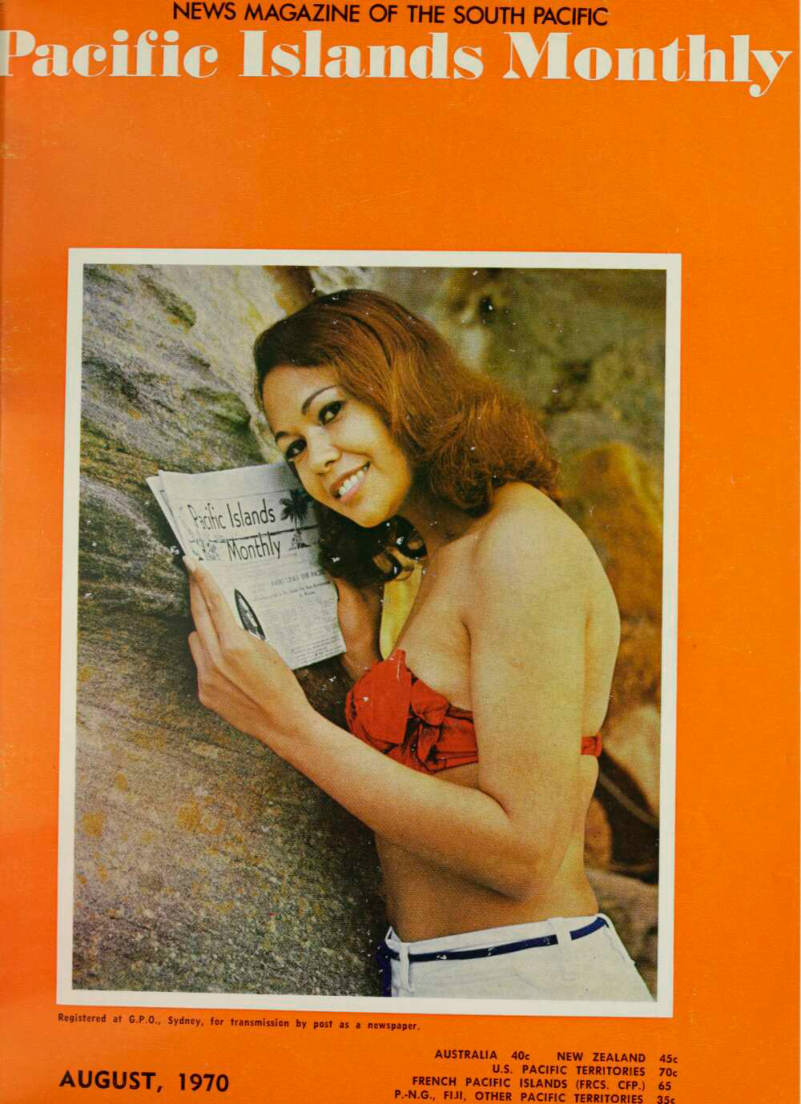 1
1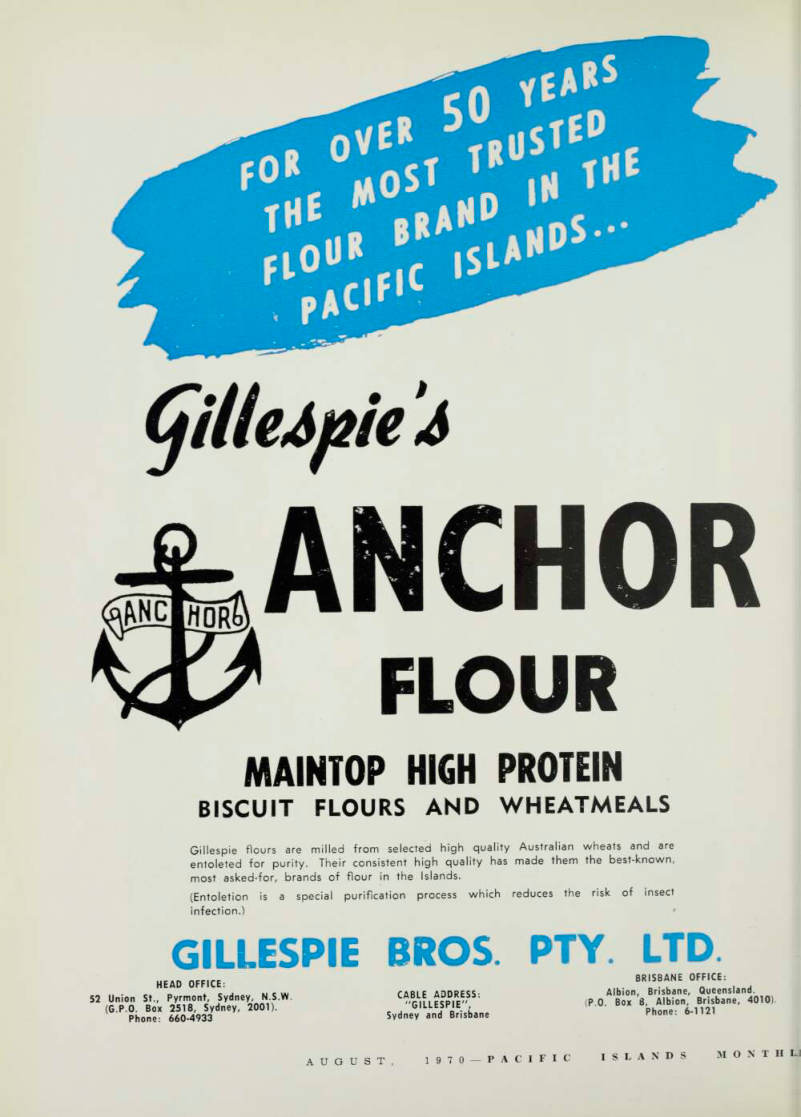 2
2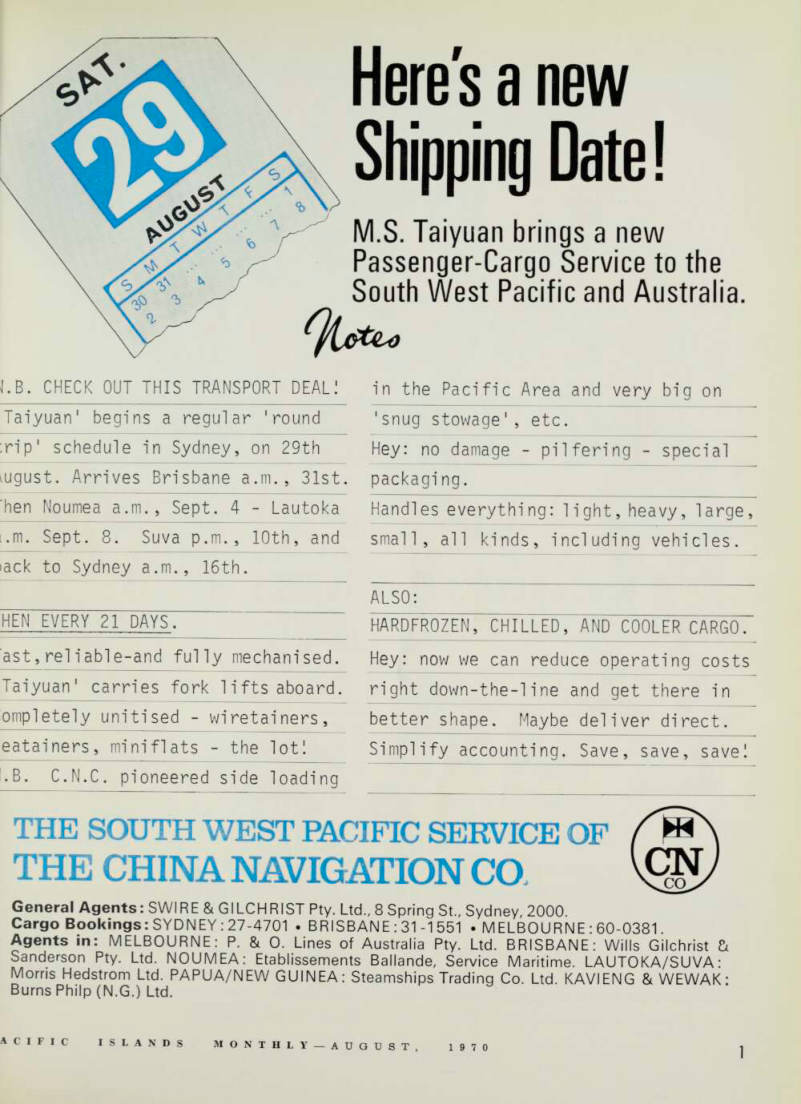 3
3 4
4 5
5 6
6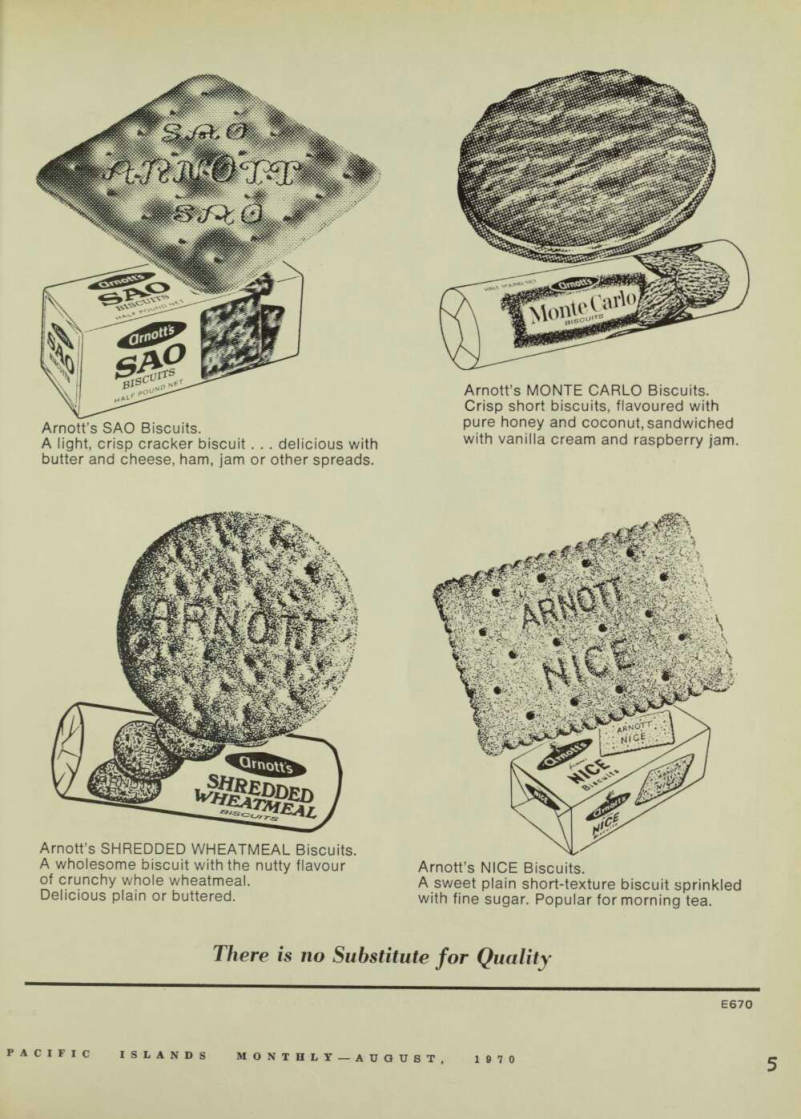 7
7 8
8 9
9 10
10 11
11 12
12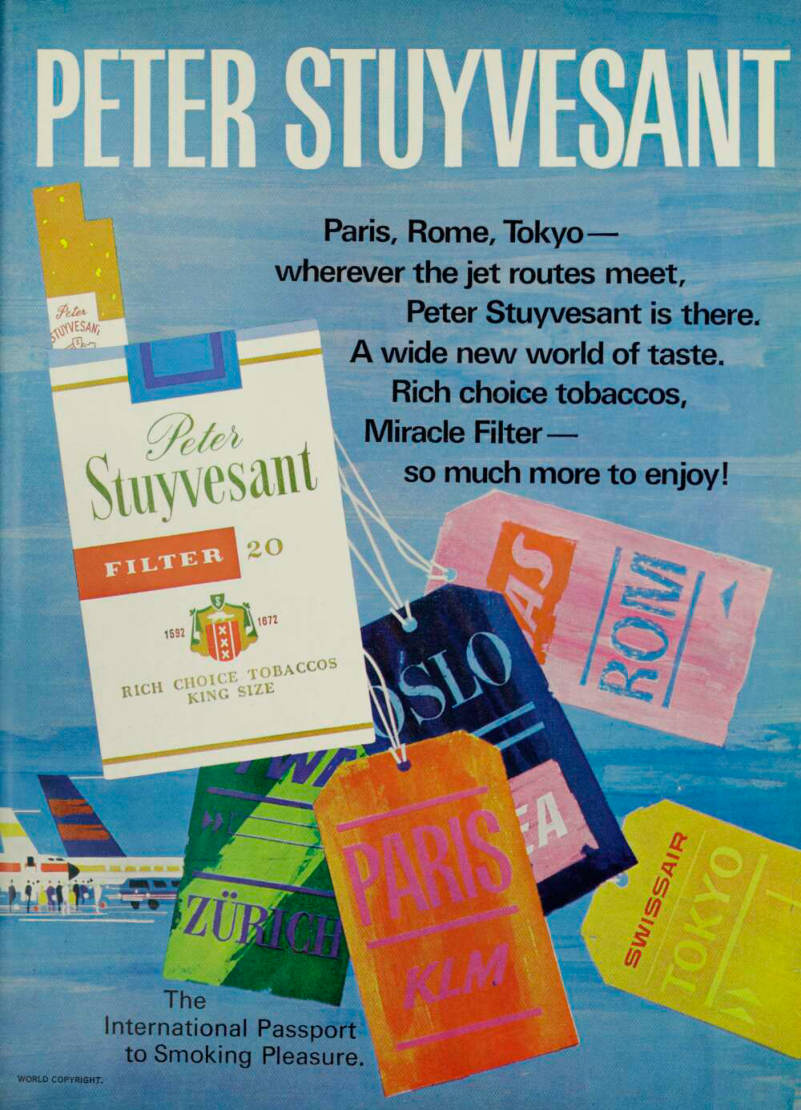 13
13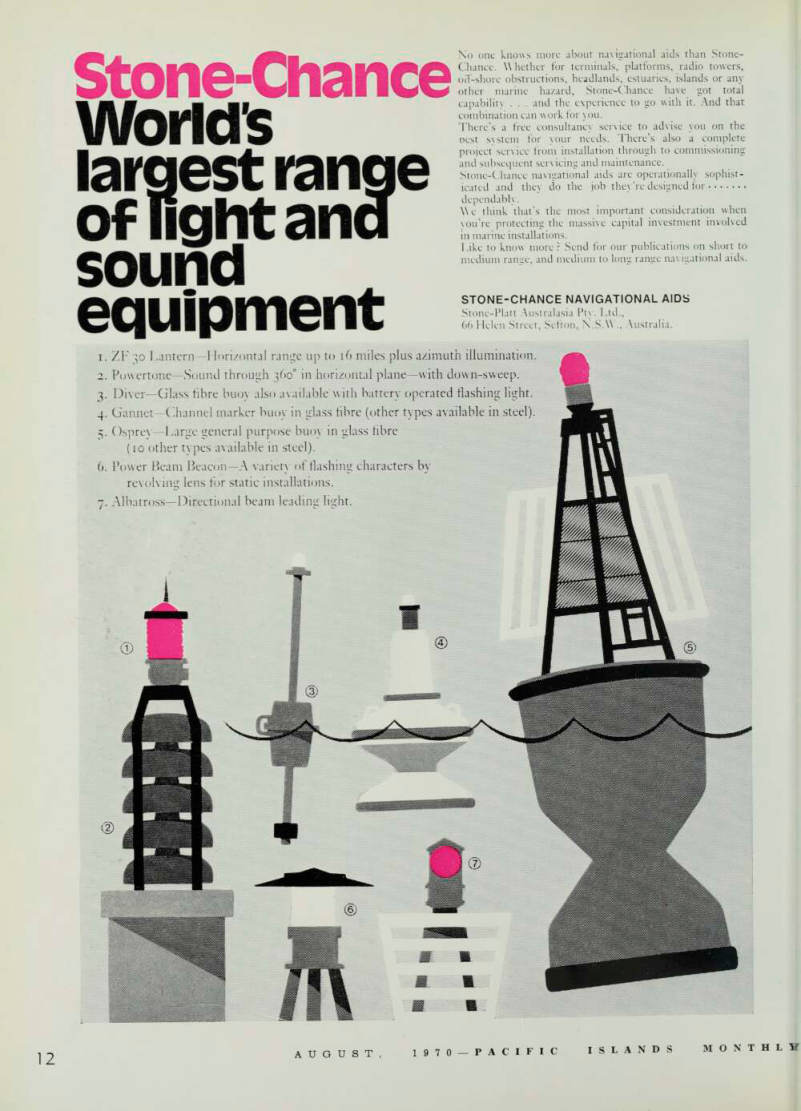 14
14 15
15 16
16 17
17 18
18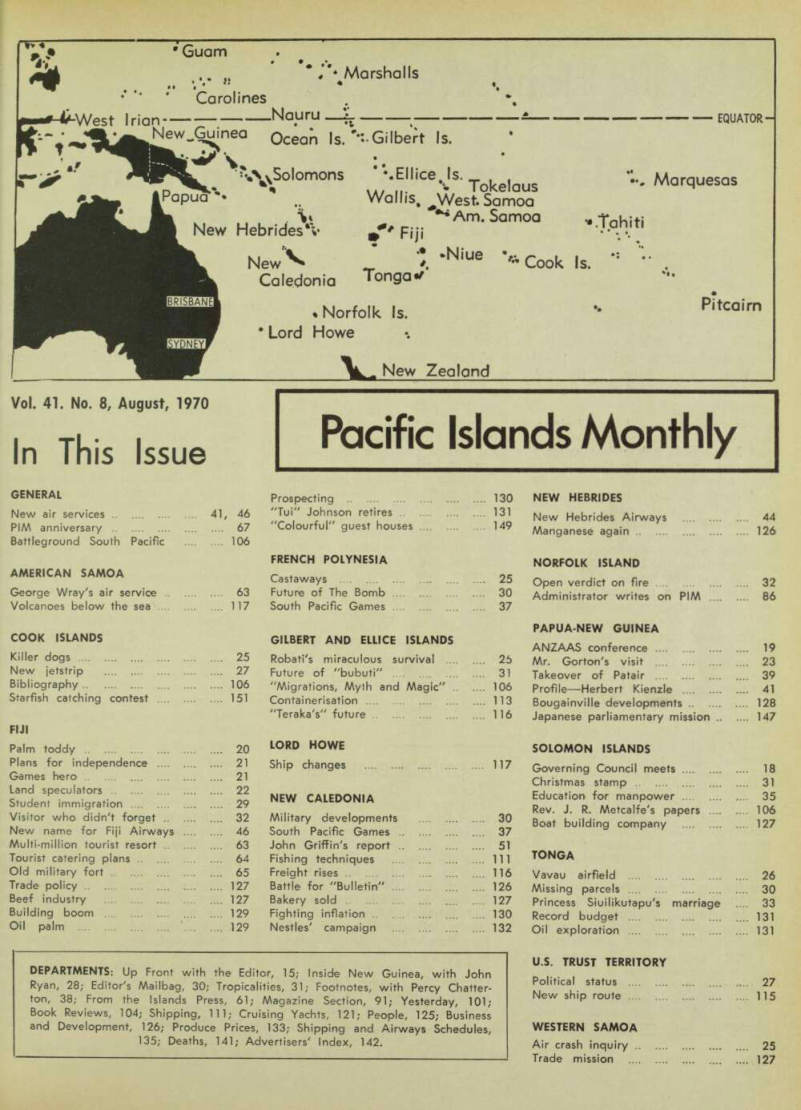 19
19 20
20 21
21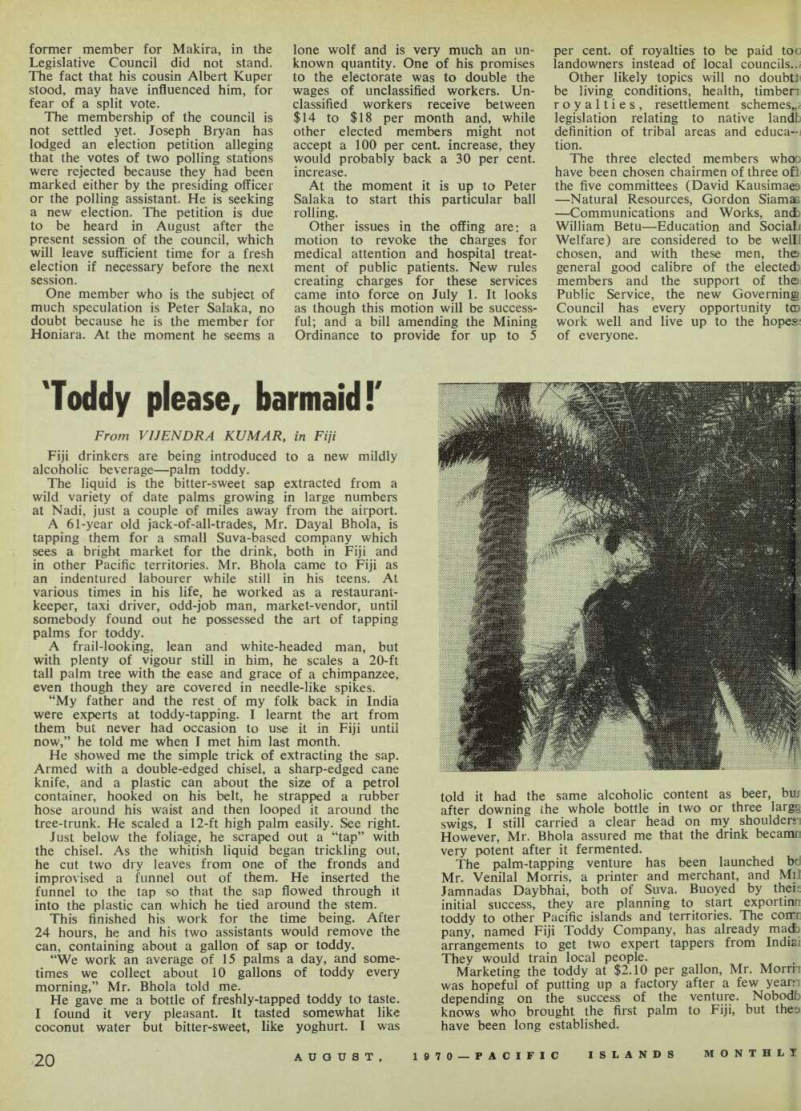 22
22 23
23 24
24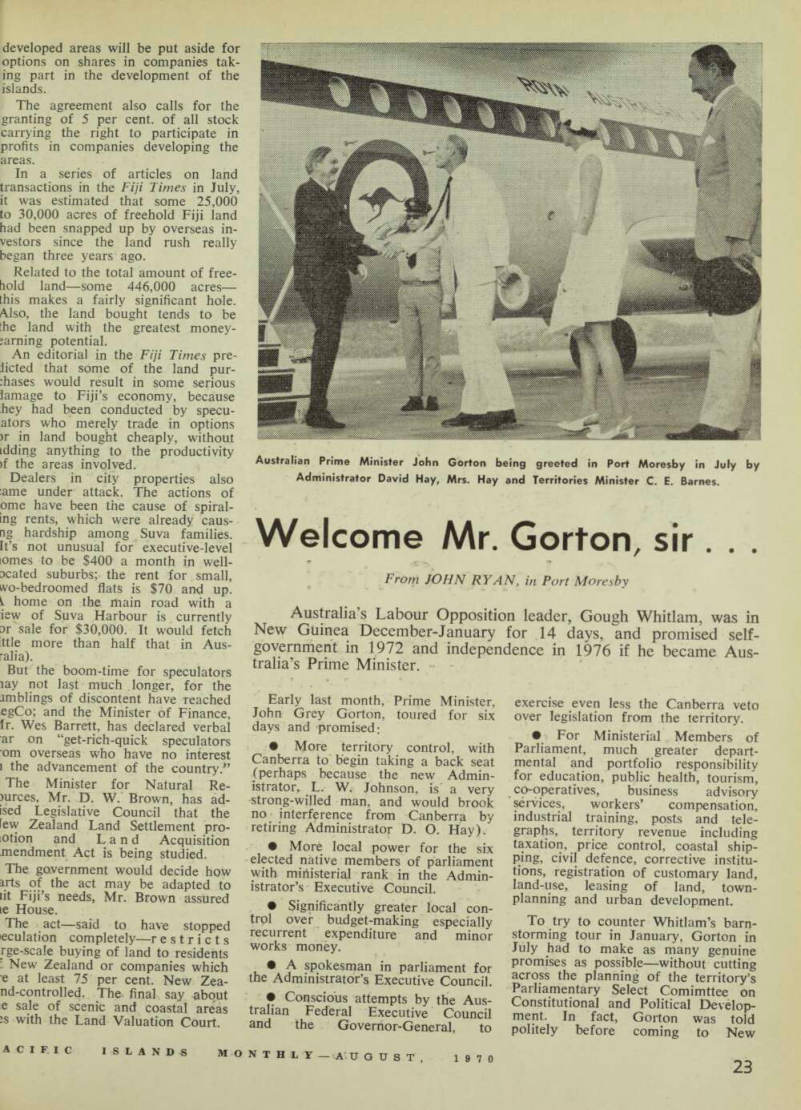 25
25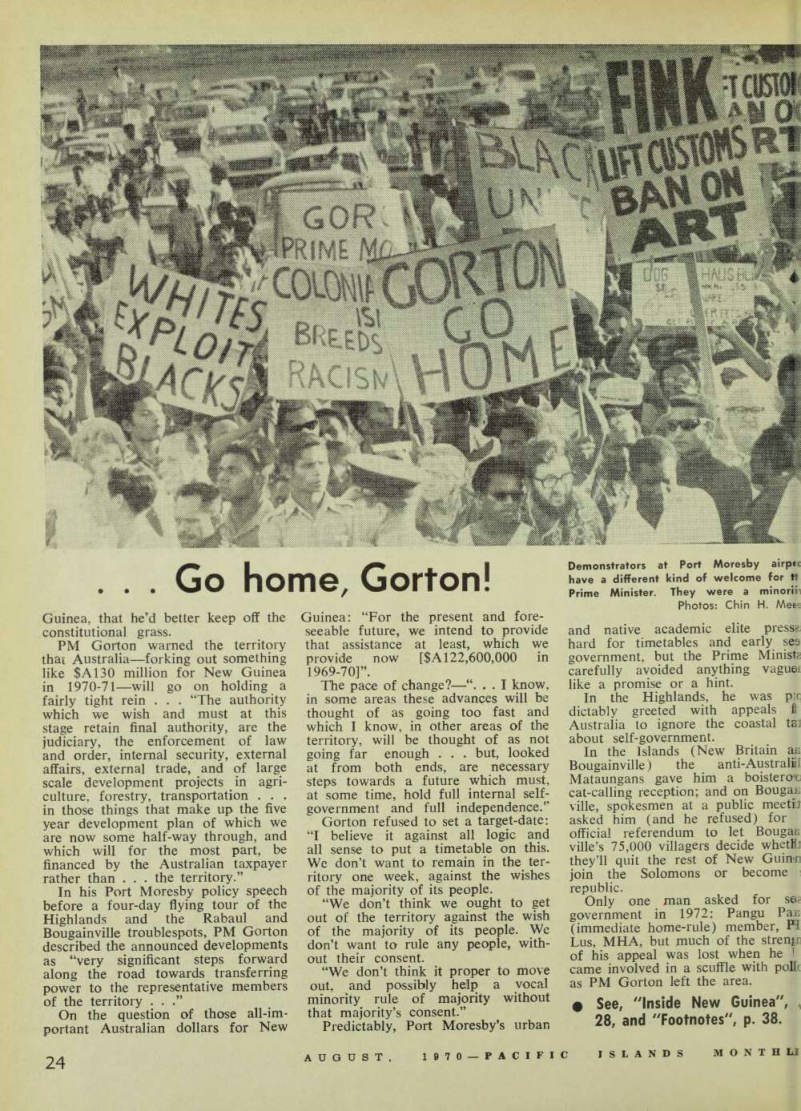 26
26 27
27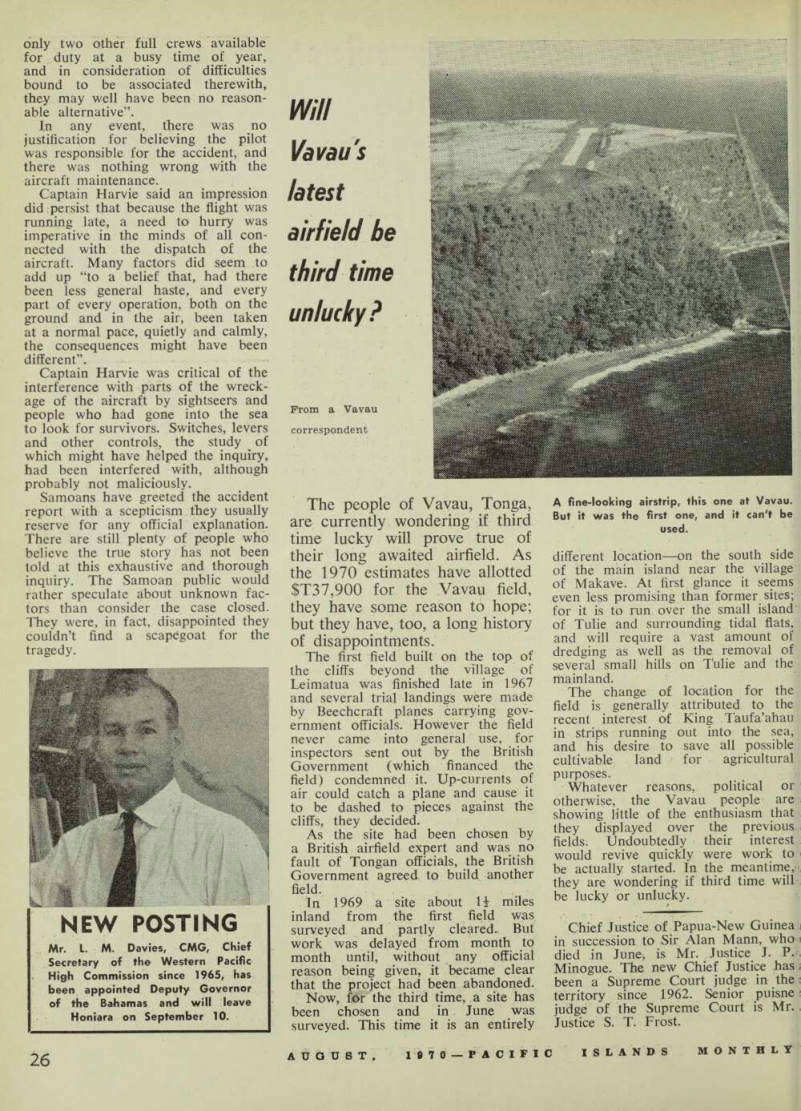 28
28 29
29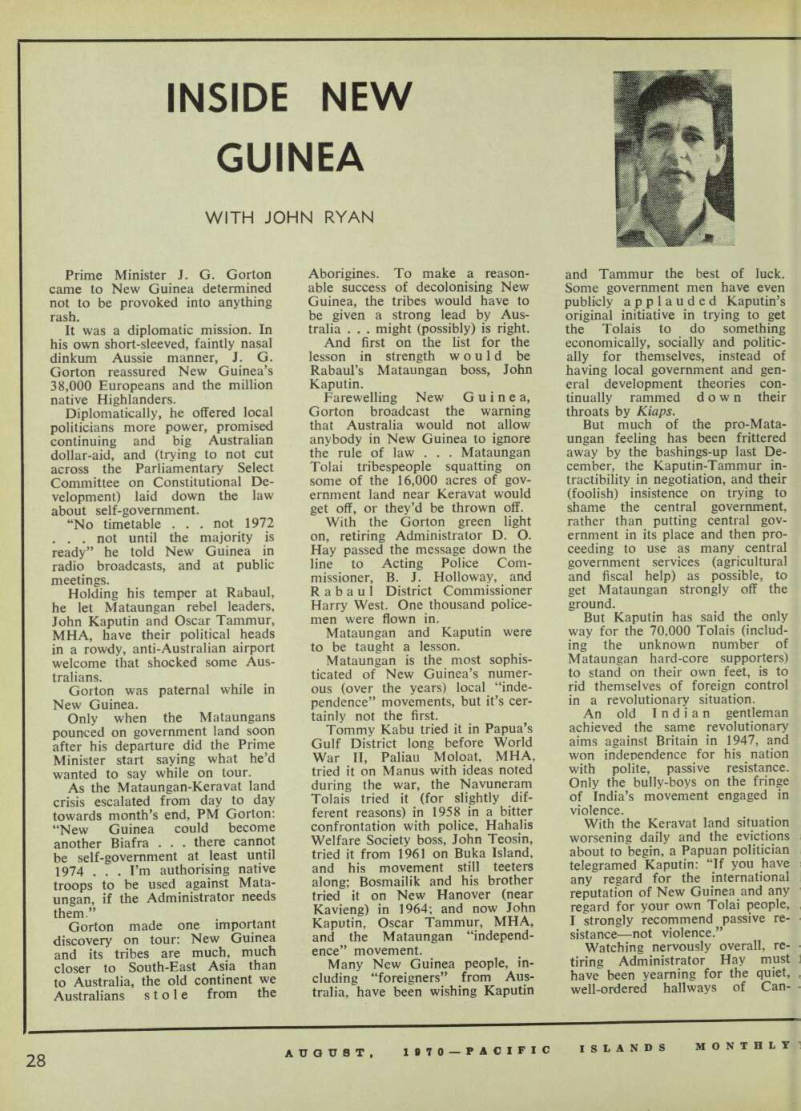 30
30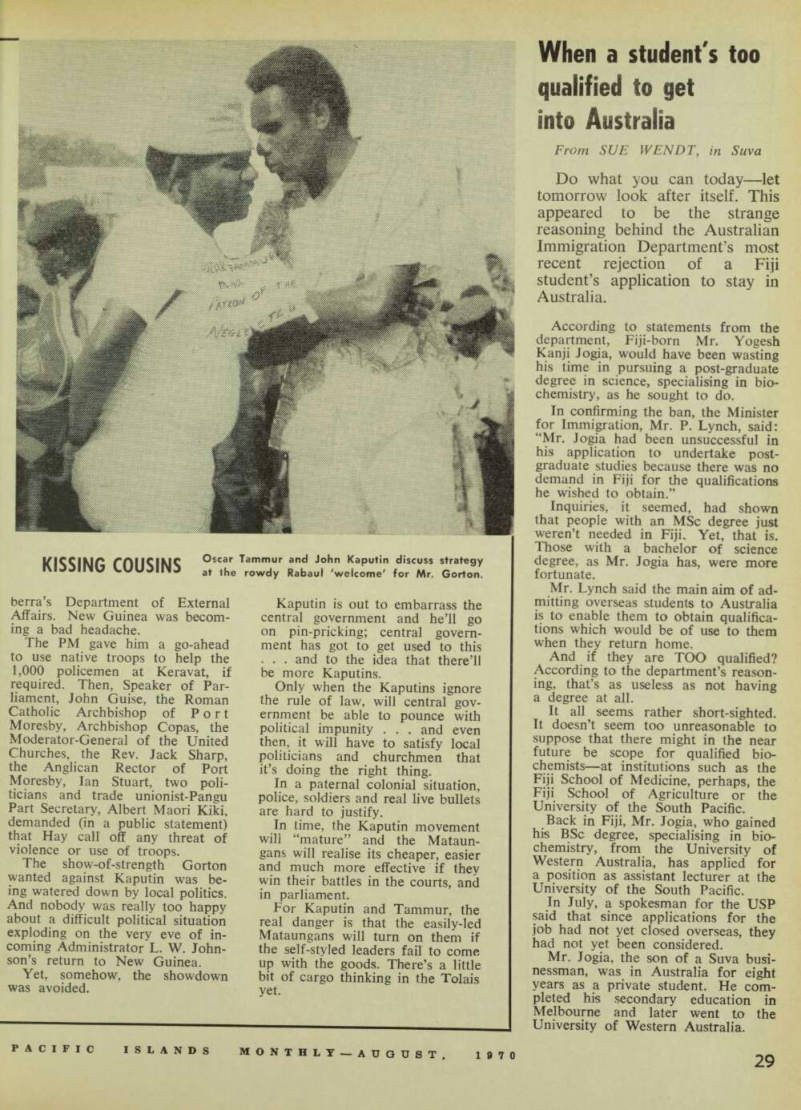 31
31 32
32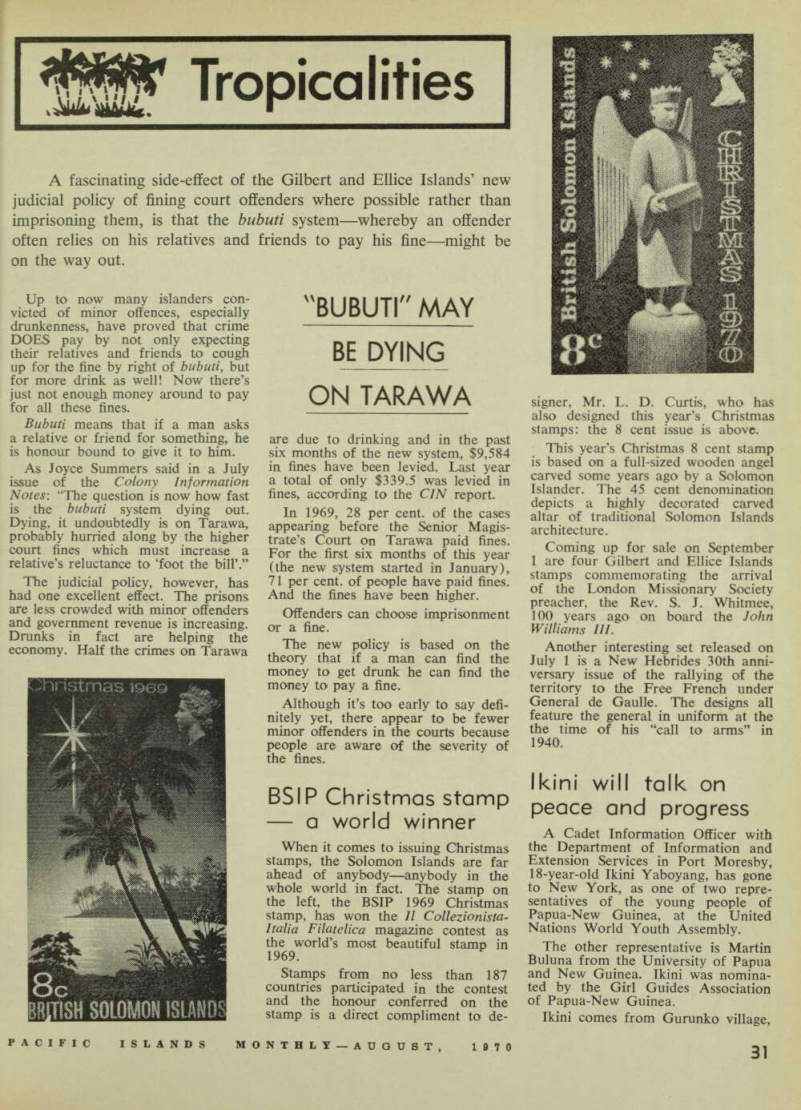 33
33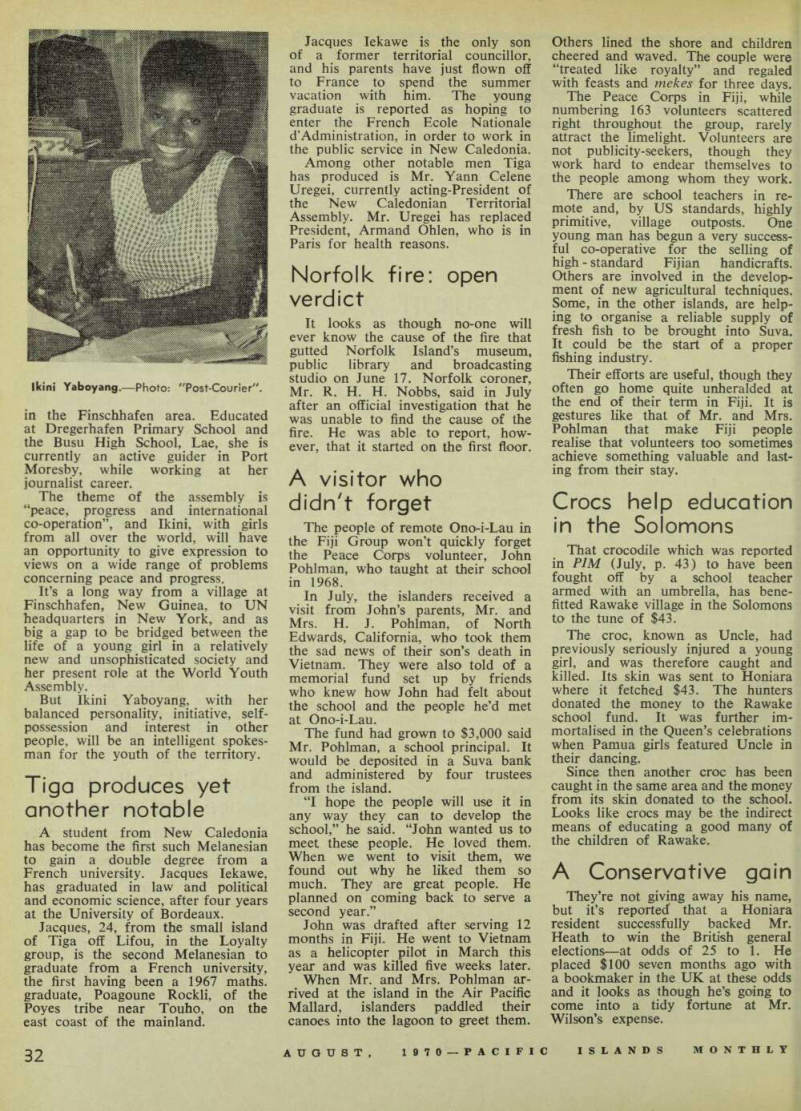 34
34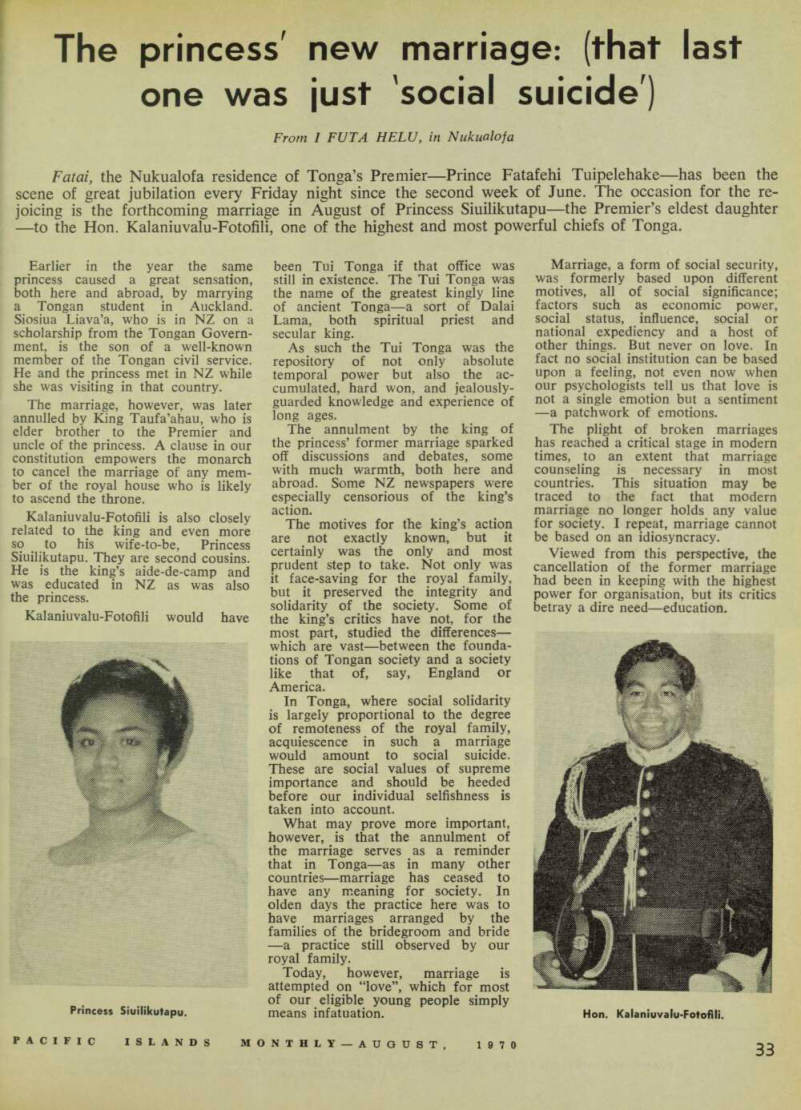 35
35 36
36 37
37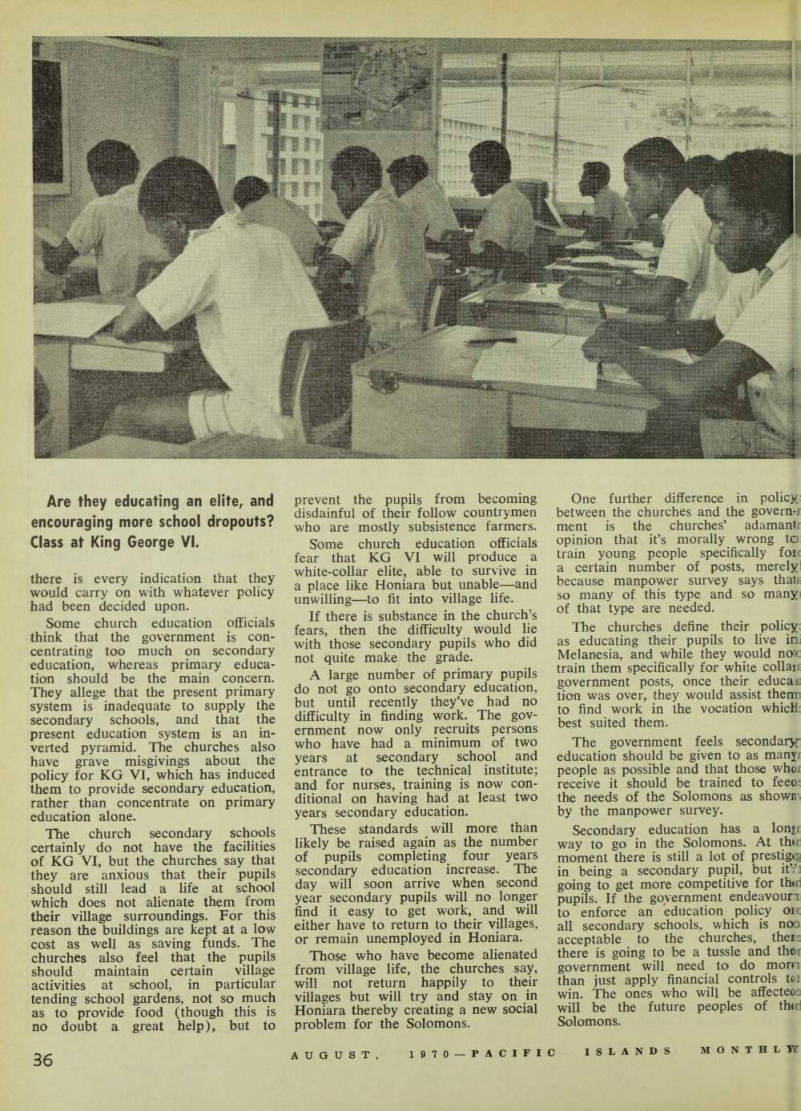 38
38 39
39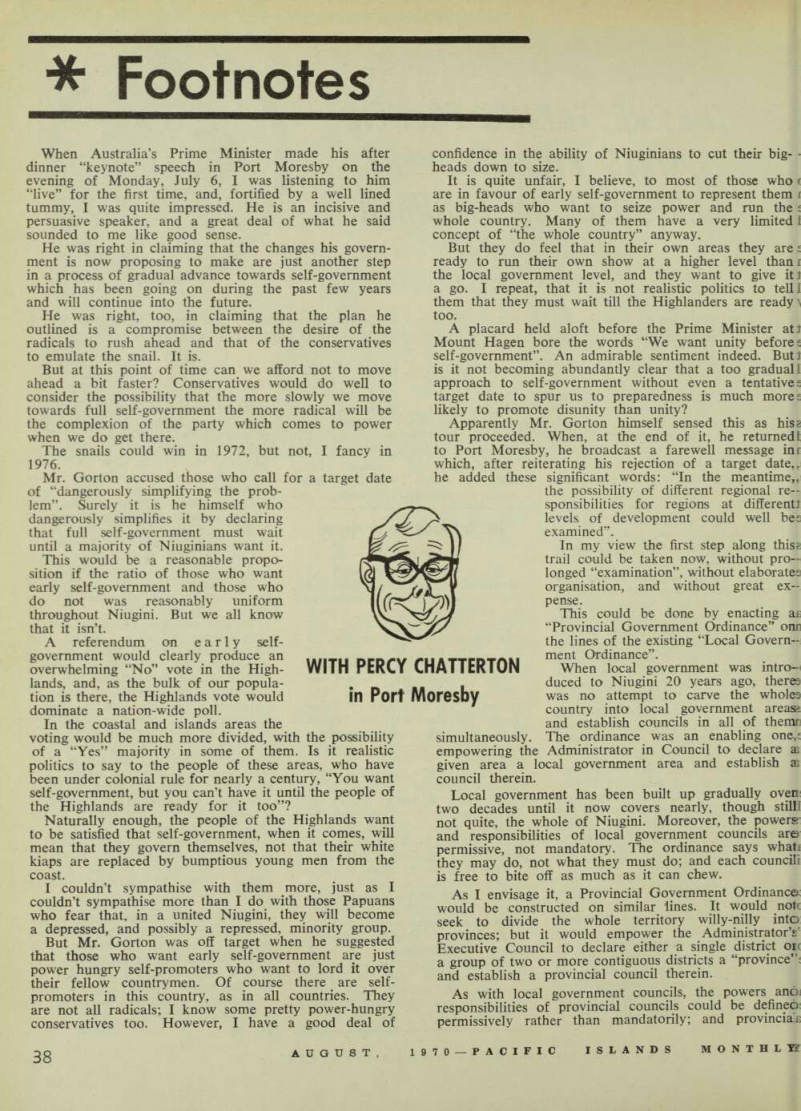 40
40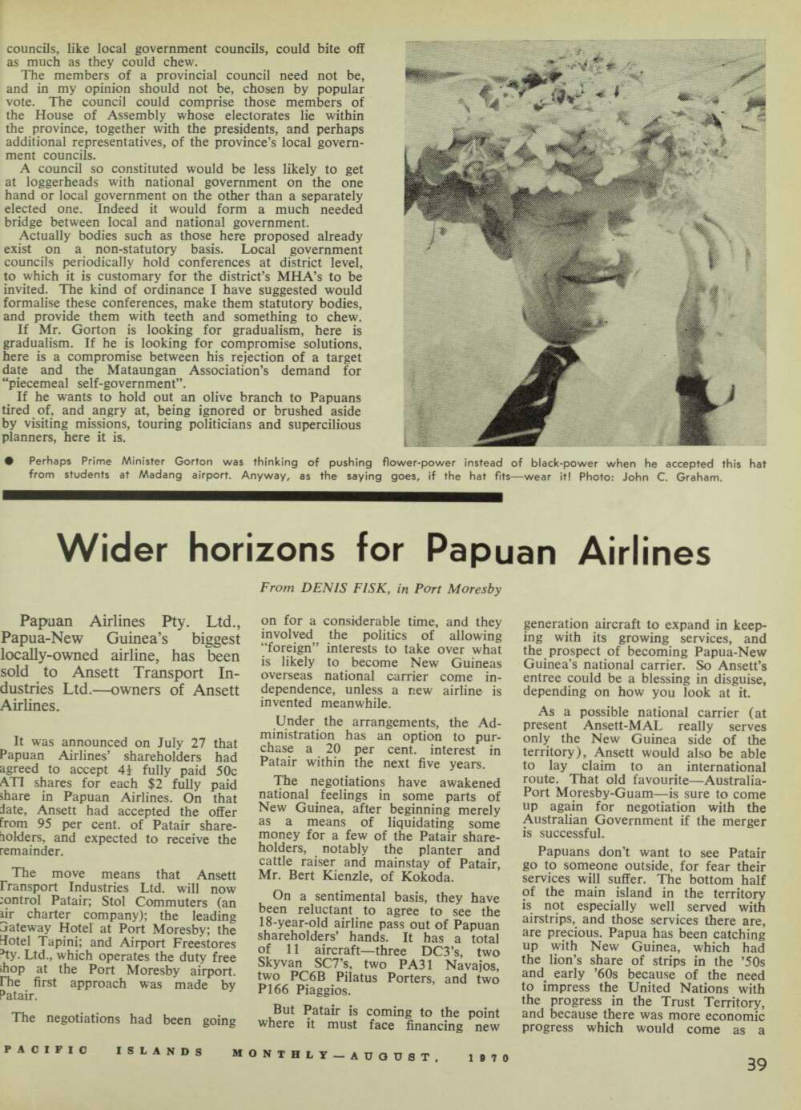 41
41 42
42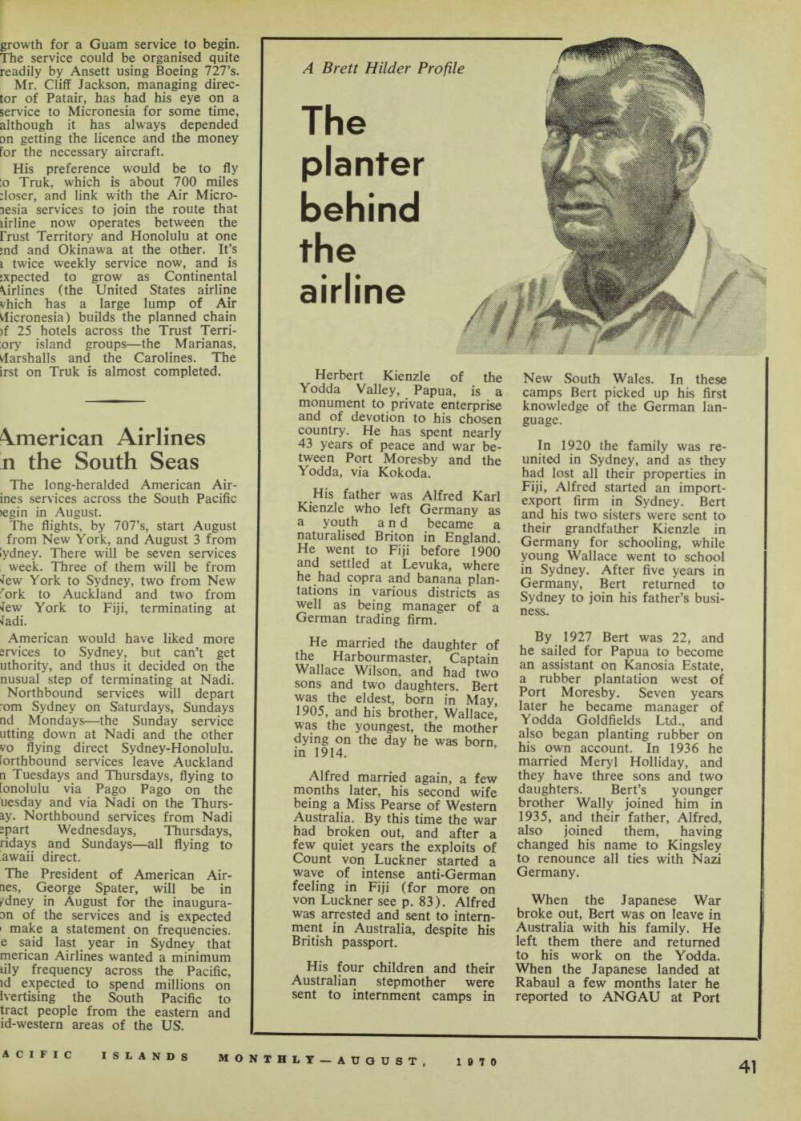 43
43 44
44 45
45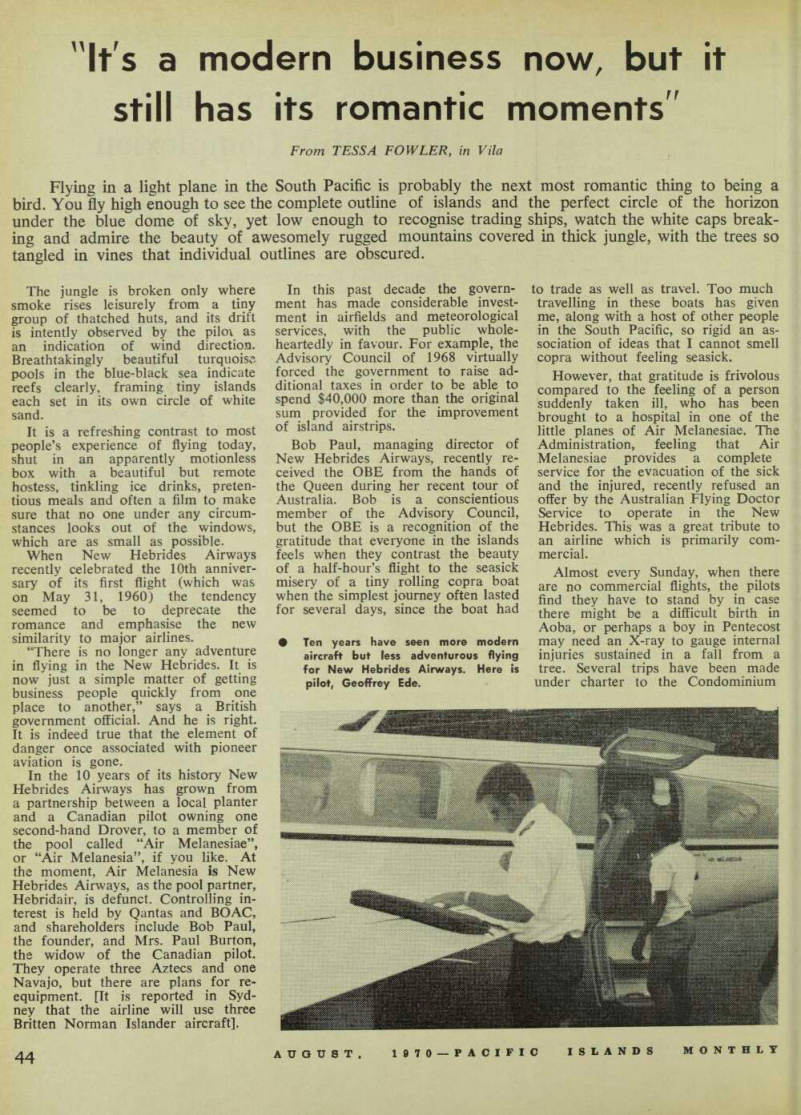 46
46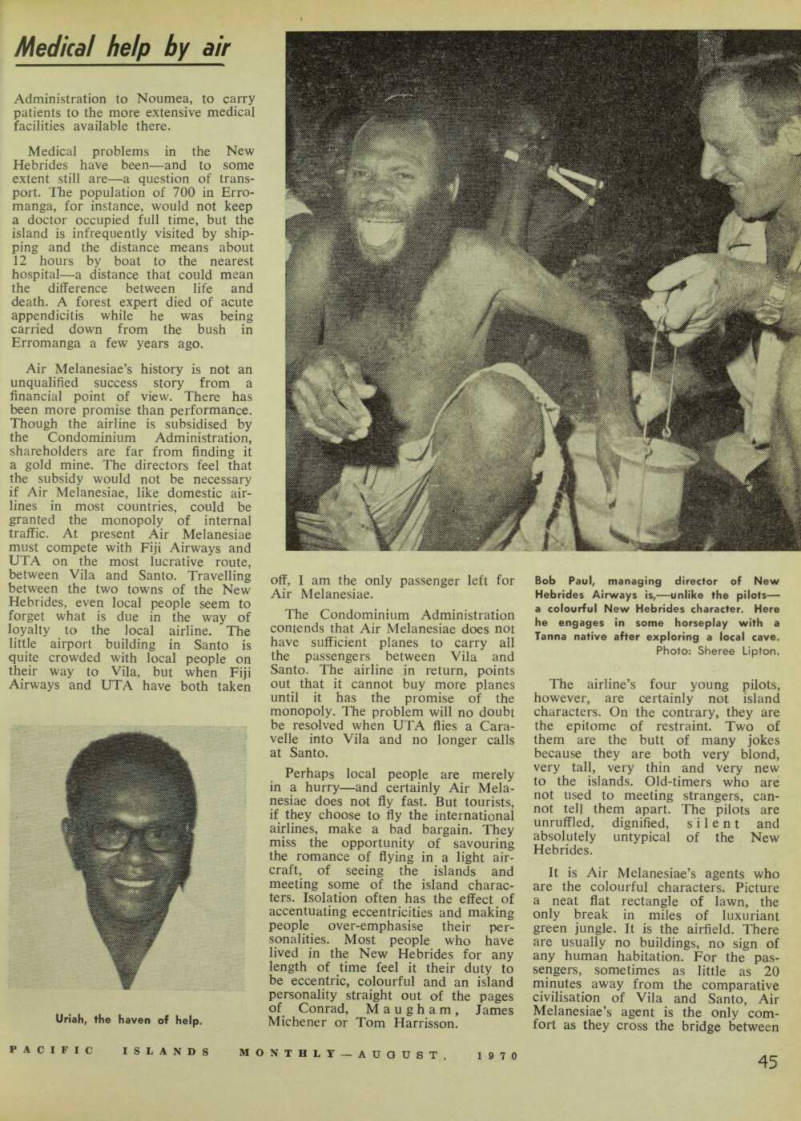 47
47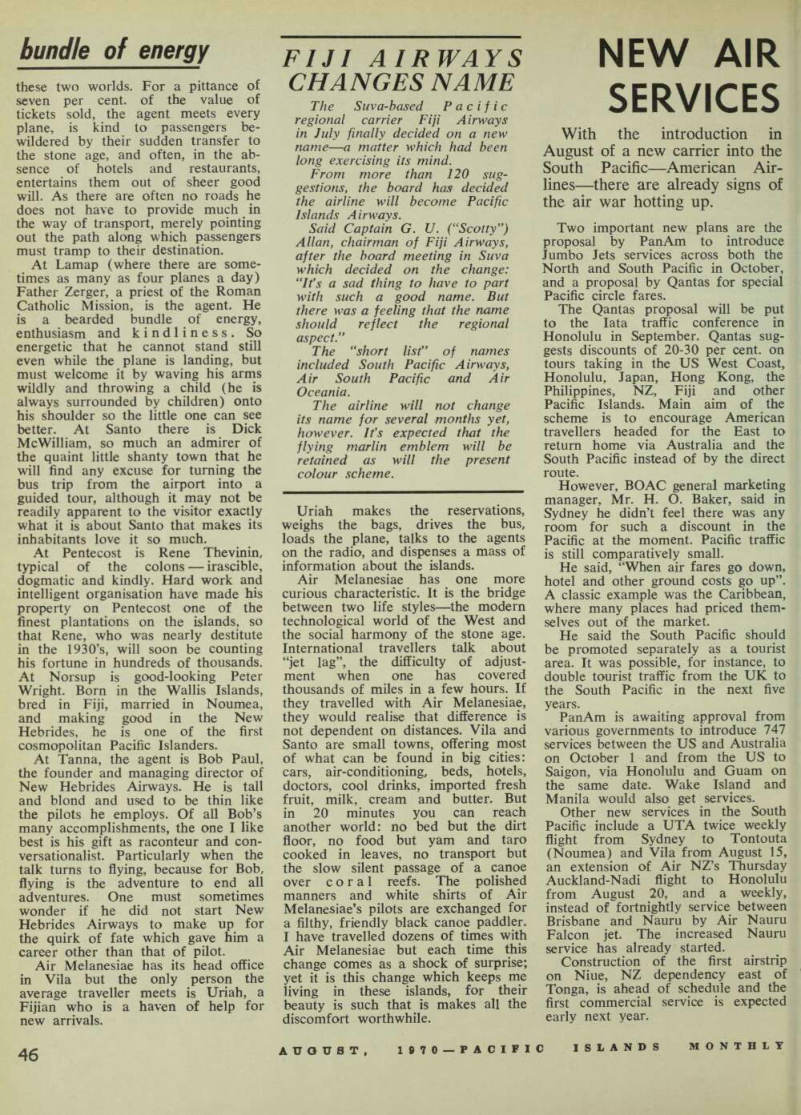 48
48 49
49 50
50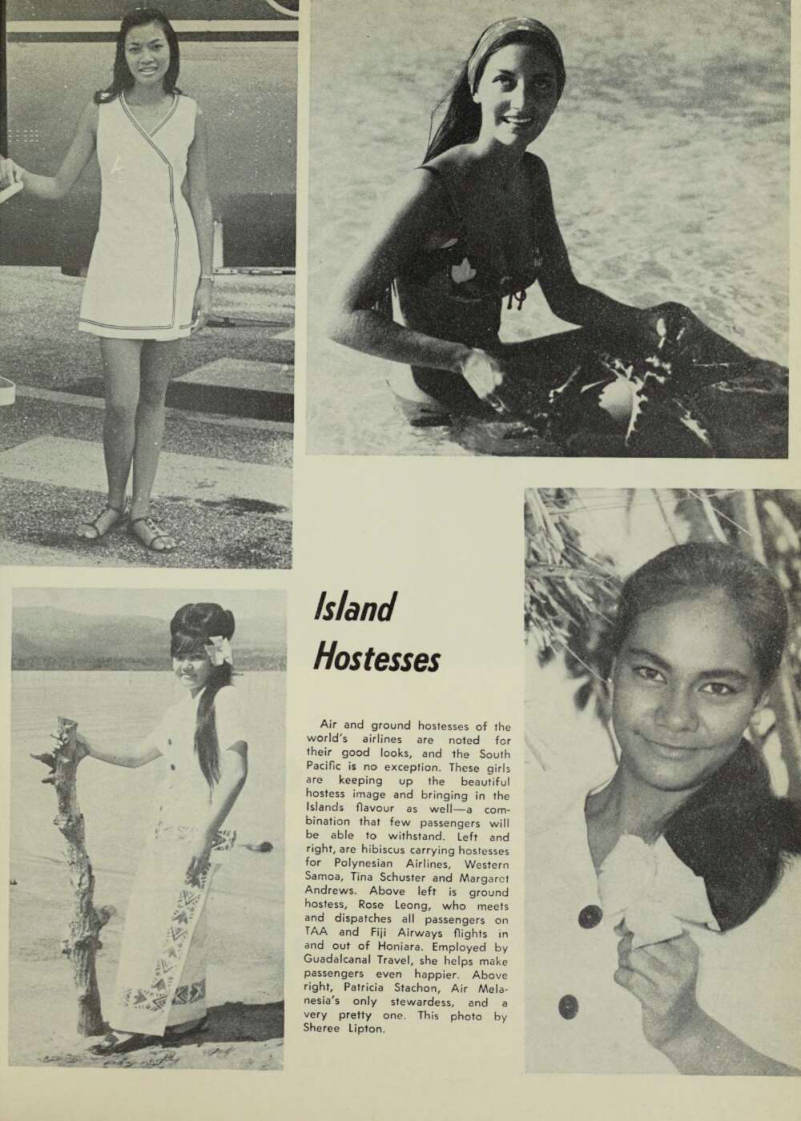 51
51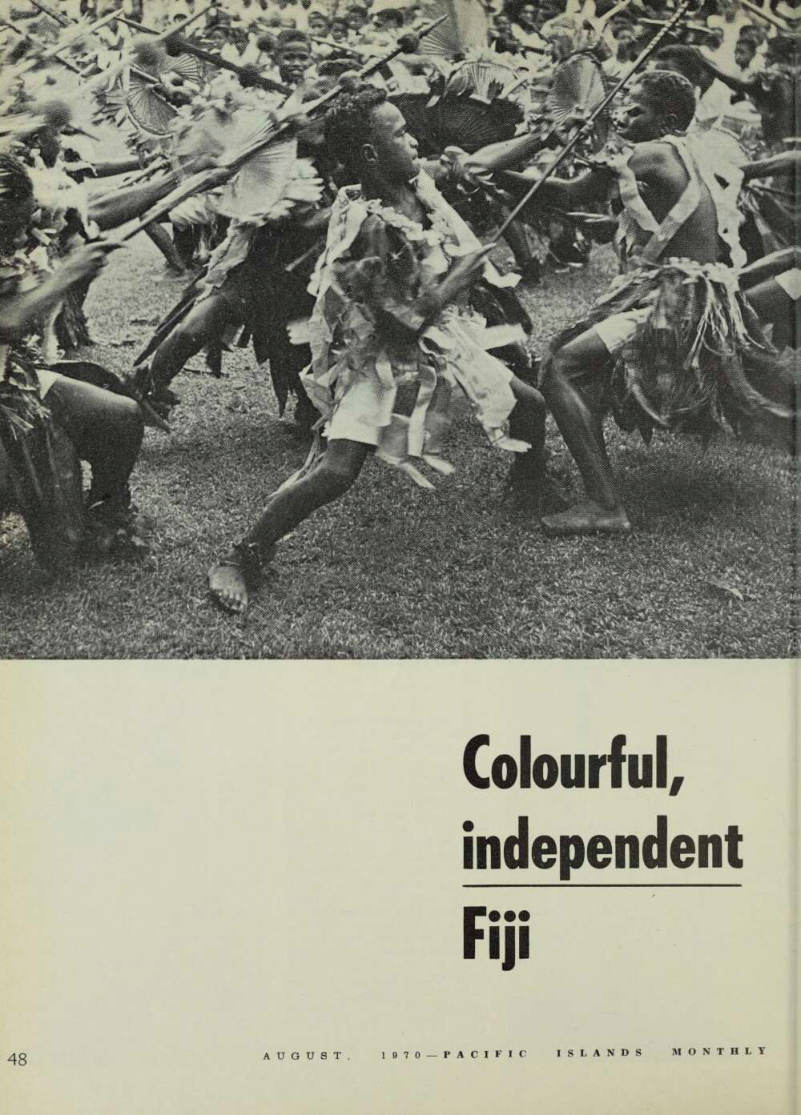 52
52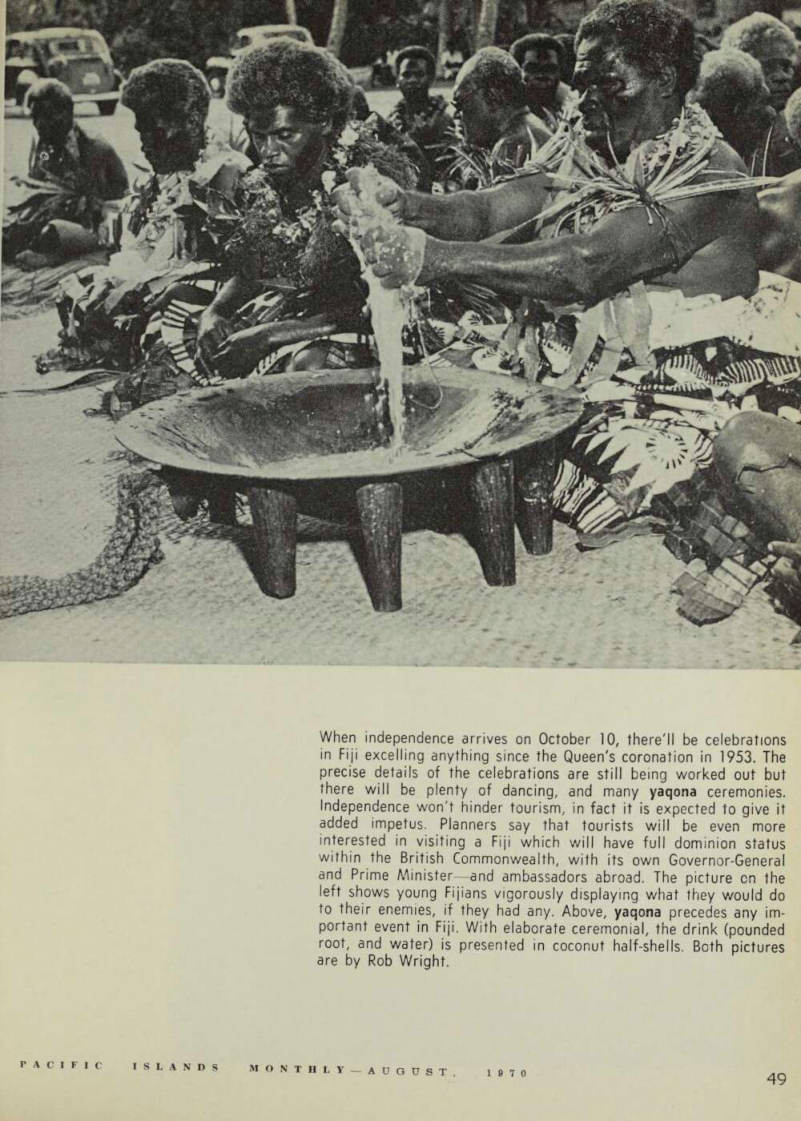 53
53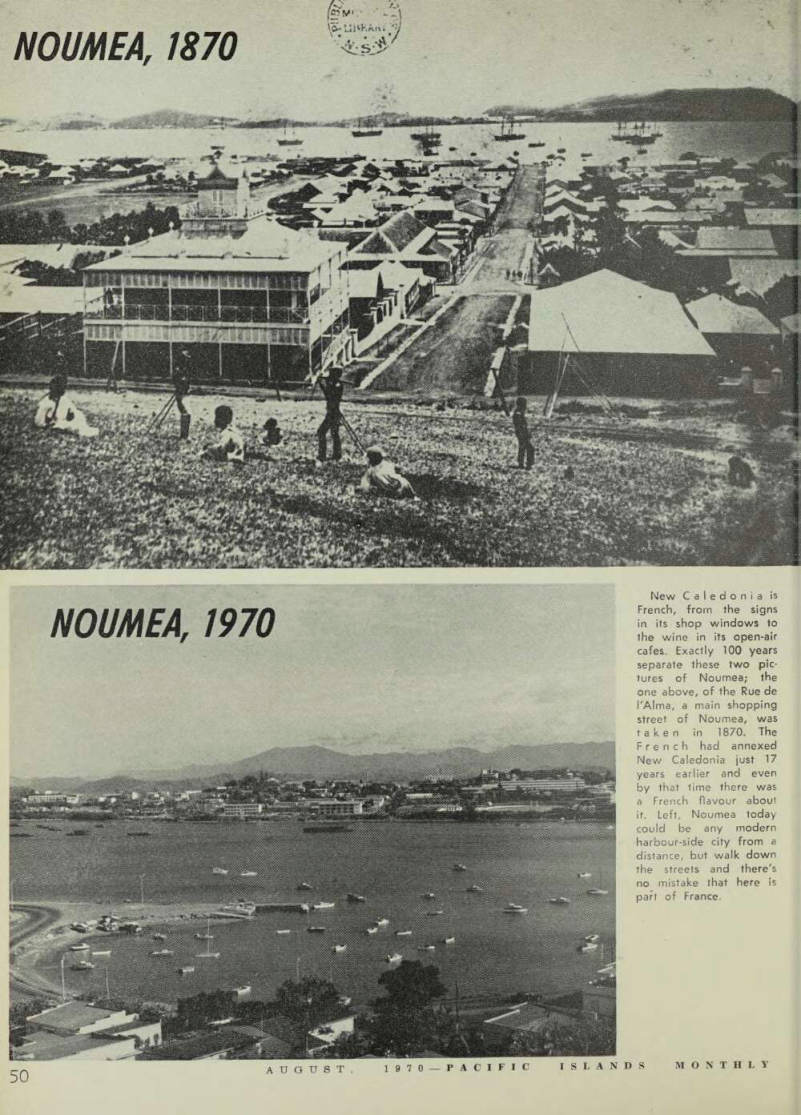 54
54 55
55 56
56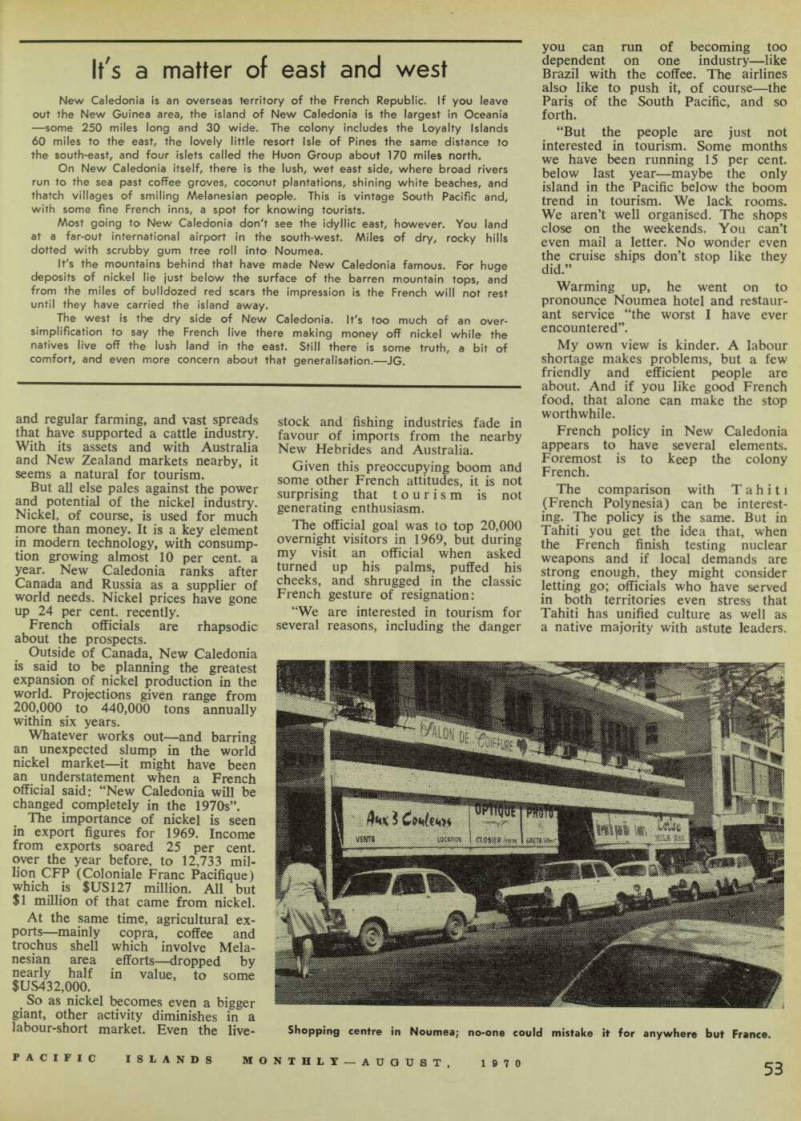 57
57 58
58 59
59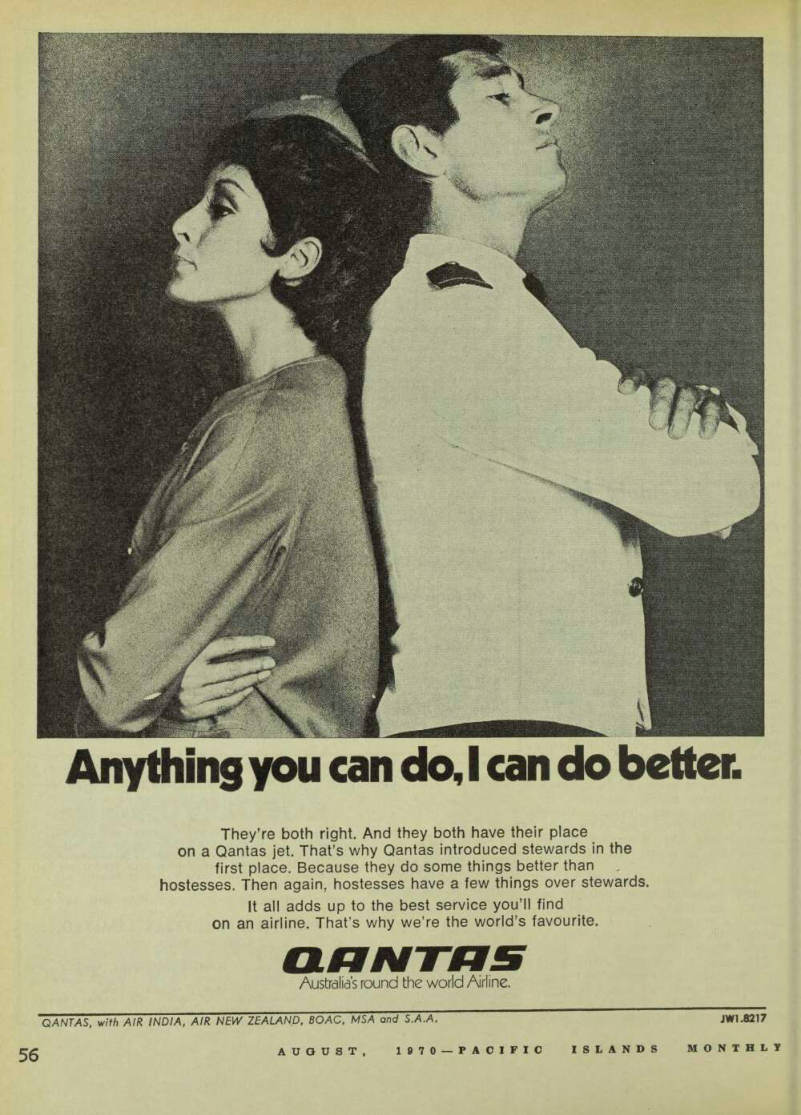 60
60 61
61 62
62 63
63 64
64 65
65 66
66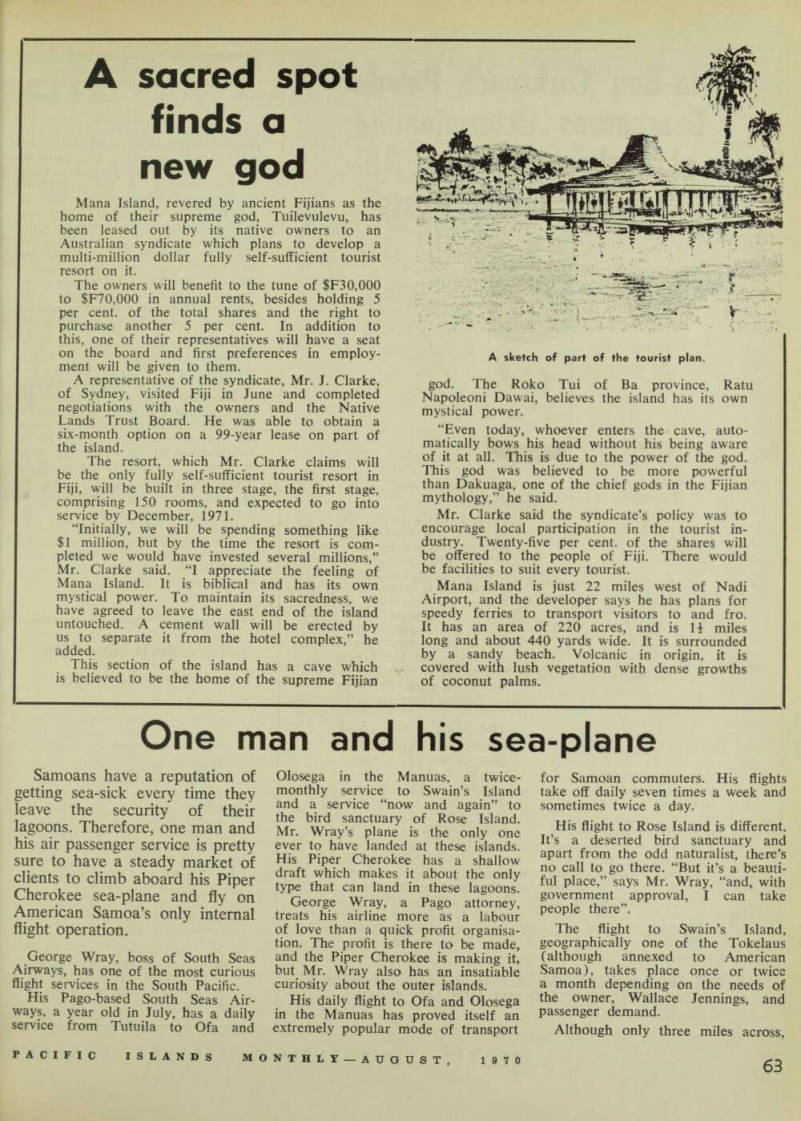 67
67 68
68 69
69 70
70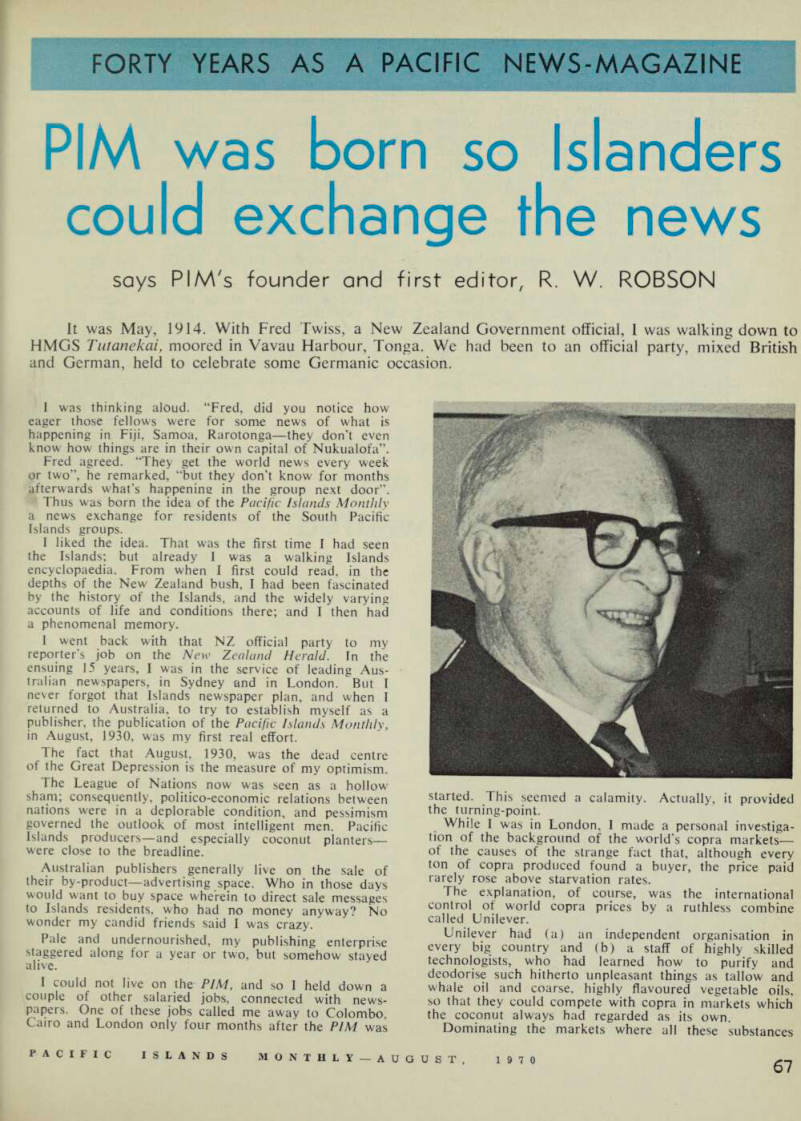 71
71 72
72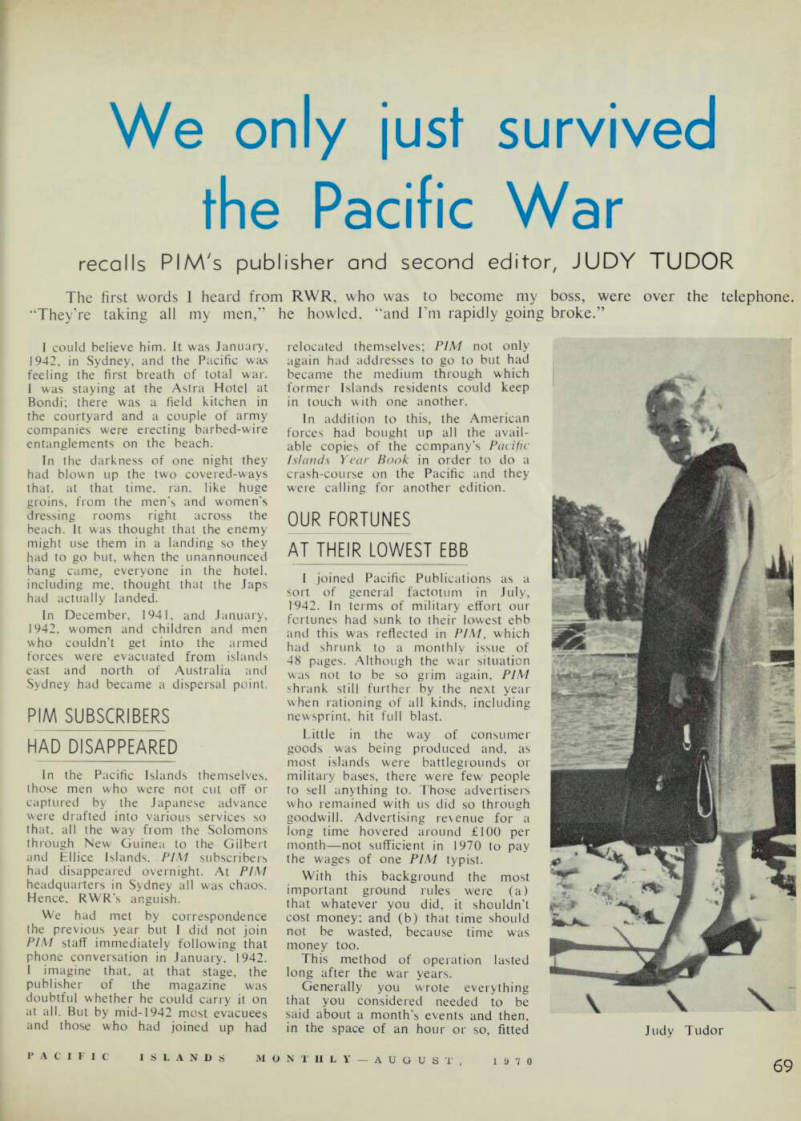 73
73 74
74 75
75 76
76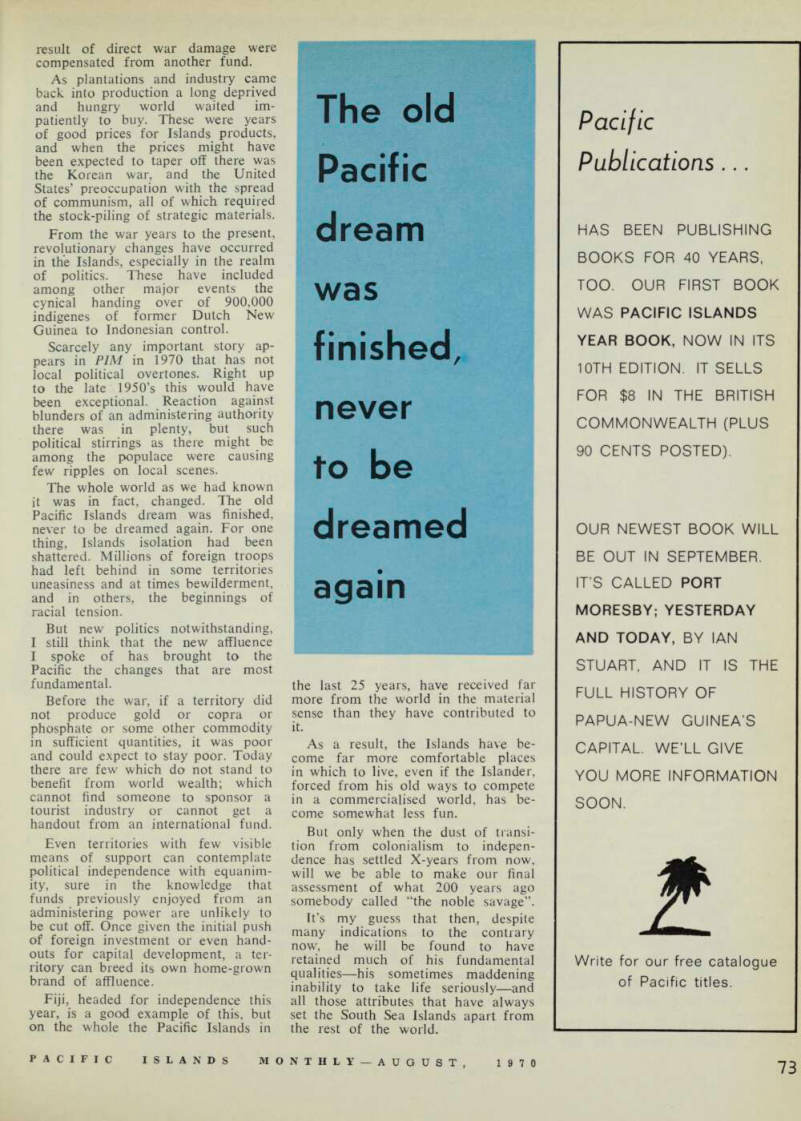 77
77 78
78 79
79 80
80 81
81 82
82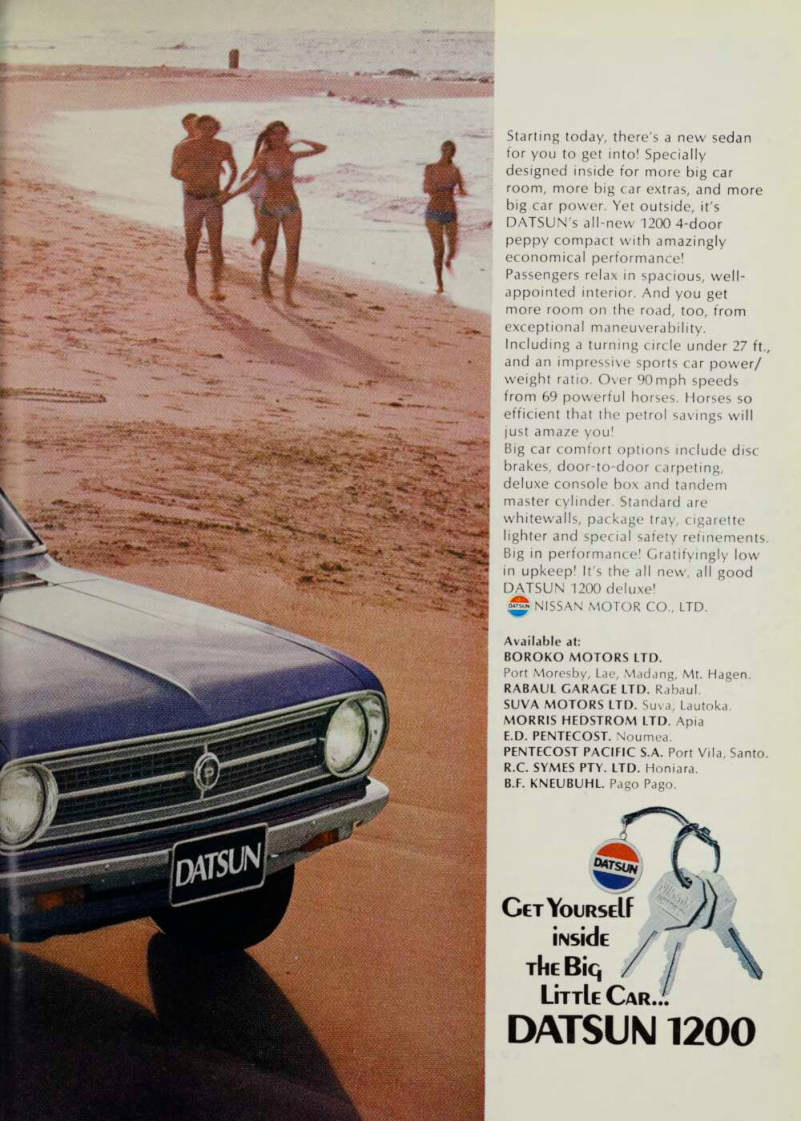 83
83 84
84 85
85 86
86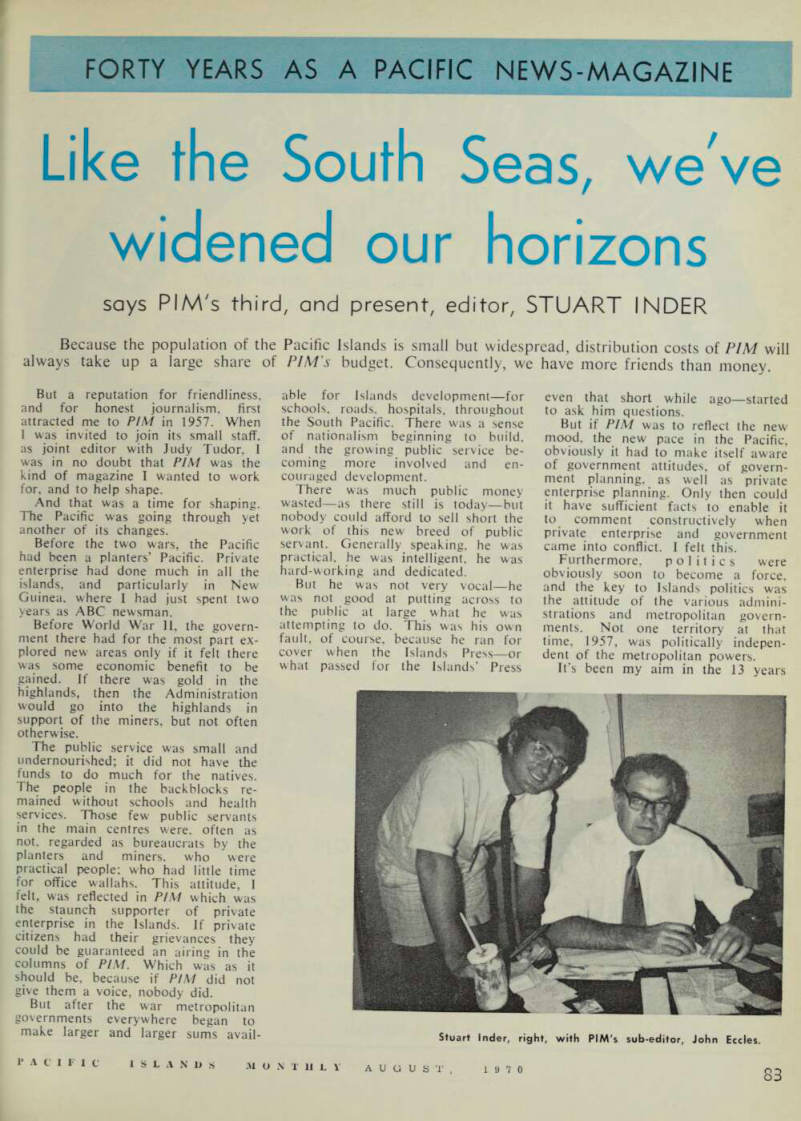 87
87 88
88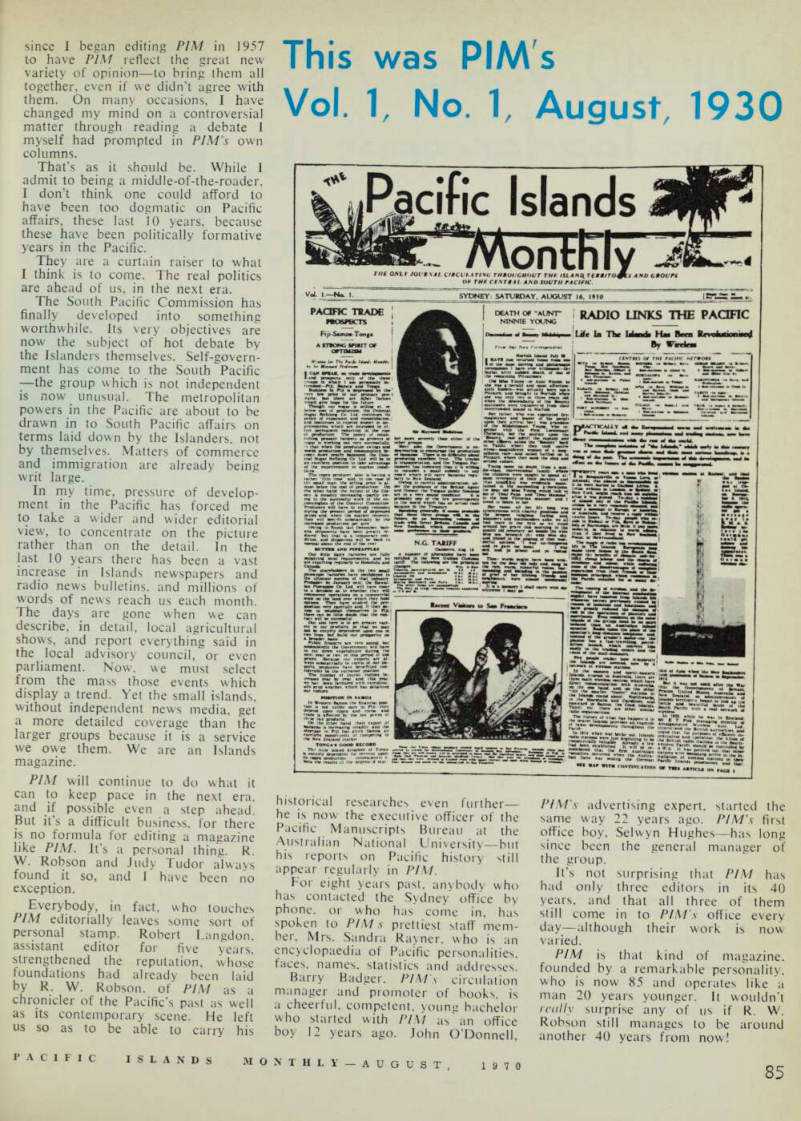 89
89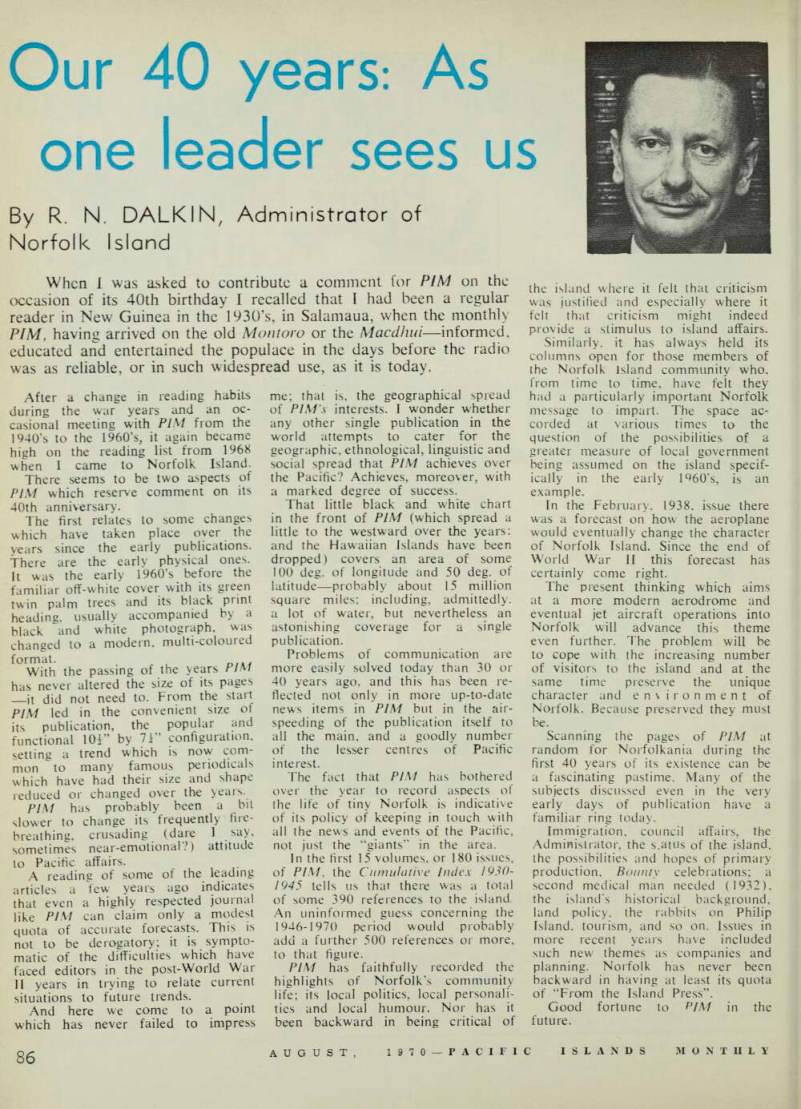 90
90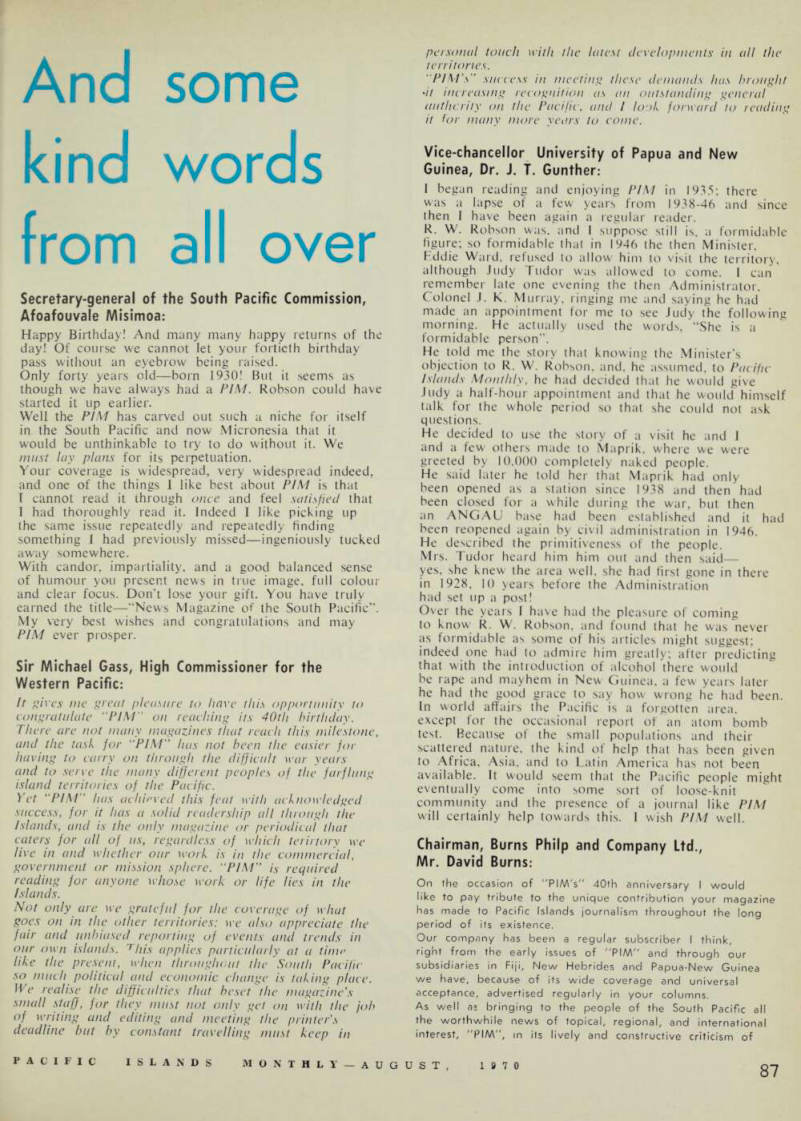 91
91 92
92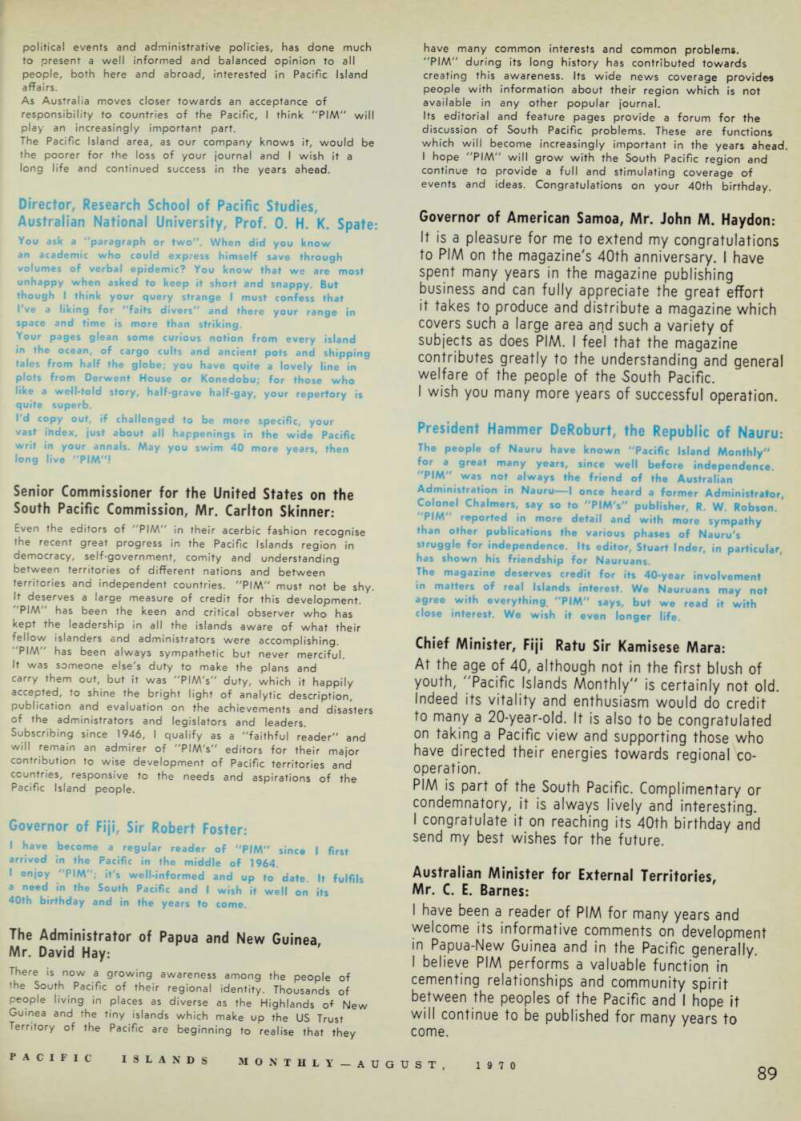 93
93 94
94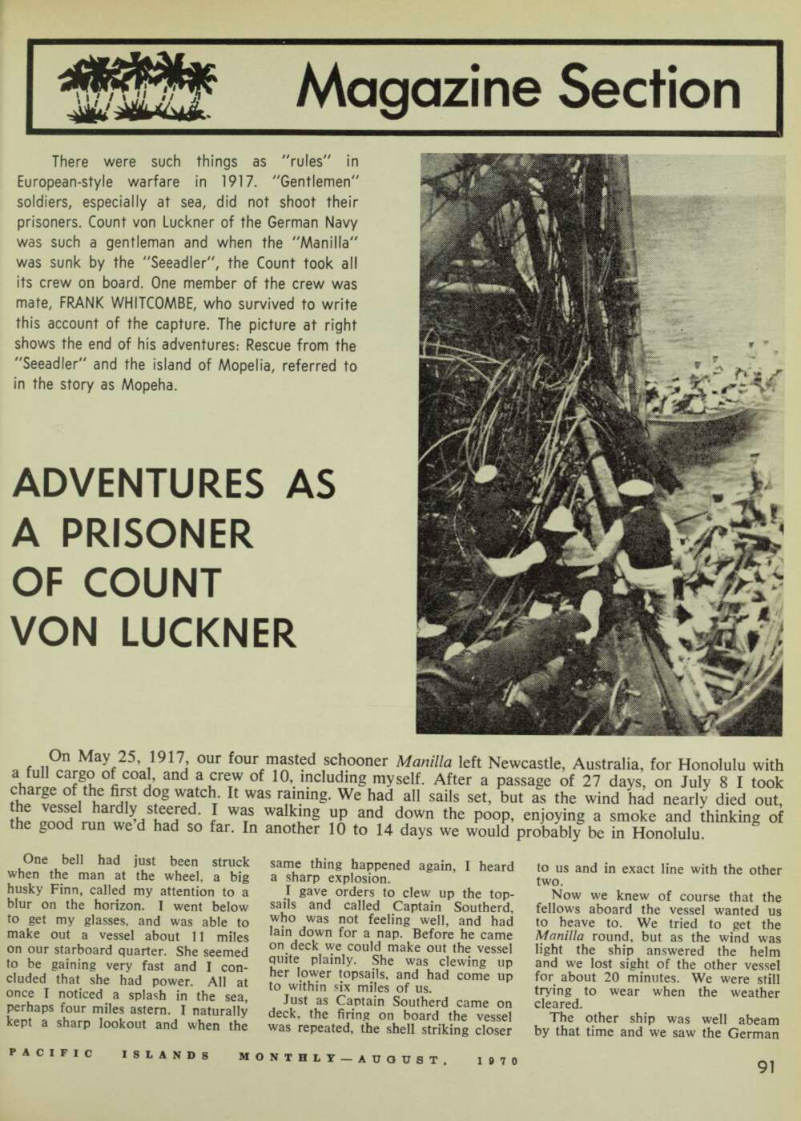 95
95 96
96 97
97 98
98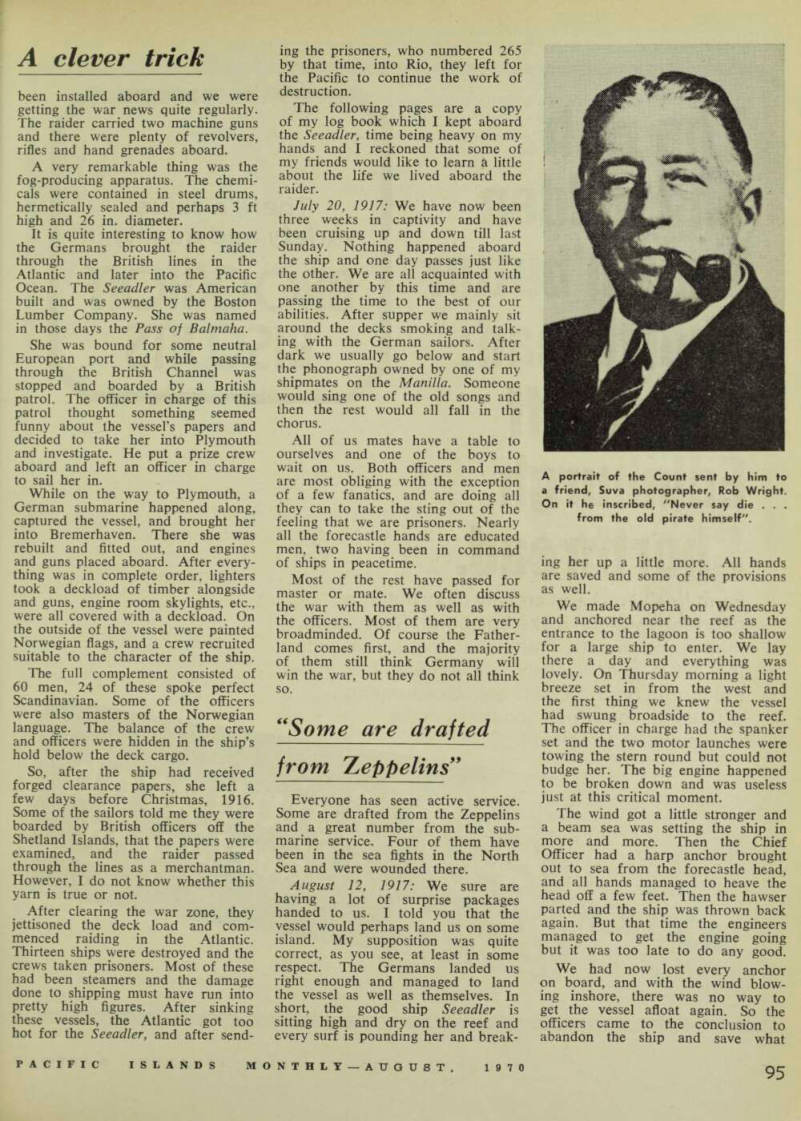 99
99 100
100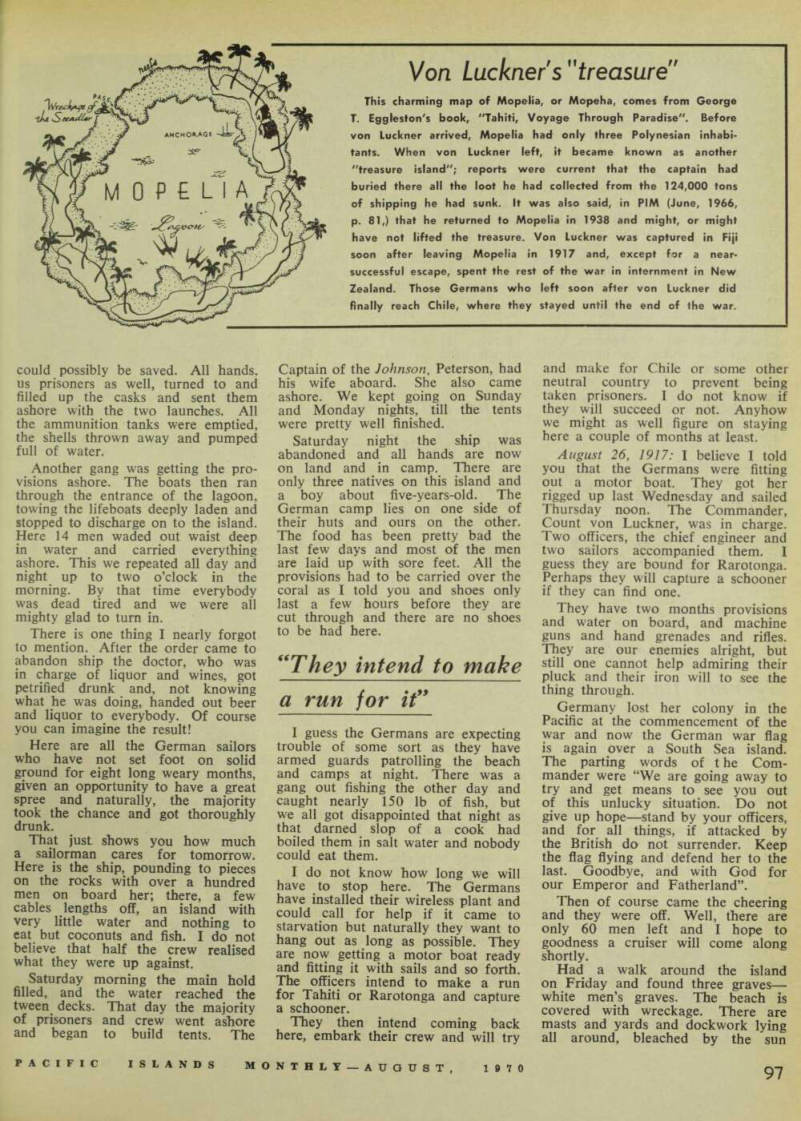 101
101 102
102 103
103 104
104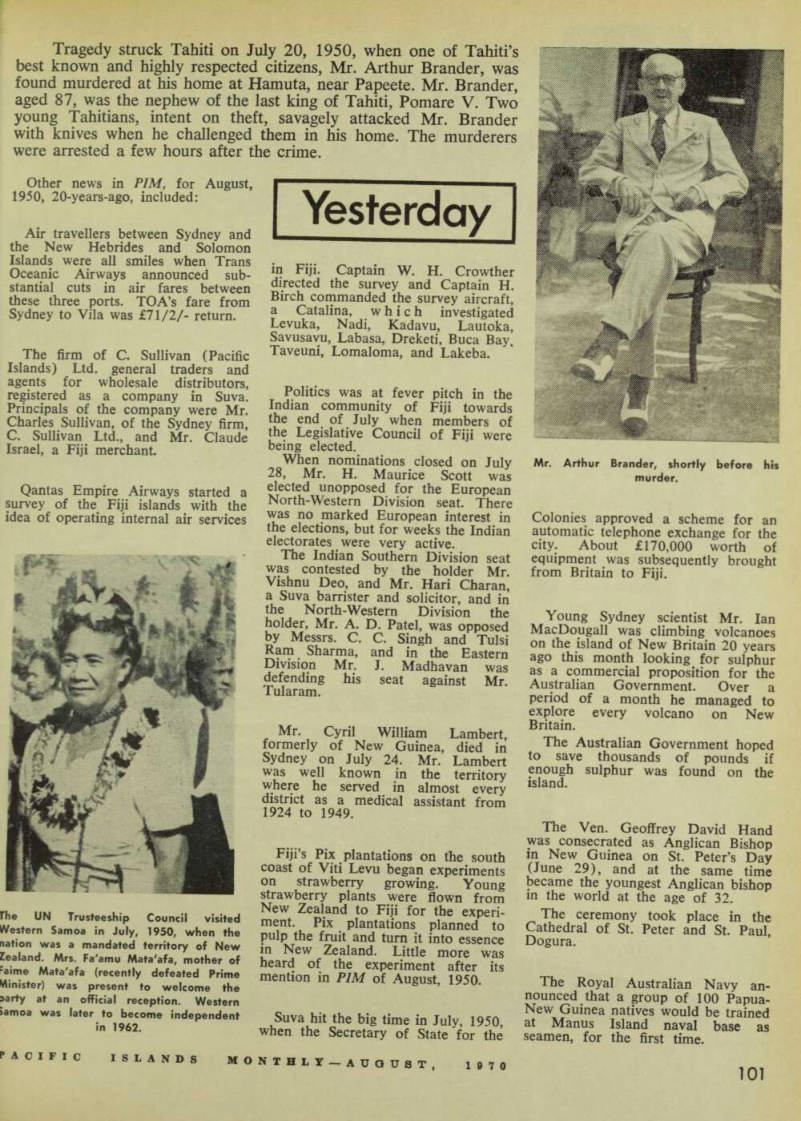 105
105 106
106 107
107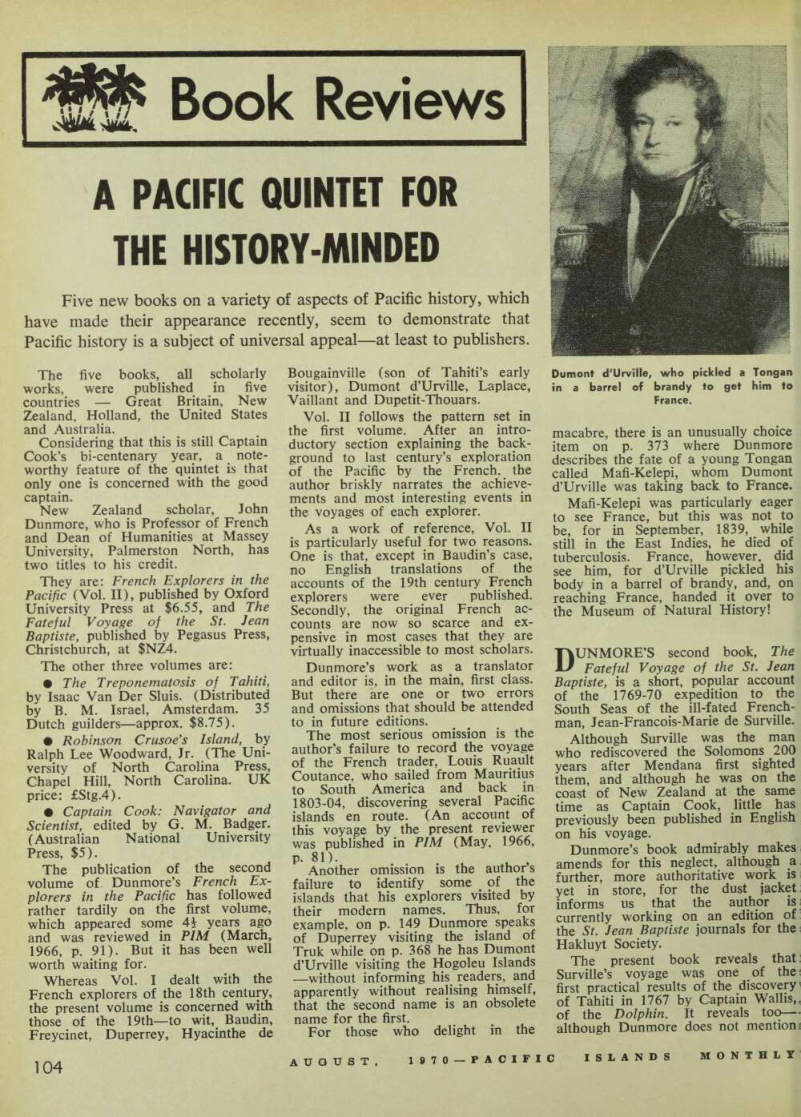 108
108 109
109 110
110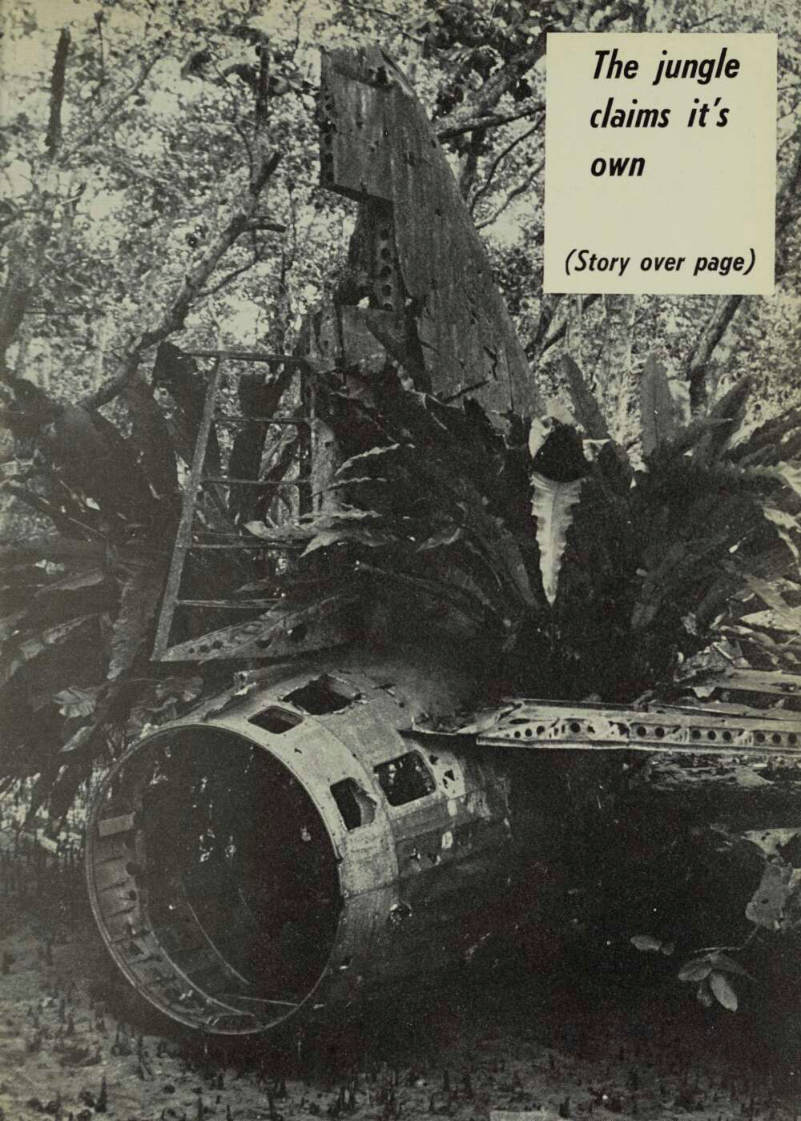 111
111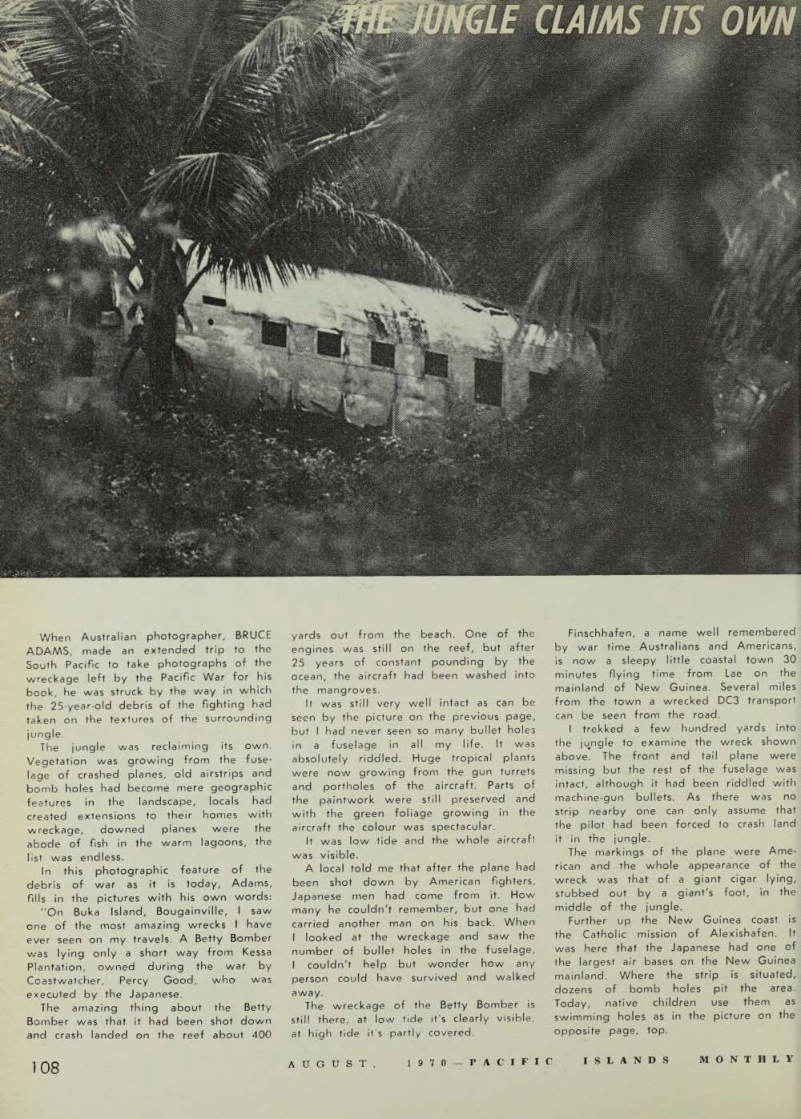 112
112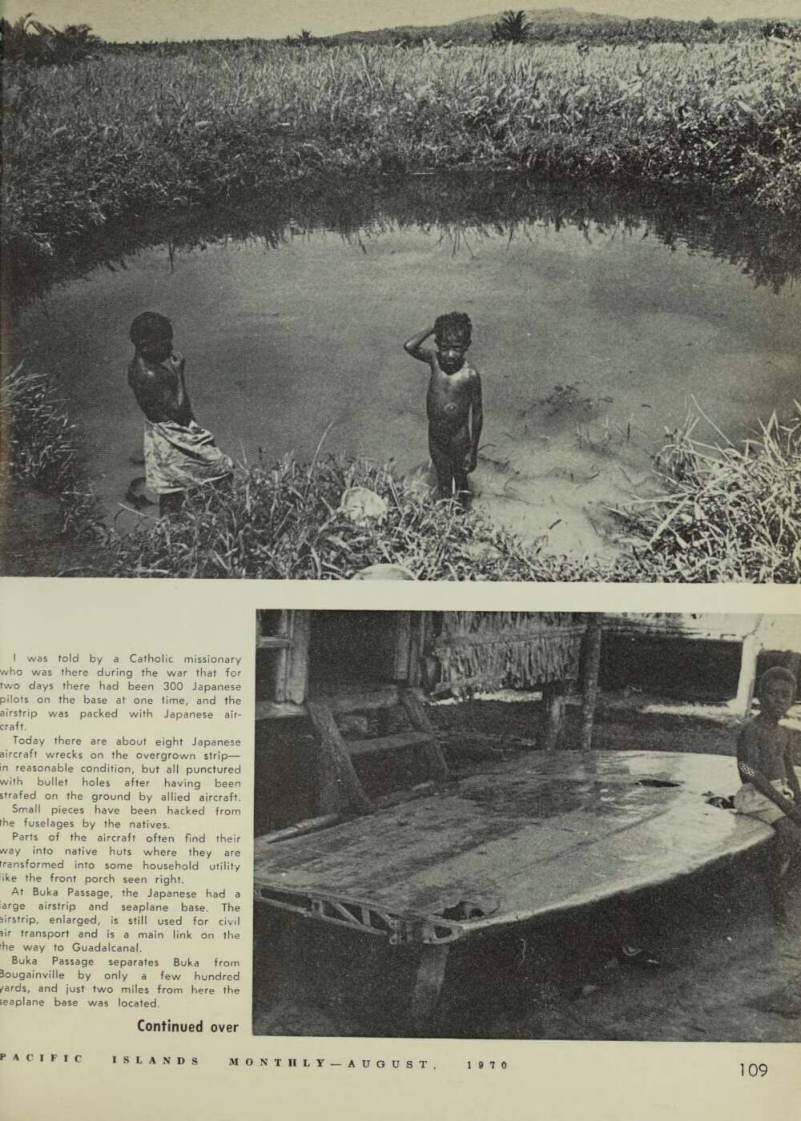 113
113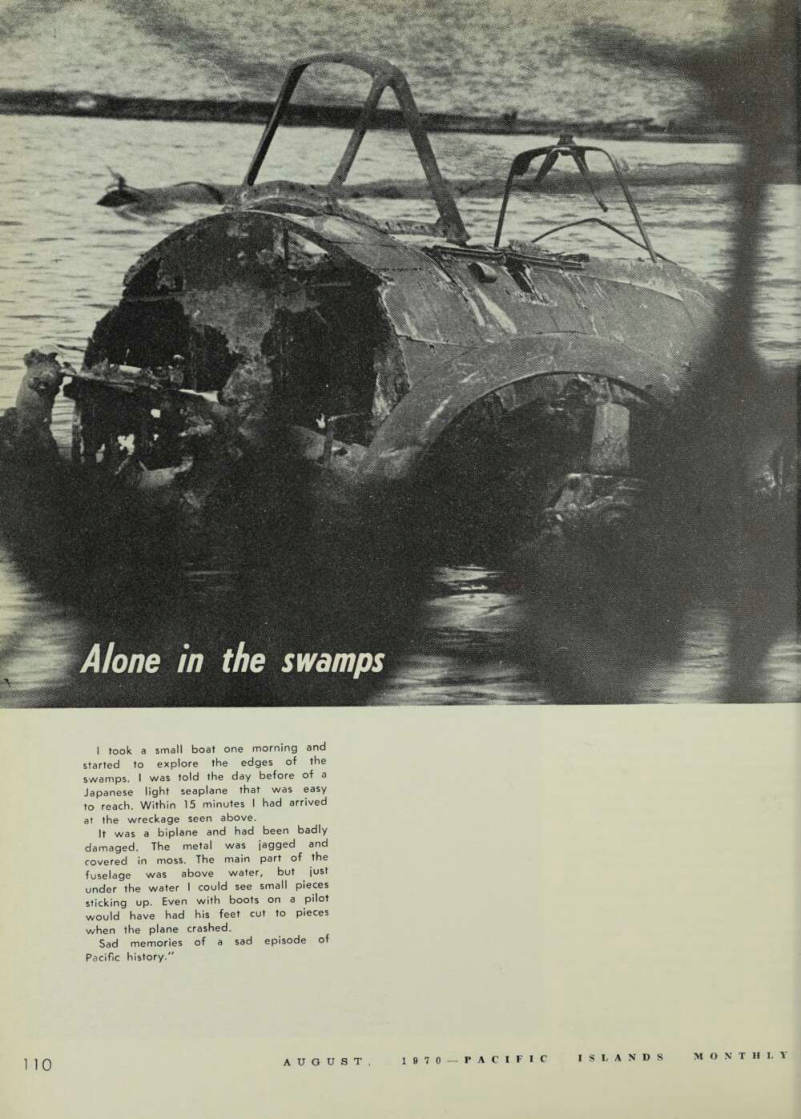 114
114 115
115 116
116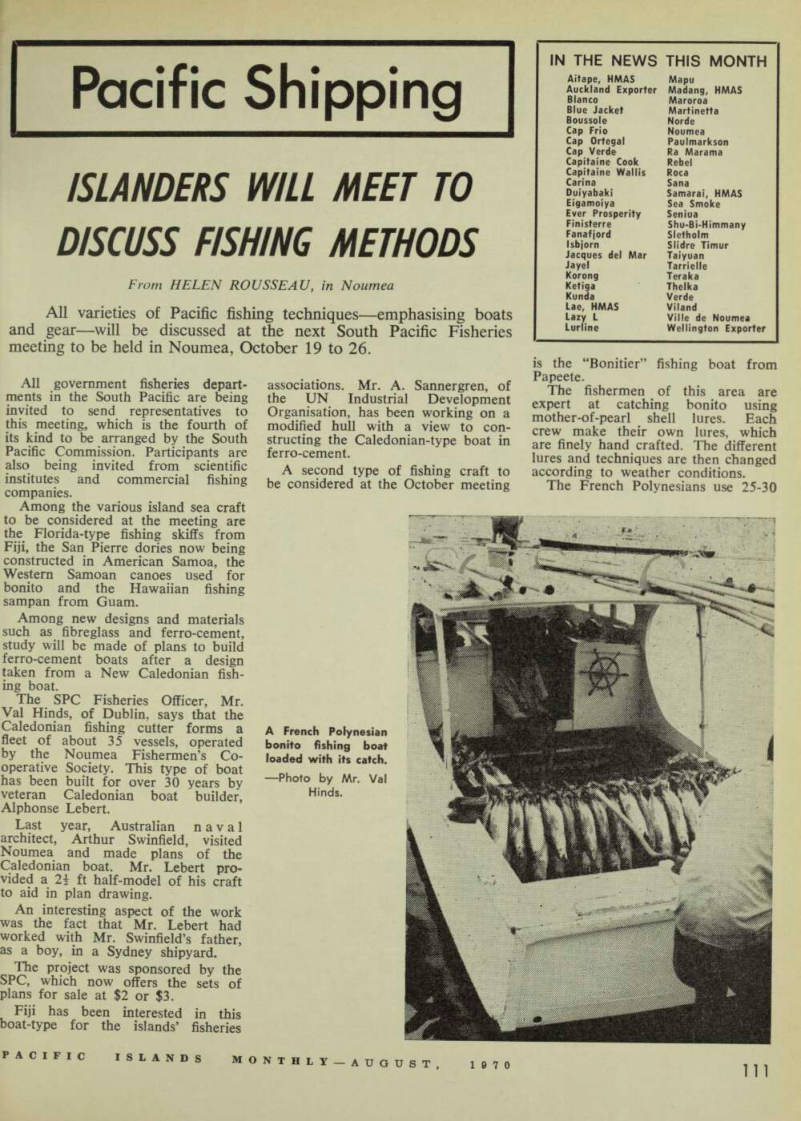 117
117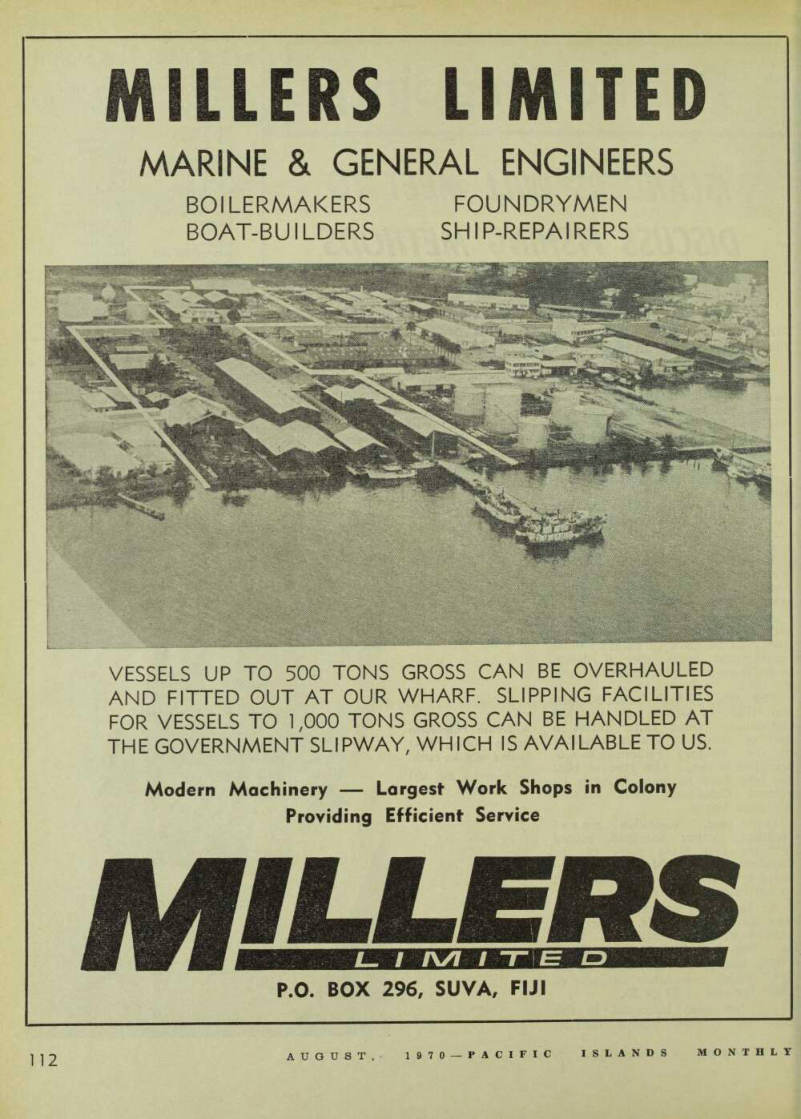 118
118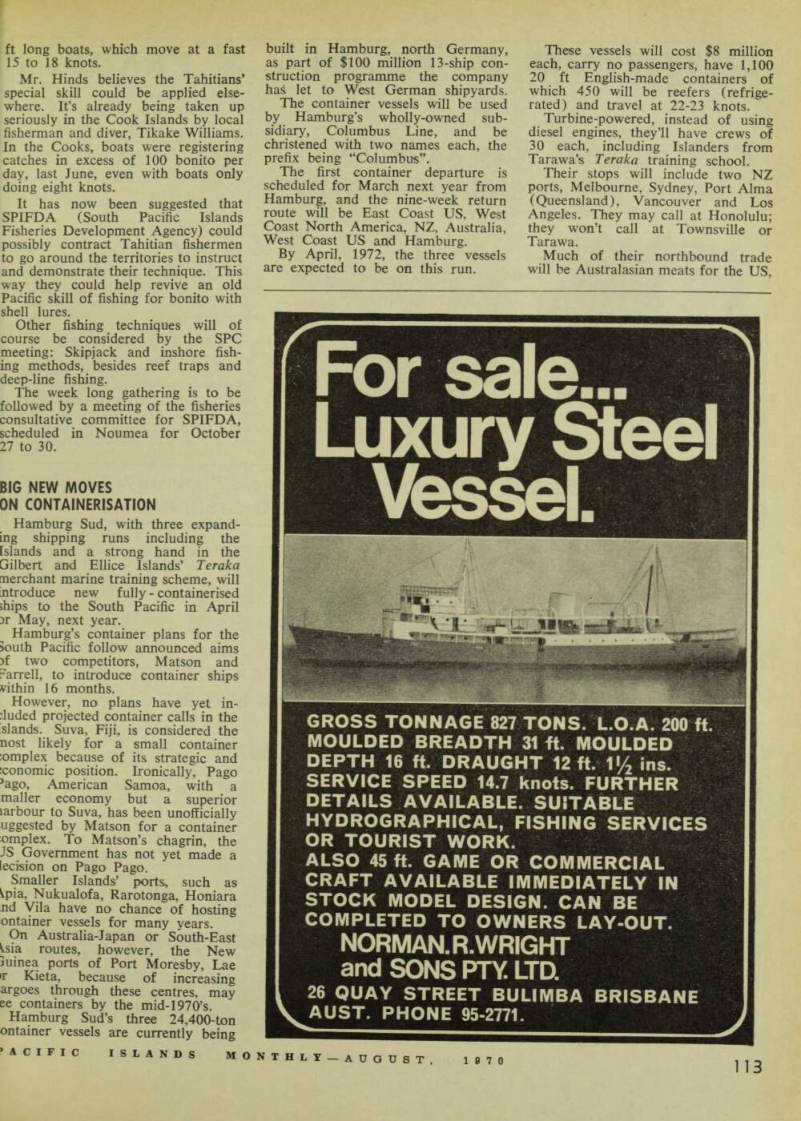 119
119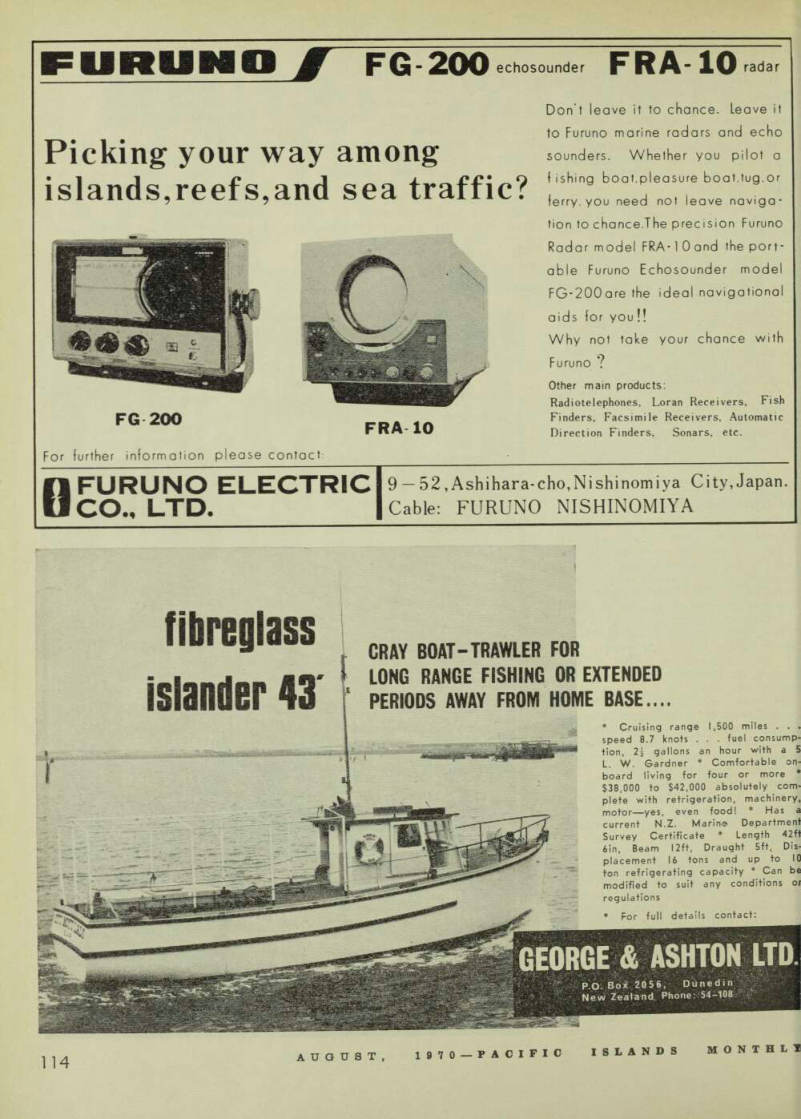 120
120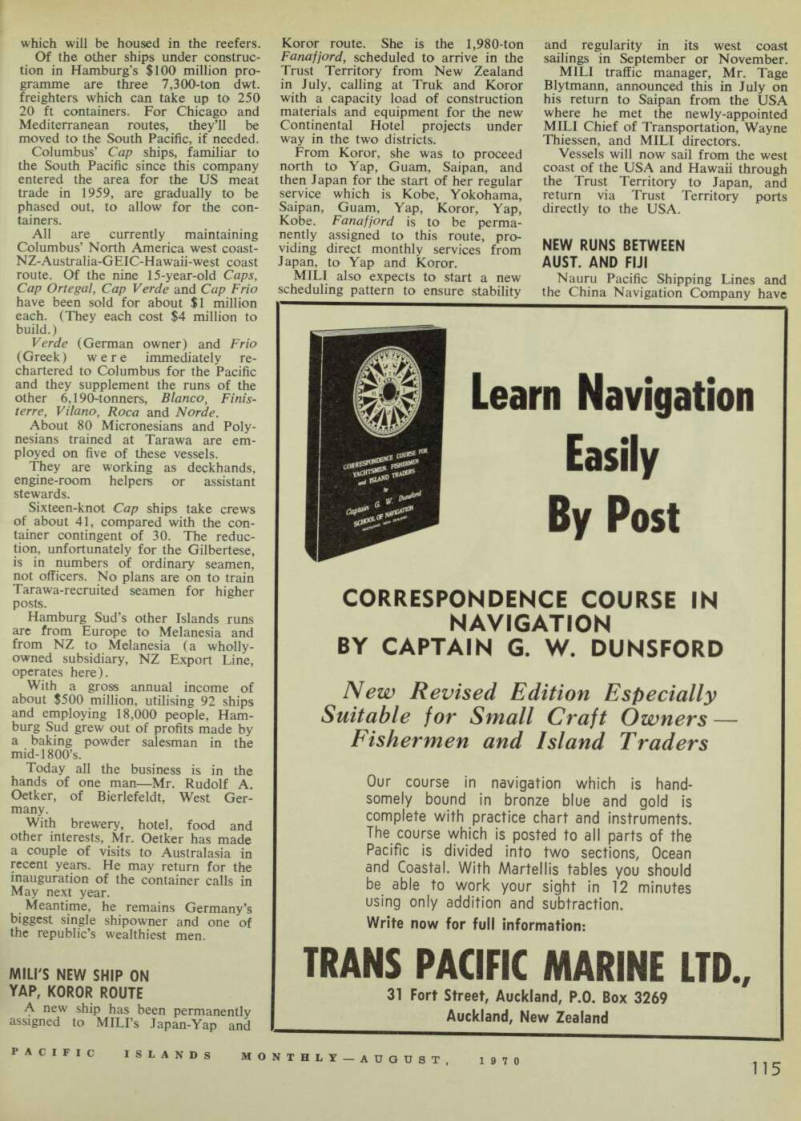 121
121 122
122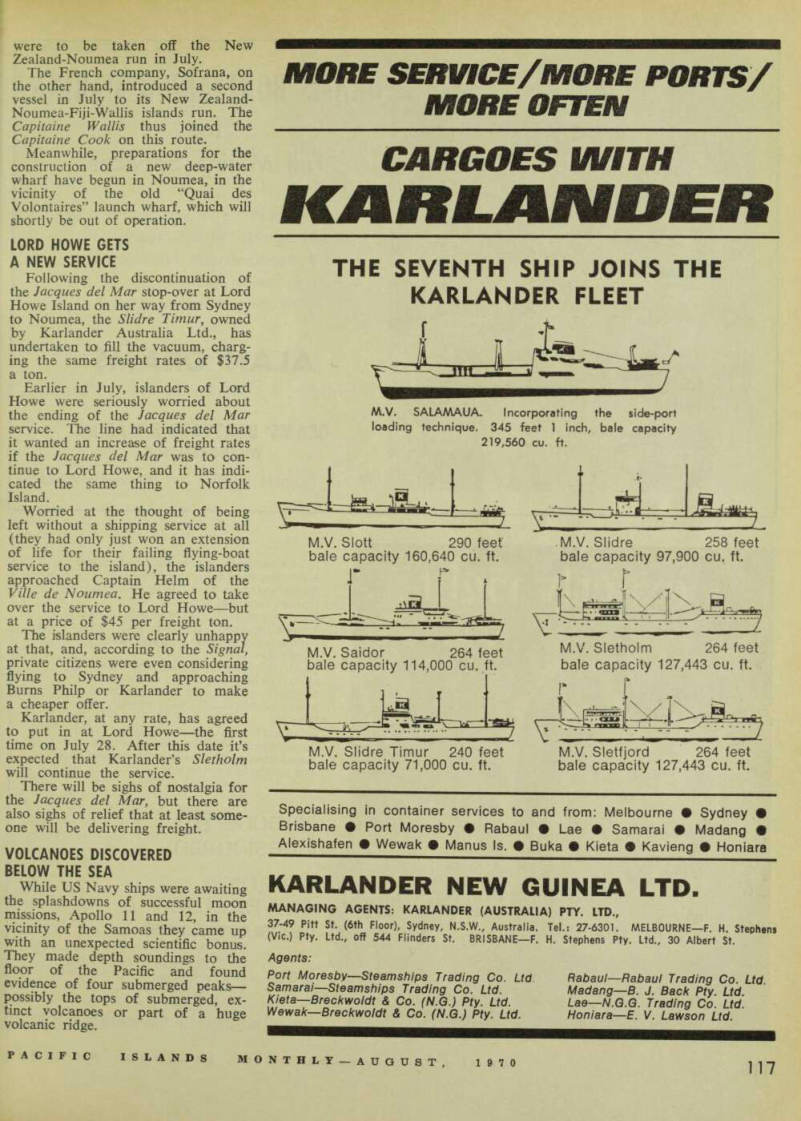 123
123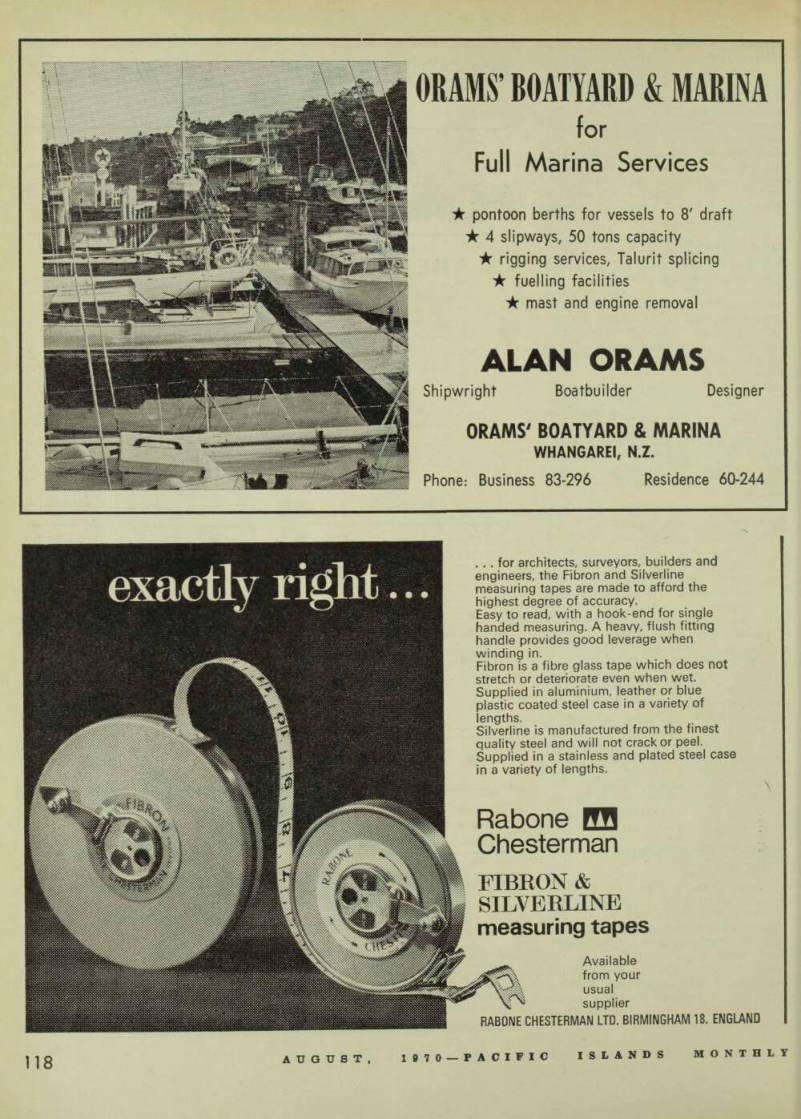 124
124 125
125 126
126 127
127 128
128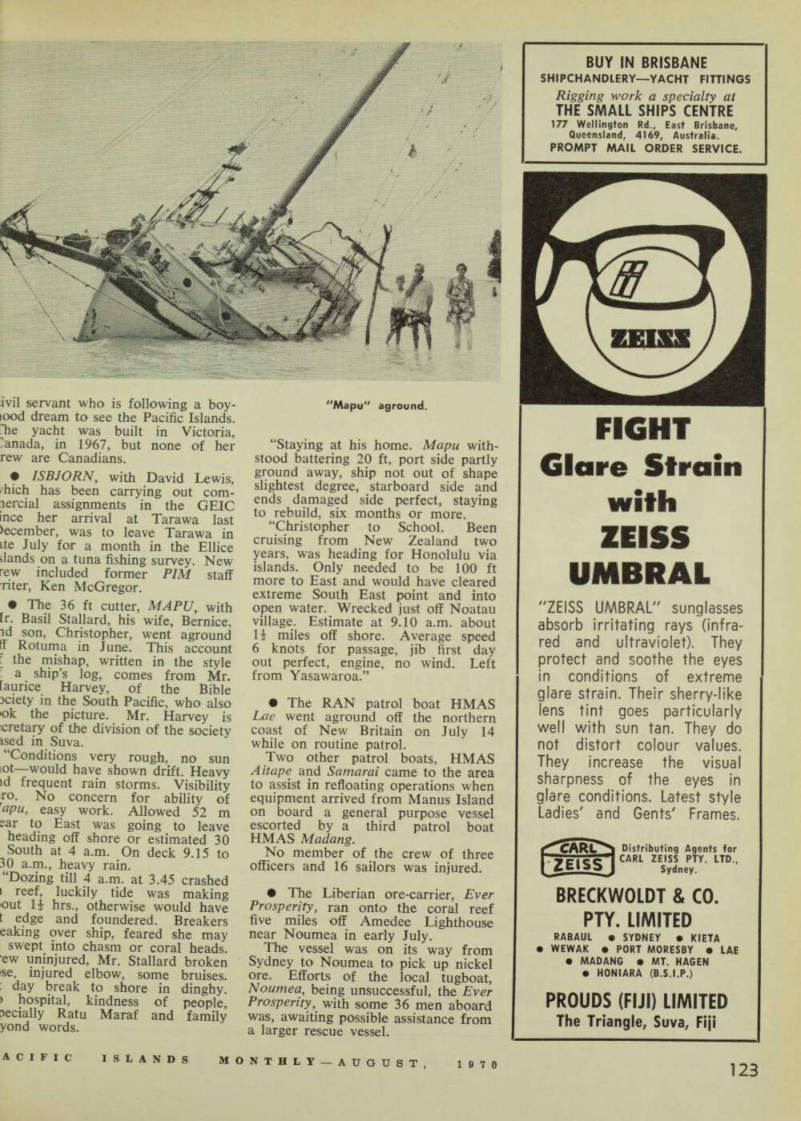 129
129 130
130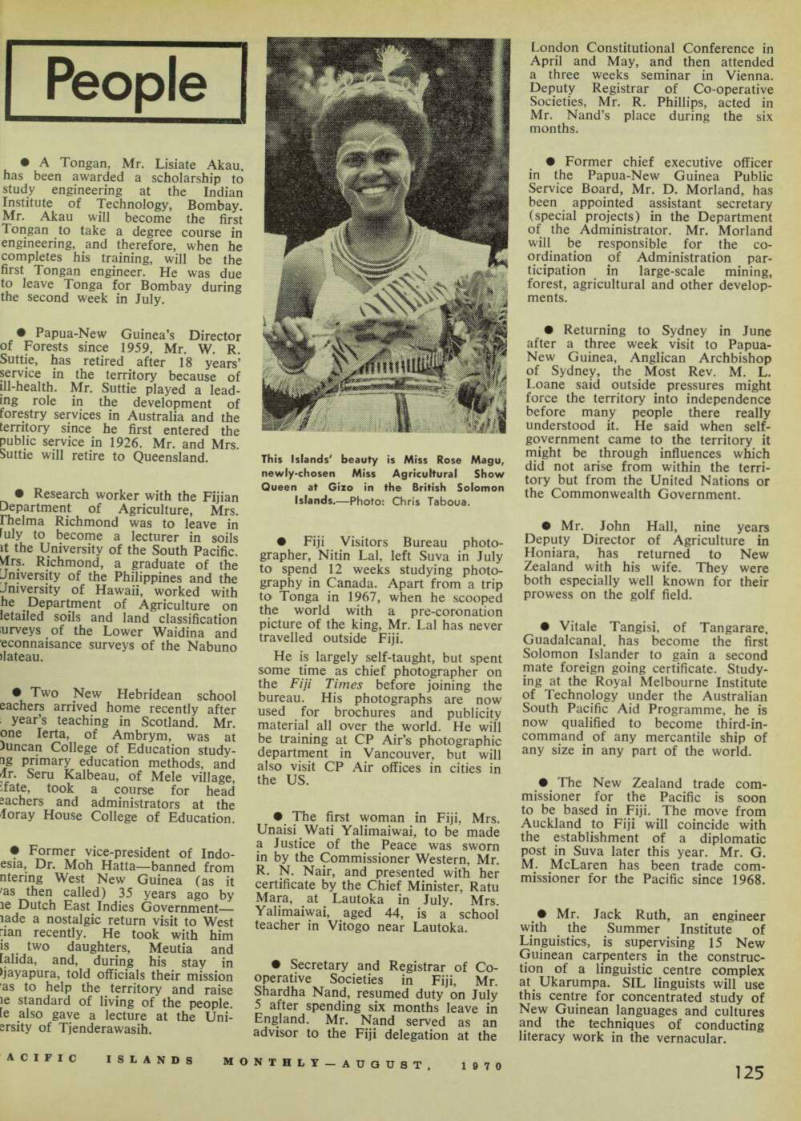 131
131 132
132 133
133 134
134 135
135 136
136 137
137 138
138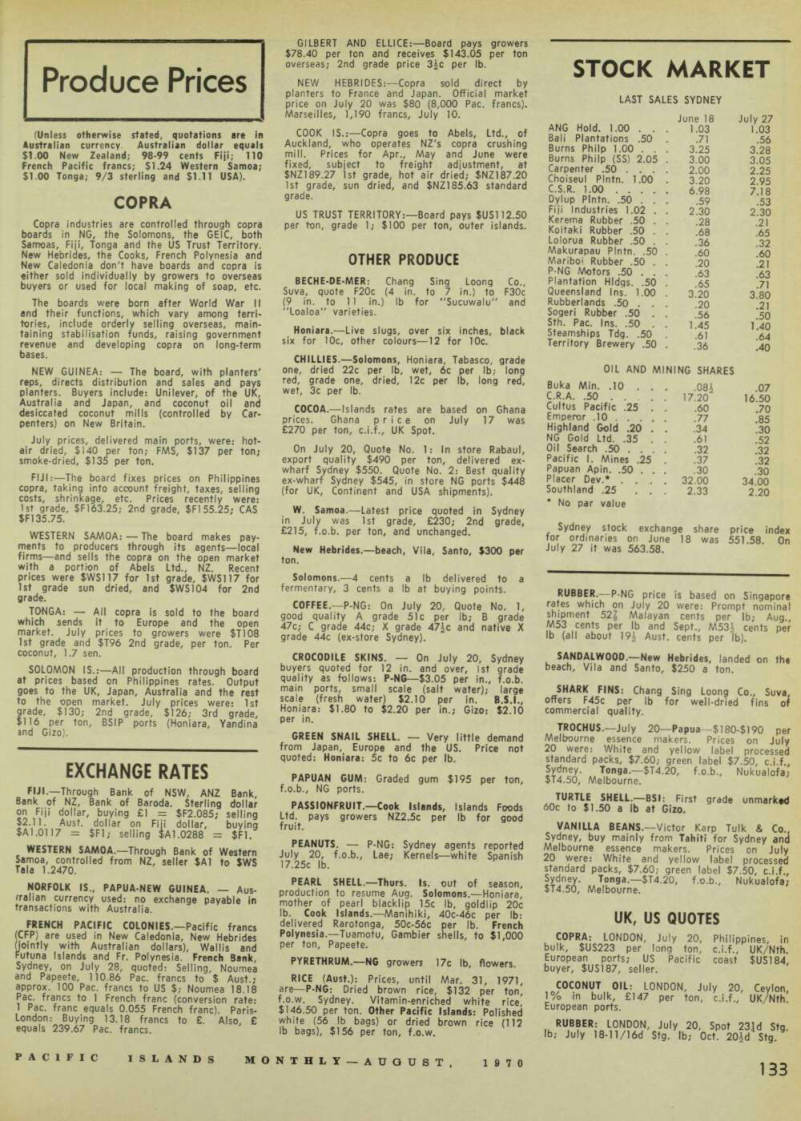 139
139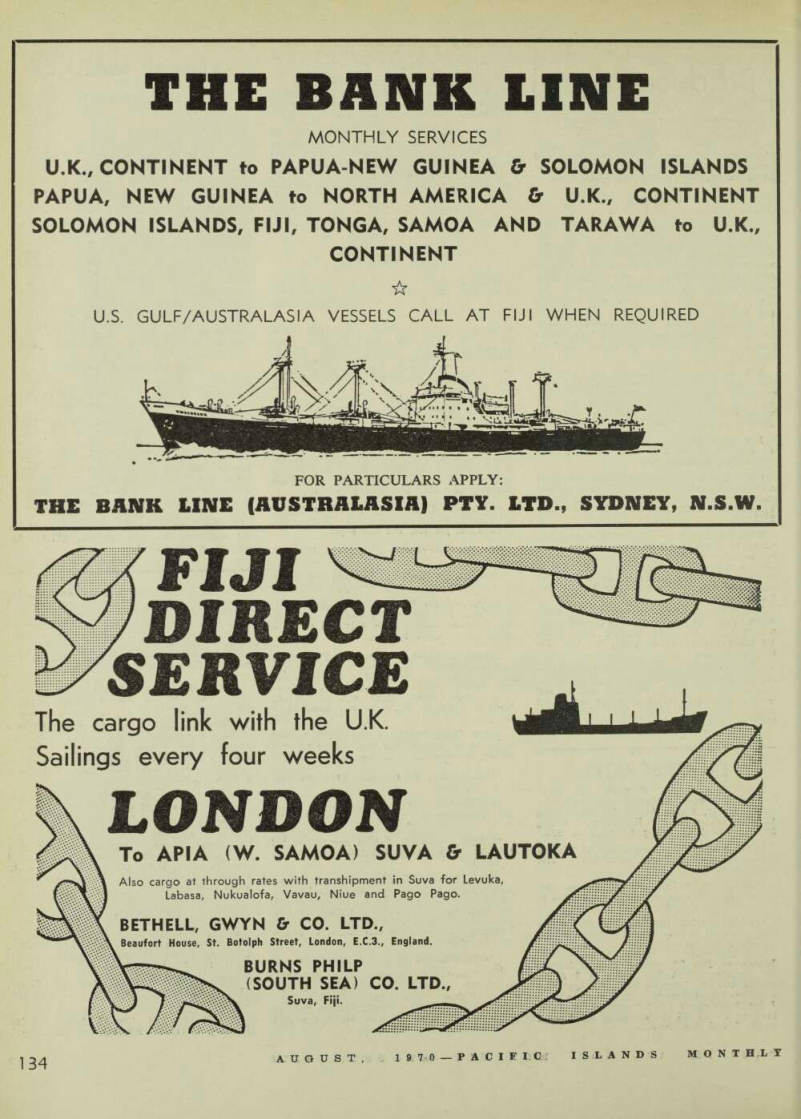 140
140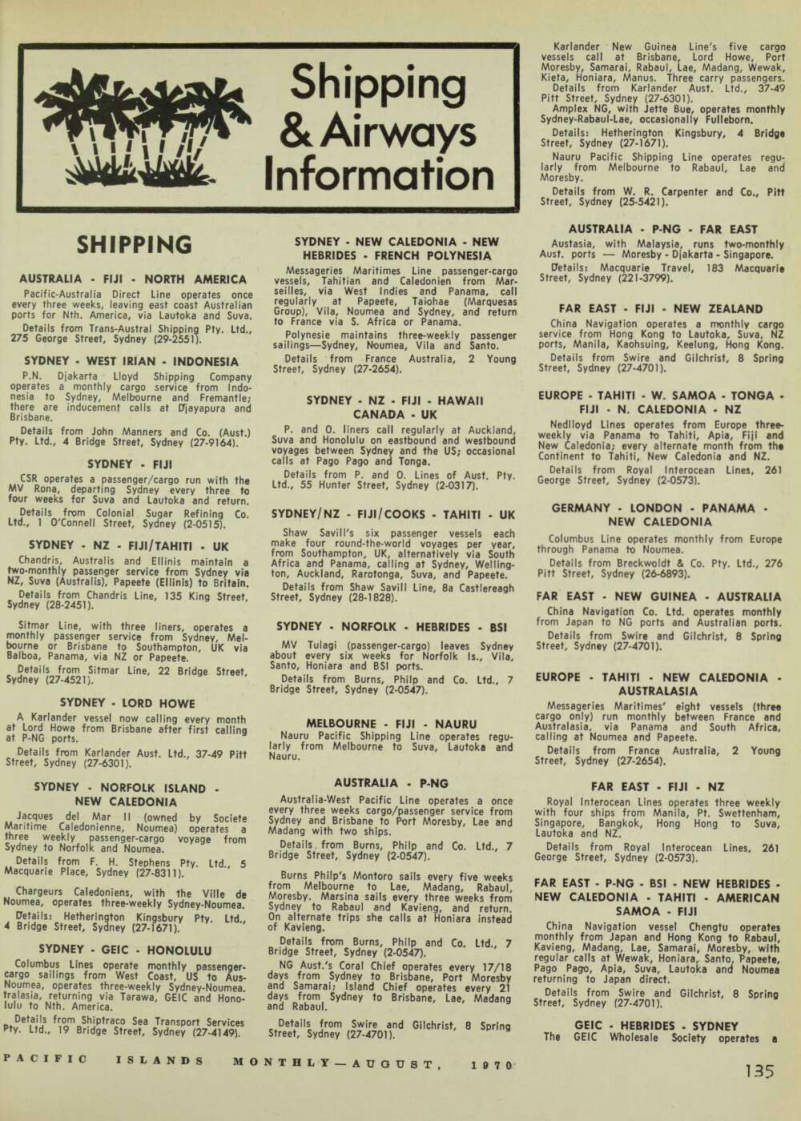 141
141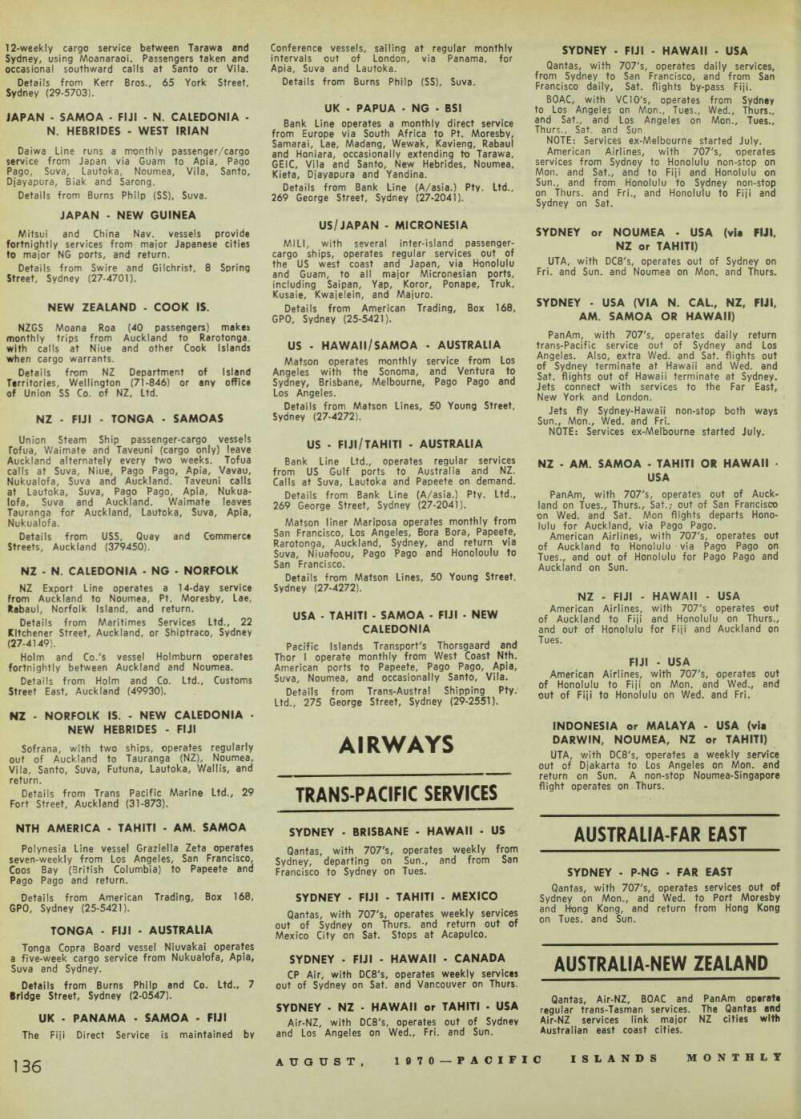 142
142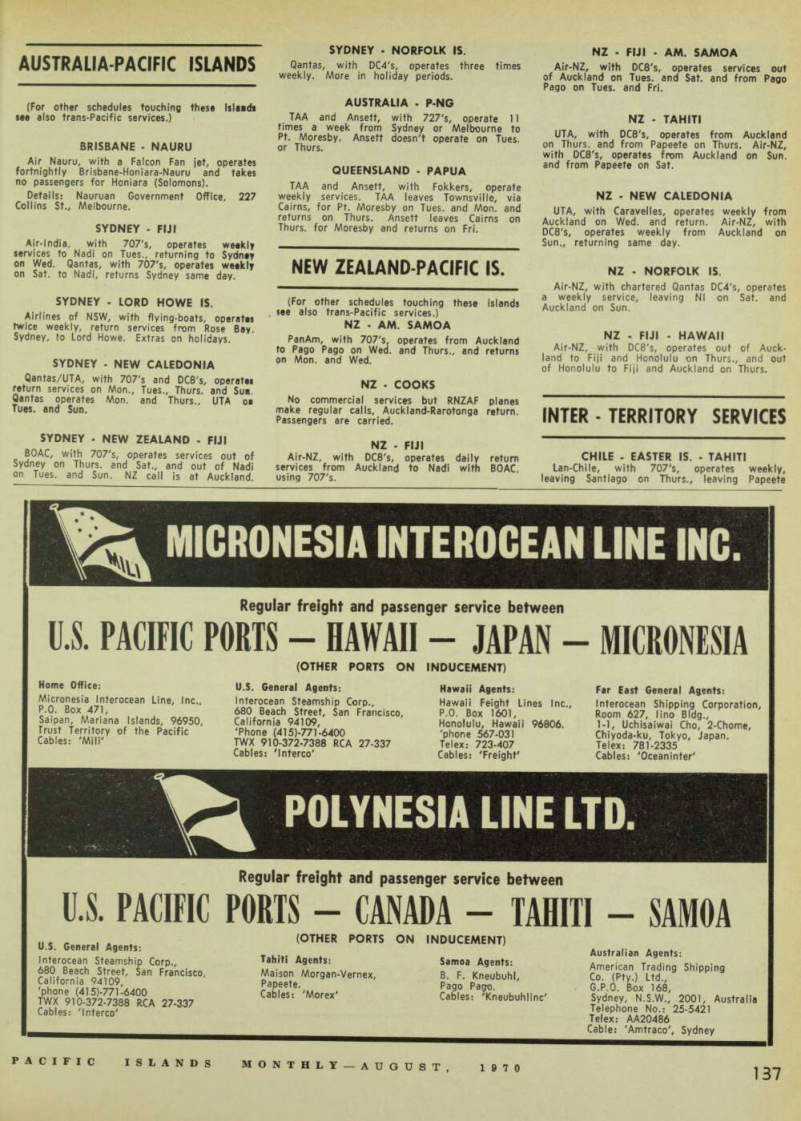 143
143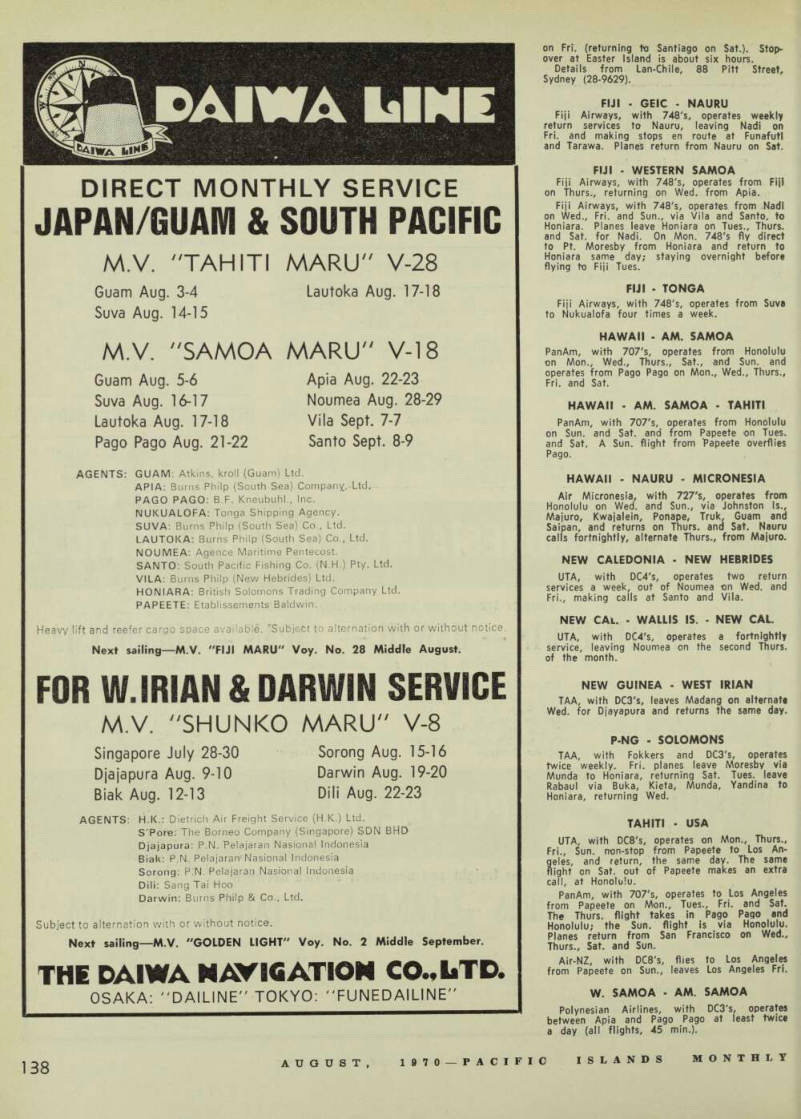 144
144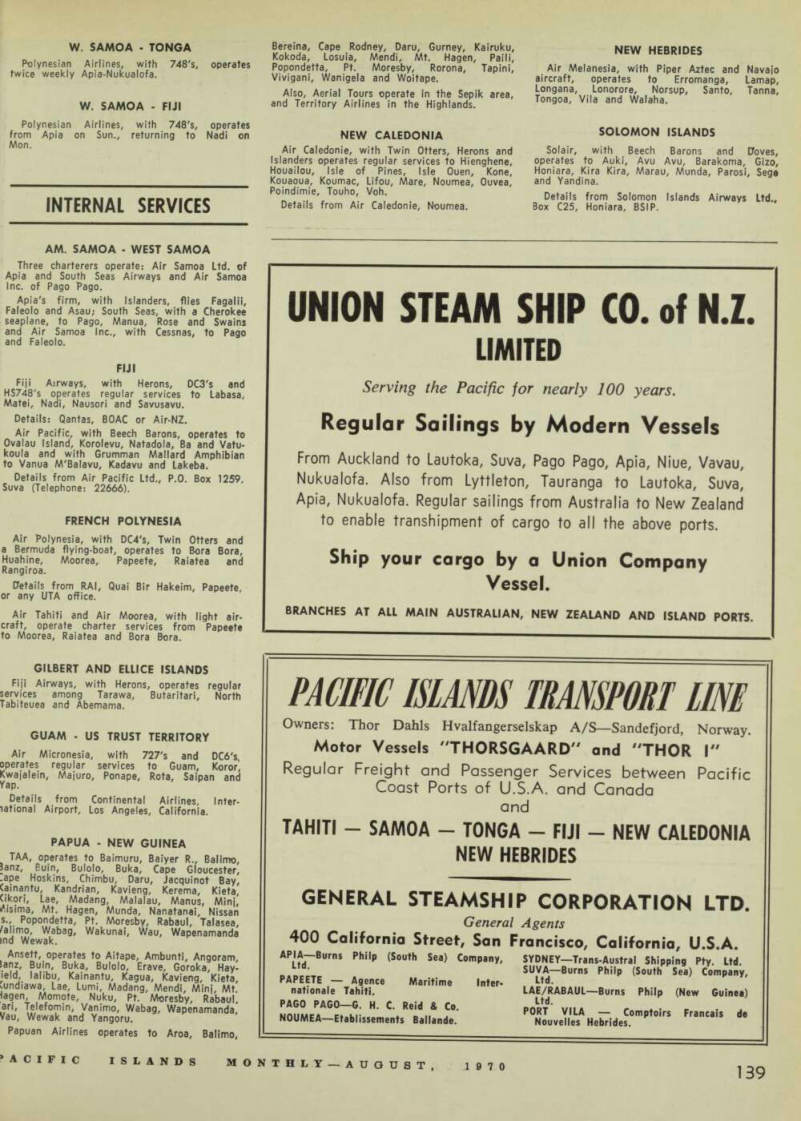 145
145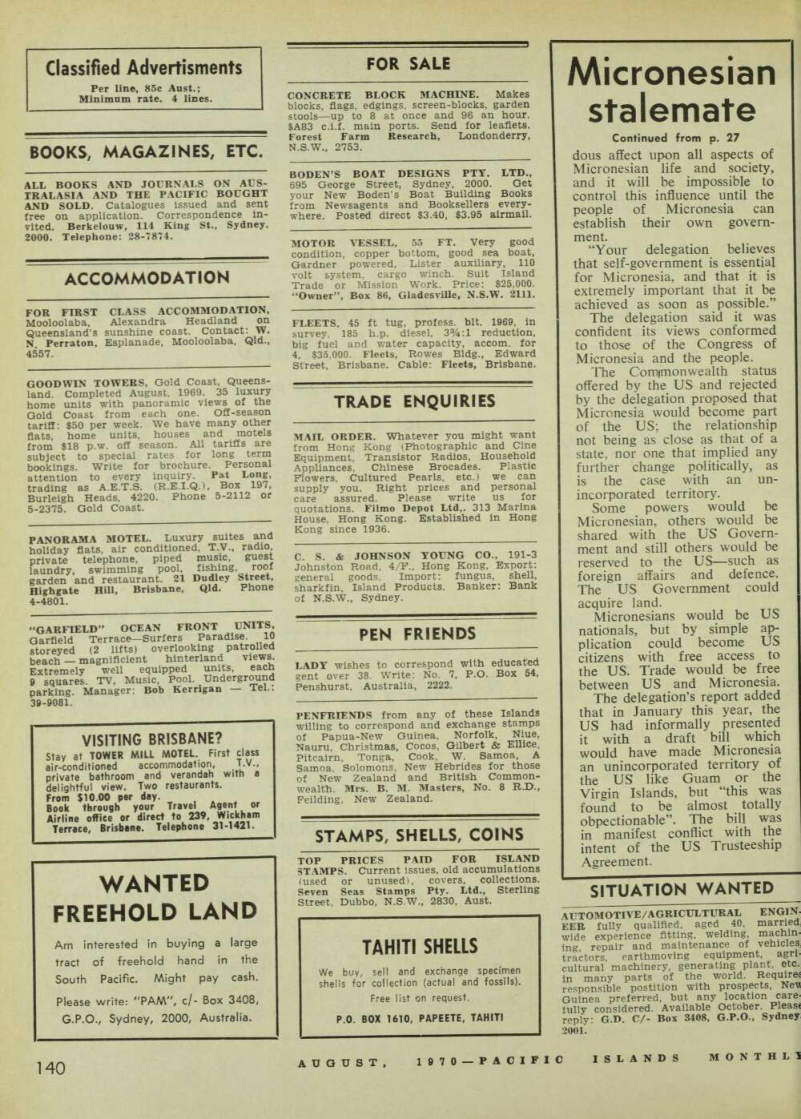 146
146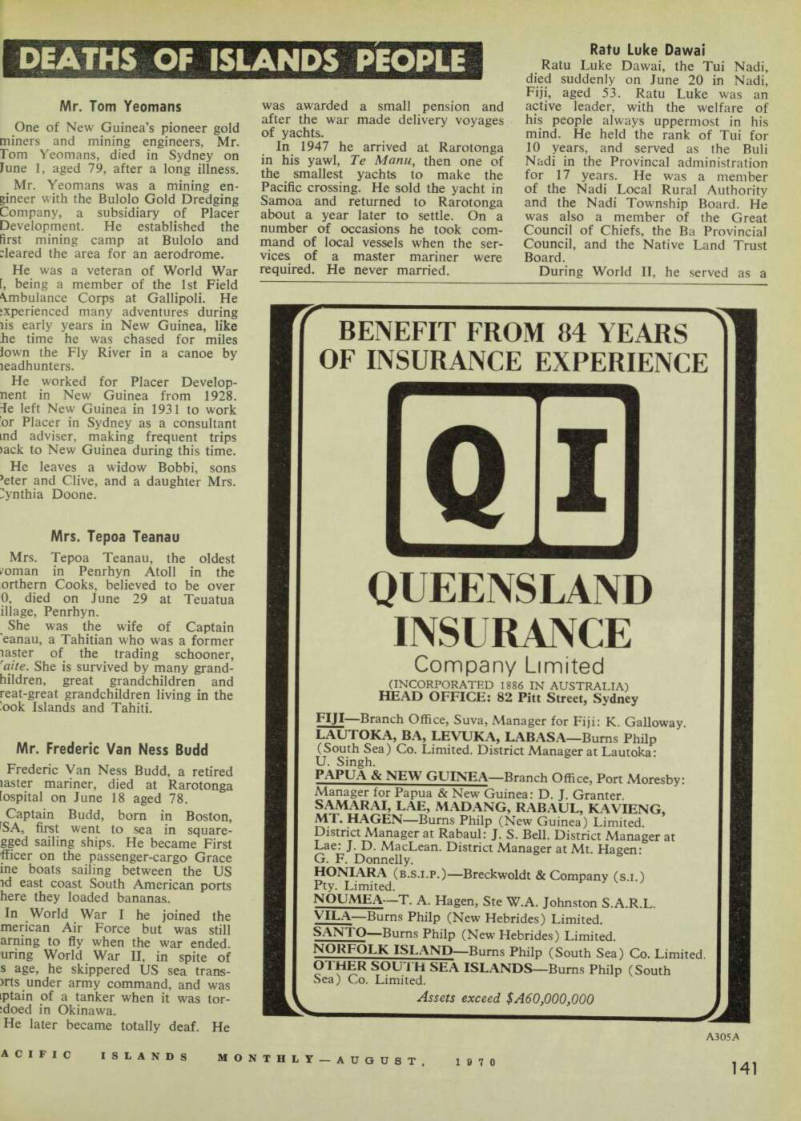 147
147 148
148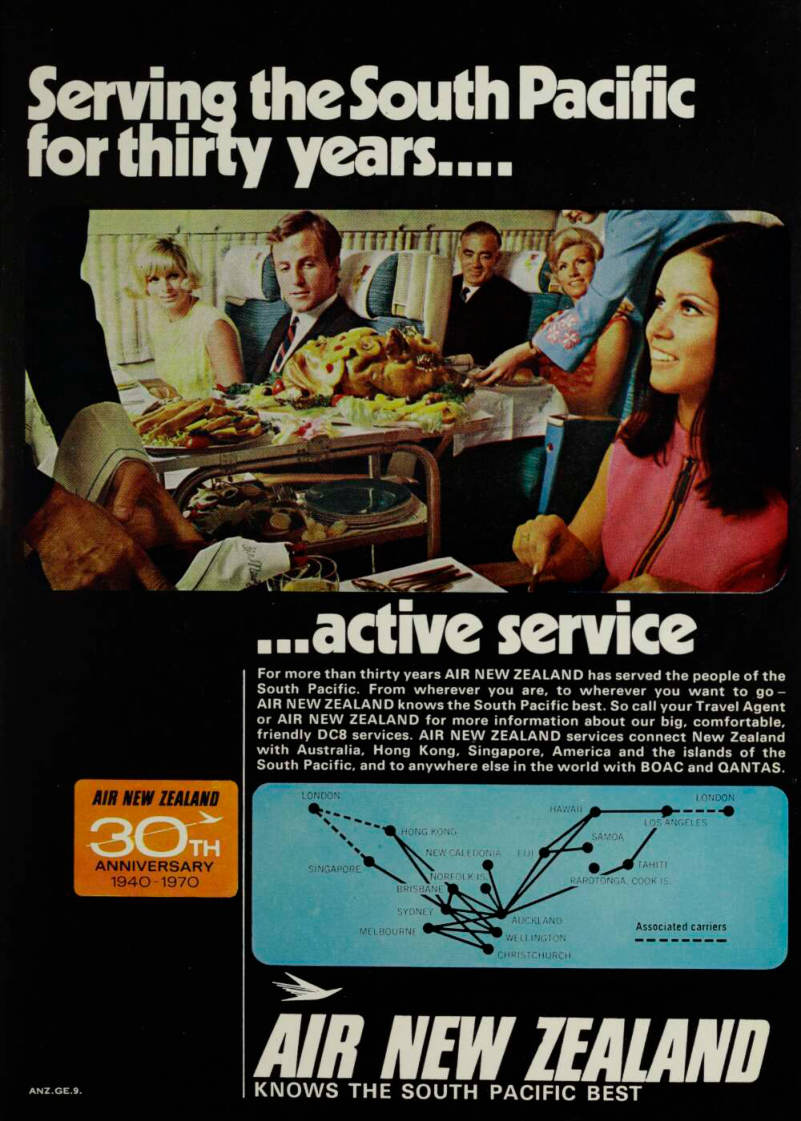 149
149 150
150 151
151 152
152 153
153 154
154 155
155 156
156 157
157 158
158 159
159 160
160 161
161 162
162 163
163 164
164