Monthly
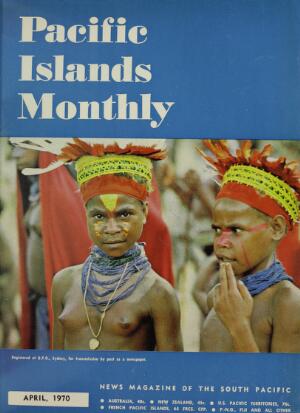
Pacific Islands Monthly
Registered at G.P.0., Sydney, for transmission by post as a newspaper.
April, 1970
News Magazine Of The South Pacific
• AUSTRALIA, 40c. • NEW ZEALAND, 45c. • U.S. PACIFIC TERRITORIES, 70e. • FRENCH PACIFIC ISLANDS, 65 FRCS. CFP. • P.-N.G., FIJI AND ALL OTHER
Advertisements & other items, pp. 2-16 (6 items)
TAA’s got you
covered.
■v ■*.- All the way from Port Moresby to Lae, Madang, Rabaul, Goroka Mt. Hagen fifty centres in all. The best connections in the Territory. More coverage of Papua/New Guinea flying air-conditioned twin prop-jets, than any other major airline. Plus the best connections to Australia flying Bird of Paradise’ T-Jets. More comfort, more flights, more places. That’s why more people fly TAA.
Contact your Travel Agent or TAA. Port Moresby 2101.
Lae 2311. Madang 2478. Rabaul 2567. Goroka 8. Mt. Hagen 4 or 301. Wewak 103.
TAA No.l-the friendly
one
3(9 2267/69
A
m THROUGHOUT THE PACIFIC
HJLSAMOA,TONGA,NIDI Is, NORFOLK Is.
BURNS PHILP
[SOUTH SEA] COm^^^H
REGISTERED OFFICE; SUVA, FIJI,
TELEPHONE NO: 22661
TELEX NO: FJ1127
Code Address: "BURNSOUTH' wmm&m m
SHIPPING AGENCIES
The New Zealand Shipping Co. Ltd.
Shaw Savill & Albion Co. Ltd.
Blue Star Port Line (Management) Ltd.
Bank Line Ltd.
General Steamship Corporation Ltd.
Compagnie des Messageries Maritimes Royal Interocean Lines Daiwa Navigation Company Ltd.
Sitmar Line Flotta Lauro (Lauro Lines) Australasia Pty. Ltd.
Tonga Shipping Agency.
EXCLUSIVE
DISTRIBUTORSHIPS
INCLUDE
Akai Taperecorders Dunlop Products Hitachi Electronics Holden Motor Vehicles Rolex Watches Revlon Cosmetics Pentax Cameras Ferguson Tractors Olympic Tyres Penfold Wines
AGENTS FOR
Queensland Insurance Co. Ltd.
Burns Philp Trustee Co. Ltd.
Shell Company (P. 1.) Ltd.
Bureau Veritas
ASSOCIATED COMPANIES
Burns Philp (New Hebrides) Ltd.
Automotive Supplies Co. Ltd.
Corrie & Co. Ltd.
Wrought Iron and Steel Construction Co. Ltd.
Bish Ltd.
SPECIALISED SERVICES
Expert advice on Shipping; Forwarding; Customs formalities; Insurance.
COMPLETE TRAVEL
SERVICE
accredited agents for the
INTERNATIONAL AIR
TRANSPORT ASSOCIATION
OVERSEAS AGENTS: SYDNEY • LONDON • SAN FRANCISCO
Qrnott's/ Biscuits
in triple wrapped, tropical packs
Arnott’s SCOTCH FINGER Biscuits.
A butter-rich, chunky biscuit with the true flavour of shortbread.
Arnott’s CHEESE JATZ Biscuits.
Crisp cracker biscuit with a fine cheese flavour — perfect for entertaining.
V s*■■■ 4 * * * ■s Arnott’s SALTINE Biscuits.
Light, tangy, crisp cracker biscuit. . . perfect with salads, cheese, soup or eaten plain olseuW.
Arnott’s MILK ARROWROOT Biscuits.
A wholesome, nourishing biscuit especially suitable for children, but a favourite with all the family.
*>:• 8 Arnott’s SAO Biscuits.
A light, crisp cracker biscuit... delicious with butter and cheese, ham, jam or other spreads.
Arnott’s MONTE CARLO Biscuits.
Crisp short biscuits, flavoured with pure honey and coconut, sandwiched with vanilla cream and raspberry jam. m
--■n-rs
Arnott’s SHREDDED WHEATMEAL Biscuits.
A wholesome biscuit with the nutty flavour of crunchy whole wheatmeal.
Delicious plain or buttered. vm. c ?->' *' ’ fe-! «af
S#iia
a-S £■ wsa? tt sa N'o;r r Mice m Arnott’s NICE Biscuits.
A sweet plain short-texture biscuit sprinkled with fine sugar. Popular for morning tea.
There is no Substitute for Quality
Our language is shipping.
Key words
PALLET
UNIFLAT
CONTAINER
Straight talking;
Continuous terminal receiving and delivery of cargo.
Regular sailings link Australia, Papua & New Guinea, Hong Kong, Taiwan, Sabah, the Philippines and Japan.
GENERAL AGENTS
Wilh Wilhelmsen Agency P/L Sydney 20517 Mebowne 613031 Brisbane 22991 AGENTS Dalqety & New Zealand Loan Ltd Adelaide 41191 Australia - West Pacific Line (N.G.) P/L Lae 2269 New Guinea Company Ltd Port Moresby 2117 Madang 2758 Rabaul 2640 Collins & Leahy P/L Goroka 67 Breckwoldt & Co (N.GJ Pfl- Hagen 392 Keep your cargo happy.
Ship
f THE UNIT LOAD a* I
me
Forget hot, humid weather
in just seconds
with Heinz Salad Varieties
MW?
WONHAfSE
WL m mm
potato
m r% tato m
IaIa?
N 2 Wi
ZTABI'Z
he NZ salad Arc
SALA&
Put new life into heat-jaded appetites with the sealed-in freshness of Heinz Salads. Crisp and appetising, you can prepare Heinz Salads in moments. And it’s got the flavour the whole family loves.
Choose from Potato Salad, Vegetable Salad, Vegetable Salad with Chicken, Potato Salad with Ham, Potato Salad with Chicken and Hawaiian Rice Salad. And to make any salad special, top with Heinz Mayonnaise or Salad Cream.
Heinz Salads taste like you worked for hours
ESV 2
Ask for FOUREX—the clear sparkling amber beer.. available in BOTTLES, CANS and GLASS CANS
The Popular
‘lts Quality Never V Wholesale Distributors:
C. SULLIVAN
(NEW GUINEA) LTD.,
Rabaul, Lae, Madang and Port Moresby.
Also at Lautoka and Suva, Fiji. castlemaik "W
.a. AAA.
'itterA^ Brewed from the finest Ingredients by Castlemaine Perkins Limited, Brisbane, Queensland, Australia.
rASTLEMAIuj
XXXX
aU
SARI
Sandals and Thongs
The international look
FOR MEN, WOMEN
AND CHILDREN
0
OCKA
Reg. Design No. 53411
Available at all leading shoe stores
Sole Distributors: F. L CHARTERS & CO. PIV. LTD. 135 MERIVALE ST., STH. BRISBANE, OLD., 4101.
P.O. BOX 175, STH. BRISBANE, OLD., 4101.
TRANSARC
prea jWtw*
Industrial Gases
Comweld
Gas welding and cutting, Plants, Rods and Fluxes.
Flattie cleaning. Flattie hardening and flame heating equipment
EMF Electric
Welding Equipment
Arc welding machines Automatic welding machines Automatic wires and fluxes Electrodes Arnold-DeVilbiss spray
painting equipment
including spray guns, air filters and compressors, multi-purpose units with spray booths, and a full range of automatic equipment.
CIG FOR ALL
YOUR WELDING &
SPRAY FAINTING
EQUIPMENT
CIG
CIG supply centres throughout Papua-New Guinea
LAE: CIG New Guinea Pty Ltd, Phone 2641
PORT MORESBY:
CIG New Guinea Pty Ltd, Boroko Phone 5 3870 MADANG: Madang Slipways Pty Ltd, RABAUL: Rabaul Metal Industries Pty Ltd, WEWAK: B & G Motors SAMARAI: Belesana Pty Ltd, GOROKA: Collins and Leahy Pty Ltd, KAINANTU: Kainantu Trading Co Ltd, KUNDIAWA: Collins & Leahy Pty Ltd,
MT. HAGEN:
Kala Motors Pty Ltd, CIG Fiji Ltd. Cnr. Vetaia & Nukuwatu Streets Lami Suva Slipways Pty Ltd, BANZ: Kamarl Coffee Plantation
LORENGAU:
Edgell & Whiteley Ltd, KIETA: Breckwoldt & Co (NG) Pty. Ltd, CG4380/70
1
SOME OF THE FIRMS
WE REPRESENT ARE:
S. E. TATHAM
& Co. Pty. Ltd.
MELBOURNE, AUSTRALIA
G.P.O. Box 8, Cables “SET Telephone 60-1125
EXPORT AGENTS
PACIFIC ISLANDS
AGENTS
A. W. Allens (Confectionery) Sunshine Biscuits Sunrise (Confectionery) Flamenco (Instant Coffee) Cremota (Quaker Oats, Jets Pet Foods) Merchants (Canned Soft Drinks) Lunchtime (Honey) South Pacific Canneries (Scallops, Abalone) Safcol (Canned Tuna, Salmon) Hancock's (Spaghetti, Cereals) Melbourne Canning (Jams, Bleach) Water Wheel (Flour, Sharps, Wheat) General Food Corporation (Twisties, Twirlies) Edward Zorn (Margarine, Cooking Fats) Robert Timms (New Guinea Gold Coffees, Teas) Rodd (Cutlery) Palm (Mattresses) Esteel (Cookware) Vendolux (Cafe Bars) Mitchell's (Abrasives) Regent (Swiss Watches) Gainsborough (Furniture) Tamco (Melanie Crockery, Nylon Hardware) Elmaco (Plastic Household Goods, Electrical Fittings) Brownbuilt (Pre-Fabricated Houses) Ryline (Fluorescent Lights) Jex (Steel Wool) Austramax (Pressure Lamps) Preservene (Soap Products) Charles Tims (School Requisites) Ascow and Philadelphian (Shirts) Lawn Chair and Tubco (Garden Furniture) Sunrise Lustretone (S.S. Sinks, Plumbers' Supplies) Electronic Industries (Electrical Household Appliances) 1 1 1 Australian buying and shipping agents for the Gilbert and Ellice Islands Colony Wholesale Society
DIRECT ENQUIRIES WELCOMED
Associate Company
S. E. TATHAM (FIJI) LTD
Suva, G.P.O. Box 671.
Lautoka, P.O. Box 366.
SINCI 1924
A
great bunch
of flours.
Robert Hutchinson makes the greatest bunch of flours in the Pacific. Bakers’ flour.
Superlite cake and sponge flours.
Biscuit flour and cracker flour.
Wheaten sharps and wheaten meal.
We’re particularly proud of our bunch of flours. So we have a technical advisory service to help you use them properly.
So next time you see a Robert Hutchinson flour (or even one of our Hutmill stock feeds), remember it’s just one of the bunch m m :.a: m m j
ROBERT
HUTCHINSON
LIMITED
the flour people
Hartington Street, Glenroy, Victoria, Australia. 3046. Telephone Melbourne 306 7261
Live a colorful life...
with one of the latest Kodak Instamatic Cameras to keep you company. They take marvellous color pictures. Black and white The Kodak Instamatic 33 camera is a budget-priced, cartridge-loading model with 2-speed shutter and fixed-focus f/11 lens for picture taking from 4 ft. to any distance. It has a large clear viewfinder and takes a tlashcube holder for flash pictures.
The Kodak Instamatic 133 camera is elegantly styled and has a fixedfocus f/11 lens, large optical viewfinder and 2-speed shutter. Pop on a flashcube for picture taking indoors or in poor light.
The Kodak Instamatic 233 camera features 3-element Kodak Reomar f/6.6 lens, “dial-the-weather” exposure control, clear, brightline frame viewfinder and drop-in cartridge loading. Flash system for use with flashcubes. Take a Kodak Instamatic camera with you wherever you go and keep a picturesque record of life in the islands. too.
Kodak
KODAK (Australasia) PTY. LTD. 379 George Street, SYDNEY. 2000.
Kodak dealers throughout the Islands.
Good^rmng^
°o (J
. yooa morning! 'W ■
oA <od mormns! s
t You’ll get just as many good mornings out of the new-look Weet-Bix pack as you got out of the old one.
And a hearty helping of 100% whole grain Weet-Bix natural wheat goodness.
So you see, nothing important has changed.
SANITARIUM HEALTH FOOD CO., SYDNEY, AUSTRALIA.
«cs mm
When the best beer is called for, New Zealand's favourite lager..
STEIN LAGER
GENERAL
FOODS
...bring you the good things in life!
mmk
ms m r Sm ms rap* a Good things like Bluebird Potato Chips. American processed, salted, greaseless. The crisp, crunchie potato chips. Bluebird another quality General Foods product.
Trade enquiries to General Foods Corporation (N.Z.) Ltd., P.O Box Auckland, N.Z.
A 4
r It mm
DO-IT-YOURSELF WATER STORAGE
with FONTANA corrosion resistant FIBREGLASS TANKS
Fibreglass lightness and compact assembly kit means low shipping costs. Fontana tanks can be easily assembled on the site by non-skilled labour.
Fontana tanks are made entirely of fibreglass, consisting of moulded vertical ribs, wrapped PHOTOS: Left; tank being assembled at Seventh-day Adventist Mission,
TARAWA.
Right; Typical 2,000 gallon ribbed tank with reinforced cover.
Fontana Distributing Co.
RAILWAY PARADE, BANYO, QUEENSLAND,
AUSTRALIA.
P.O. BOX 54, BANYO, 4014
Telegraphic "FONTANK" around with a continuous length of jointless fibreglass rod with a tensile strength exceeding ordinary mild steel.
Nothing can rust or corrode No maintenance Guaranteed to outlast all others. Will not taint or stain water. Sizes from 2,000 up to 10,000 gallons (all covered). Up to 20,000 gallons uncovered.
POST THIS
COUPON
Please send full information on
WATER STORAGE TANKS
NAME
ADDRESS
P.I.M. 4.70
1 -m' Oi m >/5 aa s
CHOCptATE
WHEfITEN
BLUE RIBBON BISCUIT OF THE YEAR
Yes, chocolate wheaten is first with the public, now it’s first with the judges. First for flavour, first for freshness. A taste-tempting combination of crunchy, nourishing wheatmeal topped with a generous lashing of pure, rich chocolate.
Look for Webster’s Chocolate Wheaten at your store on your next shopping trip.
Manufactured by David Webster & Son Pty. Ltd., 468 Gympie Rd., Kedron. Brisbane 4031.
1
ACIFIC ISLANDS MONTHLY APRIL, 1970
4
APRIL, 19 7 0 -PACIFIC ISLANDS MONTHII
6
APRIL, 197 0 PACIFIC ISLANDS MONTHLI
10
APRIL. 19 7 0 -PACIFIC ISLANDS MONT H L 1
12
APRIL, 1970 PACIFIC ISLANDS MONTHL3
Pacific Islands
Monthly
Established 1930: 40th Year of Publication.
Owned And Published By
Pacific Publications (Aust.) Pty. Ltd.,
29 Alberta St., Sydney, N.S.W., 2000.
Postal Address: G.P.O. BOX 3408, SYDNEY,
N.S.W., 2001.
Telegraphic Address: PACPUB, Sydney.
Telephones: 61-9197, 61-7101, 61-4369.
Chief Executives: Managing Director: R. W. Robson.
Executive Director/Publisher: Judy Tudor.
Executive Director/Business Manager: Selwyn Hughes.
Executive Director/Chief Editor: Stuart Inder.
Pacific Islands Monthly
Editor: Stuart Inder.
Advertising Manager: W. A. Gasnier.
Branch Offices
Melbourne: Newspaper House, 247 Collins St., Victoria, 3000. Tel.: 63-7053.
Fiji: Pacific Publications (Fiji) Ltd., Fiji Times Building, 20 Gordon Street, Suva. Tel.: 25601.
Fiji Times Office, Vidilo Street, LAUTOKA.
Tel.: 60-422.
Papua-New Guinea: Pacific Publications (N.G.) Pty. Ltd. Representatives: PORT MORESBY, P.O.
Box 16; LAE, P.O. Box 227; RABAUL, Mr.
Steve Simpson, P.O. Box 433 (c/- Rabaul Photographic, Tel.: 2677).
Representatives
Queensland: Advertising—Beale Media Services, 232 St. Paul's Terrace, Fortitude Valley, Old., 4006. Tel.; 51-5827.
New Zealand: General. —J. D. Whitcombe, C.P.O.
Box 2229, Queen St., Auckland. Tel.; 456056.
Advertising.—John Bayldon, P.O. Box 366, Auckland. Tel.: 31569.
United Kingdom: S. R. Warman, Park House, 22 Park Street, Croydon, CR9 3NP. Tel.: 01-6884177.
H. A. Mackenzie, 4A Bloomsbury Square, London, W.C.I. Tel.; Holborn 3779.
Japan: Advertising—Universal Media Corpora tion, C.P.O. Box 46, Tokyo. Tel.: 666-3036.
Agents
All main trading firms and stores in the Pacific Islands.
Pacific Publications Pty. Ltd. is the Australian agent for THE FIJI TIMES.
Subscription Rates:
"Pacific Islands Monthly" is air-freighted to all subscribers and agents in the South Pacific; copies to other areas go by surface mail.
Australia (incl. Lord Howe Is., and Thursday Is.): $4.50 Aust.; Papua-New Guinea, Norfolk Is., Nauru, 8.5.1., G. & E. Group, Tonga and New Hebrides: $4.00 Aust.; New Zealand: $5.25 NZ; Cook Is., Niue and Western Samoa: $4.00 (local currency); Fiji $4.00 (local currency); American Samoa and U.S. Pacific Territories; $B.OO (local currency); French Pacific Territories —New Caledonia, Tahiti, etc.: 750 French Pacific francs; United States of America: $9.00 U.S.; United Kingdom and elsewhere: £2/15/- Stg.
Airmail postage to USA, UK and elsewhere is additional.
Copyright (5), 1970, Pacific Publications (Aust.) Pty. Ltd.
South Seas in a nutshell
Tourism boom continues in Tahiti Tourism continues to boom in French Polynesia.
The founder of the Mediterranean Club on Moorea, Mr, Gerard Blitz, made three announcements recently to substantiate this; • Additional accommodation, which will provide 60 more beds and will bring the total to 380, is being built at the club’s “village”. • The volume of business at the club increased by 25 per cent, in 1969 over 1968. • The owners of the club expect to announce plans soon for anew 400-bed “super hotel” in French Polynesia.
Suva Councillors want to be paid In February, by nine votes to eight, the Suva City Council passed a resolution paving the way for members to be paid for attending council meetings.
Those in favour of being paid argued that it cost them money to attend to the city’s business; those against, contended that when council lors stood for election they knew that there would be no remunera tion, and were therefore now putting something over ratepayers.
The legislation setting up the council will have to be amended by Legislative Council before any allow ances can be paid.
Cook Is. tourist explosion predicted An Auckland research company has issued a comprehensive report on the potential tourist industry in the Cook Islands. According to these experts, the Cook Islands can expect up to 40,000 American, Australian and New Zealand visitors in 1975.
As the Cook Islands receive few visitors of any sort at present, and as the construction of the Rarotonga jet airstrip has not yet commenced, the next four years are going to require not only a great deal of action but also a great deal of re thinking on the part of local resi dents.
History of the Gilberts coming up A history of the Gilbert Islands up to the takeover by Britain and government rule in 1892, is well in hand by Mr. H. E. Maude, one of the best authorities on Central Pacific history.
He was a government officer in the GEIC from 1929 to 1948, and is currently a Professorial Fellow in Pacific History at the Australian National University, Canbeira. He has nearly completed a painstaking account of the Gilberts up to 1880 and expects to retire soon from the ANU and devote his time to research of the period 1880 to 1892.
Creating sterile rhino beetles Radiation could be an answer to the Pacific Islands’ rhinoceros beetle menace, according to Mr. Donald Fielding Koch, a leading United States nuclear physicist who was in Fiji early in February. He was on his way to Perth, WA, to open a nuclear energy consultants’ office for a Washington organisation for whom he is principal nuclear consultant.
While he was taking a break in Fiji he examined coconut palms and was appalled at the damage caused by the beetle.
Nuclear energy could provide the answer, as it had done in many other parts of the world with a variety of pests, he said.
Mr. Koch said a system, called by nuclear physicists the “nuclear sterile male technique”, could work with rhinoceros beetles.
Grubs of the pest are subjected to radiation and then freed to pass
Our Cover
Little girls are usually cute and these two are no
exception.
They are all dressed up for a “sing-sing” that was taking place in a mountain village on the Sepik-Wahgi Divide in the Western Highlands of New Guinea.
They were photographed there last year by Hans G.
Allies, of Sydney.
on resulting effects to future genera tions, the species eventually killing itself off.
The technique had been success fully applied in the United States to eradicate a moth attacking apples, types of fly-laying eggs in hides of cattle, and another type of moth that attacked the crowns of pine trees.
In Africa it was being used effectively to combat the tsetse-fly, scourge of both cattle and man and conveyer of the deadly sleeping sickness.
He suggested other pests could be controlled fairly easily through the use of radiation, including the Crown of Thorns starfish.
New Guineans go into cattle More and more Papuans and New Guineans are going into the cattle business. In 1969 they collectively owned about 6,000 head of cattle which, while it is only a small per centage of cattle ownership in P-NG, is a great improvement on the 400 they owned less than 10 years ago.
According to the economist who worked out P-NG’s five-year develop ment plan, native cattle owners will have 31,000 head by 1973.
Half way through that Asau reef Breakdowns in the dredge and the giant dragline crane caused delay in dredging of the Asau channel at Savaii, Western Samoa, in late February. Air-freighted parts finally got the heavy machinery going again.
The dredging is being done b> Messrs. Wilkins and Davies and, at the end of February, the first half ol the channel through the reef, which has prevented the use of the Asau wharf for over three years, was com pleted. This work is being done b> the giant dragline which so far has had little trouble biting through the
(Continued on p. 143)
irough hard coral that has caused le holdup.
Meanwhile, at Asau, the dredge as completed the filling for the 'otlatch mill. It will later move to where it will create new land m Vaiusu Bay for the new Parlia lent House and for new bulk storage il tanks. At a later time still, it is xpected to work on anew airstrip t Faleolo. : irst New Guinean surveyors The first four Papuans and New juineans graduated from the P-NG nstitute of Technology on March r . All had been sponsored by the .ands Department and had spent two ears studying surveying with that lepartment before commencing at he Institute in 1967.
The successful graduates are Alan lale, of Raluana Village near Rabaul, vlathew Papai, from the Milne Bay listrict, Kisokau Pochapon and Selaiau, both from the tfanus district.
New way to tax Fiji radio sets It has been proposed in Fiji that i small tax should be levied on ;ach radio set sold. This would do iway with the necessity for taking >ut a radio listeners’ licence which nany people now fail to do.
The tax, presumably, would be included in the price of the set and :he storekeeper would be responsible for seeing that it landed in the right quarters. At present, the Post and Telegraph Department collects the fee on behalf of the Fiji Broad casting Commission. There were, at last count, about 40,000 radio licences current, but it is believed that these represent only a fraction of the number of radio sets in use in the Colony.
New Hebrides film entered in film festival The film, Nouvelles Hebrides, pro duced for the Burns Philp Travel Organisation by Spectrum Film Pro ducers of Australia, is to be entered in the Pacific Area Travel Associa tion “Discover the Pacific Festival”.
The festival will run from April 13 to April 17 at Auckland, NZ, during the 19th Annual PATA conference.
The film is a 16 mm documentary,
colour, and lasts 24 minutes, lots were taken in 1968 at Vila, anna and Pentecost.
Approximately 100 entries are :pected for the coming festival.
apuan Medical College
ecision reversed
The Administrator’s Executive ouncil agreed in principle in Port [oresby in late February that it was jsirable for the Papuan Medical ollege to become part of the Uni ;rsity of Papua-New Guinea.
The Minister for External Terri iries, Mr. Barnes, announced, at ie same time, that the Australian overnment accepted the council’s inclusions subject to satisfactory •rangements being made with the diversity.
This represents a reversal of a ivernment decision made at the end I last year. At that time it was ated that the government had been liable to agree to the transfer of ie medical course because it seemed lat it could not get firm assurances a the cost of medical training in ie university or the standards or aration of the course.
lood damage in Tahiti
Torrential rain over several days aused serious flood damage in Tahiti nd Moorea in late January.
The authorities later asked the rench Government to provide 80 lillion Pacific francs (about 725,000) to help repair roads, ridges and water courses.
At one stage Papeete had just on in. of rain—a figure rarely urpassed—in 24 hours. Many of its treets, particularly on or near the 'aterfront, were shin-deep in water.
The floods were a repetition of imilar occurrences at the same sason in 1963, 1965, 1966 and 1968. it their height, Hereheretue Atoll i the Tuamotus recorded 8i in. of ain in a single day. flore H-bombs in French Polynesia The 11,545-ton De Grasse, flagship f the French experimental nuclear entre, was en route to Tahiti from •■ranee in March for another nuclear sst campaign in French Polynesia’s emote Gambier Islands.
The tests, to start about May and ast until August, will again consist if hydrogen bombs, hoisted aloft mder balloons, over atolls. Over 1,000 men from the Navy, Army nd Air Force, as well as expert ivilian personnel, will be involved his year.
Up Front without
the Editor
This month Stuart Inder is a bit like the hero of the Aus tralian verse, Clancy of the Overflow: “He’s gone a-drovin’ and we don’t know where he are”.
To be more exact, we know where he are (Port Moresby or thereabouts), but we don’t know what he’j at.
Coincidentally Australia has been having a go-slow, no overtime ban at the GPO. So Inder has missed his deadline for this part of the magazine although, as readers will see by the inside pages, he has been his usual busy self in other directions. He’ll be back “up front” next month.
Advertisements & other items, pp. 18-22 (2 items)
More Beautiful
-Advertisement
Ways to be
By a Leading Skin-care Consultant Make every day a beauty-care day and your complexion will remain always youthfully smooth and exquisitely finetextured. Here are some quick-and-easy hints to promote the natural processes of skin beautification and give lasting loveliness to your looks.
Cherish your youthful complexion
Pamper your skin each morning with a nourishing film of tropical moist oil to bring out a lovely, fresh bloom of beauty. Smooth oil of Ulan lightly over every inch of your complexion so that its isotonic properties can create an ideal balance of oil and moisture within the skin. Ulan oil will check flaky patches, prevent wrinkles from forming and constantly help tissues to keep young and pliant. When used as a protective, skin-cherishing base beneath make-up, it will endow the skin with the very foundation of breath-taking beauty every woman desires.
Prevent skin dryness and flakiness from adding years to your complexion. Bring a soft, velvety loveliness to the skin by using this excellent oil mask once a week. Cut a mask from a piece of ordinary cotton fabric, leaving holes for your eyes, mouth and nostrils. Now soak the cotton in a little oil of Ulan and place it in position over your face. Relax on your bed for twenty minutes with feet propped higher than your head.
Saturation of the complexion with this moist beauty fluid gives your complexion a youthful, fresh, satin-smooth beauty.
Capturing supple smoothness
From the early twenties onwards, a bedtime massage with a vitalizing night cream is excellent for smoothing away skin dryness, banishing tiny lines and bringing to the fore the loveliest qualities of the complexion. Apply nourishing Ulan vitalizing night cream to your cheeks, forehead and throat and coax it into the skin with light, upward moulding strokes of the fingers. A complexion pampered with this skm-softenmg beauty care is wonderfully encouraged to retain its youthful radiant qualities.
Defeat that dry skin
The Greatest
NAME IN
HEMS
All over the world, on six continents, in 160 countries, on 100 airlines and 150 shipping lines, the swing is to Rothmans, the world’s largest-selling King Size Virginia. Rothmans choice mild tobaccos and finer filter are known throughout the world for the cooler, smoother, more satisfying taste they give. Try them now and you’ll agree, Rothmans King Size really satisfies.
WORLD'S LARGEST SELLING KING SIZE VIRGINIA
Conserves frozen foods for weeks.
Capacity up to 100-lb.
Can also be used for fresh meat, fish, vegetables, blitter, etc.
THE ELECTROLUX CBO uses no ice or electricity, operates anywhere by Kerosene, YES ANYWHERE economically
and with high efficiency.
a
Electrolux
Kerosene
Deep Freezer
Cools beer, minerals and soft drinks quickly and cheaply.
Capacity up to 80 bottles, allowing DAILY service of up to 300 bo ties of really cold drinks! n» For better EARNINGS and a NEW way of LIFE
ELECTROLUX CBO KEROSENE FREEZER
DISTRIBUTED BY
W. R. CARPENTER & CO. LTD.
NEW GUINEA CO. LTD., Rabaul, Madang, Lae, Mt. Hagen.
ISLAND PRODUCTS LTD., Port Moresby.
MORRIS HEDSTROM LTD., Fiji, Western Samoa, Tonga.
THROUGH
COMPTOIR FRANCAIS DES NOUVELLES HEBRIDES, Santo, Vila, BURNS PHILP LTD., Vila, Santo, Norfolk Island.
E. V. LAWSON PTY. LTD., Honiara.
50
years
usf eD .
At oVR R rRUST EP ue
fo i »ost r*r«t
rHf *
fioiiß
CIF' C
(jilleApie J
ANC
HOR
ANCHOR
FLOUR
MAINTOP HIGH PROTEIN
BISCUIT FLOURS AND WHEATMEALS
Gillespie flours are milled from selected high qualify Australian wheats and are entoleted for purity. Their consistent high quality has made them the best-known, most asked-for, brands of flour in the Islands. (Entoletion is a special purification process which reduces the risk of insect infection.)
GILLESPIE BROS. PTY. LTD
HEAD OFFICE:
52 Union St., Pyrmont, Sydney, NSW (G.P.O. Box 2518, Sydney, 2001) Phone: 660-4933
CABLE ADDRESS:
“GILLESPIE",
Sydney and Brisbane
BRISBANE OFFICE:
Albion, Brisbane, Queensland. (P-0- Box 8, Albion, Brisbane, 4010).
Phone: 6-1121
N I* r I fs|ET 14 Ot
austra^V^
It’s marvellous
what a difference
Milo makes
YOUR DAILY ENERGY BOOSTER Milo - the chocolatey energy formula.
Packed with vitamins, proteins and the enriched goodness of malt extract.
fit
1 JF s v! 1 :i i i r €k r\
In This Issue
General
Queen's visit in pictures 53 Canberra remembers Capt. Cook 67 Theo Brown on sharks 97
American Samoa
Political status report 26
Cook Islands
Child malnutrition 102 New Holm charter 109 Pukapuka reef blasting 11l Hurricane damage 123
Easter Island
LAN-Chile's jets begin 41
Fiji
Royal visit 22 Education report 25 CSR decision 25, 117 Workers' trouble in NZ ... 27 Islanders in real estate 63 New tourism commission 65 Frank Fleming, aviator 85 Rhinoceros beetle menace 101 Brokerage house? 121
French Polynesia
Jet service from Chile 41 Attack on starfish 101
Silence on independence 103 Floods in Tahiti 145 More H-bombs 145
Gilbert And Ellice Islands
Constitutional and economic report 24 Line Islands "nationalised"? 24
Lord Howe Island
"Cobby" Robbins' golf course 37
Nauru
$3 starfish bounty 28 Half a hotel 39 Air Nauru begins 39 Bank comment on company 44
New Caledonia
Dramas in Noumea 38 Johnston-Huyghe wedding 39 Another plane crash 41 Tourists decrease 71 Trader's manuscript 86 Politician on TV 103 New tugboat 107
New Hebrides
Independence call 28 "Havanah" reprieve 107 Film in festival 143
Norfolk Island
July elections 29
Papua-New Guinea
Assembly report 26 Two shippers merge 27 Rabaul revisited 30 Kieta, boom town 31 Votes for 18-year-olds? 41 Moresby today—Denis Fisk 47 Megaliths of the Trobriands 81 $l3 m. for harbours? 105 Cocoa production down 119 Sir Edward Hallstrom dies 132 Coconut sulphur deficiency 137
Solomon Islands
Progress report 34
Tonga
Royal viist 22 Independence, July 4 23 Royalty stamps 27 Tourists lost 67 "Ata" refloated 108 Copra board shakeup 121
U.S. Trust Territory
Truk's "Agent 007" 37 Jets start to Ponape 57 Learning languages 96
West Irian
Fishing project 11l
Western Samoa
Progress work on Asau reef 16 Hurricane stamps 27 New Cabinet examined 51
DEPARTMENTS: South Seas in a Nutshell, 15; Tropicalities, 36; Letters to the Editor, 42; Footnotes with Percy Chatterton, 45; From the Islands Press, 72; Magazine Section, 81; Yesterday, 89; Book Reviews, 91; Shipping, 105; Cruising Yachts, 112 Business and Development, 117; Produce Prices, 123; Shipping and Airways Schedules, 125; Deaths of Islands People, 132, Practical Planter, 137, Advertisers' Index, 132.
Pacific Islands Monthly
Dignity and a few tears for the royal visit
SUE WENDT reports on the royal visit to Fiji At first it seemed as though it would be raining with traditional tropical intensity when the Royal Three stepped ashore in Suva. What a miserable welcome (and farewell), everybody thought—and the overseas Press corps raced for cover, huddling in an empty cargo shed with members of the Ist Battalion, Fiji Military Forces.
The crucial last moment for making a decision about switch ing over to the prearranged wet weather programme was long past, and dignitaries, all set for the dry weather events, were now shelter ing under huge tartan umbrellas, loaned for the occasion by a thoughtful airline.
To those who thought about it, it seemed somehow extra sad that this significant visit—being the last to Fiji, as a colony—might take place under rain clouds.
But it didn’t. With the booming of the 21-gun salute, which sent too - close Pressmen scurrying again, the clouds parted and the royal visit got underway as planned, beneath a blue sky and hot sun.
The night before, the welcome at Lautoka was tumultuously, even uncontrollably, wild. Certainly the voice of the Fiji radio announcer, trapped in a crowd of crying chil dren and pushing adults, bordered at times on the hysterical.
The Queen’s personal detective, Commander A. E. Perkins, was reported to have been knocked to his knees in the confusion —but he later denied this.
Nevertheless, it was the kind of crowd reaction never before seen during a royal visit to Fiji and one observer declared that “Fiji’s repu tation for greeting royal visitors with dignity and discipline went by the board”.
The next day however, the esti
mated 100,000 people who turned out to see the Queen, the Duke and Princess Anne conducted themselves much more decorously, their respect manifested through quietness and restraint, in the traditional Fijian way.
Everyone was eager to see Princess Anne; at one spot there was a sign reading “Princess Anne, Nice Bola”, which is the current popular compliment in Fiji. Her presence was of enormous interest to Fiji’s young people, who have been bombarded of late with re ports of how fashionable she is, and how pace-setting.
To an outsider, one of the most significant aspects of the welcome was the way the Chief Minister sat unobtrusively on the ground with the chiefs, while the cere monies in the gardens of Govern ment House were led by the Vunivalu of Bau, Ratu George Cakobau, who is the Minister for Fijian Affairs and Local Govern ment. There was no petty official dom—it was a joint Fijian effort.
The brief visit was one of brilliant colour and splendid pageantry. Of solemn ceremony and occasional sentimentality, with just a few tears here and there.
Most of all it was a visit full of dignity, with Fiji ably demonstrat ing that, while her head is full of plans for independence, there’s room in her heart to show that she still takes her links with the Crown pretty seriously.
again in Tonga
It was a case of "old friends" meeting again in Tonga
From SIO MAG I SI, in Nukualofa
Riding along the Nukualofa
waterfront road on my motor cycle at 7.30 a.m. Saturday, March 7, I see hundreds of Ton gans in their Sunday best
scurrying about excitedly, many
peering rather expectantly into a dark rainy horizon.
It is today that Queen Elizabeth 11, the Duke of Edinburgh and their daughter Princess Anne are visiting us.
As my motorcycle drones lazily through the drizzle, I glance right at the waterfront residence of the Premier, Prince Tuipelehake, and I see him in night clothes looking to wards the sea from a small verandah, I couldn’t help wondering if King Taufa’ahau himself was not looking also from his palace chair through his powerful Japanese binoscopes, for the Britannia.
Tonga indeed stands ready to greet the royal visitors in grand style. All last night thousands of Tongans slept hardly a wink, what with all the last minute preparations for feasting, street decorations, whitewashing the main streets and cleaning up the lawns and so on.
Happy to help
But to the casual visitor the people appear happy doing these things, as if they were for themselves. Tongans seem to the outsider to rally round quite gladly to preparing such things as State feasts—without being paid for providing livestock and other food as well as labour.
Later at 9.30 I am standing on Queen Salote Wharf with about 30 other correspondents and photo graphers. The English Queen, Prince Philip and Princess Anne walk down the gangway and are greeted by the 6 ft 4 in., 300 lb-plus King Taufa’ahau, and Queen Halaevalu Mata’aho, Prince Tuipelehake and other Tongan royalty.
The scene is one of old friends meeting again, but a more obvious fact is how diminutive Queen Eliza beth, and even the duke, look beside the Tongan king.
The Queen inspects a Tongan De-
, , f . fence Force guard-of-honour in jungle green and black here s i wonder why can t we greet England s Queen with children singing and dancing with flowers in their hair.
Instead I see policemen and army officers everywhere.
This is not Polynesian, all this chin-up-chest-out stuff. Yet I suppose the police have a job to do, and no one can guarantee that something won’t happen, although if the visitors
are safe anywhere in the world, surely it is in Tonga.
The fleet of official cars (and police vehicles) is moving to go out on the country drive. They arrive at Captain Cook’s landing place at ’Alaki and the royal visitors see demonstrations of Tongan tapa-making and mat weaving. The Queen officially un covers a plaque in memory of the great navigator. The people look elated at seeing the visitors.
We drive on to the Ha’amonga trilithon, where hundreds of Tongans are sitting meekly on the ground watching almost in awe. A huge wooden staircase is hauled up and Tonga’s giant king ascends with his guests while the crowd crane their necks beyond the pen for a closer look.
King Taufa’ahau points to a set of markings on the crosspiece of the trilithon, and then points in other directions, obviously explaining his theory that the stone was anciently used to determine the seasons. The Duke seems to be the most interested.
We newsmen are kept so far away that we can’t see what’s going on.
30,000 children
Royalty sit down to good old morning tea in a shelter decorated with fine mats and greenery. The Press are dismayed, they are still too far away.
Then the drive back to town. All the way out and all the way in we
see about 30,000 Tongan school children and adults waving excitedly.
When our Press buses pass by, they seem to get a great kick out of seeing us, and boo us accordingly. We don’t mind, and we all laugh and wave back.
Back in Nukualofa, gaiety fills the air and it is indeed a great sight seeing polas or trays of sucking pigs, chicken, yams, kumalas, watermelons, pineapples—even sweets and cigar ettes on some—and great people sitting down to eat. It was not so great having to take pictures from inside a Press pen. After much pro testing, we are allowed to step out for about three minutes to take pic tures of royalty sitting down to eat.
We are then hustled back into our pen.
What impressed me most, as a Tongan, about the Queen’s visit was the perfect timing of events—exactly according to the programmed times, a rather un-Tongan feature.
But it was a hard day for news men. It was also a hard day for villagers, one of whom told me: “Have a few more affairs like this, kill more pigs and so on and the people’s backs will be fractured for good.”
Waterfront fires
Twice that night before the Britannia sailed for Wellington, thousands of schoolchildren lit fires along the Nukualofa waterfront, giving it a fairy-tale air. The police conveniently turned a blind eye to buses carrying the children, their parents and others, back to their homes after midnight. Sunday laws normally prohibit this.
But British royalty was paying us a visit—old friends were meeting again in Tonga—and the occasion was special.
• Royal pictures, p. 53.
Tonga's Independence Is No Surprise
Tonga on June 4 will cease to be a British protectorate and will become a fully independent State. Britain and King Taufa’ahau an nounced this on March 12.
The announcement had been anticipated for almost two years, since Britain and the kingdom first moved to revise the Treaty of Friendship which has been in operation between the two countries since 1900.
The revision enabled both countries to remove the “teeth” from the treaty, at a date to be fixed, thus giving Tonga full control of her defence and foreign affairs. What will remain after June 4 will be a clause stating that there will be perpetual peace between Britain and Tonga. Tonga will join the Commonwealth.
The kingdom has virtually been free of British control for many years, and June 4 will be of historical rather than of practical significance.
June 4 was chosen because on that date in 1862 the emancipation of the common people from the absolute rule of nobility was proclaimed by the first King of united Tonga, George I.
Independence festivities are likely to last for several days, on a scale equivalent to those for the king’s coronation in 1967.
Meanwhile Britain has announced that from April she will give Tonga development aid funds up to a total of £Stg2so,ooo, which will help the kingdom’s second five-year plan. The plan will put emphasis on agricultural expansion. In Nukualofa in March, the Minister for Finance, Mahe Tupouniua, said Britain’s generosity was a “truly mag nanimous gesture which touches the heart of every Tongan”.
Royal Islands visit
The Queen, Prince Philip and Princess Anne reached Nadi by air on March 4, from where they drove to Lautoka. That evening they embarked on the “Britannia” for Suva, from where, the next evening, they left for Tonga.
On March 7 the royal yacht docked at Nukualofa and after a one-day tour of Tongatapu, the Royal Family left again in the “Britannia ” for New Zealand where other Island leaders were waiting for them.
Fear "Suppression"
Ellice Islanders
By Gilbertese
Concern that under a new Gil bert and Ellice Islands Colony constitution, the Ellice Islanders would “not get the full develop ment they should rightly re ceive”, was voiced at the March sitting of the GEIC House of
Representatives.
Member of Northern Ellice, Sione Kleis, was “totally against” a new Gt,IC constitution because when the time comes “the fate of the Ellice people would be suppression by the Gilbertese”.
A Gilbertese answer to this out burst—in the face of pending changes in the administration of the colony— was to accuse Mr. Kleis of “racialist” separatism and “downright selfish ness”.
Mr. Naboua Rateita, Member for Marakei in the Gilberts, said the Gilbertese didn’t want to politically dominate the Ellice. However, he didn’t see why there should be an equal number of representatives for an unequal proportion of the popula tion. (In the GEIC there are about 47,000 Gilbertese and 7,000 Ellice; in the proposed constitution there will be 19 Gilbertese seats and four Ellice in a new parliament.) The Gilbertese would not stop the Ellice people from “going it alone”, if they so wished, he said.
Gilbertese would continue to ad vance towards self rule in an atmos phere of “friendship and love of one’s neighbour”.
Such was the Rateita-Kleis con frontation of the House’s varied March session—a session which the GEIC’s new Resident Commissioner, Sir John Field, described in his open ing address as “probably the most important gathering ever to have taken place in these islands”.
Sir John was probably right, be cause the House discussed two vital steps forward which will affect the GEIC well into the 70’s—the new constitution with a measure of limited self-rule and an economic develop ment plan.
Sir John’s cries about Islanders having to face up to realities, knuckle down and make do as best they can weren’t much different from those of his predecessor, Mr. Val Andersen.
“The economic storm is already
approaching us. And when it breaks it will be a violent one—make no mistake about that,” Sir John told the House.
The development plan was a “last chance” he added. The plan is based, with important changes, on the Mooring Socio-Economic Survey, ap proved in principle, by the House early last year ( PIM, Feb., 1969, p. 32).
P-NG settlers?
Typical of the House, however, discussion of the plan and the con stitutional changes took their places among the dozens of parochial issues.
But the development plan was ap proved and the constitutional report will be further discussed next meet ing.
During the House, government ad mitted it was “considering” making an approach to Australia for per mission to resettle residents of the GEIC in New Guinea.
Sir John Field
Fanning islands
He wants Washington, Fanning islands "nationalised”
Mr. Reuben K. Uatioa, Chief Elected Member of the Gilbert and Ellice Islands’ House of Representatives, said at the House’s March sitting he favoured nationalisation of Aus tralian-owned copra plantations
on Washington and Fanning
Islands.
He alleged “neglect” over the years by the owner, Fanning Island Plan tations Ltd., a subsidiary of Islands trader, Burns Philp and Co. Ltd.
BP’s acquired the atolls, in the re mote Central Pacific Line Islands group, in 1935 and has maintained profitable plantations, with European managers and Gilbertese labour, on each.
Mr. M. D. Allen, GEIC Financial Secretary, told the House there were “various ways of putting pressure on the owners to improve the planta tions”. He suggested a “development levy” and added that the plantations could be acquired by “purchase or other means”, enabling the GEIC to control them better.
In Sydney, BP’s said no approach had been made by the GEIC to take over its property. Extensive replant ing of nuts had been carried out in recent years on each atoll, the com pany said.
Next Step For The Geic
Proposals for new constitutional changes in the Gilbert and Ellice Islands Colony, introduced into the House of Representatives in March and to be discussed at its next meeting in May, will give the colony a “membership” ministerial system.
The proposals were made by a special constitutional committee set up by the House. The main points: • The House of Representatives to be replaced by a Legislative Council, with 23 elected members, five official members, plus the Resident Commissioner as president. It would have a life of three years. Four elected members would come from the Ellice Islands, as at present. • The Governing Council to be replaced by an Executive Council of 10 members—the five official members of the Legislative Council and five elected members of the council, including the Leader of Govern ment Business. The Leader of Government Business would select the four elected members in consultation with the Resident Commissioner. Three of these members would represent the central and northern Gilberts and Ocean Island, the south Gilberts and the Ellice Islands. • The Leader of Government Business to be elected by members of the Legislative Council, to replace the current Chief Elected Member.
Members of the Executive Council would be given responsibilities for certain portfolios by the Resident Commissioner, who would himself hold reserve powers.
Report attacks
education gap between Fijians and others
The magnitude of the prob
lems facing Fiji’s education
system became even more ob vious with the publication, in late March, of the Fiji Education
Commission report containing
81 recommendations.
The 126-page report, tabled before Legco on March 24, emphasised the urgent need to revise school curriculums, and the need to curb the growth of schools until qualified teachers became available.
It recommended special provisions for Fijians, including 50 per cent, of government scholarships for a limited period, and urged that rural teaching be made more attractive.
Six Junior Secondary Schools should also be built in carefully selected rural areas and country allowances for teachers be provided.
The report urged the establishment of a Fiji Examinations Board, an Adult Education Consultative Com mittee, and a youth volunteer move ment to work in education.
It urged that English continue as the medium of instruction in all secondary schools, with provision for the continued study of Indian dialects and Fijian as cultural languages.
The commission accepted in prin ciple that primary education should be free, but said abolition of fees should be delayed until adequate teachers became available.
In urging special provisions for Fijians, the report recorded deep dis quiet that, despite some striking academic achievements, reports from universities on Fijian first year students were often depressing. This was not because of lack of intellectual ability, but through adjustment diffi culties.
Village conditions also hampered Fijian education development and there were more social distractions for Fijian children than for Indians.
The commission found that, with a few exceptions, representatives of other groups were, in general, very ready to accept some special measures to assist in bridging the gap between the Fijians and other races, though not on a permanent basis.
The six-man commission, which made its investigations last year, was under the chairmanship of Sir Philip Sherlock, a former vice-chancellor of the University of the West Indies.
Fiji Sugar Not So Sweet
• The Colonial Sugar Refining Company is to leave Fiji after nearly 90 years. The Australian giant, owner of the British colony's dominant sugar industry, doesn't believe that the enterprise is worthwhile now that a new award for the canegrowers has been introduced—and it said so plainly in an unexpected announcement in March. For details of the announcement, and the background, see PlM's com merce section. Meanwhile, this was the reaction in Fiji:
From a Suva correspondent Fiji without CSR! To some in mid-March it came as a thunderclap, to many who had closely read the Denning report it didn’t lift too many eyebrows, and to other resi dents of Fiji the news was digested as a calamity 10 times worse than the tragic sinking of the Tui Lau nearly two years ago.
Generally, reactions were mixed, ranging from pessimistic predic tions of “real trouble to come”, to cracks by a few diehard cynics that CSR “was bluffing”.
The best comment, perhaps, was a Fiji Times editorial. The situ ation should be faced “not in any spirit of great worry, or any sense of impending doom because a 90year-old situation is to end, but with determination and energy, seeking the best advice and assis tance available from all available sources,” the daily said.
Mr. M. T. Khan, secretary of the Alliance Cane Contract Com mittee was reported to have said the CSR subsidiary SPSM was “acting like a spoilt child”. How over the farmers didn’t panic.
Very disappointed
“The farmers are naturally very disappointed with the company and feel that it is not playing fair.
But it is too early to know their real reaction. The full impact of the announcement is not yet under stood,” he said.
Mr. Ram Dayal, secretary of the Fiji Sugar and General Workers Union, said his union was “deeply concerned” about the fate of its 2,500 members, who worked in the four sugar mills.
The union had submitted a new log of claims in February seeking an increase of the basic wage from
26.25 cents to 40 cents an hour, he said. The old agreement be tween SPSM and the union expired on March 31.
Mr. Dayal said CSR’s announce ment was of “serious concern” to the union. A meeting would have to be called to discuss “ramifica tions”.
Swami Rudrananda, senior growers’ representative on the Sugar Advisory Council, said he “welcomed” SPSM’s decision to sign the cane contract.
He had confidence, he said, that the cane farmers would be quite able to carry on the sugar industry and maintain it quite successfully in the future “under all circum stances”.
Official government reaction was given in a statement on March 18 following talks between the govern ment and top CSR executives. At the talks, the CSR proposed that the government should take over the CSR holding in SPSM.
The government statement said it believed the millers should give the award a fair trial and then seek a review if it found it could not operate at a reasonable profit.
It might well be that in due course SPSM should be acquired for the people of Fiji, nevertheless any such arrangements would require time and care to work out.
“It is the government’s firm in tention,” he added, “that the mills will continue to operate.”
And why was the Assembly
given its head?
From JOHN RYAN, in Port Moresby Has the Australian administration in New Guinea abdicated its power in parliament? Is it consciously testing elected members to see how they will perform without official Government leadership in the House of Assembly? Or is it simply that the Government Leader, L. W. Johnson, who is leaving New Guinea soon, arbitrarily decided in March to let the 84 elected members have their heads for once?
People here are asking these questions after watching the ap parently aimless performance by the Government at the March meeting of the Assembly.
The Government “party” of 10, although grossly outnumbered since 1964, has remained easily in control —because of political know-how and plain “kiap” influence.
There is a potential opposition: The Pangu Pati (nine members) and the unaligned Independent Group (up to 57 members). But the two groups have merely jockeyed con tinuously, and the Independent Group has not formed a recognisable party.
If it did, the Government of P-NG would —in theory anyway shift away from the Government benches.
But that certainly hasn’t happened.
And now, in March, L. W.
Johnson's Government Party has become oddly out of character.
Repeatedly its members left the private benches without guidance, and even established a precedent by actually leaving the chamber. The 84 elected members had to make their own decision on a bill, with the Ministerial and Assistant Ministerial members being left to their own devices on the vote.
It was an interesting exercise in giving the House its head, but it will have to happen repeatedly before the 84 elected members can run parliament as Westminster would like it. I think the solution is thus clear enough: the House must be organised on recognisable political party lines.
Some here think Prime Minister John Gorton has decided to “push”
New Guinea to the limit and to un load constitutional development on to New Guinea shoulders as soon as they are broad enough to carry it.
Canberra has just announced that Ministerial Members are to be given new departmental powers (equal to those of directors of departments) and that the Executive Council now has wide new powers for budget making.
And there is indication that the new ministerial powers are to be real powers—powers that will leave teeth marks around Konedobu. , There were no great moments at the March meeting, but there were some hot sentiments expressed by many members in favour of the reintroduction of hanging and much talking about Bougainville s copper mining, and its secession movement .
Although the “hanging motion”, introduced by Momei Pangial, has been put off until the June sitting, it will take a lot of talking to stop it going through. Southern Highlands member Ron Neville actually advocated public hangings on airstrips as the best way to discourage wilful murder. Present policy in P-NG is to commute death sentences to imprisonment.
The Bougainville “referendum” is unofficial. It has been organised by
Bougainville European, Barry Middlen f isSi among about half of Bougainville’s 60,000 people. The refe rendum has been asking whether Bougainville should secede, go it alone, or join up with the British Solomons. i n the House, the referendum was use d as a basis for demanding reassurance from Bougainville that it would not consider secession if it expected the Administration to keep spending money on the copper project.
Earlier the House had approved a Budget to the tune of some $2O mil lion to meet some of the commit ments on the Bougainville project.
Mr. L. W. Johnson
American Samoa: no major changes 'yet'
The report of American Samoa’s Political Status Commission, pre sented to the Samoan legislature in March, recommends that American Samoa retain its present association with the United States as an un incorporated and unorganised territory. But it proposes that Samoans elect their own Governor, with exclusive control of local matters, and that both houses of legislature become full-time bodies, elected by popular vote, and with higher salaries. These measures, it says, would put American Samoa “well on the way to complete self-government”.
But the commission adds that while Samoa should not at the moment be thrust into a political position “it is not yet ready to occupy”, and the time for change is “still far off”, other alternatives should not be dismissed. Facts could arise which would make independence, or union with Western Samoa, the wisest course.
The commission wants to see established a joint commission of the Samoan legislature and the US Congress to study every aspect of Com monwealth and Organic Act status for Samoa. It says Samoa cannot finally accept or reject such status without a knowledge of the full consequences.
Others of the commission’s eight major recommendations include proposals to register ownership of all Samoan land and undertake a full re-examination of the education system, and the right to send an official delegate to Congress (which it agrees would be “unique” for an un incorporated territory ).
join forces
Two shipping lines join forces to New Guinea
Burns Philp and Australia West Pacific Line will combine
their shipping operations on
Australia-New Guinea services from May 1.
Between them, they will control over 54 per cent, of the market, about 200,000 tons a year, a per centage which is nearly double that of the number two carrier, China Navigation, which carried 55,452 tons, or 28.94 per cent, of the market, for the last six months of ’69.
Under the BP-AWP agreement, BP’s will be AWP agent for Aus tralia and BP (NG) Ltd., AWP agent for NG.
Following the recent sale of its Braeside, BP’s will now sell its four year-old 4,000-ton freighter Moresby, probably to a Singapore buyer in May for over $500,000.
BP’s 16-year-old 2,600-ton Tulagi will be sold later this year for not much more than $200,000 and hopes also to dispose of 14-year-old Montoro at a later date.
These sales will, oddly, leave BP’s with no ships of its own, apart from the chartered sideloader, Marsina, from China Navigation, which ends in May next year. However, the com pany still plans to buy another ship.
In March a buyer in Europe was examining a $1 million Danish ship for BP’s.
The BP-AWP tieup will operate with three ships—AWP’s modern unitloaders Delos and Nimos, and BP’s chartered Marsina.
Plans are to sail these ships under their current flags. BP’s are to take over runs to Rabaul, AWP to take over runs to Madang. Containers could be introduced by July and an Australian transport group, Mayne Nickless Ltd. will operate a NG shipping depot in Sydney with BP’s.
With these two groups controlling the majority of NG cargoes, pressure will be on competitors.
BP’s major competitor, W. R. Car penter, hasn’t had the success it would have liked in recent shipping moves of its own and this group could even ally itself with the Nauruans or Karlander. NG’s num ber three commercial group, Steam ships Trading, is associated with China Navigation and some initiative can be expected from this corner.
Homesick Fiji
workers in NZ "wept on the job"
Reports reached Fiji in March of a breakdown in the Fiji farm labour scheme operating in the Wanganui district of New Zea land’s North Island this summer.
District organiser of the scheme, Mr. J. N. Tripe, said farmers were disappointed because indiscriminate selection had given them unsuitable workers.
He said he recalled cases of Fiji workers becoming too homesick to work. They wept on the job. Illness, too, resulted in men being sent home.
The cost to the Wanganui district alone in men sent home with their work undone, and others who were unsatisfactory but remained for their four months, was SNZ3O,OOO.
Mr. Tripe suggested a system whereby farmers could nominate the Fiji workers they wanted—possibly reliable ones whom they’d employed during previous seasons.
But, in Suva, Fiji’s Department of Labour has rejected Mr. Tripe’s “nomination” suggestion, on the grounds that it had been tried in the past and abused in both Australia and NZ.
No nomination system
Secretary and Commissioner for Labour, Mr. T. R. Vakatora, said that neither the Fiji nor New Zealand labour authorities would entertain the idea of a nomination system. How ever, Mr. Tripe’s comments about selection methods in Fiji were being considered and the system would be tightened up.
He pointed out that some problems in NZ may have been caused by the fact that too' few members of the work teams understood English. Mr.
Vakatora said Mr. Tripe was practic ally the only farmer he met during his recent trip to NZ who complained about the present system. Most farmers had been quite satisfied and so had the NZ labour authorities.
He said, too, that he had seen little evidence of homesickness or un willingness to work—and claimed the “failure rate” among the 500 workers who went to NZ during the summer had been no more than about five per cent.
Advertisements & other items, p. 29 (1 item)
Isisifo
SAMOA
¥BfCK OF SM.S A OUR
HURRICANES AND
ROYAL VISITS
Hurricanes don’t often get a mention in stamp issues: But Western Samoa has been quick to remedy this in an April issue depicting the 80th anniversary of the Great Apia Hurricane which killed 147 foreign sailors and wrecked German and American warships.
The story of the hurricane is famous. The blow struck at a time when Apia Harbour was filled with seven warships of three nations, the US, Germany and Britain.
Germany had plans to annex !
Samoa to the Fatherland, but Britain and the US had other ideas. Tension was running high when the hurricane struck and all nationalistic thinking went to the winds. Only the British warship Calliope managed to get out of the harbour unscathed; the rest were either sunk or badly damaged.
A Tonga issue of two is a little less spectacular in theme, but not in form.
In the self-adhesive free-form style, now common to Tongan stamps, one stamp bears portraits of the British Royal family and King Taufa’ahau, Queen Mata’aho and Princess Pilolevu. The other bears a single portrait of the king and Queen Elizabeth, see below.
Royal Fisif
MARCH i
(as if it could happen!)
. . . New Hebrides independence (as if it could happen!)
• New Hebridean members of the Advisory Council, with a newly found confidence, are asking for many things. One member has even raised the unexpected issue of . . .
From a Vila correspondent A referendum of all New Hebrideans to decide whether the islands should be British or French (but apparently without the option of remaining a Condominium) was demanded by Father Leymang, a French speaking Roman Catholic priest and a New Hebridean member of Advisory Council, at the 19th session in March.
During this session. New Hebridean members constantly referred to the independence of the New Hebrides, just as if it had already been agreed and only the date remained to be settled.
In fact not even a whisper of the idea has been heard before, and the word has never been used in Advisory Council, or official public statements.
Members of council jumped im mediately into the controversial heart of every issue. Gone are the days when the amount of electricity used by the judges, the misuse of mail bags and the condition of—not roads in the New Hebrides generally—but of the particular road outside the member’s front door, were the only subjects which could evoke sustained debate, while members failed to see the implications of important legisla tion, and approved it without com ment.
This enormous change seems to have led some people to believe that the New Hebrides have taken a step toward being more like Western democracies. In fact only Advisory Council has changed.
Most decisions which really affect the lives of New Hebrideans are made by the old men sitting around under a banyan tree, reminiscing intermin ably with stories that are barely rele vant until suddenly each, perhaps from sheer weariness, suddenly finds that he agrees with everyone else.
Of course not all these deliberations result in action, but then neither do all the deliberations of the Advisory Council.
The chief change, in fact, in the Advisory Council, is that now some of the New Hebridean members are
civil servants (it is natural for villagers to elect a government man to a government job) who have attended training courses in England, France or Pacific territories. In debate they give the Administration back its own point of view—they hold a mirror up to the Resident Commissioners, and each is much gratified by (and does not recognise) his reflection.
The agenda of the meeting com prised the 18 motions tabled at the session in December whose debate had been postponed to this extra
ordinary session.
The matters of principle raised concerned the future of the New Hebrides, the position of alienated but uncultivated land (a matter on which the opinion of most New Hebridean members seems to co incide with that of the Nagriamel movement), elected municipal coun cils, more encouragement for local councils, the drain of manpower to New Caledonia and a promise from the Resident Commissioners —given somewhat reluctantly—that members would be informed at the beginning of each session what action had re sulted from motions approved at the previous session.
Many of the motions approved cannot be put into effect. For in stance a motion asking for municipal councils elected by everyone living in the towns, apparently even including women (that would be a change for the New Hebrides), was unanimously approved; but in fact municipal councils can only be instituted if the protocol is amended—a process which one member thinks may take 20 years.
"What do people think?"
Father Leymang, who also sug gested the referendum, seemed to think that a unilateral declaration of independence from the protocol might be a good idea, but he found no supporters.
Another contrast with Western parliamentary meetings is that only one of the New Hebrideans, Dr.
Makau Kalsakau, seemed to have acquired the sophisticated idea that it might be a good idea to allow people to do what they like some times. During the debate on the gov ernment’s alleged failure to encourage local councils, most New Hebrideans thought that people should be forced, enticed or tricked into forming local
councils in preference to government policy which is to establish them only where people really want them.
Members contrasted the failure of local councils—and New Hebrideans made it appear that local councils were making a last ditch stand in a hostile environment—with the success of co-operatives. However it is easier in Melanesia to establish co operatives; they fit into the tradition by which all the men of the village work together.
Local councils oppose tradition, they require a conception of govern ment concerned with something other than crime and punishment; they compete for authority with chiefs, and are on a regional basis, and so group villagers which are traditional enemies.
Bob Paul, founder of New Hebrides Airways, who is one of the more outspoken members of Advisory Council, deplored the fact that, while Condominium laws reinforce the decisions of local councils, there was no legislation to reinforce the rulings of traditional authority.
"What of the future?"
Like so many people who have lived in the islands for many years, he values the traditional way of life as the Melanesians themselves do.
It was during the debate on local councils that a member asked quite simply, “What is the future of the New Hebrides?” Neither Resident Commissioner refused the prophet’s robe and neither replied with the obvious truth, that “the future is what you make of it”.
The French Resident Commissioner replied in ringing phrases that France’s mission to improve the lot of New Hebrideans was not com pleted. Short of the earthly paradise, this is a truism.
The British Resident Commis sioner’s turn to take up the prophet’s robe came later during a discussion of localisation in the Condominium service. He merely pointed out that there were many steps on the way to independence, first Legislative Coun cil, then a ministerial system, self government and later complete inde pendence.
When the problem of the drain of manpower to New Caledonia for high wages was discussed, New Hebrideans again expressed an authoritarian point of view. The right of man to free movement seemed as easy to brush aside as the protocol, and most New
(Continued on p. 131)
Hebridean members felt that people should simply not be allowed to go to New Caledonia to work.
The only reason produced to justify this restriction seemed to be that statistics of the export of copra would show a reduction—as if the production of copra were an end in itself, without regard to the freedom or welfare of the people, for, and by whom, it is produced. Fortunately this motion was not approved.
It may well be that the time has come when New Hebrideans should stop trying to increase copra produc tion. It has become a New Hebridean habit to plant coconut palms each time land is cleared for a garden, so each year hundreds of acres are lost for the cultivation of food.
There is already so much land under coconut palms that plantations are not cleared or thinned, and the copra is not cut. And every year land hunger increases.
Many of the motions concerned land hunger. Land is a mystique for the peasants—the ownership of land is more important than life or death.
Flying over the New Hebrides one can see island after island which the virgin jungle covers from coast to coast, yet New Hebrideans have only one common anxiety, their land hunger. The island of Efate supports something like 10,000 people, but the island of Bali, in Indonesia, which is roughly the same size, supports more than two million, probably without any great dissimilarity in the stan dard of living.
Family planning
The quaint phrase, “our population is increasing at jet speed” was used in a motion about land, not as one might expect in a motion about family planning. Again Dr. Kalsakau was in advance of his colleagues, in apparently being the only member to see that population control and land hunger are part of the same problem, and to suggest that infor mation about family planning should be made available to New Hebri deans.
It’s because land provides food and shelter that the mystique about land has arisen, not because it can be used for cash crops as an alternative to paid employment. There is ob viously room for everyone in the New Hebrides, and probably will always be if only the government would encourage family planning, and if only the Agricultural Depart
ment would devote the major part of its time to improving methods of subsistence agriculture.
These two elements combined might be the basis of a far-sighted policy which could put an end to the futile and constant bicker ing about land. In these islands, so underpopulated as to be al most empty, believed by some authorities to have supported a popu lation of more than one million in pre-European times, where the soil is extremely fertile, rainfall abundant, ridiculous quarrels about land absorb an undue proportion of government’s time.
The question of land speculation was again touched upon, with the usual lack of moderation. One mem ber even went so far as to describe as honest those who buy land for plantations, with the implication that those who buy land for resale are dishonest.
Big investment
Probably as a result of these re marks it appears likely that the Resident Commissioners will grant retrospectvie parliamentary privilege to members. Land investment for subdivision was also described as un productive, although the company responsible for the Hog Harbour project has invested $300,000 in the New Hebrides and is associated with investments in a hotel, houses and a sawmill.
A debate was held on whether or not New Hebrideans should be ap pointed as magistrates to preside over local courts with jurisdiction over minor civil and criminal cases.
Michael Ala, who has much ex perience on Advisory Council, and has been president of the Aoba Local Council and the New Hebrides representative to the South Pacific Conference, claimed that if such magistrates were not appointed, the Condominium might as well abandon its attempt at governing.
It would appear that the French Residency is opposed to the appoint ment of native magistrates, for reasons which are no doubt valid, but which were not disclosed to Advisory Council.
Finally, during a debate on a motion requesting greater co operation between the three govern ments of the New Hebrides, Father Leymang demanded a referendum; all other members preferred to urge greater co-operation and not “a national race with British and French vying for influence”, as Bob Paul described it.
Starfish: Now A
Price On Their Head
The Nauruan Government is paying a S 3 bounty for every crown of thorns starfish caught on Nauru’s reef. Finders are taking the starfish alive to Nauru’s police station, where after inspection, the bounties are paid by the Nauruan Treasury from Department of Island De velopment and Industry funds.
First to win his $3 was Mr.
Danny Dageage, who caught a starfish of 15 legs, in 20 ft of water.
His catch was quickly followed by other starfish finds in depths of 25 ft and 30 ft around Nauru.
By early March 60 starfish had been turned in to police. The biggest starfish had 20 legs. Mr.
Teoiri Olsson was leading the hunters, with a catch of 10 star fish —and S3O. (See p. 101 for a report on the Pacific starfish menace .)
Norfolk's Election
Issue-'Are You
Satisfied?'
By staff writer KEN McGREGOR
Will residents of a few years’
standing or islanders triumph
when elections for Norfolk Island’s eight-man council are held in July?
With more recent arrivals on Nor folk voting for the first time this year, it’s possible that these, mainly businessmen, could win two, if not more, seats on the advisory body, which is currently composed of islanders.
The present council has proved ultra-conservative when dealing with overseas investment on Norfolk and dogmatic on several parochial issues, such as land sub-division and grazing.
Many newcomers hope that the July council will have new faces and adopt a series of constitutional changes, taking control of local public utilities and handling its own budget.
The hoped-for changes are identical with other proposals rejected by Nor folk’s councillors in 1961.
One councillor, forthright Ab Bathie, the most progressive member of the present council, feels it should be “progressive enough” to take on more responsibility. On the other hand, he thinks development has reached “saturation point”.
He wants controls, sewerage for Burnt Pine town area, proper land zoning, income tax, farm subsidies and islanders getting more of the tourist dollar.
Ugly town centre Many islanders support Mr. Bathie in his argument that unrestricted de velopment has gone far enough.
Burnt Pine has become no more than an ugly, Australian, outback town; big parts of Kingston have eroded due to overgrazing of Norfolk’s sacred cows; and too many dirt roads have been constructed with no thought for their effect on the local terrain (Prince Philip Drive is a good example).
It boils down to what rate of pro gress voters want on Norfolk, and this will be the central electioneering theme in July.
No one wants to go backwards or take a drop in current standards of living which have spiralled in the tourist boom of the 1960’5. How ever, many are now realising that a tough price—from the diminishing pines to proliferating rubbish—has been paid for it.
Most accord Administrator, Air- Commodore Dalkin, respect for his 20-month control of the island. They say his relations with this council have been less contentious, with one major exception, than relations council had with his predecessor, Mr. Reg Marsh.
Mr. Dalkin comes out as someone not to be bluffed and a man of his word, with a genuine desire to con sider all Norfolk’s residents feelings rather than just a group or two.
With an interest in the island’s history, a flare for breakfast bar becues and no hesitancy in getting involved, he’ll leave behind many friends should he leave the island when his two-year term finishes later this year.
On local issues, Mr. Dalkin has been as dogmatic as his councillors.
He doesn’t believe in permanent farm subsidies to revamp neglected farms, because in his words, Norfolk is “horticultural, not agricultural”. He is equally convinced that continued sub-division of 10 and 12-acre land plots will be detrimental.
Islanders remain adamant that they have the right to divide up their land the way they please; selling off an acre or two to wealthy outsiders can mean ready cash in emergencies, they argue.
More silence
from Tahiti
Although members of French Polynesia’s 30 - man Territorial Assembly agreed unanimously in February to write to PIM, and dictated the text of the letter, PIM is still waiting for it. No letter had arrived by April 1.
The Assembly decided to write the letter (the text of which has already been published in the Tahiti newspapers) to ask PIM to disclose the name of a mem ber of the Assembly, who pro tested to PIM at the French Government’s plans to explode more nuclear bombs in French Polynesia. (PIM, Jan., p. 14; Mar., p. 31.)
Rabaul Gloomily Surveys The
Prosperity Of Bougainville
• East of the main island of New Guinea is a chain of Melanesian islands which include New Britain, Bougainville and the Solomons. Although the islands are not under the same political control—New Britain and Bougainville are part of the Territory of New Guinea, and the Solomon Islands are a British pro tectorate —they are so close to each other that a major change in any of their economies has its reper cussions on the other two. That's happening now as a result of a massive copper development on Bougainville. PlM's editor, STUART INDER, has just returned from a visit to these islands, and in the following pages he reports on the chain reaction.
Rabaul, population 10,000, is in a confused mood. When I last saw it three years ago it was enthusiastically expecting boom times. New air services from Fiji, via the Solomons, were to bring an influx of tourists; business was already good; the Tolais appeared as contented as the Tolais were likely to be.
But the tourists have not come— not in the numbers expected—and massive economic developments on nearby Bougainville, where I was now headed, have taken the edge off Rabaul’s boom. Shipping is bypassing Rabaul for Bougainville.
Bougainville is importing more goods direct and not through Rabaul.
Bougainville is a dirty word.
And the town’s industrious Chinese businessmen have suddenly begun to tend irons they have in the fire elsewhere in the territory, particularly in Port Moresby’s heated economy, or in Australia.
But worst of all, the Tolais, through their association called Mataungan, have become vocal indeed, and are threatening to wage economic as well as political war in the rich Gazelle Peninsula.
In Rabaul on this occasion 1 got conflicting answers to my questions.
Yes, there was solid business progress in town. But yes, people were going south, because Rabaul had no future. Yes and no, people were worried about the local political situation. You could make what you liked of it all.
Change of life
The truth is that Rabaul is going through a change of life. Events have caught up with it, and have disturbed that group most liable to be disturbed—the hard core of nonnative businessmen and planters who have led the development of Rabaul since the war, and made good money from their labours. It’s natural that they should now see some writing on the wall, although what each reads depends on the quality of his eyesight,
Their withdrawal from the scene, the decline in their personal influ ence, do not mean that Rabaul is headed for economic depression; that there is no more money to be made there. It only means that different people will make it.
What 1 think we are seeing in Rabaul is the eclipse of the ex patriate entrepreneur (including the Chinese entrepreneur). Development is still sound, but unspectacular, for the big companies are taking control in every kind of enterprise includ ing planting. Shareholders of the big companies still include most of the entrepreneurs of yesterday, but to day these men operate through cor porate management and plan retire ment in Australia, TravplnHrio iidvciuuyc Rabaul’s luxurious new Travelodge Hotel is an example of the changing methods of business. Its 40 rooms and complex of shops were mainly built with local capital, but the internationally experienced Travelodge chain operates the hotel smoothly. Opened only in February, it is already doing very nicely.
The fact is that the independent h ? tel owner c ? n ’* * e ‘ the “T. 1 !! 1 ; °[ management and trained staff that cha .' n ! such , as Travelodge can—and s ° >' '«• and wt 1 be in other spheres business in the Islands, In Rabaul, the principles behind Mataungan undoubtedly helped hasten the changes. The New Guinea Administration last year mistook Mataungan for a parochial pimple instead of a manifestation of nationalist thinking, as it is; a move ment of Tolais wanting to be have
and not have-nots, and operating politically to achieve their ends.
But people of all colours in Rabaul saw this before the Administration did. They were not really shocked at the support given Mataungan by visiting Australian Opposition leader Gough Whitlam in Januar y— although they might not have agreed with his vocal hysterics, and his playing to the crowd.
Reflection has brought forth the open admission in Rabaul that Whitlam’s visit, painful at the time, was valuable, because it brought some things into the open. Rabaul is, in fact, occupied by realists of all colours.
Thus it is good for Rabaul’s future that, without any announcement, the Administration has reversed its opinions on Mataungan and is now working towards compromise, hoping the Totals themselves will come to agreement on the anti-council and other issues. It would like to see them all around the conference table, with a chairman recognised as be ing truly independent.
Economically and politically, Rabaul is going through its met amorphosis, but there is no reason why the changes should be for the worse. Mineral searches currently going on in New Britain may even bring Rabaul its own Bougainville.
Mountains That Vibrate
To Their Very Core
On previous flights from Rabaul, down the island chain to Kieta, on the east coast of Bougainville, I felt I was leaving a metropolis for a sleepy, charming island backwater where I could relax. This time I knew it would be different.
Even the gateway to Bougainville, the airstrip at Buka, was humming with earth-moving machinery that would lengthen and strengthen it to take the big increase in air traffic that has followed Conzinc Riotinto’s vast copper development in the mountains behind Kieta. Ansett Airlines had finally to be given rights to fly into Bougainville, for TAA couldn’t handle the upsurge in business.
Half-a-dozen natives, the inevitable airline bags over their shoulders, climbed aboard the aircraft, headed for Kieta, where the big money is.
Some of them may have left plantations, which today in Bougainville can’t keep labour in competition with better conditions and pay in the
copper area. District Commissioner Des Ashton already fears a squatter problem, similar to Port Moresby’s.
Aropa airstrip, a few miles south of Kieta and the closest you can get by conventional aircraft to the copper project, was a sea of mud and bulldozers when our DC3 landed in a tropical downpour. Soon even a DC3 will be too big to land at Aropa, as the dozers make their final attack on the strip, to bring it to Fokker standard. A Fokker a day will then come in direct from Moresby.
I didn’t recognise the road from the airstrip to Kieta. Three years ago, when I was last here, it was a wheel track. Now, bridges are being widened or replaced, new
grades have been found. Ten years ago there was not a single bulldozer on the whole of Bougainville; now equipment jams the new roads, and 60 new motor vehicles of all kinds are being registered every month, We passed by a new Administra tion town, temporarily named St.
Michael’s, with houses rising from the scrub. This is Kieta’s first suburb, for it will eventually link with the old town.
Further towards Kieta, the over seas w harf, hardly completed, is already inadequate. Burns Philp’s Islands trader, Tulagi, whose arrival was once an event, is not seen these days—but ships come in from all compass points and compete for berths. Although there is no wharf
This is the rich Panguna valley, site of what will be one of the world's largest copper mines. Hill at right foreground is being levelled for the concentrator, which will process material at the rate of 90,000 short tons a day. Open cut will start in the background, right. Panguna is 2,000 ft up, and 16 miles from the east coast of Bougainville.
yet at Anewa Bay, site of the new copper port north of Kieta, CRA ships unload supplies on the beach there to avoid the congestion.
Kieta was not merely congested when we drove in—the pretty town was a shambles. Several months of wet weather —the worst stretch in 10 years—had made it a sea of mud, and construction gangs were adding to the morass. A bulldozer driver the previous day had ploughed up the telephone cables three times, adding to the air of harassment that now hangs over Kieta.
"Frontier town"
“We’re suddenly a frontier town,” said Mrs. Greg. Wall, of Island Casuals, planned as Bougainville’s first women’s fashion shop. But on this new frontier her biggest demand is for quality work clothes for men.
Opposite her shop, which she can’t extend until she can coax a carpenter from somewhere, Burns Philp is quickly erecting a store—perhaps a sure sign that the frontier will widen into permanent prosperity.
The big bar at the Hotel Kieta is crowded with men from the mine, and from the big construction and transport contractors whose know how is developing this remote stretch of New Guinea. They can get a drink at their own messes, but they want a change of scene.
The hotel has been over the plimsoll with travellers for months, the humid dining-room is virtually standing-room-only, and manager Si O’Donnell like a cat on hot bricks as he waits for the first stage of $BOO,OOO worth of extensions (final total, three wings, 80 self-contained units) to be finished in a few weeks.
“The day we can put a bulldozer through this building I’ll bung on two 18-gallon kegs to celebrate,” he says. His guests, sharing two to a room, endorse his impatience.
In town, everything you want to buy is either sold out or not yet arrived.
Almost 4,000 men, scattered in workers’ camps in an arc around Kieta, have brought this boom to the backwater township. They have nowhere else to go—and they won’t go anywhere else until they build the mining plant and housing at Panguna, the port at Anewa, the two new towns at Arawa and St. Michael’s, and the roads that link them. And then they will go home, to Australia, America, or the New Guinea main land, and their places will be taken by the permanent staff who will man the mine and the port and
live in the new towns, and by the shopkeepers and public servants who will service them.
There will be 7,000 construction workers at the peak, this year and next —less than half of them New Guineans. The total will drop to 3,500 by 1973—but that figure will already have been matched by the permanent staff and their families living in only one of the new towns —Arawa. Arawa, a few miles out of Kieta, will have 8,500 people within the next five years as the real busi ness of treating 900 million tons of ore over the next 30 years gets into giant stride.
Meanwhile, Kieta is the reluctant, confused midwife to one of the world’s largest copper mines.
The frontier conditions have not so far brought an increase in crime to Kieta. “The men are all working too hard,” says Inspector John Ring, in charge of the Bougainville police district.
Bonanza
Everybody shares in the develop ment bonanza; most of the earlier native opposition to the project has dispersed with growing prosperity.
At nearby Kobuan, coastal depot for the mine, six drivers and four other men for five days each week spend an average of $l,OOO a day in silver pieces, buying fruit and vegetables in the villages. Record day’s silver outlay was $1,400. The famous Buin basketware, made further south, is bought up as soon as it is woven.
Locals say they have seen CRA helicopters leaving Buin with baskets lashed to their undersides.
You need permission from Bougainville Copper Pty., CRA’s operating company for the project, to visit the mine site at Panguna, in the Crown Prince Range. And preferably a four-wheel drive vehicle and a driver-guide.
BCP managing director, Frank Espie, who happened to be “up the hill” on his 36th visit in four years, sent down permission, and lan Williams and Frank Nicholson, at Kobuan, supplied the Toyota. Three years earlier I had set out from Kobuan by helicopter, for the 16 mile road then was still being pushed over the ranges. Cloud at 3,500 ft had forced us back.
Now it was dusk, and raining steadily, as 1 set off more hopefully.
We ploughed our way along the
• Permanent residential section of Panguna rises in the copper valley.
These houses were bought from Japan, are fully equipped and will be landscaped. They were expensive, but delivery was quick and time is money at Panguna.
The new port takes shape at Anewa Bay. 40,000 tonners will come here. Area being levelled will be for bulk storage and wharf.
coast, through Arawa, before turning inland on a new stretch of two-lane, 24 ft wide road elevated across swamp.
The bulldozers had only just started to root out the cocoa and ccconuts at Arawa, most of the famous orchid collection had been shipped off to the Lae botanical gardens, and the plantation was doomed. A $47.5 million town will soon begin to rise on the site.
Nearby, at the site of the massive power station for the whole area and «f th ® " e * deep ,T ater por ‘: whe r.® the 40,000 ton dw ore ships will berth, heavy equipment was pushing hills into the sea and wharf piles were being driven.
like the Pacific War
Nearly 900 men were encamped there in portable aluminium huts — with canteens and open-air movies.
Mountains of supplies were stacked at palm-tree height on both sides of the road, awaiting transport up the hill. It was like the war.
But in this war the fight was clearly against time. Time was money and no time was to be lost in mounting this carefully-planned assault on the ranges and in bringing the spoils to the coast.
Since the ore is low grade, profits require mining on a large-scale. BCP will extract 30 million tons of ore a year by open pit, to produce concentrates for export containing about 150,000 tons of copper, 500,000 oz of gold and 1 million oz of silver.
By the beginning of 1972, when the company begins production, it will have spent $353 million in development— most of it on short-
term loan. If a few extra million dollars in the meantime will get the mine producing faster, that’s money well spent.
As our Toyota headed up the new highway to the clouds, we dodged trucks and bulldozers and unshaven men w ho work two 10-hour shifts, day and night, to get the road through. Powerful portable lights o f te n blinded us. In places the new road diverted us to the old, narrower, steeper, access road, The new road is being des i gn ed for 50 mph speeds on the flat, 20 to 30 h F in (he ranges . It wi u be Bu , now we kft it altogether, and ploughed at 3 mph in axle-deep mud though a se ries of climbing Only the previous week, near here, new road had collapsed, taking eight men to their deaths. There were grumbles about safety, and many men were on strike, We slithered and slid, but the driver kept control. Numbered posts at short intervals beside the track were not there to prevent us sliding over, but to quickly identify the trouble spot to the bulldozer driver should we slide over, or be stopped by a fall of rock ahead,
thp ton
UVCI mc We were now enveloped in fog, our headlights stabbing only a few yards ahead. But it wasn’t fog, the driver explained. It was cloud; we were at 3,000 ft. In this weather, on this road, at this hour, it was an eerie experience.
We were over the top, and began to descend to the Panguna valley
floor, 1,000 ft below. As the Toyota ground its way down, we negotiated a series of bends, to suddenly face a huge battery of lights, men and machines moving a mountain aside to make way for the site of the ore concentrator.
And far off below, in the misty distance, were the exciting lights of a large town. This was Panguna— -2,200 workmen in the remote middle of nowhere—loo women, 75 with husbands or families, 30 children in the new school.
Here was the focal point of Papua-New Guinea’s most massive development—one that has occurred with such swiftness that few people have yet been able to grasp its extra ordinary significance.
From this valley in the first 10 years of production, $4OO million will flow to the P-NG Administration alone—without taking into account the benefits from a rapid growth in export income.
In this valley one of the real worries is whether the P-NG Admin istration, and the House of Assembly, do in fact understand the implications of a mining development of this magnitude and speed of progress, and can move quickly enough to meet the government’s share of con struction and staffing responsibilities.
Big new towns can’t suddenly rise, as Bougainville’s new towns are rising, without a strain on govern ment works and services—on the need
• Home comforts are coming to Pan guna, in the Crown Prince Range.
Local women discuss a purchase at the Panguna supermarket, which pro vides all household needs, including electrical equipment and clothing.
At home, above, Mrs. Colin Bishop, wife of the area manager. They have three children.
for teachers, police, doctors, nurses, and clerks, and for homes and buildings to house them.
The difficulty of government keep ing pace with private enterprise had just been brought home to some of the women in the valley. The Admin istration school had not long been built—erected by BCP, in eight weeks.
Fine houses
It was quicker for the company to do the job. But the roof was unlined, according to the Administra tion specifications, and when it rained the class couldn’t hear the teachers speak for the noise. In any case the teachers, man and wife, had now resigned.
Mrs. Colin Bishop, wife of the copper company’s area manager, has been longer in Panguna than any of the women—since July, 1967. Her three children took their lessons by
correspondence. For her, life at Pan guna has become civilised since 1967.
Fine new houses that any Sydney or Melbourne family would be proud to own are being erected and oc cupied; there is a supermarket and milk bar and far more social life. Messes for the single men are modern, comfortable, fitted with batteries of washing machines and driers. Some messes are integrated, and nowhere is there a colour bar.
Sales at the company store reflect wages paid. All business is in cash, and in one month recently the store sold $26,000 worth of radios and electrical equipment and then placed an order for $28,000 worth. A single order for $19,000 worth of hi-fi equipment was sold before it arrived.
Native workmen buy $45 watches, $420 motor-bikes, $l5O Polaroid cameras. The camera purchases are good value for their owners —who
soon recover their outlay by selling snapshots of their fellow toilers at $1.50 each.
The company subsidises food prices, milk sells for only 1c over cost Store profits go into an amenities fund.
Henry Moses
I met Henry Moses, a local villager who returned to Panguna in 1967 after teaching at a Christian mission school on the coast for seven years.
Henry, 33, now manages and inspects work camps for the com pany, lives in a company house in the valley, sends three of his four children to the new school, and owns and operates on the side two trade stores, a cocoa and copra plantation, and two trucks.
Meanwhile, Panguna is a com pany town, and development is planned entirely around the site of the pit—which happens to occupy the only flat piece of land in the
valley. Houses and amenities spread themselves around the hills.
The current development is in clearing sites and erecting permanent buildings, including the concentrator, and in preparing the way for the giant 17 cu. yd shovels and 100-130 ton trucks that will have the main task of getting at the ore, when up to 120 ft of overburden is removed from the pit site.
The highway from the coast—to be finished by mid-year—is not designed to get the concentrate out, but to get this massive equipment in.
The concentrate will go to the port as a slurry through a pipeline that roughly follows the road, and will be stockpiled there for shipment.
Bougainville today vibrates to its very core with men and equipment dedicated to getting that first ship ment out in 1972.
Henry Moses, a local success story. Like Frank Espie, he joined a growth company.
The man who makes it work
Big, bluff and popular is how you would de scribe Frank Espie. Cheerful, active and interested in people. And competent.
His interest in people sometimes serves to disguise his competence in his job as managing director of Bougainville Copper Pty.—the operating company for CRA’s Bougainville project. Anyone who likes people so much, who believes in the team, who likes talking, listening and debating, is likely on occasions to have his basic competence at doing something more practical overlooked, especially in the tough mining business.
But Frank Espie was born a mining engineer— in 1917, in Burma. That is, his father was a mining engineer in a silver mine there—and young Frank just naturally followed the example, “I was simply influenced by my father,” he says. “And I still bleed for kids who have to choose their own career.”
Frank was sent back to Adelaide, South Australia, at the age of seven, to St. Peter’s College, and then went on to Adelaide University for his degree in mining engineering. He saw his parents for three months every three years.
“I didn’t get help from my father, but I was motivated to pass by my father,” he says. “He had a great influence on me, although I didn’t always agree with him. But it was now 1940 so I went into the Army.”
The next six years he was in Darwin, Palestine, Syria, and 18 months in New Guinea (where he ended in hospital—“kicked in the shins playing football”, he explains). He came back a captain.
He was 14 years with the Zinc Corporation in Broken Hill, but left there in 1961 (when assistant general manager), worked briefly for Comalco, then moved to Melbourne to become general manager of the industrial division of Conzinc Riotinto. And when Bougainville began to look promising, he got that.
He likes his BCP job because he can see things
happening. “Last year was my travelling year—l drank martinis last year while I talked money and copper”, he says, referring to the vast loans and forward copper sales that had to be negotiated abroad before he could pull out all the stops on Bougainville. “But this year it’s all happening.” (Picture shows him at Panguna, surveying the happening.) Frank Espie believes he holds a challenging top job because he’s been lucky. He luckily joined a growth company.
“You take an ordinary fellow and put him in a growth company, and give him a challenge and he’ll meet it,” he says, lowering his voice to a shout.
“The same fellow stuck in a non-growth company has had it in 10 years. Well, I joined a company that was expanding.”
With Frank Espie and his team on the Bougain ville end, CRA should keep expanding.
Something For
The Solomons
“I enjoy this flight/’ says TAA pilot Ron Webb.
“There’s always something to look at.” It had occurred to me that the flight from Bougainville to Guadalcanal on a fine morning must be among the prettiest in the world, but it was satisfying to have my opinion con firmed by somebody who does it regularly.
MORE and more tourists are arriv ing in the Solomons to see sights like those, and in some quarters there is an enthusiasm that tourism will be the making of the Solomons.
They told me in Honiara, after I landed at that wartime landmark, Henderson Field, that there were now 52 aircraft movements a month in and out of the Solomons, which brought in 4,555 passengers in 1969.
Biggest increase was in organised tour parties, which brought in 1,439 tourists in 1969, compared with only 832 in 1968. Already this year 2,000 have booked on tours.
And now, they told me, men from the copper development on Bougain ville were arriving as visitors, with money to spend. The air fare was cheap. They expected more visitors from Bougainville, and they planned to ship more goods there. There was money to be made.
But for all those in Honiara who want to see more tourists from the copper country, there are others who feel it would be more to the point if the BSIP found a mineral bonanza of its own.
Minerals will fix it
As Judy Tudor commented after a visit, there is nothing much wrong with the Solomons that a mineral find won’t fix. But it needs to be found quickly, or it will be too late to fix.
Commerce in the Solomons, un like commerce in P-NG, has never been virile enough to pressure the government into recognising its needs.
And now political events have caught up with everybody. The Melanesians in the next few months will take a major step towards internal self government, without any understand ing of where real money comes from.
It doesn’t come from an annual grant-in-aid.
Honiara commerce is apprehensive that an unsympathetic Melanesian
government might strangle them altogether with taxes and restrictions, before tourists, or timber-getters, or miners, can generate some real money to take the strain off the official budget.
Yet the odds of the Solomons earning some real money soon are not impossible. There are four large size timber companies operating, producing at present a total of 7.5 million cubic feet a year. It should be 10 million by 1972.
The Utah company is diamond drilling on Guadalcanal to investi gate low-grade copper deposits, CRA is looking at a bauxite operation at Vaghena, International Nickel is still interested in nickel at San Jorge, off Isabel, and Mitsui seems to have its teeth into bauxite on Rennell Island.
The Mitsui investigations are the most hopeful. There is bauxite there, near the surface, and the company has put in 12 miles of road and an airstrip, and could put in a town and port.
Bougainville’s copper bonanza evolved from less auspicious begin nings.
Honiara has many of the char acteristics of Rabaul. There are changes, perceptible to neither the old residents or the new, for both live too close to the woods. Ex patriate public servants, with some notable exceptions, have done their stint and gone home to their Sussex bee farms. The expatriate entre preneurs who have built what com merce there is—men like Eric Lawson and Ken Dalrymp’e-Hay— are opting out, either disillusioned or rationalising.
There is a new and younger breed moving in. But in Honiara’s case the new breed is not a corporate breed, but young and hopeful entrepreneurs. They might make their fortunes, but I doubt it. As I say, in the Solomons political events have caught up with every body.
Tropicalities
It has all the features of a first class romance— the arrival in Australia of Dr. Helen Wallis and the story of the little idol that stowed away on Captain Cook’s ship and was discovered in the British Museum almost 200 years later.
Dr. Wallis has worked in the British Museum in London since graduating from university and has made a special study of Cook and his achievements. She came to Aus tralia from that hallowed place laden down with six tons of priceless artifacts, originally collected by Cook on his three Pacific voyages.
The artifacts are now housed in the Australian Museum and have gone on show at an exhibition honouring Cook as part of his bi centenary celebrations in Sydney.
Dr. Wallis stayed with the aitifacts all the way from London, followed them off the plane and accompanied them to the museum. There, she let out a sigh of relief, and you could see why when the crates were opened.
Within were 70 of the most highly prized items collected by Cook.
Together with other Cook possessions of the Australian Museum, they form the largest exhibition of Cook relics ever shown, and a fitting display in the bi-centenary year.
Unique helmet
Among the best are a feather gorget from the Society Islands, a unique feather-covered helmet from Hawaii, the earliest recorded wooden shield taken from New South Wales, manuscripts and paintings made on board the Resolution and the Endeavour, and, of course, the little idol. This is the story; Captain Cook was presented, during his second voyage, with the highly revered dress of a chief mourner by the Tahitians. The mourning dress, Dr. Wallis tells us, was strapped to an artist’s easel by the Tahitians, and such was Cook’s regard for native presents that he left it alone until his arrival back in England.
The chief mourning dress, richly decorated with feathers, was taken from the ship and eventually found its way into the archives of the British Museum. Then only three years ago the dress was carefully unfolded by experts for the restcra-
An Idol
That
Stowed
Away
tion work needed after 200 years.
The little idol then made its appearance at the neck of the mourning dress Dr'. Wallis considers the idol had two functions, one to support the neck of the mourning dress when it was tied to the ship. It was also a familiar spirit of a Tahitian sorceress, and the idol would be intended to ward off evil spirits both from Cook and the people who made the presentation of so important a dress.
There is little chance of it ever paying a visit to its ancestral home.
The British Museum is taking no chances of the relics being lost; they will go straight back to London after the exhibition. Dr. Wallis herself may visit the South Seas en route home.
Dr. Wallis first studied Pacific exploration at Oxford University and then went on to join the British Museum, where she is now m charge of the Map Room. She has a love for things Pacific which is infectious, and her ambition is to visit Tahiti before, as she puts it, the tourists change everything .
The British Museum collection contains: Ornaments of basketry and feather discs from Hawaii, a wood canoe-bailer from New Zealand, a decorated basket from Tonga, a feather gorget from the Society Islands, a New Zealand paddle, a whip staff ( kotaha ) from New Zealand, a wood feather box from New Zealand, a wood club from Tonga and a wood dagger from Hawaii.
■ A , fro . m t her£ S ® N ü be , l w° m r , c ,, s^ or i y before
V 8 t rol s
, , -.- cs ’ a bronze hand l u n \T‘‘ h ‘ h °, , of Sir - Jo “Pj “ , boUn l vol Tf , > ,ark ' h T 1 6,? ‘fY’ 1™“ £ e ' y z ’ aland> ry ( kahili ) from Hawaii, marine shells, a stone adze from the Society Islands and a sharks’ tooth knife from New Zealand, AII were col ected by Cook on his voyages Dr . Wallis has even thought to include the original wrapping paper used by Cook . s men on t e F fi F rst voyage to keep some of the artifacts j n g 00( j condition. By some extra ordinary quirk the paper used was the proof sheets of Milton . s Lost. Somewhat ironic when a few scholars reflected, some years later, that the entry of Europeans into the Pacific spelled the end of that “paradise”.
Major exhibits contributed from the Australian Museum’s permanent collection include a Hawaiian feathered cloak (to go with the feathered helmet), a Tahitian woven matting cloak with shell decoration, two early boomerangs from New South Wales and a collecting bottle used probably by Banks.
Dr. Wallis handles the sorcerer's ido[?] fondly.
Agent 007 on the
job in Truk
PIM got a mysterious, anonymous letter last month —this time signed by “Agent 007”. As the rest of it consisted of a clipping from a local newsheet issued in Moen, Truk District, of the US Trust Territory, it’s presumably safe to publish it without raising the same sort of ire in high places as we recently raised in Tahiti.
We quote from the clipping: “The Moen police have arrested Charles P. Miller, an American, and Georgina Molina, a Filipino girl, on a charge of murder in connection with the death of a Mr. Wilhelm, previously of Kwajalein.
“Wilhelm allegedly set out with Miller and Miss Molina from Truk on Miller’s vessel last year. Some time thereafter, Miller’s vessel ran aground on a reef near Ocholuk.
After spending about 40 days on the reef Miss Molina and Miller were rescued by a Navy seaplane. The other passenger did not accompany them into Truk.
“The field trip ship, the Truk Islander, went to where Miller’s vessel had run aground and reported that at that time a body was on the vessel.
“On February 10 a Navy seaplane picked up the body and brought it back into Moen for an autopsy.
According to reliable sources a bullet had been fired into the body.
“Miller and Miss Molina were questioned by a special Navy investi gator at the Legal Office. Reports indicate that the pair refused to answer many of the questions at that time by invoking the Fifth Amend ment.”
Agent 007 has promised to keep us appraised of the progress of the case.
We can hardly wait.
No golf course, so
Cobby built one
“Cobby” Robbins is not, at 69, the type of fellow to take a passing sug gestion and let it drift away into the cool Lord Howe Island night. So when he heard that residents and tourists alike would appreciate an other amenity on the tiny island, say a golf course, he got to work im mediately.
It made no difference to him that he had just retired from a lifetime as grass cutter for the island or that he had never played a round of golf in his life. He got permission to turn his 30 acres under the towering bulk of Mount Lidgbird into a nine-hole
golf course and started work on the spot.
Cobby, also one of the island’s best yarn tellers and a pretty good artist as well, got married just three years ago to a lass from Alice Springs, in the dusty centre of Aus tralia no less. Between them the two had a fair idea of what a golf course should look like and from scratch they managed to complete it in time for a grand opening late last year. at which everyone expressed their amazement.
“Since then we’ve had to change a couple of holes because golfers got lost looking for them,” Cobby told us with a crooked grin. “But it’s been a lot of fun creating the course and the palm trees, creeks, hills and cattle give it a real Lord Howe atmosphere.”
Cobby maintains the course, called " Le T °a” single-handed (his wife has a full-time job running a couple RnhhiTfl i® n T, Ti P 2T g Robbins family has started) and his aptitude for grass cutting has come in useful - ‘ Sometimes overnight the grass grows much as two inches,” added Cobby, ‘ and it fair wears me out to cut those greens and fairways every day. For Cobby this is reahy a labour of love; he charges only 50 cents for an 18 hole game, and for the use of his land as an amenity he gets nothing m return.
But he’s the sort of chap who
doesn’t worry about things like that, He heard the island wanted a golf course, so he gave it one. And in any case he secretly enjoys a morning round of golf himself, Tho\/ll rorli i res fho i Icy 11 icUULt; trie
QmplifiCQtion
The bane of the town dweller— noisy neighbours—has been prevalent in Port Moresby for years, where still nights, small building lots and open-sided houses are common, in March, the noise reached the House of Assembly, where Percy Chatterton (MHA for Moresby) asked the Secretary for Law what he was going to do about the ampli fied guitars that were keeping people awake at night The for LaWj Mr , Curti was ite sympathetic , and a B reed ‘here should be simpler ways 0 f punishing someone £ ho sisten P tl dis f urbed his neighbours’ sleep than taking him to court your self.
M r . Chatterton’s complaint, it sho uld be noted, was not that of a retire d missionary with little interest i n parties taking advantage of the f oru m he is part of to have a go at noisy youngsters. His complaint was specifically about the amplified guitars. This is a particularly wide spread nuisance in Port Moresby,
Cobby makes a speech at the open ing of his golf course. Next to him examining the course with an expert's eye is Superintendent for the Lord Howe Island Board, Mr. Horton Ward.
where the amplified version of the South Pacific’s adopted instrument is taking over rapidly.
String bands, formed all over Papua-New Guinea during the past decade to perform old and new songs with a local sound, are being drowned by the wash of electrified sounds from copies of Australian, American and British pop groups. Judging by the number of groups and individuals who practise not only their amplified guitars but amplified voices also until dawn, their numbers are growing.
As Mr. Curtis explained, the law at present is that a “nuisance” is caused if the noise interferes with comfort or health, or affects the en joyment of property so as to lower its value. Which leaves the owner or lessee having to sue through one of the courts, if he is personally affected.
If the noise is persistent so it affects public safety or health, the noise-maker may be guilty of causing a “common nuisance”, and can be gaoled for up to two years. But a lot of people have to be affected be fore this one is any good, and it’s a Supreme Court action—very expen sive if it fails.
Mr. Curtis told Mr. Chatterton that within a few months he hoped to make “common nuisance” a summary offence on which the police could act and bring offenders before the lower courts.
He said he wasn’t crushing the party spirit—occasional late parties would not get their throwers into trouble with the law. As he put it, “I think late parties must be accepted as a fact of life, especially in Pert Moresby”.
Paying $lO a day to
see the real Fiji
Sydney-based Major Warwick Deacock, promoter of tours to places like Mount Everest, the New Guinea Highlands and Portuguese Timor, has set his sights on the mountainous hinterland of Fiji’s Viti Levu.
After undertaking a 60-mile, five day trek through the Nadarivatu Highlands in February, through lush jungle, spectacular valleys, rushing rivers, caves and old village sites, he’s convinced that his kind of client — “the one who seeks off-beat holidays and who has a liking for the out doors and, of course, people”—will be equally enthused about Fiji safaris.
The safaris are the brainchild of Manasa Sauturaga, a hard-working Fijian who has been trying to get them off the ground for almost two years. Although he has his own Suva travel agency, Senirosi Travel (the first to be run by a Fijian), Manasa hasn’t had the money to spend on advertising. So he’s had to watch the tourist boom somewhat from the sidelines.
Now, however, Manasa has high hopes.
Major Deacock said he found Fiji
an exciting country—and the trip itself a “very human experience”, undoubtedly because of the genuine interest the remotely-placed villagers showed in their visitors.
“The trek has been so cleverly worked out that at practically every meal stop you make, you are at a settlement. And eating Fijian food is part of the adventure,” he said.
“For me, there was great satisfaction in seeing this unspoiled country—it slightly resembles the New Guinea highlands and the rolling hills of England.”
The 60-mile trek starts in Nadari vatu, in the northern highlands of Viti Levu. For $lO a day, on foot or horseback, participants slog their way through spectacularly time less country, visiting villages such as Nabutautau—where the people proudly display the war club which was responsible for the demise of the Reverend Thomas Baker, last missionary to fall foul of the cannibals.
Noumea's tropical
heat wave
An exceptional heat wave in Noumea at the beginning of March seems to have sparked off a series of dramas.
Our girl in Noumea, Helen Rousseau, reports that after an ah crash of February 28, resulting in one death, the town was transported to the world of the thriller writers with the arrival in the territory ol two inspectors from Scotland Yard They were on their way to inquire into a fatal stabbing aboard the British vessel Trewidden, out oi Papeete. (See pp. 41, 108.1 They had only just departed tc pursue their investigations in Tahiti when a spokesman for the loca] Weather Bureau said one had to gc back 10 years to find a summer in Noumea that had been so consistently hot as this one. Rain so far this year has only been one-quarter the usual average.
As the thermometer continued over 90 deg. Fahr., with 70 per cent, humidity, the barometer low and the air menacingly still, Caledonians feared the approach of a cyclone.
But when the air broke, it was to bring a series of three violent acts of man.
Tragedy hit first in the Melanesian community, where a young man strangled his wife outside Noumea.
The couple had only recently gone to the mainland from the island of Mare, and apparently had a disagreement.
The morning after, drama struck
• In the remote interior of Viti Levu . . . Manasa Sauturaga, photo journalist Sheree Upton and Ratu Jope of Nabutautau Village. Ratu Jope is brandishing the weapon alleged to have killed the missionary Thomas Baker. Miss Lipton accompanied Major Deacock's expedition through Viti Levu.
the Army. Two young national servicemen were killed during a shooting exercise south of Noumea, when a mortar shell exploded pre maturely.
As if this wasn’t enough in the usually quiet town, that same even ing, March 11, there was a car chase and shooting in the middle of Noumea.
“Was it a movie episode, or a joke?” La France Australe inquired.
“No-one seemed to show any surprise on witnessing this rodeo, which was actually a ‘settling of accounts’ be tween two men.”
This third drama was over a woman, and ended with an Alfa Romeo pursuing a Morris through the heart of town until the pursuer in the Alfa Romeo fired three revolver shots at his rival in the Morris. All this just near the police station.
The victim, a Customs agent, was reported in hospital with three shot wounds. The assailant and his driver, perpetrator of the so-called “punitive expedition”, were in custody.
While Noumea’s two main news papers began to report improved sales, the local inhabitants were nevertheless relieved as the thermo meter began to drop, and frayed nerves were soothed by the return of the regular “Alize” sea breeze.
Nauru's white
elephant just sits
There has still been no mention of plans on Nauru, government or private, on the future of the hotel abandoned before completion when
Pacific Sporting Pools Ltd. and Central Pacific Hotels Ltd., were wound up in October last year.
The hotel stands half finished against the sky-line, not far from the airstrip, and no-one appears to know its future.
If the Nauru Government has plans to attract tourists this would be a golden opportunity to take ovtr and complete the hotel.
Another alternative, perhaps more likely at present, would be for Air Micronesia to complete the hotel and use it for passengers stopping over.
There is at the moment no accom modation there. Nauru one day could be an important mid-Pacific air cross roads.
But at the moment this is only wishful thinking; right now the hotel stands patiently waiting for more
rooms or—for more rust.
Pacific Sporting Pools was unable to pay a debt of $114,819 to the Bank of New South Wales, and Central Pacific Hotels Ltd. owed the British Phosphate Commissioners a total of $23,764, and both companies were put in the hands of the liquida tors, Messrs. R. F. Hughes and G.
Brooke of Coopers and Lybrand, Melbourne.
The unfinished hotel overlooks beautiful Anibare Bay. The front part of the hotel, including the lounge and bar, was almost complete when the company collapsed. The re mainder of the structure is a mass of steel girders, frames and cross sections,
Noumean wedding
with memories
A large Anglo-French wedding in Noumea recently united many des cendants of early Pacific trader settlers. Miss Lynette Johnston, only daughter of Mr. and Mrs. Louis Johnston of Noumea, married Mr.
Daniel Huyghe, a chemist at the Societe Le Nickel, and formerly of Le Havre, France.
The bride’s uncle, well-known Sydney organist and choirmaster, Norman Johnston, flew to Noumea to play the wedding music in the Temple Protestant at Noumea.
Other guests included a former member of the Suva City Council, Mrs. Joy Lawler, who is cousin of the bride’s mother, numerous des cendants of old Pacific personality Tibi Hagen, and various Australians living in Noumea.
Air Nauru, smallest international airline in the world, is well into its second month of operations since an inaugural flight at the end of February.
The flight runs fort nightly, in a char tered fan jet Falcon, to Brisbane via Honiara, $375 single and $750 return.
At left in this festive flight pic ture at Brisbane,
hostess, Shirley
Tebouwa, places a lei of frangipani on the President of the Republic, Hammer DeRoburt, while the Lord Mayor of Bris bane, Aid. Clem Jones, looks on.
The empty hotel, almost completed but now (for the time being) abandoned.
Advertisements & other items, p. 42 (1 item)
Oniy A Limited Number Left
CUMULATIVE INDEX
to the
PACIFIC ISLANDS
MONTHLY
(Volumes 1-15)
ONIY A LIMITED NUMBER LEFT
The index covers the 15 vital years from August, 1930, to July, 1945, when many of the events which shaped the Pacific of today took place. But PIM in those years (as is the case today) did not only concern itself with current affairs. It abounded also in articles on early aspects of Islands life both past and present —from agriculture, anthropology and aviation to shipping, tourism, vulcanology and the weather. Islands history was (as it still is) a “PIM” specialty.
Now, with the aid of the new cumulative index, you can find in a few seconds anything PIM ever published from 1930 to 1945, on any subject, whether it was a two-line snippet or a major article.
The index is one of the most detailed productions of its kind ever published.
It is divided into nine sections—aircraft, authors of articles, biographical entries, book reviews, companies, letters to the editor, poems and short stories, ships and territories. Nearly 10,000 people are listed in the biographical section, and there are some 200,000 entries relating to them. The territories section, which deals with Islands groups such as the Cook Islands, Fiji, French Oceania, Papua, etc., is equally minutely indexed and cross-indexed under a wide range of headings.
The index contains 228 closely-printed, but easy-to-read pages measuring 11 by 8i inches. It is cloth bound and printed on tough, long-lasting paper.
PRICE: Australia and P-NG, $25.00 Aust., plus 80c posted (includes registered postage); elsewhere, $25.00 Aust., plus $1.05 posted (includes registered postage); USA, $30.00 U.S. posted (includes registered postage).
Why not take out a subscription to:
Pacific Islands Monthly
and keep abreast of what’s happening in the Pacific Write for subscription details and a sample copy. (Postal Address: Box 3408, G.P.0., Sydney, N.S.W. 2001.)
Pacific Publications (Aust.) Pty. Ltd
29 ALBERTA STREET, SYDNEY, N.S.W. 2000.
Votes at 18 may bring a radical influence
radical influence to P-NG
From DENIS FISK in Port Moresby A whole new group of Papuan and New Guinea voters, with a much higher percentage of education than the rest of the territory’s voters (and probably more “radical”), are practically certain to be at the polls for the next House of Assembly elections in 1972.
A commission of inquiry into Sectoral procedures has recommended hat 18-year-olds should get the vote n national elections, and already here are predictions that a big pro jortion of the older uneducated mem >ers of the present House will be ipped out in favour of new blood.
Eighteen-year-olds already vote in he 145 local government council Sections, and in many tribal areas lave assumed adult responsibilities in he village by that age.
That youth will have a big say is n no doubt: the Statistics Bureau n Port Moresby estimates there will >e 1,293,100 voters aged 18 and ibove in June, 1972; those aged be ween 18 and 20 will total 125,000, >r near enough 10 per cent.
Papua-New Guinea will become inly the 28th country in the world 0 give universal franchise to 18- 'ear-olds.
At least as important is the recom nendation to stay with the “optional inferential system” of voting. The ;ommissioners found that tribesmen vould always vote for the man from heir own clan or ethnic group first, hen make their real choice of the nan they believed would represent hem best as their second preference.
The main alternative, “first past he post”, was rejected outright, even is a “temporary expedient”, as being 1 retrograde step which would be in Tave danger of becoming permanent, ind “perpetuate the tribal schisms” low existing.
The commissioners held meetings n all districts at which they quizzed 'eople, young and old, in all stages if development.
They were “impressed by the 18 to !0 years age group, finding young educated people well informed. They mrticipated in discussion to a far neater extent than the elderly i eople”.
The commissioners could turn up io evidence that most voters could lot intelligently cast preferences or lot understand their value. The
native people were much like Aus tralians in that they could see the value of preferences, even if they had no deep understanding of the optional preferential voting system.
The commissioners were en couraged to recommend sticking to the system because the people trusted it, believed in its fairness, and said time and again they wanted it to re main, “Rejection of ‘first past the post’ by the majority stemmed from their very real fear that the ‘big line’ or preponderance of one particular ethnic group would always win the
election and ‘boss them’,” the five commissioners, led by Chief Electoral Officer, R. R. Bryant, said.
The noticeable drop in voter numbers despite a bigger population at the last election (1968) came out in the commissioners’ warning that unless there was a new stimulus to interest people in voting (which is not compulsory) there was danger of the decline of interest continuing.
They urged a long-range, persistent effort to give voters, especially illiterate ones, a better understanding of their part in elections. A 16 mm film, they said, should be made show ing voting procedures, especially for illiterates who have to use the “whisper ballot” (ballot paper marked by the presiding officer, witnessed by a literate friend if possible, other wise the polling clerk).
There was logic seen also in the view that the new young voters would like to choose one of their own as a candidate. But the com misisoners found too many reserva tions by the people on this one, and recommended retaining a minimum age of 21 for the next elections (1972), and a review afterwards per haps.
It’s now up to the Administrator, D. O. Hay (or Canberra) to agree.
Perhaps there will be more inclina tion to do so with a commission which came up with the same main recommendations which Mr. Bryant made not long ago and had turned aside in favour of the commission.
Caledonian
Air Crash
New Caledonia has suffered its second fatal plane crash in three months, following the December disaster when five lives were lost.
The latest occurred on February 28, when a Morane with three people aboard, plunged into the sea off Ponerihouen on the east coast.
The pilot, Mr. “Mat” Dubois, managed to extricate one passenger, Miss Gaston Morlet, but the second passenger, trapped in his seat belt, was dragged into the sea with the wreckage. Victim was Mr. Marcel Devillers, 39, well-known east coast personality, who was president of Poindimie Aero Club, to which the plane belonged.
The French naval destroyer Bayonnaise was called to the scene, with divers to help local inhabitants search for the wrecked plane. It was not until the third day of operations that the Morane was located and divers were able to extricate the body of Mr. Devillers.
Miss Morlet and pilot, Mat Dubois, after managing to swim several hundred yards to shore, were taken to hospital with burns on 70 per cent, of their bodies.
Australia-South America
air link-up started
LAN-Chile’s delayed weekly jet services between Tahiti and Santiago, Chile, via Easter Island, got going on March 12. Mr.
Juan Federer, the company’s Aus tralian representative, said a recently-acquired Boeing 707 had replaced the airline’s DC6 aircraft, which operated the same route fortnightly.
The jet would leave Santiago on Thursdays, arrive at Tahiti the same day, depart from Tahiti Fridays and return to Santiago Fares Tahiti-Santiago were, one-way economy class SUS4OO; Tahiti-Easter Island, $250, and Easter Island-Santiago, $l5O.
A direct jet connection, Aus tralia-South America, became available when the Chilean jets began, by UTA from Sydney, which arrived at Tahiti on Fri day mornings, he said.
Advertisements & other items, p. 43 (1 item)
41
’ACIFIC ISLANDS MONTHLY APRIL, 1970
The Editor's Mailbag
Half Truths On Tonga
Sir,—ln PIM (Feb., p. 67) the following sentence appeared in an article on Tonga, “The nobles today are losing the respect of many and that includes the king”.
May 1 question the veracity of this statement, especially the latter phrase, and ask the writer to com ment. That he has a chip on his shoulder is evident, though he has received higher education at the Tonga Government’s expense. It is indeed perturbing in developing countries to see young privileged people turning to “bite the hand that fed”.
The more discerning would recog nise such an article as slick journalism, but what of the Tongan reading it in his second language?
It would appear that the writer has reverted to cheap sensationalism at any cost with a series of half truths and invidious innuendoes. Un fortunately your magazine, and daily papers abroad, are aiding and abetting an almost subversive approach by printing unverified and premature material.
Although Tonga spends thousands of dollars annually on the education of many young students they are ap parently not bonded to return any services at studies end. Nor, it would seem, do some feel they owe any loyalty, nor affection to their bene factors.
But the remedy really lies in Tonga’s own hands. If these young people accept higher education at the country’s expense they could be bonded to repay in services or financially, or stand down and give others the opportunity.
What a pity a few immature, pseudo-intellectuals, who would stir up strife in Tonga, are not stirring up the soil under the banana palms or counting their blessings.
Betty Sanft
Nukualofa.
Blame "Civilisation"
Sir, —I read with interest, the article in PIM (Feb., p. 37) regard ing the crown of thorns starfish (Acanthaster planci).
My wife and I have been sailing and shell collecting for the past two years in our yacht Rambler of Berkeley. Our travels have taken us from San Francisco to Hawaii, Micro
nesia, and Rabaul. In looking back over my notes I find a distinct pattern developing as regards Acanthaster planci.
In the many islands and atolls we have visited so far, without excep tion the most extensive concentrations of the starfish have been found near heavily populated areas. I have ob served the Triton shell feeding on the starfish in a few instances but I have observed more of this same shell feed ing on worms and the common sand dollar that is the food of the common Helmet shell.
Without exception, all the heavy concentrations of Acanthaster planci that I have observed have been on the sheltered side of the reef among the sand forming types of corals and not the reef forming types. The types of corals that form the lasting beach pavement part of the reef did not appear to harbour this starfish.
From notes I have kept regarding the ecology of the shells 1 have found, two rather startling examples regarding Acanthaster planci come to light: Ponape, in the Eastern Caro line Islands of Micronesia, has a very heavy concentration of starfish in the area of the outer reef on both sides of Jokaz Pass into the lagoon.
Water circulating through this pass feeds an area where extensive dredging has been going on for the fill required for the new airstrip on Takatik Island.
Spoil from the dredging operation has covered the outer reef area with fine silt and mud. In the areas where there is clear water and no silt, there was no heavy concentration of star fish.
Rabaul is another example. At the head of the harbour there is a heavy discharge of effluent from sewage out falls; in Matupi Harbour there is a garbage dump that is a disgrace to any civilisation. The resulting dis charge of nitrogenous matter is caus ing a very heavy concentration of sea urchins and in the six months that we have been here the population growth of Acanthaster planci has been startling.
From the above two examples alone it would appear to me that Acanthaster planci is multiplying not SO' much from the over-fishing of Charonia tritonis but from the results of what we are pleased to call “pro gress” and “civilisation”.
The world’s “progress” is resulting
in a situation that will make thi world we live on unfit for humai life in a shorter time than I like t( think about. In our travels we hav< not found one atoll or island that die not have some evidence of the gar bage that is being thrown into th( ocean today.
It is almost impossible to get los anymore on the passage from the Hawaiian Islands. All one has to d< is reach down into the Equatoria Current and follow the garbage trai that leads to the Marshall Islands.
A really dedicated spy could get i good idea of what is going on a Kwajalein Atoll for example, b] examining the plastic instrument con tainers that are floating around From Ponape, in the Eastern Caro lines to Rabaul, the prevailing cur rent is filled with plastic jugs, bee bottles and other junk.
Although I am not a graduafi marine biologist it would appear tc me that this much maligned starfisl is the “whipping boy”. It is takinj the blame for something for which in my opinion, our so-called “civilisa tion” is rightly to blame.
Richard C. Willis
Rabaul,
P-Ng.
• For a man who agrees with Mr Willis, see p. 101.
OF DAYS GONE BY . . .
Sir, —Having just read you February issue (an excellent one), j thought you might be interested in i casual observation I made during m 3 latest three month tour of the Pacifh basin area (late 1969). Since I wai in transit from my home in Sar Francisco to my new one in Sydne} there was no rush or hurry.
Hawaii was well covered by Su( Wendt in her piece “Homespui Fiji . . .”, but she does miss a point Honolulu could be any resort city ir the south of the US; it is in fact ar extension of the American resort idea If one were transplanted blindfoldec to Waikiki it would be most difficul to distinguish between it and sa} North Miami Beach, Florida.
This is not to say that such i; wrong, but isn’t it sad that th< “Hawaiian Way” has passed sc quickly in less than 20 years. I spem several days on the other outer island; and can attest that the dream Hawai of yesteryear is fast moving awa3 there too, replaced by the hard sell plastic lei, kiss on the cheek, let the purse strings go attitude.
My visit to American Samoa, aftei four years absence, was another trial Educational TV is not and will not be the answer. Nor, for that mattei is the subsidised housing scheme.
Your “squib” on glue sniffing is
Letters
apropos here; an indication of one type of cultural breakdown. Is the dilemma in voting for the Samoans a result of the influence of TV or has TV failed in its responsibility to educate? 1 wonder if the “old way” of the folks teaching of family situ ations did not better prepare the young for life?
The square concrete block houses (with cedar shake roofs, yet) appalled me. This is to replace the traditional fale? My God, it is nothing but the extension of the “little boxes” of US suburbia. Drab, cold and efficient, but not Samoan, and never will be.
But the food IS better for tourists, thanks to Soli who is succeeding and well. A good restaurant in Pago has long been needed (will the govern ment let him succeed?) An excellent show. Sharing your table with a stranger like the old days is a good touch. I wonder what Sadie Thomp son could have accomplished given such splendid surroundings? (with air-conditioning!) Pago Pago is the new Honolulu.
Apia: Charming and warm after Pago and Honolulu. A bit of the Old South Pacific. Truly, Aggie Grey has the right idea for tourists—comfort and authenticity. A modern hotel, but with simple Samoan food and service.
Her new “entertainment fale” must surely be an example for all tourist hotels.
But this is changing too, as all the islands must with oil and mineral prospecting, lumber men, UN men, Peace Corps, and a half-dozen assorted commercial characters wan dering around exploring money making possibilities. For those of us who have memories of the good old days, Aggie’s seems the most comfort able.
Fiji: Smiling happy people and the old, dear Metropole, may they never tear it down. Special treatment by Mrs. Prentis and staff at BP made my stay there the highlight of the whole period. However, actions such as I saw by American tourists and an ABC TV crew at the Korolevu Hotel, during a sacred fire-walking cere mony, are an indication of what is to come.
Damn tradition, keep those lights and cameras going, in spite of the sacred meaning of this ceremony (and in spite of being asked to the contrary). I hope the Fijians will not compromise their tradition as others have. (Take this sacred rite
from the heathen and replace it with a light show, rock band and neon rocks that look like fire. No one will know or care about the difference.) Tonga: A land where you are still a guest. Where you are still invited to private homes and family gather ings. Where the head of the family is still respected, and where prayers are offered, and where people like Uepi Vai of Veitongo go out of their way to make certain you are happy and taken care of. But even here change is taking shape. Oil, Peace Corps and boat night at the hotel.
The latter loud, roudy and sometimes even a disgraceful performance after a beer or two, but that’s progress.
A Tongan correspondent recently wrote “warm sun, sea and God’s providing of food as you (me) call it will not educate my children. Not at a dollar a day . . .”
Tahiti and Noumea are changing so rapidly. Dollars in the soil and tourists. Even dear old Quinns, an international institution, has gone.
Some say good riddance—to me, it’s the passing of an age. For the time being, progress in tourism will not be able to destroy the magnificent sky lines of Bora Bora and Moorea. But in time pollution by the motor car and industry will blot out their mag nificent peaks with smog, and kill the fish in their lagoons, as the fish are being killed now in Noumea.
Great changes in the Pacific basin.
May your magazine continue to do its duty. Report facts. Fairly, squarely and with half the emotion of this letter. We who love the area need to be informed of its growth, the exploitation of the resources and the “progress” of its people.
Jack N. Payne
Neutral Bay, NSW.
Kaputin's Academic Career
Sir, —I cannot see the relevance of John Ryan’s statement that John Kaputin “tried—and failed—at the East-West Center” {PIM, Jan., p. 30) to rational discussion of Gazelle Peninsula politics.
If it can be shown that one’s uni versity record must determine the acceptability of one’s political views, then surely we may all benefit from Mr. Ryan’s researching the academic qualifications of Administration officials on the Gazelle Peninsula and elsewhere.
As one who has failed to notice signs of academic distinction on the part of Administration officials with whom I have come into contact, I must conclude that academic accom plishment has little indeed to do with the acceptability of political thought.
I can then only infer that Mr. Ryan chose to mention Mr. Kaputin’s Hawaii record through malice, and surely this sort of gratuitous slur has no place in PIM.
D. D. Mitchell
Pomalete Village, PO Buin, Bougainville. • See PIM, Feb., for a long and factual report on Kaputin’s back ground and opinions.
Dr. Laycock Replies
Sir, —May I be permitted a brief reply to your many correspon dents who commented on the use of kirapim in my Pidgin article {PIM, Jan., 1970)?
I am well aware that kirapim means “start, arouse, wake up”, and that you no ken kirapim man i slip is a possible translation of “Do not disturb”. However, I have (mainly in the Sepik) heard kirapim confused often enough with goapim and (more often) kalapim, in sexual senses, that I figured that saying the sign had an obscene meaning was worth a throwaway remark at the end of the article. Apparently it wasn’t and I apologise.
However, since kirapim can also mean “arouse sexually”, perhaps the hotel in question would like to play safe and settle for something short and unambiguous like larim i slip.
D. C. Laycock.
Research School of Pacific Studies, Australian National University, Canberra.
Search For Harold Barnes
Sir, —First let me thank you for publishing my letter requesting in formation on Mick Gollin and Miss Amelia Earhart ( PIM, Dec., p. 33).
I received two letters with very in teresting information. Due to them I come again to you for help for research I am doing.
One letter pointed out that Mick Gollin was not the head radio man on Nauru Island but a Mr. Harold Barnes was. Neither of the two letters received knew where Gollin was or Barnes.
What I am seeking now is in formation on the whereabouts: • Of Mr. Harold Barnes, chief radio operator on Nauru Island in July, 1937. « Of Mr. Mick Gollin, assistant radio operator on Nauru in that period. • Information from anyone who might know the content of the messages received from Miss Earhart by Nauru Island on July 2, 1937,
Letters
or might know of the supposed contacts of July 3 and 4 with Miss Earhart. • Information from anyone of the messages received from Miss Earhart by Lae Radio on July 2 (copies of these messages were lost). • Information from anyone who might have heard Miss Earhart’s radio on July 2 while she was en route from Lae to Howland Island. • Information on whether Ocean Island Radio picked up Miss Earhart’s radio signals on July 2. • Information on whether the steamer Myrtlebank, or any other vessel, was in the vicinity of Nauru Island on the evening and night of July 2-3, 1937.
I know it is a rather imposing list of information desired, but due to the loss of the Lae messages and not being able to pinpoint the radio operator at Nauru, this seems to be the only way left to try to fill in the blanks. The information on the ship is sought, for the only recorded message from Nauru was that they had heard Miss Earhart say that she saw a ship dead ahead at about 10 p.m. Nauru time, July 2, 1937.
Francis X. Holbrook
Department of Social Studies, Fordham Preparatory School, East Fordham Road, Bronx, New York, 10458.
Knew History Of Guam
Sir, —In reply to Neville Chatfield’s article on Guam {PIM, Jan., p. 35), I am one person in Australia who at one time knew the entire history of Guam.
But questions put to me now would reveal I’m no quiz kid on the sub ject, as I have forgotten some of it.
I studied everything I could about the island and its people as I was to make my home there. The then acting US consul in Sydney informed me I was the first Australian to apply for and was granted a visa to enter Guam. Also I was the only person in Australia with any mail from there at that time.
Many times 1 had requests for stamps on my correspondence because although the stamps were US postage, the postmark was a novelty. I didn’t give any away and still have them all.
I also have a jewellry box made by some Guamanians. It is of teak
wood and has a mural scene on top with my name and date inlaid in colour. It was made with hand-made tools. 1 have a copy also of one of the very few songs written about Guam in England. I am always interested in any article on Guam and would like to see more in PIM.
Alma Townsend
Sans Souci, NSW.
Where That Day Begins
Sir, —Surely Mr. Allies (“Where time really begins”—Letters, Feb., p. 32) is quite wrong in saying that time begins east of the International Dateline; as you are wrong in agree ing with him.
Any new day begins at the Inter national Dateline and travels west ward round the globe. Thus the first people in the world to see Sunday, February 22, will be people living just west of the Dateline and the last people in the world to see it will be people living to the east of it —for example, in Aleutian Islands.
Similarly, New Zealand will have “finished with” Sunday two hours before people in Eastern Australia, and will have started on Monday.
My celestial navigation instructor in my Air Force days explained it by saying that Sunday could be imagined as rising out of the ocean at the Dateline, while Saturday slid away out of sight beneath it.
Geoffrey F. Bennett
Canberra,
Act.
Sir, —I have been shocked silent awhile by your reply to the letter of Hans G. Allies that he is “scientifically right” in claiming Tonga to be the “place where time ends”. Surely his letter and your reply are wrong.
The purely arbitrary line, a matter for international negotiation, follows, in some part, the 180th degree of longitude east or west of Greenwich, and was constituted for the con venience of Europe.
Mr. Allies is correct in saying that Tonga is west of it; therefore this is where the day (estimated from a London noonday) begins. Were Tonga east of the line, like Hawaii, Tahiti and the United States, its day would be the one following that of Fiji or Australia.
Authorities other than PIM approve the westward bending of the line to bring the Aleutians into the same framework as the United States, the eastward bending to keep Siberia all in one piece, and the lesser distor tion to keep Wallis in line with New Caledonia, the Chathams and
Kermadecs in line with New Zealand, and Tonga in line with most of the countries with which it trades.
Whoever told Mr. Allies that “time begins east of the International Date line” is, I hope, an amateur of instruction operating within a very narrow circle. I trust this sort of nonsense doesn’t get into the school books.
Olaf Ruhen[?]
Mosman,
Nsw.
• Don’t confuse us. We are con fused enough already by the fact tha\ east of the dateline is called Wes t Longitude and west of the dateline is called E. Long.; and that differen , people put bends in the so-callec dateline to suit their convenience. AI we were really trying to say is that if there wasn’t a bend in the dateline round Tonga, Tonga would keep time 10 or 11 hours behind, say, Suva For the rest, put it down to the fac that we are lousy navigators. In ou\ brighter moments we do know tha when it’s Monday in Fiji it’s Sunday in. say, Western Samoa.
"Coconut Milk" Co.
Sir, —We refer to the articl “Coconut Milk Co. favours Nauru' (. PIM, Feb.).
In the article the sponsors o Cocomilk Ltd. state that the initia $25,000 received from underwritin; will be escrowed with this bank a its Nauru branch. This statement i not correct, and the “provisiona director” was advised late last yea that it was not the bank’s presen policy to act as trustee of applicatioi moneys, pending the issuance of stoc’ certificates or completion of formal ities connected with such issues.
At no time since the above advic has the bank, through its Naur branch or otherwise, given an indication that its policy as state' above has been relaxed for Cocc milk Ltd., or in any other case.
We would be grateful if you readers could be so informed.
F. O. Monk[?]
Assistant general managei Bank of NSW, Melbourne. • With not more than 12 miles o road, all but a mile of it bumpy an< dusty, Lord Howe Island may sooi have a bus service to ferry un energetic tourists from beach to gues house, and to the foot of the moun tains at the end of the seven-mil long island.
Advertisements & other items, p. 46 (1 item)
44
APRIL, 1970 PACIFIC ISLANDS MONTHL
Footnotes
Sir Hubert Murray used to say that one of the compensations of life in Papua was that we never had flies and mosquitoes at the same time. If the mosquitoes were bad there were no flies, and vice versa.
Some Niuginians are now saying that you don’t get mosquitoes and bed-bugs at the same time, and most of them appear to think that of the two, mosquitoes are the lesser evil.
Complaints about the Administra tion’s DDT spraying programme to eradicate malaria have been slowly gathering in volume over a period of several years.
At first the main complaint was that the DDT had a deleterious effect on the thatch and palm-leaf walling of village houses. Latterly it has been that the eradication of mosquitoes paves the way for rats and bed-bugs in plague proportions.
The rat plague obviously stems from the fact that dogs and cats die in large numbers after eating smaller animals and insects which have been killed by the DDT.
The connection between mos quitoes and bed-bugs is less obvious, but the tendency of the experts to say that (because they can’t explain it) it can’t be true, has not been well received by Niuginians. It is said that in some villages people no longer sleep in their houses but leave them to the rats and bugs while they sleep on the ground outside.
Officials of the Department of Public Health, pontificating from their unsprayed, wire-meshed, high covenant homes, are unsympathetic.
They deny that DDT has a deleterious effect on native building materials, and if it is to be a choice between mosquitoes and bugs they prefer bugs—for other people at any rate.
They have some good solid statistics behind them too, statistics about the number of people whose deaths are caused by malaria-carry ing mosquitoes. What the statistics don’t show is how many people who live in rat and bug infested houses get up in the morning wishing they were dead.
Europeans who have been getting around in shoes all their lives don’t realise the inconvenience which may be caused by a rat in the bedroom.
Niuginians who get around barefoot soon develop a layer of hard
insensitive skin on the soles of their feet. A rat can nibble away un disturbed at this until he reaches the soft, sensitive flesh and wakes the victim. Next day yet another villager can be observed hobbling around on tender feet.
PHD’s attitude may be sound enough scientifically, but does seem to be rather dictatorial, paternalistic, daddy-knows-what’s-best-for-you stuff for 1970. Perhaps it’s time the PHD men got off their high horse and sat down with village folk to discuss this problem. If they take a few bed-bugs home in their pants so much the better.
Anyway, it seems a bit odd to find our local experts defending DDT so stoutly when all round the world a BIG question mark is being written against its use.
IN the old days, when the ABC gave us a “native people’s session” sandwiched into a predominantly European-slanted programme, it broadcast in a number of vernacular languages. Nowadays it leaves the vernaculars to the Administration radio stations and concentrates on English, Pidgin and Police Motu.
But recently it made one of its rare exceptions to the three language policy. When there were fears that a cyclone might hit some of the island groups which lie off the eastern tip of Papua’s mainland, a cyclone warning was broadcast first in English, then in Police Motu, and finally in a local vernacular. Very sensible too.
The Administration seems to be still hell bent on protecting its propaganda network from the com petition of commercial or other in dependent broadcasting stations, but the going is getting increasingly up hill. The recently formed Christian Communications Commission brings all the churches, Catholic and Protestant, into a united effort in the field of communication, and so robs the Administration of its long-stand ing argument that if it gave a franchise to one church it would
have to give comparable facilities to all the others.
And now rumours are rife that the Administration will not be strong enough to resist pressures being exerted by CRA, and that a television station will be established in Bougain ville to entertain the Copper Giant’s expatriate workforce with cowboys, concupiscence and crime. If this happens, Administration will find it increasingly difficult _to resist the pressure for commercial radio in the rest of Niugini.
QUESTIONS asked during the March meeting of the House of Assembly indicate that liberal-minded members of the legislature are deeply concerned about the transformation of the Administrative College into the Public Service Training Centre.
Gone are the days when John Gunther hoped to incorporate the Administrative College into the uni versity. Gone too is the college’s highly regarded and liberal minded former principal, David Chenoweth, who has been quietly eased out into a rather vague sort of job With the Public Service Board.
Gone also is the college’s Interim Council. It is being replaced by what is described as an “Advisory Group”, from which former council members, Dr. Gunther and Professor Parker, have been excluded. The only bright spot in an otherwise grim outlook is the inclusion in this group of the P-NG University’s Professor of Political Science, Charles Rowley.
The Public Service Board’s chair man, Mr. Unkles, indignantly denies that the students, or “course mem bers” as they are now to be designated, are being bludgeoned into conformity, but in the wake of his deplorable reaction to a very mild student protest a short while ago, his denials carry little weight.
Assistant Administrator, Les John son, on the point of resigning from the Public Service but loyal to the last, made a similar denial in answer ing a heavily loaded question from Pangu Party’s parliamentary leader Michael Somare. But it was noticed that while he denied the bludgeoning he did not explicitly deny that the staff member alleged to be wielding the bludgeon is a Rhodesian ex-cop.
Altogether the set up does not inspire confidence or optimism among those who had hoped that the late lamented Administrative College would develop into a centre of liberal learning. —Percy Chatterton in
Port Moresby
Today's Moresby Is Over The
Hills And Far Away
O After four years absence, Denis Fisk, of the New Guinea News Service, finds Port Moresby both changed and unchanged. Now back in Papua-New Guinea more or less permanently, his eye has been sharpened by absence, and here he gives some random impressions.
Describing Port Moresby adequately for everyone is the devil’s own job. It’s too many different things to too many people; so these are impressions that strike me.
Open minded people who live in Moresby can be fascinated by its topography. In the wet, Moresby’s as green as any part of green, green Papua-New Guinea. But the rest of the year, it turns shades of brown— lightly burnished as the greens fade, crinkly brown as the leaves are seared, dead brown as the earth comes through.
In the dry, particularly in bad years, Moresby’s skeleton shows, not bleached white, but mottled brown.
Stand on Mt. Eriama, a hill on which Moresby’s domestic water purification plant is built, 11 miles from the port; stand there just be fore sunset and you see them—bones, I mean. Hill after hill to the harbour and sea; lumps on other lumps, feminine, like a sun-baked matron; with a hollow or two to live in or put a road through.
Behind the hills
And behind the hills at your back are the bluffs which are the begin ning of the Owen Stanley Range to which parched Australian Moresby ites still drive for the relief of a little altitude and shade.
The sea. Have I forgotten it’s all around the town? No, but it’s much more around the New Guinea Islands to the north, and isn’t particularly characteristic of Moresby which, almost alone, has its hills.
I must mention the port, Fairfax Harbour, beside which the town business “centre” has always been, and which is now more impressive, with ANG House (11 storeys) and the new Overseas Telecommunica tions, Reserve Bank, National Bank and Bums Philp buildings, all with air conditioning—four years ago virtually non-existent in big build ings.
To a lucky few, the harbour is Moresby, to those who see the sun rise and set across it—the villagers of Hanuabada. Porebada and a few
other villages, and the inhabitants of expatriate residences climbing steeply away from the water.
But most Moresby-ites, brown and white, live over 3-Mile Hill, its peak three miles from the Post Office which sits a few yards from the wharves. An irrevocably lumpy bitumen road goes over the hill, jammed with traffic, at 8 and 4 each work day, from the govern ment offices at Konedobu (which are also on the harbour and next to Hanuabada, but they can’t see the water from their offices).
Over the hill is where the real Moresby is today, and where it’s future as a town is. The old town is now anything up to 6i miles away from the bulk of transplanted suburbanites who fill the flat valley radiating from the Hubert Murray Highway to Jackson’s Airstrip (at 7-Mile).
In the main it’s Caucasians to the right (Boroko), indigenes to the left (Hohola). The highway has become a divider of peoples, because the low covenant building areas have been mainly on the left.
In the past four years, this situation has broken down some what, with Australians and others of European stock moving into the former exclusively native areas, sometimes deliberately to break down the social barriers, at other times to save building costs.
But you can’t ignore the shanty settlements scattered all over Moresby, filled with native people who can’t get housing and/or work.
Some settlements look quite pic turesque on the hillside—from a distance. This situation has changed little in four years.
And, while talking of “housing”.
Moresby's suburban sprawl—well over the hills and getting farther away by the month. The town centre is not by the harbour any more —but five miles inland.
there’s the all-but-instant slums it the new Gordonia estate, near he airport, where row upon row if poorly designed parallel, “ter ■ace” houses have been erected to :ontain and reflect maximum noise nade by their public servant oc cupants. You can’t talk over break ?ast without being overheard.
Boroko is the big shopping area ‘or the valley, having two super narkets, the Chinese mixed goods ircades opening up, the fresh meat shop wijth local beef and pork [that’s only just happened), and laving the best choice fresh fruit md vegetables at the usual out ageous freight-boosted prices (never ess than 10c. for an orange, 12- >sc. for a peach, lettuce by the jound, 40-60 c.).
Traffic frustration
But just when traffic congestion, larking problems and the growth if Boroko are taking custom from he town by the harbour, those tardy »iants of commerce, Burns Philp md Steamships Trading Co, have lunk their retail profits into new [or nearly new) stores —in town.
Frustration is the result for nothers who know there are still nore varied goods in town. . . . ;f you could park, and could have lomeone carry your $3O worth of groceries and freezer food to your iistant car.
Why not new big shops at Boroko instead?
And, by the way, why do most ihops, the Post Office and news igent, close for U hours at unchtime? The bunrush between 1 and 5 p.m. as a result of this irchaic custom is something to see.
Car is essential
A car is still essential to an \ustralian in Moresby, or perhaps i motor bike. The native people feel he same, but only a few have the noney to afford them. They jam nto buses with few windows, which un without timetables, or they cling ;o school-type wooden forms on waying “Public Motor Vehicle” rucks to get around Moresby, or o their villages and settlements out >f town.
A bicycle pushed over Moresby’s iills in 90 degree daytime tem- Deratures is only for the desperate, Dr the sporting cyclists.
The alternative, of necessity, is walking—observably a heart-in-the nouth exercise in a town of well aver 50,000 which can claim foot paths only in three or four shopping
centres and one or two living areas, and which has about 10,000 registered vehicles. Look at native faces watch ing the drivers, leaping sideways at the first hint the vehicles may head for them.
Improved driving
Driving standards, in four years, have improved (they could hardly have been worse), but statistics still say there are more accidents (per vehicle population) than in Sydney.
The worst category of cars (sports, little Morris Cooper “S” sedans, etc.) cost more than $2OO to comprehen sively insure annually, without bonuses off. Some companies won’t take these types on at all.
Visitors are surprised to see the Mercedes, Jaguars, Rovers, and Alfa Romeos in large numbers around town. Even Lotuses will be sold soon. Many Australians buy these cars much more cheaply in Papua- New Guinea (because of lower import tariffs) to take “home” when their “term” is up.
Habits of brown and white have changed.
Four years ago, women would still be seen in town bare-breasted and in grass skirts. Now the skirts are rarely seen outside the villages, and then always teamed with a blouse.
Native people now almost universally dress in the white man’s garb, as no “civilised” form of native dress developed over the years.
The big difference is in footwear —rubber thongs or none for most native workers. Clothing, from China for instance, can be bought on the lowest native wages (basic wage $6.50 or $7.00 in town), but shoes are still a luxury.
The best dressed girl, or poorest, in an office can be a Papuan or New Guinean typist or clerk, depending on the drain on her wages by family, and on her determination to match Australian dress “standards”.
After four years, it’s very noticable how many more native girls work in offices and shops, just as there are many more native men in the Public Service and broader categories of private enterprise.
Wages not so low
It’s common knowledge that wages for skilled native people are not so low. In the building game trades men can earn up to two-thirds or three-quarters of an Australian’s wage, well above their set rates, because of the demand for skilled men.
Moresby’s variation in rates of pay, from the basic wage to skilled rates, are this country’s variations in work ing abilities in miniature. It needs, and will need, more wisdom than I can imagine to give wage justice to every worker.
The frustrations (to Australians and other expatriates, anyway) inherent in turning over switchboards, for instance, to “insufficiently trained
"Town", as it is still called, is the main business centre —with ANG House domi nating the picture.
Efforts are being made to bring the area back in popu larity— but parking beats the shoppers, and "suburbia" will continue to claim them in bigger num bers.
Rap id r ise to
indigenes” are being spoken of indulgently, impatiently, or grimly, depending on the speaker’s outlook.
The frustrations will be more ap parent to the native educated elite soon enough.
The same attitudes are there towards the native public servants, getting to the top quite rapidly indeed in some places these days. Many of these “newly arrived” executives seem to feel very strongly the weight of “the white man’s burden” and their responsibility to their own people.
But when the time comes for fewer of the colonial masters to have positions above them, their minds might be set free.
Ela Beach, Moresby’s only main land beach, today is used at times more by the young native people than by Australians. Four years ago, Sundays found the whites largely mixing with themselves at the “fashionable” town end of the beach.
Whether this was because of the social mores of the time, I can only guess. Social mixing by the races was only done in very progressive or official government circles, either because there was little in common between them, or because neither side was interested enough to find whether there was. And, of course, there were the racists.
Beach scandal
A very few Australian youngsters, and a few European older women, were daring to wear two-piece swim ming costumes on the beach, scandal ising many; shorts in public, where natives could gaze on women’s erotic upper leg, were frowned upon; every Australian woman was warned to guard against rape in her home by sexually frustrated natives living away from their villages.
Whether a sample of thigh is still shocking to the native eye or not, those days are largely gone. Bikinis are as brief as you like, and women of junoesque proportions frequently enough shop or stroll in stretch towelling jumpsuits or shorts. Rape isn’t a topic anymore, although all house holders lock up securely against burglars—usually out-of-work native people.
Port Moresby is still keen on sport, although sport doesn’t seem to be emphasised as it once was. Perhaps fewer people I know are active in it or maybe it’s an aftermath of the South Pacific Games being held here.
One of the healthiest and most obvious signs of growing racial har mony in Moresby is the great increase
in inter-marriage between whites, Papuans and New Guineans, Chinese, and mixed race people from past generations.
When the frightful glare of pub licity fell on the young Tolai foot baller, John Kaputin, and his marriage to Australian Christine Lake, in 1961, it was the first between a native man and a white woman. Today the fourth union like this took place in March between Australian Broadcasting Commission journalist, Carolus Ketsimur, 27, from Tinputz on Bougainville, and Tasmanian teacher, Mary O’Loughlin, 28, from Hobart.
There have, of course, over decades been many more between Australian men and local women. No one knows the count today.
But local men don’t capture white women in large numbers, it seems, largely because few of them can afford “the manner to which she has been accustomed” . . . the difference in wages again. Money does count in most marriages when it comes to basic living standards.
Just the same, these on both sides of the colour “line” who are offended at mixed marriages are finding them selves more and more unsupported.
I would not go so far as to say there’s a majority in favour yet, but there’s a very solid minority now which accepts without thinking, or positively is in favour.
The growing Chinese community in Port Moresby (who were moving
out of Rabaul and into other ter ritory towns in large numbers about four or five years ago) is absorbing through marriage a number of Australians too, an event which once was very unpopular.
It could be said that the business community in Port Moresby began to be competitive only with the arrival of Chinese shops and other businesses from 1957 offering an alternative to “Beepees” and “Steamies”. Before that, there was one Chinese shop, the tailoring and haberdashery of Luk Poi Wai (known affectionately to long-term residents as Luke Warm Pie), at Koke, near the native produce market, which these days is cleaner than I remem bered it.
Chinese doing well
From the trade stores selling basic foods and clothing, the Chinese moved into bigger stores selling Japanese electrical goods and Nationalist Chinese imports, and in the four years I’ve been away, into the supermarket and first-class restaurant field.
There’s nothing else like the Mandarin Room in town for atmosphere and service, except the Gateway Hotel, perhaps.
Both share one fault. They serve instant coffee in a place renowned for its high grade locally-grown coffee! But that’s Port Moresby— still a town of mixed cultures and variable standards.
Yachting was once a European-dominated sport in Port Moresby—but not these days.
These are native sailors at Iduabada.
Advertisements & other items, p. 50 (1 item)
Manufacturers
DEALING WITH
i ▲
MEANS
DEALING WITH
MANUFACTURERS
DIRECT
Do approach us with your enquiries or ask our representatives to call on you for a friendly chat. We are travelling all the time.
L 1 M ' ®** 2-12 CARRINGTON STREET, SYDNEY, N.S.W. 2000. Cable Address: "DEMKAY", Sydney.
(1) It's a vital, young cabinet
• The independent state of Western Samoa has a new cabinet, a new set of men to dictate the country's domestic and foreign policies.
In Samoa itself after the elections there is widespread interest in how the new, comparatively inexperienced cabinet will fare. Here we have two points of view; first by Professor J. W. Davidson, Professor of Pacific History at the Australian National University’
Canberra, and a more pessimistic report from a PIM correspondent in Apia, R. F. Rankin.
By J. W. DAVIDSON, in Canberra
Fiame Mata’afa, who has lost office, became Samoa’s first Prime Minister in 1959 and he remained in office until February. He and his fellow ministers guided the country through its transition to in dependence, and maintained sound procedures of government something not too common in newly independent states.
They also took positive, if not always sufficiently radical, action to promote economic development. In this time of their defeat, their record of work well done should be recog nised.
But the time had come for a change. When I was in Samoa last year, the government seemed a tired government, mainly intent on remain ing in office. It had adopted, or was considering, a few very dubious policies. It had failed to respond to a number of important challenges.
Before I say anything about the new cabinet, I should like to make another general point. Western Samoa, of course, adopted a parlia mentary system of government; but so far it has failed to develop an organised party system. This raised doubts about the way in which a change of government might take place.
Democratic procedures
It seemed possible that a Prime Minister could keep himself in office more or less indefinitely by making concessions first to one group of MP’s and then to another. It seemed difficult for those who opposed his administration to defeat and replace him without the help of a party organisation and party discipline. The events of the last week have removed these doubts. As a result, democratic procedures are more firmly en trenched.
Moreover, the omission of all the former ministers from the new cabi net may well lead to the crystallisa tion of something like a party system in the new parliament.
The new Prime Minister, Tupua Tamasese Lealofi IV, who was chosen by parliament at its first meeting after last month’s general election, is, like his predecessor, a tama’aiga (or chief of royal rank). Previously he had seemed content to follow his successful career as a skilled and highly respected medical officer.
But his rank undoubtedly created in him a sense of obligation to serve in public life if the call came to him, as it did last year—in the same way as it had come many years earlier to his father, Tupua Tamasese Lealofi 111, and his uncle, Tupua Tamasese Mea’ole.
As a professional man, he had no time for slackness and inefficiency in government, for failure to institute
reforms when conditions changed. As a professional man, too, he was in close touch with the younger, more radical, and most highly educated sections of the Samoan community.
The government he has chosen reflects these interests and these con tacts. Several of the new ministers have had useful administrative ex perience, as the holders of responsible positions in the public service. These include men such as Amoa Tausilia (who later became Speaker of the Samoan parliament), Asi Leavasa and Fuimaono Moasope. Fuimaono has also been a newspaper editor, as have Tuala Paulo, the former Deputy Speaker, and Tupuola Efi.
The inclusion of the latter is par ticularly significant. Tupuola is the elder son of the late Tupua Tamasese Mea’ole and, after his father’s death, was the new Prime Minister’s rival for the Tupua Tamasese title. Till his father died, he was a law student in Wellington. He is a fluent and thoughtful writer, an eloquent speaker and a young man of high ambition.
No less significant, perhaps, is the inclusion of Tofa Siaosi, still only 27 years of age, but a politician with courage and an excellent mind.
Twenty years ago it seemed likely that his father, Tofa Tomasi—a man of quite unusual gifts and of wide reading—would become Samoa’s first Prime Minister. But Tofa Tomasi died in his mid-40’s. Many of his qualities seem to have been passed to his son.
Still another interesting appoint ment is that of Polata’ivao Fosi.
Outside Samoa he is best known as
Tupua Tamasese Lealofi, new Prime Minister of Western Samoa.
Flame Mata'afa—out of the top job after 10 years.
Fosi Schmidt, the highly successful boxer of some years ago. Since he returned home, he has attained con siderable success, both in business and in politics.
But what sort of policies, people may be asking, is the new cabinet likely to adopt?
In Samoa it is unlikely that any government will risk a loss of public confidence by taking an action before the people are ready to accept it; and one can’t, of course, venture any detailed predictions. But there are some things one can say.
It is a relatively young govern ment, a government of well educated men, of men who have travelled and lived abroad. Several of its members, including Tofa and Fuimaono, have taken a leading part in the campaign to replace the re strictive matai suffrage by universal suffrage.
One, Amoa, was my own closest associate 10 years ago when we were both seeking a change in land policy that would encourage a rapid growth in agricultural production. In other words, it looks like a govern ment of reform—a government that will accelerate the process of both political and economic modernisation.
The later stages of Samoa’s transition to independence were so smooth, and so firmly supported by New Zealand, that the country had no need of a Sukamo, a Nkrumah or a Hammer Deßoburt. The mem bers of the new government, like those of the old, are moderate men.
They will not wish to disturb Samoa’s friendship with New Zealand or its co-operation with other countries and with international bodies. The change of government is an important one, but it is impor tant in the sense in which we under stand such changes in countries that are firmly committed to constitutional rule.
Of Opportunists
(2) A Mixed Bag
And Sincere Men
By R. F. RANKIN, in Apia
The election of Tupua Tama sese Lealofi as the new Prime Minister and his subsequent selection of eight new ministers to make up his cabinet was greeted with very mixed feelings.
The election was very close. On the first ballot, Mata’afa got 19 votes, Tupua 17 and Tupuola Efi (son of the late Tupua Tamasese) 10. On the second ballot Mata’afa and Tupua tied at 23 votes each.
Mata’afa was unfortunate that his Minister of Lands and sure supporter, Toomata Lilomaiava, died the week before.
Parliament adjourned for the day and after a night of intrigue the vote the next morning gave victory to Tupua by 25-20.
A 49-year-old senior medical prac titioner specialising in physchiatry, Lealofi is one of the four paramount chiefs of Samoa and was, before his election to parliament, a deputy Head of State.
He owed his election as Prime Minister however, not so much to his high title, which is on about a par with Mata’afa’s, but to support from newly elected young MP’s, from older members who felt they had no hope of high office with Mata’afa still in power, and from a long and care fully planned campaign over the months preceding the election.
Political coup
The whole thing was a political coup of the first order. Mata’afa and his cabinet had almost 10 years of solid achievement behind them and the enforced lean years of early independence now look ready to give way to an unprecedented era of ex pansion and prosperity.
Among the public there seems to be a fairly general feeling that a change could be a good thing, but underlying the willingness to let the new men prove themselves there is a strong feeling of scepticism about the calibre of some of the new ministers and widespread doubt whether they will remain in power for very long before being brought down by a vote of no confidence.
The new cabinet is quite a mixed bunch, both in ability and sincerity.
Amoa Tausilia a former Speaker and MP with years of experience should have been a minister long ago.
He is now Minister of Education and ideally suited to this post, Tofa Siaosi, at 27 probably the youngest Minister of Finance in the world, was re-elected to parliament in a new constituency against a number of older men. He is sincere, well educated, level-headed and intelligent and with his progressive ideas could succeed beyond expectations in this vitally important post.
Tupuola Efi, back in parliament for a second term after a three year absence, is probably one of the most fluent speakers in the House and is generally expected to do well as Minister of Public Works.
Tuala Paulo, a former Deputy Speaker, and now in his third term as an MP, has shown himself to be an intelligent and valuable member.
Once, as a youth, he served a gaol sentence in Samoa—it was a cele brated case which occurred in the days of NZ colonialism—and how many ex-gaol birds can have ended up as a Minister of Justice? He could be the best Minister of Justice this country has yet seen.
The other ministers will have to prove themselves before they gain public approbation. Asi Leavasa, a former acting Director of Agricul ture, did not render any dramatic improvements there. He is a new member and unfortunately for him is suspect in his rapid rise to cabinet rank as the Prime Minister’s brother in-law.
Fuimaono Moasope, as a NZ qualified accountant, is probably the best educated of the whole cabinet.
He was a sitting member and has acquitted himself well as a member and should handle his portfolio as Minister of Health quite well.
Polataivao Fosi, the new Minister of Lands was returned unopposed by his constituency. While a very active politician, some of his utter ances in the House have given the impression that he is a political opportunist rather than a brilliant intellectual.
Fatiolofa, the new Minister of Post Office and Radio, has not got a reputation for always acting in public with decorum.
All-in-all, the change has been a wholesome exercise in democracy.
And the new cabinet is only too well aware that democracy works both ways. They know that with the House so evenly divided they are walking a tightrope. They can be expected to try and avoid any move that might make them fall off.
Advertisements & other items, pp. 53-54 (2 items)
Samoan
CABINET
This is Western Samoa’s new cabinet, and their main portfolios: FINANCE, Tofa Siaosi, 27.
WORKS, Tupuola Efi, 32.
AGRICULTURE, Asi Leavasa, 64.
EDUCATION, Amoa Tausilia, 48.
HEALTH, Fuimaono Moasope, 43.
POST OFFICE, Fatialofa Momoe, 46.
JUSTICE, Tuala Paulo.
LANDS, Polataivao Fosi, 36.
Knows The
RUB NOSES
WITH A
FRIENDLY
NEW ZEALANDER
The Hongi, or nose-rub greeting, is a friendly tradition of our Maori people . . . only one of the many friendly traditions we have in New Zealand. ?V- -i ; r ; When you fly AIR NEW ZEALAND, you don't just get jet-age comfort, superb food and a fast smooth flight. You get the friendliest folk in the air to look after you!
Serving you is their pleasure. Let AIR NEW ZEALAND take you where your heart wants to fly ... New Zealand, then on to Tahiti, Hawaii and Los Angeles or to Australia, Hong Kong and Singapore.
The whole Pacific belongs to you when you fly with the airline that lives here Hongi anyone ?
'WH n
LOS
ANGELES
KONG
HONG
HAWAII
SINGAPORE
SAMOA
COOK
ISLANDS
FIJI
NEW
CALEDONIA
W
TAHITI
NORFOLK
BRISBANE
SYDNEY
PACIFIC BEST
ADCKLAND
MELBOURNE
WELLINGTON
RISTCHURCH
KNOWS THE
With BOAC and Qantas.
See your travel agent or Al R N EW ZEALAN D at Suva or Nadi.
1 ANZ.PIM4B
a Queen
Two Sides of a Queen
Shaking hands, greeting people, making speeches . . . sooner or later even a queen will lose that happy smile. For the Queen and Princess Anne it was early in the tour when the camera caught them looking strained. By the time they had reached Tonga—after a quick tour of Fiji—it was all smiles again. At right, the Queen and Princess Anne watch the Trooping of the Colour at Albert Park, Suva, by the 2nd Battalion, Fiji Infantry Regiment. The strain is there. . . .
Above, the strain is gone in Tonga, as the Queen laughs at a remark from King Taufa'ahau, who is a witty conversationalist with a great sense of humour. Last time Queen Elizabeth visited Tonga, Taufa'ahau's mother. Queen Salote, was on the throne.
Anne in action
action
"That's a handsome chain handle to your handbag," says 10-month-old Atonia Koroi (in baby talk, of course). And Princess Anne obliged by letting Atonia inspect her bag at close quarters. "Goo, goo, goo," was Atonia's reaction.
Princess Anne was accompanying her mother and father round the Koroi family's home at the Raiwaqa Housing Estate in Suva.
And below, a thirst-quenching drink of yaqona . . . does Princess Anne think it is just what the doctor ordered? Perhaps, but anyway she drains the last drop from her bilo, which is expected of her accord ing to custom.
On opposite page, the seated royal couple prepare to meet dignitaries aboard the yacht, "Britannia", in Suva Harbour.
Later they went ashore for a quick tour.
Opposite page, bottom, Tongan men who took part in an entertainment fol lowing feasting for the royal party in Nukualofa. They are wearing traditional headdresses made from tree bark.
The Queen inspects a guard of honour (above right) by the Fiji Military Forces at Kings Wharf, Suva.
Accompanying her are Major A. L. Masi, Guard Commander of the Fiji Military Forces, Colonel J.
Morris and the New Zealand equerry, Sqn.-Ldr. G. Wall ingford.
Below, Adi Sofia Veisa, 8, daughter of Ratu Dr. J. A.
R. Dovi and Adi Losalini, smiles confidently as she presents the Queen with a bouquet.
The Queen
says hello
The Queen had a relaxed smile for everyone during a presentation ceremony at Suva's town hall. Both she and the Duke of Edinburgh chatted with so many of the coun cillors that the 10 minutes scheduled for the town hall visit were spun out to 18 minutes. At left of the Queen is the Mayor of Suva, Cr. L. G. Usher Below, the Royal family visit a family flat in the Raiwaqa Housing Estate in Suva. The family are kneeling in the traditional Fijian method of respect.—Photos by Nitin Lai and Stan Ritova.
Advertisements & other items, pp. 59-60 (1 item)
Pacific Islands Monthly
IS A FASCINATING PACIFIC
PACKAGE . . .
. . . with concise reporting on the significant news of the South Pacific, penetrating background stories, bright informative magazine articles, big picture features, Pacific travel, profiles of Pacific personalities, a cruising yachtsman's department, Islands' business and development, reviews of the latest books and a special section for planters.
Take out a subscription and dip yourself each month into the real South Pacific.
USE THE FORM OVERLEAF TO BECOME A REGULAR READER
News magazine of the South Pacific
Please enrol me as a subscriber to “ Attached find payment of subscription.
□ NEW □ RENEWAL
(CAPITAL LETTERS)
Pacific . for Islands Monthly”. years
NAME
ADDRESS
COUNTRY
PACIFIC ISLANDS MONTHLY
Box 3408, G.P.O., Sydney, N.S.W. 2001, Australia. 29 Alberta Street, Sydney, N.S.W. 2000.
I I I I
APRIL, 1970—PACIFIC ISLANDS MONTHLY
Ponape, 1970: Jets Now Fly Where
The Whalers Used To Carouse
• Ponape, which some regard as the most beautiful island in the United States Trust Territory of Micronesia has, at last, got an air strip. But long before the jet age, the island had a lot going for it.
By MARY BROWNING, a former resident
Ponape’s new airstrip and jet service may not result in a tourist stampede, but it’s certain that many people formerly dismayed by the prospect of landing on Ponape Harbour in an ancient Alba tross amphibian plane will now avail themselves of an easier way to see this beautiful island.
In recent years, the island has played host to the usual array of scientists, Trust Territory officials and Peace Corps volunteers, in addition to an occasional tourist or visiting yacht. But this entire collection doesn’t begin to compare with the numbers of foreigners who used to call in for one reason or another.
Ponape is a high island in the grand tradition, and while there are some who say it is second only to Bora Bora, French Polynesia, in beauty, others insist that it is second to no other island and is, in fact, the most beautiful in all the Pacific.
Thick jungle
Jungle—the most extensive rain forest in Micronesia—covers nearly all of the highland interior. The ranges of rugged mountains include several peaks reaching nearly 2,600 feet. Water, in one form or another, seems to be everywhere: the mountain tops are often covered with clouds
and mists; springs, streams and water falls abound.
It was to this beautiful, rich and productive island that nineteenth century ships returned again and again. The traders found that the turtle shell was plentiful and of good quality. The whalers put in after long months at sea for yams, breadfruit, bananas, pineapples, squashes, sago, coconuts, arrowroot and sweet potatoes.
The rain forests provided an ample supply of fine hard woods making extensive ship repairs, or even the building of a schooner, relatively simple.
All of those products of the land are still growing on Ponape and the agricultural potential of the island is apparent. Even with recent successful experiments in growing rice, cacao and pepper added to its other pro duce, however, the potential has hardly begun to be exploited.
In the old days, of course, Ponape didn’t need to advertise its attrac
lions; the business came whether it was wanted or not.
The parade probably began with the San Geronimo, a ship of Mendana’s fleet, which passed by with Pedro Fernandez de Quiros at the tiller in 1595. No one from the San Geronimo went ashore, but other Spaniards from other ships must have, for local legends tell of men in “iron clothes”.
A dream place
The first resident foreigner seems to have arrived in the 1820 s: James F. O’Connell. He wrote a book* about his experience which makes fascinating reading, but is generally regarded as being somewhat un reliable.
Maritime traffic didn’t really get heavy, however, until after Lutice, in the ship Seniavine, had made a survey of the Carolines in 1828. By that * A Residence of Eleven Years in New Holland and the Caroline Islands. Boston: B. B. Mussey, 1841.
Women hold an informal meeting on the grass outside an old church at Kolonia, where the Spanish built their original walled town, almost a century ago. Above right, building a landing strip for Ponape has taken several years and was a mixture of tearing down with bulldozers and building up with a dredge. This photograph of part of the difficult operation was taken in 1969. The jetstrip is built on a small island and is joined to Kolonia district headquarters, by causeway.
Always a foreign colony
time, the name Ascension seems to have become firmly attached to Ponape, Ant and Pakin, the Senyavin Group.
Ponape was the sort of place whalers’ crews dreamed of finding after months at sea. Between 1834 and 1840, 47 whalers anchored in the harbors to take advantage of the plentiful wood, clear fresh water and provisions. Crew members were often so entranced with the place that they “forgot” to return to their ships.
In fact, the island seems to have had a transient and changing, but always sizeable foreign colony, most of whom were leading a life of drunken debauchery, according to the more righteous men of the times.
It would be impossible to present a complete roster of men, ships and incidents, but recounting a few will give the general idea. \
lost 7 ruins
There was, for instance, the matter of the Falcon. In 1836, the whaler Falcon was burned, looted and some of its crew killed by Ponapeans of Metalanim district. In retaliation, the crews of the cutter Lambton and of two other ships, joined with the Falcon's survivors and another group of Ponapeans, in attacking the attackers, who had been led by a Metalanim chief. Not only was the Metalanim chief defeated, as a result, but the traditional rule of his clan over the entire district was ended.
Some time during those years, the ruins of Nan Madol were first viewed by outsiders. Already abandoned and overgrown by jungle, the basalt log structures must have presented much the same fascinating and haunting aspect which they do today. Built about 700 years ago on some 80 man-made islets near Temwen Island,
the ruined basalt crystal complex represents a time when the ruling Saudeleurs were housed in splendor.
Even the earliest visitors liked to explore around the ruins for buried treasure which they suspected the early Spaniards may have left behind.
As far as has been recorded, only bits of seamen’s clothing and ships’ gear were turned up. One British captain, however, is reported to have carried off to Hong Kong a small brass cannon which had a Spanish coat of arms engraved on it.
Father Maigret who later became the Bishop of Honolulu arrived on Ponape in 1837, but remained only a few months. Many of the Mangare vans and Tahitians who he brought with him remained on Ponape when he left, however.
Seamarks chapel
The annual number of ships calling at the island increased steadily until dropped anchor in Ponape’s harbours.
One among them carried smallpox to the local population, thereby reducing it by half.
The Micronesian Mission had been established on the island by that time,
and in 1856 the Rev. L. H. Gulick announced that he had built a sea man’s chapel at Rohn Kiti and was prepared to set up a reading room just as soon as someone sent him some newspapers and magazines.
The mission ship Morning Star, first of a long line, called regularly, and in 1861 its skipper, C. W.
Gellett, published this account of Ponape in The Friend of Honolulu: “There existing several good harbors upon the island, ships have resorted thither for trading and obtaining supplies. From 1828 to 1852, vicious indulgences and im moral practices were carried on between the natives and low foreigners, with no one to utter a rebuke or interpose a remonstrance.
“Ascension became emphatically the ‘paradise of beachcombers, alias escapes from Sydney, and runaway sailors’. The influence of this class of persons among the people, was evil and only evil, and that con tinually.
“While visiting the Ronokiti Station, we called upon an old man, who had lived upon the island since 1832, or nearly thirty years. He was sick and approaching the end of life. We visited the poor old man three times, and conversed with him freely about the past. When asked, ‘What could have led you to settle among this people and live so long here?’ his reply was, ‘to lead a life of laziness, drunkenness, debauchery and licentiousness.’
All the vices. ..
“This answer told the whole story, and revealed the character of scores who have found a home upon Ascension. All the vices of civilisation were rife there, so far as foreigners could introduce them. ... It was considered dangerous for ships to touch at some of the harbours.”
Tt wasn’t long after this that some of the more unlikely visitors arrived —members of the American Con-
No more of this now at Ponape. One of the Albatross amphibian aircraft with which the people of the west ern part of the Trust Territory have had a love-hate relationship for 16 years.
The ruins of Nan Madol, structures built of rock "logs" -huge crystals of basalt-that are spread over hundreds of islets in the swampy lagoon at Ponape and whose origin and use is now unknown.
Profitable whaling business
federate Navy. The Confederate cruiser Shenandoah had begun its voyage in the Atlantic in October, 1864, under orders to destroy that all-too-profitable Yankee business of whaling.
The Shenandoah took several prizes in the Atlantic, sailed round the Cape, and put in for repairs at Melbourne before heading north.
When she reached Ponape in June, 1865, and found four whalers riding at anchor, she burned them all to the water-line and sailed away. (They were only four of the total thirty-two which the Shenandoah eventually dispatched in this way).
One of the Pacific’s less appealing characters, Capt. Benjamin (Bully) Pease was also hanging around Ponape in the late 1860’s. After Morning Star II had been wrecked in one of the harbours, he absconded with whatever could be salvaged from the ship and burned whatever couldn’t be. When the USS James town called in 1870, she had the duty of arranging transport for Pease’s abandoned crew.
40 Spanish killed
In 1887, when the Spanish decided to take belated but formal control of the island, a man-of-war was sent out with a reported eighty colonists They were definitely not welcome.
In fact, we’re told that 40 of them were killed. The Spaniards did eventually get a walled town built, and established themselves while dislodging, or at least discouraging, most of the British, American and German interests on the island.
The Germans moved back in, in 1898, and survived an unsuccessful revolt by the Sokehs people in 1910.
The Germans were shortly replaced thereafter by the Japanese.
Future airborne visitors will arrive where the Spanish built their walled town, later named Kolonia by the Germans, and where a foreign popu lation of 3,000 lived under Japanese rule.
They will land on Takatik Island, below the high basalt cliff called Sokehs Island Rock (the local “Diamond Head”), and cross the causeway to Kolonia to become the latest in a colourful, if not always distinguished, stream of visitors to Ponape.
And the Ponapeans? Somehow they have endured, in spite of us all.
Advertisements & other items, pp. 62-66 (1 item)
Capt. Dave CampbelHs
A
operations
are always a
m 0 ) o He s the man with a finger on the pulse of our entire airline operations. When there’s an Ansett plane taking off in Wewak and another one touching down in Rabaul, Dave has all particulars. In fact, he knows a L where every plane is at every moment of the day. Using computer-compiled statistics, he’s the man behind our smooth timetable operations. So when you fly with Ansett Airlines of Papua-New Guinea, rest assured that everything is being taken care of by the knowledge and skill of Operations Manager Capt. Dave Campbell.,
AIMSETT AIRLINES OF PAPUA NEW GUINEA
in conjunction with Ansett Airlines of Australia,
NEDLLOYD LINES
MANAGERS ■ NEDERLAND LINE - ROYAL DUTCH MAIL • AMSTERDAM
ROYAL ROTTERDAM LLOYD ROTTERDAM
REGULAR SAILINGS BY FAST, MODERN, CARGO VESSELS
from CONTINENTAL PORTS via PANAMA to
PAPEETE, APIA, SUVA, LAUTOKA, NOUMEA and
NEW ZEALAND.
other ports called at subject to sufficient inducement
heavy-lift facilities —refrigerated space—cargo deeptanks
Ets. Donald Tahiti, Papeete.
Carpenter's Fiji Ltd., Suva.
For further particulars apply to agents O. F. Nelson & Co. Ltd., Burns Philp (South Sea) Co. Ltd., Agence Maritime Pentecost, Apia. Nukualofa. Noumea.
Russell & Somers (Wellington) Ltd., Wellington, N.Z.
SOUTHERN CROSS-NORTHERN STAR
Linking the
PACIFIC ISLANDS with . . .
England, West Indies, New Zealand,
Australia and South Africa • One Class liners, Southern Cross (20,000 tons) and Northern Star (24,000 tons) —airconditioned with the latest in amenities.
Regular sailings approximately every six weeks via Panama Canal and South Africa, calling at a selection of the following ports: Fiji, Rarotonga, Tahiti, Acapulco, Balboa, Curacao, Trinidad, Barbados, Miami (Pt. Everglades), Bermuda, Lisbon, Southampton, Las Palmas, Cape Town, Durban, Fremantle, Melbourne, Sydney, Wellington, Auckland.
For full particulars apply: — Fiji—Any branch or agency of Burns Philp (South Sea Co. Ltd.).
Cable Address: Burphil.
Tahiti. Messageries Maritimes, Papeete.
Cable Address: Messagerie Papeete.
SHAW SAVILL LINE
S.S. “Northern Star"
24,733 TONS)
FLORIDA HARBOUR-SIDE
HOLIDAY MOTEL APARTMENTS,
2A HENRY LAWSON AVENUE, McMAHONS POINT.
All units Have modern kitchens —phone—TV—radio—piped music. Modern laundries with washing machines, driers. Child's playground, cots, high chairs, baby sitter service available. Off-street under cover car parking. Most units have beautiful views of harbour and city. Complimentary tray of tea, coffee, milk and sugar in all units.
K
FLORIDA HARBOURSIDEI \> JJ m
□S ‘ •
H is *■
33 53 M - *1 S n m « 3
WHARF
FERRY
TO
CITY
sa si
RIGHT
ON
SYDNEY
HARBOUR
HOLIDAY APARTMENTS
One and two bedrooms.
Modern kitchen-bathroom.
Phone, T.V., radio —pipe music. 1 bedroom from $5O weekly. 2 bedroom from $7O weekly.
2 BEDROOM SERVICED APARTMENTS
TARIFF: From $9O per week—2 persons.
Accommodation up to 7 persons.
Full kitchen, bathroom, studio lounge—all with magnificent views of harbour and city.
NOTE: No animals permitted.
Tariff increases during Christmas and School Holiday periods.
EXECUTIVE OR SERVICED ONE
BEDROOM APARTMENTS
Accommodation up to s—consisting of 1 bedroom (including bath), studio lounge, kitchen.
TARIFF;
Double 3 persons 5 persons Daily Weekly $11.50 $66.00 $14.50 $78.00 $19.50 $90.00 Florida Harbour-side, situated right on Sydney Harbour with swimming pool.
Only 7 minutes by ferry to Circular Quay or 5 minutes by electric train to Wynyard or Town Hall.
PHONE 92-90399 Telex Florida 21128 Post Code 2060
n Fiji is not complete without a stay at
KOROLEVU BEACH HOTEL
Korolevu, the South Pacific's most famous resort, is a must for all visitors to Fiji. Situated on the beautiful Coral Coast of Viti Levu, Korolevu is a holiday-maker's dream. The beautiful curving white sand beaches and the shimmering palm fronds make a stay at Korolevu a truly memorable occasion.
Other Northern Hotels at Suva, Sigatoka, Nadi, Lautoka, Ba and Tavua.
NORTHERN HOTELS LIMITED,
Sales Representative: Shaul International, Hotel Representatives, 34th Floor, Australia Square, Sydney, N.S.W., 2000, Australia.
Telephone: 27-4601. Cable; "Rephotel", Sydney.
Shaul International, 6th Floor, 330 Collins Street, Melbourne, 3000, Victoria, Australia.
BOX 285, SUVA, FIJI
Nothing can tempt you away... once you experience the unique flavour and distinctive aroma
ofERINMORE
MURRAY S
the new
Fijians in on the new land bonanza
From L. J. WILKINSON in Lautoka A recent agreement between
Fiji Resorts Limited, owner
operators of Fiji’s plush tourist
resort, The Fijian hotel on Yanuca Island, and eleven Fijians who jointly own the
island, spells an uplift in pros
perity all round for Fijians sitting
on chunks of land suitable foi
tourist development.
For $20,000 a year, the island’s owners have agreed to lease all its 120 acres to the company, a United States orientated group headed by Pan American pilot Captain George Wilson, and, in addition, receive one per cent, of the hotel’s gross revenue, when it exceeds $1,800,000 a year.
Previously the company leased hall the island at a virtually nominal rental, erecting on it a luxury hotel designed by American architects, which attracts Fiji’s more affluent visitor in droves.
Buzz of excitement
The lucrative package-deal was en gineered for the 11 owners of the island by Adi Lady Lala Mara, wife of the colony’s Chief Minister, Rati Sir Kamasese Mara, and has senl a buzz of excitement through Fijiar ranks all over the colony.
A golden era is now expected b> many who include, in their holdings acres of coastal land and virtually al] the palm-studded, picture-book islands in the group.
Deals, which were in the offing tc many land speculators visiting the colony, and more genuine tourisi development-minded folk, have sud denly come to a halt while Fijiar land owners have a second think about the situation, and study the terms of the agreement between Fij; Resorts and Yanuca’s owners.
Most of the Fijian land is ad ministered for them by the Native Land Trust Board (Yanuca being 2 comparatively rare exception) whose yardstick in the past has been mode rate rental over a reasonable numbei
of years, usually for agricultural or industrial purposes.
Now the boom is on, and, under the management of Dr. Rusiate Nayacakalou, a PhD and astute businessman in his own right, the Trust Board is reviewing the entire structure of rentals, especially land with tourist potential.
A yardstick of $lOO an acre rental, plus 2i per cent, of revenue of any enterprise using the land, is currently rumoured in development fields.
Other deals are expected to include an equity holding in tourist organisa tions for the land owners, as well as hefty rentals and commissions off the top.
Tourist goldmine
This awakening by Fijians, and their direct advisors, that they are sitting on tourist goldmines has come as a shock to a gaggle of carpet baggers circulating the colony, snap ping up options on land left, right, and centre and produced grandiose schemes of colossal development to meet the tourism boom.
In February, many found the Fijians very reluctant to even discuss possible leases or hedging on earlier unsigned agreements while they rush off to seek sound advice.
Back at Yanuca, Adi Lady Lala has talked the 11 owners into form ing a special company to administer their future income.
Already they have agreed to funnel half the rental into a housing scheme loan for their village, a portion to an investment portfolio and a modest sum per annum to be split directly among them.
Reaction to the Yanuca agreement was aptly summed up by Ratu Jeremaia Tavaiqia, the Tui Vuda, and owner of several “paradise” islands in Nadi Bay.
"Realistic" prices
He’s an astute businessman too, who has gone on record to say that he is glad to see, at long last, people who are prepared to pay realistic prices for desirable Fijian land and islands for tourist development.
It is reported that Ratu Jeremaia has terminated negotiations with an Australian speculator looking at a 30-acre island in Nadi Bay, and re turned his deposit.
Some tourist developments are on freehold land which passed out of Fijian hands anything up to 100 years ago. Fijians can expect rake-offs only from native-owned land which is now never sold outright but leased for periods of up to 30 years.
Advertisements & other items, pp. 67-68 (1 item)
rtgafe
Planning a trip to Honiara, Guadalcanal, Solomon Islands?
STAY AT BLUMS HOMETEL
Situated in the heart of Honiara. • Featuring modern self-contained rooms $6.00 single, $9.00 double. 9 Cafe service available all hours. • Hire cars.
Fascinating half day and all day tours available. Arranged
by KEITHIE TOURS
Cable BLUM HONIARA or write to Box 39, Honiara for further information.
Rambler's Guide to
Norfolk Island
A stimulating tour of every point of interest on this second-oldest British settlement in the South Seas. Price $l.OO Aust., plus 15c posted, or $1,40 U.S. posted.
Pacific Publications (Aust.)
Pty. Ltd.
29 Alberta Street (G.P.O. Box 3408), Sydney.
LEN BUTTERWORTH MAKER OF AUSTRALIA'S FINEST
RODS IS NOW MAKING RODS DESIGNED SPECIFICALLY
FOR PACIFIC ISLAND FISHING NEEDS
Write for our free brochure showing over 100 models.
DHUBOY: One-piece 5 ft. Reef Rod.
Screw winch, non - wearing runners.
REEFER: One-piece short heavy boat rod 4 ft. Ideal for attaching reef reels with nylon line from 40 lb up.
Ideal for 20-30 lb test lines.
S.s. ring, heavy duty tip.
PRESIDENT DELUXE; Game rod in jet black glass. 20 lb, 50 lb or 80 lb models fitted with Fiji non-wearing colour guides, roller top, screw winch with double locking nut.
SEA PRINCE: Two-piece 7 ft. mediumweight rod ideal for 20 to 40 lb nylon lines. Fitted with non-wearing guides and tip, screw winch. 369 STANLEY STREET, SOUTH BRISBANE, Q. 4101 Here are just a few.
GOOD G£AR
THIS
M
Vao>i
BY LEN
BUTTERWORTH
if ifs a better Rum you*re
wanting
say
rtgafe
W* blended Overproof, underproof.
In quart*, pinto & 5 os. flask*.
BUNBID ANS BOTTLE! BY JOH* WALKII AN! SONS LTD.
MORE SERVICE/MORE
MORE OFTEN
CARGOES WITH
KjRRLJUVOER
THE SEVENTH SHIP JOINS THE
KARLANDER FLEET
M.V. SALAMAUA. Incorporating the side-port loading technique. 345 feet 1 inch, bale capacity 219,560 cu. ft.
M.V. Slott 290 feet bale capacity 160,640 cu. ft.
M.V. Saidor 264 feet si M.V. Slidre 258 feet bale capacity 97,900 cu. ft. f ,r i M.V, Slidre Timur 240 feet bale capacity 71,000 cu. ft.
M.V. Sletholm 264 feet bale capacity 127,443 cu. ft.
P M.V. Sletfjord 264 feet bale capacity 127,443 cu. ft.
Specialising in container services to and from: Melbourne • Sydney • Brisbane • Port Moresby • Rabaul 9 Lae • Samarai • Madang • Alexishafen • Wewak • Manus Is. • Buka • Kieta 9 Kavieng • Honiara
KARLANDER NEW GUINEA LTD.
MANAGING AGENTS: KARLANDER (AUSTRALIA) PTY. LTD.,
37-49 Pitt St. (6th Floor), Sydney, N.S.W., Australia. Tel.: 27-6301. MELBOURNE—F. H. Stephens (Vic.) Pty. Ltd., off 544 Flinders St. BRISBANE—F. H. Stephens Pty. Ltd., 30 Albert St.
Agents: Port Moresby/—Steamships Trading Co. Ltd Samarai—Steamships Trading Co. Ltd.
Kieta —Breckwoldt & Co. (N.G.) Pty. Ltd.
Wewak—Breckwoldt & Co. (N.G.) Pty. Ltd.
Rabaul —Rabaul Trading Co. Ltd Madang — B. J. Back Pty. Ltd.
Lae — N.G.G. Trading Co. Ltd.
Honiara — E. V. Lawson Ltd
Co-ordination is key
word in Fiji's new Tourism Commission
What will the formation of the Fiji Tourism Commission mean?
How will it affect the Fiji Visi tors Bureau? These are the ques tions being asked in Fiji’s tourism circles just now . . .
The first effect was that Rory Scott’s title of managing director of the Fiji Visitors Bureau was changed to that of general manager. The dif ferent title is provided for under the new ordinance for the bureau, approved by Fiji’s Legislative Coun cil in December.
The Chief Minister, Ratu Sir Kamiesese Mara, announced in January that Ratu George Cakobau, who is the Minister for Fijian Affairs and Local Government and Mr. Vijay R, Singh, the Minister for Commerce, Industry and Co-operatives, would join Mr. Charles Stinson, Minister for Communications, Works and Tourism, on the three-man com mission.
While the new body is to be the supreme policy-making body for the tourist industry in Fiji, the function of the bureau—which must be con sidered responsible for generating a very large part of the tourist interest in Fiji—is not expected to change very much.
$3 per head
The formula for government financial allocation to the bureau is expected to stay the same, certainly during 1970. This system, which Mr.
Scott describes as “one of the most advanced methods of its kind in the world,” allowed S 3 per head for every tourist who arrived during the first 10 months of 1969, then predicted the figures for the last two months and allocated on that basis.
“At least under this system we can look ahead for the next year or so and estimate roughly what we’re go ing to get from government,” Mr.
Scott pointed out. “It’s a great help in June to know what you’re going to get in January.”
The 1970 government grant to the bureau will be over $240,000 — $36,000 more than for 1969. The bureau will also strive to raise $lB,OOO from business houses and tourism agencies. During 1969, staff mem bers managed to raise $16,500 of
the 1969 target, which was also
$Lb,Ooo.
One of the long-term effects of the newly-formed commission should be its function as a pressure group with in the government. Instead of one minister—the Minister for Tourism —striving to get things done, there will be three.
It is also intended to bring about closer co-ordination between the de mands of tourist development and the demands of society and environment.
One good effect will be that it should form a barrier against over development in a single area in Fiji.
Members of the commission are already looking to the Yasawas as a possible region for new development.
Inevitably, if the commission operates ideally, it must end up with a much-needed co-ordinating plan, the Master Plan all the experts have urged Fiji to draw up.
Rory Scott told PIM that he wel comed the formation of the com mission, but added: “We will need to devise machinery for making sure that its members are just as closely in touch with the desires and aspira tions of people in the industry as they are with those of people out side it, through their political con nections.”
Mr. Scott said he believed Fiji should have a Department of Economic Opportunity—or something similar—so that potential investors could learn the facts they require from one source.
“At present, they are shuttled back and forth from department to depart ment. By the time an investor opens his hotel doors, he’s been involved in almost every ministry in govern ment,” he said.
Air India Not
For Tahiti
Air India has scrubbed hopes of extending its Sydney-Fiji run further across the South Pacific because of opposition from France and a general hesitancy about expanding its routes too fast.
The airline wanted Tahiti as a stopover to the US, where it has already rights for extra flights, but France asked too high a price to pay (in terms of extra privileges in Europe).
Now, Air India is examining two suggested routes for the North Pacific ( PIM , Dec., 1969, p. 43). In 1968-69 its net profit was s3i million; a drop of nearly half on the previous years’ profit of $6! million.
Advertisements & other items, pp. 69-70 (1 item)
Cadbury
¥ O £a\\> . . . because only Cadbury Dairy Milk Chocolate has a glass and a half of pure, fresh, full-cream milk in every half-pound. It’s so smooth . . . so creamy. A good reason for always saying C I want Cadbury’s’.
V-V
DAIRY MILK CHOCOLATE
the biggest selling block chocolate in Australia
» I: Now you can pick and choose when you fly - and how long you stay at your destination. Fiji Airways has added yet another HS 748 40-seater jet prop to its fleet.
In the smooth, sophisticated comfort of a Fiji Airways HS 748, you can fly the three thousand mile highway of the sky that links the territories of the South Pacific.
Now Fiji Airways flies a regular four times a week service from Suva to Tonga; three times a week service to Vila, Santo and Honiara; and weekly to Port Moresby, Apia, Funafuti, Tarawa and Nauru.
For details of routes, timetables and fares, etc. contact Fiji Airways, P.O. Box 112 Suva, Fiji, or your Travel Agent.
I
WINGS OF THE SOUTH PACIFIC’
Victoria Parade, Suva. Offices at Nadi Airport and throughout the South West Pacific.
General Sales Agent for BOAC and Qantas in East Fiji and Tonga.
Now take your pick!
King Kamehameha
A Night Out With
Cart. Cook And
From a Canberra correspondent A goodly number of the most
socially acceptable people in
Australia turned up at Boo roomba Station, some 25 miles out of Canberra, on the night of February 23 to do homage in their way to the Pacific’s greatest
explorer, Captain Cook,
The occasion was a fancy dress ball, called “A Night with Captain Cook”, which the Canberra Sunday Post described as “the party of the year”.
The 300-odd ball-goers were re quired to dress in contemporary costumes of the people in any of the ports visited by Cook on his three Pacific voyages.
This directive produced a rich array of jolly Jack tars, red coats, pirates, courtiers and naval officers, plus a scattering of Brazilians, Mongolians, Red Indians and Aborigines, a Chinese Mandarin or two and a dozen or so Pacific Islanders—with their ladies in ap propriate costume.
A former cabinet minister, Mr.
David Fairbairn, appeared as Captain Cook; and two of the current ministers took the roles of King George 111 and the First Lord of the Admiralty.
Authentic Hawaii tableau
Tableaus featuring Brazil, Hawaii, Indonesia, South Africa, Canada, Hawaii and Macao were presented with the co-operation of the ap propriate embassies in Canberra.
The American Embassy went to particular trouble to make its Hawaiian tableau as authentic as possible. The Bishop Museum in Honolulu was persuaded to lend $lO,OOO worth of authentic replicas of the costumes of the period, plus various artifacts, and these were flown in by courtesy of Pan Ameri can World Airways.
The costumes included the magnificent feather cape of King Kamehameha I, a royal feather helmet, and the tapa toga of Hawaiian female royalty.
The feathered cape is made of bright golden feathers and is estima ted to contain half a million in dividual feathers taken from 80,000 birds.
The cape was at one time given as a gift to King George IV of Britain, and displayed at Windsor Castle, but subsequently was restored to Hawaii where it is now regarded as one of the 50th State’s national treasures.
The matching helmet is also made of feathers, red as well as gold in this case, and is fixed on a wicker frame.
The carved image, shown in the picture, is the god Lono. The Hawaiians accepted Captain Cook as a reincarnated Lono and at one point presented Cook to this very image.
It too was later taken to England but was returned to Hawaii with other gifts to the Bishop Museum in 1920.
In the tableau. Dr. Ben Finney, an Hawaiian-speaking American re search fellow in the Research School of Pacific Studies at the Australian National University, wore the cloak of King Kamehameha.
At right, Dr. Ben Finney wearing the feathered cape of King Kamehameha, and other ancient Hawaiian pieces loaned for the occasion by the Bishop Museum in Honolulu. On the left, is Mary Ann Heimgartner, wearing the topa toga of royal Hawaiian royalty of the period. -Pan-Am photo.
Tonga's tourism
The sad week when Dolly messed up Tonga's tourism
From SIO MAGISI in Tonga It was the good tourist week that wasn’t—starting on February 16, when three cruise liners were scheduled to call in Nukualofa, Tonga. To blame was hurricane Dolly, which not only prevented two of the passenger ships from berth ing, hut drove the Australian owned fishing vessel “Ata” up on the South Minerva Reef, 250 miles south of Nukualofa.
For many weeks before, hundreds of Tongans had been feverishly pre paring baskets, tapa cloth pieces, shell necklaces, bowls, canoes and other handicraft in anticipation of a peak-selling tourist week in town.
But the first of the liners to call, the Canberra, on February 16, was only able to send ashore half of the 1,800 passengers on board because of the early effects of hurricane Dolly. Buying was at a low key.
The Oronsay, which called on February 18, could not be tied up at Queen Salote Wharf, mainly because, so Nukualofa Harbour master Capt. C. H. Hill-Willis said, of winds which registered up to 50 knots on the ship.
Overheated engine
As pilot responsible for berthing the Oronsay, Capt. Hill-Willis said that during berthing efforts the sh p’s starboard engine had become over heated, so that further attempts would have been unwise.
The Oronsay’s master finally decided to pick up only the mail and to leave that which it had brought.
No passengers were allowed off or on.
Many people from the far ouFying villages camped with their wares under the wings of the Treasury building that night so they could be up early to greet passengers from the Iberia the next day.
But the next day, Capt. Hill-Willis and the Iberia’s master decided against bringing in the finer because of high winds and rough seas, and all tour buses, guides and entertain ment groups suddenly became re duntant.
Altogether a bad week of business for Tonga, but one philosophical handicraft seller rea c “We can make up to Sioo on good days, so whv wo r ry. It’s life, man”.
Advertisements & other items, pp. 72-74 (1 item)
Toyota Motor
:J| ki •o. =OB-1 m s * i
DISTRIBUTORS: TERRITORY OF PAPUA & NEW GUINEA: ELA MOTORS LIMITED: Burns Philp House, Musgrave Street, Port Moresby, Papua / U.S. TRUST TERRITORY: MICROL CORPORATION: P.O. Box 234, Saipan, Mariana Islands, Trust Territory of the Pacific Islands / FIJI ISLAND; AUTOMOTIVE SUPPLIES CO., LTD., P.O. Box 143, Laufoka / AMERICAN SAMOA: BURNS PHILP (SOUTH SEA) CO., LTD., Pago Pago / WESTERN SAMOA: BURNS PHILP (SOUTH SEA) CO., LTD., Apia / GUAM: RICKY'S AUTO CO., P.O. Box 1458, Agana
Your special island on the highway -
TOYOTA CROWN
c Wm. iruise in comfort. In style.
In luxury you can afford.
Get behind the wheel of a Toyota Crown. Notice its new lower front grille. Its wall to wall carpeting. Its plush seats.
Its fresh air ventilation. Its gasoline economy. And, 1 15 engine horsepower, 3 or 4 gear shift and Toyoglide Automatic transmission, too. This is the Toyota Crown. A quality product by one of the six largest automobile manufacturers in the world. Test drive your special island soon.
A new look
at the middle
power range
n • • 3 3 3 3 3 The middle power range, roughly lat between 40 and 70 watts, has long een neglected by stereo manufacturers i the race to build receivers for the igher power-and price-ranges. ft hasn't been neglected by Sansui, owever.
Working on the assumption that the uddle power range is the most practid for the average home, Sansui engieers have developed two of the highest performing solid state receivers ever to enter this field.
Rated at 70 and 46 watts respectively, the new Sansui 800 and 350 bring large receiver performance and refinements within the reach of everyone.
Both incorporate the latest FET circuitry for new standards in FM sensitivity and selectivity. Both offer wider dynamic ranges, lower distortion and higher channel separation figures.
Each incorporates a newly developed noise canceler and is capable of handling up to two speaker systems simultaneously. And each features the functional black window design.
For a new look at the middle—or any —power range, see your nearest Sansui dealer soon.
ScursnuL
ccc c c •
350 PRABHU BROTHERS LTD. P.O. Box 183, Nadi. Fiji Islands Tel. 70183 / SERVONNAT Rue des Polius, Tahitiehs Papeete, Tahiti. Tel. 03-29 SANSUI ELECTRIC CO., LTD. 14-1, 2-chome, Izumi, Suginami-ku, Tokyo, Japan
decrease in
No room, so a decrease in tourists to Noumea
Noumea is suffering from a short age of hotel rooms: Such is the ex planation ]rom the Ca.eaonian Office du Tourisme of last year's decrease in the number of tourists visiting the island.
Statistics just released show that 16,168 visitors came to the island during 1969, making a 5.9 per cent, reduction over the 1968 figures.
These figures do not include the cruise ship passengers transiting through Noumea. Last year these visitors numbered 21,448.
Of those staying on the island, almost half were Australians (7,313) followed by New Zealanders (3,714), Americans (2,466) and French (1,182).
New Caledonia currently offers 362 hotel rooms for tourist accommoda tion. Their availability is restricted, however, by the fact that an ever increasing number of rooms are
occupied by businessmen, hampered
by the local housing shortage.
Four new blocks
Four new hotel blocks are cur rently under construction. These in clude a new wing of 40 rooms at the Relais de Kanumera, on the Isle of Pines, which is now nearing com pletion.
Behind Anse Vata beach, past the South Pacific Commission, the Hotel Le Lagon, with 45 rooms, is scheduled for completion in May.
At the Baie des Citrons, back from the Noumea Hotel, a 33-room hotel is under construction, to be opened at the end of this year.
For 1971, a 36-room motel is under way, immediately behind the South Pacific Commission, at Anse Vata. In the meantime, Noumea’s most luxurious hotel, the Chateau Royal, has plans to add another 250 rooms to its existing 80, by the end of 1972.
Owners of the hotel are UTH, the hotel arm of UTA-French Air lines. The company plans to build a new complex alongside the exist ing waterfront accommodation on Anse Vata beach. Chateau Royal manager, Mr. Chadel, hopes con struction work may begin by June- July this year.
These five projects will more than double New Caledonia’s hotel capacity to about 737 rooms by the end of 1972.
Advertisements & other items, p. 75 (1 item)
Always look
He needs it—and so do you.
The blooming good health of
Australian Dairy Foods.
Growing children need the body-building goodness of Australian Dairy Products: concentrated energy from Australian butter, vital protein and calcium from Australian Cheese. Children need the natural health and strength that Australian Dairy Foods give and so do you.
Top quality Australian Dairy Products include: Butter, Ghee, Cheese, Full Cream, Skimmed and Malted Milk Powders, Baby and Invalid's Food.
Trade enquiries to; Your resident Australian Trade Commissioner or
AUSTRALIAN DAIRY PRODUCE BOARD,
G.P.O. Box 1657 N, Melbourne, Victoria, 3001. Australia.
AUSTRALIA
Always look
for the word
‘AUSTRALIA’
on the label.
From the Islands Press
'TOURISM will bring to A ma the natives the harsh ■ ■ realities of the so-called “civilised world” and this could be quite an embarrassment to them.
Nearly all tourists are white people and come from countries where they regard the black man as inferior.
Tourism in the New Hebrides will alter the racial position in Vila and will have a lot to do with the racial tensions and troubles, which, I am sure, will occur in the near future.
The tourist will use all the best beaches and hotels, and I am afraid that this is liable to encourage segregation. The culture of the native will be gone from him and replaced by the so-called western culture.
Tourists will ruin and defile the holy places and the privacy of the people will be gone. His beauty spots will be ruined by souvenir hunters and vandals. The women will be forced into prostitution and the race
will become a mixed breed.— Letter from G. Pakoasongi in the “British Newsletter” t Vila.
AS a visitor from Canada I re ceived today from a Suva bank the sum of $86.13 Fijian in exchange for a SUSIOO travellers cheque. Fiji, like New Zealand, does not deserve guests from North America until it decides to give value for a Canadian or US dollar. I fled NZ because of excessive cost of accommodation, etc., and now I must also leave Fiji.
It must be remembered that a $lO hotel room costs a Canadian nearly sl3.— Letter in “The Fiji Times” to which there was an editorial note that the exchange rate was correct and that the dollar of one country does not have the same value as a dollar of another — e.g., the Hong Kong dollar is worth about 15c Fijian and 20c in US currency .
J CANNOT pretend that 1 have . come among you at an easy time.
Still less can I pretend that I have brought with me in my baggage any ready-made solutions of your many difficult problems. All I can offer
as° U I "possess, "eT pledTun-
reservedly to the service of the people of this Colony. It is not given to any man to be right all the time and never to make a mistake; but if mistakes should occur I ask you to believe that they will be errors of the head but never errors of the heart.— Sir John Field, new Resident Commissioner, Gilbert and Ellice Islands Colony, in “Colony Information Notes”.
Wrri t •. .
ELI I just hope there isn t going to be any suggestion that Pidgin should become the national language of Australia. The Australian National University held a survey to find out which language, not being offered, was most sought. Pidgin won hands down.
Before long the strollers in Hobart Place [Canberra] will be able to point to Ceb Barnes and announce, “Emi namba wan begpela bilong Niugini”.
And at Parliament House, Gough
Whitlam and a few others might be dubbed Tok-win Tru or Bigpela Toktok Tumas.— Douglas Lockwood in “Post-Courier”, Port Moresby.
“7 anchored
at Samasodu, Santa Isabel, re fn,ly °" her " ay back t 0 Honiara aßer Census duties, one of the passe " gers D who went asbor ® to slee P was K M P' R,umana who had boarded at BLla a ' Next morning Mrs. Riumana came back on board again, this time with a 6 lb baby boy, to which she had given birth during the night. She went into Samasodu Clinic in the early hours of the morning to have ber baby and was back on board at daylight to continue her trip to Honiara. Item in “BSIP News Sheet”.
A , , , , A T . one 0 clock on Monday mom mg a canoe, 6 ft long, was washed ashore on the ocean side of Tauma Village on Tabiteuea North, * lth one man desperately clinging to Jt - The story is that the man by the
name of Ten Tabotabo Koae, of Nikunau, aged 20, got his canoe capsized while fishing off the coast of Nikunau. Receiving no help and unable to get to the shore he and his canoe spent the next six days in the sea until the currents finally took them to Tabiteuea, having covered more than 100 miles.
He is still at Tabiteuea and reports say that he is recovering.— Item in “Colony Information Notes”, Tarawa. fTHOSE in the community who are A always vocal about the Lord Howe Island Board “taking over everything” (lighterage, etc.) have until April 1 to form a Public Hall Committee and prevent yet another take-over. Both attempts to hold the annual meeting of the Public Hall Committee were well advertised and it is hard to understand the lack of interest in the running of a hall that is used regularly by all sections of the community.— Editorial note in the Lord Howe Is. “Signal’\ MAKERS of masi (tapa) are running out of trees from which they get the masi bark. At Namuka-i-Lau, where some of the best decorated masi is made a tree shortage has cut output to the point where women are obtaining white masi from Vatulele so they can print their designs on it.— ltem in “The Fiji Times”.
HHHE British Resident Commissioner A wishes to apologise to guests invited to the reception at Iririki last night which was cancelled at very short notice.
A 6 p.m. the aircraft of Air Marshall, Sir Neil Wheeler, RAF (which was on a direct flight from Funafuti in the Ellice Group) was obliged to go on to Tontouta, The weather was so bad that the Resident Commissioner decided he could not ask guests to climb the hill to Iririki, especially since the guests of honour could not be present.— ltem in New Hebrides “Territory News”.
NOXIOUS weeds. Following a recommendation from the Department of Agriculture the Lord Howe Island Board decided that Indian Hemp, Coca Leaf, Opium Poppy and Scotch Thistle should be declared “noxious weeds”. ■■ ■■ —Notice in the “Signal”, H H Lord Howe. J
Advertisements & other items, pp. 77-84 (1 item)
ST-70 by Honda. The Load Up
And Whiz Away Trail Blazer
Here's Honda's answer to those who would escape from the ordinary —the remarkable ST- -70! Just fold it up or take it apart, place it in the boot of your car and away you go to adventure.
And when you get to the road's end you'll get to the beginning of pleasure —the Honda ST-70 way!
Unload it, unfold it—or put it together in minutes without tools and embark on an off-theroad adventure over the roughest terrain. The Honda ST-70 is built to twist, turn, and scramble its way to pleasure with sure-footed agility and rugged stamina. And the ST-70 fun-machine is a great favorite with the ladies too! m f*. m 1 & 47 IF f'* ■ r *4 m m v Its reliable Honda engine,3-speed gearbox, automatic centrifugal clutch, low-mounted seat and maximum stability make it so safety-engineered any woman can ride it —anywhere! So load up a Honda ST-70 and head out for the wilds —then unload and whiz away to pleasure!
WORLD’S LARGEST MOTORCYCLE MANUFACTURER
HONDA MOTOR CO, LTD. TOKYO. JAPAN
air conditioned
sleepyhead
i Now sleep on a Sleepyhead innersprung mattress. Find out what air-conditioned comfort really is. This is the mattress that outsells all others in its New Zealand home market, has become an export success in every country it is sold in.
Almost 200 tempered steel springs in a single mattress (over 400 in a double) leave more than % of the interior a maze of cool airways.
Sleepyhead goes further - a humidity control you’ll get to know as the breather-border - 500 minute air conditioning holes ... the closest thing to changing the climate in the Pacific.
Stockists throughout the Pacific. Trade enquiries to Sleepyhead Bedding Co. (1935) Ltd., 17 Pitt Street, Auckland, New Zealand.
Sleepyhead
we put more people to sleep
UCPI6
**r»
ATABTV
El#
phMS
rest cS^
kra f I
j tKRAFT
Cream sse Spr® 0
KRAFT
Sunk sml
KRAFT
v«*">
For your family -
Australia’s finest foods-
fresh from Kraft.
Enjoy the world-renowned Kraft quality in these fine products from Australia: KRAFT Processed Cheddar Cheese in packets and cans kraft Processed Cheddar Slices KRAFT Cream Cheese Spread PHILADELPHIA BRAND* Cream Cheese VEGEMITE* Yeast Extract KRAFT Apple Juice, GREENSEAS* Tuna MIL-LEL* Vintage Cheddar Cheese
KRAFT
Something to bk»
That's DATSUN, and a great day on the beach.
Any good day is always better, if you’ve arrived in the exciting DATSUN 1600 luxury sedan!.
You get where you’re going smoother and quicker. Because the expensive OHC engine churns out 96 horses. So you move at 100 mph!
You’re in a better mood when you've arrived in DATSUN. Because interiors are spacious, and foam bucket seats are body-contoured for comfort. Flow-through ventilation for fresh,j dust-free air.
And DATSUN drivers are alert, ready for action Because they’re used to responsive sporty performance, swift-shifting, fully synchromeshe transmission and enviable handling.
Last but not least, DATSUN drivers get the best companions! That’s because DATSUN has
four horn about!
much more to give. In comforts. In safety, marvelous road holding over any road, anks to independent 4-wheel suspensions, r the best days on the beach, get the best sexual companion of them all, DATSUN!
; NISSAN MOTOR CO., LTD.
Available at: BOROKO MOTORS LTD. Port Moresby, Lae,
RABAUL GARAGE LTD. Rabaul.
SUVA MOTORS LTD. Suva, Lautoka.
MORRIS HEDSTROM LTD. Apia
E.D. PENTECOST Noumea.
PENTECOST PACIFIC S.A. Port Vila. Santo.
R.C. SYMES PTY. LTD. Honiara,
B.F. KNEUBUHL Pago Pago Madang, Mt. Hagen. rather remarkable sporty family sedan... DATSUNI6OO by Nissan
m CN v
'NTSWM r£C£*P t
. oo i
We can’t
take our
minds
off ships...
even when
doing
paperwork
It’s no wonder we’re called the experts. All our crew can think about is ships. At sea and in port we try our utmost to ensure everything goes along without a ripple. And we pride ourselves on our paperwork—it’s always kept on an even keel. Now, why risk choppy waters when we’ve got the all clear — smooth sailing ahead. The China Navigation fleet connects Jaoan, Hong Kong and the Pacific Islands.
Sydney, Brisbane and Pacua/New Guinea ports are regularly serviced by the unitised vessels “Coral Chief’’ and “Island Chief."
THE CHINA NAVIGATION CO. LTD.
For further details and all enquiries there are Agents at the following ports:—
• PAPUA AND NEW GUINEA:
Steamships Trad.ng Co. Ltd., Port Moresby, Samarai, Lae, Madang, Rabaul. • WEWAK: KAVIENG: Burns Philp (New Guinea) Ltd. • FIJI: Morris Hedstrom Ltd., Suva, Lautoka, etc.
• WESTERN SAMOA: Morris
Hedstrom Ltd., Apia. • TONGA: Morris Hedstrom Ltd , Nuku’alofa and Vava’u. • TAHITI: Etablissements Donald, Papeete.
• NEW CALEDONIA:
Etablissements Ballande, Noumea. • 8.5.1. P.: British Solomons T r ading Co. Ltd., Honiara.
• NEW HEBRIDES: Les
Comptoirs Francais des Nouvelles-Hebrides, Vila and Santo. • JAPAN: Butterfield & Swire (Japan) Ltd., Tokyo, Yokohama, Osaka, Kobe and Nagoya.
• EASTERN MANAGERS;
Butterfield & Swire, 9 Connaught Rd., Central, Hong Kong.
SWIRE & GILCHRIST PTY. LTD.,
General Agents in Australia, 8 Spring Street, Sydney. Phone; 27-4701 CN 8955/86
mmk' * S
Horseshoe Bar
Menzies Hotel, Sydney
Another installation
by O’Briens
FRANK G. O’BRIEN LTD.
223-231 Botany Road, Waterloo Sydney, Australia 2017 Phone: 69-0466 Cable: FOBRON—Sydney F0167.4C
. v : - . ft?- : \ ? ;? ' *** L— I -■ ■ ■ ■ ■ :■ -
Tastes just like
Contains
itamins C&A
Juice
0 £1 I
>ijh
% w Ja*s £ Mi 1 M 1 I c . g
If you like
n crcro.ff(
Magazine Section
The mystery megaliths of the Trobriand Islands
By D. K. Holdsworth
Three large stones, towering above the vines and secondary bush, were all that could be seen of the mysterious ‘Stonehenge of the Trobriand Islands’ when we were first shown the site by villagers from nearby Kwabwaga. Since it was during the Christmas vacation we had no shortage of eager schoolboys to help clear the under growth and soon more stones were discovered to show the founda tions of a regular, rectangular structure.
The older villagers were genuinely amazed at what we uncovered and could offer no explanation as to the original purpose of the structure ex cept that it was built by people “long before”.
Certainly no present-day buildings in the Trobriand villages remotely resemble the structure. Trobrianders live in wooden huts, with thatched roofs of Kunai grass; nearby the houses are well-decorated, wooden yam huts.
The stones proved to be weathered coral slabs that must have been dragged about six miles from the shore. A large stone, 7 ft by 5 ft, and 1 ft thick, weighs several tons and the moving of it must have presented tremendous problems of organised labour to men who were unfamiliar with wheeled carts.
A survey of the structure showed a remarkable east-west orientation — possibly an alignment to the rising and setting of the sun.
Well preserved
The foundations of the walls are well preserved and the rectangle measures 43 ft by 16 ft. The three standing stones are situated in the south-east corner and several other large slabs have fallen flat on the ground, both inside and outside the perimeter. A large pile of fallen stones are near the standing stones.
The structure is known as Giva kenu, a term which refers to the stones as the land is known as
Davawosi. A little more than 300 yds away are more stones at Otuyam.
These latter were first mentioned by then Resident Magistrate, Mr. L.
Austen, in 1939, who described them in the Sydney University publication Oceania, simply as four stone-en closures—two on land called Otuyam and two more at Ilukwaiwaia. On questioning our guides, we discovered
that Ilukwaiwaia refers to the stones and Otuyam was the name of the land.
Few traces of these enclosures now remain. A few collapsed stones are
Bird's-eye view of the site
evident in a yam-garden and others are on a patch of waste land. It is believed that some stones have been taken to nearby villages, though the reason has not been established.
American servicemen are said to have removed some stones during the military occupation of the Tro briands around 1943.
The reason for the building of the Givakenu megaliths is not known.
Austen was of the opinion that the Otuyam megaliths had some relation to time-reckoning, maintaining that their position corresponded to certain constellations of the stars. Malinow ski, the famous anthropologist and an authority on the Trobriand Islands, did not mention the stone-enclosures at all, in any of his publications, though he describes other megaliths and. referring to Trobriand myth ology, concludes they may be phallic svmbols.
Thev could well have been cere monial sites where fertility cults might have been nractised to ensure good crons Gardening nlavs a most imnart in Trobriand life.
a*d oottery
Austen made rudimentary excava tions at the nearbv Otuvam enclosures and found fragments of human bones and small pieces of prehistoric notterv. The bones were examined bv an anatomist who thought it likeiv they might “have laid buried for 500 years, but no more”.
No carbon -14 dating has been at teirmted as far as I can gather.
Fragments of old pottery are still to be found on the surface of the pround at Givakenu. The site should nrove to be of enormous archaeo logical interest. It has now been de
dared a public monument and an archaeologist from the Australian National University has made a study.
It is to be hoped that with the increase of tourism on the island the site will be well protected until it can be completely excavated. It might be shown that the site may mark the tomb of a great paramount chief.
The Trobriand Islands have been settled by many peoples through the ages. Polynesian, Melanesian and Indonesian blood has intermingled freely. The megalith structure may have been built by invaders long absorbed into the population and
the original purpose of it forgotten with the passage of time.
The ancient stones of the Trobriands were first mentioned in PIM in February, 1936, when a Port Moresby correspondent told how Mr, Austen had reported on them, and that the then Government Anthropo logist, F. E. Williams, was also going down to investigate them. Results of Mr. Williams’ investigations were reported in PIM four months later.
These reports in PIM brought out the fact that the stones were first reported to Sir Hubert Murray in 1932 by A. J. Vogan, whose hobby was archaelogical research. Mr.
Vogan told PIM that the stones once formed the sides of buildings, and were probably “about 2,000 years old”.
Mr. Williams later reported that he thought the stones were remains of “tomb temples”, or sacred burial places.
Mr. Williams recommended that the site be preserved, and the Admin istration gave an assurance that this recommendation would be carried out.
Apparently it wasn’t.
• Ground plan of the "givakenu " megaliths made by C. D. Ollier and D. K. Holdsworth, reproduced from "Archaeology and Social Anthropology in Oceania". Stones still standing are shown solid black.
These stones were found standing, the remains of the larger site suggested above. -Photo by D. K. Holdsworth.
Who Built Them, And When?
All over the Pacific, in times long past, men built structures in stone.
The purpose of these are unknown to the present inhabitants of the islands who are frequently unaware of their existence and when they are, have often despoiled them.
But these stone works are vastly intriguing to scientists and others interested in the pre-history of the islands. Who built them? When and why were they built? Mostly we have been able to come up with little beyond educated guesses in answer to these questions—which in dicates that the vast field of archaeology has scarcely been scratched in the Pacific.
The Trobriand Islands, one of the groups lying east of the Papuan mainland, contains several sites of mystery stones for which little explantation has been forthcoming. The Trobriands are different from the vast, almost continental New Guinea mainland.
The main island, Kiriwina, where the pre-historic monoliths have been found, was once an atoll that at some time was upthrust, turning the old lagoon into the present central swamp and the old reef into a ring of low hills. The Trobrianders, too, are different from the main landers, showing a greater mingling of ethnic types than true Papuans.
Advertisements & other items, pp. 86-88 (1 item)
is stronger
This insecticide kills all
insect pests faster because it
than any other . . .
I 1 . . . yet it is completely safe to
use anywhere in your home
Intensive scientific research into the most powerful insect killing substance known, has led to the development of safe, powerful Pea-Beii aerosol insecticide. Guaranteed to contain 50% more of the world’s most powerful insect killing substance than any other insecticide, yet it is absolutely safe to spray anywhere in your home, even near children, food and pets. Powerful, safe Pea-Beu aerosol insecticide quickly kills flies, mosquitoes, cockroaches, ants and all insect pests.
Protect your Family's Health Pea-Beu aerosol insecticide contains the safest, strongest, most effective insect killing substance known, yet is guaranteed safe to use anywhere throughout the home because Pea- Beu does not contain any of the poisonous chlorinated hydrocarbons such as DDT, BHC, Lindane or Chlordane, which can irritate and cause damage to delicate nasal tissues and the lungs. The strong concentration of Pea-Beu aerosol spray makes it economical too —short bursts only in a room ensure complete protection from all disease carrying insect pests.
Guaranteed the Most Powerful Insecticide available A recent survey which included laboratory testing conclusively proved that Pea-Beu aerosol insecticide is 50 p.c. stronger in its concentration of the world’s most powerful insect killing ingredients. Insects cannot become immune to the powerful fume action of Pea-Beu that penetrates to all corners with devastating effects on all insect pests (flying or crawling), and even seeks out and destroys those hiding in inaccessible places.
Kills all Insect Pests Pea-Beu is the only insecticide available that will kill all insect pests including flies, mosquitoes, cockroaches, fleas, ants, moths and silverfish. Take immediate steps to eradicate all disease-carrying insect pests in your home this summer by regular spraying with safe, powerful Pea-Beu aerosol insecticide.
Remember the health of your family may depend on your choice of insecticide. Powerful, safe Pea- Beu is guaranteed to kill all disease carrying insect pests before they have a chance to bring illness into your home, and Pea-Beu is safe, safe to use in the presence of your children, near food, or even in the children’s nursery. Pea-Beu Is guaranteed the strongest and the safest insecticide available today.
when quality counts
you can count 0n...
NAPIER
190. A wheeled offset disc implement with parallel lift action. Suitable for all types of tillage work, quick soil conditioning, ploughing, stubble-mulching, etc. 16, 18, 20,' 24 and 28-plate models.
Hydraulic or manual ratchet control available on all models. Disc gangs can be lifted clear of ground for turning or transporting. Available with either 22in. or 24in. discs. 050. An all-purpose disc implement particularly suitable for ploughing, stubble mulching and quick soil conditioning. It has maximum underframe clearance and a solid 2in. square steel frame designed for endurance under all conditions. 14, 16, 18, 20, 24, 28-disc models, with 22in. and 24in. dia. discs spaced 9in. apart.
The 050 can be operated in squadrons of 2. 040. This versatile linkage offset disc harrow is available with 12, 14, 16, 18 or 20 discs of 20in., 22in., 24in. diameter and with precision-sealed ball bearings. The overhead gang frames have a high degree of strength and feature ease of adjustment and extra trash clearance.
NAPIER BROS. LIMITED-DALBY, QUEENSLAND; ALBURY, N.S.W.
PAPUA AND NEW GUINEA; Boroko Motors Ltd., Port Moresby, Las, Madang' /'g Mow Hedstrom Suva and Lautoka. TONGA; Morris Hedstrom Limited, Nukualofa. MARIANAS STANDS. J. & G. Mo.o Company* Guam. RYUKYU ISLANDS; Coral Isle Motors, Okinawa. NEW CALEDONIA; N. Johnston & Oe, Noum.
NEW" HEBRIDES; Burns Philp (New Hebrides) Ltd., Vila. SOLOMON ISLANDS; B r.t.sh Sotemo„s Trading Ltd.
Honiara. WESTERN SAMOA; American Development Corporation of Wes.ern Samoa. AMERICA Samoa Develooment Corporation, Paoo Paao.
APRIL, 1 9 7 0 PACIFIC ISLANDS monthly
100 yard flight began
Frank Fleming's shaky 100 yard flight began aviation in Fiji
The willing but slightly in
credulous dozen Fijians pushed
and half-carried the tiny, make shift plane a mile outside Suva
township early one morning in
1922. They hadn’t seen a plane before, let alone seen one fly.
Alongside the small procession ran the aircraft’s hopeful owner, a shy, 34-year-old amateur radio “ham” and aircraft mechanic, Frank Fleming.
His eyes hardly left his frail DH6 aircraft for fear an accident might happen to her before he took her into the air.
When the plane reached a large sandbar in front of the present-day Suva Grammar School, it was care fully set on the ground. Warming up her air-cooled engine of about 80 horsepower, took Mr. Fleming several hours, by which time the in comeing tide had made the takeoff area very soggy.
Failed to lift
Nethertheless, Fleming went ahead.
He taxied on the bar, revved, revved again and took off. The two-seater DH6 failed to lift properly. She flew about a 100 yds and careered into the water. Fleming was unhurt, but his plane was badly damaged. The next day he recovered his engine but, discouraged, left the plane to rot.
For Fiji, it was the colony’s first recorded flight, a stout, but un successful effort to enter the air age, a good four years before New Guinea got its first plane in the air from Rabaul. For Mr. Fleming, it was the sad end to weeks of work assembling the DH6, firstly in a large commercial travellers’ room above the old Pusi Loa Loa Cafe, Suva, and later on, in Jones’s Stables, long replaced by the present austere, government buildings.
These days, Fiji’s first pathetic flight is forgotten by all except the handful of people interested in early Islands aviation but when Mr.
Fleming died in 1968 in Suva, at the age of 80, his death reminded
By Ken Mcgregor
many of his efforts to get air services going eight years before they finally did.
Frank Fleming first arrived in Fiji about 1911 and worked for the sail making and chandlers firm of W.
McGowan and Company. In 1913 he joined the post office and was soon transferred from Suva to Labasa where Mr. R. C. Farquhar, who still lives in Fiji, taught him morse code and the job of a wireless operator.
Left for the UK
Nine months later, Mr. Fleming was transferred back to Suva. When the Fiji contingent left for Britain soon after World War I began, he went along and during the war worked as an air mechanic on air craft frames for the Royal Flying Corps, Nearly 10 years before air services did actually start in Fiji, Mr. Fleming was planning to start his own services. His wooden and fabric framed DH6, crated, and in many pieces, arrived on Suva Wharf in March, 1922.
Failure to start the services made Mr. Fleming give up the idea of flying the planes himself but he re mained interested in aviation develop ments and knew most of Fiji’s pioneer aviators, such as Mr. Gordon Fenton (now living in Russell, NZ), Mr. N. S. Chalmers and the NZ captains, Walsh and Upham.
The first air service began operat ing in Fiji about 1933 as Fiji Airways Ltd. It was an offshoot of the successful Guinea Airways of New Guinea. But aviation didn’t take in Fiji as it had in Papua or New Guinea and the service soon folded up.
In 1924 Mr. Fleming had begun a new career as a radio operator for the Fiji Government, often in isolated areas.
About 1940, he, with Mrs.
Fleming, were sent to Canton Island, mid-Pacific, shortly after the US and
Britain began disputing ownership of the remote island because of its stopover value on growing trans pacific air routes. Mr. Fleming repre sented the British Government as administrative officer and wireless operator.
A visitor to Canton found the Flemings living “in a humble shanty made of packing cases” next-door to SUSSOO,OOO Pan American airport installations. When the Flemings were permanently relieved about 1943, Mr. Fleming was off work for several weeks in Fiji recovering from a combination of several illnesses.
Caretaker at
About 1950 the Fiji Government appointed him caretaker of Makuluva Island, a tiny outcrop at the entrance to Suva Harbour. Three years later a tidal wave hit the island and everything was covered except the Fleming’s small house. Characteris tically a loner Mr. Fleming decided to stay when the waters went down and he refused other government offers of jobs elsewhere.
But erosion beat him. A couple of weeks later the house sagged when some groundwork, seriously weakened by the tidal wave, gave wav. The couple moved to nearby Nukulau Island, where Mr. Fleming remained as caretaker until shortly before his dea'h.
Although the first attempt to fly a plane in Fiji was in 1922 it wasn't until the early 1930's that there was an air service —and then it was short-lived. This old picture, published in 1933, shows the float-plane owned by the air company, taking off from the Sigatoka river. "RIM" said, at that time, that it was a "great boon to Western Viti Levu as residents can now reach Suva from Sigatoka in 60 minutes". The air company was called Fiji Airways but the present company of the same name was not connected in any way.
What 'Cannibal Jack' didn't say
in his autobiography
By Robert Langdon
When the Rev. William Hadfield was serving as a missionary at Lifu in the Loyalty Islands in the late 1880’s, he met, during a visit to the island of Mare, an old trader called William Diaper, otherwise known as Cannibal Jack. Diaper had had a most colour ful career in the South Sea Islands.
“I do not remember much of our conversation,” Hadfield wrote some 40 years later, “but his personality made a deep impression on my mind.
I was surprised to learn during our talk that he spoke the Mare language (which I did not speak), also the three languages of the other two islands of the group (of which I spoke only two). I gathered also that Mr. Diapea [sic] was in low water as regards funds, and 1 was pleased to be of service to him in giving him a few light articles of clothing.
“I have no doubt that it was in thankful recognition of this that he asked me to accept an exercise book closely filled with an account of some years of his adventurous life. ... I could not find an opportunity of reading the manuscript at the time, but later when I had leisure, I took it up more from curiosity than from any expectation of pleasure. Although the handwriting was most trying and indistinct, I found I must finish it before laying it down. I was charmed, and at times thrilled as I ac companied Cannibal Jack from island to island.
'Course language'
“My regret on closing the book was that the writer had used such coarse language and described events in so realistic a manner as to pre clude any thought of publication [in those Victorian times]. ... I there fore stowed the MS away with other derelict material, where it would have remained in obscurity or have been destroyed had it not been unearthed and perused by one of my sons . . who clamoured for its immediate
publication. . .
As a result of the enthusiasm of Hadfield’s son. Hadfield interested a London publisher, Faber & Gwyer, in the Diaper manuscript, and in 1928 the manuscript was published
as Cannibal Jack: The True Auto biography of a White Man in the South Seas.
According to an introduction which Hadfield wrote for the book, the book was presented “just as it left the hands of Cannibal Jack, except ing one incident mentioned by him which the most friendly censor would hardly have passed”.
Hadfield gave no hint as to what this mysterious, expurgated incident could be: and Pacific scholars have long been wondering whether some priceless piece of South Seas lore was suppressed through the over friendly attentions of Cannibal Jack’s editor.
Veil of mystery
Now, at last, the veil of mystery may be torn down; the expurgated may become unexpurgated; the un known may be made known. For after a correspondence extending over several months, the Pacific Manu scripts Bureau, Canberra, has both located the present owner of the Diaper manuscript and has finally prodded him into digging it out from a mass of papers at the family farm.
The owner of the manuscript is Dr. lan Hadfield, of Winchester, Hamp shire, England, a busy medical prac titioner, who said in a recent letter that the manuscript is now in a very delicate condition.
IPs hoped that arrangements can be made for the manuscript to be micro-filmed in England.
Advertisements & other items, pp. 90-92 (1 item)
Concessionaire
FIAT
American Samoa Silver Star Transport Inc./
P.O. BOX CB-4, PAGO PAGO.
Fiji Motibhai & Co. Ltd.,
P.O. Box 40, BA.
New Caledonia Agence Automobile S.A.,
P.O. BOX 842, NOUMEA.
New Guinea H.C. Motors,
P.O. Box 431, LAE.
Andersens (Pacific) Trading Co. Pty. Ltd.,
P.O. Box 223, RABAUL.
New Hebrides Societe Bourgeois & Cie.,
P.O. Box 28, PORT VILA.
New Zealand Torino Motors Ltd.,
P.O. BOX 6240, AUCKLAND.
Norfolk Island Red Rental Ltd.,
P.O. Box 147, NORFOLK ISLAND.
o Papua John Buchan Motors Pty. Ltd.
P.O. Box 102, PORT MORESBY.
Solomon Islands Chan Wing Motors Ltd.,
P.O. BOX 820, HONIARA.
Tahiti Societe Poroi & Wan,
P.O. BOX 83, PAPEETE.
Western Samoa E. A. Coxon & Co. Ltd., P.O. Box 38, Apia. 8080
BBS
FIAT OF AUSTRALIA PTY. LIMITED.
m ■ A V,. r > t; 'A 45 I® Sf 1 r. &gSB te>* tk’V f
Eveiyone should have at least
one Italian love allair.
(With a Rat.)
Of all the cars in your life, you will always remember your Fiat.
Made in Italy for people who love their cars.
Fast, beautiful and responsive.
When will your Italian love affair begin?
Fiat 125: 4 cylinder, 1608 cc, twin overhead camshaft, 90 bhp, 100 mph, disc brakes on all 4 wheels, 4 speed synchro gears, heater/demister.
PEACOCK
TWA or MASK *£€»W|»fn
condensed
m ilk
p^ii c ßeam
SWEE
A
(arnation
PRODUCT
Now you can enjoy Peacock Full Cream Sweetened Condensed Milk... a top quality condensed milk made by the producers of Carnation Evaporated Milk. It’s on sale at your local store at a value-for-money price.
al SPRINGWOOD!!
(in Brisbane)
Money is growing out of the ground where the lovely gum trees abound, at beautiful Springwood Regional Centre!
In many cases land investments at Springwood are growing, at the rate of 20% per annum (tax free). You can expect this kind of return on your investment in Brisbane’s most spectacular residential development. Sceptical? We can show you documented proof that many private land investors are receiving 20% and more on their capital.
Why? Because Springwood is the new “City of the seventies”. In 1974 when the great South East Freeway is completed, Springwood will be a mere 15 minute drive to the city. This is a key factor in one of Australia's greatest investment opportunities.
sPHiNsmaa
m.mcmmm
SEND FOR THE FACTS NOW!
INTERCAPITAL
l/C- REALTY Member R.E.I.Q.
I 393 Adelaide St., Brisbane. Old. 4000 Phone 21 1955 Please send me the Springwood Investors Book.
I Name _l
Yesterday
Papeete saw some of its wildest waterfront fighting in early 1950 when the Egyptian crew of a French-chartered ship took on dozens of Tahitians in a free-for-all melee starting at the colourful Quinns Bar. Chairs, tables, bottles, knives and razors were used and bicycles were thrown by the seamen into a watching crowd.
Word spread rapidly and the Tahitians, marshalling their forces, soon outnumbered the Egyptians and drove them back to the docks. A day later the Egyptians’ leader re turned to Quinns, and, in PlM’s correspondent’s words, “numbers of Tahitians set upon him and beat him to a pulp”.
Other, less dramatic news for PIM, April, 1950, included the following: The first South Pacific Conference, at which representative Islanders met for the first time under the auspices of the South Pacific Commission, opened in Noumea on April 24. PIM reported that it would thereafter be convened every three years. Mean while, from Suva, a correspondent reported that the general attitude of Europeans there towards the con ference was one of “cynicism and in difference”.
Mr. Percy Spender was making his first trip to Papua-New Guinea as Minister for External Territories, PIM thought that he was displaying “energy and vision” in statements that he was making there.
The Copra Agreement between the British Ministry of Food and planters in British South Pacific territories was under fire from many directions.
The agreement, framed in 1948, started in 1949 with a price of £Stg.4B per ton f.o.b. It was to be re viewed upwards or downwards, not more than 10 per cent., in each of the succeeding years. At the end of 1949 the MOF wanted to review it downwards, although the free market price was rising. Further, sterling had been devalued by 30 per cent, in 1949 by the British Labour Gov ernment which infuriated planters still more.
Ceylon, which originally had been covered by the agreement broke away at that point. Many Pacific planters would have been happy to follow that lead. They had, it was stated, “experienced something resembling a confidence trick at the hands of the
Mof”.
Captain C. Andersen, smallships officer, master and coconut planter
in Eastern Papua for over 50 years, died. He had arrived originally in the mid-1890’s aboard the SS Ysabel, then owned by the German New Guinea Company, later getting his master’s certificate. With another identity, “German Harry”, he ran a schooner between Cooktown, Queens land, and Woodlark Island, Papua.
Captain Brett Hilder of the Burns Philp Line, finally got his 3,352-ton freighter Mongola off the reef at the entrance to Port Moresby Harbour, following an unscheduled grounding of 19 hours. Apart from a slight leak, Mangola seemed none the worse for her mishap.
The directors of Cuthberts Gold mine Ltd., which operated a profitable mining operation on Misima Island, Papua, in the 1930’5, announced that mining had ceased and that the company would go into voluntary liquidation.
The announcement was a shock to residents in Papua, in view of the company’s past success, but it followed an abortive attempt to raise more funds for exploration and failure to re-locate the rich gold lode being mined before the Pacific War.
“American writer and explorer would like to buy a small Pacific Island,” went the PIM classified advertisement. “Will pay up to SUS 1,000, depending upon size and location.” The advertiser was Mr. D.
P. Maclure, of San Francisco.
The last of the American Army material available on Guadalcanal had been bought by a Melbourne syndicate. It included camp fittings, fixtures, buildings and machinery at Camp Guadal where a small detach ment of US troops had been stationed until a short time before . All other abandoned equipment in BSIP not required by the government had been acquired previously by South Pacific Traders of Melbourne.
Swinging a 16 in. bush knife, a Papuan on March 27 had gone beserk at the hospital on Fergusson Island, Papua, killing three Papuan medical orderlies and injuring three others before he was shot dead. It was believed that he was shot by the officer in charge of the hospital.
In Fiji the Dept, of Agriculture was expressing surprise that there was little sale for local grapefruit which were being sold for as little as 6d per dozen. (What a difference 20 years can make! In 1970 in Sydney grapefruit are retailing for 28 cents each mostly because of demand from people on the new grapefruit slimming diet. For the first time for many years they are being imported from Israel and California).
• Prewar picture of the old mine at Misima.
Advertisements & other items, p. 94 (1 item)
We’re tough with time,
but gentle with you.
Here's the kind of office furniture that grows on you. The more you sit in FUJISET chairs the more you like them. Each one has been subtly designed to make a day of worka dayof comfort. Time can't hurt their good looks. Frames are formed from tough steel and gives beautiful wear-resistantfinishes. FUJISET furniture is in efficient of- < fices in 44 countries. There's an interesting range of styles and finishse to choose from. ii
OFFICE
EQUIPMENT Ltd
P.O. Box 735, Suva, FIJI ISLANDS
Telephones 22 676-7 Cables "OFFQUIP”
Co-, Ltd.
Tokyo,Japan
Book Reviews
Do facts support Hawaii's claim to racial harmony?
Hawaii’s fame as a “Pacific melting pot”, that has turned out something unique in the way of racial harmony, is often held up as an example to other Pacific territories. The validity of the idea, what led up to it and Hawaii’s racial future are all discussed in a small book by Andrew W. Lind, Professor of Sociology, University of Hawaii.
It has become traditional, as the author says, for visiting big-wigs, political, literary or academic, to make public exclamations about the lack of tension in a population composed of half-a-dozen racial in gredients.
This attitude has been intensified in recent years when great areas of the world have entered a period of their greatest racial disharmony ever.
What then is so special about Hawaii? Professor Lind dismisses as “insidious and misleading” the idea that it came about simply as aloha spirit, missionary altruism or Ameri can democracy. In his small book, Hawaii—The Last of the Magic Isles he goes on to examine, in consider able detail, the whole racial structure and comes up with some interesting facts, not the least of which is that Hawaii has not been continually free from racial tensions nor is it likely to be in the immediate future.
Scholarly
This is a scholarly examination of the past and present, with the usual number of footnotes and a lot of equally scholarly fence-sitting—or, perhaps more correctly, seeing every thing from all angles.
If one may have a conclusion of one’s own, based on the informa tion in the book, it’s that economic opportunities in Hawaii for all races have kept pace with individual aspirations, and this has been a big factor in taking a lot of the heat out of racial tensions.
It is interesting to note, however, that in an economic sense, Hawaiians and part-Hawaiians are down at the
... r r * j„ n L t bottom of the fist, no doubt because m this section of the community aspirations were at a lower ebb than m c.ny otner.
The sole purpose of migrant groups going to Hawaii was to make as much money as possible, as quickly
as possible. The opening for migrant
labour was caused in the first place, by the devasting decline in the Hawaiian population and, at the same time, the establishment of European-owned plantations.
Between 1778 to 1823 it is esti-
mated that the Hawaiian population declined from about 300,000 to 134,750; by the middle of the century it was less than 80,000 and by the beginning of this century 30,000.
With this sudden decline in in digenous people, more land became available for expatriate plantations but, at the same time, there was far less labour to work them. The first migrants imported for plantation labour were Chinese, but this solu tion was short-lived. Within 30 years, almost one-third of the Chinese migrants had taken up permanent residence in Honolulu and had be come tradesmen and shopkeepers; by the middle 1880’s, over 60 per cent, of the retail business of Hawaii was in Chinese hands.
Agitation for the limitation of Chinese migration* that had been go ing on for 25 years, culminated in 1886 with the legislation prohibiting further importation of such labour.
Meantime, the Japanese had taken the place on the plantations formerly occupied by the Chinese, but they in their turn were also moving out.
Between 1884 and 1900 the Japanese community increased from 116 to over 24,000 and although their first move away from the plantation was into domestic service, by the be ginning of this century they, too, were invading trade and the skilled
• Waikiki Beach in Honolulu: "Economic opportunities for all ages have kept pace with individual aspirations".
occupations, and this was causing con siderable alarm.
White employers, at that stage, began to be opposed to having Jap anese on their staffs—“for fear of training someone who would turn out to be a future competitor”.
Later migrations followed the Jap anese Filipinos, Koreans, Puerto Ricans, Portuguese. All groups, over the generations, underwent a change in the number of their population engaged on purely labouring work— the Chinese moving further from this than any other group, with the last arriving group —the Filipinos— still providing a higher proportion of labourers than any other.
A higher and higher proportion of people in the professions are now being drawn from second and third generations of the migrant groups, with the Chinese far exceeding the average. At the same time, there are many stories of Chinese who, since
World War 11, have succeeded in big business and have entered the millionaire class.
A simple survey conducted a couple of years ago of heads of families in Oahu showed that the average in come was $9,372 for a Chinese, $8,877 for a Japanese, $7,246 for a European (military personnel were counted and gave a somewhat false impression), $6,250 for a Portuguese; $6,850 for a part-Hawaiian; $6,087 for a Filipino and $5,583 for a Hawaiian.
Hawaii has not experienced any of the recent black/white troubles of the mainland states, possibly be cause the Negro population is small.
The last census, taken in 1960, showed only 5,000 Negroes and these mostly in the armed forces; nor does there appear to have been any large scale influx since.
Over 90 per cent, of the Negroes are concentrated on Oahu where they are generally accepted but, as the last ethnic group to emerge within the Hawaiian setting, are treated with reserve and some mistrust by the rest of the community.
While some people feel that the last word has not yet been said on the matter of racial harmony in Hawaii and that tensions are likely to grow rather than diminish. Pro fessor Lind seems to feel that the in creasingly large proportion of the racial groups that inter-marry may produce the ultimate solution.
Inter-marry solution?
Surveys have shown that 37.6 per cent, of people in Hawaii now marry outside their own racial group (the figure was 11.5 per cent, in 1916).
This large proportion of the popula tion, he says, “cannot now or in the future be unscrambled”.
There is much in this book to in terest those in authority in other Pacific Islands although none of them have the same fundamentals or the same background history as Hawaii, and are unlikely to come up with the same solutions.
Professor Lind and others have a lot to say about the impact of the tourist industry on Hawaii and its mixed population and, in this direc tion, a number of territories, now entranced with the short-term benefits of this industry without considering its long-term implications, might learn a lot.—JT.
(Hawaii: The Last Of The Magic
ISLES. Oxford University Press. $2.35).
Advertisements & other items, pp. 95-96 (2 items)
91
PACIFIC ISLANDS M O N I H I Y - A P R I L , 1970
International Trucks
Call it ACCO for short. Drive it long, drive it hard, anywhere!
Sill 3 T
ilia
INTERNATIONAL ACCOD-1820
is made for men who like to make money These big International ACCOD-1820s are the toughest, most profitable trucks you'll ever lay your hands on. They'll handle any kind of load, haul up to 46,000 lb. GCW and never miss a beat. They're tough like a tank, in fact they're developed from a vehicle built to military specifications. Up front, a big 131 h.p. Perkins diesel gives you more pull on less fuel and the 5-speed synchro transmissions (with overdrive or direct in fifth) makes it a dream to drive There's no sweat, no strain on you or your ACCOD-1820. It's the big tough truck that makes big money for the men who own them.
Have your International dealer show you how
INTERNATIONAL TRUCKS
INTERNATIONAL HARVESTER COMPANY OF AUSTRALIA PTY. LTD.
Full details from SOLOMON ISLANDS; Solomon Motors Ltd., Honiara.
NEW HEBRIDES; Kerr Bros. Pty. Ltd., Sydney.
FIJI: Niranjan's Auto Port, Suva and Lautoka.
NEW CALEDONIA: Marine Agricole Electrisjue, Noumea.
TAHITI: Ets Bredin Freres, Papeete.
NEW GUINEA: N.G.G. Trading Co., Lae.
Steamships Trading Co. Ltd., Rabaul.
New Guinea Goldfields Ltd., Wau.
Wewak Engineers, Wewak.
Govt. Council, Mt. Hagen.
PAPUA: Steamships Trading Co. Ltd., Port Moresby. 3588/E/31
Aviation magazine
tor the Pacific
Aviation books are always popular and many books on this subject have been reviewed in these columns over the years.
Filling just as important a place in the aviation literature field are the magazines published by the various societies catering for those interested in this subject.
One such magazine is the Aviation Historical Society of Australia Journal, the May-June, 1969, issue of which is under review, A 20-page roneoed-type publication with illustrations inside the front and back cover, it concentrates, as its title implies, on the Australian (and Pacific) scene and is written by enthusiasts for enthusiasts.
Although it is hard to judge from just one issue it seems to be excellent value for the $5 per annum sub scription rate.
Pacific aviation enthusiasts will be particularly interested to know that this group intend to publish, later this year, a full and complete aircraft register of all the Pacific Islands which will show every aircraft that has appeared on these registers since their inception.
Inquiries regarding membership, etc., should be addressed to the Aviation Historical Society of Aus tralia, PO Box C 262, Clarence Street- Sydney, NSW, 2000.—8 T.
Spreading The
Fame Of
La Perouse
In these days when the study of Pacific history is becoming in
creasingly popular in universities,
a demand has naturally grown up for new editions of the long out-of-print accounts of the early European explorers as well as
other notable, but hard-to-get
books on the South Seas.
Four or five reprint organisations, one of which has its headquarters in the European principality of Liechten stein, appear to have been doing very nicely, thank you, in meeting this demand.
Now, somewhat belatedly, the University of Hawaii Press seems to be making an effcrt to join in this publishing bonanza.
Among its first titles are Omai ; First Polynesian Ambassador to Eng land (reviewed in these columns last month) and Voyages and Adventures of La Perouse, translated from the French by Julius S. Gassner.
An English translation of the Voyages and Adventures of La Perouse is a curious book for an academic publisher to add to his list.
It is not a translation of La Perouse’s own account of his voyages
La Perouse
and adventures in the Pacific in 1785- 88, but a translation of the 14th edition of an abridgement of his account, made by one, F. Valentin.
This was originally published in Tours in 1875.
The 14th edition was chosen rather than the first edition of 1840 because it contains an appendix describing the various efforts made to solve the mystery of La Perouse’s disappearance after he sailed from Botany Bay in January, 1788.
The translator, who is Associate Professor of History at the University of Albuquerque, New Mexico, says in an introduction that he made the translation because he believes that La Perouse’s fame “has been unduly eclipsed by that of Captain James Cook, R.N.”
He says also that although La Perouse was second only to Cook as an 18th century Pacific explorer, he is “virtually unknown in the United States outside of esoteric circles”.
Gassner’s translation, therefore, appears to have been made in the hope that it will restore to La Perouse some of the glory that Cook has acquired, and that it will make La Perouse better known in the United States.
Leaves out facts
It will be something of a miracle if Gassner’s work manages to achieve these objectives as the abridged version omits or shortens the very things that did place La Perouse a rung or two above most other Pacific explorers, and which would now be useful to scholars—to wit, his long descriptions of the coasts and islands he visited and the people who lived there.
In short, what La Perouse needs, if he is to be paraded in all his glory before United States and other English-speaking readers, is a scholar of the calibre of Cook’s editor J. C.
Beaglehole, to bring out a thoroughly annotated edition of a complete English translation of his Voyage.
This would have an appendix con taining a complete account of the efforts made to solve the mystery of his disappearance, and not one ending at 1875.
The appendix, needless to say, would include details of the dis coveries of PlM’s good friend Reece Discombe, of Vila, who uncovered the remains of La Perouse’s ship Boussole at Vanikoro eight or nine years ago.—RL.
(Voyages And Adventures Op
LA PEROUSE. University of Hawaii Press.
Advertisements & other items, p. 98 (1 item)
Fibreglass
FiiitiiMO FRA' 10 radar
Picking your way among
islands,reefs,and sea traffic?
FG 200 For further information please contact:
FRA 10
Don’t leave it to chance. Leave it to Furuno marine radars and echo sounders. Whether you pilot a fishing boat,pleasure boat.tug.or ferry, you need not leave navigation to chance. The precision Furuno Radar model FRA-10and the portable Furuno Echosounder model FG-200arethe ideal navigational aids for you !!
Why not take your chance with Furuno ?
Other main products: Radiotelephones, Loran Receivers, Fish Finders, Facsimile Receivers, Automatic Direction Finders, Sonars, etc.
0 FURUNO ELECTRIC 9 52,Ashihara-cho,Nishinomiya City,Japan.
CO., LTD. Cable; FURUNO NISHINOMIYA
Fibreglass
'Karitane 29'
- excellent
for tropical conditions
Satisfied customers in New Zealand, Fiji, Samoa and Australia have proven the suitability of the Karitane 29. Fib eglass construction is highly resistant to weathering, rot, corrosion, marine organisms, etc., and is easy to clean.
Karitane ” boats are built to a Lloyd’s moulding specification.
The construction is of heavy-duty fibreglass laminate, equivalent in strength to |in steel plate. Colours are cast-in so that maintenance is virtually eliminated. The boat is roomy and well-designed, with an unimpeded self-bailing cockpit, measuring 12ft by Bft.
MEASUREMENTS:
L.O.A. —29 ft. Beam 9ft. Draught 2ft 7in. Displacement 4* tons. Speed 9y knots from 36 h.p. motor.
One month delivery date from start of construction.
Note: 43ft boats are being constructed (“Islander 43"), and we can manufacture up to 65ft.
PRICE;
Fully competitive at $4,500 (minus fittings) or fully completed with all equipment, including echo sounder and radio, $8,766.
Line drawings and complete details are available from . . .
GEORGE & ASHTON LTD
P.0.80x 2056, Dunedin New Zealand Phone:42-779
travel, wildlife)
Pick of (horror, travel, wildlife) the paperbacks
There’s a certain kind of book that, once my eye falls on the page, will hold me in another world until the wife is shouting rude things in my ear. A ghost story transfixes me with morbid fascination and, a good travel book about a place that interests me, is as good as a holiday.
While books about animals are not my favourites, they can com pel, especially if the animals come from far-off places.
Ghosts, travel and animal themes are the pick of the paperbacks this month.
Fontana is far ahead with its
Great Ghost Stories Series.
In the daytime I’ll be the first man to agree with a sceptic that neither is there a God with a white beard in heaven or a Devil with a pitchfork in hell. But once the twilight comes, and shadows start to lengthen, it’s a different story. Especially if I’m armed with a handbook of ghost stories.
As Christianity would not have made the strides it has without the Bible to show the way, so the things that go “bump in the night” would not have such a traditional hold on the imagination without a great history of books on the occult, witch craft and the supernatural.
Arthur Machen is featured in the fifth Fontana book of ghost stories and his THE GREAT RETURN tells of the return home of the original gods of the people of a remote Welsh village—the gods who governed all Wales before the arrival of Christianity, D. H. Lawrence, Alexander Pushkin, Eric Ambrose, Robert Aick man, John Betjeman and Walter de la Mare, all appear in these editions —none of them normally associated with this sort of writing. As it happens most early writers wrote ghost stories as a form of mental exercise. The stories were relaxing and took their minds off “that great book”, and the stories could be recited, in the long winter evenings, as a form of com petitive entertainment to while away the time. It was in this way that Mary Shelley came to write her masterpiece, FRANKENSTEIN.
For me the most horrific story— one that made me shudder at a normally beautiful view from my flat of Bronte Beach in Sydney—is Algernon Blackwood’s THE WENDI GO. It tells of four hunters in the wilds of the Canadian “outback”, around Hudson Bay, where there are thousands of square miles of snow filled wilderness, wild life and the “Wendigo”.
No one believes in the animal (of course) until it comes. Then one of the hunters takes off after it, into the wilderness. . . .
Strange beings?
It appears that most countries with large unexplored areas have tales of mysterious beings or animals who dwell there. Most of them can be explained (like the orang-outang) but how many cannot? Perhaps readers in the Pacific can tell us of some. * Books on travel can be unbearably boring if written without inspiration or real background knowledge. We’ve had quite a few travel books sent into PIM recently for review which would send the most avid reader fast asleep after the second page.
You can’t say that about Hammond Innes. He’s not everybody’s cup of tea (I think his novels are awful) but his travel writing has a sort of infectious juvenile gaiety about it which I find appealing. His SEA AND ISLANDS is in two parts —one about ships and the other about the islands he visited in the ships.
He wanders through Scandinavian fiords, Agean isles, Scottish islets and Indian islands and tells some pene trating stories and facts about each.
Just the pocket paperback for one who wishes to sail but doesn’t know where.
His Harvest Of Journeys
is the same sort of thing only this time he is on foot visiting Arabia and the Persian Gulf, Norway, Morocco, Europe and Canada. Quite a hotch-potch of places and the result is, while you do not learn a lot about any one place, you do get a pretty
good idea about what a good chunk of the world’s surface is all about. * * * Books about animals can be either horribly sentimental or so objective as to take all the fun out of reading them.
The Wild Life Of India Is
a very easy book to read—one gets the impression that this is a labour of love for E. P. GEE, although he has little writing know-how. He writes about Assam, Nagaland and north India and the animals one finds there, with a love that is obvious.
These are places I have always wanted to visit (I reached Darjeeling but couldn’t get a permit to go to Assam) and the animals are part of the picture. Tigers, lions, rhinos, I’ve seen—but who has seen a golden langur or a wild ass?
George Adamson of BORN FREE fame is already celebrated for the part he played in the story of Elsa, the Kenyan lioness and her cubs. In BWANA GAME he tells of his early life and how he earned a living in Africa. It also tells how he came to love wild-life and began to live with it.
While on the subject of wild life it seems fair to include a number of paperbacks on natural history.
With a view to instructing the aver age person in the delights of his own backyard and what makes the things that grow in it, grow, Fontana has come out with a New Naturalist series.
The Snowdonia National
PARK tells you all about the geology, the natural history, the flora and fauna, the birds and the bees of this famous spot. Altogether worth
Reading. Britain’S Structure
AND SCENERY gives you the com plete break down on what Britain’s like underneath, why it is and why it has come about. THE SEA SHORE tells us all about the millions of things happening in England’s rock pools, what they are up to and why they should be preserved.
All good stuff for expatriates far from home—like those in the GEIC or BSIP, for instance. * * * If nothing else in this collection interests you, try EVERYBODY’S
Guide To Survival, A Hand
book on danger, how to prevent it or live through it. This little book tells you how to get out of a car submerged in 20 ft of water; what to do if your clothes catch fire, and so on. In other words it tells you the things you must know to sur vive the common accidents of the 20th century. All books are Fontana.
Prices range from 40 cents to $1.15. —JE.
language that
Want to learn a language that should have died?
Want to say it in Chamorro, Marshellese or Tahitian? Cry no more—we have the very books that will tell you how it’s done.
Spoken Chamorro is by Donald
M. Topping; Spoken Marshallese
by Byron W. Bender; and
Grammaire & Dictionnaire de la langue Tahitienne comes from the Societe des Oceanistes in Paris.
Although the lessons in the Micro nesian languages were not designed exclusively for the US Peace Corps they are part of an intensive course set up in Hawaii for Peace Corps volunteers.
They can, in their present printed form, be used by anybody, of course, although the United States habit of changing expatriate personnel at short intervals makes learning any specific Micronesian language a doubtful asset.
Should have died out
In many ways it might be said that Chamorro should have died out as a language long ago, just as the original Chamorros died off or were virtually exterminated during the early days of the Spanish conquest of Guam and the other Mariana Islands.
However, the basic elements of the language have survived and it is spoken, as the mother tongue, by the 50,000 or so indigenous inhabit ants of this group.
Chamorro is not related to the other languages of Micronesia and its closest language relatives are in the Philippines. During the Spanish era it acquired many Spanish words —including their numbering system— but its construction is in no way related to Spanish.
During the Japanese occupation of the northern Marianas, probably Japanese words were also adopted and it is now again in a period of rapid change due to American influence.
English is now taught in the schools and most parents want their children to learn it. Nonetheless, with all this, Chamorro is still important. For workers among the people, who really, want to know what is going
on, a knowledge of it is vital, parti cularly in the Trust Territory Marianas. As a relic of their colonial past—Spanish, then German, then Japanese, then American—the general comprehension of English is atro cious, except among the newly educated.
The Marshallese language services the 20,000 inhabitants of those scattered atolls and comes in two main dialects. The dialects are not so different that they cannot be treated in one book. The greatest difficulty the beginner will have is not in dialects, but in the fact that the language has a number of sounds for which there is no English equivalent.
As well as the formal lesson on grammar and construction, both books have extensive vocabularies, with English equivalents. They are published by University of Hawaii Press, at SUS 7 each.
The grammar and dictionary of Tahitian is the fifth edition of the work originally prepared by Monsignor Tepano Jaussen, first Vicar Apostolic of Tahiti, a century ago. The present edition has been revised by Monsignor P. Maze and the Rev. Fr. Hubert Coppenrath.
Tahitian, like all modern languages is growing, and the new edition has been produced with this in mind.
About one-quarter of the book is devoted to grammar and the rest to an extensive dictionary As Tahitian is a dialect of Maori, spoken over a wide area of Polynesia— notably in the Cook Islands and New Zealand —the new edition, the first since 1949, will be welcomed by secholars outside as well as inside Tahiti.
—please note
It you're in Melbourne —please note
Limited stocks of books pub lished by Pacific Publications (Aust.) Pty. Ltd. are available at the company’s Melbourne office, sth floor, Newspaper House, 247 Collins Street, Mel bourne. Telephone 63-7053.
Copies of the Pacific Islands Monthly also limited are available, usually about the end of the second week of the month.
Air-mail copies of The Fiji Times are also on file in the office for the convenience of visitors, advertisers, etc., but are not for sale.
PIM and Pacpub books are also available from Victorian newsagents and bookshops.
Advertisements & other items, pp. 101-102 (1 item)
Uittte
another Little Chimbu adventure story
\ g Cf
BALDS
This is the story of a little aeroplane called Little Balus, in the strange land of New Guinea.
Little Balus has a pilot called Little Chimbu who, in another book (Little Chimbu), also lived in New Guinea and had many adventures.
Now, every morning, Ltitle Chimbu loads Little Balus up with freight, and sometimes Little Balus is stuffed so full he feels that he will burst.
This makes Little Balus very mad. One morning after he had left the ground, with his little engine puffing and his little propeller whirling angrily, he decided to play a trick on Little Chimbu. Little Balus flew UPSIDEDOWN.
Strange and sometimes terrible adventures follow.
FULLY ILLUSTRATED IN COLOUR AND BLACK-AND-WHITE.
USE THE FORM OVERLEAF WHEN ORDERING
f
■■■mi ORDER FORM ■■■!
"LITTLE BALUS" sells in Australia and P.-N.G. far $1.95 Aust., phis 15c posted; Pacific Islands and overseas countries, $1.95 Aust., plus 30c posted; U.S.A., $2.65 U.S., posted.
Please send copy(ies) “LITTLE BALUS” to
NAME
ADDRESS
(BLOCK LETTERS, PLEASE)
for which payment of is enclosed.
Pacific Publications (Australia) Pty. Ltd.
■ 29 Alberta Street, Sydney, N.S.W. 2000. (Postal address: Box 3408, G.P.O., Sydney, N.S.W. 2001) When ordering ask for our Pacific book catalogue
D APRIL, 1970—PACIFIC ISLANDS MONTHLY
Learning to live with sharks
By John Eccles
Early in March 1 came face to face with a shark. Admittedly it was only four feet long and appeared to be concentrating cm catching the dozens of small fish skimming the water in a frantic effort to get away, but it scared me rigid.
This led me on my return to Sydney to ask shark expert Theo Brown exactly what one should do when faced with one Theo most recently was working with the Department of Fisheries in New Caledonia as a marine research associate in charge of a programme to find out the habits of coastal sharks and a means of controlling them. This year he is returning to the programme to work on the far more dangerous mid-ocean or "pelegic" sharks.
Supposing I'm out having a quiet swim over the reef, looking at the coral and
the pretty fish and suddenly a shark appears; what do I do, I asked him? Do I swim like mad in the opposite direction or, as others suggest, should I go straight at it and aim a punch at its nose? Theo said: " Dor,,t swim at al > if you can help if ' but sta y completely motionless. If you have divin 9 9 ear ' this is not hard; if you're just swimming, then do a relaxed breast-stroke. • "Don't break the surface of the water or the shark mi 9 ht interpret this as a distress signal and go for you.
Equally, try not to give the impression b V y° ur movements of being frightened to death - • "Don't even try and swim away because the chances are greater then of the shark coming after you, and if it does, you might as well say your prayers.
The bit about hitting the shark on the
nose to make it go away is a myth: Even if it worked, you'd cut your hand and that would bring something else onto you."
That's all very well, I told him, but no-one, when they see a shark, is going to paddle calmly about doing the breaststroke. "If you are swimming close to lhe shore y° u mi 9 ht get away with swimming hard away," he added, "but if you come down in, say a plane crash in mid-ocean, then you must obey these rules if sharks appear, "Sharks, if they are really aroused, go completely out of control when they attack. Hence the belief that they will eat anything. This only occurs when they are already in the attack. They will even attack a life-raft in a patk and tear it to pieces to get at the survivors."
Theo, in co-operation with Dr. Bruce W. Halstead, Director of the World Life
Research Institute, finished late last year a programme to look into the shark problem and if possible find a shark repellent.
The programme, on Rangiroa Atoll, the largest natural lagoon in the world, had several aims: • To develop an underwater transmis sion of sonic and ultrasonic sound frequencies as an all-purpose shark repellent. • To find the effects of sound signals on bony fish (in particular the commercial species), and on crustaceous animals, aimed at controlling their movements. © To study various specimens of sharks. • To tag sharks to determine their migratory habits, rate of growth, age, etc. • To study suspected toxic fish and crabs in preparation for detailed laboratory work.
Main result of the programme, as far as Theo was concerned, was the mixed success of attempts to find a sound to repel all sharks. After underwater testing of various sound transmissions, it was found that certain species of sharks were repelled, but not others. When an attempt was made to combine the separate frequencies to repel a number of species, if was found that the repellent combinations became ineffective.
Said Theo: "When such a repellent sonic signal is achieved, it will have unlimited scope. Harbours and beaches could be given year round protection by establishing a sonic barrier across the harbour entrance or beach headland, and the survivors of a tragedy at sea could be protected by small portable transmit ting units which would transmit an omni directional underwater signal barrier to protect them from shark attack."
During the research programme, Theo and the staff found that sharks could be easily attracted by "simulating" distress signals of a wounded fish or a swimmer in distress. The sound waves attracted the sharks in dozens and such was their desire to get at the "source" of the
• Theo Brown, above left, prepares for a swim among the sharks at Rangiroa. Above right, he takes the plunge hunting for fish for the next expedition meal. Left, white tip and grey reef sharks, attracted by a "distress stimulus" signal, jam themselves against the coral in a frenzied effort to reach their "prey".
distress, that many were killed by jamming themselves against the coral overhang where the unit was concealed.
At present, says Theo, little is known about the shark, its movements and its habits. In the Pacific the only govern ments taking any interest at all in the problem are the French in New Caledonia and, to a lesser extent, Americans, who are following a naval programme.
The research programme starts again in a few months and this time Theo and the staff will be out worrying the big ones in mid-ocean.
"It's a lot of fun and at the same time a very satisfying experience to work with sharks," Theo added. "If we can find a way of keeping sharks from killing people without having to butcher them ourselves, I will be happy."
• Divers assemble a cage to observe sharks in Rangiroa Lagoon, above right.
Below left, working on the dreaded stone fish to examine toxicity; below centre, a manta ray glides through the lagoon; below right, Theo checks the toxicity of this shark.
Shark girl
This pretty young lass is Dana Danielson, a marine biologist, employed by the World Life Research Institute at last year's Rangiroa experiments on shark behaviour and toxic fish. Dana, from the US, is seen here helping to prepare an expedition member for a dive.
bring 'starvation'
The starfish could bring 'starvation' to the Pacific
The dangers of the crown of thorns starfish are greater than even the most pessimistic re
searchers believe, according to
Mr. Theo Brown who, as a marine research associate, has carried out work on the Great Barrier Reef and, more recently, in French Polynesia.
He believes that the death of coral reefs may bring a sizeable proportion of South Pacific natives, who rely on fish for their staple diet, to the brink of starvation. And he considers the metropolitan governments should take immediate action to prevent this hap pening.
He was recently in Sydney where he held a Press conference to gather public support for criticism of the Queensland Government for, he claims, ignoring the dangers of the starfish, and to raise funds for a new research project into the star fish on the Great Barrier Reef.
Pollution cause
Mr, Brown told PIM that the most likely reason for the upsurge of the starfish was pollution caused by the presence of man in the area. Even the smallest interruption to small plankton and cell life on the reef, such as the diesel from an outboard motor, could affect the balance of nature.
If, as it appeared, that the starfish had a certain immunity in the larvae stage to man’s pollution, then it could grow unchecked by larvae which usually preyed upon it.
Unknown to man, Mr. Brown added, many other forms of life in the ocean could have been affected by pollution. Little was known about how the refuse of man was overcome by oceanic life.
Meanwhile in Australia the argu ment among the academics still con tinues. Dr. Endean’s latest statement (he is Reader in Zoology at the Uni versity of Queensland) is that the Great Barrier Reef may be completely wiped out in 20 years unless some thing is done soon about the starfish.
If that is true, how long can we give the reefs of the Pacific?
On the other hand, a recent state ment from the Australian Academy of Science says that the geological structure of the Great Barrier Reef
is not in danger and the coast of Queensland will not suffer adverse effects as a result of the coral destruc tion. Special attention, it says, should be paid to the theory that the starfish plague is a cyclic phenomenon “which has occurred on previous occasions and been followed by regeneration and recolonisation with coral polyps.”
It also adds one interesting point: If Triton shells are bred in large numbers to control the starfish plague (as was suggested in PIM, Feb, p. 37) what if the shells become a plague problem themselves. After all, what is known of the biology of the Triton?
A diver tries to pull the starfish (with the black centre) off the reef, using thick rubber gloves.
3,000 destroyed
About 1,000 volunteers have heeded a call from French Polynesia’s Service de la Peche (Fisheries Department) to wage war on the crown of thorns star fish, which is attacking and kill ing Tahiti’s coral reef.
The volunteers collected and destroyed about 3,000 of the star fish in the lagoon at Punaauia.
Their onslaught against the starfish followed a strong warn ing recently from a Belgian expert, Professor Bernard Tursch, that Tahiti’s reefs would be com pletely destroyed within a few years unless urgent action were taken to rid them of the crown of thorns.
beetle menace
Nuclear radiation 'no answer' to beetle menace
From SUE WENDT, in Suva Hopes that American nuclear physicist, Dr. D. F. Koch, had come up with a real and viable solution to the rhinoceros beetle menace were dashed when Dr.
Euan C. Young’s comments were heard in March.
Dr. Young, who is manager of the United Nations-South Pacific Com mission beetle project in Apia, de clared that to employ the “nuclear sterile male technique” suggested by Dr. Koch would bring about “fan tastic damage” to coconut palms.
During a visit to Fiji in February the American nuclear physicist said the technique involving nuclear radiation—would eventually dispose of the rhinoceros beetle. If grubs were caught and exposed to radi ation, they would pass on radiation sickness to their offspring until the pest was wiped out.
Dr. Young explained that extensive work had been done on the “sterile male technique”—and it had been found to have drawbacks.
“Application of these experiments
in the field would be enormously difficult,” he said. “It takes six months to rear one beetle grub and extremely large numbers of beetles would have to be released in order to make their sterility a significant factor in the beetle population and effect a real decrease “When it is remembered that it is the adult beetle which does the damage to coconut palms, it can be seen that fantastic damage would be done in a short period if this method was attempted.
“For these reasons, the board of directors of the project decided to discontinue the sterility studies.”
Dr. Young reported that the pro-
ject’s scientists were carrying out a detailed survey of beetle populations and damage in Western Samoa. This was being compared with the damage of a few years ago. , . m^ n Y beetles as possible were being collected in an attempt to study * he eff ?. cts of two . disease metarrhizium and the Malayan beetle virus Rhabdionvirus oryctes— which had been liberated among the beetle population, It seemed as though they had cut down the beetle population dramatic ally in Western Samoa—but the actual speed and effectiveness of the weapon was still to be measured.
Rarotonga's infants
Over half of Rarotonga's infants are under-nourished
From W. H. Percival
in Rarotonga.
The 26-bed childrens’ ward at
Rarotonga Hospital in February
was accommodating between 40 and 50 children, most of whom were suffering from gastro enteritis and chest complaints.
Five of them were, in addition, badly under-nourished when ad mitted—and all five died.
Director of Health, Dr. J. Williams, said that if they had not been suffer ing from malnutrition, all five could have been saved.
In a preliminary estimate the Health Department has said that over 60 per cent, of children of pre-school age in Rarotonga are undernourished, and a health campaign has now been launched to educate mothers in cor rect diets for infants.
Most of the undernourished chil dren come from large and poor families. The cost of living in Raro tonga is high, with food costing roughly as much as it does in New Zealand, where the average wage is three or four times higher than in the Cooks.
"Grim"
A Rarotongan wage earner trying to keep a wife and large family alive on $l2 a week is faced with a grim situation unless he has some land on which to plant. Many people living in Rarotonga are outer islanders with no land rights in Rarotonga, but some are allowed “squatters’ rights” by local families.
Recent reports indicate that a great deal more subsistence planting could and should be done in Raro tonga.
It would also appear that far too much money is wasted on dances and cinema shows, and that malnutrition is a “side effect” of the change-over from a semi-subsistence economy to a monied economy.
The government is considering ways and means to encourage people to plant more in Rarotonga. One idea is to reduce the weekly working hours of public servants, to give them more time to work on their land.
Advertisements & other items, p. 108 (1 item)
PacificTranstaff
TOP ALBUMS from Australian Record Co.
J. Stanley Johnston Pty. Ltd. and the Australian Record Co. Pty. Ltd. are proud to present to our friends in the Pacific Islands the following high quality, best selling recordings.
Simon and Garfunkel's "Parsley, Sage, Rosemary and Thyme". Beautifully balanced disc including such favourites as Scarborough Fair, Homeward Bound, etc. Stereo. $5.50.
Percy Faith presents for the music lover "Windmills of Your Mind". Includes Chitty Chitty Bang Bang, As Long as He Needs Me, theme from Elvira Madigan. A must in anyone's collection. $5.50.
"Chopin's Greatest Hits" played by the Philadelphia Orchestra conducted by Eugene Ormandy. Featuring Military Polanaise,
POST YOUR ORDER NOW TO:
Fantasia Impromptu. Classical record of highest quality. $5.75.
All popular original cast musical and soundtracks in stock. My Fair Lady, Camelot, The Graduate, West Side Story, Fiddler on the Roof and many others.
All types of needles, cleaning cloths, dust bugs. Anything you require to maintain a good record player.
SPECIAL !
"Kingsley" portable record players, $69. Excellent tone. Beautiful teak wood finish.
PTY. LTD.
437-439 GEORGE
STREET, SYDNEY
N.S.W. 2000
PHONE: 29-5252
FREE CATALOGUES & PAMPHLETS available on request. Postage charge up to 3 lb is 80c.
ACCOUNTANTS
PANEL BEATERS
ELECTRICIANS
CARPENTERS
STENOGRAPHERS!
SURVEYORS
EXECUTIVES
ENGINEERS
Why not recruit Staff from
p- the New Zealand Specialists?
PacificTranstaff
58,60 QUEEN ST.AUCKLANDN.Z.,P.O.BOX 1345. PHONE 362-582,TELEGRAPHIC'TRANSTAFF'AUCKLAND
Caledonian politician
goes on TV— for the first time
From Gerald Rousseau
in Noumea.
The Caledonian Deputy to
tie French National Assembly
i Paris, recently made his first
devision interview in over three ears of television in Noumea.
Melanesian Deputy Mr. Rock idjot, who has represented New aledonia in Paris for over five years, as invited to speak on Noumea ate-controlled television in February, :companied by three visiting parlia entarians from France.
On previous occasions, when aledonian politicians have requested ithority to speak on television, dur g election time, they have been ra ised on the grounds that they are )t members of national parties con futed in metropolitan France, On is basis, Caledonians have only eviously heard metropolitan parlia entarians on radio or TV.
To mark this turn in events, Mr. djot said he was pleased to wel ►me his Paris parliamentary col agues in New Caledonia, but ex essed his concern “for, I must say, the past there have been other issions in the territory and the re- Its have not been favourable to e Caledonians ... I certainly hope at, in spite of everything, this ission will result in certain practices mg modified in accordance with iledonian aspirations.’
This latest 10-man mission arrived a Tahiti and spent a week in New dedonia, investigating local law olitical and judicial) and economic velopments.
The group held a one-hour inter ;w with a delegation from the Terri rial Assembly and listened politely problems encountered with the :al Administration.
In regard to the taxing rights of e Territorial Assembly, all Cale mian parties expressed their unanim is opposition to the Billotte laws mcerning mining taxes) introduced December, 1968, On the question of Caledonian 'litical statutes, the majority party, nion Caledonienne, repeated its de and for internal self-government thin the French Republic. The aullist opposition, while opposed to -centralised local government,
claimed that some amendments to existing statutes are necessary.
Speaking on television of the nickel projects proposed for New Caledonia, Paris mission leader, Mr. Hubert Dupont-Fauville, stated he would like to come back in five years’ time and see developments underway. In the meantime, he stressed that major problems lay in the provision of housing, suitable labour and adequate port facilities.
Legal advisor, Mr. Rene Chazelle, expressed his surprise that many laws voted in metropolitan France had not been extended to New Caledonia.
He said: “Many of my colleagues, I am sure, will be amazed that the decision has not been taken to ex tend them here.”
He referred specifically to legal reforms relating to “marriage, adop tion, guardianship and inheritance.”
After a two-day rest at the Isle of Pines resort, the French parlia mentary mission took off for Cam bodia, then back to wintry Paris.
on independence
Tahitians 'silent' on independence
Two French parliamentary missions visited Tahiti in late
January and early February to
investigate possible constitutional
and economic developments.
After a week of meetings with leaders and citizens of all political colours, the leader of the con stitutional mission, Mr. Delachenal, told a Press conference that he was pleased to say, on behalf of himself and colleagues, that “no one has expressed a wish for independence”.
“The differences of opinion on your political future seem to me more formal than real,” he went on.
“A solution can be found that will satisfy legitimate aspirations within a French framework.
“Such a solution is desirable for France as you have been linked with it for many years; it is also desirable for French Polynesia, whose future would be difficult if it went it alone.”
Mr. Delachenal added that before French Polynesia could be given a new constitution, the Territorial Assembly had to submit a proposal to the French Parliament. This had not yet been done.
strike over
Caledonian teachers strike over school hours
Caledonian youngsters had hopes of their three months
summer holidays being extended,
when primary school teachers announced plans for an un limited strike at the beginning of March. But the youngsters
were disappointed.
The strike was threatened as about 13.000 state primary school children were due to resume classes on March 2. Teachers’ grievances centred on a new timetable, announced by the Education Department 10 days before the holidays ended. This changed the syllabus and reduced classes from 29i to 27 hours per week.
Teachers seized the opportunity to demand that the reduced hours be arranged in a way to eliminate the customary Saturday morning classes and to change the mid-week holiday from Thursday to Wednesday.
Parents were called upon to support the teachers’ demands. As the Education Department finally agreed to discuss the matter, primary school teachers eventually held a one-day “warning” strike when schools opened. Staff attended their respective schools, but children were left free for a day of recreation.
In the meantime, at the secondary level, 2,000 students were enrolled in the new year at the Noumea Lycee La Perouse high school. Over 1.000 returned to class at the Tech nical High School and inland centres.
Under the French system, educa tion is compulsory for all to the age of 14. In state schools tuition is free, with a nominal fee for books at the secondary level.
The Catholic Church also operates colleges for boys and girls in Noumea as well as inland. These schools were unable to introduce the revised timetable, because of the short notice given.
The new system provides for the following school week in primary schools, including sport: Mon., Tues., Wed., Fri. 7.30-11 a.m. and 1.30-4 p.m.; Saturday 7.30-10.30 only.
Trying to fit schooling around traditional French eating, siesta and recreation habits involves problems for all, not forgetting the “taxi driver” parents who are obliged to drive four times daily to each establishment their children attend.
Advertisements & other items, pp. 109-110 (2 items)
103
ACIFIC ISLANDS M O N T H L Y A P R I L , 1970
Millers
LIMITED
MARINE & GENERAL ENGINEERS
BOILERMAKERS FOUNDRYMEN
BOAT-BUILDERS SHIP-REPAIRERS
K. « ' « vr~ * VESSELS UP TO 500 TONS GROSS CAN BE OVERHAULED AND FITTED OUT AT OUR WHARF. SLIPPING FACILITIES FOR VESSELS TO 1,000 TONS GROSS CAN BE HANDLED AT THE GOVERNMENT SLIPWAY, WHICH IS AVAILABLE TO US.
Modern Machinery Largest Work Shops in Colony Providing Efficient Service
MILLERS
P.O. BOX 296, SUVA, FIJI
Pacific Shipping
Port Moresby, Lae top ports by 1985?
Plans to make Port Moresby and Lae the Islands’ premier ports, at a cost of nearly SI3 million, by the mid-1980’s, are under consideration in New Guinea. The territory’s Harbours Board, which has received the proposals from two private consultants, was studying them in March before making its own feelings known to the P-NG Administration.
Maunsell and Partners have pro posed upgrading Moresby at a total cost of $7.8 million, and Netherlands Engineering Consultants propose up grading Lae at a cost of $5,080,000.
Briefly, these are the Moresby proposals: • Keep the port where it is at Moresby, and not move it to other nearby locations. • Expand between the Harbours Board office and the Marine base, and finally between the Marine base and Hanuabada village. • Spend $2.9 million for a 500 ft land-backed wharf, dredged to 36 ft, and designed to handle 300,000 tons of cargo per year mainly from unit load ships. The land area to be about eight acres and the cost to include sheds and ancillary facilities. • Limit existing wharves (after completion of this berth) to inter island traders and overseas ships with conventional cargo-handling facilities.
Second berth
• Spend $4.9 million for a second berth, adjacent to the first, 700 ft in length and dredged to 36 ft, with land backing, to be built in about 10 years time. Roll-on, roll-off facilities and a 25-ton crane would be included and Liberty Patch and nearby shoal patches removed. • Six berths, from the vicinity of the Marine base in the direction of Hanuabada, to be constructed “in conjunction with reclamation”.
The Lae proposals: • Spend $320,000 on additional covered storage space to be com pleted by March next year. • Spend $l.l million, to extend the existing wharf 400 ft east, to
eliminate approaches. Covered and open storage space included and completion date, January, 1972. • Spend $160,000 on a dolphin berth at the eastern extremity of the Harbours Board area, for bulk tankers. • Spend $3.5 million to dredge a tidal basin and provide a wharf complex off Milfordhaven, to be completed by mid-1973, with facili ties for overseas shipping and roll-on, roll-off traffic. • Scrap a current proposal to extend Lae’s existing wharf by 200 ft west. • Inter-island traders to berth at the main wharf until the sheltered facility in the tidal basin complex becomes available.
Wharf Reservation Scheme
Stays For Papua-New Guinea
After six months trial, the Papua- New Guinea Harbours Board has decided to continue permanently a berth reservation scheme, to en courage the use of unitised cargo.
The board is out to save money by not having to build as many wharves, and to help lower freight rates as an indirect result. Board chairman, Captain G. A. Hawley, said that the permanent scheme would come into operation from April 15 with some “necessary refinements”.
He said that during the trial period, ships were making reserva tions and amending them up to a week before they were due to berth.
This latitude would not be allowed in future.
The harbours covered by the scheme are Port Moresby, Lae, Rabaul, Madang, Kavieng and Samarai.
For a fee of $2OO, berths can be reserved, with $lOO returnable if the booking is not taken. Vessels can be six hours late, after which the booking is forfeited. • Vessels must arrive on the day they nominate one month in advance. • They have to carry at least 85 per cent, of unitised cargo, in either containers, flats or pallets only. o The net gang rate must be main tained at not less than 25 tons/hour. • A minimum of 50 per cent, of cargo will not require to be sorted in the shed.
Ships so far using the reservation
"Ata" during happier times. Now she's just been refloated off the Minerva Reef where she recently went aground. See p. 108.
scheme are Island Chief, Coral Chief, Moresby, Delos, Montoro, Marsina, and Nimos. They have not yet used the scheme at Kavieng and Samarai.
It’s understood the harbours board had considered the scheme’s introduc tion for some time, as a means of encouraging containerisation and the phasing out of conventional cargo carrying methods.
Bill Martin Claims
Lost Boat, // Ot79N //
The new 36-foot aluminium boat, OT79N, abandoned on its delivery voyage to Lord Howe Island last July, now lies moored in the Baie de la Moselle, Noumea.
The boat has been recovered from the Chesterfields, its upper cabin scraped off on the coral reef where the sea finally overturned and washed it up to a lonely destination.
After being reported drifting off Gladstone, Queensland, the OT79N was sighted last year by the French Navy, who were visiting their meteorological installations on the Chesterfields.
Australian, Bill Martin, with his men aboard the Onewa went to salvage the vessel and towed it back 500 miles to Noumea.
The aluminium craft, manufactured by De Havilland Marine of Sydney, was bought for $35,000 by Mr. Clive Wilson for ferrying flying boat passen gers and fishing parties on Lord Howe Island.
The vessel was abandoned on its delivery voyage from Sydney, 100 miles off Lord Howe, when it was re ported filling with water. The men aboard, Lance Wilson and George Bowtell, were rescued by the Kuala Lumpur {PIM, Oct., ’69, p. 108).
Actual cause of the mishap is still
unknown. Meanwhile Bill Martin in Noumea is awaiting settlement of a claim to ownership,
Noumea Gets A High
Powered Tugboat
Noumea Port Authority took de livery in March of its first high powered tugboat, the 1,200 hp Noumea.
The tugboat was unloaded by the German Spitzfels, which on the same voyage had delivered the Noumea’s sister-tug to the port of Papeete.
Both tugs were built in France, at a cost of over $300,000 each. The Noumea will be especially service able when the proposed deep-sea wharf is built, to receive high-tonnage ships now forced to moor amidstream.
Chartered Vessels Depart
Taipoosek will be better remem bered for rescuing three survivors of an air crash near Jaluit last September and Asmari will be better remembered for laying Ponape’s 20ton anchor block and mooring buoy last October.
And now MILI, the US Trust Territory’s shipper, has announced that these two chartered vessels have been sent back to their owners and in all probability they won’t be seen by Micronesians again.
Asmari, in 11 months MILI service, carried 12,121 tons of cargo to the territory in three US West Coast trips. She was to be replaced by Pacific Paul in April.
Taipoosek, in 12 months MILI service, made five Far East trips and one West Coast voyage, delivering 17,850 tons of cargo to the territory and carrying 4,680 tons of copra to Japan and 1,138 tons of copra to the West Coast.
Reprieve For 'Havanah'
With the venerable Burns Philp (New Hebrides) Ltd. as agents, the Hebrides controversial trader Havanah has a reprieve from retire ment and the wrecker’s hammer.
The 34-year-old trader is now performing lighterage duties between the smallships wharf outside BP’s store and anchored overseas ships in Vila Harbour.
Late last year ( PIM, Dec., 1969, p. 110), Havanah was classified as “unfit to go to sea”, by Captain Robin Bibby, the condominium’s new
The 1,200 hp tugboat, "Noumea" (left), being escorted by the "Pegasus". See below.
British Marine Superintendent, formerly of the Gilbert and Ellice Islands.
The 104 ft ship’s Sydney owner, Mr. H. T. Doctor, protested at the ban on his ship and said he had paid $6,000 on improvements to her.
In March Mr. Doctor told PIM he was “happy” with the lighterage arrangement.
More Japanese Ships On
Noumea Nickel Run
Latest ship to join the Caledonian nickel run is the Hososhima Maru
from Japan. The 24,000-ton vessel will make regular calls for nickel ore, the voyage from Japan to New Cale donia taking 11 days.
According to the Noumea Port Authorities, 624 ships called at the island last year, against 549 in 1968.
The number of Japanese calls— principally ore carriers—jumped from 139 to 219.
Last year, 290,000 tons of merchan dise were handled through the port of Noumea. This excludes nickel loading, which is carried out at up country ports and the Societe Le Nickel’s own wharf at Doniambo smelting works, Noumea.
Scotland Yard Called In
To Ship Stabbing
Inspectors from Scotland Yard had traditionally only been television personalities to Caledonians, until. early March, when two arrived from.
London to investigate a fatal stabbing; aboard the Trewidden.
The British cargo vessel, under charter to the Messageries Maritimes,. was approaching Papeete from Christobal when the incident occurred among the crew. From reports reach ing Noumea, the suspect of the crime was held in Papeete, while the ship continued her voyage.
After interrogating the Trewidden crew in Noumea, the Scotland Yard men were to fly on to Papeete to> cominue their investigations.
Russian Officer Gets
Asylum In Tahiti
A Russian ship’s officer was granted political asylum in Tahiti in February after he fled from the Soviet oceano graphic research vessel Verney, which is based at Vladivostok.
The officer, 29-year-old Yuri Ivan chenko, was the Verney’s second mate. He slipped ashore from his ship in the early hours of the morn ing of February 25 and requested asylum at the Papeete police head quarters.
His request was granted after the local authorities sought instructions from the Ministry of Foreign Affairs in Paris. Ivanchenko was the first person ever to be given political asylum in Tahiti.
The local Press saw some grim humour in the fact that the Verney’i captain was named Rasputin.
Captain Rasputin himself was any thing but amused by the incident. He ueiayed the departure of his ship some 48 hours while he held van interviews with the French authori ties in an effort to get them to hand Ivanchenko back to him.
" 'Ata" Refloated
At Minerva Reef
’Ata, a 90-ton fishing vessel ownec by Sydney businessman Peter Warnei was inside the lagoon of Soutl Minerva Reef undergoing salvage operations in early March, after be ing driven on the rocks during hurri cane Dolly on February 16.
The 5100,000 crayfisher was tacklec by a team of public works engineer! from Tonga who welded the damagec portside, cut a channel with dyna mite through the reef and winchet her into the lagoon.
The ’Ata was expected later to b<
in a fit condition to return to Nukualofa. Mr. Warners other vessel, hwS e e^e V c a t fd W March that his other fisher Otumotu- Lah would It? ve as we I to assist
The oneraHon
the operation.
On board the when she went agr i°illT Were 20 T ° 8 nmncnipH hv a"us pIa 0 c n e 8 Co C rps W vo a |unteer, Lowell w/th B a grhmluira I°' °Jnd Thtrie!
rill, '
The ’Ata was grounded shortly aftl? she madTefforn to leave the after she made eltorts to leave me
fishirfg fL damT The Mr
Uiki ’Ofa, later described the hurricane as the fiercest he had seen. He had had the ’Ata drop anchor and kept the engine going against the wind but to no avail.
The ’Ata tried for several hours to call either Fiji or Tonga but was unsuccessful until the next morning.
She ran aground about 11.45 p.m. on February 16.
On learning the ’Afa’s fate, Nukualofa Harbourmaster, Capt. C. H.
Hill-Willis, dispatched the government vessel Hifofua to the rescue, and the New Zealand freighter
whichhad left Tonga the same morning was also diverted to ‘“Venn, found the men on the ’Ata all fit and well, but as she could not launch a lifeboat to collect them, she stood by until next day when the arrived.
" e men tran sferred to the Hifofua with their personal belongings and the ship’s navigational equip arrival back in Nukualofa. Mr.
Warner who had Bone on the said the all-Tongan rescue operation had been handled very well.
Hg WQl||d contact his lnsure rs to see *ould be done regarding the
Ala •
tuadtcd x/cccci NtW LMAKItK VcddcL
For Holm
Wellington-based NZ shipper Holm expected a chartered vessel Luhesand to arrive in NZ by March to upgrade the company’s three-weekly runs from NZ to Rarotonga and Tahiti.
Luhesand, a faster sister ship to the company’s 1,947-ton Pagensand , which currently plies this route, is expected to improve exports from NZ to Tahiti.
Taveuni The only backloading hope Holm has ,s H^ n^J r ro “ n ,h a %f r °° t ks N Z°
Sew WL
burn, is improving and managing director. Captain J F. Holm, told PIM a second vessel could be put on Hifofua calls extended to the New Hebrides.
This could happen within two or three months. of Holm’s other runs include a regular S2S and early servicing of Raoul Island Hifofua jn the Kermadecs and Campbell Island in the Sub -Antarctic. china Navigation Company wffl begin in late August a 21-day run carrying up to 3,500 tons of cargo and 86 first class P assen B ers out of Sydney to Brisbane, Noumea, Lautoka and Suva. The company’s 6,160-ton vessel Taiyuan, currently under modification m Hong. Kong, will operate the run, first icported in January (TIM, Jan., p. RMj.
Taiyuan will offer unit loading to shippers and “Islands ports on an Islands ship” to people after a cruise different to that sold by the major cruisers, such as P and O and Shaw Savill.
Shipping Briefs
• The biggest cargo shipment for Pitcairn Island for 30 months left Auckland in early March aboard the NZ Shipping Company vessel Tonga riro. Organised by Wellington’s Pit cairn Island Society, the cargo included foods, motor-cycles, a crate of spare parts, timber and meat. • At a total cost of about $1.9 million, the United Nations is financing a pilot project with seven fishing vessels out of Sorong, north west West Irian, to investigate prospects for skipjack and tuna, and another project, demonstrations and training in new techniques of fish production in excavated ponds and natural inland waters. • In late February and early March a team of Public Works men, led by Mr. Tei Shepherd, was busily blasting out coral heads from the main reef passage at Pukapuka Atoll in the northern Cooks. The passage is the main one which serves Yato village.
The islanders had complained that, due to coral growth, the passage had become almost unworkable at low tides. The big cargo outrigger canoes had to be dragged over the reef and into the ocean before they could be loaded. This slowed down the dis charging and loading of cargo from inter-island vessels.
An American scientific expedition which had arrived at Pukapuka some years ago had widened and deepened the passage, but since then the coral heads had grown again. In spite of rough weather, the Public Works team from Rarotonga reported that work was going well. 9 A magnificent sailing ship, which Le Journal de Tahiti described as “a phantom of the 18th century”, spent a week in Papeete at the end of February en route to Australia for the Captain Cook bi-centenary celebrations.
Named Monte Cristo, the ship is 130 feet long and carries more than 3,000 square yards of canvas. She was built in 1968, reportedly for $500,000, and is the property of a young Canadian businessman, Ronald Craig. Her skipper is Jeff Berry.
Tahitians were somwhat piqued that Mr. Craig charged 100 francs (about $1) for visitors to board his ship, this being an imposition com pletely foreign to the usual free-and easy ways of visiting yachtsmen. • The Nauru Local Government Council has bought its second ship— the 15-year-old 9,993-ton Triaster—
from the British Phosphate Commis sioners for an undisclosed sum. She’ll be delivered to the Nauruans in Japan in mid-April and put on a yet-to-be determined route. Her register will be changed from Britain to Nauru. • Polynesian Food Packers Ltd., a Suva food-processing compnay, is to start a fish-canning operation using mackerel caught in Tongan waters.
The company will also investigate the possibility of catching the fish in Fiji.
Mr. Host Ockinga, the company’s managing director, said the fish would be caught from six 29-ft trawlers operating in Tonga for Fathom
Fisheries. Managing director of Fathom Fisheries, Mr. Peter Warner, is the finance director of Polynesian Food Packers, which —formerly called Continental Meats Ltd—now produces corned beef, corned mutton, palusami and seafood soups.
O New Guinea Australia Line will extend its service to Samarai, Papua, from May.
Coral Chief will call at Samarai every second voyage offering a regular unit load service from Sydney and Brisbane. Her first voyage will leave Sydney on April 24 and reach Samarai on May 4, via Brisbane and Port Moresby.
In The News This Month
Aloha 111 Asmari 'Ata Ataruka Awahnee Baleia Bonnie Hie Chamaru Coral Chief Delos El Sonador Exodus Foxtrot Havanah Hifofua Holmburn Holmdale Hososhima Maru Island Chief Just David Kittywake Kuala Lumpur Luhesand Marco Polo Marie Celine Marsina Meridian Monte Cristo
Montoro Moresby Nimos Noumea Onewa Oriental Lady
Ot79N
'Otumotu-Lalo Pacific Paul Pangensand Queequeg Rebel Seafree Stardust Sylvia Taipoosek Taiyuan Tamure Taveuni Taurangi Tolyuan Tongariro Trewidden Triaster Uhuru Valhalla Verney West Wind
Advertisements & other items, pp. 112-118 (2 items)
Wood And Steel Ship Building,
? «v & * V- V Ballina, Richmond River , N.S.JF.
SHIP REPAIRS
and all forms of MARINE and
GENERAL ENGINEERING
Cargo, copra, island vessels, fishing boats and yachts, cargo winches and windlasses, etc.
QUOTATIONS INVITED • SHIPS SLIPPED UP TO 400 TONS
AND DOCKED UP TO 1,000 TONS
Owned by:
S. G. WHITE PTY. LIMITED
Diesel and General Engineers.
WORKS AND HEAD OFFICE: S H PW *I : ,., Fitzroy Ave., Balmain, N.S.W. Ballina, N.S.W.
Phone: 82-0733 (4 lines) Phone: 86-2577
FOR
CARGO VESSEL, about 1,500 tons dwt. on 16 ft draft, large hatches, electric cargo gear to 12 tons. In survey.
$lOO,OOO.
CARGO VESSEL, 426 tons dwt. on about 9 ft 6 in. draft, 2 large hatches/holds, cargo gear of 5 tons. In regular survey.
Owners inviting offers.
TWO NEW "GULF OF MEXICO", type
prawn trawlers, straight from Builders Yard, prompt delivery, asking $U572,000 each.
NEW TRAWLER, built with idea of easy conversion to tug, 58 ft x 16 ft 6 in. x 8 ft, 6L38 Gardner diesel, 3/1 re- We obtain independent surveys of am delivery either on ship':
SALE
duction gear. Auxiliaries include 4 cyl.
Fordson diesel and 2 cylinder Ruston, accommodation 5. Two fibreglass tanks suit carry liquid cargo. Radio, E.S. $47,500.
WORKBOAT, 53 ft x 14 ft, 66 H.P.
H.CT. diesel, well kept, $16,800.
LUGGER TYPE, 53 ft x 15 ft, SLW Gardner diesel, ketch rig, suit plantation workboat. $12,000.
CRUISING SLOOP, 32 ft x 9 ft 8 in.
Perkins diesel, comfortably accommodate 4, el. frig., large inventory including life raft, radio, E.S., fully fitted immediate cruise. $13,750. craft we offer and subsequently arrange deck or by sea as desired.
CART.
Phone: 27-3797.
W. L. KENNEDY PTY. LTD.
Shiphrokers
32 BRIDGE STREET, SYDNEY
Cables: "Capken" Sydney.
FOR FIRE, MARINE
ACCIDENT INSURANCE
Queensland
Insurance
Company Limited
(INCORPORATED 1886 IN AUSTRALIA)
HEAD OFFICE; 82 Pitt Street, Sydney Fiji —Branch Office, Suva, Manager for Fiji: K. Galloway.
LAUTOKA, BA, LEVUKA, LABASA— Burns Philp (South Sea) Co.
Limited. Resident Officer at Lautoka: U. Singh.
PAPUA & NEW GUlNEA— Branch Office, Port Moresby: Manager for Papua & New Guinea: D. J. Granter.
PORT MORESBY, SAMARAI, LAE, MADANG, RABAUL,
KAVIENG —Burns Philp (New Guinea) Limited. Resident Officer at Rabaul; J. S. Bell, Resident Officer at Lae: J. D. Maclean.
Resident Officer at Mt. Hagen: G. F. Donnelly.
HONIARA (8.5.1. P.) —Breckwoldt & Company (S.L) Pty. Limited.
NOUMEA —W. Johnston.
VILA —Burns Philp (New Hebrides) Limited.
SANTO—Burns Philp (New Hebrides) Limited.
NORFOLK ISLAND— Burns Philp (South Sea) Co. Limited.
OTHER SOUTH SEA ISLANDS —Burns Philp (South Sea) Co. Limited.
Assets exceed $A50,000,000 F 317
1 r
DIESEL DRIVEN
ALTERNATING SETS
For prompt deliveries in capacities from 2K.V.A. to 25KM.A.
Larger sets quoted to specification
• MANUAL START .REMOTE START
• ELECTRIC START .FULLY AUTOMATIC
REPRESENTED IN ALL STATES & T.P.N.G.
MANUFACTURED BY
PTY.
LTD.
27-33 WASHINGTON STREET, SYDNEY - PHONE: 61 6853 (4 LINES)
IJJLi
7*5 K.V.A. UNIT
ILLUSTRATED
* »n 0
INVESTORS’ TRUST LIMITED
PORT VILA, NEW HEBRIDES
• Company Formation and Management. • Services for Individuals. • Accounting Services for Export Companies.
B. GEORGE GRAGG
Resident Manager
w u r\
Are you interested
primitive
Pastor E. F. Hannemann was. During his 30-odd years in New Guinea he collected designs from drums, spears, bows, bowls, lime containers, etc. The best of these have now been published in a 56-page folio as
GRASS ROOTS ART OF NEW GUINEA
PRICE: $1.35, plus 5c posted, within Australia and New Guinea; Pacific Islands and overseas countries, $1.35 Aust., plus 13c posted; USA, $1.70 posted.
From your bookseller, or from:
PACIFIC PUBLICATIONS (AUSTRALIA) PTY. LTD.,
29 Alberta Street, Sydney, N.S.W. 2000.
'Postal Address: Box 3408, G.P.0., Sydney, N.S.W., 2001.) n u
& 1
Learn Navigation
Easily
By Post
CORRESPONDENCE COURSE IN
NAVIGATION
BY CAPTAIN G. W. DUNSFORD
New Revised Edition Especially
Suitable for Small Craft Owners
Fishermen and Island Traders
Our course in navigation which is handsomely bound in bronze blue and gold is complete with practice chart and instruments.
The course which is posted to all parts of the Pacific is divided into two sections. Ocean and Coastal. With Martellis tables you should be able to work your sight in 12 minutes using only addition and subtraction.
Write now for full information:
TRANS PACIFIC MARINE LTD.,
31 Fort Street, Auckland, P.O. Box 3269 Auckland, New Zealand
all girls are not alike...
nor are swimming pool treatment plants.
When it comes to efficiency, simple operation, lowest running costs and a long and trouble free life, P.C.I. equipment is without equal no one ever regretted buying quality and to insist on P.C.I. plant is to secure value second to none. The latest P.C.I. permanent sand media ranges include stainless steel "C Series” plants for the smaller pools, the ”H Series” for medium to large pools and horizontal or gravity filters suitable for even the largest complexes.
Write to us for all water supply or industrial fluid treatment needs
WATER AND FLUID TREATMENT SPECIALISTS
Telephone 50-173. P.O. Box 9065, Auckland 1.
A member of the Portals Holdings group Pressure or Gravity Filters, Softeners. Deionisers. Metering pumps. Chlorinators, Stellameta Precoat filters, Airpe! strainers. Disposable-cartridge filters, Berkefeld filters, Test sets. Swimming poo! equipment, Chemicals, Houseman Tt Thompson boiler treatment. Corrosion control and Cleaning, etc., etc.
S 69
April, 1 9 7 0 -Pacific Islands Monthl
Cruising
Yachts
• SEAFREE, 55 ft yacht with Jackie, Lloyd, Jeff and Scott Grimes, was to leave Redondo Bearch, Cali fornia, early this year for a cruise of the South Pacific and then Europe.
Q EXODUS, with Jens and Keiko Jensen, made a recent call at Manila, after a cruise from Hong Kong. • ATARUKA, with Judy, Rollie and Taffy McManus, was at Gove, Australia’s Northern Territory, early this year after a cruise from Towns ville, Queensland. • EL SONADOR. Bob and Rosie Cullen’s ketch, was at Panama re cently with plans to move into the West Indies. ® MARIE CELINE, 45 ft double master with Ray and Betty Bacon, was to leave Auckland recently on an extended cruise to South Africa, via Sydney, Brisbane, Port Moresby, Thursday Island, Bali, Indonesia, and Singapore. Last mention was at Pago Pago ( PIM, Jan., p. 108). © TAMURE, 37 ft yacht with Aucklanders Mac Nell, Gerry Chaillet and Dave Baxter, is back in Auck land after becoming NZ’s third yacht (Marco Polo and Taurangi were first) to complete a circumnavigation. 0 STARDUST, with Jessie and Louis Finke, was recently planning a cruise out of Hawaii 'to San Diego, California. Last mention: PIM, May, 1969, p. 109. • BONNIE HIE, with Scotty and Dotty Torbitt, was recently expected to begin an Islands cruise, out of Hawaii, with the first scheduled stop, Tahiti. © UHURU, with Jim and Mary Ulrich, was to leave Tahiti and “head westward” in April. After leaving Acapulco in March last year, the yacht has made many calls in French Polynesia, including Fatu Hiva, Ahe, Rangiroa, Makatea, Tahiti, Moorea, Huahine and Tahaa. She was last mentioned in Papeete {PIM, July, 1969, p. 115). • SYLVIA, 11-year-old 47 ft motorsailer with Bob and Sylvia Welles, was up for sale recently in
alifornia. Plans were to get another icht and “head west again”. The icht left San Diego in December, )67, and cruised to the Marquesas, ahiti, Rarotonga, Suwarrow, Apia, iva and NZ (P/M, June, 1969, p. 13). • ALOHA HI is now in Fiji fol ding a cruise from Port Moresby , Samarai, Misima, Gizo, Honiara, in Cristobal and Santo. She’s at ■esent undergoing an expensive refit rider supervision of New Zealand oat builder. Max Carter.
Last month’s mention of Aloha mtained an inaccuracy for which e apologise. The yacht hasn’t langed hands and is still owned by aptain Anson E. Goater (not rotcher as we said). • VALHALLA, 61 ft ketch wned and skippered by American mrnalist, Ann Brittain, left Durban n February 12 with an all-male rew of six for Britain.
Crew are South Africans, Tony )ickie-Clark and Denny Gumming, American, Bob Wisener, Kiwi, Ben lewton and two British, John Beadon nd John Fowler.
The ketch was to sail via St. lelena and Ascension, up the west oast of Africa, taking up to three lonths. The ketch spent some time i NG last year and was last men ioned at Port Moresby (P/M, May, 969, p. 109). • QUEEQUEG, yacht, which has >een active in the South Seas for ome time, reached Rabaul from the ■Jew Hebrides and the Solomons in :arly February, and after a week left or Singapore. • FOXTROT, 44 ft Contessa yawl, vith the Foxes aboard, headed for Singapore from Rabaul at about the lame time as Queequeg. • BALEIA, 54 ft cutter, with rlugh Sussex, from Fiji and the New Hebrides, also headed for Singapore )ut of Rabaul in early February.
• Rambler Of Berkeley,
16 ft ketch, with Dick and Ann Willis, which has been cruising New 3uinea waters for many months, has eft for the US Trust Territory after hree months in Rabaul, where Dick Willis underwent surgery. • ORIENTAL LADY, a tri, with owners Jan and Karen Ebbing, and with Tad and Joyce Lhamon aboard, was in Rabaul in February, waiting out the cyclone season before moving on to Australia en route from the US
[rust Territory. Meanwhile the Lhamons were taking advantage of he enforced stay to make a flying nsit to Australia. • WEST WIND , with Sandy Lowe, his wife and two children, which has been cruising the New Guinea islands, was still in Rabaul 11 February. Plans for the next move were adrift because Sandy has been 11.
O KITTYWAKE, with Ed Boden, s in the Gilbert and Ellice. Ed re lorted to his friends at the Rabaul ifacht Club (Commodore, John Robinson) in February that he had Drived at Tarawa only 15 days out >f Put Put Plantation, New Britain, which he left in late December. His 3lans are to stay at Tarawa, and per haps do some work there. • MERIDIAN, with Dick and \bbie Stafford, still at Rabaul and likely to stay there. Dick these days manages a local Rabaul company, Battery Services Pty. Ltd., and al lhough he probably hasn’t forgotten lie’s American, everyone else has.
Die Staffords have been sailing through PlM’s pages since 1958, when we first met up with them in Vavau, Tonga. • REBEL was on Lord Howe Island in early March with Marvin Glenn on board getting some lone hander experience. His wife Ann stayed in Sydney while Marvin was making up the 500 miles necessary for him to qualify for the single handed yacht race from New Plymouth, New Zealand, to Brisbane, on April 11.
Marvin’s Rebel will be the only tri maran in the race and he will be the only American taking part. There are also six New Zealanders and one Australian; his tri is among the favourites to win and Ann says she is keeping her fingers crossed.
Ann will be having her hands full as well. She is covering the race for newspapers and magazines and is flying to New Zealand for the start and then flying back in time for the finish. Quite a family effort. • AWAHNEE, with Bob and Nancy Griffiths, was in Auckland and Russell, NZ, recently, with the Griffiths hoping to settle in the Bay of Islands, pending an application for NZ citizenship. • CHAMARU, with the Stuckeys, left NZ early this year with Australia, Timor, Bali, Singapore all planned stops before cruising to Europe.
Advertisements & other items, pp. 119-122 (1 item)
Hellaby’S
WOODEN BOATS
ALL CLASSES OF WOODEN BOATS DESIGNED
AND BUILT
Engineering, Electrical and Refrigeration Catered For
MILL KRAFT BOATYARD PTY. LTD.,
59 Byron Street, Bulimba, Brisbane, Queensland.
(ESTABLISHED SINCE 1946)
Contractors to Commonwealth and State Governments Quotations free and without obligation.
HELLABY’S
CANNED MEATS
ff
CROWN
PACIFIC”
ARROW ”
m to H nf mm IQ cor
The pump you can
depend on
P
for Efficiency, Economy and Trouble-Free Service
* Only ONE
moving part.
❖ No valves or
gears to cause
wear, noise or
service needs.
□ WITH its powerful self-priming suction lift of up to 25 ft., the Mono Pump is, without doubt, the world’s simplest and most efficient pumping unit.
Mono has only one moving part, yet will pump liquids of all viscosity from domestic water to thick concentrations of sludge, and solids in suspension, with non-stop ease.
The Mono pump is self-lubricating, and will handle any proportion of air-toliquid without noise, wear or loss of prime.
Whatever your problem, it will definitely pay you to investigate the many advantages of these low-cost, highly efficient Mono units. Phone, write or mail coupon for literature and full particulars.
These are included in the Mono Range—l6s to 32,000 G.P.H.
MONO
BOREHOLE
PUMPS
E sy to install. No silting up. 50 to 10,900 g.p.h.; 400 ft. heads. Speed '"an be varied to match yield of bore.
M" SERIES.I6S to 860 g.p.h.
Motorised or bareshaft.
C SERIES
165 - 1000 g.p.h.
'D" SERIES. 65 to 11,600 g.p.h.
Motorised or bareshaft.
MONO
CD6O9
Pumps sludge, liquid manure, sewage etc. To 1000 g.p.h.
MONO Automatic
WATER PRESSURE
SYSTEMS
Built to last a lifetime. Maintain constant pressure (30 to 100 p.s.i.) at every tap under all conditions. Capacities from 165 to 1,000 g.p.h. ex-stock. Up to 11,600 g.p.h. to order.
Illustrated
MONO SERIES "CC
165 to 1000 g.p.h. 50 to 100 p.s.i.
MP759 Literature and Details tree. Phone or write:
MONO PUMPS (Aust.) PTY. LTD.
Head Office & Works: LOWER DANDENONG ROAD, MORD'ALLOC. VICTORIA NEW SOUTH WALES BRANCH: ETHELL ROAD, KIRRAWEE.
Branches in all States: Please consult your Telephone Directory.
MoKO
pumps
BUY IN BRISBANE
SHIPCHANDLERY—YACHT FITTINGS
Rigging work a specialty at
THE SMALL SHIPS CENTRE,
177 Wellington Road, East Brisbane, Queensland, 4169, Australia.
PROMPT MAIL ORDER SERVICE.
LEARN
CELESTIAL NAVIGATION
by
CORRESPONDENCE
A comprehensive course covering all aspects of ocean navigation from sextant use to plotting of position. Rapid—method tables used.
Details:
ALTAIR SCHOOL OF NAVIGATION
127 The Promenade, Old Guildford, N.S.W., Aust., 2161.
FOR SALE
New Hebrides Trading Vessel $32,000 Reply Box 149, Vila, New Hebrides.
SPECIALIST EXPORTERS
POTATOES ONIONS
GARLIC BLUEPEAS
FRESH FRUIT AND VEGETABLES
N.Z. DAIRY BOARD GHEE
GERRARD WIRE TYING EQUIPMENT
GENERAL MERCHANDISE COOLER
FREEZER
Current Quotations from:
Turners Supply Company Limited
P.O. Box 1370, AUCKLAND. Cables "TUSCO" Auckland.
PACIFIC EXPORT DIVISION of TURNERS & GROWERS LTD. Wholesale Fruit and Produce Merchants, Auckland, New Zealand.
SYD HILL SADDLES
WRITE FOR
FREE
CATALOGUE
Syd Hill & Sons are Australia's largest manufacturers of Saddles and Saddlery.
Range includes Stock Saddles, Rodeo, Show, Hunting, Dressage, Polo, Race and Exercise Saddles.
BARCOO FOLEY (illustrated) Built on Syd Hill's patented ARRA saddle tree, this saddle can be made to fit any size rider. Knee pads can be made to fit the following heights— -2 in., 2} in., 3 in., in., 4 in. A 3 in. knee pad on the Barcoo Foley is equal in grip to a 4 i in. knee pad on conventional saddles. Thigh pads can be flat, H in., 2 in. or 2 i in. dip in seat plain type, semi or full roll, 3i in., 4 in., 4£ in., 5 in. with super soft seat. Saddle made from special Chrome Buff Hide or Kip.
SYD HILL
AND SONS
PTY. LTD.
458 QUEEN STREET, BRISBANE, QUEENSLAND.
Hibiscus Trading Co.
Hibiscus Travel Agency
Hibiscus Machinery Co.
BOX 226, ROTORUA, NEW ZEALAND
PRODUCTS
Mutton Beef Goat Meat Venison Wild Pork Sheep Skin Rugs Sheep Skin Car Seats Sheep Skin Covers Sheep Skin Bags Sheep Skin Footwear Opossum Skins Opossum Skin Handbags Calf Skin Products Goat Skins Deer Skins Sheep Skins Handicraft Toys Hardware Clothing Footwear Vegetables Fruit General Foods Oysters
PRODUCTS
Mussels Paua (Abalone) Eels (Green and Smoked) Fish Crayfish Tapa Cloth Island Mats Copra Island Souvenirs Novelty Lines Paua Shell Products Coconut Shell Products Tortoise Shell Products Hotel Requirements (Meat, Vegetables, Furniture, Cutlery, Crockery, etc.) Special Lightweight Rugby and Soccer Boots Machinery Vehicles Timber Plywood Veneers Poultry—Day-old Chicks OFFER A UNIQUE SERVICE TO THE PACIFIC ISLANDS WE WILL QUOTE YOU C.I.F. PRICES ANYWHERE IN THE PACIFIC FOR ANYTHING
MANUFACTURED OR AVAILABLE FROM NEW ZEALAND
TOURISM
Our Travel Department is constantly on the look out for places to send New Zealand tourists. We are anxious to hear from Accommodation Houses and from persons running sightseeing cruises, tours and excursions, etc.
We also specialise in group tours: bowls, rugby, soccer, cricket, etc. Sporting bodies' suggestions on such tours
are also welcome.
MACHINERY
Our Machinery Department has a wide range of new and good used machinery available. We will also locate and quote you C.I.F. prices on any type of machinery. Just write to us with your request.
Some of the machinery now on hand: BULLDOZERS: CAT. D 2, D 4, D 6, D 7, DB. GRADERS; CATERPILLAR, ALLIS CHALMERS, AVELING-BARFORD. Diggers of all descriptions, Draglines, Rubber Tyred and Track Loaders. Agricultural Discs, Ploughs, Harrows, etc. Compressors.
CONTACT THE ABOVE COMPANIES FOR IMMEDIATE SERVICE
Business and Development
Millers Say They Can't Afford
To Stay In Fiji
March 17, 1970, should be added to Fiji’s list of significant national dates. On that day, with bell, book and candle —but in its most gentlemanly, board-room manner—the Colonial Sugar Refining Co.
Ltd. of Australia, cursed the Denning report on the Fiji sugar industry in a 48-page pamphlet, and announced its withdrawal in 1972 from milling operations in Fiji.
CSR first went to Fiji in 1882, and has contributed mightily to the colonising and development of the archipelago.
The announcement was no surprise to those who had studied the Denning report, published on January 27 ( PIM , Feb., p. 23).
The 10-year contract between millers and growers, which expired on March 31, was based on the Tristram Eve report. The 15,000 growers never ceased to inveigh against it. .
Denning accepted their view that it favoured the millers. He submitted another kind of contract, covering 1970-1980, which he himself said favoured the growers.
Fiercely protesting, the millers signed it—but promptly availed them selves of a clause permitting with drawal upon giving at least two years’ notice of their intention. They said they would crush the 1970, 1971 and 1972 crops, and, after that, out.
No profit
In their pamphlet, the millers said they could not make a profit under the new conditions. Their statement that, if the last eight years’ operations had been under the Denning instead of the Eve contract terms they would have made a loss of about SFIO million, was widely publicised.
Before making their announcement, CSR men from Sydney had a series of interviews with Fiji’s Chief
Minister and top Fiji Government people.
CSR said it did not wish to harm Fiji with which it had had more than 80 years of “happy association”.
CSR realised the welfare of 15,000 growers, and 2,500 mill workers, and the scores of thousands of folk dependent upon them, was vital.
But, said the millers, they could not now go on without a subsidy.
Would the Fiji Government pay a subsidy? Alternatively, would the goverment buy SPSM (CSR’s Fiji operating subsidiary)?
In the latter event, CSR would give every possible help in research and marketing the sugar.
It was not really a suitable time for such a proposition.
At the moment, it is really a ternporary Fiji Government, holding position between the old constitution, and the new one that in April is to be shaped at a special conference in London.
It could not, even if it wished— which emphatically, it did not—accept
responsibility at this stage for back ing the future of Fiji’s sugar industry.
So the government’s answer was a definite “No”, and the CSR’s an nouncement followed.
Examining the situation, there are four factors to be considered in a politico-economic situation wi.hout precedent in Fiji’s century of British rule: • The world is almost always over supplied with sugar. The free market price almost always is well below Fiji’s cost of production. There is an uncontrolled output of sugar from the world’s cheap labour countries, • Sugar in Fiji has survived only because (a) Britain, under the Com monwealth Sugar Agreement, subsi discs sugar from British sugar pro ducers in various countries and (b) CSR employs its skill, experience and influence in marketing Fiji sugar, • Britain and a proposed Dominion-status independent Fiji dare not let the Fiji sugar industry collapse.
Sugar is Fiji’s biggest export, (Over)
• Discussing the Denning Award in Suva on March 17, Mr. J. C. Potts, chair man of directors of South Pacific Sugar Mills Ltd., a subsidiary of the CSR (left); Mr. R. G. Jackson, a senior executive officer of the CSR; Mr. A. J. Campbell, senior executive officer with the CSR; Sir James Vernon, general manager of the CSR and Mr. J. M. Dixon, deputy general manager of the CSR.
Dependent on sugar
ThomanrU xr••• A A on suear P P 6 " P K • Far-reaching economic troubles could follow dislocation of Fiji’s sugar. The industry must be most efficiently managed and controlled if it is to make, out of the over-supplied world market, a sufficient profit to provide the cane-grower and millworkers with an income which will maintain their standard of living.
A *, i . .
Any failure here means political trouble.
• CSR’s decision to cease milling after 1972 appears irrevocable.
The alternative to industrial, economic and political trouble is that the sugar mills be taken over, by a group, or groups, that can carry on efficiently. That calls for millions of dollars, plus the co-operation and goodwill of the retiring CSR.
Fiji has not got that kind of money (about SF23 million). Overseas in vestors, in the circumstances, will be shy.
The Sydney Morning Herald, in its leader of March 18, after pointing out that Britain’s withdrawal from South-East Asia leaves Australia as the “guardian” of the South Pacific,
said Australia has a “moral obliga tion” to assist Fiji.
“Fiji has long been to all intents and purposes an economic colony of Australia,” the leader said. It argued that Australia would be wise to assist Fiji interests to take over the sugar industry when CSR withdraws, for defence and national prestige reasons.
Editorials apart, reconciliation of all those difficult viewpoints is the task of Fiji’s Chief Minister, Ratu Sir Kamisese Mara. None envies him.
It is most unfortunate that this sugar trouble has arisen just when he is beset by the problems of ham mering a new and workable con stitution out of the part-agreement (between his party and the National Federation Opposition) which they are taking to London arbitration in April (they were to depart April 10).
However, it is obvious that if agreement is finally reached in Lon don, where the political climate is friendly, Sir Kamisese will have a further and a tougher task in Can berra.
Australia always has been exceed ingly afraid of getting itself tied up in the British-made problems in Fiji, the Solomons and the New Hebrides.
But events in the past decade have moved inexorably towards a closer association at governmental level.
Many people believe that the able Sir Kamisese is just the man to give shape and substance to that asso ciation.
Huge debt
For the record, CSR’s observations on the controversial Denning report will be carefully noted by Australia should Sir Kamisese succeed in in volving Australia in the future of the Fiji sugar industry.
CSR claimed its 98 per cent.-owned SPSM would have been in SFIO million debt had the Denning con tract operated in Fiji over the past eight years.
SPSM would have had a good profit only in 1963, the year sugar boomed.
In each of the years 1965 to 1969 there would have been losses or very small profits, CSR said.
It claimed that the concept of a guaranteed minimum price for cane, proposed by Lord Denning, was “apparently, unique in the world”.
“To the extent that the miller is called upon to make good the guar teed minimum price of cane, his position would be worsened still further,” CSR said.
“The miller’s income would be re duced even more if sugar prices and proceeds fell. It will be reduced as costs inevitably rise. The miller could
xpect minimal profits at best: it is lore likely that he would experience übstantial loss: he could have alamitous losses.”
Another statement from CSR said wnership of the crushing mills must hange.
“The directors of SPSM have finally oncluded that the only practicable ourse of action is for SPSM to an ounce that it will sign the Denning ontract,” the statement said.
“It will mean that crushing can tart up and the marketing of sugar an proceed smoothly and without elay.
“But SPSM directors wish it to be nderstood that the matter cannot nd there; it is not feasible for a ommercial milling enterprise to en age in the Denning contract on a mg-term basis.”
The directors were open to “con ductive suggestions” regarding action 3 be taken—and they hoped that ransfer of the milling enterprise to ew ownership would be made on “a air and sensible basis”.
CSR’s assistance would be available n the Fiji sugar industry for as long s Fiji wanted it.
The company would provide tech lology, management and marketing ervices during anv period of tran ition of owner and for as long after wards as Fiji desired.
CSR land leases
While Fiji in March pondered the announcement by CSR, publicity was given to another aspect of the com pany’s investment in the colony.
Correspondence was being ex changed among the CSR, the Native Land Trust Board and the Fiji Gov ernment over 47 leases CSR wished to relinquish.
The company had 17 Crown leases on which it had about 1,200 sub tenants, and 30 Fijian leases on which it had about 2,900 tenants. All were in cane areas and the sub-leases were not surveyed.
The Crown and the board had opposed the termination of the leases because granting of registered leases to the sub-tenants would involve con siderable expense for the 4,100 tenants.
Last year CSR applied to the Agri cultural Tribunal for a declaration that the notices of termination it had served on the board and the Crown were valid, but the application was opposed by both head landlords.
In October, the tribunal gave an opinion that the company was acting within its rights.
Disease lowers P-NG
cocoa production
Cocoa passing through Administra tion inspection posts in New Guinea in 1969 was more than 1,000 tons less than the previous year. It was 24,206 tons. Output for 1970 is expected to fall again.
Last year’s setback was due to diseased trees; dieback continues to cause concern, although this does not seem so severe as it was some years ago, cocoa brokers Kleinwort, Benson Ltd. say in a recent circular.
Kleinwort say Pantorhytes, a wood boring insect, which feeds off the trunk of cocoa trees, has also become a menace.
This year severe winds and heavy rains have caused loss of flowers and an increase of black rod disease, the brokers add.
Hydro-electric
plan for Tahiti
A company to study the technical aspects of a hydro-electric plan for the rugged Papenoo Valley of Tahiti was set up in Papeete at the end of January.
The company is called Societe d’Etudes du Barrage de la Papenoo (SEBAP) and has a capital of 12 mil lion Pacific francs (about $A110,000).
French Polynesia’s Territorial As sembly set aside 2k million Pacific
francs from its current budget last October to establish the company.
Mr. Yannick Amaru, a member of the majority coalition in the As sembly, was elected president of the company’s board of directors at a meeting in Papeete on January 22.
Several other members of the coalition are also on the board, as is Mr. Yen Ken Howan, a local engineer, who has worked in recent years on Egypt’s Aswan Dam, the Yate hydro-electric scheme in New Caledonia, and on similar schemes in the United States.
Mr. Howan has already made a private study of the Papenoo Valley as a site for a hydro-electric scheme for Tahiti. It was this that led to the establishment of SEBAP.
Mr. Howan believes his plan would satisfy Tahiti’s power needs for the next 30 years or so. If carried out, it would cost about 2,000 million Pacific francs (about $A18.2 million).
Mr. Howan’s plan envisages the construction of a barrage at a place called Titiafatau, where the Papenoo River bends several times and where it would be relatively easy to join two spurs to form a barrage.
The barrage would be 230 feet high, and the generating station about 100 feet below it, so that there would be a total drop in the water level of about 330 feet. The barrage at its base would be nearly 1,000 feet across, and the lake behind it more than three miles long.
Mr. Amaru told the Territorial Assembly in October that if a com pany to study the Papenoo scheme were set up immediately, work on the barrage itself could start in three years.
The scheme was described at that time as “vital” to the development of Tahiti.
Aust. exports go
up and down
In the six months ended Decem ber 31 last year, Australian exports to New Guinea, both Samoas, French Polynesia, New Caledonia, Nauru, Fiji and the Gilbert and Ellice Islands all improved.
Australian exports to the Solomons, New Hebrides, Norfolk Island and Tonga disappointed.
According to the Australian Bureau of Census and Statistics, New Guinea showed a massive rise, with Aus tralian exports for this period jump ing well over 50 per cent., from $48,733,000 to $76,756,000. In 1968, Australia had about 54 per cent, of this market.
New Caledonia, which former Australian Trade Commissioner for the Pacific Islands, Mr. W. R.
Carney, predicted had most potential for exports, was next best, with a $9,079,000 Australian import bill, as against $6,909,000 for 1968’s last half. Australia had 18.4 per cent, of this market in ’6B; its share could now be over 20 per cent.
In French Polynesia, where Aus tralia has less than 3 per cent, of the market due mainly to inadequate shipping, exports rose about 30 per cent. Both Samoas, to which Aus tralian shippers are also let down by poor shipping, each took just under $50,000 more Australian products.
Nauru improved about 30 per cent., taking $2,096,000 of Australian products, instead of $1,668,000 for the corresponding previous six months.
The GEIC also took about 30 per cent, more Australian goods in a period in which the US made an abortive attempt to enter the market and the Japanese succeeded in in creasing their 4 per cent, share with shipping connections and higher sales of motor vehicles.
Fiji imports from Australia went up over 10 per cent., pointing to a $2O million-plus 1969-70 year.
Australian exports to the Solomons dropped nearly $300,000, to just over $2 million, reflecting Japanese in cursions and increased Honiara buy ing from Europe and Singapore.
New Hebrides imports from Aus tralia increased only fractionally, with competition from France and Japan.
Tonga imports fell $37,000 from Australia, much to the glee of New Zealand exporters, whose sales improved.
On Norfolk Island, where Aus tralia has its biggest share of any Islands market (60 per cent.) exports improved marginally, by $13,000.
Dolly damaged Cooks
banana industry
Although the main brunt of Hurri cane Dolly came no closer than 70 miles from any of the Cook Islands in late February, big winds and rains accompanying Dolly ruined an esti mated 40 per cent, of Rarotonga’s export banana crop and 50 per cent, of Aitutaki’s banana trees were blown down.
Palmerston also suffered consider able damage.
Dolly passed Palmerston with gusts of over 60 knots flattening all banana trees and one thatched house.
The royal yacht Britannia called at the island on February 25 and the ship’s doctor went ashore and gave Islanders a medical inspection.
Aitutaki’s damage is a serious set back to growing banana exports.
New bank notes
in Noumea
New 500-franc bank notes have just been circulated in New Caledonia and French Polynesia. Issued by the overseas “Institut d’Emission”, these notes follow the new 100 and 1,000 franc notes issued last year.
The new banknote is predominantly blue. The front depicts a Polynesian fisherman, framed by a scene from the Marquesas Islands. The reverse shows a Caledonian from Ouvea Island (Loyalty Group) with a back ground of rocks at Hienghene, east coast mainland.
The new note measures 6 in. x 3i in. and it’s value is SUSS. Visitors should also take care to distinguish between the 100 and 1,000 franc notes, which are both of similar orange-coral shades, the larger de nomination being less than a,i inch longer than the 100 franc note.
Search resumed for
P-NG bauxite, gas
The tiny sub-district headquarters of Morehead, Western District of Papua, will resume its role as base for a Texas-financed search for bauxite in April which, if successful, could result in alumina smelters and a natural gas industry for Papua- New Guinea.
Mclntyre Mines (Aust.) Pty. Ltd. will put two men from Australia into Morehead to continue searches begun by this company last year for econo mic deposits of bauxite in nearby low-lying grassy regions. To date, Mclntyre has not found bauxite, only indications.
Soil sampling stopped late last year because of “the wet”, which made research conditions impossible.
Mclntyre, an affiliate company of the Keck family of Houston, Texas, is working closely with another Aus tralian affiliate of the Superior Oil group. Canadian Superior Oil Aus tralia Pty. Ltd.
Canadian Superior has a 15 per cent, interest in the Papuan offshore gas fields, for which Phillips Aus tralia Oil does the operating.
Canadian’s interest is that the gas could be used for a local industry— alumina smelters—and while no natural harbours are known in the area for a suitable export port, Canadian feels a deepwater wharf could possibly be built near the mouth of the Fly.
Both gas and bauxite are the prerequisites.
Mr. Johnson socks
it to 'em
Resigning P-NG Assistant Adminis trator for Services, Mr. Les Johnson, has rather plainly thrown the ball back mi;o the court of the Papua- New Guinea Federated Chambers of Commerce, who in February chal lenged the Administration to rapidly develop a native middle class of genuine businessmen.
In one of hus farewell speeches he as much as asked members whether they thought they had done enough to encourage and sponsor the creation of native businessmen and their par ticipation in P-NG business. Race relations in the future would hinge on Australian and other expatriates doing much more and quickly.
No, he didn t use those exact words, because, although Les Johnson has a reputation for directness, he is rareiy blunt. He told 45 chamber members at a luncheon that the most sensitive area of their relations with New Guineans was how aspirations might be satisfied.
Race relations were amicable enough now, although in the towns they were pretty remote, and there was widespread recognition by the native people of the need for “ex patriate expertise”; there was also no sign that the natives wanted to squeeze the expatriate businessmen, but if this happy situation was to continue, there would have to be some big changes.
The way things looked now, at the time of self-government, there would be a parliament and many of the top Public Service positions occupied by native people, while there were largely Australians and other expatriates ir all the private business executive positions.
Australians and others should think why they were in their present positions in the territory’s business— education, experience, a strong sense of responsibility, hard work, capital, and a lot of self-confidence had put them there, he continued.
New Guineans found it hard to equip themselves with all these attributes. A united effort was needed by businessmen to raise living stan dards by allowing New Guineans to have more ownership of or share holdings in big business, by helping create more native entrepreneurs, and by raising more native employees to executive roles.
Many attempts to start native entrepreneurs had failed, but the Papua-New Guinea Development Bank couldn’t hope to do it all, and businessmen had to help on an or
ganised scale, even at the cost of jetting up competitors. They needed lirect advice and preferential treat nent to get started.
Mr. Johnson said he was glad to hear that the Rabaul Chamber of Commerce was going to make a panel available to help native busi nessmen, “I’m optimistic about the territory’s future and the future of Australians in it, but only if we make some concerted effort to solve these prob lems so Papua-New Guinea will not be an expatriate Australian business empire,” Mr. Johnson added.
Shake-up in Tonga
Copra Board
Mr. Stan Brown? 62, manager of the Tonga Copra Board for 15 years, resigned on March 11. He had joined the board as a general elerk in 1944 and was appointed manager in July, 1954.
At the same time, the Tonga Gov ernment audit department continued investigations into the board’s finances.
Shortages of over $T 100,000 in the board’s general finances were re ported and a “loss of profit” in the board’s canteen of $50,000.
A number of employees was suspended during the investigations, but two senior officers were later reinstated.
With Mr. Brown as manager, the board extended from buying and sell ing copra to include the establish ment of desiccated coconut and ex perimental rope-making factories, shipping and the formation of the Tonga Construction Company as a subsidiary Following his resignation, the board appointed former audit department chief clerk Sione Kinahoi, acting manager.
Brokerage houses
in Fiji, P NG?
The Fiji Development Bank in late March was considering proposals to open up later this year a brokerage house in Suva which would buy and sell shares in public companies.
The bank has a large parcel of shares in local cement maker, Fiji Industries Ltd., and would offer these shares for sale. Shares in other firms in Fiji, with interests in manufac turing, tourism, mining, tourism and retail activities may also be bought and sold through the bank’s broker age house.
Assistant manager of the bank, Mr.
R. H. Glover, visited Australia in early March. He examined operations of stock exchanges in Sydney and Melbourne and talked to executives of lan Potter and Co., Fiji Government underwriters.
Fiji moves towards a brokerage house, and possibly a mini stock exchange at a later date, co-incided with predictions from New Guinea that a brokerage house could be set up in that territory. There is potential trading in the large number of shares to be held locally in the Bougainville copper project.
CRA UDOrodcS
Dougchnyiiic Of©
CRA, in March, upgraded the re serves of its copper ore on Bougain vjue by nearly one-third, from 760 million tons to 900 million tons.
Average grade went up marginally from 0.47 per cent, copper to 0.48 per cent., but gold average dropped from 0.4 dwt. per ton to 0.36 dwt. per ton.
The previous figures were an nounced in March, 1969 ( PIM , Apr., 1969, p. 31).
(More commerce, p. 129)
British petrol giant, British and Islands trader, Burns fflilp have clashed over trademarks n New Guinea. The British have ost round one, and taken round two.
Round three is coming up.
The petrol group applied to lave a subsidiary registered in Moresby, called BP New Guinea Pty.
Jd., but this request was rejected by he Moresby company registrar, ipparently because “BP” was lynonomous with “BP’s” in NG ninds. So the petrol group applied lirect to the NG Administrator, Mr.
David Hay, who reversed the Registrar’s decision. BP achieved in :orporation.
But BP’s are fighting back. They iay that they have sold petroleum jroducts in NG for many years, and 3P and BP’s are too similar. So the irgument hasn’t yet been settled. • Coffee prices in March reached lighest level for 13 years—and were itill rising. New Guinea prices umped to a high of 52 cents a lb
Advertisements & other items, p. 124 (1 item)
Chain Stud Link
In your business, do you need to keep up with New
Guinea affairs, but haven't the time?
Then INSIDE NEW GUINEA is produced every Wednesday for you. INSIDE NEW GUINEA is Papua-New Guinea's first and only business and political newsletter.
It supplies inside information on what's going on, in capsule form, for busy executives who need to know.
INSIDE NEW GUINEA is airmailed to your desk every week from Port Moresby, SASO for a full year.
INSIDE NEW GUINEA
Published by the New Guinea News Service and
available only by direct subscription.
Write: Box 5050, PO BOROKO, PAPUA-NEW GUINEA
CHAIN STUD LINK
WIDE RANGE OF SIZES
IDEAL FOR
LAND CLEARING
AND
ANCHOR CHAIN
McDermotts metals
PTY. LTD.
82 McEVOY STREET, ALEXANDRIA, N.S.W. 2015, AUSTRALIA
Another View On
Csr Action
A Fiji accountant, and adviser to the Alliance Cane Contract Committee during last year’s sugar tribunal, Mr. R. S. Kay, has disputed CSR’s claims that it can’t make money in Fiji.
Mr. Kay said Lord Denning was well-advised by an account ant, the late Mr. Robert McNeil.
Lord Denning, in reaching his figures of $F7,456,500 for annual CSR sugar-making costs, had made it clear he considered CSR head office expenses were higher than they need be. [The CSR has said that its costs are s2m a year more than this].
“It seems to me CSR always overstates its case, and then gets cross if it is challenged,” Mr.
Kay said.
“The great weakness in the CSR case is their argument that they should be given a large enough share of the proceeds to cover what they call their inevitable cost escalation, and every disaster which might ever occur. They seem to ignore the existence of the growers.”
Advertisements & other items, pp. 125-128 (2 items)
119
ACIFIC ISLANDS MONTHLY APRIL. 1970
Emergency or routine,
You can always rely on
Burns Philp Trustee
Ample know-how and long experience enables Burns Philp Trustee to take quick, decisive action when the pressure's on. Just the same, it's easier to take things quietly. If we can accept responsibility now, the risk of an emergency will be greatly reduced. We are ready to act for you and your family, or to relieve you of personal obligations as a private Executor.
If you live in Fiji, the man to contact is the Resident Manager, Mr.
A. W. Cooper.
In Papua-New Guinea, Senior Trustee Executives are regular visitors to main centres.
Ask for a free brochure at your nearest B.P. Branch. Remember— if you need our services urgently, you can contact Head Office. We are ready to assist you at any time and anywhere.
BURNS PHILP TRUSTEE COMPANY LIMITED
Fiji Board of Directors: Sir Maurice Scott, C.8.E., 0.F.C., D. M. N. McFarlane, C.8.E., J. A. Baker.
Fiji Manager; A. W, Cooper. Fiji Office: Rodwell Road, SUVA. Telephone; 2-4661.
Directors: J. D. 0. Burns, P. T. W. Black, E. P. Lee, L. N. Stanford, A. H. E. Furze.
Managing Director: A. H. E. Furze. Secretary; J. M. MacCallum.
Head Office: 51 Pitt Street, Sydney, Australia, 2000.
Telephone: 241-1021. Telegrams: "BURNSTRUST", Sydney.
Branch Offices: 446 Collins Street, Melbourne. Also Registered Offices at BRISBANE, PORT MORESBY (Papua) and VILA (New Hebrides).
Canberra Agent: BURNS PHILP TRUSTEE COMPANY (CANBERRA) LIMITED, 86 Northbourne Avenue, Canberra City, A.C.T., 2601. 9.650
& N •• • •; aj n Anything you can do, I can do better.
They’re both right. And they both have their place on a Qantas jet. That’s why Qantas introduced stewards in the first place. Because they do some things better than hostesses. Then again, hostesses have a few things over stewards.
It all adds up to the best service you’ll find on an airline. That’s why we’re the world’s favourite.
aaM-ras
Australia’s round the world Arline.
QANTAS, with AIR INDIA, AIR NEW ZEALAND, BOAC, MSA and S.A.A. JW1.8217
Produce Prices
(Unless otherwise stated, quotations are in jstralian currency. Australian dollar equals 1.00 New Zealand; 98-99 cents Fiji; 98 French icific francs; 80 cents Western Samoa; $l.OO mga; 9/3 sterling and $1.12 USA).
Copra
Copra industries are controlled through copra jards in NG, the Solomons, the GEIC, both amoas, Fiji, Tonga and the US Trust Territory, ew Hebrides, the Cooks, French Polynesia and ew Caledonia don't have boards and copra is ther sold individually by growers to overseas jyers or used for local making of soap, etc.
The boards were born after World War II id their functions, which vary among terri iries, include orderly selling overseas, main lining stabilisation funds, raising government ■venue and developing copra on long-term jses.
NEW GUINEA: The board, with planters' «ps, directs distribution and sales and pays anters. Buyers include: Unilever, of the UK, ustralia and Japan, and coconut oil and jsiccated coconut mills (controlled by Car ;nters) on New Britain.
Mar. prices, delivered main ports, were: hot ir dried, $l4O per ton; FMS, $137 per ton; noke-dried, $135 per ton.
FIJI:—The board fixes prices on Philippines ipra, taking into account freight, taxes, selling ists, shrinkage, etc. Prices recently were: st grade, $F144.25; 2nd grade, $F 134.25; CAS, FI 15.25.
WESTERN SAMOA: The board makes pay ents to producers through its agents—local rms—and sells the copra on the open market ith a portion of Abels Ltd., NZ. Recent rices were SWSII7 for Ist grade, SWSII7 for st grade sun dried, and SWSIO4 for 2nd rade.
TONGA: All copra is sold to the board hich sends it to Europe and the open larket. Recent prices to growers were STIO4 st grade and ST92 2nd grade, per ton.
SOLOMON IS.: —All production through board t prices based on Philippines rates. Output oes to the UK, Japan, Australia and the rest j the open market. Mar. prices were: Ist rade, $120; 2nd grade, $116; 3rd grade, 106 per ton, ESIP ports (Honiara, Yandina nd Gizo).
Exchange Rates
FIJI. —Through Bank of NSW, ANZ Bank, ank of NZ, Bank of Baroda. Sterling dollar n Fiji dollar, buying £Stg.l = $F2.085; ell ing $2.11. Aust. dollar on Fiji dollar, uying $A1.0117 = SFI; selling $A1.0288
= Sfi.
WESTERN SAMOA.— Through Bank of Western amoa, controlled from NZ, seller SAI to SWS ala 1.2470.
Norfolk Is., Papua-New Guinea. Aus
ralian currency used: no exchange payable in ransactions with Australia.
FRENCH PACIFIC COLONIES.— Pacific francs IFP) are used in New Caledonia, New Hebrides ointly with Australian dollars), Wallis and utuna Islands and Fr. Polynesia. French Bank, ydney, on Mar. 24, quoted: Selling, Noumea md Papeete, 150 Pac. francs to $ Aust.; ipprox. 100 Pac. francs to US $; Noumea 18 ’ac. francs to 1 French franc (conversion rate: Pac. franc equals 0.055 French franc). Paris ondon: Buying 13.33 francs to £Stg. Also, iStg. equals 215.50 Pac. francs.
GILBERT AND ELLICE:—Board pays growers $78.40 per ton and receives $143.05 per ton overseas; 2nd grade price 3£c per Ib.
NEW HEBRIDES:—Copra sold direct by planters to France and Japan. Official market price in Feb. was $9O (9,000 Pac. francs).
COOK IS.: —Copra goes to Abels, Ltd., of Auckland, who operates NZ's copra crushing mill. Prices for Apr., May and June were fixed, subject to freight adjustment, at $NZ189.27 Ist grade, hot air dried; $NZ187.20 Ist grade, sun dried, and $NZ185.63 standard grade.
US TRUST TERRITORY:—Board pays $U5112.50 per ton, grade 1; $lOO per ton, outer islands.
Other Produce
BECHE-DE-MER; Chang Sing Loong Co., Suva, quote F2oc (4 in. to 7 in.) to F3oc (9 in. to 11 in.) Ib for "Sucuwalu" and "Loaloa" varieties.
Honiara. —Live slugs, over six inches, black six for 10c, other colours—l2 for 10c.
CHILLIES. —Solomons, Honiara, Tabasco, grade one, dried 22c per Ib, wet, 6c per Ib; long red, grade one, dried, 12c per Ib, long red, wet, 3c per Ib.
COCOA. —Islands rates are based on Ghana prices. Ghana price on Mar. 25 was £Stg.322/10/- per ton, c.i.f., UK Spot.
On Mar. 25, Quote No. 1: In store Rabaul, export quality $530 per ton, delivered ex wharf Sydney $595. Quote No. 2: Best quality ex-wharf Sydney $5BO, in store NG ports $520 (for UK, Continent and USA shipments).
W. Samoa. — Latest price quoted in Sydney in Mar. was Ist grade, £Stg.3oo ; 2nd grade, £Stg.2Bo, f.o.b. per ton, and firming.
New Hebrides. —beach, Vila, Santo, $3OO per ton.
Solomons. —5 cents a Ib delivered to a fermentary, 4 cents a Ib at buying points.
COFFEE.— P-NG: On Mar. 25, Quote No. 1, good quality A grade 52c per Ib; B grade 48£c; C grade 46c; X grade 48£c and native X grade 45c (ex-store Sydney).
CROCODILE SKINS. On Mar. 25, Sydney buyers quoted for 12 in. and over, Ist grade quality as follows: P-NG —s3.os per in., f.o.b. main ports, small scale (salt water); large scale (fresh water) $2.10 per in. 8.5.1., Honiara: $l.BO to $2.20 per in.; Gizo: $2.10 per in.
GREEN SNAIL SHELL. Very little demand from Japan, Europe and the US. Price not quoted: Honiara: 5c to 6c per Ib.
PAPUAN GUM: Graded gum $lB5 per ton, f.0.b., NG ports.
PASSIONFRUIT. — Cook Islands, Islands Foods Ltd. pays growers NZ2.5c per Ib for good fruit.
PEANUTS. P-NG: Sydney agents reported Mar. 25, f.0.b., Lae; Kernels —white Spanish 17.25 c Ib.
PEARL SHELL. — Thurs. Is. out of season, production to resume July.
Solomons. Honiara, mother of pearl black lip 15c Ib, goldlip 20 Ib. Cook Islands. — Manihiki, 40c-46c per Ib: delivered Rarotonga, 50c-56c per Ib. French Polynesia. —Tuamotu, Gambier shells, to $l,OO per ton, Papeete.
PYRETHRUM.—NG growers 17c Ib, flowers.
RICE (Aust.): Prices, until Mar. 31, 1971, are— P-NG: Dried brown rice, $132 per ton, f.o.w. Sydney. Vitamin-enriched white rice, $146.50 per ton. Other Pacific Islands: Polished white (56 Ib bags) or dried brown rice (112 Ib bags), $156 per ton, f.o.w.
RUBBER. —P-NG price is based on Singapore rates which on Mar. 25 were: Prompt nominal shipment 60| Malayan cents per lb; Apr., 61 i cents per lb and May, M6l£ cents per lb (all about Aust. cents per lb).
SANDALWOOD. — New Hebrides, landed on the beach, Vila and Santo, $250 a ton.
SHARK FINS; Chang Sing Loong Co., Suva offers F4sc per lb for well-dried fins of commercial quality.
TROCHUS. —A Sydney buyer indicated the following prices: Mar. 24—Papua—$160-$l7O per ton— Honiara— slso-$l6O per ton, f.o.b.
Islands port—direct shipment overseas—NG— sl3o-$!35 per ton. European demand.
TURTLE SHELL.—BSI: First grade unmarked 60c to $1.50 a ib at Gizo.
VANILLA BEANS. —Victor Karp Tulk & Co., Sydney, buy mainly from Tahiti for Sydney and Melbourne essence makers. Prices on Mar. 25 were: White and yellow label processed standard packs, $5.95; green label $5.85, c.i.f., Sydney. Tonga.— sl4.2o, f.0.b., Nukua lofa; $T4.50, Melbourne.
Uk, Us Quotes
COPRA: LONDON, Mar. 23, Philippines, in bulk, SUS 244 per long ton, c.i.f., UK/Nth.
European ports; US Pacific coast SUS2OS, buyer, SUS2SO, seller.
Coconut Oil: London, Mar. 23, Ceylon,
1% in bulk, about £Stg.l6o per ton, c.i.f., UK/Nth. European ports.
RUBBER: LONDON, Mar. 25, Spot 21£d Stg. lb; Apr. 214 d Stg. lb; June Stg. Ib.
Stock Market
Last Sales Sydney
Sydney stock exchange share price index for ordinaries on Mar. 24 was 598.02 On Feb. 20 it was 621.13.
Feb. 20 Mar. 24 A. Lemon .50 . . . 1.05 1.01 ANG Hold. 1.00 . . .85 1.00 Bali Plantations .50 .78 .77 Burns Philp 1.00 . . 4.08 4.05 Burns Philp (SS) 2.05 3.20 3.10 Camelec .50 ... . .70 .63 Carpenter .50 . . . 2.28 2.30 Choiseul Plntn. 1.00 3.80 3.70
C.S.R. 1.00 ... .
7.28 7.30 Dylup Plntn. .50 . . .88 .83 Fiji Industries 1.02 . 2.95 2.35 Kerema Rubber .50 . .29 .29 Koitaki Rubber .50 . .73 .77 Lolorua Rubber .50 . .42 .40 Makurapau Plntn. .50 .69 .69 Mariboi Rubber .50 . .34 .29 P-NG Motors .50 . . .62 .60 Plantation Hldqs. .50 .72 .74 Queensland Ins. 1.00 4.65 4.40 Rubberlands .50 . . .25 .25 Sogeri Rubber .50 . .56 .60 Sth. Pac. Ins. .50 1.55 1.60 Steamships Tdg. .50 .68 .71 Watkins Cons. .50 1.03 1.05
Oil And Mining Shares
Buka Min. .10 . . .11
C.R.A. .50 . . .
22.00 21.20 Cultus Pacific .25 1.10 .65 Emperor .10 ... . 1.28 1.20 Highland Gold .20 . .50 .40 NG Gold Ltd. .35 . .75 .60 Oil Search .50 . . . .51 .44 Pacific 1. Mines .25 .66 .49 Papuan Apin. .50 . . .48 .45 Placer Dev.* . . . 43.00 42.00 Southland .25 . . * No par value 9.10 5.60
Advertisements & other items, pp. 129-130 (2 items)
123
ACIFIC ISLANDS MONTHLY APRIL, 1970
Direct
THE BANK LINE
MONTHLY SERVICES
U.K., CONTINENT to PAPUA-NEW GUINEA & SOLOMON ISLANDS
to NORTH AMERICA & U.K., CONTINENT
SOLOMON ISLANDS, FIJI, TONGA, SAMOA and PARAWA to U.K., CONTINENT ☆ US. GULF/AUSTRALASIA VESSELS CALL AT FIJI WHEN REQUIRED W
FOR PARTICULARS APPLY:
THE BANK LINE (AUSTRALASIA) PTY. LTD., SYDNEY, N.S.W.
FIJI
DIRECT
SERVICE
The cargo link with the U.K.
Sailings every four weeks
LONDON
To APIA (W. SAMOA) SUVA & LAUTOKA Al:o cargo at through rates with transhipment in Suva for Levuka Labasa, Nukualofa, Vavau, Niue and Pago Pago.
BETHELL, GWYN & CO. LTD.,
Beaufort House, St. Botolph Street, London, E.C.3., England.
BURNS PHILP
(SOUTH SEA) CO. LTD.,
Suva, Fiji.
Shipping
& Airways Information
Australia - Fiji - North America
Pacific-Australia Direct Line operates monthly in, leaving east coast Australian ports for th. America, via Lautoka and Suva.
Details from Trans-Austral Shipping Pty. Ltd., r 5 George Street, Sydney (29-2551).
Sydney - West Irian - Indonesia
P.N. Djakarta Lloyd Shipping Company lerates a monthly cargo service from Indo jsia to Brisbane, Sydney and Melbourne; ere are inducement calls at Djayapura.
Details from John Manners and Co. (Aust.) fy. Ltd., 4 Bridge Street, Sydney (27-9164).
Sydney - Fiji
CSR operates a passenger/cargo run with the V Rona, departing Sydney every three to •ur weeks for Suva and Lautoka and return.
Details from Colonial Sugar Refining Co. d., 1 O'Connell Street, Sydney (2-0515).
SYDNEY - NZ - FIJI/TAHITI ■ UK Chandris Australis and Ellinis maintain a vo-monthly passenger service from Sydney via Z, Suva (Australis), Papeete (Ellinis) to Britain.
Details from Chandris Line, 135 King Street, fdney (28-2451).
Sitmar Line, with three liners, operates a lonthly passenger service from Sydney, Mel- Durne or Brisbane to Southampton, UK via alboa, Panama, via NZ or Papeete.
Details from Sitmar Line, 22 Bridge Street, ydney (27-4521).
YDNEY - LORD HOWE - NORFOLK IS. -
New Caledonia
Jacques del Mar II (owned by Societe \aritime Caledonienne, Noumea), operates a Tree weekly passenger-cargo voyage from ydney to Lord Howe, Norfolk and Noumea.
Details from F. H. Stephens Pty. Ltd., 5 lacquarie Place, Sydney (27-8311).
Chargeurs Caledoniens, with the Ville de loumea, operates three-weekly Devonport irisbane-Sydney-Noumea.
Details: Hetherington Kingsbury Pty. Ltd., I Bridge Street, Sydney (27-1671).
Sydney - Geic • Honolulu
Columbus Lines operate monthly passenger argo sailings from West Coast, US to Aus ralasia, returning via Tarawa, GEIC (with ranshipments to Majuro, Marshall Islands) and fonolulu to Nth. America.
Details from Shiptraco Sea Transport Services *ty. Ltd., 19 Bridge Street, Sydney (27-4149).
Sydney - New Caledonia • New
Hebrides - French Polynesia
Messageries Maritimes Line passenger-cargo vessels, Tahitian and Caledonien from Mar seilles, via West Indies and Panama, call regularly at Papeete, Taiohae (Marquesas Group), Vila, Noumea and Sydney, and return to France via S. Africa or Panama.
Polynesia maintains three-weekly passenger sailings—Sydney, Noumea, Vila and Santo.
Details from Messageries Maritimes, 2 Young Street, Sydney (27-2654).
SYDNEY - NZ - FIJI - HAWAII
Canada - Uk
P. and 0. liners call monthly at Auckland, Suva and Honolulu on eastbound and westbound voyages between Sydney and the US; occasional calls at Pago Pago and Tonga.
Details from P. and 0. Lines of Aust. Pty.
Ltd., 55 Hunter Street, Sydney (2-0317).
SYDNEY/NZ - FIJI/COOKS - TAHITI - UK Shaw Savill's five passenger vessels each make four round-the-world voyages per year, from Southampton, UK, alternatively via South Africa and Panama, calling at Sydney, Welling ton, Auckland, Rarotonga, Suva, and Papeete.
Details from Shaw Savill Line, 8a Castlereagh Street, Sydney (28-1828).
SYDNEY - NORFOLK - HEBRIDES - BSI MV Tulagi (passenger-cargo) leaves Sydney about every six weeks for Norfolk Is., Vila, Santo, Honiara and BSI ports.
Details from Burns, Philp and Co. Ltd., 7 Bridge Street, Sydney (2-0547).
Australia - P-Ng
Australia-West Pacific Line operates a fort nightly cargo/passenger service from Sydney and Brisbane to Port Moresby, Lae, Madang and Rabaul with two ships.
Details from With. Wilhelmsen Agency Pty.
Ltd., 13 Bridge Street, Sydney (2-0517).
Burns Philp passenger/cargo vessels main tain regular services from the Australian East Coast to New Guinea ports.
Moresby maintains a service from Sydney and Brisbane to Lae, Madang, and return to Brisbane and Sydney.
Montoro sails every four weeks from Sydney to Brisbane, Pt. Moresby, Samarai and return.
Marsina sails every three weeks from Sydney to Rabaul and Kavieng, and return. On alternate trips she calls at Honiara instead of Kavieng. Sira sails monthly from Sydney to Brisbane, Wewak, Lombrum, Lorengau.
Details from Burns, Philp and Co. Ltd., 7 Bridge Street, Sydney (2-0547).
NG Aust. vessel Coral Chief runs a service every 17/18 days from Sydney to Brisbane and Port Moresby; it'll be extended to Samarai in May. NG Aust.'s Island Chief runs a service every 21 days from Sydney to Brisbane, Lae, Madang and Rabaul.
NOTE: BP AND AWP operations to combine from May 1.
Details from Swire and Gilchrist, 8 Spring Street, Sydney (27-4701).
Karlander New Guinea Line's seven cargo vessels call at Brisbane, Pt. Moresby, Samarai, Rabaul, Lae, Madang, Wewak, Kieta, Fulleborn, Honiara, Buka. Three carry passengers.
Details from F. H. Stephens Pty. Ltd., 5 Macquarie Place, Sydney (27-8311).
Amplex NG, with Jette Bue, operates monthly Sydney-Rabaul-Lae, occasionally Fulleborn.
Details: Botany Bay Shipping, 19 Bridge Street, Sydney (27-3837).
Australia - P-Ng - Far East
Austasia, with Malaysia, runs two-monthly Aust. ports Moresby - Djakarta - Singapore.
Passengers taken.
CTetails: Macquarie Travel, 183 Macquarie Street, Sydney (221-3799).
NYK, with Atsuta Maru, operates six-weekly Melbourne - Sydney - Brisbane - Moresby - Lae - Madang - Rabaul - Kieta - Japan.
Details from Burns Philp, 7 Bridge Street, Sydney (2-0547).
FAR EAST - FIJI • NEW ZEALAND China Navigation operates a monthly cargo service from Hong Kong to Lautoka, Suva, NZ ports, Manila, Kaohsuing, Keelung, Hong Kong.
Details from Swire and Gilchrist, 8 Spring Street, Sydney (27-4701).
EUROPE - TAHITI - W. SAMOA • TONGA -
Fiji - N. Caledonia ■ Nz
Nedlloyd Lines operates from Europe three weekly via Panama to Tahiti, Apia, Fiji and New Caledonia; every alternate month from the Continent to Tahiti, New Caledonia and NZ.
Details from Royal Interocean Lines, 261 George Street, Sydney (2-0573).
Germany - London - Panama -
New Caledonia ■ New Guinea
Columbus Line operates monthly from Europe through Panama to Noumea, Port Moresby, Lae, Madang and Rabaul and return via Panama.
Details from Breckwoldt & Co. Pty. Ltd., 324 Pitt Street, Sydney (61-7110).
FAR EAST - NEW GUINEA ■ AUSTRALIA China Navigation Co. Ltd. operates monthly from Japan to NG ports and Australian ports.
Details from Swire and Gilchrist, 8 Spring Street, Sydney (27-4701).
EUROPE - TAHITI - NEW CALEDONIA •
Australasia
Messageries Maritimes' eight vessels (three cargo only) run monthly between France and Australasia, via Panama and South Africa, calling at Noumea and Papeete.
Details from Messageries Maritimes, 2 Young Street, Sydney (27-2654).
Far East - Fiji - Nz
Royal Interocean Lines operates monthly with three ships from Manila, Pt. Swettenham, Singapore to Suva, Lautoka and NZ.
Details from Royal Interocean Lines, 261 George Street, Sydney (2-0573).
FAR EAST - P-NG - BSI - NEW HEBRIDES •
New Caledonia - Tahiti ■ American
Samoa ■ Fiji
China Navigation vessel Chengtu operates monthly from Japan and Hong Kong to Rabaul, Kavieng, Madang, Lae, Samarai, Moresby, with regular calls at Wewak, Honiara, Santo, Papeete, Pago Pago, Apia, Suva, Lautoka and Noumea returning to Japan direct.
Details from Swire and Gilchrist, 8 Spring Street, Sydney (27-4701).
Geic ■ Hebrides - Sydney
The GEIC Wholesale Society operates a 12-weekly cargo service between Tarawa and Sydney, using Moanaraoi. Passengers taken and occasional southward calls at Santo or Vila.
Details from Kerr Bros., 65 York Street, Sydney (29-5703).
JAPAN - SAMOA ■ FIJI - N. CALEDONIA -
Geic - N. Hebrides - Bsi
Daiwa Line runs a monthly passenger/cargo service from Japan via Guam to Apia, Pago Pago, Suva, Labasa, Lautoka, Noumea, Vila, Santo and Honiara. Alternate trips—Tarawa.
Details from Burns Philp (SS), Suva.
Japan - New Guinea
Mitsui and China Nav. vessels provide fortnightly services from major Japanese cities to major NG ports, and return.
Details from Swire and Gilchrist, 8 Spring Street, Sydney (27-4701).
New Zealand - Cook Is.
NZGS Moana Roa (40 passengers) makes monthly trips from Auckland to Rarotonga with calls at Niue and other Cook Islands when cargo warrants.
Details from NZ Department of Island Territories, Wellington (71-846) or any office of Union SS Co. of NZ, Ltd.
NZ - FIJI - TONGA - SAMOAS Union Steam Ship passenger-cargo vessels Tofua and Taveuni (cargo only) leave Auckland alternately every two weeks. Tofua calls at Suva, Niue, Pago Pago, Apia, Vavau, Nukua lofa, Suva and Auckland. Taveuni calls at Lautoka, Suva, Pago Pago, Apia, Nukualofa, Suva and Auckland.
Details from USS, Quay and Commerce Streets, Auckland (379450).
NZ - N. CALEDONIA - NG - NORFOLK NZ Export Line operates a 14-day service from Auckland to Noumea, Pt. Moresby, Lae, Rabaul, Norfolk Island, and return.
Details from Maritimes Services Ltd., 22 Kitchener Street, Auckland, or Shiptraco, Sydney (27-4149).
Holm and Co.'s vessel Holmburn operates fortnightly between Auckland and Noumea.
Details from Holm and Co. Ltd., Customs Street East, Auckland (49930).
NZ - NORFOLK IS. - NEW CALEDONIA •
New Hebrides - Fiji
Sofrana, with Capitaine Cook, operates monthly out of Auckland to Tauranga (NZ), Noumea, Vila, Santo, Suva, and return.
Details from Trans Pacific Marine Ltd., 29 Fort St., Auckland (41-873).
NTH AMERICA ■ TAHITI - AM. SAMOA Polynesia Line vessel Graziella Zeta operates seven-weekly from Los Angeles, San Francisco, Coos Bay ('ritish Columbia) to Papeete and Pago Pago and return.
Details from American Trading, Box 168, GPO, Sydney (25-5421).
Tonga - Fiji - Australia
Tonga Copra Board vessel Niuvakai operates a six-week cargo service from Nukualofa, Apia, Suva, Lautoka, Melbourne and Sydney.
Details from Burns Philp and Co. Ltd., 7 Bridge Street, Sydney (2-0547).
Tonga - Fiji - Samoa
Conference vessels operate monthly out of London, via Panama, for Apia, Suva and Lautoka.
Details from Burns Philp (SS), Suva.
UK - PANAMA - SAMOA - FIJI The Fiji Direct Service is maintained by Conference vessels, sailing at regular monthly intervals out of London, via Panama, for Apia, Suva and Lautoka.
Details from Burns Philp (SS), Suva.
UK • PAPUA - NG - BSi Bank Line operates a monthly direct service from Europe via South Africa to Pt. Moresby, Samarai, Lae, Madang, Wewak, Kavieng, Rabaul and Honiara, occasionally extending to Tarawa, GEIC, Vila and Santo, New Hebrides, Noumea, Kieta, Djayapura and Yandina.
Details from Bank Line (A/asia.) Pty. Ltd. 269 George Street, Sydney (27-2041).
Us/Japan - Micronesia
MILI, with several inter-island passenger cargo ships, operates regular services out of the US west coast and Japan, via Honolulu and Guam, to all major Micronesian ports, including Saipan, Yap, Koror, Ponape, Truk, Kusaie, Kwajelein, and Majuro.
Details from American Trading, Box 168, GPO, Sydney (25-5421).
Us - Hawaii/Samoa - Australia
Matson operates monthly service from Los Angeles with the Sonoma, Sierra (no passengers) and Ventura to Sydney, Brisbane, Melbourne, Pago Pago and Honolulu.
Details from Matson Lines, 50 Young Street, Sydney (27-4272).
Us - Fiji/Tahiti ■ Australia
Bank Line Ltd., operates regular services from US Gulf ports to Australia and NZ.
Calls at Suva, Lautoka and Papeete on demand.
Details from Bank Line (A/asia.) Pty. Ltd., 269 George Street, Sydney (27-2041).
Matson liners Mariposa and Monterey operate three-weekly from San Francisco, Los Angeles, Bora Bora, Papeete, Rarotonga, Auckland, Sydney, and return via Suva, Niuafoou, Pago Pago and Honolulu to San Francisco.
Details from Matson Lines, 50 Young Street Sydney (27-4272).
USA - TAHITI - SAMOA - FIJI - NEW
Caledonia
Pacific Islands Transport's Thorsgaard and Thor I operate monthly from West Coast Nth.
American ports to Papeete, Pago Pago, Apia, Suva, Noumea, and occasionally Santo, Vila.
Details from Trans-Austral Shipping Pty.
Ltd., 275 George Street, Sydney (29-2551).
Airways
Trans Pacific Services
SYDNEY - BRISBANE • HAWAII • US Qantas, with 707's, operates weekly from Sydney and San Francisco, departing on Thurs.
SYDNEY • FIJI - TAHITI - MEXICO Qantas, with 707's, operates weekly services out of Sydney on Wed. and return out of Mexico City on Sat. Stops at Acapulco.
SYDNEY - FIJI - HAWAII - CANADA CP Air, with DCB's, operates weekly service out of Sydney on Sat. and Vancouver on Thurs SYDNEY - NZ - HAWAII or TAHITI - USi Air-NZ, with DCB's, operates out of Sydne and Los Angeles on Wed., Fri. and Sun.
SYDNEY ■ FIJI ■ HAWAII - USA Qantas, with 707's, operates daily services from Sydney to San Francisco, and from Sa Francisco daily, except Thurs. Sat. flight by-pass Fiji.
BOAC, with VClO's, operates from Sydne to Los Angeles on Mon., Tues., Wed., Thurs, and Sat., and Los Angeles on Mon., Tues.
Thurs., Sat. and Sun.
SYDNEY or NOUMEA - USA (via FIJI
Nz Or Tahiti)
UTA, with DCB's, operates out of Sydney o Fri., and Noumea on Mon, and Thurs. Thun flights operate Los Angeles direct to Sydney SYDNEY - USA (VIA N. CAL, NZ, FIJI
Am. Samoa Or Hawaii)
PanAm, with 707's, operates daily retur trans-Pacific services out of Sydney and Lo Angeles. Also, extra Wed. and Sat. flights oi of Sydney terminate at Hawaii and Wed. an Sat. flights out of Hawaii terminate at Sydney Jets connect with services to the Far Eas' New York and London.
Jets fly Sydney-Hawaii non-stop both way Mon., Tues., Thurs. and Sat.
NZ ■ AM. SAMOA - TAHITI OR HAWAII
Usa
PanAm, with 707's, operates out of Aucl land on Mon., Wed., Thurs., Fri.; out of Sa Francisco on Tues., Wed. and Sat. Mon. flight departs Honolulu for Auckland, via Pago Page
Indonesia Or Malaya - Usa (Via
Darwin, Noumea, Nz Or Tahiti)
UTA, with DCB's, operates a weekly servic out of Djakarta to Los Angeles on Wed. an return on Sun. A non-stop Noumea-Singapor flight operates on Thurs.
Australia-Far East
Sydney • R.Ng - Ear East
Qantas, with 707's, operates services out o Sydney on Wed. to Port Moresby and Hon Kong on Sat. to Port Moresby, Manila an Hong Kong, and return from Hong Kong o Wed. and Sun.
Australia-New Zealand
Qantas, Air-NZ, BOAC and PanAm operat regular trans-Tasman services. The Qantas aa Air-NZ services link major NZ cities witl Australian east coast cities.
Australia-Pacific Island!
(For other schedules touching these Island 'see also trans-Pacific services.)
Brisbane - Nauru
Air Nauru, with a Falcon Fan jet, operate fortnightly Brisbane-Honiara-Nauru and take no passengers for Honiara (Solomons).
Details: Nauruan Government Office, 22 Collins St., Melbourne.
Sydney - Fiji
Air-lndia, with 707's, operates weekly services to Nadi on Tues., returning to Sydney on Wed. Qantas, with 707's, operates weekly on Sat. to Nadi, returns Sydney same day.
Sydney - Lord Howe Is.
Airlines of NSW, with flying-boats, operates fwice weekly, return services from Rose Bay, Sydney, to Lord Howe. Extras on holidays.
Sydney - New Caledonia
Qantas/UTA, with 707's and DCB's, operate* return services on Mon., Tues., Thurs. and Sun Jantas operates Mon. and Thurs., UTA on lues, and Sun.
Sydney - New Zealand - Fiji
BOAC, with 707's, operates services out ot iydney on Mon. and Sat., and out of Nadi in Tues. and Sun. NZ call is at Auckland
Sydney - Norfolk Is.
Qantas, with tTC4's, operates at least twice weekly. More in holiday periods.
Australia - P-Ng
TAA and Ansett, with 727'5, operate 11 imes a week from Sydney or Melbourne to *t. Moresby. Ansett doesn't operate on Tues. )r Thurs., TAA doesn't operate on Wed.
Queensland • Papua
TAA and Ansett, with Fokkers, operate weekly services. TAA leaves Townsville, via lairns, for Pt. Moresby on Tues. and returns in Thurs. Ansett leaves Cairns on Thurs. for lAoresby and returns on Fri.
New Zealand-Pacific Is.
(For other schedules touching these islands see also trans-Pacific services.)
Nz - Am. Samoa
PanAm, with 707's, operates from Auckland to Pago Pago on Wed. and Thurs., and returns on Mon. and Wed.
Nz - Cooks
No commercial services but RNZAF planes make regular calls, Auckland-Rarotonga return.
Passengers are carried.
Nz - Fiji
Air-NZ, with DCB's, operates daily return services from Auckland to Nadi with BOAC, using 707's.
Nz - Fiji - Am. Samoa
Air-NZ, with DCB's, operates services out of Auckland on Tues. and Sat. and from Pago Pago on Tues. and Fri.
Nz - Tahiti
UTA, with DCB's, operates from Auckland on Thurs. and from Papeete on Tues. Air-NZ, with DCB's, operates from Auckland on Sun. and from Papeete on Sat.
Nz - New Caledonia
UTA, with Caravelles, operates weekly from Auckland on Sat. and return. Air-NZ, with DCB's, operates weekly from Auckland on Sun., returning same day.
Nz • Norfolk Is.
Air-NZ, with chartered Qantas DC4's, operates a weekly service, leaving Nl on Sat. and Auckland on Sun.
Inter - Territory Services
Chile - Easter Is. - Tahiti
Lan-Chile, with 707's, operates weekly, leaving Santiago on Thurs., leaving Papeete on Fri. (returning tx> Santiago on Sat.). Stop over at Easter Island is about six hours.
Details from Lan-Chile, 88 Pitt Street, Sydney (28-9629).
Fiji - Geic ■ Nauru
Fiji Airways, with 748's, operates weekly return services to Nauru, leaving Nadi on Fri. and making stops en route at Funafuti and Tarawa. Planes return from Nauru on Sat.
Fiji - Western Samoa
Fiji Airways, with 748's, operates from Fiji on Thurs. and Sun., returning on Wed. and Sun. from Apia.
FIJI - NEW HEBRIDES • BSIP • NG Fiji Airways, with 748's, operates from Nadi on Wed., Fri. and Sun., via Vila and Santo, to Honiara. Planes leave Honiara on Tues., Thurs. and Sat. for Nadi. On Mon. 748's fly direct to Pt. Moresby from Honiara and return to Honiara same day; staying overnight before flying to Fiji Tues.
Fiji • Tonga
Fiji Airways, with 748's, operates from Suva to Nukualofa four times a week. Polynesian Airways, with 748's, operates from Suva to Nukualofa four times a week.
Hawaii - Am. Samoa
PanAm, with 707's, operates from Honolulu on Mon., Wed., Thurs., Sat., and Sun. and operates from Pago Pago on Mon., Thurs., Fri. and Sat.
Hawaii ■ Am. Samoa • Tahiti
PanAm, with 707's, operates from Honolulu on Thurs. and Sat. and from Papeete on Thurs A Sun. flight from Papeete overflies Pago.
Hawaii - Nauru - Micronesia
Air Micronesia, with 727'5, operates from Honolulu on Wed. and Sat., via Johnston Is., Majuro, Kwajalein, Ponape, Truk, Guam and Saipan, and returns on Thurs. and Sat. Nauru calls fortnightly, alternate Thurs., from Majuro.
New Caledonia • New Hebrides
UTA, with DC4's, operates two return services a week, out of Noumea on Tues. ana Fri., making calls at Santo and Vila.
NEW CAI. - WALLIS IS. ■ NEW CAL.
UTA, with DC4's, operates a fortnightly service, leaving Noumea on the second Weo of the month.
New Guinea - West Irian
TAA, with DCB's, leaves Madang on alternate Wed. for Djayapura and returns the same day.
P-Ng - Solomons
TAA, with Fokkers and DCB's, operates twice weekly. Fri. planes leave Moresby via Munda to Honiara, returning Sat. Tues. leave Rabaul via Buka, Kieta, Munda, Yandina to Honiara, returning Wed.
Tahiti • Usa
UTA, with DCB's, operates on Mon., Thurs., Fri., Sun. non-stop from Papeete to Los Am geles, and return, the same day. The sam« flight on Sat. out of Papeete makes an extr« call, at Honolulu.
PanAm, with 707's, operates to Los Angeles from Papeete on Mon., Thurs., Fri. and Sun The Thurs. flight takes in Pago Pago an< Honolulu; the Sun. flight is via Honolulu Planes return from San Francisco on Wed.
Thurs., Sat. and Sun.
Air-NZ, with DCB's, flies to Los Angeles from Papeete on Sun., leaves Los Angeles Fri
W. Samoa - Am. Samoa
Polynesian Airlines, with DCB's, operates between Apia and Pago Pago at least twici a day (all flights, 45 min.).
W. Samoa - Tonga
Polynesian Airlines, with 748's, operate: twice weekly Apia-Nukualofa.
Samoas ■ Fiji
Polynesian Airlines, with 748's and DCB's operates from Apia, and Pago on Tues., Wed.
Fri. and Sun. Return flights operate fron Suva and Nadi on Mon., Wed., Thurs., am Sat.
Internal Services
Am. Samoa - West Samoa
Three charterers operate: Air Samoa Ltd. o Apia and South Seas Airways and Air Samo< Inc. of Pago Pago.
Apia's firm, with Islanders, flies Fagalii Faleolo and Asau; South Seas, with a Cheroket seaplane, to Pago, Manua, Rose and Swaim and Air Samoa Inc., with Cessnas, to Pagt and Faleolo.
Fiji
Fiji Airways, with Herons, DC3's ant HS74B's operates regular services to Labasa Matei, Nadi, Nausori and Savusavu.
Details: Qantas, BOAC or Air-NZ.
Air Pacific, with Beech Barons, operates t( Ovalau Island, Korolevu, Natadola, Ba and Vatu koula and with Grumman Mallard Amphibiai to Vanua M'Balavu, Kadavu and Lakeba.
Details from Air Pacific Ltd., P.O. Box 1259 Suva (Telephone: 22666).
French Polynesia
Air 'Polynesia, with DC4's, Twin Otters ant a Bermuda flying-boat, operates to Bora Bora Huahine, Moorea, Papeete, Raiatea anc Rangiroa.
Details from RAI, Quai Bir Hakeim, Papeete, or any UTA office.
Air Tahiti and Air Moorea, with light air craft, operate charter services from Papeete to Moorea, Raiatea and Bora Bora.
Gilbert And Ellice Islands
Fiji Airways, with Herons, operates regular services among Tarawa, Butaritari, North Tabiteuea and Abemama.
Guam - Us Trust Territory
Air Micronesia, with 727's and DC6's, operates regular services to Guam, Koror, Kwajalein, Majuro, Ponape, Rota, Saipan and Yap.
Details from Continental Airlines, Inter national Airport, Los Angeles, California.
Papua - New Guinea
TAA, operates to Baimuru, Baiyer R., Balinrro, anz uin, Bulolo, Buka, Cape Gloucester, ape Hoskins, Chimbu, Daru, Jacquinot Bay, ainantu, Kandrian, Kavieng, Kerema, Kieta, ikori, Lae, Madang, Malalau, Manus, Mini, lisima, Mt. Hagen, Munda, Nanatanai, Nissan ;., Popondetta, Pt. Moresby, Rabaul, Talasea, alimo, Wabag, Wakunai, Wau, Wapenamanda rid Wewak.
Ansett, operates to Aitape, Ambunti, Angoram, anz, Buin, Buka, Bulolo, Erave, Goroka, Hay eld, lalibu, Kainantu, Kagua, Kavieng, Kieta, undiawa, Lae, Lumi, Madang ,Mendi, Minj, Mt. agen, Momote, Nuku, Pt. Moresby, Rabaul, ari, Telefomin, Vanimo, Wabag, Wapenamanda, fau, Wewak and Yangoru.
Papuan Airlines operates to Aroa, Balimo, ereina. Cape Rodney, Daru, Gurney, Kairuku, okoda, Losuia, Mendi, Mt. Hagen, Pai li, opondetta, Pt. Moresby, Rorona, Tapini, ivigani, Wanigela and Woitape.
Also, Aerial Tours operate in the Sepik area, nd Territory Airlines in the Highlands.
New Caledonia
Air Caledonie, with Twin Otters, Herons and ztecs operates regular services to Hienghene, ouailou, Isle of Pines, Isle Ouen, Kone, ouaoua, Koumac, Lifou, Mare, Noumea, Ouvea, oindimie, Touho, Voh.
Details from Air Caledonie, Noumea.
New Hebrides
Air Melanesia, with Piper Aztec and Navajo ircraft, operates to Erromanga, Lamap, ongana, Lonorore, Norsup, Santo, Tanna, ongoa, Vila and Walaha.
Solomon Islands
Solair, with Beech Barons, operates to Auki, vu Avu, Barakoma, Honiara, Kira Kira, Marau, Vono, Munda, Sege and Yandina.
Details from Solomon Islands Airways Ltd. ox C 25, Honiara, BSIP.
for good quality A grade. Brokers said there were several reasons for the best returns since 1957; one was that last year’s major frost in Brazil the world’s biggest producer, resulted in a drop m output from this source. . . . • Following protracted criticism and delays, the NZ Government announced a compromise in March: Gammon (Hong Kong) Ltd. and Milne Construction of Auckland were awarded a joint contract to build Rarotonga’s jet airstrip at a cost of SNZS million. The price is ae least $500,000 above an earlier
contract submitted, and many feel, initially approved for Gammon ( PIM , Feb., p. 31). oil Search Ltd. will “spud in”
Us j • No j well in the Gulf of Papi f a in the last week of April.
Target depth is 10,300 ft in what is expecte d to be reef limestone, * . • Buka Minerals NL, which hopes to explore Bougainville and Buka for copper despite local protests (r/M, Mar., p. 125), had its 10 cent shares listed on Australian stock exchanges in March. Sales varied between nine and 19 cents.
Advertisements & other items, pp. 132-137 (6 items)
126
APRIL, 1970 PACIFIC ISLANDS MONTHLI
127
* A C I F I C ISLANDS MONTHLY APRIL, 1970
Micronesia Interocean Line Inc.
Regular freight and passenger service between
U.S. PACIFIC PORTS - HAWAII - JAPAN - MICRONESIA
(OTHER PORTS ON INDUCEMENT)
Home Office; Micronesia Interocean Line, Inc., P.O. Box 471, Saipan, Mariana Islands, 96950, Trust Territory of the Pacific Cables: 'Mi li' General Agents; Interocean Steamship Corp., 680 Beach Street, San Francisco, California 94109, 'phone 415-771-6400
TWX 910-372-7388 RCA 27-337
Cables: 'lnterco' Hawaii Agents; Hawaii Feight Lines Inc., P.O. Box 1601, Honolulu 6, Hawaii 9-6806 'phone 567-031 Telex: 723-407 Japan—Okinawa—Taiwan: Interocean Shipping Corporation, Tokyo, Japan.
Telex: 781-2335 Cables: 'Oceaninter'
POLYNESIA LINE LTD.
Regular freight and passenger service between
U.S. PACIFIC PORTS - CANADA - TAHITI - SAMOA General Agents: Interocean Steamship Corp., 680 Beach Street, San Francisco, California 94109, 'phone 415-771-6400
TWX 910-372-7388 RCA 27-337
Cables: 'lnterco'
(OTHER PORTS ON INDUCEMENT)
Tahiti Agents: Maison Morgan-Vernex, Papeete.
Cables: 'Morex' Samoa Agents: B. F. Kneubuhl, Pago Pago.
Cables: 'Kneubuhlinc' Australian Agents: American Trading Shipping Co. (Pty.) Ltd., G.P.O. Box 168, Sydney, N.S.W., 2001, Australia.
Telephone No.: 25-5421 Telex: AA20486 Cable: 'Amtraco', Sydney
UNION STEAM SHIP CO. of N.Z.
LIMITED
Serving the Pacific for nearly 100 years.
Regular Sailings by Modern Vessels
From Auckland to Lautoka, Suva, Pago Pago, Apia, Niue, Vavau, Nukualofa. Also from Lyttleton, Tauranga to Lautoka, Suva, Apia, Nukualofa. Regular sailings from Australia to New Zealand to enable transhipment of cargo to all the above ports.
Ship your cargo by a Union Company Vessel.
BRANCHES AT ALL MAIN AUSTRALIAN, NEW ZEALAND AND ISLAND PORTS.
PACIFIC ISLANDS TRANSPORT IMF
Owners: Thor Dahls Hvalfangerselskap A/S —Sandefjord, Norway.
Motor Vessels "THORSGAARD" and "THOR I"
Regular Freight and Passenger Services between Pacific
Coast Ports of U.S.A. and Canada
and
TAHITI - SAMOA - TONGA - FIJI - NEW CALEDONIA
NEW HEBRIDES
GENERAL STEAMSHIP CORPORATION LTD.
General Agents
400 California Street, San Francisco, California, U.S.A.
APlA—Burns Philp (South Sea) Company, SYDNEY —Trans-Austral Shipping Pty. Ltd.
Ltd.
PAPEETE Agence Maritime Inter- SUVA —Burns Philp (South Sea) Company, Ltd. nationale Tahiti.
PAGO PAGO—G. H. C. Reid & Co.
NOUMEA —Etablissements Ballande.
LAE/RABAUL—Burns Philp (New Guinea) Ltd.
PORT VILA Comptoirs Francais de Nouvelles Hebrides.
UN*
DIRECT MONTHLY SERVICE
JAPAN/GUAM & SOUTH PACIFIC
M.V. "FIJI MARU" V-27
Guam June 5-5 Pago Pago June 15-16 Apia June 16-17 Suva June 20-21 Lautoka Noumea Vila Santo June 22-23 June 26-27
July 7-7
July 8-9
M.V. "ELLICE MARU" V-18
// Guam Suva June 19-20 June 29-30 Lautoka Noumea
July
July
1-2 5-7 Heavy lift and reefer cargo space available.
Subject to alternation with or without notice.
Next sailing-M.V. "SAMOA MARU" Voy. No. 17. Middle in June.
THE DAIWA NAVIGATION CO.,LTD.
OSAKA: "DAILINE” TOKYO: "FUNEDAILINE”
AGENTS: GUAM: Atkins, Kroll (Guam) Ltd.
APIA; Burns Philp (South Sea) Company, Ltd.
PAGO PAGO: B.F. Kneubuhl., Inc.
NUKUALOFA: Tonga Shipping Agency.
SUVA: Burns Philp (South Sea) Co.,Ltd.
LAUTOKA: Burns Philp (South Sea) Co., Ltd.
NOUMEA: Agence Maritime Pentecost.
SANTO: South Pacific Fishing Co. (N.H.) Pty.Ltd.
VILA: Burns Philp (New Hebrides) Ltd.
HONIARA; British Solomons Trading Company Ltd.
PAPEETE: Etablissements Baldwin.
TRADE ENQUIRIES
MAIL ORDER. Whatever you might want from Hong King (Photographic and Cine Equipment, Transistor Radios, Household Appliances, Chinese Brocades. Plastic Flowers, Cultured Pearls, etc.) we can supply you. Right prices and personal care assured. Please write us for quotations. Filmo Depot Ltd,. 313 Marina House, Hong Kong. Established in Hong Kong since 1936.
GUS. GOODMAN TRADING CO., Box
4433, Hong Kong. General goods supply.
Please give full particulars of your requirements. Satisfaction guaranteed.
THE MERCANTILE TRADING CO., Box
131, Hong Kong, Exporter: foodstuffs, camphorwood chests, ivory ware, umbrellas, garments, porcelain, plastic goods, electrical and rubber goods and fish net.
Classified Advertisments
Per line, 85c Aust.; Minimum rate. 4 lines.
FOR SALE
CONCRETE BLOCK MACHINE. Make
blocks, flags, edgings, screen-blocks, garde: stools —up to 8 at once and 96 an houi SAB3 c.i.f. main ports. Send for leaflets Forest Farm Research, Londonderry
N.S.W., 2753.
BODEN’S BOAT DESIGNS PTY. LTD
695 George Street, Sydney, 2000. Ge your New Boden’s Boat Building Book from Newsagents and Booksellers every where. Posted direct $3.40, $3.95 airmail OCEAN GOING V.I.P. charter boat, 6 ft x 16 ft x 4 ft, hard chine hull, 2 165 H.P. G.M. diesels, 14 knots, full fitted out for tourist cruises day an sleeping (13 berths including 2 state rooms), very large deck space. For sal $A55,000 or charter.
OCEAN GOING 65 ft, suitable fo passengers, survey work, etc. Fitted 2 230 H.P. brand new Mercedes Benz marin diesels (unused). $A50,000 or charte: Pull particulars; A. K. Horbury, V. 1.1 Cruises, 32 Melbourne Road, Lindfielc N.S.W., 2070. Phone: 46-4887. 50 FOOT WORKBOAT on its return froi highly successful trials with the Depart ment of Army, Transfield’s 50 foe aluminium workboat, “Trin”, is offere for sale at the greatly reduced price < $55,000. Pitted with twin Cummins diesel giving 700 h.p. “Trin” can carry crey passengers and 8,000 lbs. of cargo at 2 knots. Specially designed by Warwic Hood it is one of the most effectiy workboats afloat; its remarkable sea worthiness and draught of only 3 i enable it to go anywhere, anytime. . .
Contact: Mr. Winterbotham, Transfiel Pty. Limited, P.O. Box 470, North Sydne:
2060, N.S.W.
“ENGINEER’S PLANO-MILL”. Table si2
13 ft x 4 ft 3 in. Double column admit 5 ft. Table speeds 0 to 75 ft per minuti Hydraulic drive. An old but modernise machine, for full specification writ Mason Bros. Engineering Ltd., P.O. Bo 2218, Auckland. Price $B,OOO.
BOOKS, MAGAZINES, ETC.
ALL BOOKS AND JOURNALS ON AUS-
TRALASIA AND THE PACIFIC BOUGHT
AND SOLD. Catalogues issued and sent free on application. Correspondence invited. Berkelouw, 114 King St., Sydney. 2000. Telephone: 28-7874.
PEN FRIENDS
STAMP COLLECTOR, age 22, seeks correspondence with other collectors in Pacific Islands, exchange, etc. Pacific Islands only collected. Write: Meryn Silversides, 66 Frederick St., Ashfield, 2131, N.S.W.. Australia.
ACCOMMODATION
KINGSCLIFFE, N.S.W. “Koolmurra” Flats, 144 Marine Parade. Modern brick 2 B/R.
S.C. Maximum accom. 5. All carpeted.
Septic, 2 mins, beach. Opposite bowling club. Brochure available. Harry and Margaret Prosser. Telephone: 74-1114, Kingscliffe.
KINGSCLIFFE, N.S.W. 15 minutes Gold Coast, “Carellen” Flats. On beach, comfortable, family accom., modern amenities, fitted for TV, carports, fishing, bowls, tennis. Special off-season tariff: Enquiries: Bill and Anne Diamond, 78 Marine Parade, Kingscliffe, N.S.W., 2413.
FOR FIRST CLASS ACCOMMODATION,
Mooloolaba, Alexandra Headland on Queensland’s sunshine coast. Contact: W.
N. Perraton, Esplanade, Mooloolaba, Qld., 4557.
GOODWIN TOWERS, Gold Coast, Queensland. Completed August, 1969. 35 luxury home units with panoramic views of the Gold Coast from each one. Off-season tariff; $5O per week. We have many other fiats, home units, houses and motels from $lB p.w. off season. All tariffs are subject to special rates for long term bookings. Write for brochure. Personal attention to every inquiry. Pat Long, trading as A.E.T.S. (R.E.1.Q.), Box 197, Burleigh Heads, 4220. Phone 5-2112 or 5-2375. Gold Coast.
PANORAMA MOTEL. Luxury suites and holiday flats, air conditioned, T.V., radio, private telephone, piped music, guest laundry, swimming pool, fishing, roof garden and restaurant. 21 Dudley Street, Highgate Hill, Brisbane, Qld. Phone 4-4801.
HOME EXCHANGE HOLIDAYS for
professional & executive families. Australia, NZ and Pacific Islands. Add your home to the SWOP register NOW.
Details, SWOP, 32a College Rd. Sth., Lane
Cove, N.S.W., AUSTRALIA.
POSITION VACANT
SALESMEN. Direct selling teams wanted for easy-to-sell product possessing integrity and technical superiority, made in Brisbane. Q. Buy for SA2O c.i.f., sell for $4O by proven techniques. Write: Manufacturer, P.O. Box 29, Indooroopilly, Qld., 4068, Australia.
BUSINESS FOR SALE
NORFOLK ISLAND. Profitable Book Shop and Commercial Stationery Business on free hold property, suitable husband and wife. Separate furnished residence at rear and small car. Profits are tax free, mortage enquiries possible. Full details from the Sole Agent: Norfolk Island Realty Ltd., P.O. Box 297, Norfolk Island 2899.
FOR LEASE OR SALE
FREEHOLD LAND at Satala, Pago Pago.
American Samoa. Zoned part industrial, part residential. Approximately 4Vfe acres (four and half acres). For further information contact: L. A. Groves, 65A Anzac Parade, Wanganui, New Zealand.
FOR SALE
38 FT. STEEL CRUISER
Powered by 340 H.p. New Detroit diesel. Top speed 18 knots and cruising speed of 16 knots. Sleeping accommodation for five adults.
Separate shower and toilet. Galley contains Porta-Gas refrigerator and stove. Fitted for game fishing including two-way radio, echo sounder, 12 ft. aluminium dinghy with 3.5 Mercury outboard motor.
PRICE—S23,OOO
For further particulars apply:
MR. TONY PRICE,
PRICE'S MARINE
69-79 Spence Street, Cairns, Queensland 4870.
STAMPS, SHELLS, COINS
TOP PRICES PAID FOR ISLAND
STAMPS. Current issues, old accumulations (used or unused), covers, collections.
Seven Seas Stamps Pty. Ltd., Sterling Street, Dubbo, N.S.W.. 2830, Aust.
Stay at —
JOHN OXLEY
MOTEL
491 WICKHAM TERRACE,
BRISBANE.
(750 yards City Hall) Every possible facility.
At very sensible rates.
SEND FOR BROCHURE
TAHITI SHELLS
We buy, sell and exchange specimen shells for collection (actual and fossils).
Free list on request.
P.O. BOX 1610, PAPEETE, TAHITI
FOR SALE (conh)
VEW GUINEA CARVINGS for sale, Fly aiver area. Contact; Endeavour Enterprises, P.O. Box, Daru, W.D., Papua.
FLEETS. 45 ft steel general purpose boat jrofess. bit. 1969, in Survey. 180 h.p. mar. iiesel installed new, 2V2.1 reduction, big fuel and water capacity, radio sounder, Jtc. $23,000. Fleets, Rowes Bldg., Edward Street, Brisbane. Cable “FLEETS”, Brisbane.
MACHINERY FOR SALE
We invite you to inspect our range of Plant and Machinery:— Air Compressors and Receivers.
Electric Motors.
Reduction Gear Boxes.
Machine Tools.
Boilers and Steam Plant.
Winches and Hoists.
Hydraulic Presses and Pumps.
Quarry and Mining Equipment.
Diesel Engines.
Diesel Driven Alternator Sets.
Australian Agents for Baxter Crushers, all sizes up to 60 in. x 48 in.; also Gyratory Granulators.
D. H. BERGHOUSE PTY. LTD.
Machinery Merchants, 61-65 Macarthur Street, Ultimo, Sydney, Australia.
SPORTS
SPORTS. Mini-Golf and Trampoline Advisory Service. Experienced operator prepared to visit Fiji, Norfolk Island or New Zealand, June-July. Apply: Lakes Entrance Mini-Golf, Jennings Street, Lakes Entrance, Victoria 3909.
Rambler's Guide to
Norfolk Island
A stimulating tour of every point of interest on this second-oldest British settlement in the South Seas. Price $l.OO Aust., plus 15c ported, or $1.40 U.S. posted.
Pacific Publications (Aust.)
Pty. Ltd.
29 Alberta Street (G.P.O. Box 3408).
Sydney.
128
C ISLANDS MONTHLY
APRIL, 1970 PACIFI
129
PACIFIC ISLANDS MONTHLY APRIL, 1970
(Continued from p. 121) BP versus BP in New Guinea
New Re
131
New Re (Continued from p. 27)
PACIFIC ISLANDS MONTHLY APRIL, 1970
Deaths Of Islands People
Sir Edward Hallstrom The death of Sir Edward Hallstrom in Sydney, on February 27, closes a chapter on early post-war develop ment in New Guinea.
Soon after the Pacific war, Sir Edward (he was knighted in 1952) set up a sheep-breeding property at Nondugl in the Western Highlands.
About 1,000 Romney Marsh sheep were imported from Australia by air.
The experiment, from the first, met difficulties and in 1950 the establishment was handed over to the Administration, with an endow ment, as the Hallstrom Livestock and Fauna Trust.
Nondugl did no better under Ad ministration control, except that it proved that, in large herds, sheep were not for New Guinea Highlands and eventually the Trust was abandoned. In 1969 Nondugl was turned into a native resettlement area and smallholders are planting tea.
Sir Edward maintained his interest in New Guinea, particularly in its bird and animal life and was in strumental in having specimens ex hibited in overseas zoos, especially in Australia and the United States.
In Australia he was best known
as a philanthropist (he gave millions, in his lifetime, to worthy causes including that of cancer re search), the long-time director of Taronga Park Zoological Trust in Sydney, and as a manufacturer of refrigerators.
His first “Silent Knight” refrig erators, which worked off any heat source—kerosene, gas or electricity —were used in thousands in New Guinea during the war and remained there as relics after it, almost most as übiquitous as the jeep.
The Silent Knight was the direct descendant of an even wilder con traption remembered now only by New Guinea pioneers, which was called an “Icy-Ball”—a sphere of copper containing a chemical which produced ice at the point of chemical-change when heated on a primus stove.
Sir Edward was born m Coonamble, NSW, in September, 1886 and was a self-made man in the best sense. He had only a state school education but made a place for himself in academic as well as commercial circles. He is survived by h : s second wife, one son and three daughters.
Mr. John Stannage Mr. John Stannage, an old-time member of “Smithy’s” famous air crew, died in New Zealand at the age of 65 on March 16. He will probably be better remembered in Fiji as manager of the Fiji Broad casting Commission from 1957 until his retirement.
Mr. Stannage was originally a maritime radio operator, and in 1929 survived the shipwreck of the Manuka at Nuggetts, south of Dunedin. He then joined Sir Charles Kingsford Smith’s air crew after being radic operator aboard the aircraft Can berra, which found Smithy and three companions who had been forcec down in the north-western Australiar desert.
In 1930 Mr. Stannage was radic operator with Smithy when he mad< the first successful North Atlantu crossing from London to New York In all, he made five Tasman flight in the Southern Cross. His las notable flight was in 1935 when h was on board a jubilee mail fligh across the Tasman when the aircraff starboard propeller splintered. P. G (later Sir Gordon) Taylor climbe out beneath the wing to transfer o from the damaged engine to the oyei heated engine under the other wmj
Index to Advertisers
Adams Industries . 16, 82 Air New Zealand 52 Altair School of Navigation 115 Ansett Airlines of Papua-New Guinea 58 Arnott, Wm. Pty. Ltd. . 2, 3 Australian Dairy Produce Board 71 Australia West Pacific Line . 4 B.P 1, 121, cov. iii Bacardi International Ltd. . . 135 Bank Line (Australasia) Pty.
Ltd., The 124 Bethel I, Gwyn, & Co. Ltd. .. 124 Blums Hometel 63 Braybon Bros. Pty. Ltd. . . 109 Breckwoldt, Wm. & Co. (NG) Pty. Ltd 149 British Tobacco (Aust.) Ltd. 133 Brittenden & Co 12 Brockhoff's Biscuits Ltd. .. 152 Brunton & Co 144 Butterworth, Len 63 Cadbury-Fry-Pascall Pty. Ltd. 65 Carnation Co 88 Carohn & Co. . . • • • - • 141 Carpenter, W. R. & Co. Ltd. 18, cov. iv Castlemaine Perkins Ltd. .. 6 Cavits Pacific TranstafF Ltd. 102 Classified Advertisements .. 130,131 Commonwealth Industrial Gases Ltd 7 Commonwealth Trading Bank 146 Cottees Export Division . . . 80 Cystex 148
Daiwa Navigation Co. Ltd. . 129 Demka Pty. Ltd 48 Dunlite Electrical Co. Ltd. .. 140 F. L. Charters & Co. Pty.
Ltd 6 Fiat Motors of Aust. Pty.
Ltd 86, 87 Fiberglass (A/asia.) Pty.
Ltd 150 Fiji Airways Ltd 66 Filmo Depot 149 Fisher, Peter, Trading Pty.
Ltd 148
Florida Harbour-Side .. . • 61
Fontana Dist. Co 13 Forminex Pty. Ltd 143 Frigate Rum 63 Fujiset Co. Ltd 90 Furuno Electric Co. Ltd. .. 94 General Foods Corp. (N.Z.) Ltd 12 George & Ashton Ltd. . .. 94 Gillespie Bros. Pty. Ltd. .. 19 Grove, W. H. & Sons Ltd. . 144 Handi Works Pty. Ltd. . ..142 Heinz, H. J. & Co. (Aust.) Pty. Ltd 5 Hellaby, R. &W„ Ltd. ..113 Hibiscus Trading Co H 6 Hill, S. & Sons Pty. Ltd. .. 115 Honda Motors 73 Hutchinson, Robert Ltd. .. 9 Intercapital Realty 88 International Harvester Co. of Aust. Pty. Ltd 92
Investors' Trust Ltd. .. • • H° J. Stanley Johnston Pty.
Ltd 102 Karlander New Guinea Line
Ltd ,• • • • 64
Kennedy, Capt. W. L., Pty.
Ltd. 107 Kodak (A/asia.) Pty. Ltd. .. 10 Kraft Foods Pty. Ltd 75 Massey-Ferguson (Aust.) Pty.
Ltd Mendaco Mick Simmons .. •• •• li>u Mill Kraft Boatyard Pty.
Ltd. J 3
Millers Ltd •• -.104 Mono Pumps (Aust.) Pty.
Ltd. 114 Morris Hedstrom Ltd. .. •• 151 Mungo Scott Pty. Ltd . ..134 Murray, Sons & Co. P/L .. 67 Napier Bros. Ltd. .. . • • • 84 Nederland Line & Royal Rotterdam Lloyd .. • • 60 Nestle Co. (Aust.) Pty.
Ltd., The •• 20 Nissan Motor Co. Ltd. . 76, 77 Nixoderm •• •• •• •• 'f.
Northern Hotels Ltd 61 O'Brien, Frank G 79 Pacific Islands Transport Line 128 Pacific Publications (Aust.) Pty. Ltd 110 Papua-New Guinea Printing Co. Pty. Ltd -148 Paterson Candy International (N.Z.) Ltd. . 12 Polynesia Line Ltd. .. •• *7/ Qantas 1 22
Qld. Insurance Co. Ltd. • • K Rothmans of Pall Mall (Aust.) Ltd Sanitarium Health Food Co.
Sansui Electric Co. Ltd.
Shaw Savill & Albion Co.
Ltd • • • • • • 1 Sleepyhead Bedding Co. (1938) Ltd Small Ships Centre .. •• ' Southern Pacific Insurance Co. Ltd • • • Stapleton, J. T., Pty. Ltd 1 Stewarts & Lloyds (Dist.)
Pty. Ltd ■ • 1
Sullivan, C. (Export) Pty.
Ltd. * . * * Swire & Gilchrist Pty. Ltd. .
T A A cov. fait, ’W. S. & Co. P/L .. 1 Tatham, S. E., & Co. P/L Toyo Kogyo Co. Ltd > Toyota Motor Sales Co.
Ltd • • 68 ' Trans Pacific Marine Ltd. ..
Turners Supply Co. Ltd. .. 1 Twiss & Browning & Hallowes (Export) Ltd. .. 1 Union Steam Ship Co. of N.Z. Ltd 1 Victa Mowers Vi-stim Webster, David & Son Pty.
Ltd • • • t Weymark & Son (Overseas)
Pty. Ltd , • • ,
White, S. G., Pty. Ltd. ..
Whites Aviation Yorkshire Insurance Co. Ltd.
Advertisements & other items, pp. 138-142 (2 items)
132
APRIL, 19 7 0 -PACIFIC ISLANDS MONTHL
and isn't that all the time?
•r ♦f •t ii sr as /la*
SVS
; .im*
itw.
When only the best will do.
and isn't that all the time?
■ i 11 Bs as 33 »j sa jt. £. iiSSsSu,, "Sir s' Jfc
Flour that s
MILLED
“w T «S -- - fti *sf?r
FRESH
-n sot® seem
5 « SLT £
~;^eko ***Co
when called for by
your shipping agent
V k.
O® « ’
Ss '• I*&h ■•• ■ -'s, H ■ H : ns ♦ Milled fresh—when called for—then packed in clean, strong sacks or drums. That's the reason why Mungo Scott's have the largest output of any mill in Australia.
Mungo Scott's skilled laboratory staff put to practice, every modern method to ensure you receive the finest quality entoleted flour.
Since 1894 . . . Mungo Scott "a good firm to do business with".
We pride ourselves on documentation.
Bakers Flour Sharps Meals Cake Flour Biscuit Flour Sponge Flour
MUNGO SCOTT-FLOUR MILLERS
upraan
A DIVISION OF ALLIED MILLS INDUSTRIES PTY. LTD.
Summer Hill, N.S.W., Australia Cable & Telegraphic SUPERB Sydney R8A948
rum
M*
BACARDI
i w »**x I* 4ssX X .JM aavakoco y<* *n» utMWUt *'*'***:■:'■•. any other spirit ever did.
Bacardi rum is the mixable one.
And tonic. And lemonade. And dry
And soda. And ice.
LIGHT
sfi
Anything
gbesri??
With Bacardi mm
Tlk* wxirkls jpvat mm: "Coca-Cola” and "Coke” are registered trade marks of The Ccc? Co'a Company Limited Bacardi and Bat device are registered trade marks cl Bacardi & Company Lirn.ied. 8AC9509/70
There’s
than me
ore
st
Mazda 1200
eye.
We know she’s good We Made ler that way.
With elegant custom-contoured seats. .4nd a modern floor shift. Plus lots of head, Ikg loom.
And with lots ofsafety features. panoramic front windpwgmade of larmnated safety fejass. And a padded dash. And extra large brake drums.
But is that enough for a luxury car?
We don’t think so.
EconomyJs importantf too.
That’s why we put a lightweight aluminum alloy engine under the hood. It allows for greater heat dissipation.
Result: a more durable engine.
What about fuel consumption? It’s surprisingly low.
And get this. Mazda 1200 has a 2,260 mm (7'5") wheelbase. Yet the turning radius is the smallest in its class—a short four meters.
Now you know why Mazda 1200 is your kind of car.
It’ll do just please your eyes.
MAZDA
Hiroshima, Japan. f ? 7 0
The Practical Planter
What Two Pounds Of Sulphur Will
Do For Some Coconut Palms
• The occurrence of widely scattered areas of debilitated and yellow coconut palms in many planta tions of Papua and New Guinea has been noted by agricultural workers and plantation managers for years. The late R. E. P. Dwyer, as long ago as 1937, referred to “chlorotic diseases’ in coconuts as being associated with soil deficiency. Investigations over the last decade, by officers of the Depart ment of Agriculture, have shown that there are few areas of the Territory not affected and that the cause is frequently lack of sulphur. The following is a condensation of an article written by P. J. SOUTHERN, for the P-NG Agricultural Journal
The symptoms of sulphur de iciency in coconuts are distinguish able from those produced by nitrogen leficiency. In the latter, the yellow ng does not affect the young leaves ;xcept in severe cases. The head )f the palm retains its normal shape vith live fronds still remaining at a lorizontal or lower position. With sulphur deficiency the fronds yellow, hen die and droop around the lower sart of the palm head.
It has been observed also that a arge amount of premature nut fall, jarticularly of button-size nuts, >ccurs in sulphur deficient areas.
Legume cover crops and shade :rees growing in association with sulphur deficient palms frequently show characteristic stunting and yellowing symptoms. Leucaena leuco :ephala, the leguminous tree grown in Papua and New Guinea for shading cocoa, appears sensitive to sulphur deficiency too and in the sulphur-deficient areas is often stunted and yellow. Its quick re sponse to sulphur-containing fer ilisers gives early proof of sulphur ieficiency.
Chemical diagnostic work, par ticularly foliar analysis and coconut water analysis, has played a major part in the investigation and diagnosis af sulphur deficiency.
The first research was carried out 10 years ago on several plantations in the Bainings region in New Britain. It was shown then that palms displaying chlorosis produced rubbery copra and that frond samples from affected palms had a lower total sulphur content than healthier palms in the same area.
There were no consistent differ ences in the contents of nitrogen, potassium, phosphorus, sodium, cal
cium, magnesium, manganese, iron or copper and S. C. Baseden, who carried out the survey, did not con sider that adverse physical condi tions were a likely major cause of the condition in the palms in these areas. He believed it a straight forward nutritional problem involv ing sulphur supply. Palms bordering a drain, to which sea water had access, were healthy, vigorous and did not produce rubbery copra and it was considered that this was be cause of the sea water’s sulphate con tent.
A comprehensive investigation was commenced in New Guinea several years later, covering nine sites where sulphur deficiency was suspected as being responsible for chlorosis of palms and the associated rubbery type copra.
Most of these areas were investi gated first by making field observa tions, chemical analysis and quality tests on copra. This was followed
by confirmatory fertiliser trials using various sources of sulphur.
The uptake of sulphur was studied by chemical analysis of sulphate in coconut water.
Quality tests, nut tests and other observations were made as the trials progressed. Where possible, coco nut frond and cocoa leaf samples were collected for analysis.
Experiment sites
The first experimental site was several hundred acres of chlorotic, low-yielding palms on a plantation near Lae, New Guinea. There was a very heavy incidence of rubbery copra produced on this plantation, which makes the copra generally un suitable for marketing. The palms were between 30 and 40 years old and growing in an alluvial soil under high rainfall conditions.
Preliminary samples of copra collected from a group of yellow
At left, a control palm, showing all the signs of sulphur deficiency. At right, a palm that has been treated.
reatment needed every 18 months
alms showed that they produced ibbery copra consistently jver a amber of months.
Initial experiments involving 5 lb of sulphate of ammonia reduced spectacular improvement in >liage colour of treated palms, so a imprehensive trial involving vari iis sulphur sources was laid down.
There were four treatments in this ial, as follows: — 1. Control; 2. Sulphur, 2 lb per tree; 3. Sulphate of ammonia, 8 lb per ee; and 4. Sulphate of potash, 11 lb per ee.
The amount of sulphur per treat lent was approximately the same, icept, of course, in the control trees hich got none.
The following field recordings ere made at intervals during the aurse of the trial:—(a) Foliage Dlour (according to a points astern); (b) Frond count of green •onds; (c) Frond count of dead •onds hanging from palms; and (d) hit count (above cricket ball size,
pproximately).
More nuts per palm
In addition, a large number of imples was collected at regular in ;rvals for quality testing and hemical analysis of copra and coco ut water. The copra quality grad ig was carried out on a points’ ystem.
There were outstanding responses n all counts, (a) to (d) on all treated rees, and these were obtained with ny source of sulphur. There did ot appear to be any long-term agro omic advantages in using a par icular source, so that the cheapest ource (sulphur), would normally give tie most economic results although lore soluble sources of sulphur ave the quickest results.
A further assessment of foliage olour made 16 months after treat lent showed that the effects of the reatments were wearing off and the lalms were becoming yellow again.
The average number of nuts per (aim at the beginning of the trial yas in the vicinity of 13. Significant ncreases in nut counts were obtained is early as six months after the ;ommencement of the trial. This arly response could only have been lue to a decrease in premature nut all, which appears to be a feature )f sulphur-deficient palms.
Fifteen months after the com
mencement of the trial the average treated palm was carrying 70 per cent, more nuts than the average control palm. There appeared to be a lag in the effects of the elemental sulphur treatment and there were large variations over the year in the nut count.
Nut counts taken during the course of the trial and effects of treatments show that, overall, sulphate of ammonia-treated trees bore the most nuts.
As mentioned earlier, nuts from poor palms in this area consistently produced rubbery-type copra. Samples of mature, fallen coconuts from all treatments were collected on 13 occasions during the course of the trial.
Six to eight months after treat ment, all copra from sulphur or
sulphate treated palms had improved
in quality. After a further six months there was further improve ment and the majority of the palms were producing normal copra.
Once again, effects from the elemental sulphur treatment were slower to appear than the effects of more soluble fertiliser treatments.
The cost of fertilising palms was
approximately as follows:—Sulphur
—l2 cents per palm; sulphate of ammonia—3o cents per palm; sul phate of potash—4B cents per palm.
This cost was based on the cost of fertilisers landed in bulk at Lae.
Obviously the elemental sulphur treatment is the most economic. A yield increase of about six nuts would pay for the fertiliser used and this was easily obtained in the course of the experiment. Residual effects are likely to be considerable and there would be a large improvement in copra quality.
As already pointed out, after the experiment had been in progress 16 months, yellowing of foliage was re occurring. It is likely then that applications of sulphur would have to be repeated after 18 months to maintain the response to treatment.
In all, nine experimental sites were used, some in New Britain only a few miles from an active volcano containing extensive sulphur de posits.
Nonetheless it was shown that sulphur deficiency existed in all of the nine areas of chlorotic palms.
It is known that a large number of other areas of coconuts, which show similar symptoms, exist in Papua and New Guinea. The wide occurrence of defective nuts produc ing rubbery copra gives support to the view that sulphur deficiency is a major limiting factor to the high production of good quality copra in this Territory and elsewhere in the Pacific.
It is worth noting also that many cases of sulphur deficiency have occurred in other crops throughout
These New Britain women are efficiently dealing with what appear to be mature, healthy nuts. But there is no telling, until it is dried, whether the copra from them will be rubbery and useless.
Wide soil varieties
>-NG. Coffee, tea, tobacco and egumes have been affected both in owland and highland areas.
New Guinea has a wide variety >f soil types derived from volcanic ind sedimentary rocks; they vary rom deep, mature tropical latosols o immature volcanic and alluvial loils. Sulphur deficiency has been bund to exist in most types due jrobably to: (a) Extremely high rainfall and leavy leaching in most areas; (b) The practice of burning grass and and forests periodically. Much ailphur would be converted to gas ind lost to the atmosphere and sub sequently the sea; (c) The lack of industrialisation, contributing sulphur in waste gases;
Interplanted coconuts
(d) Only small use of fertilisers until recent years. There is now wider use of fertilisers, but many, such as urea and a large range of compound fertilisers, do not contain sulphur. It has been observed that use of fertilisers containing nitrogen but no sulphur will induce or aggra vate sulphur deficiencies in most tropical crops. (e) The competition of other plants have an effect on sulphur deficiency.
The wide practice in Papua and New Guinea of interplanting coconuts with cocoa would increase sulphur require ment.
It is likely that sulphur deficiency exists in many plantation areas in Papua and New Guinea and that ex tensive use of sulphur is warranted.
Large increases in production have been obtained on individual areas and quality improvement is an added benefit.
The author is of the opinion that sulphur might be the “forgotten” essential nutrient as far as coconuts are concerned. While more developed copra-producing countries like Ceylon, India and the Philippines have probably been using fertilisers con taining sulphur for many years there must be many other areas, par ticularly Indonesia and the Pacific Islands, where sulphur deficiency is occurring, perhaps causing some undiagnosed production problem. • A new experimental tea station is being established at Kuk in the Western Highlands of Papua- New Guinea at an estimated cost of $150,000. The Kuk station will even tually replace the Administration’s tea station at Garaina which has served its main purpose of proving tea a commercial crop in the territory.
The needs of the tea industry in the Highlands, such as research into clonal selection and agronomic, dis ease, pest and nutritional problems must be studied in the environment where the tea is grown and Garaina, which is at a lower altitude than the Wahgi Valley tea areas, was unsuited to this purpose. • Since vanilla has proved such an initial success in Vavau, Tonga’s Northern group, an attempt is now being made to grow the beans in the middle group, Haapai, where it is thought the clayey soil in certain parts should be most suitable for vanilla growing.
Added incentives are the high price paid for the dried beans and the satisfactory return that can be obtained from small areas of land.
One resident of Haapai has had vanilla growing in his town and tax allotments for nine years and, though only a small amount, it has done well.
Although the nuts in the top row are ap parently normal, they produced the rub bery copra shown in the bottom row. This is one result of sulphur deficiency in soil.
Advertisements & other items, pp. 143-160 (10 items)
137
ACIFIC ISLANDS MONTHLY APRIL, 1970
138
APRIL, 1970 PACIFIC ISLANDS MONTHLI
MF presents:
lough reliable construction
machinery for the Pacific Islands.
Each of these MF machines
will outperform anything else
you’ve ever owned. A demonstration will prove it. * .
MFSOO Crawler Loader. 2 1 /s cu. yd.
Powered by a V 8 diesel engine, 134 flywheel HP. Payload is 6375 lb.
Breakout force 39000 lb. Torque converter. Power Shift. Independent controls of tracks enables full counterrotating turns to be made.
Also available: MFSOO Crawler Dozer. Powered by a V 8 diesel engine developing 134 flywheel HP, the MFSOO Dozer features a blade 11'9" wide x 3' 4" high. Blade can be angled 25° either way, tilt is ±7° and max pitch adjustment ±lo°.
MF22O Backhoe. Matches 2203/5, 3303/5 wheeled and 2244 Crawler tractors. Hydraulic shift boom for centre or offset digging. 18" and 24" trench buckets. Max. digging depth 12', with extension 13' 4".
Also available: MF252 Backhoe. Matches 3303/5 tractors. Power shift boom to any position without leaving the seat. Digging depth (lEMC) with high capaci y bucket 14' 5". Max. digging depth with H.C. bucket 16' 4". Wide choice of buckets. & MF44 Four Wheel Drive Loader. 2 cu. yd. Max lift to full height 12000 lbs.
Payload 6000 lbs. Breakout force 17300 lbs. All-wheel or rear-wheel steer options. 97 flywheel HP diesel engine. Wide range of optional buckets.
IV!F336j Crawler Loader. 1.5 cu. yd. 4- : n-1 or skid buckets. Max. lift 6100 ib. 78 flywheel HP diesel eng ne. Torque converter and hydraulic shuttle transmission. Power steering. Power brakes.
Also available: MF3366 Crawler Dozer. 76 flywheel HP diesel engine. Wide 16V2" grouser tracks and extra big blade 10' 4" wide and 2' 10" high. Blade angle 27° either left or right. Vertical pitch ±lo°.
Lateral tilt ±7°. Will dig down to I'6".
Tractor-Loader-Backhoe Rigs Choose from: MF4OS Rig (MF2203 or MF2205 Tractor, MF2O7 Loader MF22O Backhoe).
MF4OR Rig As per 40S but with Instant Reverse and Torque Converter.
MFSOS Rig (MF3303 or MF3305 Tractor, MF2O7 or MF2SO Loader, MF22O or MF252 Backhoe).
MFSOR Rig As MFSOS but with Instant Reverse and Torque Converter.
Loader buckets from 5 /s to 1 1 /2 cu. yds. Up to 3700 Ib. lifting capacity.
Backhoes manual or hydraulic. Shift boom. Digging depth (max.) from 12' to 16' 4".
Arrange a demonstration now. Contact:
Ela Motors, P.O. Box 75,
Port Moresby, T.P.N.G.
Phone 2837
Once you own an MF machine, Ela Motors will back your choice with fa~t, on-s ; te service and ample stocks of cpare parts.
MF
MFIO2I
The only name you'll ever need for electric power generating equipment...
DUNLITE
Why?
Because the Dunlite policy of continuous research and development, prolonged field testing under the most adverse conditions, coupled with strict control over every manufacturing process and the use of very specialised machinery has produced features that guarantee accurate regulation, long operating, trouble-free life with extreme ease of maintenance.
Every Dunlite A.C. plant incorporates as standard equipment such features as engine hour Distributors: meter —oil pressure safety shut down—automotive type starter —O.B power factor alternator— static voltage control—simplified control panel.
Furthermore all Dunlite power plants are thoroughly run-in, tropic proofed, and are completely ready-to-operate package units with no special installation requirements.
Is it any wonder Dunlite are Australia's largest manufacturers of electric power plants.
And there are over 200 models.
One is just right for your needs.
And it will save you money!
Rural Services Pty. Ltd., 65 Ipswich Road, Woolloongabba, Brisbane.
N.G.G. Trading Company Ltd., Lae.
New Britain Electrical Co., Rabaul.
Colyer Watson (N.G.) Ltd., Goroka.
DUNLITE
ELECTRICAL CO. PTY. LTI
21-27 Frome Street, Adelaide, S.A. 50C Telephone: 23-1668.
Cables/Telegrams: "Dunliteco Adelaide
SET SCREWS
BOLTS & NUTS
Made in high tensile steel, stainless steel. Galvanised, bright or black mild steel, brass, copper or aluminium. Also rivets, woodscrews, self tapping screws,
IN FACT ANY TYPE OF FASTENER
FOR ANY APPLICATION
Trade Enquiries Welcome.
CAROHN & CO.,
44 Flora St., Kirrawee, N.S.W., Australia,
AIRVIEWS OF
NEW ZEALAND
Photographs of every district . , . also pictorial ground scenes. Representative views of South Pacific Islands.
Pictures supplied for use in books or feature articles —send for price list
WHITES AVIATION LTD.
C.P.O. Box 2040, Auckland, New Zealand.
iIAiiSMADEYbUNi
Vigour Renewed
WITHOUT OPERATION
If you feel old before your time or suffer from nerves, brain and physical weakness, you will find new happiness and health In an American medical discovery which restores youthful rim and vigour quicker than gland operation. It Is a slmpla home treatment in tablet form, discovered by an American doctor. Absolutely harmless and easy to take, but the newest and most powerful Invlgorator known to science. It acts directly on your glands, nerves and vital organs, builds new, Sure blood, and works so fast :iat you can see and feel new body power and vigour in 24 to ♦8 hours. Because of Its natural action on glands and nerves, your power and memory often Improve amazingly.
And this amazing new gland and vigour restorer, called VI- Stlm, has been tested and proved by thousands In America, and is now available at all chemists here. Get Vl-Stlm from your chemist to-day. Put It to the test. See the big improvement In 24 hours. Take the full bottle under the guarantee that it must make you full of vlm, vigour and energy, and feel 10 to 20 years younger, or money back. % Y • /"'* ■ * To restore
Vi-Stim
J n /
HAND
Qt*a.(My~pMc/udSr~
m I / / Australia's best selling non-electric Iron! For reliability, ease ot handling, and excellence of quality at a low price, you can't beat the HANOI. It's simplicity itself to operate—NO PUMPING IS REQUIRED IT'S IMPOSSIBLE TO OVERFILL THE FUEL TANK and one filling does approximately 2 hours effortless ironing. Attractively finished in nickel plate. Spare Darts always available.
THE PORTABLE OUTDOORS COOKER at a sensible price!
Twin independent burners for fast cooking. Twin tanks for double capacity. Steel case, when opened, acts as triple-wind shield. Rustproof. Noisy or silent burners as required. Small or large porcelain enamel ovens also available separately. HANOl—the lowest priced QUALITY Twin Burner Portabiel
HANOI WORKS «
tempo Rd., Salisbury North, Ph. 47 2121 Brisbane, Queensland! Australia
Stewarts and Lloyds supplies the Pacific
All pipe,tube and fittings
for tropic
conditions
• Steel Pipe—galvanised, ungalvanised, screwed and socketed or plain end— for pressure and structural applications. • Steel and malleable screwed pipe fittings • Linepipe and buttwelding fittings for welded pipe installations. • Steel piling tubes. • Cast iron pipes. • Electrical conduit—steel and P.V.C. • Light-gauge precision steel tube. • Plastic pipes—P.V.C. and low and high density polythene. • Rectangular Hollow Section Tubes.
ENQUIRIES AND SUPPLIES:
O. F. Nelson & Co. Ltd., Steamship Trading Co.
Island Products Ltd.
The New Guinea Company Ltd, Rabaul Metal industries Ltd.
Burns Philp (New Guinea) Company Ltd.
Burns Philp (South Sea) Company Ltd.
Morris Hedstrom ltd.
W. R. Carpenter (Suva) Ltd.
Millers Ltd.
I. H. Carruthers Ltd.
Stewarts and Lloyds
(Australia) Pty. Ltd.
Distributors Division
Herbert Street, St. Leonards, N.S.W. 2065 r
SLISIA
FOR ALL WHO DESIRE BETTER COATINGS
AND SURFACES
tormineH
r r -•t
gloss
FORMINEX POLYURETHANE COATINGS:
Give a luxurious finish to all types of surface interiors, timber floors, furniture, kitchen cupboards, cement floors, fibreglass, etc.
FORMARINE: For boats, swimming pools, skis, homes, etc.
SPECIAL INDUSTRIAL COATINGS: For all industries. In clear and 20 attractive colours.
FORMINEX FORLINYL; For vinyl and lino floors—never needs polishing. Also available in complete floorcare packs.
FORMINEX PAINT STRIPPER: 100% effective on any paint surface.
FORMINEX BRUSH KLEEN: Removes all paint from any brush.
FORMINEX DEWAXER; Floor cleanser and concentrated dewaxer.
FORMINEX THINNERS: Specially formulated and recommended for use with Forminex coatings.
FORMARINE VARNISH: In clear and timber shades.
Available throughout the South Pacific from:
BROWN & WOOD LTD., BURNS PHILP & CO. LTD., NELSON & ROBERTSON PTY. LTD., STEAMSHIPS TRADING CO. LTD., W. R. CARPENTER & CO. LTD., ISLAND PRODUCTS PTY. LTD., NEW GUINEA CO. LTD., MORRIS HEDSTROM LTD., THEO. THOMAS & CO. PTY. LTD., W.S.T. (SALES) PTY. LTD.
W. H. GROVE 6l SONS LTD
Established 1896
EXPORTERS
P.O. Box 490, Auckland, New Zealand.
Telegraphic and Cable Address: 'Grove' Auckland. • Entrust your requirements to the firm with more than 70 years' practical experience in exporting to the Pacific Islands.
Accredited Agents for The New Zealand Dairy Board, The New Zealand Apple and Pear Marketing Board and exporters of all classes of New Zealand manufactured goods and produce. • IN FIJI as W. H. GROVE & SONS (FIJI) LTD.
FOR CONSISTENT HIGH QUALITY
i 4 A A i
BRUNTON
& a Terry Road, Dulwich Hill, N.S.W, 2203 rlYi LI W. Cables: "Beacon and Brunton". Phone: 56-14 Established 1868 Australia’s oldest export flourmillers.
o
fJL%
5 time! 3
7//MF TO TO/V
GMSS
//vro z>4 nw/
A model available to suit all conditions and every purpose.
Obtainable from:
SUVA MOTORS LTD.
Suva, Lautoka.
ISLAND PRODUCTS LTD.
Port Moresby.
NEW GUINEA CO. LTD.
Rabaul, Madang, Lae, Mount Hagen, Mini, Goroka.
SOUTHERN PACIFIC INSURANCE
COMPANY LIMITED
Head Office: The Wales House, 66 Pitt Street, Sydney.
Specialising in Pacific Island Insurance requirements for over 30 years. • FIRE • FIRE AND VOLCANIC ERUPTION • HOUSEHOLD COMPREHENSIVE • MOTOR VEHICLE • COMPULSORY THIRD PARTY • COMPULSORY WORKERS' COMPENSATION
• PUBLIC LIABILITY • MARINE
Enquiries invited for all classes of insurance from special representatives at: RABAUL: Jack T. Ray—Manager for Papua & New Guinea, Mango Avenue. P.O. Box 123.
LAE: Alex B. Barker—Manager at Lae, Kam Hong's Building, Coronation Drive. P.O.
Box 758. PORT MORESBY: John L. Pardey—Manager at Port Moresby, Maloney's Building, Cuthbertson Street. P.O. Box 136. SUVA-FIJI; L. M. Rolls—Manager for Fiji, McGowans Building, Margaret Street. P.O. Box 521.
IB
¥ SULLIVAN EXPORT SERVICE ♦
C. SULLIVAN (EXPORT) PTY. LTD.
4th Floor, Kemblo Building,
60 MARGARET STREET, SYDNEY, 2000, N.S.W.
and Cables: CHASULL, Sydney.
NEW ZEALAND
C SULLIVAN (N.Z.)
LTD.
Levein Building, cnr. Paul & Airdale Sts., Auckland, 1.
Telephone: 36-0472.
Cables and Telegrams: CHASULL, Auckland.
Also at; PORT MORESBY • LAE • RABAUL • SUVA • LAUTOKA • LONDON • SAN FRANCISCO
OFFERING A COMPREHENSIVE BUYING SERVICE
TO ISLANDS CLIENTS
Telephone: 29-8144 (6 lines).
MELBOURNE
C. SULLIVAN (EXPORT)
PTY. LTD.
59 William Street, Melbourne, 3000, Vic.
Telephone: 62-6600.
Cables and Telegrams: CHASULL, Melbourne.
Telegrams
BRISBANE
C. SULLIVAN (Q'LAND)
PTY. LTD.
Empire House, cnr. Queen & Wharf Sts., Brisbane. 4000 (G.P.O. Box 1697 V, Brisbane, 4001.) Telephone: 24958.
Cables and Telegrams: CHASULL, Brisbane.
INVEST IN SAFETY
INTEREST-BEARING DEPOSITS
Earn extra income by investing in short term deposits at the Commonwealth Trading Bank. • Interest is paid at HIGHEST bank rates. • Your investment is absolutely safe. • Interest commences from the day money is invested. • There is no limit to the amount you may invest. • Approved form of saving for the Government Housing Grant Enquire at any branch.
Get with the Strength
BANK CBMMBNW
Established 1890. Offers merchants in the Pacific buying service giving prompt, careful and expert attention to all requirements.
For that service with a difference, cable "Success", Sydney.
Sole Distributors in the Pacific for: Tilley lamps, Plastevic antifouling paints, Fulda tyres, Success & Tiara footwear, 4711 eau de Cologne, Hilite batteries, Woodcemair prefab houses, Ross frozen foods, Balgay jams, Success canned fish, Kerosene refrigerators, jute sacks, ice cream, torches, textiles, furniture, electric appliances. r 3
lT D. VI.S
HIGHEST PRICES OBTAINABLE ON THE WORLD MARKETS
FOR YOUR
SHELL - COCOA - COFFEE - COPRA - ETC.
31 MACQUARIE PLACE, SYDNEY, N.S.W. 2000
G.P.O. BOX 5315 SYDNEY 2001
'SUCCESS'—Sydney
CABLE ADDRESSES
'TAUTCO'—Sydney
smso
THE NEW LONGER-LIFE
KNIVES THAT HAVE THE EDGE
OVER ALL OTHERS
Swiss design and manufacture
OBTAINABLE
FROM THE
LEADING
BUTCHER
SUPPLIERS
Sole Importers:
PETER FISHER
TRADING PTY.LTD.
88 Liverpool Street
SYDNEY
Telephone 26 1109
RidKitkysof
Poisons&Acids
If you suffer from Rheumatism.
Sleepless Nights, Leg Pains.
Backache, Lumbago, Nervousness, Headaches and Colds, Dizziness, Circles Under Eyes, Swollen Ankles, Loss of Appetite or Energy, you should know that ▼our system Is being poisoned because germs are impairing the vital process of your kidneys.
Ordinary medicines can’t help much, because you must kill the germs which cause these troubles, and blood can’t be pure till kidneys function normally.
Stop troubles by attacking cause with Cystex—the new scientific discovery which starts benefit In 2 hours. Cystex must prove entirely satisfactory and be exactly the medicine you need or money back Is guaranteed. Get Cystex from your chemist or store today
MIHNI
Mutt
If you cough, wheeze, can’t breathe or sleep well due to Asthma, Catarrh or Bronchitis attacks, get MENDACO from Tour chemist or store today.
MENDACO works through the blood and bronchial tubes to dissolve and remove offending phlegm congestion. Then your cough Is curbed, you can breathe freely, sleep like a baby, and regain natural energy.
Satisfaction or money back la guaranteed. Save this notice.
1 R pua new guinea
printing co. pty. ltd.
Supplying the Territory with:
• COMMERCIAL JOB PRINTING
• PAPER RULING
• STATIONERY REQUIREMENTS
• RUBBER STAMPS
Mail Orders Invited P.O. Box 633, Port Moresby Cables & Telegrams: P.O. Box 759, Lae Printer Port Moresby P.O. Box 30, Mount Hagen and Lae
fiERY Eczema
OuicklyCurbed
Don’t let ugly, disfiguring Pimples, Ecsema, Acne, Ringworm, Psoriasis, Blackheads or Itching, Cracking, Peeling, Burning Skin Troubles make life miserable and spoil your fun.
Don’t be embarrassed and feol Inferior because of a bad skin.
Now every chemist has a new American Hospital Discovery tailed Nixoderm that stops the Itch In 7 minutes, kills germ* and fungus and in 24 hours gins to heal the skin clear, soft and smooth. No matter how loaf Ku have suffered or what yw* ve tried, get Nixoderm froM Cur chemist to-day under pod* re guarantee to return jmu money If not entirely isdmii
THE
YORKSHIRE INSURANCE
CO. LTD.
(Incorporated in England)
A MEMBER OF THE GENERAL ACCIDENT GROUP OF COMPANIES
ALL CLASSES OF INSURANCE
AUSTRALIAN HEAD OFFICE: 10-12 Spring Street, Sydney.
Group Manager for Australia: R. M. Trotter.
PAPUA AND NEW GUINEA BRANCH: James Arcade, Cuthbertson Street, Port Moresby.
Manager: J. L. Walters.
CHIEF ISLAND REPRESENTATIVES
Port Moresby, James Services Pty. Ltd.; Rabaul, A.S.P. (N.G.) Ltd.; Lae, New Guinea Industries Pty. Ltd.; Madang, C. Sidaway; Manus, Edgell & Whiteley Ltd.; Honiara, 8.5.1. P., E. V. Lawson, Ltd.; Suva, Williams & Gosling Ltd.; Noumea, R. Laubreaux; Norfolk Island, Martin's Agencies; Apia, E. A. Coxon & Co.
Introducing
:ORRASCOPE FILMS
n Beautiful Colour!
50 ft. (8 mm.) 100 ff. (16 mm.)
200 DIFFERENT SUBJECTS
pan Hong Kong Philippines ietnam Bangkok Singapore >rneo Ceylon India Teheran - Greece —■ France Italy Spain - Switzerland Netherlands England - U.S.A. Panama Peru Bolivia - Honolulu Tahiti Fiji, Etc.
Catalogues Upon Request
FILMO DEPOT
313 Marina House, Hong Kong.
EXPORTERS
to the Pacific Islands!
BRECKWOLDT & CO.
PTY. LTD.
324 Pitt Street, Sydney 2000 Box 5027, G.P.0., Sydney. Cable Address: "BREWO", Sydney.
Pacific-Islands
P.O. Box 222, RABAUL.
P.O. Box 1549, Boroko, PORT MORESBY.
P.O. Box 185, MADANG.
P.O. Box 557, LAE.
P.O. Box 72, KIETA.
P.O. Box 237, MT. HAGEN.
P.O. Box 178, WEWAK.
BRECKWOLDT & CO.
P.O. Box 47, APIA.
BRECKWOLDT & CO. (5.1.) LTD.
P.O. Box C 5, HONIARA.
Head Office:
BRECKWOLDT Cr CO., HAMBURG/GERMANY.
Offices at: Milan, London, Antwerp, Kuala Lumpur, Bangkok, Hong Kong.
Enquiries from Australian Manufacturers invited.
BRECKWOLDT & CO.
(N.G.) PTY. LTD.
.w.v.*s i A •V.
US.TRMJKX I .V<
MHVI't
ludents of Motu in the Territory of apua-New Guinea will be interested to now Pacific Publications Pty. Ltd. has icently published a revised edition of
A PRIMER OF
POLICE MOTU
by Percy Chatterton, LCP, MHA. rice is 60c, plus 5c postage within P-N6 3c airmail to Australia. »le distributor: Percy Chatterton, P.O. Boi 72, Port Moresby, Papua.
HEHWESSY BRMDY
ESTABLISHED IN COGNAC SINCE 1765
Over 200 years of experience and the finest stocks of aged Cognac in the world.
HENNESST
MICK SIMMONS
“ The Home of Sport”
Sydney's Leading Sports Store
Everything for • Surfing and Spearfishing Equipment • Guns and Accessories • Baseball • Body Building • Boxing Apparel • Football (all codes) Sportsman . . . • Golfing Requirements • Hockey • Ski Wear • Judo • Squash • Tennis • Cricket the Headquarters: 720 George St., Haymarket, N.S.W. (P.O. Box 18, Haymarket, Sydney, N.S.W. 2000.)
We could have doni
a beautiful job
on Noah's Ark
But >•« weren't around then.
Even so, we were the first on the marir scene to start using Fiberglass. That wi 18 years ago, and since then we've con quite a long way.
Now we're the largest and most e perienced fiberglass firm in the southei hemisphere—we've got everything in tf way of fiberglass in stock—and tf knowhow to put it to good use.
We make "ARMOURGLASS"—most perm nent hull protector on the market, whi< can also be used instead of varnish < lacquer . . . "plastiFOAM"—for marki buoys, pontoons, buoyancy and life raf . . . "TRED" non-slip—to give a sui footing on decks, jetties and pontoons.
If you haven't got the time to call an see all this, why not write—we'll sen you all the information you're likely 1 need —without any obligation.
(A/ASIA.) PTY. LTD.,
150 Mowbray Road, Willoughby
N.S.W. 2068. Australia Fiberglass is here for GOOD
Established Cable Address:
1870 “WEYSEAS, SYDNEY”
Place yourselves in the hands of Specialists for your requirements in
FRESH FRUIT & VEGETABLES
POTATOES & ONIONS
★ We invite your enquiries WEYMARK & SON (Overseas) Pty. Ltd.,
14-18 STEAMMILL STREET, SYDNEY, N.S.W. 2000
YOUR NEXT LEAVE
Modern up to the minute homes at Palm Beach, Avalon, Newport, Church Point, Mona Vale, etc., available to Island Residents for Holidays. Write for information
J. T. STAPLETON PTY. LTD.
ESTATE AGENTS,
133 PITT STREET, SYDNEY, 2000. 25-5305, 25-1737 or any of the Branch Offices located at Mona Vale, Newport, Avalon, Palm Beach.
MORRIS
HEDSTROM
LIMITED
HEAD OFFICE: SUVA, FIJI
GENERAL MERCHANTS
MEAT PROCESSING
FACTORY
PRODUCE BUYERS
IMPORTERS AND EXPORTERS
PLANTATION OWNERS
COMMISSION AND
INSURANCE AGENTS
LONDON OFFICE:
MORRIS HEDSTROM LTD.,
Park House, 22 Park Street, Croydon,
CR9 BNP
AUSTRALIAN
REPRESENTATIVE:
W. R. CARPENTER Gr CO. LTD.,
(Merchandise Division) the A. & N.Z. Building, 68 Pitt Street, Sydney, 2000 Registered Cable Addresses: • DEUBA-SUVA • MORRISHED-LEVUKA • CAAAOHE-SYDNEY • SUVAAAARK-LONDON • MORRISCO-NUKU'ALOFA • DEUBA-APIA • CODES: ALL
AGENTS AND DISTRIBUTORS FOR:
• Adhesive Tapes Ltd. • Bacardi International • China Navigation Co. • John Dewar Gr Sons Ltd. • Electrolux Limited • Evinrude Outboard Motors • Ford Motor Co. • General Electric Co. Ltd. • Glaxo Laboratories • Goodyear Tyre Gr Rubber Co. • Guinness Exports Ltd. • Imperial Chemical Industries • Matson Navigation Company • Mobil Oil Australia Pty. Ltd. • Max Factor Gr Co. Inc. • Napier Bros. Ltd. • Parker Pen Company • Proctor Gr Gamble • Rootes Ltd. • Rowntree Gr Co Ltd. • Smiths English Clocks Ltd. • Tanqueray Gordon Gr Co. Ltd. • Taubmans Ltd. • Yorkshire Imperial Metals Ltd.
Morris Hedstrom Ltd. are LLOYD'S AGENTS in FIJI and SAMOA For friendly service and complete satisfaction it's Morris Hedstrom Ltd. in
FIJI - SAMOA - TONGA
* * f & a o \v X So buttery rich, that’s Edinburgh Shortbread. A traditional recipe faithfully baked by Brockhoff to give you golden melt-in-your-mouth-shortbread. Taste that blend of eggs and sugar taste that butter there’s more than one quarter by weight of dairy butter in Edinburgh Shortbread.
There’s value, variety and quality in
BROCKHOfF BISCUITS
& 2391/8 X 6
HNS HUP -r
GENERAL MERCHANTS, SHIPPINGx
& CUSTOMS AGENTS
pHItP V' * g ®W»*j Mh
AjUW
pH I LPc»^G«i!li 0U □
teadOffice:PORTMORESBY/PAPUACabIe:BURPHIL
agents for Burns Philp Trustee Co. Ltd.
Queensland Insurance Co. Ltd.
Lloyds of London Stewarts & Lloyds Distributors Pty. Ltd.
Shell Company (Pacific Islands) Ltd. overseas agents Burns Philp & Co., all Australian States Burns Philp & Co. Ltd., London Burns Philp Co. of San Francisco Inc.
TRADE INQUIRIES INVITED
shipping agents for Austasia Line Bank Line Ltd.
Burns Philp & Co. Ltd.
Cogedar Line Campagnie Des Messageries Maritimes Chandris Line Cunard Steamships Co. Ltd.
Nederland Line Royal Dutch Mail P.&O. Orient Line Royal Rotterdam Lloyd The Indo-China Steam Navigation Co. Ltd Union Steamship Co. of N.Z. Ltd. air line agents for Ansett-A.N.A.
Trans-Australia Airlines Qantas Empire Airways International Air Transport Representatives travel department Consult our experienced personnel for planning world wide travel H w distributorships include Beresford Pumps Briggs & Stratton Engines British Paints Buckingham and Carnatic Textiles Citizen Watches “Cecoco” Machinery Conditionaire Air Curtain Doors Hardie’s Building Products International Majora Paints “John” Valves Joseph Lucas Electrical & C.A.V. Equipment Massey-Ferguson Tractors and Equipment Mikimoto Pearls National Radios & Appliances Noritake Chinaware Rover Power Mowers Sunbeam Appliances Tempair Air Conditioners Vauxhall Cars & Bedford Trucks exporters of Coffee & Cocoa Beans, Peanuts, Rubber & Trochus Shell branches and shopping centres PAPUA: Port Moresby, Boroko, Samarai, Popondetta and Daru NEW GUINEA; Rabaul, Kokopo, Kavieng, Lae, Wewak, Madang, Goroka, Wau, Bulolo, Kainantu and Mt. Hagen
BURIMSPHILP (New Guinea) LTD.
Head Office Port Moresby Telex PM 116 Telegrams all centres Burphil
W.R.CARPENTER & CQ.LTD
s 4 1 V
GENERAL MERCHANTS
For more than 50 years the W. R. Carpenter Group has brought progress and service to the Pacific Islands—as wholesalers and retailers; as buyers of island produce such as copra, coffee and cocoa beans,- and by creatii
facilities which have contributed to thi
ment of the area. Hz f-| g jg^Q Associated companies of th Group In the Pacific Island Include: The Group is a buyer of merchandise and holds many valuable agencies. These include O o v A
PAPUA/NEW GUINEA
Island Products Limited ew Guinea Company Limited oconut Products Limited oroko Motors Limited • ELECTROLUX • NISSAN/DATSUN • DEWARS WHISKY • FORD • GORDON'S GIN • VICTA MOWERS
EVINRUDE OUTBOARD MOTORS • CHRYSLER
FIJI
Carpenters Fiji Ltd.
Morris Hedstrom Limited Island Industries Limited Suva Motors Limited
W. R. CARPENTER & CO. LTD
HEAD OFFICE: 68 PITT STREET, SYDNEY, N.S.W., AUSTRALIA
CABLE ADDRESS:
"CAMOHE"
TELEPHONE:
25-5421.
U.K. OFFICE:
22 PARK ST., CROYDON, CR9 3NP.
139
' ACIFIC ISLANDS MONTHLY APRIL, 1970
nutshell
143
nutshell (Continued from p. 16)
PACIFIC ISLANDS MONTHLY APRIL, 1970
145
1 ACIFIC ISLANDS MONTHLY APRIL, 1970
146
APRIL, 1 9 7 0 P A O I F I O ISLANDS M O N T H L 1
151
ACIFIC ISLANDS MONTHLY— APRIL, 1970
Published by PACIFIC PUBLICATIONS (AUST.) PTY. LTD., 29 Alberta Street, Sydney, 2000. (Telephone: 61-9197). Wholly set up
and printed in Australia by The Sydney and Melbourne Publishing Co. Pty. Ltd., 29 Alberta Street, Sydney, 2000.
Acific Islands Monthly April, 1970
Page scans (160)
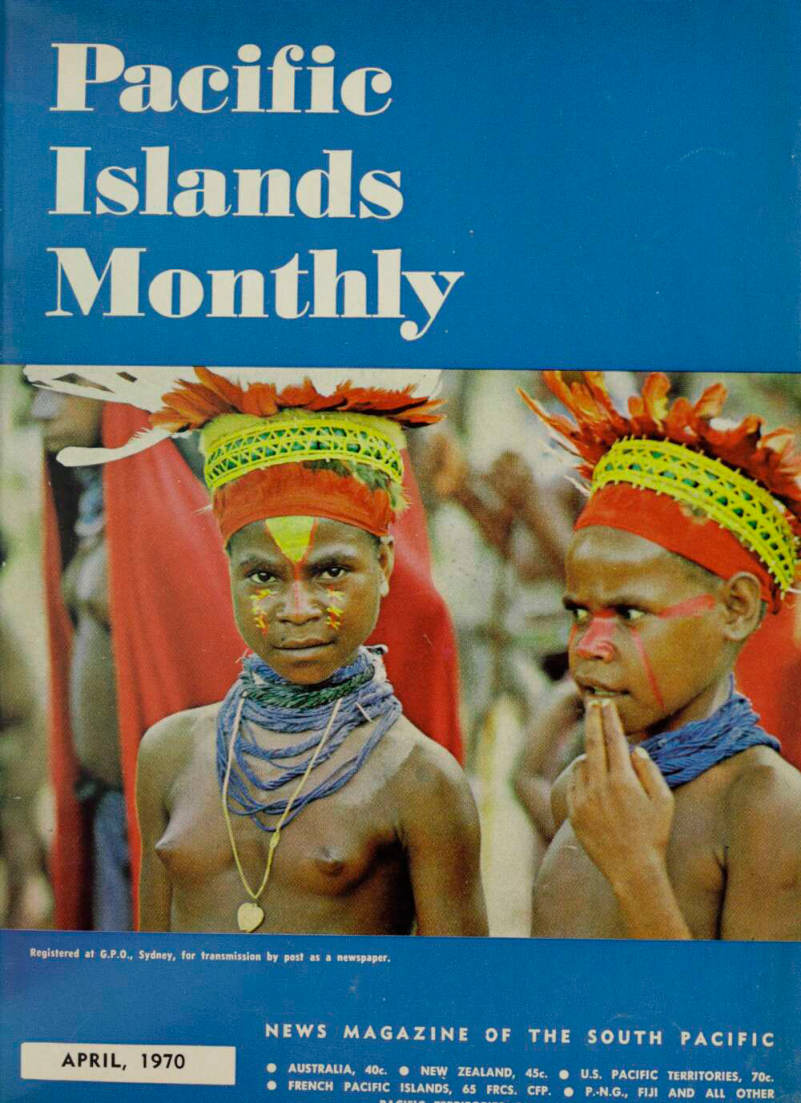 1
1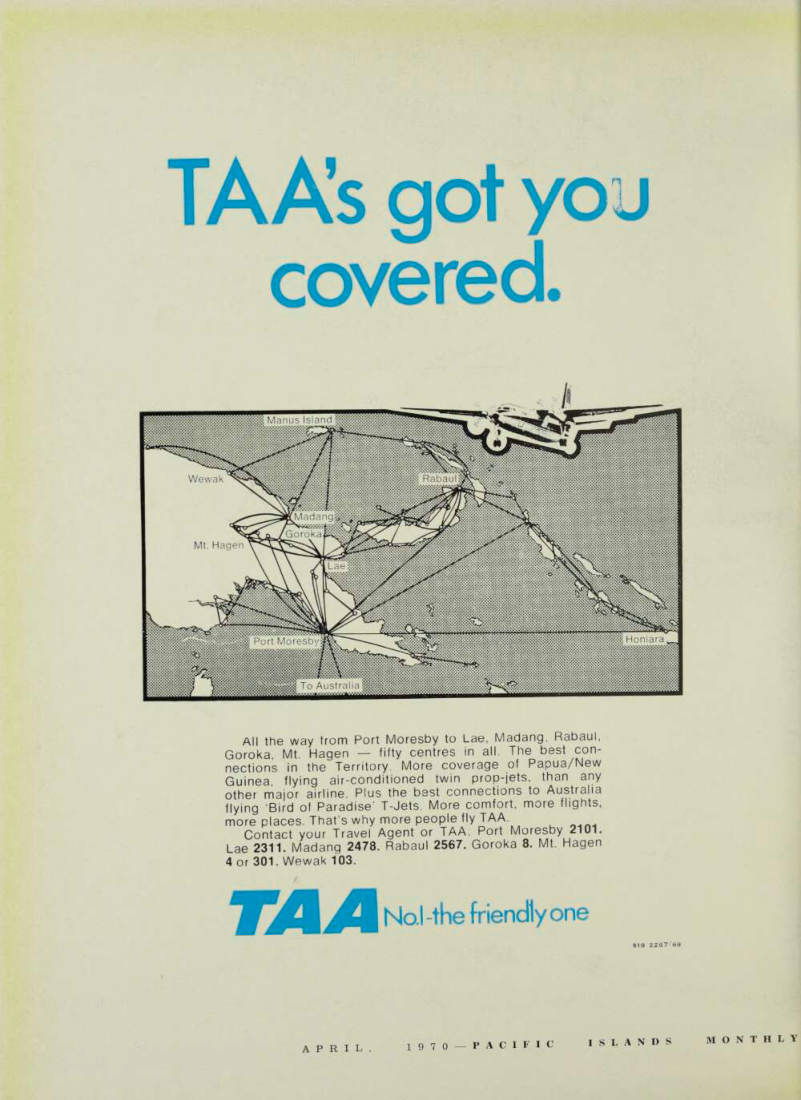 2
2 3
3 4
4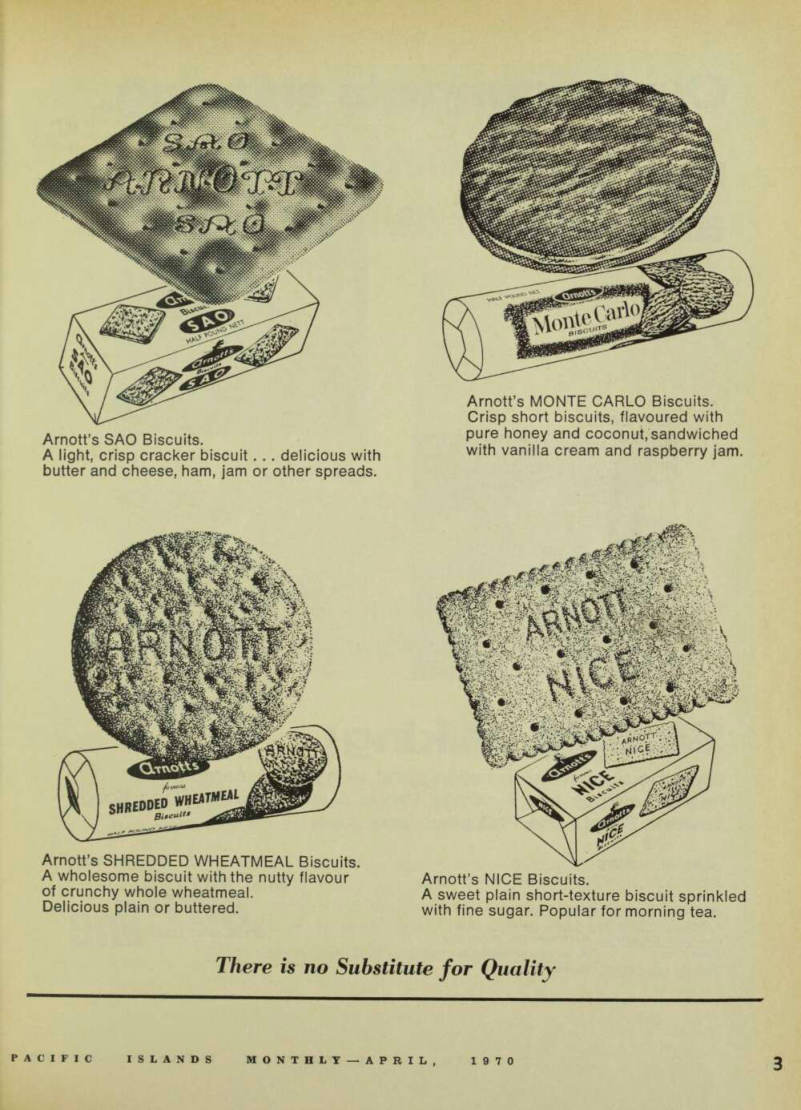 5
5 6
6 7
7 8
8 9
9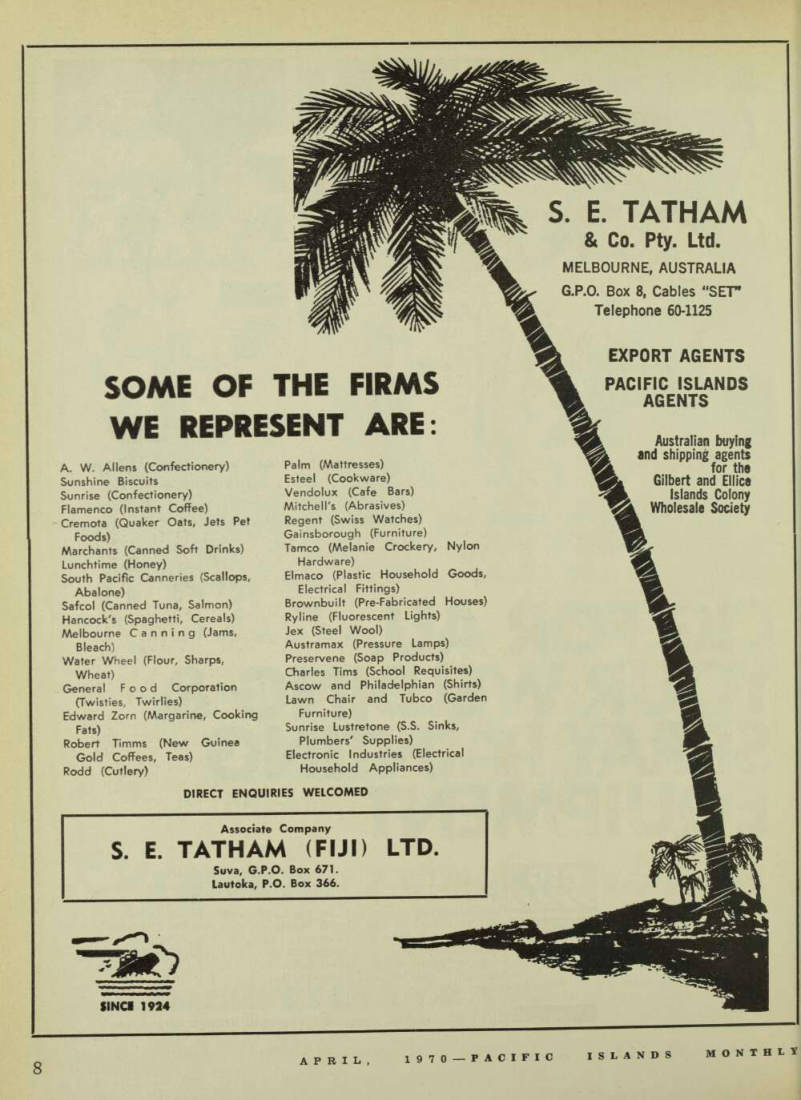 10
10 11
11 12
12 13
13 14
14 15
15 16
16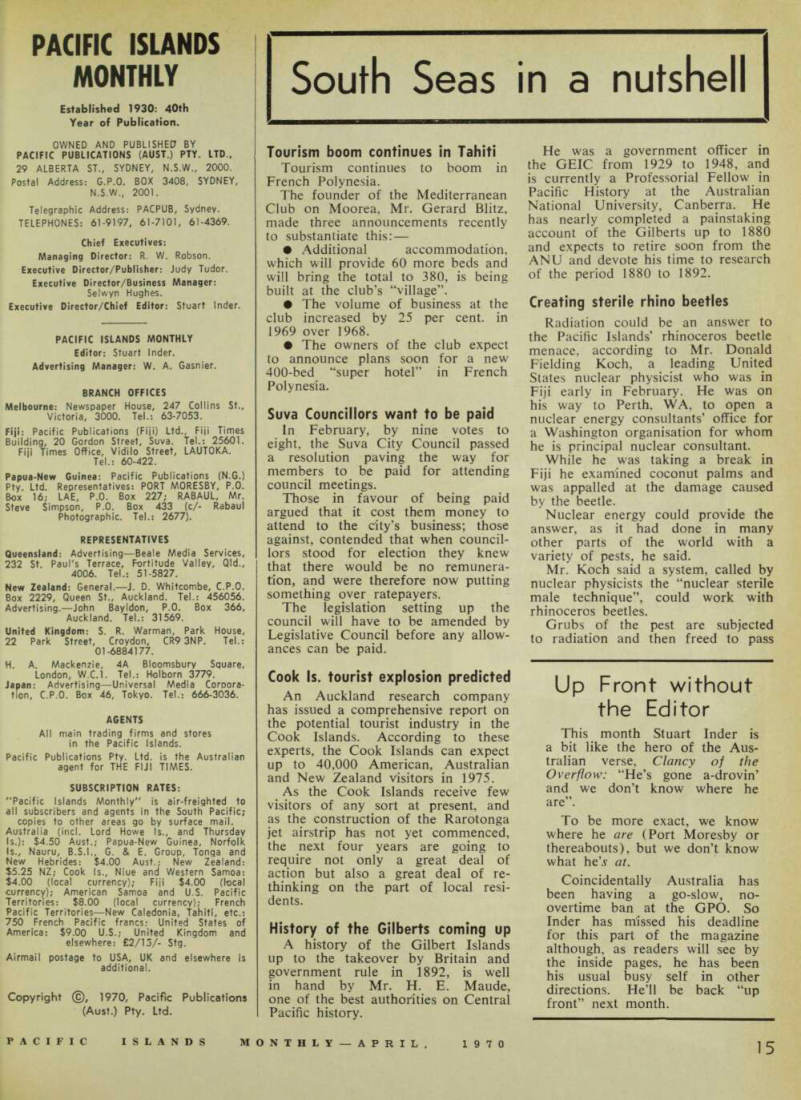 17
17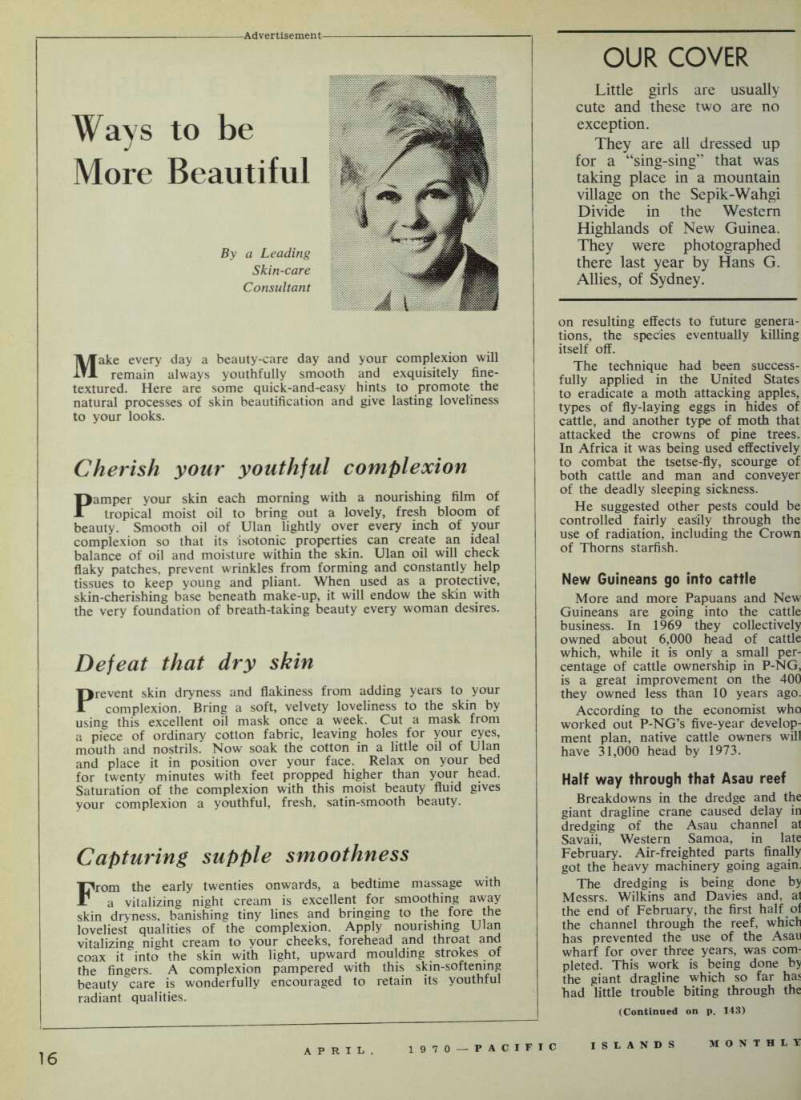 18
18 19
19 20
20 21
21 22
22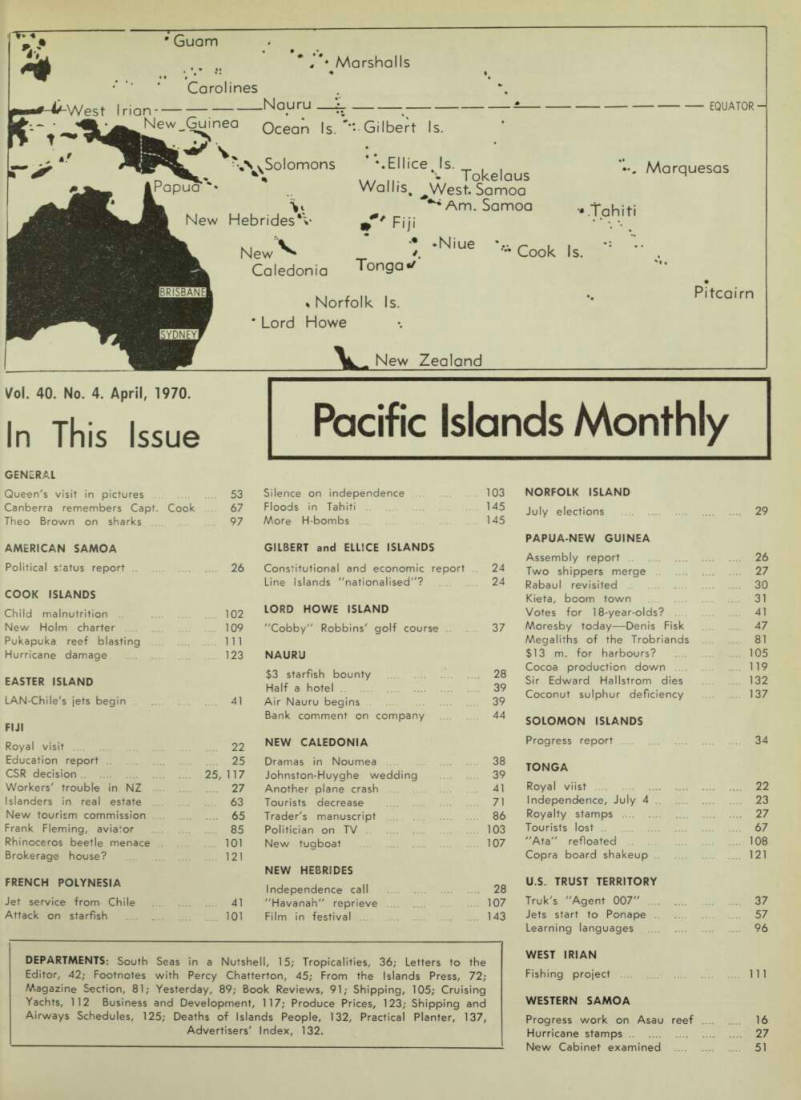 23
23 24
24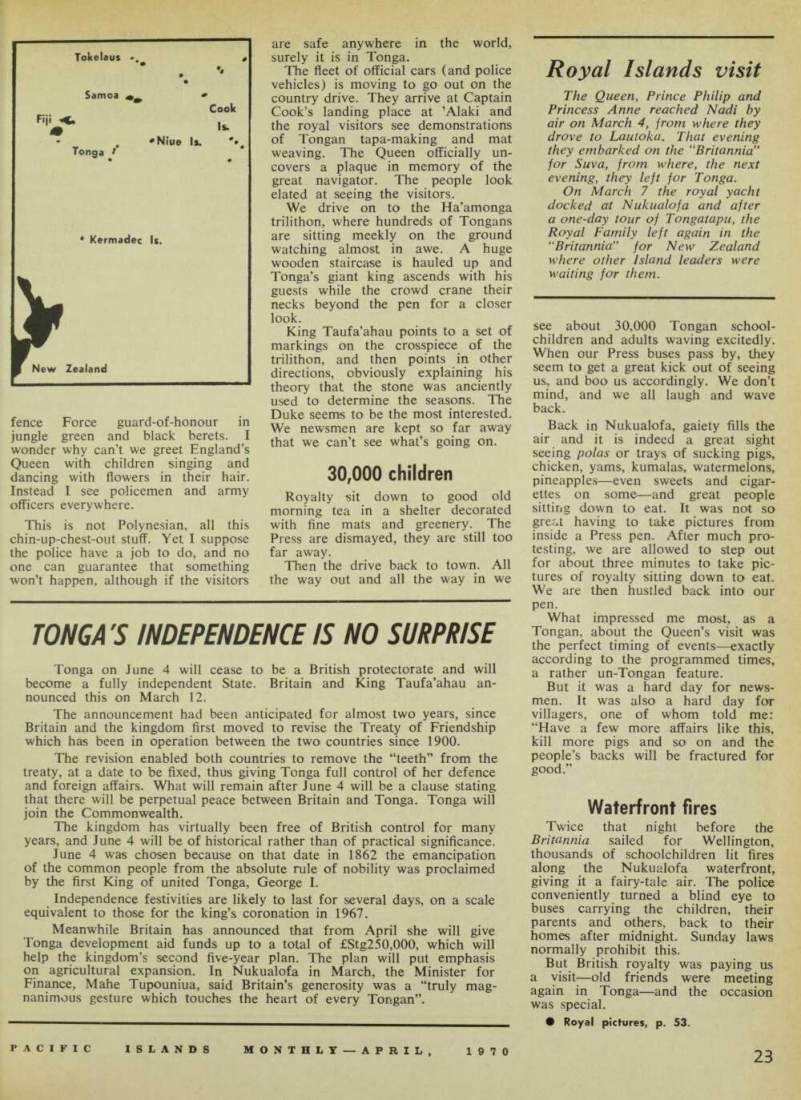 25
25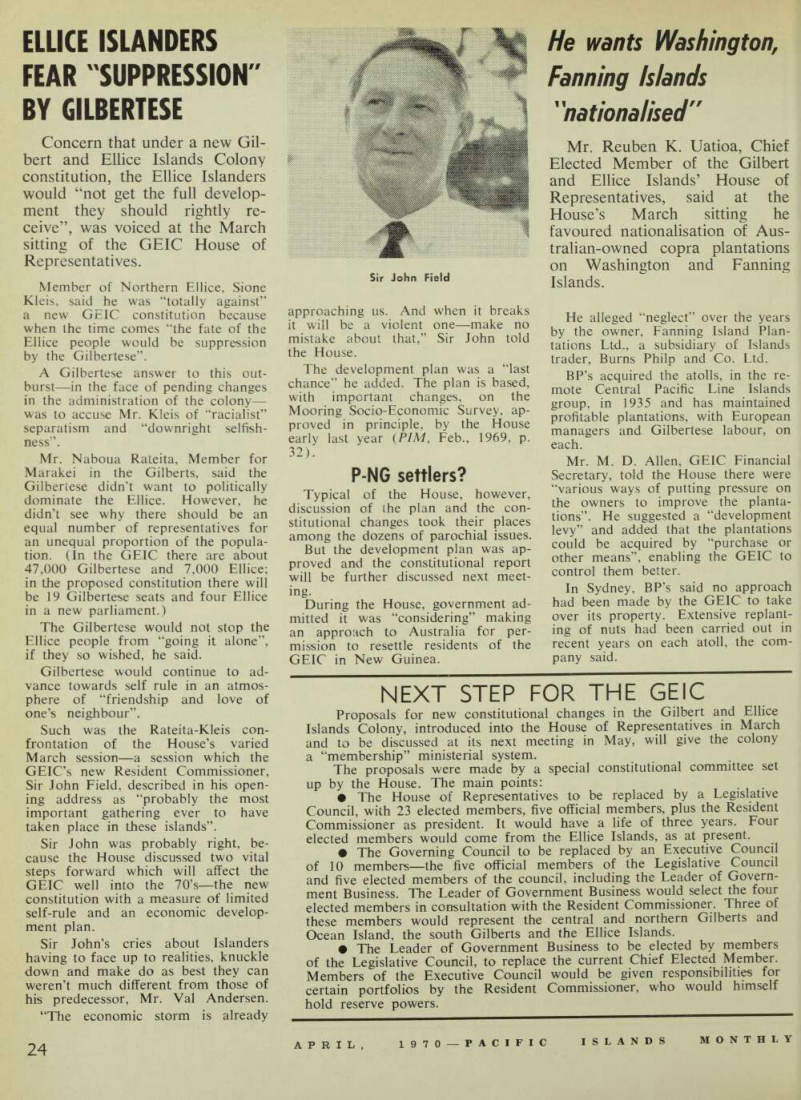 26
26 27
27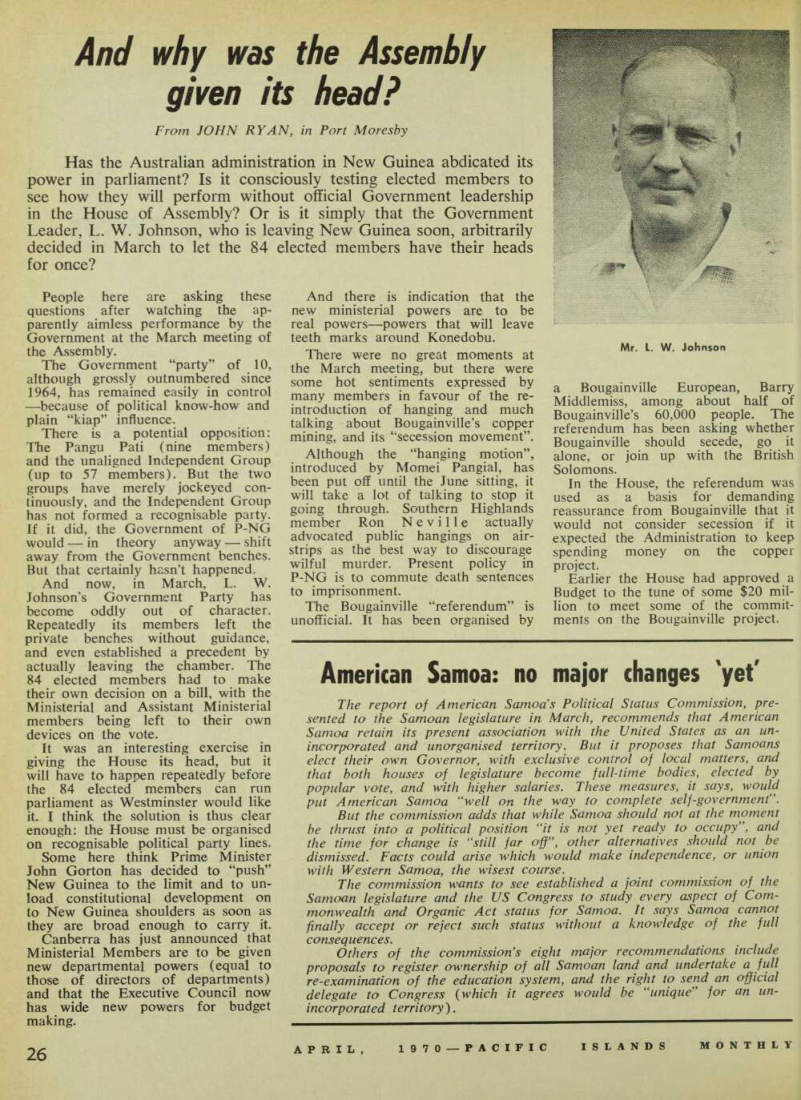 28
28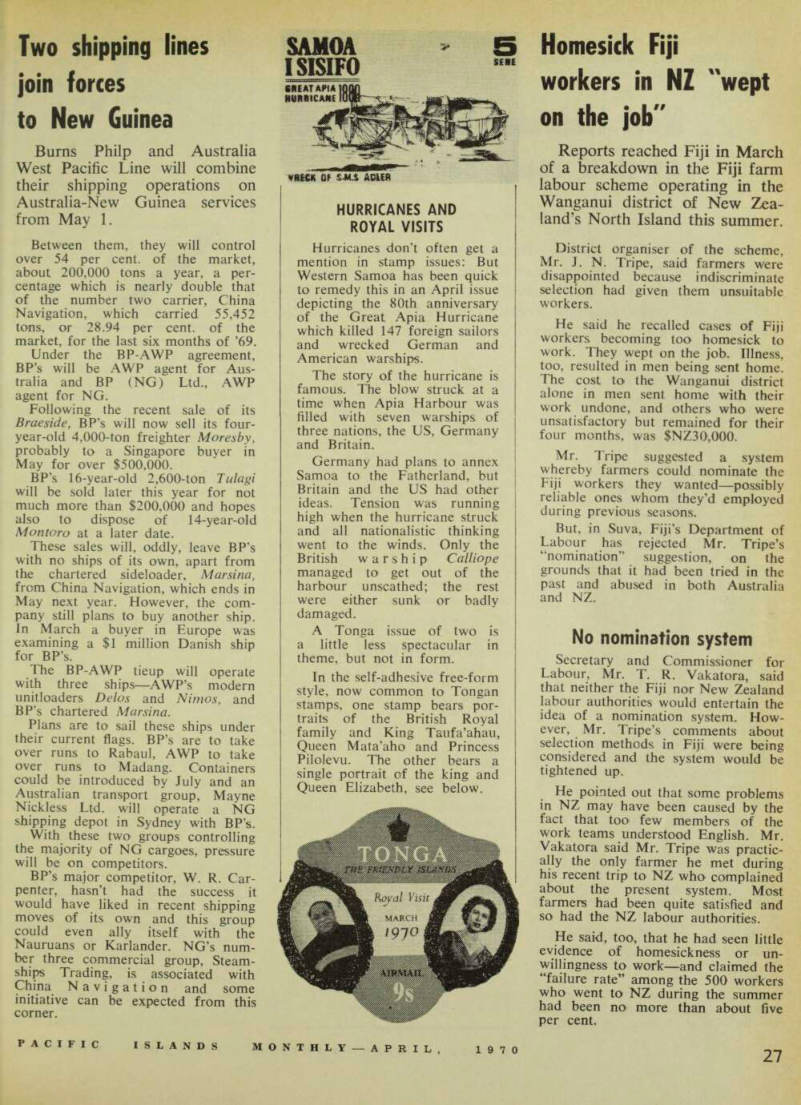 29
29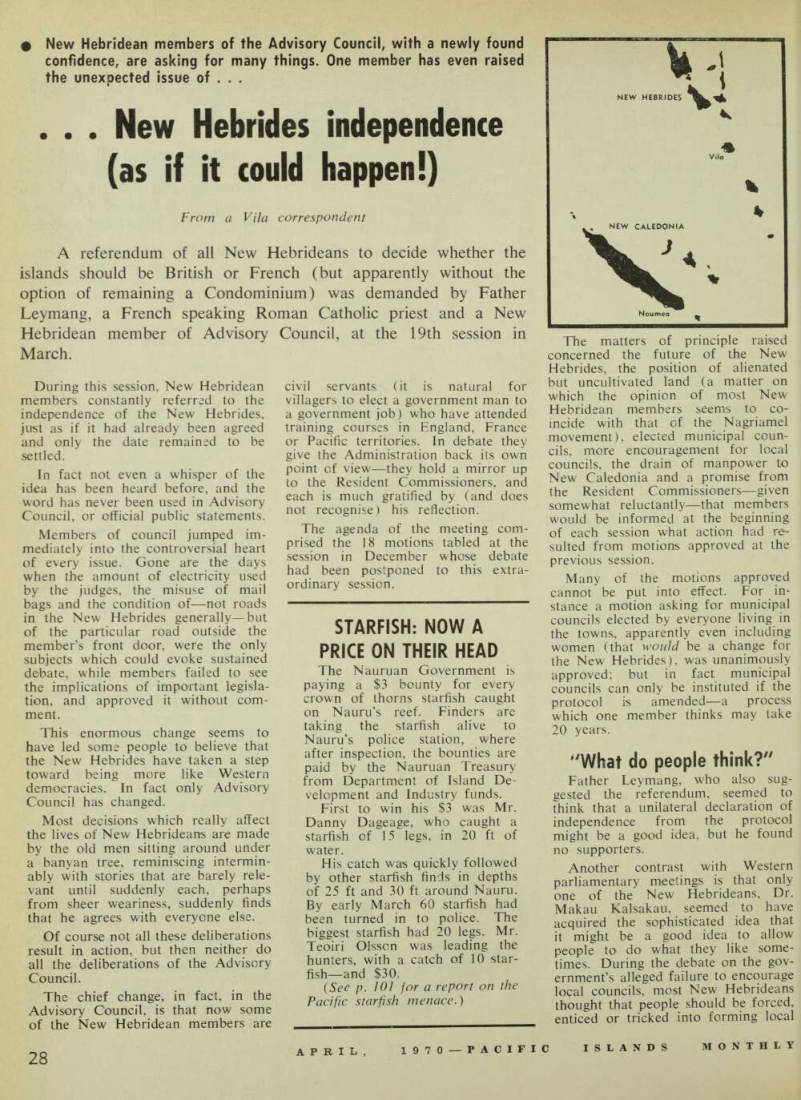 30
30 31
31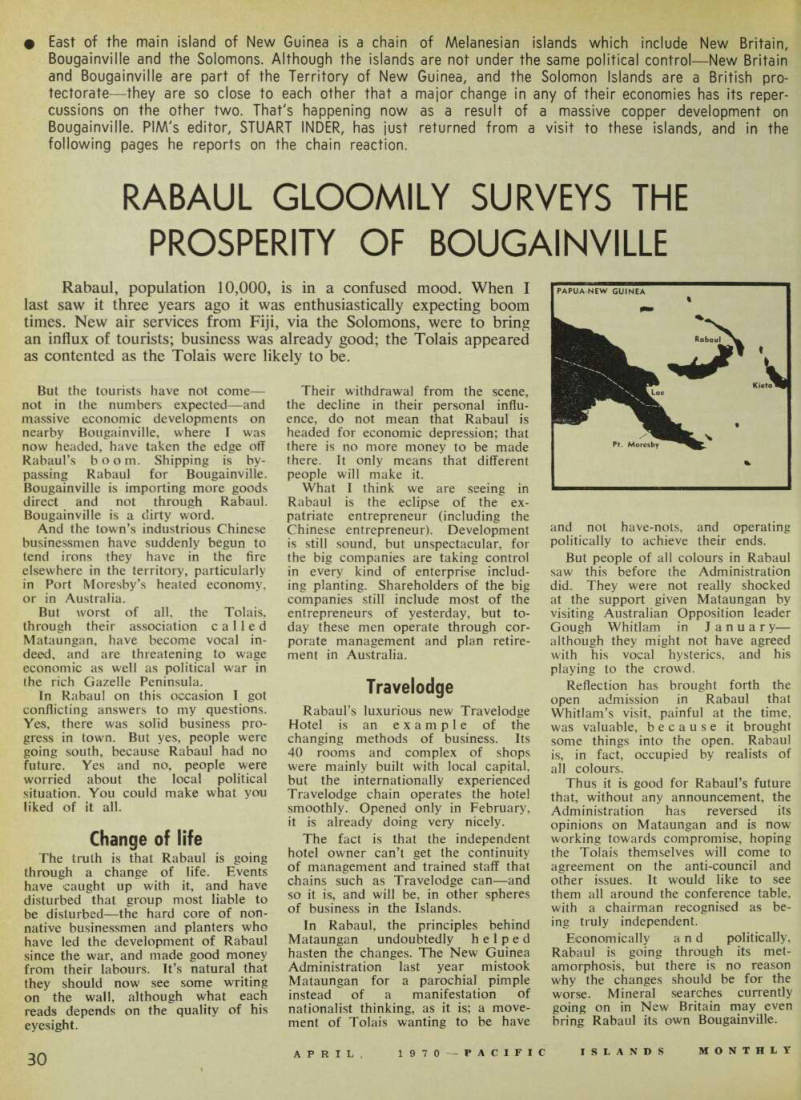 32
32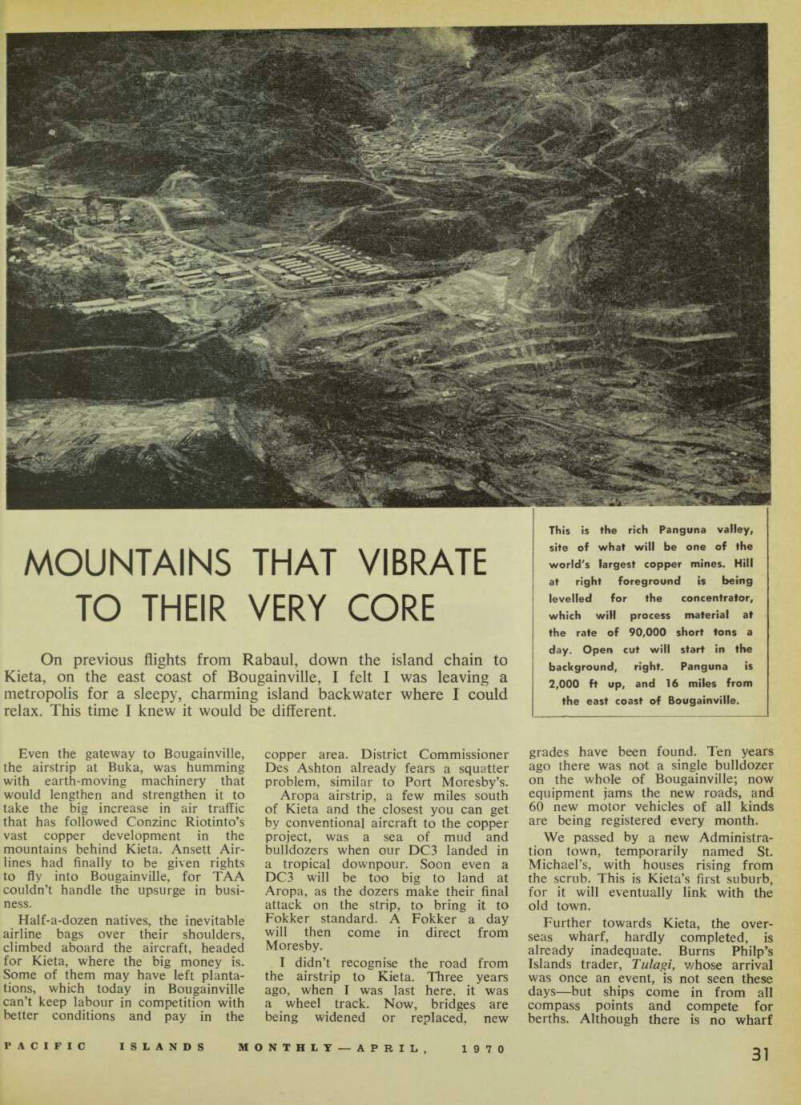 33
33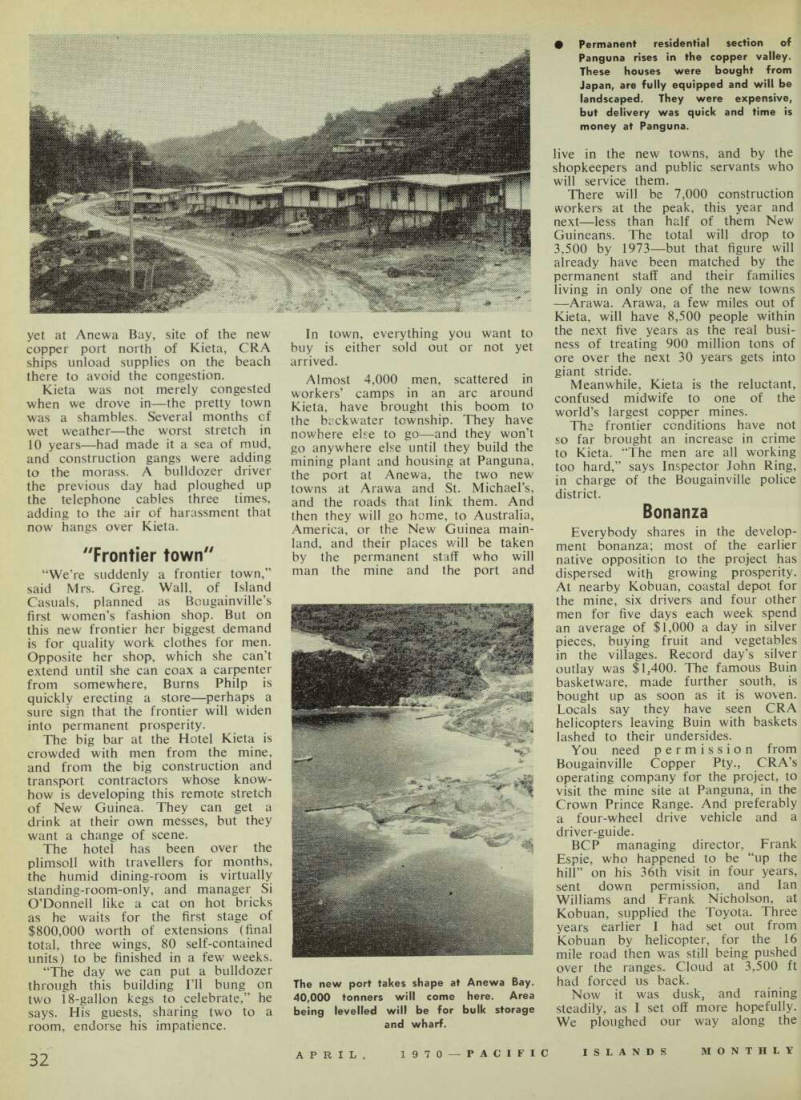 34
34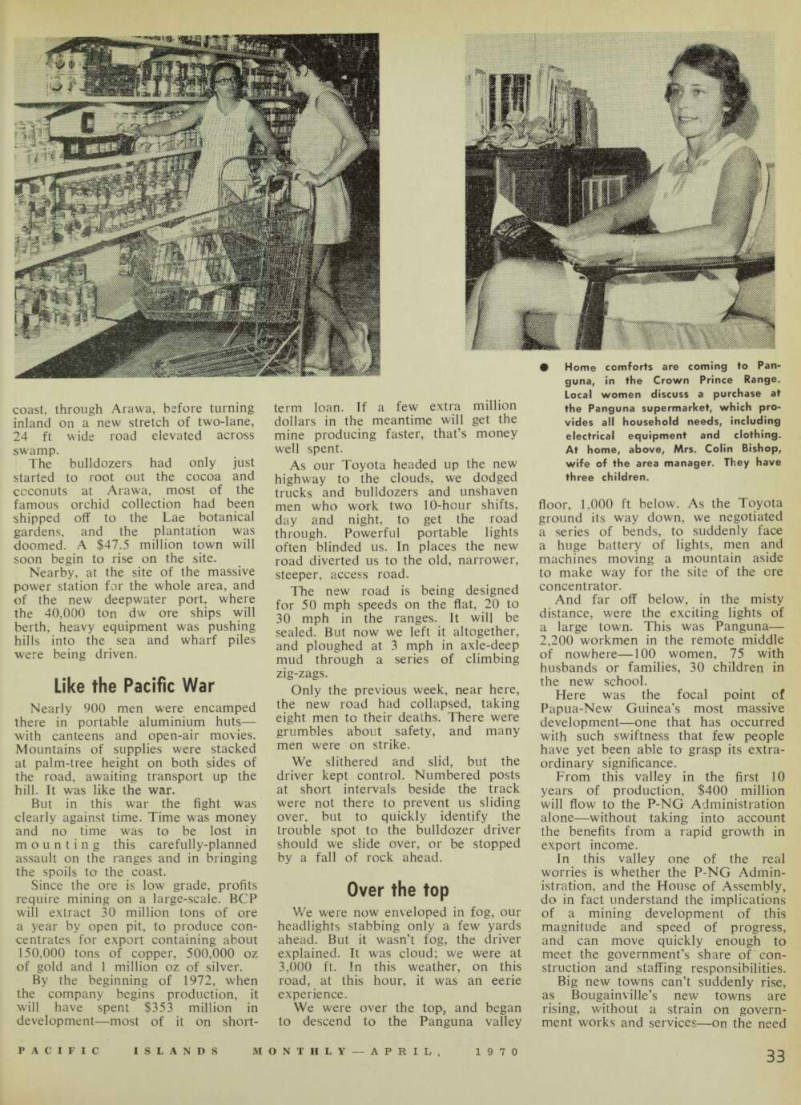 35
35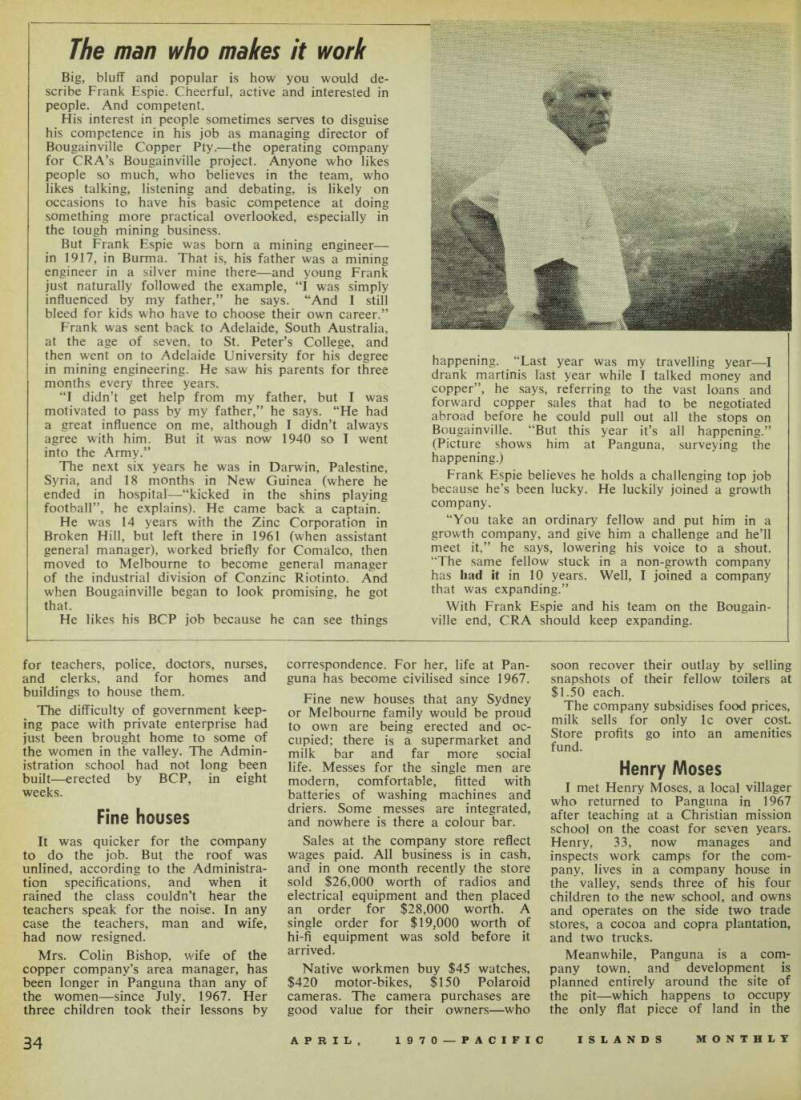 36
36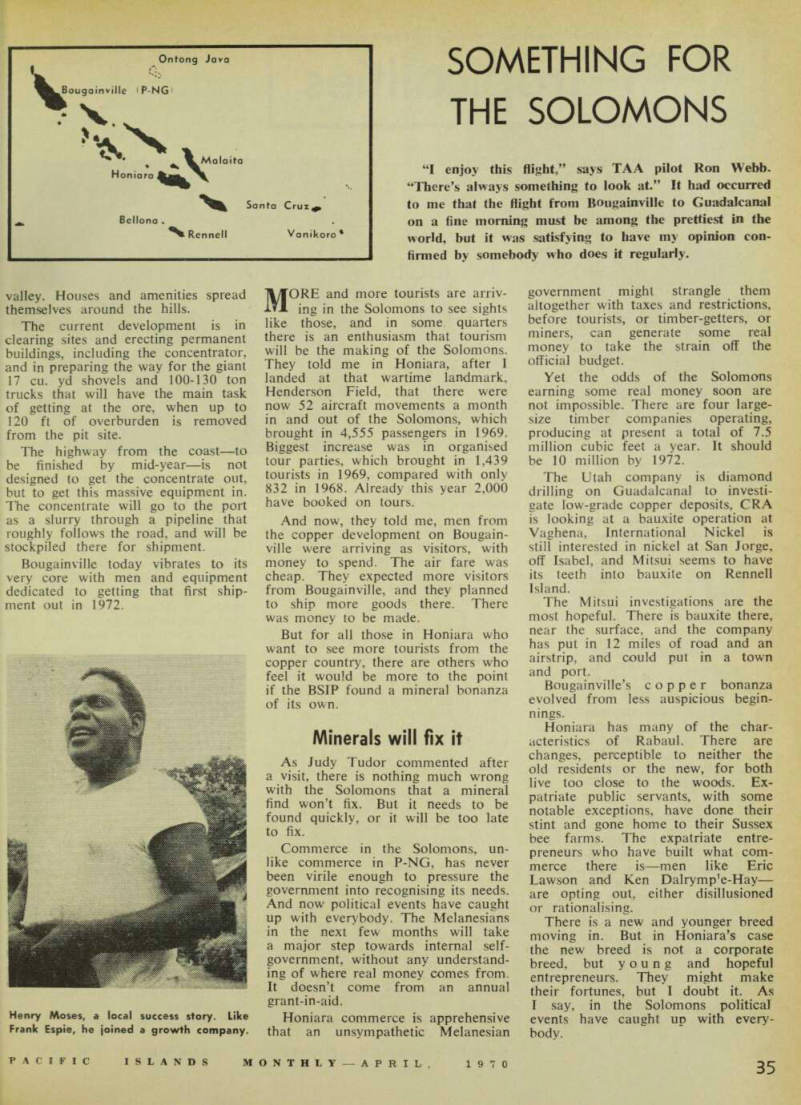 37
37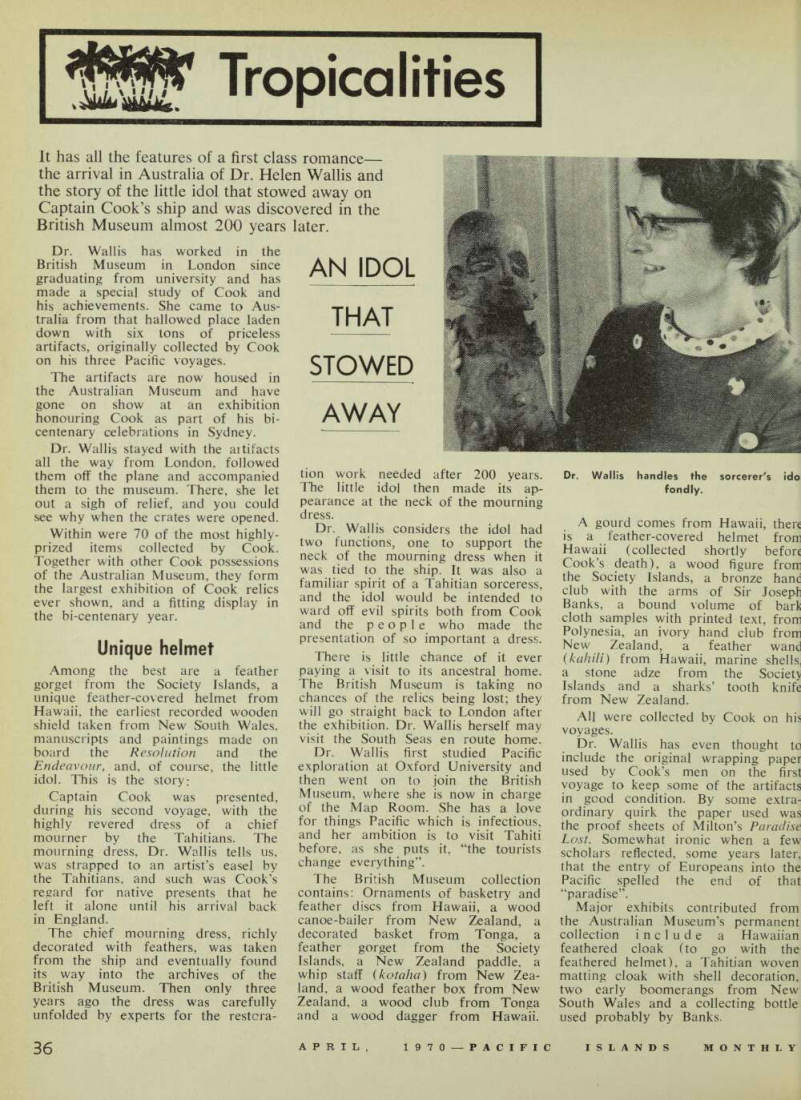 38
38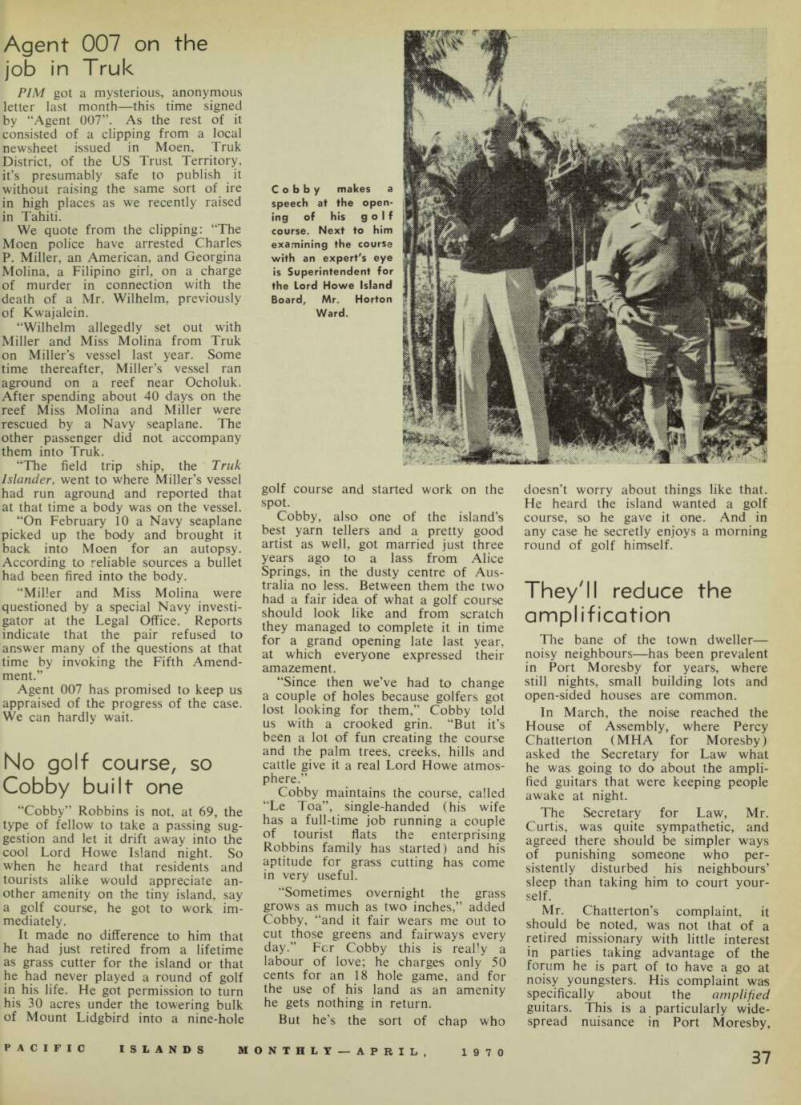 39
39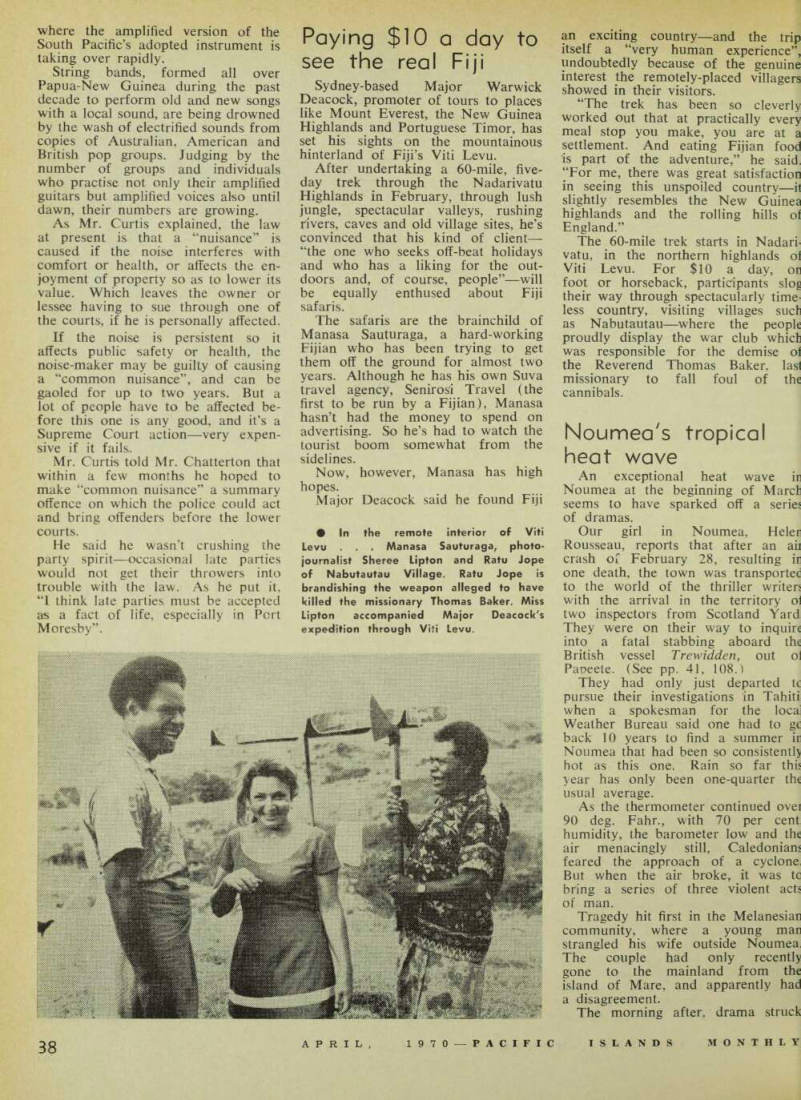 40
40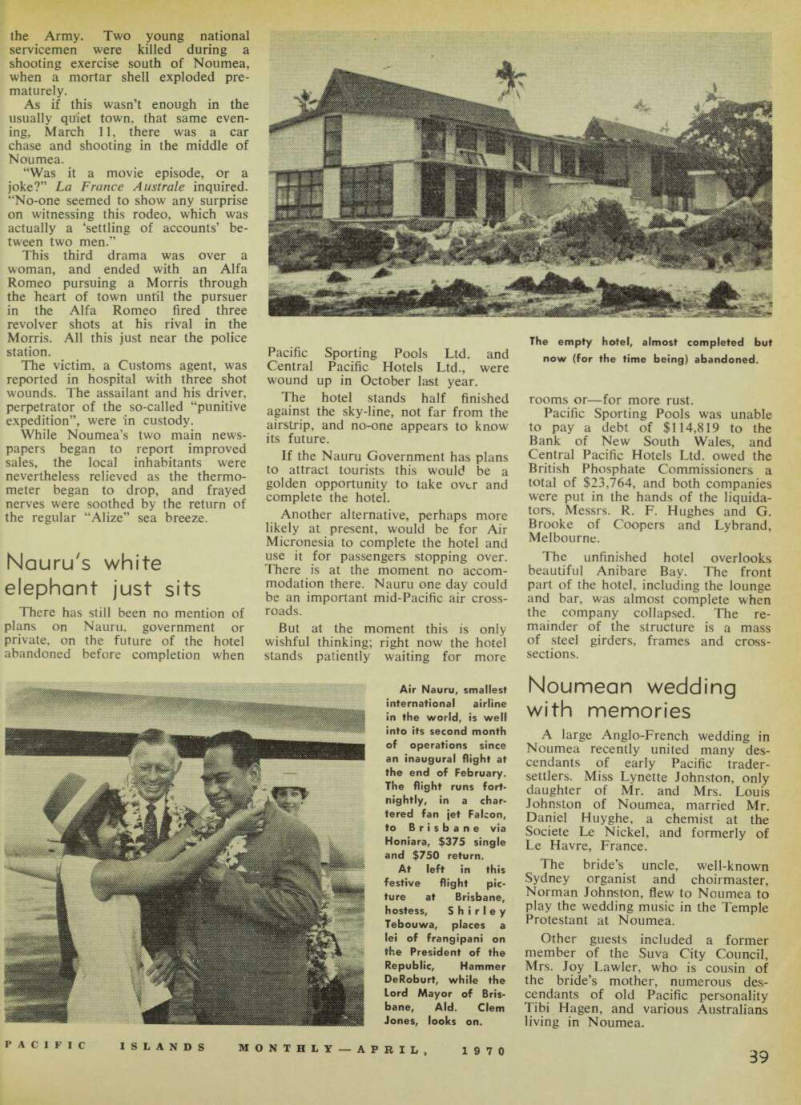 41
41 42
42 43
43 44
44 45
45 46
46 47
47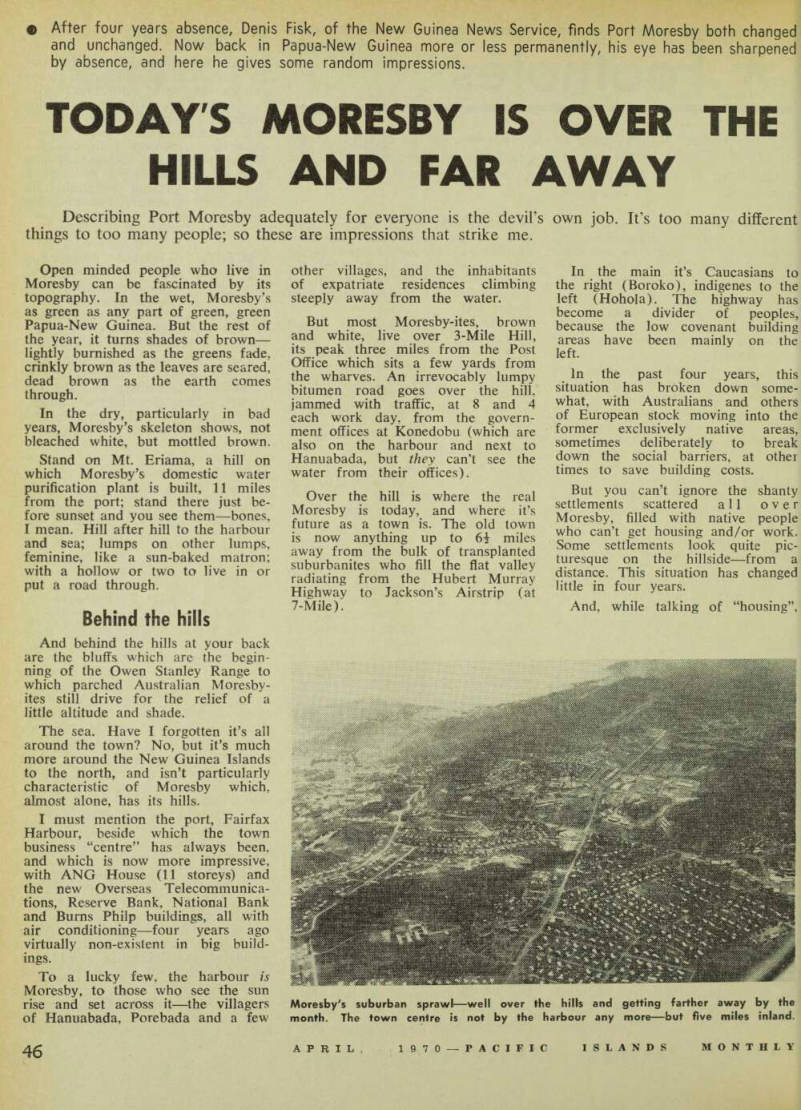 48
48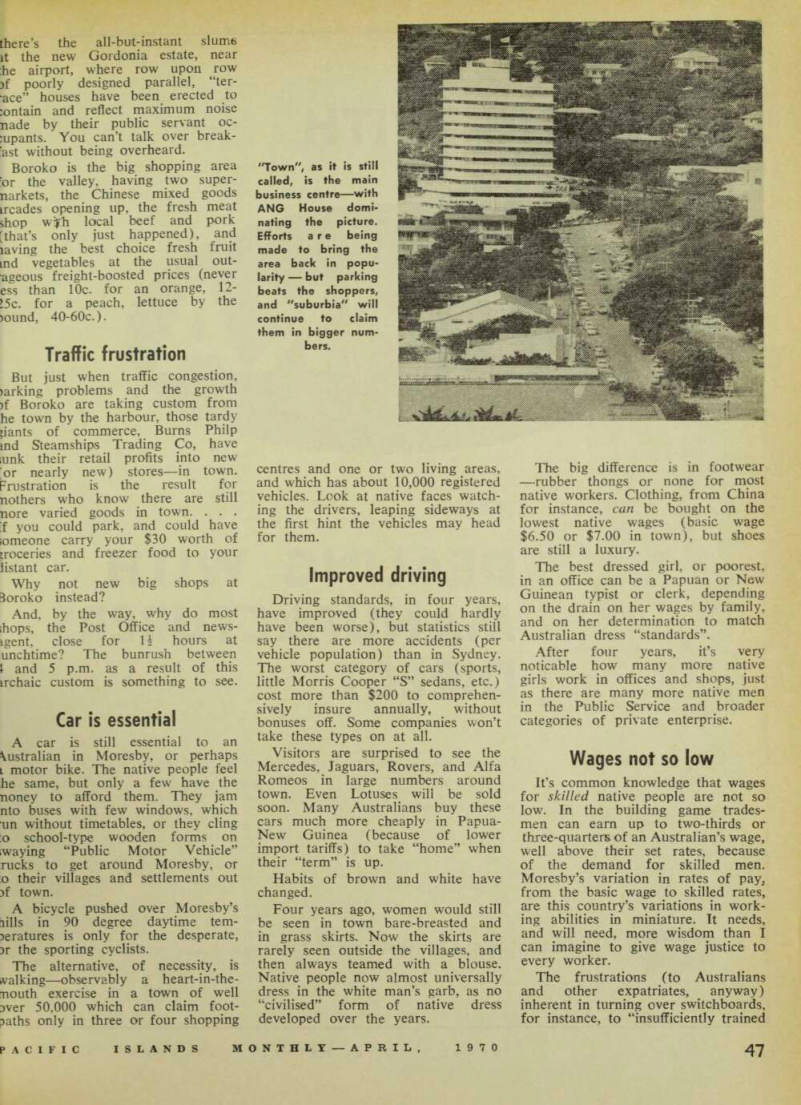 49
49 50
50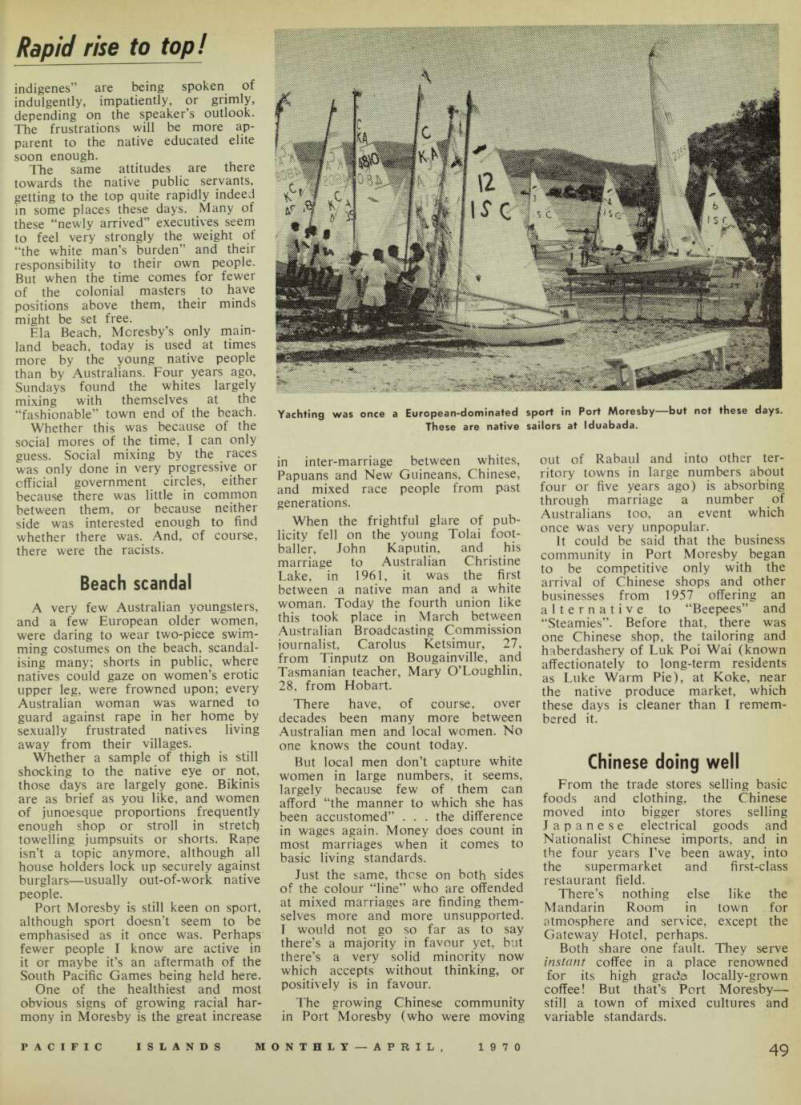 51
51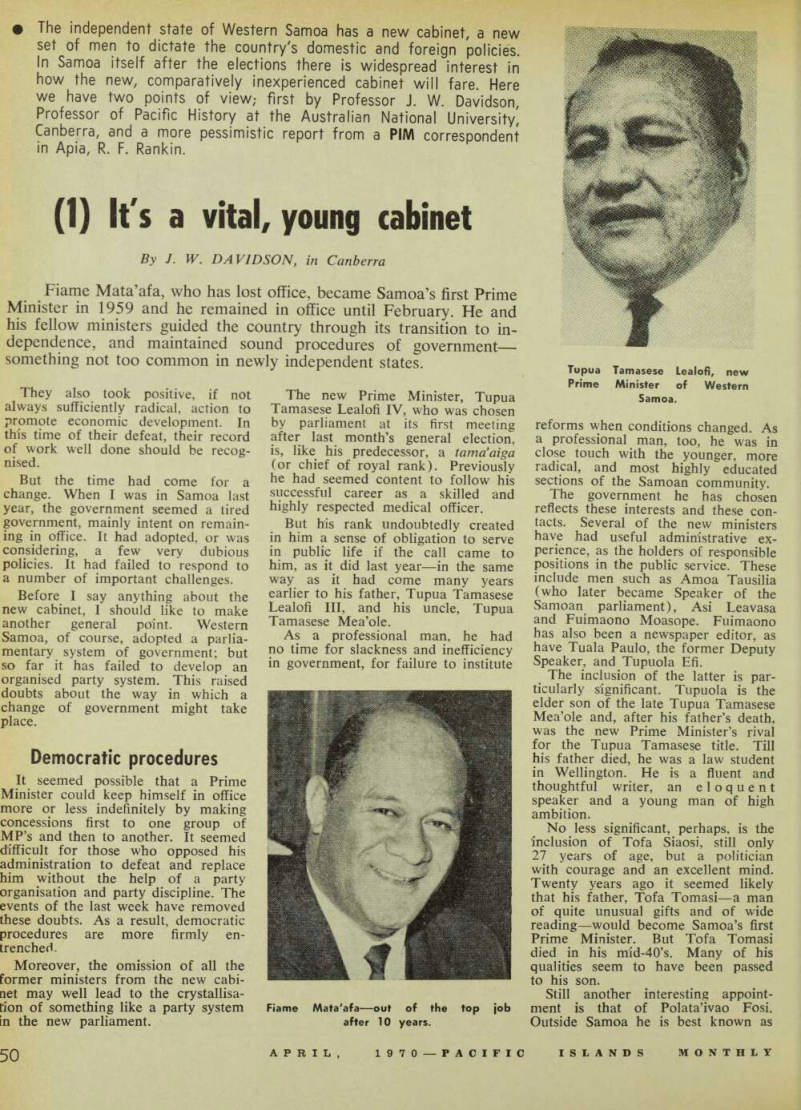 52
52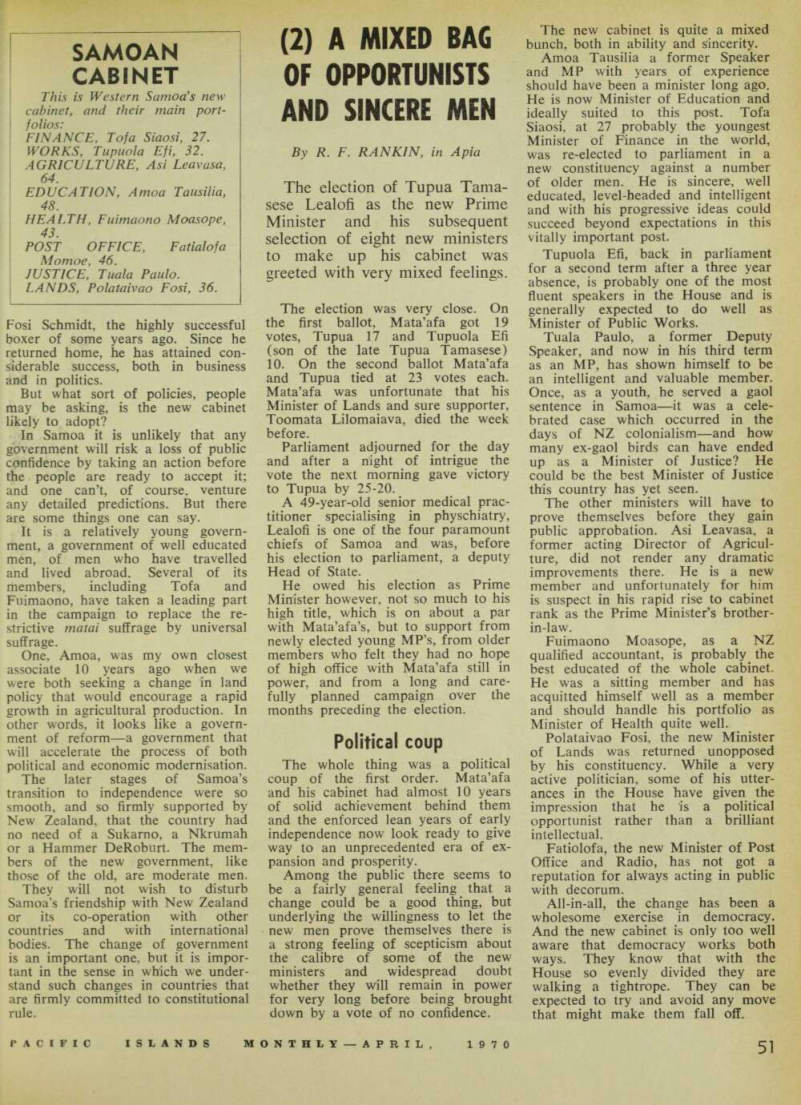 53
53 54
54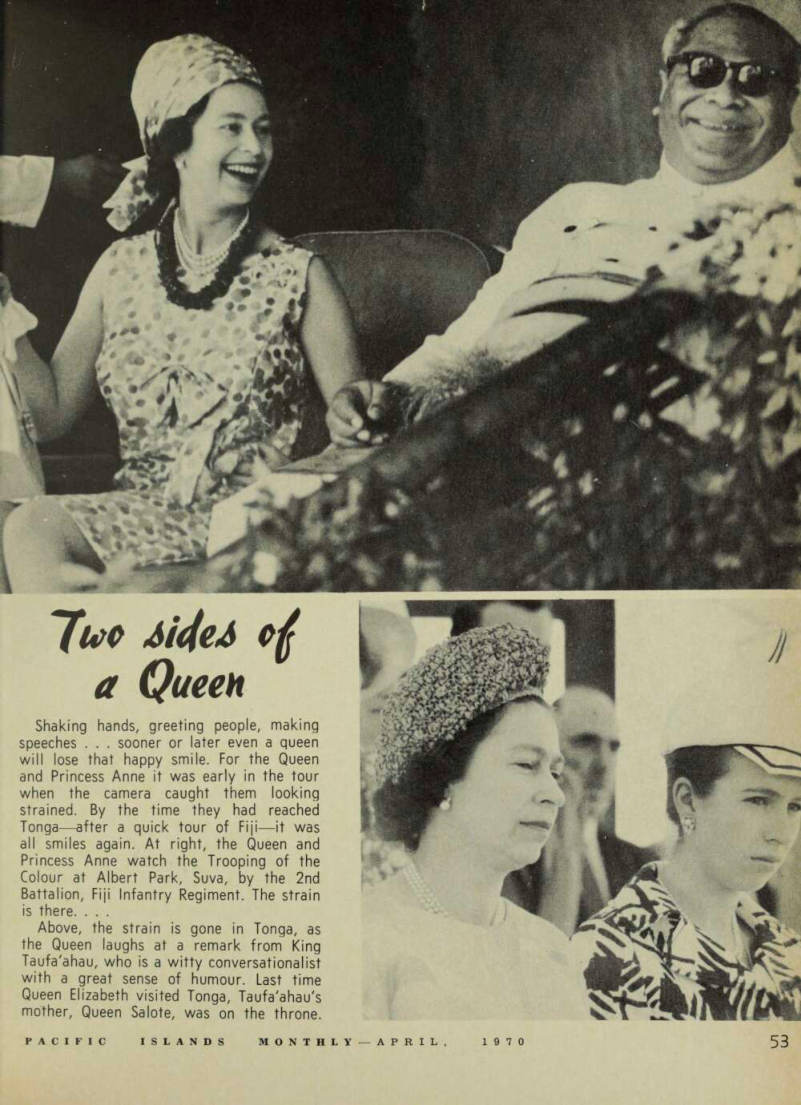 55
55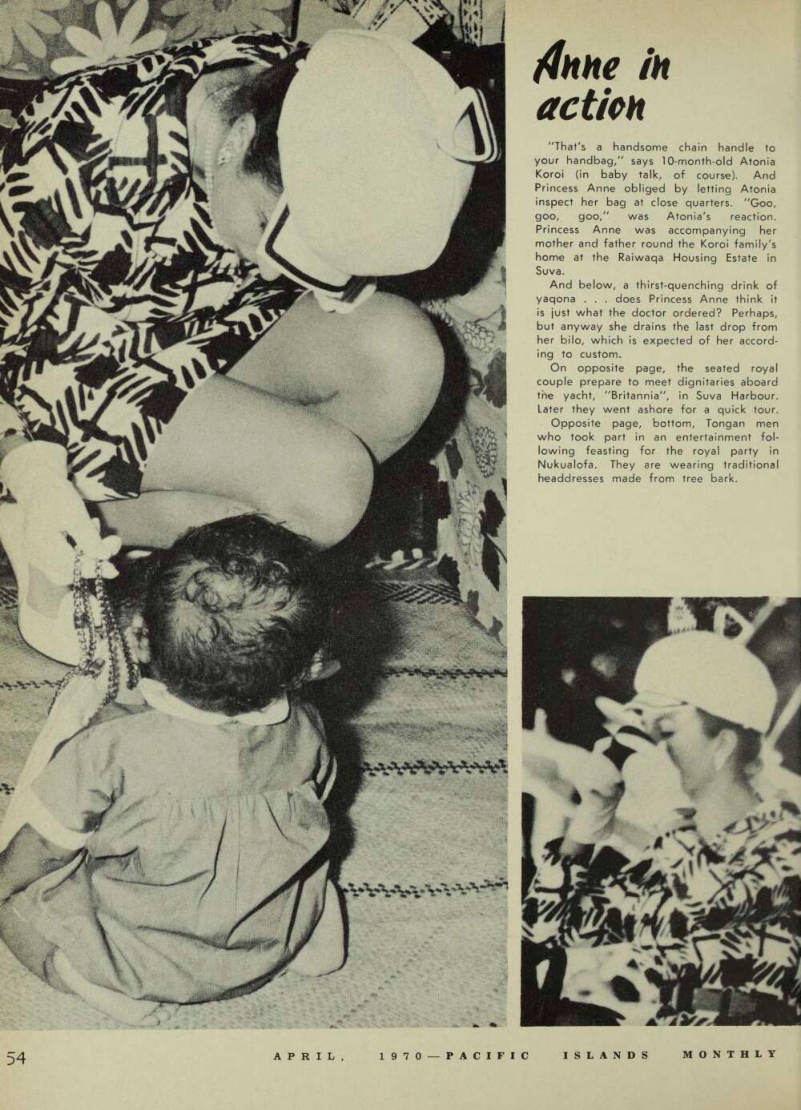 56
56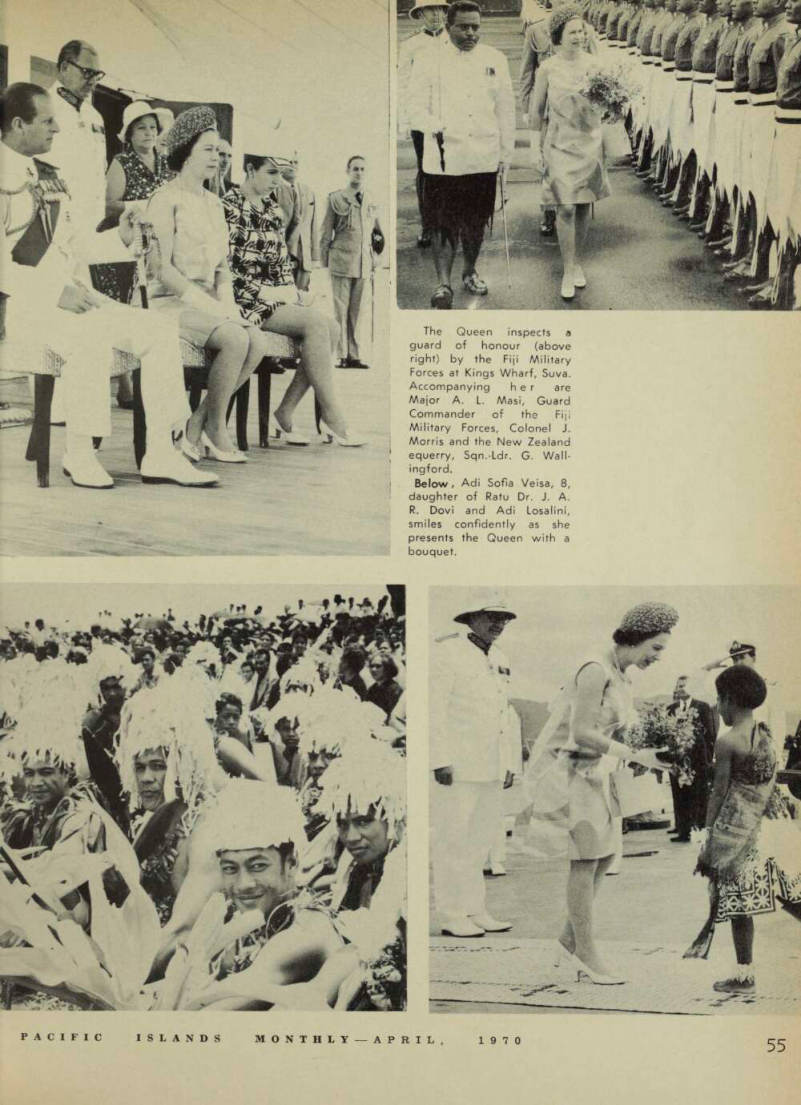 57
57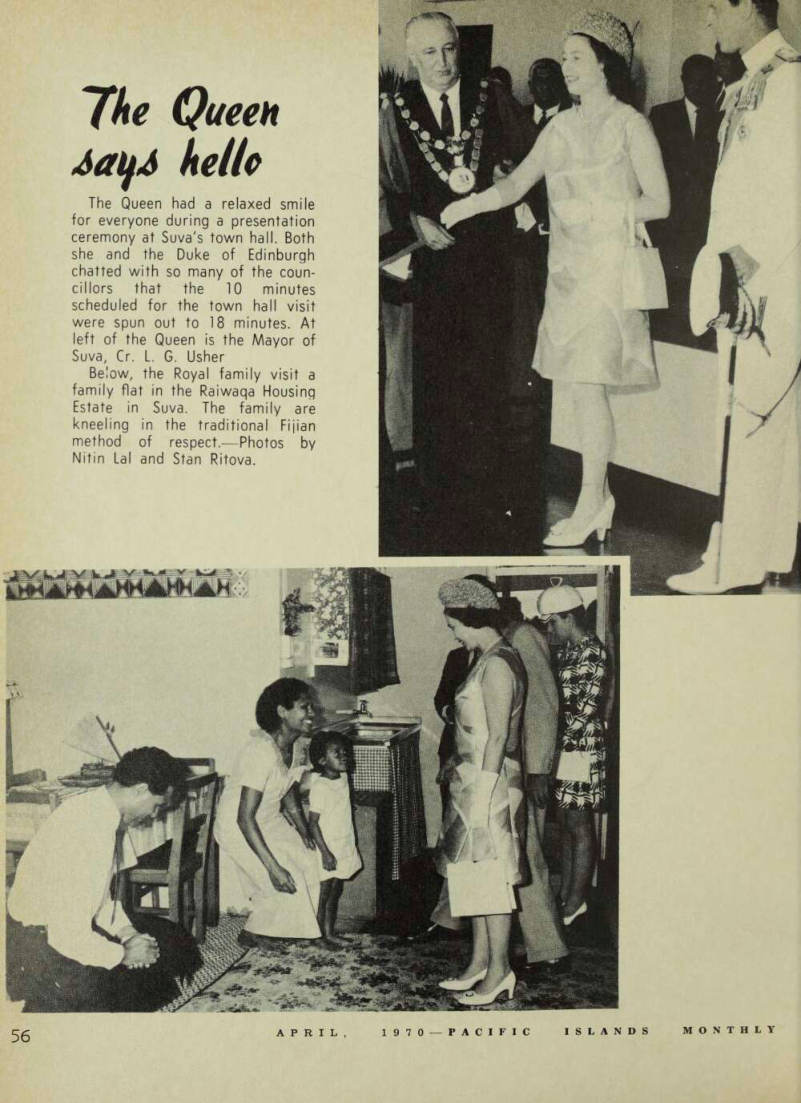 58
58 59
59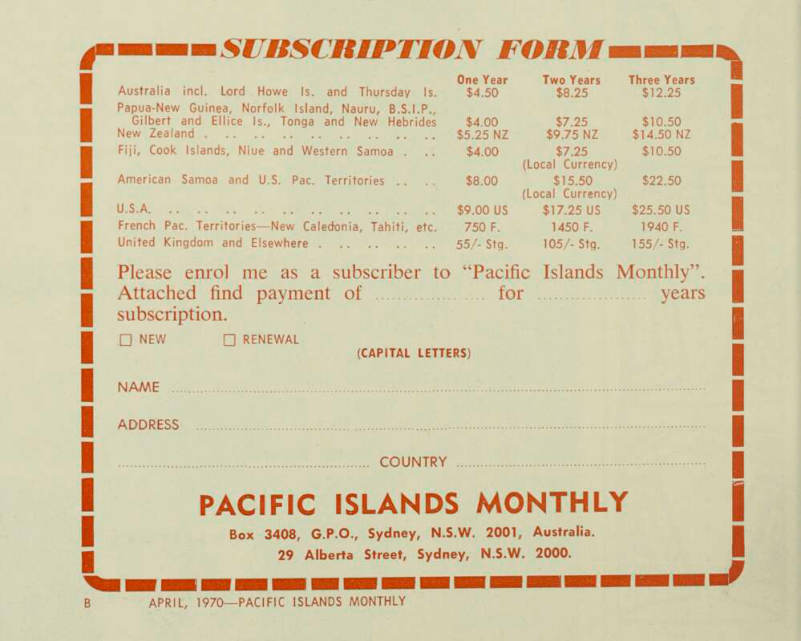 60
60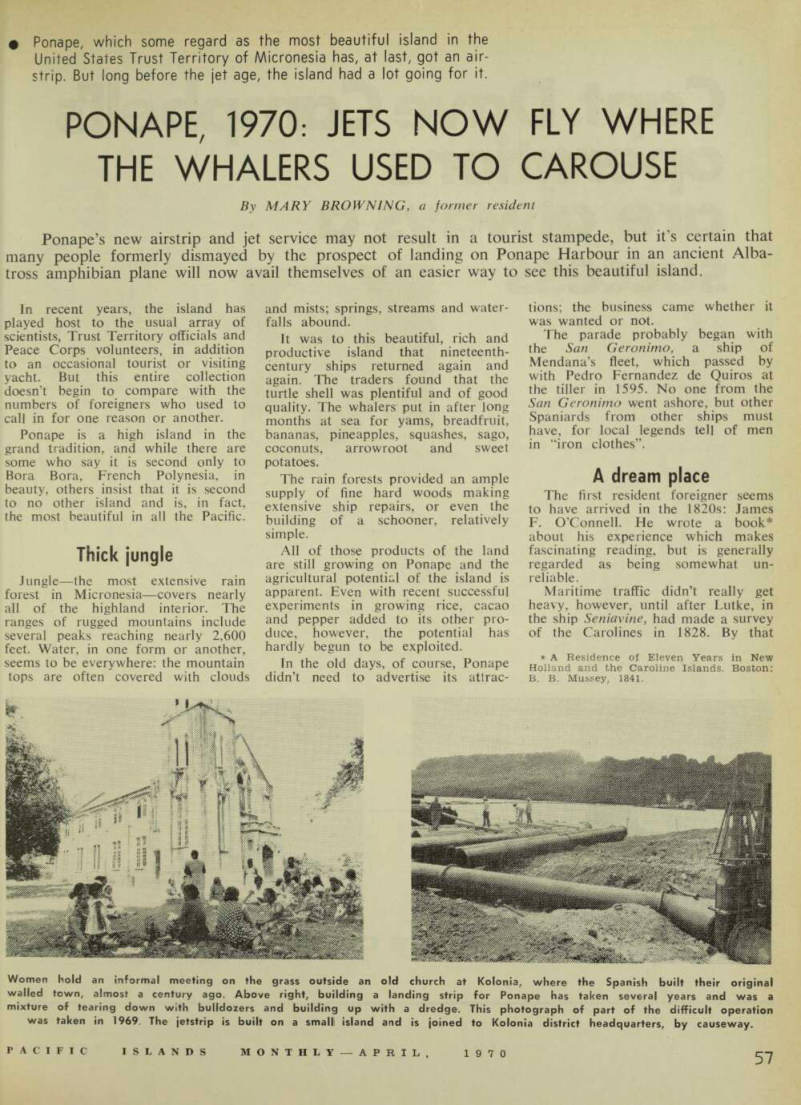 61
61 62
62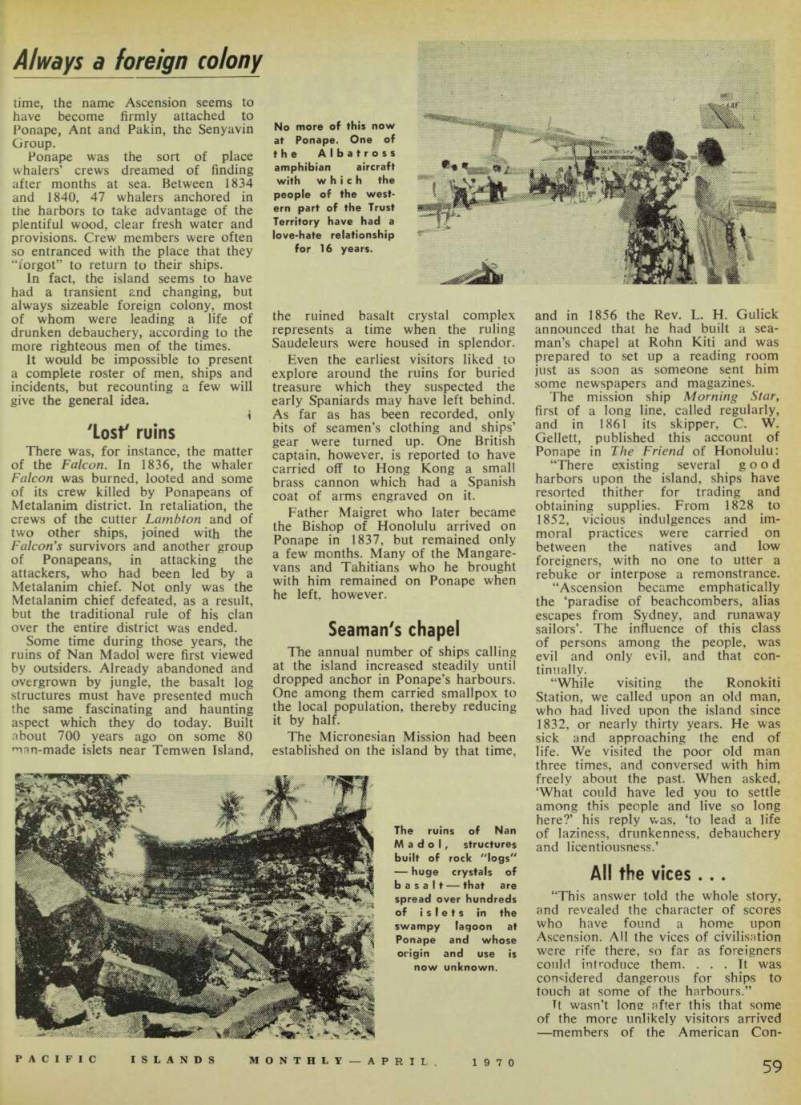 63
63 64
64 65
65 66
66 67
67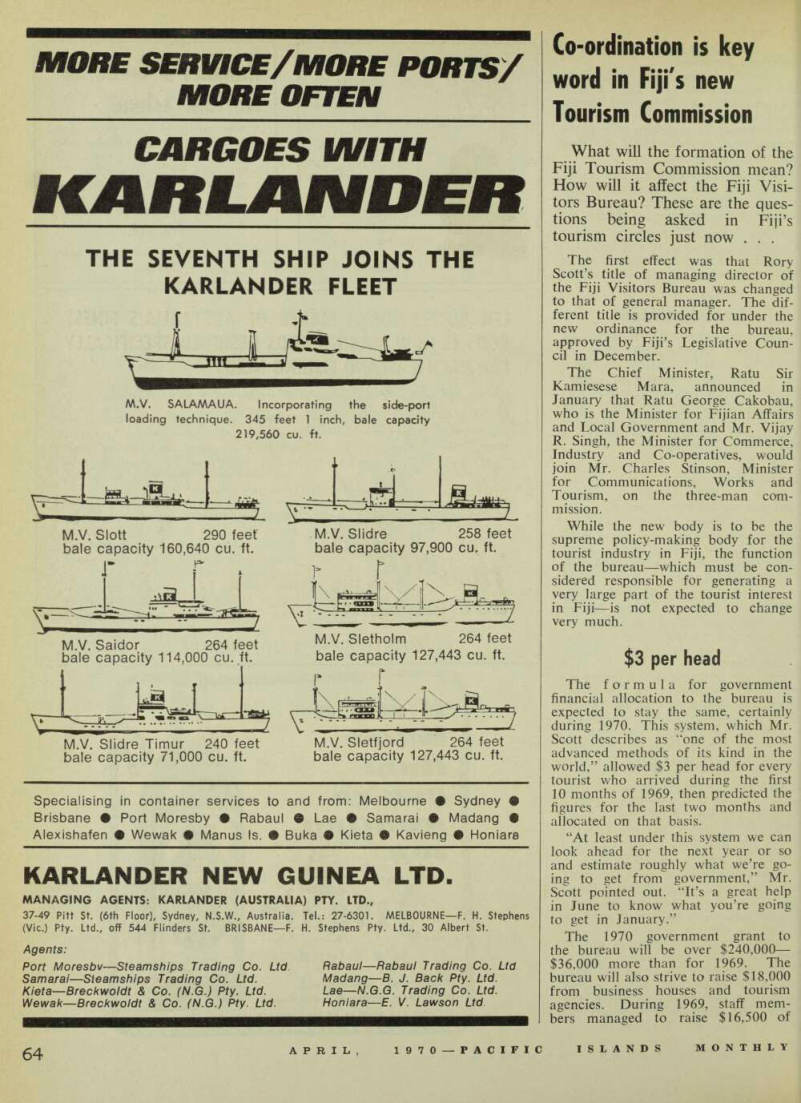 68
68 69
69 70
70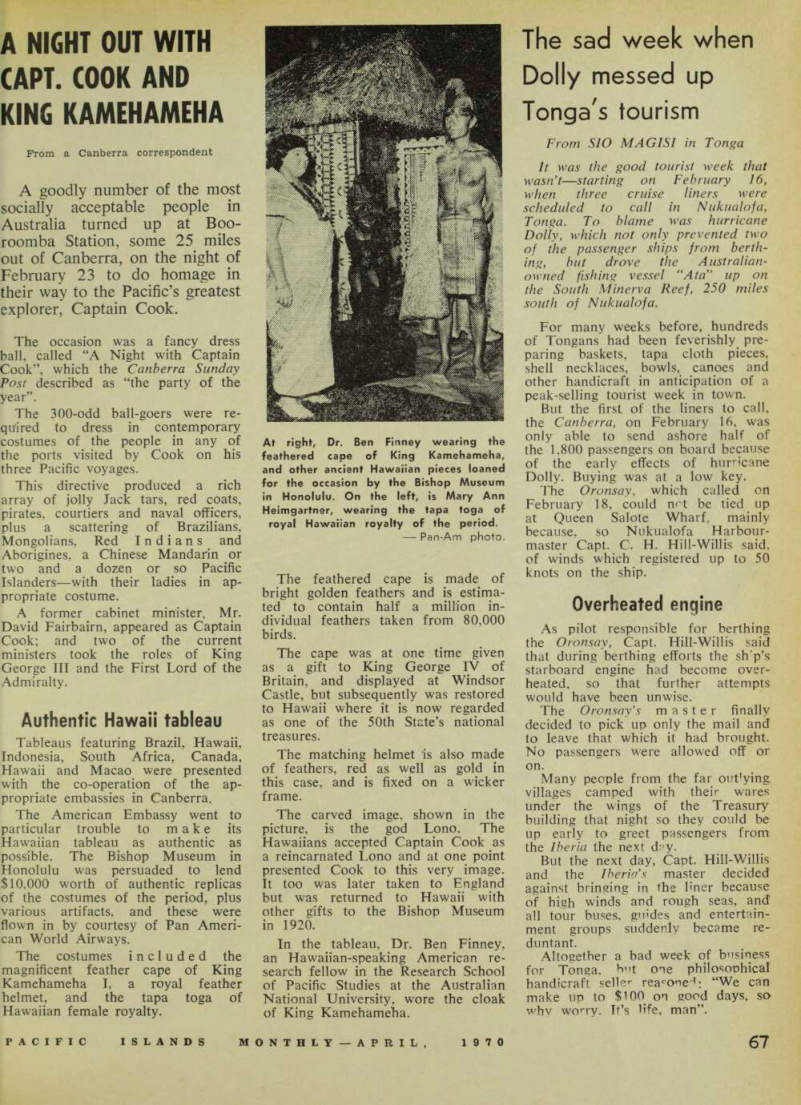 71
71 72
72 73
73 74
74 75
75 76
76 77
77 78
78 79
79 80
80 81
81 82
82 83
83 84
84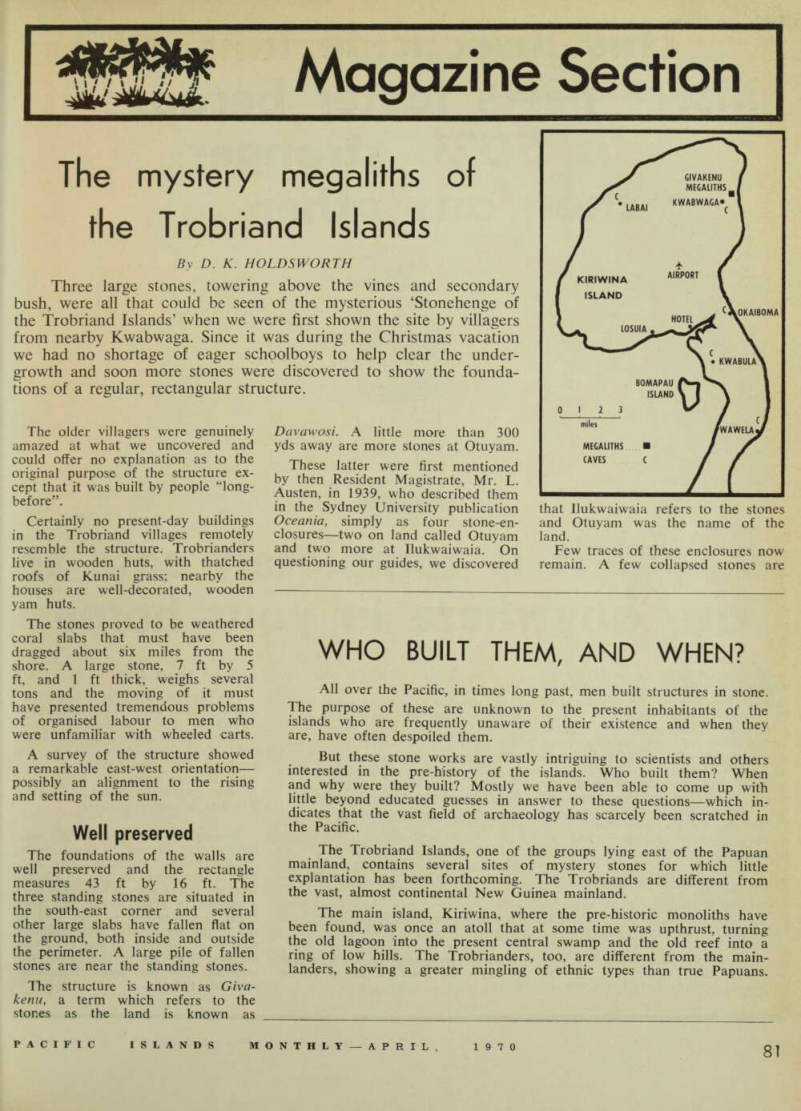 85
85 86
86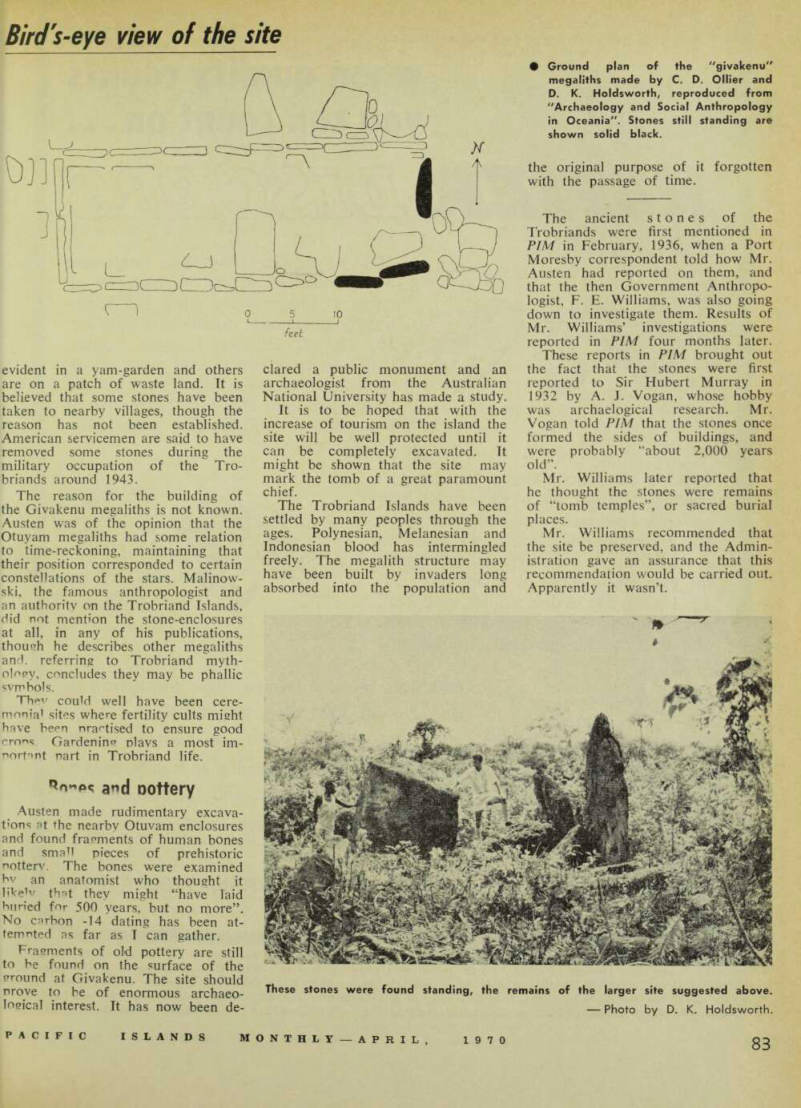 87
87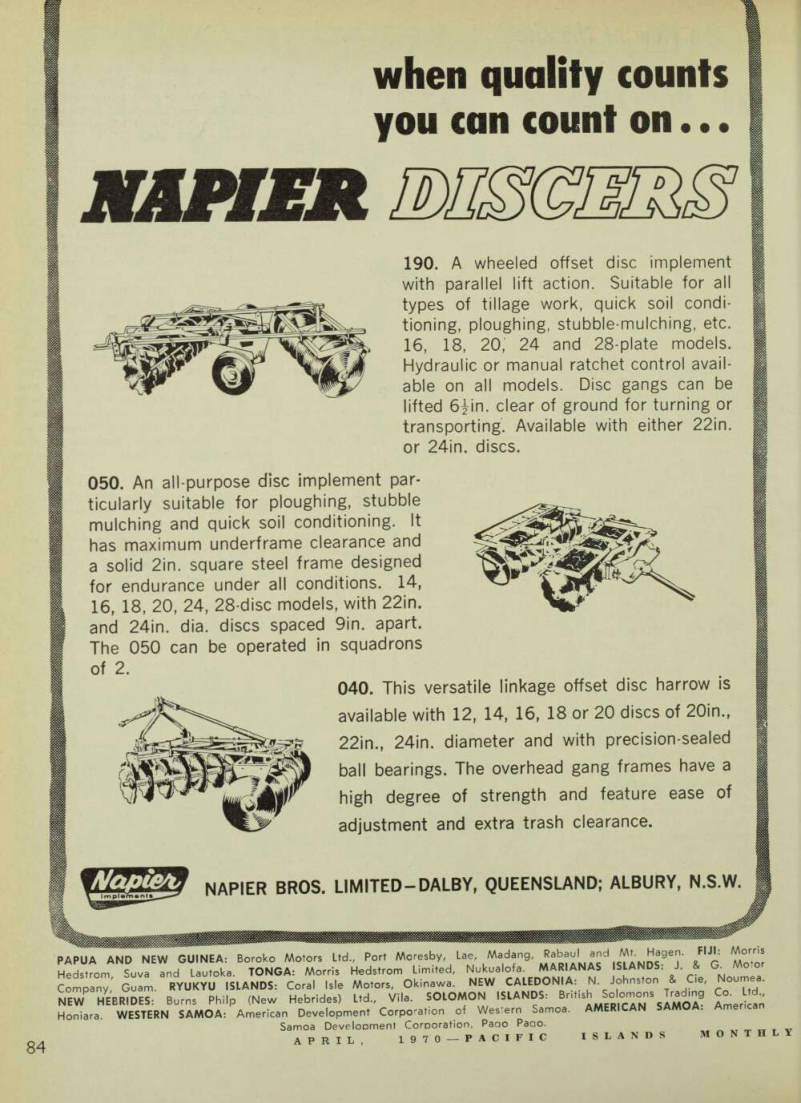 88
88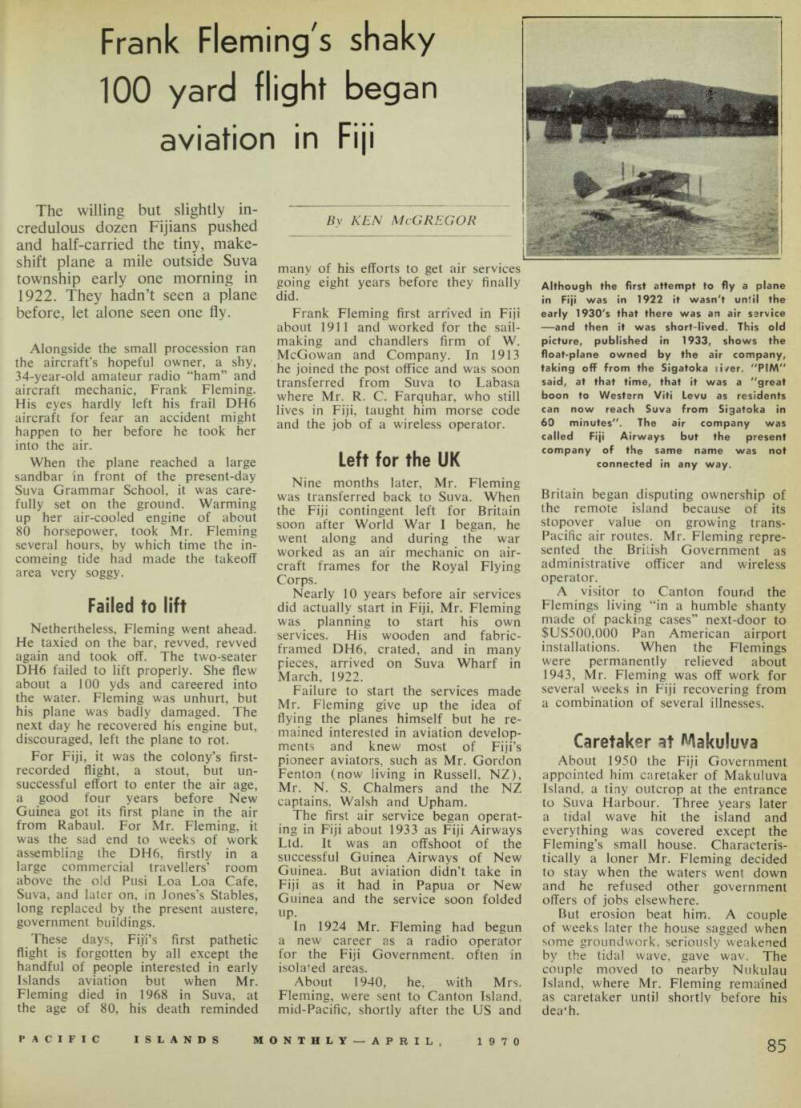 89
89 90
90 91
91 92
92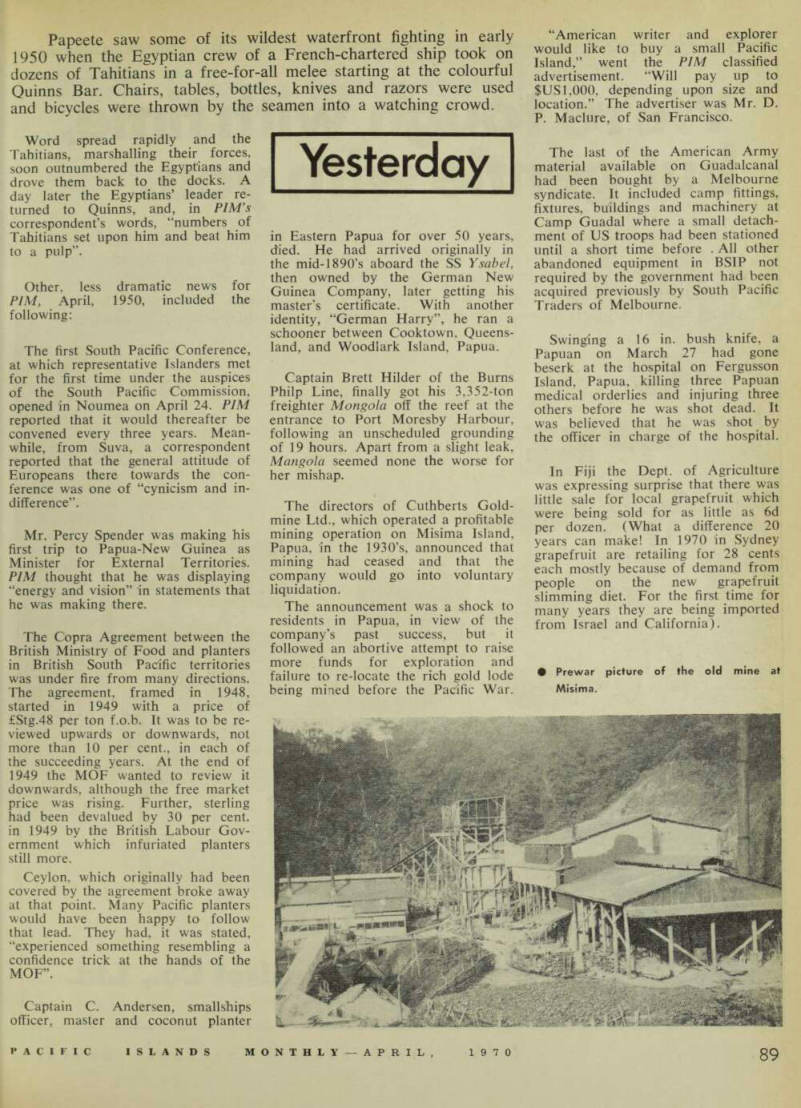 93
93 94
94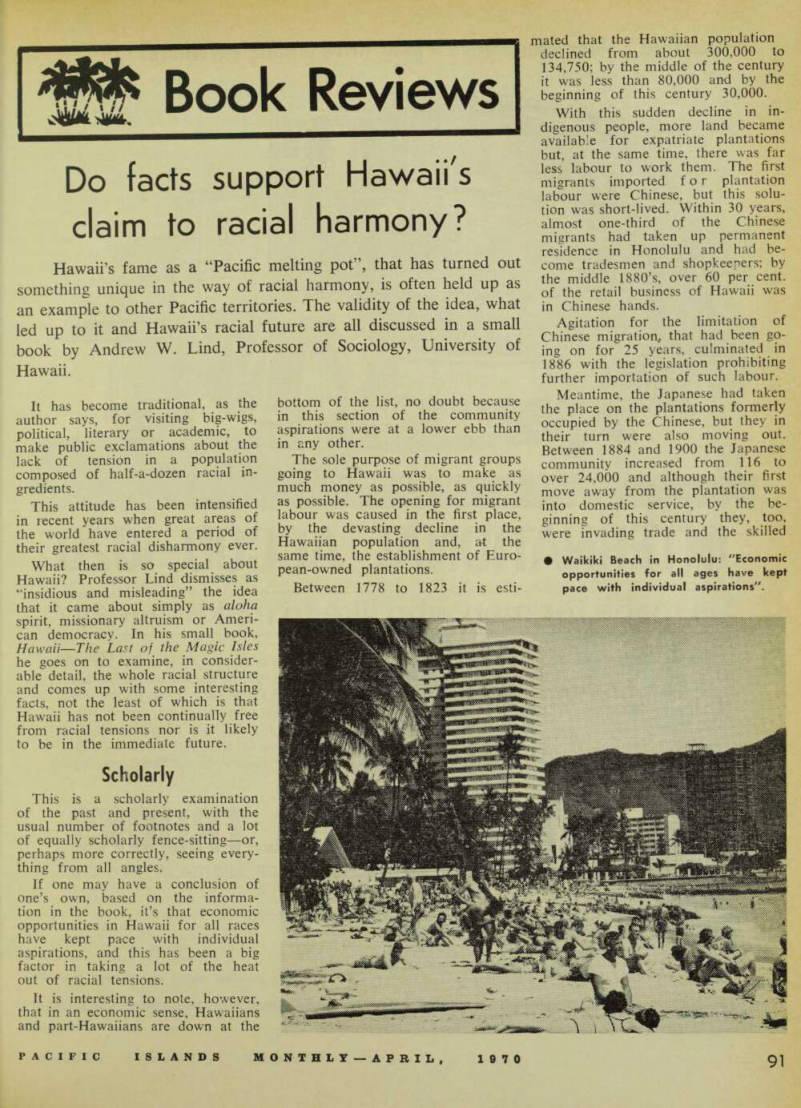 95
95 96
96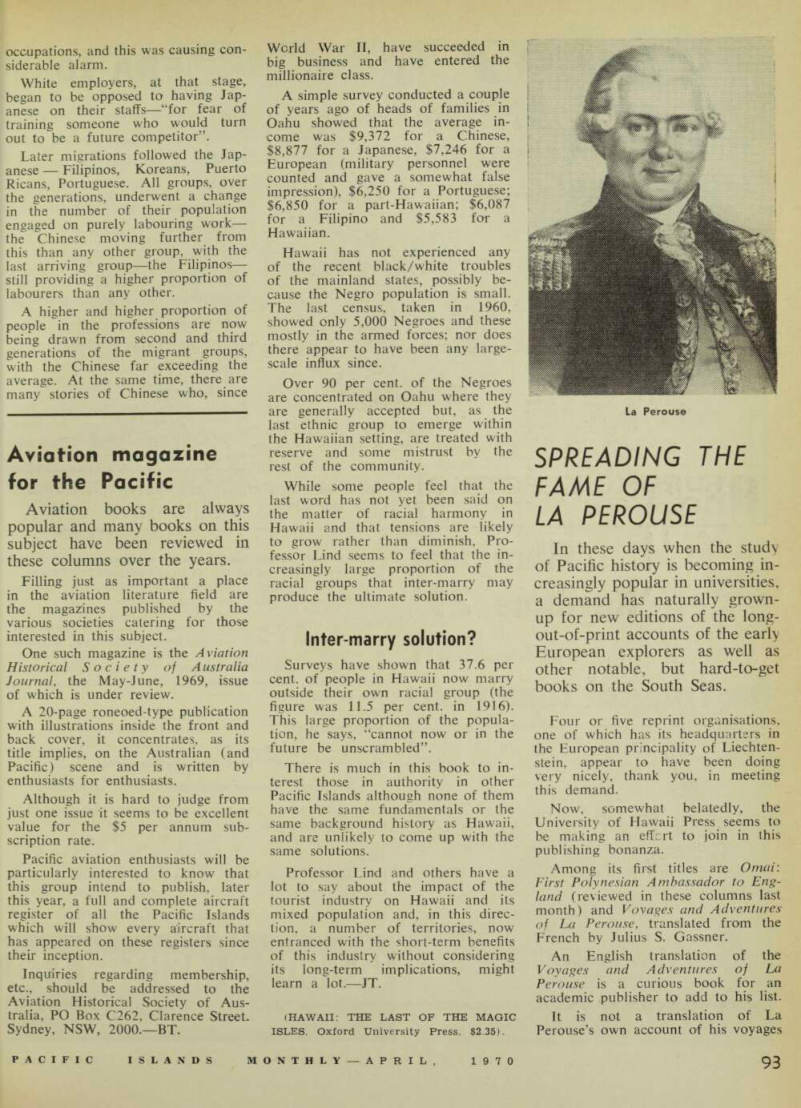 97
97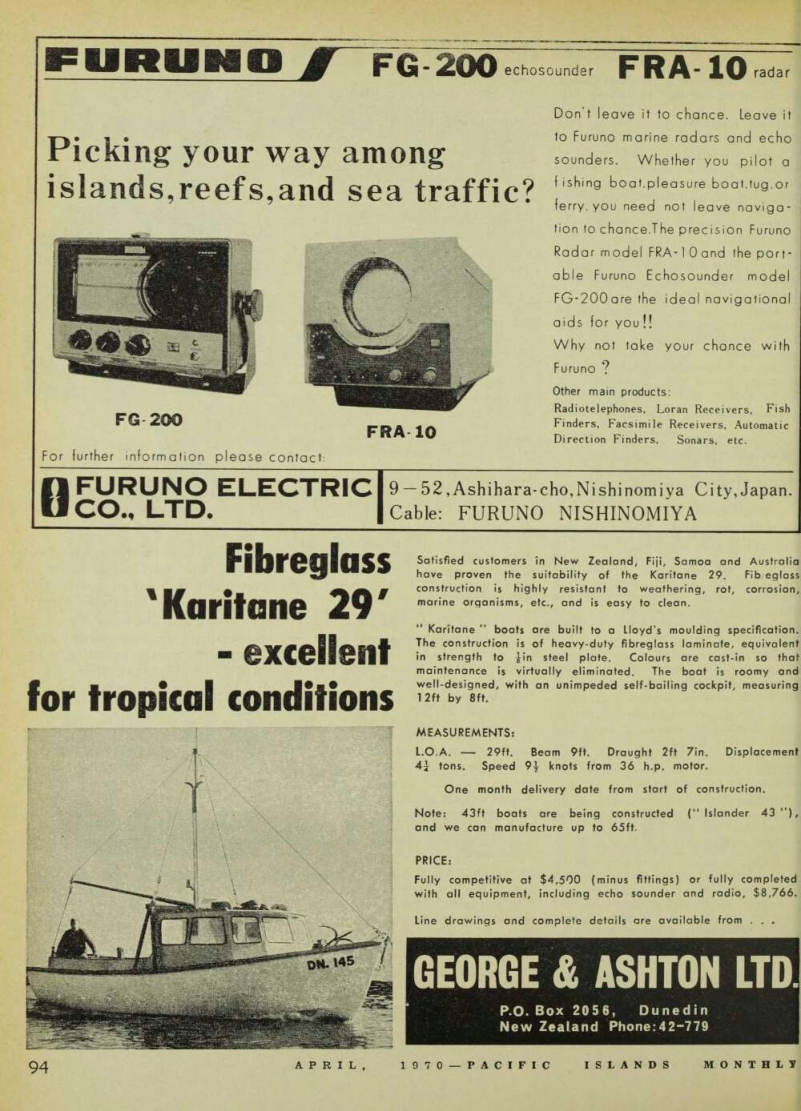 98
98 99
99 100
100 101
101 102
102 103
103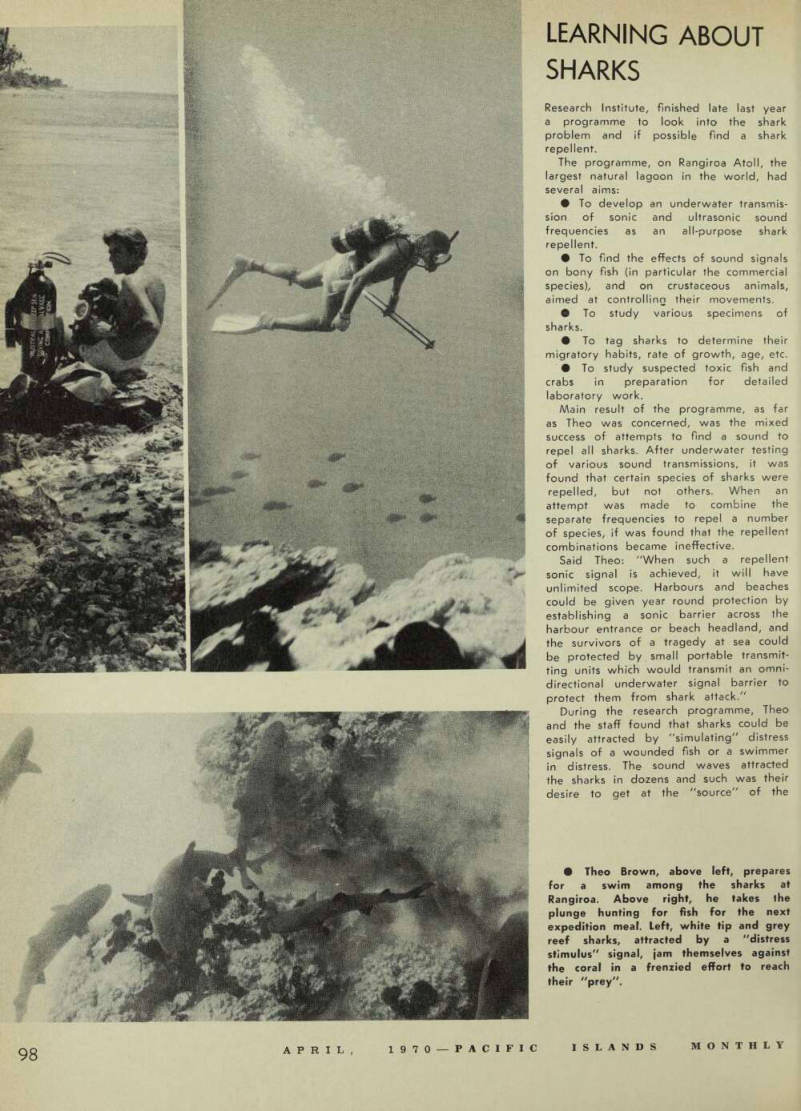 104
104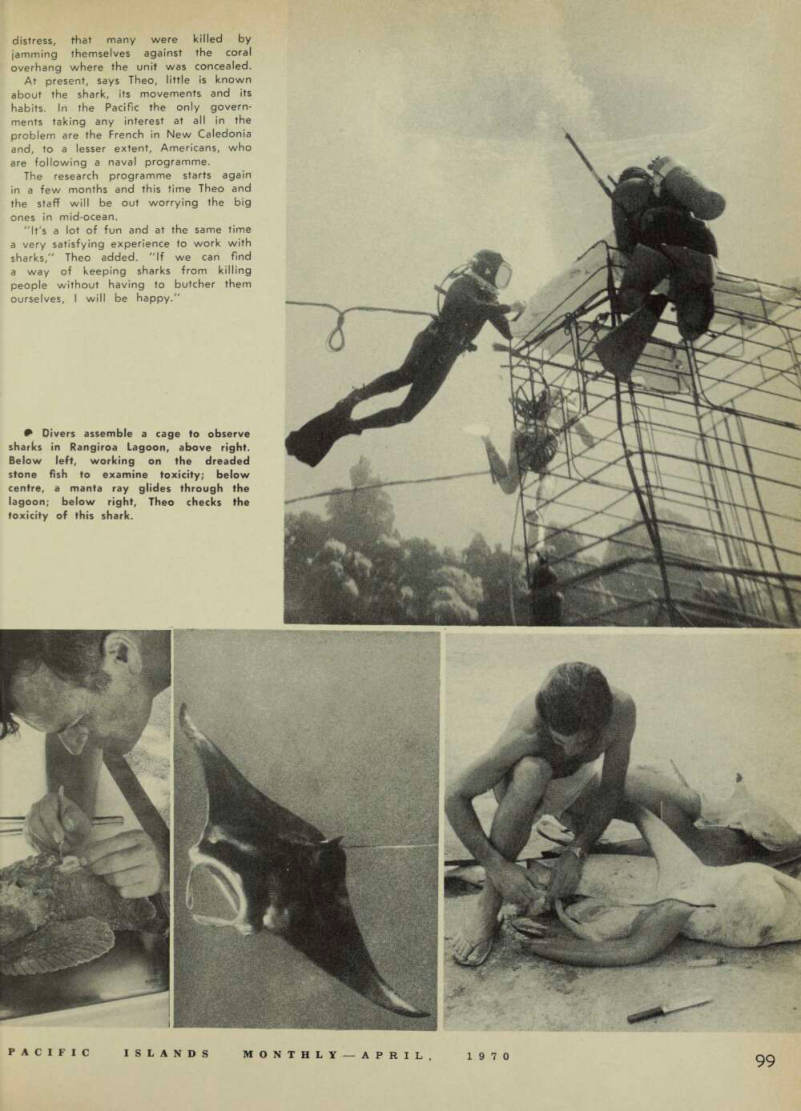 105
105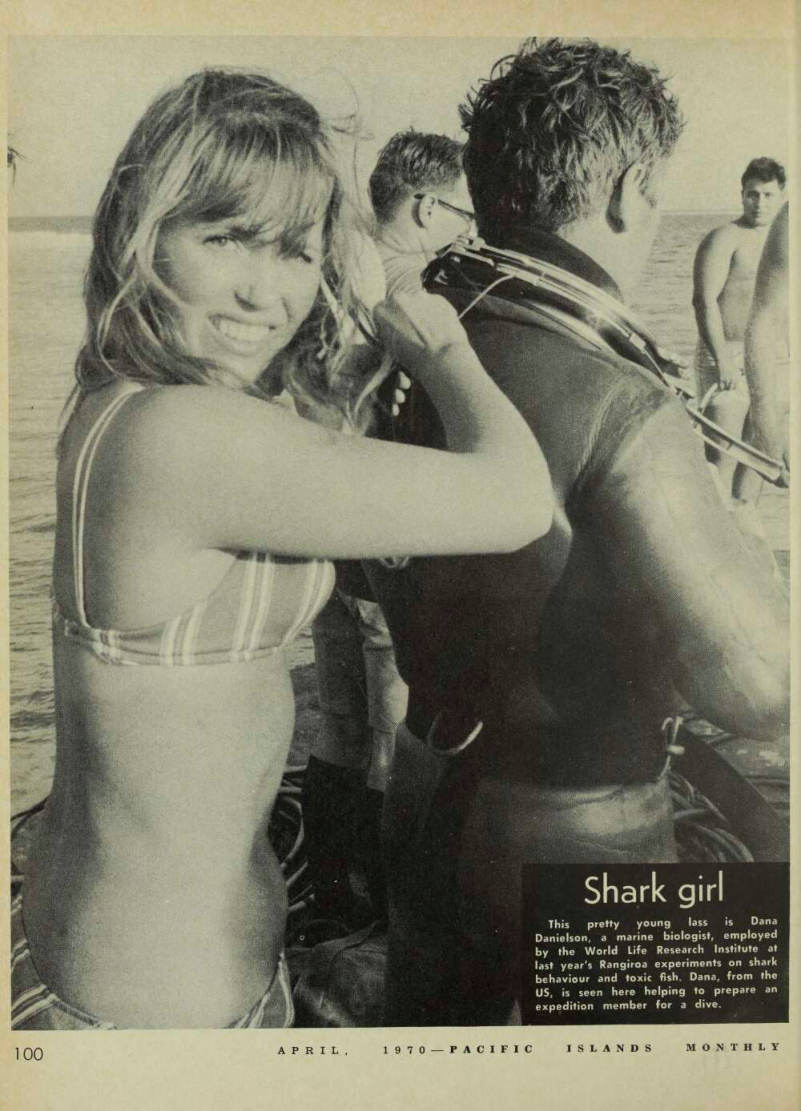 106
106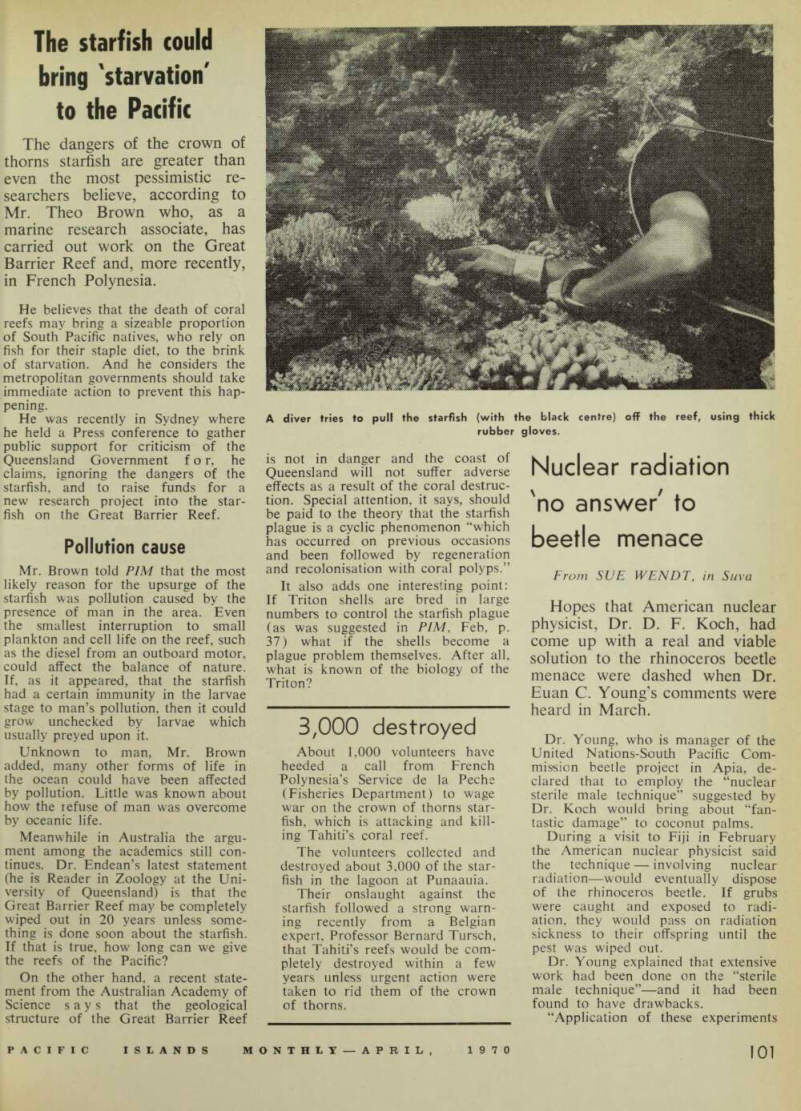 107
107 108
108 109
109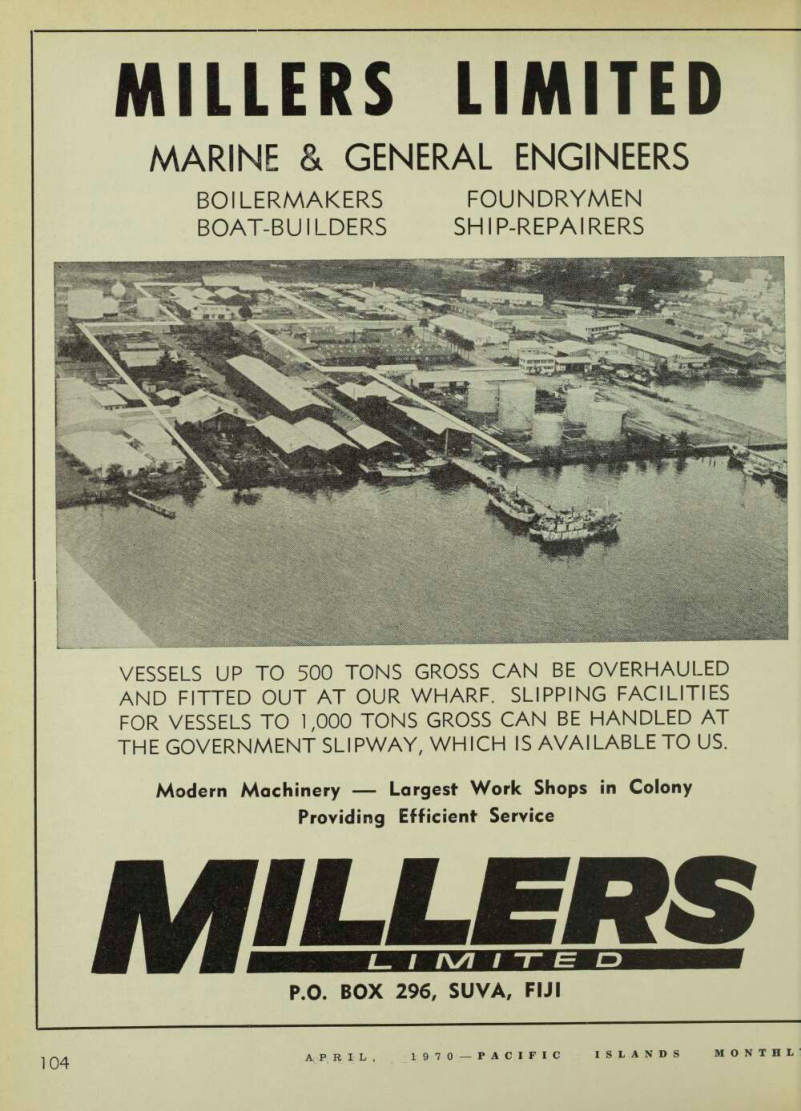 110
110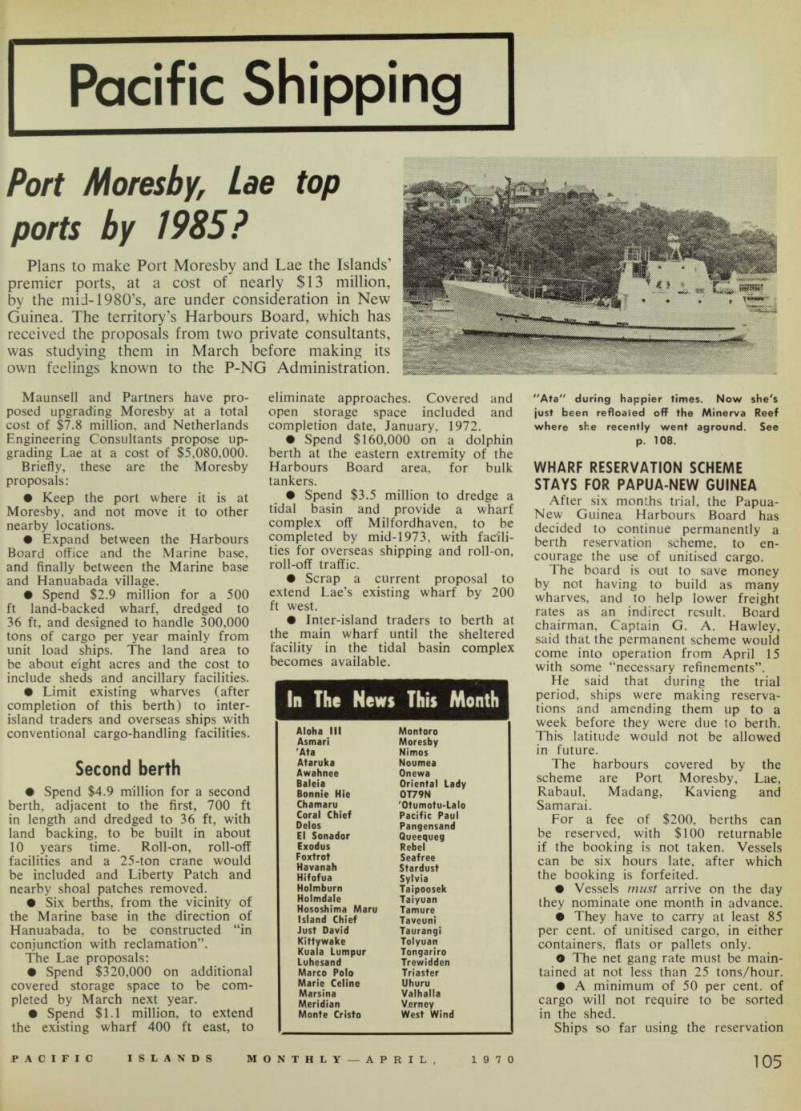 111
111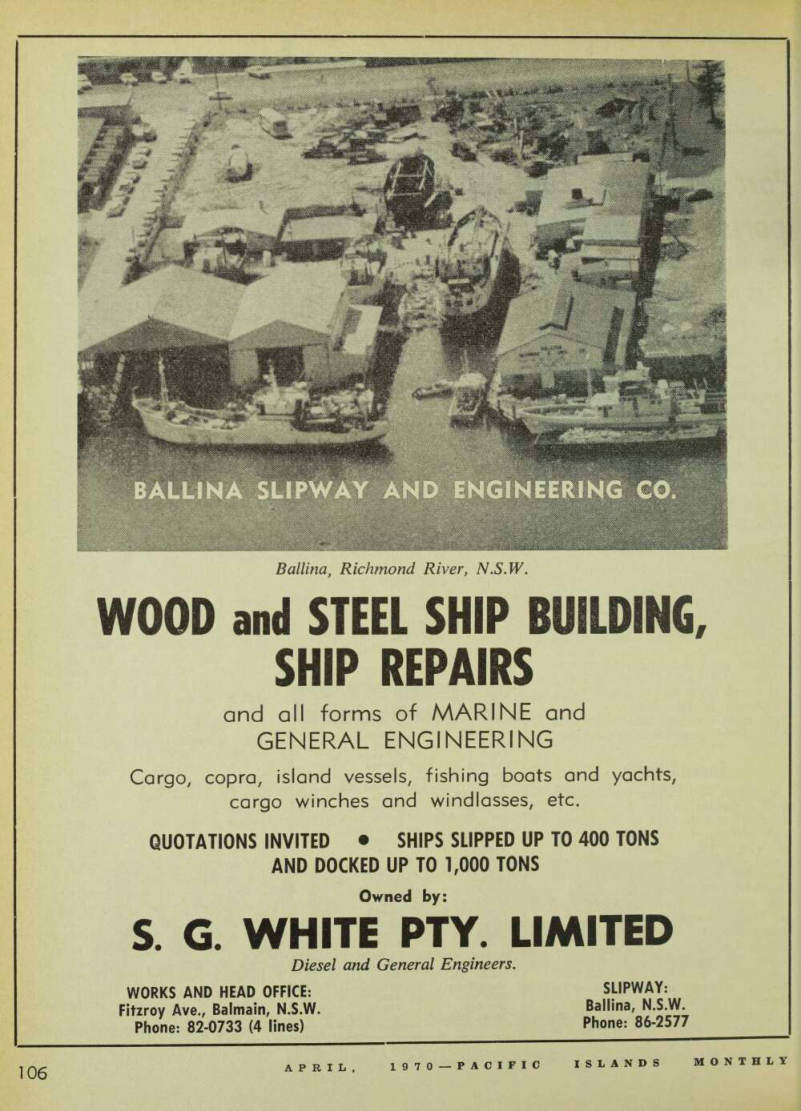 112
112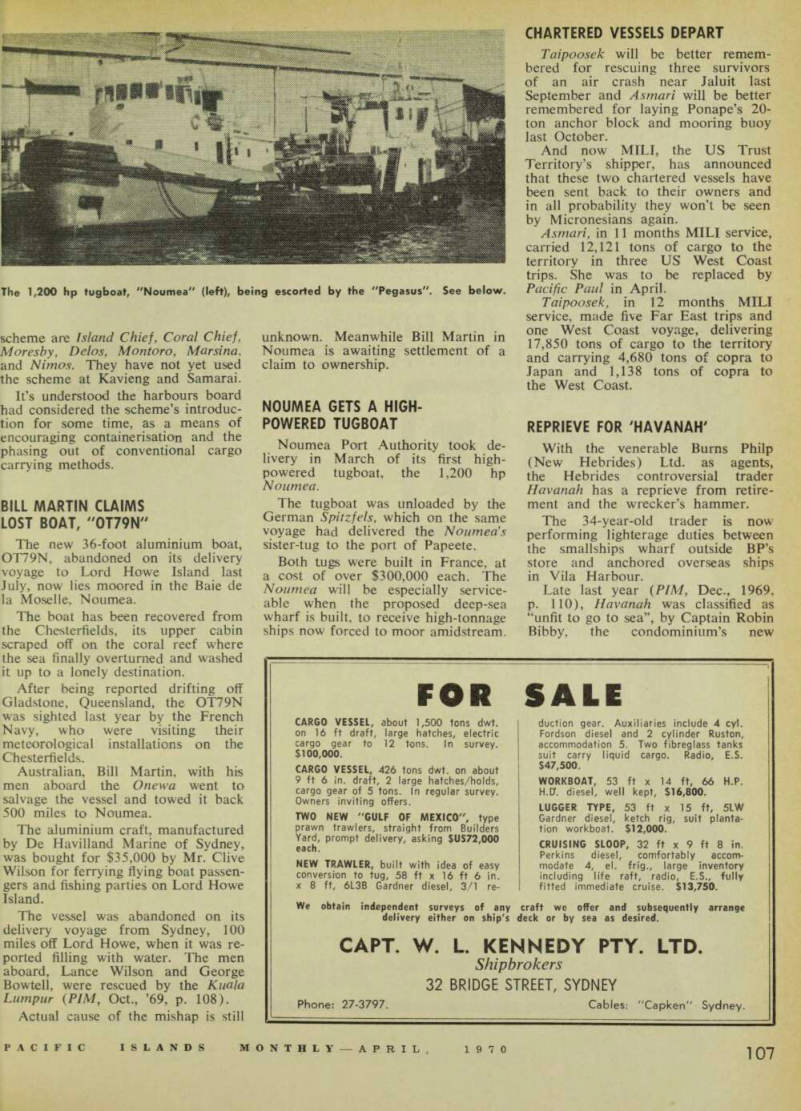 113
113 114
114 115
115 116
116 117
117 118
118 119
119 120
120 121
121 122
122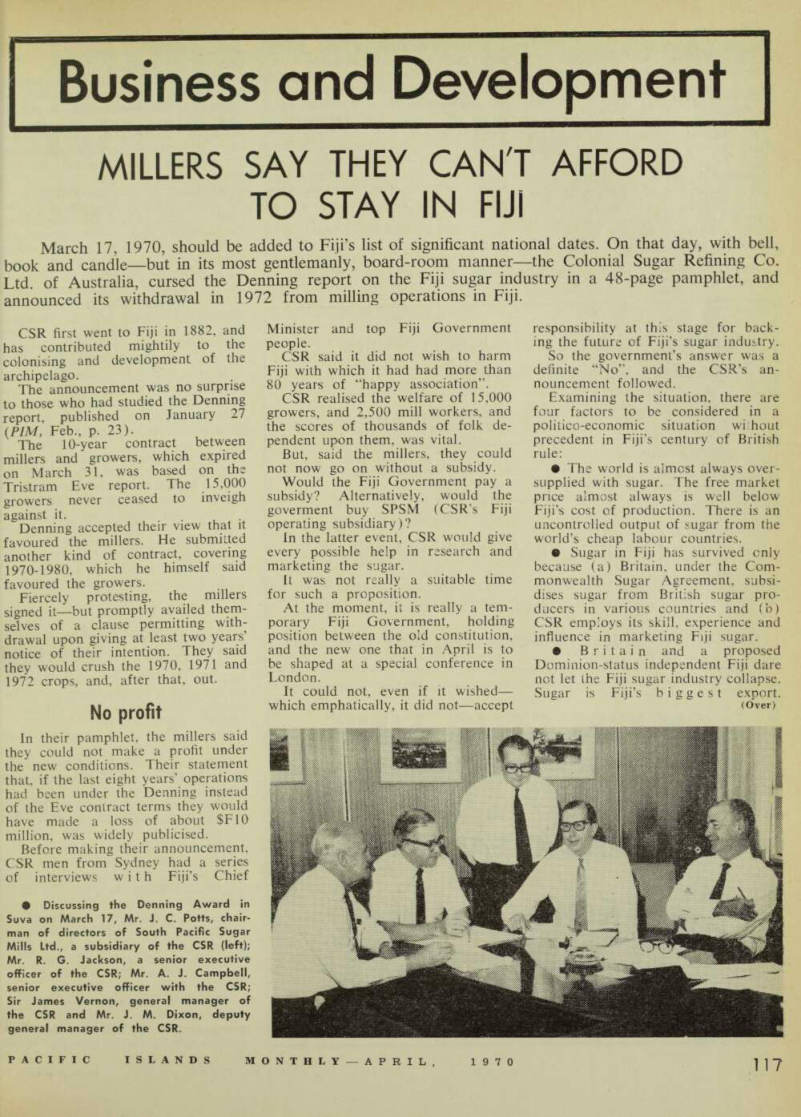 123
123 124
124 125
125 126
126 127
127 128
128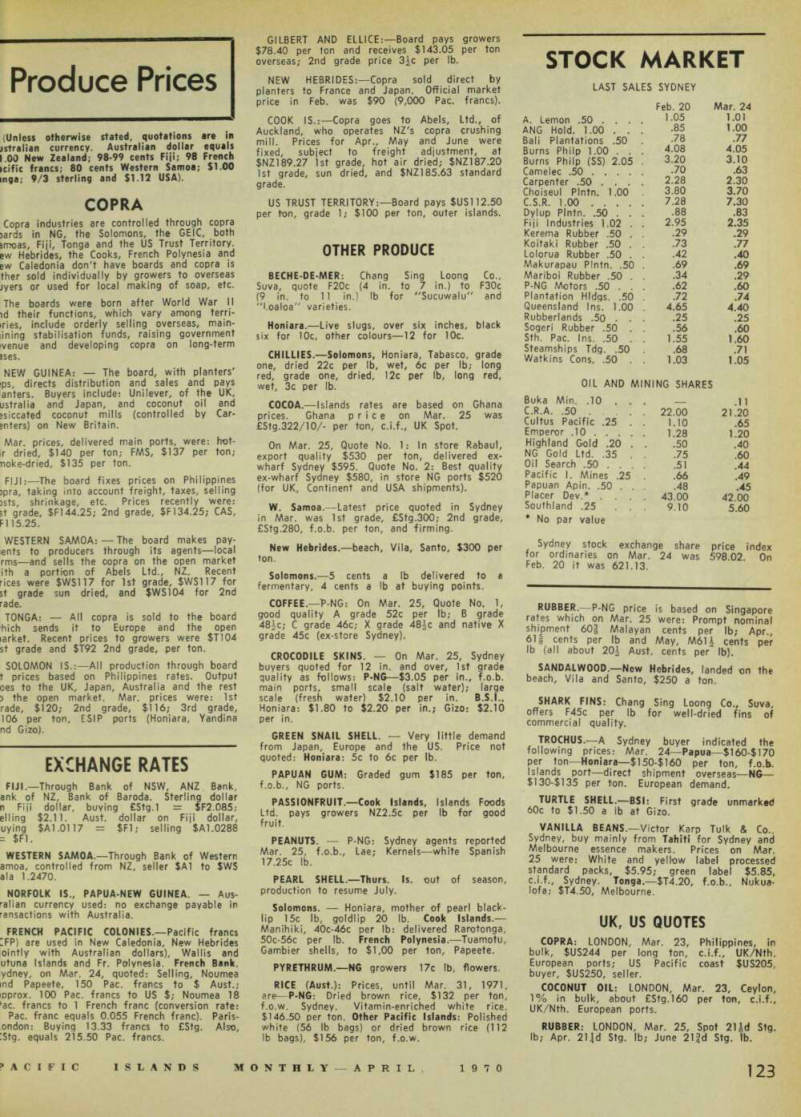 129
129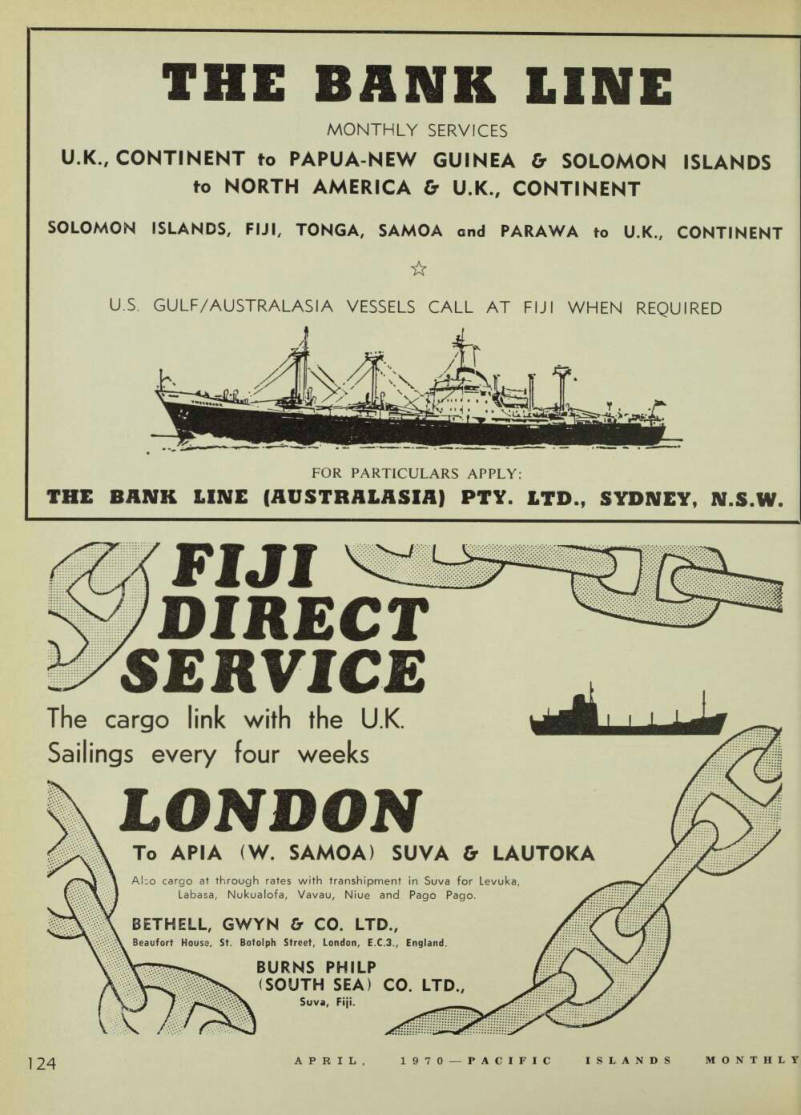 130
130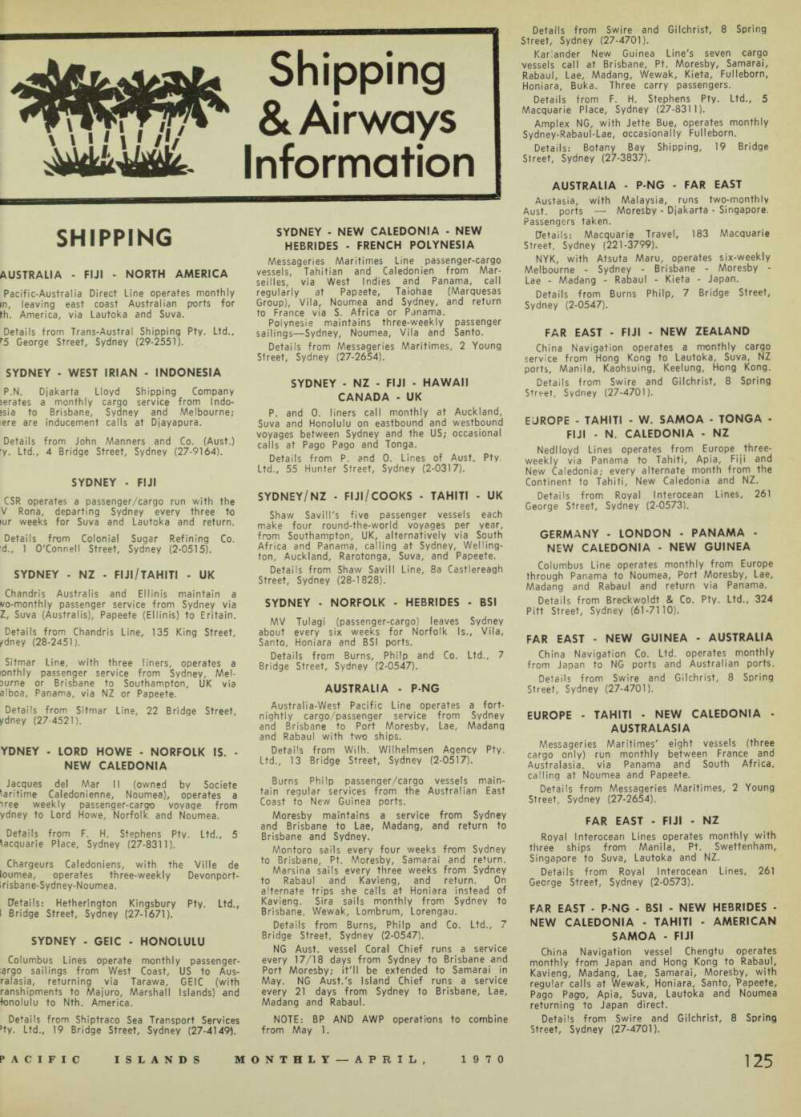 131
131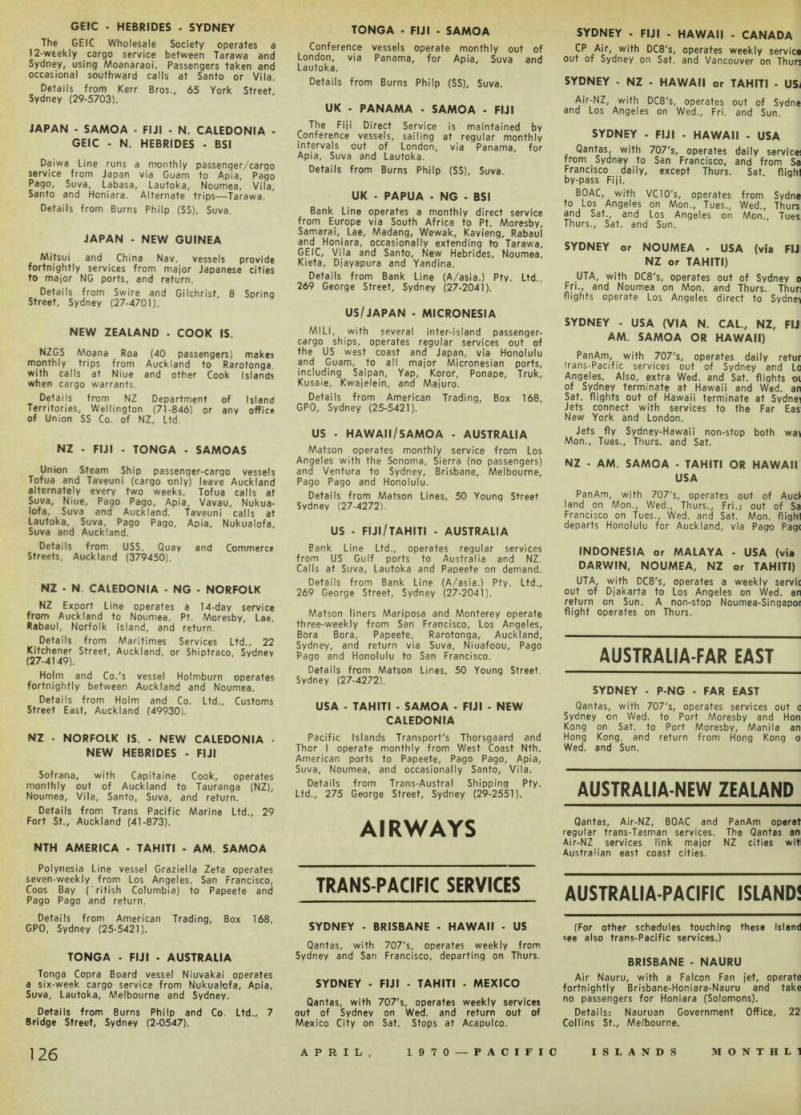 132
132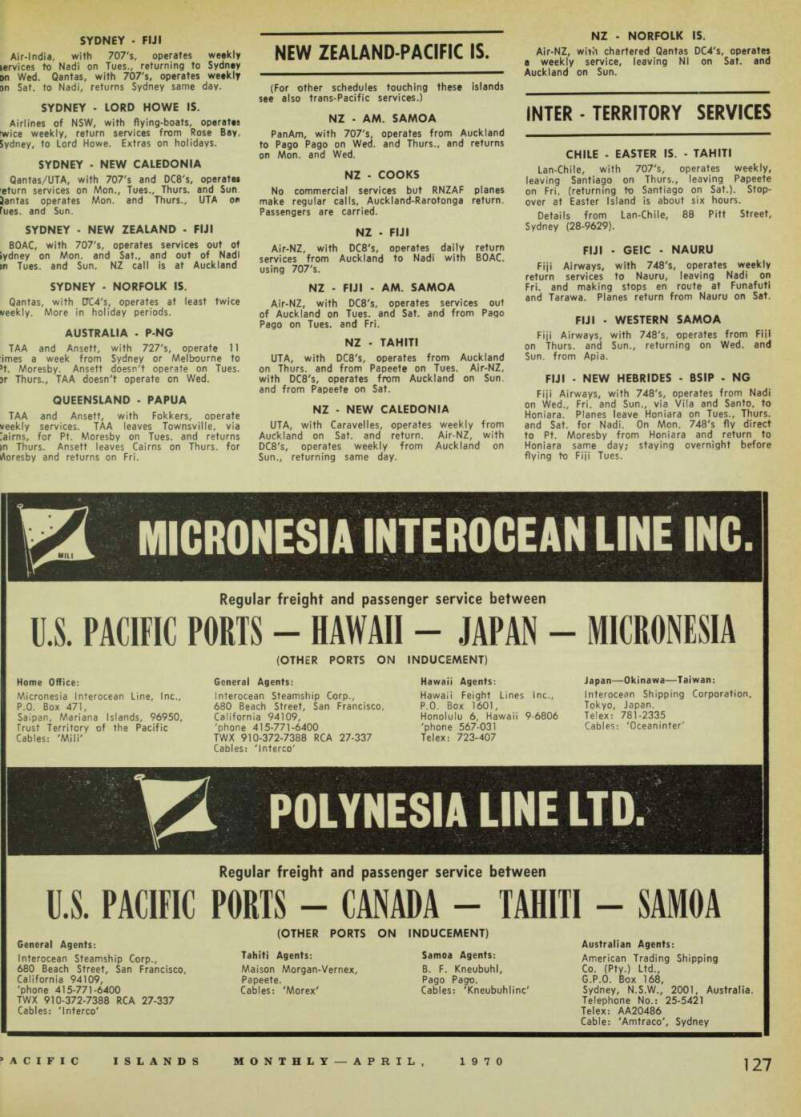 133
133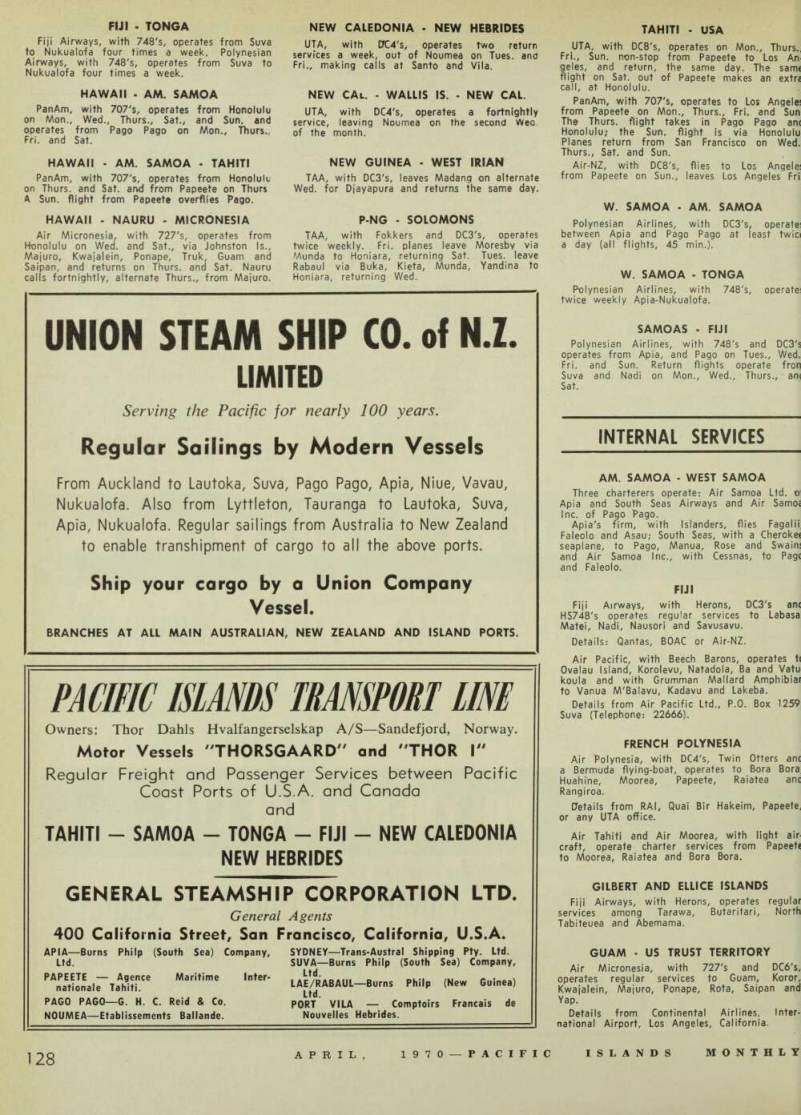 134
134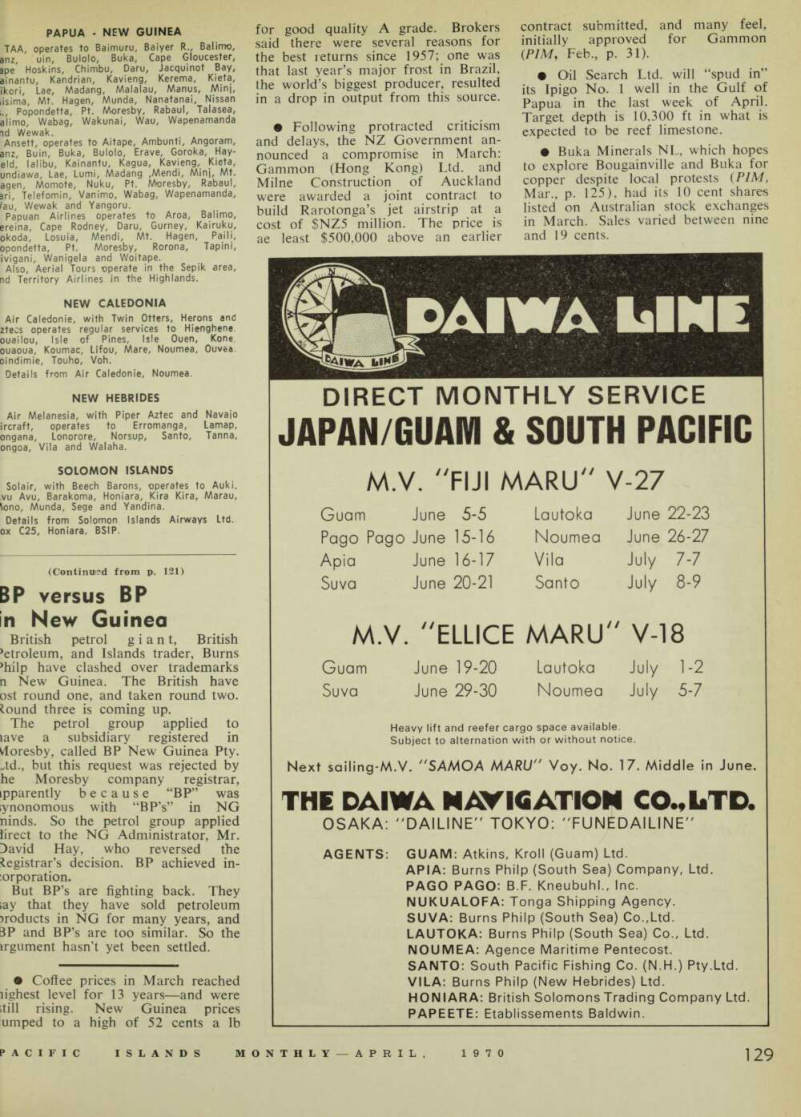 135
135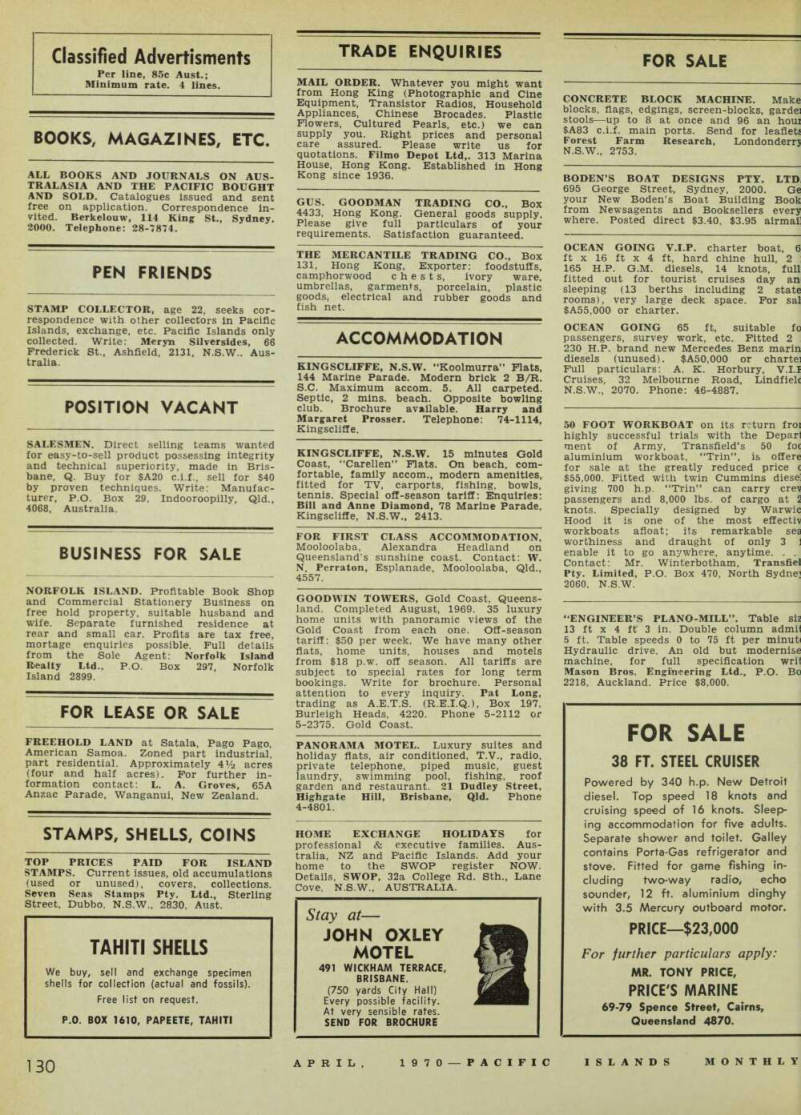 136
136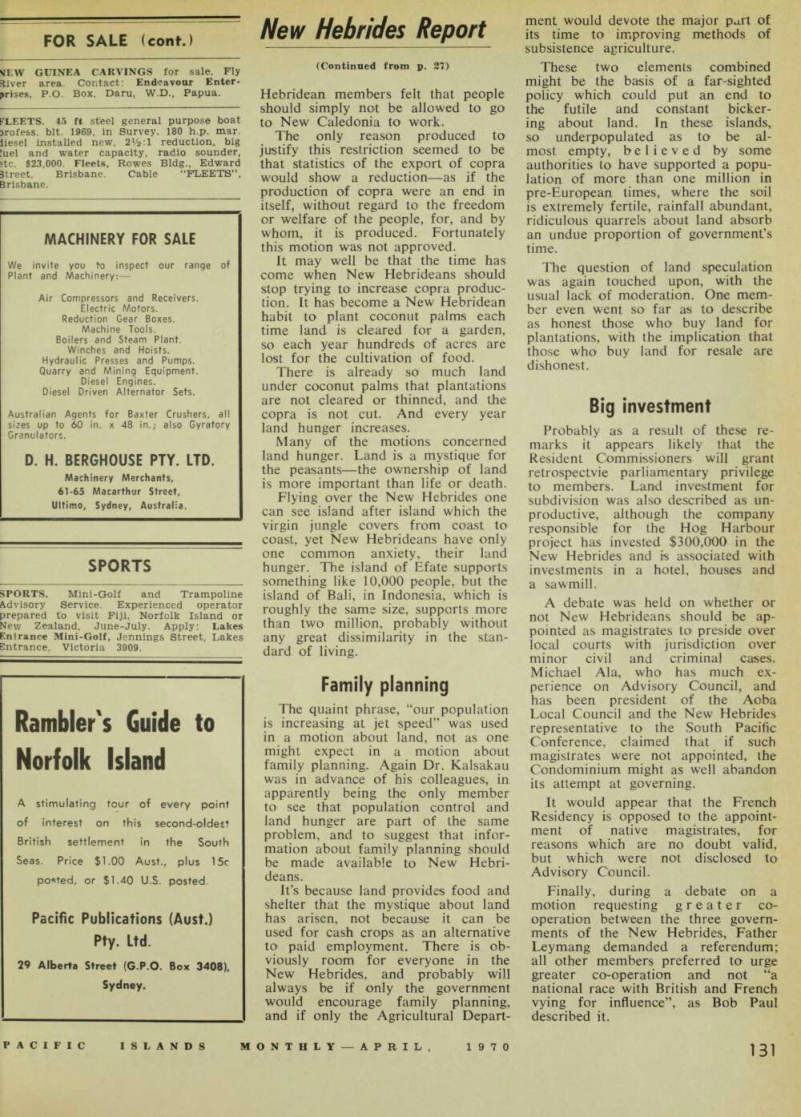 137
137 138
138 139
139 140
140 141
141 142
142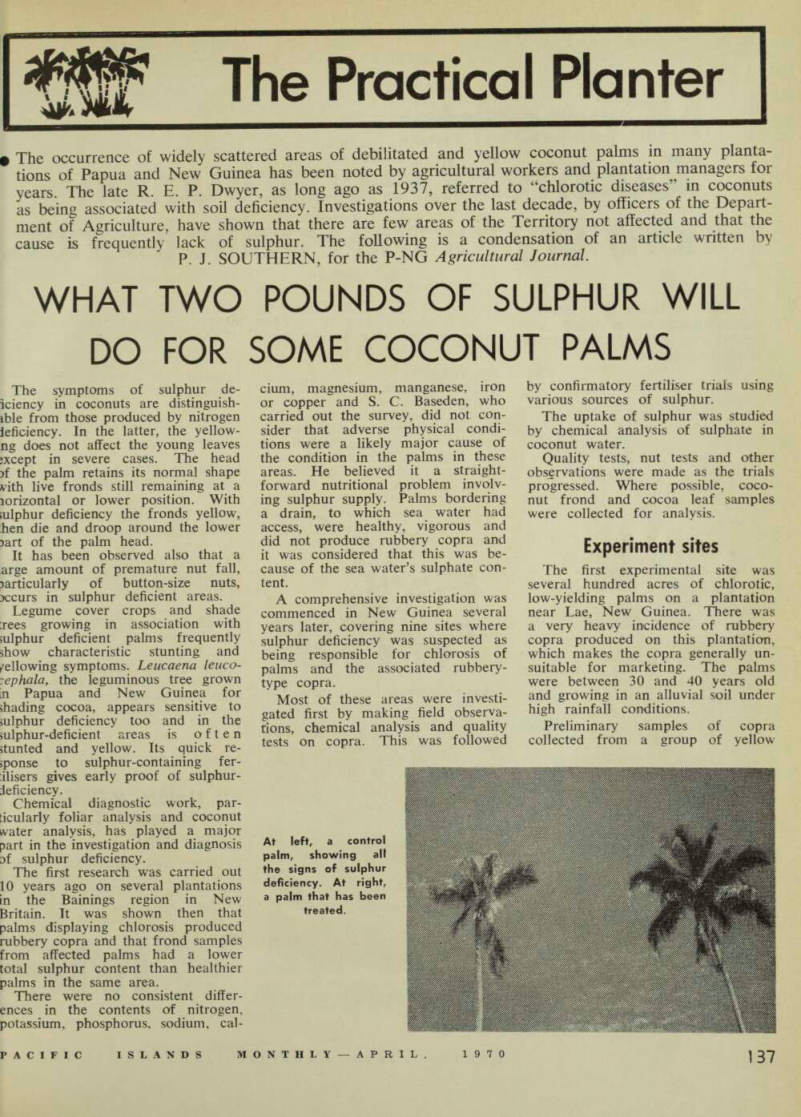 143
143 144
144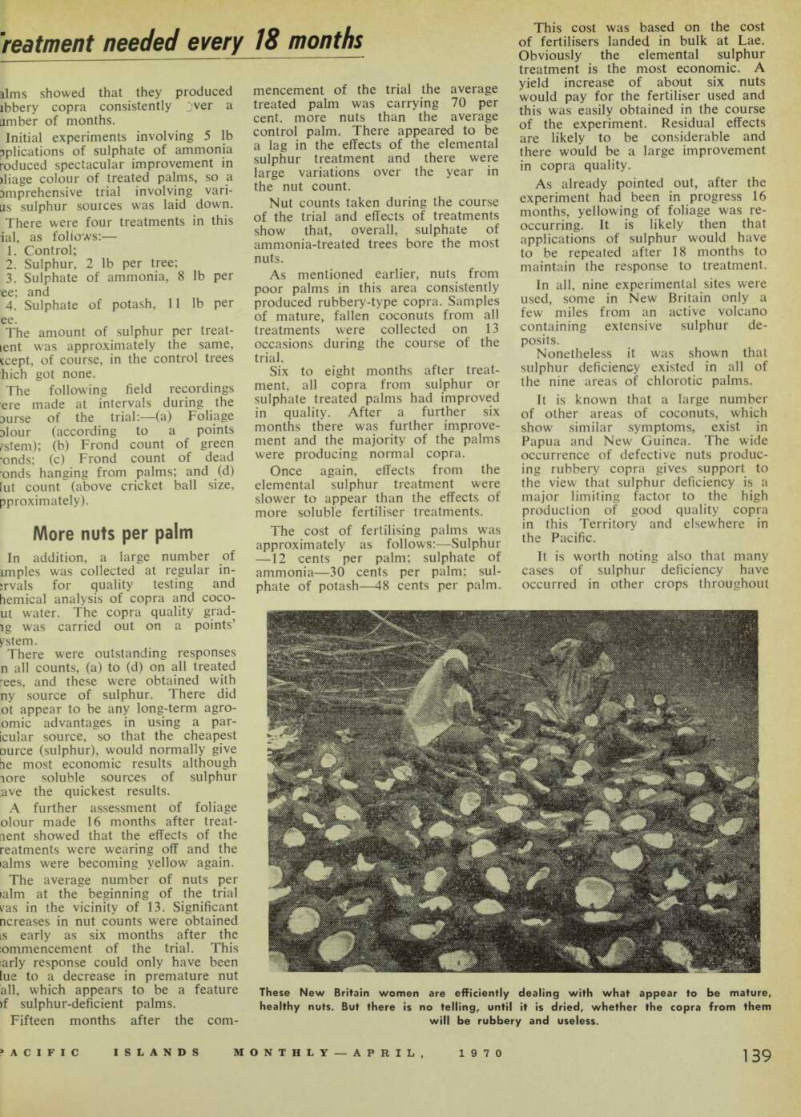 145
145 146
146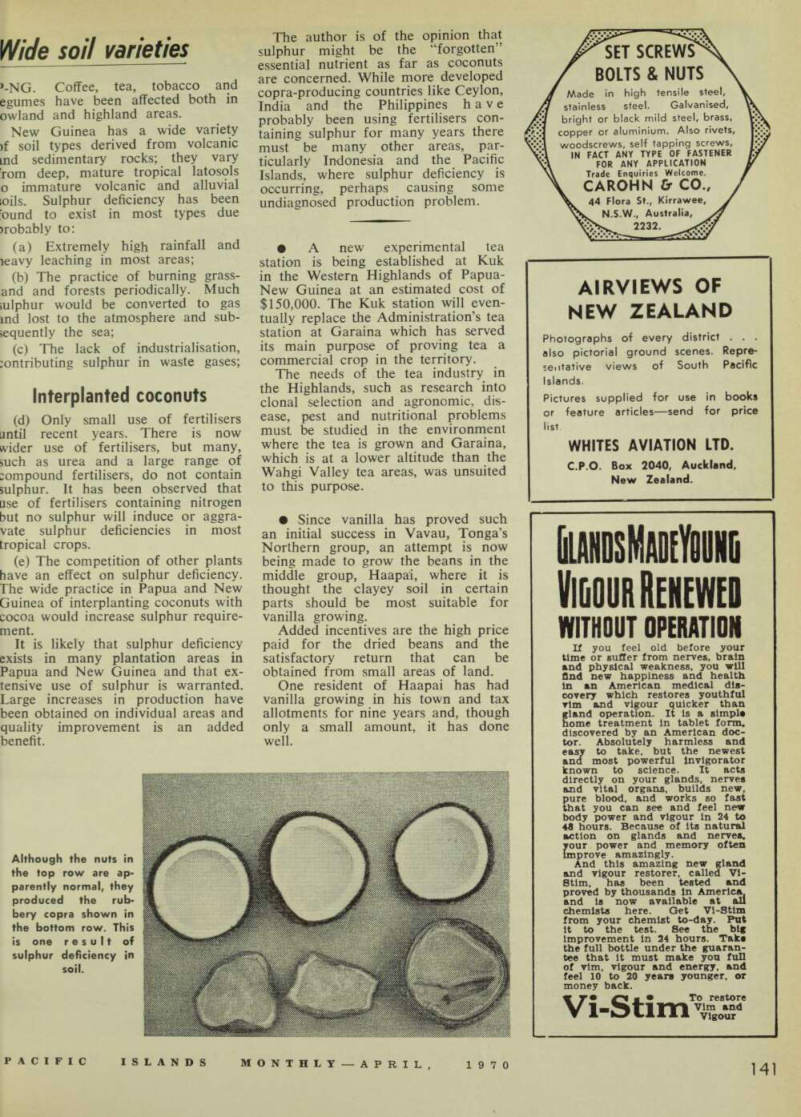 147
147 148
148 149
149 150
150 151
151 152
152 153
153 154
154 155
155 156
156 157
157 158
158 159
159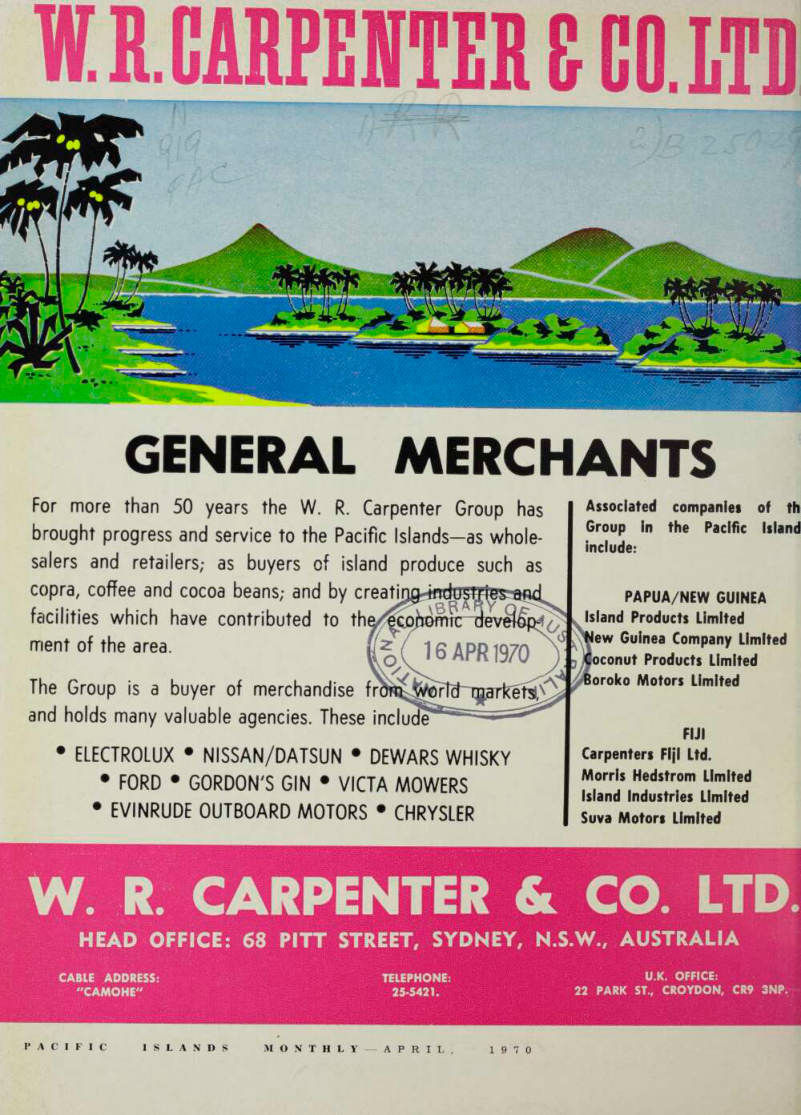 160
160