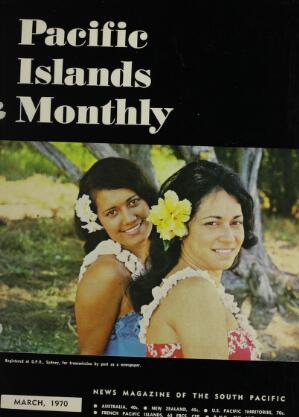
Monthly
Pacific Islands Monthly
9 tered at G.P.0., Sydney, for transmission by post as a newspaper.
March, 1970
news magazine of the south pacific • LZ«««.c f ; *. »*•
Our Cover
Thousands of Sydney secretaries and girl office workers throng the city's parks each lunch time.
Among them, on one sunny day this summer, were these two attractive lasses from Fiji. — Photo by Bruce Adams.
Advertisements & other items, p. 2 (2 items)
march, 19 io-pac.fic .slands month,
TAA’s got you
covered.
*5 * m., ■v All the way ttom Port Moresby to Lae '.. Ma T a h a p n9 / nnmka Mt Haqen fitly centres in all. The best con nechons in thf Territory More coverage of Papua/New Guinea flying air-conditioned twin prop-jets than any other airline Plus the best connections to Australia flying Bird of Paradise’ T-Jets. Mo , re ,P°™ A f * rt ’ more f ght more places. That’s why more people fly TAA Contact vour Travel Agent or TAA: Port Moresby 2101.
Lae^23ll. Madang 2478. Rabaul 2567. Goroka 8. Mt. Hagen 4 or 301. Wewak 103.
No.l-the friendly one
319 2267/69
In This Issue
General
"Weather" stations and what they do 27 Royal tour 28 Air India's "calendar of the year" 36 First SPC flag 36 Fiji Jim in verse 33 Oceania Rugby council 40 South Pacific Games 40 Development, but not by tourism ... 42 New kind of tourism—residential 63 Voyage of the brig "Eliza" 95
Cook Islands
Fravels of John Williams 85 Record banana shipment 123
Fiji
Denning's sugar; Shepherd's politics 25 Approach to Dominion status 26 Minister for Finance 30 ewer English radio sessions 32 Friton shells protected 33 Tui" Johnson retires 37 caching community projects ... 56-57 hat fire-walking bull .. 53 ourist news 63-69 JZ diplomatic representative 119 iig firms in travel industry 122
Rench Polynesia
Ipset over letter in PIM 31 7nffm writes on romance and reality 47 Jew book on Omai, first ambassador 100
Gilbert And Ellice Islands
PRO appointed 37 All about Funafuti 75 Old travel and new ]qi
Nauru
Wreck of "Santa Teretia II" ... 38,113 Reader's views on apartheid 44 Air Nauru's cheaper fares . 133
New Caledonia
Noumea mardi gras 37 Last of famous family 33 Captain Rusden's mishaps 42 Nickel up, agriculture down 124 Nickel strikers get more money ... 135 Bottled gas row 145 Sports season begins 160
New Hebrides
$2,000 gong for the Queen 27 Unfair shipping regulations 42 American Hog Harbour project 61 •Overseas company registrations 135
Niue
War on flies 56 Boats —old and new 73 The story of Robert Henry Head 91
Norfolk Island
Tourism roundup 71 1,100 companies and what they're
doing 120
Papua-New Guinea
Big month for political developments 28 Police cadet fights armed man 29 Union joins wages dispute 29 Papuan departmental head 33 First trade unionist out 34 Million dollar blaze 35 Rural wages board 39 Replies to Dr. Laycock's Pidgin . 43 New book on birds of paradise 99 New wharves 107, 109 New shipping services H 2 Jaos in car market -j2l Silk-worm experiments 122 Helicopters In mineral hunt 122 Bottle factory in operation 124 Churches want own radio station 136
Solomon Islands
Kavachi appears again ... 34
Shipbuilding help 111
New open market for copra 124 Customs fine for businessman 124
Tonga
Ten year wait for wage rises 30 Lobster hatchery 33 Copra board's funds embezzled ... 35 Annulment of princess' wedding 41 Resort at Neiafu 55 Concrete barge for crayfishing . 107
United States Trust Territory
Congress against income tax 35 "Fanafjord" service ... 109 Okinawan fishing vessel forfeited ... 109 Census to begin in April 119
West Irian
Finance for copper mine 121 Influenza toll over 3,000 145
Western Samoa
Election results 27 Fierce cyclones every eight years 119
PeTcC R cSon U 39 Fr uner s i T S’ If" 3; 36; Foe,notes with Press, 75; Magazine siSS, 85 B f 4 ' ; leSI eS ' erday - 55; From th * '? * »f n 4; P B„t e ess , ?'d S ol P v P e i ,^ onh 0 nh
Advertisements & other items, pp. 3-4 (3 items)
1
ACI F I C ISLANDS MONTHLY M A R C H . 1970
March. 1970 Pacific Islands Montbl
Qrnott's/^™ 5 Biscuits
Milk Arrowroot biscuits
for all-day energy
You and your children use up a lot of energy during the day; but Amott’s Milk Arrowroot biscuits will give you the extra nourishment you need to replace it. The triple-wrapped pack keeps the biscuits crisp and fresh at all tines.
Qrnott's/^™ 5 Biscuits
There is no Substitute for Quality
Pacific Islands
Monthly
Established 1930: 40th Year of Publication.
Owned And Published By
Pacific Publications (Aust.) Pty. Ltd.,
29 Alberta St., Sydney, N.S.W., 2000.
Postal Address: G.P.O. BOX 3408, SYDNEY,
N.S.W., 2001.
Telegraphic Address: PACPUB, Sydney.
Telephones: 61-9197, 61-7101, 61-4369.
Chief Executives: Managing Director: R, W. Robson.
Executive Director/Publisher: Judy Tudor.
Executive Director/Business Manager: Selwyn Hughes.
Executive Director/Chief Editor: Stuart Inder.
Pacific Islands Monthly
Editor: Stuart Inder.
Advertising Manager; W. A. Gasnier.
Branch Offices
Melbourne: Newspaper House, 247 Collins St., Victoria, 3000. Tel.: 63-7053.
Fiji: Pacific Publications (Fiji) Ltd., Fiji Times Building, 20 Gordon Street, Suva. Tel.: 25601.
Fiji Times Office, Vidilo Street, LAUTOKA.
Tel.: 60-422.
Papua-New Guinea; Pacific Publications (N.G.) Pty. Ltd. Representatives: PORT MORESBY, P.O.
Box 16; LAE, P.O. Box 227; RABAUL, Mr.
Steve Simpson, P.O. Box 433 (c/- Rabaul Photographic. Tel.: 2677).
Representatives
Queensland: Advertising—Beale Media Services, 132 St. Paul's Terrace, Fortitude Valley, Qld., 4006. Tel.: 51-5827. ievt Zealand: General.—J. D. Whitcombe, C.P.O. sox 2229, Queen St., Auckland. Tel.: 456056.
Advertising.—John Bayldon, P.O. Box 366, Auckland. Tel.: 31569.
Inited Kingdom; S. R. Warman, Park House ■2 Park Street, Croydon, CR9 3NP. Tel.: 01-6884177.
I. A, Mackenzie, 4A Bloomsbury Square London, W.C.I. Tel.: Holborn 3779, apan: Advertising—Universal Media Corpora tion, C.P.O. Box 46, Tokyo. Tel.: 666-3036.
Agents
All main trading firms and stores in the Pacific Islands, acific Publications Pty. Ltd. is the Australian agent for THE FIJI TIMES.
Subscription Rates:
Pacific Islands Monthly" is air-freighted to I subscribers and agents in the South Pacific; copies to other areas go by surface mail, jstraha (incl. Lord Howe Is., and Thursday 54.50 Aust.; Papua-New Guinea, Norfolk Nauru, 8.5.1., G. & E. Group, Tonga and ■* ”« br, 2 es V * 4 -°0 Aust - New Zealand: Cook Is., Niue and Western Samoa; 1.00 (local currency); Fiji $4.00 (local irrency); American Samoa and U.S. Pacific (rritories: $B.OO (local currency); French jcific Territories—New Caledonia, Tahiti, etc : >0 French Pacific francs; United States of nenca: $9.00 U.S.; United Kingdom and elsewhere; £2/15/- Stg. rmail postage to USA, UK and elsewhere is additional. opyright ©, 1970, Pacific Publications (Aust.) Pty. Ltd.
Up Front
with the Editor
These lines are being hacked out in one of the bedrooms of Honiara’s Hotel Mendana, on a typewriter borrowed from obliging mine host Ron Laird after I had mentioned that I wanted to catch the mail with a few words for PIM “on the subject of hotels”.
To have put such a dangerous weapon in my hands, without restriction, was the act of a brave and honest man, for only five minutes earlier we had both learned that my hotel booking, made a fortnight ago in Sydney, had never been received at the hotel and that I have a bed for only tonight—and I have that only because of some juggling by *0 . . 1 ... . , , .
But thats hotel life in the Islands these days, and as a seasoned Islands traveller I have only myself to blame for not having triple-checked the booking. The explanation I have got from the local airline representative has the undoubted ring of truth.
Hotel bookings made in Sydney, he says, almost always disappear into the intricacies of both the Fiji and Solomons telegraphic network, never to emerge. They had recently misplaced an entire tour party this way.
I simply should have known. But there is a bright spot, which will be good news for other travellers if not for me. Lost hotel bookings are the only real dangers left for the travelling man in the South-West Pacific these days. Any regular stayer-at-hotels in Papua-New Guinea and the Solomons over the last 10 or 12 years will agree that the experience has not now the elements of despair it once had.
I knew the time when brave men would pray out loud that the hotel had lost their booking, so they could throw themselves on the mercy of some acquaintance with a house and a cheerful wife, where the food was edible, the linen clean and the bathroom not awash. But the booking was always there, and they served their sentence manfully, it wac in , oul S rSi thro PS h drink N fnTn I f learn^ d 1° IT u° night ’ t 0 St pf n fb e hour when there was nothing for it
but to stumble down the unlit pas sage, past the noise of the dripping taps in the communal bathroom whose concrete floor was covered in paches of green slime through which toads occasionally scrambled, whose urinals stank no matter how frequently you pulled the bent wire attached to the mechanism, and on into a humid bedroom, crammed with two other lumpy beds besides your own.
'Hictonr' lief maioiiu ii>i At Rabaul once while waiting for a plane that probably never did turn U P> some of us began to swap notes on New Guinea hotels, and we formulated a list, by common con sensus, on their common charac teristics. The list must be in one of m y notebooks still, and should I find it I shall forward it to Robert Langdon of the Pacific Manuscripts Bureau a s a document worthy of preservation as genuine contemporary b ,s l or y. ave rage New Guinea hotel r P° m _, at , t ! iat P me our consensus showed, looked like this: It was built of fibro-cement or sheets of plywood, whlch might or might not have ex tended to both floor and ceiling, J P lnts w . ere concealed by cover-strips °* varying widths and thicknesses, ° f the r °° m WaS rr y *l unlll J, , whirHL W ® r ® *?! part,tlons * h h dld n °* 80 3,1 the wa k UP lPeai?t to notice any m - * he rooms adjom *f g ;J?® Walls h £Y e one coat fS f °£ grey , pamt - The windows would not have glass, and they might have insect screening, but probably onl y boy wire” to keep out those intruders who couldn’t be bothered entering through the unlockable door.
There was no powerpoint no wash basin or mirror were to be
found in the communal bathroom), and the beds were of varying styles and sizes. There was a single, shaded globe in the centre of the room, and one of the beds might have a plastic reading lamp, blackened where the bulb had burnt it, attached to a bed head.
The furniture was a single con struction of boxwood and odd timber offcuts, faced with a green cotton curtain, and meant as a cupboard/ hanging space. Nobody used it; you kept your gear in your suitcase.
You could get yourself a towel thin enough to shoot peas through if you had the initiative to find the housekeeper and get in a word during a temporary lull in her loud abuse of the sullen houseboys.
The dining room of this typical hotel always had a potted palm. At the table you had the soup of their choice, but you could choose either the grilled chop or the “salad meats” for the main course, and for dessert there was tart and custard.
Contrary to what might be ex pected by those lucky people with no experience of territory hotels of that time, the food would arrive with a startling rapidly. No sooner had you swallowed your lukewarm soup than your plate was whipped away and replaced by the lukewarm chop.
The boy would stand off a little, warily intimidating you to get it down quickly so he could get on with his job as he saw it—that of substituting empty plates for full ones. Men have died from ulcers developed in Islands dining rooms.
These standards have not entirely disappeared from the South-West Pacific, but they have almost gone.
They are passing quickly because of the advent of the newer hotels, built from the ground up to the newer standards, such as The Gateway in Moresby, The Melanesian in Lae and Rabaul Travelodge.
The newer hotels have air-con ditioned, self-contained suites, carpets, room service, piped music. They and some others have forced the new standards on to owners and managers who otherwise would not have cared less.
Most of the old hotels have up graded, and although this has been done with varying degrees of suc cess, we travelling men know what an improvement they are. .
Nobody will mourn the passing ot the old standards that persisted foi so long. In retrospect those hotels were colourful; in reality they wen a depressing example of an attitude of expediency that at one time poisoned the Islands atmosphere.
Stuart Inder
Advertisements & other items, pp. 5-26 (19 items)
3
ACIFIC ISLANDS MONTHLY M A R C H , 1970
More Beautiful
Advertisement-
How to be
By a Leading Skin-care Consultant Beautiful complexions are entirely dependent on a regular and reliable beauty-care routine in order to remain youthfully smoothe and exquisitely fine-textured. Here are some suggestions to help you cherish that soft, dewy bloom and promote the natural processes of skin beautification so that you gam greater loveliness than you ever thought possible.
Capture the Bloom of Beauty
Iavish the ultimate in loving care on your complexion with a A nourishing tropical moist oil that will influence the balance, bloom and beauty of your skin, whether it is young, dry oily or mature. Stroke moist oil or Ulan oyer the entire complexion until it is covered with an exquisite, dew-hke film. Used as a beautifying base for make-up, oil of Ulan protects evety type of skin against dry weather, and from conditions that quickly lead to wrinkles.
A Lovely Complexion
Your most precious complexion is beautified and protected when you smooth a film of tropical moist oil over the face and neck every day. This moist oil of Ulan has special isotonic properties that help nature to maintain the natural oil and moisture balance of the skin and reveal the soft, flower-like bloom of your skin Used as an invisible base beneath make-up, the beauty fluid not only guards your skin against the drying effects of the weather and cosmetic pigments but it also serves to ensure that your complexion will look beautifully milky-matt and flawless all through the day.
Clear Away Blemishes
Stimulate the surface of your skin after cleansing and help to clear away blemish-inducing impurities by wiping over jour face and neck with a mild lemon-toning freshener. Moisten a cotton-pad with lemon Delph and press it lightly to your pores.
You wiU immediacy appreciate the tonic effects of this freshener and it will give the skin a delightful coolness and c, arity- Afterwards, to hold the natural bloom that is on your complexion, smoothe on a beautifying and nourishing film of oil of Ulan
K * wi
THE PACING
FIJI,SAMOA,TONGA, NIUE Is, NORFOLK Is.
BURNS PHILP
[SOUTH SEA] CO. LID.
REGISTERED OFFICE: SUVA, FIJJL
TELEPHONE NO: 22661
TELEX NO: FJ1127
Code Address: "BURNSOUTH"’
SHIPPING AGENCIES
The New Zealand Shipping Co. Ltd.
Shaw Savill & Albion Co. Ltd.
Blue Star Port Line (Management) Ltd.
Bank Line Ltd.
General Steamship Corporation Ltd.
Compagnie des Messageries Maritimes Royal Interocean Lines Daiwa Navigation
Company Ltd.
Sitmar Line Flotta Lauro (Lauro Lines) Australasia Pty. Ltd.
Tonga Shipping Agency.
EXCLUSIVE
DISTRIBUTORSHIPS
INCLUDE
Akai Taperecorders Dunlop Products Hitachi Electronics Holden Motor Vehicles Rolex Watches Revlon Cosmetics Pentax Cameras Ferguson Tractors
Olympic Tyres
Penfold Wines
AGENTS FOR
Queensland Insurance Co. Ltd.
Burns Philp Trustee Co. Ltd.
Shell Company (P. 1.) Ltd.
Bureau Veritas
ASSOCIATED COMPANIES
Burns Philp (New Hebrides) Ltd.
Automotive Supplies Co. Ltd.
Corrie & Co. Ltd.
Wrought Iron and Steel Construction Co. Ltd.
Bish Ltd.
SPECIALISED SERVICES
Expert advice on Shipping; Forwarding; Customs formalities; Insurance.
COMPLETE TRAVEL
SERVICE
accredited agents for the
INTERNATIONAL AIR
TRANSPORT ASSOCIATION
OVERSEAS AGENTS: SYDNEY • LONDON • SAN FRANCISCO
A* *P d d d K^ p A c tH e « It’s gone into the language as the name for crackers SALADA.
Whatever your favourite spread or topping it tastes so much nicer on crisp, golden Salada Crackers. Now available in the new blue and white packet for added protection and freshness.
There’s value, variety and quality in
BROCKHOfF BISCUITS
7
Australian cars
go everywhere
m What s in Australia for you ! Cars by the million. Australia has one car to every 2.8 people. Most of these cars are Australian-built. Australian cars are designed to handle II JL I" climate ranging from desert heat to mountain freeze. Il|iC|P9||!| Australian cars go everywhere, no matter how rough the ■■UUll lIIIU road or how long the journey. This is the year to look to Australian-built motor vehicles, parts, accessories—and servicing equipment for virtually all of the world's top selling cars. Competitively priced and ready for prompt despatch by fast, frequent shipping services.
Australian Department of Trade and Industry.
what’s in
for you?
Find out today. All you have to do is contact the Australian Government Trade Commissioner who will put you in touch with suppliers of Australian products: A.N.Z. Bank Building Cnr Pitt and Hunter Sts., SYDNEY, N.S.W. 2000‘ Australia. Tel : 2 0372.
LH/PC/AU/65S
A
great bunch
of flours.
Robert Hutchinson makes the greatest bunch of flours in the Pacific. Bakers’ flour.
Superlite cake and sponge flours.
Biscuit flour and cracker flour.
Wheaten sharps and wheaten meal.
We’re particularly proud of our bunch of flours. So we have a technical advisory service to help you use them properly.
So next time you see a Robert Hutchinson flour (or even one of our Hutmill stock feeds), remember it’s just one of the bunch. #1 : 2? *
ROBERT
HUTCHINSON
LIMITED
the flour people
Hartington Street, Glenroy, Victoria, Australia. 3046. Telephone Melbourne 306 7261 *mo«
CROSS-FIELD HEAD
«* 47 7 I ' V>-7 m i 0 m
wdmo
Model X-330
r , f. n« m dU Prove it by the sound!
Model 4GOOD prove it with Model X 2QOD SW 160 Model AA-6600
THREE MOTORS AUTO. REVERSE
CUSTOM DECK —X-200D
*4 track stereo/monaural recording and playback 'CROSS-FIELD HEAD '3 motors, 3 speeds 'Solid state preamplifier with two integrated circuits 'Sensing tape continuous reverse (Auto, reverse) 'Manual reverse 'Magnificent oil-finished wooden cabinet 'Matching amplifier; AA-6600 ( 120 watt solid state amplifier) 'Matching speaker; SVV-160 (4 way, 60 watt input).
4 TRACK STEREO TAPE
DECK—4OOOD
'4 track stereo/monaural recording and playback *2 speeds, 3 heads 'All silicon transistorized pre-amplifier 'Automatic shut off, Instant stop control 'Tape cleaner 'ONE-MICRON GAP HEAD 'Magnificent oil-finished wooden cabinet 'For increased stereo enjoyment, use the matching AA-6000, 120 watt solid state amplifier and the matching speaker SW-130 (2 way, 25 watt input).
AKAI
Model X-330
10** REEL MULTI PURPOSE
STEREO TAPE RECORDER-X-330
'Program minder (Automatic continuous reverse) 'Sensing tape continuous reverse 'Manual reverse 'CROSS-FIELD HEAD *3-speed motor for capstan drive 'Magnetic brake 'Enabling to use 10>2 "reel * 4-track stereo/monaural recording and playback *3 speeds, 4 heads *4OW all silicon transistorized amplifier *24 hours continuous Hi-Fi stereo playback capacity at 1% ips (7,200 feet tape) *l2 hours continuous Hi-Fi stereo, recording capacity (total 24 hours) at 1 % ips (7,200 feet tape) 'Matching speaker; 5W150(3 way, 40 watt input) Lj d - LAUTOKA; Burns Philp Ltd $t y ' P P °' f° X 64 °’ Christchurch SUVA: Burns Philp (South Sea) ua Western Samoa NORFOLK ISLANDS: Burns Philp (South Sea) Co Ltd™' Norfolk wS? ? ft ;.;K Lt p ' f Pag y o c£ a §?' D nte nc 2 n Samoa /Burns Philp (South Sea) Co., Ltd., i!p (New Hebrides) Ltd., Santo NEW CALEDONIA: •'Menard Freres” P 0 80, 123 Hi.- 8 - RDm«u f imin?nu E .l?L D uM B . u / ns Philp (New Hebrides > Ltd., Port Vila/Burns w c 2 ilmc°A ma p a n ß o S P NAURU; Nauru Co-operative Society COOK ISLANDS- N T OLO . MON ,S t LA^2?: Mendana Enterprises (Solomon Island) Ltd , P O W GUINEA; S.O. Svensson (N.G., Ltd., P.O. P Box 705jffi Box 200, Papeete PAPUA &
' If you have dentures to keep clean aches and pains to stop
EH22EI
cuts and scratches to heal ...trust us.
For Trade Enquiries: Reckitt & Colman Pty. Limited Wharf Road, West Ryde, N.S.W. Australia.
Cables: Reckitts Sydney.
Our language is shipping.
Key words
PALLET
UNIFLAT
CONTAINER
£
Straight talking!
Continuous terminal receiving and delivery of cargo.
Regular sailings link Australia, Papua & New Guinea, Hong Kong,
Taiwan, Sabah, the Philippines and Japan.
GENERAL AGENTS
Wilh Wilhelmsen Agency P/L Sydney 20517 Meboume 613031 Brisbane 22991 AGENTS Dalgety 8. New Zealand Loan Ltd Adelaide 41191 Australia - West Pacific Line (N.G.) FVL Lae 2269 New Guinea Company Ltd Port Moresby 2117 Madang 2752 Rabaul 2640 Collins & Leahy FVL Goroka 67 Bneckwoldt &Co (NjGJ FVL Mt Hagen 392
Keep your cargo happy.
"AWP, inp
Mthe unit load MS sF*
1
SOME OF THE FIRMS
WE REPRESENT ARE:
A. W. Allens (Confectionery) Sunshine Biscuits Sunrise (Confectionery) Flamenco (Instant Coffee) Cremota (Quaker Oats, Jets Pet Foods) Merchants (Canned Soft Drinks) Lunchtime (Honey) South Pacific Canneries (Scallops, Abalone) Safcol (Canned Tuna, Salmon) Hancock's (Spaghetti, Cereals) Melbourne Canning (Jams, Bleach) Water Wheel (Flour, Sharps, Wheat) General Food Corporation (Twisties, Twirlies) Edward Zorn (Margarine, Cooking Fats) Robert Timms (New Guinea Gold Coffees, Teas) Rodd (Cutlery) Palm (Mattresses) Esteel (Cookware) Vendolux (Cafe Bars) Mitchell's (Abrasives) Regent (Swiss Watches) Gainsborough (Furniture) Tamco (Melanie Crockery, Nylon Hardware) Elmaco (Plastic Household Goods, Electrical Fittings) Brownbuilt (Pre-Fabricated Houses) Ryline (Fluorescent Lights) Jex (Steel Wool) Austramax (Pressure Lamps) Preservene (Soap Products) Charles Tims (School Requisites) Ascow and Philadelphian (Shirts) Lawn Chair and Tubco (Garden Furniture) Sunrise Lustretone (S.S. Sinks, Plumbers' Supplies) Electronic Industries (Electrical Household Appliances)
DIRECT ENQUIRIES WELCOMED
Associate Company
S. E. TATHAM (FIJI) LTD
Suva, G.P.O. Box 671.
Lautoka, P.O. Box 366.
S. E. TATHAM
& Co. Pty. Ltd.
MELBOURNE, AUSTRALIA
G.P.O. Box 8, Cables "SEP' Telephone 60-1125
EXPORT AGENTS
PACIFIC ISLANDS
AGENTS
Australian buying and shipping agents for the Gilbert and Ellice Islands Colony Ka Wholesale Society
SINCE 1924
Go
Good morning. q
morning! s
You 11 get just as many good mornings out of the new-look Weet-Bix pack as you got out of the old one.
And a hearty helping of 100% whole grain Weet-Bix natural wheat goodness.
So you see, nothing important has changed.
SANITARIUM HEALTH FOOD CO., SYDNEY, AUSTRALIA.
Mini Cost Houses
and Buildings
Easily assembled pre-fab units
from $2.50 per sq. ft.
according to size and finish
IT □ □ □ The new Brownbuilt mini-cost, modular, pre-fab unit concept was specially developed to provide practical housing for the tropics and remote communities.
Look at these advantages: □ Metal framed to take high wind loadings eliminates warping. □ Metal walled and roofed to take ‘clip-in’ linings and ceiling panels (which can be added later). □ Designed for packing for delivery to remote and hilly locations and for assembly by unskilled labour. □ Maximum durability.
Fire resistant, rust proofed, eliminates dry rot and termites. □ 12” modular construction for flexibility of design and size. □ Adaptable to many uses besides homes: churches, schools, stores, messes, offices, dormitories, hospitals, community halls, warehouses, workshops, weekenders.
Send for our detailed illustrated brochure.
Brownbuilt
limited*
ALSO: ROOF DECKING • WALL CLADDING
FEATURE GUTTER • CEILING SYSTEMS
U FOAM • SHEET PILING
’ DIVISION 6 Brunkor Road, Ch U Uora,_N.S.W. 2190, AustraMa^Phone. 709-4511 RESIDENT REPRESENTATIVE John Dwyer Saraga Street Six Mile Port Moresby Telephone 53144
DISTRIBUTORS:
PORT Morobe Constructions MORESBY: Pty. Limited. John Stubbs & Sons (Papua) Limited.
D. C. Watkins Limited.
RABAUL: Rabaul Metal Industries Pty, Limited.
LAE: Lae Plumbing Limited.
Watkins (Overseas) Limited.
FIJI: Reddy Constructions Company Limited.
MADANG: Madang Building Supplies.
MT. HAGEN: South Pacific Hardware Distributors.
HONIARA: Tischier Constructions Pty. Limited. 8.P22
Heinz Baked Beans has the sauce that clings to keep the flavour in That’s what makes Heinz Baked Beans so good. First, Heinz select the best beans. Cook them 'til they're tender all the way through.
And, that’s when the sauce comes in... rich and tasty. It clings to every bean to keep the flavour in. Try some, hot or cold, they’re delicious. You’ll find them at your local food store . . .
Heinz Baked Beans
Please yourself -
nnvp thp Want to en i° y 37-5 miles to the gallon?
IYw ■■ lw Sit in comfort? Get power in T“ ■ reserve? Tough unit construction? The IOyOTa lUUU iriO three Toyotas you see here have all " this and more. If over one million people in 100 countries drive a Toyota . . . shouldn’t you? 111 V ; ■ ■ ■ ■ m pp * M
T SF'"' .
I the ry the Toyota 1000 Sedan. Stretch out in roomy comfort. On big, soft contoured bucket seats. Be sporty, too. Shift with a four speed stick shift. And go from zero to sixty miles per hour in 14.6 seconds. Cruise at 75 mph. Pass safely with power in reserve with a top speed of 87 mph. And park anywhere.
This sedan is less than twelve feet long and five feet wide. ry the Toyota 1000 Wagon. Load and unload up close.
The rear gate swings up, not down. The rear seat folds down for extra space, too. Relax in comfort. Front seats are standard bucket and extra soft. Zip in and out of traffic with its sporty, four speed, floor shift. And enjoy safe, all-around viewing through big, curved windows. ry the Toyota 1000 Pickup. From the front, it looks like a luxury sedan. But, really, it is a pickup truck. And what a truck! It boasts a strong, unit constructed body. And big loading space. And a big, two barrel, four cylinder, tilted engine. Plus, interior is like that of a car. Comfortable.
TOYOTA MOTOR
ELA MOTORS LIMITED: Burns Philp House ' Musg,ave s,ree ’- Por ' Moresb V' p°p-° / u.s OTIVE SUPPLIES CO ITn C ?o P ? RA ?^ N: , P '°' 80 / 234, Sa ' pan ' Manana lslands ' Trusl Territory of the Pacific Islands / FIJI ISLAND: AUTO SJoA BURNS PHtP mJih «f.°rn / /^ MERICAN SAMOAi BURNS PHILP (SOUTH SEA) CO., LTD., Pago Pago / WESTERN MOA. BURNS PHILP (SOUTH SEA) CO., LTD., Apia / GUAM: RICKY’S AUTO CO., P.O. Box 1458, Agana
ATA
Good things like creamy smooth Tip Top ice cream. A whole range of flavours in take-home packs, in novelties, and in bulk. Tip Top another quality General Foods product. „ froo . , 7 , M 7 Trade enquiries to General Foods Corporation (N.Z.) Ltd., P.O Box 722, Auckland, N.Z.
A 42;
Ideal for tropical conditioas ...
George and Ashton refrigerated fibreglass truck unit .0 for natural cheese at ItsbesF’
DISTRIBUTORS
BACON HAMS
& £SMALLGOODS
These refrigerated truck units are fully approved by the New Zealand Departments of Health and Agriculture. They can be designed for use with any type of vehicle from pick-ups to semitrailers or they can be used as static storehouses using their own refrigerating units.
These units are made from moulded fibreglass tough, hygienic, colourful. There are no joints to harbour vermin and cleaning is guick, easy and efficient.
Enguiries welcomed.
GEORGE & ASHTON LTD.
P.O. Box 2056, Dunedin New Zealand Phone:42-779
South
India
Palm-fringed tropical beaches, quiet waterways, luxury hotels.
T % W r.
Mil
II > s: i 1 Smiles as wide as all India 2 Tropical Exotica! Beach at Kovalam 3 Awe-inspiring temple art and architecture 4 Main street in a southern village 5 Canal at Cochin the Venice of India ... #Smgapofe Ban £>**««# Madras# Trivamirtjm Kovalam with BOAC and Qantas It doesn't happen quickly.
You discover South India piece by precious piece. Your gateway is the great city of MADRAS with its bustling bazaars and fascinating beach temples at MAHABALIPURAM. From here you cross South India to TRIVANDRUM, a tropical city of infinite charm. Relax on palm-fringed beaches at KOVALAM lapped by the warm waters of the Arabian Sea. Live in a Maharajah's beach palace.
From Trivandrum a side trip to the famous PERiYAR game SANCTUARY, or a short car ride to the breathtaking beauty of the three ocean coastline at CAPE COMORIN. India's southernmost point. At COCHIN on the west coast, board a powered canoe and explore the labyrinth of canals that weave and wind between tree-lined villages. For COCHIN is the Venice of India.
Then a plane-hop via COIMBATORE for a scenic drive high into the hills to OOTY. A spectacular climb through lush forests to this hill station resort nestled 7,000 feet above the prolific green of India's garden southland. Inland to BANGALORE, commercial heart of the South. Thriving. Wealthy.
Exquisitely beautiful.
And then a decision. Whether to head North to the romantic Lake Palace at Udaipur and the majestic Taj Mahal at Agra, to press on to Europe, or to head back home rich in knowledge and ladM with treasures. Or whether to dwell forever in the bosom of India. The incredible South.
Fly there soon. See your travel agent and make it easy.
AIR-INDIA%
The airline that treats you like a Maharajah worldwide. ; Victoria Parade, Suva. (Tel. 25 561 and 25 646) Nadi Office: Terminal Building, Nadi Airport. (Tel. 72 344 and 72 552) 18577
A 252.86. IOOSc
FAST BARGE
IwOUT OF DARWIN
ito
W.M S i,- : - - m \ Vi' Mi
diesel powered
by CUMMINS*
the new 500-ton Fourcroy,
biggest modern barge built in Australia
Where Fourcroy operates, her engine's have got to be better than good.
Fully loaded with supplies, she makes more than 10 knots out of Darwin to Gove, Groote Eylandt, Weipa and other project areas to Australia s nor th—barging in strongly through shoals and shallows to land her cargo right on the beach.
Fourcroy's owners specified Cummins to ensure a tough, dependable f engine for a tough, critical job—and because the full weight of Cummins service is right there to back it.
Cummins parts and maintenance service reaches right round Australia s coastline and beyond, keeping every Cummins-powered workboat permanently and profitably on the job. * These fast, modern landing barges now opening up important new shipping lanes around Australia and New Guinea are 80% Cummins-powered.
DFSIGNFRS Ekon & Doherty BUILDERS: Carrington Slipway OWNERS: Beagle Shipping Co.
POWER l J Cummins I VI2-525-M diesels with ?wo Cummins C-105-B.M -I.SKVA auxiliaries. —— Distributor
CUMMINS DIESEL SALES
& SERVICE (AUST.) PTY. LTD.
Head Office: 164-170 Hume Highway, Lansvale, N.S.W., 72-6211. Telegrams "CUMTORO Sydney:72B-6211 • Melbourne: 546-8699 • Brisbane: 68-2146 • Adeiaide; 62-5211 -_Pe r th:6s-1144 Y « Hobart: Bridgewater Junction 381 • Grafton: South Grafton 255 • Darwin: 4-3166 • Lae. 2692 • Townsville: 9-5624 • Pt. Hedland: 2-1333 • Mt. Isa. 3-3985 Factory
CUMMINS DIESEL
AUSTRALIA
(Cummins Diesel Sales Corporation, incorporated in U.S.A. with Limited Liability) Ringwood, Victoria
i i £ ' * Come over to Consulate, - « enjoy the rich inviting flavour of choice Virginia tobaccos enhanced by a touch of refreshing menthol.
People who know the best insist \ on Consulate—the world’s first Virginia menthol cigarette.
COOL CLEAN CONSULATE
For that surprising extra it gives you ILTEH Tlf»peo CiaARETTI 40 cents for 20
f: t i: »i> ft* 4 Ci Put us together and what hm you gat?. s
The fastest,
safest cargo
service between
Australia and
New Balneal
For specialised assistance, contact;
NEW GUINEA AUSTRALIA LINE
OF THE CHINA NAVIGATION COMPANY LTD
Combine our modern unitised cargo vessels “CORAL CHIEF and “ISLAND CHIEF” ... our efficient side-port loading
technique . . . our highly
experienced officers and crew . . . and what have you got?
The fastest, safest cargo service between Australia and New Guinea.
And after all . . . isn’t that just what you want?
SYDNEY —SWIRE & GILCHRIST
PTY. LTD.
AGENTS:
BRISBANE —WILLS GILCHRIST
& SANDERSON PTY. LTD.
PAPUA & NEW GUINEA-
STEAMSHIPS TRADING CO. LTD.
life can be easier with
aat
z
VMiL
A NEW fresh wholesome milk that you can take anywhere without refrigeration. Safe for young children and infants because it comes out of the pack
totally germ-free.
It s a big relief to find a dependable supply of fresh, wholesome milk that can be stored in your kitchen cupboard. Pauls Longlife Milk comes from the lush dairy country of Southern Queensland. Its given long keeping qualities by a new process that better preserves the delicate flavour of the fresh milk, as well as giving you milk entirely free from bacteria entirely safe for young children and infant feeding. It’s homogenised, too, to keep the cream particles evenly distributed throughout. You make sure of milk that’s excellent in flavour, quality and food value when you ask for Pauls Longlife Milk.
in PINTS and HALF PINTS
Available in the Pacific Islands from A mf k * • BURNS PHILP (N.G.) LTD.— PAPUA & NEW GUINEA • BURNS PHILP (N.H.) LTD. —NEW HEBRIDES • THE WHOLESALE SOCIETY— GILBERT AND ELLICE ISLANDS
• JONES & GUERRERO GUAM
• ETS COMIMPEX AND OTHER LEADING STORES TAHITI • LEADING RETAILERS IN SOLOMON ISLANDS U.S. SAMOA
NEW CALEDONIA
TRADE ENQUIRIES TO
PAULS FOODS LTD.
LONGLIFE MILK
DIVISION.
P.O. BOX 12. SOUTH
BRISBANE, AUST. 4101.
fti m Si HB&a I i » *S>
DAIHATSU
n* - ■ '>: v :; ; - ■hi n Hi m m : wm - H Hi m mmm m m A man who greets every day as an adventure.
Who has learned that a rapport with his automobile is a warm, energizing thing.
Who's concerned with his image behind the wheel of his automobile.
Who demands personality in a truck —not just a tough 70HP motoring machine.
This man is very much part of an age when how we get there is as important as just getting there. If you're this man, take a test
run in DAIHATSU's NEW HI-LINE.
Emphatically for the man who's a mover.
C^aihahu^)
DAIHATSU KOGYO CO., LTD.
DAIHATSU MOTOR SALES CO., LTD.
Osaka, Japan istributors: Port Moresby: Tutt Bryan, Pacific Ltd Madang: Tut,-Bryant Pacific ttSSwShf d“ux W VML:So P cie.a S Me,anesienne d'En,reprises a. da Travaex Fiji, is,and Motor Ltd. W. Samoa lotor Distributor (SAMOA) Ltd.
5
ACIFIC ISLANDS MONTHLY M A R C H . 1970
march. m.-Mcmc month.
Acific Islands Monthly March, 1970
8
MARCH. 1970 PACIFIC ISLANDS MONTHL
Islands Monthly - M A R C H . 1970
march. 1970-pacific ISLANDS MONTH!
11
*CIFIC ISLANDS MONTHLY M A R C H . 1970
March, 197 0 Pacific Islands Monthl
Islands Monibly _ M A B C H , 1970
ISLANDS MONIBLY M A B C H , 1970
14
MARCH, 19 7 0 -PACIFIC ISLANDS MONTH
15
ACIFIC ISLANDS MONTHLY MARCH. 1970
March, 19 7 0 -Pacific Islands Monthl
PACIFIC islands M O N T H L Y m A R C H , 1970
19
PACIFIC ISLANDS M O N T H L T M A R C H , 1970
Pacific Islands Monthly - M A B C H , 1 970
22
MARCH, 1970 PACIFIC ISLANDS MONTHL
24
MARCH, 19 7 0 -PACIFIC ISLANDS MONTHLI
Fiji prepares to gulp Denning
sugar and Shepherd politics
During February Fiji was busy digesting both the Denning report on the future of its main industry and the idea of Dominion status that had been sprung on the people almost out of the blue in the previous month. "PIM" staff writers deal here with the two vital and related issues.
Round-up by PIM staff writers By late February, Fiji was having a breathing-spell—a thought ful rest after two bouts of wild excitement, one economic and one political.
There had come simultaneously, at January’s end, two events of great significance to the country’s future: • There arrived from London on the 27th, the long-awaited, masterly report of Lord Denning, who was given authority in 1969 to examine the Fiji sugar industry. Fiji seems to regard his findings and recommenda tions as mandatory, but this seems doubtful. • There arrived from London on the 26th, the British Secretary of State for Foreign, Commonwealth and Colonial Affairs, Lord Shepherd, to discuss with Government and Op position the formulation of a new status for Fji, either by amending the Constitution framed in 1965, or draft ing a new one.
While all classes were eagerly read ing the Denning Report (which is one of the best-written and closely reasoned surveys of a country’s lead ing industry we ever have seen), Lord Shepherd went into private sessions with Fiji’s Chief Minister, Ratu Sir Kamasese Mara, and his Ministers, on one side; and Mr. S. M. Koya, Mr. K.
C. Ramrakha .and their henchmen of the Opposition, on the other.
These were supposed to be closed and secret talks. But during that week there seemed to be an eye at every corner, and an ear at most key-holes; and the Colony seethed with rumours of pending changes in status and ad ministration.
Indigestible?
The combination—anticipated far reaching alterations in both the Colony’s governmental system, and in its chief industry—was almost too much for the commentators. During that hectic week The Fiji Times pub lished pages and pages of Denning Report and of political speculation.
The National Federation Party, whose fierce anti-CSR opposition to a renewal of the Eve sugar contract had brought about the Lord Denning inquiry, shouted in triumph.
And at the week’s end, when Lord
Shepherd departed and the really rather nebulous outcome of the talks was announced the political leaders publicly congratulated themselves and each other on “great progress made towards Dominion status”.
After that, much silence. The country’s leaders were presumably at home, digesting this rich and heady meal of politico-economic dishes.
Maybe, they were not comfortable.
Unfriendly critics said they were suf fering from an overdose of British peerage. Time will tell.
But Suva will not soon forget that week, January 27-February 3, 1970.
Summarised, it can be said that: • The cane-growers got a good deal more than the millers, in being awarded a larger share of the pro ceeds from the sale of Fiji sugar. BUT the millers have been rather grimly silent on the subject of how they will re-arrange their operations to meet the new conditions.
• The Alliance Party (Govern ment) and the National Federation Party (Indian Opposition) have reached a remarkable degree of agree ment regarding a new or amended Constitution. BUT there has been no agreement regarding the shape of the proposed parliament, or the future electoral system—that is, communal rolls or a common roll; and therein lies the key to Fiji’s political future.
Dennings Findings On Sugar
Lord Denning waded through
an enormous mass of evidence and recommendations by all
parties, especially the millers,
who naturally defended the ex piring Eve contract; the Federa
tion, which sought big conces
sions to the growers; and the Alliance, which favoured a middle course, generally favour ing the growers.
His report fills 49 printed large octavo pages. The following is his own summary of what he calls “my decision and award”, with our own explanatory comment added in paren theses: 1. The Eve formula should not form the basis of the new contract. [Seemingly endless disputes between millers and growers culminated in 1961 in an official inquiry by Sir Tristram Eve, and the 10-years con
tract which he framed, on a formula he devised, has governed the industry fairly peacefully ever since. But year by year, growers’ opposition to the contract has grown. The millers wished to renew the Eve contract, with some minor alterations. Denning re jected this.] 2. There should be a new formula under which proceeds of sale should be shared between the growers and the millers in the proportion of 65 per cent to the growers and 35 per cent, to the millers, each paying their own costs out of their shares. [Under the Eve formula the whole of the cost of services given to the growers by the millers in preparing for the crop and transporting the cane, as well as the costs of manu facturing and marketing the sugar, were deducted from the proceeds of sale before a figure was found for division between the millers and the growers. (o ver)
Lord Shepherd (left) and Sir Leslie Monson, deputy secretary in the British Foreign and Commonwealth Office. -Photo by Bal Ram.
Each side pays costs
The Denning formulae represents a far-reaching change in the millers’ method of carrying on the industry.
The question immediately arises: Will the CSR Company consider it worth while to carry on its opera tions in Fiji, in view of the great difficulties it meets in selling on an over-supplied world market.] 3. The proceeds of sale should in clude, not only the proceeds of sugar, but also the proceeds of molasses and other by-products. [Under the Eve formulae, the growers got little benefit from the sale of molasses —it was credited to the manufacturing account at only 50/per ton. It now is worth nearly double that.] 4. The growers should receive a guaranteed minimum price of $7.75 per ton, paid as to $5.75 within five weeks after delivery, and as to the remaining $2 within six weeks after the end of crushing at the mill. [This represents a concession to the growers, in more ways than one.]
Examine books
5. The growers should be entitled to have a qualified accountant to exa mine the books and accounts of the millers on their behalf and to make representations thereon to the Inde pendent Accountant and the Indepen dent Chairman [of the Sugar Board set up under the Sugar Industry Ordinance of 1961]. 6. The figures for sharing, and for the guaranteed minimum, should be capable of review from time to time, upward or downward, as circum stances may require. 7. There should be inserted in the new contract several provisions to meet the points that have arisen in the working of the Eve Contract.
With the Denning Report before them, the growers assumed, joyfully and rather vociferously, that they are now about to enter a new and better era. Their joy could be a little premature.
The millers (South Pacific Sugar Mills Ltd., almost wholly owned by Australia’s enormously powerful Colonial Sugar Co. Ltd.) have said little. No significant comment can be expected at this stage.
The book value of the CSR Co. in vestment in SPSM is about $lO million. The CSR Co., in addition, also owns a lot of freehold land.
The millers have said, again and again, that only tight and very efficient management, and skilled marketing, enable them to make a profit out of the Fiji industry, in a world literally overloaded with sugar.
It is apparent that the CSR in terests will not make a final decision about their future in Fiji until their expert advisers have examined, from all angles, the effect of the Denning Report upon their Fiji investment.
A team from CSR, Sydney, com prising Sir James Vernon (general manager), Mr. J. E. M. Dixon (deputy g.m.) and Mr. R. G. Jackson, senior official, arrived in Suva on February 20 and began a series of private conferences with the Gov ernor, Chief Minister and top officials of SPSM. They made no comment except to say that all discussions were private.
The CSR Co. has a very wide diversification of its enormous in terests in the South Pacific. It could liquidate its Fiji interests, large as they are, and withdraw from the Colony, without much—if any—dis turbance in the value of CSR shares.
It is not expected to take action along those lines immediately.
This is a matter of vital concern to the Fiji Government. Fiji without the sugar industry, would lose much of its economic backbone.
If the millers insist eventually that, as a combined result of an over supplied world market, the possible curtailment of the Commonwealth Sugar Agreement following Britain’s entry into the Common Market, and the changes enforced by the Denning Report, they cannot produce sugar profitably in Fiji, the Government may have to subsidise it.
There are 15,000 cane-growers, mostly Indians, and innumerable mill workers. It might rob Peter (the booming tourist industry) to keep Paul (the sugar industry) in existence.
It did something like that recently, when it subsidised the languishing gold industry to save the Emperor Mines town of Vatukoula (5,000 people) from extinction.
Some competent people, after close examination of the Denning Report, express doubt as to whether the find ings are mandatory and enforceable.
Lord Denning concludes his report with the words “this my decision and award,” and apparently he derived his authority from the Sugar Industry Ordinance of 1961. It has been as sumed that the millers are bound to accept the new contract as he has framed it. But are they?
Advertisements & other items, p. 27 (1 item)
25
PACIFIC ISLANDS MONTHLY M A R C H , 1970
Fiji's Approach To
Dominion Status
There were many public statements made early about the consultations with Lord Shep herd; but they were so mixed up
with a spirit of healthy optimism
about the future of Fiji that it was difficult to separate the grain from the chaff.
However, the following are the main points on which the parties con cerned have reached formal agree ment; and this summary was sup ported by Lord Shepherd in the House of Lords on February 10: • Fiji will move from Crown Colony to be a largely self-govern ing Dominion within the British Com monwealth. There will be a Governor- General appointed by the Queen, with the powers usual in the case of a Dominion.
This could be achieved this year.
October 10, 1970 (96 years after the Deed of Cession was signed) is sug gested as “Dominion Day”. • The Parliament will consist of two Chambers—an elected Legislative Assembly (or Council), and an Upper House. The latter will be partly nominative, and strongly represent the Fijian Council of Chiefs. • There has yet been no agree ment on the electoral system, and
(Continued on page 134)
Mr. S. M. Koya, Leader of the Opposition.
the manner of constituting the Upper House. • An ombudsman will be appointed by the Governor-General every four years. He will have a large measure of authority to deal with complaints of the common people against gov ernment officials, public bodies, or even against the government. • Agreement has been reached on such matters as fundamental rights and freedoms, citizenship, the judiciary, the scope and powers of commissions under the Crown, finance.
The following procedure is now being followed: The Fiji Legislative Council met on February 24, and all members, except one, formally endorsed the agreement that now has been reached.
The British Government has been advised, and asked to call a confer ence to either write a new Consti tution, or amend the present one.
Lord Shepherd has stated that, on this request, a Constitutional Confer ence will be called, in London, in April; and if by then or at the con ference, the parties have failed to agree on the composition of the Legis lature and the method of election, his view was that Fiji should proceed to
an election, and that the present system of representation, and of elec tion by communal rolls, should be employed. [LATER: Conference will open in London on April 20.\ Apparently, it is planned that all Legco members who have signed the agreement shall go to the London Conference. The excepton is Dr.
Verrier, who was elected as an Alli ance Party man in 1966, but who broke away to form what he calls the “Liberal Party”, of which he is the only member. He is generally ignored by the two main parties.
Comparison with 1965
Fundamentally, there appears little difference between the Constitutional Conference of 1965, and that planned for April, 1970.
Then, as now, the whole of the Legco members went to London, at Fiji’s expense. Then, as now, no at tempt was made to get the views of the electors on the many complex issues involved—it was (and is now) simply assumed that the Legco members know the answers. Which they do not.
This time, they go off with a much larger measure of agreement on minor issues.
In 1965, there was sharp hostility and distrust between Alliance and Federation people, as they approached London, resulting in an open break there on the constitution of the Legislature, and method of election.
But this time, as before, there is lack of agreement on the vital issues —namely, the composition of the Parliament, and the method of elect ing it.
In 1965, the Patel-led members flatly refused the communal roll, and insisted they would fight it all the way. In 1970, the Federation team, led by Mr. Koya, apparently has agreed that, failing the common roll, it will accept the communal rolls as the basis of the next election.
But there is no real indication that the belligerent section of the Federa tion (of which Mr. Ramrakha apparently is the mouthpiece) is sup porting Mr. Koya all the way in this apparent compromise, or that the Federation campaign for the common roll will be less vigorously pursued in the future.
Fundamental
The fundamental issue in Fiji is the acceptance or non-acceptance of the common roll, by which the anti- European Federation planners hope eventually to get control of Fiji’s ad ministration and economy.
All the rest—Dominion status, British Governor-General, self-govern
ment —while very good, is little more than window-dressing.
The only pledge given, in all this so-called “agreement and progress towards peaceful nationhood” is a sentence used by Lord Shepherd when making his statement on February 10: “The special position enjoyed by the Fijians is to continue as at pre sent.”
Even that is typically vague. The “special position” enjoyed by the Fijians is (a) their lands shall remain irrevocably theirs, as pledged by the Queen at Cession in 1874 and (b) although their numbers are slightly less than those of the Indians this indigenous race must in no circum stances be dominated by an immi grant people.
If something like this can be written into the new Constitution, that will be real progress.
Fiji-lndians' Future
A belief, held fairly widely in Fiji at the moment, that the worth while Indian leaders are trying sincerely to effect integration with the other communities in Fiji, for the establishment of a sound little nation there in the Central South Pacific, is the best thing that has come out of the inter-community talks that have been going on since the irreconcilable A. D. Patel died.
In plain fact, it is vital to the future of Fiji.
This new generation of Fiji-born Indians has a great deal to give Fiji.
They need only leadership and direc tion of a nature to gain the trust of their big, suspicious neighbours in Australia and New Zealand. They must have the help of those neigh bours, in finding jobs for hundreds— maybe thousands—of their unem ployed youths. Australia could give it, either by making investment capital available for new industries in Fiji, or by opening its doors a little to skilled and educated young Indians. Or both.
• Dr. D. J. Lancaster, consultant obstetrician and gynaecologist at the CWM Hospital, Suva, has become Fiji’s only Fellow of the Royal College of Obstetricians and Gynaeco logists.
Dr. Lancaster (43), was elected in recognition of his work in the field in Fiji. One of his main respon sibilities is to teach trainee nurses and students at the Fiji School of Medicine.
What Goes On
At Those Pacific
"Weather "Stations
By Ken Mcgregor
It’s hard to believe tiny and forgotten Canton Island is doing her bit for the nuclear arms race.
Or Norfolk, Pitcairn, Tutuila
and Easter Islands, for that matter.
Spread widely across the South Pacific, they all, however, have or will have very soon, busy teams of US scientists unobtrusively going about their business.
Living apart from the townships of these islands and seldom mixing with residents, the scientists are operating relay stations, variously described as anything from “pure” weather centres to “communications projects”.
The stations are not merely, at great expense, looking for rain clouds; they are more likely connec
ted with communications experiments or tracking, for the US Air Force, anything from satellites to French nuclear tests or intercontinental missiles out of the US missile centre at Kwajalein, Marshall Islands.
One theory is the stations are aiding the experiments into the new multi-purpose missile, which Presi dent Nixon recently announced was currently being tested.
The missile shoots out from either the West Coast US or Kwajalein, and, in flight, ejects other comple mentary missiles which veer off in varying directions.
The varying directions of the weapon would explain the huge distances between the Islands stations.
There could be more stations, of course, on islands such as Midway, Christmas and Johnston.
What's going on?
Talk on Norfolk Island is that this island’s intriguing station at Collins Head, with its majestic 120 ft high aerial towers systemically decimating the local birds, is no less than an Early Warning Station for Australia.
Pitcairners have no such grandiose ideas about the station, but no one’s quite sure what’s going on at station headquarters. The island is currently hosting its second “Geodetic Team”, after the first team returned to the US, via Tahiti, late last year.
On Canton Island, despite a flurry because someone in the US Defence Department forgot to ask co-owner of the island, Britain, for permission to begin delicate tracking operations, it’s understood experiments (or some thing) are underway.
The cat was let out of the bag early last year when air force planes out of Pago Pago, American Samoa, started unscheduled trips to Canton {PIM, July, 1969, p. 28).
Movements at Canton were news to Britain’s Foreign Office, which at the time sent out hurried requests to the nearest British post, Tarawa, to find out what was going on.
Fortunately, there was no wrangle over the atoll similar to the one that took place just before the Pacific War.
Easter Island is another favourite landing place for the US Air Force in the Islands these days, even more so than LAN-Chile, which was to start jet services in early March.
Easjer Islanders agree that their island’s position as a monitoring station for French nuclear tests in the nearby Gambier Islands is still of value to the US. A recent visitor, however, told PIM the islanders now felt the local US team was concerned with its own country’s experiments.
Tamasese new
Prime Minister
Western Samoan custom won out when the new parliament, elected on February 7, met for the first time on February 25 and, in a secret ballot, elected Tupua Tamasese Lealofi IV Prime Minister in place of Fiame Faumuina Mata’afa, who has led the country as PM since independence in January, 1962.
Prime Minister Tamasese, nephew of the late Tupua Tamasese Mea’ole, who was joint Head of State until his death in 1963, has been a medical officer at the Apia Hospital. He made his first political bid and was elected unopposed at the February election. Possibility of a challenge to Mata’afa was there but it was thought that it was more likely that Tamasese would accept a cabinet post.
News of his election as PM was received as PIM went to press.
No other details were available.
As a result of the general elec tions there will be 21 new faces in the fourth parliament.
On the individual voters’ roll, Mr. G. F. D. Betham was returned with a solid majority.
Mr. Tom Ott, a planter, won the other seat.
The Queen
All Set For
A 12-foot high carved slit gong from Ambrym in the New Hebrides was one of the gifts awaiting the Queen in New Zealand during her March tour.
The gong was used last October in a ceremony when Tofor, who is making the gift, took one of the highest titles in Namage, New Hebrides.
Valued at over $2,000 by the British Administration, the gong is similar to another which stands in the Museum of Primitive Art in New York.
A dealer from New York recently offered Tofor a con siderable sum for the gong— but he preferred to give it to the Queen.
Incidentally Tofor is quite a personality himself. He has refused, like his father, Tein mal, to adopt western ways and wears traditional “dress”.
This refusal has caused him some trouble and a little while ago, writes Tessa Fowler, he spent a year in prison on a charge of practising black magic. (Over)
The Slit Gong
The royal tour, at the end of February, was all set to pass through the Pacific like a whirl wind. At 6.25 p.m. on March 4 the Queen, Duke of Edin burgh and Princess Anne were to arrive at Nadi, Fiji, where they were to be met by the Governor, Sir Robert Foster and Lady Foster.
Five minutes later they were due to set off on a 15 minute ride to Lautoka, slowing down at strategic points for crowds to gather. At 7.30 p.m. they were due to embark in the Brittania for Suva. The next evening, after a tour of the city, they were to leave for Tonga in the Brittania.
Before she left, the Queen was to present a royal charter to the University of the South Pacific at a campus ceremony.
Brittania was expected to dock at Nukualofa at about 8.30 a.m. on March 7. The royal visitors were to be wel comed at Queen Salote Wharf by King Taufa’ahau, Queen Mata’aho and their daughter Princess Pilolevu, the Premier, Prince Tu’ipelehake and his daughter Princess Siuilikutapu.
The Queens programme in cludes inspection of a guard of honour mounted by the Tonga Defence Force before being taken on a sightseeing tour of Tongatapu, taking in the spot where Captain James Cook landed in the 1770’5, and the Ha’amonga trilithon.
There King Taufa’ahau was expected to take time to ex plain to his visitors his now proved theory that the Ha’amonga was used by ancient Tongans to determine the seasons.
Following the drive, the Queen was expected to call on the British Commissioner and Consul in Tonga, Mr. A. C.
Reid, then proceed, via the royal palace, to a huge feast.
The royal party was then expected to return to the Brittania, planting commemo rative trees at the Nukualofa Tropical Gardens on the way, and that night hold a recep tion in honour of the Tongan Royalty. After leaving Tonga they were then to go to New Zealand, where other Island leaders were waiting for them.
Advertisements & other items, pp. 30-31 (2 items)
sUong-mt
P-NG's MONTH
IN THE POLITICAL
PRESSURE-COOKER
From JOHN RYAN in Port Moresby Since the December-]anuary visit to Papua-New Guinea of Australian Opposition leader, Mr. Gough Whitlam, and its attendant publicity, Australians running New Guinea have been feeling the political spot light. Some of this attention is coming from Australia, only a token amount from the United Nations, while in the territory itself political affairs are jumping.
In a month that brought more than its normal amount of contro versy and discussion, these events made the biggest political news: • In Canberra, Australian Gov ernment men, academics and busi nessmen surprised Mr. Paulus Arek’s Parliamentary Select Committee on Constitutional Development by making it pretty clear that they’ll be delighted to hand over the govern ment reins at increasing speed, once New Guinea’s people reach a reason able consensus and say what they want.
Instead of a fullscale political fight (much easier to wage than a reasonable argument!) in Canberra, the Arek Committee found surprising sympathy—right up to Prime Minister Gorton. • In New Guinea, the national daily Post-Courier stole a 24-hour march on Member for the Western Highlands, Mr. John Watts, and the Member for Talasea, Mr. John Maneke, by “breaking” almost full details of a new political machine to be known as “Compass”.
It’s the 16th recognisable political party formed in New Guinea since June, 1967 (only three remain!) and the eighth with a clearly liberal out look.
Compass stands for Combined Political Associations, and the party is a Watts-Maneke attempt to bring together in loose, friendly fashion the multitude of tribal, clan, town, District and Regional political com mittees helping many of the 84 elected native and European mem bers of the House of Assembly.
MHA’s W. A. Lussick, R. D. T.
Neville, J. R. Middleton and J. R.
Watts have been toying and jockeying for 18 months to create a recognis able political party among the large number of uncommitted elected
mhA’s in Parliament (The “Indepen dent G roup ”) ? and in many ways “Compass” might be the first positive outcome 0 f this.
The Watts-Maneke Compass wants easy, safe steps towa ds g ment, with the r f^ tr ™^ ct ° n p t “
sUong-mt
- n Department 0 f External Ter -t •
lllu *
* i n another major development, New Guinea’s town Chambers of Commerce have been rejuwn^ed all nine erf 1 Kainantu, h £ Hagen, Wewak. a federated group to exert pressure on central government, Under former District Commis s'ioner and Speaker of Parliament, Mr.
H L. R. Niall (President), the nine chambers issued an end -^; F^ b . r^7 manifesto demanding that the Admm istration give businessmen a real part in long-term economic planning before it s too late .
The Federated Chambers of Com merce have 500 businessman-mem bers in everything from Ration to coffee, worth an estimated $2OO mil iion. In their first major statement as a federation, the chambers cast ve ry serious doubts on the sincerity a nd practical targets of the five-year plan for economic development (1968/69 to 1972/73) and warned that European businessmen the only ones to :fff^’ntLth„OVern did not work and if central g ment did not get organised right no .
Paulus Arek.
Native businessmen
By “organised” the Federated Chambers meant: The rapid development of a native middle-class of genuine businessmen; A statutory Business Advisory Bureau; and A statutory Development Cor poration, to utilise village savings at national and district level.
The manifesto, largely the work of MHA for the Western Highlands, Mr. John Watts, and a Stafford Allen company technical officer, Mr. M. N.
Stravs, points up convincingly the potential danger of a self-governing New Guinea in which the vast majority of business and commerce will (whether they like it or not) remain in foreign hands.
As a reasonable attempt at self protection, the Federated Chambers want action now to make sure there are native businessmen—and if central government is not willing to get on with the job, then the declared non-political Federated Chambers will “break out of channels” and begin exerting political pressure where they think it will do the most good.
At month’s end, the federation was arranging for a confrontation with Administrator D. O. Hay to gauge reaction to the manifesto, and to decide then where and how the chambers should apply more pressure to get the ball rolling. • After two and a half years of canvassing for membership (nearing 9,000) the Pangu Party is about to publish a monthly political news paper called Pangu Pati Nius.
It will be in Pidgin and English, with some Motu, and first printing of 5,000 will be distributed nation wide. Planners Albert Maori Kiki and A. C. Voutas were wondering early in March just how many Euro pean busmessmen would support them with advertising: whether business men seeing Pangu as a “radical” group would refuse advertising to retard Pangu’s development, or whether they would advertise in self protection. • Speaker of Parliament John Guise was demanding the sacking or immediate transfer of an Australian Local Government Advisor who, Guise claimed, had been telling pro- Guise voters at Milne Bay that they should not bother writing their prob lems to Guise, but should settle them locally.
Guise saw the alleged advice by this Australian as an attempt to “isolate” him from his constituents—
and this almost certainly would mean an uphill battle by Guise for re election in 1972. • In the Highlands, the six Chimbu District Local Government Councils were pressing the Admin istrator’s Executive Council for a council-rule forcing all coffee-buyers to seek licences from the councils— and more importantly, that all licensed buyers must live in the Chimbu District or, if a company were doing the buying, then directors would have to live in the high, wet and rugged Chimbu District.
With 2,500 tons of valuable coffee hanging on the decision, it was caus ing a major “flap” in coffee-buying and Government circles. The pro posed rule represented the first major economic sanctions working strongly against outsiders—demonstrating the determination of the Chimbu people to try to keep to themselves their own natural resources.
P-NG police cadet
fought armed man
Startling bravery was shown by
an unarmed police cadet officer in Port Moresby on February 12 during a struggle with an armed
Highlander.
There are strong prospects that in time—the police way—Officer Cadet Kipma from the Sepik in New Guinea will be recommended for a bravery award.
Police, all unarmed, patrolling Port Moresby’s suburbs in the pre dawn hours, spotted the Highlander with a bag they thought stolen. When they tackled him about it, the High lander drew a pistol from his belt, and thrust it barrel first into the stomach of former Victorian (Aus tralia) policeman, Inspector Graham Twigg. Twigg knocked it aside and it fired as Kipma bear hugged the Highlander, who thrashed his way free.
The Highlander then tried to aim at Twigg a few feet away, but Kipma several times stood between the gun and his officer. The Highlander finally broke and ran, and fired three more shots at an undaunted Con stable Kipma who continued the chase until he lost his quarry.
Kipma, a cadet officer at Bomana Police College, would seem most likely to be recommended for the Certificate of Commendation, or just possibly the bravery award, the Valour Medal, which has been awarded three times only before.
Royal Tour
28
MARCH. 197 0 PACIFIC ISLANDS MONTHLY
(Continued from p. 27)
wage dispute
Council of Trade Unions enters P-NG wage dispute
From DENIS FISK in Port Moresby The Australian Council of Trade Unions in February en
tered wage negotiations directly
in Papua-New Guinea, after
skirting around the edges for the
past decade.
The Bougainville copper project brought in Australia’s most powerful federal union body, with two strikes in January and February to spur it on, to represent Australians there, and help out native workers also.
When eight men died in January’s landslide on the four-lane highway being built from the mine site at Panguna to Kieta and the new port at Arawa, six men refused to work in the landslide area and were (un wisely) sacked.
The sackings rallied the rest of the 1,000 Australians (and a few Americans and others) handling all the big machinery and working for various contractors, and they stopped work for two days until the men were reinstated. Another 3,000 native workers could not work during that time without either supervision or follow-up work to do.
Second strike
The next strike, a bare fortnight later in mid-February, was over Bougainville Copper (the Conzinc Rio-Tinto Australia subsidiary) refus ing to recognise the men’s delegates in negotiating better wages, danger penalties and conditions.
In stepped the ACTU (months after it said it would negotiate an award for Australian workers on the site) in the form of Queensland Trades and Labor Council president, Jack Egerton, who helped smooth things over for the time being.
Earlier influence by the ACTU had been indirect. In 1960, ACTU pre sident, Albert Monk, visited Papua- New Guinea, and recommended among other things reduced wages for native labour to a level the territory could afford. The Australian Gov ernment did just that in 1964.
Tongans really benefit
A 10 year wait—then only top Tongans really benefit
By our Nukualofa correspondent
uao „ i • It s almost a year ago since Sir Richard Ramage arrived in Tonga, via the Ministry of Overseas Development, to undertake a review of civil service salaries.
An adjustment of salaries has been long overdue —10 years since the last —despite a recommendation by a 1958 Report that, as a matter of policy, one should be undertaken every five years. But, in the absence of an effective watchdog in the group (like a parliamentary opposition or organised unionism) and with wide spread unemployment, it has been rather more convenient for the gov ernment to overlook the case for state employees where less than 15 per cent, of the population is affected.
Sir Richard had to face up to numerous changes which had taken place, since his first visit, as well as the creation of new posts. A number of these, he found, had passed from expatriates to Tongan nationals, such as Head of the Medical Services and the important Ministries of Education and Finance.
While this gradual takeover of posts was inevitable and will probably be complete within another 10 years, the Salaries Commission also found a disturbing tendency in the number of civil servants benefiting from various activities outside office hours.
More cadets like this
Cases of this sort are said to have increased considerably within recent years, due to the poor wages in the public service and the fact that there is no regulation against secondary employment among their ranks.
A few examples of the salary structure during the last 10 years will come as a shock to today’s affluent society. A junior clerk started at $240 a year and would finish 20 years later, if he was lucky, as a first class clerk with a maximum of $BBB a year. Others who started at $240 were drivers, survey and broad casting technical trainees, able sea men, laboratory and medical assis tants, handymen, cooks and telephone operators; but their maximum was much lower than that of a senior clerk.
The hardworked medical and teaching professions were poorly paid. The vast majority of doctors, head teachers and staff nurses were
pegged at below $1,500 while the Superintendent of Police reached his maximum at $1,440. A labourer never progressed beyond a $1 a day.
The reason given for this depressed wage structure has been the low financial situation of the country tied to a banana-copra economy. Yet the feeling has persisted that government unwittingly, condoned a situation it should never have done for 10 long years, if it had any respect at all for the loyalty of its employees.
That public money had been frittered away in a manner that neglected the benefit of the workers, is a well known fact. Yet these same workers kept on with their pittance, hoping that, one day, their lot would be improved. It has, but in a way that has left a trail of dissatisfaction, particularly among the lower and middle groups who form the majority of the civil service.
On the revised scale, their mini mum and maximum have increased, on the average, from under 10 per cent, to 12 per cent. Sir Richard made provision in his review for a 10 per cent, rise in the cost of living over the past 10 years since the last
revision of salaries. In the absence of any price-index statistics whatsoever, he admitted this figure was only an “inspired guess”.
The top boys, however, received a far better deal. Whether it was always due to their greater respon sibility and qualifications or a fair amount of glib talk as well, they received increases ranging from 10 per cent, to 38 per cent., with one case over 100 per cent.
It was the Superintendent of Police who more than doubled his salary, going from $1,440 to $3,300. The rest of the force are wondering whether it was a typist’s error.
First time post for
r**> it.* •
Fiji politician
Mr. Wesley Barrett, Alliance Mem ber of the Legislative Council for the Eastern and Central constituency, has succeeded Mr. H. P. Ritchie as Fiji’s Minister for Finance. He is the first politician to hold the post.
Announcing the appointment on February 18, a government spokes man said it appeared likely that the introduction of the 1971 budget and certainly the development plan for the next five years will take place under an independent government.
It was therefore felt that the elected representative who will be Minister of Finance at that time should assume office as soon as possible. Mr. Ritchie is a permanent member of the British Overseas Civil Service.
Mr. Wesley Barrett, Fiji's new Minister for Finance, relaxing at home on the eve of his appointment, with his wife Elaine
and six-year-old
daughter Gail. Mr.
Barrett has resigned his directorships in Fiji, including that of managing director of Cathay Hotels (Fiji) Ltd. with which he has been closely in volved since he arrived in Fiji from Singapore about 10 years ago. -Photo Bal Ram.
No knowledge
Much Ado In Tahiti Over
That Letter To Pim
From our Tahiti correspondent Members of French Polynesia’s 30-man Territorial Assembly agreed unanimously in February to write to PIM requesting a photo copy of a letter which PIM published in January (p. 14) on affairs in Tahiti.
The letter, which was received signed, was published anonymously at the writer’s request. The writer claimed to be a member of the Terri torial Assembly, and the editor had no reason for doubting this.
The letter advocated that other Pacific territories should boycott the PATA workshop conference due to be held in Tahiti later this year, and also the South Pacific Games due to be held on the island next year.
The boycotts were suggested as a means of protesting against the French Government’s plans to ex plode more atomic bombs in French Polynesia and against France’s “military occupation” of Tahiti.
The Territorial Assembly discussed the letter on February 12 following; • The publication in the local Press in late January of a word-for word translation of the relevant section of PlM’s “Up Front with the Editor” column, where the letter appeared, together with a photo graphic reproduction of the column itself.
No knowledge
• Statements to the Press by spokesmen for the radical majority parties in the Assembly that they had no knowledge of the letter before it was published, • Speculation by the Press that the letter was the work of a mysterious Tahitian committee, which, in September, 1968, dis seminated leaflets in Papeete advocat ing independence and “No to the bomb”. • A formal motion by a con servative Assemblyman, Mr. Gaston Flosse, asking the Assembly presi dent, Mr. John Teariki, to take action to oblige PIM to reveal the identity of its correspondent. • The dispatch of a letter from the territory’s Governor, Mr. Pierre Angeli, to the Assembly president in which he said he could not believe that an Assembly member had written the letter to PIM, but asking the
president to establish that no mem ber had “committed such an act against the interests of the territory”.
In reading his motion to the Assembly on February 12, Mr. Flosse claimed that the letter to PIM was an attempt to sabotage the territory’s economy and tourist trade.
However, members of the radical majority coalition, which holds 18 of the Assembly’s 30 seats, did not take the same serious line in the debate that followed.
Mr. Daniel Millaud (radical) claimed that both the Governor and the Assembly were attaching too much importance to the whole affair.
“We should treat it with the scorn it deserves”, he said.
Mr. Henri Bouvier (radical) said Mr. Flosse’s motion was a manoeuvre “designed to torpedo one of us”. He suggested that PIM had received a letter containing the forged signature of an Assemblyman, and that the whole thing was “the beginning of a new Pouvanaa affair”. [Pouvanaa a Oopa, a former political leader in Tahiti, was con victed in 1959 of various alleged crimes and sentenced to 15 years exile and eight years imprisonment in France. Many Tahitians believe he was framed. He was released in 1968.]
'Not our job'
The radical leader, Mr, Francis Sanford, who is French Polynesia’s deputy in the French Parliament, suggested that it was not for the Assembly to find out who had written to PIM.
“We have plenty of intelligence organisations here,” he said. “Let them get evidence.” Alternatively, Mr. Sanford suggested that the French Embassy in Australia should take the matter in hand.
Another leading member of the majority coalition, Mr. Jean Millaud, wondered whether Tahiti’s police would be capable of conducting an inquiry. He added: “We have five police forces in Tahiti, without count
ing the secret police one trips over at cocktail parties”.
Mr. Frantz Vanizette (conserva tive) said that all members of the Assembly were on trial as a result of the letter, and they should react by demanding an inquiry. However, he seriously doubted whether PIM would reveal the identity of its correspondent.
“To say the least, the magazine is anti-French,” he said. “It interprets, it twists, it slants its articles, and everything about it is suspect. . . .”
A genuine plot
Mr. Bouvier, who had more to say on the subject than anyone else, insisted that it was necessary to get to the bottom of what seemed to him like a plot.
He proposed that the Assembly should write a joint letter to PIM demanding a photocopy of the anonymous letter. This would be signed by all members.
“The editor of PIM will inevitably accept the Assembly’s request,” he said. “The false signature on the first letter requesting anonymity will be found on our letter requesting the photocopy.
“As requested by the Governor, this procedure would oblige all of our colleagues to express themselves on this affair. And according to the value of the document received, we will see what to do next.”
Mr. Bouvier’s proposal was adopted unanimously, and the Assembly presi dent was given the job of preparing a letter to send to PIM. The text was agreed to at a meeting of the Assembly on February 19 and signed by all members. (At the time of going to press on February 27 no letter had been received.—Ed. “PIM”).
Ski-ttish!
Mr. Henri Bouvier, possibly the wittiest speaker in French Polynesia’s Territorial Assembly, was in good form in mid- February when the Assembly discussed a plan to stage a world water skiing championship in Tahiti next year.
“Before deciding to set aside eight million Pacific francs for the world water skiing champion ship,” he said, “it is necessary for each one of us to promise not to write to PIM demanding a boycott.”
Advertisements & other items, pp. 33-34 (2 items)
31
PACIFIC ISLANDS MONTHLY M A R C H . 1970
tfr&S&SSZ
LESS ENGLISH FOR FIJI
RADIO-AND NO TV?
From SUE WENDT, in Suva “The BBC would give its eye-teeth for the kind of audiences commanded by the Fijian and Hindustani-language radio pro grammes in Fiji,” declared Belfast-born Mr. Desmond Taylor, over a cup of tea in February.
The quietly-spoken Irishman, head of BBC television news, arrived in Fiji on December 7 to act as chair man of the 12-man Broadcasting Re view Committee. He was due to leave for London on February 27, having completed a report (the final in a series) for government on the position of broadcasting in Fiji and the question of introducing tele vision.
Before his departure, he said he was unable to give a summary of the contents of the report —but he in dicated that it might be a long time before Fiji gets television, that the number of English-language hours on radio might be reduced and that there might be more political discussion on Fiji radio.
During 30 public meetings on Viti Levu, Vanua Levu, Taveuni and Ovalau, Mr. Taylor asked people to give their ideas on various issues.
More pop music?
Some of his questions— • Should Fiji have television? • If so, should it be government run or private enterprise? 9 Should there be more pop music played on Fiji radio? • Was the English-language pro gramme too “expatriate” in content? • Would political broadcasts do good or harm in Fiji? • Should radio announcers and news gatherers have overseas training?
Later he told PIM that he was very impressed with how articulate both Indians and Fijians had been with the liveliness of their ideas.
“To reorganise broadcasting in Fiji isn’t a simple matter,” he said. “If you’re building a furniture factory, you build a furniture factory. But if you’re going to deal with broadcast ing you must know all facets of it.
That’s why the public meetings were valuable. I’ve absorbed solid ideas worth perhaps 18 months of sitting down and listening to the FBC.”
There was some spirited criticism of the content of both Fijian and
Hindustani programmes, Mr. Taylor said, but both of them commanded really huge audiences, “about 80 per cent, of the available audience, the kind of numbers the BBC would give its eye teeth for.”
With this in mind something had to be done about the fact that 110 hours a week were devoted to English language radio programmes and only 46 hours to Hindi and 37 to Fijian.
“Any suggestion that the vernacular should be suppressed in any way is clearly nonsense,” he said. “The hours devoted to them must be increased.
It is extremely questionable if you do the country any good by replac ing the language of a very large section of the people.
“You cut off the roots from the soil of the country they were brought up in. The social effects could be very harmful. Clearly, something has to be done about the imbalance of hours in English, compared with those in Fijian and Hindustani.”
He said, too, that the nature of the English-speaking programme should be changed to appeal to Fijians and Indians. To some extent, it stiff re tained its expatriate nature, “and such things as Australian current affairs are a long way from being relevant to the way of life here.”
Mr, Taylor complimented the FBC, however, on the job it had done in establishing broadcasts in three languages, on a budget he described as tiny—“just one sixteenth of my BBC departmental budget!”
“But having done such a good job to date, the FBC should now start redirecting themselves.”
Television would be very expensive for Fiji, he said, and even if govern ment decided to establish it immedi ately, it would take two or three years. In the less urban parts of Fiji people tended to consider roads and education more important than tele vision.
“To establish an educational tele vision system such as that in Samoa would cost about S 4 million by to day’s prices,” he added.
During his survey, Mr. Taylor spent two days in Tonga, because it was found in a previous audience survey (set up by BBC audience re search head, Brian Emmett), that Radio Tonga was the most hstened to station outside Fiji,
“Surprising though it might seem,
Radio Tonga is far more popular in Fiji than the BBC, or All India Radio or even the Voice of America, he said. “I think the Tongan pro grammes are better planned than those on the FBC. jjx DDT
j6COnCI6CI iTOm DDL
t tVI „ Clirvpv Mr Tavlor was secQnded from the BBC to the Ministry 0 f Overseas Development, which sent him to and pa id his costs
tfr&S&SSZ
tralia, spent a short S n pi aT J H e mg his trip back to England, tie nreoared an interim report on radio and te i ev i s i o n, which was followed in mid .i 96 9, when the head of h aud i ence survey department of BB £ Mr Brian p mme tt, spent a month ’ here training interviewers for an audience sur vey on the two ma tters Tay , or>s vjsit was an ext e ns ion of both earlier mgs are expected to be the la* word, for the moment, on what should he done.
Desmond Taylor
Electoral officer
trained himself out of a job
A crucial exercise in public and staff relations faces the New Guinea Administration, because of the pro motion of a native officer as Chief Electoral Officer. Papuan, Simon Kaumi, a former journalist, has been trained since 1966 by Chief Electoral Officer, R. R. Bryant, and his promotion now to Bryant's job makes Bryant the first European public servant here to literally work himself out of a job by training a local officer.
Kaumi has been provisionally promoted to Bryant’s position, and Bryant has been provisionally pro moted an Assistant Secretary in the new Department of Social Develop ment and Home Affairs . . . but both men have to go through the routine public service system of appeals against their promotions by those with longer service.
Kaumi cannot be seriously chal lenged. Bryant, however, joined the Administration only in 1954 and there are many still here with longer service—and one of them may beat Bryant, thus taking from him the Assistant Secretary’s job in the new department.
If this happens, the Administration will have to find a new position for Bryant—or quietly put him away in a job with a salary comparable to that of Chief Electoral Officer. If that happens, many of New Guinea’s Australian and other European public servants will see the training of native officers as a direct and serious danger to their own careers.
Already in some areas, some Aus tralians have started a go-slow on the training of local officers who might (through political preference) get their jobs. The outcome of the appeals against Bryant and the Administration decision on his future if he loses an appeal, will influence greatly a large number of Australian officers. —New Guinea News Service. • Following PlM’s story last month (February, p. 37) that the triton shell should be protected because of the menace of the crown of thorns star fish, on which the shell preys, the Fiji Government has acted swiftly.
Both the triton shell and another starfish-eater, the giant helmet shell, have been placed on the protected list and it is now an offence to take them from the reefs.
Lobster for the pot?—we've thousands!
Despite the Tonga Government’s concerted drive to control the kingdom’s skyrocketing population growth through family planning, American diver-cum-flier, Miss June von Donop, plans soon to effect a massive population explosion on Mango, Ha’apai group.
But family planners need not worry unduly. Miss von Donop is only establishing a hatchery for lobsters, in which thousands upon thousands are expected to spend their first days free from predators.
“When they are big enough to look after themselves, they will be released and allowed to roam freely over the reef,” explained Miss yon Donop, handing me a plateful of turtle meat and macaroni cooked in coconut milk—-it was a delicious dinner.
While her chief diver buzzed about and two old men were cutting turtle steaks on the nearby beach, Sune (as she is affectionately called by the 50 inhabitants of Mango Island) told her story and plans for farming lobsters.
Before she arrived in Tonga from San Francisco two and a half years ago, Sune had studied accounting and taught the subject at an accounting firm in Seattle. She later became paymaster for a construc tion company and invested her savings in real estate. She subsequently sold her land investments and retired before coming to Tonga.
She sailed for Auckland with American yachtsman Lee Quinn (famed for his all-girl crews) on the ketch Neophyte, later “jumped ship” in Tahiti, where she joined as crew member on a 65-ft French schooner before returning to the US to sell her land investments.
Arriving in Tonga, Sune saw King Taufa’ahau, who was in favour of the idea of setting up a hatchery for lobsters. After six months looking, Sune eventually settled for Mango Island, 55 miles north of Nukualofa.
“The idea is to catch egg-bearing mother lobsters and place their eggs in the enclosure (which has fine netting). Each mother carries around 10,000 eggs, and if they all hatch successfully that’ll be a heck of a lot of lobsters,” said Sune.
“If successful, this will become world-wide. I have been in touch with authorities on the subject of lobsters, but so far no one has done anvthing like this. This is a new theory and I am sure it will be a success. If any untrained woman can do it, anyone can. I’ll be tickled to death to see my idea copied. Grays are food for gods and kings and there will alwavs be a market for them.”
But Sune is not seeking to make monev out of it. “Everybody these davs is taking, taking, taking—and nobodv seems to want to give.
I want the islanders and Tongans generally to benefit from this venture.”
Photo shows June with her chief diver, Onehunga, and pet dog, at Mango Island.—STO MAGTSI.
Oala Oala-Rarua is
out of P-NG trade unionism
Papua-New Guinea’s first
genuine trade unionist, Papuan
Oala Gala Rarua, has apparently come to the end of the union road.
From 1960, with the Department of Labour’s help, he became the territory’s premier unionist, heading the Port Moresby Workers’ Associa tion, and, with Australian Council of Trade Unions’ financial aid, attempt ing to form a Federation of Workers Associations.
But his meteoric rise flattened off in 1965 as the workers association disintegrated, and since he became a member of the House of Assembly (1968) and an Assistant Ministerial Member (Treasury), he’s slid out of unionism.
The final blow fell on February 11 when he failed to get a nomina tion to chair the steering committee of the revived Port Moresby Workers’
Association, his old union.
The chair went instead to Pangu Party secretary, Albert Maori Kiki, another Papuan, and the secretary’s position to another Pangu man, Gavea Rea, of the Waterside Workers Union.
The Department of Labour had a more than tacit agreement with Albert Maori Kiki (who had or ganised the revival of the Workers Association) that Oala would be nominated, but it didn’t come off.
With the election of officers com
ing shortly, Pangu appears to be in a position to head all three unions in Port Moresby. Kiki is moving fast on the industrial front (to help keep his support also) by already announc ing a claim for a minimum wage of SA7 (a rise of 50c) to bring miscellaneous workers into line with the Building Workers Union award.
Meanwhile, Oala-Rarua grabbed some headlines in the Pacific by re leasing publicly details of a proposal he made to the House of Assembly’s Select Committee on Constitutional Development, of which he is a mem ber.
He urged that the territory be given greater financial control over the budget. He wanted the territory to control all its own revenue, and up to one-quarter of the huge Aus tralian annual grant (currently $llB million); also the remaining three quarters to be allocated to specific projects.
His proposals were also heard in other parts of the South Pacific where he is well and favourably known in some important quarters. Oala- Rarua represented Papua-New Guinea at the Ninth South Pacific Conference held in Noumea in October where he impressed delegates from other territories and not a few South Pacific Commission commissioners.
His particular buddy at the con ference was the Premier of Tonga and brother to the king, Prince Tu’ipelehake. It was seriously pro posed in some quarters there that the man from Papua would be a first rate selection as the next secretary-general of the South Pacific Commission.
Present incumbent since January is Afioga Afoa Fouvale Misimoa, a Western Samoan.
At left, Kavachi photographed jusl after it had reapppeared from the sea
again
Kavachi, up to its old tricks again
From STUART INDER, in Honiara Kavachi, an undersea volcano in the Solomons which has been sighted off and on since 1950, in February was up to its jack in-the-box tricks again.
Showing itself for the first time in 10 years, it heaved itself out of the sea and quicky built itself into a 100 ft cone of island, 250 ft in circumference, red hot at the crest.
Then it climbed to 200 ft (when our photograph was taken from the air by the BSIP Information Service).
But a few days later, when I flew over Kavachi on a TAA flight between Kieta and Honiara, Captain Ron Webb and First Officer Keith Milner had to go to a little trouble to identify the new island—for it was now only a grey stain on the surface of the sea.
Kavachi is 15 miles SW of Gatuka’i Island, New Georgia, or specifically 158° E Long, and 9° S Lat.
Back in 1952, local man Michael Georgetti, master of the Lomare, found himself right above Kavachi at one of the rare occasions it decided to come up for air.
The helmsman swung the ship to avoid a blast of fire and steam; scorching red flames were so close they blistered the vessel’s paint work.
The island on that occasion built up to 15 ft high, but 100 ft in length, and had disappeared by January, 1953.
New Britain, too
Meanwhile, relatively nearby on New Britain, Mount Ulawun was causing some alarm with a series of eruptions up to early February.
Workers were moved from the nearby Ulamona Mission for their own safety but it turned out they were in no great danger from the flowing lava.
Ulawun, also known as the Father (Rabaul, of course, has volcanoes called the Mother and the North and South Daughters and there is a local myth telling how the Father got 60 miles away from them) calmed down sufficiently for the people to return home later in February.
Congress against
income tax in US Trust Territory
The introduction of income tax has been postponed in the US Trust Territory of Micro nesia although members of the House of Representatives and the Senate spent a good part of
their January sittings discussing
proposals.
The income tax bill was based on a 1968 study by Dr. Richard Pollock of the University of Hawaii, but most Micronesian congressmen were against the tax measures proposed.
“Kill it,” said Senator Tosiwo Nakayama of Truk, getting pretty near the general opinion about direct taxation. He was in favour of rais ing import duties to get additional revenue.
Tax on Kwajalein
One of the more appealing aspects of the bill was the possibility of taxing people on Kwajalein, site of the US anti-missile base. Most con gressmen were probably in favour of that, although government members of the Congress of Micronesia were doubtful whether it could be done as the site is run by the US Depart ment of Defence. If individuals could be taxed it was estimated that, with 5i20,000 from businesses operating there, Kwajalein would provide $1.4 million per annum towards TT revenue. Without Kwajalein, revenue from income tax would be about sBoo,ooo—-$332,000 of it from US personnel in TT Government employ ment, $140,000 from businesses and the rest from private residents.
It was calculated that six US officers and 15 Micronesians would be needed to staff a taxation office and that it would cost about $250,000 initially to set up the TT income tax programme.
General opinion seemed to be that direct taxation would have a small effect on the economy as it was not proposed to tax income from agri culture. fishing or copra (the three main industries); and that, as it stood, the bill would likely deter overseas investors as there was no provision for depreciation of capital assets.
Moresby's $1 million blaze
The Administration's central bulk store at Badili, Port Moresby, was destroyed by fire early on February 10. An alarm was given shortly after 1 a.m., but in spite of a fine effort by the fire service the main building, a steel framed, steel clad, high density storage structure of 660,000 cubic feet was gutted, causing $1 million damage.
Firemen prevented the flames spreading to the nearby ration store and to dumps of highly inflammable goods such as methylated spirits and painting materials stored nearby. The gutted store contained bulk stocks of construction materials, furniture, stationery and printing paper, clothing, uniforms and equip ment.
Tonga Copra Board Has "Lost"
Thousands Of Dollars
From SIO MAGISI in Nukualofa
Tonga’s Agricultural Council
has, at long last, woken up to the fact that thousands of Tongan dollars have mysteriouslv o'",?* <■“
the Tonga Copra Board.
Justifiably, it recently called for extensive checking of the board’s finances and specially asked the government auditor, Mr. Don Meister, to investigate—the first time in the history of the board that the auditor has been specifically required to do so. In the past, auditing of the board’s finances was done by a private man in Tonga and later by a public accountant from Fiji.
Investigations are by no means over, but already more than $90,000 (equivalent to about the same amount in Australian currency) has been found missing from the board’s funds. Several board employees, including senior clerks entrusted with large amounts of money, have been suspended pending the full results of the inquiries.
One has been found to be in the clear by the auditor, and possibly
one or two others may be in the same position, This $90,000 represents about four P er cent ‘ of . Tonga’s national yearly income.
There are about 8,000 coconut growers in the whole of Tonga, so would be fair to hypothesise t * iat at one time or another, each g r 9 wer has contributed $6 toward tllls shortage.
When it was first reported, the shortage found at the board’s cafe teria at Havelu (a few miles south of downtown Nukualofa), was $20,000. The audit department has now unearthed a shortage close to double this figure, and, judging by Pattern of events, more shortages he found in other sections of the board.
So that it would be a fair predic tion to place the total amount miss ing as at least $lOO,OOO. A lot of money in a place like Tonga, and I for one hope the authorities will show no mercy in rooting out those responsible.
Advertisements & other items, p. 37 (1 item)
35
PACIFIC ISLANDS MONTHL Y MARCH, 1970
Tropicalities
Between them the world’s airlines turn out some of the world’s fanciest calendars. The 1970 batch are up to standard—big, glossy, with no expense spared, but the prize, we think, goes to Air India for its woman in 12 parts.
In black and white, on king-sized pages, January begins with eyes, eye brows and decorative caste mark m the middle of the forehead. December ends it with a pair of dainty hands raised prayerfully in the traditional Indian salute.
In between months carry other chunks of girl. April is enlivened by a provocative, part draped middle; May by chain bracelets on bare feet.
In June, there is a long plait of black hair. August brings a smooth back and waist; November a shapely bottom revealed rather than con cealed by a sari tied on dhoti fashion.
Cut out and put together—and PIM editors have had to restrain male staff from doing just that—it would probably produce a wall-sized mural of a girl 10 ft high.
The big question is—are the photo graphically dismembered pieces all of one girl; or have several pulchritudin ous females provided the enticing bits?
A Woman's Part
-On Each
Page
In any event, Air India’s 1970 calendar will provide a 12-months’ long talking-point in offices where it hangs.
First SPC flag
rises in Noumea
Music from the French military band provided background to a stirring moment as the new South Pacific Commission flag was hoisted for the first time in Noumea on February 6.
New Secretary-General at the SPC, Afioga Afoafouvale Misimoa, pre sided over the ceremony, which co incided with the commission’s 23rd birthday.
The flag was hoisted in the garden opposite the headquarters entrance by Miss Alisi Moala of Tonga, latest member to join the commission staff.
She was assisted by Caledonian, Miss Simone Exbroyat, popular organiser of commission conferences and tech nical meetings.
Simone has been longest in service at the SPC, having joined the staff 21 years ago, when the Noumea office was opened.
The flag was dedicated by the Catholic Archbishop of Noumea, Monseigneur Martin and Protestant, Pasteur Thidjine. A prayer was offered by Father Kapea, Caledonian delegate at the last October SPC in Noumea.
In a short speech, Afoafouvale declared: “This glorious morning will assuredly be recorded, by the keepers of the words, as an important mile stone in the history of the .Com mission du Pacifique Sud and indeed one of utmost significance. . . . We do feel part of New Caledonia and
so we should, after a presence of 23 years.”
As the new blue and white flag fluttered gaily in the gentle breeze from Anse Vata beach, guests pro ceeded to Afoafouvale’s apartments for a champagne toast. Among those attending were French Governor, Louis Verger, Caledonian political and religious leaders, designer of the flag, Caledonian Mr. Andre Henry, and Mrs. Elizabeth Eden, returning home to Scotland after serving seven years at the Community Education Training Centre for young women in Fiji.
A reception in the evening at the SPC was attended by almost 300 guests who, for the first time, were offered a bowl of kava in place of the usual birthday party champagne.
It seems the commission is literally adopting the advice of such island leaders as Ratu Mara to ‘get down to grass roots level”.
Would-be policeman
ends up in gaol
A young New Guinea man anxioui to begin a police officer traininj course at Bomana College near For Moresby, has ended up in the nearb; Bomana gaol instead.
The Police Department had sen a letter to a successful officer ap plicant in a village near Wewak and in due course, a man presented th letter to the Wewak Police, urgin them to send him to the Poi Moresby college without delay.
June —Air India style.
Simone and Alisi raise the flag.
It didn’t take long for the local police to become suspicious—the man with the letter was only five feet tall, considerably shorter than the minimum height for police re cruits.
They charged him with stealing a letter from the mail. While he's in gaol, the owner of the letter is, happily, a few hundred yards away at the Police College, in the first stages of his training.
Mardi Gras means
pancakes in Noumea
In early February the streets of Noumea suddenly came alive with wizened little old men and women, astronauts, wolves and red Indians.
It was February 10, and the children were dressed to celebrate Mardi Gras.
With school holidays here extend ing until the beginning of March, over 400 youngsters took part in the Noumea Festival Committee’s Mardi Gras parade and costume contest.
The celebrations of Shrove Tues day, or Pancake Day, mark the coming of the self-denial period of Lent, the 40 days to Easter. This year’s Mardi Gras in Noumea began with a procession of children from the town hall through the main shop ping centre, escorted by a police jeep and musical van, to the parade ground.
Then, for over two hours, the comic characters, mostly disguised by brightly-painted masks, paraded be fore a jury to find the most original creations.
Local traders made sure there were sweets and goodies for all the chil dren, while at home, French mothers made a specialty of serving crepes suzettes pancakes.
GEIC goes in for
public relations
Maintaining a good image between governments or big firms and their public or customers is a phenomena of recent years. It’s called “public relations” and in the Islands the trend is also apparent—with a couple of notable exceptions.
The Big Firm, Burns Philp, with branches almost everywhere and assets easily exceeding Siso million doesn’t employ a PR man and it has no plans to hire one. The same can be said for Steamships Trading, New Guinea’s third major trader.
In contrast, W. R. Carpenter runs an expensive PR office in Sydney, as does the Nauruan Government.
The latest, we hear, to step into the world of PR for an image face lift, is, of all concerns, the govern ment-owned major trading arm of the Gilbert and Ellice Islands, the Wholesale Society.
Locally known as Te Tia Kabo baire or “liaison officer”, his job is to “improve the standard of service to customers”.
As operator of the two major stores on the colony’s capital of South Tarawa, at Betio and Bairiki, the WS has been blamed, rightly or wrongly, for all shortcomings in supplies, service and prices.
Whenever there’s a food shortage, a price rise, late deliveries, sloppy service or damaged goods, some residents of Tarawa have been quick to use the WS as a scapegoat.
Retailing is the most troublesome and the least profitable of the WS’s activities, which vary from supplying co-ops to running ships and stevedor ing.
Now, the WS hopes, criticism and brickbats will be alleviated by the kabobaire.
He will have to answer a variety of queries on copra deliveries, range of goods, quality complaints, claims, out-of-stock items, prices, accounts, co-op bugbears and any other in formation.
And, as the colony’s weekly news letter puts it: “Send cables or letters direct to ‘Kabobaire Trade’. You will get a quick reply”.
And so say all
of us
In view of present circumstances and coming events, maybe the re sponse of mana, e dina (“so be it”) was a little more fervent than usual at the end-of-year get-together of the staff of Island Industries Ltd., sub sidiary of W. R. Carpenter and Co. in Suva.
It followed a speech of acceptance for a yaqona root, ceremoniously presented to retiring WRC Fiji chief, Mr. W. G. Johnson, by his mata-ni vanua (master of ceremonies or speechmaker) Titoko Nasoni.
Titoko had wound his speech up in the usual Fiji fashion (freely translated): May the land be fertile; May our progeny multiply; May the church flourish; May the government last.
Possibly many of those present, including the guest of honour, felt that the last of the exhortations was the operative one.
To the lasting regret of his Pacific friends, Tui Johnson is retiring to Queensland after a lifetime in Fiji.
He was born there in 1900 and has been a vigorous worker for com munity good in his time.
In recent years he has appeared to opt out of public life, perhaps for personal reasons; possibly through disillusionment.
Titoko has been associated with him for 37 years. It was fitting, therefore, that he should be his mata ni-vanua at what is likely to be one of their last appearances together.
Dressed up Mardi Gras style in Noumea.
Last member of a
famous family dies
Old pioneering memories were re cently revived in Noumea with the sale of the estate left by the last direct descendant of the first Euro pean settler here, 92-year-old Miss Fernande Leriche.
The property in the heart of Noumea, near the UTA office on rue du General Mangin, had been occupied by Miss Leriche, until her death in August, 1967, and was sold for a record 15,300,000 francs.
In her will she decreed that it be given to the Salvation Army.
However, since this organisation does not wish to establish an office in the territory, it is understood the proceeds from the property will be repatriated to France.
Miss Leriche was the last known direct descendant of Captain James Paddon, claimed to be the first European colonist on the island. The sale of her estate reminds the present French inhabitants in New Caledonia of the important part played by British and other foreign settlers in this territory.
Between the time that Captain Cook discovered New Caledonia in 1774, and 1853 when the French took possession, the island saw the arrival of many European missionaries and traders. Paddon was among the latter, coming from England and building up an active trade in sandalwood, coconut and whale oil, pearl shell and abalone.
Landing first on the off-shore island of Mare, he had trouble with the Melanesians, lost 17 of his men and sailed on to the New Hebrides.
In 1853 he moved to Isle Nou in the harbour of present-day Noumea.
There he built up a settlement of Melanesians and adventurers like himself, with his boats and dugouts sailing frequently between the islands, Australia and China.
Pioneers across the sea having already heard Cook’s reports of the likely presence of gold and other minerals in the area, Paddon brought a band of settlers from Australia to join him in Noumea.
Thus it is that names such as Martin, Higginson, Rolland and Newland, Ohlen and Metzger were among the original Caledonian families, with the main language of the day being English. Maintaining close contact with Australia, Paddon introduced the first postal service between Noumea and Sydney.
Paddon is credited with giving
much advice and assistance to early Governors and administrators when they began to arrive from France.
He finally sold Isle Nou to the French, as a prison island in return for land at Paita, outside Noumea.
Descendants of some of the men he brought from Australia are still liv ing there, although the death of Miss Leriche brought to an end the line of direct descendants of English pioneer Paddon himself.
A Catholic wreck at
a Protestant door
Santa Teretia II (Saint Theresa it might be called elsewhere), the busy little Catholic Mission ship which has spent recent weeks un happily on the beach at Nauru, will be a sad loss to Bishop Guichet of Tarawa if efforts to get her back into the water in one piece are unsuccess ful.
In recent years the phosphate island has seen the Santa Teretia often. The bishop himself has been a frequent visitor encouraging his flock there to bear their part in de veloping a soundly independent Nauru, and the shipping link with Australia has been a valuable one for mission staff from the Gilberts.
A wry twist to the stranding of the Santa Teretia is that the howling westerly of January drove her up over the reef and deposited her at the back door of the Protestant Church’s mission house. In former days it might have been cause for ribald mirth among the “opposition”, but in today’s mellower religious climate, sympathy and even offers of help were the first thoughts of the majority.
No major shipping loss has ever occurred at Nauru, despite the ex ceedingly dangerous possibilities of phosphate ships being driven onto the reef by changing winds and currents.
Absolutely no protection exists or is possible—only the ingenuity of the deep mooring system and the care of those operating it saves the big bulk carriers from destruction.
Nearby Ocean Island, where a similar deep water loading plant is used, has its grim reminder in the rusting remains of the 20-year-old wreck of the Kelvinbank, which sits forlorn on the edge of the reef.
Mooring is more tricky at Ocean, but both of the phosphate islands are interesting for the combination of art and engineering science that goes into the successful handling of big ships without any harbour enclosure.
Fiji Jim returns
- in verse Verses in the Australian annual production, Australian Poetry, 1969 resurrect the now shadowy figure of “Fiji Jim” or Joseph Asesela.
The poem, Invocation of Josefa Arasela, is by Australian top poet, Robert D. Fitzgerald, who says, in a note, that he erred in his subject’s name which should be “Jemefa Asasela or Asesela”.
In the 1930’s Fitzgerald was a surveyor in Fiji and bases his poem on an article that appeared in The Fiji Times of March 20, 1933.
In December of the previous year, PIM also had a story about Fiji Jim; elsewhere it has been suggested that Jim was really Ratu Asesela Robana kadavu, from Kadavu.
About the only point at which all the stories coincide is that Jim died in the Arctic wastes. The PIM, 1932, version of Fiji Jim’s story says that he was, in fact, a West Samoan, one of a troup of Samoan dancers picked by the late H. J. Moors, merchant of Apia, to perform at the World Exhibition at Chicago in 1893.
Afterwards Jim went to San Francisco to await a ship home, got friendly with some Hawaiians and signed on, on a sailing vessel, which went to Herschel Is., 300 miles inside the Arctic Circle.
Jim evidently liked what he saw and spent several years on whalers and subsequently became a hunter and trapper in the lonely regions of the far north.
In 1906 he met the Canadian explorer Stefansson and became his guide on Polar expeditions for many years. Eleven years later, Stefansson was advising him to go home to sunny Samoa with the small fortune that he had built up but Jim met another Samoan in San Francisco who told him that the Germans had gone from Western Samoa and New Zealand had taken over. Jim didn’t like the sound of what he heard.
He returned to his trapping and hunting and kept out of the news until four months before PlM’s story of 1932, when he was reported missing.
The Royal Canadian Mounted Police had looked for him along the coast of the Polar Sea where he put out his traps, but had found nothing.
It was believed that he had drifted out to sea on floating ice and been lost.
So exit Fiji Jim. Was he a Fijian chief? Or a Samoan? Perhaps some old-time Islands resident can tell us, now that Asesela is permanently en shrined in verse.
Advertisements & other items, pp. 38-39 (2 items)
March. 197 0 Pacific Islands Monthl
37
PACIFIC ISLANDS MONTHLY M A R C H . 1970
Footnotes
“Everybody has won and all must have prizes,” said the Dodo to Alice at the conclusion of the great Caucus-race. “Everybody has passed and all must have certificates,” says P-NG’s Department of Education at the conclusion of the Primary School Certificate Examination.
Each November thousands of Niuginian children (in 1969, 17,400) who have completed Standard 6, the primary school top, sit for an examination, on the results of which they receive a certificate.
Their achievements in each of the four subjects in which they are examined are indicated by letters ranging from “A” to “E”. There are no failures in this examination, only letter combinations ranging from four “A”s to four “E”s. And every body gets a certificate.
True, there is some small print on the back, just as there is on the back of a hire purchase agreement. It explains that “A” means the best 5 per cent, of the candidates, “B” the next 25 per cent., “C” the next 40 per cent., “D” the next 25 per cent, and “E” the last 5 per cent.
Of “B” it says, “This is a very good level but is not as good as an ‘A’.” Of “D” it declares, with another pellucid glimpse of the obvious, “A ‘D’-level pass is better than an ‘E’level grade”. While of the last 5 per cent, it comments coyly, “These students have completed a primary school education but have been awarded the lowest level for their examination results”.
How charming!
One may wonder whether “educa tion” is quite the mot juste in this connection, but how charmingly the use of the word “failed” is avoided!
Come January, they swarm into Port Moresby from the villages, these eager young Dick Whittingtons.
They haven’t a cat, but they have a certificate, that eagerly prized, tightly clutched certificate, all too often, alas, a certificate of f , sorry, of E level. They have dreamed, per haps, of a place in a high school classroom, or a chair behind a file laden office desk, on which from time to time some poor devil, a Standard 4 drop-out, will respectfully deposit a cup of coffee.
They soon find out that one “D” and three “E”s are not an open sesame to enter the kind of school or the kind of job they have dreamed of, and if they happen to come from a Motu or Roro village they generally finish up at my front door.
I am told that the significance of the letters on the certificate is ex plained to them by their teachers.
If so, it doesn’t seem to have got through very well, and if the explana tion is couched in the same sort of pussy-footing double-talk that ap pears on the back of the certificate I’m not surprised.
I tell them, as gently as I can, in their own language what the real significance of their treasured certifi cate is, suggest that they might try their luck at a vocational centre, and watch them trudge dejectedly away.
Probably they weren’t “elite” material anyway and deserved their “D”s and “E”s. But I am haunted by the thought that somewhere, in one of the villages I know and love, there may be some bright-eyed youngster who is a sacrifice to computer wor ship. We have all heard of astonished bank customers who have received statements showing a credit balance of $999,999.99. It hasn’t happened to me yet, but apparently it can happen. To a computer which can do that, four “E”s in a row would be mere child’s play.
When Port Moresby’s primary schools re-opened for business on Monday, February 2, there were, at one school alone, 450 Niuginian six and seven-year-olds competing for 120 preparatory class places. Many of them were still waiting their turn to be intelligence-tested at the end of the week. Over 300 will be turned away.
These are not Dick Whittingtons.
They are children of bona-fide towns folk who, come 1971, will be paying tax to an urban local government council. Many of them were born in Port Moresby.
During the last few years we have been worried quite a bit about primary school drop-outs. But most of these kids won’t even be drop outs. They’ll be non-starters.
As an educational problem of the 1970’s this is depressing, to say the least. As a social and economic problem of the 1980’s it is truly frightening. It looks as if, by 1980, we shall have here in Port Moresby thousands of illiterate teenagers, with no roots in the soil and no skills that can be marketed in the town.
This may not worry the senior public servants who by that time will be drawing their pensions in Aus tralian retirement. But it should be worrying the Niuginian politicians and the upper echelons of the indigenous public service who will reap the whirlwind. ♦ ♦ ♦ The setting up of a new Board of Inquiry on Rural Wages, an nounced in Mr. Barnes’ blandest paternalese, has met with a mixed reaction in Niugini. Employers seem
New Guinea poli tician Percy Chatter ton supplies foot notes to the month's news.
to be happy about it. Niuginian trade union leaders have criticised it on two grounds.
One of their criticisms is that the two academic members are both economists. They argue, in my view reasonably, that the conditions of rural employment are a social as well as an economic problem, and that the appointment of one economist and one sociologist would have made for a better balanced team.
Their other criticism is that the workers themselves are not repre sented on the board. To this a spokesman for one of the Big Three has replied that the employers aren’t represented on the board either. Mr.
Barnes has said the same thing in a Press release.
I find this assertion rather in genuous and not a little revealing.
Apparently both the representatives of big business and the Minister for External Territories still mentally equate “employer” with “expatriate employer”.
High regard, but. . .
I know personally the two Niu ginian members of the board and I have a high regard for both of them —as persons. But we can’t blink at the fact that one of them is a director of a large-scale indigenous trading organisation which is an employer of labour, while the other is an in digenous entrepreneur.
My recollection is that at the time of the last rural wages inquiry the strongest opposition to improving the lot of the rural worker came not from expatriate but from indigenous employers.
But far more basic than all this is the question of whether Mr. Barnes’ proposed exercise is not an outmoded method of dealing with the problem.
Is there any real reason why the conditions of rural employment should not be subject to the same processes of negotiation, conciliation and arbitration provided for under the Industrial Relations Ordinance and already applied successfully in other fields of employment?
It is argued that the rural work force is too unsophisticated to organise itself. I don’t believe it. I believe that if it were encouraged to organise itself it would soon throw up competent leaders, and that the end result would be a more contented work force than we shall ever get from the recommendations of a Canberra imposed Board.
Oceania Rugby Council?
Why Has Fiji 'Spiked' An
From DENIS FISK in Port Moresby
The Fiji Rugby Union may spike the organisation of an Oceania Rugby Council which would take in all the Rugby playing islands groups, and promote the game in each of them by tours and exchange of information.
Fiji Union secretary, D. J. Robin son has knocked on the head the idea that Fiji should host the council’s first meeting in May.
One of the events which went to wards bringing about such a council was the South Pacific Games. During the Port Moresby games the idea was thrashed out in principle, and a large degree of agreement on its for mation and duties was reached. The next Games, in Tahiti, were also a
spur, because it was quickly realised that the cost of transporting Rugby teams to French Polynesia “for the sake of one medal” was going to be prohibitive for all but the West Samoans perhaps.
So the idea has come about that there should be a Rugby carnival organised in some other more central territory, and that the South Pacific Games Council award the medals in the same way as they are awarded in the Winter Olympics, at a different venue and a different time to most events (logically, in Fiji where the following is so large). Gate takings would help cover cost.
Last year, in Port Moresby, it was agreed that there should be a meeting to form an Oceania Rugby Council.
Papua-New Guinea, Tonga, British Solomon Islands, Wallis and Futuna.
Western Samoa, and the Australian Rugby Union (which would be in volved in an advisory capacity only) all agreed to send delegates.
The Fijian representative Nat Uluiviti, was not on the executive, but was an enthusiastic supporter of the idea. Now a letter has arrived, addressed to the secretary of the in fant Oceania Council, Dennis Brad ney, in Port Moresby, from D. J.
Robinson in Fiji saying that the executive there is not interested.
He says the Fiji executive is “fully in support of interchange between the Rugby Unions in the South Pacific and . . . suitable tours. But we feel that there is little that a meeting of the council could do that could not be achieved by correspondence”.
Fiji won't co-operate
Now all other unions are intending, or have indicated they are intending, to send delegates to Fiji, which is not willing to co-operate.
One can only ask why Fiji—the top Rugby Union in the Pacific (challenged only by Tonga for supremacy)—should not want to see other territories helped to reach the same international standard.
The meeting in Fiji would cost the Fiji Union little—it would be the other unions who would have the travelling costs, particularly Papua- New Guinea, and they all want it.
Are executive noses out of joint in Fiji because it appeared that a
(Continued on p. 160)
decision to involve them in the council was taken without their prior knowledge? It can find no evidence that this is so, as all others who took part in the August discussion in Port Moresby were aware that Nat Uluitivi could only carry back a recommenda tion from the spontaneous meeting.
Little Wallis and Futuna, with only one club, is willing to travel to a council meeting in its enthusiasm to spread Rugby.
Will the (understood to be retiring shortly) honorary secretary of the Fiji Union be inspired to work up some enthusiasm, to help, for example, such infant bodies as Wallis and Futuna get a copy of the game’s laws, which, to the shame of major Rugby Union playing countries, it has never seen!
Meanwhile, plans are being made to hold the meeting at Apia instead of Suva. • A BBC radio commentator, Mr.
Malcolm Billings, was due to visit Fiji from March 12-14, collecting material for a World Service pro gramme on the economic and political life of the country. Mr. Billings, an Australian, provided the Radio Fiji coverage of the 1965 constitutional talks in London.
- and some scrapped
New sports for Tahiti - and some scrapped
Archery, cycling and under water fishing are to be added to the sports contested at the next South Pacific Games to be staged in Tahiti from August 25 to September 5, 1971.
But there may be some dis appointment for the women folk: Netball may be replaced by softball. The trouble is neither of these sports are played in Tahiti and the host country wants to limit this kind of sport. Choice of optional sports is the prerogative of the host country, but other com peting countries can bring pressure to bear for the in clusion of a particular one.
Papua-New Guinea will press at discussions with the Games Council and the Organising Committee at Tahiti in April that both softball and netball are included. Optional sports must have four countries enter ing to be staged.
All sporting bodies in Papua- New Guinea want to send teams to Tahiti, but in all cases the size of the teams are to be reduced. Final size of the full P-NG team will probably be between 164 to 200 because of budget planning. This means, at a cost of $425 for each of 200 competitors, the tour will cost the territory about $85,000.
The Editor's Mailbag
Tonga's King Did Right!
In spite of the emotion that the annulment of Princess Siuilikutapu’s marriage in New Zealand to Siosiua Liava’a must have created in New Zealand and other places, and which prompted some busybodies to write and telephone Tonga, making this wedding their business, I feel that what has been published is only one side of the issue.
Semisi Fa’aui, my cousin, who was a witness at the wedding and was later beaten up by a party of Tongans in NZ (PIM, Jan., p. 33) should as an educated man have realised that, while Tongans in New Zealand have the benefit of seeing and experiencing how New Zealanders do things, they are people of a totally different race and culture, who were brought up in that particular culture, which became a part of their lives before they went to New Zealand.
When Semisi helped to witness this wedding he at the same time helped to uproot the very founda tion stone of a traditional culture upon which depend the harmonious interactions of Tonga’s social struc tures and a way of life for over 20 centuries.
I for one, in Tonga, simply get fed up with all the advice given to us every so often by the world’s “authorities,” where they like to think that commoners are treated like dogs by the royalty and the nobles.
Some of us true Tongans are aware of the fact that it is through our own Tongan social system that Tonga still exists today with so much re maining intact, because of our way of life and our social structures being perpetuated from generation to generation, and from which has accrued so much benefit to the people of Tonga.
It was due to the king that Tongans have now the opportunity to pursue further academic studies overseas which are paid by the Tonga Government, since most families cannot afford such a venture.
It now appears, as an established fact, that these students after a short while overseas feel they can very well do what they darn well please, regardless of what will happen or who will be injured in the process.
Siosiua admitted that he believed his royal bride was intended for another—some wealthy chief—and that is why the King of Tonga had annulled his Auckland Registry Office
wedding. This just shows that Siosiua knew very well that the princess was not for him to marry because of a number of important family, political and cultural reasons; yet he went on with determination, arranging things to achieve his set goal, because if things turned up as he hoped, then he’d be sure to ride on the gravy train for the rest of his life.
Princess Siuilikutapu, in spite of her social status, had no experience whatsoever in worldly affairs, living a secluded way of life for over 21 years.
Siosiua said that when he finally met the father of the princess, Prince Tu’ipelehake, he was cool and calm.
The prince gave them good wishes and hoped they would go on to have a happy life together. It was decided that the princess would go home to Tonga to tell the king.
When the news came that the king had annulled the marriage. Siosiua blamed the king and still said that Prince Tu’ipelehake was all for it”.
What a simpleton! To think that Prince Tu’ipelehake, upon whom evolved the traditional culture and social customs of Tonga was happy at this marriage of his eldest daughter! Does Siosiua think that Prince Tu’ipelehake was “all for it”, marriage which is akin to sacrilege in the eyes of the Tongans, as the best that can be made of a bad bargain?
Does Siosiua feel that the eldest daughter of Prince Tu’ipelehake, a royal princess in the Royal House
of Tonga, who, after the king’s children, stands in line as heir to the throne of Tonga, will be cheaply treated as a nobody?
There is far, far more than what meets the eye in this occasion, and readers ought to look more into this marriage to avoid being biased in their views, and so help them to mind their own.
Prince Tu’ipelehake’s reaction, in his role as the father of the princess, at this heart-rending revelation, was the highest and the noblest that a father can do in such an undreamed of crisis, especially with his status in society in comparison to that of Siosiua. Prince Tu’ipelehake’s re action, clearly demonstrated not only the highest quality of his upbringing to fit his status in society as the leader of his people, but personally, he set the highest example that human beings are capable of at rare instances in human tragedies that bring man nearer to God.
Both Siosiua and Princess Siuiki kutapu will one day (in fact the princess had already done so), give thanks in their hearts to King Taufa’ahau in his timely intervention; for saving them both from a mistake that would bring nothing but un happiness and regret in the future, and also save the identity of Tonga’s social culture and traditional customs upon which depend the everyday life, developments and future of its people.
Once again, King Taufa’ahau of Tonga has demonstrated his versatility and farsightedness in his usual practical manner.
Joe Fanamanu
Nukualofa, Tonga • As all interested parties have now had opportunity to contribute their two cents’ worth, this subject is closed. (More letters next page)
Princess Siuilikutapu.
Unfair Regulations
Sir, —About a year ago the British side of the New Hebrides Con dominium brought into force the New Hebrides Shipping Regulation.
Although a high sounding title, these regulations apply only to British vessels, so leaving about 80 per cent, of ships still running around without inspection.
The regulations, for some unknown to Condominium Government vessels, although these vessels proudly dis play the Union Jack.
That this brings about ridiculous situations one can imagine. It is not unusual for British Administration officials to charter non-British vessels, which run around with complete dis regard of the regulations; or even better, the Principal Licensing Officer finds himself aboard a Condominium vessel travelling around the group, although he has no power to declare this vessel unsafe even if she is leaking.
Yet a Britisher going fishing in Vila harbour or fetching his bread in Santo with his small launch or outboard dinghy, must comply with PLO Safety Equipment, September, 1968, if he moves more than 200 metres from shore, and have among other equipment a compass aboard.
The regulations, for some unknown reason, were copied exactly from the Solomon Island Shipping Regulations, including the terms “Inner and Outer Islands”, without even to bother to look at a chart. The “Outer Islands” in the Solomon Islands are several hundred miles away from the “Inner Islands”, while in the Hebrides the Banks group is only 25 miles away.
So a 500-ton vessel can accordingly, under command of a coxwain 2nd class, run all the way from Cape Cumberland to Vila, a distance of 200 miles, yet the same vessel must have a master and a mate aboard to run the 25 miles separating Maewo from Merelava (Banks). (Schedule 7 vi(a) and Schedule 7 iii).
Once these 25 miles are covered, the master and mate can disembark and the hundreds of miles among the Banks Islands can be run under command of a Coxwain 2nd class, which is next to the lowest certificate available (Inner Island Voyage Part I General).
Originally in 1967 when these Shipping Regulations were proposed, it was stated by the British Residency that the UK Merchant Shipping Act could not apply to local shipping, hence the reason for special Regula tions.
While a 400 ton vessel is restricted to 45 passengers, a 40-tonner (non- British) carries regularly 200 natives
(Santo wharf labourers) from Santo to Aoba.
No one will deny the necessity of sound shipping regulations but surely there is something wrong when in the same territory, only 20 per cent, of the vessels are subject to them. British owners have to go through heavy expenses to keep their vessels up to British Marine standards while the others run around without regard to safety, overloaded with cargo and passengers including Britishers.
E. W. Lamberty
Master of Konanda, Santo
Eliminate Runways And
Tourists
Sir,—A great rousing cheer for Mr.
D. Hibbert and his refreshing com mentary on the scourge of tourism {PIM, Jan., 1970, p. 23).
Proof that the tourist is indeed a blight is evident by the fact that no one will admit to being one.
As airplanes get bigger and fares become cheaper, these isles will be plagued by ruder and cruder “locusts” —not travellers—but merely slobs who want to have travelled, and to return home as rapidly as possible, entwined in yards of Instamatic film with which to impress their neigh bours. Another status symbol as it were.
If we really knew what we were about, we would shorten the runways or eliminate them altogether and seek a more honourable means of develop ment, if indeed development is really required at all beyond the seeking of individual contentment.
For it is a paradox of the tourist industry that those profiting from it will come to hate the source of their profit—the tourist.
And no one really wants to be a
tourist anyhow.
Paul Bovard
Kailua-Kona, Hawaii.
"Poranui" Stranding
Sir,—Your reference to the Poranui stranding and implied ridicule directed at Mr. Rusden {PIM, Jan., p. 24) was far from good taste. Mr. Rusden has already suffered a great deal of grief and financial loss over this present casualty and your inaccurate long list of suggested past losses places before underwriters and other busi ness houses an untrue picture which can only have an adverse effect on future dealings with them.
Although this poor publicity is directed at the owner, he was not
master of these vessels. Poranui was making a passage between Santo and Noumea, an area where Captain Rusden traded for seven years with an old vessel, his wife and a native crew and never had a mishap. In 20 years around the Pacific in many different vessels he was never on board a vessel which was wrecked.
The only casualty he was associa ted with was a fire on board Sorana Del Mar at Santo, and this was caused by a major oil company shipping benzine in light wine drums, Poranui was built in 1956 and is complete with radar, echo sounder and she had just passed a special survey to maintain her Lloyd’s 100
A 1 classification. She cost Captain
Rusden just under $lOO,OOO.
Her crew was: Ray Synnott, qualified foreign - going master (captain); J. Lenfesty, qualified foreign-going master (first mate): B.
Robinson, qualified mate unlimited (second mate); K. Teppet, qualified first class, steam/steam diesel (chiel engineer); B. Smith, qualified second class diesel (second engineer); G Cornthwaite, qualified bosun, N 2 Marine (bosun).
There were also four New Zealanc AB’s, two greasers, a cook and £ steward. This vessel was manned tc BOT standards and perhaps higher.
The most disturbing feature ol your article is that your facts an incorrect. Most of the vessels yoi name were not under the control ol Captain Rusden. 9 Nikau was not owned b} Captain Rusden and was under th< control of Captain Bochenski of Vila who was also the master on boan
Attempts to salvage Mr. Athol Rusden's 1,000-ton "Poranui", above, aground on Jouan Reef, New Caledonia, since Novem ber 17 last year ("PIM", Jan., p. 24) were abandoned in early February by Mr.
Rusden. He said the ship "must be con sidered a total loss".
when the vessel was wrecked at Tanna. The vessel was owned by Messrs. Burns Philp. • Wallisien was under “bare boat charter” to Wallis Navigation Co., Noumea. • Tuvalu (Captain Barrett) was chartered to the American Company United Geophysical Services.
Your magazine is read widely in shipping circles and the implication a reader would construe from your incorrect grouping of all these vessels is altogether wrong and unfair. I am sure your shipping reporter has not meant this to be the case, perhaps he could therefore remedy the dam age done.
Poranui’s stranding has been a great blow to Captain Rusden and as always it is the owner who suffers, through loss of earnings and other worries. Your rubbing salt in the wound seems to be a great injustice.
At the first word of the stranding it is he who has to pack his bag and get off to the scene of the wreck and tackle the difficult task of refloat ing. However with his tenacity I am sure this will be accomplished.
B. Williams
Secretary, Rusmor Shipping Line.
• It is quite true, as Mr. Williams says, that Captain Rusden was not personally involved in the shipwrecks we listed. We have said this before in print when on other occasions we have totted up Captain Rusden’s list of bad luck. We regret not having said it yet again in this case, because it is not our intention to persecute Captain Rusden. His friends and em ployees, and former associates, are all loyal to him and that says much for Captain Rusden.
Nevertheless, our point remains unaltered—and that is that it is newsworthy when a shipowner has no less than six of his vessels come to grief over a period of a few years in the Pacific. It has been a matter of wide comment in shipping circles.
How unlucky can you get and who would want to be in his shoes?
Despite Mr. Williams obvious good will, our facts are still correct.
Our information is that “Nikau”, which was owned by Burns Philp, was chartered by Captain Rusden who also supplied her master.
“Wallisien” was partly owned by Captain Rusden when she was wrecked, and “Tuvalu” was partly owned by Captain Rusden when she was lost off New Zealand. We certainly have no quarrel with Captain Rusden, but if he doesn’t want to get into ’’PlM’s” news pages, please ask him to stop making news.
Brevity, Please
Readers should try to keep their letters for this section to reasonable length—say, no more than 500 words which is about one PIM column.
It’s a good thing for readers to let off steam —we like it and so do other readers. But when the steam amounts to 2,000 words and we are warned not to cut a word of it, something has to give. Usually it means someone else has his letter left out and has to bottle up his steam for another month.— Ed.
Pim.
Laycock's Pidgin, And Other Kinds
Sir, —We wish to point out that we, as a business firm, disagree strongly with Dr. Don Laycock’s article, “It was a particularly great year for Pidgin” (P/M, Jan., 1970, p. 45).
As you yourself call Dr. Laycock “one academic”, this supports our theory that so-called “academics” are not assisting the development of this territory one iota. Dr. Laycock’s down-to-earth contact with New Guineans would be negligible and yet he sets himself up as some sort of arm-chair authority on Pidgin.
Howard Swinford Thomas’ book Learning Pidgin put out by the ABC, used in conjunction with regular morning broadcasts has proven so popular that the ABC has announced that they will be rebroadcast in the new year of 1971.
The statements in the booklet about Afrikaans and Bahasa Indonesia are quite true. For example, in Afrikaans, where a new article or building or machine, etc., has been introduced into modern society, the English word for this item is adopted as Afrikaans.
Perhaps Dr. Laycock, apart from criticising, could offer an alternative definition of kes bilong singaut sapos yu paitimem long ban, for a piano.
The word “piano” is now used in modern Pidgin for piano but, then, this is used only by people who have seen a piano and actually know what a piano is.
Mike Thomas’ knowledge of Pidgin has assisted many Europeans and Papuans to get a basic understanding of the language, and the ABC’s co operation can only be admired. They have achieved far more in 12 months than any other book has achieved since its inception. Nobody can learn a language from a dictionary.
No person or organisation can claim to be an authority on Pidgin.
A great deal of interpretation rests with the individual alone as no one has really set a precedent in interpre tation. Both Murphy’s and Mihalic’s “dictionaries” are only their personal views on interpretation, who is the authority to either correct them or offer advice to them? The same ap plies to other interpreters including Thomas.
Dr. Laycock’s views on interpreta tion of certain passages in his article have proved quite a giggling point among old hands in Madang. To suggest that Meri bilong mi i laikim ol stori bilong man meri pren wantaim means “My wife likes stories about men and women sleeping to
gether" is quite hilarious. To give a tactful impression of men and women sleeping together, only the word pilei could be used; if a definite meaning of intercourse is to be assumed, then the word kaup would replace pilei. Pren simply means “friend” and nothing else.
Following this point, let us trans late yu no ken kirapim man i slip.
This quite clearly means “do not dis turb”, not as Dr. Laycock would suggest “too obscene that it cannot even be translated here”.
Kirapim does not mean kuapim —to have intercourse—but simply “get up” or to “awaken”. It would appear that these phrases interest Dr.
Laycock greatly.
Mixmaster bilong Jesus Christ —not even written as Pidgin—is not under stood by New Guineans. It has emerged as a standing joke among old-time Europeans around the bars.
Even bush village natives use the word helikopta for helicopter, as these machines are now common in the territory and the natives identify the word with something that they can see. Helikopta bilong misis would be interpreted as a “helicopter with a female pilot”.
R. Boivan,
E. Witika,
I. Savin.
Arti Enterprises.
Madang, TPNG.
Sir—First of all, thanks for the magazine which I get regularly in Germany and which I read with great joy. Having lived in New Guinea as a missionary for several years it keeps me well informed about what’s going on there.
In your last article on Pidgin ( PIM , Dec. p. 34) and the sug gested standardisation of that lang uage, I agree with Father Mihalic that Pidgin is growing almost daily.
The vocabulary of the normally used words I would estimate at 2,000 words, 17 per cent, of them of non- English derivation—lBo words are of Pacific Islands’ origin, 80 of Mediterranean origin, not counting all the special religious expressions, and about 150 words of a German or Anglo-German origin.
The total capacity of the language, however, is at least threefold the basic words. Word combinations lead to new meanings and enlarge the ability of expression to reasonable levels.
The standardisation af orthography
should really be no insurmountable problem since the Pidgin New Testament has been promoted, ac cepted and circulated in thousands of copies all over the islands in Melanesia. In addition to the Testa ment, the Kristen Press in Madang has published a dictionary which is completely up-to-date and in accord with the authorised neo-Melanesian orthography.
This pocket book apparently has slipped your attention, but since it is topical and valuable in the present situation and the latest product on the market, it should be mentioned.
It is called the Neo-Melanesian Dictionary and sells at 51.50 at the Christian Book Centre, P.O. Box 222. Madang. The Pidgin words have English and German translations and short, illustrating sentences.
Friedrich Steinbauer.
Post Igensdorf, West Germany.
Sir,—I have just read Dr. Don Laycock’s article on Pidgin in your January issue, in which he admonishes Europeans who purport to know their Pidgin onions to “go back to school and re-learn from those whose language it has truly become.”
One paragraph on page 48, parti cularly caught my eye. This refers to a hotel in Port Moresby which put signs on its doors purporting to say in Pidgin, “Do not disturb”— but, to quote, “the Pidgin version (You no ken kirapim man i slip ) is so obscene that it cannot be trans lated here”.
The word, kirapim or girapim, has many applications and in 18 years of speaking Pidgin I have never known it to be regarded as obscene or offensive. For example one might direct a native to start the car engine, or kirapim hengin bilong kar; alternatively, do not start the car engine, or yu noken kirapim hengin bilong kar.
Directives such as these could hardly be considered obscene. On the other hand, if the word goapim were substituted for kirapim, then the implication would be entirely different, and the sign on the hotel door could, indeed, be considered obscene.
So it might appear that even the experts could gain by “going back to school to re-learn from those whose language it has truly become”.
G. B. Childs.
Soraken Estate, Bougainville.
O Enough’s enough. No more on this subject, please.
Apartheid And Nauru's Obligations
Sir, —Now that Ken McGregor has let the bird out of the cage (“Australian companies discover Nauru” PIM, Jan., p. 25), and because I do not hold any official position in my country, I feel I should comment upon the deeper implications of Mr. McGregor’s article and in so doing make a protest against the intended action of the government of Nauru.
Mr. McGregor’s article seems in nocuous at first sight. It dealt with the unorthodox way in which Nauru hopes to put its miraculous economic “take-off” into one of “sustained” economic growth by a policy of “get ting rich without really sweating”.
I do not object to the general outline of this policy but I strongly object to the means whereby such ends are obtained. In particular I object to the government’s choice of clients.
According to Mr. McGregor the company is a South African sub sidiary company and the first trans action of the Nauru-based company will be a large loan to a South African company which is a “big contractor to the South African government”. Here is the rub.
The present South African govern ment and any white-owned South African companies are inextricably linked with the practice of apartheid (racial segregation of blacks and whites in all spheres of life). While I do not expect many Nauruans to be familiar with the practices of apar theid, this cannot be said of the personnel of the government, most of whom have represented Nauru at the forums of the United Nations where the policy of apartheid has been vigorously attacked by member nations. The same applies to the expatriate advisers to the govern ment.
For the benefit of the people of Nauru I would like to point out some of the practices associated with apartheid, their effects on the Africans, and what is being done on the international level to induce the present South African government to change its policy of apartheid.
It is inherent in colonialism that there is an element of racism. But nowhere in the world has racism taken forms so violent, so virulent, or so odious as in South Africa.
Institutionalised and codified under the word “apartheid”, it remains the shame of our humanity. About II million Africans, dispossessed of their lands and their wealth, dis possessed of their own country, live in torment and in terror. Put in reserves, they are separated from the world in to a universe of night
mare and horror. A white minority controls the country, administers it for its own convenience and exploits it for its exclusive profit.
The policy of apartheid has been codified into a system of laws which are anachronistic. To cheek a white man is a crime. To live in the “wrong” area —areas declared white, or Indian or coloured—can be a crime for the Africans. Beaches, cafes, ambulances and blood supplies are similarly labelled white and black.
Mixed-marriages, or even cohabita tion, is illegal under the despicable Immorality Act.
In the spheres of sport, drama and entertainment, the laws of apartheid prevail. The 180 days detention law denies the right of habeas corpus to political detainees and it is indiscrimi nately used. The effect of these laws is to turn innumerable innocent people into “criminals”.
Violates UN charter
A dispassionate study by UNESCO on “Apartheid, its effects on educa tion, science, culture and informa tion” (1967) concludes that in these spheres of life, “apartheid violates, both in principle and practice, the UN Charter, ... the UN Declaration of Human Rights, as well as the stan dards which have been set by the international community”.
While Nauruans were not strangers to some form of racial segregation in the early days of European rule, we were fortunate to have had a colonial master who was quick tc see the writing on the wall and to have felt the winds of change blow ing on that little colonial outpost ol empire.
Moreover, we were fortunate to m under the Trusteeship Council which sends its periodic visiting missions tc report on the conditions on the islanc and to ascertain at first hand the views of the people.
I can still remember, as a boy how the “Europeans Only” sign a the lavatories at the boat-harboir disappeared overnight when the visit ing missions were due on the island and how, after they left, the par tition which once segregated th< counter of the British Phosphat<
Commissioners’ trade store dis appeared. But these are now things of the past.
Unlike the situation on Nauru, agitators for reform in South Africa (both blacks and whites), have come up against the most powerful ad versary in South Africa: a highly industrialised, well - armed State, manned by a fanatical group of white men determined to defend their privileges and their prejudices, and aided by the complicity of the giant American, British, West German, Japanese and (I dare say) Nauruan investment companies in the most profitable system of oppression on the African continent.
Mr. McGregor’s article did not tell us anything about the products of the South African company (except that is a “big contractor of heavy equipment to the South African government”), which will be the re cipient of a large loan from the Nauru-based company. The possi bility that the company is producing the weapons of oppression (arms, ammunition and military vehicles) to be used against the black Africans in their struggles for freedom cannot be discounted.
This thought makes me shudder when I realise that the people of Nauru (through their government), people who believe in Christian prin ciples, could be guilty by complicity and association of a crime against humanity. It will certainly be against the spirit of the UN Security Council recommendation of August, 1963, which asked all freedom - loving countries to stop shipment of weapons to South Africa.
The recommendation followed a more comprehensive resolution by the UN General Assembly asking mem ber States to take specific measures, such as breaking diplomatic relations and the boycott of all South African goods. Most African and Asian States have complied. But some, because
of their dependence on land routes through South Africa, have under standably not done so.
But for Nauru, thousands of miles away and perhaps unknown and un heard of by many in South Africa, there is no dire economic necessity to maintain such indirect relation with South Africa.
In 1961 South Africa, due to pressures from the Afro-Asian mem bers of the British Commonwealth, had to leave the Commonwealth be cause it was not willing to drop its apartheid policies.
The same reason compelled it to leave the World Council of Churches and apartheid policies have been condemned by the Vatican. World sporting bodies have boycotted South Africa’s participation in the Olympics.
As a result South Africa was not represented at the Tokyo and Mexico Games. It is ironic that Nauru, which owes its existence to world opinion, should now do something which is very much against that opinion.
Owes much to UN
It is irrelevant to argue that Nauru is not obliged to comply with the resolution of the UN because it is not a member State. Such resolutions have never been mandatory on mem ber States, yet many have complied with the word and spirit of such resolutions.
Nauru, of all countries, owes it to the UN for its present position and prosperity. In particular, to the representatives of the Afro-Asian countries in the Trusteeship Council and the Fourth Committee of the General Assembly.
I am sure that Mr. Nathaniel East man and Miss Angie Brooks (the latter was a former President of the Trusteeship Council and is currently President of the General Assembly) both of Liberia, and who at the UN actively promoted the interests of the Nauruan people, would now show great displeasure at the pro posed activity of the Nauruan govern ment towards South Africa because, however indirect that relation may be, once we deal with South Africa we are condoning the apartheid policies of the present government.
To deregister the Nauru - based company now may not bring a change of heart of the present regime, but it will at least show that the people of Nauru do not support the apartheid policies.
Nauru owes to the people of Africa to dissociate itself from the label that it is a “lackey of imperialists and international capitalism”. The choice for the people of Nauru is a moral
one and nothing else. Should we, through our government, associate ourselves with a regime that com mits a crime against humanity?
How can we, a freedom-loving people who abide by Christian prin ciples, reconcile our conscience when we realise that our fortune is some one else’s misery?
Is it worth it?
Is that registration fee worth the opprobrium that Nauru will bring unto itself by its action? It is irrele vant to say that politics and economics should be dissociated or that comercial deals with the South African government will induce the government to follow a softer line.
In the first case, politics and economics are not polar opposites but are inextricably linked. The ex perience of Nauru supports this view.
Political independence without the control of the phosphate industry would have been meaningless.
Secondly, commercial deals will only strengthen the power of the white minority vis-a-vis the blacks.
In the first case, the situation is analogous if we morally condemn the politics of South Africa yet provide cheap capital for a big contractor to the government. Such moral con demnation is meaningless without direct action.
My plea to my fellow countrymen is not motivated by student idealism, it is not an empty act of arrogance, or even of righteous indignation, but rather a plea to halt the moral de generation of our government. The action of students overseas in demon strating against their government’s participation in the Vietnam war is also calculated towards the same end.
In both cases the principle is the same.
I am writing this letter to com municate my displeasure at a specific political act. I am not suggesting an alternative policy; I only wish to indicate my moral disapproval of any dealings with the present regime in South Africa, and hope it will be taken note of.
I am a young man, my country is young, the revolution is young: with youth there is vigour, life and
Hope. Kinza Clodumar.
Aiwo District, Nauru. • Kinza Clodumar until recently was a post-graduate student with the Australian National University , Can berra, where 12 months ago he gained his BA. We can put his mind at rest on one score: the South African com pany referred to does not make arms or ammunition.
Advertisements & other items, p. 46 (1 item)
44
MARCH. 19 7 0 -PACIFIC ISLANDS MONTH!
'Bright' Shell
Boy Killed By
A small, colourful, but deadly shell has killed a seven-year-old New Guinean boy. Lui Belli, of Tatau Island, off New Ireland, died three hours after being stung by a Conus geographus shell.
He was stung on the thumb when he picked up the shell while fishing with friends off a reef.
The geography cone is about 4 in. long, brightly coloured, and is found in shallow water throughout the Indo-Pacific.
Advertisements & other items, pp. 47-48 (2 items)
45
PACIFIC ISLANDS MONTHLY M A R C H , 1970
BHP Steel for the Pacific
I
Wherever you are, we can arrange delivery of our steel products. We offer a comprehensive range, including: plates, beams, columns, channels, piling, pig iron, rounds, deformed bar, angles, flats, squares and tinplate.
Contact our agent nearest you for supplies or enquiries: New Guinea Burns Philp (New Guinea) Coy. Ltd.
W. R. Carpenter (TPNG) Ltd.
Steamship Trading Co. Ltd.
Rabaul Metal Industries Ltd. (Rabaul only) New Caledonia Comptoirs Francais Des Nouvelles Kerr Brothers Pty. Ltd.
FIJI
Millers Ltd.
Burns Philp (South Sea) Coy.
Ltd.
British Solomons B.S.l.Timbers (Dist.) Ltd.
Burns Philp Coy. Ltd.
New Hebrides Burns Philp (New Hebrides) Coy. Ltd.
Kerr Brothers Pty. Ltd.
The Broken Hill Coy. Ltd.
Offices: P. D. Moverley Resident Representative Territory of Papua & New Guinea P. 0. Box 173
LAE, T.P.N.G.
Cable: "Hematite, Lae"
Marketing Manager- International
G.P.O. Box 86A
Melbourne Victoria, 3001
AUSTRALIA
"Hematite, Melbourne"
Telex 30408
®BHP STEEL
BHPI7B
Tahiti: romance and reality
as new decade opens
By John Griffin
Tahiti is far more than just the capital of French Polynesia—six small island groups scattered over a Europe-sized portion of the Southeast Pacific. Despite time and tarnish, it remains the capital of the Pacific dream—one of life’s magic words that triggers images of South Sea beauty and love.
The reality of Tahiti has never been in full accord with the romance, of course. Nor is it today: Choking traffic jams mark the rush hours in the crowded capital of Papeete. . . . High prices hit both visitors and local folk . . .
The French and Tahitians are always greeting each other with kisses on the cheeks but most aren’t very friendly to ordinary visitors. . . .
Even the famous women may have changed; explained one local expert: “Too many French servicemen and tourists. The girls have better teeth than ten years ago, but they’re also tougher, or maybe more sophisti cated. . .
Round-the-island travellers are still dazzled by the beauty of tower ing green peaks, lush valleys and sunny lagoons. But they can also be disturbed at the way barbed wire fences and keep-out signs guard some of Tahiti’s few good beaches.
Some are bemused by signs of pro gress in paradise—an idyllic rural scene shattered when a saronged native fires up his power mower to cut the grass in a palm grove
Economic fall-out
On another level, there is the thought that here in an area long considered and promoted as man’s ideal for getting away from it all and back to beauty, the French con tinue testing nuclear weapons in the atmosphere. In fact, economic fall-out from the tests has been Tahiti’s main industry.
A related irony—or some critics might say cynicism—is a political situation where local calls for more
self-government are rejected by a French government whose recent president, Charles de Gaulle, made such a point of calling for Quebec’s autonomy in Canada. Politics are not black-and-white simple in this part of Polynesia, but they do point up that even here man does not live by French bread and bombs alone Yet, all that considered, a basic point remains; Tahiti is still a lovely place. Many rank it the most beautiful island in the world, or close behind two others nearby smaller Moorea, a towering vision just ten miles across the water from Papeete, or green-spired Bora B<3ra which rises from the sea and circling island-reef 140 miles to the northwest - Moreover, the loveliness of scene is matched by a beauty of people
and pleasant life style. Intermarriage is frequent, especially in Tahiti where half the people live, and the mixture of Polynesian, French and Chinese makes for some smashing combina tions. Rural Tahiti abounds with living postcard scenes of fishermen paddling out to the reefs in out rigger canoes, laughing bathers in mountain streams, and women wear jn§ wrap-around pareus and flowers in their hair strolling along country r °ads. But the stores, markets and streets of urban Papeete have their own beauty of human scene which one author aptly called a series of modern Gauguin paintings on motor scooters.
It was once fashionable for writers about Tahiti, as with Hawaii and some other Pacific areas, to lament the loss of the good old days. The
John Griffin is an Alicia Patter son Fund winner on leave from the “Honolulu Advertiser”. He has contributed much to PIM on controversial matters in the Pacific in the past, including a story on Tonga’s nobility which is still provoking a storm.
Tahiti's majestic Papeete Harbour.
Not so good old days
newer thing is to knock the lamenters, making the points that the old days weren’t so good, im provements have been made, and that the past is gone anyway; there are even jokes such as the one about Captain Cook arriving on his second visit 190 years ago and telling a fellow officer, “This place sure has changed; you should have seen it before.”
That considered, however, it’s still worth noting that Tahiti had what writers agree were some pretty good old days, some more recent bad days, and is now in an uncertain era of change, economically, socially and perhaps politically.
Tahiti’s early European history was marked, as were other Pacific Islands, with roistering sailors, disease that decimated the popula tion, English-French rivalry for both political influence with local leaders and predominance of Protestant and Catholic missionaries, and finally the end of native political power. France took effective control of Tahiti in 1843 and gradually established rule over the entire area.
Queen Pomare
The remarkable Queen Pomare, who reigned for 50 years, died in 1877. Three years later her ineffec tive son turned the kingdom over to France which made it a colonial protectorate If those were not always good old days for Tahitians politically, there did emerge a comfortable and happy way of life built on easy living, isolation and Polynesian- French cultural compatibility. With relatively minor disruptions during the two great wars, Tahiti and its quiet reputation flourished through the 1950’s.
The bad days came in the mid 1960’s. The era began pleasantly enough with a shot of prosperity from MGM which in late 1960 brought a crew of 100 (including Marlon Brando) and hired hundreds of Tahitians for the filming of Mutiny on the Bounty. In the small town, low-wage economy of Tahiti, the company spent more than SUS20.000 a day for well over a year. Rents, wage scales, prices and material expectations all started up ward.
At the same time, the French were starting to operate on a policy that tourism was needed to make Tahiti viable economically. Where
tourist arrivals were formerly limited by flying-boat service or cruise ship arrivals, a major jet airport was built on the reef outside Papeete.
The first jet came in March of 1961.
There was a hotel building boom and tourism started jumping upward, from 5,000 in 1960 to 10,000 two years later. More Tahitians moved into the cash economy and immi gration increased from other islands.
This boom was both beneficial and manageable. Far bigger in money and impact, and so more disruptive, the French programme of nuclear testing around Mururoa Atoll in the Tuamotu group some 800 miles southeast of Tahiti. Starting in 1963, the French poured millions into hiring thousands of Tahitians to pre pare test site and backup facilities in the Tuamotus, to revamp Papeete’s harbour for the French Navy task force, and to build the major Centre d’Experimentations du headquarters in the booming city’s suburbs. At one time, 10,000 troops, including many tough Foreign Legionaires, were said to be in the area.
The result was an economic and social overdose. Rents and other prices skyrocketed faster than many salaries. Papeete became a crowded boom town (“like Yukon was”, says one American) with a range of problems from housing shortages to more crime, including violence. (“Imagine, we even had a number of rapes”, said one Tahitian. “Here, of all places.”) In the process,
Tahiti’s image and reputation for tourists suffered.
Any deeper impact locally is hard to assess. Here, as in the US-con trolled Marshall Islands, it is pos sible to wonder what a pleasant Islands people really think about a “civilised” colonial master who spends billions to blow off a bomb.
What does it do to their value scale?
The economic outlook
Tahiti in 1969 was in a semi slump. French economic problems led to a temporary cancellation of fur ther bomb tests and a resultant drop in government spending. There was a pause in construction after com pletion of two major new hotels.
On a wave of good publicity, the few outer island hotels (on Moorea, Raiatea, and Bora Bora) were doing well. That was not always the case on Tahiti where hotel room numbers had doubled in a year and the tourism boom was not as large as some had expected.
The heady and headlong boom days may well be gone; a number of Tahitian construction workers are taking jobs in the mineral-rich economy of New Caledonia. But the French have said they will resume nuclear testing this year. That means more ships and servicemen to aug ment the two or more thousand troops now in the area. Tourist pro jections continue high, and so do firm plans for both small and major hotel construction in the next three or four years. French Polynesia’s total of 1,200 hotel rooms should double in that period.
One dizzy decade
The most immediate question seems to be how fast and how much the new tests and growing tourism will take up the economic slack.
Longer range questions—which few ask today—involve the social impact of the big tourism and how broadly its benefits will be spread in an economy that has moved from coco nuts to cash in one dizzy decade.
French officials talk about poten tial for fisheries and other oceano graphic activity along with continued subsidy for the copra industry on the outside islands. Military activity, bomb and possibly later missile tests, will continue to make a major con tribution. But it is also agreed French Polynesia’s prime private industry is to be tourism.
At the same time tourism goals are still relatively modest. In 1968 the area had 28,000 tourists and should top 34,000 for 1969. The
Ineffective King Pomare V.
Prime industry tourism
most ambitious forecasts are for 250-300,000 tourists a year by 1977, and some doubted if the South Pacific’s high plane fares and this area’s lack of utilities would make that possible. (Hawaii, by compari son, already has 1.4 million visitors a year—but nobody in Tahiti was talking about becoming another Hawaii).
Because the industry has become so vital, tourism is now promoted, guided, and even partly controlled by a super agency right under the appointed French Governor, the Tahiti Tourism Development Board.
This TTDB has broad powers that range from helping arrange financ ing and cutting red tape for approved developers, to controlling building sites and even signs.
The TlDß’s manager and top executive is Alex Ata, an ambitious and controversial figure with good political connections and an urge for development that lets him see virtue in some of the worst sections of Honolulu’s Waikiki. His goal, how ever, is hardly to create another Waikiki.
In fact, he hopes to sell TTDB members on a policy of focusing the next round of development off Tahiti, so that some 65 per cent of the hotel rooms would be in the outer islands by 1975. The goal would be to both spread economic benefits and to check the migration to Tahiti, which already has over half :>f French Polynesia’s 100,000 popu lation. This is no small project; for vhile the outer islands are often imong the world’s most lovely, they ilso lack amenities ranging from air >orts to running water.
Politics and Pouvanaa
Tahiti’s economic surge has over hadowed or at least muted political levelopments during much of the 960’s. French security consciousness lue to the nuclear tests has also een a restraining factor. But a level f dissatisfaction is indicated by the 'ay Tahiti voted “no” in last April’s sferendum that brought down ’resident de Gaulle; and for Alain oher against Gaullist Georges Pom idou in the June presidential elec on. Moreover, Tahiti does not lack )r active and articulate critics of rench policy; at this point the pposition controls elective politics.
The central—-or certainly the most embolic —political figure in French olynesia in the last 20 years has
been a nationalist named Pouvanaa a Oopa. Deeply Tahitian despite fair skin and blue eyes from a Danish grandfather, Pouvanaa emerged in the postwar years as the leading advocate of independence and the area’s most outstanding political figure.
His party had a majority in the Territorial Assembly during most of the 1950’s and he served first as Tahiti’s elected deputy to the French National Assembly and later as leader of the local body.
In that capacity, Pouvanaa pushed for an income tax and announced plans to secede from France. A violent shop-keepers’ demonstration (organised or quietly backed by con servative French and Chinese mer chants) forced a backdown on the income tax. Tahiti voted 64 per cent to stay with France in the September 1958 referendum among French temtories, despite Pouvanaa’s cam paign for independence.
Two weeks later, Pouvanaa and a number of his followers were arrested on charges of plotting to * down Papeete. After being held for a year in gaol, Pouvanaa was tried, convicted and sentenced to eieht years imorisonment and banishment from Tahiti for 15 years.
He was quietly spirited away to France.
Pouvanaa’s supporters and some others have always felt he was a victim of a crude frame-up The result in the 1960’s was martyred status for the exiled leader and
appeal at the polls for his political followers.
Early in 1968, Pouvanaa, then aged 73, suffered a stroke. Late in 1968, former President de Gaulle used the occasion of the 50th anni versary of the World War I armis tice to pardon war veteran Pou vanaa. The Tahitian nationalist came home after nine years in exile, three of them in prison.
Still firm ideas
Many expected the aged and infirm leader to retire to his home island of Huahine. But instead he has remained active at the home of his sister in a suburb of Papeete reading the Bible and plotting our downfall, his two favourite occu pations”, as one Frenchman put it.
I talked to Pouvanaa there. Partly paralysed in one leg, moving slowly and blinking in the light, he seemed an old man indeed. But he still has firm ideas for independence and against French policy: “Yes, there have been many changes in 10 years. But the French Administration is the same—no pro gress. . . . What I want is for the French to live up to their own ideals—liberty, equality, fraternity— in Tahiti. . . .”
Must change
But he also expressed the feeling France will change eventually: “When water falls a long time on a rock, it will break. The Bible says ask and you shall receive, to knock and the door will open. We have to keep asking.”
Pouvanaa’s place and importance in the Tahiti political scene is now hard to judge, and at least partly dependent on his fading health.
For many older, if not all younger, Tahitians he is still a rallying symbol. Some say he wants to push a new referendum on independence and maybe run (where he could probably win) as deputy to the French National Assembly.
For some old supporters, he pre sents a problem because they have moved from wanting independence to seeking more self-government under continuing French rule and the economic benefits it brings. Thus Pouvanaa could move from asset to embarassment for those seeking change.
Self-government in this context means eventual power to elect a Tahitian governor and run a local ised administration with considerable independent control over funds from
Pouvanaa, old but still active.
Key colonial figure
Paris. Now the French governor— with control of funds, a basically French administration, and the mili tary presence—remains a key colonial figure. There is a government com mittee of five members selected by the Territorial Assembly which is important administratively, but the governor has a veto.
The 30-member Territorial As sembly has relatively wide legisla tive powers (although the fact most of its members oppose the French bomb tests dramatises its limitations).
Power in the assembly is held by a coalition of two parties, both strong for more self-government and in cluding old followers of Pouvanaa.
Rural strength
One, with nine elected members, is headed by Francis Sanford, the French-Tahitian elected Deputy to the French National Assembly; Sanford’s party includes a number of the many part-French government workers and generally urbanised residents.
The other is headed by Assembly President John Teariki, a Tahitian; it is essentially Pouvanaa’s party, gets most of its strength from rural Tahitian elements, and is oriented to their land and other probems.
The next election is in 1972, so it would seem that any major political development in Tahiti would relate to a shift in French policy toward granting more self-government. That did not seem likely during my visit.
For one thing, the French have made huge investment facilities and were planning to continue nuclear tests.
Some suggested President Pompidou was even less sympathetic than was de Gaulle on self-government.
Said one official: “President Pompidou has said our policy to wards territories is the same. We are going to stay in the Pacific; there is no doubt about it.”
He went on to explain that the French feel real autonomy can only come when an area is economically viable, and Tahiti still requires much French aid. “Now imports are ten times more than what comes from exports, including money from tour ism.”
Does that mean France would look more favourably on more internal autonomy if and when Tahiti’s economy grows?
No, he indicated. “Even in the
future our idea is that Tahiti is a part of France. ... It would be foolish, it would be madness for the Tahitians to want to change.”
It is hard to escape the feeling that the basic French interests are to protect the security of their bomb tests and to keep control in an area that can be both strategic ally useful and a source of needed dollars from American tourists.
They both remember the problems with the old Pouvanaa and aren’t sure about the present opposition.
“There are more secret police here than any French area”, said one knowledgeable source, “You have probably been followed at times.”
Said Deputy Francis Sanford: “We know we can’t afford indepen dence. We are for internal autonomy.
We would still have the French flag, but we want more say in our own affairs. . . .
“The French have reacted very badly to our requests. I suppose they are afraid we would do all we can to stop their atomic tests . . .
I think they don’t trust us enough.
They are afraid that behind our re quest for autonomy is a desire for independence.”
Others charge that the French realise most of Tahiti’s people want to remain with France and use that fact as a means to hold back any change. Said one politician: “The French exaggerate by saying that those who call for self-government really want independence. French officials say that if we insist they may pull out of Tahiti completely like they did in Guinea 10 years ago.
That, of course, would be tragic because they have done some good things here and will do more.”
In this mixture of distrust, in trigue and nuclear security, there is also the view of those who support the French regime. Yet even here there are some differences. Says Gaston Flosse, the young and ener getic mayor of Pirae, outside Papeete, and a member of the minority that President Pompidou’s party has in the local assembly:
More power wanted
“Our first objective is for our territory to stay under the French Government. We oppose internal autonomy—but we want the French Government to give more power to local people.”
He outlines a goal of enhancing the powers of the Government Com mittee, the five members selected by the assembly to work with the governor on administration. . . .
“We can’t have internal autonomy because we don’t have the economy or industry.”
Flosse, considered by some as the most promising pro-government figure, adds that the local branch of the French ruling party is against the bomb tests, “but what can we do?”
So it is that economic and social change—and the lack of political change—are the strong impressions of French Polynesia as the 1970’s open.
Not everything has happened for the best this hectic decade. But after the bomb boom, big tourism seems
Away from politics, the real Tahiti—a pretty girl and a lush green valley.
More Chinese interests
front roadway park and tourism complex are definite improvements.
If there has been severe social disruption, for many there has also been evolution of a positive nature.
For example, Tahiti’s Chinese, some 10 per cent of the population, still have 80 per cent or more of the commerce; this broad economic scope is still too often accompanied by narrow views of social and poli tical responsibility. But there has been outstanding change in this situa tion in the last decade. Most Chinese are now French citizens in fact and, especially with the young, people of Tahiti in spirit. Social contacts and intermarriage are increasing. A full Chinese and a half-Chinese (a nephew of Pouvanaa) were elected to the Territorial Assembly.
Military dominates
It is, of course, possible to be concerned about Tahiti’s political future. Even for many who seek to understand the concept of Tahiti as part of France, the French seem to have been unimaginative and strategically selfish. As with the US Trust Territory, military considera tions appear to dominate legitimate local political options.
But virtually everyone I talked with indicated no political trouble of any consequence is now expected.
They pointed to such diverse things as a basic Tahitian happy apathy, a general preoccupation with the economic situation, the presence of French troops, and a reservoir of appreciation for France. Certainly, the idea of having an income tax seemed a more heated issue than internal self-government.
Still, Tahiti in changing. As many feel the controversial income tax will eventually have to come, it may be that local political pressures on the French will again start evolv ing as they did in the 1950’5. Now even more than then, France has the power to put down anything or anyone in Tahiti. But now also more than during those quieter non tourist colonial days, some more imaginative, and certainly more demo cratic solutions might be expected.
Political reality and romance are too far apart today in this lovely part of a changing Pacific. more hopeful and manageable than awesome. Papeete may have lost some charm but the new clean-up drive won’t hurt, and the new water-
Advertisements & other items, pp. 51-56 (4 items)
49
ACIFIC islands monthly - march 1970
50
MARCH. 1970 PACIFIC ISLANDS MONTBL
International Trucks
Call it ACCO for short. Drive it long, drive it hard, anywhere!
CS
iMSI
INTERNATIONAL ACCOD-1820
is made for men who like to make money These big International ACCOD-1820s are the toughest, most profitable trucks you'll ever lay your hands on. They'll handle any kind of load, haul up to 46,000 lb. GCW and never miss a beat. They're tough like a tank, in fact they're developed from a vehicle built to military specifications. Up front, a big 131 h.p. Perkins diesel gives you more pull on less fuel and the 5-speed synchro transmissions (with overdrive or direct in fifth) makes it a dream to drive There's no sweat, no strain on you or your ACCOD-1820. It's the big tough truck that makes big money for the men who own them.
Have your International dealer show you how m
INTERNATIONAL TRUCKS
INTERNATIONAL HARVESTER COMPANY OF AUSTRALIA PTY. LTD.
Full details from .
SOLOMON ISLANDS: Solomon Motors Ltd., Honiara.
NEW HEBRIDES: Kerr Bros. Pty. Ltd., Sydney.
FIJI: Niranjan's Auto Port. Suva and Lautoka.
NEW CALEDONIA: Marine Agricole Electrique, Noumea.
TAHITI: Ets Bredin Freres, Papeete.
NEW GUINEA: N.G.G. Trading Co., Lae.
Steamships Trading Co. Ltd., Rabaoi.
New Guinea Goldfields Ltd., Wau.
Wewak Engineers, Wewak.
Govt. Council, Mt. Hagen.
PAPUA: Steamships Trading Co. Ltd., Port Moresby.
The right plough for the job:
) i>U\ ; W m
wd i
the right tractor for the plough
(The MF6S disc plough and MFI6S tractor) The MF6S looks as good as it works. Simple lines mean exceptional clearance beneath the beam and between the discs. It’s a fast worker at any depth shallow or deep. And a thorough worker in any condition hard soil, light soil or trash.
A wide variety of discs in 26" and 28" sizes are available to suit all conditions. Once-a-season lubrication is all they ever need. The tubular beam is super-strong. And you can add extra weight when the going gets too tough. The MF6S is easy to set up and easy to adjust.
The right tractor for the MF6S is the MFI6S.
Power has been increased to tackle tough jobs in tough conditions and you can have Multi-Power for 12 forward speeds and change-on-the-move.
Flip the switch to high for a 30% increase in speed. Flip it to low for more pulling power.
Without changing gear. And the 165’s Ferguson System Hydraulics give greater lift and precise implement control.
Put the MF6S disc plough and the MFI6S tractor together and you’ve got a job-matched team.
New Hebrides Condominium: Pentecost Pacific S.A., Santo and Vila.
MASSEY-FERGUSON
See your Massey-Ferguson Distributor now Fiji, Tonga, Western Samoa and other South Pacific territories: Burns Philp (South Sea) Co. Ltd.
New Caledonia: Pacific Motors S.A., Noumea.
Tahiti: Ets. Donald, Papeete.
Papua and New Guinea: Ela Motors Limited.
British Solomon Islands: R. C. Symes Pty. Ltd., Honiara, Guadalcanal.
MFIOI7
No other chocolate can
;you|hat qftjns
-I creai^|||dbu!^^|fe.^i
ClDfit/Sv
s ■ . . because only Cadbury’s Dairy Milk Chocolate has a glass-and-a-half of pure, fresh, full-cream milk in every half-pound. It’s so smooth ... so creamy. A good reason for always saying C I want Cadbury’s’.
CADBURY’S
DAIRY MILK CHOCOLATE
the biggest selling block chocolate in Australia 5* M D9/16/7
pure and simple.
Does power, pure stereo power, interest you? Simple. As the world's leading andio-only specialist, Sansui is also a specialist in power. So you can be sure that these control amplifiers —the 70 watt AU-777A, 60 watt AU-555 and 46 watt AU-222-have the resources to handle any amplifying task in their respective ranges.
The power purist will prefer the AU-777A, with its impressive 20 to 50,000 Hz power bandwidth and less than 0.5% THD distortion factor. It offers a new Balance Check switch, two phono input circuits, triple tone controls and independent pre- and main amplifier sections. • • . \ vv'V • • • i c ■ ■ :" ; v '.
Outstanding features of the AU-555 include its 20 to 30,000 Hz power bandwidth, distortion of just 0.5%, independent pre- and main amplifier sections and two adjustable speaker damping factors.
The AU-222, crammed with advanced SEPP-ITL-OTL circuitry, has a power bandwidth from 20 to 20,000 Hz and limits ( distortion to 0.8% or less. Very compact.
For power, pure and simple, ask about these great control amplifiers at your nearest authorized Sansui dealer. While you're there, you might also ask about Sansui's complete line of matching components.
52
MARCH. 1970-PACIFIC ISLANDS MONTHLT
Yesterday
Queen Salote of Tonga was celebrating her 50th birthday in early 1950 after 32 years of benevolent rule on the throne. Of the queen, PIM said: “Queen Salote Tupou is an outstanding example of a wise and good native monarch ruling benevolently over a native community. Apart from her position as head of the ruling house of Tonga, she has a sense of quiet natural dignity that has created in the world at large great respect for, not only Tongans and Tonga, but Polynesia as a whole.”
Other items in PIM for March, 1950, 20-years-ago this month, included; The first crude oil from the Sorong field, Dutch New Guinea, reached the Vacuum Oil Co’s refinery at Altona, Melbourne. Three hundred Australian businessmen later watched the first gallons of lubricating oil distilled from the crude.
Mr. Graziani, a New Caledonian living at Santo, New Hebrides, was reported to have invented a machine for de-husking coconuts. It was claimed that the machine worked by one man did the work of seven natives, which was a big considera tion at a time when labour in the Condominium was even harder to get than usual.
Commandeering a heavy transport lorry without the owner’s permission, an Indian on March 1 went hurtling through Suva and up the by-pass road above Walu Bay. The truck ran into a private car and spun it com pletely around, all but demolished a small parked van, ran over an elderly Fijian who was walking on the footpath, went over a sandpile and smashed into a fence.
The Fijian victim died in hospital a few hours later. Charged with manslaughter and with taking the lorry without authority, the Indian was next day remanded in custody so that the question of his sanity could be settled.
The suggestion that the long chain of coral reefs and sand banks that made up the Gilbert and Ellice Islands should be attached to the large group of atolls that constitute the US Trust Territory District of the Marshalls, and handed over to the US Administration had something to commend it, PIM said in March, 1950.
In the matter of illegal fishing with dynamite, New Caledonians had long been among the worst offenders in the South Pacific, PIM said. Such fishing often took place in full view of the Noumea beaches and the Amedee Lighthouse. The Admin istration was taking steps to protect fishing in the island’s rivers against
such methods, as well as the use of poison and artificial barrages.
Journalist and author, James Michener, after having spent six months wandering the South Pacific with his wife, wrote to the editor of PIM to thank the “multitude of people who made my visit to these waters so happy and constructive”.
He added; “You may be interested in a few brief impressions; The place my wife wants to re-visit—New Guinea; the place I would like to see more of—Guadalcanal; the place I remember best—Rabaul; The best houses I saw—the government houses on the ridge at Honiara; the best public living—the remarkably fine Club Civil at Espiritu Santo.”
He went on; “The best singing I heard—Tonga; The most surprising thing I saw—two Chinese basketball teams in Tahiti playing as well as
most American high school teams; the intellectual thing which excited me most—the chance that Fred Archer might some day write a book; The most gifted man I met—Cap tain Brett Hilder; The most beautiful girls—still Tahiti; my most pleasant surprise—the wonderful care I got at the hospital in Espiritu Santo where I had malaria.”
There could be no excuse for couples in Papua-New Guinea dis pensing with the blessing of the church. In a gazette some 380 clergymen were listed, all of whom were registered to celebrate marriages in the two territories—2so of them in New Guinea.
The importation of labour from Java had not been the solution to New Caledonia’s labour problem that had been hoped. Most of the trouble appeared to be, said PIM, that the labourers could change their employment at will. Of the 450 Javanese workers who arrived in the colony early in 1949, 112 had left their original employment more than once as well as showing a lack of keenness.
The UK Ministry of Food had increased the price to be paid for Fiji sugar by £Stg.3/5/- more per ton than paid in 1949. This was equivalent to a FOB price value in Fiji currency of £3l per ton.
The CSR and growers were negotiat ing a price for cane.
This photograph, which appeared in the March, 1950, "PIM", showed how stores were then landed at sleepy hollow Kieta. Kieta now has a wharf and, as the adminis trative centre nearest Bougainville's big copper project at Panguna, is likely to turn into the fastest growing town in Papua-New Guinea.
Advertisements & other items, p. 57 (1 item)
55
PACIFIC ISLANDS MoNTHLY - M A R C H . 1970
Learning to better village life . .
From SUE WENDT in Suva By now, 19 students from seven Pacific territories and Australia, Thailand and Sarawak will be back in their own commiunites, after spending last year in Fiji. Some of them, perhaps, may be quail ing a little at the task ahead.
After all, it’s one thing to attend classes, however practical, at the South Pacific Commission Com munity Education Training Centre in Suva—it’s quite another to return to villages and towns and impart what they’ve learned.
Mrs. Elizabeth Eden, who both mothered and taught the girls, be lieves they’ll do it well. And she has great faith in the worth of centres as a means of assisting community development over a wide area.
“I believe this kind of work is best tackled at the grass roots level,” she said. “These girls have gone home to work among villagers, raising standards of nutrition, child health and hygiene. Theirs is the practical approach to community development —and we’ve proof that it does work.”
Mrs. Eden, who has been the director of the home economics pro gramme at the centre for the past seven years, tells of the three girls from the Gilberts who attended a
previous course.
Urgent matters
“They have established 130 offices of an organisation called the Home makers’ Club —an astonishing result in such a small and scattered place,” she said, with pride. “The girls cir culate to get people interested in these clubs, so that they can gather together and decide which are the most urgent matters needing attention in a village community. Then the girls set up a programme; nutrition and child care are the first considera tions.” . , . , One of the Gilbertese girls had done a year’s teacher training before being selected for the course in Suva.
The other two were untrained —but they had the necessary qualities of leadership and intelligence.
Among those who attended the last course and who are iust now tackling the job ahead is a Thai woman, Mrs.
Bupha Pinii, who has a BA in social administration and who worked previ ously in the Ministry of Community Development in Thailand. She is now stationed at a community de velopment regional centre in her country. , Bupha was one of the most suc
cessful students, of course, but her high-level of education wasn’t neces sarily the most important requisite for those attending the year’s couree in home economics and community work.
It’s the leadership that counts — and the perseverence when they re turn home.
Since the centre’s beginnings in 1963, 106 young women from 16 territories have been trained in home economics, learning how to utilise the most meagre facilities.
They were taught every cooking method from the hay-box to the wood stove, and how to grow their own vegetable gardens, how to sew, plan a family, bring up children —even how to plan the layout of a village community.
The majority are now employed in education programmes in their own countries, some with govern ment organisations, others with church groups, youth bodies or vocational training establishments.
The students last year ranged in age from 19 to the late thirties. They
included a Papua-New Guinea girl, 21-year-old Mary Youga, who was sponsored by the Country Women’s Association of NSW. She works now in the programme section of the YWCA in Port Moresby.
Then there was Mrs. Vi Stanton, a 39-year-old part-Aboriginal woman, sponsored by the PPSEAWAX. The The mother of six children, she was formerly home management in structress at the Bagot Aboriginal Settlement, seven miles from Darwin.
Now, on her return to Australia, she is home management instructress in social welfare for the Northern Territory Administration.
Terani Aisake, the only Rotuman girl in last year’s course, is now a deaconess within the Methodist Church, with community develop ment as a specialty. Fijian Mrs.
Asenaca Inomae, who was doing domestic work before she attended the centre, now plans to assist with women’s groups in the Solomon Islands or in Fiji. All the students are making a significant contribution to the standard of living in their own areas.
Four converted huts
The SPC Community Education Training Programme is conducted in four converted Army huts, for which the staff is provided by the UN Food and Agricultural Organisation and the rent and administration costs paid by the SPC.
The students live in the Nawela Hostel in Suva’s Botanical Gardens.
Last year was Mrs. Eden’s final one in Fiji. She has been posted to Malawi, Africa. The bustling Scotswoman, a graduate of the Glasgow College of Domestic Science, should adjust well—for she spent 15 years, from 1944-1959, in Ghana.
“I don’t mind returning to Africa, but I’ve enjoved my seven years in Fiji,” she said. “Community work has a head-start here because women in Fiji are recognised as a real power.
“But we don’t want to split the community into men and women! We want to encourage the menfolk to work with us.”
Life at the allege is varied: Above, learning to make a Thai dish are (left) Veronique Tahimili of New Caledonia, Mrs. Asenaca Inomae of Fiji, Nirundorn Chuencharoen of Thailand and Ane Aneuea of the GEIC. Right, Tarani Aisake of Rotuma demons:rates a well-planned village as part of an exhibit on environmental sanitation.
Before their departure the students gave a display of work done through the year, here (below left) Lisi Tambu of the New Hebrides demonstrates with a flannel graph the senses one uses to learn. Below right, Asiah Lampam from Sarawak and Life Ualetenese of the GBIC, demonstrate hay-box, or hot-box, cookery. The pot is brought to the boil over a fire, then placed in a hot-box which is stuffed with leaves, coconut fibre, newspaper or woodshavings for insulation. It can be left there to cook overnight and saves fuel.
Niue Declares War
On Its Flies
At war still against the fifth great plague of Egypt, Niue has brought in reinforcements from Fiji and New Zealand. The fly problem on Niue, as serious a nuisance as elsewhere, is now being attacked by the Pacylister beetles which come from Fiji.
These beetles will fill the place that birds, frogs, spiders and other predators occupy in many areas in keeping down the local fly population. Fiji’s beetles will join forces with four kinds of parasitic wasps that have been brought in from NZ and bear such fearsome names as Pachy crepidus vindemiae and Muscidi furax rapter.
Progress reports on the Niue camnaign will be sent to other territories, through the South Pacific Commission, when defini tive results begin to show.
Advertisements & other items, pp. 58-59 (2 items)
56
MARCH, 1970 PACIFIC ISIA N D S MONTHLY
• • all over the world
A Bull
Walks . . .
For the first time in Fiji, a bull was included in the Hindu firewalking ritual at the Mahadevi Temple, Suva, this year. Without fear or apparent pain, the animal ambled over the glowing coals and was rewarded with a bowl of prasad, or holy food, consisting of unpeeled bananas.
The bull had undergone the traditional purifying ritual of being immersed in seawater prior to the firewalking.
He was part of a procession of 15 firewalkers, including women and an eight-year-old girl.
The priest, Chattarpal, who has been firewalking since the age of 14, said the power of Lord Shiva, the Hindu god, had been bestowed upon the bull, which is now destined to graze peacefully near the temple until the next firewalking ceremony. Above, eight-year-old Roshni Devi's face registered great strain as the priest Chattarpal leads her to the fire pit. When this photograph was taken, she had already walked through it once. On her left, a boy beats the goat-hide drum ceaselessly.
On opposite page, decorated with sindur—a red powder and a garland of marigolds and a silk cloth, the purified bull ambles onto the hot coals.
Right, a woman and a young girl hurry across the coals.
Any sign of anguish appearing on their faces is said to be the effect of the holy spirit coming upon them, rather than that of pain. The temple follower balances a red clay pot filled with leaves and lemons on his head. All pictures by Bal Ram.
Advertisements & other items, pp. 60-61 (2 items)
March, 1970 Rac.F.C 1.1. Hr. “°” 1 " ‘ 1
59
. . . THE COALS
PACIFIC ISLANDS MONTHLY MARCH, 1970
Untouched Pacific
until now
The following pages may open a few eyes as to what is going on in the way of Pacific land development. The picture, depending on your point of view, is frightening or exciting: Certainly the rate of land development for hotels and suchlike has spiralled—and the peak isn't yet in sight.
This picture shows a section of Vavau Harbour in Tonga, with jetty and a portion of the township of Neiafu. On page 65 we carry a report that this little township, during the next few years of intense development, should rival Nuku alofa as a tourist attraction. Picture by
Rob Wright.
This is Hog Harbour village near the re-christened Lokalee Beach, in the New Hebrides. The land near here has been sub-divided and sold, mainly to Americans, for speculation (see opposite page). Many people are concerned that a flood of Americans, expatriates or businessmen, will come to live there and spoil the life of the island and its political balance.
Photo by Ted Marriott.
Here, the beautiful site of the Islander Hotel to be built on the Fijian island of Nanuya Levu in the Yasawas (see p. 67).
Fronting the fine, white beach will be the first 20 units of the hotel, which will eventually be built up to 50 units. The first stage of the work alone involves the building of a 1½ mile road and the filling in of 7,000 cubic feet of tidal land. Photo by Tony Wilkinson.
New Hebrides-A South Seas Nassau!
O Buying up land by foreigners in the South Pacific for hotels and vacation homes has snowballed recently.
"PIM" takes a look at the latest trends and how people are reacting to them.
From a special correspondent in Vila The prospect of the New Hebrides becoming an accommodation address for international big business while colonies of wealthy Americans live in lush get-away-from-it-all resorts, was exercising the minds of residents in the New Year, pleasing some and terrifying others.
The disadvantages of being half- French and half-British, or, more correctly, a French territory and at the same time a British one, are frequently evoked, and all the ills of New Hebrideans (sometimes much exaggerated, since they appear a supremely happy people) are sup posed to derive from their extra ordinary government.
Over the past 56 years of its existence, the Condominium’s faults have been glaring, and the advantages of this form of government well concealed from the casual observer.
These advantages are: • The New Hebrides are the onl> French islands in the Pacific where land can be bought and businesses owned regardless of nationality; • The New Hebrides are the only British islands in the Pacific where there is no income tax.*
A natural asset
Taken together these two facts form a unique natural asset of the Condominium. They may be crucial in its economic future.
As with many other natural assets it took a sophisticated American business man to discover them. He is Eugene Peacock, representative of the company having the largest American investment in the New Hebrides.
The investment he has supervised is the purchase of three or four plantations in the New Hebrides— at Hog Harbour in Santo, Sakau Island near Santo and a plantation at Devil’s Point near Vila. In all there is a total of around 5,000 acres which is to be resold in small building lots to Americans living in Hawaii, through offices in Honolulu.
The first subdivision at Hog Harbour, which has been renamed Lokalee Beach, is now sold out. It consists of about 1,000 lots and the operation has been going on for little more than one year.
At the beginning of November, 1969, Lokalee Beach Hotel was • There Is no income tax in Australia’s Norfolk Is. or independent Nauru.
opened. It has 24 rooms, is extremely elegant and will certainly be an asset to the tourist facilities of the New Hebrides. Champagne Beach, just outside the windows of the new hotel, will now be accessible both to the casual tourist and the people coming to inspect the building plots they have bought.
Other real estate brokers have now been attracted to the New Hebrides— an island near Efate, an area over looking Undine Bay with one of the most beautiful views in the New Hebrides, has been purchased, pre sumably for subdivisions. Negotia tions are under way for an island off the south coast of Malekula.
Local reaction to the new invest ments is mainly bewilderment. This land investment differs from tourism mainly because it has not been specifically encouraged (both Admin istration and public are now whole heartedly backing tourist promotion) and the role of the New Hebrides in the Lokalee Beach development has been passive.
The development was announced and advertised in Honolulu, not locally.
Local people are confused and frightened of the next event. If only they understood they would surely welcome this development with open arms. It is the only reasonable reaction for anvone interested in the economic welfare of the New Hebrides.
Growing numbers
Speculation about the future of Lokalee Beach is rife. Serious people —a member of Advisory Council, for instance—sincerely believe that 20,000 people may soon be living in Hog Harbour with similar numbers in the other developments that are likely to follow. The popu lation at Hog Harbour would then be equal to a quarter of the present population of the New Hebrides (80,000). It is feared that this number of foreigners would have a very great political effect.
This is wild speculation; these rumours are absurd and it is high
time they were brought into the open to be denied.
As a maximum fixed by the deeds of sale, only one house intended for a single family may be built on each of the 1,000 lots. As many people buy several adjacent lots the total number of houses will probably be less. Average occupancy per house is not likely to be more than three.
Only a small minority of the house holders, who do not need to work, are likely to be permanent residents.
In other words the maximum number of Americans likely to be at Lokalee at any one time will be considerably less than 3,000. As they are not permanent residents, they will prob ably not be very interested in the political life of the New Hebrides.
No pot of gold
On the other hand, hopes are just as grossly exaggerated as fears. It is typical of the New Hebrides that everyone should be hoping to make a fortune instead of working to make a living, and many Santo residents feel that the development is the pot of gold at the rainbow’s end.
Land prices in Santo have risen higher than those in Vila in sympathy with prices charged at Lokalee Beach, although it remains extremely un likely that Americans will buy build ing plots outside the developments.
Prices quoted for land on either side of Santo’s main road, which appears to run through a shanty town, are more suitable to Pitt Street, Sydney than a just evaluation of the busi ness to be done in a dreamy little slow-paced frontier town.
Naturally the prosperity of Santo businesses is likely to increase, but not in the immediate future.
Most of the people who have purchased building lots in Hog Harbour have done so as a specula tion. The sales message which proved so successful was not that the New Hebrides was an ideal place to live but was a glittering account of the financial boom coming to the South Pacific.
Another unfounded fear is that
Do you want to be French or British?
the whole scheme may turn out to be a dud, which although it would probably not have any local financial effect, would do the reputation of the New Hebrides a great deal of harm.
Although Condominium legislation is virtually silent on the subdivision of land, this development has been carefully watched by the Hawaii Real Estate Commission whose per mission must be given before any sales can be made and which has sent officials to inspect Lokalee Beach.
The French Administration has alone immediately grasped the favour able financial implications of this development and most American visitors opt to be French protected persons. It is just as well to have an answer ready when asked the astonishing question “Do you want to be French or British?” which is put to new arrivals as part of entry formalities in the surprising Condo minium. [Although the Condominium Pro tocol, under which the New Hebrides set-up functions, provides for French and British residents to retain their own national status, it provides also for citizens of other countries, on arrival, to opt for one or the other government systems under which they will live. It has nothing to do with taking the nationality of that country].
More jobs
It is to be hoped that all New Hebrides residents and the other administrations will also welcome this development when they understand it better. The advantages to the balance of payments, the increases in the number of jobs available to New Hebrideans, the expansion in the market for handicrafts will > be identical with other tourist expansion.
More money than ever before is being spent on tourist promotion, yet visitors and investors at Lokalee Beach are viewed with dismay.
In fact these visitors will avoid the chief disadvantage of tourists. As semi-permanent residents, or visitors bound to return year, they should retain an interest in preserving the character, culture and beauty of the New Hebrides which other tourists do not share. Too often tourists come to admire a culture and finish up destroying it.
Honolulu has been chosen as the best market for the sale of land in the New Hebrides for two reasons.
The first is the fantastic boom in land prices there in the past 10 years
which has created many famous fortunes.
Americans living in Hawaii can be expected to be optimistic about the economic future of other Pacific Islands. The other is the interest Americans living in Hawaii have in Pacific cultures.
Those who build at Lokalee Beach are encouraged to use local materials, which will provide a market for another local crop and employment for those with traditional skills both of which help to preserve the local culture.
Real estate developers will certainly not be the only investors attracted to the New Hebrides once the Condominium’s recently discovered assets are better known—these assets being the fact that foreigners may
own businesses in South Pacific Islands where there is no income tax.
Americans are ready to call any Pacific Island a paradise, when the magic words “tax-free” can be added.
Only a small public relations cam paign will attract more investment to the New Hebrides.
According to rumours which ap pear to stem from the Administra tion, organisations of the type of the Rand Corporation, whose business is knowledge (sometimes called “think tanks”), for whom the choice of location is simply a matter of pleas ing their staff—all of whom would be professional people—are seriously considering coming to the New Hebrides.
Favourable taxes
Financial organisations of the sort that find it useful to have their head office in Nassau, are considering be coming established in the New Hebrides because of the favourable tax situation. At least one shipping line finds it worthwhile to have most of its ships registered in Vila, although they never visit the port. [See letters for another view on that subject.— Ed.] Will the future of the New Hebrides really be a very prosperous one, with international financial organisations employing many people in the towns, “think-tanks”, in towns of their own creating, and villages of vacationing Americans around the more beautiful beaches of the islands?
There are two groups in the New Hebrides who might answer, “No”.
The first is the British Administra tion. The British government has constantly and publicly reiterated its intention of imposing income and other taxes. The French Administra tion is thought to oppose income tax and it is unlikely that the British will be successful.
Investors may scare
However, British statements of intention may be sufficient to scare away investors.
The British in the New Hebrides are conservative. Perhaps when these developments are a little older the British will decide to encourage them, perhaps only their newness is frightening. Let us hope that in the future both Administrations will encourage developments of every sort likely to bring prosperity to these islands, even when they are unconventional.
The other group (without any intention of equating it with the British Administration) which may prevent the New Hebrides from
These New Hebridean toddlers are too young to know what is happening to their country. But one's having a good cry anyway.
reaching this economic peak is Na- Griamel, which is said to group 10,000 New Hebrideans in a nationalist movement.
The leader is Jimmy Stevens who promises that New Hebrideans will regain European - owned land not under cultivation, and that the organisation will provide farm machinery for all, markets for traditional crops and the best of both traditional and western worlds.
Na-Griamel and Lokalee Beach can be thought of as symbols racing neck and neck for the future of the New Hebrides. Will international finance, tourism and real estate investments win, so that the New Hebrides will follow the happy example of the islands of the Caribbean?
Or will Na-Griamel flourish and bring with it violence and make the Hebrides follow Africa’s example?
Fiji Island Buy
Robert Hunter, real estate man in the South Pacific, brought off another land coup in Fiji in January when he bought Laucala Island for $1,200,000 from Morris Hedstrom Ltd.
He bought it on behalf of his Fiji-based company, South Sea Lands.
Morris Hedstrom had owned the 3,000-acre freehold island, which is north-east of Taveuni for about 18 years, as a copra plantation.
“This island has fantastic poten tial,” he told PIM. “I’m thrilled with the transaction—we’ll do well on it and we feel the country will do well on it.” He said that a design survey would be carried out, probably in October, and a decision made about the construction of a tourist resort, an airstrip and the subdivision of sites for holiday homes.
“How dense the residential sec tion will be will depend on the survey,” he said, “but we will retain the island flavour of Laucala. The tracts will be resold on the Ame rican market during late 1970 and early 1971.”
Morris Hedstrom will retain a mortgage on the island for several years. Mr. Hunter said the deal would be on a term payment basis and South Sea Lands would take possession of Laucala Island in October.
A 3,500 ft airstrip would be started on the island in October or Nov ember and daily services would be introduced when the resort was ready to open.
“We’re interested in associating
Faster plane coming
with someone else on the resort, but we will certainly retain an interest,”
Mr. Hunter said. “We’ll bring in an aircraft that is faster than our present Beechcraft Baron, and capable of carrying three times the number of people. The flight time from Nadi Airport will be about 55 minutes.”
The remains of several ancient Fijian settlements have been dis covered on Laucala, which at the moment produces a large quantity of copra. About 1,400 acres are pro ducing at present and an additional 700 acres is due to begin bearing soon.
One of its previous owners was the late Mr. Gordon McGowan, a member of a well-known Fiji family.
It has a population of about 100 and there are about 400 cattle.
Tonga Resort
Neiafu, the main town of Vavau (northernmost group in Tonga) may in a few years become a serious rival to the capital, Nukualofa, as a major port of call for tourists to the kingdom.
A Sydney businessman claiming sentimental connections with Vavau is reliably believed to be planning the construction of a 200-room hotel in Neiafu. At least one local business man is working with him, and more local participation will later be invited.
Ultimately the hotel and other facets of the proposed programme will cost STI million. It is possible that tourist accommodation and recreation may spread to the un spoiled little islets in the beautiful Neiafu Harbour, referred to by several travel writers as one of the loveliest natural harbours in the world, and an ideal sanctuary for shipping and small boats during hurricanes.
Visitors to Tonga mostly agree that Vavau is a more untouched place, whose landscape is more picturesque, generally, than the main island of Tongatapu where Nukualofa is sited.
It is strongly believed that the Sydney businessman has already approached passenger lines presently routing ships through Nukualofa to consider calling at Neiafu. All going well, Vavau should also be able to cater for tourists arriving by air— if the government resumes its plans
More natural attractions
to establish an air shuttle service between Fua’amotu Airport on Tongatapu, and Neiafu. (The first airfield on Vavau was closed down after being declared dangerous by aviation experts).
Said an old-time Neiafu resident of the proposed developments: “Vavau of course is the ideal place for tourists coming to Tonga. It’s warmer all year round and has more natural attractions. [A booklet is being prepared on these].
“Tourists will do a lot of good for Vavau, whose people should benefit financially from them. This will mean also a more evenly distributed economy. In the early 1900’s Neiafu was the home of Tongan high society. Tourism may help Neiafu recapture its old status.”
Yasawa Resort
It was announced in Fiji in February that the American-financed company Vacation Properties Fiji Ltd., is expecting to spend around $700,000 on the development of its Fiji resort. The Islander.
Managing director, Mr. Hume Huntley, announced at the same time that it was hoped that work would begin on the first phase of the resort in April.
The Islander is to be built on 65 acres of leased land on the freehold island of Nanuya Levu, in the Yasawas.
Phase one of the development will include 20 accommodation units and an airstrip. Transport to and from the resort is to be by aircraft and the cost of the trip, plus two meals a day and all water and land sports, will be included in the tariff of approximately $6O a day, double room accommodation.
The first stage of work will involve the building of a H-mile road lead ing to the site for the airstrip and the filling in of 7,000 cubic yards of tidal land where the first 20 units will go. They are expected to be open by April, 1971.
Eventually there will be 50 units —3B with two beds, 12 with four beds—and three self-contained homes, available for lease at an executive level.
To solve the problem of water and save the expense of a water
engineering survey, the company has decided to buy two de-salinators, costing about $35,000 each.
Vacation Properties Fiji Ltd. was formed initially by senior Pan- American pilot, Mr. Robert Bragg and about 15 other airline personnel.
There are now about 30 investors in the company.
The 2,000 acre Valavala estate at Natewa Bay on Vanua Levu, Fiji, has been bought by an Americanbacked real estate company. The estate, formerly owned by New Zealander, Mr. J. Rankin, will be half sub-divided into holiday home sites and half developed for forestry. (Over)
It's tourism—phase two
Pacific tourism now seems to be entering its second phase—that of residential land development for semi-permanent foreigners, as distinct from the accommodation of transient visitors who stay a few days or a few weeks.
As the first phase of tourism has not been completely digested in the Islands and, in the majority of them, can be said to have scarcely got going, this second de velopment simply leaves most islands residents agape and speech less. Some, however, have voiced concern and, I think, with reason.
Like the early efforts to attract tourists to the Pacific, the new land development schemes appear to be directed mainly at Ameri cans, especially Americans fleeing from what other Americans have already done to such places as Hawaii and the nearer West Indies.
No one of my generation who lived in this part of the world in 1942-45 could be anything but pro-American. Nonetheless, in my book, the greatest despoilers of their environment are Americans.
They are the people who light up Niagara Falls with coloured lights and use its water to generate one of the world’s greatest in dustrial complexes; they are the people whose off-shore and on shore oil drilling has despoiled the beaches of California. On the tourist front, they are the people one meets in thousands —no millions—in Hawaii, Mexico and the West Indies, rolling the original structures out flat and substituting th e middle - class American dream of skyscraper hotels, business conventions and package tours.
It is difficult to see Hog Harbour, even rechristened with a melodious name, in the same category as say Nassau, capital of the Bahamas. Yet, we are told, the people of New Providence, the scrawny, sandy island on which Nassau stands, once did nothing more spectacular than grow tomatoes for Canada and gather sponges from the clear water.
Probably, at that stage, the Bahama administration talked about “safeguards” and the desir-
Now, of course, the Bahamas live by selling bits of the islands to foreigners, entertaining several million tourists a year and pro viding a convenient accommoda tion address for international companies. They make no other contribution to the world at large.
Tourism, in places, has benefited millions by raising living stan dards. But, uncaged, it can be come a monster that eats its own young, especially in small terri tories with neither the size nor population to withstand its more pervasive aspects.
It is also a seductive monster.
Five years ago, territories like Western Samoa and the Cook Islands were making anti-tourism noises. Now they want to get on the gravy-train, too. Tourism is part of Western Samoan de velopment policy and the plans for the Cooks seem designed to turn Rarotonga into some sort of South Seas Coney Island.
Those people who see what’s going on at present as the thin end of the wedge, may take com fort from the fact that Fiji and the New Hebrides are a long way from the United States and that, at present, there aren’t enough Australians, wealthy enough, to set up commuter colonies in the neighbouring islands.
What’s more, great plans bor rowed from somewhere else have often turned out to be fizzers in the South Pacific.
Two aspects of present develop ments are interesting. Of the Hog Harbour project in the New Hebrides it’s said that “it will pro vide work for New Hebrideans”.
I’ve been under the impression that the NH suffers an acute labour shortage going right back before the 1930’5.
In Fiji, of course, we’ve been treated to a song-and-dance for years about land-hunger and the necessity for producing more in order to cut down imports. It’s a switch in thinking to use good agricultural land to provide seasonal retreats for the well heeled foreigner although, for the owner, an acre of housing un doubtedly will return a great deal more than an acre of coconuts. —
Judy Tudor.
Advertisements & other items, pp. 66-68 (2 items)
Hi Ssifll I ’■ ■ ' . H iSS Siffellllll
wmmi
RUB NOSES
WITH A
FRIENDLY
NEW ZEALANDER
The Hongi, or nose-rub greeting, is a friendly tradition of our Maori people . . . only one of the many friendly traditions we have in New Zealand.
When you fly AIR NEW ZEALAND, you don't just get jet-age comfort, superb food and a fast smooth flight. You get the friendliest folk in the air to look after you!
Serving you is their pleasure. Let AIR NEW ZEALAND take you where your heart wants to fly .. . New Zealand, then on to Tahiti, Hawaii and Los Angeles or to Australia, Hong Kong and Singapore.
The whole Pacific belongs to you when you fly with the airline that lives here.
Hongi anyone ?
Hi Ssifll I ’■ ■ ' . H iSS Siffellllll “■
LOS ANGELES
HAWAII
HONG KONG
SINGAPORE /
N. NEW CALEDONIA FIJI
BRISBANE NORFOLK IS^
\ SYDNEVy > /\ A
V^ourne^^^llington
RISTCH U RCH
SAMOA/
’ COOK ISLANDS
TAHITI
I ■ “ * See your travel agent or AIR NEW ZEALAND at Suva o^Nadi.
With BOAC and Qantas.
IN PORT MORESBY
It's So Easy to Mix Business with Pleasure When You Stay At The . . . i lJ i New five-storey EXTENSION. 80 Luxurious Suites, wall-to-wall carpets.
New whisper-quiet, centrally-controlled air-conditioning system.
Special Features: • All suites equipped with instant dialling P.A.B.X. System telephones. • Refrigeralor in each suite. • Fully licensed motel. • Swimming pool and poolside bar. • Same-day laundry service. • Sun deck and entertaining area on roof. • Five minutes walk from main business centre.
DA\ARA MOTEL
ELA BEACH ROAD, PORT MORESBY, PAPUA/NEW GUINEA
P.O. BOX 799, PORT MORESBY.
Cables: "DAVARA". Phones; 2474, 2669.
J a Now you can pick and choose when you fly - and how long you stay at your destination. Fiji Airways has added yet another HS 748 40-seater jet prop to its fleet.
In the smooth, sophisticated comfort of a Fiji Airways HS 748, you can fly the three thousand mile highway of the sky that links the territories of the South Pacific.
Now Fiji Airways flies a regular four times a week service from Suva to Tonga; three times a week service to Vila, Santo and Honiara; and weekly to Port Moresby, Apia, Funafuti, Tarawa and Nauru.
For details of routes, timetables and fares, etc. contact Fiji Airways, P.O. Box 112 Suva, Fiji, or your Travel Agent. f
WINGS OF THE SOUTH PACIFIC”
Victoria Parade, Suva. Offices at Nadi Airport and throughout the South West Pacific.
General Sales Agent for BOAC and Qantas in East Fiji and Tonga.
Now take your pick!
65
PACIFIC ISLANDS MONTHLY M A R C H , 1970
Big social events
for tourism chiefs
The 10th annual Fiji Tourism Convention will be held at Korolevu Beach Hotel on Fiji’s Coral Coast from October 7 for four days. Originally it was planned to hold the convention in the Nadi/Lautoka area, but un suitable accommodation brought about a change of venue.
Outstanding international figures in the travel world are invited to address the convention which will also feature some spec tacular social events.
Advertisements & other items, pp. 69-70 (1 item)
Travel
LET US BOOK YOU
ANYWHERE
ANY WAY
ANY TIME
FOR ALL TRAVEL ARRANGEMENTS
N. & R. TRAVEL AGENCY PTY. LTD.
197 CLARENCE STREET,
SYDNEY, N.S.W. 2000
Phone: 29-2871 Cables: "IVAN", Sydney New Guinea Representatives:
RABAUL TRADING CO. PTY. LIMITED
MADANG, LAE, RABAUL
, ; , ; V ■■ ■ • - •: • 1 fl* I ' 9N
TWINS BEYOND YOUR REACH?
THINK AGAIN— THINK PIPER
TWIN COMANCHE C.
Compare the performance! Pilots made the Piper Twin Comanche the most popular plane in the London-Sydney Air Race because, in the gruelling long distance race in all weather conditions, you need a plane you can rely on —absolutely. The air race pilots weren't wrong! The Piper Twin Comanche landed six trophies! That's the kind of performance and reliability you need in New Guinea and the Islands. And that's what you get —every time with the Twin Comanche.
Compare its versatility! For businessmen and charter services, there's a roomy 4-6 seating arrangement and luxurious new interior design. Or convert the Twin Comanche for cargo jobs, the seats are easily removed, then load up: 1,362 lbs. of cargo plus another 250 lbs. of luggage in a separate compartment.
Compare the power! The rugged 160 h.p. Lycomings give you a cruise speed of 198 m.p.h. on the normally aspirated model. (240 m.p.h. in the Turbo.) Compare the price! $45,280 (basic), $55,530 for the Turbo model. Now! isn't the Piper Twin Comanche C worth thinking about? Faster, handsomer, more "pilot-pleasing" than ever. Arrange for a test flight today.
For more details, contact : SOUTH PACIFIC Port Moresby. Phone 5510 Colin Woodward.
AERO CLUBS ALSO AT LAE AND RABAUL
ANSETT GENERAL AVIATION PTY. LTD.
P.O. Box 220, BANKSTOWN, N.S.W., 2200. ’
Piper Aircraft Distributors for Australia, New Guinea and New Caledonia.
A.
Deuba Go-Ahead
Plans for the multi-million dollar Pacific Harbour resort de velopment at Deuba Beach— about 35 miles from Suva on the Queens Road—have been ap
proved by Fiji’s Subdivision of
Land Board.
The first stage, involving the de velopment of about 1,100 acres, was originally estimated at about $5 million. However, a further half to three-quarters of a million will have to be spent because of the board’s condition that a water-borne sewer age and a sewage treatment plant be included.
Mr. Ralph Grierson, of Harrison and Grierson and Partners, the local consultants for the project, master minded by Southern Pacific Properties Ltd., said in February that phase one would involve the development of about 1,100 acres of the 7,800 acres which the company owns or on which it has legal options.
Five or six hotels are to be in cluded in the initial development— as well as 1,340 residential sites, a commercial area, 135 acres of lakes and waterways and an 18-hole golf course.
18? miles of road
Work is expected to begin in April or May and complete servicing of the area with water, electricity, sewerage and 181 miles of road should be completed by the end of next year. Mr. Grierson said that one hotel would be built by the company and probably leased to overseas in terests. The other hotels would be built privately by the organisations which would run them.
The opening up of residential sites at Deuba should herald a new high in the cost of residential land in Fiji.
Mr. Grierson predicts that residential sites in the development will range from about a quarter of an acre to 11 acres in area and would cost from 55,300 to $17,700 in price.
They would be designed as single family, estate or home unit blocks.
The company intends to impose rigid conditions on the type and standard of housing to be built in the area— and when fully built-up, the 1,100 acres of stage one should contain accommodation for about 10,000 people.
Advertisements & other items, pp. 71-72 (1 item)
Florida Harbour-Side
HOLIDAY MOTEL APARTMENTS,
2A HENRY LAWSON AVENUE, MeMAHONS POINT.
All units have modern kitchens —phone—TV—radio—piped music. Modern laundries with washing machines, driers. Child's playground, cots, high chairs, baby sitter service available. Off-street under cover car parking. Most units have beautiful views of harbour and city. Complimentary tray of tea, coffee, milk and sugar in all units.
FLORIDA HARBOUR-SIDE
81 i 25 3 |P: W 3 ■ ■ II
FERRY
WHARF
16 TO
CITY
♦ ts
RIGHT
ON
SYDNEY
HARBOUR
HOLIDAY APARTMENTS
One and two bedrooms.
Modern kitchen-bathroom.
Phone, T.V., radio —pipe music. 1 bedroom from $5O weekly. 2 bedroom from $7O weekly.
2 BEDROOM SERVICED APARTMENTS
TARIFF: From $9O per week—2 persons.
Accommodation up to 7 persons.
Full kitchen, bathroom, studio lounge—all with magnificent views of harbour and city, NOTE: No animals permitted.
Tariff increases during Christmas School Holiday periods.
PHONE 92-90399 Telex
EXECUTIVE OR SERVICED ONE
BEDROOM APARTMENTS
Accommodation up to s—consisting5—consisting of 1 bedroom (including bath), studio lounge, kitchen.
TARIFF:
Daily Weekly Double $11.50 $66.00 3 persons .. $14.50 $78.00 5 persons .. .. $19.50 $90.00 Florida Harbour-side, situated right on Sydney Harbour with swimming pool.
Only 7 minutes by ferry to Circular Quay or 5 minutes by electric train to Wynyard or Town Hall. and
Florida 21128 Post Code 2060
A holiday in Fiji is not complete without a stay at
KOROLEVU BEACH HOTEL
Korolevu, the South Pacific's most famous resort, is a must for all visitors to Fiji. Situated on the beautiful Coral Coast of Viti Levu, Korolevu is a holiday-maker's dream. The beautiful curving white sand beaches and the shimmering palm fronds make a stay at Korolevu a truly memorable occasion.
Other Northern Hotels at Suva, Sigatoka, Nadi, Lautoka, Ba and Tavua.
NORTHERN HOTELS LIMITED,
BOX 285, SUVA, FIJI.
Sales Representative: Shaul International, Hotel Representatives, 34th Floor, Australia Square, Sydney, N.S.W., 2000, Australia.
Telephone: 27-4601. Cable: ''Rephotel'', Sydney.
Shaul International, 6th Floor, 330 Collins Street, Melbourne, 3000, Victoria, Australia.
Announcing!
A new branch of
ANZ Bank has opened for
business at
Rue Higginson, Vila.
New Hebrides.
Call in or write and make yourself known to the Manager, Mr. E. R. PAMENTER.
He will be only too pleased to offer you his personal service.
A complete range of trading and savings bank services is available.
Hours of business Monday to Thursday Fridays Saturdays 9.30 a.m. to 12 noon 9.30 a.m. to 12 noon 9.00 a.m. to 11 a.m. 2.00 p.m. to 3.30 p.m. 2.00 p.m. to 5 p.m.
Australia and New Zealand Banking Group Limited Incorporating ANZ Bank and ES&A Bank
Norfolk tourism
It's not the locals who run Norfolk tourism
By Ken Mcgregor
Thanks to Australian visitors ready to see the island despite a formidable five-hour DC4 flight from Sydney, Norfolk Island is making a comeback as an Islands travel destination.
The future looks bright, even allowing for misgivings by conser vationists and some islanders who feel tourism and its side effects are spoiling the place.
Two major projects, upgrading of the airstrip for possible jet services and the advent of a luxury Trave lodge hotel at Kingston, will bring changes in the ’7o’s.
Tourism has taken such a hold in Norfolk and Lord Howe that it dominates business. It is obvious to many that while it is already a major force in Fiji and French Polynesia, in coming years it could well dominate these territories also.
What good, then, and what bad, has tourism done to Norfolk? The answers vary widely according to whether people are for or “agin” its influence.
More prosperity
Bouquets include general pros perity indirectly or directly for everyone from hotel managers to poultry farmers; development, such as electricity and more roads which would have normally come much slower, and a growing degree of sophistication of Islanders by con tact with outsiders.
Brickbats include some ugliness (the duty-free eyesore of Burnt Pine township); ending some of the old Norfolk customs, language and good will in a faster moving society and a general deterioration in the natural environment, including ero sion, killing off of wildlife and too much garbage and filth for the island to cope with.
Tourists totalled 8,422 in 1967, NZ making up just over half and Australia all the rest; in 1968, this figure slumped to 7,901, with New Zealanders dropping drastically to about one-third and Australians comprising about two-thirds.
Last year was a big comeback: Of the 9,545 visitors, 6,826 came from Australia, 2,339 from NZ and 380 from New Caledonia.
January figures this year were up
nearly 20 per cent, indicating an alltime record for 70 of well into the hve figures.
Big numbers of tourists don’t necessarily mean money for all.
Many residents feel islanders see very little of the tourist dollar. Instead, they argue, they have to pay higher prices each year for essentials, such as food and clothing.
With the exception of Aunt Em’s, hotels, flats, guesthouses, hirecar businesses, sightseeing tours, fishmg excursions, duty-free shops and restaurants are mostly controlled by residents who have settled on Norfolk over the last 10 years.
Old families such as the Chris- Adams, Nobbs, McCoys and Buffetts, play little part in tourism, Husband and wife team, Paddy and Dick Cavill, operators of the Garrison Restaurant at Burnt Pine, are typical of the several recent arrivals who have made it”.
After wandering Europe by motor-scooter, the pair sold their Sydney home and moved to Norfolk three years ago. With a small bank loan and the house money they started a high-class restaurant, with none too-cheap prices, featuring seafoods Islands fruits and meats from AU Tr r a a vitnd nd ’ NZ ' -1 XT 11 Travelodge s arrival on Norfolk and it is now almost certain the deal will reach fruition to buy Kingston’s Paradise Hotel for about $250,000 from part-owner Eric Semple, will mean icy winds for other hotels, SU< ? xr- S ?! South Pacific, Norfolk and Kingfisher.
Accommodation standards on Norfolk arent bad, but they aren’t first class. A chain of Travelodge’s repute (remembering its Suva hotel) wUI make the Kingston pub the island s best accommodation. travelodge, of course, will have
its problems. Refurbishing costs will be high, local labour is slow, staff mg w iff a bugbear—people from Sydney will be needed However, the Kingston site, with Emily and Slaughter Bays nearby is magnificent. I understand, inci dentally, Travelodge’s plans will not include adjacent colonial ruins which the island administration pre fers to handle itself, I hope modernising of island ac comodations doesn’t eliminate some of the smaller, and less capitalised, guesthouses. They often give in terested visitors a look at the real Norfolk Aunt'Em’s, at Burnt Pine, is just this. Everything revolves around its attractive manageress, Jeannie Mit chell, of the Christian family, Jeannie, who was born on Tanna in the New Hebrides, while her parents were overseeing plantations during a Norfolk depression, spent 17 years in Melbourne before her mother died on Norfolk. rwL w Da„h»i^
L'cck Ot Doumty
Jeannie delights in taking visitors on visits to old islands homesteads on Norfolk I went to several in cludins a call at a Christian home at which I was shown two extremely old wooden plaques, Four feet high by two feet wide, they were supposed to be from the deck of the Bounty. John Adams the last-surviving Bounty mutineer’ in gold script, had scrawled the’
Lord’s Prayer and the Ten Com mandments on them, I was told by a proud housewife, History apart, and considering its beaches, walks, birdlife (feathered), food, nightlife and beauty of its coastline, Norfolk, I found, has much to offer.
Kingston is Norfolk's top beach spot and Travelodge hopes to take over the nearby existing Paradise Hotel and promote the area as the island's major resort.
Advertisements & other items, p. 74 (1 item)
that’s really going places
We’re inaugurating new services all the time. Like our new daily services to Kieta (Bougainville). And now we’ve made application for the right to fly direct to the American-owned island of Guam. Our fleet of modern aircraft has been increased by the addition of the brand new Twin Otter 300 series. Our staff is continually increasing and so are our world-standard facilities. In every way Airlines A of Papua-New Guinea is truly representative of the vigorous growth ift of the Territory. Together, we’re really going places.
A
AIMSETT AIRLINES OF PAPUA NEW GUINEA
:ri mnii mr.tinn with Ansett Airlines of Australia.
'^SLSi I
9469/PIM
About bouts —old
and new —on Niue
By J. Edward Brown
I was sitting on the pocket-handkerchief size spread of sand that is Utuko, one of the few small coves on Niue Island with sand and where it is possible to swim in a hole in the coral reef. It was Peniamina Day, a public holiday commemorating the man who brought the gospel to Niue, an event which occurred over a hundred years ago.
Because it was a school holiday there were several small Niuean children playing with two canoes of corrugated iron and pieces of pack ing case wood.
They were unstable vessels, a piece of flattened corrugated iron folded into a half circle, a bow made by joining the sheet of iron into a sharp point and a square stern made of wood.
I remember as a boy in Castle cliff, Wanganui, NZ, the boy next door had one of those same home made craft constructed out of a sheet of flattened corrugated iron, and it was a fascinating boat to a small boy. They are very common on Niue, some children even venturing in them out beyond the reef into the deep blue Pacific.
But Europeans sitting idly on the beach at Niue, and children playing in tin canoes, are not involved in the serious business of fishing for food like the Niuean fishermen in their conventional canoes.
These canoes are typical South Pacific outrigger canoes, consisting of a wooden hull and a wooden outrigger, usually tied together with fishing line or maybe sennit, and built to strictly conventional tradi tional lines.
To Europeans they look almost as unstable as a child’s tin canoe, but they are far from it. They are not toys and the sea is not for play but a source of food to a Niuean fisherman. And it is a very serious business.
A couple of years ago when a Fish Protection Bill was being dis
cussed in the Niue Island Assembly, concern was expressed with the fishing times for ulihega, which is a small fish used for bait.
It was said that in some villages, the old custom of waiting for most or all the fishermen in a particular area to arrive before everyone moved to the ava ulihega (fishing grounds for bait fish), so as to start fishing at the same time, was not being observed.
Some fishermen were going out to the grounds before others, and people coming late from the bush where they had been working on their plantations, or administration workers who didn’t finish work until 4.30 p.m. were angry.
If somebody goes out too early, the bait fish are well fed by the time the late-comers arrive, and the latecomers get no bait. It’s a serious situation on Niue. Fishermen have come to blows over bait fishing,
paddling ashore in their canoes and then fighting it out with fists.
The non-observance of that old custom is just another change in modern Niuean life.
These days many fishermen’s out rigger canoes are powered by out board motors. And some residents of Alofi complain that they can’t sleep in the mornings as the boats set out before dawn for the fishing grounds under the noisy push of their small motors.
And some fishermen don’t even use a traditional canoe now, but a conventional flat bottomed boat powered by an outboard. There’s so much petrol being used by outboards and other engines, of course— that a bulk fuel installation has been built on the island and is filled by a tanker.
Soon even conventional wooden outrigger canoes could become merely playthings for children, and something the visitor will have to search for. What would Peniamina think?
Advertisements & other items, pp. 75-76 (2 items)
Butterwoftth
LEN BUTTERWORTH MAKER OF AUSTRALIA'S FINEST
RODS IS NOW MAKING RODS DESIGNED SPECIFICALLY
FOR PACIFIC ISLAND FISHING NEEDS
Write for our free brochure showing over 100 models.
DHUBOY: One-piece 5 ft. Reef Rod.
Screw winch, non - wearing runners.
REEFER: One-piece short heavy boat rod 4 ft. Ideal for attaching reef reels with nylon line from 40 lb up.
Ideal for 20-30 lb test lines.
S.s. ring, heavy duty tip.
PRESIDENT DELUXE: Game rod in jet black glass. 20 lb, 50 lb or 80 lb models fitted with Fiji non-wearing colour guides, roller top, screw winch with double locking nut.
SEA PRINCE: Two-piece 7 ft. mediumweight rod ideal for 20 to 40 lb nylon lines. Fitted with non-wearing guides and tip, screw winch. 369 STANLEY STREET, SOUTH BRISBANE, Q. 4101 Here are just a few.
GOOD
GEAR
THIS
jM W*i
BY LEN
BUTTERWOFTTH
seat belts!
r
Loosen your
* Some First Class fare from the Qantas chef.
Let’s face it. When you’re on an overseas flight— there’s nothing much else to do —than eat. And drink. We faced it.
And since we like to do things a little better, we decided to make our food as interesting, as delicious, as varied, as a menu in any one of the world’s great restaurants.
We’ve trained our stewards. To mix any cocktail you could ask for. And mix it better.
And we’ve asked our cellar man to choose for you only the finest wines.
So loosen your seat belts. Sit back and enjoy it. You mightn’t see another meal like this...until you fly back with Cjs.
QANTAS, with AIR INDIA, AIR NEW ZEALAND. BOAC. MSA and S.A.A. 9QI
From the Islands Press
M M rpHE perils of living in Mg A -I- paradise ... A man was strolling in the grounds of a Suva hotel when he heard a swishing sound in the air above him. A second later he was sent reeling and his glasses were smashed. He had been the victim of a bunch of five coconuts which had broken loose from a palm.—Beach comber in “Fiji Times”.
THE first consignment of new 12sided 50 cent pieces has arrived in the Solomons at the ANZ Bank in Honiara. The manager, Mr. Harry Mozley, said that $4OO worth of the new coins had arrived and would be put into circulation as needed.
The new coins have been intro duced because the original 50 cent piece, which was brought out when Australia changed to decimal cur rency, is very close in size and ap pearance to the 20 cent piece, and mistakes were being made.
The new 50 cent pieces have been in use in Australia for some time, and a spokesman for the Common wealth Trading Bank said that as the old ones had not been made for a long time, they would become scarce, and would probably become a collec tor’s item.— ltem in “BSIP News sheet”.
THE Director of Police earnestly requests parents not to permit children to ride on bicycles which are too large for them to control effectively and they should also dis courage the practice of several children riding on one bicycle as it is dangerous.— ltem in the “Nauru Bulletin”.
LAST Friday evening the Police on Betio carried out an unusual operation in order to assess the number of juveniles wandering or sleeping rough late at night. The idea was to take the*e juveniles into police protection in order to interview and give advice to them and their parents.
The police parties, accomoanied by the Welfare Officer, Mr. Derek Andrewartha, set out at 11.30 p.m.
By 12.30 a.m, they had rounded up 27 juveniles and a further eight were found by 2 a.m. Saturday morning.
It was 2.30 a.m. before all the children under 10 years old had been collected.
The remainder were eventually taken to their homes by the police.
Without exception the parents or guardians were unable to a give a reasonable explanation as to why
their child was allowed to roam round at night. Furthermore, most appeared to be only too anxious to get back to sleep and were not interested in the advice given them. —ltem in GEIC “Information Notes”.
IWAS interested to read an item on the subject of “Misbehaviour in public places: an increasing offence on South Tarawa”. In my view, some form of experiments should be undertaken to minimise the increasing offences on South Tarawa and in the Colony as a whole. Apparently, from time to time one meets people in the street who say that conditions in prisons are so much better nowa days that some people do purposely try to get into prisons because they get better treatment there than if they were staying out of prison. I do not stress this as a fact, but it is a point worth keeping in mind,— Letter, in part, in the GEIC “Infor mation Notes”.
THE Marianas District voted over whelmingly in favour of rein tegration with Guam and becoming
a territory of the United States.
More than 3,000 of 4,954 eligible voters turned out for the election, choosing by nearly two to one reintegration with Guam over a second option of becoming a free associated state in partnership with the US. . . . Write-in ballots gave five votes for continuing as a Trust Territory, one for commonwealth status, one for joining Japan.
GUAM turned down a move towards reintegration with the Trust Territory’s Marianas District.
With one third of Guam’s registered voters casting ballots, unofficial results were 3,720 votes against and 2,688 for reintegration. Both items from US Trust Territory “High lights”.
WE already know that nobody fails standard 6 primary school.
Some only make the grade with an E pass which is hardly an entry certificate to Oxford. But they do pass for the record—or is it a
statistic? What fascinates me though are the number of standard 6 passers who are unable to correctly address an envelope for the mail and who, when called upon to sign their name, invariably print it.— Ani Torehai, in “ Post-CourierPort Moresby.
PEOPLE in the eastern outer islands do not appear to be taking as much care over drying their copra as they have at other times previously. This is the view of the agricultural officer, eastern, Mr. C. Johnson, who, according to the Eastern District News, believes that the islanders are in such a hurry to sell that they are not cooking the copra properly, and are putting it in bags before it has cooled.
Mr. Johnson says that in recent years the quality of the copra from here has been very good with 95 per cent, qualified as first grade. In the past three or four months, how ever, the quality has dropped con siderably, and a large proportion is only second or third grade, and some is even being rejected.— ltem in “BSIP Newssheet”.
OERHAPS the toughest staff problem facing the Administra tion just now is to find a new Com missioner of Police. . . . The prob lem about looking for someone outside Australia is that most top cops in the South Pacific and Asian region are fairly devout colonialists who wouldn’t be too popular here.— Douglas Lockwood in the “Post- Courier Port Moresby.
Councillor Bathie drew the attention of his fellow council lors to the fact that the specie of turtle found in Norfolk Island waters was being threatened by indi scriminate killing by spear fishermen and others.
He advised that he was inves tigating as to whether these turtles would be protected under the Com monwealth Fisheries Act. In the meantime, fishermen, spare a thought for the part that you could be playing in the possible extermination of these quaint marine ■■ mm creatures.— ltem in “The B 3 'm Norfolk Islander* J
under the airstrip
Where O'Brien keeps a friendly eye open under the airstrip
By Peter Headley
The cool, clear, morning
breeze in Funafuti, main atoll of the Ellice Islands, is something I shan’t forget in a hurry. And the blue-green waters of its lagoon and the white coral sand is about as untouched as it could be by the hand of “progress”— and it’s only 650 miles from
Fiji.
I managed to tear myself away from the view on arrival, long enough to get installed, with fellow-travellers Derek Cudmore and his wife, in the local guest house, Vaiku Langi (“heavenly place” in the local tongue) and indeed it was just as the name suggests. The only hard thing to get used to was the food which, particularly for our lady com panion, was a little strange, but never distasteful.
The people on Funafuti are Poly nesian, although many of them have mixed with Western Samoan stock.
There are three main family groups in the population of 800—who were wonderfully hospitable and kind to us—the most predominant being O’Brien. When we recovered from the shock we discovered that O’Brien was apparently an Irishman who settled there in the 1860’s.
Stopped blackbirders
He brought with him several muskets and with these and a little organisation, he and the denuded population managed to stop black birders’ raids, which were having a serious effect on the island’s popula tion.
He now lies in the old cemetery beneath the airstrip. T hope he keeps a friendly eye on fellow Euro pean travellers who chance to visit this lovely spot. Later I came across an old cannon about 3 ft long and with a rather large touch hole; but no-one could tell me if it belonged to this era.
At the southern end of the atoll is a picturesque village called Funafala of about 30 people. The houses here are almost all of native design and materials. These, with the shaded pathways of coconut and breadfruit and the ever blowing east wind, makes the spot beautiful.
At both ends of the main islet are
dumps left from the Pacific war, such as barges, fuel drums, vehicle and aircraft engines, aircraft sections, ammunition, instruments and weapons. In the lagoon are several crashed American and Japanese air craft and landing craft.
Apart from the meteorological station, Funafuti has no other activity apart from copra, and there is little of this as many of the able bodied men are phosphate workers on Nauru. Many of the coconuts on the outer islets are left to rot.
The poor coral soil will not support
much apart from coconuts, bread fruit and ground vines. Bananas, barpi (starchy tuber) and sweet potato can be grown in a few selec ted fertile spots.
Work is being done to ascertain the feasibility of introducing some sorghum strains and results so far are encouraging.
Not that the people here —or for that matter the tourists—need much more. They are happy and forever smiling. And it’s not surprising when you take in the climate, the view and the pace of living.
A happy young Funafuti lass busy decorating a mat.— Photo by Peter Headley.
Advertisements & other items, pp. 78-88 (2 items)
Syd Hill
SADDLES
J Syd Hill & Sons are Australia's largest manufacturers of Saddles and Saddlery.
Range includes Stock Saddles, Rodeo, Show, Hunting, Dressage, Polo, Race and Exercise Saddles.
WIZARD SMITH COX
POLEY (illustrated)
Proved over the years to be the ideal saddle for Camp drafting and general Station work.
Features the famous broken neck style that allows the rider to have perfect grip from the knee pads. Weighs only 17 lb bare, has 3 in. knee pads, flat thigh pads and in. dip in seat.
Made on best quality solid gullet tree, steel reinforced knee pads and "Staysoft" set seat.
Made to fit any size rider. Advise height and weight.
WRITE FOR FREE CATALOGUE
SYD HILL
AND SONS
PTY. LTD.
458 QUEEN STREET, BRISBANE, QUEENSLAND.
ST-70 by Honda. The Load Up
And Whiz-Away Trail Blazer
Here's Honda's answer to those who would escape from the ordinary-the remarkable ST- -70! Just fold it up or take it apart, place it in the boot of your car and away you go to adventure.
And when you get to the road's end you'll get to the beginning of pleasure-the Honda ST-70 way! . • —-j*'-*-*• -• %. > SiGSE f>J Sfei B\* • ~y ■.
Unload it, unfold it-or put it together in minutes without tools and embark on an off-theroad adventure over the roughest terrain. The Honda ST-70 is built to twist, turn, and scramble its way to pleasure with sure-footed agility and rugged stamina. And the ST-70 fun-machine is a great favorite with the ladies too!
M ... •4T % i Si * ' A m K m ¥J Its reliable Honda engine,3-speed gearbox, automatic centrifugal clutch, low-mounted seat and maximum stability make it so safety-engineered any woman can ride it —anywhere! So load up I a Honda ST-70 and head out for the wilds —then unload and whiz awav to pleasure!
VORLD’S LARGEST MOTORCYCLE MANUFACTURER
HONDA MOTOR CO.. LTD. TOKYO, JAPAN
The finest Flours and Sharps
in the South Pacific.'^^
w 0/ fi X ilii Seafoam Mills at Brisbane, Toowoomba, Roma, Maryborough, Rockhampton
SEAFOAM FLOUR MILLS
Queensland's Largest Flour Milling Organisation a division of
The Queensland Co-op Milling Assn. Limited
Head office-Box 7 P 0. South Brisbane, Old. Cable Address: "Seafoam", Brisbane. manufacturers of High Quality Products from Queensland Hard Wheats SEAFOAM (high protein baker's flour) TOPIC (protein rich) EXCELSIOR »'
SILVERSPRAY (export flours) SHARPS and MEALS
All products packed under Agents brands Flours and sharps manufactured to suit your requiremenfs-Enquiries welcome.
Milk and cream
all rolled Into one
It whips into thick, creamy toppings ideal for desserts, fruit pies !
It pours straight from the can into tea or coffee, over cereals, whenever you cook !
It stores without refrigeration protected in its gold-lined can !
Ideal
EVAPORATED
MILK
O2 AUSTRALIA •&!
NESTLES
Ideal
Evaporated milk
Something to blov
That's DATSUN. and a great day on the beach.
Any good day is always better, if you’ve arrived in the exciting DATSUN 1600 luxury sedan!
You get where you're going smoother and quicker. Because the expensive OHC engine churns out 96 horses. So you move at 100 mph!
You're in a better mood when you’ve arrived in DATSUN. Because interiors are spacious, and foam bucket seats are body-contoured for comfort. Flow-through ventilation for fresh, dust-free air.
And DATSUN drivers are alert, ready for action!
Because they’re used to responsive sporty performance, swift-shifting, fully synchromeshed transmission and enviable handling.
Last but not least, DATSUN drivers get the best companions! That’s because DATSUN has
your horn about!
o much more to give. In comforts. In safety, n marvelous road holding over any road,
hanks to independent 4-wheel suspensions,
or the best days on the beach, get the best i-sexual companion of them all, DATSUN!
t NISSAN MOTOR CO., LTD.
Available at: BOROKO MOTORS LTD. Port Moresby, Lae, Madang, Mt. Hagen.
RABAUL GARAGE LTD. Rabaul.
SUVA MOTORS LTD. Suva, Lautoka.
MORRIS HEDSTROM LTD. Apia
E.D. PENTECOST Noumea.
PENTECOST PACIFIC S.A. Port Vila. Santo.
R.C. SYMES PTY. LTD. Honiara
B.F. KNEUBUHL Pago Pago \ rather remarkable sporty family sedan... DATSUNI6OO by Nissan
(jilleApie 'j
HOR
ANCHOR
FLOUR
MAINTOP HIGH PROTEIN
BISCUIT FLOURS AND WHEATMEALS
Gillespie flours are milled from selected high quality Australian wheats and are entoleted for purity. Their consistent high quality has made them the best-known, most asked-for, brands of flour in the Islands. (Entoletion is a special purification process which reduces the risk of insect infection.)
GILLESPIE BROS. PTY. LTD
HEAD OFFICE:
52 Union St., Pyrmont, Sydney, N.S.W (6.P.0. Box 2518, Sydney, 2001).
Phone: 660-4933
CABLE ADDRESS:
'GILLESPIE",
Sydney and Brisbane
BRISBANE OFFICE:
Albion, Brisbane, Queensland. (P.O. Box 8, Albion, Brisbane, 4010).
Phone; 6-1121
rdirurn.
stands
C4RT4
A'
BACARDI
Sfybeurt'
m *. »ACARP**<2: tT *
KS.m nk»<-W u * w M
IB »afi
Tonic Wals * ' v .
AWAROeO
OK» > BMW
Bacardi rum does more for all the mixer drinks than any other spirit ever did.
Bacardi rum is the mixable one.
And Coke. And lemonade. And dry
And soda. And ice.
Anything
gbes 6^7
With Bacardi rum
Tin* worlds £rvi»l mm; Bacardi and Bat device are registered trademarks of Bacardi & Company Limited.
Coke is a registered trademark of the Coca-Cola Company
The flavour of good tobaccos
plus the freshness of menthol
ow you get two kinds
in one
w
nipme
r /i m tmm R f A mmm - ■ m. w i mpip a- a imm mm mm m
another Little Chimbu adventure story
w m V IP'I’ -—* y .< ' S& : :
LITTtE
B ALUS
This is the story of a little aeroplane called Little Balus, in the strange land of New Guinea.
Little Balus has a pilot called Little Chimbu who, in another book (Little Chimbu), also lived in New Guinea and had many adventures.
Now, every morning, Ltitle Chimbu loads Little Balus up with freight, and sometimes Little Balus is stuffed so full he feels that he will burst.
This makes Little Balus very mad. One morning after he had left the ground, with his little engine puffing and his little propeller whirling angrily, he decided to play a trick on Little Chimbu. Little Balus flew UPSIDEDOWN.
Strange and sometimes terrible adventures follow.
FULLY ILLUSTRATED IN COLOUR AND BLACK-AND-WHITE.
USE THE FORM OVERLEAF WHEN ORDERING
■mhihbi ORDER FORM mmmmmmmmi
"LITTLE BALUS" sells in Australia and P.-N.G. for $1.95 Aust., plus 15c posted; Pacific Islands and overseas countries, $1.95 Aust., plus 30c posted; U.S.A., $2.65 U.S., posted.
Please send copy(ies) (i LlTTLE BALUS" to
NAME
ADDRESS
(BLOCK LETTERS, PLEASE)
for which payment of is enclosed.
Pacific Publications (Australia) Pty. Ltd.
29 Alberta Street, Sydney, N.S.W. 2000. (Postal address; Box 3408, G.P.O., Sydney, N.S.W. 2001) When ordering ask for our Pacific book catalogue
MARCH, 1970—PACIFIC ISLANDS MONTHLY
March. 1970 Pacif.C Islands Monthly
Magazine Section
Conversion By Trial
And Error
e The journal of the famous missionary voyage the Pacific of the Revs. John Williams and Robert Bourne nearly 150 years ago has just come into the possession of the Pacific Manu scripts Bureau. The journal, which has been microfilmed by the bureau, describes the voyages from Raiatea to Aitutaki, Mangaia, Atiu, Mitiaro, Mauke and Rarotonga in the Cooks, and is the oldest Pacific document to date to come into the bureau’s hands.
In the very first days of missionary exploration very little was known of the Islander in his Pacific home. European bringers of “Christ’s message” had to learn by trial and error in what way the people could be best won over to accepting them and their “gift”.
The Revs. Williams and Bourne had plenty of zeal but little real ex perience of the Cook Islanders and feared, with what turned out to be good reason, the worst.
The journal reveals that Bourne and Williams left Raiatea for the islands to the westward on July 4, 1823, in the schooner Endeavour, “a vessel belonging to the united chiefs in the Leeward Islands” of the Society Group. They had on board si x native teachers Paumoana, Mataitai, Vahineino, Fanauara (from Raiatea) and Haavi and Tauaa (from Tahaa). Also with them were the teachers’ wives.
They reached Aitutaki after a voyage of four days, and soon learned that Christianity had made rapid progress on that island since two native teachers had been landed there two years earlier.
Some Rarotongans, whom Williams and Bourne had heard of earlier, were still living on the island, and it was proposed that these people, together with one of the native teachers, Papeiha, should be taken to Rarotonga in an attempt to introduce the Gospel there. How ever, Bourne and Williams learned some details about Rarotonga “rather of an alarming nature”.
These were that the Rarotongans
were “a very ferocious people and cannibals;” that they had tried to cut off a ship on one occasion [the Cumberland] and had succeeded in killing four of the crew, including a woman; that they were not afraid of muskets, but would rush forward in the face of them; and that they were “a very treacherous people” who would behave with great kindness until all suspicion had subsided, when they would “accomplish their evil designs”.
'Every precaution'
Despite all this, Bourne and Williams agreed that missionary work must begin at Rarotonga at some time; that go there they must.
But they decided to “take every necessary precaution”.
“We determined,” their journal says, “. . . to purchase a canoe at Aitutake, and when we arrived at Rarotonga to run close to the shore and send the Rarotonga people with the Teacher from Aitutake on shore in the Canoe with instructions to call a meeting of the chiefs and people to state *he object of our visit, to tell them what had been done at Aitutake, and say that there were two teachers with their wives selected and sent by the Church at Raiatea on purpose for them, to
get their answers and return on board as soon as possible, bringing with them the principal chief, but to state if more than their own Canoe and another came off we should bear away to sea suspecting some evil intention.”
At a meeting at which their plan of action was discussed, Bourne and Williams learned that the Aitutakians had heard of a number of islands in their vicinity, but as they were “not an enterprising people” they had little more than traditions about them. The islands that the Aitu takians named were; Manuae (a few inhabitants), Atiu, Auau and Rarotonga (numerous inhabitants), Takutea (no inhabitants), Manihiki, Rakahanga, Pakaiara, Motukaute and Anuanu (no particular information except that they were inhabited).
Bourne and Williams speculated that Motukaute might be Palmerston Island, but they made no guesses about Auau, which is an old name for Mangaia, nor about Paikaira and Anuanu, which seem never to have figured on European maps.
On leaving Aitutaki on July 10, 1823, the Endeavour set sail in quest of Rarotonga. However, the Raro tongans, on board were by no means certain about the direction in which
The Rev. John Williams.
Steered for Mangaia
it lay. Sometimes they said it lay to the south, sometimes to the south-west. “We fear we shall have difficulty in finding it,” the Bourne- Williams journal records for July 11.
The next day, the journal records: “We have not yet found Raro tonga”. And on the 13th, there is the entry: “Not having found Raro tonga, we determined to steer for the island of Mangeea laid down by Capt. Cook in 21.56 S., 158.3 W.”
Five days later, Mangaia was reached. A boat was lowered and the master of the Endeavour, Cap tain Dibbs, and two of the native teachers, Papeiha and Haavi, rowed in to try to establish contact with the islanders. Eventually two island ers, who were out in a canoe, were persuaded, by a display of knives, to allow their canoe to be towed out to the ship.
One of the men, after further persuasion, went on board, but was “greatly agitated and trembled much”. The other “paddled off with great joy” as soon as he got the opportunity, and took care not to come within reach again. As the trembling native also gave the mis sionaries the slip as soon as he could, Papeiha jumped overboard and swam ashore to try to contact the island’s chief and to explain to him that the missionaries wanted to leave two native teachers and their wives on the island to teach him and his people “the word of the true God”.
People 'seemed quiet 7
When Papeiha returned from his mission, he reported that the people seemed very quiet and that the chief had “expressed his wish for the teachers to go on shore”.
However, the teachers and their wives had anything but a friendly reception when they got ashore with their belongings, including bedsteads, in the Aitutaki canoe.
“The people [of the island] col lected down towards the part of the reef over which they went in reaching the shore, everyone with his spear,” the Bourne-Williams journal records. “Papeiha desired them to take them all away or they would not land, upon which they bound them all together, carried them on shore and left them. The canoe then landed, having among other things two pigs. The natives dragged the canoe and all that was
in it into the bush. The pigs they wrapped up very carefully with the best of their cloth and carried them with equal care to the house of the chief. . . .
“After much difficulty, the canoe was got off again with Haavi and his wife, with the wife and children of Tauaa, the other teacher, who was on board waiting the return of the boat to go with the remainder of their little property. As soon as the canoe landed with Haavi and his wife, [and] with the wife and children of Tauaa, there was a general seizure of all they had.
“A box of bonnets intended for the chiefs wives they dragged onto the shore and broke to pieces, every one taking what he could get. Their [?] they unloosed, everyone took his part and made off. Their calabash and coconut cups shared the same fate. Their two cases were among the first things that were seized from among them.
“Haavi had a saw which three men seized from him. They broke it in three pieces, each taking a piece. Their box of clothes and indeed every article they had was seized from them, not excepting those they had on them.
“Papeiha had a fringed mat round him. They cut off the fringe for ear ornaments. Haavi had a shirt, the tail of which they tore off in strips like ribbons to ornament their heads and ears with. The women’s bonnets and men’s hats were torn off their heads, but what completed
the whole catastrophe was their most vile conduct towards the wives of the teachers.
“As soon as they landed they seized them. While some were seizing the property others were ill-using the women. They dragged them through the water, pulled them about in the most indecent manner in order to gratify their vile passions.
They seized them by their throats, threw them down on the ground, endeavoured to tear off their clothes, used all the rough and indecent means they could in order to ac complish their wicked purposes. The husband could render no assistance as he had a child or two of his col league’s to take care of, besides which four stout men were holding him down.
Tearing their clothes
“The poor women’s condition was distressing in the extreme. Their only protection was the chief who sat between them, held their clothes and prevented them from the insult of the people as much as he was able. Some of the ruffians were holding them down while others were holding their legs, and others endeavouring to tear off their clothes, but their having European clothing, it was a great means of preserving them.
“The chief at length succeeded in rescuing them. Then several stout men came and seized one of the women, [the wife of] Haavi, and
After gaining a foothold on Rarotonga, the Rev. Williams' missionaries gained converts quickly. This former LMS church in Avarua is a typical feature of the island's land scape. (The LMS became the Cook Islands Christian Church a few years ago.) Many old-time missionaries are buried in its churchyard.
Brutality of lust
were carrying her away into the bush when the chief again rescued her from their licentious grasp. . . .”
After all these misadventures, the chief was able to calm his people somewhat. He told the native teachers that although he would be glad to receive them, he could not guarantee them protection as “all heads were equal” on Mangaia. In the circum stances the teachers agreed “with one accord” not to remain on the island “as the chastity of the women and the lives of the men would be sacrificed to the brutality of lust”.
Following this setback, the Endeavour bore away for Atiu, some 116 miles north of Mangaia, to which island the Rev. J. M.
Osmond had sent two teachers four or five months earlier. En route they passed a small, low island, then unknown to them, which proved to be Mitiaro. As no inhabitants were to be seen, they did not land.
On reaching Atiu, Williams and Bourne found that the two native teachers had a doleful tale to tell.
Every article they possessed had been taken from them. They had “scarcely a piece of cloth to cover them either by night or by day” and they were “sleeping like pigs on the dirt”. Moreover, the islanders would not listen to their teachings.
Despite all this, the missionaries ex horted them not to be discouraged, telling them of the great progress that had been made on Aitutaki.
Mitiaro and Mauke
Meanwhile, Tamatoa, a chief from Aitutaki, who was on board, also told the chief of Atiu, Roma-a-tane, who had come off to the Endeavour , about the conversion of his home island to Christianity. This proved to be of great interest to him, and when the missionaries proposed to him that he should accompany them to Mitiaro and Mauke, of which he was also chief, he agreed.
The missionaries thought Roma a-tane ”a very interesting and sensible man” as well as an inquisitive one, and they cultivated his friendship. When he discovered that he would not have to cut off his hair if he accepted the Gospel, he “expressed his determination to destroy his maraes and embrace Christianity”. Later, he said that a large house that he had ordered to be built on Mitiaro for the celebra tion of a great pagan feast could be used for the purpose of a “praying
house”, and that when he returned to Atiu he would tell the chiefs of his determination to become a Christian.
The easy conversion of Roma-a tane and his presence on board the Endeavour when she visited Mitiaro and Mauke made it a simple matter for the missionaries to deposit native teachers on those two islands; and it made them realise how ham fisted they had been in trying to leave teachers on Mangaia without first establishing satisaftory diplomatic relations. Still, they thought their success at Mitiaro and Mauke fully compensated for their failure at Mangaia.
On returning to Atiu, Roma-a-tane gave the missionaries the correct bearings for reaching Rarotonga, the last island of their quest. He did this by bringing the stem of the Endeavour round until it was lined up with a landmark on shore. As soon as it was in the position he wanted, he sang out, “it is enough”.
Provisions exhausted
According to Roma-a-tane, Raro tonga lay south-west by west of Atiu, and so it proved. But the island showed up only just in time, for, by the time the Endeavour had reached its vicinity, the provisions on board were nearly exhausted and so was everyone’s patience.
At half past seven on the morning of the day they reached it, the mis sionaries agreed with the Endeavour’s captain that they should put about if the island was not seen within half an hour. At that very moment, they were “delighted with the sound of ‘land ho’ ”, and by two in the afternoon they were up with the land. The plan that they had formulated at Aitutaki was then pul into operation, and it worked per fectly. . . .
Thus, the Bourne-Williams journal of their celebrated voyage ends on a happy note. “We took our departure from Rarotonga, the seventh island we had visited, on the 26th July [1823]”, it records, “and after a passage of 12 days from Rarotonga and an absence of five weeks, we entered the harbour of Raiatea decorated with trophies of victory obtained by the King Jesus.
A large idol was hung at each yard arm, one at the bow sprit and another at the boom end. We have been greatly favoured as respects weather and winds, mercifully pre served from all dangers, and wonderfully blessed in our endeav ours to propagate the Gospel of our God and Saviour. . . .”
Advertisements & other items, pp. 90-94 (2 items)
is SOtyo stronger
This insecticide kills all
insect pests faster because it
than any other . . .
tsrnS 1
. . . yet it is completely safe to
use anywhere in your home
Intensive scientific research into the most powerful insect killing substance known, has led to the development of safe, powerful Pea-Beu aerosol insecticide. Guaranteed to contain 50% more of the world’s most powerful insect killing substance than any other insecticide, yet it is absolutely safe to spray anywhere in your home, even near children, food and pets. Powerful, safe Pea-Beu aerosol insecticide quickly kills flies, mosquitoes, cockroaches, ants and all insect pests.
Protect your Family's Health Pea-Beu aerosol insecticide contains the safest, strongest, most effective insect killing substance known, yet is guaranteed safe to use anywhere throughout the home because Pea- Beu does not contain any of the poisonous chlorinated hydrocarbons such as DDT, BHC, Lindane or Chlordane, which can irritate and cause damage to delicate nasal tissues and the lungs. The strong concentration of Pea-Beu aerosol spray makes it economical too—short bursts only in a room ensure complete protection from all disease carrying insect pests.
Guaranteed the Most Powerful Insecticide available A recent survey which included laboratory testing conclusively proved that Pea-Beu aerosol insecticide is 50 p.c. stronger in its concentration of the world’s most powerful insect killing ingredients. Insects cannot become immune to the powerful fume action of Pea-Beu that penetrates to all corners with devastating effects on all insect pests (flying or crawling), and even seeks out and destroys those hiding in inaccessible places.
Kills all Insect Pests Pea-Beu is the only insecticide available that will kill all insect pests including flies, mosquitoes, cockroaches, fleas, ants, moths and silverfish. Take immediate steps to eradicate all disease-carrying insect pests in your home this summer by regular spraying with safe, powerful Pea-Beu aerosol insecticide.
Remember the health of your family may depend on your choice of insecticide. Powerful, safe Pea- Beu is guaranteed to kill all disease carrying insect pests before they have a chance to bring illness into your home, and Pea-Beu is safe, safe to use in the presence of your children, near food, or even in the children’s nursery. Pea-Beu Is guaranteed the strongest and the safest insecticide available today.
FIAT
CONCESSIONAIRE
American Samoa Silver Star Transport Inc.,
P.O. Box CB-4, PAGO PAGO.
Fiji Motibhai & Co. Ltd.,
P.O. Box 40, BA.
New Caledonia Agence Automobile S.A.,
P.O. BOX 842, NOUMEA.
New Guinea H.G. Motors,
P.O. Box 431, LAE.
Andersons (Pacific) Trading Co. Pty. Ltd.,
P.O. BOX 223, RABAUL.
New Hebrides Societe Bourgeois & Cie.,
P.O. Box 28, PORT VILA.
New Zealand Torino Motors Ltd.,
P.O. BOX 6240, AUCKLAND.
Norfolk Island Red Rental Ltd.,
P.O. Box 147, NORFOLK ISLAND.
Papua John Buchan Motors Pty. Ltd.
P.O. BOX 102, PORT MORESBY.
Solomon Islands Chan Wing Motors Ltd.,
P.O. Box 820, HONIARA.
Tahiti Societe Poroi & Wan,
P.O. BOX 83, PAPEETE.
Western Samoa E. A. Coxon & Co. Ltd.,
P.O. Box 38, APIA.
anna
ÜBBSS
BBEII3B
BBEJBB
a mM m
Everyone should have at least
one Italian love allair.
(With a Rat.)
Of all the cars in your life you will always remember your Fiat.
Made in Italy for people who love cars.
Fast, beautiful and responsive.
When will your Italian love affair begin?
Fiat 124 Sport Coupe: twin overhead camshaft, 90 bhp, over 100 mph, twin choke carb, disc brakes on all four wheels, 5 speed synchro gears, heater/demister.
aaaa
OBOsss
bbbbb
888388 6368
WE ARE BUYING AGENTS
W. S. TAIT & Co. Pty. Ltd.
Since 1890
31 Macquarie Place, Sydney, N.S.W., 2000
POSTAL ADDRESS: Box 5315, G.P.0., Sydney 2001 ' TELEGRAPHIC ADDRESS: "Success" Sydney.
FOR PROMPT, CAREFUL AND
EXPERT ATTENTION TO
REQUIREMENTS OF
MERCHANTS IN
THE PACIFIC
REGARDLESS OF THE
PRODUCT, OR THE
ORIGIN, WE
CAN SUPPLY
YOUR
NEEDS.
n &
Sole
Distributors
in the
CANNED FISH
BISCUITS
GROCERIES
DRIED PRAWNS
STOVES
TORCHES
TOOLS
EDIBLE OILS
PAPER PRODUCTS
"FULDA" Tyre* 'MYNOR" Cordials "ROWCO" Scrubcotter* "SEBEL" Steel Furniture "RIVIERA" Casual Shoes
"MISS MUFFET" Jams
"NOBEL" Intercom Phones "HOADLEYS" Confectionery "FAIRWAY" Fibreglass, Lifebuoy*.
Rafts, etc.
"PLASTEVIC" Vinyl Antifouling Paint
AND
STAINLESS STEEL SINKS
KEROSENE IRONS
KEROSENE REFRIGERATORS
OREGON TIMBER
TOYS
TEXTILES
BLANKETS
SACKS
CIGARETTES
WE SELL ON WORLD MARKETS
Coffee • Cocoa • Shell • Copra, etc.
SPECIALISTS IN ALL FAR EAST GOODS
W. £ 7. (&U) Phj.
31 Macquarie Place, Sydney, N.S.W. 2000 POSTAL ADDRESS: Box 5315, G.P.0., Sydney 2001 TELEGRAPHIC ADDRESS; "Taiteo", Sydney.
WE ARE SELLING AGENTS
87
PACIFIC ISLANDS M O N T H L Y M A R C H . 1970
Robert Head, 1867: A Man Who Loved,
And Was Loved By, The Niueans
By Ken Mcgregor
It’s rather sad that the name of Robert Henry Head is hardly remembered on Niue. Seventy years ago he was the best known and probably the best loved European on this isolated Polynesian speck.
Besides producing 15 children on Niue, he acted as doctor and adviser and even, it is rumoured, championed the Niueans’ cause against the notorious blackbirder, Bully Hayes.
A seaman who left the British Navy in disgust after watching a flogging aboard ship, Head reached Niue in 1867, shipwrecked off the stricken mission ship John Williams 11.
He stayed, as so many other stranded Europeans did in those early days of isolation in the out liers of the Islands, to marry a local lass, father a huge family, trade and advise local chiefs in their dealings with blackbirders, privateers, warships, missionaries and foreign powers.
He remained on Niue, except for a couple of schooner trips to New Zealand, until 1921, when a back injury and the tragic loss of a son, Frank, were major reasons for his death, at 88, at Tuapa, Niue.
Unfortunately little is recorded today about either Head or early Niue. A grand-daughter of Head, Joye Taylor of New Zealand, in recent years wrote a small booklet
called Henry Head of Niue Island.
But the booklet contains few con crete facts on Head.
Second line generation descendants are mostly either in NZ or Austra lia. In Sydney, a grand-daughter, Mrs. Trixy Beard, is gathering together information on the Niue pioneer. She told me that, through correspondence, she had found hardly anyone now remembers the famous man on Niue.
Little contact
Niue, in the 50 years after its discovery by Captain Cook in late June, 1774, had little European con tact.
Missionary John Williams called in 1830 but did not stay. Blackbirders for plantations in Samoa, Tahiti and South America, made sporadic raids to kidnap many Islanders.
There is a story of a man thrown
overboard from a whaler in the early 1800’s, off Niue, which was then known as “Savage Island” because of the hostile reception Niueans had given Captain Cook.
The stranded man was reputedly taken ashore by Niueans in a canoe.
Later the natives set him adrift in a big canoe loaded with coconuts and bananas. His canoe relanded on Niue. He hid around the coastline for several nights and managed to get on board a visiting whaler.
Native missionaries from Samoa and Aitutaki stayed for varying periods on Niue in the 1840’s and 1850’s and when the first two Euro pean pastors, the Revs. G. Pratt and W. G, Lawes arrived to settle in the 1860’s most Niueans were already Christianised.
Head’s period on Niue began soon after.
Born in 1833, he joined the Royal Navy at an early age and travelled
Taken about 1891, this photograph shows Henry Head (white beard, centre) with 12 of his 15 children. Niue didn't have a doctor and Head delivered all his children.
Unofficial midwife, doctor and dentist
widely, with a “yearning to see the storied isles of the South Seas”.
The only recorded trader to settle on Niue before him was H. W.
Patterson, who came in 1866 as an agent for the expanding German group. J. C. Godeffroy & Son.
With the navy, Head himself visited Niue in 1862. He wrote later to say he had seen a boy lashed hand and foot to a bamboo tree for several days as a punishment for tattooing himself Samoan fashion.
His 1867 return came soon after he had left the navy and won a job as mate on the John Williams. The vessel, less than two years old, went aground in swelling seas on January 8 and Head, with the other survivors, clambered ashore to get a warm welcome from Mr. Lawes.
Two weeks later, Bully Hayes, with a notorious reputation for blackbirding and stealing ships, arrived in his brig, Rona.
Hayes bought the hulk and stores of the John Williams and trans ported the vessel’s missionaries and crew to Tahiti, Rarotonga and Samoa. Head, however, decided to stay.
A good-looking 34-year-old bach elor, he bought a little land near the island’s current town of Alofi and began to trade. He bought fungus and coconut oil from locals and sold cloth, knives and tobacco.
Passing ships bought his produce and provided his stores.
Successful marriage
In the same year as his arrival on Niue, Head met and married Pelenise, a Niue girl with Samoan and Tongan blood. The couple had a long and successful marriage, which produced 15 children.
They were (with their ages at death): Nellie, 92; Harry, 90; Bob, 60; Arthur, 80; Alan. 93; Bessie, 75; Pattie, 91; Frank, 30; Jane, 83, Charlie, 73; Maggie. 24; and Winnie, 25. Two daughters, Lily and Fanny and a son, Willie, are believed to be still very much alive in NZ—and their combined ages, believe it or not, are 269.
Henry Head established a lot of “firsts” on Niue. He was the first trader to send his children to NZ for their education. He undertook, without pay, all medical work on Niue for nearly 30 years.
He was unofficial island dentist.
He delivered all his children, and many others as well. He carried out
amputations of limbs and appendix operations.
Perhaps his best-known adventure was an almost disastrous tangle with the pirate Bully Hayes.
It’s uncertain if Hayes called at Niue once or twice after he bought the John Williams in 1867. One report of the incident says Hayes in 1868 took away 60 males and 30 females for plantation work at Tahiti. He did so despite heated protests from Head. The Islanders never returned to Niue and nothing more was heard of them.
Another report says Hayes arrived in a “fine sailing ship”, probably the Rona, about 1869, looking for sup plies, Head undertook to supply £5OO worth of goods and had them loaded by canoe aboard Hayes’ ship by sunset the day following the re quest.
Head boarded the ship to collect payment. Hayes refused to pay and quickly got his ship underway to leave Niue. Somehow, Head per suaded Hayes to return him safely to Niue. Head lost his payment but kept his life.
Two weeks later, a British warship arrived and Head was arrested for trading with Hayes. Niue missionaries
told sailors the real story and Head was released.
Head took a big part in Island affairs and in 1879 when Sir Arthur Gordon, British High Commissioner for the Western Pacific, visited Niue, Head was appointed Deputy Com missioner of Niue.
About 1883 Head raised £2OO to send his first child, Nellie, to NZ to be educated. Nellie was about 17 and when she returned to Niue a few years later it was her job to educate her younger brothers and sisters.
As they became educated, the Head children began drifting to NZ, where most of them settled, except Allan, to take up the jobs and earn the money never available on Niue.
Lost son, Frank
Head made a couple of trips on Union ships to Samoa and NZ but he elected to stay on Niue.
A son, Frank, was on the schooner Jubilee, which left Niue for Auck land in early 1920. Jubilee was never seen after its departure and loss of Frank was a big blow.
When Head finally died, aged 88, in September, 1921, his obituary won more space in the columns of England’s Hampshire Telegraph and Post than the NZ or Australian Press.
The paper’s description, on October 28, 1921, of Head’s funeral on Niue was colourful: “The day of the funeral was cloudless and beautiful, but as the coffin was borne from the house, there was a very loud clap of thunder, accompanied by lightning which struck several natives.
'Salute form heaven'
“The natives interpreted these phenomena as a ‘salute from Heaven’ saying that the ‘Great White Man’ had entered into rest, and no argument can shake this belief.
“The Great White Man is buried in front of Tuapa Church, alongside the late King Togia, and the funeral was the greatest in Island history.”
It went on to say: “Head was a fine type of English trader, and the direct opposite of the characters as portrayed by novelists. He never touched alcohol of any description, was a pious man, and loved the Niueans with a passion which worked wonders with the people, yes. the best man in the South Sea “He was known all over the Pacific. A tattered old beachcomber once summed him up. ‘Head? Oh yes, the best man in the South Seas Islands’.”
Henry Head's wife, Pelenise, photo graphed in 1889. A Niuean, she reputedly had some Samoan blood.
Advertisements & other items, pp. 96-98 (1 item)
Hardie’s AC
Outside or inside
works best for you!
HARDIFLEX—EXTERIOR WALL PANELS
I J.
VERSILUX—SMOOTH SANDED INTERIOR WALL AND CEILING LINING.
Hardiflex is the ideal material for external walls of tropical homes; it cannot rust or rot. . . salt air cannot harm it , . . white ants cannot attack it. It is completely unaffected by extremes of climate, temperature and humidity.
Hardiflex is economical, easy to handle and fix and needs no maintenance.
Inside the home, Versilux has the same durability and freedom from maintenance. It’s Hardie’s new AC (Asbestos Cement) wall and ceiling lining—with a truly beautiful, smooth sanded surface. The large sheets are easy to work and fix, can never sag or warp.
Send the coupon for details of Hardiflex and Versilux, and your FREE copy of Hardie’s new survey of homes. You can see effective design applications among the 70 photos in ‘AC7O’ —many in colour.
Hm-mm Image book, wi]
I James Hardie & Coy. Pty. Ltd., G.P.O. Box 1 3935, Sydney 2001.
I Please send your colourful photo-survey 1 of homes built with AC, and details of . Hardiflex and Versilux, to:
Name
■ Address I
■ 8M899X I
HARDIE’S PRODUCTS ARE SOLD BY:
BURNS PHILP (New Guinea) LTD.
MORRIS HEDSTROM LTD.-FIJI & WESTERN SAMOA
BURNS PHILP (SS) CO. LTD.-FIJI
Our Brushless Alternator power plant
series provides a model for every power
project need
What other AC power
plant gives you all this
as STANDARD equipment?
★ ENGINE HOUR METER—indicates when to carry out maintenance and oil changes. ★ SINGLE UNIT DESlGN—guaranteeing longer plant life and safer operation.
★ OIL PRESSURE SAFETY SHUT DOWN
—to prevent costly breakdowns.
★ AUTOMOTIVE TYPE STARTER—
eliminates decompressor solenoids, linkages, etc.
★ SIMPLIFIED CONTROL PANELS—for
easy installation. ★ NO D.C. WINDINGS banishes commutator and brush gear problems.
★ STATIC VOLTAGE CONTROL—main-
tains voltage within close limits.
★ 0.8 POWER FACTOR ALTERNATOR
—eliminates costly power factor correction condensers.
Dunlite offers a choice from the largest range of power plants manufactured in Australia . . . over 200 models, wind-driven and engine-driven, from 1 to 150 KVA ... all available with the superior brushless alternator. Moreover, enginedriven units are supplied with a choice of more than 10 alternative makes of engine.
What makes the Dunlite Brushless Alternator so superior? Because its modern design and safety features have made all others completely out of date and expensive to maintain. With absence of contact brushes the only moving part in the alternator is the heavy duty ball-race. The design is simple, construction rugged and completely self-contained (no separate control panel or switchboard necessary). This Dunlite Brushless Alternator is self exciting, self regulating, self protecting! . . . it's tropic-proofed and is a ready-to-run package unit with no special installation requirements.
For further proof of Dunlite Brushless Alternator superiority see your nearest distributor—he knows!
DUNLITE ELECTRICAL CO PTY LTD
21-27 FROME STREET, ADELAIDE, SOUTH AUSTRALIA 5000.
Distributed by: — • Rural Services Pty. Ltd., 65 Ipswich Road, Woolloongabba, Brisbane. • N.G.G. Trading Company Ltd., Lae.
New Britain Electrical Co., Rabaul.
Colyer Watson (N.G.) Ltd., Goroka
captured by the Spanish
Robbed, shipwrecked and captured by the Spanish on his first command
By Captain Stan Brown
Many an American brig set sail in the 1800’s looking for a share of the lucrative Pacific trade. But none could have had such a calamitous time as the ill-fated Eliza, with the equally ill-fated Captain Ebenezer Corry in command. The brig became a byword in the history of Fiji. The name still evokes thoughts of a cargo of a vast number of silver dollars said to be buried “somewhere on Nairai island”, where she met her end. These still occasionally turn up.
That the Eliza accomplished no part of its mission successfully and finally became wrecked on a reef in Fiji, is only half the story. Captain Correy went on to arrest by the Spanish for aiding the British in South America, another shipwreck and finally a miserable death in Guam on his way home.
The good captain probably had visions of both profit and pleasure when he received orders from the owners of the Eliza in 1807 to head for the South Seas to trade. The owners, Messrs. Brown and Ives, of Providence, Rhode Island, held bills of exchange purchased in Port Jack son in 1802 by one of their captains, and Correy was instructed to collect the debt, which, with interest, amounted to £2,546.
His first command
Correy was in command for the first time, and his orders were in general terms, giving him consider able discretion on how and where he traded. He was advised to drop in first at South American ports to cover expenses of the outward journey, then to go on to Fiji to take part in what was believed to be the lucrative sandalwood trade, then return home with a load of coffee from Batavia (now Djakarta).
Pleasant prospects indeed; but it must have seemed to Correy when he stepped on board the Eliza on January 19, 1807, that a Jonah had come aboard with the orders.
On the first day out, while carry ing only moderate sail, the head of the Eliza’s foremast was badly sprung. This was apparently an old defect that had not been made good during the ship’s stay in port.
As a result, sail was reduced as a
safety measure, and, in strong winds, was taken in altogether. In these conditions it took nearly three months to reach the first port of call, Rio de Janeiro.
Correy had hoped that a fleet of British warships would be in Rio, and had stocked his ship with stores for sale to the warships. But the British were busy attacking ports in the River Plate, and as there was no one else to buy his stores, Correy had to find the money to fit a new fore mast. With this finally stepped, Correy sailed for Montevideo, which had just been taken by the British.
Although the main fleet had not then arrived, prospects for trading were good.
But just when he was about to get down to business, the British admiral commandeered him to pilot his ships through the tricky channels of the River Plate (where he had previously served) to Buenos Aires.
Correy was away from his brig for three full weeks and when he re turned from an abortive attempt to take Buenos Aires, he had to wait a further period to receive pay for the goods he landed.
Worse still, he was now persona non-grata with the Spanish authorities for his unwilling aid to the British.
It was September, 1807, before the Eliza sailed from the port. She reached Port Jackson on February 9, 1808. In a letter to Brown and Ives written two months later, Correy had nothing but bad news to report.
He said that the person who had held his bills of exchange was dead, and his trustees were all in England, and that besides having had an un lucky voyage, it looked as if it would entail a big financial loss.
Having brought his owners up to date, Correy forwarded the bills
to the owner’s agents in London, and then made inquiries about entering the new sandalwood trade.
Most of his information on the new trade came from a fellow-Yankee Captain William Dorr, of the brig Jenny. Dorr talked enthusiastically about the sandalwood business, and suggested a plan to cut their com bined expenses.
Correy cheated
Instead of bidding against each other for trade, and so putting up the prices, Dorr said he would buy up all the available trade goods on behalf of the two ships. Correy agreed to this scheme and put up the necessary money. But he failed to keep a sharp enough eye on his countryman, and Dorr eventually sailed with all the trade goods in the hold of the Jenny.
Correy thus had to put up a second lot of money for his trade goods and it was not until April 22 that the Eliza sailed for Tongatabu. From there the brig followed the old route of the Bounty's castaways’ launch towards Fiji.
On June 20, 1808. a few days after leaving Nukualofa, the Eliza drove hard aground on Mocea Reef at Nairai, a bare hundred miles short of her destination.
One man was drowned while the boats were being launched and another was swept away in a canoe, but survived. The remainder, in the long boat, stayed near the wreck all night and on the following morning landed on the beach near Lawaki village.
After a few days of negotiations with the local chief, Correy took the
Fiji's Lomaiviti Group, of which Nairai is one small island.
Dreary Sandalwood Bay
longboat and four of his men, and finally reached a mangrove-rimmed bay. This dreary place was Bua Bay, the fabled Sandalwood Bay of the Americans’ imagination.
An American ship lay at anchor and to this they headed. She proved to be the Jenny, with Correy’s bete noir, Captain Dorr, on board.
But Dorr seemed disposed to be friendly, and allowed his mate, William Lockerby, to arm a boat’s crew and return with Correy to Nairai, the stated object being to rescue the remainder of the Eliza’s ~rew.
But on arriving at Lawaki the two boat crews were soon engaged in bargaining old iron for the ship’s fund of dollars. Finally a fight with the natives stopped this trade and the two boats returned to Bua Bay. Correy had recovered several hundred of his owners’ dollars but had not brought back any other members of the crew.
Taken prisoner
Correy left Bua Bay in the Jenny when she had loaded a cargo of sandalwood, probably under the im pression that his worries were now over. In fact they were just about to begin. Dorr treated his fellow captain as a prisoner and on arrival in Guam, gave evidence that he had aided the British in their attack on Spanish forces at Buenos Aires.
Correy was landed and held in custody when Jenny sailed, together with $7,928.
The Jenny was later arrested by HMS Dover and Dorr was charged with putting into Guam and trading in contravention of British Orders in Council of November 11, 1807, against entering enemy (Spanish) ports.
The Jenny was escorted by the Dover to Calcutta where the case
When the brig "Elira" went down on the Mocea Reef at Nairai thousands of dollars, it is believed, went down with her. A lot were taken by natives; these dollars were recovered from Lawaki Village on the island in recent years.
against Dorr was heard. In his de fence, Dorr said he had been many months at sea in outlandish parts; that neither he nor any of his officers knew, nor could have known, of the Orders in Council; and that the Jenny was a neutral vessel subject to a neutral power.
Despite all this, the captain of the Dover was adjudged to have acted correctly in arresting the Jenny, and Dorr’s ship was condemned and put up for auction as a prize, he was informed that he was to pro- Meanwhile, under arrest by the Spanish, Correy’s funds were meticu lously recorded and he was informed that he was to proceed to Manila, for trial. Both his papers and his dollars were placed aboard the ship Santa Gertrudis on which he was to travel.
On the morning of December 30 when the ship stranded on a reef, being completely wrecked. Correy lost everything that he owned.
Ninety-nine of the 138 souls aboard
were lost. Correy was in the water 40 hours clinging to planks which badly lacerated his legs.
He was finally washed ashore on a small island, where for several days he existed without food and with his legs badly swollen by infection.
Destitute
A wandering canoe crew picked him up and took him to their village, from which he was rescued by the mayor of a nearby town. Finally on an other ship he was to reach Manila.
He surrendered himself to the Governor, but had to wait for months before his case was called.
But the delay brought him at
last, a measure of luck. During the waiting period Spain had become an ally of Britain, and he was acquitted of all charges.
But he was now destitute, and the sympathies of the Spanish did not include the provision of a passage to America. Correy obtained command of a Spanish vessel bound on a round trip to Mexico. He wrote to Brown and Ives and asked them to care for his wife and family, saying that he expected to be able to buy a passage home with the earnings from this voyage.
On the return voyage Correy was taken desperately ill and landed at Guam. He died 10 days later, 2\ years after the wreck of the Eliza.
This piece of ship's timber containing eight bolts is believed to be part of the wreck of the "Eliza", which went down on one of Fiji's treacherous reefs in 1808.
The relic is shown here with Captain Stan Brown, author of this article, about nine years ago.
Advertisements & other items, pp. 100-101 (1 item)
‘Australia’
He needs it —and so do you.
The blooming good health of
Australian Dairy Foods.
Growing children need the body-building goodness of Australian Dairy Products: concentrated energy from Australian butter, vital protein and calcium from Australian Cheese. Children need the natural health and strength that Australian Dairy Foods give and so do you.
Top quality Australian Dairy Products include: Butter, Ghee, Cheese, Full Cream, Skimmed and Malted Milk Powders, Baby and Invalid's Food.
Trade enquiries to: Your resident Australian Trade Commissioner or
AUSTRALIAN DAIRY PRODUCE BOARD,
C.P.O. Box 1657 N, Melbourne, Victoria, 3001. Australia.
Always look
for the word
‘AUSTRALIA’
on the label.
AUSTRALIA
CURRY & MOONEY PTY. LTD. R.E.I.Q.
BRISBANE'S MOST PROGRESSIVE LAND DEVELOPER
presents
BRISBANE'S BAYSIDE
TINGAVILLA ESTATE
The closest new Shire sub-division to Brisbane offers: 1. Easy 20 minutes drive to heart of Brisbane. 2. On the doorstep to Moreton Bay and its hundreds of Islands to explore. 3. Enjoy boating, fishing, ski-ing, swimming in a perfect climate. 4. Walk to schools, large shopping centre, hotel and theatre. 5. Modern express bus service passes estate. 6. 15 minutes drive to new $lO million Garden City and new University. 7. Tingavilla has every amenity, bitumen roads, kerbing and channelling, underground drainage, town water, electricity, telephone and is surrounded by quality homes. 8. The estate is elevated with gentle slope, selectively cleared, fertilised and seeded with couch grass with frontages up to 80 feet. 9. Prices for freehold title $1,750 to $2,290.
Deposit $175 and $7.90 weekly.
We have many other estates to choose from— BLUE GRASS HILLS: Ranch sites priced $1,295 to $1,495.
SOMERSET HILL ESTATE: On the Pacific Highway between Brisbane and the Gold Coast. Priced $1,150 to $2,695.
PANORAMA PARK ESTATE: I acre blocks on the Pacific Highway $2,950 to $3,100.
ROCHEDALE HIGHWAY ESTATE: 2 minutes to Pacific Highway $1,795 to $2,400.
WEMBLEY HILL ESTATE: Right in the heart of Woodridge. Top price $2,100.
ALL ABOVE BLOCKS ARE AVAILABLE ON 10% DEPOSIT AND 5 YEARS TO PAY BLUE WATERS ESTATE: 14 to 23 acre lots $1,890 to $2,500.
BEACH FRONT ACREAGE: 1 hour drive Brisbane. 64 acres $4,500. 18 acres $6,000. 52 acres $12,000. 25 acres $B,OOO. 17 acres $6,000.
Special 140 acres with nearly 1 mile of water frontage $20,000.
Beach front homesites $1,450 to $1,495.
HIGHWAY INDUSTRIAL LAND: Heavy duty roads, roll over kerbing, underground drainage, 3 phase power, town water, electricity, prime position. PRICE: $4,450 to $5,000.
ALL ABOVE LAND HAS FREEHOLD TITLE (FEE SIMPLE) Call on us if you visit Brisbane or write for further details to:
CURRY & MOONEY PTY. LTD.
46 MERIVALE STREET, SOUTH BRISBANE, QUEENSLAND.
TELEPHONE: 4M771
Book Reviews
A Debtor's Prison For
Missionary To Tahiti
Reading the pages of PIM over the years our readers will know by now that missionaries to the Pacific, although stem in their demands on Islanders, often committed grave errors them selves. Stories of seduction, monopolist trading and plain politicking we’ve had by the score. This is the story of a missionary who was arrested in New South Wales for embezzlement and cast into a debtor’s prison. He escaped but was returned to gaol until a passing captain started an appeal to pay his debts and have him released.
This same missionary, William Smith, had arrived in Tahiti in 1797 as part of the London Missionary Society crew on board the Duff to convert the people of “Otaheite”.
Smith was listed as linen draper on board the ship and with the rest of the 18 was soon busy working among the people of this “second paradise planted in the watery waste”.
The community had its ups and downs in Tahiti and by the next year 11 of them were ready to sail on board the Nautilus bound for Botany Bay. Frank Clune in his latest book, The Scottish Martyrs takes up the story as Smith saw his first sight of Australia.
Grant of land
Governor Hunter of the colony made the missionaries welcome and offered them the usual grant of land.
Smith received 100 acres on Prospect Hill, but not keen on farming he turned to business, in which it ap peared he had had more experience.
He presented himself to one Robert Campbell whose barque, Hunter, had arrived in 1798 soon after the Nautilus. The Hunter was loaded with goods but the military monopo lists controlling the colony refused to buy from him except on their terms which were low. Campbell rejected their offer and decided to return to India on the transport Barwell.
Before he left he appointed mis sionary Smith as his agent and in structed him to transfer the Hunter cargo into a store on the west side of Circular Quay and sell it on better terms.
Wrote Smith (quoted by Clune
from his Journal of a Voyage in the Missionary Ship “Duff”): “Mr.
Campbell instructed me to sell the remainder of the cargo and collect his debts. He gave me power of attorney and expressed the intention of returning to the colony in nine he did not return for 17 months.”
Smith made many sales during
d“y he^T
vited to a party in the country after whi h he re turned to his store in Cove find thieves had p f unde y red it A large amount of the loot was f oun( i “j n a pig-sty covered with fifth” The thieves were dis covered and secured. “They had made free with the rum bottle to which was attributed their detection, An inspection of the stock was made and there appeared a deficiency of between two and three hundred pounds.”
The other missionaries who had left Tahiti with Smith had mixed fortunes on Australian soil. Samuel Clode, who had been on board the Duff as a whitesmith and gardener, was axed to death in July, 1798, by a soldier, Jones, and two accomplices.
The house where the murder was committed was burnt to ashes and “ a temporary gallows was erected on the spot and these three inhuman wretches were taken out of prison an d conveyed in a cart to the place where they were launched into eternity, more execrated than pltle d by a multitude of spectators .
But Smith was also in trouble, Mr. Campbell finally returned from India and when he entered his house in what is now Circular Quay, his nose, he claimed, was “saluted with
the smell of Spanish liquor which had been accidentally spilled on the floor. The house was more like a grog shop than the residence of an East-India merchant”. Worse still, Campbell found a large amount of money missing.
A suit was brought before the civil court in Sydney and Smith found himself “in the hands of the inexor able creditor, who showed a determi nation to confine the poor debtor till the utmost farthing was paid.
The Provost-Marshall received his warrant to commit me to prison where one of the tenants observed that ‘when I had counted all the stones, bars and bolts of the prison house I might then expect to be liberated'.”
The next part of the story concerns some of the main characters of The Scottish Martyrs. The “martyrs” were five free-thinkers who had the misfortune to preach universal suff rage in England while the French Revolution was raging on the other side of the Channel.
The men, William Skirving, Joseph Gerrald, Thomas Muir, the Rev.
Thomas Palmer and Maurice Mar garet, were hailed as “martyrs” by British liberals when they were sen tenced to up to 14 years transporta tion to Botany Bay after being found guilty of sedition. . Muir escaped from Sydney Har bour, adventured across the Pacific, North-West America and Mexico and after a sea battle with the British Navy arrived in France to be acclaimed a hero. William Skir ving and Joseph Gerrald died in New South Wales and only Margaret
The Rev. Thomas Palmer.
Escape in the 'Plumo'
returned to England where he later died penniless.
Smith was in prison for three weeks before he learned that one of the “martyrs”, the Rev. Palmer, was sympathetic to his case and offered to help him escape if he met him and his associates in Jervis Bay, 80 miles south, on a certain day, where their ship Plumo (or El Plumier ) would take him on board.
Following the instructions of Messrs. Palmer, Boston and Ellis, Smith escaped from prison, found a boat he had built four months pre viously and set off for Jervis Bay in rough seas. He was forced to seek refuge in an inlet 20 miles south and was picked up not by the Plumo but by a government vessel. Smith says when the Provost-Marshall met him, “he did not recognise me from having a long beard, an emaciated body and clothed only in a red flannell shirt”. A fine mess for a missionary to be in.
Governor Hunter then appealed to Campbell to release Smith from the debt, but to no avail. “I was re manded to my old quarters which I found very comfortable. A few days previously, the ship Royal Admiral had arrived with convicts, also 10 missionaries destined to join the brethren at Otaheite, commanded by Captain W. Wilson, late first officer of the Duff. Wilson had in the Duff's voyage manifested great friendship towards me”.
Prepared to help
This was Smith’s lucky break.
Wilson remembered Smith quite well from his long voyage in the Duff and his subsequent landing on Tahiti, and was prepared to get him out of gaol. Smith wrote in his journal: “The arrival of Captain Wilson was a very interesting event. A detail of the circumstances which led to my unpleasant situation would be ex pected; and as it was reported that I had appropriated my employer’s property towards the purchase and fitting of the Plumo, I had to labour against these prejudices, “They were inquisitive in investi gating this subject; and the interview terminated in their satisfaction.
They found, which was confirmed by other testimony, that there was no foundation for crediting such re ports; perceiving that they had only originated in suspicion.”
Captain Wilson later wrote to Smith in prison and asked him if he had been “ensnared by any of
the owners of the Plume to advance them money, furnish materials”, or in any way assist them. This Smith denied, and accordingly Captain Wilson started a list “and generously subscribed £5O sterling. It was then presented to the missionaries who subscribed £3O and to the officers of the ship who added £22, making the total collection £102”.
The kind captain also took a list among the colonists and in two days the debt was paid. Better still, Smith was given a job on board the Royal Admiral as purser “at 25/- a month” and commissions.
So Smith’s worries were over; he sailed away from Botany Bay prob ably thanking God that Captain Wilson had appeared and vowing never to return to Australia. On board the Royal Admiral he headed for New Zealand and then back to wards “Otaheite”, none the worse, it appears, from his adventures.
Well researched
Frank dune’s book is well re searched but the Smith story is just one small segment from the saga of The Scottish Martyrs. The lives of Muir, Palmer, Margaret, Skirving and Gerrald are fully documented as are their trials in England and Scotland and their miseries in Botany Bay.
Although the plot sometimes be comes too thick to follow with ease (with five lives to record it’s not surprising) The Scottish Martyrs makes satisfying reading and brings plenty of new light into life in rough, tough early New South Wales.
Jse.
(The Scottish Martyrs. Angus And
Robertson. $5.95.)
—please note
If you're in Melbourne —please note
Limited stocks of books pub lished by Pacific Publications (Aust.) Pty. Ltd. are available at the company’s Melbourne office, sth floor, Newspaper House, 247 Collins Street, Mel bourne. Telephone 63-7053.
Copies of the Pacific Islands Monthly also limited are available, usually about the end of the second week of the month.
Air-mail copies of the Fiji Times are also on file in the office for the convenience of visitors, advertisers, etc., but are not for sale.
PIM and Pacpub books are also available from Victorian newsagents and bookshops.
And Orchids
Birds Of Paradise
Deluxe Editions
Birds of paradise and orchids are the subjects of two magnifi cent, and expensive, books this month.
The more magnificent, and expen sive, is Orchids of Australia, the complete edition, by W. H. Nicholls, just published by Nelsons, Australia and selling for $3O. A deluxe edition limited to 150 numbered copies is also available, selling for $7O each.
This regular edition is luxurious enough. It comprises 476 colour plates on orchids, and 130 pages of information on each plant in turn.
There are more than 400 species illustrated in this extraordinarily beautiful book, which is more than half the total of species in Australia.
The plates were drawn by W. H.
Nicholls, who died in 1951, shortly after a publishing programme had been launched to produce all his work in parts over a decade. With his death the scheme lapsed, al though some parts were published.
This book now brings all of his work together for the first time, with con siderable editing by D. L, Jones and T. B. Muir.
It’s a book that serious orchid fanciers will have to have.
Birds of Paradise and Bower Birds is also the work of an expert now dead—the celebrated E. Thomas Gilliard, who will always be remem bered warmly in New Guinea be cause of the contacts he made over many years of research there.
He was in New Guinea with the US Army during the war and be tween 1948 and 1964 he led seven separate expeditions there, collecting and observing. He died in New York in 1965, shortly after the manuscript of this volume was put into the hands of the editor.
The book is part of Weidenfeld and Nicholson’s “World Naturalist” series, and Australian retail price is $lB. Our copy came through the Australian agents, Hicks Smith and Sons Pty. Ltd.
In more than 500 pages he explains in detail these birds—where they are to be found, their habits and an extraordinary amount of other infor mation of interest. He has much to say, for instance about the early plume collectors.
This is a book the layman can enjoy.
in a tiny ketch
Round the world in a tiny ketch non stop
Twentieth-century man has had more than his fill of mind
shattering exploits. The voyage
to the moon was the natural out come of a 20-year-stretch in which we have seen nuclear ex
plosions, submarine trips under
the Antarctic and supersonic air travel.
But at the same time, man has also taken stock of himself and, revolting against machine-aided achievement, pitted his strength against the elements for no other reason than to show he can still exist without gadgetry.
Man has climbed Everest, explored just about every inch of the globe and created the super-athlete. And he has also sailed around the globe like never before; not in steel ships but in tiny ketches, yachts and trimarans.
10 month "trip'
We have the first man to sail round the world alone and at a great age.
Soon they’ll be going round with hands tied behind back or blind folded. Those days are not here yet, but latest latter-day Odysseus is Robin Knox-Johnston who in his A World Of My Own describes sailing round the world in a tiny ketch without stopping once.
There are of course easier ways of sailing, but Knox wanted to prove that you don’t have to be locked up in a space ship to win honour and respect. Ten months after setting off from Plymouth, Suhaili and Knox sailed back again having become the first man to circumnavigate the globe single-handed and non-stop. In cidentally, his was also one of the smallest boats —44 ft long—to have gone round the world.
Most recent of sea books is a look at an early kind of hero —if he qualifies for that compliment —the whaler. There’s plenty of news today and sighs about the extinction of whales by bloodthirsty mankind.
But spare a thought for the early whaler who went out to combat the world’s largest mammal armed With nothing more than a harpoon and with nothing to look forward to but
a glass of grog and a shilling if he came back alive.
Whaling Around Australia is an excellent book, well illustrated, by Max Colwell. It points out that whaling was Australia’s first industry and for a short time, it’s most profit able. In the days before automation it was an exciting and dangerous sport to catch a whale. And this book catches all those early thrills.
Yes, the early whaler was a hero too. —JSE.
(A World Of My Own. Cassel
Australia Ltd. $4.80.)
Whaling Around Australia. Rigby
Ltd. $3.95.)
Polynesia's first
ambassador to England
When Captain Cook’s two ships Resolution and Adventure called at the island of Huahine
in 1773, Captain Furneaux, the
commander of the Adventure, took on board a Tahitian youth who was carried back to Eng land.
The Tahitian’s name was Ma’i.
But when asked his name, he said “O Ma’i”, meaning “it is Ma’i”, and as Furneaux and his companions did not understand that the “o” was not part of his name, he was ac cordingly known as Omai.
Omai was the first Polynesian to be taken to England, and he proved to be a first-class ambassador for his country. He reached England just at the time when the educated classes were steeped in the theories about noble savages of the philo sopher Jean Jacques Rousseau.
Real live savage
As a real, live noble savage, Omai was a sensation from the moment he arrived. He was feted by the nobility and presented to the king. He went to the opera, visited country houses, dined at banquets, attended the House of Commons, and had his portrait painted by the most famous and fashionable artists of the day.
Although he moved in a world of strange faces and new customs, he was sufficiently adaptable and person able always to seem at home. Within a month of his arrival in England,
Fanny Burney, the novelist, noted in her diary that “the present Lyon of the times ... is Omy, the native of Otaheite”. A little later, she described him as “this lyon of lyons”.
Omai stayed in England just short of two years, and was then taken home by Captain Cook on his last voyage to the Pacific.
After his departure, William Cowper, the poet, wrote about Omai in his poem The Task, and a theatrical entrepreneur produced a highly successful stage show about him at Covent Garden called Omai, or a Trip Around the World.
Cook, for his part, went to con siderable pains to describe Omai’s return to his homeland, for he thought that this part of his narrative would be of greater interest to his English readers than any other.
The story of Omai’s visit to Eng land and of his return home is the subject of a very attractively pro duced book by Thomas Blake Clark entitled Omai: First Polynesian Ambassador to England.
The book was first published in San Francisco in 1940, apparently in a very small edition, as copies of it never seem to appear in the catalogues of the antiquarian book sellers.
A facsimile reproduction of the first edition has now been published by the University of Hawaii Press.
It is illustrated with a portrait of Omai by Sir Joshua Reynolds.—RL.
(Omai: First Polynesian Ambas
SADOR TO ENGLAND. Published by University of Hawaii Press, Honolulu. $U55.75.)
Omai, after a painting by Joshua Reynolds.
Getting Around
The Gilberts
The traditional method of getting about in the Gilbert and Ellice Islands is by smallship. If you want to go ashore at an island, the ship rolls about outside the reef while you take to the ship's whale boat which is paddled frantically through the passage trying to keep ahead of a surging wave. The result can be a duck ing or a wet bo:tom. Our top picture, taken, by Capt. Peter King, off Beru, shows how it's done.
But these days you can also travel by air to a number of the islands by the GEIC internal service operated by Fiji Airways with Heron aircraft. Tarawa and Funafuti are also linked to Fiji and the world by international Fiji Airways flights using DH 748 aircraft like the one shown here at Tarawa where the Bonriki airstrip has recently been undergoing resurfacing.
Photo by John Squire.
The Decisions
Men Who Make
Members of the Select Committee on Constitutional Development from Papua - Nfew Guinea visited Australia's Prime Minister, Mr. Gorton, at Parliament House, Canberra, in early February. Stand ing to the right of Mr. Gorton, is bearded Mr. Paulus Arek, chairman of the com mittee. When they arrived home they told newsmen in Port Moresby that indepen dence could come to P-NG whenever it was requested by the people.
Fiji's Great Council of Chiefs (right) meets annually. This meeting in January was more than usually important as mem bers concentrated on measures to protect Fijian interests in these days of constitu tional change. One of the council's most important decisions was that half the members of the proposed Fiji Upper House should be appointed by the council.
Actors And
Weddings
It's been wedding time in Port Moresby: Above left, it's the turn of Miss Marie Mousley of Boroko and Mr. Steve Tam of Port Moresby. They flew, to Sydney for their honeymoon. Above, Miss Geraldine Katterns and Mr. Tony Stevens, married in Port Moresby. They will make their home in Adelaide. Photos by Chin H. Meen.
Famous actor, Douglas Fairbanks Jr. (above middle), dropped in at The Fijian, Yanuca, recently. He stayed several days with his wife, Mary Lee, and enjoyed water skiing while Mary Lee went shelling. How does Douglas like Fiji: "Plenty," he said, "and we've written postcards to David Niven and Sir Laurence Olivier telling them to come down here too". Might turn Yanuca into an actors' colony! Photo, Bal Ram.
Ratu George Cakobau is the new Fijian Minister for Fijian Affairs and Local Gov ernment. Here he is receiving his com mission from the Governor, Sir Robert Foster (left).
Sugar
Little Miss
little Miss Sugar was in Sydney during the sunny month of February—that is, Amy Aiyappan, 23, of Fiji, last year's "Miss Sugar". Amy was enjoying the main part of her prize for winning the beauty contest, a trip to Sydney, and, as you can see from the picture, she is the sort of girl who can enjoy herself anywhere— even at the airport terminal.
People
• New Zealand pharmacist Mr.
Ralph Eades left for Tonga recently to advise and supervise the Tongan Medical Department’s dispensaries, pharmacy and medical stores sections.
He will work at Vaiola Hospital, Nukualofa, as a VSA member. • Mr. Bertram Charles Ballard, who was sent to New Caledonia dur ing the war years as official repre sentative of the Australian Govern ment, made what he termed a “sentimental journey” of return to the territory in January.
Mr. Ballard also visited the New Hebrides, where he had spent the early days of his career as a lawyer for the Commonwealth in the land claims issue. He was happy to meet again with old associates of 1934-40.
Friends such as Maitre G.
Desgranges, Mr. Louis Page and Mr.
Buteri. • A Solomons girl, Salome Kaleia, of Suagi Village, lost a foot in a shark attack on Guadalcanal recently and was reported in Feb ruary making a satisfactory recovery at Central Hospital, Honiara. She was washing clothes at the mouth of Balesuna River, near Henderson Airfield when attacked.
About the same time, on Santo, New Hebrides, a Hebridean called Jimmy, a medical dresser on his way to visit patients by canoe, was speared by a swordfish which re portedly jumped out of the water into his leg. He managed to remove the fish and paddled one-handed to shore where friends found him weak through loss of blood. In February he was in the French base hospital at Santo, recovering. • A New Zealander, Dr. Euan C.
Young, has been appointed head of the South Pacific Rhinoceros Beetle Project. He was due to take up his post at Apia headquarters, Western Samoa, at the beginning of February.
For the past seven years, Dr.
Young has been Senior Lecturer in Zoology at the University of Canter bury. He has led the university’s Antarctic research expedition each year since 1964.
Dr. Young succeeds Australian entomologist Mr. A. (Mick) Catley as Project Manager of the Rhinoceros Beetle campaign. This joint UNDP/ SPC protect was begun five years ago, with its current budget con tinuing until mid-1972.
• Mr. Pierre Hery, an inter national labour organisation adviser in hotel and catering trades training, arrived in Vila recently on a four week mission financed by the UN Development Programme. A con siderable investment is being made in tourist facilities in the New Hebrides—an estimated 156 hotel rooms requiring a staff of 138 by 1971—and at present there is only trained staff of 43.
Mr. Hery considered the establish ment of training courses in hotel and catering, and, subject to his recom mendations, further assistance from UNDP may come in the form of instructors and equipment. • Usaia Sotutu and Saimoni Tamani, Fiji’s two top runners, were due to leave for New Zealand in February. They aim to spend some months in Auckland, competing and training with some of NZ’s track stars. • Captain Ron Gillies, an Airlines of NSW pilot who has been flying flving-boats from Sydney to Lord Howe Island for the past 16 years, was recently given a farewell buffet tea bv islanders. He left the airline to pilot flying-boats for another firm in the West Indies. • Australian Commissioner in Fiji, Mr. R. N. Birch, made one of his periodic visits to Tonga recently to discuss matters of common in terest between the two countries. He
revealed that a report had been submitted to Tonga on the introduc tion of a probation service there and that a further report would soon be available on the upgrading of tele phone services in the area. Australian aid to the kingdom is believed to be in the region of $278,000 in equip ment of various kinds in the past five years ending June. • Although he has now been living in Sydney for a couple of years, John Grover’s faith in finding rich deposits of some kind of mineral in the British Solomons has never diminished.
He gave a two-part talk on ABC radio at the end of January in which he predicted that the BSIP was on the verge of an extracted-mineral in dustry undreamed of 20 years ago.
The Protectorate, he said, was rich in nickel, copper, bauxite, manganese, gold and silver. Mitsui, Utah De velopment and Conzinc Riotinto were all interested.
Mr. Grover left the BSIP in 1967 to become Director of Geological Surveys, Fiji, for over a year. He is now general manager of Kathleen Investments, in Sydney. • Manager of Rarawai sugar mill, Fiji, Mr. G. F. Adams, retired on January 15 and was due to leave Fiji shortly afterwards to take up per manent residence in New South Wales.
Mr. Adams was born at Nausori where his father was an accountant with the Colonial Sugar Refining Company Ltd. He joined CSR in 1926 as a sugar chemist and was first stationed at the head office laboratory in Sydney.
He spent two years in Fiji—at both the Penang and Nausori mills—from 1929 to 1931, returned then to Aus tralia and was back again as a shift chemist at Penang mill from 1938 until 1948.
After fulfilling superintending positions at Labasa, Rarawai and Lautoka mills, Mr. Adams was promoted manager of the Rarawai mill in 1958. He held the position until his retirement in January. • Princess Pilolevu, 18-year-old daughter of King Taufa’ahau of Tonga arrived in Auckland on Feb ruary 11 to attend Auckland Kinder garten Training College.
She will live in the royal residence in Epsom, and will attend the college for two years.
The princess, sister of 21-year-old Princess Siuilikutanu, was educated at Diocesan High School, where her cousin, Princess Ose'ina. the daughter of the Tongan Prime Minister, Prince Tuipelehake, is now at school.
Mr. Ernie Forde, newest travel manager for Burns Philp in Los Angeles, is a travel man from way back, having operated his own agency in Hawaii for many years until selling out several months ago and joining BP's.
Advertisements & other items, p. 110 (1 item)
Millers Limited
MARINE & GENERAL ENGINEERS
BOILERMAKERS FOUNDRYMEN
BOAT-BUILDERS SHIP-REPAIRERS
w fit \ ■M: £ * - >-v • VESSELS UP TO 500 TONS GROSS CAN BE OVERHAULED AND FITTED OUT AT OUR WHARF. SLIPPING FACILITIES FOR VESSELS TO 1,000 TONS GROSS CAN BE HANDLED AT THE GOVERNMENT SLIPWAY, WHICH IS AVAILABLE TO US.
Modern Machinery Largest Work Shops in Colony Providing Efficient Service
£_ I I\SI I
FIJI
296,
BOX
SUVA,
Pacific Shipping
Hornibrooks will build another New Guinea wharf
With the lowest tender and an immediate starting date, a British group has won a $823,600 contract to build a 200-ft, deep-water wharf at Kimbe, new headquarters of West New Britain district, on Kimbe Bay, east of Talasea, beating bids from two Australian and one Canadian groups.
The successful tenderer is Horni brook Constructions Pty. Ltd., a name familiar in P-NG though taken over by London-based Wood Hall Trust finance and insurance firm several years ago.
Losers are Barclay Bros. (NG) Ltd,, which is known in NG for previous construction work; Dowsett NG Ltd., commercial and home builder in NG since 1960; and a new firm, Canadian Constructions Pty.
Ltd.
The wharf, to accommodate over seas ships calling for oil shipments from the palm oil project underway nearby, will be 40 ft wide and linked to shore by a 220 ft long approach road.
It will be built of concrete on tubular steel piles with a protection system to retard the corrosive effect of seawater by a continuous dis charge of an electric current.
It will also include special features to withstand frequent and intense local earthquake activity.
Hornibrooks, known in the New Hebrides and Solomons as well for wharf and general construction activities, is also carrying out general erection and supply work at Arawa Bay, Bougainville, for CRA’s major copper project.
At Arawa, Hornibrooks have built a temporary overseas wharf and are currently putting up a permanent wharf.
At Samarai, Eastern Papua, the firm is renovating the major wharf; at Lorengau, Manus, it completed a civilian wharf in February.
Hornibrooks has a steel fabricating supply business in Moresby and is hopeful of winning additional work building tanker moorings for a oil company in two territory centres.
Tonga Builds Biggest
Concrete Barge
Nearing completion in Tonga in mid-February was a huge ferro cement barge believed to be the largest of its kind to be built in the Islands.
Owned and built at his Nukualofa headquarters by Sydney businessman Peter Warner, who catches and buys crayfish in the kingdom for export, the barge’s hull was recently launched so that final fitting out could be done.
The barge is 54 ft long and has a beam of 15 ft. It was built upside down on wooden frames, and materials were 12 layers of half-inch chicken wire (or wire mesh), cement,
and six tons of riversand from Fiji.
For the launching of the hull, 70 men took about two hours to man handle it the few feet from the waterfront construction site to the sea.
Mr. Warner plans to equip the barge with a large freezer unit and it will be based in the Vavau group as a refrigerator storehouse for fish and crays.
If this first effort is successful.
Warner plans to build six more in 1970.
Construction of the present barge is directed by Mr. W. E. Richardson, of Dunedin, NZ, with Nukualofa harbourmaster, Capt. C. H. Hill- Willis (who is also a marine architect) as technical advisor.
Mr. Warner is also believed to be interested in building ferro-cement houseboats, similar to that on Dune din’s Lake Waihola, for accommodat ing tourists who want to travel around Tonga.
It looks odd, but it's the biggest barge built in the South Pacific (see above). Photo taken at its upside-down launching.—Photo by Sio Magisi.
Papuan Army Sailors
Visit Sydney
An Australian Army barge which avoided the recent cyclone in Queens land waters on a voyage south from Papua, reached Sydney with her Papuan crew in February.
The barge 3001, was due for a major refit. It will remain in Sydney for this operation, and 3000, a sister vessel, will be sailed back as a replacement.
The barge, 3001, was due to leave Townsville on the journey south on the night cyclone Ada struck. Fortun ately, the cyclone warnings came in time to prevent her sailing and she was able to ride out the storm without damage.
The return voyage was to be made early March.
Crew of the barge consists of three Europeans master, Sergeant Bill Brady, watchkeeper, Corporal Graham Stenner and the chief en gineer, Corporal Barry Harrison— and 10 Papuans.
Mill Considers Plans
For "Fanafjord"
MILI, the US Trust Territory’s shipper, is considering which schedule to put its new chartered vessel Fanafjord on when she arrives in April (PIM, Feb., p. 109).
One idea is to load monthly at Yokohama and Kobe, Japan, and to proceed to Guam and Saipan for major unloading. Then go to Yap and Koror. At Koror she’d load Yap cargo previously bought in by other MILI vessels from the US West Coast, backtrack to Yap, load copra and return to Japan.
Yap is the bugbear, with Tom'il Harbour unable to cope with West Coast vessels. Fanafjord, however, would be able to load alongside the Kolonia warehouse.
New Smallships Wharf
At Bua, Morobe
A smallships wharf at Bua, west of Lae in the Huon Gulf area of New Guinea, was opened in Feb ruary.
The concrete 130 ft wharf was built by the Huon Local Government Council and local villages. It cost $2,500 of which the council contri buted $1,500; the remainder came from the Administration.
The Administration also spent $3,500 on roads in the Bua area which will assist the people in getting their copra to the wharf for ship ment to Lae.
"Gangsters" Destroyed
Marine Resource
A 75-foot marauding fishing vessel, captured by the Palau constabulary last April, has been condemned and forfeited to the Trust Territory Gov ernment. The legal decision was handed down by the territory’s High Court recently.
The decision to forfeit the vessel was made after the Okinawan fisher men failed to pay an SUS 18,000 fine levied by the TT High Court. They were tried and found guilty on August 1.
The Okinawan fishing vessel, Kyoshin Maru Number 23, was skip
pered by Capt. Yusin Kaneshima and manned by 18 divers when it plundered the reefs of southern Palau District in April. The fishing boat was an unlicensed vessel that left Okinawa in mid-March and headed for Helen Reef, about 500 miles south of Koror. The area is not inhabited.
The men ravaged Helen Reef, cutting 5,000 pounds of precious clam muscles from over 2,000 clams.
They left the clam meat behind.
They also took 214 large turtles with them before heading back to Oki nawa.
But on April 9, while passing Koror, the vessel was spotted close
to shore by the crew of the 46foot fishing boat owned by actor Lee Marvin. The constabulary was notified and four officers, aboard a motorboat, intercepted the Oki nawans.
The men were held in custody for several months, unable to pay the $lB,OOO fine. Ordinarily, fishing boats and crews violating Trust Territory waters are fined about $lO for each crew member and $250 for the vessel. However, this case, according to Associate Justice D. Kelly Turner, was a different matter. The Kyoshin Maru Number 23, was an unlicensed vessel considered in Okinawa as being owned by gangsters.
“They wilfully, deliberately and maliciously destroyed an extremely rare marine resource,” Turner said.
In their haste to get back to Japan with the muscle and turtles, they didn’t bother taking about 50 pounds of valuable clam meat. They also didn’t take time to pull the heavy shells out of the water.
Each shell is worth at least $2O.
The clam muscle is an extremely expensive delicacy in Japan. The value of the stolen seafood is estimated between $15,000 and $20,000.
Helen Reef is considered to have one of the largest concentrations of giant clams in the Pacific. It is also known for its large population of turtles.
In the High Court’s decision to condemn and forfeit the vessel, pro vision was made to give the libellee an extra 30 days to appeal the case.
Solomon Islands Get
Shipbuilding Help
With derelict war equipment, re covered in the British Solomon Islands, the New South Wales Branch Foundation for the Peoples of the South Pacific has been conducting a school for the training of Melanes ians in maritime skills.
In early November, Australian Catholic Relief made available a grant of $5,000 out of the proceeds of the 1969 Project Compassion appeal to help the foundation replace worn-out World War II equipment wtih new and modern ship-building machinery, and enlarge the workshop area so that larger vessels can be repaired and built.
The project is located at Buma on the mid-western coast of Malaita Island, which has no town and no roads. Travel is by canoe, launch or ship, and Buma is the centre for If),000 saltwater and bush Melane sians, whose economy depends on a small copra export trade and the
sale of trees to the Buma Mission timber mill.
Malaitans are anxious to build and sail their own boats so that they can transport their own copra and turn to fishing as a secondary industry.
The project began after World War II following a decision of the present Catholic Bishop, who encouraged a brother engineer to collect the derelict war equipment, to put it in working order and start a small slipway for repairing the overworked mission launches the
only means of communication around the islands.
The slipway grew gradually into a boat-building shop and boat building training school, which has already graduated 20 Melanesian diesel mechanics and 12 Melanesian shipwrights. The school takes married students, provides each one with a home and wages while he is at the centre and helps him find permanent work after he graduates. At present there are eight married students, and the grant will assist the school to enlarge its roll to 16.
S. African Ship In
New Guinea Service
Greyville, a 18-year-old Dutch vessel of 1,284 tons, reputed to be NG’s largest coastal trader, went into service out of Port Moresby in Feb ruary. On her delivery to her owners.
Palm Shipping and Trading Pty. Ltd., she brought 450 tons of sand from South Africa, which was used to improve Moresby’s Ela Beach. Her four-week run will include Kieta, Rabaul, Wewak, Madang, Lae and Moresby.
The ship’s South African crew has been replaced by a NG crew.
Master is Captain John Earlston, a newcomer to NG. Greyville was to have been renamed Moresby Palm, but owners decided, in light of the necessary complicated procedures, to leave the name unchanged.
"Tobi Clipper" Finds
Another Charterer
Hetherington Kingsbury Pty. Ltd. have taken up a short-time charter of the 750-ton Danish freighter Tobi Clipper, following the lapsing of the freighter’s charter by the W. R.
Carpenter-TNT group (PIM, Feb., p. 103).
Tobi Clipper has been re-chartered by Hetherington Kingsbury to one of this company’s wholly-owned sub sidiaries, Southern Cross Shipping, and put on coastal trading in NG.
In February Tobi Clipper was on her first monthly Moresby-Lae-Kieta- Rabaul-Kavieng (Manus or Wewak on inducement )-Madang-Lae Moresby run.
For Southern, she’s replacing the 960-ton Lemana, which has been working in the territory for two years. Lemana is in Brisbane for docking.
The Tobi Clipper charter, from Weco Shipping Australia Pty. Ltd. of Sydney, will last until Lemana is ready to resume her NG run.
Another Weco vessel, the 1,000-ton Gunner, completed a timber charter for Gibbs Bright and Co. Pty. Ltd. (PIM, Feb., p. 114) from New Britain in February.
Weco’s assistant manager, Mr.
John Wegebe»-g, said she had been sent for docking at Whangarei, NZ.
After docking, Mr. Wegeberg said, she would be chartered to a company whose name he “couldn’t tell” and carry building materials to Islands territories outside NZ. He said he would “rather not say” which terri tories Gunner would call at; her NZ charter, however, would end in “mid-May”.
New Efforts To Free
"Santa Teretia Ii"
Efforts were to be made on Feb ruary 20, with the aid of expected spring tides and a makeshift slipway, to free the Gilbert Islands’ mission ship, Santa Teretia 11, aground on a reef off the western side of Nauru since January 4 (PIM, Feb., p. 114).
The inter-island trader struck the reef in a 40 knot gale. She remained high and dry on the reef and early efforts to refloat her failed.
The British Phosphate Commis sioners, which were to help efforts to refloat her on February 20 said if ef forts failed she would remain a stark reminder to the perils ships could encounter in storms which lash the western side of Nauru in the cyclone season, from mid-December to early March.
Ng Backloading Still
Shipping Bugbear
Australia-West Pacific Line is currently promoting its 16-days Sydney-Brisbane-Lae run with the Nimos, leaving its three-week run to Port Moresby and Rabaul to the Delos.
Nimos has priority loading status in Lae, because of her fast off-loading pace (1,850 tons were recently handled in 14 hours) with modern equipment, and has won for AWPL a 37 per cent, share of Australia-Lae traffic.
AWPL has no plans to win Kieta cargoes, as other shippers have done with the major copper project nearby, but prefers to concentrate on Lae.
NG cargoes quietened down in January and February, according to most shippers, who put the trend down to the slack season after Christmas.
A cargo freight rise, however, according to shippers, seemed “in evitable” and one company tipped soon after April 1, when rates to the Far East go up.
Backloading, still shippers’ biggest problem on NG runs, is still very much Burns Philp’s ace card. BP’s, despite unofficial protests by com petitors, still carries most of the southbound copra; and, besides, a growing timber trade—and there’s little else going to Australia.
Gilbertese crewmen from the "Santa Teretia II", constructing the makeshift slipway in an attempt to re-float the mision ship.—Photo by Kevin Whelan.
Shipping Briefs
9 A strong 32 ft towing and general duties launch is being con structed in the Cooks and is expected to begin operations in August.
Designed by Sydney naval architect, Warwick Hood, the launch will move at up to eight knots and tow lighters around Aitutaki’s extensive lagoon. 9 The NG Administration expects to receive two new vessels and a barge, being built in the territory at a total cost of $190,000, in March and May. The vessels, a 35 ft fish ing research boat and a 46 ft general purpose craft, are being built by Tobi Shipbuilding Co. of Rabaul and the 82 ft 120-ton barge, by Coastal Shipping Co. of Rabaul. ® The 70 ft steel-hulled Minne sota, passenger and cargo carrier for the NG Anglican Mission, made her first run recently from Lae to Samarai. Skippered by Jerry Abagina she carried 30 cabin and deck passengers and about 70 tons of cargo. • Two converted wartime Japanese submarines, which have been used around the NG Islands as powerless fuel carriers, will now be used to supply fresh water to visiting liners at Rabaul. The 110 ft submarines, which carry 50,000 gallons of fuel, have been given this new lease of life by Rabaul business man, Mr. Pat Robert, who has also used them as fenders for ships anchoring off Toboi Wharf. 9 As reported last month ( PIM, Feb., p. Ill), Burns Philp’s 21-year old flagship Braeside has been sold for an undisclosed sum to a Liberian based group with associations in Manila. She was to be pulled off the NG run in March and her Singapore crew repatriated; her sale put a question mark on the future of her skipper, Captain Brett Hilder,
Captain Brett Milder.
BP commodore and employee since 1928. Conjecture has it Brett may be given a research role for the Big Firm, • Lae is the latest port that the P and O Line is considering for calls on Islands cruises. A company repre sentative, Captain M. A. Trenfield, recently Visited local travel and port authority people, before reporting back to Sydney headquarters. PIM understands no decision had yet been made. • Coral Seas Fishing Company, of Honiara, Solomons, with a local refrigeration plant, is now selling up to 5,000 lbs of fish a week to Honiara and is considering exporting surplus supplies. The company’s vessel, Gudrun, takes catches throughout the protectorate and has gone as far afield as San Cristobal and New Georgia. • In an effort to prevent depletion of fish around American Samoa, the territory has extended its offshore limits from three miles to 12 miles.
Foreign vessels are barred from fish ing for any form of marine life, including live coral, within these 12 miles. US and American Samoan boats can fish within the region and it is hoped that the measure will boost Samoa’s almost non-existent small fishing enterprises. • A 12-car 75 ft ferry, operated by two cables, is improving com munication between Koror and Babelthuap, two key centres of the Carolines’ Palau District. The 5U575,000 ferry has replaced a much slower two-car M-boat across the 1,000 ft channel. • Etablissements Donald Tahiti will introduce a new 346 tons deadweight motor vessel Valinco on its trading runs among the Society and Mar quesas Islands in April.
Valinco will complement the com pany’s other two French Polynesian traders, the 425-ton Taporo and 181ton auxiliary schooner Vaitere.
Donald has two branches in the territory— at Papeete and Uturoa, Raiatea.
An associate of the NZ-based group, A. B. Donald Ltd., of Auck land, Etablissements Donald was set up in 1882. Its capital is now 250 million Pacific Francs. A. B. Donald, a private group, began Cook Islands trading in the same year, 1882.
O A fully-equipped deepsea fish ing boat went into service out of Honiara, Solomons, recently. Opera ted by Tropicana Promotions Ltd. (BSIP), the boat, capable of 22 knots, is available for charter six days
a week. On Sundays, it will make a trip to Savo Island, off Guadal canal, for sightseeing and a lunch at Tambea Village. • Tonga’s Minerva Reef welcomed yet another unexpected shipping arrival in mid-February when the $lOO,OOO 70 ft cray boat Ata was grounded in heavy seas. Ata is owned by Sydney businessman, Mr. Peter Warner who in late February was on the way to Minerva aboard the Union steamer Taveuni to help a tug from Tonga atempt to free the Ata.
Coomonderry, another Cray boat, was lost on the reef last October (PIM, Nov., 1969, p. 109).
• Three liners recently bought by the Italian Sitmar Line and the British Shaw Savill Line are scheduled for cruising the Islands at later dates.
Sitmar’s ships are the 25,000-tonners Fairland and Fairwind, both capable of carrying 2,000 people, which will begin operating in May and July next year.
Formerly Cunard Line vessels, they are currently undergoing refurbishing in Europe.
Shaw Savill’s ship is the 12-year old 24,500-ton Empress of England, capable of carrying 1,056 passengers.
A former Canadian Pacific ship, she’s scheduled in Australia on May 24.
In The New This Month
Ata Braeside Cyqnus A Coomonderry Delos Fanafjord Greyville Gudrun Gunner Kyoshin No. 23 Lemana Minnesota Moresby Palm Nereus
Nexus Nimos Rebel Restless Sana Santa Teretia II Solo Taporo Taveuni Te Mariner
Tobi Clipper
Vaitere Vacilador Valinco
Advertisements & other items, pp. 112-120 (2 items)
Nedlloyd Lines
M . MAPFRE NEDERLAND LINE • ROYAL DUTCH MAIL - AMSTERDAM
ROYAL ROTTERDAM LLOYD ROTTERDAM
REGULAR SAILINGS BY FAST, MODERN, CARGO VESSELS
from CONTINENTAL PORTS via PANAMA to
PAPEETE, APIA, SUVA, LAUTOKA, NOUMEA and
NEW ZEALAND.
other ports called at subject to sufficient inducement
heavy-lift facilities —refrigerated space—cargo deeptanks
Bts. Donald Tahiti, Papeete.
Carpenter's Fiji Ltd., Suva.
For further particulars apply to agents O. F. Nelson & Co. Ltd., Burns Philp (South Sea) Co. Ltd., Agence Maritime Pentecost, Apia. Nukualofa. Noumea.
Russell & Somers (Wellington) Ltd., Wellington, N.Z.
Look what trammond have designed
The New SUPER 70 MARINE TRANSCEIVER
incorporating latest components and developmental techniques
TYPt APPROVED BY P.AA.G. LABORATORIES TO
MEET MARINE TRANSCEIVER SPECIFICATION RB2OB.
MODEL CTR7O, 12 VOLT
Features: • Two tone colour styling. • Single knob channel selection.
No dip and load controls. • Dynamic microphone for clear crisp voice. • Tuning meter plus tuning light. • 10 channel crystal locked plus 3 tuneable band transceiver. • 10 channels—6s watts input. • Broadcast band. • Other well tried and reliable Crammond marine transceivers are Models CTR 66A —10 channel; and Model CTR 6 channel; and for 25 watt land based services Model
CTR66L.
MODEL CTR7OA, 24 VOLT
• Full reverse polarity protection. • Low battery drain. • Aerial tuning control for peak transmitter output under ail conditions. • Loads efficiently into whip aerials. • Field effect transistors and ceramic filters provide high receiver performance, and excellent selectivity and reliability. • Weight 30 lbs; Height 9 in.; Depth 13 in.; Width 17 in.
Crammond Radio
Jf. MNFG. CO. PTY. LTD.
463 VULTURE STREET
EAST BRISBANE
NIT QLD., AUSTRALIA
ALL ENQUIRIES DIRECT, OR SEE
YOUR LOCAL AGENT.
For sales & service in the NEW GUINEA area, contact:
AMALGAMATED ELECTRONICS
LIMITED,
P.O. BOX 193 PORT MORESBY.
I Please forward complete literature I
NAME
ADDRESS.
niedaboat?
mamm ' ''- V;:> \ * '&J ■ %a• ■ j i> - Vi ■ , I£ . .
: yss-^«
< j . rain
we build 'em all
in steel
■ TRAWLERS ■ CARGO BOATS
■ WORK BOATS ■ LAUNCHES
SHIP REPAIRS WHARF & SLIP ACCOMMODATION
1 HORN
ENGINEERING
wi:r
PTY. LIMITED
ROTHERHAM ST., KANGAROO POINT, BRISBANE 4169 PH. 91 5544
GET GREATER RECOVERY FROM LOGS IN THE FOREST . . . • OBVIATE EXPENSIVE HANDLING OF LOGS * REDUCE TIMBER TO EASILY HANDLED SIZES % SIMPLIFY TRUCKING PROBLEMS * ONLY TWO MEN REQUIRED FOR ALL OPERATIONS * PRODUCTION CAPACITY UP
TO 8000 SUPER FEET PER DAY
WITH A
FORESTMIL" PORTABLE SAW
LATEST MODEL 3022 "FOREST-
MIL" FEATURES MANY IM-
PROVEMENTS INCLUDING NEW
DESIGN HEAVY DUTY GEAR-
BOX, FASTER CUTTING SPEED
FREE OF VIBRATION.
The "Forestmil" is portable and completely self-contained, including saw teeth sharpener.
Two inserted tooth saws cut at right angles removing the flitch in one operation, maintaining extreme accuracy.
Any size timber up to 12 in. x 6 in. including boards can be cut from logs any diameter. ■ *
fily
IV w F Illustration shows the machine cutting a flitch.
The four support corner posts are fitted with winches for raising and lowering to desired cutting depth. The operator is holding the power feed lever which is variable speed.
Standard machine cuts from logs up to 18 ft. long. Special units are available for cutting longer than 18 ft.
The "Forestmil" will cut timber 12 in. x 6 in. at 50 f.p.m. and remove the cut section at 60 f.p.m.
Forestmils solve timber-producing problems for the Australian Army in South Vietnam and other areas. They are exported to 23 countries, including U.S.A. and Canada.
Illustration shows latest model 3022 gearbox with power feed box mounted between the fuel and water tank and gearbox.
Manufactured by:
MACRUARRIE INDUSTRIES PTY. LTD.
133-135 BAKERS ROAD, NORTH COBURG, VICTORIA, AUSTRALIA PHONE: 35-4012, 35-6125
BUY IN BRISBANE
SHIPCHANDLERY—YACHT FITTINGS
Rigging work a specialty at
THE SMALL SHIPS CENTRE,
177 Wellington Road, East Brisbane, Queensland 4169, Australia.
PROMPT MAIL ORDER SERVICE.
GAME FISH BOAT FOR SALE
MARLIN INVESTMENTS LTD., of Fiji, operators of a fleet of modern game fish boats based at "The Fijian" Hotel, Yanuca, has a 50 ft, 25 knot, luxury big game fishing cruiser at present under construction in England.
Delivery of the new boat will make one of our present fleet "surplus to requirements", and consequently, we offer a choice of either "FLEET LADY", or "SUSAN JANE", to prospective buyers desiring to purchase a top class boat.
Both boats are fully equipped with adjustable fishing chairs, American stainless steel outriggers, bait boxes, 65 watt A.W.A. radio telephones with 6 working channels and broadcast bands, electric "Walker" trident logs, automatic pilots, "Simrad" asdic echo sounders 0-600 fathoms, "Kent" clear vision screens, 20 man RFD self-inflatable rafts, deep freeze and refrigerator units, showers, and searchlights, etc., etc.
"FLEET LADY", built in 1967, is 43 ft long, has a beam of 13 ft 9 in., and is powered by twin V8 —185 h.p. Cummins diesel motors. Capacity of fuel tanks, 450 gallons.
Water tanks 150 gallons, vessel insured for $43,000.
"SUSAN JANE", built in 1965, is 45 ft long, has a beam of 13 ft 6 in., and powered by twin Fordson "Barracuda" diesel motors. Capacity of fuel tanks, 450 gallons. Water tanks, 150 gallons. Vessel insured for $42,000.
For Further Information or Photographs Please Write to: Marlin Investments Ltd., P. 0., Box 54, Sigatoka, Fiji
AIRVIEWS OF NEW ZEALAND
Photographs of every district . . . also pictorial ground scenes. Representative views of South Pacific Islands.
Pictures supplied for use in books or feature articles —send for price list.
WHITES AVIATION LTD.
C.P.O. BOX 2040, AUCKLAND, NEW ZEALAND.
TRAWLERS - WORK BOATS
PLEASURE CRAFT
lliiliiillii mm err II M.V. “Alepa”. Recently built for T.P.N.G. Dept, of Trade.
H. V. MORRIS BOATBUILDER PTY. LTD.
Aquarium Ave., Hemmant, Brisbane, Old. Telephone 90-4668
SLIPPING FACILITIES TO 80 FEET
TOP ALBUMS FROM
E.M.I. all only
"SHIRLEY BASSEY" includes such evergreens as "In the Still of the Night", "So in Love", "Too Late Now", etc.
S33OEX 9358.
"IMPACT". A breakthrough in exciting world of Stereo Sound. Wonderful demonstration record. SOEX 9479.
"WORLD OF MANTOVANI". Some Enchanted Evening, Hava Nagila, More, Ebb Tide, etc.
SPA 1.
"WORLD OF JOHANN STRAUSS". Blue
Danube, Tales from Vienna Woods. Beautiful waltzes in Stereo. SPA 10.
"WORLD OF MARIANNE FAITHFULL".
Scarborough Fair, Summer Nights, Monday, Yesterday, and all her hits. SPA 17.
"WORLD OF BACHELORS". Oiane, If Ever
I Would Leave You, Marne, Marie, Sounds of Silence. SPA 2. $2.50 ••• • ■ "FRANK SINATRA". Songs for Swinging Lovers, all great Sinatra hits. SENC 9455.
"DEAN MARTIN". This Time, "I'm Swingin'", 12 songs all well known.
ENC 9379.
"BEACH BOYS TODAY" including Do You Want to Dance, Help Me Rhonda, etc.
SENC 9486.
Everyones Music Included—the world's biggest record company offer you the world's best sound for only $2.50.
Needles, Cleaning Cloths, Platter Racks, Record Cases, anything to do with records all available.
Many more records available, free pamphlets dispatched at your request.
POSTAGE CHARGE UP TO 3 lb is 80c.
437-439 GEORGE
■ STREET, SYDNEY
1 N.S.W. 2000
Phone: 29-5252
PTY. LTD
ACCOUNTANTS
-PANEL BEATERS
ELECTRICIANS
CARPENTERS
/ cn >
STENOGRAPHERS!
SURVEYORS
EXECUTIVES
ENGINEERS
SWhy not recruit Staff from
the New Zealand Specialists?
L c
PacificTranstaff ttd
58,60 QUEEN ST.AUOaANDN.Z.,RO.BOX 1345.PH0NE aiZ-SSZJELEGRAPHIC'TRANSTAFF'AUCKLAND
R-E-L-A-X
in Big City Comfort
( Wherever you are in the Pacific)
IN INVITING FOAM-RUBBER UPHOLSTERED
LOUNGE CHAIRS FROM
MILLERS LIMITED
From their headquarters in Suva, Millers are constantly shipping to islands in the Pacific, items of furniture ranging from expertly - sewn cushions to luxurious lounge suites. Convertible divans, cupboard units . . . whatever you require can be made to order by Millers' experienced craftsmen.
MILLERS
G.P.O. Box 296, Suva.
MORE SERVICE/MORE
MORE OFTEN
CARGOES WITH
USX HLJUVOER
THE SEVENTH SHIP JOINS THE
KARLANDER FLEET
r r m h M.V. SALAAAAUA. Incorporating the side-port loading technique. 345 feet 1 inch, bale capacity 219,560 cu. ft.
M.V. Slott 290 feet bale capacity 160,640 cu. ft.
A JL M.V. Slidre 258 feet bale capacity 97,900 cu. ft. *. * h \ -Ms* M.V. Saidor 264 feet bale capacity 114,000 cu. ft.
M.V. Sletholm 264 feet bale capacity 127,443 cu. ft.
M.V. Slidre Timur 240 feet bale capacity 71,000 cu. ft.
i MM
M.V. Sletfjord 264 feet bale capacity 127,443 cu. ft.
Specialising in container services to and from: Melbourne • Sydney • Brisbane ® Port Moresby ® Rabaul • Lae G Samarai • Madang • Alexishafen • Wewak 9 Manus Is. • Buka • Kieta 9 Kavieng • Honiara
KARLANDER NEW GUINEA LTD.
MANAGING AGENTS: KARLANDER (AUSTRALIA) PTY. LTD.,
37-49 Pitt St. (6th Floor), Sydney, N.S.W., Australia. Tel.: 27-6301. MELBOURNE —F. H. Stephens (Vic.) Pty. Ltd., off 544 Flinders St. BRISBANE—F. H. Stephens Pty. Ltd., 30 Albert St.
Agents: Port Moresbv —Steamships Trading Co. Ltd.
Samarai —Steamships Trading Co. Ltd.
Kieta—Breckwoldt & Co. (N.G.) Pty. Ltd.
Wewak —Breckwoldt & Co. (N.G.) Pty. Ltd.
Rabaul—Rabaul Trading Co. Ltd Madang — B. J. Back Pty. Ltd.
Lae — N.G.G. Trading Co. Ltd.
Honiara — E. V. Lawson Ltd.
I need rest
baby’s exhausted, too
What would you do?
I’ve tried to be an attentive mother but so many times I’ve felt at a loss to know just how to comfort my little one.
Baby, having arrived so much later than Tim and Jen, I’d really forgotten the distressing symptoms that come with teething troubles.
Then, in desperation I remembered Fisher’s Teething Powder.
You’d be amazed what an effective and soothing aid they are to baby’s sore gums, digestive disturbances and intestinal upsets which are natural teething disorders.
Another great virtue of Fisher’s Teething Powders is their safety. They do not contain Calomel, Opiates, Bromides or any harmful substances. Even if the babe by mischance should eat several, they could do no harm.
By giving your baby a Fisher’s Teething Powder as needed, you not only keep the little one happy and well, but save yourself all those upsets and nervous tensions that beset a mother when her baby suffers distress. Be sure to get a supply of Fisher’s Teething Powders from your chemist or store. Only 30 cents for 20 powders. If you have any difficulty buying Fisher’s Teething Powders, write direct to Fisher & Co., Manufacturing Chemists, 17 May St., St. Peters, N.S.W.
Postcode 2044.
FOR ALL WHO DESIRE BETTER COATINGS
AND SURFACES
|6rmlnejf
r K
gloss
40* *
FORMINEX POLYURETHANE COATINGS:
Give a luxurious finish to all types of surface interiors, timber floors, furniture, kitchen cupboards, cement floors, fibreglass, etc.
FORMARINE: For boats, swimming pools, skis, homes, etc.
SPECIAL INDUSTRIAL COATINGS: For all industries. In clear and 20 attractive colours.
FORMINEX FORLINYL: For vinyl and lino floors—never needs polishing. Also available in complete floorcare packs.
FORMINEX PAINT STRIPPER: 100% effective on any paint surface.
FORMINEX BRUSH KLEEN: Removes all paint from any brush.
FORMINEX DEWAXER: Floor cleanser and concentrated dewaxer.
FORMINEX THINNERS; Specially formulated and recommended for use with Forminex coatings.
FORMARINE VARNISH: In clear and timber shades.
Available throughout the South Pacific from:
BROWN & WOOD LTD., BURNS PHILP & CO. LTD., NELSON & ROBERTSON PTY. LTD., STEAMSHIPS TRADING CO. LTD., W. R. CARPENTER & CO. LTD., ISLAND PRODUCTS PTY. LTD., NEW GUINEA CO. LTD., MORRIS HEDSTROM LTD., THEO. THOMAS & CO. PTY. LTD., W.S.T. (SALES) PTY. LTD.
113
PACIFIC ISLANDS M O N T H L T M A R C H , 1970
Cruising
Yachts
• CYGNUS A, six year-old 35 ft tri, will leave Sydney in April for an extended cruise with Dave Morris to Singapore, via the Barrier Reef, Thursday Island, Bali and Djakarta.
Dave was aboard her when she reached Sydney from England in ’65.
For his Singapore cruise he’s after crew; those interested can contact him at 59 Minimbah Street, North bridge, NSW, 2063.
O NEREUS, 23 ft auxiliary ketch from Caims with Axel Hart, owner/ skipper, was in Rabaul in January after an eventful voyage via Thursday Island, Port Moresby, Samarai and the Trobiand Islands. Hart writes: “Wally Cygan, who left Caims several weeks ago with his 14 ft Clark aluminium dinghy and 35 hp outboard, arrived here at Rabaul also, after successfully weathering storms, fuel shortage and floating trees in the Gulf of Papua and the Solomon Sea, where he nearly capsized after hitting a log at full speed in dark ness.
“We both had a very friendly welcome from the Rabaul Yacht Club members. It is a great place and we decided to stay here for a while.” • SOLO, Vic Meyer’s famous Australian racing and cruising yacht, was wrecked when a gale and a lost anchor smashed it against a quay at Punta Arenas, Chile, recently.
With mostly girl crews, Solo had made many calls in the Islands in recent years. • VAC I LABOR, the Steg’s 38 ft tri which was gutted by fire at Sydney last February ( PIM, Apr., 1969, p. 110) is up for sale, a new boat.
Arthur Barnes, formerly of Mistral (which was nearly lost at Lord Howe), bought Vacilador after the fire for $l5O and has since done her up. The asking price: $12,000. e REBEL, with Marvin Glenn, will leave Brisbane in March for NZ to take part in the single-handed trans-Tasman race, starting from New Plymouth on April 11. His wife, Ann, will remain in Queensland until Rebel reaches Brisbane after the race.
In a recent note, Ann says: “May I pass on to you the
numerous appreciative comments we’ve heard about PIM? Always a favourite with us because you’ve been so nice, your magazine is important to lots of others too. Keep up the good work!” • RESTLESS, 40 ft sloop with NZ bachelors Tim Beattie, Bruce Bond, Trevor Welsh and Roger Lawton, will leave Sydney in April for an extended Islands cruise, possibly including Fiji. The boys have been earning money in West Aus tralia while their sloop has remained at lan Rabbitts’ Cameray Marina. • ALOHA, 36 ft ketch, was re ported resold in February to a Qantas employee and delivered to Fiji. She was advertised in Sydney for $14,000.
Previous owners are lan Rabbitts and Ted Gotcher. • SANA (African for “very good”), 40 ft ketch with Carl and Loys Fristrom, will leave Sydney in April for Africa, via north Aus tralia. Sana made an unsuccessful attempt to reach Africa in ’6B, but Loys became seriously ill 800 miles out of Darwin and subsequently spent some time recovering in Timor. Carl is a shipwright. • TE MARINER, with Dave Chard, Jacques Sepir and Robyn Dean, was to leave Honiara in mid- February for Tahiti, via Tarawa.
The yacht reached Honiara on January 14 from the Trobriands and Port Moresby,
• Yachtie David Field, in NG waters since October, 1968, with his 20 ft yacht, was recently at Madang, where, New Guinea News Service re ports, he was resisting Customs Branch demands for $3OO imports duty on his yacht. • Timber from the Western Solomons is being used for what is believed to be the world’s biggest plywood keeler yacht.
The 73 ft yacht is being built for Mr. T. E. Clark, of Auckland, and will be completed in October. The timber, Pacific maple, is from Levers Pacific Timbers, which has a major logging operation on Kolombangara.
• A NG public servant, Mr. Hal Holman, hopes to launch what will be the territory’s first reinforced concrete catamaran at Port Moresby in March. The 48 ft catamaran will have a strong hull and be used for cruising.
Concrete was poured into the frame in February. “The hull has tremendous strength for when it hits a reef, which happens quite a lot up here,” he said.
Incidentally, it was recently re ported that Mr. William Shute, who disappeared with his tri Waka Torn in late 1968 ( PIM , Jan., 1969, p. 28) left an estate of about $85,000.
Yank and Kiwi combination, Chuck and Frances Harris of the yacht "Nexus" are a familiar sight in the Islands. They are currently due in the Solomons; here they are en route from Rabaul.
Advertisements & other items, pp. 121-122 (1 item)
Marine Ltd.
TRANS PACIFIC
Auckland
Ship Brokers & Marine Consultants.
Our staff of master mariners, surveyors and shipwrights are at your service in the selection of a new or used vessel for work or pleasure.
We are in a position to advise on steel or fibreglass hulls particularly suited to Pacific Island use.
We Specialise in the Delivery of Ships.
(HARTS • HYDROGRAPHIC PUBLICATIONS
As principal agents for British Admiralty, Australian and N.Z. charts and hydrographic publications we are able to airmail your requirements immediately.
NAVIGATION INSTRUCTION
Our correspondence course in coastal and ocean navigation by Capt. G. W. Dunsford, M.I.N. (Master Mariner square rigged), is currently under revision.
This interesting course in quick accurate methods comes beautifully bound in a permanent book for later reference, and includes all chart instruments.
P.O. Box 3269, Auckland, N.Z.
Cables: "Pacmarine", Auckland.
BP BB BRUJi Rj £ F0 * 200 echosounder FRA' 10 radar
Picking your way among
islands,reefs,and sea traffic?
FG 200 \ X -
FRA 10
Don’t leave it to chance. Leave it to Furuno marine radars and echo sounders. Whether you pilot a fishing boat.pleasure boat.fug.or ferry, you need not leave navigation to chance. The precision Furuno Radar model FRA-1 0 and the portable Furuno Echosounder model FG*2ooare the ideal navigational aids for you !!
Why not take your chance with Furuno ?
Other main products: Radiotelephones, Loran Receivers, Fish Finders, Facsimile Receivers, Automatic Direction Finders, Sonars, etc.
For further information please contact; B FURUNO ELECTRIC 9 52, Ashihara-cho,Nishinomiya City,Japan.
CO., LTD. Cable; FURUNO NISHINOMIYA
SMALL & SHATTELL PTY. LTD.
are pleased to announce their appointment as the Sole Pacific Distributors for the full range of the famous Japanese "Nakai" range of mixing machines. Included in this range is a 20 quart planetary mixer with two stainless steel bowls and three different beaters. Complete f.o.b. Melbourne $350.00.
FOR FURTHER INFORMATION CONTACT:
SMALL & SHATTELL PTY. LTD.
41-49 Johnston Street, Fitxroy 3065# Vic Australia
South Seas in a nutshell
Grandfather crashes again Last month’s PIM carried a small article about the “flying grandfather”, Mr. Max Conrad and his crash landing in the New Hebrides on his way round the world in a Piper Aztec light aircraft. Well, late the same month he was involved in another mishap—this time over the South Pole.
Mr. Conrad landed safely in Luganville in December after one of his engines failed. The next time he wasn’t so lucky. The grandfather (he claims 28 grandchildren) crashed his plane at the South Pole, and latest reports are that it will stay there. US Navy personnel will salvage only the plane’s costly electronic equipment and navigational instru ments—the rest will be left in one of the loneliest spots in the world.
New magazine for P-NG councils New Guinea’s 144 local govern ment councils are now receiving the first edition of their new official journal The Councillor. It’s a 32page magazine in two languages, English and Pidgin, costing 20 cents and coming out every two months.
More members for Pangu Party Pangu Political Party in Papua- New Guinea (for immediate self government) signed up 53 new mem bers at a recent meeting and claims financial membership all over the territory at 7,300.
New stamps from Pitcairn Two special issues of stamps from Pitcairn Island are being issued—one set at the end of March showing flowers found on the island, and the second at the end of September, showing fishes found in waters around Pitcairn.
A cure for fish poisoning Fish poisoning, a mystery affliction of the tropical Pacific, that sometimes follows eating red cod and similar species, has a cure for the first time.
It’s a massive injection of thiamine, a vitamin of the B 1 groun.
Discoverer is Dr. Manik Chand, of Fiji, who claims 95 per cent, cure in treating patients but has not published anything on the subject yet because, although he has proved that the treatment works, he is not sure why it does.
Tropical fish poisoning (which is
not connected in any way with eating fish that are tainted), occurs errati cally. Not all fish of the suspect species are always poisonous and occasionally fish caught in one part of a lagoon or bay may be poisonous while some caught a few miles away are not. No one has yet come up with the reason for these fluctuations but there are almost as many theories about it in the Pacific as there are coral polyps.
Leper hospital to holiday resort?
Former leper hospital, Makogai Island in Fiji, may become a holiday resort. This was disclosed by Minister for Social Services, Mr. Jonate Mavoa, in a recent interview about the future of the island. It ceased to be a leper hospital last November when a new hospital was opened in Suva.
The minister said that it was hoped that if a development scheme was adopted, it would be financed by local investors. The island’s agricultural potential was not promising because of climatic conditions and the nature of its soil. For this reason it would not be suitable for the re-settlement of people from other parts of Fiji who were short of land.
Tahitians learn English in Fiji Half a dozen teenagers from Tahiti, three girls and three boys, arrived in Suva in January to enter schools there. The boys are to attend the Marist Brothers school and the girls St. Anne’s. They live with Suva families.
The whole idea is for them to perfect their English so that they can eventually enter the tourist in dustry in Tahiti. Most of them will stay in Fiji for two years.
Cyclones every eight years
According to the Apia Meterologi cal office, people in Western Samoa can expect something pretty fierce in the way of storms once every eight years. Since the first recorded hurricane in Apia in 1831, the group had been affected directly by at least seven other hurricanes and nine very bad storms.
For lengthy periods Western Samoa has been free of these scourges but on other occasions they have happened relatively close together— for example, the severe hurricanes of January, 1966, and February, 1968.
War graves inspection Two top officials of the Common wealth War Graves Commission arrived in Port Moresby on February 1 for a tour of inspection of war cemeteries in the territory. They were director, Mr. A. I. Allan and director of finance and establishment, Mr. K. Pallet.
Inspections were carried out of the Bomana war cemetery in Port Moresby and at Lae and Rabaul.
NZ diplomat for Fiji
Fiji, which is aiming for Dominion status, may soon get a diplomatic representative from a fellow Dominion. In February it was said that the Prime Minister of New Zealand was considering such an appointment.
Fiji has had permanent representa tives of India, Australia and the United States stationed there for years, plus a whole flock of “honorary consuls”.
To New Caledonia, with pleasure
and profit
Well, it seems that you can have a cheap holiday in New Caledonia after all, and even emerge with a profit. Rowan Moss, an 18-year-old New Zealand university student, re cently told how he did it: He wrote to the French Embassy in NZ, got a three months work permit, got himself to Noumea and reported at the local labour exchange. He was offered a choice of working in an hotel, washing cars, or working on a pleasure boat. He chose the latter, at $100 a month.
He stayed privately, to improve his French but, he says, “lots of New Zealanders use the camping ground —75 cents a night”. (It’s good too, right opposite the Olympic swimming pool and Noumea’s best hotel, Chateau Royal).
TT census in April A Trust Territory-wide census will begin in April under the direction of the Office of the High Commissioner.
Alford Archer, of the US Depart ment of Commerce, who is laying the groundwork for the census, said the TT census will include population and housing and agriculture.
Other areas included in the 1970 census are Guam, Canal Zone, Virgin Islands and American Samoa.
District figures last year showed the TT population of 98,009 —50,272 male and 47,737 female.
The population and housing census will include all islands, municipalities and districts. The agriculture census will list livestock, crops, land use, harvests, tree crops and poultry.
(More “Nutshells” on p. 146)
Noumea teaches French As part of its programme to diffuse le rayonnement francais dans le pacifique, the French Government in January held the eighth summer school in French language and civilisation, for teachers from Aus tralia and New Zealand.
Eighty teachers attended the three week course, and Mr. Georges Matore flew out from the Sorbonne in Paris to direct it. He was assisted by French Embassy cultural attaches from Canberra and Wellington, four French teaching-co-ordinators work ing in Australia, and staff from the Noumea High School.
As an innovation, 18 pupils from Ryde High School in Sydney came to Noumea to act as a demonstration class for teaching methods. Film evenings, literary discussions and an outing with the French navy to the Isle of Pines, were among the high lights of the school.
First Papuan soldier on tour An army commander, in New Guinea, Brigadier R. T. Eldridge and five army officials from Port Moresby toured West Irian for one week. This is a return visit following a visit to New Guinea in December, 1968, by an Indonesian army commander in West Irian, Brigadier General Sarwo Edhie.
Among the five Australian officers is a Papuan, Captain Ken Noga. He is the first native army officer ever allowed to go on an international tour with Australian army officers from New Guinea.
Influenza toll over 3,000 An influenza epidemic has broken out in West Irian. According to radio broadcasts recently, 636 natives men, women, and children have died so far.
In Australian New Guinea the death toll from influenza since Sep tember last year is now 2,300. This means that the overall toll in the New Guinea Islands so far is more than 3,000.
Bottled gas row in Noumea Rapacity of Noumean commerce was shown up in a recent article in Bulletin du Commerce which claimed that bottled gas was sold in Tahiti
at 550 francs while in Noumea it cost 600. The gas comes from the same source, Australia, and people were wondering, “why the dif ference?”
A couple of years ago the gas was selling at 640 francs locally until a newspaper campaign made the local authorities force a reduction. The distributors are now demanding that the price be raised “following the devaluation”.
Sales of the gas is a monopoly of a firm composed of the big com mercial houses. It is bought in bulk and distributed among the different firms. There is high indignation locally at the request of the distribu tors for a price rise. Publication of the Bulletin du Commerce article on the Tahitian price has strengthened the indignation.
Birds hinder Fiji rice plan Birds are hindering a pilot project for growing rice at Lakena in the Rewa area of Fiji. Financed by the UN, the project has reached the stage of planting the first crop, but pigeons, wild duck and Java sparrows are eating newly planted rice and rice shoots. Plans are being made to stop the birds.
Mr. Whitlam: wrong again Latest criticism of statements made by Australian Opposition Leader, Mr. Whitlam, during his re cent Papua-New Guinea tour, comes from Minister for External Terri tories, Mr. C. E. Barnes, who says the minimum rural wage is four times what Mr. Whitlam claimed recently.
Mr. Whitlam said rural workers received a minimum of $5 a month.
In fact, says Mr. Barnes, the all up value of the wage—part cash, part food and part benefits—was $2O a month. These wages were for the most unskilled workers. Mr. Barnes added that Mr. Whitlam’s remarks had “confused and angered territory people”.
Big credit for agriculture
The International Development Association is providing credit of $4,500,000 to the Papua-New Guinea Administration for the further development of agriculture. Among other schemes, the credit will finance the planting or replanting of 10,000 acres of coconuts on existing estates, the development and stocking of about 150,000 acres of beef cattle farms, the establishment of 980 small-holders to grow 7,840 acres of oil palm and the construction of a wharf at Kimbe in West New Britain to serve the area being developed for oil palm production.
Business and Development
Norfolk's 1,100 companies— and what they're doing
By Ken Mcgregor
Admirals Holdings Ltd., Anchor Ltd., Bates Ltd., Boston Trust Company Ltd., Cascade Bay Ltd., Dundee Holdings Ltd., Hobart Ltd., Hoylake Holdings Ltd., . . . Before I could note down any more of the intriguing company titles carefully recorded on the wait ing-room walls, an attractive secretary ushered me into the executive suite of a lavishly-refurbished colonial home at Kingston.
It was tax haven, Norfolk Island, 1970, base of 1,100 incorporated companies with worldwide affiliations and Mr. M. H. Mclntyre, solicitor, of Nine Quality Row, Kingston, was the undisputed doyen of company representatives for the island.
A “retired” former senior partner in a Sydney firm of solicitors, Mr.
Mclntyre, with numerous filing cabinets, three receptionists and law and company tax book libraries, represents more companies than any other of the Sydney and Melbourne solicitors in the Norfolk Is. company incorporation business.
He maintains that he represents “several hundred companies”, 70 per cent, of which involve investors from sources outside Australia and Norfolk. They conduct investment in Australia, worth “many millions annually”, from their Norfolk in corporations.
"Accelerating rate"
Mr. Mclntyre is a chain smoker, wears an open-necked sports shirt and a card player’s eyeshade. He says that money from Europe and the US is flowing through Norfolk at an accelerating rate; but that the situation is “well known” to the Australian Commonwealth Govern ment.
Mr. Mclntyre, who mentions names of senior Australian parlia mentarians frequently in discussions, adds that transactions are mostly with countries without double tax agreements with Australia. (The UK, NZ, USA, Canada and Japan do have such agreements).
During a Norfolk trip in February I was unable to find out how much
money is passing through the island per year via its absentee company directors. But there’s no doubt it runs into millions.
Norfolk’s Administrator, Air- Commodore R. N. Dalkin, admitted this but couldn’t produce a figure.
By talking to Administration staff, islanders and solicitors involved with the transactions, I found that new company registrations have dropped to less than half those of 1968 when registrations were over 400 per year.
New registrations
In the 1969-70 financial year (i.e., since July, 1969 to the present), new registrations number about 100—less than half previous rates. Recently they have picked up (in what observers regard as the busy season).
Between January 1 and 6 this year, 45 companies were in corporated Recently, Australian tax people have been closely investigating the mainland affiliations of each new company incorporated. In the past 24 months, four trips, the last two in July and October last year, have been made by government tax men to Norfolk.
Australia’s view is that there is no tax-free status, as such, on Norfolk—the Australian tax laws apply to the island but they exempt income derived by a resident of the island from a source within the ■island. Of course, a company in corporated there, has an income there.
There is a situation here in which companies can attempt _to exploit Norfolk by creating artificial situa tions.
I understand that results of several test cases brought before the Aus tralian Taxation Boards of Review, concerning Norfolk company arrange ments, should be known later this year.
Should the cases go against the companies, it’s likely that investors could move their activities to Nauru or the New Hebrides. It could be that the current company activity in Nauru and the New Hebrides stems from a “sense of doom” on Norfolk.
One view, contrary to that of Mr.
Mclntyre, is that all but five per cent, of the companies incorporated on Norfolk had Australian associations only. Business involved investing, general financing, dividend flows, real estate deals, profits from share trad ing, location of trusts, etc.
Overseas capital
Although there were indications that overseas capital other than Aus tralian could increase sharply, the trend may not have yet swung around from the original Australian associa tions.
An unknown number of the Norfolk incorporated companies are, I understand, not active but they could use the island at a later date.
It could be that they are awaiting the outcome of the tax investigations.
Many companies have found that the main advantage of Norfolk in
Norfolk Administrator, Air-Commodore R. N. Dalkin.
corporation, is that they don't have to reveal as many details of their activities to the local registrar as they would have to furnish on the Australian mainland.
Work is, however, well advanced on adoption of the uniform com panies act operating on the mainland.
Latest development (with Norfolk’s overseas telephone link-up) could be a Sydney-promoted island stock ex change or the establishment of a branch of a stockbroker on Norfolk.
Who knows?
Japanese take over
P-NG car market
In her backyard, Australia is being whipped by Japanese vehicle makers.
New Guinea, which annually im ports vehicles and parts worth about $l5 million, and growing by 30 per cent, a year, now has Japan as its biggest supply source.
Japanese makers overhauled Aus tralia, formerly NG’s biggest supplier, only in the past two years. Japan, spearheaded by spiralling Toyota sales, is fast reducing Australia’s per centage share of the market.
France and Britain are losing out too, to a market which, via govern ment taxes, favours no country.
The same 35 per cent, import duty affects all imported vehicles, but be cause of extremely high freight rates between Australia and NG, Aus tralian assembled or manufactured vehicles are expensive and uncom petitive to similar imports.
With one exception, little seems to be underway to prevent a virtual Japanese takeover of the NG market.
The exception is, of course, PNG Motors, the Moresby-based British vehicle distributor, which plans to design and assemble in NG a “bastard” utility car, similar to the Mini-Moke.
First off, PNG hopes to assemble Mini-Mokes in Moresby, in Septem ber this year. NG’s own car is to roll off its NG production lines in “about two years time”, according to its managing director, Mr. Allan Morris.
However, initial assembly and pro duction dates have already been put back twice and observers feel there could be more delays.
NG’s own car should be unique, when and if it comes to fruition. A plywood body, a motor similar to a current British 1100 cc or 1300 cc engine, no fancy attachments and ruggedness could be all incorporated.
Choosing its name should also be fun.
If vehicle distributors and makers, as well as PNG Motors, take a longer look at the market, they’ll find: • Toyota is leader in both car and commercial vehicle sections. • More commercial vehicles than cars are sold. • Station sedans equal a steady 20 per cent, of all car and station sedan sales combined. • Some distributors are concen trating on commercial, rather than sedan sales. • Ford has been the biggest re cent loser, with Holden, because of expensive NG prices, losing ground to a smaller extent.
Big finance for West
Irian copper mine
American insurance companies and banks will lend Freeport Indonesia, Incorporated, SUSSB million to develop its Ertsberg copper deposit in West Irian.
This follows Japan and West Germany’s commitments to lend $42 million for the $l2O million develop ment (PIM, Feb., p. 120).
Freeport Sulphur of New York
says of the new loan, $4O million is from major insurance groups and $lB million from major banks.
Subject to fulfilment of “various con ditions”, including Japanese Govern ment approval of the Japanese financing, production and shipments would commence early in 1973.
No tenders have yet been let for the mine nor has any mention been made of Freeport’s iron ore deposits in the same area.
Silkworm experiments
are progressing
Progress is reported by one of the two territories experimenting with a
silkworm village industry (P/M, Apr., 1969, p. 139).
At Aiyura, in New Guinea’s Eastern Highlands, castor oil bushes have been delivered to villagers, who have presented complete cocoons wLhin two months.
Estimates are villagers in low economy areas could earn $2OO-$3OO a year from the industry and 30 acres of Administration land near Mt.
Hagen have been set aside for silk worm breeding.
Silkworm experiments, with un official advice from Thailand, are understood to be proceeding in the Gilbert and Ellice Islands, under the direction of agriculture officer, Mr.
Ray Harberd.
Helicopter assists in
P-NG mining hunt
A recently acquired helicopter is assisting explorations in New Guinea by American-controlled Mt. Isa Mines Ltd.
Through a wholly-owned sub sidi a r y, Carpentaria Exploration Company Pty. Ltd., operations have centred in the Western Highlands and Sepik River districts, where up to early this year, Mt. Isa held eight prospecting authorities over an area of about 7,910 square miles.
Currently, drilling is near the Frieda River, where a base camp has been set up. Stores and equipment are moved into this area by motorised canoes and river trucks up the Sepik and Frieda Rivers from Ambunti.
Over 140 people from local villages are employed.
An assaying laboratory has been set up at Madang and first samples from the field were expected in Feb ruary. Headquarters remain in Lae, where a senior geologist in charge of operations is based.
Plans for a bigger
slice of Fiji travel
Both Burns Philp and W. R.
Carpenter are planning for a bigger slice of the Fiji travel-agency cake in future. Both, at present, are well behind the colony’s main tour opera tor, Hunts, in terms of activity and profit.
BP’s is standardising all its travel operations under one name. Hibiscus Tours. Carpenters already operates through Macquarie Tours in which it has a major share holding.
Burns Philp’s Fiji plans will cost an estimated $300,000 and will include car-tour expansion through its Avis agency. (WRC is agents for Hertz and Hunts for Mutual).
BP’s current attitude is to invest bi g for long-term results, but Macquarie is investing more modestly, largely through strengthen ing its travel bookings and tour operations, in both the Nadi and Suva areas.
Hunts, Macquarie and Hibiscus are all expected to expend much of their energies on the American market, of which Hunts has the lion’s share at present. To this end, BP has already set up an office in Los Angeles, at an annual cost of $lOO,OOO. Mr. Ernie Forde is in charge.
To cope with growth of business, BP travel agency employees have in creased from 110 to 160 since 1968.
Staff growth is expected to accelerate if large scale advertising in Australia and the US pays off.
Macquarie, under its Fiji manager, Mrs. Mae Cox, has 19 employees in its Nadi and Suva offices. Its Hertz agency now has 43 station wagons and cars available.
Hunts, with financial ties now with BOAC, will also expand tour operations. It is entering bus opera tions and may take up a minor shareholding in a Fiji hotel.
Also, Hunts is considering com puterising Fiji hotel bookings.
Hopefully, all these plans for Fiji will see tourism facilities, improve.
Certainly the competition will mush room a few grey hairs in Suva offices and even leave a couple of smaller operators by the wayside.
Added competition in the Fiji travel industry will come at a time when more co-operation among agents is needed. Many agents say the local association for agents., Softa, has no teeth. Macquarie, parti cularly, will urge Softa to play a bigger part in increasing the industry along professional lines.
Agents, Macquarie feels, could co ordinate on half-day tours of Suva, underwrite local transporters to guarantee bus operations, co-operate on filling seats on air charter flights around Fiji and ensure more charter tourist and fishing boats were avail able on a regular and reliable basis.
General feelings are local tour prices won’t drop and will probably rise, because Hunts, with the biggest fleet of cars and station wagons can get a big proportion of its business from Americans, who don’t mind paying more.
Top banana shipment
—in spite of fire
In spite of mishaps, including a fire on the Moana Roa, an estimated 10,500 cases of bananas were shipped from Rarotonga and Aitutaki to NZ in January.
It was the highest monthly ship ment for many years and reflected the extension of Cook Is. banana growing.
More bananas could have been had from Aitutaki, but the lighter launch broke down and attempts to use small power boats failed.
A privately-owned launch was sent from Rarotonga on the Tagua to assist, and Emori Waka and Peter Steadman, a Moana Roa engineer, had the Aitutaki launch operating at 6 a.m. the day after it broke down.
Shortly after Moana Roa returned to Rarotonga a fire was found in number three hold. The cargo was
Chaired by its top travel man, Trevor Fewings (fourth from right), BP's recently held its first-ever get together of regional travel managers in Sydney. The com pany is after a big ger share of South Pacific tourism.
discharged from the hold and the fire brought under control. Part of the insulation and fan room were damaged. The fire delayed the vessel by two days.
First P-NG bottle
factory swings
New Guinea’s first factory making glass bottles and fibre containers is now in full swing.
The factory, costing nearly $4 million, was built by New Guinea Containers Pty. Ltd., a subsidiary of Australian Consolidated Industries, on five acres of land at Lae. It is close to the wharf and central for loading and unloading.
Ground work on the factory site began in October, 1968, and by 1970 most of the building construction had been completed. Various machines for the production of glass containers, soft drink and beer bottles and fibre containers were installed The factory, geared for the terri tory’s requirements in glass containers, jugs, soft drink and beer bottles and fibre containers of all types and shapes, will also supply North Queensland.
Already negotiations are underway with West Irian for the factory to supply glass containers, bottles and fibre containers.
Caledonia nickel up
—agriculture down
New Caledonia’s overseas trade registered a marked increase during 1969, according to preliminary figures released by the Department of Customs in Noumea.
Exports were up to 12,733 million CFP (SUSI 27 million) of which all but $1 million was earned by nickel, both ore and processed. But agri cultural exports mainly copra, coffee and trochus, dropped to nearly half last year’s value to register only 5U5432,510.
Overall export values were up 25 per cent, over the 1968 figure of 10,166 million CFP. Main customers were France (6,212 million CFP), Japan (5,649 million CFP. mainly nickel ore). America and Australia also bought small samples of nickel.
Imports last year also reached a record high—l2,o9B million CFP (SUSI2I million), almost 50 per cent, more than the 1968 value of 8,350 million CFP.
With main local primary pro duction restricted to beef, some agricultural crops and fish, most
necessities are imported. France re mains the principal supplier (5,820 million CFP) followed by Australia (1,742 million CFP, mainly food stuffs). America (machinery) and Germany and Japan (cement) are the other principal suppliers.
But all the above values have been affected by price changes, following the 12i per cent, devaluation of the French franc on August 8, 1969. In the meantime, revenue from import duties and export tax has added 2,876 million CFP to the territorial budget, (SUS 29 million).
Expansion in the nickel mining field, bringing increased population and a higher standard of living are main factors accounting for the in creased trade.
BSIP now on open
copra market
First shipment of 1,300 tons of copra from the British Solomons under new open market conditions in the BSIP left Honiara on the Laganbank for Hamburg in Feb ruary.
Regular annual contracts with Unilever, which first began in January, 1958, ended on December 31, 1969, and now the BSIP has to sell all its copra on the open market. In the
last 12 years Unilever has taken the bulk of the BSIP annual copra pro duction, and only a small proportion went on to the open market.
BSIP Copra Board secretary D. S.
Corner hopes that 1970 production will be in the vicinity of 25,000 tons, which was the peak year production in 1964/65.
In addition, Levers plantations in the Russells should continue to ex port, direct to Australia, their annual 4,500 tons. Levers has a special licence and its copra is not handled by the board.
The board has just negotiated a contract with Mitsui to take 6.500 tons of this year’s BSIP production, and the balance will be sold on the open market in London. The Japan ese sale will be based on the average price on the UK market.
Customs fine
for businessman
Sydney businessman Noel Vincent, well known in Papua-New Guinea and the British Solomons, where he is a director of W. D. & H. O. Wills (TPNG) Ltd. and of the Solomon Islands Tobacco Co., was fined $5 in a Honiara court on February 18 on a Customs offence.
He appeared before Mr. W. R.
M, Low, in the Central District Magistrates Court, charged with hav ing on February 16 answered untruly, questions put to him by a Customs officer.
Customs officer Jimmy Habalu alleged that when Vincent arrived in Honiara on a flight from Port Moresby on the 16th, Vincent told him he had nothing to declare. When he examined his baggage he found a set of cutlery, which Vincent said was for the manager’s residence of the Solomon Islands Tobacco Co.
Vincent said he paid S 3 5 for the cutlery but in fact a receipt showed he had paid only $26.
The cutlery was dutiable, but the manager of the tobacco company, who was at the airport to meet Vincent, refused to pay the duty unless he saw the Comptroller of Customs personally. The cutlery was impounded.
Vincent told the court that he had declared the cutlery and that he himself had produced it to the Customs officer. He said he had been through the Honiara airport three or four times a year, and had previously paid tax, and had been seen by the same Melanesian Customs officer.
Imposing the fine, the Magistrate said he accepted the evidence of the Customs officer as correct.
Trade Briefs
• Normal production of man ganese ore from mines on Viti Levu, Fiji, resumes in March, Southland Mining Ltd, says. Production was interrupted in mid-December by the wet season and continued only at a reduced rate. The company has acquired an option over an iron ore sands area near Sigatoka on Viti Levu’s Coral Coast and post-initial exploration is continuing. • Ampol Exploration Ltd., Aus tralian petroleum company, is the surprise party in the consortium which will explore for oil on and offshore in Tonga. Not even men tioned in applicants, Ampol will take up an 11 per cent, share in drilling.
Other consortium members are Shell, BP, Aquitane, Gulf Oil and Republic Mineral Corporation of Texas (in association with Australia’s Albrohos and Longreach groups). • With hopes of making Fiji an important exporter of textiles com peting against Japan and Hong Kong, an Auckland-based firm, Sonny Elegant Knitwear Ltd., will invest over SNZI million to set up the colony’s first textile factory at Ba, north Viti Levu. Production will start later this year in leased premises while work begins on building the factory. Hopes are 470 people will be employed. • Norfolk Island and Byron Bay Whaling Co. Ltd. (in liquidation), which has been reconstructed into a clothing group, Neater Fashions Ltd., still has a subsidiary registered on Norfolk. Called Norfolk Island Whaling Pty. Ltd. it is dormant and hasn’t operated for eight years since whaling finished on the island.
A Neater Fashions spokesman said this company had “substantial losses” and could be “reactivated at a later date”. • Despite strong opposition from New Guineans who don’t want any more mining exploration work in their area, a new Australian minerals explorer, Buka Minerals NL, says it will go ahead with plans to explore 3,000 square miles in Bougainville and Buka for copper. Buka Minerals has a 40 per cent, share in two ex ploration applications over the NG areas. • Highland Gold Development NL, which was recently listed on Australian stock exchanges, has re
ported a lode formation in the north eastern section of the NG Highlands con.aining “significant” silver, lead and zinc mineralisation. An adit was being built and additional permit areas covering 148 square miles in the Kainantu district were sought.
So far, the company’s 50 cent shares have sold from 40 to 60 cents. • Air Chemicals NG Pty. Ltd., of NZ, operating in NG’s Highlands for nearly a year, is to add a communi cations plane, “costing between $15,000 and $20,000” to its Aero Commander to expand business, carry out spray jobs and contact clients.
• The Cook Islands Government is considering a proposed SNZ2 million town centre for its capital, Rarotonga. The project includes several stages, the first of which—a tourist authority and a philatelic bureau —has been finished. Next to come are an administrative office block and a parliament building, fol lowed by hotel and waterfront changes. • Japanese motor cycle manu facturer, Yamaha, has jumped in early to supply “works machines” for top riders in the South Pacific Motor Sports Club, obviously with an eye
on the first Papua-New Guinea scramble championships being or ganised for October. Yamaha is conducting an aggressive sales cam paign in the territory. 9 Tourists to Lord Howe Island will now not be charged accommo dation for additional days they are re quired to stay on the island due to the postponement of scheduled flying boat flights as a result of bad weather, aircraft unserviceability, etc., and the Lord Howe Board will not impose tourist charges for these additional days. 9 The Bank of New South Wales is the latest bank to set up house on
Bougainville, New Guinea, to win a slice of the $3OO million develop ment associated with the copper project. The branch opened at Kieta township late last year and first man ager is Mr. W. A. Walters: it follows previous Wales branch expansion at Nauru and Norfolk Island. 9 Mauri Bros, and Thomson, food distributor and minority share holder in Islands trader Burns Philp and Co. Ltd., set up its first resident representative outside Australia and NZ at Lae, New Guinea, in Januaiy.
He’s Mr. Don Houston, who will cover Mauri’s food and food
machinery markets in NG, the Solomons and the New Hebrides. • A poultry producers’ co-operative society has been registered in Tonga and all retailers and wholesalers of eggs have been circularised to notify them of its aims. The society hopes to stimulate production by purchas ing suitable chicken feed and pesti cides in bulk and also to encourage price stabilisation and marketing.
The president is confident the pub lic will co-operate by purchasing sup plies from the society of which the majority of poultry farmers in Tongatapu are members. • The Ministry of Social Services in Fiji is to investigate the soaring sales of contraceptive pills in Fiji after allegations that tourists had been buying them in bulk and selling them at a profit in Australia and New Zealand. It is believed that tourists sell the pills, backed in Fiji with a government subsidy, for as much as $1.75 at home. They cost 20 cents a packet in Fiji.
The first company to reflect Fiji’s coming political change in its name is the Dominion Development Cor poration Ltd., which will operate Fiji’s newest tourist venture —a South Pacific Island cultural centre in Suva.
Shareholders in the company, which has a fully subscribed share capital of $25,000 $1 shares, are the Fijian Investments and Development Cor poration, Hunts Travel Service Ltd. and Mrs. I. F. Watkins, Suva.
News of the cultural centre was released in January. The first stage will comprise five Fijian bures and a Samoan fale on Masima Island in the Veisari River, eight miles from Suva. • Japanese-owned Banno Mining Company of Fiji is continuing searches for copper deposits at Udu Point and Wainikoro, Vanua Levu, Fiji. Its prospecting licences are valid until June. Banno has a SF3 million copper treatment plant at Udu, which was closed last year after copper and zinc deposits nearby proved smaller than thought to justify opera tion of the plant. Nearly 7,000 tons of dry copper ore had been shipped to Japan. • ARC Industries Ltd., Australian reinforcing and wire products group, will build a manufacturing plant at Lae, New Guinea, in an investment “approaching $500,000.” Mr. Kenneth Cox, ARC’s chairman, said his company’s business to NG had “ex panded dramatically” and ARC was “beating the Japanese.” It was hoped to begin production in March, 1971.
Advertisements & other items, pp. 125-127 (1 item)
Hellaby’S
€ Pi • / »
CANNED MEATS
" CROWN ”
’PACIFIC"
PT
ARROW
I Ne to sH*s
HtLUSJ
CORBIS BfP
INSTANT POWER
when and where you need it!
PORTABLE POWER UNITS
240 Volt A.C. Output, suitable for heavy duty power tools and electric motors of up to approx. 2 h.p.
Engine Warranty period 12 months. Write for leaflet.
BRAYBON
1 K.V.A. to 5 K.V.A. from $260 ex stock.
Braybon Bros. Pty. Ltd.
ELECTRICAL ENGINEERS
27-33 WASHINGTON ST.,SYDNEY 2000
Turn your personal problems
into our responsibility
Burns Philp Trustee specialises in handling the financial affairs of its clients, regardless of where they live. When a friend asks you to act as his or her Executor, you can reply that appointing a professional Executor is the most satisfactory solution possible. However, if you have already accepted this heavy burden, get in touch with Burns Philp Trustee immediately. The same advice applies to your own affairs.
In Fiji, the Resident Manager, Mr. A. W. Cooper, is ready to help.
Senior Trustee Executives visit centres in Papua-New Guinea regularly.
You can obtain a free brochure from any Burns Philp Branch, but if you require our services urgently, contact Head Office. The sooner we hear from you, the quicker we can be of assistance.
BURNS PHILP TRUSTEE COMPANY LIMITED /a
Fiji Board of Directors: Sir Maurice Scott, C.8.E., CT.F.C., D. M. N. McFarlane, C.8.E., j. a. baker.
Fiji Manager: A. W. Cooper. Fiji Office: Rodwell Road, SUVA. Telephone: 2-4661.
Directors: J. D. 0. Burns, P. T. W. Black, E. P. Lee, L. N. Stanford, A. H. E. Furze.
Managing Director: A. H. E. Furze. Secretary: J. M. MacCallum.
Head Office: 51 Pitt Street, Sydney, Australia, 2000.
Telephone: 241-1021. Telegrams: "BURNSTRUST", Sydney.
VILA Re9 ' S,ered ° ffiCCS *’ BR ' SBANE ' P ° RT Canb^„ u l 9e r a U B ,r ß^^.y. HI AXJ TRU 26 T 0 E , E C ° MPANY (CANBERRA > L '“ ITED - 88 North bourne 9.646
Bhp's Lysaght Shares
We have received the following letter from the secretary of John Lysaght (Australia) Limited cor recting an item which appeared in January PIM (p. 135).
Your publication makes the following statement: “Lysaght is a subsidiary of John Lysaght Australia, metal supplier, which is currently being taken over by BHP, Australian steelmaker.”
This statement is incorrect and, as publicly announced pre viously, BHP has only made an offer to acquire the shares held other than by John Lysaght Limited, England, who hold 25 million out of the 33 million issued shares of the company.
The BHP offer relates to eight million publicly held shares only.
As indicated in previous Press announcements GKN (our parent company) and BHP will ultimately obtain an equal in terest in JLA.
As at the present time [Feb. 6, 1970] BHP have acquired 7,960,000 of the eight million publicly held shares.
Advertisements & other items, pp. 129-130 (1 item)
Queensland
FOR FIRE, MARINE
ACCIDENT INSURANCE
Insurance
Company Limited
(INCORPORATED 1886 IN AUSTRALIA)
HEAD OFFICE: 82 Pitt Street, Sydney Fiji—Branch Office, Suva, Manager for Fiji: K. Galloway.
LAUTOKA, BA, LEVUKA, LABASA—Burns Philp (South Sea) Co.
Limited. Resident Officer at Lautoka: U. Singh.
PAPUA & NEW GUlNEA—Branch Office, Port Moresby: Manager for Papua & New Guinea: D. J. Granter.
PORT MORESBY, SAMARAI, LAE, MADANG, RABAUL,
KAVIENG—Burns Philp (New Guinea) Limited. Resident Officer at Rabaul: J. S. Bell, Resident Officer at Lae: J. D. Maclean.
Resident Officer at Mt. Hagen: G. F. Donnelly.
HONIARA (8.5.1. P.) —Breckwoldt & Company (5.1.) Pty. Limited.
NOUMEA—W. Johnston.
VlLA—Burns Philp (New Hebrides) Limited.
SANTO —Burns Philp (New Hebrides) Limited.
NORFOLK ISLAND—Burns Philp (South Sea) Co. Limited.
OTHER SOUTH SEA ISLANDS—Burns Philp (South Sea) Co. Limited.
Assets exceed $A50,000,000 F 317
SPECIALIST EXPORTERS
POTATOES ONIONS
GARLIC BLUEPEAS
FRESH FRUIT AND VEGETABLES
N.Z. DAIRY BOARD GHEE
GERRARD WIRE TYING EQUIPMENT
GENERAL MERCHANDISE COOLER
FREEZER
Current Quotations from:
Turners Supply Company Limited
P.O. Box 1370, AUCKLAND. Cables "TUSCO" Auckland.
PACIFIC EXPORT DIVISION of TURNERS & GROWERS LTD. Wholesale Fruit and Produce Merchants, Auckland, New Zealand.
ghjgyufytu
Produce Prices
otherwise stated, quotations are in Australian currency. Australian dollar equals $l.OO New Zealand; 98-99 cents Fiji; 98 French Pacific francs; 80 cents Western Samoa; $l.OO Tonga; 9/3 sterling and $1.12 USA).
Copra
Copra industries are controlled through copra boards in NG, the Solomons, the GEIC, both Samoas, Fiji, Tonga and the US Trust Territory.
New Hebrides, the Cooks, French Polynesia and New Caledonia don't have boards and copra is either sold individually by growers to overseas buyers or used for local making of soap, etc.
The boards were born after World War II and their functions, which vary among terri tories, include orderly selling overseas, main taining stabilisation funds, raising government revenue and developing copra on long-term bases.
NEW GUINEA: The board, with planters' reps, directs distribution and sales and pays planters. Buyers include; Unilever, of the UK, Australia and Japan, and coconut oil and desiccated coconut mills (controlled by Car penters) on New Britain.
Feb. prices, delivered main ports, were: hot air dried, $l3O per ton; FMS, $127 per ton; smoke-dried, $125 per ton.
FIJI: —The board fixes prices on Philippines copra, taking into account freight, taxes, selling costs, shrinkage, etc. Prices recently were: Ist grade, $F156.75; 2nd grade, SFI3B; CAS, $F 119. A scale of deductions has been estab lished for copra delivered to grading centres other than Suva.
WESTERN SAMOA:—The board makes pay ments to producers through its agents—local firms —and sells the copra on the open market with a portion of Abels Ltd., NZ. Recent prices were SWSII7 for Ist grade, SWSII7 for Ist grade sun dried, and SWSIO4 for 2nd grade.
TONGA: All copra is sold to the board which sends it to Europe and the open market. Recent prices to growers were STIO4 Ist grade and ST92 2nd grade, per ton.
SOLOMON IS.: —All production through board at prices based on Philippines rates. Output goes to the UK, Japan, Australia and the rest to the open market. Feb. prices were: Ist grade, $120; 2nd grade, $116; 3rd grade, $lO6 per ton, BSIP ports (Honiara, Yandina and Gizo).
GILBERT AND ELLICE: Copra board pays growers $78.40 per ton and receives $143.05 per ton from overseas buyers; 2nd grade price increased from 3c to Jan.
NEW HEBRIDES:—Copra sold direct by planters to France and Japan. Official market price in Feb. was $B4 (8,400 Pac. francs).
French price was 1,210 francs per metric ton, c.i.f. Marseilles.
COOK IS.: —Copra goes to Abels, Ltd., of Auckland, who operates NZ's copra crushing mill. Prices for Jan., Feb. and Mar. were fixed, subject to freight adjustment, at $NZ171.13 Ist grade, hot air dried; $NZ169.04 Ist grade, sun dried, and $NZ167.48 standard grade.
US TRUST TERRITORY:—Copra Stabilisation Board pays $U5112.50 per ton, grade 1; $lOO per ton, deliveries outer islands.
Other Produce
BECHE-DE-MER: Chang Sing Loong Co., Suva, quote F2oc (4 in. to 7 in.) to F3oc (9 in. to 11 in.) Ib for "Sucuwalu" and "Loaloa" varieties.
Honiara. —Live slugs, over six inches, black six for 10c, other colours —12 for 10c.
CHILLIES. — SoIomons, Honiara, Tabasco, grade one, dried 22c per Ib, wet, 6c per Ib; long red, grade one, dried, 12c per lb, long red, wet, 3c per Ib.
COCOA. —Islands rates are based on Ghana prices. Ghana price on Feb. 20 was £Stg.3o3/15/- per ton, c.i.f., UK Spot.
On Feb. 23, Quote No. 1: In store Rabaul, export quality $515 per ton, delivered ex wharf Sydney, $5BO. Quote No. 2: Best quality ex-wharf Sydney $5BO, in store NG ports $520 (for UK, Continent and USA shipments).
W. Samoa.— Latest price quoted in Sydney in Feb., was Ist grade, £Stg.3oo; 2nd grade, £Stg.2Bo, f.o.b. per ton.
New Hebrides.—beach, Vila, Santo, $3OO per ton.
Solomons. —s cents a Ib delivered to a fermentary, 4 cents a Ib at buying points.
COFFEE.— P-NG: On Feb. 23, Quote No. 1, good quality A grade 50c per Ib; B grade 47c; C grade 44£c; X grade A7\c and native X grade 45c (ex-store Sydney).
CROCODILE SKINS. On Feb. 23, Sydney buyers quoted for 12 in. and over, Ist grade quality as follows: P-NG —s3.os per in., f.o.b. main ports, small scale (salt water); large scale (fresh water) $2.10 per in. 8.5.1., Honiara: $l.BO to $2.20 per in.; Gizo: $2.10 per in.
GREEN SNAIL SHELL. On Feb. 23 Aus tralian buyers report very little demand from Japan, Europe and the US. Price not quoted: Honiara: 5c to 6c per Ib.
PAPUAN GUM: Graded gum $lB5 per ton, f.0.b., NG ports.
PASSIONFRUIT. — Cook Islands, Islands Foods Ltd. pays growers NZ2.5c per Ib for good fruit.
PEANUTS. —P-NG: Sydney agents reported Feb. 23, f.0.b., Lae; Kernels—white Spanish 17.25 c Ib.
PEARL SHELL. — Torres Strait Pearlshellers' Assn, recently quoted these prices for MOP: AA grade, $A1,260 per ton; A, $1,460; B, $2,060; C, $2,100; D, $1,260; E, $910; EE, $635 and EEE, $375 f.o.b. Thurs. Is.
Solomons. — Honiara, mother of pearl black lip 15c Ib, goldlip 20c Ib. Cook Islands.— Manihiki, 40c-46c per Ib: deliver Rarotonga, consignment 50c-56c per Ib. French Polynesia. —Tuamotu, Gambier shells, up to $l,OOO per ton, Papeete.
PYRETHRUM. — NG growers 17c Ib, flowers.
RICE (Aust.): Prices, until Mar. 31, 1970, are— P-NG: Dried brown rice, $136.00 per ton, f.o.w. Sydney. Vitamin-enriched white rice,
$150.50 per ton. Other Pacific Islands; Polished white (56 lb bags) or dried brown rice (112 lb bags), $l6l per ton, f.o.w.
RUBBER. —P-NG price is based on Singapore rates which on Feb. 22 were: Prompt nominal shipment 63i Malayan cents per lb; Mar., M 6 31 cents per lb and Apr., M64£ cents per lb (all about 20£ Aust. cents per lb).
SANDALWOOD. — New Hebrides, landed on the beach, Vila and Santo, $250 a ton.
SHARK FINS; Chang Sing Loong Co., Suva, offers F4sc per lb for well-dried fins of commercial quality.
TROCHUS. —A Sydney buyer indicated the following prices: Feb. 22 — Papua —sl6o-$l7O per ton— Honiara— slso-$ 160 per ton, f.o.b.
Islands port—direct shipment overseas—NG— sl3o-$135 per ton. European demand.
TURTLE SHELL. — BSI: First grade unmarked 60c to $1.50 a ib at Gizo.
VANILLA BEANS.— Victor Karp Tulk & Co..
Sydney, buy mainly from Tahiti for Sydney and Melbourne essence makers. Prices on Feb. 23 were; White and yellow label processed standard packs, $5.95; green label $5.85, c.i.f., Sydney. Tonga.— sl4.2o, f.0.b., Nukua lofa; $14.50, Melbourne.
Uk, Us Quotes
COPRA: LONDON, Feb. 19, Philippines, in bulk, SUS22S per long ton, c.i.f., UK/Nth.
European ports; US Pacific coast SUS2IO per short ton.
Coconut Oil; London, Feb. 19, Ceylon,
1% in bulk, £Stg.l63/10/- per ton, c.i.f., UK/Nth. European ports.
RUBBER: LONDON, Feb. 18, Spot 21 Id Stg. lb; Mar. 212 d Stg. lb; May 22gd Stg. Ib.
Exchange Rates
FlJl.— Through Bank of NSW, ANZ Bank, Bank of NZ, Bank of Baroda. Sterling dollar on Fiji dollar, buying £Stg.l = $F2.085; selling $2.11. Aust. dollar on Fiji dollar, buying $A1.0117 = SFI; selling $A1.0288
= Sfi.
WESTERN SAMOA. —Through Bank of Western Samoa, controlled from NZ, seller SAI to SWS Tala 1.2470.
Norfolk Is., Papua-New Guinea. Aus
tralian currency used: no exchange payable in transactions with Australia.
FRENCH PACIFIC COLONIES.— Pacific francs CFP! are used in New Caledonia, New Hebrides (jointly with Australian dollars), Wallis and Futuna Islands and Fr. Polynesia. French Bank, Sydney, on Feb. 18, quoted: Selling, Noumea and Papeete, 110 Pac. francs to $ Aust.; approx. 100 Pac. francs to US $; Noumea 18 Pac. trancs to 1 French franc (conversion rate; 1 Pac. franc equals 0.055 French franc). Paris- London: Buying 13.36 francs to £Stg. Also, £Stg. equals 215.50 Pac. francs.
Stock Market
Sydney stock exchange share price index for ordinaries on Feb. 20 was 621.13. On Jan. 21 it was 617.84.
Last Sales Sydney
Jan. 2] Feb. 20 A. Lemon .50 . . . 1.02 1.05 ANG Hold. 1.00 . . .85 .85 Bali Plantations .50 .75 .78 Burns Philp 1.00 . . 4.10 4.08 Burns Philp (SS) 2.05 3.20 3.20 Camelec .50 ... . .60 .70 Carpenter .50 . . . 2.52 2.28 Choiseul Plntn. 1.00 4.00 3.80
C.S.R. 1.00 ... .
8.80 7.28 Dylup Plntn. .50 . . .89 .88 Fiji Industries 1.02 . 2.95 2.95 Kerema Rubber .50 . .29 .29 Koitaki Rubber .50 . .74 .73 Lolorua Rubber .50 . .40 .42 Makurapau Plntn. .50 .68 .69 Mariboi Rubber .50 . .31 .34 P-NG Motors .50 . . .60 .62 Plantation Hldgs. .50 .75 .72 Queensland Ins. 1.00 4.15 4.65 Rubberlands .50 . . .33 .25 Sogeri Rubber .50 .60 .56 Sth. Pac. Ins. .50 1.60 1.55 Steamships Tdg. .50 .72 .68 Watkins Cons. .50 1.05 1.03
Oil And Mining Shares
C.R.A. .50 .
20.70 22.00 Cultus Pacific .25 . 1.25 1.10 Emperor .10 ... . 1.30 1.28
Highland Gold .20 .
.48 .50 NG Gold Ltd. .35 . .70 .75 Oil Search .50 . . . .55 .51 Pacific 1, Mines .25 .42 .66 Papuan Apin. .50 . . .56 .48 Placer Dev.* . . . 42.00 43.00 Southland .25 . . * No par value 6.40 9.10
Advertisements & other items, p. 132 (1 item)
The Bank Line
MONTHLY SERVICES
UNITED KINGDOM AND CONTINENT
TO AND FROM
PAPUA, NEW GUINEA AND THE SOLOMON ISLANDS
ALSO :
FIJI, TONGA, SAMOA AND TARAWA TO UNITED KINGDOM AND CONTINENT ☆
U.S. GULF/AUSTRALASIA SERVICE VESSELS CALLING AT
FIJI ETC., WHEN SUFFICIENT INDUCEMENT OFFERS FROM U.S. GULF PORTS
FOR PARTICULARS APPLY:
THE BANK LINE (AUSTRALASIA) PTY. LTD., SYDNEY, N.S.W.
SOUTHERN CROSS-NORTHERN STAR
Linking the
PACIFIC ISLANDS with . . .
England, West Indies, New Zealand,
Australia and South Africa • One Class liners, Southern Cross (20,000 tons) and Northern Star (24,000 tons) —airconditioned with the latest in amenities.
Regular sailings approximately every six weeks via Panama Canal and South Africa, calling at a selection of the following ports: Fiji, Rarotonga, Tahiti, Acapulco, Balboa, Curacao, Trinidad, Barbados, Miami (Pt. Everglades), Bermuda, Lisbon, Southampton, Las Palmas, Cape Town, Durban, Fremantle, Melbourne, Sydney, Wellington, Auckland.
For full particulars apply: — Fiji—Any branch or agency of Burns Philp (South Sea Co. Ltd.).
Cable Address: Burphil.
Tahiti. Messageries Maritimes, Papeete.
Cable Address: Messagerie Papeete.
SHAW SAVILL LINE
Shipping
& Airways Information
Australia - Fiji - North America
Pacific-Australia Direct Line operates a monthly cargo run, leaving east coast Aus tralian ports for Nth. America, via Lautoka and Suva.
Details from Trans-Austral Shipping Pty. Ltd., 275 George Street, Sydney (29-2551).
Sydney - West Irian - Indonesia
P.N. Djakarta Lloyd Shipping Company operates a monthly cargo service from Indo nesia to Brisbane, Sydney and Melbourne; there are inducement calls at Djayapura.
Details from John Manners and Co. (Aust.) Pty. Ltd., 4 Bridge Street, Sydney (27-9164).
Sydney - Fiji
CSR operates a passenger/cargo run with the MV Rona, departing Sydney every three to four weeks for Suva and Lautoka and return.
Details from Colonial Sugar Refining Co.
Ltd., 1 O'Connell Street, Sydney (2-0515).
SYDNEY - NZ - FIJl/TAHITI - UK Chandris liners Australis and Ellinis maintain a two-monthly passenger service from Sydney via NZ, Suva (Australis only), Papeete (Ellinis only) to Southampton.
Details from Chandris Line, 135 King Street, Sydney (28-2451).
Sitmar Line, with three liners, operates a monthly passenger service from Sydney, Mel bourne or Brisbane to Southampton, UK via Balboa, Panama, via NZ or Papeete.
Details from Sitmar Line, 22 Bridge Street, Sydney (27-4521).
SYDNEY - LORD HOWE ■ NORFOLK IS. -
New Caledonia
Jacques del Mar II (owned by Societe Maritime Caledonienne, Noumea), operates a three weekly passenger-cargo voyage from Sydney to Lord Howe, Norfolk and Noumea.
Details from F. H. Stephens Pty. Ltd., 5 Macquarie Place, Sydney (27-8311).
Chargeurs Caledoniens, with the Ville de Noumea, operates three-weekly Melbourne- Sydney-Noumea.
Details; Hetherington Kingsbury Pty. Ltd., 4 Bridge Street, Sydney (27-1671).
Sydney - Geic - Honolulu
Columbus Lines of New York, operate approximately monthly passenger-cargo sailings from West Coast, USA to Australia and New Zealand, returning via Tarawa, GEIC (with transhipments to Majuro in the Marshall Islands) and Honolulu to Nth. America.
Details from Shiptraco Sea Transport Services Pty. Ltd., 19 Bridge Street, Sydney (27-4149).
Sydney - New Caledonia - New
Hebrides - French Polynesia
Messageries Maritimes Line passenger-cargo vessels, Tahitian and Caledonien from Mar seilles, via West Indies and Panama, call regularly at Papeete, Taiohae (Marquesas Group), Vila, Noumea and Sydney, and return to France via S. Africa or Panama.
Polynesie maintains three-weekly passenger sailings—Sydney, Noumea, Vila and Santo.
Details from Messageries Maritimes, 2 Young Street, Sydney (27-2654).
SYDNEY - NZ - FIJI - HAWAII
Canada - Uk
P. and 0. Lines passenger vessels call approximately monthly at Auckland, Suva and Honolulu on eastbound and westbound voyages between Sydney and Nth. America; occasional calls at Pago Pago and Tonga.
Details from P. and 0. Lines of Aust. Pty.
Ltd., 55 Hunter Street, Sydney (2-0317).
SYDNEY/NZ - FIJI/COOKS - TAHITI - UK Shaw SaviM's five passenger vessels each make four round-the-world voyages per year, from Southampton, UK, alternatively via South Africa and Panama, calling at Sydney, Welling ton, Auckland, Rarotonga, Suva, and Papeete.
Details from Shaw Savill Line, 8a Castlereagh Street, Sydney (28-1828).
SYDNEY - NORFOLK - HEBRIDES ■ BSI MV Tulagi (passenger-cargo) leaves Sydney about every six weeks for Norfolk Is., Vila, Santo, Honiara and BSI ports.
Details from Burns, Philp and Co. Ltd., 7 Bridge Street, Sydney (2-0547).
Australia - P-Ng
Australia-West Pacific Line operates a fort nightly cargo/passenger service from Sydney and Brisbane to Port Moresby, Lae, Madang and Rabaul with two ships.
Details from With. Wilhelmsen Agency Pty.
Ltd., 13 Bridge Street, Sydney (2-0517).
Burns Philp passenger/cargo vessels main tain regular services from the Australian East Coast to New Guinea ports.
Moresby maintains a service from Sydney and Brisbane to Lae, Madang, and return to Brisbane and Sydney.
Montoro sails every four weeks from Sydney to Brisbane, Pt. Moresby, Samarai and return.
Marsina sails every three weeks from Sydney to Rabaul and Kavieng, and return. On alternate trips she calls at Honiara instead of Kavieng. Sira sails monthly from Sydney to Brisbane, Wewak, Lombrum, Lorengau.
Details from Burns, Philp and Co. Ltd., 7 Bridge Street, Sydney (2-0547).
NG Aust. vessel Coral Chief runs a service every 17/18 days from Sydney to Brisbane and Port Moresby. NG Aust.'s Island Chief runs a service every 21 days from Sydney to Brisbane, Lae, Madang and Rabaul.
Details from Swire and Gilchrist, 8 Spring Street, Sydney (27-4701).
Karlander New Guinea Line's seven cargo vessels leave Sydney regularly for P-NG ports.
calling at Brisbane, Pt. Moresby, Samarai, Rabaul, Lae, Madang, Wewak, Kieta, Fulleborn, Honiara, Buka. Three carry passengers.
Details from F. H. Stephens Pty. Ltd., 5 Macquarie Place, Sydney (27-8311).
Amplex NG, with Jette Bue operates monthly Sydney-Rabaul-Lae, occasionally Fulleborn.
Details: Botany Bay Shipping, 19 Bridge Street, Sydney (27-3837).
Sydney - P-Ng • Far East
Austasia, with Malaysia, runs two-monthly Aust. ports Moresby - Djakarta - Singapore.
Passengers taken.
Details: Macquarie Travel, 183 Macquarie Street, Sydney (221-3799).
FAR EAST - FIJI ■ NEW ZEALAND China Navigation operates a monthly cargo service from Hong Kong to Lautoka, Suva, NZ ports, Manila, Kaohsuing, Keelung, Hong Kong.
Details from Swire and Gilchrist, 8 Spring Street, Sydney (27-4701).
EUROPE - TAHITI - W. SAMOA ■ TONGA -
Fiji - N. Caledonia - Nz
Nedlloyd Lines operates a regular cargo service from the Continent and UK every three weeks via Panama to Tahiti, Western Samoa, Fiji and New Caledonia, and every alternate month from the Continent to Tahiti, New Cale donia and New Zealand.
Details from Royal Interocean Lines, 261 George Street, Sydney (2-0573).
Germany - London - Panama -
New Caledonia - New Guinea
Columbus Line operates a four weeks service from Hamburg, Rotterdam, north Continental ports and London through Panama to Noumea, Port Moresby, Lae, Madang and Rabaul and return via Panama.
Details from Breckwoldt & Co. Pty. Ltd., 324 Pitt Street, Sydney (61-7110).
FAR EAST ■ NEW GUINEA - AUSTRALIA China Navigation Co. Ltd. operates a monthly cargo service from Japan to various New Guinea ports and Australian nickel ports.
Details from Swire and Gilchrist, 8 Spring Street, Sydney (27-4701).
EUROPE - TAHITI ■ NEW CALEDONIA -
Australasia
Messageries Maritimes' eight vessels (three cargo only) run monthly between France and Australasia, via Panama and South Africa, calling at Noumea and Papeete.
Details from Messageries Maritimes, 2 Young Street, Sydney (27-2654).
Far East • Fiji - Nz
Royal Interocean Lines operates a monthly return service with three ships from Manila, Bangkok (opt.), Pt. Swettenham, Singapore to Suva, Lautoka and NZ, returning to Manila.
Details from Royal Interocean Lines, 261 George Street, Sydney (2-0573).
FAR EAST - P-NG - BSI - NEW HEBRIDES -
New Caledonia - Tahiti - American
Samoa ■ Fiji
China Navigation vessel Chengtu maintains a monthly cargo service from Japan and Hong Kong to Rabaul, Kavieng, Madang, Lae, Samarai, Pt. Moresby, with regular calls at Wewak, Honiara, Santo, Papeete, Pago Pago, Apia, Suva, Lautoka and Noumea returning to Japan direct.
Details from Swire and Gilchrist, 8 Spring Street, Sydney (27-4701).
Geic - Hebrides - Sydney
The GEIC Wholesale Society operates a 12-weekly cargo service between Tarawa and Sydney, using Moanaraoi. Passengers taken and occasional southward calls at Santo or Vila, New Hebrides.
Details from Kerr Bros., 65 York Street, Sydney (29-5703).
JAPAN - SAMOA - FIJI ■ N. CALEDONIA -
Geic - N. Hebrides • Bsi
Daiwa Line runs a monthly passenger/cargo service from Japan via Guam to Apia, Pago Pago, Suva, Labasa, Lautoka, Noumea, Vila, Santo and Honiara. Alternate trips—Tarawa.
Details from Burns Philp (SS), Suva.
Japan - New Guinea
Mitsui and China Nav. vessels provide fortnightly services from major Japanese cities to major NG ports, and return.
Details from Swire and Gilchrist, 8 Spring Street, Sydney (27-4701).
New Zealand - Cook Is.
NZGS Moana Roa (40 passengers) make: monthly trips from Auckland to Rarotonga with calls at Niue and other Cook Islands when cargo warrants.
Details from NZ Department of Island Territories, Wellington (71-846) or any office of Union SS Co. of NZ, Ltd.
NZ - FIJI - TONGA - SAMOAS Union Steam Ship passenger-cargo vessels Tofua and Taveuni (cargo only) leave Auckland alternately every two weeks. Tofua calls at Suva, Niue, Pago Pago, Apia, Vavau, Nukua lofa, Suva and Auckland. Taveuni calls at Lautoka, Suva, Pago Pago, Apia, Nukualofa, Suva and Auckland.
Details from USS, Quay and Commerce Streets, Auckland (379450).
NZ - N. CALEDONIA - NG - NORFOLK NZ Export Line operates a 14-day service from Auckland to Noumea, Pt. Moresby, Lae, Rabaul, Norfolk Island, and return.
Details from Maritimes Services Ltd., 22 Kitchener Street, Auckland, or Shiptraco, Sydney (27-4149).
Holm and Co.'s vessel Holmburn operates fortnightly between Auckland and Noumea.
Details from Holm and Co. Ltd., Customs Street East, Auckland (49930).
NZ - NORFOLK IS. - NEW CALEDONIA •
New Hebrides - Fiji
Sofrana, with Capitaine Cook, operates a monthly passenger-cargo run out of Auckland to Tauranga (NZ), Noumea, Vila, Santo, Suva, and return.
Details from Trans Pacific Marine Ltd., 29 Fort St., Auckland (41-873).
NTH AMERICA - TAHITI - AM. SAMOA Polynesia Line vessel Graziella Zeta main tains a regular seven-week cargo route (with limited passenger space) from Los Angeles, San Francisco, Coos Bay (British Columbia) to Papeete and Pago Pago and return.
Details from American Trading, Box 168, GPO, Sydney (25-5421).
Tonga • Fiji • Australia
Tonga Copra Board vessel Niuvakai operates a six-week cargo service from Nukualofa, Apia, Suva, Lautoka, Melbourne and Sydney.
Details from Burns Philp and Co. Ltd., 7 Bridge Street, Sydney (2-0547).
Tonga - Fiji • Samoa
Tonga Shipping Agency operates a cargo passenger run from Nukualofa and Fiji (Suva, Lautoka, Ellington, Rotuma) with MV Aoniu; inducement calls at Apia and Pago Pago.
Details from Burns Philp (SS), Suva.
UK - PANAMA - SAMOA - FIJI The Fiji Direct Service is maintained by Conference vessels, sailing at regular monthly intervals out of London, via Panama, for Apia, Suva and Lautoka.
Details from Burns Philp (SS), Suva.
UK - PAPUA - NG - BSI Bank Line operates a monthly direct service from Europe via South Africa to Pt. Moresby, Samarai, Lae, Madang, Wewak, Kavieng, Rabaul and Honiara, occasionally extending to Tarawa, GEIC, Vila and Santo, New Hebrides, Noumea, Kieta, Djayapura and Yandina.
Details from Bank Line (A/asia.) Pty. Ltd., 269 George Street, Sydney (27-2041).
Us/Japan - Micronesia
Ml LI, with several inter-island passenger cargo ships, operates regular services out of the’ US west coast and Japan, via Honolulu and Guam, to all major Micronesian ports, including Saipan, Yap, Koror, Ponape, Truk, Kusaie, Kwajelein, and Majuro.
Details from American Trading, Box 168, GPO, Sydney (25-5421).
Us - Hawaii/Samoa - Australia
Matson-Oceanic Line operates a monthly passenger-cargo service from Los Angeles with the Sonoma, Sierra (no passengers) and Ventura.
Regular calls include Sydney, Brisbane, Mel bourne, Pago Pago and Honolulu.
Details from Matson Lines, 50 Young Street, Sydney (27-4272).
Us - Fiji/Tahiti - Australia
Bank Line Ltd., operates regular services from US Gulf ports to Australia and NZ.
Calls at Suva, Lautoka and Papeete on demand.
Details from Bank Line (A/asia.) Pty. Ltd., 269 George Street, Sydney (27-2041).
Matson Line liners Mariposa and Monterey maintain a regular passenger/cargo service every three weeks from San Francisco and Los Angeles to Bora Bora, Papeete, Rarotonga, Auckland, Sydney, and return via Suva, Niua foou, Pago Pago and Honolulu to San Francisco.
Details from Matson Lines, 50 Young Street, Sydney (27-4272).
USA - TAHITI - SAMOA - FIJI - NEW
Caledonia
Pacific Islands Transport Line's vessels Thorsgaard and Thor I maintain approximately monthly services from West Coast Nth. Ameri can ports to Papeete, Pago Pago, Apia, Suva, Noumea, and occasionally Santo, Vila.
Details from Trans-Austral Shipping Pty Ltd., 275 George Street, Sydney (29-2551).
Airways
Trans Pacific Services
SYDNEY • BRISBANE • HAWAII - US Qantas, with 707's, operates weekly from Sydney and San Francisco, departing on Thurs.
• PlM's shipping and airways information are correct to time of publication.
SYDNEY • FIJI - TAHITI - MEXICO Qantas, with 707's, operates weekly services out of Sydney on Wed. and return out of Mexico City on Sat. Stops at Acapulco.
SYDNEY ■ FIJI - HAWAII - CANADA CP Air, with DCB's, operates weekly services out of Sydney on Sat. and Vancouver on Thurs.
SYDNEY - NZ - HAWAII or TAHITI - USA Air-NZ, with DCB's, operates out of Sydney and Los Angeles on Wed., Fri. and Sun.
SYDNEY - FIJI - HAWAII - USA Qantas, with 707's, operates daily services, from Sydney to San Francisco, and from San Francisco daily, except Thurs. Sat. flights by-pass Fiji.
BOAC, with VClO's, operates from Sydney to Los Angeles on Mon., Tues., Wed., Thurs., and Sat., and Los Angeles on Mon., Tues., Thurs., Sat. and Sun.
SYDNEY or NOUMEA - USA (via FIJI,
Nz Or Tahiti)
UTA, with DCB's, operates out of Sydney on Fri., and Noumea on Mon. and Thurs. Thurs. flights operate Los Angeles direct to Sydney.
SYDNEY - USA (VIA N. CAL, NZ, FIJI,
Am, Samoa Or Hawaii)
PanAm, with 707's, operates daily return Irans-Pacific services out of Sydney and Los Angeles. Also, extra Wed. and Sat. flights out of Sydney terminate at Hawaii and Wed. and Sat. flights out of Hawaii terminate at Sydney.
Jets connect with services to the Far East, New York and London.
Jets fly Sydney-Hawaii non-stop both ways Mon., Tues., Thurs. and Sat.
NZ - AM. SAMOA - TAHITI OR HAWAII -
Usa
PanAm, with 707's, operates out of Auck land on Mon., Wed., Thurs., Fri.; out of San Francisco on Tues., Wed. and Sat. Mon. flights departs Honolulu for Auckland, via Pago Pago.
Indonesia Or Malaya - Usa (Via
Darwin, Noumea, Nz Or Tahiti)
UTA, with DCB's, operates a weekly service out of Djakarta to Los Angeles on Wed. and return on Sun. A non-stop Noumea-Singapore flight operates on Thurs.
Australia-Far East
Sydney - P-Ng - Far East
Qantas, with 707's, operates services out of Sydney on Wed. to Port Moresby and Hong Kong on Sat. to Port Moresby, Manila and Hong Kong, and return from Hong Kong on Wed. and Sun.
Australia-New Zealand
Qantas, Air-NZ, BOAC and PanAm operate regular trans-Tasman services. The Qantas and Air-NZ services link major NZ cities with Australian east coast cities.
Australia-Pacific Islands
(For other schedules touching these island! see also trans-Pacific services.)
Brisbane - Nauru
Air Nauru, with a Falcon Fan jet, operates fortnightly Brisbane-Honiara-Nauru and takes no passengers for Honiara (Solomons).
Details: Nauruan Government Office, 227 Collins St., Melbourne.
Sydney - Fiji
Air-lndia, with 707's, operates weekly services to Nadi on Tues., returning to Sydnev on Wed. Qantas, with 707's, operates weekly on Sat. to Nadi, returns Sydney same day.
Sydney - Lord Howe Is.
Airlines of NSW, with flying-boats, operates twice weekly, return services from Rose Bay, Sydney, to Lord Howe. Extras on holidays.
Sydney - New Caledonia
Qantas/UTA, with 707's and DCB's, operates return services on Mon., Tues., Thurs. and Sun Qantas operates Mon. and Thurs., UTA on Tues. and Sun.
Sydney - New Zealand - Fiji
BOAC, with 707's, operates services out of Sydney on Mon. and Sat., and out of Nadi on Tues. and Sun. NZ call is at Auckland
Sydney - Norfolk Is.
Qantas, with DC4's, operates at least twice weekly. More in holiday periods.
Australia - P-Ng
TAA and Ansett, with 727'5, operate 11 times a week from Sydney or Melbourne to Pt. Moresby. Ansett doesn't operate on Tues. or Thurs., TAA doesn't operate on Wed.
Queensland • Papua
TAA and Ansett, with Fokkers, operate weekly services. TAA leaves Townsville, via Cairns, for Pt. Moresby on Tues. and returns on Thurs. Ansett leaves Cairns on Thurs. for Moresby and returns on Fri.
New Zealand-Pacific Is.
(For other schedules touching these islands see also trans-Pacific services.)
Nz - Am. Samoa
PanAm, with 707's, operates from Auckland to Pago Pago on Wed. and Thurs., and returns on Mon. and Wed.
Nz - Cooks
No commercial services but RNZAF planes make regular calls, Auckland-Raro+onga return.
Passengers are carried.
Nz - Fiji
Air-NZ, with DCB's, operates daily return services from Auckland to Nadi with BOAC, using 707's.
Nz - Fiji - Am. Samoa
Air-NZ, with DCB's, operates services out of Auckland on Tues. and Sat. and from Pago Pago on Tues. and Fri.
Nz • Tahiti
UTA, with DCB's, operates from Auckland on Thurs. and from Papeete on Tues, Air-NZ, with DCB's, operates from Auckland on Sun. and from Papeete on Sat.
Nz • New Caledonia
UTA, with Caravelles, operates weekly from Auckland on Wed. and returns Thurs.
Air-NZ, with DCB's, operates weekly from Auckland on Sun., returning same day.
Nz - Norfolk Is.
Air-NZ, with chartered Qantas DC4's, operates a weekly service, leaving Nl on Sat. and Auckland on Sun.
Inter - Territory Services
Chile - Easter Is - Tahiti
Lan-Chile, with DC6-B's, operates fortnightly services, leaving Santiago on alternate Tues. and Papeete on alternate Fri. Trips include a 36-hour stopover at Easter Island. Details from Mr. J. Federer, Box 196, Kings Cross, NSW, 2011 (Phone 31-4366), or Tahiti Tours, Papeete.
NOTE: Hopes were to begin Boeing 707 weekly services from March 12, leaving Santiago Thurs., returning Papeete Fri. Both via Easter Island.
Fiji - Geic - Nauru
Fiji Airways, with 748's, operates weekly return services to Nauru, leaving Nadi on Fri. and making stops en route at Funafuti and Tarawa. Planes return from Nauru on Sat.
Fiji - Western Samoa
Fiji Airways, with 748's, operates from Fiji on Thurs. and Sun., returning on Wed. and Sun. from Apia.
FIJI • NEW HEBRIDES - BSIP - NG Fiji Airways, with 748's, operates from Nadi on Wed., Fri. and Sun., via Vila and Santo, to Honiara. Planes leave Honiara on Tues., Thurs. and Sat. for Nadi. On Mon. 748's fly direct to Pt. Moresby from Honiara and return to Honiara same day; staying overnight before flying to Fiji Tues.
Fiji - Tonga
Fiji Airways, with 748's, operates from Suva to Nukualofa four times a week. Polynesian Airways, with 748's, operates from Suva to Nukualofa four times a week.
Hawaii - Am. Samoa
PanAm, with 707's, operates from Honolulu
on Mon., Wed., Thurs., Sat., and Sun. and operates from Pago Pago on Mon., Thurs., Fri. and Sat.
Hawaii - Am. Samoa - Tahiti
PanAm, with 707's, operates from Honolulu on Thurs. and Sat. and from Papeete on Thurs A Sun. flight from Papeete overflies Pago.
Hawaii - Nauru - Micronesia
Air Micronesia, with 727'5, operates from Honolulu on Wed. and Sat., via Johnston Is., Majuro, Kwajalein, Ponape, Truk, Guam and Saipan, and returns on Thurs. and Sat. Nauru calls fortnightly, alternate Thurs., from Majuro.
New Caledonia - New Hebrides
UTA, with DC4's, operates two return services a week, out of Noumea on Tues. and Fri., making calls at Santo and Vila.
NEW CAI. - WALLIS IS. - NEW CAL.
UTA, with DC4's, operates a fortnightly
service, leaving Noumea on the second Wed of the month.
New Guinea - West Irian
TAA, with DC3's, leaves Madang on alternate Wed. for Djayapura and returns the same day.
P-Ng - Solomons
TAA, with Fokkers and DC3's, operates twice weekly. Fri. planes leave Moresby via Munda to Honiara, returning Sat. Tues. leave Rabaul via Buka, Kieta, Munda, Yandina to Honiara, returning Wed.
Tahiti - Usa
UTA, with DCB's, operates on Mon., Thurs., Fri., Sun. non-stop from Papeete to Los An geles, and return, the same day. The same flight on Sat. out of Papeete makes an extra call, at Honolulu.
PanAm, with 707's, operates to Los Angeles from Papeete on Mon., Thurs., Fri. and Sun.
The Thurs. flight takes in Pago Pago and Honolulu; the Sun. flight is via Honolulu.
Planes return from San Francisco on Wed., Thurs., Sat. and Sun.
Air-NZ, with DCB's, flies to Los Angeles from Papeete on Sun., leaves Los Angeles Fri.
W. Samoa - Am. Samoa
Polynesian Airlines, with DC3's, operates between Apia and Pago Pago at least twice a day (all flights, 45 min.).
W. Samoa - Tonga
Polynesian Airlines, with 748's, operates twice weekly Apia-Nukualofa.
Samoas ■ Fiji
Polynesian Airlines, with 748's and DC3's operates from Apia, and Pago on Tues., Wed., Fri. and Sun. Return flights operate from Suva and Nadi on Mon., Wed., Thurs., and Sat.
Internal Services
Am. Samoa —West Samoa
Two charter companies. Air Samoa Ltd., with a 9-seat Islander aircraft, and South Seas Airways, with Cherokee seaplanes, now operate internal services within Western Samoa and American Samoa respectively, and also connect Apia and Pago. Stops include Savaii, Manua, Rose and Swains Islands.
Fiji
Fiji Airways, with Herons, DC3's and HS74B's operates regular services to Labasa, Matei, Nadi, Nausori and Savusavu.
Details: Fiji Airways, Victoria Parade, Suva.
Air Pacific, with Beech Barons, operates to Ovalau Island, Korolevu, Natadola, Ba and Vatu koula and with Grumman Mallard Amphibian to Vanua M'Balavu, Kadavu and Lakeba.
Details from Air Pacific Ltd., P.O. Box 1259, Suva (Telephone: 22666).
French Polynesia
RAI, with DC4's, Twin Otters and a Bermuda flying-boat," operates to Bora Bora, Huahine, Moorea, Papeete, Raiatea and Rangiroa.
Details from RAI, Quai Bir Hakeim, Papeete, or any UTA office.
Air Tahiti and Air Moorea, with light air craft, operate charter services from Papeete to Moorea, Raiatea and Bora Bora.
Gilbert And Ellice Islands
Fiji Airways, with Herons, operates regular services between Tarawa, Butaritari, North Tabiteuea and Abemama.
Guam - Us Trust Territory
Air Micronesia, with 727's and DC6's, operates regular services to Guam, Koror, Kwajalein, Majuro, Ponape, Rota, Saipan and Yap.
Details from Continental Airlines, Inter national Airport, Los Angeles, California.
Papua - New Guinea
TAA, operates regular services to Baimuru, Baiyer R., Balimo, Banz, Buin, Bulolo, Buka, Cape Gloucester, Cape Hoskins, Chimbu, Daru, Jacquinot Bay, Kainantu, Kandrian, Kavieng, Kerema, Kieta, Kikori, Lae, Madang, Malalau, Manus, Mini, Misima, Mt. Hagen, Munda, Nanatanai, Nissan Is., Popondetta, Pt. Moresby, Rabaul, Talasea, Valimo, Wabag, Wakunai, Wau, Wapenamanda and Wewak.
Ansett, with Fokkers, Otters, DC3's and Piaggios, operates regular services to Aitape, Ambunti, Angoram, Banz, Buin, Buka, Bulolo, Erave, Goroka, Hayfield, lalibu, Kainantu, Kagua, Kavieng, Kieta, Kundiawa, Lae, Lumi, Madang, Mendi, Minj, Mt. Hagen, Momote, Nuku, Pt. Moresby, Rabaul, Tari, Telefomin, Vanimo, Wabag, Wapenamanda, Wau, Wewak and Yangoru.
Papuan Airlines Pty. Ltd., with a variety of aircraft, operates regular services to Aroa, Balimo, Bereina, Cape Rodney, Daru, Gurney, Kairuku, Kokoda, Losuia, Mendi, Mt. Hagen, Paili, Popondetta, Pt. Moresby, Rorona, Tapini, Vivigani, Wanigela and Woitape.
New Caledonia
Air Caledonie, with Twin Otters, Herons anc Aztecs operates regular services to Hienghene, Houailou, Isle of Pines, Isle Ouen, Kone, Kouaoua, Koumac, Lifou, Mare, Noumea, Ouvea, Poindimie, Touho, Voh.
Details from Air Caledonie, Noumea
New Hebrides
Air Melanesia, with Piper Aztec and Navajo aircraft, operates to Erromanga, Lamap, Longana, Lonorore, Norsup, Santo, Tanna, Tongoa, Vila and Walaha.
Solomon Islands
Solair, with Beech Barons, operates to Auki, Avu Avu, Barakoma, Honiara, Kira Kira, Marau, Mono, Munda, Sege and Yandina.
Details from Solomon Islands Airways Ltd .
Box C 25, Honiara BSIP
Advertisements & other items, pp. 135-136 (1 item)
Micronesia Interocean Line Inc.
Regular freight and passenger service between
U.S. PACIFIC PORTS - HAWAII - JAPAN - MICRONESIA
(OTHER PORTS ON INDUCEMENT)
Home Office: Micronesia Interocean Line, Inc., P.O. Box 471, Saipan, Mariana Islands, 96950, Trust Territory of the Pacific Cables: 'Mili' General Agents: Interocean Steamship Corp., 680 Beach Street, San Francisco, California 94109, 'phone 415-771-6400
TWX 910-372-7388 RCA 27-337
Cables; 'lnterco' Hawaii Agents: Hawaii Feight Lines Inc., P.O. Box 1601, Honolulu 6, Hawaii 9-6806 'phone 567-031 Telex: 723-407 Japan—Okinawa—Taiwan: Interocean Shipping Corporation, Tokyo, Japan.
Telex: 781-2335 Cables: 'Oceaninter' A
POLYNESIA LINE LTD.
Regular freight and passenger service between
U.S. PACIFIC PORTS - CANADA - TAHITI - SAMOA General Agents: Interocean Steamship Corp., 680 Beach Street, San Francisco, California 94109, 'phone 415-771-6400
TWX 910-372-7388 RCA 27-337
Cables; 'lnterco'
(OTHER PORTS ON INDUCEMENT)
Tahiti Agents: Maison Morgan-Vernex, Papeete.
Cables: 'Morex' Samoa Agents: B. F. Kneubuhl, Pago Pago.
Cables: 'Kneubuhlinc' Australian Agents: American Trading Shipping Co. (Pty.) Ltd., G.P.O. Box 168, Sydney, N.S.W., 2001, Australia.
Telephone No.: 25-5421 Telex: AA20456 Cable: 'Camohe', Sydney
UNION STEAM SHIP CO. of N.Z.
LIMITED
Serving the Pacific for nearly 100 years.
Regular Sailings by Modern Vessels
From Auckland to Lautoka, Suva, Pago Pago, Apia, Niue, Vavau, Nukualofa. Also from Lyttleton, Tauranga to Lautoka, Suva, Apia, Nukualofa. Regular sailings from Australia to New Zealand to enable transhipment of cargo to all the above ports.
Ship your cargo by a Union Company Vessel.
BRANCHES AT ALL MAIN AUSTRALIAN, NEW ZEALAND AND ISLAND PORTS.
PACIFIC ISLANDS TRANSPORT lINE
Owners: Thor Dahls Hvalfangerselskap A/S —Sandefjord, Norway.
Motor Vessels "THORSGAARD" and "THOR I"
Regular Freight and Passenger Services between Pacific
Coast Ports of U.S.A. and Canada
and
TAHITI - SAMOA - TONGA - FIJI - NEW CALEDONIA
NEW HEBRIDES
GENERAL STEAMSHIP CORPORATION LTD.
400 California Street, San Francisco, California, U.S.A.
APlA—Burns Philp (South Sea) Company, SYDNEY —Trans-Austral Shipping Pty. Ltd.
General Agents
Ltd.
PAPEETE Agence Maritime Inter- SUVA —Burns Philp (South Sea) Company, Ltd. nationale Tahiti.
PAGO PAGO—G. H. C. Reid & Co.
NOUMEA —Etablissements Ballande.
LAE/RABAUL—Burns Philp (New Guinea) Ltd.
PORT VILA Comptoirs Francais de Nouvelles Hebrides.
Nauru's cheaper
At least Air Nauru's cheaper
Was it a paradox that among the free ($750 return fare) seats dished out by the Nauruan Government for the inaugural flight of Air Nauru in late February, from Brisbane to Nauru, via Honiara, was one to Captain G. (Scotty) Allen?
Captain Allen, well-known in Fiji and the Samoas, is chairman of Fiji Airways, the other airline offering northbound services to Nauru at prices which are among the world’s highest.
As an advisor to Qantas, which manages Fiji Airways, he was in volved in moves put to Nauru for the republic to take a financial stake in Fiji Airways. With now-fulfilled hopes of having its own airline, Nauru had hesitated joining Fiji Airways.
Before it finally came into Fiji Airways, shareholders Qantas and
BOAC had stated that Nauru had “applied” to join the company at the same time as President Hammer deßoburt had denied this on a trip to Sydney.
At the time, President deßoburt had held hopes that Central Pacific Airlines, an associate firm of the republic’s disastrous football pools promoters, would be Nauru’s airline and he would therefore have a stronger bargaining point with FA.
CPA, however, fell through. Nauru was left high and dry. Then mid last year it took up $20,000 worth of Fiji Airways shares.
The Air Nauru fares, first-class only for eight passengers, are Bris bane-Nauru, return $750, single $375. Aircraft used is a chartered Fan Jet Falcon.
The Fiji Airways fares, economy class, after international airline con nections Sydney-Fiji, are Sydney- Nauru, via Fiji and the Gilbert and Ellice Islands, return $771.30, $405.50 single.
Both fare rates are well above return trans-Pacific economy-class rates, and those, by world standards, are already too high.
Advertisements & other items, pp. 137-138 (2 items)
Japan/Guam & South Pacific
DIRECT MONTHLY SERVICE
Heavy lift and reefer cargo space available.
Subject to alternation with or without notice.
Next sailing-M.V. "FIJI MARU" Voy. No. 27 Middle in May.
THE DAIWA NAVIGATION CO., LTD.
OSAKA: "DAILINE" TOKYO; "FUNEDAILINE"
AGENTS: GUAM: Atkins, Kroll (Guam) Ltd.
APIA: Burns Philp (South Sea) Company, Ltd.
PAGO PAGO: B.F. Kneubuhl., Inc.
NUKUALOFA: Tonga Shipping Agency.
SUVA: Burns Philp (South Sea) Co.,Ltd.
LAUTOKA: Burns Philp (South Sea) Co., Ltd.
NOUMEA: Agence Maritime Pentecost.
SANTO: South Pacific Fishing Co. (N.H.) Pty.Ltd.
VILA: Burns Philp (New Hebrides) Ltd.
HONIARA: British Solomons Trading Company Ltd PAPEETE; Etablissements Baldwin.
ROBERT LANGDON'S
TAHITI —ISLAND OF LOVE
The author writes in a pleasantly relaxed style . . . and has captured the essence and feel of the island. —Times Literary Supplement.
Vivid and often politically complex history . . . expertly documented.—George Farwell, The Advertiser, Adelaide.
PRICE: SOFT COVER; Australia and P.-N.G., $1.95 Aust., plus 25c posted; Pacific Islands and overseas countries, $1.95 Aust., plus 33c posted; U.S.A. $2.75 U.S. posted. 29 Alberta Street, Sydney, N.S.W. 2000, Australia. (Box 3408, G.P.0., Sydney, N.S.W., 2001.)
CRITICS PRAISE
Available from:
PACIFIC PUBLICATIONS (AUST.)
PTY. LTD.
if U better Hum you re
wunting
suy
ligate
it’s Mended sai»"
Overproof, underproof, in quarts, pints & 5 ox. flasks. U 8 BLINDED AND BOTTLED BY JOHN WALREB AND SONS LTD.
Fiji changes
134
MARCH, 1970 PACIFIC ISLANDS MONTHLY
Fiji changes (Continued from p. 26)
Noumea nickel workers return
to work—with more money
From GERALD ROUSSEAU in Noumea The eight-day strike at the Societe Le Nickel smelting works in Noumea, end of January, resulted in major concessions to the workers, in particular a SUS29O bonus for 1969.
The disturbance, which began as a rolling strike on January 16, quickly turned into a complete walkout, bringing the smel ing works to a standstill, when the SLN com pany continued refusing the last of a 14-point log of claims dating from August, 1969.
For almost a week, the inhabitants of Noumea were without nickel dust.
The billowing red smoke began pouring over the town again on January 24, however, when the SLN Director, Jean Lanchon, flew out from vacation in Paris and agreed to grant workers a flat SUS29O bonus for last year.
Terms for 1970 and subsequent years will depend on the company’s future performance in the territory.
Almost 3,000 Noumea workers were involved in the strike, but the new terms will extend to over 4,000 men, including SLN employees on inland mining centres.
The wage claims dated from last August, time of the 12i per cent, devauation of the French franc, which hit the workers’ buying power and hastened the Caledonian in flationary spiral by raising the price of imported goods around 20 per cent.
The Noumea nickel smelting works last year produced nearly 40,000
tons of nickel. Mining exports from the territory were valued at SUSI 26 million.
Immediately after the strike, a mission from five Japanese smelting companies arrived in the territory to negotiate over future supplies of nickel ore to Japan. The smelters agreed to accept lower grade ore from New Caledonia in future, but were to send a further delegation to Paris to oppose French moves to restrict the volume of ore for Japan ese buyers.
In the meantime, the territory’s second nickel company French- Canadian COFIMPAC—which had been accused in Paris of being behind schedule in setting up operations here, released a progress bulletin of Ps continuing studies in the south of the Pland.
COFIMPAC Managing Director, Mr. Henri Nicolas, was scheduled to arrive from Paris at the end of February to consult on its plans.
The complex will eventually be even larger, as it is now understood that the territory’s fourth mining group—French-American Penamax— will also be installed in the south.
Only the third company—proposed with SLN-Patino-Caledonian part icipation—is projected for the north of the island.
fknrrlioc moot oorh
vnUICIIGS Iflcul CaUl * kM Oiner in noumca The first ecumenical gathering between Roman Catholics and Protestants took place in Noumea at the end of January. Monseigneur Martin, Archbishop of Noumea and Protestant Pasteur Raisin-Dadre presided over a gathering of nearly 300 in the hall of Noumea’s “Temple Protestant’ - .
Both ea^ers explained the moves being made on each side towards achieving Christian unity. The com bined congregations then united in communal hymns and prayers. (New Caledonia has about 60-70 per cent, of its population Roman Catholic).
Meanwhile, Monseigneur Coppen rath, Archbishop-Coadjutor of Papeete, arrived for a three weeks visit to Noumea, where he was parti cularly concerned with contacting the growing number of Tahitians at work in the territory.
Churches ask for
their own P-NG
radio station
The churches of Papua-New Guinea and the Solomon Islands have launched their first con certed effort to make extensive use of modern communications methods in bringing the Word to the people.
At the newly formed Christian Communications Commission meeting in February, both Protestant and Roman Catholic churches planned projects and appointments to cost around $60,000 They also decided to approach the P-NG House of Assembly to press the Australian Government for a broadcasting franchise which would allow the setting up of religious radio stations in the territory.
The commission said it was taking this step because members felt the existing stations (ABC and Admin istration) do not adequately meet the “spiritual needs of the people.”
I believe that other bodies have tried in the past to get such a franchise but have been turned down on the grounds that the existing services DO cater for all the peoples’ needs An informal lobbying com mittee was appointed to approach MHAs, but it will be some time before there are tangible results.
Costly projects
The biggest and most costly project planned is a $30,000 expansion of the Christian Broadcasting Service at Banz in the New Guinea Highlands This is to enable the organisation to train greatly increased numbers of indigenous people in radio work.
Another $6,500 is needed to appoint a literature training officer for the Creative Training Centre at Madang; and $9,000 is the estimated initial cost of developing the Anglican public relations office into an ecumenical service.
Commission members reckoned that they would need a full-time executive officer to co-ordinate the commis sion’s constituent bodies and to give overall direction to its work. About $13,000 will be needed to set up such an officer.
So far, the churches of the South Pacific have, to their own incalcul able detriment, largely ignored the opportunities presented by the com munications media and even now are only slowly beginning to show signs of interest. —SUSAN YOUNG.
Many firms moving to New Hebrides
Nauru and Norfolk aren’t the only Pacific spots where overseas investors are incorporating companies. The New Hebrides is now in the act (see p. 61).
In early March a major firm of Australian solicitors opened a Vila office, with Mr. Brian Hallett, of Sydney, in charge.
Mr. Hallett said his firm, with operations in the Hebrides and Solomons for several years, had incorporated 21 firms in the Hebrides.
Another 10 firms would soon be incorporated at Vila.
His firm, Mr. Hallett said, specialised in international taxation work. It preferred to incorporate in the Hebrides instead of Norfolk and Nauru, because these territories would have a “limited life” as registration centres owing to their “political future”.
Mr. Hallett said 75 per cent, of the companies his firm represented in the Hebrides were based overseas, other than Australia.
They would conduct business in all spheres, including portfolio investment in mining and oil shares in Australia. Some Australian-based firms were interested in investing in mining ventures in the Hebrides.
Advertisements & other items, pp. 140-144 (1 item)
Suitable Representation
WANTED
FOR THE TERRITORY OF
PAPUA - NEW GUINEA
GREATEST SELECTION OF FINE GOODS
EVER OFFERED
"METZLERS" CONTINENTAL
SAUSAGES LTD.
PREMIER DISTRIBUTORS & MANUFACTURERS LTD.,
P.O. BOX 8124, AUCKLAND, NEW ZEALAND.
AGENTS WANTED BY
Australia's greatest range of
distinctive bathroom furniture!
We require young and enthusiastic agents with sound knowledge of building industry to act for us throughout the South Pacific.
All enquiries welcomed, particularly from active building trade suppliers in—
PAPUA-NEW GUINEA • TAHITI
NEW CALEDONIA • SAMOAN GROUP
GILBERT AND ELLICE ISLANDS • FIJI
SOLOMON ISLANDS • NEW ZEALAND
KERRITONE INDUSTRIES PTY. LTD.
44 Hutton Street, Dandenong, Victoria 3175, Australia
way to day- Tastes just like fresh Orange Juice % V j - M >1?
If you like Orange Juice/ r% * Sj : c*o’>q/ff , c
air conditioned
sleepyhead
* Now sleep on a Sleepyhead innersprung mattress. Find out what air-conditioned comfort really is. This is the mattress that outsells all others in its New Zealand home market, has become an export success in every country it is sold in.
Almost 200 tempered steel springs in a single mattress (over 400 in a double) leave more than % of the interior a maze of cool airways.
Sleepyhead goes further a humidity control you’ll get to know as the breather-border 500 minute air conditioning holes ... the closest thing to changing the climate in the Pacific.
Stockists throughout the Pacific. Trade enquiries to Sleepyhead Bedding Co. (1935) Ltd., 17 Pitt Street, Auckland, New Zealand.
we put more people to sleep
UCPI6
40z ‘Net (113gm 7^H
"HIMiPEIPKIfI
cream CHEESE
PASTEURISED
KRAC-I?
Two great ways with PHILLY!
If you’d like another 42 write to Kraft.
Spread it. Top with it. Let your imagination run wild with it. Light, fresh PHILADELPHIA BRAND’ Cream Cheese from rich farm cream.
Delicious on scones with your favourite KRAFT Conserve. Downright dreamy in our new chocolate cheese cake. Make it soon.
DEVONSHIRE SCONES
Split warm scones and spread with a fresh fruit KRAFT Conserve - Strawberry, Apricot, Raspberry or any flavour you fancy. Top with Philadelphia brand Cream Cheese whipped with a little milk to a rich creamy consistency.
NO BAKE CHOCOLATE CHEESE CAKE
Crumb Crust: 1 1 /4 cups chocolate biscuit crumbs 2 oz. butter, melted Filling: 8 oz. Philadelphia BRAND Cream Cheese, softened at room temperature 4 oz. dark chocolate (semi-sweet), melted V 2 teaspoon vanilla essence 2 teaspoons gelatine V* cup sugar 2 eggs, separated V 2 cup milk 1 tablespoon castor sugar Crumb Crust: Combine biscuit crumbs and melted butter, press into a buttered 9 inch pie plate. Chill.
Filling: Beat the PHILADELPHIA BRAND Cream Cheese until smooth, gradually add melted chocolate and vanilla essence, beating constantly.
Combine gelatine and sugar in the top of a double boiler or in a small basin. Beat egg yolks and milk together and add to gelatine.
Cook over boiling water, stirring constantly until mixture thickens, about 10 to 15 minutes.
Gradually beat thickened mixture into cream cheese mixture.
Beat egg whites until stiff but not dry, gradually add castor sugar and continue beating until stiff peaks form. Fold into cream cheese mixture. Pour into prepared crumb crust.
Chill until firm. If liked decorate with whipped cream and grated chocolate or chocolate curls. 3 servings.
Free PHILLY Reeipe Book
44 wonderful
ways with
Philly in this
full colour
16 page
recipe book.
“Vt 44
PHILLY
a Write to: Dept. P. Kraft Foods Limited,
Box 5065, G.P.0., Melbourne,
Victoria, Australia, 3001.
More good food ideas from
There’s men
than meets tl
We know she’s With elegant floor shift. Plus lot§ oj\| And with lots of iIMH front window P*3
Mazda 1200
;r that way. |d a modern
ler |oom.
panoramic [glass. And a That’s why we put a lightweight aluminum alloy engine under the hood. It allows for . greater heat dissipation.
Result; a more durable engine.
What about fuel consumption? It’s surprisingly low.
And get this. Mazda 1200 has a 2,260 mm (7'5") wheelbase. Yet the tifming radius is the smallest in its class—a short four meters.
Now you know why Mazda 1200 is your kind of car.
It’ll do motpKhan just please your eyes.
MAZDA
From the world's most progressive automotive plant. Toyo Kogyo Co., I hi., Hiroshima, Japan Of Wemn t t| Economy is r; t
The Practical Planter
What Mechanisation Can Do For
The Cane Growing Industry
• Cane growing is the life-blood of Fiji’s economy—but in other parts of the Pacific, particularly in Papua-New Guinea, it could be developed eventually. Fiji’s cane cutting is still by hand but if territories start from scratch this work could well be mechanised. Australia recently took a look at the very latest in chopper-harvesters in Queensland and this could be the machine for the Pacific.
A demonstration of the 1970 version of the MF2OI self-propelled chopper-harvester at North Eton, Queensland, gave farmers a chance to have a good look at one of the new farms in this area for which an irrigation scheme is proposed in the near future.
Land on the Victoria Plains, an alluvial area of grey soil with a heavy texture which is self-mulching, in some places has such a high re sistance to the penetration of water that it is referred to as “gluepot”.
Farmers in the area who have put down bores get a good response from sugar crops by supplementing natural ranfall with irrigation water.
The owner of the demonstration farm, Ron Ford, was one of the men who settled this area during the major expansion of the Queensland cane industry in 1964. They were plagued by a succession of unusually dry years and some of the lowest cane prices for 25 years. Ron said ;hat he personally felt he had passed ;he turning point this year, and he expected he could make a success of his farm under present economic conditions.
Ron pioneered his 152 acres of almost flat black, self-cracking soil from virgin ground. He has 63 acres assignment and all his crop until this fear had been cut by hand. “This fear hand cutters are going to be very hard to get, and I think I’ll have ;o get a contractor in,” Ron said, rhe region once provided annual em ployment for about 1,400 visiting cane cutters.
Quite a few of the farmers who came to see the MF2OI in action commented on the tremendous strides ;aken by Massey-Ferguson and other manufacturers in meeting the in • Reproduced courtesy of "Power Farming" magazine, Sydney.
dustry’s need for a rugged, high capacity machine suitable for the professional cane-harvesting contrac tor. The machine that he needs is one that he can work day after day for long hours in all kinds of condi tions, and know that it will keep going. The MF2OI “Cane Com mander” self-propelled chopper har vester is made principally for this market.
Ron Ford was able to provide a small area of thinly-grown Q. 63 green cane and some NCO going about 35 tons to the acre which was
lodged and twisted. These were per haps not ideal conditions to demon strate the capacity of the machine but they were probably the best available after a season of drought in which the mills would take any thing millable in trying to reach their quotas.
The MF-201 is surprisingly fast and manoeuvrable for its size. Driver Bob Warring, of Mackay, commented very favourably on this feature. He said the machine could cut left handed or right-handed and break into a row at any point. (Over)
Operates in burnt cane
Visitors to the field day saw it operating in burnt cane using the two hydraulically driven crop lifters very efficiently, picking up short and twisted stems lying close to the ground. There is an excellent five stage cleaning cycle which removes trash with equal facility from green cane or burnt cane, delivering a steady stream of clean, chopped cane to the bin. A sixth cleaning stage is available if unusual conditions de mand extra cleaning of the crop.
In the cleaning process the base cutters discharge dirt and stones through open sides. Second stage of cleaning is at the feed rollers behind the base cutters, and the third stage on the grid floor of the primary elevator.
High capacity blower
At the fourth stage the primary elevator hood incorporates a high capacity blower with twin air-stream outlets for prolonging application of the air-stream to the cane. The fifth cleaning stage is through the grid floor of the secondary elevator and an extractor fan (which was used on the demonstration model) is avail able as an optional extra.
The topper delivers to either side.
It has adjustable tilt, and raises and lowers hydraulically very freely.
The controls are handily mounted and easily visible from the driving position, along with the instruments on a control platform. The rear wheels carry 18.4 x 30 tyres and the forward wheels are 12 in. x 18 stabilia. The power plant is a Perkins V 8.510 delivering 140 hp at 2,000 rpm. The twin base-cutters are 28 in. diameter mounted in a shallow V for better flat-ground cutting and
Top: This photo was taken in Fiji in 1948 and shows the old, traditional way of cutting cane. Methods haven't changed since although a fair proportion of Fijians now join Indians at the back-breaking job.
Ploughing with oxen is still seen in Fiji although tractors (centre) are now commonplace. They are used also on the roads to drag truckloads of cane to the railheads.
Right, the 1970 Massey - Ferguson M-F 201 high-capacity self-propelled cane harvester working in Queens land cane. This would revolutionise Fijian cutting methods.
Comfortable seat and wide view
can be adjusted from 2 in. below ground level to 14 in. above. . . , , . ..
Transmission is hydrostatic with speed infinitely variable pom 0-12 mph. The transmission unit is sealed and needs no greasing, while overload valves protect the system at all times. The unit is a Dowmatic 80 hp driving into the MFI7B tractor rear axle There are independent wheel brakes for turning and a hand-brake for parking. For road and field travel the transmission brake operates through the Dowmatic transmission control. There is a foot-operated differential lock. The MF2OI can be turned in 15 ft radius without braking and will turn within 12 ft 6 in. with brakes. ,
Safety devices
Drivers who have to work this machine for long hours will apprecia ' e th ,e seatm B and ‘he wide range of visibility over the crop. A feature that most contractors appreciate on this kind of machine is the MF2OI s safety slip clutch, incorporated ln ‘he drive mechanism of the cutting discs and drive, protecting them when the blade hits an obstruction.
It appears that big-capacity machines like the MF2OI are going to harvest most of Australia’s sugar
crop. Built-in cleaning appears to answer earlier objections to the chopper harvester principle. The big choppers have a tremendous capacity tQ ta^e a cro p q U i c kly without penalties for unclean cane, r ... , , .
The farmer/miller wrangle about chopper cane still goes on, but the mills appreciate the fast supply of cane that can keep them workm S at capacity. The grower appreciates the quick removal of his crop while harvesting conditions are favourable, so that he can get on with his job of planting and growing his next crop, In the MF2OI a general effort has b een made to achieve sustained re liability, protecting against dust and wear by sealing off or by heavy-duty construction. Water and oil radiators are strongly screened against accu mulation of trash. The chopper gear mechanism runs in an oil bath, and is completely sealed against entry of dirt or grit. xhe S pi ra i croplifters on the MF2OI are hydraulically driven and independently controlled. The gather • walls are also hydraulically con tro]led t 0 rai hold press ure down wards and float Tlley have 54 in . en try with adjustable pick-up points, erator of this mac hine who rea|]y cares about the quality of the cane going into the bin, can control the crop lifters according to the lay of the cane with a minimum of dam age to the billets.
Tops fly and a steady stream of chopped cane is delivered from the spout as the Cane Commander gets into a heavier patch of the crop.
Cane Industry From Scratch In P-Ng
Sugar cane grows on all the islands of the Pacific but those which have grown it on a commercial scale are Hawaii, Fiji and the Marianas, now part of the US Trust Territory of Micronesia but once part of the Japanese empire. The Mariana industry was wiped out during the war.
Although some of the most important cane types have been dis covered in Papua-New Guinea and have been used for breeding some of the world’s best cane, no cane industry has ever been established there. It is unlikely that P-NG will ever establish an industry with a view to exporting sugar in a world where this commodity is over produced already, and in 1970 P-NG consumption is still too small for a home industry.
Nonetheless, it is believed that by 1975 a home industry could be possible, with cane grown in the Markham Valley and with a small mill to process it.
After independence in Western Samoa, sugar producing for home consumption was planned and some was grown commercially and processed, but the scheme never really got off the ground. However, there is a vast difference between a sugar industry for New Guinea’s 2i million people and one for Western Samoa’s 130,000 population.
Papua-New Guinea may well develop an industry in the future and could start off from scratch with mechanisation in mind.
The Hawaii industry, like the Australian, is highly mechanised. In Fiji, however, except for the introduction of tractors, little has been done in that direction. Changes are due and overdue there, too—and it could well be that the Denning Report will hurry them on.
Advertisements & other items, pp. 146-160 (4 items)
142
MARCH, 1970 PACIFIC ISLANDS MONTHLI
Showa Dekko K.K.
This mark on compound fertilizers,
urea and ammonium sulphate
means far greater crop yields
Ask your supplier for the SDK fertilizer which is best for your needs: compound fertilizer, urea or ammonium sulphate. Of course, if it’s compound fertilizer, you can get it in a number of formulations, including 15-15-15 and 16-20.
SHOWA DEKKO K.K.
34, Shiba, Miyamoto-cho, Minato-ku, Tokyo Cable Address: SECIC TOKYO Distributed by: THEO THOMAS & CO., PTY. LTD. Rabaul Office: P.O. Box 536 Tel. 2261
e i.fi
ISI
s * i i 1
OTHER HANOI PRODUCTS!
'Handi' range of quality products also includes: a portable Twin-Burner Stovette and 'Handi' Pumpless Petrol Iron.
Keep a
handy!
I No need to fumble and fume! Throw light on the subject with a 'Handi'. It's twice as bright as electric light. Completely stormproof. Simple and safe to use.
PRESSURE OPERATED
One filling gives 12 hours of brilliant 300 candle-power lighting. Built to last, with chromed, rust-proofed finish. Petrol or Kerosene models.
Ask for Handi! Everywhere!
HANOI WORKS PTY. LTD.
Compo Rd., Salisbury North - Ph. 472122
BRISBANE, QUEENSLAND, AUSTRALIA
Stewarts and Lloyds supplies the Pacific
All pipe,tube and fittings
for tropic
conditions
• Steel Pipe—galvanised, ungalvanised, screwed and socketed or plain end— for pressure and structural applications. • Steel and malleable screwed pipe fittings • Linepipe and buttwelding fittings for welded pipe installations. • Steel piling tubes. • Cast iron pipes. • Electrical conduit—steel and P.V.C, • Light-gauge precision steel tube. • Plastic pipes—P.V.C. and low and high density polythene. • Rectangular Hollow Section Tubes.
ENQUIRIES AND SUPPLIES:
O. F. Nelson & Co. Ltd., Steamship Trading Co.
Island Products Ltd.
The New Guinea Company Ltd.
Rabaul Metal Industries Ltd.
Burns Philp (New Guinea) Company Ltd.
Burns Philp (South Sea) Company Ltd.
Morris Hedstrom Ltd.
W. R. Carpenter (Suva) Ltd.
Millers Ltd.
I. H. Carruthers Ltd.
Stewarts and Lloyds
(Australia) Pty. Ltd.
Distributors Division
Herbert Street, St. Leonards, N.S.W. 2065 yz m 3
yidxyiyi
AIRVIEWS OF
NEW ZEALAND
Photographs of every district . . . also pictorial ground scenes. Representative views of South Pacific Islands.
Pictures supplied for use in books or feature articles —send for price list.
WHITES AVIATION LTD.
C.P.O. Box 2040, Auckland, New Zealand.
QiandsMadeYound
Vigour Renewed
WITHOUT OPERATION
If you feel old before your time or suffer from nerves, brain and physical weakness, you will find new happiness and health In an American medical discovery which restores youthful ▼lm and vigour quicker than gland operation. It Is a simple home treatment In tablet form, discovered by an American doctor. Absolutely harmless and easy to take, but the newest and most powerful invlgorator known to science. It acts directly on your glands, nerves and vital organs, builds new, Bure blood, and works so fast lat you can see and feel new body power and vigour In 24 to 48 hours. Because of Its natural action on glands and nerves, your power and memory often improve amazingly.
And this amazing new gland and vigour restorer, called VI- Stlm, has been tested and proved by thousands In America and is now available at all chemists here. Get Vl-Stlm from your chemist to-day. Put It to the test. See the big Improvement In 24 hours. Taks the full bottle under the guarantee that It must make you full of vim, vigour and energy, and feel 10 to 20 years younger, or money back. w • To restore
Vi-Stim
D apua new guinea
printing co. ply. ltd.
Supplying the Territory with:
• COMMERCIAL JOB PRINTING
• PAPER RULING
• STATIONERY REQUIREMENTS
• RUBBER STAMPS
Mail Orders Invited P.O. Box 633, Port Moresby Cables & Telegrams: P.O. Box 759, Lae Printer Port Moresby P.O. Box 30, Mount Hagen and Lae
MICK SIMMONS
AUSTRALIA'S 'HOME OF SPORT'
FOR ALL SPORTING REQUIREMENTS AND EQUIPMENT
• Football shorts, guernseys and a wide assortment of football boots. • Hunting, shooting and fishing. • Scuba diving equipment. • Tennis, squash and badminton rackets. • Golf clubs, bags, buggies and balls. • Boxing gloves. • Bar-bells and weights.
SPECIAL BULK BUYING FACILITIES FOR TEAM SUPPLIERS.
Orders and enquiries to Mick Simmons, 720 George Street, Haymarket, N.S.W. 2000, Australia.
YOUR NEXT LEAVE
Modern up to the minute homes at Palm Beach, Avalon, Newport, Church Point, Mona Vale, etc., available to Island Residents for Holidays. Write for information
J. T. STAPLETON PTY. LTD.
ESTATE AGENTS.
133 PITT STREET, SYDNEY, 2000. 25-5305, 25-1737 or any of the Branch Offices located at Mona Vale, Newport, Avalon, Palm Beach.
J I o £S\ '•w*
TIME TO TURN
GRASS
INTO LAWN!
A model available to suit all conditions and every purpose.
Obtainable from:
SUVA MOTORS LTD.
Suva, Lautoka.
ISLAND PRODUCTS LTD.
Port Moresby.
NEW GUINEA CO. LTD.
Rabaul, Madang, Lae, Mount Hagen, Minj, Goroka.
THE
YORKSHIRE INSURANCE
CO. LTD.
(Incorporated in England)
A MEMBER OF THE GENERAL ACCIDENT GROUP OF COMPANIES
ALL CLASSES OF INSURANCE
AUSTRALIAN HEAD OFFICE: 10-12 Spring Street, Sydney.
Group Manager for Australia: R. M. Trotter.
PAPUA AND NEW GUINEA BRANCH: James Arcade, Cuthbertson Street, Port Moresby.
Manager: J. L. Walters.
CHIEF ISLAND REPRESENTATIVES
Port Moresby, James Services Pty. Ltd.; Rabaul, A.S.P. (N.G.) Ltd.; Lae, New Guinea Industries Pty. Ltd.; Madang, C. Sidaway; Manus, Edgell & Whiteley Ltd.; Honiara, 8.5.1. P., E. V. Lawson, Ltd.; Suva, Williams & Gosling Ltd.; Noumea, R. Laubreaux; Norfolk Island, Martin's Agencies; Apia, E. A. Coxon & Co.
World
quality
is m re* ft* fit r> Only the world’s finest Virginia tobaccos are blended to produce ...
PLAYER’S
GOLD
LEAF
one ofthe great cigarettes
0671 5/67
RidKidneysof
PteiAdds
If you suffer from Rheumatism, Sleepless Nights. Leg Pains, Backache, Lumbago, Nervousness, Headaches and Colds, Dizziness, Circles Under Eyes, Swollen Ankles, Loss of Appetite or Energy, you should know that your system Is being poisoned because germs are Impairing the vital process of your kidneys.
Ordinary medicines can’t help much, because you must kill the germs which cause these troubles, and blood can’t be pure till kidneys function normally.
Stop troubles bv attacking cause with Cystex—the new scientific discovery which starts benefit In 3 hours. Cystex must prove entirely satisfactory and be exactly the medicine you need or money back Is guaranteed. Get Cystex from your chemist or store today
Wenger Swiss Army I
unique in precision
Sole Importers:
PETER FISHER
TRADING PTY.LTD
88 Liverpool Street
SYDNEY
Telephone 26 1109 o S
Knives,
and efficiency
WENGER
Mmu
MUM
If you cough, wheeze, can’t breathe or sleep well due to Asthma. Catarrh or Bronchitis attacks, get MEND AGO from ▼our chemist or store today.
MENDACO works through the blood and bronchial tubes to dissolve and remove offending phlegm congestion. Then your cougn Is curbed, you can breathe freely, sleep like a baby, and regain natural energy.
Satisfaction or money back is guaranteed. Save this notice.
Established Cable Address:
1870 “WEYSEAS, SYDNEY'
Place yourselves in the hands of Specialists for your requirements in
FRESH FRUIT & VEGETABLES
POTATOES & ONIONS
★ We invite your enquiries WEYMARK & SON (Overseas) Pty. Ltd.,
14-18 STEAMMILL STREET, SYDNEY, N.S.W. 2000
Fiery Eczema
Quickly Curbed
Don't let ugly, disfiguring Pimples, Ectema. Acne, Ringworm, Psoriasis, Blackheads or Itching, Cracking, Peeling, Burning Bxln Trouble! make Ufa miserable and spoil your fan.
Don’t be embarrassed and feol Inferior because of a bad skin.
How every chemist has a new American Hospital Discovery •ailed Nixoderm that stops the itch In 7 minutes, kills germs and fungus and in 24 hours begins to heal the skin clear, soft and smooth. No matter how lons Ku have suffered or what yo« ,ve tried, get Nixoderm from your chemist to-day under positive guarantee to return yoqr money If not entirely wtIMM
5® $ as
SOUTHERN PACIFIC INSURANCE
COMPANY LIMITED
Head Office: The Wales House, 66 Pitt Street, Sydney.
Specialising in Pacific Island Insurance requirements for over 30 years. • FIRE • FIRE AND VOLCANIC ERUPTION • HOUSEHOLD COMPREHENSIVE • MOTOR VEHICLE • COMPULSORY THIRD PARTY • COMPULSORY WORKERS' COMPENSATION
• PUBLIC LIABILITY • MARINE
Enquiries invited for all classes of insurance from special representatives at: RABAUL: Jack T. Ray—Manager for Papua & New Guinea, Mango Avenue. P.O. Box 123.
LAE: Alex B. Barker—Manager at Lae, Kam Hong's Building, Coronation Drive. P.O.
Box 758. PORT MORESBY; John L. Pardey—Manager at Port Moresby, Maloney's Building, Cuthbertson Street. P.O. Box 136. SUVA-FIJI: L. M. Rolls—Manager for Fiji, McGowan's Building, Margaret Street. P.O. Box 521.
BRITISH SOLOMONS TRADING CO. LTD.
P.O. BOX 94, HONIARA, CABLES: "TRADE" GIZO,
GUADALCANAL. WESTERN SOLOMONS
WHOLESALE and RETAIL MERCHANTS SHIPOWNERS, TRAVEL AGENTS, INSURANCE AGENTS, IMPORTERS and EXPORTERS, SHIPPING AGENTS, etc.
AUSTRALIA:
D. A. Gubbay Pty. Ltd., 149 Castlereagh Street,
SYDNEY 2000.
JAPAN:
(Overseas
sdg.entd
U.S.A.:
Mitsui & Co., P.O. Box 822,
TOKYO.
Burns Philp Company, 311 California Street,
SAN FRANCISCO.
UNITED KINGDOM;
Morris Hedstrom, Candlewick House, Cannon Street, LONDON.
For travel around
Cjuadafcanat I"Jravef *s>e,
fuaacucancu the World. Tours of Guadalcanal and outer Islands of the Solomons.
INTERNATIONAL AIR TRANSPORT ASSOCIATION REPRESENTATIVES. MEMBERS: P.A.T.A.
Bank Line Ltd.
China Navigation Co. Ltd.
Daiwa Line Karlander Line (Gizo) Lloyds Triestino Messageries Maritimes Pacific Islands Transport Line P. & 0. Orient Line Royal Interocean Lines Shaw Savill & Alibion Co. Ltd.
Sitmar Line A.M.P. Life Assurance Lloyd's of London Yorkshire Insurance (Sub-Agents) A.N.Z. Bank (Gizo)
AGENTS FOR THE FOLLOWING
British Motor Corporation Honda Scooters & Motor Cycles Ford Tractors McCulloch Chain Saws Remington Small Arms Johnson Outboard Motors Shell Co. (P. 1.) Ltd.
Hawker De Havilland Taubman's Paints Little Ships Boat Finishes Selleys Products Black & Decker Pty. Ltd.
Coseley Prefab. Buildings C.S.R. Building Materials Cyclone Products Klinkii Plywood Taft Industries Beefeaters Gin Dewars Whisky Gordons Gin Heinekins Beer Martell Brandy San Miguel Beer Tooheys Brewery Long Life Milk Noritake China Willow Ware Mikimoto Pearls
SUPPLIERS TO THE 8.5.1. P. GOVERNMENT.
Fitwear Knitwear Canon Cameras
EMAIL Ltd.
Westinghouse Hoover Ltd.
Longines Watches Rolex Watches Seiko Watches MMM (Aust.) Pty. Ltd.
Philips Electrical Co.
Toshiba Radios, etc.
Weston Electronics 8.5.1. P. Copra Board British Phosphate Commission Burns Philp & Co. Ltd.
Alfred Grant (Real Estate)
FOR CONSISTENT HIGH QUALITY
USE
FLOUR
akHw I Terry Road, Dulwich Hill, N.S.W. 2203 QQ, PTT. L I LI. Cables: "Beacon and Brunton". Phone: 56-1448.
Established 1868 Australia’s oldest export ffourmillers.
♦ SULLIVAN EXPORT SERVICE ♦
C. SULLIVAN (EXPORT) PTY. LTD.
4th Floor, Kemblo Building,
60 MARGARET STREET, SYDNEY, 2000, N.S.W.
Telephone: 29-8144 (6 line.). Telegram, end Cable.: CHASUU, Sydney,
MELBOURNE
C SULLIVAN (EXPORT)
PTY. LTD.
59 William Street, Melbourne, 3000, Vic.
Telephone: 62-6600.
Cables and Telegrams: CHASULL, Melbourne.
BRISBANE
C. SULLIVAN (Q'LAND)
PTY. LTD.
Empire House, cnr. Queen & Wharf Sts., Brisbane. 4000 (G.P.O. Box 1697 V, Brisbane, 4001.) Telephone: 24958.
Cables and Telegrams: CHASULL, Brisbane.
NEW ZEALAND
C. SULLIVAN (N.Z.)
LTD.
Levein Building, cnr. Paul & Airdale Sts., Auckland, 1.
Telephone: 36-0472.
Cables and Telegrams; CHASULL, Auckland.
Also at; PORT MORESBY • LAE • RABAUI • SUVA • lAUTOKA • LONDON • SAN FRANCISCO
OFFERING A COMPREHENSIVE BUYING SERVICE
TO ISLANDS CLIENTS
Three flexible rules
for keeping standards up and costs down i Handiflex The specially designed hard wearing polystyrene case stands up to hard knocks and accidental drops. A natural choice for craftsmen and ideal for a thousand-andone jobs around the home.
Whiteflex Extra strong die-cast, chromium plated case. Easy to read black markings on a white background. Like all other Rabone Chesterman rules, replacement blades are readily available.
Here are three Rabone Chesterman flexible tape rules which accurately measure up to every need, and because they're built to last you get real value for money. Every one has a bonderised tempered steel blade. All are available in a choice of lengths. And for faster, more convenient work, every Rabone Chesterman rule is shaped to fit your hand, snugly and securely.
Interflex Same case and craftsmanship as 'Whiteflex', but with black markings on a plated steel blade. Shares with all the other rules the Rabone Chesterman feature of a sliding tip for 'hook over' or 'end on' measuring.
Insist on Rabone Chesterman for a lifetime of accuracy- as a rule they are unbeatable.
Rabone
x - Rabone Chesterman Ltd. unesterman Birmingham 18, England.
W. H. GROVE & SONS LTD.
Established 1896
EXPORTERS
P.O. Box 490, Auckland, New Zealand.
Telegraphic and Cable Address: 'Grove' Auckland. • Entrust your requirements to the firm with more than 70 years' practical experience in exporting to the Pacific Islands.
Accredited Agents for The New Zealand Dairy Board, The New Zealand Apple and Pear Marketing Board and exporters of all classes of New Zealand manufactured goods and produce. • IN FIJI as W. H. GROVE & SONS (FIJI) LTD.
When the best beer is called for, New Zealand’s favourite lager ..
STEINLAGER
SARI
Sandals and Thongs
The international look
FOR MEN, WOMEN
AND CHILDREN
o Q
OCKA
Reg. Design No. 5341
Available at all leading shoe stores
Sole Distributors: F. I. CHARTERS & CO. PTY. LTD. 135 MERIVALE ST., STH. BRISBANE, QLD., 4101.
P.O. BOX 175, STH. BRISBANE, QLD., 4101.
Distributors:
BRECKWOLDT & CO. (N.G.) PTY. LTD
P.O. Box 222, RABAUL.
P.O. Box 1549, Boroko, PORT MORESBY.
P.O. Box 185, MADANG.
P.O. Box 557, LAE.
P.O. Box 72, KIETA.
P.O. Box 237, MT. HAGEN.
P.O. Box 178, WEWAK.
BRECKWOLDT & CO. f
P.O. Box 47. APIA.
BRECKWOLDT & CO. (5.1.) LTD.,
P.O Row C 5 HONIARA.
DOLMAR
Hamburg/Germany
Guide Bar Saw Type CL Hipping Saw Type S 150/200 C For big trunks of tropical hard wood with diameter up to 80"
OVVSA
7
LIFOV
HOW BUB- curve PC NIB
ILF
DBS FINS
GROUPE
GROUPE PENTECOST
34, RUE DE L'ALMA.
TELEPHONE: 21 14/NOUMEA.
• AGENCE ALMA / 2, rue de I'Alma—Tel. 30 02 / Distributor for: Citroen Nissan Jeep Willys Vespa Veiosolex Clark • John Deere Evinrude Topper Craft General Tire Dymo CRC etc. . . • AGENCE CALEDONIENNE DE G.F.A. / 34, rue de I'Alma—Tel. 28 65 / Insurance Agents: fire, accident, burglary, motor, transport—Marine and Life insurance arranged. • AGENCE MARI- TIME PENTECOST / Shipping Agents / 26, rue Georges Clemenceau Tel. 21 14 / Agents for: Nedlloyd Lines Mitsubishi Shipping Co. Shinwa Kaiun Kaisha Daiwa Navigation Co. Ltd. ■ — Lloyd Triestino Flotta Lauro Royal Inter Ocean Line Holm Co.
Ltd. • CALTRAC /7& 9, rue Jean Jaures—Tel. 34 60 / Caterpillar dealer, o CLAUDE FRANCE / 34, rue de I^Alma— Tel. 34 51 / Everything from Paris French perfumes - Fashionwear for Ladies, Children and Babies Garment Lux lingerie Christofle glassware Novelties.
C. 0.8.5. CINE OPTIC BUREAU SERVICE / 24, rue de I'Alma—Tel. 38 14 / Distributor for: Japy and Hermes typewriters—Facit—Friden—3M—- Gestetner—Kodak—Zeiss ikon Rollei—Werk—Bolex. • ELECTRIC RADIO / 35, rue de I'Alma—Tel. 48 24 / Everything dealing with radio and TV —Electric supplies—Fittings—lnstallations and repairs / Distributorsfor: Norge Sanyo Ray-O-Vac Onan Ignis Calor Silex etc. ... • ESTATE DEPARTMENT / 34, rue de I'Alma—Tel. 21 14 / Real estate—Builders and Contractors. • LIBRAIRIE PENTECOST / 34, rue de I'Alma —Tel. 21 14 / Magazines—Books—School and office requisites—Stationery. • L'UTILE ET L'AGREABLE / 33, rue de I'Alma / Tel. 29 76 / Complete kitchenware—Crockery—Cutlery—Plated ware—Pottery Ornamental brass ware—Garden furniture—Elna sewing machines.
METO / 2 & 5, rue de I'Alma—Tel. 34 84 / Repair workshops—Motor cars—Tractors—Boat engines / Distributors for: Mercedes—Auto Union Da f_Hy S ter—Dunlop—Subaru—Bosch—etc. ... • MINING, GROUPE MINIER PENTECOST / 34, rue de I'Alma—Tel. 21 14 / Nickel—Chrome Manganese—Tungstene—Copper—etc.—Exportation of Nickel ore to Japan—Agents of Mitsubishi Shoji Kaisha Ltd. (Tokyo) and of Sumitomo Shoii Kaisha Ltd. (Tokyo). • PACIFIC MOTORS S.A. /9, rue Jean Jaures—Tel. 34 75 / Distributor for: Chrysler—Massey-Ferguson—Koh er— Hyster—Johnson—''Lawn Boy"—Rust—Oleum—Feather Craft —De Havilland boats —etc. • PENTECOST AVIATION / a 9jnta Tel. 41 19 / Cessna distributor—Cessna 150, 172, 185, 206, 310 D, 310 P—Aircrafts for hire. • SCAT. SERVICE CALEDON!EN' D'ACCONAGEi ET DE TRANS- PORTS / 4, rue de la Republique—Tel. 27 91 / Stevedoring—Transport on the whole territory—Cartage. o VOYAGENCE, PENTECOST TRAVEL SERVICE / 26, rue Georges Clemenceau—Tel. 20 85 / Travel agents: UTA—Air France—Air Caledonie—Air New-Zealand—Qantas—Pan American Airways—Air India- —etc.—Passenger sales agents. • PENTECOST PACIFIC S.A. / In Port —Vila and Santo—New Hebrides. • SAT SOCIETE D'ACCONAGE TAHITIEN / 613, rue des Remparts—Papeete, Tahiti / Stevedoring—Transport on the whole territory—Cartage.
NUI.
PENTECOST
MORRIS
HEDSTROM
LIMITED
HEAD OFFICE: SUVA, FIJI
• GENERAL MERCHANTS
• MEAT PROCESSING
FACTORY
• PRODUCE BUYERS
• IMPORTERS AND EXPORTERS
• PLANTATION OWNERS
• COMMISSION AND
INSURANCE AGENTS
LONDON OFFICE:
MORRIS HEDSTROM LTD.,
Park House, 22 Park Street, Croydon,
CR9 BNP
AUSTRALIAN
REPRESENTATIVE:
W. R. CARPENTER & CO. LTD.,
(Merchandise Division) the A. & N.Z. Building, 68 Pitt Street, Sydney, 2000 Registered Cable Addresses; • DEUBA-SUVA • MORRISHED-LEVUKA • CAMOHE-SYDNEY • SUVAMARK-LONDON • AAORRISCO-NUKU'ALOFA • DEUBA-APIA • CODES; All
AGENTS AND DISTRIBUTORS FOR:
• Adhesive Tapes Ltd. • Bacardi International • China Navigation Co. • John Dewar Gr Sons Ltd. • Electrolux Limited • Evinrude Outboard Motors • Ford Motor Co. • General Electric Co. Ltd. • Glaxo Laboratories • Goodyear Tyre Gr Rubber Co. • Guinness Exports Ltd. • Imperial Chemical Industries • Matson Navigation Company • Mobil Oil Australia Pty. Ltd. • Max Factor & Co. Inc. • Napier Bros. Ltd. • Parker Pen Company • Proctor Gr Gamble • Rootes Ltd. • Rowntree Gr Co Ltd. • Smiths English Clocks Ltd. • Tanqueray Gordon Gr Co. Ltd. • Taubmans Ltd. • Yorkshire Imperial Metals Ltd.
Morris Hedstrom Ltd. are LLOYD'S AGENTS in FIJI and SAMOA For friendly service and complete satisfaction it’s Morris Hedstrom Ltd. in
FIJI - SAMOA - TONGA
CLEAN modern SAFETY
is YOURS with LP. GAS
REFRIGERATORS
===iLH3 J==ii=i=iii=
DISTRIBUTED BY
NOW not only do you get ELECTROLUX'S economical new cooling unit and the most modern storage providing an abundance of clean, fresh food, and a steady supply of ice cubes and cool drinks.
YOU get safety. YES the
ELECTROLUX LP. Gas re-
frigerator has incorporated in the burner equipment a proven safety cut-off device which prevents gas escaping if the burner is accidentally extinguished.
Only ELECTROLUX
is Good Enough for You
W. R. CARPENTER & CO. LTD.
and their agents NEW GUINEA CO. LTD., Rabaul, Madang, Lae, Mt. Hagen. COMPTOIR FRANCAIS DES NOUVELLES HEBRIDES, Santo, Vila.
ISLAND PRODUCTS LTD., Port Moresby. BURNS PHILP LTD., Vila, Santo, Norfolk Island.
MORRIS HEDSTROM LTD., Fiji, Western Samoa, Tonga. E. V. LAWSON PTY. LTD., Honiara.
nutshell
146
(Continued from p. 119)
MARCH. 1970 PACIFIC ISLANDS MONTHLY
149
PACIFIC ISLANDS M O N T H L Y M A R C H , 1970
Deaths Of Islands People
The Rev. John Metcalfe The Rev. John Rudd Metcalfe, ho died in Melbourne on January was for 37 years a Methodist lissionary in the Solomon Islands.
He was in his 81st year and retired om the mission field about 15 years »o to live in Melbourne.
Mr. Metcalfe was for many years ationed on Choiseul Island. On the direment of the veteran Methodist lissionary, the Rev. John F, Goldie, e became chairman of the Methodist fission district and lived at the fission headquarters at Roviana, few Georgia, during the difficult ost-war reconstruction period.
During the war from 1942 to 1943 e assisted coastwatchers in his area.
In 1958 he was awarded the OBE Dr “valuable contributions to the Dcial and educational advancement f the Solomon Islanders”.
Judge Charles Macaskie Judge Frederick Cunningham lacaskie, British judge of the New [ebrides Joint Court in 1955, 1958 nd 1959, died in Queensland re ently. He was 81.
Mr. William Stone The death occurred in Honolulu n January 13 of Mr. William tandish Stone, a long-time American esident of Tahiti and author of everal books on that and the urrounding islands.
Mr. Stone was born in the United Itates in 1907, the son of a naval ifficer. Much of his youth was spent n such places as Manila, Nagasaki ,nd Guam, After studying at Harvard Uni rersity, Mr. Stone became chief pilot >f an aviation school and made many ;harter trips into Mexico from fucson, Arizona. Later, he studied aw and opened a practice in Tucson.
In 1935, after selling a short tory to Vanity Fair magazine, he vas stricken with polio, and went o Warm Springs for treatment.
Vhile there, he saw the Charles Gable film version of Mutiny on the Bounty. This film, ogether with Alec Waugh’s book Hot Countries, led Stone to visit Fahiti in the hope that swimming in ;he warm lagoon waters might benefit lis condition.
He stayed in Tahiti and nearby Huahine for six months before re turning to the US. However, within a few months he was back in Tahiti
for good. He married a Huahine girl, Teuru, and settled down to make a living as a writer.
Mr. Stone published four books, The Ship of Flame (1945), Tahiti Landfall (1946), Two Came by Sea (1953) and The Coral Tower (1959).
Tahiti Landfall, which is largely autobiographical, is generally re garded as his best. He is survived by his wife.
Father P. Carl Laufer Father P. Carl Laufer died recently at the age of 66 in Germany. A priest for 42 years, he spent 26 of them as a missionary with the South Sea Mission in the Apostolic Curacy, now the Archbishopric of Rabaul, New Britain.
Illness forced him to return to Germany where he continued his work by giving lectures on ethnology and missionary work at Oeventrop High School.
Dr. Marie Janousek One of the pioneers in establishing child health services in Papua-New Guinea has died in Sydney at the age of 63. She was Dr. Marie Jaroslava Jirina (Mimicka) Janousek, who died in St. Vincents Hospital after a long illness.
Dr. Janousek was born in 1906 at Kralovice in Czechoslovakia and graduated in medicine with distinc tion at the University of Presburg and
Prague, in 1932. For the next 17 years she gained experience in child health and infectious diseases at Prague’s Charles University Infants’
Clinic and later in the Tabor district of Czechoslovakia.
Dr. Janousek arrived in the terri tory in 1949 with her husband, Mr.
J. J. Janousek, who took up a posi tion with the Department of Law as a Legal Officer.
She immediately commenced duties in the old Ela Beach clinic with Dr.
Refshauge and was responsible, as the first pediatrician, for the develop ment of health services for children in the Port Moresby area.
Paying tribute to the memory of Dr. Janousek, Director of Public Health, Dr. R. F. R. Scragg, said she was a pioneer in the development of these services for children and was instrumental in gaining the con fidence of mothers in health services.
In her later years in the territory, Dr. Janousek was also responsible for initial development in the field of family planning and first tested many modern methods of family planning among Papuan women.
In July, 1960, she became one of the few married women to be granted an exempt employment contract under the Public Service Ordinance because of the nature of her service to the territory and the quality of that service. . . .
Dr. Janousek also was a visiting pediatrician at St. Therese Hospital, Koki. She retired from the service of the Public Health Department in March, 1968, after more than 17 years service and returned to Sydney with her husband where she con tinued in failing health for some time.
Sotoa Rapi
A senior Senator and traditional leader of American Samoa, Sotoa Rapi, died in Tutuila on February 2.
He was a noted traditionalist and saw the need for compromise between the old ways of Samoan life and methods. He was made a special ad visor to the Governor in recent years.
Mr. Les Love Mr. Les Love, radio operator in the New Hebrides from 1935 until his retirement in 1959, died recently in Sydney, leaving a widow and three children. He was 68.
He started Hebrides work on inter-island Burns Philp ships but in 1936 he joined the Vila Radio Station, at which he later became controller, and assisted American communica tions during the Pacific War. A keen fisherman, he returned twice for holi days to the Hebrides following his retirement.
Dr. Marie Janousek.
Advertisements & other items, pp. 162-163 (1 item)
Classified Advertisments
Per line, 85c Aust.; Minimum rate. 4 lines.
TRADE ENQUIRIES
MAIL ORDER. Whatever you might want from Hong King (Photographic and Cine Equipment, Transistor Radios, Household Appliances, Chinese Brocades. Plastic Flowers, Cultured Pearls, etc.) we can supply you. Right prices and personal care assured. Please write us for quotations. Filmo Depot Ltd,. 313 Marina House, Hong Kong. Established in Hong Kong since 1936.
JINGSING & CO., Box 15792, Hong Kong.
Manufacturers Representatives and Shippers: kerosene stoves, lanterns, seagrass mats, rattan furniture, baskets, aluminium/enamelled ware, torch batteries, plastic flowers and toys.
GUS. GOODMAN TRADING CO., Box
4433, Hong Kong. General goods supply.
Please give full particulars of your requirements. Satisfaction guaranteed.
STAMPS, SHELLS, COINS
TOP PRICES PAID FOR ISLAND
STAMPS. Current issues, old accumulations (used or unused), covers, collections.
Seven Seas Stamps Pty. Ltd., Sterling Street, Dubbo, N.S.W., 2830, Aust.
FLEETS. 46 ft carvel trawler, profess, bit, 1964, all trawl gear, radio, sounder, 12C h.p. Caterpillar main eng w/4:l reduction $26,500. Fleets, Rowe’s Bldg., Edward Street, Brisbane. Cable: “FLEETS”, Brisbane. 12 ACRES bushland, 3 miles Henderson shopping centre. 3 acres cleared in centre, Lawns, croquet lawn, gardens, fruit trees, Small house, 2 bedrooms. Large house 3,000 sq. ft, 4 bedrooms, lounge 30 ft s 20 ft, large kitchen, bathroom, 2 sep. toilets, s.s. shower, s.s. washtubs, A.E. cits water, telephone, zoned Rural A, 3 garages. Potential 9 sections on city road, Wonderful views harbour, valley, city, $32,000, finance. H. H. Manns, Sturges Road, Henderson, N.Z.
WATCH REPAIRS
PACIFIC WATCH REPAIR SERVICE.
Guaranteed watch repairs, fast, efficient service, on all makes of watches, Swiss, Japan, Seiko, Citizen. All repairs done on the latest electronic equipment. Send by registered air mail post to; Allan G.
Hughes, M.H.G.A., 137 Nelson Street.
Wallsend, N.S.W., 2287, Australia. Or contact our local agents. Mrs. Parsons, "Elizabeths”, Mount Hagen: Browns Newsagency, Wau; Mrs. D. Raasch, Goroka; Morgan Perth, Port Moresby: Burns Phllp, Santo: R. C. Symes, Honiara; Max Haleck, Pago Pago; H. & J. Retzlaff. Apia; A.
Strickland, Niue Is., Roy Gallimore & Ass., Vila.
MOBILE AIR COMPRESSORS
FOR SALE
Several diesel driven Broomwade SVI99 on pneumatic tyres (two rockpick machines) —some electric start.
Good reliable machines available at attractive price.
Enquire from:
D. H. BERGHOUSE PTY. LTD.
61-65 Macarthur Street,
ULTIMO, 2007, SYDNEY.
BOOKS, MAGAZINES, ETC.
ALL BOOKS AND JOURNALS ON AUS-
TRALASIA AND THE PACIFIC BOUGHT
AND SOLD. Catalogues issued and sent free on application. Correspondence invited. Berkelouw, 114 King St., Sydney. 2000. Telephone: 28-7874,
TAHITI SHELLS
We buy, sell and exchange specimen shells for collection (actual and fossils).
Free list on request.
P.O. BOX 1610, PAPEETE, TAHITI
WANTED: BOOKS
“A STUDY IN THE DECAY OF
CUSTOMS: THE FIJIANS”, 1908, by Basil
Thomson. Depending on condition, up to $2O.
“JOEL BULU: The autobiography of a Native Minister in the South Seas, 1871, translated by a Missionary.” Up to $3O.
Write: Mr. J. Cosstick, c/- Bank of N.S.W., Suva, Fiji.
FOR SALE OR TRADE
1969 AMERICAN LHD FORD
Mustang Mark 1, "Cobra Jet" engine, 325 hp, 428 cubic inches, bright red, plack upholstery, stereo, radio and Cassette tape-recorder, all latest accessories and equipment, disc brakes, etc., 2,000 miles (at 30 mph), in excellent showroom condition. Valued at SAIO,OOO. Will sell or trade for good established modern home in Fiji or game fishing boat, Suva area preferred.
Write: Brian Orme, Nauru Island, Central Pacific.
FOR LEASE OR SALE
FREEHOLD LAND at Satala, Pago Pago, American Samoa. Zoned part industrial, part residential. Approximately 414 acres (four and half acres). For further information contact; L. A. Groves, 65A Anzac Parade, Wanganui, New Zealand.
WANTED TO BUY
MATCH BOX COVERS, old collections or Interesting single items, or will exchange.
G. Wallace, Box 61, Ringwood, 3134, Victoria.
SALE OR EXCHANGE farm Aus-
tralia $60,000 for plantation in New Guinea, Hebrides or Caledonia. Franc accept. Write: Box 6, Molong, N.S.W., 2866, Australia.
FOR SALE
CONCRETE BLOCK MACHINE. Makes
blocks, flags, edgings, screen-blocks, garden stools —up to 8 at once and 96 an hour.
SAB3 c.i.f. main ports. Send for leaflets.
Forest Farm Research, Londonderry,
N.S.W., 2753.
BODEN’S BOAT DESIGNS PTY. LTD.,
695 George Street, Sydney, 2000. Get your New Boden’s Boat Building Books from Newsagents and Booksellers everywhere. Posted direct $3.40, $3.95 airmail.
OCEAN GOING V.I.P. charter boat, 65 ft x 16 ft x 4 ft, hard chine hull, 2 x 165 H.P. G.M. diesels, 14 knots, fully fitted out for tourist cruises day and sleeping (13 berths including 2 staterooms), very large deck space. For sale $A55,000 or charter.
OCEAN GOING 65 ft, suitable for passengers, survey work, etc. Fitted 2 x 230 H.P. brand new Mercedes Benz marine diesels (unused). $A50,000 or charter.
Full particulars; A. K. Horbury, V.I.P.
Cruises, 32 Melbourne Road, Lindfield, N.S.W., 2070. Phone: 46-4887.
FOR SALE
MACHINERY for ISLAND INDUSTRY
Must sell because of skyrocketing local labour costs complete factory equip-
ment for AUTOMATED BUTTON PRO-
DUCTION. All machines, cutters, drills, tools, etc., needed to manufacture 100,000 finished buttons of all sizes per day. Specially designed for island production of MOTHER-OF-PEARL,
TROCHUS, GREEN SNAIL and COCONUT
SHELL BUTTONS. Easily operated by one dozen personnel. Unskilled workers quickly trained. Complete dossier of world-wide markets. Price: SUS2O,OOO, C. & F. any direct seaport in Pacific.
SHELLTEX, B.P. 350, PAPEETE,
TAHITI.
SOUTH PACIFIC
REAL ESTATE
OFFERINGS WANTED
We have constant American buying interest in your area.
Full details—first letter, please.
WYNTERWADE & PARTNERS
433 California Street, San Francisco, California, 94104, U.S.A.
Cables: WYNTERWADE.
ACCOMMODATION
KINGSCLIFFE, N.S.W. “Koolmurra” Flats, 144 Marine Parade. Modern brick 2 B/R.
S.C. Maximum accom. 5. All carpeted.
Septic, 2 mins, beach. Opposite bowling club. Brochure available. Harry and Margaret Prosser. Telephone: 74-1114, Kingscliffe.
KINGSCLIFFE, N.S.W. 15 minutes Gold Coast, “Carellen” Flats. On beach, comfortable, family accom., modern amenities, fitted for TV, carports, fishing, bowls, tennis. Special off-season tariff: Enquiries: Bill and Anne Diamond, 78 Marine Parade, Kingscliffe, N.S.W., 2413.
THE PINK POODLE MOTEL. Gold Coast
Highway, Surfers Paradise, Q’ld. 4217. New luxury motel, intimate restaurant, telephones, swimming pool, TV, baby sitters arranged. Handy shops, golf, bowls, beach.
Guests met at Coolangatta Airport on request. Write for colour brochure.
FOR FIRST CLASS ACCOMMODATION,
Mooloolaba, Alexandra Headland on Queensland’s sunshine coast. Contact: W.
N Perraton, Esplanade, Mooloolaba, Qld., 4557.
SUN, SURF, HOLIDAY. New 8 storey luxury home units. Ocean front, one block from shops, large pool, full service optional, covered car park, elevator, realistic tariffs. Sahara Court, Surfers Paradise, Q’ld., 4217.
FRIMARAN, 50 ft, fully equipped, oceangoing, suitable chartering, five double ;abins, one single cabin. Apply: L. V.
Smith, C/- Bank of N.Z., Suva, Fiji.
JO ft STEEL HULL TRAWLER, 15 ft jeam, 6 ft draught, 6-71 G.M. diesel, |ust completely overhauled, speed 9 knots.
Fitted: Two way radio, 2 echo sounders, prawn nets, 10,000 lbs, stainless steel refrigerator and brine tanks built to D.P.I. specifications, ideal boat for prawning, fishing, small cargo boat or tug. Price *35,000 cash. Reply: Steel Trawler, c/- Box 3408. G.P.0.. Sydney, 2001.
Stay at —
JOHN OXLEY
MOTEL
491 WICKHAM TERRACE,
BRISBANE.
(750 yards City Hall) Every possible facility.
At very sensible rates.
SEND FOR BROCHURE
VISITING BRISBANE?
Stay at TOWER MILL MOTEL. First class air-conditioned accommodation, T.V., private bathroom and verandah with a delightful view. Two restaurants.
From $lO.OO per day.
Book through your Travel Agent or Airline office or direct to 239, Wickham Terrace, Brisbane. Telephone 31-1421.
FOR SALE
38 FT. STEEL CRUISER
Powered by 340 h.p. New Detroit diesel. Top speed 18 knots and cruising speed of 16 knots. Sleeping accommodation for five adults.
Separate shower and toilet. Galley contains Porta-Gas refrigerator and stove. Fitted for game fishing including two-way radio, echo sounder, 12 ft. aluminium dinghy with 3.5 Mercury outboard motor.
PRICE—S23,OOO
For further particulars apply:
MR. TONY PRICE,
PRICE'S MARINE
69-79 Spence Street, Cairns, Queensland 4870.
Planning a trip to Honiara, Guadalcanal, Solomon Islands?
STAY AT BLUMS HOMETEL
Situated in the heart of Honiara, o Featuring modern self-contained rooms $6.00 single, $9.00 double. ® Cafe service available all hours. • Hire cars.
Fascinating half day and all day tours available. ArrangeG
by KEITHIE TOURS.
Cable BLUM HONIARA or write to Box 39, Honiara, for further information.
T ■ I \ % A f- W
can tempt
you away... m**once you
experience
the unique
flavour and distinctive aroma of
ERINMORE
MURRAY
FINE
m TOBACCOS
m SINCE 1810
m
MURRAYS OF BELFAST
NORTHERN IRELAND
Sporting Time In Caledonia
The Caledonian sporting calendar began this year with the visit of Fijian footballers and boxers to the east coast nickel mining town of Thio. Highlights of the weekend were a boxing evening and a soccer match be tween the Thio players and a selection from Suva.
The soccer match resulted in a 2-2 draw. For the boxing, there was disappointment when two Cale donians failed to appear to meet their Fijian rivals, however five bouts were staged between the two islands.
Fiji gained three victories, and the Caledonians two.
Shortly afterwards, it was the swimmers who gained the Caledonian sporting limelight. In Noumea, Andre Mouren, 14, broke the French record for his age in the 200 metre butter fly, 2 min. 25.7 secs. At the same time a Caledonian girls’ team, Dolores Anewy, Ghislaine Jauselon, sisters Nicole and Brigitte Brulin, broke the French record for the 4 x 200 metres freestyle in 10 min. 18.9 secs.
Fijian and New Zealand boxers visited Noumea for an international
evening on February 13. Ne\ Hebrides boxers scheduled to appea were unable to fly across when ai traffic was suspended during th passage of cyclone Dolly.
Three amateur bouts were fough between Caledonians and Fijians, th Caledonians victorious in all. In th two major contests, Etuati of Ne\ Zealand defeated the Fijian Kalivit when the fight was stopped by th referee in the second round.
Then popular New Zealam champion, Billy Opetaia, who has hai numerous wins before his Noume fans, was defeated by Fijian Oseniviti, with a KO in the fiftl round.
At the end of that weekend nin table tennis players and 19 member of Noumea’s Underwater Activitie Club flew to Auckland to meet thei New Zealand counterparts.
In the meantime, before the re sumption of school in March, Cale donian swimmers were preparinj their championships for the end o February. It is then expected tha a Caledonian swimming team ma; visit Tahiti early April, for th( inauguration of the new pool unde construction for the next Games.
Index to Advertisers
Adams Industries ... 4, 86 Air India International .. 19 Air New Zealand 64 Akai Electric Co. Ltd. ... 9 Ansett Airlines of Papua-New Guinea 72 Ansett General Aviation Pty.
Ltd 68 Arnott, Wm. Pty. Ltd. ... 2 Australian Dairy Produce Board 96 Australian Department of Trade and Industry .. .. 7 Australia & New Zealand Banking Group Ltd. . .. 70 Australia West Pacific Line . 11 B.H.P. Steel 46 B.P 1, 123, cov. iii Bacardi International Ltd. .. 139 Bank Line (Australasia) Pty.
Ltd., The 128 Braybon Bros. Pty. Ltd. .. 122 Breckwoldt, Wm. & Co. (NG) Pty. Ltd 153 British Solomons Trading Co.
Ltd 150 British Tobacco (Aust.) Ltd. 148 Brittenden & Co 152 Brockhoff's Biscuits Ltd. .. 6 Brownbuilt Ltd 14 Brunton & Co 150 Butterworth, Len 73 Cadbury-Fry-Pascall Pty. Ltd. 53 Carpenter, W. R. & Co. Ltd. 156, cov. iv Cavitts Pacific Transtaff Ltd. 112 Charlton, John & Co. Pty.
Ltd 145
Classified Advertisements .. 158,159 Cottees Export Division . ..137 Crammond Radio Co 108 Cystex 149 Cummins Diesels Sales & Service 20 Curry & Mooney Pty. Ltd. .. 97 Daihatsu Kogyo 24 Davara Motel 65 Daiwa Navigation Co. Ltd. . 133 Dunlite Electrical Co. Ltd, .. 94 F. L. Charters & Co. Pty.
Ltd 153 Fiat Motors of Aust. Pty.
Ltd 88, 89 Fiji Airways Ltd 66 Fisher & Co 115 Fisher, Peter, Trading Pty.
Ltd 149 Florida Harbour-Side .. .. 69 Forminex Pty. Ltd 116 Frigate Rum 136 Furuno Electric Co. Ltd. .. 112 General Foods Corp. (N.Z.) Ltd 18 George & Ashton Ltd. . .. 18 Gillespie Bros. Pty. Ltd. .. 82 Groupe Pentecost 154 Grove, W. H. & Sons Ltd. . 152 Handi Works Pty. Ltd. . ..144 Hardie, James & Co. Pty.
Ltd 92 Heinz, H. J. & Co. (Aust.) Pty. Ltd 15 Hellaby, R. & W., Ltd. .. 121
Hill, S. & Sons Pty. Ltd. .. 76 Honda Motors 77 Horn Engineering Pty. Ltd. . 109 Hutchinson, Robert Ltd. .. 8 International Harvester Co. of Aust. Pty. Ltd 50 J. Stanley Johnston Pty.
Ltd 112 Jones, Barry 126 Karlander New Guinea Line Ltd 114 Keritone Industries Pty. Ltd. 136 Kraft Foods Pty. Ltd 83 Macquarie Industries Pty.
Ltd 110 Marlin Investments Ltd. .. 11l Massey-Ferguson (Aust.) Pty.
Ltd 52 Mendaco 149 Mick Simmons 146 Morris, H. V 11l Morris Hedstrom Ltd 155 Murray, Sons & Co. P/L .. 159 Millers Ltd 106,113 N. & R. Travel Agency Pty.
Ltd 67 Nederland Line & Royal Rotterdam Lloyd .. ~108 Nestle Co. (Aust.) Pty.
Ltd., The 79 Nissan Motor Co. Ltd. . 80, 81 Nixoderm 149 Northern Hotels Ltd 69 Pacific Islands Transport Line 132 Papua-New Guinea 'Printing Co. Pty. Ltd 146 Pauls Foods 23 Philip Morris 84 Polynesia Line Ltd 131 Premier Distributors .. .. 136
Qantas 7 Q'ld. Co-op. Milling .. .. 7 Qld. Insurance Co. Ltd. .. 12 Rabone Chesterman Ltd. .. 15 Reckitt & Colman Pty. Ltd. 1( Rothmans of Pall Mall (Aust.) Ltd 2 Sanitarium Health Food Co. 1: Sansui Electric Co. Ltd. .. 5- Shaw Savill & Albion Co.
Ltd 12i Showa Denko K.K 14!
Sleepyhead Bedding Co, (1930) Ltd 131 Small & Shattell Pty. Ltd.. 11!
Small Ships Centre .. .. 11 Southern Pacific Insurance Co. Ltd 14' Stapleton, J. T., Pty. Ltd. . 14< Stewarts & Lloyds (Dist.) Pty. Ltd 14- Sullivan, C. (Export) Pty.
Ltd 15 Swire & Gilchrist Pty. Ltd. . X T.A.A cov. i Tait, W. S. & Co. T>/L .. 9( Tatharn, S. E„ & Co. P/L 1!
Toyo Kogyo Co. Ltd 14( Toyota Motor Sales Co.
Ltd 16, i: Trans Pacific Marine Ltd. .. 1U Turners Supply Co. Ltd. .. 13< Union Steam Ship Co. of N.Z. Ltd 13: Victa Mowers 14i Vi-slim 14!
Weymark & Son (Overseas) Pty. Ltd 14< Whites Aviation 14!
Yorkshire Insurance Co. Ltd. 141
Advertisements & other items, pp. 164-166 (2 items)
Rugby upset
(Continued from p. 40)
Published by PACIFIC PUBLICATIONS (AUST.) PTY. LTD., 29 Alberta Street, Sydney. 2000. 6i-9197). Wholly set up and printed in Australia by The Sydney and Melbourne Publishing Co. Pty. Ltd.. 29 Alberta Street, Sydney, 2000.
Head Office: PO RT MORESBY/PAPU A Cable:BU RPHIL
agents for Burns Philp Trustee Co. Ltd.
Queensland Insurance Co. Ltd.
Lloyds of London Stewarts & Lloyds Distributors Pty. Ltd.
Shell Company (Pacific Islands) Ltd. overseas agents Burns Philp & Co., all Australian States Burns Philp & Co. Ltd., London Burns Philp Co. of San Francisco Inc.
TRADE INQUIRIES INVITED
shipping agents for Austasia Line Bank Line Ltd.
Burns Philp & Co. Ltd.
Cogedar Line Campagnie Des Messageries Maritimes Chandris Line Cunard Steamships Co. Ltd.
Nederland Line Royal Dutch Mail P.&O. Orient Line Royal Rotterdam Lloyd The Indo-China Steam Navigation Co. Ltd Union Steamship Co. of N.Z. Ltd. air line agents for Ansett-A.N.A.
Trans-Australia Airlines Qantas Empire Airways International Air Transport Representatives travel department Consult our experienced personnel for planning world wide travel
DBH
w distributorships include Beresford Pumps Briggs & Stratton Engines British Paints Buckingham and Carnatic Textiles Citizen Watches "Cecoco” Machinery Conditionaire Air Curtain Doors Hardie’s Building Products International Majora Paints “John” Valves Joseph Lucas Electrical & C.A.V. Equipment Massey-Ferguson Tractors and Equipment Mikimoto Pearls National Radios & Appliances Noritake Chinaware Rover Power Mowers Sunbeam Appliances Tempair Air Conditioners Vauxhall Cars & Bedford Trucks exporters of Coffee & Cocoa Beans, Peanuts, Rubber & Trochus Shell branches and shopping centres PAPUA: Port Moresby, Boroko, Samarai, Popondetta and Daru NEW GUINEA; Rabaul, Kokopo, Kavieng, Lae, Wewak, Madang, Goroka, Wau, Bulolo, Kainantu and Mt. Hagen
BURIMSPHILP (New Guinea)LTD.
Head Office Port Moresby Telex PM 116 Telegrams all centres Burphil
WR.CMPENTERBCO.ITD.
s* \
MAR 1970
z
GENER
HANTS
For more than 50 years the W. R. Carpenter Group has brought progress and service to the Pacific Islands—as wholesalers and retailers; as buyers of island produce such as copra, coffee and cocoa beans; and by creating industries and facilities which have contributed to the economic development of the area.
The Group is a buyer of merchandise from world markets, and holds many valuable agencies. These include • ELECTROLUX • NISSAN/DATSUN • DEWARS WHISKY • FORD • GORDON'S GIN • VICTA MOWERS
• EVINRUDE OUTBOARD MOTORS • CHRYSLER
Associated companies of the Group in the Pacific Islands include:
PAPUA/NEW GUINEA
Island Products Limited New Guinea Company Limited Coconut Products Limited Boroko Motors Limited
FIJI
Carpenters Fiji Ltd.
Morris Hedstrom Limited Island Industries Limited Suva Motors Limited
W. R. CARPENTER & CO. LTD.
HEAD OFFICE: 68 PITT STREET, SYDNEY, N.S.W., AUSTRALIA
CABLE ADDRESS:
"CAMOHE"
TELEPHONE:
25-5421.
U.K. OFFICE:
22 PARK ST., CROYDON, CR9 3NP.
Page scans (166)
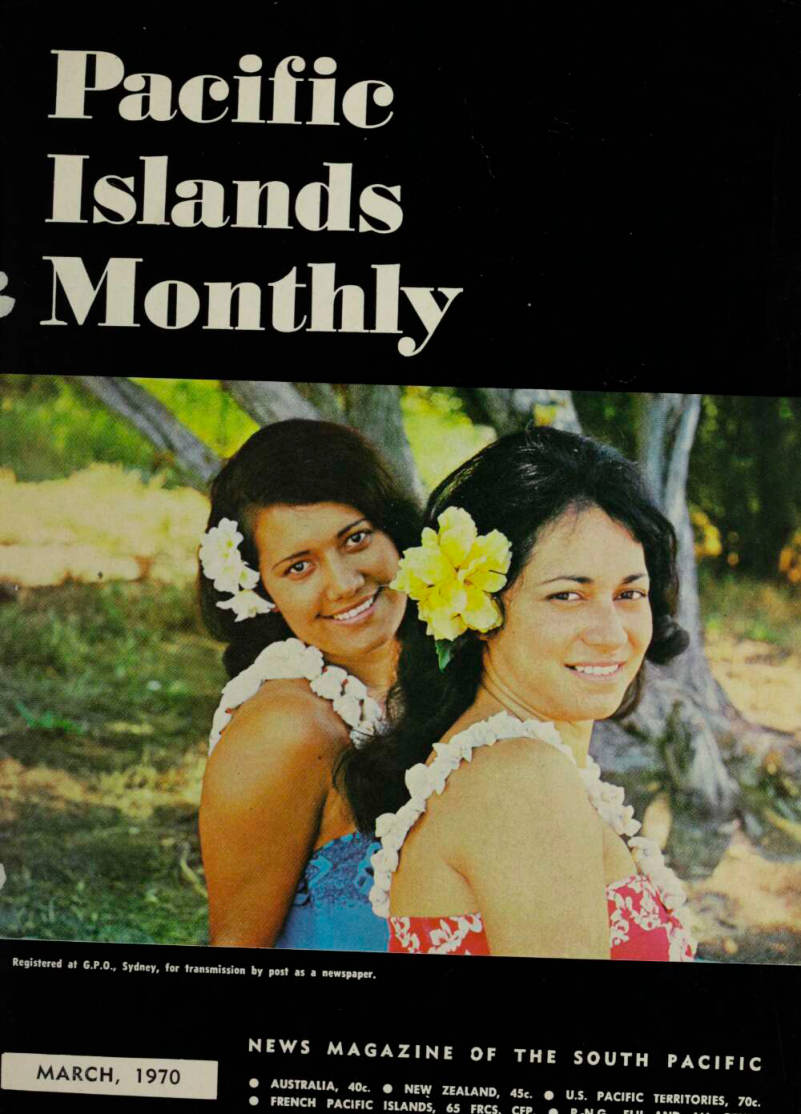 1
1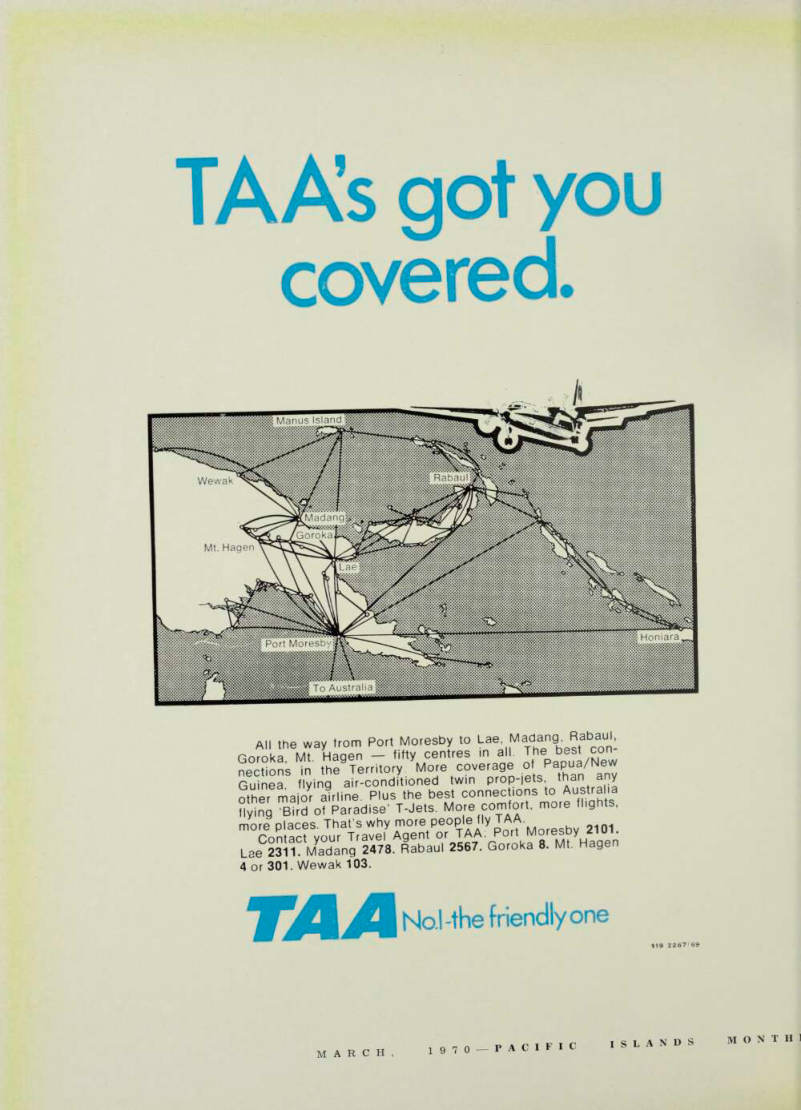 2
2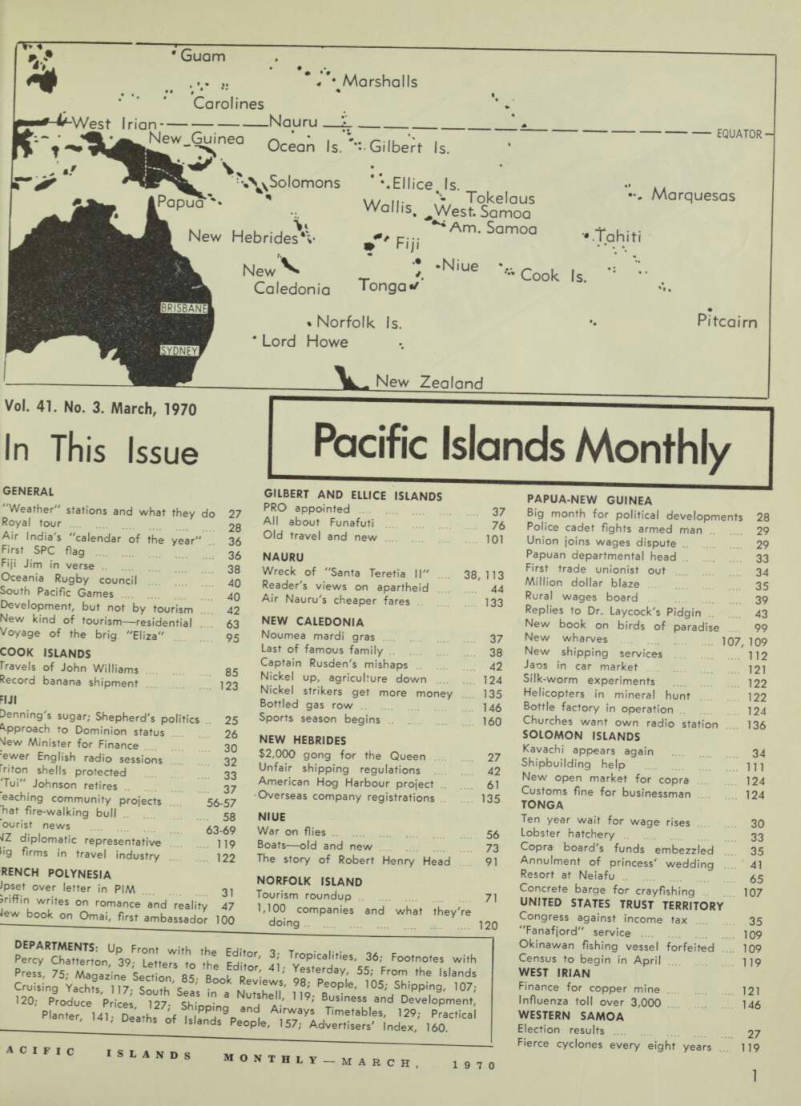 3
3 4
4 5
5 6
6 7
7 8
8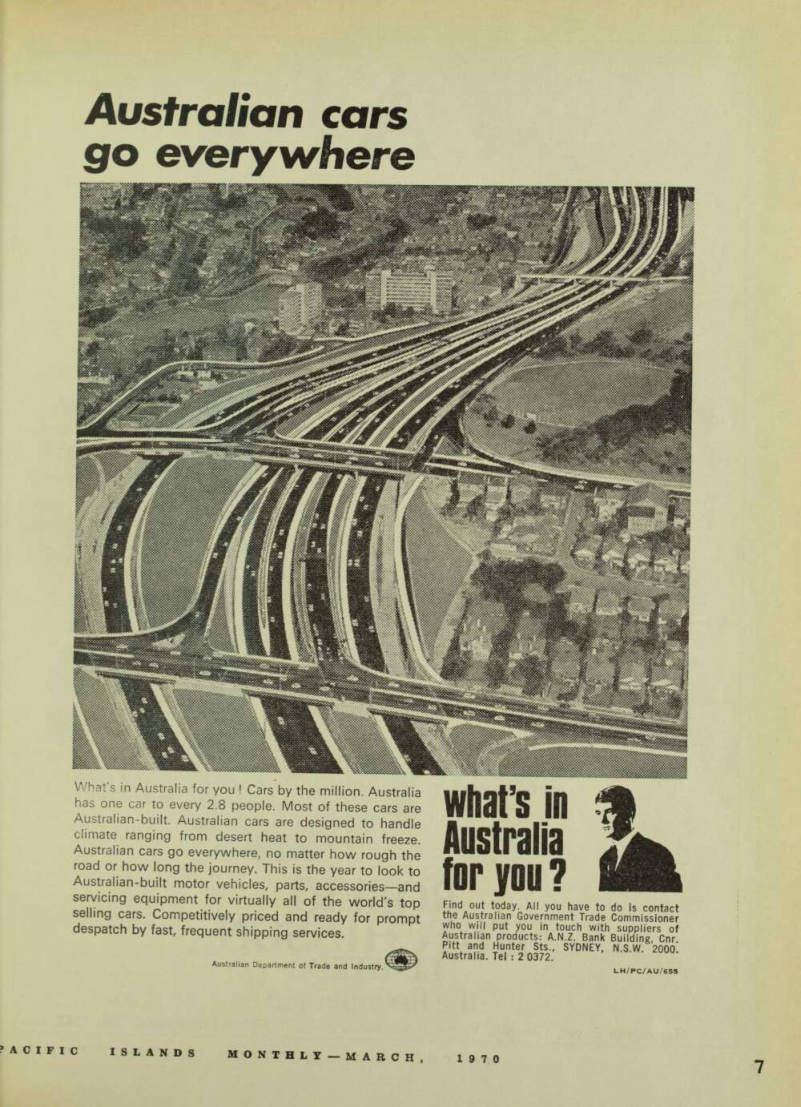 9
9 10
10 11
11 12
12 13
13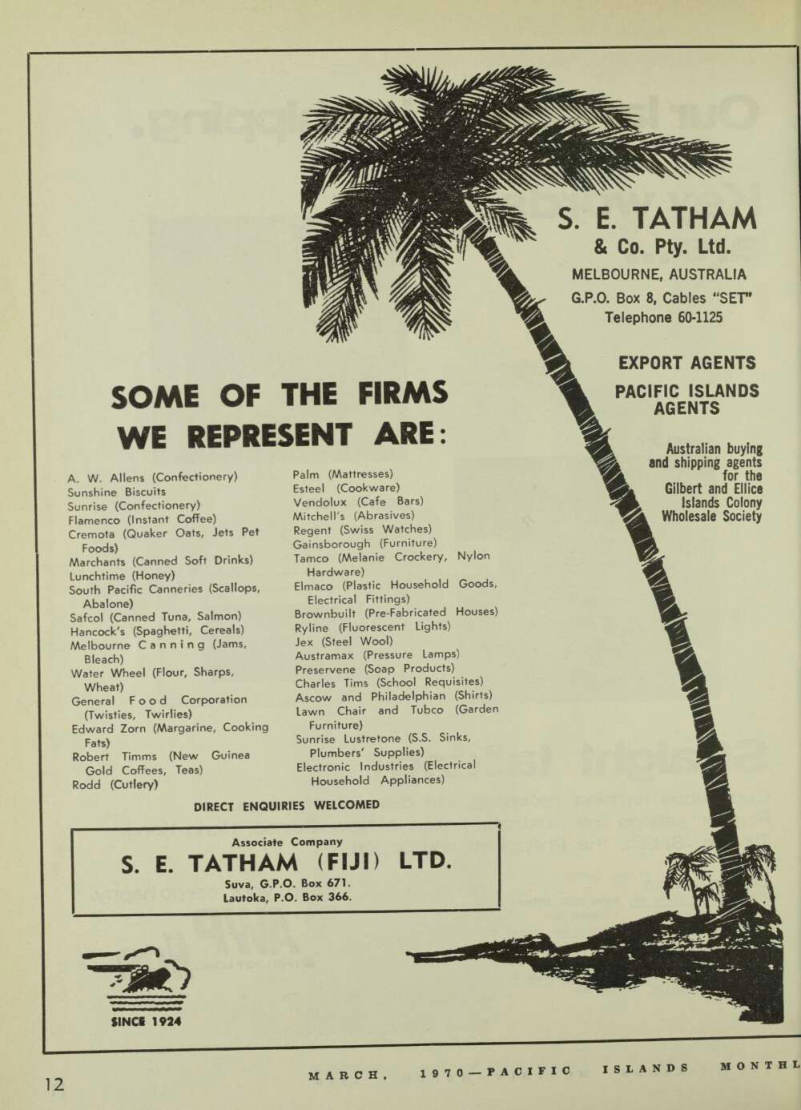 14
14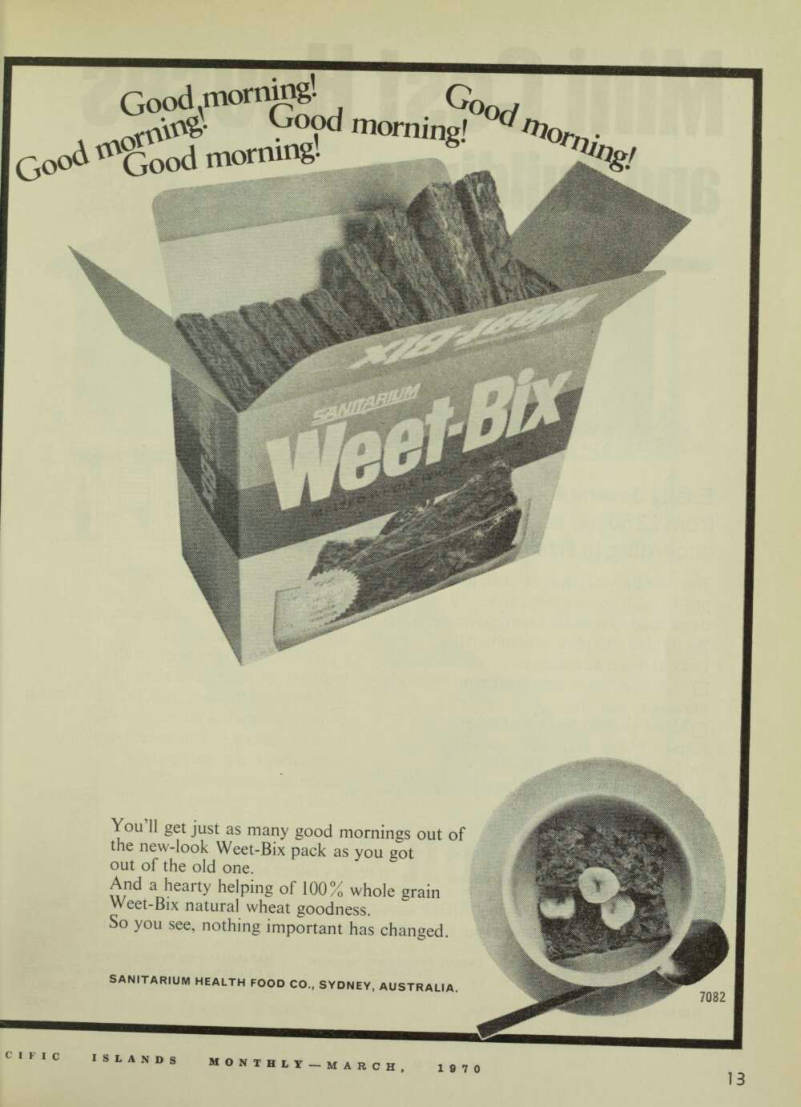 15
15 16
16 17
17 18
18 19
19 20
20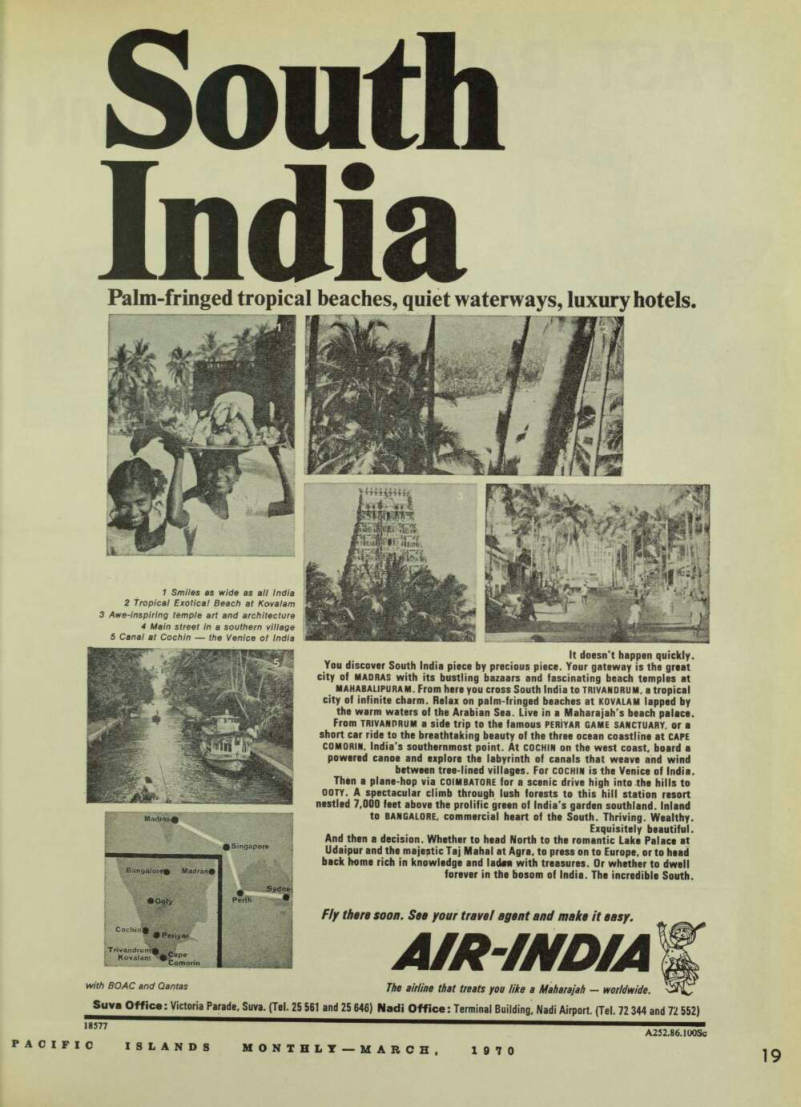 21
21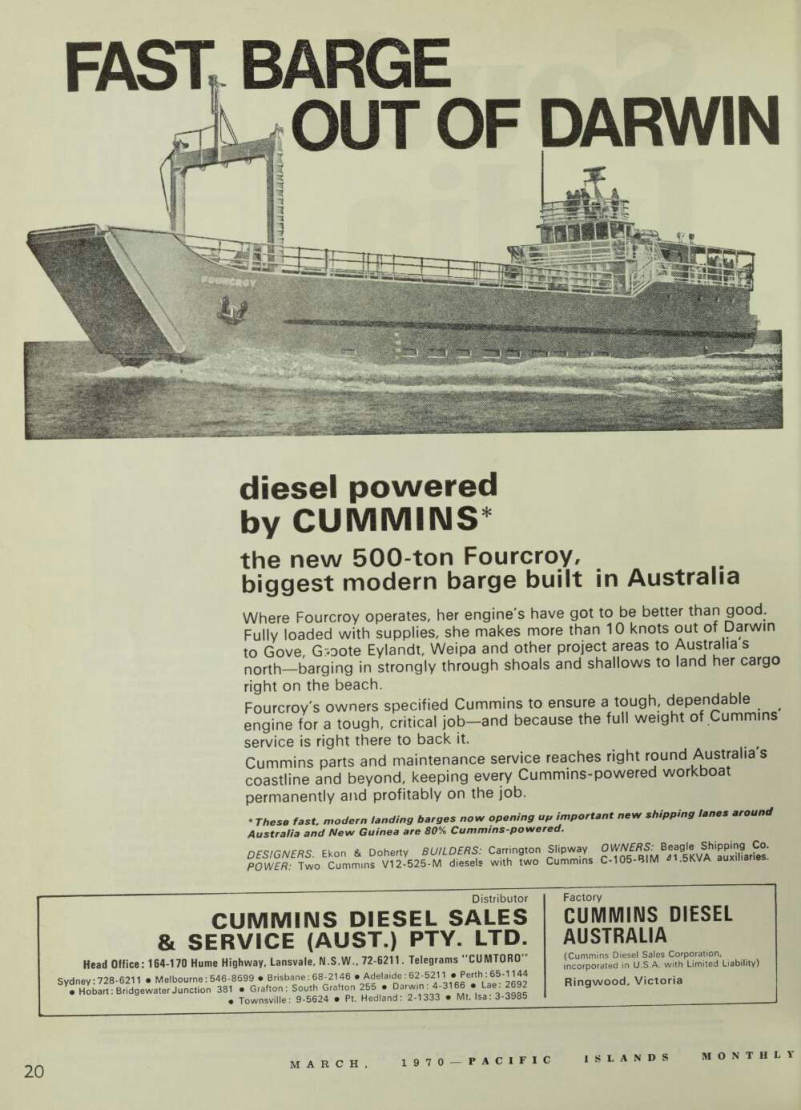 22
22 23
23 24
24 25
25 26
26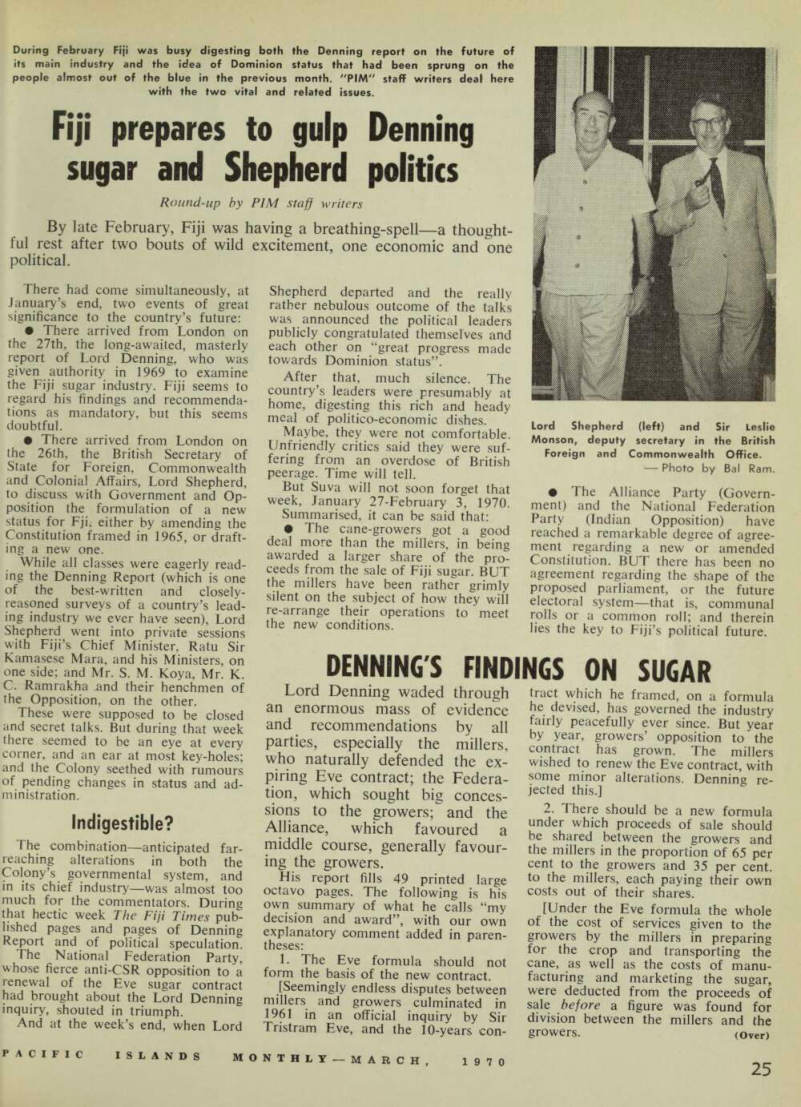 27
27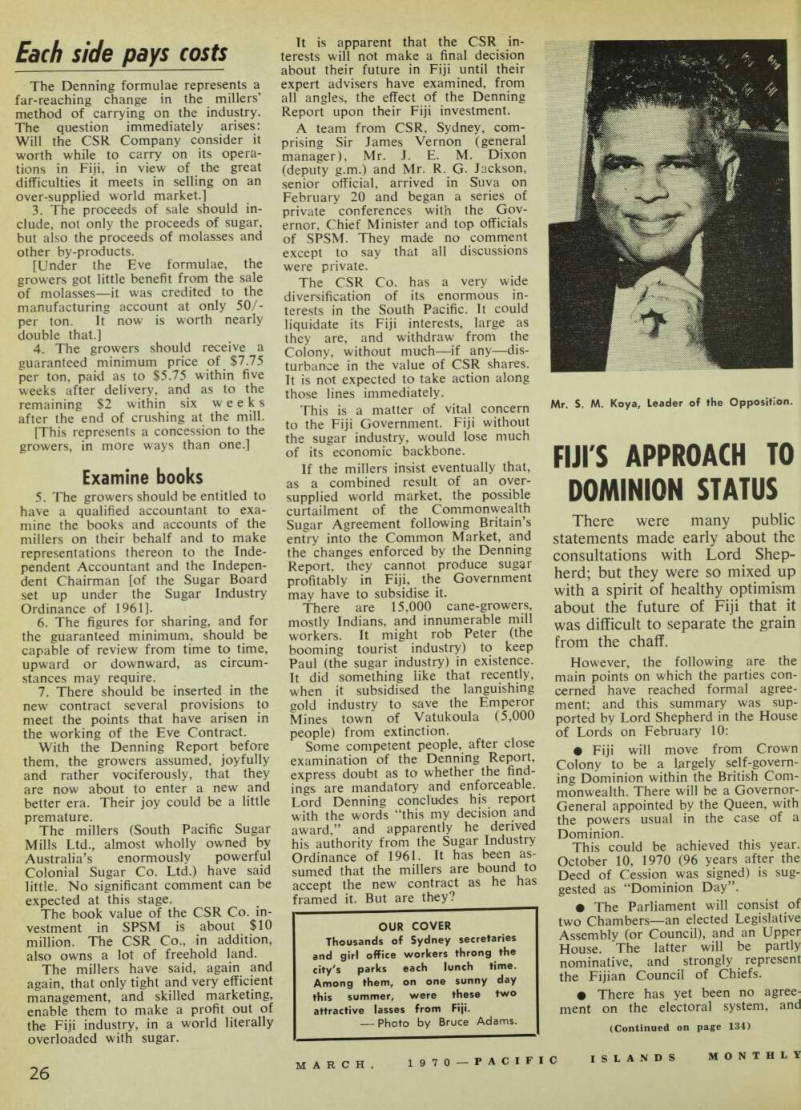 28
28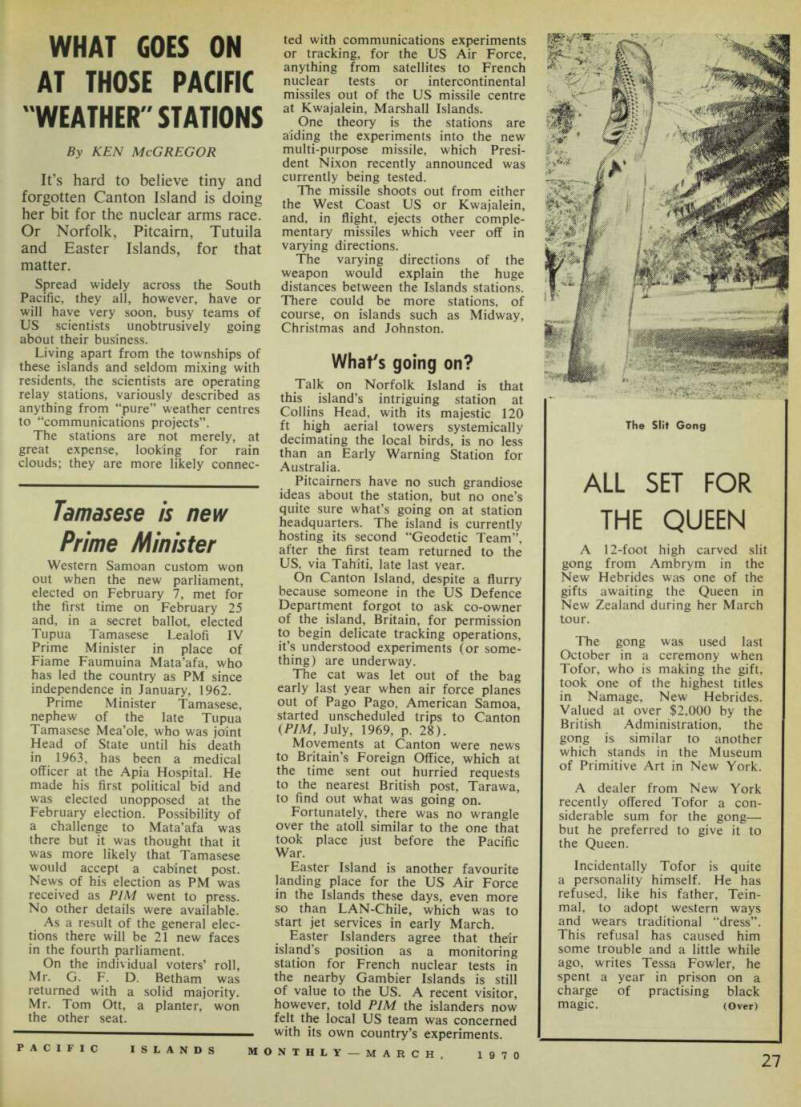 29
29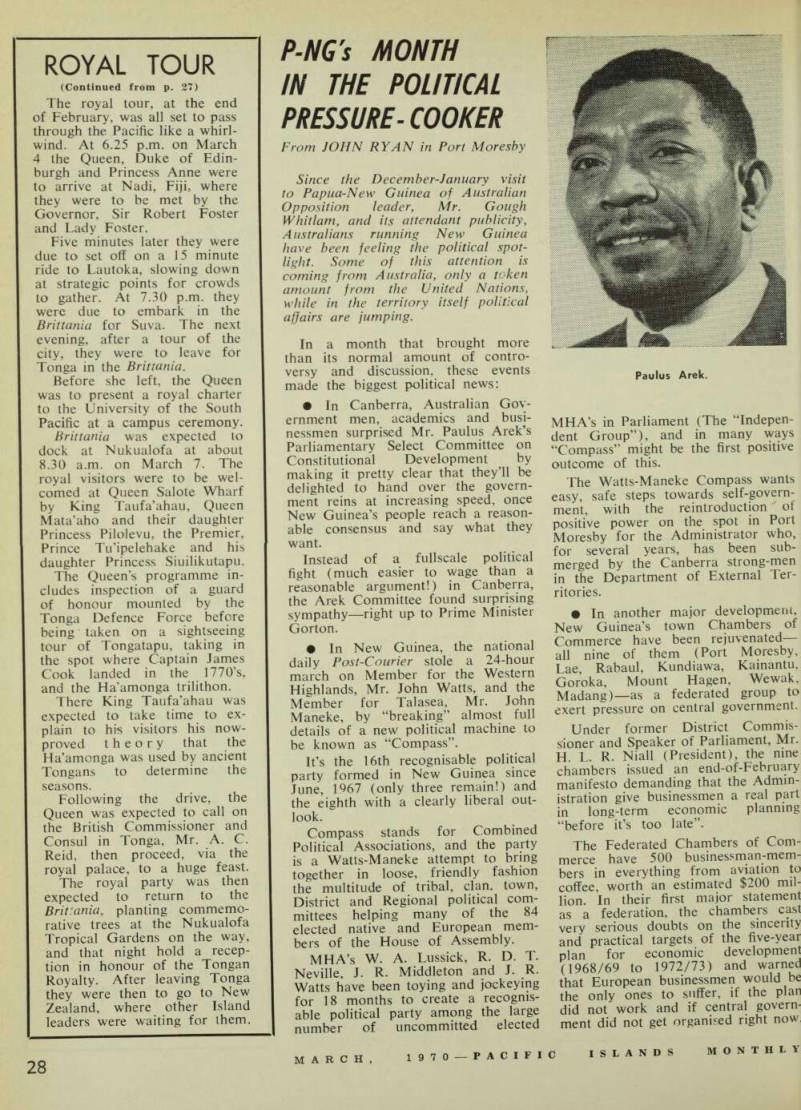 30
30 31
31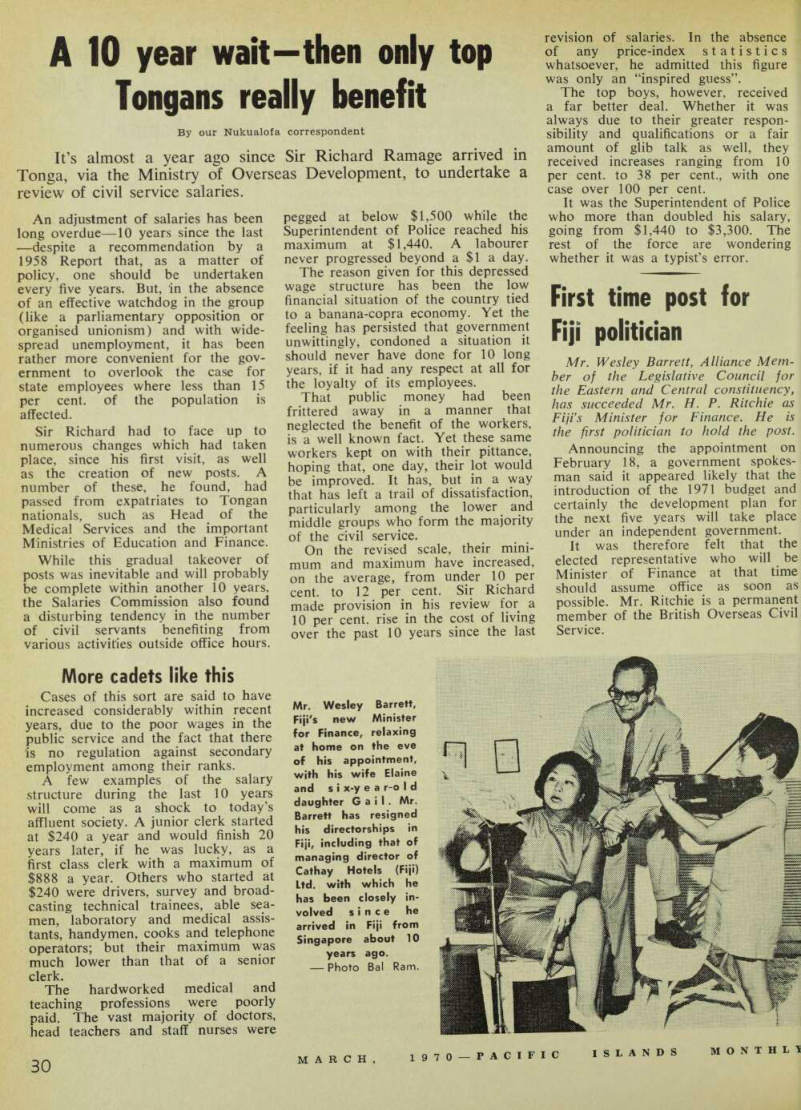 32
32 33
33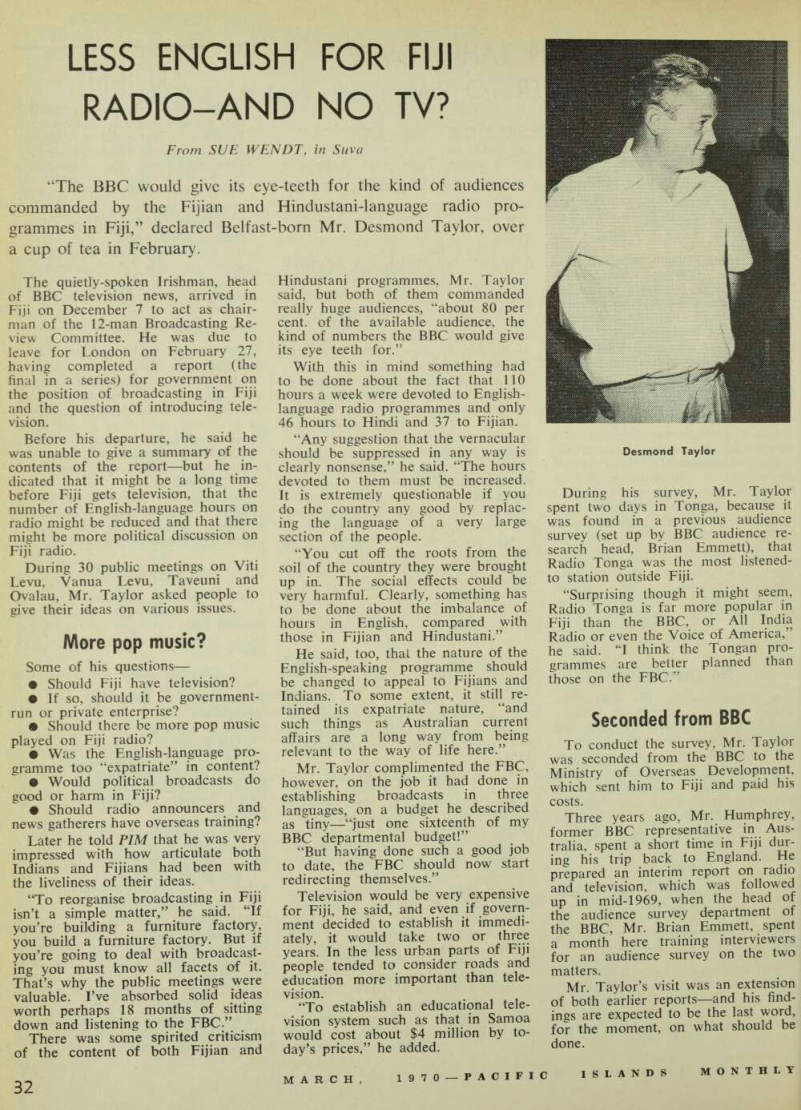 34
34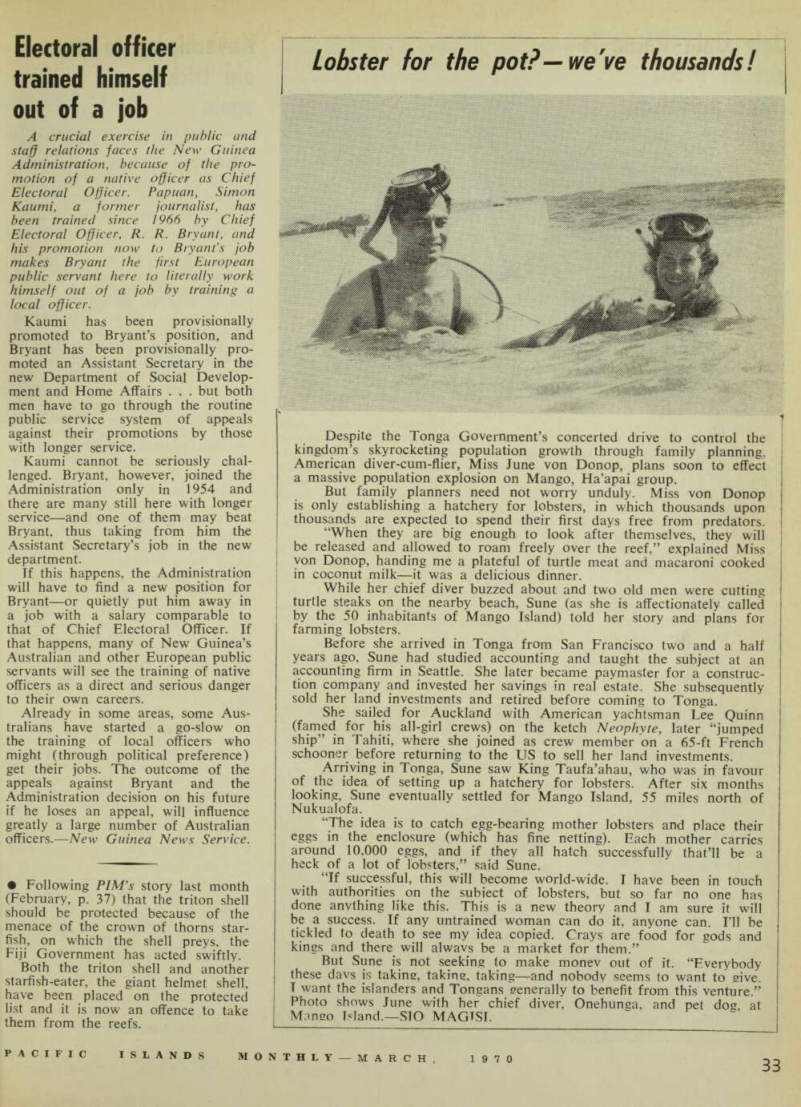 35
35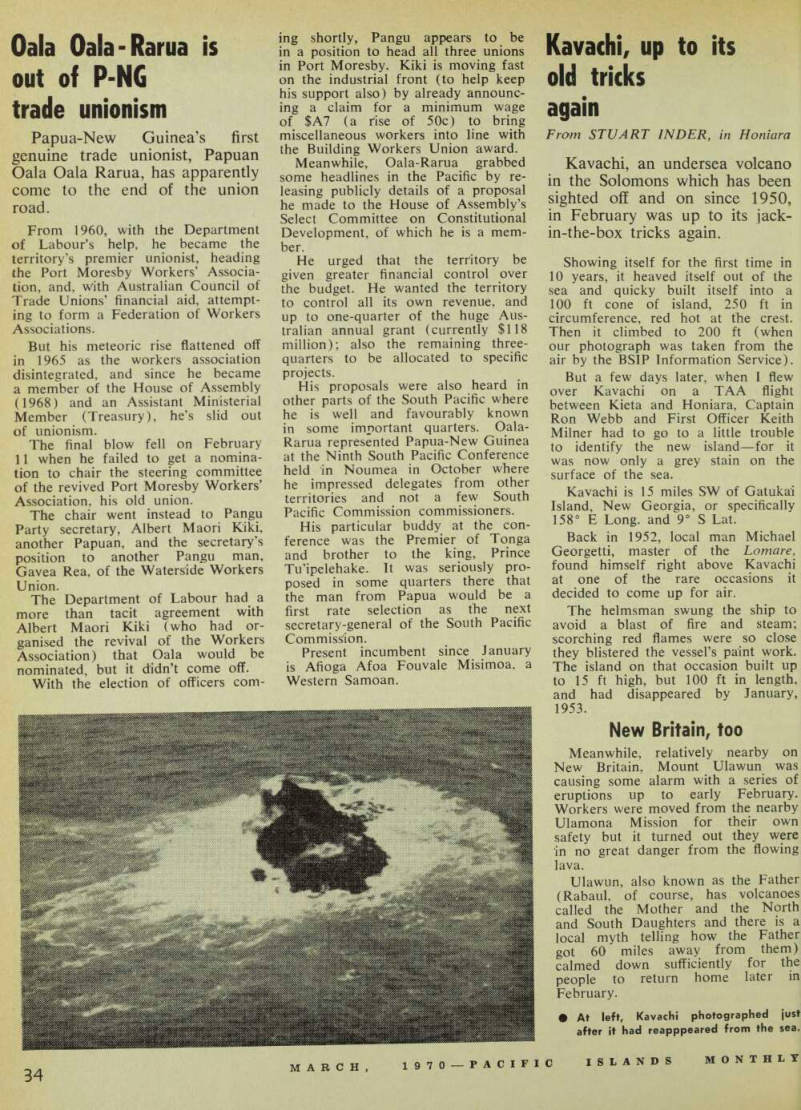 36
36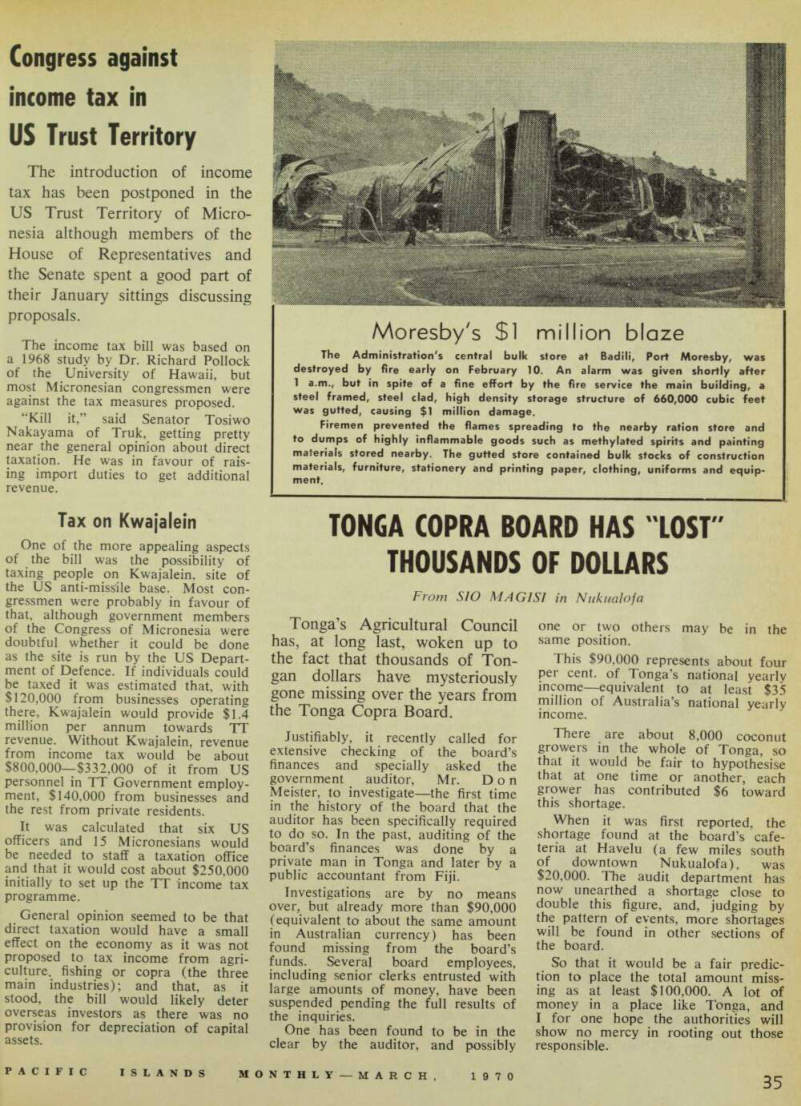 37
37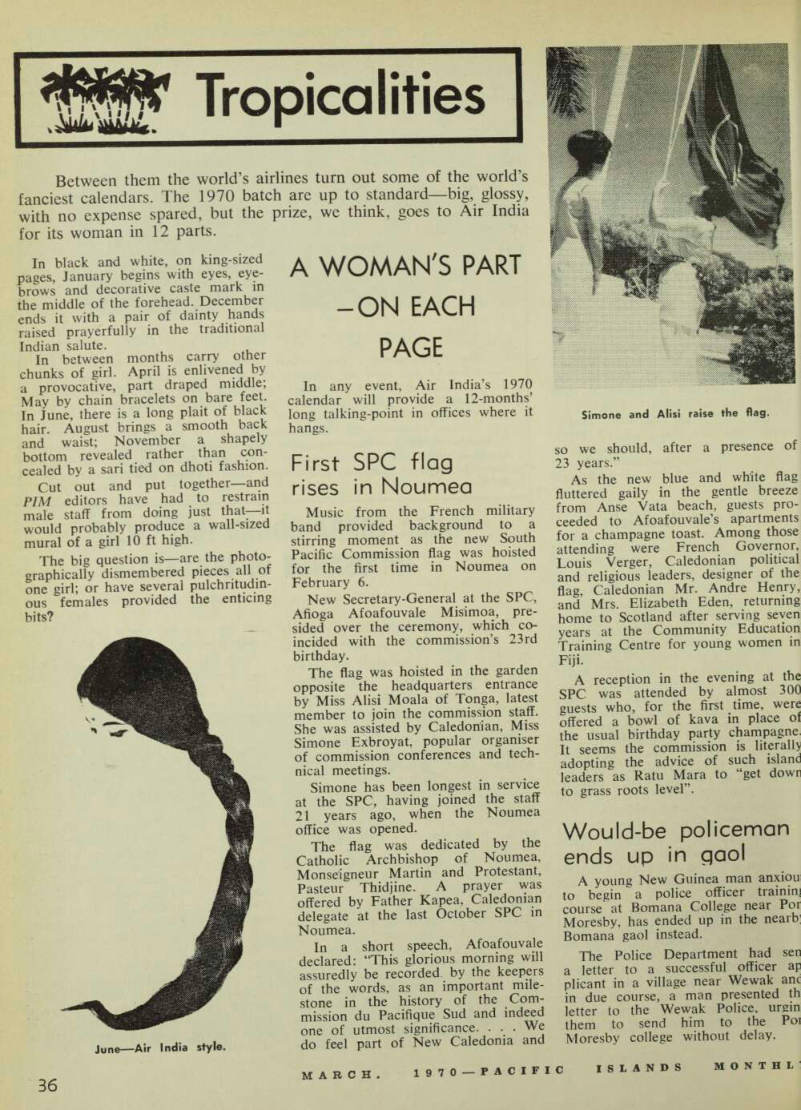 38
38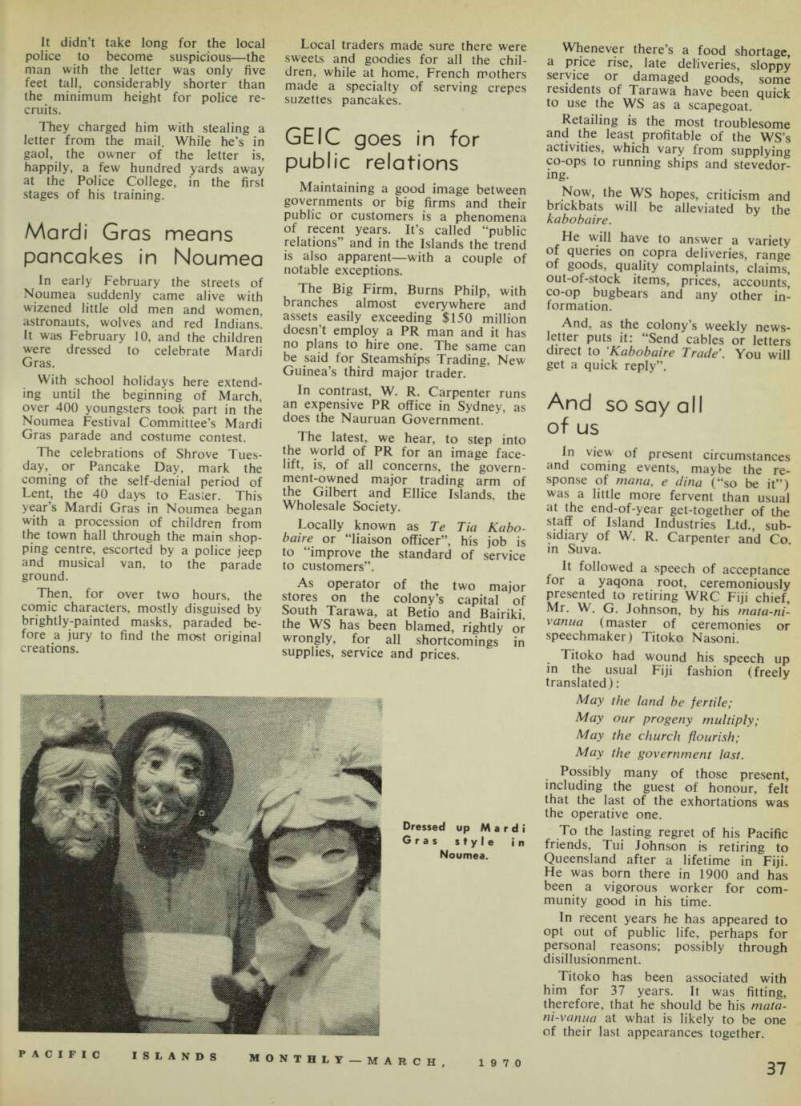 39
39 40
40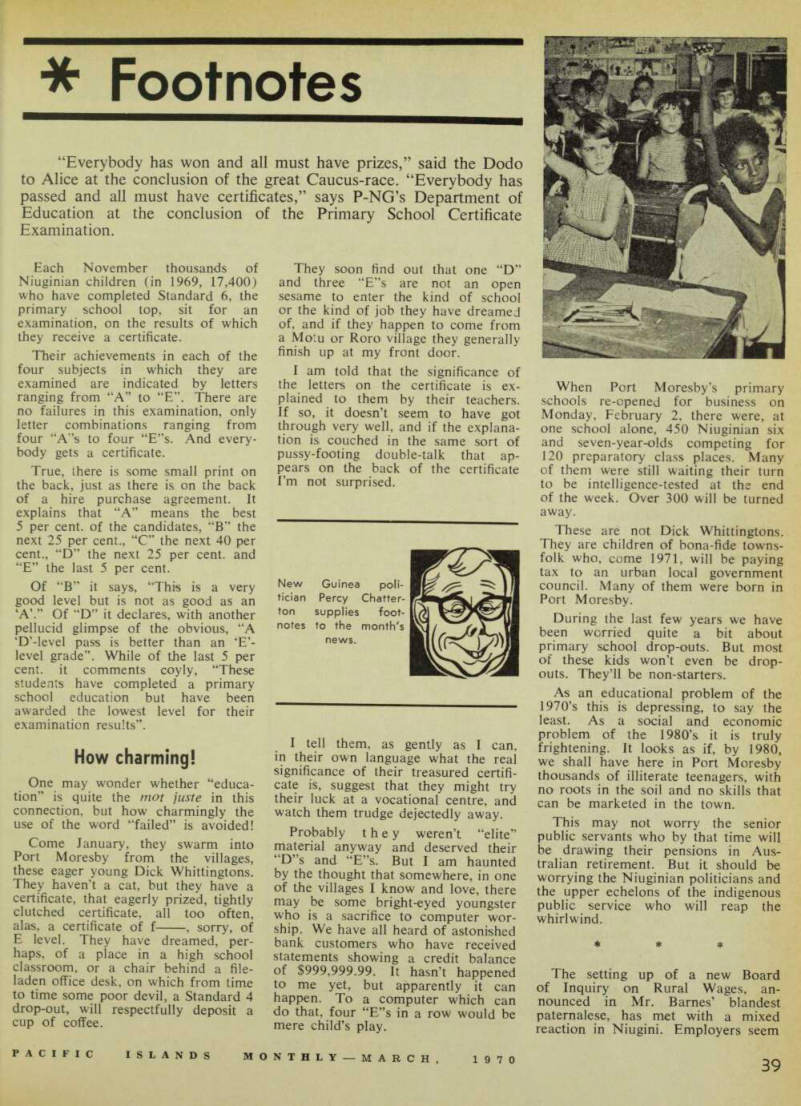 41
41 42
42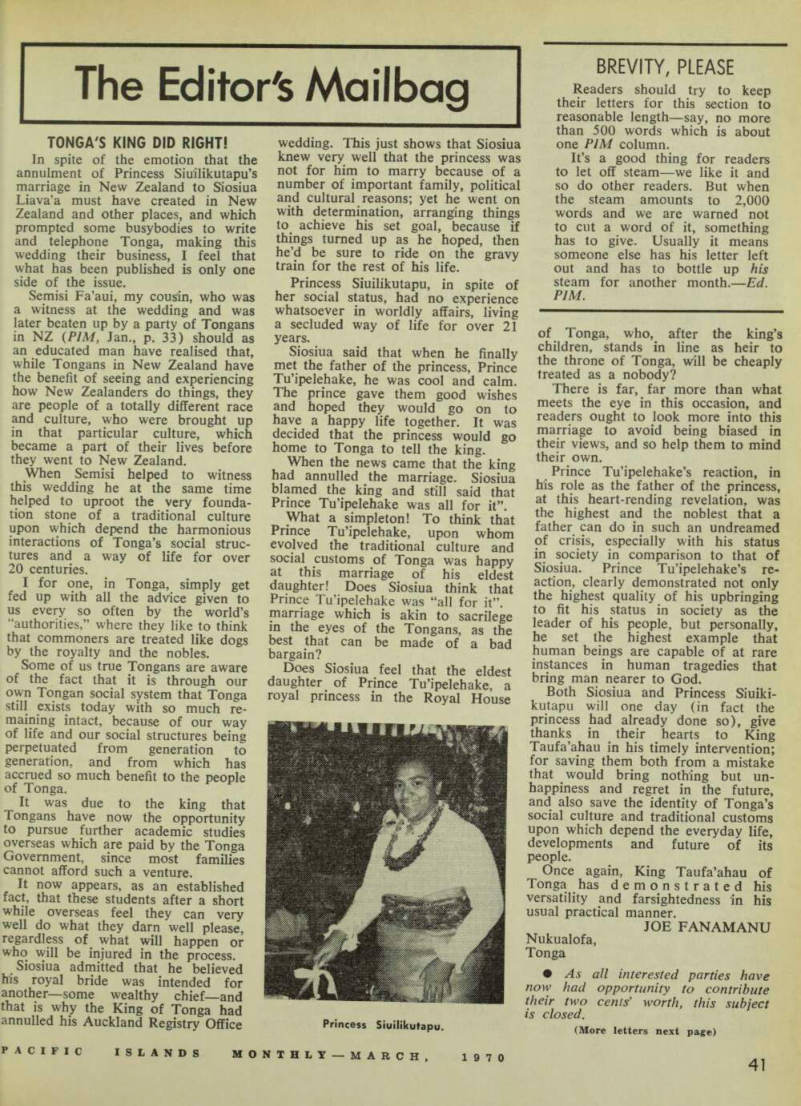 43
43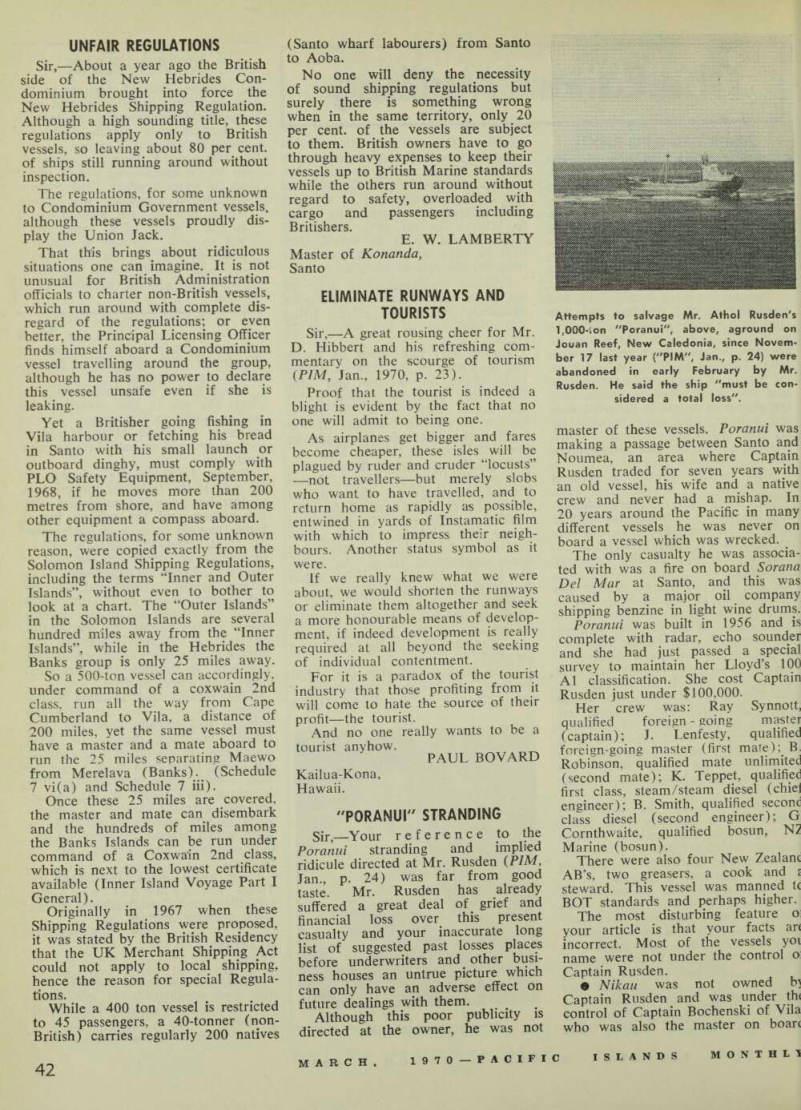 44
44 45
45 46
46 47
47 48
48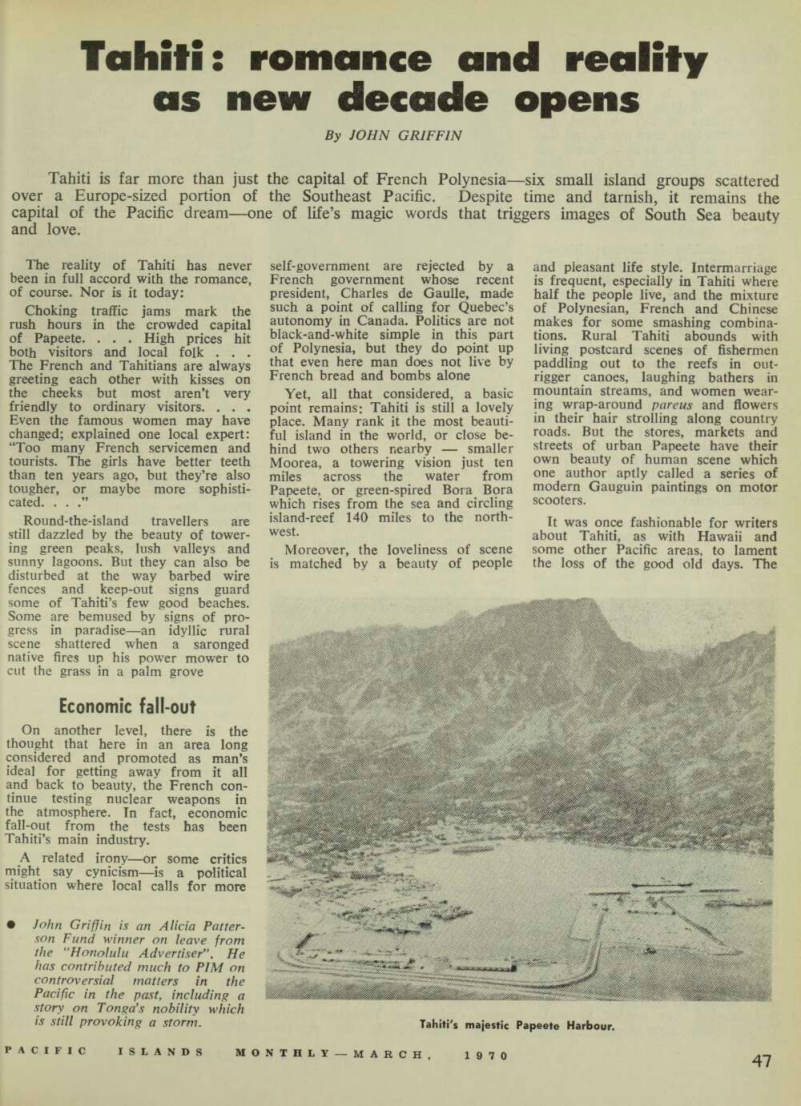 49
49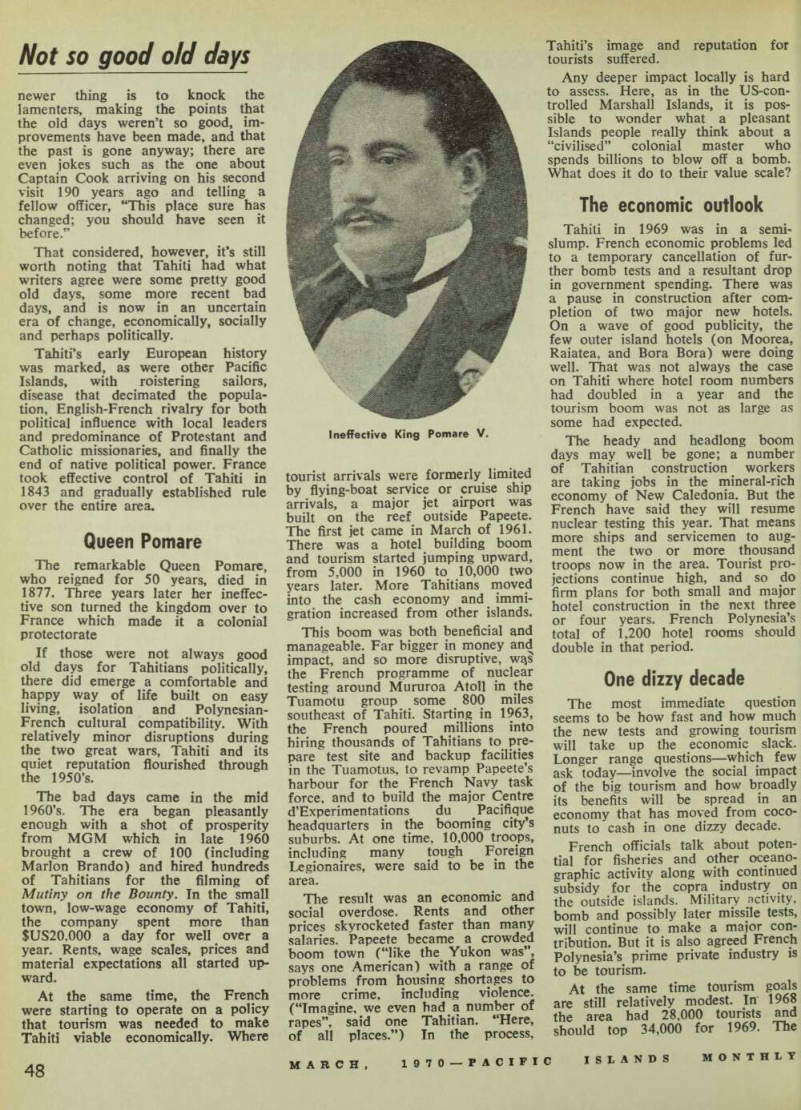 50
50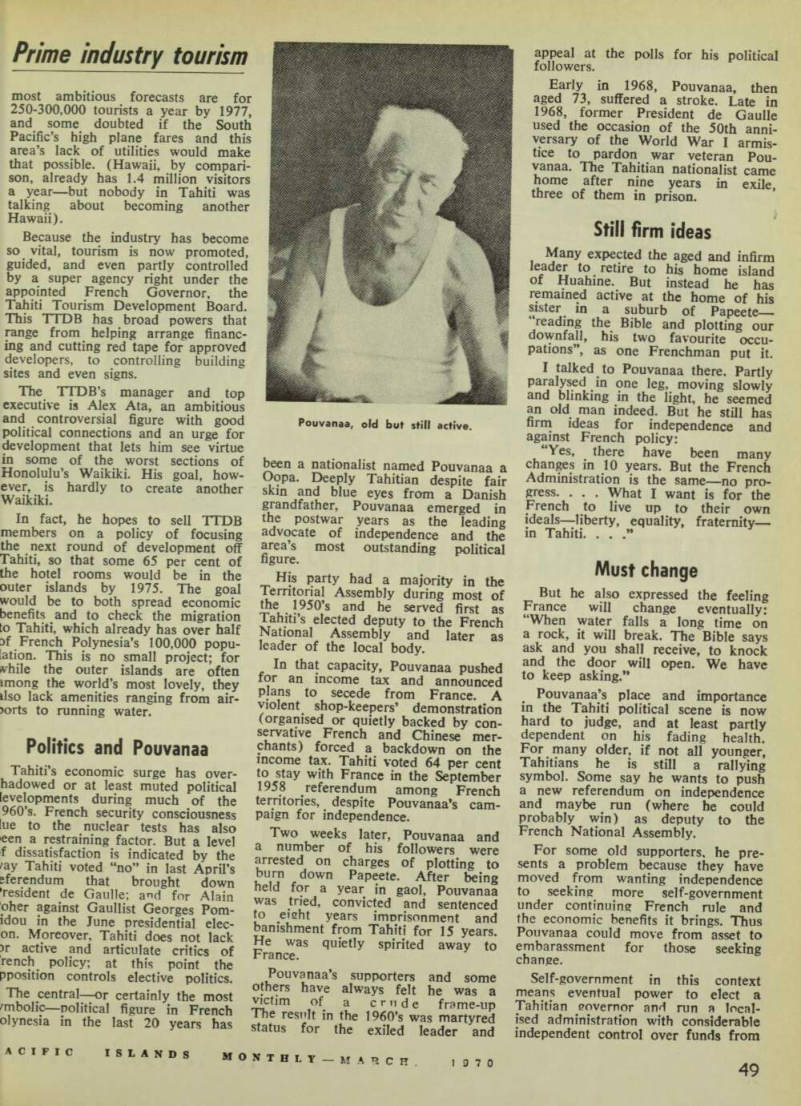 51
51 52
52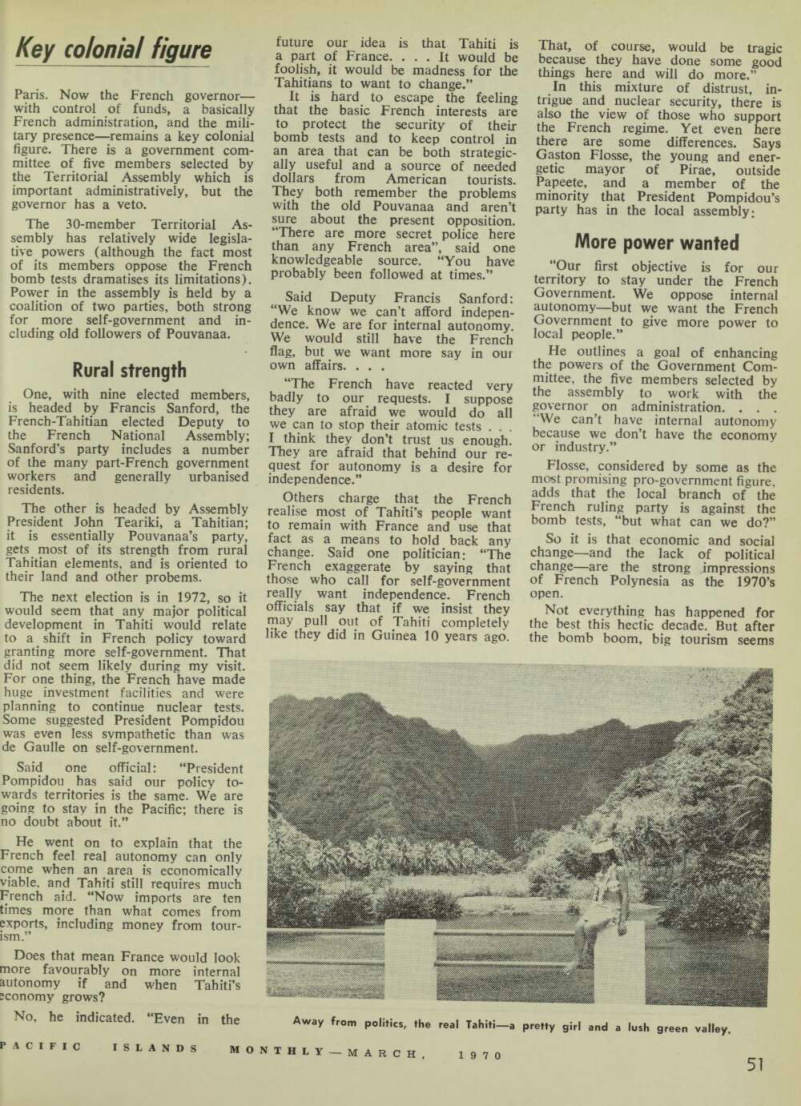 53
53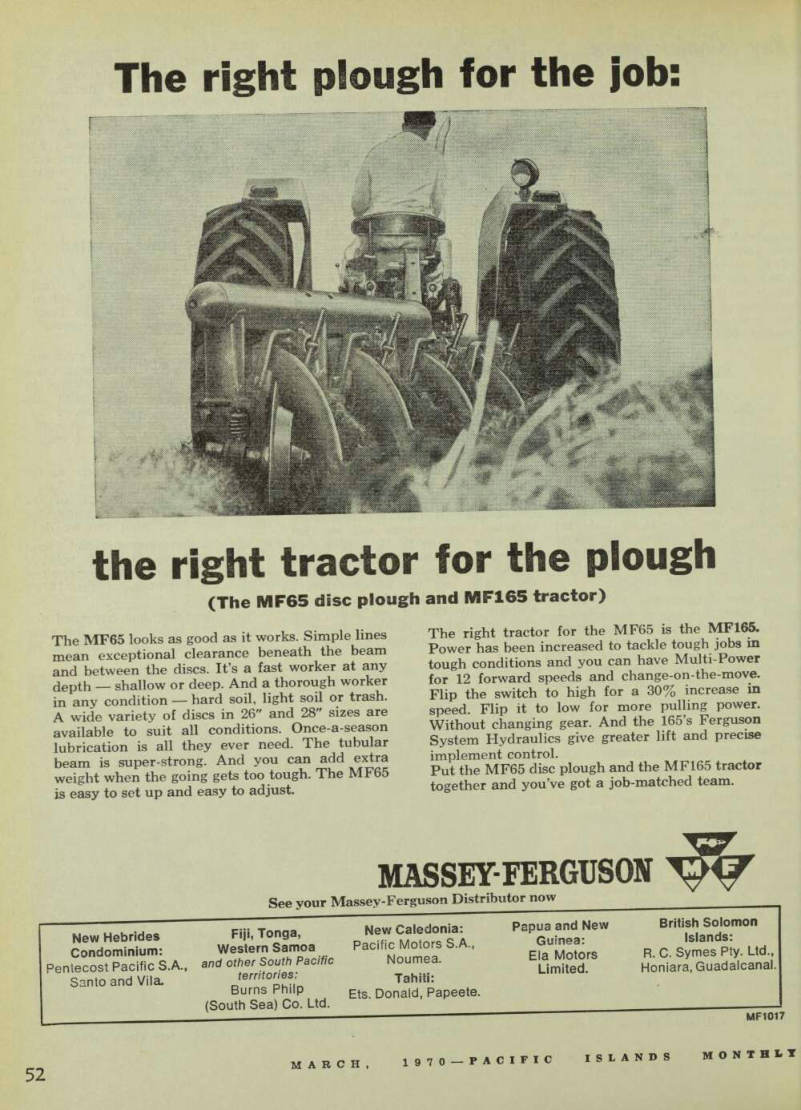 54
54 55
55 56
56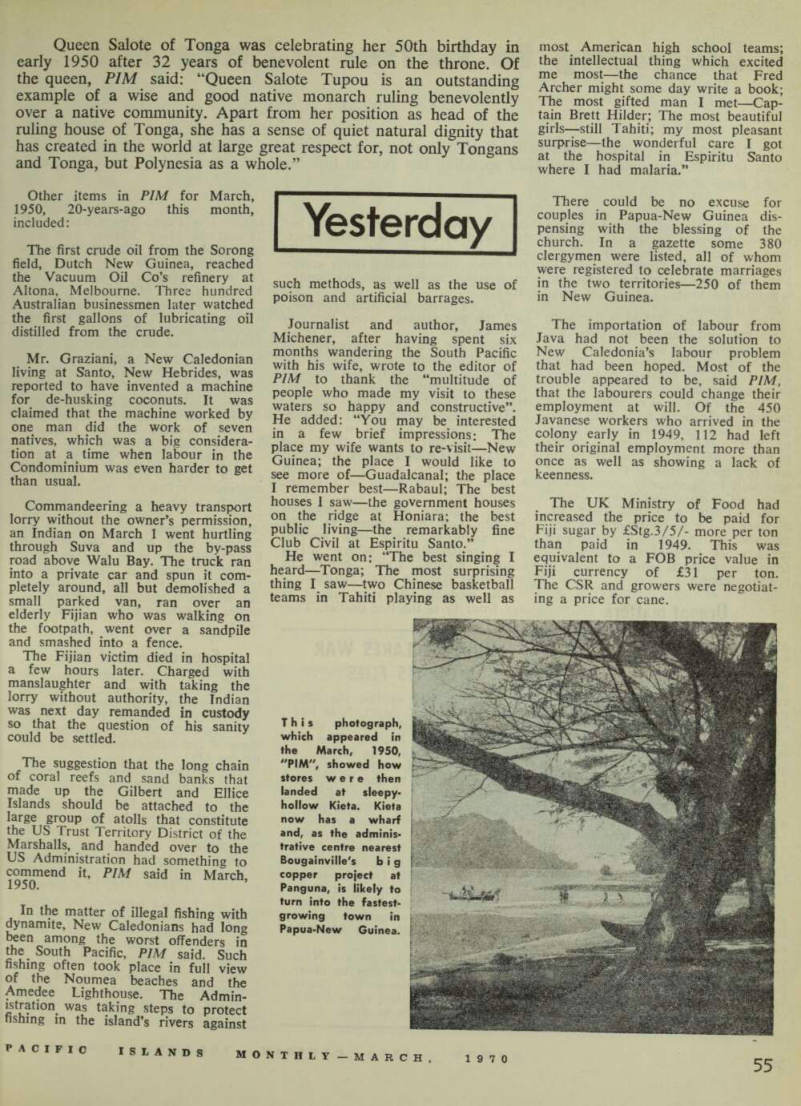 57
57 58
58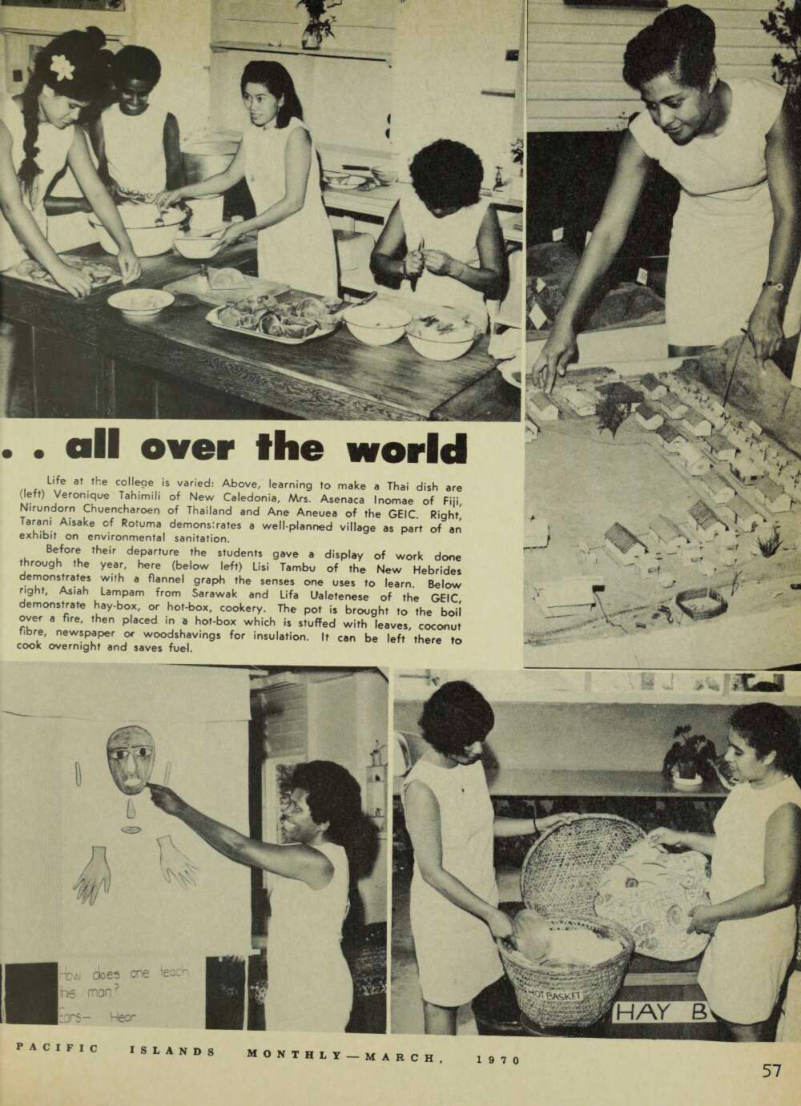 59
59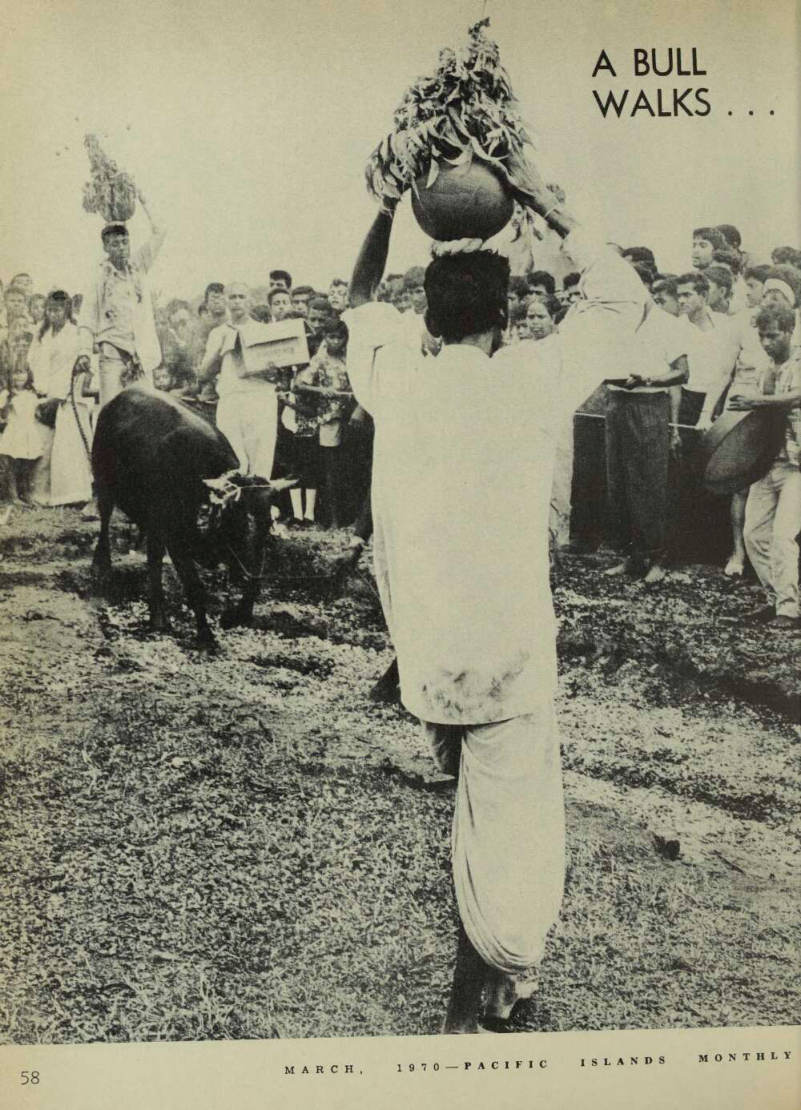 60
60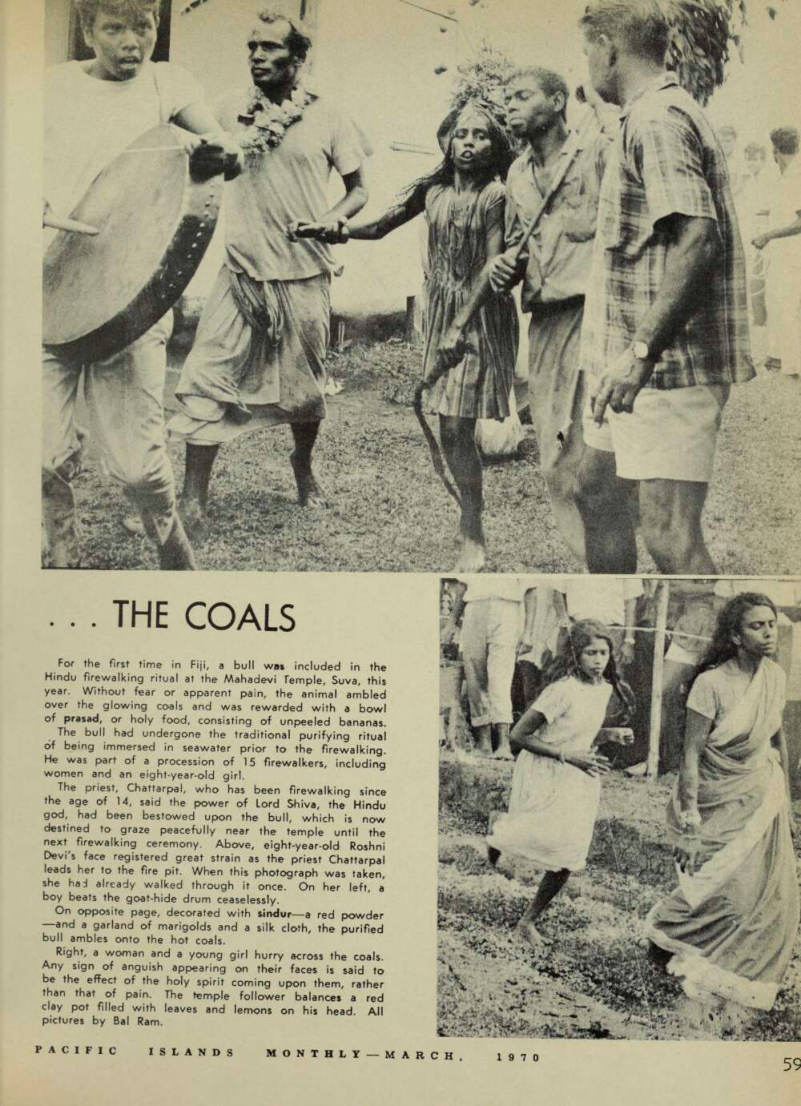 61
61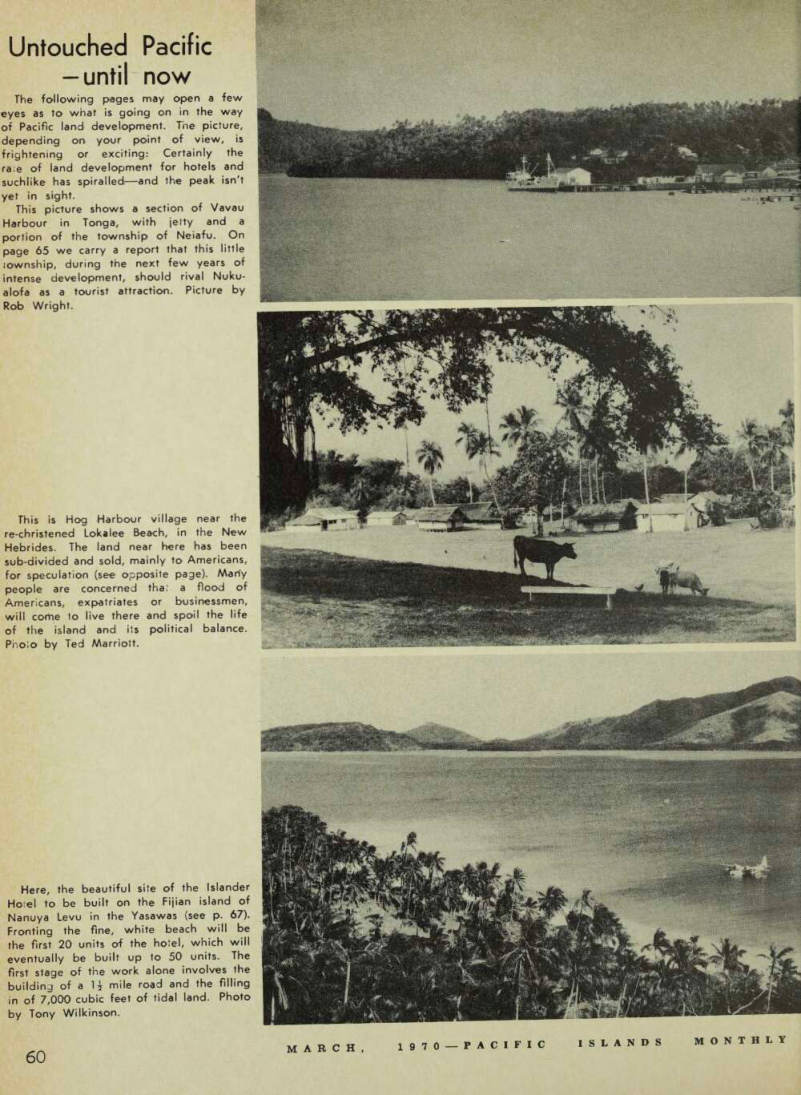 62
62 63
63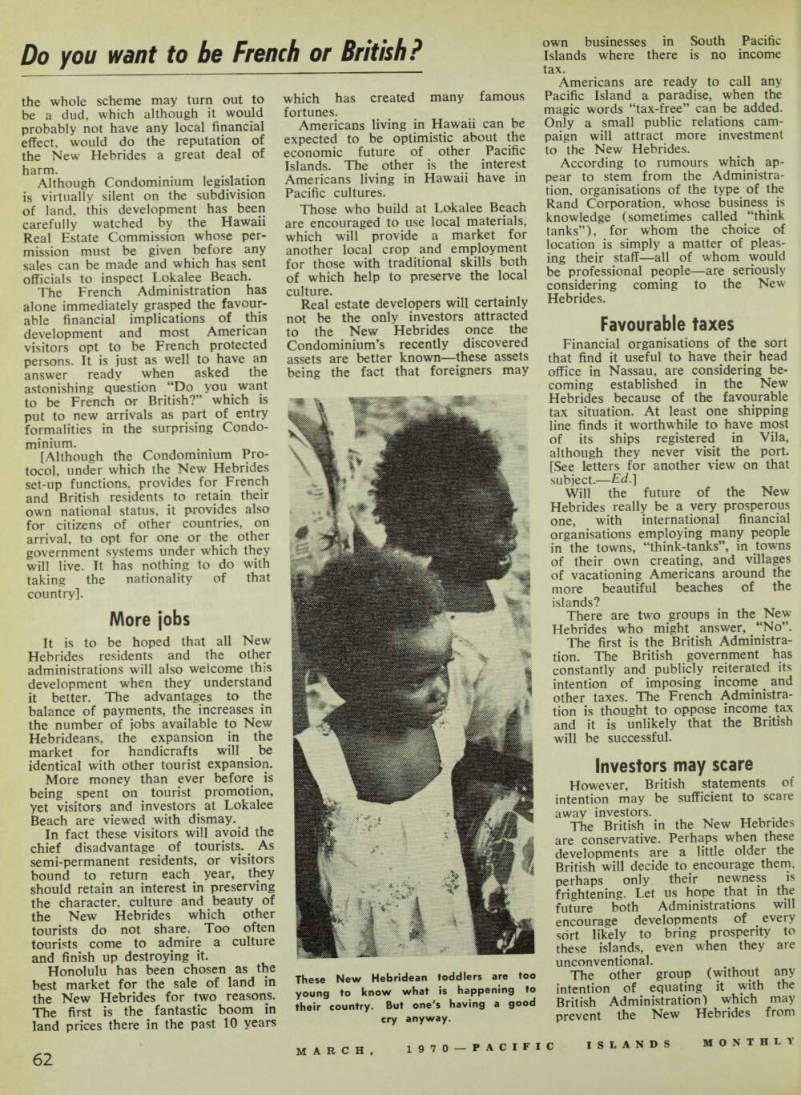 64
64 65
65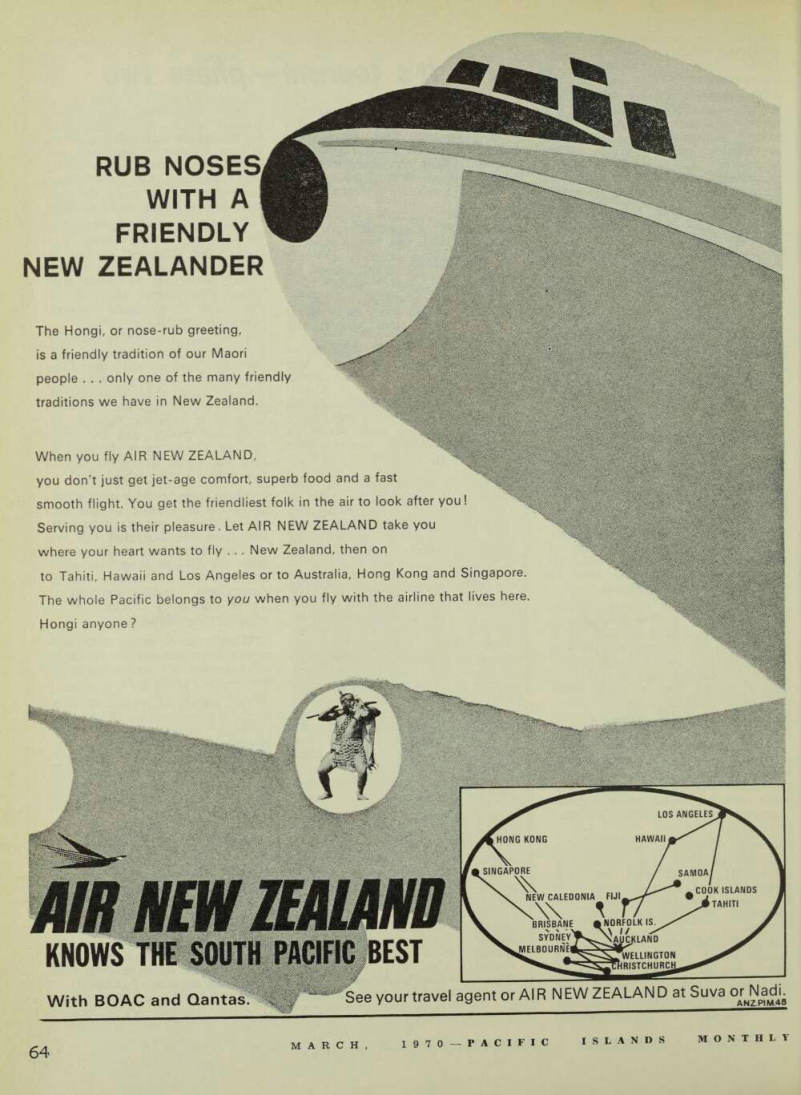 66
66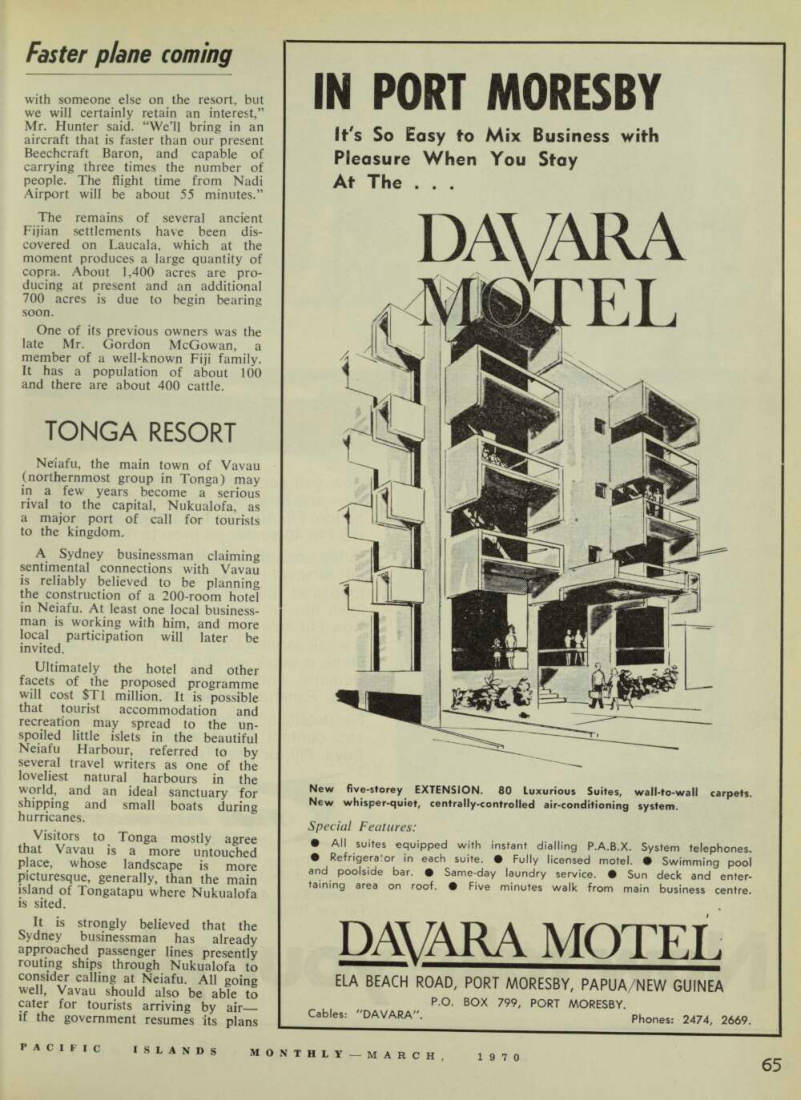 67
67 68
68 69
69 70
70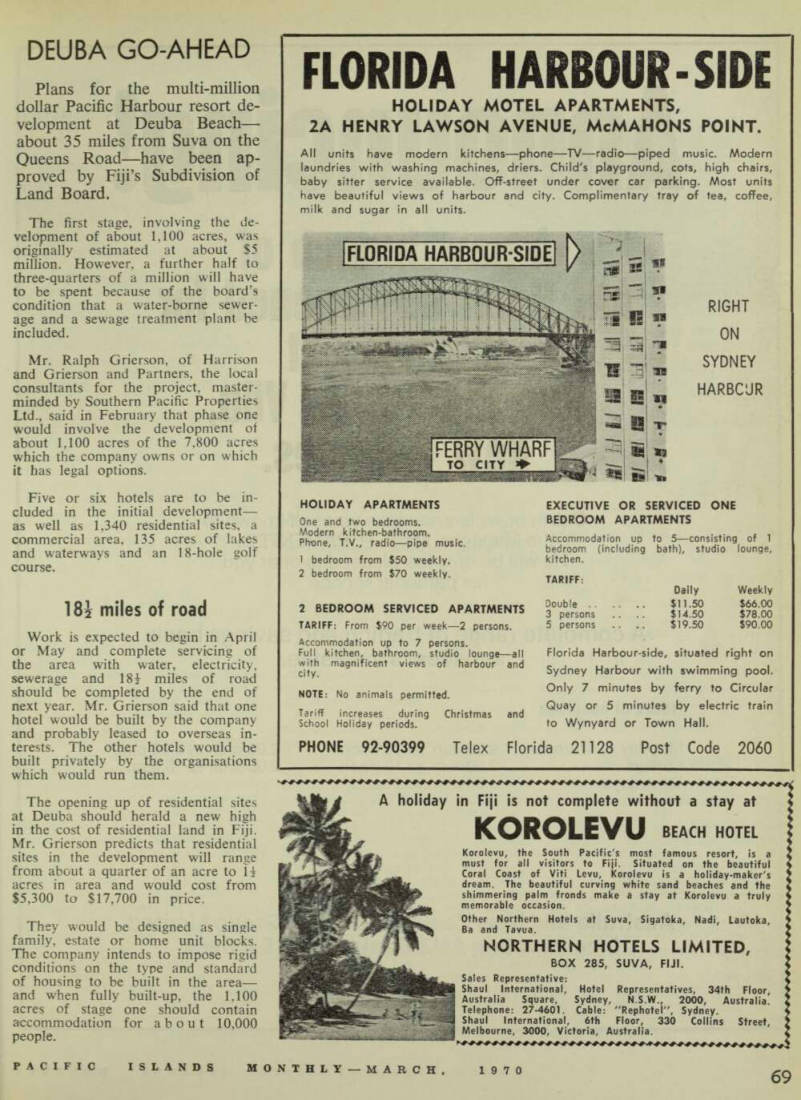 71
71 72
72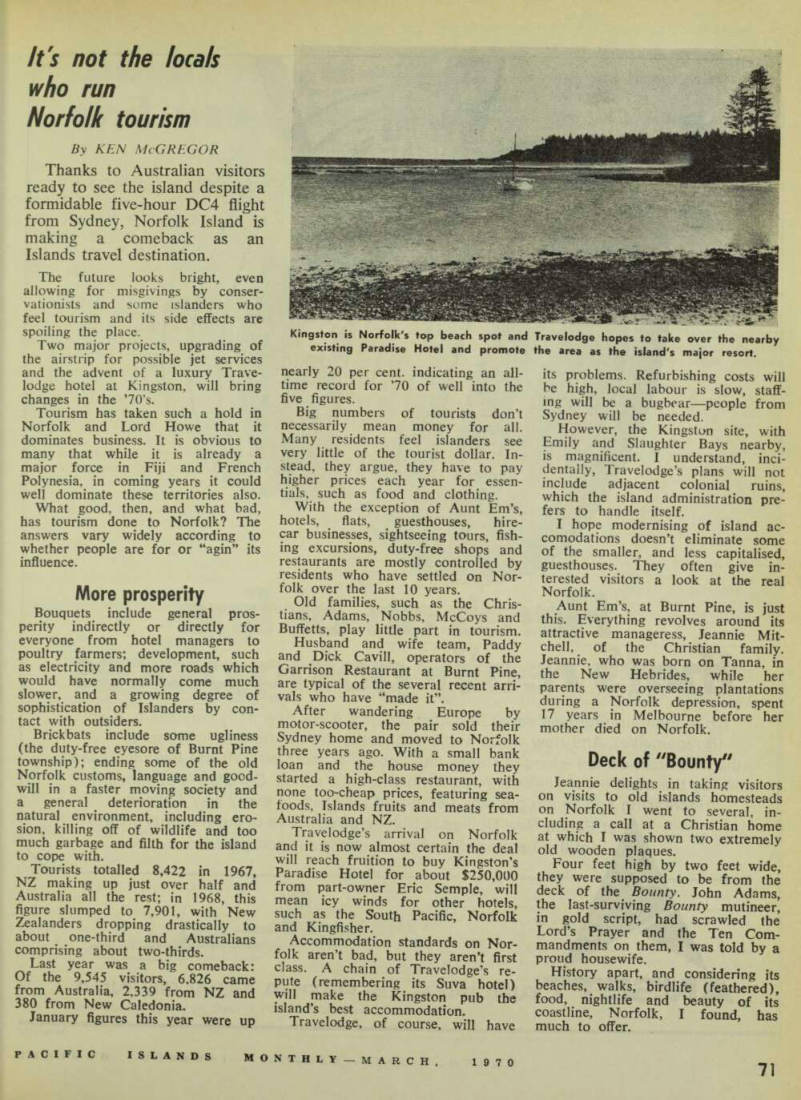 73
73 74
74 75
75 76
76 77
77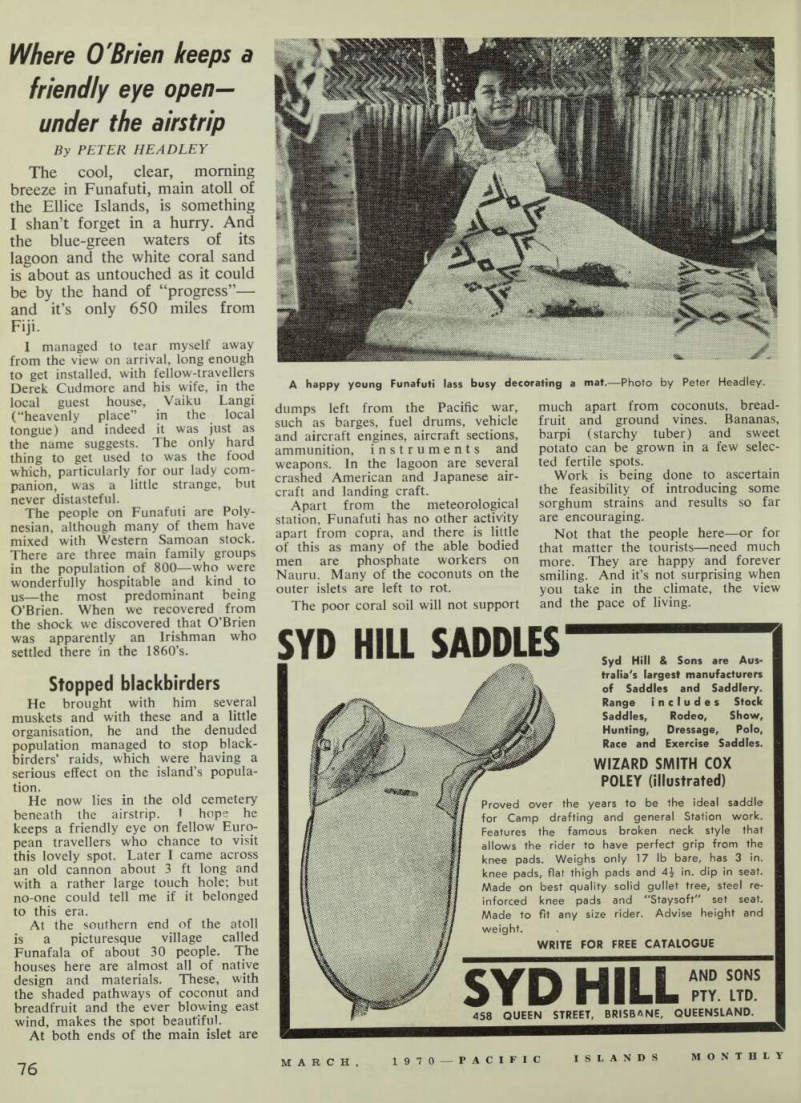 78
78 79
79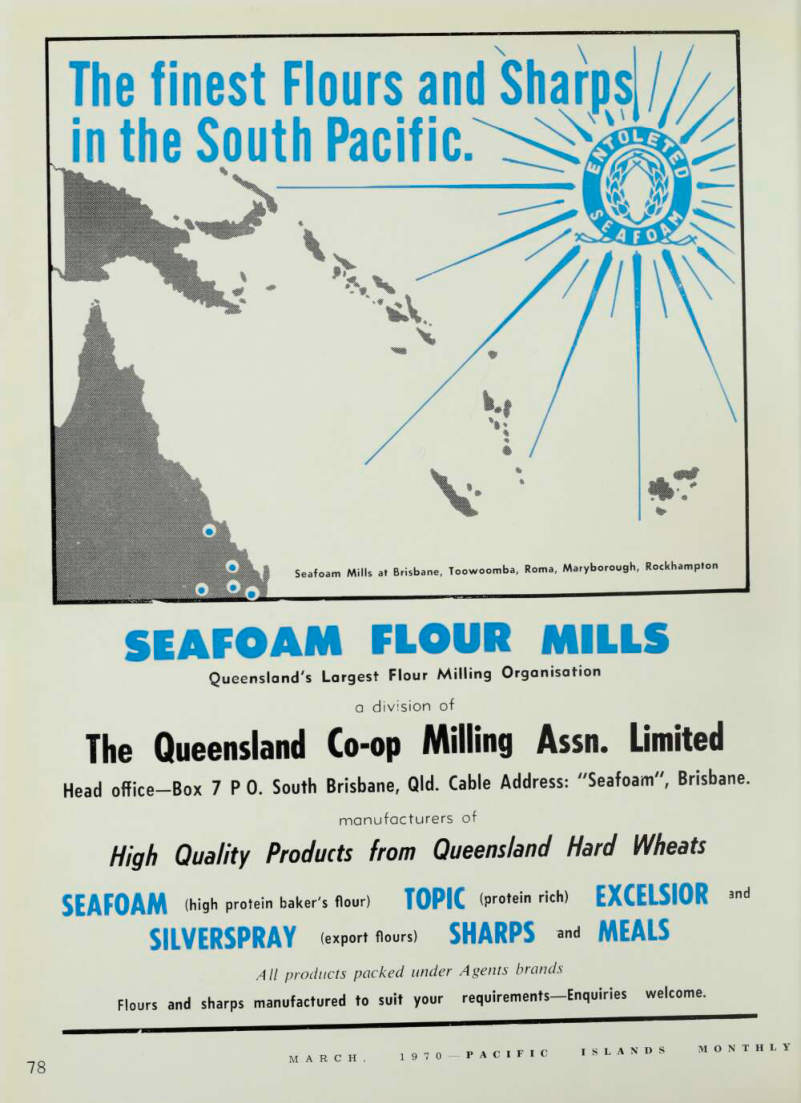 80
80 81
81 82
82 83
83 84
84 85
85 86
86 87
87 88
88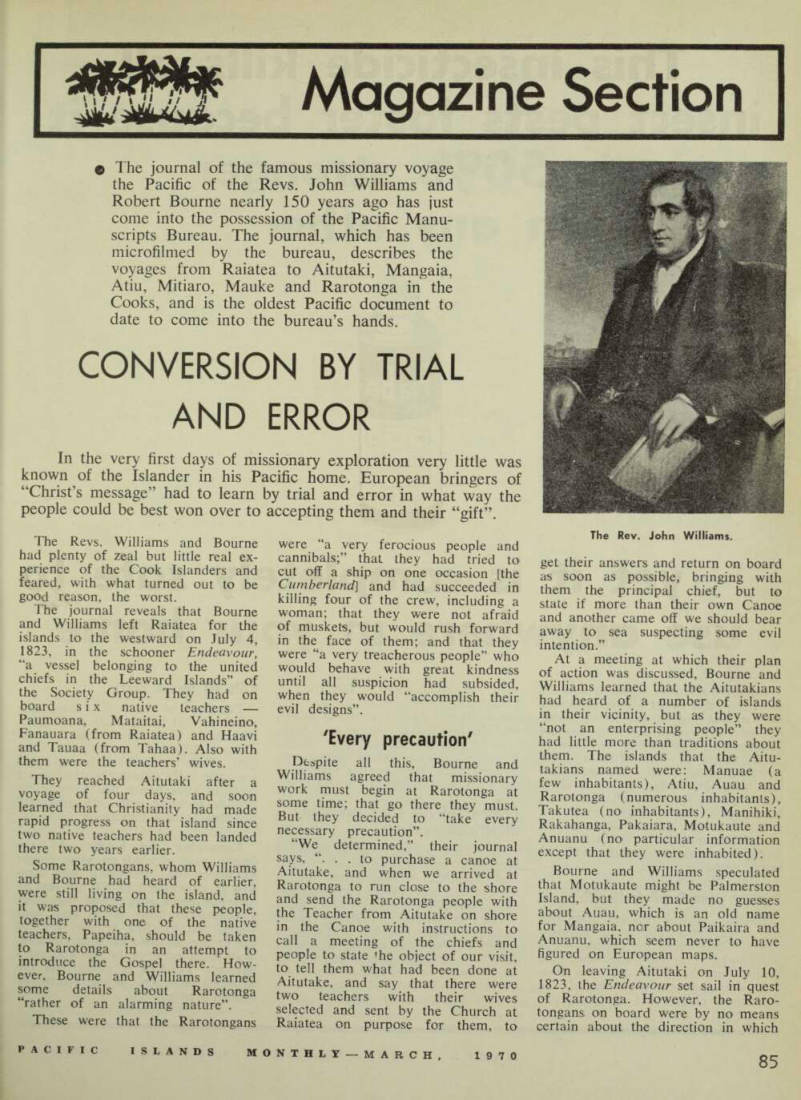 89
89 90
90 91
91 92
92 93
93 94
94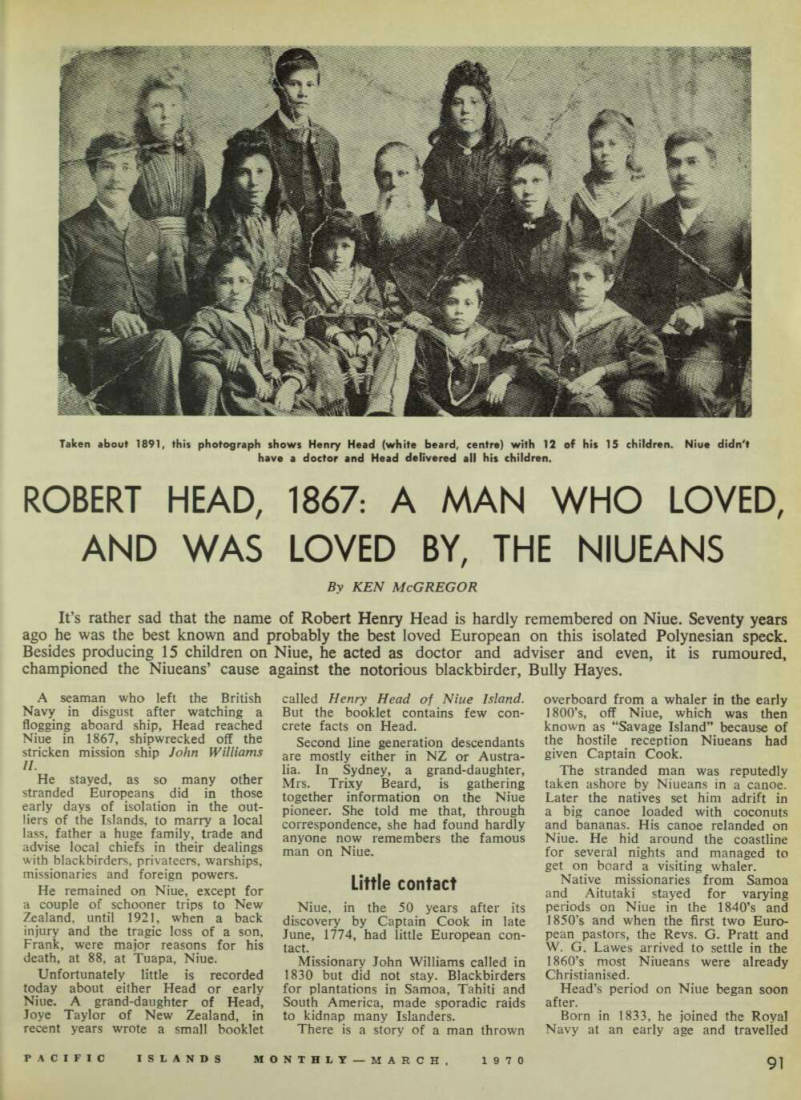 95
95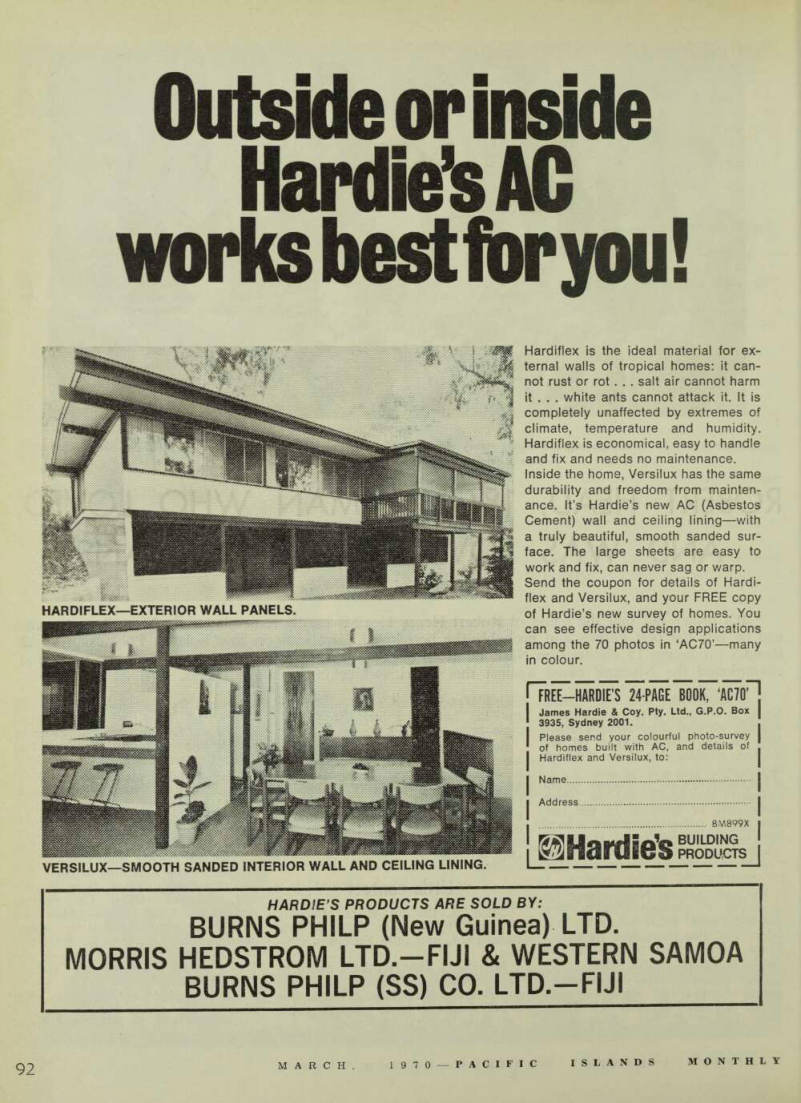 96
96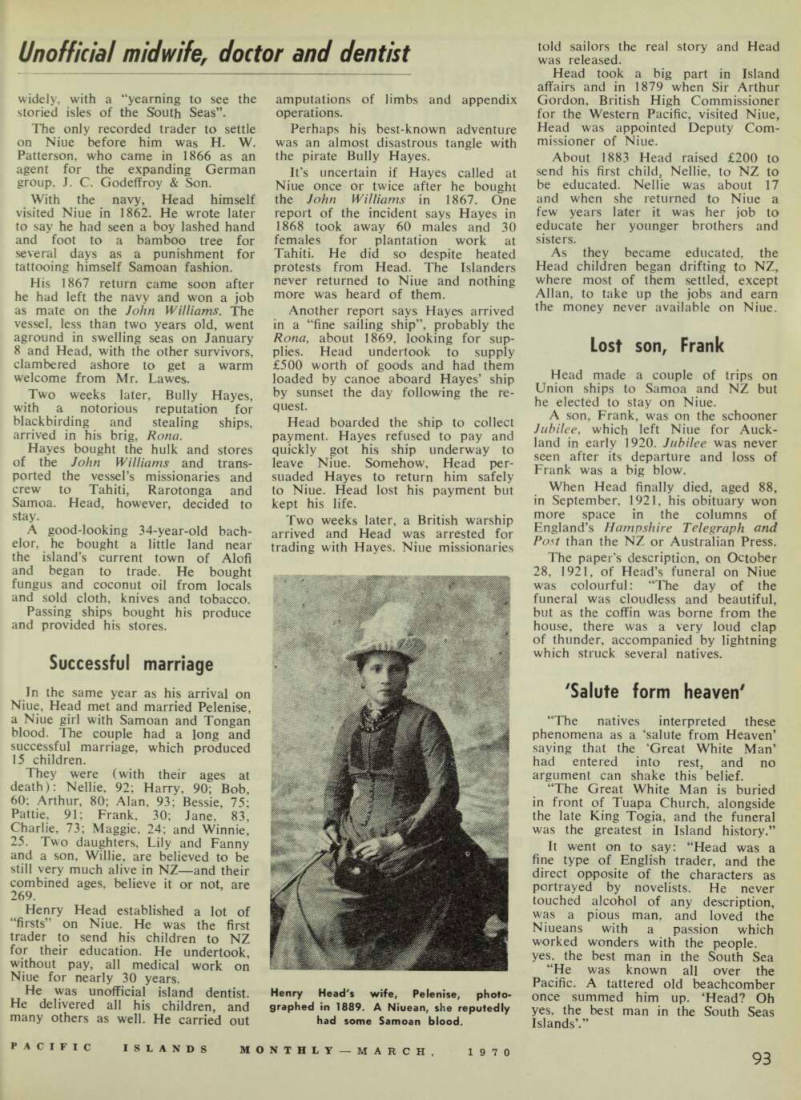 97
97 98
98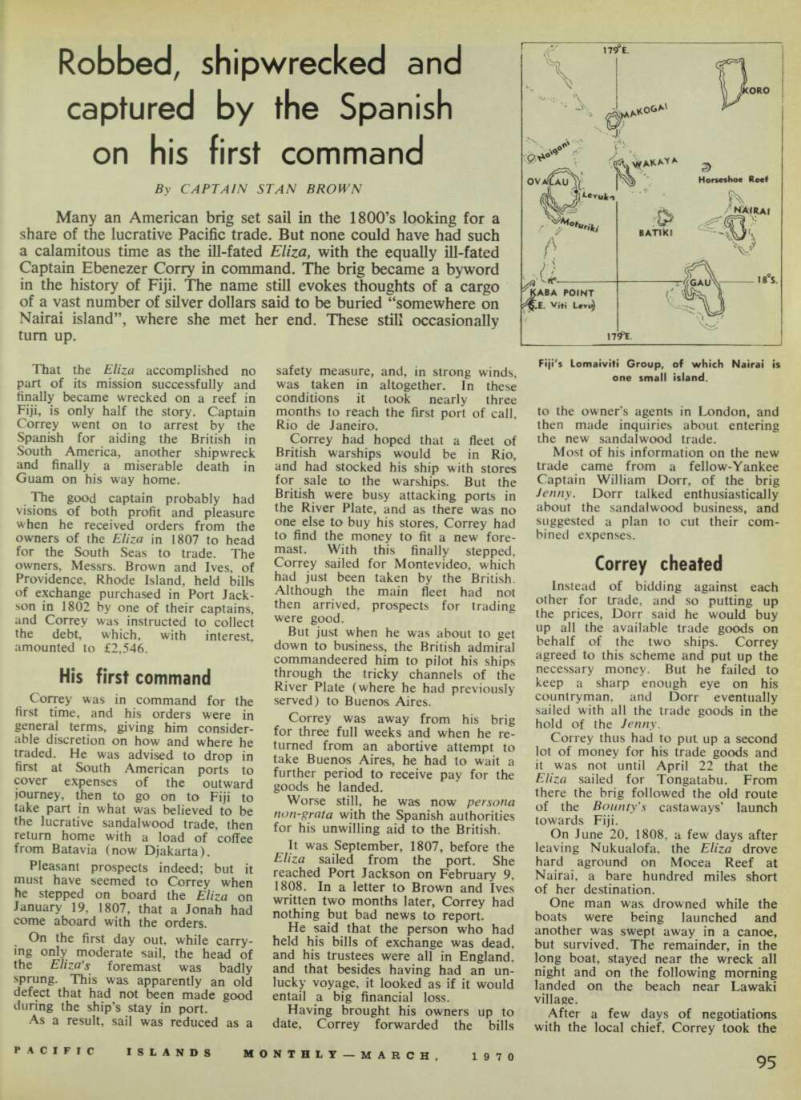 99
99 100
100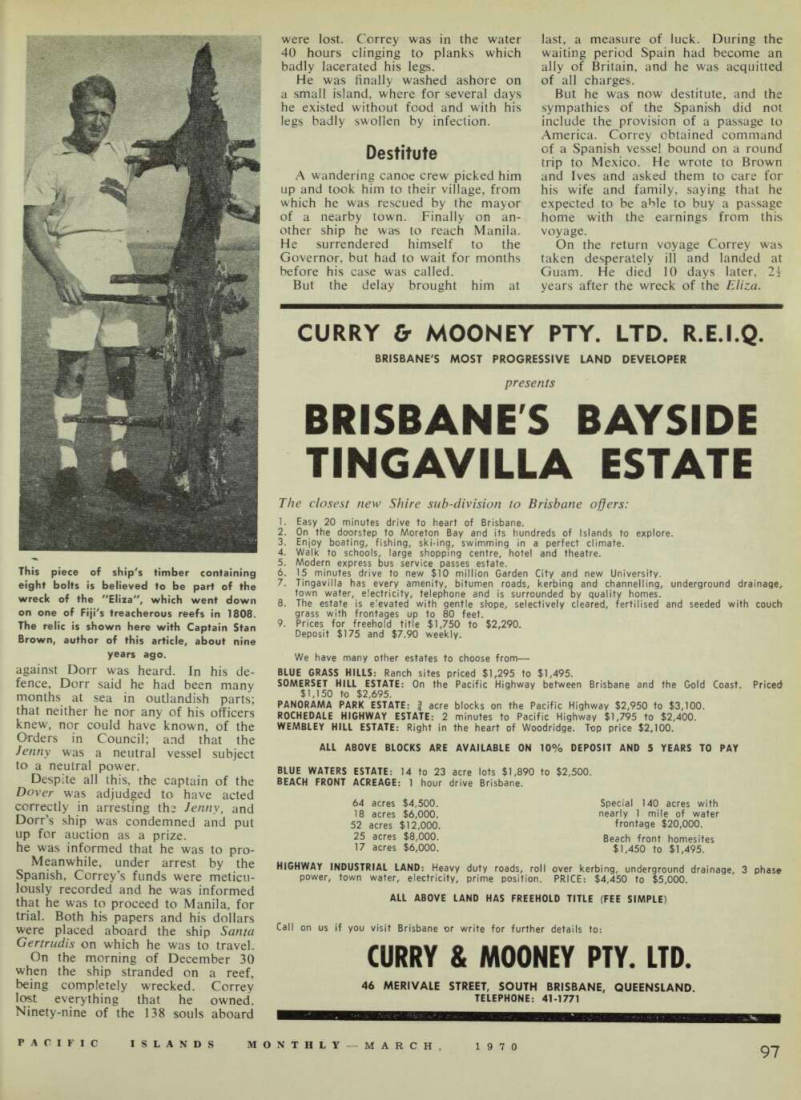 101
101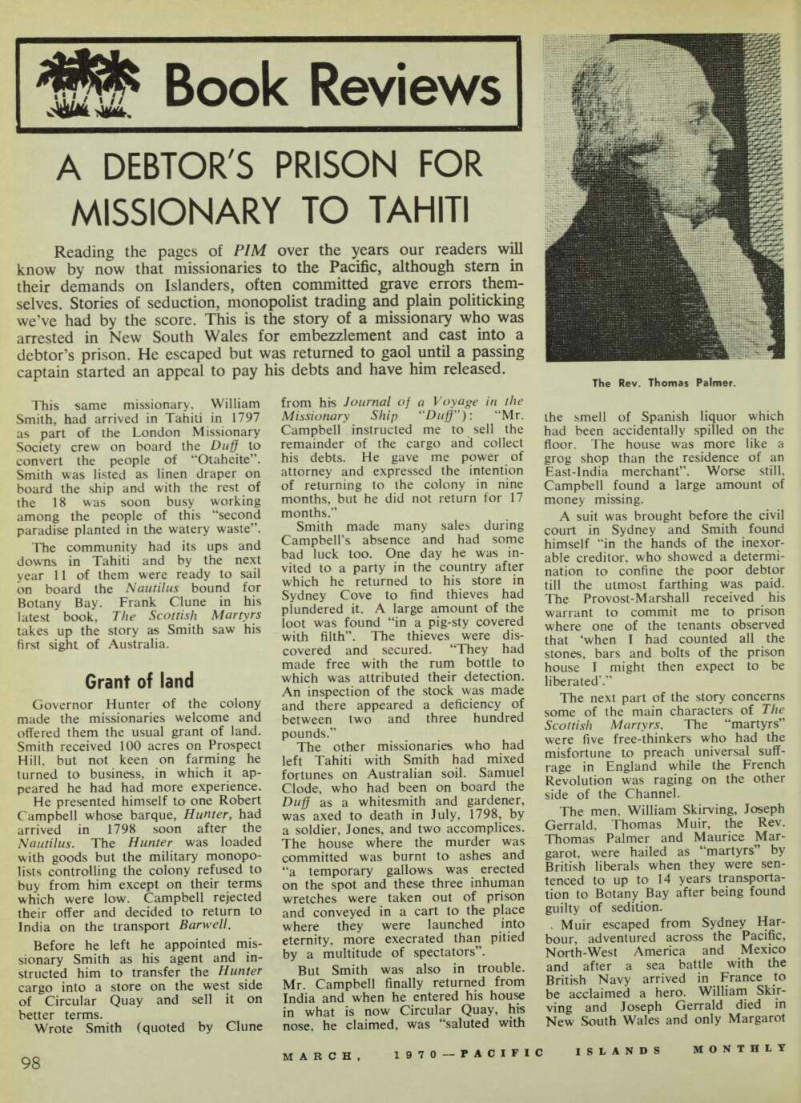 102
102 103
103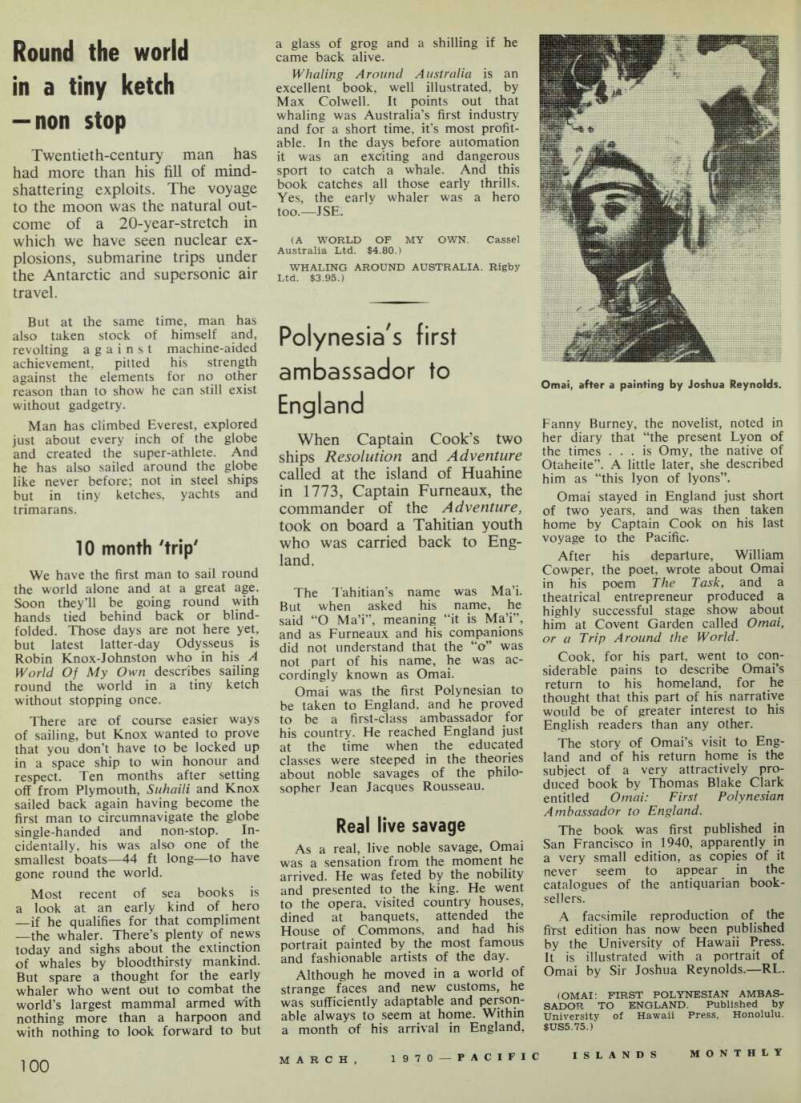 104
104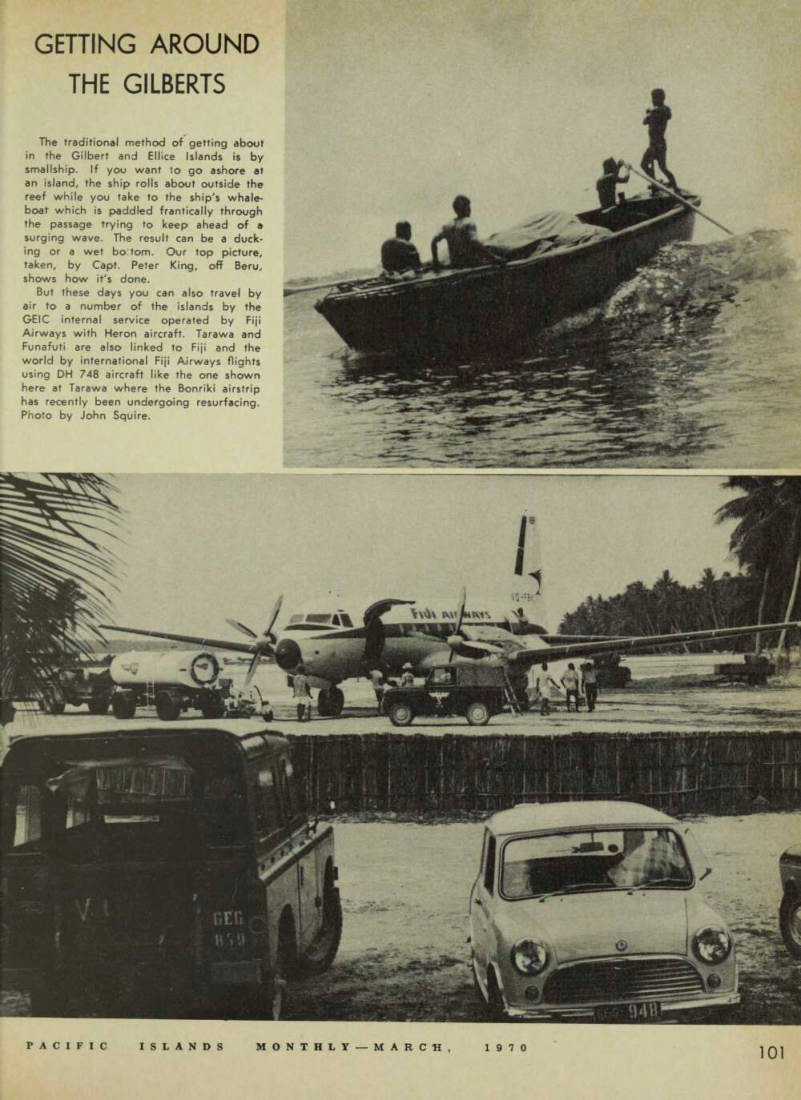 105
105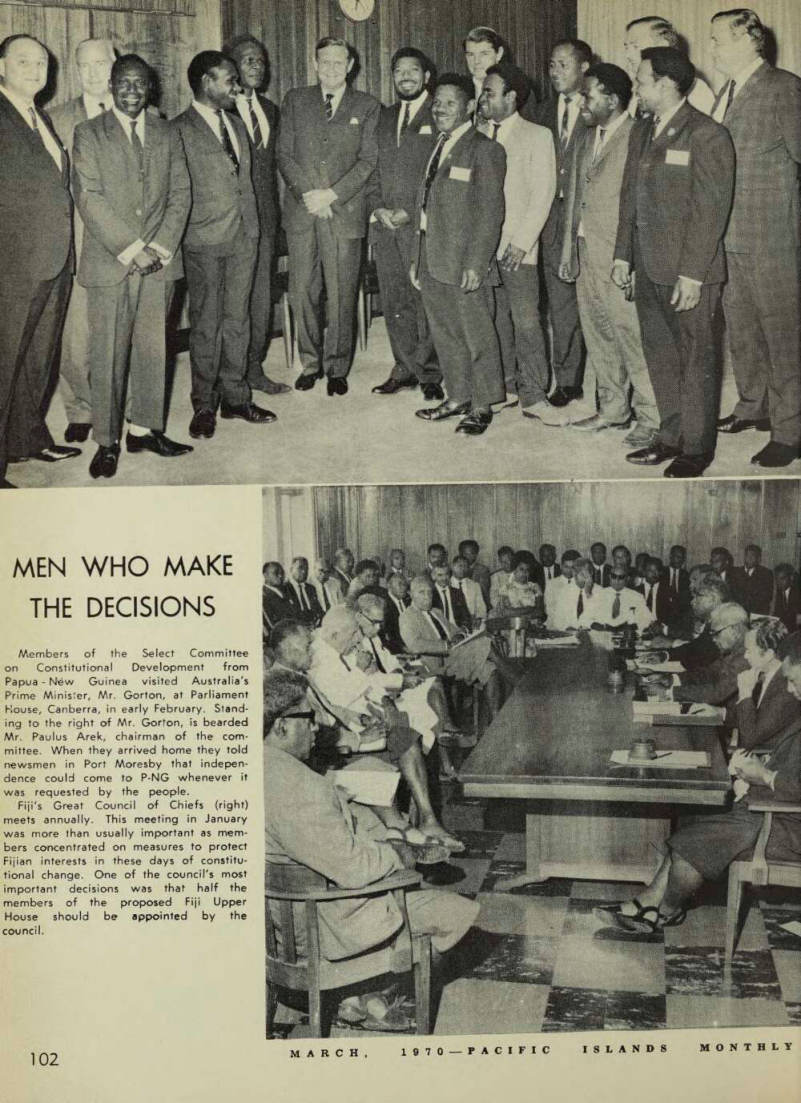 106
106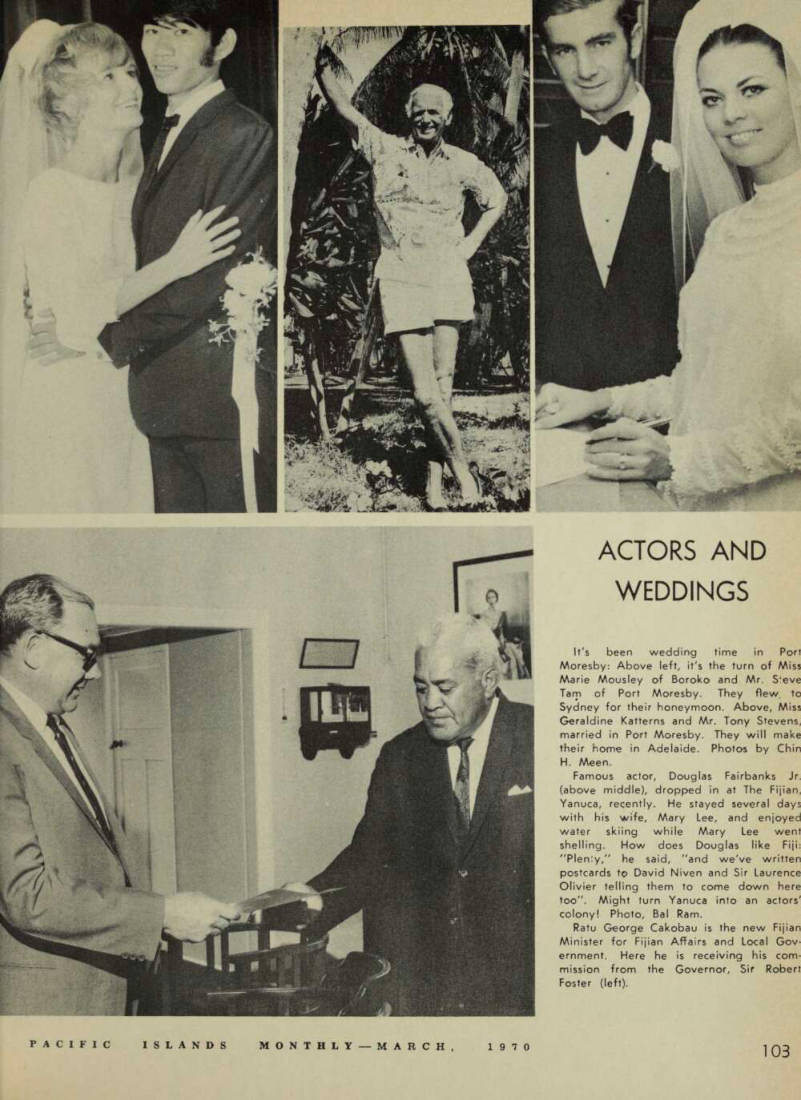 107
107 108
108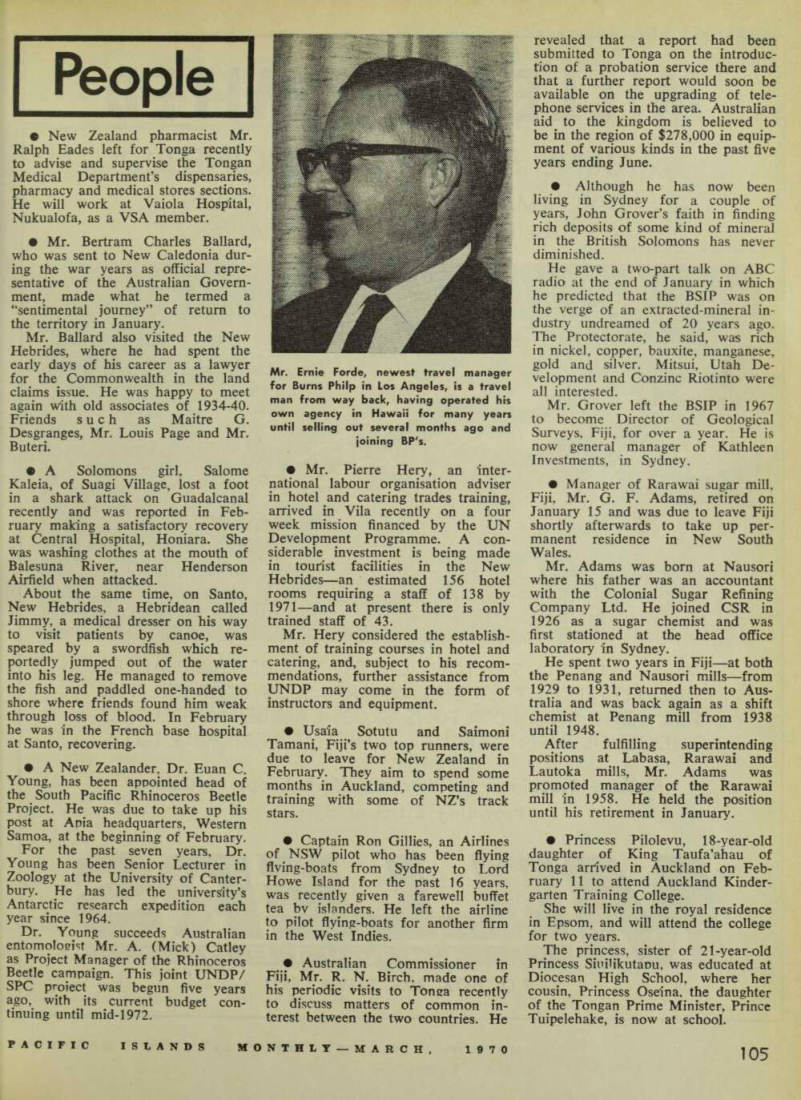 109
109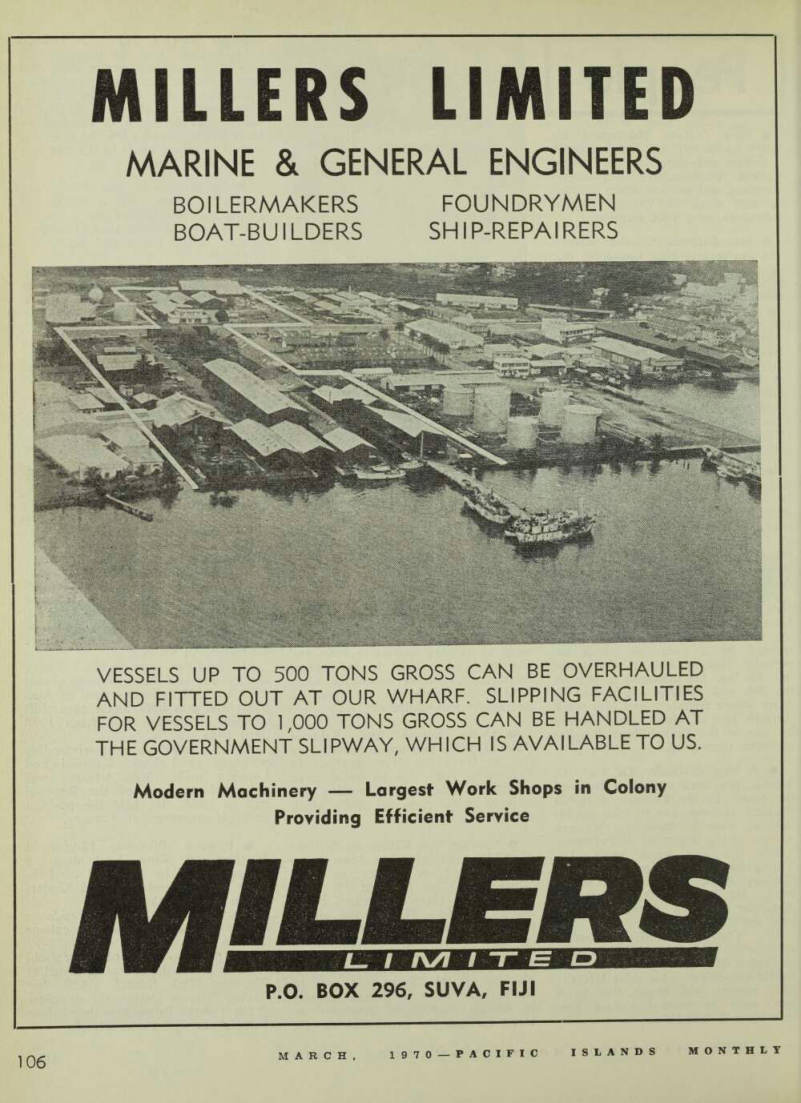 110
110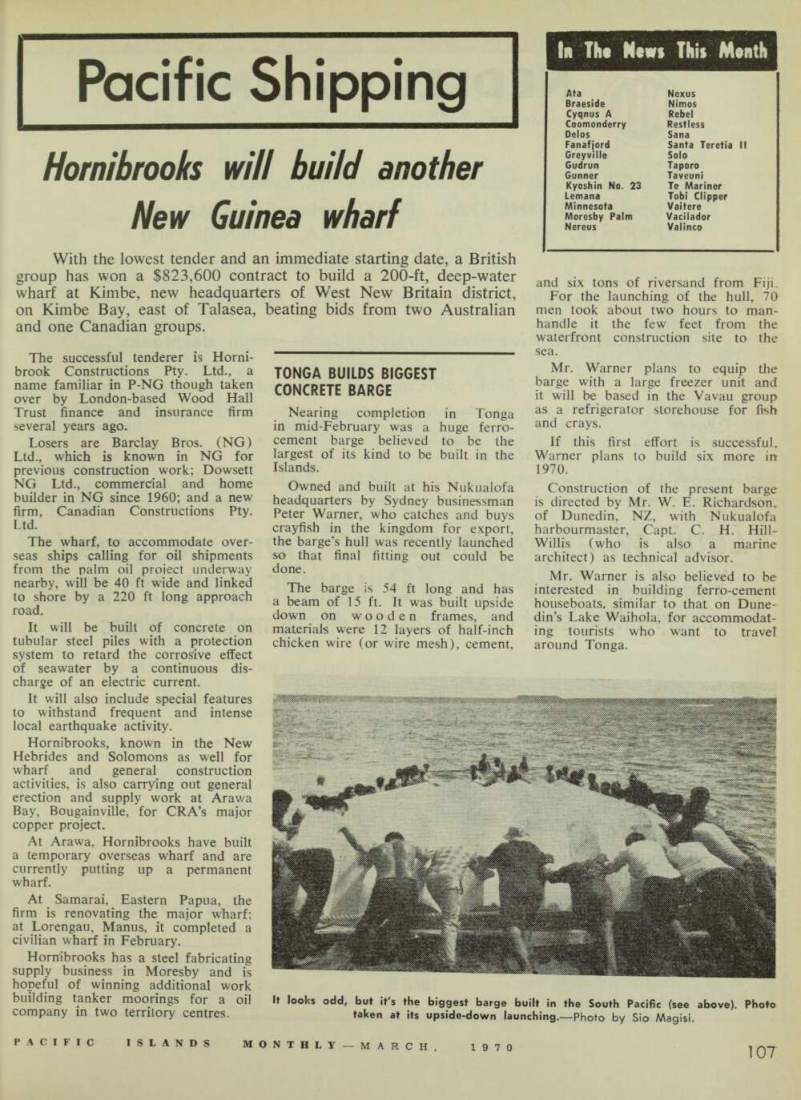 111
111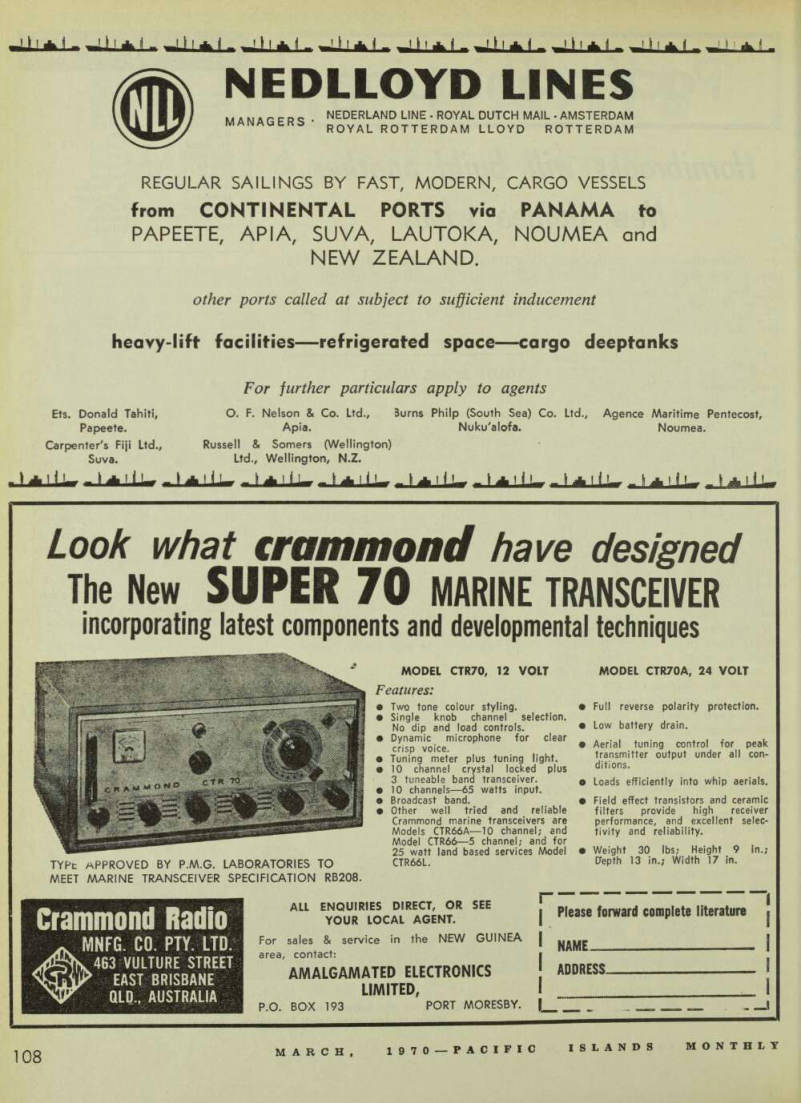 112
112 113
113 114
114 115
115 116
116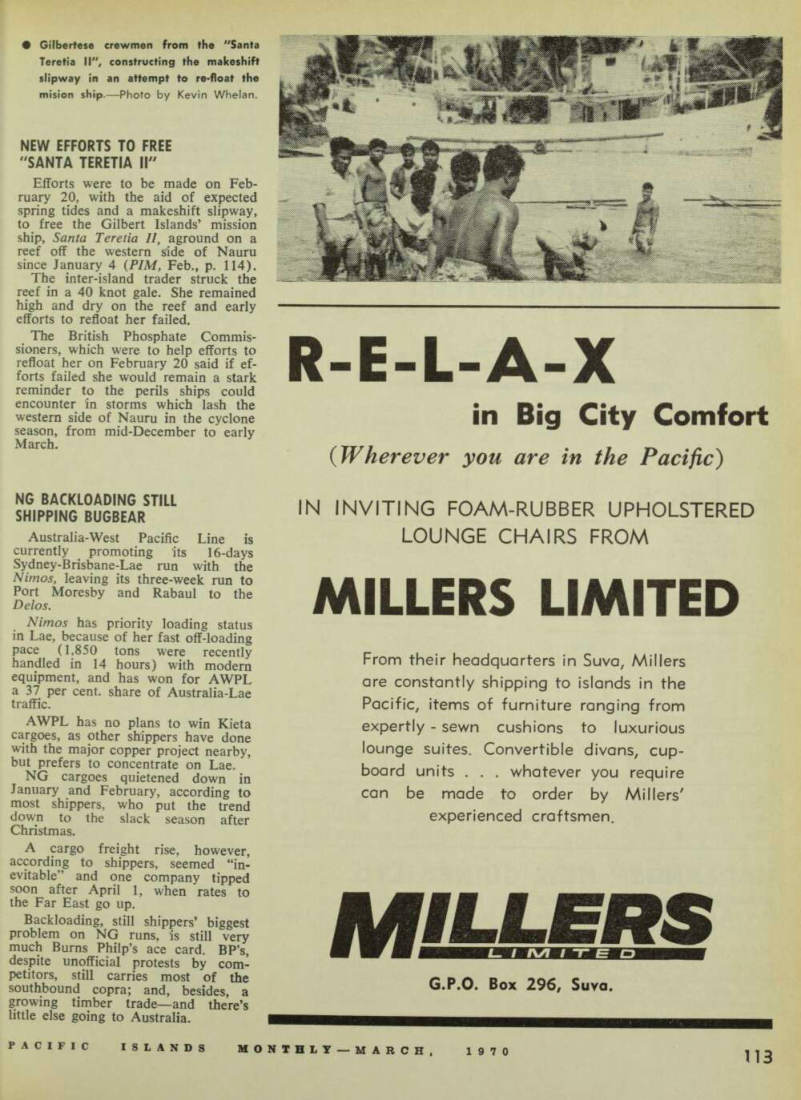 117
117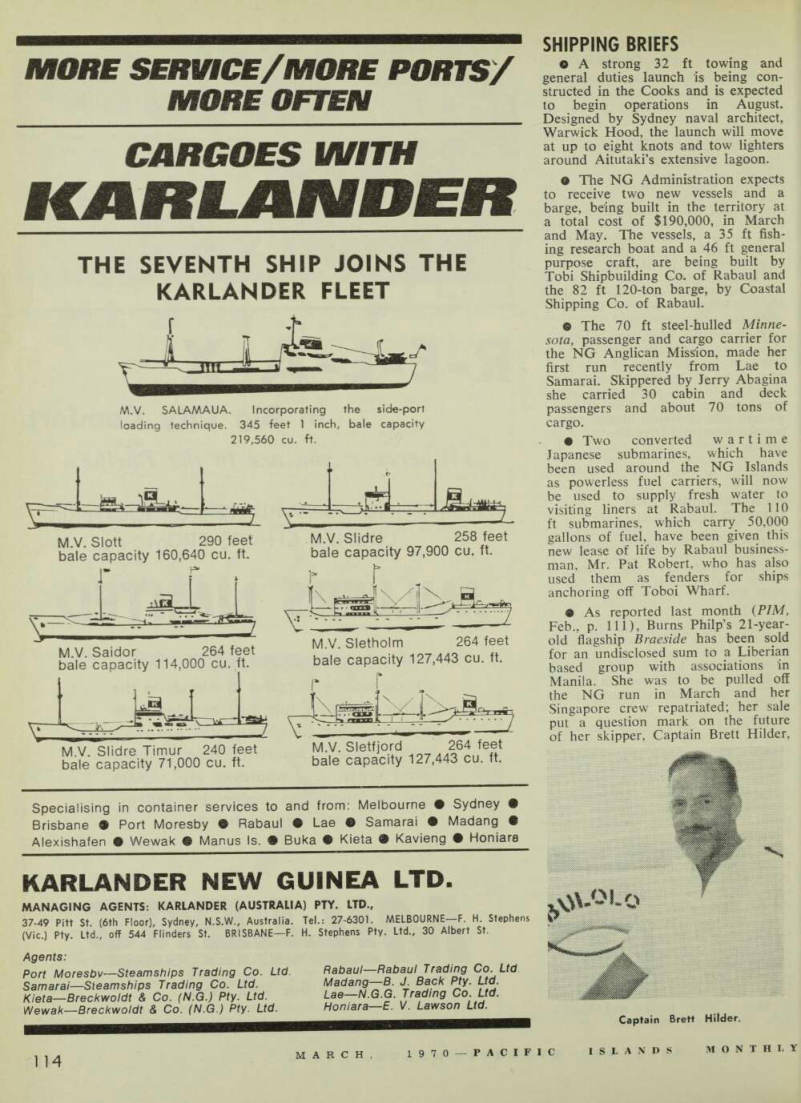 118
118 119
119 120
120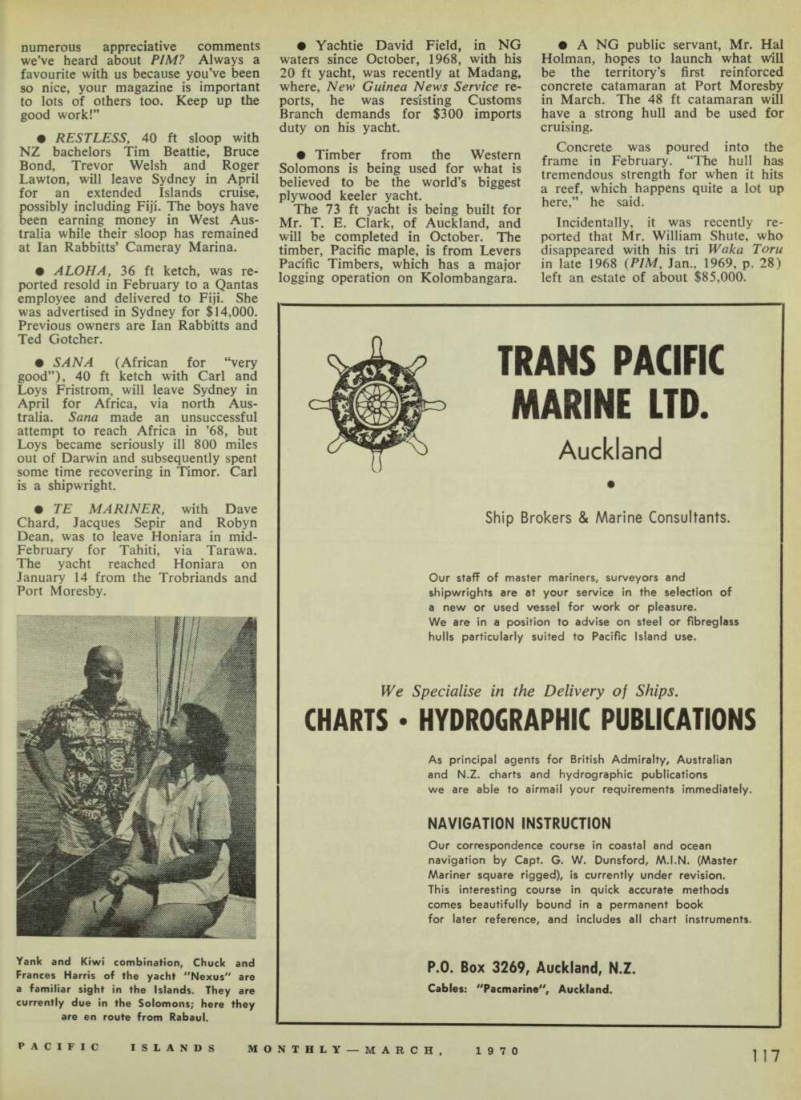 121
121 122
122 123
123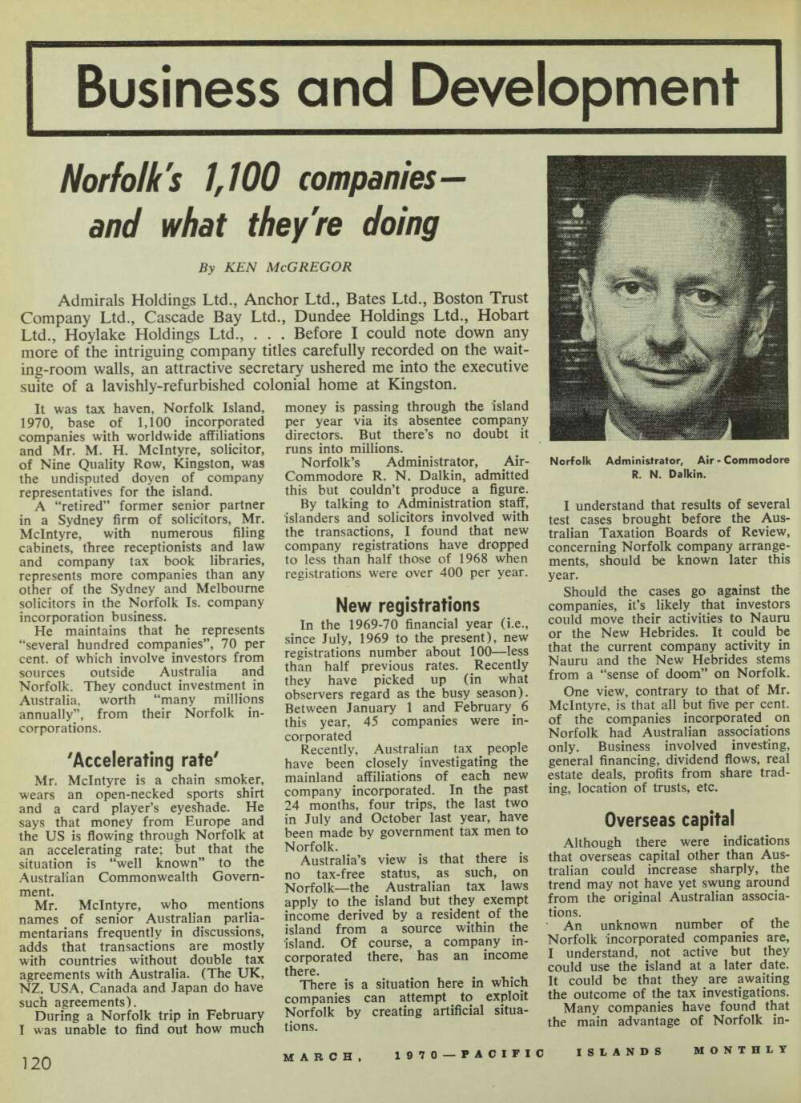 124
124 125
125 126
126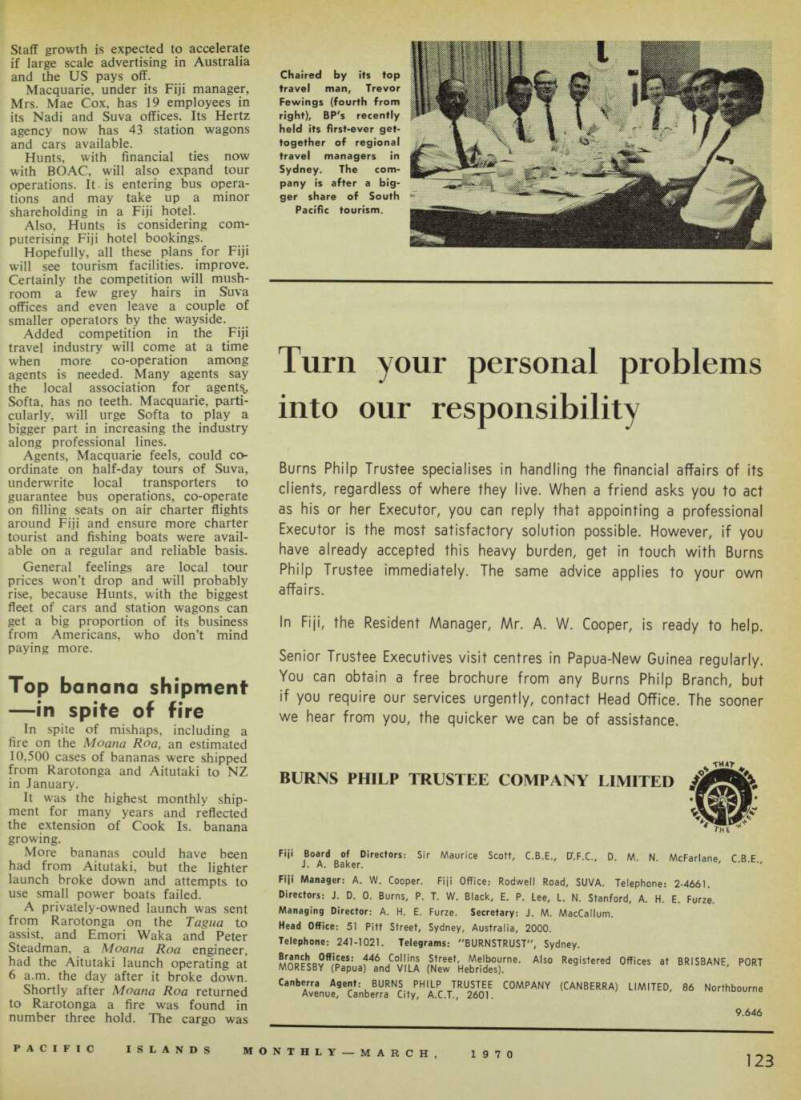 127
127 128
128 129
129 130
130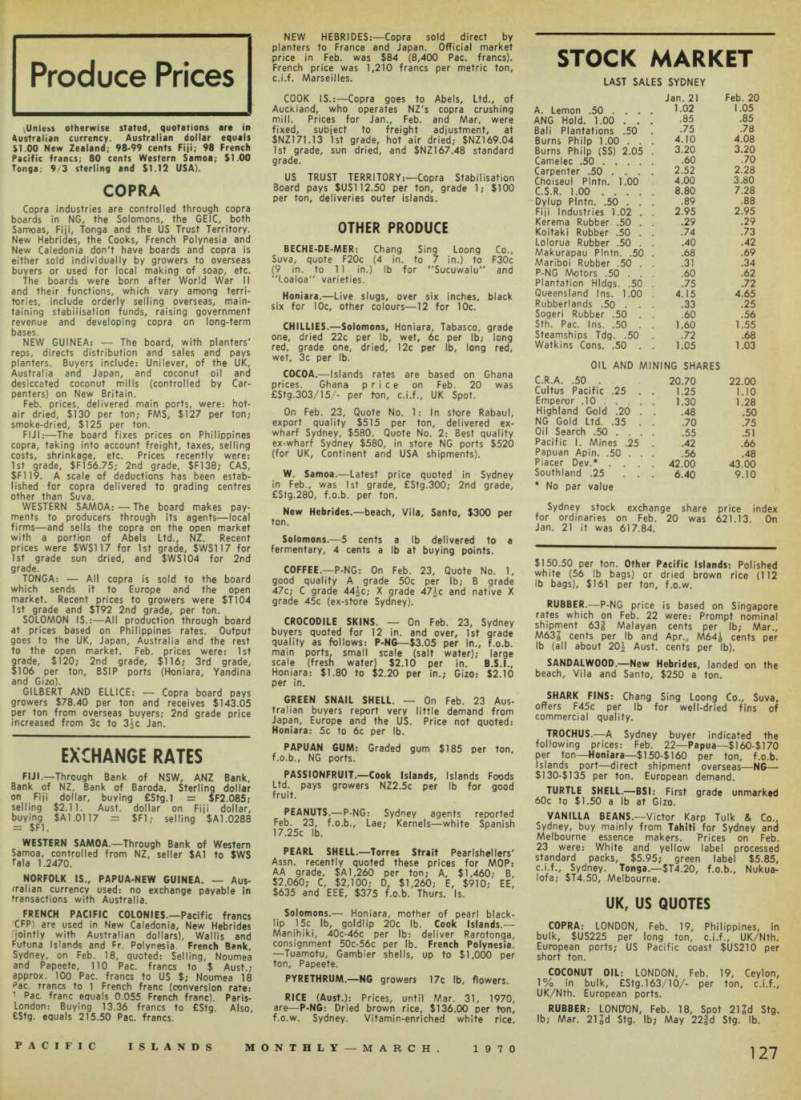 131
131 132
132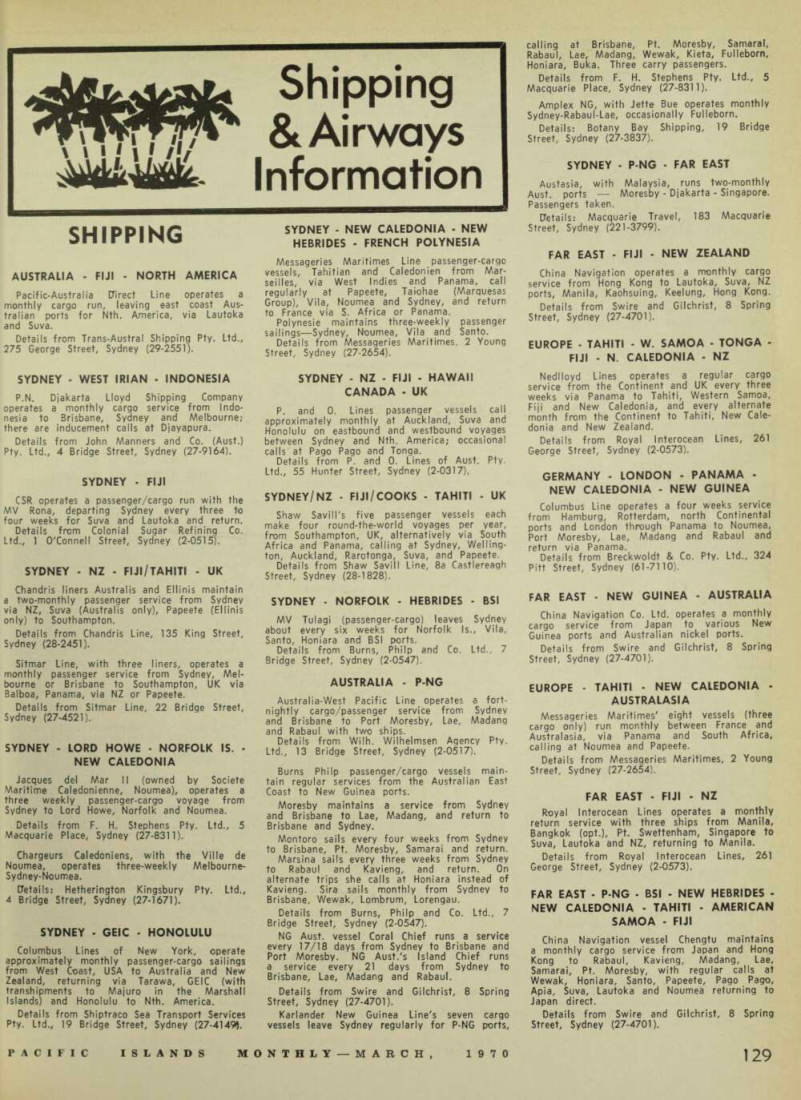 133
133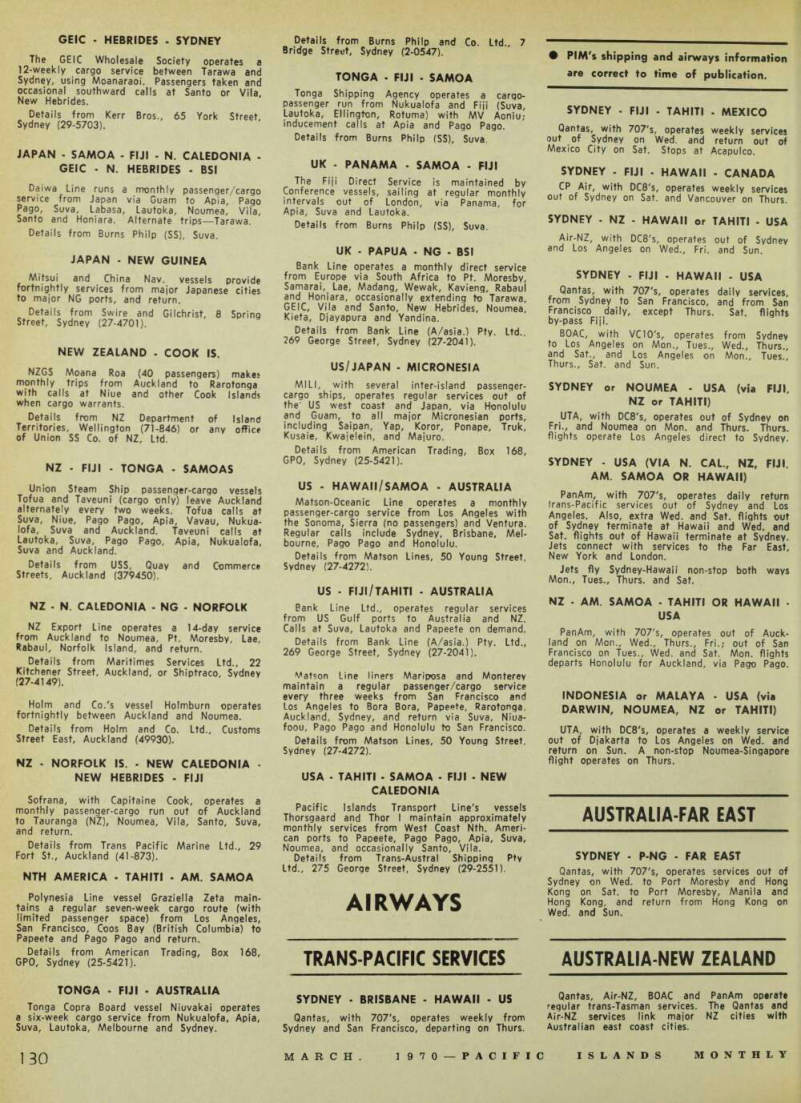 134
134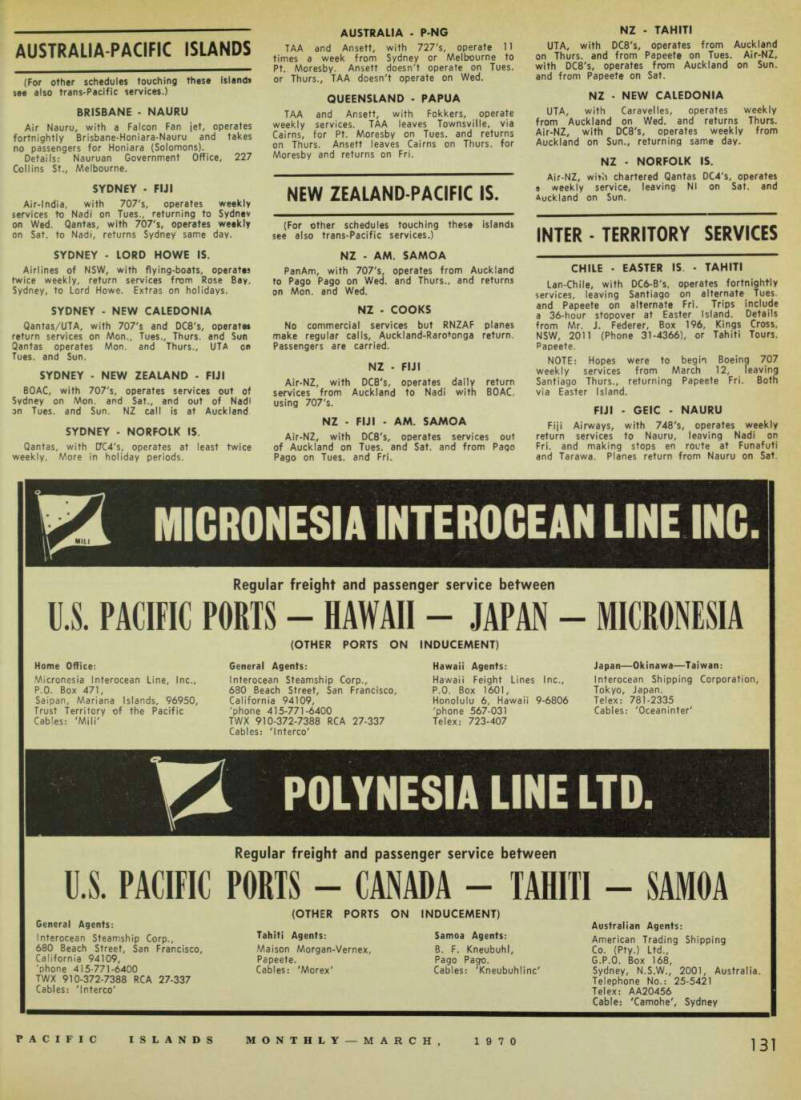 135
135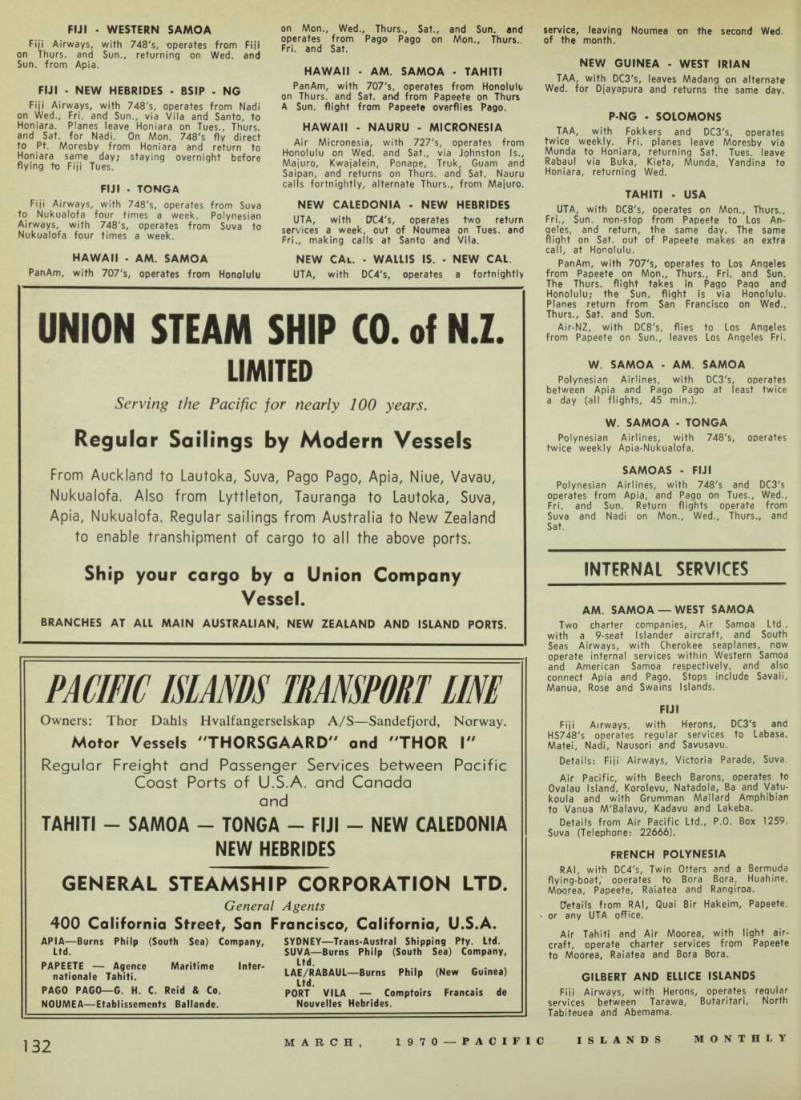 136
136 137
137 138
138 139
139 140
140 141
141 142
142 143
143 144
144 145
145 146
146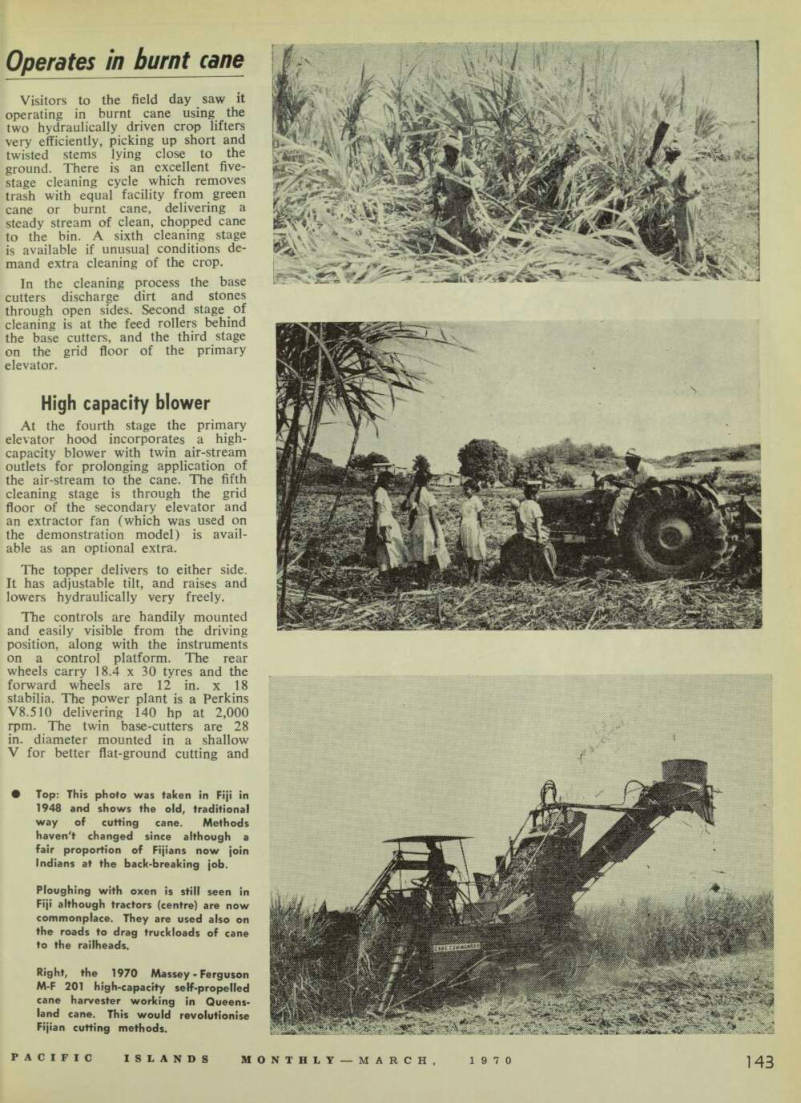 147
147 148
148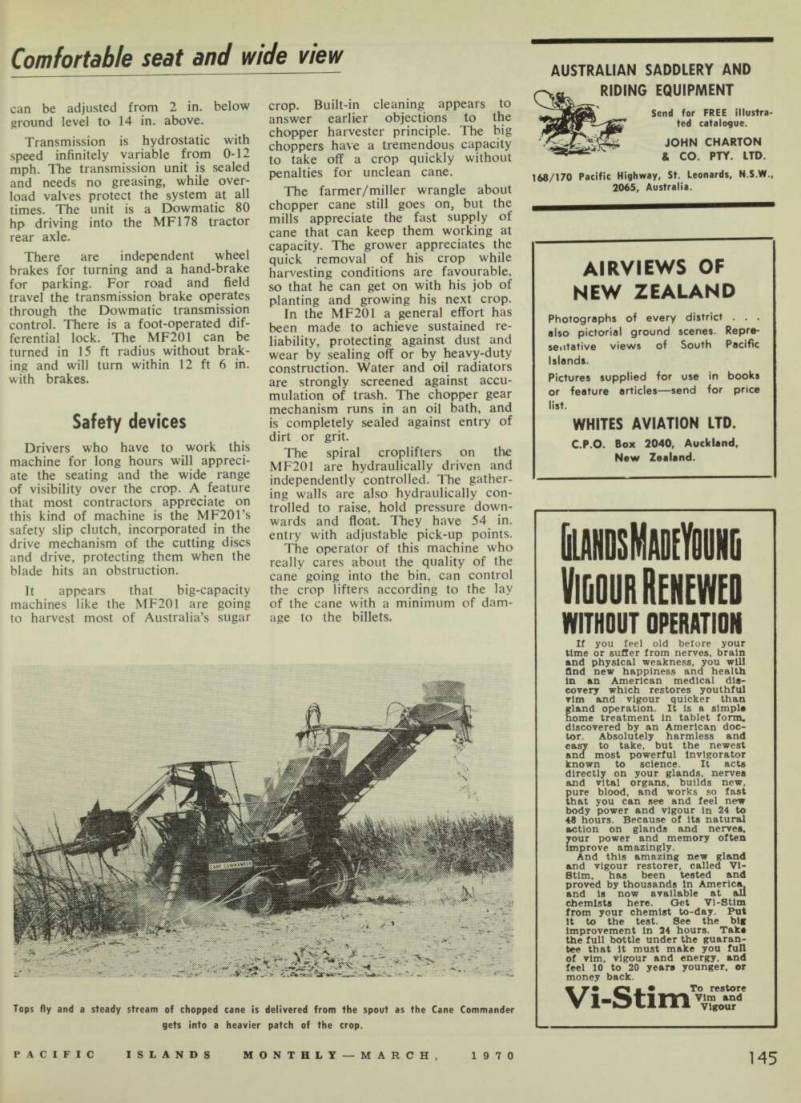 149
149 150
150 151
151 152
152 153
153 154
154 155
155 156
156 157
157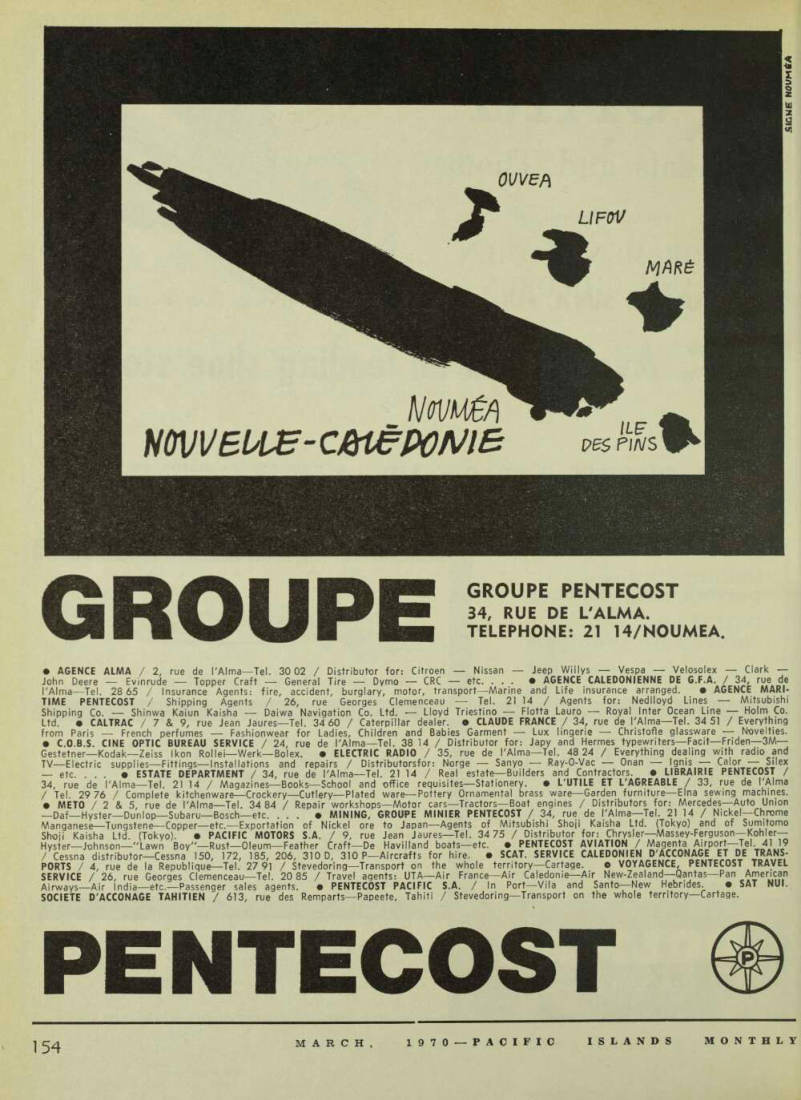 158
158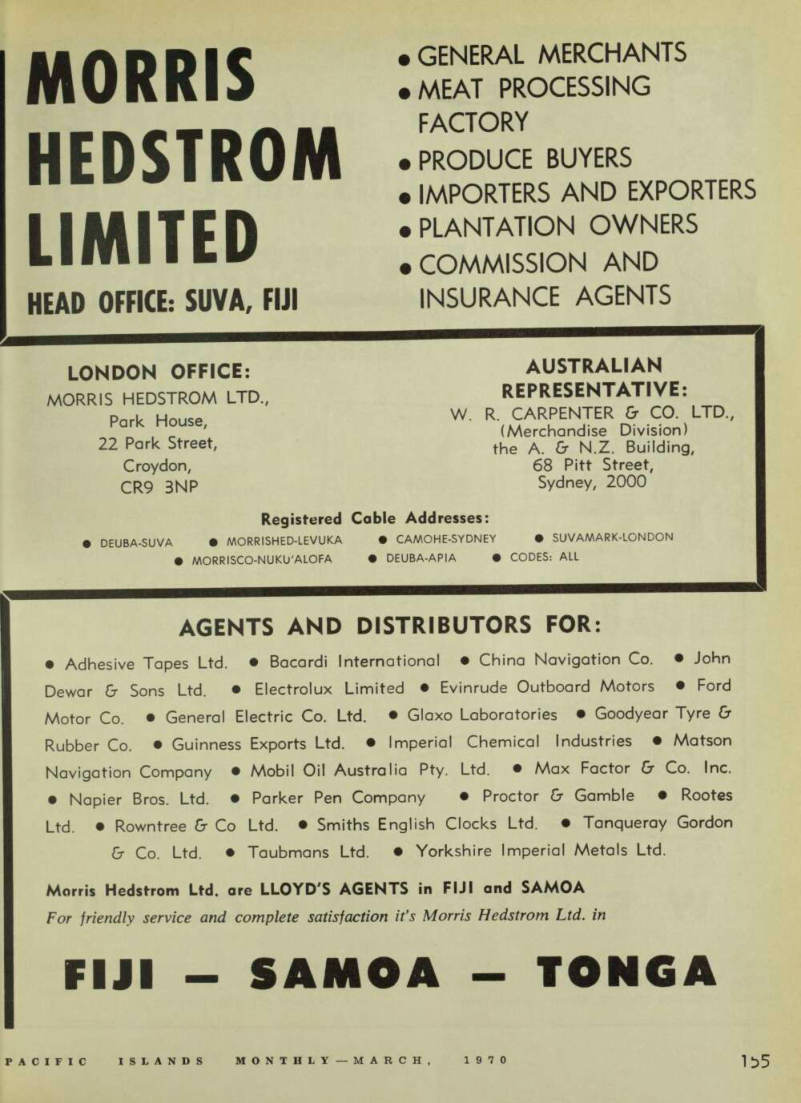 159
159 160
160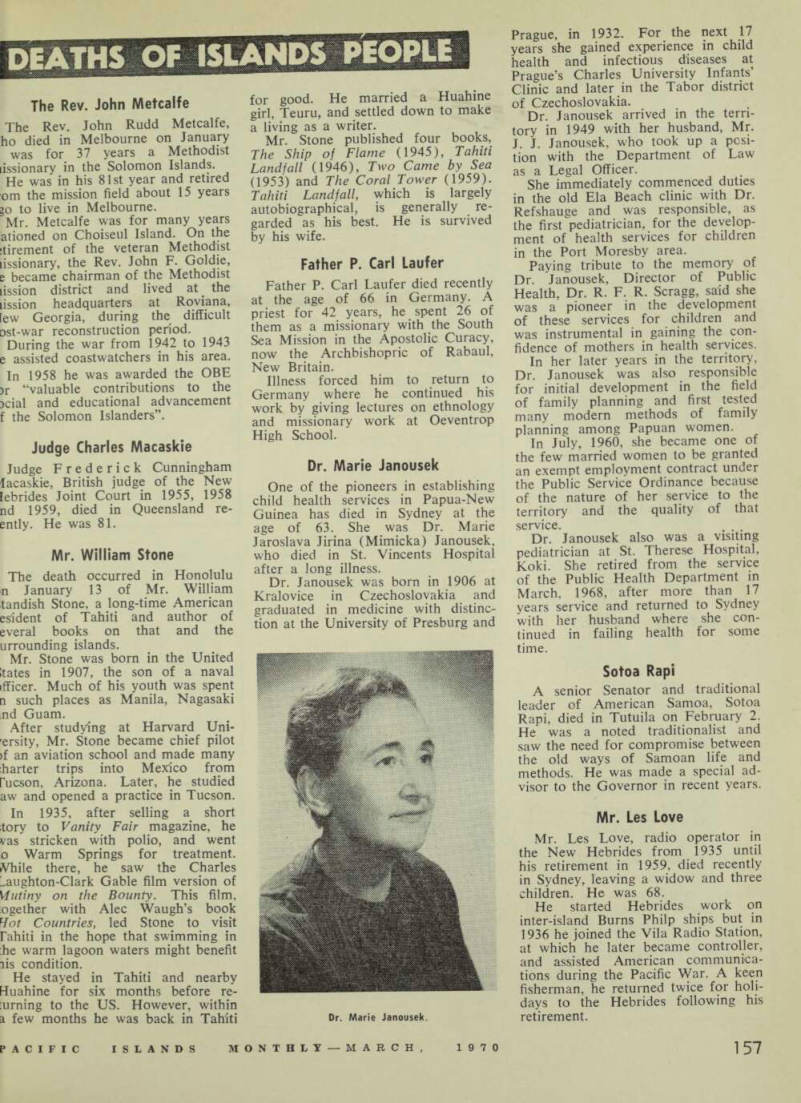 161
161 162
162 163
163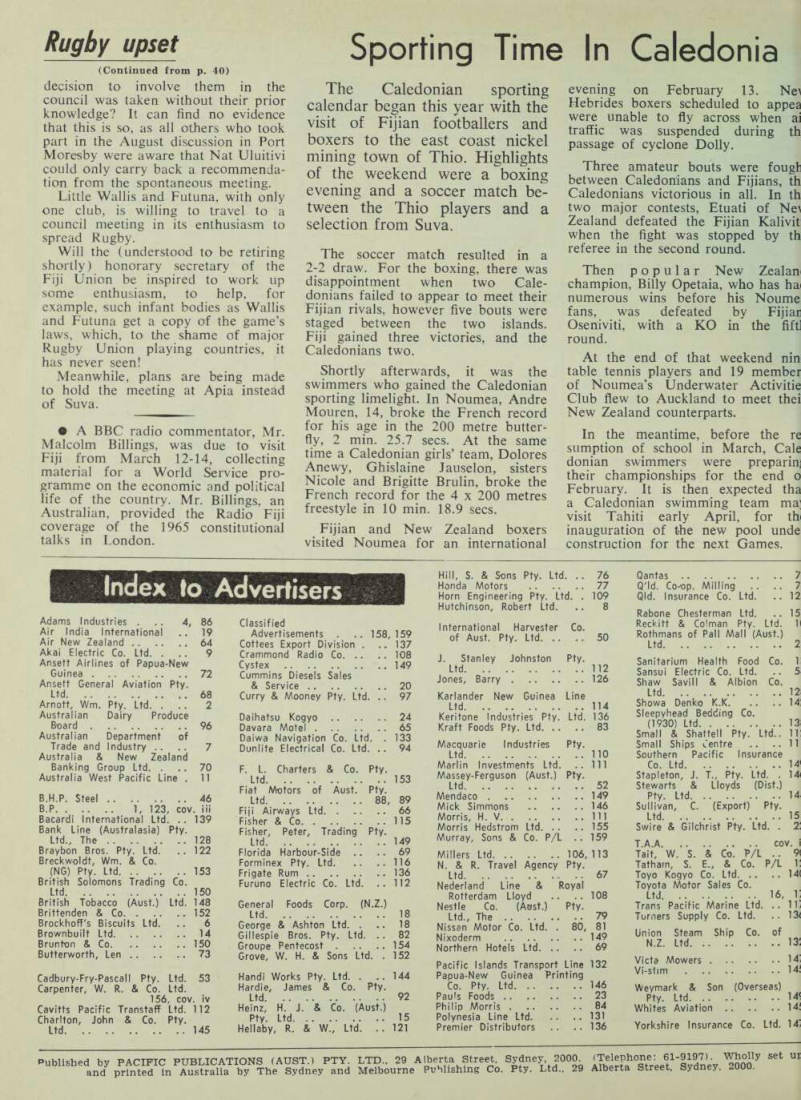 164
164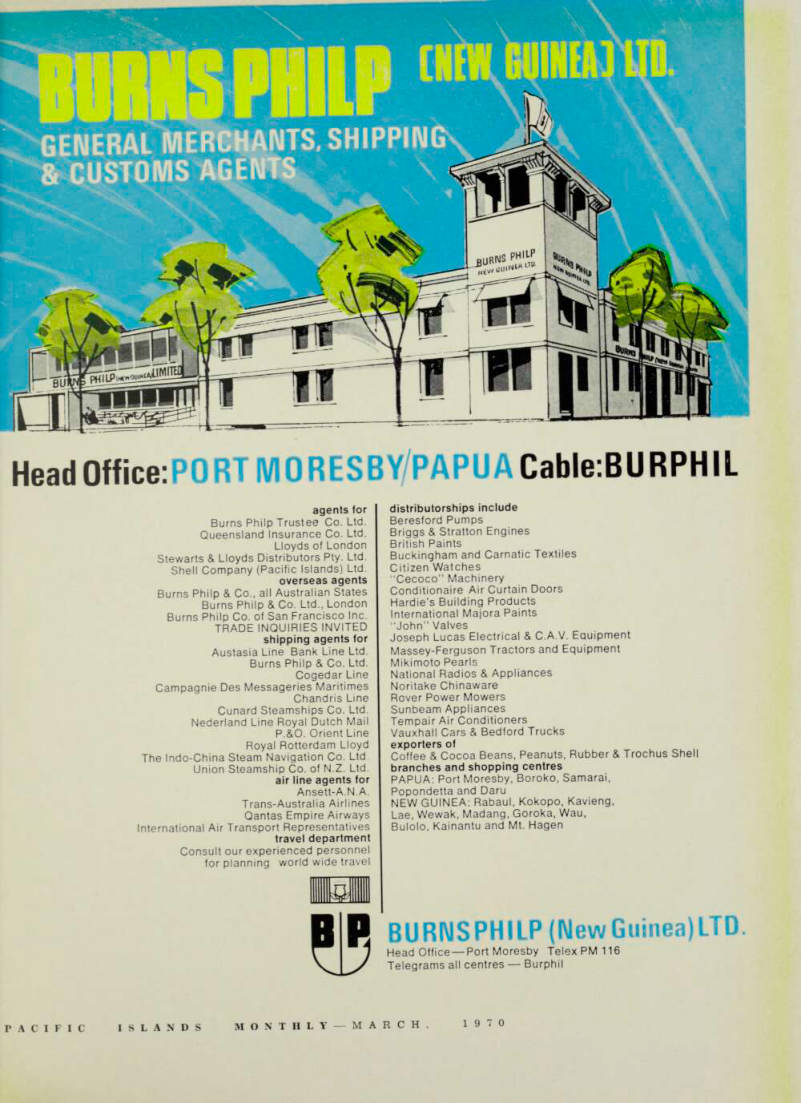 165
165 166
166