Monthly
Pacific Islands Monthly
Registered at G.P.O., Sydney, for transmission by post as a newspaper.
February, 1970
News Magazine Of The South Pacific
• AUSTRALIA, 40c. • NEW ZEALAND, 45c. • U.S. PACIFIC TERRITORIES, 70c. • FRENCH PACIFIC ISLANDS, 65 FRCS. CFP. • P.-N.G., FIJI AND ALL OTHER DAncif* TCDDITARirf or ...
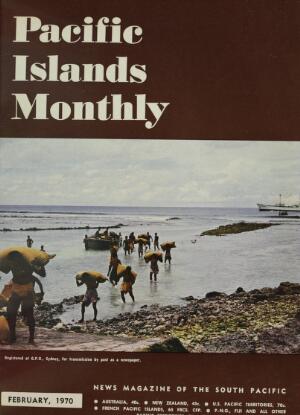
Our Cover
Cargo handling has been revolutionised through mechanisation and con tainerisation in the last decade — except in some parts of the Pacific. In the outer atolls of the Gilberts, in the Central Pacific, stevedoring methods haven’t changed in the past 100 years of trading. Wharves and jetties don’t exist but these conditions have pro duced some of the best workers still in the cargo handling business. Shown here, crewmen from the GEIC Wholesale Society’s Moanaraoi shoulder general
supplies ashore. The picture
is by Captain Peter King.
Advertisements & other items, pp. 2-16 (16 items)
February, 19 7 0 -Pacific Islands Month
TAA’s got you
covered.
1 Manus Island
lilli
Wewak Rabau ■Hi Gorok.i i£S Mt. Hagen Lae 1 : —-L- Honiara^ Port Moresby i \ L. -VTrt —V-J7-.
J\ v - To Australia All the way from Port Moresby to Lae. Madang, Rabaul, Goroka, Mt. Hagen fifty centres in all. The best connections in the Territory. More coverage of Papua/New Guinea flying air-conditioned twin prop-jets, than any other major airline. Plus the best connections to Australia flying Bird of Paradise’ T-Jets. More comfort, more flights, more places. That’s why more people fly TAA Contact your Travel Agent or TAA; Port Moresby 2101.
Lae 2311. Madang 2478. Rabaul 2567. Goroka 8. Mt. Hagen 4 or 301. Wewak 103.
TAA No.l-the friendly one
319 2267/69
THROUGHOUT THE PACIFIC
HJI,SAMOA,TONGA,NIUE IS,NDRFOIH Is.
BURNS PHILP
[SOUTH SEAT CO.ITD.
REGISTERED OFFICE: SUVA,
TELEPHONE NO: 22661 f
TELEX NO: FJ1127
Code Address: "BURNSOUTH m '<sgss,/ ■ ;
SHIPPING AGENCIES
The New Zealand Shipping Co. Ltd.
Shaw Savill & Albion Co. Ltd, Port Line Ltd.
Bank Line Ltd.
General Steamship Corporation Ltd.
Blue Star Line Compagnie des Messageries Maritimes Royal Interocean Lines Daiwa Navigation Company Ltd Sitmar Line Flotta Lauro (Lauro Lines) Australasia Pty. Ltd, Tonga Shipping Agency.
EXCLUSIVE
DISTRIBUTORSHIPS
INCLUDE
Akai Taperecorders Dunlop Products Hitachi Electronics Holden Motor Vehicles Rolex Watches Revlon Cosmetics Pentax Cameras Ferguson Tractors Olympic Tyres Penfold Wines
AGENTS FOR:
Queensland Insurance Co. Ltd.
Burns Philp Trustee Co. Ltd.
Shell Company (P. 1.) Ltd.
Bureau Ventas
ASSOCIATED COMPANIES
Burns Philp (New Hebrides) Ltd.
Automotive Supplies Co. Ltd.
Corrie & Co. Ltd.
Wrought Iron and Steel Construction Co. Ltd.
Bish Ltd.
SPECIALISED SERVICES
Expert advice on Shipping; Forwarding; Customs formalities; Insurance.
COMPLETE TRAVEL
SERVICE
accredited agents for the
INTERNATIONAL AIR
TRANSPORT ASSOCIATION
OVERSEAS AGENTS: SYDNEY • LONDON • SAN FRANCISCO
Qrnott's/ Biscuits
in triple wrapped, tropical packs
m Arnott’s SCOTCH FINGER Biscuits.
A butter-rich, chunky biscuit with the true flavour of shortbread. s.-.v-. m Arnott’s CHEESE JATZ Biscuits.
Crisp cracker biscuit with a fine cheese flavour — perfect for entertaining. iA Arnott’s SALTINE Biscuits.
Light, tangy, crisp cracker biscuit. .. perfect with salads, cheese, soup or eaten plain. ms m o-fl Blscu^t-
POUHD
HALf
Arnott’s MILK ARROWROOT Biscuits.
A wholesome, nourishing biscuit especially suitable for children, but a favourite with all the family.
mm M
NlonteCaw*
BIS*
Arnott’s SAO Biscuits.
A light, crisp cracker biscuit... delicious with butter and cheese, ham, jam or other spreads.
Arnott’s MONTE CARLO Biscuits.
Crisp short biscuits, flavoured with" pure honey and coconut, sandwiched with vanilla cream and raspberry jam.
SHREDDED WH EATMEAL
Bit cult* Arnott’s SHREDDED WHEATMEAL Biscuits.
A wholesome biscuit with the nutty flavour of crunchy whole wheatmeal.
Delicious plain or buttered.
Ml Gf Arnott’s NICE Biscuits.
A sweet plain short-texture biscuit sprinkled with fine sugar. Popular for morning tea.
There is no Substitute for Quality
—-- * -™~-''M/'UWJOI
AV CONTENTS 50 MADE IN AUSTRALIA
Brymay
Waterproof matches
Greenlites
■ : v V • mm y
Bright new label
and still the only matches in
the world that light when wet
Greenlites are made for your part of the world.
They’re tropical matches —waterproof matches.
Ask for them.
MADE IN AUSTRALIA BY BRYANT & MAY
They re „ .. „
beginning to call
us'Mr: r 1
* Oftentimes a person in a position of power tends to overdo things when he gets the floor.
Like hooking up a 25 watt set of speaker systems with a 160 watt receiver. Blooie. There go your speakers.
Or wasting the strength of a powerful set of 90 watt speaker systems to exploit a 36 watt receiver. Criminal.
Now weTe not trying to lecture you. It's up to each of us to keep his own stereo house in order. But it's not for nothing that they're beginning to call us Mr.
Speaker.
We make a fully representative line of distinguished systems from the mighty 90 watt SP-5000 to the authoritative 20 watt SP-30. And we recognize the importance of maintaining a balance of power. Consequently, each system is specifically designed for alliance with a properly powered receiver. No mismatches. No disproportionate alliances.
The SP-5000, for example, a 4-way 7-speaker system, is custom engineered to get the most out of great receivers like the 180 watt Sansui 5000 A. Add the SR- -30308C, a 2-speed manual turntable, and you've got one of the most powerful and harmonious systems ever marketed.
Drop in soon at any authorized dealer and ask to see the Mr. Speaker full house line of great new speaker systems. From Sansui. Where, when it comes to a vote, the ears have it.
Sansui.
Matching components, matchless stereo m m 5 ■ m R 5000 A "«U, U CO. °lTd“,: 8 , 3 ;2 N Tahi ' ie " S '’ aPee,e ' Tahi,i ' ° 3 ' 29
38
SOME OF THE FIRMS
WE REPRESENT ARE:
A. W. Allens (Confectionery) Sunshine Biscuits Sunrise (Confectionery) Flamenco (Instant Coffee) Cremota (Quaker Oats, Jets Pet Foods) Merchants (Canned Soft Drinks) Lunchtime (Honey) South Pacific Canneries (Scallops, Aba lone) Safcol (Canned Tuna, Salmon) Hancock's (Spaghetti, Cereals) Melbourne Canning (Jams, Bleach) Water Wheel (Flour, Sharps, Wheat) General Food Corporation (Twisties, Twirlies) Edward Zorn (Margarine, Cooking Fats) Robert Timms (New Guinea Gold Coffees, Teas) Rodd (Cutlery) Palm (Mattresses) Esteel (Cookware) Vendolux (Cafe Bars) Mitchell's (Abrasives) Regent (Swiss Watches) Gainsborough (Furniture) Tamco (Melanie Crockery, Nylon Hardware) Elm a c o (Plastic Household Goods, Electrical Fittings) Brown b u i 11 (Pre-Fabricated Houses) Ryline (Fluorescent Lights) Jex (Steel Wool) Austramax (Pressure Lamps) Preservene (Soap Products) Charles Tims (School Requisites) Ascow and Philadelphian (Shirts) Lawn Chair and Tubco (Garden Furniture) Sunrise Lustretone (S.S. Sinks, Plumbers' Supplies) Electronic Industries (Electrical Household Appliances)
S. E. TATHAM
& Co. Pty. Ltd.
MELBOURNE, AUSTRALIA
G.P.O. Box 8, Cables “SET”
Telephone 60-1125
EXPORT AGENTS
PACIFIC ISLANDS
AGENTS
Australian buying and shipping agents for the Gilbert and Ellice Islands Colony Ea Wholesale Society
DIRECT ENQUIRIES WELCOMED
Associate Company
S. E. TATHAM (FIJI) LTD.
Suva, G.P.O. Box 671.
Lautoka, P.O. Box 366. 1 \ 1 1 1
SINCE 1924
Happiness is a healthy baby
growing on Heinz,
the only Peak-Nutrition process Baby Food
Only Heinz has the Peak-Nutrition cooking process. We developed it. And we hold the patent. That’s why Heinz gives your baby more to grow on than other baby foods.
More essential nourishment for a healthy body. More flavour. More vitamins B'-B 2 . Is anything but Heinz good enough for your baby, in these first vital years? « . . . Heinz Peak-Nutntion process
Baby Food
gives your baby
more to grow on •.. than other baby foods UN*
BABY
ABY
FOODS
sa juts/tioa Si
Our language is shipping.
Key words
PALLET
UNIFLAT
CONTAINER
Straight talking!
Continuous terminal receiving and delivery of cargo.
Regular sailings link Australia, Papua & New Guinea, Hong Kong.
Taiwan, Sabah, the Philippines and Japan.
GENERAL AGENTS
Wilh Wilhelmsen Agency P/L Sydney 20517 Melbourne 613031 Brisbane 22991 AGENTS Dalqety & New Zealand Loan Ltd Adelaide 41191 Australia - West Pacific Line (N.G.) P/L Lae 2269 New Guinea Company Ltd Port Moresby 2117 Madang 2752 Rabaul 2640 Collins & Leahy FVL Goroka 67 FW.kwoldt &Co (N.G.) P/L Mt Hagen 392 Keep your cargo happy.
"MR fa
Hthe unit loadJJ
NOW!
The New Tangy Flavour of
Savoury Cream Between Crackers in
v m s o* c# The new cracker sandwich that’s tangy and light for between drinks and parties.
Brockhoff Savoury Sandwich - oven-crisp crackers with a tingling savoury cream filling that tastes of tomato, cheese, chives and paprika.
Ready to serve and delight all tastes.
There’s value, variety and quality in
BROCKHOFF BISCUITS
7 5125
A
great bunch
of flours
Robert Hutchinson makes the greatest bunch of flours in the Pacific. Bakers’ flour.
Superlite cake and sponge flours.
Biscuit flour and cracker flour.
Wheaten sharps and wheaten meal.
We’re particularly proud of our bunch of flours. So we have a technical advisory service to help you use them properly.
So next time you see a Robert Hutchinson flour (or even one of our Hutmill stock feeds), remember it’s just one of the bunch m <s&r m Mi /
ROBERT
HUTCHINSON
LIMITED
the flour people
Hartington Slrel. Gl.iir.iv. Vkloria. tmWIH. J 046. T.kplio»« M.lboiin» 306 7261 —.
Save more on Kodak color
developing & printing
ouata^ ee you' 6rtvW« m 1 •: ' So many people are having their color pictures developed and printed by Kodak that it's now possible to reduce prices. You win both ways: Better-than-ever quality, and you save around a dollar. When you want your color film developed and printed, always ask for Kodacolor prints made only by Kodak.
Ask your Kodak dealer for details.
Kodak
KODAK (Australasia) PTY. LTD. 379 George Street. SYDNEY. 2000.
Kodak dealers throughout the Islands.
When the best beer is called for, New Zealand’s favourite lager...
STEINLAGER
INVEST IN SAFETY
INTEREST-BEARING DEPOSITS
Earn extra income by investing in short term deposits at the Commonwealth Trading Bank. • Interest is paid at HIGHEST bank rates. • Your investment is absolutely safe. • Interest commences from the day money is invested. • There is no limit to the amount you may invest. • Approved form of saving for the Government Housing Grant Enquire at any branch.
Get with the Strength
BANK COMMONWUUU
m l‘ * !■!'**!!! W mi|i|imwwi>i jj
Are you a
window
dresser?
[ora window shopper]
We are. Unashamedly. We dress our windows in superb aluminium and the finest of glass, with all the skill at our disposal—and that’s considerable. We dress them up. So they’ll stay up; stay looking as good as new almost indefinitely. And not just looking good . . .
They never jam, never rattle, never rust, never need painting. For a lifetime. Especially for window shoppers like you.
P.S.: We make aluminium doors, too. With iust the same carel
ALUMINIUM WINDOWS Sc DOORS
Wunderlich Limited—Head Office & Showroom: 393 Cleveland Street. Redfern, N.S.W. Australia 2016. Phone 69 0366
the biggest
do more
When you deal with a big company, you should expect their service to match their size. It’s only right.
Winstone Ltd are the biggest suppliers of building materials in New Zealand. In fact they not only supply materials... they manufacture the materials they supply. Like Gibraltar Board (the low priced fire and vermin resistant wall and ceiling lining) Like refractories (fire resistant bricks) Like PVC pipe fittings and flat sheet.
Winstone Ltd can manufacture and ship them to you with less fuss. Less delay. Less worry. Less paperwork.
Winstone Ltd do more.
That’s how they got big
in the first place.
WINSTONE LTD
WINSTONE LTD.
P.O. BOX 395,
AUCKLAND,
NEW ZEALAND.
BRANCHES AND ASSOCIATED COMPANIES THROUGHOUT NEW ZEALAND.
ASSOCIATED COMPANIES IN SOUTH EAST ASIA.
AA6348
1
CIFIC ISLANDS MONTHLY FEBRUARY, 1970
2
FEBRUARY, 19 7 0 -PACIFIC ISLANDS MONTHL
3
acific ISLANDS MONTHLY-P E B R U A R Y . 1970
February, 19 7 0 -Pacific Islands Monihl
5
ACIFIC islands MONTHLY-F E B R u A R Y , 1970
6
FEBRUARY, 19 7 0 -PACIF.C ISLANDS MONTH!
7
ISLANDS MONTHLY_p E B R U A R Y , 1 970
8
FEBRUARY, 19 7 0 -PACIFIC ISLANDS MONTH.
9
ACIFIC ISLANDS MONTHLY FEBRUARY, 1970
10
FEBRUARY, L 9 7 0 -PACIFIC ISLANDS MONTH!
11
ACIFIC ISLANDS MONTHLY—P E B R U A R Y . 1970
12
FEBRUARY, 1970-PACIFIC ISLANDS MONTH I
13
ACIFIC ISLANDS MONTHLY-P E B R U A R Y , 1970
14
FEBRUARY, 1970 PACIFIC ISLANDS MONTHL
Pacific Islands
Monthly
Established 1930: 40th Year of Publication.
Owned And Published By
Pacific Publications (Aust.) Pty. Ltd.,
29 Alberta St., Sydney, N.S.W., 2000.
Postal Address: G.P.O. BOX 3408, SYDNEY,
N.S.W., 2001.
Telegraphic Address: PACPUB, Sydney.
Telephones: 61-9197, 61-7101, 61-4369.
Chief Executives: Managing Director: R. W, Robson.
Executive Director/Publisher: Judy Tudor.
Executive Director/Business Manager: Selwyn Hughes.
Executive Director/Chief Editor: Stuart Inder.
Pacific Islands Monthly
Editor: Stuart Inder.
Advertising Manager: W. A. Gasnier.
Branch Offices
Melbourne: Newspaper House, 247 Collins St..
Victoria, 3000. Tel.: 63-7053.
Fiji; Pacific Publications (Fiji) Ltd., Fiji Times Building, 20 Gordon Street, Suva. Tel.: 25601.
Fiji Times Office, Vidilo Street, LAUTOKA.
Tel.: 60-422.
Papua-New Guinea; Pacific Publications (N.G.) Pty. Ltd. Representatives: PORT MORESBY, P.O.
Box 16; LAE, P.O. Box 227; RABAUL, Mr.
Steve Simpson, P.O. Box 433 (c/- Rabaul Photographic. Tel.; 2677).
Representatives
Queensland: Advertising—Beale Media Services, 132 St. Paul's Terrace, Fortitude Valley, Old., 4006. Tel.; 51-5827. few Zealand: General.—J. D. Whitcombe, C.P.O.
Sox 2229, Queen St., Auckland. Tel.: 456056.
Advertising.—John Bayldon, P.O. Box 366, Auckland. Tel.: 31569.
Inited Kingdom: S. R. Warman, Park House, !2 Park Street, Croydon, CR9 3NP. Tel.: 01-6884177.
I. A. Mackenzie, 4A Bloomsbury Square, London, W.C.I. Tel.: Holborn 3779. apan: Advertising—Universal Media Corpora tion, C.P.O. Box 46, Tokyo. Tel.: 666-3036.
Agents
All main trading firms and stores in the Pacific Islands.
'acific Publications Pty. Ltd. is the Australian agent for THE FIJI TIMES.
Subscription Rates:
Pacific Islands Monthly" is air-freighted to II subscribers and agents in the South Pacific; copies to other areas go by surface mail, ustrajia (incl. Lord Howe Is., and Thursday i.); $4.50 Aust.; Papua-New Guinea, Norfolk Nauru, 8.5.1., G. & E. Group, Tonga and ew Hebrides: $4.00 Aust.; New Zealand: 5.25 NZ; Cook Is., Niue and Western Samoa: 4.00 (local currency); Fiji $4.00 (local jrrency); American Samoa and U.S. Pacific erritories: $B.OO (local currency); French acific Territories—New Caledonia, Tahiti, etc.: 50 French Pacific francs; United States of menca: $9.00 U.S.; United Kingdom and elsewhere: £2/15/- Stg. irmail postage to USA, UK and elsewhere is additional. •opyright ©, 1970, Pacific Publications (Aust.) Pty. Ltd.
Up Front
with the Editor
The influence of the metropolitan powers is on the decline in the South Pacific Commission. What’s more, the powers themselves are not now fighting the inevitable and thus the balance of power in the South Seas begins to shift from metropolitan to islands gov ernments.
This is not a new point. I made it in this column in October, just before the territories sat down to the 9th South Pacific Conference in Noumea. The results of that con ference support my point— at the end of 10 days the conference had taken control of the Commission; an Islander had been appointed, for the first time, as Secretary-General of the Commission; and the “exclusive club” that once was the Commission had been disbanded forever. Or had it?
We would all like to think so, and we all hope so, yet the New Order will bring its own new problems.
One problem will lie in the direc tion that raised some sparks at the Noumea conference: The matter of who is to be responsible for the SPC staff—the Secretary-General or the Conference?
Fight drawn
Fiji’s chief minister, Ratu Sir Kamisese Mara, who has been the leader of the Islanders’ fight to gain control of the Commission’s policies, took the view in Noumea that the Secretary-General was answerable to the Conference and could expect to have his actions queried in the same way as any of his staff.
Sir Gawain Bell, the retiring Secretary-General, was furious. In his view, he controlled the staff and was responsible only to the com missioners.
That fight ended in a draw. It is likely to be refought.
As from January, West Samoa’s Harry Moors is Secretary-General of the SPC, and after Sir Gawain handed over and headed for Switzer land for a skiing holiday before
deciding what to do next, I asked him what he had learned in his three years in the post.
Non-interference
What, for example, were the things that Harry Moors had to watch for?
“Interference!” said Sir Gawain.
“The task ahead is to consolidate the progress that has been made.
What’s happened in the last few years is first-rate. There’s much closer participation by the territories and this is what was needed.
“But you can’t be too radical all at once and the danger to the Com mission, at this moment, is that the horse could suddenly run away. ‘The greatest peril facing the commission is that the territories could try to assume full control.
“You can expect this kind of thing in developing territories. I have seen it before. Politicians under a colonial situation observe the public service and assume that it is the public service that has the power. The public servants appear to have the power.
“So when the politicians take over they want to get hold of the public service.
This might work in one territory satisfactorily but not in a Com mission which is responsible for 16 territories.”
Before Sir Gawain’s departure he spread the message of non-inter ference as widely as he could. He told islands leaders that they should work together to prevent interference with the operation of the Commission as such.
The Secretary-General was there to carry out policy and he had to
be free to do the job efficiently s he saw it, and not be at the mere of every politician who wanted thi person employed or that one sacke* The Commission could not operal under such conditions, Sir Gawai insisted.
I think he has a vital point, you have a Secretary-General then 1: must have room to move and not t apprehensive of attacks from ui expected quarters or from peopi who may criticise without havir real responsibility.
Should the post of Secretar General become sycophantic, then tl South Pacific Commission will I directed, not by Commissione: representing the considered opinioi of Islanders, but by a small “ii group of those Islanders with tl most dominant personality, tl loudest mouths or the most tin available in which to meddle.
And that’s about the swiftei bitterest way of getting people lose confidence in any organisation.
Harry Moors is a man who se through others, who can work thim round the edges to achieve a desin result if need be.
A lot of the responsibility f consolidating the good work do during the SPC’s head-long rui towards maturity is now his. But won’t do it without a fair measu of agreement, understanding and he from the Islands. For all our sak
I hope he gets it.
Stuart Ind[?]
Advertisements & other items, pp. 17-22 (6 items)
15
'ACIFIC ISLANDS MONTHLY FEBRUARY, 1970
16
FEBRUARY. 19 7 0 -PACIFIC ISLANDS MONTHL
‘Australia’
1 He needs it —and so do you.
The blooming good health of
Australian Dairy Foods.
Growing children need the body-building goodness of Australian Dairy Products: concentrated energy from Australian butter, vital protein and calcium from Australian Cheese. Children need the natural health and strength that Australian Dairy Foods give and so do you.
Top quality Australian Dairy Products include: Butter, Ghee, Cheese, Full Cream, Skimmed and Malted Milk Powders, Baby and Invalid's Food.
Trade enquiries to; Your resident Australian Trade Commissioner or
AUSTRALIAN DAIRY PRODUCE BOARD,
C.P.O. Box 1657 N, Melbourne, Victoria, 3001. Australia.
Always look
for the word
‘AUSTRALIA’
on the label.
eb
AUSTRALIA
r
BY APPOINTMENT TO
HER MAJESTY THE QUEEN
SUPPLIERS OF SMOKERS REQUISITES
ALFRED OUNHILL LIMITED
> 09$ i
The House of Dunhill,
the most distinguished
tobacco house
in the world
takes pride in presenting
Dunhill King Size
Filter Cigarettes.
dunhi
LONDON PARIS NEW YORK
The most distinguished tobacco house in the world.
NP29
J I
that’s better-
that’s side-port loading!
It’s the safest and most efficient way to load and unload cargo. And it’s standard procedure on our fast, reliable services from Australia to Papua and New Guinea.
Servicing this area are “Coral Chief” and “Island Chief.” Both are fully mechanised to ensure the speedier loading of units and to reduce costly delays, pilferage and breakages. Allow us to show you our 20-minute film, “Cargo Revolution.”
When you see how easy it is to save time and money—you’ll probably open wide and say, ahh . . . that’s the way to ship.
For specialised assistance, contact:
NEW GUINEA AUSTRALIA LINE
OF THE CHINA NAVIGATION COMPANY LTD.
I
AGENTS:
SYDNEY—SWIRE & GILCHRIST"
PTY. LTD.
BRISBANE—WILLS GILCHRIST
& SANDERSON PTY. LTD.
PAPUA & NEW GUINEA-
STEAMSHIPS TRADING CO. LTD.
.-V % ' €
pIPP
U pM
kr aF l
KRAFT
Cream Spre* 1 W 9ffi.NET (W-isu- T *»« uwrta AU* I *.
KRAFT
»I*jT
£HUHK STYLE
LKRAFT/
; *LL<* * I >r i A
For your family-
Australia’s finest foods
fresh from Kraft.
Enjoy the world-renowned Kraft quality in these fine products from Australia: kraft Processed Cheddar Cheese in packets and cans kraft Processed Cheddar Slices KRAFT Cream Cheese Spread Philadelphia brand* Cream Cheese VEGEMITE* Yeast Extract kraft Apple Juice, GREENSEAS* Tuna MIL-LEL* Vintage Cheddar Cheese
KRAFT
KRC34
You’ll love
for the,
you
her
ooks
I get.
That’s what Mazda 1500 can do for her escort. Because she’s suave.
And lovely. With graceful curves.
And a soft, spacious interior.
On the road, she like a lady.
Smooth. Quiet. Fast (when she has to be). And always obedient to your every whim.
Mazda 1500. She has the power to change your world.
make her yours
From the world's most progressive automotive plant.
MAZDA
Toyo Kogyo Co., Ltd., Hiroshima, Japan
17
ACIFIC ISLANDS MONTHLY— FEBRUARY, 1970
18
FEBRUARY, 1970 PACIFIC ISLANDS MONTHL
19
A C I F I C ISLANDS MONTHLY FEBRUARY. 1970
In This Issue
General
Give SPC boss a chance 15 "Poranui" still on reef 30 Crown of thorns starfish round-up 37 What's in a name 41 Mew Year Honours 45 Human wreckage 53 History of an old trading firm 89 s hotographic reprints of old books . 96 History of Nelson and Robertson 116 lapan, NZ share in Pacific trade ... 122 European market for trochus 124 American Airlines may start in May 132 Aanagement of banana plantations ... 137
American Samoa
Political status commission report 29 oil's restaurant 42 ■hades of Sadie Thompson 81 >elays in NZ imports 117 JG plane's mishap at Tau 118 olice reserve abolished 145
Ook Islands
etstrip developments 31
tarfish roundup 40 oncers to visit Australia 49 Jtutaki banana scheme 143 bmmunications centre at Rarotonga 145
Iji
ominion status tipped this year 22 ">e Denning report 23 Hbute to Ratu P. Ganilau 28
Royal visit 31 Starfish menace 39 Garricks to preserve their land 43 Record price for Suva property 52 Comarison with Hawaii tourism 57 Luxury coaches for public transport .. 61 Emperor might pull out 117
French Polynesia
Sunset dinners at Bora Bora 42
Gilbert And Ellice Islands
New Resident Commissioner arrives 29
Human wreckage ... 53
The swing game 97 Tarawa reclamation 145
Nauru
Coconut milk company 118
New Caledonia
Water off in Noumea 30 Dumbea mayor leaps back 30 Tribute to H. E. L, Priday 44 Fourth nickel company 118 Nickel export prospects 119 Nickel Co. strike 121
New Hebrides
Hog Harbour development concern 31 Starfish menace 39 Magic located wreck in 1932 42
Emergency landing 47
Santo wharf 110
Norfolk Island
AAerval Hoare's history 95
Papua-New Guinea
The Whitlam visit 27 Top posts vacant 29 Wartime secret 31 Kaputin and the Mataungan Assoc. 34 Bougainville 4,000 years ago ", 41 National heritage stamps 42 Army mascot dies 42 Anglican conference 45 Plane crash . 46 Percy Chatterton on Mr. Whitlam ... 51 Hotel for Kar Kar Island 65 Letters from a missionary, 1922 87 Aust. shipping service ends 103 Lae's inadequate wharf facilities ... 105 University's first degree 145
Solomons
New governing council 25 Custom money 43
Tonga
Dateline closes Sundays 28 Near-cyclone hits group 30 Treasure or bunkum? 33 Another husband for the princess? .. 41 Ukulele expert 46 Controversy on Tonga's monarchy 67 Gang trouble 70 Warning of new island 107
U.S. Trust Territory
Starfish report 40 More ships for Ml LI 109
Western Samoa
Plane crash kills 32 24 February elections ... 26 No shipping service 109
West Irian
Copper mining 120
DEPARTMENTS: Up front with the Editor, 15; Letters to the Editor, 32; Trop.calities, 41; Footnotes with Percy Chatterton, 51; From the Islands Press, 72; Magazine Section, 81; Yesterday, 91; Book Reviews, 93; People, 101; hipping 103; Cruising Yachts, 115; Business and Development, 116; Produce tWd 123; . 5 i l PP ,n 9 an d Airways Timetables, 125; Deaths of Islands People, 130; Practical Planter, 137; South Seas in a Nutshell, 145; Advertisers' Index 132
Pacific Islands Monthly
Dominion status, sweet reason predicted for Fiji, 1970
Roundup by R. W. ROBSON and staff writers.
There has been a notable change in the political situation in Fiji, and in the constitutional outlook in recent months. It is prob able that Fiji soon will move from the status of British Crown Colony to that of a self-governing Dominion within the British Commonwealth.
In the opinion of well-informed people in Fiji, it is possible that, following a Constitutional Conference with the British authority, the change will be approved and accept ed before the end of 1970.
The change could be expedited by the arrival in Suva late in January of Lord Shepherd, the British Minister of State for Foreign and Commonwealth Affairs. If general agreement regarding a new or amended Constitution could be reached during his visit, it might not be necessary for a Fiji constitutional delegation to go to London later this year; or if it does go, it may be as early as March or April.
A number of factors contributed to recent developments. Briefly stated, and in their chronological order, they were as follows:
East of Suez
• Uncertainty about the future of Fiji became apparent several years ago when, following Britain’s de cision to transfer her colonies and protected territories to the care of the indigenous inhabitants, she formally announced that, early in the 1970’5, she would withdraw her armed forces from all regions east wards of Suez. This, of course, in cluded colonies and protectorates in the Pacific. • About the same time, a section of the Fiji Indians (who now num ber about half of Fiji’s total esti mated population of half a million) stepped up their anti-British agitation, accompanied by a vociferous demand for complete independence and a common roll. • Because they feared that a common roll would mean political
and economic domination by the In dians, the demand was rejected by the Fijians, Europeans, part-Euro peans, Chinese and some Indian representatives at the Constitutional Conference in London in July, 1965; and the present Constitution (which provides a Legislative Council based on communal rolls, and a large measure of self-government by a European - Fijian - Indian Ministry) came into operation in 1966. © A large section of the Indians, calling itself the Federation Party, from 1965, continued its agi tation against British control and the new Constitution, and demanded the common roll. Its nine elected mem-
bers boycotted the Legislative Coun cil, and the consequent by-elections were marked by political and racial squabbling so bitter that much anti- Indian feeling was created among the Fijians. • Meanwhile, a Fijian chief of outstanding ability, Ratu Mara (since knighted) became Chief Minister, and his team of Ministers (which in cludes three non-Federation Indians) has given the colony efficient and progressive administration, and economic advancement. e During 1967-68 there appeared to be irreconcilable differences be tween the Alliance (a party of all races, including many Indians, which supports the Mara Government) and the anti-European Indian Federation.
Influence for peace
• It is believed that Britain then sought the help of New Delhi in an attempt to put an end to this dan gerous political and racial strife in Fiji. High-ranking British officials visited Fiji. The Indian Government in 1969 sent to Suva a skilled and experienced diplomat, Mr. A. P Venkateswaran, to fill the post oi Indian Commissioner in Fiji. He had been India’s representative in Ethio pia, Czechoslovakia, Soviet Russia and Western Germany. His influence has been strongly for compromise anc peace. • The death of the Federatioi Party leader, Mr. A. D. Patel, lab in 1969, was a factor in a changinj situation. Mr. Patel had had privab conversations with Ratu Sir Kami sese Mara, earlier in 1969, whicl gave some hope of better inter racial relations; but he was regarded as uncompromisingly anti-British an* pro-common roll.
Worthwhile future
• Mr. S. M. Koya became leade of the Federation Party late i 1969, and the political atmospher appeared to improve thereafter. H always has been fiercely pro-India and pro-common roll. But it is b< lieved that, unlike Mr. Patel, h has seen some merit in the argumei put to him that, in view of tl international situation, there can 1 no worth-while future for Fiji unlei it goes forward in racial harmon and in close co-operation with Britis Commonwealth and American inte ests in the Pacific.
After so much political turmo there was some rejoicing in F during January, when the followu
Lord Shepherd.
very cautious official announcements were made; 1. A large measure of agreement lad been reached by the leaders of he Alliance and Federation Parties representing all races) regarding he terms of a new constitution (or imendments to the present one), to >e presented at a conference under he auspices of the British Govern nent later this year. 2. A Press release on January 14, >n Alliance-Federation talks, author ed by the Government, said: “It vas agreed that the Chief Minister hould report to the Council of Chiefs the views which had been xpressed on the proposition for an Jpper Chamber, and that he would Iso indicate to the Council the incere sympathy of the National ederation Party in regard to the afeguarding of Fijian interests under he present constitution.” 3. It is proposed that, in addition 3 an elected Legislative Council, lere shall be an “Upper Chamber”, ut no concrete proposals covering ic membership of such a Chamber 411 be made until the Chief Minis
ter has discussed the matter with the Fijian Council of Chiefs (who were to meet on January 20). It was stated officially that “a continuing safeguard of Fiji interests under the new Constitution could be provided by representation of the Council of Chiefs in the Upper Chamber.” 4. The official statement said that when representatives of the Alliance and Federation Parties on January 13 resumed their private discussions “in a harmonious atmosphere”, the sub jects included the method of electing members of the Legislative Council.
Discussion on this subject had been postponed, pending the submission of written papers by both parties on representation and the composition of the Legislature. [Unofficial opinion in Suva is that this could be the crucial part of the discussions, which have been going on since September, 1969.] The statement added that no con crete proposals for membership of the Upper Chamber would be made until the Council of Chiefs gave its views. 5. External affairs and defence have been “touched on” at the inter party talks; but it was decided to publish nothing about these subjects prior to discussions with the British Government. [ln British self-governing territories, external affairs, defence and certain aspects of external finance usually are controlled by the British-appointed
Governor, If Fiji is to seek “Domin ion” status, such matters probably would have to be negotiated with Britain. It is presumed that a “Dominion of Fiji” would have a British Governor.]
Spirit of goodwill
Earlier, in their New Year mes sages to the nation, both Ratu Sir Kamisese and the Leader of the Opposition, Mr. S. M. Koya, spoke of 1970 as the year which should herald a new constitutional order.
Both leaders praised the spirit of goodwill and co-operation which had prevailed during the talks between the two parties. Their predictions were parallel, Mr. Koya said: “1970 may well see the fruition of our constitutional talks. We might well find ourselves in a posi tion where we are given the respon sibility of managing our own affairs without outside interference.”
Ratu Sir Kamisese put it this way: “I look forward with confidence to 1970 as a historic year for this country and a year which offers great prizes to be won in the fields of constitutional advance.”
Ratu Sir Kamisese said there was no reason why the present co-opera tion and talks between the two parties should not extend beyond discussion of constitutional matters.
“There are many broad areas of (Continued on p. 130)
policy where there must be a close identification of view between the Government and the Opposition in their joint aim of the country’s wel fare.”
Mr. Koya, while predicting the end of an old order and the emergence of a new in Fiji, urged expatriates and temporary citizens not to be con cerned.
“This should not cause any anxiety in the minds of those who are residing here temporarily, including the expatriate civil servants,” he said.
Fiji had in the past given protection to expatriate civil servants and businessmen alike.
“I feel therefore that so long as they adapt themselves to the changing conditions of the time, and work for the welfare of this country, they need not fear that their interests will be in any way placed in jeopardy.”
Although the report by Lord Denning deals mostly with the sugar industry, the findings of this arbitrator could have a big effect on the political situation in Fiji.
As cane-growers and mill workers support the Federation, it was felt that if the “wild men” of the Federa tion did not like the report, which is supposed to provide a blue-print for the future of the Fiji sugar industry, they could wreck the harmony of the constitutional talks.
Lord Denning’s report was re leased in Fiji on January 27 (see page 23), on the day that this issue of Pacific Islands Monthly went to press.
Although there was therefore no time to judge the reactions to the re port in Fiji, it seemed, on the face of it, that not even the wild boys among sugar growers could have hoped for anything more favourable to their cause.
What the millers—meaning South Pacific Sugar Mills—feel is another matter.
Advertisements & other items, p. 24 (1 item)
22
FEBRUARY. 1 9 7 0 -PACIFIC ISLANDS MONTHL
But some have doubts
A small section of well-in formed opinion is not happy about the “harmonious discus sions” which are proceeding in Fiji between Alliance and Federation Parties.
The Chief Minister has been under pressure by the Federa tion to accept, in the new Con situation, the common roll as the basis of Legislative Council elec tions, in place of the present communal roll system. The com mon roll would leave the Fijians open to Indian domination.
Some observers fear that the Federation is arguing that an Upper Chamber, with a large membership of Fijian Chiefs, would be a sufficient safeguard for Fiji interests, and thus they may persuade the Alliance to accept the common roll.
They believe that the common roll in Fiji would lead inevit ably to the racial strife, political confusion and economic loss, already experienced in similar circumstances in Mauritius and British Guiana, where immigrant Indians secured political control as soon as these British colonies were given independence.
Denning Finds For Growers
“If I’ve erred at all I think it will be because I have been too favourable to the growers,” said Lord Denning in his vital sugar report released in Fiji on January 27.
The millers, he thought, “had had a good innings over the last eight years”.
His summary of recommendations: • The Eve formula should not be the basis of a new contract which should be based on 65 per cent, of proceeds of sale to growers and 35 per cent, for millers. • Proceeds of sale should include molasses and other byproducts as well as sugar. • Growers should receive a guaranteed minimum price of $7.75 per ton of cane—ss.7s within five weeks of delivery and the remainder within six weeks of the end of crush ing at the mill. • Growers should be entitled to
have a qualified accountant to examine the books and accounts of the millers on their behalf and to make representations thereon to the independent accountant and the inde pendent chairman.
The millers, he said, had done well —events had tipped the scales in their favour since the Eve commission [of 1961] which had not anticipated the 1963 boom and the expansion of the industry. They had had good rewards but the growers had not. “In settling the terms of the new contract,” he said, “1 have tried to restore the balance ... to give the growers the reasonable remuneration which the Commonwealth Sugar Agreement in tended that they should have.”
(See also p, 130)
Advertisements & other items, p. 25 (1 item)
23
ACIFIC ISLANDS MONTHLY FEBRUARY, 1970
Only a gust of wind explains 32 air deaths
To late January the only apparent cause of the disastrous crash of a Polynesian Airlines DC: near Faleolo airport, Western Samoa, on January 14, was a sudden gust of wind.
Experts from New Zealand, Western Samoa and Fiji continued their investigations by questioning eye-witnesses and examining wreck age, as to why the aircraft crashed into 3 ft of water shortly after taking off from Faleolo for Pago Pago, American Samoa.
Everyone aboard—a crew of three and 29 Samoan passengers —were killed instantly. Only one other air crash in the islands has cost more lives—that of a Lockheed Hudson at Lae in April, 1948, when four crew and 33 New Guineans lost their lives.
The tragedy brought a shocked Western Samoa to a standstill for the following week. Most of the passengers had been living in New Zealand and had been back to both Samoas to visit relatives. Eight children or infants were among the dead.
The DC3, 15-years-old and sold to Polynesian by NZ’s internal carrier, National Airways Corporation, in
1966, had taken off for Pago Pago about 3 a.m., in darkness.
Witnesses said that, minutes after take-off, the DC3’s tail-light didn’t appear to be working. The plane then banked to the left, as if it were going to re-land, but suddenly plunged nose-first into the lagoon, about 100 yards from the end of Faleolo’s strip. Some claim that the plane was on fire before it crashed; others that there was no fire until the plane exploded on impact.
Sudden squall
Onlookers at the airport said a sudden violent squall of wind and rain hit the airstrip seconds after the DC3 took off.
Villagers rushed into the lagoon where the plane was blazing and tried to recover bodies. Initially, the heat of the fuselage drove them back, but eventually, with help from police and hospital staff, all bodies were re covered.
The pilot was Captain S. Arvidson 37, co-pilot was Jeffery Church, 26 both of NZ. The hostess, Agne Seanoa, of Apia, was 18.
Following the crash, an investigat ing team headed by NZ’s chief in spector of air accidents, Mr. E. F Harvie, arrived in Apia to carry ou an inquiry.
The DC3 was the only aircrai Polynesian owned. It charters HS74B and another DC3 for its Fij American Samoa and Tongan runs.
With a chequered record over th past 24 months because of irregula schedules, Polynesian had, only month before the crash, tried t create a new image for reliability The crash is therefore a major sei back to the airline whose minorit shareholders are Fiji Airways and A: New Zealand.
Fiji Airways, which manage Polynesian and operates associal booking services with Polynesia! hoped to strengthen the airline as
Wreckage of the DC3 juts from the lagoon off Faleolo airport. Photo: Andy Forsgren.
buffer against American interests in the Samoas, rather than as a genuine competitor on the Islands air routes.
Immediately after the crash, Ameri can Samoa’s new Governor, Mr, John Haydon, asked the US Civil Aeronautics Board in Washington to speed up a decision on a US carrier to “supplement” services between the Samoas. American, PanAm, Con tinental and National Airlines in the US have all applied for the route.
In May, 1963, another DC3 of Polynesian Airlines crashed into the sea near Savaii, Western Samoa, soon after taking off from Faleolo. All aboard—two Americans and a New Zealander—were killed and a subse quent inquiry found the “probable cause” was a faulty air stair door breaking loose and hitting the tail structure.
Pending results of the current in quiry, night flying in Western Samoa has been suspended. Polynesian has continued services, with its chartered aircraft, on a restricted basis.
Captain S. Arvidson (middle), pilot of the ill-fated DC3, pic tured shortly before the crash with Poly nesian operations manager, Mr. P.
Steele, and an air hostess, Louisa Cordtz. Captain Arvidson died on board his plane, but neither Miss Cordtz or Mr. Steele were aboard at the time of the crash. —Photo: Andy Forsgren.
Advertisements & other items, p. 26 (1 item)
24
FEBRUARY. 1 9 70 - PACIFIC ISLANDS MONTHL
in Noumea
New Sec. General in Noumea
Following the tragic plane crash death of Mr. Pierre Lenquette, Secretary-General of the French Administration in New Caledonia, these duties have been temporarily taken over by Mr. Michel Levallois.
A former colleague of Gov ernor Louis Verger, Mr. Leval lois arrived in late December to ultimately occupy the post of Secretary-General adjoint, in charge of economic affairs.
Two Kinds Of Democracy
• Different Pacific Islands have different ideas of what government is all about and how the voice of the people should be best heard. The Solomon Islands are getting a "step away from Westminster", although, in April, for the first time, the whole population of voting age will elect a majority in their Govern ing Council. In Western Samoa, the right to vote still rests in the hands of the Matai", and how to become a "Matai" is a pretty important issue. Here's
what's happening—
(1) Solomons
The Solomon Islands will have its first general election to vote a majority of members into
a new-style Governing Council
in April. For the first time the council—replacing the old Legislative and Executive Councils—will have more elec ted members than appointed civil servants.
Under a new parliamentary system, designed to bring the Solomons another step nearer self-government, the balance of power will be in the hands of the 17 elected members.
On the official side there will be only three ex-officio members and up to six public service members.
The new council will be presided oyer by a chairman who will be the High Commissioner, for the time be ing. At his discretion, he will be able to appoint a person to deputise for him at public meetings of the coun cil that is, meetings at which the
council sits as a legislative body as opposed to its meetings as an execu tive body which will normally be held in private.
The High Commissioner will still retain the reserve powers that he exercised previously. That is, he pos sesses the power of giving or refusing assent to a bill passed by the council or reserving it for the Queen to give or withhold assent.
In addition, certain matters, such as defence, external affairs, internal security, the police and the public service, are reserved to him inso far as he is not required to consult the council in dealing with them.
The new council will replace the old Legislative Council of 14 unofficial members, three ex-officio members and up to 12 public service members; and the Executive Council, which consisted, in its latter stages, of the three ex-officio members, one public service member and four elected members of Legco.
In the new, combined council great emphasis will be placed on executive committees which will re place the old policy-making body, the Executive Council, the idea be ing that every elected member will serve on at least one committee and thus have a more direct say in formu lating policy.
Executive committees
It has been suggested that five committees will function initially, dealing respectively with finance; social services; land and natural re sources; communications and works; and internal affairs.
The new set-up was first outlined at the end of 1968 when it was presented to the old Legislative Council as an attempt to get away from Westminster-type of govern ment and provide something more suitable for Melanesians in their present state of political develop ment.
A special select committee was then appointed by the Legislative Council to examine the proposals.
Invitations were issued to the public to submit written or oral opinions
No-one is sure yet
but there were few takers although all media in the Solomons gave the plan full publicity.
A Bill to give legal effect to the new set-up went before the Legisla tive Council in June, 1969, but passed into law with little debate.
Whether or not it is going to make for better, more efficient gov ernment in the Protectorate; or whether it is, indeed, a step nearer self-government is still being debated in the Solomons. No one is sure how government-by-committee will work out in practice.
One of its critics is Mr. E. V.
Lawson, a Honiara businessman who served a number of terms on the old Legco. It was a wonderful plan, as a training ground but it wasn’t a step towards self-government, he said. Members could learn by being on the committees but they weren’t going to be any nearer governing than they had been before.
(2) W. Samoa
The campaign for the Western Samoan elections in February got off to a good start in December when over 150 candidates were nominated for the 147 seats and there was an abortive scramble of 600 would be matai to get on the electoral rolls.
A woman was among those elected unopposed. She is Fiamaala Filipo of Palauli, a NZ registered nurse who has been in charge of the children’s ward at Apia general hospital. She will be Western Samoa’s first female parliamentarian.
Fourteen other candidates, includ ing Prime Minister Mata’afa and four of his cabinet, were also un opposed when nominations closed on December 19 but battles in some of the other 32 electorates make up for it. Some have as many as 13 candidates and the average is four.
Except for the two seats reserved for people of European status, the only people who vote in Western Samoa are matai, the chosen heads of extended families. Some candidates, in recent years, have hit upon the idea of creating dozens or even hun
dreds of new matai for electoral pur poses but new laws passed in Decem ber cracked down on this.
The Land and Titles Protection Ordinance avoided an avalanche of no less than 600 new matai who had demanded to be put on the Roll of Matai in the previous few weeks.
The registrar’s office worked over time to weed out those who had not proved that they had been elected under full Samoan custom.
Some were found to be under age and others were women and girls who had been made “chiefs” for electoral purposes.
Those refused registration can appeal but appeals will not be heard until after the elections.
Genuine new matai titles were being registered as usual and, according to the registrar, about 10,000 matai will be eligible to vote in February.
Interesting candidate
Probably one of the most interest ing candidates, from a Samoan traditional point of view, is Tupua Tamasese Lealofi IV, a nephew of the late Tupua Tamasese Mea’ole, who was joint head-of-state until his death in April, 1963. He has been a medical officer at the Apia hos pital but is, like the Prime Minister, a high chief of Western Samoa.
When he announced his candida ture it was suggested that, when he takes his seat in the Legislative Assembly, there may be a conflict between Samoan custom and parlia mentary procedure.
At the time of independence two High Chiefs (Malietoa and Tama sese) became joint head-of-state with a lifetime tenure of office; and the third, Mata’afa, was eventually elect ed Prime Minister. However, it seems likely that Mata’afa will con tinue as PM after the February elections with, perhaps, a cabinet post for Tupua Tamasese.
Five candidates will contest the two seats reserved for people of European status. They are Messrs.
Thomas Allen, a trader; Paul Meyer, planter; Thomas Ott, planter, Sam Saili, accountant; and G. F. D.
Betham, Minister for Finance in the last parliament. (The second non- Samoan member was Mr. P. M.
Paul who is not seeking re-election.) Local opinion is that Mr. Betham will make it, but it’s anyone’s guess who the second successful candidate will be.
Advertisements & other items, p. 27 (1 item)
25
•ACIFIC ISLANDS M O N T H L Y P E B R U A R Y , 1970
In Noumea
Plenty To Eat
Over Xmas
From Helen Rousseau,
in Noumea Noumea’s newspapers for the last two weeks of the year read like exotic cookery books, as advertisements from local hotels and restaurants tempted clients to their gastronomical Christmas and New Year’s Eve feasts.
For most Caledonians, Christmas was a quiet family occasion. Noumea children were taken downtown on Christmas Eve to see Pere Noel arrive by launch, then everyone re turned home for the sumptuous Christmas Eve dinner.
But restaurants specialising in the occasion featured oysters and other seafood, followed by pork boudin, sausage stuffed with apples, spiced goose and turkey stuffed with chest nut cream, all ending with the traditional European Christmas - log cake—flavoured with chestnuts and chocolate, and shaped like a log from the hearth.
Buy plum pudding
Those celebrating English style were able to buy plum pudding and Christmas cake imported from Aus tralia. Gourmets then had just one week to recuperate and prepare to face the New Year celebrations— the Fete of Saint Sylvestre, as it is called.
Every imaginable French delicacy was imported for the occasion—from partridge, pheasant, thrush with feathers, lark and quail to deer, rabbit and frogs’ legs.
The Nouvata Hotel offered a dinner dance at $lB per head, drinks not included. Among the special dishes advertised were New Zealand oysters, stuffed guinea-hen and the traditional mocha calendar cake, decorated to mark the New Year.
The Kings Cross restaurant down town advertised an unlimited quantity of food and drink “a gogo”, for the price of $27 per person. The food was offered with aperitives, red and white wine, champagne and liqueurs.
Onion soup, the traditional French stomach-settler, was scheduled on the programme for 3 a.m.
for Australian party politics
New Guinea becomes battlefield for Australian party politics
• New Guinea has been over-exposed in Australia in the last month, due to the coat-trailing visit of Opposition Leader Whitlam and the continuing controversy over the Mataungan Association. One result of it all is that many Australians are getting fed up with New Guinea and see in it nothing but potential trouble. It will be Australians who have it in their power to make Mr. Whitlam the next Australian Prime Minister, or withhold that plum. It won't be the Mataungan Assn. This account of the visit from JOHN RYAN in Port Moresby.
Australia’s Labour Opposition Leader Mr. Gough Whitlam has flung down the gauntlet—and New Guinea is to become a “political football” in Australia’s domestic politics.
The ‘gentlemen’s agreement’ tacitly responsible for keeping New Guinea out of ‘hard politics’ by the Liberal, Country and Labour parties has been broken.
Whitlam: “The consensus which existed on New Guinea under Sir Paul Hasluck’s administration has broken down under Mr. Barnes. . .
In polite terms Mr. Whitlam was saying that Labour was reasonably happy with the Liberal-Country Coalition Government’s general New Guinea policies while Sir Paul Has luck was Minister for External Ter ritories (1951-1963) but that since Mr. C. E. Bames took over. Labour’s “hands-off” policy has changed.
It certainly changed dramatically during the Whitlam party’s December 28-January 12 P-NG tour and sparked off a personal row between Whitlam and the Prime Minister, Mr.
Gorton.
Behind the scenes
Throughout the Whitlam tour, two other Labor men, Mr. Kim Beazley (Fremantle, Western Australia) and Mr. W. G. Hayden (Oxley, Queens land), were busy behind the scenes on everything from wages to union and political party growth, to “high handed taking of native land” on Bougainville and on the Gazelle Peninsula of New Britain.
The tour, as it happened: • First stop Daru Island in West ern Papua, where Mr. Whitlam examined the Queensland State border which follows the Papuan coast for 60 miles and, at one point (Kussa Island near Boigu Island), comes within 400 yards of the Papuan beach.
Queensland fixed the border in
1878 and an attempt in 1898 by British New Guinea’s Sir William MacGregor to have it withdrawn 37 miles from Papua’s coast went to the Executive Council, London, but was “lost” in the hurly-burly of Federation (1901) in Australia.
Some experts now believe it would require a referendum in Queensland to have the border with drawn. The Whitlam party urged local MHA’s to demand the with drawal of the border as soon as pos sible. The Member for Western Papua’s South Fly Electorate, Mr.
Ebia Olewale, has already spoken in the House of “this unfair Queensland border” and will now take it up anew, • Also from Daru, the four Can berra journalists travelling in Mr.
Whitlam’s RAAF plane (on loan from the Prime Minister’s Depart ment) picked up a story which got a big play in Australia: “Whitlam urges self-government in 1972 and independence in 1976.”
The Labor Leader was not quoted directly by his journalist com panions, but Australia accepted their reports as the “Whitlam plan” for New Guinea under a Labor Govern ment of the future. • Back in Port Moresby on his way to Lae, Mr. Whitlam was button-holed by staff correspondents whose Australian news organisations wanted Whitlam to confirm or deny that he had deliberately “leaked” the Whitlam Plan stories, published by the four Canberra journalists.
Mr. Whitlam: “I will not comment on anything I am claimed to have said . . . why were you journalists not at Daru where I am supposed to have made these statements?”
It was pointed out that he had declined to allow New Guinea jour nalists to use the plane loaned by the Prime Minister. Asked if he was still sticking to his April, 1965, fore cast of independence for New Guinea by 1970, Mr. Whitlam de clined an elaboration. • In Port Moresby, he made it very clear to the New Guinea Press that there would be no news-con ference for them —anything he want ed to say about New Guinea would be in Canberra. For the frustrated New Guinea journalists who’d want ed to question him closely, he left a three-page Press statement for pick-up, while he flew home to Can berra.
Coastal domination
• In the Highlands, the Labor Party met the same type of village political thinking that has nonplussed United Nations Visiting Missions the fear of coastal people developing too quickly and dominating the Highlanders, allied with the suspicion that once independence comes, the Australians will go home taking their money with them.
Mr. Whitlam called on the High landers to take a serious look at the idea of self-government—“and if Labor becomes the Australian Gov ernment, we’ll make sure that we go on giving New Guinea plenty of money.”
In every centre, the Labor Party (Over)
Mr. Ebia Olewale, shown with his wife.
Highpoint at Rabaul
sought out the known leaders for “pep-talks” on demanding quicker constitutional and political develop ment. In the Highlands, much of the Labor exhortation fell on deaf ears. • It was at Rabaul that Mr. Whit lam reached the highpoint. Address ing several thousand anti-Govemment Mataungan Association Tolai people, he commended Mataungan for its nationalistic fervour in its recent opposition to the Government-backed Gazelle Multiracial Council. Mataun gan, he indicated, was right in what it had been doing—but wrong in re verting on December 7 to violence.
So far as the anti-Mataungan planters, residents and the Gazelle Councillors were concerned, here was Labor Party support for an organisation which had run riot against democratic Government, beaten-up influential leaders among the Tolai people, and drained the Central Treasury (because of police actions) of money vitally needed for general development.
Angrily, the planters cabled Prime Minister Gorton who replied that his Government insisted on law and order with any changes by Mantaun gan, or any other organisation, only through the ballot box. The Prime Minister said Mataungan had been offered a referendum and had refused.
At this point, the old gentlemen’s agreement the “consensus” that Labor speaks of came to an abrupt end.
Labor, said Mr. Whitlam, was not going to stand by and watch the Gorton Government, with ineptitude and lack of respect for village grievances, destroy Australia’s good will in New Guinea.
The sum total of the Whitlam tour: the old rapport between the political parties about the method of developing New Guinea has ended.
Labor is going to make New Guinea a crucial issue in domestic and foreign policy.
Bougainville tragedy
Four men were killed and four were still missing at end of January following a huge landslide of mud and rock on a road being built between Kieta and Panguna, Bougainville, for CRA.
The landslide followed torrential rain.
Those dead are an Australian, an American and two New Guineans. An American, Australian and two other New Guineans are missing.
but perhaps
Ganilau retires — but perhaps not forever
A tribute from NOMAN BAXTER
Ratu Penaia Ganilau, soldier,
sportsman and Fijian adminis
trator, has given up official life to return to his ancestral home among the coconut palms on Taveuni.
A big, quietly spoken man, Ratu Penaia, was one who instantly commanded respect, not only from his own race, but from all who met him.
Many years ago he was picked out by the late Sir Lala Sukuna as his successor as top Fijian adminis trator —Secretary for Fijian Affairs.
Ratu Penaia eventually succeeded to the office which Ratu Sir Lala had filled with distinction, and as Fiji made rapid political advances in the second half of the 60’s, he held the first portfolio of Minister for Fijian Affairs and Local Government.
He was a sound administrator, dedicated to improving the lot of his race.
He first became known as a sportsman before World War II when he was a member of the first Fijian Rugby team which toured New Zealand. This was in 1939. That was the only touring team which has
gone through New Zealand without! suffering loss.
In 1957, Ratu Penaia was tour manager when the Fijians again sent! a Rugby team to New Zealand; andl he filled a similar post when the: Fijians went to Australia in 1961., Asa soldier he also won high honours—in World War II and ini the fighting against Communists ini Malaya.
He was a company commander in World War 11, and in Malaya he rose to command the Fiji Military Forces there as a lieutenant-colonel.
For outstanding leadership in Malaya he was awarded the DSO.
Ratu Penaia is now a businessman, on the boards of Burns Philp (SS) Cos. Ltd. and South Pacific Sugar Mills.
In announcing his appointment to the SPSM, Mr. J. C. Potts, chairman of directors, said the appointment of Ratu Penaia was particularly pleas ing, not only because the board would have the benefit of his great experience, but as a tribute to him and to the Fijian people whose views he would be able to keep before his fellow directors.
And what about a peep into the future? Fiji is on the way to Dominion status, perhaps only a few months.
Then there will be no need for anyone with all the powers of a Colonial Governor. What about Ratu Penaia as Fiji’s first Governor- General?
Dateline closes
on Sunday
Apparently bugged by pangs ol guilty conscience the Tongan Cabinet in December decided to close the Government - owned International Dateline Hotel on Sundays to all except bona fide hotel guests.
This latest restriction, fair enougl in view of other restrictions, ha? brought Nukualofa to a standstill or Sundays. The clampdown on taxis and other essential services is still in force.
Tonga’s rigid Sunday observance laws, which prohibit trading and virtually all activity apart from eat ing, praying, walking and sleeping are in keeping with the Constitution But there is a growing feeling among progressives, tourism-mindec people and some local businessmer that these laws should be modified tc cater for the needs of Tongans and overseas visitors.
Ratu Penaia Ganilau.
Five choices
for American Samoans
American Samoans, who like most Pacific Islanders are look ing for new forms of govern ment which, it is felt, might be better than those already exist
ing, have five options according
to their Political Status Com mission.
I The commission set up last year was financed by funds voted by the present legislature when money pro mised from a private source was not forthcoming.
The members of the commission visited other territories in the Pacific and reported back to Pago Pago in December.
The five choices which the com mission is presenting for discussion are (1) independence; (2) union with Western Samoa; (3) union with Hawaii; (4) become an organised territory like Guam or the Virgin Islands i.e. virtually part of the US except citizens don’t vote in US elections or send delegates to Con gress; or (5) become a common wealth like Puerto p jco, m free association with the United States.
Fact finding tour
When a similar Political Status Commission from the US Trust Ferritory had a fact finding tour of he South Pacific in 1969 and re sorted to HQ, it recommended lomething similar to American Jamoans’ choice 5.
However, the Samian commission s not recommending anvthing ipecific. It is conducting a series of neetings in various districts, with itudents of local high schools, wit*» nembers of the public and will iventually report back to the legisla te.
It was said that the 30 chiefs who ye re the first to receive the report eacted to it with “mixed f eelings”.
At present American Samoa is an inincorporated territory of the Jnited States. The Samoans are lationals of, and have access to, the Jnited States and mav become it'zens after residence in fi»e US and meeting the necessary requirements.
Top Posts
More P-Ng
Vacant
From Denis Fisk In Port
Moresby
Notice of his retirement in
April by Assistant Administrator
of Papua-New Guinea, Mr.
Leslie Wilson Johnson, wrenched cries of disbelief from all sides; and cynical charges that the dead hand of Canberra had once again done its work. Two top public servants, Mr. Alan McCasker, economic advisor to the ad ministrator, and Commissioner of Police R. W. Whitrod, have also given notice of quitting.
The economic adviser has been in the territory for five years and is a permanent member of the Dept, of External Territories, Canberra. He will return there when his current contract with the P-NG Administra tion expires in April.
Police Commissioner Whitrod has been in P-NG less than a year. He was appointed last April to succeed Mr. Robert Cole. He will become Police Commissioner in Queensland.
Although all three resignations are serious for the territory in its pre sent state of political flux, that of Mr. Johnson caused the most com ment. He was apnointed Assistant Administrator (Services) in 1966 to succeed Dr. John Gunther.
Since then he has been regarded
as one of the “straight shooters” in the Administration’s top echelons, and one obviously devoted to the' people s and the Territory’s causes.
He announced on January 8 that he was taking another job, “for per sonal reasons”. It was soon known that he had been appointed principal of the Tasmanian College of Ad vanced Education.
Within hours of his resignation, 48 out of the 94 members of the House, gathered in Port Moresby for an emergency session, had sent a telegram to the Minister for External Territories, C. E. Barnes, asking for Johnson’s retention.
But two filled
Mr. Johnson is a West Australian.
He had a distinguished career in the education department there until appointed Director of Education P-NG in 1962, a position he held until he became Assistant Adminis trator (Services) in 1966.
The long expected announcement of the appointment of P-NG Assist ant Administrator (Economic Affairs) was made on January 16.
The position went, of course, to Mr. A. P. J. Newman, who has been acting in the post since the death of Mr. F. C. Henderson last year.
Mr. Newman’s old post of P-NG Treasurer went to Mr. J. E. Ritchie who has been acting in that capacity since Mr. Newman took over in the Administrator’s Dept.
Mr. L. W. Johnson.
New RC gets down
to GEIC business
The Gilbert and Ellice Islands new Resident Commis sioner, Sir John Field, KBE, CMC, accompanied by Lady Field, arrived in Tarawa on January 9. He succeeds Mr. V.
J. Anderson who retired in mid -1969.
Sir John is the 13th Resident Commissioner of the GEIC and the first knight to hold the office (Sir Arthur Grimble was knight ed after he left the colony).
He has had a long and dis tinguished career in the Colonial Service, was actmg Administ ator of Montserrat at the time of his appointment and, before that, was Governor of St. Helena.
Sir John and Ladv Field had their introduction to life in the GEIC: They were due to leave on a tour of the Group within a couple of weeks of their arrival—by colony small ship.
Advertisements & other items, p. 31 (1 item)
29
ACIFIC ISLANDS MONTHLY FEBRUARY, 1970
Of Prayers
Storms Lash
Tonga In Spite
From our Nukualofa correspondent Congregations of the Free Weslyan Church of Tonga had hardly raised their heads from an earnest week of prayers early last month, for protection and deliverance of Tonga from natural disasters, when strong
gales heedlessly struck their
island, causing serious damage to banana, plaintain and manioc crops.
It has been a long-established tradition for the church (which has the largest following in the kingdom) to hold twice-daily prayer meetings throughout Tonga on the first Mon day of the New Year through to the Friday of the same week.
Among other things (such as the preservation of the ruling dynasty), church members pray for the sun to shine at the right time, the rain to fall at the appropriate season, and for the Almighty to protect the kingdom from hurricanes, floods and other natural disasters.
The gusting tentacles of three tropical cyclones hovering menacing ly to the north-west of Tonga grimly greeted congregations dispers ing from the Friday evening prayer meetings.
It was only the beginning.
On Saturday and Sunday the wind howled, and Nukualofa was battered by gusts of up to 50 knots. Niuafo’ou (Tin Can Island) and Niuatoputapu (Keppel Island) were hardest hit.
But loss was apparently less than in previous hurricanes.
Vavau and the middle group of Ha’apai seemed to have suffered more damage than the capital island of Tongatapu, and the Agriculture Department predicts that banana shipments from Vavau will fall noticably in the next two or three months.
Still a prisoner
on the reef
The 1,000-ton Poranui, regis tered in the New Hebrides and owned by New Zealander Athol Rusden, was still a prisoner of the reef off Lifou Island, in New Caledonia, in mid-January (PIM, Jan., p. 24). Captain Ray Synott with several men remained aboard, but salvage workers saw little likelihood of the vessel being freed.
Jacques del Mar was reported going to try a rescue in late January, the previous unsuccess ful attempts having been made by Australian Bill Martin and his men aboard Onewa, working in co-operation with the Pacific Diving and Engineering Com pany.
Dumbea Mayor returns with a leap!
Caledonian Mayor, Maurice Gane (formerly a planter out of Vila, New Hebrides), has made a spectacular return to his post of Mayor, after strife led to the dissolution of his Municipal Council and the staging of new elections.
After serving for 2i years as Mayor of Dumbea, 15 miles from Noumea, Mr. Gane found his council meetings were becoming unworkable, after changes of loyalty among the members. Local authorities thus had to take the step of asking for a council dissolu tion—which required the consent of the Pans government.
This consent granted, the date of the new election was set for January 11, with two factions of Dumbea residents Cale donian v. Metropolitan French lists) campaigning for contro With a renewed team of supporters, Mr. Gane was returned, by 136 votes l ° In the meantime, a downtown newspaper critic had denounced Mr Gane for “trying to sneak back through the window, after being kicked out the door”. Thus to celebrate his victory and register dis dain for his critics. Maurice Gane re-entered the Dumbea Town Hall by a flying leap through the window—much to the delight of his supporters.
Pipeline problem
Water Off Again
In New Caledonia
From Gerald Rousseau In
Noumea In Noumea (pop. 50,000) ii mid-January, with the annua water shortage in full swing, n» one had been reported as havin. to bathe in champagne but ther were plenty of stories abou
people having to buy miners
water for this purpose.
Caledonian humorists are als delighting in the tale, claimed to t authentic, of a metropolitan Frenc lady having gone to the Director ( the Water Board to complain ths she had been unable to take h( six-monthly bath.
Since early December the wat< has been cut off in Noumea evei afternoon from 1 p.m. till 6 p.n and every night between 9 p.m. an 5 a.m.
Pipeline problem
According to Mr. Jean-Yves ( Gaillande, Director of the Municip Water Board, the reason for tl shortage is not lack of water in tl Dumbea Dam but the inadequa< of pipelines bringing supplies Noumea.
Mr. de Gaillande states that tl Noumea reservoirs containing 25,0( cubic metres of water (approx. 5 million gallons) are emptied in hours and cannot be refilled fs enough.
The Mayor of Noumea has ji called tenders to construct a thi pipeline to Noumea with the hope work beginning by the end of tl year. It is expected that the million project will take 18 mont to complete.
In the meantime Mr. de Gaillan points out that in this French Ter tory one is free to use the water one wishes—if there is any water.
In New Caledonia there are legal restrictions on the use of the only law on the matter forbi the use of garden sprinklers, I this is not enforced.
Meanwhile, hotels, private famil and downtown business houses £ installing water tanks to overcoi the recurring shortages.
Advertisements & other items, p. 32 (1 item)
30
FEBRUARY, 19 7 0 -PACIFIC ISLANDS MONTHI
More Fuss About
Cook's Jetstrip
With the project at least a year late in starting, controversy over construction of the Cook
Islands proposed jetstrip for
Rarotonga raged in the Cooks and New Zealand in January, following allegations that a con tract for its construction had been let by New Zealand.
At the same time, with not a sod of the jetstrip yet turned, an Auck land firm released a survey of the potential of tourism in the Cooks, predicting 30,000 to 40,000 visitors a year for the group in 1975.
The controversy over construction began at government level. Cook Islands Minister for Tourism, Mr. T.
A. Henry, said that the NZ Govern ment had accepted a tender for the airstrip, worth SNZ4,S million, from a Hong Kong-based firm. Gammon (Hong Kong) Ltd.
Gammon, Mr. Henry said, intended to employ 81 mostly single, Asian men and 147 Cook Islanders to build the strip.
Mr. Henry, son of the Cooks’
Premier, alleged that the NZ Minis ter of Works, Mr, Allen, had said the Gammon tender was Si million cheaper than others and would save NZ $1.2 million by the use of NZ materials.
Upset social life
Mr. Henry said his territory ob jected to the contract because of the big number of single Asian men who would settle in Rarotonga during construction. This would upset social life. They had been given the under taking by NZ that no more than 20 skilled personnel would come from overseas and that 220 Cook Islanders would be employed.
The NZ Press carried many reports of the Cook Islanders’ protests, along with denials from the NZ Govern ment that any contract had actually been let. It all seemed a repeat of last year’s disputes between the two governments over air rights into the Cooks and. the year before that, of unsuccessful attempts bv the Cook Islanders to have their airport at Aitutaki, and not Rarotonga.
The NZ Government got its way on both previous occasions.
Since NZ announced it would build a SNZ6 million, and not a $4.5 million, airport, at Rarotonga, in early 1968 (PIM, May, 1968, p. 37) delays have been common.
NZ’s Minister for Civil Aviation at that time, said that the jetstrip, including all facilities, would be ready by 1971. This is now impos sible.
Concern Over
Hog Harbour
Development
Mr. C. H. Allan, British Resident Commissioner for the New Hebrides, has had “to confess” that when the companies associated with the multi-million dollar land development at Hog Harbour, Santo, had been registered at the British Residency he had understood they were for the purpose of raising investment for “agriculture and industry”.
It now appeared that the land was being sub-divided into building plots for sale to the citizens of overseas countries.
Speaking at the recent Hebrides Advisory Council meeting in Vila, he said he understood that in 10 years time there could be 10.000 “citizens of third powers” living in the area of Hog Harbour.
In reply to Mr, Allen’s statements, a nominated member of the council, Archdeacon D. A. Rawcliffe, said Hog Harbour was a very serious problem. “If 10,000 people, or even 20,000 some said, moved into the New Hebrides, such an invasion would change the face of the country, he said. ‘This should never have been allowed to happen without first con sulting New Hebrideans themselves, who have a right to have a say in the future of their country.”
A Hawaii promoter, Mr. Harold Peacock, set-un offices in Vila over a year ago (PIM, Apr., 1969. p. 53) to sell over 400 pieces of land at Hog Harbour to Americans.
Over 500 residents of Hawaii have paid up to SUSI2,OOO an acre. One of the earliest buyers was Mr. Ernie Forde, who recently sold his Hono lulu travel agencv to run a travel office for Burns Philp in Los Angeles.
BP’s says it has nothing to do with the Hog Harbour land dealings.
- brief but busy
Royal visit to Fiji - brief but busy
The Royal visit to Fiji on March 4 and 5 will be brief and busy. The Queen, Duke of Edinburgh and Princess Anne will arrive at Nadi by BO AC at 6.25 p.m. on March 4 where they will be met by the Gov ernor, Sir Robert Foster and Lady Foster.
Five minutes will be allowed for meeting dignitaries at the airport, followed by a 15 miles car ride to Lautoka, slowing down at strategic points where crowds are expected to gather.
At Churchill Park, Lautoka, the royal party will meet the mayor and councillors and embark on Britannia at 7.30 p.m.
After arrival at Suva next morning the party will travel along the new harbourside road to the Civic Centre, meet the mayor and council lors and then proceed, by Victoria Parade, to Government House for Fijian ceremonies.
In the afternoon the party will visit the University of the South Pacific. The royal visitors will depart for Tonga in Britannia that night.
been different if -
The war might have been different if -
For a couple of months prior to the Japanese invasion at Rabaul in 1942, American Fly ing Fortress aircraft used Vuna kanau airfield in New Britain as a staging point on the way to the Philippines and Malaya.
The troop-laden planes would land just on dusk and take off again at dawn. If this ferrying of planes and troops could have been kept up for several more weeks the whole course of the war in S-E Asia might have taken a different turn.
This once top-secret piece of information was given in an address by Lt.-Col. E. S. Appel, MC, of the 2/22 Bn., at a gath ering in Hyde Park, Sydney, to mark the 28th anniversary of the fall of Rabaul to the Japanese on January 23, 1942.
It was attended by former residents of Rabaul and ex-mem bers of the defence forces who resisted the Japanese, in the Aus tralian Army, RAAF, RAN and NGVR. now known as the Lark Force Association.
The Editor's Mailbag
"Poranui" Stranding
Sir.—l have just read your article on the stranding of the vessel Poranui (p. 24, January), and 1 am dismayed at the disparaging way in which you have reported this news item.
To some readers your article would suggest some lack of ability and responsibility on the part of Cap tain Rusden. In fact, nothing could be further from the truth. As brokers for the sale of the vessel, we are able to state that having just com pleted survey, the vessel was ex tremely well found and properly manned. As New Zealand managing agents, we know Captain Rusden to be a careful and prudent operator who has lost heavily with the series of unfortunate strandings, and particularly in the case of Poranui, which was fully booked for several months ahead.
Rather than ridicule, this man deserves and no doubt will receive from “seadogs”, some measure of sympathy and admiration for his ability to bounce back. Please, no more articles in this vein, they create the wrong impression and can do a great deal of harm to a man who has done much to develop trade in the Pacific Islands.
(Capt.)
S. Oates.
Trans Pacific Marine Ltd., Auckland, NZ.
Where's Button?
Sir, —Several histories of World War II in the Pacific mention a US air base with the code name of “Button” that played a major part in the invasion of Guadalcanal. The location is always given simply as “Espiritu Santo”.
Does anyone recall more exactly where “Button” was? In particular, I wonder if it was the same as the present commercial field on the south end of the island, also listed (in air line timetables) simply as “Espiritu Santo”.
I have talked to veterans here but they do not remember their geo graphy well enough. I also failed to get an answer during a very brief stop at the present field.
Albert C. Andrews.
Berea.
Ohio, USA.
Where Time Really Ends
Sir, —On a recent trip from Tahiti to Australia I stayed for a few days at Tonga’s Dateline Hotel. Not to go into details about the so-called “Friendly Islands”, I found services provided very inadequate.
“Tonga, where time begins”, one reads as one enters the hotel, but instead it should read “Tonga, where time ends”, because time begins east of the International Dateline— and Tonga is west of it. There might be no other place where the clock shows a later time than in Tonga, but time, that means every day, begins east of the dateline, so Tonga is the place where time ends—and it really does!
Hans G. Allies.
Elizabeth Bay, Sydney, NSW. • Mr. Allies is scientifically right.
By decree, not geography, the date line is “bent” around Tonga— probably as an old colonial device to keep it in the same time zone as Fiji which did the bending in 1879 so that western Fiji would not be 24 hours behind eastern Fiji. Now that Tonga has shaken off all the colonial shackles it perhaps should consider bending it back again.
The Royal Annulment
Sir, —It was world wide news when Joshua Liava’a, a 21-year-old Tongan commoner, married the lovely Tongan Princess Mele Siuilikutapu, daughter of the Pre mier, Prince Tu’ipelehake. Everyone likes such a romance and it was a top story in Sydney featuring a full length photo of the smiling princess in her wedding gown.
However, Princess Mele has been lured back to Tonga and reports have it she is virtually a prisoner there. Liava’a has a letter from her smuggled out of the palace to verify this.
I ask, what kind of disgraceful affair is this? Why is everybodv so silent and secretive on the matter?
It is surprising that in this day and aee, in Tonga suoposedty cahed the “friendly” islands, this shameful thing should occur. A happy mar riage broken up for vague and shadowv reasons Liava’a, a close friend of mine.
is a student at the Auckland Uni versity doing his scholarship from the: Tongan Government, but since he dared to marry a royal princess hi& very future is in doubt. He is bothi helpless and rightly indignant andi mystified.
Certainly, there must be many people besides myself who are asking, what is the full story and explanation behind the kidnapping of Liava’a’s bride?
Alilia Langi.
Sydney, NSW.
Sir, —I refer to your article in PIM, January, regarding the annul ment of the marriage of the royal princess, Siuilikutapu, and Siosiua Liava’a.
Many hearts were touched by the story of “the princess and the pauper” and by the deep love obviously shared by Liava’a and his princess.
Tonga is way behind the times in some of her old-fashioned cus toms and laws, which should have been changed years ago. Princess Margaret of England, to name jusl one, married a commoner (just £ photographer) without interference from her family or her people. Man} other European princesses have mar ried the man of their choice outside their own royal circle.
As a Tongan and fellow universit} student of Liava’a’s, I wish to sa} I am but one of many Tongans whe certainly do not support the annul ment. In fact, some of us con sider it a disgraceful thing, and an not afraid to say so plainly.
Joe Fotu
Bondi Junction, Sydney, NSW.
Sir, —I was stunned and shocke< when I read your article abou Tonga’s princess and the dissolutioi of her marriage. It is incompre hensible that such a thing coul< happen and the custom is both to< harsh and void of pity.
The princess surely is a free citizei quite able to make her own choio and decision and the man she chosi seems to be a decent, clean livin; man.
I can only state that my opinioi of Tonga has gone down a lot sine reading the almost unbelievable pro clamation issued by the King o Tonga. If the matter were not ver serious and a young girl’s happines at stake, the whole thing would b laughable.
(Mrs.) R. D. Finlayson.
Paddington, Sydney.
Delayed Happening
Sir, —John Ryan’s article "In New Guinea it’s been a happening poli tical month” (“ PIM", Dec., p. 22) says: “The ministerial vehicle (in Australian political colours) took to the road on November 19 when the six native MHA’s called Ministerial Members were given departmental status equal to the directors. And if MHA’s and directors squabble behind the wheel, the Administrator, Mr. D.
O. Hay, is in the back seat to settle arguments,”
This is interesting in comparison with your May editorial (p. iii) which reads: “Under last year’s amendments to the Papua-New Guinea Act, which is the territory’s consti tution, the seven Ministerial Members in the 94-member Assem bly have far more authority than any of them has yet taken.
“They are empowered (your italics) to exercise joint authortiy with the departmental heads and to initiate and formulate policies.
If they can’t get their departmental head to agree on a matter they can refer it to the Administrator for decision.”
I would be interested in hearing your comments on these two articles in the light of which it would appear that the Canberra decision of November was not such “a momen tous political move”. Or was it?
Julienne Pullman.
RabauL P NG. • If our correspondent really wants our comment it's just that in New Guinea happenings, like most other things, take a long time to happen.
Footloose, They Say
Sir, —A friend and I plan to work our way to the South Pacific area before we settle down to our life’s work. I am 23, a graduate of a business accounting school. He is a mechanical engineer. We are still single and footloose and hope to see, enjoy and explore all those lands we have read about Tahiti, Australia, Tonga, the Solomons, New Zealand, Ellice and Gilberts and New Caledonia and all the rest.
I hope that dozens of your readers will write me and tell me something about any or all of these places— or others—so we will have a better knowledge of where to go and what to do.
M. B. Sledge.
1101 Washington St., Macon, Mississippi, 39341. • Whnt an optimist. It's well known that Islands residents never
write letters if they can avoid it.
Mr. Sledge should buy a copy of the “Pacific Islands Year Book" which tells all, including the fact that he'd have to be dead lucky to get a job in Tahiti, Tonga, Gilbert and Ellice and even New Caledonia.
The rest should be easy.
Dr. Laycock's Pidgin
Sir, —I quite enjoyed Dr. Don Laycock’s article on Pidgin {PIM, January, p. 45), at least up to the point when he considered something “so obscene that it cannot even be translated here”. I suggest that he recheck his “indispensable” Mihalic dictionary, only this time look under the K’s. A reasonably natural mis take, if one considers the normal territory-wide fixation in this regard.
Anyway, not to worry; but it is amazing what a small gravy stain can do to louse un an otherwise immaculate white shirt.
James L. Koeser.
Angoram, New Guinea.
Baptising Christians at a remote Anglican outstation in the Jimi River area of New Guinea's Western Highlands. Altogether more than 400 people were baptised and then confirmed at the outstations of Togban and Bokabai. They were the first Christians at these places. They were pre pared by the priest-in-charge of the Jimi Mission District, Canon Peter Robin, during periods of instruction ranging from eight to 10 years. Here, at Togban, the people had made a dam in the creek and fed the baptismal water through bamboo pipes.
Advertisements & other items, p. 34 (1 item)
February, 1970 Pacific Islands Monthl
plain bunkum?
Is it treasure on Tonga - or just plain bunkum?
Does a $37 million horde of gold bullion lie hidden in a
Tongan reef? Many Tongans
wondered in January.
They saw a $BO,OOO research vessel Maraenui at Tongatapu and Haapai, where the treasure sup posedly is, and listened as a Hong Kong millionaire, Mr. Paul Dun worth, asked for filming rights regarding the search for the bullion.
It all followed last August’s assertions ( PIM, Sept., 1969, p. ii) by New Zealanders that they had found 10, and possibly 30, tons of bullion in a strong box the size of a room, 14 ft by 8 ft. They claimed to have hidden their find, presumably from the wreck of the privateer Port au Prince, which came to grief off Lifuka Island (Haapai) in 1806, pending negotia tions with the Tongan Government for a share of the booty.
Complete survey
In December, the Maraenui, owned by the Nauruan-registered Harrison Shipping Company, in which Mr.
Dunworth has a shareholding, arrived. Mr. Dunworth asked to assist the government in a complete survey of the Haapai area, in return for exclusive film rights.
With typically Tongan indecision, government “deferred consideration” of his proposals.
Undeterred, Mr. Dunworth initia ted extensive research through the archives of London, Lisbon and Spain into wrecks of the South Pacific.
His main objective was film rights, but he was also interested in salvage.
He bought hereditary titles to a number of wrecks, and in late January news had it Mr. Dunworth had come to an agreement with the Tongan Government for a “properly supervised” search.
Meantime, many remained sceptical that any treasure existed at all.
Tonga’s Harbour Master, Captain C.
H. Hill-Willis, said: “There is no in dication that treasure, privateers, or old Spanish plate ships were lost in the Tongan area. The only recorded wreck is the Port au Prince and her record does not include treasure of any great value.”
In New Guinea, As Elsewhere "Violence
IS A REALITY WHICH YOU HAVE TO FACE"
• The name of a New Guinea Tolai, John Kaputin, has come to prominence in recent weeks. Kaputin is said to be the main stirrer behind the anti-council battle in Rabaul, New Britain, which has led to rioting, assaults and gaol sentences. The trouble is centred on a native organisation called the Mataungan Association, which Kaputin is said to lead from behind.
His critics say he is anti-white and that he believes in violence—and they may be right. They also say he is an uneducated no-account who learned his English in bed, which is certainly wrong. What is John Kaputin's background and what are his views? For his background, read the panel on the opposite page. For his views, read below, where Kaputin has answered, in his own words, a series of written questions put to him by RIM editor STUART INDER.
By John Kaputin
I have known Stuart Inder for eight or nine years, and he has prepared a list of questions which I am happy to answer. I am quite sure about what I am trying to do in New Guinea. I have nothing to hide, but I believe it is my task to get on with it, and I will get on with it.
• I am asked first how the Mataungan Association started and who started it.
The word “mataungan” is as old as our Tolai history. It means, as a fair translation, “to look ahead and be prepared”, and it came into modern context with the opposition to the establishment of a multiracial council in the Gazelle Peninsula. The association was started in June, 1969, under the leadership of Oscar Tammur, MHA, the member for Kokopo, and with Daimien To Kereku as chairman and Daniel To Rumet as vice-chairman. Melchoir To Mot was elected secretary. • How does it meet and who is on the committee?
Currently the members of the Mataungan Association meet weekly from village to village, while its executive committee, represented by two persons per village, meets every Saturday or during any other time at short notice, „ • Wha ‘ are its aims? was formed originally to oppose thc establishment of the multi-racial council in the Gazelle Peninsula. In h e course of doing so it has col- L e « tax . *J thl ” th , e vlcln ‘ t V. ° f *30,000 which has been put into tr . us t and controlled by a committee five ; We would use our tax money to establish if necessary our own separate council, or else put it into the one all-Tolai council. But it is
not to go to a multi-racial council.
As for any programme to be on paper, this is a foreign concept to the people. However, if our aims are to be summed up in a statement I suppose it must be said that the Mataungan Association stands for Tolai development.
We want to improve our own Tolai business, we want to improve our own social development, we want to improve our land situation and we would like to develop our own political institution without due in fluence from the Australian Govern ment representatives in the country.
I do not suggest we want to break away from the rest of New Guinea, because there must be unity in New Guinea. • Does Mataungan represent the young against the old people?
While this is a convenient argu ment for some people to use, it is groundless. Perhaps it is more to the truth to specify that the current conflict in the Gazelle Peninsula is between those in the old institution and those in the new institution.
Certainly, as it is now, the associa tion would have more Tolai elders as supporters than the Administra tion could hope to have. Those of us who have been away to receive an education have simply become either spokesmen or interpreters for these people who have refused to be under the control or the influence of the Administration. • Who are the Mantaungan members?
Most are Tolais. The Administra tion refuses to credit us with a membership, but the Administration knows that most of the Tolai people are behind the association I think it
Photographed in Sydney in January, Mrs. Christine Kaputin, with John, 6, Darren, 5, and Rellie, 7.
is true to say that if you have nothing good to say for anybody, you will use any terms of reference to discredit them. We have collected over 20,000 adult Tolai signatures in support of our aims, and there are also associations formed in Rabaul by mainland New Guineans which support us. The adult support means that their families also sup port us. • What is your position with the Mataungan Association?
I have no position. I am simply one of the Tolai people who want to do things for themselves now. I have received an education in Aus tralia and the United States and I simply have the interest of my people at heart. • Are you in fact the associa tion’s leader?
The executive committee makes all the decisions and I simply carry out what is demanded of me. I do this to the best of my ability. After all, I have had a little more opportunity than most of my fellow Tolais. I have a moral responsibility to them, and no Tolai with my experi ence and training has a right to ignore the plight of our people. • Many people believe you are whipping up anti-white opposition from behind the scenes. What do you say to this?
When you are exposed to every thing the white people do, you have no alternative but to explain the truth to the people. That is not whipping up anti-white opposition.
You are simply dealing with the truth of the situation of the native people, which the white people do not want to accept as a reality. • It is also said that you want Oscar Tammur in gaol so you can control the association. Is this true?
This is a conveneint argument for some people, and I suppose for the Australian Administration, to break up the activities of the association.
We are a little more basic than this.
I am prepared to go to gaol, as Oscar is. Oscar and I see the same deficiencies of the Australian Ad ministration, and if one thing unites us it is the desire to better our own native situation. • You did say, in public, that Oscar Tammur should not have legal representation in court?
Yes. I have said all along that we should not go to the expense of legal representation for any of our people, and I said this because we know where we are going. We
(Continued next page)
should conserve our funds; my views are well known. Some people saw this as meaning that I am personally against Oscar, which isn’t true. • Are you anti-white?
Am I anti-white? There is nothing that the white people have that I, as a black man, should need or want. The only thing which they have now is political power but this will not continue to be in the hands of the white people in the country.
I have been branded as anti-white simply because I am speaking a new type of language which is detri mental to the foreigners’ supremacy in the country and because they have no intention of improving our native situation but to continue as they are now. This type of thing by the white people in New Guinea is a sure guarantee of their failure to cope with our problems.
Am I anti-white?
• But you appear to be anti-white from some of your published state ments. Why is this?
I have the plight of the people to consider, and I believe that all my statements have been directed to the policies of the Australian Govern ment. In any event, I am not a newspaper reporter—which is to say that if I appear to be anti-white it is because the newspapers are trying to create that image of me. ® You have the reputation of being anti-newspaper. Why is this?
I learned earlier in my life what the newspapers want. They want to sell their papers and they publish the things they want to publish and not the things that I am interested in. In any event, I know what I want for my people and I can operate much more efficiently without the assistance of the Press—not in New Guinea. My people in the Gazelle Peninsula, at least those who can read or speak English, have little or no respect for the mass media in the country. • How long were you in Hawaii and what did you do there?
I studied for over two years at the University of Hawaii. I have yet to complete my Business degree, which includes courses in political science. • Did you learn anything?
I suppose I did, or I wouldn’t be
as concerned about anything as I am now. • Did you find any connection between US-Negro attitudes and Papua-New Guinea?
Many Australians have condemned the Americans but there is a lot we can learn from the white-Negro situation in America about the racial relationships in P-NG. The white Americans are no more superior in their attitude to Ameri can Negroes than the white Aus tralians are to the Papuans and New Guineans. If the Australians can divest themselves of the notion that they are in possession of some in trinsic value which a black man should want to have, I think our situation in P-NG would be more agreeable than it is now. • Are you making use of the Gazelle League of Savings and Loan Societies in publicising your views?
I accepted the position as manager of the Gazelle League because I wanted to use my education and experience to help my people. It is not a place for me to publicise any views except to organise what re sources are already there. We have to start somewhere, and the Gazelle League is a resource for the use of the Tolai people.
Wanted to sack me
• What is the league's attitude to your political views?
Last September the board of direc tors were influenced to hold a meet ing to sack me because of my political views, and the board of directors turned around and sup ported me to maintain my position.
True, there, are those who are pro-Administration who have been influenced to break away from the league. This is rather a superficial division at this stage and in the long run will be overshadowed by the realisation of the misguided nature of the policies of the Adminis tration. 9 Do you support the recent physical assaults in Rabaul which have led to gaol sentences in some cases?
I regret that we have turned to physical violence against our own people, but I do not condemn the Tolais who have resorted to violence to seek justice. I believe that the people have been forced into this
(Continued on p. 129)
situation by some of the misguided policies of the Australian Govern ment. • Do you openly encourage violence?
Violence is a reality which we have to face. Even the Australians are fighting a war in Vietnam. I no more like violence than you do, but it is something which is there. It happens. • Can you sum up briefly, your own objectives in New Guinea— your own attitude to what is happen ing and what you want to happen there?
It’s taken me over 16 years to realise that I have a responsibility towards a people who are primarily living in a subsistence economy. The plight of our people in the villages, and the violence that now has ex ploded as its product, has given me the determination to speak out.
If we are to live with less racial tension it seems important to me that we have constructive programmes. We may be unconventional in achieving our ends, but we’ve got to do things our own way. For 16 years I have been told what I should think about New Guinea, This is to the benefit of some people, but not necessarily to the benefit of my people.
I find that a great number of other New Guineans think like I do, which is the reason why such organisations as the Mataungan are strong. Most Europeans in New Guinea don’t realise that the time
has come when we must do things for ourselves. Too often Europeans take control, even when we have a majority, as we have in the Gazelle Peninsula Multi-racial Council. If we are not allowed to run things our own way with the Europeans, then we must do it without them. If Aus tralians in their own country legis late to control people entering the country, or foreign companies, I see no reason why New Guineans should not do the same in their own country.
What I am saying is, New Guinea must eventually be for the New Guineans.
Kaputin
John Kaputin was born in Matu pit, Rabaul, one of a respected Tolai family of four boys and five girls. He attended the village school at Matupit to grade six, the local Vunamami Boarding School to grade seven and the Keravat Secondary School.
From Keravat he was selected to go to Australia to complete his secondary education at the Rock hampton (Queensland) Boys’
Grammar School. He attended Rockhampton from 1956 to 1959. and took his Junior Certificate.
Back in New Guinea in 1960 he enrolled at the Port Moresby Teachers’ College, planning to be come a village schoolteacher (which meant a two-year course).
But he didn’t complete this course because he became involved with one of the lecturers, an attractive West Australian girl. Christine Lake, 24.
In July, 1961. Christine Lake and John Kaputin were married in Port Moresby. It was the first marriage between a New Guinean and a white woman and it at tracted much publicity. Kaputin that month turned either 19 or 20 —even today he avoids reveal ing his age.
He became a trainee broadcaster with the P-NG Department of In formation, but left that to manage a group of trade stores owned by a Port Moresby European, Ron Pirns. He remained with Pirns for two years.
The Kaputins by this time had lived down their initial notoriety and were accepted in Port Moresby, where he was a popular sports man —star of the Kone Tigers, a leading League team. He was the first native to play with a white football team in Moresby. As an athlete he was selected as a mem ber of the Papua-New Guinea team which took part in the Com monwealth Games in Perth in 1962.
Manager
He remained in Perth after the Games for several months, receiv ing a crash training in the baking trade so that he could take over an established business in Port Moresby. He had applied for a £3,000 loan from the Native Loans Board to enable him to buy that business, but he had to give up the prospect after two months working the bakery (in which his wife
helped) because his loan did not I come through.
“I’m still waiting for them to tell me whether I got that loan or not—l just never heard a word from them,” he said recently, with a touch of bitterness.
So he became an interpreter of Pidgin with the P-NG House of Assembly, then known as the Legislative Council, but taking a year’s absence in 1964 to success fully complete his matriculation course at the P-NG Administrative College.
September, 1964, was the occasion when the P-NG Admin istration announced that local, or native, public servants would in future receive lower salaries than expatriate officers holding the same positions, because a future P-NG economy would not be able to afford the kind of wage scale that w'as currently provided to at tract expatriates.
Kaputin, his wife and close friends all say that this announce ment had a profound effect on Kaputin. He became angry and moody overnight.
He applied for and won a scholarship to the East West Center, University of Hawaii, in 1966, to undertake a four-year degree course for a Bachelor of Business Administration. The scholarship was the first grant made available to a New Guinean at the East West Center, but the Continued over
John Kaputin, in Sydney in January.
terms did not enable him to take his wife and family, who remained in Port Moresby. By this time he and Christine had three chil dren—Rellie, John and Darren.
Kaputin completed two years at the East West Center, but gave up the course at the end of 1968 to return to Port Moresby. He says this was the result of general frustration, and because what he had learned in Hawaii made him aware of politics and the many things that had to be done in New Guinea. He enjoyed Hawaii and hopes to go back about 1971 or 72 as a private student to com plete his course, for which he has two years’ credits.
Back in Port Moresby in 1968 Kaputin found that the House of Assembly had become autonom ous, its staff controlled by the Speaker, Papuan politician John Guise, and that he was regarded as an unattached officer.
After working for six or seven months as an interpreter, during which he dabbled in political com ment out loud, he was told by the Speaker that no permanent jobs were available in the House.
Kaputin believed there were jobs available, but apparently not to him, and told the Speaker so bluntly before he left.
He joined the Department of Treasury as a trainee comptroller of stores and supplies, but left after only three weeks when he saw an advertisement in the paper for the job of manager of the Gazelle League of Savings and Loan Societies, in Rabaul, applied for it and was accepted.
He has been in that position since July and says he likes it. It enables him to move around among his fellow Tolais, the pay is reasonably good, and he is in volved with economic affairs, which interest him. The league is directed by a Tolai board of directors, to whom he is re sponsible.
The Kaputins are now living apart, although they are friendly, and John Kaputin sees Christine and the children when he comes to Sydney, where they live. He has a room in Rabaul.
Advertisements & other items, p. 38 (1 item)
"Violence is a "
36
(Continued from previous page)
FEBRUARY. 1970 --PACIFIC ISLANDS MONTHLY
"Violence is a "
KAPUTIN
(Continued from p. 35)
"Ban The Triton Shell Collectors"
• Reports are coming in to us from all over the South Pacific about the increased in cidence of the crown of thorns starfish (Acanthaster planei) which, if zoologists are correct, could prove to be the worst enemy the Islands have ever had to face. The star fish feeds off the living coral and for an unknown reason has been seen in plague proportions on Australia's Great Barrier Reef and, to a lesser extent, in the Pacific Islands. It destroys coral, thereby causing serious erosion of protective reefs and a threat to both the fishing and tourist in dustries.
Here is a report from Reader in Zoology at the University of Queensland, Dr. R.
Endean, who supervised an official investiga tion into the starfish. With it are the latest Islands reports.
The battle to save Pacific reefs from the coral-consuming crown of thorns starfish is not confined to the shores of the ocean alone.
Scholastic circles in Australia are split into two factions—those who see the starfish as a dangerous threat and those who claim that the problem is exaggerated.
In the corner that says the star ish (Acanthaster planei ) is a real menace and should be destroyed lefore it destroys the reef is Dr.
Etndean of the University of Queens and. In the other corner are a fairly arge body of experts who claim that he starfish does not really present a hreat to the reefs but is merely a jassing nuisance.
Dr. Endean says the main cause : or the appearance of such vast lumbers of the starfish, on the Treat Barrier Reef in particular, is he rabid demand for the giant xiton shell (Charoia tritonis ) among ;hell collectors. The shell is believed o be the only serious predator of he starfish.
The other side says the preva ence of the starfish can be put down •O the foibles of Mother Nature, who :or unexplained reasons sometimes illows one species to assume plague iroportions, and then just as inex plicably allows it to die out.
PIM takes the view that Mother Mature’s foibles are small comfort to the fishermen and naturalists who right now are faced with a threat to their reefs.
Dr. Endean, after supervising an exhaustive investigation of the Great Barrier Reef, recommends that col lectors should be immediately pre vented from taking the triton shell and that divers should be employed to attack the starfish on a large scale.
In his report, he describes the pest as a large multi-armed star fish which is found on coral reefs throughout the tropical waters of the Indian and Pacific Oceans, ranging from the East African coast and the Red Sea in the west, to the Hawaiian Islands and the Tuamotu Archipelago in the east.
Painful sting
“The upper surface,” he says, “is covered with prominent spines, a feature which has given rise to the popular name, ‘crown of thorns’.
Typically a specimen approximately 15 inches in diameter possesses stout spines with a mean length of about one inch. Toxic material is present in the skin overlying the spines and injury incurred through treading on the spines results in severe local pain and often protracted vomiting.
“Usually the tips of the spines are reddish or orange, while the upper surfaces of the arms are bluish-grey. Amid living corals, the species is somewhat difficult to de tect by the untrained eye because the colouration of the starfish blends with the hues of the living corals and their associated fauna and flora.”
The starfish is found covered by only a few inches of water at low tide on reef flats and has also been seen on living coral at a depth of 80 feet. It may also occur on coral in deeper water but the lower limit of its range is unknown. It appears to avoid the weather side of reefs exposed to moderate to severe wave action, and seems to prefer branching corals where it can be found inter twined among coral branches.
The starfish eats large amounts of living coral by everting its stomach over an area and pouring digestive juices over it. The living matter is partially digested externally in this way and then the partly-digested fragments of tissue pass into the alimentary canal of the starfish where further digestion and absorb tion occurs.
The skeletons of corals are revealed
That ugly starfish.
Eats 32 inches a day
once the living polyps and coen chyme have been removed. Conse quently, feeding starfish leave a trail of white coral skeletons in their wake. An average-sized starfish can eat between 17 and 32 square inches of coral a day. In one week six specimens killed seven square feet of coral.
Studies have revealed that a caged starfish could live for at least four months without food, but when free on coral reefs it appeared to feed continuously.
The starfish moved at about one foot per minute and one of the most interesting points of Dr.
Endean’s report was that the star fish when present in plague propor tions appeared to congregate and migrate around the reefs together.
They had definite feeding patterns.
According to Dr. Endean the star fish has only one foe of any import ance—the giant triton shell. He says: “It is the second largest gastro pod mollusc in the Indo-West Pacific and attains a length of 16 to 18 inches when fully grown.
Cuts in pieces
“When feeding on the starfish the giant triton uses the outer lip of its shell to keep the starfish pinned to the substratum. It cuts the star fish to pieces with its radula a flexible file-like structure bearing numerous teeth which the triton can protrude from its mouth. The star fish does not display any avoidance reaction to the presence of the triton.
Tritons possess a potent salivary toxin which immobilises their prey”.
Equally, the starfish possesses a toxic material which renders it immune to the attacks of other pre dators and they make little attempt to conceal themselves.
To explain why the triton shell is not available in numbers great enough to control the starfish, Dr.
Endean says: “Presumably natural predation pressure to which the giant triton is subjected has remained unchanged in recent years. Certainly there have been no reports of large numbers of triton shells being found on reefs infested by the crown of thorns starfish. However, a new pre dator, man, has appeared on the scene in recent years.
“The shells of the adult giant tritons are extremely large as far as gastropod molluscs are concerned.
Moreover the shells have an inter
esting shape and are delicately tinted and patterned. They have been collected for centuries by natives and over the last 30 years have been collected intensively by shell collec tors.
“Unfortunately attempts to assess the magnitude of the trade in giant triton shells collected in Barrier Reef waters [and all over the South Pacific] over the past 30 years, have met with little success. Records of collections made by commercial shell collectors do not appear to have been kept and there is no way of estimating the numbers collected by amateur collectors and tourists.
“During the 1950’5, giant triton shells were sold commonly in souvenir shops in Brisbane and tourist centres in North Queensland.
However, in recent years giant tritons are rarely seen in any quantity in these shops. Most shell collectors nowadays regard the giant triton as being a somewhat rare mollusc in Barrier Reef waters.”
Dr. Endean suggests three methods of controlling the starfish: • Collecting by hand.
“This is tedious because the star fish are often intertwined in branch-
ing corals but it is the only practical method of collection.
“When present in plague propor tions there may be four or five star fish per square yard of reef and it is obvious that a large number of collectors working for a considerable period would be required to remove all adult starfish from a reef of average size. In deeper water aroundl the edge of reefs the collectors wouldl need to be equipped with scuba gear., “A report was received in 196 T that hundreds of dead crown of thorns starfish had been observed! on reefs at the Frankland Islands..
Subsequent investigations revealed! that fishermen, wading in the shallows on the reef, had been bash ing starfish with heavy sticks.
Apparently, this treatment was suf ficient to kill the starfish.
Needs sole attention
“If this is indeed the case, it may not be necessary to collect them; the starfish could be killed where they are found. Even so, the starfish must receive individual attention.” • Chemical methods: “Injection of various chemicals (e.g. 5 per cent formalin) into the body cavities of the starfish will kill it. However, this method of control involves treatmenl of individual starfish and appears impractical.
Granular quicklime dropped ontc the body surface will kill the star fish in 24 to 48 hours. However this method of control would in volve considerable expense and effort. Moreover, coral polyps are
The Triton shell, Charonia tritonis.
Quicklime "gun" would kill them
also killed by contact with quicklime.
In some field experiments a quick lime barrier was laid down on the reef. Starfish which moved across this barrier subsequently died. How ever, a hard surface coating soon forms on the quicklime and it is then no longer effective “It is possible that a type of “gun” firing quicklime pellets could be developed but again treatment of starfish individually would be re quired. • Natural control: The results of field trials indicate that natural con trol could probably be achieved by placing large numbers of Charonia tritonis on an infested reef. The fact that one adult triton will eat an average of one starfish per week when the starfish are readily available to the triton, provides an indication of the number of tritons that would be required.
Research is required to determine the optimum number of tritons that a particular reef will support. A major problem will be the obtain ing of sufficient numbers of tritons for restocking purposes. Possibly tritons can be bred successfully in large numbers but this is again a matter for future research.
A Triton ban
As well as methods of containing the present plague, Dr. Endean has other longer-term suggestions for con trolling the starfish. These, he says, will involve intensive study of the crown of thorns and its only known predator, the triton. He suggests a total ban on the collection of tritons and feels that it would be a wise move to restrict the collection of all shells on affected reefs.
Zoologists V.
Geologists?
In scholastic circles the argu ment appears to lie between the zoologist and the geologist. The zoologist takes the problem of the starfish, examines its effects and declares it must be de stroyed and its natural predator built up. The geologist examines the reef as a whole and is more inclined to treat the problem as one within the natural balance of nature.
From the geologists’ point of view the numbers of starfish could be due to something as simple as a rise in water tem perature in certain parts of the ocean, PIM says it doesn’t matter really to Pacific Islanders what has caused the plague. It is here and they have to do something about it.
No P-Ng Concern
In Papua-New Guinea, biologist in charge of the Kanudi Research Station near Port Moresby, Mr. L. W.
Filewood, says the starfish has not yet been in great enough numbers off the territory’s coast to warrant any great concern..
The starfish has been seen almost everywhere in P-NG waters, he says, but the triton shell appears to be combating the menace well.
Heavy Damage On Fiji Reefs
Although not yet as bad as on Australia’s Great Barrier Reef,
damage caused to Fiji’s reefs by
the crown of thorns starfish is
proving worse than anticipated.
A count of starfish by the Fiji Fisheries Division was high enough to cause concern in November.
The count was based on the num ber of starfish found in 100 minutes of search—and searches were made at 11 points on Viti Levu, five on Vanua Levu, four on Ovalau and Moturiki and two on Kadavu.
Numbers found were lower than the 5,750 found at Green Island, Queensland, but they were associated with the destruction of wide areas of reef.
At Serua, 176 were found in 100 minutes and 23 per cent, of the reef was found to be recently dead coral.
At Wailevu, Savusavu Bay—where sedimentation, over - fishing and sewage were counted as contributing to the poor state of the reef—2l2 starfish were found. About a quarter of the reef they were on was dead.
Other badly infested areas were at the Korolevu Beach Hotel, Namuriwai, Ra and at Malakai Island.
Destruction of coral at Namuriwai and Malakai was reported to be very heavy, as it was at Solo Light and Buliya, Kadavu.
A spokesman for the Fisheries Division commented that the davui shell had been heavily collected throughout the areas.
This and the giant helmet shell, he J said » the most important P redators °f the starfish.
During the survey, not one davui was seen But in the v i ßages aroU nd the islands they were on sale—and countless hundreds have been sold over recent years. while there were other factors con tributing to the dead reefs, said the division, the starfish was the main cause of reef death
Coral branches, favourite food of the starfish.
Hebrides Report
1S ? r ; Ia e ck ,. B \ r , lay ' re «ntly ‘j apl ? 1 ? the New Hebrides Con dominium touring vessel Navaka and " ow “ th . e Condominium Customs Department, reports having seen a l arse c ? n ‘L en k trat i° n ,. of c [ own ° f th , or " s , ,°F * he southern end ?j Malekula Island, in the New Hebrides, While diving in the area of Ahamb Island, Mr. Barlay and another diver counted about 200 of the starfish, full-grown and young, in an area of 50 square yards.
Since the people living in the area depend considerably upon fishing for their food supplies, Mr. Barlay warned them of the dangers threatened by the big starfish and advised them to kill as many as possible by stranding them in the sun.
Another diver has reported seeing significant numbers of crown of tho rns starfish to the west of Fila Island, situated in Vila Bay.
J (Over)
Cooks Spear Them
Cook Islanders first heard of the starfish plague when Premier, Mr. A. R. Henry, gave a radio talk on the starfish
(Acanthaster planci), over Radio
Cook Islands recently. The talk
was repeated some days later,
and considerable coverage of the starfish plague was given in the Cook Islands News, the govern ment-owned and only newspaper in the Group.
Mr. Henry said Acanthaster was very common in Manihiki and that there were large patches of dead coral in the lagoon there. Numbers of others had been reported from Palmerston, Penhryn and Aitutaki, and fisherman-skin diver, Tekake William, had brought “a number of them ashore at Rarotonga.” The Premier urged Cook Islanders to spear every crown of thorns they saw and bring them ashore for burn ing.
Three days later Tekake William and loane Kaitara, fishing and diving together, brought 30 more Acanthaster ashore at Rarotonga, and three days after that, another 40.
Couldn't take many
Tekake said they speared the star fish on a one-mile stretch of northern reef, and that there were heavy con centrations of the coral-devouring animals on the seaward side of the entrance to Avatiu Harbour. They had sighted as many as 12 of them on a single coral head, but were limited by the size of their boat, already laden with fish, as to the number of starfish they could carry.
The first batch was speared at depths from three to five fathoms and the second lot at about nine fathoms where, Tekake said, the creatures were quite common and appeared to be coming up from greater depths.
It was only during the last 12 months that Tekake William began to notice a substantial increase in the number of Acanthaster at the entrance to Avatiu Harbour. He thinks it probable that the under water blasting done there to deepen the harbour attracted the starfish, drawn there by the “smell of the coral” broken up by the explosions.
Investigations as to the extent of
damage caused by crown of thorns in the atolls of the Northern Cooks will be made soon, and Mr. Henry has mentioned the possibility of send ing a Cook Islander overseas to learn the best methods of combating the plague.
With the soon to come advent of international jets and tourism to the Cooks, the problem of damaged or destroyed reefs looms very real. But even greater is the spectre of star fish destroyed reefs collapsing under the heavy ocean swell, exposing the precious 93-odd square miles of the Group to erosion and inundation.
Reef enclosed lagoons in the Cook Islands provide the only natural
harbours and anchorages for local and overseas ships.
Micronesia Plan
A drive to control the crown of thorns starfish, has begun in the Trust Territory of Micronesia. The pro gramme, initiated by Mr. Milton McDonald, who headed a similar drive in Guam earlier this year, will in volve hiring and training teams in each district to combat the starfish.
Recent studies have indicated that the starfish is on the increase in Saipan, Rota, Tinian, Palau, Truk, Ponape, Majuro, Ant and Arno.
Advertisements & other items, p. 42 (1 item)
Hellaby’S
CANNED MEATS
Vf
CROWN
" PACIFIC
'ARROW
*RO m il9 JWsi HtLlAfiJ mm 7*3
Tropicalities
Rumour wasn’t long in naming a new husband for Princess Siuilikutapu of Tonga, whose marriage to a commoner, Siosiua Liava’a, was annulled by King Taufa’ahau in December.
The favoured candidate is Minister of Police Akau’ola, one of the tew eligible land-owning matapule, or talking chiefs. He is in his mid 30’s, was educated overseas and was top of his class when he graduated from Hendon Police Training College in Britain. He has also denied that he is the Princess’ suitor.
A month after the big fuss that followed the Princess’ New Zealand marriage and its subsequent annul ment, public opinion in Tonga was still on the side of the King and authority. There is not, and never could be, so it is said in Tonga, a rift in the Royal Family. For them and the nobles, the King is still the sacred head, or Tui Tonga, as well as the temporal head. The King probably realises this better than his subjects and is said to have studied Shinto, as he sees a similarity be tween the Japanese and Tongan at titude to the monarch.
On a more plebeian plane, most people felt that the Princess would have been letting the side down to have gone on with the marriage but that Siosiua Liava’a “might have got away with it” if he had played his cards better. Two ministers in the Tongan cabinet—posts usually re served for nobles—are commoners but they went to university, applied themselves and got worthwhile de grees, Siosiua doesn’t show any signs of doing anything of the sort although he graduated at the top of the class from Tonga High School and got a government scholarship to study at university in NZ.
His passion, apart from that for the Princess, is for Rugby football.
He has applied for a permit to stay in New Zealand and work but it was unlikely that he would get finality about this until the end of January.
Meantime, since the proclamation of annulment, there has been a masterly silence from all official circles in Tonga; and not a peep out of the legal eagles who might have been expected to pronounce on the international validy of the act. So far as New Zealand was concerned.
Bougainville 4,000
Another Husband
For The
Princess?
it was a legal marriage. So far as Tonga is concerned it was a legal annulment. And there the matter rests for the time being.
Bougainville 4,000
years ago
The pre-history of Bougainville is completely unknown—but American archaeologist, Mr. John Terrell, is out to change all that. He has just completed 10 months excavating and surveying on the island and is due back soon to lead a three-month expedition to Buin, which has never been excavated before.
He says only four archaeologists have ever worked in Bougainville and, to date, material found has dated back to only 500 BC. As material dated far earlier than that has been found in surrounding islands, he be lieves that settlement took place in Bougainville at least 2,000 years earlier.
During his stay last year he planned the expedition and looked for ex planations for the cultural diversity of the island. He worked for three months in Teop, off the north west, coast, and was made a member of the Namai clan there. His native name was Kamahira, a name belong ing to an important man of the past who had led the clan down from the hills.
This year’s expedition will attempt to find out, by surveying and ex cavating, a general idea of the sequence of development of South Bougainville.
What's in a name?
The new Secretary-General of the South Pacific Commission who took up his post in January is officially known as Afioga Afoafouvale Misimoa.
Most people know him as Harry Moors which, while not so romantic sounding, or in tune with today’s de sire to Pacific-islanderise, is a lot easier to remember and to pronounce.
“Misimoa” is the Samoan version of Mr. Moors, although The Fiji Times sometimes doubles up, having a bit each way, with Mr. Misimoa.
At the other end of the labelling business, the practice of attaching the Anglo-Saxon “Mr” to everyone is in sidiously creeping in, even in Fiji, which held out longer than anyone.
Fiji-Indians have preferred it for a long time but if a Fijian wasn’t a Ratu or a Roko Tui or any other title holder he was simply Tone or Kitione Something. Now, according to government handouts, he is Mr.
Kitione Something. But so far he has escaped being Kitione Something Esq., which has already been tried out in Papua-New Guinea in parlia mentary circles.
While formality marches on in the transitional Pacific, in Western suburban society, on the other hand, surnames are all but dispensed with.
“This is my friend Bill,” is the normal introduction.
“Hi, Bill,” is the accepted response.
Harry Moors
When "magic"
located wrecked
Hebrideans
Older residents of the New Hebrides will remember Sir George Joy, who was Resident Commissioner there for many years. He later was Governor of St. Helena, spent two years in Arabia and was then Civil Secretary at Aden. When last heard from he was honorary secretary to the Society for Psychical Research in London, a scientific body that makes investigations into telepathy, pre cognition and so forth.
In the matter of telepathy Sir George relates this story from his New Hebridean experiences: “In 1932 there was a fairly severe hurricane and one of the small copra ships, with 15 people on board, did not return to Vila. After a wait of several weeks it was presumed that it had been lost with all hands. It was a French vessel and as all had relations in Vila or in the outer islands, there was a great emotional upset.
“My French colleague (M. Sautot of other fame) decided, in consulta tion with the Monseigneur, that there should be a Mass for the Dead at the Catholic church. The whole com munity went with myself and col league in full regalia, trappings and all (the French love uniforms and ceremony), and shed many tears.
“But there was an old woman in Vila who dealt in what is known as ‘radesthesia’, though she called it by another name. She had a map of the Group and a pendulum. This she held over the map, while she recited incantations: the pendulum swung backwards and forwards across the map but always pointed to a small coral atoll far away to the south west of the Group.
“There, said she with conviction, were the 15 occupants of the sup posedly lost vessel. She persisted with such vigour that eventually the master of one of the Burns Philp vessels decided to go to look, although it took him well out of the usual course.
“There on the atoll, were the 15 survivors, whom we had decently buried, all alive and kicking and not much the worse for their ex perience, although stranded and isolated and their vessel wrecked.
“The master took them aboard and wirelessed Port Vila. You can imagine the scene and commotion which the news caused. On the appointed hour, my colleague and I with the whole of the Vila community, went down to the wharf to welcome the
survivors, together with the local brass band.
“Tricolours and Union Jacks were everywhere and much champagne at six shillings or so a bottle. As the men came ashore, the band played the two national anthems, Sautot and I stood at the salute, everyone kissed everyone, the lost-ones were reunited with their families and a col lection was made there and then for the old woman.
“Whether the Monseigneur undid the Mass for the Dead I do not know! This story is as factual as I can recollect.”
Army says goodbye
to its bird
They’re trained to kill, but the troops of the Second Battalion Pacific Islands Regiment had a tear in the eyes recently when a mascot died.
The mascot was a cassowary the battalion received last year on a long-range patrol in the Gulf District of Papua.
At Wewak in November it died unexpectedly and was given a burial in the PIR cemetery with full military honours. A photograph in colour has been hung in the Officers’ Mess.
Officer Commanding, Lieutenant- Colonel McKenzie said: “We’ll miss that bird ... it was just at the stage where it was beginning to obey com mands on ceremonials”.
Sunset dinners
at Bora Bora
One of PlM’s keenest readers in the outer reaches of French Poly nesia is Alec Bourgerie, affable man ager of the Hotel Bora Bora for several years. Recently, a PIM staff writer who put in a night at Alec’s luxury pub found Alec was addicted to “sunset dinners” on the hotel’s beach, facing the huge Bora Bora lagoon.
With help from locals who turn up en masse to down beer and pork, Alec roasts two large pigs on spits
above the sand. Guests are servec this with red wines and French brea« at long benches, while Bora Bon dancers and singers entertain for ai hour and a half.
The hotel has 32 standard bun galows with rates from SUS4O to s7< a night and nine de luxe overwate bungalows, with rates from S5O t( $BO a night. Five new overwate bungalows will be built in 1970.
While the rates are high, the: do include all meals and many extra —and Bora Bora, says the PIM man is one of the most beautiful place in the world!
Soli succeeds
in Samoa
Latest Islander to give the lie tc the myth that no Islander can rui his own business successfully is aj American Samoan, Soli Aolaolagi the 46-year-old owner of “Soli’s Res taurant”, second of the territory’ first-class restaurants.
Using a loan of $25,000 from th< Bank of American Samoa am $lO,OOO of his own and his family’ money, Soli built and opened hi restaurant on the shores of Pag< Pago harbour early in 1969.
With seating for 54 people, meal varying from Indian chicken curr to barbecued beef or lobster tails floor show three nights a week am a total staff of 24 Samoans, “Soli’
Restaurant” has been clocking up ; turnover of over SUS 1,000 a week.
Soli’s wife, Simeamativa, and at: tractive daughter, Christina, 19, havi been giving valuable help with th< cooking, serving and ushering O'
Four new "National Heritage" stamps spanning 3,000 years of Papua-New Guinea history were issued on Februar 11. The two shown are the Torres ma| (1606) and Captain John Moresby' 1 "Basilisk" (1873). The other stamps show a prehistoric stone figure from th* Western Highlands (the Ambun stone) and a Masawa canoe from the Trobriands They are in 5c and 10c denomination! respectively. All designs by R. J. Bates
guests. Service is so prompt com pared with other Islands’ restaurants that it’s almost frightening!
Born at Olosega Village, in the neglected Manua Islands Group of the territory, Soli joined the US Navy in 1942 as an officers’ cook. For the following 21 years he remained with the navy, gaining valuable ex perience cooking and catering for large numbers in Guam and Hawaii, ordering supplies and learning to be a barber.
His “retirement” in 1962 with a navy pension of $125 a month merely meant to Soli it was time to ‘have a go” on his own and soon after he opened his own barber’s >hop in downtown Fagatogo. The shop was a success, and he later successfully tendered for a barber’s shop at the Pago Pago Inter continental Hotel.
With an annual turnover from aaircuts at $14,000, Soli took on the aperation of a beauty salon at the lotel, and another daughter, Emily, 12, operates this shop for him.
His biggest step, however, is the estaurant, now not quite a year )ld. Few expenses have been spared o make it presentable and Soli is ifter a big share of the business rom the growing numbers of Ameri can visitors to Pago Pago. He is competing, ironically, with the Inter ontinental’s luxury restaurant but t’s a battle locals welcome—the ;eneral view is competition between wo restaurants is long overdue down ’ago way.
The Garricks to keep
their Fiji land
The grandchildren of pioneer Fiji settler, Joseph Hector Garrick, who built up one of the richest private estates in Fiji, have decided to pre serve and develop what is left— some 10,000 acres of choice land.
One of the grandsons, Mr. Douglas Garrick, arrived in Suva with his wife and 21-year-old daughter, Christine, in January to take over administration of the Garrick Estate.
To do so, he retired from his job as an engineer with the New South Wales Electricity Commission.
He said the estate today com prised about 6,000 acres of land at Deuba, including a mile of beach front, 1,000 acres at Navua and another 1,000 at Navouvou, Vanua Leyu; the Garrick Hotel and Vic toria Building in Suva, and a number of other properties in Viti Levu and Vanua Levu.
Most of the land is free for immedate use and, according to Mr.
Garrick, will possibly be used for logging, reafforestation, farming and the breeding and fattening of cattle.
At one stage the Garrick Estate consisted of more than 100 pro perties, including a large area of Suva, but since the death of the founder in 1907, it has dwindled to a fraction of its original size.
Mr. Douglas Garrick is one of seven co-owners of the estate.
The others are his four brothers, all from Sydney, a cousin, Miss Margaret Fenwick, also of Sydney, and another cousin, Mrs. Joyce Duncan, of Kenya.
Douglas Garrick’s son, a Sydney architect, will arrive soon to investi gate the building of a commercial and shopping arcade on Garrick land in Suva. The future of the Garrick Hotel, the subject of a monthly tenancy, was under consideration, Mr.
Garrick said.
He explained that because of the legally complicated history of the estate and past difficulties in obtaining unanimous agreement among the co-owners, the estate had lain virtually dormant.
Joseph Hector Garrick was an English lawyer who arrived in Fii in 1873. He was associated with the events preceding Cession and be came a Supreme Court judge and later Attorney-General of Fiji.
None of the present members of the Garrick family was born in Fiji. Mr. Douglas Garrick’s father, Hector, left the Colony to attend school in Australia and he died without ever returning.
Custom money in
the Solomons
An appeal for good examples of Solomon Islands custom money has been made by its Stamp Design Com mittee. New stamps are being issued showing various kinds of traditional money, and photographs are to be taken of as many different kinds as possible so that a choice may be made of the best. One of the best known varieties is the shell money manufactured in the artificial islands off Malaita.
Soli.
Mr. and Mrs.
Douglas Garrick and their daughter Christine, who worked in a Sydney real estate office be fore going with her parents to Fiji.
Advertisements & other items, pp. 44-45 (2 items)
42
FEBRUARY, 1970 PACIFIC ISLANDS MONTHLT
43
ACIFIC ISLANDS MONTHLY FEBRUARY, 1970
the 'fonctionnaire'
The man who fought the 'fonctionnaire' is mourned
Old-timers of New Caledonia in December mourned the death of H. E. L. Friday, one of the territory’s best-remembered resi dents. This tribute comes from a friend who knew him there during the war years.
Some time before the war, during the war and for a year or two after the conflict ended, “Preeday”, as he was called, was as well known in Noumea as the “Coconut Square” he often wrote of. New Caledonia is indebted to Friday not only for his writings about it but also be cause, for some time in the difficult days following the change over to de Gaulle and Free France, he served as a professor of English at the local college.
Many a middle aged person in Noumea can recall with a chuckle fun had in his classes and the jokes played on him as he tried to get the message across in his average French.
Immense research
The book by which he is best known is The War from Coconut Square, but it is overshadowed in reality by Cannibal Island (“O Cale donia stern and Wild”), the first of what was to have been a number of books on New Caledonian history.
An immense amount of research went into this book and it could well have been used as a text book on NC history. Unfortunately many obstacles arose which made continu ation of the work impossible without subsidy, which no one, of course, was willing to supply.
Friday was the kindest and most humorous of men. In his early days he was secretary to W.
Somerset Maugham and lived with him on the Cote d‘Azur. He often used to boast of a record swim he once made across the bay of St.
Tropez. He loved New Caledonia and likened the locals to the Aus tralian country people.
He had, however, little time for the French governing class, the fonctionnaire, and two clashes he had with them were both disastrous for him.
The first was with de Gaulle’s
envoy, Admiral d’Argenlieu, and occurred some time after the Battle of the Coral Sea. By his high handed methods the Admiral had incurred the hatred of Noumeans and they finally rose in revolt. Following a huge public demonstration d’Argen lieu fled to the country and was made prisoner there. He was finally released and resumed his position in Noumea.
Friday, as chief correspondent of the most important news agencies, was called in by the Admiral and asked to whitewash the whole affair.
This he refused to do and efforts were made to have him relieved of his position as correspondent, un successfully.
Had his revenge
The Admiral had his revenge when some months later the second contingent of New Caledonian volunteers was to sail for the front.
Friday obtained permission to accompany the men as correspon dent and the night before the sailing date he was issued with a uniform, and entered barracks. During the night, however, messages were ex changed between Noumea and London and Friday next day found himself ejected. The Admiral had had his revenge (he had returned to London some time previously).
His next scrap was much more serious and was with a post-war governor of NC. Friday had turned his attention to the Societe le Nickel, his bete noir, and had been continu ally submitting articles denouncing the conditions under which the SLN housed the coloured labour in its employ.
Censorship was still in force and each time the censor ruled out Friday’s references to SLN. Finally he received a letter from the governor asking him “if he really desired to stay in NC and if so to cease his attacks on SLN”. Friday asked for an interview and in com pany with the Australian Consul of the time, called on the governor.
From Friday’s account the call was a stormy one. He gave his point of view and not only shook the governor but shocked the consul.
He left New Caledonia soon after, a step ahead of being expelled, it was said. He came back on a short visit to Noumea some years ago and had every intention of coming back for a long stay after his European trip.
Few who knew him in 1942 will forget his stocky figure in a US Army uniform with the armband with a big “C” on it. When first issued with this outfit he was delighted (he
said) with the attitude of everyone., People were so genteel, everyone smiled when they saw him in the new uniform. No one had the heart (until much later) to tell him that the reason for the smiles was the letter “C”, which in France is used to denote a portion of female anatomy not advertised in polite society.
He lived in a house near the morgue of the US Forces and when anybody wanted Friday they rang the morgue. He was very proud of this. It was never wise to visit him (at least not often) at meal times, as he had contacts with the NZ Army from which he obtained a seemingly never-ending supply of canned lamb’s tongue. It was the only item ever served at his table.
Grotesque situations
He had a genius for blundering into grotesque situations. A few: • Shortly before the Free French revolution in NC, two men were pried apart in the bar of the Old Central Hotel. They were both Englishmen. One was Friday and he had come to blows with his fellow countryman over, of all things, the respective merits of Petain and de Gaulle. • Once on a visit to the town of Bourail and walking along its main street (the main is the land road)' he noticed big nails driven into the road’s surface and started pulling them up, mumbling something about cars running over them and getting punctures.
It was only after about five: minutes that he saw in the distance a man dancing with rage, and real
H. E. L. Priday, drawn by Brett Hilder.
ised that he had been pulling up the chain marks of a surveyor. • On a visit to the tiny village of Ponerihuoen, while standing on the ferry landing in the middle of the village, Friday decided it was hot and he wanted to bathe. He stripped off everything and slipped into the river and enjoyed a swim.
Of course it was the siesta hour but if the village streets had been crowded it still might not have hin dered Friday. • On a trip to Isle of Pines on a native outrigger he was held up by a half cyclone and spent a wild and windy night reciting to the crew of the outrigger verses from Shakes peare’s Tempest. They could not understand a word, he related later, but they sensed what the words meant. • He loved to tell the story of a night he spent in a ruined native hut with the late Mick Griffiths, ex Australian boxer and New Caledonia nickel prospector. They slept well, he said, on two old broken down beds. He later learned that it was the home of two lepers who had died there.
Hooked a body
However, he never surpassed him self in the grotesque, as when he went fishing on the islands ships wharf at Noumea. He hooked some thing and after a good deal of difficulty brought it to the surface only to find himself staring into the face of a very dead US soldier. The line broke and it was only after two days that the body was finally found on the other side of the harbour.
Several marks of sympathy have been shown locally following the report of Friday’s death. The local Bulletin du Commerce had a very sympathetic reference to him, stating that “he was very well known in Noumea during the war”, probably one of the year’s greatest under statements.
One old-timer was heard to say, "Freeday, c’etait un hon gars”, an epitaph which would greatly have pleased him. • Up to 100,000 copies of the 1970 Papua-New Guinea telephone directory will be printed. About 40,000 of these will be distributed to telephone subscribers or sold over the counter in P-NG but the rest will circulate overseas, mainly in Aus tralia, where they are in demand by business houses and mail order organ isations.
'Devoted
Honour For
Work'
A doctor who has conducted
an extensive campaign against
tuberculosis in Fiji was among the five Fiji men who received awards in the New Year Honours. He is Dr. Gerard Denis Murphy, who received the Order of the British Empire for his services to medicine and
public health in Fiji.
Dr. Murphy has been physician in charge of the specialist tuber culosis hospital at Tamavua. His citation said in part that “the fact that a major scourge is now largely defeated is mainly due to his de voted, sustained work.”
Other 1970 awards
Mr. Eddie Yan Kong Wong, a prominent businsesman at Lautoka and a former Mayor of Lautoka, be came a Member of the British Empire.
He is a member of the Town Plan ning Board, the Divisional Fair Rents Tribunal, the Hotel and Catering Trades Wages Council of the Fiji Electricity Authority and the Lau toka Rural Local Authority.
The MBE was awarded also to Mr.
Fazal Khan, who spent 43 of the 45
years of his government service in the Lands, Mines and Survey De partment. He spent two years on the Native Land Trust Board.
The Colonial Police Medal for Meritorious Service was awarded to Superintendent Bernard David Sutton, who has served in the Fiji Police Force for 17 years, and the British Empire Medal (Military) was awarded to Sergeant Rupeni Tuimavana, who is in charge of the Fiji Military Forces engineering section.
A much deserved MBE went to Mrs. Myrtle Marion Ferris. She had only recently returned to Australia from Pitcairn Island with her hus band, Pastor Ferris, of the SDA Mission, and their 11-year-old daughter.
On Pitcairn she was the chief and only medical officer. Pastor Ferris will now retire after a lifetime of missionary work in the Pacific but Mrs. Ferris is doing further medical work at the Dr. Charles Harrison Memorial Hospital at the Seventh da y Adventist establishment at Cooranbong, NSW.
Other honours went to Atau Waukave, vice-president of the Local Government Council, Goroka, P-NG (OBE); Hera Ganiga, former per sonnel officer of the Papuan Medical College and Miss Dorothy Edith Shaw, chief plant pathologist of P-NG Department of Agriculture, Stock and Fisheries (MBE’s). Sergeant First Class Bus, P-NG Police, Manus Island and Michael Fabila, of Port Moresby, for services to sport
(Bem’S).
Dr. Murphy.
Clergy to thrash
it out together
Churchmen from all over the South Pacific were due to meet near Popondetta, in Papua, in January to talk about the life and work of the Anglican church in their areas. The South Pacific Anglican Conference, which they were attending, meets every three years.
This time it consisted of the bishops, with appointed clergy and laity, from the dioceses of Papua-New Guinea, Melanesia and Polynesia. There were also observers from the Torres Straits Mission of the diocese of Carpentaria.
The conference is an advisory body. Members pool and ex change ideas and generally thrash out what the dioceses can use fully do together. Among other things, they were expected this time to_ discuss their relation ships with other denominations.
Advertisements & other items, p. 47 (1 item)
45
PACIFIC ISLANDS MONTHLY—P E B R U A R Y , 1970
love for
A Tongan with love for a uke!
From SIO MAGI SI in Tonga To most Pacific Islanders, the ukulele is a small, familiar musi cal instrument with four nylon strings. But for the unchallenged ukulele king of Tonga, Sione Johannson, it’s a way of life.
Though he is right-handed, 25year-old Sione (alias ‘Aleki’, his father’s first name) can strum effortlessly with his left hand, play the ukulele behind his back and above his head, with his hands crossed, and right out in front of him. He can even chew out a perfect melody with his teeth plucking dexterously at the strings. And all this at a pace that astounds professed maestros of the ukulele.
Aleki, his father, says that Sione’s interest in music started before he was five years old.
Sione’s partial blindness is large ly responsible for his early in tense interest in music—perhaps to while away the time indoors while his brothers and sisters were outside playing games.
“I remember when I was very young, I would tie a nylon string around my big toe and hold the other end with my left hand. I would pull it tight and pluck it with my right hand,” recalled Sione. “Then I started biting one end with my teeth and found I could make a better sound.
Half a coconut
“When I was about six, I had a great idea about making an instrument. I joined a flat piece of wood to a large half of a coconut shell, somewhat similar to the kava drinking bowl, and stretched four strings over it. It must have sounded horrible but I thoroughly enjoyed playing that instrument. It’s a pity I haven’t got one now “My next instrument only had an empty three-pound corned beef tin instead of the half coco nut shell. It had a tinny sound but it helped me to learn.
“Then one Christmas an uncle visited our house and told me if I could play well on my tin
ukulele he would buy me one. I made it and he bought me my first uke. He must have been very sympathetic,”
Sione shortly after joined his uncle’s band and since then has not once looked back. In top demand locally in recent years, Sione remembers with some amusement the time when patrons at a large dance hall would not dance to his music.
“I had just returned to Tonga with ‘the new beat’ after a stay in Auckland,” he said, “Tongans at that stage (about four years ago) weren’t used to dancing to that sort of music. They just listened. But then, after a few weeks, everyone liked it.”
Besides the ukulele, Sione also plays with competence the banjo, mandolin, violin, steel guitar, electric guitar and the bass.
It is more than likely he in herited part of his love for music from his father, who him self was in several bands and can still play several instruments.
Sione, with his father, has cut several records in New Zealand with famous steel guitarist Bill Sevesi. In January he left to entertain in Paeo Pago night clubs and at social functions.
Sione in action.
Lost without
trace!
• Papua-New Guinea is one o> the most dangerous flying countries in the world, with its 15,000 ft mountains, steep gorges and dense jungle. Bu' pilots are essential in some areas where the entire economy still rests on aviation. The island's flight record is pretty good considering the route passenger miles flown—but this is the latest aviation tragedy as told by JOHN RYAN from Port Moresby.
For Cecil Randall, one oj Papua-New Guinea’s most ex
perienced pilots, flying danger
ously was just routine. But or December 20 last year he tool! off on a fateful flight in his twin-engined Aztec Pilot to fh from Yalamet, on the Huge Peninsula, 15 miles through z 12,000 foot gorge to the patro! station of Kabwum. He hasn’l been seen since and neither has
his plane.
For the next 10 days up to 2C aircraft with volunteer pilots anc observers scanned the mountair country around Kabwum anc Yalamet. Australian army helicopters from Igam Barracks near Lae, were brought in, some of them flown b} pilots with recent experience ir Vietnam.
Some of the gorges in the mountair search area were so “tight” that fixed wing aircraft sometimes had to pul] out for fear of collision and furthei deaths. The helicopters searched the more difficult areas, hoping for signs of broken trees or the glint of metal, Two hundred miles away in Pori Moresby, search co-ordinator Stanley Richardson knew Randall had re cently taken a jungle-survival training course, and the search going on the ground in the hope that Randall had come down safely and
Christmas interfered with search
could hold out until rescued. In Moresby four Australian part-time parachutists stood by to “jump” to Randall should he be sighted.
Australian Government Patrol Officers recruited village people to carry food and equipment, and set off to explore the more inaccessible gorges along Randall’s route. But Christmas interfered with the search, several village people withdrawing from the search complaining that Christmas was a time for relaxation rather than hacking a path through dense jungle to a white man who, so far as they were concerned, probably died days before.
Population is extremely thin in this area and a reward of Sioo was offered to get villagers back into the search. After 10 days the search was reluctantly called off. But the theoris ing continues; some believe that Randall, 49, and slightly overweight, might have collapsed at the controls and crashed against the mountains.
Unless somebody accidentally stumbles across the wreckage, nobody will ever know what reallv happened to Randall, the plane or the 1,250 lbs of cargo he was carrying.
Search called off
Ironically Randall was a great spokesman for an invention which might have been the means of his rescue. He was ultra-conscious of air safety, having nearly 19,000 hours of flying time in his log book, spread out over a period of 30 years.
In 1950, Randall was flying in India (United Air India) and was the only survivor of a sabotaged DC4. Randall brought the plane down safely, but an explosion and fire killed his crew and passengers.
For several years, Randall flew Trans-Australia Airlines aircraft, based at Sydney. He went to New Guinea in 1966 and, on December 20, was flying for Crowley Airways Pty. Ltd.
Randall was one of the most ex perienced of New Guinea’s pilots and, at an air safety symposium in 1968, began a campaign for a fool proof system of finding any planes downed in New Guinea. Randall was thinking of the “homing beacon” being developed by a missionary, Owen Nutt. It was a small radio transmitter which would begin send ing a signal the moment it was
triggered by the ground-impact of the plane in which it was installed.
Owen Nutt began experimenting with his “beacon transmitter” soon after missionary pilot Harveson and his native passengers disappeared in 1967. Australia’s Department of Civil Aviation (headquarters Melbourne) tested Nutt’s early models, and asked him to improve the antenna system to produce a stronger homing signal for searchplanes.
In the United States, the Garrett Corporation had made a homing beacon but, according to DCA’s Superintendent of Operations in New Guinea, Ray Harris, the Garrett engineers believed Nutt’s was better.
Garrett has offered to build Nutt’s transmitter in bulk once it’s passed by DCA. Last year at the air safety symposium, pilot Randall was out spoken that all airline operators and owners should install the transmitter as a matter of urgency.
Randall’s is the fourth plane to be lost without trace in the territory since 1961. The others are: In December, 1961, Geoffrey Wallace, lost between Popondetta and Port Moresby; June, 1967, John Harveson and two native Bible students, lost be tween Telefomin and Olsobip Patrol Post in the West Sepik; November, 1968, Dick Komerak disappeared after taking off from Vanimo in the West Sepik. • A Piper Aztec light aircraft made an emergency landing at Dugan ville, New Hebrides, on December 14. Piloted by “flying grandfather”
Mr. Max Conrad on a round-the world solo flight, it landed safely.
Mr. Conrad, who claims 28 grand children, was flying one of the longest stops on his route, the 2,460 miles from Tarawa in the Gilberts to Bris bane in Queensland. He was 400 miles past Santo when he noticed his oil pressure was low. He shut one engine off, turned round and flew back to Santo, steadily losing altitude.
His safe landing was his sixth narrow escape during solo flights.
Mr. Conrad, 67, is a member of Flying Grandfathers Unlimited in the United States. From Brisbane he is due to fly on to Antarctica, over the South Pole, though South America, North Africa and Europe. If the flight is a success he will have broken three world records.
A TAA Piper Aztec —this is an earlier model which was on charter service on New Britain.
Over 50 planes
still untraced
In the same jungles of Aus tralian New Guinea and In donesian West Irian are the remains of more than 50 Ameri can, Australian, New Zealand, Dutch and Japanese wartime planes. Many planes lost 1942- 45 in New Guinea have been found, but an officially esti mated 50-plus remain where they fell.
One of the most recent dis coveries was a US Navy Corsair fighter plane which took off November 11, 1943, from one of Admiral “Bull” Halsey’s air craft-carriers at Empress Augusta Bay, on the West coast of Bougainville Island. The pilot, Lieutenant Charles Alfred Pilsbury (Miami, Florida) made strafing runs along Kangu Beach on the southern coast of Bougainville, but did not return.
In April, 1968, an Australian surveyor and an elderly Euro pean missionary took joint credit for finding Pilsbury. For nearly 25 years, the Corsair (the fuse lage almost intact) had lain in thick jungle only 400 yards from the main road from Buin Subdistrict Headquarters to Kangu Beach—and for the past few years, it lay only 20 yards from the edge of a missionary garden.
Pilsbury’s remains were still in the cockpit.
Advertisements & other items, p. 50 (1 item)
is stronger
This insecticide kills all
insect pests faster because it
than any other . . .
Errors
. . . yet it is completely safe to
use anywhere in your home
Intensive scientific research into the most powerful insect killing substance known, has led to the development of safe, powerful Pea-Beu aerosol insecticide. Guaranteed to contain 50% more of the world’s most powerful insect killing substance than any other insecticide, yet it is absolutely safe to spray anywhere in your home, even near children, food and pets. Powerful, safe Pea-Beu aerosol insecticide quickly kills flies, mosquitoes, cockroaches, ants and all insect pests.
Protect your Family's Health Pea-Beu aerosol insecticide contains the safest, strongest, most effective insect killing substance known, yet is guaranteed safe to use anywhere throughout the home because Pea- Beu does not contain any of the poisonous chlorinated hydrocarbons such as DDT, BHC, Lindane or Chlordane, which can irritate and cause damage to delicate nasal tissues and the lungs. The strong concentration of Pea-Beu aerosol spray makes it economical too—short bursts only in a room ensure complete protection from all disease carrying insect pests.
Guaranteed the Most Powerful Insecticide available A recent survey which included laboratory testing conclusively proved that Pea-Beu aerosol insecticide is 50 p.c. stronger in its concentration of the world’s most powerful insect killing ingredients. Insects cannot become immune to the powerful fume action of Pea-Beu that penetrates to all corners with devastating effects on all insect pests (flying or crawling), and even seeks out and destroys those hiding in inaccessible places.
Kills all Insect Pests Pea-Beu is the only insecticide available that will kill all insect pests including flies, mosquitoes, cockroaches, fleas, ants, moths and silverfish. Take immediate steps to eradicate all disease-carrying insect pests in your home this summer by regular spraying with safe, powerful Pea-Beu aerosol insecticide.
Remember the health of your family may depend on your choice of insecticide. Powerful, safe Pea- Beu is guaranteed to kill all disease carrying insect pests before they have a chance to bring illness into your home, and Pea-Beu is safe, safe to use in the presence of your children, near food, or even in the children’s nursery. Pea-Beu is the strongest and the safest insecticide available today.
Australia
Cook Is. dancers to perform in Australia
A 34-member team of dancers from the Cook Islands will take part in the Ballet of the South Pacific as part of the Cook bi-centenary celebrations in Australia.
The Cook Islanders, members of the recently formed Cook Islands National Arts Theatre, will appear with Maori and Australian aborigine groups in the show which will be put on by J. C. Williamson, the theatrical entrepreneur, and pro duced by Victor Carell.
It is largely due to the efforts of Victor Carell and his wife, dance critic Beth Dean, that the Cook Islanders will take part. They have made several visits to the Cooks in recent years and have tried to en courage traditional dancing there rather than the modem night-club form.
Legends in dance
The Ballet of the Pacific will open in Melbourne at the Comedy Theatre on March 5; in Sydney for two weeks from April 6; and later in Brisbane from May 4 to 12.
The Premier of the Cook Islands will be in Sydney to greet the Cook Islanders when they arrive from Melbourne. They are hand-picked performers and their dancing will tell legends rooted back in the distant past.
They will perform without modern gadgetry such as guitars, brassy trumpets and kerosene-tin drums that make Rarotonga dance-halls a hell for people with sensitive ears.
Help in transportation of the group has come from Air New Zea land and Ansett Airlines. It was still hoped in mid-February that the Australian authorities who are organising the Cook celebrations would weigh in with some financial help. • Preparation for the South Pacific Conference, to be held in Suva in September, has begun. Tentative dates for the conference are Sep tember 14-30 and the Suva Civic Centre is the proposed venue.
Advertisements & other items, pp. 51-52 (1 item)
More Beautiful
Advertisement
How to be
By a Leading Skin-care Consultant Beautiful complexions are entirely dependent on a regular and reliable beauty-care routine in order to remain youthfully smoothe and exquisitely fine-textured. Here are some suggestions to help you cherish that soft, dewy bloom and promote the natural processes of skin beautification so that you gain greater loveliness than you ever thought possible. lavish the ultimate in loving care on your complexion with a i nourishing tropical moist oil that will influence the balance, bloom and beauty of your skin, whether it is young, dry, oily or mature. Stroke moist oil or Ulan over the entire complexion until it is covered with an exquisite, dew-like film. Used as a beautifying base for make-up, oil of Ulan protects every type of skin against dry weather, and from conditions that quickly lead to wrinkles.
Your most precious complexion is beautified and protected when you smooth a film of tropical moist oil over the face and neck every day. This moist oil of Ulan has special isotonic properties that help nature to maintain the natural oil and moisture balance of the skin and reveal the soft, flower-like bloom of your skin. Used as an invisible base beneath make-up, the unique beauty fluid not only guards your skin against the drying effects of the weather and cosmetic pigments but it also serves to ensure that your complexion will look beautifully milky-matt and flawless all through the day.
Stimulate the surface of your skin after cleansing and help to clear away blemish-inducing impurities by wiping over your face and neck with a mild lemon-toning freshener. Moisten a cotton-pad with lemon Delph and press it lightly to your pores.
You will immediately appreciate the tonic effects of this freshener and it will give the skin a delightful coolness and clarity.
Afterwards, to hold the natural bloom that is apparent on your complexion, smoothe on a beautifying and nourishing film of oil of Ulan
Capture the Bloom of Beauty
A Lovely Complexion
Clear Away Blemishes
magnithent
wcito
It's truly a "Magnificent World —the world of AKAI.
The AKAI sound
immediately shows why,
for true quality has a sound its own.
"The Magnificent World" is yours if you get acquainted with
AKAI.
Model M-IO
mm^ t / A m m m Model M 10 • SW 125
THREE MOTORS AUTO. REVERSE
TAPE RECORDER—M-10
♦CROSS-FIELD HEAD *3 motors ♦Sensing tape continuous reverse (Auto, reverse) ♦Manual reverse speeds, 3 heads ♦S speed capstan drive motor ♦Automatic stop/shut off ♦Automatic pinch wheel release ♦Automatic lever release track stereo/monaural recording and playback ♦AOW music power solid state amplifier with two integrated circuits ♦Fine vinyl leather or wooden cabinet ♦For increased stereo enjoyment, use the matching speaker SW-125 (3 way, 30 watt input).
Model X 360
PROFESSIONAL STEREO TAPE
RECORDER—X-360
♦4 heads, 3 motors *A track stereo/ monaural recording and playback + 4 tape speed (1 %, 3%, 7K and 15 ips) ♦3 speeds main motor ♦CROSS-FIELD HEAD ♦SO watt solid state amplifier ♦Automatic volume control (Comput- O-matic) ♦Automatic continuous reverse (Reverse-O-matic) ♦Automatic dust brake for motors ♦For increased stereo enjoyment, use the matching speaker SW-160 (4 way, 60 watt input).
Model XISOOSD
CARTRIDGE/REEL-TO-REEL STEREO
TAPE RECORDER—X-1 800 SD
♦8 track stereo cartridge recording and playback ♦Transfer from open reel to cartridge M track stereo/monaural recording and playback ♦Wide frequency CROSS-FIELD HEAD *Magnificent oilfinished wooden cabinet ♦For increased stereo enjoyment, use the matching speaker SW-130 (2 way, 25 watt input).
Prove it by the sound!
prove it with
AKAI
AUSTRALIA: AKAI Australia Pty. Ltd., 276 Castlereagh St., Sydney, N.S.W. NEW ZEALAND: G. Glausiuss Coy, P.O. Box 640, Christchurch SUVA: Burns Philp (South Sea) Co., Ltd. LAUTOKA; Burns Philp (South Sea) Co., Ltd. SAMOA: Burns Philp (South Sea) Co., Ltd., Pago Pago, American Samoa/.Burns Philp (South Sea) Co., Ltd., Apia Western Samoa NORFOLK ISLANDS: Burns Philp (South Sea) Co., Ltd., Norfolk Island, South Pacific NEW HEBRIDES: Burns Philp (New Hebrides) Ltd., Port Vila/Burns Philp (New Hebrides) Ltd., Santo NEW CALEDONIA: “Menard Freres”, P.O. Box 123, Noumea BRITISH SOLOMON ISLANDS: Mendana Enterprises (Solomon Island) Ltd., P.O.
Box 12, Honiara, 8.5.1. P. NAURU; Nauru Co operative Society COOK ISLANDS: N.T. Napa (Avarua) Ltd.,Rarotonga TAHITI: Ets. Comimpex., P.O. Box 200, Papeete PAPUA & NEW GUINEA: S.O. Svensson (N.G.) Ltd., P.O. Box 508, Port Moresby TONGA: Burns Philp (South Sea) Co., Ltd., Nuku Alofa
* Footnotes
After the resounding silence of both of Australia’s major political parties on Niugini during the recent federal elections, Mr.
Whitlam’s kite-flying, coat-trailing tour of the territory is to be welcomed. Whatever may be thought of his proposed target dates for home rule and independence, his stance is at least preferable to Mr. Barnes’ cherrystone policy ( sometime, never, and in the meantime I’m king of the castle).
Mr. Barnes has given us at various times three different formulae “when they want it”, “when they ask for it”, and “when they’re ready for it”. Even when it has been decided who “they” are, there can still be three different answers.
The plain fact is that there seems to be no likelihood at all that Niu ginians can agree among themselves on this issue. There are the right wingers who don’t want target dates at all, the left-wingers who want early target dates, and the middle-of the-roaders who, while reluctant to commit themselves to the dates they want, think that targets must be set now to ensure that progress towards them may be made.
I no longer support, as I once did, the view that the people of Niugini should be left to decide this issue for themselves. I now believe that Aus tralia, as the administering power, has both the right and duty to fix target dates for us, and I believe that if it doesn’t exercise this right and execute this duty internal dis sension on the issue may well become so acute as to lead to strife and even to fragmentation. Already the left-wingers are charging the right-wingers with being colonialist stooges, while the right-wingers are accusing the left-wingers of trying to “bagarap” the country. The fact that the cleavage is to a considerable extent, though not entirely, a regional one makes it all the more serious.
Surely right
To say that in this matter the numerical majority (in practice a Highland majority) must prevail is unrealistic, and Mr. Whitlam was surelv right in rejecting the idea of a referendum. National unity cannot be achieved in this way. But if both radicals and conservatives were faced with a target date set by Australia as the administering power, there is a good chance that they would be
able to get together amicably to work out a modus operand! for the change.
On the question of independence I am inclined to agree with those who say “Let’s see how we get on with home rule first before we make up our minds about independence”.
It cannot be too strongly stressed that the administering power is Aus tralia, not the Liberal-Country Party Coalition nor the ALP. One might have hoped that those who are so fond of telling us that we are not yet mature enough to govern our selves would themselves show enough maturity to evolve a national non party policy on Niugini. How can we be expected to plan intelligently for our own future when that future depends on the swing of the party political pendulum in Australian elections fought on issues uncon nected with Niugini? The introduc tion of home rule for Niugini should be related to circumstances in the Niugini legislature, not to those in the Australian legislature.
Long standing expectations that the so-called “Independent Group” in the House of Assembly would soon become a narty have recently taken a more definite form with a promise of help from the Australian Country Party, and the announcement by Ministerial Member for Public Health, Tore Lokoloko (made oddly enough in Singapore on his way back from a visit to the U.N. and a world
tour), that a party is about to be formed and that it will have a voting strength of 70 in the House.
Mr. Lokoloko’s estimate is almost certainly over-optimistic. But his party (or is it Wally Lussick’s party?) may well be able to com mand a majority in the House. If it can do this, there does not seem to be any good reason why it should not take over the Government benches from the official members.
Even if it doesn’t actually ascend the throne it will become the power behind the throne, and if it is able to retain its majority at the 1972 elections it will hardly be possible to continue to withhold the outward trappings of power from a party already exercising its realities.
The possibility of an intriguing double irony therefore opens up be fore us. The conservatives in the House, who have consistently opposed early home rule, may themselves forge the instrument by means of which it will be secured. For on the one hand effective self-government is impracticable without a majority party or coalition of parties in the House, and on the other the estab lishment of such a majority will speedily render the withholding of self-government impossible.
The second irony is that Mr.
Whitlam’s promise of home rule in 1972 may involve a labour govern ment in Australia handing over
New Guinea poli tician Percy Chatter ton supplies foot notes to the month's news.
power to a conservative government in Niugini.
Speaking as an unashamed radical, I have no hesitation in saying that it will be a very good thing if the first government of a self-governing Niugini is a conservative one, since this will serve to reconcile to home rule those who at present don’t want it.
But perhaps we are counting our parties before they are hatched. All sorts of rumours are rife in the lobbies. They even include a tip that the accouchement of the Inde pendent Group may result in the birth of twins. * * * The two-day emergency meeting of the House of Assembly on January 8 and 9 was an exercise in retro spectively. Flaws had been discov ered in the Local Government Ordinance and in Council Rules made under it. To correct the situ ation not only were the Ordinance and the Rules made under it retro spectively validated, but also the invalid convictions imposed on tax defaulters and other miscreants who had broken council rules. Even those still in gaol at the time the legal flaws were discovered were told, “We acted unlawfully when we put you in gaol, but now you’re there we’re going to keep you there and pass a law to make your unlawful imprisonment lawful”. And so it was.
A bad day for the Rule of Law in a land where people are still imprisoned for debt. * * * The battle for the incorporation of the Papuan Medical College into the University of Papua and New Guinea has raged to and fro, with a lot of fire power on one side and a lot of determined digging-in on the other. Against the reasons ad vanced for making the college a medical faculty of the university there seem to be no convincing arguments at all—or, if there are, we haven’t heard them yet. The con clusion is irresistible that the real reason for the refusal is that the Government wants to keep both staff and students firmly under its thumb, as it has already succeeded in doing in the case of the Administrative College. There are many of us who would dearly love to be able to install bugging devices and listen in when the Chancellor of the University of Papua and New Guinea, Professor Karmel, the Pro-Chancellor, Sir Donald Cleland, and the Vice- Chancellor, Dr. Gunther, meet the Minister for External Territories to discuss the issue. It should be a memorable conversation.
"Administration
Stooges"
Mr. Whitlam didn’t have it all his own way in his headline hitting tour of P-NG but he led the field in name-calling. At a meeting of 150 Hanuabadans, arranged by the Pangu Party so that the labour leader could ex plain what he would do when he was Prime Minister, the P-NG Assist. Ministerial Member for Treasury, Gala Oala-Rarua, sug gested that while in Rabaul, Whitlam supported lawbreakers in his speech backing the anti government Mataungan Assn. He told him it was time he packed his bags and went home.
Whitlam tartly reminded Oala- Rarua that he had once held radical opinions but he was now turning into an “Uncle Tom”— an American expression rarely used publicly in P-NG.
When Ministerial Member for Labour Toua Kapena supported Oala, Mr. Whitlam called them both “Administration stooges.”
Who paid so much in Suva?
Speculation ran rife in early January as to who it was who
paid a hefty $250,000 for a
small freehold commercial site in the centre of Suva.
Fiji property values are soaring but the deal was described by real estate experts as Suva’s most spectacular to date.
Although his solicitor, Mr. R. I.
Kapadia, declined to comment on the sale, the name most linked with the transaction was that of Mr. Brijlal, of Brijlal and Co., the Gumming Street duty free merchants.
It was also rumoured that over seas investors—one said to be as far afield as Japan—were involved in the purchase; and that a multi-storey office block would be erected on the site, to accommodate, among others, the First National City Bank, of the US, which plans to open a Suva branch.
The site was owned by the J. P.
Bayly Estate and covers about 30 perches on the corner of Pratt and Joske Streets, in the commercial heart of Suva. Occupying it is a somewhat dilapidated building, housing three shops, a second-hand furniture store and auction room.
Mr. N. McFarlane, a trustee of the J. P. Bayly Estate, said that nearly 20 tenders had been received, in cluding one from Sydney.
Charities and voluntary organisa ti.ons w . i] i benefit f rom the sale of the Mr. McFarlane said that the Board had wide objects of charity under the Charitable Trusts Ordinance. It helps old people, sporting bodies and educa tional organisations, among others.
Mr. P- Bayly, a millionaire bachelor landowner, rubber planter and grazier died in Fiji in 1963. He was then 80. He was born in Fiji, the son of a European tradesman w ho went there in the early days. He sta rted his working life as a clerk but when very young borrowed £3OO from his father and bought land near Nadi, where he grew cane, , , , , „ h.v wr, aqq “' red u a ,? d to be tbe wea,thiest man ' n F «>- He . made bequests to nieces and provision for old employees in his will —which also left £5OO to the Suva Clt Y Council to establish a reference hbrary on tropical agriculture and an undisclosed sum to erect a clock in the centre of Suva as a memorial to his father. (So far the clock does n °t a PP ear have eventuated), Most of his estate went, however, to the J. P. Bayly Trust which he had set up in his lifetime. About 15 years ago he endowed the J. P. Bayly Clinic in Suva.
Someone thought this site and the building on it were worth $250,000 in January.
It is at the corner of Joske and Pratt Streets, Suva, a block behind The Triangle.
Human
wreckage of the war
Human u/teckaqe
By Bruce Adams
It's called the dearest piece of real estate in the South Pacific. It's less than two miles long, 500 yards at its widest point and no more than 10 feet high. It's an atoll in the British Gilberts Group, Tarawa.
The cost, not in money, was over 5.000 American and Japanese lives.
It was the worst blood-bath for either side compared for its size in the whole of the Pacific War.
I recently returned to Sydney from this now island paradise, with its palm trees swaying and the blue Pacific washing on its shores. It was hard to believe that on these small atolls 26 years ago men died by the thousands in just three to four days.
I had been taking photographs and collecting information for my new book, "Battleground South Pacific".
The main atoll, Betio, where prac tically all the fighting took place, is still covered with battle relics. Guns, block-houses, pill-boxes, tanks, rusting amtracs, parts of aircraft, hulks of ships—and a few feet under the sand, —hundreds of Japanese and American skeletons.
Indeed, human wreckage from the war can be found in a good many areas of the Pacific only a few feet below the ground, usually in un marked graves. But the worst spots are Tarawa and the island of Bougain ville, where it is believed some 11.000 bodies still lie unclaimed.
My picture from the previous page gives a comprehensive look at what can be found. A skull with a (bullet?) hole through the forehead ... a Marine Corps helmet and a Japanese gas mask.
Above left, at an old wartime air strip I found an unknown American soldier's cross (lettering is still visible upon it), a water bottle and another Marine Corps helmet.
Lower left; in the foreground of this picture can be seen the wreckage of a Bell Aircobra shot down in 1942.
The pilot's skeleton was found in a sitting position under the large tree at top right of the picture, only two years ago. The American had crashed and crawled under the tree to die . . . only three miles from Honiara on Guadalcanal.
I spoke to Robbie Beats, the Works
Supervisor for the British Government on Betio. He told me everytime they lay new cables, they invariably dig up bones, skulls, ammunition and unidentified crosses.
The Japanese had an airstrip on Betio, and people in the area say there are dozens of American bodies under the airstrip. When the US War Graves Registration unit arrived they could only find half of the Ameri cans who were killed. And since the war there have never been any Japanese War Graves teams in the area.
I walked along the beaches where the marines were slaughtered. They had waded hundreds of yards to shore, heavily laden with equipment.
Hundreds were killed in the cross fire —some that could not swim had drowned.
On Bougainville, natives are still paid annually four cents a skull for Japanese soldiers whose skulls they find. The Japanese War Graves Com mission even supplies them with plastic bags in which to store the remains.
Above right, a lonely grave deep in the Bougainville jungle. Below right, Peter Bayliss is a 24-year-old Englishman and his plantation outside Buin is literally a graveyard of troops, killed by starvation, malaria and dysentery rather than bullets.
Here he examines a British gun used against the Japanese and found on his land.
Of the 11,000 soldiers still un- (over)
accounted for on Bougainville, most lie in unmarked graves. The Japanese were almost always buried with a traditional bottle of sake and food by their side. This picture shows such a grave on the Peter Bayliss plantation.
These pictures of human wreckage never Brought me peace of mind, but they were the ones that impressed me the most deeply . . . the people who are left to rot long after peace is declared and the [?]cars of war over taken by the Jungle.
Advertisements & other items, pp. 59-60 (1 item)
Pacific Islands Monthly
IS A FASCINATING PACIFIC
PACKAGE . . .
. . . with concise reporting on the significant news of the South Pacific, penetrating background stories, bright informative magazine articles, big picture features. Pacific travel, profiles of Pacific personalities, a cruising yachtsman's department, Islands' business and development, reviews of the latest books and a special section for planters.
Take out a subscription and dip yourself each month into the real South Pacific.
USE THE FORM OVERLEAF TO BECOME A REGULAR READER
News magazine of the South Pacific
( I I
□ NEW
□ RENEWAL
(CAPITAL LETTERS)
NAME
ADDRESS
COUNTRY
PACIFIC ISLANDS MONTHLY
Box 3408, G.P.0., Sydney, N.S.W. 2001, Australia. (29 Alberta Street, Sydney 2000.) !
I I
FEBRUARY, 1970—PACIFIC ISLANDS MONTHLY
both have something going for them
Homespun Fiji and brash Honolulu both have something going for them
From SUE WENDT, in Suva “Sent my wife and kids to Hawaii for a month last year and, man, it cost me sixteen hun nerd bucks! But I been down here alone for close on five weeks and I haven’t even gone through
S6OO yet.”
The speaker, festooned with cameras, and hailing—so he informed anyone who was interested and any one who was not—from Alberta, Canada, was a fellow-passenger on a Suva day-cruise recently.
He was volubly enthusiastic about the cruise itself—particularly the price aspect. The trip cost $6 and included reef viewing, a live display of tropical fish and sea creatures gathered by lithe Fijians, several hours of sun and sea, a satisfying chicken lunch and a visit to a gen-u-wine tropical island —value for money if there ever was and better than any thing in Honolulu.
The Canadian observed that Fiji “had it all over the 50th State” and he sure hoped we were aware of it.
Fiji’s tourism moguls, understand ably obsessed with the idea of NOT becoming like Hawaii, purr happily when they hear praise for the simplicity, the authenticity, the friendliness of Fiji and its people, the cheapness of its ground transport and hotels.
A concrete jungle
Quite right, they say, Hawaii is definitely too commercialised . . . it’s a concrete jungle . . . it’s over priced and over-built. Nothing false about Fiji, they declare (though some renegade has begun to manufacture plastic bilos, and, for practical reasons, members of a meke group wear plastic and tinsel instead of voi voi and fresh flowers). Fiji, they insist MUST remain “unspoiled” if it is to continue netting large num bers of visitors, particularly North Americans, each year.
Until recently. I’ve heard only the warnings about not imitating Hawaii, without having seen Hawaii. As a destination holiday, it didn’t attract me much. Other people’s impressions
had evoked an image of a massive, though tawdrier and bawdier, Surfers Paradise; perhaps a little lusher and a lot more lavish, but no more truly paradise than I remember Australia’s Gold Coast to be.
After a week’s holiday at one of the newer Waikiki hotels, looking down from our 12th floor suite upon the burnished bodies of the original Beautiful People, dining at restau rants where the service was im peccable and the food unbeatable, en joying world class entertainment, buy ing at shops where fashions reached the ultimate in uninhibited creation, spending money, certainly, but enjoy ing every minute of it. I’m convinced that Fiji will never be like Hawaii.
Maybe better, maybe worse, but never the same.
For one thing, it’s hard to imagine Fiji (which had 138,175 visitors in 1968) absorbing more than a million
visitors annually, as Hawaii does now. The projected estimate for Hawaii —where tourism has been de scribed as an “instant giant”, whose growth exceeded all expectations—is for 2,200,000 visitors by 1972. They are expected to spend SUS79O million and tax revenue to the State and the counties will be SUSI 26 million.
Even back in 1955, when Hawaii had a mere 110,000 visitors the total revenue gained from tourism was SUSSS million.
Holiday yearning
Obviously, the impact of tourism on Hawaii’s economy is immense, almost beyond measurement—and de spite its critics, the 50th State is satisfying a holiday yearning that commercialisation and concrete jungles do little to despoil.
Boomtown Honolulu its popula-
Fijian mekes, such as this one per formed for cruise passengers at Savu savu, are unique and must be counted as one of Fiji's major attractions.
tion increasing by 3 per cent, every year—is not the paradise of every body’s dreams. Certainly not in the sense of peace and tranquility, virgin beach and unchanged customs and people.
The noises of traffic and building projects vie with the twang of the ukeleles and the strong voices of Hawaiian entertainers. Leis, though colourful, are frequently false and the first taste of poi can be awfully disillusioning. Food is expensive and liquor exorbitant. Hippies gather on corners, hold protest marches, and sleep, like bums, on the beach.
But it is a happy town, where every night is Saturday night; where the atmosphere is definitely South Seas carefree; where the poignancy of re union happens 10,000 times a month when jaded soldiers arrive from the battlefields of Vietnam to meet with wives and fiancees for brief “Rest and Recuperation” leave; where buildings tower 20 storeys and the people boast of many racial strains.
Above all—looking at it purely from a tourist’s viewpoint—it is a town that welcomes tourists and turns itself inside out to make them happy.
One doesn’t, of course, have to stay in swinging Honolulu—the Neighbour Islands possess the real assets of paradise and a million visitors were expected to sample them during 1969.
Here, one can still pretend to be Getting Away from It All—and it costs rather less to get there from the US Mainland than it does to go to Fiji.
Hawaii far ahead
In terms of comfort, spectacular accommodation and luxury facilities, Hawaii is unbelievably far ahead of Fiji. You can’t bridge a gap of maybe 15 or 20 years overnight—and by the time Fiji does catch up (with the help of investors, for the locals can’t afford it), Hawaii will be that much further ahead again.
When one realises that there’s not a hot dog rotisserie or a hamburger joint to be found in Fiji, not to men tion the dearth here of blue movie houses and topless waitresses, one realises the width of the gap between the two societies!
For Americans, however, and probably for many Australian and European travellers as well, part of Fiji’s attraction is its homespun air, its impression of being just a little bit behind. But one mustn’t imagine that Fiji is going to stand still for the sake of pandering to tourist tastes —nor, as recent moves indicate, does
This . . .
... Or This!
Whether it be Yanuca Beach, Fiji, above, or Waikiki Beach, Honolulu, below, there's still plenty of sun, palms and water. Whether or not you like crowds of people, and high-rise apartments . . . it's your choice. Photos by Qantas, below, and FVB.
it seem inclined to make undue con cessions.
The recent abolition of Sunday trading in Suva—although one hopes it is temporary—is an example of Fiji’s reluctance to please the tourist no matter what the sacrifice.
In terms of service, it’s difficult to see the time when Fiji as a whole might be on a par with Hawaii. In Fiji today, hotel service is either hap hazard, but delivered with an enorm ous amount of good humour, or else it is fairly efficient, while lacking the ready smile that tourists talk of as being Fiji’s biggest asset.
Little time to smile
At one particular Suva hotel, one of the newer ones, the dining room is as efficient as any I saw in Hono lulu. Los Angeles or San Francisco— but as a natural outcome of trying desperately hard to do anything pro perly (even to the extent of asking how you’d like your steak done!) the Fijian waiters and waitresses find little time to smile. Their endearing spontaneity has gone, along with their lackadaisical way of doing things.
At another high-standard hotel, the staff members grin broadly most of the time, and jig in rhythm to the music on their way to the kitchen, but their service is not always what one expects!
Hard to forget
A young advertising man had an experience there last month he’ll find hard to forget. Because his boss was away, it fell to him to entertain a visiting Sydney newspaper publishing executive—-a pretty important man to the advertising agency concerned— and his wife, when they were in Suva for a day during a Pacific cruise.
The day started badly when the large air-conditioned car he’d hired broke down before they’d even left the wharf. But the real blow came at the end of the day when the young man and his two charges were dining at the hotel. About half-way through the meal the wife half rose from her chair with the intention of pulling it towards her. The Fijian waiter darted forward, zipped the chair from under her and watched wide-eyed as she crashed to the floor.
Then, overcome by the enormity of his mistake, he burst into pro longed laughter. Fortunately for all concerned, so did the wife. But the young advertising man says his own humiliation was palpable.
There are many stories like this in
Broad Fijian grin
Fiji, but this one I know to be true.
The message seems to be that while you can teach a man to give service, it’s pretty hard to school him to use judgment.
A broad white Fijian grin has made up for many a mistake in the past but as he learns to become more pro ficient at his work, more conscious of the probability of being tipped for service and less casual about be ing sacked from his job, the Fijian worker in tourism might find he has too much to think about to smile at every passing stranger. And if he doesn’t smile—there goes one of Fiji’s number one attractions.
On the other hand, Fiji should guard against the kind of slick super ficiality of the Hawaiian Greeter Girl I saw at Honolulu Airport.
Smile for the camera!
A pert, pretty part-Hawaiian with waist-length tresses, whose job was to go up to a group of new arrivals, slip her arm through that of the nearest male and, without even a word of introduction, smile for the camera. She would then pass the phone number of the photographic agency on to the somewhat bemused tourist and move on to the next group.
The photograph might make a nice souvenir to show the gullible boys back home, but it was an example of the worst kind of tourist “con”.
Its not hard to decide what makes Fiji unique among tourist resorts.
It’s certainly not the sunshine alone, the beach-ringed outer islands or the faintly seedy Colonial air, the duty free shopping nor the multi-racial population. But the combination of them all, held together by Indian and Fijian cultures, makes these islands different from most other holiday destinations.
Tourists want more When he spoke at Fiji’s ninth annual tourism convention last October, Mr. Robert H. Burns, gen eral manager of the sumptuous Kahala Hilton Hotel, Honolulu, pointed out that the visitor who travels several thousand miles is not just interested in sunning on the beach. Most travellers can do that pretty close to home.
He claimed that to most tourists, travel is a status symbol—a fact that is to Fiji’s great advantage. Being able to discuss with his contem-
New culture emerging
poraries the far-away places he’s been able to visit carries far more prestige for today’s American than anew Rolls or a Lincoln Continental.
“Anyone can have one of those but how many people on his block can travel to Fiji and talk knowledgeably about its population and its culture?” he asked.
“Fiji, like Hawaii, has its own unique culture—this should be em phasised. Even if it’s a little ersatz.
In Hawaii, there are very few Poly nesian or Hawaiian shows left on the islands—very few places you can still experience the old Hawaiian culture. There is anew culture emerging now—the blending of many races—and we are trying to emphasise that.
“But the visitor, we find, is so starved for something new and exotic that he flocks to the places that still provide a glimpse of another world.
“So—you have the chance now— be careful to preserve a little bit of what you consider unique that the visitor will be interested in—it’s go ing to pay handsome dividends in the future.”
There seems little doubt that Fiji, with commendable foresight, is de termined to preserve its customs and traditions as zealously as possible.
The Chief Minister has made that clear.
At the same time, the problem is how best to continue pleasing the tourist—the very tourist who has helped provide the people of Hawaii with a healthy economy and varied opportunity. Making cruise passengers feel unwelcome on a Sunday, for in stance, will not please them—but this is only a small matter, affecting a few ships.
It will be the task of the proposed Fiji Tourist Commission (the bill was debated during December’s Legislative Council session) to decide how far “the true culture and customs of the people of Fiji” can be sacrificed—and utilised—in return for Mr. Burns’ “handsome dividends in the future.” • Mr. Tom Huxley, owner of the Plantation Hotel, Madang, New Guinea, has applied to lease a hotel site on nearby volcanic Karkar Island.
The site, near Karkar’s light aircraft airstrip, will be serviced by air from a small strip. Mr. Huxley will build an airstrip near the Plantation hotel, should his application be successful.
Advertisements & other items, pp. 62-64 (1 item)
Capt. Dave
operations
are always a
0 He s the man with a finger on the pulse of our entire airline operations. When there’s an Ansett plane taking off in Wewak and another one touching down in Rabaul, Dave has all particulars. In fact, he knows
iil
1 000 where every plane is at every moment of the day. Using computer-compiled statistics, he’s the man behind our smooth timetable operations. So when you fly with Ansett Airlines of Papua-New Guinea rest assured that everything is being taken care of by the knowledge and skill of Operations Manager Capt. Dave Campbell.
AIRLINES OF PAPUA NEW GUINEA
in conjunction with Ansett Airlines of Australia, 3410 FP
ill ■s. [ v. 1 o ■ ; : ?*' iiiii S'. lx ■X ■■p HttiMi 11111 :lS:r^ . ■■x : x ■: ll wi & - 'gw|| 48^ ; : : m iw ■a • i 1 Now you can pick and choose when you fly - and how long you stay at your destination. Fiji Airways has added yet another HS 748 40-seater jet prop to its fleet.
In the smooth, sophisticated comfort of a Fiji Airways HS 748, you can fly the three thousand mile highway of the sky that links the territories of the South Pacific.
Now Fiji Airways flies a regular four times a week service from Suva to Tonga; three times a week service to Vila, Santo and Honiara; and weekly to Port Moresby, Apia, Funafuti, Tarawa and Nauru.
For details of routes, timetables and fares, etc. contact Fiji Airways, P.O. Box 112 Suva, Fiji, or your Travel Agent. f ro gg c Wl
• WINGS OF THE SOUTH PACIFIC”
Victoria Parade. Suva. Offices at Nadi Airport and throughout the South West Pacific.
General Sales Agent for BOAC and Qantas in East Fiji and Tonga.
Now take your pick!
Luxury On Fiji's Roads Now
The greatest boost yet for Fiji’s comfort-conscious visitors—those travelling the road, at least—was the arrival in January of three 36-seat Mercedes-Benz coaches, acquired by Pacific Transport Ltd. at a cost of about $lOO,OOO.
The coaches—the most luxurious vehicles yet bought for Fiji’s public transport industry—arrived in the Dutch cargo ship Neder Lek.
Pacific Transport’s general manager, Mr. C. E. Chun, said it was hoped to put them into service on the Queen’s Road between Suva and Lautoka within a week.
The German coaches, he said, had proved suitable for rough conditions in Africa and Europe, where the British company. United Transport, has its operations. United Transport bought the major share of Pacific Transport last year.
Advertisements & other items, pp. 65-70 (3 items)
61
PACIFIC ISLANDS M O N T H L Y F E B R U A R Y . 1970
Cans
£uey?
nad#
WliP i il'i- Not as square man-all round SHELLEY & SONS CORDIAL FACTORY PTY. LTD.,
SYDNEY, AUSTRALIA.
Spend $l2 a day in India
and the change is all yours!
er\ Mii«| m 1 Lake Palace Hotel, Udaipur 2 Sun 'n' Sand Hotel. Bombay 3 Oberoi Intercontinental, New Delhi 4 Houseboat on Lake Dal, Kashmir 5 Kovalam Palace Hotel is 2■ n m B i And what a change! India is the bustle of big cities, the grandeur of snow-capped mountains, the lush green of the tropical South. India is unique and exciting, a blend of pageantry and progress like no other country on earth. And India is the last of the world’s great holiday bargains. Hotels that are the ultimate in luxury are yours from just $l2 a day.
Modern jets and air-conditioned trains make touring a pleasure. Fly away to India . . . last of the world’s great holiday bargains.
Fly there soon. See your travel agent and make it easy.
AIR-INDIA
with BOAC and Qantas The airline that treats you like a Maharajah-worldwide.
Suva Office • Victoria Parade. Suva. (Tel. 25 561 and 25 646) Nadi Office: Terminal Building, Nadi Airport. (Tel. 72 344 and 72 552)
— A. 286.85.100 SC.
21701
MORE SERVICE/MORE
MORE OFTEN
CARGOES WITH
!€A RLJUVOEn
THE SEVENTH SHIP JOINS THE
KARLANDER FLEET
r i me uk M.V. SALAAAAUA. Incorporating the side-port loading technique. 345 feet 1 inch, bale capacity 219,560 cu. ft.
HL M.V. Slott 290 feet bale capacity 160,640 cu. ft. \ M.V. Saidor 264 feet bale capacity 114,000 cu. ft.
M.V. Slidre Timur 240 feet bale capacity 71,000 cu. ft. a M.V. Slidre 258 feet bale capacity 97,900 cu. ft.
M.V. Sletholm 264 feet bale capacity 127,443 cu. ft.
M.V. Sletfjord 264 feet bale capacity 127,443 cu. ft.
Specialising in container services to and from: Melbourne • Sydney • Brisbane • Port Moresby • Rabaul • Lae • Samarai • Madang • Alexishafen • Wewak » Manus Is. O Buka O Kieta • Kavieng • Honiara
KARLANDER NEW GUINEA LTD.
MANAGING AGENTS: KARLANDER (AUSTRALIA) PTY. LTD.,
37-49 Pitt St. (6th Floor), Sydney, N.S.W., Australia. Tel.: 27-6301. MELBOURNE—F. H. Stephen* (Vic.) Pty. Ltd., off 544 Flinders St. BRISBANE—F. H. Stephens Pty. Ltd., 30 Albert St.
Agents: Port Moresbv Steamships Trading Co. Ltd Rabaul—Rabaul Trading Co Ltd Samarai—Steamships Trading Co. Ltd. Madang—B. J Back Pty Ltd Kieta—Breckwoldt & Co. (N.G.) Pty. Ltd. Lae — N.G.G. Trading Co Ltd Wewak—Breckwoldt & Co. (N.G.) Pty. Ltd. Honiara—E. V. Lawson Ltd
Loosen your
seatbelts!
#" ■ m Some First Class fare from the Qantas chef.
Let’s face it. When you’re on an overseas flight— there’s nothing much else to do —than eat. And drink. We faced it.
And since we like to do things a little better, we decided to make our food as interesting, as delicious, as varied, as a menu in any one of the world’s great restaurants.
We’ve trained our stewards. To mix any cocktail you could ask for. And mix it better.
And we’ve asked our cellar man to choose for you only the finest wines.
So loosen your seat belts. Sit back and enjoy it. You mightn’t see another meal like this...until you fly back with us.
QANTAS, with AIR INDIA, AIR NEW ZEALAND, BOAC. MSA and S.A.A.. 9QI
FLORIDA HARBOUR-SIDE
HOLIDAY MOTEL APARTMENTS,
2A HENRY LAWSON AVENUE, McMAHONS POINT.
All units have modern kitchens—phone—TV—radio—piped music. Modern laundries with washing machines, driers. Child's playground, cots, high chairs, baby sitter service available. Off-street under cover car parking. Most units have beautiful views of harbour and city. Complimentary tray of tea, coffee, milk and sugar in all units.
FLORIDA HARBOUR-SIDE! )
■ W f 0 m s» pa
n is«
F 33 m *7
m is
m V - m
FERRY
WHARF
CITY
TO * &
RIGHT
ON
SYDNEY
HARBOUR
HOLIDAY APARTMENTS
One and two bedrooms.
Modern kitchen-bathroom.
Phone, T.V., radio—pipe music. 1 bedroom from $5O weekly. 2 bedroom from $7O weekly.
2 BEDROOM SERVICED APARTMENTS
TARIFF: From $9O per week—2 persons.
Accommodation up to 7 persons.
Full kitchen, bathroom, studio lounge—all with magnificent views of harbour and city.
NOTE: No animals permitted.
Tariff increases during Christmas and School Holiday periods.
EXECUTIVE OR SERVICED ONE
BEDROOM APARTMENTS
Accommodation up to s—consisting5—consisting of 1 bedroom (including bath), studio lounge, kitchen.
TARIFF:
Daily Weekly Double $11.50 $66.00 3 persons .. .. $14.50 $78.00 5 persons .. .. $19.50 $90.00 Florida Harbour-side, situated right on Sydney Harbour with swimming pool.
Only 7 minutes by ferry to Circular Quay or 5 minutes by electric train to Wynyard or Town Hall.
PHONE 92-90399 Telex Florida 21128 Post Code 2060
YOUR NEXT LEAVE
Modern up to the minute homes at Palm Beach, Avalon, Newport, Church Point.
Mona Vale, etc., available to Island Residents for Holidays. Write for information
J. T. STAPLETON PTY. LTD.
ESTATE AGENTS,
133 PITT STREET, SYDNEY, 2000. 25-5305, 25-1737 or any of the Branch Offices located at Mona Vale, Newport, Avalon, Palm Beach.
SOUTHERN CROSS-NORTHERN STAR
Linking the
PACIFIC ISLANDS with . . .
England, West Indies, New Zealand,
Australia and South Africa • One Class liners, Southern Cross (20,000 tons) and Northern Star (24,000 tons) —airconditioned with the latest in amenities.
Regular sailings approximately every six weeks via Panama Canal and South Africa, calling at a selection of the following ports: Fiji, Rarotonga, Tahiti, Acapulco, Balboa, Curacao, Trinidad, Barbados, Miami (Pt. Everglades), Bermuda, Lisbon, Southampton, Las Palmas, Cape Town, Durban, Fremantle, Melbourne, Sydney, Wellington, Auckland.
For full particulars apply: — Fiji—Any branch or agency of Burns Philp (South Sea Co. Ltd.).
Cable Address: Burphil.
Tahiti. Messageries Maritimes, Papeete.
Cable Address: Messagerie Papeete.
SHAW SAVILL LINE
A holiday in Fiji is not complete without a stay at
KOROLEVU BEACH HOTEL
Korolevu, the South Pacific's most famous resort, is a must for all visitors to Fiji. Situated on the beautiful Coral Coast of Viti Levu, Korolevu is a holiday-maker's dream. The beautiful curving white sand beaches and the shimmering palm fronds make a stay at Korolevu a truly memorable occasion.
Other Northern Hotels at Suva, Sigatoka, Nadi, Lauteka, Ba and Tavua.
NORTHERN HOTELS LIMITED,
BOX 285, SUVA, FIJI.
Sales Representative: Shaul International, Hotel Representatives, 34th Floor, Australia Square, Sydney, N.S.W., 2000, Australia.
Telephone: 27-4601. Cable: "Rephotel", Sydney.
Shaul International, 6th Floor, 330 Collins Street, Melbourne, 3000. Victoria, Australia.
Rambler's Guide to
Norfolk Island
A stimulating tour of every point of interest on this second-oldest British settlement in the South Seas. Price $l.OO Aust., plus 15c posted, or $1.40 U.S. posted.
Available from:
Pacific Publications (Aust.)
Pty. Ltd.
29 Alberta Street (G.P.O. Box 3408), Sydney.
HEMSSYBRMDT
ESTABLISHED IN COGNAC SINCE 1765
Over 200 years of experience and the finest stocks
of aged Cognac in the world.
65
PACIFIC ISLANDS M O N T H L Y P E B R U A R Y . 1970
land or face trouble
Tonga's nobles must return land or face trouble
• The controversy over Tonga's political and social future con tinues in PlM's pages. In April, journalist John Griffin started it all off by suggesting that educated young commoners were dissatis fied with King Taufa'ahau's monarchy. By July, Dr. Joe Fanamanu in PlM's pages declared that "as long as there are Tongans, there will be monarchs to rule them." The silence has been broken since then with letters defending both attitudes. Now Tongan journalist SIO MAGISI takes up the cudgel.
I am neither an apostle of doom nor a stirrer of hostility, but these are some of the facts about Tonga which provoke the ques tions being asked by many of the more educated and younger people.
The face of Tonga, especially Nukualofa, has changed markedly over recent years and the place is not today exactly a dreamy Utopia where lovely people snail along the streets. Businesses have sprouted up all along the main avenues and people are being awakened to the advantages of trading and selling. In deed in the past few years the out side world has moved into Tonga.
The level of education and political awareness today is at a new peak, but one is tempted to ask: “Where is it all leading?”
There is one result of the impact of Western culture and civilisation, education and relative affluence which cannot be avoided—the change in social values.
Too much brainwashing
Too many Tongans have been brainwashed into believing that blind humility and unseeing allegiance will open the door to eternal glory.
Generations of Tongans have been told that they must do this and must do that for royalty, nobles and their elders.
This is breaking down among the younger people. Many would today sooner sell their crops at the market and their handicrafts to the tourists than give them free to the nobles.
Many young and old are today questioning the worth of such tradi tions as kai pola or feasting, and the wearing of the ta’ovala, or the soft woven mat around the waist as a mark of respect.
Why kill 100 suckling pigs and 50 chickens to be eaten in one day?
Why not kill off one a day over a longer period? If the occasion is
to commemorate something, why not sell the food and give the money to the guest of honour?
Tongans haven’t the most plentiful supply of protein (despite the talk about the quantity of fish in Tongan waters), so why be so wasteful with meat? A young man who recently returned from three years’ study over seas said the only obstacle to his marrying his sweetheart was that his would-be in-laws wanted him to “make a big kai” on the wedding day.
“If they are so keen to celebrate,” he told me, “why don’t they bring all their gifts and give them to us so that we may have a better start to our married life, instead of knock ing us off our feet before we even start?”
He still hasn’t married her and says he won’t unless her parents change their minds. People like him are what Tonga needs today!
As for the ta’ovala. True, it is a good thing to preserve its wearing as a mark of respect. But no one should be forced to wear it against his wishes, as is often done today.
It is strange that while Tonga’s constitution bars any trading on Sun days, the Dateline Hotel bar is open seven days a week, and many of the top officials go there (or used to anyway, until they realised that drinks cost less elsewhere) for a relaxed Sunday afternoon drinking session.
If the law apparently can turn a blind eye to this, why not allow smaller stores to open Sundays for the sale of necessities such as bread, soft drinks and ice cream? Must people continue to sneak into the bakeries on Sundays to buy a loaf of bread?
It is also strange that while the
law of the land is supposedly applic able to all in Tonga, indigenous Tongans are not allowed to swim on Sundays while foreigners or palangis are allowed.
Many people today still say that the government belongs to the king and nobles —Ko e fonua foki ’o Tupou mo hou’eiki —but I also know others who want more say in what goes on —commoners who curse their representatives in parliament when they side with the nobles instead of with the people. Four or five years ago not a single soul dared express dissent.
The nobles today are losing the respect of many and that includes the king. Up till only a few years back, all commoners would collapse and sit cross-legged on the ground when they saw the monarch’s car approach ing. They did so automatically.
Many still do today, but several times recently 1 have witnessed members of King Taufa'ahau’s motor cycle escort telling pedestrians and other road-users to move to the side and stop, or sit, until the head of state passed.
Why don’t the people do so of their own free will? Because in many people’s minds the road is for all and no one should be forced off the street without good reason.
Everyone is born equal, so we like
This young lady on her way to the shops looks happy enough despite Tonga's "nobility problem".
More equal than
to think. But some are born more equal than others. This was evident at a parade of floats at the malae grounds adjoining the royal palace in Nukualofa. It was attended by King Taufa’ahau and Queen Mata’aho.
Many Tongans wanted to get a better view of what went on. Proud mummies wanted to see their smiling children on the floats; youths and young ladies wanted to see their sweethearts; and many wanted to take pictures.
But no, they were told to sit on the ground the whole time. A high ranking police officer loudly threatened to throw in gaol people who wanted to stand to get a better view.
Why force the locals to sit while every two-bit yachtsman and beach comber from foreign lands can stomp around freely?
It is a long-established custom to sit in the presence of royalty and superiors . but many people now question the worth of the tradition.
I admit that it would be harmful if all Tongan customs were to be done away with overnight, but some are not right, and these should be re moved as soon as possible.
The land problem
What if young people have more money in their pockets, what will they do in their leisure time? It is true some have land or their fathers’ which they could work, but some don’t have any at all. There are adults who don’t even have land to farm for themselves.
Idle land in the hands of the nobles today could be more profitably used by many commoners. I know the government is supposedly trying its best to give all those eligible their dues.
The land problem in Tonga is a dicey one.
One economist told me: “The nobles are very much in a dilemma. They will either have to share out their land, much of which is idle any way, and work only that which they can manage. Or they can hold on to their land for ever while many go without, and thus contribute to un rest which will inevitably accrue.”
Either way, the nobles stand to lose something. As I see it, they must be prepared to give away all the land they don’t or can’t culti vate. It is a hard decision, but it is the only honourable way out. To hang on to everything regardless would be folly.
The logical solution seems to be the abolition of the poll tax and its replacement by a land tax.
That way those with large land holdings who cannot work them profitably, will be forced to surrender part, to be shared out to those with out land. If on the other hand the nobles would still want to hold on to their land, they would be forced to put the land to better use, thus increasing its productivity.
The enforcement of the poll tax is unfair. Why should every male over 16 have to pay poll tax when many don’t even have any land by which to earn that money, and there aren’t enough jobs for them to get the money to pay it? Some steal to pay it off.
There is substance in the com ment of a young man as related by Mr. Griffin: “The nobles and royalty treat us like dogs sometimes . . ~” the emphasis being on the word sometimes. Which is to say that not all the nobles and royalty are bad to us commoners all of the time.
Much of Dr. Fanamanu’s article is
No one should behave like this, let alone leaders and would-be leaders.
I venture also to disagree with Dr.
Fanamanu when he said he was cer tain “there are no facts whatsoever to justify their discontent with the royalty and nobility”, and that “scientists have found that a popula tion that clamours for drastic change is a population of misfits.”
Most commoners in Tonga would surely agree that the first statement is at least too sweeping. As for the second, I think it can be looked at from another angle. Are people who want change always misfits? Or can it be that the circumstances and en vironment in which they live are in need of change so the people will enjoy a better life?
US emigration
Not long ago most everyone preached that Tongans should stay home and build up their country.
Most fervently in favour of this were church leaders and ministers. But only recently a large congregation
correct, but may I venture to disagree with his claim that “a noble, if in volved in an argument, is usually quiet and diplomatic and shows a high degree of patience and toler ance,” whereas a commoner “will argue at the top of his voice. . .
I have been to the hotel many times and seen at least four nobles and nobles’ heirs argue and talk like angry dogs, behaving in an uncouth manner. They didn’t seem to have much patience and saw no obstacle to shouting down their opponents or in one way or another try to win an argument unfairly.
was told by a man just back from the United States that they should all try to emigrate there.
Many others agree off the pulpit.
Even the patient and enduring church folk are beginning to think that Tonga is not quite the promised land, an idea inculcated in them by their forefathers.
Tongan stowaways must rank among the most spirited and per sistent in the world, taken on a per capita basis. Methinks it is not for mere adventure!
Most of the more unyielding and case-hardened stowaways are hauas
"What if young people have more money in their pockets, what will they do in their leisure time?" asks Sio Magisi.
Don't like the land
or hangabouts with no jobs. Many of them say openly they don’t like working the land but would willingly take up a town job. So they continue to hang around saloons and beg out side the main stores from the customers.
Which leads to the question of un employment. If anyone says Tongans are subsistent farmers and therefore don’t really need jobs, why then did 57 people apply for the one $5-a-week junior clerk vacancy recently adver tised by the government.
One does not really have to look hard to find discontented people even in the civil service.
Civil servants’ chagrin is often mentioned among themselves, but none or few dare inform the author ities. Most probably because they fear losing their jobs and the social and economic implications which will follow; or perhaps because they have been brainwashed into accepting blind loyalty and quiet suffering at all times under all circumstances.
But this is changing slowly as more indigenous Tongans return from over seas studies, training and so on. It is sad, however, that many of these return bristling with new ideas on improvement and reform, only to give way to pressure from parents and others, especially older people.
Now is the time
Some get in well with the author ities, get a good salary and succumb to their demand for the maintaining of the status quo, thus forgetting their own desires for reform.
One young teacher with a degree from New Zealand told me; “Now is the time for our government to start introducing changes according to the needs of today. These older people holding the reins today will die off in a relatively short time. If they don’t start carefully delegating authority gradually to their young successors, but hold on as long as possible, what will happen when they die? It’s anybody’s guess.
“Parliamentary representation should be dealt with in a similar manner.
Continue with unequal representation and a time will come when the pot will boil over.” There are seven nobles representing 33 nobles, while the same number represent about 79,000 commoners.
Labourers on the wharf and other places are talking more often of go ing on strike to get wage increases.
Said one: “All we need is a leader.
The only way to get increased pay
is to strike. Look at what strikes achieve for workers overseas. But the trouble in Tonga is the over abundance of labour.
“While many would agree to strike, others will come in and work for even lower wages. But I think if someone starts a union of workers, we would be quite a force.”
Nobody likes to think these things are found in Tonga. Nobody likes to think they exist anywhere. Nobody wishes Tonga to lose its placidity, its warm benign people. Nobody wants the archipelago to go down in history as the last outpost of Polynesian royalty. No well-adjusted person likes to see dissatisfaction or violence in the land.
But to say that Tonga is Utopia is to do ourselves a gross injustice.
To say that Tonga will undergo a drastic change in leadership in five or 10 years is also probably wishful thinking. One can only hope that the leaders will modify their stand, not just for the sake of doing so, but in order to suit the needs and thinking of tomorrow’s leaders and followers in the new environment in which they will live.
Advertisements & other items, p. 72 (1 item)
Islander
" \ v/ 1
lii
•ilfcwi
■ 4*
iisili
BRITTEN-NORIV
T i 1
Islander
The “Islander” costs around $90,000 furnished and equipped to I.F.R. standard. About $60,000 less than any other 10-place twin. The “Islander” was designed for the profit conscious operator without sacrificing quality. There are fancier planes, but none as practical. Rugged dual wheel, fixed gear, proven Lycoming Engines and readily accessible airframe. No comparable “twin” comes close to the “Islander’s” low operating and maintenance costs.
Carries 9 people plus pilot. Or 1 ton of freight with seats stowed. Or a mixture of people and freight. Full S.T.O.L performance, to handle short unprepared strips. 520 ft. for take-off fully loaded. Stall speed flaps down is 41 KTS at maximum A.U.W. Normal cruise, 156 m.p.h. maximum 168 m.p.h. With 300 “Islanders” ordered or sold world-wide the “Islander” BN2A deserves your consideration. Why not save 40% ? Early delivery now.
Send coupon for free comprehensive literature.
Seats 10 in comfort.
Carries 1 ton of freight. send free colour brochure and independent report from “Aircraft” magazine. (Islander Aircraft Sales Pty. Ltd.
Distributors for Aust., T.P.N.G. ■ and the South Pacific PO Box 130, Lakemba. NSW 2195 (Cables: -islander" Sydney) ■ Name Company Name Address
Rambler's
Guide to
Norfolk Island
A visitor's guide to historic Norfolk Island by an island resident, Mrs.
Merval Hoare, who takes the reader with maps and charts on a stimulating tour of every point of interest on this second-oldest British settlement in the South Seas. Price $l.OO Aust., plus 15c postage, or $1.40 U.S. posted.
Available from:
Pacific Publications (Aust.)
Pty. Ltd.
29 Alberta Street (G.P.O. Box 3408), Sydney.
MIRIGINA LODGE
TUFI, NORTHERN DISTRICT, PAPUA.
FOR A MAGNIFICENT HOLIDAY
• Swimming, fishing, goggling, outboard tours of FIORDS. • White sand beaches, e Visit native fishing villages, e Live in native style huts with all modern conveniences. • Swimming pool in
grounds.
ALL INCLUSIVE TARIFF: $12.50 PER DAY
Gang trouble
in Tonga
A dangerous situation is developing in Nukualofa where young people leaving school and finding them selves unemployed are joining gangs and raiding houses for food, clothing and money. This is the view of former Tongan Director of Educa tion, Mr. Peter Chignall.
In a report published at the end of 1969 Mr. Chignall says: “During the next 10 years 1,400 employees will retire and during the same period over 11,000 will join the labour force.” Many of these young people had already left school and church and joined gangs.
His answer to the problem? “Punish ment alone will not improve these lads —only useful training and worth while employment. At the moment the community has no place for them. They feel rejected; they are forced to live like outcasts.”
A general youth club and gym nasium was needed to cater for the young generation. They should have workshops to learn carpentery, tech nical drawing, agriculture and so on.
“The soil is very fertile,” he added.
“Tonga needs her youth to work this fertile soil. But Tongan youths and their parents must turn away from the futile hunting for white-collar jobs.”
Advertisements & other items, pp. 74-75 (1 item)
EEBsss
FIAT
CONCESSIONAIRE
American Samoa Silver Star Transport Inc.,
P.O. Box CB-4, PAGO PAGO.
Fiji Motibhai & Co. Ltd.,
P.O. Box 40, BA.
New Caledonia Agence Automobile S.A.,
P.O. BOX 842, NOUMEA.
New Guinea H.C. Motors,
P.O. Box 431, LAE.
Andersens (Pacific) Trading Co. Pty. Ltd.,
P.O. Box 223, RABAUL.
New Hebrides Societe Bourgeois & Cie.,
P.O. BOX 28, PORT VILA.
New Zealand Torino Motors Ltd.,
P.O. BOX 6240, AUCKLAND.
Norfolk Island Red Rental Ltd.,
P.O. Box 147,. NORFOLK ISLAND.
Papua John Buchan Motors Pty. Ltd.
P.O. BOX 102, PORT MORESBY.
Solomon Islands Chan Wing Motors Ltd.,
P.O. Box 820, HONIARA.
Tahiti Societe Poroi & Wan,
P.O. BOX 83, PAPEETE.
Western Samoa E. A. Coxon & Co. Ltd.,
P.O. Box 38, APIA.
EEBsss
4 m. % ■^"fC ;• --' ■%-' r- &? ■
Eveiyone should have at least
one Italian love affair.
(With a Fiat.)
Of all the cars in your life you will always remember your Fiat.
Made in Italy for people who love cars.
Fast, beautiful and responsive.
When will your Italian love affair begin?
Fiat 850 Sport Coupe: 52 bhp, twin choke carb., 4 speed floor mounted all synchro gearshift, over 90 mph, front disc brakes, heater/demister.
anna
BBBSSS
bbobsm
BBBJBB
6367
From the Islands Press
4 £ TJECENTLY we put out A ■ £ -IV an appeal, asking any- H H one who knew how to catch giant octopuses to get in touch with us. So far we have no replies. A New Zealand firm wishes to photograph one being caught in the manner described by the late Sir Arthur Grimble in his book Pattern of Islands .
In the story Sir Arthur saw two Gilbertese catching an octopus. One would go under the water, allow the octopus to put its tentacles around him, then at the right moment his companion would descend to kill the creature.
Have you heard of an octopus being caught in this manner? If you have, please will you contact your Island Executive Officer and ask him to send an official telegram to the Assistant Resident Commissioner or the Broadcasting Office.
Do you know where there are any large octopus to be found? Are there any on your island? By large we mean ones with tentacles several feet in length. If you do, please get in touch with us. Item in “Colony Information Notes", Tarawa.
WE have only received four replies to date for our offer to loan boars to the villages as from April 1, 1970. If any other village wants a boar they should apply now so that we can rear one in time for April.— ltem from “Tohi Tala Niue".
FOR many years I have watched our leaders struggling with neckties and Europeans suits in our country blessed with a climate where clothes are unnecessary. Could we now take a sensible look at clothing for important occasions Our women are lucky; they can look pretty in cool dresses. We men strangle ourselves with neckties, and cook inside our suits like puddings in leaf parcels.
Are we doing it to imitate the white man? I think if we start using a sensible cool style of dress for men without neckties or coats, we will soon find the white men imitating us. Perhaps our political leaders can show us the way.— ltem in “BSIP News Sheet”, Honiara.
I AM an American Samoan. I have recently completed 10 years in the Coast Guard and I have put myself through college and have a degree in political science. I returned to Sarnia where responsible jobs with responsible salaries for qualified
Samoans are supposed to be the order of the day. I was given the job of TV instructor at a local starting salary stated in the OSI at $B,BOO. But do I get the local starting salary that a palagi would get? Not a chance. I get $3,948. I’ve been all through the administration.
The answer is no. The new adminis tration says that I have enough abilty to do a job that is supposed to have three years’ experience but I don’t have enough experience to get paid.— Letter to the editor of “The Samoa Times".
THE task the Pacific Review has chosen for itself is an onerous one and everyone connected with this paper had put in his best against fantastic odds. It takes guts, imagina tion and determination to speak up against injustice and plain stupidities of bureaucrats. It takes guts to lift a finger against the powerful machineries of Government and against the crafty manipulations of Big Business.— End-of-year editorial, “Pacific Review", Suva.
Maenuu’s letter. Firstly, to be a European does not necessarily mean he or she is automatically clever, wise or rich or that a Solomon Islander who marries a European is dreaming of living in luxury.
Mr. Maenuu’s statement that the colour of a man’s skin is determined by God alone is true enough but can he quote from the Bible that intermarriage is undesirable in the Solomons or in any other part of the world?— Mrs. Stubbs ( nee Ralwyn Effie Kevisi) in the “BSIP News Sheet”.
THE University of the South Pacific has brought honour to the university by inviting the King of Tonga to become its first Chancellor and the wife of the Prime Minister of Western Samoa to become the first Pro-Chancellor . . . King Taufa’ahau Tupou is himself a scholar of note, and his inquiring mind, always welcoming new ideas and seeking to give them practical
BUT the most notable feature of the decade in Fiji is not a tangible thing, though it lies behind all the more obvious and beneficial achievements. It is the development of a spirit of goodwill in community and national affairs, at a time when so many other communities in other lands are being tom asunder in violence and acrimony.— End-of-year editorial, “Fiji Times”, Suva.
THE police are cracking down on glue sniffers who can suffer serious injury to their eyes and lungs by carrying out this unusual type of glue addiction. Four inci dents were reported recently. Police fear that this deadly habit can spread unless checked by parents and friends of glue sniffers, some of whom are reported to be under 20 years of age.— ltem in “The Samoa Times".
AS a Solomon Islander who is married to a European. I would like to state my views on the subject of intermarriage in reply to Mr.
application, reflects the very essence of the spirit that created universities. —Editorial in “The Fiji Times”.
ERRATUM. It was incorrectly reported in yesterday’s Cook Islands News that New Zealand’s Prime Minister, the Rt. Hon. K. J.
Holyoake, had become a father again. The word should have been “grandfather”, as it was the Prime Minister’s daughter who gave birth to twins. Our apologies.— Note in the “Cook Islands News".
A LETTER received from the Banks Islands tells us that two small girls made a remarkable canoe journey earlier this month. Cicilia Kavi, aged 11, and Grace Raph, aged eight, paddled an outrigger canoe from Mota Lava to Vanua Lava at nine p.m., having covered an esti mated 10 miles and having made most of the journey after nightfall.
Cicilia and Grace are both from Araa, a small island off the coast of Mota Lava. Item in I the “British Newsletter”, H I Vila. W *
Advertisements & other items, pp. 77-84 (1 item)
Toyota Motor
Here's total excitement the new Toyota Corona Mark II Hardtop! Here's the styling, the performance, the luxury that’s setting the pace in the 1 600 cc class.
And the comfort! There's space inside for five six-footers to really unwind. Front reclining buckets.
A roomy rear seat. And a plushly finished interior replete with deluxe touches: wall-to-wall carpet, padded arm rests, courtesy lights, and lots more.
For performance there's an O.H.C. 92HP engine that’s tuned to quiet perfection. It delivers remarkable fuel economy while cruising at 80 mph and still has power to spare. Sports car acceleration is matched by front disc brakes for safe, sure stopping.
Luckily there’s a Toyota Corona Mark II to suit every taste; Sedan, Station Wagon, Pickup and 1900 cc Sedan and Hardtop. And you can take your pick of 4-on-the-floor synchromesh or the new Toyoglide automatic transmission.
Good looks, comfort, performance extraordinary value. It's all there. Except a big price tag.
See your dealer for Toyota excitement!
TOYOTA MOTOR
DISTRIBUTORS: TERRITORY OF PAPUA & NEW GUINEA: ELA MOTORS LIMITED: Burns Philp House, Musgrave Street, Port Moresby, Papua / U.S.
TRUST TERRITORY; MICROL CORPORATION: P.O. Box 234, Saipan, Mariana Islands, Trust Territory of the Pacific Islands / FIJI ISLAND: AUTO- MOTIVE SUPPLIES CO., LTD., P.O. Box 143, Lautoko / AMERICAN SAMOA: BURNS PHILP (SOUTH SEA) CO., LTD., Pago Pago / WESTERN SAMOA: BURNS PHILP (SOUTH SEA) CO., LTD., Apia / GUAM: RICKY’S AUTO CO., P.O. Box 1458, Agana
JP 4 ;* %V- -x* , <P‘* vwi i,"' ... 9»»' . ■-: ;:■••- ■■/:• '■ : W h ■ n. ■i *« m » »» » r *» ••-. 1* 1 ■ *> . i r * 3*
***s OA
i
When only the best will do.,
and isn't that all the time?
r. s a: ■ Ji ii u r
*l*l ItII *IS S 3 98
£. 7 - ***
Flour that's
MILLED
FRESH
*• > ,^ t scon> t ***»»»h ■X*a> * "T V i « t r- ■■ “ $ *a « £ , 3H ?
wga
« «. S *% gin
NUnCO
when called for by
your shipping agent
sis * ®SS- I y H y o s MP % > ♦ > Milled fresh —when called for —then packed in clean, strong sacks or drums. That's the reason why Mungo Scott's have the largest output of any mill in. Australia.
Mungo Scott's skilled laboratory staff put to practice, every modern method to ensure you receive the finest quality entoleted flour.
Since 1894 . . . Mungo Scott "a good firm to do business with''.
We pride ourselves on documentation.
Bakers Flour
Sharps
Meals Cake Flour Biscuit Flour Sponge Flour
MUNGO SCOTT - FLOUR MILLERS
A DIVISION OF ALLIED MILLS INDUSTRIES PTY. LTD.
Summer Hill, N.S.W., Australia Cable & Telegraphic SUPERB Sydney R8A948
Something to bio
That’s DATSUN, and a great day on the beach.
Any good day is always better, if you’ve arrived in the exciting DATSUN 1600 luxury sedan!.
You get where you’re going smoother and quicker. Because the expensive OHC engine churns out 96 horses. So you move at 100 mph!
You're in a better mood when you’ve arrived in DATSUN. Because interiors are spacious, and foam bucket seats are body-contoured for comfort. Flow-through ventilation for frest dust-free air.
And DATSUN drivers are alert, ready for actic Because they’re used to responsive sporty performance, swift-shifting, fully ''' u transmission and enviable handling.
Last but not least, DATSUN drivers ge best companions! That’s because DAl\
/our horn about!
much more to give. In comforts. In safety, marvelous road holding over any road, anks to independent 4-wheel suspensions, ir the best days on the beach, get the best •sexual companion of them all, DATSUN!
" ' 'SAN MOTOR CO., LTD.
Available at: BOROKO MOTORS LTD. Port Moresby, Lae, Madang. Mt. Hagen.
RABAUL GARAGE LTD. Rabaul.
SUVA MOTORS LTD. Suva, Lautoka.
MORRIS HEDSTROM LTD. Apia
E.D. PENTECOST Noumea.
PENTECOST PACIFIC S.A. Port Vila. Santo.
R.C. SYMES PTY. LTD. Honiara
B.F. KNEUBUHL Pago Pago ier remarkable sporty family sedan... DATSUNI6OO by Nissan
50
rtß ove* tr«s tE ue
f *. MOST 1 J 1H THE y£** S
USt".
THE *
flO^E
ClE ,C
L *
(jilleApie J
fVNC
HOR
ANCHOR
FLOUR
MAINTOP HIGH PROTEIN
BISCUIT FLOURS AND WHEATMEALS
Gillespie flours are milled from selected high quality Australian wheats and are entoleted for purity. Their consistent high quality has made them the best-known, most asked-for, brands of flour in the Islands. (Entoletion is a special purification process which reduces the risk of insect infection.)
GILLESPIE BROS. PTY. LTD
HEAD OFFICE:
Union St., Pyrmont, Sydney, N.S.W (G.P.O. Box 2518, Sydney, 2001).
Phone: 660-4933
CABLE ADDRESS:
"GILLESPIE",
Sydney and Brisbane
BRISBANE OFFICE:
Albion, Brisbane, Queensland. (P.O Box 8, Albion, Brisbane, 4010) Phone: 6-1121
what’s
the
freshest
milk
In the
islands?
N ESTLE
Hbu u
sunshine
m ■- Cik
NET 3 LB—AUSTRALIA
Nestle's SUNSHINE 16 pints of fresh, full cream milk in every 3 lb. can!
Sunshine the freshest milk keeps fresh for months, in any climate, without refrigeration. Keeps its added vitamins at full-strength !
Takes only seconds to whisk up creamy fresh milk for drinking, for cooking.
Every spoonful of Sunshine adds double richness and creaminess. Baking a cake?
Sift Sunshine in with the flour. So easy !
Save money ! Save time ! Buy Nestle's Sunshine and you'll never be fresh out out of milk again !
Nestle’s SUNSHINE
NLS9I7I
The flavour of good tobaccos plus the freshness of menthol ow you get two kinds of cigarette in one m
nipme
AI fM * i ▼ y J
Magazine Section
The real Sadie - a whore who fell in love
By WILMON MENARD, an old friend of Somerset Maugham
Sadie Thompson was a blonde, noisy and buxom prostitute who caused quite a rumpus in Pago Pago in 1916 before she was deported unceremoniously to Honolulu. She would have stayed a blowsy, undistinguished whore if she had not been separated in her amours by only a thin hotel wall from the great English writer, Somerset Maugham.
Maugham never forgave her for the noise she made with her numerous boyfriends and the now famous screeching of her wind-up gramophone. He wrote Rain * and gave his version of her sad story to the world.
Sadie became as famous on the stage as in literature, and while the real Sadie probably languished in some Honolulu brothel, she was immortalised by such stars as Jeanne Eagels, Gloria Swanson, Joan Crawford, Rita Hayworth, Kim Novak and Juliet Prowse.
A sweltering dive
Miss Thompson, during her carnal career in literature, the theatre and the cinema, earned a fortune for Somerset Maugham and for a few of the major studios in California and helped substantially to put on the map an orphan-island possession of the US in the South Seas.
Pago Pago was a sweltering dive port in those days in late 1916 when Maugham, awaiting the delayed de parture of the small inter-island boat to nearby Apia, Western Samoa, found himself occupying a mouldy room adjacent to that of an unin hibited, brazen strumpet from Honolulu, who raised bawdy bedlam night and day, while . . . “outside the pitiless rain fell, fell steadily, with a fierce malignity that was all too human”
William Somerset Maugham in variably utilised real-life characters and their emotional crises in his
short stories, novels and plays, and is still today, even though he died some years ago persona non grata in many parts of the far Southern Pacific. He was, indeed, a skeleton rattler par excellence and in his crusades invaded callously many family closets.
Why he was never roughly hauled into court and stupendously sued for slander-and-libel, defamation of character and invasion of privacy, can be attributed to the fact that the offended persons, guilty as sin— Maugham made certain of that down to the finest detail—just couldn’t chance a show-down in an open court.
His Miss Thompson is a notorious example. Sadie very definitely was a real woman who, for a brief time, caroused around Pago Pago, and Maugham used the nom-de-putain of
* The story line concerns the machinations of a missionary, the Rev. Davidson, to have cast out of Tutuila, of American Samoa, a white prostitute who has escaped to the steamy port of Pago Pago from the old Iwi Lei red-light district of Honolulu, and whom the suspicious missionary eventually discovers is wanted by the police on a murder charge.
While awaiting the northbound steamer, which will take Sadie Thompson back to an inevitable prison sentence, Davidson, who with the connivance of the island Governor has effected her deportation, attempts to make her accept willingly her punishment. But he destroys her acceptance of atonement and God when he rapes her.
The only magazine that had the courage to publish this short-story in America was "Smart Set Magazizne" (April, 1921), edited by the controversial Henry L. Mencken; later it ap peared in a Maugham anthology, "The Trembling of a Leaf", published by Doubleday- Ooran.
the rebellious trollop. The immigra tion records and hotel register for 1916-1917 are lost forever, but Maugham most certainly did use her real name, taking refuge in the fact that she could never sue him for using it.
He actually occupied an adjacent room to Sadie’s in Bella Bartley’s boarding-house in Fagatoga, on the outskirts of Pago Pago, and, be cause of the construction of the partitions between the chambers, which did not come flush with the ceiling, thus permitting a free circu lation of moist air and uncommon sounds, was able to listen, scribble and tell all about Sadie’s ribald arguments with her Samoan boy friends.
The late Benjamin Franklin Kneu buhl, long-established American merchant in Pago, corroborated the fact that she used the name Sadie Thompson in Pago.
“She arrived here from Honolulu in the early part of December 1916,” he said. “It was on the old Sonoma of the Oceanic Steamship Company.
The passenger manifests were de-
Somerset Maugham, in the latter years of his life. Photo by Courtesy of "The Australian".
AH in the same boat
stroyed years ago, and even if I could remember her real name I wouldn’t tell you. Sadie, you must remember, might still be living.”
He made a wry expression. “It’s hard, though, to think of Sadie as perhaps being a whitehaired grand mother. As for Maugham, he came on the same boat with her, together with a couple of London Missionary Society pastors and their wives, just like he told it in the story.”
“They were Mormon missionaries,” interrupted gently his pretty, part- Samoan wife Lena.
“Mormons, LMS, Catholic . . . what difference does it make who they were” said Ben, a bit ruffled.
“Whoever they were, they sure gave Sadie Hail Columbia by complaining all the time to Governor Jack Poyer about all the sinful things she was supposed to be doing here, in sisting that she be deported from American Samoa.
“Actually, it was a storm that threw Sadie, Maugham and the mis sionaries together in Bella Bartley’s hotel in Fagatoga. Maugham and the missionaries were supposed to leave right away on the inter-island boat for Apia, but the squall was so bad and the seas so rough that the boat couldn’t leave for several days. But the delay was sufficient for the mis sionaries to get in their licks against Sadie.”
“I don’t think that Sadie was deported because she was drinking and disturbing the peace. She was sent away because she was associat ing with the Samoan boys and wanted to marry one of them—Joe.”
“Joe and Sadie went over to the courthouse here to try and get a marriage licence from Judge Alexan der Stronach, a staunch southerner, but he turned them down flat, tell ing them that they’d have to get the application approved by the Gov ernor.”
Horrible spectacle
The missionaries of American Samoa, particularly the ones con fined with her in the boarding-house, must have thrown up their hands in horror at the spectacle of a young white woman in her twenties con sorting with sculptured bronzed gods of the Fita-fita guard of the Naval Station, fearful that such a shocking and demoralising fraternisation would spell love’s labours lost in the Lord’s vineyards.
Joe, Sadie’s former favourite boy friend, is today a High Chief living
in the Western District of Tutuila Island He is still handsome, alert, witty and friendly; he could pass for 50 instead of 77 “When Sadie go back Honolulu on up-boat Ventura, she write me: ‘Joe, honey, you quit Fita-fita Navy an’ I send you money come Honolulu, and we get married right ’way.’ ”
He cinches up his scarlet lava lava more securely about his loins and squats down against the High Chief’s post of his conical, thatch roofed fale, staring thoughtfully across the palm-shaded roadway to the blue South Pacific washing languidly on the white beach.
It is difficult to conject just how Joe would have fared if he had sailed off northward to Honolulu and become the legal spouse of Sadie Thompson. One thing is quite certain: he would not now hold his chiefly title or receive his Navy pension or have his SIO,OOO dollar life insurance with the US Govern ment—all these rewards accruing through joining the Fita-fita Samoan Navy guard on August 1, 1912, ad vancing to the rating of Coxswain,
orderly of the Fita-fita guard, run ning errands for the Governor, carrying messages from the radio station on the hill to the executive naval officers and making himself useful in many ways to the young Navy lieutenants stationed in Pago Pago. He was athletically built, straight and handsome in his white singlet, white lava-lava edged in blue, and red fautu fez-like cap, the official uniform of the Fita-fita Joe was quite overwhelmed by his first sight of Sadie Thompson.
“Oka-oka! Gee whiz! she was hot lookin’ baby! She look at me long time up an’ down, smile vairee pretty an’ say ‘Ullo, Joe-boy!’ ”
Busty newcomer
The meeting had been arranged by a young lieutenant of the station, who had seen Sadie come down the gangway of the Sonoma and had been hanging around Bella Bartley’s himself trying to make time with the busty newcomer. He instructed Joe to show her the sights of Pago.
F4D, USNR, and completing his 30 years in service.
Nor would he today have a handsome 27-year-old Samoan wife and three healthy sons, or own a wide vanu, or valley, full of breadfruit, taro, banana, cocoa, guava and coconuts, which will feed him, his family and the people of his village for centuries to come.
Joe is today, on Samoan standards, a man of considerable means.
But when he first met Sadie Thompson in 1916 he was just an
Sadie was about 5 ft 7 ins. tall, weighed close to 130 pounds and, while in Pago Pago, celebrated her 24th birthday. She entwined scarlet hibiscus blossoms in her shoulder length light-brown hair; in fact, it became her trademark with the Samoans. They called her “The Hibiscus Girl.” Her mouth was generous and heavily lip-sticked, her blue eyes sensually thyroid, Huge uplifted breasts pressed for midably against the cloth of her
Part of this building, now the Max Haleck Store, was in existence and use in 1916 when Somerset Maugham and Sadie Thompson stayed there. The original building was modernised and added to when it changed hands in 1948. Maugham described it in "A Writer's Notebook" as having verandahs on its two floors. A store occupied the ground floor and the part-European proprietor took paying-guests on the upper floor. When Maugham's story "Rain" put Pago Pago on the map in the early 1920's, the building was locally referred to as the Sadie Thompson Inn.
Enjoyed Joe most of all
summer-print dress; she balanced herself precariously on high-heeled patent-leather pumps, and around her right ankle there was a thin, gold slave-chain. There was a slight alco holic bloat to her features, and the beginning of hard lines creasing the sides of her nose to the corners of her cynical mouth.
Sadie did enjoy her walk about the port and to the radio station on the hill. But she enjoyed Joe most of all. He took her down shaded lanes on the young lieutenant’s specified itinerary; they found a waterfall and a pool below it where they waded like children in the clear, cool water. Sadie tucked her dress up about her shapely thighs and explored farther depths of the pool; Joe, with a chaplet of ferns around his head, strummed his ukulele and sang Samoan songs.
Blaring out jazz
So Joe and Sadie met frequently, but secretly, usually after dark, be cause of the censure among the white naval staff of such a relation ship. They walked hand-in-hand along the less frequented pathways behind the Naval Station, or went farther down the harbour in an outrigger-canoe, where Joe could strum his ukulele and they could sing.
In her room at Bella Bartley’s, Sadie kept her gramophone con stantly wound up and blaring out jazz tunes. In a nearby room.
Maugham grimaced, muttered and planned his revenge. And he didn’t forget her gramophone that was wrecking his rest: “They heard Davidson’s voice, and then the noise of something heavy falling. The music stopped. He had hurled the gramophone on the floor.” No doubt, wishful thinking on Maugham’s part!
Sadie was forever sneaking Joe into her room. Bella broiled wonder ful steaks, and there were always desserts of pies and cakes, which Joe particularly relished.
One early morning there was a determined pounding on the door.
It turned out to be the Chief of Police and he wanted Joe. Sadie put up quite a fight but Joe realised the game was up and went quietly.
So Joe was brought before the Trial Division of the High Court of American Samoa. The judge asked him sternly: “Don’t you know it is wrong to go with this palagi (white) woman, losefo, to be with her almost every night in her room, like man and wife?”
Sadie leapt to her feet, eyes flash
ing and hands flaying the air, and shouted: “It’s none of your business what Joe and I do! I’ll have you know that I’m taking Joe to Hono lulu with me —and we’re going to be married!”
From that time on, when Joe was not on duty, he was confined to the Fita-fita barracks. Three days before the arrival of the Ventura from Australia, Joe received a damp, crumpled note, slipped to him by a Fita-fita buddy, and he read: “Joe, honey, I’m really leaving on the Ventura. When you’re ready to come to Honolulu, I’ll pay your fare. This is where you can reach me.” It was an address on Kalakaua Avenue in Waikiki, Honolulu.
Joe wrote her three letters, the first two promising an early reunion.
But, following a serious conference with the Captain of the Yard and the Marine Corps sergeant, who both pointed out to him the advantages of remaining in the Fita-fita guard, now that he had eight years’ service behind him in striking for the 30year pensioned retirement, the third letter must have been shattering to Sadie. Joe had the sergeant write her: “I must remain loyal to the Fita-fita Navy of Samoa. So I guess, Sadie-baby, that this is Tofa (Fare well).”
Joe never received another letter from Sadie. But on September 30, 1931, Joe was transferred, as a Seaman Ist Class, aboard the deep sea Navy tug-boat, USS Ontario, to be stationed temporarily for over haul at Pearl Harbour, Oahu, in the Hawaiian Islands, j oe had Sadie’s address on Kalakaua Avenue in Waikiki, and on b is fi rs t leave he took a taxi to t h e number. He rang the bell of the small hotel, waited an intermin able t ime, an d then an unpleasant looking woman was framed in the screen door. She suspiciously stared j oe up and down . when Joe in quired for Sadie Thompson, she snapped peevishly: “She moved away from here years ago! No, she d i dn ’t i eave an address!” j “So that was uma-lava / fi .. s c « „ for Sa , dle a " m J e ; j eF if 18 t , ong ,^ ro l °r mg Sl * en . c e, an P ers ’ against the High Chief s post, hunch U P . a pd then settle down, accom panied by a loud belly-deep grunt, “Au'e! I really like know what happen to that Sadie Thompson!”
It was a coincidence that, not long before his death in December of 1965, Willie Maugham also expressed that haunting question to me.
Advertisements & other items, pp. 86-88 (1 item)
Dunlite
know-how pays off
on the long run
Over 35 years experience in electric generating equipment . . . always forefront in design and development. Combine this with specialised manufacturing equipment, extensive research and prolonged field testing, and the result is a power plant guaranteed to deliver its full rated capacity on the longest periods of continuous running. Furthermore every Dunlite unit (wind or engine driven) is a complete, ready-to-operate, tropic proofed, package unit that can be easily installed and safely maintained by unskilled personnel.
If your power needs dictate a plant to really 'work' it will pay you to contact your nearest Dunlite distributor .. . he knows the answers.
DUNLITE ELECTRICAL
COMPANY PTY. LTD.
21-27 Frome Street, Adelaide, South Australia 5000.
Telegrams/Cables: "DUNLITECO", Adelaide.
Dunlite A.C. plants available with your choice of 11 leading makes of engines. ■ Distributed by: — Rural Services Pty. Ltd., 65 Ipswich Road, Woolloongabba, Brisbane. New Britain Electrical Co., Rabaul.
N.G.G. Trading Company Ltd., Lae. Colyer Watson (N.G.) Ltd., Goroka.
The 90 anywhere,
do anything,
cold room.
m k r■ <
*S HOTEL
i ■.-
THE HEDGES ''ALL ROUNDER
Put it anywhere: Self-service stores, in the tropics, canteens in the outback, to supplement your hotel, or BS SH" I at a homestead; it'll do a perfect job. It's moulded fibreglass with no possible temperature leak. Hygienic HUIIUI h-hfr\ seamless fibreglass internal lining. Perfect vapour seal. m |J If ] it Rugged, rust and waterproof, it No housing re- H H nBaSI quired. ★ Transportable—can be lifted on and off flat Rg 8 m ki g. ‘Jt M liK W. ** |IU|J top truck. ★ Built for the tropics with highest in- nsulation efficiency—minimum heat gain at ambients of “ " SB 120 deg. Fahr. ★ Match-moulded door for perfect sealing. ★ Chromeplated fittings with power plug-in * pi ea se send me literature on point for interior lighting. ★ Exterior thermostat for Athol Hedges cold Rooms, temperature control. ★As optional meat rails, My a PP |ication for a cold raom 15 external cool-water tap. ★ Exterior outlet for beer I Approx. Size Temp. Required. ■ keg. ★ Equipped for refrigeration unit to suit any ■ 1 need. ★ Life time durability. ■ Name
Address I
ATHOt HEDGES PTY. LTD., 343 Melton Road, Northgate, PIM/2/70 I Brisbane, 4013, Australia. mmm mm mm mm am i mm ■!
Maugham's Pago Pago
Pago Pago when it was a US Naval Station and pretty much as Maugham and Sadie Thompson knew it. Pago Pago was regarded by many as a Pacific slum and didn't begin to get a face-lift until the early 1960's—a decade after the Navy quit.
Preparations for the sth South Pacific Conference started it and Governor Rex Lee completed the job of modernisation with large grants from the United States. The Rainmaker mountain is shown in the background.
Advertisements & other items, p. 90 (1 item)
Do-It-Yourself Water Storage
ii a><
with FONTANA corrosion resistant FIBREGLASS TANKS
Fibreglass lightness and compact assembly kit means low shipping costs. Fontana tanks can be easily assembled on the site by non-skilled labour.
Fontana tanks are made entirely of fibreglass, consisting of moulded vertical ribs, wrapped around with a continuous length of jointless fibreglass rod with a tensile strength exceeding ordinary mild steel.
Nothing can rust or corrode. No maintenance Guaranteed to outlast all others. Will not taint or stain water. Sizes from 2,000 up to 10,000 gallons (all covered).
PHOTOS: Left; tank being assembled at Seventh-day Adventist Mission,
TARAWA.
Right; Typical 2,000 gallon ribbed tank with reinforced top.
Fontana Distributing Co.
RAILWAY PARADE, BANYO, QUEENSLAND,
AUSTRALIA.
j| POST THIS
COUPON
Please send full information on
WATER STORAGE TANKS to:
NAME
ADDRESS
P.O. BOX 54, BANYO, 4014
P.I.M. 2.70
Manau people to Christ
A "vision" of sin brought Manau people to Christ
By Robert Langdon
“The other day, going down the river on the flood, one of the boys suddenly shouted and pointed to a sand flat that we were just about to pass. On it lay a large crocodile fast asleep. I instantly did what was necessary to the engine; we brought the launch into position, and I let drive at the brute with my shot gun . , .”
The foregoing may sound like one of the choicer paragraphs from the now-defunct Wide World Magazine.
But it is, in fact, a passage in a letter from a gentle Anglican missionary, Archdeacon Stephen Romney Gill, who laboured in Papua for 44 years, from 1908 until his retirement in 1952.
The letter was written on Sep tember 6, 1922, from Gill’s head quarters in north-east Papua, which he described as “a queer place, 45 miles up a large, swift and flowing, muddy, crocodiley, not to mention mosquito-y, river called the Mamba”.
It is one of a large number that Gill wrote from the Mamba to members of his family in England between the years 1922 and 1928.
Typewritten copies of these letters have recently been copied on micro film for the member libraries of the Pacific Manuscripts Bureau.
Family tradition
Archdeacon Gill came from a family of Pacific missionaries. His grandfather, the Rev. George Gill, and his great-uncle, the Rev, William Gill, both worked in the Cook Islands in the middle of the last century, and it was there that his father, the Rev. Arthur Tidman Gill, was born.
Archdeacon Gill was still in his early teens when he decided to be a missionary himself. In a letter to his father from Hammersmith in January. 1903, he told how some times he had wanted to be an engineer, sometimes a sailor and now and then a cowboy, but all the time “something pointed to the Divine life, and at last, about H years ago, I listened to it”.
“And now,” he added, “my great longing is to follow the ‘Carpenter’ in the rough ways of life, in which it is one’s greatest joy to give up everything, because the gain is so great.”
After studying theology at St.
Paul’s Missionary College, Burgh, Lincolnshire, Gill took a course in tropical medicine at Livingstone Col lege, Leyton, in October, 1907, and exactly a year later he arrived in Papua to take up mission work. He was ordained a priest in the cathedral at Dogura in August, 1910.
His first parish was at Boianai, a few miles from Dogura, where he remained until 1922. He then moved to the Mamba District, where he established a temporary station at Manau on the mouth of the Mamba (or Mambare) River. Two years later, he began work on what was to be his head station for the next 18 years. This was at Duvira.
After the Duvira station was destroyed in 1942 following the Japanese landing in that part of Papua, Archdeacon Gill was evacuated to Australia. But he was back in Papua the following year, and he began building a new mission station at the neighbouring village of Dewade. He returned to his native England after his retirement in 1952, and died there in 1954.
One gathers from the general tenor of the archdeacon’s letters that, despite his long career in Papua, he always remained very much an Englishman, strongly at tached to his family and homeland.
“I can picture you in the Strand, and the occasion, and the little meal you had together, quite vividly,” he said in a letter to his parents in 1927. “How I look forward to having a meal—yes, a good big dinner— with you Both at the Dolphin, and other places.” On another occasion, he wrote: “You and Max will be going in to Hove to a County Match now and again. Ae! Music and County Matches (!) are I think the only two things that I miss.”
His letters are full of comments
of that kind. But there are also rich pickings for Pacific historians. Here, for example, is part of his descrip tion of his arrival at Mamba River, written on August 30, 1922: “1 write, sitting on an up-tumed case, with the type-writer on a couple of kerosene cases in front of me. . . . We have been here in this district just a month, but I have already been over the greater part of it, and have now a fairly clear idea as to what my plan of cam paign should be. The conditions of life are very much as I had expected, a good deal worse than my Boianai helpers anticipated, 1 imagine, though I had done my best to prepare them for what they would find. . . .
"One huge swamp"
‘On July 31, at daybreak we anchored [in the Whitkirk ] off the mouth of the Mamba River, and the greater part of that day was spent in getting off the stores and baggage, and drying them, and sorting things out generally.
“As a matter of fact, the Mamba has several mouths and, in between and for miles around, the country is one huge swamp infested with crocodiles. On the Mamba the mosquitoes are bad; at the beach sandfllies are numerous; and on the swamp tracks mosquitoes and leeches share the honours. There are two other rivers in my new district, the Gira and the Eia, but on neither of
This war-time picture of Archdeacon Gill shows him with, as he described it, his own patent cigarette lighter which he had made from junk.
them do the mosquitoes seem to cause much trouble.
“On a piece of mareg land near one of the mouths of the Mamba, the Government have had a Rest House erected. It is approached by means of logs, and is quite a large building with a fairly sound roof (just new), and anyone may stay there any length of time. It is used chiefly for storing cargo, before it— the cargo—commences its journey up the river to loma, the Government Station about 50 miles away. The name of this spot is Totoadari. . . .
“A number of people from surrounding villages came round on the day of our arrival at Totoadari, including the leaders of a curious cult which has lately been started at Manau. The latter stood in a line and serenaded me with an incantation of great length, at the termination of which I thanked them suitably and took the opportunity to hold a public meeting! I explained to them, through an interpreter, what we had come for and what I expected of them.
Prepared by a vision
“I told them that it was chiefly because the people of Manau had expressed their desire for Christianity —(a man there, the leader of the cult already mentioned, claimed to have had a vision, in which Our Lord appeared to him and told him that he and his people were living in great sin, and that they must ‘Hear the words of the missionaries’) — that we had left a place called Boianai, and come to them. They were all most friendly, and the leaders said they knew we would be coming, and had been expecting us, on account of the vision.
“I paid a visit to Manau on the next afternoon, and inspected a small hill-ridge behind the village as a possible site for a station. The Manau people are really charming; the children are natural and not at all self-conscious (chiefly, I suppose, because only the older ones wear anything but ornaments).
“The people were very anxious that 1 should come and live with them. 1 told them that I should almost certainly want to place a Base Station somewhere about there on the coast, but that where I should make my Headquarters was a matter that I could not decide until I had been over the district.
“After a couple of days I was ready to make the first journey up the Mamba with some of the stores, and all the teachers. It took us a day and a half to do these 45 miles to
Ave, where we have a small Mission Station (St. Andrew’s). The river is about as broad as the Thames at Richmond, with a current varying between 3 and 5 knots. The journey up is an anxious business, especially when the water is low.
“One has to stand by the engine during the whole time and be ready for instant decisions. Snags and sandbanks are innumerable, and the dangers to both hull and propeller are incessant. One passes a number of villages on either bank, and, as a rule, somewhat dreary in ap pearance. Everywhere is mud and swamp.
“For mile on mile, one passes through wild sago belts without a sign of human habitation, and then the sago gives place to dense forest country. If you go up forward, away from the whirr of the machinery, you can hear that it is alive with the screams of multitudes of birds.
And from the trees lining the river bank great bats hang in EVIL SILENCE waiting for darkness ‘Great birds that fight and tear’!”
On reaching the mission station at Ave, Gill wrote: “I found that almost the entire male population of the near district was in gaol!
ostensibly, because the ‘roads’ were out of repair; probably, because the Magistrate needed workers on the Gov. Station and plantation. Certainly the roads are in a very bad condition, in fact they can scarcely be said to exist in many places, but owing to the very great scarcity of food, due to the destruction of large areas of garden land by floods, the people are spending most of their time dig ging for edible roots, and making sago, away in the bush.
In prison again
“Then, when the land dries a little and there is opportunity to get on to garden work again, they find them selves in prison because of the ‘roads’! However. . . .
“After a few days I returned to the Mamba Mouth with Charles and Robert for a second load of stores.
The journey down the river is com paratively simple, and can be done in about six hours. Two days were spent at Totoadari, and I had another nice meeting with the Manau people.
I asked them to clear the ridge behind their village, as I had decided to put my Base Station there.”
Advertisements & other items, p. 92 (1 item)
Wheaten
V'-<
CHOCOtfITE
AWARD WINNING BISCUIT FOR ’69
Yes, chocolate wheaten is first with the public, now it’s first with the judges. First for flavour, first for freshness. A taste-tempting combination of crunchy, nourishing wheatmeal topped with a generous lashing of pure, rich chocolate.
Look for Webster’s Chocolate Wheaten at your store on your next shopping trip.
Manufactured by David Webster & Son Pty. Ltd., 468 Gympie Rd., Kedron, Brisbane 4031.
An Epic Defence!
• The history of a trading firm might be the last place, one would suppose, to find references to gun battles and treasure hoards. But Canberra's Pacific Manuscripts Bureau recently received a history, written by the late Mr. L Hallett of Auckland, of the old-established firm of Henderson and Macfarlane . . . and when that company extended its interests into the Pacific, aided by one Handley Bathurst Sterndale, life became anything but easy.
The founders of Henderson and Macfarlane Ltd. were two Scottish immigrants, Thomas Henderson and his brother-in-law John Macfarlane, who arrived in Wellington (then called Port Nicholson) in 1840. They acquired land in the area when the first lots were put up for sale in April, 1841, and in 1842 Henderson built the most pretentious building in town, the Commercial Hotel.
In the same year, Henderson and Macfarlane went into partnership as merchants and shipowners. For the next 20 years, they were the largest employers of labour in the colony, both of European settlers and Maoris. The kauri timber and gum industries kept 300 Maoris busy.
To export the timber, Henderson and Macfarlane acquired their own ships, and designed a house flag for these featuring a circular saw. It
was thus that the Circular Saw Shipping Line was established.
In 1849, when the gold rush to California began, Henderson and Macfarlane started a passenger and cargo service to California from NZ. This was the beginning of a shipping service that was to last for 110 years. A few years later, the company also opened up trade with Australia, China, South America and Mauritius. Henderson, who was the
Marooned a year
more active of the two partners, was also closely associated with the founding of the New Zealand Insurance Company in 1859, the Bank of New Zealand in 1861, and the Mercantile Agency Company and Auckland Gas Company.
In 1870, the firm began to look into the possibilities of trade with the Pacific Islands. All Circular Saw Line ships not engaged in the timber trade were sent to investigate the potential of sandalwood, pearl shell, vanilla, copra, etc. In 1874, the company became associated with a well-known Pacific personality, Handley Bathurst Sterndale.
“This man Sterndale,” Hallett says in his history, “had been marooned on the island of Suwarrow for 12 months and had been rescued by the notorious ‘Bully’ Hayes (perhaps the only time anyone had been pleased to see him) and when he came to Auckland he wrote a report for the government on the trade possibilities of the Pacific.
“It was not hard to interest Mr.
Henderson, for Sterndale had a wealth of knowledge of trading in the Pacific, an extensive experience of most types of Islanders, an under standing of the misisonaries and their methods, and a first-hand acquaintance of the successful trading procedure used by Godeffroy, the dominant trading concern at that time in the Islands.
“On his suggestion the island of Suwarrow, lying 2.000 miles NE of NZ and 500 miles due east of Samoa, was to be annexed by Henderson and Macfarlane and used as their main trading base.
“Early in 1875 the company dis patched the 85-ton brigantine Ryno under Captain Miller to establish a trading station there under Stern dale’s management. She was loaded with trade stores, timber, arms and material of all kinds necessary to build the post. To protect the station Sterndale persuaded the firm to supply three ship’s guns for use against South Sea adventurers, also a supply of rifles, ammunition and cutlasses.
“Sterndale’s first act was to erect a fort of concrete, earth and timber in a position overlooking the anchorage, and mount the three small cannon on wooden carriages.
He did not have long to wait, as the first caller was a strange cutter which anchored in the lagoon.
“It turned out to be from Samoa
with a Chinese in charge of a Poly nesian crew seeking pearl shell.
Sterndale gave them the order to quit and backed it up with a shot from one of his guns. They lost no time in beating out from the island.
“With this invader vanquished, Sterndale set about getting the place in order and had natives from another island planting coconuts for the company, although there were already wild groves of them on the island. Incidentally, in his excava tions he found traces of old con crete dungeons presumably from earlier Spanish settlers.
“Suwarrow was to be an important station for many years to come, until it was abandoned when Henderson and Macfarlane withdrew from the South Sea trade. During those years they had built a small lighthouse, a large brick reservoir and a coral wharf at the anchorage.
“A few months after the establish ment of the trading post, there was a difference of opinion between
to the captain, he was refused per mission to land; so he awaited his chance in the middle watch and dived overboard.
Incredible treasure found
“Nerves on edge, fearing each moment that man-eating sharks would get him, he swam the long distance to the shore, where he lay exhausted; and while he was thus he had a strange experience. Hearing a clink of metal he strained his eyes and saw a small dark shape slowly moving by a clump of bush and on investigation it proved to be a turtle digging in the sand. At the bottom of the hole was a broken chest of buried treasure. Since he was clad only in a singlet and shorts, he put a few coins in his pocket and two or three of the rings on his fingers, and buried the rest again. Then he made his way to the flimsy house where Sterndale was living, “He found Sterndale sick and
Sterndale and Henderson and Mac farlane on its control and the firm took steps to remove him.
“Since there was no direct control by the authorities in the Pacific in those days over these scattered islands, it was necessary for the firm to dispatch the schooner Kreimhilda late in 1876 under the command of Captain Fernandez (of the gunboat Pioneer fame) to take possession of the station and bring back Sterndale.
“However, Sterndale refused to give up the management and he and Mrs. Sterndale withstood a siege for two weeks, for when the schooner’s people tried to destroy his water tanks by gunfire he replied with his rifle and the two parties reached a stalemate.
“It was at this stage that the brigantine Ryno arrived with Henry Mair (brother of William and Gilbert) as supercargo. When Mair learned of the position, he was desperately anxious to help his friend Sterndale. In spite of his pleas
temporarily helpless, with Mrs. Stern dale very business-like with a large revolver. Her relief at the sight of him was overwhelming, and after a short consultation they decided to abandon the house and move to the fort, which they accomplished with out mishap. But it was a bad move.
“Next day Captain Fernandez moved in behind the fort and had green brushwood placed round their shelter to smoke them out. With the water supply running low the manoeuvre was successful.
“On his return to Auckland Cap tain Fernandez, his slim soldierly figure in a close-fitting jacket, argued very strongly against a charge of attempted murder being brought against Sterndale for his part in the resistance at Suwarrow, and was successful. After a few months of futile litigation on the part of Sterndale regarding his employment by Henderson and Macfarlane he left for America where he lived for a few years before he passed away.”
Anchorage islet, Suwarrow atoll.
Yesterday
The Bounty Bible, from the ship which brought the original mutineer settlers to Pitcairn Island in 1780, was on its way back to Pitcairn in early 1950 after many adventures and an absence of 110 years. The Bible was taken from Pitcairn in 1839 by Ameri can whaler, Cyrus of Nantucket , and had remained in the US before being presented to Britain in 1948, after a request for its return had come from Mr. A. W. Moverley, headmaster of the Pitcairn school.
Other items in PIM for February, 1950, 20 years ago this month, in cluded: Solomons missionary, Dr. C. Fox, reported that islanders of Gaudal canal and San Cristoval believed a race of undiscovered islanders lived in the mountainous interior of Guadalcanal. The unknown islanders were “naked, brown, prehistoric savages who had never learned the use of fire”.
Whales had left the vicinity of Norfolk Island but the local whaling company extracted about 2,200 gallons of oil during 1949—with more luck, PlM’s man said, this figure could have been quadrupled.
A civilian government, operated by the US Department of the Interior, was tipped to take over control of Samoa from the U.S. Navy. How ever, the takeover was not to occur until July 1, 1951.
A motor-cutter, Gaumata, owned by traders O. F. Nelson and Co.
Ltd., was stolen from its anchorage in Apia, Western Samoa, and later located by police at Tau, Manua, American Samoa. Gaumata’s crew were arrested.
Six men died, the windows of Government House were shattered and wharf facilities were severely damaged when a petrol tanker caught fire, exploded and sank in Pago Pago Harbour, American Samoa.
Northern Hotels Ltd., of Fiji, purchased its sixth hotel—the Siga toka Hotel—from Mr. and Mrs. C.
A. Monk to strengthen its operations on the north-west coast of the colony’s main island of Viti Levu.
Rubber prices rose to their highest level in 21 years—ls pence sterling per pound—but major Papuan pro ducer, Koitaki Para Rubber Estates Ltd., disclosed a loss of £A367 for the year ended June 30, 1949.
Major H. G. Gregory-Smith, the Solomons new Resident Commis sioner, arrived at Honiara on Janu
ary 6. Cocktail parties, inspections and discussions with government department heads soon followed.
A French businessman, Mr. A.
Naturel, had begun recovering some of the hundreds of thousands of dollars worth of machinery, vehicles and equipment dumped by the American forces off Segond Canal.
Santo, New Hebrides, during World War 11.
Mr. Andrew Kelly, a former Rabaul barrister, was appointed Papua-New Guinea’s fourth Supreme Court Judge. The other judges were Justices B. Phillips, R. T. Gore and E. B. Bignold.
With an overall shipping loss of £A73,000 in 1948-49, Island trader Burns Philp was rumoured looking for a purchaser of its 6,000-ton flagship, Bulolo, for a reported ask ing price of £BOO,OOO.
Mr. Henry Kuper, pioneer Ham burg-born planter of the Solomons, died at Santa Ana, aged about 90.
He served in sailing ships before arriving in the Solomons about 1900. settling on Santa Ana, where
he grew coconuts and made a special study of Solomons traditions.
A Canadian journalist, Leslie Brodie, announced plans in Sydney to start Port Moresby’s first news paper since World War 11, “in a matter of weeks”.
The new Liberal Government in Australia had just taken office and a new Minister for External Terri tories had been announced. He was Mr. Percy Spender, who also held the portfolio of External Affairs.
In the event Mr. Spender (later Sir Percy) was not to hold the job long.
He became Australian Ambassador in Washington and later a Judge of the International Court at the Hague.
Someone blew up a Qantas Catalina flying-boat at anchor in Rose Bay, Sydney, and the operator of a rival air service to Lord Howe Is. was charged with maliciously causing damage estimated at £24,000 —but was subsequently found not guilty.
First shipments of four million gallons of crude oil left Sorong oil fields, on the western tip of West Irian, for refineries of the Vacuum Oil Company in Australia. Vacuum, now called Mobil Oil, was to the forefront with several other com panies in exploiting that territory’s oil reserves. Production dwindled to almost a trickle by 1962.
European planters of Kessa, Karoola and Jame Plantations, north Bougainville, were wondering whether fires which were occurring in local copra driers were due to carelessness or the actions of a fire bug. The District Officer had been asked by the Bougainville Planters’ Association to find out.
The Bounty Bible
Advertisements & other items, p. 96 (1 item)
The right blade for the job
m t *
the right tractor for the blade
(MF2I multi-purpose blade and MFI3S tractor)
Use the MF2I for general earthmoving, road building, back filling and levelling. It’s simple to operate no skill needed. And when it’s fully mounted it’s depth-controlled by the tractor’s hydraulic system.
Blade pitch adjusts from 0° to 40°, blade angle from 0° to 60° either way. And the blade can be reversed completely for back filling.
Both angle and pitch of blade are adjustable from the tractor’s seat. Blade is 6 feet long.
Extensions may be added to make it up to 8 feet.
The MFI3S is the world’s top selling tractor because it’s best in value and performance. It’s got power in the forties and full Ferguson System Hydraulics for greater lift and precise implement control. It’s economical to run and comfortable to drive. It has automatic weight transfer for more traction with 3 point mounted implements.
And you can have Multi-Power transmission for 12 forward speeds and change-on-the-move.
Put the MF2I multi-purpose blade and the MFI3S tractor together and you’ve got a jobmatched team.
MASSEY-FERGUSON
See your Massey-Ferguson Distributor now New Hebrides Condominium: Pentecost Pacific S.A., Santo and Vila.
Fiji, Tonga, Western Samoa and other South Pacific territories: Burns Philp (South Sea) Co. Ltd.
New Caledonia: Pacific Motors S.A., Noumea.
Tahiti: Ets. Donald, Papeete.
Papua and New Guinea: Burns Philp (New Guinea) Ltd.
British Solomon Islands: R. C. Symes Pty. Ltd., Honiara, Guadalcanal.
MFSSI/R
Book Reviews
Why Those Australians
Don't Go Home
It’s likely that if he based his judgment solely on Peter Hasting’s New Guinea —Problems and Prospects , no sane Aust ralian would stay in that country or invest money in it.
But having said that, it must also be said that this latest book about the state of the Papua-New Guinea non-nation, is more coldly analytical and valid than many of the others that have flooded off the presses in the last few years.
Fortunately, or unfortunately, for Papua-New Guinea, most people approach the territory in anything but a coldly analytical frame of mind.
Most non-native residents suffer from some sort of euphoria about the place, and always have.
Although pre-war governments wished for nothing more spectacular than keeping the status quo and the breath of scandal out of Australian newspapers, post-World War II gov ernments have suffered their own brand of euphoria in imagining that they could leave P-NG, at independ ence, a nationalistic whole, complete with Westminster type government, flag, anthem and a fond affection for Australia.
He helped design it
Although we seem to remember that the author, in the early post war years, was one of the select band of back-room boys who helped de sign the new style New Guinea, he now maintains that present govern ment policies, based on transplanting Western forms of political govern ment onto Melanesian culture, are misplaced. He feels that there must be radical changes in Australian policies to meet the problems of in dependence, now only a few years away.
He suggests that rather than try to weld the hundreds of mutually suspicious tribal groupings into one national entity—the success of which he (and many others) seriously doubt —that there may be practical benefits all round if Australia deliberately promoted secession of parts of the
present combined territory. He sug gests that Manus, New Ireland, New Britain and Bougainville might form one unit, to be joined ultimately by the British Solomons, the people of which are ethnically akin to Bougain ville. This grouping would be part of a Federation in which the other State or States would be the rest of present Papua-New Guinea.
On the question of the present and future economy of the territory he quotes copiously from people who are regarded, or regard themselves, as experts.
Impractical ideas
He outlines the various suggestions that have been made to give in digenes a bigger slice of the economic cake (most of them impractical, I should say, from an investor’s point of view); and makes the comment that even if it means cutting off its nose to spite its face, a newly in dependent New Guinea would not tolerate for long a situation where commerce, airline, shipping, banking, manufacturing and plantation in terests are controlled by a foreign minority. As some New Guinean politicians have already opened their mouths on the same subject it is obvious that there are already a few knives being sharpened in the nose disposal department.
Mr. Hastings also has a lot to say about the insoluble business of race relationships. He disposes of the Australian myth that there has been some “special relationship” between Australians and Papuans and New Guineans; that Australians, because of their mateyness, have made a better job of it than other colonial powers. Most of this “special re lationship” Hastings dismisses as paternalism.
All boiled down, what it seems to amount to is that there is no real
compatability between the while “haves” and the brown or black New Guinea “have nots”. The gap is too wide and fundamental to be bridged, in this century at least, and possibly not ever.
"We hate white men"
Some indigenes, like Albert Maori Kiki, one of the most vocal of Papuan politicians, has said publicly that: “We have hatred for the white man in our hearts.” Others, not so articulate, have feelings of resentment that are far from specific. Many have feelings of inferiority because they are confronted continually by white assurance and achievement, not to say material possessions.
Nonetheless, it is interesting to note some of the specific resentments as listed by the author: The fact that Europeans keep dogs to guard un fenced houses against theft by natives; that some of the waiters in some of the hotels still are clothed “without dignity” in lap-laps; that courses on hotel menus are still numbered
Not everyone looks forward or expects Papua-New Guinea to fall apart at the seams before or after independence. Mr.
John Guise, Speaker of the House of Assembly, still hopes for a united nation.
This was part of his 1969 Christmas card.
The message on it said: "May the bles sings of Christmas and the strong united future of 1970 be our challenge for you and for our beloved homeland of Papua- Niugini. God's blessing. From your friend and servant —John Guise and family.
(although most waiters speak English); that attractive native girls go out with Europeans; that European women in coastal towns arm themselves against night prowlers.
Why then bother with this hot, prickly, irritable land which, in spite of its racial tensions and its political posturings, needs Australia more than Australia needs it?
Most colonials in Africa, Asia and even in other parts of the Pacific, put down roots. But few Australians have ever called New Guinea home.
A place to earn money
“While many Australians have loved New Guinea and some its people,” says Peter Hastings, at the end of his book, “it has primarily re mained a place to earn a living or a pension. If, at some future date, New Guineans post ‘Australians, go home’ signs, or indulge in race riots in Port Moresby or Madang, then Australians will return home, not only because they will want to but because they can. In the absence of necessity there will be little disposi tion to remain, for in the end Aus tralia offers them personal security, economic opportunity, a future for their children and an agreeable climate. It always has.”
If the other 280 pages of this book mean anything, the race riots, the go-home posters and all the other manifestations of decolonisation are quite on the cards. So why not opt out now?
Because, according to the author, an enforced retreat would profoundly affect Australia’s emerging image as a “sympathetic regionalist.” He sees, hopefully, Australia not only as pan of the SE Asia region but bringing into its “orbit of burgeoning power, resources and influence” the whole Melanesian chain, including Fiji.
In other words, Australia is go ing to be stuck with carrying the torch in Papua-New Guinea and the rest of Melanesia even though a lot of the beneficiaries will hate her guts for doing it. That, presumably, is the price for being a Have country
in the 1970’5.
J.T.
(New Guinea: Problems And
PROSPECTS. Cheshire. $3.50 soft cover; $4.95 bound.) • A comprehensive 16-page index to all articles, etc., published in the January to December, 1969, issues of Pacific Islands Monthly is now avail able. It was issued free to regular subscribers with the January, 1970, issue of PIM. Copies are still avail able to all other readers for 30 cents Aust., surface posted all over the world.
Advertisements & other items, p. 98 (1 item)
■\Jlii ™ 11
r
1 m JSmLm <A;
oowam»
:iif' 'r r 1/\ |% ■-: v clSillW life- s<Jw% f
gk I WM
m
r/xm T
jl
A superb range
of marine
diesel engines-
-10-667 shp
air
or water cooled
The Kelvin Marine Division of English Electric Diesels Limited provides an unsurpassed range of heavy duty four stroke cycle, direct injection propulsion diesels of robust construction for fishing vessels, work boats, and coastal vessels, and for auxiliary power in any size of marine craft.
Dorman, Ruston and Kelvin engines combine absolute dependability with economy, and are backed by over 60 years experience in installation of all sizes, plus a world-wide network of agents and service engineers.
The Kelvin Technical Department with years of experience in power requirements for all types of craft will give you advice and help in choosing the most suitable engine and installation arrangements for your vessels. Ask Kelvin Marine Division first or for that matter, any man who's using our engines.
A Dorman 6-cylinder, turbo-charged engine from the water-cooled "Q" range re-engined the trawler, 'Lady Iris' owned by Mr L Connington. & 'Crystal Sea' Ring Netter built by Alexander Noble & Sons, Glrvan, for Mr. J. Manson, Mallaig. propelled by Kelvin 240 shp TS6. Diesel.
KELVIN Marine Division
254 Dobbie's Loan, Glasgow C. 4., Scotland.
The Diesel Engine Divisions of English Electric Diesels Limited are: Ruston; covering the range 720—8,850 bhp; Paxman; covering the range 160 —4,000 bhp; Dorman; covering the range 6—910 bhp; and Kelvin Marine Division, covering the range 10 —667 shp.
E ENGLISH ELECTRIC
E DIESELS LIMITED
5.980-4 a
tea drinker!
From savage to tea drinker!
“This story then is the story of the Worora, of the years that turned this people from a murderous, feared tribe into the . . . afternoon-tea women of today”. That sentence just about sums up The Road To Mowanjum, by Maisie Mac- Kenzie, the story of the civilising of an Aboriginal tribe of Aus tralia.
Questions posed by this book are, would this Aboriginal group have almost died out altogether if the missionaries had not come to this part of Western Australia; or would they have been able to continue at peace without the message of a different God and civilisation.
In Australia the answer must be that it is better to bring the Aboriginals into “society” in an almost painless way . , . with out the policeman and the farmer. The missionaries who landed in Hanover Bay in 1912 to begin the job, were at least sympathetic to their outlook, if not ready to allow all their traditions to remain.
(The Road To Mowanjum,
Angus and Robertson Ltd., $5.75).
Coffee-table book
for ballet buffs
Australian dance expert Beth Dean is well known in the South Pacific, having taken an interest in traditional or primitive dance forms in a num ber of territories over several years.
Currently she is doing some work in the Cook Islands.
She has now written the text for an extraordinarily attractive book of photographs of scenes from inter national ballet, with particular stress on Australian ballet.
The photographs are by William Baxter, who has got onto the stage during actual performances for many of his pictures.
This is a coffee table book of in terest to anybody fascinated by the dance. It’s published by Ure Smith, of Sydney, at 57.95.
Norfolk's history
outlined by Merval Hoare
Merval Hoare’s Rambler's Guide to Norfolk Island has now gone into its third printing and is doing nicely, thank you. and undoubtedly it will go into more editions yet, because it fills a very practical need.
Visitors to Norfolk Island buy that valuable little booklet because it supplies detailed maps and informa tion on what they should do and where they should go on Norfolk Island, and treats them en route to a fascinating background chat on Norfolk’s colourful history.
Most visitors to Norfolk, which was the second British permanent settlement in the South Pacific (hav ing been occupied in 1788), will continue to want nothing more than the Rambler's Guide. But those who want to delve more deeply into Norfolk’s past now have the oppor tunity of doing so painlessly with the help of Norfolk Island: An Outline of its History, 1774-1968, just pub lished by the University of Queens land Press. The author is again Norfolk resident, Mrs. Merval Hoare, but this work is a far more detailed account of Norfolk’s history, with sources, an extensive bibliography, index and plates. Yet it is neither large nor expensive and deserves to attract a steady readership.
This more detailed work did not grow out of the Rambler’s Guide— the Guide in fact grew out of the original MS of this longer history which Mrs. Hoare compiled follow ing several years’ research.
There is only one suggestion that could be made to the publishers when they contemplate a new edition —that is that a number of very short chapters at the end of the work, some of them less than a page in length, be combined as sections of a single chapter. The present very short chapters tend to break up the con tinuity of the MS. There is also some repetition in the text that minor
editing could remove.
SI.
(Norfolk Island; An Outline Of
ITS HISTORY, 1774-1968. Published by Queensland University Press. $3.95.)
Polynesian
classics reprinted
Photographic reprints of long
out of date Pacific books are
issuing from publishing houses
with increasing frequency. The
Libraries Board of South Aus tralia is one Australian organisa tion which is supplying first-rate material by this method; and in America the Charles E. Tuttle Company has lately also been doing an excellent job.
It is important that this kind of reprint should be clearly printed, well bound and sell at the right price, and the two most recent Tuttle reprints meet these requirements. They are Abraham Fornander’s An Account of the Polynesian Race: Its Origin and Migrations . and William Ellis’, Polynesian Researches.
The Fornander work has been re printed as a massive three-volumes
in-one, plus the index, and sells for 5A15.00. The volume is handsomely bound and labelled and is supplied with a slip case.
Volumes one and two were first published in London in 1878 and 1880 and volume three, which is a comparative study of the Polynesian and Indo-European languages, was published in 1885. The index, which is here included, was first prepared and published separately by the Bishop Museum Press in 1909.
Fornander, a great writer of Hawaiian history and legends, pre pared his work in the 1870’s while a circuit judge in the old Kingdom of Hawaii. He died in Honolulu in 1887.
Ellis’ Polynesian Researches is a better-known work. Missionary Ellis lived in Polynesia from 1817 to 1825 and this work was first published in two volumes in 1829/30. In 1853 a revised and enlarged edition was published in four volumes, and this is the edition which has been re printed by Tuttle.
The volumes are: (1) Polynesia/ Society Islands; (2) Hawaii; and (3) one combining the Society Islands, Tubuai Islands and New Zealand.
Each volume is available separately at 5A4.25. Again, they are hand somely and strongly bound, although the rather gaudy dust-jackets are apparently designed to attract the bookshop browsers.
Polynesian Researches, of course, is of special value to those interested in Tahiti, as the work places greatest stress on this area. Although original copies of Ellis’ work are not rare— it was a popular book of the day— these reprints give the Pacific reader cheap access to the literature.
Our copies are from the Aus tralian distributors, Paul Flesch Pty.
Ltd.
A reprint of a slightly different order, but which is just as welcome, is the new Oxford Paperback edition of Bernard Smith’s European Vision and the South Pacific, 1768-1850, which sells for only $A4.40. The original was published only in 1960, but in a far more expensive and a more luxurious edition. Nevertheless, the same material, including the fine plates, are in this paperback in a handier form.
The volume shows how the work of the Pacific explorers of the day was interpreted back home, and shows the context in which they worked.
In brief, the Pacific as part of the world of that day, with particular reference to effects on the arts.
Naturally, an important part of the book deals with Cook’s voyages.—
SI.
Dust, beer, and more
dust—Australia?
Australia, the land of beer, birds and barrenness, is further immortalised in a new book of photographs (not drawings) by artist Hal Missingham, out in November. My Australia is a look at Australia from the personal viewpoint of an observer of things rather than people.
To be fair, he probes into the outback and returns with not just shots of red, dusty roads and scrub; but cars hung up on trees after a sudden flood, beer cans taking the part of blooms on a desert bush and lost mining towns petrifying in the dry heat.
But as ever intent on preserv ing a legend, Mr, Missingham takes too many pictures of out back toilets, beer cans in the desert and “old-timers” all of whom are famous for their yarns. From his viewpoint you would see Australia as a land of litter, shanty towns and dust. —
Jse.
(MY AUSTRALIA. Collins. $A6.95.)
Sailing the hard
way —in an open boat
When Mike and Mai Ley land and their friend Trevor set out to make the longest ever open boat journey in Australian waters, from Darwin to Sydney, they had just about no experience. When they arrived in Sydney Harbour some 174 days later they could well claim to be hardened seamen.
The story of how the trip was made (it was given less than a 50-50 chance of survival) makes very in teresting reading. Untamed Coast doesn’t attempt any literary gym nastics — the brothers are both photographers—but it makes gritty reading.
The brothers and their friend set sail in their 18 foot boat with every expectation of adventure on their 5,000 mile journey. And they got it.
A few days out their dinghy capsized, they filmed a turtle laying eggs, a man who made a living lasooing wild buffalo and an Aboriginal corroboree.
Besides the waves, the worst things they had to bear were the endless “mozzies”, the tide which went out from their moorings leaving them stranded in deep, slimy, mud, and the endless problem of staying dry in an open boat.
The trip began when the brothers were doing research into the naval pioneer Lt. Matthew Flinders.
Flinders was the first man to explore the full length of the Gulf of Carpentaria and the Leylands decided to retrace his historic voyage of 1802, not in a 334-ton sloop but in an 18-foot aluminium boat.
The advantages of sailing around a coast instead of the open sea are numerous although it is not necessarily any safer. The northern parts of Australia are covered in thick mangroves and if the Leylands had been wrecked, they would have had a good chance of never being found.
But staying in constant touch with the mainland meant that they were able to meet stranger people than anywhere else in Australia, the real Aboriginals, and have some wild
adventures.-
Jse.
(UNTAMED COAST. Lansdowne Press. $5.50.)
Advertisements & other items, pp. 101-102 (1 item)
Handbook Of
The most comprehensive reference book
published on Papua and New Guinea
PAPUA and NEW GUINEA
6th edition The current edition is a reference book for businessmen, travellers, schools, universities and libraries. Government departments, tourists and territory residents. Details of history, geography, commerce, trade and banking; law and justice; finance and taxation, etc.
The 6th edition has a greatly expanded list of companies, businesses; enlarged classified indexes; plus a gazetteer for quick reference to "where is it", or "what is it"; and a new, three-colour folding map of the Territory.
USE THE FORM OVERLEAF TO BECOME A REGULAR READER
OHUEtt FOHM
I "HANDBOOK OF PAPUA AND NEW GUINEA" sells in Australia and P.-N.G. for $3.50 Aust., plus 38c posted; Pacific Islands and overseas countries, $3.50 Aust., B plus 45c posted; U.S.A., $4.25 U.S., posted.
Please send copy(ies) OF PAPUA
I AND NEW GUINEA ”to:
8 8
NAME
8
& ADDRESS I
I j I ■
(BLOCK LETTERS, PLEASE)
for which payment of is enclosed. Pacific Publications (Australia) Pty. Ltd. 29 Alberta Street, Sydney, N.S.W. 2000 y/f* (Postal address: Box 3408, G.P.0., Sydney, N.S.W. 2001) When ordering ask for our Pacific book catalogue
D FEBRUARY, 1970—PACIFIC ISLANDS MONTHLY
Boy meets girl-on a swing!
Playing on the swings is a popular pursuit all over the world. But photographer BRUCE ADAMS had a shock when he walked into this scene while visiting Tarawa in the Gilbert and Ellice Islands. Full-grown adults swinging young ladies about on a length of coconut string suspended from a tree, was something new to him.
PIM found out that traditionally a "nikiranroro" or unattached woman gets up on the looped rope suspended from a coconut tree. Then youths from the village take turns to give her a push—the idea being to see who could push her highest.
A youth can also, as demonstrated in the picture, further demonstrate his strength by grabbing the rope at the foot of the swing and pulling himself up onto the girl's knees. . . .
When this occurs the villagers believe that there are grounds for lasting affection between the two. They also believe that the action of the swing is "kamaiu", invigorating, and certainly plenty of fun.
When missionaries arrived in the Gilberts the practice was banned —but now in these "progressive" times, it is back in full swing. There is also a belief among those who know little of the game that something more than a kiss-and-cuddle goes on on that swing. PIM's authority firmly scotches these rumours and points out that in the Gilberts, sex is accepted without shame, but public demonstrations are not.
Boys from Sogeri and larowari High Schools in Papua-New Guinea visited Australia recently on a study tour. They had a good look round Canberra and Sydney and here they are (right) pic tured outside the National Library build ing in the capital.
Children of prominent Port Moresby businessman, Mr. Luk Poy Wai and his wife, were married on the same day recently and held a joint reception. They were Miss Lily Luk and Mr. Barry Smith (below left) with the parents, and Mr.
William Luk and Miss Jacqueline Freeman (below right). Photo by Chin H. Meen.
Dr. Stephen Kavana, left, is "absolutely adored" by the children of Ward 31 of Auckland Public Hospital. Dr. Kavana is a medical officer at the Tuberculosis Control and Test Clinic in Rarotonga, and is at present in NZ on a World Health Organisation Fellowship.
Right, opposite, Mr. Kevin Farrelly and Miss Elaine Bridle were married at St.
Mary's Cathedral, Port Moresby, recently After an Australian honeymoon they will live in Moresby. Photo: Chin H. Meen.
December last year was the 200th anniversary of the French explorer Jean de Surville's two week visit to Doubtless Bay, New Caledonia. To celebrate the occasion a plaque was unveiled by Commander in-Chief of French Forces in the Pacific, Vice- Admiral R. M. Behic. Among those watching were (from left above) Chief of Naval Staff, Rear Admiral L. G. Carr; Professor John Dunmore of Massey University; chairman of the New Zealand Historic Places Trust, Mr. Ormond Wilson; Archbishop of Noumea, the Most Rev. Pierre Martin; Auxiliary Bishop of Auckland, Bishop R. M. Delargey; Bishop of Wallis and Futuna, Bishop Michael Darmencier and French Ambassador to NZ, Mr. M. F. Duflos.
Fiji's Minister for Communications, Works and Tourism, Mr. Charles Stinson, became the proud owner of a private pilot's licence in January. Right, he receives his licence from Controller of Transport and Civil Aviation, Mr. J. V. Verran. Photo Bindar Pal.
A Suva-
People
• Two students have been selected by the Department of Civil Aviation and the Administration in Papua-New Guinea to undergo an 18 months’ commercial pilot training course.
They are 22-year-old Herman Mua from the Chimbu District, and 20year-old Simoi Akai from the Northern District.
The training course covers naviga tion, meteorology, principles of flight, aircraft engines, aircraft perform ance and other air transport activ ities. It is conducted by the Depart ment of Civil Aviation and the Aero Club of Papua in Port Moresby.
Mr. Mua, who spent a year as an art student at the University of Papua and New Guinea, joined the Department of Civil Aviation and has been working there as a com munications officer. Mr. Akai was educated at Popondetta High School and comes from Ajeka Village, near Kokoda, in the Northern District, • An additional judge, former Sydney barrister Mr. W. T. Prentice, has been appointed to the Supreme Court of Papua-New Guinea. Hav ing raised the number of judges of the court from five to six, the appointment will enable it to dis pose of a large backlog of lands appeals, about half of which are from the Gazelle Peninsula.
It is intended that Rabaul will become a major judicial centre and the Supreme Court will be able to sit each month. Mr. Justice Prentice served in the territory during the war. • Mr. Carl Heine, who travelled as staff assistant to the Micronesian Political Status Commission when it made its sweep through other Pacific islands in early 1969, was appointed Deputy District Administrator of Yap District, US Trust Territory, at the end of last year. He may go to the Waigani Seminar in Papua-New Guinea later this year, where he has been invited to give a paper.
• An English priest who has just completed a three-month visit to the Anglican diocese of Papua-New Guinea wants to see the church there make changes faster, give more in digenous people responsibility within the church and use local cultures in church services. The Rev. John Kirkham, who is chaplain to the Bishop of Norwich in England, visited the territory to see how the link formed by the two dioceses could best be forged by mutual assistance.
While impressed by the attitude of the church and the work it was do ing, he said that it could do a lot more, particularly in the field of in digenous participation in church affairs.
He thought church services could use local cultures and ideas to better effect and that greater numbers of Papuans and New Guineans should be trained to take responsibility in the church.
On his return to England Father Kirkham hopes to arrange for some Papuan priests to train and work for a time in the diocese of Norwich, This, he says, would benefit the English diocese as well as the Papuan. • Sir Donald Cleland and Mr.
Douglas Lockwood have been elected directors of South Pacific Post Pty.
Ltd., publishers of the Papua-New Guinea Post-Courier.
Sir Donald Cleland is a former Administrator of Papua-New Guinea, Mr. Lockwood is managing editor of
the company. Other directors are Mr. K. D. Macpherson (chairman), Mr. B. E. Fairfax-Ross (deputy chairman) and Mr. E. P. Glover. ©Two New Guineans have been given acting appointments in senior positions of the P-NG public ser vice. They are Mr. Tonguna Paulius Matane, a member of the Public Service Board, who will act as Director of Lands, Surveys and Mines, and Mr. Gabriel Gris, act ing Regional Dental Officer (Papua), who becomes an acting member of the Public Service Board. Both appointments began in December and will last some months. • The Dutch ambassador to New Zealand, Mr. Van Walt Van Pragg, arrived in Tonga on December 10 for a six-day tour of inspection. He looked at development projects and, after a reception, had high-level talks with the government. • Although there has been no official announcement about it, it is rumoured that Mr. lan McDonald, chairman of the Papua and New Guinea Copra Marketing Board, will retire later this year. He has been in Papua since 1935, served in Angau and as OC Papuan Infantry Depot Training Bn., during the war, and became chairman of the ANG Pro duction Control Board between 1948 and 1952.
When the Papua-New Guinea Copra Marketing Board was formed after the old ANGPCB was wound up in 1952 he became chairman of the new organisation. • Dr. Sione Latukefu, second Tongan to gain a PhD degree, re turned to New Guinea in January after spending Christmas and New Year with his family in Tonga. He was accompanied by his wife, Ruth.
While in Tonga, Dr. Latukefu carried out historical research on Tongans who served as missionaries in the Solomons and Papua-New Guinea. Dr. Latukefu is on the teaching staff of the University of Papua and New Guinea at Port Moresby. • Nearly 600 guests attended the wedding at the United Church, Len gana, Simbo in the Solomon Islands, of Mr. Gordon Siama and Miss Mevilyn Sai. The wedding ceremony was conducted by the Rev. J. Cropp and among the guests was the Dis trict Commissioner, Western, Mr, T.
Edgar. After the service, in accord ance with Simbo custom, the newly weds were thrown fully clothed into the sea.
The Rev. John Kirkham.
Advertisements & other items, p. 108 (1 item)
Millers Limited
MARINE & GENERAL ENGINEERS
BOILERMAKERS FOUNDRYMEN
BOAT-BUILDERS SHIP-REPAIRERS
In T,. - VESSELS UP TO 500 TONS GROSS CAN BE OVERHAULED AND FITTED OUT AT OUR WHARF. SLIPPING FACILITIES FOR VESSELS TO 1,000 TONS GROSS CAN BE HANDLED AT THE GOVERNMENT SLIPWAY, WHICH IS AVAILABLE TO US.
Modern Machinery Largest Work Shops in Colony Providing Efficient Service
L_ I A A I
P.O. BOX 296, SUVA, FIJI
Pacific Shipping
"Tobi" Scrapped On Aust.-
New Guinea Run
Because of an over-estimate in cargo capacity, Tobi Clipper, the first vessel charter of the ambitious W. R. Carpenter-Thomas Nationwide Transport Australia-New Guinea freighting service, has lapsed.
The three-month time charter of the 720-ton Danish freighter ended in mid-January and was not renewed.
Weco Shipping Australia Pty. Ltd,, Sydney agents for her Copenhagen based owners, Franck et Tobiesen, told PIM Tobi Clipper would remain in the South Pacific for “two to four months” involving NG.
PNT (Australia) Pty. Ltd., jointly set up by Carpenters and TNT, chartered her for her first NG trip, leaving Sydney early last October {PIM, Nov., 1969, p. 113).
Her first trip featured stops at Lae, where she was delayed for 10 days due to big port holdups, and Ringi Cove, Kolombangara, in the Solomons, where she loaded logs Prom a major Levers Pacific Timbers project for delivery to Melbourne and Brisbane.
Dissatisfied
In all, Tobi delivered about 250,000 super ft to Melbourne and 150,000 super ft to Brisbane. She took logs usually only carried either by Burns Philp’s Tulagi or Karlander’s Slet holm.
Dissatisfied with Lae wharf and berthing delays, PNT came to an arrangement with South West Pacific Line to put Tobi Clipper into Madang, on an AWPL berth, for her second and final trips.
These last two trips included several stops around the north coast of New Britain to pick up logs for Australia.
A second call was made at Kolombangara (Levers are the only
exporters of logs on the Solomons- Australia trade).
TNT maintained that the ship’s 5,400 cubic ft. cargo capacity was too small, her log lifting weight of about 700 tons “minimal” and re frigeration space was needed {Tobi has none).
Tobi’s outward cargoes from Aus tralia were not full and she did not make the profits anticipated. Carpen ters say money was made on the charter.
TNT and Carpenters say dis appointment over the Tobi Clipper will not alter their arrangement, through two subsidiary companies in Moresby and Sydney, to continue a door-to-door freighting service from Australia to the NG Highlands.
All their cargoes will now be shipped with other shipping com panies.
Carpenters are considering other charters to NG. They are after a bigger ship which will handle more
logs for a guaranteed and hard-to get backloading to Australia.
The company would consider calls at Madang, Rabaul or Moresby, but not Lae, unless port conditions vastly improve.
TNT isn’t as enthusiastic after the Tobi experience. This group’s head, Mr. Ken Thomas, with his interest in Keith Holland Shipping, has had the small trader Jardine pulled off its Cairns-Daru-Moresby run.
Now, Mr. Thomas told PIM, DC3’s had been chartered to fly three times a week from Cairns to Moresby with cargoes.
Jardine was “laid-up”, and coma possibly work Papua’s Upper Fly River, to service the growing Kenne cott copper exploration teams, in opposition to Steamships Trading Company’s State Sarawak.
Potential log exports from Mela nesia to Australia and South-East Asia look brighter. Since the slump in prices offered by the Japanese in mid-1968, prices have risen 20 to 25 per cent.
Tenaru Pty. Ltd., of Sydney,
The Gilbert and Ellice Islands Gov ernment vessel "Nivanga" is a familiar sight to the Islanders of the outer atolls. She takes up to 60 cabin and deck passengers and carries general supplies from her Tarawa base. Photo: Captain Peter King, of GEIC ship, "Moanaraoi".
which has handled log exports from the Solomons and the NG Islands for 20 years, says demand in Aus tralia for Solomons logs is increas ing. Several makers in Sydney are using these logs for plywood, furni ture and boatbuilding.
Tulagi carries about 100 tons of logs from Kolombangara each trip.
Japan is still considered “The Mar ket”, and Japanese buyers usually make their own chartering arrange ments.
Can They All Make
A Profit?
New Guinea shipping group, Karlander (NG) Pty, Ltd., has taken a 50 per cent, share in a major new shipping service to include three weekly calls at Port Moresby.
Karlander and a Swiss miner, Alusuisse Australia Ltd. (which has the other 50 per cent.) have formed Australian Territory Liner Services Pty. Ltd. of Sydney and Papuan Liner Services Pty. Ltd. of Moresby.
ATLS will operate cargo vessels only from Sydney to Brisbane, Moresby, Gove (Northern Territory) and Gulf of Carpentaria ports. The service is primarily to cater for a $3OO million bauxite/alumina pro ject at Gove, in which Alusuisse has a major share.
It’s hoped to get the service started in March with two Bulgarian-built 5,000-tonners, Safia and Sariba, owned by Papuan Liner Services, which will be put on bareboat charter to ATLS.
Australia has granted ATLS per mission to operate these two vessels while two other specialised 4,500tonners are built in Australian ship yards for the service. Tenders are yet to be called.
ATLS says agreement has been reached with Australian maritime unions (see PIM, Jan., p. 99) over manning of the Sariba and Safia.
Crews left Australia for these ships in January.
ATLS will compete on the Gove trade (it’s estimated that 370,000 tons of equipment and materials will be shipped to Gove by 1974) with the Australian National Line and a Dillingham Corporation subsidiary, John Burke Line.
Recently, Dillinghams took over Burke, buying shares held by Islands Agent, Nelson and Robertson Pty.
Ltd.
Other Australia-New Guinea ship pers are sceptical whether yet another service to NG will cover its costs on already intensely competitive calls, especially by employing Australian crews on Australian rates of pay.
However, Karlander says it will make its Moresby calls pay and maintains it will later this year also increase its other NG services . , , . , , Karlander proposed previously and unsuccessfully that Papuan crews man ATLS ships. This provoked top level opposition in Canberra by «L.
Shipowners are extremely sensitive about publicising their ships’ place of registration. An Asian or Islands registration can mean big costs saved and Karlander would have preferred a Moresby registration for its project.
However, it didn’t turn out that way,
Worry About Lae
Shipping Delays
Start of New Guinea’s coffee export season in May will be a crucial period for Lae, where 95 per cent, of the crop leaves for the big buyers of West Germany and Holland.
Export and shipping groups have protested to Mr. Barnes, Australia’s Minister for External Territories, over the “hopelessly inadequate con ditions of Lae”.
The P-NG Coffee Marketing Board, Ango Marketing, coffee planters from Mt. Hagen and Goroko, the Bank Line and Ham
burg-Sud have asked Mr. Barnes to intervene.
They told him unduly long delays by ships calling at Lae had jeopard ised coffee exports, worth one-quar ter —or about $l4 million —of the ter ritory’s exports.
They called for vast improvements in wharf facilities and handling operations at Lae. Extensions to Lae’s wharf were behind schedule and there was no provision for coffee storage space near the wharf.
The groups said the system of berthing priority introduced by the PNG Harbours Board last September was “flagrant discrimination provid ing preferential treatment for fav oured people.”
The system was introduced to en courage unitised cargo handling. It was, however, unsuitable for the coffee trade and ships handling coffee had since suffered even greater delays.
In late January the groups were awaiting Mr. Barnes’ reply. They had called for help by May.
Ships Warned Of
New 'Island'
Was it Falcon Island? Or was it a new low-lying shoal produced by underwater volcanic activity?
Tongan and Fiji marine authori ties disagreed in January over the identity of a shoal seen by Fiji Air ways pilots in the Falcon Island area, 20 miles north-west of Tonga’s main island of Tongatapu.
No matter what, Fiji’s Marine De partment said, it amounted to a danger to navigation. The depart ment decided to warn ships.
Tonga’s Harbour Master, Captain C. H. Hill-Willis, disagreed. He said the reports were from the Falcon Island area and no warning to ship ping would be required as the area was already declared a shipping hazard.
Chief pilot of Fiji Airways, Cap tain N. M. Ganley, gave the shoal’s position accurate to one mile; the Fiji Marine department said his figures indicated an area 35.3 miles south south-west of Falcon Island’s last reported position.
One of the airline’s pilots. Cap tain B. N. Rankin, had seen the shoal while piloting a HS74B be tween Fiji and Tonga on January 3.
He estimated discolouration of the water covered between 400 and 500 acres with a definite division be tween a patch forming the centre and that surrounding it, which was lighter in colour.
In The Newt This Month
Abel Tasman Aeolus Awahnee Bernina Bobbie Dee Braeside Craestar Fanafjord Fortuna Four Winds Gunner Hecate Imerina Jardine Kelasa Lazy L Mamamouchi Mary Clare Moanaraoi
Mungo Nam Hae 250, 276 Nexux Niuvakai Nivanga Papuan Explorer Sabaai Safia Santa Teretia Sariba Slembe Siidre Timur Sletholm State Sarawak Tobi Clipper Tulagi Waimate Youth
Advertisements & other items, pp. 110-114 (1 item)
150 Writs,
NEDLLOYD LINES
MANArFRq . NEDERLAND LINE - ROYAL DUTCH MAIL - AMSTERDAM
ROYAL ROTTERDAM LLOYD ROTTERDAM
REGULAR SAILINGS BY FAST, MODERN, CARGO VESSELS
from CONTINENTAL PORTS via PANAMA to
PAPEETE, APIA, SUVA, LAUTOKA, NOUMEA and NEW
ZEALAND.
other ports called at subject to sufficient inducement
heavy-lift facilities—refrigerated space—cargo deeptanks
For further particulars apply to agents Ets Donald Tahiti, Papeete Carpenter's Fiji Ltd., Suva.
O. F. Nelson & Co. Ltd., Burns Philp (South Sea) Co. Ltd., Agence Maritime Pentecost, Apia. Nukualofa. Noumea.
Russell & Somers (Wellington) Ltd., Wellington, N.Z.
150 WRITS,
Tested & approved r Y Vy^
by P.M.G.'s Dept. 9 ‘
under their latest
RB2OB specification
for Marine Transceivers. Also approved as models 150 R & 150 AR for compulsorily fitted vessels under statutory rules of the Navigation (Radio) Regulations-2nd & 3rd Schedules issued 1968. ■ Models 150 (12 v.) and 150 A (24 v.) for State Govern- v m ment controlled vessels (e.g.) professional fishing boats ™ c and all voluntarily fitted vessels and pleasure craft. ■ SEND FOR FULL DETAILS sc ■ Models 150 R (12 v.) and 150 AR (24 v.) for Federal To: 'Brookvale NSW 2100 Government controlled compulsorily fitted vessels. 752 Pittwater Road, brooKvaie, .
Has 150 watts input—to give 100 watts aerial power output NAME now permitted on all medium and H.F. marine channels, ADDRESS including all pleasure craft. Maximum range, with excellent modulation and reliability achieved through high efficiency transmitter and fully transistorised receiver. The POSTCODE PHONE afb2osB/1269 complete unit has 24 transistors, 18 diodes and 4 valves.
Size 15" W; 14 1 />" D; 7%" H. Weight 27 lb. Every known Manufactured by ferris Bros. pty. ltd. fhes“sUNefs e . Pendable ° peratio " bee " bUUt ' nt ° a HawKor Siddoley Company _jh MKL MU MJB \ 57 D 8153; TOWNSVIRoShAMR 9 f CANBERRA^9^O32S; JBm Kf MhbL B b PERTH Tedco Pty Ltd. 21-2561; TASMANIA, C. H. Smith & Co.; HOBART, BBLmIB BLm&U ■ 2-4184- LAUNCESTON, 2-2271; T.P.&N.G. (including New Britain), Taurama Wamt B M Mil M M JMB J Sound Centre, Port Moresby, 5-6037; NEW CALEDONIA, TAHITI, Ballande Ifini (Aust) Pty. Ltd.. 25-5274; NEW HEBRmES Sajt 0 .
TDAMQPFIX/FRR WESTERN SAMOA, C. Bartley & Sons, Apia, 102; SIN p A / 0RE u v F fy' s Jp.|i l r s c I KAINoUtIVtKO . / Ma ays j a ) 664-665. Sales and Service through franchised retailers throughout the Commonwealth and Pacific Islands. AFesozs/tasa
TRANS PACIFIC
MARINE LTD.
Auckland
Ship Brokers & Marine Consultants.
Our staff of master mariners, surveyors and shipwrights are at your service in the selection of a new or used vessel for work or pleasure.
We are in a position to advise on steel or fibreglass hulls particularly suited to Pacific Island use.
We Specialise in the Delivery of Ships.
CHARTS • HYDROGRAPHIC PUBLICATIONS
As principal agents for British Admiralty, Australian and N.Z. charts and hydrographic publications we are able to airmail your requirements immediately.
NAVIGATION INSTRUCTION
Our correspondence course in coastal and ocean navigation by Capt. G. W. Dunsford, M.I.N. (Master Mariner square rigged), is currently under revision.
This interesting course in quick accurate methods comes beautifully bound in a permanent book for later reference, and includes all chart instruments.
P.O. Box 3269, Auckland, N.Z.
Cables: "Pacmarine", Auckland.
In the islands or in the outback . . . call on
the Teletransceiver ®
Easy to operate new SSB radiotelephone provides reliable economical communications link.
Weighs only 7 pounds but performs like a 100 AMwatt giant! The new model 175-5 Teletransceiver is a ruggedly-built, remarkably compact instrument ideally suited for use in the islands, the outback or wherever the going is rough.
All-solid-state construction for maximum reliability.
Converts from fixed to mobile station in minutes.
Granger Associates teletransceivers are used where communication needs are greatest In pioneer territories, inter-island communications, shore-to-ship and ground-to-air communications.
Designed primarily for Single-sideband operation (required in most countries by the mid-1970'5) an option permits their operation in the AM mode as well until full changeover to SSB. »•••«*•
»* ♦ • •v.V.V.V.V.V.V.*,
o o o
m
Granger
GP)
1-3 Dale St., Brookvale,
N.S.W., Australia. 2100
MODEL 175-5 TELETRANSCEIVER (R)
15 watt PEP SSB- transmitter-receiver.
All-solid-state construction. 4 Channel USB or LSB with optional AM.
Power 12 volts DC. (Mains power supply available) Size: 101" x 10" x 4*"
Also available 50 watt and 100 watt PEP.
'Karitane 29
- excellent
for tropical conditions
OH. 145 Satisfied customers in New Zealand, Fiji, Samoa and Australia have proven the suitability of the Karitane 29. Fibreglass construction is highly resistant to weathering, rot, corrosion, marine organisms, etc., and is easy to clean.
“ Karitane " boats are built to a Lloyd's moulding specification.
The construction is of heavy-duty fibreglass laminate, equivalent in strength to steel plate. Colours are cast-in so that maintenance is virtually eliminated. The boat is roomy and well-designed, with an unimpeded self-bailing cockpit, measuring 12ft by Bft.
MEASUREMENTS:
L.O.A, —29 ft. Beam 9ft. Draught 2ft 7in. Displacement 4j tons. Speed 9£ knots from 36 h.p. motor.
One month delivery date from start of construction.
Note: 43ft boats are being constructed (“Islander 43”), and we can manufacture up to 65ft.
PRICE;
Fully competitive at $4,500 (minus fittings) or fully completed with all equipment, including echo sounder and radio, $8,766.
Line drawings and complete details are available from . . .
GEORGE & ASHTON LTD.
P.O. Box 2056, Dunedin New Zealand Phone:42-779
FOR FIRE, MARINE
ACCIDENT INSURANCE
Queensland
Insurance
Company Limited
(INCORPORATED 1886 IN AUSTRALIA)
HEAD OFFICE: 82 Pin Street, Sydney FlJl—Branch Office, Suva. Manager for Fiji: K. Galloway LAUTOKA, BA, LEVI KA. LA BAS A—Burns Philp (South Sea) Co Limited. Resident Officer at Lautoka: U. Singh PAPUA & NEW GUlNEA—Branch Office, Port Moresby: Manager for Papua & New Guinea; D. J. Granter
PORT MORESBY, SAMARAI, LAE, MADANG, RABAUL,
KAVIENG —Burns Philp (New Guinea) Limited. Resident Officer at Rabaul: J. S. Bell, Resident Officer at Lae: J. D. Maclean.
Resident Officer at Mt. Hagen: G. F. Donnelly.
HONIARA (8.5.1. P.) —Breckwoldt & Company (5.1.) Pty. Limited NOUMEA—W. Johnston VILA —Burns Philp (New Hebrides) Limited.
SANTO —Bums Philp (New Hebrides) Limited NORFOLK ISLAND—Burns Philp (South Sea) Co. Limited OTHER SOUTH SEA ISLANDS—Burns Philp (South Sea) Co Limited Assets exceed $A50,000,000 F 317
WOODEN BOATS
ALL CLASSES OF WOODEN BOATS DESIGNED
AND BUILT
Engineering, Electrical and Refrigeration Catered For
MILL KRAFT BOATYARD PTY. LTD.
59 Byron Street, Bulimba, Brisbane, Queensland.
(ESTABLISHED SINCE 1946)
Contractors to Commonwealth and State Governments Quotations free and without obligation.
Bougainville
What it means to the Territory.
It is still two years before Bougainville Copper is scheduled to begin production.
However, in that time a town capable of housing 10,000 people will be established.
It will be as up to date and fully equipped as modern engineering and planning techniques can make it. It will be serviced by main roads, a railway and airfield.
A major personnel training programme will have progressed a long way towards equipping 2500 people of the Territory with the skills required by a complex mining
operation.
From 1972 Bougainville Copper Pty. Limited will be producing 150,000 tons of contained copper in concentrate, and half a million ounces of gold a year. This wall earn for the Territory more than $lOO million.
The administration will receive between $2OO million and $3OO million in the first 10 years of operation.
Bougainville Copper Pty. Limited.
Panguna, Bougainville.
A Member Company of the Conzinc Riotinto of Australia Limited Group.
MILI goes on a spending spree
MILI, the US Trust Territory’s shipping company, has chartered a 1,980-ton Norwegian passenger-cargo vessel, Fanafjord, for four years. She’s scheduled to begin services in April on the Far East run and her initial calls will be Kaohsiung (alternate
voyages )-Japan-Saipan-Guam-Yap-Koror.
Fanafjord has a top speed of 12 knots, large hatches, wide decks and reefer space; she accommodates 10 people in five cabins. Fixed on bare boat charter, she’ll have a Micro nesian crew, excluding her Norweg ian master, first officer and first en gineer.
Gunners Knot, another MILI ship, was to re-continue service in the Marshalls from late January after drydocking and “facelifting” in Japan. Passenger accommodation is for 12.
The company recently bought, for an undisclosed price, a 310 ft. self contained copra barge, called BHI, due to go into service about May.
BHI could be quite an innovation for collecting copra at hard-to-get-to calls in the Islands, not merely Micronesia.
She can load as well as discharge bulk copra by means of two rever sible “vacuuvators” powered by her own plant. She draws copra from a ship’s hold or shoreside warehouse and then blows it into either of two compartments, where it can be stored and eventually loaded by reversing the process.
With a capacity of about 1,200 tons, BHI can be towed from island to island, collecting copra from small deposits, or remain at anchor waiting for small ships to come to her.
When full, BHI then goes along side the export vessel and discharges copra into the bigger vessel’s holds at the rate of 120 tons per hour.
The copra handlings at Majuro, Marshalls, are expected to be greatly improved by the newcomer.
MILI has made another recent acquisition a 130 ft. cargo tug Hecate, whose initial job will be to tow BHI to Micronesia from San Francisco.
Ship Problem From
Aust. To Samoas
Infrequent Bank Line sailings out of Sydney have partly relieved losses of up to $3 million feared by Australian exporters to both Samoas, Fiji and Tonga, following the ending of the Union Steam
Ship’s Waimate service to this area from Australia last year.
Union pulled Waimate off the run, leaving only the Tongan Copra Board’s Niuvakai operating, because of lack of all round support and non-existent return cargo.
The Fleetbank made a special trip late last year and the Laganbank was expected on a similar voyage in February.
Foodstuffs, mostly flour, rice and sugar, have been stockpiled in Syd ney waiting for delivery and recent big loadings of explosives aboard the Niuvakai for Emperor Gold Mines, Asau Harbour and Nukua lofa have taken up valuable space aboard this small vessel.
Exporters in Sydney see the situ ation temporarily relieved but still fear they could lose up to S 3 million in sales to others, especially New Zealand.
Sports Boat De
Luxe For Fiji
Marlin Investments Ltd., which operates game fishing craft for the Fijian Hotel at Yanuca, Fiji, has ordered a SFT 00,000 Daytona fibre glass Sports Fisherman vessel from England.
Marlin’s governing director, Mr.
Harry Dutfield, says it will be one of the “most advanced” vessels of its kind in the Islands.
To be called the Bobbie Dee, after Mr. Dutfield’s wife, she’s expected in Fiji in October.
The boat, being built on the Isle of Wight, will have a 15 ft. 6 in. beam, a draught of 4 ft. and a tonnage of 41.2. She will be powered with twin Rolls Royce diesels each developing 310 horsepower and giving a top speed of 25 knots and a cruising speed of 22 knots.
Equipped with radar, automatic pilot, echo sounder, searchlight and two powerful radio telephones, Bobbie Dee will also have three steering wheels and control stations —one on the flying bridge, another in the wheelhouse and the third in the cockpit. Lifesaving equipment will
include a 20-man RFD self-inflatable life raft.
Cabins will be carpeted throughout and facilities will include two separ ate toilets and showers, a complete stainless steel galley, equipped with automatic electric stove and a 22 cubic ft. deep freeze unit.
Marlin intends to sell one of its present fleet, the 45 ft Susan Jane or the 43 ft. Fleet Lady.
Germans Hope For
More Ng Trade
Expansion of NZ Export Line’s Melanesian routes and Hamburg- Sud’s Europe-Melanesia routes was considered when Mr. Horst Rilk, Australian manager of an associate company, Columbus Lines, talked with his principals at Hamburg, West Germany, in late January.
On her first two trips to NG from Europe, the Hamburg-Sud’s Hinrich Witt carried 200 tons and 13 tons of German exports to NG. With Ger many buying a minor proportion of Bougainville’s copper, Hamburg hopes that more German heavy equipment will find its way to Kieta.
Mr. Rilk argued that Hamburg- Sud take a bigger hand in the European delivery of mining equip
This is the type of game fishing vessel ordered by Marlin investments Ltd.
ment for Caledonia’s $1 billion ex pansion of its nickel industry over the next five years.
The equipment will mostly come from Europe because of Common Market ties; Australia and NZ are expected to concentrate on food stuffs, clothing and housing supplies.
New Contract For
Santo Wharf
Mr. Louis Chaumont, director of the Port of Noumea, and Captain J. I. Dalby, traffic manager, Marine Department, Fiji, have recommended to the New Hebrides Condominium Government that the contract with Societe Portuaire, to operate Santo Wharf, be cancelled.
They have asked that a new con tract be drawn up, tenders be called and operations of the successful ten derer be extensively reviewed annu ally.
These are the final conclusions of the marine authorities, who, at the request of the local government, in quired into the operation of Santo Wharf, the condominium’s number two port, in mid-1969, following many complaints about stevedoring, storing and berthing operations at the wharf since 1964.
During course of the recently published inquiry into the wharfs operations, Societe Portuaire, which has exclusively operated all the wharf’s functions since it won its initial 18-month contract in early 1958, was severely criticised.
Charges against this French com pany included excessive charging, unnecessary damages to cargoes, poor supervision of stevedores, lack of a real wharf master, incompetent workers, prolonged delays to cargoes either waiting for shipment or de livery to local importers and a general deterioration in all services.
The inquiry was told the concrete piled wharf was completed in 1958 at a cost of $1,124,559; berthing length was 439 ft. Societe Portuaire was the successful tenderer to oper ate its stevedoring operations.
Because of lack of agreement between French and British Adminis trations, the contract was never re newed, but Societe Portuaire, being a French-registered company, re tained its exclusive stevedoring rights because under French law the terms of contract were considered to con tinue until it was formally terminated.
Tenderers for operation of the wharf, presuming the inauiry’s recom mendations are approved, are expect ed to include a bid from Burns Philo (New Hebrides) Ltd.
Bp's To Sell
"Braeside"
The sale of Burns Philp and Co.
Ltd.’s flagship Braeside was imminent in late January. A Manila-based shipping company was at Madang, New Guinea, considering making an offer under $500,000.
PIM understands BP’s will accept the offer but run the 21-year-old 5,867-ton veteran to NG once more afler her January run.
Meantime, BP’s is looking for a modern, 6,000-ton freighter. In January it turned down an offer to buy, for $2 million, a ship similar to the two Bulgarian freighters Karlander will use on its Gove run.
BP’s felt these ships were too slow (about 13 knots).
When it gets the ship it wants, BP’s will sell its 2,600 tons, 15-year old Tulagi, which services the New Hebrides and Solomons.
Shipping Briefs
9 It’s reported in New Guinea a 23 ft long hovercraft capable of carrying 10 passengers is being built in Tasmania for service in NG waters later this year. A company called Cushioncraft Services has been formed in NG and Air Cushion Vehicles Australasia Pty. Ltd., of Tasmania, has won a contract to build the craft, for delivery in NG in March. • New Hebrides resident, Mr.
Manuel Balesaga, of Tanna, found an unsinkable aluminium 12 ft dinghy adrift at sea eight miles west of nearby Futuna Island, in the southern Hebrides, recently. There were many limpets attached to the boat, indicating it had been drifting for many days. • One of the Islands’ largest cement barges is nearing completion in Tonga. (Over)
"Craestar", Conzinc Riotinto's mineral exploration vessel complete with helicopter and its landing area, is a familiar sight in the New Guinea Islands, the Solomons and the New Hebrides. Recent calls have included Fiji, the Cook Islands and Niue.
Designed by Mr. N. Ashton, of Dunedin, New Zealand, and built by Warner Enterprises, it is 52 ft long and 15 ft wide.
It has a corrugated bottom to give extra strength and the cement throughout is about 1 in. thick with no stiffening. It is made from Fiji river sand and cement.
If this new enterprise proves successful, possible buyers would be the Tonga Copra Board and Tonga Produce Board for inter-island trans port of their products. • After 28 years’ service in New Guinea and Solomons waters, the trader Abel Tasman is being broken up in Madang. She will be used as an extension to the Madang wharf.
Tasman’s owners have included the Australian Army, Angau, the NG Administration, Captain Jim Donald and finally, Madang businessman, Mr.
Licc'iardo. • It’s hoped the much-delayed clearing of Western Samoa’s Asau reef will be stepped up with a re cently-announced New Zealand Gov ernment loan of SNZISO,OOO.
Clearing of a navigational channel at Asau is essential for ocean-going vessels to enter Asau and load timber from the multi-million dollar Savaii Potlatch project. • Karlander NG Line Ltd. started a direct Sydney and Brisbane cargo service to Honiara in January with the trader Slidre Timur. The vessel will service Honiara only and offer a 25-day service. Karlander has been servicing Honiara for some time, but with an indirect run via NG ports. • Mungo, a 4,800-ton Dutch-built French vessel, called at Rarotonga in mid-December with 920 tons of general cargo and Christmas mail for the Cooks. It was a special call, because of the New Zealand shipping strike which had delayed cargoes. • Steamships Trading Co. Ltd.’s biggest coastal trader, State Sarawak, went into service in Papuan waters in January.
The 136 ft 305-ton vessel, only 12 months old, was built in Singapore for rutile mining in Australia. How ever, her part-owner, wealthy Queens land businessman Mr. Mark Foyster, changed plans late last year and sold her to Steamies for an undisclosed sum.
When her registration is transferred from Australia to Port Moresby Steamies intend renaming her Papuan Explorer and working her up the
Fly River, in association with American explorer, Kennecott, which has a major copper find behind the Upper Fly.
Her draught is small, under 7 ft, and she can carry big amounts of general goods, particularly kerosene, and copra. • Nauru has set up legislation providing for the salvage of derelict wrecks. A Receiver of Wrecks is to be appointed. The Republic will claim per cent, of the net sale value of the wreck where the true
owner is found; if he’s not found within a year of the wreck being delivered to the receiver, the hand ling fee will be 10 per cent, of net value, after deducting any costs of receivership. • Santa Teretia, mission ship of Roman Catholic headquarters for the Gilberts, at Tarawa, went aground on a reef off Nauru in early January.
Early efforts to refloat her failed.
Several years ago she went aground on a reef off Nanumea, Ellice Islands, but on that occasion she was refloated the same day.
• Gunner, 1,000-ton freightei (formerly Mary Clare), was on a one-trip charter in January to Gibbs Bright and Co. Pty. Ltd., to pick up logs at New Britain, NG, and deliver them to Brisbane. Gunner's agents, Danish firm Weco Shipping Australia Pty. Ltd. had the ship previously on a three-month chartei to Fitzgerald Pty. Ltd., of Brisbane, who put her on a couple of trips to Port Moresby last year. • Messageries Maritimes will re place its passenger-cargo vessel Imerina, a familiar sight in New Caledonia and the New Hebrides over the past 18 months, with a slightly smaller vessel, Slembe.
Slembe will initially go on the Sydney-New Caledonia-New Hebrides run but she’ll also “tramp” to Islands ports when cargoes warrant it. • A recent rundown of the percentage of cargoes carried by ship ping companies from Australia to New Guinea shows the big three close together. Burns Philp, with big shares of Rabaul and Madang ship ments, had 30 per cent.; China Navigation, doing best at Moresby and Madang, had about 1 per cent, less and AWPL, best at Lae, was three points below China Nav.
Karlander had 13 per cent; others, 4 per cent. • While Fiji-based Korean fishers NAM HAE 250 and 276 were berthed in Nukualofa for repairs ( PIM , Jan., p. 105) three similar vessels were sighted off Fuamotu, southern Tongatapu, recently.
A correspondent on nearby Eua stated that at the same time five Korean fishing vessels were offshore.
Next morning three had left, pos sibly those seen at Fuamotu, but another joined the Eua pair.
The correspondent boarded one of the vessels and was told that all were sheltering at Eua to miss storms reported by weather stations to be approaching the area where they were fishing.
Two more vessels joined the three already there and their departure coincided with that of the two berthed at Nukualofa.
It seems that Pago Pago and Fiji based fishers are taking advantage of Tonga’s impotence to patrol her territorial waters. One would imagine they are also taking advantage of Tonga’s best fishing grounds and that some salutary measures are overdue.
Advertisements & other items, pp. 115-120 (2 items)
109
’ACIFIC ISLANDS MONTHLY FEBRUARY, 1970
Cadbury's
i y
When you buy chocolate
always say ‘I want Cadbury’s’
Nothing else has got that Cadbury's taste because there is a glass-and-a-half of pure, fresh, full-cream milk in every half-pound of Cadbury’s Dairy Milk Chocolate.
Look for the famous purple and gold wrapper.
CADBURY'S
DAIRY MILK CHOCOLATE
the biggest selling block chocolate in Australia
MDB/16/7
I need rest
baby’s exhausted, too
What would you do?
I’ve tried to be an attentive mother but so many times I’ve felt at a loss to know just how to comfort my little one.
Baby, having arrived so much later than Tim and Jen, I’d really forgotten the distressing symptoms that come with teething troubles.
Then, in desperation I remembered Fisher’s Teething Powder.
You’d be amazed what an effective and soothing aid they are to baby’s sore gums, digestive disturbances and intestinal upsets which are natural teething disorders.
Another great virtue of Fisher’s Teething Powders is their safety. They do not contain Calomel, Opiates, Bromides or any harmful substances. Even if the babe by mischance should eat several, they could do no harm.
By giving your baby a Fisher’s Teething Powder as needed, you not only keep the little one happy and well, but save yourself all those upsets and nervous tensions that beset a mother when her baby suffers distress. Be sure to get a supply of Fisher’s Teething Powders from your chemist or store. Only 30 cents for 20 powders. If you have any difficulty buying Fisher’s Teething Powders, write direct to Fisher & Co., Manufacturing Chemists, 17 May St., St. Peters, N.S.W.
Postcode 2044.
WE ARE BUYING AGENTS
W. S. TAIT & Co. Pty. Ltd.
Since 1890
31 Macquarie Place, Sydney, M.S.W., 2000
POSTAL ADDRESS: Box 5315, G.P.0., Sydney 2001.
' TELEGRAPHIC ADDRESS: "Success", Sydney.
FOR PROMPT, CAREFUL AND
EXPERT ATTENTION TO
REQUIREMENTS OF
MERCHANTS IN
THE PACIFIC
FA By & racinc or:
REGARDLESS OF THE
PRODUCT, OR THE
ORIGIN, WE
CAN SUPPLY
YOUR
NEEDS.
"FULDA" Tyres ’"MYNOR" Cordials "ROWCO" Scrubcutters "SEBEL" Sleel Furniture "RIVIERA" Casual Shoes
"MISS MUFFET" Jams
"NOBEL" Intercom Phones "HOADLEYS" Confectionery "FAIRWAY" Fibreglass, Lifebuoy!, Rafts, etc.
PLASTEVIC" Vinyl Antifouling Paint
AND
CANNED FISH
BISCUITS
GROCERIES
DRIED PRAWNS
STOVES
TORCHES
TOOLS
EDIBLE OILS
PAPER PRODUCTS
STAINLESS STEEL SINKS
KEROSENE IRONS
KEROSENE REFRIGERATORS
OREGON TIMBER
TOYS
TEXTILES
BLANKETS
SACKS
CIGARETTES
WE SELL ON WORLD MARKETS
Coffee • Cocoa • Shell • Copra, etc.
SPECIALISTS IN ALL FAR EAST GOODS
W. ( S. T. ( £ales ) Pt\j. Jl 31 Macquarie Place, Sydney, N.S.W. 2000 POSTAL ADDRESS; Box 5315, 6.P.0., Sydney 2001.
TELEGRAPHIC ADDRESS: "Taitco", Sydney
WE ARE SELLING AGENTS
m Wm
PEACOCK
r»At>« MAH*
Condensed
M i lK
tE N£P
CREAM
SWEE
A
(arnation
V ~'pRODUCT
Now you can enjoy Peacock Full Cream Sweetened Condensed Milk... a top quality condensed milk made by the producers of Carnation Evaporated Milk. It’s on sale at your local store at a value-for-money price.
INSTANT POWER
when and where you need it!
PORTABLE POWER UNITS
240 Volt A.C. Output, suitable for heavy duty power tools and electric motors of up to approx. 2 h.p.
Engine Warranty period 12 months. Write for leaflet.
BRAYBON
1 K.V.A. to 5 K.V.A. from $260 ex stock.
if Bsaybonßbos.Pty.Ltd.
ELECTRICAL ENGINEERS
27-33 WASHINGTON ST.,SYDNEY 2000
Cruising
Yachts
• AWAHNEE, 53 ft ferro-cement cutter with captain-owner Dr. R.
Griffiths and his wife and son arrived at Rarotonga from Tahiti on Decem ber 19. Also on board were crew members M. Black, H. Russell, Marlene Pukis and K. Street.
All are Californians except Mr.
Street who comes from Edinburgh, Scotland.
The voyage started from Honolulu and ports of call have included Moorea, Bora Bora, Raiatea, and Penrhyn, northern Cooks.
The first Awahnee, owned by Dr.
Griffiths, was a wooden yacht which was wrecked at Vahanga, eastern Tuamotus. Dr. Griffiths and his wife, Nance, salvaged a good deal of the wreck, shipped the parts to NZ and used them in designing the present ferro-cement vessel which he built himself in NZ in 1965.
Dr. Griffiths has sailed twice round the world and this in his fourth visit to Rarotonga. • NEXUS, with Chuck and Frances Harris, was to leave Rabaul, in late January for the Solomons, via Bougainville. • LAZY L, 52 ft luxury ketch, arrived in Suva in mid-December and was due to leave for New Zealand about February.
Owner Edward Lindlev, 56, former president of the Palomar Savings and Loan Company, said he’s on the trail of the “big stuff” and intends to try his hand at big game fishing in the Bay of Islands. His wife is travelling with him.
Lazy L, built specially for Mr.
Lindley by a San Diego naval architect, cost SUSBS,OOO. She was launched in 1965. Mr. Lindley plans to see Australia and NZ before head ing home to San Diego. • FOUR WINDS, with Harold and Mary Ann Seal, in French Poly nesia for most of 1969, was in Papeete late last year waiting on a visa extension before cruising more local islands, such as Bora Bora and Huahine. Aim is to reach NZ about September.
Stops have included Fatu Hiva, Hiva Oa. Vaitahu, Tahuata, Ahe, Manihi, Rangiroa, Taunoa, Arue and Moorea.
• DISCOVERY , with the Hogans, was at Honolulu recently where Bob was resting after two delivery jobs: WINDWAGON, from Hawaii to California, and KOCHAB from Fiji to Hawaii. • SABAAI, driven onto a reef and grounded late last year on Assumption Island, Indian Ocean, is still stuck on the reef at last report {PIM, Jan., p. 107). Her owners, Carl and Mary Leonard, escaped and have returned to New York. • AEOLUS, with Tony and Anne Carter, was recently at Sausalito, California, with hopes of “going South Pacific”.
They’re known in Tahiti (from where they’ve done a delivery job with BERNINA), Fanning and Christmas Islands, the Marshalls, Carolines and Hawaii. Fanning is one of their favourites, mainly because of plantation manager Phil Palmer, who gave them a wow of a time recently. • PEN DUICK IV, with Eric Tabarly, was to leave Noumea early February for Paris, via South Africa.
She reached Noumea on January 10 from Papeete. • I ORAN A, with the Gruts, was a recent arrival at Durban. • YOUTH, with Alan Quigley, R. Weldon, B. Newton and M.
Graham was at Durban recently.
Last mentioned when she was in Rabaul in early ’6B {PIM, Apr., 1968, p. 115), the 35 ft South Australian steel-hulled sloop had previously
made news when she put in an out of-the-way call at Port Sandwich, Malekula, New Hebrides, on Sep tember 29, 1967. • FORTUNA, with skipper Ken Furby, Warren Smith, Peter Hewitt and R. Goldie, was in Durban re cently. Fortuna was last mentioned in the Trobriands, off Papua ( PIM, Aug., 1969, p. 113) while on a trip from Rabaul to Port Moresby. • KELASA, with Harry Gilbert, was at Durban recently. A 36 ft gaff-rigged cutter, her owner Harry hails from Canada and Kelasa was a familiar sight around places like Fiji, Tonga, the New Hebrides, the Solomons and the Samoas in ’6B-69.
O SAWANKHALOKE, with the Hedings, was at Durban recently. • KORORA, with Dr. Micheal Watson and his family, recently moved from Durban to Capetown.
The Watsons are well-remembered in Tonga. • SEA ROVER, with John Lewis, recently sailed from Durban to Cape town. •MAMA MO U CHI, with the Robert brothers, recently moved from Durban to Capetown. The sloop’s voyage, which has included calls in Tonga, Fiji and New Cale donia, is being partly financed by a watch company. PlM’s last reference was when the sloop was at Port Moresby {PIM, Oct., 1969, p. 115).
Advertisements & other items, p. 121 (1 item)
Turners Supply Company Limited
SPECIALIST EXPORTERS
POTATOES ONIONS
GARLIC BLUEPEAS
FRESH FRUIT & VEGETABLES
N.Z. DAIRY BOARD GHEE
GERRARD WIRE TYING EQUIPMENT
GENERAL MERCHANDISE COOLER
FREEZER
Current Quotations from
Turners Supply Company Limited
P.O. Box 1370, AUCKLAND. Cables "TUSCO" Auckland.
PACIFIC EXPORT DIVISION of TURNERS & GROWERS LTD. Wholesale Fruit and Produce Merchants, Auckland, New Zealand.
Business and Development
75 Years 'Young' And
Proud Of It
Even though its original capital of £5O has grown into today’s annual turnover of $l5 million, Islands agent, Nelson and Robert son Pty. Ltd. and its associate companies, feels this is only half the story.
Seventy-five years “young” this month, N. and R. is proudest of the many clients it has maintained for long periods, dating back to New Guinea’s German days, and the de velopment and changes it has en gineered behind the scenes in the Islands.
The company is also proud of the fact that it is one of the leading ex porters of cocoa from the Islands.
N. and R, is today jealous of what it does for its long-term clients. Ser vices go far past selling or buying a ton or two of trochus shell or locat ing false teeth for a Solomons planter or chaperoning Islands children on holidays in Australia.
The company feels that an Islands agent has many roles. The company gets out and meets its clients, worries about their personal problems and takes more than a commercial in terest in the territories in which it operates.
Early cocoa growers
Innovations that N. and R. has spearheaded include early cocoa-grow ing in Western Samoa; assisting the administration of the defunct Expro priation Board in New Guinea; and tracing missing Europeans during the Pacific War.
Great PR perhaps, but most busi nessmen outside N. and R. agree that the company earned its envied reputa tion in the Islands primarily through the original father-and-son team who turned the N. and R. wheel in its first half-century.
One of its two founders, Ivan Nelson, arrived in Sydney in 1888, a good-looking son of well-off Swedish parents who had given him an agricultural education.
He came on a “health trip”, stayed 53 years and died in Sydney in 1941.
He worked as a surveyor and a teller
in a now defunct bank before he met the shipbroker George Robert son.
Both put up £25 apiece in 1895, and on February 18 of that year formed Nelson and Robertson, ship brokers, in Loftus Street, Initial business was carrying coal to Fiji and returning with raw sugar to Sydney. Their first two ships were the City of Hankow and Mary Moore.
Mr. Robertson, who retired in 1910, handled shipping activities; Mr, Nelson turned his hand to commerce and from the early 1900’s began building up Islands business.
First came Western Samoa, then New Guinea, the Solomons, Fiji,
Norfolk Island and American Samoa.
Until 1946, when N. and R. dis posed of its one steamer, Poonbar, 30 sailing ships were bought, sold or chartered for cargoes from New Guinea to Denmark, Australia to Fiji and New Zealand and Australia to the US.
From an original staff of four, N. and R. now has a staff of over 100.
Subsidiaries include Rabaul Trading Company, with branches in Lae, Madang and Rabaul; a property group, Tusculum Pty. Ltd.; RTC World Travel of Rabaul; and N. and R. Travel Agency Pty. Ltd.
N. and R.’s best known activity is as a buyer and seller of Islands products, including cocoa, greensnail, chillies, crocodile skins, trochus and peanuts.
It recently sold out its equity in the John Burke line, but it acts as agents for this line and the Australian National Line’s new vessel Sydney Trader, on the Queensland run. It also acts, through its New Guinea associates, for overseas shipping in terests.
N. and R. has a half-interest, with an English group, in Teleflex Marine Products Ltd. of Sydney; a Sydney block of flats, and extensive land holdings at Rabaul, Lae and Madang.
Currently the directors have no thoughts of the company going public and being listed on Australian Stock
Mr. Norman Nelson.
The late Mr. Ivan Nelson.
Exchanges. The majority of shares are in the hands of the Nelson family and members of the staff.
The present company chairman, Mr. Norman Nelson, started work for the company in July, 1920, as an office boy. He’s since worked in every one of the company’s depart ments, including a few weeks aboard a steamer as a supercargo, and has made many trips to the Islands and Europe.
His son, Ivan, is now a N. and R. director, as are Messrs. Harold Cooper, Ray Law and Jack Flitcroft.
Over the years, Mr. Norman Nelson has held directorships in several groups. Recently, on the re tirement of Burns Philp’s legendary Joe Mitchell, he was asked to join the board of Bankers and Traders.
Emperor might leave
Fiji after six years
Unless the official world price of SUS3S an ounce for gold is in creased or a major mineral discovery in Fiji is made by Emperor Mines Ltd., Emperor in 1976 might close down its Fiji operations, which are a vital part of the colony’s economy.
Mr. J. F. Wren, Emperor’s chair man, didn’t exactly say this, but he made this possibility very real to shareholders at the annual general meeting late last year.
He said under the current financial agreement with the Fiji Government, Emperor was obliged to continue operating for six years after the close of 1969 to qualify for the eventual “write-off” of the whole of its obli gations under its government subsidy agreement.
He said Emperor was looking at an area, Colo-I-Suva, outside Suva, on Viti Levu, where about 100 acres containing anomalous copper and silver values had been found. Detailed exploration had indicated zinc was the predominant metal and diamond or percussion drilling was to start.
Nearby, Emperor had a “small percentage” of an exploration pro gramme with Anglo American Cor poration.
In January, the company’s chief general manager, Mr. A. F. Watson, said $F500,000 less income than expected would be received this year because of the sudden drop in the world free price of sold.
He said “marginal” mines such as Vatukoula had to “reconsider” future plans, particularly those dealing with development. Some men might have .o be laid off.
Emperor, Mr. Watson said, was reorganising its programmes and workforce as a result of the antici pated drop in revenue.
A mprlrnn American aamoa
alleaes delays
7 The American Samoan Government and New Zealand exporters clashed recently over alleged delays in orders of equipment and supplies from NZ to Samoa.
Samoa circulated a letter in NZ saying it wished to continue doing business with NZ, but if delays continued orders would be transferred to US exporters.
NZ shippers refuted Samoa’s alle gations of delays Union Steam Ship said some of the allegations were “false” and credit was not given for regular services operated by it to Samoa.
Auckland and Wellington business men sa j d s amoa was getting as good, if not better, service as other Islands territories. They claimed the new Samoan administration was “pressurising” them to treat what was merely a small export market as a major customer.
IS first
with new plane
Due to a puzzling crash landing on a small American Samoan island.
Ansett Airlines of New Guinea was able to introduce its new 20-passenger Otter aircraft ahead of its NG competitor. TAA, in late January.
The crash was of a $350,000 de Havilland Otter, which made an emergency landing on an isolated beach of Tau Island, Manua, American Samoa, in early January.
It was on a delivery flight from Kansas, USA, by an American ferry
company, to TAA for its NG operations.
The Otter skidded along the sand, careering into rocks which caused superficial damage. Captain J. C.
Averill. the only person aboard, was shaken but unhurt, A team from TAA and de Havil land in January was on its way to Tau to assess damage and determine whether it was worthwhile shipping l h e Otter overseas for repairs, It’s understood the Otter had run out of fuel because of strong head winds on its Honolulu-Pago Pago hop. However, an identical Otter, on delivery to Ansett at the same time.
reached Pago Pago safely, was de livered to Sydney, painted with Ansett colours, and introduced tc NG.
TAA had ordered three of these bigger and faster Otters to replace its NG fleet, at a total cost, with spares, of $1.5 million. Deliver)) dates of the company’s other two were uncertain. Ansett had ordered two Otters for NG.
Fourth nickel co.
gets Paris approval
New Caledonia’s so-called “fourth’ mining company has received Pari; approval for its establishment in th( Territory. The area of future exploi tation has not yet been decided upon however the group’s representative M. L. Poradier Duteil is nov established in Noumea.
The fourth company is callet “Penamax”, being an alliance be tween French Pennaroya and Ameri can Amax.
The Territory’s “second” minin] company “Cofimpac” which i to operate in the south of the island has now named Mr. Jacques Richard son to be its manager in Noumea as from about May.
Coconut milk co.
favours Nauru
Among the spate of companie attempting to set up operations oi Nauru in recent weeks ( PIM , Jan p. 25) is an American concern.
It is Cocomilk Ltd., originatin out of Seattle, Washington, Cocc milk is offering 15,000 shares o SUSI oar value at $lO each to rais< $150,000. Underwriting expenses an commissions will cost the compan $15,000.
Sponsor of Cocomilk is the Unci Sam Agency, Seattle, and its “prc visional director”, Mr. A. Hansvolc c/o Box 6676, Seattle.
In its prospectus, Cocomilk sa) Nauru was selected for incorpor£ tion because of “favourable tax law and the financially stable enviror ment afforded by the concentratio of phosphate wealth in this ne> nation”.
“Nauru is centrally located,” ; says, “and because of Naum' sovereignty, will offer more free dom from politically motivated ir fluence by overseas nations.”
Cocomilk’s objective is to produc and market substitute milk and mil by-products in the Pacific Island
“through the use of indigenous basic food ingredients.”
Cocomilk’s prospectus outlines various modern methods of extract ing milk and milk by-products. It says its main source of income will come from “dairy-type production”, possibly in Tonga.
Fats would come from coconut oil being manufactured in Tahiti (pre sumably from the two-year-old coco nut oil mill on Papeete Harbour).
Sugar would come from Fiji and other carbohydrates from “several Islands sources”.
Cocomilk says the initial $25,000 received from underwriting its stock will be escrowed with the Bank of New South Wales, Nauru. It indi cates it would prefer shareholders to be Islanders, rather than Europeans, and says its “organisational directors” will underwrite its share issue.
No stock exchange listing is men tioned for Cocomilk’s shares.
New Caledonia has
record 1970 budget
New Caledonia’s Territorial Assem bly passed a record budget during its November-January session.
A total expenditure of 5,376.867,- DOO CFP (approx. SAS3 million) is provided for, with administrative expenses being allocated 4,371 mil lion CFP; and 1,006 million CFP being devoted to capital investment.
Final budget figures depended on the recent 24% rise in the price of lickel on the world market. In face }f concern over inflationary effects jpon the French economy, the Paris government has allowed Caledonian lickel sold in France and the Com uon market a provisional price rise if 10%, with a further 10% rise to be granted later. Nickel sold on the foreign market has automatically lumped 24% in price.
Giant nickel growth
in Caledonia
Outside of Canada, New Caledonia is carrying out the greatest expan sion of nickel producing operations n the world.
International Nickel, Canadian lased and American-controlled pro lucer of nickel, recently estimated ? ut-ire production figures for the /arious expansion projects of Cale donia. They are: • Societe le Nickel, sole current iroducer, to increase output from 100 million lbs in 1968 to 130 mil lion lbs by 1971. • Kaiser, whose plant is expected
to be completed in 1971, to produce 30 million lbs per year. • Cofimpac, owned by Inco and French interests, could produce 100 million lbs in 1974. • Penamax GIF, owned by American Metal Climax and Pen arroya of France, could produce 100 million lbs in 1975.
O Patino Mining Corporation, with Societe le Nickel, could pro duce 80 million lbs in 1976.
If these projects all materialise, a Caledonian production of 440 million tons over half the free world’s current production is possible by 1976.
However, as Inco notes, with ex
pansion from other sources, free world production in 1976 is expected to be about 1.7 billion lbs.
Eskell not in
P-NG brewery
The prospectus for New Guinea’s second brewery was released in mid- January, with one surprise. New South Wales State parliamentarian, Mr. S. L. M. Eskell, was missing from the list of the company’s four directors.
As reported in PIM, December last year, three of the directors of Ter
ritory United Brewery Ltd. remain Messrs. N. A. White, chairman, Cliff Jackson, head of the Patair Group, and K. C. James, of Goroka.
Fourth director is Mr. A. J. S.
Cotter, also on the board of an Australian mineral exploration com pany, who replaces Mr. Eskell.
Mr, Eskell told PIM he resigned from TUB although he was “closely in with its moves to float in Aus tralia”. He had resigned for “per sonal reasons” and now had nothing to do with the company.
He said he “wished TUB all the best” and he had the “best relations” with its current directors. Mr. White had been “sorry” to accept his resignation. Mr. Eskell said there had been “no friction” between TUB and him; hotels in NG in which Mr Eskell had an interest would sell TUB beer.
Copper mining to
start in Irian
American miner, Freeport Sulphur, with an iron ore-copper deposit 60 miles inland from the south coast of West Irian, was in January re ported to have signed its first Irian contract—slo7 million—for export of copper to West German and Japanese buyers.
The company was also reported to have decided to buy a 40-seat Fokker Friendship aircraft for operations in the isolated Etsberg area, from base camps on the coast at Merauke and supply depots at Darwin, Australia.
The report said plans had been made to develop mines, at over 11,000 ft., and produce 60,000 tons of processed copper concentrate, enriched to about 20 per cent.
Reserves are estimated at 33 million tons of copper ore averaging 2.5 per cent, copper (five times Bougainville averages), as well as 0.02 ounces of gold ore and 0.3 ounces of silver ore per ton.
The report said all eight of Japan’s copper producing companies, including those associated with the Bougainville development, had signed the contract with Freeport Indonesia Inc. of Djakarta. They, and a German group, had agreed to supply loans of SUS 44 million ($2O million from Japan, $22 million from Germany) to the total cost of $l2O million for the project.
P]M understands Indonesia would prefer Freeport mounted its Irian operations out of Indonesia, rather than Darwin. This is a matter to be hammered out between the company and the Indonesian Government.
Coral can be
precious—if it's old
Charcoal from coconuts, jewellery from coral. It’s all very possible, according to experts, and if current experiments prove fruitful, new Islands industries and exports of these by-products could eventuate.
In New Guinea, cocoa and copra producer, Dylup Industries Pty. Ltd., has begun producing charcoal, of a “very high quality”, from coconuts at a rate of 50 tons a month.
The company says the charcoal is used in the pharmaceutical indus try and plans are to increase output.
In Hawaii, studies are continuing into methods of mining pink and black coral. The University ol Hawaii, Ocean Science and Engineer ing Inc. of Washington and Maui Divers Inc., of Hawaii are co-operat ing in the enterprise.
Pink coral is required to be about 75 years old and black 25 years old.
This year, Maui Divers, expects about SUSI million worth of busi ness from jewellery made from the “precious” corals. Pink coral has been fetching up to 1600 a pound and black, up to $7OO.
Japanese are currently leading the manufacturing field, but American businessmen are now paying interest,
Southland Mining's
future
Mr. Han Akhil, reputed to be Fiji’s richest man, because his 1.6 million shares in the Viti Levu manganese mine, Southland Mining Ltd., are worth S 9 million, is not expected to sell the shares even after February 6, when, under agreement with the company, he is permitted to do so.
With Southland’s other interests in African iron ore, New Caledonian nickel and New Hebrides manganese.
Mr. Akhil sees the company as a good, long-term investment.
The sudden sale of large numbers of shares would, in any event, cause the price to tumble. In January, on Australian stock exchanges, the 25 cent shares were changing hands at $5.50.
Strike ties up
Nickel Co.
A general strike began on January 16 at Doniambo smelting works of Societe le Nickel in Noumea over the company’s refusal to grant workers’ log of pay claims dating back to last August.
Major demand was for one month’s pay as a bonus per year. A bonus equivalent to two-thirds the monthly salary of workers was granted last year to engineers and white collar workers at the SLN. As we went to press talks were continuing on the dispute: so was the strike.
Trade briefs
• The W. R. Carpenter-Thomas Nationwide Transport door-to-door freighting service from Sydney and Brisbane to Lae, New Guinea, has disappointed in its first 12 months.
Volume of goods has been below estimates and the pair encountered strong competition from forwarding agents in both Lae and Sydney. • Prices for copra are going up and prices of cocoa are going down.
New Guinea Copra Board prices rose by $l2 a ton in January to a high of $l3O a ton for hot-air on news of improvements in prices from the world’s biggest producer, the Philippines. Increases in Ghana’s production of cocoa came to light in January, and prices per ton fell below $6OO lowest point since 1968. • Repco, Australian maker of automotive parts, has appointed Mr.
Peter Fisher, owner of Peter Fisher Trading Co., of Sydney, agent for its sales in French Polynesia, Guam, the US Trust Territory, Western Samoa, Tonga, the Gilbert and Ellice Islands and the Cook Islands.
Mr. Fisher, currently on a threemonth trip to Europe, is expected to return to Sydney in early March.
Late March he will begin an extensive sales tour of the US Trust Territory, Nauru, the GEIC and Fiji, where his firm exports a variety of products, from European knives to Australian beer. • After over two years looking for loggers prepared to develop vast
timberlands behind Vanimo, north west New Guinea, the NG Adminis tration has accepted an offer from a Melbourne-based group, Savoy Cor poration Ltd., to survey the area with Japanese paper company, Oji Paper Co. • The 50 cent and $1 shares of two major Island traders. Burns Philp and Steamships, dropped to their lowest level on Australian stock exchanges in over a year, in January, There were no apparent reasons for the falls. BP’s shares sold for $3.90, compared with a ’69 high of $6.50; Steamies, with a $1.03 ’69 high, sold for 67 cents.
Advertisements & other items, pp. 123-127 (2 items)
Syd Hill
ACCOUNTANTS
'PANEL BEATERS
n.
CO
ELECTRICIANS
CARPENTERS
STENOGRAPHERS!
SURVEYORS
EXECUTIVES
ENGINEERS
Why not recruit Staff from
the New Zealand Specialists?
PaciftcTranstaff ttd
58,60 QUEEN ST.AUCKLANDN.Z., RO.BOX 1345. PHONE 362 582,TELEGRAPHIC 'TRANSTAFF'AUCKLAND
SYD HILL SADDLES
A
WRITE FOR
FREE
CATALOGUE
Syd Hill & Sons are Australia's largest manufacturers of Saddles and Saddlery.
Range includes Stock Saddles, Rodeo, Show, Hunting, Dressage, Polo, Race and Exercise Saddles.
BARCOO POLEY (illustrated) Built on Syd Hill's patented ARRA saddle tree, this saddle can be made to fit any size rider. Knee pads can be made to fit the following heights— -2 in., 2 5 in., 3 in., 3j in., 4 in. A 3 in. knee pad on the Barcoo Poley is equal in grip to a in. knee pad on conventional saddles. Thigh pads can be flat, in., 2 in. or 2j in. dip in seat plain type, semi or full roll, 3£ in., 4 in., in., 5 in. with super soft seat. Saddle made from special Chrome Buff Hide or Kip.
SYD HILL
AND SONS
PTY. LTD.
458 QUEEN STREET, BRISBANE, QUEENSLAND.
LOGGING MANAGER
Competent administrative manager required for large logging operation on South Pacific Island.
Excellent opportunity for right man who must have had sound background with control of mechanics and logging operators and shipping procedures together with general administrative experience in a similar position.
Included is free married or single accommodation.
Basic salary range between $5,000 and $B,OOO per annum with excellent prospects for improvement.
Written applications to: LOGGING MANAGER, BOX 3408, SYDNEY, N.S.W., 2001.
Chev. and Ford Blitz, Jeeps,
Studebaker 6x6, G.M.C.
6x6, Landrovers & Toyota
Specialists for 20 years in all
multi wheeldrive vehicles.
COMPLETE STOCKS
Replacement Parts for Ex-Army Jeep, Blitz, Studebaker, G.M.C, Land-Rovers Series 1 and 2. Includes Reconditioned Motors, Transmissions, Differential Centres. Dual Wheel equipment and Garwood D Winches. Power Take-offs, Pumps, Telescopic Hoists and Bodies. * Also comprehensive range of lower priced vehicles.
Authorised Qld. Distributors
and Agents for:
Perfection Gear Co., Darlington, U.S.A.
Alco Universal Joints, Chicago, U.S.A.
U.S.A. Gear Co., Chicago, U.S.A.
C.G.T. Transmission Gears, Italy.
SINGLE SOURCE OF SUPPLY—
Spare Parts, Crown Wheel and Pinions.
FULL RANGE— Single and 2 speed. Eaton Rear Axle Parts. Timken Diff. Parts Transmission Gears "Fuller", "E.N.V.", "Warner", "Clark", "Turner", "Spicer", "I.H.C."—New Process: "Bedford", G.M.- Bedford 2 Speed Diff Parts. Ball and Roller Bearings, Clutch Plates, Pressure Plates and Seals
COMPLETE STOCKS—ALL ORDERS FOR
SAME DAY DESPATCH.
Never Fails ”
COUNTRY ORDERS I
“Service that
PROMPT DESPATCH
F. & D. MOTORS Inc. F. & D. MOTORS TRADING PTY. LTD.
227 GREY STREET, SOUTH BRISBANE.
Telegraphic: GEARDOR. Phones: 4-5325, 4-6049
How to protect your family
this year and every year
Their most enduring safeguard is a Will made by you and appointing Burns Philp Trustee as Executor. This Will should be examined from time to time, and where necessary, revised by your Solicitor. This precaution ensures that both assets and beneficiaries are kept upto-date, and prevents the sale of a specific legacy from being overlooked.
If you live in Fiji, call and meet the Resident Manager, Mr. A. W.
Cooper. If you are in Papua-New Guinea, remember that senior Trustee executives visit centres in the Territory at regular intervals. If you live elsewhere, and need prompt advice, Head Office is always at your service. Ask for a free brochure at your nearest B.P. Branch; it will give you a very good idea of what B.P. Trustee can do for you and your family.
As Executor, Administrator, Trustee, Attorney and Agent, we know exactly what to do. Will you give us the opportunity to be of lasting assistance?
THAT
BURNS PHILP TRUSTEE COMPANY LIMITED
Fiji Board of Directors; Sir Maurice Scott, C.8.E., O.F.C. (Chairman), 0. M. N. McFarlane, C.B.E.
J. A, Baker.
Fiji Manager: A. W. Cooper. Fiji Office: Rodwell Road, SUVA. Telephone: 2-4661.
Directors: J. D. 0. Burns, P. T. W. Black, E. P. Lee, L. N. Stanford, A. H. E. Furze.
Manager; A. H. E. Furze. Secretary; J. M. MacCallum.
Head Office; 51 Pitt Street, Sydney, Australia, 2000.
Telephone; 241-1021. Telegrams: "BURNSTRUST", Sydney.
Branch Offices: 446 Collins Street, Melbourne. Also Registered Offices at BRISBANE port MORESBY (Papua) and VILA (New Hebrides). dkiobANt, PORT Canberra Agent; BURNS PHILP TRUSTEE COMPANY (CANBERRA) LIMITED, C.M.L. Building University Avenue, Canberra City, A.C.T., 2601. 9.645
GENERAL
FOODS
...bring you the good things in life! rmm mm Good things like Bluebird Potato Chips. American processed, salted, greaseless. The crisp, crunchie potato chips. Bluebird another quality General Foods product. >iV Trade enquiries to General Foods Corporation (N.Z.) Ltd., P.O Box 722, Auckland, N.Z.
if it*s better Rum you *re wanting say
ligate
IVs blended Ovcrproof, underproof, in quarts, pints & 5 or. flasks.
KBLKNDED AND BOTTLED IT JOHN WALKER AND SONS LTD. J
MAIL ORDER
YOUR FAVOURITE
IfGil ALBUMS
"HAIR". The controversial musical currently taking the world by storm. Biggest selling album in Aust. Love, rock, tribal—brilliant.
Hearing is believing. LSO-1150. $5.75.
HARRY BELAFONTE AT CARNEGIE HALL.
Complete concert including Jamaica Farewell / Man Smart / John Henry / and many more. Presentation box of 2 records.
SLB-10815. $ll.
JIM REEVES POPULAR COUNTRY AND
WESTERN. Featuring "He'll Have to Go". 12 popular numbers on 1 album. LI-0905. $5.50.
"OLIVER" sound track L.P. Beautiful music brought to you in double cover with colour illustrations of film cast, etc. COS-5501. $5.75.
ELVIS GOLDEN RECORD VOL. 3. Still best seller. It's Now or Never / Are You Lonesome Tonight / Surrender / and many others. LSP-2765. $5.50.
RECORD CLEANERS. . . 65c.
NEEDLES—aII brands (please send old one when ordering).
RADIOGRAMMES—aII well known makers in stock.
Many more records available, fre« pamphlets dispatched at your request.
POSTAGE CHARGE UP TO 3 lb. is 80c.
PTY. LTD.
437-439 GEORGE
STREET, SYDNEY
N.S.W. 2000
Phone-. 29-5252
118
FEBRUARY, 1970 PACIFIC ISLANDS MONTHL
More Of The Pacific Trade
Cake For Nz And Japan
Special for “PIM ” by JACK ASHCROFT-SMITH
imports of 13 islands territories, excluding Micronesia, have increased more than three times in the past nine years—and last year they exceeded, in total, SASOO million.
The territories, and their imports in 1968 were: French Polynesia, $156 million, New Guinea $145 m., New Caledonia $B3 m., Fiji $64 m., American Samoa $l2 m., Solomons $9 m., New Hebrides $8 m., Nauru $6 m., Western Samoa, Tonga and Gilbert and Ellice $5 m., each, Cooks $3 m. and Norfolk Island $2 m.
With the exception of the two French territories, Australia holds the largest share of this market, having more than doubled its exports in the past five years. However, its percentage share is slowly declining.
The rapid development of this market has attracted the attention of several European and Asian countries, which, realising the market potential and capitalising on the complacency of the otherwise tradi tional exporters, are making major in-roads.
Australia’s share of canned meat sales has decreased in recent years, the benefit being gained by New Zealand, Communist China and, to a lesser extent, France. In addition to fresh, frozen and canned meats, NZ biscuits are showing increasing sales in a number of territories.
Japanese manufacturers have gained in sales of cement, motor vehicles, metal manufactures, radios, photographic goods and can
ned fish. A portion of the Japanese market for fertilisers has recently been taken by European manufacturers.
The US continues to increase its s hare of the market for machinery and transport equipment.
Singapore petroleum products have rep i ace( j those previously supplied from Indonesia; and Singapore a nd Hong Kong textiles are gaining a significant share of the market originally held by India.
Despite the large volume of Padfic Island produce exported to Britain, some traditional imports from Britain have steadily declined.
Among suppliers which are gaining an increfsed share in the market are n . w rjprmnnv fanaHa and South sustained by Holland, Belgium and Italy.
Present indications are that Japan
andTw “d s will consolXS
their respective market shares in the immediate future.
The competitive export prices for Japanese motor vehicles, metal manufactures, radios and photographic goods can offset tariff penalties where preferential Customs duties are levied.
In New Guinea, where a single-
column tariff applies, direct ship ping services from Japan provide a lower landed cost to the importer than from traditional Australian suppliers who are hampered by excessive freight rates.
New Zealand, through the need to boost a flagging economic position, has embarked on a positive export drive in the Islands area. In a period of little more than 12 months, it has not only regained markets pre viously held by its primary products but has acquired an increasing share for a wide range of its secondary industry products.
Attention to detail, together with constant contact through regular visits by representatives, as a follow up to orders, is enhancing the pros pects of NZ exporters.
Tariff policies, quotas and restric tions, particularly in the French ter ritories, are a handicap to Australian exporters. High shipping freights from Australian ports are an added difficulty in competition with other suppliers.
Britain’s possible entry into the Common Market could result in a short-term adverse tariff effect on Australian and NZ suppliers, who currently enjoy preferential treat
(Continued on p. 132)
Imports into South Pacific Territories—percentages of total value, 1968
Com.
Germ.
Hong Aust.
China France Fed.
Kong Japan NZ UK
Usa
Other % % % % % % % % % Papua-New Guinea .. 53.7 1.2 0.6 1.9 3.2 10.0 5.0 13.5 1.8 Singapore French Polynesia . . 2.2 70.0 3.2 0.7 0.7 2.7 1.4 12.9 New Caledonia . . 18.4 48,6 5.3 2.9 6.7 1.4 Singapore Fiji .. 27.5 0.6 0.5 11.1 3.4 13.4 9.9 22.5 5.4 American Samoa 5.6 5.6 8.0 3.4 72.0 3.2 Fiji New Hebrides .. 47.1 14.9 1.1 5.8 10.3 1.1 2.3 5.3 Singapore
Bsip
.. 44.7 2.1 1.1 4.3 4.3 1.1 19.1 9.6 Nauru* . . 71.7 25.4 30.8 3.7 9.0 7.7 14.8 5.5 1.9 1.8 Not available Western Samoa Tonga Gilbert & Ellice Is. .. .. 21.7 .. 28.8 . . 50.0 1.9 3.6 1.9 9.0 3.7 23.1 Fiji Cook Islands * .. . • Norfolk Is .. 6.7 . . 59.1 3.3 3.3 6.7 66.7 13.6 6.7 18.2 9.1 Asia Europe Total .. 26.6 0.4 * 30.0 Nauru and 3.8 Cook 1.8 Islands 5.8 are 1967 3.4 figures. 5.5 11.7
ment in the British Islands terri tories.
British associated territories which could be affected by a Common Market entry would be Fiji, the New Hebrides, the Solomons, Tonga and the GEIC.
Common Market policy, as re cently outlined by the Market’s executive commission, requires Britain to adhere to market Customs tariffs as a prerequisite for entry. This requirement will fundamentally alter conditions of trade between Britain and the British Commonwealth through substitution of Common Market preferences for those cur rently applying to the Common wealth.
In its report, the commission notes that Britain has not stated the need for special solutions in favour of the Commonwealth’s developed countries.
The Common Market (1958) Rome Treaty includes provisions for extension of preferences to ex-colo nies of member nations. Preference is limited mainly to underdeveloped countries and would have little effect on imports to dependencies of mem bers in the Pacific area.
Existing contracts with Britain for
sales of produce from the Islands territories can be expected to be honoured, being gradually phased out over a number of years accord ing to a “harmony of interests”.
This mainly applies to copra.
Australia could lose further to NZ for some commodities currently supplied to the Islands.
Past experience in the French terri tories does not indicate that there would be a vast in-flow of competi tion from other Common Market member countries. The established Island traders tend to obtain supplies from the more stable and competi tive sources.
European call
for trochus
There’s currently a strong European demand for good quality trochus shell.
Buyers can’t fulfil orders and are searching for shipments from the Solomons and New Guinea.
Sydney buyers W. Balchin Pty. Ltd. in January increased their prices by up to $3O a ton. Highest price offered was up to $l7O a ton for Papuan trochus.
Produce Prices
(Unless otherwise stated, quotations are in Australian currency. Australian dollar equals SI.OO New Zealand; 98-99 cents Fiji; 98 French Pacific francs; 80 cents Western Samoa; $l.OO Tonga; 9/3 sterling and $1.12 USA).
Copra
Copra industries are controlled through copra boards in NG, the Solomons, the GEIC, both Samoas, Fiji, Tonga and the US Trust Territory.
New Hebrides, the Cooks, French Polynesia and New Caledonia don't have boards and copra is either sold individually by growers to overseas buyers or used for local making of soap, etc.
The boards were born after World War II and their functions, which vary among terri tories, include orderly selling overseas, main taining stabilisation funds, raising government revenue and developing copra on long-term bases.
NEW GUINEA: The board, with planters' reps, directs distribution and sales and pays planters. Buyers include: Unilever, of the UK, Australia and Japan, and coconut oil and desiccated coconut mills (controlled by Car penters) on New Britain.
Jan. prices, delivered main ports, were: hot air dried, $l3O per ton; FMS, $127 per ton; smoke-dried, $125 per ton.
FIJI:—The board fixes prices on Philippines copra, taking into account freight, taxes, selling costs, shrinkage, etc. Prices recently were: Ist grade, $F163.25; 2nd grade, SFI3B; CAS, SFII9. A scale of deductions has been estab lished for copra delivered to grading centres other than Suva.
WESTERN SAMOA: The board makes pay ments to producers through its agents—-local firms—and sells the copra on the open market with a portion of Abels Ltd., NZ. Recent prices were SWSII7 for Ist grade, SWSII7 for Ist grade sun dried, and SWSIO4 for 2nd grade.
TONGA: All copra is sold to the board which sends it to Europe and the open market. Recent prices to growers were STIO4 Ist grade and ST92 2nd grade, per ton.
SOLOMON IS.: —All production through board at prices based on Philippines rates. Output goes to Unilever, UK; to Australian crushers; and the rest to the open market. Jan. prices were: Ist grade, $120; 2nd grade, $116; 3rd grade, $lO6 per ton, BSIP ports (Honiara, Yandina and Gizo).
GILBERT AND ELLICE; Copra board pays growers $78.40 per ton and receives $143.05 per ton from overseas buyers; 2nd grade price increased from 3c to 3ic Jan.
Exchange Rates
FlJl.— Through Bank of NSW, ANZ Bank, Bank of NZ, Bank of Baroda. Sterling dollar on Fiji dollar, buying £Stg.l = $F2.085; selling $2.11.
WESTERN SAMOA.— Through Bank of Western Samoa, controlled from NZ, seller SAI to SWS Tala 1.2470.
Norfolk Is., Papua-New Guinea. Aus
tralian currency used: no exchange payable in transactions with Australia.
FRENCH PACIFIC COLONIES.— Pacific francs CFP) are used in New Caledonia, New Hebrides jointly with Australian dollars), Wallis and c ittuna Islands and Fr. Polynesia. French Bank, Sydney, on Jan. 20, quoted: Selling, Noumea and Papeete, 110 Pac. francs to $ Aust.; approx. 100 Pac. francs to US $; Noumea 18 rdC. irancs to 1 French franc (conversion rate: ’ Par franc equals 0.055 French franc). Paris- London: Buying 13.33 francs to £Stg. Also, t.Stq equals 215.50 Pac. francs.
NEW HEBRIDES:—Copra sold direct by planters to France and Japan. Official market price up to Jan. 18 was $lOO (10,000 Pac. francs). French price was 1,315 francs per metric ton, c.i.f. marseilles.
COOK IS.:—Copra goes to Abels, Ltd., of Auckland, who operates NZ's copra crushing mill. Prices for Jan., Feb. and Mar. were fixed, subject to freight adjustment, at $NZ171.13 Ist grade, hot air dried; $NZ169.04 Ist grade, sun dried, and $NZ167.48 standard grade.
US TRUST TERRITORY;—Copra Stabilisation Board pays $U5112.50 per ton, grade 1; $lOO per ton, deliveries outer islands.
Other Produce
BECHE-DE-MER; Chang Sing Loong Co., Suva, quote F2oc (4 in. to 7 in.) to F3oc (9 in. to 11 in.) lb for "Sucuwalu" and "Loaloa" varieties.
Honiara. —Live slugs, over six inches, black six for 10c, other colours—l2 for 10c.
CHILLIES. — Solomons, Honiara, Tabasco, grade one, dried 22c per lb, wet, 6c per lb; long red, grade one, dried, 12c per lb, long red, wet, 3c per lb.
COCOA. —lslands rates are based on Ghana prices. Ghana price on Jan. 21 was £Stg.3ss per ton, c.i.f., UK Spot.
On Jan. 22, Quote No. 1: In store Rabaul, export quality $602 per ton, delivered ex wharf Sydney, $665. Quote No. 2: Best quality ex-wharf Sydney, $670, in store NG ports $6OO (for UK, Continent and USA shipments).
W. Samoa. — Latest price quoted in Sydney in Jan., was Ist grade, £Stg.3so; 2nd grade, £Stg.33o, f.o.b. per ton.
New Hebrides. —beach, Vila, Santo, $3OO per ton.
Solomons. —5 cents a lb delivered to a fermentary, 4 cents a lb at buying points.
COFFEE.— P-NG: On Jan. 22, Quote No. 1, good quality A grade 47c per lb; B grade 44c; C grade 40c; X grade 45c and native X grade 41 Jc (ex-store Sydney).
CROCODILE SKINS. On Jan. 22, Sydney buyers quoted for 12 in. and over, Ist grade quality as follows: P-NG —s3.os per in., f.o.b. main ports, small scale (salt water); large scale (fresh water) $2.10 per in. 8.5.1., Honiara: $l.BO to $2.20 per in.; Gizo; $2.10 per in.
GREEN SNAIL SHELL. On Jan. 22 Aus tralian buyers report very little demand from Japan, Europe and the US. Price not quoted: Honiara: 5c to 6c per lb.
PAPUAN GUM: Graded gum $lB5 per ton, f.0.b., NG ports.
PASSIONFRUIT. — Cook Islands, Islands Foods Ltd. pays growers NZ2.5c per lb for good fruit.
PEANUTS. —P-NG; Sydney agents reported Jan. 22, f.0.b., Lae; Kernels—white Spanish 17.25 c lb.
PEARL SHELL.—Torres Strait Pearlshellers' Assn, recently quoted these prices for MOP; AA grade, $A1,260 per ton; A, $1,460; B, $2,060; C, $2,100; D, $1,260; E, $910; EE, $635 and EEE, $375 f.o.b. Thurs. Is.
Solomons. — Honiara, mother of pearl black lip 15c lb, goldlip 20c lb. Cook Islands.— Manihiki, 40c-46c per lb; deliver Rarotonga, consignment 50c-56c per lb. French Polynesia. —Tuamotu, Gambler shells, up to $l,OOO per ton, Papeete.
PYRETHRUM —NG growers 17c lb, flowers.
RICE (Aust.); Prices, until Mar. 31, 1970 are— P-NG: Dried brown rice, $136.00 per ton, f.o.w. Sydney. Vitamin-enriched white rice,
$150.50 per ton. Other Pacific Islands; Polished white (56 lb bags) or dried brown rice (112 lb bags), $l6l per ton, f.o.w.
RUBBER. —P-NG price is based on Singapore rates which on Jan. 21 were: Prompt nominal shipment 67| Malayan cents per lb; Feb., M6Ba cents per lb and Mar., M69£ cents per lb (all about 23 Aust. cents per lb).
SANDALWOOD.—New Hebrides, landed on the beach, Vila and Santo, $250 a ton.
SHARK FINS; Chang Sing Loong Co., Suva, offers F4sc per lb for well-dried fins of commercial quality.
TROCHUS.—A Sydney buyer indicated the following prices: Jan. 22 —Papua—$160-$l7O per ton —Honiara—$150-$l6O per ton, f.o.b.
Islands port—direct shipment overseas—NC— sl3o-$135 per ton. European demand.
TURTLE SHELL. —BSI: First grade unmarked 60c to $1.50 a lb at Gizo.
VANILLA BEANS. -Victor Karp Tulk & Co., Sydney, buy mainly from Tahiti for Sydney and Melbourne essence makers. Prices on Jan. 22 were: White and yellow label processed standard packs, $5.95; green label $5.85, c.i.f., Sydney. Tonga.—sT4.2o, f.0.b., Nukua lofa; $14.50, Melbourne.
Uk, Us Quotes
COPRA: LONCTON, Jan. 15, Philippines, in bulk, SUS23S per long ton, c.i.f., UK/Nth.
European ports; US Pacific coast SUS 222 per short ton.
Coconut Oil; London, Jan. 15, Ceylon,
1% in bulk, £Stg.l62 per ton, c.i.f., UK/Nth.
European ports.
RUBBER: LONDON, Jan. 21, Spot 23d Stg. lb; Feb. 231 d Stg. lb; Mar. 24d Stg. lb.
Stock Market
Sydney stock exchange share price index for ordinaries on Jan. 21 was 617,84. On Dec. 22 it was 614.89.
Last Sales
Sydney
Dec. 22 Jan. 21 A. Lemon .50 . . . 1.05 1.02 ANG Hold. 1.00 . . .71 .85 Bali Plantations .50 .85 .75 Burns Philp 1.00 . . 4.19 4.10 Burns Philp (SS) 2.05 3.60 3.20 Camelec .50 ... . .60 .60 Carpenter .50 . . . 2.50 2.52 Choiseul Plntn. 1.00 4.10 4.00
C.S.R. 1.00 ... .
7.66 8.80 Dylup Plntn. .50 . .
Fiji Industries 1.02 . .94 .89 2.98 2.95 Kerema Rubber .50 . .25 .29 Koitaki Rubber .50 , .75 .74 Lolorua Rubber .50 .38 .40 Makurapau Plntn. .50 .64 .68 Mariboi Rubber .50 , .36 .31 P-NG Motors .50 .64 .60 Plantation Hldqs. .50 .76 .75 Queensland Ins. 1.00 5.10 4.15 Rubberlands .50 . . .33 .33 Sogeri Rubber .50 .63 .60 Sth. Pac. Ins. .50 1.60 1.60 Steamships Tdg. .50 .78 .72 Watkins Cons. .50 1.04 1.05
Oil And Mining Shares
C.R.A. .50
20.80 20.70 Cultus Pacific .25 1.00 1.25 Emperor .10 ... . 1.50 1.30 NG Gold Ltd. .35 . .55 .70 Oil Search .50 . . . .54 .55 Pacific 1. Mines .25 .42 .42 Papuan Apin. .50 . . .62 .56 Placer Dev.* . . . 39.00 42.00 Southland .25 . . * No par value 6.00 6.40
Advertisements & other items, p. 130 (1 item)
Y/ Direct
FIJI,
FIJI,
THE
THE BANK LINE
MONTHLY SERVICES
UNITED KINGDOM AND CONTINENT
TO AND FROM
PAPUA, NEW GUINEA AND THE SOLOMON ISLANDS
ALSO :
TONGA, SAMOA AND TARAWA TO UNITED KINGDOM AND CONTINENT ☆
U.S. GULF/AUSTRALASIA SERVICE VESSELS CALLING AT
ETC., WHEN SUFFICIENT INDUCEMENT OFFERS FROM U.S. GULF PORTS & X
FOR PARTICULARS APPLY:
BANK LINE (AUSTRALASIA) PTY. LTD., SYDNEY, N.S.W.
FIJI
y/ DIRECT
SERVICE
The cargo link with the U.K.
Sailings every four weeks
LONDON
To APIA (W. SAMOA) SUVA & LAUTOKA Also cargo at through rates with transhipment in Suva for Levuka, Labasa, Nukualofa, Vavau, Niue and Pago Pago. k
BETHELL, GWYN & CO. LTD.,
Beaufort House, St. Botolph Street, London, E.C.3., England.
BURNS PHILP
(SOUTH SEA) CO. LTD.,
Suva, Fiji.
Shipping
& Airways Information
Australia - Fiji - North America
Pacific-Australia Direct Line operates a monthly cargo run, leaving east coast Aus tralian ports for Nth. America, via Lautoka and Suva.
Details from Trans-Austral Shipping Pty. Ltd., 275 George Street, Sydney (29-2551).
Sydney - West Irian - Indonesia
P.N. Djakarta Lloyd Shipping Company operates a monthly cargo service from Indo nesia to Brisbane, Sydney and Melbourne; there are inducement calls at Djayapura.
Details from John Manners and Co. (Aust.) Pty. Ltd., 4 Bridge Street, Sydney (27-9164).
Sydney - Fiji
CSR operates a passenger/cargo run with the MV Rona, departing Sydney every three to four weeks for Suva and Lautoka and return.
Details from Colonial Sugar Refining Co.
Ltd., 1 O'Connell Street, Sydney (2-0515).
SYDNEY - NZ - FIJI/TAHITI - UK Chandris liners Australis and Ellinis maintain a two-monthly passenger service from Sydney via NZ, Suva (Australis only), Papeete (Ellinis only) to Southampton.
Details from Chandris Line, 135 King Street, Sydney (28-2451).
Sitmar Line, with three liners, operates a monthly passenger service from Sydney, Mel bourne or Brisbane to Southampton, UK via Balboa, Panama, via NZ or Papeete.
Details from Sitmar Line, 22 Bridge Street, Sydney (27-4521).
SYDNEY - LORD HOWE - NORFOLK IS. -
New Caledonia
Jacques del Mar II (owned by Societe Maritime Caledonienne, Noumea), operates a three weekly passenger-cargo voyage from Sydney to Lord Howe, Norfolk and Noumea.
Details from F. H. Stephens Pty. Ltd., 5 Macquarie Place, Sydney (27-8311).
Chargeurs Caledoniens, with the Ville de Noumea, operates three-weekly Melbourne- Sydney-Noumea.
Details; Hetherington Kingsbury Pty. Ltd., 4 Bridge Street, Sydney (27-1671).
Sydney - Geic ■ Honolulu
Columbus Lines of New York, operate approximately monthly passenger-cargo sailings from West Coast, USA to Australia and New Zealand, returning via Tarawa, GEIC (with transhipments to Majuro in the Marshall Islands) and Honolulu to Nth. America.
Details from Shiptraco Sea Transport Services Pty. Ltd., 19 Bridge Street, Sydney (27-4149).
Sydney - New Caledonia ■ New
Hebrides • French Polynesia
Messageries Maritimes Line passenger-cargo vessels, Tahitian and Caledonien from Mar seilles, via West Indies and Panama, call regularly at Papeete, Taiohae (Marquesas Group), Vila, Noumea and Sydney, and return to France via S. Africa or Panama.
Polynesie maintains three-weekly passenger sailings—Sydney, Noumea, Vila and Santo.
Details from Messageries Maritimes, 2 Young Street, Sydney (27-2654).
SYDNEY - NZ - FIJI - HAWAII
Canada - Uk
P. and 0. Lines passenger vessels call approximately monthly at Auckland, Suva and Honolulu on eastbound and westbound voyages between Sydney and Nth. America; occasional calls at Pago Pago and Tonga.
Details from P. and 0. Lines of Aust. Pty.
Ltd., 55 Hunter Street, Sydney (2-0317).
SYDNEY/NZ ■ FIJI/COOKS ■ TAHITI - UK Shaw Savill's five passenger vessels each make four round-the-world voyages per year, from Southampton, UK, alternatively via South Africa and Panama, calling at Sydney, Welling ton, Auckland, Rarotonga, Suva, and Papeete.
Details from Shaw Savill Line, 8a Castlereagh Street, Sydney (28-1828).
SYDNEY - NORFOLK - HEBRIDES - BSI MV Tulagi (passenger-cargo) leaves Sydney about every six weeks for Norfolk Is., Vila, Santo, Honiara and BSI ports.
Details from Burns, Philp and Co. Ltd., 7 Bridge Street, Sydney (2-0547).
Australia - P-Ng
Australia-West Pacific Line operates a fort nightly cargo/passenger service from Sydney and Brisbane to Port Moresby, Lae, Madang and Rabaul with two ships.
Details from With. Wilhelmsen Agency Pty.
Ltd., 13 Bridge Street, Sydney (2-0517).
Burns Philp passenger/cargo vessels main tain regular services from the Australian East Coast to New Guinea ports.
Braeside sails every seven weeks from Mel bourne and Sydney to Pt. Moresby, Samarai, Rabaul, Madang, Lae, Pt. Moresby, Sydney, Melbourne. Carries some passengers.
Moresby maintains a service from Sydney and Brisbane to Lae, Madang, and return to Brisbane and Sydney.
Montoro sails every four weeks from Sydney to Brisbane, Pt. Moresby, Samarai and return.
Marsina sails every three weeks from Sydney to Rabaul and Kavieng, and return. On alternate trips she calls at Honiara instead of Kavieng. Sira sails monthly from Sydney to Brisbane, Wewak, Lombrum, Lorengau.
Details from Burns, Philp and Co. Ltd., 7 Bridge Street, Sydney (2-0547).
NG Aust. vessel Coral Chief runs a service every 17/18 days from Sydney to Brisbane and
Port Moresby. NG Aust.'s Island Chief runs
a service every 21 days from Sydney to Brisbane, Lae, Madang and Rabaul.
Details from Swire and Gilchrist, 8 Spring Street, Sydney (27-4701).
Karlander New Guinea Line's seven cargo vessels leave Sydney regularly for P-NG ports, calling at Brisbane, Pt. Moresby, Samarai, Rabaul, Lae, Madang, Wewak, Kieta, Fulleborn, Honiara, Buka. Three carry passengers.
Details from F. H. Stephens Ply. Ltd., 5 Macquarie Place, Sydney (27-8311).
Amplex NG, with Jette Bue operates monthly Sydney-Rabaul-Lae, occasionally Fulleborn.
Details: Botany Bay Shipping, 19 Bridge Street, Sydney (27-3837).
Sydney - P-Ng - Far East
Austasia, with Malaysia, runs two-monthly Aust. ports Moresby - Djakarta - Singapore.
Passengers taken.
Details: Macquarie Travel, 183 Macquarie Street, Sydney (221-3799).
FAR EAST - FIJI - NEW ZEALAND China Navigation operates a monthly cargo service from Hong Kong to Lautoka, Suva, NZ ports, Manila, Kaohsuing, Keelung, Hong Kong.
Details from Swire and Gilchrist, 8 Spring Street, Sydney (27-4701).
EUROPE - TAHITI - W. SAMOA - TONGA -
Fiji - N. Caledonia - Nz
Nedlloyd Lines operates a regular cargo service from the Continent and UK every three weeks via Panama to Tahiti, Western Samoa, Fiji and New Caledonia, and every alternate month from the Continent to Tahiti, New Cale donia and New Zealand.
Details from Royal Interocean Lines, 261 George Street, Sydney (2-0573).
Germany - London - Panama •
New Caledonia ■ New Guinea
Columbus Line operates a four weeks service from Hamburg, Rotterdam, north Continental ports and London through Panama to Noumea, Port Moresby, Lae, Madang and Rabaul and return via Panama.
Details from Breckwoldt & Co. Pty. Ltd., 324 Pitt Street, Sydney (61-7110).
FAR EAST - NEW GUINEA - AUSTRALIA China Navigation Co. Ltd. operates a monthly cargo service from Japan to various New Guinea ports and Australian nickel ports.
Details from Swire and Gilchrist, 8 Spring Street, Sydney (27-4701).
EUROPE - TAHITI - NEW CALEDONIA -
Australasia
Messageries Maritimes' eight vessels (three cargo only) run monthly between France and Australasia, via Panama and South Africa, calling at Noumea and Papeete.
Details from Messageries Maritimes, 2 Young Street, Sydney (27-2654).
Far East ■ Fiji - Nz
Royal Interocean Lines operates a monthly return service with three ships from Manila, Bangkok (opt.), Pt. Swettenham, Singapore to Suva, Lautoka and NZ, returning to Manila.
Details from Royal Interocean Lines, 261 George Street, Sydney (2-0573).
FAR EAST - P-NG ■ BSI ■ NEW HEBRIDES -
New Caledonia ■ Tahiti - American
Samoa - Fiji
China Navigation vessel Chengtu maintains a monthly cargo service from Japan and Hong
Kong to Rabaul, Kavieng, Madang, Lae, Samarai, Pt. Moresby, with regular calls at Wewak, Honiara, Santo, Papeete, Pago Pago, Apia, Suva, Lautoka and Noumea returning to Japan direct.
Details from Swire and Gilchrist, 8 Spring Street, Sydney (27-4701).
Geic - Santo - Sydney
The GEIC Wholesale Society operates a 12-weekly cargo service between Tarawa and Sydney, using Moanaraoi. Passengers taken and occasional southward calls at Santo or Vila, New Hebrides.
Details from Kerr Bros., 65 York Street, Sydney (29-5703).
JAPAN - SAMOA - FIJI - N. CALEDONIA -
Geic - N. Hebrides - Bsi
Daiwa Line runs a monthly passenger/cargo service from Japan via Guam to Apia, Pago Pago, Suva, Labasa, Lautoka, Noumea, Vila, Santo and Honiara. Alternate trips—Tarawa.
Details from Burns Philp (SS), Suva.
Japan - New Guinea
Mitsui and China Nav. vessels provide fortnightly services from major Japanese cities to major NG ports, and return.
Details from Swire and Gilchrist, 8 Spring Street, Sydney (27-4701).
New Zealand - Cook Is.
NZGS Moana Roa (40 passengers) makes monthly trips from Auckland to Rarotonga with calls at Niue and other Cook Islands when cargo warrants.
Details from NZ Department of Island Territories, Wellington (71-846) or any office of Union SS Co. of NZ, Ltd.
NZ - FIJI - TONGA - SAMOAS Union Steam Ship passenger-cargo vessels Tofua and Taveuni (cargo only) leave Auckland alternately every two weeks. Tofua calls at Suva, Niue, Pago Pago, Apia, Vavau, Nukua lofa, Suva and Auckland. Taveuni calls at Lautoka, Suva, Pago Pago, Apia, Nukualofa, Suva and Auckland.
Details from USS, Quay and Commerce Streets, Auckland (379450).
NZ - N CALEDONIA - NG - NORFOLK NZ Export Line operates a 14-day service from Auckland to Noumea, Pt. Moresby, Lae, Rabaul, Norfolk Island, and return.
Details from Maritimes Services Ltd., 22 Kitchener Street, Auckland, or Shiptraco Sydney (27-4149).
Holm and Co.'s vessel Holmburn operates fortnightly between Auckland and Noumea.
Details from Holm and Co. Ltd., Customs Street East, Auckland (49930).
NZ - NORFOLK IS. - NEW CALEDONIA •
New Hebrides - Fiji
Sofrana, with Capitaine Cook, operates a monthly passenger-cargo run out of Auckland to Tauranga (NZ), Noumea, Vila, Santo, Suva, and return.
Details from Trans Pacific Marine Ltd., 29 Fort St., Auckland (41-873).
NTH AMERICA - TAHITI - AM. SAMOA Polynesia Line vessel Graziella Zeta main tains a regular seven-week cargo route (with limited passenger space) from Los Angeles, San Francisco, Coos Bay (British Columbia) to Papeete and Pago Pago and return.
• PlM's shipping and airways information are correct to time of publication.
Details from American Trading, Box 168, GPO, Sydney (25-5421).
Tonga • Fiji - Australia
Tonga Copra Board vessel Niuvakai operates a six-week cargo service from Nukualofa, Apia, Suva, Lautoka, Melbourne and Sydney.
Details from Burns Philp and Co. Ltd., 7 Bridge Street, Sydney (2-0547).
Tonga - Fiji - Samoa
Tonga Shipping Agency operates a cargo passenger run from Nukualofa and Fiji (Suva, Lautoka, Ellington, Rotuma) with MV Aoniu; inducement calls at Apia and Pago Pago.
Details from Burns Philp (SS), Suva.
UK - PANAMA - SAMOA - FIJI The Fiji Direct Service is maintained by Conference vessels, sailing at regular monthly intervals out of London, via Panama, for Apia, Suva and Lautoka.
Details from Burns Philp (SS), Suva.
UK - PAPUA ■ NG - BSi Bank Line operates a monthly direct service from Europe via South Africa to Pt. Moresby, Samarai, Lae, Madang, Wewak, Kavieng, Rabaul and Honiara, occasionally extending to Tarawa, GEIC, Vila and Santo, New Hebrides, Noumea, Kieta, Djayapura and Yandina.
Details from Bank Line (A/asia.) Pty. Ltd., 269 George Street, Sydney (27-2041).
Us/Japan - Micronesia
MILI, with several inter-island passenger cargo ships, operates regular services out of the US west coast and Japan, via Honolulu and Guam, to all major Micronesian ports, including Saipan, Yap, Koror, Ponape, Truk, Kusaie, Kwajelein, and Majuro.
Details from American Trading, Box 168, GPO, Sydney (25-5421).
Us - Hawaii/Samoa - Australia
Matson-Oceanic Line operates a monthly passenger-cargo service from Los Angeles with the Sonoma, Sierra (no passengers) and Ventura.
Regular calls include Sydney, Brisbane, Mel bourne, Pago Pago and Honolulu.
Details from Matson Lines, 50 Young Street, Sydney (27-4272).
Us - Fiji/Tahiti - Australia
Bank Line Ltd., operates regular services from US Gulf ports to Australia and NZ.
Calls at Suva, Lautoka and Papeete on demand.
Details from Bank Line (A/asia.) Pty. Ltd., 269 George Street, Sydney (27-2041).
Matson Line liners Mariposa and Monterey maintain a regular passenger/cargo service every three weeks from San Francisco and Los Angeles to Bora Bora, Papeete, Rarotonga, Auckland, Sydney, and return via Suva, Niua foou, Pago Pago and Honolulu to San Francisco.
Details from Matson Lines, 50 Young Street, Sydney (27-4272).
USA - TAHITI ■ SAMOA ■ FIJI ■ NEW
Caledonia
Pacific Islands Transport Line's vessels Thorsgaard and Thor I maintain approximately monthly services from West Coast Nth. Ameri can ports to Papeete, Pago Pago, Apia, Suva, Noumea, and occasionally Santo, Vila.
Details from Trans-Austral Shipping Pty.
Ltd., 275 George Street, Sydney (29-2551).
Airways
Trans Pacific Services
SYDNEY • BRISBANE - HAWAII . US Qantas, with 707's, operates weekly from Sydney and San Francisco, departing on Thurs.
SYDNEY ■ FIJI • TAHITI - MEXICO Qantas, with 707's, operates weekly services out of Sydney on Wed. and return out of Mexico City on Sat. Stops at Acapulco.
SYDNEY • FIJI - HAWAII - CANADA CP Air, with DCS's, operates weekly services out of Sydney on Sat. and Vancouver on Thurs.
SYDNEY • NZ - HAWAII or TAHITI - USA Air-NZ, with DCS's, operates out of Sydney and Los Angeles on Wed., Fri. and Sun.
SYDNEY - FIJI • HAWAII - USA Qantas, with 707's, operates daily services, from Sydney to San Francisco, and from San Francisco daily, except Thurs. Sat, flights by-pass Fiji.
BOAC, with VCIO's, operates from Sydney to Los Angeles on Mon., Tues., Wed., Thurs., and Sat., and Los Angeles on Mon., Tues., Thurs., Sat. and Sun.
SYDNEY or NOUMEA - USA (via FIJI,
Nz Or Tahiti)
UTA, with DCS's, operates out of Sydney on Fri., and Noumea on Mon. and Thurs. Thurs. flights operate Los Angeles direct to Sydney.
SYDNEY - USA (VIA N. CAL, NZ, FIJI,
Am. Samoa Or Hawaii)
PanAm, with 707's, operates daily return Irans-Pacific services out of Sydney and Los Angeles. Also, extra Wed. and Sat. flights out of Sydney terminate at Hawaii and Wed. and Sat. flights out of Hawaii terminate at Sydney.
Jets connect with services to the Far East, New York and London.
Jets fly Sydney-Hawaii non-stop both ways Mon., Tues., Thurs. and Sat.
NZ - AM. SAMOA - TAHITI OR HAWAII •
Usa
PanAm, with 707's, operates out of Auck land on Mon., Wed., Thurs., Fri.; out of San Francisco on Tues., Wed. and Sat. Mon. flights departs Honolulu for Auckland, via Pago Pago.
Indonesia Or Malaya • Usa (Via
Darwin, Noumea, Nz Or Tahiti)
UTA, with DCS's, operates a weekly service out of Djakarta to Los Angeles on Wed. and return on Sun. A non-stop Noumea-Singapore flight operates on Thurs.
Australia-Far East
Sydney - P-Ng • Far East
Qantas, with 707's, operates services out of Sydney on Wed. to Port Moresby and Hong Kong on Sat. to Port Moresby, Manila and Hong Kong, and return from Hong Kong on Wed. and Sun.
Australia-New Zealand
Qantas, Air-NZ, BOAC and PanAm operate regular trans-Tasman services. The Qantas and Air-NZ services link major NZ cities with Australian east coast cities.
Australia-Pacific Islands
(For other schedules touching these Island* see also trans-Pacific services.)
Sydney - Fiji
Air-lndia, with 707's, operates weeMv services to Nadi on Tues., returning to Sydney on Wed. Qantas, with 707's, operates weekly on Sat. to Nadi, returns Sydney same day.
Sydney - Lord Howe Is.
Airlines of NSW, with flying-boats, operate* twice weekly, return services from Rose Bay, Sydney, to Lord Howe. Extras on holidays.
Sydney - New Caledonia
Qantas/UTA, with 707's and DCB's, operate* return services on Mon., Tues., Thurs. and Sun.
Qantas operates Mon. and Thurs., UTA oe tues. and Sun.
Sydney - New Zealand - Fiji
BOAC, with 707's, operates services out of Sydney on Mon. and Sat., and out of Nadi on Tues. and Sun. NZ call is at Auckland
Sydney • Norfolk Is
Qantas, with CfC4's, operates at least twice weekly. More in holiday periods,
Australia - P Ng
TAA and Ansett, with 727'5, operate 11 times a week from Sydney or Melbourne to Pt. Moresby. Ansett doesn't operate on Tues. or Thurs., TAA doesn't operate on Wed. Extra flights in Dec. and Jan.
Queensland - Papua
TAA and Ansett, with Fokkers, operate weekly services. TAA leaves Townsville, via Cairns, for Pt. Moresby on Tues. and returns on Thurs. Ansett leaves Cairns on Thurs. for Moresby and returns on Fri.
New Zealand-Pacific Is.
(For other schedules touching these islands see also trans-Pacific services.)
Nz - Am. Samoa
PanAm, with 707's, operates from Auckland to Pago Pago on Wed. and Thurs., and returns on Mon. and Wed.
Nz - Cooks
No commercial services but RNZAF planes make regular calls, Auckland-Rarotonga return.
Passengers are carried.
Nz • Fiji
Air-NZ, with DCB's, operates daily return services from Auckland to Nadi with BOAC, using 707's.
Nz - Fiji - Am. Samoa
Air-NZ, with DCB's, operates services out of Auckland on Tues. and Sat. and from Pago Pago on Tues. and Fri.
Nz • Tahiti
UTA, with DCB's, operates from Auckland on Thurs. and from Papeete on Tues. Air-NZ, with DCB's, operates from Auckland on Sun. and from Papeete on Sat.
Nz - New Caledonia
UTA, with DCB's, operates once a week from Auckland on Wed. and returns Thurs.
Air-NZ, with DCB's, operates weekly from Auckland on Sun,, returning same day.
Nz • Norfolk Is.
Air-NZ, with chartered Qantas DC4's, operates a weekly service, leaving Nl on Sat. and Auckland on Sun.
Inter ■ Territory Services
Chile - Easter Is. ■ Tahiti
Lan-Chile, with DC4-B's, operates fortnightly services, leaving Santiago on alternate Toes, and Papeete on alternate Fri. Trips include a 36-hour stopover at Easter Island. Details from Mr. J. Federer, Box 196, Kings Cross, NSW, 2011 (Phone 31-4366), or Tahiti Tours, Papeete.
Fiji - Geic - Nauru
Fiji Airways, with 748's, operates weekly return services to Nauru, leaving Nadi on Fri. and making stops en route at Funafuti and Tarawa. Planes return from Nauru on Sat.
Fiji - Western Samoa
Fiji Airways, with 748's, operates from Fiji on Thurs. and Sun., returning on Wed. and Sun. from Apia.
FIJI - NEW HEBRIDES - BSIP - NG Fiji Airways, with 748's, operates from Nadi on Wed., Fri. and Sun., via Vila and Santo, to Honiara. Planes leave Honiara on Tues., Thurs and Sat. for Nadi. On Mon. 748's fly direct to Pt. Moresby from Honiara and return to Honiara same day; staying overnight before flying to Fiji Tues.
Fiji - Tonga
Fiji Airways, with 748's, operates from Suva to Nukualofa four times a week and return.
Polynesian Airways, with 748's, operates from Suva to Nukualofa four times a week, and return.
Hawaii - Am. Samoa
PanAm, with 707's, operates from Honolulu on Mon., Wed., Thurs., Sat., and Sun. and operates from Pago Pago on Mon., Thurs., Fri. and Sat.
Hawaii - Am. Samoa - Tahiti
PanAm, with 707's, operates from Honolulu on Thurs. and Sat. and from Papeete on Thurs A Sun. flight from Papeete overflies Pago.
Hawaii - Nauru ■ Micronesia
Air Micronesia, with 727'5, operates from Honolulu on Wed. and Sun., via Johnston Is., Maiuro, Kwajalein, Truk, Guam and Saipan, and returns on Thurs. and Sat. Nauru calls fortnightly, alternate Thurs., from Majuro.
New Caledonia - New Hebrides
UTA, with CfC4's, operates two return services a week, out of Noumea on Tues. and Fri., making calls at Santo and Vila.
NEW CAI. - WALLIS IS. - NEW CAL.
UTA, with DC4's, operates a fortnightly service, leaving Noumea on the second Wed of the month.
New Guinea • West Irian
TAA, with DC3's, leaves Madang on alternate Wed. for Djayapura and returns the same day.
P-Ng • Solomons
TAA, with Fokkers and DC3's, operates twice weekly. Fri, planes leave Moresby via Munda to Honiara, returning Sat. Tues. leave Rabaul via Buka, Kieta, Munda, Yandina to Honiara, returning Wed.
Tahiti - Usa
UTA, with DCB's, operates on Mon., Thurs., Fri., Sun. non-stop from Papeete to Los An geles, and return, the same day. The same flight on Sat. out of Papeete makes an extra call, at Honolulu.
PanAm, with 707's, operates to Los Angeles from Papeete on Mon., Thurs., Fri. and Sun.
The Thurs. flight takes in Pago Pago and Honolulu; the Sun. flight is via Honolulu.
Planes return from San Francisco on Wed., Thurs., Sat, and Sun.
Air-NZ, with DCB's, flies to Los Angeles from Papeete on Sun., leaves Los Angeles Fri.
W. Samoa - Am. Samoa
Polynesian Airlines, with DC3's, operates between Apia and Pago Pago at least twice a day (all flights, 45 min.).
W. Samoa • Tonga
Polynesian Airlines, with 748's, operates twice weekly Apia-Nukualofa.
Samoas - Fiji
Polynesian Airlines, with 748's and DC3's operates from Apia, and Pago on Tues., Wed., Fri. and Sun. Return flights operate from Suva and Nadi on Mon., Wed., Thurs., and Sat.
Internal Services
Am. Samoa —West Samoa
Two charter companies, Air Samoa Ltd., with Cessnas and Islander aircraft, and South Seas Airways, with Cherokee seaplanes, now operate internal services within Western Samoa and American Samoa respectively, and also connect Apia and Pago. Stops include Savaii, Manua, Rose and Swains Islands.
Fiji
Fiji Airways, with Herons, DC3's and HS74B's operates regular services to Labasa, Matei, Nadi, Nausori and Savusavu.
Details: Fiji Airways, Victoria Parade, Suva.
Air Pacific, with Beech Barons, operates to Ovalau Island, Korolevu, Natadola, Ba and Vatu koula and with Grumman Mallard Amphibian to Vanua M'Balavu, Kadavu and Lakeba.
Details from Air Pacific Ltd., P.O. Box 1259, Suva (Telephone: 22666).
French Polynesia
RAI, with DC4's, Twin Otters and a Bermuda flying-boat, operates To Bora Bora, Huahine, Moorea, Papeete, Raiatea and Rangiroa.
Details from RAI, Quai Bir Hakeim, Papeete, or any UTA office.
Air Tahiti and Air Moorea, with light air craft, operate charter services from Papeete to Moorea, Raiatea and Bora Bora.
Gilbert And Ellice Islands
Fiji Airways, with Herons, operates regular services between Tarawa, Butaritari, North Tabiteuea and Abemama.
Guam • Us Trust Territory
Air Micronesia, with 727'5, DC6's and Grumman SA-16 flying-boats, operates regular services to Guam, Koror, Kwajalein, Majuro, Ponape, Rota, Saipan and Yap.
Details from Continental Airlines, Inter national Airport, Los Angeles, California.
Papua - New Guinea
TAA, operates regular services to Baimuru, Baiyer R., Balimo, Banz, Buin, Bulolo, Buka, Cape Gloucester, Cape Hoskins, Chimbu, Daru, Jacquinot Bay, Kainantu, Kandrian, Kavieng, Kerema, Kieta, Kikori, Lae, Madang, Malalau, Manus, Mini, Misima, Mt. Hagen, Munda, Nanatanai, Nissan Is., Popondetta, Pt. Moresby Rabaul, Talasea, Valimo, Wabag, Wakunai, Wau, Wapenamanda and Wewak.
Ansett, with Fokker Friendships, DC3's and Piaggios, operates regular services to Aitape, Ambunti, Angoram, Banz, Buin, Buka, Bulolo, Brave, Goroka, Hayfield, lalibu, Kainantu, Kagua, Kavieng, Kieta, Kundiawa, Lae, Lumi, Madang, Mendi, Mini, Mt. Hagen, Momote, Nuku, Pt. Moresby, Rabaul, Tari, Telefomin, Vanimo, Wabag, Wapenamanda, Wau, Wewak and Yangoru.
Papuan Airlines Pty. Ltd., with a variety of aircraft, operates regular services to Aroa, Balimo, Bereina, Cape Rodney, Daru, Gurney, Kairuku, Kokoda, Losuia, Mendi, Mt. Hagen, Paili, Popondetta, Pt. Moresby, Rorona, Tapini, Vivigani, Wanigela and Woitape.
New Caledonia
Air Caledonie, with Twin Otters, Herons and Aztecs operates regular services to Hienghene Houailou, Isle of Pines, Isle Ouen, Kone, Kouaoua, Koumac, Lifou, Mare, Noumea, Ouvea, Poindimie, Touho, Voh.
Details from Air Caledonie, Noumea.
New Hebrides
Air Melanesia, with Piper Aztec and Navajo aircraft, operates to Erromanga, Lamap, Longana, Lonorore, Norsup, Santo, Tanna, Tongoa, Vila and Walaha.
Solomon Islands
Solair, with Beech Barons, operates to Auki, Avu Avu, Barakoma, Honiara, Kira Kira, Marau, Mono, Munda, Sege and Yandina.
Details from Solomon Islands Airways Ltd..
Box C 25, Honiara. BSIP
Advertisements & other items, pp. 133-135 (2 items)
Micronesia Interocean Line Inc.
Home Office: Micronesia Interocean Line. Inc., P.O. Box 471, Saipan, Marianas Islands, 96950, Trust Territory of the Pacific Cables: 'Mili' Regular Direct Freight and Passenger Service between
MICRONESIA
and U.S. Pacific Ports—Hawaii, Japan, Okinawa and Taiwan General Agents: Interocean Steamship Corp., 680 Beach Street, San Francisco, California 94109, 'phone 415-771-6400
TWX 910-372-7388 RCA 27-337
Cables: Mnterco' Hawaii Agents: Hawaii Feight Lines Inc., 711 Nimitz Highway, Honolulu 6, Hawaii 9-6806 'phone 567-031 Telex; 723-407 Japan—Okinawa—Taiwan; Interocean Shipping Corporation, Tokyo, Japan.
Telex: 781-2335 Cables: 'Oceaninter'
POLYNESIA LINE LTD.
Regular freight and passenger service between
U.S. PACIFIC PORTS - CANADA - TAHITI - SAMOA
(OTHER PORTS ON INDUCEMENT)
General Agents: Interocean Steamship Corp., 680 Beach Street, San Francisco, California 94109, phone 415-771-6400
TWX 910-372-7388 RCA 27-337
Cables: Mnterco' Tahiti Agents: Maison Morgan-Vernex, Papeete.
Cables: 'Morex' Samoa Agents; B. F. Kneubuhl, Pago Pago.
Cables: 'Kneubuhline' Australian Agents; American Trading Shipping Co. (Pty.) Ltd., G.P.O. Box 168, Sydney, N.S.W., 2001, Australia.
Telephone No.: 25-5421 Telex: AA20456 Cable: 'Camohe', Sydney
UNION STEAM SHIP CO. of N.Z.
LIMITED
Serving the Pacific for nearly 100 years.
Regular Sailings by Modern Vessels
From Auckland to Lautoka, Suva, Pago Pago, Apia, Niue, Vavau, Nukualofa. Also from Lyttleton, Tauranga to Lautoka, Suva, Apia, Nukualofa. Regular sailings from Australia to New Zealand to enable transhipment of cargo to all the above ports.
Ship your cargo by a Union Company Vessel.
BRANCHES AT ALL MAIN AUSTRALIAN, NEW ZEALAND AND ISLAND PORTS.
PACIFIC isms TRANSPORT UNE
Owners: Thor Dahls Hvalfangerselskap A/S —Sandefjord, Norway.
Motor Vessels "THORSGAARD" and 'THOR I"
Regular Freight and Passenger Services between Pacific
Coast Ports of U.S.A. and Canada
and
TAHITI - SAMOA - TONGA - FIJI - NEW CALEDONIA
NEW HEBRIDES
GENERAL STEAMSHIP CORPORATION LTD.
General Agents
400 California Street San Francisco, California. U.S.A.
APlA—Burns Philp (South Sea) Company, Ltd.
PAPEETE Agence Maritime Internationale Tahiti.
PAGO PAGO—G. H. C. Reid & Co.
NOUMEA—Etablissements Ballande.
SYDNEY—Trans-Austral Shipping Pty. Ltd.
SUVA —Burns Philp (South Sea) Company, Ltd.
LAE/RABAUL —Burns Philp (New Guinea) Ltd.
PORT VILA Comptoirs Francais de Nouvelles Hebrides.
LlHl
BAIWA LINE
JAPAN/HONGKONG/ PHILIPPINES /WEST NEW GUINEA SERVICE
JAPAN/ SOUTH PACIFIC SERVICE
DIRECT MONTHLY SERVICE
JAPAN GUAM & SOUTH PACIFIC
M.V. "SAMOA MARU" V-16
GUAM Mar. 29-30
PAGO PAGO Apr. 8-9
APIA Apr. 9-10
SUVA Apr. 13-14
LAUTOKA Apr. 15-16
NOUMEA Apr. 18-19
VILA Apr. 29
SANTO Apr. 30-May 1 Heavy lift available. Reefer cargo space available.
Subject to alteration with or without notice.
Next sailing — M.V. TAHITI MARTI Voy. No. 27 middle April
THE
OSAKA
V
ill
DAIWA NAVIGATION CO., LTD.
'OAILINE" AGENTS: TOKY ° ' FUNEDAILINE "
GUAM. Atkins, Kroll (Guam) Ltd.
APIA. Burns Philp (South Sea) Company, Ltd.
PAGO PAGO; B. F. Kneubuhl., Inc.
NUKUALOFA; Tonga Shipping Agency.
SUVA: Burns Philp (South Sea) Co., Ltd.
LAUTOKA; Burns Philp (South Sea) Co., Ltd.
NOUMEA; Agence Maritime pentecost.
SANTO; South Pacific Fishing Co. (N.H.) Pty. Ltd.
VILA; Burns Philp (New Hebrides) Ltd.
HONIARA; British Solomons Trading Company Ltd.
PAPEETE: Etablissements Baldwin.
Kaputin speaks
129
PACIFIC ISLANDS MONTHLY FEBRUARY, 1970
Kaputin speaks (Continued from p, 36)
Deaths Of Islands People
Mrs Wan Kong One of the best-known pioneer Chinese residents of Papua-New Guinea, Mrs. Wan Kong, died at the Angau Memorial Hospital, Lae on December 20.
At her funeral service, conducted by the Rev. H. Brown of the Lutheran Mission, were her two sons and seven surviving daughters whose names read like a P-NG Chinese community Who’s Who.
They are Mr. Wan Jin Wah and Mr. John Wan; Mrs. Chin Hoi Meen, Mrs. Bernard Chan, Mrs. Tam Po Yin, Mrs. Liu Chiong Fatt, Mrs.
Tong Pung Ming, Mrs. Woo Ping Chiu and Mrs. James Fong.
Mrs. Wan was born in Canton and went to Rabaul with her husband in 1910 when New Guinea was still a German colony. Mr. Wan died in Hong Kong in 1940; a daughter also died there before the war and a second was killed in an air raid at Adler Bay, New Britain, during the Japanese occupation in 1942.
Over 100 of Mrs. Wan’s de scendants now live scattered all over Papua, New Guinea and the Aus tralian States.
Mrs. Walter Hickson Mrs. Walter Hickson, wife of the well-known Noumea theatre pro prietor, died on January 3, after several months illness.
Formerly Caledonian, Germaine Deruelle, Mrs. Hickson married her Australian husband 47 years ago.
Much beloved by Noumea cinema enthusiasts, whom she greeted regularly each night either at the family’s drive-in or two city theatres.
Mrs. Hickson is survived by her husband, married son Bob and her daughter, Mrs. Georges Lavoix.
Mr. E. L. Lancon The death occurred on Norfolk Island on January 1 of Eugene Laurent Lancon, better known there and in the New Hebrides as Jim Lancon. He was 67.
He was born in the New Hebrides where his father was a planter on Epi and one of the first to introduce Tonkinese indentured labour. Jim Lancon was educated in New Cale donia and at Riverview, in Sydney.
He then worked with his father and eventually inherited the family planta tions.
However, he later sold out, and joined the New Hebrides Condo minium Government as Superin tendent of the Works Department. In
1946 he joined Burns Philp (NH) Ltd. and served in that company until his retirement in September, 1969.
Mr. John Stegler, BP manager in Vila, said of him at the time of his death: “He personified the spirit of the Condominium. He was a wonderful man—he got on with everyone and everyone liked him.
It didn”t matter to him what nationality, race or religion another man was.”
Mr. G. H. C. Carter The death occurred suddenly in Lae, New Guinea, on January 2, of Gordon Henry Charles Carter, aged 57. He went to Port Moresby as a draftsman with an oil company in the early post-war years but, with his wife, Joan, later set up a photographic and importing business which they operated in Port Moresby for some years.
In 1960, he joined the P-NG Public Works Deparmtent and was attached to the Water Resources Branch in Lae when he died. He is survived by his wife and two small daughters.
Harry Oscar Freeman The death of Harry Oscar Freeman at Anelgauhat, Aneityum in the New Hebrides, at the age of 73 recently, marks the end of an era which extends back into the whaling days and severs a link between the Freeman family and Aneityum which has lasted nearly 100 years.
Harry Freeman was the youngest son and last of seven children of the late Frederick and Marguerite Freeman, both of whom are buried on the family property at Aname.
Harry was buried on the plot also with his two eldest brothers.
Born in Prussia in 1842, Frederick Freeman came to the Pacific as a young man. He arrived at Aneityum as a member of a whaling ship and later worked ashore on a whaling station there. Subsequently he and his Wife settled at Port Patrick where he conducted business as a planter and trader. He had seven children, all of whom survived him.
Harry became well-known in the southern part of the group and was knowledgeable about Aneityum custom and legends and was well versed in the bird and insect life of the island. The late Miss Evelyn Cheesman. the entomologist, who visited Port Patrick on collecting expeditions in 1930 and 1955, wrote a delightful account of Harry in her book. Who Stand Alone, pub lished in 1965.
Mr. E. J. Hart News of the death in October in London of Mr. E. J. Hart, has just recently been received. He was a member of the British Colonial Ser vice and was stationed in Fiji between 1927 and 1946 as an accountant in the Public Works Department.
He retired in 1953 to live in the UK.
He was born in Surrey, and was 68 at the time of his death.
He leaves a widow, Thelma, four daughters and a son. All five children were born in Suva and the girls at tended school there.
Advertisements & other items, pp. 136-137 (2 items)
New Fiji status
130
New Fiji status (Continued from p. 23)
FEBRUARY, 1970 PACIFIC ISLANDS MONTHLY
For Sale
ACCOMMODATION
KINGSCLIFFE, N.S.W. “Koolmurra” Flats, 144 Marine Parade. Modern brick 2 B/R.
S.C. Maximum accom. 5. All carpeted.
Septic, 2 mins, beach. Opposite bowling club. Brochure available. Harry and Margaret Prosser. Telephone: 74-1114, Kingscliffe.
KINGSCLIFFE, N.S.W. 15 minutes Gold Coast, “Carellen” Flats. On beach, comfortable, family accom., modern amenities, fitted for TV, carports, fishing, bowls, tennis. Special off-season tariff; Enquiries; Bill and Anne Diamond, 78 Marine Parade, Kingscliffe, N.S.W., 2413.
GOODWIN TOWERS, Gold Coast. Queensland. Completed August, 1969. 35 luxury home units with panoramic views of the Gold Coast from each one. Off-season tariff; $5O per week. We have many other flats, home units, houses and motels from $lB p.w. off season. All tariffs are subject to special rates for long term bookings. Write for brochure. Personal attention to every inquiry. Pat Long, trading as A.E.T.S. (R.E.1.Q.), Box 197, Burleigh Heads, 4220. Phone 5-2112 or 5-2375. Gold Coast.
SUN, SURF, HOLIDAY. New 8 storey luxury home units. Ocean front, one block from shops, large pool, full service optional, covered car park, elevator, realistic tariffs. Sahara Court. Surfers Paradise. Q’ld., 4217.
PANORAMA MOTEL. Luxury suites and holiday flats, air conditioned, T.V., radio, private telephone, piped music, guest laundry, swimming pool, fishing, roof garden and restaurant. 21 Dudley Street, Highgate Hill, Brisbane, Qld. Phone 4-4801.
WATCH REPAIRS
PACIFIC WATCH REPAIR SERVICE.
Guaranteed watch repairs, fast, efficient service, on all makes of watches, Swiss.
Japan, Seiko, Citizen. All repairs done on the latest electronic equipment. Send by registered air mall post to: Allan G.
Hughes, M.H.G.A., 137 Nelson Street, Wallsend, N.S.W., 2287, Australia. Or contact our local agents. Mrs. Parsons, “Elizabeths”, Mount Hagen; Browns Newsagency, Wau; Mrs. D. Raasch, Goroka; Morgan Perth, Port Moresby: Burns Philp, Santo: R. C. Symes, Honiara; Max Haleck.
Pago Pago; H. & J. Retzlaff, Apia; A.
Strickland, Niue Is.. Roy Gallimore & Ass., Vila.
BOOKS, MAGAZINES, ETC.
ALL BOOKS AND JOURNALS ON AUS-
TRALASIA AND THE PACIFIC BOUGHT
AND SOLD. Catalogues issued and sent free on application. Correspondence invited. Berkelouw, 114 King St., Sydney. 2000. Telephone: 28-7874.
TOURISM
TONGA FIRST COMPLETE SIGHTSEEING
TOUR. Write for free brochure. It tells vou the secrets of Tonga, how to get there, where to stay, what to see and our first class service. Tonga Sightseeting Tour and Travel Service, Box 215, Nukualofa.
Tonga Islands, Oceania.
PUBLIC NOTICE
G. B. HARI & CO. LTD. and PARADISE GARMENTS LTD., of Suva, Fiji, wish to inform all concerned that Mr. Sada Bahar, who was canvassing business on our behalf from Pacific Islands, is now no longer in our employment. He is, therefore, no longer authorised to negotiate business or collect accounts on our behalf.
Classified Advertisments
Per line, 85c Aust.; Minimum rate. 4 lines.
TRADE ENQUIRIES
GUS. GOODMAN TRADING CO., Box
4217, Hong Kong. General goods supply.
Please give full particulars of your requirements. Satisfaction guaranteed.
C. S. & JOHNSON YOUNG CO., 191-3 Johnston Road, 4/F., Hong Kong, Export: general goods. Import; fungus, shell, sharkfin, Island Products. Banker: Bank of N.S.W., Sydney.
FOR SALE
CONCRETE BLOCK MACHINE. Makes
blocks, flags, edgings, screen-blocks, garden stools —up to 8 at once and 96 an hour.
SAB3 c.i.f. main ports. Send for leaflets.
Forest Farm Research, Londonderry,
N.S.W., 2753.
BODEN’S BOAT DESIGNS PTY. LTD.,
695 George Street, Sydney, 2000. Get your New Boden’s Boat Building Books from Newsagents and Booksellers everywhere. Posted direct $3.40, $3.95 airmail.
FLEETS. 46 ft carvel trawler, profess, bit. 1964, all trawl gear, radio, sounder, 120 h.p. Caterpillar main eng w/4:l reduction $26,500. Fleets, Rowe’s Bldg., Edward Street, Brisbane. Cable; “FLEETS”, Brisbane.
FOR SALE
OUTSTANDING
INVESTMENT
SURFERS PARADISE
A PACIFIC HOLIDAY
PLAYGROUND
This unique complex comprises: • 24 modern brick family flats. • 20 stationary letting caravans (NEW).
One of the finest 4 star caravan parks in Australia covering 6 acres, including 200 powered caravan sites, modern amenity blocks, office, playroom, T.V. lounges, tiled swimming pools, etc., also modern large store on premises (leased).
INVESTMENT AND POTENTIAL
• High return on capital outlay. • Profit 70 per cent, of turnover (under Management). • Rapidly increasing land values. • Further development could increase profits by 40 per cent. • A delightful business to operate. • Price freehold $450,000 (finance available).
For further information:
WHITE & HANCOCK
Chartered Accountants, Trust House, Gold Coast Highway, Surfers Paradise, Queensland.
VISITING BRISBANE?
Stay at TOWER MILL MOTEL. First class air-conditioned accommodation, T.V., private bathroom and verandah with a delightful view. Two restaurants.
From $lO.OO per day.
Book through your Travel Agent or Airline office or direct to 239, Wickham Terrace, Brisbane. Telephone 31-1421.
LAND WANTED
LARGE TRACT OF FREEHOLD LAND
in Melanesia, Polynesia or Micronesia. Can pay cash.
Please write: "FVC", c/- Box 3408.
G.P.0., Sydney, 2001, Australia.
POSITION WANTED
ENGLISH BUSINESS GRADUATE (34),
seeks employment in the Islands. Fully experienced in commercial training, accountancy and electronics. Kenneth D.
Ritchie, G.P.0., Sydney, 2000.
STAMPS, SHELLS, COINS
TOP PRICES PAID FOR ISLAND
STAMPS. Current issues, old accumulations (used or unused), covers, collections.
Seven Seas Stamps Pty. Ltd., Sterling Street, Dubbo, N.S.W., 2830, Aust.
STAMPS wanted. Highest prices paid.
Payment by return. Grace, Box 316, Brisbane, Q’ld., 4001.
SOUTH PACIFIC
REAL ESTATE
OFFERINGS WANTED
We have constant American buying interest in your area.
Full details —first letter, please
WYNTERWADE & PARTNERS
433 California Street, San Francisco, California, 94104, U.S.A.
Cables; WYNTERWADE.
TAHITI SHELLS
We buy, sell and exchange specimen shells for collection (actual and fossils).
Free list on request.
P.O. BOX 1610, PAPEETE, TAHITI
American Airlines to start in May
Newly-appointed Fiji manager for American Airlines, Mr. Ron Hunt. The airline hopes to start Pacific services in May. However, in late January it seemed that Fiji might become the initial turn-around point for the services, as the US company’s negotiations for rights with Australia and New Zealand were making little progress.
Mr. R. L. Frederick, a vice-president of American Airlines and a party of half a dozen technical and operational personnel visited Fiji in January. A subsidiary of the airline would consider building a hotel in Fiji when services had been successfully established, Mr.
Frederick said.
Index to Advertisers
Adams Industries .. 48, 49 Air India International .. 62 Akai Electric Co. Ltd. . 50 Ansett Airlines of Papua-New Guinea 58 Arnott, Wm. Pty. Ltd. . 2, 3 Australian Dairy Produce Board 16 Australia West Pacific Line . 8 B.P 1, 119, cov. iii Bank Line (Australasia) Pty.
Ltd., The 124 Bethel I, Gwyn & Co. Ltd. . 124 Braybon Bros. Pty. Ltd. .. 114 Breckwoldt, Wm. & Co. (NG) Pty. Ltd 151 British Tobacco (Aust.) Ltd. 74 Brittenden & Co 12 Brockhoff's Biscuits Ltd. .. 9 Brunton & Co 149 Bryant & May Pty. Ltd. . . 4 Cadbury-Fry-Pascall Pty. Ltd. 110 Carnation Co. Pty. Ltd. .. 113 Carohn & Co 145 Carpenter, W. R. & Co. Ltd. 134, cov. iv Cavitts Pacific Transtaff Ltd. 117 Charlton, John & Co. Pty.
Ltd 145 Classified Advertisements .. 131 Commonwealth Banking Corp. 12 Commonwealth Industrial Gases 140 Conzinc Riotinto of Aust.
Ltd 112
Cystex 146 Daiwa Navigation Co. Ltd. . 129 D’unlite Electrical Co. Ltd. . . 82 English Electric Diesels Ltd. . 94 F. & D. Motors, Inc 118 F. L. Charters & Co. Pty.
Ltd 151 Ferris Bros. Pty. Ltd. . .. 104 Fiat Motors of Aust. Pty.
Ltd 70, 71 Fiji Airways Ltd 60 Filmo Depot 148 Fisher & Co ill Fisher, Peter, Trading Pty.
Ltd 148 Florida Harbour-Side .. .. 65 Fontana Distributing Co. . . 86 Forminex Pty. Ltd 143 Frigate Rum 121 General Foods Corp. (N.Z.) Ltd 120 George & Ashton Ltd. . .. 106 Gillespie Bros. Pty. Ltd. . . 78 Granger Associates Pty. Ltd. 106 Grove, W. H. & Sons Ltd. . 149 Handi Works Pty. Ltd. . . . 144 Harris, Keith & Co. Pty.
Ltd 144 Hedges, Athol, Pty. Ltd. . . 84 Heinz, H. J. & Co. (Aust.) Pty. Ltd 7 Hellaby, R. &W„ Ltd. . . 40 Hill, S. & Sons Pty. Ltd. ..117
Hutchinson, Robert Ltd. 10 International Harvester Co. of Aust. Pty. Ltd 135 Islander Aircraft Sales Pty.
Ltd 68 Johnston, J. Stanley, Pty.
Ltd 121 Karlander New Guinea Line Ltd 63 Kodak (A/asia.) Pty. Ltd. .. 11 Kraft Foods Limited . . .. 19 Massey-Ferguson (Aust.) Ltd. 92 Mendaco 146 Mick Simmons 148 Mill Kraft Boatyard Pty. Ltd. 107 Millers Ltd 102 Mirigina Lodge 68 Morris Hedstrom Ltd 152 Mungo Scott Pty. Ltd. . 75 Murray, Sons & Co. P/L .. 147 Napier Bros. Ltd 138 Nederland Line & Royal
Rotterdam Lloyd .. . . 104
Nestles Co. (Aust.) Ltd. .. 79 Nissan Motor Co. Ltd. . 76, 77 Nixoderm 146 Northern Hotels Ltd 66 Pacific Islands Transport Line 128 Papua-New Guinea Printing Co. Pty. Ltd 150 Philip Morris (Aust.) Pty.
Ltd 80 Polynesia Line Ltd 127 Qantas 64 Qld. Insurance Co. Ltd. . . 107 Rabone Chesterman Ltd. .. 142
Rothmans of Pall Mall (Aust.) Ltd 17 Sansui Electric Co. Ltd. . . 5 Shaw Savill & Albion Co.
Ltd 66 Shelley & Sons Cordial Factory Pty. Ltd 61 Southern Pacific Insurance Co. Ltd 146 Stapleton, J. T., Pty. Ltd. . 65 Stewarts & Lloyds (Dist.) Pty. Ltd 142 Stone-Platt Crawley Ltd. .. 136 Sullivan, C. (Export) Pty.
Ltd 147 Swire & Gilchrist Pty. Ltd. . 18 T.A.A cov. ii Tait, W. S. & Co. P/L .. 108 Tatham, S. E., & Co. P/L 6 Toyo Kokyo Co. Ltd 20 Toyota Motor Sales Co.
Ltd 73 Trans Pacific Marine Ltd. .. 105 Turners Supply Co. Ltd. .. 115 Twiss & Browning & Hallowes (Export) Ltd. .. 66 Union Steam Ship Co. of N.Z. Ltd 128 Victa Mowers 146 Vi-stim 145 Webster, David & Sons . .. 88 Weymark & Son (Overseas) Pty. Ltd 150 Winstone Ltd 4 Wunderlich Ltd 13 Yorkshire Insurance Co. Ltd. 148
Advertisements & other items, pp. 138-142 (2 items)
Pacific trade pattern
132
FEBRUARY, 1970 PACIFIC ISLANDS MONTHLY
Pacific trade pattern (Continued from p. 122)
~fkete U ah ideal Pacific (took
fit efiettf taJtel
Fictional, Reference and true life stories torn from the Pacific's turbulent past.
PIM'S PACIFIC
Art
GRASS ROOTS ART OF
NEW GUINEA
E. F. Honnemann
"Grass Roots" is a collection of designs which have been taken from spears, masks, shields, bows, bowls, canoes, headbands, necklaces, lime containers, drums and all the other decorated objects used in everyday native village life. 56 pages, fully illustrated.
PRICE: Australia and P-NG, $1.35 Aust., plus 5c posted.
Pacific Islands and overseas countries, $1.35 Aust., plus 13c posted; USA, $1.70 U.S. posted.
General
DISTRICT OFFICER
G. W. L. Townsend
This is New Guinea of between-the-wars, as different from modern New Guinea as Dickens' England was from that of the Beatles. It was a period when the Territory was expected to pay its own way without Australian help and when young Patrol Officers, on £3OO a year and no leave privileges, tried, almost single-handed, to bring peace and civilisation to vast areas of primitive country, inhabited by warring Stone-Age head-hunters. 272 pages, cloth bound; illustrated.
PRICE: Australia and P-NG, $4.50 Aust., plus 20c posted; Pacific Islands and overseas countries, 54.50 Aust , plus 55c posted; USA, $5.75 U.S. posted.
WITH HOOK, LINE Cr SNORKEL
IN THE SOUTH PACIFIC
Rob Wright
Hook, Line and Snorkel is a Pacific Islands nature book where stories of the ones that were caught, or got away, go alongside fascinating descriptions of such oddities as the rising of the balolo; where adventures with ever-present sharks are described as a counterpoint to a word picture of the tranquil island-studded lagoon and the Islander's way of life upon if. 200 pages, cloth bound; illustrated.
PRICE: Australia and P-NG, $3.75 Aust., plus 21c posted; Pacific Islands and overseas countries, $3 75 Aust., plus 28c posted; USA, $4.50 U.S. posted A collection of stories that have appeared in the "Pacific Islands Monthly", written by people intimately connected with the area. Their subjects range through history, adventure, personal experiences, travel and, because the authors are as interesting as their subjects, a feature has been made of short biographical and background introductions to each story. For people who want an authentic viewpoint, this is the Pacific from the inside looking out. Edited by Judy Tudor. 224 pages, cloth bound; illustrated.
PRICE: Australia and P-NG, $2.75 Aust., plus 15c posted; Pacific Islands and overseas countries, $2.75 Aust., plus 40c post.d; USA, $4.00 U.S. posted.
TAHITI: ISLAND OF LOVE
Robert Longdon
Tahiti is the most famous of all Pacific Islands. It has magnificent scenery, beautiful girls and a mystique that has grown with the years since European discovery in 1767.
Thanks to the efforts of playwrights, magazine writers and novelists, it has become Everyman's idea of paradise.
However, there is much more to Tahiti than that and this entertaining, background history, from Wallis to de Gaulle supplies it. 276 pages, illustrated; in hard cover, cloth bound and soft cover versions.
PRICE: SOFT COVER; Australia and P-NG, $1.95 Aust., plus 25c posted; Pacific Islands and overseas countries, $1.95 Aust., plus 33c posted; USA, $2.75 U.S. posted.
HARD COVER; Australia and P-NG, $3.30 Aust., plus 25c posted; Pacific Islands and overseas countries, $3.30 Aust., plus 35c posted; USA, $4.15 U.S. posted.
MANY A GREEN ISLE
Judy Tudor
The islands of the Pacific Ocean have been the author's journalistic stamping-ground for over 20 years. She edited the "Pacific Islands Monthly" for some years and still contributes but most of her time is now taken uf editing reference books like "Pacific Islands Year Book and Who's Who".
"Many a Green Isle" represents a holiday from regular journalistic work. In it she writes informally about her many island journeys and the four years she spent in a mining-camp in New Guinea. 256 pages, cloth bound; illustrated.
PRICE: Australia and P-NG, $3.50 Aust., plus 20c posted; Pacific Islands and overseas countries, 53.50 Aust., plus 49c posted; USA, $4.75 U.S. posted.
ORDER FORM
Please send copies of the books indicated for which payment of is enclosed. *
NAME
ADDRESS
(Block letters please)
PACIFIC PUBLICATIONS (AUST.) PTY. LTD.
29 Alberta Street, Sydney, N.S.W. 2000.
Postal Address: G.P.O. Box 3408, Sydney, N.S.W. 2001.
m IS r &m
PLUG IN YOUR NEW ELECTROLUX
- AND ENJOY A BETTER LIFE!
Think of it —cold drinks and fresh food whenever you want it.
Plenty of ice cubes from the large freezing compartment, and lots of meat and vegetables in the slim, modern cabinet. You open the door to a new way of enjoying life when you open your new Electrolux electric refrigerator.
The new all-electric refrigerators from Electrolux are built for tropical climate, and will work day and night with all the trouble-free performance that you have come to expect from an Electrolux product.
There is a size just right for your home. Call on us and see the complete range.
V B]
Electrolux
DISTRIBUTED BY
Modern, slim-line design at a price you can afford.
Quality built into every detail.
Large capacity for ice-making.
All-electric operation —very low running costs.
W. R. CARPENTER & CO. LTD.
and their agents NEW GUINEA CO. LTD., Rabaul, Madang, Lae, Mt. Hagen, COMPTOIR FRANCAIS DES NOUVELLES HEBRIDES, Santo, Vila.
ISLANDS PRODUCTS LTD., Port Moresby. BURNS PHILP LTD., Vila, Santo, Norfolk Is.
MORRIS HEDSTROM LTD., Fiji, Western Samoa, Tonga, E. V. LAWSON PTY. LTD., Honiara.
For your money, you just can't buy better.
This tractor beats the others hollow on 22 vita! points!
INTERNATIONAL
434 TRACTOR
More for your money
-more where it
matters most 1 * e KS M % A . "V, Let's start from the ground up ! The International 434 has 13.6x28 tyres with cast centres as regular equipment, and that gives you a big traction boost to begin with.
Now the gears. The International 434 has 8-speed ''no-gap" transmission with a practical gear tor every job There's no over-loading, no power loss and you know what that's worth 43 H P. maximum engine rating when you're working against the clock. After the gears, what next ? There's at least 22 vital points on an International 434 that are better than anything you've seen or tried before! Have 434 two ways, with standard transmission or "change-onthe-go" speed amplifier to give you 16 forward speeds 4 reverse Have it now your IH dealer can swing an International 434 your way today !
INTERNATIONAL FARM EQUIPMENT
INTERNATIONAL HARVESTER COMPANY OF AUSTRALIA PTY. LTD.
PULL DETAILS FHOM
FIJI: Niranjan's Auto Port, Suva and Lautoka.
NEW GUINEA: N.G.G. Trading Co., Lae.
Steamships Trading Co. Ltd., Rabaul.
New Guinea Goldfields Ltd., Wau.
Wewak Engineers, Wewak.
Govt. Council, Mt. Hagen.
NEW CALEDONIA: Marine Agricole Electrique, Noumea TAHITI; Ets Bredin Freres, Papeete.
PAPUA: Steamships Trading Co. Ltd., Port Moresby.
SOLOMON ISLANDS: Solomon Motors Ltd., Honiara NEW HEBRIDES; Kerr Bros. Pty. Ltd., Sydney 3599/E/32
Stone-Chance
Worlds
largest rang
of fight and
sound
equipment
Xo one knows more about navigational aids than Stone- Chance. Whether for terminals, platforms, radio towers, oiT-shore obstructions, headlands, estuaries, islands or any other marine hazard, Stone-Chance have got total capability . . . and the experience to go with it. And that combination can work for you.
There’s a free consultancy service to advise you on the ocst system tor your needs. There’s also a complete project service from installation through to commissioning and subsequent servicing and maintenance.
Stone-Chance navigational aids are operationally sophisticated and they do the job they’re designed for dependably. \\ e think that’s the most important consideration when you’re protecting the massive capital investment involved in marine installations.
Like to know more ? Send for our publications on short to medium range, and medium to long range navigational aids.
STONE-CHANCE NAVIGATIONAL AIDS
Stone-Platt Australasia Pty. Ltd., 66 Helen Street, Seflon, X.S.W Australia. 1. ZF 30 Lantern —I lorizontal range up to 16 miles plus azimuth illumination. 2. Powertonc .Sound through 360° in horizontal plane—with down-sweep. 3. Diver—Glass fibre buoy also available with battery operated flashing light. 4. Gannet- Channel marker buoy in glass fibre (other types available in steel). 5. Osprey—Large general purpose buov in glass fibre (10 other types available in steel). (). Power Beam Beacon—A variety of flashing characters by revolving lens for static installations. 7. Albatross—Directional beam leading light. i \ I H
The Practical Planter
Management Of Established
Banana Plantations
From “Banana Production in the South Pacific”, a handbook shortly to be released by the South Pacific Com mission, edited by MICHEL LAMBERT.
The yield of a banana plantation depends on a number of physical and climatic factors but also on management. Management may be defined as the aggregate of operations required to ensure high yields of quality fruit for several years. The bananas may be sold either on the local market or to importing countries.
It is noticed only too frequently that growers tend to neglect some of these operations or to carry them out too quickly and without due care. They must understand that a banana plantation will give a sufficient yield of quality fruit only if the maintenance work is carried out with care and as the need arises.
It will not necessarily have to be done following the order adopted here, which is simply designed to separate the operations for a clearer understanding of the text.
Hoeing and weed control
It is important to start weed control operations right from the establishment of the plantation, as this is the time when weeds will thrive with the preparation of the soil and its exposure to the elements.
Generally, weeds seek light and develop very quickly where there is no shade.
Weeds compete seriously with bananas because they absorb a part of the fertilising elements and water present in the soil. The development of the banana plant is thus impeded in the first stage of its growth; later, the clusters will be smaller and not so plentiful.
Weeding should, therefore, be carried out very thoroughly and this offers the opportunity to hoe around the butt of the plants to a depth of a few inches.
Hoeing is important, particularly in heavy loams. It breaks down the superficial soil crust and aerates the soil; this allows water to seep in.
However, care must be taken not to bruise the surface roots because these are the feeding organs of the plant.
Weeds should be left on the ground or, better still, heaped at the butt of the banana trees; they will maintain moisture and, as they rot, enrich the soil in humus.
Manual weeding operations should be repeated as often as necessary; however, as the plant grows, the shade becomes thicker under the
cover of its large leaves and the weeds find it more difficult to grow.
Chemical control
Herbicides can be of great help at the stage of land preparation and during the establishment of the plantation. They may also be used in well established plantations.
Further, to obviate the danger of erosion in certain soils it is some times necessary to leave some weeds
Weeds, leaves, banana pseudo-stems and suckers (when desuckering is carried out) are used to make mulch.
‘or a time: they can later be iestroyed by the use of herbicides mce the shade of the banana plants :overs the soil.
In all cases, and particularly in foung plantations which can be more mlnerable to the action of these chemical products, great care should ?e taken in their use and the instruc ions provided by the manufacturer mist be followed strictly.
Arsenical herbicides have proved to be both effective and economical but they can be dangerous for the user if he does not take all due srecautions; there is no residual toxicity for the plant. The Diuron mixtures (Karmex) and Paraquat also give satisfactory results, as does Dalapon.
It should be stressed, however, that the action and effectiveness of herbicides vary according to the area, climate, type of soil, plants to be treated, age of woods, etc. They should, therefore, be tested by the Research or Agricultural Department which would then advise as to the suitability of certain herbicides and their use in a plantation.
Desuckering
If nothing is done to the banana plant it will bunch out into a tuft which becomes larger and larger.
One notices also that when there is a large number of suckers, the conns are not so healthy. There fore, pruning is necessary and this pruning is called desuckering.
Desuckering is often the one operation in the management scheme which growers neglect the most.
They often believe that the more suckers there are the more bananas there will be. This is not true.
If one removes the excess suckers, the remaining ones grow stronger and produce larger clusters. On the other hand, if there are many suckers competition is such that they all remain small, thin and very low yielding.
On dense plantations one usually leaves the main stem, a sucker and a follower per plant. On sparsely spaced plantations one can leave more than one main stem; the same rule applies in rich soils containing ample mineral elements.
Suckers should be chosen at least two months before the mother-plant comes into bloom and desuckering should be done when the suckers to be removed are still small. This makes the work easier.
The time lapse between the pro duction of two clusters on two different suckers from the same stem depends on climatic conditions.
Through experience the grower will know how to choose suckers at the right time to obtain either the largest fruit when mature or a high yield during the peak market demand.
Generally the sucker is removed with a gouge which leaves a cone shaped hole; on young plantations a few drops of kerosene may be dropped into the hole. On estab lished plantations the sucker is re moved and there is no need for kerosene. This operation is usually carried out with a bush-knife which gives very satisfactory results.
At the time of desuckering it is advisable to keep the suckers which grow on the same side as the mother-plant so as to preserve the alignment of the banana plants.
This is, in any case, necessary in plantations where maintenance work is mechanised. The suckers chosen
to be left on the stool should be either well rooted or deeply buried; they grow better and offer better resistance to the wind.
Desuckering is an important operation which conditions the yield of the plantation and should there fore be carried out periodically, at least every two months.
Mulching
As mentioned previously, a light mulch may be spread at the butt of the banana plants after weeding the plantation but, obviously, if the grower can afford it or better still if he is willing to do the work, mulch may be spread on practically the whole area of the plantation.
This practice increases the growth and yield of the plants.
Mulching has the advantage of in creasing water conservation in the soil, it reduces evaporation and, when rotted, the mulch enriches the soil in humus. Mulch prevents the growth of weeds, reduces rain erosion and brings down soil tem perature. Its only disadvantage ap pears when the banana plantation becomes infected with banana weevil or other parasites for which it then provides a shelter.
However, under normal con ditions, the banana is the plant which responds the best to mulch ing. To this end, tall grasses, small branches and twigs from the surrounding bush as well as leaves and banana pseudo-stems, < suckers when desuckering is carried out, trash from banana clusters, etc. . . . may be used. All this plant material should be chopped up and heaped at the butt of the banana plants or dumped on the soil itself. (Over)
Desuckering the banana (pruning) is a much neglected operation, from left, during the first five months all the suckers must [?]e eliminated. On the sixth month after planting, or as soon as the flower appears, one sucker is allowed to grow. Right, a healthy tree following the bearer-follower-sucker system.
It's a very demanding plant!
However, in areas badly affected by the Sigatoka disease or various Cercospora leaf spots, it is better to pluck and burn banana leaves rather than to use them for mulch ing, as they would constitute in fection foci.
Fertilisers
Contrary to general belief, the banana is a very demanding plant.
Usually only the leaves and the pseudo-stems are returned to the soil whereas the number of clusters taken away is often very large. Therefore, the plant should receive complete fertilising if it is to be maintained for a large number of years and give high yields.
Organic manure
This is important as it promotes the conservation of humus in the soil and often contributes to enrich the land in humus. Humus is of the greatest importance; it preserves moisture in the soil as well as the fertilising elements and liberates these as and when the plants need them.
Mulching has already been men tioned as a good way of providing organic matter. Mulching should be carried out before the dry season so as to reduce the evaporation of the water contained in the soil.
Naturally, farm manure spread at the foot of the plants is the best form of fertiliser but only growers who also keep cattle are in a position to use it; in its place, it is recommended to spread commercial fertilisers, compost, and/or rotting grasses.
Commercial fertilisers
This should only be envisaged if the plantation management is carried out regularly. Desuckering, weed control and pest control must have become an established practice before consideration is given to the use of commercial fertilisers. Also, the plantation must contain sufficient humus. If these conditions are not fulfilled the grower will be spending money uselessly in buying and spreading commercial fertilisers which are often very expensive.
Potash is the most important element in banana cultivation but it is often advisable to provide the two other major elements: nitrogen and superphosphate. Growers should therefore think in terms of com
plete fertilisers, but it is difficult to give definite instructions since the use of commercial fertilisers depends primarily on the fertility of the soil and its deficiencies in certain fertilising elements.
Complete fertilisers such as 12.12.20 and 10.10.18 may be sufficient in many places. If the soil is deficient in phosphoric acid either 9.15.20 or 8.10.16 should be used.
The application of commercial fertilisers must be started as early as the life of the plant and we have already recommended to place fertiliser in the planting hole.
Fertilising gives the best results if it is done before the cluster forms.
During the first year of the plantation, fertilisers should be applied in small doses but at regular intervals.
In established plantations fertilisers should be applied approximately every three months according to soil humidity, since a strong drought will delay their assimilation by the plant.
Fertiliser placement varies according to the plantation; it is recommended to place the fertiliser around the plant on flat land and on the upper side of the plant on sloping land. The first application of fertiliser can be at one foot from the plant and subsequent ones at two and three feet from the plant.
In well established plantations the fertiliser is broadcast and sub sequently dug into the soil when hoeing or desuckering processes are carried out. On flat land it is recom mended to broadcast the fertiliser between the rows.
When there is the possibility of the fertiliser being washed away by strong rains there are two solutions: either apply the fertiliser frequently and in small quantities or cover it up with a thin layer of soil.
Shoring
The banana plant may lean over under the weight of too heavy a cluster; any strong gust of wind would be fatal and the cluster would fall to the ground. The fruits are bruised, they no longer receive nourishment and may rot. There fore, the banana should be shored with a proper shoring perch or with two long poles crossed just below the cluster and well anchored to the ground. Bamboo stems or branches cut in the nearby forest can be used for this purpose.
If windbreaks are necessary at the time of the establishment of the plantation one should think ahead and use timber which can later be re-used for shoring.
Removal of the flowers
In some banana varieties, all the bracts do not break from the cluster
The banana must be shored with a proper shoring perch. This is done most success fully with two long poles crossed just below the cluster and well anchored to the ground.
'Open door’ to fungi
ind in this case they fall onto the Tuit; in rainy weather they may ;ause spots on the fruit and even ot. On the other hand, dead flowers nay remain attached to the stem md become hard and dry. If they ire broken by hand when the cluster s harvested or handled, the wound s an open door to fungi which are he source of serious rot diseases.
It is, therefore, recommended to •emove the bracts remaining on the dusters and to brush off the flowers vhich still adhere to the fruit at he time when removal is easiest, ;hat is, once the cluster is completely ’ormed.
Pest control
As all cultivated plants, the banana is attacked by pests. The grower must be in a position to control these and to do so he re quires spraying implements and :hemicals to destroy these pests or to reduce the damage they cause.
Insects and diseases likely to cause serious damage to plantations and the means which must be used to destroy them cannot be adequately dealt with here; nevertheless, it should be appreciated that this type of work forms an integral part of banana plantation management.
Growers should, therefore, keep a watchful eye and carry out in good time all the management work which alone can guarantee high yields of quality fruits, once the plantation is well-established.
Aitutaki banana
scheme progress
A total of 139 acres have come under banana production on Aitutaki, in the Cooks, 106 acres of them pre viously government banana nurseries.
A further 10 acres were producing in December and by the same time in 1970 it is expected to have 260 acres in production.
Since the scheme started three years ago, 22,000 cases have been shipped and a further 3,000 were ex pected to be shipped on the Decem ber voyage of the NZGV Moana Roct.
The original target was between 7,000 and 10,000 cases a month for the New Zealand market, and it was estimated that a minimum of 500 acres would have to be planted and the fruit grown under expert manage ment for the scheme to be success ful. (P/M, Jan., ’67, pp. 141-142.)
Advertisements & other items, pp. 144-150 (1 item)
when
NAPIER ROTARY SLASHER
'high speed
clearing or mowing
at low cost
As well as being capable of clearing light scrub, ti-tree, manuka, etc., with ease, the Napier Rotary Slasher is unrivalled for pasture topping, stubble mulching and stubble shaving of all types of grain crops and cane. The extra ruggedness of the Napier Slasher allows high speed to be maintained in anything from pasture to brush. The implement is available as a mounted or trail model and has a full 5' 6" cut.
you ca n
count on
D P £ NAPIER BROS. LIMITED, DALBY, QUEENSLAND; ALBURY, N.S.W.
PAPUA AND NEW GUINEA: Boroko Motors Ltd., Port Moresby, Lae, Madang, Rabaul, Mt. Hagen and Goroka. FIJI: Morris Hedstrom, Suva and Lautoka. TONGA: Morris Hedstrom Limited, Nukualofa. MARIANAS ISLANDS: J. & G. Motor Company, Guam. RYUKYU ISLANDS: Coral Isle Motors, Okinawa. NEW CALEDONIA: N. Johnston & Cie, Noumea. NEW HEBRIDES: Burns Philp (New Hebrides) Ltd., Vila and Santo. SOLOMON ISLANDS: British Solomons Trading Co. Ltd., Honiara. TAHITI: Ets. Sin Tung Hing Automobiles, Papeete.
r
Industrial Gases
Comweld
Gas welding and cutting.
Plants, Rods and Fluxes, Flame cleaning. Flame hardening and flame heating equipment
EMF Electric
Welding Equipment
Arc welding machines Automatic welding machines Automatic wires and fluxes Electrodes
Arnold-DeVilbiss spray
painting equipment
including spray guns, air fitters and compressors, multi-purpose units with spray booths, and a full range of automatic equipment.
CIG FOR ALL
YOUR WELDING &
SPRAY PAINTING
EQUIPMENT
CIG
/// New Guinea
CIG supply centres throughout Papua-New Guinea
SAMARAI: Belesana Slipways Pty Ltd, LAE: CIG New Guinea Pty Ltd, Phone 2641
PORT MORESBY:
CIG New Guinea Pty Ltd, Boroko Phone 5 3870 MADANG: Madang Slipways Pty Ltd, RABAUL: Rabaul Metal Industries Pty Ltd, WEWAK: B & G Motors Pty Ltd, GOROKA: Collins and Leahy Pty Ltd, KAINANTU: Kainantu Trading Co Ltd, KUNDIAWA: Collins & Leahy Pty Ltd,
MT. HAGEN:
Kala Motors Pty Ltd, BANZ: Kamarl Coffee Plantation
LORENGAU:
Edgell & Whiteley Ltd, KIETA: Breckwoldt & Co (NG) Pty. Ltd.
CG2993/69
measure master
9'l o<ms " S' I mitLiiiiJXLdioim 11, itn 1 11 1 u: Imr I I- I rrntxroj g Made especially for those who value top craftsmanship and accuracy above everything, the Rabone Chesterman 2 and 3 feet folding boxwood rules are an object lesson in how good all rules should be. Built to last a lifetime, they'll measure up to anything.
Available from ironmongers and Tool Dealers. §0 m m $
iie
aAa
Rabone
Chesterman
Rabone Chesterman Ltd.
Birmingham 18, England.
Stewarts and Lloyds supplies the Pacific
All pipe, tube and fittings
for tropic
conditions'
• Steel Pipe—galvanised, ungalvanised, screwed and socketed or plain end— for pressure and structural applications. • Steel and malleable screwed pipe fittings • Linepipe and buttwelding fittings for welded pipe installations. • Steel piling tubes. • Cast iron pipes. • Electrical conduit—steel and P.V.C. • Light-gauge precision steel tube. • Plastic pipes—P.V.C. and low and high density polythene. • Rectangular Hollow Section Tubes.
ENQUIRIES AND SUPPLIES:
Burns Philp (New Guinea) Company Ltd.
Burns Philp (South Sea) Company Ltd.
Morris Hedstrom Ltd.
W. R. Carpenter (Suva) Ltd.
Millers Ltd.
I. H. Carruthers Ltd. 0. F. Nelson & Co. Ltd., Steamship Trading Co.
Island Products Ltd.
The New Guinea Company Ltd Rabaul Metal Industries Ltd.
Stewarts and Lloyds
(Australia) Pty. Ltd.
Distributors Division
Herbert Street, St. Leonards, N.S.W. 2065 rS r 3
FOR ALL WHO DESIRE BETTER COATINGS
AND SURFACES
r r
GLOSS
'• V*
FORMINEX POLYURETHANE COATINGS:
Give a luxurious finish to all types of surface interiors, timber floors, furniture, kitchen cupboards, cement floors, fibreglass, etc.
FORMARINE: For boats, swimming pools, skis, homes, etc.
SPECIAL INDUSTRIAL COATINGS; For all industries. In clear and 20 attractive colours.
FORMINEX FORLINYL: For vinyl and lino floors—never needs polishing. Also available in complete floorcare packs.
FORMINEX PAINT STRIPPER: 100% effective on any paint surface.
FORMINEX BRUSH KLEEN; Removes all paint from any brush.
FORMINEX DEWAXER: Floor cleanser and concentrated dewaxer.
FORMINEX THINNERS: Specially formulated and recommended for use with Forminex coatings.
FORMARINE VARNISH: In clear and timber shades.
Available throughout the South Pacific from:
BROWN & WOOD LTD., BURNS PHILP & CO. LTD., NELSON & ROBERTSON PTY. LTD., STEAMSHIPS TRADING CO. LTD., W. R. CARPENTER & CO. LTD., ISLAND PRODUCTS PTY. LTD., NEW GUINEA CO. LTD., MORRIS HEDSTROM LTD., THEO. THOMAS & CO. PTY. LTD., W.S.T. (SALES) PTY. LTD.
• To Islands Cordial-makers . . . Pastrycooks . . . Confectioners . . .Canners . . :
FOLLOW THE EXAMPLE OF
AUSTRALIA'S LEADING FOOD PROCESSORS
WHO FOR 30 YEARS HAVE CONSISTENTLY USED
GOLD BADGE
FINE QUALITY
ESSENCES and EDIBLE COLOURS
CO
BA DC
BRAND
ANO
CO
LTD.
Samples are available for manufacturers We are Flavouring Specialists producing highly concentrated soluble essences for the food industries and invite your enquiries, either direct or through your usual buying channels.
KEITH HARRIS & CO. LTD.
Sefton Road, Thornleigh, N.S.W. 1015 Ann Street, Valley N.l, Qld.
Cables: Kehar, Sydney Cables: Keharbris, Brisbane
PtmftmpeM IRON
/ Australia's best selling non-electric ironl For reliability, ease of handling, and excellence of quality at a low price, you can't beat the HANOI. It's simplicity itself to operate—NO PUMPING IS REQUIRED. IT'S IMPOSSIBLE TO OVERFILL THE FUEL TANK and one filling does approximately 2 hours effortless ironing. Attractively finished In nickel plate. Spare parts always available.
THE PORTABLE OUTDOORS COOKER tt a sensible pricel Twin independent burners for fast cooking. Twin tanks for double capacity. Steel case, when opened, acts as triple-wind shield. Rustproof. Noisy or silent burners as required. Small or large porcelain enamel ovens also available separately. HANOl—the lowest priced QUALITY Twin Burner Portablel
cznnn
WORKS
Compo Rd., Salisbury North, Ph. 47 2121
BRISBANE, QUEENSLAND, AUSTRALIA
South Seas in a nutshell
A. Samoa reserve police
authority revoked
Following complaints from the public and a personal inquiry by Attorney - General of American Samoa, Thomas K. Thorpe, the zountry’s police reserve has been abolished. Mr. Thorpe issued an arder revoking all authority of the reserve police including the right to :arry side-arms, the power of arrest zither than as ordinary citizens, and :he right to operate personal cars as emergency vehicles with flashing lights and horns.
But Mr. Thorpe instructed Police Chief Moaali’itele Tu’ufuli to make a study of the reserve operation for several weeks and then discuss with him whether it should be re established and the men given proper training. He said it was possible the reserve police, with proper training, might help the police department re duce overtime, by working at crowd control during holidays and special events.
Tarawa reclamation Work began in December on re claiming 800 acres of land in the Temaiku area, between Bikenibeu and Bonriki, South Tarawa, in the Gilbert and Ellice Islands. Britain has approved a grant of $25,000 for the colony’s airfield construction team, under Major B. O. Bown, to do the job. When completed, it’s hoped to plant coconuts, casuarina and other trees on the new land.
Better communications for the Cooks Rarotonga’s new communications centre in Avarua was officially opened on November 26 by the High Commissioner, Mr. L. I. Davis, and the Premier of the Cooks, Mr. A.
R. Henry. Mr. Davis then had brief telephone conversations with New Zealand’s Minister of Maori and Islands Affairs, Mr. Duncan Mclntyre.
The ceremony took place in the recently constructed extension to the Government and Post Office block which houses a new telephone ex change and a new overseas telephone, A two-storey structure of steel and reinforced concrete, it is connected by underground telephone and radio cables to a recently completed radio
receiving station in the Arorangi district, about eight miles away.
The service was hastened by the advent of Rarotonga’s international jet airport because of the urgent need of giving airport contractors efficient communications.
By the New Year it was hoped to connect overseas telephone calls to private line subscribers in their Rarotonga homes, and on December 1 the telegraph circuit between the Cook Islands and New Zealand changed from the hand-operated morse system to the much faster teleprinter. It was expected that the international Telex system would be installed soon.
P-NG Public Service tribunal Appointed members of the new Public Services Conciliation and Arbitration Tribunal for Papua-New Guinea are: chairman, Mr. L. G.
Matthews; members, Mr. E. G.
Deverall, Mr. S. G. Hastings; assistant members, Mr. Kwamala Kalo, Mr.
Gavera Rea, Dr. Reuben Taureka and Mr. To Meriba Tomolaka.
The new tribunal will replace the present Public Service Arbitrator, following recommendations by two experts appointed by the government to examine the present system. Mr.
Matthews will continue as Public Service Arbitrator until the tribunal begins.
P-NG University's first degree
The University of Papua-New Guinea has awarded its first degree to a student, Robin Stanley O’Regan, who becomes a Master of Laws for a thesis entitled “The Reception of the Common Law in Papua and New Guinea.”
Mr. O’Regan’s thesis was examined by professors from London, Mel bourne and Singapore and was highly commended as an original piece of work. He has been a candidate for the degree since early 1967 when he first joined the university as a senior lecturer in the Faculty of Law. Prior to that he spent a number of years in the territory in private practice in Rabaul and working in the Crown Law Department. The degree will probably be conferred in mid-1970 at the first ceremony to confer this honour.
Advertisements & other items, pp. 151-158 (2 items)
Blahdsmadeyoihfi
SET SCREWS
BOLTS & NUTS
Made in high tensile steel, stainless steel. Galvanised, bright or black mild steel, brass, copper or aluminium. Also rivets woodscrews, self tapping screws,
IN FACT ANY TYPE OF FASTENER
FOR ANY APPLICATION
Trade Enquiries Welcome.
CAROHN Cr CO.,
44 Flora St., Kirrawee, N.S.W., Australia,
AUSTRALIAN SADDLERY AND
RIDING EQUIPMENT
Send for FREE illustrated catalogue.
JOHN CHARLTON
& CO. PTY. LTD.
168/170 Pacific Highway, St. Leonards, N.S.W. 2065, Australia.
bLAHDSMADEYOIHfi
Vigour Renewed
WITHOUT OPERATION
If you feel old before your time or suffer from nerves, brain and physical weakness, you will find new happiness and health in an American medical discovery which restores youthful rim and vigour quicker than gland operation. It is a simple home treatment in tablet form, discovered by an American doctor. Absolutely harmless and easy to take, but the newest and most powerful Invlgorator known to science. It acts directly on your glands, nerves and vital organs, builds new, pure blood, and works so fast that you can see and feel new body power and vigour in 24 to 48 hours. Because of its natural action on glands and nerves, your power and memory often Improve amazingly.
And this amazing new gland and vigour restorer, called VI- Btlm. has been tested and proved by thousands In America and is now available at all chemists here. Get Vl-Stlm from your chemist to-day. Put It to the test. See the big Improvement in 24 hours. Taks the full bottle under the guarantee that it must make you fun of vim. vigour and energy, and feel 10 to 20 years younger, or money back. w t* O ■ • To restore
Vi-Stim
I o
ivSL\
% time!
W
TIME TO TURN
GRASS
INTO LAWN!
wen
A model available tc suit all conditions and every purpose.
Obtainable from:
SUVA MOTORS LTD
Suva, Lautoka.
ISLAND PRODUCTS LTD
Port Moresby.
NEW GUINEA CO. LTD
Rabaul, Madang, Lae, Mount Hagen, Minj, Goroka.
SOUTHERN PACIFIC INSURANCE
COMPANY LIMITED
Head Office: The Wales House, 66 Pitt Street, Sydney.
Specialising in Pacific Island Insurance requirements for over 30 years. • FIRE • FIRE AND VOLCANIC ERUPTION • HOUSEHOLD COMPREHENSIVE • MOTOR VEHICLE • COMPULSORY THIRD PARTY • COMPULSORY WORKERS' COMPENSATION
• PUBLIC LIABILITY • MARINE
Enquiries invited for all classes of insurance from special representatives at: RABAUL: Jack T. Ray—Manager for Papua & New Guinea, Mango Avenue. P.O. Box 123.
LAE: Alex B. Barker—Manager at Lae, Kam Hong's Building, Coronation Drive. P.O.
Box 758. PORT MORESBY; John L. Pardey—Manager at Port Moresby, Maloney's Building, Cuthbertson Street. P.O. Box 136. SUVA-FIJI: L. M. Rolls—Manager for Fiji, McGowan's Building, Margaret Street. P.O. Box 521. $
Rid Kidneys of
PoisonsiAads
If you suffer from Rheumatism, Sleepless Nights, Leg Pains, Backache, Lumbago, Nervousness, Headaches and Colds.
Dizziness, Circles Under Eyes, Swollen Ankles, Loss of Appetite or Energy, you should know that your system Is being poisoned because germs are Impairing the vital process of your kidneys.
Ordinary medicines can’t help much, because you must kill the germs which cause these troubles, and blood can’t be pure till kidneys function normally.
Stop troubles by attacking cause with Cystex—the new scientific discovery which starts benefit in 2 hours. Cystex must prove entirely satisfactory and be exactly the medicine you need or money back is guaranteed. Get Cystex from your chemist or store today.
MIHNi
Minin'
If you cough, wheeze, can’t breathe or sleep well due to Asthma, Catarrh or Bronchitis attacks, get MENDACO from your chemist or store today.
MENDACO works through the blood and bronchial tubes to dissolve and remove offending phlegm congestion. Then your cough Is curbed, you can breathe freely, sleep like a baby, and regain natural energy.
Satisfaction or money back Is guaranteed. Save this notice.
Mczema
OuicklyGuud
Don’t let ugly, disfiguring Pimple*, Eczema, Acne, Ringworm, Psoriasis, Blackhead* or Itching, Cracking, Peeling, Burning Skin Troubles make life miserable and spoil your fun. 1 Don’t be embarrassed and fori Inferior because of a bad skin.
Now every chemist has a new American Hospital Discovery •ailed Nixoderm that stops the Itch In 7 minutes, kills germ* and fungus and m 24 hours begins to heal the skin clear, soft and smooth. No matter how lesaf you have suffered or what yew have tried, get Nizodens (real C»ur chemist to-day under peel* ve guarantee to return year money if not entirely sotlAe?
♦ SULLIVAN EXPORT SERVICE *
C. SULLIVAN (EXPORT) PTY. LTD.
4th Floor, Kemblo Building,
60 MARGARET STREET, SYDNEY, 2000, N.S.W.
Telephone: 29-8144 (6 lines). Telegrams and Cables: CHASULI, Sydney.
MELBOURNE
C. SULLIVAN (EXPORT)
PTY. LTD.
59 William Street, Melbourne, 3000, Vic.
Telephone: 62-6600.
Cables and Telegrams: CHASULL, Melbourne.
Also at: PORT MORESBY • LAE •
BRISBANE
C. SULLIVAN (Q'LAND)
PTY. LTD.
Empire House, cnr. Queen & Wharf Sts., Brisbane. 4000 (G.P.O. Box 1697 V, Brisbane, 4001.) Telephone; 24958.
Cables and Telegrams: CHASULL, Brisbane.
RABAUL • SUVA • LAUTOKA
NEW ZEALAND
C. SULLIVAN (N.Z.)
LTD.
Levein Building, cnr. Paul & Airdale Sts., Auckland, 1.
Telephone: 36-0472.
Cables and Telegrams: CHASULL, Auckland.
LONDON • SAN FRANCISCO
OFFERING A COMPREHENSIVE BUYING SERVICE
TO ISLANDS CLIENTS
* m m. & % % N OL, can tempt you away... once you
experience
the unique
flavour and distinctive aroma of
ERINMORE
::« 5
RAY
ERINMORE
MIXTURE
mm mm
FINE
m TOBACCOS
M SINCE 1810
MURRAYS OF BELFAST
NORTHERN IRELAND
MICK SIMMONS
“ The Home of Sport”
Sydney's Leading Sports Store
Everything for the Sportsman . . . • Surfing and Spearfishing Equipment • Guns and Accessories • Baseball • Body Building • Boxing Apparel • Football (all codes) • Golfing Requirements • Hockey • Ski Wear • Judo • Squash • Tennis • Cricket Headquarters: 720 George St., Haymarket, N.S.W. (P.O. Box 18, Haymarket, Sydney, N.S.W. 2000.)
Students of Motu in the Territory of Papua-New Guinea will be interested to know Pacific Publications Pty. Ltd. has recently published a revised edition ol
A PRIMER OF
POLICE MOTU
by Percy Chalterton, LCP, MHA.
Price is 60c, plus 5c postage within P-NG, 10c airmail to Australia.
Sole distributor: Percy Chatterton, P.O. Boa 572, Port Moresby, Papua.
I ntroducing
CORRASCOPE FILMS
in Beautiful Colour!
50 ft. (8 mm.) 100 ft. (16 mm.)
200 DIFFERENT SUBJECTS
Japan Hong Kong Philippines Vietnam Bangkok Singapore Borneo Ceylon India Teheran Greece France Italy Spain Switzerland Netherlands England U.S.A. Panama Peru Bolivia Honolulu Tahiti Fiji, Etc.
Catalogues Upon Request
FILM© DEPOT
313 Marina House, Hong Kong.
SWIBO
THE NEW LONGER-LIFE
KNIVES THAT HAVE THE EDGE
OVER ALL OTHERS
Swiss design and manufacture
OBTAINABLE
FROM THE
LEADING
BUTCHER
SUPPLIERS
Sole Importers:
PETER FISHER
TRADING PTY. LTD.
88 Liverpool Street
SYDNEY
Telephone 26 1109
THE
YORKSHIRE INSURANCE
CO. LTD.
(Incorporated in England)
A MEMBER OF THE GENERAL ACCIDENT GROUP OF COMPANIES
ALL CLASSES OF INSURANCE
AUSTRALIAN HEAD OFFICE: 10-12 Spring Street, Sydney.
Group Manager for Australia: R. M. Trotter.
PAPUA AND NEW GUINEA BRANCH: James Arcade, Cuthbertson Street, Port Moresby.
Manager, J. L. Walters.
CHIEF ISLAND REPRESENTATIVES
Port Moresby, James Services Pty. Ltd.; Rabaul, A.S.P. (N.G.) Ltd.; Lae, New Guinea Industries Pty. Ltd.; Madang, C. Sidaway; Manus, Edgell & Whiteley Ltd.; Honiara, 8.5.1. P., E. V. Lawson, Ltd.; Suva, Williams & Gosling Ltd.; Noumea, R. Laubreaux; Norfolk Island, Martin's Agencies; Apia, E. A. Coxon & Co.
AIRVIEWS OF
NEW ZEALAND
Photographs of every district . . . also pictorial ground scenes. Representative views of South Pacific Islands.
Pictures supplied for use in books or feature articles —send for price list.
WHITES AVIATION LTD.
C.P.O. Box 2040, Auckland, New Zealand.
W. H. GROVE & SONS LTD.
Established 1896
EXPORTERS
P.O. Box 490, Auckland, New Zealand.
Telegraphic and Cable Address: 'Grove' Auckland. • Entrust your requirements to the firm with more than 70 years' practical experience in exporting to the Pacific Islands.
Accredited Agents for The New Zealand Dairy Board, The New Zealand Apple and Pear Marketing Board and exporters of all classes of New Zealand manufactured goods and produce. • IN FIJI as W. H. GROVE & SONS (FIJI) LTD.
FOR CONSISTENT HIGH QUALITY
USE
FLOUR
jnj-h nT w Iwm Terry Road, Dulwich Hill, N.S.W. 2203 PT ■ • LI Cable*: "Beacon and Brunton". Phone: 56-1448 Established 1868 Australia’s oldest export ffourmillers.
MORRIS
HEDSTROM
LIMITED
HEAD OFFICE: SUVA, FIJI
GENERAL MERCHANTS
MEAT PROCESSING
FACTORY
PRODUCE BUYERS
IMPORTERS AND EXPORTERS
PLANTATION OWNERS
COMMISSION AND
INSURANCE AGENTS
LONDON OFFICE;
MORRIS HEDSTROM LTD.,
Park House, 22 Park Street, Croydon,
CR9 BNP
AUSTRALIAN
REPRESENTATIVE:
W. R, CARPENTER & CO. LTD.,
(Merchandise Division) the A. £r N.Z. Building, 68 Pitt Street, Sydney, 2000 Registered Cable Addresses: • DEUBA-SUVA • MORRISHED-LEVUKA • CAMOH E-SYDNEY • SUVAMARK-LONDON • MORRISCO-NUKU'ALOFA • DEUBA-APIA • CODES: ALL
AGENTS AND DISTRIBUTORS FOR:
• Adhesive Tapes Ltd. • Bacardi International • China Navigation Co. • John Dewar Gr Sons Ltd. • Electrolux Limited • Evinrude Outboard Motors • Ford Motor Co. • General Electric Co. Ltd. • Glaxo Laboratories • Goodyear Tyre Gr Rubber Co. • Guinness Exports Ltd. • Imperial Chemical Industries • Matson Navigation Company • Mobil Oil Australia Pty. Ltd. • Max Factor Gr Co. Inc. • Napier Bros. Ltd. • Parker Pen Company • Proctor Gr Gamble • Rootes Ltd. • Rowntree Gr Co Ltd. • Smiths English Clocks Ltd. • Tanqueray Gordon Gr Co. Ltd. • Taubmans Ltd. • Yorkshire Imperial Metals Ltd.
Morris Hedstrom Ltd. are LLOYD'S AGENTS in FIJI and SAMOA For friendly service and complete satisfaction it’s Morris Hedstrom Ltd. in
FIJI - SAMOA - TONGA
Head Office:POßT WIORESBY/PAPUA Cable:BU RPHIL
agents for Burns Philp Trustee Co. Ltd.
Queensland Insurance Co. Ltd.
Lloyds of London Stewarts & Lloyds Distributors Pty. Ltd.
Shell Company (Pacific Islands) Ltd. overseas agents Burns Philp & Co., all Australian States Burns Philp & Co. Ltd., London Burns Philp Co. of San Francisco Inc.
TRADE INQUIRIES INVITED
shipping agents for Austasia Line Bank Line Ltd.
Burns Philp & Co. Ltd.
Cogedar Line Campagnie Des Messageries Maritimes Chandris Line Cunard Steamships Co. Ltd.
Nederland Line Royal Dutch Mail P.&O. Orient Line Royal Rotterdam Lloyd The Indo-China Steam Navigation Co. Ltd Union Steamship Co. of N.Z. Ltd. air line agents for Ansett-A.N.A.
Trans-Australia Airlines Qantas Empire Airways International Air Transport Representatives travel department Consult our experienced personnel for planning world wide travel
nan
distributorships include Beresford Pumps Briggs & Stratton Engines British Paints Buckingham and Carnatic Textiles Citizen Watches “Cecoco” Machinery Conditionaire Air Curtain Doors Hardie’s Building Products International Majora Paints “John” Valves Joseph Lucas Electrical & C.A.V. Equipment Massey-Ferguson Tractors and Equipment Mikimoto Pearls National Radios & Appliances Noritake Chinaware Rover Power Mowers Sunbeam Appliances Tempair Air Conditioners Vauxhall Cars & Bedford Trucks exporters of Coffee & Cocoa Beans, Peanuts, Rubber & Trochus Shell branches and shopping centres PAPUA: Port Moresby, Boroko, Samarai, Popondetta and Daru NEW GUINEA: Rabaul, Kokopo, Kavieng, Lae, Wewak, Madang, Goroka, Wau, Bulolo, Kainantu and Mt. Hagen
BR BURNSPHILP (New Guinea
y Head Office Port Moresby Telex PM 116 Telegrams all centres Burphil
W.R.CARPENTER&CO.LTD
Sir V mm
GENERAL MERCHANTS
For more than 50 years the W. R. Carpenter Group has brought progress and service to the Pacific Islands—as wholesalers and retailers; as buyers of island produce such as copra, coffee and cocoa beans; and by creating industries and facilities which have contributed to the ecom ment of the area.
The Group is a buyer of merchandise and holds many valuable agencies. These • ELECTROLUX • NISSAN/DATSUN • DEWARS WHISKY • FORD • GORDON'S GIN • VICTA MOWERS
• EVINRUDE OUTBOARD MOTORS • CHRYSLER
v * 2 wm i r/v Associated companies of the Group in the Pacific islands include:
PAPUA/NEW GUINEA
Island Products Limited New Guinea Company Limited s*TOconut Products Limited Bcfroko Motors Limited
FIJI
Carpenters Fiji Ltd.
Morris Hedstrom Limited Island Industries Limited Suva Motors Limited
W. R. CARPENTER & CO. LTD:
HEAD OFFICE; 68 PITT STREET, SYDNEY, N.S.W., AUSTRALIA
CABLE ADDRESS:
"CAMOHE"
TELEPHONE:
25-5421.
U.K. OFFICE:
22 PARK ST., CROYDON, CR9 3NP.
Published by PACIFIC PUBLICATIONS (AUST.) PTY. LTD., 29 Alberta Street. Sydney, 2000. (Telephone: 61-9197). Wholly set up
and printed in Australia by The Sydney and Melbourne Publishing Co. Pty. Ltd., 29 Alberta Street, Sydney, 2000.
Page scans (158)
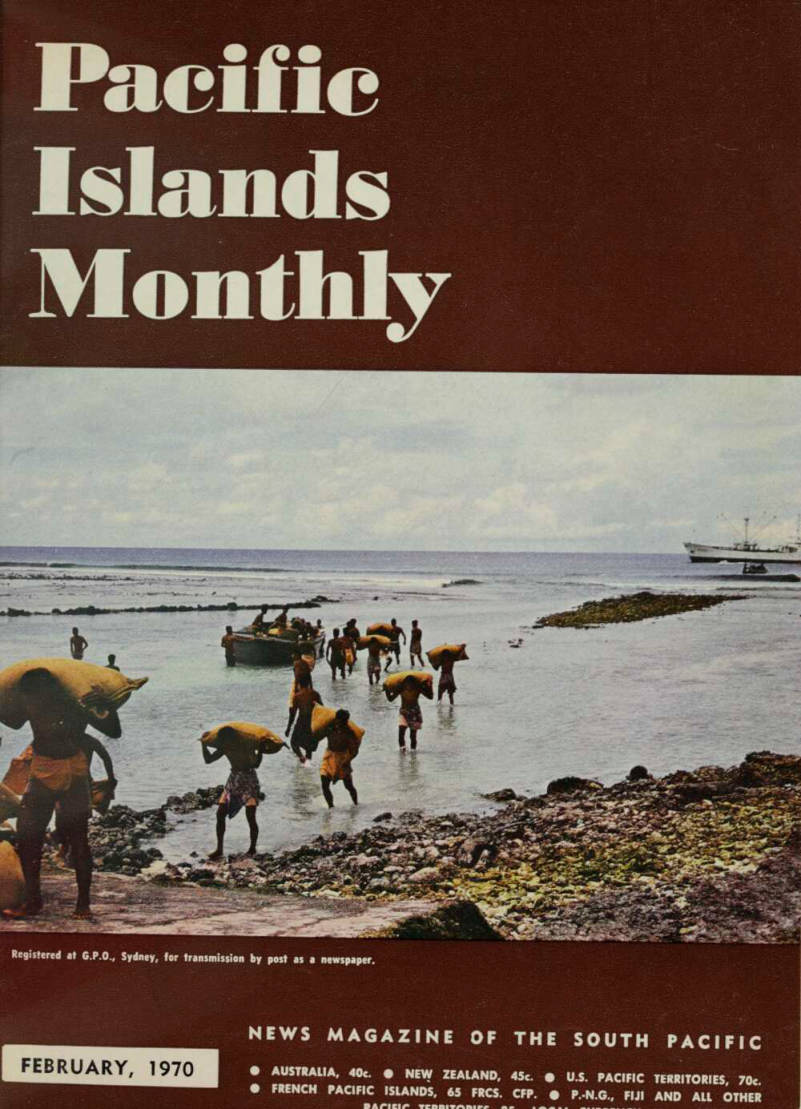 1
1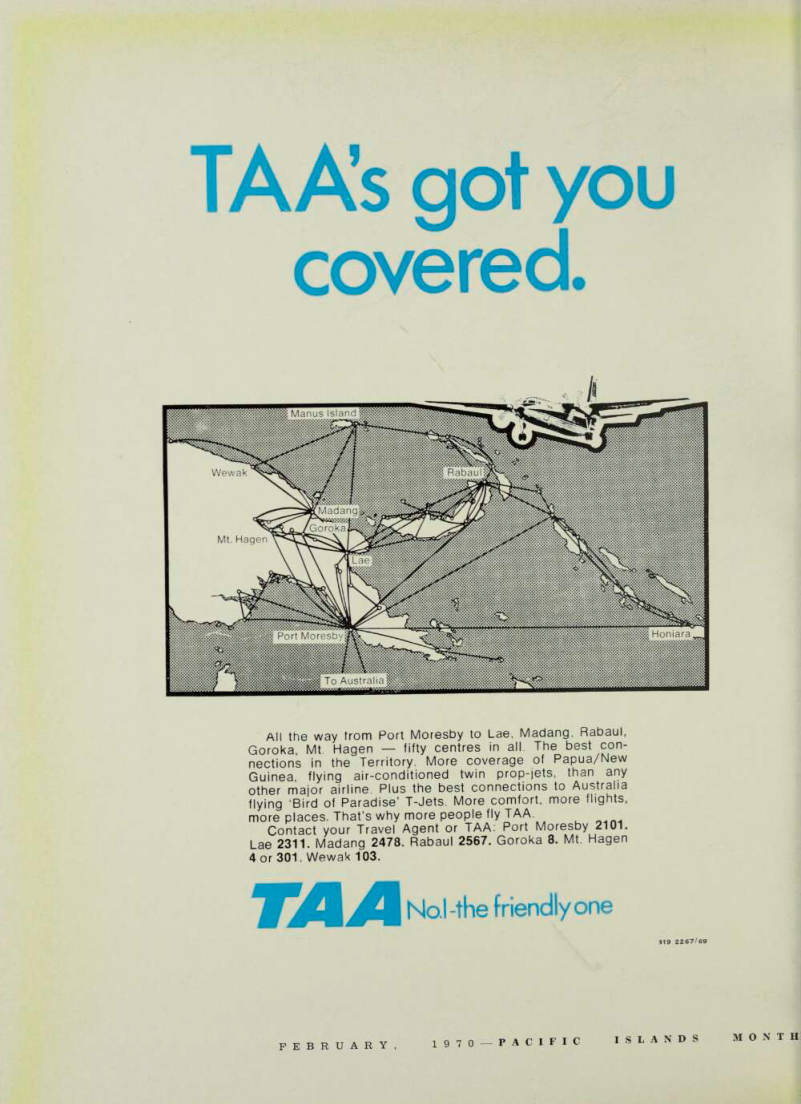 2
2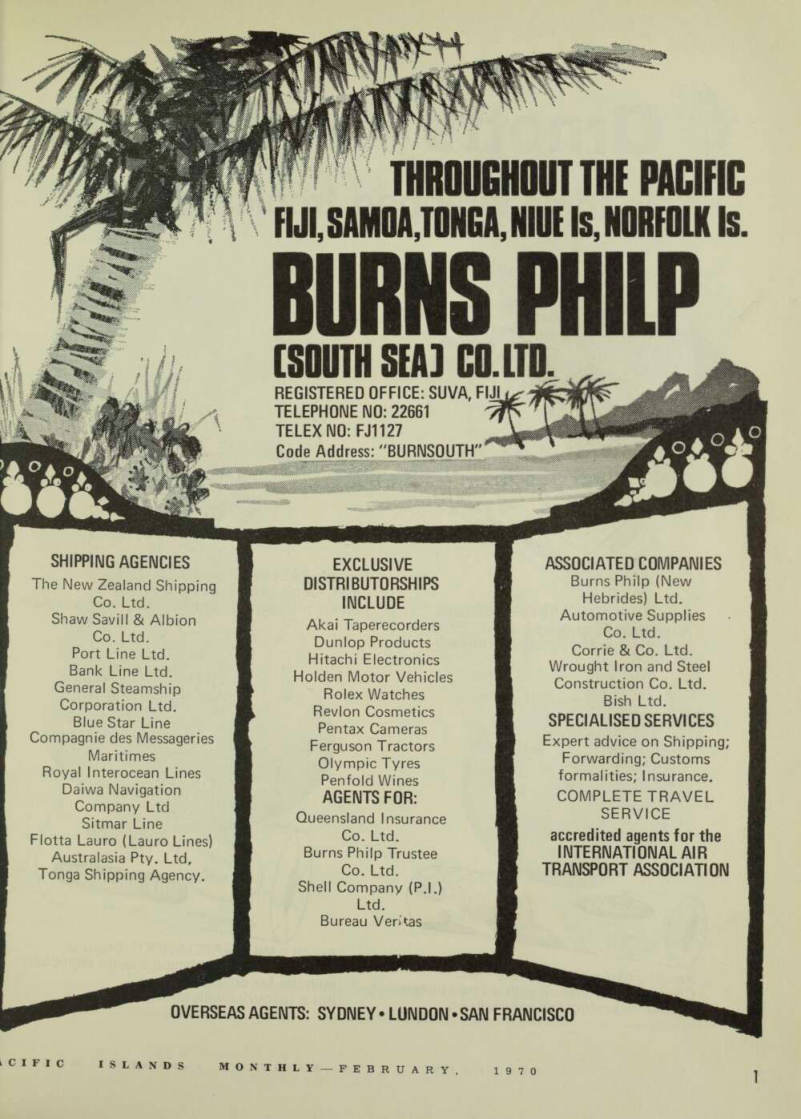 3
3 4
4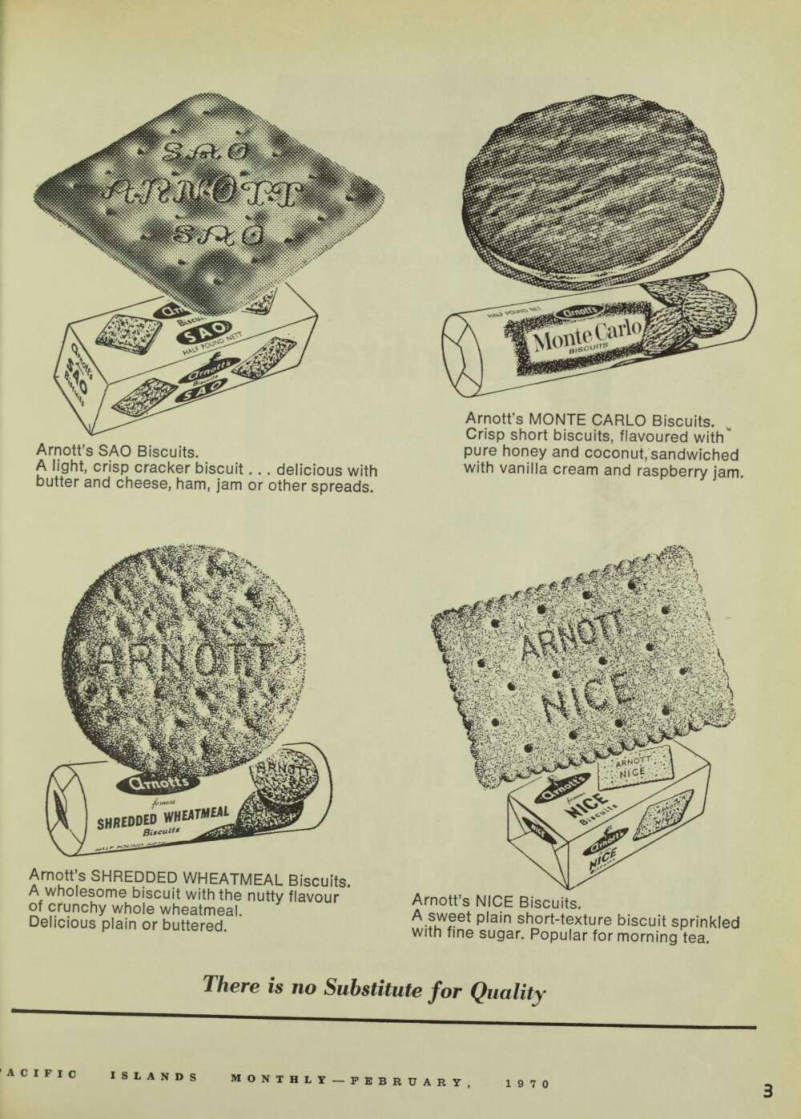 5
5 6
6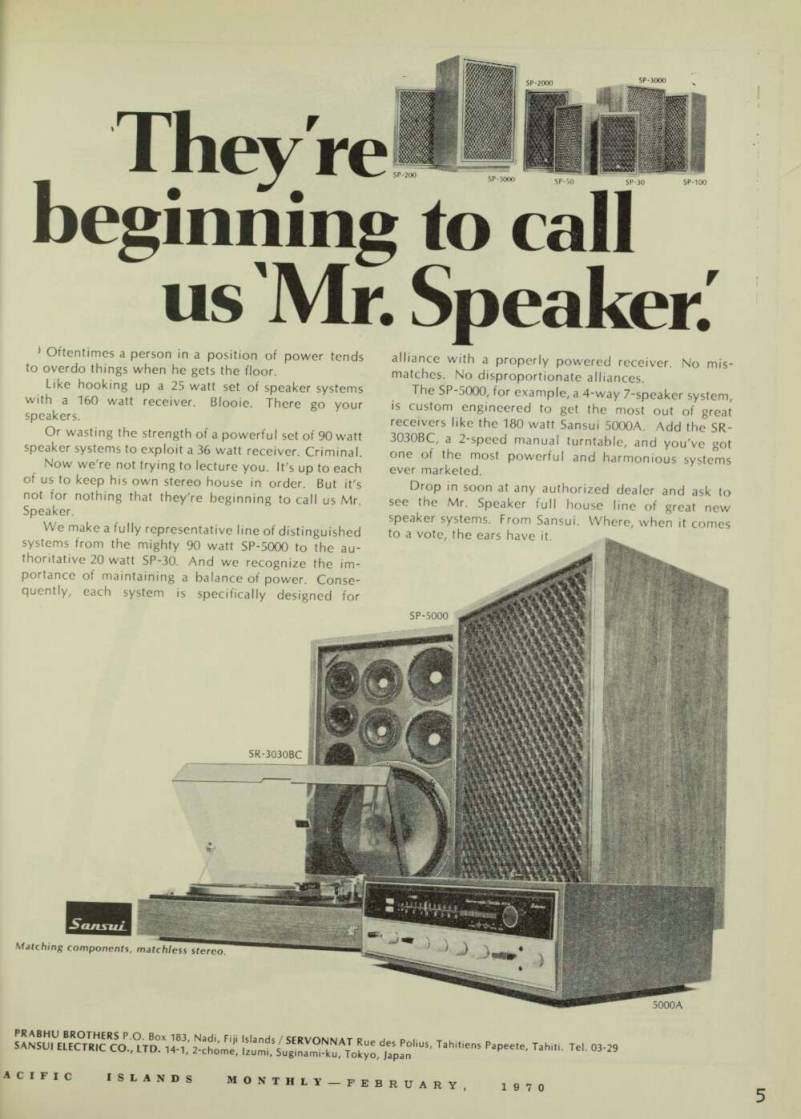 7
7 8
8 9
9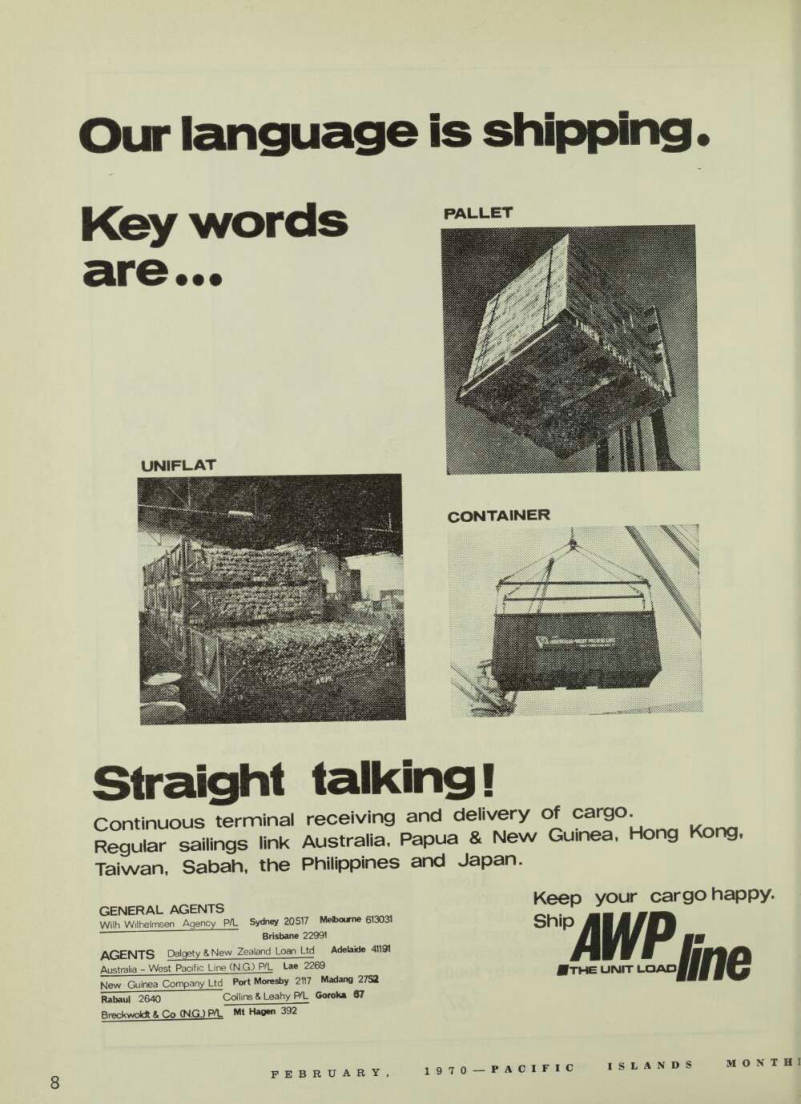 10
10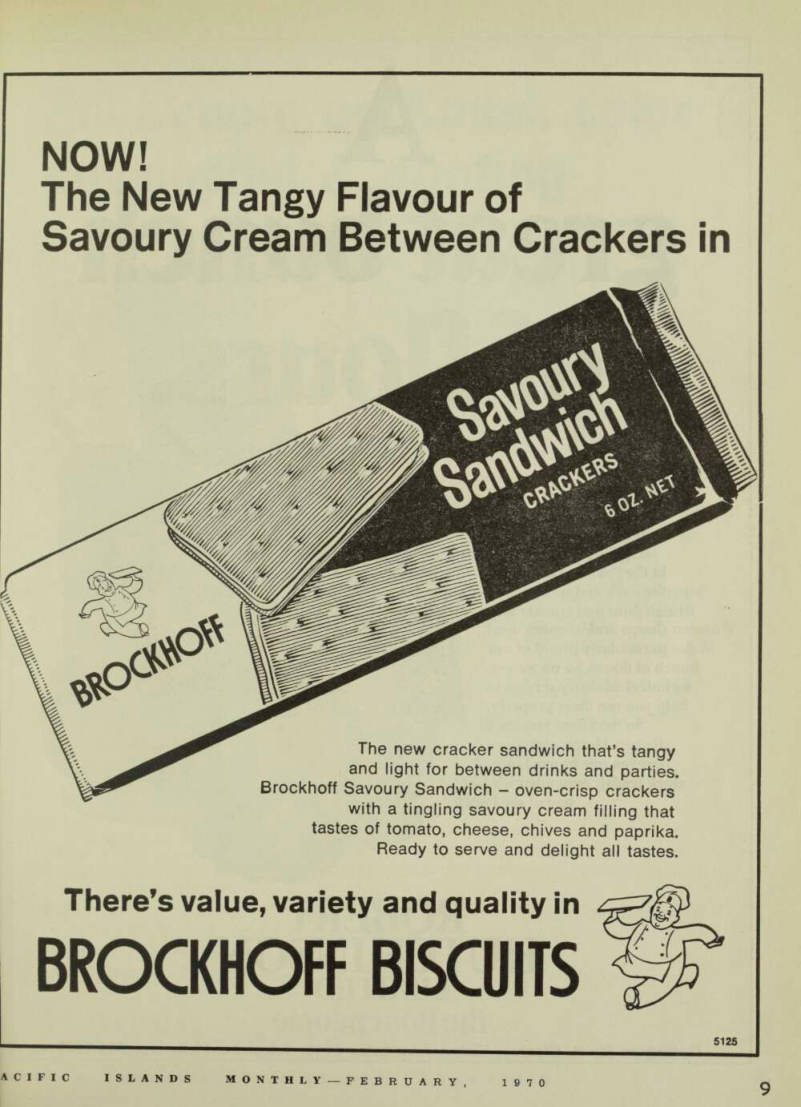 11
11 12
12 13
13 14
14 15
15 16
16 17
17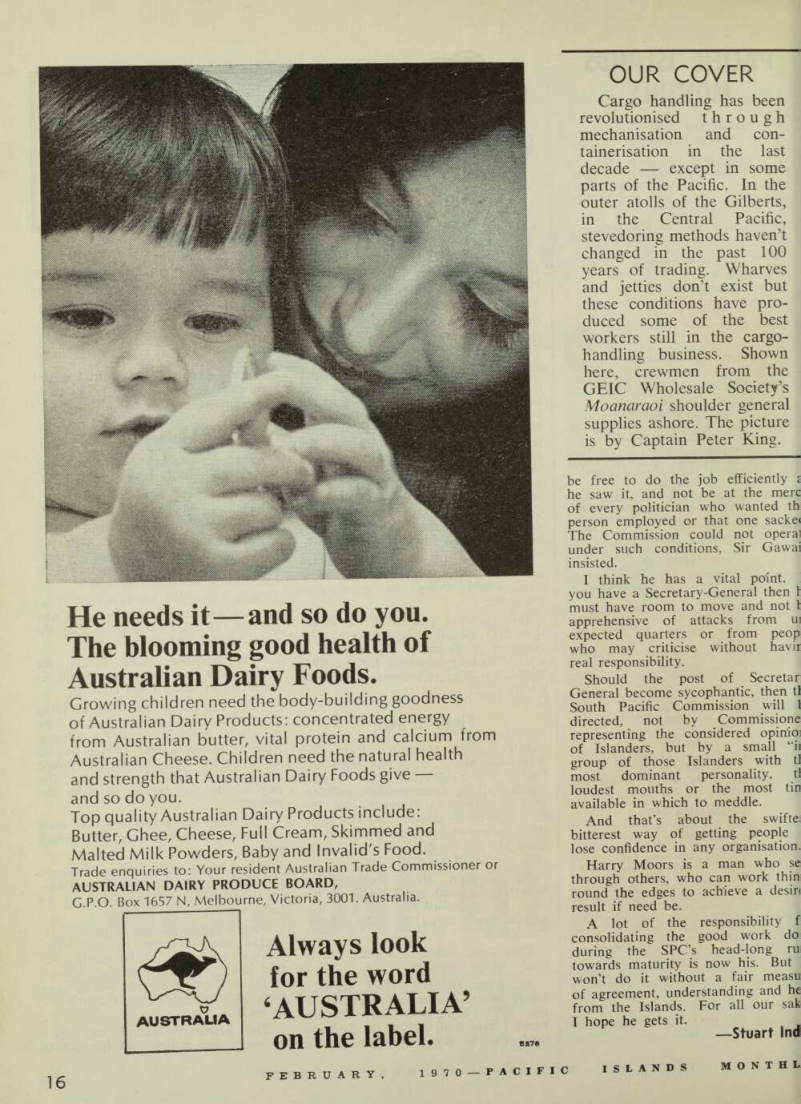 18
18 19
19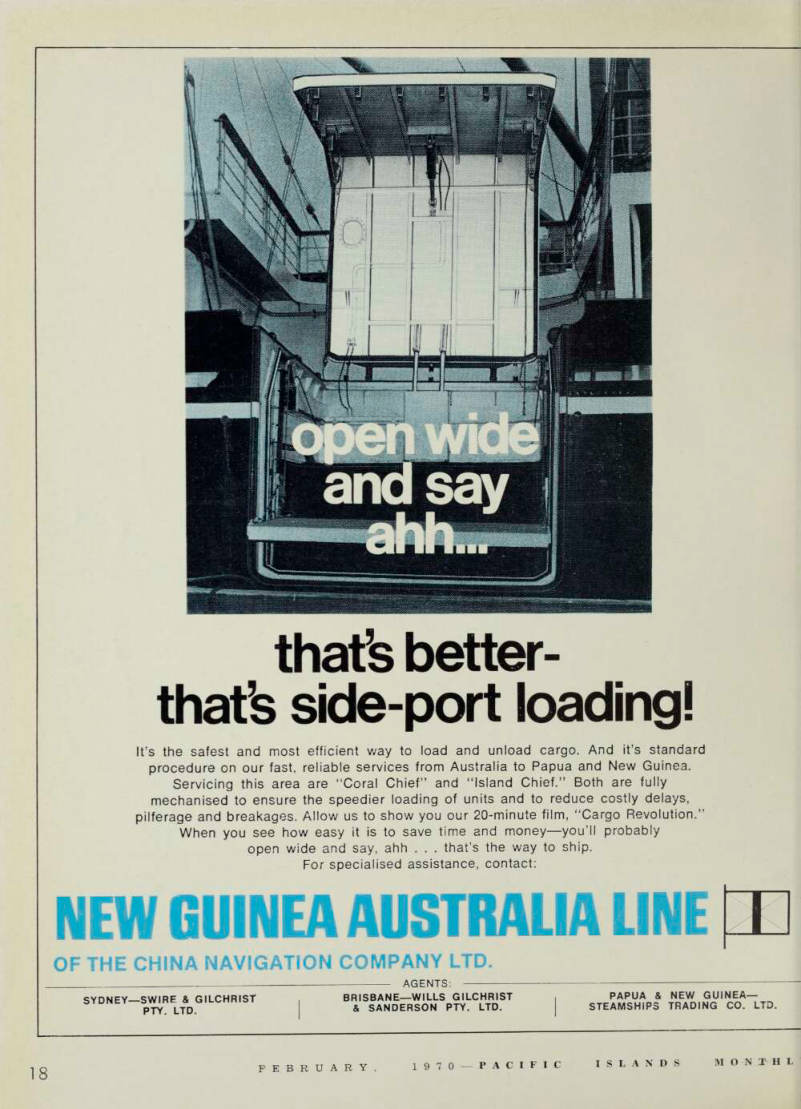 20
20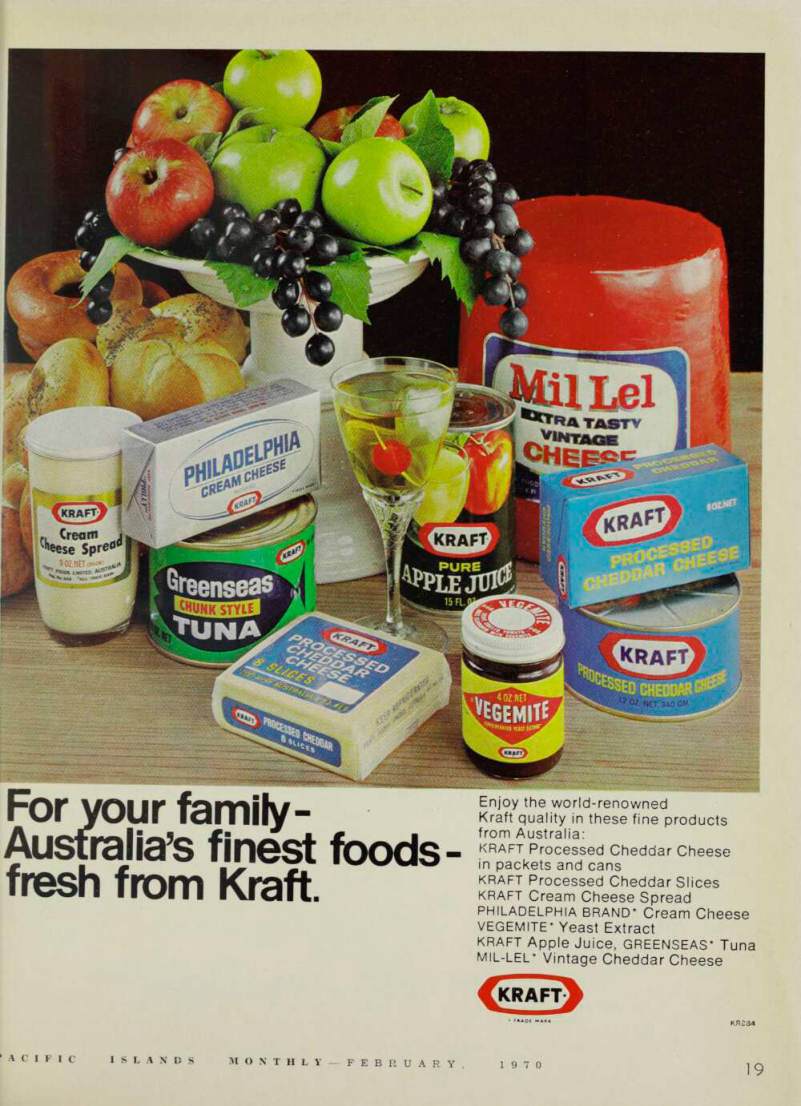 21
21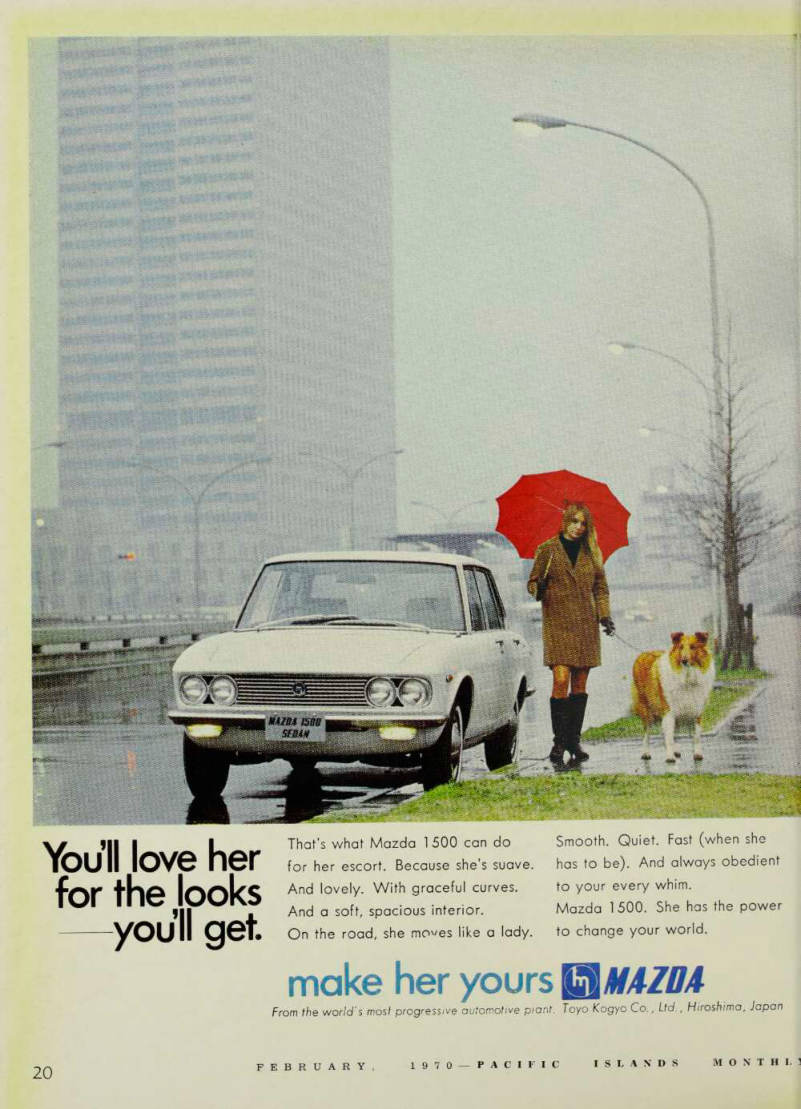 22
22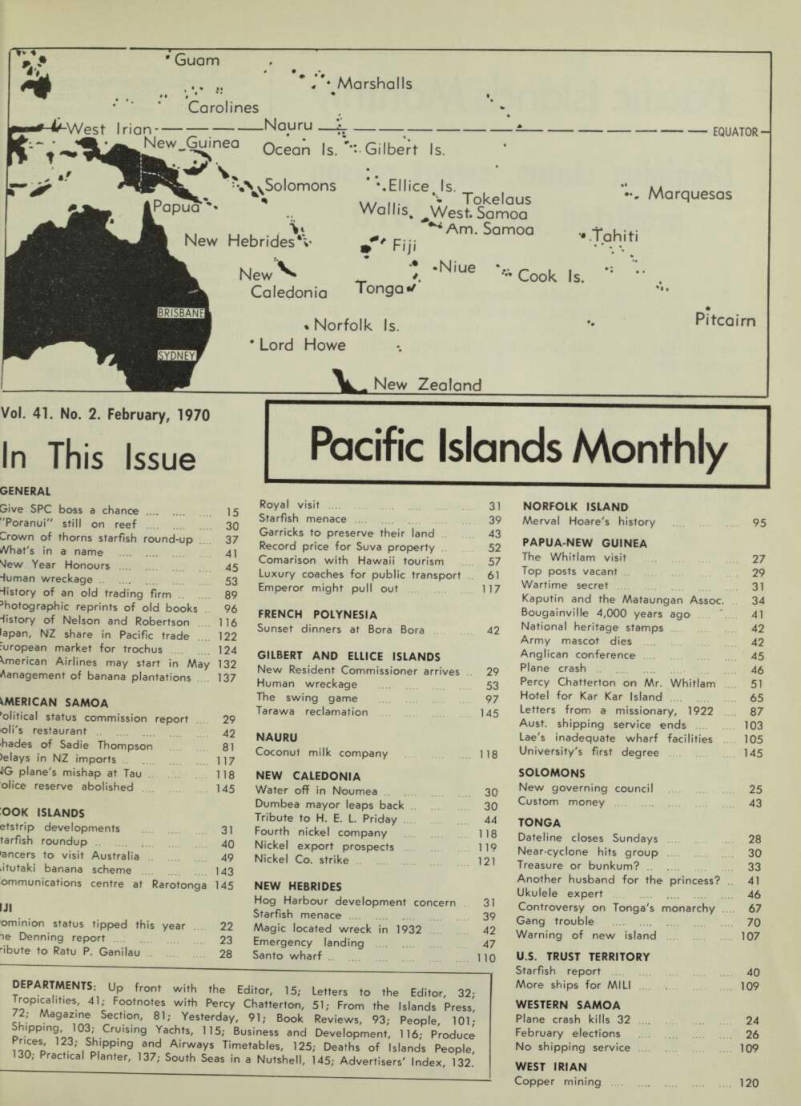 23
23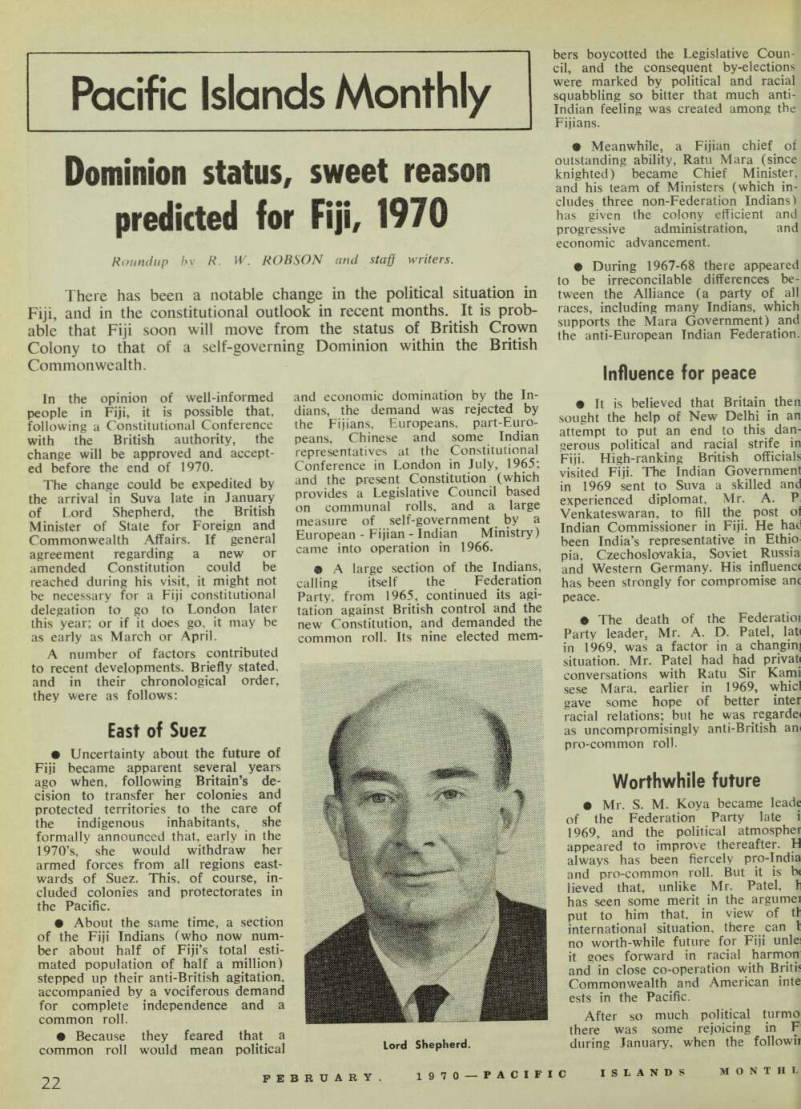 24
24 25
25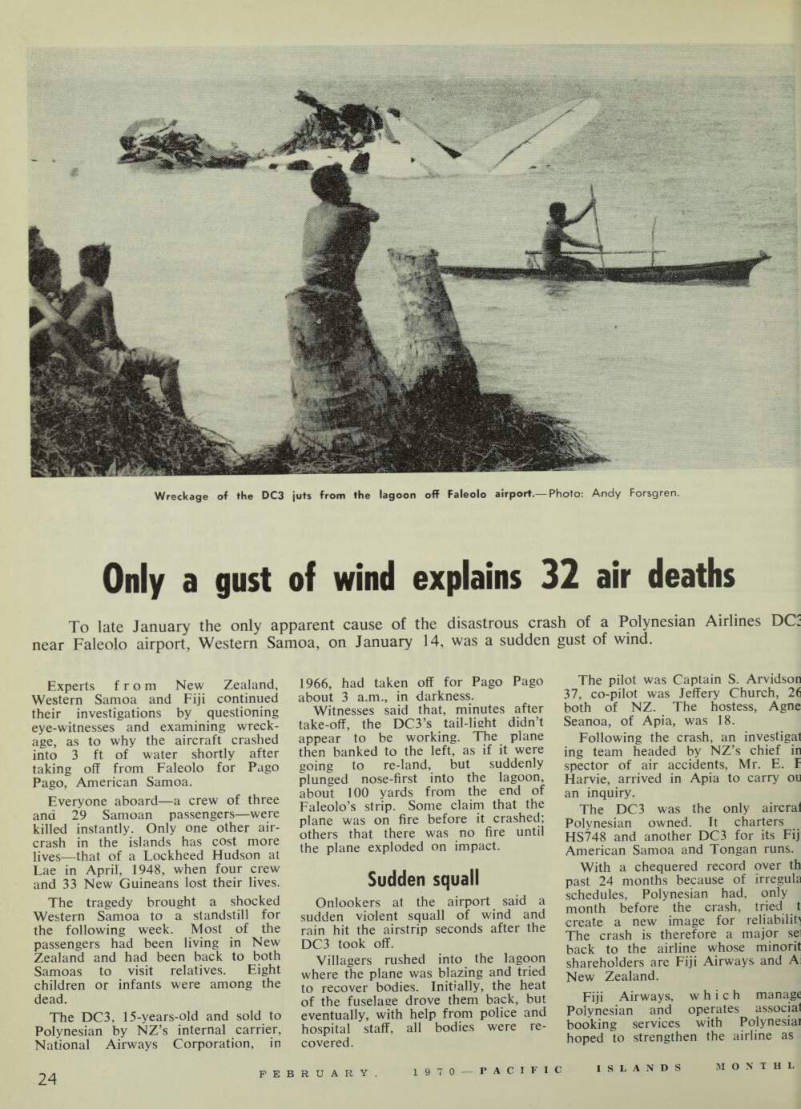 26
26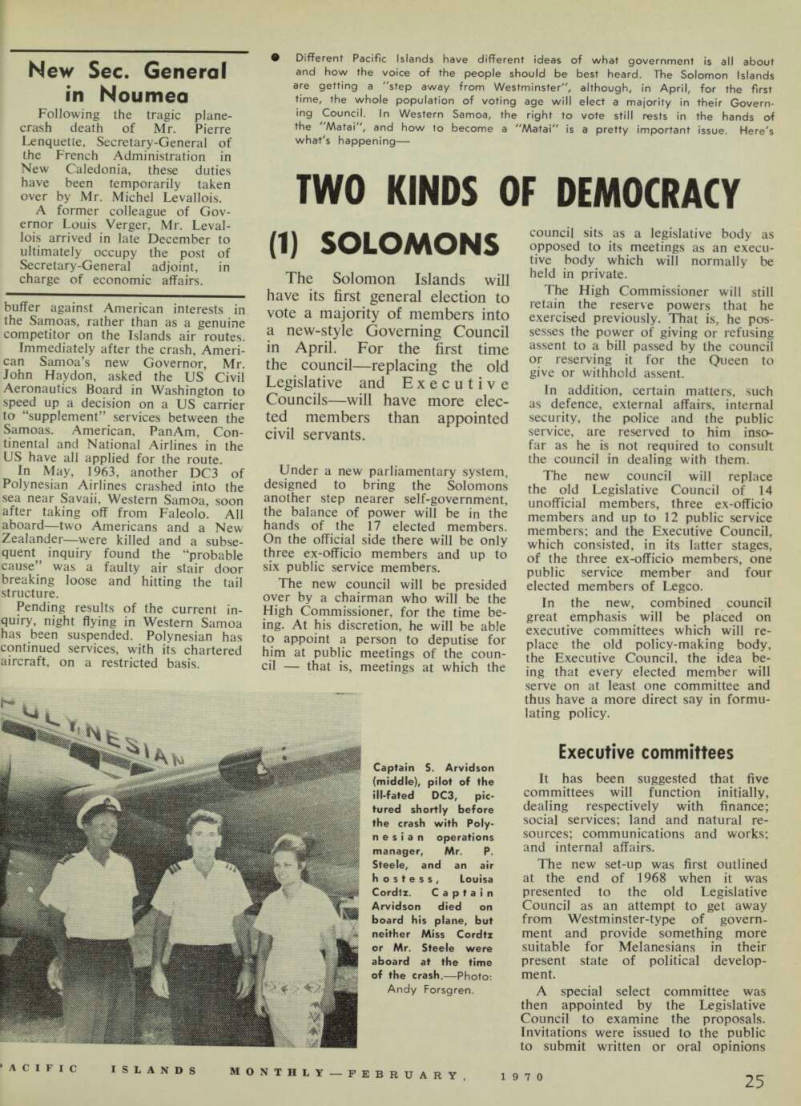 27
27 28
28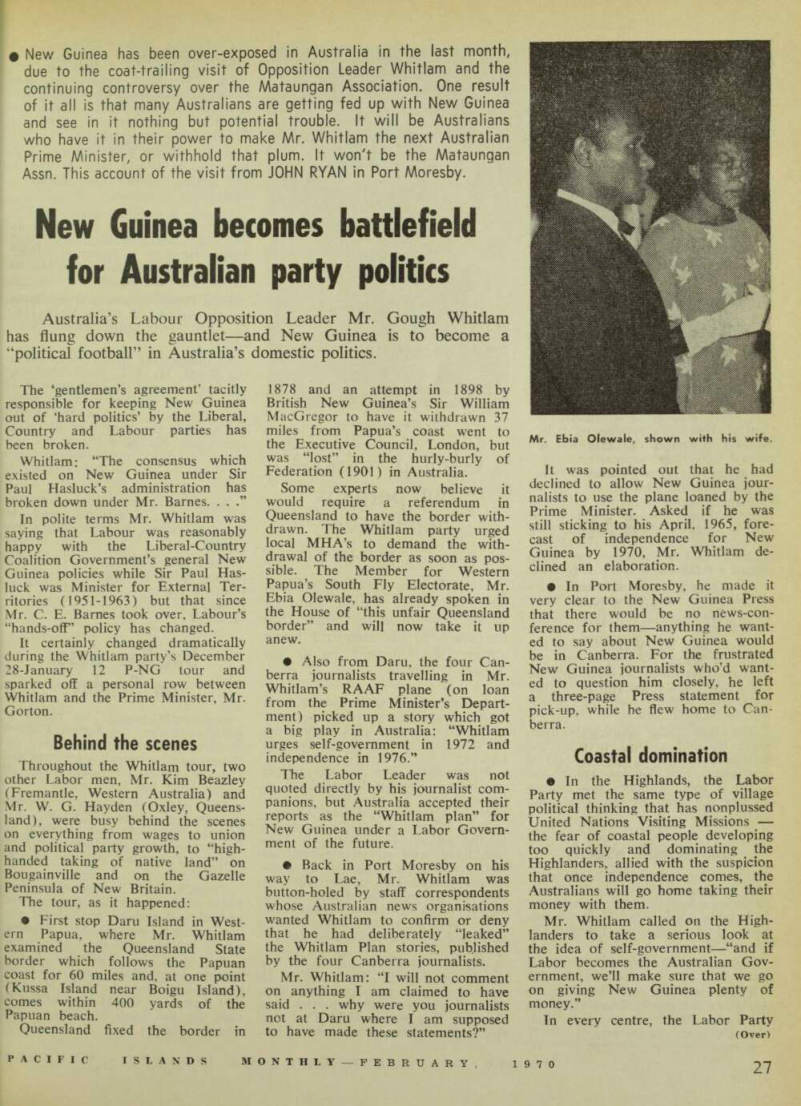 29
29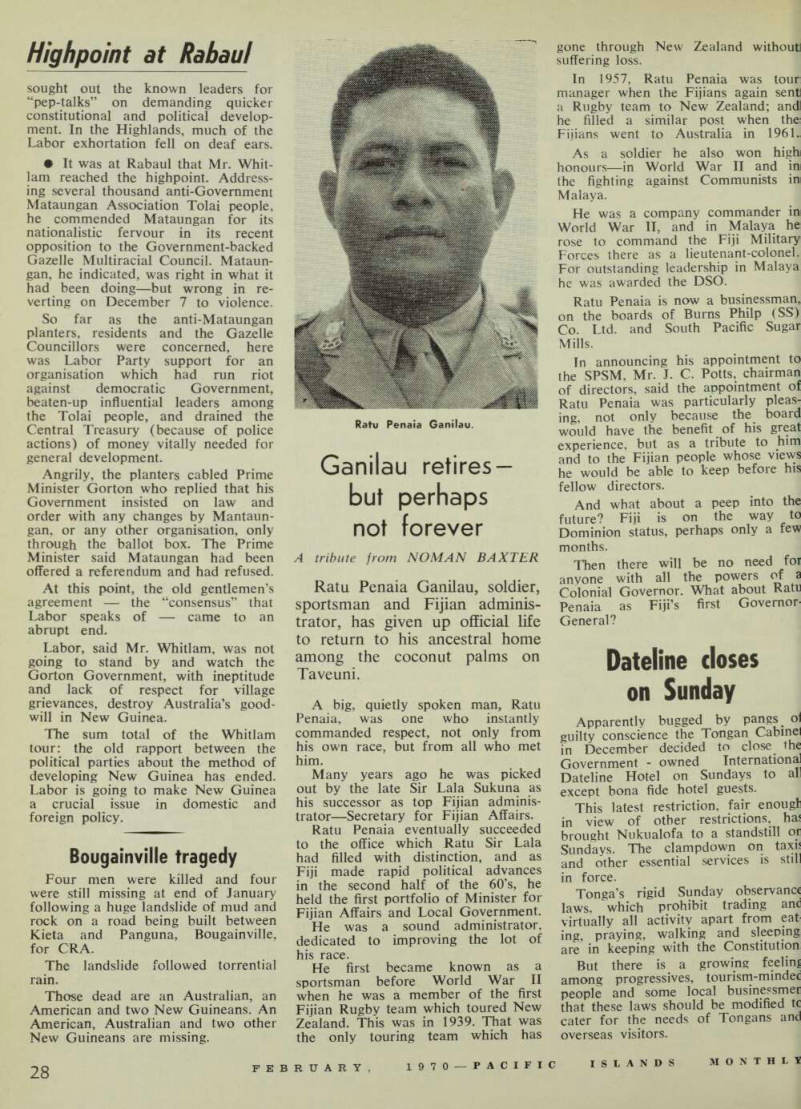 30
30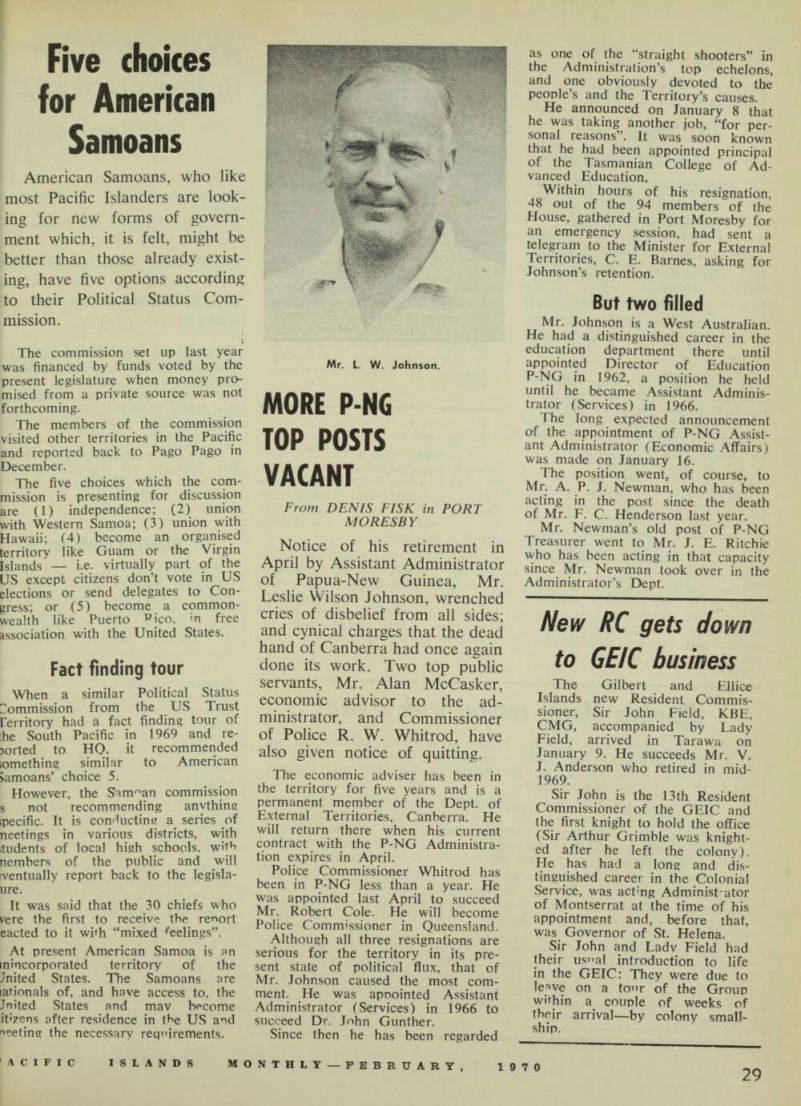 31
31 32
32 33
33 34
34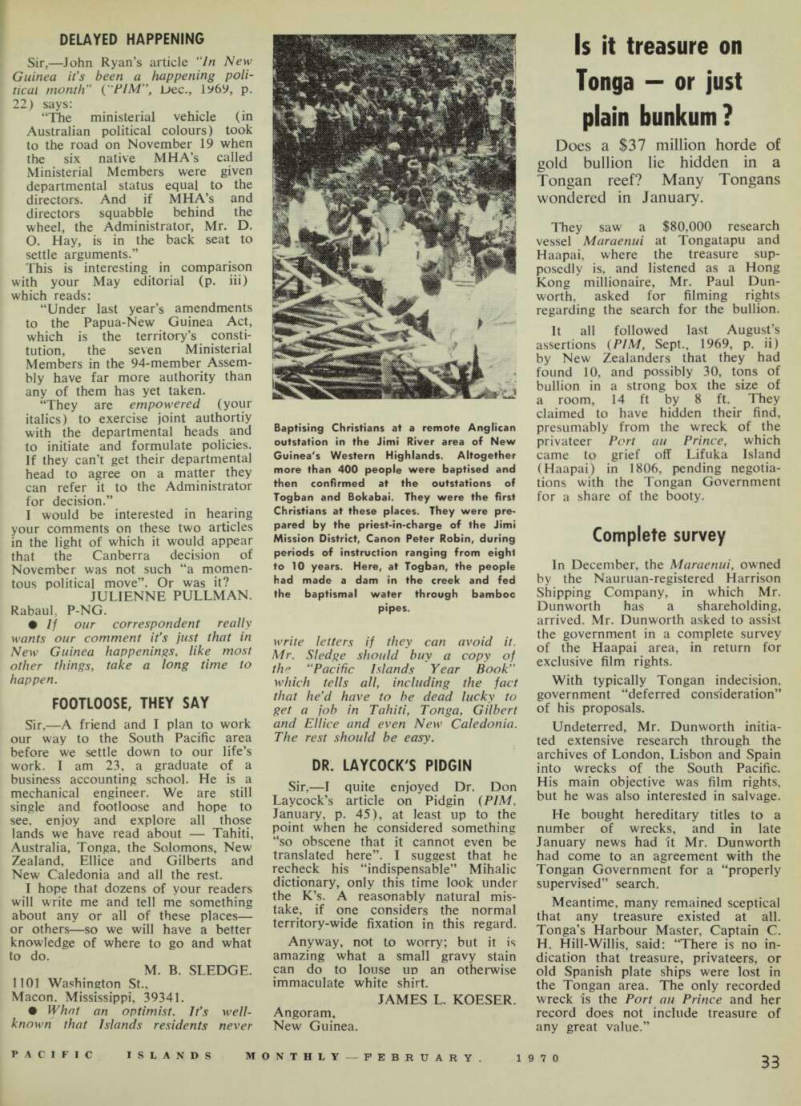 35
35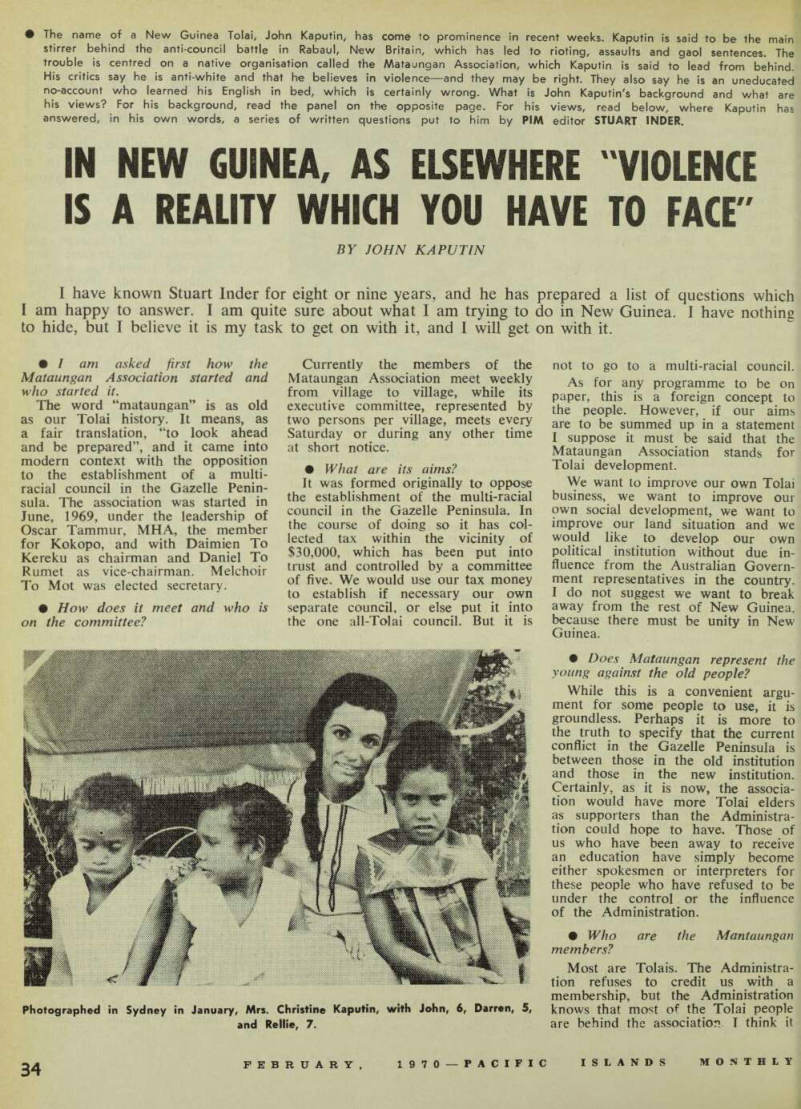 36
36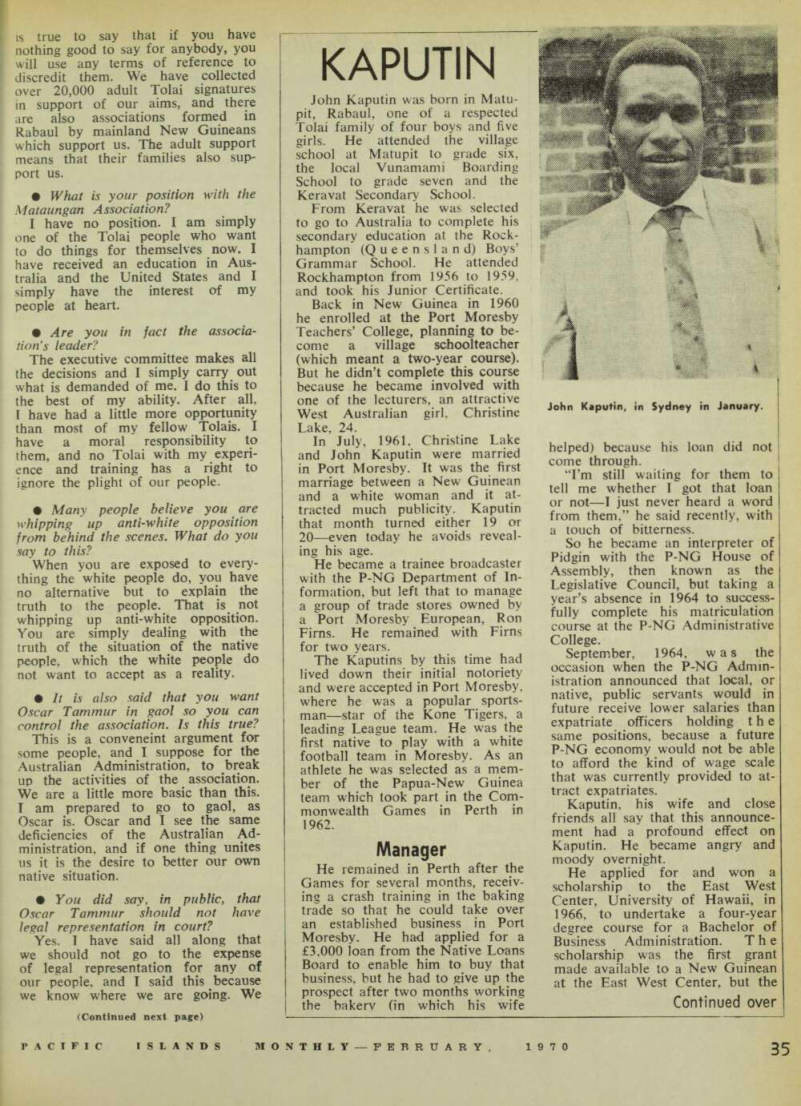 37
37 38
38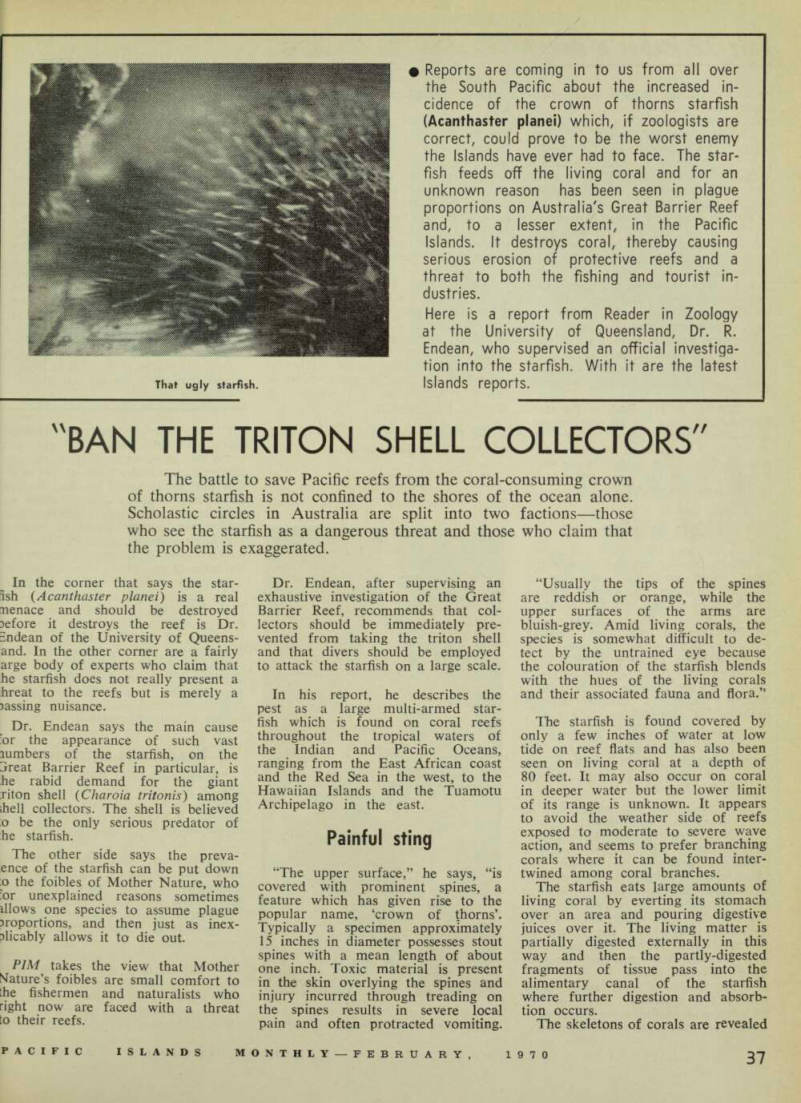 39
39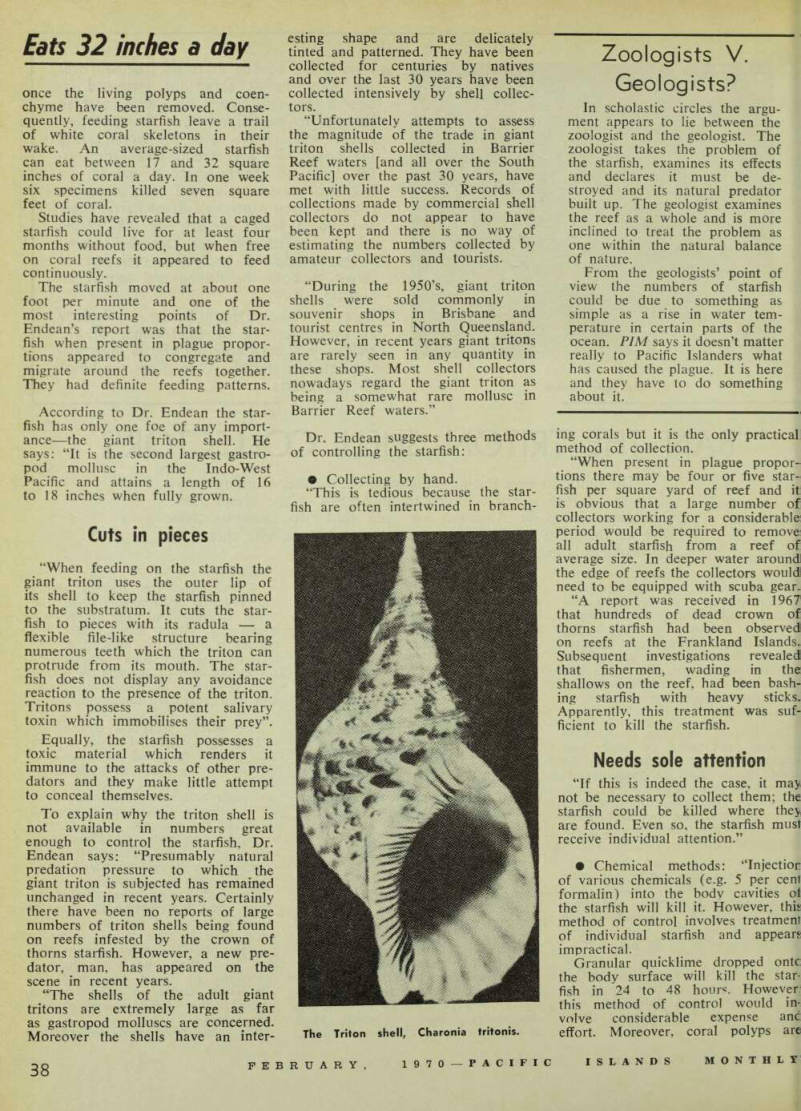 40
40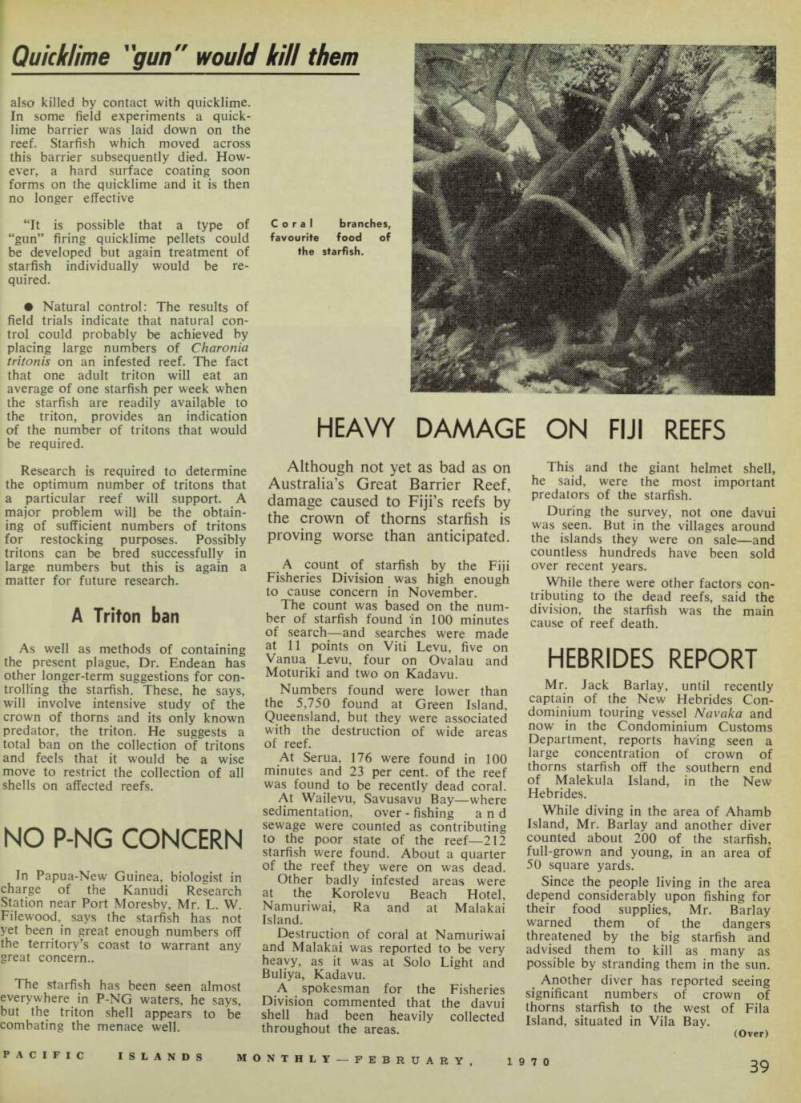 41
41 42
42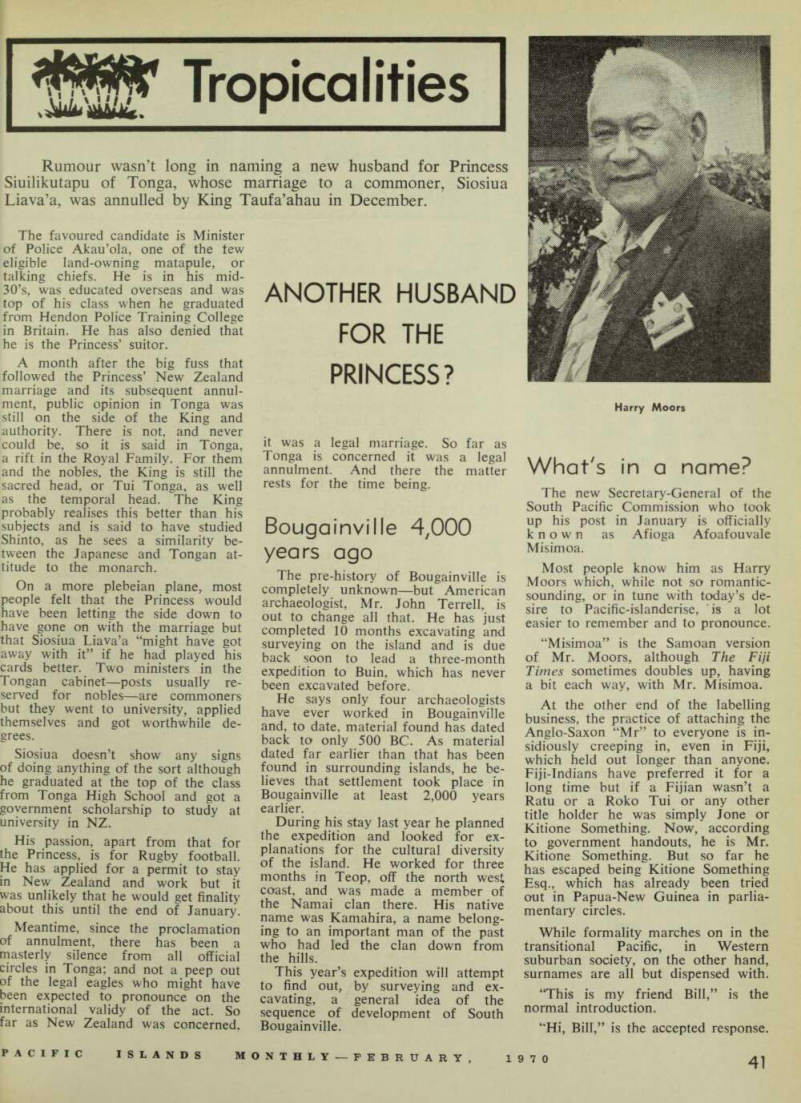 43
43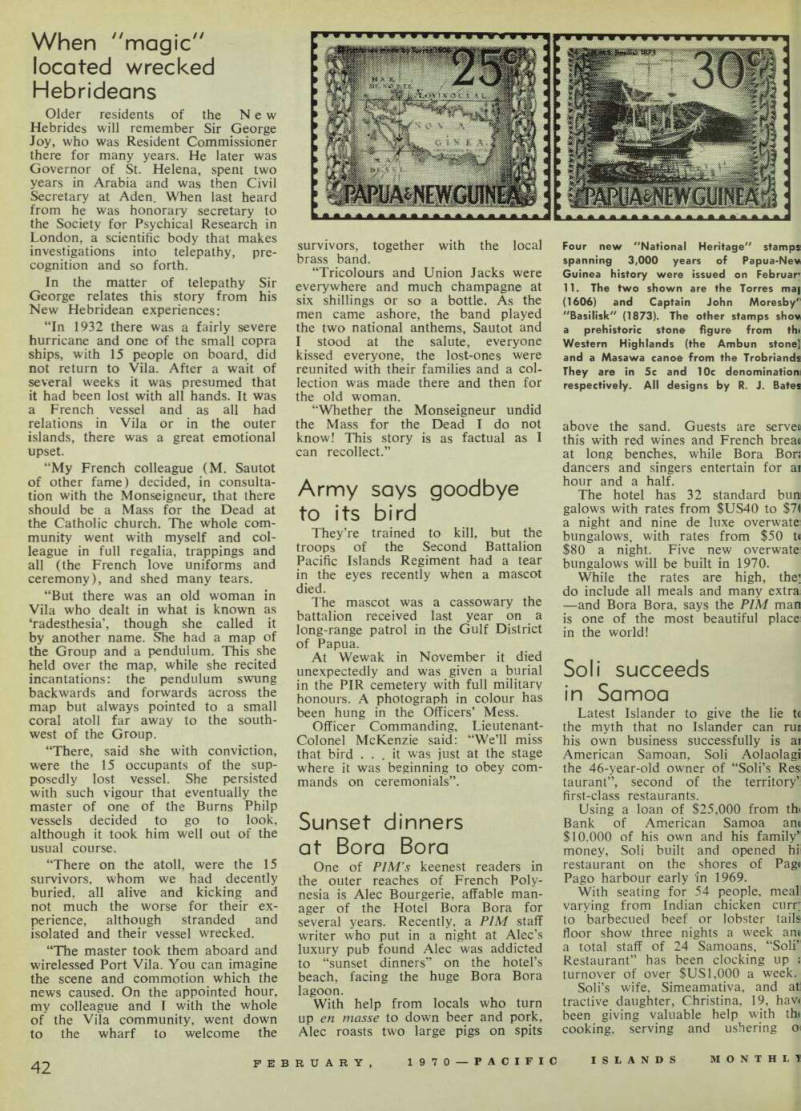 44
44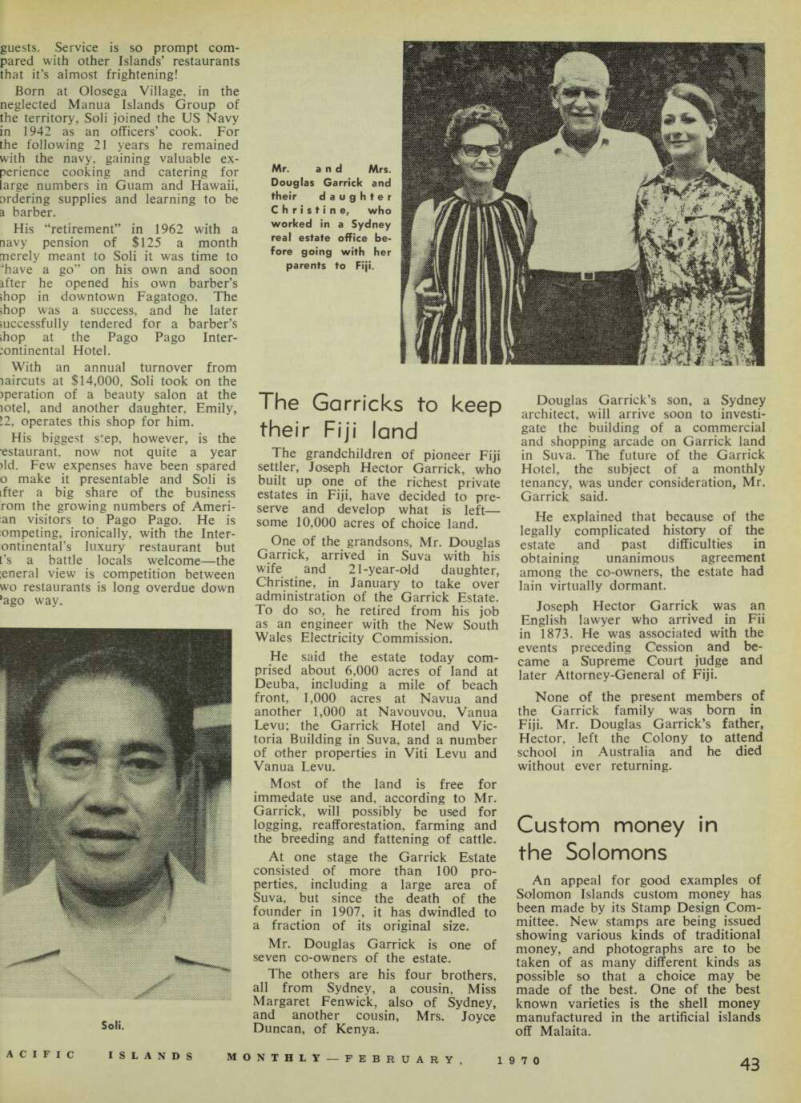 45
45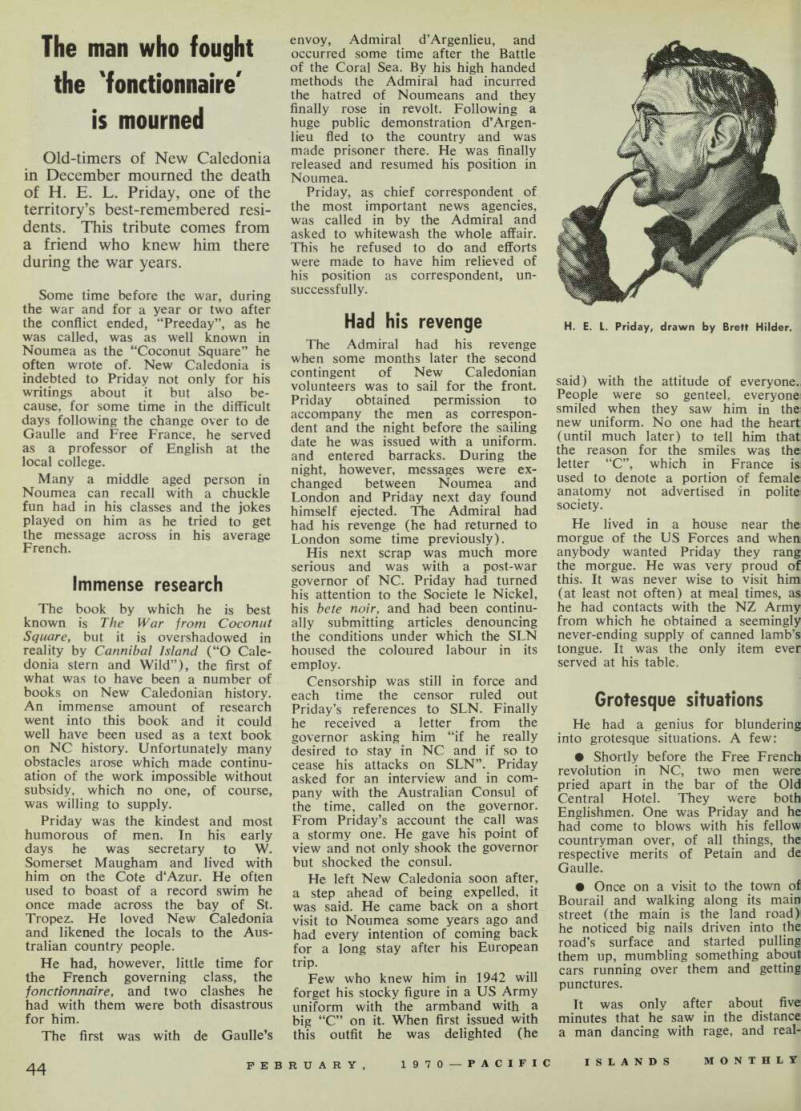 46
46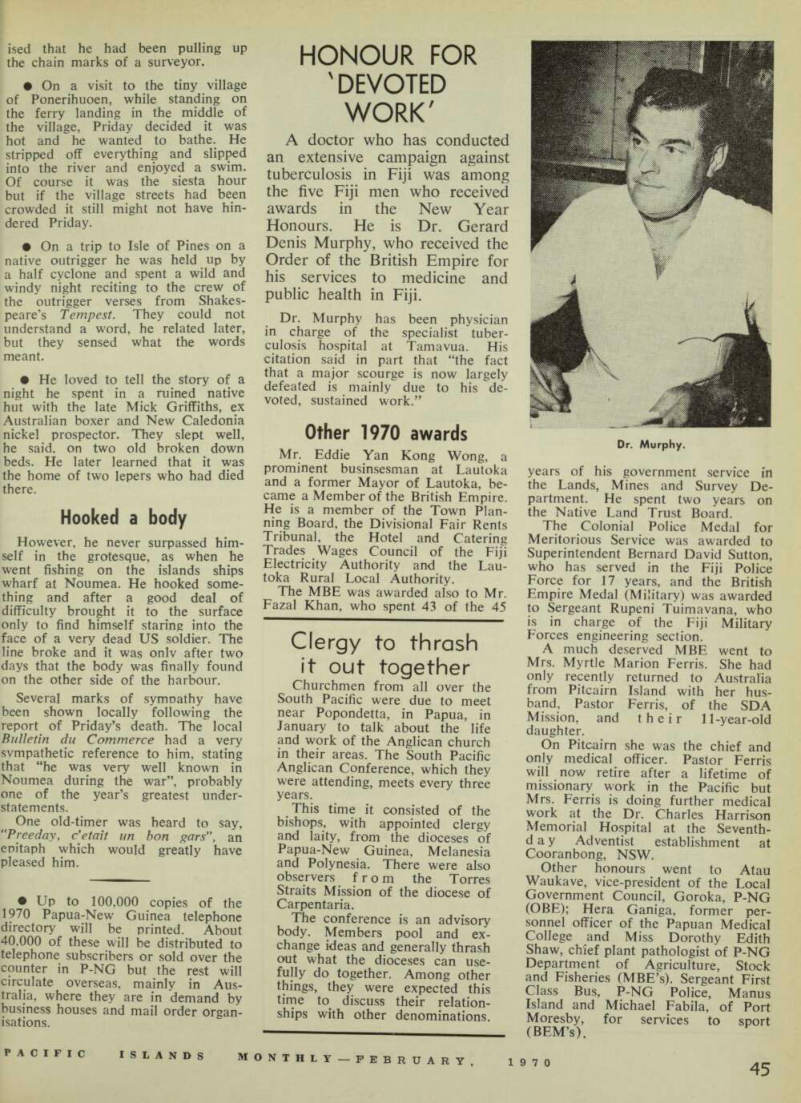 47
47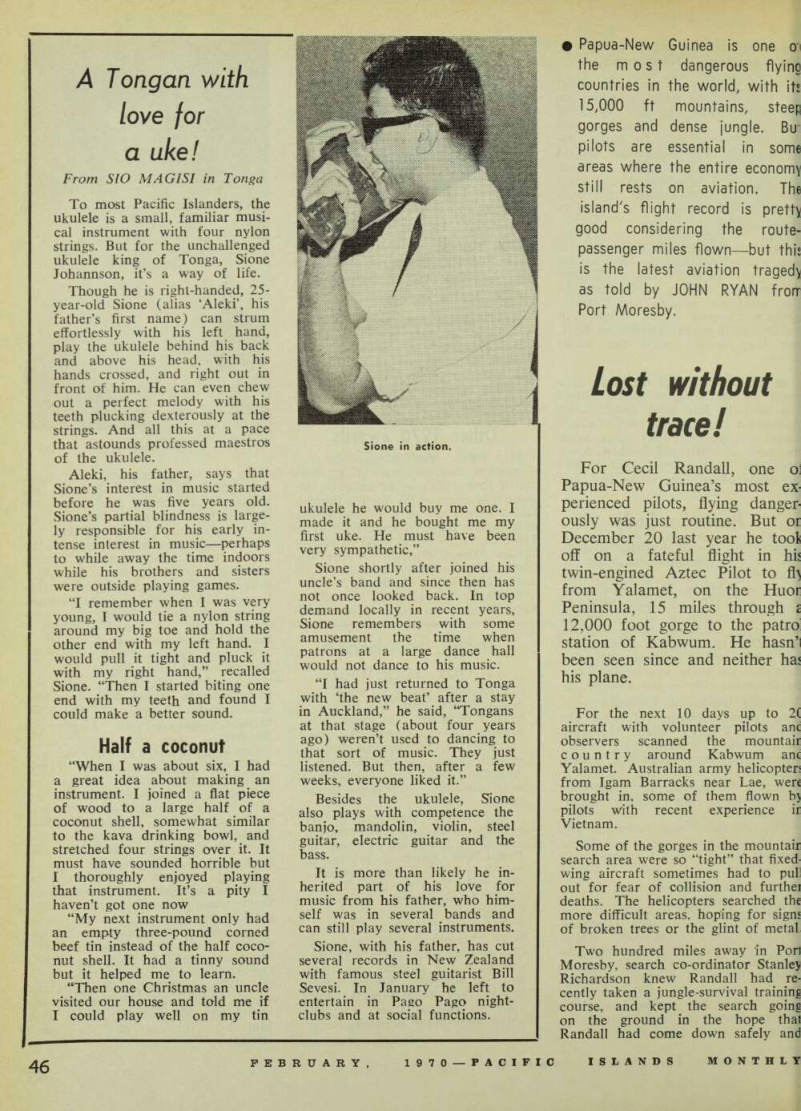 48
48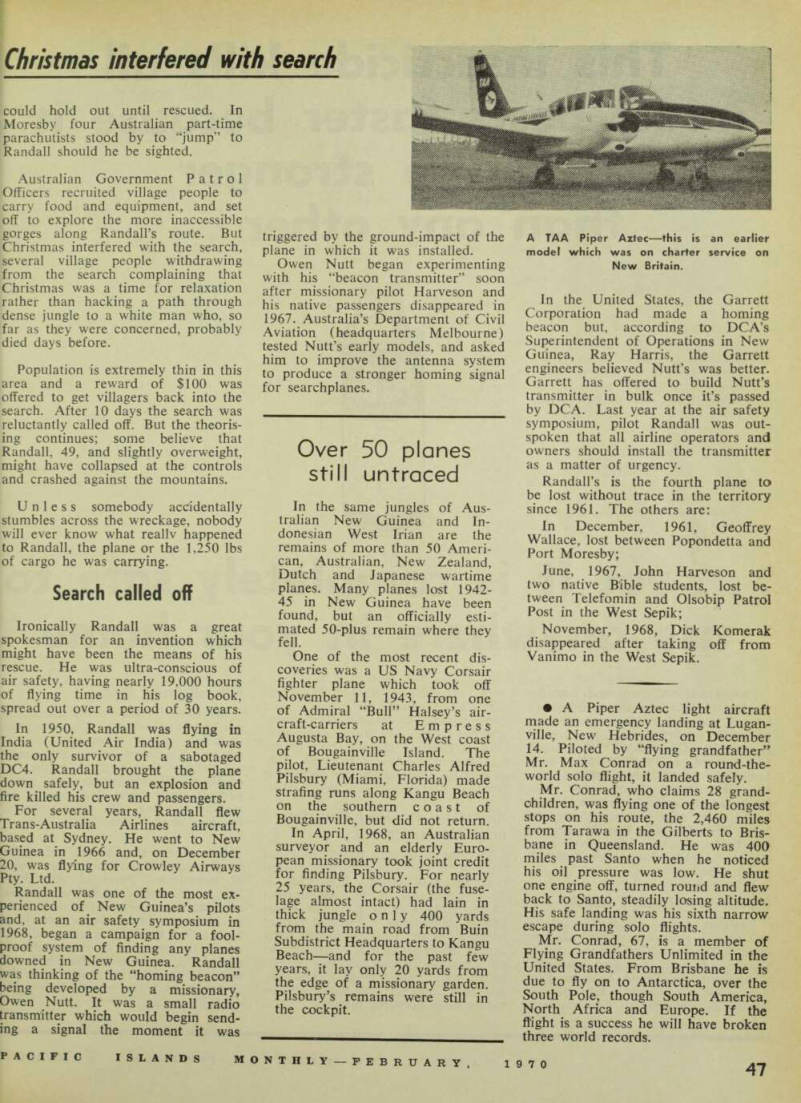 49
49 50
50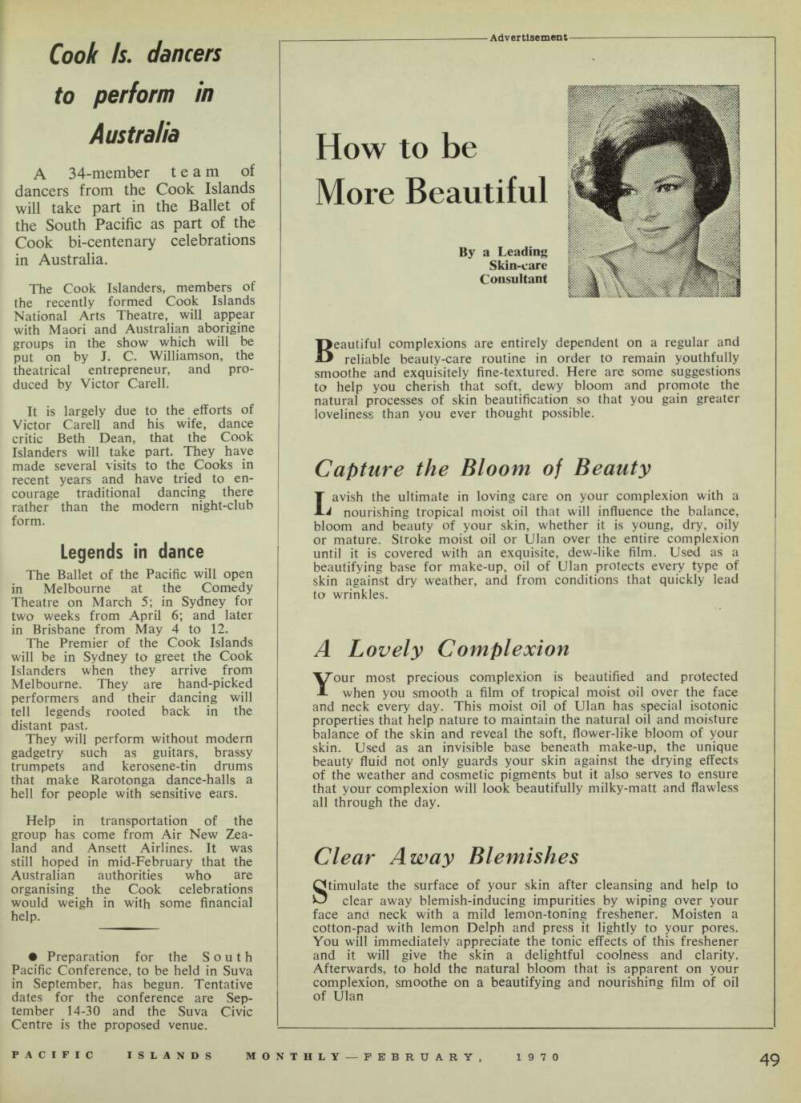 51
51 52
52 53
53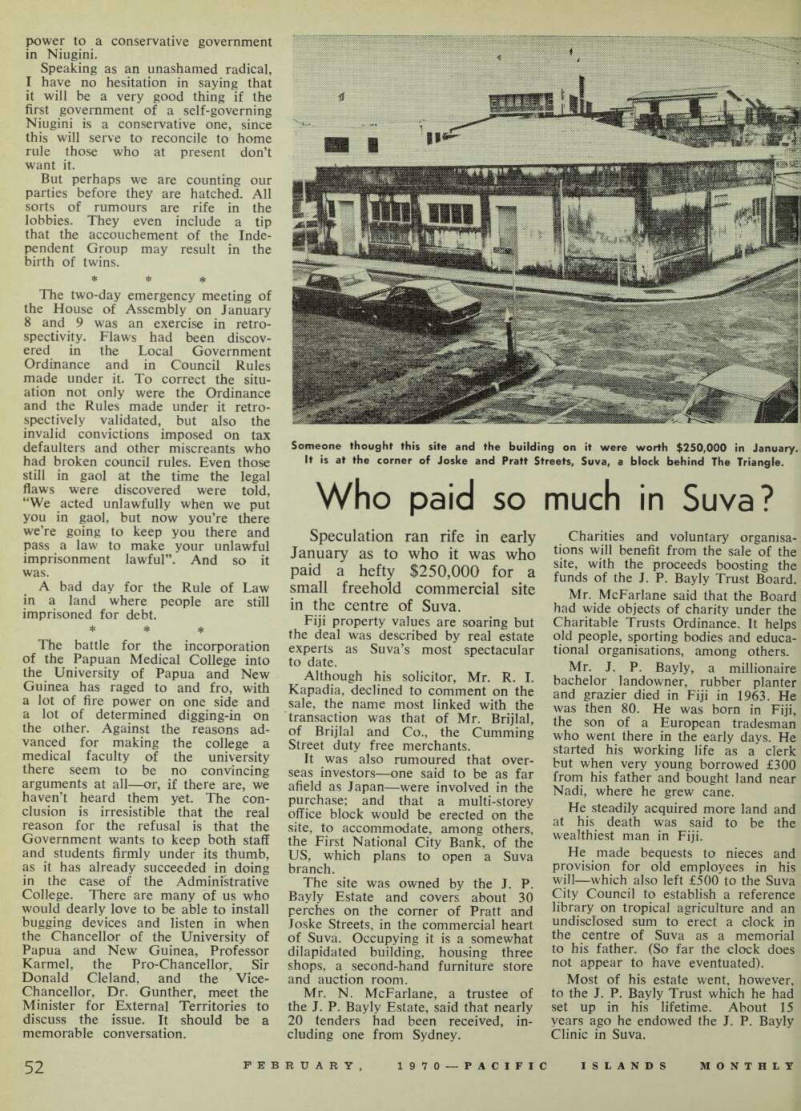 54
54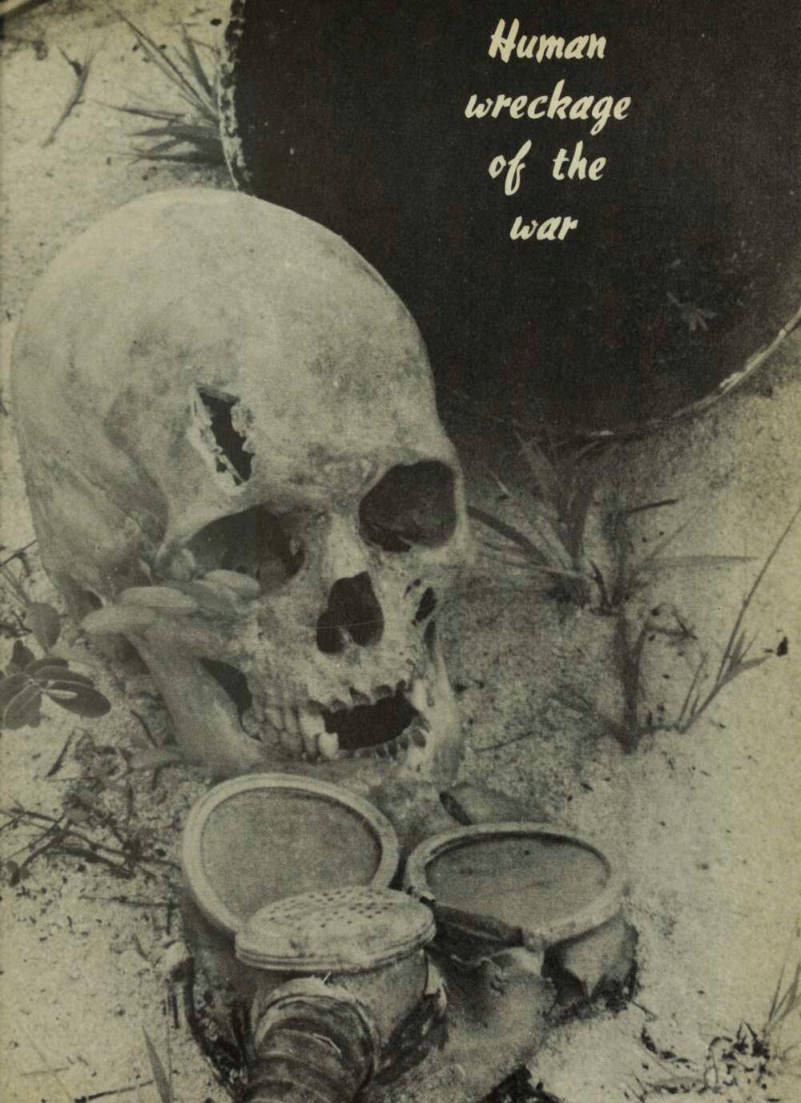 55
55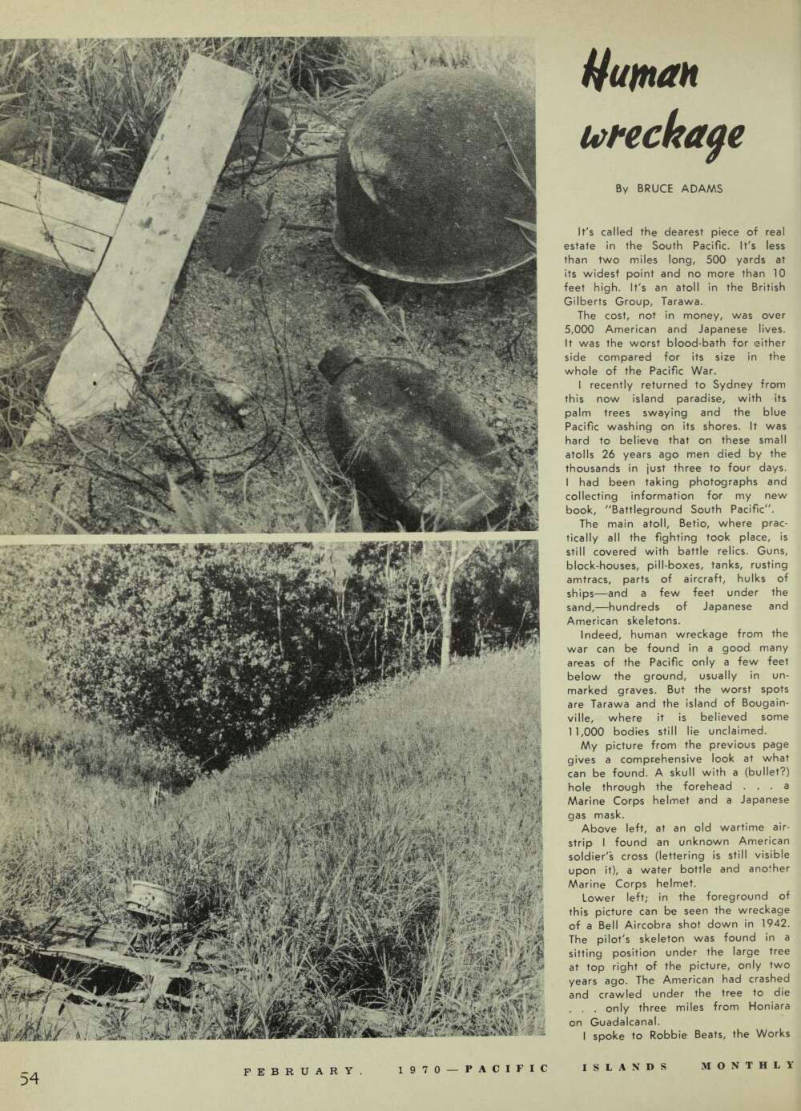 56
56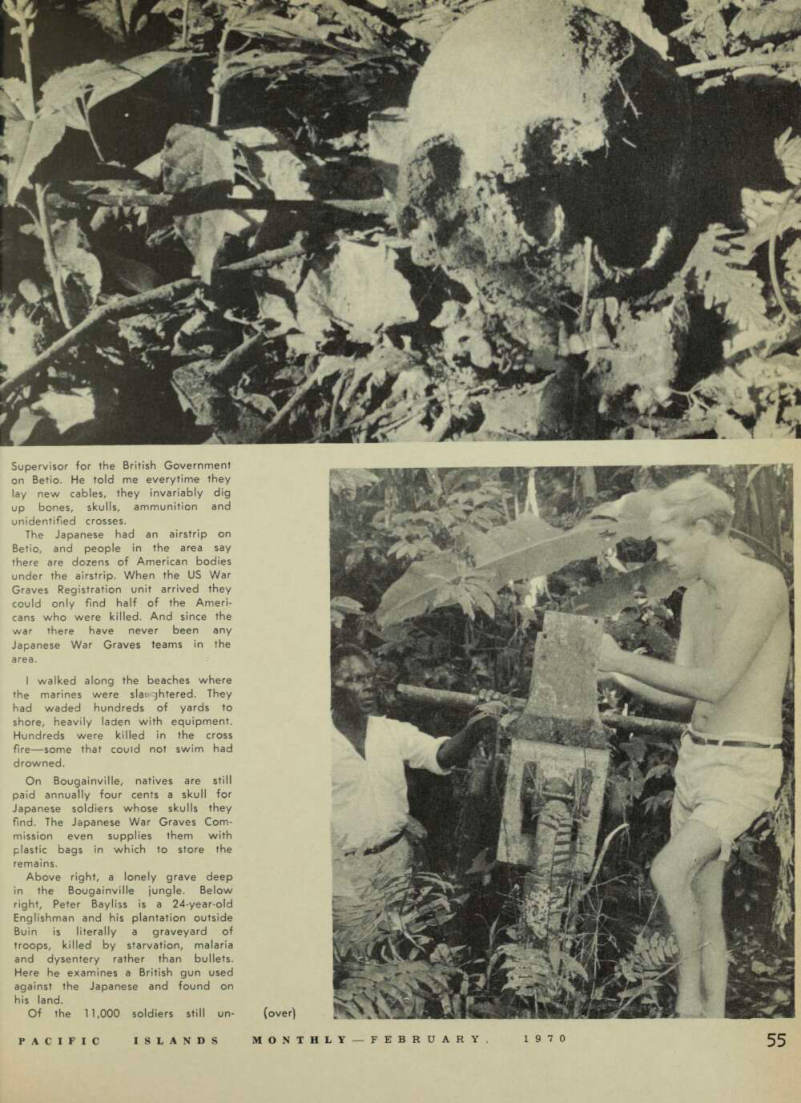 57
57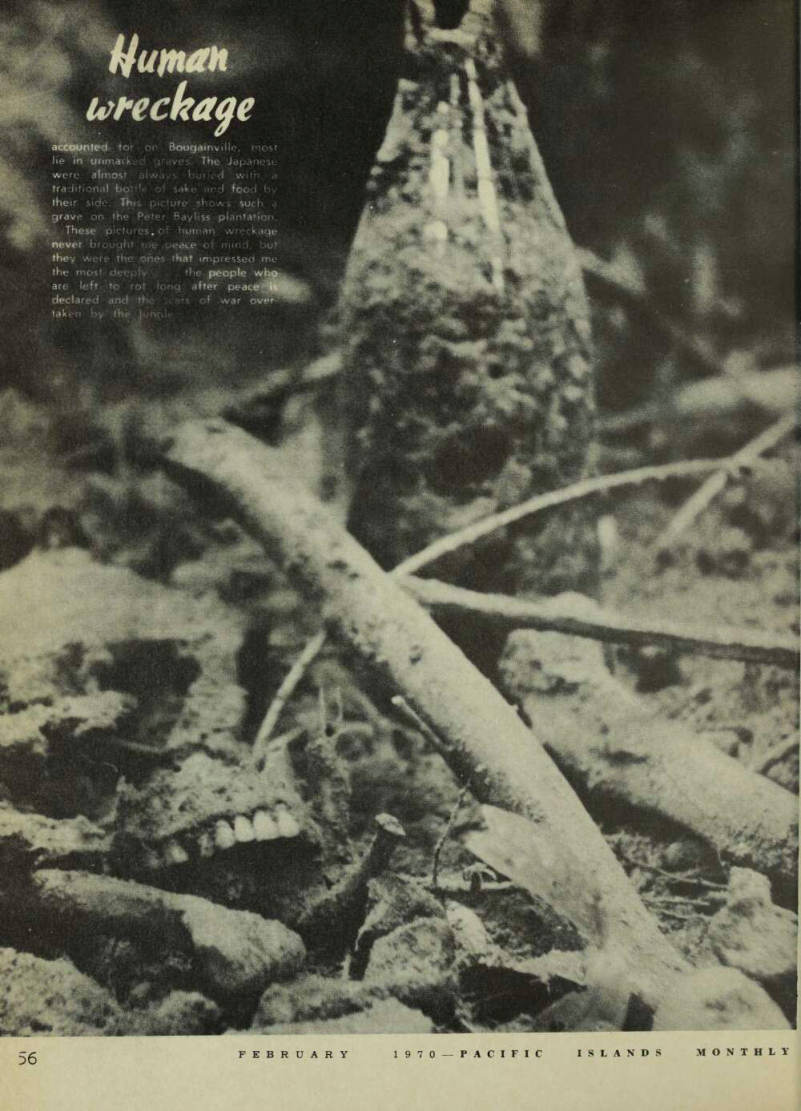 58
58 59
59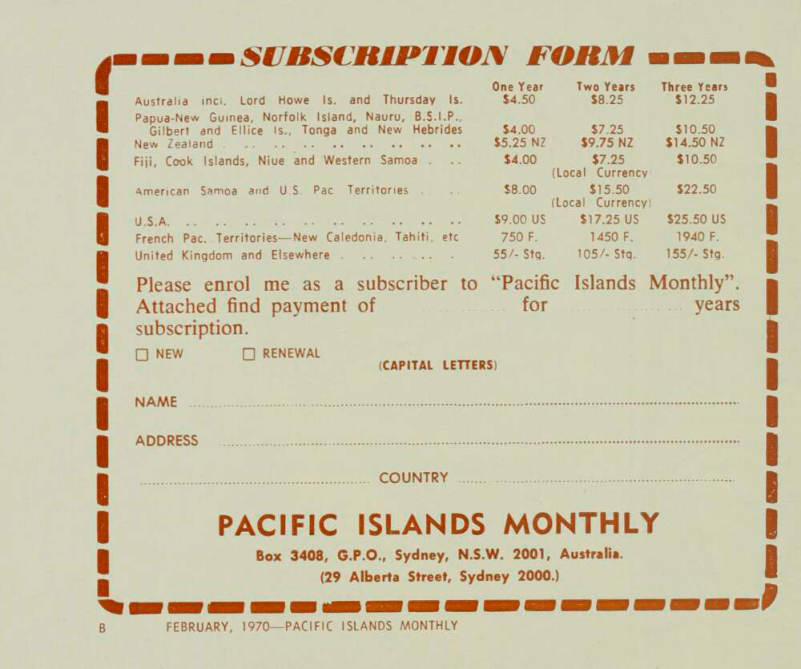 60
60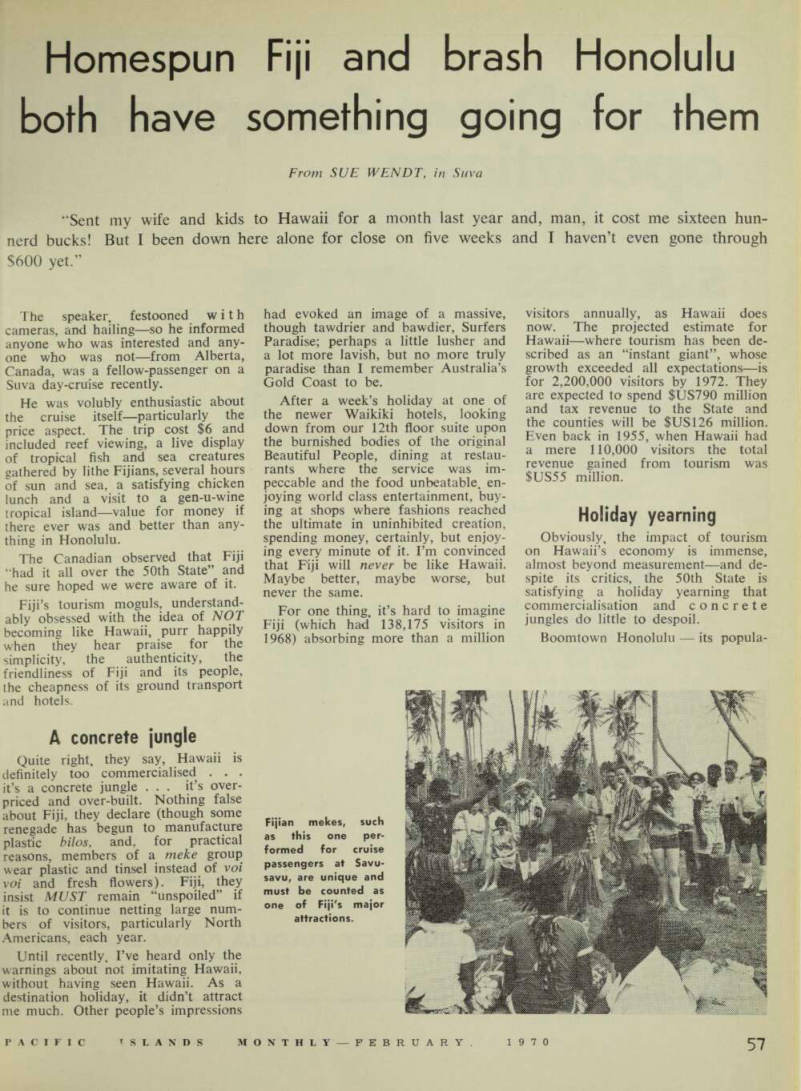 61
61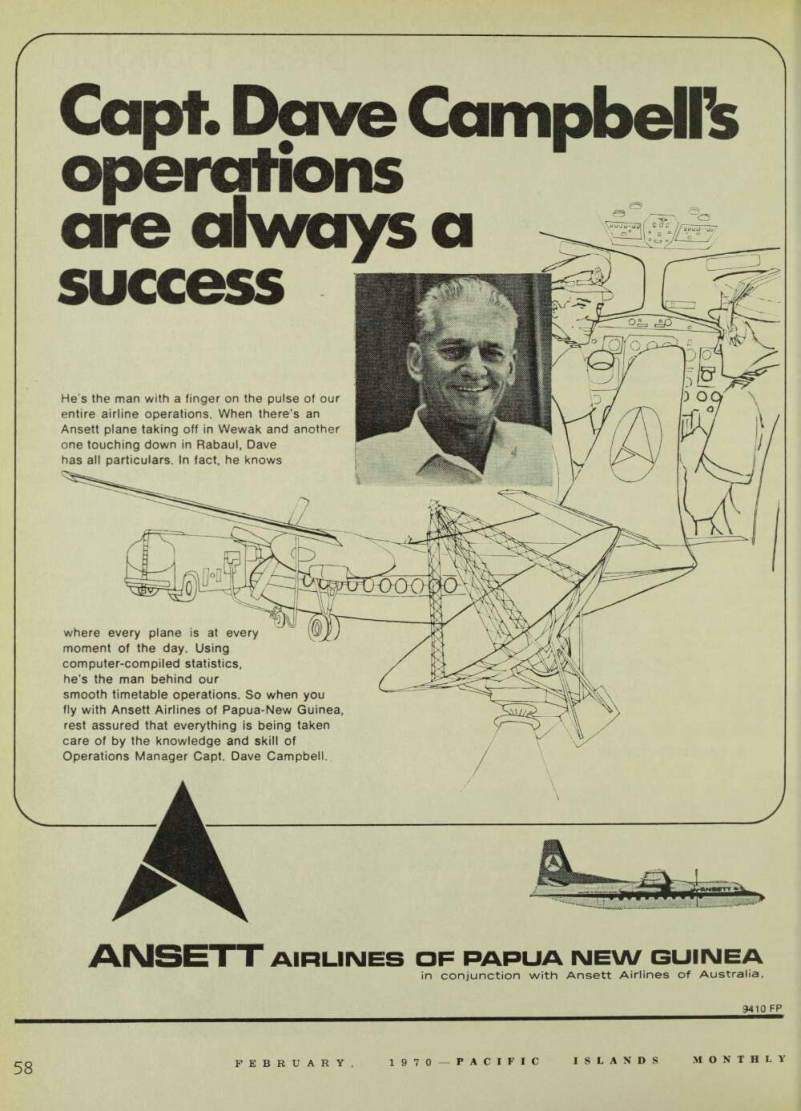 62
62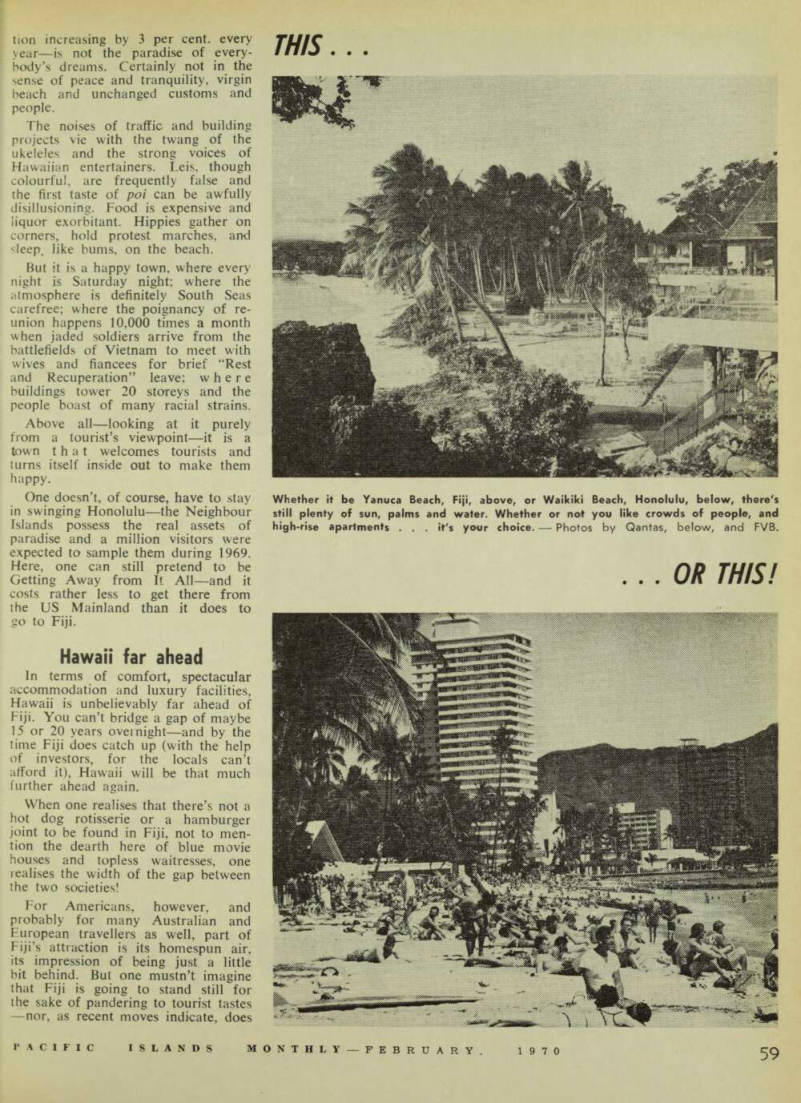 63
63 64
64 65
65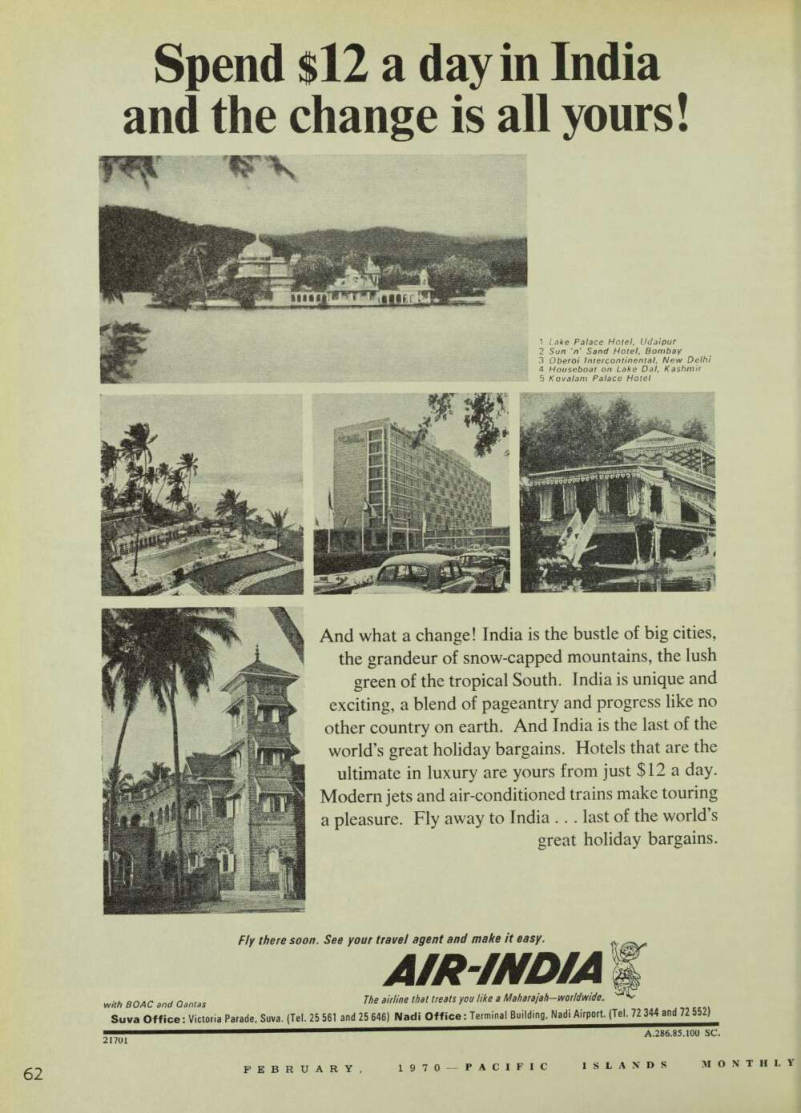 66
66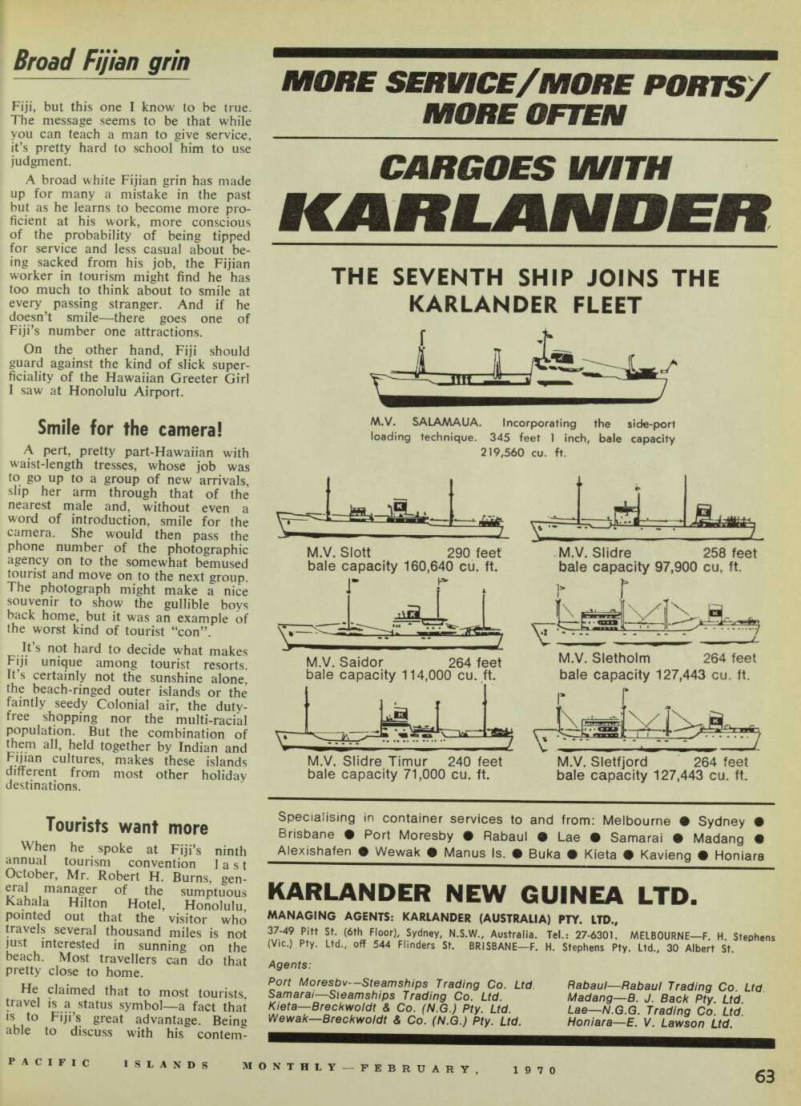 67
67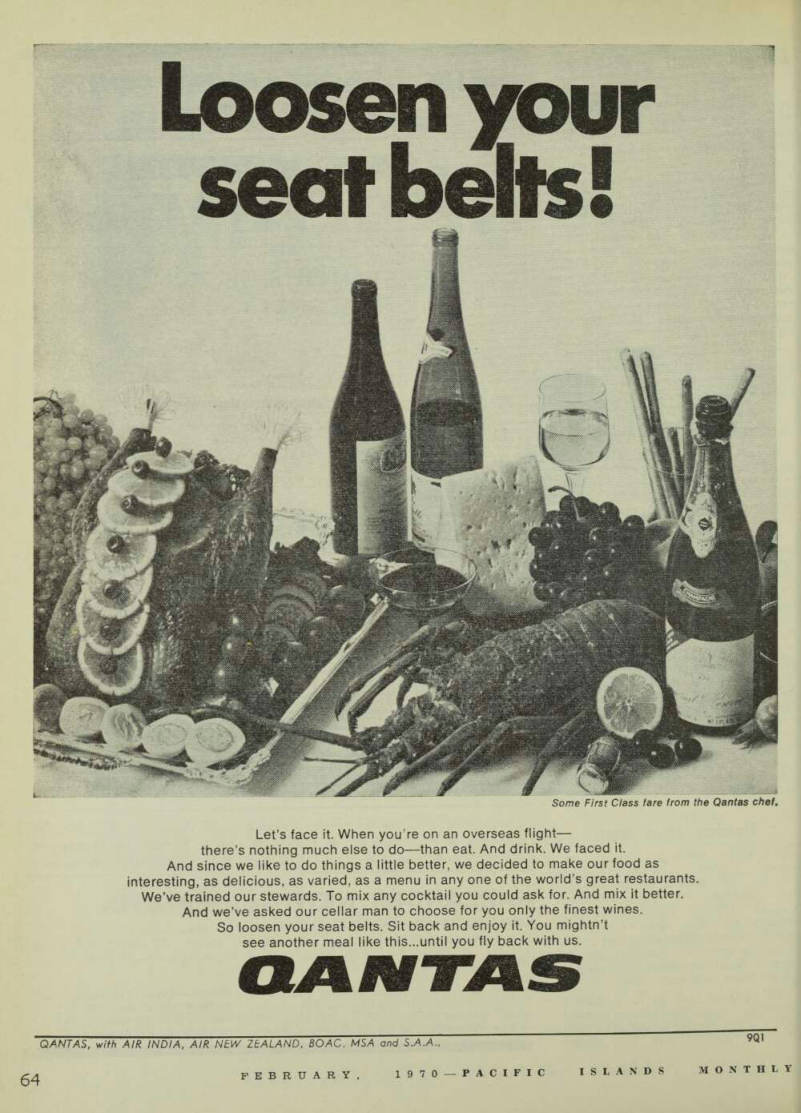 68
68 69
69 70
70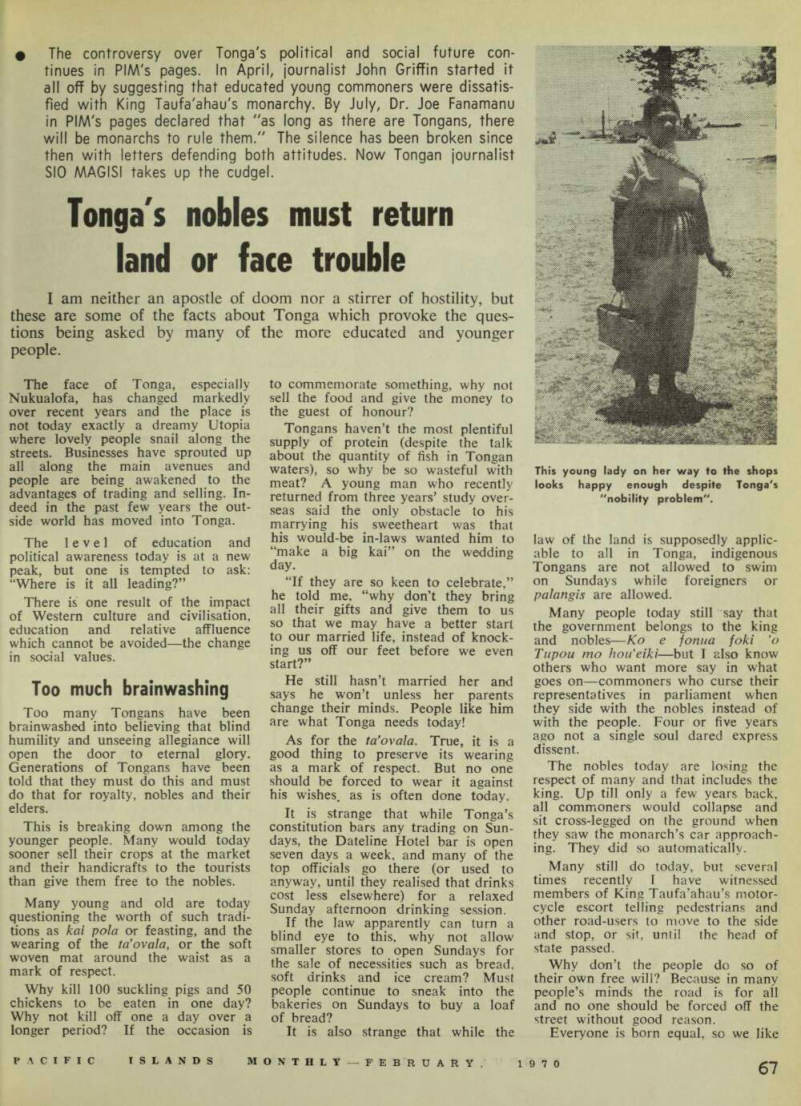 71
71 72
72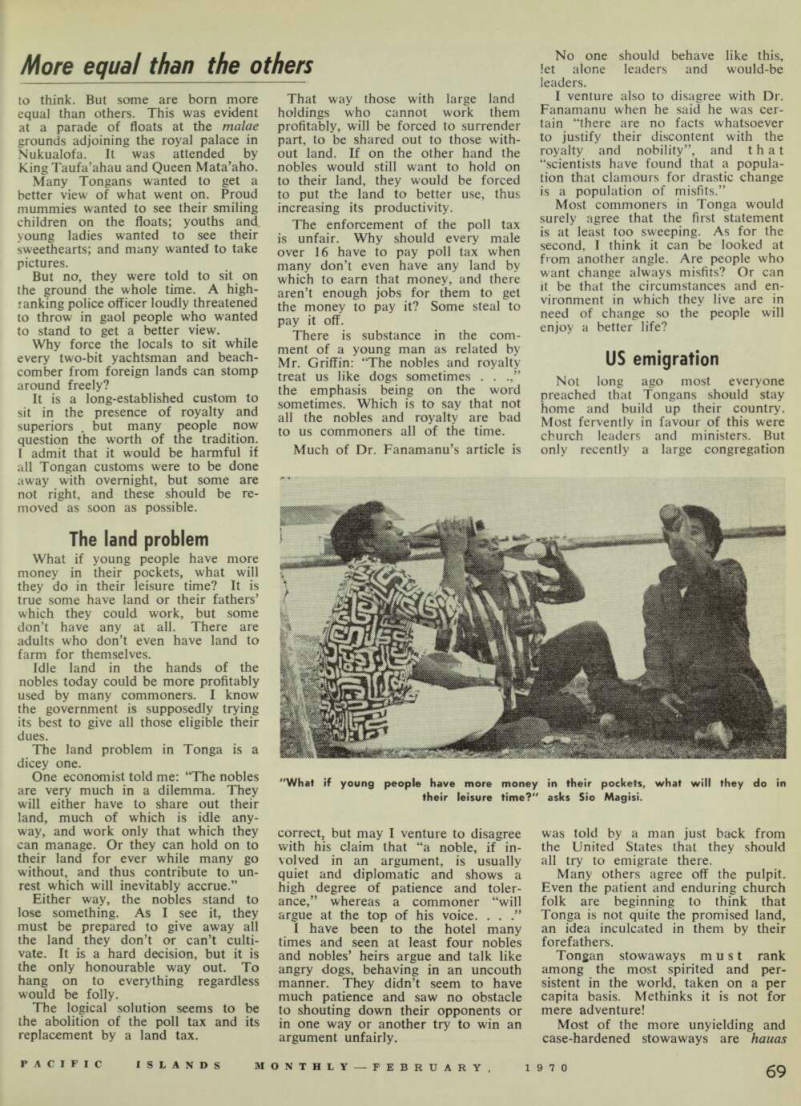 73
73 74
74 75
75 76
76 77
77 78
78 79
79 80
80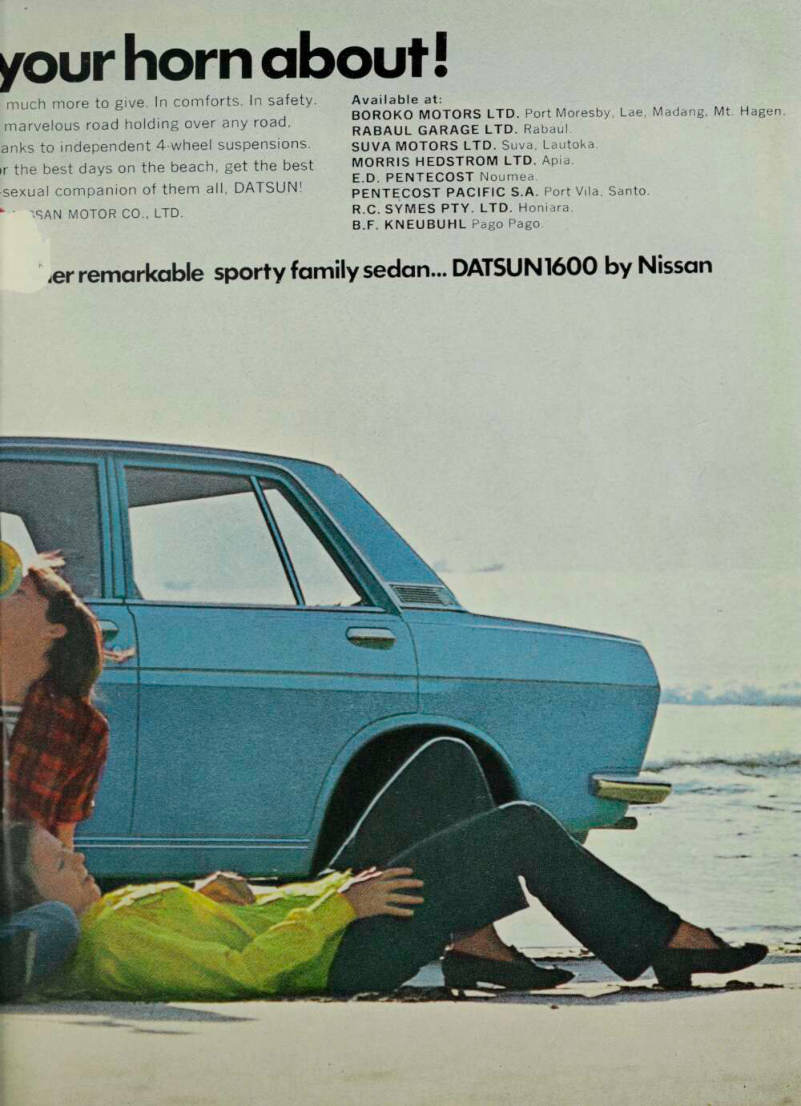 81
81 82
82 83
83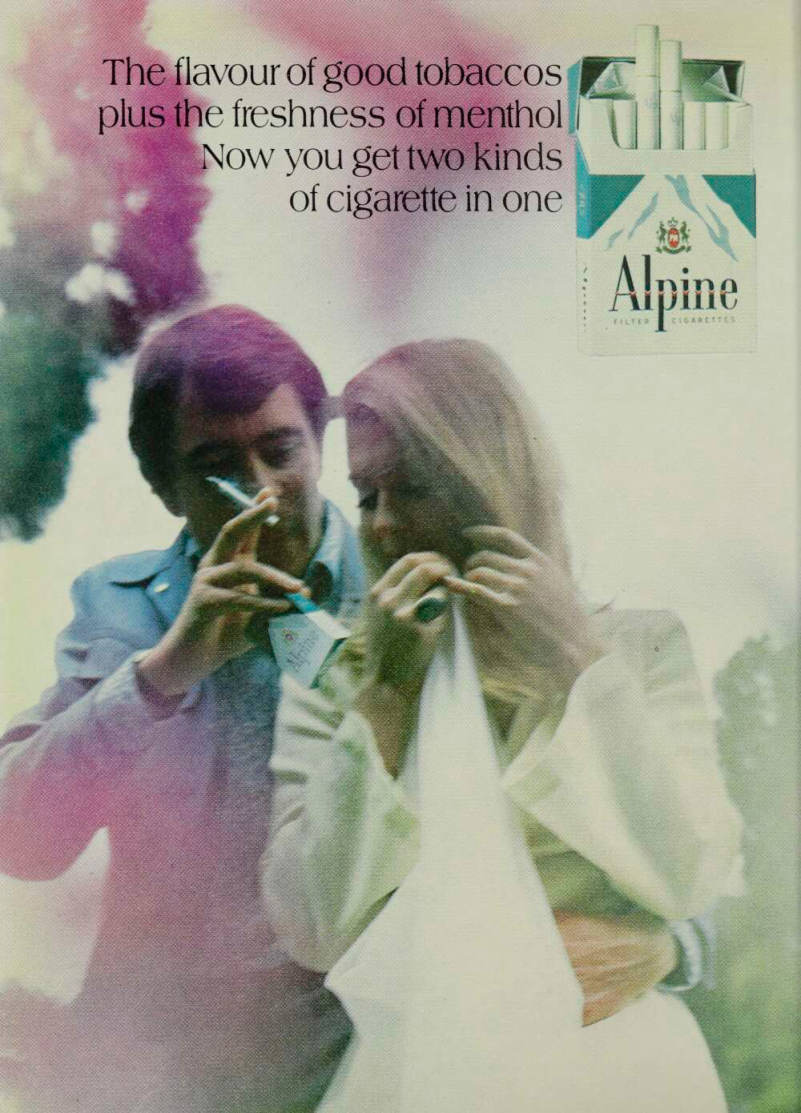 84
84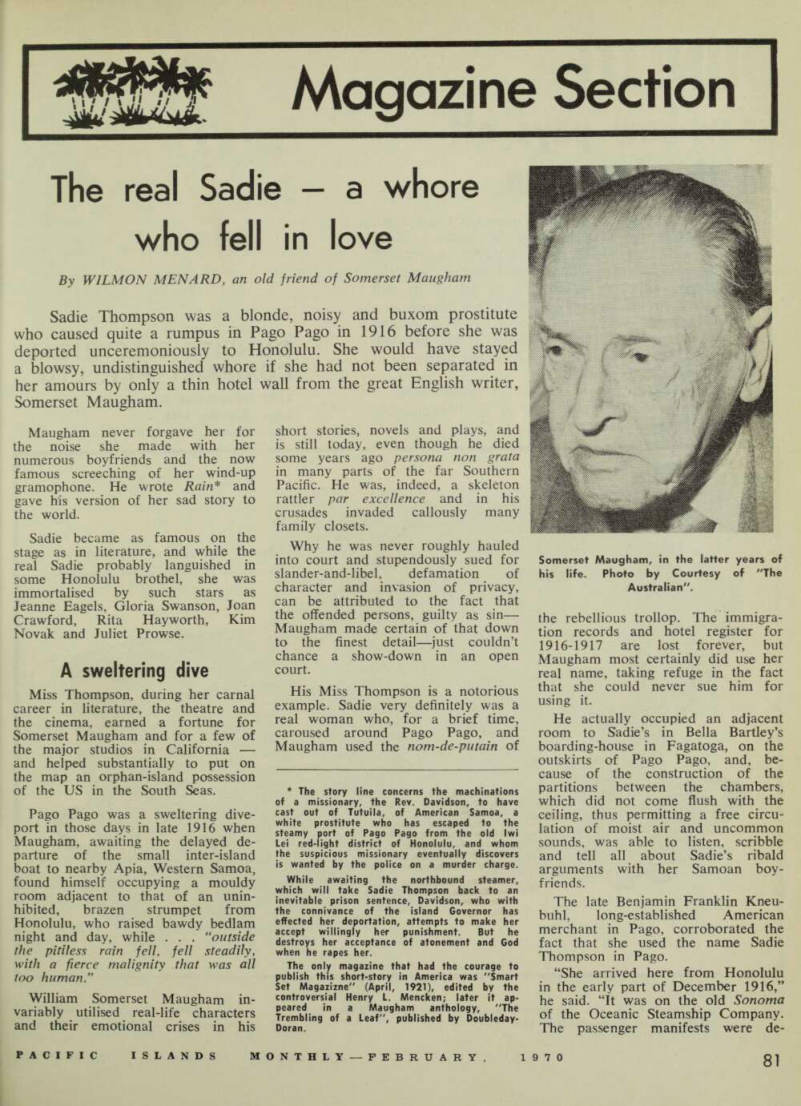 85
85 86
86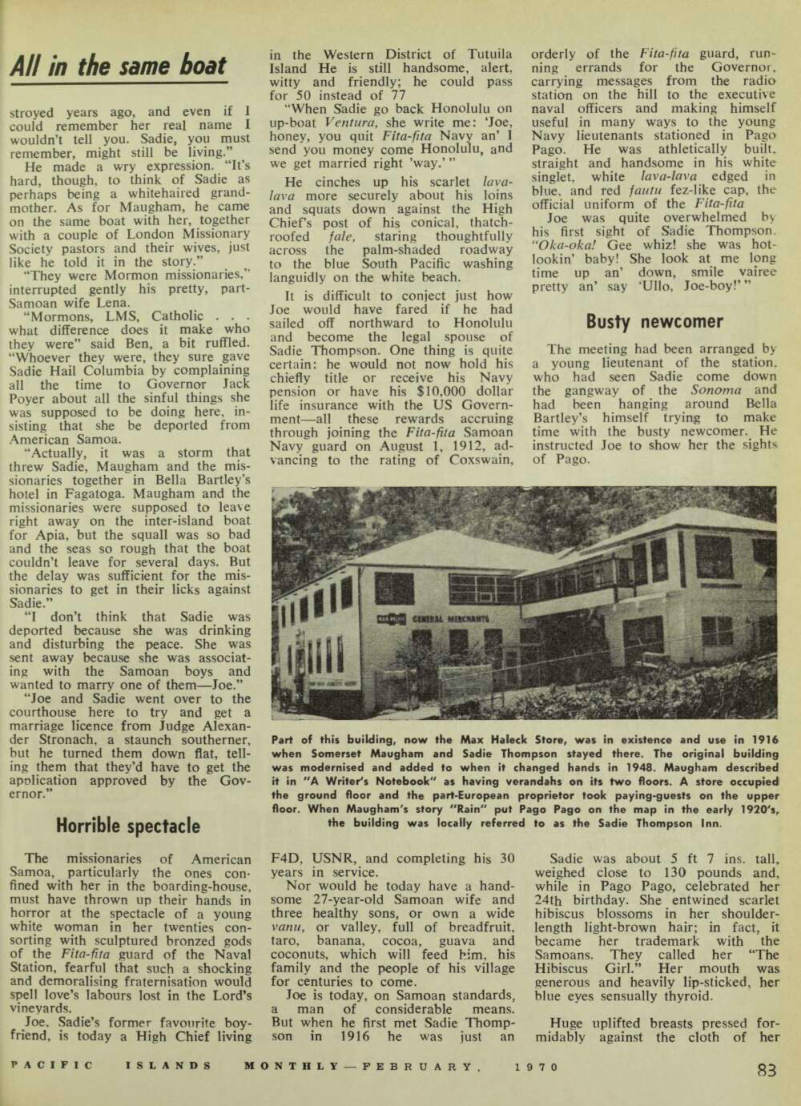 87
87 88
88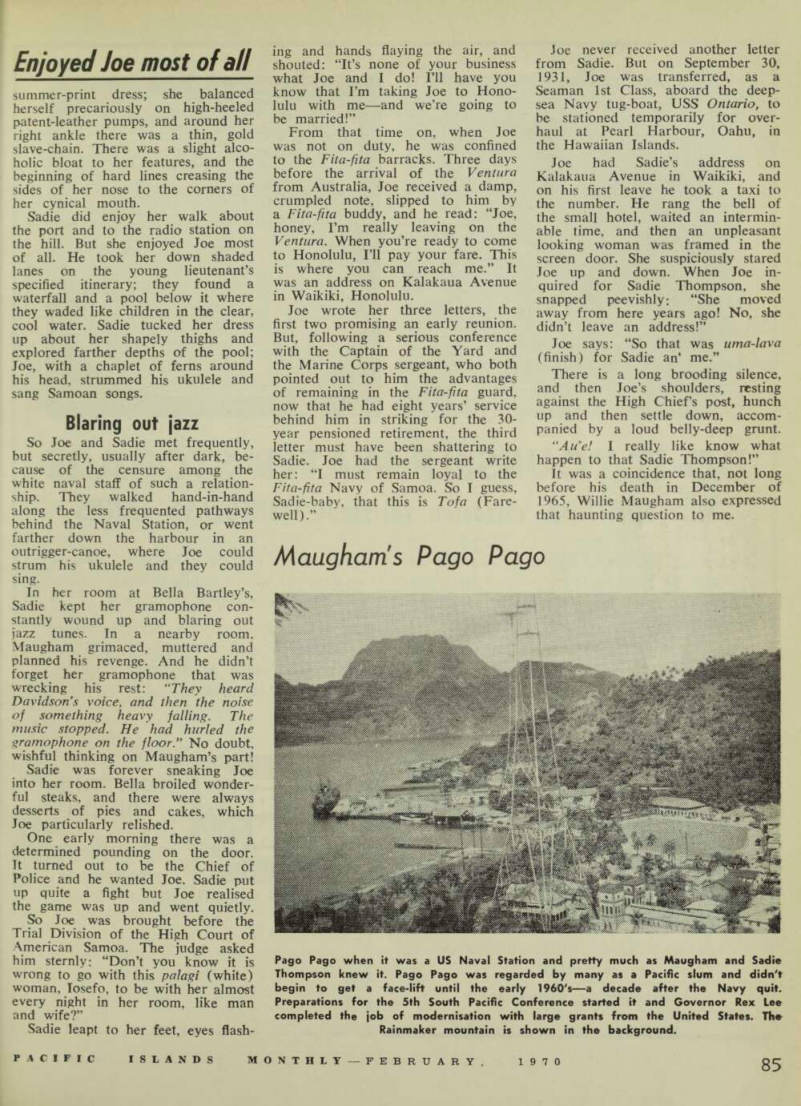 89
89 90
90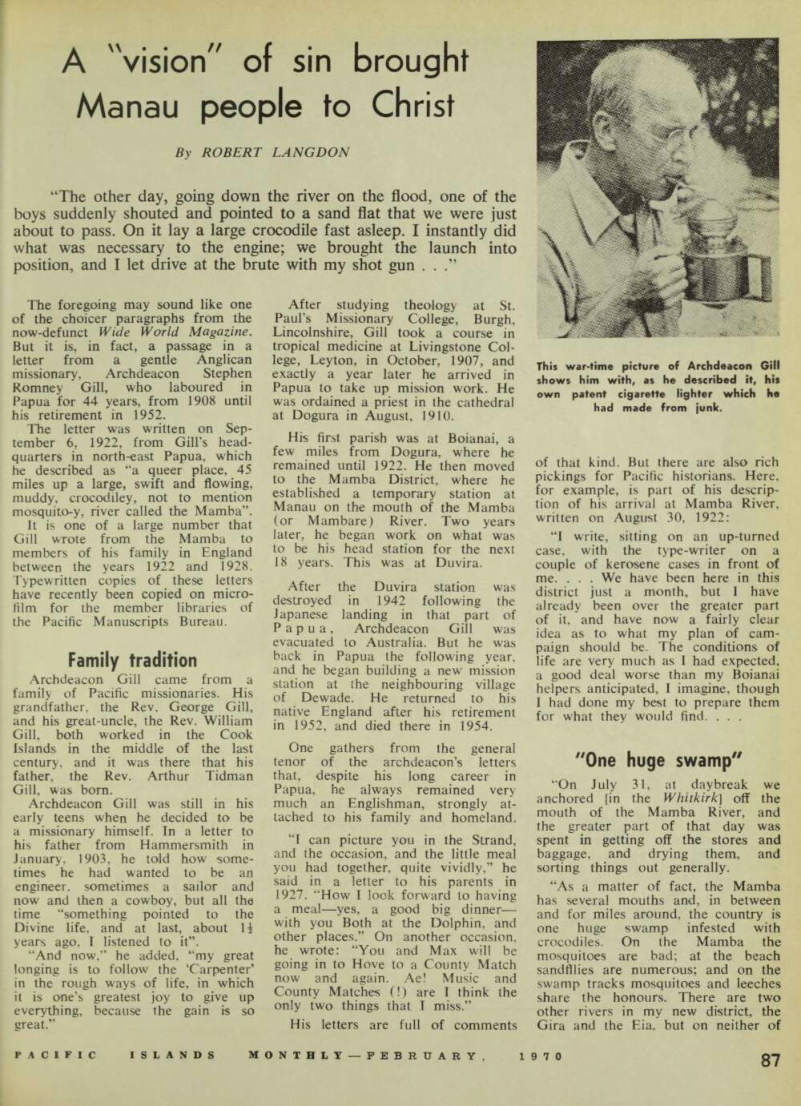 91
91 92
92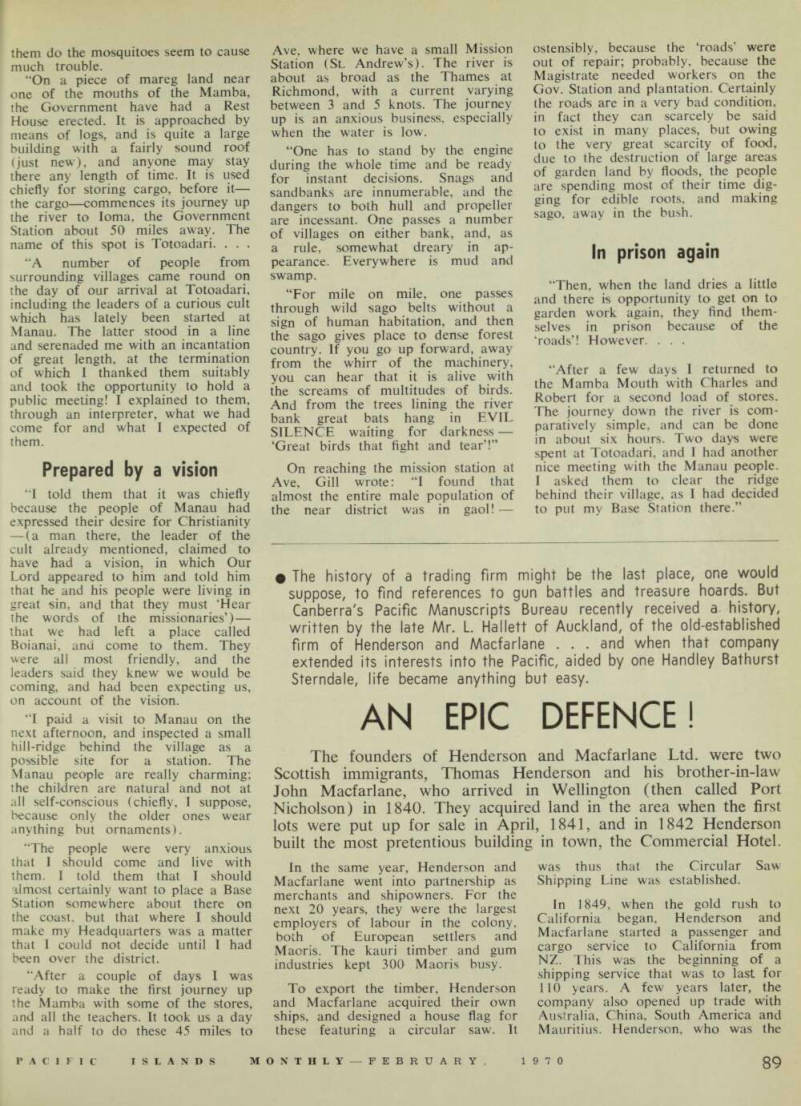 93
93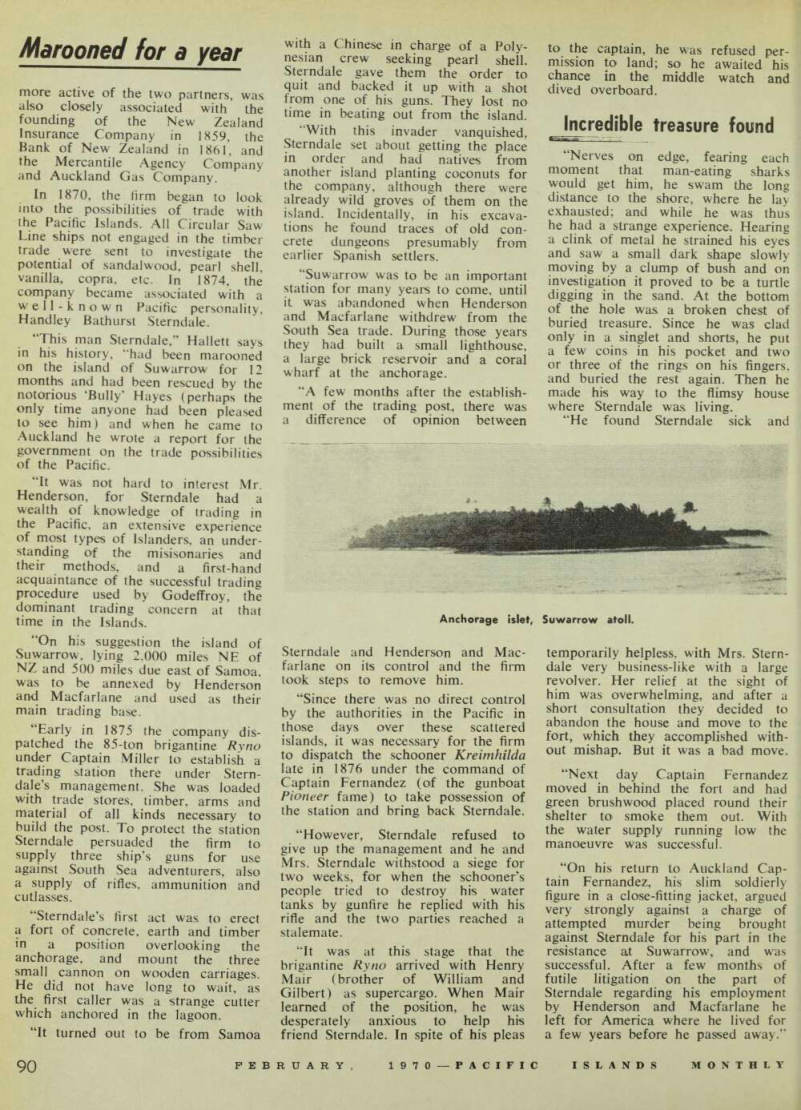 94
94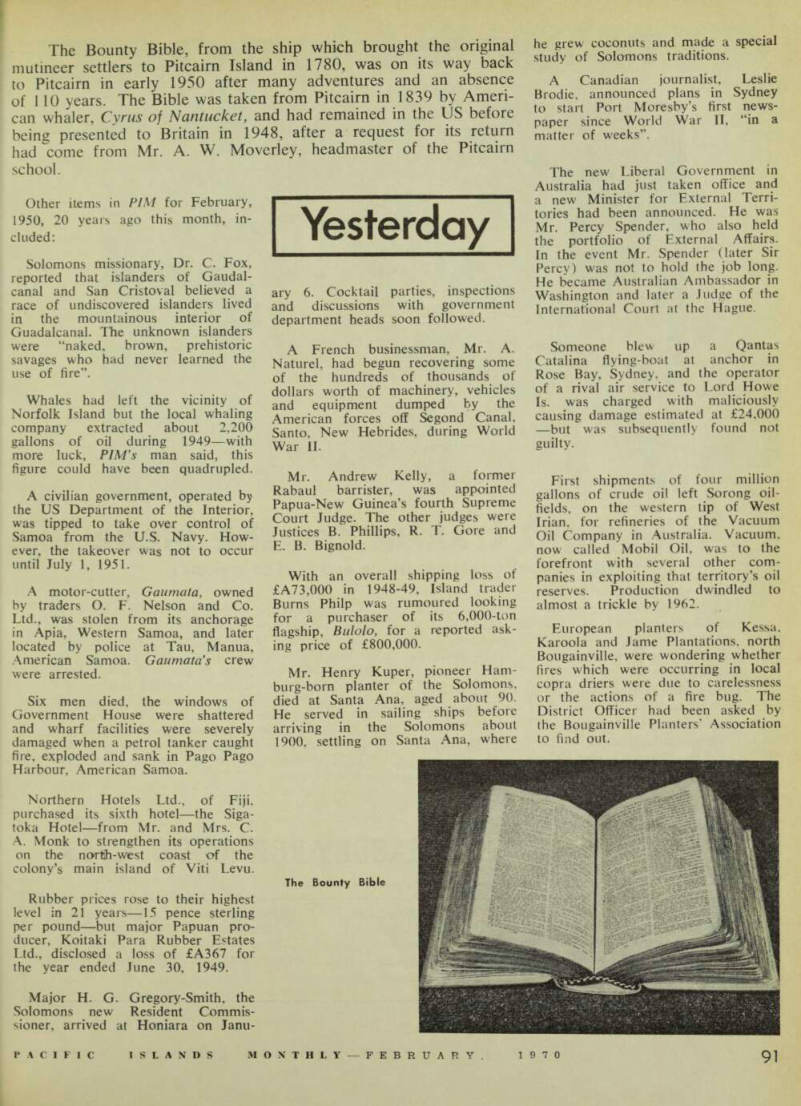 95
95 96
96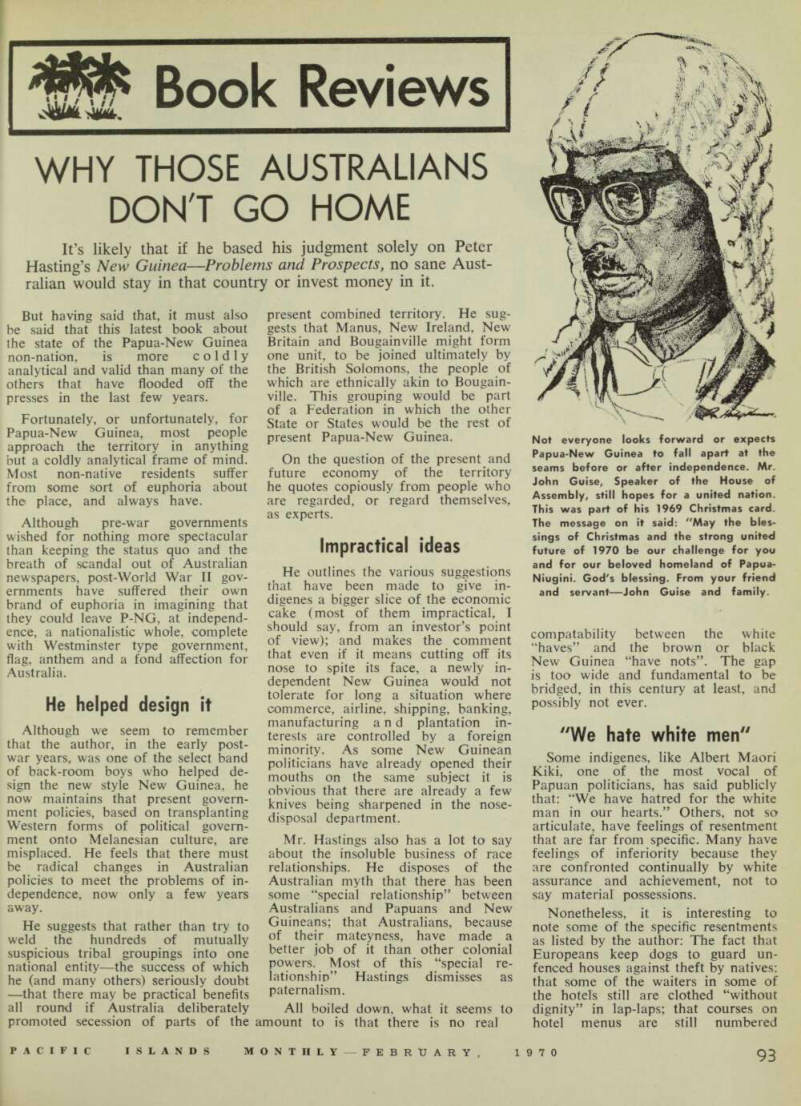 97
97 98
98 99
99 100
100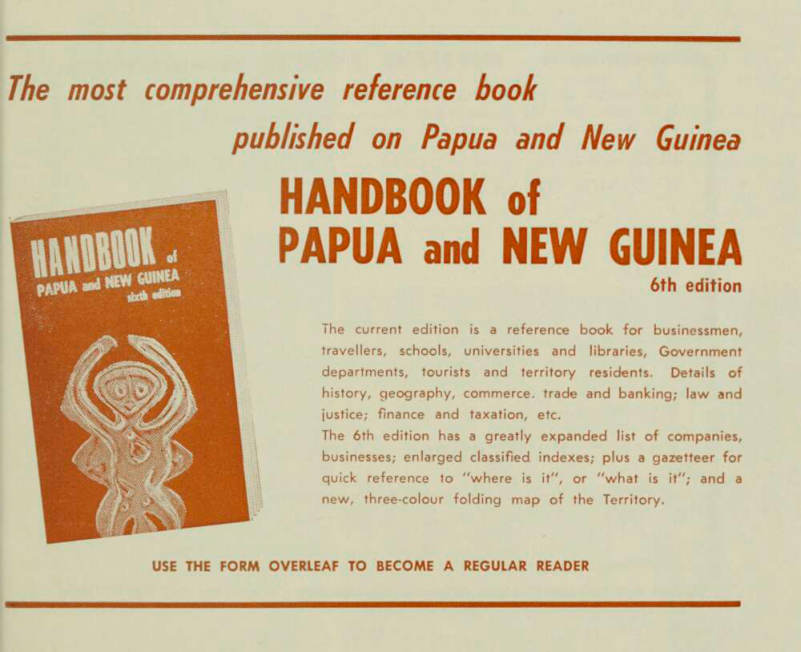 101
101 102
102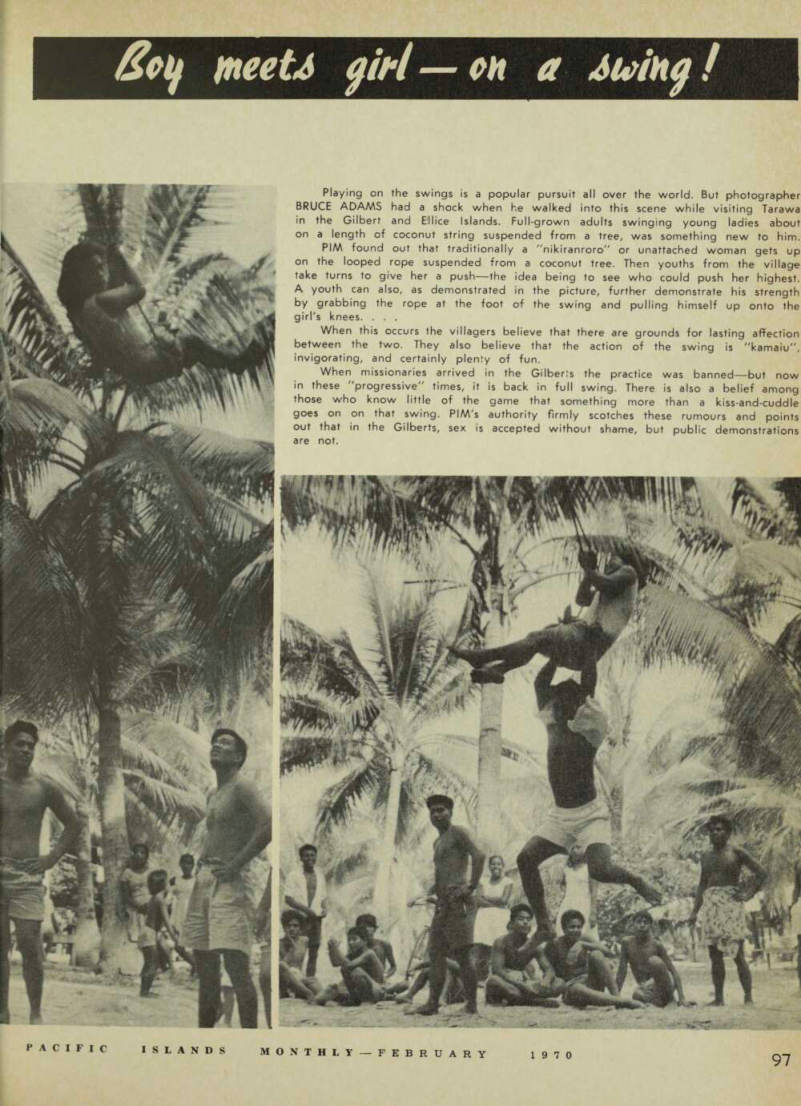 103
103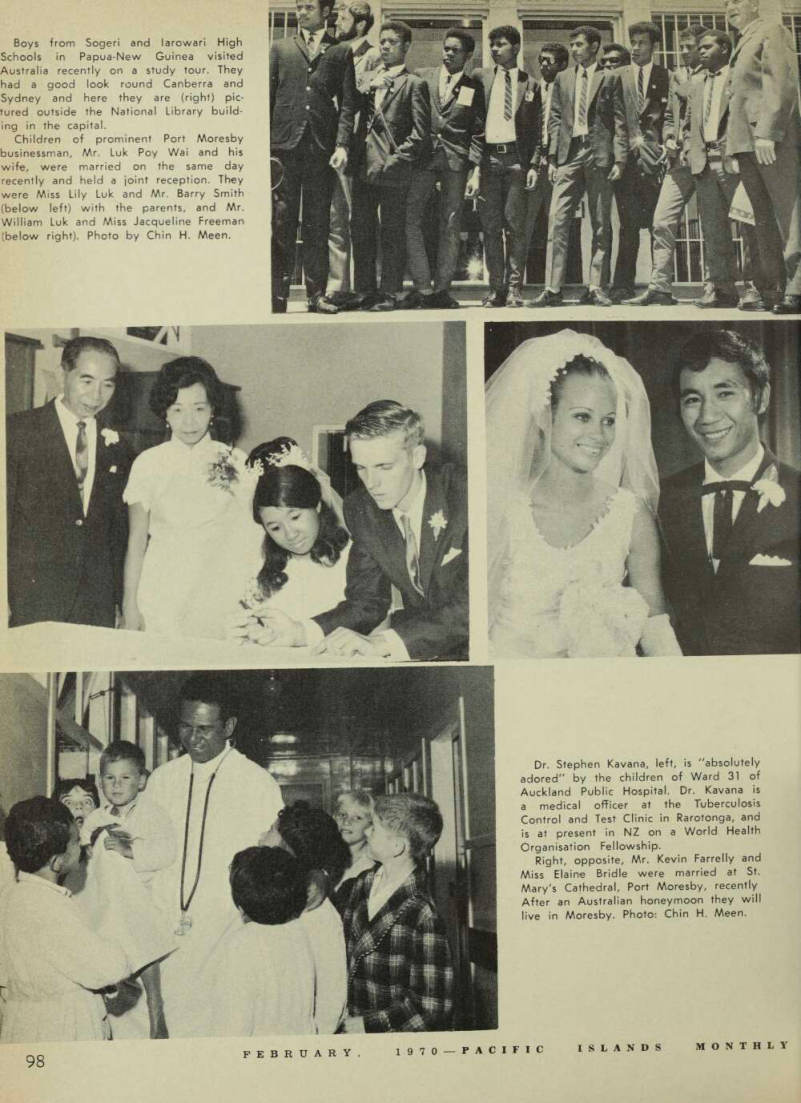 104
104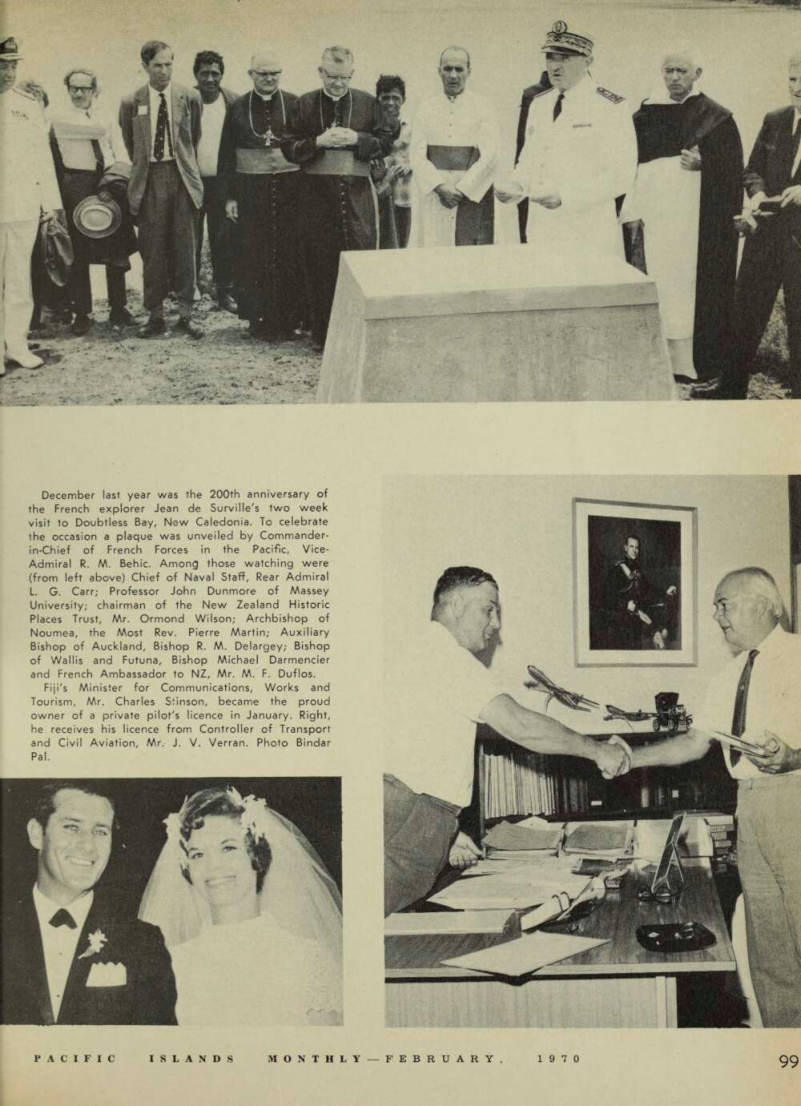 105
105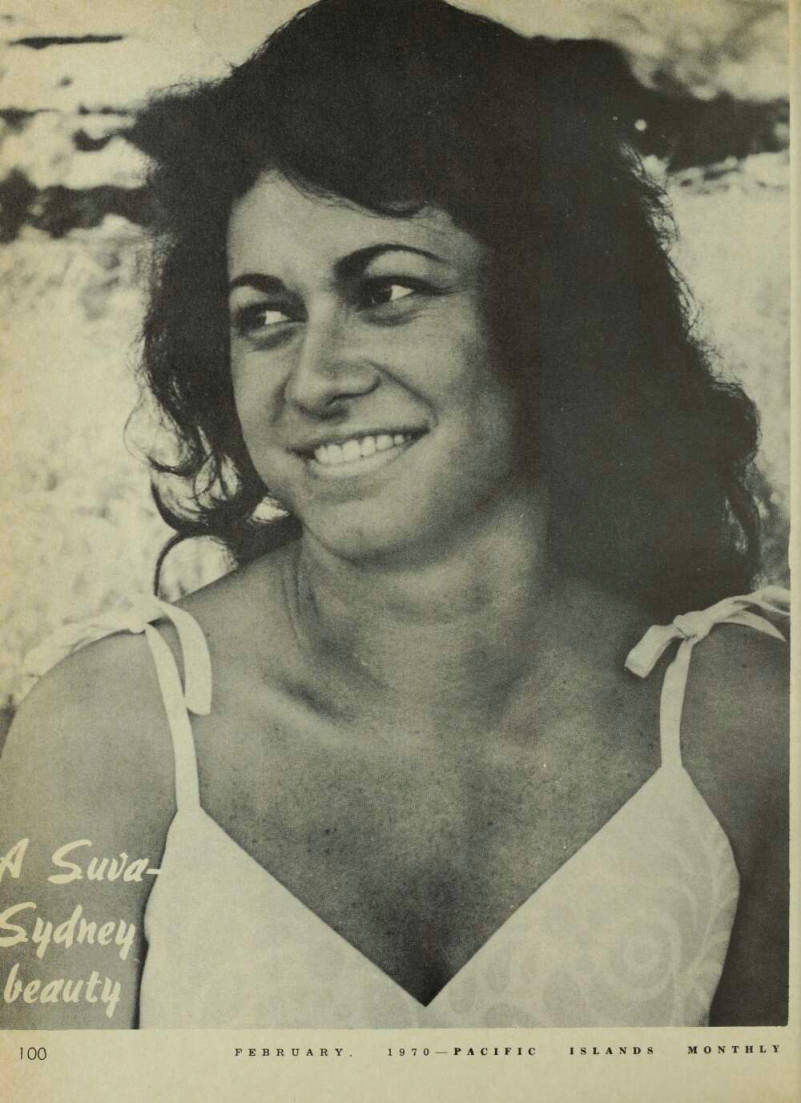 106
106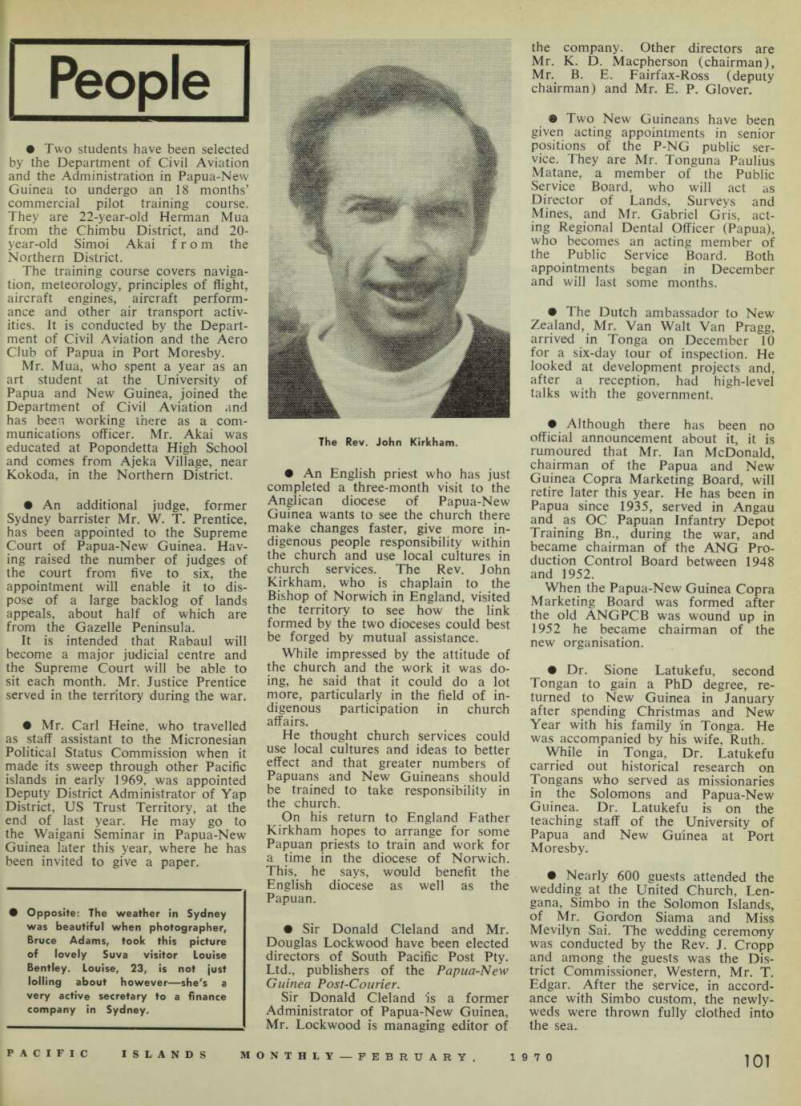 107
107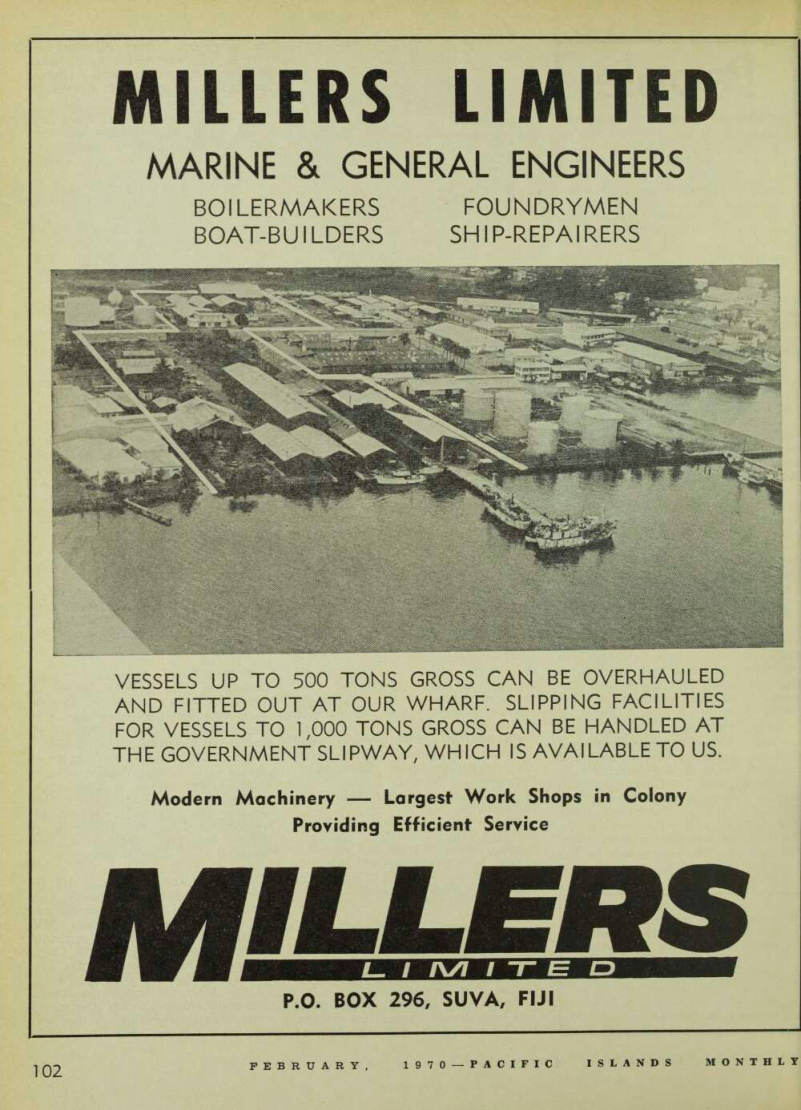 108
108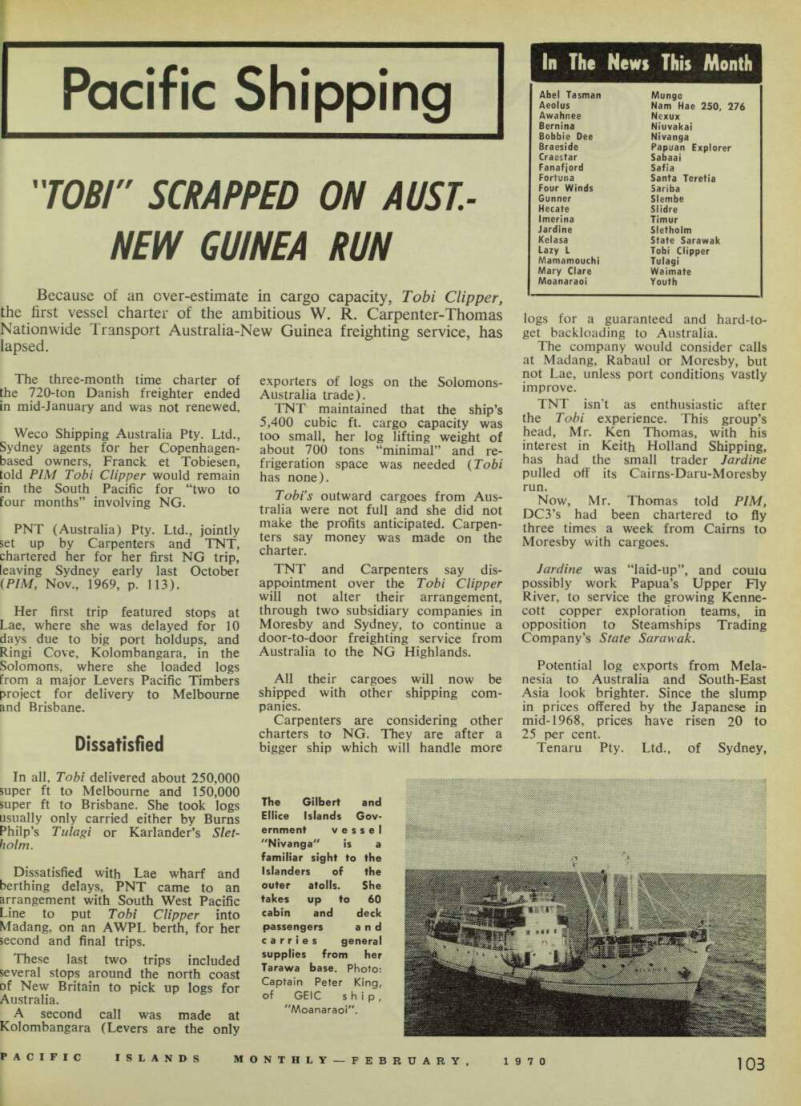 109
109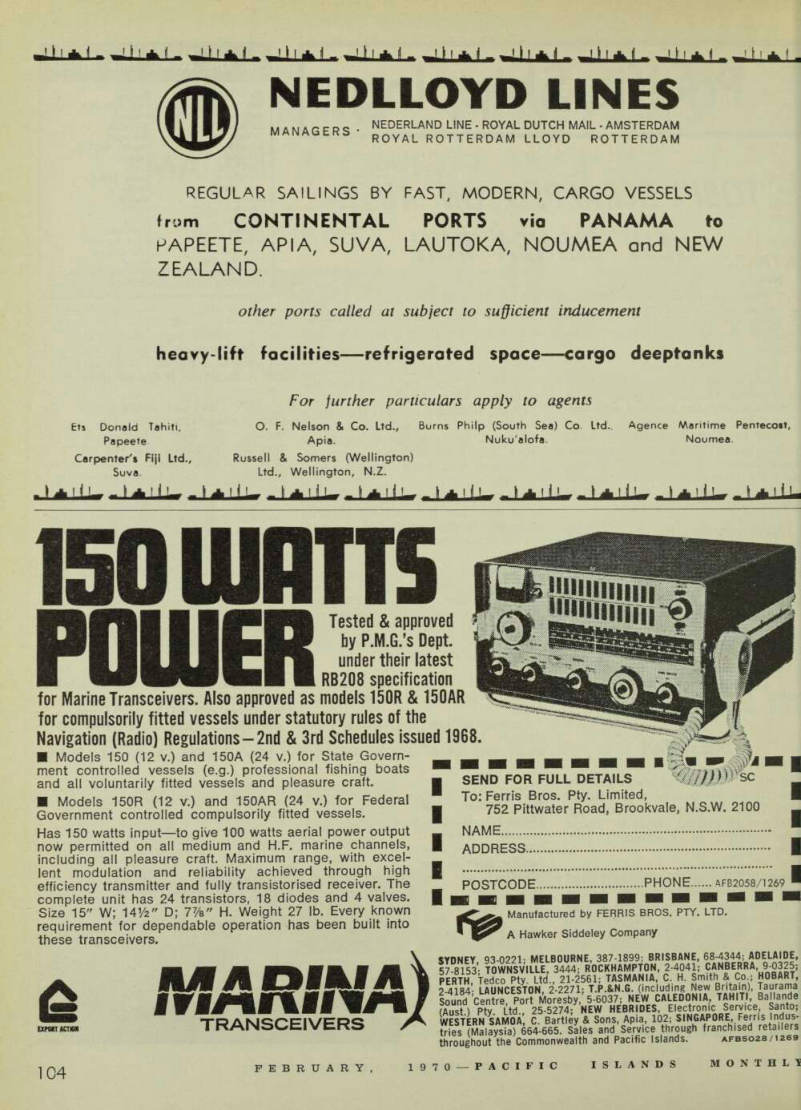 110
110 111
111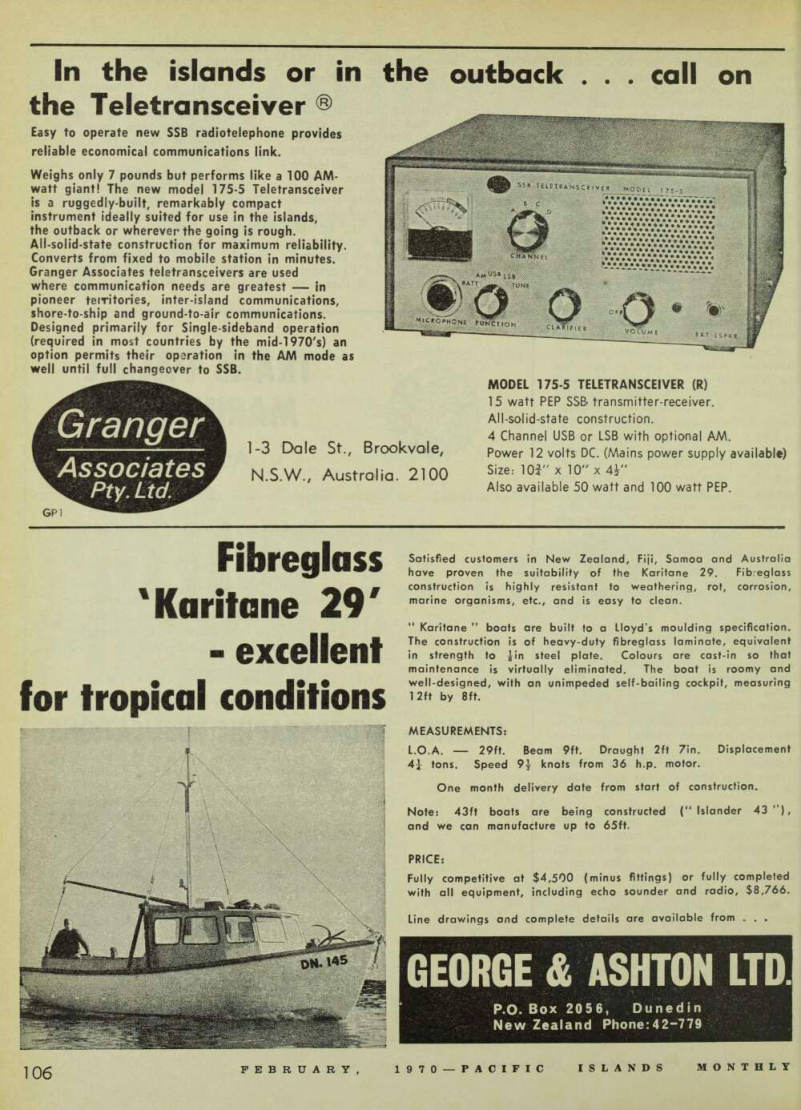 112
112 113
113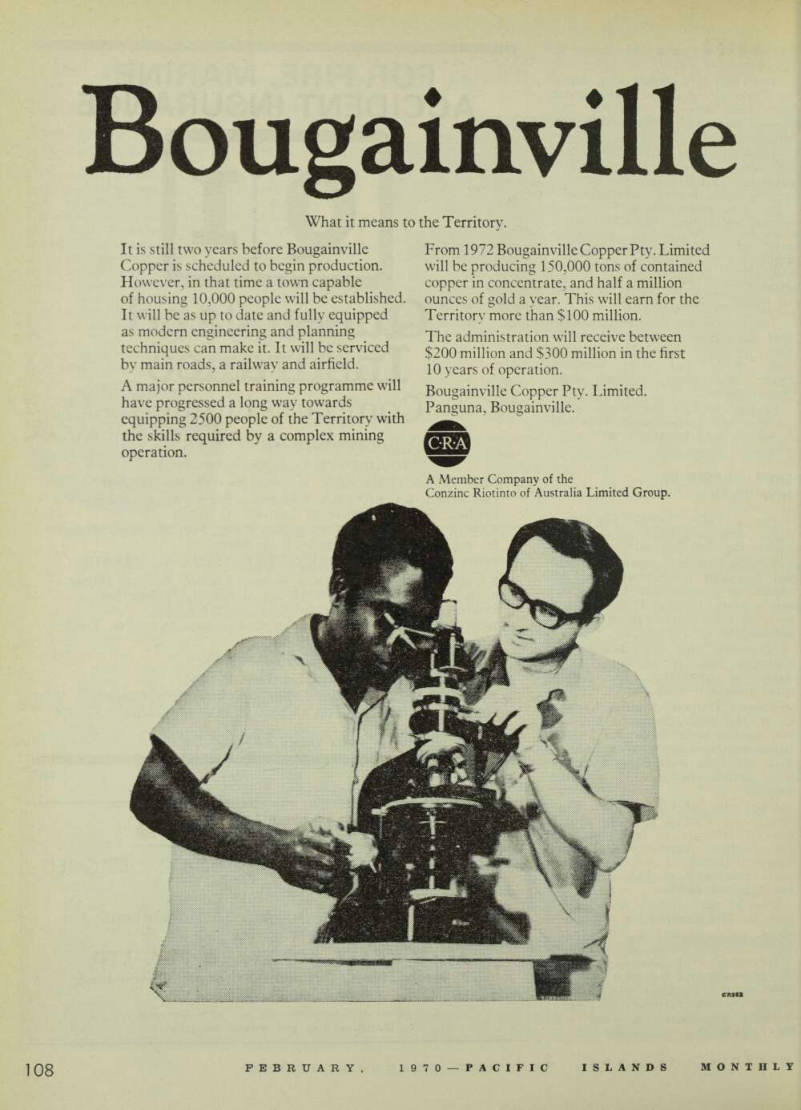 114
114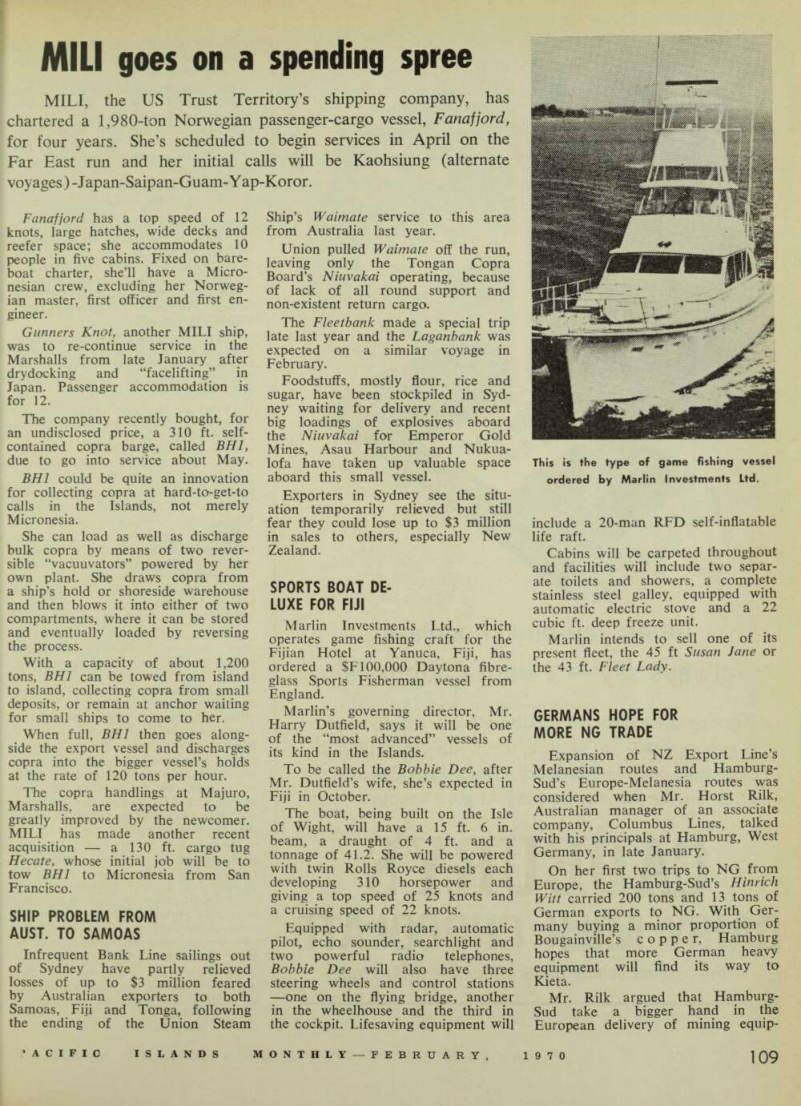 115
115 116
116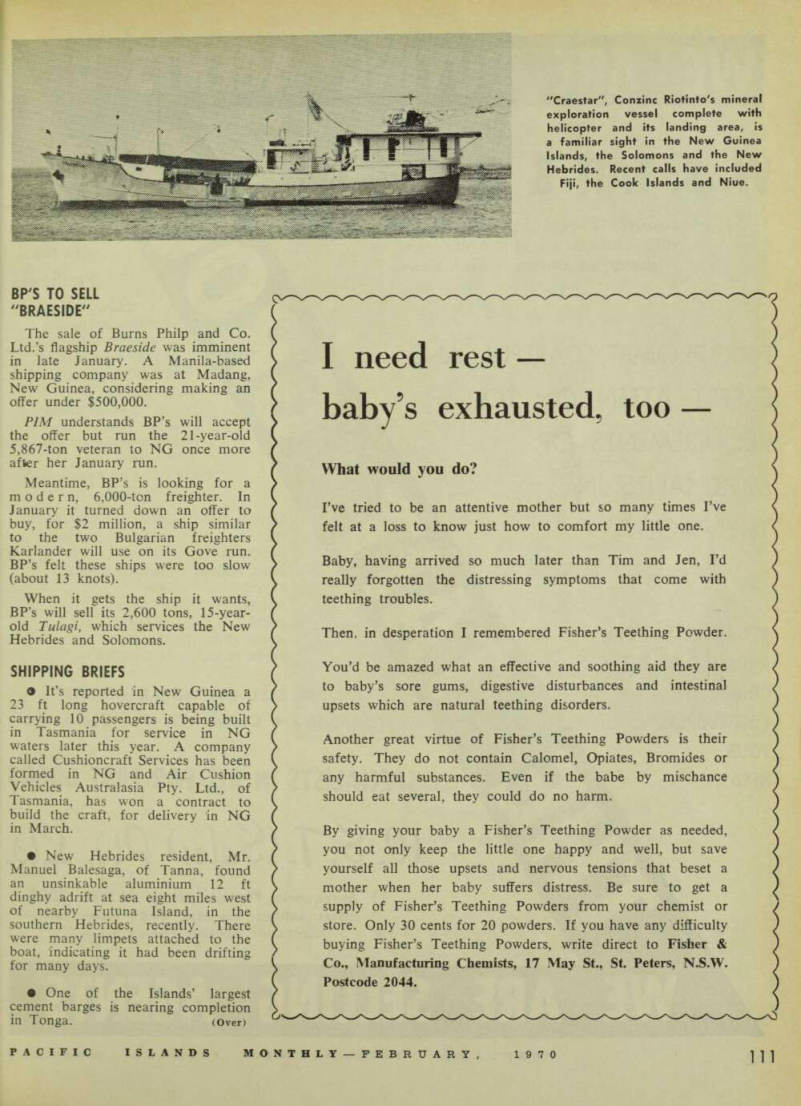 117
117 118
118 119
119 120
120 121
121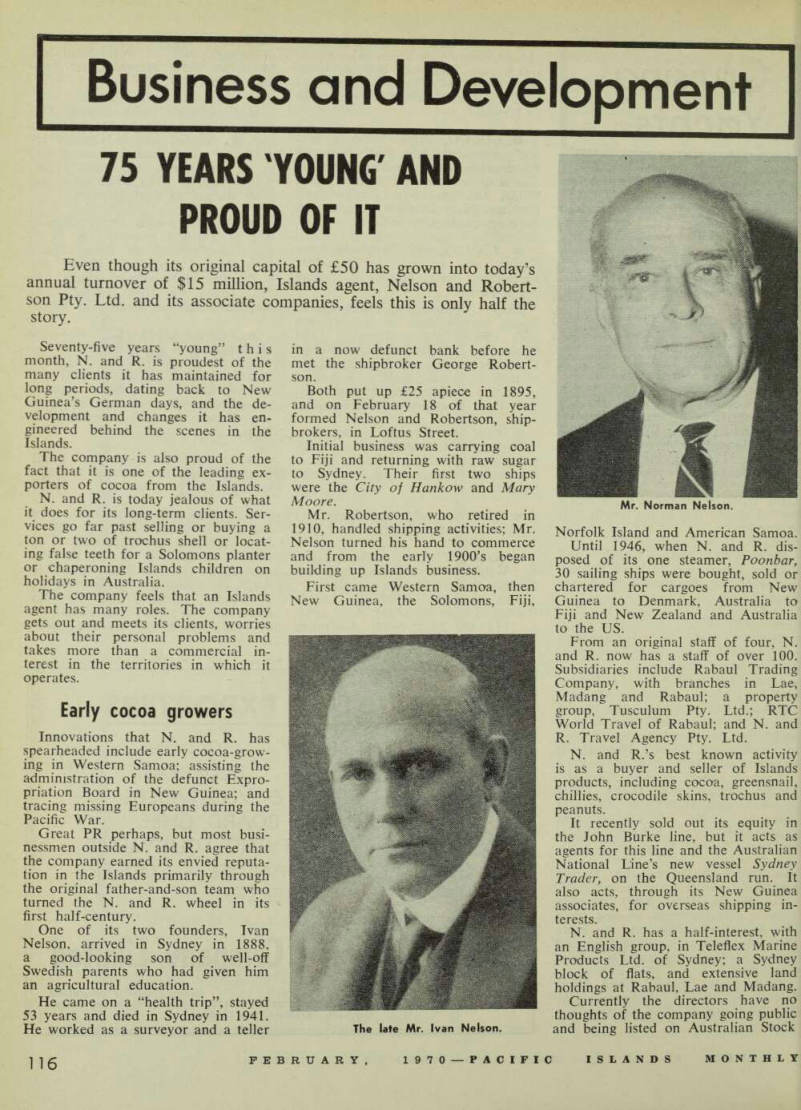 122
122 123
123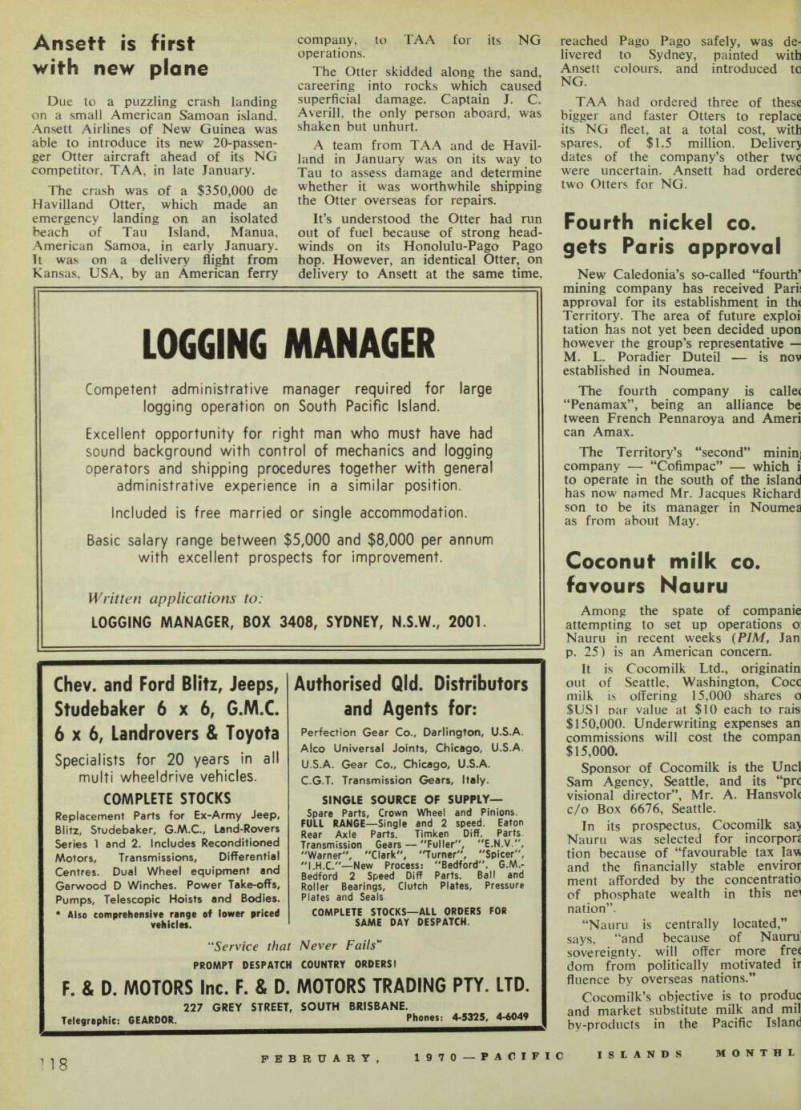 124
124 125
125 126
126 127
127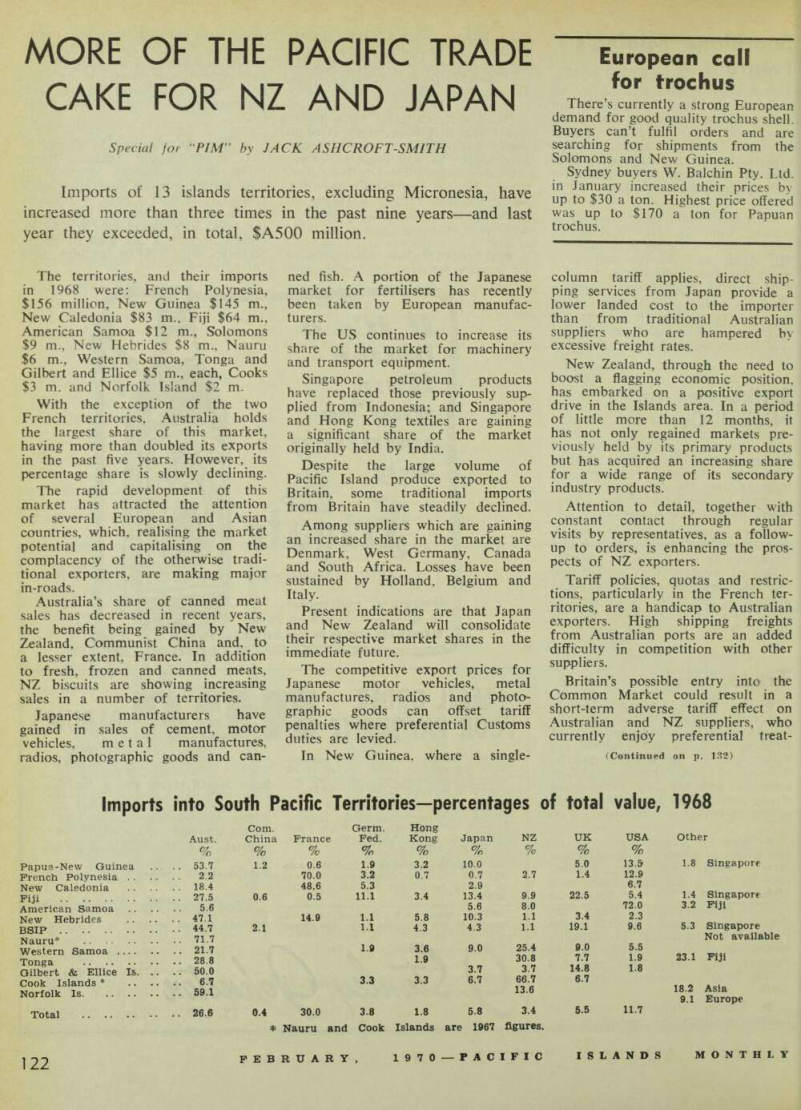 128
128 129
129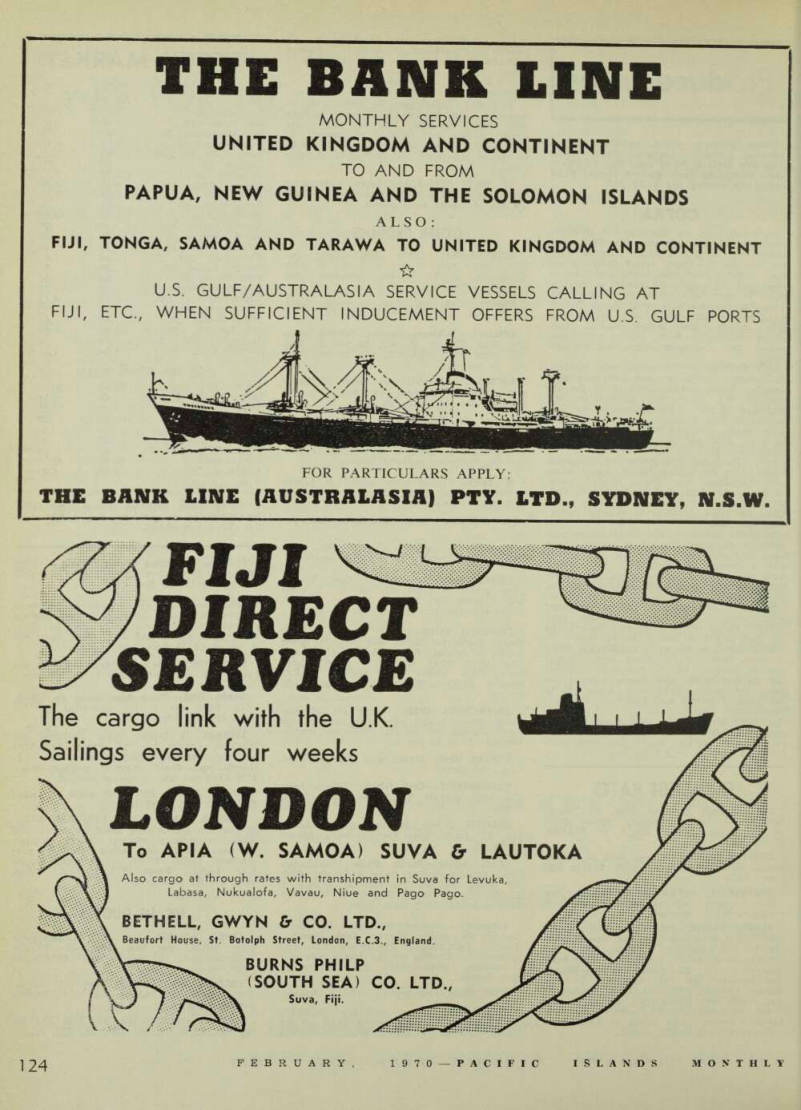 130
130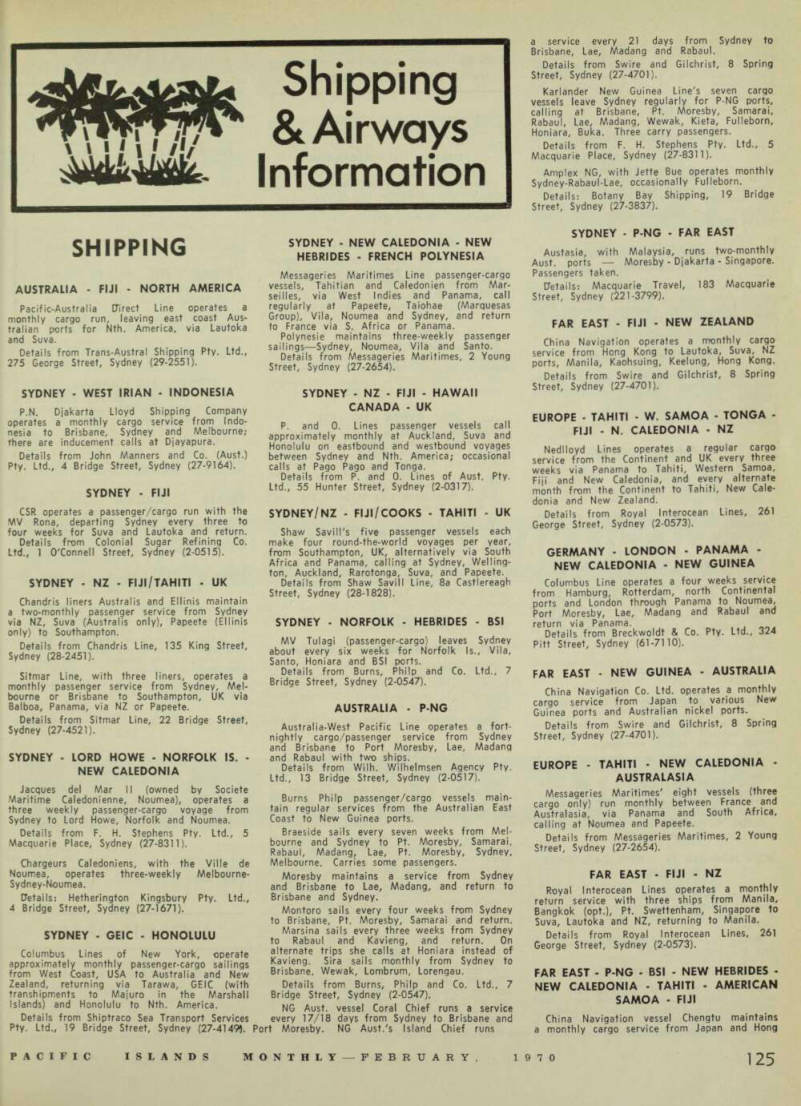 131
131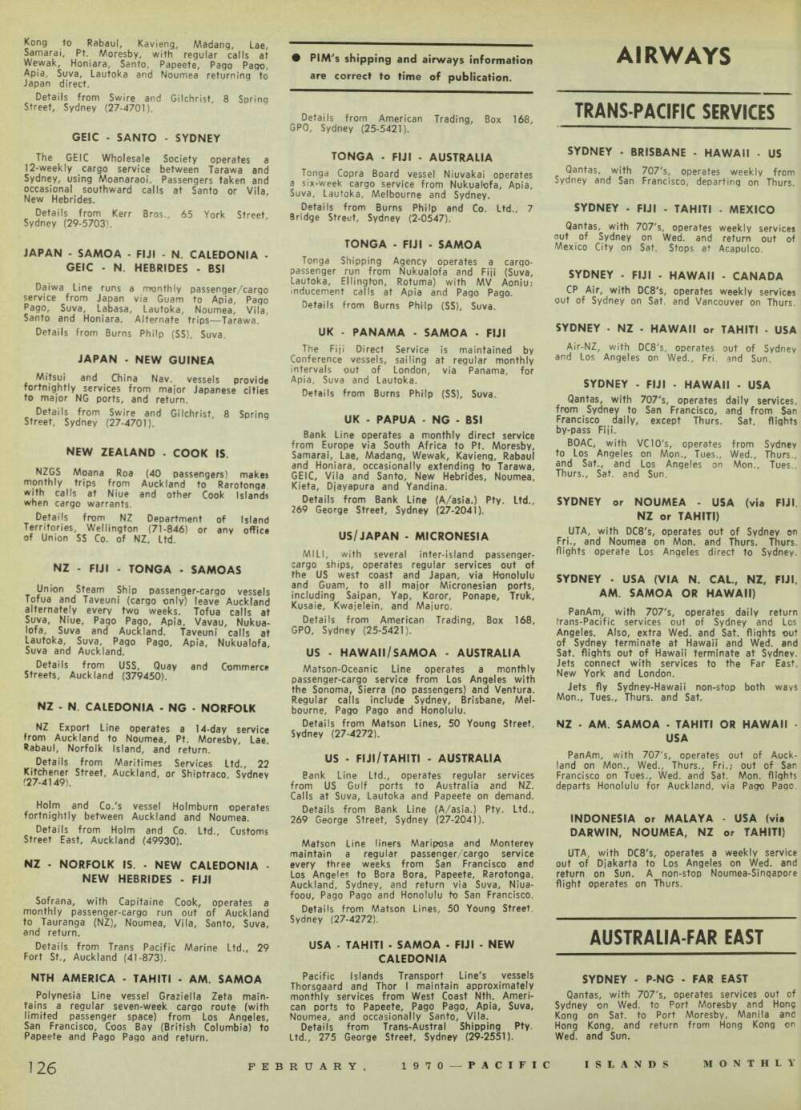 132
132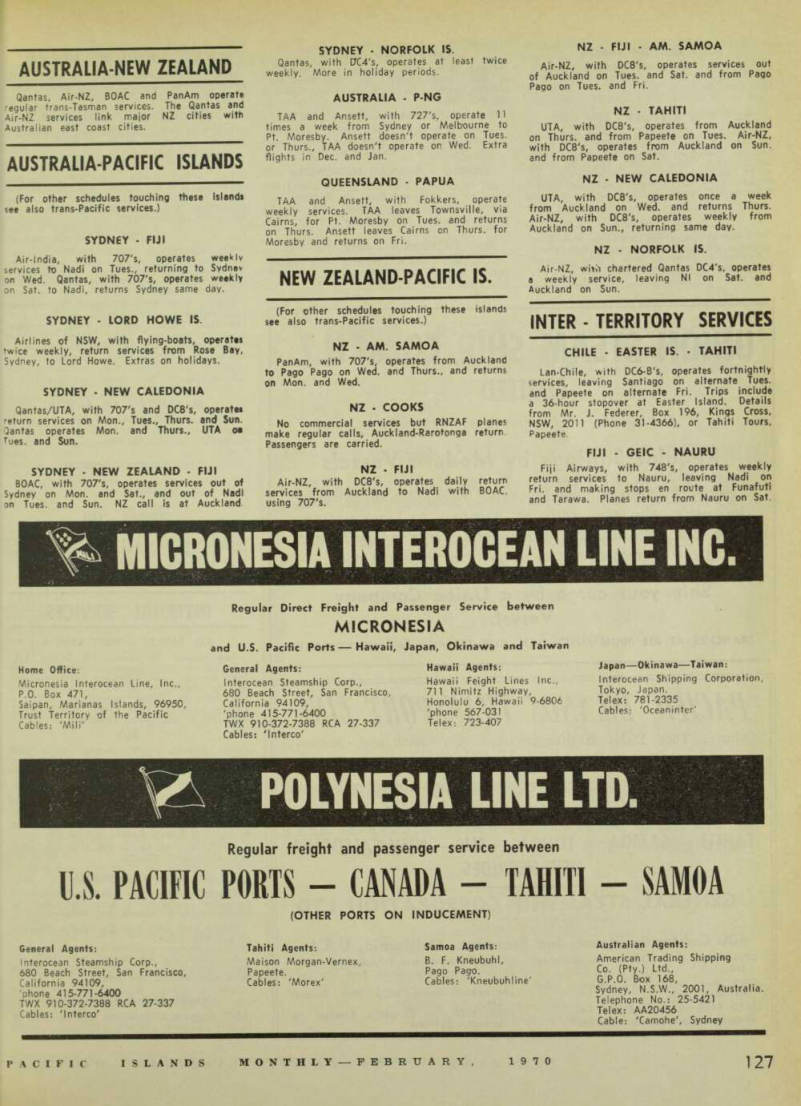 133
133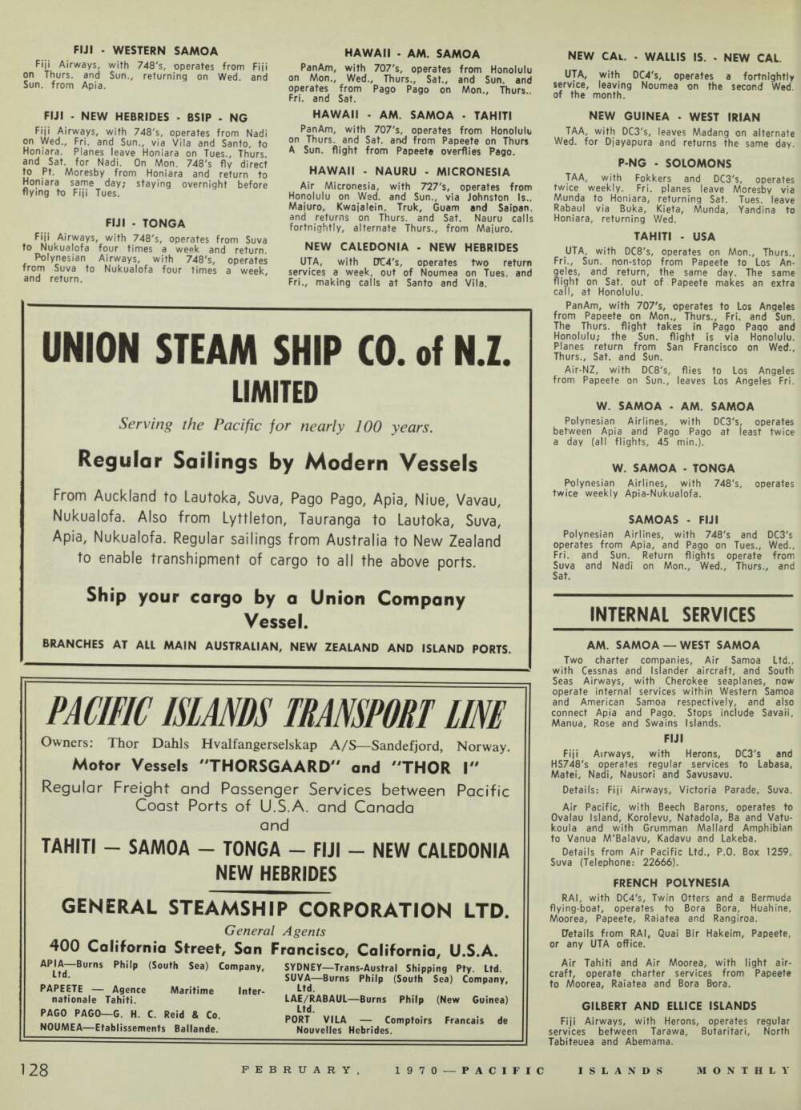 134
134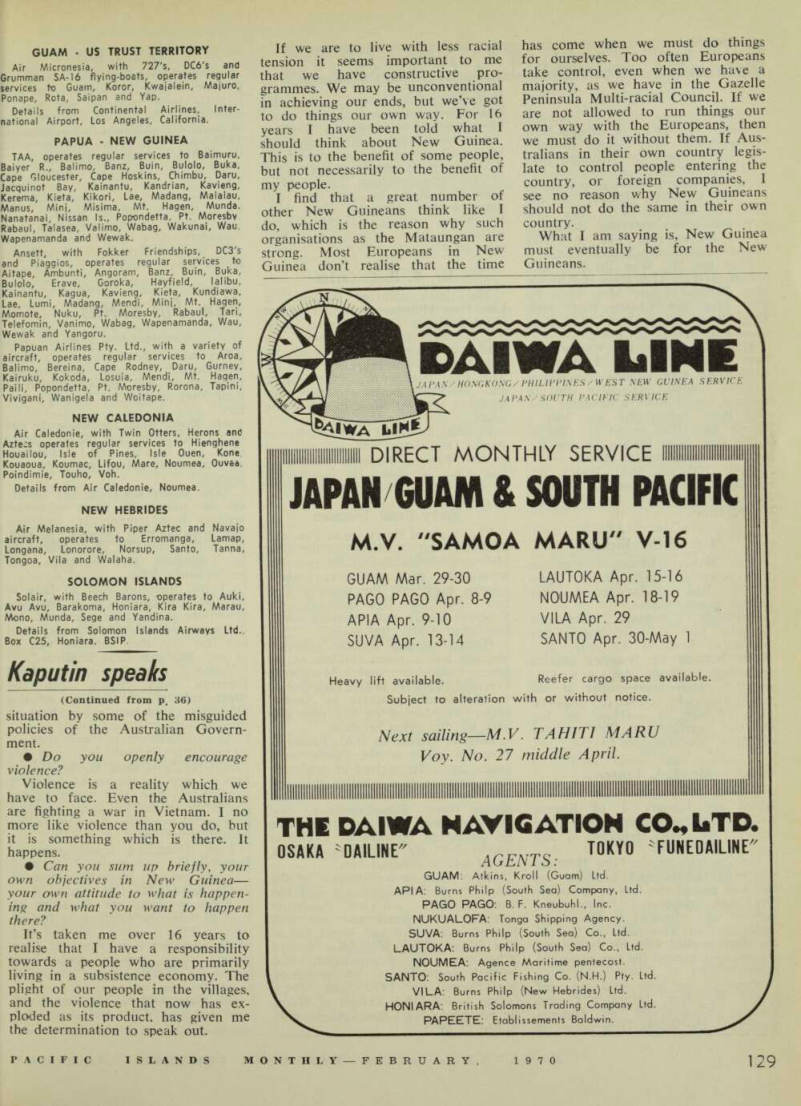 135
135 136
136 137
137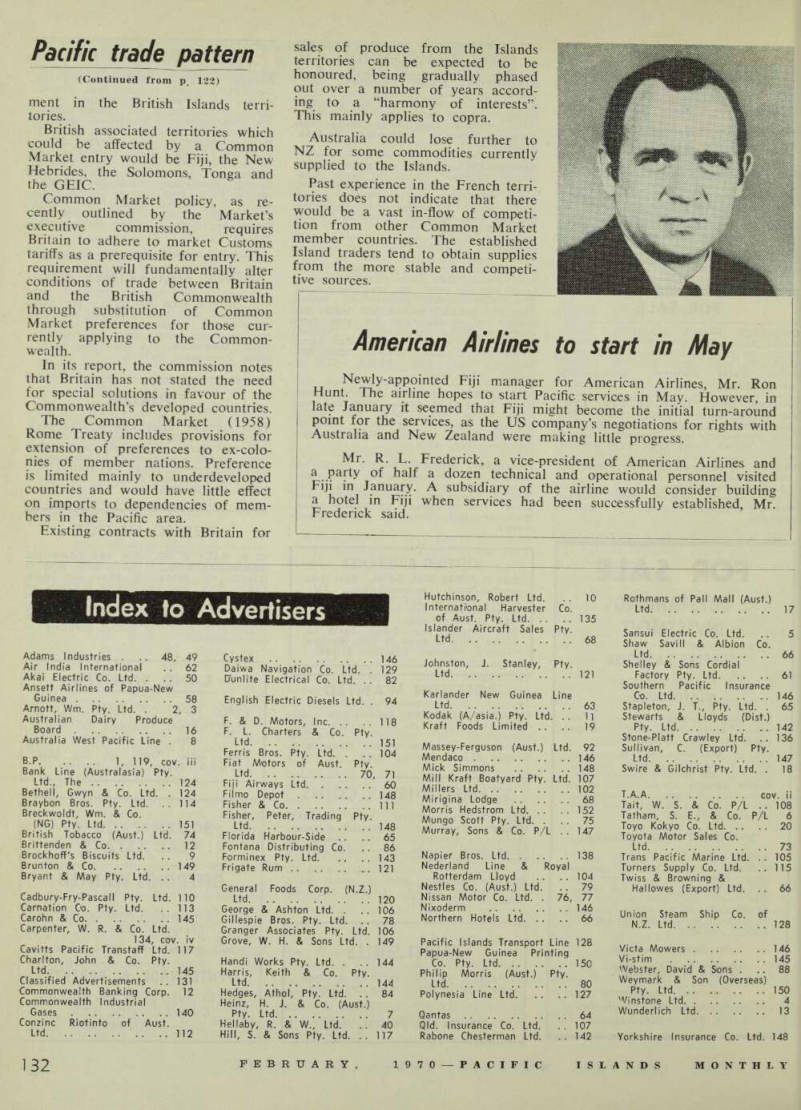 138
138 139
139 140
140 141
141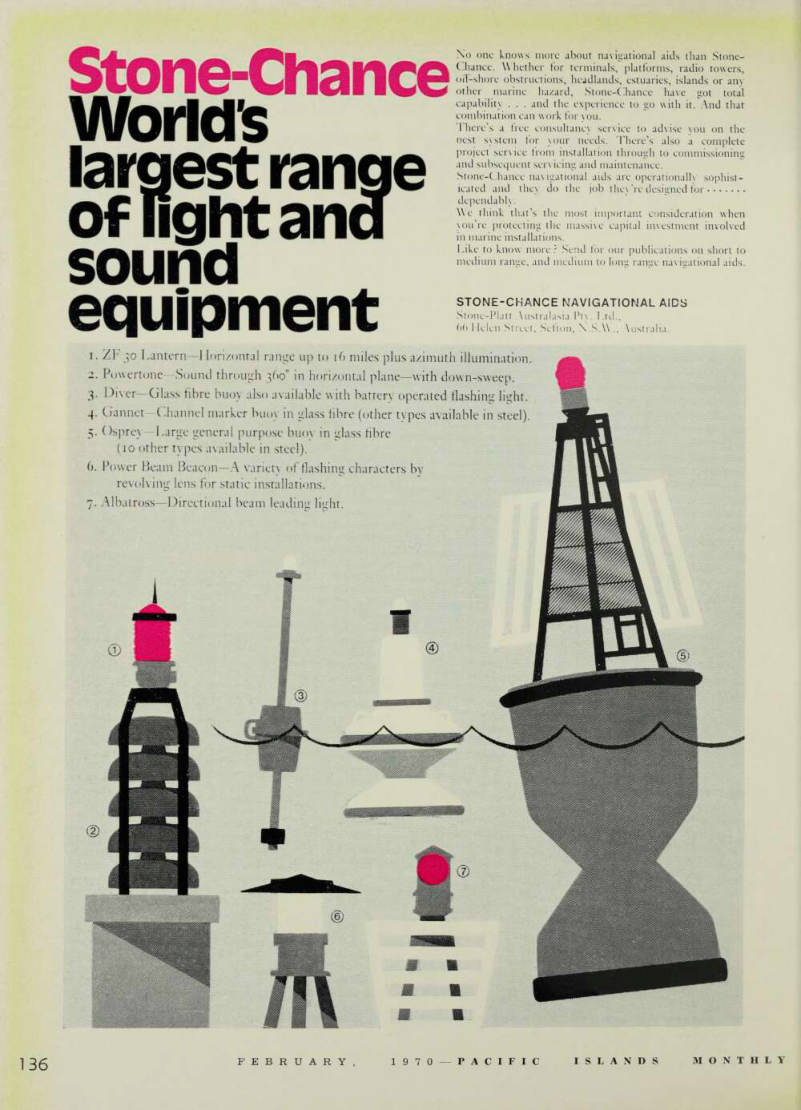 142
142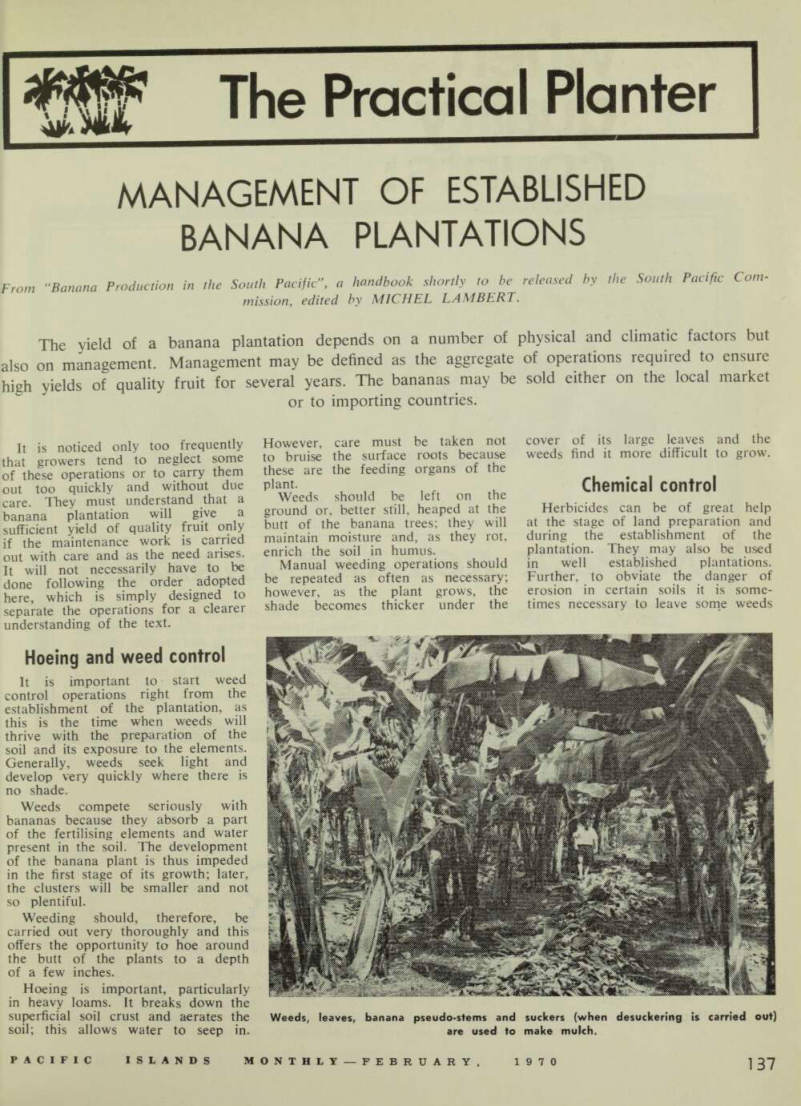 143
143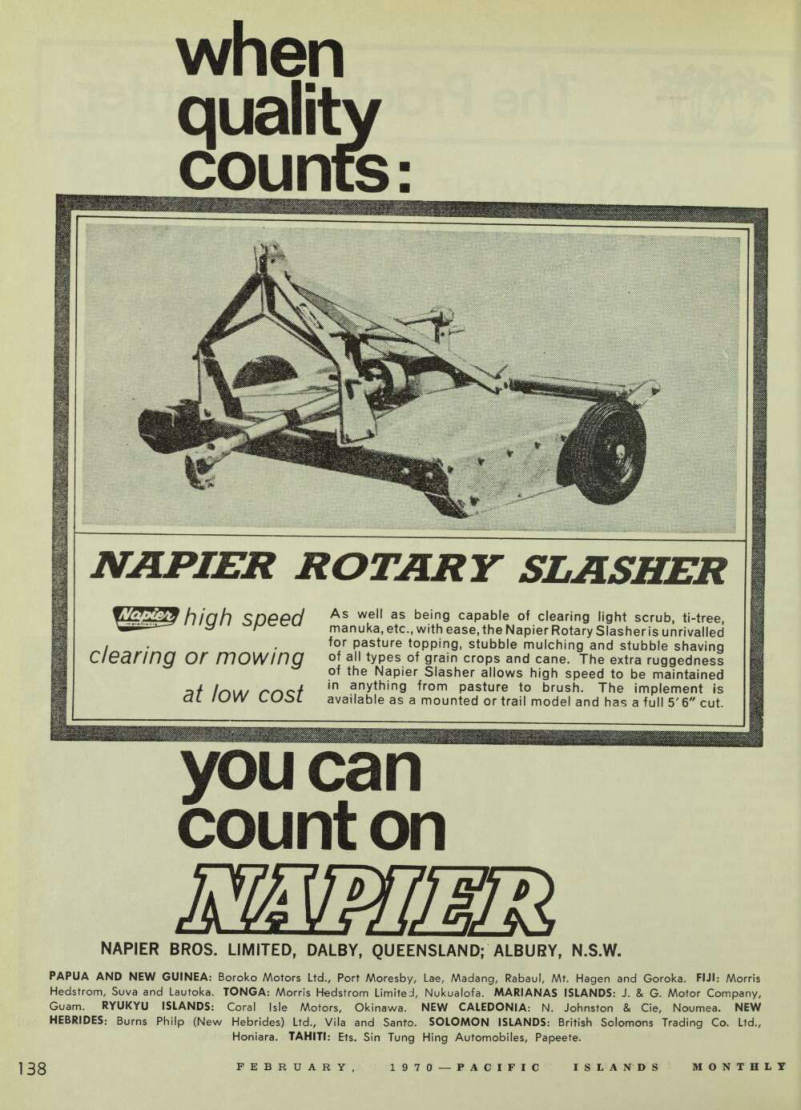 144
144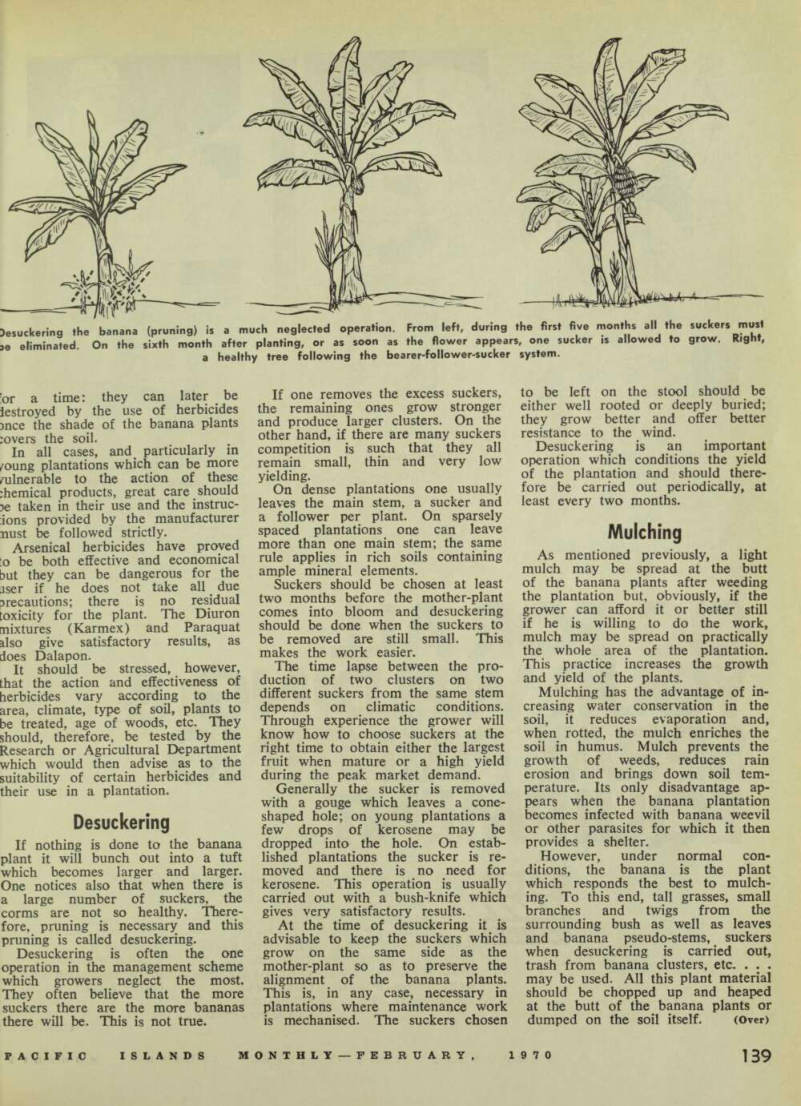 145
145 146
146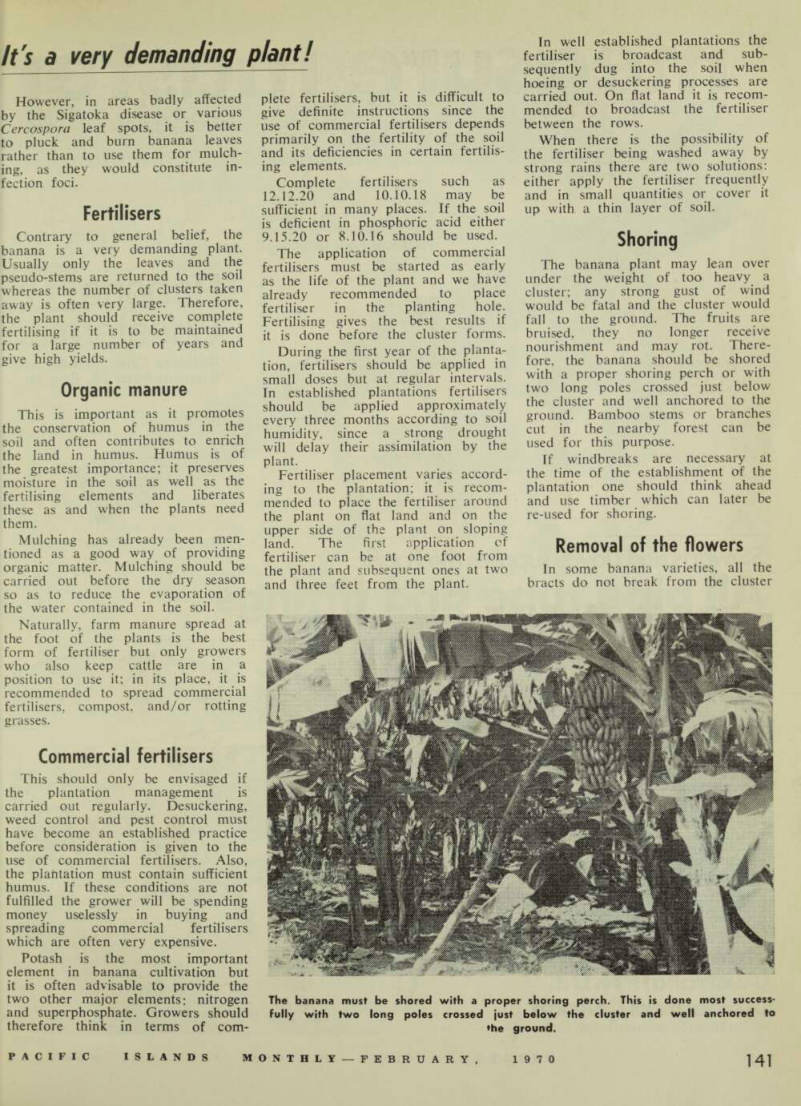 147
147 148
148 149
149 150
150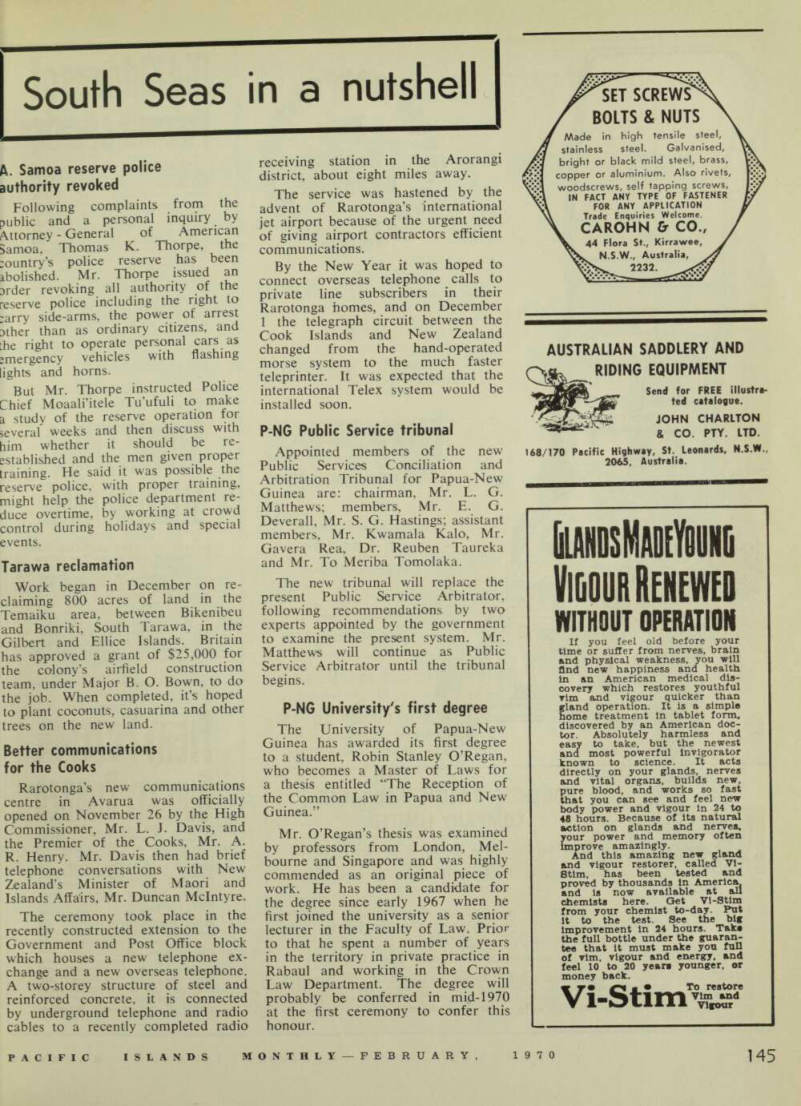 151
151 152
152 153
153 154
154 155
155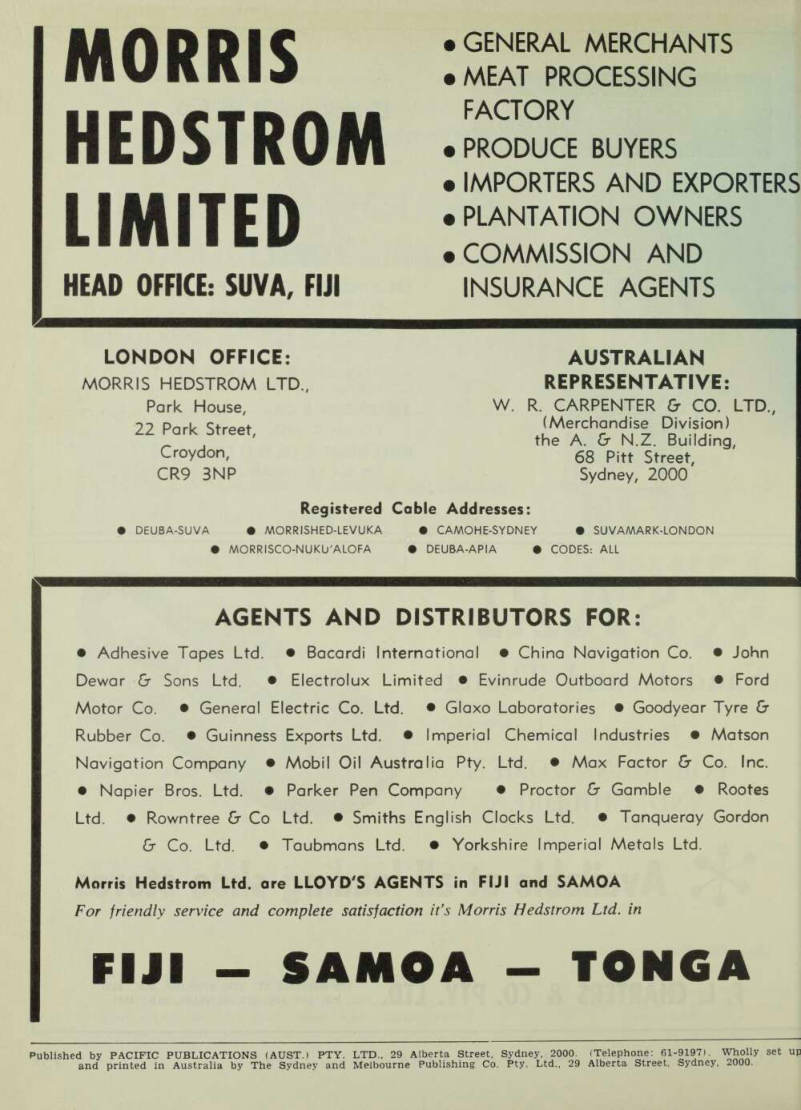 156
156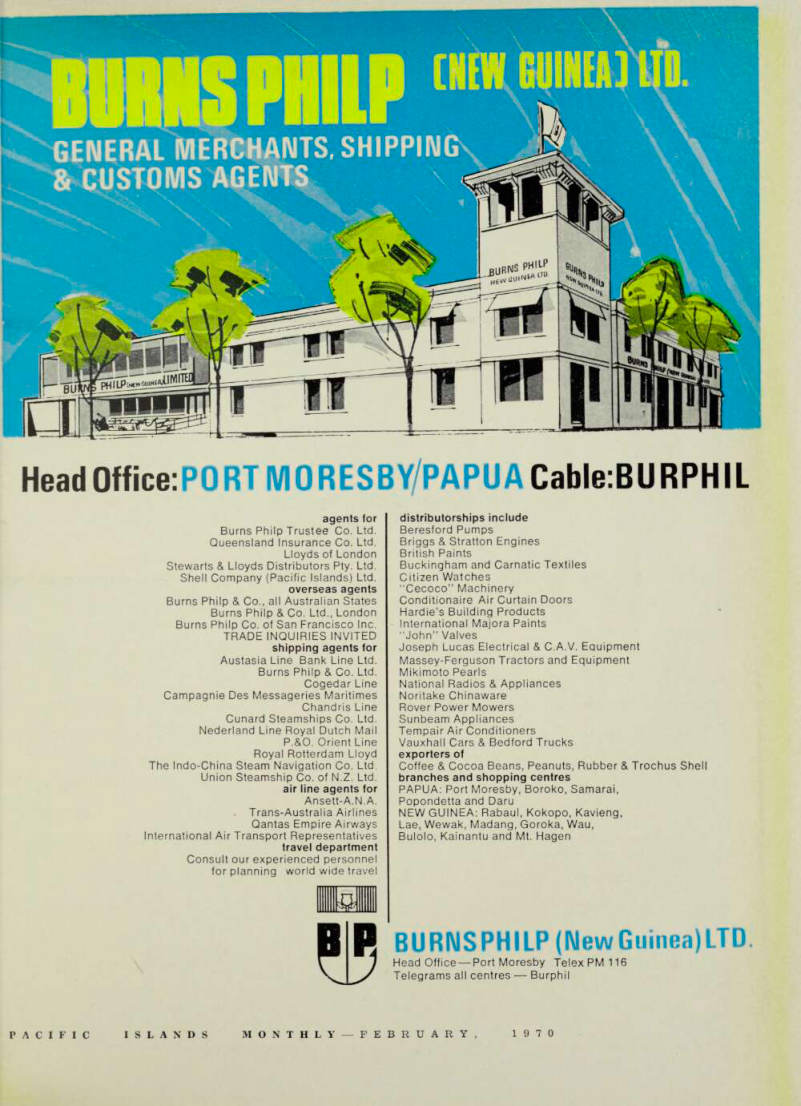 157
157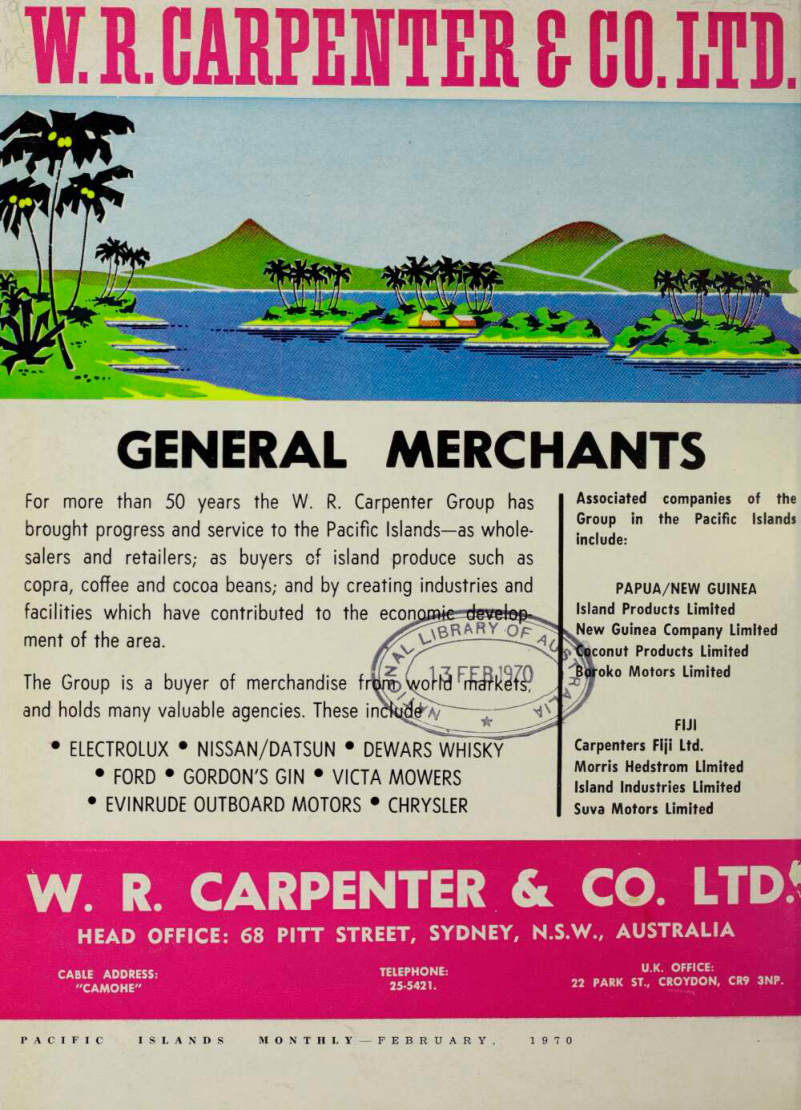 158
158