
Monthly
Pacific Islands Monthly
Registered at G.P.0., Sydney, for transmission by post as a newspaper.
January, 1970
News Magazine Of The South Pacific
• AUSTRALIA, 40c. • NEW ZEALAND, 45c. • US. PACIFIC TERRITORIES, 70c • FRENCH PACIFIC ISLANDS, 65 FRCS. CFP_« P..N.6.. FIJI AND ALL nTM«
Our Cover
January is tourist time in most parts of the South Pacific. It's hot, often humid, sometimes uncomfortable, but if you happen to come from America or Europe, where it's winter, the South Seas in January is undoubtedly Valhalla. This visitor no doubt dreams of Valhallas as she soaks up the sun at Yanuca, Fiji, with The Fijian hotel in the background.
And who wouldn't be happy to share her dreams.—Photo: Lee Pearce.
Advertisements & other items, pp. 2-15 (5 items)
„ 1070 pacific islands monthl
JANUARY, 1970- PAUirt*
The Hostess with
the mostest.
Seats.
More than charm. She’s got the mostesi seats between Papua/New Guinea and Australia j U st when you need them During the rush holiday period From now through till mid- February we’re putting on a lot more ‘Bird of Paradise’ T-Jet flights for you.
But don’t leave your booking too late. We want to see you get the best seat in the sky.
Call your Travel Agent or TAA; Port Moresby 2101. Lae 2311 Madang 2478. Rabaul 2567.
Goroka 8. Mt. Hagen 4 or 301 Wewak 103. w. ■ V m r\ II ■ •••
TAA NoJ-the friendly one
51 9 2307/69
% £5l Ll!//,
THROUGHOUT THE PACIFIC
HJI,SAMOA,TONGA,NIUE Is,NORFOLK Is.
BURNS PHIIP
[SOUTH SEA] CO. LTD.
REGISTERED OFFICE: SUVA, FIJI.
TELEPHONE NO: 22661
TELEX NO: FJ1127
Code Address; "BURNSOUTH'
SHIPPING AGENCIES
The New Zealand Shipping Co. Ltd.
Shaw Savill & Albion Co. Ltd.
Port Line Ltd.
Bank Line Ltd.
General Steamship Corporation Ltd.
Blue Star Line Compagnie des Messageries Maritimes Royal Interocean Lines Daiwa Navigation Company Ltd Sitmar Line Flotta Lauro (Lauro Lines) Australasia Pty. Ltd, Tonga Shipping Agency.
EXCLUSIVE
DISTRIBUTORSHIPS
INCLUDE
Akai Taperecorders Dunlop Products Hitachi Electronics Holden Motor Vehicles Rolex Watches Revlon Cosmetics Pentax Cameras Ferguson Tractors Olympic Tyres Penfold Wines
AGENTS FOR:
Queensland Insurance Co. Ltd.
Burns Philp Trustee Co. Ltd.
Shell Company (P. 1.) Ltd.
Bureau Vernas
ASSOCIATED COMPANIES
Burns Philp (New Hebrides) Ltd.
Automotive Supplies Co. Ltd.
Corrie & Co. Ltd.
Wrought Iron and Steel Construction Co. Ltd.
Bish Ltd.
SPECIALISED SERVICES
Expert advice on Shipping; Forwarding; Customs formalities; Insurance.
COMPLETE TRAVEL
SERVICE
accredited agents for the
INTERNATIONAL AIR
TRANSPORT ASSOCIATION
OVERSEAS AGENTS; SYDNEY • LONDON • SAN FRANCISCO
Outside or inside
HardieteAC
works best for you!
r ¥ ?*
HARDIFLEX—EXTERIOR WALL PANELS
Jll
VERSILUX—SMOOTH SANDED INTERIOR WALL AND CEILING LINING.
Hardiflex is the Ideal material for external walls of tropical homes: it cannot rust or rot... salt air cannot harm it.. . white ants cannot attack it. It is completely unaffected by extremes of climate, temperature and humidity.
Hardiflex is economical, easy to handle and fix and needs no maintenance.
Inside the home, Versilux has the same durability and freedom from maintenance. it’s Hardie’s new AC (Asbestos Cement) wall and ceiling lining—with a truly beautiful, smooth sanded surface. The large sheets are easy to work and fix, can never sag or warp.
Send the coupon for details of Hardiflex and Versilux, and your FREE copy of Hardie’s new survey of homes. You can see effective design applications among the 70 photos in ‘AC7O’ —many in colour.
Hm-mm ITpsgelook, wi]
I James Hardie & Coy. Pty. Ltd., G.P.O. Box 1 3935, Sydney 2001.
I Please send your colourful photo-survey 1 of homes built with AC, and details of , Hardiflex and Versilux, to:
Name
■ Address I . 8M899 I
PRODL^Sj
SOLD IN THE TERRITORY BY:
BURNS PHILP (New Guinea) LTD
tt
Arawatta
-cool word
for wine
ITT;
SEPPELT
arawatta
RIESLING
• '•'» *nJ «Hk hjink«n I. it. •**.. . IMm IWt .nJ v~0“ «"■* **►««• lifkl. Jn .lui^trf *«— -O' -*n A ! ; iE *> I.T .N SI INS rn. LTD. SEWBJ9^:,i : x4^° F ArSTRAI.I A lIT 6FL. 0 1 Otff ' You won’t find it in the dictionary, but when you hear talk in Australia of crisp, clear, cool Riesling this is the one with most common usage. Arawatta.
An uncommon name for a most uncommon wine. Named after a small Seppelt vineyard south-west of their famous Great Western vineyards in Victoria, Australia. This vintage is a blend of Rhine Riesling, Clare Riesling and Pinot grapes—has a delicate round flavour with a crisp, dry finish. Serve Cool. Very cool. Arawatta-cool.
SEPPELT
Great wines of Australia
World
quality
m v m 0* j.O s' r» 0' Only the world’s finest Virginia tobaccos are blended to produce ...
PLAYER’S
GOLD
LEAF
one of the great cigarettes
0671-5/67
NOW!
The New Tangy Flavour of
Savoury Cream Between Crackers in
\ m l \ The new cracker sandwich that’s tangy and light for between drinks and parties.
Brockhoff Savoury Sandwich oven-crisp crackers with a tingling savoury cream filling that tastes of tomato, cheese, chives and paprika.
Ready to serve and delight all tastes.
There’s value, variety and quality in
BROCKHOFF BISCUITS
THE EXPERTS
CHOICE^m
When accuracy, reliability, hard hitting power and all round peak performance really count the experts choose I C I Sporting Ammunition. And there's an IC I cartridge for every shooter—l C I Shotgun cartridges for dense even patterns and economy; I C I Rimfires for hard hitting accuracy and reliability; I C I Centrefires for heavier game; and slugs and pellets for lots of fun at low cost.
For performance and reliability under tough field conditions load up with the expert's choice I
WOT
ll mum mm n
mmm
mi sumsom
77 immmßMM
SPORTING AMMUNITION
iss £ m AM 4309
Happiness is a healthy baby
growing on Heinz,
the only Peak-Nutrition process Baby Food
Only Heinz has the Peak-Nutrition cooking process. We developed it. And we hold the patent. That’s why Heinz gives your baby more to grow on than other baby foods.
More essential nourishment for a healthy body. More flavour. More vitamins B ! -B 2 . Is anything but Heinz good enough for your baby, in these first vital years?
Heinz Peak-Nutrition process Baby Food gives your baby more to grow on ••. than other baby foods mm
BABY
TO
ABY
POODSll^*
5&:
o 0.
NEW
99 m m The colourful asbestoscement wall sheeting—for bathrooms, kitchens and laundries.
DURADEC
Comes to you in an exciting new colour range—midnight blue, deep olive, dove grey, tropical sand, carnation. It’s a top fashion, net pattern sheet—at a low-cost budget price. It’s scrubbable, washable, wear and scratch-proof—highly resistant to soaps, mild acids, alkalis, heat and steam.
A must for new homes, ideal for renovating older homes.
FREE COLOUR CATALOGUE AVAILABLE
LTD
Head Office: 393 Cleveland Street, Redfern, Sydney, N.S.W., Australia. Phone 69-0366.
fa
SOME OF THE FIRMS
WE REPRESENT ARE:
A. W. Allens (Confectionery) Sunshine Biscuits Sunrise (Confectionery) Flamenco (Instant Coffee) Cremota (Quaker Oats, Jets Pet Foods) Merchants (Canned Soft Drinks) Lunchtime (Honey) South Pacific Canneries (Scallops, Abalone) Safcol (Canned Tuna, Salmon) Hancock's (Spaghetti, Cereals) Melbourne Canning (Jams, Bleach) Water Wheel (Flour, Sharps, Wheat) General Food Corporation (Twisties, Twirlies) Edward Zorn (Margarine, Cooking Fats) Robert Timms (New Guinea Gold Coffees, Teas) Rodd (Cutlery) Palm (Mattresses) Esteel (Cookware) Vendolux (Cafe Bars) Mitchell's (Abrasives) Regent (Swiss Watches) Gainsborough (Furniture) Tamco (Melanie Crockery, Nylon Hardware) Elm a c o (Plastic Household Goods, Electrical Fittings) Brownbuilt (Pre-Fabricated Houses) Ryline (Fluorescent Lights) Jex (Steel Wool) Austramax (Pressure Lamps) Preservene (Soap Products) Charles Tims (School Requisites) Ascow and Philadelphian (Shirts) Lawn Chair and Tubco (Garden Furniture) Sunrise Lustretone (S.S. Sinks, Plumbers' Supplies) Electronic Industries (Electrical Household Appliances)
S. E. TATHAM
& Co. Pty. Ltd.
MELBOURNE, AUSTRALIA
G.P.O. Box 8, Cables "SET Telephone 60-1125
EXPORT AGENTS
PACIFIC ISLANDS
AGENTS
Australian buying and shipping agents for the Gilbert and Ellice Islands Colony y&L Wholesale Society % t i i
DIRECT ENQUIRIES WELCOMED
Associate Company
S. E. TATHAM (FIJI) LTD
Suva, G.P.O. Box 671.
Lautoka, P.O. Box 366.
SINCE 1924
When the best beer is called for, New Zealand’s favourite lager...
STEINLAGER
V ■■ \ can tempt you away... once you experience the unique flavour and distinctive aroma of
ERINMORE
FINE
TOBACCOS
&& SINCE 1810
MURRAYS OF BELFAST
NORTHERN IRELAND
A
great bunch
of flours.
Robert Hutchinson makes the greatest bunch of flours in the Pacific. Bakers’ flour.
Superlitc cake and sponge flours.
Biscuit flour and cracker flour.
Wheaten sharps and wheaten meal.
We’re particularly proud of our bunch of flours. So we have a technical advisory service to help you use them properly.
So next time you see a Robert Hutchinson flour (or even one of our Hutmill stock feeds), remember it’s just one of the bunch . i HI
ROBERT
HUTCHINSON
LIMITED
die flour people
Hartington Street, Glenroy, Victoria, Australia. 3046. Telephone Melbourne 306 7261
the biggest
do more
When you deal with a big company, you should expect their service to match their size. It’s only right.
Winstone Ltd are the biggest suppliers of building materials in New Zealand. In fact they not only supply materials ... they manufacture the materials they supply. Like Gibraltar Board (the low priced fire and vermin resistant wall and ceiling lining) Like refractories (fire resistant bricks) Like PVC pipe fittings and flat sheet.
Winstone Ltd can manufacture and ship them to you with less fuss. Less delay. Less worry. Less paperwork.
Winstone Ltd do more.
That’s how they got big
in the first place.
WINSTONE LTD
BRANCHES AND ASSOCIATED COMPANIES THROUGHOUT NEW ZEALAND.
ASSOCIATED COMPANIES IN SOUTH EAST ASIA.
WINSTONE LTD.
P.O. BOX 395,
AUCKLAND,
NEW ZEALAND.
AA6348
ermine
interested demand
Sansui.
If you really care about fine music, about the real thing in stereo, then this message should interest you. Because we're dealing here with the authentic in audio equipment, not some poor imitation.
Still with us?
Then meet the Sansui speaker systems. Built to meet the most demanding standards in the industry. Ours. The same sort of demands we made for our world-famous receivers. And, because we really care, the demands keep building.
They are being met, too, by speaker systems like the 40 watt SP-200 and the 25 watt SP-100, both expertly crafted 3-way systems with beautifully finished "Kumiko" fretwork grilles and ingeniously engineered components.
The real thing.
The SP-200, for example, incorporates no fewer than five speakers, the SP-100 three. Each is designed to be fully compatible with your valuable Sansui stereo receiver, just as are all the other genuine Sansui speaker systems from the 20 watt 2-way SP-30 right on up through the fabulous 70 watt 4-way 6-speaker SP-2000. All created to match Sansui receivers and to deliver optimum sound quality with any good receiver.
Get full details at any authorized Sansui dealer. Authentic audio for the genuinely interested. n. 7. % ■ i I ■ m SP 100 SP-200 sansui
4
JANUARY. 19 7 0 -PACIFIC ISLANDS MONTHLT
7
lACIFIC ISLANDS MONTHLY JANUARY, 1970
9
PACIFIC ISLANDS M O N T H L Y J A N U A R Y . 1970
Pacific Islands
Monthly
Established 1930; 40th Year of Publication.
Owned And Published By
Pacific Publications (Aust.) Pty. Ltd.,
29 Alberta St., Sydney, N.S.W., 2000.
Postal Address: G.P.O. BOX 3408, SYDNEY,
N.S.W., 2001.
Telegraphic Address: PACPUB, Sydney.
Telephones; 61-9197, 61-7101, 61-4369.
Chief Executives: Managing Director: R. W. Robson.
Executive Director/Publisher: Judy Tudor.
Executive Director/Business Manager: Selwyn Hughes.
Executive Director/Chief Editor: Stuart Inder.
Pacific Islands Monthly
Editor: Stuart Inder.
Advertising Manager: W. A. Gasnier.
Branch Offices
Melbourne: Newspaper House, 247 Collins St., Victoria, 3000. Tel.: 63-7053.
Fiji: Pacific Publications (Fiji) Ltd., Fiji Times Building, 20 Gordon Street, Suva. Tel.: 25601.
Fiji Times Office, Vidilo Street, LAUTOKA.
Tel.: 60-422.
Papua-New Guinea: Pacific Publications (N.G.) Pty. Ltd. Representatives: PORT MORESBY, P.O.
Box 16; LAE, P.O. Box 227; RABAUL, Mr.
Steve Simpson, P.O. Box 433 (c/- Rabaul Photographic. Tel.; 2677).
Representatives
Queensland; Advertising—Beale Media Services, 232 St. Paul's Terrace, Fortitude Valley, Old., 4006. Tel.: 51-5827.
New Zealand: General.—J. D. Whitcombe, C.P.O.
Box 2229, Queen St., Auckland. Tel.: 456056.
Advertising.—John Bayldon, P.O. Box 366, Auckland. Tel.: 31569.
United Kingdom; S. R. Warman, Park House, 22 Park Street, Croydon, CR9 3NP. Tel.; 01-6884177.
H. A. Mackenzie, 4A Bloomsbury Square, London, W.C.I. Tel.: Holborn 3779.
Japan: Advertising—Universal Media Corpora tion, C.P.O. Box 46, Tokyo. Tel.: 666-3036.
Agents
All main trading firms and stores in the Pacific Islands.
Pacific Publications Pty. Ltd. is the Australian agent for THE FIJI TIMES.
Subscription Rates:
"Pacific Islands Monthly" is air-freighted to all subscribers and agents in the South Pacific; copies to other areas go by surface mail.
Australia (inch Lord Howe Is., and Thursday Is); $4.50 Aust.; Papua-New Guinea, Norfolk Is., Nauru, 8.5.1., G. & E. Group, Tonga and New Hebrides: $4.00 Aust.; New Zealand: $5.25 NZ; Cook Is., Niue and Western Samoa; $4.00 (local currency); Fiji $4.00 (local currency); American Samoa and U.S. Pacific Territories: $B.OO (local currency); French Pacific Territories —New Caledonia, Tahiti, etc.: 750 French Pacific francs; United States of America; $9.00 U.S.; United Kingdom and elsewhere: £2/15/- Stg.
Airmail postage to USA, UK and elsewhere is additional.
Copyright ©, 1969, Pacific Publications (Aust.) Pty. Ltd.
Up Front
with the Editor
Fortunately PIM doesn’t receive the kind of anonymous letters that plague most newspapers and magazines, but we do receive a good share of communications written by people who sign their name but ask us to withhold it from publication. Usually they hold official positions, so the anonymity is understandable.
But the other day I had a letter from a member of French Polynesia’s Territorial Assembly, signed by him, and asking me not to use his name, “as the French certainly don’t like the Pacific Islands Monthly, and true articles such as you run on Tahiti would never be printed here”.
If a parliamentarian doesn’t feel free to publish a letter to the editor over his own name, the political situation in Tahiti must be worse even than the president of the Assembly, Mr. John Teariki, has been claiming recently. But I shall honour his re quest of course.
His complaint is against the French bomb tests in French Polynesia, which he says have resulted in Tahiti being virtually under French military occupation, and it is this “occupa tion”, as much as the tests themselves, that he objects to.
He suggests that members of the Pacific Area Travel Association be encouraged to blackball the workshop section of PATA which is to meet in Tahiti this year.
He continues: “Under normal cir cumstances the conference would be a good thing for the future of Tahiti, which does need tourists.
However, the fact is that France will be exploding six more atomic bombs in this area, and Tahiti is under French military occupation. If Tahiti was listed as being unfit to hold a tourist conference, this might hurt French pride and in the end may actually help tourism.
“The French are conducting atmos pheric tests in Tahiti without the permission of the Territorial Assembly or the population. We have voted against the Gaullists, who brought us the bomb and the military, on every opportunity.
“Much of the best available flat land in Tahiti is covered with military
camps and housing areas and we have rampant inflation which has made a few rich, but actually brought new poverty and slums to Tahiti.
“The devaluation, thanks to Gaullist false pride, has hurt us badly. We have to import everything and most of it does not come from France. While tourists in France might benefit from devaluation, tourists in Tahiti will finally pay more for everything, and the popu lation will suffer.
“We in the Assembly asked for an American consul, but the Gaullists kicked out the consul and closed the consulate, an insult to us and the Americans who bring us most of the tourists.
“Yet we must support these people in Tahiti who have ruined our economy, given us a bad name, crushed our roads with heavy military trucks and caused shortages of water and electricity.
“The tourists in Papeete need not expect to see Tahitians in the local bars and night clubs. They will see rows of young French military gawk ing at any strange girl who might walk in. The crime rate, accident: rate and divorce rate all point to the military. I can only urge Pacific: nations to stop the PATA conference,, which will only help French prestige and prove to the French that bomb tests don’t hurt tourism.
"Ban the Games"
“And the same situation should apply to the South Pacific Games, to: be held in Papeete in 1971, unless the tests are stopped and the military sent home. Tahiti is now a gianti rest camp for the tired French; military. Three hotels are still under military occupation as well as virtu ally all private housing.”
This politician’s views square with the anti-military attitude that is current in Tahiti. And it squares with the continual demand by the parliamentary opposition, the majority party, for internal self-government for Tahiti.
I don’t believe that any opposition to the bomb tests from either inside or outside Tahiti will stop the tests. But the time is coming when metropolitan France will have to be more flexible in its handling of its Pacific territories, and give them the measure of self-government they have been asking for.
Those territories may legally be part of France proper, but you can’t forever run them from Paris, and still keep up the fiction that they are as independent as anybody else in the French republic.
Tongan situation
Another piece of correspondence during the month is anonymous in a different sort of way. It has a name for publication, and the address of one of our smaller Pacific institutions of learning. I can’t find anybody at that institution who has heard of the writer. But I shall give him a run, because he obviously has know ledge of his subject and he makes a point.
The writer has little confidence in Tonga’s family planning objectives, referred to by Prince Tu’ipelehake at the Noumea South Pacific Conference ( PIM, Nov., p. 32).
He says Tonga won’t control her population explosion that way, and he continues; “As far as Tonga’s people being its greatest asset, one can only add that in the very near future Tonga’s people will also be its greatest liability, for one can have too much of a good thing. One can easily bear out this view by walking around the capital of Nukualofa and observing the large numbers of schoolchildren, for very few of whom jobs will be available in the future. Owing little allegiance to a system which has done precious little for them, these children are the unemployed and disaffected of the coming years. The present social system will surely founder before the pressures which they will create.
"Place in the world"
“Exactly what Prince Tu’ipelehake can mean by the Tongan people taking their place in the world is not at all clear. If he is referring to the ‘great nation aspirations’ of his brother the king, whose fancies range from UN representation to international jet ports, the abacus
and computers, then the future for the average Tongan seems con jectural, to say the least.
“However, his assertion that, ‘it is not minerals, coconuts or bananas that count’ is most frightening, and points to a naive flight from the agricultural environment which is the reality of the Tongan situation.
“One cannot help but think, as one considers Prince Tu’ipelehake’s remarks, that the longer that the Nobles ruling Tonga hold these types of beliefs, then the nearer comes the inevitable Tongan social revolution.
Regrettably, or perhaps fortunately, there are few educated Tongans who can subscribe to Dr. Joe Fanamanu’s belief that, ‘Tongan royalty will last as long as there is even one single Tongan subject still alive to be ruled’ {PIM, July, 1969).
“The majority of educated Tongans who I have been able to meet, both in and outside Tonga, are even now growing impatient of the selfish ways in which the Nobles and the royal family are using the government, its agencies and the Constitution to better their own lives, instead of improving the lot of their subjects.
“A Tongan future, a Tongan identity, needs not empty words or fancy rhetoric by princes at SPC meetings, it needs unselfish action by a government renowned for its inactivity.”
One has only to read recent corres pondence in PIM, including an article in this month’s issue, to know that the position of the Nobles in Tonga is being questioned more each month.
I think it is going too far to say that they and the royal family are selfishly using the government to better their own lives, but it won’t do them any harm to hear it said.
Stuart Inder
Advertisements & other items, pp. 17-20 (1 item)
s’mmt Cad6m.(fJi
&mwt CadimtfJi
s'mmt CddSmifA
&a/asit CadSaxcfJi
o 3V It’s worth saying over and over again because there’s a glass-and-a-half of pure, fresh, full-cream milk in every half-pound of Cadbury’s Dairy Milk Chocolate. No other chocolate can possibly give you that creamy, creamy Cadbury taste. Look for the famous purple and gold wrapper.
CADBURY’S
DAIRY MILK CHOCOLATE
the biggest selling block chocolate in Australia MD7/16/7
<jCimited stocks slid auaifalie
CUMULATIVE INDEX
to the
PACIFIC ISLANDS
MONTHLY
(Volumes 1-15)
The index covers the 15 vital years from August, 1930, to July, 1945, when many of the events which shaped the Pacific of today took place. But PIM in those years (as is the case today) did not only concern itself with current affairs. It abounded also in articles on every aspect of Islands life both past and present —from agriculture, anthropology and aviation to shipping, tourism, vulcanology and the weather. Islands history was (as it still is) a PIM speciality.
Now, with the aid of the new cumulative index, you can find in a few seconds everything PIM ever published from 1930 to 1945 on any subject, whether it was a twoline snippet or a major article.
The index is one of the most detailed productions of its kind ever published. It is divided into nine sections — aircraft, authors of articles, biographical entries, book reviews, companies, letters to the editor, poems and short stories, ships, and territories. Nearly 10,000 people are listed in the biographical section, and there are some 200,000 entries relating to them. The territories section, which deals with Islands groups such as the Cook Islands, Fiji, French Oceania, Papua, etc., is equally minutely indexed and cross-indexed under a wide range of head-
ings.
The index contains 228 closely-printed, but easy-to-read pages measuring 11 by inches. It is cloth-bound and printed on tough, long-lasting paper.
PRICE: Australia and P-NG, $25.00 Aust., plus 80c posted (includes registered postage); elsewhere, $25.00 Aust., plus $1.05 posted (includes registered postage); USA, $30.00 U.S. posted (includes registered postage).
Available from:
PACIFIC PUBLICATIONS (AUST.) PTY. LTD.
29 Alberta Street, Sydney, N.S.W. 2000, Australia (Postal address; Box 3408, 0.P.0., Sydney, N.S.W. 2001)
1 10SMr, 1 n
i^vesawt
Paris, Rome, Tokyo— wherever the jet routes meet, Peter Stuyvesant is there.
A wide new world of taste.
Rich choice tobaccos.
Miracle Filter — so much more to enjoy! so \671 1591
inICE TOBAC cOS U
rich c Sc ■ ’
The International Passport to Smoking Pleasure.
WORLD COPYRIGHT.
IT f mm toon urn* mmg.
fou II love her
for the
—you
ooks
I get.
That’s what Mazda 1500 can do for her escort. Because she's suave.
And lovely. With graceful curves.
And a soft, spacious interior.
On the road, she moves like a lady.
Smooth. Quiet. Fast (when she has to be). And always obedient to your every whim.
Mazda 1500. She has the power to change your world.
make her yours |3 MAZDA
From the world's most progressive automotive plant. Toyo Kogyo Co., Ltd., Hiroshima, Japan
In This Issue
Vol. 41. No. 1. January, 1970
General
New SPC boss starts 39 Concordes in the Pacific 55 American Airlines to start soon ... 61 Early Pacific travel guides 79 Capt. Cook's explorations 87
American Samoa
Public Works director 95 Pago wharf container plan 97 New utility tugs 105 Better deal for yachties 106 Supermarket friendship 112
Cook Islands
Tidal wave havoc 48 Personalities 92,93 Mr. Marama Nicholas retires 95 Trade ideas with Fiji 114
Fiji
Budget story 20 Tourist advantages 23 Search for oil 29 Drug taking 35 Indian Commissioner 38 Four Travelodges by 1970 39 Leper hospital moves to Suva 40 'Peacock' spenders 41 Tropic Sands resort 59 New name for Fiji Airways? 65 Tribute to Elizabeth Hennings 67 Development plan for university ... 69 US bank to open 11l
Geologist to look for minerals ... 113 Higher meat prices? 115
French Polynesia
Politician's complaints 14 Tourists lose by devaluation 37 Series of booklets 90
Gilbert And Ellice Islands
The Corrie family 35 The Bible in Ellice language 39 Rough justice in the 1880's 75 The Rev. Ranford leaves 95 "Moanaraoi" doing well 97 Australian bank to open 112
Nauru
Company registrations 25 Air services 25, 63 Headmaster's departure 96
New Caledonia
Top men die in air crash 27 Sports subsidies 41 Noumea picture series 51 New book 90 Father Brousseau leaves 95 Traders buy their own ship 99
New Hebrides
Budget report 26 Language survey 95 P&O to call 97 Ship looking for oil 105
Norfolk Island
New Caledonian tourists 38 Former matron's MBE 95 Paradise Hotel re-development 113
Papua-New Guinea
Trade figures for 1969 16 Miss Territory 21 Worry over Rabaul trouble 30 Percy Chatterton's new column 31 New joinery and welding shop 37 Developing Bougainville's west coast 38 Drug laws 38 Tom Cole, croc shooter 43 A great year for Pidgin 45 High flying 55
Agricultural problems 87
"Pigs, Pearl shells and Women" 90 Bougainville pipeline completed ... 101
Solomon Islands
Attack on tourism 23 "Search for the Is. of Solomon" ... 87 Biggest yet trader in service ... 105 Bauxite decision soon 126
Tonga
Family planning 15 Growing crime problem 20 Sunday observance clamp-down ... 22 Oil delays 29 Princess' marriage annulment ... 32 Hotel's drainpipe defaces beach ... 38 Stamp and coin issues ... 45 Ten year old mathematical genius 67
Us Trust Territory
Japan-Micronesia tourist flow 63 Mill denies being a "front" 105
Western Samoa
Harry Moors starts new job 39 Travelodge may not build 59 Tribute to churches —stamp series ... 91
DEPARTMENTS: Up Front with the Editor, 14; Footnotes with Percy Chatterton, 31; Letters to the Editor, 35; Tropicalities, 37; Brett Hilder Profile, 43; From the Islands Press, 70; Magazine Section, 75; Yesterday, 83; Book Reviews, 86; People, 95; Shipping, 97; Cruising Yachts, 106; Business and Development, 111; Produce Prices, 117; Shipping, Airways Schedules, 119; Deaths of Islands People, 124; Practical Planter, 129; South Seas in a Nutshell, 133. Advertisers' Index, 126
Pacific Islands Monthly
Rata Mara: 'No Bloody War'
When Uk Leaves Fiji
After two weeks of debate on subjects ranging far and wide, Fiji’s Legislative Council in December approved the 1970 budget of more than $47 million.
Issues touched on during the two week talkathon varied considerably, from an attack on the Fiji Develop ment Bank for allegedly neglecting the small man, to wrangling over the government’s decision to hire its own computer: from the problems facing Fiji when Britain enters the Common Market, to the “devastating effect” of a New Zealand magazine’s article on the political and racial situation in Fiji.
The ever-loquacious Opposition Whip, Mr. K. C. Ramrakha, delivered a marathon effort—a speech lasting seven hours. (For other references to his speech see ‘Peacock Spenders’, p. 41).
It was he who introduced the offending magazine article in LegCo because, “what is raised in this article is so serious in my view that a government-to-government approach is warranted.”
Desire 'to kill"
The article, headed “Trouble in Fiji?” was the first of a three-part series in the New Zealand Weekly News. It was written by Mr. Tony Reid, with photographs by Mr. Barry Sharp, both of whom spent three weeks in Fiji.
Mr. Ramrakha. one of the person alities interviewed and photographed for the article, protested in particular about the opening section, which concerned statements attributed to unidentified Fijians, in which the de sire to kill Indians or drive them from Fiji is expressed.
Unidentified Indians are quoted as saying that they live in fear of eventual nation-wide bloodshed. Mr.
Ramrakha said he did not dispute the freedom of the Press or the right of overseas journalists to describe what was happening in Fiji. But it
, . , , , was not fair to publish the distorted conversations of unidentified peonle.
“Is it fair to write in these terns when relations here are good and we are working together to build a nation?” he asked ' Chief Minister, Ratu Sir Kamisese Mara, also attacked the article, calling it the “worst example of irresponsible journalism I have seen.”
He said the article would have a “devastating effect” on the government’s efforts to attract overseas investment, particularly in New Zealand. “How dare they suggest that we will collapse into internecine and bloody war because a handful of
UK civil servants are going to leave our shores?” he demanded.
He agreed with the Chief Secretary, Mr. G. P. Lloyd, who said that a government-to-government approach on the article would be inappropri ate because Fiji could only be told that the New Zealand Government did not censor its Press. “But I do not think we should leave it there,” he added. “I think that we should, by whatever means we have, reply to this article and point out the facts.”
During his seven-hour speech the Opposition Whip declared that in creasing bankruptcy and crime, the flood of valueless cheques, increasing prostitution and venereal disease, in creased liquor drinking and a slacken ing of morals were the real index of Fiji’s prosperity. He blamed them on mis-government.
He also attacked government use of electronic computers, government policy on the recognition of medical practitioners, insurance requirements for Housing Authority tenants, taxi meters, an advisory committee‘s re port on the relief of destitutes, over seas construction companies (who brought nothing new to Fiji but took a lot of money out) and alleged dis crimination in New Zealand against arrivals from Fiji.
Leader of the House, Mr. J. N.
Falvey, said Mr. Ramrakha could have fitted his seven-hour speech into
one hour and 15 minutes—adding that much of the speech consisted of “personal and venemous invective, the like of which has never been heard before in this House,”
Criticism of the Fiji Development Bank came from the Leader of the Opposition, Mr. S. M. Koya, who claimed it was not geared to help agriculture. Replying to this outside the House, the bank’s manager, Mr.
J. D. Ward, stated that farmers re ceived 93.7 per cent, of all the loans made by the bank during the last financial year.
Mr. Ward said the average loan received by farmers in the financial year to June 30 had been $660. “The smallness of the loans is not relative to our unwillingness to lend more— it is simply the amount that the farmers want to borrow,” he said.
The average size of industrial loans had been $15,170, but the machinery and buildings needed by a manu facturer would obviously be much more costly than the needs of a small farmer.
He said that overseas applicants received a very small proportion of loans made by the bank.
Work for school leavers
Speaking during the budget debate on the matter of employment, the Chief Minister said it was his hope to see the establishment of a re afforestation scheme, giving school leavers immediate employment.
He said he had not been able to get the support of other ministers on the scheme, but he was con cerned because in the Western Division alone 15,000 cane farmers were carrying the burden of sustain ing, feeding and clothing the re mainder of the 300,000 people who lived in the region.
He wanted the government to de vise a scheme to attract a portion of this pool of unemployed into such productive fields as reafforestation.
Following final approval of the budget, other matters, including amendments to the Sugar Industry Ordinance, the Dangerous Drugs Ordinance and the Pure Foods Ord inance were dealt with in the Legis lative Council.
Opposition members said they were concerned over a racket being t'JIuL °, n bV . Aus . t u alian a . nd *£* ea and tourists with regard to Fiji pills ernment ' SUbSldlSed cordrace P tlve \/fw /'■' a cu u , x . C. A. Shah said tourists were HE the m E IJI and T thCI m at Li bome E° r a sub ‘ profit - He quoted cine case . t a aHJH 11 M °[ d j re ? 1,000 packets. Although he had been refused, he had been able to buy ofher quantities elsewhere. w, . . 4 , Mr. Ramrakha said that packets of pi s available m Fiji at a subsidised cost of 20 cents were being resold Aii;^E Stra a u d Ne J Zealand.
Alliance member, Mrs. B. C.
Livingston, remarked that it seemed as if the pills had become a dutyfree tourist attraction.
Localisation problems
Should Fijians be given preferential treatment in the localisation process in multi-racial Fiji? ~. , , Ihere are many who think they the Fd qUeS :: on -. n f ...
Educational standards of Fijians, he said, were generally below those of other races in Fiji. , 1 Because of this, I urge the government and particularly the Director of Localisation to see that a quota
system is adopted in the award of scholarships,” he said.
He wanted 50 per cent, of funds allocated for training to be ear marked for Fijians.
Mr. Sikivou praised the extent of localisation in the Department of Agriculture, but complained that “ local boys” who had the .mentality and qualifications had yet to reach the tO P two P os ts in the police force, u r re . fer , red f to , 4 a ... remark by Mr A t? du . V (Alliance, Central) who had warned that localisation must not be allowed to proceed at the expense of decreased efficiency, He called for a government state ment on t h e progress of localisation. i.- «w- • * , - , , . Tbe Chief Minister left no doubt ? bis attltude . towards the localisation process—it was not pro ceeding fast enough, he said in the House.
“I am not satisfied myself that the pac £ is ade ff uate > the advice ftw en fr ° m and locally, that we can slash the pace of localisation, Ratu Sir Kamisese said t r F d !ii aching Dominion l a e US .o an r d ece^r t r e ‘‘ g C ;jin Ser h V anT shake”, there would be about 200 posts in Fiji to fill overnight, , . , , . 4 , We shall not be able to do so on the present basis,” he said. Over seas officials would have to be re cruited on contract.
Crime: Tonga's growing problem
Tonga’s continuing upward trend in crime, particularly assaults, is worrying a lot of people. Minister of Police ’Akau’ola, in his annual report for 1968 reveals an increase of 17.5 per cent, for all offences during the year and an increase of 46 per cent, compared to 1966.
Crime figures for 1969 appear to be up as well.
Says the Minister: “There is an immediate need for manpower (for the force), mobility and improved communications, if the crime rate is to be contained and controlled”. Since his report was written extra vehicles have been bought and equipped with two-way radio telephones. Similar equipment now links the Nukualofa headquarters with two outlying stations in Tongatapu.
It has been suggested that the inadequacy of the police force has had somtehing to do with the rise in crime, but Nukualofans are particularly upset with the great rise in the number of assault incidents, ranging in seriousness from murder to common assault. the increase in the consumption of alcohol,” added the Minister, such offences can be expected to rise”.
Another reason for the rise in crime is believed to be the drift to the towns of many young people who fail to find work. The number of young people (aged between 17 and 30) convicted of criminal offences rose, in 1968, to 79 per cent, of the total of 530.
No-one, including ’Akau’ola, knows the answer to this problem.
He concludes his report by saying: “. . . in view of population pressures and economic side effects, it is reasonable to predict a future of continued potential increase of crime”.
Pretty Miss Mrs.
Girls as attractive as Miss Patricia Seeto, of Rabaul, New Guinea, don't remain unattached for long. Within a week of being crowned recently as Miss Territory (she was selected from among lovely girls representing major Papua-New Guinea towns) she left for Hong Kong with her fiancee, Mr. Wayne Golding, where they planned to marry. She will settle in Australia with her husband. Photo: Chin H. Meen.
Tourism's
Many Facets
(1) Tourists And Sunday Observance
Protests flew thick and fast in Tonga in December after the Police Department, in a show of authority and for the first time in recent years, clamped down on taxi, bus and three-wheeled taxi (ve’etolu) proprietors who were flagrantly disregarding the king dom’s Sunday observance laws.
The police law enforcement blitz caught taxi operators and the general public alike by surprise, although warnings against the running of pub lic transport on Sundays had been broadcast over the local radio station for several weeks previously.
Tonga’s Order in Public Places Act prohibits any work on the sab bath including engaging in any trade, buying or selling, gardening, swim ming, any other kind of recreation or sport. . . .
Persons infringing the act are liable to a fine of up to 10 pa’angas or im prisonment with hard labour for up to three months in default.
But the cabinet is empowered to grant permits allowing specific acti vities on Sundays.
Hardest-hit by the police strong arm Sunday tactics were taxi opera tors, although some concerns were also warned against the backyard sell ing of bread.
Two Canadian warships were in port the first day of the intensive police Sunday law enforcement, and sailors found they were unable to hire taxis to return them to their ships when they left the International Dateline Hotel after midnight.
Local residents were also upset when the police told them they could not return home by taxi when they left the hotel after midnight. Others who were already in taxis were emptied out by the police.
One major tour operator in Nukua lofa said he lost over STISO one Sunday because police would not allow him to take 27 visitors on tours of the island of Tongatapu. He was drafting a letter to his overseas counterpart in the tour business ask ing him not to send any tourists to Tonga with Sunday tours in their itinerary. .
Tonga’s Sunday laws, he said, would become a major setback in the country’s drive for more tourists.
He said the Sunday laws were made up at a time when there were no vehicles in the kingdom.
Consensus of opinion among taxi
• And what's the girl above doing?
A good question. She's Mrs. Lisita Tui'one, of Nukualofa, and the gorilla with the gruesome grin was carved by her husband, Taani, for sale to passengers off a cruise liner.
There aren't any gorillas in the South Pacific . . .
operators and others responsible for public transport was that transport should be classified as essential ser vices, along with law enforcement, electrical repair work, hospitals and such like. The law should be changed to fit in with the times.
Bakeries also felt that selling bread should be allowed on Sundays. Even church leaders, although generally supporting Sunday observance, said many of their congregations just had to go to church by taxi and this should be allowed.
The Tonga Chronicle quoted the Minister of Police, ’Akau’ola, as saying the clamp down was simply a final warning to the public not to in fringe the Sunday laws. Although names had been taken by police; officers, the Minister said his de partment would not be pressing any charges.
The paradox is that in spite of alll the Sunday laws and their strict en forcement of late, the International!
Dateline Hotel can still sell enought liquor to make residents silly on a; Sunday, while a man cannot buy a loaf of bread to feed his hungry family. But then the hotel is govern ment-owned.
Tourism in the South Seas is a vexed and con troversial subject—for the people who live in the South Seas. For every Islander who welcomes tourism there are probably two who are appre hensive about what effect it is going to have, and three who don't know what to think. The stories on these two pages are from Islands
correspondents reporting developments in their
own territories, but the stories make up a pic ture of a debate that is never ending.
(2) And What's
In It For The
Fijians?
The degree of Fijian partici
pation in tourism concerned
members of Fiji’s Legislative
Council in December, when a bill to establish a Fiji Tourism Commission was debated and
passed.
The question of whether Fijians are receiving their just rewards from tourism, or whether they are being unmercifully exploited for the sake of, what the Chief Minister has re ferred to as, “expatriate profit”, has become a fairly hot issue in Fiji recently.
A recent article in the Alliance backed Fiji Nation newsmagazine in cluded several vignettes meant to illustrate the raw deal tourism hands out to Fijians. Called “The Seamier Side of Paradise”, the article quoted cases of “bitterness” and “deep resentment”, generated either because tradition wasn’t being properly observed or because sufficient pay ment hadn’t been given by employers.
In the Legislative Council debate on the Tourism Commission and Fiji Visitors Bureau Bill, the Opposition Whip, Mr. K. C. Ramrakha took the opportunity of pushing for more Fijian participation, saying it would
“be a tragedy” if Fijians found them selves on the outside of the circle when tourism was Fiji’s number one Chief Minister, Ratu Sir Kamisese Mara, said Fijian participation would be ensured by the appointment of the Mmister for Fl l ian Affairs and Local Government as one of the three ministers who would form the Tourism Commission, He said the “appalling state” which Mr. Ramrakha had said Fijians were be * n 8 reduced to in tourism was the most telling reason why the new Fiji Visitors Bureau Ordinance should not be deferred, Mr w M Barre(t (Alliance> Eastern and Central) agreed that Eijians were not getting their due.
He beHeved the Tourism Commission which the ordinance would place over ,[j e visitors Bureau would ultimately have to assist them. “As I see it, the job of the commission will be to see that tourism is open to everybody in Fiji”, he said (see “Peacock Spenders” p 41) Assistant Minister for Commerce, Industry and Co-operatives, Mr!
Emosi Vuakatagane, complained that either wood-carvers from Fulaga were being paid onl $6 a week f * r k the * were doing at Toorak in Suva. Their emp i oyer was selling their carvings for 526 each, He also said nawanawa wood, used for carving, was being bought up from Fijians in Lau and at Vanua Levu for 10c a foot and sold in Suva for 50c.
(3) 'Prepare To
Defend Your
Women'
Now and again at a sitting of Legislative Council, there is a member who gets up, throws his head back and delivers a speech which reddens the necks of other members, makes the rafters on the roof shudder and generally takes an otherwise hum-drum debate and turns it into a real hum-dinger.
A debate at the December meet ing of Solomon Islands Legislative Council on a Tourist Authority Bill to place controls on tourism in the islands, was one such.
Amid sensible remarks about clauses and submissions, and members yawning in the shadier corners of the chamber, the Director of Education.
Mr. D. Hibbert, got up and said: “I hate tourism, and I loathe tourists” . “We will be subjected to wave after wave of invasion by these 20th century barbarians”.
Pleasure grounds
Having tuned up the members’ ears for the onslaught, he then gave them the meat. “We have the misfortune ... to lie between the two most affluent countries in the world, Aus tralia and the United States, and it will be our fate, and it will be the fate of all Pacific islands, to become the pleasure ground for the people of these countries until such a time as the travel agents manage to take out concessions on the shores of the Sea of Tranquillity on the moon.
“That will be possibly a little sooner than we think and it will cer tainly be the end of all tranquillity.
“We have been told in this coun cil that the tourist industry is one of the major industries of the world; maybe. It has also been inferred that this country is going to get rich from this industry. I think this is claptrap and humbug. What in fact is going to happen is this. These vandals will arrive and even a tourist must have a place to rest his loathly head at night.
“Hotels will be built on your land with foreign capital. They will be managed by foreigners. They will have to be serviced to a certain ex tent by foreigners. The hotels will
The "scourge of tourism" will pros titute Islands women and debase Islands culture, says one critic. The old days will be gone. Prob ably the old days are already gone. But scenes like this, showing the family man de-husking a coconut, can still be seen in the Gilbert and Ellice Islands to day, and this photo graph was taken in 1904
'Only the dealers will profit'
make profits on which indeed the pro prietors will have to pay income tax.
But the real profits will be out of this country to pay the shareholders abroad.”
Mr. Hibbert told members that tourists would spend most of their spare cash at duty free shops (hav ing paid transport and hotel arrange ments in country of origin) and they would bring no money into the country. “Only dealers and manu facturers would profit”.
To supply these shops, Solomon Islands artists and craftsmen who now produced work of real merit would be encouraged to manufacture, at speed, shoddy and stereotyped work for which the dealers would pay them as little as they could and charge as much as they could.
More expenditure
He continued: “The vested in terests who’ve sunk their money in this industry will bring pressure on the town council to provide better street lighting, more public amenities, and you in this council will be asked be fore very long to expend hundreds of thousands of thousands more dollars to extend Henderson Field still further so that it can take even bigger planes, from the bellies of which will debouch swarms of predatory locusts.
“The hotels, in order to titivate the jaded senses of their customers, will hire troupes of dancing girls who will swing their hips and sway their grass skirts in the faces of the visitors to the tunes of electric guitars strumming out pseudo- Pacific music. ‘These the proprietors will hire in the desperate hope that their clients will sit back in their comfortable chairs drinking even larger quantities of alcohol. It is indeed from the im port duties on the liquor that these people consume that I can see the only real profit coming into this country.”
Without appearing to pause for breath, he went on: “That is what is going to happen, and worse, for I see your beauty spots despoiled, your women prostituted, your culture de based and your art driven back re lentlessly to concentrate on the meretricious.
“There is no escape from this scourge. It will descend on us, but let us do what we can to protect this country and its people from it.
“Many shores of our islands are protected from the depredations of sharks by barrier reefs: let us try
to build out some form of defence to save us from those much more deadly predators. More deadly be cause though the shark occasionally does succeed in seizing some un fortunate victim and devouring it, these predators have the power to de stroy the soul of a people.”
It was quite a speech. Archdeacon
Thompson called it, “a stern warning” . . . which seemed an understatement after the rhetoric. Others felt that the Director of Education was living in the wrong century. The bill to control the future of tourism was deferred by the council.
tps for'the pt
Guess What...?
...Another Rusden Ship Comes To Grief
To many seadogs, news that Captain Athol Rusden’s latest ship, the 1,000-ton Poranui, had gone aground on coral near Lifou Island, in New Caledonia’s Loyalty Group. on November 17, wasn’t really a surprise.
For this affable New Zealander-
tps for'the pt
no less than five other ships in recent ye Captain Rusden, formerly a maker of women’s hats and today also a farmer as well as a shipowner, registers his ships in the New Hebrides.
The following ships have come to grief either by flames or reef: Sorona del Mar, in the New Hebrides, 1964; Nikau, New Hebrides, 1964; Tuvalu, New Zealand, 1967; Wallisien, Fiji, 1967; and Mmipo. New Caledonia iy S?* ♦ Dndpn had nnlv iust
bought'the “ when The' w’eTl
up on the reef. He bought her as a freelance island trader from the New Zealand Northern Steam Ship Company for an undisclosed sum.
He said he planned to run her probably from Australia or New Zealand to New Caledonia and New Guinea, and he would take her off
the NZ register and register her at Vila.
Purchase of the Poranui was c ap t a in Rusden’s first shipping trans action since last April, when he sold the 396_ ton inter-island trader. Paid markson, to the French New Hebrides trading firm , CFNH.
This sa,e left Captain Rusden the d son is currently trading m the New Hebrides under the name of Bonnaud.
Late rep orts in December said that Captain Rusden was still attempting to get t b e poranui off the reef. Two barges she had been towing were safe, but t b e crew 0 f 14 had agreed to re main aboard. Several ships were standing by, including the Onewa. rf a New Zealander who took delivery of the ship in New Zealand, is Captain Ray ynno Qur photo was taken in Decembei by Captain Peter King, master of the GEIC Wholesale Society vessel Moanaraoi. Captain King said the Poranui appeared to be stuck fast, and Moanaraoi could provide nc assistance.
Advertisements & other items, p. 26 (1 item)
24
JANUARY, 1970 PACIFIC ISLANDS MONTHLI
companies
Australian companies discover Nauru
By staff writer KEN McGREGOR
Nauru, independent republic of the Central Pacific since January, 1968, looks like being all set to rival the Australian island territory of Norfolk Island as a tax-free haven for Australian com panies. Without any publicity, over the last 24 months 30 new companies have been incorporated or registered in Nauru.
The tally looks like growing pretty quickly, especially as there is some apprehension in Australian business circles that the Australian Govern ment may soon legislate to nullify Norfolk Island’s tax free status for companies. There are at present more than 1,800 company registrations on little Norfolk.
There is no chance of the Aus tralian Government being able to control the financial workings of Nauru, as they can their own nearer Australian territory.
Nevertheless the republic has not gone out of its way to publicise its tax-free status, and the extent of its present company registrations was re vealed to me only recently when I followed up a small item published in the official fortnightly roneoed news sheet of the republic, The Bulletin.
Sale of shares
I then learned how a partner in a Sydney firm of solicitors, acting on behalf of a group of large Australian companies with an annual turnover in excess of $5O million, had flown to Nauru in November, in connec tion with the sale of shares in a South African subsidiary company and the provision of loan facilities for that company.
The solicitor registered a company we will call ABC as a wholly-owned subsidiary of an Australian public company we will call CDE.
It won’t have an office on Nauru nor a representative. The main interest of CDE, which is Sydney based, is in making and selling special
equipment for the governments of Australia and South Africa, I have been told that CDE plans to operate an international lending and remitting house on Nauru, and that first trans action will be a large CDE loan to FGH of South Africa, a big con tractor of heavy equipment to the South African Government and in which CDE had a reduced 40.95 per cent, equity interest.
CDE recently reduced its hold ing in FGH because its initial hold ing (50.41 per cent.) restrict FGH’s loan raising capabilities, under South African law.
I understand that CDE made a large capital profit from the sale of its 10 per cent, in FGH.
There could be many advantages in operating from Nauru for any company, but just what plans CDE has are not clear.
The republic stands to gain a registration fee from dealings like this, up to an agreed percentage of the volume of funds moving through Nauru.
I understand Nauru could also earn a management payment from companies which have nobody to manage them on Nauru.
There is, of course, nothing illegitimate about this kind of arrangement, but the Commonwealth Reserve Bank can be expected to take a close interest in such deals with the republic.
Although there can be no restraints on Nauru there can be restraints, and I believe there will be restraints, on Australians taking up shares in Nauru companies.
Australia does allow direct invest-
ments abroad, but with specific per mission. Just what the relationship is between Australia and Nauru on these company matters has not yet been decided between the two countries, but talks have been going on and will continue.
CDE, of course, is just one company. When I investigated Nauru registrations I learned that a Sydney solicitor, just prior to, and just after Nauru Independence Day, January 31, 1968, had incorporated 16 com pany names on Nauru.
I understand that none of these 16 businesses is yet being used but I understand they will be used later for taxation purposes. And we can expect these registrations to increase.
According to the figures of the Australian Trade Commission for the Pacific Islands in Sydney, 14 opera tions were listed on Nauru before independence, and all of them, except the British Phosphate Commission, were Nauruan-owned. Mostly they were small traders.
I do not have the full list of company registrations since indepen dence but three of them, registered as foreign groups are companies owned by a leading Australian bank ing corporation.
Three companies incorporated on Nauru are Pacific Sporting Pools Ltd., Central Pacific Hotels Ltd., and Central Pacific Airlines, and those three have had a chequered career, PSP and CPH are being wound up and CPA never got going.
1970 will see the inauguration of Air Nauru —which will run a regular fort nightly service between Nauru and Aus tralia. This Falcon jet, photographed at Nauru's grass airstrip on a proving flight in November, will operate the service.
It is owned by Business Jets Pty.
Ltd., which is at present negotiating a contract with Nauru to lease aircraft to Air Nauru.
Advertisements & other items, p. 27 (1 item)
25
PACIFIC ISLANDS M O N T H L Y J A N U A R Y . 1970
A spark, at last,
in the New Hebrides council
Prom a Vila correspondent
The docility and apathy which have characterised all previous meetings of the New Hebrides Advisory Council disappeared at the December budgetary session. The meeting was to be held from December 8-12 but it was extended, because of pressure of bus iness, to December 16, and even so many questions could not be discussed and an extraordinary session is to be held in March.
It was the second meeting of the council elected in the first part of 1969 by a new electoral system which provides for indirect election of New Hebridean members through elected local councils and informal meetings; for European members through an electoral college.
Both forms of election have been much criticised; the former by the local councils since the privilege of voting is extended to those who have chosen not to support the Admini stration by refusing to form local councils (local councils represent a population of 27,000 out of a total 80,000); the latter because the choice of electors is bound to be arbitrary.
Both systems disenfranchise women, but the members of Advisory Council, all but one of whom are men, do not appear to have noticed this anomaly in the embryonic New Hebridean democracy.
"Prosperous 7 country
The New Hebrides is a prosperous country and the picture given by the statistics quoted in the opening speech of the British and French resident commissioners, was rosy.
The favourable economic results of 1969 are: copra production high, record exports of fish, very favour able long-term marketing prospects for the beef industry, the mine at Forari re-opened by a consortium of New Caledonian and Australian
interests, export of timber just started, etc.
Revenue in 1969 was $350,000 more than had originally been forecast, although increased expendi ture on some items meant that the end of year surplus would be only about $145,000.
Special applause was reserved for the fact that the New Hebrides 25 gold centime stamp issued at the time of the first tests of another Anglo-French project, the Concorde, had won first prize at a Paris philatelic show.
The speech forecast that the rate of change in the New Hebrides (already bewildering to many New Hebrideans) would increase in the 70’s. Very considerable extensions in medical and educational services, with a campaign for the eradication of malaria, are planned and expendi ture on economic development is likely to increase substantially in the 70’s.
Main item of the agenda was the Condominium budget for 1970. For almost the first time in the history of the Advisory Council—now 15 years old—the council was in an ex pansive mood and found little to criticise in the budget. Although the New Hebrides is very little taxed —it is estimated that taxes amount to less than $4O per head per year —usually Advisory Council is deter mined to oppose all and any govern ment expenditure.
This council in contrast voted in creases in the budget—for more tourist promotion, to employ a fully qualified statistician for the first time, to increase the broadcasting time of Vila Radio, for new veterinary and forestry officers. Members also suggested that the Condominium should purchase a third vessel so that government officers might be able to tour the islands more regularly.
Lack of communication
As the budget was studied each senior Condominium civil servant was questioned on the operation of his department in 1969 and his plans for 1970. It soon became obvious that what is most badly needed in the New Hebrides is a better flow of information between government and public—perhaps this difficulty is inevitable in a community where so few are literate.
Department heads were often criticised for not doing exactly what they were trying to the best of their abilities to do. As usual the Public Works Department and the Agri cultural Department were criticised for not doing enough and for not being everywhere at the same time.
The chief surveyor seems to feel he has been a particular victim of the difficulties of conveying informa tion to the New Hebrideans. He pleaded, with tears in his eyes, to members to try and explain to the New Hebridean public that survey
The December meeting of the New Hebrides Advisory Council in session.
Standing, presenting the opening ad dress, is the British Resident Commis sioner, Mr. C. H. Allan. Photo; Claude Mitride.
Not depriving them of land
work was not necessarily intended to deprive them of land, but that much of it was for the good of the com munity. The majority of basic survey marks in the islands are destroyed, another factor which has tended to perpetuate the interminable New Hebridean land disputes.
Two problems were raised in the context of the Condominium subsidy to education, which is paid to the budgets of the National Administra tions who build and run schools with funds which derive mainly from tax payers in Britain and France. Tech nical education is still very in adequate in the New Hebrides and the French and British were criticised for having done very little to teach simple, practical skills which would be used to improve standards of living in the villages.
Their policy appears to be chang ing, but in the past it has been to delay any practical teaching until there were sufficient candidates with at least primary education to attend these schools. Members disagreed with this policy.
The job problem
The other problem discussed was the problem of school-leavers. Most children seem to feel that the world owes them an office job if they com plete primary school. Major British and French investments in educa tion—which are sometimes com petitive—in the last five years mean that soon the number of people finishing primary school who will be able to get office jobs—and they will soon be in competition with those having completed secondary school— will be a minute proportion of the total number leaving school.
Much criticism of school leavers’ attitudes was expressed by the New Hebrideans. The Administration re plied by extolling the benefits of village and agricultural life. This reply, and the nebulous recommenda tion made at the end of the debate that the young should be encouraged to feel that village life was best, did not really answer the misgivings of New Hebridean members. They ap peared to be saying that the content of education was devised mainly for the benefit of those who were going on to secondary education (a tiny minority in the New Hebrides).
Technical and agricultural education were neglected, with the result that the great majority who leave school at primary level are misfits in the village environment. School curricula
should be rethought with this in mind.
At the beginning of the debate on Civil Aviation members discovered with dismay that, although $40,000 had been voted for the improvement of internal airfields in 1969, the money had not been spent because of shortages of men and equipment and difficulties of transport of heavy earthmoving equipment from island to island.
The Resident Commissioners plan to establish a Department of Civil Aviation by March 1, 1970. Although Bob Paul and the late Paul Burton founded New Hebrides Airways nearly 10 years ago, basic legislation on civil aviation had to be agreed on in London and Paris.
The discussion on internal avia tion at the Advisory Council, which was probably mundane for the aviation experts, revealed that many of the internal airfields are considered by the government to be dangerous.
Bob Paul, managing director of New Hebrides Airways, who is a member of the Advisory Council, spoke forcefully in an effort to persuade the government that these airfields should be improved immediately.
After the debate on the budget, a draft regulation to establish a housing authority in Vila was sub mitted to the council. Studies of the
deplorable conditions in which New Hebrideans are housed in Vila were first undertaken in 1966; land on which to build houses to be rented to the poorly housed was purchased in 1968. Now, at the end of 1969, the Administration had drafted a regulation so that an authority can be established to manage this estate —on which not one house has yet been built. Generally one admires the slow pace of life in the New Hebrides. Only occasionally do these delays seem unforgiveable.
Yes to investigation
Much of the fire and enthusiasm of the meeting was reserved for the debates on Members’ motions. Some highlights: A motion was approved asking the Condominium to investigate the Societe Portuaire, operating Santo wharf. It was alleged by Mr. Seagoe r a British landowner living near Vila who proposed the motion, that share holders had been able to make eight times their original investment in the last 10 years, as well as 8 per cent, interest each year. Such a high level of profits would appear to be at the expense of the general public and wharf users.
A lively discussion ensued in which members rushed to tell an apprecia tive audience about the rudeness and inefficiency of the staff at Santo wharf. Although one shareholder was present and able to defnd the Societe
Portuaire, the motion was carried with a large majority.
Two members’ motions were critical of the Santo Coconut Re search Station, which was established by the Institut des Recherches des Huiles et Oleagineux and is partly financed by France with a subsidy from the Condominium budget.
The director was asked to appear to defend the station’s usefulness to the New Hebrides’ economy. He came with a suitcase full of learned volumes, with charts and with samples of different species of coco nuts.
What science could do
For half the morning members clustered around him, and since many of them probably had no scientific education they listened amazed and open-mouthed while he explained what science could do for their plantations.
The final conjuring trick was to show two halves of husked coconut which appeared identical until one looked inside and saw that there was twice or three times as much coconut meat inside one of them.
The essence of his remarks was that with fertiliser and different species of coconut palms, plantations in the New Hebrides, which at present pro duce 400 to 800 lb of copra per acre, may in future produce 2,400 lb on the same area.
The general feeling seemed to be one of regret that members had dared
to criticise the magician who was to make their plantations produce as much as six times the present quantity. The prospects for the long term price of copra also mentioned in the motion were practically for gotten and somewhat cursorily dis cussed.
This rather absurd discussion was one result of the failure in the flow of information. The director of the station had apparently not considered it part of his responsibility to give periodic talks on Radio Vila, or write periodically for the government newsletters so that his research station should not have been an ex pensive mystery bound to attract criticism.
The final debate touched on Na- Griamel. In the opening speech the Resident Commissioners expressed in rather vague terms their intention of not allowing the local nationalists, grouped under the name Na-Griamel, to interfere with good administration.
They said, “Whether or not their actions were approved by their leaders was not clear but certain members of this movement have adopted attitudes or have acted in ways which are prejudicial to the public good and to the proper work ing of the government. We should like it to be understood both by them and the leaders of the movement that they cannot be allowed to take the place of government or to obstruct the action of those who, whether they are government officers or members of voluntary agencies.
are working for the good and progress of all.
“We recognise the right of free association but we must prevent intimidation and systematic obstruc tion and if necessary we shall have to consider what legal measures should be taken to prevent these abuses.”
All the New Hebridean members of council and Archdeacon Raw cliffe, Anglican missionary from Aoba, proposed a motion welcoming the Resident Commissioners’ state ment on Na-Griamel.
In the past two years Na-Griamel had often been referred to obliquely, now for the first time it was men tioned by name, giving its importance some recognition. Jimmy Stevens, leader of Na-Griamel makes many promises: to return to New Hebrideans land which is European owned but not under cultivation, to find a market for the banana crop (economically unlikely), to provide farm machinery for all, to set up his own schools. ( PIM, July, 1969, p. 23).
Jimmy Stevens, a half-caste with a luxuriant grey beard, visits his estimated 10,000 followers in the islands in a little launch, flags wav ing. conch shells blowing—with much more stagecraft than the average District Agent. Where Jimmy’s views are followed, villagers generally re fuse to co-operate with government officers, take their children out of school, remain sullen and speechless when faced with government people, although they often remain as hospitable and helpful as ever to non-government Europeans.
Taking 50 wives
Debate on this subject was curtailed by lack of time but enough was said to gather that New Hebridean members, mostly educated in mission schools, were shocked by Jimmy’s reported intention to take 50 wives (polygamy is not a crime in the New Hebrides).
What most shocked Europeans was the allegation that much of the money collected for the future of the New Hebrides in donations from
The New Hebrides in December saw the arrival of a new French Resident Commissioner, Mr. Robert Langlois, seen here (centre) being greeted on arrival at Vila by the British Resident Commissioner, Mr. C. H. Allan, and the acting French Resident Commis sioner, Mr. Delabrousse. Mr. Langlois is a former secretary-general for French Polynesia and was also in the New Hebrides from 1961 to 1965. Photo: Claude Mitride.
Jimmy to raise the flag
Jimmy’s followers is spent to main tain his rather high standard of liv ing. This probably does not detract at all from his qualities in the eyes of his followers, who pay taxes which are used to give salaries to maintain the high standard of living of Con dominium personnel!
Next August Jimmy plans to raise the flag. This act is supposed to have magical power. Fortunately at the extraordinary session in March, Advisory Council will continue the unfinished debate on Na-Griamel.
Perhaps radio reports on this dis cussion and the one to come in March will raise some doubts in the minds of Jimmy’s followers.
This Advisory Council meeting dis played a comparatively high level of debate. European members seem less conservative than their predecessors —willing to admit that progress is not necessarily alien to the New Hebrides.
New Hebridean members are young, better educated; it is no longer necessary to have a Pidgin interpreter. The most important criterion in the election of members seems to have been the ability to speak English or French.
Few can understand
Although there are many people in the New Hebrides to whom the Administration might usefully listen for advice on policy, there are com paratively few who speak the metro politan languages. As a result of this over emphasis of language, some members are also civil servants, a curious anomaly if Advisory Council is an imitation of Western parlia ments where civil servants are all presumed to be neutral.
These young members are more articulate, better able to go to the heart of an issue, they no longer assume that all government is con cerned with crime and its punish ment.
New Hebridean members of the former council were older men; their speeches gave the government and colleagues an opportunity to learn something about the New Hebridean way of thought. There was an immense communications gap as each group interpreted the speeches of the other group in the light of their own preconceptions.
Now the communications gap is probably between the representatives and their constituents. One wonders if they bother to try and bridge it.
Top Caledonians Die In Air Crash
A dramatic air crash near Magenta airport, Noumea, in December killed three high-ranking French Govern ment officials and the wives of two of them. . .
The twin-engined Cessna 310, with five people aboard, took off for Lifou Island on December 9 at 7.17 a.m. Two minutes later, after apparent difficulties in one engine, the plane crashed into a twisted heap, its nose embedded in nearby marsh- The occupants, killed instantly, were the Secretary-General of the French Administration in New Caledonia, Pierre Lenquette and Mrs.
Lenquette (in the territory since last April); the pilot, who was Jacques Charbonnier, Director of Civil Aviati°n in New Caledonia; and Mr. and Mrs. Michel Ropartz, on a government mission from Paris.
Next morning Governor Louis Verger delivered the funeral oration after a service in St. Joseph’s
Cathedral. The five bodies were placed in lead coffins to await return to France. Mrs. Charbonnier attended the funeral. She was left with two children; Mr. and Mrs. Lenquette were survived by two children, with the Ropartz couple leaving three, Mr. Ropartz’s mission to the terri tory had not previously been officially disclosed locally. The High Corn missioner’s office revealed that he was from the Paris bureau of Mr.
Jacques Foccart, chief of President Pompidou’s overseas investigations agency. The purpose of Mr. Ropartz’s mission to New Caledonia was not disclosed.
Accident experts arrived from Paris in December to investigate the crash.
Mr. Charbonnier was a most ex perienced pilot, with 2,235 hours, and held both commercial and private licences.
His death, and that of the Sec retary-General, who was number two man in the New Caledonian admini stration, stunned New Caledonia.
A South Seas Bonanza?
Oil and mineral prospectors are turning to the South Pacific in greater numbers. Fiji in December signed its first oil. agreement for off-shore prospecting. Tonga is still negotiating. Here are the details:
Fiji is to be searched for oil.
Southern Pacific Petroleum Fiji Ltd., in which an Australian and an American company are partners, will explore Bligh Water, to the north of Vitu Levu.
An agreement between Southern Pacific Petroleum and the Fiji Gov ernment was signed in December to cover an off-shore area of about 3,000 square miles. Minister for Natural Resources, Mr. D. W.
Brown, said the agreement was the first of several being negotiated with a number of overseas companies.
A 51 per cent, shareholding in the Fiji oil company is held by Southern Pacific Petroleum Ltd., an Australian company. The other 49 per cent, of the company is owned by Magellan Petroleum Australia Ltd., in which the Magellan Petroleum Corporation of the US has a 75 per cent, holding.
Earlier this year the two companies sent a seismic survey ship, Teledex IV, on a cruise through Fiji, Tonga
and coastal waters of Australia and New Zealand. The survey ship, it is understood, detected a thick sedi mentary section in Bligh Water.
Mr. lan McFarlane, chairman of the Southern Pacific companies in Australia and Fiji, and Deputy Chair man of Magellan Australia, said on December 19: “There is a good prospect of a large structure. But we would not like everybody to jump up and think oil is going to be dis covered tomorrow. In the long term we think the prospects will be very worthwhile”.
The agreement with the govern ment involves expenditure of $500,000 on seismic surveys and in the first three years.
If after that time the company wants to continue, the agreement calls for minimum expenditure of $U million in the following two years and after wards at least $3 million in each successive three year period.
The agreement is designed to bring
(Continued on p. 126)
Among other Islands mining developments in December was the signing of a prospecting agreement with Swiss geologist Bruno Campana to explore Fiji for bauxite, manganese and phosphate (see p. 113). Signing the agreement at the Ministry of Natural Resources in Suva are, from left, Fiji's Solicitor General, Mr. D.
McLoughlin, Minister for Natural Resources, Mr. D. W. Brown, Dr. Bruno Campana and Suva solicitor, Mr. M. J. C. Saunders. Back row, left, Assistant Minister, Mr. J.
Maisara and Secretary for Natural Resources, Mr. R. C. Strick.
exploration to the point of drilling a well within five years if this seems warranted. Drilling in off-shore con ditions like Fiji would cost about S 3 million. The agreement also allows for the grant of production licences and local financial participation in the event of an oil or gas strike.
Tongan Oil Search
Is Tonga going to make up its mind who’ll explore for oil? It is eighteen months after traces of oil were found, and well over a year since initial applications for explora tion rights began rolling in from overseas, and still there is no de cision.
Tonga has delayed for at least three reasons: it wants more advice on oil rights, it hesitates giving rights to a major producer which might put the oil “on ice”, and it would prefer a consortium, rather than one com pany.
Dr. Langi Kavaliku, Tonga’s Minister for Education and Public Works, has been reported as saying, “A major company might want to de velop oil slowly, keeping our deposits as a reserve while a smaller com
pany, wanting quicker returns, might want quicker development.”
He mentioned as a “major com pany”, Shell, which is still well in the running for the Tongan rights.
The other hopefuls are BP, Mobil, Aquitane, Magellan and Republic Mineral Corporation of Texas. The Republic proposal includes two Aus tralian explorers, Longreach Oil Ltd. and Abrolhos Oil NL, who would share costs.
It’s the only Australian interest, although Tonga is an area in which Australia should be taking a far bigger hand regarding vital natural resources such as oil. PIM under stands the Republic proposal, which, if accepted, would mean an expendi ture of Si million in two years, has been turned down by Tonga.
Republic had regarded Tonga’s chances of striking oil as one in 10; a high ratio against the usual chance of one in 100. See also p. 45.
Rennell Bauxite
Mitsui, diversified Japanese trader and miner, expects to make a de cision by August on whether bauxite deposits on Rennell Atoll, southern Solomons, are commercial and would support a mine.
Pitting, line cutting and sampling
is currently being handled by 70 Solo mon Islanders, under the direction of eight Japanese. Mitsui has formed a subsidiary, Mitsui Mining and Smelting (BSIP) Ltd., to handle its exploration under a prospect it holds until 1971 in an area on the western side of the 50-mile long raised atoll.
Mr. K. Shiobera, an executive with Mitsui Mining, told PIM Mitsui was aware of uranium oxide traces in the bauxite. Uranium could possibly be mined as a by-product, he said.
Developments on Rennell to facili tate the bauxite search include new dirt roads and a grass airstrip. Mitsui already has a stake in the Solomons through its large share-holding in the protectorate’s biggest trader, Solomon Islands Trading Company, based in Honiara. • Planet Metals Ltd., Australian based minerals explorer, began searching for copper on Normanby and Goodenough Islands, Eastern Papua, late last year. Another Aus tralian explorer, Petrocarb Explora tion NL, is reported involved with the Phillips Oil syndicate to sell natural Papuan gas and condensate to Japan. Talk is a freezing plant be built in Papua and the products shipped in refrigerated ships to Japan.
New Guinea Worries Over
Strife In Rabaul
From JOHN RYAN, in Port Moresby Seven thousand of the 69,000 Tolai people of New Guinea are rebelling against local government, the Australians and the influential elders of their tribe.
The 7,000 —the Mataungan Asso ciation—unleashed a brief wave of violence on December 7 to try to beat the Tolai elders into submission.
Almost all the elders attacked are members of the Gazelle Multi-racial Local Government Council, which Mataungan is trying to discredit.
Now, most of the Mataungan hierarchy is in gaol. When the Mataungan hot-heads began the beatings-up on December 7, they played right into the hands of the patient central government in Port Moresby; they broke the rule of law, and Port Moresby and its police force knew exactly how to deal with them.
Police protection
At month’s end, the victims of the brutal attacks (they included the highly respected Vin Tobaining, MBE, former member of the Legisla tive Council) were still under police protection, after coming out of hospital.
And on January 28, patron of Mataungan, the member for Kokopo in the Papua-New Guinea House of Assembly, Mr. Oscar Tammur, goes into court again, charged on a Gazelle Council summons with fail ing to pay his annual Sl6 council tax.
The council is now busily issuing hundreds of other summonses, solidly backed by the central government.
As each day passed after the December 7 attacks, control of Mataungan seemed to be shifting hands from Mr. Tammur to Mr. John Kaputin, 33, the former teacher, parliamentary interpreter and long time student who tried—and failed— at the East-West Center, University of Hawaii, Honolulu, and came home to a Gazelle Peninsula job managing the Savings and Loan Societies move ment.
A few days before he went to Rabaul on December 7, Administra tor Hay confided that “Rabaul is still very tense”. Observers here are wondering if he began touring the Gazelle deliberately on December 7, to flush Mataungan out of hiding.
Whether by design or by accident, this is just what Mr. Hay achieved.
When Mataungan began its attack, Mr. Hay was in the thick of it. A punch thought to have been aimed at him, hit the senior Local Govern ment adviser at Rabaul, Mr. Jim Fenton. All over the Gazelle, young Mataungans arrived in trucks for attacks on carefully chosen Gazelle councillors and supporters.
By mid-month, Magistrate Walters had sent some Mataungans (includ ing the president, vice-president and secretary) off to gaol, one for 12 months, some for eight and most for six months. And police dogs from Port Moresby were flown in, after Mr. Tammur boasted that when he went to court on the tax-evasion charge, “thousands of Mataungans will be there with me”.
Very few turned up and later, at Queen Elizabeth Park, John Kaputin shouted to 700 Mataungans; “We won’t pay a cent towards a lawyer for Oscar Tammur—we didn’t pay for any lawyers for the other Mataungan men—we won’t pay for Tammur”.
And, reacting to the arrival of police dogs: “We are not animals . . . we are not pigs ... we are human beings, and they (central government) have sent dogs to fight you. . . .”
Helicopters
A few weeks ago, university lecturer Mr. Ikenna Nwokolo, was defending Mataungan in court. The Biafran lawyer was then given a VIP Tolai dance-exhibition, for his court room support of Mataungan.
Helicopters whirled overhead on the Gazelle to try to pinpoint any further troublespots, hundreds of police patrolled the town in riot gear, and others made dawn-raids on villages to grab those involved in the December 7 attacks.
In Port Moresby, the Minister for External Territories, Mr. Barnes, flew in briefly to get support from the six elected native members of the Administrator’s Executive Council, or an all-out campaign to halt the lawlessness at Rabaul. “We will keep
the law”, said the Minister, to re assure Rabaul and a worried Papua- New Guinea.
Behind closed doors, he discussed with other elected New Guinean and European MHA’s the real Rabaul problem: how to win over Mataungan peacefully, and how to avoid allow ing the gaoled Mataungans to be c o m e martyrs. Some MHA’s suggested a new committee of inquiry, with Mataungan being offered a committee seat.
But Minister Barnes was not impressed. His Commission of In quiry—Brisbane QC P. D. Connolly and two respected Tolai men—had already reported on the Gazelle strife, and Mataungan should accept the anti-Mataungan finding.
Reaction against Mataungan has spread, and is stronger. Most acknowledge that Rabaul has a land and youth problem, and that Mataungan, when Mr. Tammur was using it as a peaceful, political vehicle, had a large number of supporters.
The December 7 violence seems to have cut a swathe through these supporters. Even the educated Tolais working on the mainland—many were early, secret supporters of Mataungan—have now begun to wilt
(Continued on p. 124)
away . . . with the shadow of the Police Special Branch hovering to watch their every move.
What is the Mataungan Associa tion?
In 1934, in the middle of the world depression, the young men of the Tolai community rebelled against tradition and their elders, and estab lished their “Kivung”, or young men’s meetings.
They were tired of their “un educated” elders telling them what to do.
The newly-formed Mataungan As sociation of young men and middle age allies is seen by some at Rabaul as an aggressive, “new look” type of “Kivung” with Tolai independence as the long-term goal.
Many will argue the real purpose of Mataungan and Mataungan mem bers themselves differ greatly in try ing to explain exactly what they want.
But one thing is certain: they are dangerously angry over the growing shortage of land on the Gazelle Peninsula, the “lordly” attitude of some Australian businessmen, planters and government men, and the attempts by Tolai elders in the Gazelle Council to placate them by dubbing them “educated young men who think they know everything”.
What began at Rabaul in Decem ber as a vicious war between young and old—and Tolai power in the balance—has escalated (because of the Mataungan viciousness) into a head-on clash between Mataungan and the central government.
Like Tommy Kabu in the late 1940’s in the Gulf of Papua, Paliau Maloat on Manus in 1950, the Navunerams near Rabaul in 1958, John Teosin on Buka Island in 1962 and Bosmailik and his brother on New Hanover in 1964, it’s now a battle of pyschology and tactics be tween central government and John Kaputin.
Perhaps the only real answer —if Mr. Kaputin is seriously concerned with the self-government future of the Tolais—is for Australia to try something new in local government in New Guinea. To do this, Mr.
Kaputin will have to be able to sit down calmly at a round-table con ference, and the Mataungan hot heads will have to accept some responsibility, instead of venting their frustrations on old men of their own tribe.
Self-government
promise
The Papua-New Guinea House of Assembly is to be called into extraordinary session on January 8 so that its 94 members can amend a legis lative defect to Local Govern ment rules. Because of the de fect council rules, including tax rules, made since October, 1966, are invalid.
Reason for the urgency is to ensure that Mr. Oscar Tammur (see story at left) will have no legal loophole when he goes into court on a tax charge on January 28.
Meanwhile, as the old year closed, pressures were being ap plied in P-NG in other ways.
Leader of Australia’s Federal Opposition, Mr. E. G. Whitlam, beginning a 15-day tour of P-NG on December 29, said he would grant internal self-government to P-NG within a year if the Labor Party won the Federal election in 1972, and grant complete in dependence by 1976.
*Footnotes
“Children, we have made you a delicious curry from a well tried Australian recipe, and now, to give it a local flavour, we are going to allow you to sprinkle some grated coconut over it.”
The idea of urban local govern ment for Port Moresby has been tossed around since 1953. It gained impetus, if that is not too strong a word to use, when the South Pacific Commission organised a seminar on the subject here some years ago.
Now it is coming on us with a rush, and not for Port Moresby alone but for Lae, Rabaul and Madang as well. The Administration has decided to set up urban local government councils in these four centres, if possible in July, 1970, and certainly not later than January, 1971.
It has set up “citizens’ consulta tive committees” in each of the four towns to advise it, but, to some at any rate, it seems that these com mittees have been set up to sprinkle on the grated coconut rather than to cook the curry, or even to choose the recipe.
The problems facing Port Moresby are much more difficult than those facing the other three major towns.
For one thing Port Moresby is much bigger. It comprises administrative, commercial and industrial areas, high and low covenant housing areas, numerous shanty settlements, and traditional tribal villages of some size. Its citizens range from the highly sophisticated to the very un sophisticated, from the affluent on upward of $2OO a week to the indigent on $7 a week.
Moresby problems
And within its boundaries there are substantial areas of unalienated land, that is, land still held communally under traditional tribal ownership.
Levying rates on such land involves both physical and psychological problems. Because of this it has been suggested that the traditional Aus tralian system of levying rates is un suitable, and that an alternative should be sought.
The present Local Government Council Ordinance was framed with rural local government in mind. Do we need a brand new Municipal Councils Ordinance to cope with the
urban situation, or can we get past with amendments to the present ordinance, and, if so, what sort of amendments should they be?
Two schools of thought have emerged on this issue.
The first, held by the Administra tion itself and by the present Town Advisory Council (which will of course go out of business when a municipal council comes into being) is that we should get away to an early start under the present ordinance minimally amended, and work out what further changes are needed as we go along.
The second, held with tenacity (some would say obstinacy) by those
concerned with community develop ment and the problems of squatter settlements and the drift to the towns, says: “No, let’s first thoroughly discuss what the shape and scope of urban local government should be and provide for it by legislation, so that we can start as we mean to go on”.
As the Citizens’ Consultative Com mittee is very much an ad hoc body it is anyone’s guess what support these opposing schools of thought have among the townsfolk, brown and white. A public meeting called to discuss the problem didn’t help much. Those who attended it were vociferous enough, but a roll-up of 60 out of a population of 45,000 can hardly be called representative.
It looks as if a substantial proportion of Port Moresby’s citizens couldn’t care less.
What does emerge fairly clearly
is that the affluent sector will con tribute most to the municipal kitty in actual dollars, the non-affluent sector will contribute most in proportion of income, and both sectors suspect that they won’t get value for their money.
THOSE of us who are concerned for the welfare of West Irianese refugees can hardly be blamed for viewing recent events with some mis giving.
Nearly 300 of these people have been granted what are officially known as “temporary entry permits”, which enable them to live here. Some have been here since the interregnum of UN control between the Dutch departure and the Indonesian arrival.
It has recently been revealed that many, if not all, of these permits expire on December 31. Renewals will have to be applied for, and may presumably be either granted or re fused at the bureaucratic will. If they are refused, their former holders become illegal immigrants liable to deportation.
About 500 others are awaiting a decision on their applications for permits. Most of these crossed the border before or during the so-called “act of free choice”, and have since been living a pretty aimless existence in holding camps. Physically they have been well treated, but psycho logically there can hardly fail to have been an increasing sense of disillusion and frustration as the weeks and months have dragged by.
And now, in December, things are happening with a rush. An Indo nesian deputation has visited the holding camps at Yako and Manus Island to explain to their inmates the amnesty offer recently made by the Indonesian Government. While there they made a surprise announce
New Guinea poli tician Percy Chatter ton supplies foot notes to the month's news.
ment that this offer would expire on (you’ll never guess it) December At the same point in time, refugees in the Yako Camp have been handed out forms (in English!) on which they are required to inform the Department of the Administrator at Konedobu whether they intend to accept or reject the Indonesian amnesty offer.
“I do hereby of my own free will choose to accept/reject the offer ,” reads the form.
Another act of free choice!
So all the refugees, both those with permits and those without, are now on the horns of a dilemma.
Will they accept the amnesty offer at its face value and go back before the dead-line? Or will they cross the dead-line (and “dead-line” may well be the mot juste ) and take their chance of getting permits, or re newals of the present permits, after December 31?
Those who already have permits can at least make their choice in an atmosphere of purposeful employ ment and a reasonable hope of secur ing a renewal. But for those in the holding camps the decision has to be made in an atmosphere of alarm and despondency.
And this alarm and despondency must have been increased by the well timed announcement that eight of their number, including two teachers who had been conducting classes for the camp’s children, had been notified that their applications for permits had been refused and that they must re turn willy-nilly to West Irian.
Hard on the heels of these events, on December 10, came the United Nations’ “Human Rights Day”. I wonder how they celebrated Human Rights Day in Yako Camp?
Percy Chatterton
“ Footnotes” will in future appear regularly in place of Mr. Chatter ton’s “To the Point” feature.
West Irianese
Move Begins
Port Moresby reports at the end of December said that 286 West Irianese were repatriated to Merauke, West Irian, by air on December 15, and about 55 more, a week later, were flown to Djayapura.
There were allegations that many of these people were frightened to return but had no choice.
It seemed obvious that Indo nesian and Australian auth orities were working together to repatriate people without pub licity.
Index For Pim
Now Available
A comprehensive, 16-page index to all stories published in the 1969 issues of PIM, January to December, is included, free, as a separa e lift-out in all subscription copies of this month's issue of PIM. It is fully cross-indexed and a valuable research tool. Copies of the index are available to all other readers for 30 cents, Aust., including surface postage any where in the world.
It looks like the power of
Tongans support annulment . . .
It looks like the power of love is nil in Tonga
From a Nukualofa correspondent Treasured memories of my true love, My one and only sweetheart, Where my heart and love will live forever . . .
That is a rather prosaic transla tion of part of a Tongan melody which Princess Siuilikutapu, of Tonga, requested to be played over the local radio station on the night her paternal uncle King Taufa’ahau publicly announced in a royal proclamation that her recent marriage to university student Siosiua Liava’a, a commoner, was unlawful and void.
Just how much these words are true for the princess and the com moner who, by getting married in
Auckland on October 28, broke age-old traditions in Tonga, is no*' hard to guess.
There have been pages of publicity in the Australian and New Zealanc Press about the annulment, and The Fiji Times sent a reporter to Tongaj But it hasn’t been a subject for dis cussion in the government-owned Tonga Chronicle to December 24.
But King Taufa’ahau has many of his subjects—possibly most—on his side.
A snap survey on the main street of Nukualofa showed that about halfl of 100 people interviewed were fori the annulment order, the other halfl against. If it had been conducted! in the rural areas, among the less? educated, the figures would have been more in the king’s favour. The better educated, and the younger genera tion, are against the annulment.
No matter how persistently and! strongly people overseas protest! against the annulment order—and the: Tonga Government has received! several letters and telephone calls; from overseas voicing direct opposition to the king’s decision— the bulk of the Tongan people: probably are with the king, at least; on the surface.
In Tonga you don’t openly contra dict the views of the authorities.
Very much in favour of the annul ment and undoubtedly sharing the same view as thousands of other Tongans, was a Nukualofa resident who has for a number of year been closely associated with affairs of the royal family.
He said: “It is too soon yet for Tongan commoners to mix with royalty by marriage. Royalty is sacred and should be treated as such.
It also has an obligation towards us, the people, and if the marriage of a member of the royal family to a certain person of high rank could be politically or otherwise profitable for all of Tonga, then such a marriage takes preference over any so-called
This photograph of the happy couple was taken just after their marriage in New Zealand.
marriage arising out of true love.
Royalty cannot choose freely. It has an obligation”.
The interesting thing is that the overseas Press reports seem to have more facts to go on than the locals.
The princess is not giving interviews —she’s in the country—and neither is her father, the Premier, Prince Tu’ipelehake, or King Taufa’ahau.
Royalty has closed its ranks.
According to overseas newspaper reports, Princess Siuilikutapu had been willing to give up all her royal privileges if that would have allowed her to remain the wife of the good looking, clean-living (neither smokes nor drinks) 21-year-old Rugby-play ing Liava’a. But it seems the king was set on dissolving the marriage regardless of the princess’ wishes.
The Cakobaus?
Sources associated with Tongan royalty say that Princess Siuilikutapu was to have married either one of the highest chiefs in Tonga or a member of the influential Cakobau family of the neighbouring British colony of Fiji.
Now the marriage has been annulled, one hopes that Princess Siuilikutapu’s fate won’t be the same as that of the late Queen Salote’s half-sister, Princess Fusipala, who had reportedly been in love with a low-ranked Tongan noble, but was betrothed to a higher chief.
She refused to enter into an arranged marriage and died single at the age of 20, apparently a heart broken princess. ’Ofa, Tongan for love, compassion
and mercy, is the most beautiful word in the whole Tongan language. ’Ofa is instilled in the minds of Tongans and in their hearts at a very early age. ’Ofa to your neigh bours, ’ofa to the animals, *ofa to foreigners, ’ofa to your husbands and wives, ’Ofa in its highest form is reciprocal and sees no barrier to its being fulfilled.
Liava’a knew he would meet stiff opposition by marrying his royal sweetheart. But his ’ofa was so great he decided to marry her anyway. The princess, in all her glamour and royal glory, was so steeped in ’ofa with the pauper that although she must have at least suspected tough royal opposition, she went ahead and married the Rugby-playing com moner.
Here in Tonga, as in New Zealand, questions are still being asked and haven’t been answered about the annulment order.
The New Zealand courts ap parently will recognise an annulment if at least one of the parties was in an overseas country at the time of the proclamation.
If the annulment should not be recognised by New Zealand could Liava’a claim the princess if she visits New Zealand? Can any action be taken against her if she should visit New Zealand with another husband?
And is Tonga doing right by exposing its young people to western culture in New Zealand (Liava’a is studying in NZ under a Tongan grant), and then expecting them not to absorb western ideas?
No social upheaval
There can be no doubt that legally Tonga has had the right to make the annulment order. And there is also no doubt there is not likely to be any social upheaval in Tonga because of the king’s decision.
Nevertheless had King Taufa’ahau consented to the marriage, instead of preventing it, he would have won the admiration of every Tongan, The truth seems to be that Tonga generally supports what the king has done because the king has done it, but the opposite decision would probably have been accepted as readily.
Whatever the decision, there would be a split in Tongan opinion, as apparently there ’is, behind the scenes, in the royal family now.
In NZ it looks as though Siosiua will have to apply for a work permit if he wishes to say in the country.
At present he is officially a student, but having missed all his examina tions for the past two years and already pessimistic about his chances of success in coming exams, he is worried the Tongan Government will revoke his scholarship.
If it does, Siosiua wants to pay the government for having given him the scholarship and then stay in NZ, with or without his wife. At present it is understood that the NZ Uni versity Students’ Association is back ing his application to settle per manently in the country.
Siosiua, who is only 21, is described in the NZ Press as “lonely”, “bitter” and “heartbroken”. He has yet to hear officially from the Tongan Government that his marriage has been annulled.
While in Tonga there are mixed feelings about the marriage, in NZ, Tongan students, at least some of them, have been quick to make their feelings felt. Prince Tu’ipelehake, it is believed, made it known in Auck land that he did not want Siosiua molested by infuriated Tongans.
But he said nothing about Siosiua’s friends and associates. Student surveyor Semisi Faaui, 21, a fellow- Rugby player of Siosiua’s, went to a party a week after the wedding.
Semisi was a witness at Siosiua’s secret wedding. At the party he was dragged outside by Tongans, knocked down and had a beer bottle thrown at him. The fight was stopped, but since then he has had doubts about going back home.
Siosiua Liava'a, "bitter and heartbroken" now.
Extraordinary Gazette
Monday, Ist December
TAUFA’AHAU TUPOU IV, by the Grace of God, King of the Kingdom of Tonga, to all to whom these greetings shall come, Greeting: WHEREAS by law and by custom of Our Kingdom it is unlawful for any member of Our Royal Family to marry any person without Our Royal Consent and that if such marriage is thus celebrated that marriage is void and of no legal effect within Our Kingdom.
NOW therefore, WE, by and with the advice and consent of Our Privy Council,
Do Hereby Notify And Proclaim
that WE DID NOT and DO NOT GIVE Our Royal Consent to the purported marriage, celebrated in Auckland, New Zealand on the 28th day of October 1969, of Our Beloved Niece Siuilikutapu, daughter of Our Most Beloved Brother Tu’ipelehake.
WHEREOF let all men take notice and govern themselves accordingly.
Made at the Palace, Nuku’alofa, this 28th day of November, 1969.
Advertisements & other items, p. 36 (1 item)
The right toolbar for the job
■ i 9%M \ m % n n 2 hZ.alm
the right tractor for the toolbar
(MFS6O toolbar and MFI3S tractor) The MFS6O is strong and versatile. It’s a fullymounted toolbar that’s easy to build-up for any job. Aerating, weeding and general cultivating.
Choose the straight bar from 5' 6" to 12' or the arched bar for rowcrop work—from 5' 6" to 7' 6".
The MFI3S is the world’s top selling tractor because it’s best in value and performance. It’s got power in the forties and full Ferguson System Hydraulics for greater lift and precise implement control. It’s economical to run and comfortable to drive. And it has automatic weight transfer for more traction with 3 point mounted implements.
And you can have Multi-Power transmission for 12 forward speeds and change-on-the-move.
Put the MFS6O and the MFI3S together and you’ve got a great job-matched team.
MASSEY-FERGUSON
See your Massey-Ferguson Distributor now New Hebrides Fiji, Tonga, Condominium: Western Samoa Pentecost Pacific S.A., and other South Pacific Santo and Vila. territories: Burns Philp (South Sea) Co. Ltd.
New Caledonia: Pacific Motors S.A., Noumea.
Tahiti: Ets. Donald, Papeete.
Papua and New Guinea: Ela Motors Limited.
British Solomon Islands: R. C. Symes Pty. Ltd., Honiara, Guadalcanal.
MFIOIB
The Editor's Mailbag
Drugs In Fiji
Sir,—As a journal with a credit able record of accuracy—and an attitude of responsibility towards facts —will you kindly publish some hard facts to substantiate your Suva correspondent’s statement in PIM (Dec., p. 46) that: “Police were investigating reliable reports of drug taking by Fiji school children of all races”.
Along with other Fiji parents, I would like to know: • The name of the person who said that Fiji school children of all races were taking drugs. • When and where this was said. • What facts, figures, names or dates were provided by this person to substantiate this.
If children “of all races” were involved then there must be at least four such cases which have been documented.
If the authorities do not wish to identify specific children, then can we have a definite, authoritive state ment from a reputable source that four or more school children have been reported taking drugs in Fiji?
My request for facts is because I fear that one loose remark by a police officer giving evidence in a Suva court is being used again and again until it gives the impression that numerous separate and authenticated reports are in existence.
If this is the case then let us have facts. What does the education department say about this?
A. V. Barker
Suva, Fiji. • Well, Fiji Education Department, nhat do you say about this?
The Capture Of Guam
Sir, —One often reads about Guam, but I wonder how many people have read of the capture of Guam and the rest of the Ladrone Islands by the Americans during the Spanish- American war in 1898.
America declared war on Spain in April, 1898, after accusing Spain of the sinking of the Maine. The US cruiser Charleston was sent by Admiral Dewey to capture the Ladrone Islands of which Guam was the capital.
On approaching the island the captain of the Charleston fired a couple of shots, then the Governor
of Guam promptly signalled the Charleston an apology for not being able to fire a salute as he was deficient in cannon power.
The information stated above came to Sydney in a cable from London and was published in the Sydney Morning Herald on July 7, 1898.
As there were only two mails a year to the Ladrones in 1898, the Spanish Governor did not know his country was at war.
As a result of that war the Spaniards sold the Caroline Islands to Germany. Germany also bought the Ladrones (now Marianas) with the exception of Guam which the Americans kept.
Neville Chatfield
Killara,
Nsw,
Aust.
Tale Of Whales
Sir,—lt is not so many years ago, 12 or 15 roughly, that I often counted up to 150 whales in a day from my house here on the hill at Levuka, especially during the months of August to November, mostly humpbacks.
W. R. Carpenter Ltd. was more than interested about that time and had a boat, spotting and marking them. Capt. Sinclair was employed shooting metal markers into them and keeping a tally of the whales sighted.
Carpenters had ideas of going in for whaling and making a base on Ovalau, On two occasions in the 1940’s I saw schools of whales in hundreds.
Once in Natewa Bay, Vanua Levu, hundreds of them reached from one side of the bay to the other. The second huge school I saw was when I, Jin August, 1940. was on board the Director II schooner and there were estimates of from 500 to 1,000 whales being sighted, all humpbacks.
None was blowing.
It’s now the whale season here in Levuka but it’s now five years since I sighted a whale in this area and I use powerful binoculars with a huge range of view to sea.
The whaling stations folded up in New Zealand, Norfolk Island, Byron Bay, and West Australia, be cause of the sudden decrease of whales. But today thev surely must be extinct, or near to it!
My guess is that the Russians and Japanese, using radar, can pinpoint
whales miles beyond human vision, and the whale winds up in the oil tanks of the modern whaling ship within a few hours of being pin pointed by radar.
It’s not so many years ago that copra would slide back a few pounds a ton and that benevolent controller of edible oils, Levers, would explain the loss by the fact that there was a glut of whale oil, etc. Pacific copra producers heaped curses on the whale-and-Levers partnership for years. Could the curses of the planters have worked on the whales? It looks like it.
Arthur Robinson
Levuka, Ovalau, Fiji.
The Japanese Advance
Sir, — In PIM, (p, 34 and 38, May, 69) I came across a mistake which is being perpetuated. You showed a plaque marking “the southern-most point the Japanese reached in the SWPA”—on Turnbull Field, Milne Bay.
The southern-most point the Japanese advanced to was Nivani Island, in the Deboyne Lagoon, in the Louisiades. In 1942 they sent in ships and float planes to establish a base on Nivani so that float planes could recce China Straits, and the waters east of Resell Is.
In May, 1942, Hudsons, Mitchells, Marauders and Fortresses bombed and strafed them out of the place, and they abandoned the base. This was the sounthern-most point they reached on land in the SWPA and also the first place from which they retreated.
That plaque should be on Nivani, not at Turnbull.
Roy Vicary.
Beaumaris, Victoria.
The Corrie Family
Sir,—l noted with great interest in PIM (May, 69) an article on Agnes Corrie. My husband, David, is a descendant of her family. He was born at Butaritari and lived there until the age of 10 and was then evacuated to Rabi Island with his mother and grandfather.
His grandfather, Benjamin Corrie and a brother of Agnes, is still living at Rabi and is 85 years of age and still able to write to my husband in very good and legible English.
Ben Corrie is a Christian thinking man and still attends the Methodist Church regularly.
Two years ago my husband was fortunate enough to make a quick visit to Rabi and visit the old man and his family whom he hadn’t seen for about 15 years. Although I have
not had the fortune to meet the grandfather, I was lucky enough on one occasion when visiting Fiji, to meet his younger brother Alex, who died just a couple of years ago, and recall his mentioning several exciting escapades he had in his early days in the Gilbert Islands.
My husband and I have a new little son and I am hoping to tell him about his multi-racial relatives as he grows older.
(Mrs.) D. Corrie
Mareeba, Qld., Aust.
Any Cronsteadts?
Sir, —I am very interested in the article that appeared in August’s PIM in reference to the wife of Mr.
“Pop” Johnson, who was one of 10 children of an early new Hebridean, “Mr. Alec Cronstedt”.
I am Robert Cronsteadt and I also have a brother Archie here in Santo. We both grown families.
I was born in the island of Emai, just off Vila and Archie was born at Ambrym. My father’s name was Carl Cronsteadt.
I would be interested to hear from any of the Cronsteadt people who are now in other parts of the Pacific or in Australia.
R. Cronsteadt
Box 130, Santo, New Hebrides
Western Samoa
Sir, —I read an account recently of a State visit by the Governor- General of New Zealand to the islands of Samoa. The impression given me was that the Samoas form a kind of “Crown colony” of New Zealand! Consulting a popular en cyclopedia, I discovered that some form of independence was granted to the Western sector of those islands in the early sixties! Correct?
Since it is possible for us Lon doners to find much current infor mation in PIM on the Australasian scene, would you give us some de tails on the present status of Robert Louis Stevenson’s “second home”.
London Reader
WCI, London. • Western Samoa has been since 1962 an independent sovereign state not a member of the British Commonwealth or the United Nations. But she benefits m from agencies of the UN and is virtually treated as a Commonwealth mem ber, and New Zealand still subsidises Western Samoa financially in a number of ways.
Advertisements & other items, pp. 37-38 (2 items)
35
PACIFIC ISLANDS MONTHLY— J A N U A R Y , 1970
Keep your family safe
from mosquitoes
It is of the utmost importance to keep your family safe from mosquitoes. The spread of malaria, directly attributable to the bite of the female mosquito, is still one of the costliest diseases known to man, killing a million people a year.
Today malaria is fought on a global scale at its source — with the eradication of the mosquito itself. Programmes for control are made easier by the fact that the insects must breed in water. The elimination of any possible breeding sites near the home, such as old tins and bottles, roof gutters, flower pots, fire buckets and drains, is a natural precaution to observe.
The mosquito is also a carrier of such serious diseases as yellow fever, dengue, encephalitis and filariasis.
There is no need, however, for you or your family to run formidable risks. Tremendous scientific advances made by A.N.I. Chemical Research now place the powerful effects of high-potency Pea-Beu aerosol insecticide at your disposal, an ideal means for eliminating the mosquito menace and for rapidly killing all insect pests on a pattern similar to fumigation.
As mosquitoes prefer shadowed and darkened areas, always spray the Pea-Beu fine mist spray towards pelmets, curtaining, the shadowed sides of furniture and dark room corners where mosquitoes lurk. The wide “umbrella-spreading” action of this concentrated insecticide will keep all your home and family safe from these disease-carrying pests and ensure that every mosquito is killed off. Pea-Beu is pleasantly perfumed, and can be sprayed freely with safety throughout the home.
Tropicalities
Now You See It
And Now You
Don't
When the French Government devalued the franc by 12i per cent, last August, it was generally predicted that this would be of great benefit to French Polynesia’s tourist industry.
Devaluation, the prophets said, would (a) bring more tourists to the territory because the cost of the sojourn would be 12i per cent, less, or (b) it would enable visitors to stay in the territory longer because they would get more for their money.
Did these things, in fact, happen?
Not a bit of it, if we may believe the facts and figures revealed recently by Mr. Henri Bouvier, one of the leading lights in the local Territorial Assembly, and later by the Papeete newspaper, Le Journal de Tahiti.
This, they say, is how the devalua tion scheme went wrong.
In the old days, before devalua tion, hotel rooms and round-Tahiti bus tours, etc., were quoted to American tourists in US dollars.
Thus, a room costing 1,740 Pacific francs was quoted at $20, after con verting at the rate of 87 francs to the dollar.
After devaluation, when the $US became worth 97 francs, the cost of the same hotel room should have dropped to about $18, being 1,740 francs divided by 97.
However, Tahiti’s hoteliers and tourist agents took the view that a $20 room was a $20 room so they upped the price in local currency from 1,740 to 1,940 francs, and applied the same formula to all other prices.
Thus, instead of having to spend less local currency than he did be fore, the American tourist actually has to spend more.
This means, in theory, at least, that French Polynesia’s tourist pro moters are coining even more money than they did before, while the American tourist has lost on the roundabouts what he gained on the swings.
In their defence, the hoteliers and travel agents say that as their rooms and services are very often sold through agents in the United States 12 months in advance, it would serve no useful purpose to lower their prices, at present, in terms of dollars.
If they told their US agents that they only wanted $18 for each $20 room sold, it would be the agents
who would pocket th m , differential, not the tourists, r , * . . _. . .
L . e Ta f ll l su 88 este d that the hoteliers and local agents could get around this problem by making cash refunds to the tourists j n Tahiti This, no doubt, would win friends and influence people, and could be , he foundation of a highly success ful come-to-Tahiti movement.
D . . , But smce no ever has enough n i on^ y ’ no , ma .tter how much he has we .,^ e , lncllnecl to . think the tourists will keep on paying $2O for s i° r ? oms ’ J nd jf will be th e hoteliers wbo keep 1116 cban 8 e -
P'NG's Francis OVU-
a A m h an wi , th ambition metal orker from the Ult of Papua * s determined to be- , COn J? one . of Guinea’s tiding native businessmen, Francis Ovu, 25, from Bei-Pa near Bereina in the Gulf District, is the ne . w owner-manager of Allied Enter prises Pty. Ltd. in Port Moresby, a small joinery and welding workshop started four years ago by an Anglo- Burmese in the New Guinea depart ment of Trade and Industries, Mr.
Alan Colquhoun, The Administrator, Mr. D. A.
Hay, officially opened Francis Ovu’s new company workshops at suburban Racecourse Road at the end of November, following the granting to Mr. Ovu by the Papua New Guinea Development Bank of a $13,000 loan over six years, the bank taking a 23 per cent, interest in the business and leaving Mr. Ovu 77 per cent.
Allied Enterprises Pty. Ltd. em ploys 15 Papuans and New Guineans, some of them from the original
Welders’ Club, and most of them be cause they don’t have the basic educa tion giving them access to the govern ment’s Idubada Technical school.
Francis Ovu’s factory is turning out low cost furniture including beds and a wide range of playground equip ment, and he is trying to talk the government into giving him a series of furniture contracts worth about million a year. Much of this work is now done by prisoners and, according to Francis Ovu, “This is unfair because it is interfering with private enterprises”.
Francis Ovu has come a long way since leaving his Yule Island (Gull District) classroom in 1962 to train as a boiler maker-welder at Depart ment of Public Works.
“I like being in business on my own,” he says. “I am after two more blocks of land so I can start a store house company to import materials— metal, fittings and rivets and things like that and later on I will start a sheet metal factory.” He has already added 200 ft of roof space to his Port Moresby factory and has leased floor space to a European watch repairer and a European upholsterer.
He is paying his native workers up to SlB a week. “And I have already had a strike,” he said. “They were complaining about their housing and I told them that I was giving them somewhere to sleep including beds and mattresses and they would not get this if they were working for a European company”.
The strike lasted one month and Francis Ovu had to prove, in his own way, that he was not “soft enough to let them get away with it”. He called the Department of Labour and their
Francis Ovu
inspector agreed that the workers’ pay and conditions were quite good enough.
Francis Ovu now charges 50 cents a week for accommodation and they are having to buy their company mattresses for $lO by having certain amounts taken out of their weekly pay.
At Christmas Francis Ovu flew to Hong Kong looking for cheaper pro duction ideas.
Caledonians now
vacation closer
Caledonian tourists, who are still limited to SA24O of foreign currency to travel overseas within one year, are looking keenly for vacation lands that are closer, Norfolk Island continues a popular choice for long weekends: for the November 11 holiday period 65 “Veterans of Indo-China” and their young friends chartered the UTA DC4 to see their Australian island neighbours.
On November 20 a sporting club group from Bourail made a visit to Fiji for six days. Their visit followed the trip of Territorial Assembly member Andre Bressler who went as a guest of the Fiji Visitors’ Bureau in August last year.
This was the first Caledonian group travel to Fiji.
Meanwhile a new destination has opened up for Caledonian tourists— the Country Club on Erakor Lagoon, outside Vila. UTA airlines are offer ing group excursions of five days at the new Erakor resort, for approx.
SAIOO, airfare, board and lodging included.
In the meantime, New Cale donians’ hope that the strict French currency restrictions will be relaxed in the new year.
Bougainville's west
coast gets a boost
There’s plenty heard about develop ments on Bougainville’s east coast where an impending copper project is bringing big changes. But now things are starting to happen on the island’s depressed, reefless west coast, which so far hasn’t attracted the rich European copra and cocoa plantations found on the east coast.
The Torokina area, in which Ame rican forces in the Pacific War levelled traditional coconut planta tions to make way for airstrips, is increasing coconut planting and ex perimenting with cattle.
The British relief organisation Oxfam, and the Australian Catholic Relief through the Torokina Catholic Mission are encouraging
a local co-op., Torokina Coconut and Cocoa Planting Co-operative.
The mission helped to built a nine mile road from Torokina Harbour to the Laruma River, and a further seven miles of road have been con structed inland to encourage the mountain people to settle down around the river, where the ground is suitable for coconut and cocoa planting.
Father Carlton Grenier, of the mis sion, has, in 2i years, helped pro vide the co-op. with about 95,000 coconuts for planting; the mission grows its own seedlings, which it gives free to the co-op.
Nearly 1,800 acres of jungle have been planted for coconuts, but cocoa pods have not been planted as they have to wait until the coconut trees have grown big enough to shade them.
The relief provided 55,250 this year for developments at Torokina,
Private beach down
the drain
Tonga’s new International Dateline Hotel, among other things, is loudly advertising a private beach on its doorstep. Private it is . . . but the trouble is an ugly big drainpipe
which opens on the beach, defiling the sand and causing quite a stink.
Sio Magisi, in Nukualofa, con tinues with this report.
One offered justification is that it carries the hotel’s dishwater and stormwater flow—but judging by the smell, I think the hotel’s small septic tank flow gets swept down the drain as well during heavy rain.
Dr. Joe Fanamanu, the Health Education Officer, said investigations were being taken to determine exactly what went into the drain. If it car ried anything septic, he would like to see the end of the drainpipe led out beyond the reef so that stronger currents would effectively disperse the wastes. His department was doing its best to remedy the situation.
Hotel manager, Mr. John Fokemma, said the hotel could be closed down pending satisfactory work being done to the drainage system — if any of the guests complained.
The director of the Public Works Department, Mr. C. Wilford, would not comment when approached on the matter.
Another drainpipe opens on to the beach only a few yards from the first, but this appears to be com pletely blocked and does not stink. A third drainpipe of about the same size as the other two has sneaked out of the waterfront wall onto the beach at a point a few hundred yards from the hotel outlet.
Still sealed up, the pipe will bring to the sea, stormwater from the new marketplace now under construction in Nukualofa. A reliable source says the pipe will be led out beyond the reef. The serene beauty of the Nukualofa waterfront doesn’t seem quite the same somehow,
A talented family
holidays in India
A multi-lingual young lady aged nine was on her way to India from Fiji in December. She was Kalpana Venkateswaran, en route with her parents for two months leave in New Delhi and Madras. Kalpana can speak Tamil, Hindi, German and English and can get by in Russian.
She has had an eventful life so far too. She was born in Addis Ababa and her father is the new Indian Commissioner in Fiji, Mr. A.
P. Venkateswaran, who has held diplomatic posts also in Ethiopia, Czechoslovakia, Moscow and Bonn and can translate his experiences into fascinating thumb-nail sketches of life in these countries.
Kalpana’s mother is one of the
most beautiful women connected with the Indian diplomatic service.
It is believed that there was deliberate purpose in the selection of an experienced diplomat like Mr.
Venkateswaran for the Fijian post.
New Delhi, some time ago, expressed dissatisfaction with the way in which political events in Fiji had been boiling up between Fijians and Indians to a possible inter-racial crisis.
Since the arrival of the new com missioner on the scene six months ago, much of the bitterness has gone out of inter-racial relations there.
During October-December, there were both formal and informal dis cussions between the Alliance Party (Fijians, Indians, Europeans and other communities) and the National Federation Party (who are mostly Indians). Considerable progress has been made towards the term of a new constitution, to be negotiated with the British Government next year, expected to give Fiji Dominion status.
There may be significance in the fact that Mr. Venkateswaran, while briefly in Australia in December, had a lengthy interview in Canberra with top officials of the External Affairs Department.
The view is held in influential quarters in Fiji that if Fiji is to have national independence, it must enjoy the sympathy and co-operation of Australia and New Zealand.
Four in a chain
for Fiji
By the end of 1970, Fiji should boast four hotels from the luxury Travelodge mould.
Since opening on October 21, 1968, the 140-room Suva Travelodge has been Suva’s greatest hotel drawcard and although work on the $1,250,000 Nadi project was halted several months ago, construction began again in December.
According to the managing director of Travelodge Fiji Ltd., Mr. Colin Thompson, the Nadi plans have been considerably altered: “in order to con form with the zoning regulations of the Department of Transport and Civil Aviation.”
“We’re pleased with the result. It should be an even more interesting building than the original plan,” said Mr. Thompson, adding that he ex pected the project to be complete by December, 1970.
Construction of the $450,000 Savu savu Travelodge is also well under way, with the site having been visited recently by the heads of Travelodge’s vast associated company, the Trust
Houses Group UK Ltd. They were the chairman, Lord Crowther, the deputy chairman, Sir Oliver Chester ton and the managing director, Mr.
J. M. Pickard.
Savusavu, which is to have four storeys with 12 rooms in each, is due to open in March or April, 1970.
Taveuni Travelodge, on the site of the now demolished Garden Island Hotel, is to be completed by Nov ember, 1970.
This operation will consist of 35 rooms plus all the traditional Travel lodge accoutrements.
Astute new SPC
secretary-general
Harry Moors, or Afioga Afoafou vale Misimoa, who takes up his new job as secretary-general of the South Pacific Commission on January 1, carries with him the blessings of his Western Samoan countrymen. They’re pretty proud of him.
When news was passed through the territory of his appointment there was universal pleasure, and one correspondent tells us that even those thought to be Harry’s political enemies were delighted with his honour. Although national pride, he says, had something to do with it, there was also confidence that Harry Moors’ attributes would make him a successful secretary-general—the first Islander to gain this appoint ment.
Says the correspondent: “Harry Moors is astute, has wonderful charm
and is as good an after-dinner speaker as one could hope to find.
“He can also see through anybody, and I doubt whether any bureaucrat or expert, and there seems to be so many of them these days, will be able to put anything across him. He will be a great success.”
Fears from space
Residents of Tonga’s Niuafoou, or Tin Can Island, are still talking about the brilliant fireball which appeared above their homes at the end of November and disappeared with three loud thunderclaps. It turned out to be the Apollo 12 re-entering the earth’s atmosphere after its trip to the moon—but many feared it was an eruption similar to those which caused the island to be evacuated after the war.
Them Out
Thinning
The idea of New Guinea’s Highlanders getting even higher on “purple hearts” or “black bombers” makes the mind boggle. But apparently the Aus tralian Administration in New Guinea takes the problem deadly seriously.
Papua-New Guinea housewives will have to get amphetamine drugs (mainly used as slimming tablets) on prescription from now on or face the risk of being arrested as drug addicts. In more “civilised” parts of the world the amphetamines have been listed as leading to drug addiction.
The Administration intends virtually ceasing to grant import licences for the amphetamines and no further supplies of the pills are expected to become available after existing stocks run out. It adds that it does not consider amphetamine addiction a problem in the territory at pre sent, “but experience in the more developed countries shows that amphetamine has replaced the opiates as the major drug of addiction”.
Own Bible
Their Very
This intense group of young Ellice Islanders living in Suva are reading the first Book of the Bible to be translated into the Ellice language St. Mark. They were photographed at a special service of thanksgiving and dedica tion held at the Vesani Methodist Church in December to mark publi cation of the Bible. The gospel was first taken to the Ellice islands by missionaries from Samoa, and from that time they have used the Samoa Bible.
Advertisements & other items, p. 41 (1 item)
39
PACIFIC ISLANDS MONTHLY- J A N U A R Y . 1970
From the isolation of Makogai
Makogai to the heart of Suva
From a Suva correspondent Once, when a man was sent to the three miles-square island of Makogai, in Fiji’s Lomaiviti Group, it was a sentence of exile. It meant he was a leper— not only diseased, but doomed to isolation.
At its height the hospital at Makogai had 740 patients, all of them leprosy sufferers, all heir to the psychological hell of being cut off from friends and families, all shunned by society.
The wheel has turned full circle now. Makogai’s patients—there are only 70 at present—are back in society, closer to families, only a little way from the heart of Suva.
They are housed in the recently completed P. J. Twomey Memorial Hospital, situated off the main road at Tamavua and almost adjacent to a 90-block housing subdivision which is shaping up to be one of the most exclusive in Fiji, For the right to a 99-year lease to one of these magnificently-sited sub divisions, those who were successful out of some 300 applicants paid an initial $l,OOO.
The point of the exercise seems to be that not only is the leprosy hos pital of today not an object for isolation, but neither is it considered
a hindrance to expensive residential development. Nor should it be.
The hospital, named in honour of the New Zealander who worked tirelessly to better the lot of leprosy sufferers in the South Pacific, was officially opened on November 29 by Dr. C. J. Austin, who served as medical superintendent at Makogai from 1930 to 1953.
Mr. A. S. Geddes, chairman of the New Zealand Lepers’ Trust Board—which distributes $500,000 or so anually—was to have opened the new $254,400 building, but he became ill at the last moment.
Tragically, Mr. Geddes died in hos pital in Suva 10 days later, Tribute was paid to P. J. Twomey —who first began helping leprosy
patients when he raised money fc some New Zealanders who wei being sent to Makogai—by Fiji Minister for Social Services, M Jonate Mavoa. He also spoke of th courage and dedication of doctors an nuns who served on the island thj meant exile for themselves as we as their patients.
The Fiji Government fin established a leprosy hospital at Beq in 1900, but by 1909 it was seen t be unsuitable and the patients wei moved to smaller Makogai, wher isolation was complete, in 1911.
When the present Deputy Directc of Medical Services, Dr. D. M Beckett, arrived on the island i 1957 as consultant pathologist ther were 660 patients. In 1961, whe he left, there were less than half ths number.
More recently, with fewer tha 100 patients, it became logical t abandon Makogai and build th new 80-bed hospital. The five block have been erected in less than 1 months and are so well equippe that the hospital is to be used as training centre.
The hospital complex contains hostel with 38 beds and there ar a further 42 beds in the male an female wards.
There is an administration an treatment block, containing an x-ra unit and physiotherapy departmer and also a kitchen and dming-roor block. The recreation room in th hostel will also be used for oc cupational therapy. A swimmin; pool, two tennis courts and a volley ball court are scheduled to be buil soon.
Left, entrance to the modern new P. J.
Twomey Memorial Hospital just opened in Suva to replace the famous leper colony at Makogai, which is the larger of the two islands seen in the top pic ture. The smaller island is an outlier called Makodroga, which was also used by the colony.
Aerial photo: A. G. Shearer.
Caledonians look
ahead with money and muscle
From Gerald Rousseau, In
Noumea Sporting groups in New Caledonia are to receive almost $A30,000 in subsidies from the territorial budget over the next year. This is in addition to sup port received from private com panies and individuals.
With the 4th South Pacific Games two years off, local sportsmen are already competing keenly to qualify for a trip to Tahiti.
The swimming season opened on November 15 with clubs contesting trophies offered by the Societe Le Nickel. Simone Hanner joined the events, but not Marie-Jose Kersaudy, who in December left on vacation to France. Coach Jacques Mouren still hopes both swimmers will be ready for Tahiti, although he had to admit that “girls can always change their mind”.
In mid-January a New Caledonian swimming team will contest the Auck land age-group championships, and the team will mostly be young. It will probably include Thierry Legras, aged nine, and Dolores Anewy, who at 12 was the youngest swimming star of the Port Moresby Games of August.
Keenly awaited event at the close of the soccer season was the visit of the Apia team from Australia, champions of New South Wales. They played three matches in Noumea at the end of November and lost two of them. New Caledonians were naturally delighted, despite the close scores.
Meanwhile cycling enthusiasts were preparing for a keen round of track encounters between men from New Zealand and Australia. The visitors included David Watson, winner of the 11-day bicycle trail around New Caledonia in September.
But the eight Caledonians who par ticipated in the six-day Auckland race at the beginning of November did not manage to gain places above 25th, out of the 55 competitors.
In the beginning of November, two groups of school athletes visited Vila for a round of profitable encounters with New Hebrides school children.
A group of older athletes are ex-
pected to visit New Zealand for com petitions in January. In the mean time, Christian Kaddour has added 6 in. to his long jump record with a recent jump of 7 meters 34 cm.
A private Noumea sporting club— the “Olympique”— sent a delegation of its members to Auckland, in late October. They joined in soccer, basketball, table-tennis and swimming matches, all very valuable experience for Tahiti.
Meanwhile, Noumean basketballers had the visit of Canberra men’s team.
A formidable selection, they defeated the Caledonians 81-42 and 80-56.
Boxing problems
Ringside fans have been dis appointed at recent difficulties in arranging international contests: local organisers are faced with the problem of synchronising the visits of boxers from various neighbouring islands.
An international evening was finally arranged for October 29, but, un fortunately, only four bouts were fought. Lightweight New Zealander Santos defeated the Wallisian, Tufele, with a KO in the first round. New Zealand middleweight, Cannon, drew with Caledonian, Luvantu, while New Zealand middleweight, Manu, and Melanesian, Boano, were stopped by the referee in the second round for no fight.
In the main fight of the evening, Australian Billy Choules was matched against New Zealander, Billy Opetaia, well-known to Caledonian boxing fans. Opetaia maintained his punching reputation by defeating the Australian by KO in the fifth round.
In December there was an even larger boxing tournament in Noumea, and the highlight was the defeat of Fiji’s Tuimasa Cama by Billy Opetaia by a KO in the second minute of the first round.
Dolores Anewy, young New Caledonian swim star.
spenders'
Fiji's 'peacock spenders' under fire
From a Suva correspondent “I feel just like a peacock spraying out its tail to show the full magnificence and beauty of this government”—that was the colourful opinion of Fiji’s Minis ter of Communications, Works and Tourism, Mr. Charles Stin son, who waxed poetical during
the government’s budget debate
for 1970 in December.
Mr. Stinson added to a by-no means-convinced Legislative Council: “This is a well-balanced budget and reveals the progress which has been made and the determination of this government to push ahead with even greater progress”.
Mr. K. C. Ramrakha’s (Opposition) answer to this was to accuse the government of “peacock spending”.
He said that when Mr. Stinson was Mayor of Suva he had sold the City Council the idea of installing traffic lights in the city and building a £500,000 town hall which was prov ing to be a white elephant. The road “improvement” scheme had produced traffic chaos.
He also accused the government of breaking faith with the Opposition about an inquiry into destitution.
He said the committee of inquiry was dominated by the Ministry of Social Service and its Social Welfare Depart ment. It had set itself up as a judge in its own case and had made its own findings, white washing itself. This was trying to make capital out of the sufferings of poor people, said Mr.
Ramrakha.
New posts created
Mr. R. D. Patel (Opposition) re vealed that 436 new government posts had been created including an in crease of 25 per cent, in the staff of the Agriculture Department. He ex pressed alarm at the rise in govern ment spending and said the boom had only benefited the rich. The poor were getting poorer.
Mrs. L, Livingston (Government) described the budget as progressive, and said the government was steadily improving the lot of all sections of
the community. She pressed for a search for world markets for Fiji’s timber and for new industries to be brought to Fiji such as car assembly or radio assembly plants from big overseas firms.
Farmers in the Western Division had been so badly hit by drought that they had not harvested enough cane to pay their rents, said Mr. C. A.
Shah (Opposition). Fie urged grant ing of three-year loans to help them out of difficulties. In a colourful speech he also asked for steps to be taken to stop pollution of rivers and sea, drastic action against drunken driving and special police attention to cattle thefts.
Mr. Solomoni Momoivalu (Gov ernment) pleaded for partnership between Fijian land-owners and in vestors in hotels and motels. He complained that what the Fijians re ceived in rents was very small com pared to the thousands of dollars sent out of Fiji in profits for the benefit of overseas shareholders.
New land dealings
Minister for Fijian Affairs and Local Government, Ratu Penaia Ganilau, stated that the Native Land Trust Board had adopted a policy that participation of Fijian land owners in land developed for the tourist industry must be at. least 10 per cent, of the shares of the com pany with one seat for the owners on the board of directors.
The rent for the land was no longer fixed but was based on 2i per cent, of the gross receipts of the under taking subject to a minimum of 10 per cent, of the value of the land.
This was re-assessable every 10 years.
He disclosed; “Several prospective developers have offered to supply shares free of charge. One has offered 25 per cent, of the shares free and most of the others have offered between five and 10 per cent. As most of these are million dollar con cerns, the supply of free shares in this way amounts to a capital dona tion of between $50,000 and $100,000”.
Leader of the Opposition, Mr. S.
M. Koya, said Fiij should start talks with Britain about its entry into the Common Market to find out what would happen if Britain jettisoned the Commonwealth Sugar Agreement, which gave Commonwealth countries a high subsidy for sugar sold to Britain. He suggested the govern ment should set up its own sugar marketing board with its own men in London and New York, looking for new sugar buyers.
Advertisements & other items, pp. 44-46 (3 items)
Qrnott's> s Biscuits
Lunch size, snack size
SAO biscuits
are the right size!
Crisp, fresh Arnott’s Sao biscuits . . . right size to satisfy, right size for snack foods, too! Cheese for lunch? A big slice fits just right on Sao. So does a slice of ham or salami.
Prefer jam or spread? Or how about tomato? Simply serve with Sao—the right-size biscuit that makes all the crisp difference to lunches at home and at school or outof-doors. The triple-wrapped pack keens the biscuits crisp and fresh.
Qrnott's> s Biscuits
There is no Substitute for Quality
A Brett Hilder Profile
Tom Cole,
croc shooter,
planter
Mr. Tom Cole, now of Madang, New Guinea, is best known for his crocodile shooting, and the man-eater of Marshall Lagoon in particular. But he is capable of other ways of making a living as this story will show.
He was born in London but grew up in Sussex, and left England in 1923 at the age of 17. He never liked cold weather, so made for Queensland and then headed out west. He was droving, horse-breaking and living in cattle camps for some years, eventually becoming head stockman at the famous Wave Hill Station. Next he was manager of Bullita Station, of 4,000 square miles. He then took up country on the Wildman and Alligator Rivers.
For the next 10 years Tom hunted buffaloes, shooting about 1,000 a season, and during the wet season he shot crocodiles for their skins. He returned to cattle-raising when he bought Goodparla Station for £4OO, but sold it again after three months.
He had several other properties after that but sold the last one, of 1,000 square miles, when he was invalided out of the army.
After the war he entered the crocodile skin market, importing them from the Northern Territory. When it became apparent that the supply was drying up, he turned to Papua for stocks, and found that he had to train his own hunters. Starting at the Fly River his men worked right around the coasts of Papua-New Guinea and up the Sepik River; later he extended to New Britain. He records a total of 41,000 skins from 1950 to 1956, and of these 19,000 came from the Sepik.
Tom gave up crocs in 1956, and took up coffee-growing at Sigri plantation in the Western Highlands. While there he was urgently requested by the Director of Native Affairs, then J.
K. Macarthy, to try to shoot the man-eating croc of Marshall Lagoon, which had scored a tally of 17 natives since the patrol post had been established.
To quote Tom’s words: “I mm W/ started merrily off with two handicaps—l was over-confident, and hadn’t been there before. I sobered up when I got there and saw a lagoon seven or eight miles long, two or three miles wide in places, and with several rivers feeding into it.
“By this time the newspapers had got the story, it came over the national news! This intrepid character (me), dicing with death to deliver these unfortunate natives from bondage - and strangely enough the latter were the only ones not interested, Tom finally caught the monster in a trap, and there have been no further fatalities there.
In 1968 Tom left the Highlands and bought a group of old plantations near Madang, named Duai, Bogadjim and Magaria, which dated back to the old German days. He has been replanting the coconuts and also put in 1,000 acres of cocoa.
Tom is married, but his wife has been living in Sydney these last two years, owing to her ailing mother, and they have two daughters; Kathryn at university and Gabrielle at boarding school.
Tom’s ambition is to own a nice cattle property, breeding good cattle and Arab horses, presumably in Australia. Wherever he goes, he’ll be a mighty fine fellow to have around. —BßETT
HILDER.
k /■
wcplc
/ It's truly a "Magnificent World —the world of AKAI.
The AKAI sound
immediately shows why,
for true quality has a sound its own.
"The Magnificent World" u is yours im if you get acquainted with
AKAI. .-3S
/ Model M 10 • SW-125
THREE MOTORS AUTO. REVERSE
TAPE RECORDER—M-l 0
’CROSS-FIELD HEAD *3 motors ’Sensing tape continuous reverse (Auto, reverse! ’Manual reverse *3 speeds, 3 heads *3 speed capstan drive motor ’Automatic stop/shut off ’Automatic pinch wheel release ’Automatic lever release ’4 track stereo/monaural recording and playback *4OW music power solid state amplifier with two integrated circuits ’Fine vinyl leather or wooden cabinet ’For increased stereo enjoyment, use the matching speaker SW-125 (3 way, 30 watt input).
Model X 360
PROFESSIONAL STEREO TAPE
RECORDER—X-360
*4 heads, 3 motors ’4 track stereo/ monaural recording and playback *4 tape speed (IK, 3K, 7K and 15 ips) •3 speeds main motor ’CROSS-FIELD HEAD *5O watt solid state amplifier ’Automatic volume control (Comput- O-matic) ’Automatic continuous reverse (Reverse-O-matic) ’Automatic dust minder’Magnetic brake for motors ’For increased stereo enjoyment, use the matching speaker SW-160 (4 way, 60 watt input).
Model XIBOOSD
CARTRIDGE/REEL-TO-REEL STEREO
TAPE RECORDER—X-1800SD
♦8 track stereo cartridge recording and playback ’Transfer from open reel to cartridge *4 track stereo/monaural recording and playback’Wide frequency CROSS-FIELD HEAD ’Magnificent oilfinished wooden cabinet ’For increased stereo enjoyment, use the matching speaker SW-130 (2 way, 25 watt input).
Prove it by the sound!
prove it with
AKAI
*F-hilp^ t (Sou?h^Seaf^o e . a^!td^ t SAl^Af^Burn^^Philp^'lso^th'^Se^j ft. 'ISSVISS* W IS S'MSS nSJS^. h ftfi£"£ti»VomViSLAND* Ltd Norfolk Island, South Pacific NEW HEBRIDES: Burns mup (new neur « i ' r'n W GUINEA; S.O. Svensson (N.G.) Ltd., P.O. Box 508, Port Moresby TONGA; Burns Philp (South Sea) Co,, Ltd., Nuku Alota
43
PACIFIC ISLANDS MONTHLY— J A N U A R Y , 1970
January, 197 0 Pacific Islands Monthli
year for Pidgin
It was a peculiarly great year for Pidgin
Four books came out on Pidgin English during 1969 and one academic Dr. Don Laycock, a senior fellow in the Department of Linguistics at the Australian National University here looks back at them. He’s not very impressed. He has written and spoken extensively on Pidgin and on other indigenous languages of Papua-New Guinea. His advice to Europeans purporting to know their Pidgin onions is: “Go back to school and re-learn from those whose language it has truly become”.
By Dr. Don Laycock
Perhaps the word Pidgin doesn’t come from a Chinese corrup tion of the word for “business”, though I for one see no difficulty in believing that it does. Perhaps it comes from Pidian, a seven teenth-century word for a group of otherwise obscure South American Indians, as one linguist has plausibly claimed.
But, whatever the origin of the word, New Guinea Pidgin English has started to become a big business indeed, if one is to judge by the spate of publications on Pidgin that have appeared during 1969.
True, books and articles on Pidgin have been with us a long time. In the scientific journals one can find numerous articles by Profes sors Hall, Wurm and others; and, on a popular level, John Murphy’s little book has been with us since 1943, though even it has recently (1966) gone into a new printing (the Bth).
The somewhat more scholarly, and certainly indispensable, Pidgin dictionary of the Rev. Francis Mihalic has been around since 1957 —and it too is currently undergoing revision.
But this is nothing to the Pidgin boom of 1969, when no less than four new books on Pidgin have made their appearance. Two of these are from the same publisher, Jacaranda.
The first is Introduction to New Guinea Pidgin , by the Rev. Mihalic, and is in fact nothing more than a mini-version of the English-Pidgin section of his longer dictionary, shrunk to 62 pages and a pocket-size duodecimo. The advantages over the larger edition are far from obvious, but it may have a ready sale to tourists in search of a quickie Pidgin course.
The other Jacaranda publication is designed for quite a different class of reader. It is Robert Litteral’s Programmed Course in New Guinea Pidgin, and, like all programmed
courses, it teaches a fair amount of quite respectable Pidgin with the mechanical efficiency, and the drear iness, of a computer.
In fact, the vocabulary taught in this book was selected from a com puter concordance of Pidgin texts, and a check of the total vocabulary listed at the back shows that com
(Continued on p. 47)
Woefully ignorant of human needs
puters are woefully ignorant of basic human needs.
The user of this book will not be able to ask his way to even the most primitive village toilet; and the entire vocabulary of sex and its organs is also lamentably absent. (Both books reviewed, PIM, Sept., p. 95).
Far less professional is the third Pidgin booklet of the year’s crop.
It is Learning Pidgin, put out by the ABC for its broadcast Pidgin courses. On the back cover there is a potted biography of the author.
Superintendent Howard Swinford Michael Thomas, which makes him sound like a Spike Milligan version of a British officer; and his Pidgin booklet is of the same no-nonsense stand-to-attention order.
Unfortunately, it is also un attractively printed, and full of nonsensical or half-true statements about Afrikaans and Bahasa Indo nesia being Pidgin languages, about words being pronounced phonetically (as if they could be anything else), and about the origins of Pidgin.
And even when one eliminates the misprints—not all of which have been picked up in the second print ing—there still remains a certain amount of pseudo-Pidgin, such as the time-honoured description of a piano as kes bilong singaut sapos yu paitim em long han.
It is worth digressing a moment to track down this particular legend, which has been current for at least half a century. The earliest occur rence I have found is the definition of a piano, by a German scholar, Georg Friederici, as big fellow bokkes, suppose misses he fight him, he cry too much.
Only a description
This in 1911; and, in one form or another, this designation for a piano has been reproduced by writers ever since, entirely ignoring the fact' that though some of these locutions are possible (but unlikely) descrip tions of a piano, they are in no sense the name for a piano—which, in cidentally, in current Pidgin is piano.
Nevertheless, in the fourth book to be considered we find piano defined in one place as bikpela bokis bilong krai taim yu paitim na kikim em; this in the English Pidgin and French Dictionary of Sports and Phrase Book, by Dr. Andras Balint, a lecturer in the English department at the University of Papua-New
Put together in haste
Guinea, and a man who should have known better.
But the book is in fact nothing but a pot-boiler, put together in haste for the South Pacific Games, and full of non-Pidgin, pseudo- Pidgin, and the best collection of Pidgin howlers to come to the hands of this writer for a long time. The author has simply taken his earlier phrase-book of English for Hungar ians, and added Pidgin equivalents.
There are sentences like Mi bai kisim snek we? (‘Where can I get a snake?’) for ‘Where can I get a snack?’, or Mi laikim kainkain bilas bilong ol tubuna (‘I like the kind of decorations worn by the ancestors’) for ‘I prefer a conservative style [of suit]’.
The translation of, ‘My wife prefers romantic stories’ ( Meri bilong mi i laikim ol stori bilong man meri pren wantaim ) translates back into English as, ‘My wife likes stories about men and women sleeping together’, a sentence that would have the bookseller reaching under the counter for the pornography.
There are dozens of supposed Pidgin equivalents for things that do not occur in New Guinea —Seven- Up, dark beer, rabbis, synagogues, gas meters, and skating. The tourist who innocently uses this book to ask for a pound of cooking apples or a clove of garlic will ask, ungram matically, for half a pound of cook ing apples, and eight pounds of garlic.
"Monumental ignorance"
And a monumental ignorance of New Guinea conditions is shown in giving the Pidgin for a conversation with a doctor, with sentences like ‘What is your fee for a house call’
The dictionary of sporting phrases at the end is no better. It is filled with Pidgin definitions for technical sporting terms such as ‘anti-dazzle rule’, ‘cross court pass’, ‘eastern cut off’, ‘fog formation’, and ‘slalom’; some of the definitions make sense, but most have no currency outside this book, and some rest on a misunderstanding of the English word, as when ‘quiver’ (in archery) is translated in Pidgin as sek, guria, words which mean ‘shake’, ‘shiver’, or ‘quiver’!
It is something of a pity that books of this nature should be pub lished at a time when Pidgin English is being taken more seriously as a language, when courses in it are being offered in Australian univer sities, and when it is being con
sidered by some as a possible national language for Papua-New Guinea.
There is enough pseudo-Pidgin around, without adding to it; one has only to think of that favourite canard of the women’s magazines, that the Pidgin for ‘helicopter’ is mixmaster bilong Jesus Christ a locution that ignores the fact that a helicopter is a far more common object to a native of New Guinea than a mixmaster, and that a plau sible description of a mixmaster might be helikopta bilong misis.
Or the Pidgin New Testament that says ‘You must get Jesus pregnant’ {Yupela mas gipim bel long Jisas).
Or the hotel in Port Moresby, that put signs on its doors purporting to say in Pidgin ‘Do not disturb’—but the Pidgin version ( Yu no ken kirapim man i slip ) is so obscene that it cannot even be translated here.
On the positive side in the Pidgin business, a new indigenous literature is slowly growing up in Pidgin, mainly stemming from students at the University of Papua-New Guinea; and a handful of Europeans are realising that they have to go back to school, to re-learn their Pidgin from those whose language it has truly become.
When enough of them do this, all the pseudo-Pidgin extant will gradually be consigned to the rubbish-heap of twentieth-century curiosa.
Tonga Digs For Oil (Through
New Stamp And Coin Issues!)
Tonga has never been bashful about publicising its existence through the medium of the postage stamp. Stamp collectors can almost follow every event of pass ing interest in the realm by buying all the current issues. But now the kingdom has gone overboard and issued not only a set of stamps commemorating the first scientific search for oil (which has yet to be found), but a set of coins as well!
The Treasurer has placed into free circulation as legal tender exactly 10,000 previously uncircu lated pieces each of the 2 pa’anga (Tongan dollar) and 1 pa’anga regular coins of 1968, which bear the portrait of King Taufa’ahau Tupou IV. They have been countermarked “1969” by hand in Tonga, with the hopeful words “oil search” and an appropriate
addition of what appears to be an oil tower.
In further hope of a “golden flow” of oil for the kingdom, the coins have been gilded.
The design of the stamps is new but they follow the self-adhesive and free-form style of those stamps Tonga put out earlier last year to commemorate its partici pation in the South Pacific Games at Port Moresby. The complete series, postage and airmail, is limited to 10,000 sets. They depict an oil rig over a map of Tonga tupu.
Postage commemoratives are in 3 seniti, 7, 20, 25, and 35. Air mail commemoratives are in 9 seniti, 10, 24, 29 and 38. Official airmail commemoratives are in 90 seniti and 1.10 pa’anga. The total face value of the stamps is ST4.
Advertisements & other items, pp. 48-50 (2 items)
Equipment
It I r h\
Industrial Gases
Comweld
Gas welding and cutting Plants, Rods and Fluxes, Flame cleaning. Flame hardening and flame heating equipment
EMF Electric
Welding Equipment
Arc welding machines Automatic welding machines Automatic wires and fluxes Electrodes
Arnold-DeVilbiss spray
painting equipment
including spray guns, air filters and compressors, multipurpose units with spray booths, and a full range of automatic equipment.
CIG FOR ALL
YOUR WELDING &
SPRAY PAINTING
EQUIPMENT
CIG
CIG supply centres LAE: CIG New Guinea Pty Ltd, Phone 2641
PORT MORESBY:
CIG New Guinea Pty Ltd Boroko Phone 5 3870 MADANG: Madang Slipways Pty Ltd, RABAUL; Rabaul Metal Industries Pty Ltd,
throughout Papua-New
WEWAK: B & G Motors Pty Ltd, GOROKA; Collins and Leahy Pty Ltd, KAINANTU; Kainantu Trading Co Ltd, KUNDIAWA: Collins & Leahy Pty Ltd,
MT. HAGEN:
Kala Motors Pty Ltd, Guinea SAMARAI: Belesana Slipways Pty Ltd, BANZ: Kamarl Coffee Plantation
LORENGAU:
Edgell & Whiteley Ltd, KIETA; Breckwoldt & Co (NG) Pty. Ltd,
Advertisement
Beauty Digest
For a Lovelier Skin
An exquisite skin is an asset every woman can have whatever her age if she devotes a few minutes of attention to it each day. Try some of these beauty-care suggestions to prove to yourself that, though a lovely, fine-textured complexion is sometimes born, it is far more frequently created through constant cherishment.
A Complexion Constantly Abloom
Today you can actually make your skin go right on thriving and A blooming through the coldest winters and the sultriest summers.
A film of tropical moist oil of Ulan smoothed over your face and neck immediately begins to influence the perfect equilibrium of natural oil and moisture within the skin cells and sets in motion the processes that will soon reveal the soft, flower-like qualities of a complexion well-balanced and well-tended. Used as an individual base beneath make-up, the unique beauty fluid guards your skin against the drying effects of weather and the ingression of cosmetic pigments into the pores and also serves to ensure that your complexion will retain a matt and flawless appearance all through the day.
End dry skin
your skin for signs of roughness by gliding the fingertips A lightly over your face and neck as you apply your daily base of moist oil. Any dry or rough skin patches which may be evident should be gently massaged with the oil of Ulan to nourish and restore the smooth beauty of your complexion. This will also ensure that your make-up will blend evenly to give your complexion a radiant youthful bloom.
FIAT
CONCESSIONAIRE
American Samoa Silver Star Transport Inc.,
P.O. Box CB-4, PAGO PAGO.
Fiji Motibhai & Co. Ltd.,
P.O. Box 40, BA.
New Caledonia Agence Automobile S.A.,
P.O. BOX 842, NOUMEA.
New Guinea H.C. Motors,
P.O. Box 431, LAE.
Andersens (Pacific) Trading Co. Pty. Ltd.,
P.O. Box 223, RABAUL.
■/' ' ' V- ' New Hebrides Societe Bourgeois & Cie.,
P.O. BOX 28, PORT VILA.
New Zealand Torino Motors Ltd.,
P.O. BOX 6240, AUCKLAND.
Norfolk Island Red Rental Ltd.,
P.O. Box 147, NORFOLK ISLAND.
Papua John Buchan Motors Pty. Ltd.
P.O. Box 102, PORT MORESBY.
Solomon Islands Chan Wing Motors Ltd.,
P.O. BOX 820, HONIARA.
Tahiti Societe Poroi & Wan,
P.O. BOX 83, PAPEETE.
Western Samoa E. A. Coxon & Co. Ltd., P.O. Box 38, apia.
aaaa
47
PACIFIC ISLANDS MONTHLY— J A N U A R Y . 1970
Tidal Waves Cause
Havoc In The
North Cooks
High seas believed to have been caused by a tropical dis turbance in the Hawaiian area sitruck Rakahanga and Mani hiki, atolls in the northern Cook Islands, in early December.
Rakahanga reported that waves swept 300 feet inland and destroyed the boat shed and other buildings on the beach. Coconut palms on the western side of the island were swept away and puraka (a coarse type of taro) plantations were ruined by sea water.
Wharves on the lagoon beach at Manihiki were submerged, the telephone service between the two* villages was disrupted and thousands of coconuts were washed out to sea from the motus. Rarotonga experienced heavy swells for several days, but no damage resulted.
Advertisements & other items, pp. 50-58 (3 items)
48
JANUARY, 1970 PACIFIC ISLANDS MONTHLI
49
PACIFIC SLANDS MONTHLY JANUARY, 1970
Eveiyone should have at least
m & .. v m . * * n m % Sf *0? -t * A V* > :.r
one Italian love affair.
(With a Rat.)
Of all the cars in your life, you will always remember your Fiat.
Made in Italy for people who love their cars.
Fast, beautiful and responsive.
When will your Italian love affair begin?
Fiat 125: 4 cylinder, 1608 cc, twin overhead camshaft, 90 bhp, 100 mph, disc brakes on all 4 wheels, 4 speed synchro gears, heater/demister.
anna
wanted: islands
Listings of plantations, island and other properties throughout the South Pacific are needed NOW.
ATTENTION, AGENTS:
A Honolulu based Real Estate and Finance firm, currently expanding in Polynesia, Micronesia and Melanesia, is interested in hiring licensed or commissioned agents throughout these areas.
If you are interested in selling for us, or if you know of land for sale, please write
TODAY to:
©cncml Jnvmramt €orp.
1451 South King Street, Suite 400, Honolulu, Hawaii 96814 mmmmm f mmmmm oo m i First in Real Estate throughout the South Pacific i %
Ss SSS
PACIFIC ISLANDS MONTHLY
IS A FASCINATING PACIFIC
PACKAGE . . .
. . . with concise reporting on the significant news of the South Pacific, penetrating background stories, bright informative magazine articles, big picture features, Pacific travel, profiles of Pacific personalities, a cruising yachtsman's department, Islands' business and development, reviews of the latest books and a special section for planters.
Take out a subscription and dip yourself each month into the real South Pacific.
USE THE FORM OVERLEAF TO BECOME A REGULAR READER
News magazine of the South Pacific
Please enrol me as a subscriber to “Pacific Islands Monthly”.
Attached find payment of for years
subscription.
□ NEW □ RENEWAL
(CAPITAL LETTERS)
a
NAME
ADDRESS
COUNTRY
PACIFIC ISLANDS MONTHLY
Box 3408, G.P.O., Sydney, N.S.W, 2001, Australia. (29 Alberta Street, Sydney 2000.) I
JANUARY, 1970—PACIFIC ISLANDS MONTHLY
Colonial Noumea—
<Se E Next Pages,
From Helen Rousseau
The Paris fashion world is reaching closer to Noumea, with the recent visit of a member of the House of Christian Dior, the setting up in business of a former Dior couturiere and the latest creations brought back from Paris by an Australian arcade owner in Noumea's Quatier Latin.
A young Caledonian who has trained at the House of Dior in Paris has just returned to open her own boutique.
She is Miss Georgette Eduffe, who spent years in Paris and also worked for two years with a French couturiere in Sydney.
The new boutique Dorothea was opened at the end of November by Mr.
Francois de Roussy de Sales, a visiting representative of the House of Dior. Mr. de Sales had arrived from Sydney on a tour to launch the new Christain Dior cosmetics in the Pacific—Australia, New Caledonia and French Polynesia. He ex plained that the new range of Dior "maquillage" is presented in 150 colours, especially concentrated on the eyes, and inspired by the gowns created by the gowns created by Christian Dior.
Women in the South Pacific are being favoured with the new Dior "explosion de couleurs" as it is not until next north ern spring, in March, that the products will become available in Japan and the US.
Meanwhile "Dorothee" in Rue Sebasto pol will be among the shops offering Dior perfumes and cosmetics as well as "pret-a-porter" (ready-to-wear), lingerie and jewellery with the Christian Dior label.
Not far from the Quatier Latin end of Rue de Sebastopol, the Australian wife of a Caledonian businessman, Mrs. Betty Nawa, returned from Europe in December with the latest models of ladies' and men's wear. Mrs. Betty Nawa has been in Noumea for over 20 years and operates the "Bettina Arcade" on Avenue de la Victoire, where two banks are also con veniently located.
The arcade offers a hardressing salon, shoes from France and Italy and boutiques
In present-day Noumea, modern department stores and super markets rub shoulders with colonial architecture, like the Hotel New Orleans below, and the old ironwork and orna mented paving of the main post office (page 51).
for men's wear and ladies' fashions from bikinis to culotte gowns.
Mrs. Nawa was surprised on this latest visit to France to find that beside their stately old buildings and exclusive tiny boutiques, the French are now putting up great shopping complexes—reminis cent of Roselands in Sydney, but with that extra French flare for fantasy.
Speaking of fashions from Paris and the Riviera, Mrs. Nawa hinted that girls would be greatly tempted to steal their men's wear, now that close fitting trousers and shirts have become so popular. Her Paris "Club'' shirts (the French delight in English labels to be fashionable) are of fine lacy and embroidered fabrics, with tucks and shaping to achieve the "pres-du-corps" line (close to the body).
These are priced at $B-11. The men's pants are also very sleek and form fitting, slightly flared at the bottom to give what the French call the "elephant's foot" look ("patte d'elephant").
For those who have finished their rambling through the shops and quaint old wood and stone houses in the Quatier Latin, behind the Avenue de la Victoire, Bettina Arcade offers an up stairs coffee shop.
This is a popular haunt of young "militaires" from the army barracks up the hill. The balcony above the flaming poincianas on the Avenue de la Victoire overlooks the gendarmerie headquarters and offers a gay view of the parade of Noumea's inhabitants and their flashing automobiles.
Finally, for home-makers seeking decorative linen, towels and table wear in Noumfea, "Blanc et Couleurs" opened in December in the middle of the Rue de I'Alma with an elegant selection of cotton and linen goods from Italy.
Noumea is more than shops. There are fine beaches, such as this one on the Bay du Citron (at top), there are parks, such as the famous Coconut Square in the heart of town (centre), and modern homes scattered about the hillsides over looking the bays. Noumea is on the point of a boom, following announcement of a big new de velopment of the island's nickel riches. Noumea's present popula tion of 50,000 is expected to double by 1984.
Advertisements & other items, p. 54 (1 item)
—fashionable
Noumea
Through The Gap
Picture and story by
Bruce Adams
WE flew through almost dense cloud and all we could see were tower ing peaks above and surrounding mountains of central New Guinea, one of the most rugged countries in the world to fly through.
I was flying in a RAAF Caribou from Wewak to Port Moresby, a distance of roughly 460 statute miles.
At present the RAAF has two Caribou transport aircraft based in Papua-New Guinea. These two are detached from 38 Transport Squadron, Richmond. Their main job is to operate with the Pacific Islands Regi ment, transporting troops and materials throughout the territory.
Early one Sunday morning we took off from Wewak, the sky per fectly clear. The pilot, Flt.-Lt. Noel Bellamy, told me his main concern was not the weather at Wewak, but the cloud formation which could build up over the Owen Stanley Ranges. This had solved my question as to why we had to leave so early.
These build-ups usually occur late in the morning and most of the flying is then done “visual”.
There is a pilots’ saying in the territory: “Anyone flying through the cloud over the Owen Stanley Ranges has suicidal tendencies.”
I definitely didn’t have any suicidal tendencies!
Our cargo consisted of 30 mem bers of the Pacific Islands Regiment.
The other Caribou, piloted by Flt.- Lt. Jan Vandersteege and Pilot Officer Stuart Cooper, also had the same cargo.
Both aircraft took off and for some time we were flying over the thick jungle which covers the Sepik River.
The towering peaks of the Wahgi- Sepik Divide Ranges came into sight with practically no cloud over them.
We flew through valleys, looked up at towering mountain peaks, through small cloud patches—the pilots of both aircraft flying “visual” all the time. On our port wing we could see the tallest mountain in New Guinea, Mount Wilhelm, 14,793 ft high.
Mountain memorial
There is a tall cross erected on the peak, a memorial to the crew members of an American flying fortress who were killed outright when their aircraft crashed into the mountain at 13,000 ft during World War 11. Missionaries from nearby Keglsugl Mission erected the cross after they had made the arduous journey up the mountain to recover the bodies.
It didn’t make me feel any easier!
We were heading for one of the several gaps which cut through the range on the Central Highlands; this one was near Goroka.
As it came into sight, small patches of cloud were gathering around the area. We dived in and out of cloud, and at all times our eyes were on the sides of the mountains. If the cloud had built up any more it would make flying impossible. We would not have been able to enter the “Gap”.
Sometimes small towns, rivers and airfields have been misnlaced in map markings by up to 15 to 20 miles,
and then it’s easy for pilots to waste fuel looking for them, and get into trouble. Fuel dumps are few and far between, and there are not many safe places where you can set an aircraft down.
I saw wrecks of aircraft on mountain sides. I know that other areas are strewn with old aircraft wreckage. Proof enough of the con ditions in which civil and military pilots have to fly.
Our next job was to find the Gap near Kokoda, across the Owen Stanley Ranges, and this was more difficult to find than the one we had flown through at Goroka.
I looked back and could see tall cloud formations building up. We didn’t have much time; then we saw the Gap. There was a tight cloud level above it. We nosed around underneath to see if we could fly through at a lower altitude.
Towering peaks
Luck was with us—it was clear below. Once again we passed through towering peaks on both sides. It didn’t help to remember that this Kokoda Gap had claimed more than one aircraft. I took the unusual photograph opposite as we crossed the Owen Stanleys.
We were now less than 100 miles from Port Moresby. We had flown clear across New Guinea to the other side of Papua.
The flight had taken approximately three hours—three hours of gruelling, exacting “visual” flying, watching every small river, mountain range and peaks for map references.
Looking back it was great fun . . . especially if you are suicidally minded.
Faster Than Sound
Sydney to Los Angeles in 9i flying hours . . . cruising speed 1,400 mph . . . cost one way $565 (one class). Those could be vital statistics of the world’s first commercial supersonic commercial jet, the Concorde, when it arrives in the South Pacific.
Compare that to the present-day Boeing 707 which speeds at 550 mph, takes 17J hours to cross the Pacific at a first-class price of $664, and you can see the impact the Concorde will have on Pacific travel.
Of the nine international air
carriers now operating through the Islands, five have options on a total of 25 Concordes. And two other carriers almost certain to be in this area by 1974—Japan Airlines and American Airlines—have taken up Concorde options on a total of nine
f *lll • II Concorde wilt nave noise problem
aircraft. There has been a total of 74 options placed on the Concorde, and airlines will make their final de cisions by next year.
The Concorde is being built and developed in co-operation by Britain and France. The British builders are the diversified private enterprise com pany, British Aircraft Corporation, and the French makers are the gov ernment-owned Sud-Aviation.
They are developing a production line jet with a cruising speed of 1,400 mph and seating for about 130 passengers.
BOAC, PanAm and Air France pilots who have flown the Concorde have described it as “accurate”, its Rolls Royce engines “remarkable” and “easy to fly”.
First delivery dates should be mid -1973, and the Concordes ar e scheduled to go into trans-Atlantic service in late 1973, and into Pacific service in 1974.
In the air, 1973?
However, Qantas, which has four Concorde options, could well start trans-Pacific services as its initial Concorde operation, possibly in late 1973.
Other Islands operators, and the numbers of their Concorde options, are; PanAm, eight; Air-India, two; BOAC, eight, and Continental, three.
American Airlines, to start daily trans-Pacific services later this year, has six options, and Japan Air lines, already operating into Aus tralia and expected to start calls into Micronesia, has three options.
UTA, Air New Zealand, CP Air and LAN-Chile have as yet made no moves to go supersonic.
Two stops across Pacific
There are several problems yet to be ironed out with the sleek, swing nosed four-engined jet before it be comes a viable proposition for the airlines and their governments who will pay an estimated $lB million each for them.
The two major drawbacks are noise and range, both of which work to the advantage of the Pacific. The jet’s flight range isn’t as good as a current Boeing 707. Work and testing so far has developed a range of 3,500-4,000 miles, no more.
Therefore the Concorde will need two stopovers, probably Fiji or
American Samoa and Hawaii across the Pacific. Boeings now only stop once on the way to the West Coast.
The 3,500-mile range is sufficient for the route where the Concorde, like the VCIO, will make its initial flights and its biggest money—the Atlantic. London-New York is about 3,000 miles, Paris-New York is only slightly more.
Airlines are asking BAC and Sud-
Another inhibiting factor of the Concorde is that it will be essentially a passenger aircraft; little or no freight will be carried. A slim plane with a conventional interior with two rows of two seats, it is designed to carry mail only.
It will seat between 110 and 144 passengers, depending on agreement between makers and airlines. On a one-class 110 configuration, the front and back room between seats won’t be as much as first-class on a Boeing 707, but will be bigger than economy class on a 707.
Fares are calculated at 15 per cent.
Aviation for a longer range for routes such as the Pacific.
A bigger problem is the sonic boom, generated by the Concorde’s speed of nearly three times that of the Boeing 707, and over twice that of the Jumbo jet.
The supersonic jet could be banned from flying over areas of populated land, limiting its operation to the Atlantic, Pacific, Indian Ocean and North Pole routes. This would make it even more of a proposition over the sparsely-populated South Pacific BAC says the sonic boom will not cause material damage and the com pany doesn’t expect it will prove un acceptable to the great majority of populations.
No room for freight
However, both makers have made the ultra-cautious assumption that overland supersonic flying will be banned. A final decision must be made by international discussion and agreement.
below current first-class fares and passengers are expected to be either businessmen in a hurry or wealthy tourists who can afford the rate above economy rates for the saving in time.
Concordes are projected to make profits on this fare basis on a load ing of between 40 and 45 per cent.
A 65 per cent, load factor will give airlines a per cent, annual re turn on capital.
Airport needs
To accommodate Concordes, air ports need strips of 7,800 ft, which is less than most international strips.
Nadi, Papeete, Noumea, Honolulu and Pago Pago airports are long enough now, and, BAC understands, Port Moresby’s strip will be 10,500 ft by 1974.
The Cooks’ Rarotonga strip—7,soo ft—will fall short. Strengthening of present strips will have to be carried out for Concorde arrivals, but this may already have been done because of the earlier requirements of the Jumbos.
The faster-than-sound Concorde in flight.
Advertisements & other items, pp. 60-62 (1 item)
Brisbane Is
RUB NOSES
WITH A
FRIENDLY
NEW ZEALANDER
The Hongi, or nose-rub greeting, is a friendly tradition of our Maori people . . . only one of the many friendly traditions we have in New Zealand.
When you fly AIR NEW ZEALAND, you don't just get jet-age comfort, superb food and a fast smooth flight. You get the friendliest folk in the air to look after you!
Serving you is their pleasure. Let AIR NEW ZEALAND take you where your heart wants to fly ... New Zealand, then on to Tahiti, Hawaii and Los Angeles or to Australia, Hong Kong and Singapore.
The whole Pacific belongs to you when you fly with the airline that lives here.
Hongi anyone ?
LOS ANGELES
HAWAII
HONG KONG
SINGAPORE
N. NEW CALEDONIA FIJI
BRISBANE IS
SAMOA/
£ COOK ISLANDS
jk TAHITI
A IMUnrULK 15.
SYDNEY
BEST
KNOWS
MELBOURNE
WELLINGTON
RISTCHURCH
- - With BOAC and Qantas. x See your travel agent or Al R N EW ZEALAN D at Suva or Nadi.
7 ANZ.PIM.4B
South
India
Palm-fringed tropical beaches, quiet waterways, luxury hotels. * jf mmu m V tl 1 Smiles as wide as all India 2 Tropical Exotica! Beach at Kovalam 3 Awe-inspiring temple art and architecture 4 Main street in a southern village 5 Canal at Cochin the Venice of India * mw mMMW ' ' • Singapore Cochi Trivandrum Kovaiam with BO AC and Qantas It doesn't happen quickly.
You discover South India piece by precious piece. Your gateway is the great city of madras with its bustling bazaars and fascinating beach temples at MAHABALIPURAM. From here you cross South India to TRIVANDRUM, a tropical city of infinite charm. Relax on palm-fringed beaches at kovalam lapped by the warm waters of the Arabian Sea. Live in a Maharajah's beach palace.
From TRIVANDRUM a side trip to the famous PERiYAR GAME sanctuary, or a short car ride to the breathtaking beauty of the three ocean coastline at CAPE COMORIN, India's southernmost point. At COCHIN on the west coast, board a powered canoe and explore the labyrinth of canals that weave and wind between tree-lined villages. For COCHIN is the Venice of India.
Then a plane-hop via COIMBATORE for a scenic drive high into the hills to OOTY. A spectacular climb through lush forests to this hill station resort nestled 7,000 feet above the prolific green of India's garden southland. Inland to BANGALORE, commercial heart of the South. Thriving. Wealthy.
Exquisitely beautiful.
And then a decision. Whether to head North to the romantic Lake Palace at Udaipur and the majestic Taj Mahal at Agra, to press on to Europe, or to head back home rich in knowledge and lade* with treasures. Or whether to dwell forever in the bosom of India. The incredible South.
Fly there soon. See your travel agent and make it easy.
AIR-IMDIA
The airline that treats you like a Maharajah worldwide.
Suva Office : Victoria Parade, Suva. (Tel. 25 561 and 25 646) Nadi Office : Terminal Building, Nadi Airport. (Tel. 72 344 and 72 552)
18577 A 252.86. IOOSc
Apia Hotel
Travelodge
May Not Build
By a staff writer
Travelodge’s long-standing
proposal to the Western Samoan Government to allow it to build a 100-room hotel on the site of Apia’s Casino Hotel may not proceed. The company is cur rently taking a second look at some of its plans in the South Seas.
Within the company there is some thinking that Travelodge should ex pand in Australia first, where initial room occupancies are high.
Travelodge is impatient with Western Samoa over the Apia delay.
It has to consider building costs in Samoa, which have risen steeply since its proposals were made.
Initial work on a Tahiti hotel is landing Travelodge with far higher construction bills than expected be cause of rising wages, rising costs for materials and shipping in frequencies.
Instead of the Samoan hotel, some interests in Travelodge are urging the company to build a hotel in the Solomons. Proximity to the Bougain ville copper project and improve ments in overseas air services are arguments advanced for another hotel there.
Expansion
Planned For
Fiji Resort
The Trans Tours Group of com panies in New Zealand will send a planning team to Fiji in the new year to plan the expansion of the Tropic Sands resort at Deuba, about an hour’s drive from Suva.
The 10-acre resort was bought recently by the group’s new sub sidiary, Trans Hotels Fiji Ltd. and construction began immediately on five extra bures, to bring the total accommodation to just over 90 beds.
Trans Tours says it has big plans for its Fiji operations, which began in 1969 with the formation of Trans Holdings (Fiji) Ltd. and the opening of a Suva-based travel agency.
The group’s managing director, Mr. J. Cronin, said in Suva that immediate investment in Fiji would be about $200,000 in good medium
class bare and motel accommodation.
He said one of the main reasons for buying the Deuba resort was the severe shortage of accommodation along the Coral Coast, where the demand is highest.
The managing director of Trans Tours’ Fiji agency, Mr. David Moore, said that the resort itself had been heavily overbooked before being bought; the five extra bures were necessary to accommodate clients already on the books.
The Trans Tours Group is a wholly-owned New Zealand one, founded in 1960.
Its turnover has grown from
$42,000 to S 3 million a year and it operates throughout New Zealand, with branches in Australia and Los Angeles.
It has chartered the Russian liner Shota Rustaveli for two South Pacific cruises next year.
New Tourist
Liners Fors. Seas
An American company, Westours Incorporated of Seattle, plans to run a small luxury liner on inter-island cruises in the South Pacific.
Suva and Papeete are to be the
two main ports for 11-day cruises due to start this November.
The company has announced that its 250-passenger liner West Star— at present operating in the Caribbean under the name of Cabo Izarra — will also visit American and West ern Samoa and Tonga.
Mr. H. J. Musiel, senior vice president of Westours Incorporated, said a decision to put a ship into the South Pacific was made after a two year feasibility study in which all current sea and air tours in the area were taken into account.
The company, with a fleet of four ships and its own hotels and motor coaches, runs similar cruises from California to Alaska.
A Los Angeles company, Princess Cruises, which brought the luxurious liner Italia into the South Pacific last November, has also said that it might base a cruise ship in the South Pacific from this year,
More And Faster
Air Services
American Airlines is scheduled to begin trans-Pacific services about May, and the tip is the airline will begin with three or four flights a week, instead of its requested daily timetable (P/M, Nov., 1968, p. 73).
It is interested in building hotels in Fiji and American Samoa; in Suva it knocked back an offer to take over the Hotel Isa Lei, and on Tutuila, Samoa’s main island, it remains in terested in an option on land at Coco nut Point.
Meanwhile, subject to final Aus tralian Government approval, Qantas and BOAC will operate six trans pacific services a week out of Mel bourne from July.
All flights, however, will go via Sydney, and there will be no Mel bourne-Nadi direct hops.
Everybody
Wants Islanders
Eighteen 10-seater Britten Norman Islander aircraft, worth $1,440,000 have been sold to French Polynesia, Western Samoa, New Caledonia and New Guinea.
Islander Aircraft Sales Pty. Ltd., distributors for the British plane, says two Islanders have been delivered to Tahiti-based taxi and charter operator, Air Tahiti. Two more were due for delivery in January.
Western Samoa’s new Air Samoa, one of three charterers in the two Samoas ; has bought one Islander,
The "West Star", currently named "Cabo Izarra", soon to be seen in the Pacific.
and the New Caledonian nickel pro ducer, Le Nickel, has also bought one.
New Caledonia’s internal airline, Air Caledonia, has ordered two, one of which was due in Noumea in January. Port Moresby-based Aerial Tours, operated by local business man, Mr. Dennis Douglas, has bought six and has ordered another four for delivery this year.
The Islanders cost about $BO,OOO each, delivered, and they have been proposed by Qantas as suitable for regular internal operations in the Gilbert and Ellice Islands, Tonga and the New Hebrides.
However, internal operations for Tonga have been delayed indefinitely because the constructors of the King dom’s second airstrip, on Vavau, built the strip on the wrong site.
Work on another strip is in progress.
In the GEIC, Fiji Airways is using aged Heron aircraft and in the New Hebrides, Air Melanesia’s Drover fleet has been replaced by Piper Aztecs and Navajos.
The Britten Norman Islander in flight.
Advertisements & other items, pp. 63-66 (1 item)
Florida Harbour-Side
HOLIDAY MOTEL APARTMENTS,
2A HENRY LAWSON AVENUE, McMAHONS POINT.
All units have modern kitchens—phone—TV—radio—piped music. Modern laundries with washing machines, driers. Child's playground, cots, high chairs, baby sitter service available. Off-street under cover car parking. Most units have beautiful views of harbour and city. Complimentary tray of tea, coffee, milk and sugar in all units.
FLORIDA HARBOUR-SIDE
a* ns « 2 H m is «
FERRY
WHARF
m. n
CITY
TO m w<-
RIGHT
ON
SYDNEY
HARBOUR
HOLIDAY APARTMENTS
One and two bedrooms.
Modern kitchen-bathroom.
Phone, T.V., radio—pipe music. 1 bedroom from $5O weekly. 2 bedroom from $7O weekly.
2 BEDROOM SERVICED APARTMENTS
TARIFF: From $9O per week—2 persons.
EXECUTIVE OR SERVICED ONE
BEDROOM APARTMENTS
Accommodation up to s—consisting5—consisting of 1 bedroom (including bath), studio lounge, kitchen.
TARIFF:
Double 3 persons 5 persons Daily $11.50 $14.50 $19.50 Weekly $66.00 $78.00 $90.00 Accommodation up to 7 persons.
Full kitchen, bathroom, studio lounge—all with magnificent views of harbour and city.
NOTE: No animals permitted.
Tariff increases during Christmas School Holiday periods.
PHONE 92-90399 Telex
Florida Harbour-side, situated right on Sydney Harbour with swimming pool Only 7 minutes by ferry to Circular Quay or 5 minutes by electric train to Wynyard or Town Hall.
Florida 21128 Post Code 2060
and
Our language is shipping.
Key words
PALLET
UNI FLAT
CONTAINER
n
Straight talking!
Continuous terminal receiving and delivery of cargo.
Regular sailings link Australia, Papua & New Guinea, Hong Kong, Taiwan, Sabah, the Philippines and Japan.
GENERAL AGENTS
With Wilhelmsen Agency P/L Sydney 20517 Meboime 613031 Brisbane 22991 AGENTS Dalgety & New Zealand Loan Ltd Adelaide 4M91 Austraßa - West Pacific Line (NO P/L Lae 2269 New Guinea Company Ltd Port Moresby 2117 Madang 2752 Rabaul 2640 Collins & Leahy RT_ Goroka 87 Breckwotdt &Co (NjGJ FVL Mt Hagen 392
Keep your cargo happy
Ship
AWP
UIMTT LOAD
line
TRAVEL
jg
LET US BOOK YOU
ANYWHERE
ANY WAY
ANY TIME
FOR ALL TRAVEL ARRANGEMENTS
N. & R. TRAVEL AGENCY PTY. LTD.
197 CLARENCE STREET,
SYDNEY, N.S.W. 2000
Phone: 29-2871 Cables: "IVAN", Sydney New Guinea Representatives:
RABAUL TRADING CO. PTY. LIMITED
MADANG, LAE, RABAUL
Loosen your
seatbelts!
m a m % m m L k w Some First Class fare from the Qantas chef.
Let’s face it. When you’re on an overseas flight— there’s nothing much else to do —than eat. And drink. We faced it.
And since we like to do things a little better, we decided to make our food as interesting, as delicious, as varied, as a menu in any one of the world’s great restaurants.
We’ve trained our stewards. To mix any cocktail you could ask for. And mix it better.
And we’ve asked our cellar man to choose for you only the finest wines.
So loosen your seat belts. Sit back and enjoy it. You mightn’t see another meal like this...until you fly back with us.
aAMTVIS
QANTAS, with AIR INDIA, AIR NEW ZEALAND. BOAC. MSA and S.A.A.. 9QI
Travel Briefs
• Japan Airlines has announced unspecified plans to fly from Japan to Australia and New Zealand via “the Pacific Islands”. From October last year the company has operated twice weekly flights from Tokyo to Sydney, via Hong Kong and Manila (technical stop only). The company has not said which islands it would hope to stop at but Japanese exports are increasing in all major groups. • Mr. David Rubie, for the past 11 years in administration work with Qantas, has been appointed manager
of New Hebrides Airways Ltd.
O A photographer and journalist arrived in Rarotonga at the end of November to prepare radio and film documentary features. The material collected by Messrs. Cleale and Owen will be presented at the April con ference of the Pacific Area Travel Association in New Zealand.
The material is also needed in time for the New Zealand-Australia tour of the “Ballet of the South Pacific”, in March. The idea of the ballet is to link ethnic cultures of NZ, Australia and the Cooks, all visited by Cook. The ballet is part of the-Cook bi-centenary celebrations
and all three governments are colla borating in the venture. • Steamships Trading Co. Ltd.’s two major New Guinea hotels, the Mt. Hagen Hotel and the Melanesian, Lae, will get a new look this year.
Subject to architects’ approval, the Melanesian’s current wing will be lengthened and a new wing built, the 48 rooms will be doubled at least, to accommodate over 200 people in all and the hotel’s function area will be enlarged.
At Mt. Hagen, several new rooms will be added, motel-style, outside the hotel and drinking and eating areas will be remodelled. • Popular French radio and TV personality, Hubert Wayasse, has in stalled himself in the Pacific and be gun bringing Parisian performers out to the Islands.
Well-known to audiences in France,.
Hubert settled in Tahiti last May ancf in November brought out his first stars to Tahiti and Noumea. They were young singer Noelle Cordier and teenage idol Richard Anthony. The latter was accompanied by his wife and an entourage including six musicians.
At two performances, an audience of almost 1,000 paid $lO each to hear the French stars and local singers.
The visit was greatly publicised and televised with the aid of UTA air lines and their UTH hotel chain. In the new year Hubert now plans to bring other artists, beginning with Dalida, to French Pacific audiences.
Continental Wants To Spread Its Wings
Less than a month after a PanAm request to operate three Boeing 707 flights a week between Saipan, Marianas, and Tokyo, Japan (page 135), Con tinental Airlines, operator for Air Micronesia, has requested five flights a week between Saipan and Guam to Tokyo and Osaka.
Continental has not named which aircraft it would use on the run, but says the route, on its regularity, would gross 5U53,039,100 annually.
Both requests are subject to Japanese and American Govern ment approvals. They indicate a growing Japanese tourist flow to Micronesia.
In December, Air Micronesia’s fortnightly 727 flights to Nauru,
out of Majuro, Marshalls, began (PIM, Dec., p. 65). Calls at Nauru are made on alternate Thursdays. Jets leave Hawaii 7.45 a.m. Wednesdays, cross the dateline, and arrive at Majuro, 10.55 a.m. Thursday, leave Majuro 11.25 a.m. and arrive at Nauru 12.40 p.m.
The jet departs Nauru 1.10 p.m. and arrives at Majuro 2.25 p.m., continuing onto Guam, via Kwajalein and Truk.
Fiji Airways’ HS74B weekly service to Nauru, for travellers from Fiji, arrives at Nauru at 4.20 p.m. Fridays, and departs Nauru, for Fiji, via the Gilbert and Ellice Islands, at 7 a.m.
Saturdays. Air Micronesia flights to Nauru for January are on 15 and 29.
Advertisements & other items, p. 68 (1 item)
Now take your pick!
PtS; ' ' i:i . i :: s .4 "
J Now you can pick and choose when you fly - and how long you stay at your destination. Fiji Airways has added yet another HS 748 40-seater jet prop to its fleet.
In the smooth, sophisticated comfort of a Fiji Airways HS 748, you can fly the three thousand mile highway of the sky that links the territories of the South Pacific.
Now Fiji Airways flies a regular four times a week service from Suva to Tonga; three times a week service to Vila, Santo and Honiara; and weekly to Port Moresby, Apia, Funafuti, Tarawa and Nauru.
For details of routes, timetables and fares, etc. contact Fiji Airways, P.O. Box 112 Suva, Fiji, or your Travel Agent. fi
■atSM
• WINGS OF THE SOUTH PACIFIC”
Victoria Parade, Suva. Offices at Nadi Airport and throughout the South West Pacific.
General Sales Agent for BOAC and Qantas in East Fiji and Tonga.
Now take your pick!
still searching
Fiji Airways still searching for a new name
Fiji Airways Ltd. will decide on its new name at a board meeting in Suva in March, but it’s unlikely the airline will use it until it buys its first small pure-jet in early 1972.
The airline has been considering a multitude of new names which it says would better represent its wide spread Islands network.
Qantas, with a major shareholding, put up a two-word name last year but this was rejected after con siderable debate. Some observers have suggested there should be no name change at all, as “Fiji” already conjures up a vision of the romantic South Seas.
The company hasn’t yet decided which small jet to buy to replace the company’s HS74B prop-jet, of which it has three. Two suggested so far are the Fokker Friendship 28 and the 500 mph BAC 111, and the company is weighing the pros and cons of each and looking around for other jets of these types.
Other developments
Aviation developments are but one of several changes on the Fiji travel scene. Visitors continue to increase by over 25 per cent, a year and 200 extra first-class hotel rooms are needed on Viti Levu’s Coral Coast.
The government’s much-promoted SF2O million resort complex for Natadola, on the Coral Coast, could possibly get started soon, but on a piecemeal basis rather than as a combined effort.
Natadola, planned on 2,000 acres by several hotel interests who have been promised government finance for roads, water facilities and elec tricity, hasn’t materialised because one landowner wouldn’t agree to the sale of his land for the complex.
PIM understands one major over seas investor could now go ahead with a single luxury resort of its own.
A year ago BOAC was interested in the Natadola scheme, or a similar project in this area.
In Sydney in December, the Fiji Visitors Bureau’s Sydney chief, Russ Cribble, not long back from a visit to the US, said he found that Fiji’s at traction to Americans was still its unspoiled people. Americans would continue to take in Fiji on their South Pacific tours, and not make the colony a destination point, as Australians and New Zealanders did.
Advertisements & other items, pp. 69-70 (1 item)
I€Arlju\Ideft
MORE SERVICE/MORE
MORE OFTEN
CARGOES WITH
I€ARLJU\IDEft
THE SEVENTH SHIP JOINS THE
KARLANDER FLEET
M.V. SALAMAUA. Incorporating the side-port loading technique. 345 feet 1 inch, bale capacity 219,560 cu. ft. ±1 s: M.V. Slott 290 feet bale capacity 160,640 cu. ft. p- M.V. Slidre 258 feet bale capacity 97,900 cu. ft. i- r M.V. Saidor 264 feet bale capacity 114,000 cu. ft.
M.V. Sletholm 264 feet bale capacity 127,443 cu. ft. ui M.V. Slidre Timur 240 feet bale capacity 71,000 cu. ft.
M.V. Sletfjord 264 feet bale capacity 127,443 cu. ft.
Specialising in container services to and from: Melbourne • Sydney • Brisbane • Port Moresby • Rabaul • Lae • Samarai • Madang • Alexishafen • Wewak • Manus Is. • Buka • Kieta • Kavieng • Honiara
KARLANDER NEW GUINEA LTD.
MANAGING AGENTS: KARLANDER (AUSTRALIA) PTY. LTD.,
37-49 Pitt St. (6th Floor), Sydney, N.S.W., Australia. Tel.: 27-6301. MELBOURNE—F H Stephens (Vic.) Pty. Ltd., off 544 Flinders St. BRISBANE—F. H. Stephens Pty. Ltd., 30 Albert St.
Agents: Port Moresby—Steamships Trading Co. Ltd.
Samarai —Steamships Trading Co. Ltd.
Kieta —Breckwoldt & Co. (N.G.) Pty. Ltd.
Wewak—Breckwoldt & Co. (N.G.) Pty. Ltd.
Rabaul—Rabaul Trading Co. Ltd Madang—B. J. Back Pty. Ltd.
Lae — N.G.G. Trading Co. Ltd.
Honiara — E. V. Lawson Ltd.
SOUTHERN CROSS-NORTHERN STAR
Linking the
PACIFIC ISLANDS with . . .
England, West Indies, New Zealand,
Australia and South Africa • One Class liners, Southern Cross (20,000 tons) and Northern Star (24,000 tons) —airconditioned with the latest in amenities.
Regular sailings approximately every six weeks via Panama Canal and South Africa, calling at a selection of the following ports: Fiji, Rarotonga, Tahiti, Acapulco, Balboa, Curacao, Trinidad, Barbados, Miami (Pt. Everglades), Bermuda, Lisbon, Southampton, Las Palmas, Cape Town, Durban, Fremantle, Melbourne, Sydney, Wellington, Auckland.
For full particulars apply: — Fiji—Any branch or agency of Burns Philp (South Sea Co. Ltd.).
Cable Address: Burphil.
Tahiti. Messageries Maritimes, Papeete.
Cable Address: Messagerie Papeete.
SHAW SAVILL LINE
REDCLIFFE
ON VACATION
FOR RETIREMENT
INVESTMENTS
QUEENSLAND
On the shores of Moreton Bay—only 20 miles from Brisbane.
Modern holiday accommodation to suit all needs.
Value priced homes always available. Allow us to arrange your accommodation —while you inspect without rush and bustle . . .
Call or write and discuss with us your needs.
Redcliffe has the second highest growth rate in Queensland. Invest now and assure yourself of your capital protection, whilst enjoying the return required.
Bankers: Commonwealth Trading Bank of Australia
GOLDSWORTHYS REAL ESTATE
Institute of Q'ld.) Est. 1932. LICENSED REAL ESTATE AGENTS, AUCTIONEERS, VALUERS.
BOX 118, P. 0., REDCLIFFE, 4020,
Introducing
CORRASCOPE FILMS
in Beautiful
50 ft. (8 mm.) 100 ft. (16 mm.)
200 DIFFERENT SUBJECTS
Japan Hong Kong Philippines Vietnam Bangkok Singapore Borneo Ceylon India Teheran Greece France Italy Spain Switzerland Netherlands England US.A. Panama Peru Bolivia Honolulu Tahiti Fiji, Etc.
Catalogues Upon Request
FILMO DEPOT
313 Marina House, Hong Kong.
holiday in Fiji is not complete without a stay at
KOROLEVU BEACH HOTEL
Korolevu, the South Pacific's most famous resort, Is a must for all visitors to Fiji. Situated on the beautiful Coral Coast of Viti Levu, Korolevu is a holiday-maker's dream. The beautiful curving white sand beaches and the shimmering palm fronds make a stay at Korolevu a truly memorable occasion.
Other Northern Hotels at Suva, Sigatoka, Nadi, Lautoka, Ba and Tavua.
NORTHERN HOTELS LIMITED,
BOX 285, SUVA, FIJI.
Sales Representative: Shaul International, Hotel Representatives, 34th Floor, Australia Square, Sydney, N.S.W., 2000, Australia.
Telephone: 27-4601. Cable: "Rephotel", Sydney.
Shaul International, 6th Floor, 330 Collins Street, Melbourne, 3000, Victoria, Australia.
prodigy has
Tonga's child prodigy has the answers
From Sio Magisi, in Tonga Out of the virtual unknown of Ha’apai, the middle group of Tonga, has risen a mighty tower of mental strength in the fragile form of 10-year-old Manutu’u fanga ’Unga. This little girl, who looks just like any of the thousands of other schoolgirls of her age in Tonga, has a singular yen for performing mathematical acrobatics.
Manu (as she is called for short) has been brought to the notice of King Taufa’ahau who was, according to her father, Mr.
George L. ’Unga, delighted by her ability to solve mathematical problems, not only mentally and on paper, but also by the use of the abacus and the soropan, manually - operated elementary computers introduced to Tonga on a mass scale by the king.
Mr. ’Unga is a member of the Tonga Legislative Assembly.
An only child, Manu has come up with answers to compound mathematical problems in a matter of seconds which would normally take many adults at least a couple of minutes.
Her feats
Some of the feats which Manu accomplished during a dempnstra tion for me included.— • Mentally adding up seven one-digit units in three seconds (which was the time her father took to read the numbers out). • Adding up 12 four-digit numbers in 15 seconds. • Finding 39| per cent, of $96.08 in 52 seconds.
Manu’s fires of learning were kindled and fanned at a very early age by Mr. ’Unga, who is himself no idle thinker (being known for his outspokenness in parliament). Her mother, Susana, who as a nurse accompanied the late Queen Salote to England for the coronation of Queen Elizabeth 11, also encouraged Manu to learn when young.
At two years three months,
Manu memorised the six verses of the 23rd Psalm and effortlessly recited them at the local church in Hihifo, Haapai.
Shortly after she turned three, Manu could recite the names of the books of the Old and New Testaments in their proper order.
“Then I began to notice that she was very different from other kids,” said Mr. ’Unga. “Besides memorising things well, she started to grasp abstract prob lems too.”
Manu entered primary school at the age of five. Today you can let her concentrate on any verse in the Bible for about a minute, take the book away, and she will read you back the verse word for word.
Perhaps Mr. ’Unga’s view on his daughter’s academic future has a slight bearing on Manu’s un usually sophisticated rational powers. She has told him she wants to eventually go overseas to study to be a doctor. Her father replied: “It would be better for you to die than to come back home vale (uneducated).”
But at her present rate of learning and performance, Manu won’t disappoint her father.
Manu, at home.
Passing Of
A Pioneer
A tribute by JUDY TUDOR One more has gone from the diminishing ranks of the real pioneers of the Pacific: Mrs.
Elizabeth Hennings, who died as a result of a street accident in
Suva, in November ( PIM, Dec.,
p. 130).
Yet, when she died, she rated only a couple of paragraphs in the local newspaper way down below the ration for pop-stars, politicians and the daily tide-wash of the immediate present.
Elizabeth Hennings herself would no doubt have taken a cynical view of this fact. She had a poor opinion of modern values and things that were new simply for the sake of be ing different. She probably had a poor view of Suva also, although she lived there in the last few years, out of her element, with the city bourgeoning about her and produc ing its own kind of tropical rat-race.
It is ironical that the cause of her death was a motor vehicle in what, until a year ago, was a quiet residential street but which, latterly, by some whim of the city planners, was turned into a main traffic artery.
What a way to go for a woman who, in 80-odd years, had weathered over 50 of them separated from her native land, survived hurricanes, isola tion, stormy seas, economic de pressions and her full quota of per sonal tragedies.
A good marriage
Although her life held, too, the satisfactions of a good marriage and an active working partnership with her husband, Gus, much of the savour must have gone out of it with his death in 1955 and certainly with the sale of their plantation island of Naitauba, in Lau, in 1966.
I first met her in Suva in the early 1950’s when Fiji still retained some of the status of an outpost-of-empire, with the graded colonial society that went with it. She was there buying plantation supplies and fitting in a long list of social engagements in the approved Suva style.
In those days tourism was not even a cloud on the horizon and the people you met at the Grand Pacific Hotel
Feudal kingdom of Naitauba
usually had close connections with the Islands. However, even then, what one heard of the Hennings’ closed feudal kingdom of Naitauba was sufficient of an anachronism to be intriguing. The part played in it by the conservative, intelligent Elizabeth Hennings who, even after all those years, still retained a Continental European’s outlook on life, was to me even more interesting.
Her husband, Gustav Mara Hennings, was the son of William Hennings, one of four brothers who arrived in Fiji from Germany about 1860, established the cotton growing industry and at one time operated the most important trading company in the group. Gus’ mother was Adi Meri, a Fijian woman of rank.
Through her Gus was also a chief, known to the Fijians as Ratu Qase.
Although I have written previously that Adi Meri was a Lauan, I am corrected by Luke Vuidreketi, editor of the Fijian newspaper Nai Lalaka.
She was a Bauan, elder sister of Ratu Joni Madraiwiwi, father of the late Sir Lala Sukuna, and of Ratu Tiale Vuiyasawa and Dr. Ratu J. A. R.
Dovi who are both still living. Adi Meri’s own father, says Luke, was Ratu Kamisese Kapaiwai Mara, half brother of King Cakobau.
The Hennings therefore were and are related to half the chiefly families of Fiji, including that of the present Chief Minister, Sir Ratu Kamisese Mara.
Resilience
Gus Hennings was born in 1868, six years before Cession. He received his early education in Sydney but in his teens he was sent to Germany.
When he returned permanently to
live in Fiji he was already a mature man in his mid-twenties, but not until almost 20 years later, on a shorter visit to Germany, did he meet and marry Elizabeth Vogel.
Elizabeth Hennings in her maturer years gave the impression of a woman set in her ways and prepared to stick to her principles until hell froze over. But it is obvious that the young, fair and blue-eyed German bride needed plenty of adaptability, re silience and strength of character in her initial years in Fiji when the 12,000 miles between Suva and Dresden seemed shorter than the 200 miles between Suva and Lau.
In those days Lau was reached by slow cutter from Suva, and once there, there was no further means of communication except by the small ships whose comings and goings were dictated by the whims of the weather.
Having known Gus only in Germany, as the true cosmopolitan, she must have met, too, for the first time the
other, Fijian half, of his life, with its traditional obligations and customs.
Yet to all this she adapted and be came a part. For over 50 years, first on Vanua Balavu, later on Naitauba, the self-contained world of a small island became hers.
There were periods of affluence when copra boomed; periods of economic gloom when copra hit bottom or hurricanes tore through the plantations and rendered them barren for years.
In all this and the home farm, among the pigs and the chickens and the dairy, Elizabeth took a physical and active part, arising at an ungodly hour before dawn to supervise the activities of the labour.
She and Gus also raised three daughters on their islands—Elizabeth (Liz.), Sofia (Beau) and Mara. In the late 1930’s the two elder girls left Fiji to make their fortunes in London. They worked there through the blitz (Beau at one time ferried Spitfires from the makers to RAF stations), and later Liz became a costume designer for the I. Arthur Rank organisation. She now is in business for herself in Suva. Beau married an Englishman and is still in the UK. Mara is married and lives in Australia.
Her final years
After Gus Hennings died in 1955, Elizabeth stayed on alone on the island plantation for 10 years but in 1966 the family sold Naitauba to Mr. Raymond Burr, of Hollywood. It was arranged that she should con tinue to live on the island and this seemed a perfect solution for a woman whose heart was there and nowhere else.
However, this did not work out and in the last two years she has lived in Suva, a rather lonely and unhappy figure whose chief misfortune was that her years for adapting to new conditions had passed.
I shall always be grateful that I knew Elizabeth Hennings. To me she and her generation represent the really romantic period of the Pacific Islands now fast fading away and soon to be forgotten, their stories already hazy and far less real than the stories of the men who walk upon the moon.
As a person I admired her greatly —for her courage, her strength of character, for her idiosyncrasies, for her occasional cussedness.
After she died in Suva her body was taken back to Naitauba and buried alongside Gus in the family cemetery. To this extent, anyway, Naitauba will always belong to the Hennings.
Advertisements & other items, p. 72 (1 item)
Islander
* ■ I M ir % ■ ■ m :' 0 m -J--' :-£f;
BRITTEN-NORMAN
—designed to cost
40% less
to own and operate than any other 10 place, short haul twin.
The “Islander” costs around $90,000 furnished and equipped to I.F.R. standard. About $60,000 less than any other 10-place twin. The “Islander” was designed for the profit conscious operator without sacrificing quality. There are fancier planes, but none as practical. Rugged dual wheel, fixed gear, proven Lycoming Engines and readily accessible airframe. No comparable “twin” comes close to the “Islander’s” low operating and maintenance costs.
Carries 9 people plus pilot. Or 1 ton of freight with seats stowed. Ora mixture of people and freight. Full S.T.O.L. performance, to handle short unprepared strips. 520 ft. for take-off fully loaded. Stall speed flaps down is 41 KTS at maximum A.U.W. Normal cruise, 156 m.p.h. maximum 168 m.p.h. With 300 “Islanders” ordered or sold world-wide the “Islander” BN2A deserves your consideration. Why not save 40% ? Early delivery now.
Send coupon for free comprehensiveiiterature.
Seats 10 in comfort.
Carries 1 ton of freight.
Please send free colour brochure and independent flight report from “Aircraft” magazine.
Islander Aircraft Sales Pty. Ltd.
Distributors for Aust., T.P.N.G. and the South Pacific PO Box 130, Lakemba.
NSW 2195 (Cables: "islander" Sydney) Name Company Name
Development Plan For University
A $3,440,000 project lasting four years, under the UN Development Programme, to help the University of the South Pacific, has been approved. A new Curriculum De velopment Unit proposed by the UNDP will provide a new curricu lum based on South Pacific require ments and will produce experimental teaching aids, including the printing of new text books.
A permanent unit will also be established at the university for curriculum and teaching materials development, and for the pre-service
and in-service training of teachers.
A spokesman for the UNDP said the vast diversification of the South Pacific as well as money shortages and a shortage of trained people, had impeded the development of a well constructed educational policy.
Secondary education had constantly suffered from the lack of professional resources. Moreover, the educational methods and teaching materials now used were borrowed from various foreign cultures and were largely irrelevant to the education needs of South Pacific children.
M J T ITTLE space, big crop.
Mt There is no home in H H Tupapa, Avarua, Takuva naine or Avatiu without some space available for planting. So let’s look at this fact, which has been calculated by the Department of Agriculture: Thirty-five square yards (seven yards long, five yards wide) will produce:— • Ninety shoots of taro-tarua, each producing an average of six corms. • Six corms, average weight four lb.
Total weight produced by our 35 square yard plot—36o lb of food for you!— ltem in “Cook Islands News”.
FOR the sake of the people of Atiu, Mauke and Mangaia one should hope that Conzinc Riotinto Ltd. finds no bauxite whatsoever in those islands.
The recent discovery by CRA of copper on Bougainville has led to scenes reminiscent of early 19th century colonialism.
The company has chosen 250 acres of land, which the Australian Administration, acting under a 1967 agreement, has had to provide. The landowners of this tract of land, named Rorovana, do not want to sell their holdings. They have been informed that the land will be taken compulsorily from them by the com pany at a price of $lO5 per acre and $2 per coconut tree.
This charming situation has been upheld by riot police armed with rifles and teargas to hold back the 4,000 landowners who are trying to defend their soil.— Letter from W.
Wilberforce in “Cook Islands News .
THE expatriate officer is repeatedly cropping up in this session of parliament, in no case to the advan tage of the expatriate. It may come as a surprise to Members that some expatriate officers —who are trying to teach our local colleagues for the future —come here with motives other than that of making money.
One doesn’t have to be a Member of parliament to know that most local people can’t afford most things imported and, therefore, the ex patriate buys what he considers necessities and for which he pays premium prices to subsidise the rest of the colony.
Listening to the “world” statements coming from the floor of the House causes one to wonder if the Mem bers of the House are learning from government as quickly as their col leagues outside are? It certainly isn’t
evident when one listens to “Today in Parliament” commentary on the radio.
This particular expatriate officer is quite willing to be dispensed with at any time.— Letter from E. W.
Brown in “Colony Information Notes”, Tarawa.
THE submarine volcano, Kavachi, south-west of the island of Katukai, New Georgia, was reported recently to be erupting. It was last observed to be active in September, 1968, but last month was sending jets of water into the air and cover ing the sea as far as the Russells with pumice.
A week later, when a chartered
From the Islands Press
plane visited the volcano, a 60 ft jet of water rose into the air carrying with it lumps of pumice and rock.
After one more jet the volcano then subsided and although the aircraft circled for 35 minutes, the only visible evidence of the volcano was a large patch of bright green water, enclosing an area about 20 ft in diameter of greyish, brown water, foaming and turbulent.— Report in “BSIP Newssheet”.
WHAT are we to do about the large number of Island residents who seem bent on suicide? I refer to the army of cyclists who pedal manfully around each evening with out rear lights. Obviously they have no idea of how invisible they can be on a dark stretch of road.
Perhaps we could organise a “Save a Cyclist” week, during which all car drivers would stop when they came upon an unlighted bicycle and deliver a short lecture to the rider. — Letter from Muriel Robertson to “The Bulletin”, Nauru.
Jehovah’S Witnesses Force
their way into homes where they are not wanted. The more you tell them they are not welcome, the more stubbornly they persist. This behav iour, going from house to house with magazines for sale, is deplorable.
We go to church on Sundays and listen to texts read out of the Bible by priests and laymen. At my home we even say our prayers every night.
Then we have devotional service over
the air. That is enough religion for any one person.
The police should take control and tell these Jehovah’s Witnesses to stop canvassing from door to door.— Letter from D. A. Vandenburg of Suva to “The Fiji Times”.
PLEASE convey my sympathies to the poor God who is accused in your paper of causing an extra day’s stopover of the Moana Roa at Aitu taki. Fortunately it is too ridiculous to be offensive, for it is a well-known fact that the God of such a God’s idea is already dead for some time.
Letter from Rev. A. M. J.
Kloosterman in the “Cook Islands News".
THREE persons appeared before Chief Judge Fraser in the High Court yesterday on charges of manu facturing home brew. The court takes a very serious view of this offence and showed this by fining the three offenders $45 each after they had pleaded guilty.
In spite of the fact that the hours of the government bond store have been extended and there is no restriction on the purchase of liquor, homebrew manufacturers are still being caught by the police.—Edi torial in the “Cook Islands News”.
IN my view the most important thing in any marriage is the spiritual union between husband and wife. I have seen a tremendous number of marriages or divorces with people of the same race.
In every country there are mixed races, mixed customs, mixed cultures and also mixed creeds. Inter-marriage between different races can never be exterminated as long as we live in this world. Every human being can use his or her own free will, which is a gift from God.— Letter from Alfred Halapua, Diocese of Mela nesia, in “BSIP Newssheet”.
ADAMSTOWN is a hive of industry of late. News has been received that two big passenger liners. Saga Fjiord and the United States, will make stops at Pitcairn in January and so everyone is working feverishly on souvenirs of every description so that they will have a good supply on hand for the two visits. ■ —ltem in “Pitcairn Mis- ■ ■ cellany”. W *
Advertisements & other items, pp. 73-78 (1 item)
Hellaby’S
m
Jt/m/STS
CANNED MEATS
Wf Tl *T
CROWN
PACIFIC
ARROW
/to n w 0 .shuiihs
CORBIDB^t
Someone’s
favourite cook
uses
Carnation Milk
for all her
cooking!
- 1 0 A It's good, sound housekeeping sense to keep Carnation Evaporated Milk in the cupboard ready to use at any time.
So will you, once you’ve discovered that Carnation Milk is the most convenient milk to cook with.
This wise housewife knows that Carnation Evaporated Milk is the most versatile milk for cooking. The handiest, too. For, unopened, Carnation keeps fresh without refrigeration ready to use at any time.
She uses it in all recipes calling for milk. Just mixes concentrated liquid Carnation Milk with an equal quantity of water and she has dairy fresh milk ready for cooking.
Be a wise housewife. Cook with Carnation Milk. Always keep some cans in your cupboard—ready to use at any time. >r<, * (arnalion
EVAPORATED \
MILK
NUT
«T WEtOHT 14 v. ta. 113 Look for the series of picture-recipes on labels Carnation . . . the milk from contented cows
DATSUN
Either/or
With a young lady or without, the new DATSUN 1600 remains an exceptional car!
Either with a short-throw 4-on-thefloor or with a 3-speed column shift, you control a bursting-with-power OHC engine. That churns out 96 HP.
Flash to 100 mph on hard top roads.
Or maneuver through narrow city streets. Either way you'll discover this rugged 5-passenger sedan has the sensitive handling characteristics of a highly-tuned precision instrument.
Open the curved glass full-view side windows. Or shut them tight against rain and noise. Either way fresh clean air gets inside your sound-proofed DATSUN, thanks to the efficient flow-through ventilation system.
Slick, curving mountain road?
Or pot-holed washboard terrain?
DATSUN's independent 4-wheel suspension delivers a smoother ride over both. With significantly superior road holding power!
Either riding or driving the rallywinning DATSUN, you're in the smart sedan that’s won friends in 120 nations. And that’s good company to be in wherever you are.
gSz NISSAN MOTOR CO., LTD.
DATSUN
Available at:
BOROKO MOTORS LTD.
Port Moresby, Lae, Madang, Mt. Hagen.
E.D. PENTECOST
Noumea.
SUVA MOTORS LTD.
Suva, Lautoka.
R.C. SYMES PTY. LTD.
Honiara.
RABAUL GARAGE LTD.
Rabaul.
PENTECOST PACIFIC S.A.
Port Vila, Santo.
MORRIS HEDSTROM LTD.
Apia.
B.F. KNEUBUHL
Pago Pago.
/m\
lef]
THE CHISA KSSI6ST® ® ®
HM V. 'KTfcfOM RtCfc'P T jj&JL CO 1/ l/l •V,. f
inn
It’s no wonder we’re called the experts. All our crew can think about is ships. At sea and in port we try our utmost to ensure everything goes along without a ripple. And we pride ourselves on our paperwork—it’s always kept on an even keel. Now, why risk choppy waters when we’ve got the all clearsmooth sailing ahead. The China Navigation fleet connects Japan, Hong Kong and the Pacific Elands.
Sydney, Brisbane and Papua/New Guinea ports are regularly serviced by the umtised vessels “Coral Chief and “Island Chief.”
THE CHINA NAVIGATION CO. LTD.
For further details and all enquiries there are Agents at the following ports:
• PAPUA AND NEW GUINEA:
Steamships Trading Co. Ltd., Port Moresby, Samarai, Lae, Madang, Rabaul. • WEWAK: KAVIENG: Burns Philp (New Guinea) Ltd. • FIJI: Morris Hedstrom Ltd., Suva, Lautoka, etc.
SWIRE &
General Agents in
• WESTERN SAMOA: Morris
Hedstrom Ltd., Apia. • TONGA: Morris Hedstrom Ltd., Nuku’alofa and Vava’u. • TAHITI: Etablissements Donald, Papeete.
• NEW CALEDONIA:
Etablissements Ballande, Noumea. • 8.5.1. P.: British Solomons Trading Co. Ltd., Honiara.
• NEW HEBRIDES: Les
Comptoirs Francais des Nouvelles-Hebrides, Vila and Santo. • JAPAN: Butterfield & Swire (Japan) Ltd., Tokyo, Yokohama, Osaka, Kobe and Nagoya.
• EASTERN MANAGERS:
Butterfield & Swire, 9 Connaught Rd., Central, Hong Kong.
GILCHRIST PTY. LTD.,
Australia, 8 Spring Street, Sydney. Phone: 27-4701 CN 8955/86
Magazine Section
Rough justice in the Gilberts
During the 1880’s Europeans in the Gilbert and Ellice Islands were pretty evenly divided between missionaries, traders and scoundrels . . . and sometimes the three types became rather blurred as missionaries were accused of sleeping with native women, and traders of brutality. Years before the British Empire embraced the Gilbert and Ellice Islands to bring rather shaky control, Europeans got along as best they could; sometimes dispensing their own arbitrary sort of justice.
These extracts are from a diary belonging to a trader on Beru (now held by the E. W. Gurr collection of New Zealand’s Alexander Turnbull Library). The author could be a Frank Volleiro who was trading on the 11 mile long south Gilbert atoll during this period—certainly he was always getting into trouble. These extracts start from 1882.
Sept. 9— Arrived from South End Station, found that during .’. . , ® my absence the natives had stolen a great number of my shark fins that I had bought from them on my previous visit to this station.
Nov. 6—Arrived from South End Station, found that all my fowls and the rooster had been stolen, making a total loss of 10 hens and four chickens. Natives becoming thieves more than formerlv Purchased from North End missionary 30,000 nuts on account of LMS, 8,000 on own account.
Tmmh iiictirp XT 9 1 Nov. 9 Kaupoh and police of the whole island busy punishing a man and woman for co-habitating, neither being married. The man refusing to pay the fine, they concluded to make both the man and woman fast to a tree and keep them in the sun until they either paid their fine or expired from exposure.
Un his resisting, a policeman fired at /T but .then others attacked turn with their weapons. The man has been badly wounded with a whale spade m the head and is otherwise injured from ill usage.
Ihe natives say these punishments are ordered by the Samoan teachers ar A e x fas J becoming rulers of the island. Natives greatly f*K r ® d for * he worse towards white traders on the island. Two fines im-
posed today. One of a 1,000 nuts for ‘ h n e ™ an and for the woman, the other 800 for each, Dec. 25—Schooner George Noble arrived, sailed again same day.
S ‘ eal ' Feb. 18—Schooner Julia from Honolulu.
Feb. 19—Schooner Julia left having on « from this island ? ‘ • t , I‘ s * a y , n h °* „ b f t fn me ' T S T ? 1 a gh ! and 1 fisted him and ordered him to go
tnfd* t**® althougl
Sk f 8 • whe ff u P° n . l tOO H , a s ' c . k , of a size suitable to punish a thief. I struck him over the head with it and drew blood, no serious wound, slightly broke the skin.
The man when brought before the Kaupoli denied the theft. Kaupoli believing him and not crediting my assertions, fined me 1,000 nuts or 100 heads of tobacco. This I refused to pay unless they fined the native for stealing Today they came to my house in full force Police and members of the house of government demanding the fine and on my again refusing to pay it unless the thief was also fined, I was pounced upon by a great number of them and received most brutal treat ment, was tied and dragged to the Kaupoli house and kept tied until my friends brought 1 000 nuts Natives infinitely worse under the new order of things than when they governed themselves as thev did about 13 or 14 years ago. Bad influence at work somewhere.
Apr. 27—Arrived schooner Midge from Fiji , . . returned labour . . . recruited 37 . . . squalls.
June S—HMS Espigele on a cruise called to impose fine on natives for thieving from the wrecked schooner Orwell. Fine, 600 bags of copra to be paid within three years. Left same day.
June 21—Copra house fell. . . .
July 2—Left Scott’s old station that I rented for 15 months and came to
Mor`e is known about George Murdoch than other traders of the Gilberts in the 1880's. In this period, Murdoch spent most of his time working on Kuria, Aranuka and Abemama Atolls, north of Beru. He's pictured here on Kuria in 1905 with his daughter, Agnes, who had then just returned from completing her education in the US. Murdoch's second wife, incidentally, died late last year (PIM, Dec., p. 123).
Disputed land
new house on wife’s land at Tabana naikarana.
July 3—Frank for South End Station. Kaupoli from S and M to decide disputed piece of land . . . decision not known . . . against Frank given in the evening.
Aug. 6—Finished and paid for copra house . . . commenced making copra . . . rain squalls Aug. 11—Chinaman’s woman came and received from me balance of account of $2.50, also two meat and four yards ribbon. Paid natives for work for week commencing 6th.
Aug. 16 —Patience from Fiji with returned labour and for recruits.
Frank from South End . . . squally.
Sept. 26—Schooner George Noble from Fiji arrived, also German three master schooner Estrella trading through the group.
In October, three ships—a Tahiti barque, the Minnie Hare from Fiji and Kalona from Honolulu arrived and departed, recruiting. From New Zealand came the Henderson McFarlane schooner Three Cheers.
Improper connection!
Numerous other vessels called and departed for labour and copra. They included the ketch “Patience”, an unidentified whaler, “Estelle”, “Ran som”, “Kaluna”, “Annie F. Briggs”, “George Noble”, HMS “Dart”, “Midge”, “Ariel”, “Taviun i”, “Futuna”, “Eria” and “Terauiti”.
On one visit of the “Estelle” in February, 1884, Sunday church services were postponed because, the trader said, the missionaries traded with the ship instead. An October 28 reference was a long one: Missionary at Middle Station in difficulty with natives on account of having improper connection with a native woman whose husband is absent, having gone to Fiji.
On investigating the matter it was shown that this is the second time the same young woman has conceived by the same missionary. The first she was persuaded by him to get rid of, as many of these people do. This second they were not fortunate enough to conceal. Hence the dif ficulty.
During the investigation the mis sionary had to acknowledge having co-habitated with the woman.
An entry about a month later also abounded with local scandal: The native who has been trained by the Samoan teacher has for some
time been holding the office of school master and assistant preacher or curate, but it has transpired today that he had been in the habit of cohabitating with his female scholars though the daughter of a native, Teketa, by name, has for some time resisted his efforts to seduce her.
But on the night of the 22nd he managed to carry out his designs upon her by entering the place in which she was sleeping in company with other girls who are under the “special training” of the missionary.
In the morning she made known to her mother what had occurred.
The father has threatened to kill the girl. The Kaupoli has met and im posed a fine of a piece of land upon the young Christian. During the in vestigation it transpired that he has been performing the same offence on many of his lady scholars.
No need of wife
On May 4, 1885, the trader claimed another missionary— at middle station was sleeping with schoolgirls.
Nothing less than two girls satisfy him. It seems strange that he does not sleep with his own wife, but I suppose he has the use of so many schoolgirls so much younger than his own wife that he can dis pense with her company at night.
May 6—Noticed a difference with the natives in trading. Before today they were satisfied with my pay for copra. Somebody underselling.
June 12—A meeting of the three big houses to decide what should be done to a man who had murdered a woman, missionaries present. It was decided to execute the native at the expiration of three days, giving him time to make his peace with God.
September 24 —Saw partial eclipse of the moon at 7 p.m.
Nine months later, the trader had more trouble with local authorities.
Last night, captain of the schooner Ebon invited me to visit the vessel for trading. He was anxious to get all goods sent ashore by boat in the morning, so as to be able to proceed on his voyage as soon as possible.
Tobacco troubles
The police were sent by Kaupoli to impose a fine of 200 sticks of tobacco (NZ), 100 to be paid by me, and 100 by the other trader from the station on South End. The reason being given is that it being Sunday we had no right to go off to a vessel.
The fact is the Kaupoli is out of tobacco and wishes to get some cheap smoking if possible.
Troubles over Sunday trading were resolved by the visit of a warship two weeks later: Ship Miranda arrived.
Commander Eustace Rooke . . . com mander landed, visited Samoan teacher and Kaupoli, left same evening. While on shore the com mander rectified a little misunder standing between European traders
Ooma Mission Church photographed in 1900 on Ocean Island not far from Beru.
Not all missionaries were able to keep their minds on God, however.
Dead and well cut up
and natives relative to going off to vessels on Sunday.
Commander convinced them it was absolutely necessary for traders to visit vessels with which they were doing business but not to ship produce on that day by natives of the island.
Oct. 20 — Futuna at anchor, trouble with natives on account of boy who went in the mate’s boat, of his own free will, to go to Samoa. The mate on going again on shore was pounced upon by natives of South End, made fast, and kept so until boy was sent ashore.
He also refused to go ashore with his father who came aboard to try and persuade him from going away in the vessel. Captain Janson on going on shore was also detained forcibly until the boy went ashore.
Nine days later the trader reported one of numerous murders. A man found dead in the bush this morning, well cut up, Kaupoli man, supposed to be murdered by some fellow who has been fined. Two men suspected of killing the Kaupoli man have been shot, there being no proof that they did the deed.
His diary finishes abruptly on April 17, 1888. Copra house broken into by natives and a large quantity of copra stolen tonight.
Justice in the Gilberts was meted out to trader and local alike by the Kaupoli, a group of native chiefs, at the turn of the century. This old but impressive chief and his wife were photographed on Ocean Island in 1904.
Advertisements & other items, pp. 80-82 (2 items)
76
JANUARY. mi-MCIFIC ISLANDS MONTHLY
International
For your money, you just can't buy better.
This tractor beats the others hollow on 22 vital points!
More for your money
-more where it
matters most I
434 TRACTOR
yo s I ■ * Let’s start from the ground up ! The International 434 has 13.6x28 tyres with cast centres as regular equipment, and that gives you a big traction boost to begin with.
Now the gears. The International 434 has 8-speed "no-gap” transmission with a practical gear for every job. There’s no over-loading, no power loss and you know what that’s worth 43 H.P. maximum engine rating when you're working against the clock. After the gears, what next? There's at least 22 vital points on an International 434 that are better than anything you've seen or tried before! Have 434 two ways, with standard transmission or "change-onthe-go" speed amplifier to give you 16 forward speeds, 4 reverse. Have it now your IH dealer can swing an International 434 your way today I
INTERNATIONAL FARM EQUIPMENT
INTERNATIONAL HARVESTER COMPANY OF AUSTRALIA PTY. LTD.
f=ULL DETAILS FROM
FIJI: Niranjan's Auto Port, Suva and Lautoka.
NEW GUINEA: N.G.G. Trading Co., Lae.
Steamships Trading Co. Ltd., Rabaul.
New Guinea Goldfields Ltd., Wau.
Wewak Engineers, Wewak.
Govt. Council, Mt. Hagen.
NEW CALEDONIA: Marine Agricole Electrique, Noumea TAHITI: Ets Bredin Freres, Papeete.
PAPUA: Steamships Trading Co. Ltd., Port Moresby.
SOLOMON ISLANDS: Solomon Motors Ltd., Honiara, NEW HEBRIDES: Kerr Bros. Pty. Ltd., Sydney.
Wherever you g 0.,. keep in CONSTANT TOUCH i a
CRAMMOND
CTR 66 TRANSCEIVER
POWERFUL
RELIABLE . . . MODERN
* SIZE: 13" x 17" x 8". WEIGHT: 30 lbs. 12 or 24 VOLT DC. * For all Marine and Land Based services where reliable long distance communication is essential.
MODELS:
CTR 66: 5 Transmitter and 5 Receiver locked frequencies.
CTR66A: 10 Transmitter and 10 Receiver locked frequencies.
CTR66L: Power output restricted to 25 watts for land based services.
Transmitter input power 70 watts. Silicon transistors. Tuning meter, plus tuning light for ease of transmitter tuning. Five transmitter channels—Receiver tunable 2-10 Megacycles and Broadcast Band with Crystal locking provision on five channels. Automatic noise Limiter. Full reverse polarity protection. Low battery drain.
Two-tone baked enamel finish. Gimbal Mounting Bracket. Fibreglass Whip Aerials and bases.
CRAMMOND RADIO Mnfg. Co. Ply. Ltd.
463 VULTURE STREET, EAST BRISBANE
QUEENSLAND AUSTRALIA.
ALL ENQUIRIES DIRECT OR SEE YOUR LOCAL CRAMMOND DEALER For Sales and Service in the New Guinea area contact: AMALGAMATED ELECTRONICS LIMITED, P.O. Box 193, Port Moresby.
Ideal for tropical conditions . . . .
George and Ashton refrigerated fibreglass truck unit
mainland
DISTRIBUTORS
flattens “ co "
iSMAUGOODS
Blif
mainland
PRODUCTS LTD.
These refrigerated truck units are fully approved by the New Zealand Departments of Health and Agriculture. They can be designed for use with any type of vehicle from pick-ups to semitrailers or they can be used as static storehouses using their own refrigerating units.
These units are made from moulded fibreglass tough, hygienic, colourful. There are no joints to harbour vermin and cleaning is guick, easy and efficient.
Enguiries welcomed.
GEORGE & ASHTON LTD.
P.O. Box 2056, Dunedin New Zealand Phone:42-779
Cork Helmet And Pacific
Travel Guide For 1895
In these days of pampered travel, where money, even in the Pacific, buys every tourist contentment from air-conditioning to the latest aircraft, it s a chastening and intriguing experience to read through the first travel guides to the Pacific, which armed you for every kind of contingency.
The days when travelling really meant adventure are sadly over— give or take a few choice spots but publications such as the Union Steam Ship Company’s 1895, A Cruise in the Islands, and Dineen’s Commercial Directory and Tourists Guide of 1903, and Burns Philp’s Picturesque Travel of a few years later, bring it all back.
At the turn of the century the intrepid tourist stepped ashore in the “cannibal islands” armed with a giant medicine box and an assortment of “regulation clothing”, including white drill, cummerbund and cork helmet He reallv needed
those Guides
tnose guides.
The Union Steam Ship guide was among the first of them, published in 1895 in New Zealand. It covered Tonga, Samoa and Fiji and was written anonymously, but the author was probably Beatrice Grimshaw. It
contained less than 50 pages, but the advice was useful, Dineen’s came at the turn of the century, published by T. B. Dineen of Clarence Street, Sydney, and also of Suva. It was a solid little book of more than 200 pages and was “the first complete work of the kind hitherto published”—a year book of New Caledonia, Fiji, the Samoas, Tahiti, and the Cook Islands,
Bladder troubles
, .. . . , . 11 c f rned advertising, including w ?P? eal , to the reader to Buy Wolfe s Schnapps for curing urinary complaints”, and “Wolfe’s Schnapps for bladder troubles”.
Picturesque Travel, the Burns Philp publication, came out in 1911, a handsome publication detailing itineraries and costs of BP services from Australia to Java, Singapore, Papua, the Solomons, Lord Howe
"Doing the hair Samoan fashion" was the title of this photograph published in Dineen's guide of 1903. The girls were real but the backdrop was painted.
A good salary indeed
and Norfolk, the New Hebrides, the Gilbert and Ellice and the Marshalls.
The German territory of New Guinea was not included.
A study of Dineen’s shows that the High Commissioner of the West ern Pacific and Governor and Com mander-in-Chief of Fiji at that time was Sir Henry Moore-Jackson and the Civil List published in the 1903 edition reveals he was being paid £2,700 a year—a good salary indeed, considering his private secretary, Archie Montgomerie Esq, was having to make do on £2OO. Even the Colonial Secretary and receiver general, the Hon. W. L. Allardyce CMG, was drawing only £750.
Those were the days when a spade was a spade and Suva’s mental institution was simply the “Lunatic Asylum” (“Chief warder Norman Smith, assisted by three male and one female warder”). The main dif ference between it and the gaol seems to have been that in 1901 the gaol had six executions.
A farthing an hour
Dineen’s table of wages, printed as a ready reckoner for Islands employers, started off at one farthing an hour, for eight, nine, and 10-hour days. One farthing an hour for a 10-hour day was £3/5/- a year, which is what some Polynesian plantation workers were getting, plus rations and quarters.
Dineen’s tourist accounts of the Islands owed a lot at times to the Union Steam Ship Company’s book let, but with some extra advice thrown in, such as, “A horse and trap can be easily hired for a drive along the Waimanu Road to the Rewa Valley of Fiji, during which many lovely glimpses of land and seascape can be obtained. The sugar mill will probably come in for a visit but we do not advise it, for since the writer paid a visit to a certain sugar mill, he has no respect for sugar”.
The same section on Fiji gives some parting advice “Bring a small supply of suitable opening medicines, some insect powder, a bottle or two of pavloids, antipyrin, antifebrine, and some for diarrhoea. The latter may be found especially useful as such an attack in this climate may be dangerous and should be taken in time.
“Leather goods go speedily to the dogs, mildew grows on everything except steel or iron (therefore steel cabin trunks are to be recommended
instead of leather); wear light serge or flannel clothing; shoes or boots must have good thick soles, and although leather leggings may be found to create heat yet they will be a necessary protection, and if worn with knickerbocker suits will be found a real comfort as well.
“A photographer, by expending a pound or two with Mr. J. Waters, photographer, of Victoria Parade, Suva, who knows as much of the islands as anyone at present living there, will get such information as will save much future annoyance and many dry plates.”
Dineen’s seemed to have a soft spot for Fiji, and said it was puzzled as to why there was such a small number of tourists there, “for there is not a more interesting or enjoy able trip on the globe”.
It took rather a different view of New Caledonia, by back-handedly pointing out under its Tourist Note on Tahiti that Tahiti was of more than usual interest to tourists, as it “exhibits the system and the results of colonisation by our French neigh-
hours in a much more amiable phase than that to be seen at Noumea, New Caledonia—a magnificent and a valuable colony defiled by the vilest of human dregs and a constant menace to the peace and friendship of two nations.”
Dineen continued: “Had there never been a penal establishment set up at N.C., much closer relations would now exist with Australia, and more money would be invested to its lasting benefit.
“On arrival at Tahiti the traveller soon notices that he is on French territory, by the frequent sprinkling of police and military unforms; the names of the streets, and on the
shops at once arresting his attention.
Apart from this, Papeete will be found to be quite a gay little city; in fact a miniature Paris.
“The style of living is also model led after the Parisian; the hotels are mostly used for sleeping places, all meals being had at the restaurants, of which there are several. Should you be able to speak French you will find matters much more pleasant, many of the French residents being right good and jovial fellows indeed; of the British and Americans they are sterling representatives of their race and well maintain their hos pitable traditions.”
In its notes on Tonga. Dineen gave some advice still useful today for any tourist to the South Seas: “Our advice to tourists is to restrain their propensity to purchase many curios on first landing. If you collect too eagerly at first, you will over crowd yourself, and will probably throw away much of your earlier collections. There is no stint here, and by waiting for a little experience, which soon comes, a better and more
choice collection will be made and labour will not be wasted”.
But the voice is raised another octave when Dineen’s discusses Swallow’s Cave at Vavau, Tonga, which is still a tourist attraction, “Visitors are requested to refrain from disfiguring its walls, as some asinine vandals have done by paint ing their names and dates in letters a foot long,” it says. “It is cheap immortality, but it only exposes the wretched perpetrators to the curses of some and the hearty detestation of all genuine lovers of the pic turesque.”
In Papeete, Dineen suggests that early risers should visit the markets
This photograph of Port Moresby was published in Burns Philp's tourist book, "Picturesque Travel", in 1911.
Safer not to sit down
about 5 a.m. and then hear the Garrison Band in the afternoon.
Pomare’s tomb is well worth a visit but “as natives regard the place around the tomb as leprous, it would be safer not to sit or lie on the ground; nor should ladies wear long skirts, at any rate it would be better not to allow them to brush the sward”.
Over in Apia, Western Samoa, says Dineen’s, “wild boars are frequently seen, and there is a plenti ful supply of wild ducks and pigeons; to shoot the latter a gun licence must be obtained, but no licence is required to ply the spear in the case of the wild pig or boar, which is without doubt the most exciting, as it is certainly the most dangerous, sport of the islands”.
The introduction to the Union Steam Ship Company’s booklet on Samoa, Tonga and Fiji gives some more advice about clothing, ob viously regarded as one of the most vital questions for any intending visitor to the Islands: “The regula tion wear for men is white drill. A cummerbund of silk or woollen material is substituted for the waist
coat and is thought to be a necessary protection to the loins against changes of temperature.
“Those, however, who move about much from place to place, and who have to get through much walking or riding, will find the flannel shirt or the flannel suit the most com fortable and convenient form of dress. The best form of hat is perhaps the light unlined cork helmet.”
Picturesque Travel was a different kind of work—a selling brochure rather than a guide. To its compilers all trips were “replete with novel sights, beautiful scenery and curious people”, and there was no suggestion that there were any real problems to be overcome once the traveller paid his fare of from £25 to £4O for his two to four months circular tour from Sydney to the Gilberts and the Marshalls, or his £25 for his 52 days in the New Hebrides, “With so many delightful trips to choose from,” said Burns Philp’s book, “it is difficult to draw com parisons, but for those who have the time to spare a seven weeks tour through the New Hebrides via Lord Howe and Norfolk Islands has much to recommend it.
“The New Hebrides have loomed large in international affairs by the
efforts put forth by both France and Great Britain to obtain possession of these fertile islands, and the recent appointment of a Condominium Government with a neutral President marks an earnest effort to arrive at a peaceful settlement of a vexed question.
100 calls each trip
“With the exception of Vila there are no settlements, but the few hundred white residents are scattered throughout the island in ones or twos so that the steamers often make over 100 calls each trip at trading and mission stations, planta tions, etc., everyone of which the visitor finds something unique and attractive to see.
“Necessarily with so much to see in a limited time, energy and enthusiasm is a condition precedent to thorough enjoyment, and in many places a landing through the surf is necessary. But the trouble is well worth it and many a peek at heathen temples or relics of cannibal customs not yet entirely abolished may be obtained as the reward of a hurried trip ashore at some out-of-the-way island which the more indolent would pass by rather than miss the dinner bell on the steamer.”
Advertisements & other items, pp. 84-86 (1 item)
Deep Freezer
Conserves frozen foods for weeks.
Capacity up to 100-lb.
Can also be used for fresh meat, fish, vegetables, butter, etc.
Cools beer, minerals and soft drinks quickly and cheaply.
Capacity up to 80 bottles, allowing DAILY service of up to 300 bottles of really cold drinks!
THE ELECTROLUX C.BO uses no ice or electricity, operates anywhere by Kerosene, YES ANYWHERE economically
and with high efficiency.
S 3
Kerosene
Deep Freezer
For better EARNINGS and a NEW way of LIFE
ELECTROLUX CBO KEROSENE FREEZER
DISTRIBUTED BY
W. R. CARPENTER & CO. LTD.
THROUGH
NEW GUINEA CO. LTD., Rabaul, Madang, Lae, Mt. Hagen. COMPTOIR FRANCAIS DES NOUVELLES HEBRIDES, Santo, Vila.
ISLAND PRODUCTS LTD., Port Moresby. BURNS PHILP LTD., Vila, Santo, Norfolk Island.
MORRIS HEDSTROM LTD., Fiji, Western Samoa, Tonga. E. V. LAWSON PTY. LTD., Honiara.
Ask our man in SAMOA
Yes, I’d like to know more about a Tuff-Kote auto-truck rustproofing franchise. Send me your free brochure.
Tuff-Kote, International 13650 East Ten Mile Warren, Michigan 48089 (313) 776-5000 City
TUFF-KOTE RUSTPROOFING
United State's • Sweden ft About a Tuff-Kote TUFF auto-truck rustproofing franchise. He’ll tell you it’s a unique
opportunity to achieve independence,
success and unlimited earnings. He’ll tell you that a Tuff-Kote franchise is backed
by intensive training, continuous guidance
and 21 years of proven success.
Auto-Truck rustproofing. A unique
and exciting business. Minimum cash investment—s7soo. Clip our coupon and let us tell you more. ssass
% . . , for architects, surveyors, builders and engineers, the Fibron and Silverline measuring tapes are made to afford the highest degree of accuracy.
Easy to read, with a hook-end for single handed measuring. A heavy, flush fitting handle provides good leverage when winding in.
Fibron is a fibre glass tape which does not stretch or deteriorate even when wet.
Supplied in aluminium, leather or blue plastic coated steel case in a variety of lengths.
Silverline is manufactured from the finest quality steel and will not crack or peel.
Supplied in a stainless and plated steel case in a variety of lengths.
Rabone EB
Chesterman
FIBRON &
SILYERLINE
measuring tapes
Available from your usual supplier
RABONE CHESTERMAN LTD. BIRMINGHAM 18. ENGLAND
Yesterday
Indonesian demands for part or all of New Guinea dominated the politics of early 1950. President Soekamo said: “New Guinea will be ours before the last sunset of this year.”
Mr. Sujono Hadinato, chairman of the Indonesian National Party, said: “Dutch New Guinea must be released from colonial exploitation simultaneously with the rest of Indonesia.”
Mr. D. Usman, Indonesian representative in Australia, said: “Dutch New Guinea is likely to be included in the United States of Indonesia within a year or so.”
Other news in PIM for January, 1950, 20 years ago this month, in cluded: A new regulation, restricting the number of New Guinea labourers from 150 to 37, who could be carried in coastal vessels, came into force. PIM backed the planters, who opposed the regula tion, and said many territory em ployers wouldn’t be able to engage New Guinea labour at all.
Gales lashed French Polynesia in early December, ’49 and the schooner Hotu was driven aground in the Tuamotus and the Denise, owned by John and Sam Mervin, was abandoned at sea. Both
schooners were reported total losses.
Koro Island, Fiji, reported the discovery of a live American aerial 50-lb bomb. It was thought to have been dropped during Allied landing rehearsals at Koro in July, 1942, in preparation for the Ameri can Marines’ first landing at Guadalcanal.
Copra prices for 1950 were under review and predictions were prices wouldn’t be lower than ’49.
Ruling rate was about £Stg.so a ton. PIM urged NG planters to press for a “stabilisation reduc tion”, ranging from £AS to £8 per ton—taken from their returns by the Production Control Board, since about 1947.
Mr. Jack McNulty, son of one of the pioneers of Thursday island who settled on the island in 1860, died on Thursday, aged 65. Asso ciated with managing the Federal Hotel on Thursday, Mr. McNulty left a valuable collection of arti facts and manuscripts on the island’s early days.
In a “nasty little blow” near Vavau, Tonga, the Seventh-day Adventist Mission lost its launch Endeavour. “I am afraid the storm will make a serious reduction in our copra production,” PlM’s man on Nukualofa said. “Indica tions are that there will be no banana crop for at least 12 months.”
Tahiti was forming tourist plans.
Hawaii investors were interested in building a new hotel and French Polynesia’s new Governor, Mr.
Anziani, was actively encouraging investment from overseas and locally.
Advertisements & other items, pp. 88-89 (2 items)
Toyota Motor
DISTRIBUTORS: TERRITORY OF PAPUA & NEW GUINEA: ELA MOTORS 4 „„„ LIMITED: Burns Philp House, Musgrave Street, Port Moresby, Papua / U.S. TRUST TERRITORY: MICROL CORPORATION: P.O. Box 234, Saipan, Mariana Islands, Trust Territory of the Pacific Islands / FIJI ISLAND: AUTOMOTIVE SUPPLIES CO., LTD., P.O. 80x_143 Lautoka / AMERICAN SAMOA: BURNS PHILP (SOUTH SEA) CO., LTD., Pago Pago / WESTERN SAMOA: BURNS PHILP (SOUTH SEA) CO., LTD., Apia / GUAM: RICKY’S AUTO CO., P.O. Box 1458, Agana
on the highway
TOYOTA CROWN
ur s * ♦ • \ '■ "W-Z c te.. m iruise in comfort. In style.
In luxury you can afford.
Get behind the wheel of a Toyota Crown. Notice its new lower front grille. Its wall to wall carpeting. Its plush seats.
Its fresh air ventilation. Its gasoline economy. And, 115 engine horsepower, 3 or 4 gear shift and Toyoglide Automatic transmission, too. This is the Toyota Crown. A quality product by one of the six largest automobile manufacturers in the world. Test drive your special island soon.
Pacific Islands Monthly— J A N U A R Y , 1970
Book Reviews
Scholarly caution, but the complete Solomons story
One of the most remarkable aspects of the exploration of the Pacific by Europeans is that although the Solomon Islands were among the first islands to be discovered, exactly two cen turies passed before Europeans saw them again.
As is well known, it was the Spanish exporer Mendana who made the initial discovery. This was in 1568 when he crossed the Pacific from Peru in search of “certain islands and lands” that were thought to exist there and were believed to be wealthy.
The Mendana expedition discovered and examined four of the largest islands in the group—Santa Isabel, Guadalcanal, Malaita and San Cristoval—as well as several smaller ones, then sailed back to Peru after a stay of six months. Mendana made no attempt to found a colony as he had instructions to do, because of the wormy state of his ships, the hostile natives, lack of provisions, distance from Peru, and other reasons.
However, back in Peru, Mendana urged the Spanish king to allow him to go to the Solomons again to found a colony because, he said, there were ample signs of potential wealth and numerous souls awaiting salvation.
Forgotten islands
After a lapse of more than quarter of a century, Mendana was given four ships to go to the Solomons and found his colony. But this time, he got only as far as the isolated islands to the south-east of that archipelago, now known as the Santa Cruz Group.
An attempt was made to found a colony on Ndeni, the main island.
When this failed, the expedition again sailed back to Peru.
Ten years later, Mendana’s chief pilot, Quiros, made yet another foray into the Western Pacific in search of a southern continent, which he had come to believe existed there. When this voyage proved as ineffectual as the two previous ones, the Spanish
authorities lost interest in that area of the world.
Although explorers of other nations, notably Holland, passed through the Western Pacific during the next century and a half, it was not until the voyages of Carteret and Bougainville in 1768 that the Santa Cruz Islands and the Solomons were again encountered. In the following year, Surville, a Frenchman, became the first European to approach the Solomons from the west.
Although neither Carteret, Bougainville nor Surville realised that they had rediscovered the islands seen by the Spaniards, it was not long before a French scholar, Buache, did.
In a memoir presented to the French Royal Academy of Science in 1781, Buache said: “Till our navigators shall complete their dis coveries in this interesting and little known part of the globe, I think I can with confidence assert that the Lands of the Arsacides [discovered by Surville] and Choiseul Bay [dis
covered by Bougainville] are parts of the Archipelago discovered by Mendana. . .
Within a few years, Buache was proved to be right, as more and more European navigators found their way to the region. Two factors were primarily responsible for this.
One was the establishment of the penal settlement in New South Wales which led to the opening of a sea route between Sydney and Canton or Batavia, often via the Solomons. The other was the con tinuance of Pacific exploration by expeditions sent out from France.
By the time the French explorer d’Urville had completed a survey of parts of the Solomons in 1838, only a few short coasts in the archipelago remained unknown, although some of these were still shown as uncertain, dotted lines on the Admiralty charts as late as 1925.
The story of the discovery, re-
Pedro Fernandez de Quiros, Mendana's chief pilot in 1595, searched without suc cess for the southern continent. Depicted with him on this Pit cairm stamp is his flagship, "San Pedro y Pablo".
discovery and charting of the Solomons is thus an epic extending over a long period.
It is this story which Dr, Colin Jack-Hinton, a former district officer in the Solomons, tells in erudite detail in a sumptuously produced book, The Search for the Islands of Solomon, 1567-1838.
Research for the book was carried out in 1960-61 when the author was a Ph.d student at the Australian National University.
A glance at the bibliography, which fills 30-odd pages, shows that the author ploughed through an enormous number of printed and manuscript works—many of them with obscure titles and in out-of-the way places—to glean his facts.
The resultant book is a definitive reference work which is never likely to be superseded, or even challenged on anything but minor details.
The author’s prose style, un fortunately, does not match his monumental erudition.
More often than not, the prose is turgid and tortuous. Moreover, it it so filled with words of scholarly caution as “probably”, “perhaps”
“somewhat”, “possibly” and “rather”, that one is impelled to wonder how many millenia it would have taken European mariners to find and chart the Solomons if they had been equally unwilling to “have a go”.
Finally, there is one irritating idiosyncrasy from beginning to end.
The author never speaks of the Solomon Islands, as plain people do, but always the Islands of Solomon.—
(Search For The Islands Of
SOLOMON. Oxford University Press Mel bourne. $17.10).
The French explorer, d'Urville.
Potted Voyages
Of Cook
The Explorations of Captain James Cook in the Pacific (as told by selections of his own journals, 1768-1779) is the latest Cookana for this, the bi centenary year of Cook’s dis covery of the east coast of Australia. It is in fact adapted from an American Heritage Press edition of some years ago.
Sir Grenfell Price has edited passages of Cook’s journals into a running commentary of his three voyages—making of it a kind of potted Hakluyt, concise and readable. Geoffrey Ingleton, of Sydney, adds illustrations and decorations. Value at 55.95, An gus and Robertson.
Problems
Agricultural
In P-Ng
Asia has come to mean a lot of things; in Agricultural De
velopment in Asia, editor, R. T.
Shand, makes no apologies for leaving out East Pakistan, Laos and Cambodia and including an
interesting chapter on Papua-
New Guinea.
Whether P-NG can be said to have any cultural or geographic links left with Asia is a matter for argu ment, but certainly it is within the economic framework of both South East Asia and the South Pacific.
Different writers offer a chapter each to give a condensed picture of the history, present conditions and the future of agriculture in Asia. The mighty growth of Japan and Taiwan since the war is contrasted with the worsening plight of over-populated India and Java; mysterious Burma where for the past decade tourists and agriculturists alike have been allowed into the country for 24 hours at a time, is contrasted to Thailand which has, like the Philippines, experienced something of a boom since the war, allowing for some corruption in higher places.
For the South Pacific, the chapters on P-NG and Indonesia will remain the most important. R. T. Shand (Fellow in the Department of Economics, Research School of Pacific Studies, Australian National University) takes the complicated story of P-NG’s agriculture on his own wide shoulders, and gives it, on the whole, an optimistic future.
Isolation of N. Guinea
He says the historical isolation of the territory, combined with the economic independence of the small subsistence agricultural communities within it, has given rise to problems different from the rest of Asia.
With a plentiful supply of land, a continued growth of non-marketed subsistence production has been pos sible, as population has expanded without the necessity of government intervention. Now the encourage ment of marketed output has required a lot of money to find crops in de mand on world markets, to dissemin ate the skills and knowledge required for their production, and to provide “an incentive which would encourage
participation among the indigenous population”.
As in Malaysia, he adds, there has been heavy reliance upon large-scale estate operations run by expatriates, for which intervention has mainly meant the provision of transport and marketing facilities.
For smallholders it has been, and will continue to be, necessary to create a research service for the in troduction and adoption of new crops, an extension service to spread in formation on these crops to the viUage, and to develop an economic infrastructure to faciliate the trans port and marketing of smallholder output.
It will be necessary to supply these services where private enterprise can not, at least initially, be encouraged to provide them. Finally, he con cludes, it is necessary to stimulate the sale of consumer goods within the agricultural sector.
Shand acknowledges that the pro blems of the territory to a great extent are different to those of the rest of Asia.—JSE.
(Agricultural Development In
ASIA. Australian National University Press. $8.50.)
Travelling cheaply?—
this is a Bible
Outside of dirty postcards there’s only one book that rates a “psssst!” from a dark alley way from a furtive Arab in the middle of Persia. That’s the Golden Guide to South and East Asia, easily the most popular and highly-regarded travel guide around for those wishing to go overland to Europe on the cheap.
Even the most hardened hitch hikers find room for this item in a rucksack which otherwise carries the bare essentials. I was always surprised when I saw bums leafing through dirty pages of this bright, red paper-back in every out of the way place I visited—until I read it.
PIM is not usually given to praising travel-books unless they are of real use. But the Golden Guide is the bible of travellers wishing to go the cheap way but seeing everything there is to see.
If it’s mountain climbing in Nepal, bathing in the Ganges, cycling round the Ankor Wat, crossing the Hindu-Kush, hitch hiking down the Khyber Pass— this is the book to help you do it.—JSE.
(Golden Guide To South And
EAST ASIA, Paul Flesch, Melbourne, $3.50).
Advertisements & other items, p. 92 (1 item)
xxxx
In the islands or in the outback . . . call on
the Teletransceiver ®
Easy to operate new SSB radiotelephone provides reliable economical communications link.
Weighs only 7 pounds but performs like a 100 AMwatt giant! The new model 175-5 Teletransceiver is a ruggedly-built, remarkably compact instrument ideally suited for use in the islands, the outback or wherever the going is rough.
All-solid-state construction for maximum reliability.
Converts from fixed to mobile station in minutes.
Granger Associates teletransceivers are used where communication needs are greatest in pioneer territories, inter-island communications, shore-to-ship and ground-to-air communications.
Designed primarily for Single-sideband operation (required in most countries by the mid-1970'5) an option permits their oparation in the AM mode as well until full changeover to SSB.
Granger
m 7 5-5 V.* , m ♦V *B, * * ■ f>K«
1-3 Dale St., Brookvole,
N.S.W., Australia. 2100
MODEL 175-5 TELETRANSCEIVER (R)
15 watt PEP SSB- transmitter-receiver.
All-solid-state construction. 4 Channel USB or LSB with optional AM.
Power 12 volts DC. (Mains power supply available) Size: 10f" x 10" x 4\"
Also available 50 watt and 100 watt PEP.
GPI
Ask for FOUREX-the clear sparkling amber beer... available in BOTTLES, CANS and GLASS CANS
xxxx
The
o ‘lts Quality Never Varies’
Wholesale Distributors:
C. SULLIVAN
(NEW GUINEA) LTD.,
Rabaul, Lae, Madang and Port Moresby.
Also at Lautoka and Suva, Fiji.
xxxx.
At* 6 ltTEß^ emeoAKr Hl*'*'*- Brewed from the finest Ingredients by Castlemaine Perkins Australia.
Japan, Sydney,
with feeling
Our Nancy Phelan—and we still think of her as a Pacific writer although she confines her self to almost anything but these days—can produce books in many different moods. They can be deliriously funny or quite serious, with an occasional side excursion into subjects like yoga (Yoga over 40) or food, (Cook ing with Nina).
Recently she hit some sort of jackpot with two books, published simultaneously by two different pub lishers, on different subjects and in different moods. Pillow of Grass is about Japan; A Kingdom by the Sea about her own childhood in a Sydney bayside suburb.
Some years back Nancy Phelan collected me from my office one noon, drove me to a spot called Mrs.
Macquarie’s Chair overlooking Syd ney Cove where, out of a picnic basket, we ate hard-boiled eggs and black olives. She advised me to take up yoga as relaxation from rat-race living. I never got around to it but presumably she progressed beyond the stage where suburban matrons do yoga exercises for the good of their waist-lines, and achieved at least part of the spiritual meaning behind it.
Some sort of inner serenity would be necessary to undertake the kind of lone journeying in Japan that forms the basis of Pillow of Grass.
By local bus and train, with the minimum of luggage and less of the language, she wandered from north ern Hokkaido, to Satsuma in south ern Kyushu, staying at local inns, in temples, youth hostels, Shinto shrines and, occasionally, in the simple home of someone who had befriended her.
She had periods of retreat in temples and for a while joined the Itto-en community which is devoted to selfless service and non-possession.
She studied the tea ceremony and flower arrangement.
If a locality had slab-sided, glass skyscrapers devoted to the welfare of international tourists, she avoided them like the plague. If the Japanese said a place was no good, un interesting and that no one went there, she overcame mountains of obstacles, persistent officials and counselling friends and finally arrived, luggage in hand. Usually she found these unpublicised places
beautiful, simple and quite unspoiled.
She suffered the manifold frustra tions perpetrated by Japanese bureau cracy. Slept in strange places with the ever present odour of benjo; and on a futon on the floor; ate the food of the country and was oc casionally adopted willy-nilly by some strange Japanese character who had obviously been waiting all his life to befriend a foreigner.
Out of it all comes an interesting and entertaining book that has little in common with most travel books about Japan. It is written with style, deep pleasure at the beauty of the land and a feeling for ordinary people that owes nothing to the usual tourist-eye view.
A Kingdom by the Sea is a much more modest book; a fun book, ap
predated perhaps more keenly by a Sydneysider, born or adopted, who also grew up in the 1920’s and ’3o’s.
Not that there was anything ordinary, Sydney suburban about Nancy’s family. Her mother, Florence Mack, was one of 13 children of a Methodist parson; her father, William Creagh, came from dignified Elizabeth Bay.
The Macks were more fun than the Creaghs and included two writers, Louise and Amy Mack, who produced children’s stories. Louise was a rival to Ethel Turner but she sold her Teens outright to the original Robertson, of Angus and Robertson, for $lO while the more astute Ethel collected endless royal ties from Seven Little Australians— a sore point with all the Macks and their descendents.
Nancy, her sister and brother grew up in a house at The Spit, on Middle Harbour, at a time when the area was still “mainly bush, the setting for picnics and vigorous walks”. Houses had begun to form themselves into streets but gardens were still large and nights were undisturbed by Sydney traffic.
The children ran wild in the summer months, innocent yet know ing, accepting the line of demarca tion between what you told your parents and what you did not without any traumas about the Generation Gap.
They regarded their elders and family as a source of endless enter tainment, usually interpreted by Mother. There are glimpses of the personages of the day—Norman Lindsay, lon Idriess, the Hordens, Sydney Ure Smith, Judge Curlewis and his wife Ethel Turner and, of course, the literary aunts.
Although the blurb on one of the books says that Nancy Phelan con siders that she has no roots and that the whole world is her home, no one but a true Sydneysider could have written this amusing and nostalgic story of the youthful harbourside city.—JT. (PILLOW OF GRASS. M*rmillans. $7.00: A KINGDOM BY THE SEA. Angus and Robertson. $3.75).
Biggies in the Pacific Biggies, the schoolboy’s hero, has entered the Pacific. In another story by Captain W. E. Johns of his exciting exploits, Biggies in the South Seas, takes on a giant octopus, sharks and. of course, the enemy. Algy and Ginger help Biggies to find a lost pearl bed with plenty of fun on the way.
(Higgles In The South Seas.
Armada. Stg.3/6d).
Aviation
Heroes Of Early
On November 12, 1919,
a Vickers Vimy took off from London and 28 days later landed in Australia, winning the All-Australian crew a $lO,OOO prize with two days to spare.
It was this achievement more than any other, which brought attention to Keith and Ross Smith, although they were connected with many other important milestones in the early days of Australian aviation. To celebrate the 50th anniversary of this event Sir Grenfell Price has written the life story of the Smith brothers, The Skies Remember.
As a lifelong friend of the brothers and having access to all their private papers, made available for the first time, he traces the story from their youth, through their World War T experiences, on to the Great Race and after. Ross Smith died in an air crash in 1922.
Their flight from England to Aus tralia is a story of adventure and frustration. But for the courage of the crew, the journey could have terminated at any one of half-a-dozen places alone the route. An interesting and well-illustrated account of a long-neglected period of Australian aviation.—WT.
(The Skies Remember. Angus And
Robertson, $4.35).
Eternal Spring'
New Caledonia 'Isle of Eternal Spring'
Noumea bookstores have just released a new volume of colour
plates, Nouvelle-Caledonie, He
de VEternel Printemps (isle of
eternal spring).
It’s printed in Japan by French publishers in collaboration with the Caledonian Office du Tourisme, and its 128 pages provide an extensive portrait of the territory and its in habitants, from the smelters at the Societe Le Nickel to the stockmen, punt drivers and fishermen of the coast and inland.
The old French colonial buildings are there, beside the bustling new constructions of bayside Noumea.
Watch especially for the fascinating faces—the Melanesian, Polynesian and Indonesian, besides those who have come out to settle from France or old French colonies in Indochina, Africa, and the Caribbean.
The text in French and English says of these faces: “The history of New Caledonia can be read on the faces of the people. The present variety of human types keeps the memory of past migrations. Euro peans came in the middle of the 19th century to join the Melanesian natives.
“Wanting to settle there, they were reinforced in 1863 by the establish ment on Caledonian soil of a girls’ middle school trasferred from France to assure the continuation of the French ethnic presence in the Pacific.”—Gß.
(Nouvelle Caledonie “Ile De
L’ETERNEL PRINTEMPS”, published by Editions Delroisse, Paris. 500CFP). • Worthwhile literature on An tarctica has been further added to by The Year of the Quiet Sun, a personal impression of a year with a NZ wintering party at Scott Base in 1964-65. It’s written by party leader Adrian Hayter, NZ school teacher already known for his story of a single-handed yacht voyage from England to NZ, Shiela in the Wind.
His personal comments on Antarctic life are intelligent, revealing and valuable, capturing, as they do, routines that are already changing as the Antarctic becomes less of a preserve for the select few. Hodder & Stoughton, 54.25. —RCI.
The FZD of love—
and how to get it
Would you marry your FZD? A New Guinea Fore man wouldn’t, although he might settle for his
Mbd.
What’s more, his gBW, his IBW, his step-Z or his half-Z are all tambu in the marriage sense. All this and even more fascinating informa tion is contained in a new book called Pigs, Pearlshells and Women, edited by R. M. Glasse and M. J.
Meggitt and written as a combined effort by American and Australian university anthropologists.
It thus isn’t a PhD thesis book— of which we have had a recent avalanche —but a symposium on paper about marriage in the New Guinea Highlands.
With its bright coloured cover and journalistic title it will probably get a lot of people in; people who, while they might nut out that MBD is mother’s-brother’s-daughter, will go to their graves wondering what kind of marital gymnastics could produce a FZD. A more meaningful title— that is, meaningful to anthropologists —might be The Z factor in New Guinea Highlands Marriage.
The book abounds in kinship tables and other devices beloved of anthropologists but, as this book was presumably written for academics, the havoc they cause in the layman’s mind is of small importance. How ever, apart from the jargon and the tables, even the non-academic living in the Highlands will find that a great deal of the information is interesting as background material.
The 10 areas covered vary in their contact with Europeans but all have had some. The areas range from the Kon d a Valley north of Mt.
Wilhelmina in West Irian, eastwards to the Markham Divide. Marriage customs vary as much as the country itself.—JT.
(Pigs, Pearlshells And Women.
Published by Prentice-Hall, New Jersey. $A4.45).
Societe publishes
in French and English on Pacific
With its excellent biblio
graphies and biographical dic
tionaries of the French Pacific territories and its many other publications, the Societe des Oceanistes in Paris has made a substantial contribution (in
French) to Pacific scholarship
over the past 20 years.
Now, the Societe has embarked on a new publishing venture—a series of a dozen booklets, in French and English, on various subjects of interest to scholars of, and visitors to, French Polynesia.
Each booklet consists of 32 pages with numerous illustrations. The writers are well-known scholars in their fields. The first two booklets to appear are: Traditional Art of Tahiti, by Anne Lavondes; and Sacred Stones and Rites of Ancient Tahiti, by Jose Garanger. A third booklet, by R. H. Houwink, deals with the postage stamps of Tahiti.
The booklets are attractively pro duced and cover their subjects in handy, succinct packages. Un fortunately, the English versions contain a number of clumsy transla tions from the French, and there are rather too many literal errors.
If the publishers can rectify these deficiencies in future impressions and in forthcoming publications in the series, they should have many English-speaking buyers.
Copies of the booklets may be obtained from the Societe des Oceanistes, Musee de FHomme, Paris, and from booksellers in Tahiti.
Information on the price per copy is not on hand. —RL. • Folk Tales of the South Pacific, is a booklet of stories collected by Inez Hames, of Fiji, and now avail able from the University of London Press at 8/- stg. Of special interest to schools, or for parents who like reading to their children. The stories include examples from New Guinea, the New Hebrides, Fiji, the Solo mons, Tonga, Samoa and New Zea land. Black and white illustrations by Beryl Sanders.
Advertisements & other items, pp. 95-96 (1 item)
Handbook Of
The most comprehensive reference book
published on Papua and New Guinea
PAPUA and NEW GUINEA
6th edition The current edition is a reference book for businessmen, travellers, schools, universities and libraries. Government departments, tourists and territory residents. Details of history, geography, commerce, trade and banking; law and justice; finance and taxation, etc.
The 6th edition has a greatly expanded list of companies, businesses; enlarged classified indexes; plus a gazetteer for quick reference to "where is it", or "what is it"; and a new, three-colour folding map of the Territory.
USE THE FORM OVERLEAF TO BECOME A REGULAR READER
«■■■ OISU FORM
"HANDBOOK OF PAPUA AND NEW GUINEA" sells in Australia and P.-N.G. for $3.50 Aust., plus 38c posted; Pacific Islands and overseas countries, $3.50 Aust., plus 45c posted; U.S.A., $4.25 U.S., posted.
Please send copy(ies) “HANDBOOK OF PAPUA
AND NEW GUINEA” to:
NAME , ...
ADDRESS
(BLOCK LETTERS, PLEASE)
for which payment of is enclosed.
Pacific Publications (Australia) Pty. Ltd. 29 Alberta Street, Sydney, N.S.W. 2000 (Postal address: Box 3408, G.P.0., Sydney, N.S.W. 2001) When ordering ask for our Pacific book catalogue B I I I I I I I I I I I B B I
D JANUARY, 1970—PACIFIC ISLANDS MONTHLY
Tribute to Islands churches
Islands churches
Each year since Western Samoa's independence a set of commemorative stamps has been issued. This January a series of four, shows early missionaries and their churches.
The right hand stamp depicts the Seventh-day Adventists Sanatorium in Apia. On May 1, 1895, the mission ship "Pitcairn" left San Francisco with Dr. and Mrs. F. E. Braught on beard. They landed on Samoa six months later and opened a doctor's office and treatment room in an old three story home . . . that was the beginning.
Below, the Roman Catholic Cathedral in Apia with Father Louis Vioiette, one of the first Catholic missionaries to come to Samoa. He set out from Uvea in the Wallis group with a group led by Father Gilbert Roudaire. They arrived on Savaii island on September 15, 1845, and by the time of Father Violette's death in 1887, the walls of the cathedral were being constructed.
Below left depicts the London Missionary Society Church at Sapapali'i and the Rev. John Williams.
The 140th anniversary of the LMS church will be celebrated this year as the first missionaries arrived in Samoa in 1830. Directly below is the Church of the Latter-day Saints (Mormons) at Tuasivi, Savaii. The Mormons arrived in the Samoan Islands in 1889 and the history of the Church of Jesus Christ of the Latter-day Saints in Western Samoa began with the trip made to Upolu on March 13, 1889.
Two recent appointments to the Cook Islands are Mr. H.
B. Goodman, left, who be comes Director of Works and, right, Mr. R. H. Scott, the new Director of Agricul ture.
Hong Kong, Taiwan? Wrong both times, it's Fiji, and these Chinese youngsters are having a whale of a time playing on a swing at Suva Point Beach. They're on a picnic held for the infant classes of the Fiji Chinese School —and they spent the
day playing. Below, this happy couple
have just got married at Port Moresby District Office. They are Mr. Harald Gnoyke, and Miss Ros witha Gerlack, of Germany, who is a former "Miss Berlin".
Photos: Bal Ram and Chin H. Meen.
Attending a recent three month course on economic and social development at the UN Asian Institute for Economic Develop ment and Planning in Bangkok, in the left hand picture, were, left to right, Messrs.
A. V. Jogia (Fiji), Douglas Moffatt (Aust.), Leo Migvar (Marianas), Olivia Maiava (Western Samoa), and Alwyn Shepherd (NZ). Below left, white sand, a blue lagoon and a lovely girl ... it could be anywhere in the South Pacific, but this particular picture was taken at Muri, Raro tonga.—Photos: Stan Whippy and Air NZ.
Below, Miss Lolohea Umuumulovo, 5 ft 10 in. beauty from the island of Lakeba, in Lau, is the first full Fijian girl to enter high fashion modelling in Australia. A younger sister of Adi Lady Liku, wife of the late Ratu Sir Lala Sukuna, Miss Umuumulovo, 24, models for one of Mel bourne's leading agencies. She is also a qualified nursing sister, having trained at Prince Andrew's Hospital, Melbourne —where she also met her fiance, Dr. John Lament. They will marry in February. She posed for Binder Pal in Suva during 10 days' holiday in December.
Laurie Crowe from Fiji has something to smile about—she's just got back from a trip to Singapore and Australia, her prize for winning the Miss Hibiscus Beauty Queen title re cently. "Just beaut!" was her opinion of the trip. Photo by Binda Pal. The other pretty girl is Miss Rose Kakai, chosen from 21 contestants as Queen of the Solomon Islands Agricul tural and Produce Show in Honiara. On each side of Rose, who looks a little pensive, are the girls who came second and third.
People
• Canadian, Father Paul Brousseau, known to many islanders, especially those involved in the South Pacific Games, has completed his five year mission in New Caledonia and was due home for Christmas in Quebec.
Father Brousseau served mainly at the seminary in Paita, out of Noumea, where he worked among young men from Tahiti and the Wallis islands. More recently, he was rector at La Conception mission closer to Noumea.
A keen sportsman, Father Brousseau was one of the mainstays of the Caledonian volley ball teams, whom he took to Auckland in 1968 and to Sydney last May.
During his Pacific term, Father Brousseau was happy to have visited most of his neighbouring territories.
Speaking fluent French and English, he was Roman Catholic Chaplain for the South Pacific Games in Noumea, December, 1966, At the Games in Port Moresby, he acted as interpreter for the Caledonians and, unofficially, Tahitians.
After two years in Canada, Father Brousseau says he hopes to return to the Pacific. In the meantime he leaves behind 15 Canadian brothers at various inland schools.
O The first New Guinean to act as head of a territory department is Mr. Sere Pitoi, a Papuan member of the Public Service Board, who is now Director of Posts and Tele graphs. Mr. Alkan Tololo, a New Guinean officer of the Education Department will act in Mr. Pitoi’s place on the board.
Both appointments commenced in December and will be for three months until the Director of Posts, Mr. W. F. Carter, returns from leave.
The Department of Posts and Tele graphs is one of 16 territory depart ments and employs a staff of 1,040 including 600 New Guineans. © Jerry L. Clark, a retired naval commander from Seattle, has been named American Samoa’s new direc tor of the Department of Public Works. All Mr. Clark’s naval years were spent in construction work, in cluding work in Guam and Japan. • New Zealand magistrate Mr. G.
J. Donne has been appointed to the Supreme Court bench of Western Samoa, He will serve a three year
term in Samoa, whose legislation and court proceedings are similar to those in New Zealand, Heavy court lists have dictated the early appointment of the judge and also an extension to court premises. Present Chief Justice is Mr. B. Spring, of Auckland. • Dr. J. K. Gilchrist, principal of the Fiji School of Medicine since 1965, is to retire in March. In 1946 Dr. Gilchrist became Fiji’s first surgeon specialist. Three years later he went to Nigeria but returned to Fiji in 1953, again as surgeon specialist.
A year later he became Fiji’s first full-time lecturer in surgery and anatomy at the then Central Medical School. 9 The Rev. Brian Ranford, head of the Gilbert Islands Protestant Church, has left the GEIC with his wife, Margaret, after eight years’ service with the former London Missionary Society in the Ellice Islands and two years on Tarawa, Gilberts.
He made the Protestant Church in the Ellice an autonomous body and translated part of the Bible into Ellice language. ® Mr. Gordon McLaren, New Zealand Trade Commissioner for the Pacific, was in Noumea in November.
He said NZ exports to New Cale donia were SNZI.S million in 1968, trebling 1967 figures. He added that NZ exporters could aim at $6 million of the Caledonia food market, in
view of New Caledonia’s expected mining expansion and population in crease. After Noumea Mr. McLaren was due in Tahiti, with a Papua-New Guinea call in March. o A linguistics expert from the Australian National University, Dr.
T. Tryon, left Vila for Santo in the New Hebrides recently to make a preliminary survey for a major study of the languages of the New Hebrides. The survey is due to start in June and will employ a large number of workers.
While in Vila, Dr. Tryon man aged to record several basic word lists of different island tongues. • Rev. Father William Kevin Rowell, JCD, of the Order of Friars Minor, has been appointed Bishop of Aitape, New Guinea, in succession to the Most Rev. Ignatius Doggett.
OFM, who resigned his office re cently owing to ill-health.
Bishop Rowell studied for the priesthood at St. Paschal’s College, Box Hill, Australia, and was ordained at St. Patrick’s Cathedral, Melbourne, in July, 1954. After working in Sydney he was assigned to missionary work in the Diocese of Aitape, and served in various mission stations for six years until 1961, when he left for Rome to study at the College of St. Anthony. He obtained his Doctorate in Canon Law in 1964 and returned to Aitape. In 1969 he was appointed Regular Superior for the Franciscan Friars of the diocese which office he has held to the present time. • Mr. Marama Nicholas, who served with the RNZAF in World War II and represented the Cook Islands as part of the New Zealand party at Queen Elizabeth IPs corona tion in 1953, retired recently after 22 years with the Cook’s Public Service. He joined the service in 1947 as a draughtsman and retired as a surveyor. • Mrs. Rhondda Ratard was to return to Luganville, Santo, New Hebrides, in December with her daughter, Lisa Anne, who was born m Sydney on November 22. Her husband, Michael, member of a pioneer French family in the New Hebrides, is beef inspector with the Agriculture Department, at Lugan ville. ® Mrs. Gordina Beveridge, former matron (1929-33, 1948-50) of the Norfolk Island Hospital, was recently invested as Member of the Order of the British Empire for her medical and other services to the community of Norfolk. Norfolk’s Administrator,
Mr. E. A. Morris, London-based Crown Agent, has been seen a lot in the Islands territories lately. He has toured several to evaluate investment possibilities. Calls included Fiji, Tonga, the Gilbert and Ellice Islands and Nauru.
Air-Commodore R. N. Dalkin, made the investiture. • Mr. Andrew W. Martin, first permanent staff member of a new project for agricultural development of Western Samoa, financed by the United Nations Development Pro gramme, arrived in Apia on Decem ber 6.
Mr. Martin, from Sydney, is to assist Dr. V. B. Reddy (FAO), project manager, in the management of the food processing industry development laboratory, and conduct studies in the processing of tropical agricultural products.
After advising the government and commercial processors on market opportunities for processed tropical food producers, he will help pro cessors set up production lines, and solve processing and packing prob lems, and conduct training courses i for local staff and industry personnel in the fields of processing, packaging ; and quality control. Mr. Martin was ; in Sydney the research and develop- ■ ment manager for White Wings Ltd. . • After seven years in Nauru,, headmaster of the Location School,, Mr. G. S. Szonyi, was due to return i to Australia in early December..
During his time on Nauru, he played J an active part in community life; and all branches of education. For* the remainder of the year Miss D.
Ritchie was acting head of the school 1 and on January 5, Mr. O . S. Faust J was due to become the new head..
Mr. Faust was eight years in Borneo,, before taking this job, as a Colombo( Plan expert and held a number ofl education positions. • Christine Kaputin, wife of Mr..
John Kaputin, the New Guinea Tolaii who has recently been in the news fon his activities with the Rabaull Mataungan Association, is currently'* living in Sydney with their threes children, Rellie, John and Darren..
Mrs. Kaputin, a former schoolteachen who is qualified to teach English as? a foreign language is working for ae publishing house on English publica tions meant for New Guinea schools.; • Old Islands’ hand Doug Askew/ (he spent 42 years in the Islands)! reports that this Christmas is his; happiest since retiring from New/ Guinea 12 months ago. He is occupying Northern Unit 69 at the?
War Veterans’ Home in the Sydney; suburb of Narrabeen, and his: neighbours include Mr. and Mrs. Jinn Winchester-Scott, formerly of Wau : i the legendary “Tiger” Goddard, now/ almost 80, and George Ward, at one time with Burns Philp in the New Hebrides. He says it’s always bigpela tok-tok tumas at Narrabeen now.
Advertisements & other items, p. 102 (1 item)
For Tender
YARD FREIGHTER [YF-340]
Built 1941 by Basalt Rock & Quarry Co., Napa, California, U.S.A.
SPECIFICATIONS
Length, overall 133 ft. 7 in.
Extreme Beam 30 ft. 8 in.
Mean draft, loaded 8 ft. 6 in.
Fuel capacity 10,950 gals.
Fresh water capacity 24,000 gals.
Lube oil 350 gals.
Maximum speed 9 knots Twin screw —union diesels, direct drive 300 H.P. each. Two electric generators —1-100 kw., DC-GM
26-3 A, 1-60 kw—D.C.-GM-671.
1 Combination capstan and anchor windlass forward, 1 anchor & 7 shots of 1 in. stub hub chain. 1 Cargo hold 14,000 cubic ft. with 1 hatch 10 ft x 10 ft. 1 Cargo boom with electric winch—tested to 5 tons, safeworking load.
Electric-manual steering, combination fire-bilge pump, fire fighting equipment consists of 4 fire hose stations & CO2 extinguishers.
Berths available; 12, washrooms: 2.
Vessel was employed Inter-Island by the Government of American Samoa until laid up as surplus in November, 1968.
Estimated cost to restore her to operating condition is $5,000.00 U.S.
CONTACT
Captain W. W. Larson, Material Disposal Officer,
DEPARTMENT OF ADMINISTRATIVE SERVICES,
Pago Pago, American Samoa, for additional details and copies of invitation to bid.
Bids will be accepted until March 2, 1970.
Pacific Shipping
Container plan may ease Pago wharf problem
A SUS 3 million-plus plan for container handling at Pago Pago, American Samoa, is being considered by the American Samoan Government and Matson Lines, whose liners and freighters regularly call at the port on trans-Pacific routes.
PlM’s shipping writer understands the plan would necessitate joining Pago Pago’s overseas wharf terminal with the oil dock, a distance of several hundred yards.
Currently, several government houses are between the terminal and the dock. If the plan is approved, these houses will be demolished and a new container wharf, with transit sheds and crane space, built on their site.
Proposed extensions to the luxury waterfront Intercontinental Hotel, adjacent to the oil dock, would be built on a diagonal block pointing to the main road.
It’s likely the territory’s new Governor, John M. Haydon, with his previous harbour experience as presi dent of the Seattle Port Commission, will favour this plan, or a similar one, to make Pago Pago a more important Islands port.
Money from the US
Matson is unlikely to finance the joining of the wharves; the money would have to come in above-budget grants from the US Government.
However, the company is considering a similar arrangement as at its Diamond Head, Hawaii, container complex, where it owns or leases all container-handling machinery.
The company carries several deck containers on its trans-Pacific runs but so far these have been hardly worth the trouble because of low cargo volume. Also there’s been the need to keep up with competitors’ container services.
Matson is unhappy with the current Pago Pago situation because only one liner can be accommodated at the terminal at once. Matson shins have had to be diverted to the oil dock, or stand off.
Economies are being made and efforts A longer wharf would enable a liner and a freighter to berth together. Also, the wharf facilities at the canning works, opposite the terminal, are too small for Matson freighters to berth and fish cargoes are being lost to competitors with smaller boats, such as the Polynesia Line’s Grazielle Zeta .
New Hebrides Call
For P&O
The New Hebrides will see a P&O liner for the first time in 36 years when the E and A Line’s (a P&O subsidiary) 13,809-ton Cathay calls at Vila on October 6 this year.
Last P&O vessel in the con dominium was the Oronsay which called in 1934.
Cathay will leave Melbourne on September 25 on a 20-day cruise and calls will include Honiara, October 3, Vila and Noumea, October 7.
Cathay recently replaced the E and A liner Aramac on the Australia- Japan run. Stopovers at Rabaul, New Britain, on Cathay’s southbound passage are made.
In The News This Month
Apogee Aramac Bonnie Cathay Cetacean Cutty Sark Dancing Girl Elizabeth Ann Ellimatta Ethel Wells Grazielle Zeta Hae 267 and 250 Hakuo Hans Hinrich Horomya Isbjorn Jacques del Mar II Jane Gifford Jelli cl e II Kittiwake Klis Lazy) Loyaute Malekula Marie Celine Maristela Maroro Matipo
Moanaraoi Moonraker
Moresby
Myonie Naiula Malau Ninikoria Nomad Omega Oronsay Pen Duick IV Rebel Return of the Dove Sabaai Sea Rover Swanhilde Tarmin Tavae Teledex Teraka Toloa Treasure Tri-Odyssey Triventure Tzu Hang Ville de Noumea Wanderer West Wind Whitewake
Business Is Picking Up
For "Moanaraoi"
The Gilbert and Ellice Islands 900ton passenger-cargo ship Moanaraoi, which, besides its basic run of pick ing up copra in the colony, operates to Fiji, Majuro, Marshalls, Santo and Vila, New Hebrides, is making good profits for its owners, the GEIC Wholesale Society.
The added money comes from carrying colony working recruits for plantation and hotel work in the Hebrides, a constant cargo of Aus tralian and New Zealand goods to Majuro and exports, particularly sugar, from Fiji to the GEIC.
Moanaraoi, previously fully re frigerated, has been refurbished to carry more general cargo and she’s also developed a steady cargo of personal GEIC effects to workers in the Hebrides.
The WS has introduced a new accounting system to handle her operations and the society is also profiting by taking over control of several ships previously operated by the GEIC Marine Department.
E&A's ship "Cathay",
which in October will make the first P&O call in the New Hebrides since be fore the war.
are on to make more of the GEIC’s sizeable fleet pay its way.
One disappointment, however, has been the recruiter Ninikoria, which, through engine and technical mishaps, has proved a dear buy for the colony.
Efforts to make her carry big numbers of tourists from Fiji to the GEIC have so far failed. More all round publicity of what accommoda tion she offers, where she calls and what her schedules are, would no doubt help.
Yet Another Ng
Shipping Service
A published report of yet another shipping service to New Guinea from Australia was dubbed “partly in correct and premature” in December, Sydney newspapers in mid-Decem ber carried stories stating that two Bulgarian-built ships, registered in Port Moresby, would operate the service, under Australian Government approval. Karlander (Aust.) Pty. Ltd. was said to be behind the services.
Two new ships for the trade would be built in Australian shipyards and be manned by Australian crews, the reports said.
Karlander told PIM the names of the two companies to operate the services, Australian Territory Liner Service Pty. Ltd. and Papuan Liner Services Pty. Ltd. were correct but other details were not.
PIM understands trade unions based in Australia were behind the “premature” release of the story.
It closely followed rumours that Karlander. which services NG with its own ships, had approached a Hong Kong-based shipper to the territory and asked for freight rates to be in creased 13 per cent.
There are too many ships and too many companies competing on the NG run; this alone is keeping freight rates at their established 1961 level.
At least two companies are losing their percentage share of the trade and making minimal profits and small losses.
Some Bp Ships Have
Even Made A Profit
Some of Burns Philp’s shipping services had even made profits lately, the company’s chairman, Mr. J. D.
O. Bums, said at the annual meeting in December. Some voyages, Mr.
Bums said, which had not made money for “some time” had actually made profits.
He said the company would have to sell “certain ships”. But this was not easy as approvals of governments and unions had to be obtained.
BP’s achieved a “considerable re
duction” in shipping losses in 1968-69. However, he said, whereas BP’s once operated the only service from Australia to New Guinea, this trade was now largely over catered for, as there were no less than 14 vessels of various nationalities com peting for Australian cargoes.
None of these were bound by Australian wage conditions, whereas BP’s had the Moresby under full Australian articles, and its other vessels had Australian deck and engine room officers.
High loading and unloading costs in Australian ports plus congestion at Island ports were a common
expense for all shipowners, but delays were relatively more costly for BP’s with its much higher wages bill.
Mr. Burns said BP’s absorbed a “substantial debit” covering the final accounts of the Malekula, which was sold during 1968-69.
Noumea Traders Buy
Their Own Ship
Dissatisfied with the current Sydney-Noumea service operated by Messageries Maritimes and Societe Maritime Caledonienne, several Noumea traders have bought a 1,100-ton freighter and begun three
weekly services, Noumea-Melbourne- Sydney-Noumea.
The ship, Ville de Noumea, com manded by Captain Jean Helme, carries refrigerated and general cargo and will intensify competition on the Noumea “grocery run”.
The traders have formed a new company, Chargeurs Caledoniens, to operate her and crewed her with Caledonians and Hebrideans.
Foodstuffs and light manufactured goods make money for the shippers to Noumea; backloading to Australia remains the biggest problem. Sydney agents are Hetherington Kingsbury Pty. Ltd.
Hetherington Kingsbury Pty. made an abortive approach to the Lord Howe Island Board, which handles stevedoring and loading facilities at Lord Howe, for a call for the ship at Lord Howe. The board’s reply was that it didn’t consider a second service necessary and wouldn’t support one.
Hetherington had received support from some businessmen on Lord Howe, who have long complained about the service given the island by Capt. Emile Savoie of the Jacques del Mar 11.
However, as Lord Howe doesn’t have a wharf and all cargo is off loaded into lighters, a service is dependent on the support of the board.
Stan Brown Completes
Bougainville Pipeline
Captain Stan Brown, of Brown Marine Ltd., Suva, and a diving team, in December completed a rush job lasting seven weeks to lay three stern moorings and a 2,000 ft steel and rubber underwater fuel line at Anewa Bay, Bougainville.
The work is part of the big de velopments now going on at Anewa Bay, near Kieta on the east coast, as Conzinc Riotinto develops multi million dollar port and town facilities
for its huge copper project in the mountains.
Hornibrooks have currently started to drive piles in the bay for a wharf big enough to take 40,000-ton oil carriers, and hills are being de molished to make way for the wharf approaches and a site for a power station big enough to supply the town and port facilities.
The moorings put down by Captain Brown and his chief diver, Fijian John Roden, are the property of the Shell Company, which has the fuel concession for CRA.
The steel pipeline (only the section
connected with the shore is flexible rubber) is sunk in 120 ft of water.
Immediately after the work was com pleted, the diving team saw the first tanker, the 18,000-ton Horomya, tie up at the moorings and discharge fuel through the lines.
“That area of Bougainville is now a fantastic hive of activity,” said Captain Brown in Sydney in late December, where he was looking at equipment he plans to purchase for underwater cleaning of ships. He plans to provide this service in Suva.
Captain Brown, widely known for his operation of the Maroro cruises in Fijian waters, has virtually given up his cruising activities, because there are now so many commercial demands on his time.
Last year, with the Maroro, he completed successfully a programme of reef blasting in the Lau Group for the Fiji Government, and he expects to undertake a further programme this year.
Shipping Briefs
• China Navigation Company, Hong Kong-based shipper to several Islands territories, is considering starting a monthly run out of Sydney to Brisbane, Noumea, Suva and both Samoas with a vessel, capable of carrying cargo and up to 300 passengers.
China Navigation feels there are many older-age group people pre pared to take an Islands shipping cruise aboard an Islands ship, rather than aboard luxury liners. Meantime, the company’s Australian associate group, Swire and Gilchrist, is con sidering inviting Australian and French equity holding in its own capital to consolidate its Islands operations. • New Guinea’s Directorate of Transport and the Wewak Port Advisory Committee differ over Wewak’s proposed overseas wharf to handle 5.000-ton ships. The com mittee says the wharf won’t handle the ships as wharf depth will only be 19 ft. Transport says minimum depth will be 24 ft and the wharf will handle 5,000-ton ships, such as those operated by China Navigation and Bank Line. © Caledonian trader, Loyaute, lost in cyclone Colleen last February, has now been replaced by a vessel of the same name, bought in Japan.
The agents, Sofrana, are now able to service the off-shore Loyalty
Islands three times a month with 200 tons of merchandise from Noumea, aboard Loyaute. • The former New Zealand vessel Matipo has found more peaceful days in Caledonia after being stranded nine months on the coral reef outside Noumea. It was blown off by cyclone Colleen last February. rrt i . r
D JlSf. vfv
Mr. Athol Rusden by the Caledonian stevedoring company, Societe Le Chalandage, and carries sand to Noumea from He Puen, 20 miles away.
• Ter aka, the Gilbert and Ellice Islands’ marine training school, has been asked to provide 200 qualified seamen during this year for nine shipping companies.
The companies are China Nayiga tion (British), Detjen, Fisser, Columbus, North German Lloyd, Laeist, Blumberg, Nord and Schulte (all West German). It’s the first sign that these shippers will employ 2,000 seamen from the school, up to 1976 (/ > /M D 1969 p 103) v ’ ’ y ' • A new 70 ft tug was recently completed at the Gubbay shipyard.
Santo, New Hebrides. Powered by two diesel engines and manned by a crew of five it will operate in New Caledonia and be used to tow the 198 ft barge launched at Santo mid last year ( PIM, July, 1969, p. 109). • MILI, the US Trust Territory’s shipper, in December refuted what it said were rumours that it is a “front for a San Francisco chartering com pany”. The shipper’s fortnightly bulletin, said it was under-capitalised (paid-up SUSSOO,OOO, turnover, S 4,300,000) and said MILI “took exception” to the talk.
Meanwhile, MILI’s second scow, Jane Gifford, was expected to leave Auckland, NZ, in January for Ponape, Carolines. The first scow, Ethel Wells, was in Noumea, New Caledonia, in early December, with engine trouble, en route to Ponape.
Both will assist lightering opera tions for MILI at Ponape. • The Fiji Government is “pre pared for a loss, but hopes to make a profit” on its construction of a 121 ft tourist ship for Blue Lagoon Cruises Ltd. Mr. Charles Stinson, Fiji’s Minister for Communications, Works and Tourism, said this in December in the Fiji Legislative Council. The ship will cost about 5F156,000 {PIM, Dec., 1969, p. 105). • The biggest inter-island trader in the Solomons recently went into service. She’s the 41-year-old Hans Hinrich, a veteran of the German coastal and river trade, and she will be renamed Elizabeth Anne by her owner, Markworth Shipping Com pany, which has four other ships in the Solomons trade.
• Two South Korean fishing vessels, Hae 267 and 250, operating for the South Pacific Fishing Com
pany at Levuka, called at Nukualofa during December after one of them sustained engine trouble. The two ships sailed later with 75 tons of fish aboard; an average catch for a government vessel such as these would be seven tons weekly. Three other Korean fishing vessels were seen close to- the coast while the vessels were in port. • A SF3 0,000 steel tug, Nalula Malau, was launched in Suva in December for Fiji Forest Industries Ltd. Built by Millers Ltd. the tug will push logs around the rivers and coast of Vanua Levu and tow barge loads of veneer from Labasa to Suva. • The Teledex prospecting ship belonging to the American firm, Teledyne Corporation, has been in Santo, New Hebrides, on a submarine search for oil. After working the waters off South Santo she was due to head for Malekula and Ambrym.
American Samoa's two new utility tugs, "Tavae" and "Toloa", arrived at Pago Pago recently after an 11-day un eventful trip from New Zealand.
Designed and built to withstand rough seas, they went into service soon after to the north coast of the territory's main island, Tutuila, and the outer Manua Islands.
Advertisements & other items, pp. 104-107 (1 item)
Australian engineering
equipment goes everywhere
I m m t 5% m 0 t s * > What's in Australia for you ? A vast range of engineering machinery designed for precision and built for dependability. This is the machinery that equips Australia's 62,500 factories and helps develop Australia's huge mineral resources. This equipment is good, very good.
And it goes everywhere, from the U.S. to Great Britain, South Africa to South-East Asia. This is the year to look to Australia for equipment of all kinds, proved in operation, competitively priced for the importer and industrialist, and available by fast, frequent shipping services.
Australian Department of Trade and Industry.
what’s in
Australia
for you ?
t m Find out today All you have to do is contact the Australian Government Trade Commissioner who will put you in touch with suppliers of Australian products: A.N.Z.
Bank Building, Cnr. Pitt and Hunter Sts., SYDNEY, N.S.W. 2000, Australia. Tel: 2 0372.
LH/PC/EN/6SO
FOR FIRE, MARINE
ACCIDENT INSURANCE
Queensland
Insurance
Company Limited
(INCORPORATED 1886 IN AUSTRALIA)
HEAD OFFICE: 82 Pitt Street, Sydney FlJl—Branch Office, Suva, Manager for Fiji: K. Galloway LAUTOKA, BA, LEVUKA, LABASA—Burns Philp (South Sea) Co Limited. Resident Officer at Lautoka: U. Singh PAPUA & NEW GUlNEA—Branch Office, Port Moresby; Manager for Papua & New Guinea: D. J. Granter
PORT MORESBY, SAMARAI, LAE, MADANG, RABAUL,
KAVIENG—Burns Philp (New Guinea) Limited. Resident Officer at Rabaul: J. S. Bell, Resident Officer at Lae: J. D. Maclean.
Resident Officer at Mt. Hagen: G. F. Donnelly.
HONIARA (8.5.1. P.) —Breckwoldt & Company (5.1.) Pty. Limited NOUMEA—W. Johnston VlLA—Burns Philp (New Hebrides) Limited.
SANTO—Burns Philp (New Hebrides) Limited NORFOLK ISLAND—Burns Philp (South Sea) Co. Limited OTHER SOUTH SEA ISLANDS—Burns Philp (South Sea) Co Limited Assets exceed $A50,000,000 F 317
MILLERS LIMITED
MARINE & GENERAL ENGINEERS
BOILERMAKERS FOUNDRYMEN
BOAT-BUILDERS SHIP-REPAIRERS
V 5 m i« i I 4LJ* * ■R v , * MillMlil VESSELS UP TO 500 TONS GROSS CAN BE OVERHAULED AND FITTED OUT AT OUR WHARF. SLIPPING FACILITIES FOR VESSELS UP 1,000 TONS GROSS CAN BE HANDLED AT THE GOVERNMENT SLIPWAY, WHICH IS AVAILABLE TO US.
Modern Machinery Largest Work Shops in Colony Providing Efficient Service
I A/I I
FIJI
BOX
296,
SUVA,
Chev. and Ford Blitz, Jeeps,
Studebaker 6x6, G.M.C.
6x6, Landrovers & Toyota
Specialists for 20 years in all multi wheeldrive vehicles.
COMPLETE STOCKS
Replacement Parts for Ex-Army Jeep, Blitz, Studebaker, G.M.C., Land-Rovers Series 1 and 2. Includes Reconditioned Motors, Transmissions, Differential Centres. Dual Wheel equipment and Garwood D Winches. Power Take-offs, Pumps, Telescopic Hoists and Bodies. * Also comprehensive range of lower priced vehicles.
Authorised Qld. Distributors
and Agents for:
Perfection Gear Co., Darlington, U.S.A.
Alco Universal Joints, Chicago, U.S.A.
U.S.A. Gear Co., Chicago, U.S.A.
C.G.T. Transmission Gears, Italy.
SINGLE SOURCE OF SUPPLY—
Spare Parts, Crown Wheel and Pinions.
FULL RANGE—Single and 2 speed. Eaton Rear Axle Parts. Timken Diff. Parts.
Transmission Gears "Fuller", "E.N.V.", "Warner", "Clark", "Turner", "Spicer", "I.H.C."—New Process: "Bedford", G.M.- Bedford 2 Speed Diff Parts. Ball and Roller Bearings, Clutch Plates, Pressure Plates and Seals.
COMPLETE STOCKS—ALL ORDERS FOR
SAME DAY DESPATCH.
“Service that Never Fails”
PROMPT DESPATCH COUNTRY ORDERS!
F. & D. MOTORS Inc. F. & D. MOTORS TRADING PTY. LTD.
227 GREY STREET, SOUTH BRISBANE.
Telegraphic: GEARDOR. Phones: 4-5325, 4-4049
of a cargo ship
The ins and outs of a cargo ship
Shipping companies like to think they are with it; their ships are the most modem, their seamen, the best, and their cargo handling methods the very latest.
The Hamburg-based Columbus Line is no exception and it hopes to convince not a few people in the Islands that this is so.
To increase its share of Islands trade, the company has brought out a book on medium-sized cargo vessels, called Everything about a Ship and its Cargo.
The book will be of special value to customs and shipping agents, exporters, marine insurers and port people, as it explains in great detail how a modern cargo ship operates. Drawings and pictures are first class.
Copies available from Colom bus Sydney office on request.
Advertisements & other items, pp. 107-112 (1 item)
Syd Hill
SADDLES
WRITE FOR
FREE
CATALOGUE
Syd Hill & Sons are Australia's largest manufacturers of Saddles and Saddlery.
Range includes Stock Saddles, Rodeo, Show, Hunting, Dressage, Polo, Race and Exercise Saddles.
BARCOO POLEY (illustrated)
Built on Syd Hill's patented ARRA saddle tree, this saddle can be made to fit any size rider. Knee pads can be made to fit the following heights— -2 in., in., 3 in., 3i in., 4 in. A 3 in. knee pad on the Barcoo Poley is equal in grip to a 4\ in. knee pad on conventional saddles. Thigh pads can be flat, H in., 2 in. or 2\ in. dip in seat plain type, semi or full roll, 3£ in., 4 in., in., 5 in. th super soft seat. Saddle made from special Chrome Buff Hide or Kip.
SYD HILL
AND SONS
PTY. LTD.
458 QUEEN STREET, BRISBANE, QUEENSLAND.
6 1.
Self propelled barge "Tiburon III 7 ', slipped 4th November, 1969, on Noumea Marine Railway.
THE DIRECTOR,
PORT AUTHORITY,
P.O. BOX 14, NOUMEA, NEW CALEDONIA.
•?; SARI
Sandals and Thongs
The international look
FOR MEN, WOMEN
AND CHILDREN
Available at all leading shoe stores
0
OCKA
Reg. Design No. 53411 Sole Distributors: F. I. CHARTERS & CO. PTY. LTD. 135 MERIVALE ST. f STH. BRISBANE, QLD., 4101.
P.O. BOX 175, STH. BRISBANE, QLD., 4101.
TRANS PACIFIC
MARINE LTD.
Auckland
Ship Brokers & Marine Consultants.
Our staff of master mariners, surveyors and shipwrights are at your service in the selection of a new or used vessel for work or pleasure.
We are in a position to advise on steel or fibreglass hulls particularly suited to Pacific Island use.
We Specialise in the Delivery of Ships.
CHARTS • HYDROGRAPHIC PUBLICATIONS
As principal agents for British Admiralty, Australian and N.Z. charts and hydrographic publications we are able to airmail your requirements immediately.
NAVIGATION INSTRUCTION
Our correspondence course in coastal and ocean navigation by Capt. G. W. Dunsford, M.I.N. (Master Mariner square rigged), is currently under revision.
This interesting course in quick accurate methods comes beautifully bound in a permanent book for later reference, and includes all chart instruments.
P.O. Box 3269, Auckland, N.Z.
Cables: "Pacmarine", Auckland.
FAST BARGE
- OUT OF DARWIN
■H| —ff|f» y ti
saa««|fe..
A x * » V , ■
diesel powered
by CUMMINS*
the new 500-ton Fourcroy,
biggest modern barge built in Australia
Where Fourcroy operates, her engine's have got to be better than good.
Fully loaded with supplies, she makes more than 10 knots out of Darwin to Gove, Groote Eylandt, Weipa and other project areas to Australia's north —barging in strongly through shoals and shallows to land her cargo right on the beach.
Fourcroy's owners specified Cummins to ensure a tough, dependable engine for a tough, critical job—and because the full weight of Cummins service is right there to back it.
Cummins parts and maintenance service reaches right round Australia's coastline and beyond, keeping every Cummins-powered workboat permanently and profitably on the job. * These fast, modern landing barges now opening up important new shipping lanes around Australia and New Guinea are 80% Cummins-powered.
DESIGNERS. Ekon & Doherty BUILDERS: Carrington Slipway OWNERS: Beagle Shipping Co.
POWER: Two Cummins Vl2-525-M diesels with two Cummins C-105-BIM 41.5KVA auxiliaries.
Distributor Factory
CUMMINS DIESEL SALES
& SERVICE (AUST.) PTY. LTD.
Head Office: 164-170 Hume Highway, Lansvale, N.S.W., 72-6211. Telegrams "CUMTORO”
Sydney: 728-6211 • Melbourne: 546-8699 • Brisbane; 68-2146 • Adelaide: 62-5211 • Perth: 65-1144 • Hobart: Bridgewater Junction 381 • Grafton: South Grafton 255 • Darwin: 4-3166 • Lae: 2692 • Townsville: 9-5624 • Pt. Hedland: 2-1333 • Mt. Isa: 3-3985
CUMMINS DIESEL
AUSTRALIA
(Cummins Diesel Sales Corporation, incorporated in U.S.A. with Limited Liability) Ringwood, Victoria
FOR SALE
MOTOR LAUNCH, LGM 50 FT.
Twin screw, wheelhouse controlled, GAA6-71 engines in running condition. Contact: Captain W. W. Larson, Material Disposal Officer, DEPARTMENT OF ADMINISTRATIVE SERVICES, Pago Pago, American Samoa, for additional details and copies of invitation to bid.
Bids will be accepted until February 9, 1970.
SPECIALIST EXPORTERS
POTATOES ONIONS
GARLIC BLUEPEAS
FRESH FRUIT & VEGETABLES
N.Z. DAIRY BOARD GHEE
GERRARD WIRE TYING EQUIPMENT
GENERAL MERCHANDISE COOLER
FREEZER
Current Quotations from
Turners Supply Company Limited
P.O. Box 1370, AUCKLAND. Cables "TUSCO" Auckland.
PACIFIC EXPORT DIVISION of TURNERS & GROWERS LTD. Wholesale Fruit and Produce Merchants, Auckland, New Zealand.
I need rest
baby’s exhausted, too
What would you do?
I’ve tried to be an attentive mother but so many times I’ve felt at a loss to know just how to comfort my little one.
Baby, having arrived so much later than Tim and Jen, I’d really forgotten the distressing symptoms that come with teething troubles.
Then, in desperation I remembered Fisher’s Teething Powder.
You’d be amazed what an effective and soothing aid they are to baby’s sore gums, digestive disturbances and intestinal upsets which are natural teething disorders.
Another great virtue of Fisher’s Teething Powders is their safety. They do not contain Calomel, Opiates, Bromides or any harmful substances. Even if the babe by mischance should eat several, they could do no harm.
By giving your baby a Fisher’s Teething Powder as needed, you not only keep the little one happy and well, but save yourself all those upsets and nervous tensions that beset a mother when her baby suffers distress. Be sure to get a supply of Fisher’s Teething Powders from your chemist or store. Only 30 cents for 20 powders. If you have any difficulty buying Fisher’s Teething Powders, write direct to Fisher & Co., Manufacturing Chemists, 17 May St., St. Peters, N.S.W.
Postcode 2044.
FOR SALE
20 FT. FIBREGLASS CABIN CRUISER
Built by Todd of Weymouth, England, 1967; 20 ft. Fibreglass Cabin Cruiser. Twin berth and toilet, all accessories. Powered by Perkins 72 h.p. Sterndrive. First class condition.
PRICE: $A5,000
0.N.0., C.1.F., Suva, Vila, Santo, Majuro, Sydney. F. 0.8. all other ports.
Contact
THE WHOLESALE SOCIETY
BETIO, TARAWA, GILBERT AND ELLICE ISLANDS.
Cruising
Yachts
Yachties Get
Better Deal In
Pago Now
By Ann Glenn
Things are looking up for yachtsmen who want to visit Pago Pago, American Samoa. A drowned volcano with sheer cliffs
encircling its deep waters, Pago
Pago Harbour on Tutuila, has long been acknowledged as one of the best hurricane holes in the Pacific. Yachts cruising the Paci
fic, especially US yachts, regu
larly included American Samoa on their cruising routes.
Then, in March, 1969, a change in Administrative policy resulted in what could only be called “an un favourable climate for yachts in American Samoa”. While the official government policy was toward en couraging tourism for American Samoa, it was made abundantly clear that “tourists” must fit a pre-con ceived image—those prepared to stay at the Intercontinental Hotel.
Strict, and expensive, regulations were put into effect for “all yachts and pleasure crafts entering American Samoa from foreign areas and the home ports which are outside of American Samoa”. All such vessels were given a grace period of four days free mooring before charges were assessed.
There were two rates of charges one for using a mooring buoy be longing to American Samoa, and another, only slightly less, for using the yacht’s own gear to anchor in the harbour. Rates on the buoys ranged from SUSI 2 per month for a vessel under 20 ft to $5O for a vessel 60 ft or over.
The regulation which most con vincingly signalled, “Yachtie, go home!” read. “Second month rates shall be double the first month rates, third month and subsequent month rates shall be triple the first month rates”.
All of these regulations were put into effect shortly after our tri.
Rebel left American Samoa, and naturally enough, resulted in a storm of angry letters in PIM, pro
testing the changes and warning others away.
We found ourselves in the some what peculiar position of having passed through American Samoa in “the good old days”. In talking with other yachties, our assertions of the friendliness and fair treatment we had received were of no avail; their own experiences had been different.
Yachties come back!
So, on a recent trip through American Samoa, I made specific inquiries. I’m pleased to report that there have been some changes made.
A new set of regulations allows yachts to visit the harbour for seven days with no charges. Mooring charges, in excess of seven days, are half what they had been, and visitors are permitted a three-months stay before the rates are doubled.
The triple rates are gone—l hope forever!
While these harbour rates still make American Samoa one of the most expensive ports in the South Pacific, they are far better than the 1967 regulations.
Hopefully, many more yachties can now duplicate our experiences in American Samoa and leave to tell others that Pago Pago is a good place to stop.
Harbour Harbour Size of vessel Anchorage Buoy (Rate per month or fraction thereof)
Yachting Reports
• CUTTY SARK, 60 ft cutter with Basil Fleming, of Brisbane, was in Fiji late last year. Plans are to enter her in long ocean races.
She’s also due in Japan for Expo 70. e KITTIWAKE, with American Ed Boden, is whipping local craft in yacht races out of Rabaul. • WEST WIND, with NZ’s Lowes, will leave Rabaul in April for further cruising. She’s a 30-ton, 47 ft ketch. • ISBJORN, with Barry Lewis, Elizabeth Bird and Francesca Polt turak, arrived in Suva in early November from Sydney, en route to Tarawa, where the 39 ft gaff ketch
will trade in the Gilberts for the trading firm of Schutz and Wilder. o SABAAI, was wrecked and lost in the Seychelles late last year. All aboard, including Carl Leonard, were reported safe. • WANDERER, with the McLarens and Paul Brandt, left Rarotonga on November 5 for Chile, via Easter and Pitcairn Islands. o NOMAD, with Bruce Baker, finally left Rarotonga on November 14 for NZ. This followed three un
successful departures from Rarotonga in which Nomad was damaged.
9 Bluebird Of Thorne,
Lord Riverdale’s ketch which spent several weeks in French Polynesia last year, was at Auckland recently with plans of a year’s Islands cruising before Bluebird is shipped home for a refit. • TREASURE, with the Guzz wells, was in Russell, NZ, late last year. • JELLICLE 11, with Mike Bailes, was due in Auckland recently, out of
$ $ Under 20 ft .. .. 5.00 6.00 20 - 30 ft 7.50 10.00 30 - 40 ft 10.00 12.50 40 - 50 ft 12.50 15.00 50 - 60 ft 15.00 20.00 60 ft and over .. 20.00 25.00
Suva. Mike’s now been cruising for 10 years. ® KLIS, 22 ft tri with single hander Bernard Rhodes, was in NZ recently. ® OMEGA, with the Smythes, was in Pago Pago late last year.
Previous calls included a three-week stopover on Christmas Island. • TRI-ODYSSEY, 35 ft tri, abandoned in Pago Pago in 1966, has been bought by local, Josiah Douglas. • LAZYL, 52 ft American ketch, with the Findleys, Dave Munn, Peter
Van Inwegen, Ed Bennison, Dennis Gross and Wayne Newhouse was re cently to leave Rarotonga for Pago Pago and Apia. © MARIE CELINE, with the Bacons and a crew of three, was in Pago Pago late last year with Fiji and NZ in future plans.
9 Return Of The Dove,
with American round-the-world youth Lee Graham, left St. Thomas, Virgin Islands, mid-November for Hawaii, via Panama. ® APOGEE, with Alan Eddy, was recently in the east coast inland waterways of the US, at Norfolk.
® TARM IN, 25 ft sloop withi American bachelor John Sowden, was < to leave Durban in January for"
Capetown. • NOMAD, with NZ’s Williams < family, is in Durban for about a i year; Mark left Nomad in Mombasa j and flew to England to complete: high school. • MARISTELA, NZ ketch with i John Morrison and Mike Reilly, , was in Durban late last year. Mike ; was to settle in Durban; John was ; to stay a year and then head for Rio. ® ELLIMATTA, 44 ft Brisbane ketch with Eileen and Curtis de Camp and Kaye and Tim Armstrong, was to leave Durban in January for the Virgin Islands, where they hoped to charter. ® DANCING GIRL, with James Comer, was at Tarawa late last year, where Comer, of the Marshall Islands, planned to ship her to Hawaii. ® Judy Kilponen, of PO, Box 43, Samarai, NG, is after a berth from February onwards on a yacht leaving NG. “Have no great sailing ability but love the sea and can cook” she tells us. She’s prepared to meet the yacht in Moresby or Samarai. • HAKUO, 24 ft Japanese yacht, was in Durban late last year. On a circumnavigation, she’s made calls at Guam, Christmas Island and Mauritius. • CETACEAN, 35 ft American tri, was to leave Durban in Decem ber for Capetown. Well known in Pago Pago, she’s carrying three students. Clark and Meta Bartel and Dennis Fontany.
In the news this month, Marvin and Ann Glenn. Ann wrote the lead story for cruising yachts and both in early December were aboard "Rebel" in Mangonui, NZ, waiting for weather to take them to Australia via Lord Howe.
They expect to cruise to P-NG in 1970.
• SEA ROVER, 35 ft American ketch, with John Lewis, Ross Goldstein and Kelvin Brown, was in Durban late last year. • TRIVENTURE, out of NG en route to Durban, was wrecked in a storm off Mozambique late last year and her crew, John Nichols and Mai Beilby, were reported in the Persian Gulf after being picked up by a passing freighter. • MY ON lE, 36 ft ketch with the Gehrmans, was to leave Durban for “points west” in January. She reached Durban on November 19 last year after a rough passage from Christmas Island. • PEN DUICK IV, was expected in Noumea in January, with Eric Tabarly, from Papeete. • MOONRAKER, with the Palmers and Bill Fisher, and MANDALAY, with David Beer and Terry Shick, recently put in stops on Lord Howe Island, out of Sydney. • Fire late last year destroyed what was believed to be the biggest catamaran built south of the Equator.
She was 75 ft long, and destroyed on Kadavu Island, south of Suva, Fiji, and her maker was New Zealander, Mr. R. J. Jackson. Her cost was 5F50,000 and she would have been used for charter work in Fiji. • WHITEWAKE, with Barry and Betty White, was at Moorea, French Polynesia, late last year with plans to sail to Brisbane, the Great Barrier Reef, New Guinea, the Solomons, Guam, Japan, and in Barry’s words “who knows?”
Whitewake left Connecticut on November 1, 1968, and stopped at Bermuda, the Virgin Islands, Gre nada, Venezuela, Curacao, Panama, Ecuador, Peru, Mangareva (Gam biers of French Polynesia) and Tahiti.
At Mangareva, part of the French atomic testing area, Whitewake was allowed to stay seven days: the Whites described the island as “en chanting”. • BONNIE, with Alanson and Jean Russell, will leave Wilmington, California, in June this year for a two-year cruise of the Islands. The 36 ft ketch was awaiting the return
of the Russell’s son John, due from service in South Vietnam. • SWANHILDE, with Bernie and Gwen Skinner, was recently to leave Auckland for Acapulco. The 40 ft ferro-cement sloop left NZ in May, ’6B, and cruised to the Cooks, Tahiti, the Tuamotus, Hawaii and Califoraia. She received numerous mentions in PIM in ’6B. • TZU HANG, was at Victoria,
British Colombia, late last year with her owners, Miles and Beryl Since ton about to leave on a trip to Britain and Spain. In Britain, Miles hopes to lecture. Bob Nance is to remain on board.
On return from Europe, the Smee tons’ plans were to build a house at Alberta. Tzu Hang was last men tioned at Talcahuano, Chile {PIM, June, 1969, p. 113); she has travelled to many out-of-the-way spots of the Pacific.
Advertisements & other items, pp. 113-116 (1 item)
Instant Power
when and where you need it!
PORTABLE POWER UNITS
240 Volt A.C. Output, suitable for heavy duty power tools and electric motors of up to approx. 2 h.p.
Engine Warranty period 12 months. Write for leaflet.
BRAYBON
1 K.V.A. to 5 K.V.A. from $260 ex stock.
Beaybdnßros.Pty.Ltd.
ELECTRICAL ENGINEERS
27-33 WASHINGTON ST.,SYDNEY 2000
R-E-L-A-X
in Big City Comfort
( Wherever you are in the
IN INVITING FOAM-RUBBER UPHOLSTERED
LOUNGE CHAIRS FROM
MILLERS LIMITED
From their headquarters in Suva, Millers are constantly shipping to islands in the Pacific, items of furniture ranging from expertly - sewn cushions to luxurious lounge suites. Convertible divans, cupboard units . . . whatever you require can be made to order by Millers' experienced craftsmen.
MILLERS
G.P.O. Box 296, Suva.
ACCOUNTANTS
'PANEL BEATERS
4/ V
ELECTRICIANS
CARPENTERS
/ 03 >
STENOGRAPHERS!
SURVEYORS
EXECUTIVES
ENGINEERS
Why not recruit Staff from
the New Zealand Specialists?
PacificTranstaff Ud
58,60 QUEEN ST.AUCKLANDN.Z.,P.O.BOX 1345.PH0NE 362 582,TELEGRAPHIC'TRANSTAFF'AUCKLAND
if if s a better Mtum you *re
wanting
say !fi
rtoafe
it’s blended Overproof, underproof, in quarU, pints & 5 or. flasks.
BLINDED AND BOTTLED BY JOHN WALKER AND SONS LTD.
ilih I
NEDLLOYD LINES
MANAGERS • NEDERLAND LINE • ROYAL DUTCH MAIL - AMSTERDAM
ROYAL ROTTERDAM LLOYD ROTTERDAM
REGULAR SAILINGS BY FAST, MODERN, CARGO VESSELS
from CONTINENTAL PORTS via PANAMA to
PAPEETE, APIA, SUVA, LAUTOKA, NOUMEA and NEW
ZEALAND.
other ports called at subject to sufficient inducement
heavy-lift facilities—refrigerated space—cargo deeptanks
6ts Donald Tahiti, Papeete Carpenter's Fiji Ltd., Suva For junker particulars apply to agents O. F. Nelson & Co. Ltd., Bums Philp (South Sea; Co Ltd.
Apia Nukualofa Russell & Somers (Wellington) Ltd., Wellington, N.Z.
Agence Maritime Pentecost, Noumea.
IF YOU HAVE A PROBLEM, CONSULT
SMALL AND SHATTELL PTY. LTD.
IMPORTERS, EXPORTERS & MANUFACTURERS
Small £r Shattell Exporters and Manufacturers produce only the best quality machinery for the Bakery, Biscuit and Confectionery trades. Small & Shattell machinery is designed and built to get the maximum efficiency with the minimum maintenance.
For your enquiries, write phone or call:
SMALL AND SHATTELL PTY. LTD.
41-49 Johnston Street, Fitzroy, Victoria, 3065, Australia.
Phone: 41-2167, 41-2168. Cables: "TELLSMALL".
Business and Development
Giant U.S. Bank
May Put Big
Money In Fiji
The opening of a branch of the world’s second-largest bank (assets, SUS 22 billion) in Fiji by the middle of this year could mean American financing of multi-million dollar “free enterprise” developments in the colony.
Mr. J. P. Murphy, Sydney resident vice-president for New York-based First National City Bank, told PIM this in December.
He said FNCB had access to big US capital. Over 200 of the biggest US industrial companies were customers of his bank. While currently none had interests in Fiji, most would this year be made aware of Fiji’s business prospects through FNCB.
FNCB’s first manager for Fiji, Mr.
Brent Morgan, a 29-year-old bachelor, will file his reports to Sydney, parts of which will then be included in the bank’s monthly reports.
Mr. Murphy said no predictions had been made by FNCB on Fiji’s future economy. The Fiji venture was a “missionary effort”.
"Small potatoes"
However, FNCB, which lost out to the Bank of Hawaii for the take over of the Bank of American Samoa, saw Fiji as a far bigger market than Samoa because of its popula tion and economy. Overseas invest ment in Fiji at present was “pretty small potatoes” compared with what lay ahead.
It was expected FNCB would in future contribute to Fiji Government Loans and also consider supporting development projects in Fiji which had free enterprise characteristics.
There appeared to be many oppor tunities, including opportunities for a
small fleet of jet aircraft, a shipping corporation and a modern pineapple industry.
Mr. Murphy said he had “mixed feelings” over predictions of a com ing tourism boom in Fiji because of the jumbo jets. Air fares were a “deterrent” to big numbers of people visiting Fiji and current fares would have to drop. .A big flow of US investment in Fiji in hotels, industry and retailing was not expected but, Mr. Murphy said, satellite industries associated with tourism, such as plastics and light industries, could attract more American money.
FNCB has operated in India since the 1880’s and many of Fiji’s Indian businessmen would be familiar with the bank’s reputation, he said.
The bank will open in Fiji as soon as premises in Suva can be found; of a staff of 25, 23 people will be hired locally.
The First National City Bank has been licensed for commercial and savings bank business in Suva. It will be the first non-Commonwealth and fifth commercial trading bank in the colony.
Fiji will be the 80th country in which the bank has branches.
Burns defends his
payments policy
At Burns Philp and Co. Ltd.’s annual general meeting in December the company’s chairman, Mr. J. D.
O. Burns, strongly defended his com pany’s bonus and dividend policy to shareholders.
His comments reflected recent criticism that while fellow Islands firm, W. R. Carpenter, pays an annual 20 per cent, dividend on its 50 cents, BP’s pays only 12i per cent, on its $1 shares.
Mr. Burns commented: “With re gard to the 12i per cent, dividend which we are now paying, I often wonder whether our shareholders have considered this in relation to the series of bonus issues the com pany has made.
“To illustrate what I mean—let us take the case of a shareholder with 1,000 shares in 1958. The five bonus issues since then have increased his holding to 2,700 shares in 1969.
“He is now being paid 12i per cent, of his 2,700 shares, amounting to $337.50 which, if related to his original holding of 1,000 shares, would amount to 33f per cent.”
Other points made in Mr. Burns’ address included: • Recent appraisals of lease rents for three allotments at Rabaul, New Britain, had been increased from
Mr. John Murphy (left) resident vice president in Sydney of the First National City Bank, with the first Fiji manager, Mr. Brent Morgan, photographed in Suva.
$lBO to $4,320 annually—an increase of 2,300 per cent. “For a developing country, continually seeking outside investors, increases such as these are not encouraging, to say the least,” he said. • BP activities in Apia, Western Samoa, were still “seriously impeded” by the existing exchange control regu lations which continued to freeze a “relatively substantial proportion” of BP’s liquid funds.
A two-tier tax system discriminated between local and foreign companies and imposed on foreign companies more tax. It was “difficult to find encouragement” for increased trading, and BP’s operations in this territory would remain “restricted”. • It was “increasingly difficult” to obtain labour on BP’s copra and cocoa plantations. • BP’s had taken a 52 per cent, interest in Nerada Tea Estates Pty.
Ltd., which is trying to grow tea for the first time in Australia, and Choiseul Plantations Ltd., Bougain ville copra and cocoa producer in which BP’s has a large minority in terest, had taken up an eight per cent, interest in Nerada.
Profit for BP’s for the 1968-69 year was $5,668,028, an increase of $518,319, or 10 per cent., on an adjusted figure for 1967-68, This represents an earning rate of 24.9 per cent, on enlarged capital of $23,850,00. Trading, not invest ment, turnover for 1968-69 was $120,690,939.
James Burns left
over a million Mr. James Burns, former chairman of directors of Burns Philp and Co.
Ltd., left an estate of $1,045,194. He died on August 5 last year, aged 87 {PIM, Sept., 1969, p. 55) Mr. Burns requested that $50,000
be left to the Burnside Presbyterian Orphans Homes, Sydney, less any gifts Mr. Burns made to the homes during his lifetime.
Bulk of the estate will go to members of Mr. Burns’ family. His son, David, is chairman of BP’s.
Duty of the estate is estimated at nearly $500,000.
GEIC attracts an
Australian bank
Mr. M. D. Allen, Senior Assistant Secretary to the Gilbert and Ellice Islands Colony Government, told the colony’s House of Representatives at i.s final session last year that an Australian bank (the Bank of NSW, PIM understands) had agreed in principle to open a branch at Tarawa.
The government was also negoti ating or corresponding with the fol lowing enterprises: • A mining exploration company, currently prospecting for minerals in the GEIC. • A firm in Honolulu which had made tentative proposals for exploit ing crayfish on Christmas Island. • A shipping company which had made tentative proposals for a bunkering station at Butaritari. • Four hotel enterprises which had shown interest in hotel enter prises at Tarawa (Tarawa currently has one non air-conditioned 11-room hotel, The Otintai). • A general trading firm in the Solomon Islands which had shown interest in business opportunities in the colony.
Supermarket
friendship
The opening in late January of a SUS2OO,OOO store on Uliga Islet, Majuro, is not just the result of American supermarket expertise and an Islander’s business resourcefulness.
It will be the culmination of the joint efforts of two men of markedly dif ferent backgrounds—Robert Reimers and Powell Mikkelsen.
Reimers, the short, stocky son of an early German pioneer trader in the Marshall Islands and a woman of Jaluit, the former centre of these atolls, at 61 is a former co-op. worker, copra buyer, store manager, supercargo, shipper and manager of a boat-building project.
Born on Jaluit in 1909, he was educated by American missionaries during Japanese ownership of the Marshalls after World War I, and has spent his life around the poor,
scattered coral atolls of the Mar shalls.
Mikkelsen, born in California shortly after his Danish parents migrated to the US, was in the electrical contract ing business in California for 21 years until 1957 when he chucked work and began cruising, full-time, in a 34 ft yacht with his wife, Nyoma.
Aged 55, he’s a mighty 6 ft 4 in. and as manager of the store, towers over its owner, Mr. Reimers.
The pair met in 1966 when Mik kelsen turned up on Majuro and Reimers began making plans to ex pand a store which was small but profitable.
Since then, things have boomed.
Retail turnover is $1.3 million a year, supplies come from Japan (50 per cent.), the US (25 per cent.) and Australia and New Zealand (25 per cent.).
Last year, with Mikkelsen manag ing operations, Reimers began work on the bigger air-conditioned store, “something Majuro could be proud of’. They are using the California based companies, Cal-Pacific Mer cantile Co. and Weber Showcase and Fixture to supply construction materials.
Mr. J. D. O. Burns
Reemers and Mikkelsen, on the site of the new supermarket.
Geologist 1 to look
for Fiji minerals
Swiss consulting geologist, Dr.
Bruno Campana, has signed a 10-year agreement with the Fiji Government for the exploration of bauxite, man ganese and phosphate in the whole of the Fiji Group.
Under the agreement, the govern ment has the right of up to 50 per cent, participation in any mineral development resulting from the ex ploration.
Dr. Campana, a Swiss national with offices in Australia and Switzer land, is planning to open an office in Suva in four months time. He has said that he will spend at least $30,000 a year, and probably much more, on geological and geophysical investigations.
Before becoming an independent geologist eight years ago, Dr. Cam pana was chief geologist for Riotinto in Australia. “It was in that capacity that I discovered the Hamersley Range deposits,” he told reporters in Suva.
He said, too, that he’d been asso ciated with the discoveries of bauxite at Chittering, near Perth, and uranium at Crocker’s Well, South Australia.
He now has prospecting programmes under way in Australia and Europe and is geological consultant to the Government of Guinea, Africa, for the Nimba iron ore deposits.
Dr. Campana said that in Fiji, finance would be from his own re sources, with other interests, including the Fiji Government, being brought in to exploit any finds. He described prospects in Fiji as “good”, and added that manganese and bauxite seemed the most promising at this stage.
Trovelodge takeover
in Norfolk?
A latecomer, Travelodge of Aus tralia, appears to have won the battle to buy and redevelop Norfolk Island’s Paradise Hotel. Travelodge has an option on the hotel and the company is expected to announce a takeover very soon.
If Travelodge gets the Paradise it is expected to partly refurbish the hotel and run it as the Paradise, without the Travelodge name, until the island’s air communications for the future are announced by the Australian Government.
Then, a Travelodge Hotel would replace the Paradise. The hotel, in cluding about 17 acres, is currently
owned by the Semple family.
The Paradise was nearly sold to an American real estate developer, Wendell-West Company, who, in late an "°. unced , a Pj ai ? to build a •f Id? 1 * 1 ] 10 C 0 hot^-,A° n the site (P/M, Dec., 1968, p. 63).
However, Norfolk Island Council first approved Wendell-West’s scheme, and then reversed its decision. Mr.
Paul Stocker, Australian manager for the company, said: “I don’t think the council wanted us to tamper with the stone ruins on the site. We said We <iu eSt £ re t^l . em tastefully.
The Paradise site was the only one we wanted on Norfolk. We have 10 acres nearby but for the time
being we’re dropping Norfolk plans and concentrating on a far bigger development in northern New South Wales.”
It’s not known what Travelodge intends doing with the ruins which date back to the convict era.
Toberua Island
company changes
Two of the originators of the South Pacific Development Corpora tion, which operates the luxurious Toberua Island Resort in Fiji, are no longer associated with the cor poration or its subsidiaries. They are
Mr. Barclay Wagner, a former director and chairman of directors and Mr. Tom Hill, former president of the company. • r ' Hodsdon, a f °/c me^ eX c eCU ; tive with Burns Philp (South Sea) Co. Ltd., and now the corporation s new vice-president and chief executive, said m Suva in mid-December.
“Mr. Hill and Mr. Wagner are no longer associated with the company in any capacity. A new board of directors is completely reconstructing the company with additional finance, which will spread through the corporation to its subsidiaries m due course”.
Subsidiaries of the corporation
are Storck Cruises Ltd., a Suva dav cruise operator, Consolidated Agencies Ltd., an import and export firm and Suva Aquarium at Walu Mr. Hodsdon said Toberua Island, w hi c h opened in August, 1969, was f u u y booked from mid-December unt ji the end of January. Mr.
Hodsdon was appointed by the 17 American stock-holders and the board directors. jh e new chairman of directors is jyi r Stanley Livingston, Jr., of Rhode island. Other directors include Mr.
James Keresev, of Long Island; Mr.
Jonathon Weld, New York and Mr.
Middleton Gamell, Rhode Island, one of the original directors.
Copra prices highest
since mid-1968
Mr. lan McDonald, chairman of the Papua and New Guinea Copra Marketing Board, gave the following report on December 22: Philippine copra prices on the European market have been extremely buoyant over the past few weeks, with the November average at 5A198.95, compared with October at $188.73. Quotations at present are running around $215 per ton with a tendency to strengthen.
The shortage of copra from the Philippines and Indonesia has no doubt led to active dealings in Europe and prices have, as a result, risen sharply to their highest level since mid-1968.
There are indications that world production of laurics is recovering slightly and, in 1970, could be around 2 per cent, higher than this year, although still well below the record output of 1966.
It is likely that the next two or three months will see a continuation of the present nervous price fluctua tions in copra and edible oils generally, but settling later on to a more steady and possibly lower price level.
Fiji and the Cooks
swap trade ideas
A Fiji trade mission will visit the Cook Islands in April, taking samples of Fijian commodities for display and taking samples of Cooks’ citrus fruit and fruit juice back with them.
This arrangement follows the visit of a Cooks trade mission to Fiji in October last year. The members of the mission, led by Minister of Works and Communications, Mr. W.
Estall, had attended the Ninth South Pacific Conference.
The matter of trade between the territories was sparked off by Mr.
Estall when he told the conference that there appeared to be a reluctance among territorial governments to trade with each other. The Cooks had surplus citrus, yet other terri tories were importing citrus and canned juice. Neighbouring territories were producing commodities which the Cook Islands wanted and were unable to get even on a barter basis.
The Premier of the Cooks arranged for a Cooks trade mission to visit Fiji as soon as the South Pacific Con ference ended.
Shipowner Jean Grand, of New
Caledonia, told the Cooks at Noumea he was after back freight for his Auckland-Tahiti fresh meat run and suggested that the development of a Fiji-Cooks trade could help to fill his ships Moana and Capitaine Cook.
The Cooks mission to Fiji reported that Fiji was interested in obtaining Cooks fruit juice and that Fijians were unfamiliar with Cook Islands mandarins and tangerines, but were willing to assist in displaying them.
It was agreed that the government sponsored Fiji Wholesale Society would liaise between the Fiji and Cooks Governments and would initially handle all shipments between the two territories.
Fiji meat plans
"mean higher prices"
The price of Fiji’s meat could rise substantially if the government goes ahead with its plan to establish a Meat Industry Board and a big new slaughterhouse at Nasinu.
Assistant Minister for Natural Resources, Mr. I. Naisara, said in the Legislative Council in Suva in December that a site at Nasinu had
been approved by a firm of con sultants.
Moving the second reading of a bill to establish the Meat Board, he said the bill was based almost entirely on the recommendations of
Mr. C. L. Harris, of the Queensland Department of Primary Industry. Mr.
Harris studied the meat industry last year at the government’s request.
He suggested a central killing and chilling facility for Suva, but said none of the slaughterhouses in the area was suitable. He recommended the construction of a modern slaughterhouse by the board and compensation for the commercial slaughterhouses which would be put out of business by it.
Only the board’s slaughterhouse would be allowed to operate in the Suva area.
Executives of meat companies who own slaughterhouses in Suva pre dicted price rises if the proposed new slaughterhouse comes into being, “We are unable to accept that the govern ment will be able to operate a slaughterhouse on such terms that it would not lead to an increase on the price of meat to the consumer”, said Mr. H. N. Murray, of Wailekutu Meats Ltd., Suva.
Wailekutu Meats is a partnership of Morris Hedstrom Ltd. (which set up a factory for the production of sausage and small goods) and Burns Philp (South Sea) Co. Ltd. (which concentrates on slaughtering).
Advertisements & other items, pp. 117-120 (2 items)
111
PACIFIC ISLANDS M O N T H L Y J A N U A R Y , 1970
Professional help
B.P. Trustee offers
the personal way
Success in handling the financial affairs of men and women certainly calls for integrity, knowledge and experience. It also requires a friendly understanding. Thirty years of getting along well with people ensures a special relationship between B.P. Trustee and those whom it serves. Decide now to step into the 'Seventies with this professional organisation on your side.
If you are in Fiji, arrange to meet the Resident Manager, Mr. A. W.
Cooper. Senior Trustee Executives visit centres in Papua-New Guinea regularly. Or you can ask for a free brochure at any B.P. Branch.
Should you need advice urgently, Head Office is ready to help. Our |ob is to accept responsibility and make life easier for those with awkward problems.
Given the opportunity, we can do a great deal for you and your family. We look forward to hearing from you soon.
«, * rHAT ‘ A.
BURNS PHILP TRUSTEE COMPANY LIMITED
Kii J oa A d Baker. eCtOrS: “ aU ' iCC Sco "' CB E ' D - FC (Chairman), D. M. N. McFarlane, C.8.E., Fill Manager: A. W. Cooper. Fiji Office; Rodwell Road, SUVA. Telephone; 2-4661 Directors; J. D. 0. Burns, P. T. W, Black, E. P. Lee, L. N. Stanford, A. H. E. Furze.
Manager: A. H. E. Furze. Secretary: J. M. MacCallum.
Head Office: 51 Pitt Street, Sydney, Australia, 2000.
Telephone: 24M021. Telegrams: "BURNSTRUST", Sydney.
MO«SBMS^arf„d C vllA (Ne^Heb'ridS)™' RC9 ' S,Cred Of,iMS BRISBANE ' PORT Canb rverl?t e y n, ive B n U u R e NS Ca P (CANBERRA > ™ ITED ' «- L - B “ ildi^,
SAVE WITH SAFETY WITH
EAST BRISBANE PERMANENT
BUILDING SOCIETY
3rd Floor, Howard Smith Building, 78-80 Eagle Street, Brisbane.
Telephone. 2-7597.
Enjoy the SECURITY of Assets consisting of First Mortgage housing loans —backed by mortgage insurance. Earn a solid 7% p.a. NET RETURN. Withdrawals may be made at short notice.
M m h POST COUPON FOR INVESTMENT DETAILS" “ “ " 2 M 2
EAST BRISBANE PERMANENT BUILDING SOCIETY
BOX 1162, G.P.0., BRISBANE 4001.
NAME
ADDRESS
'Fair Deal' Taxi
Meters For Fiji
Taxi meters will be com pulsory in Viti Levu, Fiji’s main island, from September 1 this year.
Fiji’s Central Traffic Authority
announced in December that taxi owners could use meters of their own choice, but were advised to check the technical suitability of the ones they decided to get with the Principal
Licensing Authority.
The Suva Taxi Union pro tested on the grounds that each meter would cost $BO to $9O and that taxi men would have a difficult job finding the money.
The Fiji Taxi Union, which favours meters, said taxi pro prietors and the passengers would then be assured of a fair deal.
Advertisements & other items, p. 121 (1 item)
Auction Sale
MODERN SUBURBAN BAKERY PLANT
WEDNESDAY, 18th FEBRUARY, 1970, at 12 NOON Under instructions from SMIT & SONS On the premises: 44 WINBOURNE ROAD, BROOKVALE "Convair" Automatic Travelling Oven, oil fired, 24 trays. • "Baker Perkins" Gas Fired Oven, two aecks, capacity 120 x 1 lb. each deck. • "Carmichael" Automatic Oil Fired Steam Boiler, ]5 h.p., automatic water feed. • "Sterling" Divider, single pocket. "Sterling" Standard Prover. • "Sterling"
Rounder-up Machine. O "Sterling" Miracle Moulder. "Sterling" Oiler Unit. • "Sterling" Three Bag Mixer. O "Sterling" Tempering Tank. • Five "Sterling" Three Bag Mixing Bowls, with rims. • "Fyna" Slicer and Wrapper Unit. O "Mono" Bread Slicer, % in. • "Mono" Heat Sealer. • "Fortuna" 30 piece Bread Roll Divider and Moulder. • "Sunfeed" Crumb Machine. • Tins, racks, cooling and heating fans, scales, bins, trays, clocks, etc.
DETAILED CATALOGUES MAY BE OBTAINED FROM THE AUCTIONEERS INSPECTION; May be made from Monday, 16th February, 1970, between 9 a.m. and 4 p.m.
F. R. STRANGE PTY. LIMITED,
Licensed Auctioneers 1.C.1. House, 61-69 Macquarie Street, Sydney.
Telephone: 27-4801.
Enquiries may be addressed to: Mr. John Bate,
WISE BROS. PTY. LTD.,
fO Bridge Street, Sydney. Telephone: 27-3335.
Japan sells more, buys
less from New Guinea
Special to “PIM”, by JACK ASHCROFT-SMITH Australia and Japan, the two biggest exporters of goods to Papua-New Guinea (totalling 67 per cent, between them up to June, 1969) have levelled off their imports from the territory. Japan reduced its imports by 50.9 million to $3.7 million, while Australia increased the previous year’s total of $29.6 million by only $0.36 million.
Exports from P-NG actually in creased by $5 million to $75 million while imports rose only by $4 million to $149 million.
These facts emerge from a study of the latest figures, drawn from official sources but not yet officially released as a complete package.
Among the highlights of the 1968/69 figures (ended June): Imports—Australia supplied goods worth $80.6 million, an increase of $3.8 million, making nearly 55 per cent, of the total. More than 80 per cent, of the food, 62 per cent, of beverages and tobacco, 64 per cent, of chemicals, 55 per cent, of manufactured goods, 41 per cent, of non-electrical machinery, 57 per cent, of electrical machinery and appliances and 26 per cent, of transport equip ment.
In the five years since 1964/65, Australia has lost ground in all classes of commodities except chemi cals.
Increased NZ share
New Zealand has increased its total share from the previous year of $O.OB million to $0.84 million, recovering and surpassing its earlier market percentage in fresh, frozen and canned meats after nearly five years of declining activity.
New Zealand suppliers have also obtained a good foothold in the market for some lines of cereal products and manufactured goods.
Mainland China and France have made further inroads into the pre viously Australian monopoly in canned meats. Japan, with nearly 12 per cent, of the total market, was the second major supplier taking 34 per cent, of the market for transport equipment, 13 per cent, of manufac tured goods, 14 per cent, of electrical machinery and appliances and nearly 9 per cent, of foodstuffs.
The Japanese share has increased by nearly 50 per cent. in the past five years. The US, with nearly 8
per cent, of the total imports, supplied 15 per cent, of beverages and tobacco, nearly 9 per cent, of chemicals, 25 per cent, of non electric machinery and 16 per cent, of transport equipment.
The US has maintained a steadily increasing share in practically all classes of imports for the past five years, exceptions being in electrical machinery and transport equipment.
Drop in foodstuffs
With the exception of petroleum product suppliers, together with Communist China, France, Japan and NZ and the US, all other countries have shown a decline as sources of imports during the five year period.
In the five years to June, 1968, there was a regular annual increase of around 20 per cent, in the value of foodstuffs imported into the terri tory. Some indication of a levelling off in import patterns appears from the 1969 increase of 9 per cent.
The largest individual increase in recent years has been in imports of motor vehicles. These were valued at nearly $lO million in 1968/69, having doubled in five years. Major increases have also occurred in imports of non-electrical machinery, 85 per cent.; electrical machinery 120 per cent, and other transport equipment, 200 per cent.
Exports—Principal customers for the territory’s exports were Australia $29.6 million (up $0.36 million on previous year), the UK $lB.B (down $1.5 million), West Germany $8.4 million (up $3.8 million), US $5.7 million (up $0.26 million), Japan $3.7 million (down $0.9 million) and the Netherlands $3.9 million (up $1.7 million).
Among the points of interest were the re-appearance of desiccated coco nut 2,541 tons, $0.99 million—after an absence from the territory’s export list since 1954—with a record for exports of this commodity from
P-NG. The greater proportion went to Australia, smaller quantities find ing their way to the UK, Canada, NZ and the Japanese markets.
Although copra exports were up by 18,000 tons, the quantity of coconut oil was down by 3,500 tons —the overall value of coconut pro ducts, excluding desiccated coconut, decreased by nearly $i million.
There were further increases in quantities of coffee and cocoa beans, tea, rubber and peanuts. Major decreases occurred in exports of timber products, Crustacea, pyrethrum and passionfruit extract.
O Australian and French business interests early this year will propose to the New Hebrides Condominium Government that a coconut oil crush ing mill, to cost over $1 million, be set up in the condominium.
The plant, on either Efate or Santo, will need high-grade as well as the Hebrides low-grade copra, in dicating coconuts could come also from the Gilbert and Ellice Islands and the Solomons.
The Hebrides produces over 40,000 tons of copra a year and is the Islands’ second biggest producer (first is New Guinea, with over 100,000 tons). Islands coconut oil mills are at Rabaul (P-NG), and Suva.
Lae does the biggest
business in P-NG
Lae has displaced Port Moresby as New Guinea’s major trading port. Last year (up to June) Lae’s total trade was $7O million, up $7 million; Port Moresby, $62 million, down $6 million; Rabaul, $53 million, up $6 million; Madang, $l9 mil lion, down $1 million; Wewak, $5 million, steady; Kieta, $5 million, up $3 million; Samarai and Kavieng steady at $4 mil lion and Lorengau at $1 million.
The many new industries intro duced at Lae and its position as gateway to the Highands, are the major reasons for the growth of the port. But lack of storage and shipping facilities are seen, says Jack Ashcroft-Smith, as a serious impediment to future progress.
From the preliminary import figures for 1969/70, indications are that Kieta on Bougainville will be the territory’s fifth major port in the current fiscal year.
Produce Prices
(Unless otherwise stated, quotations are in Australian currency. Australian dollar equals $l.OO New Zealand; 98-99 cents Fiji; 98 French Pacific francs; 80 cents Western Samoa; $l.OO Tonga; 9/3 sterling and $1.12 USA).
Copra
PAPUA-NEW GUINEA:—AII production is delivered to Copra Marketing Board, controlled by six members, including three planter's repre sentatives. The board directs distribution and sales, and makes payments to the producers.
Production goes mainly to (a) Unilever, in UK, (b) Australia for local consumption, (c) crushing-mill in Rabaul, and (d) Japan (surplus as available).
P-NG prices for copra delivered main ports in Dec. were hot-air dried, $llB per ton; FMS $ll5 per ton; smoke-dried, $ll3 per ton.
FIJI: —Fiji's Coconut Industry Board fixes prices to be paid for copra on a formula based on Philippines copra, taking into account freight, taxes, selling costs, shrinkage, etc.
Copra must be graded at centres in Suva, Levuka, Lautoka, Savusavu and Taveuni. Prices recently were: Ist grade, SFI4B; 2nd grade, $F 138; CAS, SFII9. A scale of deductions has been established for copra delivered to grading centres other than Suva.
WESTERN SAMOA:—AII production is sold to the Copra Board of Western Samoa at fixed prices. The board makes payments to pro ducers through its agents—local firms —and sells the copra on the open market with a portion of Abels Ltd., NZ. Recent prices were SWSIO4 for Ist grade, SWSIO4 for Ist grade sun dried, and SWS9I for 2nd grade.
TONGA: —All copra is sold to the Tongan Copra Board which sends it to Europe and the open market. Recent prices to growers were STIO4 Ist grade and ST92 2nd grade, per ton.
SOLOMON IS.: —All production marketed through official Copra Board at prices based on Philippines rates. Output goes to Unilever, UK; to Australian crushers; and the rest to the open market. Dec. prices were: Ist grade, $120; 2nd grade, $116; 3rd grade, $lO6 per ton, BSIP ports (Honiara, Yandina and Gizo).
GILBERT AND ELLICE:—LocaI copra board pays growers $78.40 per ton and receives $143.05 per ton from overseas buyers.
Exchange Rates
FlJl.— Through Bank of NSW, ANZ Bank, Bank of NZ, Bank of Baroda. Sterling dollar on Fiji dollar, buying £Stg.l = $F2.085; selling $2.11.
WESTERN SAMOA.— Through Bank of Western Samoa, controlled from NZ, seller SAI to SWS Tala 1.2470.
Norfolk Is., Papua-New Guinea. Aus
tralian currency used: no exchange payable in transactions with Australia, FRENCH PACIFIC COLONIES.— Pacific francs (CFP) are used in New Caledonia, New Hebrides (jointly with Australian dollars), Wallis and Futuna Islands and Fr. Polynesia. French Bank, Sydney, on Dec. 20, quoted: Selling, Noumea and Papeete, 98 Pac. francs to $ Aust.; approx. 90 Pac. francs to US $; Noumea 18 Pac. francs to 1 French franc (conversion rate: l Pac, franc equals 0.055 French franc). Paris- London: Buying 13.36 francs to £Stg. Also, £Stg. equals 215.50 Pac. francs.
NEW HEBRIDES;—Copra sold direct by planters to France and Japan. Official market price up to Dec. 18 was $lOO (10,000 Pac. francs). French price was 1,315 francs per metric ton, c.i.f. marseilles.
COOK IS.:—Copra goes to Abels, Ltd., of Auckland, who operates NZ's copra crushing mill. Price paid is average London price for previous three months, less handling charges.
Prices for Jan., Feb. and Mar. were fixed, subject to freight adjustment, at $NZ171.13 Ist grade, hot air dried; $NZ169.04 Ist grade, sun dried, and $NZ167.48 standard grade.
US TRUST TERRITORY:—Copra Stabilisation Board pays $U5112.50 per ton, grade 1; $lOO per ton, deliveries outer islands.
Other Produce
BECHE-DE-MER: Chang Sing Loong Co., Suva, quote F2oc (4 in. to 7 in.) to F3oc (9 in. to 11 in.) Ib for "Sucuwalu" and "Loaloa" varieties.
Honiara. —Live slugs, over six inches, black six for 10c, other colours —12 for 10c.
CHILLIES. — SoIomons, Honiara, Tabasco, grade one, dried 22c per Ib, wet, 6c per Ib; long red, grade one, dried, 12c per Ib, long red, wet, 3c per Ib.
COCOA. —lslands rates are based on Ghana prices. Ghana price on Dec. 20 was £Stg.39o per ton, c.i.f., UK Spot.
On Dec. 24, Quote No. 1: In store Rabaul, export quality $7lO per ton, delivered ex wharf Sydney, $765. Quote No. 2: Best quality ex-wharf Sydney, $765, in store NG ports $683 (for UK, Continent and USA shipments).
W. Samoa. —Latest price quoted in Sydney on Dec. 22, was Ist grade, £Stg.3Bo; 2nd grade, £Stg.36o, f.o.b. per ton.
New Hebrides. —beach, Vila, Santo, $3OO per ton.
Solomons. —5 cents a Ib delivered to a fermentary, 4 cents a Ib at buying points.
COFFEE. —P-NG: On Dec. 24, Quote No. 1, good quality A grade 47c per Ib; B grade 44c; C grade 40c; X grade 45c and native X grade 41 (ex-store Sydney).
CROCODILE SKINS. On Dec. 23, Sydney buyers quoted for 12 in. and over, Ist grade quality as follows: P-NG —$3.05 per in., f.o.b. main ports, small scale (salt water); large scale (fresh water) $2.10 per in. 8.5.1., Honiara: $l.BO to $2.20 per in.; Gizo: $2.10 per in.
GREEN SNAIL SHELL. On Dec. 23 Aus tralian buyers report very little demand from Japan, Europe and the US. Price not quoted: Honiara: 5c to 6c per Ib.
PAPUAN GUM: Graded gum $lB5 per ton, f.0.b., NG ports.
PASSIONFRUIT. — Cook Islands, Islands Foods Ltd. pays growers NZ2.5c per Ib for good fruit.
PEANUTS. —P-NG; Sydney agents reported Dec. 23, f.0.b., Lae; Kernels—white Spanish 17.25 c Ib.
PEARL SHELL. — Torres Strait Pearlshellers' Assn, recently quoted these prices for MOP: AA grade, $A 1,260 per ton; A, $1,460; B, $2,060; C, $2,100; D, $1,260; E, $910; EE, $635 and EEE, $375 f.o.b. Thurs. Is.
Solomons. — Honiara, mother of pearl black lip 15c Ib, goldlip 20c Ib. Cook Islands. — Manihiki, 40c-46c per Ib: deliver Rarotonga, consignment 50c-56c per Ib. French Polynesia. —Tuamotu, Gambler shells, up to $l,OOO per ton, Papeete.
PYRETHRUM.—NG growers 17c Ib, flowers.
RICE (Aust.): Prices, until Mar. 31, 1970, are— P-NG; Dried brown rice, $136.00 per fon, f.o.w. Sydney. Vitamin-enriched white rice, $150.50 per ton. Other Pacific Islands; Polished white (56 Ib bags) or dried brown rice (112 Ib bags), $l6l per ton, f.o.w.
Solomons.—sls6 per ton (orders under 2 tons), $l4B per ton (over 2 tons), f.o.b.
Honiara.
RUBBER. P-NG price is based on Singapore rates which on Dec. 19 were: Prompt nominal shipment 67| Malayan cents per lb; Jan., M67£ cents per lb and Feb., M6 7\ cents per lb (all about 23 Aust. cents per lb).
SANDALWOOD. —New Hebrides, landed on the beach, Vila and Santo, $250 a ton.
SHARK FINS: Chang Sing Loong Co., Suva otters F4sc per lb for well-dried fins of commercial quality. ICEP Pty. Ltd., 22 Taylor St., North Curl Curl, Sydney, quote 65c to 85c lb., ex-store Sydney, according to quality.
TROCHUS.— A Sydney buyer indicated the following prices: Dec. 24— Papua— $140-$150 per ton—Honiara—sl4o-$145 per ton, f.o.b.
Islands ports—direct shipment overseas—NG— sl2s-$l3O per ton.
TURTLE SHELL. — BSI: First grade unmarked 60c to $1.50 a lb at Gizo.
VANILLA BEANS.— Victor Karp Tulk & Co., Sydney, buy mainly from Tahiti for Sydney and Melbourne essence makers. Prices on Dec. 24 were: White and yellow label processed standard packs, $6.15; green label $5.99, c.i.f., Sydney. Tonga.—sT4.2o, f.0.b., Nukua lofa; $T4.50, Melbourne.
Uk, Us Quotes
COPRA: LONDON, Dec. 19, Philippines, in bulk, SUS24B per long ton, c.i.f., UK/Nth.
European ports; US Pacific coast SUS23O per short ton.
Coconut Oil; London, Dec. 19, Ceylon,
1% in bulk, £Stg.l72 per ton, c.i.f., UK/Nth.
European ports.
Rubber: London, Dec. 19, Spot 23-3/16D
Stg. lb; Dec. 23}d Stg. Ib; Mar. 23-7/16d Stg. lb.
Stock Market
Sydney stock exchange share price index for ordinaries on Dec. 22 was 614.89. On Nov. 24 it was 600.51
Last Sales Sydney
Nov. 24 Dec. 22 A. Lemon .50 ... . 1.05 1.05 ANG Hold. 1.00 . . . .71 .71 Bali Plantations .50 . .98 .85 Burns Philp 1.00 . . . 4.30 4.19 Burns Philp (SS) 2.05 . 3.65 3.60 Camelec .50 .62 .60 Carpenter .50 ... . 2.46 2.50 Choiseul Plntn. 1.00 . 4.15 4.10
C.S.R. 1.00
7.48 7.66 Dylup Plntn. .50 . . . .96 .94 Fiji Industries 1.02 . . 2.95 2.98 Kerema Rubber .50 . . .30 .25 Koitaki Rubber .50 . . .75 .75 Lolorua Rubber .50 . . .38 .38 Makurapau Plntn. .50 . .65 .64 Mariboi Rubber .50 . . .37 .36 P-NG Motors .50 . . . .62 .64 Plantation Hldqs. .50 . .75 .76 Queensland Ins. 1.00 . 6.20 5.10 Rubberlands .50 . . . .33 .33 Sogeri Rubber .50 . . .65 .63 Sth. Pac. Ins. .50 . . 1.70 1.60 Steamships Tdq. .50 .84 .78 Watkins Cons. .50 . . 1.08 1.04
Oil And Mining Shares
C.R.A. .50
20.00 20.80 Cultus Pacific .25 . . 1.10 1.00 Emperor .10 1.55 1.50 NG Gold Ltd. .35 . . .51 .55 Oil Search .50 ... . .51 .54 Pacific 1. Mines .25 . .50 .42 Papuan Apin. .50 . . . .38 .62
Placer Dev.* . . . .
Southland .25 ' 42.00 5.50 39.00 6.00 * No par value
Advertisements & other items, p. 124 (1 item)
Service
THE BANK LINE
MONTHLY SERVICES
UNITED KINGDOM AND CONTINENT
TO AND FROM
PAPUA, NEW GUINEA AND THE SOLOMON ISLANDS
ALSO:
FIJI, TONGA, SAMOA AND TARAWA TO UNITED KINGDOM AND CONTINENT ☆
U.S. GULF/AUSTRALASIA SERVICE VESSELS CALLING AT
FIJI, ETC., WHEN SUFFICIENT INDUCEMENT OFFERS FROM U.S GULF PORTS &
FOR PARTICULARS APPLY;
THE BANK LINE (AUSTRALASIA) PTY. LTD., SYDNEY, N.S.W.
FIJI
DIRECT
SERVICE
The cargo link with the U.K.
Sailings every four weeks
LONDON
3 To APIA (W. SAMOA) SUVA & LAUTOKA Also cargo at through rates with transhipment in Suva for Levuka Labasa, Nukualofa, Vavau, Niue and Pago Pago.
BETHELL, GWYN Cr CO. LTD.,
Beaufort House, St. Botolph Street, London, E.C.3., England.
BURNS PHILP
(SOUTH SEA) CO. LTD
Suva, Fiji.
Shipping
& Airways Information
Australia - Fiji • North America
Pacific-Australia Direct Line operates a monthly cargo run, leaving east coast Aus tralian ports for Nth. America, via Lautoka and Suva.
Details from Trans-Austral Shipping Pty. Ltd., 275 George Street, Sydney (29-2551).
Sydney - West Irian ■ Indonesia
P.N. Djakarta Lloyd Shipping Company operates a monthly cargo service from Indo nesia to Brisbane, Sydney and Melbourne; there are inducement calls at Djayapura.
Details from John Manners and Co. (Aust.) Pty. Ltd., 4 Bridge Street, Sydney (27-9164).
Sydney - Fiji
CSR operates a passenger/cargo run with the MV Rona, departing Sydney every three to four weeks for Suva and Lautoka and return.
Details from Colonial Sugar Refining Co.
Ltd., 1 O'Connell Street, Sydney (2-0515).
SYDNEY - NZ - FIJI/TAHITI - UK Chandris liners Australis and Ellinis maintain a two-monthly passenger service from Sydney via NZ, Suva (Australis only), Papeete (Ellinis only) to Southampton.
Details from Chandris Line, 135 King Street, Sydney (28-2451).
Sitmar Line, with three liners, operates a monthly passenger service from Sydney, Mel bourne or Brisbane to Southampton, UK via Balboa, Panama, via NZ or Papeete.
Details from Sitmar Line, 22 Bridge Street, Sydney (27-4521).
SYDNEY - LORD HOWE ■ NORFOLK IS. -
New Caledonia
Jacques del Mar II (owned by Societe Maritime Caledonienne, Noumea), operates a three weekly passenger-cargo voyage from Sydney to Lord Howe, Norfolk and Noumea.
Details from F. H. Stephens Pty. Ltd., 5 Macquarie Place, Sydney (27-8311).
Chargeurs Caledoniens, with the Ville de Noumea, operates three-weekly Melbourne- Sydney-Noumea.
Details: Hetherington Kingsbury Pty. Ltd., 4 Bridge Street, Sydney (27-1671).
Sydney ■ Geic - Honolulu
Columbus Lines of New York, operate approximately monthly passenger-cargo sailings from West Coast, USA to Australia and New Zealand, returning via Tarawa, GEIC (with transhipments to Majuro in the Marshall Islands) and Honolulu to Nth. America.
Details from Shiptraco Sea Transport Services Pty. Ltd., 19 Bridge Street, Sydney (27-4149).
Sydney ■ New Caledonia - New
Hebrides - French Polynesia
Messageries Maritimes Line passenger-cargo vessels, Tahitian and Caledonien from Mar seilles, via West Indies and Panama, call regularly at Papeete, Taiohae (Marquesas Group), Vila, Noumea and Sydney, and return to France via S. Africa or Panama.
Polynesia maintains three-weekly passenger sailings—Sydney, Noumea, Vila and Santo.
Details from Messageries Maritimes, 2 Young Street, Sydney (27-2654).
SYDNEY - NZ - FIJI - HAWAII
Canada - Uk
P. and 0. Lines passenger vessels call approximately monthly at Auckland, Suva and Honolulu on eastbound and westbound voyages between Sydney and Nth. America; occasional calls at Pago Pago and Tonga.
Details from P. and 0. Lines of Aust. Pty.
Ltd., 55 Hunter Street, Sydney (2-0317).
SYDNEY/NZ - FIJI/COOKS - TAHITI - UK Shaw Savill's five passenger vessels each make four round-the-world voyages per year, from Southampton, UK, alternatively via South Africa and Panama, calling at Sydney, Welling ton, Auckland, Rarotonga, Suva, and Papeete.
Details from Shaw Savill Line, 8a Castlereagh Street, Sydney (28-1828).
SYDNEY ■ NORFOLK - HEBRIDES - BSI MV Tulagi (passenger-cargo) leaves Sydney about every six weeks for Norfolk Is., Vila, Santo, Honiara and BSI ports.
Details from Burns, Philp and Co. Ltd., 7 Bridge Street, Sydney (2-0547).
Australia - Png
Australia-West Pacific Line operates a fort nightly cargo/passenger service from Sydney and Brisbane to Port Moresby, Lae, Madang and Rabaul with two ships.
Details from Wilh. Wilhelmsen Agency Pty.
Ltd., 13 Bridge Street, Sydney (2-0517).
Burns Philp passenger/cargo vessels main tain regular services from the Australian East Coast to New Guinea ports.
Braeside sails every seven weeks from Mel bourne and Sydney to Pt. Moresby, Samarai, Rabaul, Madang, Lae, Pt. Moresby, Sydney, Melbourne. Carries some passengers.
Moresby maintains a service from Sydney and Brisbane to Lae, Madang, and return to Brisbane and Sydney.
Montoro sails every four weeks from Sydney to Brisbane, Pt. Moresby, Samarai and return.
Marsina sails every three weeks from Sydney to Rabaul and Kavieng, and return. On alternate trips she calls at Honiara instead of Kavieng. Sira sails monthly from Sydney to Brisbane, Wewak, Lombrum, Lorengau.
Details from Burns, Philp and Co. Ltd., 7 Bridge Street, Sydney (2-0547).
NG Aust. vessel Coral Chief runs a service every 17/18 days from Sydney to Brisbane and Port Moresby. NG Aust.'s Island Chief runs
a service every 21 days from Sydney to Brisbane, Lae, Madang and Rabaul.
Details from Swire and Gilchrist, 8 Spring Street, Sydney (27-4701).
Karlander New Guinea Line's seven cargo vessels leave Sydney regularly for P-NG ports, calling at Brisbane, Pt. Moresby, Samarai, Rabaul, Lae, Madang, Wewak, Kieta, Fulleborn, Honiara, Buka. Three carry passengers.
Details from F. H. Stephens Pty. Ltd., 5 Macquarie Place, Sydney (27-8311).
Amplex NG, with Jette Bue operates monthly Sydney-Rabaul-Lae, occasionally Fulleborn.
Details: Botany Bay Shipping, 19 Bridge Street, Sydney (27-3837).
Sydney - P-Ng - Far East
Austasia, with Malaysia, runs two-monthly Aust. ports Moresby - Djakarta - Singapore.
Passengers taken.
Details: Macquarie Travel, 183 Macquarie Street, Sydney (221-3799).
FAR EAST - FIJI - NEW ZEALAND China Navigation operates a monthly cargo service from Hong Kong to Lautoka, Suva, NZ ports, Manila, Kaohsuing, Keelung, Hong Kong.
Details from Swire and Gilchrist, 8 Spring Street, Sydney (27-4701).
EUROPE - TAHITI ■ W. SAMOA - TONGA -
Fiji - N. Caledonia - Nz
Nedlloyd Lines operates a regular cargo service from the Continent and UK every three weeks via Panama to Tahiti, Western Samoa, Fiji and New Caledonia, and every alternate month from the Continent to Tahiti, New Cale donia and New Zealand.
Details from Royal Interocean Lines, 261 George Street, Sydney (2-0573).
Germany - London - Panama -
New Caledonia - New Guinea
Columbus Line operates a four weeks service from Hamburg, Rotterdam, north Continental ports and London through Panama to Noumea, Port Moresby, Lae, Madang and .Rabaul and return via Panama.
Details from Breckwoldt & Co. Pty. Ltd., 324 Pitt Street, Sydney (61-7110).
FAR EAST - NEW GUINEA - AUSTRALIA China Navigation Co. Ltd. operates a monthly cargo service from Japan to various New Guinea ports and Australian nickel ports.
Details from Swire and Gilchrist, 8 Spring Street, Sydney (27-4701).
EUROPE - TAHITI - NEW CALEDONIA -
Australasia
Messageries Maritimes' eight vessels (three cargo only) run monthly between France and Australasia, via Panama and South Africa, calling at Noumea and Papeete.
Details from Messageries Maritimes, 2 Young Street, Sydney (27-2654).
Far East - Fiji - Nz
Royal Interocean Lines operates a monthly return service with three ships from Manila, Bangkok (opt.), Pt. Swettenham, Singapore to Suva, Lautoka and NZ, returning to Manila.
Details from Royal Interocean Lines, 261 George Street, Sydney (2-0573).
FAR EAST - P-NG ■ BSI ■ NEW HEBRIDES -
New Caledonia - Tahiti - American
Samoa - Fiji
China Navigation vessel Chengtu maintains a monthly cargo service from Japan and Hong
Kong to Rabaul, Kavieng, Madang, Lae, Samarai, Pt. Moresby, with regular calls at Wewak, Honiara, Santo, Papeete, Pago Pago, Apia, Suva, Lautoka and Noumea returning to Japan direct.
Details from Swire and Gilchrist, 8 Spring Street, Sydney (27-4701).
Geic - Santo - Sydney
The GEIC Wholesale Society operates a 12-weekly cargo service between Tarawa and Sydney, using Moanaraoi. Passengers taken and occasional southward calls at Santo or Vila, New Hebrides.
Details from Kerr Bros., 65 York Street, Sydney (29-5703).
JAPAN - SAMOA - FIJI - N. CALEDONIA -
Geic - N. Hebrides • Bsi
Daiwa Line runs a monthly passenger/cargo service from Japan via Guam to Apia, Pago Pago, Suva, Labasa, Lautoka, Noumea, Vila, Santo and Honiara. Alternate trips—Tarawa.
Details from Burns Philp (SS), Suva.
Japan - New Guinea
Mitsui and China Nav. vessels provide fortnightly services from major Japanese cities to major NG ports, and return.
Details from Swire and Gilchrist, 8 Spring Street, Sydney (27-4701).
New Zealand . Cook Is.
NZGS Moana Roa (40 passengers) makes monthly trips from Auckland to Rarotonga with calls at Niue and other Cook Islands when cargo warrants.
Details from NZ Department of Island Territories, Wellington (71-846) or any office of Union SS Co. of NZ, Ltd.
NZ - FIJI - TONGA - SAMOAS Union Steam Ship passenger-cargo vessels Tofua and Taveuni (cargo only) leave Auckland alternately every two weeks. Tofua calls at Suva, Niue, Pago Pago, Apia, Vavau, Nukua lofa, Suva and Auckland. Taveuni calls at Lautoka, Suva, Pago Pago, Apia, Nukualofa, Suva and Auckland.
Details from USS, Quay and Commerce Streets, Auckland (379450).
NZ - N. CALEDONIA ■ NG • NORFOLK NZ Export Line operates a 14-day service from Auckland to Noumea, Pt. Moresby, Lae, Rabaul, Norfolk Island, and return.
Details from Maritimes Services Ltd., 22 Kitchener Street, Auckland, or Shiptraco, Svdnev (27-4149).
Holm and Co.'s vessel Holmburn operates fortnightly between Auckland and Noumea.
Details from Holm and Co. Ltd., Customs Street East, Auckland (49930).
NZ - NORFOLK IS. - NEW CALEDONIA • NEW HEBRIDES - WALLIS IS. . FIJI Reef Shipping Company, Suva, operates a three-weekly service from NZ ports to Norfolk Is., Noumea, Vila, Santo, Lautoka and Suva, and return to Auckland, Norfolk and Santo, subject to cargo inducement.
Details from Trans Pacific Marine, 29-31 Fort Street, Auckland (31-459).
Sofrana, with Capitaine Cook, operates a monthly passenger-cargo run out of Auckland to Tauranga (NZ), Noumea, Vila, Santo, Suva, A/allis and Apia and return.
Details from Trans Pacific Marine Ltd., 29 Fort St., Auckland. 31-459.
NTH AMERICA - TAHITI - AM. SAMOA Polynesia Line vessel Graziella Zeta main tains a regular seven-week cargo route (with limited passenger space) from Los Angeles, San Francisco, Coos Bay (British Columbia) to Papeete and Pago Pago and return.
Details from B, K. Kneubuhl, Pago Pago, American Samoa.
Tonga - Fiji ■ Australia
Tonga Copra Board vessel Niuvakai operates a six-week cargo service from Nukualofa, Apia, Suva, Lautoka, Melbourne and Sydney.
Details from Burns Philp and Co. Ltd., 7 Bridge Street, Sydney (2-0547).
Tonga • Fiji - Samoa
Tonga Shipping Agency operates a cargo passenger run from Nukualofa and Fiji (Suva, Lautoka, Ellington, Rotuma) with MV Aoniu; inducement calls at Apia and Pago Pago.
Details from Burns Philp (SS), Suva.
UK - PANAMA - SAMOA - FIJI The Fiji Direct Service is maintained by Conference vessels, sailing at regular monthly intervals out of London, via Panama, for Apia, Suva and Lautoka.
Details from Burns Philp (SS), Suva.
UK - PAPUA - NG - BSI Bank Line operates a monthly direct service from Europe via South Africa to Pt. Moresby, Samarai, Lae, Madang, Wewak, Kavieng, Rabaul and Honiara, occasionally extending to Tarawa, GEIC, Vila and Santo, New Hebrides, Noumea, Kieta, Djayapura and Yandina.
Details from Bank Line (A/asia.) Pty. Ltd., 269 George Street, Sydney (27-2041).
Us/Japan • Micronesia
Ml LI, with several inter-island passenger cargo ships, operates regular services out of the US west coast and Japan, via Honolulu and Guam, to all major Micronesian ports, including Saipan, Yap, Koror, Ponape, Truk, Kusaie, Kwajelein, and Majuro.
Details from Box 471, Saipan, Mariana Islands.
Us ■ Hawaii/Samoa - Australia
Matson-Oceanic Line operates a monthly passenger-cargo service from Los Angeles with the Sonoma, Sierra (no passengers) and Ventura.
Regular calls include Sydney, Brisbane, Mel bourne, Pago Pago and Honolulu.
Details from Matson Lines, 50 Young Street, Sydney (27-4272).
Us ■ Fiji/Tahiti - Australia
Bank Line Ltd., operates regular services from US Gulf ports to Australia and NZ.
Calls at Suva, Lautoka and Papeete on demand.
Details from Bank Line (A/asia.) Pty. Ltd., 269 George Street, Sydney (27-2041).
Matson Line liners Mariposa and Monterey maintain a regular passenger cargo service every three weeks from San Francisco and Los Angeles to Bora Bora, Papeete, Rarotonga, Auckland, Sydney, and return via Suva, Niua foou, Pago Pago and Honolulu to San Francisco.
Details from Matson Lines, 50 Young Street, Sydney (27-4272).
USA - TAHITI - SAMOA - FIJI - NEW
Caledonia
Pacific Islands Transport Line's vessels Thorsgaard and Thor I maintain approximately monthly services from West Coast Nth. Ameri can ports to Papeete, Pago Pago, Apia, Suva, Noumea, and occasionally Santo, Vila.
Details from Trans-Austral Shipping Pty.
Ltd., 275 George Street, Sydney (29-2551)
Airways
Trans Pacific Services
SYDNEY - BRISBANE - HAWAII . US Qantas, with 707's, operates weekly from Sydney and San Francisco, departing on Thurs.
SYDNEY ■ FIJI - TAHITI - MEXICO Qantas, with 707's, operates weekly services out of Sydney on Wed. and return out of Mexico City on Sat. Stops at Acapulco.
SYDNEY - FIJI - HAWAII - CANADA CP Air, with DCB's, operates weekly services out of Sydney on Sat. and Vancouver on Thurs.
SYDNEY - NZ - HAWAII or TAHITI - USA Air-NZ, with DCB's, operates out of Sydney and Los Angeles on Wed., Fri. and Sun.
SYDNEY - FIJI - HAWAII - USA Qantas, with 707's, operates daily services, from Sydney to San Francisco, and from San Francisco daily, except Thurs. Sat. flights by-pass Fiji.
BOAC, with VClO's, operates from Sydney to Los Angeles on Mon., Tues., Wed., Thurs., and Sat., and Los Angeles on Mon., Tues., Thurs., Sat. and Sun.
SYDNEY or NOUMEA - USA (via FIJI
Nz Or Tahiti)
UTA, with DCB's, operates out of Sydney on Fri., and Noumea on Mon. and Thurs. Thurs. flights operate Los Angeles direct to Sydney.
SYDNEY - USA (VIA N. CAL., NZ, FIJI
Am. Samoa Or Hawaii)
PanAm, with 707's, operates daily return Irans-Pacific services out of Sydney and Los Angeles. Also, extra Wed. and Sat. flights out of Sydney terminate at Hawaii and Wed. and Sat. flights out of Hawaii terminate at Sydney.
Jets connect with services to the Far East, New York and London.
Jets fly Sydney-Hawaii non-stop both ways Mon., Tues., Thurs. and Sat.
NZ - AM. SAMOA - TAHITI OR HAWAII ■
Usa
PanAm, with 707's, operates out of Auck land on Mon., Wed., Thurs., Fri.; out of San Francisco on Tues., Wed. and Sat. Mon. flights departs Honolulu for Auckland, via Pago Pago.
Indonesia Or Malaya ■ Usa (Via
Darwin, Noumea, Nz Or Tahiti)
UTA, with DCB's, operates a weekly service out of Djakarta to Los Angeles on Wed. and return on Sun. A non-stop Noumea-Singapore flight operates on Thurs.
Austraiia-Far East
Sydney - P-Ng - Far East
Qantas, with 707's, operates services out of Sydney on Wed. to Port Moresby and Mono Kong on Sat. to Port Moresby, Manila and Hong Kong, and return from Hong Kong on Wed. and Sun.
Australia-New Zealand
Qantas, Air-NZ, BOAC and PanAm operate regular trans-Tasman services. The Qantas and Air-NZ services link major NZ cities with Australian east coast cities.
Australia-Pacific Islands
(For other schedules touching these islands see also trans-Pacific services.)
Sydney - Fiji
Air-lndia, with 707's, operates weekly services to Nadi on Tues., returning to Sydney on Wed. Qantas, with 707's, operates weekly on Sat. to Nadi, returns Sydney same day.
Sydney • Lord Howe Is.
Airlines of NSW, with flying-boats, operates twice weekly, return services from Rose Bay, Sydney, to Lord Howe. Extras on holidays.
Sydney • New Caledonia
Qantas/UTA, with 707's and DCB's, operates return services on Mon,, Tues., Thurs. and Sun.
Qantas operates Mon. and Thurs., UTA on Tues. and Sun.
Sydney - New Zealand - Fiji
BOAC, with 707's, operates services out of Sydney on Mon. and Sat., and out of Nadi on Tues. and Sun. NZ call is at Auckland.
Sydney - Norfolk Is.
Qantas, with OC4's, operates at least twice weekly. More in holiday periods.
Australia • P Ng
TAA and Ansett, with 727'5, operate 11 times a week from Sydney or Melbourne to Pt. Moresby. Ansett doesn't operate on Tues. or Thurs., TAA doesn't operate on Wed. Extra flights in Dec. and Jan.
Queensland - Papua
TAA and Ansett, with Fokkers, operate weekly services. TAA leaves Townsville, via Cairns, for Pt. Moresby on Tues. and returns on Thurs. Ansett leaves Cairns on Thurs. for Moresby and returns on Fri.
New Zealand-Pacific Is.
(For other schedules touching these islands see also trans-Pacific services.)
Nz - Am. Samoa
PanAm, with 707's, operates from Auckland to Pago Pago on Wed. and Thurs., and returns on Mon. and Wed.
Nz • Cooks
No commercial services but RNZAF planes make regular calls, Auckland-Rarotonga return.
Passengers are carried.
Nz - Fiji
Air-NZ, with DCB's, operates daily return services from Auckland to Nadi with BOAC, using' 707's.
Nz - Fiji ■ Am. Samoa
Air-NZ, with DCB's, operates services out of Auckland on Tues. and Sat. and from Pago Pago on Tues. and Fri.
Nz • Tahiti
UTA, with DCB's, operates from Auckland on Thurs. and from Papeete on Tues. Air-NZ, with DCB's, operates from Auckland on Sun. and from Papeete on Sat.
Nz - New Caledonia
UTA, with DCB's, operates once a week from Auckland on Wed. and returns Thurs.
Air-NZ, with DCB's, operates weekly from Auckland on Sun., returning same day.
Nz - Norfolk Is.
Air-NZ, with chartered Qantas DC4's, operates a weekly service, leaving Nl on Sat. and Auckland on Sun.
Inter - Territory Services
Chile ■ Easter Is. - Tahiti
Lan-Chile, with DC6-B's, operates fortnightly services, leaving Santiago on alternate lues, and Papeete on alternate Fri. Trips include a 36-hour stopover at Easter Island. Details from Mr. J. Federer, Box 196, Kings Cross, NSW, 2011 (Phone 31-4366), or Tahiti Tours, Papeete.
Fiji • Geic - Nauru
Fiji Airways, with 748's, operates weekly return services to Nauru, leaving Nadi on Fri. and making stops en route at Funafuti and Tarawa. Planes return from Nauru on Sat.
Fiji - Western Samoa
Fiji Airways, with 748's, operates from Fiji on Thurs. and Sun., returning on Wed. and Sun. from Apia.
FIJI - NEW HEBRIDES • BSIP ■ NG Fiji Airways, with 748's, operates from Nadi on Wed., Fri. and Sun., via Vila and Santo, to Honiara. Planes leave Honiara on Tues., Thurs. and Sat. for Nadi. On Mon. 748's fly direct to Pt. Moresby from Honiara and return to Honiara same day; staying overnight before flying to Fiji Tues.
Fiji ■ Tonga
Fiji Airways, with 748's, operates from Suva to Nukualofa four times a week and return.
Polynesian Airways, with 748's, operates from Suva to Nukualofa four times a week, and return.
Hawaii - Am. Samoa
PanAm, with 707's, operates from Honolulu on Mon., Wed., Thurs., Sat., and Sun. and operates from Pago Pago on Mon., Thurs.
Fri. and Sat.
Hawaii - Am. Samoa - Tahiti
PanAm, with 707's, operates from Honolulu on Thurs. and Sat. and from Papeete on Thurs A Sun. flight from Papeete overflies Pago.
Hawaii - Nauru - Micronesia
Air Micronesia, with 727'5, operates from Honolulu on Wed. and Sun., via Johnston Is.
Majuro, Kwajalein, Truk, Guam and Saipan and returns on Thurs. and Sat. Nauru calls fortnightly, alternate Thurs., from Majuro.
New Caledonia - New Hebrides
UTA, with DC4's, operates two return services a week, out of Noumea on Tues. and Fri., making calls at Santo and Vila.
NEW CAI, ■ WALLIS IS. • NEW CAL.
UTA, with DC4's, operates a fortnightly service, leaving Noumea on the second Wed. of the month.
New Guinea - West Irian
TAA, with DC3's, leaves Madang on alternate Wed. for Djayapura and returns the same day.
P-Ng - Solomons
TAA, with Fokkers and DC3's, operates twice weekly. Fri. planes leave Moresby via Munda to Honiara, returning Sat. Tues. leave Rabaul via Buka, Kieta, Munda, Yandina to Honiara, returning Wed.
Tahiti - Usa
UTA, with DCB's, operates on Mon., Thurs., Fri., Sun. non-stop from Papeete to Los An geles, and return, the same day. The same flight on Sat. out of Papeete makes an extra call, at Honolulu.
PanAm, with 707's, operates to Los Angeles from Papeete on Mon., Thurs., Fri. and Sun.
The Thurs. flight takes in Pago Pago and Honolulu; the Sun. flight is via Honolulu.
Planes return from San Francisco on Wed., Thurs., Sat. and Sun.
Air-NZ, with DCB's, flies to Los Angeles from Papeete on Sun., leaves Los Angeles Fri.
W. Samoa - Am. Samoa
Polynesian Airlines, with DC3's, operates between Apia and Pago Pago at least twice a day (all flights, 45 min.).
W. Samoa - Tonga
Polynesian Airlines, with 748's, operates twice weekly Apia-Nukualofa.
Samoas - Fiji
Polynesian Airlines, with 748's and DC3's operates from Apia, and Pago on Tues., Wed., Fri. and Sun. Return flights operate from Suva and Nadi on Mon., Wed., Thurs., and Sat.
Internal Services
Am. Samoa —West Samoa
Two charter companies, Air Samoa Ltd., with Cessnas and Islander aircraft, and South Seas Airways, with Cherokee seaplanes, now operate internal services within Western Samoa and American Samoa respectively, and also connect Apia and Pago.
Fiji
Fiji Airways, with Herons, DC3's and HS74B's operates regular services to Labasa, Matei, Nadi, Nausori and Savusavu.
Details: Fiji Airways, Victoria Parade, Suva.
Air Pacific, with Beech Barons, operates to Ovalau Island, Korolevu, Natadola, Ba and Vatu koula and with Grumman Mallard Amphibian to Vanua M'Balavu, Kadavu and Lakeba.
Details from Air Pacific Ltd., P.O. Box 1259, Suva (Telephone: 22666).
French Polynesia
RAI, with DC4's, Twin Otters and a Bermuda flying-boat, operates to Bora Bora, Huahine, Moorea, Papeete, Raiatea and Rangiroa.
Details from RAI, Quai Bir Hakeim, Papeete, or any UTA office.
Air Tahiti and Air Moorea, with light air craft, operate charter services from Papeete to Moorea, Raiatea and Bora Bora.
Gilbert And Ellice Islands
Fiji Airways, with Herons, operates regular services between Tarawa, Butaritari, North Tabiteuea and Abemama.
Guam • Us Trust Territory
Air Micronesia, with 727'5, DC6's and Grumman SA-16 flying-boats, operates regular services to Guam, Koror, Kwajalein, Majuro, Ponape, Rota, Saipan and Yap.
Details from Continental Airlines, Inter national Airport, Los Angeles, California.
Papua - New Guinea
TAA, operates regular services to Baimuru, Baiyer R., Balimo, Banz, Buin, Bulolo, Buka, Cape Gloucester, Cape Hoskins, (Thimbu, Daru, Jacquinot Bay, Kainantu, Kandrian, Kavieng, Kerema, Kieta, Kikori, Lae, Madang, Malalau, Manus, Mini, Misima, Mt. Hagen, Munda Nanatanai, Nissan Is., Popondetta, Pt. Moresbv Rabaul, Talasea, Valimo, Wabag, Wakunai, Wau Wapenamanda and Wewak.
Ansett, with Fokker Friendships, DC3's and Piaggios, operates regular services to Aitape, Ambunti, Angoram, Banz, Buin, Buka, Bulolo, Erave, Goroka, Hayfield, lalibu, Kainantu, Kagua, Kavieng, Kieta, Kundiawa, Lae, Lumi, Madang, Mendi, Minj, Mt. Hagen, Momote, Nuku, Pt. Moresby, Rabaul, Tari, Telefomin, Vanimo, Wabag, Wapenamanda, Wau, Wewak and Yangoru.
Papuan Airlines Pty. Ltd., with a variety of aircraft, operates regular services to Area, Balimo, Bereina, Cape Rodney, Daru, Gurney, Kairuku, Kokoda, Losuia, Mendi, Mt. Hagen, Paili, Popondetta, Pt. Moresby, Rorona, Tapini, Vivigani, Wanigela and Woitape.
New Caledonia
Air Caledonie, with Twin Otters, Herons ano Azte-s operates regular services to Hienghene Houailou, Isle of Pines, Isle Ouen, Kone, Kouaoua, Koumac, Lifou, Mare, Noumea, Ouvea Poindimie, Touho, Voh.
Details from Air Caledonie, Noumea.
New Hebrides
Air Melanesia, with Piper Aztec and Navajo aircraft, operates to Erromanga, Lamap, Longana, Lonorore, Norsup, Santo, Tanna, Tongoa, Vila and Walaha.
Solomon Islands
Solair, with Beech Barons, operates to Auki, Avu Avu, Barakoma, Honiara, Kira Kira, Marau, Mono, Munda, Sege and Yandina.
Details from Solomon Islands Airways Ltd., Box C 25, Honiara. BSIP.
UNICEF into the Pacific
UNICEF, the branch of the UN devoted to caring for children of
developing nations, is starting a
“Friends of UNICEF” network in the South Pacific, similar to ones already operating in Australia and 120 other countries of the world. Regional committees may also be formed in other parts of the South Pacific similar to the one started in Papua- New Guinea two years ago.
UNICEF at present has 20 projects being undertaken all over the South Pacific, including child health services and nutrition programmes in Fiji, French Polynesia, and the GEIC.
Other places helped are the Solomons,
the New Hebrides, Niue, Tonga and
Western Samoa.
Those interested in helping UNICEF start a Friends of UNICEF project should contact the Executive Director for the NSW State Com
mittee for UNICEF, 22 Young Street,
Sydney, Australia, 2000.
Peru-Tahiti
Air Link Soon
The French airline Air France is to inaugurate a weekly Boeing service between Paris and Papeete, via Latin America, according to a Papeete Press report.
The report said the service would begin on May 1. Stops would be made at Dakar, Buenos Aires, Santiago (Chile), Lima (Peru) and Papeete.
The Boeing would reach Papeete
each Thursday and would begin the return flight to Paris the following day.
The report added that Air France had long wished to link its Asian terminal, Tokyo, with the American continent, and thus complete a round the-world service. The Lima-Papeete link would be the first step in this direction.
At present, the only direct air service between South America and the Pacific Islands is that provided fortnightly by the Chilean national airline, LAN-Chile, between Santiago and Papeete, via Easter Island.
Advertisements & other items, pp. 127-130 (1 item)
Micronesia Interocean Line Inc
Direct freight and passenger services to
THE TRUST TERRITORY OF THE PACIFIC ISLANDS from U.S. PACIFIC PORTS-HAWAII and also from JAPAN General Agents; Interocean Steamship Corp., 680 Beach Street, San Francisco, California 94109, 'phone 415-771-6400
TWX 910-372-7388 RCA 27-337
Cables: 'lnferco' Marine Chartering Australia Pty.
Ltd., Box 1631, G.P.O. Sydney, N.S.W. 2001, Australia.
'phone 27 5483, Cables: 'Explorer' Sydney.
Hawaii Agents: Hawaii Freight Lines, Inc., 711 Nimitz Highway, Honolulu 6, Hawaii 9 6806 'phone 567-031 Telex: 723-407 Japan—Okinawa—Taiwan: Interocean Shipping Corporation, Tokyo, Japan.
Telex: 781-2335 Cables: 'Oceaninter'
POLYNESIA UNE LTD.
Regular freight and passenger service between
U.S. PACIFIC PORTS-CANADA-TAHITI-SAMOA
(OTHER PORTS ON INDUCEMENT)
General Agents: Marine Chartering Australia Pty. Ltd., Box 1631, Interocean Steamship Corp., 680 Beach Street, G.P.O. Sydney, N.S.W. 2001, Australia.
San Francisco, California 94109, 'phone 27 5483, Cables: 'Explorer' Sydney, 'phone 415-771-6400 TWX 910-372-7388 RCA 27-337 Cables: 'lnterco' Port Agents: Papeete, Maison Morgan-Vernex, Cables: 'Morex' Pago Pago, B. F. Kneubuhl, Cables: 'Kneubuhlinc'
UNION STEAM SHIP CO. of N.Z.
LIMITED
Serving the Pacific for nearly 100 years.
Regular Sailings by Modern Vessels
From Auckland to Lautoka, Suva, Pago Pago, Apia, Niue, Vavau, Nukualofa. Also from Lyttelton, Tauranga to Lautoka, Suva, Apia, Nukualofa. Regular sailings from Australia to New Zealand to enable transhipment of cargo to all the above ports.
Ship your cargo by a Union Company Vessel.
BRANCHES AT ALL MAIN AUSTRALIAN, NEW ZEALAND AND ISLAND PORTS.
PACIFIC ISLANDS TRANSPORT LINT
Owners: Thor Dahls Hvalfangerselskap A/S—Sandefjord, Norway
Motor Vessels "THORSGAARD" and "THOR I"
Regular Freight and Passenger Services between Pacific
Coast Ports of U.S.A. and Canada
and
TAHITI - SAMOA - TONGA - FIJI - NEW CALEDONIA
NEW HEBRIDES
GENERAL STEAMSHIP CORPORATION LTD
400 California Street, San Francisco, California, U.S.A.
APlA—Burns Philp (South Sea) Company, SYDNEY—Trans-Austral Shipping Pty. Ltd.
General Agents
Ltd.
PAPEETE Agence Maritime Inter- SUVA—Borns Philp (South Sea) Company, Ltd. nationale Tahiti.
PACO PAGO—G. H. C. Reid & Co.
NOUMEA —Etablissements Ballande LAE/RABAUL—Burns Philp (New Guinea) Ltd.
PORT VILA Comptoirs Francois de Nouvelles Hebrides.
Saiwa
LlHi
BAIWA LINE
JAPAN/ HONGKONG/PHILIPPINES/WEST SEW GUINEA SERVICE
JAPAN/ SOUTH PACIFIC SERVICE
DIRECT MONTHLY SERVICE
JAPAN GUAM & SOUTH PACIFIC
M.V. "FIJI MARU" V-26
Guam Mar. 15-16 Tarawa Mar. 23-23 Pago Pago Mar. 27-28 Apia Mar. 28-29 Suva April 1-2 Lautoka April 3-4 Noumea April 7-8 Vila April 18 Santo April 19 Heavy lift available.
Reefer cargo space available.
Subject to alteration with or without notice.
Next sailing—M.V. SAMOA MARU, Voy. No. 16, Middle March.
Illllllllilllllllllli
THE DAIWA NAYIGATION CO„ LTD.
OSAKA : DAILINE'
AGENTS:
TOKYO FUNEDAILINE'
GUAM: Atkins, Kroll (Guam) Ltd.
APIA; Burns Philp (South Sea) Company, Ltd.
PAGO PAGO; B. F. Kneubuhl., Inc.
NUKUALOFA; Tonga Shipping Agency.
SUVA: Burns Philp (South Sea) Co., Ltd.
LAUTOKA; Burns Philp (South Sea) Co., Ltd.
NOUMEA; Agence Maritime pentecost.
SANTO; South Pacific Fishing Co. (N.H.) Pty. Ltd.
VILA: Burns Philp (New Hebrides) Ltd.
HONIARA: British Solomons Trading Company Ltd.
PAPEETE; Etablissements Baldwin. y
FOR SALE
MACHINERY (or ISLAND INDUSTRY
Must sell because of skyrocketing local labour costs complete factory equip-
ment for AUTOMATED BUTTON PRO-
DUCTION. All machines, cutters, drills, tools, etc., needed to manufacture 100,000 finished buttons of all sizes per day. Specially designed for island production of MOTHER -OF - PEARL,
TROCHUS, GREEN SNAIL and COCONUT
SHELL BUTTONS. Easily operated by one dozen personnel. Unskilled workers quickly trained. Complete dossier of world-wide markets. Price; SUS2O,OOO, C. & F. any direct seaport in Pacific.
SHELLTEX, B.P. 350, PAPEETE,
TAHITI.
Need to keep up with New Guinea business and politics week by week? And get the inside tips?
Papua-New Guinea's first and only business and political newsletter, the weekly INSIDE MORESBY, is being expanded. It began only in August and is now being read throughout Papua-New Guinea, Australia, Europe and the United States under the new title, INSIDE
NEW GUINEA.
INSIDE NEW GUINEA
Ids published by the New Guinea News Service and available only by direct subscription.
Write to: PO BOX 5050, BOROKO, PAPUA-NEW GUINEA
Obituaries
Mr. Tamaine Ngariu Mr. Tamaine Ngariu, of Tamarua, Mangaia, in the Cook Islands, died recently, aged 91.
A strong church supporter, he fought in Europe in World War I, then lived in Tahiti for a period be fore returning to Mangaia, where he lived most of his life. He was widely respected in Mangaia’s villages.
Mr. R. J. Paul Mr, Richard Johnstone Paul, New Guinea “Before” and a director of Steamships Trading Co. Ltd. for nearly 20 years, has died at South port, Queensland, aged 74.
He arrived in NG in 1923 and before World War II worked for British New Guinea Development Company Ltd. and Guinea Airways at Wau and Salamaua.
He joined Angau during the war and in 1947 began work with Steamies in Port Moresby as a clerk.
Soon after he was moved to the com pany’s Samarai branch, appointed branch manager and a director.
Later, he returned to Moresby for Steamships. In 1966 he retired, and, having married late in life, moved to Queensland. He’s survived by his wife.
Mrs. R. M. Morris The death occurred in Sydney in December of Mrs. May Morris, of Tangoa, West Santo, New Hebrides.
She was 74.
Mrs. Morris had been found in the kitchen of her home at Tangoa with a fractured skull and a broken hip and was flown to Sydney for medical attention, where she died in hospital. There is to be a post mortem.
Mrs. Morris was born on Pakea Island in the Banks Group, the eldest daughter of the late Frank Whitford, who was a pioneer settler in the New Hebrides. She lived all her life in the New Hebrides, and her husband, Rod, was lost at sea in 1931 during a hurricane at Santo.
Advertisements & other items, pp. 130-131 (2 items)
Rabaul s^e
124
JANUARY, 1970 PACIFIC ISLANDS MONTHLY
Rabaul s^e (Continued from p. 30)
Trade Enquiries
ALL BOOKS AND JOURNALS ON AUS-
TRALASIA AND THE PACIFIC BOUGHT
AND SOLD. Catalogues issued and sent free on application. Correspondence invited. Berkelouw, 114 King St., Sydney. 2000. Telephone: 28-7874.
TRADE ENQUIRIES
EXPORT garments, footwear, cloth, radios, rainwear, watches, wood/cane furniture, brilliantine. Import fungus, birdnest, sharkfin, shell. Johnson Young Co.. Box 423. Hong Kong.
TONGAN HANDICRAFTS. Send for free list of shopping baskets, hula skirts, tapa cloth, place mats, necklaces, etc. Tonga Enterprise, Box 215, Nuku’alofa. Tonga Islands, Oceania.
WANTED
BEETLES. Advertiser wishes to contact collectors for purpose of obtaining unusual specimens of beetles and other insects from New Guinea, Solomons, Fiji and other Islands in the Pacific. Please write to: P. Pfanner, 3961, Vercorin, Switzerland.
POSITION WANTED
SINGLE MAN, age 42, reliable and of good moral standards, seeks a position in agriculture, trained in horticulture at Kew Gardens, last 10 years in tropical agriculture in New Guinea. Would consider a caretaker position in agriculture. Has a good knowledge of farm machinery.
Please reply to: “F”, c/- Box 3408, G.P.0., Sydney, 2001.
PUBLIC RELATIONS and Marketing Executive available, with 10 years’ experience in creative printing design, journalism and publishing. Marketing experience includes tertiary education with the Institute of Sales and Marketing Executives and management of own comnany involved in consultancy work.
Projects have included the formulation of projects for tourism and conservation authorities as well as for commerce and industry. The applicant is married with three children of primary school age and would require accommodation for his family. Excellent references are available as well as samnles of his work . Please reply to: Box 2, P. 0., Croydon, South Australia, 5008.
ACCOMMODATION
KINGSCLIFFE, N.S.W. “Koolmurra” Flats. 144 Marine Parade. Modern brick 2 B/R.
S.C. Maximum accom. 5. All carpeted.
Septic, 2 mins, beach. Opposite bowling club. Brochure available. Harry and Margaret Prosser. Telephone: 74-1114, Kingscliffe.
KINGSCLIFFE, N.S.W. 15 minutes Gold Coast, “Carellen” Flats. On beach, comfortable. family accom., modern amenities, fitted for TV, carports, fishing, bowls, tennis. Special off-season tariff; Enquiries; Bill and Anne Diamond, 78 Marine Parade, Kingscliffe, N.S.W., 2413.
THE PINK POODLE MOTEL. Gold Coast
Highway, Surfers Paradise, Q’ld. 4217. New luxury motel, intimate restaurant, telephones, swimming pool, TV, baby sitters arranged. Handy shops, golf, bowls, beach.
Guests met at Coolangatta Airport on request. Write for colour brochure.
SUN, SURF, HOLIDAY. New 8 storey luxury home units. Ocean front, one block from shops, large pool, full service optional, covered car park, elevator, realistic tariffs. Sahara Court, Surfers Paradise, Q’ld., 4217.
PANORAMA MOTEL. Luxury suites and holiday flats, air conditioned, T.V., radio, private telephone, piped music, guest laundry, swimming pool, fishing, roof garden and restaurant. 21 Dudley Street, Highgate Hill, Brisbane, Qld. Phone 4-4801.
FOR FIRST CLASS ACCOMMODATION,
Mooloolaba, Alexandra Headland on Queensland’s sunshine coast. Contact: W.
N Perraton, Esplanade, Mooloolaba, Qld., 4557.
EDUCATIONAL
INDIVUALISED, guided, continuing education for those unable to attend regular classes is offered through study programmes in the biblical, historical, philosophical and theological fields which lead to advanced degree examinations by The Illinois Centre for Advanced Theological Studies. Write: The Free Church in Chicago, c/- P.O. Box 206, Clarendon Hills, Illinois, 60514, U.S.A.
WATCH REPAIRS
PACIFIC WATCH REPAIR SERVICE.
Guaranteed watch repairs, fast, efficient service, on all makes of watches, Swiss, Japan, Seiko, Citizen. All repairs done on the latest electronic equipment. Send by registered air mail post to; Allan G.
Hughes, M.H.G.A., 137 Nelson Street, Wallsend, N.S.W., 2287, Australia. Or contact our local agents. Mrs. Parsons, “Elizabeths”, Mount Hagen; Browns Newsagency, Wau; Mrs. D. Raasch, Goroka; Morgan Perth. Port Moresby: Burns Philp, Santo; R. C. Symes, Honiara; Max Haleck, Pago Pago; H. & J. Retzlaff, Apia; A.
Strickland, Niue Is., Roy Gallimore & Ass., Vila.
FOR SALE
OCEAN GOING V.I.P. charter boat. 65 ft x 16 ft x 4 ft, hard chine hull, 2 x 165 H.P. G.M. diesels, 14 knots, fully fitted out for tourist cruises day and sleeping (13 berths including 2 staterooms), very large deck space. For sale $A55,000 or charter. Full particulars: Mr.
A. K. Horbury, V.I.P. Cruises, 32 Melbourne Road, Lindfield, N.S.W., 2070.
Phone; 46-4887.
YACHT FITTINGS. Rigging our specialty —all types Ship Chandlery. The Small Ship Centre, 177 Wellington Road, East Brisbane, 4169, Qld., Aust.
CONCRETE BLOCK MACHINE, Makes
blocks, flags, edgings, screen-blocks, garden stools—up to 8 at once and 96 an hour.
SAB3 c.i.f. main ports. Send for leaflets.
Forest Farm Research, Londonderry,
N.S.W., 2753.
BODEN’S BOAT DESIGNS PTY. LTD.,
695 George Street, Sydney, 2000. Get your New Boden’s Boat Building Books from Newsagents and Booksellers everywhere. Posted direct $3.40, $3.95 airmail.
FLEETS, 55 ft steel trawler, profess, bit. 1969, mar. diesel installed new, cargo space available, all trawl equipment, 2-way radio, sounder, etc., $42,000. Fleets, Rowe’s Bldg.. Edward Street, Brisbane. Cable: “FLEETS”, Brisbane.
STAMPS, SHELLS, COINS
TOP PRICES PAID FOR ISLAND
STAMPS. Current issues, old accumulations (used or unused), covers, collections.
Seven Seas Stamps Pty. Ltd., Sterling Street, Dubbo, N.S.W., 2830, Aust.
WANTED TO BUY. Pacific Islands Stamps. Used, current or old issues, on or off paper. R. Meincke, 13 Percival St., Oak Park. Victoria. 3046. Anst.
LAND WANTED
LARGE TRACT OF FREEHOLD LAND
in Melanesia, Polynesia or Micronesia. Can pay cash.
Please write: "FVC", c/- Box 3408, G.P.0., Sydney, 2001, Australia.
WANTED
BUTTERFLIES AND
LARGE MOTHS,
LARGE INSECTS
AND BEETLES.
From all Islands in New Guinea, Indonesia, Philippines, etc., common or rare.
Good prices paid for perfect specimens.
Collectors who can supply us, please write for free instructions to:
BUTTERFLY COMPANY, 2903 Long Beach
Road, Oceanside, N.Y. 11572, U.S.A.
SOUTH PACIFIC
REAL ESTATE
OFFERINGS WANTED
We have constant American buying interest in your area.
Full details —first letter, please.
WYNTERWADE & PARTNERS
433 California Street, San Francisco, California, 94104, U.S.A.
Cables: WYNTERWADE.
VISITING BRISBANE?
Stay at TOWER MILL MOTEL. First class air-conditioned accommodation, T.V., private bathroom and verandah with a delightful view. Two restaurants.
From $lO.OO per day.
Book through your Travel Agent or Airline office or direct to 239, Wickham Terrace, Brisbane. Telephone 31-1421.
TAHITI SHELLS
We buy, sell and exchange specimen shells for collection (actual and fossils).
Free list on request.
P.O. BOX 1610, PAPEETE, TAHITI
Index to Advertisers
Adams Industries . .. 36, 47 Air India International .. 58 Air New Zealand 56 Akai Electric Co. Ltd. . .. 44 Arnott, Wm. Pty. Ltd. . .. 42 Australian Dairy Produce Board 137 Australian Department of Trade and Industry .. .. 98 Australia West Pacific Line . 60 B.P 1,113, cov. iii Bank Line (Australasia) Pty.
Ltd., The 118 Bethel I, Gwyn & Co. Ltd. . 118 Braybon Bros. Pty. Ltd. .. 107 Breckwoldt, Wm. & Co. (NG) Pty. Ltd 141 British Solomons Trading Co.
Ltd 138 British Tobacco (Aust.) Ltd. 4 Brittenden & Co 10 Brockhoff's Biscuits Ltd. .. 5 Brunton & Co 138 Cadbury-Fry-Pascall Pty. Ltd. 15 Carnation Co. Pty. Ltd. .. 71 Carpenter, W. R. & Co. Ltd. 80, cov. iv Castlemaine Perkins Ltd. .. 88 Cavitts Pacific Transtaff Ltd. 109 Charlton, John & Co. Pty.
Ltd 135 Classified Advertisements 125 Commonwealth Industrial Gases 46
Crammond Radio Co 78 Cystex 140 Cummins Diesels Sales & Service 104 Daiwa Navigation Co. Ltd. . 123 Dunlite Electrical Co. Ltd. .. 130 East Brisbane Permanent Building Society .. ..114 F, & D. Motors, Inc 101 F. L. Charters & Co. Pty.
Ltd 102 Fiat Motors of Aust. Pty.
Ltd 48, 49 Fiji Airways Ltd 64 Filmo Depot 66 Fisher & Co 106 Fisher, Peter, Trading Pty.
Ltd 140 Florida Harbour-Side .. .. 59 Frigate Rum 109 General Investment Corp. .. 50 George & Ashton Ltd. . .. 78 Gillespie Bros. Pty. Ltd. .. 127 Goldsworthys Real Estate .. 66 Government of American Samoa 96, 105 Granger Associates Pty. Ltd. 88 Grove, W. H. & Sons Ltd. . 136 Handi Works Pty. Ltd. . ..136 Hardie, James & Co. Pty.
Ltd 2
Heinz, H. J. & Co. (Aust.) Pty. Ltd 7 Hellaby, R. & W., Ltd. .. 69 Hill, S. & Sons Pty. Ltd. .. 101 Hutchinson, Robert Ltd. .. 11
1.C.1.A.N.Z 6
International Harvester Co. of Aust. Pty. Ltd 76 Islander Aircraft Sales Pty.
Ltd 68 Karlander New Guinea Line Ltd 65 Massey-Ferguson (Aust.) Pty.
Ltd 34 Mendaco 140 Mick Simmons 142 Millers Ltd 100, 108 Morris Hedstrom Ltd 143 Murray, Sons & Co. P/L .. 10 N. & R. Travel Agency Pty.
Ltd 61 Nederland Line & Royal Rotterdam Lloyd .. .. 110 Nissan Motor Co. Ltd. . 72, 73 Nixoderm 140 Northern Hotels Ltd 66 Pacific Islands Transport Line 122 Papua-New Guinea Printing Co. Pty. Ltd 142 Polynesia Line Ltd 121 Port Authority of Noumea .. 102 Qantas 62 Qld. Insurance Co. Ltd. .. 99 Rabone Chesterman Ltd. .. 82 Rothmans of Pall Mall (Aust.) Ltd 17
Sansui Electric Co, Ltd. .. 13 Seppelts Export Division .. 3 Shaw Savill & Albion Co.
Ltd 66 Showa Denko K.K 132 Sleepyhead Bedding Co. (1930) Ltd 128 Small & Shattell Pty. Ltd. . 110 Southern Pacific Insurance Co. Ltd 140 Stapleton, J. 1., Pty. Ltd. . 142 Stewarts & Lloyds (Dist.) Pty. Ltd 134 Strange, F. R., Pty. Ltd. .. 115 Sullivan, C. (Export) Pty.
Ltd 141 Swire & Gilchrist Pty. Ltd. . 74 T.A.A cov, li Tait, W. S. & Co. P/L ..144 Tatham, S. E., & Co. P/L 9 Toyo Kogyo Co. Ltd 18 Toyota Motor Sales Co.
Ltd 84, 85 Trans Pacific Marine Ltd, .. 103 Tuff-Kote International . .. 82 Turners Supply Co. Ltd. .. 105 Union Steam Ship Co. of N.Z. Ltd 122 Victa Mowers 139 Vi-stim 135 Watkins-Dow Ltd 134 Weymark & Son (Overseas) Pty. Ltd 140 Wholesale Society, The . .. 106 Winstones Ltd 12 Wunderlich Ltd 8 Yorkshire Insurance Co. Ltd. 139
Advertisements & other items, pp. 132-134 (3 items)
Mineral bonanza
(Continued from p. 29)
127
ACIFIC ISLANDS MONTHLY JANUARY, 1970
Anchor
50
y E A» S
i
f»* Jo’l
THE ..d B* AMD
the
ISL
and s*- 5 *-
(jilleApie J
HOR
ANCHOR
FLOUR
MAINTOP HIGH PROTEIN
BISCUIT FLOURS AND WHEATMEALS
Gillespie flours are milled from selected high quality Australian wheats and are entoleied for purity. Their consistent high quali.y has made them the best-known, most asked-for, brands of flour in the Islands. (Entoletion is a special purification process which reduces the risk of insect infection.)
GILLESPIE BROS. PTY. LTD
HEAD OFFICE:
52 Union St., Pyrmont, Sydney, N.S.W. (G.P.O. Box 2518, Sydney, 2001).
Phone: 660-4933
CABLE ADDRESS;
"GILLESPIE",
Sydney and Brisbane
BRISBANE OFFICE:
Albion, Brisbane, Queensland. (P.O. Box 8, Albion, Brisbane, 4010) Phone: 6-1121
air conditioned
sleepyhead
(0 Now sleep on a Sleepyhead innersprung mattress. Find out what air-conditioned comfort really is. This is the mattress that outsells all others in its New Zealand home market, has become an export success in every country it is sold in.
Almost 200 tempered steel springs in a single mattress (over 400 in a double) leave more than % of the interior a maze of cool airways.
Sleepyhead goes further - a humidity control you’ll get to know as the breather-border - 500 minute air conditioning holes ~. the closest thing to changing the climate in the Pacific.
Stockists throughout the Pacific. Trade enquiries to Sleepyhead Bedding Co. (1935) Ltd., 17 Pitt Street, Auckland, New Zealand.
we put more people to sleep
UCPI6
The Practical Planter
The Right Ways Of Harvesting
And Packing Bananas
From “Banana Production in the South Pacific”, a handbook edited by MICHEL LAMBERT and shortly to be published by the South Pacific Commission.
Whether bananas are handled, packed and shipped by individual growers, co-operative packing houses or government bodies, the treatment the fruit receives should at all times be such that it reaches the consumer in sound, clean and attractive condition. To achieve this result, the basic principles of handling and packing must be considered, and practices from when the bunch is cut, right through all the various handlings to when the fruit is sold in the shop, be careful and gentle.
Bananas for market, particularly sxport markets, need to be grown veil, in well cared for plantations hat are vigorous and kept free from jests and diseases that can affect the ;xternal and internal conditions of 'ruit on the bunch.
As the skin of green bananas is rery tender and susceptible to dam ige and abrasions that develop into msightly blemishes later, fruit at ill times should be handled carefully 0 prevent such damage. These ibrasions also allow free entry of jost-harvest diseases that can ruin ;ood fruit.
Cutting bunches
A bunch that is three-quarters full md hard green is mature enough for my market and can be ripened to 1 high quality product. Cut at this stage of development.
Lower the bunch to a convenient leight to harvest by partly cutting ;hrough the pseudostem approxi nately 5 ft from the ground and allowing the stem to bend down.
Stop the bunch dropping to the ground when cutting from the plant, :arry it carefully; if it has to be laid down, lay it in the shade on green banana leaves or strips of green pseudostem.
Bunch transport
Bunches can be carried in vehicles aver long distances with only very slight damage if proper methods are used. Remember that green bananas
will be marked when in contact with any hard or dry material. The best protective cushions for banana bunches are strips of green pseudo stem, green banana leaves and foam plastic.
When loading into a vehicle, fully line all sides and the bottom with strips of spongy pseudostem; cut back the bunch stalk so that it does not stick into other bunches; lay the bunches on their sides and pack them firmly across the vehicle.
Build the load to several tiers, but lay green banana leaves between each tier. The bunches in each tier should be placed in the hollows be tween two bunches below. The com pleted load needs covering with
pseudostem before firmly tying down with rope to make it a tight compact body and prevent individual bunch movement.
Vehicles carrying bunches should strictly limit their speed according to the road condition. Even on first-class roads motor vehicle speed should not exceed 30 mph when loaded with bunches of bananas.
Packing shed
Bananas will receive better hand ling and be better packed when suit able sheds are available to carry out this work. Banana packing sheds whether they be small or large, manually operated or mechanised, should provide the following;—
Packed cases can give a cleaner out turn of ripe fruit if they are dipped in clean water after packing to remove the last run of sap from the fingers. If post harvest disease control is practised, the necessary fungi cide can be included on this final wash.
This photo shows bananas dipped and
undipped
Ample space and
• Be located within reasonable distance from where the fruit is grown—within a plantation or ad jacent to it. Fruit can also be trans ported several miles. • Have “all weather” road access to take packed fruit to loading point. • Have ample space and shade to hold bunches brought in for packing. • Have maximum natural air ventilation. • Have sufficient water supply to wash, cool and dip fruit. • Be coloured and designed to re flect heat rather than absorb it.
Colours like white, cream, silver. • Be planned inside to move fruit through the various operations with a minimum of time, movement and handling. • Have a floor that is impervious and well drained. • Have equipment that can be kept clean. • Have space and facilities for stacking packed containers and easy loading for transport.
As most fruit from the territory is packed in singles, the following procedures will produce the best re sults and create the least damage that can later affect the final out turn at the selling point.
Dehanding
Hands can be cut from the bunch with a sharp fine bladed knife. The line on which to cut is naturally and clearly marked on the top side of the cushion of each hand. Follow this line and the fingers can be later broken off without undue wrenching ar damage to the shank of each finger.
It is very important to do this, to assist in the control of “stem end rots”.
Dehanded fruit can be water washed in a vat or on a packing table with hosed water. This operation will remove dirt and other debris such as dead blossoms. Wash off sap that stains and stop the flow of sap. If the water is cool enough, it will re duce pulp temperature when the fruit is drying off.
Sorting and grading
Before the hands are put onto a table for the packers, they should be checked and unsuitable fingers re moved from the hand. These will in clude:— • Dirty fruit. • Undersized fruits. • Mechanically damaged fruit.
• Abnormal fruits in form and shape. • Pest infested or diseased fruit. • Superficially blemished fruit according to the tolerance allowed. • Immature and over mature fruit. • Fruit with damaged shanks and skin stripped ends.
Containers
Whether containers be made of wood or fibre board, they should be:— • New and clean. • Clearly branded on the outside with the correct information. • Securely nailed and closed. • Have no nail points protruding out of the wood. • If wooden cases, lined all round on the inside to prevent shoulder rubbing.
Packing
• Lay the first row of fruits flat on their sides with the stem ends
outwards—use extra care with this row and select fruit that fits tightly and neatly. • The third row is packed tightly, with the stem ends pointing down wards. Take care that the shoulders of the fruit are not rubbed against the case sides. See that the fruit fits down tightly into those in the second row. • Rows from the fourth up to the top have the fruit firmly packed into the spaces between the fruit of the row below. • Pack to above the top of the case so that when the lid is nailed down the bulge will be U in. to 2 in.
The present case in use for New Zea land should hold 72 lb of green bananas. • Use a single ended or doubled ended clamp to nail down the lids and so reduce blemishes and pressure marks to a minimum.
After-packing care
Packed cases can give a cleaner out-turn of ripe fruit if they are dipped in clean water after packing to remove the last run of sap from the fingers. If post harvest disease control is practised, the necessary fungicide can be included on this final wash.
The fungicide is especially im portant in plantations where fruit diseases are prevalent such as Fusarium tip rot, Anthraonose and Cigar end.
Stack cases on their ends, at least until the fruit is dry. At no timd. stack cases with the bulged side down.
Handle cases with care, place them in position, do not drop them. Re member at all times, it is the fruit that has to be protected in the cases and even if the cases can stand rough handling, the fruit cannot. This applies to local carriers, inspectors, waterside workers, market carriers, ripeners and anyone handling bananas prior to sale.
slm. budget for
S. Pacific Commission
The SPC’s budget for 1970 totals $A1,010,281—5890,000 of which has been contributed by the participating governments.
But this year for the first time the SPC has accepted contribu tions from the territories, total ling $24,281 for the general budget and $3,000 for specific projects. The French territories wanted their contributions ear marked for specific purposes.
De-handed fruit is water-washed in a vat or on a packing table with hosed water.
This operation will remove dirt and other debris such as dead blossoms. Wash off sap that stains and stop its flow. A cleaner out-turn is gained if, after packing, the bananas are again dipped to remove a last run of sap.
atching sneakers on Nauru There’ll be no sneaking in for free t Nauru’s Social Centre Cimema in iture. The cinema’s management as advised patrons that “sudden iterruptions” of programmes will be lade enabling immediate ticket ispections to be carried out. Inspec ons will only take five to 10 minutes, le management says. irport tax at Tontouta Since November 1, Tontouta inter ational airport in Noumea has im- Dsed an embarkation tax on depart ig passengers.
Airlines using Tontouta have been iarged with the task of collecting le tax, which amounts to 150CFP approx. 5A1.50) for international ;stinations and 80CFP (approx. 3 cents) for travellers to New [ebrides or the Wallis islands.
Noumea Chamber of Commerce, hich now operates the Tontouta irport, is expected to use the tax •wards a SA3 million project to instruct a new passenger terminal, ontouta airstrip has been equipped nee July to take jumbo jets. ursary to study at SPU The New Zealand Government has iproved a bursary scheme to enable :lected students from English speak ig South Pacific territories to study ; the South Pacific University in iiva. It will provide up to 10 jrsaries each year and when the :heme becomes fully operational, ith up to 30 of the students at one me at the university, it will cost Z about $50,000 yearly. nd a scholarship for SPU The Mahatma Gandhi Memorial rust has donated a scholarship for )70 for a Fiji student attending the niversity of the South Pacific to idertake a degree course.
The award was made to com emorate the centenary of the birth : Mahatma Gandhi, which was debrated in 1969.
The Vice-Chancellor designate of ie USP, Dr, C. C. Aikman, said the due of the scholarship would be 500 per year for three years. It ay be awarded to one student only ' it may be divided between two udents living in the Suva area.
This is the first university scholar up that has been provided by con ibutions from the people of Fiji icmselves. atu Penaia retires Fiji’s Minister for Fijian Affairs id Local Government, Ratu Penaia anatabatu Ganilau, who will be itiring on January 2 will be sue
ceeded by Ratu George K. Cakobau.
He intends to retire to his planta tion at Taveuni, having resigned from the Council of Ministers and from the Legislative Council..
Ratu Penaia said he would con sider standing for a Legislative Coun cil seat in the next general election.
He is chairman of the planning com mittee for the Royal visit in March.
'Plenty of money' for NG The Papua-New Guinea Develop ment Bank, set up in 1967, has now made loans totalling $11,241,000.
In its annual report tabled in the House of Assembly, the bank says there have been 1,504 loans, the majority to village people. The highest loan so far to a villager was
South Seas in a nutshell
$28,000 for a cattle project near Kainantu in the Eastern Highlands, The highest to Europeans was about $250,000 for a motel project, and more and larger loans are now being considered.
A bank spokesman says “there’s still plenty of money—in fact we’re going out looking for people.”
Shin wane claim W S ur c • a • f The Public Service Association of Papua and New Guinea has lodged a claim for improved conditions of service for local and overseas officers employed on Administration vessels. The claim, to the NG Public Service Board, seeks overtime allowances and other entitlements.
Produce improvements in Cooks A Coconut and Copra Improvement Association for the Cook Islands has been formed in Rarotonga with Mr. W. R. Hosking, the Cooks acting Director of Agriculture, its chairman. The association will meet monthly and its aims include cooperation between copra exporters and outer islands producers, and increasing production and quality of copnL 6 r m. . .
C3rßenters n°w in wine The W. R. Carpenter Group, with the Austrian Penfolds Wines group, will undertake a $2 million 1,600acre vineyard project, over a five-year period, in the Hunter River Valley of New South Wales. Carpenters will have a two-thirds share in the project, and Penfolds a one-third share.
Rev. G. C. Harris leaves Tonga The man who crowned King Taufa’ahau Tupou IV in 1967, the Rev. G. C. Harris, has just retired from Nukualofa to Melbourne, with his wife.
Mr. and Mrs. Harris had been in Tonga for a total of 15 years. Since 1963, Mr. Harris has been president of the Free Weslyan Church in Tonga as well as the kingdom’s Royal Chaplain.
Mr. Harris is succeeded by the Rev. J. I, Gooderham, an Australian aged 31, married with two children.
Mr. Gooderham has been in Tonga more than two years as chairman of the Haapai and Vavau church districts.
Mr. and Mrs. Harris first went
to Tonga in 1926 and carried out missionary work for eight years be fore being recalled to Australia. They were back in Tonga in 1962, and the following year Mr. Harris was ap pointed president of the Tongan church. It has been a tradition for |f at * e ,5 s °/ F r ,f e , Weslyan Church, Chaplain m T ° nga ’ t 0 act During Mr. Harris’ church ad ministration in Tonga, great progress has been achieved in church * gT ° wth and in t he school system. This in eluded the opening in 1969 of the Hango Agricultural College on ’Eua, and several years ago the opening G f the church’s Tupou High School to which some of the more intelligent students of the Tupou College are being channelled. These students then sit , f ? r t ! le A . ustralian Intermediate and Matriculation, Rose and Swains get a visit - A „ , , „Jw c of p^ erica “ Sam 9 a s 1 T OI ? ell f 1 , e , s ’ se : an jJ Islands, ae , t> een visited by Piper Cherokee a *^U^ ag .?’ Tutuila.
Uninhabited Rose, 173 miles east of Pag ? n ™ g0 ’ asts § iant turtles and a 1920 marker saying “Tliis is American Samoa”. Swains, 240 miles north of Pago Pago, and peopled by the Jennings family, was a 105-minute flight for the plane (operated by South Seas Airways, a charter firm), , . *'llm 0 * volunteers The New Zealand Volunteer Abroad Scheme in November started
Iming in colour, volunteers working i Tonga, Fiji and Western Samoa.
Mr. Peter Cape, of Wellington, üblicity and recruitment officer for r SA, said on his arrival in Tonga lat a 25-minute film would be made nd used to give people a better isight into the work done by olunteers. It would also help in re ruiting new volunteers. The film lould be completed by March.
ebrides airport re-surfacing
Initial work has started on the of the New Hebrides lain airport, Bauerfield, on Efate. .esurfacing will enable jet aircraft ) use the strip. A New Caledonian rm, SCET, has won the works antract and the cost is expected to e about $350,000. Work should nish mid-April.
arotonga land compensation delay
The Cook Islands High Court earing on compensation payments ir additional land taken for Raro )nga airport has been adjourned ntil further evidence can be btained, but the delay will not affect le construction timetable for work i developing the airfield to inter ational standards.
The High Court heard for five ays evidence from applicants asking )r compensation for land, buildings, aconut palms, citrus and other trees nd crops affected by development f the airport. The adjournment was sked for by the Cook Islands idvocate-General because it looked s if there v/ould be big differences etween the report of the New ealand Government valuers and the iews of the owners about the value f the land.
Twenty-nine of the 33 families to
be moved because of the construction of Rarotonga’s international jetport will be re-housed at nearby Tereora, where 13 acres have been leased from the Cook Islands Christian Church as a housing development area.
Work is forging ahead under the energetic direction of Acting Super visor of Housing, Mr, Errol R.
Young, a direct descendant of one of the Bounty mutineers.
Mr. Young is responsible for the designs and construction of all the 29 houses but three which were pre-cut in New Zealand and are being erected by private contractors.
The largest government house has a floor area of 765 sq. ft, and the smallest, 550 sq. ft. They are three bedroom or two-bedroom houses; they have showers, modem kitchens and toilets, all under one roof—a breakway from the traditional Cook Islands style where all units are out side living quarters.
The dwellings have steel-reinforced, concrete block wall and the floors are of poured concrete. The cor rugated iron roofs are mostly gabled, but there are hip roofs. Each costs $NZ2,500, including labour costs, and repayment will be made at $4 or $5 a week.
NG metal factory A $250,000 metal rolling factory, for Lysaght (NG) Ltd., has been opened at Lae, New Guinea. Initial production will include corrugated, and cliplock construction materials.
Lysaght is a subsidiary of John Lysaght Australia, metal supplier, which is currently being taken over by BHP, Australian steelmaker.
NG oil expansion BP (New Guinea) Pty. Ltd. has been incorporated in New Guinea to “distribute and market oil products in the territory”. BP Australia had recently announced plans to spend $200,000 in NG, by building a terminal, a 6,000 ft pipeline and a service station in Port Moresby (PIM, Aug., p. 116). Authorised capital of BP (NG) is $200,000.
Islands exploration
Southland Mining Ltd., buyer of 50 per cent, of the New Hebrides Forari manganese mines (PIM, Oct., p. 121), has placed 180,000 of its 25 cent shares, raising $443,000, to finance, partly, its interest in the mines and also to provide additional funds for exploration in the Hebrides, Fiji, New Caledonia and Africa.
Buyers of the shares are Lloyds Bank
lurope Ltd. and Darier and Cie, both f Geneva, and the Bank of NSW lominees Pty. Ltd., of Australia.
lew service proposed
New Zealand’s energetic Trade Commissioner for the Pacific, Mr. G. 1. McLaren, has proposed a ship ing service from NZ’s South Island > Tonga, Western Samoa and jnerican Samoa. Businessmen in lese territories and in the South dand have approached Mr. McLaren > interest shipping companies. An xport survey was under way in lovember.
agriculture Director resigns
American Samoa’s Director of Lgriculture, Tom Hatakeyama, has esigned his position to join the lawaii Department of Education. In amoa, since 1963, Mr. Hatakeyama fas named director in June, 1967, nd, despite a tiny budget and scant nterest from top government xecutives, proved an able and frank dministrator. That Samoa’s agri ulture remains a mess is hardly Mr. latakeyama’s fault.
Safari "toughest yet"
Drivers in the 3rd Safari Cale 'onien in November for three days lad no hesitation in declaring it the dand’s toughest yet.
Of the 35 cars at the start, only 6 made the finish after driving ,000 miles in approximately 26 iours, with only H hours rest 3i hours in the tourist category).
Australian entries dwindled sharply i the last week, with only three [rivers from Sydney finally arriving, •lone managed to complete the full ourse.
Gilbert Diez and Charles Villard rom Tahiti finished eighth in a lenault RI6TS. Winners were the ame team that carried it off last r ear —French couple Jean-Claude and mcette Ogier, who were invited out rom France by local Citroen agent d. Edouard Pentecost. Again driving i Citroen DS2I, the young French ouple (who married after contesting he Safari together last year) were ollowed by Caledonians in second nd third places.
Edouard Boissery and Jean-Paul 7 rahry drove a Renault RI6TS to inish second, with Raymond Vudinet nd D. Waneukem third in an Opel jT.
Among the eight tourist category Irivers (entitled to omit the most lazardous circuits) the winners were Suy Demene and M. Cyprien in an }pel Kadett B coupe.
Despite the 19 drivers eliminated
y mechanical breakdowns on the fuelling trial in true Automobile lub style, there were prizes for
/eryone when Govenupr Louis
erger came to presentation night; /en champagne and whisky for loyal articipation to Australians Bob [olden and Fred Logan, who came >r the third time, and Doug Stewart ho was participating in his second afari.
Meanwhile, the Caledonian Auto lobile Club, sponsored by Total acifique and La France Australe jwspaper, hopes to hold the 4th afari in January 1971.
fhat people are doing
• Mr. lan J. Mullens, Third ecretary at the Australian Com lission in Fiji, has been transferred ) the Australian High Commission i Lagos, Nigeria. He will be replaced y Mr. John W. Knight, who holds le rank of Second Secretary. He reviously served in New Delhi, and as just completed a course at the ast-West Center, University of [awaii. • Tongan student Sione Filipe, of ukualofa, who is studying at the hurch College of Hawaii, is included i the 1969 edition of the annual Liblication Outstanding College thletes of America. Filipe is >rmerly of the Liahona High School, onga.
Outstanding College Athletes of merica is an annual biographical ampliation featuring the accomplish ients of about 5,000 young athletes ho have proved themselves out ading in sports, campus activities id curriculum. Nominations for ic awards publication are made by ie athletic departments of colleges loughout the US, and criteria for lection includes sports achieve ients, leadership ability, athletic re ignition and community services. • Californian-born Stan Swerdloff, merican Samoa’s newly-appointed isheries Officer, must have one of ie toughest jobs in the territory. The >b: to develop a productive fishing idustry. All previous attempts in :cent years to encourage Samoans to >h commercially by the government ave failed because of the Samoans’ :luctance to leave home for extended sriods. • Mr. Hal Evans, who retired om the Papua New Guinea Admin tration some years ago after 23 ;ars service has been appointed New outh Wales manager and local scretary of Fairymead Sugar Com any, as from January. But he will intinue to manage the operations f A. H. and E, Young, where he as been in charge of that company’s import business for seven years.
Advertisements & other items, pp. 135-140 (3 items)
129
ACIFIC ISLANDS MONTHLY JANUARY, 197 C
Dunlite
The only name
you'll ever need
for electric power
generating
equipment...
DUNLITE
Why?
Because the Dunlite policy of continuous research and development, prolonged field testing under the most adverse conditions, coupled with strict control over every manufacturing process and the use of very specialised machinery has produced features that guarantee accurate regulation, long operating, trouble-free life with extreme ease of maintenance.
Every Dunlite A.C. plant incorporates as standard equipment such features as engine hour meter —oil pressure safety shut down—automotive type starter —O.B power factor alternator— static voltage control—simplified control panel.
Furthermore all Dunlite power plants are thoroughly run-in, tropic proofed, and are completely ready-to-operate package units with no special installation requirements.
Is it any wonder Dunlite are Australia's largest manufacturers of electric power plants.
And there are over 200 models.
One is just right for your needs.
And it will save you money!
DUNLITE
ELECTRICAL CO. PTY. LTD.
21-27 Frome Street, Adelaide, S.A. 5000, Telephone; 23-1668.
Cables/Telegrams: "Dunliteco Adelaide".
Distributors: Rural Services Pty. Ltd., 65 Ipswich Road, Woolloongabba, Brisbane.
N.G.G. Trading Company Ltd., Lae.
New Britain Electrical Co., Rabaul.
Colyer Watson (N.G.) Ltd., Goroka.
This mark on compound fertilizers,
urea and ammonium sulphate
means far greater crop yields
Ask your supplier for the SDK fertilizer which is best for your needs: compound fertilizer, urea or ammonium sulphate. Of course, if it’s compound fertilizer, you can get it in a number of formulations, including 15-15-15 and 16-20.
SHOWA DEHKO K.K.
34, Shiba, Miyamoto-cho, Minato-ku, Tokyo Cable Address: SECIC TOKYO )istributed by: THEO THOMAS & CO., PTY. LTD. Rabaul Office: P.O. Box 536 Tel. 2261
"I" (MAXIMUM EFFECTIVE COVEtAGE)
How do you deliver a
uniform spray pattern
from 38to66feet wide?
With a Spraying System 5880
Boomjet Spray nozzle
A single, compact nozzle for mounting behind tractors.
The Boomjet Spray nozzle produces a uniform, flat pattern, designed for broadcast spraying grain, grass and related crops. The Boomjet is also ideal for ground spraying in orchards and along fence rows. All brass, with five, fixed-position tips, the Boomjet assembly may be set with two side nozzies blanked out for one-side spraying when required.
SPRAYRITE TRACTOR KIT MODEL SIA & SIB Gear pump assembly for direct coupling to the powertake-off, spline shaft of agricultural tractors.
Tough and efficient another IWD aid. □ DeD
IVON WATKINS-DOW LTD
810-PRODUCTS DIVISION
Box \AA New Plymouth FOR DETAILED INFORMATION, SEE YOUR NEAREST IWD WEEDONI DISTRIBUTOR OR OUR TECHNICAL SALES REPRESENTATIVE, lAN G RODGER, PH. 25-383, SUVA, P.O. BOX 840, SUVA, FIJI.
W 733
Stewarts and Lloyds supplies the Pacific
All pipe,tube and fittings
for tropic
conditions
• Steel Pipe—galvanised, ungalvanised, screwed and socketed or plain end— for pressure and structural applications. • Steel and malleable screwed pipe fittings • Linepipe and buttwelding fittings for welded pipe installations. • Steel piling tubes. • Cast iron pipes. • Electrical conduit—steel and P.V.C. • Light-gauge precision steel tube. • Plastic pipes—P.V.C. and low and high density polythene. • Rectangular Hollow Section Tubes.
ENQUIRIES AND SUPPLIES:
0. F. Nelson & Co. Ltd., Steamship Trading Co.
Island Products Ltd.
The New Guinea Company Ltd Rabaul Metal Industries Ltd.
Burns Philp (New Guinea) Company Ltd.
Burns Philp (South Sea) Company Ltd.
Morris Hedstrom Ltd.
W. R. Carpenter (Suva) Ltd.
Millers Ltd.
I. H. Carruthers Ltd.
Stewarts and Uoyds
(Australia) Pty.Ltd.
Distributors Division
Herbert Street, St. Leonards, N.S.W. 2065 «•
133
ACIFIC ISLANDS MONTHLY —-JANUARY, 1970
for Japan
PanAm heads for Japan
PanAm has applied for authority from the US and Japan to operate three flights a week with Boeing 707 jets between Saipan, Marianas, to Tokyo, Japan.
The application, opposed by US Trust Territory operator, Air Micronesia, would mean the first 707 services direct to the ter ritory from Japan, if it is granted.
Air Micronesia currently operates a service twice-weekly with smaller 727 jets from Hawaii, via Saipan, to Okinawa, southern Japan. PanAm says Saipan’s 7,500 ft strip could handle 707 jets.
Advertisements & other items, pp. 141-152 (11 items)
135
ACIFIC ISLANDS MONTHLY JANUARY, 1970
OlandsMadeYsuno
AUSTRALIAN SADDLERY AND
RIDING EQUIPMENT
Send for FREE illustrated catalogue.
JOHN CHARLTON
& CO. PTY. LTD.
168/170 Pacific Highway, St. Leonards, N.S.W.. 2065, Australia.
AIRVIEWS OF
NEW ZEALAND
Photographs of every district . . . also pictorial ground scenes. Representative views of South Pacific Islands.
Pictures supplied for use in books or feature articles —send for price list.
WHITES AVIATION LTD.
C.P.O. Box 2040, Auckland, New Zealand.
OlandsMadeYsuno
Vigour Renewed
WITHOUT OPERATION
If you feel old before your time or suffer from nerves, brain and physical weakness, you will find new happiness and health in an American medical discovery which restores youthful vim and vigour quicker than gland operation. It is a simple home treatment in tablet form, discovered by an American doctor. Absolutely harmless and easy to take, but the newest and most powerful Invigorator known to science. It acts directly on your glands, nerves and vital organs, builds new, Bure blood, and works so fast nat you can see and feel new body power and vigour in 24 to 48 hours. Because of its natural action on glands and nerves, your power and memory often Improve amazingly.
And this amazing new gland and vigour restorer, called VI- Stlm, has been tested and proved by thousands In America, and is now available at all chemists here. Get Vl-Stlm from your chemist to-day. Put it to the test. See the big Improvement in 24 hours. Take the full bottle under the guarantee that it must make you full of vim, vigour and energy, and feel 10 to 20 years younger, or money back. wr» O • To restore
Vi-Stim v&s?
W. H. GROVE 6l SONS LTD.
Established 1896
EXPORTERS
P.O. Box 490, Auckland, New Zealand.
Telegraphic and Cable Address: 'Grove' Auckland. • Entrust your requirements to the firm with more than 70 years' practical experience in exporting to the Pacific Islands.
Accredited Agents for The New Zealand Dairy Board, The New Zealand Apple and Pear Marketing Board and exporters of all classes of New Zealand manufactured goods and produce. • IN FIJI as W. H. GROVE & SONS (FIJI) LTD.
H 2£Tl| mm K J y
OTHER HANOI PRODUCTS!
'Handi' range of quality products also includes: a portable Twin-Burner Stovette and 'Handi' Pumpless Petrol Iron.
Keep a
HANOI handy]
No need to fumble and fume! Throw light on the subject with a 'Handi'. It's twice as bright as electric light. Completely stormproof. Simple and safe to use.
PRESSURE OPERATED
One filling gives 12 hours of brilliant 300 candle-power lighting. Built to last, with chromed, rust-proofed finish. Petrol or Kerosene models.
Ask for Handi! Everywhere!
S
HANDI WORKS PTY. LTD.
Compo Rd., Salisbury North - Ph. 472122
BRISBANE, QUEENSLAND, AUSTRALIA!
£4 He needs it —and so do you.
The blooming good health of
Australian Dairy Foods.
Growing children need the body-building goodness of Australian Dairy Products: concentrated energy from Australian butter, vital protein and calcium from Australian Cheese. Children need the natural health and strength that Australian Dairy Foods give and so do you.
Top quality Australian Dairy Products include: Butter, Ghee, Cheese, Full Cream, Skimmed and Malted Milk Powders, Baby and Invalid's Food.
Trade enquiries to: Your resident Australian Trade Commissioner or
AUSTRALIAN DAIRY PRODUCE BOARD,
G.P.O. Box 1657 N, Melbourne, Victoria, 3001. Australia.
AUSTRALIA
Always look
for the word
‘AUSTRALIA’
on the label.
8378
BRITISH SOLOMONS TRADING CO. LTD.
P.O. BOX 94, HONIARA,
GUADALCANAL.
CABLES: "TRADE'
GIZO,
WESTERN SOLOMONS
WHOLESALE and RETAIL MERCHANTS SHIPOWNERS, TRAVEL AGENTS, INSURANCE AGENTS, IMPORTERS and EXPORTERS, SHIPPING AGENTS, etc.
Ouerieai
AUSTRALIA:
D. A. Gubbay Pty. Ltd.,
M 9 Castlereagh Street,
SYDNEY 2000.
JAPAN:
Mitsui & Co., P.O. Box 822,
TOKYO.
9 enl
U.S.A.:
Burns Philp Company, 311 California Street,
SAN FRANCISCO.
UNITED KINGDOM
Morris Hedstrom, Candlewick House, Cannon Street, LONDON
Quada (can J Ora J Se
fuaaaicanal travel Service For travel around the World. Tours of Guadalcanal and outer Islands
INTERNATIONAL AIR TRANSPORT ASSOCIATION REPRESENTATIVES.
of the Solomons
MEMBERS: P.A.T.A.
Bank Line Ltd.
China Navigation Co. Ltd.
Daiwa Line Karlander Line (Gizo) Lloyds Triestino Messageries Maritimes Pacific Islands Transport Line P. t> 0. Orient Line Royal Interocean Lines Shaw Savill & Alibion Co. Ltd.
Sitmar Line A.M.P. Life Assurance Lloyd's of London Yorkshire Insurance (Sub-Aqents) A.N.Z. Bank (Gizo!
AGENTS FOR THE FOLLOWING
British Motor Corporation Honda Scooters & Motor Cycles Ford Tractors McCulloch Chain Saws Remington Small Arms Johnson Outboard Motors Shell Co. (P. 1.) Ltd.
Hawker De Havilland Taubman's Paints Little Ships Boat Finishes Selleys Products Black & Decker Pty. Ltd.
Coseley Prefab. Buildings C.S.R. Buildinq Materials Cyclone Products Klinkii Plywood Taft Industries Beefeaters Gin Dewars Whisky Gordons Gin Heinekins Beer Martell Brandy San Miguel Beer Tooheys Brewery Long Life Milk Noritake China Willow Ware Mikimoto Pearls
SUPPLIERS TO THE 8.5.1. P. GOVERNMENT.
Fitwear Knitwear Canon Cameras
EMAIL Ltd.
Westinghouse Hoover Ltd.
Longines Watches Rolex Watches Seiko Watches MMM (Aust.l Pty. Ltd Philips Electrical Co.
Toshiba Radios, etc.
Weston Electronics 8.5.1. P. Copra Board British Phosphate Commission Burns Philo & Co. Ltd.
Alfred Grant fßeal Estate!
FLOUR
BRUNTON & CO. PTY. LTD. JT
Established 1868 Australia’s oldest export millers.
N.S.W. 2203
Phone: 56*1448.
1 \ o (v&\
%r ttmef£
r//M£ to rt/w
GMSS
wro z>iww/
UicfA
A model available to suit all conditions and every purpose.
Obtainable from:
SUVA MOTORS LTD.
Suva, Lautoka.
ISLAND PRODUCTS LTD.
Port Moresby.
NEW GUINEA CO. LTD.
Rabaul, Madang, Lae, Mount Hagen, Minj, Goroka.
THE
YORKSHIRE INSURANCE
CO. LTD.
(Incorporated in England)
A MEMBER OF THE GENERAL ACCIDENT GROUP OF COMPANIES
ALL CLASSES OF INSURANCE
AUSTRALIAN HEAD OFFICE: 10-12 Spring Street, Sydney.
Group Manager for Australia: R. M. Trotter.
PAPUA AND NEW GUINEA BRANCH: James Arcade, Cuthbertson Street, Port Moresby.
Manager, J. L. Walters.
CHIEF ISLAND REPRESENTATIVES
Port Moresby, James Services Pty. Ltd.; Rabaul, A.S.P. (N.G.) Ltd.; Lae, New Guinea Industries Pty. Ltd.; Madang, C. Sidaway; Manus, Edgell & Whiteley Ltd.; Honiara, 8.5.1. P., E. V. Lawson, Ltd.; Suva, Williams & Gosling Ltd.; Noumea, R. Laubreaux; Norfolk Island, Martin's Agencies; Apia, E. A. Coxon & Co.
Rid Kidneys of
Poisonsifldds
If you suffer from Rheumatism, Sleepless Nights, Leg Pains, Backache, Lumbago, Nervousness, Headaches and Colds, Dizziness, Circles Under Eyes, Swollen Ankles, Loss of Appetite or Energy, you should know that vour system Is being poisoned because germs are Impairing the vital process of your kidneys.
Ordinary medicines can’t help much, because you must kill the germs which cause these troubles, and blood can’t be pure till kidneys function normally.
Stop troubles by attacking cause with Cystex—the new scientific discovery which starts benefit In 2 hours. Cystex must prove entirely satisfactory and be exactly the medicine you need or money back Is guaranteed. Get Cystex from your chemist or store today.
Wenger Swiss Army
unique in precision
Sole Importers:
PETER FISHER
TRADING PTY.LTD
88 Liverpool Street
SYDNEY
Telephone 261109 o
Knives,
and efficiency
WENGER
Mnau
Wmhti
If you cough, wheeze, can’t breathe or sleep well due to Asthma, Catarrh or Bronchitis attacks, get MENDACO from your chemist or store today.
MEND AGO works through the blood and bronchial tubes to dissolve and remove offending phlegm congestion. Then your cough Is curbed, you can breathe freely, sleep like a baby, and regain natural energy.
Satisfaction or money back Is guaranteed. Save this notice.
Established Cable Address:
1870 " WEYSEAS , SYDNEY ”
Ploce yourselves in the hands of Specialists for your requirements in
FRESH FRUIT & VEGETABLES
POTATOES & ONIONS
* We invite your enquiries WEYMARK & SON (Overseas) Pty. ltd.
14-18 STEAMMILL STREET, SYDNEY, N.S.W. 2000
FieryEgzena
QuicklyGurbed
Don’t let ugly, dlsftgunag Pimples, Eczema, Acne, Ringworm, Psoriasis, Blackheads or Itching, Cracking, Peeling, Burning SKln Troubles make Ills miserable and spoil your fuo.
Don’t be embarrassed and fool inferior because of a bad skin.
Now every chemist has a new American Hospital Discovery called Nixoderm that stops the Itch in 7 minutes, kills germs and fungus and in 24 hours begins to heal the skin clear, soft and smooth No matter how lone you have suffered or what yoi have tried, get Nixoderm from your chemist to-day under post* live guarantee to return yewf money If not entirely satisfied.
!«|2 as $
SOUTHERN PACIFIC INSURANCE
COMPANY LIMITED
Head Office: The Wales House, 66 Pitt Street, Sydney.
Specialising in Pacific Island Insurance requirements for over 30 years. • FIRE • FIRE AND VOLCANIC ERUPTION • HOUSEHOLD COMPREHENSIVE • MOTOR VEHICLE • COMPULSORY THIRD PARTY • COMPULSORY WORKERS' COMPENSATION
• PUBLIC LIABILITY • MARINE
Enquiries invited for all classes of insurance from special representatives at: RABAUL: Jack T. Ray—Manager for Papua & New Guinea, Mango Avenue. P.O. Box 123.
LAE: Alex B. Barker—Manager at Lae, Kam Hong's Building, Coronation Drive. P.O.
Box 758. PORT MORESBY: John L. Pardey—Manager at Port Moresby, Maloney's Building, Cuthbertson Street. P.O. Box 136. SUVA-FIJI: L, M. Rolls—Manager for Fiji, McGowan's Building, Margaret Street. P.O. Box 521.
* SULLIVAN EXPORT SERVICE *
C. SULLIVAN (EXPORT) PTY. LTD.
4th Floor, Kemblo Building,
60 MARGARET STREET, SYDNEY, 2000, N.S.W.
and Cables: CHASULL, Sydney.
NEW ZEALAND
C. SULLIVAN (N.Z.)
LTD.
Levein Building, cnr. Paul & Airdale Sts., Auckland, 1.
Telephone: 43-307.
Cables and Telegrams; CHASULL, Auckland.
Also at: PORT MORESBY • LAE • RABAUL • SUVA • LAUTOKA • LONDON • SAN FRANCISCO
OFFERING A COMPREHENSIVE BUYING SERVICE
TO ISLANDS CLIENTS
Telephone: 29-8144 (6 lines).
MELBOURNE
C. SULLIVAN (EXPORT)
PTY. LTD.
59 William Street, Melbourne, 3000, Vic.
Telephone: 62-6600.
Cables and Telegrams; CHASULL, Melbourne.
Telegrams
BRISBANE
C SULLIVAN (Q'LAND)
PTY. LTD.
Empire House, cnr. Queen & Wharf Sts., Brisbane. 4000 (G.P.O. Box 1697 V, Brisbane, 4001.) Telephone: 24958.
Cables and Telegrams: CHASULL, Brisbane.
muTT
FT
MADE IN GERMANY
Petromax products exclusively available from:
Breckwoldt & Co.
Head Office: Hamburg / Germany
IUI rjMIT
•111 .j| i^i
> If PEt aT our branches are; U/ f
IliU'l'i
BRECKWOLDT & CO. (N.G.) PTY. LTD.
P.O. Box 222, RABAUL
P.O. Box 1549, Boroko, PORT MORESBY.
P.O. Box 185, AAADANG.
P.O. Box 557, LAE.
P.O. Box 72, KIETA.
P.O. Box 237, MT. HAGEN.
P.O. Box 178, WEWAK.
BRECKWOLDT & CO.
P.O. Box 47, APIA.
BRECKWOLDT & CO. (5.1.) LTD.
P.O. Box C 5, HONIARA.
R pua new guinea
printing co. pfy. ltd.
Supplying the Territory with:
• COMMERCIAL JOB PRINTING
• PAPER RULING
• STATIONERY REQUIREMENTS
• RUBBER STAMPS
Mail Orders Invited P.O. Box 633, Port Moresby Cables & Telegrams P.O. Box 759, Lae Printer Port Moresby P.O. Box 30, Mount Hagen and Lae
SB 8
A magazine
of fact
and ideas !
NEW
GUINEA
AND AUSTRALIA, THE PACIFIC
AND SOUTH-EAST ASIA
Don’t miss reading
in the latest issue
now on sale . . .
★ BUCKETS OF
BEER AND PLENTY
TO SPEND . . .
The Australians in New Guinea, as seen by Don Hogg
75c A COPY
At your bookstore or from: The Sydney & Melbourne Publishing Co. Pty. Ltd. 29 Alberta St., Sydney, N.S.W, 2000. (Postal Address; Box 1813, G.P.0., Sydney, N.S.W., 2001.)
MICK SIMMONS
AUSTRALIA'S 'HOME OF SPORT'
FOR ALL SPORTING REQUIREMENTS AND EQUIPMENT
• Football shorts, guernseys and a wide assortment of football boots. • Hunting, shooting and fishing. • Scuba diving equipment. • Tennis, squash and badminton rackets. • Golf clubs, bags, buggies and balls. • Boxing gloves, • Bar-bells and weights.
SPECIAL BULK BUYING FACILITIES FOR TEAM SUPPLIERS.
Orders and enquiries to Mick Simmons, 720 George Street, Haymarket, N.S.W. 2000, Australia.
YOUR NEXT LEAVE
Modern up to the minute homes at Palm Beach, Avalon, Newport, Church Point.
Mona Vale, etc., available to Island Residents for Holidays. Write for information
J. T. STAPLETON PTY. LTD.
ESTATE AGENTS.
133 PITT STREET, SYDNEY, 2000. 25-5305, 25-1737 or any of the Branch Offices located at Mona Vale, Newport, Avalon, Palm Beach.
MORRIS
HEDSTROM
LIMITED
HEAD OFFICE: SUVA, FIJI
LONDON OFFICE:
MORRIS HEDSTROM LTD.,
Park House, 22 Park Street, Croydon,
CR9 BNP
• GENERAL MERCHANTS
• MEAT PROCESSING
FACTORY
• PRODUCE BUYERS
• IMPORTERS AND EXPORTERS
• PLANTATION OWNERS
• COMMISSION AND
INSURANCE AGENTS
AUSTRALIAN
REPRESENTATIVE:
W. R. CARPENTER & CO. LTD.,
(Merchandise Division) the A. Gr N.Z. Building, 68 Pitt Street, Sydney, 2000 Registered Cable Addresses: • DEUBA-SUVA • MORRISHED-LEVUKA • CAMOHE-SYDNEY • SUVAAAARK-LONDON • AAORRISCO-NUKU'ALOFA • DEUBA-APIA • CODES: ALL
AGENTS AND DISTRIBUTORS FOR:
• Adhesive Tapes Ltd. • Bacardi International • China Navigation Co. • John Dewar Gr Sons Ltd. • Electrolux Limited • Evinrude Outboard Motors • Ford Motor Co. • General Electric Co. Ltd. • Glaxo Laboratories • Goodyear Tyre Gr Rubber Co. • Guinness Exports Ltd. • Imperial Chemical Industries • Matson Navigation Company • Mobil Oil Australia Pty. Ltd. • Max Factor Gr Co. Inc. • Napier Bros. Ltd. • Parker Pen Company • Proctor Gr Gamble • Rootes Ltd. • Rowntree Gr Co Ltd. • Smiths English Clocks Ltd. • Tanqueray Gordon Gr Co. Ltd. • Taubmans Ltd. • Yorkshire Imperial Metals Ltd.
Morris Hedstrom Ltd. are LLOYD'S AGENTS in FIJI and SAMOA For friendly service and complete satisfaction it’s Morris Hedstrom Ltd. in
FIJI - SAMOA - TONGA
WE ARE BUYING AGENTS
Since 1890 W. S. TAIT & Co. Pty. Ltd.
B 1
Macquarie Place, Sydney, N.S.W., 2000
POSTAL ADDRESS: Box 5315, G.P.0., Sydney 2001 ' TELEGRAPHIC ADDRESS: "Success" Sydney.
FOR PROMPT, CAREFUL AND
EXPERT ATTENTION TO
REQUIREMENTS OF
MERCHANTS IN
THE PACIFIC
Wk Sole
Distributor
in the "FULDA" Tyres MYNOR" Cordials
r"ROWCO" Scrubcutters
"SEBEL" Steel Furniture "RIVIERA" Casual Shoes
"MISS MUFFET" Jams
"NOBEL" Intercom Phones HOADLEYS" Confectionery 'FAIRWAY" Fibreglass, Lifebuoy A,
REGARDLESS OF THE
PRODUCT, OR THE
ORIGIN, WE
CAN SUPPLY
YOUR
AC 7
CANNED FISH
BISCUITS
GROCERIES
DRIED PRAWNS
STOVES
TORCHES
TOOLS
EDIBLE OILS
PAPER PRODUCTS
Rafts, etc.
PLASTEVIC" Vinyl Antifouling Pali
AND
STAINLESS STEEL SINKS
KEROSENE IRONS
KEROSENE REFRIGERATOf
OREGON TIMBER
TOYS
TEXTILES
BLANKETS
SACKS
CIGARETTES
WE SELL ON WORLD MARKETS
Coffee • Cocoa • Shell • Copra, etc.
NEEDS.
SPECIALISTS IN ALL FAR EAST GOOD
W. £ T. (£aU Pt H . 31 Macquarie Place, Sydney, N.S.W. 2000 POSTAL ADDRESS: Box 5315, G.P.0., Sydney 2001.
TELEGRAPHIC ADDRESS; "Taiteo", Sydney
WE ARE SELLING AGENTS
Head Office:POßT MORESBY/PAPUACabIe:BURPHIL
agents for Burns Philp Trustee Co. Ltd.
Queensland Insurance Co. Ltd.
Lloyds of London Stewarts & Lloyds Distributors Pty. Ltd.
Shell Company (Pacific Islands) Ltd. overseas agents Burns Philp & Co., all Australian States Burns Philp & Co. Ltd., London Burns Philp Co. of San Francisco Inc.
TRADE INQUIRIES INVITED
shipping agents for Austasia Line Bank Line Ltd.
Burns Philp & Co. Ltd.
Cogedar Line Campagnie Des Messageries Maritimes Chandris Line Cunard Steamships Co. Ltd.
Nederland Line Royal Dutch Mail P.&O. Orient Line Royal Rotterdam Lloyd The Indo-China Steam Navigation Co. Ltd Union Steamship Co. of N.Z. Ltd. air line agents for Ansett-A.N.A.
Trans-Australia Airlines Qantas Empire Airways International Air Transport Representatives travel department Consult our experienced personnel for planning world wide travel 101 m distributorships include Beresford Pumps Briggs & Stratton Engines British Paints Buckingham and Carnatic Textiles Citizen Watches "Cecoco” Machinery Conditionaire Air Curtain Doors Hardie’s Building Products International Majora Paints "John” Valves Joseph Lucas Electrical & C.A.V. Equipment Massey-Fcrguson Tractors and Equipment Mikimoto Pearls National Radios & Appliances Noritake Chinaware Rover Power Mowers Sunbeam Appliances Tempair Air Conditioners Vauxhall Cars & Bedford Trucks exporters of Coffee & Cocoa Beans, Peanuts, Rubber & Trochus Shell branches and shopping centres PAPUA; Port Moresby, Boroko, Samarai, Popondetta and Daru NEW GUINEA: Rabaul, Kokopo, Kavieng, Lae, Wewak, Madang, Goroka, Wau, Bulolo, Kainantu and Mt. Hagen
BURNSPHILP (New Guinea) LTD
Head Office Port Moresby Telex PM 116 Telegrams all centres Burphil
W.R.CARPENTER&CO.LTD.
Sr r. ! I-r P -v., • ! ... * Foinm roug
ENERAL MERCHANTS
■e/yrhan 50 years the W. R. Carpenter Group has progress and service to the Pacific Islands—as whole- N/ y v salers retailers; as buyers of island produce such as copra, coffee and cocoa beans; and by creating industries and facilities which have contributed to the economic development of the area.
The Group is a buyer of merchandise from world markets, and holds many valuable agencies. These include • ELECTROLUX • NISSAN/DATSUN • DEWARS WHISKY • FORD • GORDON'S GIN • VICTA MOWERS
• EVINRUDE OUTBOARD MOTORS • CHRYSLER
Associated Group in include: companies of the the Pacific Islands
PAPUA/NEW GUINEA
Island Products Limited New Guinea Company Limited Coconut Products Limited Boroko Motors Limited
FIJI
Carpenters Fiji Ltd.
Morris Hedstrom Limited Island Industries Limited Suva Motors Limited
W. R. CARPENTER & CO. LTD.
HEAD OFFICE: 68 PITT STREET, SYDNEY, N.S.W., AUSTRALIA
CABLE ADDRESS: TELEPHONE: UK. OFFICE:
"CAMOHE" 25-5421. 22 PARK ST., CROYDON, CR9 3NP.
136
JANUARY, 1970 PACIFIC ISLANDS MONTHL
137
ACIFIC ISLANDS MONTHLY JANUARY, 1970
138
JANUARY, 1970 PACIFIC ISLANDS MONTHLI
139
ACIFIC ISLANDS MONTHLY JANUARY, 1970
140
JANUARY, 1970 PACIFIC ISLANDS MONTHL
141
ACIFIC ISLANDS MONTHLY JANUARY, 1970
143
ACIFIC ISLANDS MONTHLY JANUARY, 1970
Published by PACIFIC PUBLICATIONS (AUST.) PTY. LTD., 29 Alberta Street. Sydney 2000 (telephone: 61 -|^ ) • ly set
and printed in Australia by The Sydney and Melbourne Publishing Co. Pty. Ltd., 29 Alberta Street, Sydney, o
Acific Islands Monthly— January, 1970
Page scans (152)
 1
1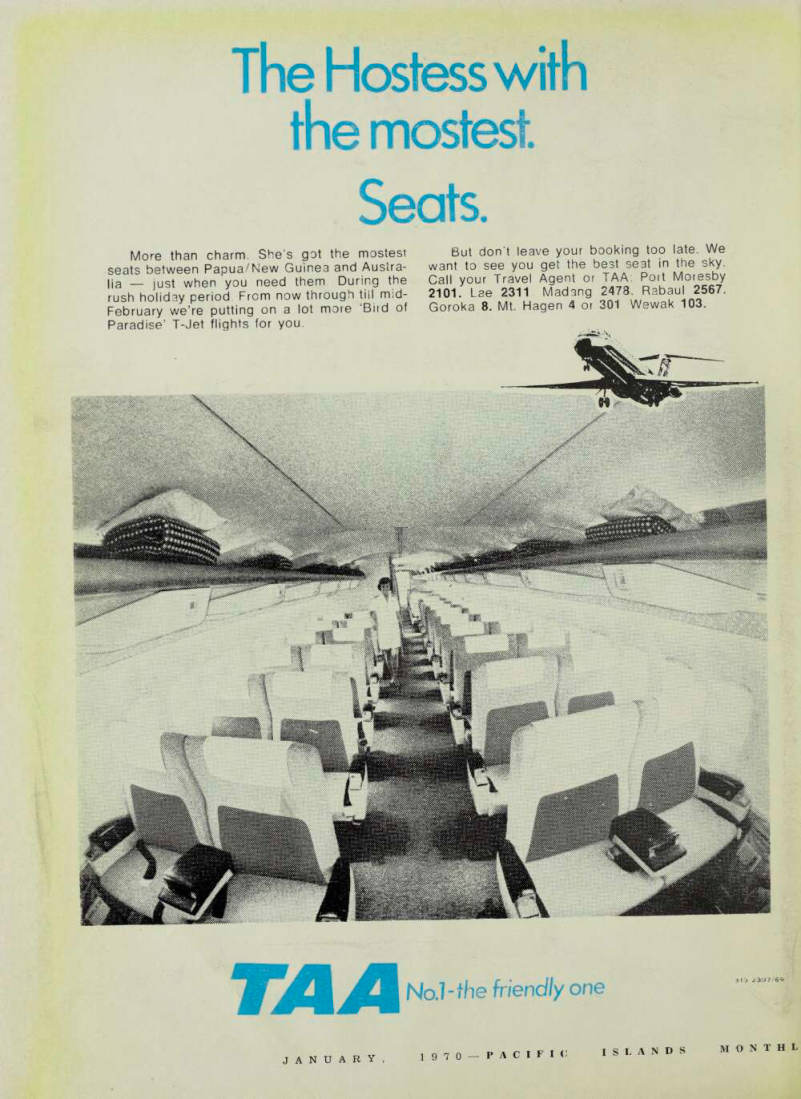 2
2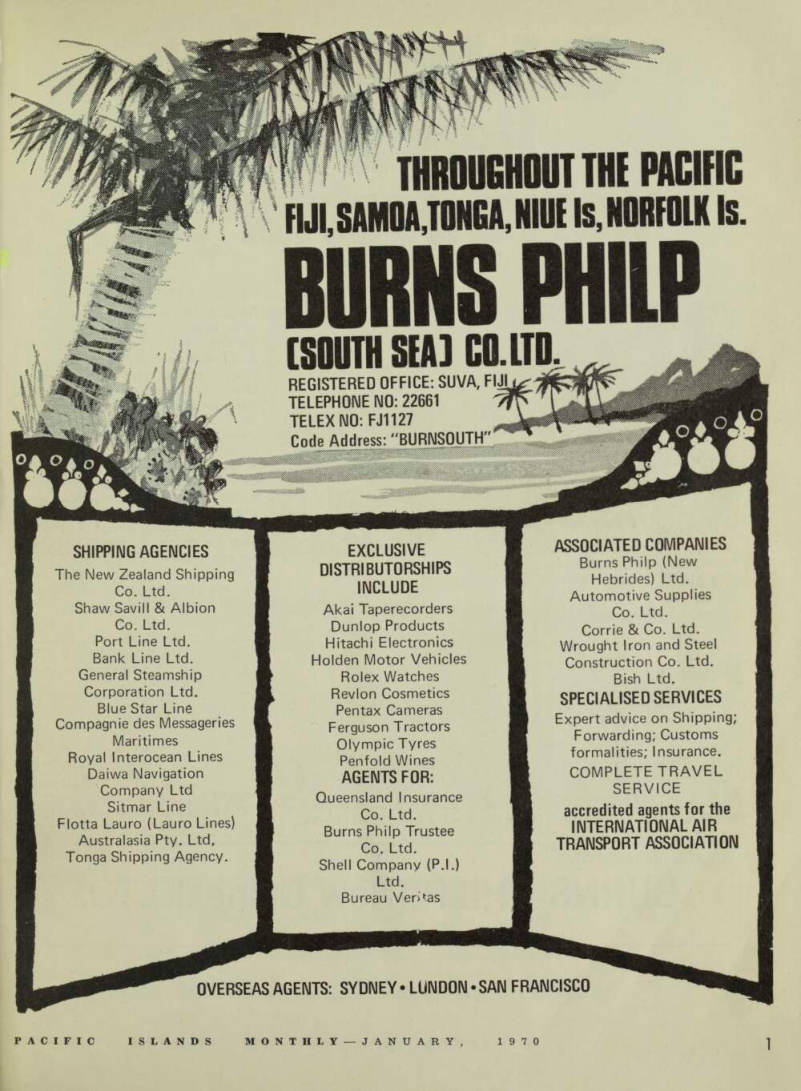 3
3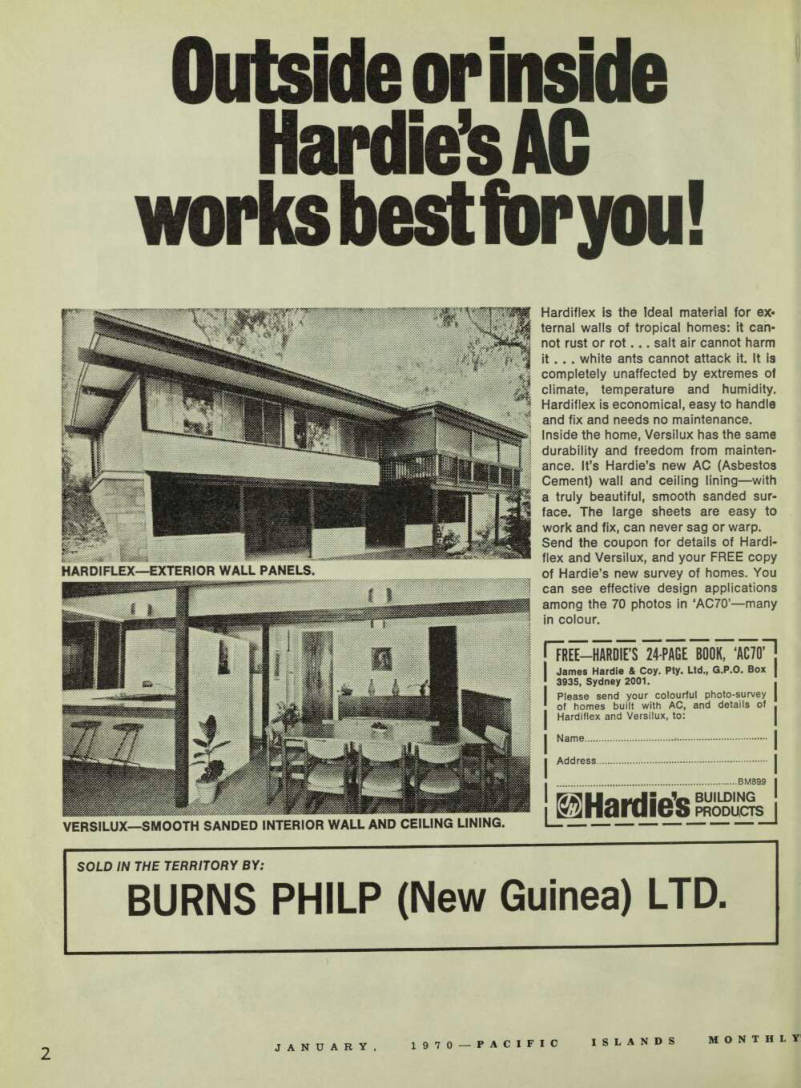 4
4 5
5 6
6 7
7 8
8 9
9 10
10 11
11 12
12 13
13 14
14 15
15 16
16 17
17 18
18 19
19 20
20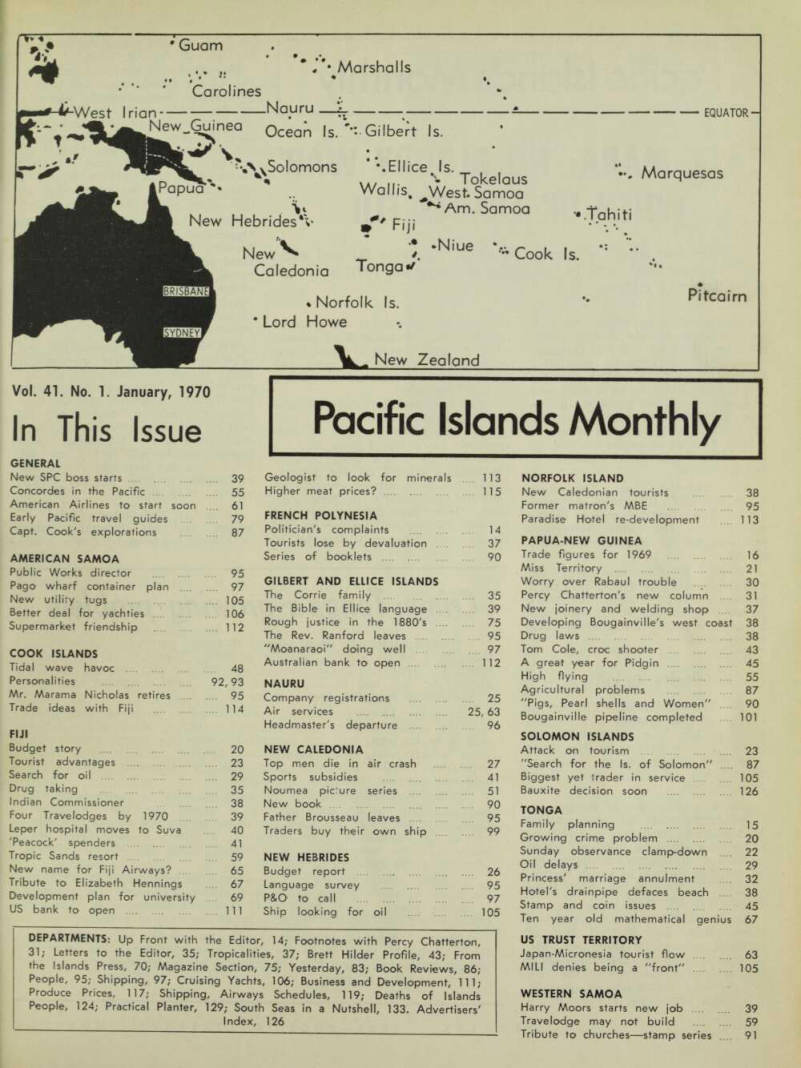 21
21 22
22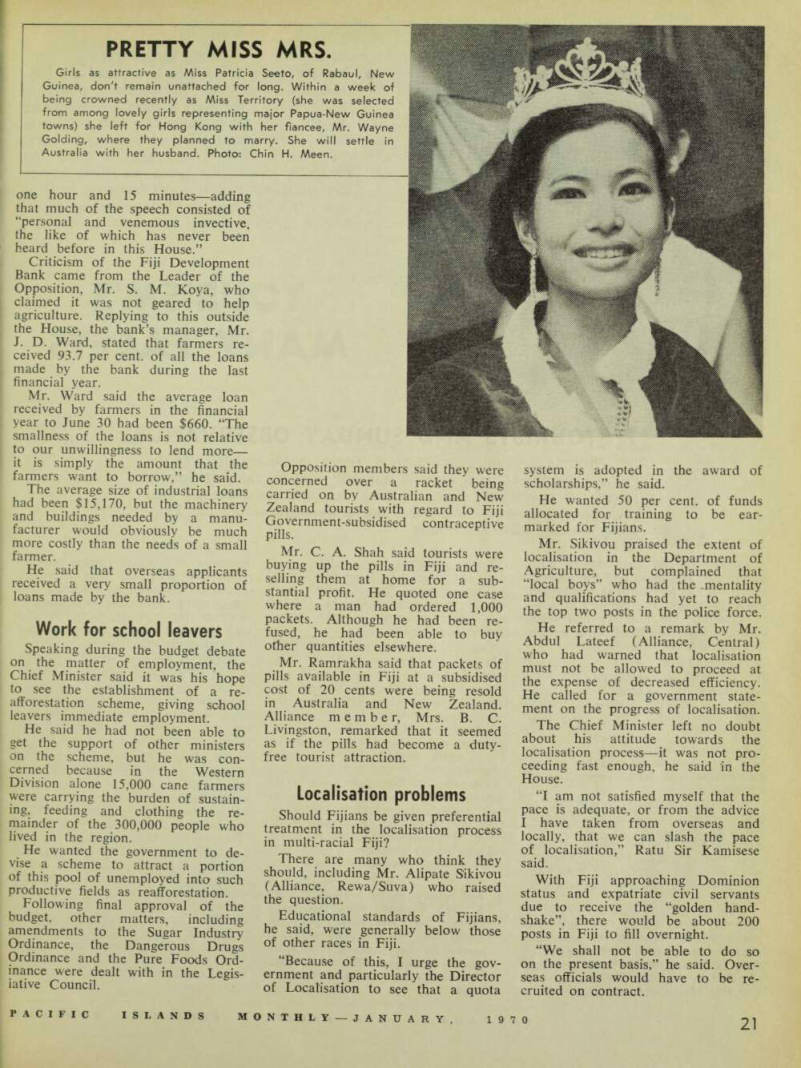 23
23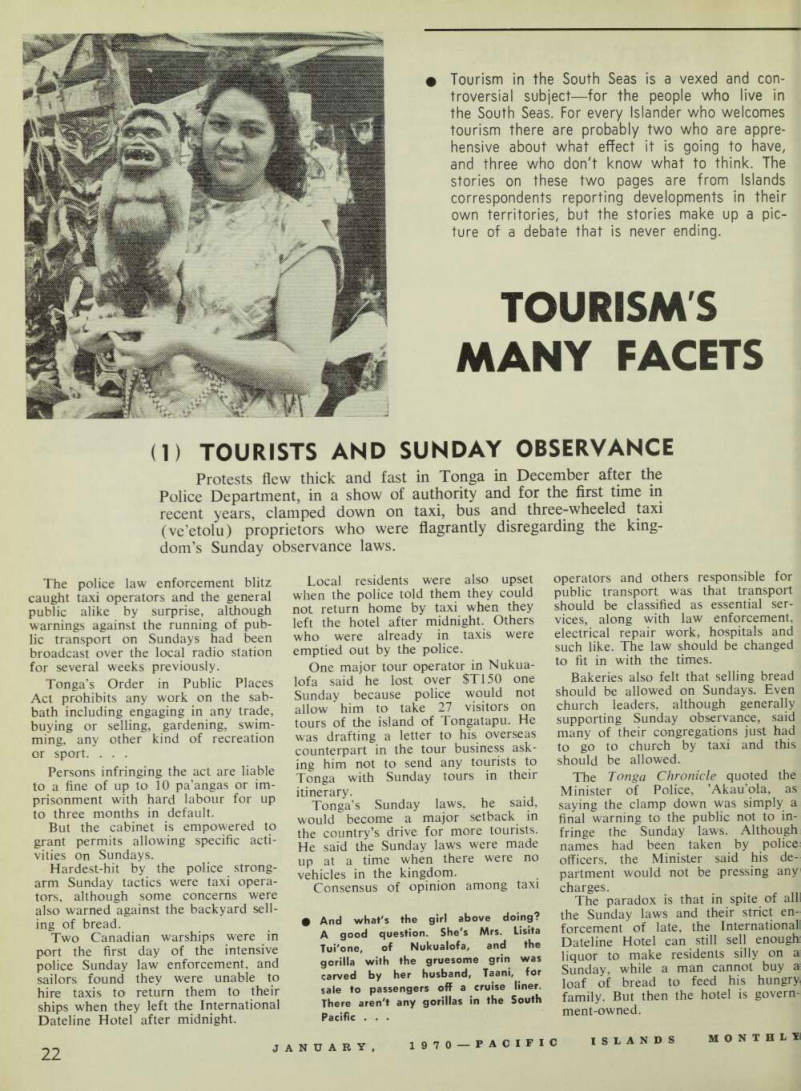 24
24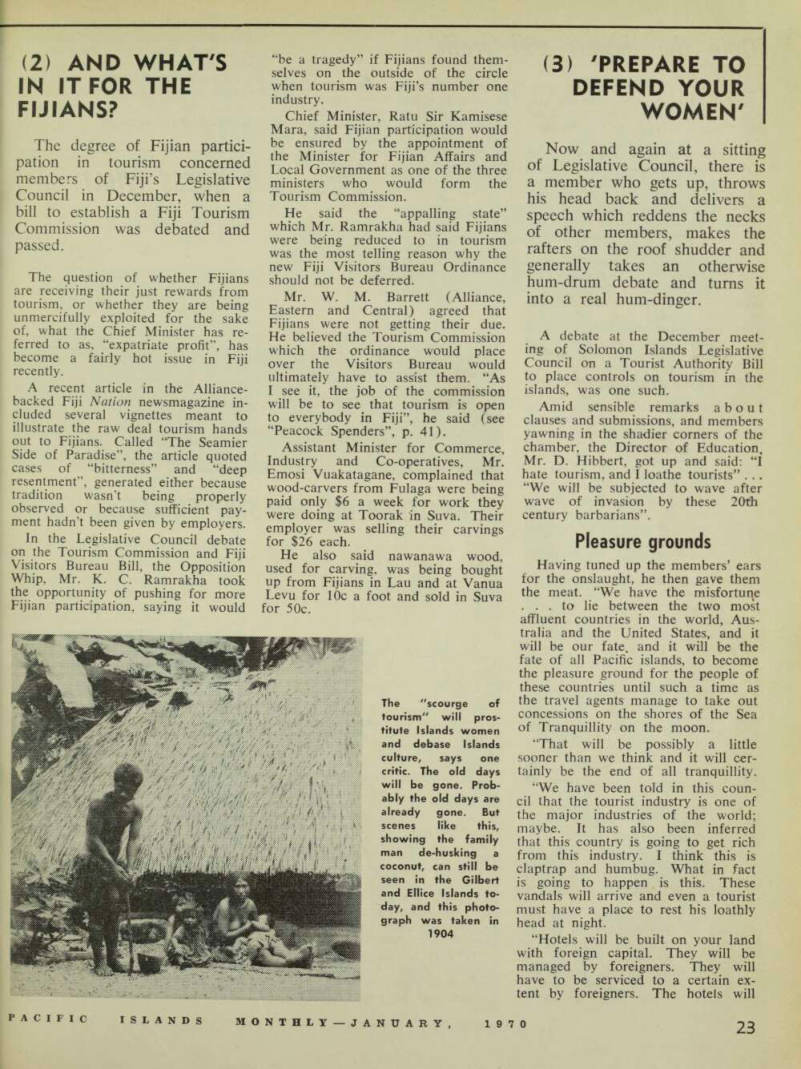 25
25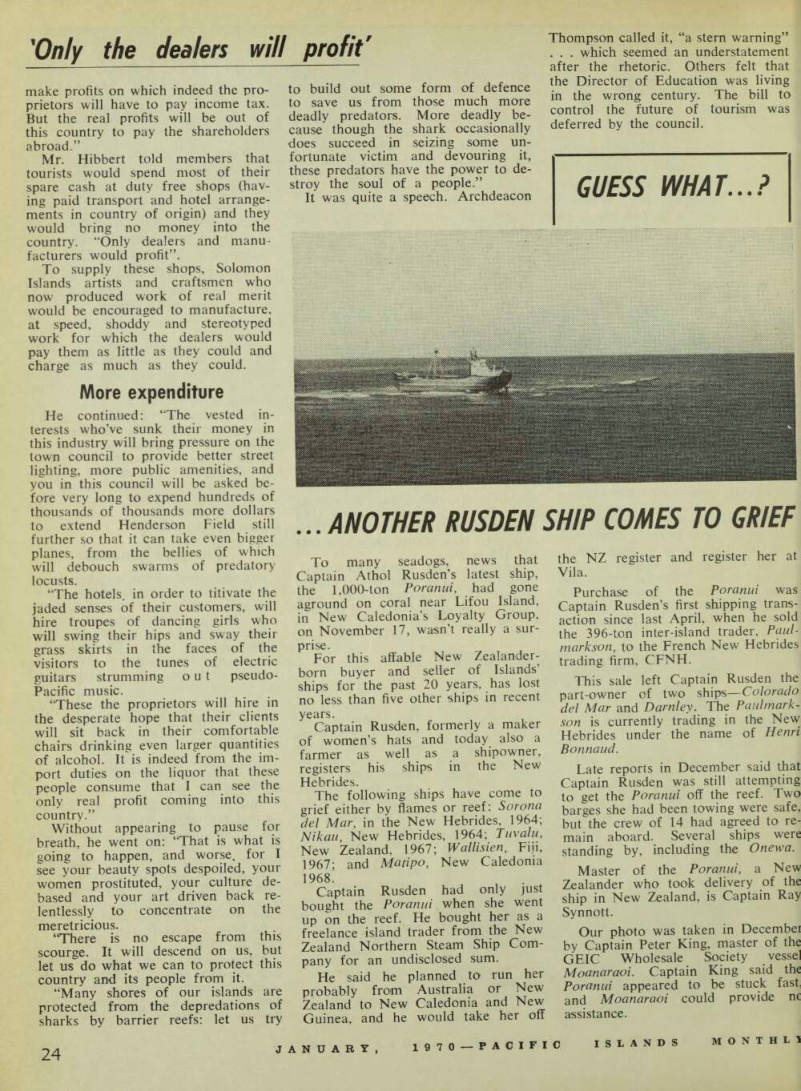 26
26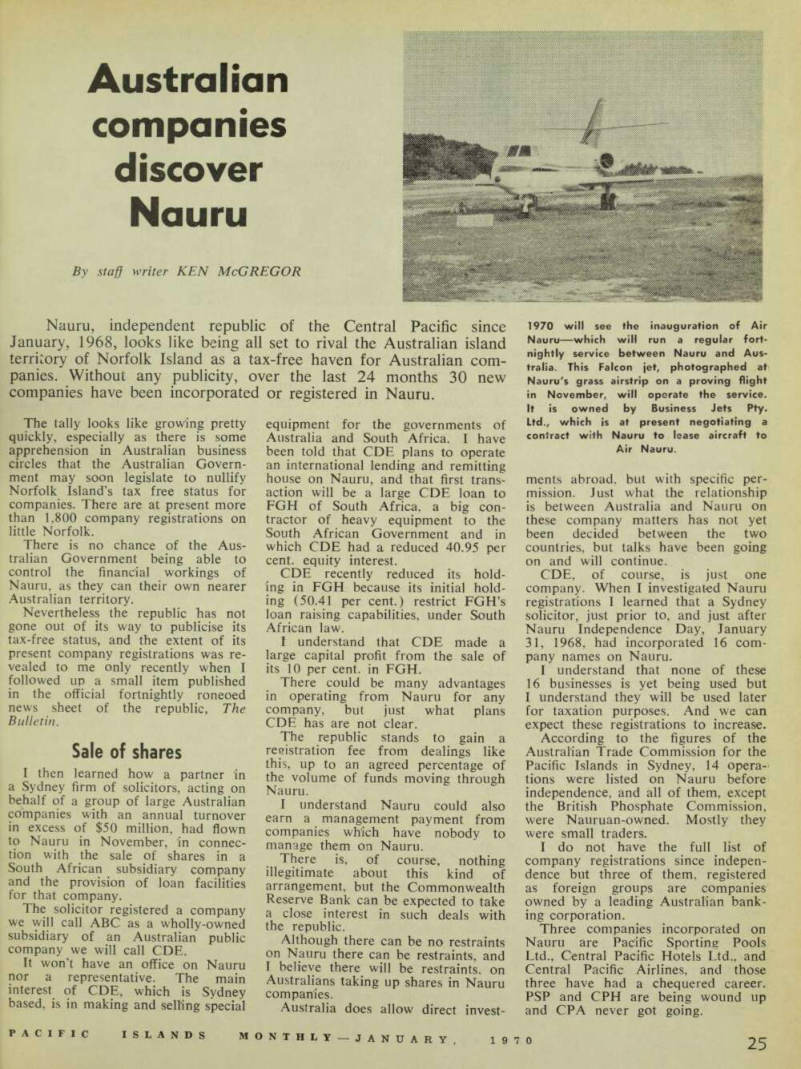 27
27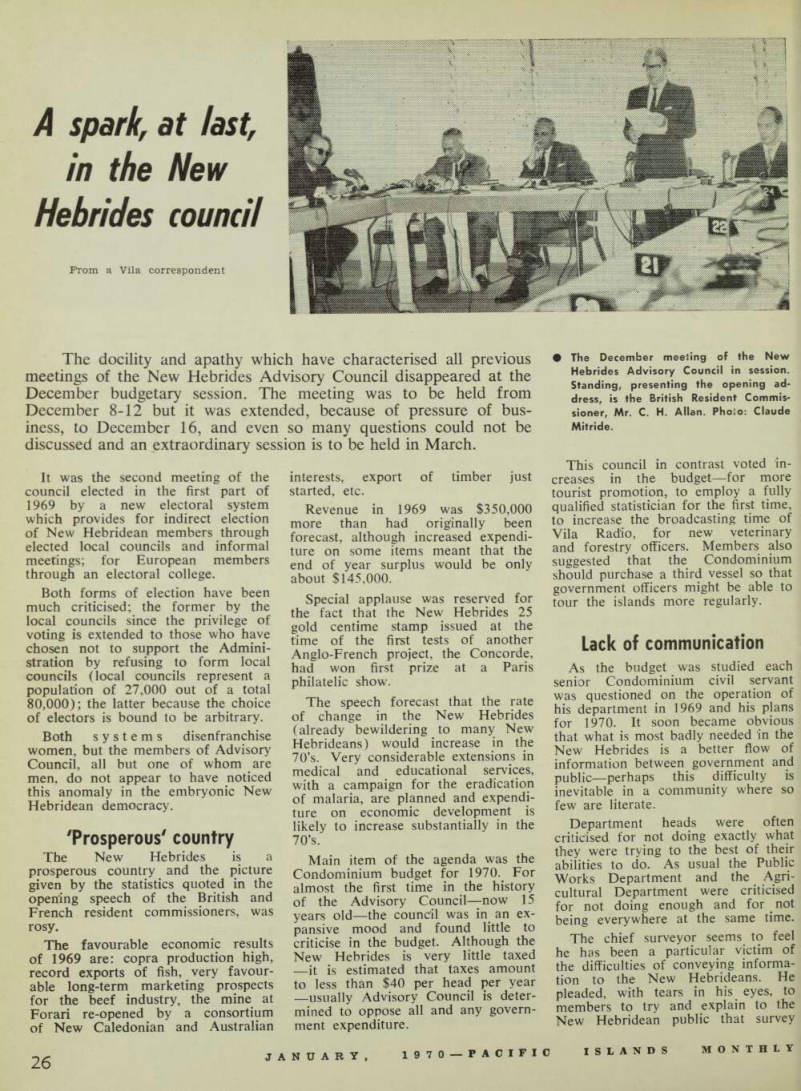 28
28 29
29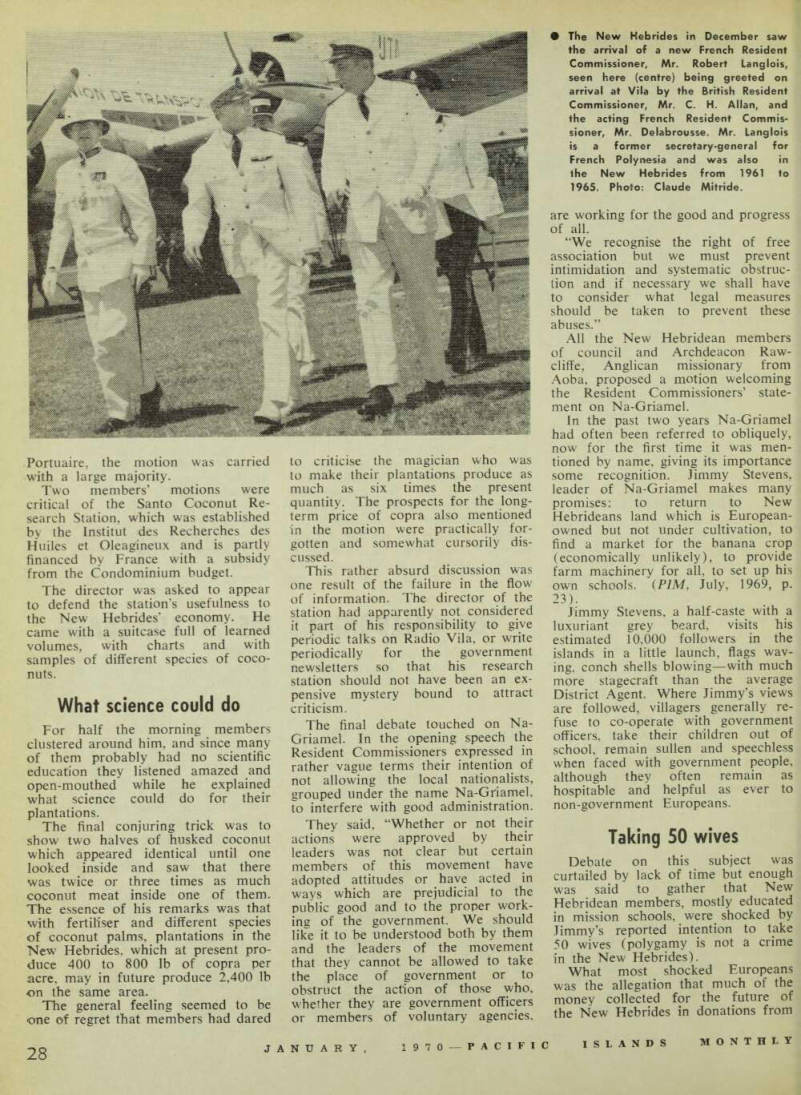 30
30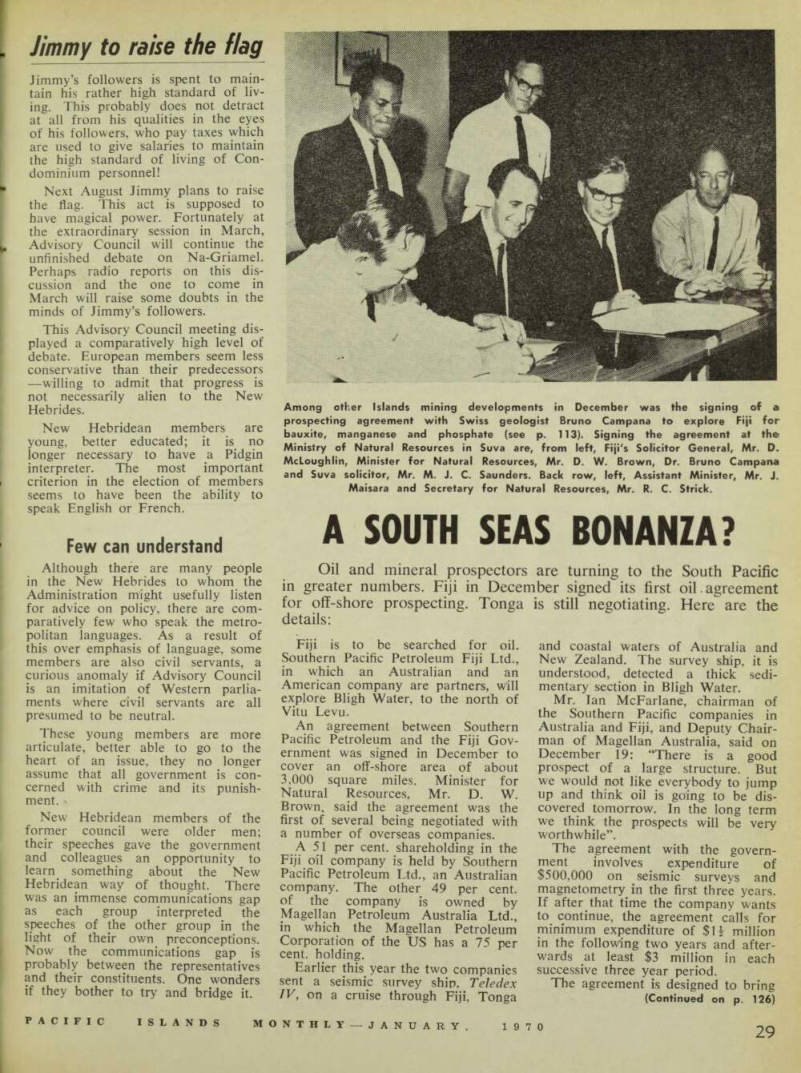 31
31 32
32 33
33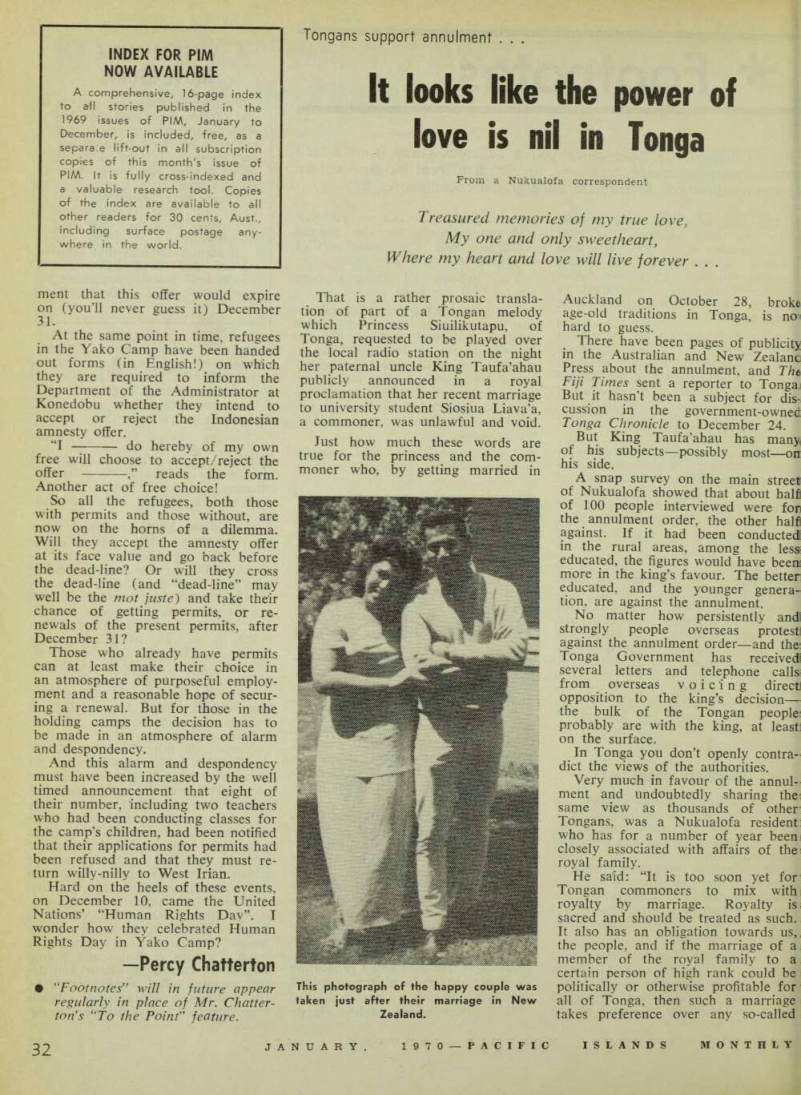 34
34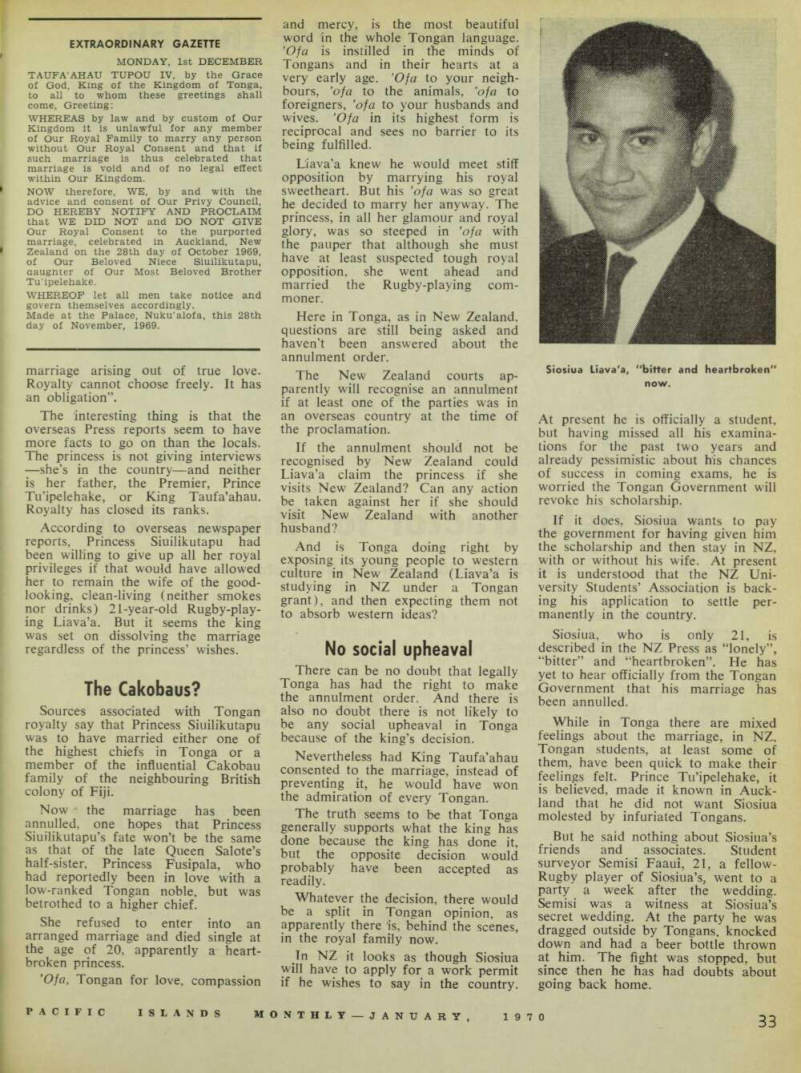 35
35 36
36 37
37 38
38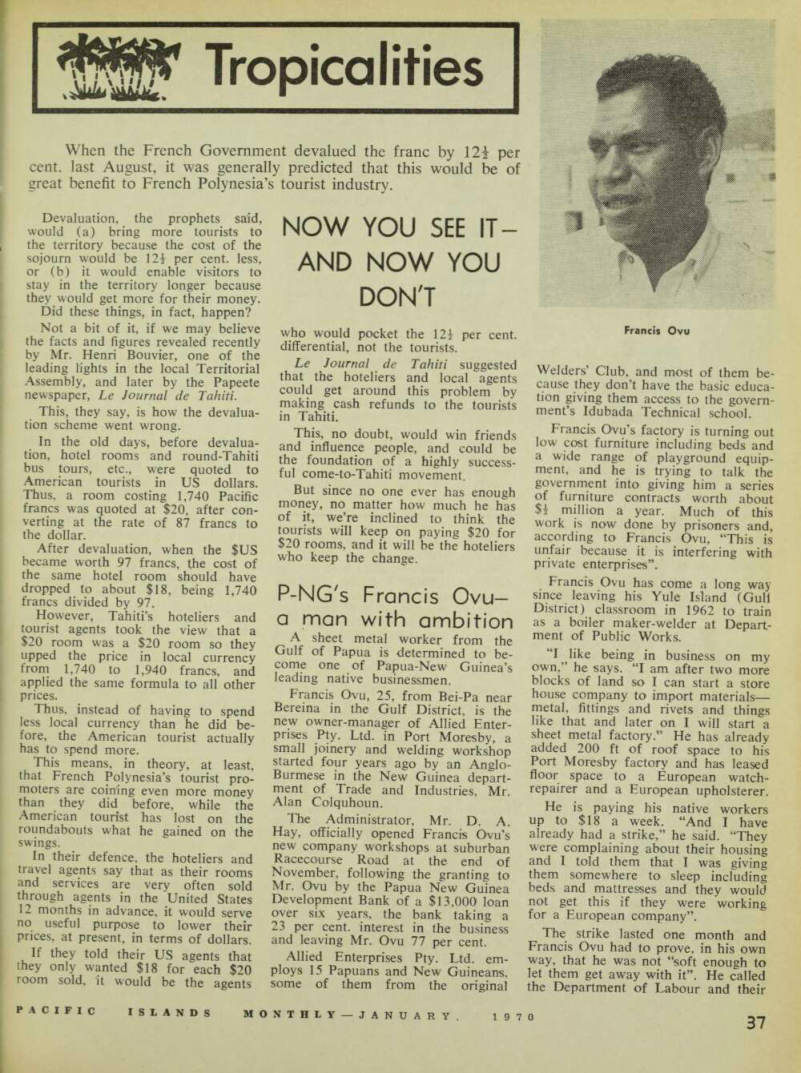 39
39 40
40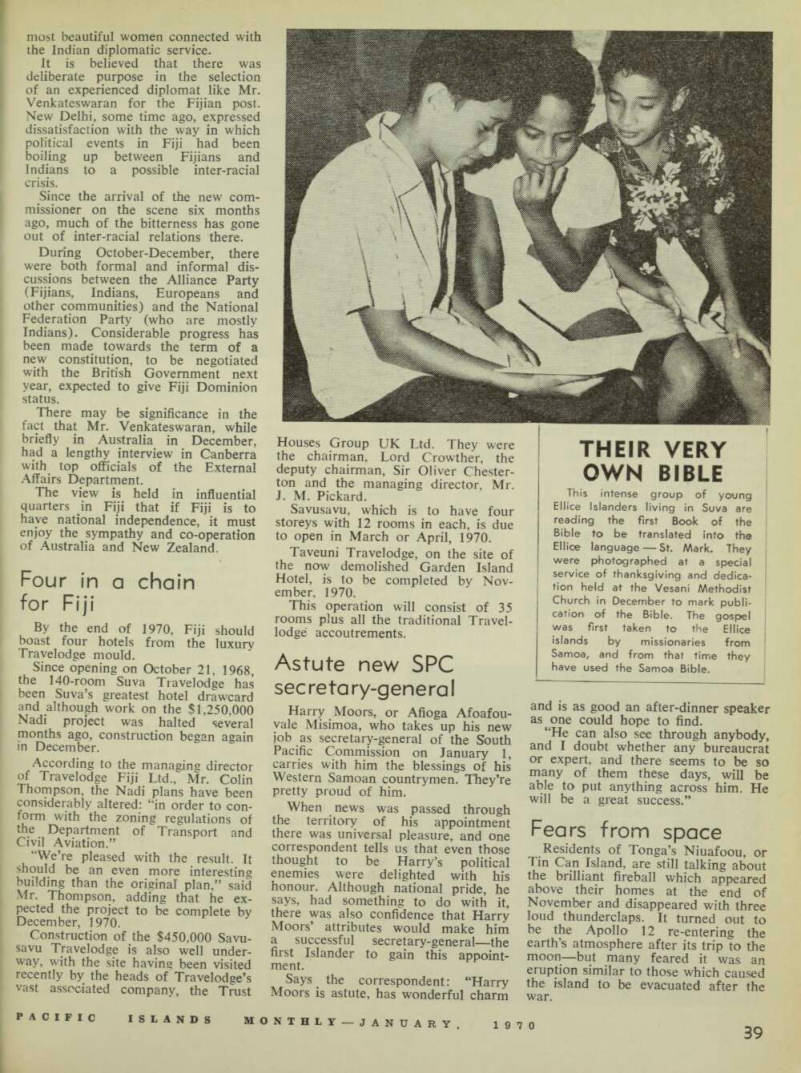 41
41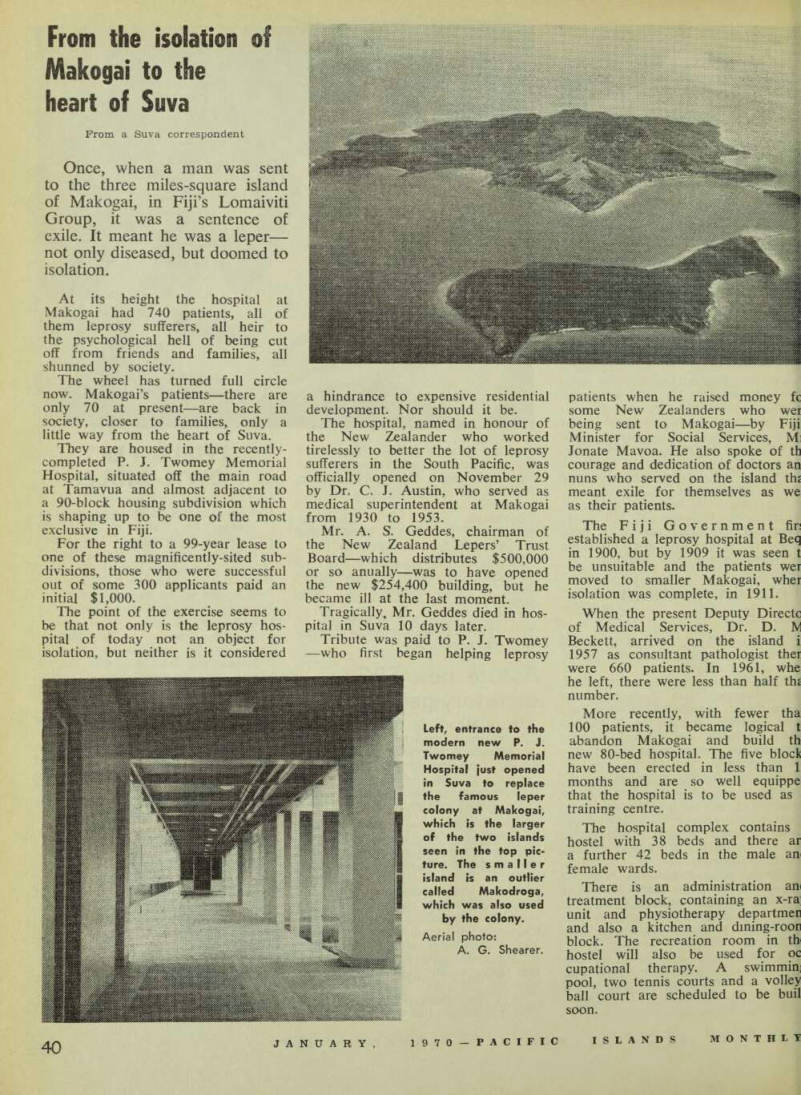 42
42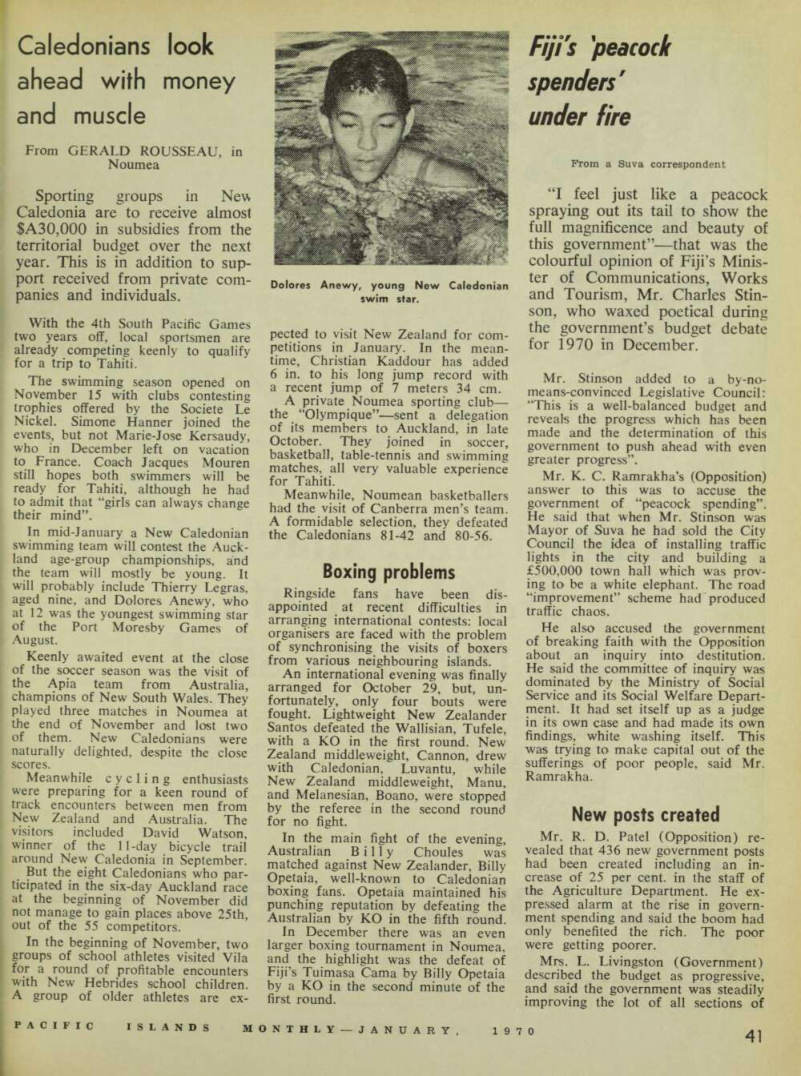 43
43 44
44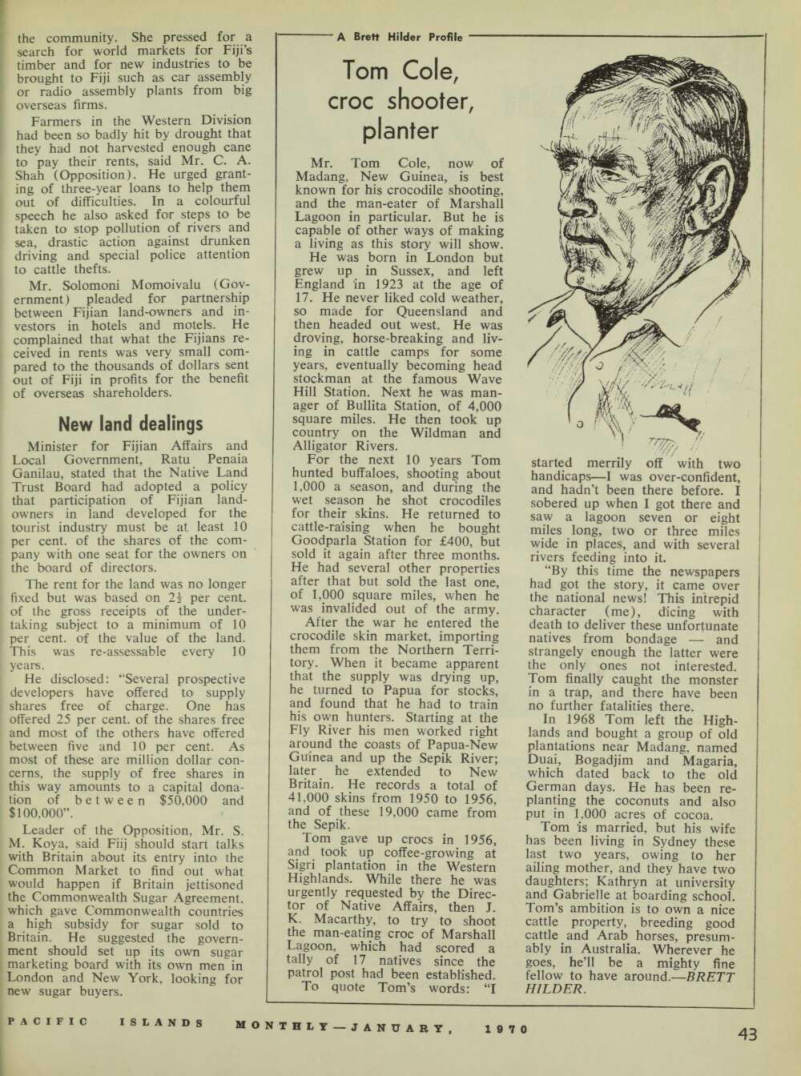 45
45 46
46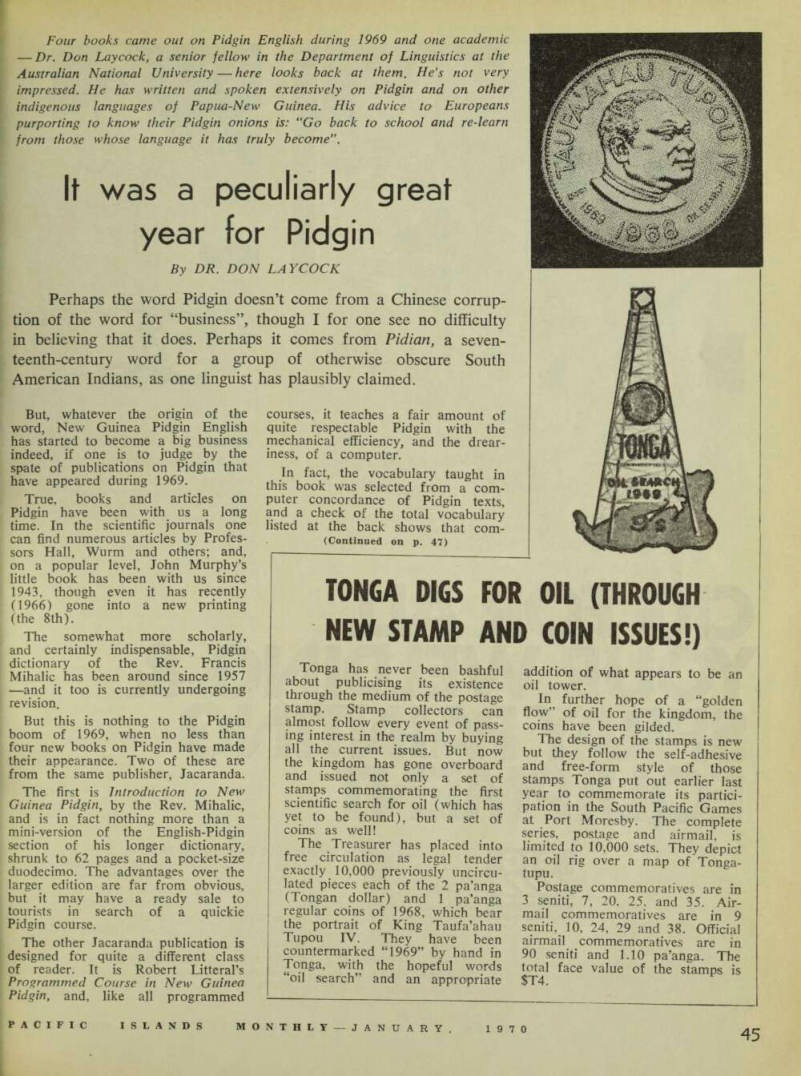 47
47 48
48 49
49 50
50 51
51 52
52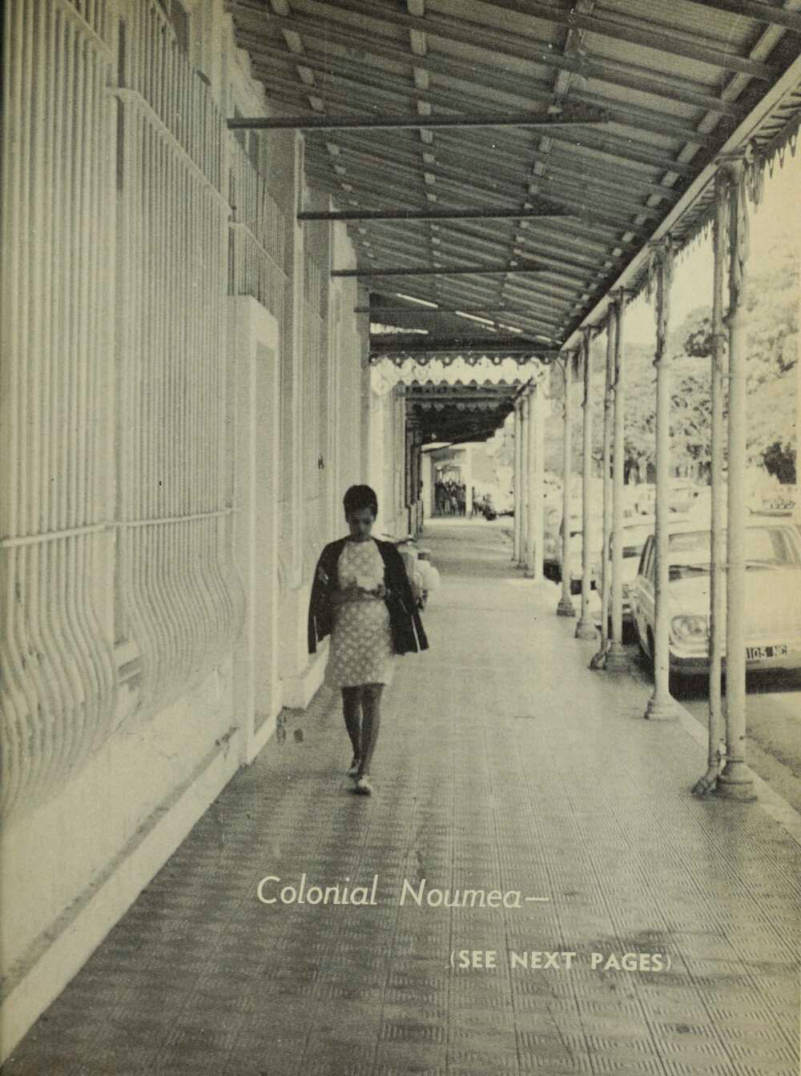 53
53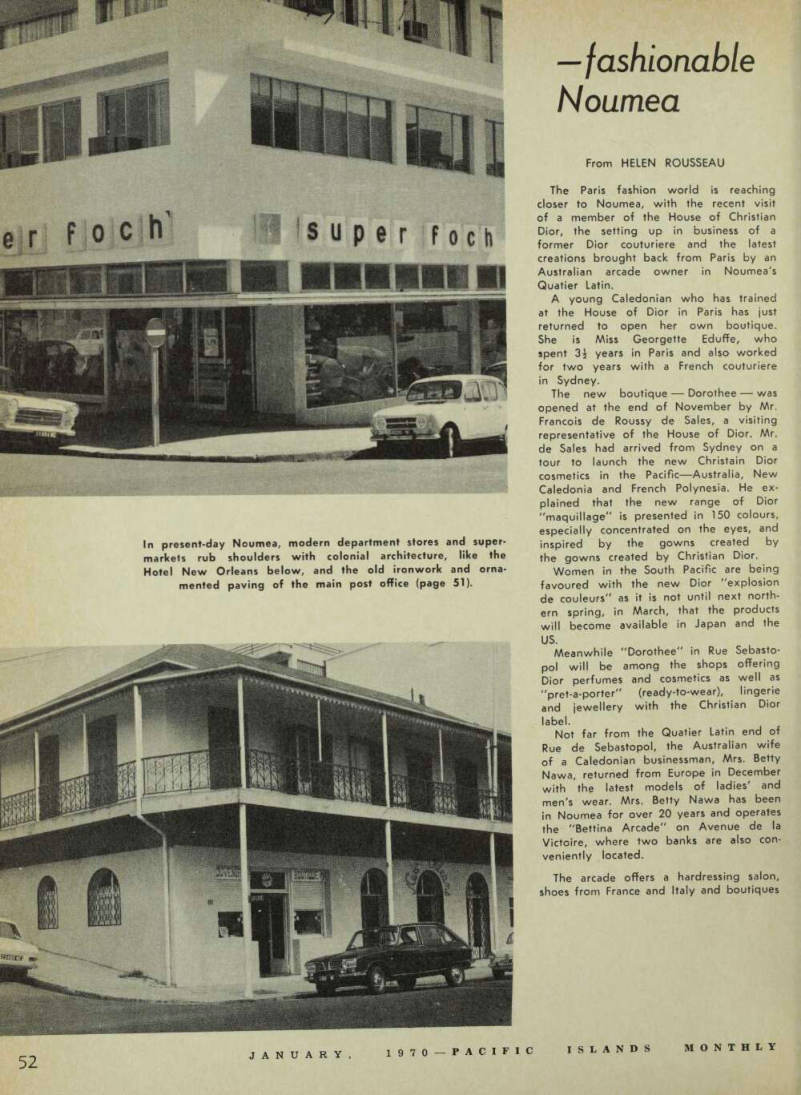 54
54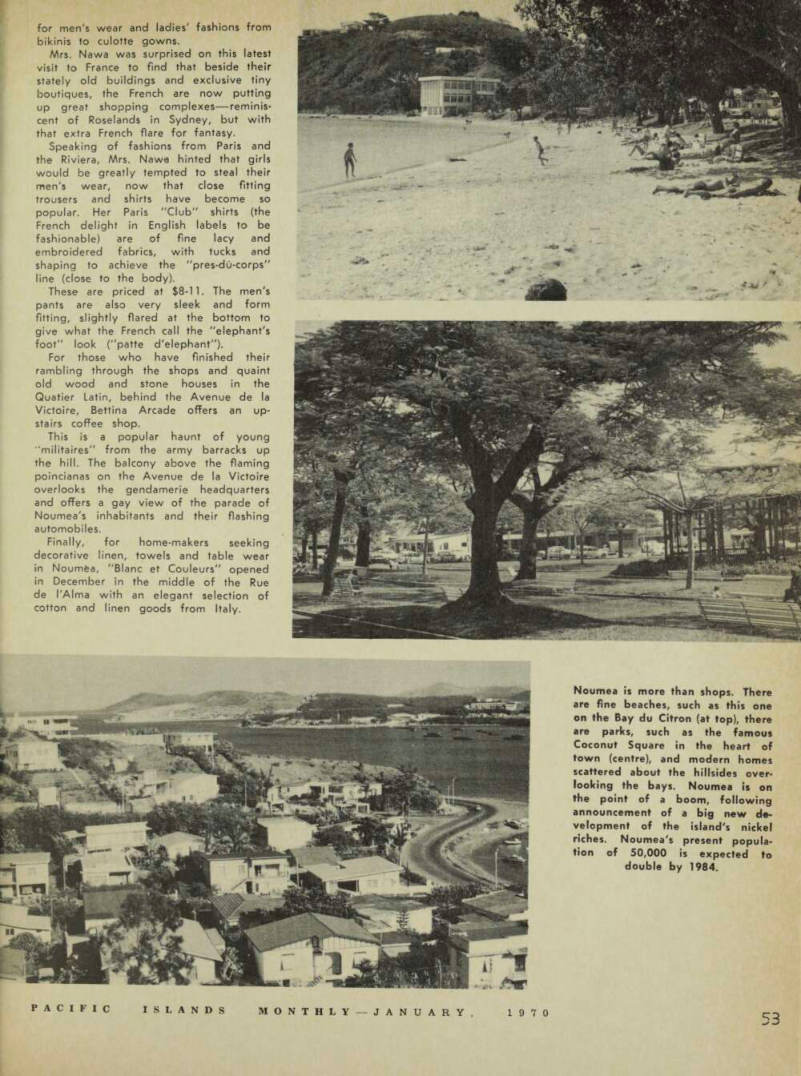 55
55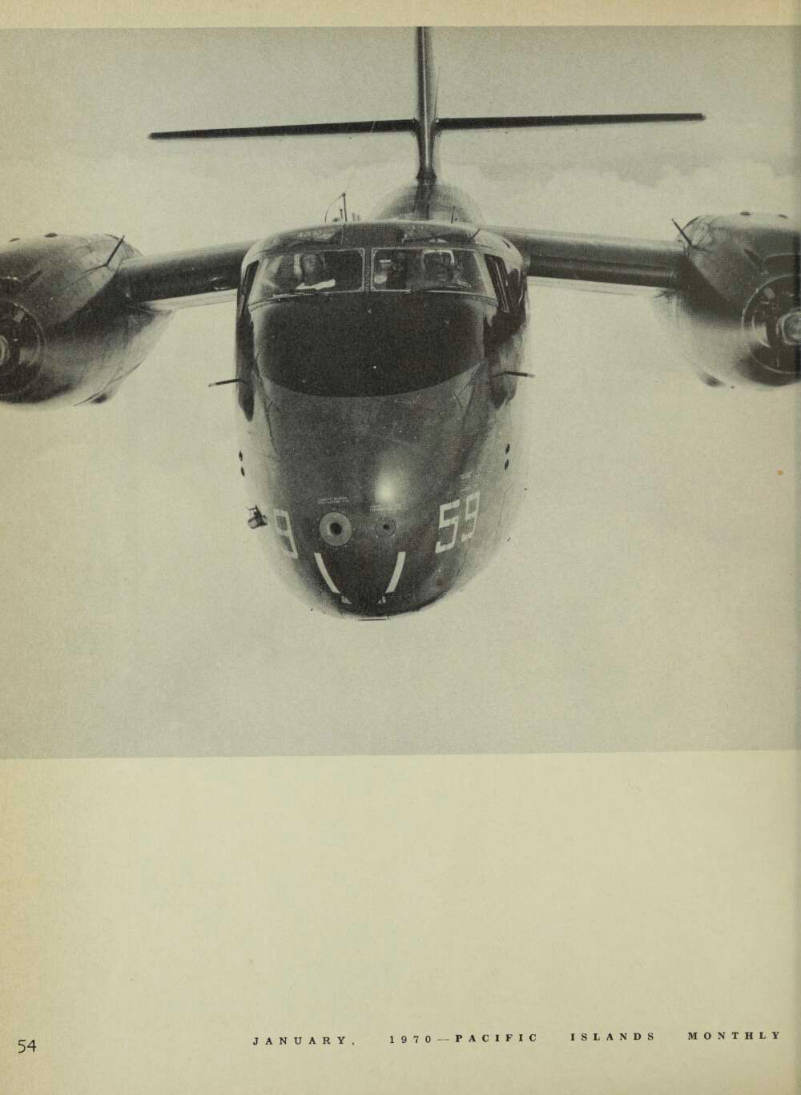 56
56 57
57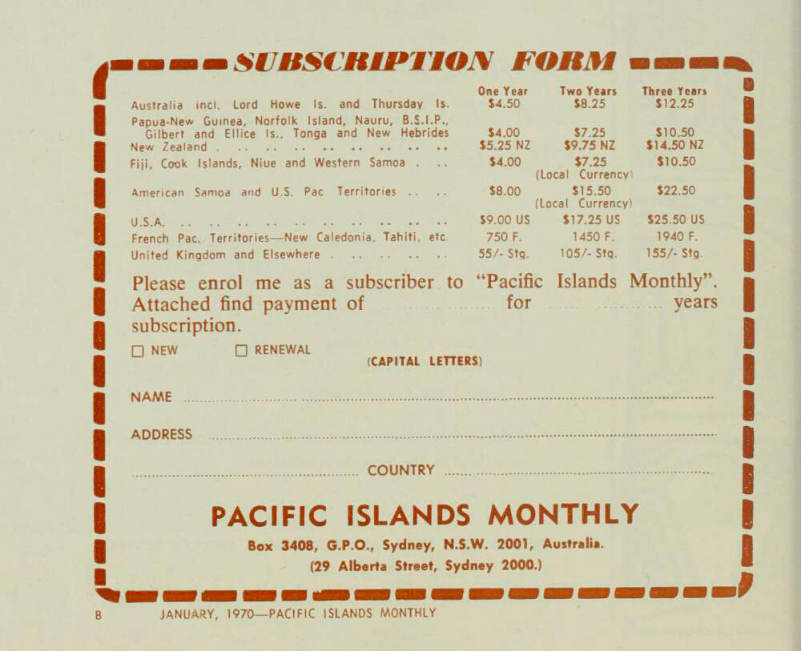 58
58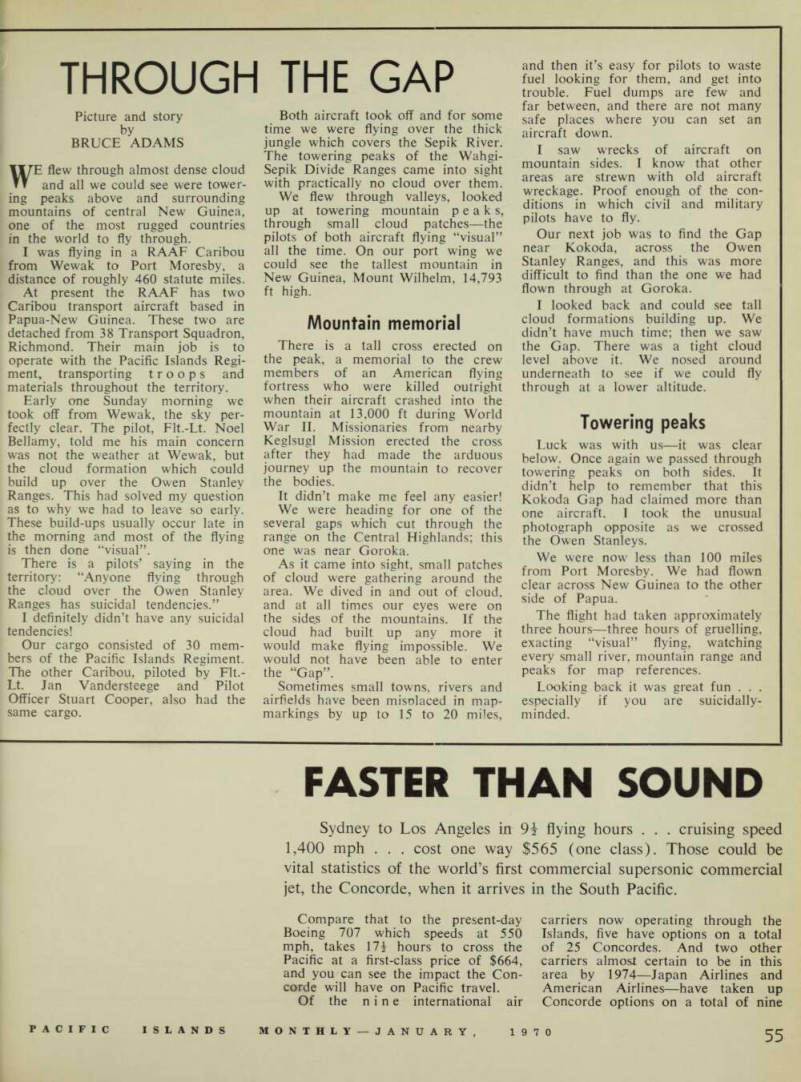 59
59 60
60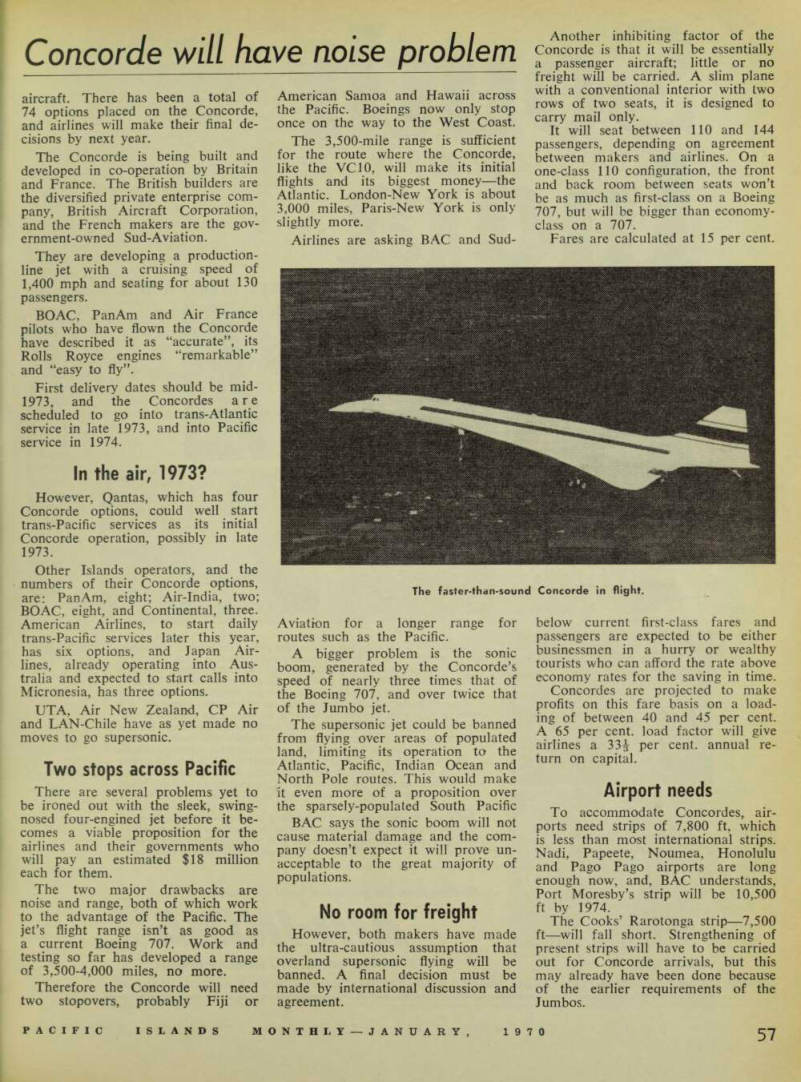 61
61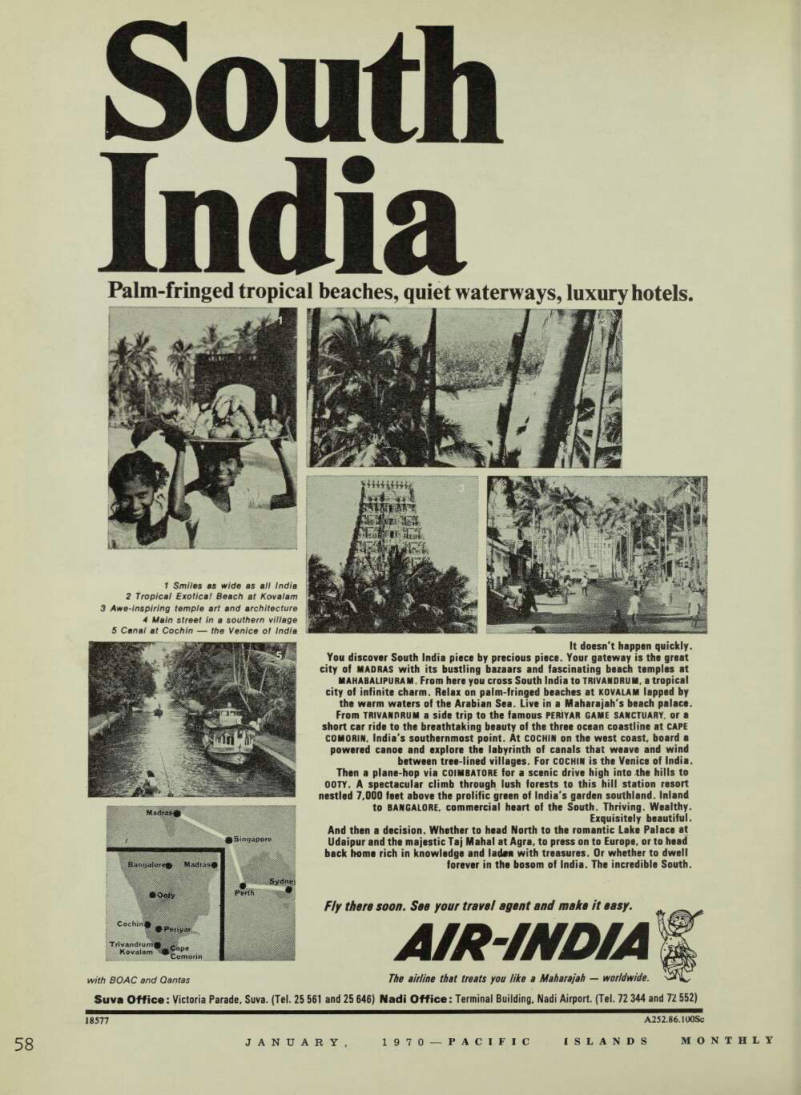 62
62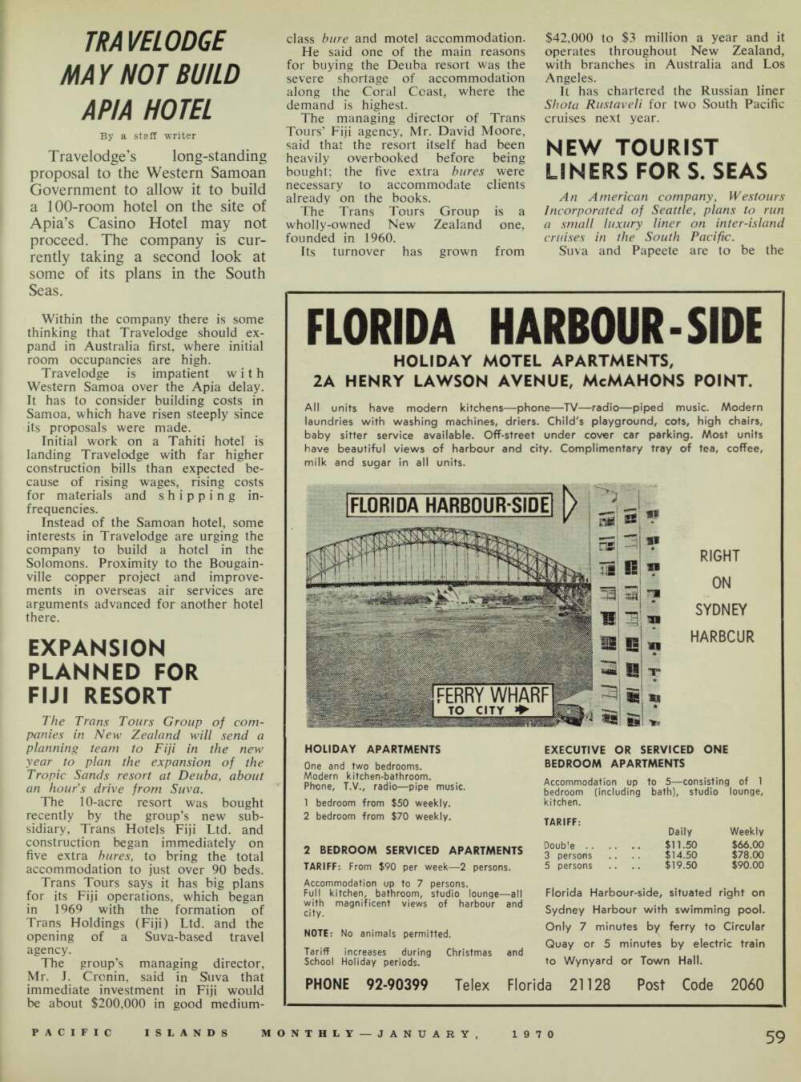 63
63 64
64 65
65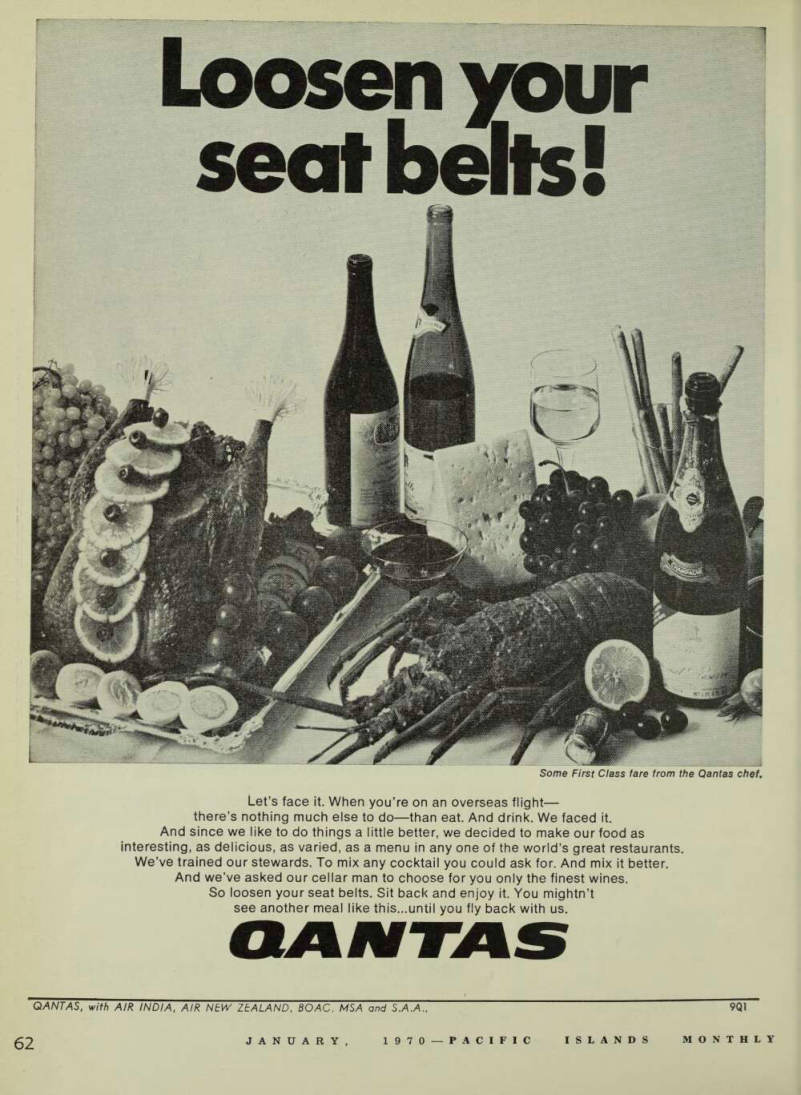 66
66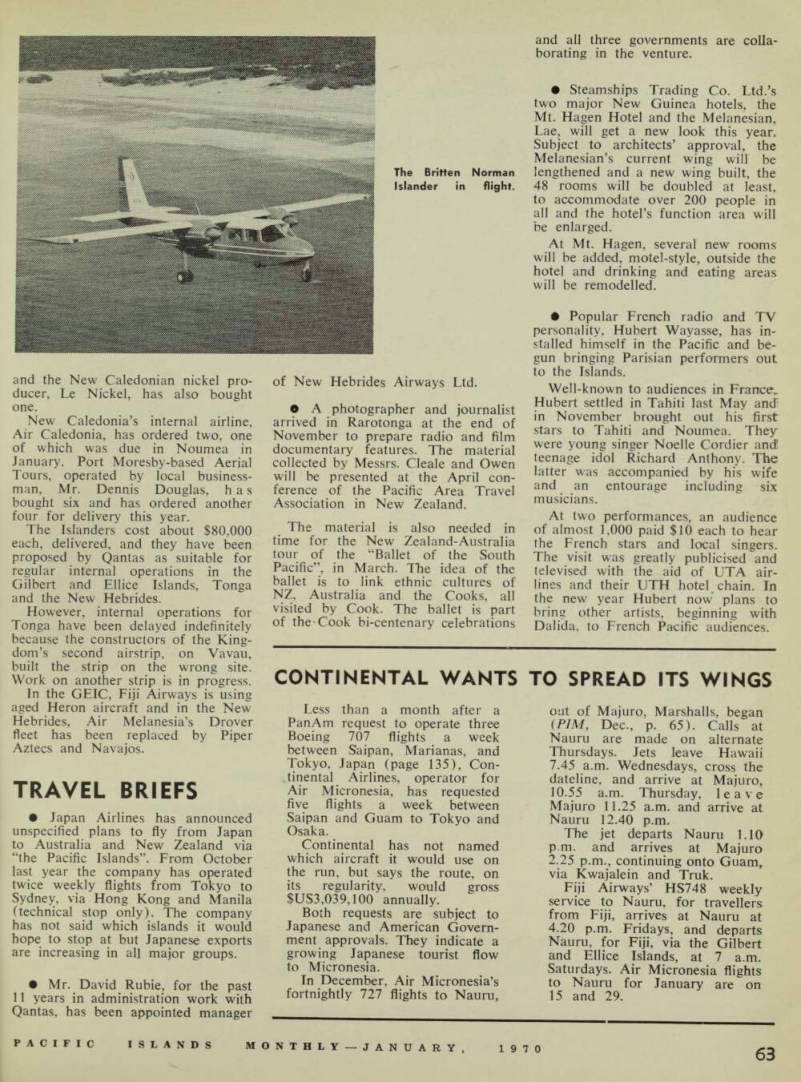 67
67 68
68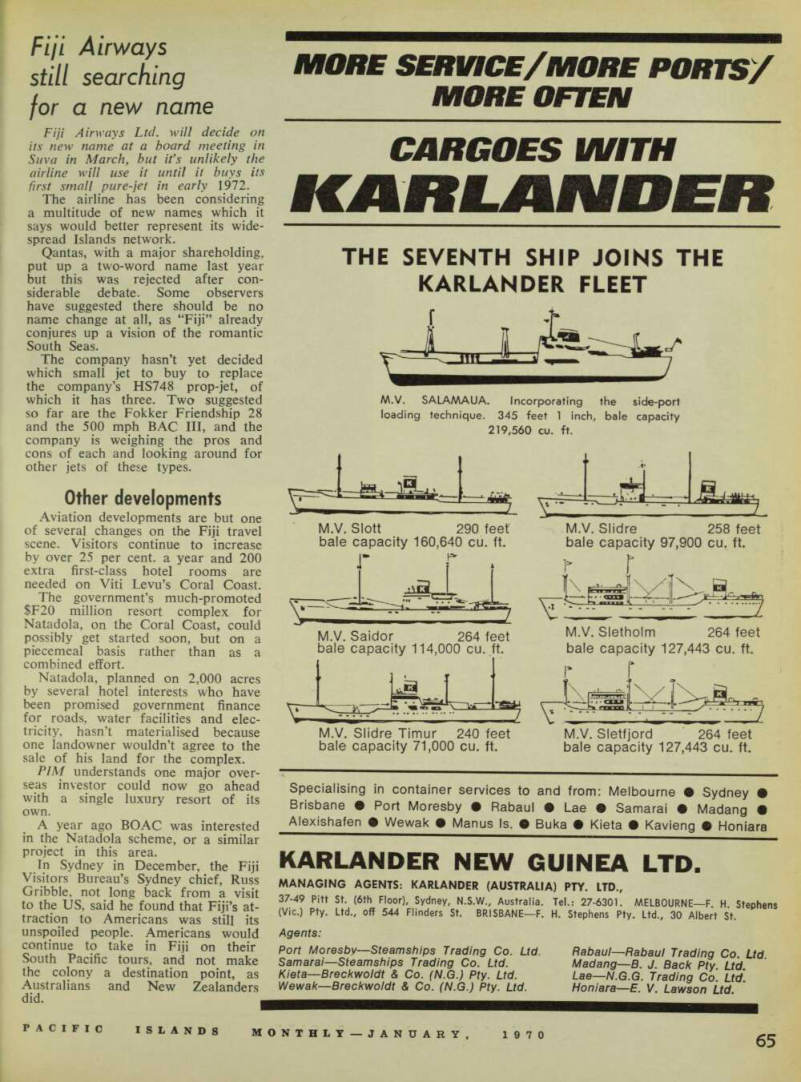 69
69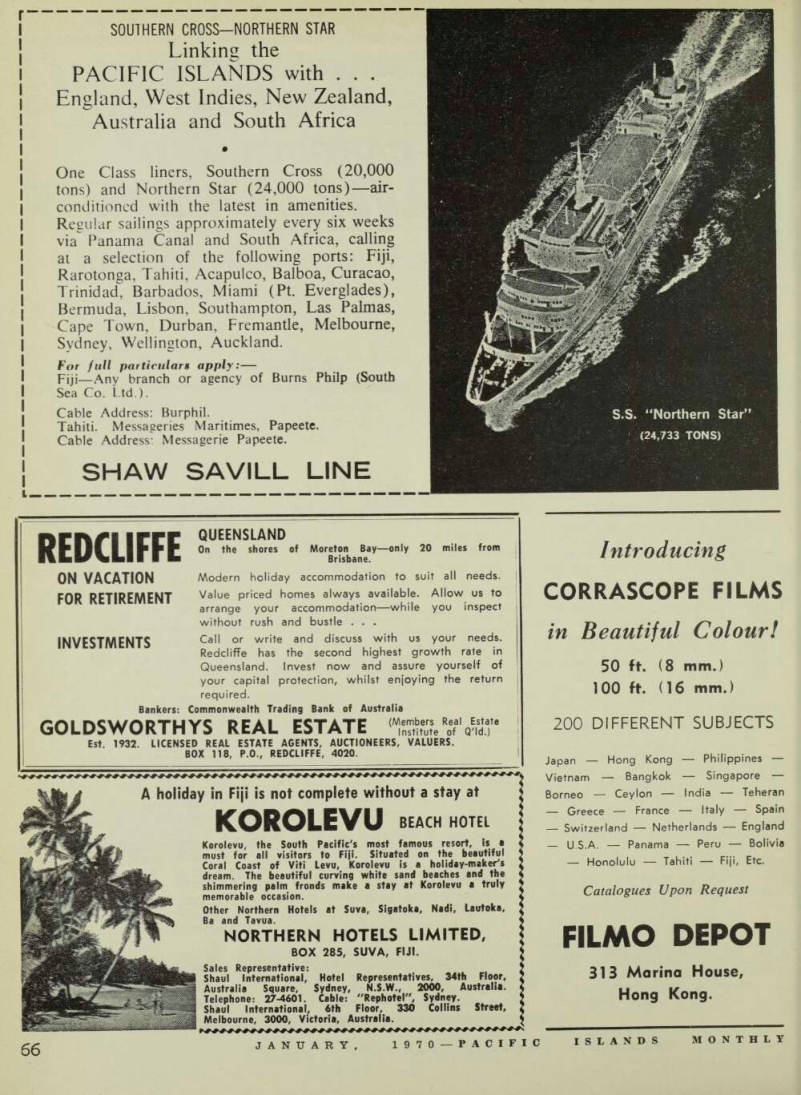 70
70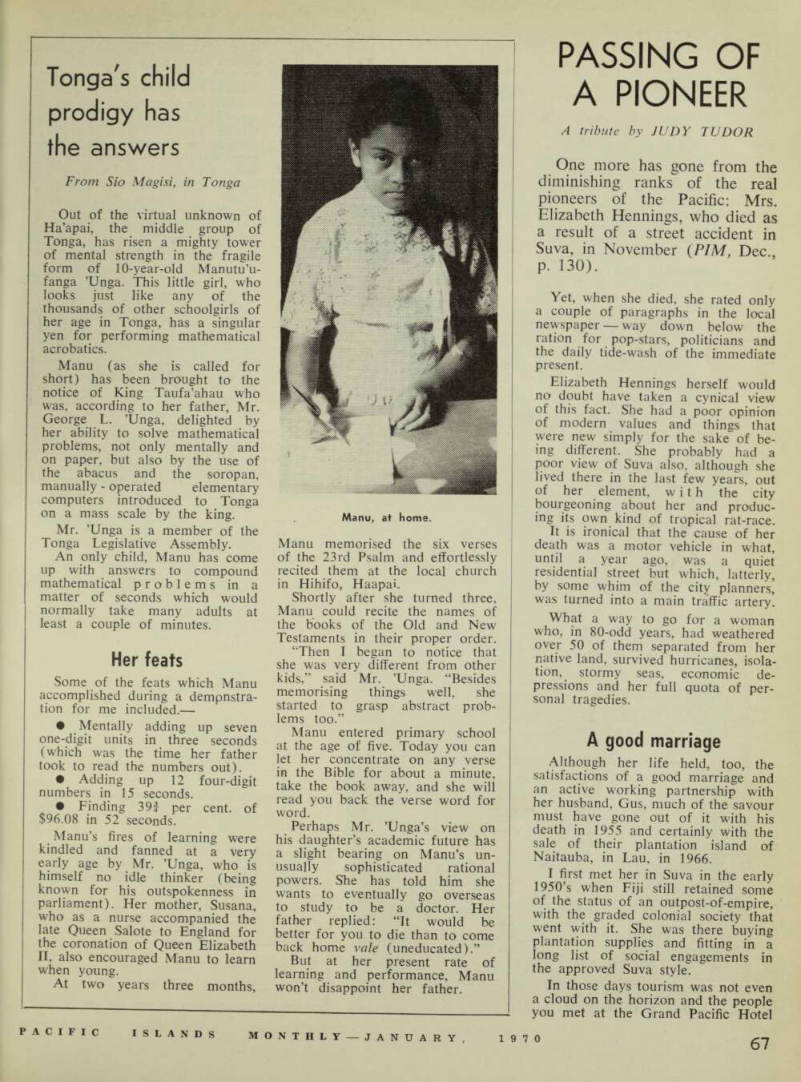 71
71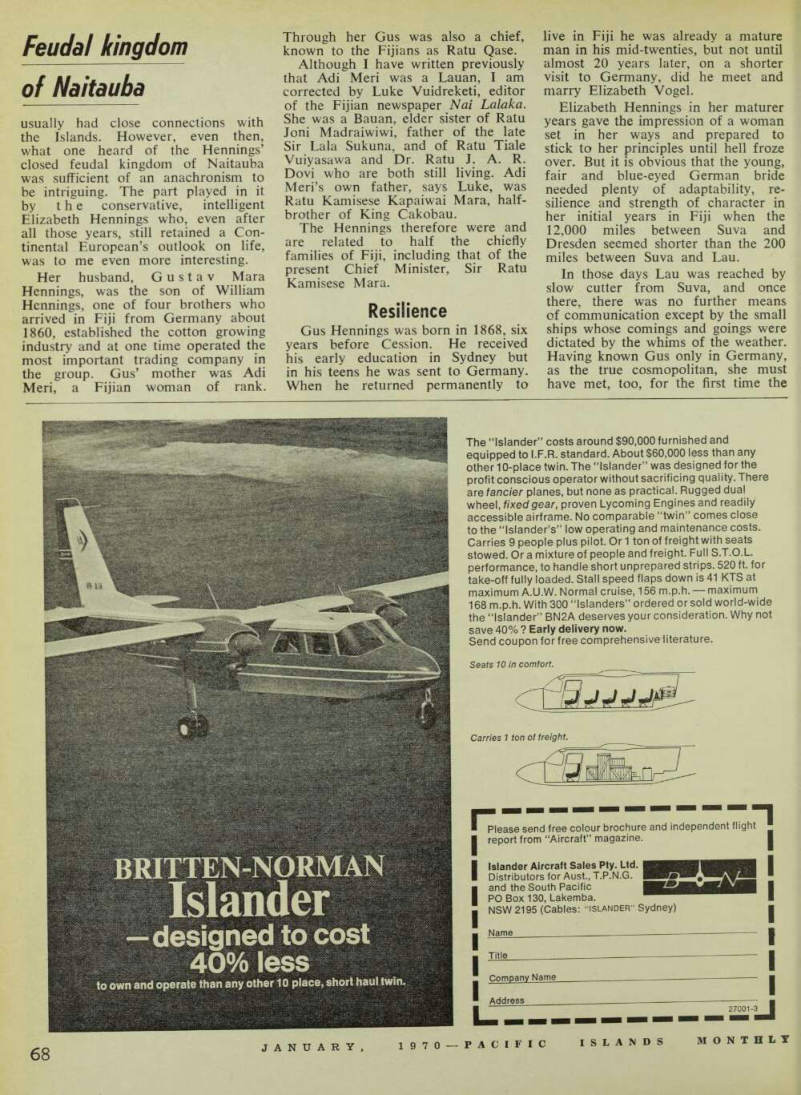 72
72 73
73 74
74 75
75 76
76 77
77 78
78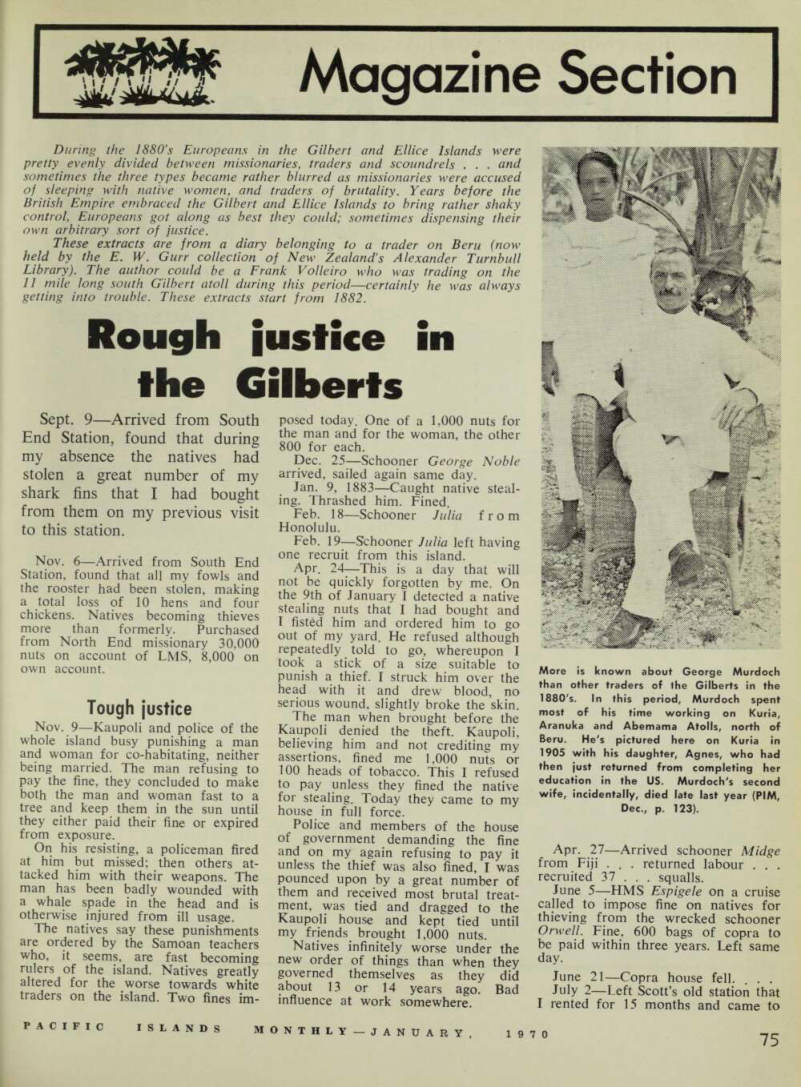 79
79 80
80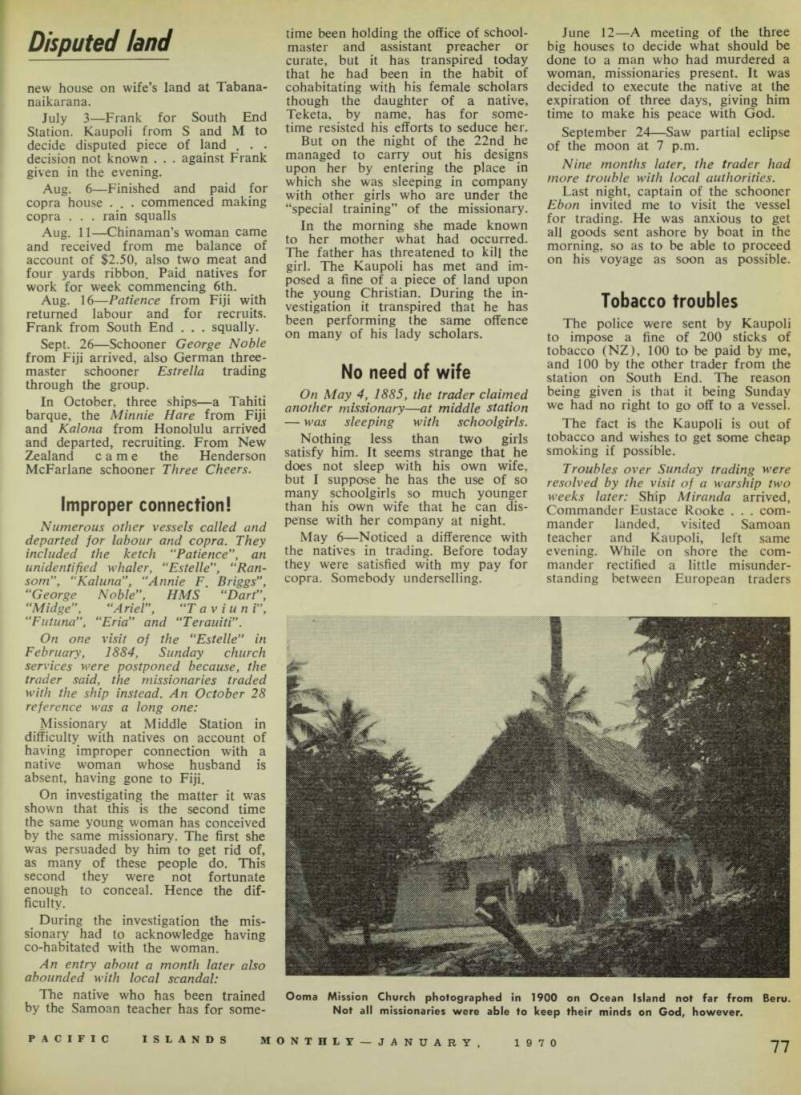 81
81 82
82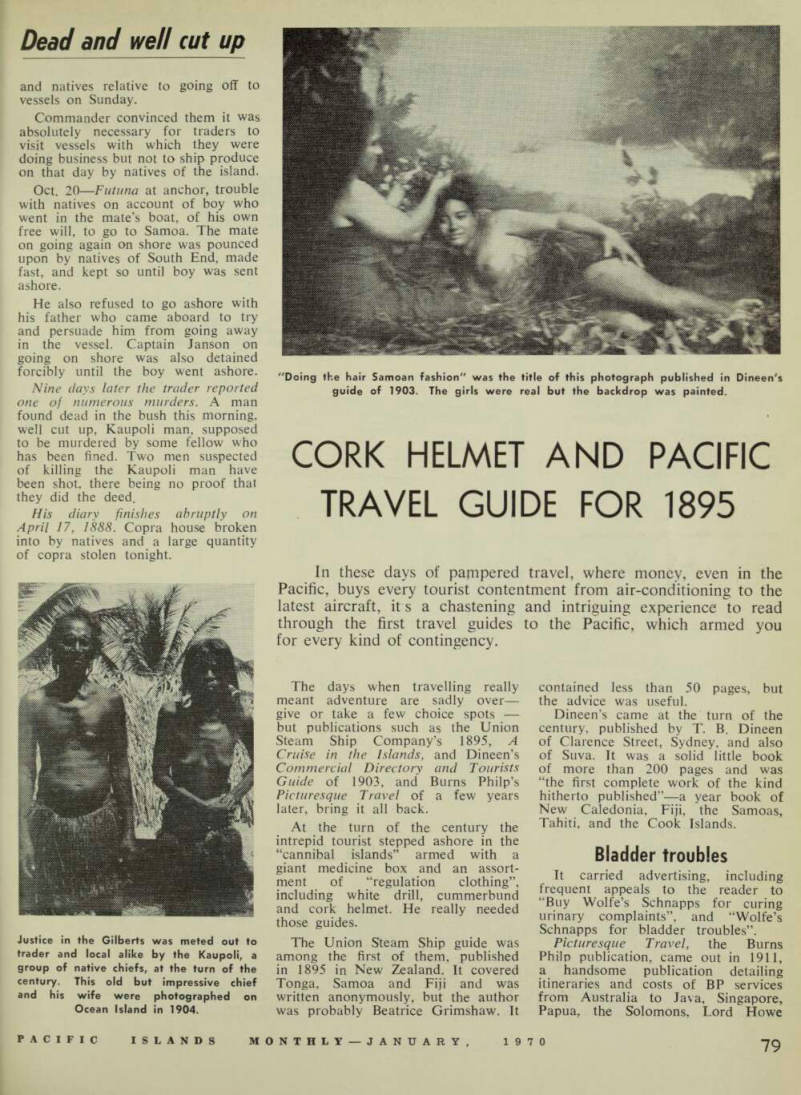 83
83 84
84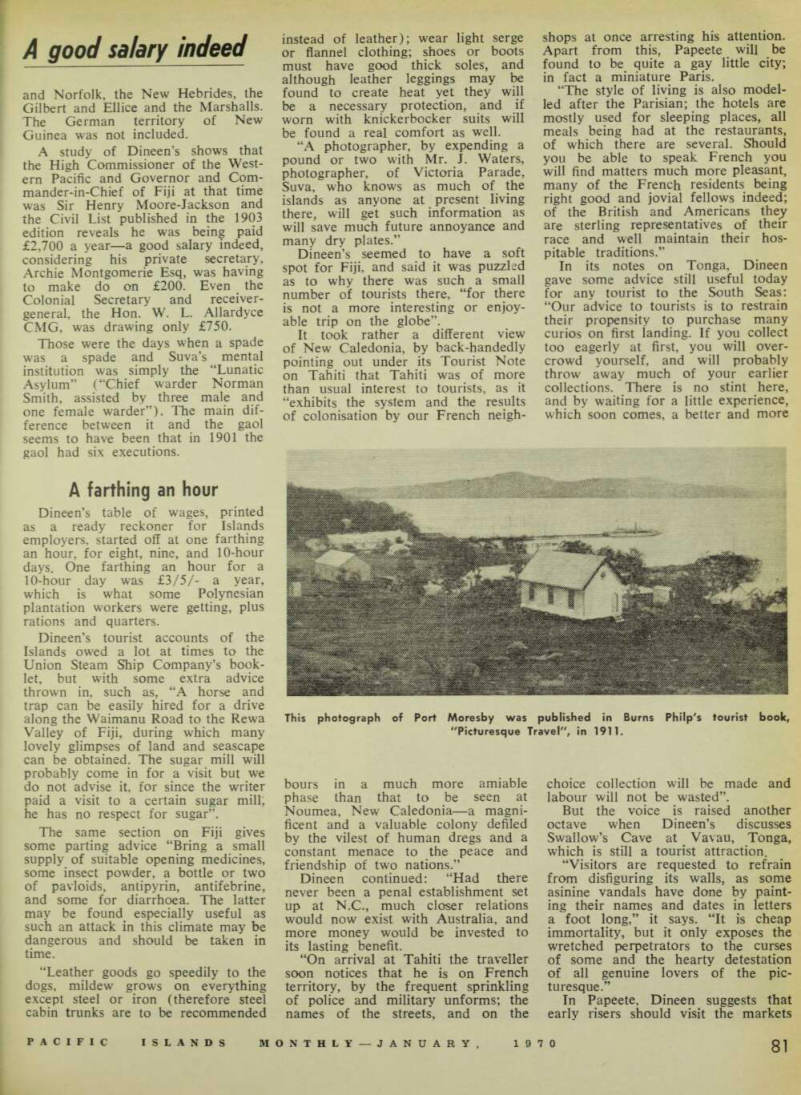 85
85 86
86 87
87 88
88 89
89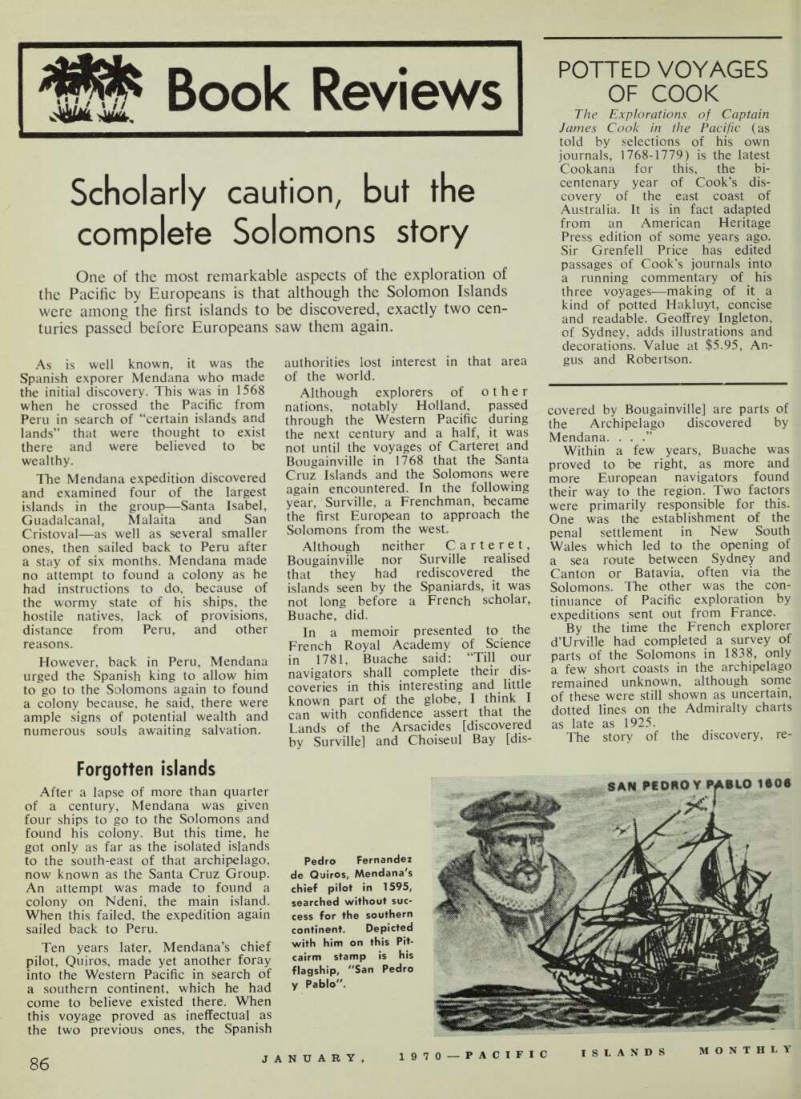 90
90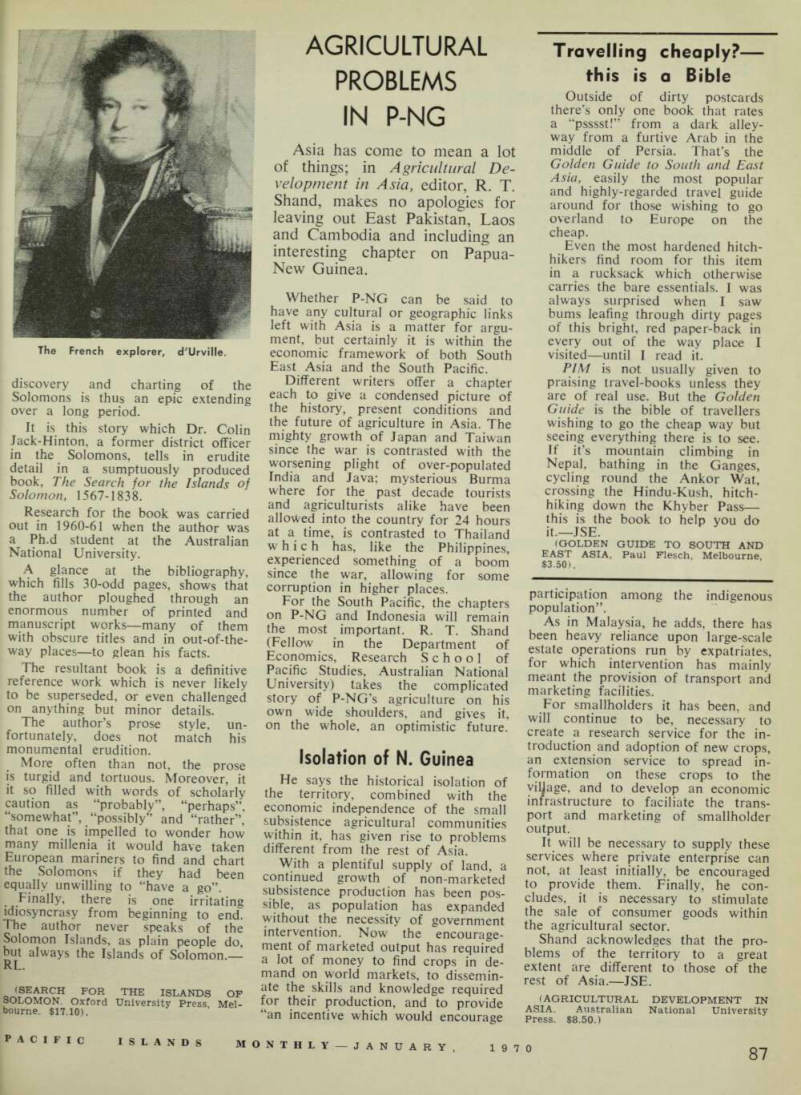 91
91 92
92 93
93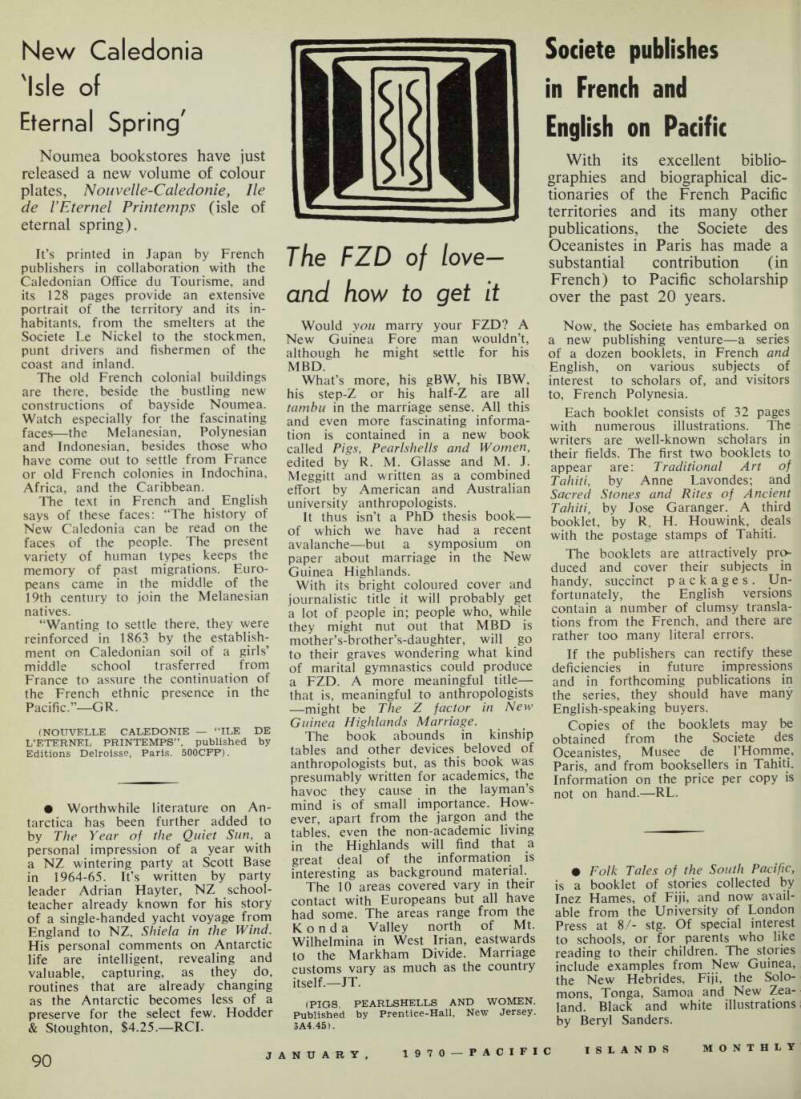 94
94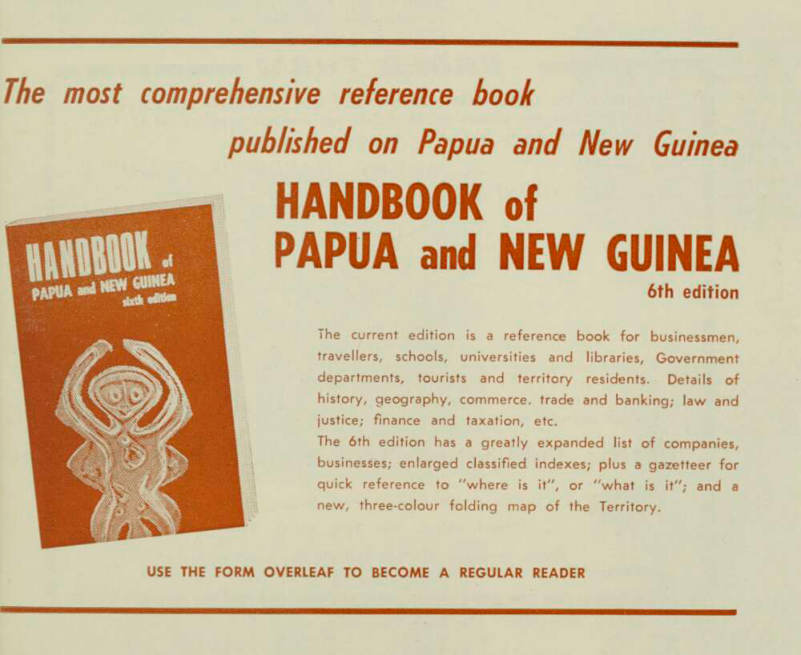 95
95 96
96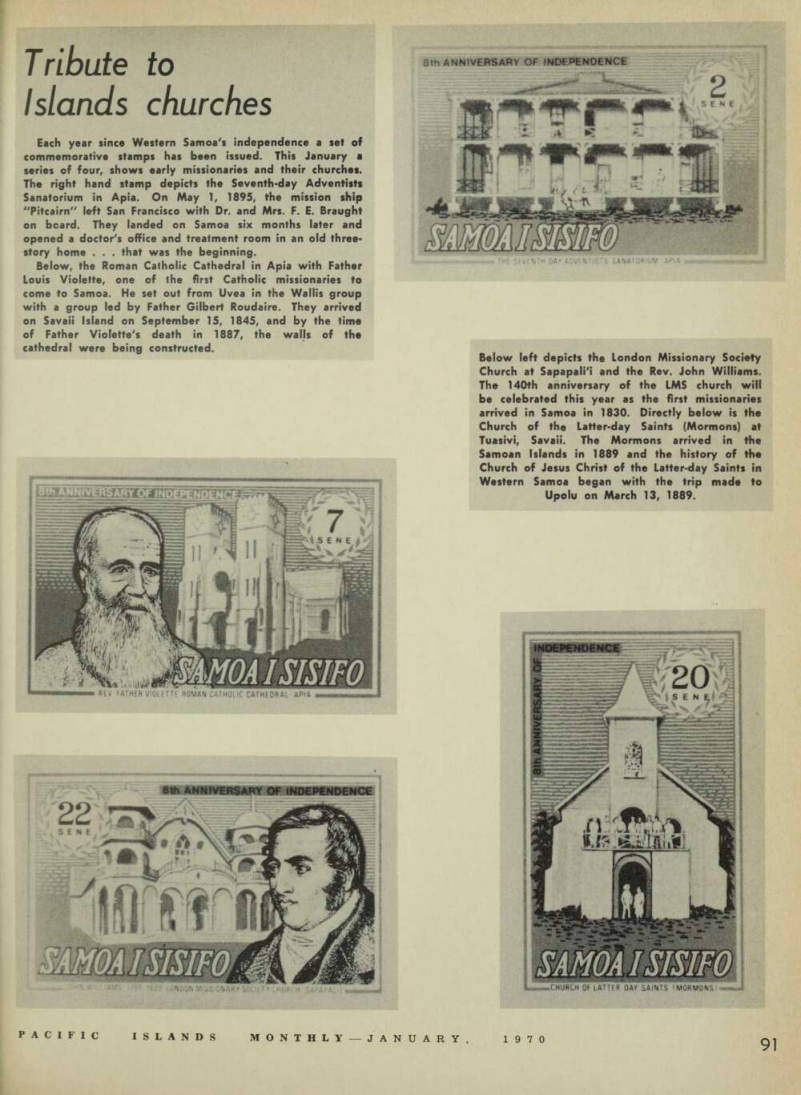 97
97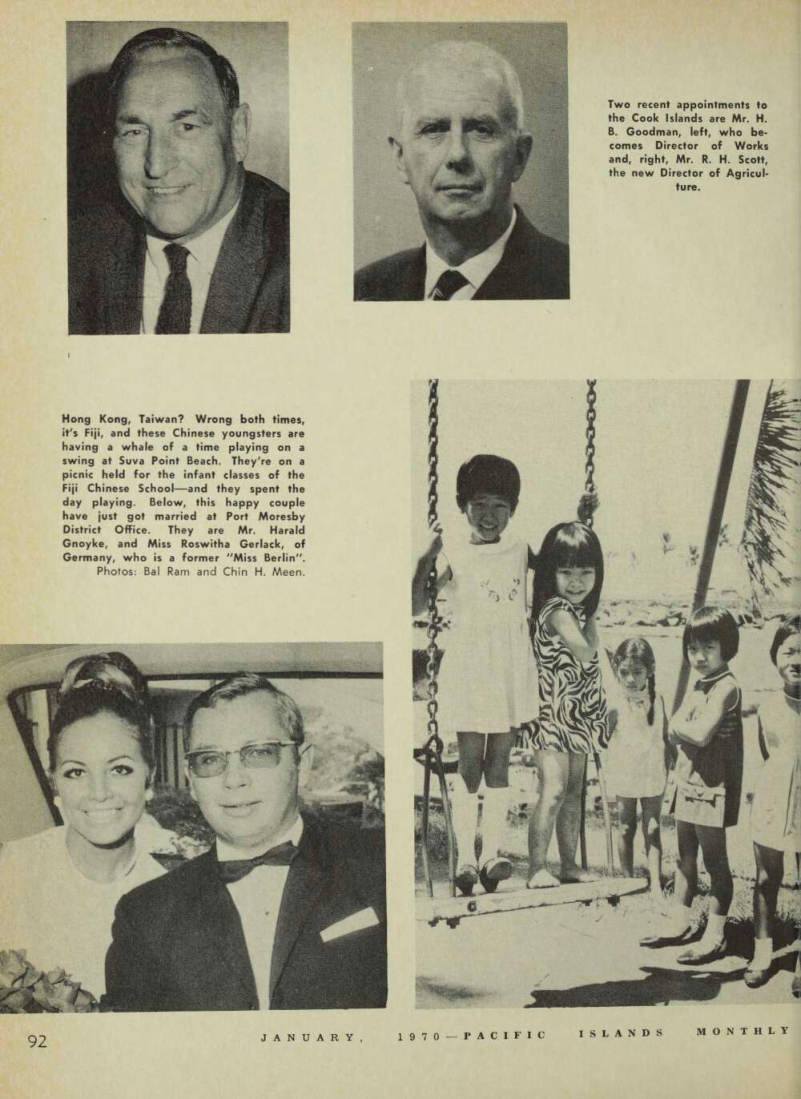 98
98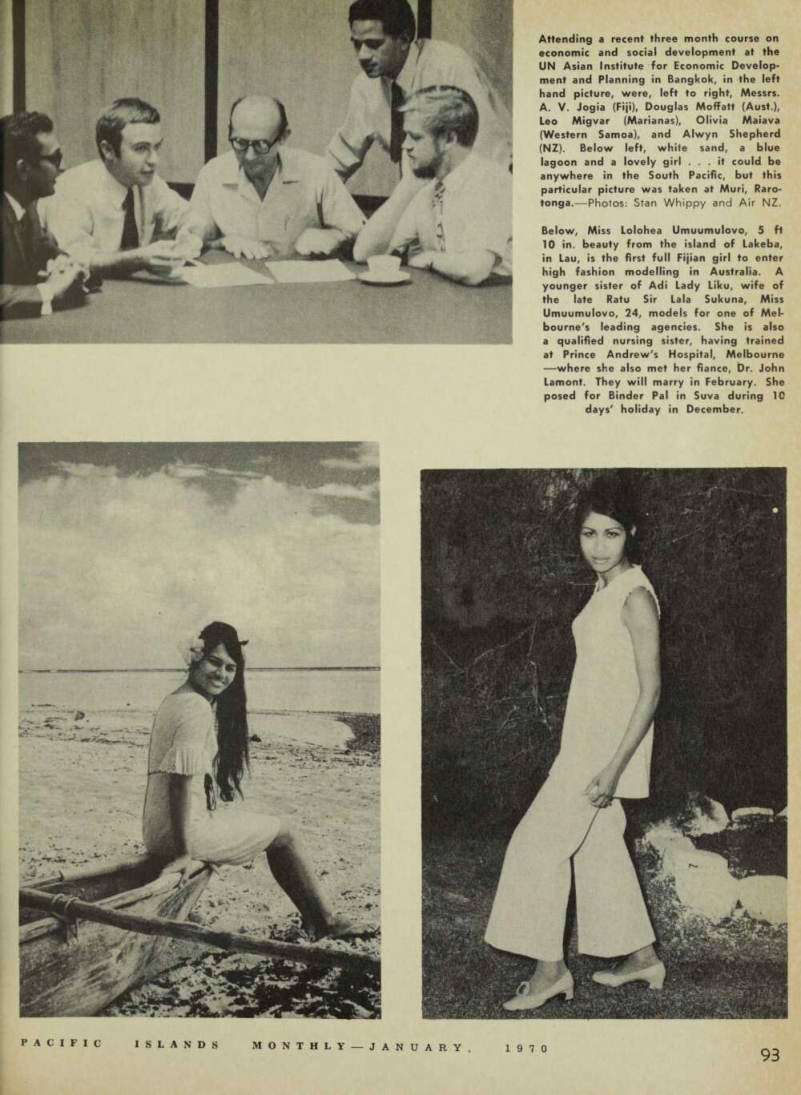 99
99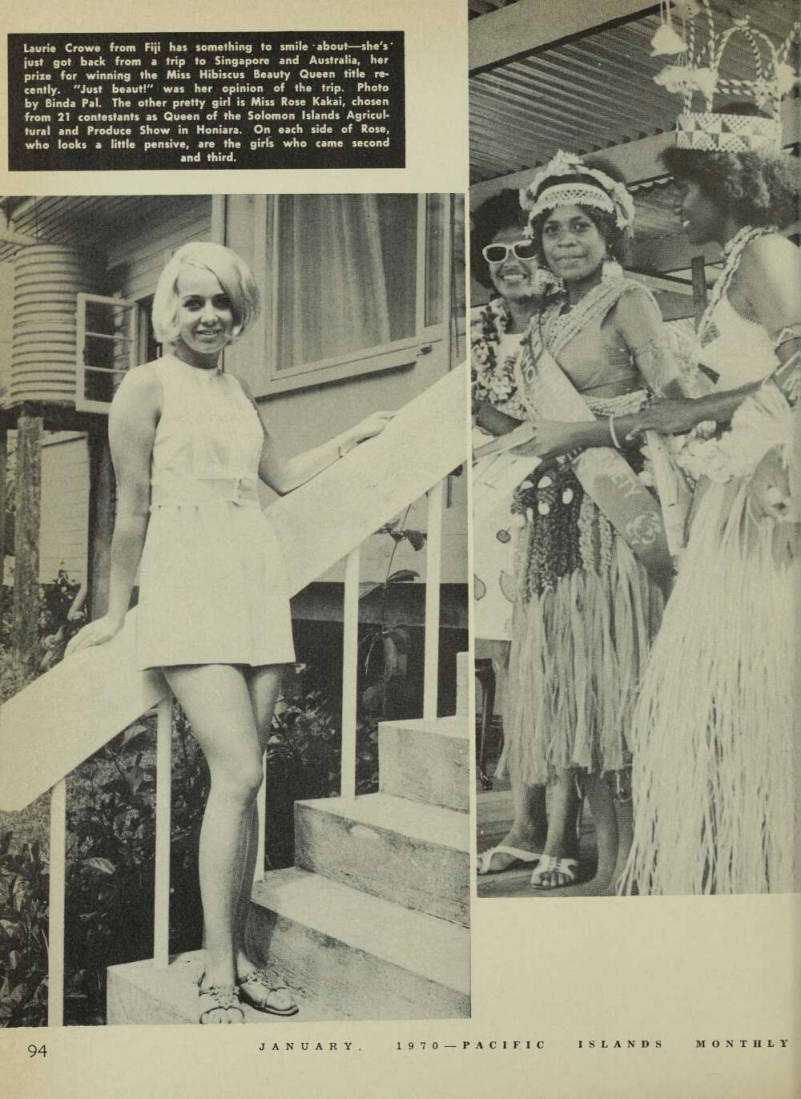 100
100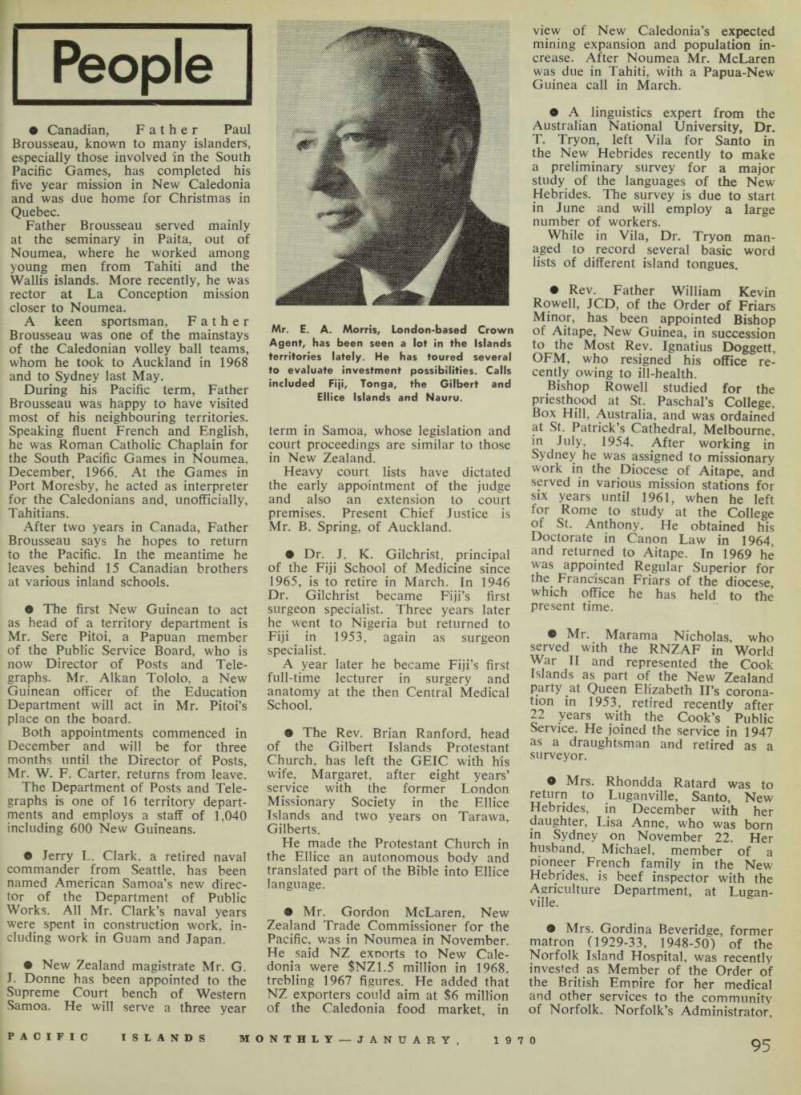 101
101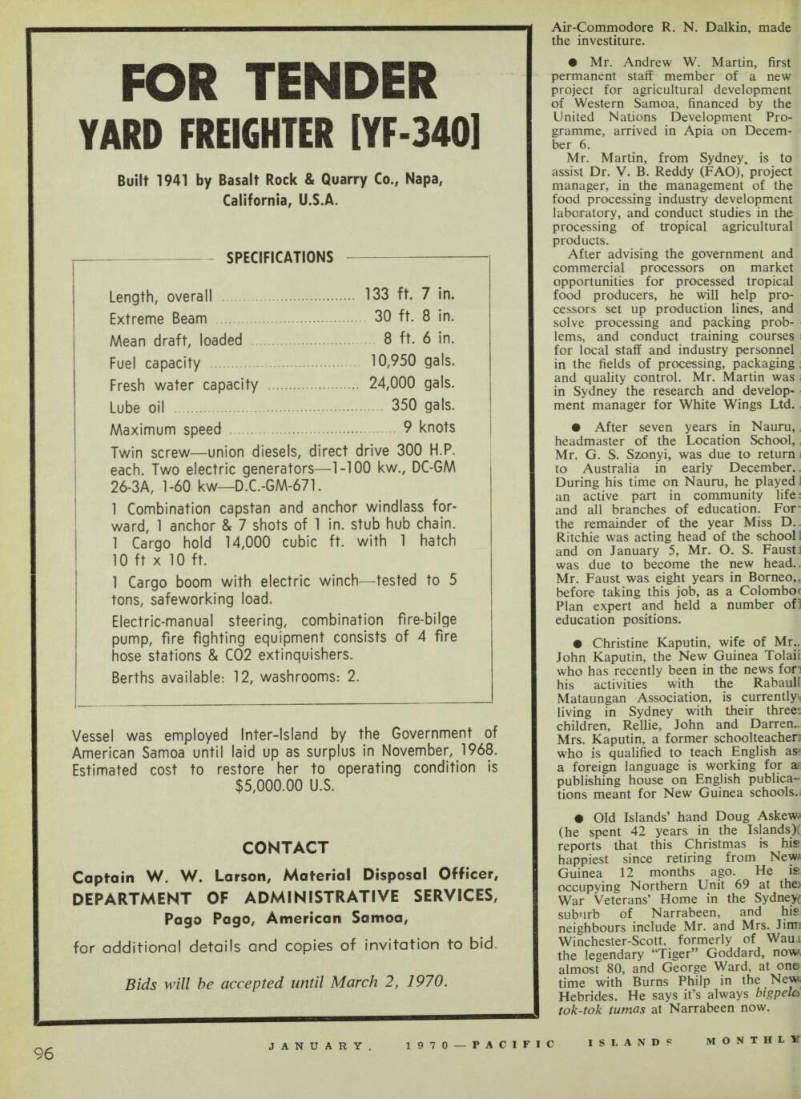 102
102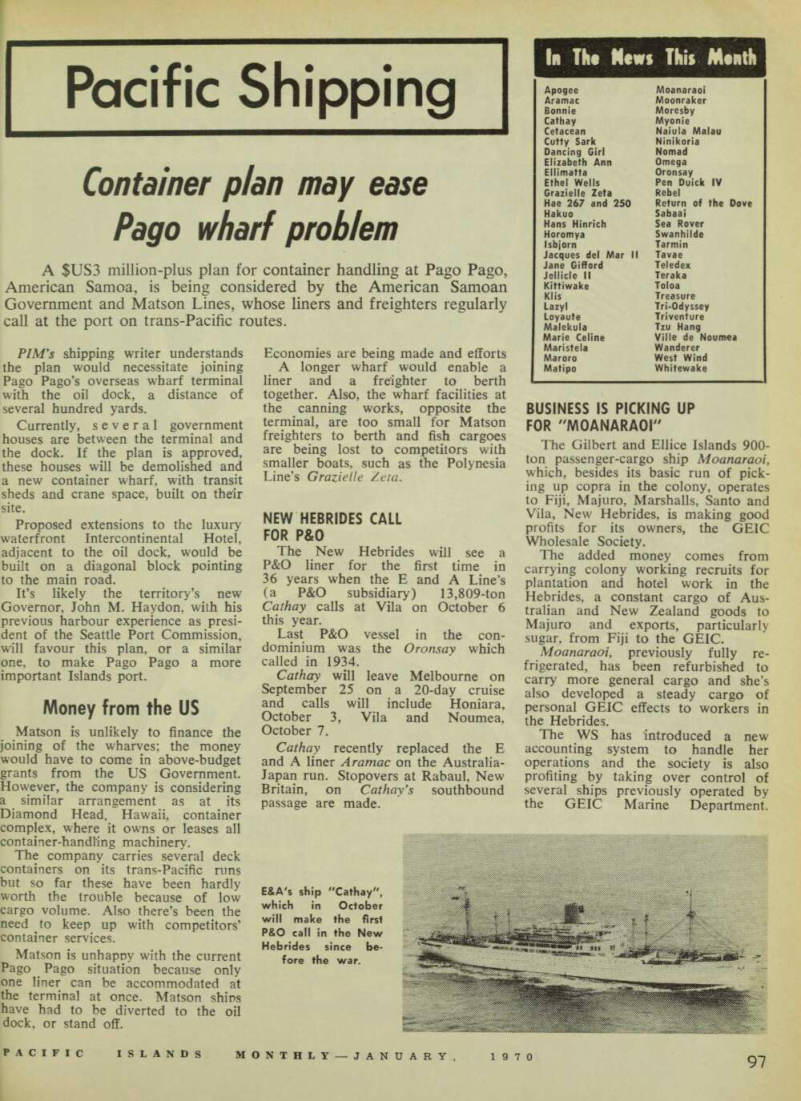 103
103 104
104 105
105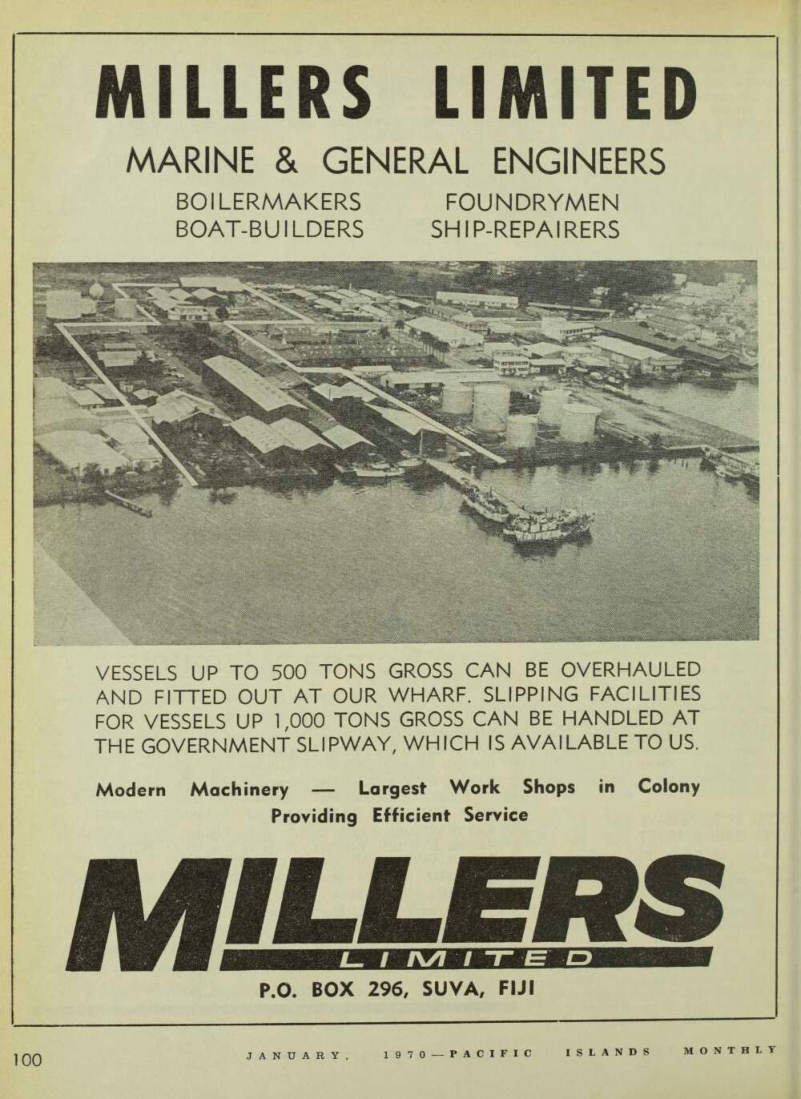 106
106 107
107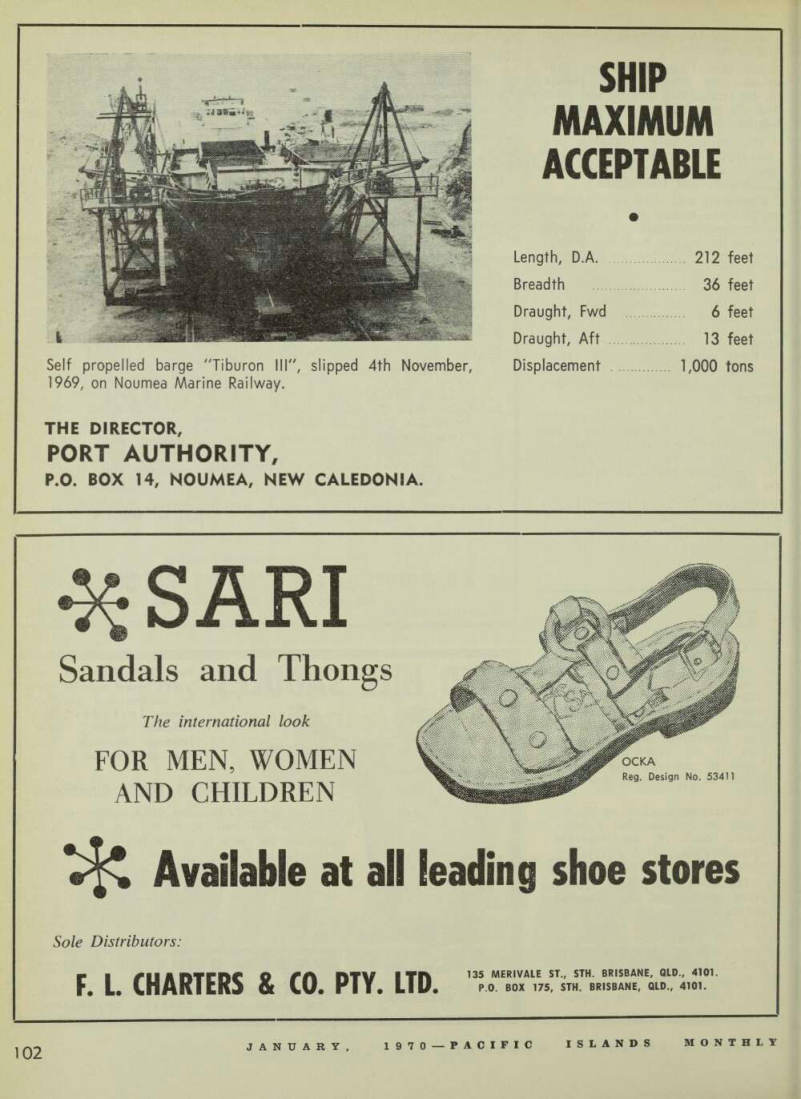 108
108 109
109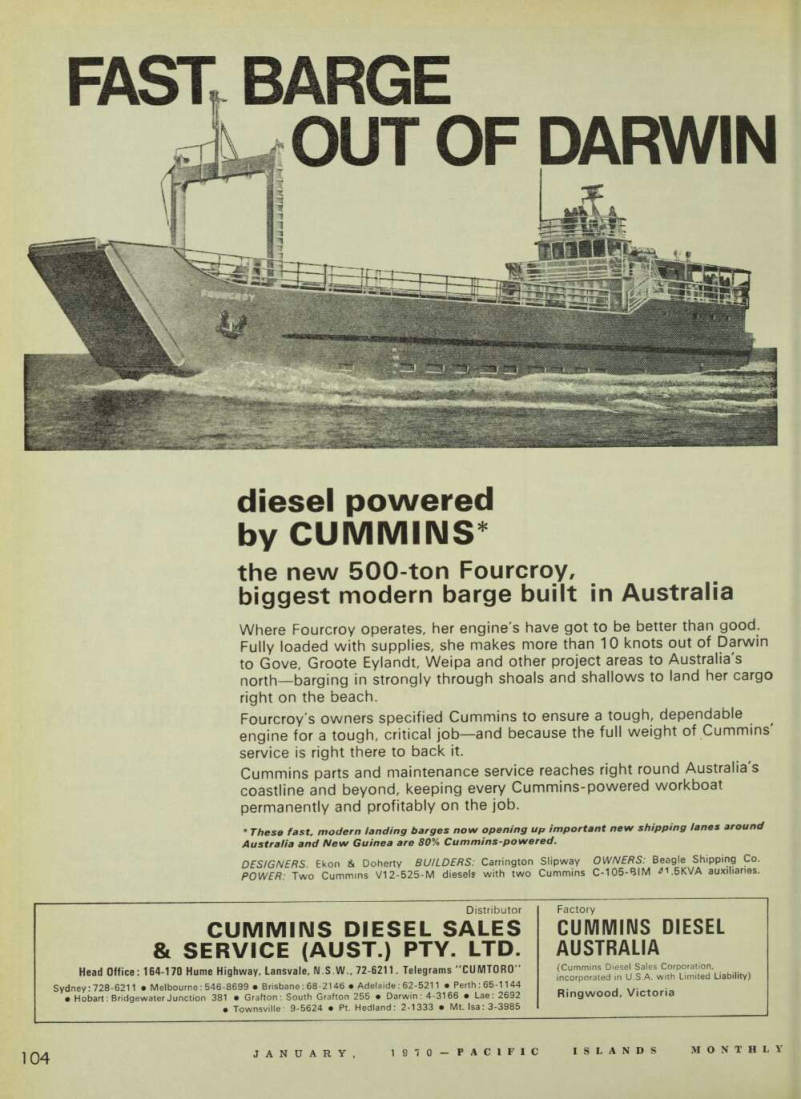 110
110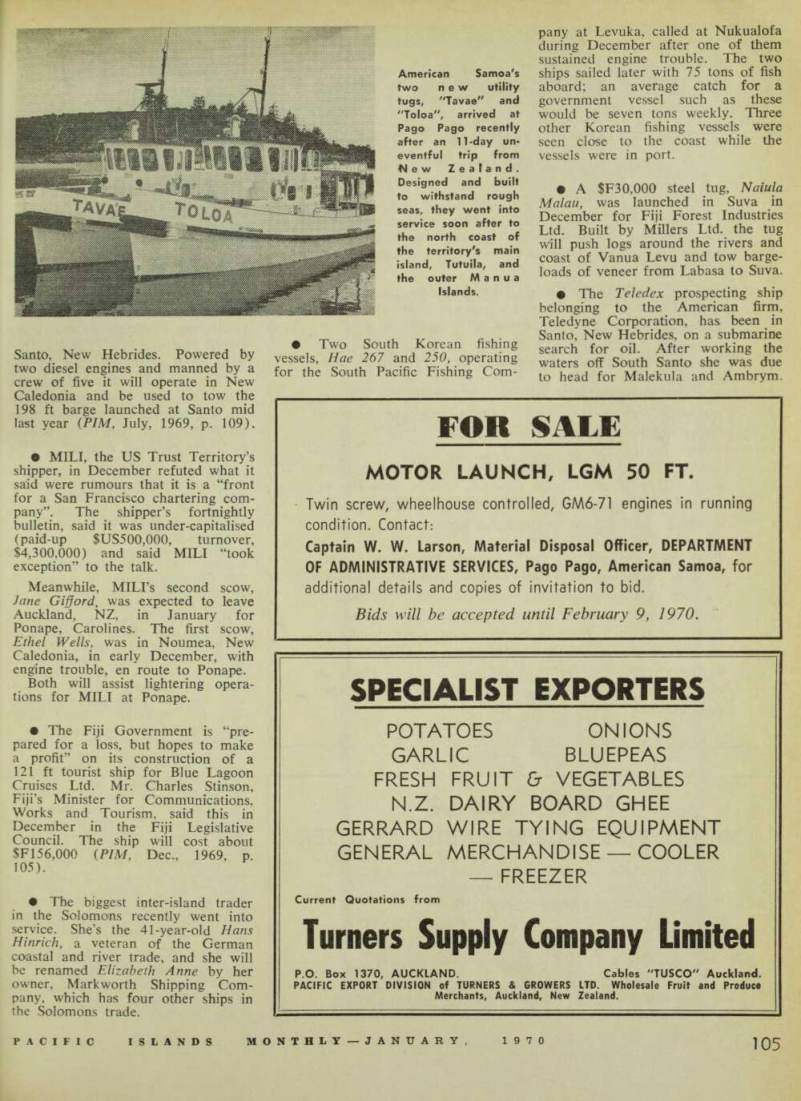 111
111 112
112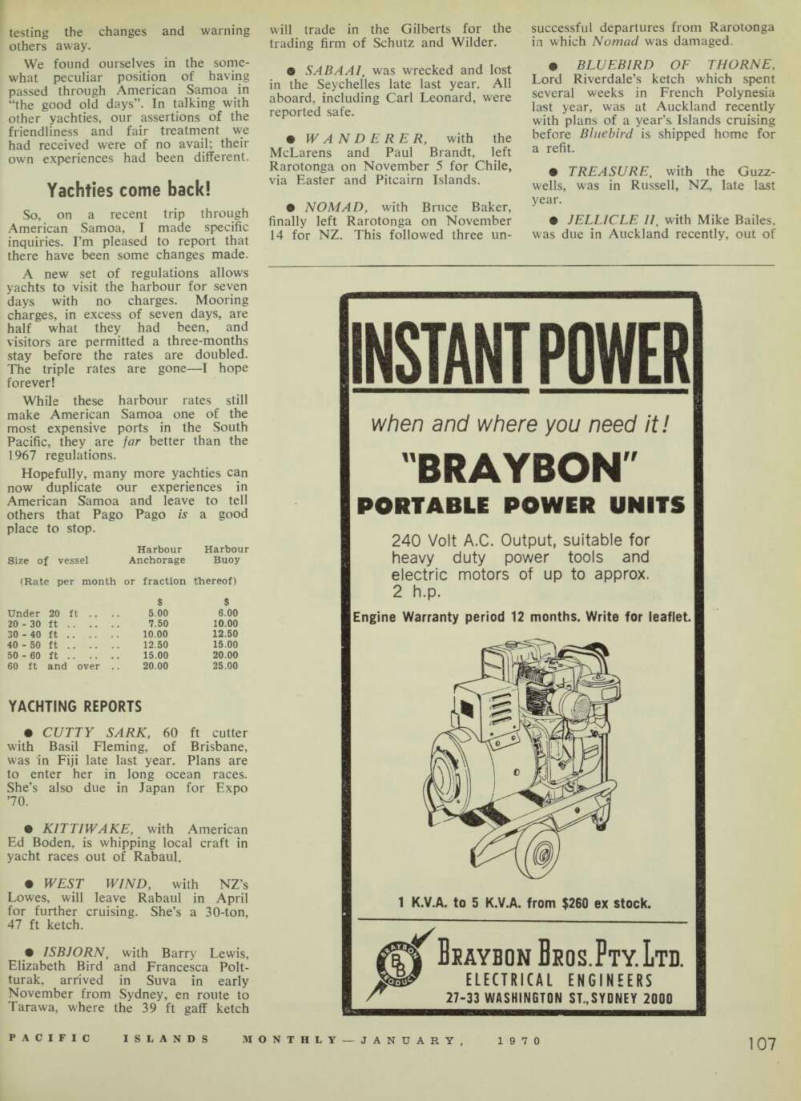 113
113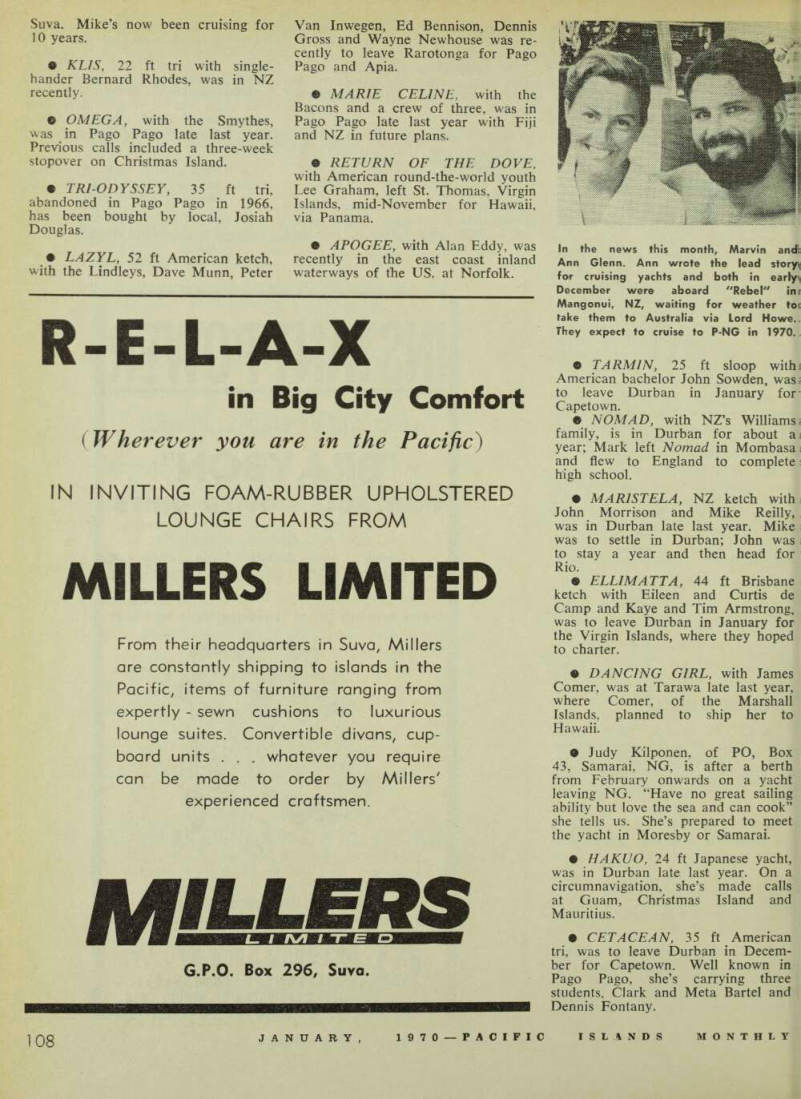 114
114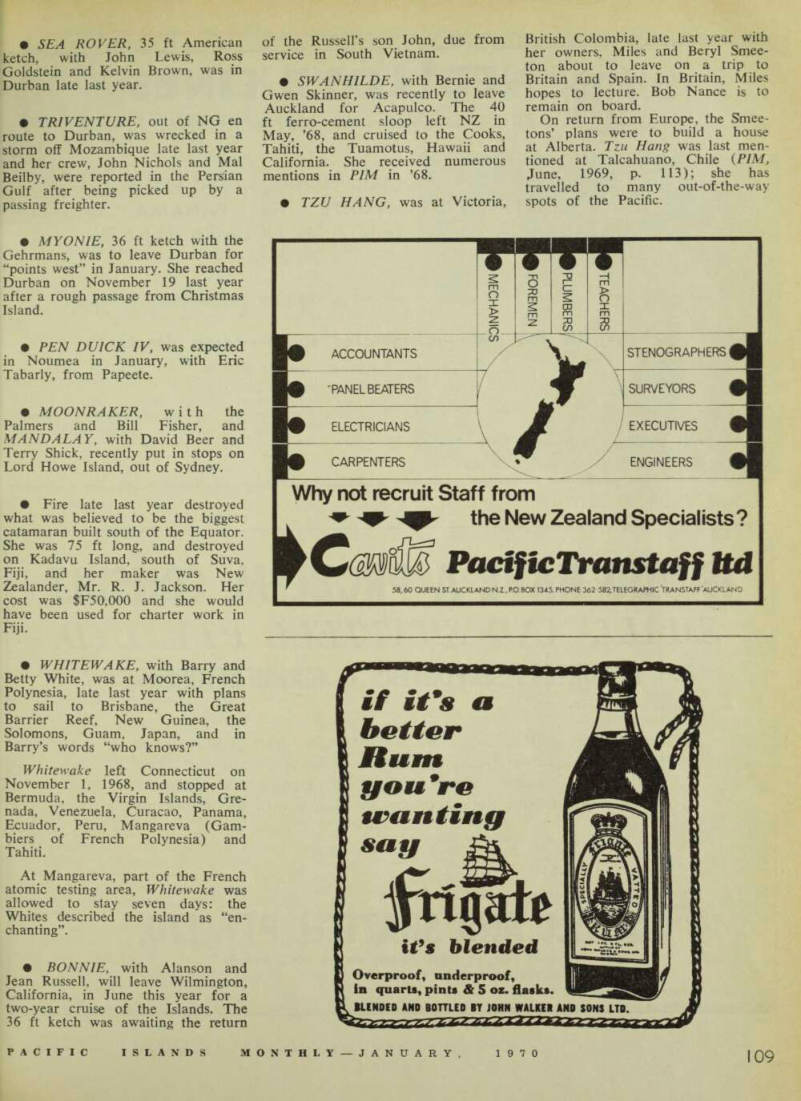 115
115 116
116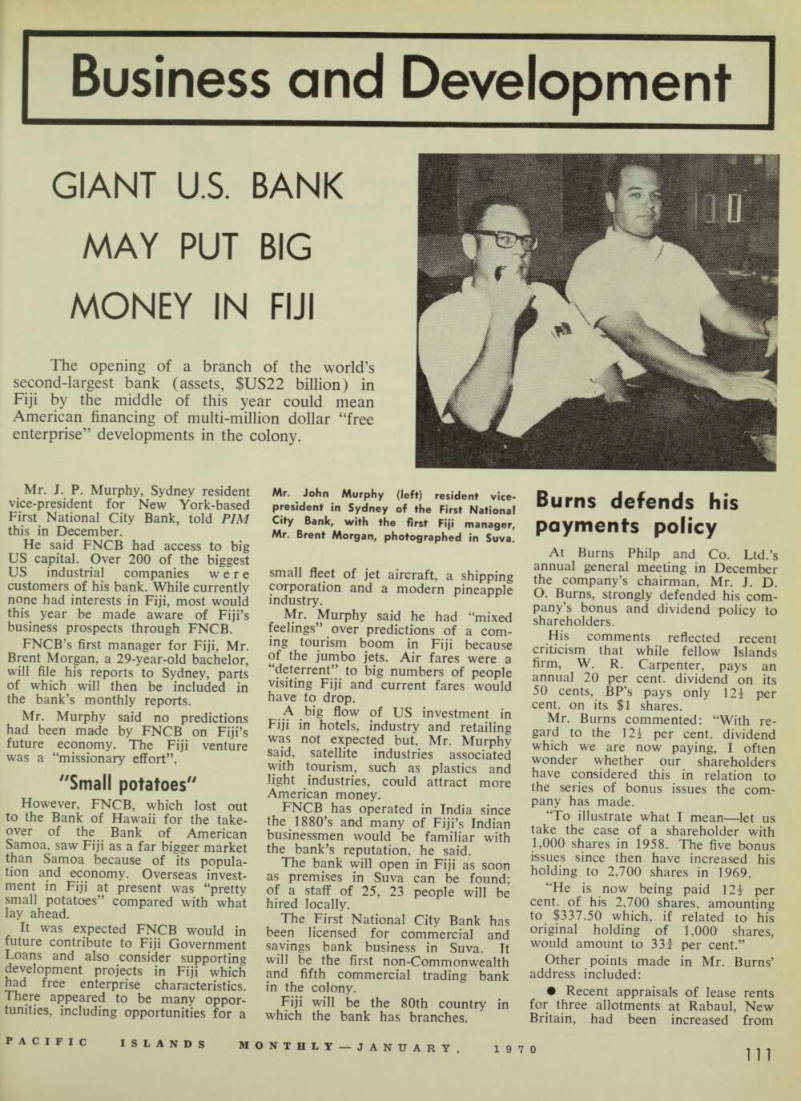 117
117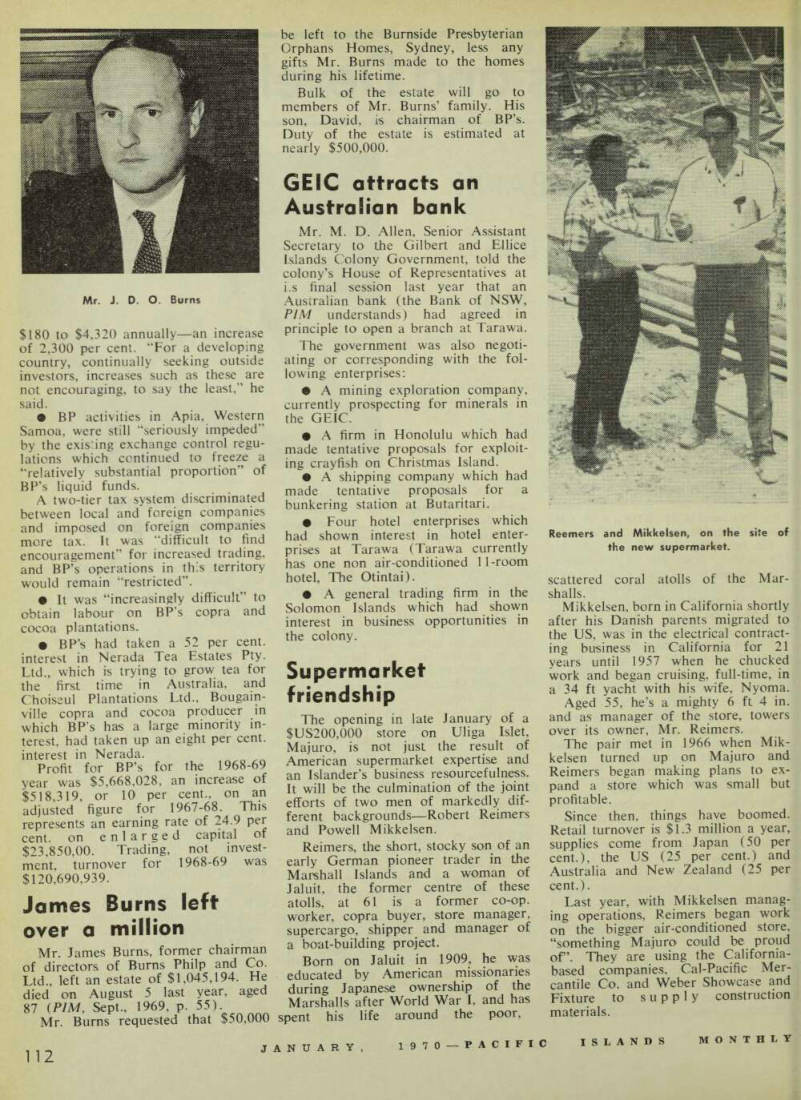 118
118 119
119 120
120 121
121 122
122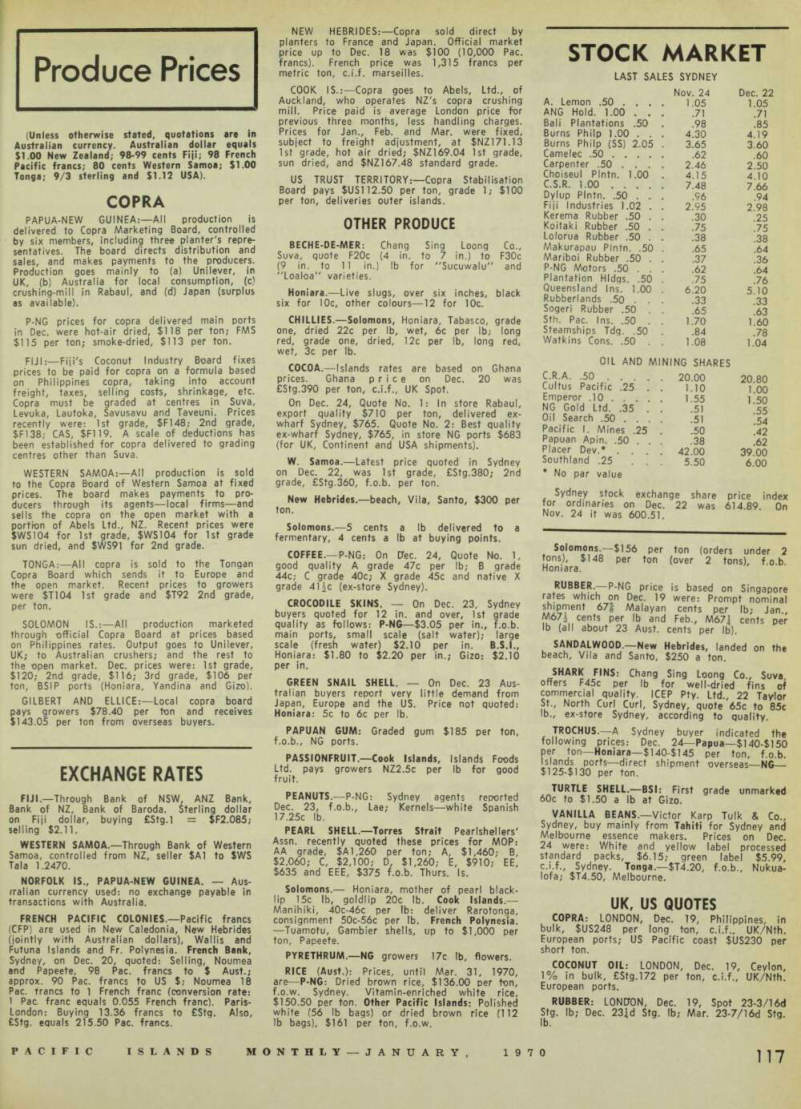 123
123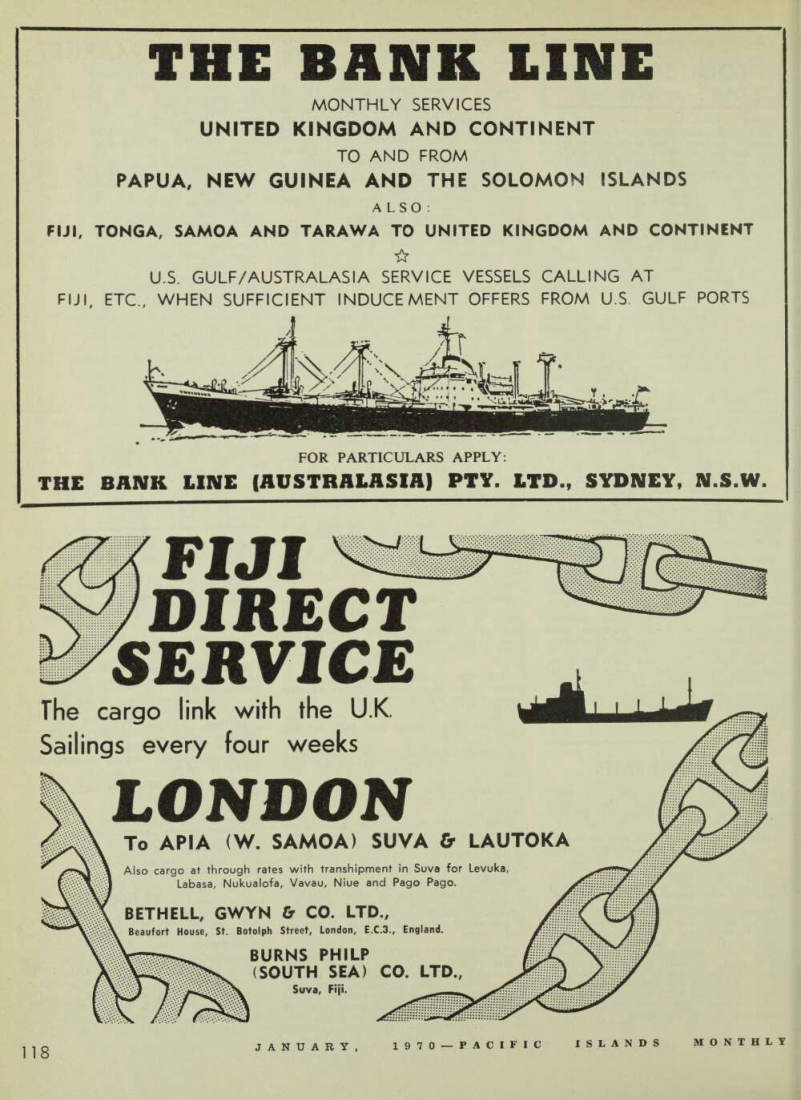 124
124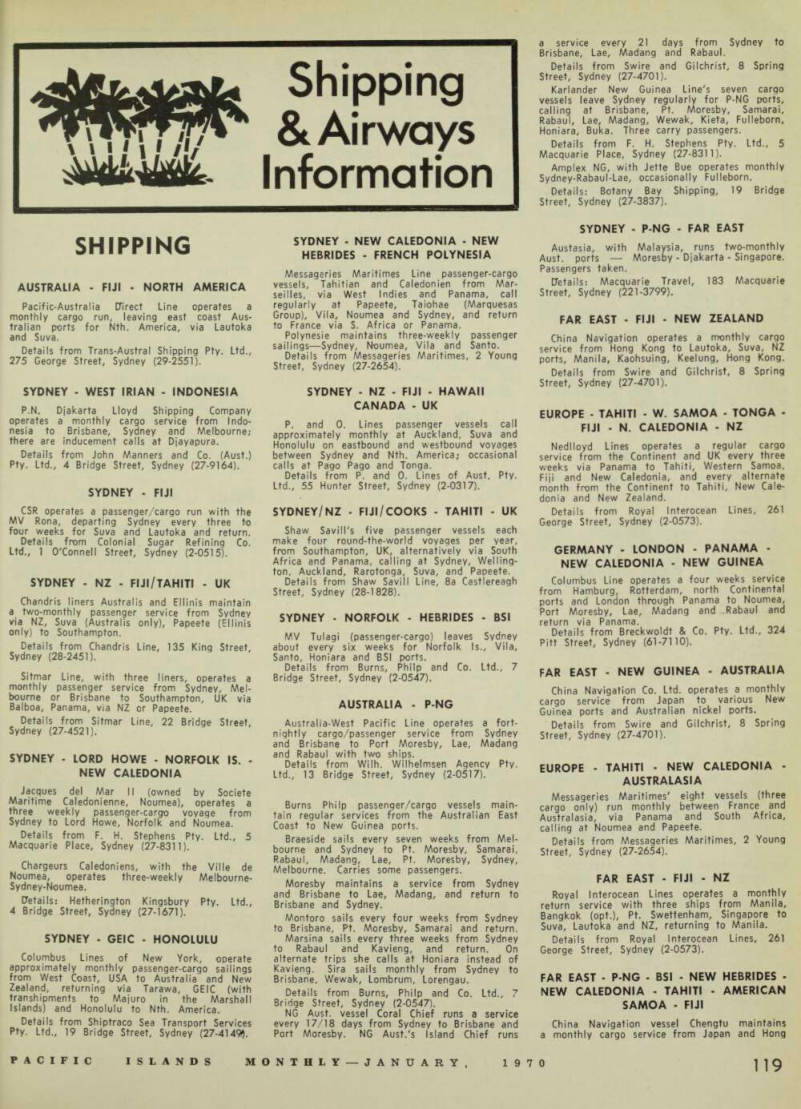 125
125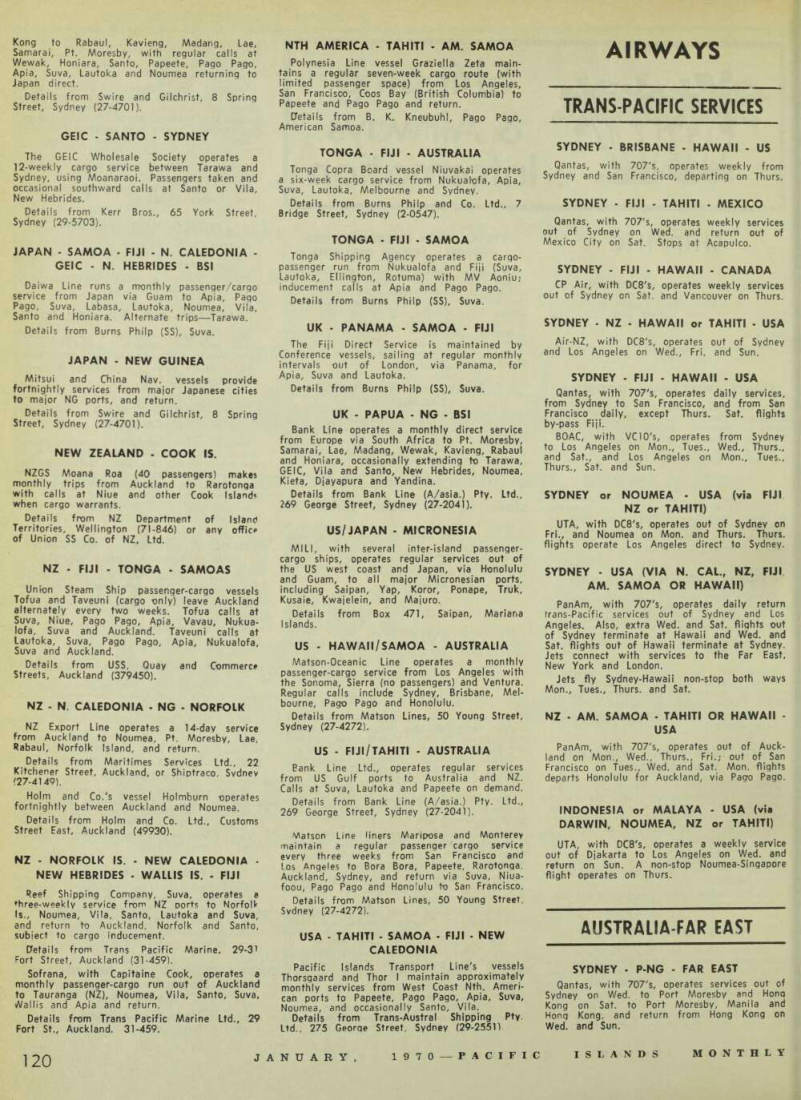 126
126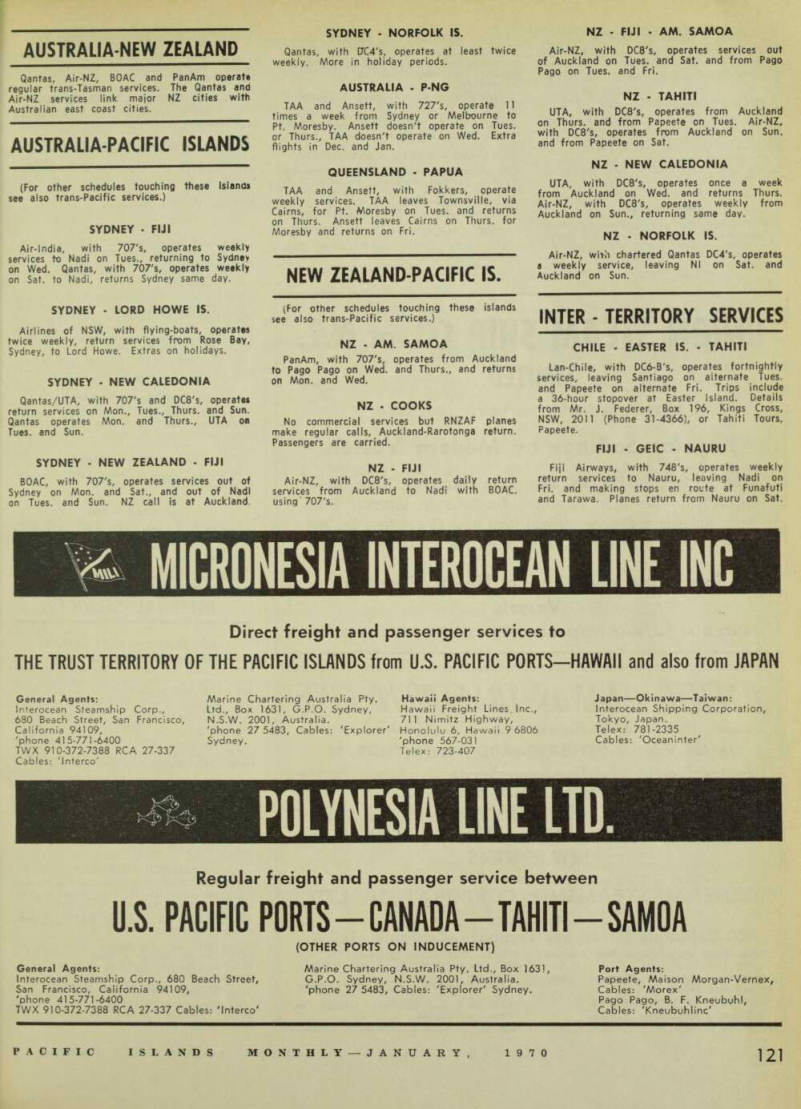 127
127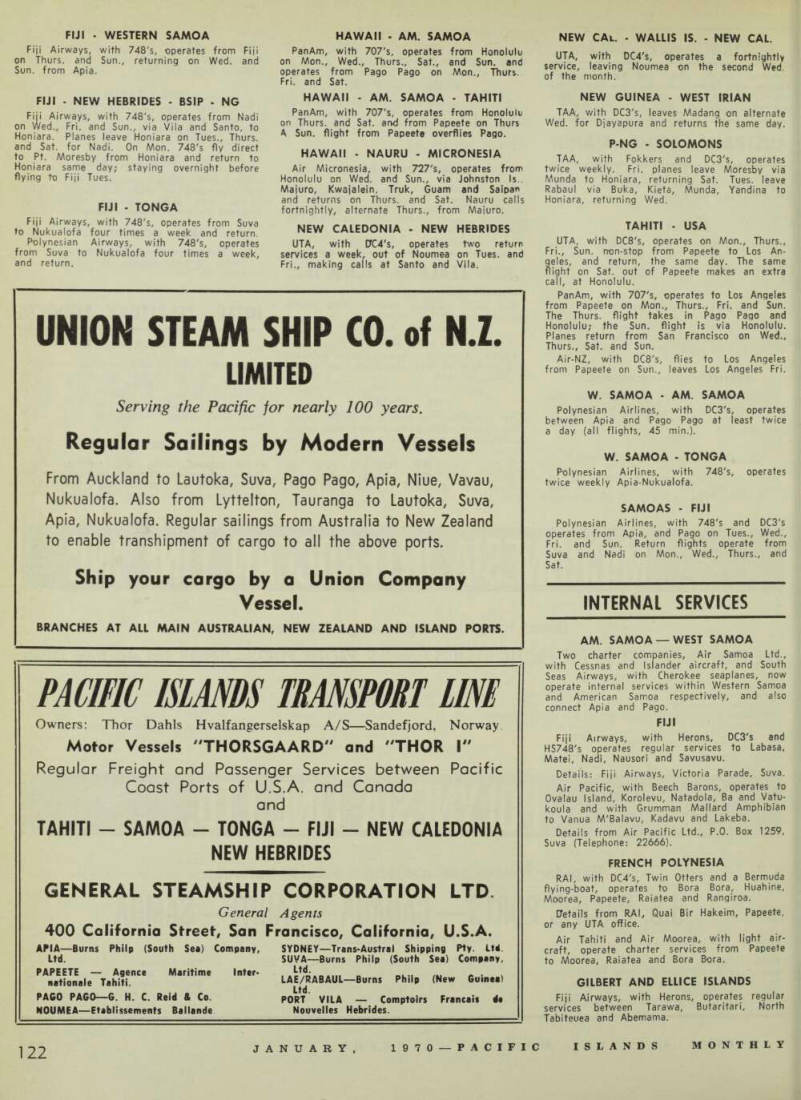 128
128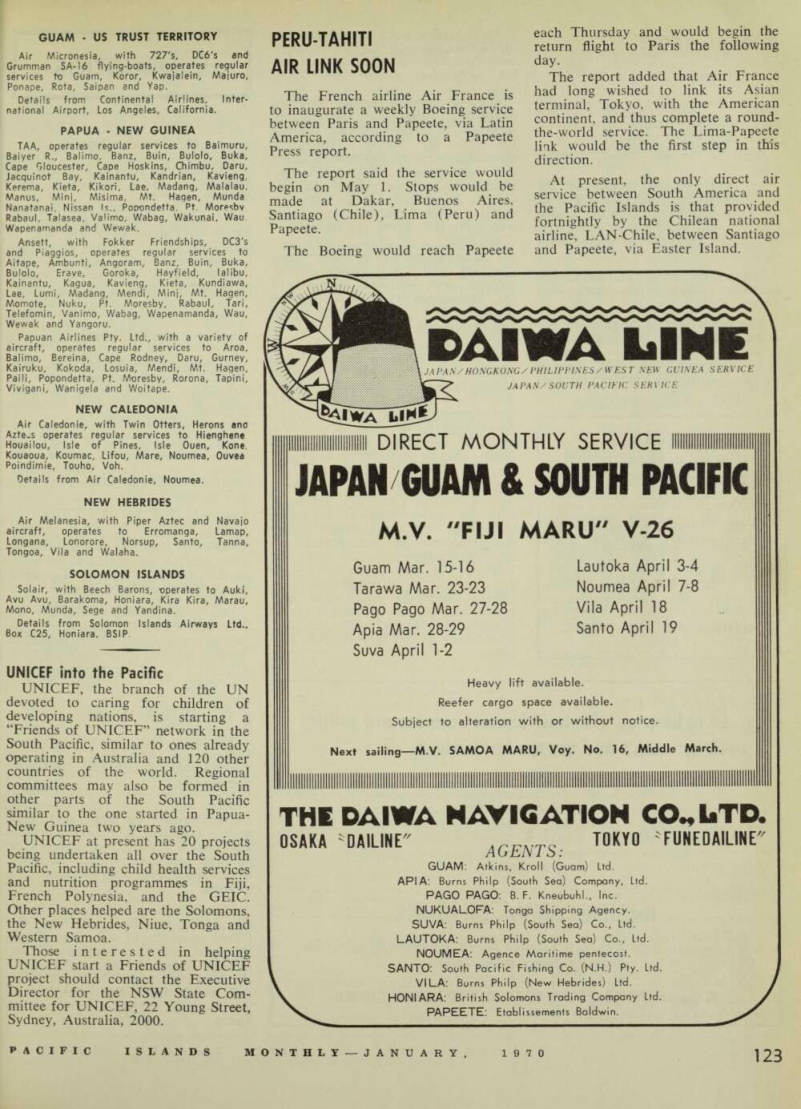 129
129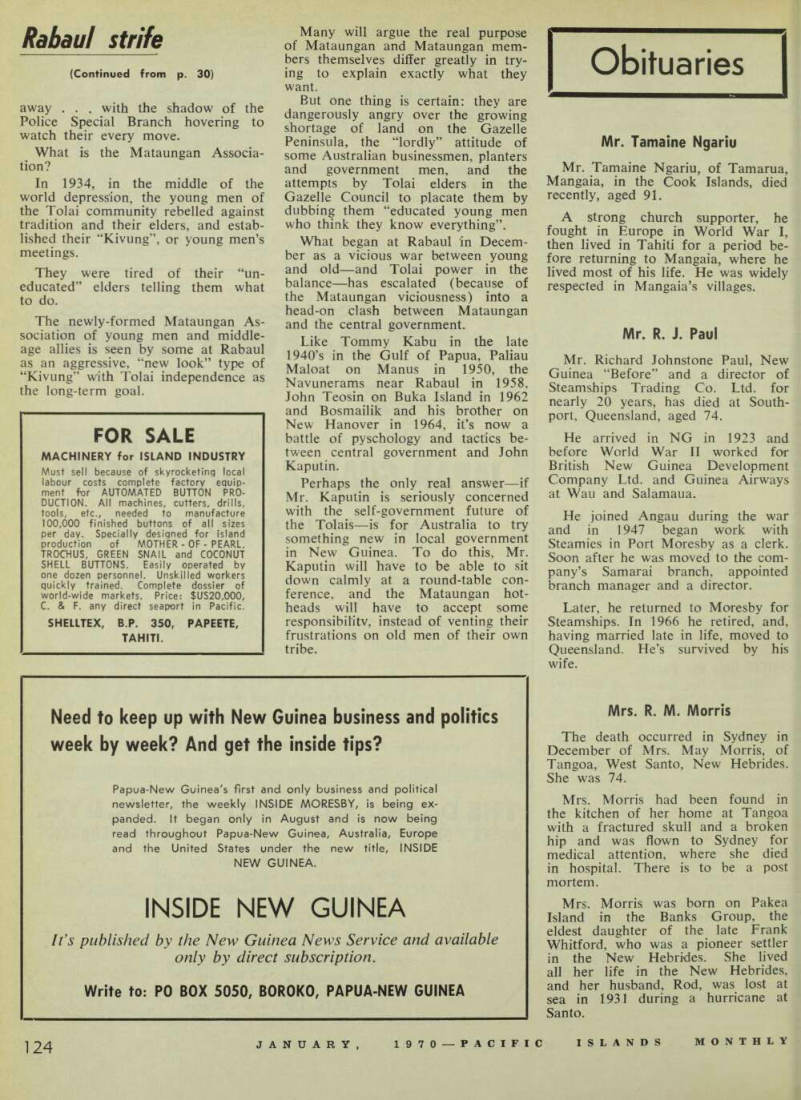 130
130 131
131 132
132 133
133 134
134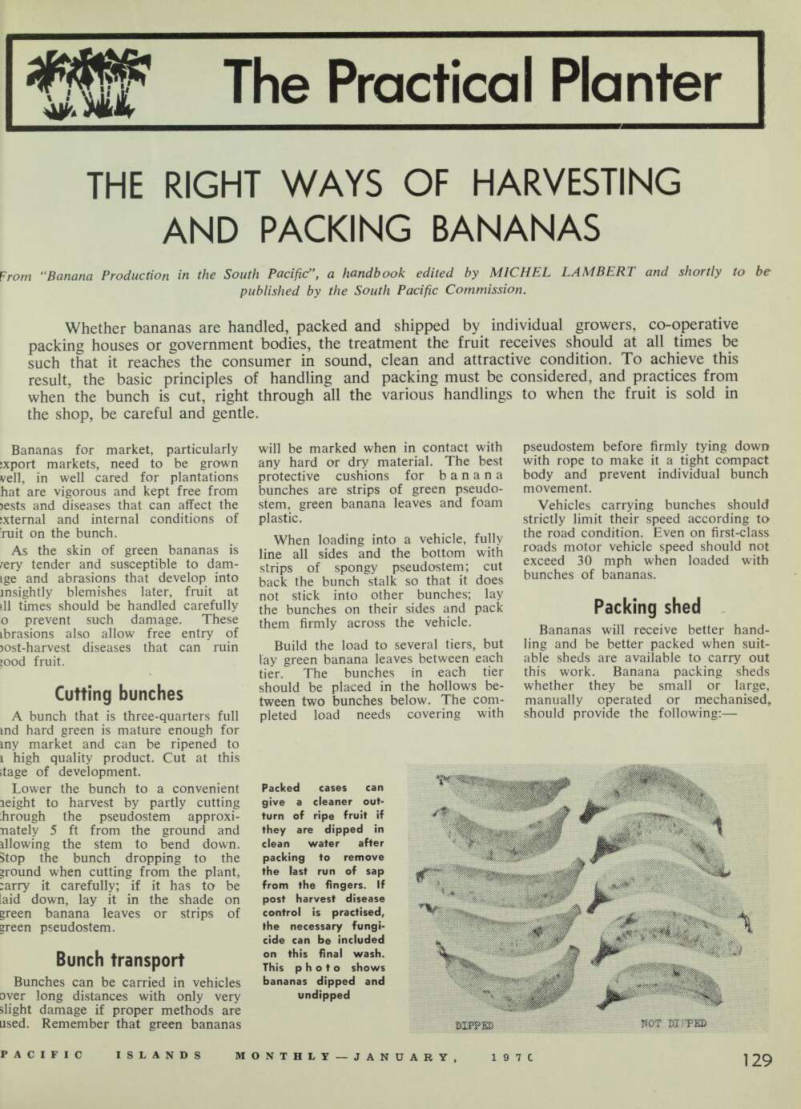 135
135 136
136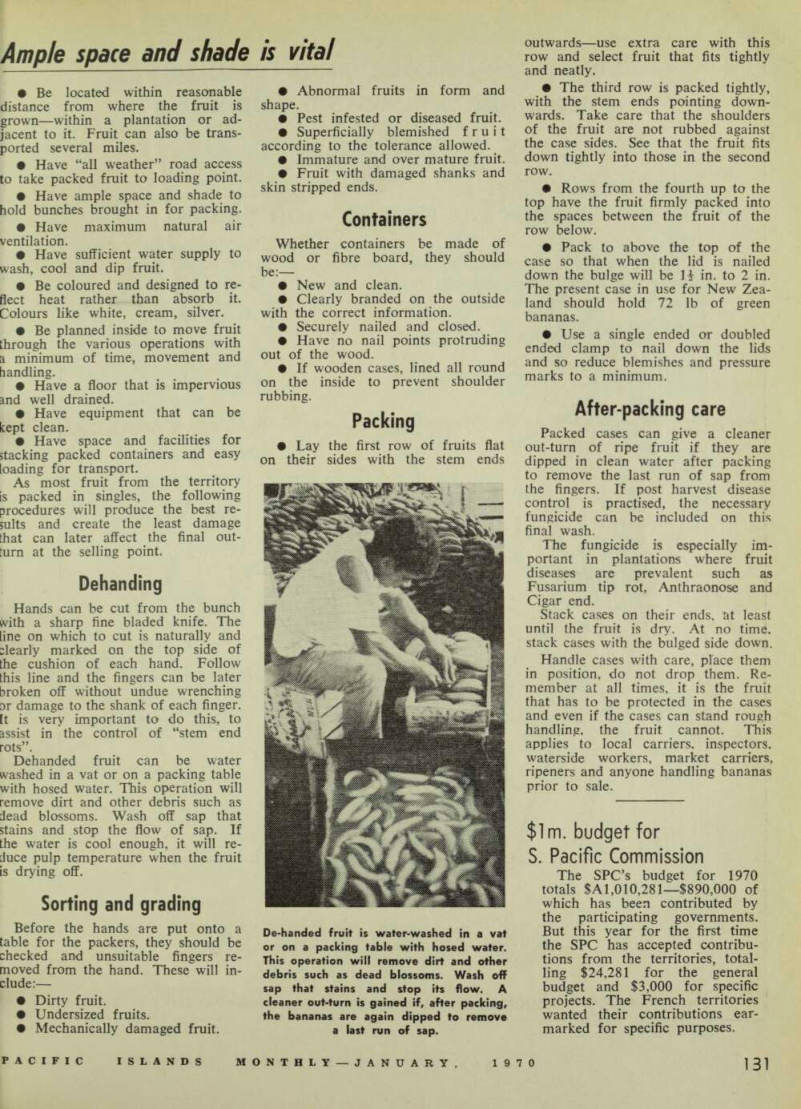 137
137 138
138 139
139 140
140 141
141 142
142 143
143 144
144 145
145 146
146 147
147 148
148 149
149 150
150 151
151 152
152