Monthly
Pacific Islands Monthly
Registered at G.P.0., Sydney, for transmission by post as a newspaper.
December, 1969
News Magazine Of The South Pacific
• AUSTRALIA, 40,. • NEW ZEALAND, 4Sc. • U.S. PACIFIC TERRITORIES, 70c. • FRENCH PACIFIC ISLANDS, JtS FRCS. CFP. • P.-N.G., FIJI AND ALL OTHER
Paricir Tcdditadicc .. ...
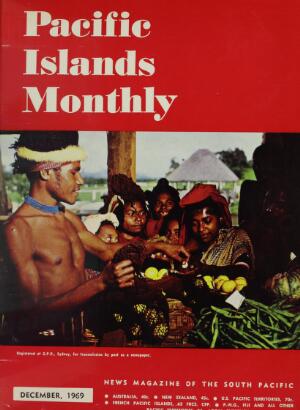
Our Cover
The market scene was taken by a photographer with the Australian Depart ment of External Terri tories at Mt. Hagen in New Guinea, but it could equally well have been taken in a hundred New Guinea centres.
Advertisements & other items, pp. 2-16 (4 items)
December, 1969 Pacific Islands Mont Ii Li
The Hostess with
the mostest.
Seats.
More than charm. She’s got the mostest But don’t leave your booking too late. We seats between Papua/New Guinea and Austra- want to see you get the best seat in the sky. lia just when you need them. During the Call your Travel Agent or TAA; Port Moresby rush holiday period. From now through till mid- 2101. Lae 2311 Madang 2478 Rabaul 2567.
February we’re putting on a lot more ‘Bird of Goroka 8. Mt. Hagen 4or 301. Wewak 103.
Paradise’ T-Jet flights for you . -V
TAA No.l-fhe friendly one
319 2307/69
OWEA
LIFOV
MPiRe
NOVmA
ILF
HOW BUB- CMBPCNIB
PBS FINS
GROUPE
GROUPE PENTECOST
34, RUE DE L'ALMA.
TELEPHONE; 21 14/NOUMEA.
• AGENCE ALMA / 2, rue de I'Alma—Tel, 30 02 / Distributor for: Citroen Nissan Jeep Willys Vespa Velosolex Clark John Deere Evmrude Topper Craft General Tire Dymo CRC etc. ... • AGENCE CALEDONIENNE DE G.F.A. / 34, rue de BEUTcfncr / cl.- / ln A su rance Agents; fire, accident, burglary, motor, transport—Marine and Life insurance arranged. • AGENCE MARITIME peniecost / Shipping Agents / 26, rue Georges Clemenceau—Tel. 21 14 / Agents for; Royal Rotterdam Lloyd Nederland Line Mitsubishi snipping o - Shinwa Kaiun Kaisha Daiwa Navigation Co. Ltd. Lloyd Triestino Flotta Lauro Royal Inter Ocean Line Holm Co.
Ltd. • CALTRAC /7& 9, rue Jean Jaures—Tel. 34 60 / Caterpillar dealer. • CLAUDE FRANCE / 34, rue de I'Alma—Tel. 34 51 / Everything f l ol rn nc S 7Tue Fr T™f.l h j on , w 2 a / for L , adi . es ' Children and Babies Garment Lux lingerie Christofle glassware Novelties. • C. 0.8.5. CINE OPTIC BUREAU SERVICE / 24, rue de I'Alma—Tel. 38 14 / Distributor for: Japy and Hermes typewriters—Facit—Friden—3M— Gestetner—Kodak— z eiss Ikon Ro lei—Werk—Bolex. • ELECTRIC RADIO / 35, rue de I'Alma—Tel. 48 24 / Everything dealing with radio and TV—Electric supplies—Fittings—lnstallations and repairs / Distributorsfor: Norge Sanyo Ray-O-Vac Onan Ignis Calor Silex etC ’ V HTATE DEPARTMENT / 34, rue de I'Alma—Tel. 21 14 / Real estate—Builders and Contractors. •LI BRA IRIE PENTECOST / / V r . ue os%J / .. / Ma g a zmes—Books—School and office requisites—Stationery. • L'UTILE ET L'AGREABLE / 33, rue de I'Alma - Mcrn / o » C c omp^^et !i k !^h enwa re—Crockery—Cutlery—IPlated ware—Pottery Ornamental brass ware—Garden furniture—Elna sewing machines. • J ' i rue de J Alma—Tel. 34 84 / Repair workshops—Motor cars—Tractors—Boat engines / Distributors for: Mercedes—Auto Union -Daf—Hyster—Dunlop—Subaru—Bosch—etc. ... • MINING, GROUPE MINIER PENTECOST / 34, rue de I'Alma—Tel. 21 14 / Nickel—Chrome C f Ppe l — D*r77. E /- xp «nTnoc 2 f . Ni ® k «' ore to Japan—Agents of Mitsubishi Shoji Kaisha Ltd. (Tokyo) and of Sumitomo NSiU K L „ d -*ffl o) i * E AC ' FI S, MOTO ? S S u A - /?' rue Jean Jaures —Tel. 34 75 / Distributor for; Chrysler-Massey-Ferguson-Kohler- Hyster Johnson- - Lawn Boy —l?ust—Oleum—Feather Craft—De Havilland boats—etc. • PENTECOST AVIATION / Magenta Airport—Tel. 41 19 onorc / dlstnbu j or —Cessna 150, 172, 185, 206, 310 D, 310 P—Aircrafts for hire. • SCAT. SERVICE CALEDONIEN D'ACCONAGE ET DE TRANSccDuirt /o r x e de r Re P ub, 'gue—Tel. 27 91 / Stevedoring—Transport on the whole territory—Cartage. o VOYAGENCE, PENTECOST TRAVEL SERVICE / 26, rue Georges Clemenceau—Tel. 20 85 / Travel agents; UTA—Air France —Air Caledonie—Air New-Zealand—Qantas—Pan American soaffriylccoiiifii es a9 !T tS O • PENTECOST PACIFIC S A /In Port-Vila and Santo—New Hebrides. • SAT NUI.
SOCIETE D ACCONAGE TAHITIEN / 613, rue des Remparts—Papeete, Tahiti / Stevedoring—Transport on the whole territory—Cartage.
PENTECOST
P
.v, e' a & U d d *e p ** -
*S eCP
v e p5 * '% tH e W " >,C^ It’s gone into the language as the name for crackers SALADA.
Whatever your favourite spread or topping it tastes so much nicer on crisp, golden Salada Crackers. Now available in the new blue and white packet for added protection and freshness.
There’s value, variety and quality in
BROCKHOfF BISCUITS
& 333 2
2 PH&
the pacific
FIJI,SAMOA,TONGA,NIUE Is,NORFOLK b.
BURNS PHIIP
(SOUTH SEA] GO.LTD^^^H
REGISTERED OFFICE: SUVA, FIJI.
TELEPHONE NO: 22661
TELEX NO: FJ1127
Code Address: "BURNSOUTH' :
SHIPPING AGENCIES
The New Zealand Shipping Co. Ltd.
Shaw Savill & Albion Co. Ltd.
Port Line Ltd.
Bank Line Ltd.
General Steamship Corporation Ltd.
Blue Star Line Compagnie des Messageries Maritimes Royal Interocean Lines Daiwa Navigation Company Ltd Sitmar Line Flotta Lauro (Lauro Lines) Australasia Pty. Ltd, Tonga Shipping Agency.
EXCLUSIVE
DISTRIBUTORSHIPS
INCLUDE
Akai Taperecorders Dunlop Products Hitachi Electronics Holden Motor Vehicles Rolex Watches Revlon Cosmetics Pentax Cameras Ferguson Tractors Olympic Tyres Penfold Wines
AGENTS FOR:
Queensland Insurance Co. Ltd.
Burns Philp Trustee Co. Ltd.
Shell Company (P. 1.) Ltd.
Bureau Vernas
ASSOCIATED COMPANIES
Burns Philp (New Hebrides) Ltd.
Automotive Supplies Co. Ltd.
Corrie & Co. Ltd.
Wrought Iron and Steel Construction Co. Ltd.
Bish Ltd.
SPECIALISED SERVICES
Expert advice on Shipping; Forwarding; Customs formalities; Insurance.
COMPLETE TRAVEL
SERVICE
accredited agents for the
INTERNATIONAL AIR
TRANSPORT ASSOCIATION
OVERSEAS AGENTS: SYDNEY • LONDON • SAN FRANCISCO
Mod®! 17 IOW ',V " V ■I: 40000 * Model AA 0600 Model X 330 % % > 111 A < a ■l' %
,fe<l
ij SW-160 200 D Model AA-6000 Model Model Nr Model AKAI’s Wide Range of Products Carries the Best Christmas Message AKAI’s high prestige stereo products carry a distinctive Christmas message—one with (he meaning of lasting quality. AKAI— world renowned for its leadership in tape recorders —has broadened the scope of its production activities to now include many different, uniquely designed speakers and amplifiers. The same over-all distinctive top quality design and superior craftsmanship are brought to these distinguished products.
Make it a memorable Christmas! With AKAI you’ll have only the best memories.
Prove it by the sound! prove it with
AKAI
CROSS-FIELD HEAD
AUSTRALIA: AKAI Australia Pty. Ltd., 276 Castlereagh St., Sydney, N.S.W. NEW ZEALAND: G. Glausiuss Coy, P.O. Box 640, Christchurch SUVA: Burns Philp South Sea) Co., Ltd. LAUTOKA: Burns Philp (South Sea) Co.. Ltd. SAMOA: Burns Philp (South Sea) Co., Ltd., Pago Pago, American Samoa I Burns Philp (South Sea) Co. Ltd Apia Western Samoa NORFOLK ISLAND: Burns Philp (South Sea) Co., Ltd., Norfolk Island, South Pacific NEW HEBRIDES: Burns Philp (New Hebrides) Ltd Port Vila/'burns Philp (New Hebrides) Ltd., Santo NEW CALEDONIE: '‘Menard Freres”, P.O. Box 123, Noumea BRITISH SOLOMON ISLAND; Mendana Enterprises (Solomon Island) Ltd P.O Box 12, Honiara, 8.5.1. P. NAURU: Nauru Co-operative Society COOK ISLAND: N.T. Napa (Avarua) Ltd., Rarotonga TAHITI: Ets. Comimpex., P.O. Box 200, Papeete PAPUA & NEW GUINEA: S.O. Svensson (N.G.) Ltd., P.O. Box 508, Port Moresby TONGA: Burns Philp (South Sea) Co., Ltd., Nuku Alofa
everyday
there are so many
ways to use
NESTLE’S
IDEAL
MILK
it’s doubly rich!
N 1 £t
Ideal
evaporated
MILK
N ET AUSTRALIA
all rolled into one.
Imagine fresh, country milk and rich cream That’s Nestle’s Ideal Milk.
Nestle’s Ideal can do so many things for you ... every day.
Use it in your cooking for more nourishing meals.
Whip it into a thick, creamy topping—ideal for dessert.
Pour it straight from the can into tea or coffee—delicious!
And for young children, Ideal provides all the pure milk goodness so necessary. .
A /? \ Nestle’s Ideal Milk... fresh country milk and cream ... all rolled into one.
m
SOME OF THE FIRMS
WE REPRESENT ARE:
A. W. Allens (Confectionery) Sunshine Biscuits Sunrise (Confectionery) Flamenco (Instant Coffee) Cremota (Quaker Oats, Jets Pet Foods) Merchants (Canned Soft Drinks) Lunchtime (Honey) South Pacific Canneries (Scallops, Abalone) Safcol (Canned Tuna, Salmon) Hancock's (Spaghetti, Cereals) Melbourne Canning (Jams, Bleach) Water Wheel (Flour, Sharps, Wheat) General Food Corporation (Twisties, Twirlies) Edward Zorn (Margarine, Cooking Fats) Robert Timms (New Guinea Gold Coffees, Teas) Rodd (Cutlery) Palm (Mattresses) Esteel (Cookware) Vendolux (Cafe Bars) Mitchell's (Abrasives) Regent (Swiss Watches) Gainsborough (Furniture) Tamco (Melanie Crockery, Nylon Hardware) Elm a c o (Plastic Household Goods, Electrical Fittings) Brownbuilt (Pre-Fabricated Houses) Ryline (Fluorescent Lights) Jex (Steel Wool) Austramax (Pressure Lamps) Preservene (Soap Products) Charles Tims (School Requisites) Ascow and Philadelphian (Shirts) Lawn Chair and Tubco (Garden Furniture) Sunrise Lustretone (S.S. Sinks, Plumbers' Supplies) Electronic Industries (Electrical Household Appliances)
S. E. TATHAM
& Co. Pty. Ltd.
MELBOURNE, AUSTRALIA
G.P.O. Box 8, Cables “SET”
Telephone 60-1125
EXPORT AGENTS
PACIFIC ISLANDS
AGENTS
Australian buying and shipping agents for the Gilbert and Ellice Islands Colony Wholesale Society \ l i i
DIRECT ENQUIRIES WELCOMED
Associate Company
S. E. TATHAM (FIJI)
Suva, G.P.O. Box 671.
Lautoka, P.O. Box 366.
SINCE 1924
LTD.
r Si My boy friend gave me the dinkiest lighter you ever saw.
So dinky, I can’t get flints small enough to fit it.
Another boy friend gave me a lighter he got on the Continent.
When it’s empty, you throw it away.
I can’t remember which I finished with first. Him or it.
I’ve got eighty-three books of matches.
But I like to keep them as souvenirs.
Somebody
please give me
a Ronson
One of these will do very nicely Milady gas lighte Comet gas lighter Adonis slim gas lighter Empress gas table lighter, in onyx To givers of Ronson gas lighters. A filling lasts for months. Re-fuelling lasts 5 seconds. The lighter —with l-cl IlNlr-il its adjustable flame—could easily last forever. I
i.
S> . ~»«i *^..„< |% V> 1966 f Sfc >•■
is!ra seppelt
SEPPELT I
n T , irill I Mwmamm
MOYSTON
rawatta
|C LAHCt
Confirms your good taste every time...
Youll always enjoy
SEPPELT
Australia’s top export wines!
m WINNER OF AWARD FOR OUTSTANDING EXPORT ACHIEVEMENT A5K523.
...AVAhW..V*f f m
Are you a
window
dresser?
(ora window shopper)
We are. Unashamedly. We dress our windows in superb aluminium and the finest of glass, with all the skill at our disposal—and that’s considerable. We dress them up. So they’ll stay up; stay looking as good as new almost indefinitely. And not just looking good . . .
They never jam, never rattle, never rust, never need painting. For a lifetime. Especially for window shoppers like you.
P.S.: We make aluminium doors, too. With iust the same caret
ALUMINIUM WINDOWS & DOORS
Wunderlich Limited—Head Office & Showroom: 393 Cleveland Street. Redfern. N.S.W. Australia 2016. Phone 69
I ■ IK rr -1 HU ■ P .
P i
HOLEPROOF WALK SOX
for men and boys
SOLE AGENTS;
HAGEMEYER (AUSTRALIA) N.V.
Head Office: Sydney, Australia.
BRANCHES AT PORT MORESBY, LAE, RABAUL AND SUVA, FIJI.
MEET THE NEW LOOK
IN MOVIE MAKING:
You get more than well-bred good looks.
They’re the cover-story for the terrific lineup of inside features in these Kodak Instamatic Movie Cameras: • Super 8 cartridge film loading • Color-corrected and lumenised quality lens • Battery-powered film drive • Fold-away pistol grip ® Vinyl-clad steel construction • Automatic film-footage indicator These three masterpieces are for the movie enthusiast with an urge for professional results. They’re memory making. (Outfits are ready for action complete with a cartridge of Kodachrome color film and batteries.) New Kodak Instamatic M 22 Movie Outfit f/2.7 lens, manual exposure control, built-in color conversion filter for daylight movies.
New Kodak Instamatic M 24 Movie Outfit f/2.7 lens, automatic CdS-type exposure control, low-light indicator.
New Kodak Instamatic M2B Movie Outfit Manual zoom f/2.7 lens, footage scale and symbol distance settings, big viewfinder, automatic CdS-type exposure control.
AlUUdh KODAK (Australasia) PTY. LTD. 379 George Street, SYDNEY. N.S.W. 2000.
Kodak dealers throughout the Islands.
I rr u t fi .
great bunch
of flours.
Robert Hutchinson makes the greatest bunch of flours in the Pacific. Bakers’ flour. far ■ Superlitc cake and sponge flours.
Biscuit flour and cracker flour Wheaten sharps and wheaten meal.
We’re particularly proud of our bunch of flours. So we have a technical advisory service to help you use them properly.
So next time you see a Robert Hutchinson flour (or even one of our Hutmill stock feeds), remember it’s just one of the bunch m m mm
ROBERT
HUTCHINSON
LIMITED
the flour people
Hartington Street, Glenroy, Victoria, Australia. 3046. Telephone Melbourne 306 7261 «H.ot
Little things from Holbrooks
mean a lot.
C) W
BGLBHOOKh
■e malt vinegar iiOLHWUiih: mustard pkkles s
r ffi 1
white vinegar 'V c. ,■ >•
SOUIKUOKh
vanish olive* while L L JL a» 6r
tei.
m ghefKi^ It’s the little things that really make a meal.
That’s why it’s important that the little
come X 5 HOLBROOKS
Trade Enquiries: Reckitt & Colman Pty. Limited 44-96 Wharf Road,
WEST RYDE. 2114. N.S.W.
Cables: Reckitts Sydney.
RC 6702
rii| •
If you really care about fine music, about the real thing in stereo, then this message should interest you. Because we're dealing here with the authentic in audio equipment, not some poor imitation.
Still with us?
Then meet the Sansui speaker systems. Built to meet the most demanding standards in the industry. Ours. The same sort of demands we made for our world-famous receivers. And, because we really care, the demands keep building.
They are being met, too, by speaker systems like the 40 watt SP-200 and the 25 watt SP-100, both expertly crafted 3-way systems with beautifully finished "Kumiko" fretwork grilles and ingeniously engineered components.
The real thing.
The SP-200, for example, Incorporates no fewer than five speakers, the SP-100 three. Each is designed to be fully compatible with your ' — valuable Sansui stereo receiver.
Just as are all the other genuine Sansui speaker systems from the 20 watt 2-way SP-30 right on up through the fabulous 70 watt 4-way 6-speaker SP-2000. All created to match Sansui receivers and to deliver optimum sound quality with any good receiver.
Get full details at any authorized Sansui dealer. Authentic audio for the genuinely interested. : Mi 7 I 7 f • R i ■ W u ■ 7; ’ e •7 7 : HH W m m sansui
9
PACIFIC ISLANDS MoNTHLY—D E C E M B E R. 1969
December, 1969 Pacific Islands Monthi!
Pacific Islands
Monthly
Established 1930: 40th Year of Publication.
Owned And Published By
Pacific Publications (Aust.) Pty. Ltd.,
29 Alberta St., Sydney, N.S.W., 2000.
Postal Address: G.P.O. BOX 3408, SYDNEY,
N.S.W., 2001.
Telegraphic Address: PACPUB, Sydney.
Telephones: 61-9197, 61-7101, 61-4369.
Chief Executives: Managing Director: R. W. Robson.
Executive Director/Publisher: Judy Tudor.
Executive Director/Business Manager: Selwyn Hughes.
Executive Director/Chief Editor: Stuart Inder.
Pacific Islands Monthly
Editor: Stuart Inder.
Advertising Manager; W. A. Gasnier.
Branch Offices
Melbourne: Newspaper House, 247 Collins St., Victoria, 3000. Tel.; 63-7053.
Fiji: Pacific Publications (Fiji) Ltd., Fiji Times Building, 20 Gordon Street, Suva. Tel.: 25601.
Fiji Times Office, Vidilo Street, LAUTOKA.
Tel.: 60-422.
Papua-New Guinea: Pacific Publications (N.G.) Pty. Ltd. Representatives: PORT MORESBY, P.O.
Box 16; LAE, P.O. Box 227; RABAUL, Mr.
Steve Simpson, P.O. Box 433 (c/- Rabaul Photographic. Tel.: 2677).
Representatives
Queensland: Advertising—Beale Media Services, 232 St. Paul's Terrace, Fortitude Valley, Qld.. 4006. Tel.: 51-5827.
New Zealand: General.—J. D. Whitcombe, C.P.O.
Box 2229, Queen St., Auckland. Tel.: 456056.
Advertising.—John Bayldon, P.O. Box 366, Auckland. Tel.: 31569.
United States: Mrs. A. L. Craib, 782 Neilson St., Berkeley, California, 94707. Tel.: 5273503.
United Kingdom: S. R. Warman, Park House, 22 Park Street, Croydon, CR9 3NP. Tel.: 01-6884177.
H. A. Mackenzie, 4A Bloomsbury Square, London, W.C.I. Tel.; Holborn 3779.
Japan: Advertising—Universal Media Corpora tion, C.P.O. Box 46, Tokyo. Tel.: 666-3036.
Agents
All main trading firms and stores in the Pacific Islands.
Pacific Publications Pty. Ltd. is the Australian agent for THE FIJI TIMES.
Subscription Rates;
"Pacific Islands Monthly" is air-freighted to all subscribers and agents in the South Pacific; copies to other areas go by surface mail.
Australia (incl. Lord Howe Is., and Thursday Is.): $4.50 Aust.; Papua-New Guinea, Norfolk Is., Nauru, 8.5.1., G. & E. Group, Tonga and New Hebrides: $4.00 Aust.; New Zealand: $5.25 NZ; Cook Is., Niue and Western Samoa: $4.00 (local currency); Fiji $4.00 (local currency); American Samoa and U.S. Pacific Territories: $B.OO (local currency); French Pacific Territories—New Caledonia, Tahiti, etc.: 750 French Pacific francs; United States of America: $9.00 U.S.; United Kingdom and elsewhere; £2/15/- Stg.
Airmail postage to USA, UK and elsewhere is additional.
Copyright ©, 1969, Pacific Publications (Aust.) Pty, Ltd.
Up Front
with the Editor
Buraro Detudamo’s announcement at the recent South Pacific Conference that, “contrary to what you may have read in the papers Nauru needs money—lots and lots of it and very badly loo,” would have made interesting reading for most of Nauru’s neighbours.
It’s true that Nauru must continue to generate money, and lots of it, if she is to keep herself in the manner to which she has become accustomed.
And with her one economy diminish ing as the phosphate is worked out, she will have more urgent need of money than many other territories if she is to establish alternatives.
Nevertheless, name the island that isn’t anxious to be a poor little rich girl like Nauru.
One of them, the only one with any justifiable claim to resent not having Nauru’s riches, is Rabi Island in the Fiji group, whose people were once neighbours of the Nauruans.
They moved away from their home.
Ocean Island, or Banaba, in 1945, having bought Rabi from the pro ceeds of Ocean Island phosphate royalties.
The Banabans made a major mis take in moving, although they can’t be blamed for that.
Like the Nauruans, they had suffered under Japanese occupation, been deported to other islands, and had nothing much to come home to.
So they went to what they expected would be their golden valhalla on Rabi.
Out of sight, out of mind.
On Rabi they were forgotten, as back on Ocean Island the phosphate industry started up again, and the mechanical grabs chewed up their land. The Banabans got their royalties, but the good wages were naid to Chinese and to Gilbert and Ellice Islanders, who also got any perks that were going.
The phosphate industry started again on Nauru, too. But here the landlords were very much in resi dence to see fairplay, to demand houses, better schools and hospitals, free movies, duty-free goods and no taxes, and scholarshios to Australia.
The Australian Government had to
put in a big staff of public servants to administer all this, which meant still more jobs for everybody, includ ing the landlords. Nobody much cared about the expense, because every cent of it came from the phosphate proceeds, and there was still a fortune being made every year.
As we all know, the Nauruans now own all the phosphate and the equipment that gets it out, and run their own country too. And they still don’t pay taxes.
The main reason they have all this is that they stayed put, when the Banabans didn’t.
Poor Banabans. Is it any wonder they have been frustrated and angry in recent years? They have ap proached the UN, without success, and asked Britain to grant Ocean Island her independence, again in vain.
Like the Nauruans, they have used every kind of adviser—lawyers, academics, economists, constitutional experts, public relations men—to help in their campaign. Unlike Nauru, the results for Rabi have not been worth the money and time expended.
But the campaign goes on. Tebuke Rotan, manager of the Rabi Island Council, is currently living in London to drum up support at the heart of the colonial Pacific empire which poor old Britain is stuck with.
"All sorts of advice"
With the help of still more advisers, this time a mixed-team from the Australian National University in Canberra, giving their services free, Tebuke is having a document pre pared which will point out that the Banabans have always had a separate identity and that Ocean Island is entitled to be treated senaratelv from the Gilbert and Ellice Islands Colony.
Much of the Banaban vocabulary.
it will be shown, is non-Gilbertese, the people having come from the Carolines. In any case Ocean Island’s physical isolation in pre-European times made it certain that the people would establish their own identity.
It will also be pointed out that Ocean Island was taken over by Britain for politico-economic reasons, and that the money today contributed to the GEIC from Ocean Island phosphate proceeds in the name of taxation is so high a proportion of the profits that it virtually amounts to confiscation.
What support Tebuke will drum up with this document I don’t know.
I’m not clear on what Tebuke’s present objectives are, and I suspect the Rabi people as a whole are not clear on them. Everybody wants the lion’s share of the phosphate money, but there is a lack of resolu tion on how best to achieve this.
Rabi lacks a Deßoburt.
But I don’t believe even a Deßoburt could now do for the Ocean Islanders on Rabi what that leader did for Nauru. Rabi’s chance of gaining a full inheritance is gone.
It was lost after the people be came absentee landlords and nobody emerged with the rare foresight to watch closely and analyse develop ments as they occurred back on Ocean Island. To continually prod and question the BPC and the GEIC administration; to insist on frequently being heard, to insist on the handouts the Nauruans were getting.
The Banabans will gain little now by resenting what-might-have-been.
While they should, and will, con tinue to fight for a greater share of the phosphate proceeds, the time has surely come for them to stop dissipating their present income on expensive advisers and air fares.
More important, they should get on with the overdue task of develop ing Rabi with what resources they do have. History is filled with examples—and Australia’s own early colonial history supplies plenty of them—of people who supported themselves on the smell of an oily rag as they developed their land to a stage where it could begin to support them, then enrich them.
Rabi is not short of productive land, but there is not nearly enough self-help on Rabi, and not all the public relations campaigns that Rabi can pay for will change that fact.
Rabi needs a two-pronged drive for recognition; one directed at Britain and the BPC, the other to a back to-the-land campaign on the home front. And the second prong should be the sharpest.
Stuart Inder
Advertisements & other items, pp. 17-22 (3 items)
15
PACIFIC ISLANDS MONTHLI-D E C E M B E B . 1969
Cadbury’S
No other chocolate can £ creamy
CADBf^
S
&AlHy
Milk i
. . . because only Cadbury’s Dairy Milk Chocolate has a glass-and-a-halt of pure, fresh, full-cream milk in every half-pound. It’s so smooth . . . so creamy. A good reason for always saying C I want Cadbury’s’.
CADBURY’S
DAIRY MILK CHOCOLATE
the biggest selling block chocolate in Australia MD9/16/7
a • • All over the world, on six continents, in 160 countries, on 100 airlines and 150 shipping lines, the swing is to Rothmans, the world's largest-selling King Size Virginia. Rothmans choice mild tobaccos and finer filter are known throughout the world for the cooler, smoother, more satisfying taste they give. Try them now and you'll agree, Rothmans King Size really satisfies.
WORLD’S LARGEST SELLING KING SIZE VIRGINIA
It’s an old island custom
* 3 % 1 4^ iK V
shipping goods by
The China Navigation Company
Probably it's because we go to so much trouble taking care of cargo.
We feel it's important to give that little extra service to all shipments—large and small alike. Or perhaps it's because of our itineraries: We have regular sailings connecting Japan, Hong Kong and the Pacific Islands, while our unitised vessels ISLAND CHIEF and
For further details and all enquiries
CORAL CHIEF provide more frequent, fast, regular services from Sydney and Brisbane to Papua/New Guinea ports.
But whatever the reason, the name of The China Navigation Company has become synonymous with service.
You could even say that our customers have become accustomed to our care. 5 are Agents at the following ports:— • Papua and Now Guinea: Port Moresby, Samarai, Lae, Madang, Rabaul: Steamships Trading Co. Ltd. • Wewak: Kavieng: Burns Philp (New Guinea) Ltd.
New Caledonia: Etablissements Ballande, Noumea. 8.5.1. P.: British Solomons Trading Co. Ltd., Honiara.
New Hebrides: Les Comptoirs Francais des Nouvelles-Hebrides, Vila and Santo Fiji: Morris Hedstrom Ltd., Suva, Lautoka, etc.
Western Samoa: Morris Hedstrom Ltd., Apia.
Tonga: Morris Hedstrom Ltd.
Nukualofa and Vava'u.
Tahiti: Etablissements Donald, Papeete. • Japan: Butterfield & Swire (Japan) Ltd., Tokyo, Yokohama, Osaka.
Kobe and Nagoya. • Eastern Managers; Butterfield & Swire, 9 Connaught Rd., Central, Hong Kong. m CN co
SWIRE & GILCHRIST PTY. LTD..
8 Spring Street, Sydney. Phone 27-4701
General Agents for:
THE CHINA NAVIGATION 00 LTD
5417/FPR.
i
cQ VfA RS
(jitleApie J
KHC
HOR
ANCHOR
FLOUR
MAINTOP HIGH PROTEIN
BISCUIT FLOURS AND WHEATMEALS
Gillespie flours are milled from selected high quality Australian wheats and are entoleted for purity. Their consistent high quality has made them the best-known, most asked-for, brands of flour in the Islands. (Entoletion is a special purification process which reduces the risk of insect infection.)
GILLESPIE BROS PTY. LTD
HEAD OFFICE:
52 Union St., Pyrmont, Sydney, N.S.W (G.P.O. Box 2518, Sydney, 2001).
Phone: 660-4933
CABLE ADDRESS;
"GILLESPIE",
Sydney and Brisbane
BRISBANE OFFICE:
Albion, Brisbane, Queensland. (P.O. Box 3, Albion, Brisbane, 4010).
Phone: 6-1121
Sill « jf: m s ; -■ m ■ > r i IlfM# ■ N4r ■H
PHILIPS
-mg - ■
■■■BBnBHHBHHI
High Fidelity in Stereo, the ultimate in music reproduction, is offered to you at an attractive price by this superb Philips Hi-Fi International Audio Installation.
The powerful RH591 amplifier delivers a devastating 30 Watts Music Power to a pair of full range loudspeaker enclosures RH497.
The transcription table GA202 ensures rumble-free, unwavering reproduction of your valuable records.
All components are tropic-proof and matched in design and specification, to look and sound fabulous in your home. llliBBlijBg See your Philips Dealer now.
PHILIP
18
DECEMBER, 1969 PACIFIC ISLANDS MONTHLI
In This Issue
General
Shipping strike causes havoc ... 28 Bill Carney departs 29 Cheaper air fares? 43 Wilkes expedition 92 Islander crews for BP's ships 107 Crown Agents look at Pacific 118
American Samoa
War fort found 35 Book on history 96 New ship for fish 103
Cook Islands
First bus service does well 36 Artist with unique blue style 67 Avatiu harbour —work goes on 105 More coconut plantings 117
Fiji
Will seek Dominion status 26 Upset over tax 31 Woman trade unionist 34 Real yaqona ceremonies or nothing . 40 New art gallery Suva 41 Yaqona cup goes plastic 41 Drug scare 46 Early Fiji 86 Musicians in Canada 100 Beauty queen 100 Biggest ship to be built 105 Aquarium invention 107 New gold find 116 Seabed search 119
French Polynesia
Missionaries to New Guinea 81 New US ship? 103 Albert Cowan dies 123
Gilbert And Ellice Islands
New Resident Commissioner 31 Two thousand seamen? 103 Mrs. Marne Murdoch dies 123
Guam
Increased air services 65
Nauru
Air Nauru soon 31 Majuro air link 65 To compete in New Guinea 109
Niue
New stamps 97
New Caledonia
Willie Johnston 35 Golf course coming 36 Bush fire menace 67 Tourist chief speaks 68 Drydock ready 110 Big Australian steel sale 115
New Hebrides
New Resident Commissioner 31 Picture of Kents 98 "Havanah" dispute 110
Norfolk
Tree of knowledge may return 41
Papua-New Guinea
Busy political month 21 Flu epidemic wanes 23 Transport and education reports 30 Pidgin in the news again 34 Agricultural man goes home 35 Tourism future 36 Human sacrifice story 36 Early missionaries from Tahiti 81 Another handbook 96 Ships from Nauru 109 Huge copper contract 115 Japanese beer interest 117
Pitcairn Island
Island life today 51 Mrs. Alice Warren dies 129
Solomon Islands
Timber venture 57 Eight-mile swim 85
Tonga
Princess and the commoner 25 Independence in 1970 27 Beauty gardens 35 Captain Cook murdered 58 Rise in road accidents 68 Taitusi's law 85
United States Trust Territory
More island hopping 37 Nauru air link 65 Scrap West Coast US line? 108
West Irian
UN debate 25 Medicine men in charge 71
Western Samoa
Budget report 29 Aggie of Aggie Grey's 83 Book on history 96 Bank makes more profit 119 Investment from Hawaii? 119
DEPARTMENTS; Up Front with the Editor, 15; Letters to the Editor, 32; Tropi calities, 34; To the Point with Percy Chatterton, 37; From the Islands Press, 72; Magazine Section, 81; Brett Hilder Profile, 83; Yesterday, 89; Book Reviews, 92; People, 101; Shipping, 103; Cruising Yachts, 111; Business and Development, 115; Produce Prices, 122; Deaths of Islands People, 123; Shipping, Airways Schedules, 125; Practical Planter, 137; South Seas ir> a Nutshell, 143; Advertisers' Index, 130.
Happening Political Month
In New Guinea It's Been A
From JOHN RYAN in Port Moresby
New Guinea’s limited form of ministerial government has been jerked unexpectedly into second gear—with six elected MHA’s behind the wheel and six Australian departmental directors nervously in the seat alongside.
The ministerial vehicle (in Aus tralian political colours) took to the road on November 19 when the six native MHA’s called Ministerial Members were given departmental status equal to the directors.
And if MHA’s and directors squabble behind the wheel, the Administrator Mr. D. O. Hay is in the back seat to settle arguments.
A seventh elected MHA, Member for New Britain, Mr. Roy Ashton (Ministerial Member for Public Works) has been elevated to direc tor’s status but, because of back ground and an Australian education, is well into the second phase of his new ministerial driving test.
The Canberra decision by Minister for External Territories, Mr. Barnes (or was it from Mr. Gorton?) to elevate the seven came entirely with out official warning: a letter from Mr. Barnes to Mr. Hay, passed on to Speaker of Parliament, Mr. Guise, and read from the chair in Nov ember.
Another step
Several elected MHA’s were late into the chamber, and by 11 p.m. some still did not know that Mr.
Guise, hours before, had announced what was a momentous political move, setting New Guinea another step on the way to political indepen dence.
The elevation to director status for the seven MHA’s is the newest phase in the serial that began with the first House of Assembly in 1964, and the creation then of the highly unwork able system of 10 Parliamentary under-secretaries.
In 1967, chairman of the first Parliamentary Select Committee on Political and Constitutional Develop ment, Mr. Guise, tabled a report resulting in last year’s limited form of ministerial government—seven elected MHA’s as Ministerial Mem bers and working with (in a vaguely defined area) the departmental direc tors, plus eight Assistant Ministerial Members with lesser duties.
A few weeks ago, amid intense
lobbying, the new House established its new Parliamentary Committee on Political and Constitutional Develop ment with pro-Pangu Papuan, Mr.
Paulus Arek, as chairman . . . and with a full scale review lying ahead in 1970, of the entire system of the limited ministerial government.
Mr. Arek’s committee was anticipa ting with relish (the native members were, at least) the opportunity of taking the system a step further in 1970 by giving the Ministerial Mem bers greater departmental power.
But on November 19, Canberra cut the ground from under them . , .
The ministers will have authority to write Public Service votes each valued up to S2o,ooo—that is if the project is approved, the money available, and the vote written within general government and departmental policy.
What was Canberra’s motivation?
In the past few months, the West minster system of government intro duced here by Australia has been under increasingly heavy attacks as unworkable, confusing and in need of overhaul . . . and many sub stantial people, including Mr. Guise, have been appealing for a Presidential system instead.
Britain’s former Labour Party Foreign Secretary Mr. Patrick Gordon Walker, on a recent visit, put himself on the wrong side of Mr. Guise with
a monologue extolling Westminster.
The Administration is still plumping for Westminster.
Many here think that the elevation of the seven Ministerial Members was Canberra’s attempt to show that the seven are not stooges (as alleged by Pangu Party’s general secretary Mr.
Albert Maori Kiki) and that they have real power.
The elevation, say some, is simply to give the Westminster system greater credibility and to make it harder for the pro-Presidential critics.
And, with Leader of the Parlia mentary Labour Opposition, Mr.
Gough Whitlam, due on a New Guinea tour, many observers were satisfied that this was the reason for the considerable and unexpected Canberra speed on November 19.
Political party changes
Meanwhile the big Independent Group in New Guinea’s House of Assembly has almost reached take off point: it’s about to become a formal political party.
A platform may be hammered out in time for parliament’s next meeting in February.
If everything goes according to tentative planning, it will be New Guinea’s 14th political party in 30 months. Pangu in May, 1967, was the first—followed by a veritable rash of regional and district parties or “political societies”.
Three at most—Pangu, the United Political Society (Kavieng) and the Democratic Party at Wewak—are about the only recognisable survivors.
The oldest, strongest and best financed party of course, is the “Government Party” within and with out parliament. Within are 10 official members of the House of Assembly, up to 15 Ministerial and Assistant Ministerial Members ex pected (traditionally) to not oppose the government publicly, plus as many as 25 of the more conservative
elected MHA’s, mostly Highlanders.
Pangu has declared nine men in parliament, and the Independent Group sometimes boasts up to 57 members—including many of those from government benches . . . these with ministerial rank who cross the floor on anti-Pangu issues that do not commit the government party either way.
The Independent Group, variously led by Mr. W. A. Lussick (Manus and New Ireland), and ministerial men Mr. Oala Oala-Rarua and Mr.
Tei Abal, could have enough votes to “run” parliament.
By holding so many private mem bers together for so long, Mr.
Lussick now finds himself at the political crossroads: to go on hold ing the unofficial reins or, if enough elected MHA’s want it, to form a genuine party.
Businessmen made an approach several months ago, and offered sup port and a platform—and uninten tionally sparked off the parliamentary privileges row involving Pangu general secretary Mr. Albert Maori
Kiki, who claimed the businessmen were trying to “buy” the Independent Group.
Now, Mr. Lussick confirms that he will form his party IF the elected MHA’s receive during the next two months a clear mandate from their constituents.
“We Europeans do not want to tell the elected native MHA’s what the platform should be, or whether there even be a party—we want them to tell us,” Mr. Lussick says.
Middle path?
What sort of a party?—perhaps a Conservative Group treading a “responsible” middle path between what are seen as “radical” Pangu politicals, and the “ultra-conserva tism” of the Government Party.
And now that the seven elected MHA’s with ministerial rank have been given greater departmental power, will they join the new party?
Or will they see their future in the powerful government party?.
A leading member of the Indepen
dent Group says; “Too late for Can berra to try to wean the Ministerial Members away from us—they’re already members, and likely to stay that way”.
Gazelle inquiry
Mr. Oscar Tammur, MHA, has been identified by a Commission of Inquiry as New Guinea’s foremost political agitator.
His accusers:: Brisbane Queen’s Counsel Mr. P. D. Connolly and two of Mr. Tammur’s fellow-Tolai tribes men, United Church Bishop, Bishop Saimon Gaius, and a government teacher, Mr. A. Taviai.
They were the Commission of Inquiry called in by the government to track down the real cause of six months of growing opposition (with threats of violence) to the Rabaul and Gazelle Multi-racial Local Gov ernment councils.
Protest marches, a growing split for and against multi-racial councils, land problems, racist sentiment, rumours of pro-white activity by the
Government blameless!
government ... it all led to Mr.
Connolly’s hard-hitting Commission of Inquiry, then to the House of Assembly.
And in the November meeting of the P-NG House of Assembly, much of Rabaul’s multi-racial council problems were sheeted home to Mr.
Oscar Tammur. Parliament read the Commission of Inquiry report, gave it a modest debate, and promptly declared the government blameless in its handling of local government and the recent police patrolling (1,000 men) at Rabaul.
Mr. Oscar Tammur, from Ula gunan Village near Kokopo, New Britain, had his secondary education in Australia, qualified for his Queensland sub-Junior Teachers’
Certificate, an Army Certificate as a Craftsman Motor Mechanic, speaks four languages, grows copra and now, as Member of Parliament for Kokopo, has less time for tinkering with motor cars.
Alongside his village, a few Euro peans manage a large plantation on what in German days (before 1914), was Tolai tribal land.
Tolais increasing
The estimated 69,000 Tolais on the Gazelle Peninsula of New Britain are increasing at an officially estimated 3.83 per cent, per annum.
Tolai population has jumped by 50 per cent, since 1958, and according to Director of Public Health Dr.
R. F. R. Scragg in evidence to the commission, will go up another 50 per cent, to 105,000 by 1980.
Tolai density on the Gazelle is already an average 357 persons per square mile in seven of the more densely peopled census divisions, and 47.57 persons in three of the least densely populated divisions.
Territory average is 11.7 per square mile.
Raluana Census Division, a centre of anti-council feeling, has 584.5 per square mile.
In the words of the Connolly Com mission, “Mr. Tammur’s village is an excellent example of high popu lation areas alongside large areas of alienated plantation land problems . . . and it is not difficult for an adroit political mind to seize upon the frustrations generated among the people by such a situation . . . and to relate them to other issues”.
Local Government began on the Gazelle in 1950 and in 1965 the Gazelle Council (covering the native population) began talking of re constituting itself as a multi-racial council, largely to take in the Rabaul
town area where many people had taken up residence to escape paying taxes.
The Gazelle (Native) Local Gov ernment Council decided unan imously to become multi-racial—but then Mr. Tammur stepped in. Backed by the Mataungan (Alert) Associa tion of Tolais, including Hawaii educated Mr. John Kaputin, he waged war.
The commission: “He made the deliberate decision to associate the multi-racial concept with themes of European domination and exploita tion . . . rumours that the govern ment was making the council multi racial so that Europeans would be elected and would dominate the council, take Tolai land, and be in strong positions to run the country regardless of the Tolais, when New Guinea became independent.”
The Mataungan Association wanted to cling to the “village council” system excluding Europeans and Chinese. In June, when the new multi-racial Gazelle Council was installed, it contained three Euro peans and one Chinese. Mataungan and Tammur opposition continued and when the Commission of Inquiry arrived to see whether the Gazelle should have a re-think about the whole system of local govern ment, Mr, Tammur first refused to give evidence, had to be subpoenaed, was given a commission steno grapher to help prepare his case, and then refused to submit it.
An officially estimated 7,000 Tolais were backing him.
Never before (outside the Dis trict and Supreme Courts) has a native man of New Guinea been so lambasted by an inquiry.
The commission: “Many of the rumours (by Mr. Tammur and Mataungan) were pure conjecture . . . deliberate political manoeuvres . . . Mr. Tammur is responsible for playing by various means on a certain distrust of other races, which seems to be a part of the make-up of the Tolai people .
Mr. Tammur came out of the inquiry badly, but the commission also had a warning for the govern ment : • Immediate and long-term action for more land for the Tolais freehold European land to be compulsorily acquired if neces sary. (At the end of the Nov ember session, a bill fore shadowed three years ago to take back freehold land not fully or properly developed, was passed through all stages). • Resettlement of Tolais—but first, an education campaign to con vince Tolais that the government “is not trying to settle them else where, as a ruse for taking Tolai land”. • And six months of continuous sittings at Rabaul Supreme Court to resolve about 50 land disputes involving Tolai land, some of which have been in pigeon-holes for several years.
Mataungan and Mr. Tammur do not accept the terms of the Connolly Commission.
Within 24 hours of parliament endorsing the findings, Mataungan was building a new native market near Rabaul—aimed at undercutting the market run for years by the Gazelle Council. Then, the govern ment stepped in . . . part of the land being prepared by Mataungan was still in the courts and under dispute.
With what was left, Mataungan and Mr. Tammur continued the running battle.
Split the Tolais
So far, the issue has split the Tolais: 62.000 presumably for the Gazelle Multi-racial Council, and 7,000 for Mataungan. The Commis sion of Inquiry did not delve too deeply, but there are those in authority in parliament and govern ment who believe that a major factor remains: demands by the young, generally educated Mataungan leaders for some of the political power traditionally in the hands of the Tolai elders.
The young have “polarized” on the Mataungan Association, and the elders, steeped in tradition and leaning towards the government, clinging to existing local govern ment.
Mr. Tammur.
More Detailed Index
PI M's annual index to contents, norm ally published in the December issue, will appear each January from now on. It will be printed separately and it will be free to regular subscribers.
The new arrangement allows us to supply a more detailed index of the year's events. It is being compiled by Mrs. Margaret Woodhouse, compiler of PiM's Cumulative Index 1930-1945. Some copies of this valuable index to the first 15 years of PIM are still available at SA2S plus 80c registered post in Australia and P-NG, $1.05 posted elsewhere, and SUS3O in the USA, including postage.
'flu epidemic
New Guinea 'flu epidemic wanes
New Guinea’s worst epidemic in peacetime history appears to be over —the total known deathtoll, a little over 2,000.
The epidemic—Hong Kong influenza virus A 2 with pneu monia complications —hit hard est in the Southern Highlands District, and made brief and late appearances in Western Papua and the Sepik Districts of New Guinea.
Australian and New Guinean servicemen thrown into the fight against the epidemic, have begun with drawing in strength.
At Tari in the Southern Highlands, 300 plumed and grateful Huri tribesmen turned up with pigs, bananas and sweet potatoes for an official “thank you” feast for PIR and Australian troops.
The burial of the dead became a serious practical and
health hazard in some areas, but most districts are now staggering back to normal.
Cost of the anti-flu fight run s into hundreds of thousands of dollars, including cost of vaccine, some of which was flown by the Australians to Indonesian West Irian.
Expensive or not this High lander looked a bit ill with the thought of having to take his vaccine in the arm. So did his friend, as an RAAF helicopter pilot and an army doctor administer the needle during the height of the New Guinea epidemic.
Commoner
The Princess And The
From a Nukualofa correspondent All the world loves a lover, so the saying goes; but in Tonga, life is not that easy. The news that Princess Siu’ilikutapu, daughter of Tonga’s Premier and niece of the king, had secretly married a Rugby-playing commoner, Sione Liava’a, hit the kingdom like a tor nado in November.
The marriage, which took place in Auckland, remained a secret for about a week and many Tongans still don’t believe it took place at all; in the face of official silence, rumours have been varied, from one that a legal form of marriage never took place, to another that it would never be accepted by Tongan royalty.
Princess Siu’ilikutapu is the 22year-old daughter of Tonga’s Premier, Prince Tu’ipelehake, younger brother of the king. As the eldest of a family of four girls and two boys she has had special care and affection lavished upon her by her parents and many of their friends and older relatives.
This has not spoilt her for she has grown up to be a charming, considerate and mature young lady.
She is a stenographer in her father’s department and Commissioner of the Girl Guide Movement.
When she came of age last May, hundreds of people attended the feast and evening of traditional oratory, singing and dancing. Many who were not invited came with their gifts.
Picture shows her cutting the cake.
In August she left with her parents for a New Zealand holiday. When news of the marriage broke she was flown home on November 6 without her parents or husband, and was living quietly with an uncle.
As teenagers, the young couple both attended the same local high school. Later, both transferred to Auckland where Siu’ilikutapu at tended Epsom Girls’ Grammar and Sione Liava’a went to Auckland Grammar School. Both lived at the Tonga Government Residence, “Atalanga”.
When the princess returned home last year, 21-year-old Liava’a went on to Auckland University where
he is studying to be an accountant and making a name for himself on the Rugby field.
It's All Over, Including
The Shouting
At the UN General Assembly in November, 30 countries, 24 of them African, strongly op posed the conduct of the recent “act of free choice” in West Irian. They abstained from vot ing in a resolution recognising the act. But 80 other countries, including Australia and Great Britain, voted in favour, and thus the lid has finally been put on the agony of West Irian.
The African countries were apparently worried that Portugal and Rhodesia could use the “act of free choice” as a precedent for consulta tion with tribal chiefs by which they might perpetuate white rule. But for Indonesia’s strong anti-colonial record, the African group might have voted against the resolution, instead of merely abstaining.
Mr. Richard Akwei, of Ghana, proposed an amendment by which a further act of free choice would be held in 1975, but this was defeated
by 60 votes to 15, with 39 abstent ations. He compared disparingly the act of free choice, where delegates said to represent the population voted unanimously for continued Djakarta rule, with the system in Papua-New Guinea.
The same problems were en countered there, he said, but the prin ciple of “one man, one vote” had been a success, and “a somewhat en lightened policy is being built which is leading the people to self-rule.”
Earlier the secretary-general, U Thant, reported that “enlarged repre sentative councils,” in the presence of UN representative, Fernando Ortiz-Sanz, had made a “unanimous concensus in favour” of Indonesian rule.
Mr. Ortiz-Sanz, in his report, ex pressed a reservation, however, con
ceming implementation of the article of the agreement relating to the rights of the inhabitants, including “those of free speech and freedom of move ment and assembly.”
“In spite of my constant efforts”, Mr Ortiz-Sanz reported, “this im portant provision was not fully im plemented, and the Administration exercised at all times a tight political control over the population.”
The Indonesian Government, in its report to the UN, said that in West Irian there existed one of the most primitive and underdeveloped com munities in the world.
“To measure the method and con duct of the act of free choice in such a community against purely Western democratic methods and procedures would indeed be erroneous and un realistic”, the Indonesian report added.
Fiji will seek to become
o British Dominion
From a Suva correspondent With both of Fiji’s leading political parties having agreed to seek full self-government with Dominion status within the Common wealth as the most logical step towards independence, the next question appears to be not whether it will happen, but when?
The popular tip in Fiji is 1971, but there is nothing official.
The important decision to seek Dominion status was taken at a meet ing between the governing Alliance and the opposition National Federa tion Party at private talks in the first week in November.
This was the second set of talks between the two parties, and a third was held in late November, in which the parties tidied up the points of agreement of early November.
All the talks were conducted in a friendly spirit.
Dominion status would give Fiji independence, while still retaining historic links with the Crown and the Commonwealth. Just like Aus tralia and New Zealand.
Governor-General
Suva’s big white house on the hill would be occupied by a Governor- General, and not a Governor, but the real governing would be in Fiji.
Even consdtutional changes would be made in Fiji.
The Queen would be recognised as formal Head of State, but defence, foreign affairs and internal security would not necessarily be the respon sibility of the UK. It would be up to Fiji to seek new defence agree ments.
This plan takes Fiji another step further than the proposal for self government along the lines of that now held by the Bahamas ( PIM, Oct., p. 27). The Bahamas proposal, which was earlier favoured by the Alliance, gave two houses of parlia ment and a Prime Minister, as Dominion status would, but a Gov ernor rather than a Governor- General.
The joint statement issued by the parties following the November 3 meeting said that the Alliance was in favour of full self-government with Dominion status, and the opposition supported independence with a republic status.
It quoted the Opposition leader, Mr. S. M. Koya, as saying:
“We are well aware and appreciate the anxiety in the minds of the Fijian people as to what would happen if we were to go into independence straight away.
“While we are confident that we can manage our own affairs without Great Britain, and enter into separate treaties with nearby independent countries, we feel, in the circum stances, that we will be happy to accept the Alliance proposal for Dominion status.”
He added: “What we say is this: ‘We accept as a first phase of constitutional change, immediate Dominion status—on the lines of Australia and New Zealand—with all its implications’
The stat ement continued: “In consequence of this agreed objec tive of constitutional development- Dominion status certain con sequential adjustments and modifica tions to the present constitution must necessarily follow.
“However, careful consideration was given to the existing constitution chapter by chapter and after dis cussion certain areas of agreement were identified, but it was generally agreed that areas of agreement and those where agreement has not been readily achieved should be further Studied by both sides.”
Now that this fair measure of
These villagers from Naviago, four miles from Lautoka on Fiji's King's Road, are proud of their recently-completed suspen sion bridge, which cost them $7BO and many hours of labour. The bridge con nects the villages of Vitogo and Naviago, saving a two-mile walk. Until it was erected, Naviago children had to swim across the river to get to school.
agreement has been reached, when will the constitutional talks be held?
Miss Eleanor Emery, the senior British diplomat who knows perhaps more than most about the situation, is believed to require a very large measure of agreement between the Alliance and the NFP before ap proval to a conference could be obtained.
During a recent visit to Fiji, how ever, she said that Britain does not regard common roll as a prerequisite for granting full independence.
Miss Emery, who is in charge of the Pacific and Indian Ocean depart ment of the Foreign and Common wealth Office, said that Britain would follow no hard and fast rules regard ing the granting of independence.
This would seem to indicate that the Alliance Party need have no fear that “one-man one-vote” must come before independence and certainly not before Dominion status. But this is one of the many problems that must be ironed out in the next few months. There is the Queen’s visit to Fiji in March to consider —it would hardly be politic for all LegCo members to be out of the country while she is here.
It’s reasonable to assume, then, that the London talks will be held about April or May, 1970.
Past experience has shown that it takes about 12 months following agreement on a new constitution for the constitution to be drafted and elections to be held.
This timetable means it would be mid-1971 before a new government is in power in Fiji. It would also be likely that this government would not have full independence, because such an important step as achieving Dominion status is likely to be undertaken in two steps. The first step would be internal self-gov ernment, with full independence to follow by executive action a few months afterwards.
If all goes smoothly, then, it would be the end of 1971 before Fiji would achieve Dominion status.
There is no reason why Dominion status should greatly affect present policies in Fiji. Fiji already has a large measure of self-government.
In the Council of Ministers, which is Fiji’s cabinet, seven ministers are elected out of a total of 11.
In January the number of elected ministers will rise to eight, following the retirement of Ratu Penaia Ganilau and his replacement by Ratu George Cakobau.
The Governor must act on the advice of his Council of Ministers, and can appeal to London only in special and serious circumstances, which have not arisen and are not likely to.
the Queen
Islands prepare for the Queen
Preparations have begun in Fiji and Tonga for the Queen’s visit next March, when she will stop over on the way to New Zealand and finally Australia, for the Captain Cook bicenten nary celebrations.
The Queen, Prince Philip and Princess Anne will arrive in Fiji by air on March 4 and em bark in the yacht Britannia at Lautoka. The next day the royal party is to visit Suva, and then leave that evening in the Britannia for Tonga, arriving there on Saturday, March 7.
The Queen will spend the day in Tonga at the invitation of King Taufa’ahau, and sail that evening for New Zealand. The Queen’s last visit to Fiji was in February, 1963.
Independence, Commonwealth
membership for Tonga, 1970
The Kingdom of Tonga will join the British Common wealth with full independence next year. King Taufa’ahau announced this to the Tongan Legislative Assembly in Nukualofa in November.
He said the visit of Queen Elizabeth to Tonsa next March would have a special significance for Tonga, because it would be the last by a British reigning monarch under the Treaty of Friendship and Protection which has been in force between Britain and Tonga for 70 years.
King Taufa’ahau said that between now and the next session cf the Legislative Assembly, Tonga and Britain would take the final sten in completing arrangements for full indepen dence agreed noon when the Treaty of Friendship was revised in 1968. [Under that revision. British controls were reduced, and a new section was added to permit the two nations to cancel the sections in the treaty referring to remain ing controls. It is the cancellation of this section that King Taufa’ahau was referring to.]
High Commissioners
He told parliament that once steps had been taken to com plete Tonga’s entrance into the Commonwealth, the Commis sioner and Consul in England would become the High Com missioner for Tonga, and Britain’s Commissioner and Consul in Tonga would become High Com missioner for the United King dom.
He added, “Preparations are now under way for this step, which will probably include an exchange of letters and formal calls by representatives of the two governments. . . .
“Tonga’s political position as a result of the forthcoming change will be the same or better than when His Majesty King Tupou 1 ruled the nation, and for the first part of the reign of His Majesty King Tupou II before 1900.
“Since this will be the case,
we will be able to observe com pletely the clauses in the con stitution in the kingdom concern ing foreign affairs and our con tacts with other nations of the world.
“I am satisfied that the road upon which we are about to travel is the right one. Although there will be responsibilities which we will have to shoulder and there will be problems which we will have to solve, we will not feel discouraged.”
It can be expected that follow ing full independence Tonga will seek to join the South Pacific Commission as one of the mem ber governments.
King Taufa'ahau.
NZ strike causes shipping
havoc in the Islands
Losses to exporters and shortages for importers in Fiji, both
Samoas, Tonga and Niue
h . / u 5 mounted in October and
November as regular fortnightly
schedules of the Union Steam Ship’s vessels and rrV „ , , * . 1 ofua were disrupted by union disputes in New Zealand.
Scheduled to leave Auckland on October 23 for her regular Islands trip. Tofua didn’t leave until November 14. Taveuni arrived in Auckland on October 31 from her Islands run and in late November she remained in Auckland, wharf-tied by the disputes.
USS services to five Islands territories were in trouble from mid- October following disputes between engineer and seamen’s unions concerning the appointment of a motorman to the Waimd, on the Far East run.
Normally, Union ships leave Auckland every two weeks for Suva, Niue, Pago Pago, Apia, Vavau, Nukualofa, Suva, Lautoka, and return.
In Western Samoa, big shipments of bananas for export were stockpiled and supplies of food and equipment were seriously delayed, Apia shops almost ran out of refri-
gerated goods and NZ’s Fruit Dis tributors Ltd., buyer of Islands bana^ a ?; chartered the Holni Line vessel Pagansand to pick up the ter ritory’s biggest single banana export shipment for four years—l3,33s cas T es - XT , Taveuni *£ s , upphe , s fl of £ood ' stuffs, butter, meats and flour ran down. Bakers hoped for flour from Australia.
The Pagansand called at Tonga as well -. but f e was , unable lo S d Tongan-bound general cargo. Nuku „f th °tT " and sang of tbe ° nl y U,OOO cases of bananas could be taken from Tonga on the Pagansand. Growers in Tongatapu alone could have filled the quota.
No other produce could be ac commodated on the ship apparently, 80 * ba * there w as a glut of water melons, tomatoes and capsicum on tbe oca * market. Over 8,000 water melons and 250 cases of capsicum could not be loaded on the Pagan sand• Th is was equivalent to about ST 17,000.
But what was a bitter pill for growers was a godsend for con sumers. In Nukualofa, watermelon was selling at around 2c a pound, often cheaper. One of the bigger watermelon exporters even had to give away dozens of watermelons
and asked only for a “small dona tion”.
In Fiji, farmers and produce ex porters really felt the pinch.
Thousand of dollars slipped through their fingers as they failed to find other ships to carry hundreds of cases of dalo, eggplant, yams, melons and other tropical produce to Auckland.
Other companies with ships going to NZ from Fiji refused to carry produce, normally carried by Union, because they feared their ships might be declared “black” by New Zealand waterfront unions.
The Straat Johore and Shansi refused to carry Fiji goods.
Fiji shortages
Also, a shortage in some lines of foodstuffs, building and manufac turing goods was felt. Local butchers reported that stocks of NZ lamb and mutton were exhausted, or nearly so.
Building jobs were delayed and a paint factory was not able to fulfil orders for paint because manufac turing ingredients were delayed in Auckland.
At Suva, 500 tons of transit cargo that should have gone to Tonga and Samoa by the Tofua was taken instead by the Ai Sokula.
Banana growers’ losses were partly offset by a generous gesture by staffs of the ANZ, New Zealand and New South Wales banks, who bought 64 bunches of bananas from Vagadra planters. It looked as though there’d be banana on the menu for some time to come, for bank officers.
Even when the Tofua did arrive, four weeks late, on November 18, torrential rain delayed the unloading of 1,086 tons of cargo by several hours. The cargo included dairy foods and meat; perishable produce like potatoes and onions were limited. Tofua left Suva originally with 265 tons of cargo for Nuku alofa, 85 tons for Vavau, 190 for Niue, 307 for Pago Pago and 635 for Apia.
Work is going well on this $F450,000 Travelodge hotel due for completion in Savusavu, Fiji, early next year. Three other Travelodge hotels in Fiji are also in the news —the Suva Travelodge is the city's most popular so far, work is due to begin on the $1,250,000 Nadi project late this month and the Taveuni Travelodge is due for com pletion by November next year.
Couldn't Cope
With It
The on-off state of New Zea land shipping to the Islands in November would be enough to make any self-respecting banana tree “blow its cool”.
A plant in the Trade Training Institute grounds at Vaivase, Western Samoa, responded to the crippling situation by throw ing five bunches instead of the usual one. Another, at Ha’apai, Tonga, threw three.
Caledonia will
'be centre of trade boom'
By Ken Mcgregor
Bill Carney, formerly Austra
lia’s Trade Commissioner for the Pacific Islands, has now relin quished this post after four years in the Islands. He is being briefed in Canberra for a yet-to
be-announced diplomatic posting
to South America.
A frank and popular trade man, and probably the best public relations man in this area Australia has yet produced, Bill Carney has fortunately left an equally-able successor (and fellow Commissioner), Mrs. Beryl Wilson in the Sydney office.
What are Bill Carney’s thoughts on trade development in the Islands in the next five years? This is what he told me in November: New Caledonia would be the market by 1975. A billion dollars would be spent on nickel developments in this territory by then and Caledonia’s food imports alone would be massive.
Talk had already begun on import ing 10,000 workers from French Polynesia to boost the local labour force. The Caledonian economy would increase at 12 per cent, a year.
Advice for Australia
Australia, Mr. Carney said, “dis orientated” its trade promotion to small markets like South America and Canada, while Caledonia, a potential Kuwait, was on its doorstep. Aus tralia should make real efforts to over come tariff barriers, import licensing and exchange arrangements with Cale donia.
He described Fiji as a “question mark” because of the colony’s forth coming independence. Australia’s prospects there depended wholly on renewal of the 37-year-old Ottawa preferential tariffs.
But he did see Australia taking a bigger hand in secondary industries in Fiji, in which it has already played a big part.
New Guinea, Mr. Carney said, wouldn’t expand as much as New Caledonia by 1975, despite the Bougainville copper mines. Australian exports were a “question of sales manship and price.” PNG would re main the big food market because of its large population, an expected
2i million in 1975 (Caledonia, 150,000 by then).
He said Australians had already missed out to the Japanese and New Zealanders on many of the contracts let for the $3OO million Bougainville project. The Japanese had won a leg into the project because they were partly financing the project and buying much of its copper.
However, so far, contracts worth about $25 million for Bougainville had gone to several Australian firms.
What about the other islands by 1975?
Best bet was the Solomons, where, Mr. Carney tipped, minerals such as nickel and copper, would be found.
Western Samoa, the Gilbert and Ellice Islands and Tonga were “problem areas” with little resources.
The GEIC, with a growing popula tion and no resources, was the biggest problem and immigration might be the only solution.
Mr. Carney was pessimistic about Western Samoa, whose economy, he said, was “walking backwards”. This territory’s problems would need more than the Potlatch Savaii timber project for an economic solution.
That’s not a view that will be wel comed in official circles in Western Samoa (see this page), but Bill Car ney’s opinions have to be respected.
Population to double in Noumea Caledonians presently wait with bated breath at the stream of de velopment projects being announced for the island’s nickel.
No one can quite visualise it yet, but it is officially predicted that Noumea’s current population of 50,000 will double by 1984.
In the meantime, the ranks of salaried workers presently 23.000 —are expected to swell to 46,000 in 10 years.
Mr. W. R. Carney.
development ahead
An explosive era of development ahead for West Samoa
From an Apia correspondent Seven years after attaining in dependence, Western Samoa still has a buoyant economy. And in his 1970 budget speech at the end of October, Minister of Finance, Mr. G. F. D. Betham, said the group, for the first time since 1964, would this year almost certainly have a national export income near SWSS million.
Never had the country’s balance of payments position been healthier nor a budgetary surplus in the public accounts been more assured.
He said: “Already the country’s exports at the end of September at $3,543,000 are within striking range of the 1968 total of $3,838,000.
Over this period, main income con tributors are copra, $1,420,000 from 11,680 tons; cocoa, $1,392,000 from 2,307 tons, and bananas, $425,000 from 153,488 cases. Other exports produced $307,000”.
The improvement in the economy had permitted a small extension to import allocations, the level of imports (according to Customs figures at the end of September) being $5,321,000. The resultant deficit in trade of $1,778,000 com pared with a total trade imbalance of $1,660,000 in 1968, when imports reached $5,498,000.
"Most favourable"
“Although this last quarter may produce a moderate increase in the trade gap, the position with the country’s overall balance of payments through the bank system is the soundest and most favourable for all time,” he continued.
The upward level of exports and the strength of “invisibles” was seen in the increasing receipts in overseas exchange transactions, reported to have reached $7,265,000 at the end of September.
During these nine months, tourism brought in an estimated $650,000.
Mr. Betham gave these happy words for the future: “After many trying and patient years of planning and consolidation out of which the
West Samoa the threshold”
assistance of outside capital resources is becoming increasingly available, Western Samoa now stands at the threshold of an explosive era of development, and the next decade should see a phenomenal acceleration in development and economic pro gress”.
A milestone in this direction, he said, would be the opening in June next year of a deep-sea wharf for ocean going vessels and a 4,000 by 300 ft airstrip for the island of Sava i i, with the completion of dredging of the Asau Channel through the reef by that date also.
Work on the airstrip, built with material taken from the sea-bed, was making such progress that an area 1,600 by 80-100 ft. would shortly be available for limited operations.
UNDP project
Western Samoa also stood to gain '‘immeasurable benefits” from an ap proved three year United Nations Development Programme special fund project to establish pilot agri cultural schemes on Savaii and Upolu and to investigate and initiate a programme for water development of the inland regions of the two islands. The project, SUSBBO,6OO to come from the fund and $U5378,000 from Samoa, also included an aerial survey.
He added that “appropriate legisla tion” would be introduced at the final session of parliament to cover the requirements of a first loan from the Asian Development Bank for the upgrading of the Faleolo Airport and Apia/Faleolo Road. A loan of $U52,400,000 ($WS1,680,000) was contemplated, as much as 5U51,400,000 of it in equipment which would become the property of the government on completion of the project.
First stage of the new maota fono (parliamentary building) would cost $150,000, including installation of air-conditioning, $120,000 of which would be met by the NZ Government.
Financing of the second part of the building, modelled on traditional Samoan architecture, would come later.
The 1970 estimates would not include any general increase in wages for public servants as this question had “yet to be determined”.
Advertisements & other items, p. 31 (1 item)
29
pacific ISLANDS MONTHLT-DECEMBER , 1969
Big changes proposed in P-NG
transport and education
From JOHN RYAN, in Port Moresby Consultants to the United Nations Development Programme are recommending big changes for Papua-New Guinea’s air, road and sea transport. And a special committee of inquiry is recom mending a national teaching service for the territory.
These are the two main develop ments to come out of the November sitting of P-NG’s House of Assembly, in what otherwise was a quiet, even dull, meeting.
Only other things of significance to come out of the session were the announcement by the Admin istration that it would take up, for $25 million, a 20 per cent, share in the Bougainville copper project, with shares at par (See Business, p. 115), and the report of the Commission of Inquiry into the Gazelle troubles.
The meeting ended on a sour note: after passing everything the Govern ment asked for, the elected members on the last day refused passage for a bill designed to let the Develop ment Bank buy and sell land, so as to establish firm title as collateral for a loan.
The elected MHA’s were annoyed that the Government side brought the bill at the last moment and asked for it to be passed immedia tely. They put their foot down, and they’ll talk about it again in Feb ruary.
The UNDP transport survey (re commended by the 1963 World Bank experts) cost nearly $600,000 and clearly tells the government that it should • establish without delay a Depart ment of Transportation to draw together the several existing government agencies dealing with all forms of transport; • set a timetable for transfer to this department full control over territory aviation, now held by the Commonwealth Department of Civil Aviation; • look at the idea of abandoning the two-airline policy (equal access) in Papua-New Guinea, and establishing a single airline in which the territory Administra tion would have a controlling interest; • give high priority to highways and rural roads; • considerably strengthen, expand and reorganise the Administration Department of Public Works so that, eventually, it can . . . take over from the Commonwealth Department of Public Works and
become the single planning and constructing authority; • establish a corporation (with Administration equity) to take part in coastal shipping and pos sibly in the Australia territory shipping trade; • and a more detailed master plan for port and harbour facilities, including a new main wharf site (Walter Bay, off Ela Beach) for Port Moresby; • take a second look at the preli minary plan to upgrade Port Moresby’s Jackson’s Airport for larger aircraft, and perhaps look at Lae or Madang as a second major jetport.
The UNDP secondary recom mendations include higher duties on fuels and oils to help finance general transport improvements, cement plants in the near future at Port Moresby, Rabaul and Kundiawa (for the Highlands) each with a capacity of 30,000 tons a year, long-term town planning, staggered working hours to reduce traffic and parking problems in Port Moresby, higher port charges for shipping, and an Administration takeover from the Commonwealth of marine naviga tional aids.
A hard look at airline services is strongly recommended, with strong attempts to reduce passenger fares with, among other things, selective night flying.
The UNDP report, endorsing the Administration’s general transport programme (to cost $150,000,000 by June, 1973), has re-emphasised many of the points made by the 1963 World Bank Mission, and by more recent UN Visiting Missions.
Some of the UNDP recommenda tions are clearly aimed at loosening Canberra’s hold on transport plan ning at Konedobu ... to prevent, as one UNDP expert put it recently, “this utterly fantastic situation where Konedobu virtually has to ask Can berra’s permission before it can change the angle on the roof of an outstation toilet”.
Parliament endorsed the UNDP report without fuss, and it’s now under official examination in Kone (Continued on p. 132)
dobu and Canberra.
“An historic document’’ is how the House of Assembly almost un animously received the report of the Advisory Committee on Education— Mr. W. J. Weeden (Canberra), Mr.
C. E. Beeby (Wellington) and Mr.
Gabriel Gris.
The recommendations: that Papua- New Guinea’s Administration and Missionary teaching systems (240,000 students this year) be drawn together into a unified, national teaching service, with a Territory Education Board with advisory-executive authority, a Teaching Service Com mission responsible for employing teachers and District Education Boards.
The new, overall education system will be known as the Territory Education Service.
Christian missions have always borne the brunt of educating New Guinea’s children —at this moment, two-thirds of all children at school are in missionary classrooms. For the past four years, many native teachers in the missions, particularly Roman Catholics, have been demanding the same pay as government teachers,
and the Weeden Committee has come up with an educational answer to what has become an increasingly serious political problem of salaries.
It recommends school and teacher classifications, and forces the onus on the missions to bring their schools up to a standard where its teachers will be recognised and paid the same wage as a government teacher in a comparable government school.
Missionary teachers with equal qualifications and teaching in mis sionary schools of approved standard and enrolment will get the same pay as government teachers. Mission teachers with missions unable or unwilling to meet the standards, will be paid two-thirds of the govern ment wage—provided in all cases, that the missionary teacher meets educational and teacher-experience standards set by the new teaching service.
It's now up to the missionary authorities and schools to decide just how wide they’ll throw open the missionary classrooms to children of all faiths, and how much they’ll spend on their schools to reach government standards. Missionary teachers wanting to meet govern ment qualifications for higher wages will no doubt leave the missionary schools which do not improve quickly enough.
Air Nauru!
It Will Be
A fast, small fan jet Falcon opera ted by Business Jets of Australia made a proving flight between Aus tralia and Nauru on November 20, as a forerunner to what Nauru plans as its own national airline.
President Hammer Deßoburt said in Sydney in November that Nauru wanted a direct service between Aus tralia and Nauru, in addition to the present Fiji Airways service via Fiji and the Gilbert and Ellice Islands.
There was enough traffic for both services.
Nauru intended to establish its own airline Air Nauru probably by leasing aircraft in the first instance.
The President said he expected the first regular service would begin early next year, using the chartered Falcon.
The aircraft would operate a once fortnightly service, probably Brisbane -Honiara-Nauru, and it could be ex tended to a weekly service. There were no passenger rights to Honiara.
At present, technical matters were being considered by the Australian DCA, and these had to be approved before the service would operate. [Nauru earlier this year was granted rights to operate its own air line into Australia.] The Falcon which made the prov ing fight in November flew to Nauru the same day from Melbourne via Rockhampton and Honiara. It carried eight passengers, which will be about the maximum for this aircraft on this route. Nauru’s coral airstrip is 5,280 ft long.
President Deßoburt, who had just returned from a visit to Japan, said Nauru was also negotiating to buy one of the Tri vessels that operate between Nauru and Australia (see p. 109) and planned to order a bulk phosphate carrier, up to 30.000 tons, possibly from Japan. At present the shipyards in Japan that Nauru favoured were fairly full.
In Japan President Deßoburt negotiated sale of a further 500,000 tons of Nauru phosphate to the Mitsubishi organisation, at SAIS a ton, for each of the years 1970/71 and 1971/72—worth SAIS million.
Due in Nauru in late November were Messrs. J. Scarborough, an architect, and I. Dance, a consult ing engineer, to examine chances of establishing a modern commercial and shonping centre on Nauru to cope with growing needs.
Fiji taxation
protests
By Ken Mcgregor
Several firms trading in Fiji, includ ing the big Island traders, W. R.
Carpenter and Burns Philp, are vigorously protesting to the Fiji Minister of Finance, Mr. H. P.
Ritchie, at an increase from five to 15 per cent, on dividends from company profits earned in Fiji and sent overseas.
Mr. Ritchie announced the in creases in presenting the Fiji budget in November. They apply to divi dends payable from November 21.
The companies take the view that nevertheless this is retrospective taxa tion—that it taxes hundreds of thousands of dollars they have used to develop their enterprises instead of having sent it out of the country as dividends.
Mr. Ritchie told PIM: “The gov ernment’s present view is that there is no retrospectivity in the new measure”.
The argument is likely to be a noisy one. One of the companies, it is understood, was contemplating bringing big amounts of cash to Australia when the surprise an nouncement was made.
Other tax increases in the budget mean higher prices for petrol, spirits (but not beer), cigarettes and motor cars. With these increases, and the taxation on dividends. Fiii expects to raise an extra 5F1.29 million in 1970.
Mr. H. P. Ritchie.
In Geic And
New Top Posts
New Hebrides
New Resident Commissioners were appointed to the Gilbert and Ellice Islands Colony and the New Hebrides Condominium in Nov ember. Sir John Field, will take up his position as Resident Commis sioner of the GEIC early in the New Year, and Mr. Robert Langlois, becomes French Resident Commis sioner for the Hebrides.
Sir John, currently acting Admin istrator of Britain’s West Indies island of Montserrat, was Governor of St. Helena from 1962-68, and before that he had spent 26 years with the British Colonial Service in West Africa.
He was appointed a staff liaison officer to the British Overseas Civil Service in July, 1968, and in the GEIC he will succeed Mr. Val Andersen, who left the GEIC earlier this year.
Mr. Langlois, 47, a Civil Admin istrator First Class, is a previous Secretary-General for French Poly nesia and he was Chancelier at the New Hebrides French Residency from 1961 to 1965. Like Sir John, he has had previous experience in Africa.
Mr. Langlois will replace Mr. J, Mouradian, Resident Commissioner since 1965, who left Vila in early November to take up a new post as High Commissioner for the Comoro Islands, Indian Ocean.
Before he left Vila, Mr. Mouradian made a farewell speech in which he discussed changes during his term of office.
The economv had steadily devel oped, he said. The local position was sound and major construction work was underway, including the Vila Wharf, airfields, roads and tourist facilities.
“I would like to emphasise the promising trends which are beginning to make themselves felt today, and which tomorrow, T hone, will result in complete honest and fruitful co operation in the snhere of land development,” he added. • Part of Australia’s Captain Cook Bi-Centenary Celebrations and also Sydney’s first maritime exhi bition of its kind. Maritime FXpo sition 1970, wifi be staged in Svdney from January 23 to February 3 next year. Included will be disnlays from shinning companies, history exhibits, frogmen. firefighting and teleprinter demonstrations.
Advertisements & other items, p. 33 (1 item)
31
PACIFIC ISLANDS MOVTHLY—D E C E M B E R . 1969
The Editor's Mailbag
A Matter Of Facts
Sir, —Glen Wright’s apologia ap pearing in your October issue is sin gularly unconvincing. His comment that the two letters of protest against his article in your May number came from Fiji and Tahiti respectively lacks point, unless he wishes his readers to infer that as he lives in Samoa he must know more about that country than I do.
In my letter published in July last I made it very clear that I spoke from a background of residence in West ern Samoa for the best part of 20 years. During that time I studied the Samoans, their country, their language and their customs.
Glen Wright obviously has not. If he had he would not have mis-spelled Tiafau —twice—as Tiafu. Tiafau is a name well known throughout Samoa.
Tiafu does not exist either as a name or as a word.
Glen Wright claims that his article on the power of Samoan matais is a report in which all material is attributed as to source.
This is not so. The gross errors of which I complained appeared in his article as factual, not as expressions of opinion. No Samoan has ever referred to the position of the matai, as Glen Wright did, as the “ruler of a tribe”.
No responsible Samoan has ever attributed to the Samoan matai the atrocious sexual habits which Glen Wright asserts—without quoting any authority for his statement—that the matais in Samoa regularly exercise.
Glen Wright claims to be “an observer calling the plays as I neutrally see them, with truth as my sole objective”. In these circumstances he should take more care to be ac curate. In his article in your October number on the Council of Women Building in Apia there are several glaring mistakes.
No one with even a rudimentary knowledge of the Samoan language could say, as Glen Wright does in that article, that palagi is the Samoan word for “white man”. Palagi is a small fish. The word for white man is papalagi, and the derivation of this word is well known to Samoans and papalagi alike.
Lady Powles’s Christian name is Eileen, not Irene as Glen Wriebt has it. The name of the Lte widow is Noue, not Nove as Glen Wright has it. His spelling of
“Lilian” as “Lilan” can perhaps be excused as a misprint.
It may be objected that these are minor errors. But they should not occur if the facts are checked, as they should be checked by any conscien tious journalist.
PIM enjoys, deservedly I think, a high reputation in the Islands. But may I respectfully suggest that that reputation is liable to become tarnished in the eyes of at least one section of the Islands community unless more steps are taken to ensure that a contributor to your pages on Pacific subjects knows what he is talking about.
Malau O Tiafau.
Suva, Fiji.
Professor Maynard
Sir, —I am writing as the Research Assistant of Professor Geoffrey Maynard to correct your spelling of his name. His surname is not Meynard; for professional reasons it would be wrong for your mis-spelling of his name to go uncorrected.
John R. Baker.
Nukualofa, Tonga.
Tonga's Educated Nobles
Sir, —In relation to the Letters column PIM, Oct., I would like, for S. Ataata’s information, to state that right now, well after a century of Tonga being a modern government, King Taufa’ahau, who is the head of the Tongan nobility, is the only one, I repeat the only one, among all the nobles who had a university education and graduated with univer sity degrees.
At the same time. His Majesty’s educational scheme which was started while he was still Premier and Minister of Education, has more commoners gaining university degrees, and other educational opportunities overseas, than all the nobles ever hope to get in this and the next century.
A matter of conventional belief, and a solemn duty of a loyal citizen is to prevent the hands that offered the bones from being bitten.
I recommend that S. Ataata should come to Tonga and observe the situa tion for himself.
With reeards to Glen Wright’s letter (PIM, Oct., p. 25), may I stress the world-wide accepted prin
ciple, that reality is based on facts, not on reading an article in bed and forming logical-evaluation on change able human behaviour and attitudes May I also point out that there has never been a well documented personal-observation made anywhere in the world, unless it was a result of scientific studies, and even then some inaccuracies have always been found.
Joe Fanamanu.
Nukualofa, Tonga.
The " Wind Song #/ Story
Sir, —We have followed with in terest your articles regarding Fred Wood and Wind Song. In June we met Fred at Kealakekua Bay, Hawaii (scene of Captain Cook’s death). We left soon after for Palmyra, and Fred was to leave within a day or two for Christmas Island. After a month on uninhabited Palmyra, we next had word from Fred upon our arrival at Fanning Island, where we learned of his mishap on Christmas Island.
A few days later we again saw Fred, this time aboard the US Coast Guard buoy tender Planetree which called at Fanning with materials for the University of Hawaii Research Station.
Fred’s article in Ocober PIM is a masterpiece of understatement. The very fact of his survival on Christ mas’ unhospitable south shore is in credible in itself, as anyone familiar with Christmas Island can attest. The punt which he constructed out of pieces of sheet metal is a master piece. especially when you consider he had no tools.
A final note: Wind Song was washed ashore, and found by a party of copra cutters about two months after Fred’s epic swim. The boat was a total wreck and nothing of value was salvaged.
Dick Soupene
of Altaic.
Pago Pago, American Samoa.
"Waka Toru" Appeal
Sir, —PlM last year reported several items about the loss of the trimaran Waka Tom in the Pacific.
One of the crew members, Valerie, was my daughter. Would you please publish this item as soon as possible, as it may establish in somebody’s mind that their yacht was sighted in mistake for that of the Waka Torn Something is strange about the loss of the Waka Tom, and the time it was supposedly lost.
The Scandinavian ship, South Pacific, claims it sighted the Waka Tom under full sail on a bright, sunny day about 12 noon on October
20, 1968. She was coming south-east from the direction of Chesterfield Reef west of New Caledonia. She was one mile from their ship. There were two people on deck who appeared to be men. The crew have told me this in letters and a telegram.
If this was the Waka Torn, which they believe it was, then they did not all drown or capsize, on or about August 22, 1968. If this ship was not the Waka Toru, but a vessel resembling the Waka Toru, would somebody please let me know so that this matter may be cleared up?
(Mrs.) Mary Quirk.
12 Alice Street, Caringbah, NSW, Aust.
The Kents In Rabaul
Sir, —Sensationalism and inaccuracy were the chief characteristics of the PIM report on the visit of the Duke and Duchess of Kent to Rabaul {PIM, Sept., p. 111).
It is true that the Tolai ceremonial welcome did not eventuate and that this was an embarrassment. The Tolai leaders were present, but not the ceremonial dancers. This had nothing to do with the oposition to the multiracial council. The same dancers were to perform for the German Consul General and did not do so.
Some Tolai people, disturbed by the accusations of political intrigue, have made their own inquiries. It would be closer to the truth to say that a misunderstanding, if not jealousy, between some village spokesmen was the real cause of the embarrassing situation.
They say that a spokesman from Tavalavalov village told leaders of the Taulil village that his people were preparing the ceremonial wel come. The offended Taulils did not come. The Tavalavalovs came and put on a dance as part of the regular singsing—unaware of their “spokes man’s” interference at Taulil or his request to the organising committee that his people do the official wel come.
It is likewise true that the Bougain ville cook was not in the kitchen.
Probably due to his excitement, he had gone to his house to touch up his dress! The kitchen was not locked.
The royal visitors were shown the mess and met one of the cooks.
“Unperturbed, the Duke shot some movie film and then it was off to the Residency for a reception . . .”
Sounds like a quick, unimpressive, disappointing visit. No mention of the more than 15.000 people present; no mention of the reception in the assembly hall, the 60 singsing groups or the Haus Dukduk specially con structed for the Duke and Duchess
(a full week’s work) to view the singsings.
It was because their Royal High nesses mixed so freely with the crowds—the Duke taking his movies, the Duchess speaking to people here and there—that the Haus Dukduk did not shelter the royal couple.
After an hour and 10 minutes (instead of the scheduled 50 minutes), the royal visitors departed.
It is difficult to understand how a reporter who joined the tour could give such a disjointed report, stressing the absence of 20 or 30 and belittling the interest and efforts of the 15,000.
The people of the local village who were originally to stage the traditional welcome have felt very keenly the criticism of the Tolai people. A “dukduk” has been carved out of hardwood and together with a ring of shell money, is being prepared for forwarding to the Duke and Duchess of Kent. Their sincerity is unquestion able and the misrepresentation of the situation is regrettable.
B. H. Louisson
Principal, St. Paul’s Teachers’ College, Vunakanau, Rabaul, New Guinea. • PIM reporter Luke Sela, who covered that story, based his account on information from Mr. Louisson and native people at the gathering.
He replies: “What Mr. Louisson now writes may be largely the truth. But the truth as he now sees it was not so apparent to me or anybody else on the day of the incident’.
Death Of Mr. Patel
Sir, Your news reporter on political movements in Fiji is im mature. He even does not know to what party the late Mr. A. D. Patel belonged. In fact at the time of his death in October Mr. Patel was leader of the National Federation Party, not the Federation Party. He was like Mahatma Gandhi to Fiji, Your magazine also failed to enlighten the image of his ideal, which was “to form Fiji into one nation, and one country by peaceful means—non violence”. He was a man dear to all in Fiji, irrespective of race, sex, colour and age. A dedicated man of principle, besides an eminent bar rister. May his soul be in peace.
Francis Swaran Singh.
Savusavu, Vanua Levu, Fiji. • PIM could publish only the briefest announcement of Mr PateVs death in its October issue, because the event occurred after our dead line. Mr. Singh will find a longer tribute to the qualities of the late Mr. Patel in the November issue.
Search For Mick Gollin
Sir, —I am trying to contact a Mr.
Mick Gollin in reference to some research I am doing.
Mr. Gollin was the radio operator on Nauru Island in July, 1937, at the time that Amelia Earhart made her attempt to fly from Lae, New Guinea, to Howland Island.
Nauru Island Radio picked up messages from her on July 2 between 5.30 p.m. and 10.30 p.m. Nauru Island time. I have a brief description of one of the messages received from a dispatch from the American Consul in Sydney but there seems to be no extant record of the messages re ceived. This is why I desire to con tact Mr. Gollin to see if he could reconstruct the messages.
All 1 have been able to find out about him is that he was in an auto accident in New South Wales about 18 months ago.
Francis X. Holbrook
Department of Social Studies, Fordham Preparatory School, East Fordham Rd., Bronx, New York. 10458.
Thanks, Mrs. Milne!
Sir, —Your reference {PIM, Nov., p. 105) to Dr. Fanaafi Larkin, West ern Samoa’s distinguished lady Direc tor of Education, as “He said the conference in Moscow was interesting and useful,” reminds me of the Bangkok waiter who insisted on addressing European women as “Sir”.
John Milne.
Canberra.
Australia.
South Pacific Conference
Sir, —November issue of PIM has just been received and may I say your coverage of the 9th South Pacific Commission Conference, under the lead “Togetherness Comes To The SPC”, is a masterpici e of reporting. From the mass of two weeks of discussion you have un erringly picked out the kernels whiJ'. had meaning, and brought them into crystal-like focus through good reporting.
It was my hope that someone would tackle just this job in order to provide an easily read and digested record of this significant conference, which is a turning point in the history of the South Pacific Commission.
Thank you for giving readers of PIM such an excellent account of an important Pacific event.
William B. Hussey,
Regional Representative.
United Nations Development Programme, Apia, W. Samoa.
Tropicalities
New Guinea’s Pidgin English is in the news again—this time, with a group of missionaries and linguists trying to standardise the spelling.
From now on, they want Pidgin spelling based on the Pidgin New Testament (1969) and Roman Catholic missionary, Father Francis Mihalic’s Pidgin Dictionary, pub lished in 1957.
Many experts still disagree strongly over the real origin of New Guinea Pidgin and the real value of Pidgin now as a lingua franca . . . but, regardless, somewhere between 500,000 and 700,000 villagers are now speaking it, and many are beginning to read it.
From Port Moresby, Pauline Bona reports: Recently, the Administrator, Mr. Hay, issued instructions to government officers to get rid of “undesirable” Pidgin expressions like “meri”, “manki”, etc. (see, Playing meri hell with Pidgin, PIM, Sept., p. 1), and there was quick reaction —for and against.
The younger New Guineans, especially university students, ap plauded the Administrator . . . but many in the older generation, parti cularly some Europeans, just couldn’t understand the government trying to “legislate” the language.
One European MHA pencilled the following: The academics say it's so the academics say it’s so.
Those frightful words in Pidgin they simply have to go.
Masta will be Mister, And ‘ars’ will now be ‘hot’, and soon we’ll make decisions on other parts we’ve got.
The academics say it’s so the academics say it’s so.
The latest list of orders really make us sick.
Instead of manki mastas, they’ve all become domestics.
The academics say it’s so the academics say it’s so.
They’re playing a little word [game, finding words to fit.
Now we’re saying ‘rubbish, [nonsense’ instead of plain ’bullshit’.
Anon
They Want To
Standardise
Pidgin
Whatever the Administrator’s feel ings about Pidgin (and he uses the language often enough) and the reaction among some Europeans and village men too old to change the language, the missionaries and linguists are pressing ahead to standardise the spelling.
Father Mihalic, soon to publish his Pidgin Wantok newspaper from Wewak, will bear the brunt of the standardising—and it will be a con tinuing job, because Pidgin is grow ing almost daily. The vocabulary is now around 3,000 words—79 per cent, of them English or of English derivation, according to Father Mihalic.
Really a language?
Is Pidgin really a language? Father Mihalic points, as a prime example, to Manus Island whose 20,000 villagers now are using Pidgin almost exclusively, having dispensed with their numerous original place-talk (tribal or clan) languages and dialects. He adds: “This sort of thing has happened on Manus, and I see signs elsewhere.
Whatever Pidgin was originally— it contains English, German, Portu guese, Malay and some derivations from French—it’s with us, and the people are using it more every day.
“It’s a language, and who are we to tell the people to give it up?”
Some examples of the 300 or so words standardised are as follows: “adres” for address; “Brata” for brother; “husat” for who’s that”; “planti” for plenty; the phrase “Ol i” was sometimes hyphenated and sometimes used as one word but now “Ol” an “i” appear as separate words.
New Governor
takes a look
Mr, Louis Verger, new French Governor in Noumea, has been making extensive visits throughout the territory since his arrival from Paris on October 20.
After only three days in Noumea, Mr. Verger received local personal ities at an “open house” reception in his residence. The next morning he met with a specially convoked meeting of the 35-member Territorial Assembly.
Then within a week, the 48-year old Governor was accompanied by administration chiefs and an attrac tive and youthful-lookine Mrs.
Verger on a visit to the new administrative centre at Poindimie, on the East Coast.
The first woman to represent a Fiji trade union overseas is attrac tive Mrs. Vasemaca Pickering, a Suva stenographer and mother of a three-year-old son.
Mrs. Pickering, 24, who is an executive member of the Tele communications Employees' Asso ciation in Fiji, represented the association at a three-week con ference of the Postal Telegraph Telephone International which began in Singapore on November 24.
The conference was held to dis cuss matters relating to women's activities as trade unionists, and ways and means of meeting their problems.
In November, Mr. Verger flew for a working visit to the West Coast administrative centre at Kon e .
Several days later he made an ex tensive tour of the La Foa West Coast region. In the same week, he accompanied COFIMPAC mining company directors to their prospect ing site around Prony, in the south.
The following day it was the Mayo s and Chiefs at Isle of Pines who received the new Governor.
Next on the visiting list were islanders in the Loyalty group, off the East Coast of New Caledonia, and soon the Governor intends to visit the Wallis islands and New Hebrides.
War fort found in
A. Samoan crater
An ancient war fort, covered in dense jungle, was discovered recently inside a 1,500 ft crater, north of Futiga Village, in the south-west of American Samoa’s main island, Tutuila. The crater, called Olovalu, has sheer walls 185 ft high.
A group, including Governor John Haydon and District Governor Fuimaono Asuemu, entered the crater to look for new sites for sanitary dumping fills. They found many plants not located elsewhere on Tutuila apparently thriving inside the crater because of its high humidity.
And there was a large fortification mound 10 ft high, running for 60 ft on the crater’s floor and ending in a conical mound 30 ft high.
One large fale (Samoan house) base was on the ground and another base was on top of the conical mound.
Governor Haydon said defenders of the fort probably put their women and children behind the mound be f ore a battle.
He said the crater would be shown to people from the Bishop Museum and the University of Hawaii and then it could possibly be converted into a botanical park and historic site, complete with trails to let visitors examine the entire crater
Beauty spot gardens
for Tonga
Tonga’s first public gardens, the Faonelua Tropical Gardens, were opened by Queen Halaevalu Mata’aho at Nukualofa on November 4.
They are near the International Dateline hotel.
Occupying a five-acre block, the gardens contain thousands of local and exotic shrubs and trees, including fruit trees. Emphasis has been on colour variety rather than on flower
ing shrubs, and seedlings were obtained from California, Hawaii, Tahiti, Samoa, New Zealand and Australia. There are also cypress pines from China and Chile, provided through New Zealand.
The establishment of the gardens was suggested by Sir Harvey Turner, of Turners and Growers, Ltd., of New Zealand, when he visited Tonga at the time of King Taufa’ahau’s coronation two years ago. Sir Harvey supplied the first consignment of hibiscus for the gardens, and asked a well-known Auckland nurseryman, Mr. Jack Clark, to plan and lay out Faonelua.
Mr. Clark, director of Eden Gardens in Auckland, visited Tonga twice to work on Faonelua wi.h the assistance of local workers from the Public Works Department. While in Tonga, he also started landscaping the new hospital complex grounds a few miles south of Nukualofa, and organised a new look for the gardens at the king’s private residence.
On a green oval near the south side of the gardens are four Tongan style fales, which will provide enter tainment, refreshments and sales of Tongan handicraft and postcards.
Seats, toilet facifities and an amplification system will come later.
Chairman of the gardens com mittee, Mr. H. V, Barnard, said at the opening function that the main aims of the gardens are to provide a place of beauty and entertainment for the Tongan people and to make it one of the main tourist attractions on Tongatapu. A small fee would be charged on cruise ship days and on special occasions, but admission would be free all other times.
Another man
'goes home'
New Guinea’s agricultural Assist ant Director for Animal Industry, James Anderson, leaves on December 20 to begin a new career in Western Australia.
Anderson, originally from Queens land, is quitting New Guinea so his children will get an education in Australia, for general health reasons and “because the way things are go ing in the government, I just could not expect to reach retirement age (another 19 years) without being over taken by ‘localisation’ of the ser vice.”
Anderson, like several other senior Australian public servants, has been thinking of leaving for at least two years. Now that localisation of the Public Service has become a definite government policy, several Australians (one calls localisation a ‘political
juggernaut’) have made their de cisions: they’re going home.
Mr. Anderson was largely re sponsible for building New Guinea’s important Animal Industry Division.
It’s only in the last nine years that the Australian Administration has seriously set about developing a broadly-based cattle industry there.
The total herd (government, Euro pean and native) has now reached an officially estimated 64,000 head—a remarkable increase (mainly because of government subsidies) of 53,000 in the past 12 years.
Since 1960, cattle owned by villagers has jumped from less than 100 to more than 5,000. Total territory herd in all hands, is pro grammed to reach nearly 138,000 by June, 1973, including 31,000 owned by villagers.
Willy Johnston bows
out of Caledonia
Mr. W. A. (Willy) Johnston, who until last year had been British Consul in Noumea for 38 years, has retired to Sydney with his Australia wife, Bonnie.
The Johnston family had repre sented the British crown in New Caledonia since November 26, 1924, when grandfather Thomas Johnston received his appointment from King George V.
Mr. Willy Johnston took over from his father before the latter’s death and continued in office till the middle of last year, when he turned 71.
Since then the Australian Consul in Noumea has been looking after British (including New Zealand) in terests in the territory.
Descendants of Thomas Johnston continue to operate extensive business interests in New Caledonia—from beef cattle to insurance, oil and shipping agencies.
SPC is weak at
the foundations
Occupants of the South Pacific Commission headquarters in Noumea have expressed concern that their building may collapse if the termites stop holding hands inside.
The wooden pentagon complex— five wings radiating from an inner circle, which is acknowledged as Noumea’s best dance floor—was built by the American forces in World War 11.
The upstairs appartments, now occupied by the Commission’s sec retary-general, were originally the Noumea headquarters of American
admirals and generals commanding the South Pacific area. It was never intended that the wooden building should last so long. It has served the South Pacific Commission for 22 years since the war.
The commission has now decided to ask the French administration to investigate the state of termite invasion of the pentagon Meanwhile, developers eye the site.
It is a much-envied one, being right on the Anse Vata beachfront. But it does have a noise problem common to tourist-nightclub areas, and the wall enclosing the attractive commis sion gardens does undergo frequent repair, being a favourite hurdle for motorists speeding around the corner.
What lies ahead
in P-NG tourism?
Speaking recently in Port Moresby, Mr. Marvin Plake, executive direc tor of the Pacific Area Tourist As sociation, said the territory had “one of the best tourist potentials” any where in the Pacific. “I would assume the future is so unlimited that I would not even care to make a pro jection on it because there is no base for a projection,” he said. He said that standards of hotels shouldn’t drop just because they might be located in small population areas.
Moresby hotels and restaurants should be as good as those in Sydney.
“When you go to the Sepik River, for example, the tourists psycho logically are tuned to the fact that they are going to rough it and they will be glad to rough it,” he added.
“There doesn’t have to be any hot water. There doesn’t have to be a good comfortable air-conditioned hotel room with shower—bath, etc.”
Before too long Qantas would introduce a third service a week on its Sydney-Hong Kong run, via Moresby, with 707’s. There was no reason why territory travel people couldn’t go “to a coffee planter’s home that has maybe two or three rooms, or persuade him to build a couple of rooms and the people would be glad to pay”.
Mr. Plake declared: “You’ve got these tremendous people, you have got tremendous scenery in places.
Artifacts that are becoming museum pieces, wartime history, a new country that some day will be really important.”
He understood the territory’s new executive director of its tourist board, Mr, B. T. Hill, would produce a handbook on New Guinea “in the near future”. Mr. Plake said Mr. Hill would probablv come up with “10. 15, 25 places” that should be of interest to the tourist.
No profit, but the
service is the thing
Rarotonga’s first bus service, on a 21-mile run round the coastal road, is doing well, although it has yet to make a profit. The service began in July with an elderly bus imported from New Zealand and now has grown to three, one of which is kept in reserve for charter work.
Sunday bus services to Rarotonga Hospital are well patronised by people visiting sick relations, as are the week day early morning and late afternoon runs. Two of the buses have travelled over 1,600 miles round Rarotonga and have carried over 6,000 passengers.
Competition still exists in the form of passenger-carrying trucks, some with canopies, some without; on those, passengers sit on hard wooden forms.
An application to establish a private bus company in Rarotonga was turned down some years ago before the advent of self-government.
School buses have been running in Rarotonga for many years, and there is also one in Mangaia, but these are for schoolchildren and are not used by the public.
A human
sacrifice, he says
P-NG planter, and president of Papua-New Guinea’s Local Govern ment Association, Mr. Gayne Cooke, believes villagers on Bougainville may be planning a human sacrifice for January.
He told PlM’s man in Port Moresby, John Ryan, that accord ing to his information from villagers, the sacrifice is being planned for Siar Village on the north-eastern coast of Bougainville, in the Selau
Census Division of the Buka Passage Sub-district.
“It’s a new outbreak of cargo cult,” Mr. Cooke said.
“In 1960 at Manob Village in the Selau Census Division, village people were strongly suspected of burying alive an old man and expecting him to rise three days later like Jesus— bringing cargo.
“I was a patrol officer then, and investigated the whole thing. There’s no doubt in my mind that they buried the old chap. They just misinterpreted the Bible. Anyway, we couldn’t pin anything on any body, and it was quietly forgotten.
“Now, the Buka Island type of cults are coming down the north eastern coast towards my place at Teop-Tinputz. Villagers have told me about several variations of the cult—and one is, that some people at Siar Village are going to bury a sacrifice in the hope of cargo.”
Human sacrifices, fantastic though they are, are by no means unusual in Papua-New Guinea. There have been several attempts over the years (attempted crucifixion, hangings) and in 1961 at Madang, a villager was killed as a sacrifice in front of the unsuspecting Archibishop Noser.
Mr. Cooke says he has alerted District Administration staff in the area.
John Ryan also reports that the Hahalis Welfare Society on Buka Island (600 policemen were flown in early in 1962 to bring an end to the “anti-government” Hahalis) is be coming more active again.
There’s also a report that a Hahalis-type “Baby Garden” has been established near Kieta, prim arily to meet the needs of some of the 5,000 men now working at Kobien, Arawa and Panguna for Conzinc Rio Tinto.
Golf course coming
for Noumea
It will evidently still be a couple of years before Noumea can boast a golf course, but slowly preparations are being made—provided no-one discovers nickel on the site in the meantime.
During October, Mr. Robert Trent Jones, of California—an interna tionally-famed designer of golf courses—inspected the selected site near the Dumbea river, 15 miles out of Noumea. Mr. Trent Jones was ac companied by an irrigation specialist.
They plan to submit to the Cale donian authorities a project for the building of an 18-hole course at Dumbea.
Another Island
Has His Eye On
Mr. Robert Hunter, of Suva, head of a syndicate which in recent years has purchased choice Islands real estate, including Wakaya Island, Fiji, and the Hervey Islands, in the Cooks, was in Sydney in November negotiating to buy another island.
He has his eye on 4i square mile Laucala, off Taveuni, Fiji, and owned and worked for copra by W. R. Carpenter and Co.
To the Point
It's Time We Had A Political
Blue-Print For Niugini
In a few weeks time we shall be in the 1970’5. A few weeks ago a ceremony took place on the south coast of Papua which recalled one of the events of the 1870’s.
The 1870’s, now a century away from us, saw the first meaningful contacts between the outside world and Niugini, for one could scarcely call Lieutenant Yule’s flamboyant action at Cape Possession in 1846 meaningful.
In 1871 Nicolai Mikluho Maclay paid his first visit to north-east New Guinea, exploring Astrolabe Bay and its immediate hinterland. In the same year LMS missionaries were making their first contacts with the southern coastline of what is now Papua.
In November 1872 a missionary party arrived in Redscar Bay, 40 miles north-west of Port Moresby, and a group of 12 Rarotongans, six pastors and their wives, was settled at the Motu village of Manumanu, at the mouth of Galley Reach. It was this event which was commemorated a few weeks ago by the dedication of a memorial erected in their village by the people of Manumanu.
Unfriendly mosquitoes
This first missionary foray into Papua had only a temporary success.
The Manumanu people were friendly, but the Manumanu mosquitoes were not, and the Cook Islanders had no natural resistance to malaria. Within a few weeks three of the party were dead, and over the next few months the survivors, first the sick and then the marginally well, for by that time none was completely well, were with drawn to the mission’s base at Somer set, on the northern tip of Cape York, Simultaneously, however, Captain John Moresby had discovered the harbour of Port Moresby and the large Motu village of Hanuabada on its shores, and in mid-1873 the survivors of the Manumanu pioneers were re-settled there. A year later, in November, 1874, Rev. W. G.
Lawes and Mrs. Lawes joined them.
Incidentally it was Dr. Lawes who first used the spelling “Niugini” though he wrote it as two words, not one.
During the latter years of the decade missionaries, explorers and traders familiarised themselves with much of the Papuan coast. They
To the Point with Percy Chatterton
included two very colourful characters Luigi Maria D’Albertis, who col lected insects, ogled the local maidens, terrorised all and sundry by letting off land-mines and rockets and igniting petrol and Bengal fire, but survived to return to his native Italy, and the Scottish explorer-missionary James Chalmers, who, after several narrow escapes, was clubbed to death on Goaribari Island.
Meanwhile, overseas, the colon ialists were becoming increasingly interested in the place, an interest which led up to the colonial grab by Britain and Germany in the 1880’s.
Out of thin air
So much for the 1870’s. Now, on the verge of the 1970’5, many in Niugini are asking “Where do we go from here?” The answers range all the way from Pangu Party’s call for home rule now, to the Honourable C. E. Barnes’ claim that 95 per cent, of Niuginians don’t want the boat rocked.
Presumably Mr. Barnes was not really quoting statistics but just pull ing a number out of the air, and choosing a number that gave him comfort. Neither he nor I nor any one else knows what the actual per centage is. We can assume that it is still fairly high; I think we can as sume that it is steadily diminishing.
One wonders whether one reason why the percentage is still so high is that many Niuginians are being con
ditioned to fear change. As an ex teacher I hate to think that even the schools may be involved in this exercise, but I am staggered by the fact that quite a considerable pro portion of the letters published in our territory newspaper on the theme “We’re not ready for self-govern ment” come from high school students.
When one takes note of the way in which high school students in other countries are behaving, this conservatism seems quite unnatural.
Far be it from me to want to see our high school students imitating the antics of some of their opposite numbers overseas, but a measure of radicalism among the young is normal and natural.
When teenagers become die-hard conservatives there is something fishy about it. Moreover the letters to which I refer show such a striking similarity in content and even in wording that one almost wonders whether there is in circulation a “Guide to Letter Writing” containing a pro-forma letter headed “We mustn’t rock the boat”.
Better, better, better
The once celebrated M. Coue used to teach his patients to say “Every day and in every way I feel better and better”, and to keep on saying it till they really believed it. Can it be that somewhere along the line Niuginians are being taught to say
Don't rock the boat' men are in majority
“We’re not ready for self-government”, and to keep on saying it till believe it?
The “Don’t rock the boat” brigade are still in a majority, but some of them are getting restive, particularly on the issue of “localisation”. An assistant ministerial member back from an overseas tour has compared our progress in this field unfavourably with that in Fiji. This is an issue on which many quite conservatively minded Niuginians feel strongly.
The late Tom Mboya, commenting on the Niugini situation as he saw it a few years ago, said “It might change overnight”. This was perhaps a picturesque exaggeration. But it might certainly change spectacularly between now and the 1972 House of Assembly elections. A wise govern-
ment, whether colonial or national, tries to keep a jump ahead of, rather than lag a step behind, public opinion. u , , . . .. . , However I have no intention of tr^, n € to ma^ e prcd'ctions as to what happen in Niugim in the 19705. !"? tead 1 * dl set down so “ e °l the j ln^s (1^ as one w ho hopes af,el : - 1972 t 0 e "J°y “ Placid retire ™ent ln a P® aceful Niugim, I would lke to see happen, MinktPrc fnr momhorc ,VumsTers Tor memDGrS First I would like to see the ministerial members designated “ministers”, as the Guise Committee originally proposed. It was Canberra which, presumably to draw the teeth of the proposal, denigrated the title.
At the same time the directors of departments might be re-designated “secretaries”. (A minority of them are already so designated). This at the start might be merely a matter of nomenclature, but it would be one which would clear the way for a progressive re-orientation of the re lationship between ministers and heads of departments.
Next, I would like to see brought to an end the historic colonial situa tion in which the Public Service both determines and implements policy.
Our present parliamentary set-up combines the disadvantages of both the British and American systems.
On the one hand choice of ministers is, as in Britain, limited to members of parliament. On the other hand the Senior Official Member and his official and ministerial colleagues, are obliged to woo parliament to secure approval for their policies.
Party should abdicate
Either the “Konedobu Party” should abdicate in favour of a majority party of elected members, or we should change over without delay to a “presidential” system, with ministers appointed from out side the House.
The former alternative could be implemented immediately with little if any change to the parliamentary structure. No doubt the group or party of elected members which took over would make mistakes, but “Konedobu” seems to have been making quite a few itself during the last couple of years.
The latter alternative has much to commend it but would involve a complete re-casting of the Papua and New Guinea Act and a very great change in the function, and probably the title, of the Administrator.
I would like to see a very early start made in the establishment of what the Speaker. Mr. John Guise, has called “provincial assemblies”.
Readers of this column know that I have had a good deal to say on this subject from time to time.
Keep councils
I like Mr. Guise’s suggestion that the areas to which government would be de-centralised should be called “provinces” rather than “regions” or “states”. However I do not see these bodies, as he does, as replacing local government councils. I would like to see the latter remain and I would like to see them kept fairly small.
I think that their value is in their being truly local, and I feel that the
Eighty-five years after Britain took possession of Papua, the people of Papua-New Guinea are now asking, "Where do we go from here?" Percy Chatterton says the answers range from "home rule now" to "don't rock the boat". This historic picture shows the handing over of a walking stick on board the "Nelson" by Commodore Erskine to a Port Moresby chief, Boa Vagi, as part of the British annexation ceremonies of 1884.
trend to amalgamation of councils is a bad one, which should be checked or even reversed.
As I envisage them, the provincial assemblies would bridge the gulf between central and local government and establish lines of communication between them. They might well con sist of the province’s MHA’s sitting with an equal number of local gov ernment council representatives under an independent president.
Bridge the gap
Their function would be in part advisory, to the central government on the one hand and to the local government councils on the other; but I would hope that they would have some legislative functions within their provinces too.
I would like to see the problems of urbanisation tackled boldly and imaginatively through a structure
of urban local government which recognizes the Niuginian’s liking for dealing face to face with people he knows personally, rather than by correspondence with unknown officials incapable of writing a letter other than in public service jargon. This means a “ward” structure with a “ward office”, and a “ward clerk” able to deal with people personally and by word of mouth.
I would like to see acceptance of the principle that maximum indi genous participation in industry is more important than maximum development of industry. I don’t sug gest that the two things are neces sarily incompatible, but sometimes they may be.
I have been abused by some of my fellow MHAs when I have tried to develop this theme in the House, so I am somewhat comforted to find that several quite distinguished anthropologists and development economists think I am right.
Reserve industry
Acceptance of this principle in volves, among other things, reserving some areas of industry for Niuginians, and, in areas which must still remain for the time being in expatriate hands, insistence (where insistence is neces sary) on adequate training schemes for indigenous personnel.
Finally, I want Niugini to be a place where people are treated as human beings, not as units of man power or signees of forms. I am far more afraid that this apparently modest objective will not be attained than that we shall be plunged into a blood bath.
I sense a certain insensitivity to basic human rights among some Niuginians who have risen to positions of authority, and am some times horrified by the suggestions
they came up with for pushing their fellow-countrymen around. “The people must not be asked to make up their minds”, said one recently, “We must tell them what is the best way to govern them”.
Egging them on
And some of the experts seem to be egging them on. I do not under estimate the need for economic development and progress towards national prosperity, but I shudder when 1 hear people in high places suggesting that because Niuginian students depend on scholarships for their tertiary education they should submit to “direction” as to what courses they must take and what professions they must enter, and should not expect to be allowed to choose for themselves how they would like to spend their lives.
I have always taken with a grain of salt that bit in the Prayer Book about “that state of life unto which it shall please God to call me”. But I would rather think that God was doing the job than that it was being undertaken by a Scholarship Board.
If this sort of thing burgeons, you’ll probably hear me shouting out with English comedian Anthony Newley “Stop the world; I want to get off”.
Come to that, I may reach journey’s end and be told to get off. Or I may be bumped off. Tahiti's part in taking Christ to New Guinea, p. 81.
"I want Niugini to be a place where people are treated as human beings not units of manpower or signees of forms," says Percy Chatterton. This unit of man power is a Highlander taking part in a sing-sing.
The trend towards centralisation by amalgamating local councils is bad, says Chatterton. The Niuginians like to deal face to face with people rather than correspond with unknown officials. This is a meeting of Asaro District Local Gov ernment Council, Goroka district.
or nothing, says Fiji
We want real kav ceremonies or nothing, says Fiji
From SUE WENDT, in Suva Fiji s tourist industry has had one or two shocks recently, not the least of which was Chief Minister, Ratu Sir Kamisese Mara’s criticism of the yaqona ceremony conducted during the opening of the ninth tourism convention, in Suva.
Apparently because the ceremony was attended by the Governor, Sir Robert Foster, Ratu Sir Kamisese made no secret of his disgust at what he called the shrivelling, the shrink ing and the attenuation of Fijian customs.
“Bowls of yaqona were served without any attempt to present the dignity and impressiveness of the Fijian yaqona ceremony. In fact, there was no semblance of ceremony at all,” he said.
He added that it was the first time he had seen the ceremony performed like that for a Governor, the repre sentative of the Queen.
“Either there should have been a full Fijian yaqona ceremony with all the ritual that is required, or no yaqona should have been served at all,” he said. “We must not have our customs and culture sacrificed for any gain by the tourist industry.
“Which comes first, our national pride or expatriate profit? There is only one answer to that. Let our customs be treated sensitively, delicately, or don’t touch them at all. Don’t encroach on them; don’t commercialise them; don’t cheapen them; don’t intrude on them.”
No yodelling
Ratu Sir Kamisese said he didn’t believe that mekes and other ceremonies were high on the list of attractions which brought tourists to Fiji. Tourists looked for good service, good scenery, good swimming and other facilities.
“I have never seen any Swiss dancing or yodelling in hotels in Switzerland. The people flock there for other reasons,” the Chief Minister said. In the same way, Fijian customs and traditions should be seen in the villages, where they meant something.
Delegates attending the convention were understandably stunned by both the timing and significance of the Chief Minister’s statement, which was part of a longer statement relating
to the South Pacific Conference in Noumea ( PIM , Nov., p. 30).
Overseas delegates in particular, having come from as far afield as Australia, New Zealand, the US and Canada, found it rather confusing that a ceremony which must have seemed long enough to be impressive, should have caused such an outburst from the Chief Minister.
They must have wondered; “Does this country want tourism or not?” —for it would be extremely rare for a country to embrace tourism without making some compromises of its own.
The Chief Minister’s reference to “expatriate profit” was disturbing for it seemed that he equated tourism wholly with outsiders, without being able to foresee a time when the Fijians themselves would be caught up in the industry.
Although he was not at the con vention, the executive director of the Pacific Area Travel Association, Mr.
Marvin Plake, commented on the matter when he visited Fiji a week or two later.
“There is no way that Fiji will remain unchanged if tourism comes,” he warned. “You can’t have the American dollar without Americans.
You can’t have tourism without tourists.
“An influx of visitors always brings
Fiji's Chief Minister, Ratu Mara, photo graphed at the South Pacific Conference in Noumea in October.
Ratu Mara is worried that the tourist invasion will cause the "shrivelling, the shrinking and the attenuation of Fiijan customs", particularly the ceremonial drinking of yaqona, which is the Fijian term for kava.
change. Whether you want it or not is something the local people have to decide.”
What seemed like a further setback to tourism came a week after the con vention, when the Suva City Council decided that retail shops would no longer be permitted to trade on Sundays.
The council revoked its 1965 decision and withdrew all Sunday trading rights except for those which sell essential goods such as milk and bread.
Since September, 1965, shops selling tourist goods had been allowed to open for four hours on Sunday afternoons when cruise ships were in port. The decision was a surprise victory for the Methodist-Fijian factions on the council, which opposed the principle of Sunday trading in 1965.
The Suva Retailers’ Association had asked for 9 a.m. to 1 p.m. trading instead of the afternoon hours. The Methodist-Fijian stand was led by Cr S. Vatu, who said Sunday trading interfered with workers’ rights to free time, home life and the opportunity for families to worship together.
Sunday trading offensive
The principle of Sunday trading was offensive to Christians living in a Christian country with a tradition of Sunday religious observance.
Cr. J. S. Panapasa suggested that the drought affecting many parts of Fiji might be divine retribution because the colony’s people were not “giving to God what is God’s”. He perhaps overlooked the fact that only Suva, the offending city, had had rain and plenty of it—in recent weeks.
It’s not difficult to imagine the frustration of the scores of non- Christian store-keepers who would have been the main ones to benefit from Sunday trading.
goes plastic
Fiji's yaqona cup goes plastic
Fiji’s traditional bilo or half coco nut shell, used for quaffing yaqona for as long as anyone can remember, has been imitated in brown plastic.
Thousands of durable duplicates are selling in Fiji department stores for about 7 cents —a good 23 cents cheaper than the real thing sells for in the markets.
Although the plastic bilos were intended initially for the tourist market—tourists do so hate drinking out of the same vessel, even if it is traditional—it seems that at least some seasoned yagona drinkers are finding them quite acceptable.
Mr. R. Hill, manager of Mini Moulders Fiji Ltd., the Lautoka company which makes the plastic article, says that about 2,000 have been sold since June, and another 1,000 are on order.
There’s some doubt about whether tourists will take to the plastic bilos.
As one Suva market vendor pointed out, it was the authentic traditional handcrafts that they sought.
The Chief Minister’s comment was seething, “I think it would be most appropriate to serve in them yaqona made from flour!”
The bilo (cup) used in the yaqona cere mony. Normally they are coconut shells, often highly polished.
Suva Now To Follow The Arts
Suva’s first public art gallery was due to open during the last week in November. Called, appropriately enough, “The Art Gallery”, it is located where the Fiji Development Bank used to be, in Gumming Street.
First exhibition planned for the gallery was a display of 20 land scapes by Suva artist Terry Bennet, and 25 colourful Fijian scenes and reproductions of famous masters by Baron Nicholas Von Nagy, of Honolulu. The latter spent six weeks painting in Fiji. Among Fiji artists preparing exhibitions for the gallery are Irene Regnault and Robi Wilcock.
Directors of the new gallery are Mr. Ken Nelson and his wife Mary, who say they hope to cater for tourists and the local market.
Fiji is growing sophisticated!
to Norfolk
Tree of knowledge may return to Norfolk
From Merval Hoare, On
Norfolk Island.
One result of the giant pub
licity campaign currently under
way to sell Norfolk Island to tourists is that a “tree of know ledge” may once more stand to give locals the latest news.
One of the Sydney PR men selling Norfolk, Mr. John Fuller, suggests putting the tree in the Burnt Pine area to replace the old one which once stood on Pine Avenue, and had a notice board fixed to it carrying notices of general interest. This land mark was cut down with the rest of the avenue to make room for the air strip.
Mrs. Cherie Cameron, who owns a group of tourist shops in Burnt Pine, has offered a small piece of land in front of her stores for the erection of a new knowledge tree, complete with notice board and up-to-the minute information for the visitor.
But the new tree (which if it were a living tree would be out of place in Burnt Pine, an area almost devoid of natural beauty) is to be something that will harmonise with the locality and its name—a burnt pine.
What more fitting emblem for Norfolk Island’s shopping centre, lately described as “a ridge that has been given over to commercial ribbon development of horrendous ugliness?”
Not all in favour
The name Burnt Pine has only in very recent years become attached to its present locality; it formerly referred to a private property some distance away on the Mt. Pitt Road.
And the original Tree of Knowledge was a mile or so away from the pro posed new site. The local tourist board has set up a sub-committee to carry out the burnt tree project.
But not everyone on Norfolk is panting for a big increase in the number of tourists. Some people believe that tourism is a very shaky industry to base the island’s economy on. Others think that too many tourists will spoil the island and they might well be right.
Clear away a few hundred more
acres for commercial development and housing; put another thousand motor vehicles on the roads and several hundred more visitors on the four tiny beaches, and the island may no longer appeal to those who genuinely want to get away from it all.
It would be just another island resort, no worse than many others and doubtless still better than some, but not the far-away peaceful place the promoters would like you to be lieve.
Yesterday, life on Norfolk was un hurried and unsophisticated and had a definite appeal. The tourist board seems to have overlooked the fact that the “island atmosphere” is fast disappearing and if intensive adver tising results in a big influx of visitors, one of the very things that attract a number of tourists will be destroyed.
'It can't happen here'
“It can’t happen here” is the argu ment put forward by some of those concerned with tourist promotion.
“We haven’t a harbour and the air services are not geared up to a mighty influx of visitors.”
This certainly is the case today but who can foretell the situation tomorrow?
Keeping a watchful eye (one hopes) on these views are the two public relations companies conducting the Norfolk advertising campaign by TV, radio and the Press. They are Etcetera, a Sydney based firm and Hutchinson Public Relations Ltd. of Auckland, who will advertise in their respective countries. Included in the promotion is a visit by an ABC tele vision crew next year to film a Nor folk documentary for “This Day To night”.
Museum For Norfolk Island
A museum is expected to be formally opened on Norfolk Island early next year to celebrate the Cook bi-centenary. The Norfolk Island Historical Society has been collecting items of interest from the people and has raised over S A 1,000 towards fitting the museum out in one of the early Kingston buildings.
A wide range of convict era and Pitcairn artifacts have been gathered together and a collection of Indo- Pacific shells has been donated; the island’s flora and fauna society is also to arrange a display.
Members of the Norfolk Island Historical Society have also been excavating in the old Kingston cemetery to classify tombstones, many completely forgotten, and of great historical interest.
Advertisements & other items, p. 44 (1 item)
Your Chance
TO WIN
$A120,000!
TATTERSALLS
WELLINGTON CUP
CONSULTATION
Take a ticket now in Tattersalls Wellington Cup Consultation and you could win $A120,000 first prize or any of the other 1,805 prizes totalling $A120,000.
Only 100,000 tickets at SA4 each. Race to be run at Trentham, N.Z., Saturday, January 17.
Prizes payable in Australian currency.
TATTERSALLS SWEEP CONSULTATION Office use only,
cl - Geo. Adams, 244 Flinders Street, Melbourne, Victoria 3000, Australia.
Please allot tickets at $4 Aust.) each. Herewith $ (Add postage on two self-addressed envelopes for return of tickets and result slips.) SYNDICATE NAME (Optional) NAME: Mr., Mrs., Miss
ADDRESS
They All Want To Fly Us On The Pacific,
But Will It Be Cheaper?
By a staff writer
Air-India, which has operated weekly terminating services to Fiji from Sydney since August 3, 1964, is now after a trans-Pacific route which could go South Pacific, via Fiji. It’s another develop ment in the hotted-up battle for Pacific services, which may—or may not —mean cheaper air fares.
Despite a budget squeeze, Air- India wants at least a twice-weekly frequency across the Pacific with a call on the US West Coast, at Los Angeles or San Francisco.
Three routes are under scrutiny: via Japan and Hawaii, via Hong Kong, the Philippines and Hawaii and via Sydney, Fiji and Tahiti.
Air-India already has rights to operate extra flights into the US. On her proposed South Pacific route the stumbling block is Tahiti. The airline would prefer a call at Tahiti rather than Hawaii because, it feels, it could sell more seats for a French flavoured stop.
In talks so far the French have not made plain what they’d want in return for a Tahiti stopover on Air-India’s South Pacific route. Most likely they would want increased French fre quencies into Kashmir or South India.
Unless some agreement can be made between the French and Indians, Air-India’s trans-Pacific route will be through the North Pacific.
Those closest to the situation are pessimistic of the chances of air rights through Tahiti.
Air India hotels?
It is highly possible that Air-India will at least in the South Pacific be able to begin a twice weekly Sydney- Fiji service early next year. The company’s mid-week daylight flights to Fiji for businessmen and Austra lian holidayers have been popular.
In Fiji, Air-India has been subject to pressure by Indian businessmen and the Indian Bank of Baroda Ltd. to take up a shareholding in local hotel projects. The company has interests in two big hotels in India.
However, it’s unlikely Air-India will back a Fiji hotel. It would rather invest in European hotels and it has already committed much of its limited funds to paying for ordered jumbo jets.
But Air-India is unhappy with the 350-passenger Boeing 747 jumbo jets as the next equipment jump after the 180-190-passenger 707’s, DC9’s and DClO’s. It feels a “middle jet”, with a 220-passenger capacity would be more appropriate, and it is closely watching Air-New Zealand attempts to buy jets of this size from the US.
Air-India’s attempt to enter the South Pacific heightens mounting pressure in the US, Australasia and even Europe that either fares must tumble or charter aircraft companies be allowed on the South Pacific.
Recently, North Atlantic fares dropped dramatically. Return economy flights between London and New York are now 5U5232.20 and between New York and Rome, 5267.
These rates are available at off-peak periods and travellers must stay at least 22 days in Europe or the US.
No cut price
Cut-price trans-Pacific flights are only available in the North Pacific.
US West Coast to Tokyo, Japan, costs SUS4OO (bulk fare) although nearly twice Atlantic rates.
No similar fares are available in
More room but normal fare prices won't drop. That's the story for the 3 5 0 - passengers who, hopefully, will fill jumbo jets like this one.
Initial plans to pot 500 people in the jumbos and cut fares have
been scrapped.
Qantas, which supplied this pic ture, has ordered four jumbos but has not yet said how it will use them.
the South Pacific and no charter air craft companies operate even on a semi-regular basis on this through route.
Of the South Pacific carriers, only PanAm and Canadian Pacific would support big fare cuts. American Air lines might join them, but it won’t start operating until mid-1970.
Air NZ firmly opposes fare cuts, as does the more powerful Qantas.
UTA fears the US threat extremely strongly and feels cheaper fares would over-intensify competition.
With a new US stop (Los Angeles) and new VClO’s, BOAC is an un known quantity. It might side with the Commonwealth carriers, or, because it badly needs increased volumes of passengers to cover its greatly-increased Islands frequencies, it might opt for lower fares.
But are the jumbos going to lower fares? The best hope seems to be that if all the airlines have flights going all the time, everywhere, they’ll eventually realise seats will have to be cheaper to fill those fast—and emnty—magnificent flying machines.
However, I think normal fare rates won’t drop. There’s even the chance they could go up. World airlines are facing severe fund squeezes; all are having to marshal resources to pay for new equipment. They have to order jumbos at $2O million each (current world airline equipment orders at present total over $3 bil lion) and it’s likely airlines will tend to merge, or else pool routes and servicing facilities.
New Australasian regional manager for Air-lndia, Mr. D. P. Mitra. He is based in Sydney, and replaces Mr. Tony Pinto, who recently left Air-lndia after over 20 years with the company, including a long stay in Australia, where he was very popular.
Mr. Pinto is now in Montreal, Canada, working with a Canadian airline.
Advertisements & other items, pp. 46-47 (1 item)
Happiness is a healthy baby
growing on Heinz,
the only Peak-Nutrition process Baby Food Only Heinz has the Peak-Nutrition cooking process. We developed it. And we hold the patent. That’s why Heinz gives your baby more to grow on than other baby foods.
More essential nourishment for a healthy body. More flavour. More vitamins Is anything but Heinz good enough for your baby, in these first vital years?
Heinz Peak-Nutrition process Baby Food gives your baby more to grow on •.. than other baby foods &
Kir
BABY
moos mfm
Keep your family safe
from mosquitoes
Tt is of the utmost importance to keep your family safe from mosquitoes. The spread of malaria, directly attributable to the bite of the female mosquito, is still one of the costliest diseases known to man, killing a million people a year.
Today malaria is fought on a global scale at its source— with the eradication of the mosquito itself. Programmes for control are made easier by the fact that the insects must breed in water. The elimination of any possible breeding sites near the home, such as old tins and bottles, roof gutters, flower pots, fire buckets and drains, is a natural precaution to observe.
The mosquito is also a carrier of such serious diseases as yellow fever, dengue, encephalitis and filariasis.
There is no need, however, for you or your family to run formidable risks. Tremendous scientific advances made by A.N.I. Chemical Research now place the powerful effects of high-potency Pea-Beu aerosol insecticide at your disposal, an ideal means for eliminating the mosquito menace and for rapidly killing all insect pests on a pattern similar to fumigation.
As mosquitoes prefer shadowed and darkened areas, always spray the Pea-Beu fine mist spray towards pelmets, curtaining, the shadowed sides of furniture and dark room corners where mosquitoes lurk. The wide “umbrella-spreading” action of this concentrated insecticide will keep all your home and family safe from these disease-carrying pests and ensure that every mosquito is killed off. Pea-Beu is pleasantly perfumed, and can be sprayed freely with safety throughout the home.
Opium and marihuana
scare in Fiji
From a Suva correspondent During a recent trip to Vancouver, a group of Fijian enter tainers—The Fijians—were asked about hippies and drugs. Were they common in Fiji? Were hippies on every street corner and drugs at every teenage party?
The boys—Larry Mason, Kisa Petueli, Alex Wendt, Willy Wye and Rupeni Serovi—were happy to assure reporters that Fiji was free of such fruits of civilisation.
“One thing we don’t have is a drug problem. And the only hippies we have are the garbage collectors and road workers who wear a hibiscus behind the ear,” they said. With honesty, they thought.
The Vancouver papers made much of it. Here was a South Pacific paradise, they said, where not only
were there no high-rise buildings, zoos (the boys saw their first in Vancouver), circuses (they saw one of those too) or hot dog rotisseries, but neither were there hippies nor the drug problems of Canada.
It was ironic that the band should return home to find that drugs were big news in Fiji.
Police were investigating reliable reports of drug-taking by Fiji school children of all races. And a 23-year old Peace Corps volunteer, Michael
T. Babitch, was fined $2OO in Labasa Court, after he pleaded guilty to a charge of being in possession of Indian hemp.
Babitch’s counsel, Mr. H. B.
Gibson, told the magistrate, Mr. R. A.
Kearsley, that Babitch deeply re gretted jeopardising the good reputa tion of the Peace Corps.
Passing sentence, Mr. Kearsley said: “Bearing in mind both my duty to impose a severe deterrent sentence and Mr. Gibson’s assurance that the accused will be sent out of Fiji at the earliest possible opportunity I impose a fine of $2OO, in default three months imprisonment”.
Evidence was given that Babitch’s room was searched and a quantity of Indian hemp found, together with a bamboo pipe. There were four cigarettes of hemp already rolled, all found in a cupboard and suitcase in the room. Total weight of the hemp was 1,622 grains.
Babitch was said to have told police
he had grown Indian hemp at a place where he was formerly living in Nasea. The police visited the place and found some very small plants growing in the garden.
Mr. Gibson said he personally knew that Babitch had worked very hard for the Labasa Farmers’ Co operative Association, to which he was assigned in January, He had arrived in Fiji last December.
The magistrate, Mr. Kearsley, said there was no question of drug-taking being introduced to Fiji by the Peace Corps. “Drug addiction was present in this country long before the Peace Corps came here, let that be clearly understood,” he added.
No drug racket
The director of the Peace Corps in Fiji, Mr. John Hurley, issued a statement in which he said that the Peace Corps would not tolerate or condone the use of marihuana and other illegal drugs by volunteers.
“The case in which a Peace Corps volunteer in Fiji pleaded guilty to a charge of possession of Indian hemp was a clear violation of the Peace Corps standards in this regard, as well as local law,” he said.
“The volunteer concerned will be immediately dismissed from Peace Corps service in Fiji and will return to the United States.”
The statement added that it was deeply regrettable that “such an incident inevitably detracts from the good work being done by the great majority of the volunteers here”.
Prior to the case, Fiji’s Police Com missioner, Mr. R. T. M, Henry, con firmed that police knew that opium and marihuana were being used in Fiji but he said there were no indications of a large-scale racket.
An upsurge in the abuse of drugs might make it necessary for police to form a specialist squad. However, this was not needed at present.
Mr. Henry was commenting after Australian artist Brett Whitely was fined $5O in a Suva court on a pos session of drugs charge.
The artist, who had been living and painting in Fiji for several months, admitted having .4 grams of prepared opium.
Fiji community leaders are ex tremely concerned over the drug scare, although the problem doesn’t appear to be widespread. They have called for community co-operation in mounting a campaign against drug addiction. It has been suggested that a special committee be formed to educate young people about the dangers of drug-taking, to help cure those already addicted and to help the police catch those peddling drugs.
• What's daily life on Pitcairn Island like? Can outsiders easily go there to live? These questions are answered in an article in the latest issue of "Pitcairn Miscellany", the
monthly news-sheet published
on the island. Here is what the article says:
"What we miss on the
roundabout, we gain
on the swing"
Pitcairn is a rock in the Paci fic five miles round and two miles through. It lies half-way between New Zealand and America. Three thousand miles of open ocean separate Pitcairn
from them; a few archipelagos
lie to the north and the southern seas are empty to the ice-caps of Antarctica.
You may feel you would like to settle here; but only seldom is per mission granted by the Governor in Fiji as the only housing on the island, apart from private homes and the schoolhouse, is the government hostel presently occupied by two members of the Volunteer Service Abroad Scheme of New Zealand.
The climate here is ideal. The summer heat is generally moderated by sea breezes and there is no real winter by comparison with most of the outside world.
Bountiful valleys
The hills and valleys are beautiful and coconut palms and banana trees are scattered widely around the island. In fact tropical fruits of one variety or another are plentiful all year round and citrus fruits and most vegetables are plentiful in season and are grown in the well-kept and care fully tended gardens of every family of the island.
Fresh meat is not plentiful although generally a little may be purchased or traded from the calling ships. However, the fish supply is abundant and what could be better than a piece of fish fresh from the sea into the pan?
There used to be a number of wild goats but in recent years their num bers have decreased. Most families now have at least one pet goat at their houses. Recently Mavis, Jacob,
Len and Thelma went goat hunting and killed six of the last remaining 12 wild goats.
However, this does not mean the near extinction of goats on Pitcairn as it is reported that many of the Islanders intend building pens at Ten Side and Outa Valley and will breed meat.
The island now has its own electric power but this was not brought about by necessity because of the lack of fuel as some readers imagine. Wood is plentiful on the island. Roseapple wood is widely used for fires and it grows so quickly in these tropical conditions that supply is far in excess of demand.
Most cooking is still done per the medium of wood. Most homes have what is known as a hob, an open fire with iron bars across it on which the pots are placed, and also a stone oven.
The electric power, however, is a boon for the community, providing lighting and power to run washing machines which many of the homes now have and electric irons, etc.
The island has two telephone lines —one “government line” for those holding government positions and a private line for the rest of the com munity. It is an excellent means of communication on the island where the homes are scattered over a fairly wide area, as if one has imnortant news to convey, you just put through a “long ring” and everyone picks up their phone and listens.
And now a few lines about the children of the island.
At present there are 17 children
at the school ranging in age between 6i and 16 years. Sixteen of the children are receiving their primary education and one girl, Glenda Young, is doing a secondary school correspondence course from New Zealand.
In school the children play as a group and it is not uncommon to round a bend on the island in out of-school hours and find most of them, if not all, participating in a game of softball or cops ’n robbers.
Healthy life
Then too, they spend a great deal of time swimming, almost year-round, either down at Bounty Bay or at “Isaacs”, which are a group of rock pools down below the Mission House, ranging from good-sized ones suitable for swimming and diving to small ones suitable for young babies.
One might think the children here miss out on most of the good things offering in the outside world. How ever I think not. They live on a beautiful island, enjoy a superb climate in an atmosphere almost free of contagious diseases, including the common cold.
Admittedly they do not (except for those who have been away to New Zealand for short periods) know what city life is, but then on the other hand there are many country and city children in other countries who have never seen the sea or a big ship.
What the Pitcairn children miss on the roundabout, they gain on the swing.
Swimming at Bounty Bay.
Advertisements & other items, pp. 48-54 (1 item)
A Comprehensive And Progressive Service
A-N-Z
BANK SAVINGS ACCOUNTS
THROUGHOUT THE SOUTH WEST PACIFIC
\S PROVIDED AT THE FOLLOWING A.N.Z. BANK BRANCHES PORT MORESBY, A.N.G. House, Hunter and Douglas Streets. BOROKO (Sub-branch), Hubert Murray Highway, Port Moresby. LAE, Cnr. Coronation Drive and 7th Street. BANZ (Agency), Highland Farmers' and Settlers' Association Clubrooms. MADANG, Kasagten Road. MOUNT HAGEN, Main Street. RABAUL, Mango Avenue.
LAUTOKA, Naviti Street. NADI (Agency), Queen's Road, Nadi. SUVA, Victoria Parade. HONIARA, British Solomon Islands Protectorate A.N.Z.975 AUSTRALIA AND NEW ZEALAND BANK LIMITED-AUSTRALIA AND NEW ZEALAND SAVINGS BANK LIMITED
Advertisement
Beauty Digest
For a Lovelier Skin
An exquisite skin is an asset every woman can have whatever her age if she devotes a few minutes of attention to it each day. Try some of these beauty-care suggestions to prove to yourself that, though a lovely, fine-textured complexion is sometimes bom. it is far more frequently created through constant cherishment.
A Complexion Constantly Abloom
Today you can actually make your skin go right on thriving and -i- blooming through the coldest winters and the sultriest summers.
A film of tropical moist oil of Ulan smoothed over your face and neck immediately begins to influence the perfect equilibrium of natural oil and moisture within the skin cells and sets in motion the processes that will soon reveal the soft, flower-like qualities of a complexion well-balanced and well-tended. Used as an individual base beneath make-up, the unique beauty fluid guards your skin against the drying effects of weather and the ingression of cosmetic pigments into the pores and also serves to ensure that your complexion will retain a matt and flawless appearance all through the day.
End dry skin
Test your skin for signs of roughness by gliding the fingertips lightly over your face and neck as you apply your daily base of moist oil. Any dry or rough skin patches which may be evident should be gently massaged with the oil of Ulan to nourish and restore the smooth beauty of your complexion. This will also ensure that your make-up will blend evenly to give your complexion a radiant youthful bloom.
m i % WM' *
TOYOTA MOTOR
DISTRIBUTORS: TERRITORY OF PAPUA & NEW GUINEA: ELA MOTORS LIMITED; Burns Philp House, Musgrave Street, Port Moresby, Papua / U.S. TRUST TERRITORY: MICROL CORPORATION; P.O. Box 234, Saipan, Mariana Islands, Trust Territory of the Pacific Islands / FIJI ISLAND; AUTOMOTIVE SUPPLIES CO., LTD., P.O. Box 143, Lautoka/AMERICAN SAMOA: BURNS PHILP (SOUTH SEA) CO., LTD., Pago Pago / WESTERN SAMOA: BURNS PHILP (SOUTH SEA) CO., LTD., Apia / GUAM; RICKY’S AUTO CO., P.O. Box 1458, Agana
mi «•«
iur special island on the highway
TOYOTA CROWN
w m c i & ii & ii P . • m ' iruise in comfort. In style.
In luxury you can afford.
Get behind the wheel of a Toyota Crown. Notice its new lower front grille. Its wall to wall carpeting. Its plush seats.
Its fresh air ventilation. Its gasoline economy. And, 1 15 engine horsepower, 3 or 4 gear shift and Toyoglide Automatic transmission, too. This is the Toyota Crown. A quality product by one of the six largest automobile manufacturers in the world. Test drive your special island soon.
31b. Uniced Christmas Cake 14oz. 11b. 12oz. 3lb. Boz.
Christmas Pudding ■*s 1
ooia
3lb. Vintage Christmas Cake
Christmas Specials
from
2lb. Uniced Christmas Cake \
fe£3 eteiMAS
ORDER EARLY! ORDER NOW!
DAVID WEBSTER & SONS pty. ltd.
468 Gympie Road,
Kedron.
Phone: 59 6566. r % 1
HYn (m<TOUS vAMF.
31b. Iced Christmas Cake 21b. Iced Christmas Cake
Let yourself go.
Your poor fellow. J There you stand. And stand. And stand. And J little do you realise you’re holding the whole I world right in your hand. ] Does it sound a little crazy when we tell you all you have to do is call your Pan Am Travel Agent once and you could be halfway around the world by this time tomorrow?
Well, maybe it’s time you got a little crazy. Maybe it’s time to let yourself go.
Let yourself go to Rome, for example. Or Paris New York. London. Europe. Or all the way around the world.
The' world’s most experienced airline makes it all a breeze.
We have daily flights to Europe from either San Francisco or Los Angeles. And you can choose from two routes.
One includes a stopover in New York at no extra fare.
The other wings you direct to Europe, non-stop over the Pole.
Open your eyes. Look up to the sky. And live the dream.
Give us a call. And we’ll give you the world.
On a few days’ notice.
Pan Am makes the going great.
The world’s most experienced airline. f: r vr
PAF24A
Murder Most Foul
It's no laughing matter when a fellow gets attacked from behind with a hefty combination of clubs and spears. But while this poor gentleman was greeting his maker, his murderers were all smiles.
For the full story, turn over.
Cook's
Pacific
The Tongans' natural ability to smile caused quite a few headaches among television staff from the Australian Broadcast ing Commission in Tonga in November. They were there to film portions of an hour-long documentary "The Infinite Paci fic" on Captain Cook's voyage around the Pacific.
During filming on one of Tonga's most beautiful beaches, Monotapu, of the slaying in Hawaii of Captain Cook and his sailors, the television crew had the utmost difficulty in asking Tongan extras to look natural.
They could not understand why the Tongans smiled so.
Perplexity turned to annoy ance as the Tongans turned on seemingly endless smiles during serious scenes. Finally, the vil lagers' leaders spoke to them and they calmed down to serious dramatics.
Said one Nukualofa resident: "It was the television staff's own fault. They should have re
hearsed it properly instead of calling all these Tongans to gether in one day and expect everything to work out smoothly. I don't blame the Tongans for smiling one bit!
After all, to them smiling is natural and healthy."
The film will feature the Pacific as it is today, two hun dred years after Captain Cook landed in Australia's Botany Bay.
Mr. K. L. Porteous, the pro ducer, said the film would be one of the most ambitious and expensive yet to be attempted by Australian television. The "Tahiti" portion was filmed in Western Samoa, and the "Hawaiian" section in Tonga, because the kingdom has more true Polynesians than Hawaii has (somebody in the TV crew said!).
The picture on p. 53 shows Captain Cook meeting his end at the hands of the Sandwich Islanders—as the Hawaiians were then called. Captain Cook is played by well-known Nuku alofa identity, Jack Riechel mann, seen on the opposite page complete with powdered wig and buckled shoes. Above him, Tongan film extras turned themselves into chiefs and com moners from Hawaii and bow to Cook and his men, believing Cook is their long awaited Great White God.
On this page below right, these Tonga "Hawaiians" find it all a big joke.
The film team also went to Western Samoa (where Captain Cook never set foot, but the scenery is good) and at right top, it gets ready for action near a lagoon. Man giving the orders is Kip Porteous, and next to him in the white shirt is the director, Michael Pearce.
The photos on these pages are by Sio Magisi, Tulua Bros., and lan Todd.
Solomons
Timber
Venture
A big British-Japanese timber venture is being carried out in the Shortlands, part of the British Solomon Islands. The Shortland Development Company has been operating for three years, running a regular shuttle service to Japan with hardwood for furniture making. In one month recently one million super feet of timber was shipped out. There are 11 Japanese working in the Shortlands on the project, all skilled per sonnel, and the company has built 10 miles of well-graded roads through the jungle. Manag ing director and a main shareholder in the com pany is Mr. J. P. Diamond, seen below supervis ing the operations of a power saw. At right, a Japanese tractor moves logs along the beach at Lofung, which is headquarters for the Shortland's operation. There is great co-operation among all races in the venture.—Photos: Bruce Adams.
Advertisements & other items, pp. 59-60 (1 item)
Pacific Islands Monthly
IS A FASCINATING PACIFIC
PACKAGE . . .
. . . with concise reporting on the significant news of the South Pacific, penetrating background stories, bright informative magazine articles, big picture features, Pacific travel, profiles of Pacific personalities, a cruising yachtsman's department, Islands' business and development, reviews of the latest books and a special section for planters.
Take out a subscription and dip yourself each month into the real South Pacific.
USE THE FORM OVERLEAF TO BECOME A REGULAR READER
News magazine of the South Pacific
I ■■■ saits<nas>no\ I I I I I Australia incl. Lord Howe Is. and Thursday Is.
Papua-New Guinea, Norfolk Island, Nauru, 8.5.1. P., Gilbert and Ellice Is., Tonga and New Hebrides New Zealand Fiji, Cook Islands, Niue and Western Samoa .
American Samoa and U.S. Pac Territories
U.S.A
French Pac. Territories —New Caledonia, Tahiti, etc.
United Kingdom and Elsewhere Please enrol me as a subscriber to subscription.
□ NEW
□ RENEWAL
(CAPITAL LETTERS)
NAME
ADDRESS
COUNTRY
PACIFIC ISLANDS MONTHLY
Box 3408, G.P.0., Sydney, N.S.W. 2001, Australia. (29 Alberta Street, Sydney 2000.) I i I i B I I I I I I I B I
DECEMBER, 1969—PACIFIC ISLANDS MONTHLY
Micronesian island hopping
Air age brings a new dimension to Micronesian island hopping
Micronesia, with its year old jet service through the islands, has returned to the balmy days of island hopping by air. John Griffin, an Alicia Patterson Fund winner on leave from the "Honolulu Advertiser", here tells what it is like to drop into Micronesia's myriad islands from the sky.
It began, as most trips do, with a dash to the airport through a modern American traffic jam complete with smog and a helicopter trying to help frustrated Honolulu motorists. Undeveloped islands seem a long way off as you hustle down modem cement corridors into a jet, in this case the three engined Boeing 727 of Air Micronesia, the Trust Territory carrier operated by Continental Airlines.
But there are differences: where travellers to San Francisco and Tokyo usually wear suits, those to Micro nesia come casual in sport shirts, shorts and sandals. And there is an atmosphere about things—the Micro nesian hostess in straw hat and miniskirt, other islanders going home from American schools, the front portion of the plane cabin piled with air freight, and even such fellow travellers as Philippe Cousteau, son of oceanographer-explorer, Captain Jacques with a camera and diving crew going off to Truk to make a TV special on the dozens of sunken Japanese ships there from World War 11.
Also different are the stops. For Air Micronesia’s year-old service has meant a jet-age return of the island hopping and sight-seeing that made trans-Pacific travel an exotic affair in the days of flying-boats and limited range World War II planes. Getting there now is a demonstration of what transportation and communication mean to scattered Pacific islands seeking economic and political viability in a world where they can not remain isolated.
Hardly exotic
It’s expressive to say that all of the Trust Territory’s 97,000 people could fit in a large football stadium.
But more important is the fact you could never get more than a fraction together; for they live in an ocean area of continental dimensions.
The first stop is hardly exotic.
Some 700 nautical miles south-west of Hawaii, Johnston Island is a tree less coral atoll that gained brief note again recently as a stopping point for President Nixon when he watched
the Apollo astronauts return from the moon. Mostly it serves as a missile tracking station. Travellers are warned against using cameras, and, while the jet refuels, are escorted by armed guards into a windowless wait ing room where rows of foreboding air pipes with rubber hoses stick down from the ceiling. “They tell me it’s for debriefing SAC crews,” said one travelling American official.
“But it looks like the gas chamber at Buchenwald”.
1,000 islands
Micronesia begins over an hour later as the jet crosses the ocean boundary of the Trust Territory into the Marshall Islands, two parallel atolls and islands running some 800 miles north from the equator—about 1,000 tiny islands in all, only a fraction inhabited.
As you come down, the pilot calls out some of the sights: “And to the left is Arno Atoll, one of the most beautiful and unspoiled, the kind of place you think of when you drink San Miguel beer,” he says, joking about popular Pacific radio com mercials that make use of exotic settings. Before the trip ends, 1 am to have one of the best days of my life at Arno, but now the atoll seems as unreal as a TV commercial, a vast oval of quiet lagoon enclosed by a narrow wave-washed coral reef, its lush green islets stretching off into the hazy distance of cloud, shadow, and sea.
Majuro, the next atoll, is the Marshalls District centre and “east-
This pretty Micronesian girl looks happy to be back home on Ponape Island with a friend to greet her and welcoming flowers round her neck.
Tropical shanty town
ern gateway to Micronesia”. Here, as elsewhere in the Trust Territory outer districts, there are no straight in landings. The pilot buzzes the coral airstrip to make sure that people, pigs, and other hazards are absent, and passengers get a good look at the tropical shantytown that stretches for miles between lovely vistas of ocean, reef, and deep lagoon.
Palm trees flash by both sides when the plane touches down. There is a roaring cloud of coral and spray as the pilot brakes and reverses the engine on the short strip; it’s safe but still quite a dramatic landing for jaded jet passengers.
In the half-hour stop, many wander off the plane, past the one-room wooden terminal and out under nearby palms to take pictures, sip beer and soft drinks, and chat with fellow passengers or the dozens of local folk who come out to the air field for what locally ranks as a regular social event. In faces, setting, and mood you are clearly and rather suddenly in Micronesia.
World's largest atoll
Out of Majuro, that is true in the plane also, for many Marshallese come aboard, headed for nearby Kwajalein or beyond to Truk and Saipan. Besides serious young officials with attache cases, there are tooth less grandmothers toting big boxes and paper packages, respected chiefs, and young couples hauling several children.
Other less-desirable passengers have been aboard; one crewman told the story of an islander who brought on two live crabs the size of dinner plates. Their claws were tied together and they were in a paper bag, but somewhere enroute they got loose and crawled near the foot of a lady tourist, who almost instantly was standing on her seat and screaming amid general confusion. Quite casually the Micronesian hostess packed them off to the cargo section.
Kwajalein, the world’s largest atoll, has been linked with US military activity for a quarter century, first as a World War II battleground, then as a staging point for nuclear tests at Bikini and Eniwetok atolls to the northwest, and now as a missile test site.
Missiles fired from California (and presumably from nuclear submarines) splash down in the lagoon; anti-missile missiles rocket up to intercept them.
Such activity and its effect on the Marshallese people from these islands is an important part of the Micro nesian story. For the traveller jetting through, however, the stop at the Air Force Base at Kwajalein is akin to that at Johnston—modern cement run way and other facilities, a look at sophisticated antennas across the runway, compulsory debarkation, con finement to a specific transit area, and no cameras, please.
Dazzling and depressing
For new arrivals, Truk can be both dazzling and depressing. The Truk Lagoon is a wonder of nature; it was once a huge island that over a mil lion or more years ago settled into the sea leaving only eleven mountain tops that have become lush islands with their own coral reefs. Around this complex of green island and blue lagoon is an enormous barrier reef, forming a ring 40 miles wide in spots, dotted with sandy islands, each with palms hanging over a white beach.
The scene is not so lovely when the plane lands in a muggy downpour on Moen, the main island and dis trict centre. Here as in all remote Trust Territory districts the dirt and coral roads turn to mud and ruts when it rains and dust when it dries.
Buildings are old or uninspired;
quonset huts from the war, dull metal warehouses, flat functional cement structures, and shacky wooden stores and houses roofed with rusty cor rugated metal.
The town struggles for a mile or so along a waterfront road where the greatest joy is to look beyond the litter to the other islands floating in the great lagoon. In the colonial style of things, the district administration offices and housing occupy hills with a view.
Further out, the scenes (but not the roads) are better. In one direc tion, down a palm-shaded route, you come to Southfield, acres of crumbl ing cement that once served as a Japanese air base and seadrome. Its small beach will be the site of Truk’s first resort-type hotel. Down the coast the other way, the road winds past a memorable mixture of people and scenery. There are little general stores, dim and cool, where the radio blares American Western tunes.
Pounded on car Up the road, on my visit, a group of young men staggered with beer bottles; one, drunk in the violent Trukese fashion, pounded on the roof of my passing car and shouted an obscenity; his embarrassed friends pulled him aside. Everywhere naked
The world's largest atoll, Kwajalein, is also one of the busiest. It was a World War II battleground, a staging point for nuclear tests and is a US missile test site.
Smiling, waving people
children play along the shore, and smiling older folks wave as you pass.
At the end, there is a village under clustered palms where bare-breasted women bathe, men talk pleasantly and crowds of kids pose for pictures.
The scenery can be marvellous, a mixture of mountain, shore, and reef.
But the view also includes over-water outhouses, muddy mangrove flats, junked cars, and just plain rubbish.
More important, of course, are the people you meet and talk with in a few days of wandering around. One of the first I went to see was Tosiwo Nakayama, a Senator in the Congress and one of Micronesia’s best known young political figures. Tosiwo spent several years at the University of Hawaii and has handsome racially mixed looks inherited from a Japan ese father and an outer-island Trukese mother.
Control of land
Tosiwo was both enjoying his family after several hard months of travel with the Congress’ future political status committee and pre paring for the session opening soon in Saipan. He expressed hope that Micronesia’s new status and form of self-government and control of land could be set before any US moves for land for new military bases.
He was disturbed at word the Peace Corps was cutting its pro gramme that provided volunteer lawyers to help the Micronesian Congress and district legislatures. (“From our standpoint it was one of their two or three best programmes”).
And like everyone he wondered about the intent and impact of a new 13-member US Navy Seabee team that arrived with an impressive array of construction equipment and movies which played to 200-300 Trukese every night. “I think the Seabees will show the Micronesians a side of the US military they don’t know, since the image now is one of war”.
He paused and grinned. “You know some of the older people talk about the time when the Japanese came (after World War I). They say there was sort of a Japanese peace corps that came first, then military civic action teams, and finally the troops.
Now they wonder about the Ameri cans”.
So the issues and opinions come up in talks with people; a few other samples:— From an American businessman in
Micronesia for many years: “In all I’m rather proud. People will point out what the Japanese did economic ally, but it was for themselves. I’ll grant you the roads are now terrible and we are without adequate water and electricity after 25 years under the US. But these things are less important than giving people control over themselves. We have developed people and encouraged them to be free. . . .”
From a Peace Corps volunteer on an outside island: “Sure some good people get to college. But it’s still pretty sad to see a couple of dozen bright children graduate from elemen tary school when you know there is only room for eight or 10 of them at the high school on Moen.”
From a local politician: “The
(American) district administrator is new and very active, some say like a bull in a china shop. He has problems with local leaders. . . . The district legislature doesn’t have much power, but the difference now is our speaker and chief can go up to Saipan on the jet and talk with our Congress and the High Commissioner.”
From the young Navy Seabee officer; “We were headed for Vietnam but diverted here. . . . We’re here to do what local leaders ask— roads, docks, water catchments. . . .
Somebody’s named us the Navy’s Peace Corps, but don’t let the men hear that. Actually we have a dif
ferent mission from the Peace Corps.”
From a retired American business man looking for investments; “There are opportunities here, but you would have to be here to baby-sit your money. Actually, the only place ready for big tourism is Saipan. For somebody like me, the surest invest ment is in Guam.”
From a young American Catholic priest: “As the anthropologists say there is form and function in society.
The forms here are obviously chang ing, but whether the function is I don’t know. , . . An American going into a store gets served much slower than he did five years ago. What does that mean? . . . Yet people here are not as strong for change as they might be in some areas of the TT.”
Nearby Fefan is far more rural and less disturbed. Its people are noted for the vegetables and fruit they grow on hillside farms which serve as something of a breadbasket for the district centre at Moen.
I stopped to see a Trukese acquain tance named Faustino, the hotel handyman who commuted daily to Moen. We walked around the shore and hillsides, finally stopping at the Catholic mission to drink from coco nuts and chat with a group of men in the shade by the school. They were not up on recent Micronesian political developments, but they knew a choice would someday be made and were interested.
Battered church
Time and typhoons had battered the home of the absent priest and the stone church, built in the 1930’s when the Spanish clergy still ministered in these islands. “Things were in better condition in the old days,” Faustino said.
If Air Micronesia’s island-hopping route is reminiscent of wartime days, the spur run 380 miles southeast from Truk to Ponape is a throwback to earlier days. All will change soon when the new coral airstrip at Ponape is finally finished. But for now you make the trip in a roaring, rattling seaplane, a Grumman Albatross (SA-16), that splashes down in the Ponape lagoon, taxies up an old Japanese seaplane ramp on a separate island where you transfer to an ancient landing barge (the M Boat) for the half-hour run to the capital of Kolonia.
It’s all quite colourful and charm ing for the visitor, but for those who depend on it the system is full of inadequacies, frustrations, and break downs. It says something about the modern air age that it costs Air Micronesia almost as much on a per mile basis to operate the 15-passenger
The US military is extending its influence in Micronesia, but, for the island farmer, life goes on as normal. Carrying vege tables from his crop, this man lives in San Roque, Saipan.
seaplane as it does the 80-passenger jet.
Ponape is the second largest island in the Trust Territory and capital of a big district that stretches down to include Polynesian islands near the equator. It is a “high” island, beautiful and lush from heavy rains that send dozens of streams crashing off mountain waterfalls and rushing down to the lagoon inside the fring ing coral reef.
Older colonial regimes are remem bered in a moss-covered Spanish wall in Kolonia; in an agricultural station started by the Germans, with im pressive displays of healthy products from green peppers and pineapples to fat pigs, from rice to rambutans; and in the round-the-island road built by the Japanese, which years of neglect, too many floods and not enough funds has reduced in most areas to a memory and a muddy foot path.
Canned confusion
By much testimony, Ponape has some of Micronesia’s best agricultural potential. It could grow two-thirds of the rice now imported for Trust Ter ritory needs or produce tons of rich citrus, but organisation and a dependable ocean transport system are still lacking. A quality pepper growing industry was started but hasn’t found a market. Good cacao is grown, but world prices are a problem.
It says something when the gover ment-run hotel serves canned pine apple and vegetables while the same local products are available in the fresh food market a few blocks away.
Boyd MacKenzie, a Hawaii man with years in the Trust Territory, was new in the job of Ponape district administrator during my visit. Driv ing around the coral-patched streets of the town, he said: “Nothing much has happened here in the way of development for 10 years except the new airport”.
And he might have added that the airstrip represents a costly goof.
Dredged coral used in extending and surfacing was not properly packed for the jet; now valuable time and money is being spent in repacking.
Still there is no doubt the jet age will speed up change in Ponape. Local leaders view the prospect of tourism with mixed feelings, but some of the change will be good in terms of better communication and govern ment interest. There is even hope that a government which can bring jets to this island can eventually re build the Japanese road, opening the way for rural produce to reach the market and shipping.
A drunken young government technician told me in one of Kolonia’s 21 bars: “Before we were a brave people. Now we are becoming like Americans, not brave but okay.”
An at least modest future in tourism for Ponape seems guaranteed by its natural beauty and the fact it is the site of Nan Madol, ruins of an ancient civilisation spread across more than 80 partially man-made islands at the southeast shore of the main island.
One goes by speedboat to this decayed Micronesian Venice, down the shore with the white line of the barrier reef on one side and steep
green mountains with high white waterfalls on the other. Even on a grey day it is beautiful.
Nan Madol sits on tidal flats, and since we arrived at a lower tide it was necessary to wade in knee deep across a mucky bottom rich with eel grass and sea slugs that squish underfoot. It’s worth it, for Nan Madol is a relic with a gateway temple made of huge basalt crystals, black-rock logs piled in buildings up to 40 feet high still standing amid the dark of breadfruit trees, and other vegetation as you wade up the narrow channels in a falling mist with jungle birds calling in the trees.
“Haunting is the word,” I said as we climbed over the rocks of Nan Towas, a temple called “The palace of lofty walls”. I thought of com paring it with the Ankor Wat and other man-made wonders of ancient times.
Wait, wait
We rode the outboard home wear ing masks and snorkels to help breathe in a blinding, stinging rain.
There was a day’s delay in schedule when the pump that fuels the sea plane to Truk on the offshore island broke down; barrels of fuel were rolled out, but we had to wait over night until the water and rust settled.
So at this point what’s a day? You talk to a few more people, read a paperback, drink more beer, and wait. • "Micronesia now linked with Polynesia/' p. 65.
Air Micronesia's air links stretching nearly 5,000 miles between Hawaii and Okinawa.
The 727's at present do not go to Ponape, but a seaplane link up does operate.
A new link is soon to be made with Nauru.
Advertisements & other items, pp. 62-68 (1 item)
Spend $l2 a day in India
and the change is all yours!
TV
SSS I
UK 1 Lake Palace Hotel, Udaipur 2 Sun 'n' Sand Hotel. Bombay 3 Oberoi Intercontinental, New Delhi 4 Houseboat on Lake Dal, Kashmir 5 Kovalam Palace Hotel n ; P i And what a change! India is the bustle of big cities, the grandeur of snow-capped mountains, the lush green of the tropical South. India is unique and exciting, a blend of pageantry and progress like no other country on earth. And India is the last of the world’s great holiday bargains. Hotels that are the ultimate in luxury are yours from just $l2 a day.
Modern jets and air-conditioned trains make touring a pleasure. Fly away to India ... last of the world’s great holiday bargains.
Fly there soon. See your travel agent and make it easy.
AIR-INDIA
with BO AC and Qantas The air, ' ne that Ueats Y o3like 3 Maharajah—worldwide.
Suva Office: Victoria Parade, Suva. (Tel. 25 561 and 25 646) Nadi Office: Terminal Building, Nadi Airport. (Tel. 72 344 and 72 552) 2| 7ul A. 286.85.100 SC.
Our language is shipping.
Key words
UNIFLAT
PALLET
CONTAINER
Straight talking!
Continuous terminal receiving and delivery of cargo.
Regular sailings link Australia, Papua & New Guinea, Hong Kong,
Taiwan, Sabah, the Philippines and Japan.
general agents Keep your cargo happy.
Wtlh Wilhelmsen Agency P/L Sydney 20517 MeJxxrne 613331 Brisbane 22991 AGENTS Dalgety & New Zealand Loan Ltd Adelaide 41191 Australia - West Pacific Line IN G.) P/L Lae 2269 New Guinea Company Ltd p ort Moresby 2117 Madang 2758 Rabaul 2640 Collins & Leahy fVL Goroka 87 Brackwoldt & Co (N.G ) Mt Hagen 392 Mthe unit load
line
Loosen your
seatbelts!
o. ;i Some First Class fare from the Qantas chef.
Let’s face it. When you’re on an overseas flight— there’s nothing much else to do —than eat. And drink. We faced it.
And since we like to do things a little better, we decided to make our food as interesting, as delicious, as varied, as a menu in any one of the world’s great restaurants.
We’ve trained our stewards. To mix any cocktail you could ask for. And mix it better.
And we’ve asked our cellar man to choose for you only the finest wines.
So loosen your seat belts. Sit back and enjoy it. You mightn’t see another meal like this...until you fly back with us.
QANTAS. with AIR INDIA, AIR NEW ZEALAND. BOAC. MSA and S.A.A. 9QI
n j a Now you can pick and choose when you fly - and how long you stay at your destination. Fiji Airways has added yet another HS 748 40-seater jet prop to its fleet.
In the smooth, sophisticated comfort of a Fiji Airways HS 748, you can fly the three thousand mile highway of the sky that links the territories of the South Pacific.
Now Fiji Airways flies a regular four times a week service from Suva to Tonga; three times a week service to Vila, Santo and Honiara; and weekly to Port Moresby, Apia, Funafuti, Tarawa and Nauru.
For details of routes, timetables and fares, etc. contact Fiji Airways, P.O. Box 112 Suva, Fiji, or your Travel Agent.
I
WINGS OF THE SOUTH PACIFIC"
Victoria Parade, Suva. Offices at Nadi Airport and throughout the South West Pacific.
General Sales Agent for BOAC and Qantas in East Fiji and Tonga.
Now take your pick!
with Polynesia
Micronesia now linked by air with Polynesia
Air Micronesia, the US Trust Territory’s internal carrier and external carrier to Guam,
Okinawa (Japan) and Hawaii,
made its inaugural flight to Nauru on October 23. It’s now
expected to begin regular
weekly flights to Nauru from December 2.
The first flight, with a Boeing jet 727, took about 45 minutes from Majuro, Marshalls, and carried 32 passengers (mostly US Government and airline officials). Four Congress of Micronesia members were also aboard. It stayed at Nauru an hour before returning to Majuro.
It’s understood the airline’s regular Nauru calls will be optional and diversional stops off the airline’s twice weekly Hawaii to Okinawa runs, via Johnston Island, Majuro, Kwajalein, Truk, Guam and Saipan.
At Majuro, the jet will offload passengers who do not wish to fly to Nauru and then go on to Nauru where, it is hoped, travellers will have time for lunch and a tour around the island.
The Majuro-Nauru flight, although a tiny distance hop in the Pacific, is highly significant. For the first time, it links by air Polynesia directly with Micronesia. Travellers to Fiji, the Samoas or Tonga can now fly on to Micronesia without having to back track to Hawaii or go further afield to Australia.
The new flight is also a victory for Air Micronesia and a loss for Fiji Airways, which has for nearly two years pressed for a more northern call after its terminating point at Nauru. • Continental Airlines, a major shareholder in Air Micronesia which is currently operating its services out of Hawaii to the US Trust Ter ritory at a SUSU million annual loss, has recently been granted ad ditional non-stipulated services out of Guam by the US Government. Also, Japan Airlines, looking for a reason ably close holiday destination for Japanese tourists, is interested in flying to Micronesia.
Advertisements & other items, pp. 69-70 (2 items)
65
PACIFIC ISLANDS MONTHLY—D E C E M B E R , 1969
Florida Harbour-Side
HOLIDAY MOTEL APARTMENTS,
2A HENRY LAWSON AVENUE, McMAHONS POINT.
All units have modern kitchens—phone—TV—radio—piped music. Modern laundries with washing machines, driers. Child's playground, cots, high chairs, baby sitter service available. Off-street under cover car parking. Most units have beautiful views of harbour and city. Complimentary tray of tea, coffee, milk and sugar in all units.
FLORIDA HARBOUR SIDEI
a is«
* IS! 3$ W *1
FERRY
WHARF
18 sa TO
CITY
* m
RIGHT
ON
SYDNEY
HARBOUR
HOLIDAY APARTMENTS
One and two bedrooms.
Modern kitchen-bathroom.
Phone, T.V., radio—pipe music. 1 bedroom from $5O weekly. 2 bedroom from $7O weekly.
2 BEDROOM SERVICED APARTMENTS
TARIFF: From $9O per week—2 persons.
Accommodation up to 7 persons.
Full kitchen, bathroom, studio lounge—all with magnificent views of harbour and city.
NOTE: No animals permitted.
Tariff increases during Christmas and School Holiday periods.
EXECUTIVE OR SERVICED ONE
BEDROOM APARTMENTS
Accommodation up to s—consisting of 1 bedroom (including bath), studio lounge, kitchen.
TARIFF:
Daily Weekly Double $11.50 $66.00 3 persons .. .. $14.50 $78.00 5 persons .. .. $19.50 $90.00 Florida Harbour-side, situated right on Sydney Harbour with swimming pool.
Only 7 minutes by ferry to Circular Quay or 5 minutes by electric train to Wynyard or Town Hall.
PHONE 92-90399 Telex Florida 21128 Post Code 2060
w A holiday in Fiji is not complete without a stay at
KOROLEVU BEACH HOTEL
Korolevu, the South Pacific's most famous resort, is a must for all visitors to Fiji. Situated on the beautiful Coral Coast of Viti Levu, Korolevu is a holiday-maker's dream. The beautiful curving white sand beaches and the shimmering palm fronds make a stay at Korolevu a truly memorable occasion.
Other Northern Hotels at Suva, Sigatoka, Nadi, Lauteka, 6a and Tavua.
NORTHERN HOTELS LIMITED,
BOX 285, SUVA, FIJI.
Sales Representative: Shaul International, Hotel Representatives, 34th Floor Aostraha Square Sydney, N.S.W., 2000. Australia.
Telephone: 27-4601. Cable; "Rephotel", Sydney.
Shaul International, 6th Floor, 330 Collins Street, Melbourne, 3000, Victoria, Australia.
INVEST IN SAFETY
INTEREST-BEARING DEPOSITS
Earn extra income by investing in short term deposits at the Commonwealth Trading Bank. • Interest is paid at HIGHEST bank rates. • Your investment is absolutely safe. • Interest commences from the day money is invested. • There is no limit to the amount you may invest. • Approved form of saving for the Government Housing Grant Enquire at any branch.
Get with the Strength
bank eoMMommin
SOUTHERN CROSS—NORTHERN STAR
Linking the
PACIFIC ISLANDS with . . .
England, West Indies, New Zealand,
Australia and South Africa • One Class liners, Southern Cross (20,000 tons) and Northern Star (24,000 tons) —airconditioned with the latest in amenities.
Regular sailings approximately every six weeks via Panama Canal and South Africa, calling at a selection of the following ports: Fiji, Rarotonga, Tahiti, Acapulco, Balboa, Curacao, Trinidad, Barbados, Miami (Pt. Everglades), Bermuda, Lisbon, Southampton, Las Palmas, Cape Town, Durban, Fremantle, Melbourne, Sydney, Wellington, Auckland.
For full particulars apply: — Fiji—Any branch or agency of Burns Philp (South Sea Co. Ltd.).
Cable Address: Burphil.
Tahiti. Messageries Maritimes, Papeete.
Cable Address; Messagerie Papeete.
SHAW SAVILL LINE
"unique" blue style
Cook Is. artist with a "unique" blue style
From W. H. PERCIVAL, in Rarotonga Edwin Shorter, a middle-aged British artist who has lived in Rarotonga for some years, and was formerly in Tahiti, was to exhibit his paintings of Cook Islands and Tahitian life in Wellington, NZ, from November 10 for 18 days.
Most of Mr. Shorter’s paintings depict Polynesian life in Rarotonga and the outer islands of the Cook Group and there are some Tahitian subjects.
There are striking Rarotongan beach scenes of feasts, food markets, and horse racing, set in blue tones against the background of the Pacific. There are typical scenes from the outer Cook Islands—mail being sorted and tossed out to eager islanders; a laden boat shooting the reef on the crest of a wave, while a monthly supply ship lies at anchor in the background.
Hula skirts
There is a sombre scene painted in greys and browns which faith fully depicts the Avarua coast of Rarotonga when it was being battered by the December 1967 hurricane; cheerful scenes of young Cook Islands girls making hula skirts and ’eis on the beach and one a dancing team performing against a dramatic background of Rarotonga’s green and jagged peaks.
Edwin Shorter’s paintings include nude, and semi-nude studies of Tahitian beauties, and there is an impressive historical painting of a big double-hulled canoe being prepared in Rarotonga for the voyage to NZ in 1350. Most of the beach scenes are executed in a decorative blue style which, Edwin Shorter says, is unique.
The collection is as interesting as the man who created it. He studied art at St. Martin’s School of Art, London, and at Heatherlies, a school which produced many dis tinguished artists in earlier decades.
He was trained to play the oboe by an uncle who was a professor of music at two London schools of music, and later he performed in symphony orchestras.
Working as a commercial artist by day and a professional musician at night, Edwin soon realised that he
would have to make a choice between the two occupations—he chose art.
He turned to commercial art to make a living and stuck with it for the next 25 years. Then, after World War 11, he was engaged in produc ing secret and highly complicated illustrations of rocket propulsion air craft and early hydrofoil boats, then in the experimental stage.
As a hobby, he set up a small workshop in which he produced “various gadgets” which he patented.
However, these proved a failure, so he turned to three-dimensional cartoon films with some success.
When a director of Walt Disney’s film interests visited England to advise the Rank Organisation on
setting up a cartoon studio, Edwin Shorter was selected to direct the studio, but he turned the offer down as he considered he would not be fully compensated for giving up his patents, and he had work on hand from leading advertising agencies.
But it was a mistake. He soon found he couldn’t compete with big business, and had to dismiss his small, but carfeully trained staff, and close down.
Gauguin's fuss
Fed up with England and its damp, chilly climate, he went to southern France for almost four years. He returned to England to paint, then visited Tahiti to discover what ’’Gauguin had made all the fuss about”.
Tahiti at that time—before the airport was built—impressed him.
He returned to England to settle busi ness affairs, then returned to Raro tonga, which he had previously visited, to live and paint for his own interest and pleasure.
Being of a naturally inventive nature he searched for a style he could truly call his own. He believes he has found it in his “decorative blue style” which may excite a good deal of interest at his Wellington exhibition.
Edwin Shorter at home, Photo: Van Eijk and Meers.
Bushfire menace
in N. Caledonia
Cattle station owners on the West Coast of New Caledonia are begin ning to battle through a serious season of bushfires.
The current long drought has pro duced dry grass which rapidly bursts into flames, as reported by motorists driving to Noumea along the 35-mile highway from Tontouta Airport.
In Noumea itself, the fire brigade reports being called out 47 times in October. This included accidents involved with bottled gas installations in private homes, and a serious fire at the Noumea nickel smelting works on October 30.
Fires first began in earnest in mid- October, with an outbreak on top of Ouen Toro mountain at Anse Vata.
Army and naval personnel were called in then to protect homes, and again several days later to save the television station from a fire in another suburb on top of Mt. Coffyn.
Since then sirens have sounded almost daily in outer settlements of Noumea, where many housing estates have been threatened. Fortunately no loss of life or serious property loss have been reported.
"tough" job
Bringing visitors to the Cooks —a "tough" job
From a Suva correspondent “I see the Cooks,” said
quietly-spoken New Zealander,
Arthur S. Helm, “in the same way as I saw the Antarctic— something new, and a chal
lenge.”
Arthur Helm, general manager of the newly-established Cook Islands Tourist Authority, might be described as a man of many parts. A recent profile on him in a New Zealand newspaper went even further- —“he is a man of unquenchable curiosity, enthusiasm and good humour . . . has literally done everything from carry ing war dispatches to graduating MA (at Victoria) with honours, though missing the normal secondary educa tion . ..”
The man who intends to turn the merest trickle of tourists to the Cooks into a tide, is the author of 10 books, mainly on travel and war experiences.
But he is best known for his work in the Antarctic; he was secretary of the Ross Sea Committee Trans- Antarctic Expedition and also of the 1955 Antarctic Expedition with Sir Edmund Hillary.
During the summer of 1956-57 he acted as postmaster at Scott Base and was responsible for date stamping the 120,000 stamps commemorating
the expedition. Helm Glacier, an ex panse of ice almost as big as Raro tonga, has been named after him.
When he was in Fiji in October and November, primarily to pick up tips at the tourism convention and to visit resorts and tourist attractions, he admitted that the job ahead was a tough one—“we’re starting from scratch, after all. But I do enjoy being involved in a project which I can help and influence”
Time for lunch
Like most other tourism developers in the South Pacific, Mr. Helm —who heads a five-man team —insists that the industry will not turn the Cooks into a replica of Hawaii or Tahiti.
It seems unlikely that that would happen anyway, certainly within the foreseeable future, for it’s not ex pected that a commercial air service will begin before completion of the international airport at Rarotonga at the end of 1971.
The monthly RNZAF flights to Rarotonga, which have been the only air services into the Cooks (except for rare charters) for the past two years, will cease in January. They will be diverted instead to Aitutaki airport.
While the New Zealand-Cook Is. air fare has been SNZIOO each way on the RNZAF flights, Mr. Helm said he wouldn’t like to hazard a guess about the cost of the com mercial air fare. “The prices haven’t been fixed,” he said. “I wouldn’t like to say whether they’ll he higher or lower”.
Two hotels in Rarotonga and one
Continued on p. 70
Arthur S. Helm, in Suva in November.
Photo: Bal Ram
Tourism and culture
on the island of Aitutaki, 140 miles away, are being built by private enter prise. They will have between 120 and 140 rooms each—and Mr. Helm believes they can be filled by New Zealanders initially, and later by Australians also.
Formerly with the New Zealand Tourist and Publicity Department, Mr. Helm spent last year in the Cooks writing a lengthy report on the area’s tourist potential. Since he was instrumental in bringing it about, the Cook Islands Government obviously felt he was the man to fill the job of head of the new authority.
“Tourism CAN help the Cooks— and it doesn’t have to destroy the culture,” he insists firmly. “Quite the opposite—tourism can strengthen culture, by reviving local interest in it. We hope that tourism will attract back some of the young people who have left the Cooks to study or live in New Zealand.”
Mr. Helm plans a monument on the beach inside a hole in the reef in the Ngatangia Harbour; it was from this spot that migratory canoes are supposed to have left for New Zea land about 1350.
Unknown history
“There are many historical spots on Rarotonga, but they are relatively unknown,” he said. “There is an old inner road running 19 miles around the island of Rarotonga, more than 1,000 years old, the oldest in the Pacific.”
Mr. Helm agreed that there wouldn’t be enough money in the Cooks to meet any tourist influx— and that outside investment would have to come. “Quite a lot of interest has been shown already—but I can’t say what government policy is on this,” he said.
Travelling with Mr. Helm through Fiji, Tonga and the two Samoas was Cook Islander, Mr. Tekeu Framheim, a member of the tourist authority.
The authority’s chairman is Mr.
R. W. Rapley, a New Zealand busi nessman now resident in the Cooks.
Cook Islanders George Ellis, Noo Tetuairo and Utia Matata are mem bers—and Mr. Percy Henderson, retired secretary of Internal Affairs, is assistant manager. • Bougainville Hotel Pty. Ltd. has been formed to build a $300,000 luxury hotel on Arova Island, three miles from Kieta, Bougainville’s main town. Fruition of the venture depends upon NG Administration approval to use government-owned land on the island for the project.
Road Accidents
Rise In Tonga
Tonga’s Minister of Police, ’Akau’ola, has expressed grave concern at the 33 per cent, increase in traffic infringements for 1968 compared to the pre vious year’s figures. However, the number of vehicles on Tonga’s roads during the cor responding period, rose by 24.6 per cent.
Three road fatalities were re ported last year compared to four already in 1969. More traffic infringements may come before the end of the year.
Traffic infringements in Tonga have been on the rise for the past few years. There were 657 in 1967, 982 last year, and nearly 900 already in 1969, with the worst accident period of Christ mas yet to come.
Advertisements & other items, pp. 72-74 (1 item)
bbbes
FIAT
CONCESSIONAIRE
American Samoa Silver Star Transport Inc.,
P.O. Box CB-4, PAGO PAGO.
Fiji Motibhai & Co. Ltd.,
P.O. Box 40, BA.
New Caledonia Agence Automobile S.A.,
P.O. BOX 842, NOUMEA.
New Guinea H.C. Motors,
P.O. Box 431, LAE.
Andersons (Pacific) Trading Co. Pty. Ltd.,
P.O. Box 223, RABAUL.
New Hebrides Societe Bourgeois & Cie.,
P.O. BOX 28, PORT VILA.
New Zealand Torino Motors Ltd.,
P.O. BOX 6240, AUCKLAND.
Norfolk Island Red Rental Ltd.,
P.O. Box 147, NORFOLK ISLAND.
Papua John Buchan Motors Pty. Ltd.
P.O. BOX 102, PORT MORESBY.
Solomon Islands Chan Wing Motors Ltd.,
P.O. Box 820, HONIARA.
Tahiti Societe Poroi & Wan,
P.O. BOX 83, PAPEETE.
Western Samoa E. A. Coxon & Co. Ltd.,
P.O. Box 38, APIA.
anaa
bbbes
88888 88888
Evetyone should have at least
one Italian love affair.
(With a Rat.)
Of all the cars in your life you will always remember your Fiat.
Made in Italy for people who love cars.
Fast, beautiful and responsive.
When will your Italian love affair begin?
Fiat 124 Sport Coupe: twin overhead camshaft, 90 bhp, over 100 mph, twin choke carb, disc brakes on all four wheels, 5 speed synchro gears, heater/demister. anaa OBESsss
BBEJBB
EEJEJBB
[Forminex
FOR ALL WHO DESIRE BETTER COATINGS
AND SURFACES
ormlneii
r /“
GLOSS
'•V'
FORMINEX POLYURETHANE COATINGS:
Give a luxurious finish to all types of surface Interiors, timber floors, furniture, kitchen cupboards, cement floors, fibreglass, etc.
FORMARINE: For boats, swimming pools, skis, homes, etc.
SPECIAL INDUSTRIAL COATINGS: For all industries. In clear and 20 attractive colours.
FORMINEX FORLINYL: For vinyl and lino floors—never needs polishing. Also available in complete floorcare packs.
FORMINEX PAINT STRIPPER: 100% effective on any paint surface.
FORMINEX BRUSH KLEEN: Removes all paint from any brush.
FORMINEX DEWAXER: Floor cleanser and concentrated dewaxer.
FORMINEX THINNERS; Specially formulated and recommended for use with Forminex coatings.
FORMARINE VARNISH; In clear and timber shades.
Available throughout the South Pacific from:
BROWN & WOOD LTD., BURNS PHILP & CO. LTD., NELSON & ROBERTSON PTY. LTD., STEAMSHIPS TRADING CO. LTD., W. R. CARPENTER & CO. LTD., ISLAND PRODUCTS PTY. LTD., NEW GUINEA CO. LTD., MORRIS HEDSTROM LTD., THEO. THOMAS & CO. PTY. LTD., W.S.T. (SALES) PTY. LTD.
Medicine Men In
West Irian Told
"You're In Charge"
From LUKE SELA in Port Moresby Indonesian Government offi cers in West Irian are going to promote at least one local pro duct—village medicine men.
An official Indonesian Government document, quoted by the New Guinea News Service in Port Moresby, lays down the tasks for Indonesia’s public health officers, and tells them to “im prove the knowledge of the traditional medicine men known as “Dukuns.”
They are to develop special train ing courses, showing the Dukuns how to be more effective in treating village maladies. Emphasis on the “re-train ing” of West Irian’s village medicine men is taken here as an illustration of the heavy shortage of Indonesian public health officers, combined with the inability of the Indonesians to reach remote areas, because of trans port (mainly aviation) problems.
Meanwhile, Indonesia has just made the United Nations FUNDWI organ isation an integral part of the In donesian team working on a Five- Year Plan for West Irian.
Money from Djakarta
FUNDWI—the Fund of the United Nations for the Development of West Irian—has been working in West Irian since 1967, with $30,000,000 left by the Dutch in 1962. It has been con centrating on logging, fishing, teacher and trade training, rehabilitation of the air and marine fleets and the re juvenation of plantations.
Since 1963, Indonesia has been promising a Five-Year Plan for West Irian, with money from Djakarta to boost the sluggish but remedial affect of the FUNDWI Dutch money.
Now, President Suharto has signed a new law making FUNDWI and its executive secretary, Mr. Thomas F.
Power, Jr. (New York), an “in tegral element of the Special Pro ject (for) West Irian.”
The new law (Number 12) fol lows “the re-affirmation of the people of West Irian this year that they are part of the Unitary Republic of In donesia.”
Mr. Power is due back in West Inan in mid-December for the next of the rehabiliation of West Irian’s economy, badly run-down since the Dutch left seven years ago.
M BELIEVE that the sooner M* n A our Legislative Council ‘ I members take steps for the re-introduction of the death penalty, the better for the nation and its people.
No one can deny that the in creasing number of murder cases is of great concern to all of us. I believe that the number of murder cases this year is double the figure of any preceding year.
The death sentence is the only appropriate punishment for those who take a human life. Let us have it back again.— letter from Samisoni Qaranivalu in “The Fiji Times", Suva.
Mr. Seluka Restore Of The
Education Department went torch fishing for flying fish off Bike nibeu last week in his own Ellice canoe. At about 6.30 he spotted a fairly big bottle floating to and fro in the waves opposite the Elaine Bernacchi School station When he picked in up, he saw a piece of paper inside with “Menu of SS Oriana" written on it.
When Mr. Resture returned home, he found he could not open the bottle and so broke off the neck. In addition to that on which the menu was written, Mr. Resture found another piece of paper on which the following was written; “If anyone finds this note please write to Llee Wept Leufer, 7904-82 Ave., Edmon ton, Alberta, Canada”.— ltem in “Colony Information Notes”, Tarawa.
WE cannot do much against the will of nature in our efforts to produce adequate food and in our search for resources from the coral soil that make the Gilbert and Ellice Islands.
There are indications that people of earlier generations were much happier and contented than we are today, in spite of the introduction of many wonderful new things as a result of contact with the material istic world.
An effective population control may bring us back to share the same happiness as that enjoyed by our ancestors, and perhaps in the end, prove the major solution to our desperate economic probelm.
Editorial in “Colony Information Notes”, Tarawa.
THE penalty by lav/ for possessing, using or trafficking in drugs is $2OO. The penalty for being in the possession of, or using, alcohol is
usually nothing. The maximum fine for drunkenness is $2O.
Obviously, the makers of our laws do not agree with Miss Anne Walker, YWCA youth director in Suva, who is quoted in The Fiji Times of October 30 as saying: “1 am not half as concerned about drugs here as 1 am about the excessive consump tion of beer”.
My own reaction to any man or woman offering drugs to my children would be to kill them. This I would do, and happily face the legal con sequences.—Letter from John A.
Sachs, in “The Fiji Times”, Suva.
THE discovery of another giant toad in Apia last Sunday week has resulted in considerable publicity to stop the possible spread of the animal. The Department of Agri-
From the Islands Press
culture has issued a special pamphlet and numerous posters warning people to report any signs of the toads.
It is now suspected that the toad may be firmly established in Western Samoa, brought in thoughtlessly by people as pets. Another was found at Vaimoso in August. The public is asked to report toads discovered at any stage in their life cycle.— Item from “The Samoa Times”, Apia.
WE cannot continue to apply things such as the poll tax which have come down from the last century. We must move with the times and apply what is suitable for this day and age. We are at present struggling to progress and to do this we need to increase our sources of revenue so that our rate of progress can be speeded up.
For this reason, it would be better for us to raise our duties and put aside the old poll tax. — Comments from Anitelu Fielea in “The Tonga Chronicle" . Nukualofa.
LAST Wednesday I saw The Finest Hours at the BPC staff cinema.
What I saw on the screen I enjoyed.
What I heard of the soundtrack I should have enjoyed more without a background of noise from the multi tude of children present in the front seats. The children’s chatter was interrupted only by bursts of merri ment at totally inappropriate moments.
Besides this, we had a constant traffic of children coming and going, presumably for purposes of refresh ment, elimination, exercise or what have-you, as well as few games of tag up and down the aisles.
Perhaps the days when children had to be seen and not heard are gone forever, but there is still no need for them to be heard so much.
Presumably people who go to a cinema do so to see and hear the film—not an army of ill-behaved juveniles who reflect no credit on their parents or schools.— Letter from Muriel Robertson in “The Bulletin", Nauru.
THE post office is concerned at the activities of certain people who have been causing damage to mail.
These people, generally thought to
be children, have been putting water, sand, soft drink bottles and cigarette butts into the mail boxes at the post office.
The result has been that a number of letters have been damaged. Parents are asked to warn their children of the harm they can do by such actions.
Interference with the Republic’s mail is a criminal offence, and offenders are liable to prosecution.— ltem in “The Bulletin", Nauru.
EARLY in the morning of the 26th the drumming of engines dis turbed the quiet peace of Pitcairn waters as the long-awaited Marc Joly rounded the island at the conclusion of her first trip from Tahiti, via Mangareva, and anchored off Bounty Bay.
For some months now everyone has been eagerly awaiting the arrival of the members of the new geodetic (world-wide surveying) team which will be stationed here for a period of 12 months with personnel chang ing every three months or so.
Rumours, which have a way of whizzing around this isle like wild fire, had it that the Marc Joly was a sailing schooner, but when she arrived she was in fact a diesel powered boat about 60 ft long. We welcome our American friends to Pitcairn and hope that their short stay here will be a happy and ■■ memorable one for them.— IB H Item in “Pitcairn Miscellany”.
Advertisements & other items, pp. 75-84 (1 item)
Hellaby’S
€ m
CANNED MEATS
" CROWN ”
” PACIFIC"
" ARROW ”
WO m A
HEIUSJ
nr* -'L
CORRIB
YOUR NEXT LEAVE
Modern up to the minute homes at Palm Beach, Avalon, Newport, Church Point, Mona Vale, etc., available to Island Residents for Holidays, Write for information
J. T. STAPLETON PTY. LTD.
ESTATE AGENTS,
133 PITT STREET, SYDNEY, 2000. 25-5305, 25-1737 or any of the Branch Offices located at Mona Vale, Newport, Avalon, Palm Beach.
a s. s V < 3* A. > & > NS P
how to please a woman... Avon
AVON COSMETICS. LONDON. NEW YORK. PARIS.
AVN3I 6443 EN
THE WORLD'S LARGEST EARTHMOVING EQUIPMENT DISTRIBUTOR
services the South Pacific too!
PAPUA - NEW GUINEA • SOLOMONS • FIJI • NEW HEBRIDES • NEW CALEDONIA
BLACKWOOD HODGE (AUSI.) PTY. LTD.
CUMMINS DIESEL SALES & SERVICE (AUSI.) PIY. LTD.
TEREX
Rear dumps, single-engine and twinpower scrapers, crawler tractors, front end loaders. (Excluding New Caledonia, Fiji, and New Hebrides.) Diesel engines for marine, automotive, and industrial uses.
P&H Mining shovels, truck cranes. rTRANKUN~| Loggers and skidders Cutting edges. ripper points. and logging rigging. * Power transmission equipment and marine gears.
High-line logging equipment, and logging yarders.
% Hydraulic
backhoes.
ORMD.
Medium and heavy duty road graders.
LAE BRANCH
AIRCORPS Rd. P.O. BOX 158. LAE. ’Phone: 2692 Cables: SUNTRACT
When only the best will d 0... and isn't that all the time?
, A /■.s * h * - v X , m f & k * .. ■ m vA A SB*
agib
/ 3b* -• ■ •
tvefc
m A
DATSUN
3
CSB H
Either/or
With a young lady or without, the new DATSUN 1600 remains an exceptional car!
Either with a short-throw 4-on-thefloor or with a 3-speed column shift, you control a bursting-with-power OHC engine. That churns out 96 HP.
Flash to 100 mph on hard top roads.
Or maneuver through narrow city streets. Either way you’ll discover this rugged 5-passenger sedan has the sensitive handling characteristics of a highly-tuned precision instrument.
Open the curved glass full-view side windows. Or shut them tight against rain and noise. Either way fresh clean air gets inside your sound-proofed DATSUN, thanks to the efficient flow-through ventilation system.
Slick, curving mountain road?
Or pot-holed washboard terrain?
DATSUN’s independent 4-wheel suspension delivers a smoother ride over both. With significantly superior road holding power!
Either riding or driving the rallywinning DATSUN, you're in the smart sedan that’s won friends in 120 nations. And that's good company to be in wherever you are.
A NISSAN MOTOR CO., LTD.
DATSUN
Available at:
BOROKO MOTORS LTD.
Port Moresby, Lae, Madang, Mt. Hagen.
E D. PENTECOST
Noumea.
SUVA MOTORS LTD.
Suva, Lautoka.
R.C. SYMES PTY. LTD.
Honiara.
RABAUL GARAGE LTD.
Rabaul.
PENTECOST PACIFIC S.A.
Port Vila, Santo.
MORRIS HEDSTROM LTD.
Apia.
B.F. KNEUBUHL
Pago Pago.
- •to?
Flour that s
MILLED
FRESH
&9.J9gMp pmis
OJHGO
9 :«*£
SCCT'j
when called for by
your shipping agent
* s % m h y #s J: % >. . & Milled fresh —when called for—then packed in clean, strong sacks or drums. That's the reason why Mungo Scott's have the largest output of any mill in Australia.
Mungo Scott's skilled laboratory staff put to practice, every modern method to ensure you receive the finest quality entoleted flour.
Since 1894 . . . Mungo Scott "a good firm to do business with' We pride ourselves on documentation.
Bakers Flour Sharps Meals Cake Flour Biscuit Flour Sponge Flour
MUNGO SCOTT-FLOUR MILLERS
A DIVISION OF ALLIED MILLS INDUSTRIES PTY. LTD.
Summer Hill, N.S.W., Australia Cable & Telegraphic SUPERB Sydney R8A948
vegemite, Tomato and honest-to-goodness kraft Cheddar Cheese
The sandwich
Vou could live on
The bread and butter supply energy and Vitamin A. The tomato adds Vitamin C, the vegemite* yeast extract supplies the precious B group Vitamins for healthy vitality, and the kraft Cheddar Cheese is packed with strengthening protein and calcium, kraft Cheddar has the fresh taste the whole family goes forand they thrive on it!
After all, it takes 8 pints of fresh, creamy milk to make every pound of kraft Cheddar Cheese-that's why you can rely on its purity and nourishment.
You couldn’t eat better or enjoy lunch more!
I
KRAFT
for good food and good food ideas
*REGD. TRADE MARK
Wtmmmmmm --- . «
lavour of
re freshness of menthol
s - ;?t "
low you get two kinds
in one
•Lilt .* n ; ■ ■ 1 Mi ■ •••. m m ■mi mmmm .
A Ininn
nipiiic
i V*i
Magazine Section
Tahiti's part in taking Christ to New Guinea
By Robert Langdon
Although it is well known that Cook Islands missionaries, sponsored by the London Missionary Society, played a prominent part in the early efforts to evangelise New Guinea, probably few people now know that several Tahitians also took part in that work.
One such Tahitian, whose name has long been forgotten, was “Mr.
Terai”, who worked with the Rev.
James Chalmers in Papua in the early 1880’s. Terai’s name came to light recently when the Pacific Manu scripts Bureau obtained a microfilm copy of the papers of the Rev, J. L, Green, one of the last of the LMS missionaries in Tahiti.
Terai was a friend, and probably a one-time pupil, of Green in Tahiti; and after he and his wife went off to New Guinea as missionaries, they wrote Green and his family informa tive letters on the conditions they found there.
Although the originals of Terai’s letters seem to have been lost, an English translation of a longish letter he wrote from Aloma, Papua, on June 13, 1883, has been pre served among the Green papers, and there is also a translation of portion of an earlier letter dated April 23, 1882.
Working devotedly
The letter of 1883, which is un doubtedly one of the earliest extant accounts of Papua written by a Pacific Islander, reads as follows: Mr. Terai and wife write this letter to you and to your children.
We are well, not suffering from any disease. We are working devotedly that Papua may become its portion.
This is the character of the people.
Some of them will come to our schools just for a day or two, but they will not persevere. They will stay away again for a long time till they have forgotten all they had learned. The children are beginning to read. The great difficulty, how
ever, is the parents will not control their children. They never reprove nor chastise them.
The people have no kind of religious ceremony at their marriages.
This is the course they adopt. The bridegroom takes food and many other things according to his own inclination and presents them to the father of the bride who, in return, gives his daughter, and then the bridegroom takes his bride away to his own home and the matter is settled.
Men's hair long
This is another custom prevailing here. The men let their hair grow long and the women’s hair is cut short. The women cultivate the ground. The men construct the fences enclosing the land, and the women plant and cultivate the food.
The people here have no ovens for cooking their food as we have; but they make vessels for cooking purposes in shape like Tahitian calabashes cut through the middle.
They are very strong. The great enemies of the Papuans are the snakes (poisonous) peculiar to the country and the alligators, which live in the water. The bite of the snake is invariably fatal. As to the water enemy, the alligator, if the savage thing seizes hold of a man’s foot, there is no hope of recovery from its bite. About 40 people have been killed by the snakes and the alliga tors since we came here.
I do not well understand their mode of reckoning time yet, but they have a festivity at their new year.
As the season approaches, the families prepare their garments. A
tree is taken with its branches and carried to the beach and planted there, then they suspend their food upon it. Coconuts and every other kind of food. In the afternoon of the day appointed, the people as semble together from all the villages round about with their clubs in their hands.
In former times they would kill each other. Thus, when the time comes for those who were appointed for the purpose to assemble on the beach, they go in companies, running along until they come to the tree, then they throw their spears at it, so do the people of each company in turn.
Spear each other
But if the people of one village have a grudge against those of another village, they spear each other.
There was no spearing of the people on the occasion when we were present. I stood near the tree and watched the spearing, but there was not one person aimed at.
We have visited the villages around us, and the natives have not molested us. They received us and brought us food. This is another feature of their character. They are not generous people. They do not give away, but they expect everything to
The Rev. James Chalmers.
Word of God
be bought. This is a very ancient custom of theirs.
The word of God is growing in Papua in those parts first occupied.
Mr. Chalmers has a training in stitution. The population is large in every part. The Gods of the people seem to be their ancestors. They petition their ancestors to cause their food to grow, to heal their diseases, and to give them a good supply of fish. They never recognise the Creator of all things in their prayers.
This is all, Terai’s letter concludes.
Terai’s letter is one of several letters from Papua among the Green papers. There are five others from Chalmers to Green written between 1880 and 1884. (There are also four from Chalmers to Green in 1875 from Rarotonga).
One of Chalmers’ letters, written from Port Moresby on October 5, 1880, describes an attack at Keakolo on a Chinese junk in which some of the crew were killed and the missionary teachers acted heroically.
Another, of March 29, 1881, speaks of the motley crowd of missionaries, gold diggers, beche-de-mer fishers and bird and plant collectors who “risk New Guinea proper”.
Leading personalities
Green’s diaries will undoubtedly be of considerable value to historians studying the Tahiti of his day.
Besides containing a running account of matters of church interest (which took Green on frequent trips through out Tahiti and to islands in the Leeward and Austral Groups), there are numerous references to the lead ing personalities of the day—the Godeffroys, Burns, Vienots, Darsies, Branders and Verniers, etc.
Here are a few sample entries from the diaries: • On the evening of the 24th [December, 1876] Mr. Chalmers, in compliance with a special request of Queen Pomare, exhibited his magic lantern in the large building at Paofai. There were at least 400 to 500 persons present. The Queen was delighted with the exhibition. • September 19, 1877 at an interview with the [French] Admiral [two days after the death of Queen Pomare] I was gratified exceedingly with the testimony which he bore of the character of the late Queen. He spoke of her earnest piety and Christian zeal, as proved by the many proofs she left behind her. He was astonished to see the immense no. of notes on Scriptures among her papers, which shew that she left an interest in the religion she professed.
• On Wednesday evening last, the 11th inst., the superior of the Brothers School was caught in the street of Papeete in disguise and drunk. Some of the boys of his own school caught him in the act of contending with some native women. He has left the islands today for San Francisco in the mail. • The English corvette Opal, Captain Robinson, arrived in Papeete harbour on Sunday afternoon at about 3.50. She saluted the protectorate flag on the following morning, but unfortunately the flag was hoisted upside down. The captain, however, discovered it after the salute was fired
and hastened to government house to throw all the responsibility on the French commandant for sending him an imperfect flag. It was not fastened to the cord properly. ® The remains of the late Queen Pomare were transferred from the old vault to the newly erected mausoleum (near the old one) today, November 27 [1879]. A short service was conducted by Messrs. Brun, Vernier and myself. There were about 150 persons present, but sad to record, the king was sadly under the influence of liquor and his con duct was not such as becomes a king and son of the departed queen.
Advertisements & other items, p. 86 (1 item)
ilil
1 m . ■
fm * When you need to communicate— You need the new A.W.A. single sideband teleradio SS-70.
The new high-frequency SS-70 gives .you instant, reliable, two-way voice lt is fully :solid-state employing no valves or <high internal voltages, thus making it completely safe for all types of <use and, although a very small unit, the SS-70 is most accessible and •cool to handle because of the low operating temperature.
Housed in a durable metal case, which is dust and splash proof, the unit has a high impact moulded plastic front panel and is designed to be operated from a 12 volt battery source. Alternatively, it can be used in conjunction with the A.W.A. Regulated Power Supply, type 1H63848, for operation from the 240 volt a.c. mains supply. Also kits are available which enable the Teleradio SS-70 to be adapted for remote control operation, or for mobile and portable applications.
If you would like more detailed information please write to the agent for your Country or Amalgamated Wireless (Australasia) Limited, Export Department, P.O. Box 96, North Ryde, N.S.W. 2113, Australia.
Australia's National Wireless Organisation
Grey's
Aggie, of Aggie Grey's
Bloody Mary was a fictitious character invented by James Michener, and Bali Ha’i was a fictitious island for her to live on. Bloody Mary was not Aggie Grey of Western Samoa, but Aggie has long since given up attempting to convince anybody of the fact.
She doesn’t like the reputation, but she is resigned to it. She hasn’t needed that kind of publicity to make Aggie Grey’s Hotel in Apia a mecca for visitors; Aggie’s charm, and her fund of stories, have created the atmosphere of Aggie’s Hotel, and nobody could imagine Aggie’s without Aggie. Aggie’s son Alan, it is true, is a strong influence behind the scenes at Aggie’s place, but the regal Aggie herself continues to act as hostess, as she always did—moving about among her guests, chatting, joking, explaining Samoan customs, advising on what to buy and where to buy it.
Aggie Grey IS Aggie’s. Long may she be queen of all she surveys.
Sketch By Brett Hilder.
A Brett
Hilder Profile
Advertisements & other items, p. 88 (1 item)
But Also
NOT ONLY
Australia's
largest range of
electric
generating plants
BUT ALSO
Battery chargers - Belt driven alternators - D/C Motors Dunlite are not only proud of their large range of generating equipment . . . they're Australia's undisputed leaders in this field. Over 30 years of continuous research and development is proof! There are over 200 models in the power plant range—engine operated, wind-driven, portable, mobile and stationary units . . . including the first Australian designed and produced BRUSHLESS alternators. Whatever your power requirements Dunlite can supply a unit to suit. The dependability of Dunlite plants is borne out by the long list of exacting users who demand real efficiency: P.M.G., Fighting Forces, Antarctic Expenditions, Heavy Industry, Radio Stations, Town Lighting Authorities.
Ask your nearest distributor for any information.
DUNLITE ELECTRICAL CO. PTY. LTD.
21-27 Frame St., Adelaide , Sth. Aust., 5000
Cables/Telegrams: “Dunliteco”, Adelaide.
Distributed by:
• Rural Services Pty. Ltd., 65 Ipswich Road, Woolloongabba, Brisbane. • N.G.G. Trading Company Ltd., Lae. • New Britain Electrical Co., Rabaul. • Colyer Watson (N.G.) Ltd., Goroka.
taxes, make him Governor
The law of Taitusi of Tonga . . . When a man won't pay his
By BETTY SANFT, in Tonga
From all accounts Taitusi would be the Bulldog Drummond of Tonga since, like that gentleman, “he always got his man”. But he was not a character of fiction. He was Tongan. In the days before the psychological approach to crime detection this astute sleuth used psychology or maybe just plain native cunning, with amazing results.
The stories of his exploits are legion but best is the one about Leni, the reluctant taxpayer.
Leni wouldn’t pay his taxes, he did not owe one year but five and the tax collector in sheer desperation called in the constabulary to see if they could elicit even a little from him. He lived in a prosperous allot ment a day’s ride from Nukualofa.
The country police were no more suc cessful than the collectors. Leni was expecting them, lying in wait, in a Tongan house with a large double barrelled shot-gun at the ready.
The constables appealed to him in loud voices but were told they would be shot if they came within range of his gun. Appeals from his family, who were now afraid and eager to assist the police, were in vain also.
A free hand
The Minister of Police became annoyed at such flagrance of his authority and ordered Taitusi to travel to Leni’s village and collect him. To everyone’s amazement Taitusi was overjoyed. He insisted that he be given a free hand as his methods and requirements would be most unorthodox. He was given the summons and told to do as he liked but bring in Leni, gun or no gun.
A knowledgeable man, he knew that King Tupou IPs aide-de-camp had just received a new uniform and begged the old one from the palace.
It was an elaborate affair, with gold braid and epaulettes, just what he wanted. This he carefully folded and hung on his saddle when he set out on horseback for the country. In his breast pocket, conspicuously displayed, was a large envelope sporting the Royal Seal.
Arriving at his destination, Taitusi ignored the appeals of the relatives
who begged him not to approach the shelter. There sat Leni, in very ill humour, strained and trigger happy.
“Don’t come a step nearer or I will shoot,” he roared and ominously pointed the gun. “Shoot if you wish, replied Taitusi, moving closer, “then you won’t hear the good news I bring.”
With a flourish he drew the official letter from his pocket and proceeded to read: “My dear cousin, I greet you. I have sent my faithful servant Taitusi from his Minister to bring you the glad tidings that I want you to be the new Governor of Niuafo’ou.
Come back with Taitusi, that I may bestow on you personally this great honour,’” and Taitusi folded the paper and replaced it in his pocket.
While Leni stood thunderstruck, hardly daring to believe his ears, Taitusi with great ceremony laid the uniform of office at his feet and backed away. Then Leni sprang into action, summoning his family to help him prepare for the great honour about to be his.
Gorgeous uniform
A grand feast was prepared for Taitusi while Leni majestically moved among his people telling some they would come and help him at Niuafo’ou while others less fortunate, would stay at home. The api buzzed with activity and great was the ex citement when Leni donned his gorge ous uniform, not noticing the lack of buttons, which had been cut off to go on the new coat.
Then the horses were brought and Taitusi, as the bearer of good news, was presented with pork, poultry and yams while yet other gifts were gathered to take to the King. The
long ride to Nukualofa was gay and happy and on arrival they went to the office of the Minister of Police.
Taitusi showed Leni in with many bows and called two constables to be posted inside the door before he dis appeared.
Exalted position
Conscious of his exalted position and the bodyguard at the door, especially for him, Leni stood proudly to attention and saluted the Minister, who was too astonished to show any thing but surprise. The sight of the old rascal, so splendid in his new uniform, was almost too much for him so he shouted for Taitusi to come and perform his duty, well.
Unabashed, Taitusi again pro duced the by now famous letter and proceeded to read the written words, the charge. Thereupon the Minister called the waiting constable to strip the uniform from Leni, replace it with the black and white convicts garb, and take him to the prison compound. Leni wept bitter tears and bowed with grief, wailed of such a betrayal by his fellow man, as he was led away to custody.
Even the Minister cautioned Taitusi that he had better be on his guard when Leni had served his sentence. But he lived to a ripe old age!
Boy Swam Eight
Miles Because Of A
Fright
Fourteen-year-old Timothy was on his way to Honiara in the Solomons on board the “Kwai” in October when he be came frightened. So he jumped over the side of the ship, swam eight miles to the nearest island, Kau Kau, and walked two miles inshore before finding a village.
The “Kwai”, believing Timothy had fallen overboard, circled for six hours until a message from Mr. Norman Tasker on Kau Kau Plantation informed them of the Tikopian boy’s arrival.
The crew knew that Tiko pians are good swimmers, but they are still shaking their heads in wonder at Timothy’s eight mile marathon. Timothy finally arrived in Honiara on board the “Regina”.
"Expensive,
Inadequate And
Charming"
• An English spinster made a 10,000 mile “romantic” journey to Fiji in 1875 and found it . . .
By Jane Gregor
Thai ? k goodness that, whatever else they may not have had riji s earliest white women at least had the time and energy to leave us detailed accounts of all that they found there, almost 100 years ago. J
One of the most prolific writers, and the most readable, was Miss Constance Gordon Gumming. She arrived in the newly created colony in June, 1875, as companion to Lady Gordon, wife of Fiji’s first Governor, Sir Arthur Gordon, son of the fourth Earl of Aberdeen.
Miss Gumming, a lively spinster, was enchanted by the very prospect of living in Fiji. Earlier travels in the tropics had left her with a yearning for “tropical heat and sun light”. She clearly suffered from an itchy foot and Fiji at that time seemed to her the quintessence of romance, a place of “mingled joys . . . idyllic beauty and spine-chilling cannibalism”.
Indeed, only eight years earlier, the famous Rev. Mr. Baker had been killed and consumed there so that there was literal truth in Constance’s comment that “the idea of going actually to live on isles where there are still a number of ferocious cannibals has a savour of romance which you can imagine does not lack charm”.
That’s not, perhaps, quite the way to look at such a prospect but Miss Gumming came from a Scottish family and no doubt prided herself on having a cool head and a certain amount of courage.
Warm welcome
This, as it turned out, she was not going to need. After the vicious wars which marked King Cakobau’s reign Fiji, it seems, was more than ready to welcome a period of peace under Queen Victoria’s beneficent rule; and it gave its new governor a warm welcome.
The governor’s party was, by present day standards a large one
consisting of some 20 people, in cluding a major-domo and his wife, a doctor, a Welsh nurse and a Portuguese under-nurse to care for the two children of the new governor and his lady; also a “very important member of the family . . . namely Snip, a tiny black and tan terrier”.
Reading Miss Cumming’s book today, it all sounds as cosy as a family picnic. But although their first view, at Levuka, of life in these remote and scarcely known islands, was a rapturous life, life was scarcely a picnic.
No chief town
It was not even known where the seat of government and chief town of the new colony was to be. Levuka was the old port and the busiest town to date, Nadi, with its drier climate, was at one point considered. But, finally Suva, with its deep harbour and where the thermometer 'occasionally descends as low as 72” was chosen.
But before the party ever reached Fiji it stayed for a while in Sydney and here Miss Gumming began to get close to the cannibals whose strange ways so intrigued and thrilled her. She was given a first-hand account of how old King Cakobau, once such a doughty cannibal and now a positively sanctimonious Christian, had behaved during his recent stay in New South Wales. It seemed that he had taken the Gov ernor’s daughter, a golden-haired moppet, on his knee. This precocious pet had whispered, “You won’t eat me, will you?” The old king merely smiled but one wonders what his thoughts were at this frank question!
Constance says: “Our voyage was not altogether pleasant; the Pacific
proved false to its name. Thick mist alternated with downpours of rain and Levuka itself was shrouded in dense mist for some hours”. When the sun did shine the party declared themselves “duly charmed” by the scene. But not so charmed when they discovered that their arrival was totally unexpected and that Lady Gordon’s new house was still “a mere skeleton”.
Still, they were found homes and, once installed as a guest in the home of an established resident’s bungalow, Miss Gumming gives a frank account of what she finds.
“As to the houses, they are all alike hideous. We have not come to a land flowing in milk and honey.
Daily food is both difficult to obtain and expensive. Fish is scarcely to be had at any price. Milk is 1/- a quart; eggs, 3/- a dozen. Washing varies from 4/- to 6/- a dozen, not including dresses or petticoats. As to house-rent in Levuka ... it is simply exorbitant; four-guineas-a-week being the moderate price paid for this tiny little one-storeyed bungalow.”
Small salaries
Now comes a cry which one can still hear echoing through the islands, even today. “And this is the country to which the Colonial Office sends men at ridiculously small salaries because, as they were told ’ere leav ing England, living would cost them nothing and they could save all their pay.
“Why a man without private fortune could hardly live here at all.”
So much for the “good old days” all too often bemoaned.
Our inveterate letter writer con-
Miss C. F. Gordon Gumming.
Housekeeping miseries
tinues: “But oh, above all the miseries every housekeeper must daily endure; you probably begin by having one or two Fijians who look very in telligent but prove hopelessly stupid, or rather utterly careless about learn ing our strange new ways”. More hopefully she goes on, “They are very honest, though sometimes they cannot resist borrowing large English bath-towels which make most tempt ing sulus; and nice cambric handker chiefs are a tempting covering for carefully dressed hair.
“The very unsatisfactory person known as an English plain cook would here be a household treasure, compared with the English or Chinese wretches who by turns experiment on your unfortunate digestion at not less than £1 per week.”
No iced water
Miss Gumming is appalled by the lack of adequate provision for living in tropical Fiji. Unlike India or Ceylon, where she was used to iced water, wide verandahs and frequent baths, she finds 19th century Fiji sadly lacking, largely due, she believes to the ignorance of those at home in England.
And so, with a mixture of good and bad encountered, the early weeks of the first governor’s tour in Fiji pass and by early December Sir Arthur Gordon has rented a big house in Suva. It was formerly an hotel but must have been an ex ceedingly small one as Constance tells us that “the house would all go into one average room at home but by means of partitions it is divided into a sitting-room and six stalls for sleeping in”.
From Suva, as December lengthened towards Christmas, the party set out on a journey along the Rewa River. And there, at Niru kuruku on the Upper Rewa, Miss Gordon Gumming and her employers and friends settled down for their Christmas. • The National Bank of New Zealand has designed what are believed to be New Zealand’s first pictorial cheques intended for general use. They show a drawing of an inter island schooner against the backdrop of Rarotonga’s peaked outline. The bank says it did this to give Cook Islanders the feeling that the National Bank branch belongs to them. It is the first trading bank to operate in the Cooks, and was due to open in mid-November.
Advertisements & other items, pp. 91-92 (1 item)
Always look
He needs it —and so do you.
The blooming good health of
Australian Dairy Foods.
Growing children need the body-building goodness of Australian Dairy Products: concentrated energy from Australian butter, vital protein and calcium from Australian Cheese. Children need the natural health and strength that Australian Dairy Foods give and so do you.
Top quality Australian Dairy Products include: Butter, Ghee, Cheese, Full Cream, Skimmed and Malted Milk Powders, Baby and Invalid's Food.
Trade enquiries to: Your resident Australian Trade Commissioner or
AUSTRALIAN DAIRY PRODUCE BOARD,
G.P.O. Box 1657 N, Melbourne, Victoria, 3001. Australia.
AUSTRALIA
Always look
for the word
‘AUSTRALIA’
on the label.
8370
Just what is it that makes Nestle’s chocolates so much better?
Simply taste.
Nestle’s chocolates have that real chocolate flavour.
Rich and creamy.
Very smooth, very ... chocolatey. it’s the kind of taste you’ll want to enjoy again and again. Nestle’s make the very best chocolates.
Yesterday
The Pacific was relatively pacific in December, ’49, but big events were on just outside the ocean’s rim. In China, the Com munists were taking over and the losing Nationalists were retreating to Formosa, Hong Kong and New Guinea; in Indonesia, the Dutch were pulling out and the new national republic was taking shape.
In Papua the oil search was slackening, in Fiji more gold was being won and the government was taking more taxes and in Western Samoa pressure was on to scrap the British Preferential Tariff. Cocoa prices were yielding big profits in Samoa and New Guinea and a fall was forecast for world copra prices, which would affect nearly everyone.
The news for PIM, December, 1949, 20 years ago this month, in cluded these items: Trout were introduced to Nondugl in the New Guinea Highlands. Sydney philanthropist, Mr. E. J. Hallstrom, chartered a specially-equipped DC3 aircraft from New South Wales, to take the fish to his experimental station at Nondugl. They were liberated in mountain streams shortly after their Nondugl arrival.
“No Japs are wanted here. Im pertinent plan for mass migration to South Pacific lands”. Such was PlM’s comment on a Japanese scheme for moving five million Japanese to the “empty Pacific lands”, including New Guinea and Indonesia. The PIM solution: move the Japanese to the northern Japanese island of Hokkaido and introduce birth control in Japan.
The 1,500 Chinese labourers employed by the British Phosphate Commissioners on Nauru were “well housed, well-fed and well-paid”, but they were a “pain in the neck” to the Australian Administration of Nauru, a PIM contributor said. They ap peared to have been affected by Communist agitators and were generally “anti-European”.
He had little better to say for the Nauruans themselves, They were “discontented, querulous and full of grievances”. PlM’s answer for the two unhappy groups: firm discipline and strong police action.
The Western Pacific High Com mission Gazette, under the Native Status Ordinance, 1941, declared three men of the Gilbert and Ellice Islands Colony “non-native”. They were Robert Leonard Sutherland, George John Brechtefeld and John Armstrong Murdoch. Murdoch and Brechtefeld were descendants of early European traders in the Gilberts.
Seven years after the first Marines landed, the American forces left Guadalcanal, Solomons. Several ships and barges took the Americans to Hawaii. The Marines had landed on Japanese-occupied Guadalcanal, two miles east of the Lungga River, on August 7, 1942.
Mr. Horace Evander Nicolson, Tonga’s Minister of Finance, died at the Colonial War Memorial Hospital, Suva, aged 51. New Zealand-born, he had entered the Tongan civil service in 1925.
Wagers were being laid in Fiji on whether or not the colony’s 1949 rainfall total would go over six yards.
A record year total of 216 inches was close in early December.
William J. Hettig, respected trader and resident of Tonga, died in Nukualofa aged 75. He arrived in Tonga with his parents at a very early age and later became a carpenter, housebuilder, boatbuilder and trader.
He twice married into Tongan families and was survived by six children.
New Guineans were described in many ways in PIM of ’49. PlM’s Kavieng correspondent had this to say: “I’ve always said that New Guinea’s destiny is tied up with ‘black ivory’ from Aitape or the Sepik, or the immigration of a few thousand coolies from the East”.
Islanders of the Solomons were “practically in open rebellion” against the British Government, said Mr, W.
T. Wade, a member of the South Sea Evangelical Mission. He said the Islanders wouldn’t co-operate with planters and missionaries as before World War 11. “Many Christian natives are involved in the Marching Rule Movement and are getting religion and politics hopelessly con fused”.
The auxiliary cutter. Island Queen. owned by Burns Philp (South Sea), sank 15 minutes after hitting Horse shoe Reef, Nairai, 80 miles from Suva, Fiji. The 13 people aboard were saved but cargo of 400 tons of copra, timber and oil-drums was lost.
From Norfolk Island came the whisper: “If anybody with enterprise, plus a bit of capital, of course, likes to ship a few small boats to Vila (New Hebrides), he will find a ready sale for them at almost any price he cares to ask!”
One of the real "old hands" in South Pacific trade is Mr. Charles Sullivan, still active and Sydney-based. This picture of him with his wife appeared in the issue of PIM 20 years ago and showed him on a business trip to San Francisco.
Advertisements & other items, pp. 94-95 (1 item)
Qrnott's Biscuits
in triple wrapped, tropical packs
m s> Arnott’s SCOTCH FINGER Biscuits.
A butter-rich, chunky biscuit with the true flavour of shortbread.
Arnott’s CHEESE JATZ Biscuits.
Crisp cracker biscuit with a fine cheese flavour — perfect for entertaining. mm h ' r * Vs ■s.
Arnott’s SALTINE Biscuits.
Light, tangy, crisp cracker biscuit. . . perfect with salads, cheese, soup or eaten plain tea* Biscuit*^ Arnott’s MILK ARROWROOT Biscuits.
A wholesome, nourishing biscuit especially suitable for children, but a favourite with all the family.
Arnott’s SAO Biscuits.
A light, crisp cracker biscuit... delicious with butter and cheese, ham, jam or other spreads.
Arnott’s MONTE CARLO Biscuits.
Crisp short biscuits, flavoured with pure honey and coconut, sandwiched with vanilla cream and raspberry jam. % a
SHREDDEDjYHOrMa
Arnott’s SHREDDED WHEATMEAL Biscuits.
A wholesome biscuit with the nutty flavour of crunchy whole wheatmeal.
Delicious plain or buttered.
Li.VVS-'
■ '■ *v y -. v ** ■* • •
Him.
#l-;. :} -:T mice m Arnott’s NICE Biscuits.
A sweet plain short-texture biscuit sprinkled with fine sugar. Popular for morning tea.
There is no Substitute for Quality
Book Reviews
Inside story of the unhappy Wilkes expedition
When Commodore Charles Wilkes of the United States Exploring Expedition stepped ashore in New York in June, 1842, at the end of the expedition’s four-year cruise to the Pacific, there was no ovation for him from the “fashion of the city who had assembled to see his flag ship tie up.
Commodore Wilkes was not the sort of person to excite the populace, or even his own men, to cheer.
Indeed, no exploring expedition of the 18th or 19th centuries ever returned from the Pacific with such an unhappy crew or a more un popular commander.
Within a few days of the com modore’s return, the New York Morning Herald reported: “We understand that there is to be a nice mess dished up in a short time in the shape of court martials, courts of inquiry, arranging of specimens, rock, etc. in the eating of which nearly all of the officers of the Exploring Expedition are to parti cipate. ... It is said that there are at least a bushel and and a half of charges already preferred against Lieut. Wilkes, the commander-in chief, and that several officers of the squadron have come home under arrest”.
"Bitter" hostility
In the courts-martial that did fol low, four of the expedition’s officers were tried on a total of more than a dozen charges brought against them by their commander, and Wilkes was counter-charged with a total of 11.
In evidence, most of the officers called to testifv showed “bitter and heartburning hostility” towards Wilkes, and no less than eight of them claimed that he was harsh, overbearing, insulting, easily excited and offended, and, when excited, that his manner was violent and his tone
of voice frequently disrespectful.
However. Wilkes was acquitted of all but one of the accusations against him. The exception was that he had illegally punished some seamen, and for this he was publicly reprimanded by the Secretary of the Navy.
It was in this atmosphere, and in the face of official coolness and public apathy, that Wilkes sat down to write the official narrative of the expedition’s voyage, which had taken in the Tuamotus, Tahiti, Samoa, Fiji, Australia, New Zealand, the Antarctic.
Hawaii, the Gilbert, Ellice and Marshall Islands, the western coast of North America and much else.
The narrative was first published in an edition of five volumes in 1844.
Despite the unhappy background to it, it proved so popular that bv 1858 14 other editions (some of them condensations of the original) had been published.
Wilkes explained in an introduction that he had made “no allusions to any of the subjects of a personal character that came before the tribunals.” Nor did he “embrace any personal matters or difficulties that may have taken place with the officers” because he
did not regard such details as “relevant or interesting to the general reader”.
Thus, although Wilkes’ narrative runs to some 2,500 printed pages, it is not possible to glean from it more than a few vague clues to the various squabbles that led up to the bitter courts-martial at the end.
Now, however, an American his torian, Professor David B. Tyler, has pieced together the expedition’s un happy story from a vast array of unpublished and published material, and has turned it into a most readable book.
Protracted start
It appears from the Tyler story that the expedition got off on the wrong leg right at the start, and that the start itself was so protracted that it was almost a miracle that it got off at all.
The expedition had its genesis in the late 18th and early 19th centuries when American whalers, sealers and fur traders began to criss-cross the Pacific.
Captain Edmund Fanning, one of
Commodore Charles Wilkes, as he was when he led the US Exploring Expedition.
Voyage of discovery
the most notable of those early sea dogs, persuaded President Madison to sponsor a voyage of discovery to the Pacific in the first decade or so of the 19th century, but this was thwarted by the war of 1812.
In 1825, President John Quincey Adams told Congress that the United States should assume her station among the civilised nations by con tributing her share to Pacific explora tion; and three years later the House of Representatives responded by re questing the President to send “one of our small vessels” to the Pacific.
However, the House failed to vote any money for the project, and it was not until 1836 —after the voyage of the Beagle, the explorations of Dumont d’Urville and British dis coveries in the Antarctic had showed the Americans how badly they were lagging—that Congress authorised the President to find $300,000 for exploring purposes.
Three more years passed before an expedition actually sailed for the Pacific.
The first commander appointed, Captain Thomas Catesby Jones, visualised the proposed expedition as such a large-scale operation that funds ran out before the expedition was fully equipped.
It was then found that the various brigs and schooners that were ordered to be built on his recommen dation were unsuitable for the work they would have to do. The bick erings and delays that this caused made it difficult to retain the officers and men who had already signed on; and in the midst of everything, Jones got sick and asked to be relieved from his command.
"Infinite confusion"
The Secretary of the Navy duly relieved him, but confided to his diary that Jones’ failure to go on the expedition would cause “infinite con fusion” as no one would wish to take command of “such vessels as he has had constructed” nor to be burdened with “such arrangements as he has made”.
Six officers did in fact decline to take command of the expedition before it was offered to Wilkes. He accepted so long as his views were carried out and the organisation of the expedition was left entirely in his hands.
Although only a fairly junior lieutenant. Wilkes had the reputation of being the best surveyor in the
Navy, and was then Superintendent of the Depot of Charts and Instruments in Washington.
Wilkes was not disturbed by the fact that the public had lost its enthusiasm for the expedition; that 24 of its officers had requested other assignments; and that one newspaper referred to it as the “Deplorable Fxnedition”
He took' the view that the less public interest, the freer he would be from interference. But all sorts of annoyances still arose. Officers who were senior to Wilkes in the service suddenly wanted to take command; the Navy Commissioners were obstructive in various ways; and Congress talked of eliminating the funds for the expedition s support.
Finally, however, the expedition’s five ships—the Vincennes, Peacock, Porpoise, Sea Gull and Flying Fish —were ready for sea. President Van Buren and the US Secretary of the Navy journeyed to Norfolk to attend a luncheon and drink to the expedition’s success.
This was the moment when Wilkes and his second-in-command, Lieutenant William L. Hudson, expected to
hear that they had been promoted to the rank of acting captain. The two men considered that these appoint ments were essential for the duties they were to undertake But no such appointments were made; and when the expedition weighed anchor on August 18 1839, neither Wilkes nor Hudson had any authority to wear the ca P tams uniforms that they had confidently bought for themselves, WJlLoc fiirmnc vvmveb luriuub Wilkes was furious. In a letter to the of W ar, who had had c h ar g e Q f the expedition’s organisa ti he said . hope you will never f ee i mortification that I do at this moment at being left now to grapple with things that the govern ment might have put under my entire control by the one act of giving Mr. Hudson and myself tem porary acting appointments for this service and which I consider was f u u y pledged to us.
“if my feelings for my country’s credit had not outweighed the morti fication at being denied, I never would have weighed anchor on this
Relics of their ancient dress may still occasionally be seen in wreaths of flowers around the head, and in the hair. The hau is a sort of rim made of pandanus, and when it has flowers beneath, it gives
a pleasing and rural look to the women, to whom it also affords a convenient and easily-procured protection from the sun. The wreaths are usually composed of the Cape Jasmine and Rosa Sinensis, the latter of which is often stuck through the lobes of their cars, and in their glossy black hair.
Reproduction of part of a page in the published report of Wilkes' US exploring expedition to the South Pacific. The report, now out of print, gives excellent, clear accounts of life in the Pacific in the 1840 s. It's profusely illustrated.
Tahitian Girl, With The Hau.
One consolation left
ship—another time I shall know better. I have one consolation left that everything that we do earn by our exertions will be due entirely to ourselves.
“I hope and trust that the govern ment and country will have no cause to regret the hands in which it has been placed. Nothing will be wanting on my part to serve this expedition of the nation however much I have myself been disappointed . ..”
It was scarcely a propitious note on which to begin an arduous cruise to an ocean where months and months were to be spent in making meticulous coastal surveys in dangerous, reef-strewn waters.
Had things been otherwise, perhaps Wilkes would not have become as crotchety and overbearing as he did, and the expedition would have carried out its work in a far happier frame of mind.
As it was, although relations between Wilkes and his men con stantly deteriorated after the first few months, the expedition managed to perform an astonishing amount of useful work, thanks largely to Wilkes’ drive and utter devotion to his task despite official neglect.
Pacific landfalls
The story of where the exploring expedition went in the Pacific and what it did there is well known to Pacific scholars through Wilkes’ own writings and those of his scientists.
Professor Tyler’s book adds a new dimension by bringing out the dis sensions among the officers and crew and by dealing at some length with the various other difficulties they laboured under.
There is one substantial cause for regret about the book. Professor Tyler has made no attempt to identify, by their modern names, the expedition’s numerous Pacific landfalls. As a result, many a reader will be left floundering when names such as Strong’s, Ascension and Pescadores Islands crop up.
This brings up a serious deficiency in Pacific literature—that no readily accessible gazetteer exists containing the names of all the Pacific Islands as they once were and now are. TTie
world could do with one.-
RL.
(The Wilkes Expedition. The Ame
rican Philosophical Society, 104 South Fifth Street, Philadelphia, Pennsylvania,
19106. Sus 6).
Advertisements & other items, p. 98 (1 item)
Fibreglass
In the islands or in the outback . . . call on
the Teletransceiver ®
Easy to operate new SSB radiotelephone provides reliable economical communications link.
Weighs only 7 pounds but performs like a 100 AMwatt giant! The new model 175-5 Teletransceiver is a ruggedly-built, remarkably compact instrument ideally suited for use in the islands, the outback or wherever the going is rough.
All-solidstate construction for maximum reliability.
Converts from fixed to mobile station in minutes.
Granger Associates teletransceivers are used where communication needs are greatest in pioneer territories, inter-island communications, shore-to-ship and ground-to-air communications.
Designed primarily for Single-sideband operation ■(required in most countries by the mid-1970'5) an option permits their operation in the AM mode as well until full changeover to SSB.
Granger
ss» TimOHSCMi. * m
1-3 Dale St., Brookvole,
N.S.W., Australia. 2100
MODEL 175-5 TELETRANSCEIVER (R)
15 watt PEP SSB- transmitter-receiver.
All-solid-state construction. 4 Channel USB or LSB with optional AM.
Power 12 volts DC. (Mains power supply available) Size; IOa" x 10" x 4\"
Also available 50 watt and 100 watt PEP.
GPI
Fibreglass
'Karitane 29
- excellent
for tropical conditions
OH. 145 Satisfied customers in New Zealand, Fiji, Samoa and Australia have proven the suitability of the Karitane 29. Fib eglass construction is highly resistant to weathering, rot, corrosion, marine organisms, etc., and is easy to clean.
Karitane ” boats are built to a Lloyd’s moulding specification.
The construction is of heavy-duty fibreglass laminate, equivalent in strength to Jin steel plate. Colours are cast-in so that maintenance is virtually eliminated. The boat is roomy and well-designed, with an unimpeded self-bailing cockpit, measuring 12ft by Bft.
MEASUREMENTS:
L.O.A. —29 ft. Beam 9ft. Draught 2ft 7in. Displacement 4J tons. Speed 9J knots from 36 h.p. motor.
One month delivery date from start of construction.
Note: 43ft boats are being constructed (“Islander 43’’), and we can manufacture up to 65ft,
PRICE:
Fully competitive at $4,500 (minus fittings) or fully completed with all equipment, including echo sounder and radio, $8,766.
Line drawings and complete details are available from . . .
GEORGE & ASHTON LTD
P.0.80x 2056, Dunedin New Zealand Phone:42-779
Battle Of Britain—Paperback Style
The recently released film epic, Battle of Britain, seems to have aroused a new interest in this phase of World War 11, and the Pan Books paperbook series now appearing under this same title covers this field well. All are illustrated.
The first of these is The Battle of Britain, by Leonard Mosley (80c), which is more the story of making the film than the actual battle. Fighter Pilot, by Paul Richey (70c), is the true
story of a Hurricane squadron in France before its fall in 1940.
The third in the series, pub lished in conjunction with Mac donald Co. (Publishers), is Aircraft of the Battle of Britain, by William Green (80c) a well illustrated and detailed coverage of the major aircraft used by both sides in this crucial time in Britain’s history.
All three books are good read ing, whether you’re an aviation
enthusiast or not.-
WT.
Advertisements & other items, p. 99 (1 item)
Grammar School
IPSWICH
Established 1863 W i '■ . t -<• jm Visitor: His Excellency the Governor of Queensland.
A MEMBER OF THE HEADMASTERS' CONFERENCE
AND A GREAT PUBLIC SCHOOL.
A Secondary School for Day Boys and Boarders—preparing Boys for the Junior Public Examination and for University Matriculation.
All enquiries address to: Headmaster's Secretary, Ipswich Grammar School, Ipswich, 4305 The City of Ipswich is 24 miles from Brisbane and 50 miles from the Gold Coast. It experiences a warm, sub-tropical climate.
A potted portrait
of Indonesia and Timor
Tourists who are “just passing through” are a necessary part of the tourist set-up. Tolerated but never really liked by local popu
lations, they are invariably those
who carry the largest assortment of cameras, wear the loudest shirts and own the heaviest, glossiest collection of travel guides and brochures.
It also seems ironic that those who visit the most places in the minimum amount of time (around the world in 30 days and 100 rolls of film), seem to be the most eager to soak up as much about the customs, traits and peculiarities of a people as possible. From the safety of an air conditioned coach, of course.
For this heavy-spending branch of the tourist industry a whole legion of travel guides, brochures and hand outs have printed. Because they are aimed at the tourist and not the traveller, most of them are superficial, supercilious and often plain irritating.
No exception is John Cockcroft’s Indonesia and Portuguese Timor which, at the price of $5.25, offers a potted look at virtually all the islands of Indonesia and Portuguese Timor within the space of two hours.
Heavily illustrated
To justify the cost, the book is heavily illustrated with the sort of pictures one would expect in a tourist travel guide. What irritates me most about this book is the way Cockcroft seems to have visited the places, written about them and presumably researched into them, without getting involved.
One of the only times we are given any indication that Mr. Cockcroft has done any actual travelling in the places he writes about is in Bali.
He also throws in a Balinese wedding for good measure and a potted look at the various Balinese dances.
From Bali he takes us with bewil dering speed through Sumatra, Kali mantan, the Celebes, the Moluccas,
West Irian and Portuguese Timor.
At Timor Mr. Crockroft had a decent look around.
He seems to have liked what he saw in Timor under the Portuguese.
Although quick to pick up on the slums of Djakarta, he seems to have overlooked the shacks which make up the outskirts of Dili, the capital, where only the Portuguese soldiers and Chinese traders seem to be getting anywhere fast.
As a travel brochure this book is more than good enough. But with such a price-tag, such a size, such glossy photographs one should expect more than that. The wild-life, the history and the customs of each Indonesian area are dealt with in a few paragraphs for each country.
Perhaps that is the trouble with this book. Mr. Cockcroft has written too little about too much. He would have done better to have sat down in one place for a while, perhaps even talked to a few of the people (not the travel chiefs) and then written a more personal account of
what he saw.-
Jse.
Melanesia: Isles of the South Pacific, a companion volume appear ing at the same time, suffers from the same weaknesses. Mr. Cockroft went to Fiji, the New Hebrides, the Solomons, New Caledonia, Norfolk and Lord Howe Islands. We get a dull recitation of facts, generous acknowledgements to the travel
industry and no involvement-
SI.
(Indonesia And Portuguese
Timor And Melanesia: Isles Of The
SOUTH PACIFIC. Angus and Robertson.
Each 5.25.)
New Samoan
History Soon
A detailed history of the Samoan islands in the crucial political period between 1830 and 1900 is to be published by Oxford University Press in the next few months.
The history, Samoa 1830-1900, is mainly the work of the late R. P. Gilson, a research fellow in the Department of Political History of the Austra lian National University, Can berra. Following his death the manuscript was completed by Professor J. W. Davidson, Pro fessor of Pacific History at ANU, who is himself the author of a work on Samoa, Samoa mo Samoa.
Handbook
Another P-Ng
And A Thank-You
After no more than the usual frustrations and hang-ups the new edition of the Handbook of Papua and New Guinea is now available. It is the sixth since the first, modest edition was pub lished in 1954.
The new, sixth edition reflects the economic growth of the territory. In the last, fifth edition, 14 pages were devoted to a list of registered com panies operating in the territory. The list in the new edition has grown to 28i pages plus a further 151 pages of registered business names.
The simple classified directory for Port Moresby grew from 31 pages in the fifth edition to 81 pages in this new sixth edition. However, none of the usual sections have been neglected to accommodate the expanded com mercial sections. Most facts of Papua- New Guinea life, from airstrips to Yule Island lobsters, have, as usual, been covered.
In addition there is a new Gazetteer section, intended for people in a hurry who just want to know “where is it?” or “what is it?” About 270 P-NG place names are covered, from Abau to Zenag, There is also a new, three-colour folding map of the territory (extra copies of which can be bought for 50 cents each).
As the occasionally harassed editor of the Handbook I’d like to pay tribute to those people who helped to bring the new edition about—Papua-New Guinea public servants and some in the Common wealth Public Service. I’d like to do this because this year, in Australia, there has been a great deal of pub licity about muzzled and buck-passing public servants and the cloak and dagger stuff that is necessary before a few facts can be wrung from them.
There is, of course, a difference between getting the dirt on the latest political scandal and obtaining a set of labour statistics or a run-down on the health problems in the Highlands.
Nevertheless, with a few minor ex ceptions, I have continued with this sixth edition to have the upmost co operation from New Guinea and Ter ritories Dept, officialdom.
As a class therefore, public servants, maligned though they sometimes are, remain near the top of the Tudor
popularity poll.-
JT.
(Handbook Of Papua And New
GUINEA. Pacific Publications Pty. Ltd.
Price $3.50.)
Advertisements & other items, pp. 101-102 (1 item)
Handbook Of
The most comprehensive reference booh
published on Papua and New Guinea
PAPUA and NEW GUINEA
6th edition The current edition is a reference book for businessmen, travellers, schools, universities and libraries. Government departments, tourists and territory residents. Details of history, geography, commerce, trade and banking; law and justice; finance and taxation, etc.
The 6th edition has a greatly expanded list of companies, businesses; enlarged classified indexes; plus a gazetteer for quick reference to "where is it", or "what is it"; and a new, three-colour folding map of the Territory.
USE THE FORM OVERLEAF TO BECOME A REGULAR READER
■■■ ORDER FORM ■■■«,
"HANDBOOK OF PAPUA AND NEW GUINEA" sells in Australia and P.-N.G. for B $3.50 Aust., plus 38c posted; Pacific Islands and overseas countries, $3 50 Aust plus 45c posted; U.S.A., $4.25 U.S., posted.
Please send copy(ies) ‘‘HANDBOOK OF PAPUA
AND NEW GUINEA" to:
NAME
ADDRESS S
(BLOCK LETTERS, PLEASE)
for which payment of is enclosed.
Pacific Publications (Australia) Pty. Ltd.
» 29 Alberta Street, Sydney, N.S.W. 2000 (Postal address: Box 3408, G.P.0., Sydney, N.S.W. 2001) When ordering ask for our Pacific book catalogue
DECEMBER, 1969—PACIFIC ISLANDS MONTHLY
Niue Stamp Album
A new definitive set of stamps for Niue is something of a rarity—it's nearly 20 years since the last set was issued. This new set, issued by Niue Post Office on November 27, features flowers of the island; the 20c stamp shows Anthony Buckley's portrait of the Queen. The other nine, designed by New Zealander Mrs. K.
Billings, show—in order of ascending denomination—the pua, golden shower, flamboyant, frangipani, Niue crocus, hibiscus, passion fruit, kamapui and tapeu orchid.
Above, nine-month-old Razia and her mother, Mrs. Mohammed Janif of Nausori, Fiji, have good reason to smile; Razia was named champion baby of the Tebara Festival's recent baby show. A future Miss Hibiscus perhaps?
Photo is by Bal Ram. Right, Queen Elizabeth is to visit the Pacific next March and paving her way recently were other members of Britain's royal family, the Duke and Duchess of Kent. In the New Hebrides, the Kents' last appointment was at the French secondary school at Vila, where the charming Duchess is here seen in the domestic science class. Below right, West Indians, Harold and Kwailan La Borde, look in high spirits on board their yacht "Hummingbird Two" in Suva, where they plan to stay until May next year. Their last port of call was Rarotonga. Photo is by Stan Ritova.
Below, Mr. F. Marvin Plake, executive director of the Pacific Area Travel Association, and Mr. D. N. Harvey, chairman of the Papua-New Guinpa Tourist Board, get together on a recent visit Mr. Plake made to New Guinea.
Above, Ken Matson, his daughter Galyn and son Mark, in Suva, touch up some of the damage sus tained by their ketch, "Wild Goose", when she ran agorund on Kadavu Reef recently. In late November the ketch was ready to leave Fiji for New Zealand.—Photo by Bal Ram.
At top right, Tonga's Queen Mata'aho prepares to plant a heitala tree in a new tropical garden opened in Nukualofa and which is expected to attract visitors. There is a story about it elsewhere in this issue. Tulua Bros, took the photo. At right, a former director of the Apia Observatory, Mr.
John Milne, and his Thai-born wife, Somsong, in Canberra, where Mr. Milne is now with the Aus tralian News and Information Bureau. He was re cently assistant editor of the "Bangkok Post".
Promoting Fiji in Canada this group of musicians, "The Fijians", are seen draping themselves round a meter-maid.
The Fiji boys were billed as stars of a $225,000 Pacific promotion, but stilt found time to relax around Vancouver. They are Rupeni Serevi, Kisa Petueli, Willy Wye, Larry Mason and Alex Wendt.
Meanwhile in Fiji, lovely Miss Sainimili Mulo became "Miss Tebara" for the year.
Here she is seen taking a congratulatory kiss from Miss Adi Tokasi, winner of the Tebara Festival's Charity Queen title.
Sainimili wins a return trip to Sydney with fares paid by Nausori Jaycees, who organised the festival. The photo is by Stan Ritova.
Advertisements & other items, p. 104 (1 item)
98
DECEMBER, 1969 PACIFIC I S L A. N D S MONTHLY
People
• Mr. R, H. Scott, recently retired as Director of the Farm Advisory Division of New Zealand’s Depart ment of Agriculture, was to take up his new appointment as Director- General of Agriculture for the Cook Islands at the end of November, Mr. Scott has wide experience in agricultural administration, knows about the requirements of an effective extension service, and is experienced in the political and financial fields. • The Tongan Commissioner and Consul in the United Kingdom, the Hon. Vaea, recently opened his offices on the 17th floor of New Zealand House at the Haymarket, London. He was appointed to the post about four months ago. • Sir James and Lady Donald of Auckland paid a one-hour visit to Rarotonga in October on the Matson cruise ship Monterey. Visitors are not normally allowed ashore at Raro tonga from Matson vessels, which stay only long enough to circle the island, but 90-year-old Sir James wished to see the recently completed Seventh-day Adventist Church near Avarua, to which he had donated a substantial sum. He is associated with A. B Donald Ltd., an old established firm in the Cook Islands and Tahiti. • Mr. Desmond Joseph Dowdall. a graduate of the University of Dublin and formerly Adminstrator General of Tanzania, arrived at Nauru in early November as the Republic’s Secretary for Justice. • Among the more venerated visitors to Tonga in November was Elder LeGrand Richards, member of the Council of the Twelve Anqstles of the Church of Jesus Christ of Latter-Day Saints (Mormon), who came to preside over a two-day conference of the church’s Nukualofa “stake”, or branch. Author of three widely-read church books, including one translated into the Tongan language. Elder Richards has devoted 60 years of service to the church, and heads a successful real estate business. • Mr. G. J. Donne, currently sitting magistrate at Rotorua, New Zealand, has been appointed for three years, a Puisne Judge in West ern Samoa. He’ll take up his post in early February.
• Mr. J. R. Taylor, Islands rep for Wilton and Bell Dobbie and Partners, which have taken part in many wharf, water supply and con servation projects for Islands govern ments in recent years, is on a six week “break” in London with plans to be back in the New Hebrides in February next year to advise on the Vila wharf construction. His Islands trips late this year have included the Solomons, Fiji, the GEIC, the Hebrides and Norfolk Island. • The Gilbert and Ellice Islands’
Commissioner of Labour, Mr. H. M.
Murphy, has been named chairman of the colony’s newly-formed Interim Apprenticeship Board. Other board members so far named are Messrs.
R. Marshall, Commissioner of Works, and J. Woods, deputy Chief Educa tion Officer, • Peni Tutuila, 58, composer and traditional dance expert, left Tonga recently to study traditional forms dancing in the Cook Islands, Tahiti and the New Hebrides. He has retired from his job as a driver. • Among the many officials pre sent at the opening of the fourth airstrip in the Gilberts, Butaritari, in early November, was Miss E. J.
Emery, head of the Pacific and Indian Ocean Department of
Britain’s Foreign and Common wealth Office. She was in the colony to discuss matters concerning the select committee on the new GEIC constitution. • Mr. Oala Oala-Rarua, New Guinea’s Assistant Ministerial Mem ber for the Treasury, made a diversional trip to Vila, New Hebrides, after returning from Noumea, New Caledonia, where he was a member of the P-NG delega tion at the South Pacific Confer ence. In Vila, Oala had a good look at the French and British way of doing things as well as meeting top officials. • Fiji is well-known, New Guinea is being undersold and only rarely heard of. Such was the comment of a Hong Kong-based travel executive in the South Pacific in November.
He also said Saipan, Mariana Islands, was currently the “in” spot for tourists out of Tokyo, Japan.
The executive: Mr. Z. B. Kaelin. general manager, Far East, Swiss Air Transport Co. Ltd. • “Robby” Roberts, the Gilbert and Ellice Islands Government’s num ber two man, in Suva, in November on a tourism study tour, had this to say on tourism in the GEIC: “At the moment there’s no such thing as a tourist industry, but the people are in favour of having one.
All we need is a straight air service.”
Robby wasn’t saying however, which airline had said it would pro vide such a run to the GEIC. • High Chief Lefiti Faitasi, District Governor of American Samoa’s Manua Islands, retired recently after 33 years in his post.
Now 76, he was born at Tau, Manua, in 1894, and served with the US Navy from 1914 to 1936. His home today is in Pago Pago, on Samoa’s main island of Tutuila, O Mr. James Whistler, guesthouse owner and editor of the weekly news sheet Signal, has been elected for a three-year term as island member of the Lord Howe Island Board. He recently won 70 votes while the other candidate, Mr. P. W. Dignam, won 55 votes. Mr. Whistler was island board member from 1957 to 1966. • Mr. M. J. Pitchford, a social welfare organiser with experience in England and Zambia, has been ap pointed senior health education officer (familv planning) to the Gilbert and Ellice Islands Colony.
Mr. losefa Setu, an architectural draughts man with the Western Samoan Govern ment, was in New Zealand recently, where he looked at housing designs.
Advertisements & other items, p. 108 (1 item)
Millers Limited
MARINE & GENERAL ENGINEERS
BOILERMAKERS FOUNDRYMEN
BOAT-BUILDERS SHIP-REPAIRERS
K VESSELS UP TO 500 TONS GROSS CAN BE OVERHAULED AND FITTED OUT AT OUR WHARF. SLIPPING FACILITIES FOR VESSELS UP 1,000 TONS GROSS CAN BE HANDLED AT THE GOVERNMENT SLIPWAY, WHICH IS AVAILABLE TO US.
Modern Machinery Largest Work Shops in Colony Providing Efficient Service / A/I /
P.O. BOX 296, SUVA, FIJI
Pacific Shipping
Number of Gilbertese at sea may soar to 2,000
Employment problems in the Gilbert and Ellice Islands will be greatly eased if plans to increase facilities at Tarawa’s merchant sea man training scheme reach fruition. A German consortium plans to bring the number of GEIC sailors employed on its lines from 200 to 2,000 —more than three times the number of islanders that are at present employed at the Ocean Island phosphate works, due to run out in the 1970’5.
The GEIC Government and the consortium of eight German ship ping companies have almost finalised agreement on the employment of an additional 1,800 Gilbertese seamen trained at Tarawa, on some 120 ships on routes round the world, in the next six years.
In September a non-profit com pany was formed by Columbus Line in Germany to encourage other shipping companies to employ islanders trained at Tarawa {PIM, Oct., p. 107).
Another ship?
The scheme at Tarawa consists of shore facilities at Betio to accom modate a limited number of Gilbertese and Ellice Islanders and a large motor vessel, Teraka, which stands off Betio in Tarawa’s lagoon.
By November the eight German companies had joined the non-profit company and talks were on discuss ing ways of expanding the training setup. Plans are to initially expand shore facilities, before considering adding another ship.
Also, more German supervisors may be sent to Tarawa and a man ager sent from the non-profit making company, stationed permanently on Betio (perhaps Columbus’ Captain Hans Roubal).
Plans for the expansion of the training project closely follow the visit in late October to Tarawa of three German shipping men. Captain Roubal, and Messrs. K. Langhans,
Columbus, and K. Knoch, North German Lloyd.
These three negotiated terms of employment for Gilbertese. The GEIC Government asked for in centives for good work and proposed an examination scheme for crews after they had returned after their first two years at sea.
If the islanders passed the exams, and the government estimated that 80 per cent, of islanders taking them would pass, then these islanders could gain higher wages as better-qualified seamen.
PIM understands some agreement on this exam basis will be mutually acceptable following talks with the principals of the three men in Hamburg,
"Grazielle" May Be
Replaced
Polynesia Line’s ageing Grazielle Zeta may be replaced on her seven week passenger-cargo run from North America to Papeete and Pago Pago, next year.
Polynesia hopes to introduce a bigger and more modern vessel and extend the same service to Lae and Rabaul, New Guinea, to pick up coffee and cocoa for direct sailings to the US.
NG coffee has currently to be trans-shipped through South-East Asia, making cargo costs very high.
Polynesia Line, as associate com pany of Marine Chartering, which has a big hand in Micronesian Inter ocean Line, is looking for NG agents for the venture; W. R. Carpenter is one bet.
Merchant training seamen on parade from the Teraka school in Tarawa.
Fiji Builds Its
Biggest Ship
Mr. Charles Stinson, Fiji’s ebullient Minister for Communications, Works and Tourism, in October repeated his hope that the colony could be come the Islands shipbuilding centre.
In fact, most shipping observers agree, Fiji is already just this. The only other shipbuilding centres of any magnitude—at Santo, New Hebrides, Rabaul and Port Moresby, New Guinea, and Auki, Malaita, in the Solomons —have nowhere near the capacity, or output, of Fiji’s manu facturers.
Mr. Stinson was speaking at a ceremony to lay the keel of a new tourist vessel being built by the Gov ernment Marine Department shipyard at Walu Bay for Mr. Claude Millar.
It will be the biggest ship ever built in Fiji and the first commercial vessel built by the government. Mr.
Stinson said it would be the fore runner of a still larger vessel which government would be building as a replacement for the Tui Lau (sunk in October last year).
He said the new ship would be built to the highest standards that could be expected anywhere in the world: “Several experts have spoken very highly of the craftsmanship which is going into our shipbuilding and we are pleased and [«oud we have such talented people who can build ships of this size”, he added.
“I hope this will be the start of a tie-up between commerce and gov ernment in shipbuilding. It is not government policy in undertaking shipbuilding to undermine com mercial interests.”
The ship will cost about SF 156,000, due for completion in October, 1970, and will be 121 ft long with a beam of 23 ft and a draught of 6 ft. Its twin Rolls Royce diesel engines will give it a speed of 10 knots, and it is designed to carry 36 passengers in 18 first-class cabins, each having a toilet and shower, and a crew of 14.
The previous largest vessel built in Fiji was the Duiyabaki, which is 110 ft long. • Funafuti, main atoll of the Ellice Islands, had its biggest mari time day for years in early November —three ships arrived and departed on the same day! A Nationalist Chinese vessel Cheng Chih un expectedly called and took on 400 gallons of water, and two Gilbert and Ellice Colony ships, Moanaraoi and Nivanga, called on regular schedules.
Work Goes Ahead On
Avatiu Harbour
A 400 ft causeway and a concrete retaining wall are being built on the western side of Rarotonga’s Avatiu harbour, to be used as a wharf by local boatmen and visiting yachtsmen.
They will also be able to use a nearby small boats basin after it has been deepened.
Work on two concrete loading and discharging areas has been started on the southern and eastern sides of Avatiu harbour; these concrete strips will ensure that cargo is kept clean
during wet weather. The rest of the wharf area remains unsealed.
Eastern side of the harbour will be deepened to 16 ft to allow vessels of up to 230 ft in length to berth there.
A site is being reclaimed near the fishing boat shed and upon this will be built an outer islands cargo shed.
The concreting of a large area on the southern side of Mangaia Island’s wharf is almost complete to provide cargo storage space, solving previous problems of congestion and gravel contamination of pineapples packed in cartons.
Burns Philp Employs More
Islanders As Crew
Burns Philp has replaced the Singapore-recruits of the Tulagi with a Solomon Islands crew. The crew of another BP ship, the Montoro, also recruited in Singapore, is about to be replaced by a crew of New Guineans.
Each of the island territories, about five years ago, established nautical schools, and now there are competent seamen available; Burns Philp con siders it should use them in these two ships, which trade to P-NG and the
Bsip.
About 30 crew are required for each ship. The highest ranks avail able to them are bosun and leading hand (in the engine room). How ever, if they have the ability, and no doubt some of them do, there will be further opportunities for pro motion for them.
His Invention Will
Help Aquariums
What’s an omniological filter?
Strictly-speaking, it might be translated as being an “all-reasonable apparatus for expediting filtration”.
In simple terms, it’s an invention which Suva cruise operator and marine fish exporter, Harold Storck, hopes will revolutionise the keeping of marine fish.
After six years of experimentation, he has perfected a device which obviates the necessity for changing the water in small closed-system marine aquariums and enables col lectors to keep a much larger quantity of fish per gallon of water.
He has applied for overseas patents on his invention, which he believes to be the only one of its kind in use. “It’s the miniaturisation of a rather clumsy filter prototype I developed some years ago,” he told
Pim.
“I’ve produced two 24 in. by 8 in. models, both able to service 50 gallon tanks. One is suspended in the area between water level and the top of the tank—the other model actually floats on the surface. Both are most inconspicuous.”
Using artificial lighting instead of sunlight to produce photosynthesis, the omniological filter employs a system of breaking down all bacteria and finally eliminating all the pro ducts of organic decay in a well stocked aquarium.
“With the proper operation of my device, it’s possible to recondition even badly polluted water into first class aquarium water, able to sun port a far greater number of fish than under natural conditions,” Mr.
Storck said. “It makes the keeping
of marine fish much, much easier than it has been in the past.”
Mr. Storck, who says he’s had no scientific training but “plenty of ex perience in mucking about”, is manager of the Suva Harbour Lights Aquarium, where marine fish are stocked for visitor-viewing and for export to America, Japan and other markets.
“Fm hoping to expand the export business in the near future. WeTe also planning to build a bigger public aquarium in Suva and a new one at Nadi,” he said.
In The News This Menth
Altair Asmari Bachelor's Wife Baleia Chamaru Cneng Chih Duiyabaki Eigamoiya Gunners Knot Havanah Hoi Kung Jeliicle II La Salle Lejana Lori Mink Miss Chief Moanaraoi Montoro Morning Star Morning Sun Mundeamo
Nivanga Nomad Pandora 111 Regina Maris Robert Hartley Sea Witch Seechaum Seiun Maru Schnoufi Shearwater Striker II Svanen Taipoosek Tamure Te Mariner Teraka Tiburon 111 Tui Lau Tri-aster Tulagi Wanderer West Wind V
Advertisements & other items, pp. 110-113 (2 items)
Wood And Steel Ship Building,
v - w SI : V * ss t m i I : ,
BALLINA
Ballina, Richmond River, N.S.W.
WOOD and STEEL SHIP BUILDING,
SHIP REPAIRS
and all forms of MARINE and
GENERAL ENGINEERING
Cargo, copra, island vessels, fishing boats and yachts, cargo winches and windlasses, etc.
QUOTATIONS INVITED • SHIPS SLIPPED UP TO 400 TONS
AND DOCKED UP TO 1,000 TONS
Owned by;
S. G. WHITE PTY. LIMITED
Diesel and General Engineers.
WORKS AND HEAD OFFICE: SLIPWAY:
Fitzroy Ave., Balmain, N.S.W. Ballina, N.S.W.
Phone: 82-0733 (4 lines) Phone: 86-2577
CURRY & MOONEY PTY. LTD. R.E.I.Q.
BRISBANE'S MOST PROGRESSIVE LAND DEVELOPER
presents
BRISBANE'S BAYSIDE
TINGAVILLA ESTATE
The closest new Shire sub-division to Brisbane offers: 1. Easy 20 minutes drive to heart of Brisbane. 2. On the doorstep to Moreton Bay and its hundreds of Islands to explore. 3. Enjoy boating, fishing, ski-ing, swimming in a perfect climate. 4. Walk to schools, large shopping centre, hotel and theatre. 5. Modern express bus service passes estate. 6. 15 minutes drive to new $lO million Garden City and new University. 7. Tingavilla has every amenity, bitumen roads, kerbing and channelling, underground drainage, town water, electricity, telephone and is surrounded by quality homes. 8. The estate is elevated with gentle slope, selectively cleared, fertilised and seeded with couch grass with frontages up to 80 feet. 9. Prices for freehold title $1,750 to $2,290.
Deposit $175 and $7.90 weekly.
We have many other estates to choose from— BLUE GRASS HILLS: Ranch sites priced $1,295 to $1,495.
SOMERSET HILL ESTATE: On the Pacific Highway between Brisbane and the Gold Coast. Priced $1,150 to $2,695.
PANORAMA PARK ESTATE: % acre blocks on the Pacific Highway $2,950 to $3,100.
ROCHEDALE HIGHWAY ESTATE: 2 minutes to Pacific Highway $1,795 to $2,400.
WEMBLEY HILL ESTATE: Right in the heart of Woodridge. Top price $2,100.
ALL ABOVE BLOCKS ARE AVAILABLE ON 10% DEPOSIT AND 5 YEARS TO PAY BLUE WATERS ESTATE: 14 to 23 acre lots $1,890 to $2,500.
BEACH FRONT ACREAGE: 1 hour drive Brisbane. 64 acres $4,500. 18 acres $6,000. 52 acres $12,000. 25 acres $B,OOO. 17 acres $6,000.
Special 140 acres with nearly 1 mile of water frontage $20,000.
Beach front homesites $1,450 to $1,495.
HIGHWAY INDUSTRIAL LAND: Heavy duty roads, roll over kerbing, underground drainage, 3 phase power, town water, electricity, prime position. PRICE: $4,450 to $5,000.
ALL ABOVE LAND HAS FREEHOLD TITLE (FEE SIMPLE) Call on us if you visit Brisbane or write for further details to:
CURRY & MOONEY PTY. LTD.
46 MERIVALE STREET, SOUTH BRISBANE, QUEENSLAND.
TELEPHONE: 4M771
Wherever you g 0... keep in CONSTANT TOUCH *am
CRAMMOND
CTR 66 TRANSCEIVER
POWERFUL
RELIABLE .
MODERN
* SIZE: 13” x 17" x 8". WEIGHT: 30 lbs. 12 or 24 VOLT DC. * For all Marine and Land Based services where reliable long distance communication is essential.
MODELS:
CTR 66: 5 Transmitter and 5 Receiver locked frequencies.
CTR66A: 10 Transmitter and 10 Receiver locked frequencies.
CTR66L: Power output restricted to 25 watts for land based services.
Transmitter input power 70 watts. Silicon transistors. Tuning meter, plus tuning light for ease of transmitter tuning. Five transmitter channels —Receiver tunable 2-10 Megacycles and Broadcast Band with Crystal locking provision on five channels. Automatic noise Limiter. Full reverse polarity protection. Low battery drain.
Two-tone baked enamel finish. Gimbal Mounting Bracket. Fibreglass Whip Aerials and bases.
ALL ENQUIRIES DIRECT OR SEE YOUR LOCAL CRAMMOND DEALER For Sales and Service in the New Guinea area contact: AMALGAMATED ELECTRONICS LIMITED, P.O. Box 193, Port Moresby.
WHY BROOKER BOATS ARE BETTER
• Rugged all welded construction. • Every Brooker Boat is fully welded throughout to produce one extrastrong, extra-stable unit —You won't find one rivet in a Brooker. • Lasts longer than fibreglass in the tropics. • One of Australia's leading Naval Architects was the Design Consultant in creating the range of
BROOKER BOATS.
Sole Export Agents:
GILMAN & co
(AUSTRALIA) PTY. LTD.,
Gold Fields House, 1 Alfred Street, Sydney, 2000.
N 53 m %;
FOR FIRE, MARINE
ACCIDENT INSURANCE
Queensland
Insurance
Company Limited
(INCORPORATED 18S6 IN AUSTRALIA)
HEAD OFFICE: 82 Pitt Street, Sydney FlJl—Branch Office, Suva, Manager for Fiji: K. Galloway LAUTOKA, BA, LEVUKA, LABASA—Burns Philp (South Sea) Co Limited. Resident Officer at Lautoka: U. Singh PAPUA & NEW GUINEA —Branch Office, Port Moresby: Manager for Papua & New Guinea: D. J. Granter
PORT MORESBY, SAMARAI, LAE, MADANG, RABAUL,
KAVIENG—Burns Philp (New Guinea) Limited. Resident Officer at Rabaul: J. S. Bell, Resident Officer at Lae: J. D, Maclean.
Resident Officer at Mt. Hagen: G. F. Donnelly.
HONIARA (8.5.1. P.) —Breckwoldt & Company (5.1.) Pty. Limited NOUMEA—W. Johnston VlLA—Burns Philp (New Hebrides) Limited.
SANTO —Burns Philp (New Hebrides) Limited NORFOLK ISLAND—Burns Philp (South Sea) Co. Limited OTHER SOUTH SEA ISLANDS—Burns Philp (South Sea) Co.
Limited Assets exceed $A50,000.000
WOODEN BOATS
ALL CLASSES OF WOODEN BOATS DESIGNED
AND BUILT
Engineering, Electrical and Refrigeration Catered For
MILL KRAFT BOATYARD PTY. LTD.
59 Byron Street, Bulimba, Brisbane, Queensland.
(ESTABLISHED SINCE 1946)
Contractors to Commonwealth and State Governments Quotations free and without obligation.
107
THLY DECEMBER. 1969
PACIFIC ISLANDS MON
Micronesia, urge Hawaiians
Scrap West Coast line to Micronesia, urge Hawaiians
Should Micronesia use goods and supplies from the US West Coast or from Hawaii? This was a major question raised at a recent pre-hearing conference in Honolulu of the forthcoming Micronesia Interocean Line contract Review Board meeting to be held in Saipan in January.
In a move described by MILI a» “most surprising”, a group of Hawaii
manufacturers proposed MILI’s direct West Coast US service to Micro nesia be scrapped.
The Hawaiian people said MILFs ships should be replaced with Flag Line vessels and an “exclusive ser vice” begun from Honolulu to Micro nesia.
They argued that Hawaii could supply most commodities for Micro nesia at “competitive prices”, and other commodities could be brought to Honolulu for trans-shipment to Micronesia.
MILFs comment; “The proposal is not consistent with our understanding of Trust Territory requirements”.
The criticism of MILI was one of several matters raised at the con ference regarding MILFs services.
“Many criticisms and complaints” from various interest groups came from Honolulu and Guam, MILFs fortnightly bulletin said. “Compara tively few” criticisms came from Micronesia, “little” criticism came from Japan and there were no brickbats from the US West Coast.
The Honolulu conference closely
followed the first annual meeting of
Mill
Mr. George Kiskaddon, president of MILI, said MILI made a profit of SUSSO,OOO for 1968-69, despite “staggering losses” in the Far East service.
A dividend of five per cent, was paid.
Mr. Kiskaddon said because of direct shipments from the US, freight savings of over $200,000 had been made. In 1968-69, $4,361,334 had been collected in gross freight and passenger income.
MILI’s Micronesian employment potential was nearly 700, but he listed only 330 Micronesians working for MILI in October.
He said MILI would insist on further unitisation and palletisation of cargo, rather than increase rates for the Far East.
The MILI board had authorised $150,000 to be spent developing copra barge systems at Majuro, Truk and Ponape, buying more stevedoring equipment and to start a pre-stressed concrete and ferro-cement operation at Truk.
Mr. Kiskaddon said MILI faced three problems— port priority was needed for Japan, modern methods were needed for copra handling and more investment was required for Micronesian port facilities. He added Truk had the worst port facilities.
If Truk remains purgatory for MILI ships, Ponape, at least, has brightened up. PIM hears that despite little co-operation from the Trust Territory Government, MILI was able to lay a new 20-ton cement
block to a new buoy off Langar Road reef to improve mooring facilities at Ponape.
MILI currently owns or charters six ships for its Far East and West Coast US services.
They are Hoi Kung, 6,000 tons deadweight, five-years-old and with room for 36 passengers; Taipoosek, 6,092 tons, seven-years-old, 18 pas sengers; Gunners Knot, 6,030 tons, 24-years-old, 12 passengers; Fiepko Ten Doornkaat, 5,008 tons, seven years-old, two passengers; Asmari, 7,106 tons, 18-years-old, nine pas sengers; and Six Stars, 7,062 tons, 14years-old, six passengers.
Nauru To Compete
In New Guinea
Nauru enters the competitive Australia-New Guinea shipping trade on December 20 when its $2 million plus 5,740-ton Eigamoiya leaves Mel bourne for Nauru, Rabaul, Lae, Port Moresby and return to Melbourne.
On January 21 Eigamoiya will begin what will be a regular three-weekly run Melbourne-Port Moresby-Lae-Rabaul, and return.
The decision to enter the NG trade was announced by Eigamoiya’s owners, the Nauru Local Govern ment Council, in November. A council spokesman in Melbourne said
Mr. George Kiskaddon
negotiations were proceeding to buy another vessel, second-hand. It was hoped to put her on the NG run by March next year. The ship is under stood to be the BPC’s Tri-aster, with room for 48 passengers. Price under negotiation is almost SAI million.
The council will be agents for the service in Melbourne; in Sydney and NG the W. R. Carpenter Group will be agents and Carpenters have also undertaken to help obtain backload ing cargo to Australia.
'Havanan' Unfit
To Go To Sea?
Mr. H. T. Doctor, Sydney business man and owner of the 104 ft New Hebrides trader Havanah, told PIM in late November he was “pretty un happy” with the order of detention issued on the trader by the cond minium’s British Marine Super intendent, Captain Robin Bibby.
Captain Bibby issued the order on Havanah at Vila on October 22. He said the 33-year-old trader was “unfit to go to sea”.
Mr. Doctor said he had paid $6,000 earlier this year for the vessel’s annual survey.
Havanah traded out of Vila to the southern Hebrides islands and her detention was costing $lOO a day.
Mr. Doctor said. Her skipper, Mr.
R. A. “Bunny” Warren, and her 12man Hebridean crew were un employed.
Noumea Dry Dock
Ready At Last
The Noumea drydock, which has been held up for over eight years by construction delays, has finally been completed and its first ship was slipped in November.
The dock’s on He Nou, opposite Noumea’s wharves. It is equipped to take vessels under 1,000 tons, up to 212 ft long and 36 ft wide.
After receiving local trader Tiburon HI, Noumea Harbour Master, Mr.
Chaumont, said the dock would service local oceanographic and naval craft, and other islands ships. He also indicated that the tugboat Noumea, being built in France, should arrive in Noumea in February.
"Seiun Maru", one of five vessels operated by the Japanese Ministry of Transport and owned by Japan's Institute for Sea Training, paid a four-day goodwill visit to Nuku alofa, Tonga, in early November. On a research and training cruise to the Islands and Australia, "Seiun Maru" is equipped with latest technical and electronic gear.
What may come
out of Hawaii
The Hawaiian bid to cut MILI shipping services is a little more than an effort to sell another pineapple or two to Micronesia.
The US Defence Department has almost decided on two new huge military bases in Micronesia, at Tinian (air force) and Palau (navy).
Hawaii has some big con structors, notably Dillinghams and Kaiser, and tens of millions of dollars of construction con tracts will be let for these two islands, if the bases are agreed upon.
A shipping run, with bigger ships, would then be a boon from Hawaii to Micronesia for Honolulu tenderers.
Advertisements & other items, pp. 114-116 (2 items)
Need A Boat?
> *IMm i &s / mn
we build 'em all
in steel
■ TRAWLERS ■ CARGO BOATS
■ WORK BOATS ■ LAUNCHES
SHIP REPAIRS WHARF & SUP ACCOMMODATION
[HORN
ENGINEERING
am
PTY. LIMITED
ROTHERHAM ST., KANGAROO POINT, BRISBANE 4169 PH. 91 5544
Trans Pacific
MARINE LTD.
Auckland
Ship Brokers & Marine Consultants.
Our staff of master mariners, surveyors and shipwrights are at your service in the selection of a new or used vessel for work or pleasure.
We are in a position to advise on steel or fibreglass hulls particularly suited to Pacific Island use.
We Specialise in the Delivery of Ships.
(HARTS • HYDROGRAPHIC PUBLICATIONS
As principal agents for British Admiralty, Australian and N.Z. charts and hydrographic publications we are able to airmail your requirements immediately.
NAVIGATION INSTRUCTION
Our correspondence course in coastal and ocean navigation by Capt. G. W. Dunsford, M.I.N. (Master Mariner square rigged), is currently under revision.
This interesting course in quick accurate methods comes beautifully bound in a permanent book for later reference, and includes all chart instruments.
P.O. Box 3269, Auckland, N.Z.
Cables: "Pacmarine", Auckland.
The best rule to workto
is the one you cant break
i MK Here's good news for carpenters. Rabone Chesterman now introduce the 1300 Longlife Rule madefromrevolutionary 'Makrolon' - the closest yet to the unbreakable rule.
Because this unique material has the highest safety factors of rigidity and flexibility, the 1300 Longlife Rule springs backunharmed fromtheroughest handling and calmly survives most on-site accidents.
Added to which you get some very unique features. Like a bevel edge along the entire length of the rule making for easier and more accurate measurements.
Black markings againsta white background give the best possible legibility. Special patented knuckle joints cannot become floppy under normal usage and graduations in Jths and -fa ths from both ends means you can work instantly, anyway up.
The centre joints are in satin steel chrome and like the knuckle joints, they are selflubricating. We've probably had more experience in making carpenter's rules than anybody else; 185 years to date. So when we make a new one it's right for the job. And this time we might have gone too far-after all. you may never have to buy another rule again.
Rabone Chesterman
aAa
Rabone Chesterman Ltd. Whitmore St. Birmingham 18, England.
Cruising
Yachts
• WEST WIND V, with the Lowes from New Zealand, left Port Moresby recently for Samarai, Bougainville and Fiji. Hopes are to be home in Napier for Christmas. • WANDERER, the McLaren’s 48 ft schooner, was in Rarotonga in late October with plans to sail on to Pitcairn and Easter Islands, and then Chile, Panama and the West Indies. • TAMURE, with David Baxter, Gerry Chaillett and Robert (Mac) Nell, left Nukualofa, Tonga, on November 14 for Auckland. She reached Tonga on November 10 from the Cooks. • SHEARWATER, the Nettleton’s yacht, was to leave Gove, Northern Territory, for Gladstone, Queensland, in late October. • SEECHAUM, with Robin Her man and Keith Hanking, left Suva in late October for cruising in Fiji’s Lau and Yasawa Groups.
• Robert Hartley, Cec
Auty’s yacht, was in Sydney, Aus tralia, recently, with plans to head for the Islands, with first stop, Lord Howe. • MONDE AMO, with Phil and Virginia Dutcher, was at Honolulu, Hawaii, recently, after leaving New Zealand last April ( PIM, June, p. 112) and sailing via Rarotonga, Bora Bora and Tahiti. • LA SALLE, the Autenreith’s 42 ft yawl, was to leave Vila in late October for Noumea and Darwin.
Last mention was Rarotonga {PIM, Aug., p. 115). • SCHNOUFI, with the Jourdans, arrived in Noumea in November from Mare, Loyalties. • CHAMARU. with Charles and Mary Sturkey and Guam crewman, Abraham Wagpacok, was at Suva, in early November. Previous call, Tarawa {PIM, Nov., p. 116). Stops after Suva, the New Hebrides, New Caledonia and New Zealand. • TE MARINER, with Jacques Sapir and David Chard, was to leave Port Moresby in early November for the Trobriands, Solomons, the
GEIC, Marquesas, Tahiti, Cooks, Fiji, Tonga, NZ and Australia. • SEA WITCH was recently in Pago Pago, with engine trouble. • SVANEN, Alan Baty-Scott’s 90-year-old ketch with a crew of eight, was to leave Suva, in early December for a “secret island” near the Gilbert and Ellice Islands where one crew member believes a treasure of gold bars and coins, originally from Lima, Peru, is buried. • JELLICLE 11, Mike Bailes’ yacht and MORNING SUN, with Brian Wilson, were due in Port Moresby in November. • STRIKER 11, with Harry Squires, put into Port Moresby in November on a delivery voyage from Caims, Queensland, to Kieta, Bouga inville, where she’ll be chartered out.
Retired American, Hugh Sussex, 60, and one of his two-girl crew, Makereta Toakasa, of Fiji, pictured aboard his 55 ft cutler "Baleia" at a call in Suva earlier this year. With two others, Horace Parlinson and Marilyn Hillier, the pair were last reported on "Bahia" at Malekula, New Hebrides, recently.
Next stop was Santo.
• Regina Maris, 188-Ton
Norwegian barquentine, which left Plymouth, England, on September 14 to retrace Captain Cook’s dis covery trip to the South Pacific, was laid up at Las Palmas, Canary Islands, in early November after suffering severe damage in an Atlantic squall.
Over $120,000 of repairs were needed. • PANDORA 111, Ed Forcier’s 30-ton ketch, was in Suva, recently, where Ed announced plans to build a 80 ft catamaran in Fiji which would be used as a “floating hotel” for tourists. He intended later to ship his ketch back to the US. • NOMAD, Bruce Baker’s cutter, was refloated again in Rarotonga’s Avatiu Harbour in late October after completing major repairs. Bruce hoped to sail on to New Zealand. • MISS CHIEF, with her new owner, Jim Douglas, was to leave Port Moresby in November for Binaturi River, near Daru, in West ern Papua. The 53 ft steel-hulled ketch, built last year, was up for sale in Moresby in October for $15,000. • MINK, with Jerry Nolan, was on the Port Moresby slips in Nov ember with plans to head for Thursday Island when all work is done.
• Bachelors Wife, The
Humes’ 25-ton Sydney ketch, was reported marconed for five weeks on an uninhabited island near Cocos, Indian Ocean, recently. Known to Lord Howe Islanders, the ketch was last reported in Rabaul ( PIM, July, 1968. p. 111). • LEJANA, blue and red 45 ft ketch with a teak deck and an electric winch, was stolen in Los Angeles on August 29. If seen, would yachties contact Homer Mitchell, 611 West Sixth St., LA, 90017. Reward! • LORI, with Jim Ballard and crewgirl Judy, was at Moorea, French Polynesia recently with plans later to explore the Leeward Islands. Calls have included Ua-Huka, Nukuhiva and Ua-Pou and Tahiti, all in French Polynesia. • ALT AIR, 48 ft ketch with Dick Soupene and his wife and crewgirl Pat Rinehart, was at Pago Pago, American Samoa, in early November.
Advertisements & other items, pp. 117-120 (2 items)
Trawlers - Work Boats
FOR SALE
M.V. STATE SARAWAK
(SHALLOW DRAFT)
m i *m lllfeL JT'"'' ri 'XH: ■ m f ,■•4'. ** Dimensions; 136 ft x 25 ft x 6 ft draft. Built of steel 1968, about 300 tons dwt., twin screw diesel with bridge controls, five ton, 360 degree radius crane, two holds/hatches.
Delivery Ballina on North Coast, New South Wales, with Com. Navigation Dept., Survey passed.
Ideal as shallow draft bulk carrier or excellent opportunity convert to bow loading.
Price: $180,000.00 (finance available approved buyer)
CART. W. L. KENNEDY PTY. LTD.
32 Bridge St., Sydney. Phone 27-3797 Cables "Capken'
TRAWLERS - WORK BOATS
PLEASURE CRAFT
m Z <an if A<f.F. “Alepa”. Recently built for T.P.N.G. Dept, of Trade.
H. V. MORRIS BOATBUILDER PIT. LTD.
Aquarium Ave., Hemmant, Brisbane, Old. Telephone 904668
SLIPPING FACILITIES TO 80 FEET
MORRIS
HEDSTROM
LIMITED
HEAD OFFICE: SUVA, FIJI
[•GENERAL MERCHANTS
• MEAT PROCESSING
1 FACTORY
• PRODUCE BUYERS
• IMPORTERS AND EXPORTERS
• PLANTATION OWNERS
• COMMISSION AND
INSURANCE AGENTS
LONDON OFFICE:
MORRIS HEDSTROM LTD.,
Park House, 22 Park Street, Croydon,
CR9 3NP
AUSTRALIAN
REPRESENTATIVE:
W. R. CARPENTER & CO. LTD.,
(Merchandise Division) the A. £r N.Z. Building, 68 Pitt Street, Sydney, 2000 Registered Cable Addresses: • DEUBA-SUVA • MORRISHED-LEVUKA • CAAAOH E-SYDNEY • SUVAMARK-LONDON • MORRISCO-NUKU'ALOFA • DEUBA-APIA • CODES: ALL
AGENTS AND DISTRIBUTORS FOR:
• Adhesive Tapes Ltd. • Bacardi International • China Navigation Co. • John Dewar Cr Sons Ltd. • Electrolux Limited • Evinrude Outboard Motors • Ford Motor Co. • General Electric Co. Ltd. • Glaxo Laboratories • Goodyear Tyre Gr Rubber Co. • Guinness Exports Ltd. • Imperial Chemical Industries • Matson Navigation Company • Mobil Oil Australia Pty. Ltd. • Max Factor & Co. Inc. • Napier Bros. Ltd. • Parker Pen Company • Proctor & Gamble • Rootes Ltd. • Rowntree &Co Ltd. • Smiths English Clocks Ltd. • Tanqueray Gordon & Co. Ltd. • Taubmans Ltd. • Yorkshire Imperial Metals Ltd.
Morris Hedstrom Ltd. are LLOYD'S AGENTS in FIJI and SAMOA For friendly service and complete satisfaction ids Morris Hedstrom Ltd. in
FIJI - SAMOA - TONGA
Lockwood locks are good for front doors, back doors, indoors, and outdoors.
They are extremely difficult to be got at.
Except with a key.
You've got the key.
LOCK
UP WITH
(AND FORGET IT)
iJ This is a Lockwood padlock.
It has a very thiefproof principle.
Witness the principle.
Hardened steel shackle; Solid brass case; secure locking mechanism.
Very good.
This is a Lockwood Deadlock.
It locks dead.
So it can't be prised very easily.
Another great principle.
We're people of principle.
MORE SERVICE/MORE
MORE OFTEN
CARGOES WITH
KJkRLJURDEH
THE SEVENTH SHIP JOINS THE
KARLANDER FLEET
ant AA.V. SALAMAUA. Incorporating the side-port loading technique. 345 feet 1 inch, bale capacity 219,560 cu. ft.
I M.V. Slott 290 feet bale capacity 160,640 cu. ft.
F* M.V. Slidre 258 feet bale capacity 97,900 cu. ft. r M.V. Saidor 264 feet bale capacity 114,000 cu. ft.
M.V. Sletholm 264 feet bale capacity 127,443 cu. ft. r
J\/K a
M.V. Slidre Timur 240 feet M.V. Sletfjord 264 feet bale capacity 71,000 cu. ft. bale capacity 127,443 cu. ft. .cj Specialising in container services to and from: Melbourne • Sydney • Brisbane • Port Moresby • Rabaul O Lae • Samarai • Madang • Alexishafen O Wewak • Manus Is. • Buka • Kieta ® Kavieng • Honiara
KARLANDER NEW GUINEA LTD.
MANAGING AGENTS; F. H. STEPHENS PTY. LTD. 5 Macquarie Place, Sydney, N.S.W., Australia. Tel. 27-8311. MELBOURNE—F. H. Stephens (Vic.) Pty. Ltd., off 544 Flinders St. BRISBANE—F. H. Stephens Pty. Ltd., 30 Albert Si Agents: Port Moresbv—Steamships Trading Co. Ltd Samarai—Steamships Trading Co. Ltd.
Kieta—Breckwoldt & Co. (N.G.) Pty. Ltd.
Wewak —Breckwoldt & Co. (N.G.) Pty. Ltd.
Rabaul —Rabaul Trading Co. Lto Madang — B. J. Back Pty. Ltd Lae — N.G.G. Trading Co. Ltd.
Honiara — E. V. Lawson Ltd.
113
PACIFIC ISLANDS M O N T H L Y D E C K M B E R , 1969
Business and Development
Australian Investors In A Billion
Dollar Mining Boom In The Pacific
By Ken Mcgregor
Contracts and processing works worth over $2 billion in Islands copper, gold and nickel, mainly in New Guinea and New Caledonia, highlighted an unprecedented string of Islands mineral develop ments in November.
Ore finds, exploration ventures and spiralling share prices for some Islands firms appeared during the month.
Australia’s rejuvenated mining boom was behind most of the news as Australian mining interests ven tured in to South-East Asia, Africa and even Alaska, as well as the Islands.
Four territories—New Guinea, New Caledonia, the New Hebrides and Fiji—are affected but it was New Guinea which provided the highlights.
Firstly, the NG Administration said it would pay $25 million for its share in the Bougainville copper mines. Secondly, Japanese sources reported that the operating company, Bougainville Copper Pty. Ltd., had signed a contract with nine Japanese companies for 1.1 million tons of contained copper over a 15-year period, worth an estimated $1.78 bil lion.
New Caledonia supplied the other big news: over $3OO million of ex pansion of the territory’s nickel industry got moving with the only current supplier, Le Nickel, begin ning its own $llO million expansion with the building of additional plant capacity in Noumea.
Other significant news included decisions of two major Australian companies to mount expensive ex ploration programmes for iron ore and copper around the Papuan coast, a new rich gold vein discovered at Fiji’s Vatukoula mines, a copper find at Manus Island, a nickel find behind Vanimo and best-ever heights on the share markets for two companies deeply committed in Islands minerals exploitations.
Briefly, here are the details: • The P-NG Administration said
it would pay $25 million for its option on a 20 per cent, equity interest, on behalf of the people of New Guinea, in the Bougainville copper project.
Mr. Barnes, Australia’s Minister for External Territories, said the Administration would hold the shares until the people of NG could afford to buy them for themselves.
The project would involve an investment of over $3OO million and was expected to start producting cop per concentrate in 1972.
He did not give any hint as to how NG would pay its $25 million, but under an agreement made in 1967, the Administration has the right to take up the shares in Bougainville Copper Pty. Ltd. at par (which presumably will be 50c).
The territory should be on a “good thing” in investment terms, and then, of course, it also will gain from income tax and other taxes.
$1.78 billion to Japan
• Agreement for a 51.78 billion sale of Bougainville contained copper to Japan was signed in Tokyo in late November—the biggest ever single Island deal. One of its features was provision by two Japanese companies of SUS6O million in finance, half in cash, half in equipment.
Equipment will include crushers.
Panguna, in the mountains west of Bougainville's main town of Kieta, is where most of the low-grade copper and gold is. Housing and administration complexes for ex ploration and some mining people have already been built at Panguna, as shown above, but the main town will be near Kieta. Photo: Bruce Adams.
bore mills, flotation cells, generators and prefabricated houses.
The Bougainville project is two thirds owned by Conzinc Riotinto of Australia Ltd. and one-third-owned by New Broken Hill Consolidated Ltd.
However, with the NG Admin istration taking up its 20 per cent, option and the previously-announced American loans for the project, shareholding in the holding company (Bougainville Mining Ltd.) would be CRA, 44.7 per cent,, New Broken Hill, 22.3 per cent., NG Admin istration, 20 per cent, and Bank of America, three per cent.
However, CRA and New Broken
Hill have said their shareholders would be allowed to subscribe about 10 per cent, of the project, so further adjustments later are likely.
$3 million of steel
• In Noumea first shipments of over 7,000 tons of Australian steel— a biggest-ever Australian Islands sale—began arriving on chartered French vessels from Adelaide and Port Kembla.
The structural metal on short delivery from BHP, doubles the capacity of Le Nickel’s Doniambo plant, and represents an order worth over $3 million to the suppliers,
Bernard-Smith PDM Pty. Ltd., of Sydney, Bernard-Smith, builders of large capacity fuel tanks in New Guinea and Fiji, is also building similar tanks for Le Nickel, adjacent to the nickel works and has let out a $400,000 erection sub-contract to Marr Contracting Pty. Ltd., of Sydney.
Expansion work is controlled by Le Nickel’s engineers, Sofresid, of Paris.
Gold find in Fiji
• At Vatukoula, Fiji, Emperor Mines Ltd. said it had struck a rich gold vein which, although in the existing mine area in Fiji, “appears to have escaped detection for 30 years”.
The vein involves the new 166 N lode, first intersected on August 29 last year.
According to Emperor’s annual report, the lode is “a potential major ore source” and does not appear to be connected with any of the pre viously known formations.
Emperor has subsequently upgraded its ore reserves by 225,700 tons of 7.9 material concentration.
At Manus Island, New Guinea, two Australian explorers, Exoil NL and Transoil NL, said they had found two traces of copper. They said an extensive drilling programme will start early next year when two dril ling rigs arrive at the island.
Stream sediment and soil sampling geochemical surveys will be expanded on Manus, the companies said. • Behind Vanimo, in New Guinea’s West Sepik district, came un confirmed reports of nickel traces.
They were found on about 100 square miles of mineral lease land owned by New Guinea Goldfields Ltd. and were reportedly located by scientists working under contract to Mt. Isa Mines Ltd. • From Sydney, Australian Oil and Gas Exploration Ltd., one of Australia’s two oil producers, an nounced a $3.3 million share issue to partly finance investigation of a “possible significant copper-vanadium ore bcdy, 2,000 ft by 200 ft” near the Ormond River, north-east of the MacGillivray Range, in the Central District of Papua.
AOG holds titles and options over 3,400 square miles in three adjacent areas of that part of Papua, east of Port Moresby.
Directors said increasingly more detailed exploratory work would be done in these areas. Two of the leases—Amazon Bay and Amora had only been inspected by air.
• From Sydney, Australian con structor, James Wallace (Holdings) Ltd., announced formation of a new company, James Wallace Exploration Pty. Ltd., to evaluate iron ore deposits in the form of magnetite sand in the Deception Bay area in the Gulf District of Papua.
Subject to the approval of NG’s Administrator, the new company will take up a 50 per cent, interest in prospecting authorities over 2,000 square miles of the Gulf.
Wallace said magnetic sand was the raw material on which New Zealand had based its steel industry. There was demand for it by Japanese steel mills to supplement their fine ores, because of its relatively low cost.
A considerable amount of test work had already been carried out in the Deception Bay area.
Independent assessors recommended a detailed programme of exploration and development and had been retained to carry this out. It is hoped to commence work late this year. • Two firms with Islands mineral interests, saw their shares reach highest-ever peaks in November.
Southland Mining Ltd., mining manganese and looking for gold in Fiji, about to mine manganese in the New Hebrides and with a big equity in an African iron ore project, saw its 25 cent, shares sell for up to 56.40 on Australian Stock Exchanges.
Cultus Pacific NL, with a major interest in the Misima Island, Papua, copper and gold project, saw its 25 cent shares climb to SI.BO.
Canadian moves
• Hopes that there could be a “mini Bougainville” on Misima Island, Papua, grew in November with the news that another Canadian group, Noranda Mines Ltd., through its Australian subsidiary, would join Cultus Pacific NL and Pacific Island Mines Ltd. to evaluate copper traces on the island. Extensive diamond drilling is expected to start early next year. • Mt. Isa Mine Ltd. announced indications of a “copper environ ment” in the Freida River area, 60 miles from the West Irian border, in the West Sepik District of New Guinea. Copper grades were low and exploration was continuing.
More plantings
in the Cooks
A party of 30 copra makers sailed from Atiu in the Cooks to Takutea, 16 miles away, on October 21. They were to stay at Takutea for a month to plant 8,000 young coconuts and
thin out old trees. They expect the new plantation to produce 100 tons of copra a year.
Twelve thousand new citrus trees were planted in private plots on Atiu recently as well as 300 Jaffa orange trees, and the island council and village committees were widening and resurfacing all the roads during October.
In Mangaia, 85,000 cases of pine apples are estimated for this season
beginning in early November; 1J mil lion pineapples had been planted and planting was being continued.
Japan moves into the
P-NG beer market
Asahi Breweries Ltd. of Japan, technical and supervisory backer of New Guinea’s proposed second brewery. Territory United Brewery Ltd., will be given options to take
up a “large parcel” of shares in the brewery “within five years”.
Mr. S. L. M. Eskell, one of TUB’s four directors, told PIM this in late November. He said Asahi, one of the 10 biggest brewers in the world, would also help design the brewery’s first plant at Port Moresby, super vise operations and lend advisors and bottling experts to the plant for five years.
A potential Japanese stake in TUB will increase foreign control of NG brewing. NG’s two brewery plants— at Lae and Moresby—are controlled by South-East Asian interests.
No Australian brewer has an nounced plans to produce NG beer
although canned beer made in Aus tralia reaches the territory. One pos sible development could be a W. R.
Carpenter-Carlton and United Brewery of Melbourne joint brewery at Cairns, Queensland.
TUB’s plant would be built on five acres at Gordon Estate and its first beer would flow by late next year, added Mr. Eskell. No tenders had yet been let for construction of the plant.
The company would aim for 13 per cent, of the NG beer market by the end of 1971. Mr. Eskell said he “didn’t know” if this would mean profits in the first year.
He said TUB would have no
“tied-house” agreements with hotels as in Australia where certain hotels could sell only beer from their as sociated breweries.
However, TUB would initiate “sales agreements” with “certain hotels” (possibly Rabaul’s Cosmo politan, the Goroka and Wau Hotels, the Hotel Cecil, Lae, Burns Philp’s hotels, particularly in Moresby, and the Gateway and the Tapini Hotel).
Mr. Eskell said TUB would be floated on the Sydney Stock Ex change in January. Pring, Dean and Company, Sydney stockbrokers, would underwrite million shares of 50 cents each for a paid-up capital of $1,250,000.
Other members of TUB’s board would be Messrs. Norman White, Cliff Jackson (managing-director of Papuan Airlines, a subsidiary of which owns the Gateway and the Tapini Hotel) and Ken Jones.
Mr. Eskell said Burns Philp (NG) Ltd. would apply for 200,000 shares and Mr. Raymond Lord, a director of Pacific Sporting Pools Ltd. of Nauru, would also be offered shares.
It was undecided if a premium would be added to the 50 cent shares to initial stockholders.
Crown Agents
examine projects
The UK-based Crown Agents may invest about $A3i million in four Islands projects. In November the group wouldn’t disclose what the pro jects were, but did reveal that three of the projects would be in Fiji and cost $3 million and the other would be in Tonga and cost Si million.
Two Crown Agents, Mr. E. A.
Morris of London and Mr. W.
Walter, the group’s Australian and Islands representative, began a tour of Islands’ territories in November to examine these projects.
They said they would also look at property development in the Islands (Crown has announced it is spending $lOO million in property development in Australia).
Mr. Morris said investment propo sitions put to him by Islands’ govern ments would have to be referred to headquarters in London for decisions.
He did not have authority to make investment decisions “on the spot”.
Mr. Walter said the Crown Agents has recently completed a water supply and conservation survey for Nauru. Also his group had the facilities to assist Nauru rehabilitate the areas of its island which were worked out by phosphate mining.
But no approaches had been made by Nauru on a rehabilitation project, and no help had been asked of Crown
Agents to assist the formation of a Stock Exchange in either New Guinea or Fiji.
He added Crown Agents had re cently replaced the New Zealand Government as the purchasing agents for the Government of Western Samoa.
Fiji sea bed search
looks good
Results of a preliminary survey for sea bed minerals in Fiji are pro ving extremely favourable, according to the American exploration com pany concerned, Crawford Marine Specialists.
The company’s project manager in Fiji, Mr. Bill Murdaugh, said some of the survey results were interesting compared with ether favourable areas of the world. For example, he said, the Oregon coast, which was known to contain gold, had lower values than those encountered in Fiji.
Mr. Murdaugh said there were several interesting areas in Fiji which he hoped to analyse further— but added that he was not at liberty to discuss particular target areas.
The company’s headquarters and backers of the venture in America will decide whether it is economically feasible to make further exploration and analysis. Geophysical data and in c ormation about samples assayed in the Crawford Marine laboratory at Walu Bay have been sent to the US for evaluation.
P-NG car retailers
urged, get spares
One of New Guinea’s leading planters and MHAs, Mr. Sinake Giregire of Goroka, has started a move to force vehicle retailers to carry spares for the cars and trucks they sell.
Mr. Giregire, MHA for Daulo in the Eastern Highlands, told the Administrator’s Executive Council in Port Moresby that a good many vehicle owners throughout the ter ritory were immobilised because vehicle agents were just not carrying enough spares.
The slowdown in spares is also affecting the owners of tractors and
farm machines. Sometimes, according
to reports to the Administrator’s Council, vehicles have been off the road for months awaitmg spares. The effect on village and plantation economics has been severe.
New Guinea’s Co-ordinator of Transport. Mr. Gavin McDonnel, has been asked to investigate and the Administrator’s Council might con
sider legislation forcing distributors to carry spares.
Five years ago, an elected Euro pean MHA began circulating a draft bill in Parliament providing penalties for distributors caught by govern ment inspectors without a prescribed level of spares. The draft bill was withdrawn, when government leaders promised to “use their influence” un officially with vehicle distributors.
Bigger profit for
West Samoa Bank
The Bank of Western Samoa made a profit of $W529,985 for the year
ended December 31, 1968, an in crease of nearly 50 per cent, on the previous year’s result. The latest profit is at an earning rate of over 10 per cent, on the bank’s paid-up capital of $280,000. Directors said the better result was due to a significant increase in Samoa’s export receipts and higher earnings on the greater holdings of overseas reserves.
A dividend of 5 per cent, was paid to owners of the bank’s 1,400 $2OO shares (consuming $14,000), $12,000 was added to general reserve and $6,965 was the balance carried forward.
Directors said the bank continued
to be in a sound position with liquid assets at a high level. The bank’s advance policy had continued to be biased strongly towards loan pro posals which could materially add to Samoa’s productive capacity.
Reviewing prospects, deputy chair man Mr. J. F. Earnshaw, said the value of tourism was becoming in creasingly important and with ex pected growth in both primary and secondary production coupled with the anticipated completion of Asau Harbour and establishment of the timber industry in Savaii, Western Samoa’s prospects for 1969 could be viewed with “some optimism”.
Western Samoa looks
to Hawaii
West Samoan Minister of Finance, Fred Betham, returned from an 11 day visit to Hawaii in October con fident that Hawaiian investors will soon be active in this territory.
Highlight of his visit was a luncheon address to the Pacific Busi nessmen’s Forum, attended by more than 100 Hawaiian businessmen in which he said that although Samoa was making considerable effort and progress in development it was obvious that sufficient economic growth was not possible unless more capital was made available from overseas.
Samoa needed investment capital of at least SUS 4 million annually to create 1,300 new jobs every year from 1971 to 1976 to absorb young people who will reach working age.
Mr. Betham said on his return to Apia that his speech was very well received and that the Department of Economic Development had already received inquiries from Hawaiian businessmen regarding proposed in vestments.
Sharp increase
in copra prices
Mr. lan McDonald, chairman of the Papua-New Guinea Copra Market ing Board, gave the following report on the world copra market on November 24: The October average for Philippine copra, delivered weight, UK/Con tinent rose to $A 188.73 per ton com pared with 5A185.39 in September.
It is expected that the November average will out-turn at around SAI93 or possibly higher.
The reason for the sharp increase in prices comes from the lack of sell ing interest at origins. There have also been reports of defaults in near positions from Indonesia.
Generally, availability of copra
has been disappointing this year, par ticularly from the consumer’s point of view. Expectations of increased exports earlier this year were wide in the market and even at the present time production in practically all areas has continued to decline.
However, a sizeable increase in Philippine production is being fore cast for 1970, following the ex pansion in planting during 1960/61.
Excellent seasonal conditions since June this year should also result in increasing production during 1970.
With more copra coming on the market, prices will no doubt be affected, particularly if the Nigerian export supply position on palm
kernels improves, but, for the time being and perhaps for at least the next six months or so, only moderate variations should occur. • Plantations Holdings Ltd., Rabaul, New Guinea-based copra and cocoa grower and trader, made a record profit of 5179,890 for the year ended June 30. Last year’s profit was 570,781. Copra output was 851 tons and cocoa output 189 tons, in 1968-69. During 1968-69 all the issued shares of Rabaul Investments Pty. Ltd., diversified store owner, were acquired. Plantations’ dividend is raised to 10 per cent, and the company’s earning rate increased to 30.4 per cent.
Advertisements & other items, pp. 122-127 (1 item)
Instant Power
when and where you need it!
PORTABLE POWER UNITS
240 Volt A.C. Output, suitable for heavy duty power tools and electric motors of up to approx. 2 h.p.
Engine Warranty period 12 months. Write for leaflet. 1 K.V.A. to 5 K.V.A. from $260 ex stock.
BRAYBON
NT Emybonlleos.Pty.ltd.
ELECTRICAL ENGINEERS
27-33 WASHINGTON ST. ? SYDNEY 2000
SYD HILL SADDLES
a Syd Hill & Sons are Australia's largest manufacturers of Saddles and Saddlery.
Range includes Stock Saddles, Rodeo, Show, Hunting, Dressage, Polo, Race and Exercise Saddles.
WIZARD SMITH COX
POLEY (illustrated)
Proved over the years to be the ideal saddle for Camp drafting and general Station work.
Features the famous broken neck style that allows the rider to have perfect grip from the knee pads. Weighs only 17 lb bare, has 3 in. knee pads, flat thigh pads and 4i in. dip in seat.
Made on best quality solid gullet tree, steel reinforced knee pads and "Staysoft" set seat.
Made to fit any size rider. Advise height and weight.
WRITE FOR FREE CATALOGUE
SYD HILL
AND SONS
PTY. LTD.
458 QUEEN STREET, BRISBANE, QUEENSLAND.
if it*s better Mium you*re
wanting
say it’s blended Ovcrproof, underproof, in quarts, pints & 5 oz. flasks.
BLENDED AND BOTTLED BY JOHN WALKER AND SONS LTD.
2ZZZ2ZZ;
Need to keep up with New Guinea business and politics week by week? And get the inside tips?
Papua-New Guinea's first and only business and political newsletter, the weekly INSIDE MORESBY, is being expanded. It began only in August and is now being read throughout Papua-New Guinea, Australia, Europe and the United States under the new title, INSIDE
NEW GUINEA.
INSIDE NEW GUINEA
It’s published by the New Guinea News Service and available only by direct subscription.
Write to: PO BOX 5050, BOROKO, PAPUA-NEW GUINEA
ACCOUNTANTS
’PANEL BEATERS
ELECTRICIANS
CARPENTERS
STENOGRAPHERS!
SURVEYORS
EXECUTIVES
ENGINEERS
Why not recruit Staff from
the New Zealand Specialists?
c
PacificTranstaff ltd
58,60 QUEEN ST.AUCKLANDN.Z.,RO.BOX 1345. PHONE 362 582,TELEGRAPHIC'lRANSTAFF'AUCKLAND
B.P. Trustee has the
“know-how” that will
mean so much to you
Burns Philp Trustee, with thirty years of first-hand experience in looking after the financial affairs of its Islands clients, is the logical choice for men and women who understand the importance of securing professional aid. As the Executor of your Will, as Trustee, or as Attorney when you go overseas, B.P. Trustee ensure that your assets will be protected by Senior Trustee Executives—professional officers who know exactly what they are doing.
It's easy to find out for yourself how B.P. Trustee can be of lasting help to you and your family. Ask for a free brochure at the nearest B.P. Branch. If you live in Fiji, you can make an appointment with Mr. A. W. Cooper, the Resident Manager. Senior Trustee Executives visit Papua-New Guinea regularly. The sooner you contact us, the quicker we can shoulder your problems.
BURNS PHILP TRUSTEE COMPANY LIMITED
Head Office: 51 Pitt Street, Sydney, Australia, 2000.
Telephone: 241-1021. Telegrams: "BURNSTRUST", Sydney.
4T>TI
ASK
Directors: J. D. 0. Burns, P. T. W. Black, E. P. Lee, L. N. Stanford. A. H. E. Furze.
Manager: A. H. E. Furze. Secretary: J. M. MacCallum.
Fiji Board of Directors: Sir Maurice Scott, C.8.E., D.F.C. (Chairman), D. M. N. McFarlane, C.B E J. A. Baker. 1 Fiji Manager: A. W. Cooper, c/- Burns Philp (South Sea) Company Limited, Rodwell Road, SUVA Telephone; 2-4661.
Also Registered Offices at MELBOURNE, BRISBANE, PORT MORESBY (Papua) and VILA (New Hebrides).
Canberra Agent: BURNS PHILP TRUSTEE COMPANY (CANBERRA) LIMITED, CM L University Avenue, CANBERRA CITY, A.C.T., 2601.
Building, 9.637
NEDLLOYD LINES
MANAGERS • NEDERL AND LINE - ROYAL DUTCH MAIL - AMSTERDAM
ROYAL ROTTERDAM LLOYD ROTTERDAM
REGULAR SAILINGS BY FAST, MODERN, CARGO VESSELS
from CONTINENTAL PORTS via PANAMA to
PAPEETE, APIA, SUVA, LAUTOKA, NOUMEA and NEW
ZEALAND.
other ports called at subject to sufficient inducement
heavy-lift facilities—refrigerated space—cargo deeptanks
For further particulars apply to agents fts Donald Tahiti, Papeete Carpenter's Fiji Ltd., Suva O. F. Nelson & Co. Ltd., Burns Philp (South Sea) Co. Ltd. Agenee Maritime Pentecost, Apia Nukualofa. Noumea.
Russell & Somers (Wellington) Ltd., Wellington, N.Z.
44 SARI
Sandals and Thongs
The international look
FOR MEN, WOMEN
AND CHILDREN
Available at all leading shoe stores
o %
OCKA
Reg. Design No. 53411 Sole Distributors: F. L CHARTERS & CO. PTY. LTD. 135 MERIVALE ST., SIR. BRISBANE, OLD., 4101.
P.O. BOX 175, SIR. BRISBANE, QLD„ 4101.
D apua new guinea
printing co. ply. ltd.
Supplying the Territory with:
• COMMERCIAL JOB PRINTING
• PAPER RULING
• STATIONERY REQUIREMENTS
• RUBBER STAMPS
Mail Orders Invited P.O. Box 633, Port Moresby Cables & Telegrams; P.O. Box 759, Lae Printer Port Moresby P.O. Box 30, Mount Hagen and Lae
TURNERS & GROWERS LTD.
AUCTIONEERS FRUIT & PRODUCE MERCHANTS
AUCKLAND, NEW ZEALAND
WE SPECIALISE IN THE EXPORT TO THE TROPICS
OF NEW ZEALAND PRODUCE, POTATOES, ONIONS.
APPLES AND FRUITS IN SEASON
All Inquiries to our Export Organisation:
Turners Supply Company Limited
Box. 1370 Cables Auckland, N.Z. “Tusco”, Auckland
Produce Prices
(Unless otherwise stated, quotations are in Australian currency, Australian dollar equals $l.OO New Zealand; 98-99 cents Fiji; 98 French Pacific francs; 80 cents Western Samoa; $l.OO Tonga; 9/3 sterling and $1.12 USA).
Copra
PAPUA-NEW GUINEA:—AII production is delivered to Copra Marketing Board, controlled by six members, including three planter's repre sentatives. The board directs distribution and sales, and makes payments to the producers.
Production goes mainly to (a) Unilever, in UK, (b) Australia for local consumption, (c) crushing-mill in Rabaul, and (d) Japan (surplus as available).
P-NG prices for copra delivered main ports in Nov. were hot-air dried, $llB per ton,- FMS $ll5 per ton; smoke-dried, $ll3 per ton.
FIJI; —Fiji's Coconut Industry p oard fixes prices to be paid for copra on a formula based on Philippines copra, taking into account freight, taxes, selling costs, shrinkage, etc.
Copra must be graded at centres in Suva, Levuka, Lautoka, Savusavu and Taveuni. Prices until Dec. 8 were Ist grade, $F140.50; 2nd grade, $F130.50; CAS $F111.50. A scale of deductions has been established for copra delivered to grading centres other than Suva.
WESTERN SAMOA: —All production is sold to the Copra Board of Western Samoa at fixed prices. The board makes payments to pro ducers through its agents—local firms—and sells the copra on the open market with a portion of Abels Ltd., NZ. Recent prices were SWSIO4 for Ist grade, SWSIO4 for Ist grade sun dried, and SWS9I for 2nd grade.
TONGA: —All copra is sold to the Tongan Copra Board which sends it to Europe and the open market. Recent prices to growers were $T97.50 Ist grade and $T85.50 2nd grade, per ton.
SOLOMON IS.: —All production marketed through official Copra Board at prices based on Philippines rates. Output goes to Unilever, UK; to Australian crushers; and the rest to the open market. Nov. prices were: Ist grade, $120; 2nd grade, $116; 3rd grade, $lO6 per ton, BSIP ports (Honiara, Yandina and Gizo).
GILBERT AND ELLICE:—LocaI copra board pays growers $78.40 per ton and receives $143.05 per ton from overseas buyers.
Exchange Rates
FlJl. —Through Bank of NSW, ANZ Bank, Bank of NZ, Bank of Baroda. Sterling dollar on Fiji dollar, buying £Stg.l = $F2.085; selling $2.11.
WESTERN SAMOA.— Through Bank of Western Samoa, controlled from NZ, seller SAI to SWS Tala 1.2470.
Norfolk Is., Papua-New Guinea. Aus
rralian currency used: no exchange payable in transactions with Australia.
FRENCH PACIFIC COLONIES.— Pacific francs (CFP) are used in New Caledonia, New Hebrides (jointly with Australian dollars), Wallis and Futuna Islands and Fr. Polynesia. French Bank, Sydney, on Nov. 22, quoted: Selling, Noumea and Papeete, 98 Pac. francs to $ Aust,; approx. 90 Pac. francs to US $: Noumea 18 Pac. francs to 1 French franc (conversion rate: 1 Pac. franc equals 0 055 French franc). Paris- London; Buying 13.3625 francs to £Stg. Also, €Stg. equals 215 50 Pac. francs.
NEW HEBRIDES:—Copra sold direct by planters to France and Japan. Official market price up to Oct. 30 was $B4 (8,400 Pac. francs). French price was 1,190 francs per metric ton, c.i.f. Marseilles.
COOK IS.:—Copra goes to Abels, Ltd., of Auckland, who operates NZ's copra crushing mill. Price paid is average London price for previous three months, less handling charges.
Prices for Oct., Nov. and Dec. were fixed, subject to freight adjustment, at $NZ157.41 Ist grade, hot air dried; $NZ155.32 Ist grade, sun dried, and $NZ153.76 standard grade.
US TRUST TERRITORY:—Copra Stabilisation Board pays $U5112.50 per ton, grade 1; $lOO per ton, deliveries outer islands.
Other Produce
BECHE-DE-MER: Chang Sing Loong Co., Suva, quote F2oc (4 in. to 7 in.) to F3oc (9 in. to 11 in.) Ib for "Sucuwalu" and "Loaloa" varieties.
Honiara.—Live slugs, over six inches, black six for 10c, other colours—l2 for 10c.
CHILLIES. — SoIomons, Honiara, Tabasco, grade one, dried 22c per Ib, wet, 6c per Ib; long red, grade one, dried, 12c per Ib, long red, wet, 3c per Ib.
COCOA. —-Islands rates are based on Ghana prices. Ghana price on Nov. 21 was £Stg.4l2/10/- per ton, c.i.f., UK Spot.
On Nov. 24, Quote No. 1: In store Rabaul, export quality $760 per ton, delivered ex wharf Sydney, $8 1 5. Quote No. 2: Best quality ex-wharf Sydney, $825, in store NG ports $755 (for UK, Continent and USA shipments).
W. Samoa. —Latest price quoted in Sydney on Nov. 23, was Ist grade, £Stg.3Bo; 2nd grade, £Stg.36o, f.o.b. per ton.
New Hebrides.—beach, Vila, Santo, $3OO per ton.
Solomons.—s cents a Ib delivered to a fermentary, 4 cents a Ib at buying points.
COFFEE. —P-NG: On Nov. 24, Quote No. 1, good quality A grade 48c per Ib- B grade 45c- C grade 41 c,- X grade 45c and native X grade 43c (ex-store Sydney).
CROCODILE SKINS. On Nov. 23, Sydney buyers quoted for 12 in. and over, Ist grade quality as follows: P-NG —s3.os per in., f.o.b. main ports, small scale (salt water); large scale (fresh water) $2.10 per in. 8.5.1., Honiara: $l.BO to $2.20 per in.; Gizo: $2.10 per in.
GREEN SNAIL SHELL. On Nov. 23 Aus tralian buyers report very little demand from Japan, Europe and the US. Price not quoted: Honiara: 5c tn 6c per Ib.
PAPUAN GUM: Graded gum $lB5 per ton, f.0.b., NG ports.
PASSION FRUIT.— Cook Islands, Islands Foods Ltd. pays growers NZ2.5c per Ib for good fruit.
PEANUTS. —P-NG: Sydney agents reported Nov. 23, f.0.b., Lae; Kernels—white Spanish 17.25 c Ib.
PEARL SHELL. — Torres Strait Pearlshellers' Assn, recently quoted these prices for MOP: AA grade, $A1,260 per ton; A, $1,460; B, $2,060; C, $2,100; D, $1,260; E, $910; EE, $635 and EEE, $375 f.o.b. Thurs. Is.
Solomons. — Honiara, mother of pearl black lip 15c Ib, goldlip 20c Ib. Cook Islands.— Manihiki, 40c-46c per Ib: deliver Rarotonga, consignment 50c-56c per Ib. French Polynesia. —Tuamotu, Gambier shells, up to $l,OOO per ton, Papeete.
PYRETHRUM.—NG growers 17c Ib, flowers.
Rl r E (Aust.): Prices, until Mar. 31, 1970, are—P-NG; Dried brown rice, $136.00 per Ton, f o.w. Sydney. Vitamin-enriched white rice, $150.50 per ton. Other Pacific Islands: Polished wh ; te (56 'b bags) or dried brown rice (112 Ib bags), $l6l per ton, f.o.w.
Solomons. $156 per ton (orders under 2 tons), $l4B per ton (over 2 tons), f.o.b.
Honiara.
RUBBER.—P-NG price is based on Singapore rates which on Nov. 21 were: Prompt nominal shipment 61 \ Malayan cents per lb,- Dec M 6 cents per lb and Jan., M6’| cents per lb (all about 18 Aust. cents per lb).
SANDALWOOD —New Hebrides, landed on the beach, Vila and Santo, $250 a ton.
SHARK FINS: Chang Sing Loong Co., Suva offers F4sc per lb for well-dried fins of commercial quality. ICEP Pty, Ltd., 22 Taylor St., North Cur! Curl, Sydney, quote 65c to 85c lb., ex-store Sydney, according to quality.
TROCHUS. —A Sydney buyer indicated the following prices: Nov. 23— Pap-a— sl4o-$l5O per ton— Honiara— sl4o-$! 45 per ton, f.o.b.
Islands ports—direct shipment overseas—NG— sl2s-$! 30 per ton.
TURTLE SHELL.—BSI: First grade unmarked 60c to $1.50 a ib at Gizo.
VANILLA BEANS. —Victor Karp Tulk & Co., Sydney, buy mainly from Tahiti for Sydney and Melbourne essence makers. Prices on Nov. 24 were: White and yellow label processed standard packs, $6.15; green label $5.99, c.i.f., Sydney. Tonga. —sT4.2o, f.0.b., Nukua lofa; $T4.50, Melbourne.
Uk, Us Quotes
COPRA: LONDON, Nov. 20, Philippines, in bulk, SUS 226 per long ton, c.i.f., UK/Nth.
European ports; US Pacific coast SUS2OS per short ton.
Coconut Oil: London, Nov. 20, Ceylon,
1% in bulk, £Stg.l46 per ton, c.i.f., UK/Nth.
European ports.
RUBBER: LONDON, Nov. 21, Spot 23? d Stg. lb; Dec. 21-7/16d Stg. lb; Feb. 22-5/16d Stg.
Ib.
Stock Market
Sydney stock exchange share price index tor ordinaries on Nov. 24 was 600.51 On Oct. 22 it was 580.21.
Last Sales Sydney
j kl Oct. 22 Nov. 24 A. Lemon .50 . 1.00 1.05 ANG Hold. 1.00 . . . .70 .71 Bali Plantations .50 . .95 .98 Burns Philp 1.00 . 4.45 4.30 Burns Philp (SS) 2.05 . 3.80 3.65 Camelec .50 . . . .65 .62 Carpenter .50 . . 2.55 2.46 Choiseul Plntn. 1.00 3.90 4.15
C.S.R. 1.00 ...
7.06 7.48 Dylup Plntn. .50 . . & d .96 Fiii Industries 1,02 . . 2.90 2.95 Kerema Rubber .50 . .28 .30 Koitaki Rubber .50 . .80 .75 Lolorua Rubber .50 .39 .38 Makurapau Plntn. .50 . .74 .65 Mariboi Rubber .50 . .37 .37 P-NG Motors .50 . .58 .62 Plantation Hldqs. .50 . .75 .75 Queensland Ins. 1.00 5.68 6.20
Rubberlands .50 . . .
.33 .33 Soqeri Rubber .50 . . .68 .65 Sth. Pac. Ins. .50 . . 1.95 1.70 Steamships Tdg. .50 .83 .84 Watkins Cons. .50 . . 1.06 1.08
Oil And Mining Shares
C.R.A. .50
17.80 20.00 Cultus Pacific .25 . . 1.12 1.10 Emperor .10 ... . 1.70 1.55 NG Gold Ltd. .35 . , .54 .51 Oil Search .50 ... .41 .51 Pacific 1. Mines .25 .48 .50 Papuan Apin. .50 . . . .48 .38
Placer Dev.* . . . .
40.00 42.00 Southland .25 3.50 5.50 * No par value
Deaths Of Islands People
Mr. Andre Carlot Mr. Andre Carlot, mariner, planter and member of the local chamber of commerce, died at Erakor Village, near Vila, Efate, New Hebrides, recently, at the age of 65. He was born at Erakor in 190 A Mr, Carlot is survived by his widow, Helene, and their nine children.
Mr. Lauiu John Stanley Mr. Lauiu John Stanley, assistant general manager of the copra and cocoa planter, Western Samoa Trust Estates Corporation, and a com munity leader in the Vaiusu area of Samoa, died in Apia recently, aged 50. The first Samoan to hold his position in WESTEC, he had worked for the corporation for 20 years.
In World War II he served with distinction with the Samoan Defence Force, as a sergeant.
Captain Karl Alfred Tschaun Captain Karl “Trotsky” Tschaun, an oldtime Burns Philp master who, as a pilot, assisted the American forces at the Battle of Tarawa in 1943, died recently in Sydney, at the age of 81.
A tough master who stood no nonsense with his crew, Captain Tschaun put in about 50 years on BP ships on runs in the Gilbert Islands, New Hebrides, the Solomons and New Guinea.
Born at Riga, Latvia, in 1888, he left home about 1904 as an appren tice seaman and for seven years travelled the world on ships, most of them flying the English flag.
In Sydney in 1911, he joined BP’s and was put on runs to the Gilberts.
A couple of years later he command ed a BP inter-island trader in the Gilberts and came to know the tricky atolls of this area well (his ships were the Motua and Muliama) .
In the ’3o’s he was mainly stationed in Sydney but when war was declared in 1939 he resumed a command, on the New Guinea run.
In 1943, American forces planned to retake the Japanese-held atoll of Tarawa and called for men who knew the area. Captain Tschaun did, and was seconded from BP’s to the US Navy, out of Hawaii.
With two other captains he was appointed a civilian commander and took part in the US invasion of Tarawa on November 20, 1943. He remained on Tarawa for several months after the invasion to pilot ships into the atoll’s lagoon.
Back with BP’s, in 1949 he brought
out a new ship, Malekula, from Glasgow, and captained her on NG runs for several years. He fully retired from BP’s only about three years ago, and lived quietly with his daughter in Killara, Sydney.
A master mariner who kept his Latvian accent although he spoke English well, his hobby was collect ing turtle shell especially from the Solomons.
Captain Tschaun married Miss Mabel Roberts, of Killara, Sydney, in 1927. She died about four years ago.
Mrs. Meme Murdoch Mrs. Meme Murdoch, widow of George Murdoch, a Scottish-born pioneer, trader and administrator in the Gilbert and Ellice Islands, died recently on Betio, Tarawa, at the age of 85.
The last of three daughters of Captain Randolf, an Abaiang trader of the late 1800’s, Mrs. Murdoch married her husband shortly after his retirement from the GEIC civil service in 1917. The couple had eight children.
Her death brought many of the Murdoch and Randolf descendants in the GEIC to Tarawa for a reunion, before her body was carried on the vessel Tabakea to Kuria Atoll, to the south.
At Kuria she was buried beside her husband in the 80-acre Murdoch family land of Tanginimake. George Murdoch’s tomb is near his old house, which still stands, and looks across to an islet where King Binoka’s old Kuria house once stood in the 1880’s.
Her sons, David, Sam, Jack and George all attended the burial, ac companied by grand- and great-grand children.
George Murdoch arrived off a trader at Abemama in 1882. He joined the GEIC government in 1897 and before he retired acted for a period as Acting Resident Commis sioner. His first wife, Takeiti, died in 1908, at 37. Murdoch died on September 19, 1936, at Kuria.
Mr. Albert Matatia Cowan Mr. Albert Matatia Cowan, boxer.
Cook Islands planter and successful Tahitian businessman, died recently at his home in Papeete, aeed 78. He was born in 1887 at Matavera, a small village outside Avarua, Raro tonga, Cook Islands, the son of Peter Cowan, of Edinburgh, Scotland, and Te Konini, a Rarotongan.
Educated at the old Teteora School, Rarotonga, Albert worked in
NZ in a sawmill for several years before returning to Matareva to build up his own plantations. He joined the Cook Islands Expeditionary Force in World War I, serving with the army in Egypt.
In the armed forces he began boxing and when he returned to Rarotonga he continued training and fought many fights, always remaining undefeated.
In the early 1920’s Albert left his plantations and moved to Papeete, Tahiti. He married Tetuanui Ceron, who gave him eight children before she died, and he resumed boxing.
In Tahiti, Mr. Cowan became successful in business, founding what is today one of French Polynesia’s biggest stevedoring and transport groups, Enterprise J. A. Cowan et Fils. He also bought and sold land around Papeete.
Mr. Cowan kept in close touch with his brother, Charlie, 79, still on Rarotonga, One of Albert’s sons, Francis, today heads the Tahiti family company, and is prominent in French Polynesia as an under water fisherman, sailor and naviga tor.
Mr. Albert Cowan remarried after his first wife died, to a Tahitian girl, and left two more children. All 10 children survive him on Tahiti.
The Rev. S.G. Phillips The Rev. S. G. Phillips, a London Missionary Society missionary in Western Samoa from 1930 to 1939 and from 1953 to 1957, died recently in Britain.
Sister Mary Hedwige
Sister Mary Hedwige, a worker for the missionary sisters of the Society of Mary in Western Samoa since 1914, died recently in Apia Hospital. She was 86.
Born at Vechta, Munster, West Germany, she was trained in France before leaving for Samoa in May, 1914. She worked for several years at Lotofaga and Moamoa, before spending 47 years at Savalalo. Sister Hedwige entered Apia Hospital a month before she died.
Mr. Tamaine Ngariu Mr. Tamaine Ngariu died at his home on Mangaia Island in the Cooks on October 17, aged 91; he had served as a Kavana of Tamarua village for most of his life, fought in World War I, and was a church deacon.
He is survived by four daughters, two sons and many grandchildren.
On October 25, his son, Vaineiti, was sworn in as Kavana in succession to his father.
(More obituaries on p. 129)
Mr. William Bates Mr. William Bates, aged 58, died at Rarotonga Hospital on October 15 after a long illness. Well-known on Rarotonga, at the time of his death he was head yardman at Public Works.
From 1925-28 he worked for the Cook Islands Trading Company then started working for the government in 1930, With the exception of an 11 year period when he was self employed as a planter, Mr. Bates worked for the government in various capacities for the rest of his life.
He was a deacon at the Arorangi Cook Islands Christian Church and is survived by 10 children.
Among those at his funeral was the Acting Premier, Mr. T. A. Henry.
Mrs. Alice Lilly Warren Mrs. Alice Lilly Warren, Pitcairn Island’s unofficial midwife for over 50 years, who received the British Empire Medal in 1954 for her mid wifery services, died recently on Pit cairn, aged 91.
Born in 1878, she married George Warren in 1897.
Mrs, Warren delivered Pitcairn babies and she would live in the babies’ home for two weeks after the
life ‘Edie’ Gray was remembered by many for giving a helping hand whenever needed.
After her son, Jack, was killed in an aircraft accident in 1957, Mrs.
Gray lived with his wife, Joan, at Goroka until retiring to Sydney about 1960. Mrs. Gray is survived by a married son, Les, in Lae. Her husband died some years ago.
Mrs. Elizabeth Hennings One of Fiji’s best-known residents, Mrs. Elizabeth Hennings, died at the CWM Hospital in Suva on November 18, after having been knocked down by a police vehicle four days earlier.
Mrs. Hennings, who was 85, had 'become a familiar figure in Suva since selling Naitauba Island in the Lau Group, to television actoi Raymond Burr in January, 1966, Born Elizabeth Vogel in Germany, she was a nursing sister who married Mr. Gus Hennings, the son of William Hennings—who was one of four brothers to settle in Fiji from Germany about 1860. Gus Hennings’ mother was Adi Meri, a Lauan woman of high rank.
Gus brought his bride to live at Naitauba, which she eventually ran for several years after his death in 1955. She was the last person to bear the Hennings’ name to live on Naitauba, although three generations of the family had lived in Northern
Lau and either owned or been as sociated with most of the islands there.
Gus and Elizabeth Hennings had three daughters—Liz, Beau and Mara.
Mrs. Hennings suffered a broken leg and head injuries when she was knocked over by the police vehicle while she was crossing Gordon Street on Nov. 14. After being taken to the CWM hospital, she went into a coma.
A tribute to Mrs. Hennings will appear in PI M’s January issue.
Mr. Lew Friday Mr. Herbert Ernest Lewis Friday, journalist, author and long-time con tributor to PIM, died aboard the Oriana on November 8, while return ing to Sydney from Europe. He was 72. Mr. Friday was born at Warwick, UK, and migrated to Australia and NZ after World War I (for part of which he was a POW in Germany), and worked on newspapers. In World War II he was a war correspondent, based in Noumea. His books included The War from Coconut Square. He leaves a widow, Marie, of Sydney, and a daughter from a previous marriage.
Pastor S. H. Gander Pastor Stanley Herbert Gander, born in Dorset, England, in 1896, and many years active in Papua-New
Guinea, died recently in Newcastle NSW, following a heart attack He was 73.
In 1932 he commenced working for the Seventh-day Adventist Mission In New Guinea where he was prin cipal of the Boliu school on the island of Mussau for two years. He then went to the mainland and opened U P mission work in the Kainantu and Bena Bena district until the outbreak of World War 11, when he and his returned to Australia.
Following the war, Pastor and Mrs. Gander , return ed to New Guinea ai ? d wor ked around ~t he. Western Islands and Madang districts. With tbe arrival of the Mission ship Lehman, they were asked to survey the Sepik River area and for a year they travelled there, contacting the villagers and opening stations along its banks, In 1955, he was appointed to ad ministratiye work at the mission head quarters in Lae. Some five months later he was involved in a serious plane accident which took the life of the pilot, and Pastor Gander was seriously injured. Because of his injuries he spent a year in hospital and was compelled to retire from active service.
He leaves & widow Greta and daughter, Gwen (Mrs. Ken Adair, of Port Moresby), and three grand children.
Advertisements & other items, p. 130 (1 item)
Direct
THE BANK LINE
MONTHLY SERVICES
UNITED KINGDOM AND CONTINENT
TO AND FROM
PAPUA, NEW GUINEA AND THE SOLOMON ISLANDS
ALSO :
FIJI, TONGA, SAMOA AND TARAWA TO UNITED KINGDOM AND CONTINENT ☆
US. GULF/AUSTRALASIA SERVICE VESSELS CALLING AT
FIJI, ETC., WHEN SUFFICIENT INDUCEMENT OFFERS FROM US GULF PORTS AT V '<Ll
FOR PARTICULARS APPLY:
THE BANK LINE (AUSTRALASIA) PTY. LTD., SYDNEY, N.S.W.
FIJI
DIRECT
SERVICE
The cargo link with the UK
Sailings every four weeks
LONDON
To APIA (W. SAMOA) SUVA & LAUTOKA Also cargo at through rates with transhipment in Suva for Levuka Labasa, Nukualofa, Vavau, Niue and Pago Pago.
BETHELL, GWYN & CO. LTD.,
Beaufort House, St. Botolph Street, London, E. 1., England.
BURNS PHILP
(SOUTH SEA) CO. LTD
Suva, Fiji.
Shipping
& Airways Information
Australia - Fiji - North America
Pacific-Australia Direct Line operates a monthly cargo run, leaving east coast Aus tralian ports for Nth. America, via Lautoka and Suva.
Details from Trans-Austral Shipping Pty. Ltd., 275 George Street, Sydney (29-2551).
Sydney - West Irian ■ Indonesia
P.N. Djakarta Lloyd Shipping Company operates a monthly cargo service from Indo nesia to Brisbane, Sydney and Melbourne; there are inducement calls at Djayapura.
Details from John Manners and Co. (Aust.) Pty. Ltd., 4 Bridge Street, Sydney (27-9164).
Sydney - Fiji
CSR operates a passenger/cargo run with the MV Rona, departing Sydney every three to four weeks for Suva and Lautoka and return.
Details from Colonial Sugar Refining Co.
Ltd., 1 O'Connell Street, Sydney (2-0515).
SYDNEY - NZ - FIJI/TAHITI - UK Chandris liners Australis and Ellinis maintain a two-monthly passenger service from Sydney via NZ, Suva (Australis only), Papeete (Ellinis only) to Southampton.
Details from Chandris Line, 135 King Street, Sydney (28-2451).
Sitmar Line, with three liners, operates a monthly passenger service from Sydney, Mel bourne or Brisbane to Southampton, UK via Balboa, Panama, via NZ or Papeete.
Details from Sitmar Line, 22 Bridge Street, Sydney (27-4521).
SYDNEY - LORD HOWE - NORFOLK IS. ■
New Caledonia
Jacques del Mar II (owned by Societe Maritime Caledonienne, Noumea), operates a three weekly passenger-cargo voyage from Sydney to Lord Howe, Norfolk and Noumea.
Details from F. H. Stephens Pty. Ltd., 5 Macquarie Place, Sydney (27-8311).
Sydney - Geic - Honolulu
Columbus Lines of New York, operate approximately monthly passenger-cargo sailings from West Coast, USA to Australia and New Zealand, returning via Tarawa, GEIC (with transhipments to Majuro in the Marshall Islands) and Honolulu to Nth. America.
Details from Shiptraco Sea Transport Services Pty. Ltd., 19 Bridge Street, Sydney (27-414<£.
Sydney - New Caledonia - New
Hebrides - French Polynesia
Messageries Maritimes Line passenger-cargo vessels, Tahitian and Caledonien from Mar seilles, via West Indies and Panama, call regularly at Papeete, Taiohae (Marquesas Group), Vila, Noumea and Sydney, and return to France via S. Africa or Panama.
Polynesie maintains three-weekly passenger sailings—Sydney, Noumea, Vila and Santo.
Details from Messageries Maritimes, 2 Young Street, Sydney (27-2654).
SYDNEY - NZ - FIJI - HAWAII
Canada - Uk
P. and 0. Lines passenger vessels call approximately monthly at Auckland, Suva and Honolulu on eastbound and westbound voyages between Sydney and Nth. America; occasional calls at Pago Pago and Tonga.
Details from P. and 0. Lines of Aust. Pty.
Ltd., 55 Hunter Street, Sydney (2-0317).
SYDNEY/NZ - FIJI/COOKS - TAHITI - UK Shaw Savill's five passenger vessels each make four round-the-world voyages per year, from Southampton, UK, alternatively via South Africa and Panama, calling at Sydney, Welling ton, Auckland, Rarotonga, Suva, and Papeete.
Details from Shaw Savill Line, 8a Castlereagh Street, Sydney (28-1828).
SYDNEY - NORFOLK - HEBRIDES - BSI MV Tulagi (passenger-cargo) leaves Sydney about every six weeks for Norfolk Is., Vila, Santo, Honiara and BSI ports.
Details from Burns, Philp and Co. Ltd., 7 Bridge Street, Sydney (2-0547).
Australia - P-Ng
Australia-West Pacific Line operates a fort nightly cargo/passenger service from Sydney and Brisbane to Port Moresby, Lae, Madang and Rabaul with two ships.
Details from Wilh. Wilhelmsen Agency Pty.
Ltd., 13 Bridge Street, Sydney (2-0517).
Burns Philp passenger/cargo vessels main tain regular services from the Australian East Coast to New Guinea ports.
Braeside sails every seven weeks from Mel bourne and Sydney to Pt. Moresby, Samarai, Rabaul, Madang, Lae, Pt. Moresby, Sydney, Melbourne. Carries some passengers.
Moresby maintains a service from Sydney and Brisbane to Lae, Madang, Rabaul and return to Brisbane and Sydney.
Montoro sails every four weeks from Sydney to Brisbane, Pt. Moresby, Samarai and return.
Marsina sails every three weeks from Sydney to Rabaul and Kavieng, and return. On alternate trips she calls at Honiara instead of Kavieng. Sira sails monthly from Sydney to Brisbane, Wewak, Lombrum, Lorengau.
Details from Burns, Philp and Co. Ltd., 7 Bridge Street, Sydney (2-0547).
NG Aust. vessel Coral Chief runs a service every 17/18 days from Sydney to Brisbane and Port Moresby. NG Aust.'s Island Chief runs a service every 21 days from Sydney to Brisbane, Lae, Madang and Rabaul.
Details from Swire and Gilchrist, 8 Spring Street, Sydney (27-4701).
Karlander New Guinea Line's seven cargo vessels leave Sydney regularly for P-NG ports, calling at Brisbane, Pt. Moresby, Samarai, Rabaul, Lae, Madang, Wewak, Kieta, Fulleborn, Honiara, Buka. Three carry passengers.
Details from F. H. Stephens Pty. Ltd., 5 Macquarie Place, Sydney (27-8311).
Amplex NG, with Jette Bue operates monthly Sydney-Rabaul-Lae, occasionally Fulleborn.
Details: Botany Bay Shipping, 19 Bridge Street, Sydney (27-3837).
SYDNEY - P NG - FAR EAST Austasia, with Malaysia, runs two-monthly Aust. ports Moresby - Djakarta - Singapore.
Passengers taken.
Details: Macquarie Travel, 183 Macquarie Street, Sydney (221-3799).
FAR EAST - FIJI - NEW ZEALAND China Navigation operates a monthly cargo service from Hong Kong to Lautoka, Suva, NZ ports, Manila, Kaohsuing, Keelung, Hong Kong.
Details from Swire and Gilchrist, 8 Spring Street, Sydney (27-4701).
EUROPE - TAHITI - W. SAMOA - TONGA ■
Fiji - N. Caledonia - Nz
Nedlloyd Lines operates a regular cargo service from the Continent and UK every three weeks via Panama to Tahiti, Western Samoa, Fiji and New Caledonia, and every alternate month from the Continent to Tahiti, New Cale donia and New Zealand.
Details from Royal Interocean Lines, 261 George Street, Sydney (2-0573).
Germany - London - Panama -
New Caledonia - New Guinea
Columbus Line operates a four weeks service from Hamburg, Rotterdam, north Continental ports and London through Panama to Noumea, Port Moresby, Lae, Madang and Rabaul and return via Panama.
Details from Breckwoldt & Co. Pty. Ltd., 324 Pitt Street, Sydney (61-7110).
FAR EAST - NEW GUINEA - AUSTRALIA China Navigation Co. Ltd. operates a monthly cargo service from Japan to various New Guinea ports and Australian nickel ports.
Details from Swire and Gilchrist, 8 Spring Street, Sydney (27-4701).
Sydney - New Caledonia - New
Hebrides - Fr. Polynesia
Messageries Maritimes operates a six-weekly service from Sydney to Melbourne, Noumea, Vila or Santo, Papeete, and return.
Details from Messageries Maritimes, 2 Young Street, Sydney (27-2654).
EUROPE - TAHITI - NEW CALEDONIA -
Australasia
Messageries Maritimes' eight vessels (three cargo only) run monthly between France and Australasia, via Panama and South Africa, calling at Noumea and Papeete.
Details from Messageries Maritimes, 2 Young Street, Sydney (27-2654).
Far East - Fiji - Nz
Royal Interocean Lines operaets a monthly return service with the Straat Chatham, Straat Singapore and Straat Johore from Manila, Bangkok (opt.), Pt. Swettenham, Singapore to Suva, Lautoka and NZ, returning to Manila.
Details from Royal Interocean Lines, 261 George Street, Sydney (2-0573).
FAR EAST - P-NG - BSI - NEW HEBRIDES -
New Caledonia - Tahiti - American
Samoa - Fiji
China Navigation vessel Chengtu maintains a monthly cargo service from Japan and Hong Kong to Rabaul, Kavieng, Madang, Lae,
Samarai, Pt. Moresby, with regular calls at Wewak, Honiara, Santo, Papeete, Pago Pago, Apia, Suva, Lautoka and Noumea returning to Japan direct.
Details from Swire and Gilchrist, 8 Spring Street, Sydney (27-4701).
Geic - Santo - Sydney
The GEIC Wholesale Society operates a 12-weekly cargo service between Tarawa and Sydney, using Moanaraoi. Passengers taken and occasional southward calls at Santo, New Hebrides.
Details from Kerr Bros., 65 York Street, Sydney (29-5703).
JAPAN - SAMOA - FIJI - N. CALEDONIA -
Geic - N. Hebrides - Bsi
Daiwa Line runs a monthly passenger/cargo service from Japan via Guam to Apia, Pago Pago, Suva, Labasa, Lautoka, Noumea, Vila, Santo and Honiara. Alternate trips—Tarawa.
Details from Burns Philp (SS), Suva.
Japan - New Guinea
Mitsui and China Nav. vessels provide fortnightly services from major Japanese cities to major NG ports, and return.
Details from Swire and Gilchrist, 8 Spring Street, Sydney (27-4701).
New Zealand - Cook Is.
NZGS Moana Roa (40 passengers) makes monthly trips from Auckland to Rarotonga with calls at Niue and other Cook Islands when cargo warrants.
Details from NZ Department of Island Territories, Wellington (71-846) or any office of Union SS Co. of NZ, Ltd.
NZ - FIJI - TONGA - SAMOAS Union Steam Ship passenger-cargo vessels Tofua and Taveuni (cargo only) leave Auckland every two weeks. Tofua calls at Suva, Niue, Pago Pago, Apia, Vavau, Nukua lofa, Suva and Auckland. Taveuni calls at Lautoka, Suva, Pago Pago, Apia, Nukualofa, Suva and Auckland.
Details from USS, Quay and Commerce Streets, Auckland (379450).
Nz - Cook Islands - Tahiti
Holm and Co. Ltd. vessels Luhesand and Fahrmannsand maintain a 28-day service from Auckland, NZ, to Rarotonga and Papeete.
Details from Holm and Co. Ltd., Customs Street East, Auckland (49930).
NZ - N CALEDONIA - NG - NORFOLK NZ Export Line operates a 14-day service from Auckland to Noumea, Pt. Moresby, Lae, Rabaul, Norfolk Island, and return.
Details from Maritimes Services Ltd., 22 Kitchener Street, Auckland, or Shiptraco, Sydney '27-4149).
Holm and Co.'s vessel Holmburn maintains fortnightly between Auckland and Noumea.
Details from Holm and Co. Ltd., Customs Street East, Auckland (49930).
NZ • NORFOLK IS. - NEW CALEDONIA - NEW HEBRIDES - WALLIS IS. - FIJI Reef Shipping Company, Suva, operates a three-weekly service fnom NZ ports to Norfolk Is., Noumea, Vila, Santo, Lautoka and Suva, and return to Auckland, Norfolk and Santo, subject to cargo inducement.
Details from Trans Pacific Marine, 29-31 Fort Street, Auckland (31-459).
Sofrana, with Capitaine Cook, operates a monthly passenger-cargo run out of Auckland
to Tauranga (NZ), Noumea, Vila, Santo, Suva, Wallis and Apia and return.
Details from Trans Pacific Marine Ltd., 29 Fort St., Auckland. 31-459.
NTH AMERICA ■ TAHITI - AM. SAMOA Polynesia Line vessel Graziella Zeta main tains a regular seven-week cargo route (with limited passenger space) from Los Angeles, San Francisco, Coos Bay (British Columbia) to Papeete and Pago Pago and return.
Details from B. K. Kneubuhl, Pago Pago, American Sanoa.
Tonga - Fiji - Australia
Tonga Copra Board vessel Niuvakai operates a six-week cargo service from Nukualofa, Apia, Suva, Lautoka, Melbourne and Sydney.
Details from Burns Philp and Co. Ltd., 7 Bridge Street, Sydney (2-0547).
Tonga - Fiji • Samoa
Tonga Shipping Agency operates a cargo passenger run from Nukualofa and Fiji (Suva, Lautoka, Ellington, Rotuma) with MV Aoniu; inducement calls at Apia and Pago Pago.
Details from Burns Philp (SS), Suva.
UK - PANAMA - SAMOA - FIJI The Fiji Direct Service is maintained by Conference vessels, sailing at regular monthly intervals out of London, via Panama, for Apia, Suva and Lautoka.
Details from Burns Philp (SS), Suva.
UK ■ PAPUA ■ NG - BSI Bank Line operates a monthly direct service from Europe via South Africa to Pt. Moresby, Samarai, Lae, Madang, Wewak, Kavieng, Rabaul and Honiara, occasionally extending to Tarawa, GEIC, Vila and Santo, New Hebrides, Noumea, Kieta, Djayapura and Yandina.
Details from Bank Line (A/asia.) Pty. Ltd., 269 George Street, Sydney (27-2041).
Us/Japan - Micronesia
MI LI, with several inter-island passenger cargo ships, operates regular services out of the US west coast and Japan, via Honolulu and Guam, to all major Micronesian ports, including Saipan, Yap, Koror, Ponape, Truk, Kusaie, Kwajelein, and Majuro.
Details from Box 471, Saipan, Mariana Islands.
Us - Hawaii/Samoa - Australia
Matson-Oceanic Line operates a monthly passenger-cargo service from Los Angeles with the Sonoma, Sierra (no passengers) and Ventura.
Regular calls include Sydney, Brisbane, Mel bourne, Pago Pago and Honolulu.
Details from Matson Lines, 50 Young Street, Sydney (27-4272).
Us - Fiji/Tahiti ■ Australia
Bank Line Ltd., operates regular services from US Gulf ports to Australia and NZ.
Calls at Suva, Lautoka and Papeete on demand.
Details from Bank Line (A/asia.) Pty. Ltd., 269 George Street, Sydney (27-2041), Matson Line liners Mariposa and Monterev maintain a regular passenger/cargo service every three weeks from San Francisco and Los Angeles to Bora Bora, Papeete, Rarotonga Auckland, Sydney, and return via Suva, Niua foou, Pago Pago and Honolulu to San Francisco.
Details from Matson Lines, 50 Young Street.
Sydney (27-4272).
USA - TAHITI - SAMOA - FIJI - NEW
Caledonia
Pacific Islands Transport Line's vessels Thorsgaard and Thor I maintain approximately
monthly services from West Coast Nth. Ameri can ports to Papeete, Pago Pago, Apia, Suva..
Noumea, and occasionally Santo, Vila.
Details from Trans-Austral Shipping Pty.
Ltd., 275 George Street, Sydney (29-2551).
Airways
Trans Pacific Services
SYDNEY - BRISBANE - HAWAII - US Qantas, with 707's, operates weekly from* Sydney and San Francisco, departing on Thurs.
Thurs.
SYDNEY - FIJI - TAHITI - MEXICO Qantas, with 707's, operates weekly services nut of Sydney on Wed. and return out of Mexico City on Sat. Stops at Acapulco.
SYDNEY - FIJI - HAWAII - CANADA CP Air, with DCS's, operates weekly services out of Sydney on Sat. and Vancouver on Thurs.
SYDNEY - NZ - HAWAII or TAHITI - USA Air-NZ, with DCS's, operates out of Sydney and Los Angeles on Wed., Fri. and Sun.
SYDNEY - FIJI • HAWAII - USA Qantas, with 707's, operates daily services, from Sydney to San Francisco, and from San Francisco daily, except Thurs. Sat. flights by-pass Fiji.
BOAC, with VClO's, operates from Sydney to Los Angeles on Mon., Tues., Wed., Thurs., and Sat., and Los Angeles on Mon., Tues., Thurs., Sat. and Sun.
SYDNEY or NOUMEA - USA (via FIJI,
Nz Or Tahiti)
UTA, with DCS's, operates out of Sydney on Fri., and Noumea on Mon. and Thurs. Thurs. flights operate Los Angeles direct to Sydney.
SYDNEY - USA (VIA N. CAL, NZ, FIJI
Am Samoa Or Hawaii)
PanAm, with 707's, operates daily return tarns-Pacific services out of Sydney and Los Angeles. Also, extra Wed. and Sat. flights out of Sydney terminate at Hawaii and Wed. and Sat. flights out of Hawaii terminate at Sydney.
Jets connect with services to the Far East, New York and London.
Jets fly Sydney-Hawaii non-stop both ways Mon., Tues., Thurs. and Sat.
NZ - AM. SAMOA - TAHITI OR HAWAII •
Usa
PanAm, with 707's, operates out of Auck land on Mon., Wed., Thurs., Fri.; out of San Francisco on Tues., Wed. and Sat. Mon. flights departs Honolulu for Auckland, via Pago Pago.
Indonesia Or Malaya - Usa (Via
Darwin, Noumea, Nz Or Tahiti)
UTA, with DCS's, operates a weekly service out of Djakarta to Los Angeles on Wed. and return on Sun. A non-stop Noumea-Singapore flight operates on Thurs.
Australia-Far East
SYDNEY ■ P NG • FAR EAST Qantas, with 707's, operates services out of Sydney on Wed. to Port Moresby and Hong
Kong on Sat. to Port Moresby, Manila and Hong Kong, and return from Hong Kong on Wed. and Sun.
Australia-New Zealand
Qantas, Air-NZ, BOAC and PanAm operate regular trans-Tasman services. The Qantas and Air-NZ services link major NZ cities with Australian east coast cities
Australia-Pacific Islands
(For other schedules touching these island! see also trans-Pacific services.)
Sydney - Fiji
Air-lndia, with 707's, operates weekly services to Nadi on Tues., returning to Sydnev on Wed. Qantas, with 707's, operates weekly on Sat. to Nadi, returns Sydney same day.
Sydney - Lord Howe Is.
Airlines of NSW, with flying-boats, operates twice weekly, return services from Rose Bay, Sydney, to Lord Howe. Extras on holidays.
Sydney - New Caledonia
Qantas/UTA, with 707's and DCB's, operate* return services on Mon., Tues., Thurs. and Sun.
Qantas operates Mon. and Thurs., UTA on Tues. and Sun.
Sydney ■ New Zealand - Fiji
BOAC, with 707's, operates services out of
Sydney on Mon. and Sat., and out of Nadi on Tues. and Sun. NZ call is at Auckland
Sydney - Norfolk Is.
Qantas, with DC4's, operates at least twice weekly. More in holiday periods.
Australia - P Ng
TAA and Ansett, with 727'5, operate 11 times a week from Sydney or Melbourne to Pt. Moresby. Ansett doesn't operate on Tues. or Thurs., TAA doesn't operate on Wed. Extra flights in Dec. and Jan.
Queensland ■ Papua
TAA and Ansett, with Fokkers, operate weekly services. TAA leaves Townsville, via Cairns, for Pt. Moresby on Tues. and returns on Thurs. Ansett leaves Cairns on Thurs. for Moresby and returns on Fri.
New Zealand-Pacific Is
(For other schedules touching these islands see also trans-Pacific services.)
Nz - Am. Samoa
PanAm, with 707's, operates from Auckland to Pago Pago on Wed. and Thurs., and returns on Mon. and Wed.
Nz - Cooks
No commercial services but RNZAF planes make regular calls, Auckland-Rarotonga return.
Passengers are carried.
Nz - Fiji
Air-NZ, with DCB's, operates daily return services from Auckland to Nadi with BOAC, using 707's.
Nz - Fiji - Am. Samoa
Air-NZ, with DCB's, operates services out of Auckland on Tues. and Sat. and from Pago Pago on Tues. and Fri.
Nz - Tahiti
UTA, with DCB's, operates from Auckland on Thurs. and from Papeete on Tues. Air-NZ, with DCB's, operates from Auckland on Sun. and from Papeete on Sat.
Nz - New Caledonia
UTA, with DCB's, operates once a week from Auckland on Wed. and returns Thurs.
Air-NZ, with DCB's, operates weekly from Auckland on Sun., returning same day.
Nz - Norfolk Is.
Air-NZ, with chartered Qantas DC4's, operates a weekly service, leaving Nl on Sat. and Auckland on Sun.
Inter - Territory Services
Chile - Easter Is. - Tahiti
Lan-Chile, with DC6-B's, operates fortnightly services, leaving Santiago on alternate Tues. and Papeete on alternate Fri. Trips include a 36-hour stopover at Easter Island. Details from Mr. J. Federer, Box 196, Kings Cross, NSW, 2011 (Phone 31-4366), or Tahiti Tours, Papeete.
Fiji - Geic - Nauru
Fiji Airways, with 748's, operates weekly return services to Nauru, leaving Nadi on Fri. and making stops en route at Funafuti and Tarawa. Planes return from Nauru on Sat.
Fiji - Western Samoa
Fiji Airways, with 748's, operates from Fiji
on Thurs. and Sun., returning on Wed. and Sun. from Apia.
FIJI - NEW HEBRIDES - BSIP - NG Fiij Airways, with 748's, operates from Nadi on Wed., Fri. and Sun., via Vila and Santo to Honiara. Planes leave Honiara on Tues., Thurs and Sat. for Nadi. On Mon. 748's fly direct to Pt. Moresby from Honiara and return to Honiara same day; staying overnight before flying to Fiji Tues.
Fiji • Tonga
Fiji Airways, with 748's, operates from Suva to Nukualofa four times a week and return.
Hawaii - Am. Samoa
PanAm, with 707's, operates from Honolulu on Mon., Wed., Thurs., Sat., and Sun. anc operates from Pago Pago on Mon., Thurs Fri. and Sat.
Hawaii - Am. Samoa - Tahiti
PanAm, with 707's, operates from Honolulu on Thurs. and Sat. and from Papeete on Thurs A Sun. flight from Papeete overflies Pago.
Hawaii - Nauru - Micronesia
Air Micronesia, with 727'5, operates from Honolulu on Wed. and Sun., via Johnston Is,.
Majuro, Kwajalein, Truk, Guam and Saipan. and returns on Thurs. and Sat. Nauru calls fortnightly, alternate Thurs., from Majuro.
New Caledonia . New Hebrides
UTA, with CfC4's, operates two return services a week, out of Noumea on Tues. and Fri., making calls at Santo and Vila.
NEW CAL. - WALLIS IS. - NEW CAL.
UTA, with DC4's, operates a fortnightly service, leaving Noumea on the second Wed. of the month.
New Guinea - West Irian
TAA, with DC3's, leaves Madang on alternate Wed. for Diayapura and returns the same day (Dec. 15, 29).
P-Ng ■ Solomons
TAA, with Fokkers and DC3's, operates twice weekly. Fri. planes leave Moresby via Munda to Honiara, returning Sat. Tues leave Rabaul via Buka, Kieta, Munda, Yandina to Honiara, returning Wed.
Tahiti - Usa
UTA, with DCB's, operates on Mon., Thurs., Fri., Sun. non-stop from Papeete to Los An geles, and return, the same day. The same flight on Sat. out of Papeete makes an extra call, at Honolulu.
PanAm, with 707's, operates to Los Angeles from Papeete on Mon., Thurs., Fri. and Sun.
The Thurs. flight takes in Pago Pago and Honolulu; the Sun. flight is via Honolulu.
Planes return from San Francisco on Wed., Thurs., Sat. and Sun.
Air-NZ, with DCB's, flies to Los Angeles from Papeete on Sun., leaves Los Angeles Fri.
W. Samoa ■ Am. Samoa
Polynesian Airlines, with DC3's, operates between Apia and Pago Pago more than daily frequencies (all flights, 45 min,).
W. Samoa - Tonga
Polynesian Airlines, with 748's, operates twice weekly Apia-Nukualofa.
W. Samoa - Fiji
Polynesian Airlines, with 748's, operates from Apia on Wed. and returns on Thurs.
Internal Services
Fiji
Fiji Airways, with Herons, DC3's and HS74B's operates regular services to Labasa, Matei, Nadi, Nausori and Savusavu.
Details: Fiji Airways, Victoria Parade, Suva.
Air Pacific, with Beech Barons operates to Ovalau Island, Korolevu, Natadola, Ba and Vatu koula and with Grumman Mallard Amphibian to Vanua M'Balavu, Kadavu and Lakeba.
Details from Air Pacific Ltd., P.O. Box 1259, Suva (Telephone: 22666).
French Polynesia
RAI, with DC4's, Twin Otters and a Bermuda flying-boat, operates to Bora Bora, Huahine, Moorea, Papeete, Raiatea and Rangiroa.
Details fiom RAI, Quai Bir Hakeim, Papeete, or any UTA office.
Air Tahiti and Air Moorea, with light air craft, operates charter services from Papeete to Moorea, Raiatea and Bora Bora.
Gilbert And Ellice Islands
Fiji Airways, with Herons, operates regular services between Tarawa, Butaritari, North Tabiteuea and Abemama.
Guam - Us Trust Territory
Air Micronesia, with 727'5, DC6's and Grumman SA-16 flying-boats, operates regular services to Guam, Koror, Kwajalein, Majuro, Ponape, Rota, Saipan and Yap.
Details from Continental Airlines, Inter national Airport, Los Angeles, California.
Papua - New Guinea
TAA, operates regular services to Baimuru, Baiyer R., Balimo, Banz, Buin, Bulolo, Buka, Cape Gloucester, Cape Hoskins, Chimbu, Daru, Jacquinot Bay, Kainantu, Kandrian, Kavieng, Kerema, Kieta, Kikori, Lae, Madang, Malalau, Manus, Mini, Misima, Mt. Hagen, Munda, Nanatanai, Nissan Is., Popondetta, Pt. Moresby,
Advertisements & other items, pp. 133-135 (2 items)
Polynesia Line Ltd.
- MICRONESIA INTEROCEAN LINE INC
Direct freight and passenger services to
THE TRUST TERRITORY OF THE PACIFIC ISLANDS from U.S. PACIFIC PORTS-HAWAII and also from JAPAN General Agents: Interocean Steamship Corp., 680 Beach Street, San Francisco, California 94109, 'phone 415-771-6400
TWX 910-372-7388 RCA 27-337
Cables: 'lnterco' Marine Chartering Australia Pty.
Ltd., Box 1631, G.P.O. Sydney, N.S.W. 2001, Australia.
'phone 27 5483, Cables: 'Explorer' Sydney.
Hawaii Agents; Hawaii Freight Lines. Inc., 711 Nimitz Highway, Honolulu 6, Hawaii 9 6806 'phone 567-031 Telex; 723-407 Japan—Okinawa—Taiwan: Interocean Shipping Corporation, Tokyo, Japan.
Telex: 781-2335 Cables: 'Oceaninter'
POLYNESIA LINE LTD.
Regular freight and passenger service between
U.S. PACIFIC PORTS-CANADA-TAHITI-SAMOA
General Agents: Interocean Steamship Corp., 680 Beach Street, San Francisco, California 94109, 'phone 415-771-6400 TWX 910-372-7388 RCA 27-337 Cables: 'lnterco'
(OTHER PORTS ON INDUCEMENT)
Marine Chartering Australia Pty. Ltd., Box 1631, G.P.O. Sydney, N.S.W. 2001, Australia, 'phone 27 5483, Cables: 'Explorer' Sydney.
Port Agents: Papeete, Maison Morgan-Vernex, Cables: 'Morex' Pago Pago, B. F. Kneubuhl, Cables: 'Kneubuhlinc'
UNION STEAM SHIP CO. of N.Z.
LIMITED
Serving the Pacific for nearly 100 years.
Regular Sailings by Modern Vessels
From Auckland to Lautoka, Suva, Pago Pago, Apia, Niue, Vavau, Nukualofa. Also from Lyttelton, Tauranga to Lautoka, Suva, Apia, Nukualofa. Regular sailings from Australia to New Zealand to enable transhipment of cargo to all the above ports.
Ship your cargo by a Union Company Vessel.
BRANCHES AT ALL MAIN AUSTRALIAN, NEW ZEALAND AND ISLAND PORTS.
PACIFIC ISLANDS TRANSPORT LINE
Owners: Thor Dahls Hvalfangerselskap A/S—Sandefjord, Norway.
Motor Vessels "THORSGAARD" and "THOR I"
Regular Freight and Passenger Services between Pacific
Coast Ports of U.S.A. and Canada
and
TAHITI - SAMOA - TONGA - FIJI NEW CALEDONIA
NEW HEBRIDES
GENERAL STEAMSHIP CORPORATION LTD.
General Agents
400 California Street, San
APlA—Burns Philp (South Sea) Company, Ltd.
PAPEETE Agence Maritime Internationale Tahiti.
PAGO PAGO—G. H. C. Reid & Co.
NOUMEA —Etablissements Ballande.
Francisco, California, U.S.A.
SYDNEY—Trans-Austral Shipping Pty. Ltd SUVA—Burns Philp (Sooth Sea) Company, Ltd.
LAE/RABAUL —Burns Philp (New Guinea) Ltd.
PORT VILA Comptoirs Francais da Nouvelles Hebrides.
UH*
DAIWA LINE
JAPAN/ HONGKONG/PHILIPPINES/W EST NEW GUINEA SERVICE
JAPAN/SOUTH PACIFIC SERVICE
111 DIRECT MONTHLY SERVICE
JAPAN GUAM & SOUTH PACIFIC
M.V. "ELLICE MARU" V-16
GUAM Feb. 4-5
PAGO PAGO Feb. 15-16
APIA Feb. 16-17
SUVA Feb. 20-21
LAUTOKA Feb. 22-23
NOUMEA Feb. 25-26
VILA Mar. 7-7
SANTO Mar. 8 9
Heavy lift and reefer space available.
Subject to alteration with or without notice.
Next sailing — M.V. FIJI MARU Voy. No. 26 late in February.
THE DAIWA NAVIGATION CO., LTD.
OSAKA DAILINE" TOKYO 'FUNEDAILINE"
AGENTS:
GUAM. Atkins, Kroll (Guam) Ltd.
APIA; Burns Philp (South Sea) Company, Ltd.
PAGO PAGO: B. F. Kneubuhl., Inc.
NUKUALOFA: Tonga Shipping Agency.
SUVA: Burns Philp (South Sea) Co., Ltd.
LAUTOKA; Burns Philp (South Sea) Co., Ltd.
NOUMEA; Agence Maritime pentecost.
SANTO: South Pacific Fishing Co. (N.H.) Pty. Ltd.
VILA: Burns Philp (New Hebrides) Ltd.
HONIARA. British Solomons Trading Company Ltd.
PAPEETE: Etablissements Baldwin.
J
Obituaries
(Continued from p. 123)
Index to Advertisers
•A. & N.Z. Bank Ltd 46 Adams Industries . . 45, 47 Air India International . . 58 Akai Electric Co. Ltd. ... 4 Arnott, Wm. Pty. Ltd. . 90, 91 •Australian Dairy Produce Board 87 Australia West Pacific Line . 60 Avon Cosmetics Ltd 73 A. 82 B. 3, 119, cov. iii ! Bank Line (Australasia) Pty.
Ltd., The 124 Bethell, Gwyn & Co. Ltd. . 124 Blackwood Hodge (Aust.) Pty.
Ltd 74 Braybon Bros. Pty. Ltd. .. 116 Breckwoldt, Wm. & Co. (NG) Pty. Ltd 147 ’British Tobacco (Aust.) Ltd. 75 Brittenden & Co 152 Brockhoff's Biscuits Ltd. .. 2 Brunton & Co 151 'Cadbury-Fry-Pascall Pty. Ltd. 16 Carnation Co. Pty. Ltd. .. 150 •Carohn & Co 143 Carpenter, W. R. & Co. Ltd. 134, cov. iv Cavitts Pacific Transtaff Ltd. 118 •C. & I. Caravans Pty. Ltd. 140 •Charlton, John & Co. Pty.
Ltd 143 Classified Advertisements .. 131 ‘Commonwealth Banking Corp. 66 ‘Crammond Radio Co 106
Curry & Mooney Pty. Ltd. .. 105 Cystex 144 Daiwa Navigation Co. Ltd. . 129 Dunlite Electrical Co. Ltd. .. 84 Everyday Products Pty. Ltd. 145 F. & D. Motors, Inc 146 F. L. Charters & Co. Pty.
Ltd 120 Fiat Motors of Aust. Pty.
Ltd 68, 69 Fiberglass (A/asia.) Ltd. .. 150 Fiji Airways Ltd 64 Filmo D’epot 146 Fisher, Peter, Trading Pty.
Ltd 146 Florida Harbour-Side . . . . 65 Forminex Pty. Ltd 70 Frigate Rum 117 George & Ashton Ltd. . .. 94 Gillespie Bros. Pty. Ltd. .. 19 Gilman & Co 106 Granger Associates Pty. Ltd. 94 Groupe Pentecost 1 Grove, W. H. & Sons Ltd. . 152 Handi Works Pty. Ltd. . ..142 Heinz, H. J. & Co. (Aust.) Pty. Ltd 44 Hellaby, R. & W., Ltd. .. 71 Hill, S. & Sons Pty. Ltd. ..117 Holeproof Ltd 10 Horn Engineering Pty. Ltd. . 108 Hutchinson, Robert Ltd. .. 12 Ipswich Grammer School .. 95
Karlander New Guinea Line Ltd 114 Kennedy, Capt., Pty. Ltd. .. 11l Kodak (A/asia.) Pty. Ltd. .. 11 Kraft Foods Limited .. .. 79 Mendaco 144 Mick Simmons 148 Mill Kraft Boatyard Pty. Ltd. 107 Millers Ltd 102 Morris, H. V., Boatbuilder, Pty. Ltd 11l Morris Hedstrom Ltd 112 Mungo Scott Pty. Ltd. . . . 78 Murray, Sons & Co. P/L .. 151 Napier Bros. Ltd 138 Nederland Line & Royal Rotterdam Lloyd .. ..120 Nestles Co. (Aust.) Ltd. 13, 88 Nissan Motor Co. Ltd. . 76, 77 Nixoderm 144 Northern Hotels Ltd 65 Ogden Industries Pty. Ltd. . 113 Pacific Islands Transport Line 128 Pan American Airways . .. 52 Papua-New Guinea Printing Co. Pty. Ltd 121 Philips N.V 20, 133 Philip Morris (Aust.) Pty.
Ltd 80 Polynesia Line Ltd 127 Qantas 62 Q'ld. Co-op. Milling Assoc. . 135 Old. Insurance Co. Ltd. .. 107 Rabone Chesterman Ltd. .. 110 Radio Australia 132 Reckitt & Colman Pty. Ltd. . 5 Ronson Products Ltd 7
Rothmans of Pall Mall (Aust.) Ltd 17 Sansui Electric Co. Ltd. .. 14 Seppelts Export Division .. 8 Shaw Savill & Albion Co.
Ltd 66 Southern Pacific Insurance Co. Ltd 144 Stapleton, J. T., Pty, Ltd. . 71 Stewarts & Lloyds (Dist.) Pty. Ltd 142 Sullivan, C. (Export) Pty.
Ltd 147 Swire & Gilchrist Pty. Ltd. . 18 S. Precision Tools Pty.
Ltd 143 T. cov. ii Tait, W. S. & Co. P/L .. 149 Tatham, S. E., & Co. P/L 6 Tattersalls Sweep Consultations 42 Toyota Motor Sales Co.
Ltd 48, 49 Trans Pacific Marine Ltd. .. 109 Turners Supply Co. Ltd. .. 121 Unilever Aust. Pty. Ltd. .. 136 Union Steam Ship Co. of N.Z. Ltd 128 Victa Mowers 144 Vi-stim 146 Webster, David & Sons . .. 50 Weymark & Son (Overseas) Pty. Ltd 148 White, S. G., Pty. Ltd. ..104 Wunderlich Ltd 9
Advertisements & other items, pp. 137-142 (2 items)
For Sale
BODEN’S BOAT DESIGNS PTY. LTD.,
895 George Street, Sydney 2000. Get vour New Boden’s Boat Building Books from Newagents and Booksellers everywhere. Posted direct $3,40, $3 95 airmail.
ONt’RETL BLOCK MACHINE Makes
blocks, flags, edgings, screen-blocks, garden stools—up to 8 at once and 96 an hour • AB3 c.l.f main ports. Send for leaflets Forest Farm Research. Londonderry. vt <? w 2753 YACHT FITTINGS. Rigging our specialty —all types Shin Chandlery. The Small Ship Centre. 177 Wellington Road, East Brisbane, 4169, Qld., Aust. 65 FT CRUISER, powered twin Gardner engines. Completely overhauled this year, excellent order throughout. Fresh water cooled, hardwood construction, good hold accommodation. Accommodates 8 cabin. 7 crew. Inspection welcomed. Apply: Box 270, Suva or phone 23866.
FLEETS. 39 ft carvel cutter, profess, bit.
England. 1938, pitch pine on oak frames, mar. pet. auxiliary, fully found and has just completed overseas cruise $9,500.
Fleets, Rowe’s Bldg.. Edward Street.
Brisbane. Cable: “FLEETS”. Brisbane.
AMERICAN and National Business Directories. Manufacturers and Business Mailing Lists, World Periodical Publications. American and Canadian magazine subscriptions. American paperbacks, African newspapers and publications, South American paperbacks, English speaking government publications, translated papers and microfilms, films, recordings, American comics, U.S. government surplus sales items. Information, write: Nebulae Traversities, Pacific International, P.O. Box 2337, New York, 10001, U.S.A.
PEN FRIENDS
Wanted in the Pacific Islands and Nevr Zealand by Australian girl, aged 19. Miss Karrie Ward, 8 Talone Rd., Blackman’s Bay, Tasmania, 7152, Aust.
TRADE ENQUIRIES
MAIL ORDER. Whatever you might want from Hong King (Photographic and Cine Equipment, Transistor Radios, Household Appliances, Chinese Brocades. Plastic Flowers, Cultured Pearls, etc.) we can supply you. Right prices and persona! care assured. Please write us for quotations. Filmo Depot Ltd,. 313 Marina House, Hong Kong. Established in Hong Kong since 1936.
EXPORT garments, footwear, cloth, radios, rainwear, watches, wood/cane furniture, brilliantine. Import fungus, birdnest, sharkfin, shell. Johnson Young Co., Box 423. Hong Kong.
WATCH REPAIRS
PACIFIC WATCH REPAIR SERVICE.
Guaranteed watch repairs, fast, efficient service, on all makes of watches, Swiss, Japan, Seiko, Citizen. All repairs done on the latest electronic equipment. Send by registered air mail post to: Allan G.
Hughes, M.H.G.A., 137 Nelson Street, Wallsend, N.S.W., 2287, Australia. Or contact our local agents. Mrs. Parsons, "Elizabeths”, Mount Hagen; Browns Newsagency, Wau; Mrs. D. Raasch, Goroka; Morgan Perth, Port Moresby; Burns Philp, Santo; R. C. Symes, Honiara; Max Haleck, Pago Pago; H. & J. Retzlaff, Apia; A.
Strickland, Niue Is., Roy Gallimore & Ass., Vila.
BOOKS, MAGAZINES, ETC.
ALL BOOKS AND JOURNALS ON AUS-
TRALASIA AND THE PACIFIC BOUGHT
AND SOLD. Catalogues issued and sent free on application. Correspondence invited. Berkelouw, 114 King St., Sydney. 2000. Telephone: 28-7874.
STAMPS & COINS
TOP PRICES PAID FOR ISLAND
STAMPS. Current issues, old accumulations (used or unused), covers, collections.
Seven Seas Stamps Pty. Ltd., Sterling Street. Dubbo, N.S.W.. 2830 Aust
WANTED
CHARTER SHIP WANTED for Geophysical Research in Bismarck Sea area. Must be at least 100 ft, accommodate 8 scientists for one month sustained cruise depart Lae July 1, 1970, arrive Rabaul mid- August. Contact: Donald Hussong, Hawaii Institute of Geophysics, 2525 Correa Road, Honolulu, with complete vessel specifications.
WANTED TO BUY. Pacific Islands Stamps. Used, current or old issues, on or off paper. R. Meincke, 13 Percival St Oak Park, Victoria, 3046, Aust BEETLES, Advertiser wishes to contact collectors for purpose of obtaining unusual specimens of beetles and other insects from New Guinea, Solomons, Fiji and other Islands in the Pacific. Please write to: P. Planner, 3961, Vercorin, Switzer-
TOURISM
TONGA FIRST COMPLETE SIGHTSEEING
TOUR. Write for free brochure. It tells you the secrets of Tonga, how to get there, where to stay, what to see and our first class service. Tonga Sightseeting Tour and Travel Service, Box 215, Nuku’alofa, Tonga Islands, Oceania.
ACCOMMODATION
KINGSCLIFFE, N.S.W. “Koolmurra” Flats. 144 Marine Parade. Modern brick 2 B/R.
S.C. Maximum accom. 5. All carpeted.
Septic, 2 mins, beach. Opposite bowling club. Brochure available. Harry and Margaret Prosser. Telephone: 74-1114, Kingscliffe.
KINGSCLIFFE. N.S.W. 15 minutes Gold Coast, “Carellen” Flats. On beach, comfortable. family accom., modern amenities, fitted for TV. carports, fishine, bowls, tennis. Special off-season tariff: Enquiries: Bill and Anne Diamond. 78 Marine Parade, Kingscliffe, N.S.W., 2413.
THE PINK POODLE MOTEL. Gold Coast
Highway, Surfers Paradise, Q’ld. 4217. New luxury motel, intimate restaurant, telephones. swimming pool, TV, baby sitters arranged. Handy shops, golf, bowls, beach.
Guests met at Coolangatta Airport on request. Write for colour brochure.
SUN, SURF, HOLIDAY. New 8 storey luxury home units. Ocean front, one block from shops, large pool, full service optional, covered car park, elevator, realistic tariffs. Sahara Court, Surfers Paradise, Q’ld., 4217.
“TINGIRANA”, Burleigh Heads. luxury, mod. brick s.c. 2 b.r. units. T.V. inc., excellent view. Handy bowls, golf, shops.
From $24.00 p.w. (off season). Brochure available. Apply; 78 Richmond Street, Chelmer, Q’ld., 4075. Tel.: 79-4787.
PANORAMA MOTEL. Luxury suites and holiday flats, air conditioned, T.V., radio, private telephone, piped music, guest laundry, swimming pool, fishing, roof garden and restaurant. 21 Dudley Street, Highgate Hill, Brisbane, Qld. Phone 4-4801.
FOR FIRST CLASS ACCOMMODATION.
Mooloolaba, Alexandra Headland on Queensland’s sunshine coast. Contact: W.
N. Perraton, Esplanade, Mooloolaba, Qld., 4557.
LAND WANTED
large tract of freehold land In Melanesia, Polynesia or Micronesia. Can pay cash.
PUase write: "FVC", c/- Box 3408, G.P.0., Sydney, 2001, Australia.
VISITING BRISBANE?
Stay at TOWER MILL MOTEL. First class air-conditioned accommodation, T.V., private bathroom and verandah with a delightful view. Two restaurants.
From $lO.OO per day.
Book through your Travel Agent or Airline office or direct to 239, Wickham Terrace, Brisbane. Telephone 31-1421.
FOR SALE
MACHINERY for ISLAND INDUSTRY
Must sell because of skyrocketing local labour costs complete factory equip-
ment for AUTOMATED BUTTON PRO-
DUCTION. All machines, cutters, drills, tools, etc., needed to manufacture 100,000 finished buttons of all sizes per day. Specially designed for island production of MOTHER-OF-PEARL,
TROCHUS, GREEN SNAIL and COCONUT
SHELL BUTTONS. Easily operated by one dozen personnel. Unskilled workers quickly trained. Complete dossier of world-wide markets. Price: SUS2O,OOO, C. & F. any direct seaport in Pacific.
SHELLTEX, B.P. 350, PAPEETE,
TAHITI.
WANTED
BUTTERFLIES AND
LARGE MOTHS,
LARGE INSECTS
AND BEETLES.
From all Islands in New Guinea, Indonesia, Philippines, etc., common or rare.
Good prices paid for perfect specimens.
Collectors who can supply us, please write for free instructions to:
BUTTERFLY COMPANY, 2903 Long Beach
Road, Oceanside, N.Y. 11572, U.S.A.
Stay at —
JOHN OXLEY
MOTEL
491 WICKHAM TERRACE,
BRISBANE.
(750 yards City Hall) Every possible facility.
At very sensible rates.
SEND FOR BROCHURE
16 inch Cutter Suction DREDGE
FOR SALE or LEASE
Pump powered by: Model 398 A, VI2, Caterpillar, 765 h.p.
Alternator: VI2 Paxman, 415 h.p., 315 k.v.a.
Fuel capacity; 25 tons.
Dry weight: 97 tons.
Length overall: 119 feet.
FINANCE AVAILABLE.
For information:—
W. and M. HUNTER
AVOCA BEACH, N.S.W. 2251.
AIRVIEWS OF
NEW ZEALAND
Photographs of every district . . . also pictorial ground scenes. Representative views of South Pacific Islands.
Pictures supplied for use in books or feature articles —send for price list.
WHITES AVIATION LTD.
C.P.O. Box 2040, Auckland, New Zealand.
RADIO AUSTRALIA
YOUR NEIGHBOURHOOD STATION
WITH NEIGHBOURLY PROGRAMMES
★ NEWS ★ COMMENTARIES
★ TALKS ★ MUSIC
Here are the frequencies and wavelengths: 6.00 a.m. - 12.30 p.m. 6.00 a.m.-10.00 a.m. 6.00 a.m. -10.00 a.m. 8.00 a.m. - 8.30 p.m. 2.00 p.m. - 8.00 p.m, 6.45 p.m.- 9.15 a.m. 6.45 p.m. - 9.15 a.m. 8.30 p.m - Midnight
ON AIR 18 HOURS A DAY
DAILY BROADCASTS FROM 6 A.M. TO MIDNIGHT
(NEW ZEALAND & FIJI TIME)
WRITE FOR FREE PROGRAMME GUIDE TO: RADIO AUSTRALIA, MELBOURNE, 3000, AUSTRALIA
PHILIPS
educate
Philips Minilab: An audio teaching system for use by one person or an entire class.
Simple to operate. Backed by Philips world-wide service organisation. Installations range from a Girls’ College in Manila to an Air Force Base in Perth. 1
illuminate
Philips Leonora: The international look in lighting. More than 200 different designs for domestic and commercial use; the catalogue illustrates them all.
Leonora fittings are now chosen to light the finest homes in Singapore and building projects in Hong Kong.
communicate
Philips Two-way Radio: These fully transistorised radiotelephone units have been field tested under the most difficult climates and conditions. Ideal for taxi cabs, remote plant sites and mobile business operations. Present varied uses range from emergency service vans in Melbourne, to fishing trawlers in New Guinea. * .
diagnose
Philips X-ray Equipment: Some of the most advanced electro-medical equipment; x-ray mobile and photofluorographic units, Bucky tables and accessories.
Installations range from the University Hospital in Kuala Lumpur, to the Dental Clinic in Sydney.
Philips products are proven in performance around the world.
For more specific details contact our Export Manager Neville Rayner, 69 Clarence Street, Sydney 2000 Australia.
Trust in Philips is worldwide. 38.5670
PHILIPS
CLEAN modern SAFETY
•s YOURS with LP. GAS
HI
Electrolux
REFRIGERATORS
NOW not only do you gel ELECTROLUX'S economical new cooling unit and the most modern storage providing an abundance of clean, fresh food, and a steady supply of ice cubes and cool drinks.
YOU get safety. YES the
ELECTROLUX L.P. Gas re-
frigerator has incorporated in the burner equipment a proven safety cut-off device which prevents gas escaping if the burner is accidentally extinguished.
Only ELECTROLUX
is Good Enough for You
DISTRIBUTED BY
W. R. CARPENTER & CO. LTD
and their agents NEW GUINEA CO. LTD., Rabaul, Madang, Lae, Mt. Hagen. COMPTOIR FRANCAIS DES NOUVELLES HEBRIDES, Santo, Vila ISLAND PRODUCTS LTD., Port Moresby.
MORRIS HEDSTROM LTD., Fiji, Western Samoa, Tonga.
BURNS PHILP LTD., Vila, Santo, Norfolk Island.
E. V. LAWSON PTY. LTD., Honiara.
The finest Flours and Sharps
in the South Pacific.^^
R to v* 4/ 2%* f.
Seafoam Mills at Brisbane, Toowoomba, Roma, Maryborough, Rockhampton
SEAFOAM FLOUR MILLS
Queensland's Largest Flour Milling Organisation a division of
The Queensland Co-op Milling Assn. Limited
Head office—Box 7 P 0. South Brisbane, Qld. Cable Address: "Seafoam", Brisbane. manufacturers of High Quality Products from Queensland Hard Wheats SEAFOAM (high protein baker's flour) TOPIC (protein rich) EXCELSIOR and
SILVERSPRAY (export flours) SHARPS and MEALS
All products packed under Agents brands Flours and sharps manufactured to suit your requirements—Enquiries welcome.
if S'
Sfaefe
THE GREATTASTE
IN ICE CREAM!
PpC;
K ■ s£> •; ■ GAYTIME: Chrunchy, choccoated Streets delights in assorted lovely flavours. t I i'W fi ? : VANILLA ICE CREAM IN fGALLON CANS: Rich, creamy Streets Ice Cream for all your desserts. It couldn't be creamier! Stores well in your fridge.
HEART: Delicious, choc-coated Streets ice cream it couldn't be creamier! Try one today! m ■ic it APRICOT SWISS ROLL: delicious Blue Ribbon ice cream dessert from Streets. Fluffy sponge cake spread with apricot jam, then filled with creamy Streets ice cream and golden rivers of real apricot.
Trade enquiries to Streets Ice Cream Pty. Ltd.
Box 13 P.O. Arncliffe N.S.W. 2205 Australia.
Cables 'Streets' Sydney, Australia or through your agent.
SVI/09
Education changes
132
Education changes (Continued from p. 30)
DECEMBER, 1969 PACIFIC ISLANDS MONTHLY
The Practical Planter
Banana Diseases And Their Control
From "Banana Production in the South Pacific ”, a handbook shortly to be released by the South Pacific Commission, edited by MICHEL LAMBERT.
The banana plant is attacked by many diseases. Some of these affect the whole plant, others develop on different parts of the plant and their spread may vary in rapidity and virulence. Losses due to banana diseases are always heavy and they may cause the yields to drop to an alarming degree. Growers, therefore, should always be prepared either to prevent their onset or to check them as they appear.
Leaf Diseases
Two diseases of bananas caused by Cercospora have been reported: “Sigatoka” and “Black leaf streak”.
Sigatoka caused by Cercospora musae was originally recorded in Java in 1902 by Zimmermann. In 1913 the disease became notorious in the Siga toka Valley in Fiji, hence the name “Sigatoka disease”. “Black leaf streak” is similar to this well-known leaf spot, but is more virulent and more difficult to control. It was first observed in Fiji early in 1963 and reported as the most important disease of banana in the Islands.
Sigatoka Leaf Spot
(Cercispora Musae)
Symptoms : Chlorotic streaks ap pear on third to fifth most recent leaves, developing on lower leaves into long and narrow (3.5 x 20-30 mm) necrotic spots with black edges.
With severe infection, large areas of lower leaves may be killed and browned beyond edges of spots. Spots on leaves of young plants are more oval outline.
Black Leaf Streak
(M Ycospha E Reel A Fijiensis)
Symptoms: In Melanesia, Micro nesia and Polynesia the initial symptoms are typical brown to reddish-brown streaks appearing on the second or third leaf from the top.
Young plantations appear to be more susceptible than older ones, possibly because the leaves are produced more slowly. Mature spots occurring in older leaves are 5-10 x 20-30 mm.
Initially they are reddish-brown to black streaks and as the central area of the snot dries out it turns light grey and remains surrounded by a
dark brown or black border with a yellow band between the spot and surrounding green tissues of the leaf.
In severe infections, the time which elapses between the appearance of numerous streaks and the death of the leaf may be only three or four weeks.
The black colouration is far more pronounced than in the case of Sigatoka disease; but mature spots of “Sigatoka” are indistinguishable from “Black leaf streak”.
Cordana Leaf Spot
(Cordana Musae)
Symptoms : Initially the disease appears on the leaf surface as small oval spots later enlarging to pro
minent, pale brown, oval patches with brilliant yellow margin and measuring 2-3 x 4-6 cm. Cordana spots exhibit distinct delicate con centric zonations on the upper surface of the leaf, less distinctly on the under surface.
Large areas of the leaf are destroyed as spots grow together.
Cordana is more prevalent in warm humid climates and occurs generally together with Cercospora leaf spot.
Malayan Leaf Spot
(Ha Ploba Sid Lon Musae)
Symptoms : Initial symptoms are small oval to diamond shaped brown to reddish-brown spots. Mature spots
"Bunchy top" caused by Musa virus; dwarfing and resett ing of suckers show ing erectness and narrowing of blades, typical symptoms of "Bunchy top".
enlarge to near perfect shaped diamonds with a dried ashy gray centre bordered by dark relish brown margin The equal sides the diamond shaped spots measure about one cm in length. Malayan leaf spot is favoured by cool, dry con ditions.
Control Of Leaf Diseases
Before attempting to use fungicides, the grower must ensure that his plantation is well maintained and that the appropriate fertilisers are applied to promote quick and vigorous leaf growth.
However, maintenance alone is not sufficient to protect the banana plants from diseases. Commercial chemicals are required and these must be sprayed onto the leaves, both care fully and at regular intervals.
Light medium oils with high un sulphonated residues of more than 94 per cent, provide excellent control of “Cercospora leaf spot” However, in areas where these diseases are a problem the following control measures are recommended: • Summer months (wet season) Spray two gallons of misting oil/ acre every 10 days, or as required.
This will control the leaf spot diseases most active in wet weather. • Winter months (dry season) Spray a mixture of H gallon misting oil, H lb maneb, i gallon water and 75 cc of emulsifying agent/ acre as frequently as required.
The maneb will control “Malayan leaf spot”.
A miscible oil, instead of a misting oil plus emulsifier, may be used.
Rhizome And
Pseudostem Rots
Heart Rot
(Fusarium Monoliforme
and ERWIN IA sp.) Symptoms ; In the early stages the younger leaves are typically yellow or of pale colour, the heart-leaf being almost white and necrotic. The internal tissues of the petiole undergo brown discolouration. The rotting is accompanied by a malodorous decom position of the innermost pseudostem sheaths.
Control: Proper pruning practices usually provide adequate control.
Prune out diseased plants and excess suckers.
Black Head
This disease is caused by the nematodes or eel worm. The most serious kind is the burrowing one (Radopholus similis ) whose larvae burrow into roots where they feed and multiply.
Vascular And
Systemic Diseases
Fusarium Wilt Or
Panama Disease
(Fusarium Oxysporum
F. Cusense)
Symptoms : Yellowing, wilting and drying of leaves in old plants.
Eventual death of individual plants, In younger plants the first symptoms of yellowing and necrosis are visible in the unfurling leaf. A diseased hill is characteristic by proliferation of suckers and absence of bearing plants.
The disease is spread with infected rhizomes.
Control: “Panama disease” is not a problem in the Pacific territories and quarantine regulations properly enforced will keep the disease out of the area. Planting material should be obtained only from areas in which “Panama disease” has never occurred.
Eradication of infected plants is recommended in countries where the disease is present, followed by re planting with resistant or immune varieties.
The Cavendish group of bananas and many cooking varieties are resistant or immune to the disease.
Mosaic Or Infectious
Chlorosis
(Strain Of Cucumber Virus)
This virus disease is transmitted by several aphids.
Symptoms: Chlorotic streaks pa rallel with the leaf veins of different intensities of yellow and green cause mottling of the leaf. Internal brown pocket-necrosis in the leaf sheath is common, see above.
Frequently infected plants show
apparent recovery and can be symptomless carriers of the virus. The younger leaf of infected plants may be severely yellowed and mottled.
This is usually followed by a rotting of the heart-leaf.
Do not plant rhizomes from mosaic infected plants.
Control: Eradication of diseased plants is recommended to eliminate virus sources. Apparently this is a minor problem in most locations because the vectors are not very efficient in the transmission of the virus to banana.
Bunchy Top
(Musa Virus)
Symptoms: Bunchy top is a virus disease transmitted by the aphid Pentalonia nigronervosa, an insect which is distributed widely through out the South Pacific area. The virus does not infect the soil, and it can not be spread mechanically by tools, and knives.
The aphid itself causes the infec tion, when it has fed on bunchy top infected plants. Once the virus enters any part of a banana stool, the whole stool must be regarded as potentially affected and destroyed.
The first visible symptoms in non bearing plants consist of dark green interrupted streaks along the petioles, lower part of the midrib and secondary veins of the lower surface of the leaf. The petiole and midrib symptoms are visible when the powdery fuzz covering the surface of these parts of the leaf is removed.
See pic. D on p. 137.
The leaves of an infected plant are short and narrow; they remain
Infectious chlorosis, caused by a strain of cucumber mosaic virus. Dwarfed Cavendish plant shows chlorotic streaks and mottling of the younger leaves.
tiff and erect. They are considerably educed in length.
Infection of older bearing plants auses flower malformations. Small bnormal bunches are produced show ng distorted fingers and necrosis of he lower hands and male inflores ence.
Old infected hills will show pro ileration of suckers with no bearing slants. They are stunted showing irectness and narrowing of blades ind yellowing along the leaf margins :ausing typical resetting.
Bunchy top is a very serious disease vhich can cause heavy losses in the dantation.
Control: First of all, disease-free danting material should be used. *rom then on, constant surveying and nspection of the plantation is neces jary to detect infected plants.
Infected plants should be sprayed vith insecticide and killed with cerosene or 2-4 D To ensure that all •hizomes will be eradicated the hill :an be dug out and the rhizomes cut in small sections before spraying iveedicide.
In conclusion, in a banana planta tion infected with “Bunchy top”, two actions are required: the first is to destroy the infected plants, each of which is a centre of infection, and the second, to eradicate the aphid which is the disease carrying agent.
It should be noted, however, that several varieties which are at present grown in the Pacific territories are fairly tolerant or resistant to “Bunchy top”, the main one among the com mercial varieties being “Veimama”.
Fruit Diseases
Cigar End
(Verticillium Theobromae)
Symptoms: The fungus develops during the period from the inception of flowering to harvesting time. When the flowers fall after wilting, the apex of the young banana is very vulner able to infection and the fungus establishes itself very rapidly.
The type of rot which settles at the extremity of the fruit is often called “cigar end” and may resemble dry rot. In some bunches only a few fingers may be affected but when climatic conditions are favourable all fingers may become diseased.
This is the mos* common fruit disease in the South Pacific territories and is of particular concern to buyers. It is more prevalent during the summer months.
Anthraonose
(Gloeosporium Musarum)
Symptoms: Initial infections occur at flowering time. Circular specks show on the fruit skin. This infection
remains dormant and will resume development when the fruit matures and ripens. When the fruit colours the specks become dark brown to black in colour and expand in diameter as the fruit becomes coloured.
Fusarium Tip Rot
(Fusarium Monoliforme,
Fusarium Lateritium)
Symptoms: This disease is charac terised by tip rotting of very young fruit while they are still small and angular and without starchy flesh.
These fungi can be a serious problem of bananas in transit. Affected fruit become soft, black, and covered with fungal growth cream to pink in colour, see above.
Control Of Fruit Diseases
The growers themselves should ensure the protection of the flowers
in the plantation. Fortunately, effect ive control of leaf diseases through fungicides also provides adequate control of fruit diseases in the field.
For instance, maneb used to control leaf diseases protects the fruit while in the developing stage.
However, if bagging with blue plastic is practised, it is recommended that the bunch be sprayed, before bagging, with mancozeb at the rate of i lb to 2i gal. of water.
The utmost care should be taken when harvesting the bunches as well as in transport from the plantation to the packing sheds where the fruit should be dipped into vats containing a specific treating agent, or washed in plenty of running water.
Finally, the fruit should be handled with great care and packed in well designed boxes so as to protect them from bumping and bruising. This will ensure that high quality fruit is pro vided for export.
Fusarium tip rot, caused by fusarium monoliforme.
Advertisements & other items, pp. 144-148 (1 item)
Mounted Disc Plough
the tough one
we made tougher
. • * mm mi mm rn^-M s* m m m m
NAPIER 550
MOUNTED DISC PLOUGH
This rugged unit supersedes the toughest mounted disc plough in the business . . . the Napier model 020.
How did we do it? Take a look at the massive box section frame, the rigidly fixed hanger brackets welded to the main frame, the strengthened furrow wheel arm (iHus. right). Consider the heavy duty disc scrapers, the high tensile bolts used throughout. These are the reasons why the Napier 550 is easily the strongest, most dependable plough of its type ever manufactured. And it isn't just its brawn that makes this plough so outstanding. Simple, positive adjustments for depth control, disc undercut, furrow-wheel angle and main hitch bar (to control breast cut) make the 550 the easiest-to-operate plough you’ve ever worked with, too. All this plus a choice of 2,3, 4 or 5 furrow models accommodating 26", 28" or 30" discs, and extra ground clearance for transporting, makes the Napier 550 Mounted Disc Plough an implement you'll want to see in action, soon. So give your Napier dealer a call and ask him to put one through its paces for you. We think you'll be very impressed. t/ implement NAPIER BROS. LIMITED, DALBY, OLD., ALBURY, N.S.W.
c I t
A practical, low cost, long
life answer to FIELD
ACCOMMODATION
where shipping or transport
to site is involved
C. & I Knockdowns are shipped as a pack. They are erected in 15 minutes on site and are quickly knocked down for re-location. Construction is rugged yet attractive. Galvanised steel frame, rot and vermin proofed for tropical conditions. Fully insulated and wired where required. Life expectancy more than 10 years. In the booming Australian mining and construction industries, C. & I. Knockdowns are constantly on the move, from site to site. Offices, stores, living accommodation, etc. One waterproof, dustproof C. & I. Knockdown packages to only 2' 0" high; it is palletised and designed for crane lifting. Any number of modules may be very simply linked together.
Available fitted to your specifications suitable for any climate. Louvred wall if required.
Mass
produced
in Modules for every use c Portable Stackable Palletised (4 huts stacked) FULL DESIGN. MANUFACTURING & SHIPPING SERVICE FROM-
COMMERCIAL ft INDUSTRIAL FIELD ACCOMMODATION
FACTORY: 12 Parramatta Road, Lidcombe 2141. Phone: 648-3205. Cables- Comvans” Sydney. POSTAL ADDRESS: P.O. Box 55, Homebush, N.S.W. 2140.’
C 1 4649/869
STEWARTS AND LLOYDS
IN THE PACIFIC ISLANDS
PIPES FOR TROPICAL CONDITIONS
• Steel Pipe—Galvanised, Ungalvanised, Screwed and Socketed or Plain End for pressure and structural applications • Steel and Malleable Screwed Pipe Fittings • Linepipe and Buttwelding Fittings for welded pipeline installations • Steel Piling Tubes • Cast Iron Pipes • Electric Conduit—Steel and P.V.C. • Light-Gauge Precision Steel Tube • Plastic Pipes—P.V.C. and Low and High-Density Polythene.
For enquiries and supplies contact the following merchants Burns Philp (New Guinea) Company Ltd Burns Philp (South Sea) Company Ltd.
Morris Hedstrom Ltd.
W. R. Carpenter (Suva) Ltd.
Millers Ltd.
I. H. Carruthers Ltd. 0. F. Nelson & Co. Ltd.
Steamship Trading Co.
Island Products Ltd.
The New Guinea Company Ltd.
Rabaul Metal Industries Ltd.
STEWARTS AND LLOYDS (AUSTRALIA) PTY. LTD.
DISTRIBUTORS DIVISION
Herbert Street, St. Leonards, N.S.W. 2065.
S&LS6IOA
y n / * ✓ 0 0
HAND
Pi /
Pi/maVpeM
Australia's best selling non-electric Ironl For reliability, ease of handling, and excellence of quality at a low price, you can't beat the HAND!. It's simplicity itself to operate—NO PUMPING IS REQUIRED. IT'S IMPOSSIBLE TO OVERFILL THE FUEL TANK and one filling does approximately 2 hours effortless ironing. Attractively finished in nickel plate. Spare parts always available.
THE PORTABLE OUTDOORS COOKER tt a sensible pricel Twin independent burners for fast cooking. Twin tanks for double capacity. Steel case, when opened, acts as triple-wind shield. Rust proof. Noisy or silent burners as required. Small or large oorcelalr. enamel ovens also available separately. HANOl—the lowest priced QUALITY Twin Burner Portable!
HANOI WORKS
ffyUd.
Compo Rd., Salisbury North, Ph. 47 2121
BRISBANE, QUEENSLAND, AUSTRALIA
South Seas in a nutshell
Record flight to Rabaul A crowd of over 1,000 chanting children greeted woman pilot Mrs.
Jerrie Mock when she landed in Rabaul on October 31, having flown from San Francisco to Rabaul in a single engined Cessna 206. On the way she broke a speed record for her plane by flying the 535 miles from Honiara to Rabaul in 265 minutes.
The single-engined $lB,OOO plane will be used by the Catholic Mission in the Siar and Manga areas. Major amount of the cost of the plane was raised by American entertainer Bob Hope who ran a benefit show for this cause. . , Mrs. Mock was to rest in Rabaul for a couple of days before returning to America and the aircraft was to be flown to Goroka for refitting before taking up its duties in South ern New Ireland.
Penal settlement memorial Norfolk Island is to celebrate the 1970 bi-centenary of Captain Cook’s discovery of the east coast of Australia. Their historical society proposes to erect a cairn at Kingston in honour of Lieutenant Philip Gidley King and his party who landed there on March 6, 1788, to establish the first penal settlement, in similar style to the Captain Cook memorial erected in 1953 at Buncombe Bay, where Cook is believed to have landed when he discovered Norfolk in 1774.
The official opening of the museum at Kingston will take place next year, and a large number of documents, photographs and other historical items have been assembled. Classifica tion of the material is now under way.
The Norfolk Island Flora and Fauna Society has proposed that the national park at Mt. Pitt be named the James Cook National Park, and other activities proposed are the rais ing of the large anchor believed to belong to the Sirius which was dis covered by skindivers in 1965 and participation by Norfolk Island in a special exhibition at the Sydney Royal Easter Show.
Five Gilbertese drown Five Gilbertese from Titiana a Gilbertese migrants’ village on Gizo Island in the Solomons, were drowned in early October after the canoe they
were paddling capsized. They were 60-year-old Beneta, her daughter, two grand-children and a one-year-old baby. The two canoes with two families on board, had reached the reef after paddling from Babanga, two miles from Gizo, when one of the canoes struck the reef and capsized.
Cycling round the Pacific New Caledonia’s recent 12-day bicycle race around the island has been the springboard for a number of cyclist exchanges in the Pacific.
Three Tahitians came over for the Caledonian trial, as well as two men each from Australia and NZ, and the 750 miles of gruelling stony roads and dust (less than one-quarter of the route was sealed), made it, said some, one of the toughest bicycle races in the world.
Twenty-two men finished the race, out of 26 starters, while thousands lined the route to Noumea over the last 29 mile lap, to give a tremendous welcome as the men finished one by one with a round of the speed track.
The first two Caledonians home— Jean-Louis Clemen and Joseph de Maria—were subsequently sponsored to compete in the Sydney-Goulburn 112 mile race on October 11. With rather heavy handicaps, the two Caledonians finished 27th and 34th in a field of some 60 cyclists.
Eight Caledonians were expected to participate in the six-day Auckland- Wellington race in November.
"Bisnis" in New Guinea A newsletter called Bisnis began recently to give news of the functions and services of the Business Advisory Service in P-NG. Purpose of the newsletter is to encourage more people in the territory to go into business. Although the first issue contains an article by a Papua-New Guinea University professor, the level of expression will usually be kept simple and direct; Bisnis will also sometimes appear in Pidgin.
New Zealand waves visas American citizens excluding Ameri can Samoans can now enter New Zealand without visas or permits for 30 days stay for pleasure, business or entertainment purposes. But they must hold confirmed return or onward tickets. (Continued on p. 145)
Spear fishing tragedy
A French diver was drowned dur ing an underwater fishing contest out side the Noumea reef on Sunday, Dctober 19.
He was Jean-Marc Moret, 33, con struction engineer, who was compet ing with the Noumea Underwater Diving Club.
The contest was abandoned when Vloret failed to respond to artificial -espiration, after his team-mate Claude Bariller had found him float ng face down in the water. He left i widow and small child.
Pressure for Lord Howe strip Captain S. C. Middlemiss, of Air ines of NSW, told the Lord Howe island Committee in October he was concerned at the apparent lack of efforts on the part of Islanders and he government to have the planned urstrip constructed on the island.
Fhe operation of the flying-boat ser vice was becoming increasingly dif icult, and he felt Islanders should igitate in every possible way to have construction started.
Rarotonga airstrip too short?
A member of the New Zealand Parliament complained in October hat the proposed jet strip to be milt at Rarotonga, in the Cooks, vould be too short at 7,500 ft to ;ake some of the big aircraft required.
But he was told by Minister of Fransport, Mr. Gordon, that the Government had stipulated hat this was to be the maximum ength of the airstrip. The airstrip, lowever, was expected to be able to ake DCB’s and Boeing 707’s, and vas only 1,000 ft shorter than the me at Mangere, NZ.
Shallow graves mystery
The graves of more than 10 people vere uncovered in a 50 yards space n Mendana Avenue, Honiara, British Solomons, recently. A fore nan in charge of a road works gang nade the discovery. They were in a hallow grave, four to six feet apart; here was nothing in the graves to dentify them but possibly they could lave died in the war. The graves vere filled in again by the road gang. lAL looks to the Pacific New Zealand is included in plans dr Japan Air Lines to extend its outes to the South Pacific, a senior ice-president of the company, Mr. ihigaru Inamasu, said in October.
AL plans to fly from Australia and 'JZ to the Pacific Islands and on to apan, but Mr. Inamasu gave no oute details.
Advertisements & other items, pp. 149-160 (3 items)
Model Xv Super
SET SCREWS
BOLTS & NUTS
Made in high tensile steel, stainless steel. Galvanised, bright or black mild steel, brass, copper or aluminium. Also rivets, woodscrews, self tapping screws,
IN FACT ANY TYPE OF FASTENER
FOR ANY APPLICATION
Trade Enquiries Welcome.
CAROHN & CO.,
44 Flora St., Kirrawee, N.S.W., Australia,
AUSTRALIAN SADDLERY AND
RIDING
EQUIPMENT
Send for FREE illustrated catalogue.
JOHN CHARLTON
& CO. PTY. LTD.
168/170 Pacific Highway, St. Leonards, N.S.W., 2065, Australia.
Be stronger but less tired, use the
MODEL XV SUPER
WRENCH
With this lightweight hand-operated torque multiplying hand wrench you can loosen seized or rusted nuts or tight wheelstuds quickly and without fatigue.
Nuts and studs may also be tightened evenly by using a standard torque wrench on the drive bar and set to one-quarter of the required output.
Because the model XV 1800 Super Wrench is only 8 ins. long it can be used in places inaccessible to other wrenches.
It is ideal for city engineers, heavy transport, buses, agricultural machinery, quarries, oil rigs, refineries, contractors, railways, shipyards, diesel engineers, boiler makers, marine, aircraft and military vehicle fitters, etc.
A model XV 3600 torque multiplier will be available soon.
Manufactured by:
S. W. PRECISION TOOLS
PTY. LTD.
6 Teton Court, Highett, Victoria, 3190, Australia.
DEALER ENQUIRIES INVITED.
o
TIME TO TURN
GRASS
INTO LAWN!
UicfA
A model available tc suit all conditions and every purpose.
Obtainable from:
SUVA MOTORS LTD.
Suva, Laufoka.
ISLAND PRODUCTS LTD.
Port Moresby.
NEW GUINEA CO. LTD.
Rabaul, Madang, Lae, Mount Hagen, Minj, Goroka.
WdKjdneysof
PDisons&Adds
If you suffer from Rheumatism.
Sleepless Nights, Leg Pains.
Backache, Lumbago, Nervousness, Headaches and Colds.
Dizziness, Circles Under Eyes, Swollen Ankles, Loss of Appetite or Energy, you should know that ▼our system Is being poisoned because germs are impairing the vital process of your kidneys.
Ordinary medicines can’t help much, because you must kill the germs which cause these troubles, and blood can’t be pure till kidneys function normally.
Stop troubles by attacking cause with Cystex—the new scientific discovery which starts benefit In 2 hours. Cystex must prove entirely satisfactory and be exactly the medicine you need or money back is guaranteed. Oet Cystex from your chemist or store today
Mai
Muhr
If you cough, wheeze, can’t breathe or sleep well due to Asthma, Catarrh or Bronchitis attacks, get MENDACO from your chemist or store today.
MENDACO works through the blood and bronchial tubes to dissolve and remove offending phlegm congestion. Then your cough Is curbed, you can breathe freely, sleep like a baby, and regain natural energy.
Satisfaction or money back is guaranteed. Save this notice.
Fiery Eczema
OoicklyCurbed
Don’t let ugly, disfiguring Pimple*, Ecsema. Acne, Rlngvorm, Psoriasis, Blackhead* or Itching, Cracking. Peeling, Burn* Ing Slcln Troubles make Ilf* miserable and spoil your fun.
Don’t be embarrassed and feel Inferior because of a bad skin.
How everv chemist has s new American Hospital Discovery tailed Nixoderm that stops the Itch In 7 minutes, kills germ* and fungus and in 24 hours be* gins to heal the skin clear, soft and smooth No matter how long you have suffered or what yen have tried, get Nixoderm from your chemist to-day under poet* live guarantee to return year money if not entirely *efinite
as <A
SOUTHERN PACIFIC INSURANCE
COMPANY LIMITED
Head Office: The Wales House, 66 Pitt Street, Sydney.
Specialising in Pacific Island Insurance requirements for over 30 years. • FIRE • FIRE AND VOLCANIC ERUPTION • HOUSEHOLD COMPREHENSIVE • MOTOR VEHICLE • COMPULSORY THIRD PARTY • COMPULSORY WORKERS' COMPENSATION
• PUBLIC LIABILITY • MARINE
Enquiries invited for all classes of insurance from special representatives at: RABAUL: Jack T. Ray—Manager for Papua & New Guinea, Mango Avenue. P.O. Box 123.
LAE: Alex B. Barker—Manager at Lae, Kam Hong's Building, Coronation Drive. P.O.
Box 758. PORT MORESBY: John L. Pardey—Manager at Port Moresby, Maloney's Building, Cuthbertson Street. P.O. Box 136. SUVA-FIJI: L. M. Rolls—Manager for Fiji, McGowan's Building, Margaret Street. P.O. Box 521.
EVERYDAY PRODUCTS
FOR MANY
ISLAND
NEEDS!
'EVERYDAY'
TRANSISTORISED
ELECTRIC FENCER
Fully transistorised unit that makes other types of electric fencing obsolete. Ideal for fixed positioning or strip grazing. Advanced circuitry means batteries last much longer, while still giving a very powerful shock.
Complete with batteries, leads and clips . . . at the incredible price of only $42.95.
THE "SILENT COP"
BLOWFLY TRAP
not only traps and kills the flies —it prevents the birth of millions more.
No property or killing yard should be without "SILENT COP" Blowfly Traps. Price: $6.00
SCARE GUNS
L.P. GAS OPERATED
Flint or Battery Fired $78.50 Battery $5.40 extra
CARBIDE OPERATED
Flint or Battery Fired . $65 Battery $5.40 extra
PARMARK
Lightweight Transistorised Stock Controller 29" long $15.50 1U" long $15.00 (Batteries Inclusive)
The ONLY
Hamilton Knapsack K.rosine-op.raied
Fertilizer SPREADER BATH HEATER
Spreads Fertilizer and Seeds over 30 ft. width. $7.50.
Above prices are for the Australian mainland. F. 0.8. and Packing extra.
TRADE INQUIRIES INVITED
PRODUCTS PTY. LTD. I
. 17 Dickson Avenue, Artarmon, N.S.W.
I Phone: 43-2014.
I Please send me details of
NAME
ADDRESS ... ...
with ALL these worthwhile features -K Brass & Copper Construction -fc Lifetime Durability * Heavily Nickel Plated -fc Neat & Compact —e asi I y installed Supplied with Cowl and Flue A $59.00
THE
YORKSHIRE INSURANCE
CO. LTD.
(Incorporated in England)
A MEMBER OF THE GENERAL ACCIDENT CROUP OF COMPANIES
ALL CLASSES OF INSURANCE
AUSTRALIAN HEAD OFFICE: 10-12 Spring Street, Sydney.
Group Manager for Australia: R. M. Trotter.
PAPUA AND NEW GUINEA BRANCH: James Arcade, Cuthbertson Street, Port Moresby.
Manager, J. L. Walters.
CHIEF ISLAND REPRESENTATIVES
Port Moresby, James Services Pty. Ltd.; Rabaul, A.S.P. (N.G.) Ltd.; Lae, New Guinea Industries Pty. Ltd.; Madang, C. Sidaway; Manus, Edgell & Whiteley Ltd.; Honiara, 8.5.1. P., E. V. Lawson, Ltd.; Suva, Williams & Gosling Ltd.; Noumea, R. Laubreaux; Norfolk Island, Martin's Agencies; Apia, E. A. Coxon & Co.
Chev. and Ford Blitz, Jeeps,
Studebaker 6x6, G.M.C.
6x6, Landrovers & Toyota
Specialists for 20 years in all
multi wheeldrive vehicles.
COMPLETE STOCKS
Replacement Parts for Ex-Army Jeep, Blitz, Studebaker, G.M.C., Land-Rovers Series 1 and 2. Includes Reconditioned Motors, Transmissions, Differential Centres. Dual Wheel equipment and Garwood D Winches. Power Take-offs, Pumps, Telescopic Hoists and Bodies. * Also comprehensive range of lower priced vehicles.
Authorised Old. Distributors
and Agents for:
Perfection Gear Co., Darlington, U.S.A.
Alco Universal Joints, Chicago, U.S.A.
U.S.A. Gear Co., Chicago, U.S.A.
C.G.T. Transmission Gears, Italy.
SINGLE SOURCE OF SUPPLY—
Spare Parts, Crown Wheel and Pinions.
FULL RANGE—Single and 2 speed. Eaton Rear Axle Parts. Timken Diff. Parts.
Transmission Gears "Fuller", "E.N.V."
"Warner", "Clark", "Turner", "Spicer", "I.H.C."—New Process: "Bedford", G.M.- Bedford 2 Speed Diff Parts. Ball and Roller Bearings, Clutch Plates, Pressure Plates and Seals.
COMPLETE STOCKS—ALL ORDERS FOR
SAME DAY DESPATCH.
Never Fails ”
COUNTRY ORDERS!
“Service that
PROMPT DESPATCH
F. & D. MOTORS Inc. F. & D. MOTORS TRADING PTY. LTD.
Telegraphic: GEARDOR.
227 GREY STREET, SOUTH BRISBANE.
Phones: 4-5325, 4-6049
Introducing
CORRASCOPE FILMS
in Beautiful Colour!
50 ft. (8 mm.) 100 ft. (16 mm.)
200 DIFFERENT SUBJECTS
Japan Hong Kong Philippines Vietnam Bangkok Singapore Borneo Ceylon India Teheran Greece France Italy Spain Switzerland Netherlands England U.S.A. Panama Peru Bolivia Honolulu Tahiti Fiji, Etc.
Catalogues Upon Request
FILMO DEPOT
313 Marina House, Hong Kong.
SWISO
THE NEW LONGER-LIFE
KNIVES THAT HAVE THE EDGE
OVER ALL OTHERS
Swiss design and manufacture
OBTAINABLE
FROM THE
LEADING
BUTCHER
SUPPLIERS
Sole Importers:
PETER FISHER
TRADING PTY.LTD,
88 Liverpool Street
SYDNEY
Telephone 26 1109
IIiDSUIiO
Vigour Renewed
WITHOUT OPERATION
If you feel old before your time or suffer from nerves, brain and physical weakness, you will find new happiness and health in an American medical discovery which restores youthful vim and vigour quicker than gland operation. It is a simple home treatment In tablet form, discovered by an American doctor. Absolutely harmless and easy to take, but the newest and most powerful invigorator known to science. It acts directly on your glands, nerves and vital organs, builds new, pure blood, and works so fast that you can see and feel new body power and vigour in 24 to 48 hours. Because of its natural action on glands and nerves, your power and memory often improve amazingly.
And this amazing new gland and vigour restorer, called VI- Stlm, has been tested and proved by thousands In America and is now available at all chemists here. Get Vi-Stim from your chemist to-day. Put it to the test. See the big improvement in 24 hours. Take the full bottle under the guarantee that it must make you full of vim, vigour and energy, and feel 10 to 20 years younger, or money back. w T • a • To restore
Vi-Stim
Rambler's Guide to Norfolk Island
A visitor's guide to historic Norfolk Island by an island resident, Mrs. Merval Hoare, who takes the reader with maps and charts on a stimulating tour of every point of interest on this second-oldest British settlement in the South Seas.
Price $l.OO Aust., plus 15c postage, or $1.40 U.S. posted.
Available from:
PACIFIC PUBLICATIONS (AUST.) PTY. LTD.
29 Alberta Street (G.P.O. Box 3408), Sydney.
4- SULLIVAN EXPORT SERVICE *
C. SULLIVAN (EXPORT) PTY. LTD.
4th Floor, Kemblo Building,
60 MARGARET STREET, SYDNEY, 2000, N.S.W.
Telephone: 29-8144 (6 line.)- Telegrams and Cables: CHASUU, Sydney,
MELBOURNE
C. SULLIVAN (EXPORT)
PTY. LTD.
59 William Street, Melbourne, 3000, Vic.
Telephone: 62-6600.
Cables and Telegrams: CHASULL, Melbourne.
Also at: PORT MORESBY • LAE •
BRISBANE
C. SULLIVAN (Q'LAND)
PTY. LTD.
Empire House, cnr. Queen & Wharf Sts., Brisbane. 4000 (G.P.O. Box 1697 V, Brisbane, 4001.) Telephone: 24958.
Cables and Telegrams: CHASULL, Brisbane.
RABAUL • SUVA • LAUTOKA
NEW ZEALAND
C. SULLIVAN (N.Z.)
LTD.
Levein Building, cnr. Paul & Airdale Sts., Auckland, 1.
Telephone: 43-307.
Cables and Telegrams: CHASULL, Auckland.
• LONDON • SAN FRANCISCO
OFFERING A COMPREHENSIVE BUYING SERVICE
TO ISLANDS CLIENTS
BREWO BUSH KNIVES No. 625
SUPERIOR
QUALITY
Ik*
INSUPERABLE^^
TWO LION BRAND
exclusively sold by:
Breckwoldt & Co. Pty. Ltd.
P.O. Box 222,
RABAUL
P.O. Box 72,
KIETA.
P.O. Box 1549, Boroko,
PORT MORESBY.
P.O. Box 185,
AAADANG.
P.O. Box 237,
MT. HAGEN.
P.O. Box 557,
LAE.
P.O. Box 178,
WEWAK.
BRECKWOLDT & CO.
P.O. Box 47, APIA.
BRECKWOLDT & CO. (5.1.) LTD.
P.O. Box C 5, HONIARA.
Established CMe
1870 SYDNEY'
Place yourselves in the hands off Specialists ffor your requirements in
FRESH FRUIT & VEGETABLES
POTATOES & ONIONS
★ We invite your enquiries WEYMARK & SON (Overseas) Pty. ltd.
14-18 STEAMMILL STREET, SYDNEY, N.S.W. 2000
A magazine
of fact
and ideas
NEW
GUINEA
AND AUSTRALIA, THE PACIFIC
AND SOUTH-EAST ASIA
Don't miss reading
in the latest issue
now on sale . . .
★ BUCKETS OF
BEER AND PLENTY
TO SPEND . . .
The Australians in New Guinea, as seen by Don Hogg
75c A COPY
At your bookstore or from: The Sydney & Melbourne Publishing Co. Pty. Ltd. 29 Alberta St., Sydney, N.S.W. 2000. (Postal Address; Box 1813, G.P.0., Sydney, N.S.W., 2001.)
MICK SIMMONS
“The Home of Sport”
Sydney's Leading Sports Store
Everything for • Surfing and Spearfishing Equipment • Guns and Accessories • Baseball • Body Building • Boxing Apparel • Football (all codes) the Sportsman . . . • Golfing Requirements • Hockey • Ski Wear • Judo • Squash • Tennis • Cricket Headquarters: 720 George St., Haymarket, N.S.W. (P.O. Box 18, Haymarket, Sydney, N.S.W. 2000.)
The only book telling the vivid history of Tahiti from its discovery to the present day
Robert Langdoris
TAHITI: ISLAND OF LOVE
PRICE: SOFT COVER; Australia and P-N.G., $1.95 Aust., plus 25c posted; Pacific Islands and overseas countries, $1.95 Aust., plus 33c posted; U.S.A. $2.75 U.S. posted.
HARD COVER; Australia and P.-N.G., $3.30 Aust., plus 25c posted; Pacific Islands and overseas countries, $3.30 Aust., plus 35c posted; U.S.A. $4.15 U.S. posted.
Available from
PACIFIC PUBLICATIONS (AUST.) PTY. LTD.,
29 Alberta Street, Sydney, N.S.W. 2000, Australia. (Postal address: Box 3408, G.P.0., Sydney, N.S.W., 2001, Australia.)
WE ARE BUYING AGENTS
Since 1890 W. S. TAIT & Co. Pty. Ltd.
31 Macquarie Place, Sydney, N.S.W., 2000
POSTAL ADDRESS: Box 5315. 0.P.0.. Sydney 2001 ' TELEGRAPHIC ADDRESS: "Success", Sydney.
FOR PROMPT, CAREFUL AND
EXPERT ATTENTION TO
REQUIREMENTS OF
MERCHANTS IN
THE PACIFIC
Sole
Distributors
in the
A.
"FULDA" Tyres ’"MYNOR" Cordials "ROWCO" Scrubcutter* "SEBEL" Steel Furniture "RIVIERA" Casual Shoes
'MISS MUFFET" Jams
"NOBEL" Intercom Phones "HOADLEYS" Confectionery "FAIRWAY" Fibreglass, Lifebuoy* Rafts, etc.
PLASTEVIC" Vinyl Antifouling Paint
AND
REGARDLESS OF THE
PRODUCT, OR THE
ORIGIN, WE
CAN SUPPLY
YOUR
NEEDS.
CANNED FISH
BISCUITS
GROCERIES
DRIED PRAWNS
STOVES
TORCHES
TOOLS
EDIBLE OILS
STAINLESS STEEL SINKS
KEROSENE IRONS
KEROSENE REFRIGERATORS
OREGON TIMBER
TOYS
TEXTILES
BLANKETS
SACKS
PAPER PRODUCTS CIGARETTES
WE SELL ON WORLD MARKETS
Coffee • Cocoa ® Shell ® Copra, etc* A &
SPECIALISTS IN ALL FAR EAST GOODS
W. £>. T. ( Sales ) Site). 31 Macquarie Place, Sydney, N.S.W. 2000 POSTAL ADDRESS; Box 5315, 6.P.0., Sydney 2001 TELEGRAPHIC ADDRESS: "Teitco", Sydney.
WE ARE SELLING AGENTS
PEACOCK
r!»AOf MAfK S'SGJSIIftfo BO
Milk
P^Ll r0 tP cream
SWEE
(arnation
V^PRODUCT
Now you can enjoy Peacock Full Cream Sweetened Condensed Milk... a top quality condensed milk made by the producers of Carnation Evaporated Milk. It’s on sale at your local store at a value-for-money price.
We could have done
a beautiful job
on Noah's Ark
But we weren't around then.
Even so, we were the first on the marine scene to start using Fiberglass. That was 18 years ago, and since then we've come quite a long way.
Now we're the largest and most experienced fiberglass firm in the southern hemisphere—we've got everything in the way of fiberglass in stock —and the knowhow to put it to good use.
We make "ARAAOURGLASS"—most permanent hull protector on the market, which can also be used instead of varnish or lacquer . . . "plastiFOAM"—for marker buoys, pontoons, buoyancy and life rafts . . . "TRED" non-slip—to give a sure footing on decks, jetties and pontoons.
If you haven't got the time to call and see all this, why not write—we'll send you all the information you're likely to need—without any obligation.
(A/ASIA.) PTY. LTD.,
150 Mowbray Road, Willoughby,
N.S.W. 2068. Australia
Fiberglass is here for GOOD!
can tempt you away... once you experience the unique flavour and distinctive aroma of
ERINMORE
'M- FINE
vm TOBACCOS
I g# SINCE 1810
MURRAYS OF BELFAST
NORTHERN IRELAND
FOR CONSISTENT HIGH QUALITY
i 0 4 A A «■ m I Tf% Terry Road, Dulwich Hill, N.S.W. 2203 BRUNTON & CO. PTY. LTD. Cables: Beacon and Brunton". Phone: 56-1448 Established 1868 Australia’s oldest export Qourmillers.
When the best beer is called for, New Zealand’s favourite lager...
Bf#.' era
STEIN LAGER
W. H. GROVE & SONS LTD.
Established 1896
EXPORTERS
P.O. Box 490, Auckland, New Zealand.
Telegraphic and Cable Address: 'Grove' Auckland. • Entrust your requirements to the firm with more than 70 years' practical experience in exporting to the Pacific Islands.
Accredited Agents for The New Zealand Dairy Board, The New Zealand Apple and Pear Marketing Board and exporters of all classes of New Zealand manufactured goods and produce. • IN FIJI as W. H. GROVE & SONS (FIJI) LTD.
Head Office: PORTMORESBY/PAPUA Cable:B U R PH IL agents lor Burns Philp Trustee Co. Ltd.
Queensland Insurance Co. Ltd.
Lloyds of London Stewarts & Lloyds Distributors Pty. Ltd.
Shell Company (Pacific Islands) Ltd. overseas agents Burns Philp & Co., all Australian States Burns Philp & Co. Ltd., London Burns Philp Co. of San Francisco Inc.
TRADE INQUIRIES INVITED
shipping agents for Austasia Line Bank Line Ltd.
Burns Philp & Co. Ltd.
Cogedar Line Campagnie Des Messageries Maritimes Chandris Line Cunard Steamships Co. Ltd.
Nederland Line Royal Dutch Mail P.&O. Orient Line Royal Rotterdam Lloyd The Indo-China Steam Navigation Co. Ltd Union Steamship Co. of N.Z. Ltd. air line agents for Ansett-A.N.A.
Trans-Australia Airlines Qantas Empire Airways International Air Transport Representatives travel department Consult our experienced personnel for planning world wide travel
HOB
distributorships include Beresford Pumps Briggs & Stratton Engines British Paints Buckingham and Carnatic Textiles Citizen Watches “Cecoco” Machinery Conditionaire Air Curtain Doors Hardie’s Building Products International Majora Paints “John” Valves Joseph Lucas Electrical & C.A.V. Equipment Massey-Ferguson Tractors and Equipment Mikimoto Pearls National Radios & Appliances Noritake Chinaware Rover Power Mowers Sunbeam Appliances Tempair Air Conditioners Vauxhall Cars & Bedford Trucks exporters of Coffee & Cocoa Beans, Peanuts, Rubber & Trochus Shell branches and shopping centres PAPUA: Port Moresby, Boroko, Samarai, Popondetta and Daru NEW GUINEA: Rabaul, Kokopo, Kavieng, Lae, Wewak, Madang, Goroka, Wau, Bulolo, Kainantu and Mt. Hagen
BURNS PHILP (New Guinea)LTD.
Head Office Port Moresby Telex PM 116 Telegrams all centres Burphil
W.H.CARPENTEH&GO.LTI
u 5* * \ V
GENERAL MERCHANTS
For more than 50 years the W. R. Carpenter Group has brought progress and service to the Pacific Islands-as wholesalers and retailers; as buyers of island produce such as Associated companies of tl Group in the Pacific Islan include: copra, coffee and cocoa beans; and by creating Industrie facilities which have contributed to the eco ment of the area.
The Group is a buver of merchandise from and holds many valuable agencies. These include Opr 23 EC o rkets A A/ ★
PAPUA/NEW GUINEA
and Products Limited uinea Company Limited t Products Limited Motors Limited
FIJI
• ELECTROLUX • NISSAN/DATSUN • DEWARS WHISKY • FORD • GORDON'S GIN • VICTA MOWERS
• EVINRUDE OUTBOARD MOTORS • CHRYSLER
Carpenters Fiji Ltd.
Morris Hedstrom Limited Island Industries Limited Suva Motors Limited
W. R. CARPENTER & CO. LTD
HEAD OFFICE: 68 PITT STREET, SYDNEY, N.S.W., AUSTRALIA
CABLE ADDRESS: TELEPHONE: U.K. OFFICE:
"CAMOHE" 25-5421. 22 PARK ST., CROYDON, CR9 3NP.
Published by PACIFIC PUBLICATIONS (AUST.) PTY. LTD., 29 Alberta Street, Sydney, 2000. (Telephone: 61-9197). Wholly set up
and printed In Australia by The Sydney and Melbourne Publishing Co. Pty. Ltd., 29 Alberta Street, Sydney. 2000.
1 Acific Islands Monthly December, 1969
Page scans (160)
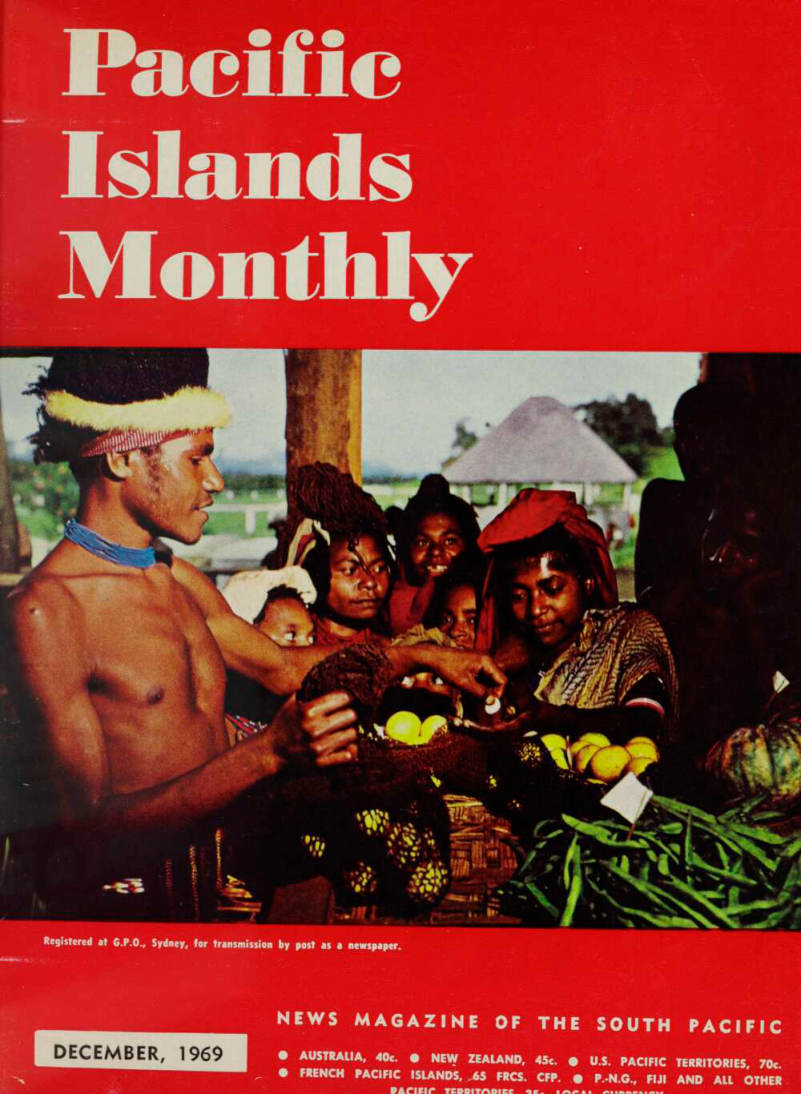 1
1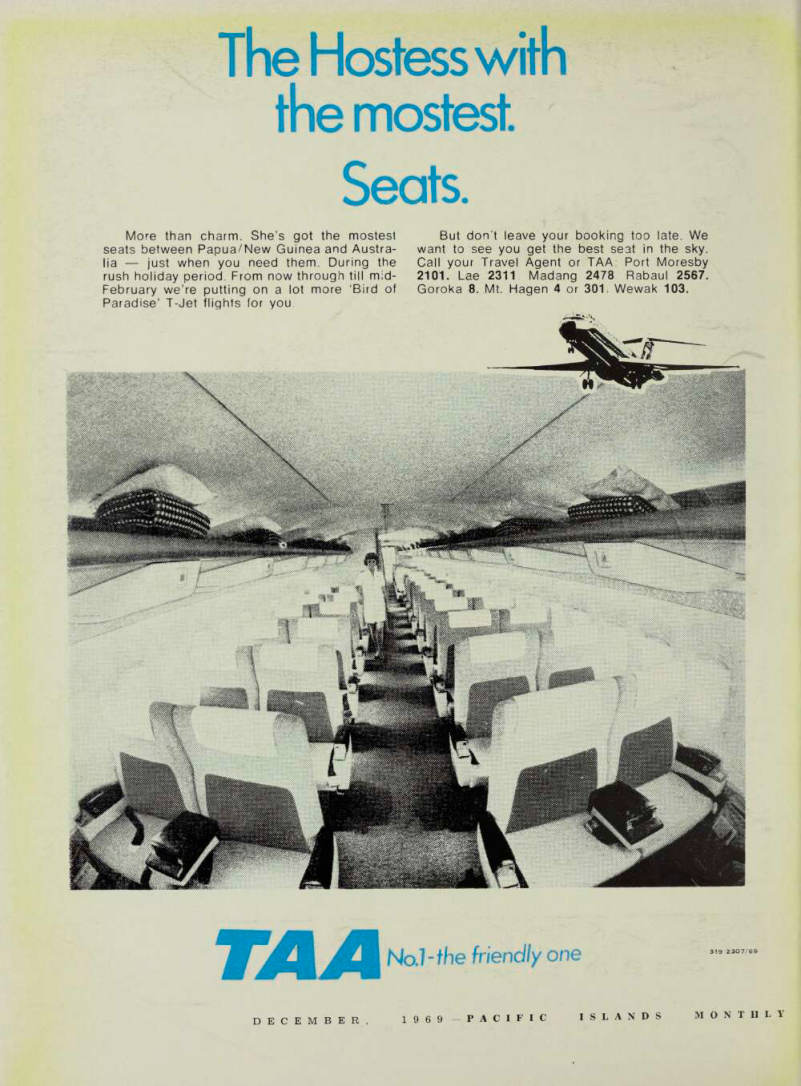 2
2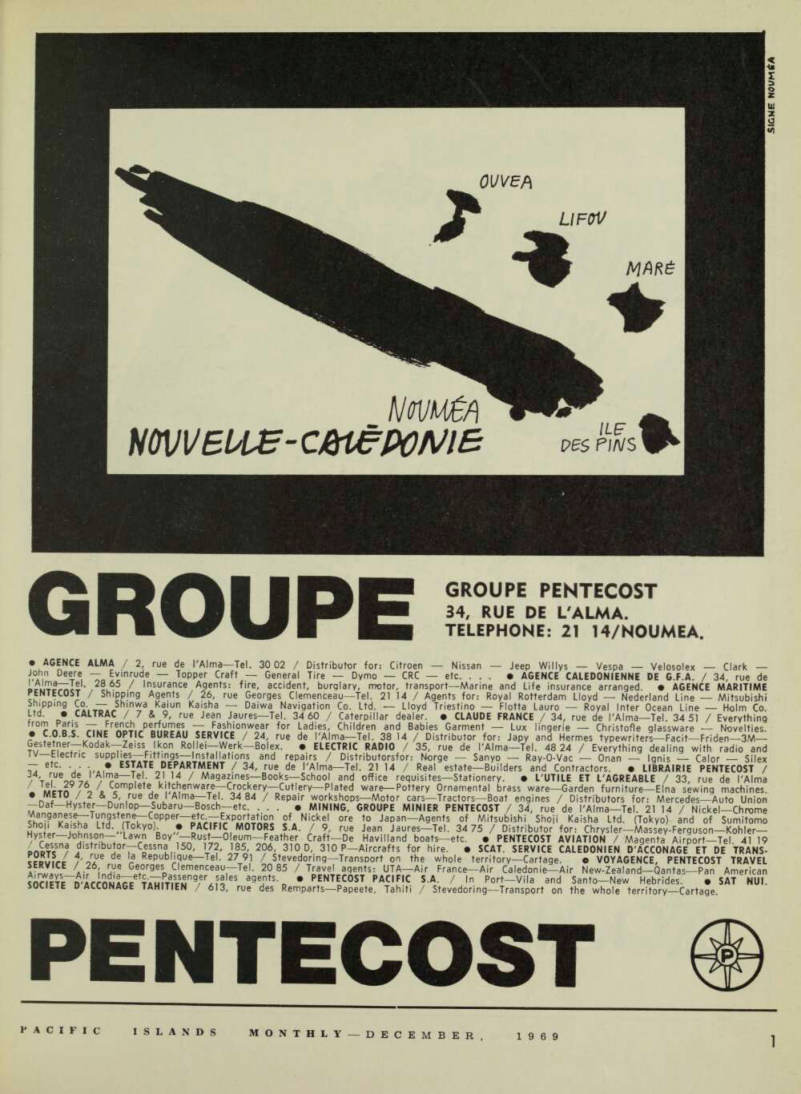 3
3 4
4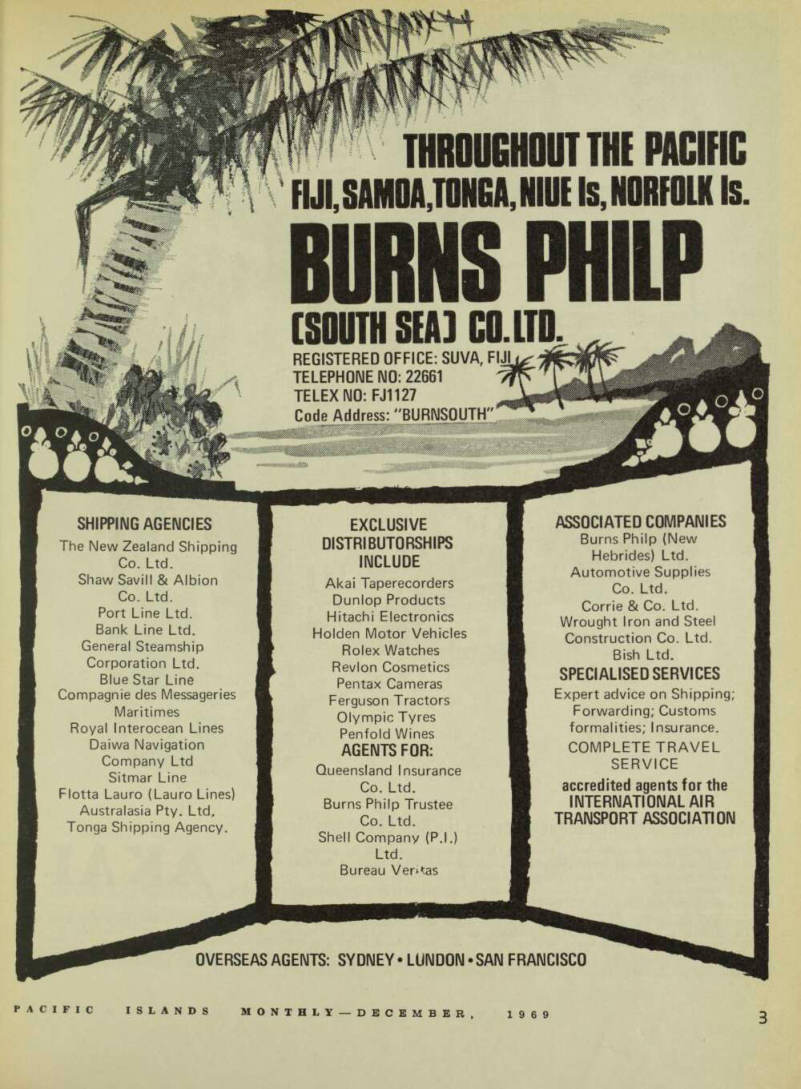 5
5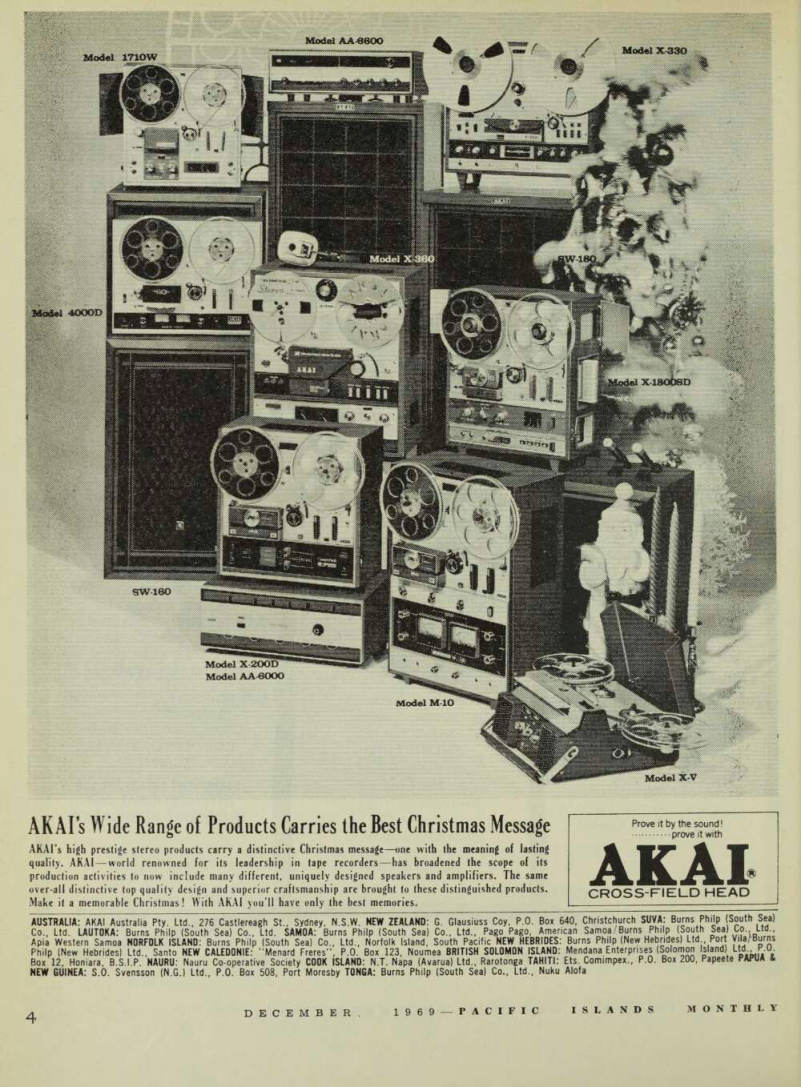 6
6 7
7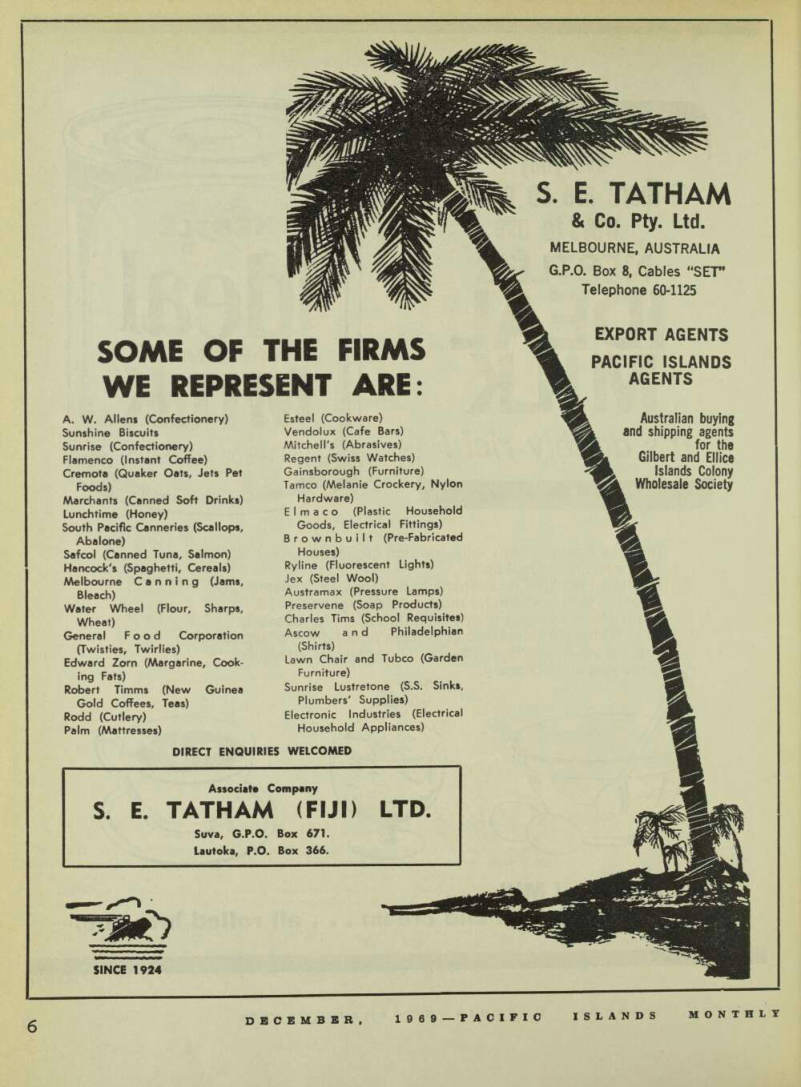 8
8 9
9 10
10 11
11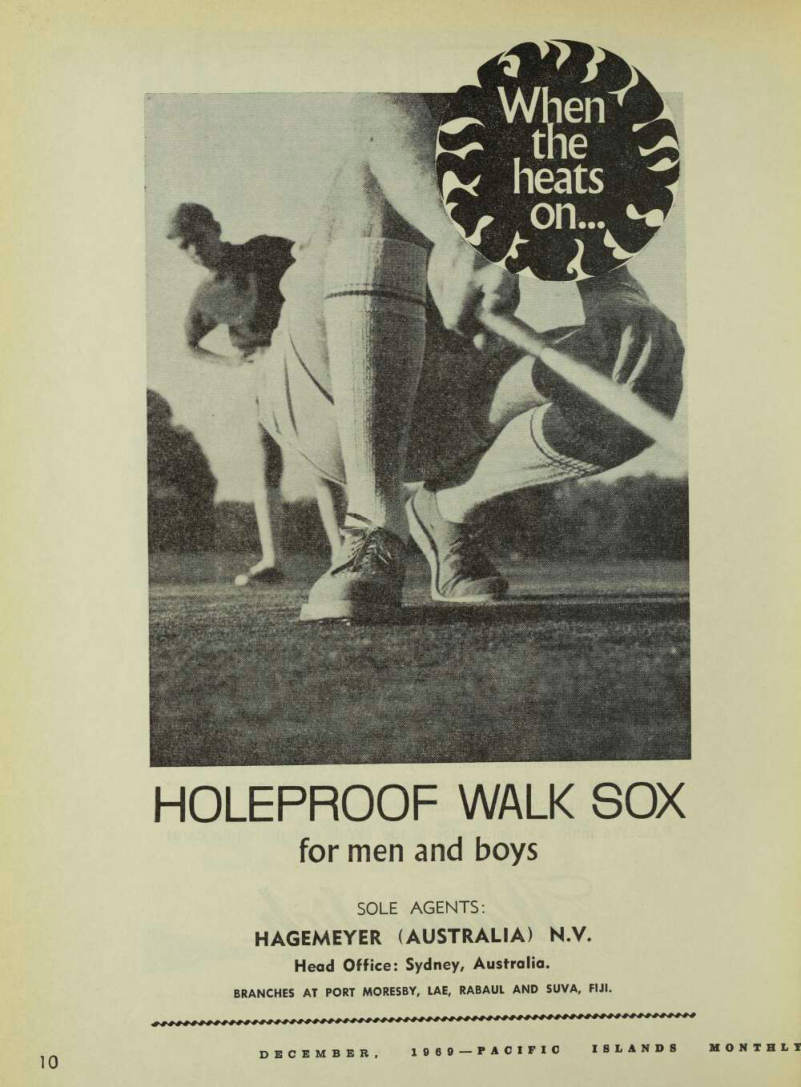 12
12 13
13 14
14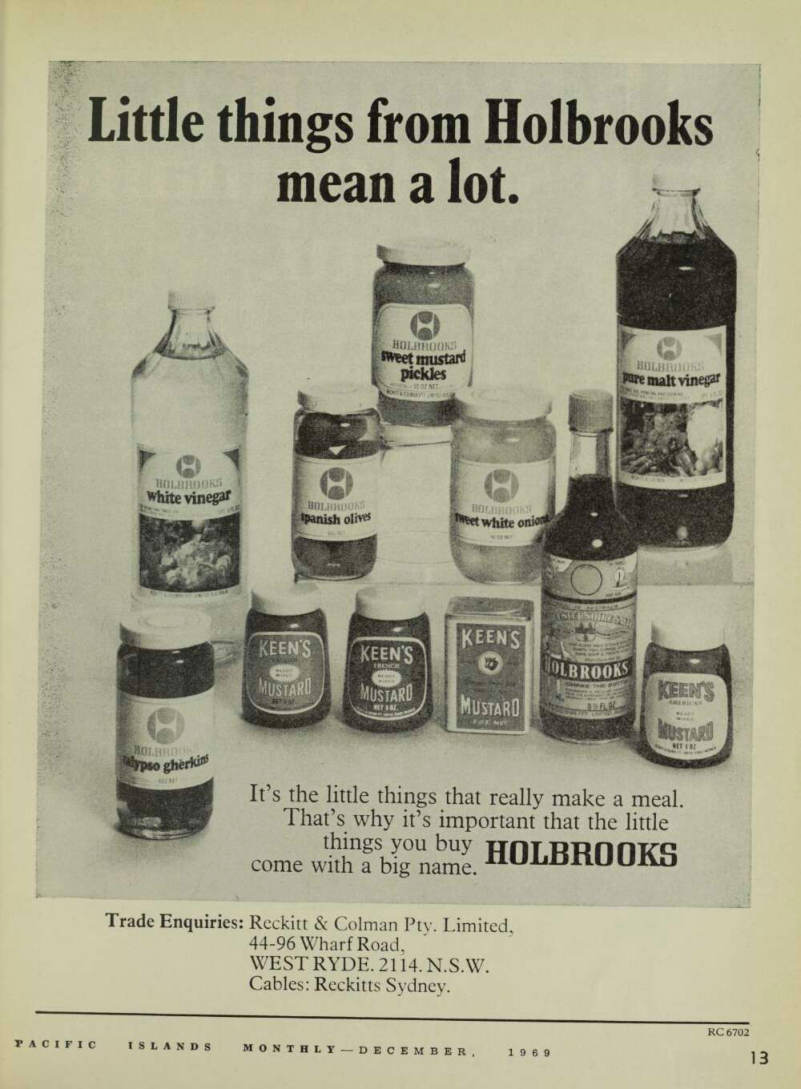 15
15 16
16 17
17 18
18 19
19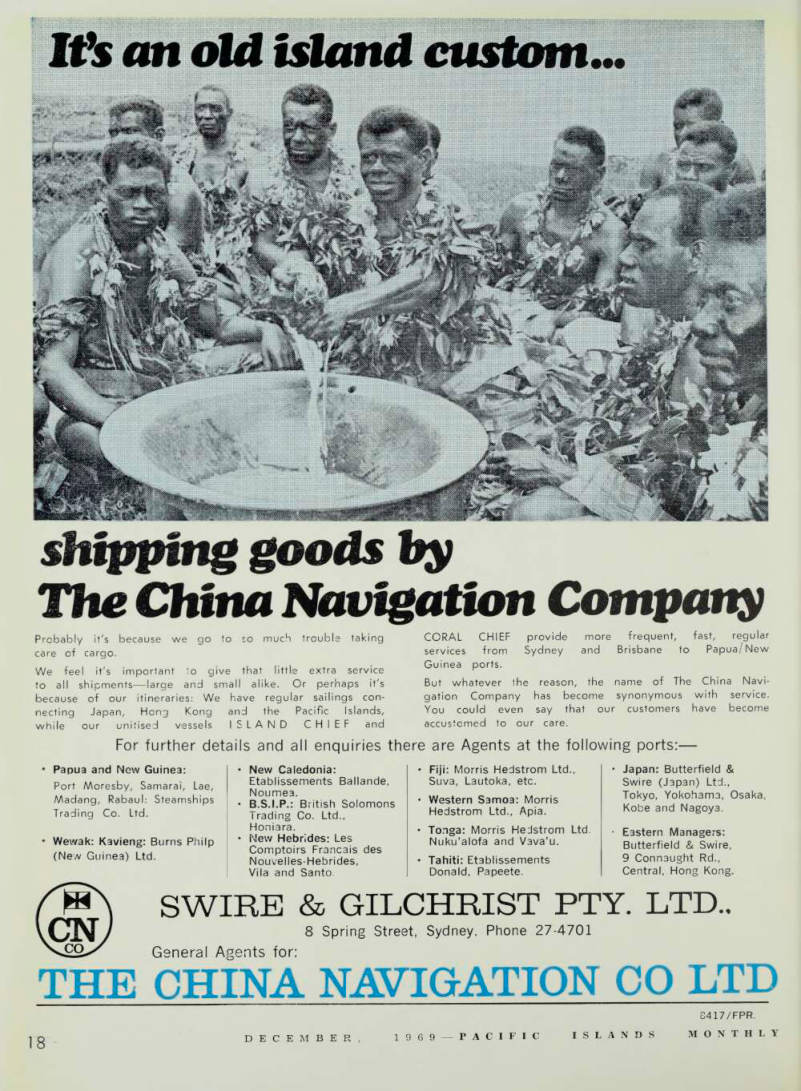 20
20 21
21 22
22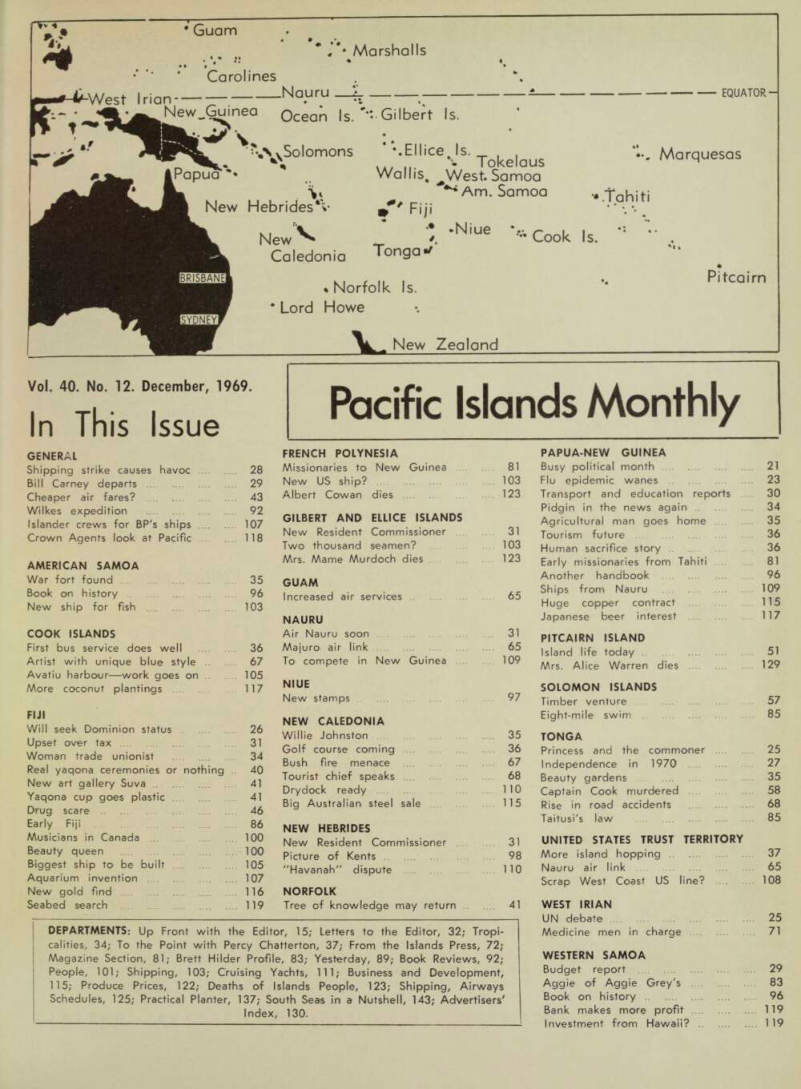 23
23 24
24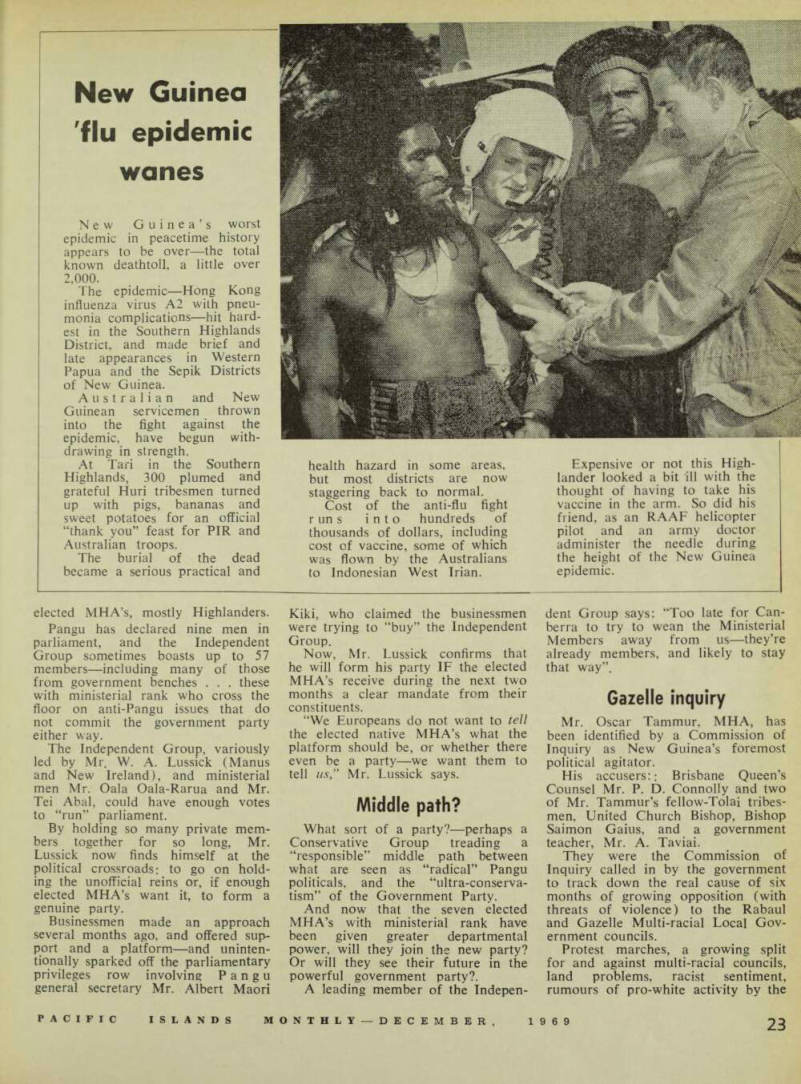 25
25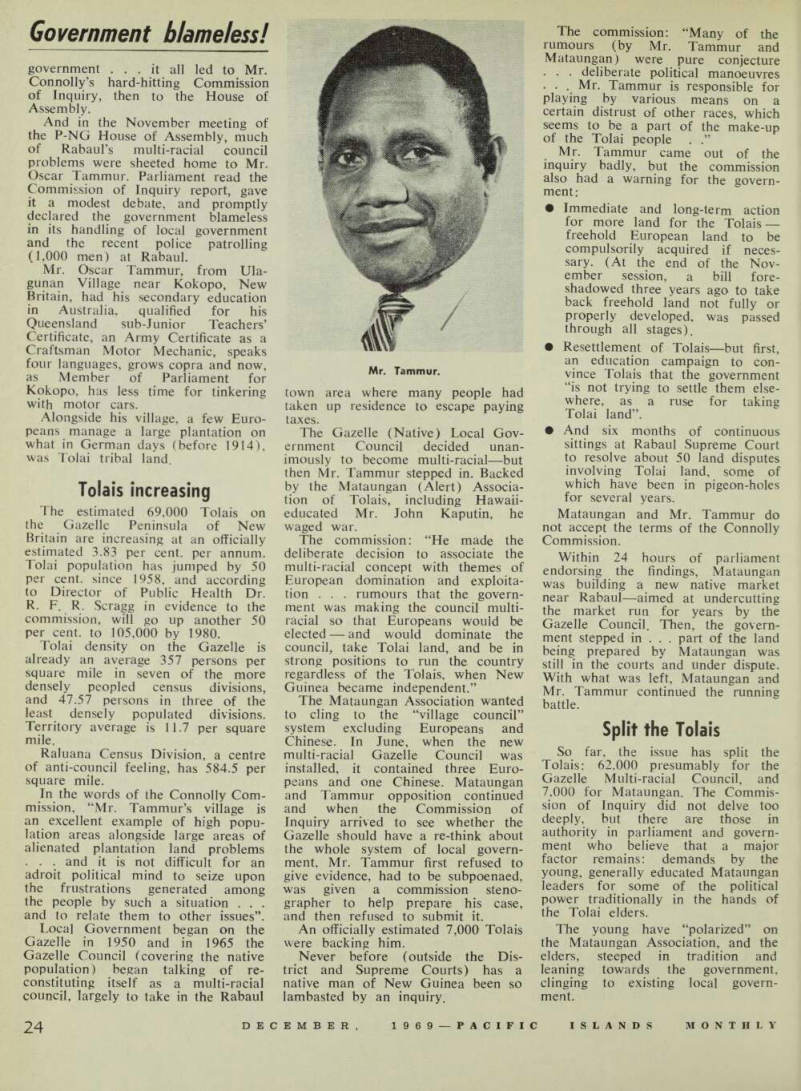 26
26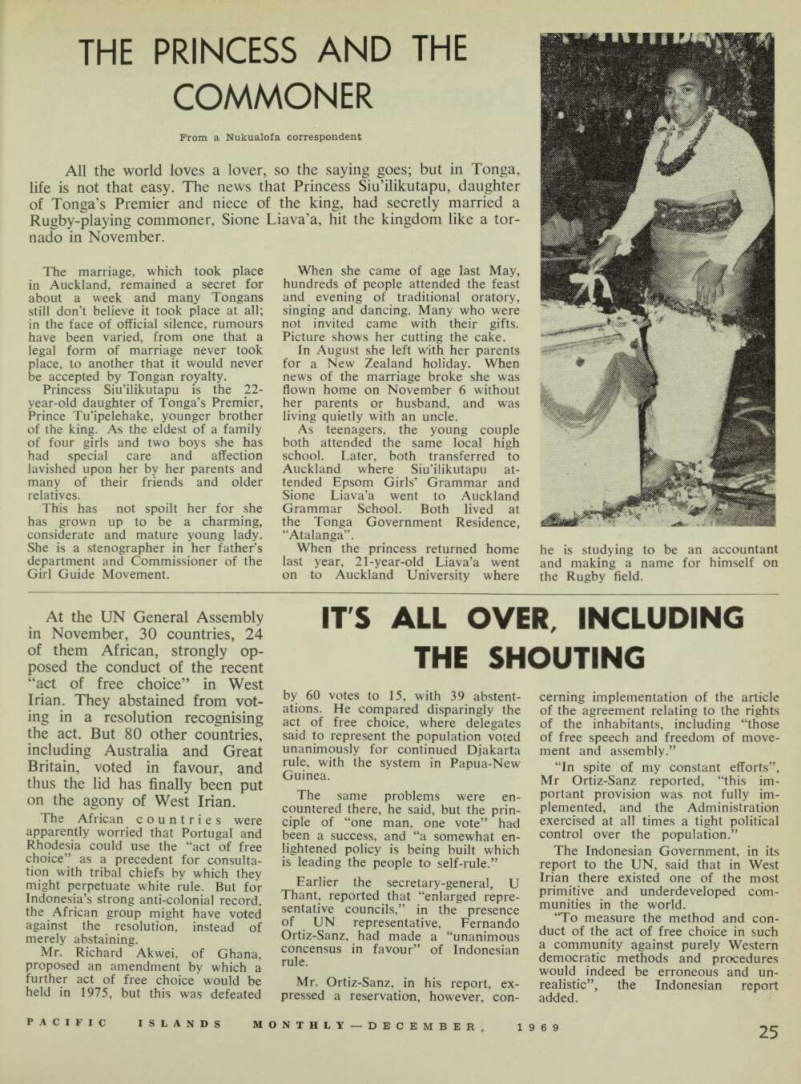 27
27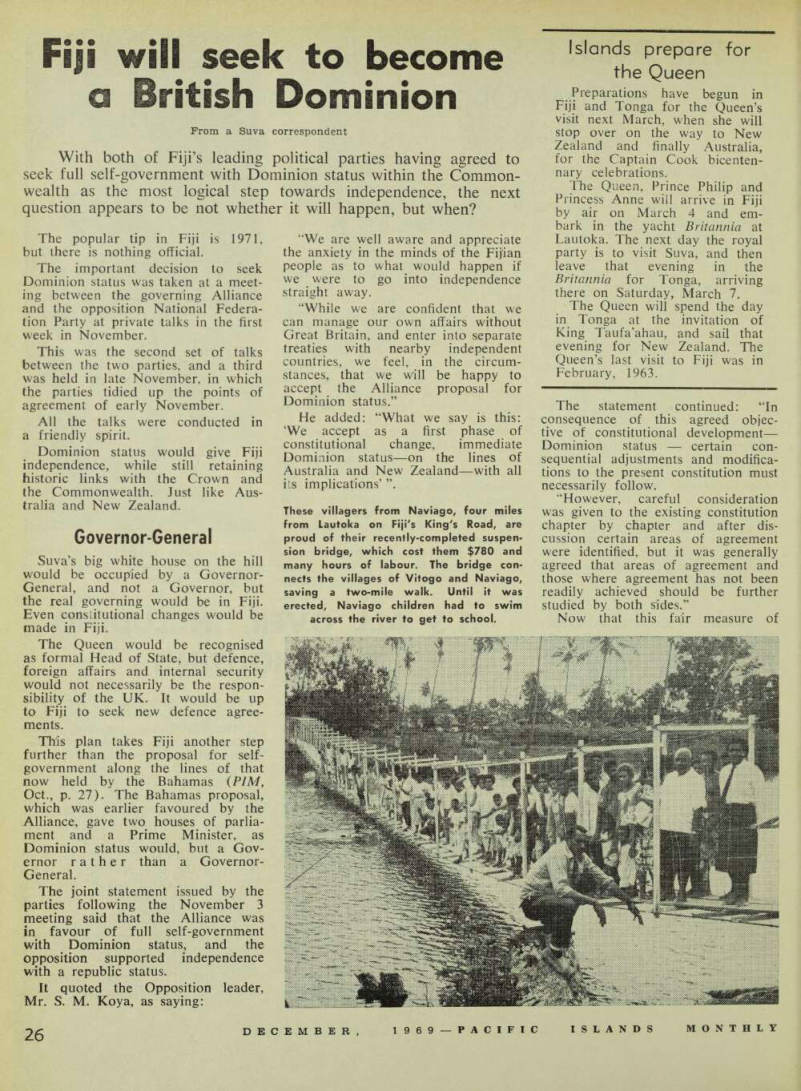 28
28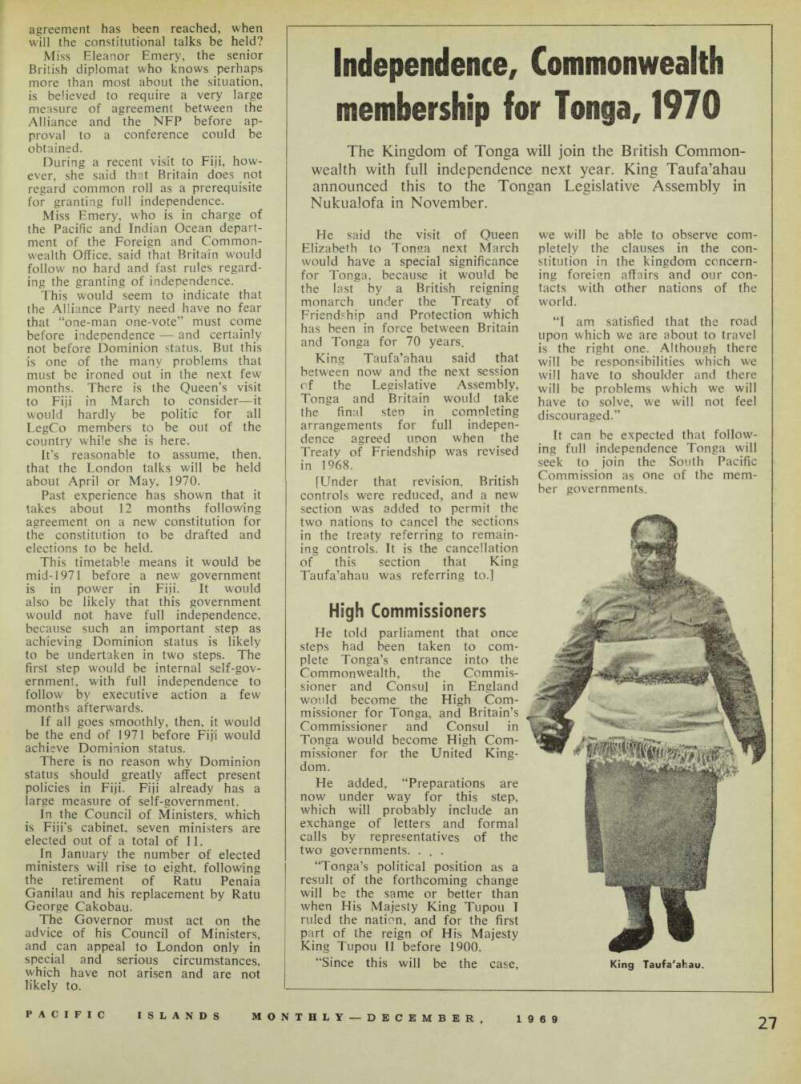 29
29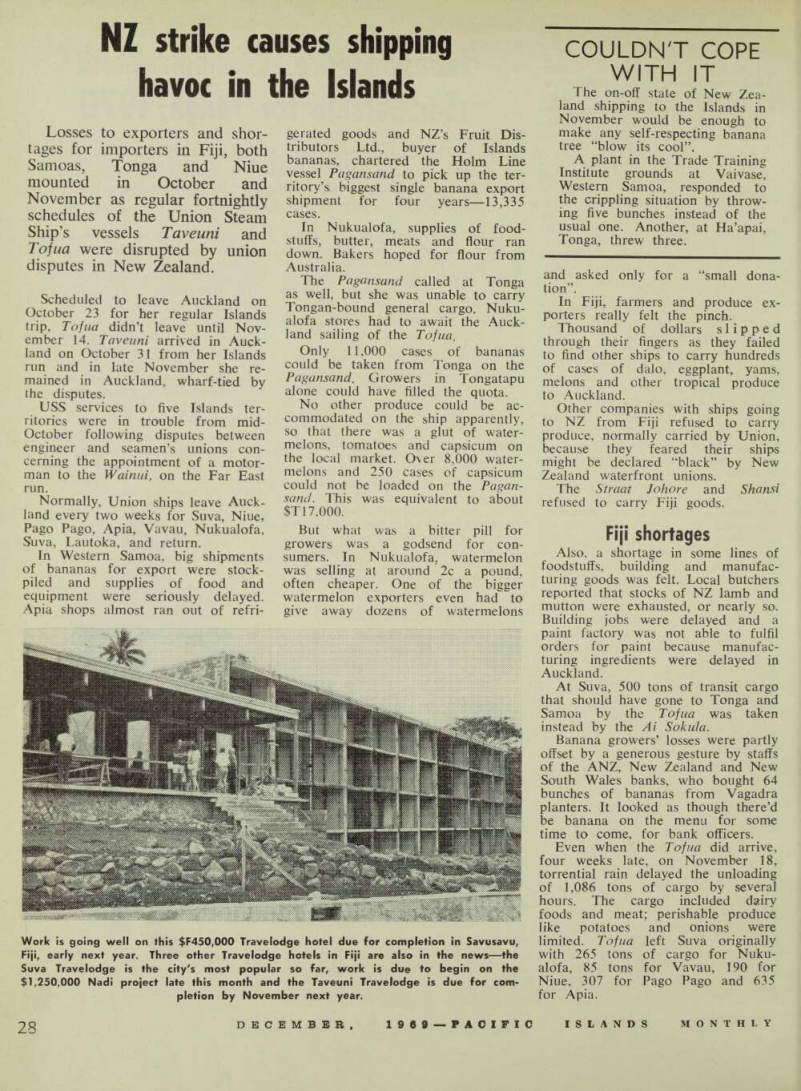 30
30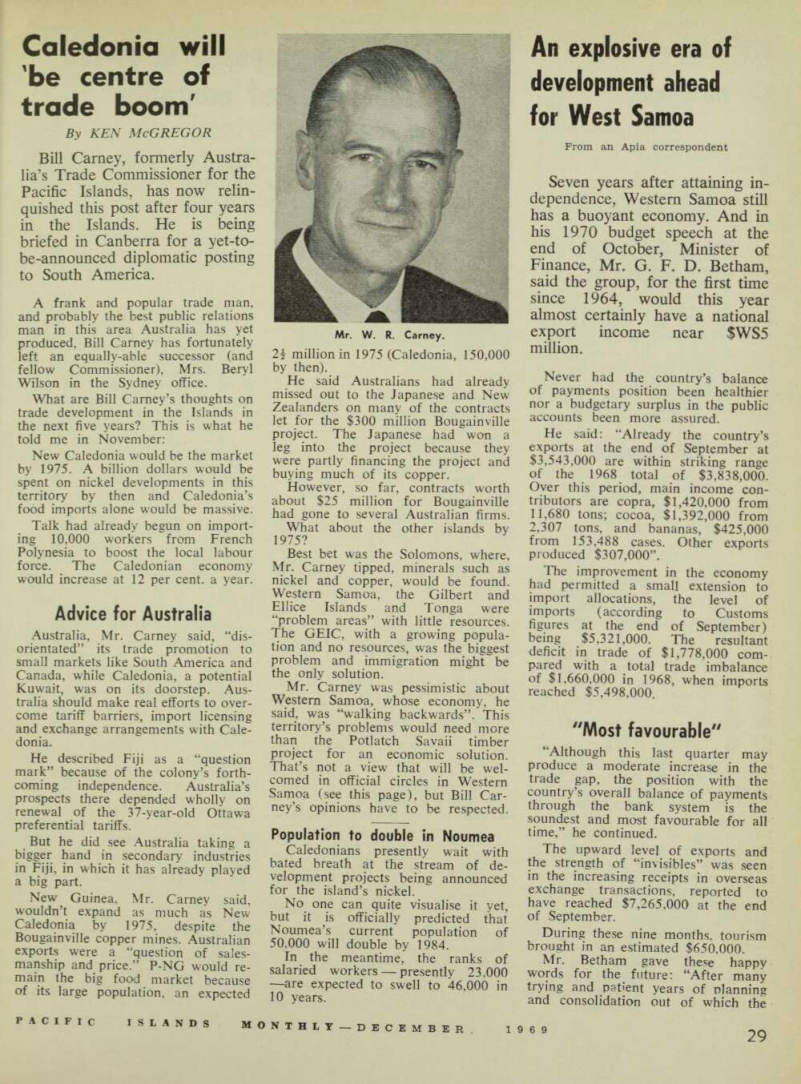 31
31 32
32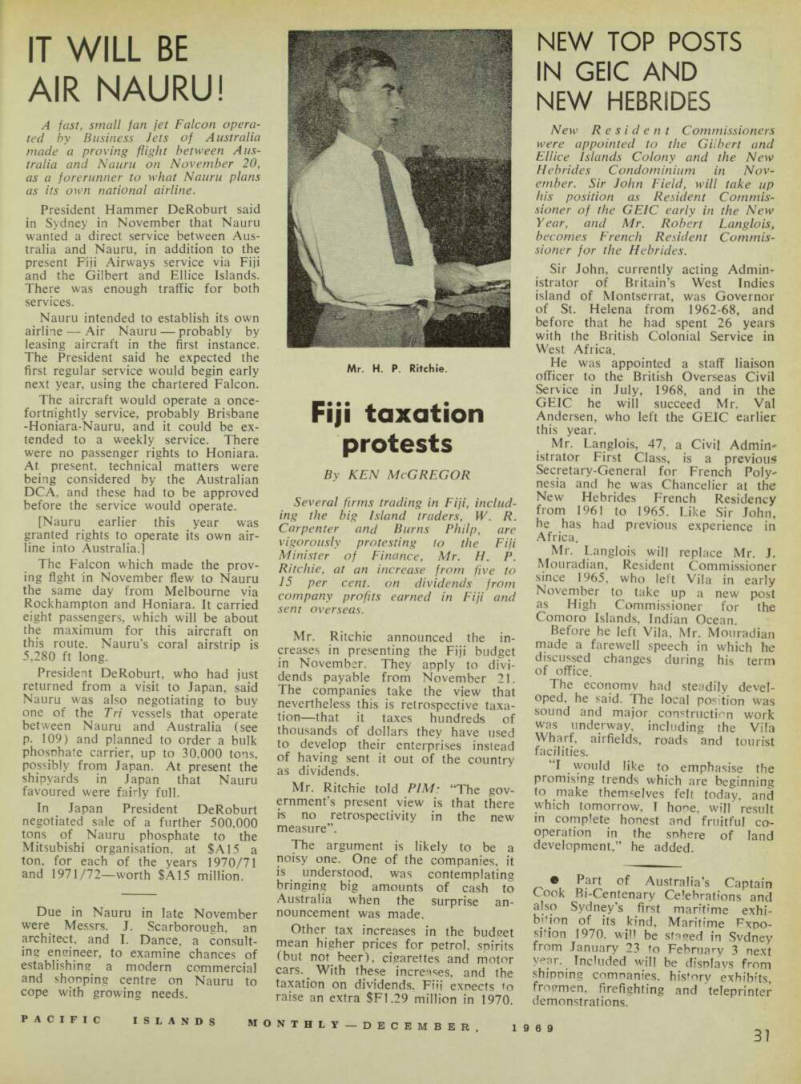 33
33 34
34 35
35 36
36 37
37 38
38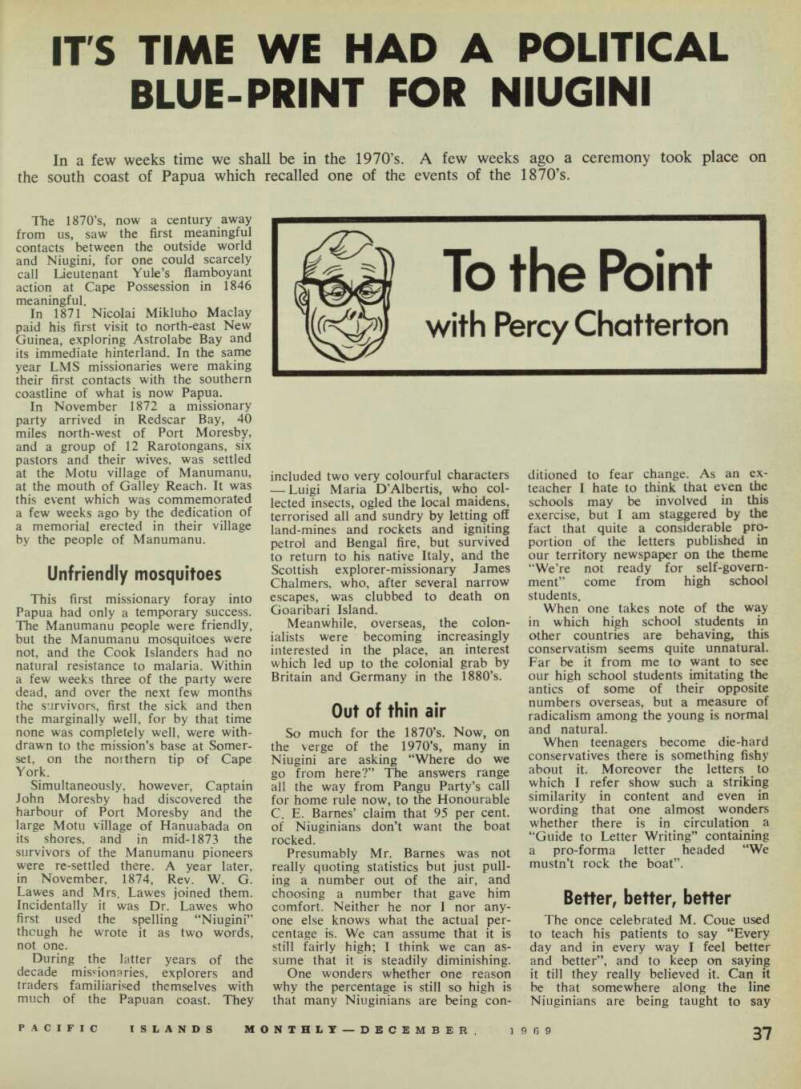 39
39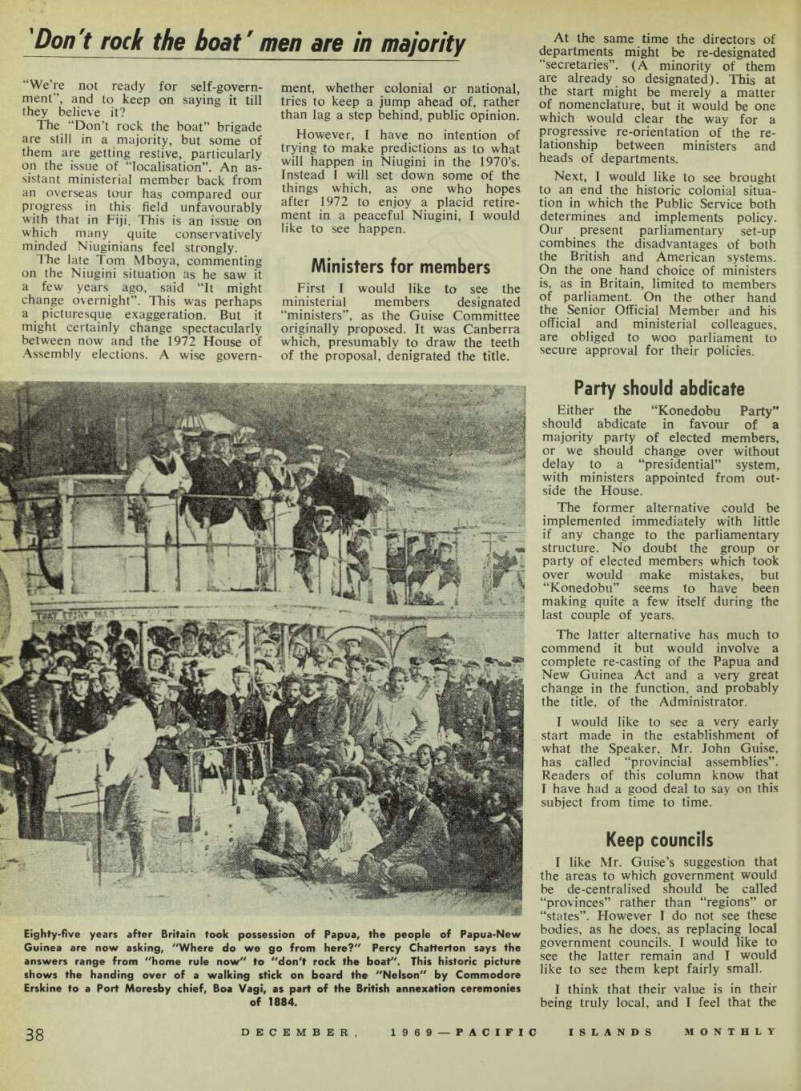 40
40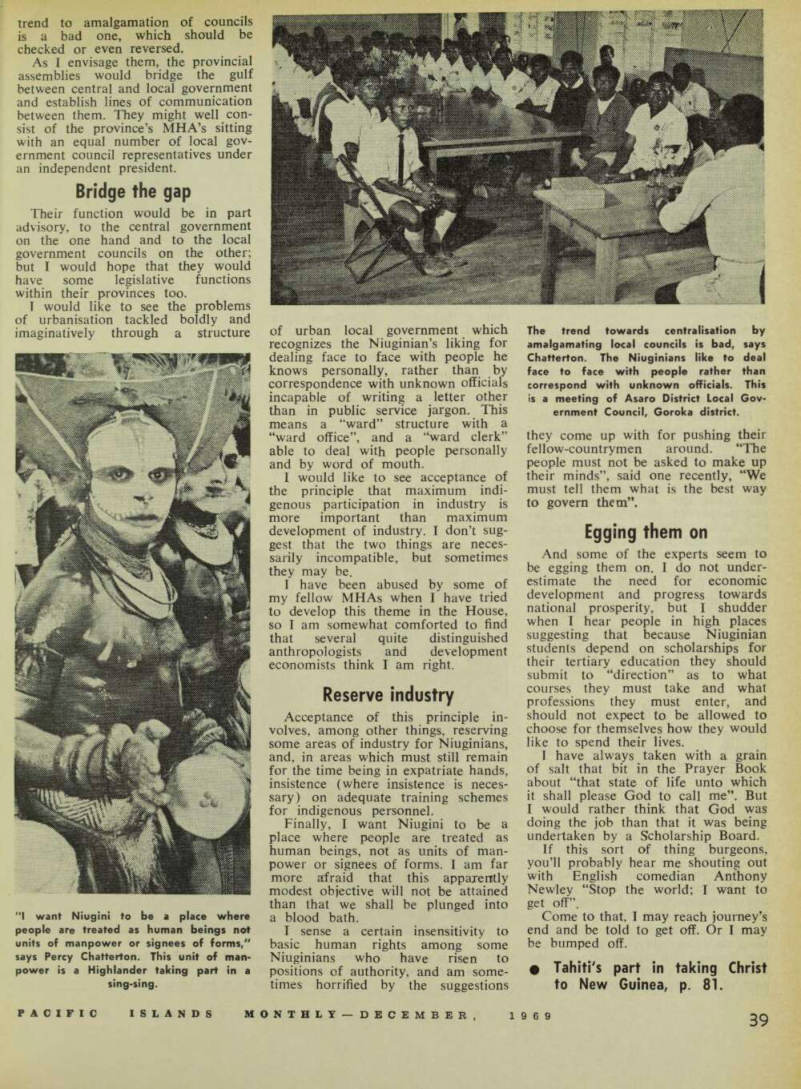 41
41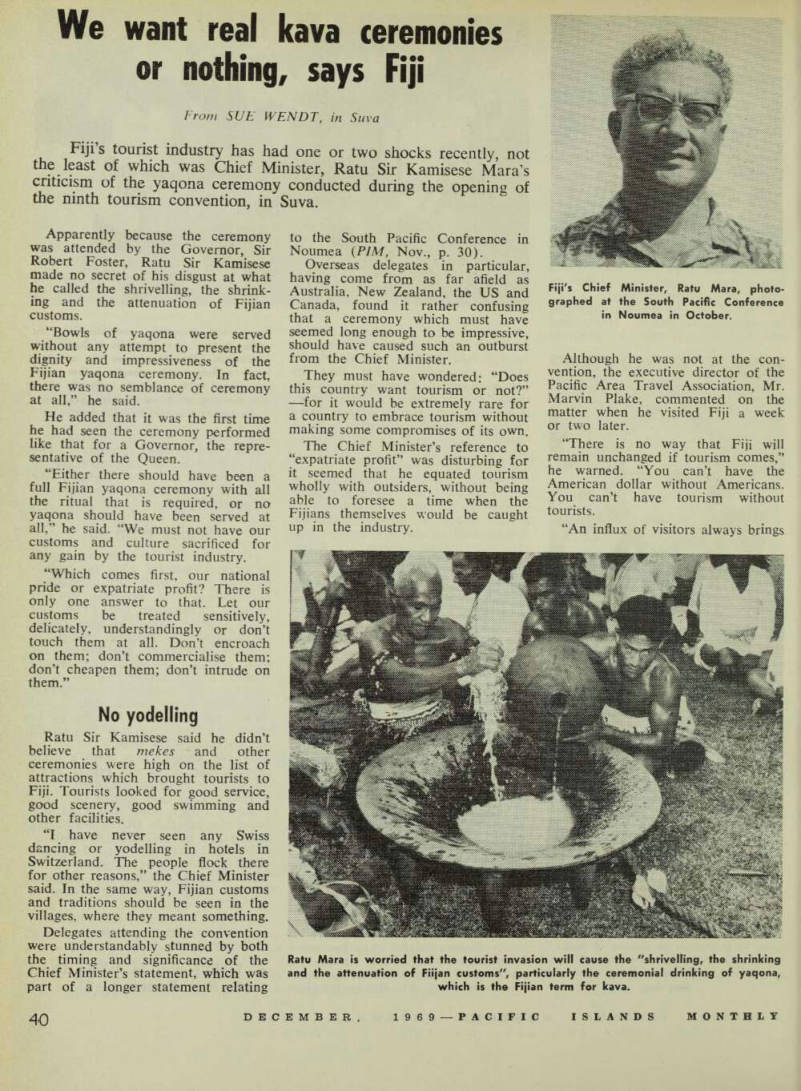 42
42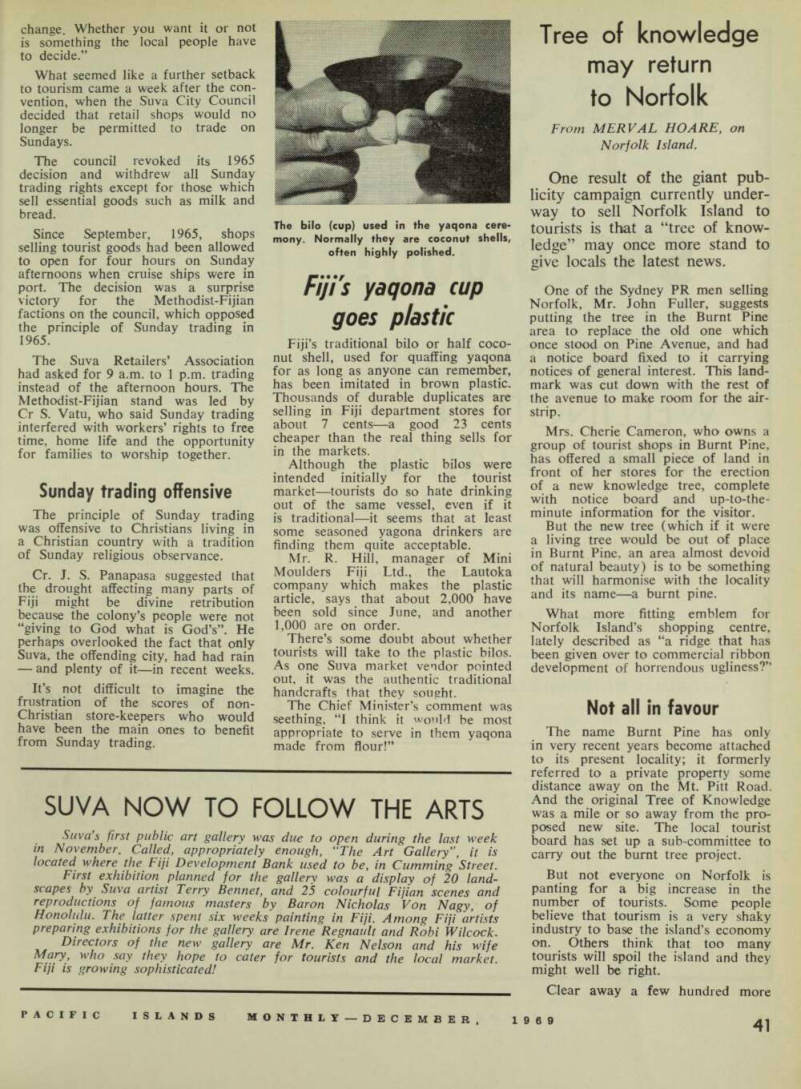 43
43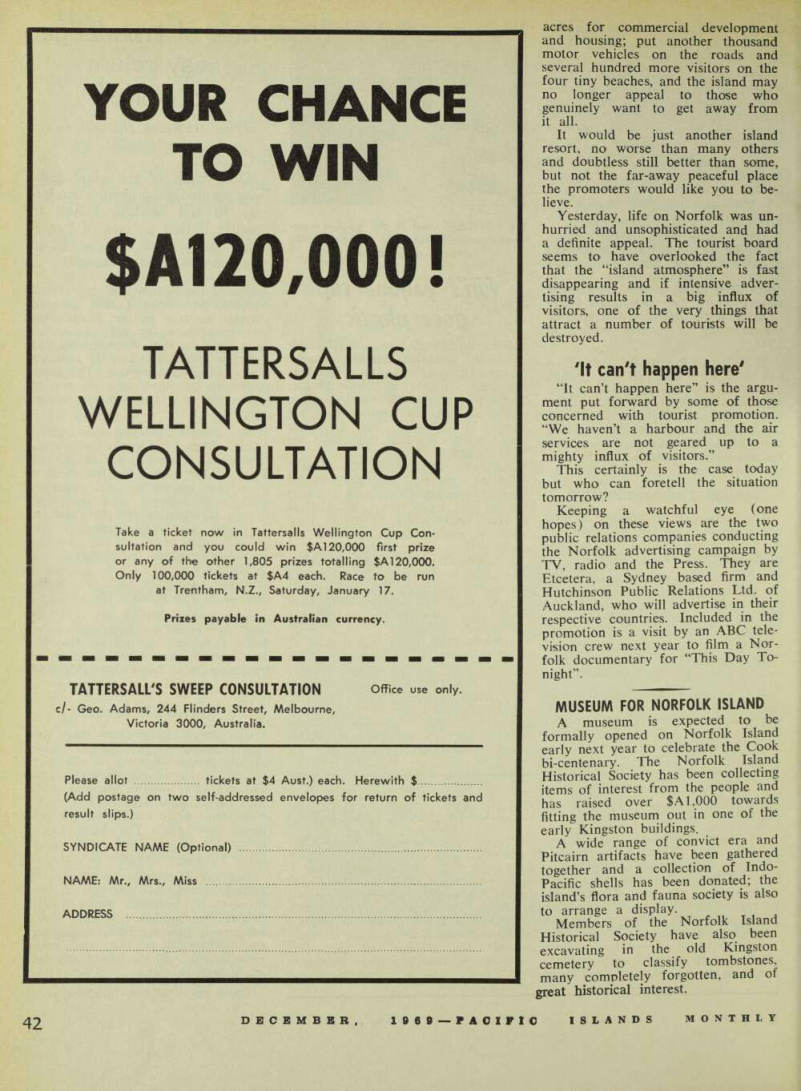 44
44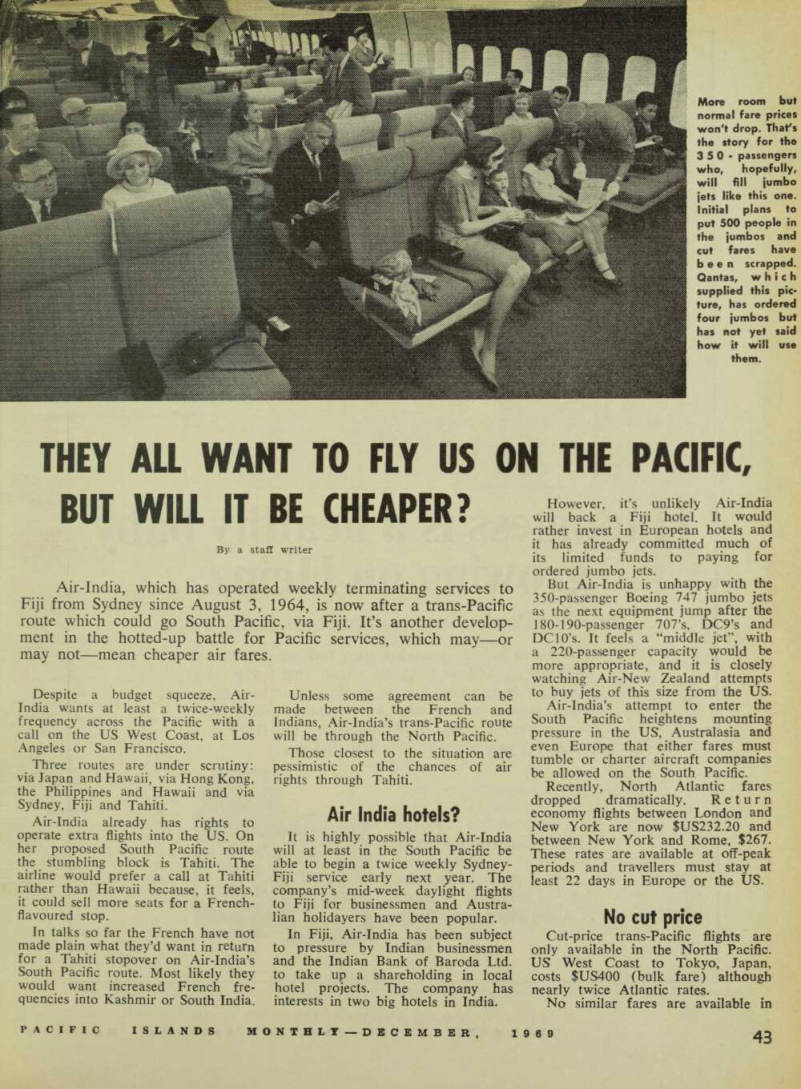 45
45 46
46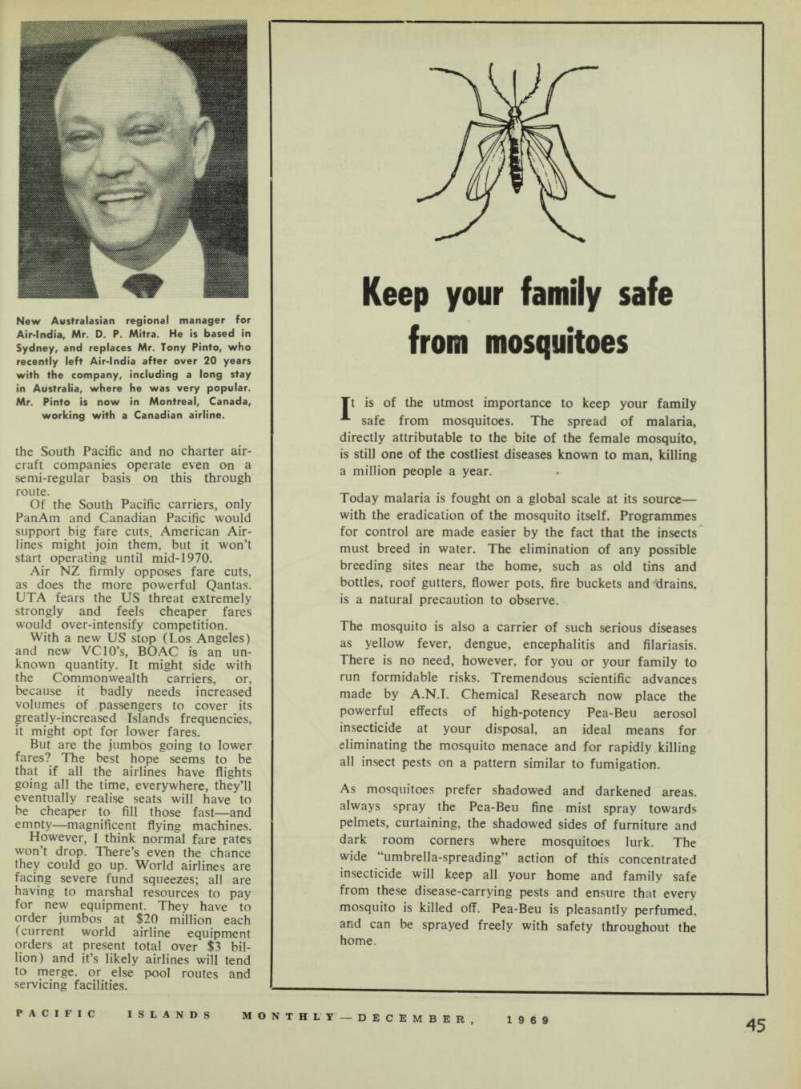 47
47 48
48 49
49 50
50 51
51 52
52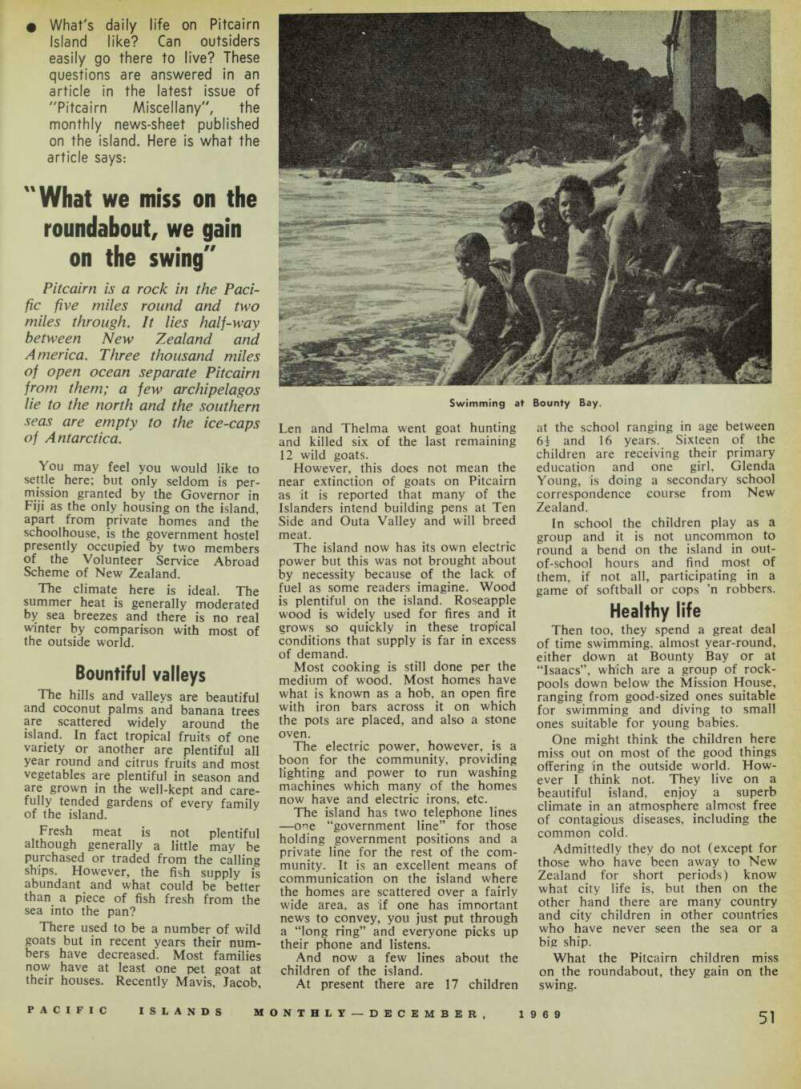 53
53 54
54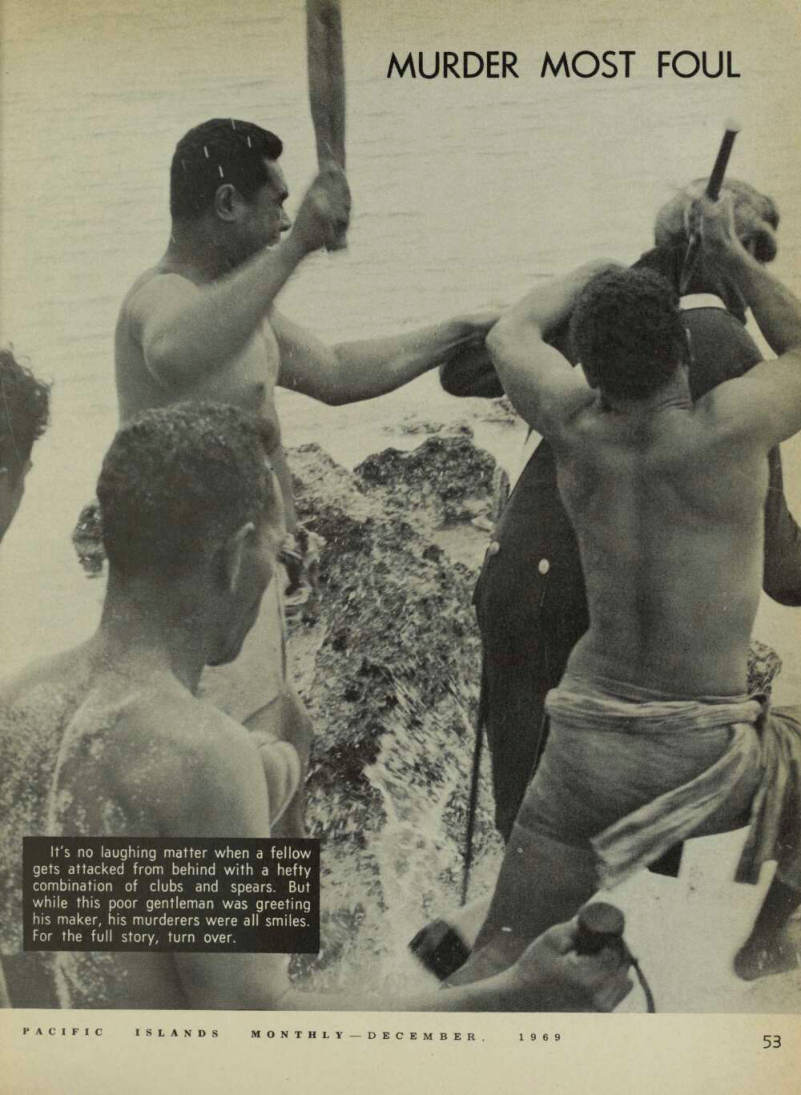 55
55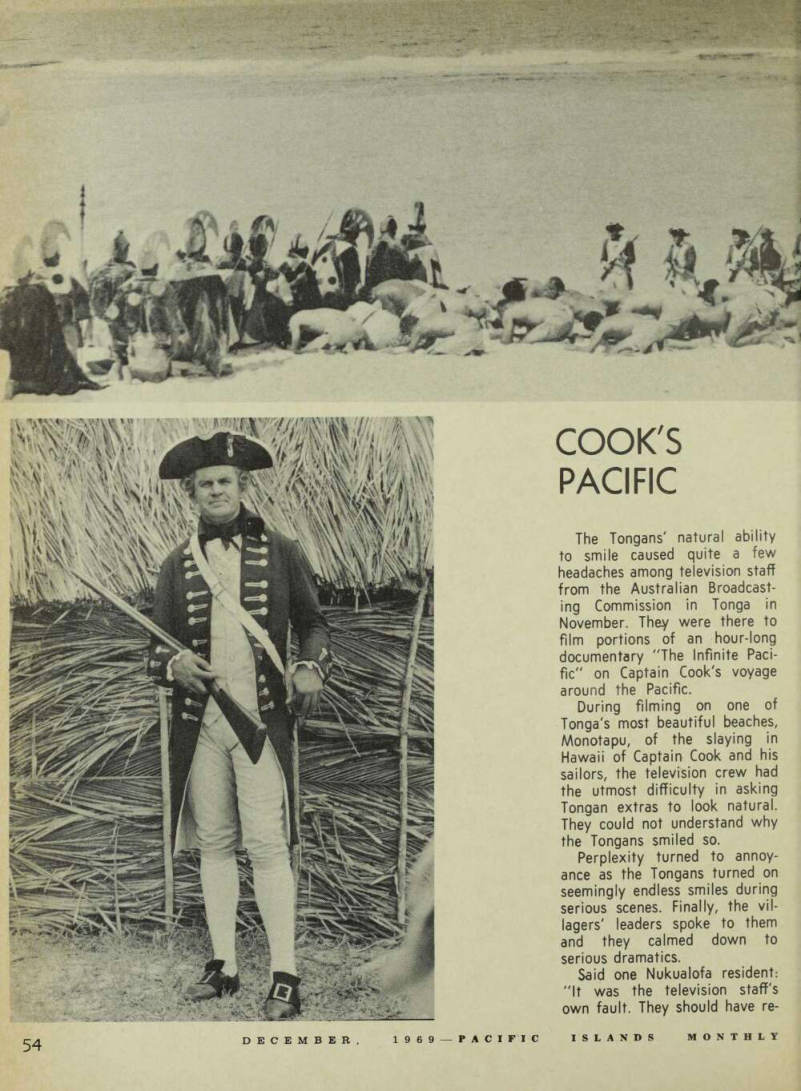 56
56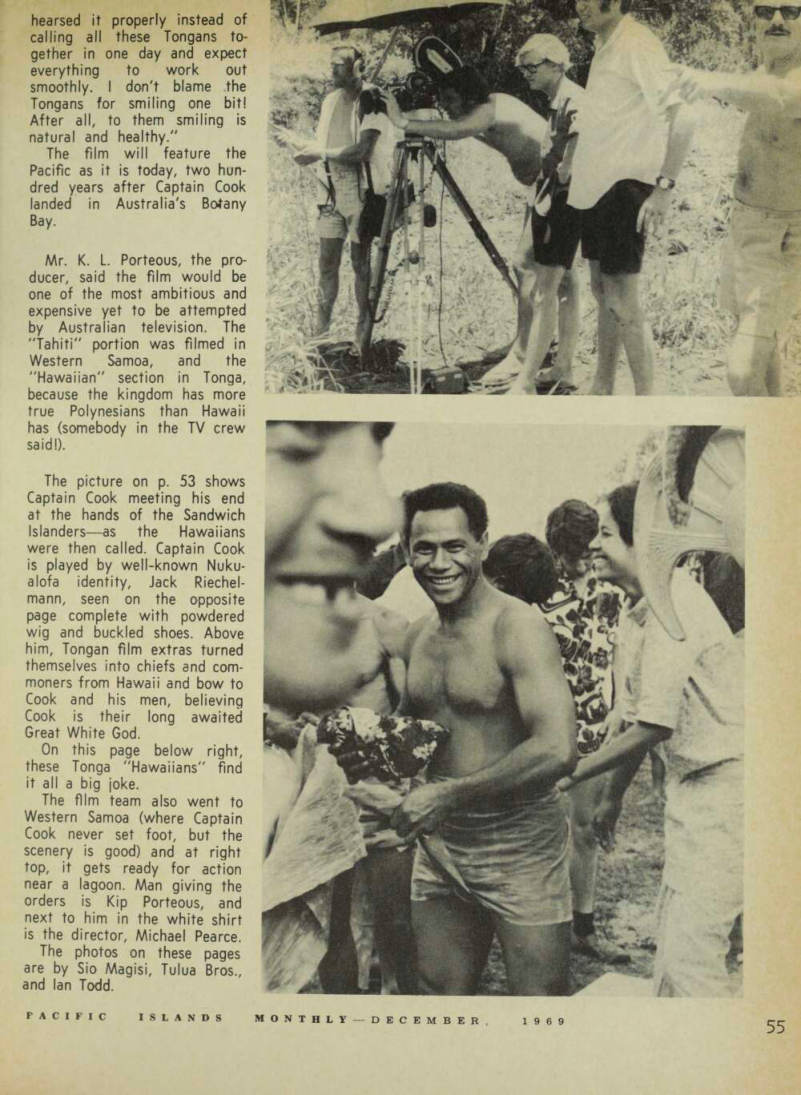 57
57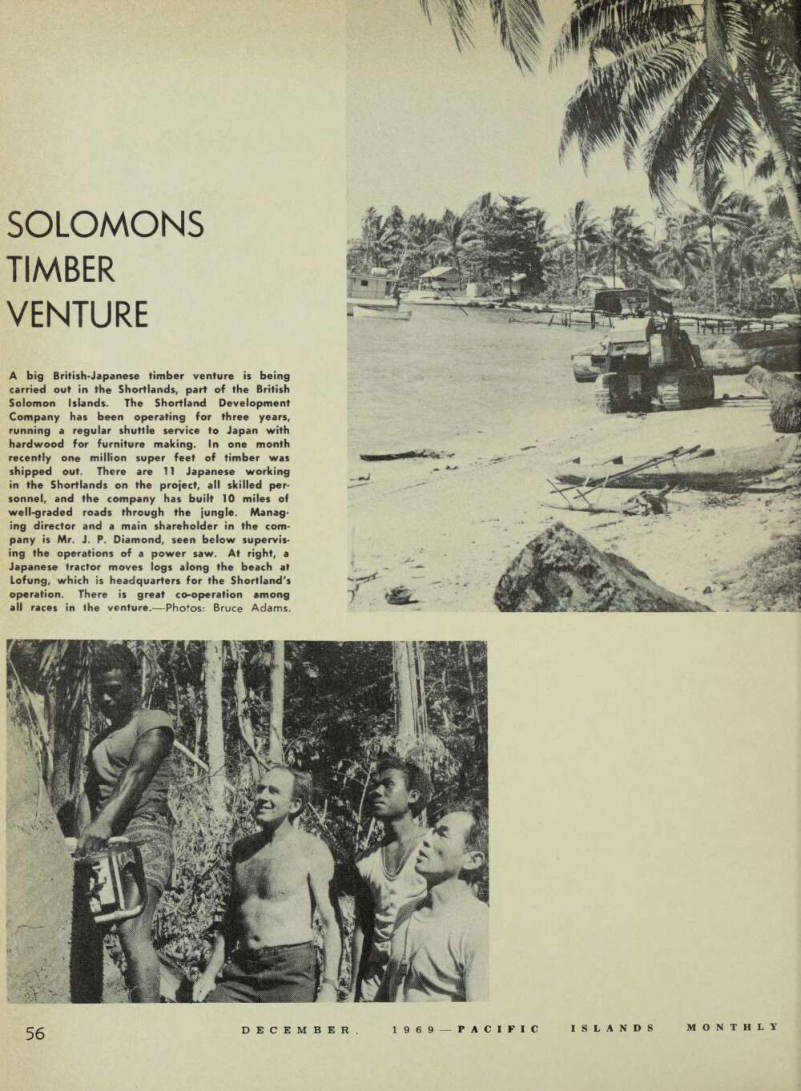 58
58 59
59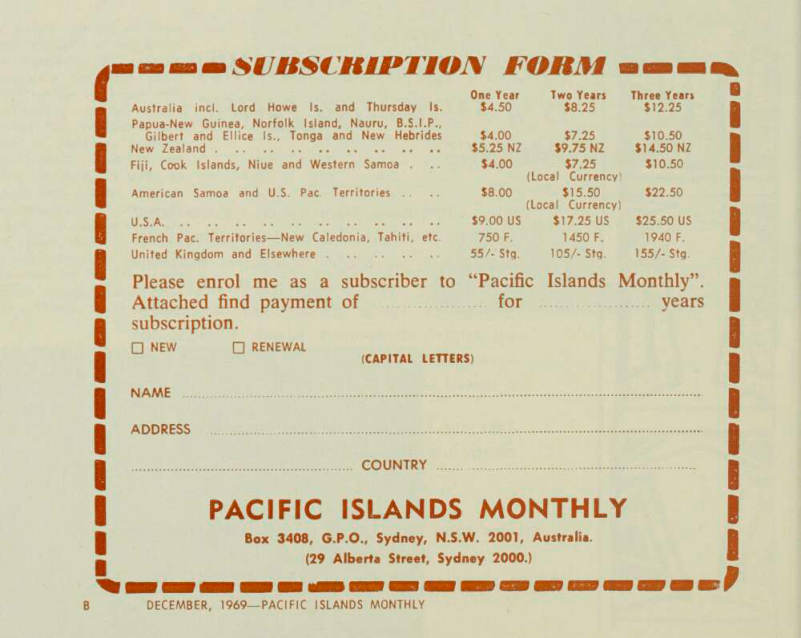 60
60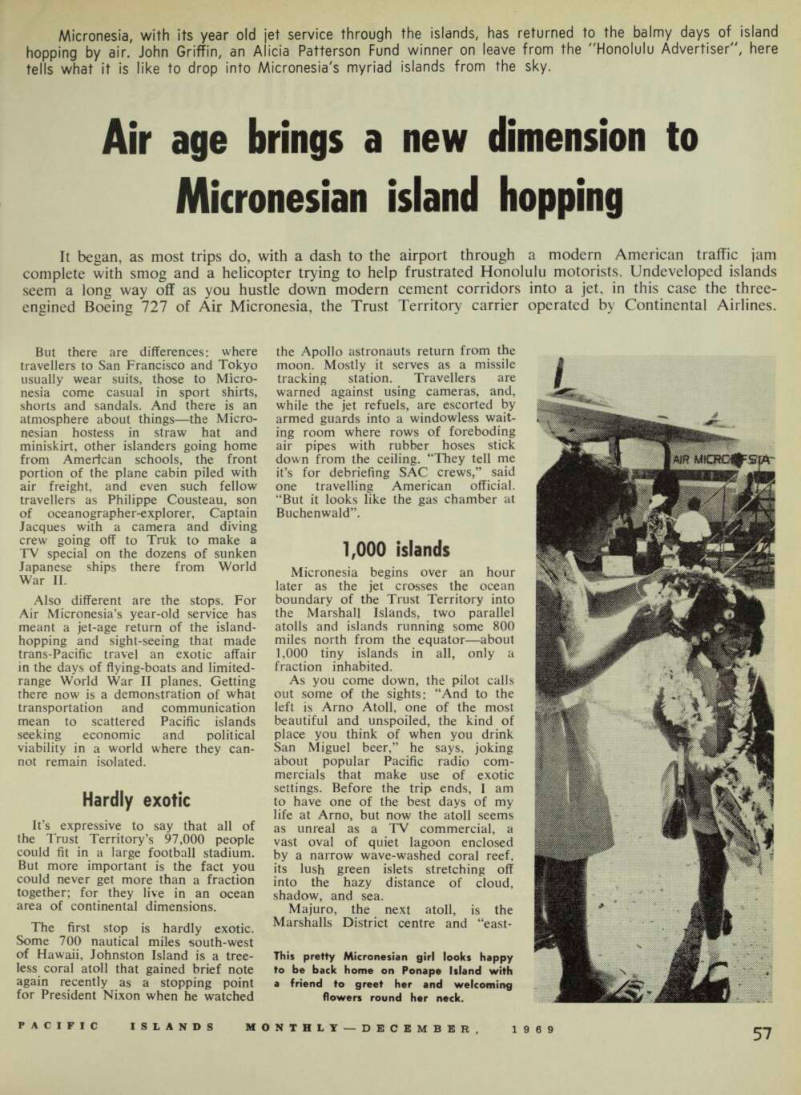 61
61 62
62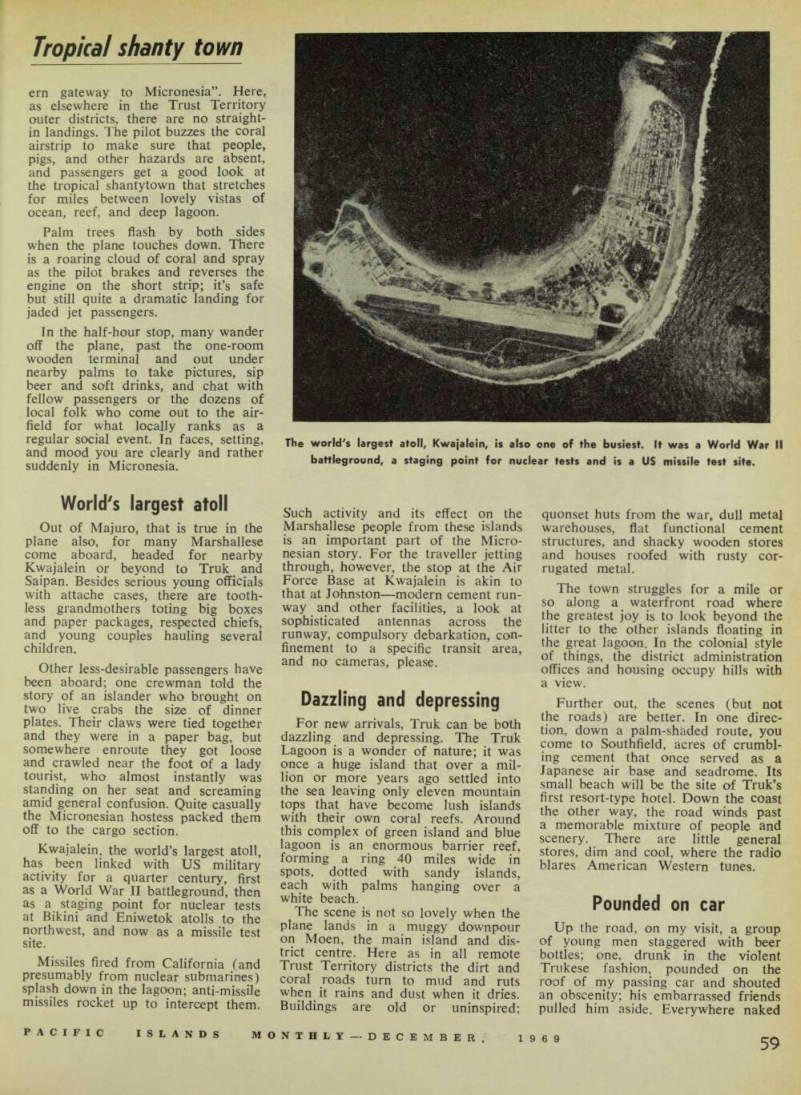 63
63 64
64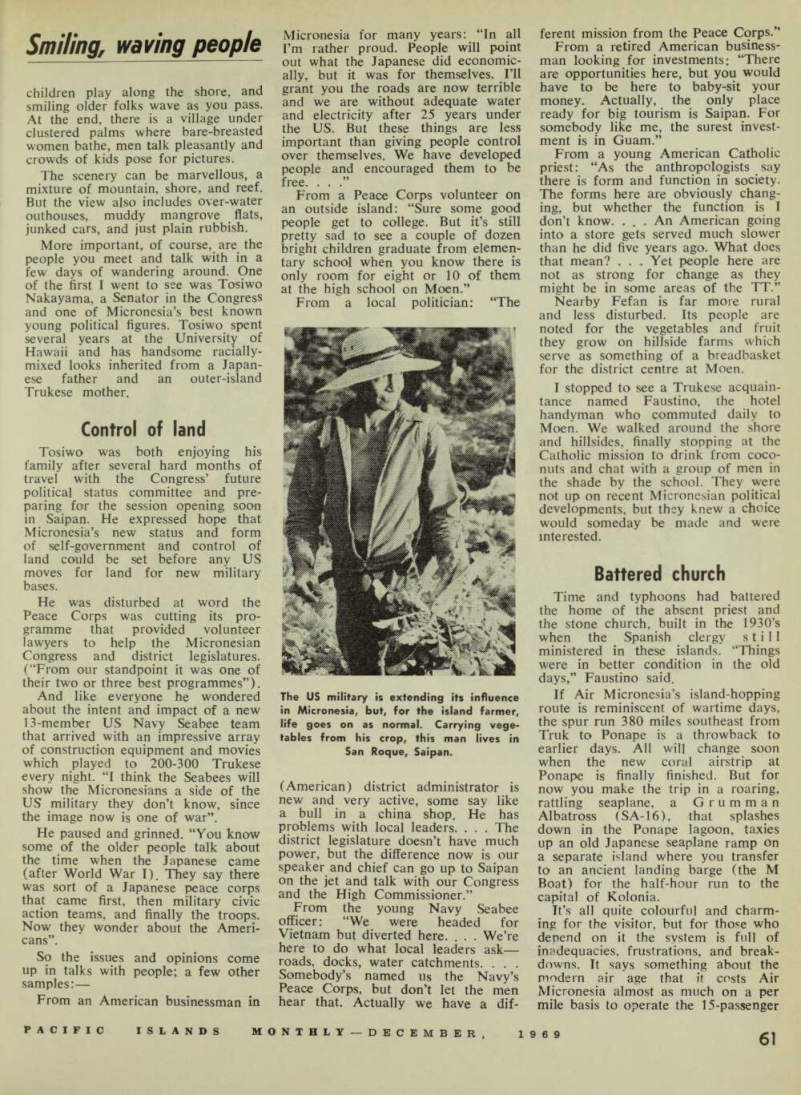 65
65 66
66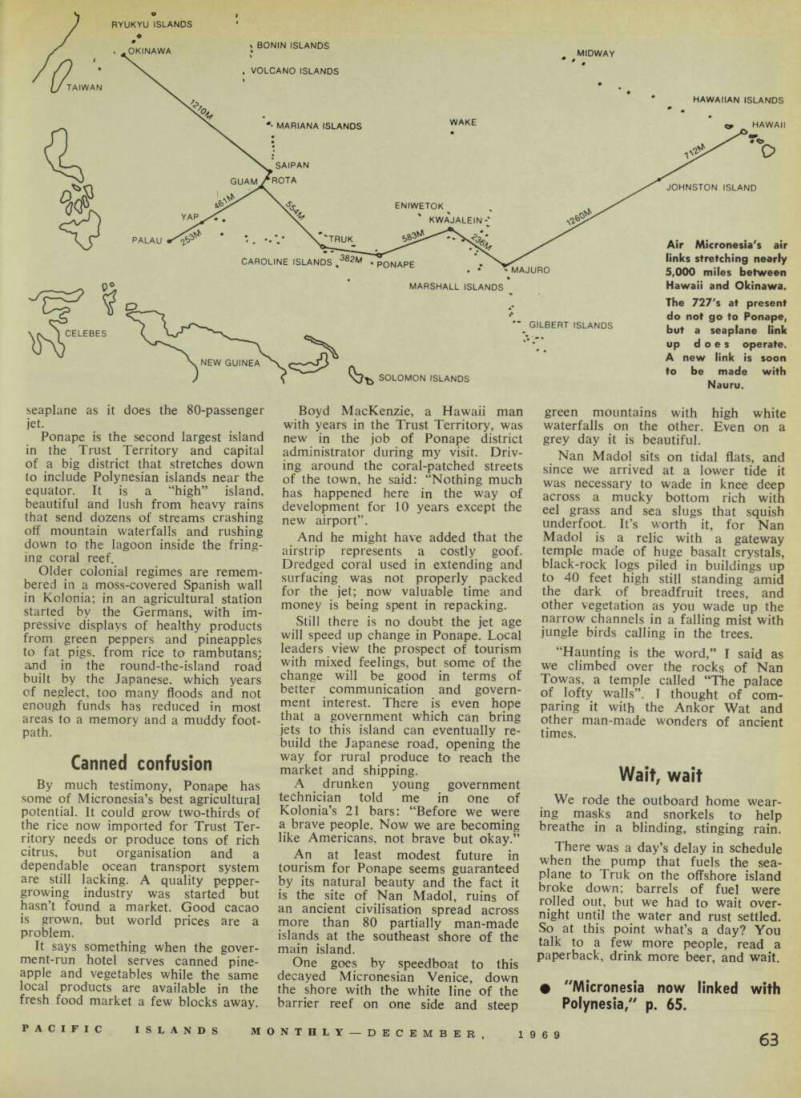 67
67 68
68 69
69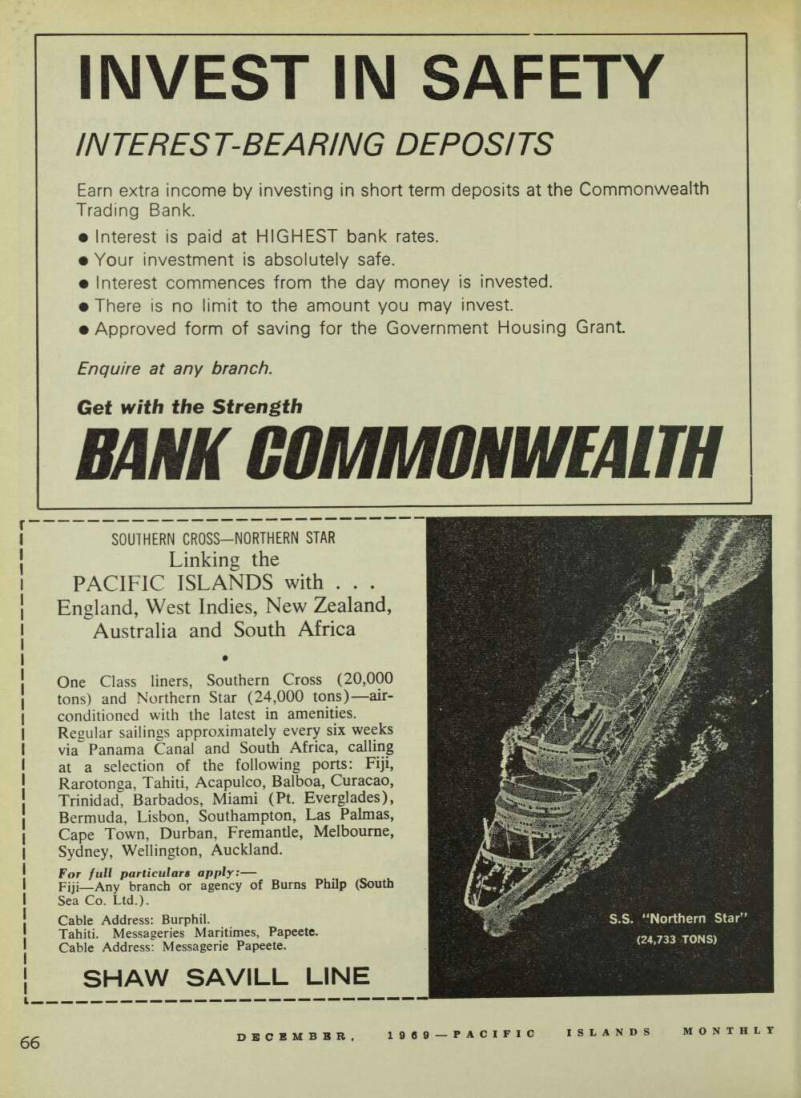 70
70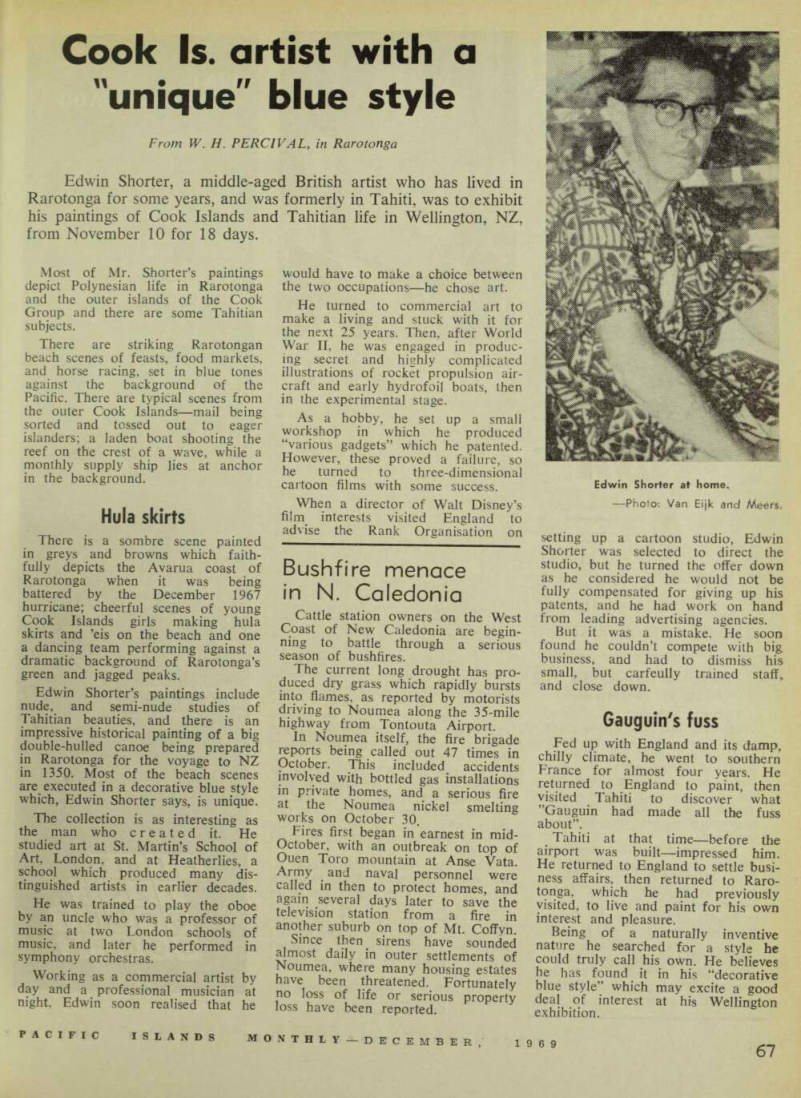 71
71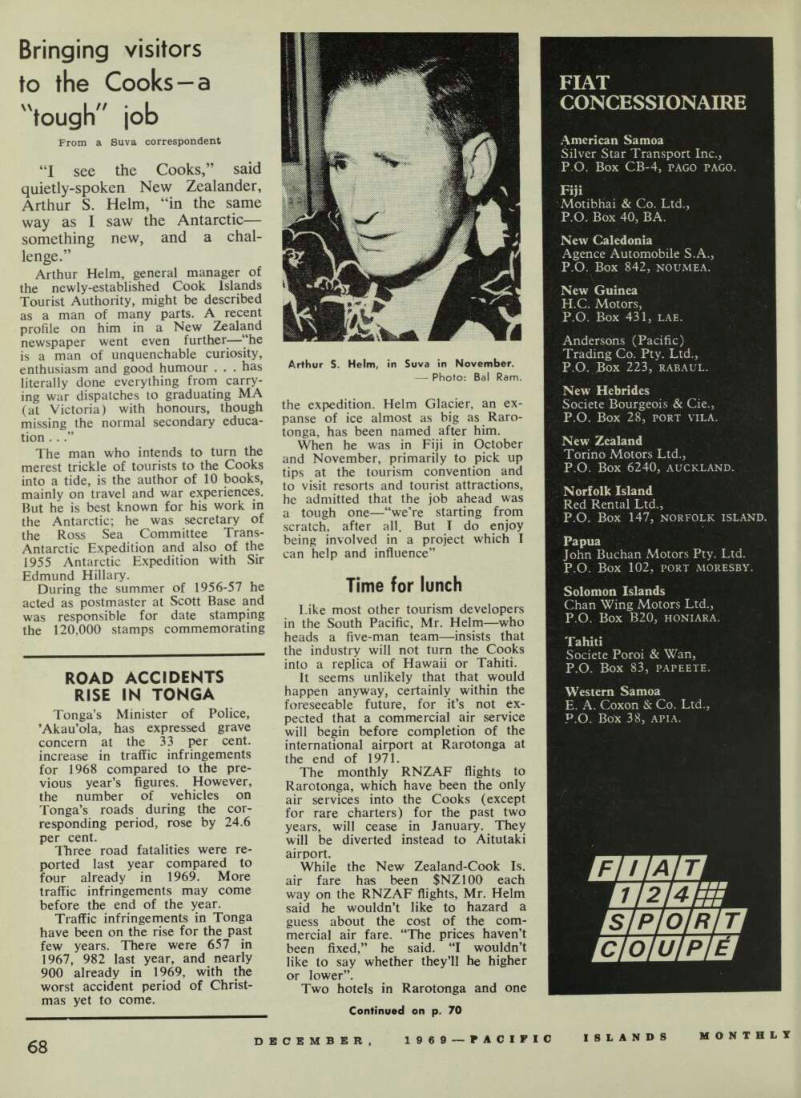 72
72 73
73 74
74 75
75 76
76 77
77 78
78 79
79 80
80 81
81 82
82 83
83 84
84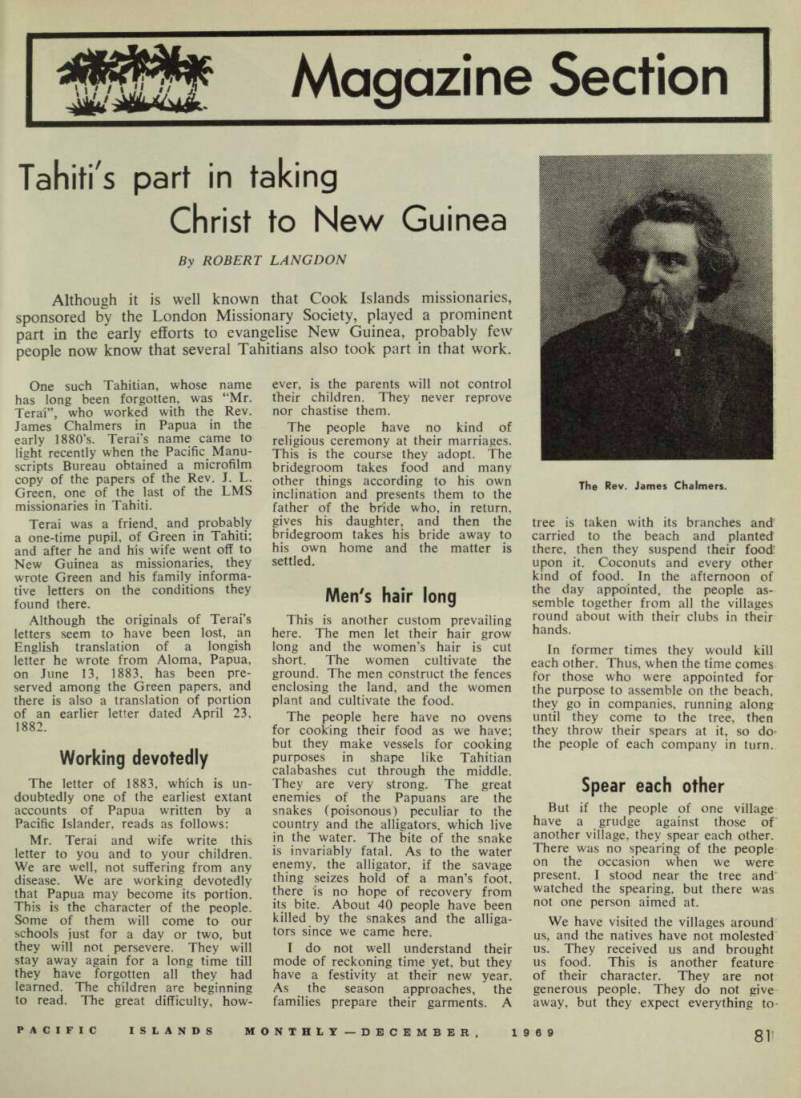 85
85 86
86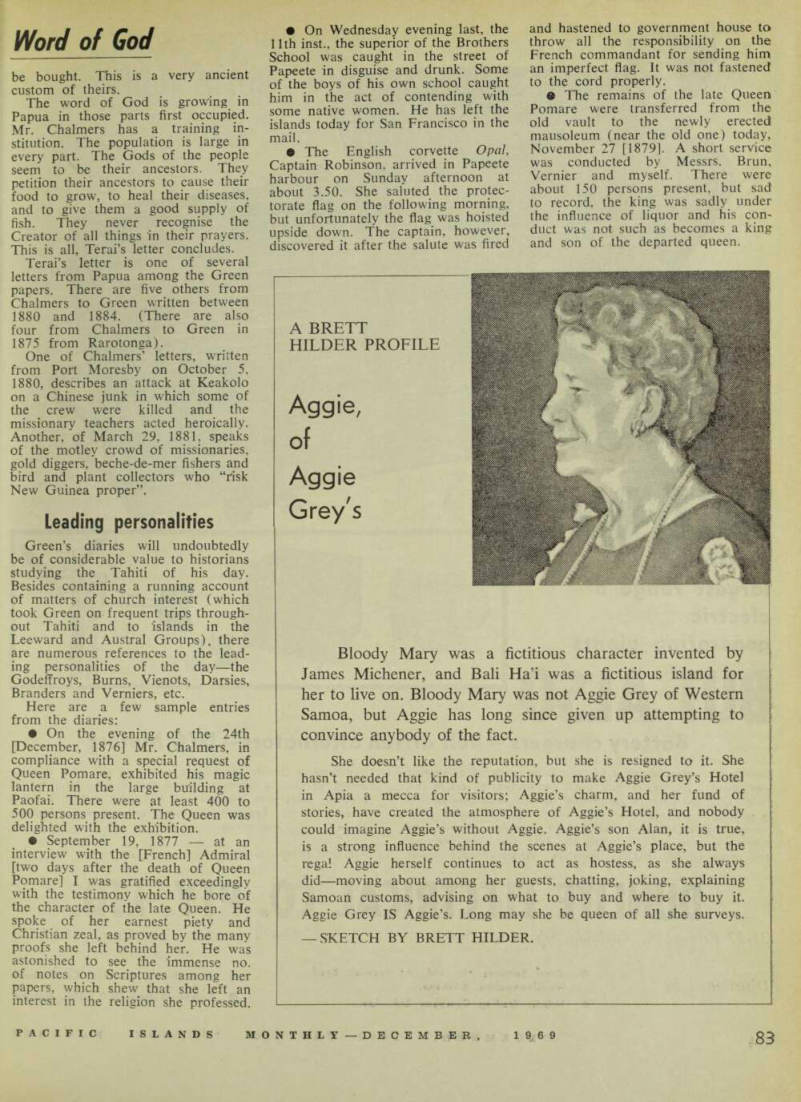 87
87 88
88 89
89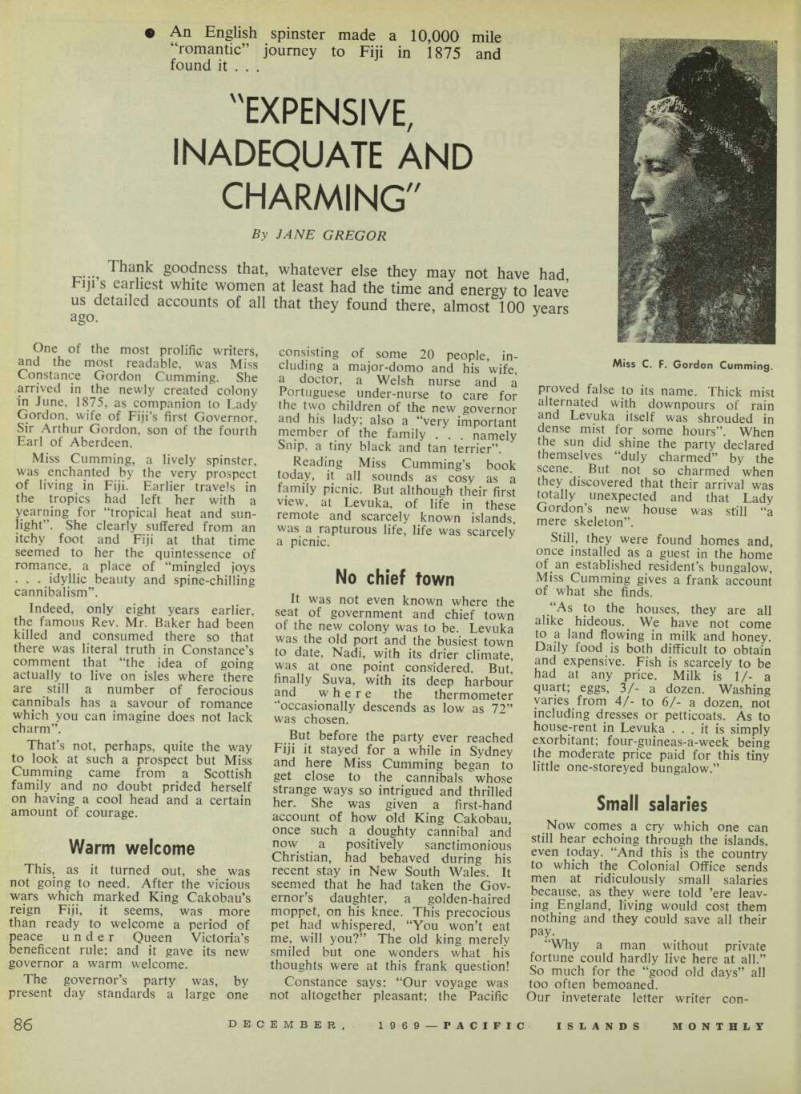 90
90 91
91 92
92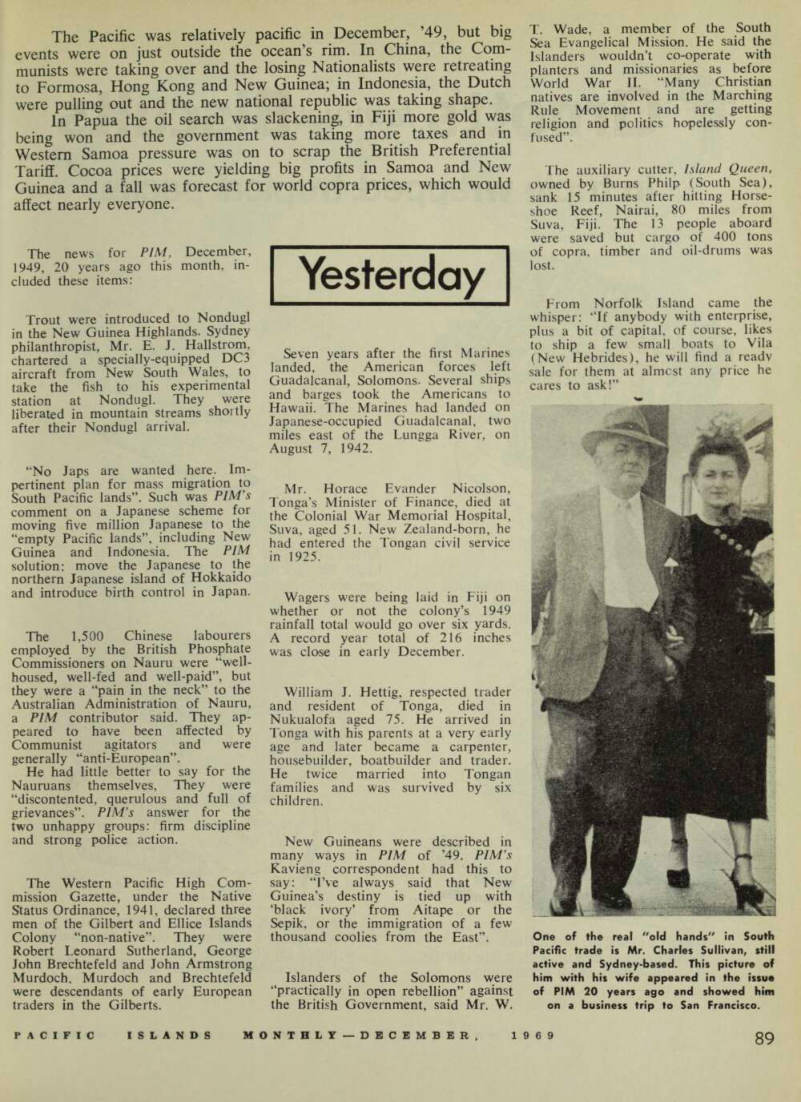 93
93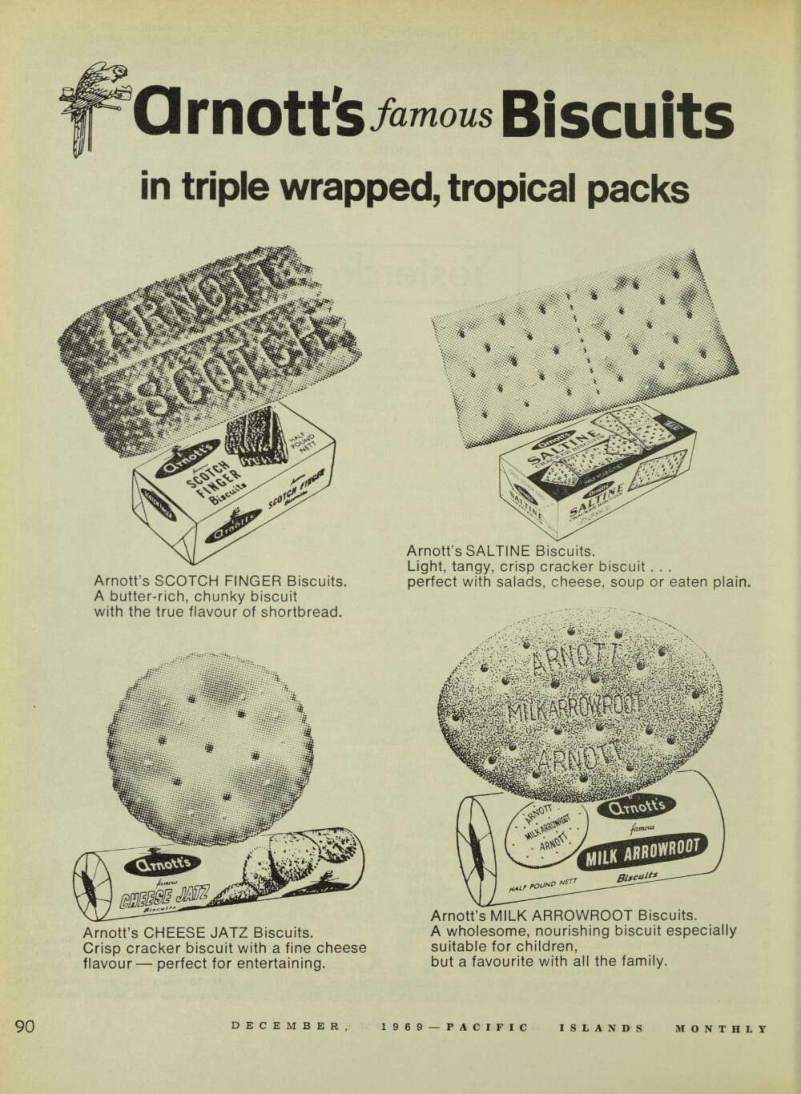 94
94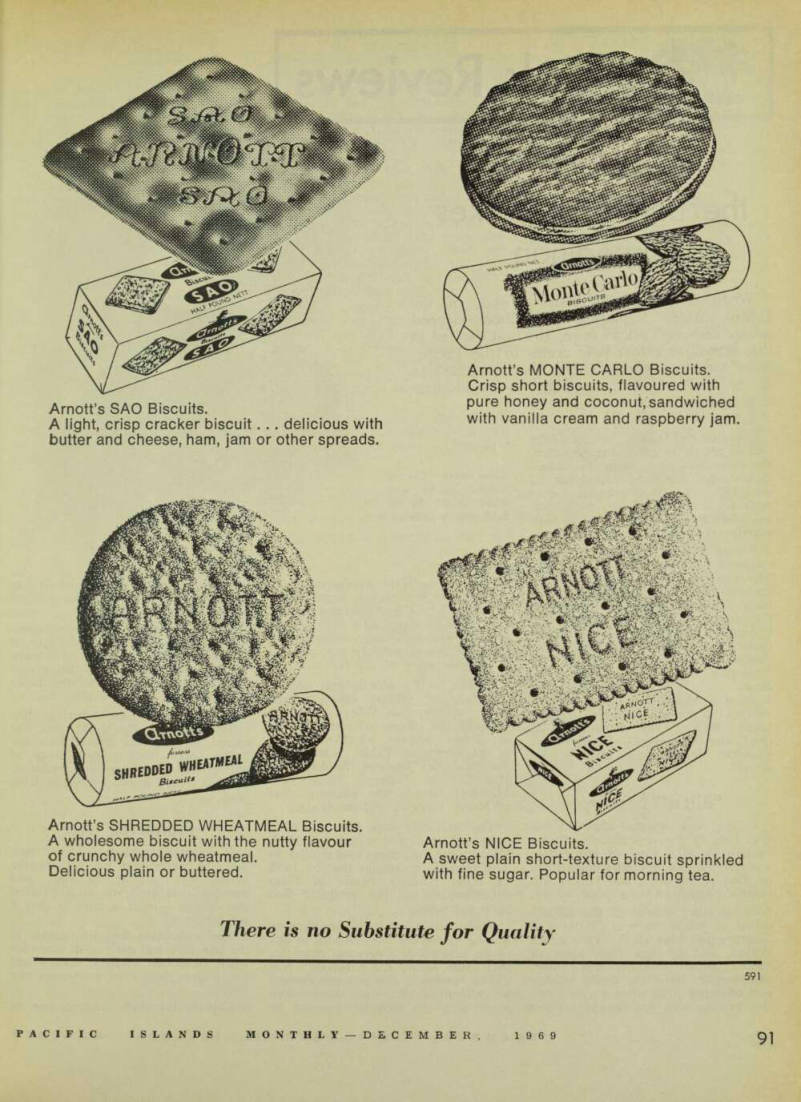 95
95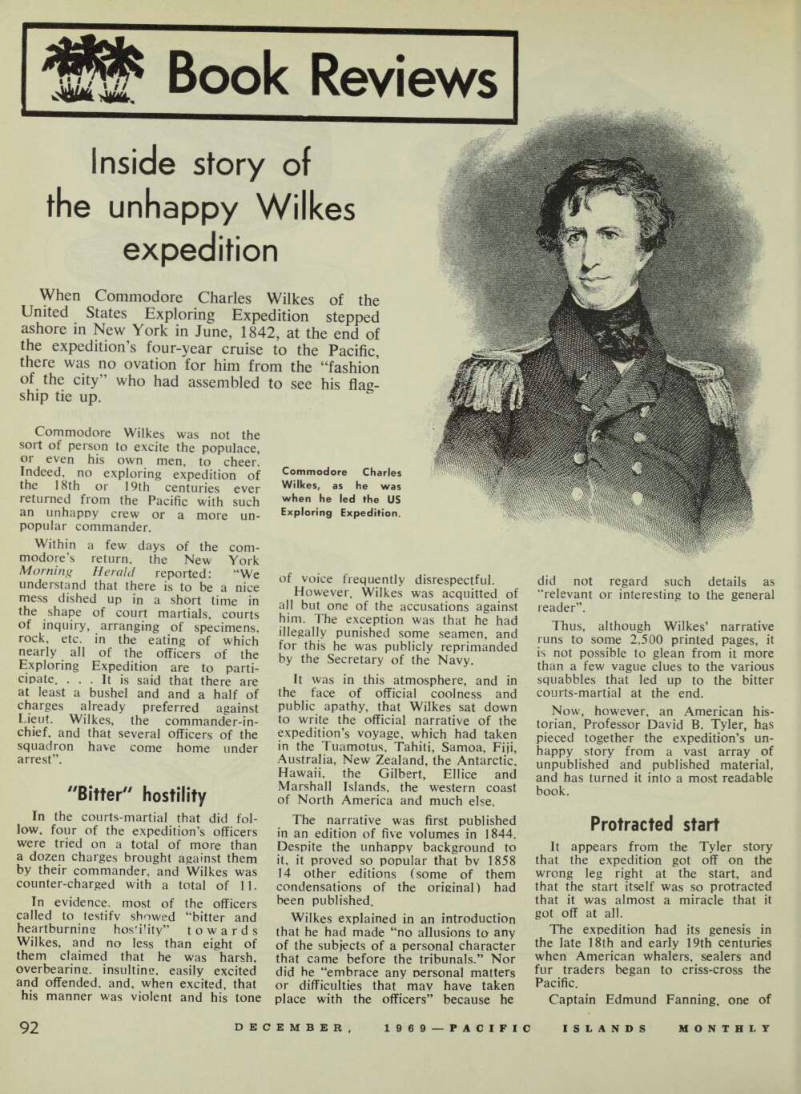 96
96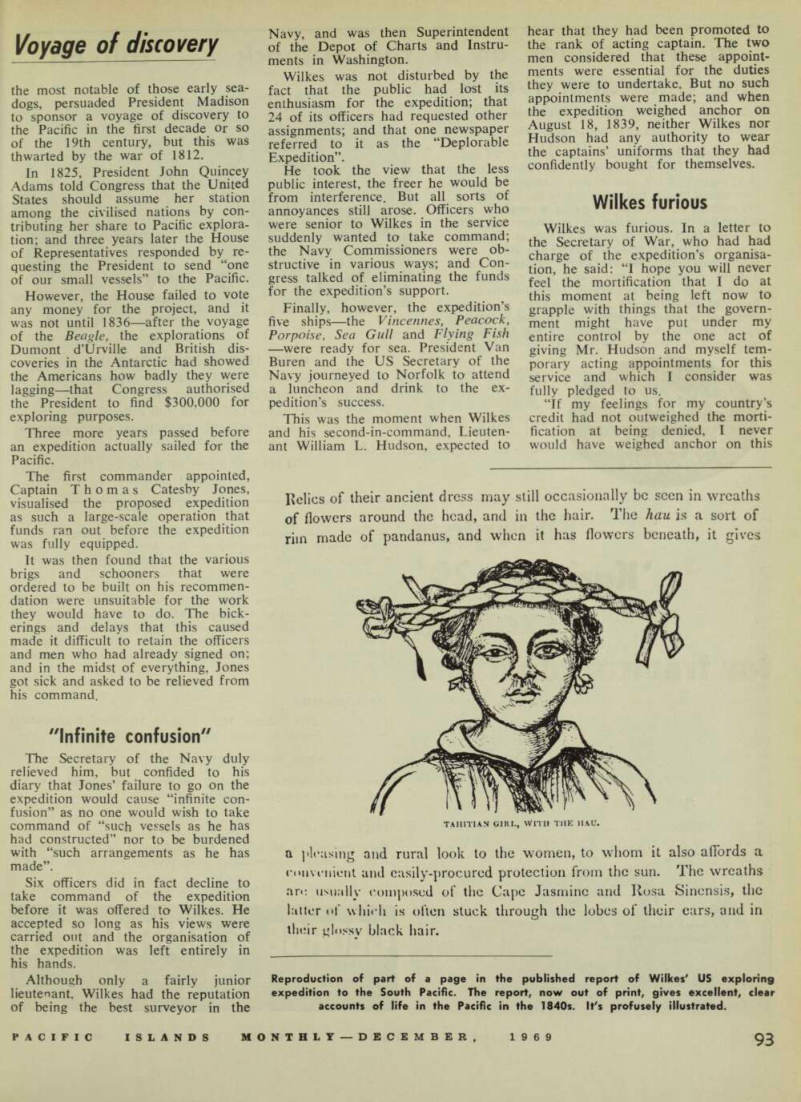 97
97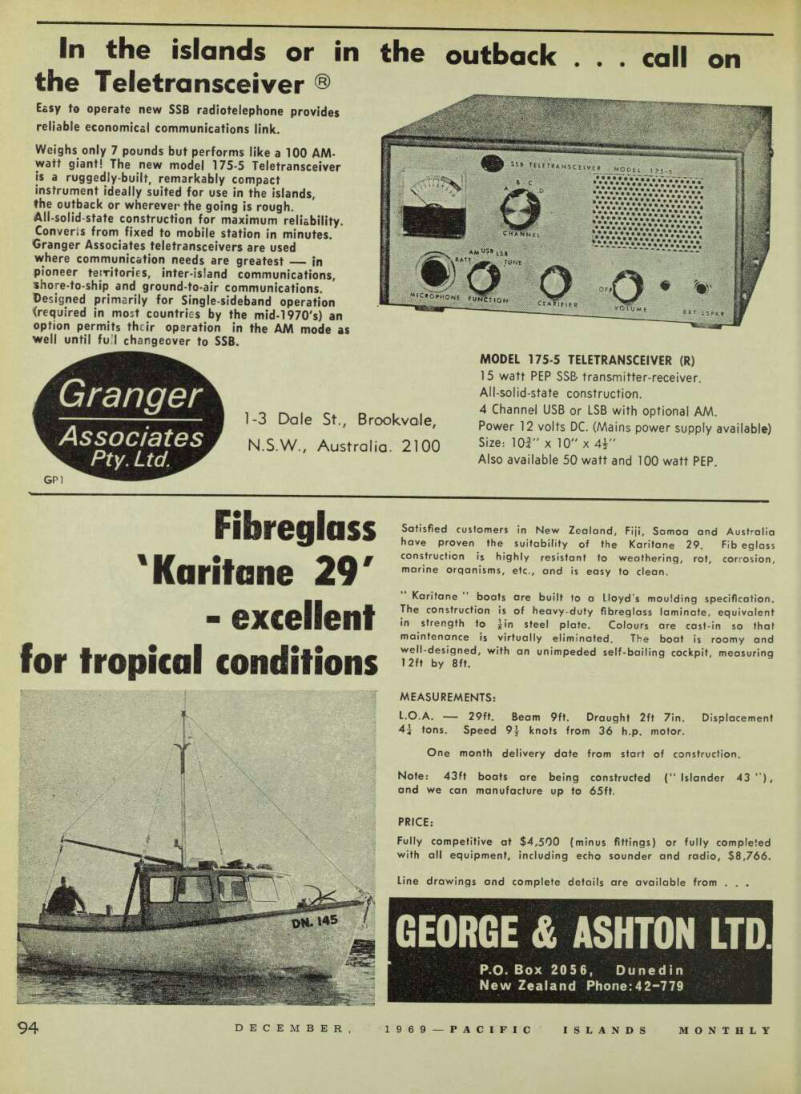 98
98 99
99 100
100 101
101 102
102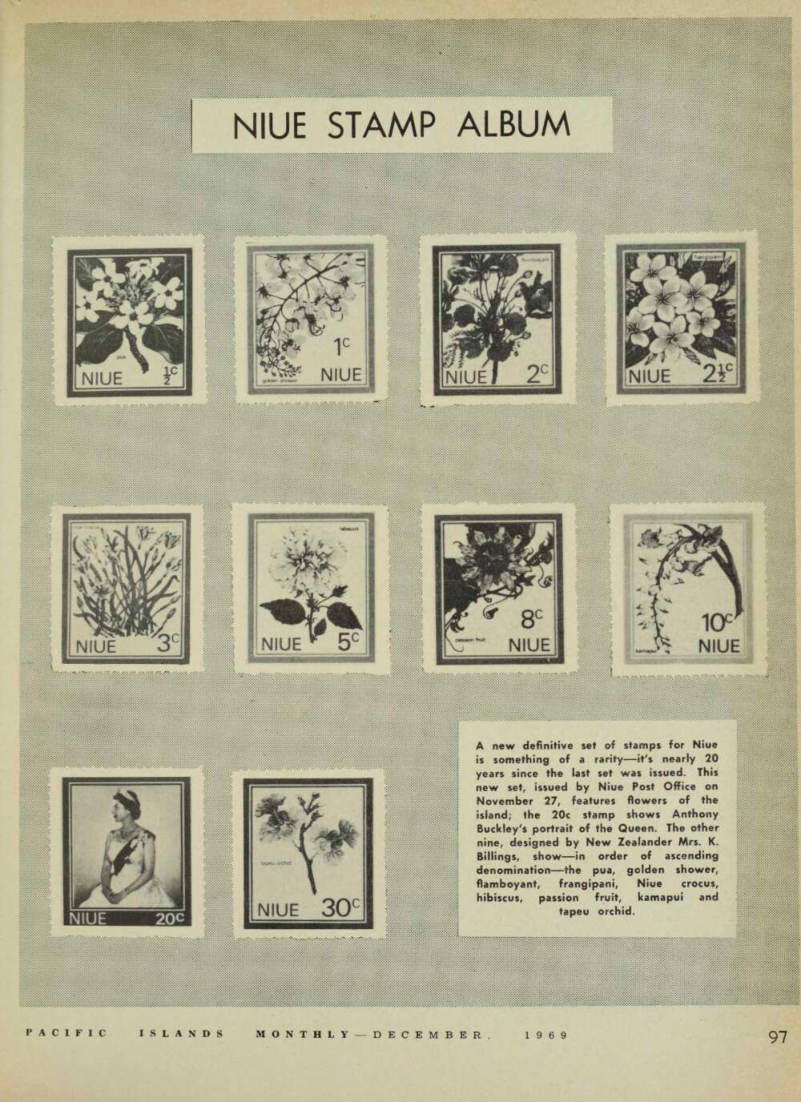 103
103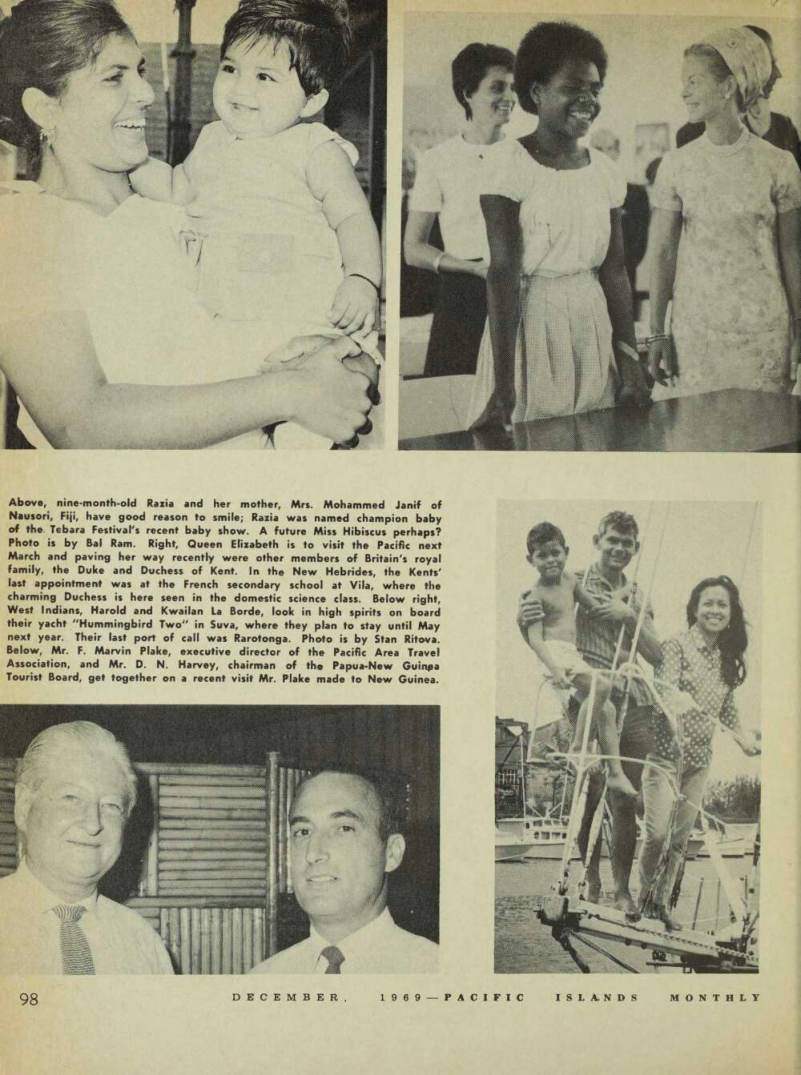 104
104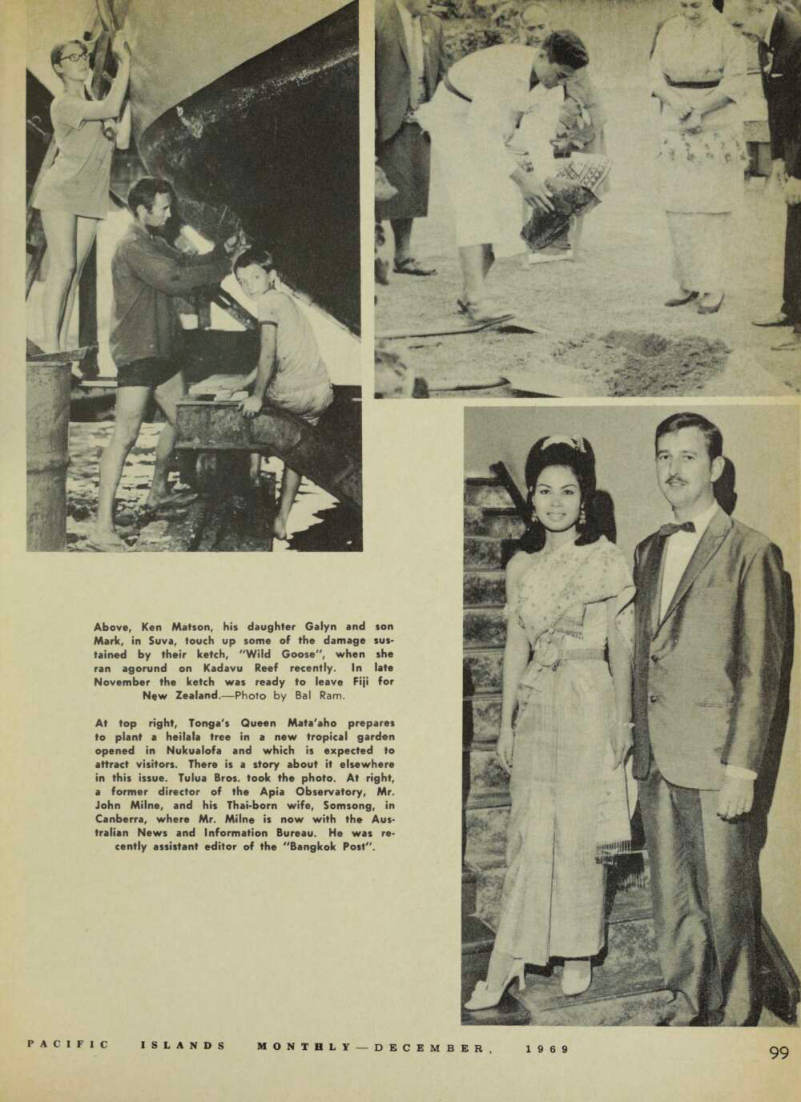 105
105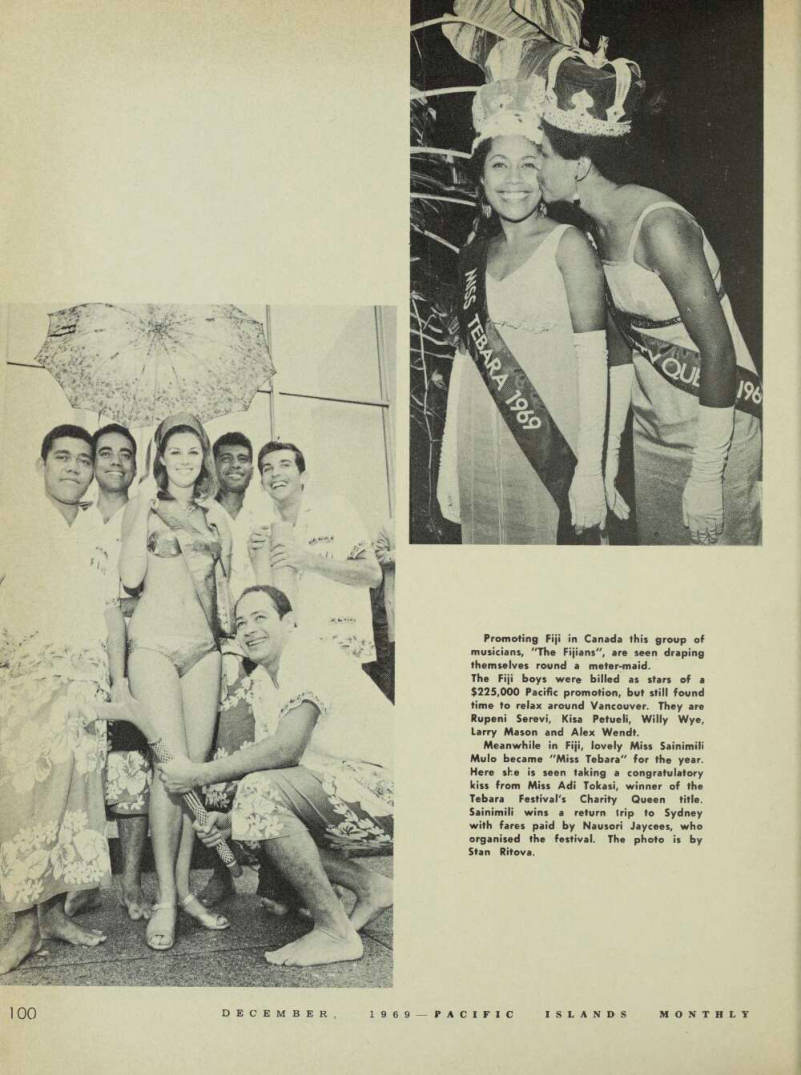 106
106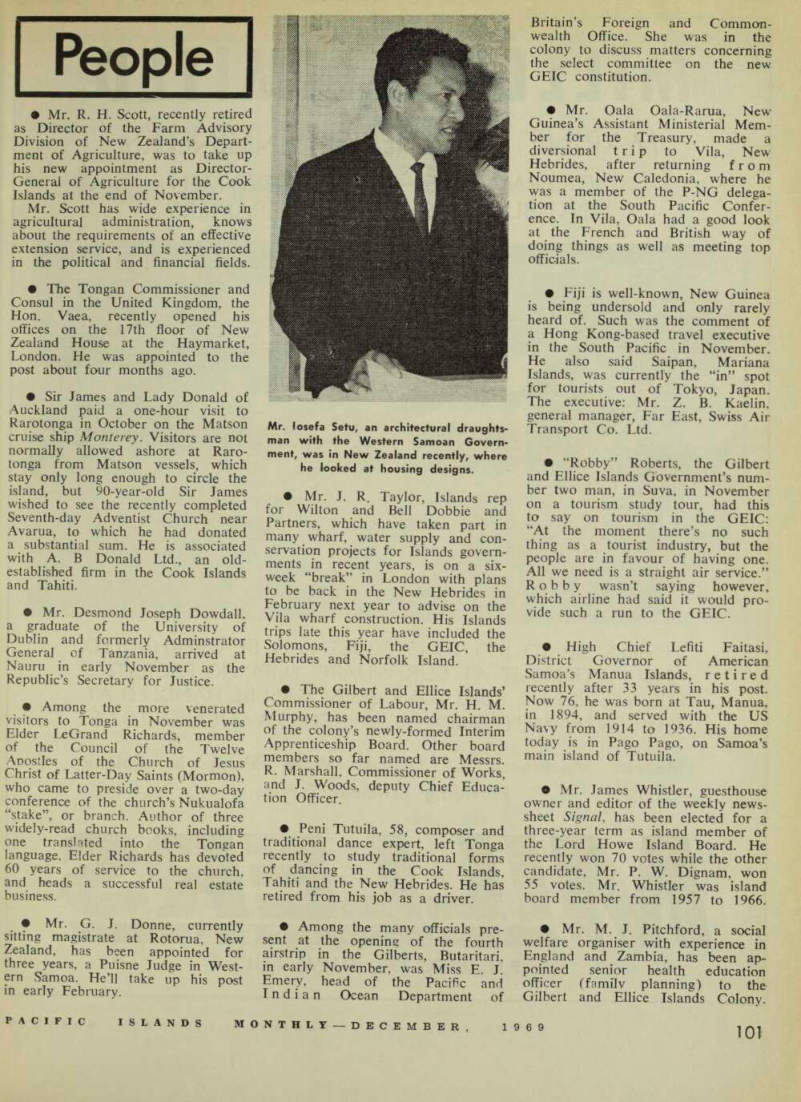 107
107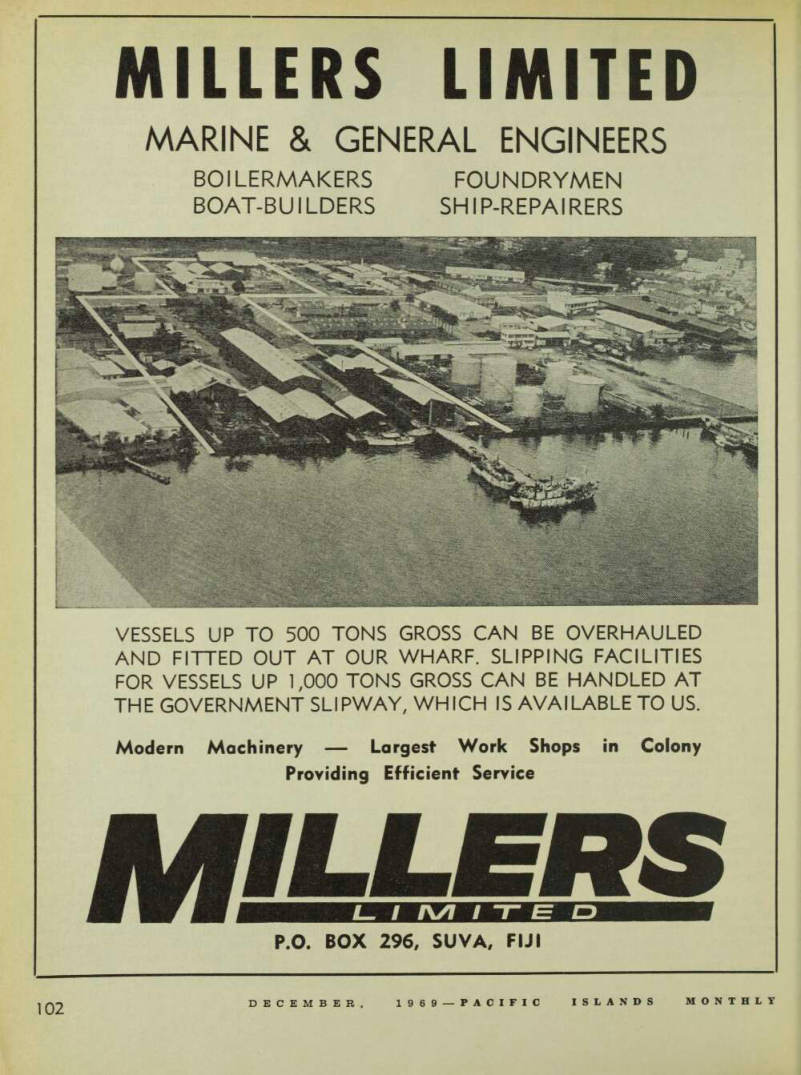 108
108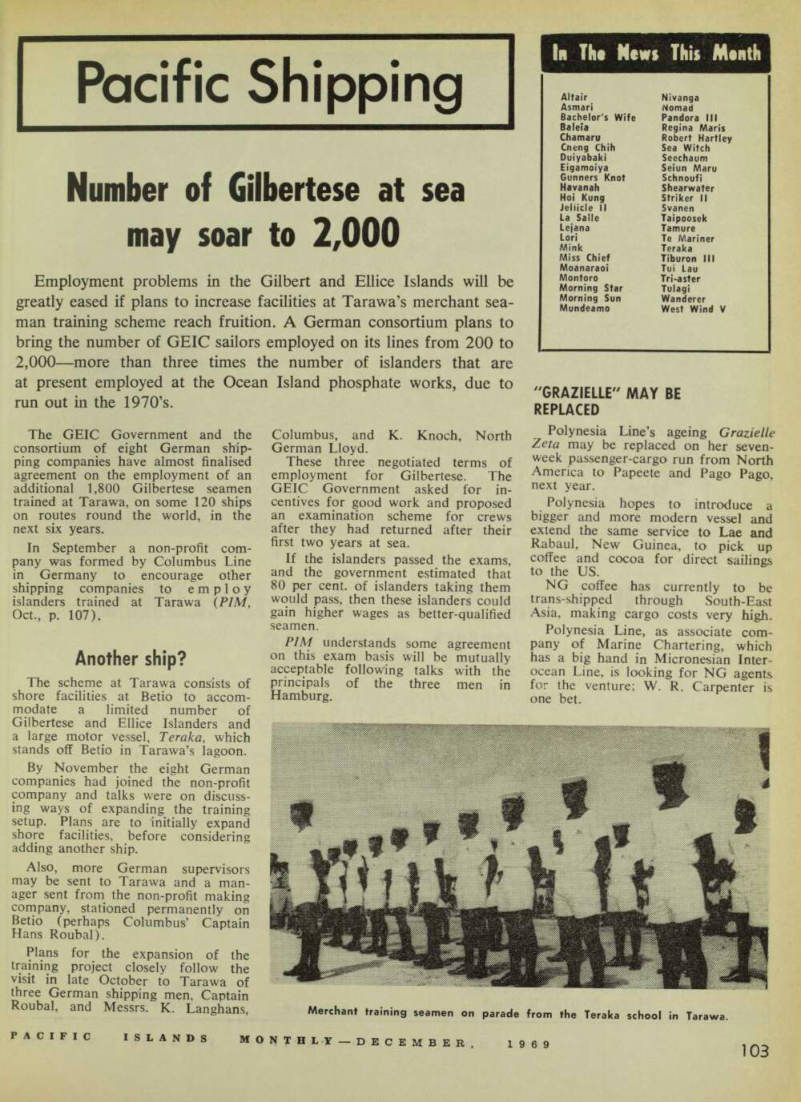 109
109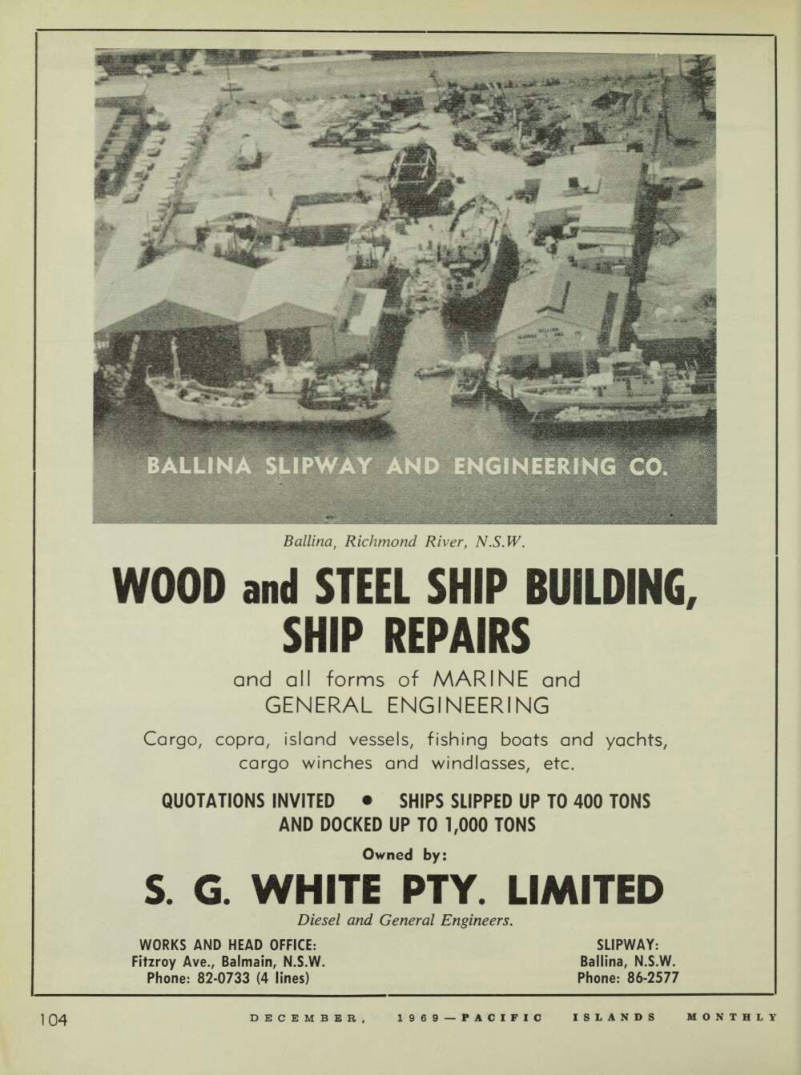 110
110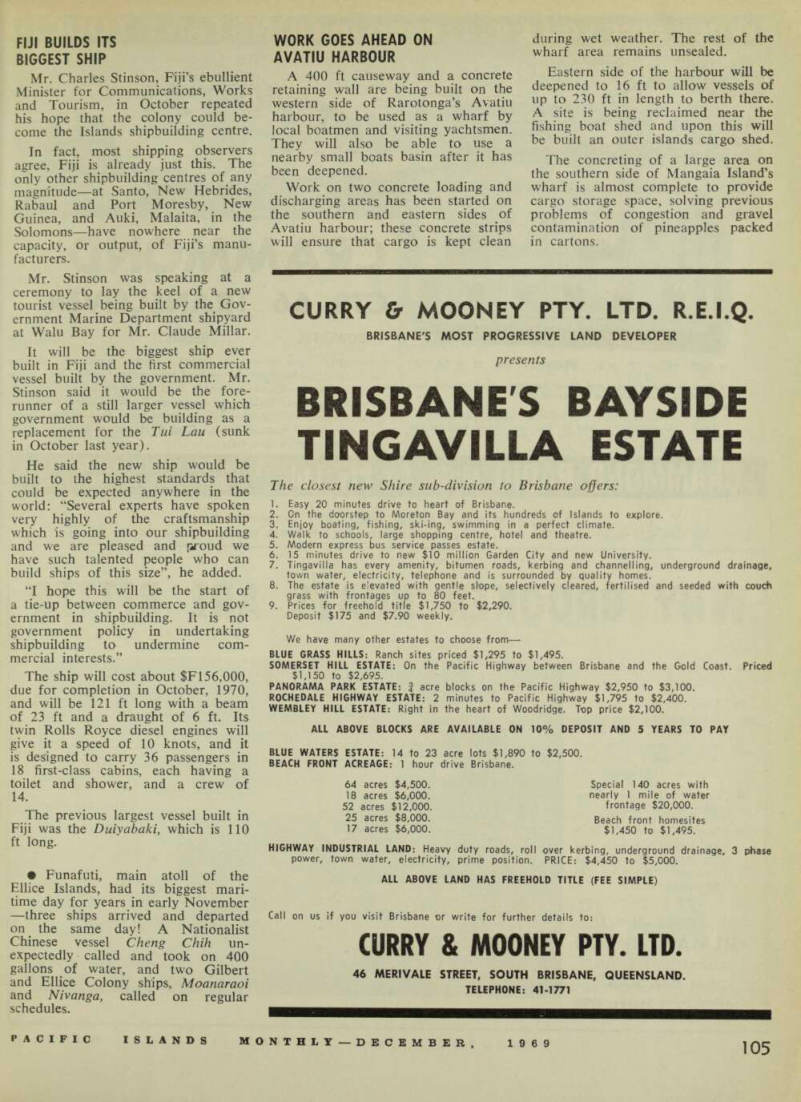 111
111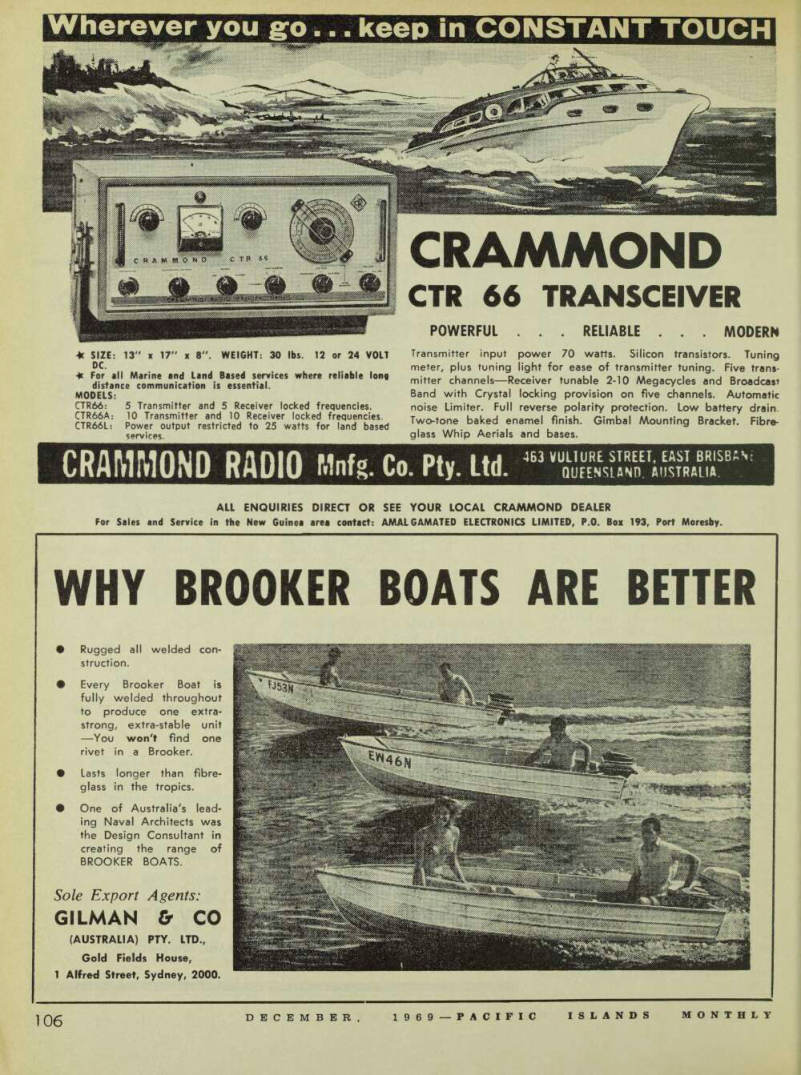 112
112 113
113 114
114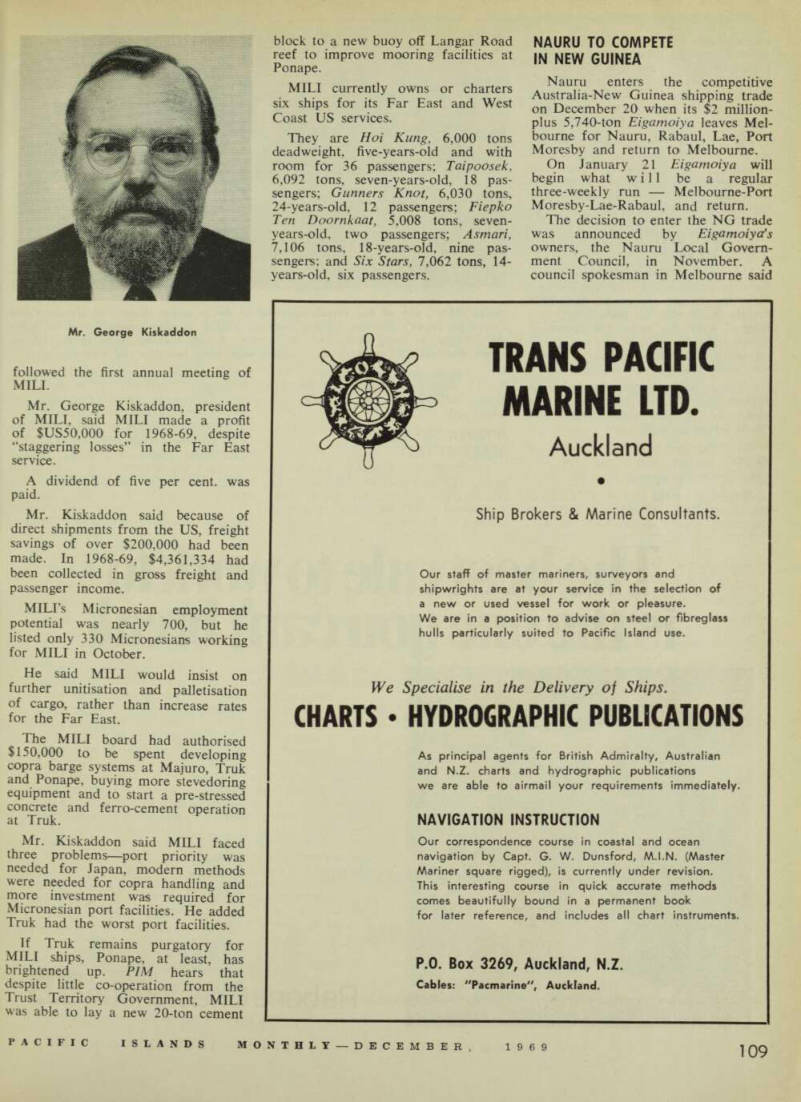 115
115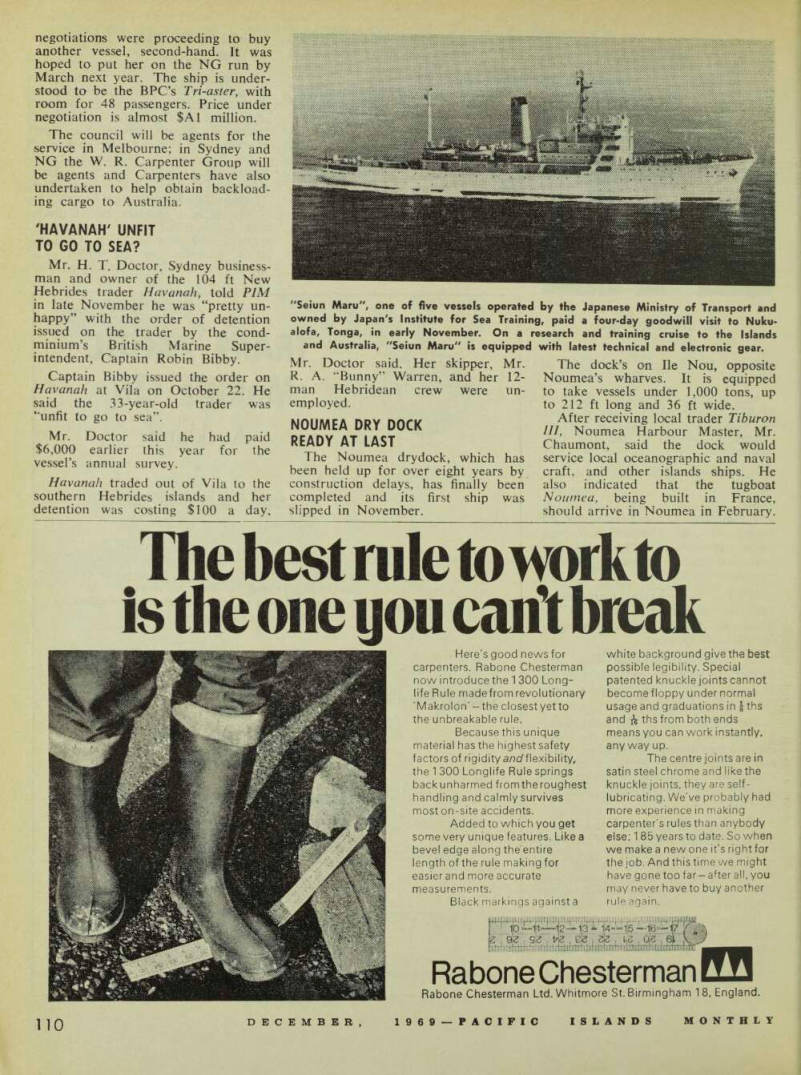 116
116 117
117 118
118 119
119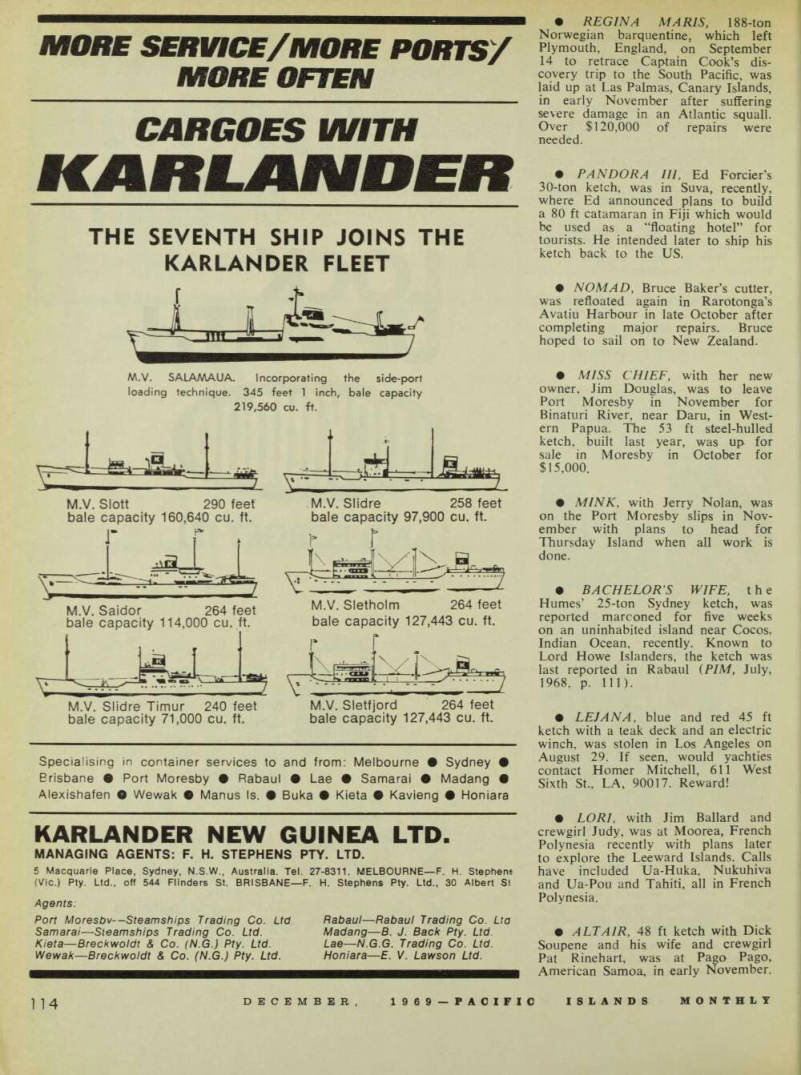 120
120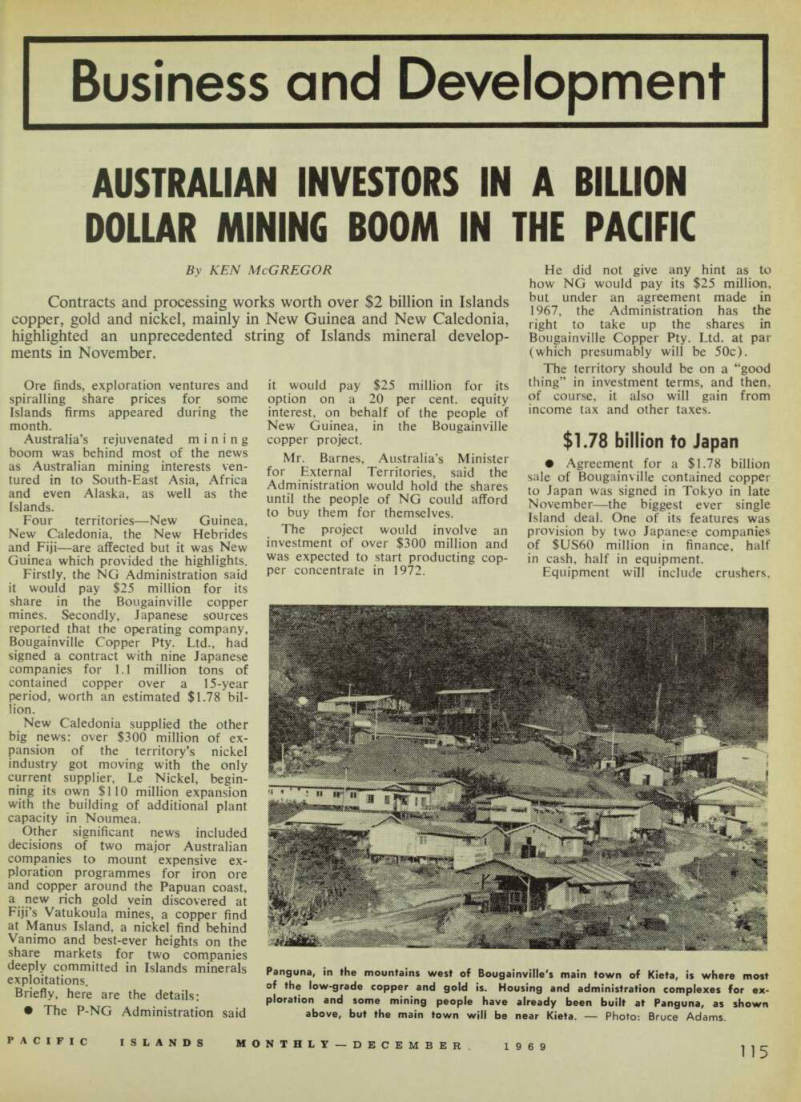 121
121 122
122 123
123 124
124 125
125 126
126 127
127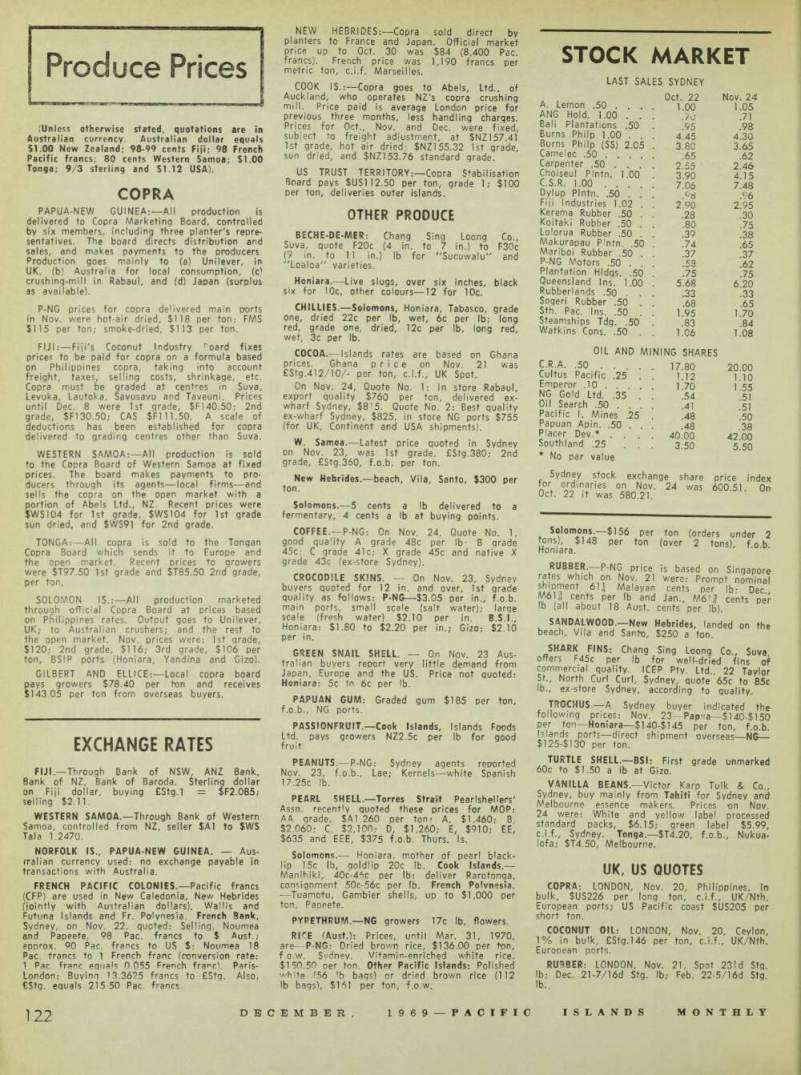 128
128 129
129 130
130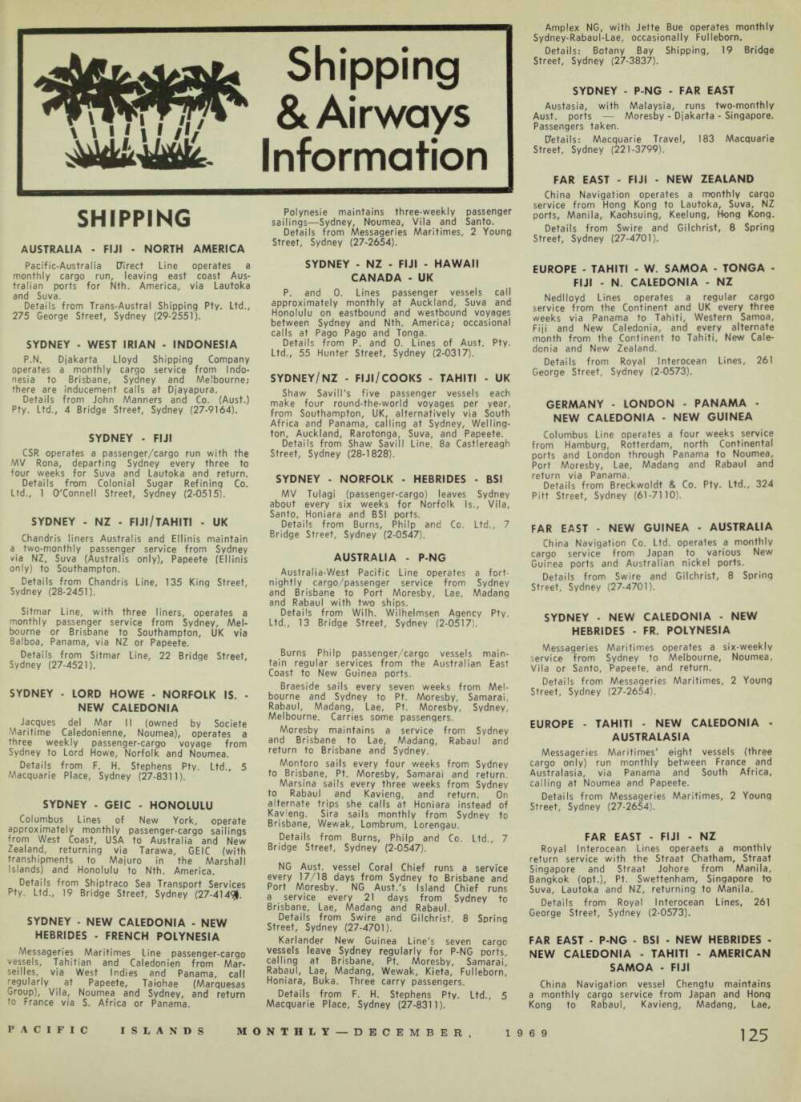 131
131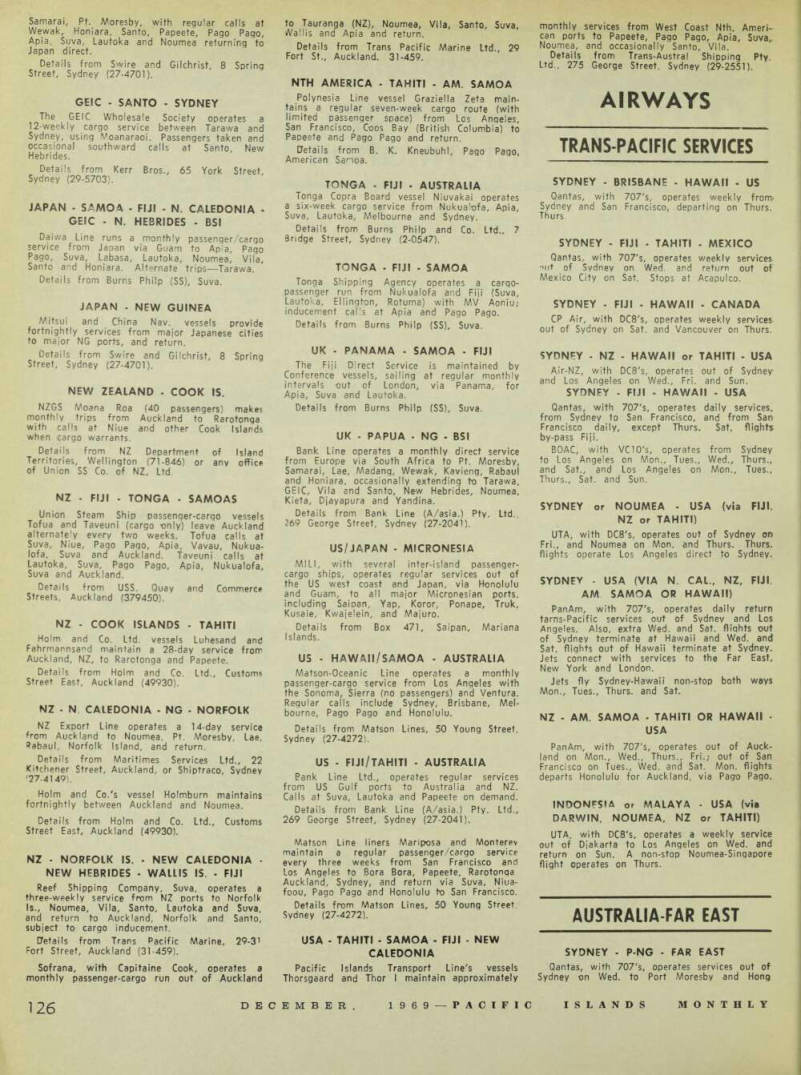 132
132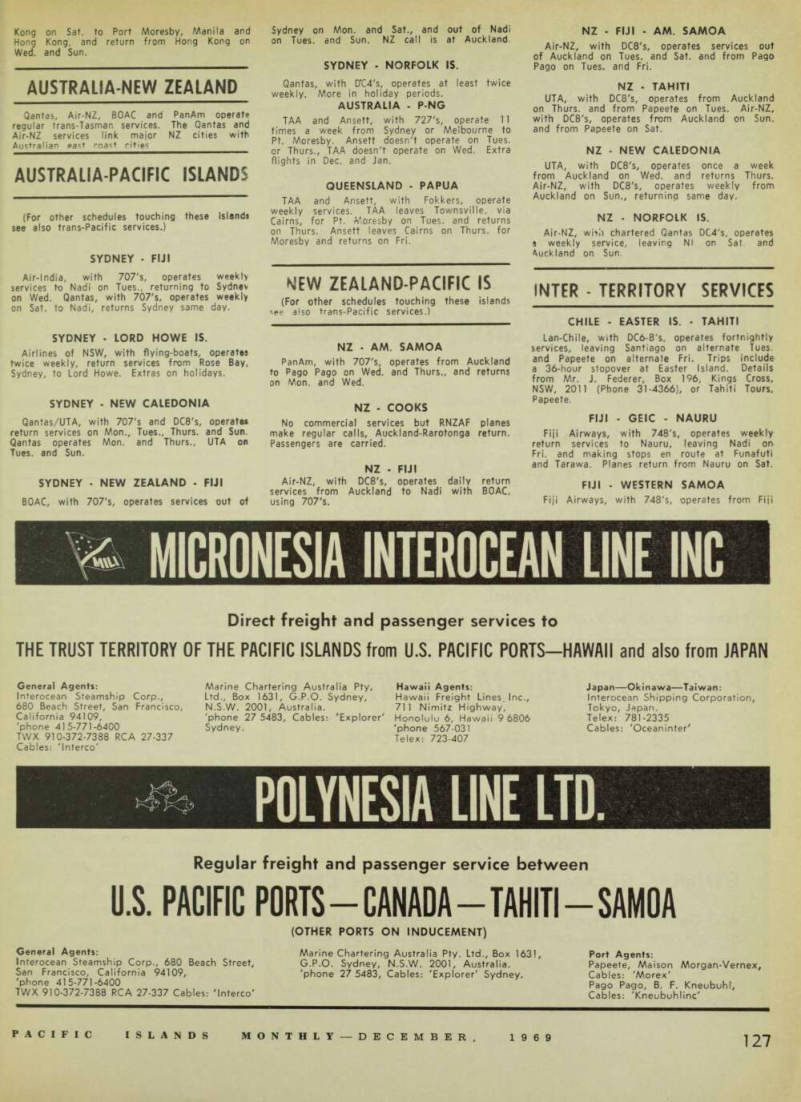 133
133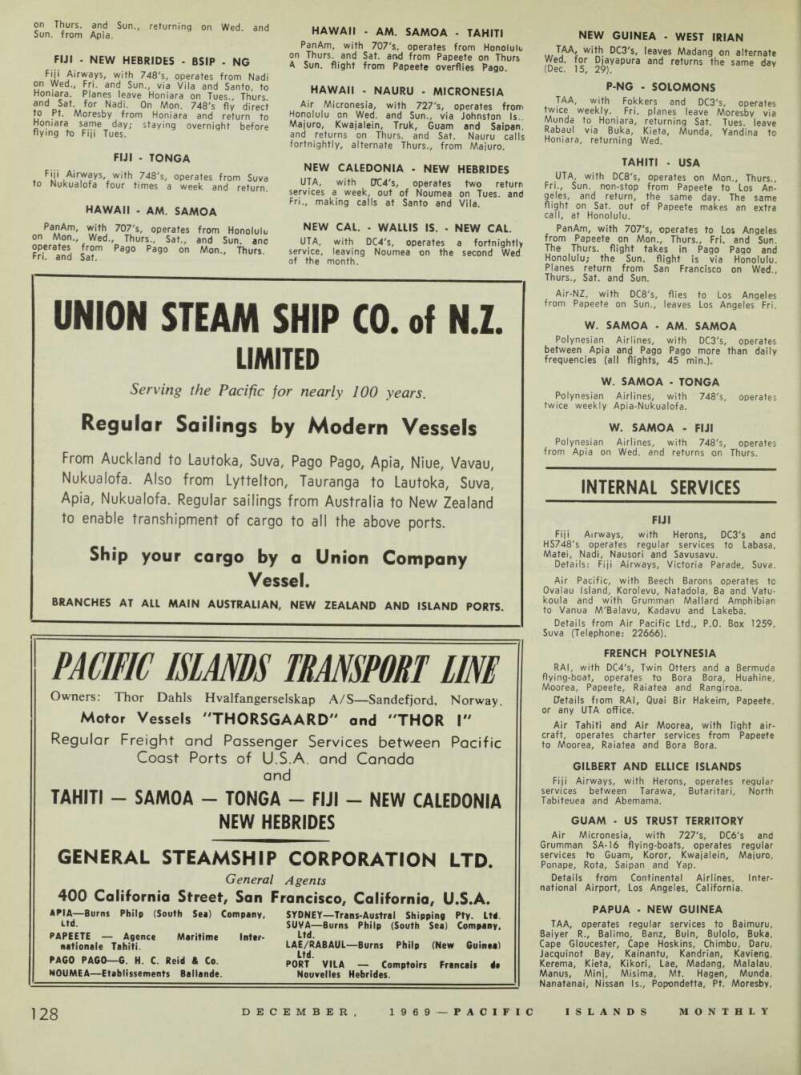 134
134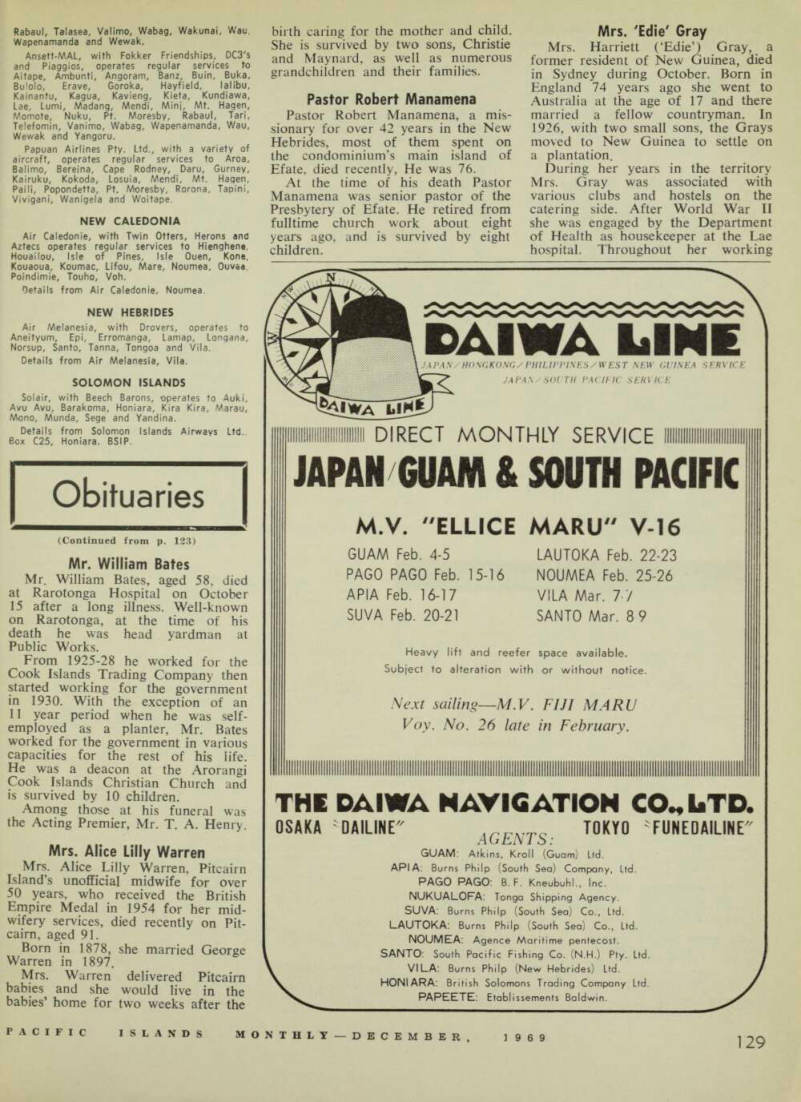 135
135 136
136 137
137 138
138 139
139 140
140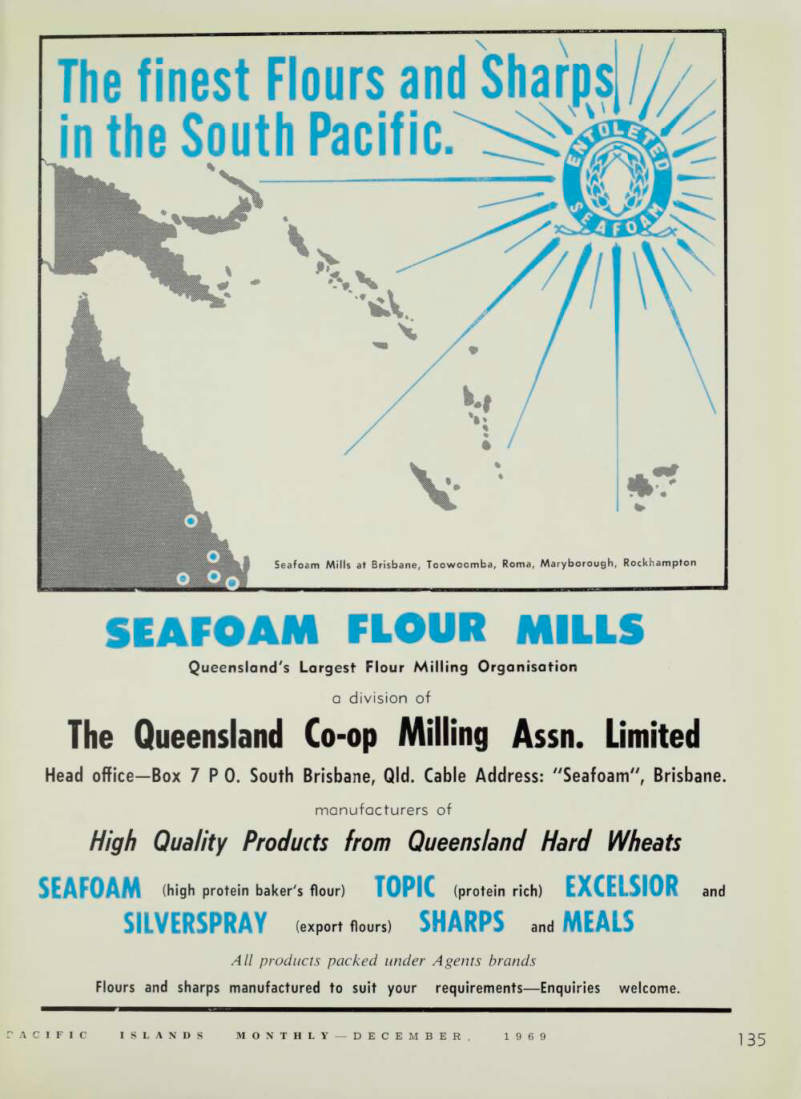 141
141 142
142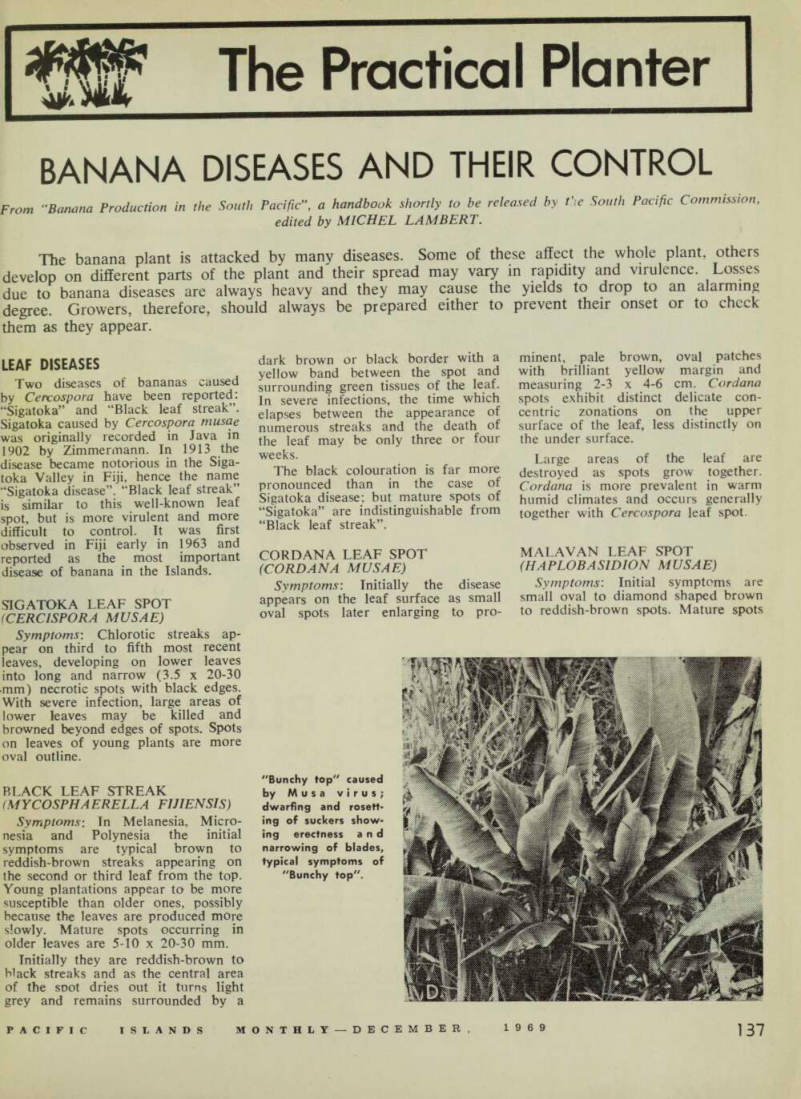 143
143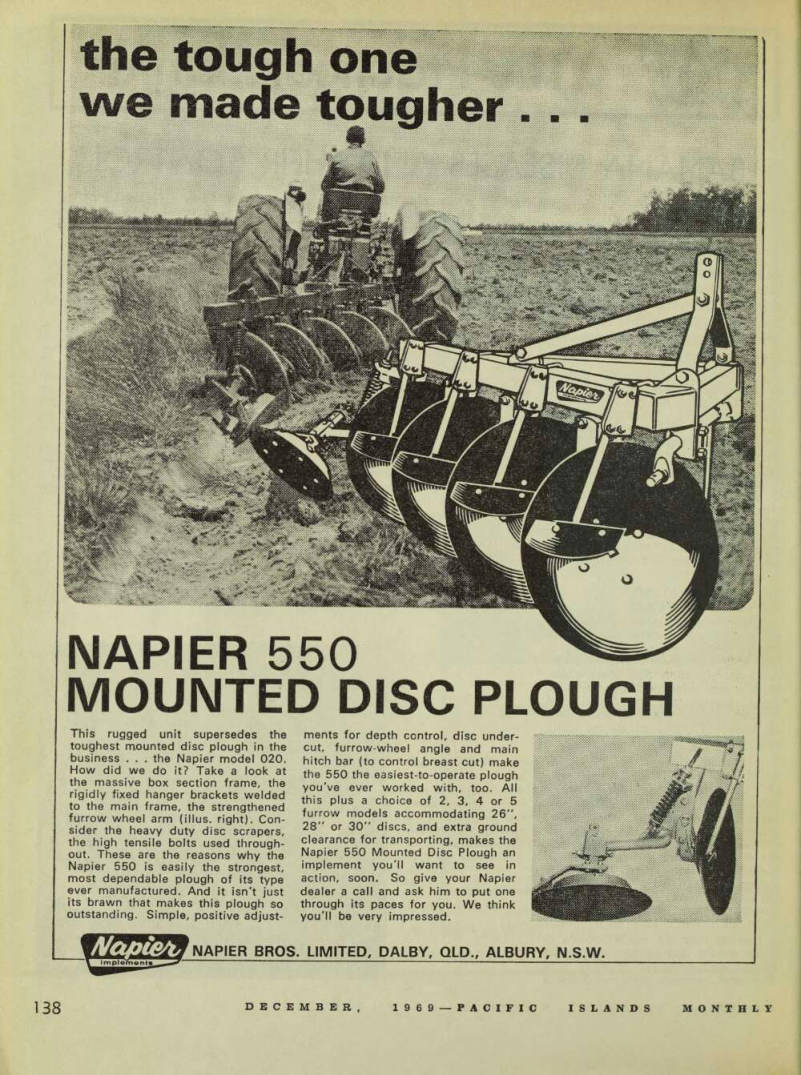 144
144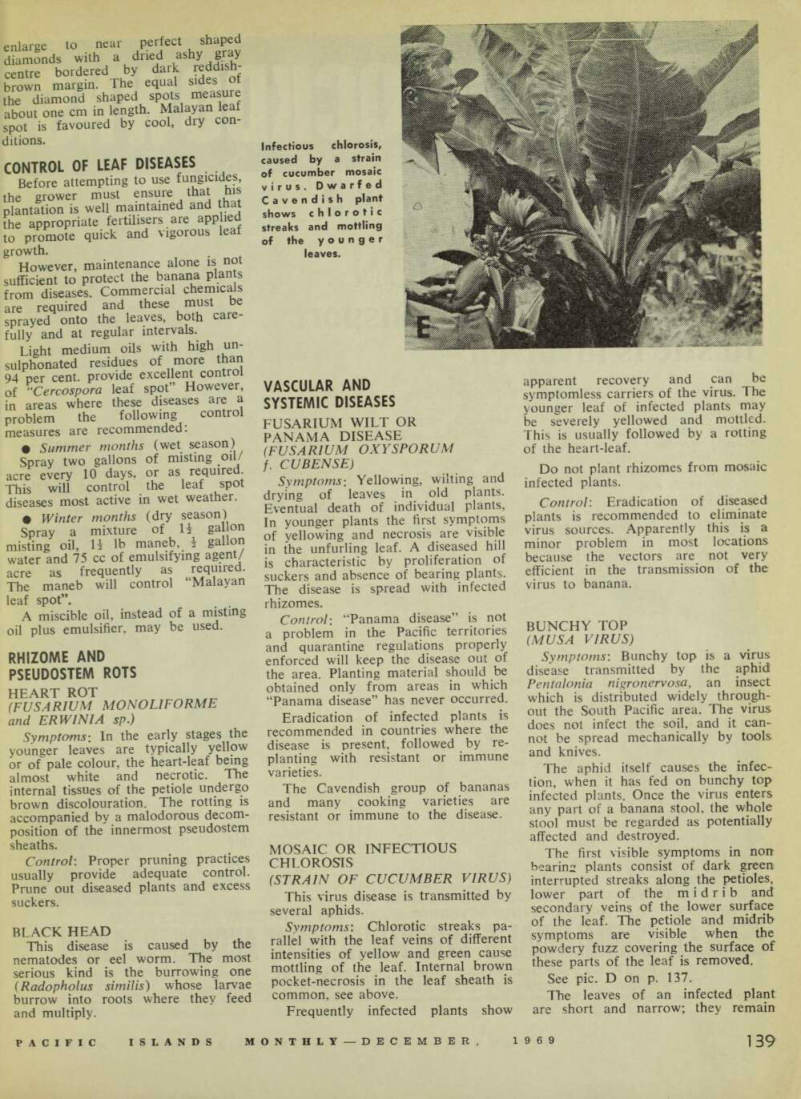 145
145 146
146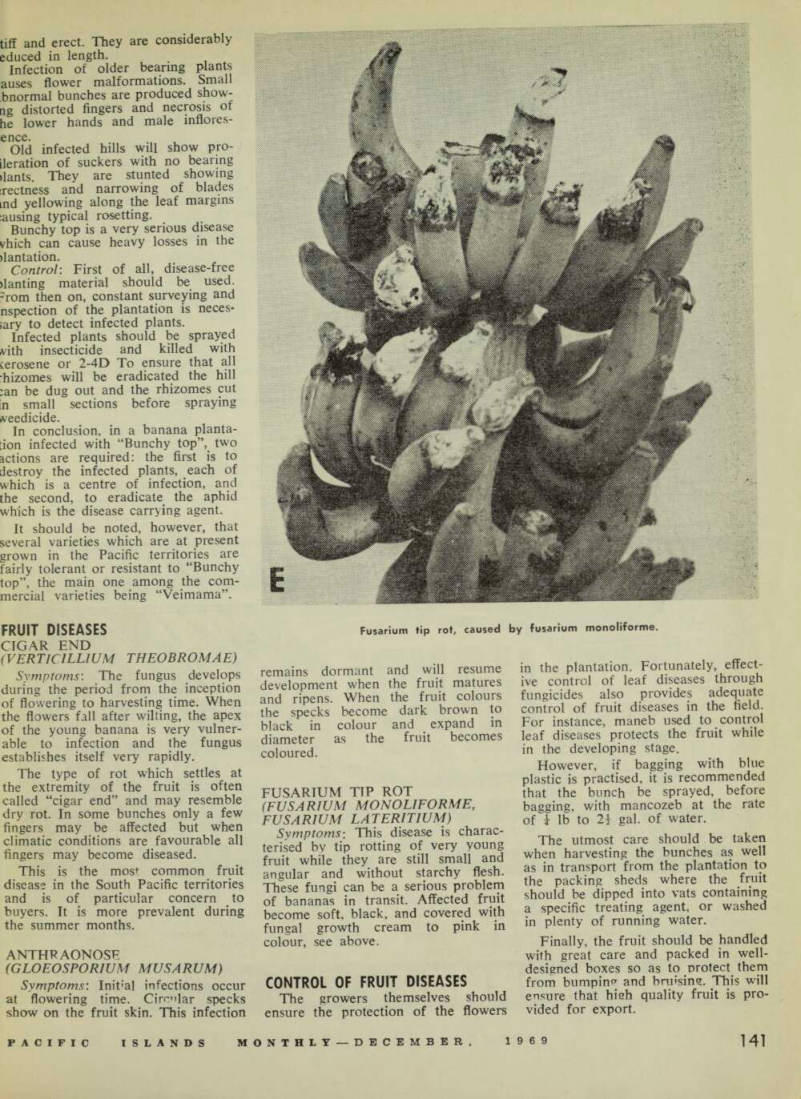 147
147 148
148 149
149 150
150 151
151 152
152 153
153 154
154 155
155 156
156 157
157 158
158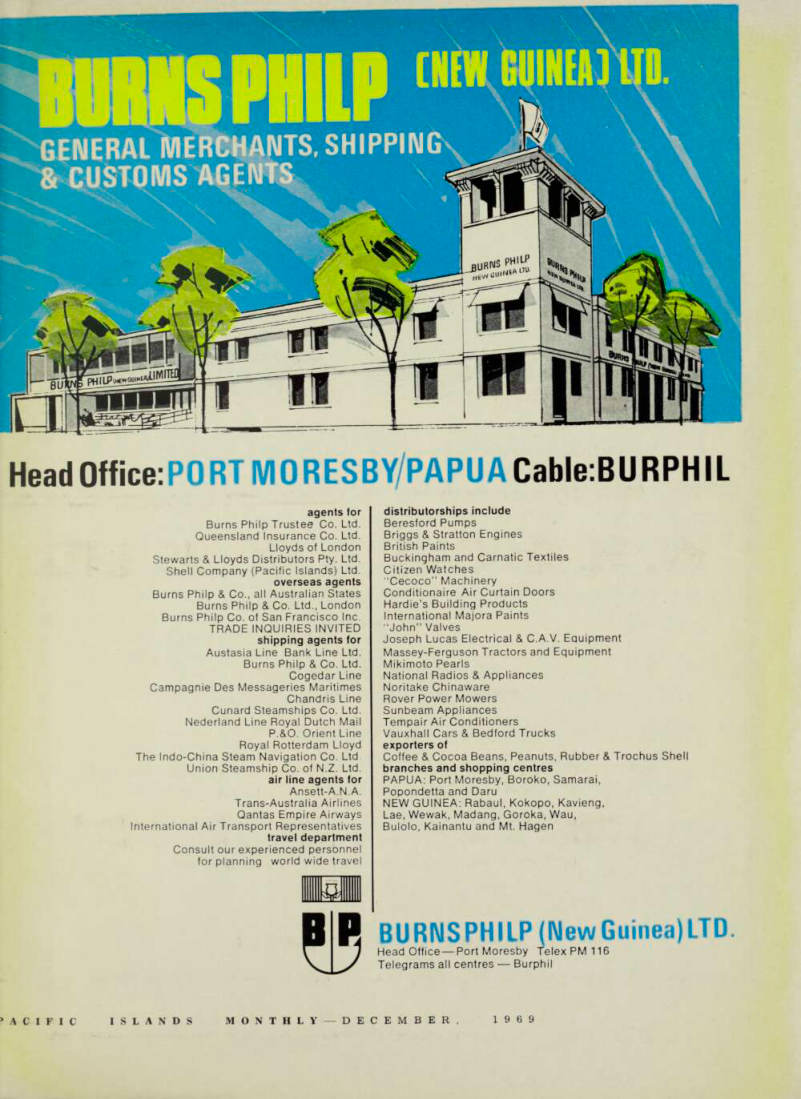 159
159 160
160