Monthly
Pacific Islands Monthly
Registered at G.P.0., Sydney, for transmission by post as a newspaper.
November, 1969
News Magazine Of The South Pacific
• AUSTRALIA, 40c. • NEW ZEALAND, 45c. • U.S. PACIFIC TERRITORIES, 70e. • FRENCH PACIFIC ISLANDS, 65 FRCS. CFP. • P.N.G., FIJI AND ALL OTHER
Pacific Territories, 35C. Local Currency.
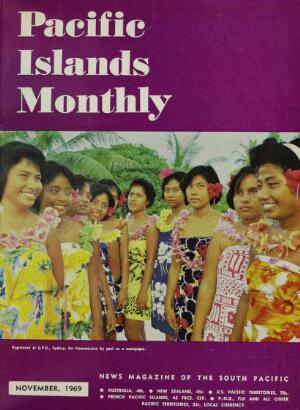
Our Cover
Making a colourful— and attractive—display are these pupils from the fourth form of the Elaine Bemacchi High School at Bikenibeu, Tarawa, in the Gilbert and Ellice Islands.
The school is named after the wife of a former Resi dent Commissioner for the GEIC. The photograph is by Bruce Adams.
Advertisements & other items, p. 2 (1 item)
The Hostess with
the mostest.
Seats.
More than charm. She’s got the mostest seats between Papua/New Guinea and Australia just when you need them. During the rush holiday period. From November through till mid-February we’re putting a lot more Bird of Paradise’ T-Jet flights for you.
On December 13 we put on the mostest airlift south to Australia of all time. Nine . . . repeat nine separate TAA flights south on the one memorable day. That’s a lot of seats!
But we’ve got lots of other airlifts to suit your holiday schedule. So, don’t panic. You can afford to wait at least another day before making your holiday booking. But better still.
Do it now.
Call your Travel Agent or TAA: Port Moresby 2101. Lae 2311, Madang 2478. Rabaul 2567.
Goroka 8. Mt. Hagen 4 or 301 Wewak 103. if % I
lili
TAA No.]-the friendly one
319 2193 69
In This Issue
General
iouth Pacific Conference report ... 25 burism a necessary evil 30 oundation (FSP) finds its feet 38 Magic" Polynesian navigation 51 tarfish "urgent danger" 53 imerican Airlines—seven flights? ... 73 )fficial war history 100 bastwatchers at home 104 bpra report 122 P's profits 122 arpenter's profits 123 ilands companies do well . 124
Merican Samoa
>uth Pacific Conference report ... 25 elitical status commission 36 stroleum monopolisation 121
Ook Islands
auth Pacific Conference report ... 25 ;onomic difficulties 49 ew SPC stamps 49 isit to Rarotonga ... 69 irstrip construction 69 Jl ►uth Pacific Conference report 25 ew Opposition leader 37 ?w leprosy hospital 40 location Commission 40 port bananas checked 45 :ture book released 99 >AC invests in Hunts 119 ibute to A. D. Patel 135
French Polynesia
Mr. Teariki on living standards ... 36 Starfish arrives 56 Second bank opens 125
Gilbert And Ellice Islands
Navigation secrets 51 1892: raising the flag 61 Tarawa's dust problem 65
New Caledonia
Apathy over , tourism 3 South Pacific Conference report ... 25 More to exploit nickel 35 Governor Risterucci leaves . 39 Safari Caledonien—car rally 39 Facts behind the riots 40 Martinet leaves 133
New Hebrides
Trade balance 119
Papua-New Guinea
Tourist board director 30 Stamp releases 40 Chatterton discusses national day ... 41 Inquiry after stabbing 45 Port Moresby from the air 57 The Kukukukus in 1925 85 New book "Road to Gona" 95
Ports neglected 107 New Carpenter shipping service ... 113 Kinjibi made a loss 121 Japan's interest in oil 125
Pitcairn Island
Invited to Norfolk 39 Stamps burnt 75 Co-op store opened 76
Solomons
South Pacific Conference report ... 25 Towns from the air 58 WPHC records microfilmed 99 Coastwatchers at home 104
South Pacific Commission
South Pacific Conference ... 3, 30, 31 Moors —new Commission head ... 27 Tourism debate 30 Flag designs 31,101
Tonga
Farm college opens 45 Agriculture emphasised 47 Scientific expedition ends 67 Wrecked on Minerva Reef 109
Western Samoa
Flu epidemic of 1918 3 Harry Moors for SPC 27 Airways boom 35 Friction 100 years ago 93 Banana ban urged 140
United States Trust Territory
New ship m
DEPARTMENTS: Up Front with the Editor, 3; To the Point with Percy Chatterton, 41; From the Islands Press, 75; Magazine Section ,85; Yesterday, 94; Book Reviews, 95; People, 105; Shipping, 107; Cruising Yachts, 115; Business and Development, 119; Produce Prices, 127; Airways Information, 129; Practical Planter, 141; Deaths of Islands People, 135; Advertisers' Index, 160.
Advertisements & other items, p. 4 (2 items)
November, 1969 Pacific Islands Monthli
■Qrnott's/® o ® Biscuits
Milk Arrowroot biscuits
for all-day energy
You and your children use up a lot of energy during the day; but Arnott’s Milk Arrowroot biscuits will give you the extra nourishment you need to replace it. The triple-wrapped pack keeps the biscuits crisp and fresh at all times,
■Qrnott's/® o ® Biscuits
There is no Substitute for Quality
Up Front
with the Editor
Despite some apparent indications to the contrary by a number of speakers at the South Pacific Conference is Noumea in October, tourism is accepted as a necessary evil in the islands of the South Pacific.
Those who are most vocal in warn ing of its dangers are often those who haven’t yet managed to participate fully in its financial benefits.
When they do they will be as anxious as anybody else to supply the visitor with what he wants, or what they hope he wants, and encourage him to come back. The Islander’s innate sense of hospitality will see to that.
But New Caledonia is in a separate position. This French territory has managed to build up tourism a respectable degree without either the government or the local people be coming closely involved. Or wanting to.
I was in Noumea in October on my first visit for some years. In the intervening period I had listened to report after report from returning travellers with cries of “the French don’t care about tourists”, and “they’re pricing themselves out of the business with high charges and poor service”.
The Matson ships had meanwhile stopped calling at Noumea, and the :rews of others were warning cruise sassengers not to expect a warm welcome in Noumea, but to “save jp your money for Suva”.
I noticed before I left Sydney that dsitor figures for 1969 were down )n those for the same period last tear, which seemed ominous.
After having spent a week in Noumea —and a pleasant week, too, )e it noted—l am ready to predict hat visitors will continue to lose nterest in Noumea unless Noumea, is a whole, makes more effort to ittract them. And I am not sure Noumea will be bothered making the ;ffort.
New Caledonian tourism is the esult of the efforts mainly of the lotels, the shipping and airline com
panics and the travel agencies. There is a government-sponsored tourist bureau, with an inadequate budget.
The travel business works hard at it overseas, where the customers are, and attracts the customers to Noumea.
Then Noumea lets them down.
Noumea is busy with its own affairs and can’t trouble about tourists.
There is a booming nickel economy and much greater riches to come.
Labour is so short that European migrants are being encouraged to work there. Wages are high, and so are food and liquor prices. Most food has to be imported.
Greener Fiji
The hotels continually struggle to provide competent staff, and what they do acquire is high-priced, which helps push up the hotel tariffs. The customers complain about the service and the tariffs, and wonder out loud whether they wouldn’t be better off in Fiji, where the local people are supposed to be friendlier.
One can’t help being sorry for the Noumea hoteliers, even if one does suspect that their prices don’t have to be as astronomical as they are in the dining room and the bar. They’ve got their troubles, and the situation in Noumea is not their doing.
For it’s Noumea which is the problem. Noumea is not New Cale donia, but such is the geography of the island that it might just as well be, for most visitors.
There are areas and islands outside of Noumea without the prosperity of the nickel that would appreciate visitors, not only for their money, but it will take more support from the government to establish them than the government is giving. Or willing to give.
For I don’t believe that the New Caledonian administration is interest
ed in developing tourism. Like the people of Noumea, the government is otherwise occupied.
I believe that it is conscious of having an economy that will expand and expand in the next two or three years without a tourist having to set foot in the country. Nickel is big and getting bigger, and as it grows with the new exploitations that are planned, there will be new social and political problems to deal with, and the government knows it.
The hotels, the airlines, the travel people are going to have even a harder time to convince the govern ment that tourism has its value too.
And a hard time to kill the apathy of the average Noumean towards the tourist industry.
But I do sincerely wish them luck.
THE awful deathroll in the New Guinea Highlands from the influenza epidemic, which is mounting as I write this, will bring some bitter memories to many older people in Western Samoa.
Samoa had its time of tragedy 50 years ago, and history was altered by it.
It was in November, 1918, a few days before the World War I Armistice, when the ship Talune reached Apia from Auckland with some passengers suffering from pneumonic influenza. Samoa, taken from the Germans, was still under NZ military administration, and nothing was done to quarantine the ship, despite the fact that this pre caution had been taken at both her Fiji ports.
Flu ran unchecked through the population, then totalling 38,000.
That November and December, 7,542 people died from it. This figure re presented a little under 20 per cent, of the population.
The epidemic continued into early 1919, and the total deaths were 8,500, or 22 per cent, of the Samoan popu lation.
Thirty years later, a UN population report said that that Samoan epidemic of 1918 “ranks as one of the most disastrous epidemics anywhere in the world during the present century, as far as the proportion of deaths to the population is concerned”.
Professor Jim Davidson, of the Australian National University, in his modern Samoan history, Samoa mo Samoa, points out that deaths in New Zealand from the same epidemic totalled 5,471, or less than 0.5 per cent, of the population, and that NZ war dead in World War I were 16,000 to 17,000 —or 1.5 per cent, of the population, spread over a period of
four years. But the Samoan death roll from flu was 10 times heavier than these combined deaths in pro portion to population, and it was suf fered in a period of only a few weeks.
In Apia, the newspaper ceased publication for a fortnight (the editor was among the dead). When it started again, the obituary notices inserted by the local people were appalling witness to personal tragedy.
O. F. Nelson, leading trader, lost his mother, only brother and his brother’s wife, and one of his two sisters. Toleafoa Lagolago, a politi cian, lost his mother, brother, two of his sisters and a nephew. S. H.
Meredith, another merchant, lost seven close relatives.
Of the members of the Fono of Faipule, the Samoan advisory council, 24 died, seven survived.
The New Zealand government at home appointed a Commission of Inquiry, which brought to light a story of administrative confusion, delay and folly, as well as many acts of courage and energy.
The administration of the military commander in Samoa was brought to an end by the epidemic.
Nobody knows to this day what effect the influenza deaths had on Samoa’s search for a national identity, but Jim Davidson has recorded that even in recent times the epidemic has been cited to him by older Samoans as a wrong done to Samoa by New Zealand.
He believes that the epidemic, while weakening the forces of an older traditionalism because of the deaths of many elders, also provided the people with anew reason for resentment of the administering authority, and resentment is a classic base of nationalism.
Stuart Inder
Pacific Islands
Monthly
Established 1930: 39th Year of Publication.
Owned And Published By
Pacific Publications (Aust.) Pty. Ltd.,
29 Alberta St., Sydney, N.S.W.. 2000.
Postal Address: G.P.O. BOX 3408, SYDNEY,
N.S.W., 2001.
Telegraphic Address: PACPUB, Sydney.
Telephones: 61-9197, 61-7101, 61-4369.
Chief Executives: Managing Director: R. W. Robson.
Executive Director/Publisher: Judy Tudor.
Executive Director/Business Manager: Selwyn Hughes.
Executive Director/Chief Editor: Stuart Inder.
Pacific Islands Monthly
Editor: Stuart Inder.
Advertising Manager: W. A. Gasnier.
Branch Offices
Melbourne: Newspaper House, 247 Collins St., Victoria, 3000. Tel.* 63-7053.
Fiji: Pacific Publications (Fiji) Ltd., Fiji Times Building, 20 Gordon Street, Suva. Tel.: 25601.
Fiji Times Office, Vidilo Street, LAUTOKA.
Tel.: 60-422.
Papua-New Guinea: Pacific Publications (N.G.) Pty. Ltd. Representatives: PORT MORESBY, P.O.
Box 16; LAE, P.O. Box 227; RABAUL, Mr.
Steve Simpson. P.O. Box 154 (Tel.: 2547).
Representatives
Queensland; Advertising—Beale Media Services, 232 St. Paul's Terrace, Brisbane, 4006. Tel.: 51-5827.
New Zealand: General.—J. D. Whitcombe, C.P.O.
Box 2229, Queen Street, Auckland. Tel. * 456056.
Advertising.—John Bayldon, P.O. Box 366, Auckland. Tel.: 31569.
United States: Mrs. A. L. Craib, 782 Neilson St., Berkeley, California, 94707. Tel.: 5273503.
United Kingdom: S. R. Warman, Park House, 22 Park Street, Croydon, CR9 3NP. Tel.: 01-6884177.
H. A. Mackenzie, 4A Bloomsbury Square, London, W.C.I. Tel.: Holborn 3779.
Japan: Advertising—Universal Media Corpora tion, C.P.O. Box 46, Tokyo. Tel.: 666-3036.
Agents
All main trading firms and stores in the Pacific Islands.
Pacific Publications Pty. Ltd. is the Australian agent for THE FIJI TIMES.
Subscription Rates:
"Pacific Islands Monthly" is air-freighted to all subscribers and agents in the South Pacific; copies to other areas go by surface mail.
Australia (incl. Lord Howe Is., and Thursday Is.): $4.50 Aust.; Papua-New Guinea, Norfolk Is., Nauru, 8.5.1., G. & E. Group, Tonga and New Hebrides: $4.00 Aust.; New Zealand: $5.25 NZ; Cook Is., Niue and Western Samoa: $4.00 (local currency); Fiji $4.00 (local currency); American Samoa and U.S. Pacific Territories: $B.OO (local currency); French Pacific Territories—New Caledonia, Tahiti, etc.; 750 French Pacific francs; United States of America; $9.00 U.S.; United Kingdom and elsewhere: £2/15/- Stg.
Airmail postage to USA, UK and elsewhere Is additional.
Copyright ©, 1969, Pacific Publications (Aust.) Pty. Ltd.
Advertisements & other items, pp. 6-26 (6 items)
Guinea
r mm
A magazine
of fact
and ideas !
NEW
GUINEA
AND AUSTRALIA, THE PACIFIC
AND SOUTH-EAST ASIA
Don’t miss reading in the latest issue now on sale . . .
★ BUCKETS OF
BEER AND PLENTY
TO SPEND . . .
The Australians in New Guinea, as seen by Don Hogg
75c A COPY
At your bookstore or from: The Sydney & Melbourne Publishing Co. Pty. Ltd. 29 Alberta St., Sydney, N.S.W. 2000. (Postal Address: Box 1813, G.P.0., Sydney, N.S.W., 2001.)
Groupe
ovvepi
UFOV
AM/Mefl
* /LF
umeus-c&iepoMß
ves p/a/s
GROUPE
GROUPE PENTECOST
34, RUE DE L'ALMA.
TELEPHONE: 21 14/NOUMEA.
• AGENCE ALMA / 2, rue de I'Alma—Tel. 30 02 / Distributor for: Citroen Nissan Jeep Willys Vespa Velosolex Clark John Deere Evinrude Topper Craft General Tire Dymo CRC etc. ... • AGENCE CALEDONIENNE DE G.F.A. / 34, rue de I'Alma—Tel. 28 65 / Insurance Agents: fire, accident, burglary, motor, transport—Marine and Life insurance arranged. • AGENCE MARITIME PENTECOST / Shipping Agents / 26, rue Georges Clemenceau—Tel. 21 14 / Agents for: Royal Rotterdam Lloyd Nederland Line Mitsubishi Shipping Co. Shinwa Kaiun Kaisha Daiwa Navigation Co. Ltd. Lloyd Triestino Flotta Lauro Royal Inter Ocean Line Holm Co.
Ltd. • CALTRAC /7& 9, rue Jean Jaures—Tel. 34 60 / Caterpillar dealer, o CLAUDE FRANCE / 34, rue de I'Alma—Tel. 34 51 / Everything from Paris French perfumes Fashionwear for Ladies, Children and Babies Garment Lux lingerie Christofle glassware Novelties.
C. 0.8.5. CINE OPTIC BUREAU SERVICE / 24, rue de I'Alma—Tel. 38 14 / Distributor for: Japy and Hermes typewriters—Facit—Friden—3M— Gestetner—Kodak—-Zeiss Ikon Rollei—Werk—Bolex. • ELECTRIC RADIO / 35, rue de I'Alma—Tel. 48 24 / Everything dealing with radio and TV —Electric supplies—Fittings—lnstallations and repairs / Distributorsfor: Norge Sanyo Ray-O-Vac Onan Ignis Calor Silex etc. ... • ESTATE DEPARTMENT / 34, rue de I'Alma—Tel. 21 14 / Real estate—Builders and Contractors. • LI BRA IRIE PENTECOST / 34, rue de I'Alma—Tel. 21 14 / Magazines—Books—School and office requisites—Stationery. • L'UTILE ET L'AGREABLE / 33, rue de I'Alma utTA 9 / Complete kitchenware —Crockery—Cutlery—Plated ware—Pottery Ornamental brass ware—Garden furniture —Elna sewing machines.
METO / 2 & 5, rue de I'Alma—Tel. 34 84 / Repair workshops—Motor cars—Tractors —Boat engines / Distributors for: Mercedes —Auto Union —Daf—Hyster—Dunlop—Subaru—Bosch—etc. ... • MINING, GROUPE MINIER PENTECOST / 34, rue de I'Alma—Tel. 21 14 / Nickel—Chrome Manganese Tungstene— Copper—etc.—Exportation of Nickel ore to Japan—Agents of Mitsubishi Shoji Kaisha Ltd. (Tokyo) and of Sumitomo Shoji Kaisha Ltd. (Tokyo). • PACIFIC MOTORS S.A. /9, rue Jean Jaures —Tel. 34 75 / Distributor for: Chrysler—Massey-Ferguson—Kohler— Hyster—Johnson—''Lawn Boy"—Rust—Oleum—Feather Craft—De Havilland boats—etc. • PENTECOST AVIATION / Magenta Airport—Tel. 41 19 . c « sn a distributor—Cessna 150, 172, 185, 206, 310 D, 310 P—Aircrafts for hire. • SCAT. SERVICE CALEDONIEN D'ACCONAGE ET DE TRANSrue de la Republique—Tel. 27 91 / Stevedoring—Transport on the whole territory—Cartage. © VOYAGENCE, PENTECOST TRAVEL SERVICE / 26, rue Georges Clemenceau—Tel. 20 85 / Travel agents: UTA —Air France —Air Caledonie—Air New-Zealand—Qantas —Pan American cn^^ S c~nTi-ln» l !77 et T.'T7. P . ass enger sa . les a 9 e P ts - • PENTECOST PACIFIC S.A. / In Port—Vila and Santo—New Hebrides. • SAT NUI. 50CIETE D ACCONAGE TAHITIEN / 613, rue des Remparts—Papeete, Tahiti / Stevedoring—Transport on the whole territory—Cartage.
PENTECOST
P
m
SOME OF THE FIRMS
WE REPRESENT ARE:
A. W. Allens (Confectionery) Sunshine Biscuits Sunrise (Confectionery) Flamenco (Instant Coffee) Cremota (Quaker Oats, Jets Pet Foods) Merchants (Canned Soft Drinks) Lunchtime (Honey) South Pacific Canneries (Scallops, Abalone) Safcol (Canned Tuna, Salmon) Hancock's (Spaghetti, Cereals) Melbourne Canning (Jams, Bleach) Water Wheel (Flour, Sharps, Wheat) General Food Corporation (Twisties, Twirlies) Edward Zorn (Margarine, Cooking Fats) Robert Timms (New Guinea Gold Coffees, Teas) Rodd (Cutlery) Palm (Mattresses) Esteel (Cookware) Vendolux (Cafe Bars) Mitchell's (Abrasives) Regent (Swiss Watches) Gainsborough (Furniture) Tamco (Melanie Crockery, Nylon Hardware) Elm a c o (Plastic Household Goods, Electrical Fittings) Brownbuilt (Pre-Fabricated Houses) Ryline (Fluorescent Lights) Jex (Steel Wool) Austramax (Pressure Lamps) Preservene (Soap Products) Charles Tims (School Requisites) Ascow and Philadelphian (Shirts) Lawn Chair and Tubco (Garden Furniture) Sunrise Lustretone (S.S. Sinks, Plumbers' Supplies) Electronic Industries (Electrical Household Appliances)
S. E. TATHAM
& Co. Pty. Ltd.
MELBOURNE, AUSTRALIA
G.P.O. Box 8, Cables “SET”
Telephone 60-1125
EXPORT AGENTS
PACIFIC ISLANDS
AGENTS
Australian buying and shipping agents «... for the Gilbert and Ellice Islands Colony Wholesale Society
DIRECT ENQUIRIES WELCOMED
Associate Company
S. E. TATHAM (FIJI) LTD.
Suva, G.P.O. Box 671.
Lautoka, P.O. Box 366. l 1 1
SINCE 1924
«es"" a
a m^ e s
Mefil
/ ft o e s 0 & a D O S? <S and watch them disappear in seconds!
W* / Playtime, lunchtime, anytime . . . when it’s time for a stop, it’s time for Brockhoff Tic-Tocs.
Creamy Vanilla, s-m-o-o-t-h Banana, rich ’n’ tasty Raspberry . . . strike a new flavour every minute.
Treat yourself to Tic-Tocs. The tasty iced shortcake clocks baked oven-crisp by Brockhoff.
There’s value, variety and quality in
BROCKHOFF BISCUITS
’ 4424-8 X 6
A practical, low cost, long
life answer to FIELD
ACCOMMODATION
where shipping or transport
to site is involved
C. & I. Knockdowns are shipped as a pack. They are erected in 15 minutes on site and are quickly knocked down for re-location. Construction is rugged yet attractive. Galvanised steel frame, rot and vermin proofed for tropical conditions. Fully insulated and wired where required. Life expectancy more than 10 years. In the booming Australian mining and construction industries, C. & I. Knockdowns are constantly on the move, from site to site. Offices, stores, living accommodation, etc. One waterproof, dustproof C. & I. Knockdown packages to only 2' 0" high; it is palletised and designed for crane lifting. Any number of modules may be very simply linked together.
Available fitted to your specifications suitable for any climate. Louvred wall if required.
Mass
produced
in Modules for every use C Portable Stackable Palletised (4 huts stacked) FULL DESIGN, MANUFACTURING & SHIPPING SERVICE AVAILABLE FROM:
COMMERCIAL 0 INDUSTRIAL FIELD ACCOMMODATION
FACTORY: 12 Parramatta Road, Lidcombe 2141. Phone: 648-3205. Cables: “Comvans” Sydney. POSTAL ADDRESS: P.O. Box 55, Homebush, N.S.W. 2140.
CI 4649/869
Happiness is a healthy baby
growing on Heinz,
the only Peak-Nutrition process Baby Food Only Heinz has the Peak-Nutrition cooking process. We developed it. And we hold the patent. That’s why Heinz gives your baby more to grow on than other baby foods.
More essential nourishment for a healthy body. More flavour. More vitamins B ! -B 2 . Is anything but Heinz good enough for your baby, in these first vital years?
Heinz Peak-Nutrition process Baby Food gives your baby more to grow on ••. than other baby foods
■HEINZ
I BABY
Ifooos
><or«/hb,_
iIINZ
BABY
foods
Sansui.
Hearing is believing.
SP-2000 SP-30 SP-100 If you appreciate fine music, chances are you've already heard a lot of nice things about Sansui audio components. That's fine, but don't take* even Sansui equipment on faith alone. We'd rather you gave us a hearing —a fair hearing—and then made up your mind.
Whether your stereo plans are modest or big, we think we have what you're looking for. The latest solid state receivers from the 17 watt Sansui 200 to the 180 watt Sansui 5000 A. Matching speaker systems from the 2-way 2-speaker SP-30 to the 4-way 6-speaker SP- -2000. Turntables and a stereo headphone set, too.
Choose your power and price range and the Sansui component or system to meet it. Then hear it perform. Hear the others, too. In the end, we think we'll be hearing from you. sansui Matching components , matchless stereo.
PRABHU BROTHERS P.O. Box 183, Nadi, Fiji Islands / SERVONNAT Rue des Polius, Tahitiens Papeete, Tahiti. Tel. 03-29 SANSUI ELECTRIC CO., LTD. 14-1, 2-chome, Izumi, Suginami-ku, Tokyo, japan
XT
THROUGHOUT THE
SAMOA.TONGA
NIUE IS
J
■pacific
NORFOIK IS.
BURNS PHILP
[SOUTH SEA] COiTU^^H
REGISTERED OFFICE: SUVA, FIJI.
TELEPHONE NO: 22661
TELEX NO: FJ1127
Code Address: "BURNSOUTH'
SHIPPING AGENCIES
The New Zealand Shipping Co. Ltd.
Shaw Savill & Albion Co. Ltd.
Port Line Ltd.
Bank Line Ltd.
General Steamship Corporation Ltd.
Blue Star Line Compagnie des Messageries Maritimes Royal Interocean Lines Daiwa Navigation Company Ltd Sitmar Line Flotta Lauro (Lauro Lines) Australasia Pty. Ltd, Tonga Shipping Agency.
EXCLUSIVE
DISTRIBUTORSHIPS
INCLUDE
Akai Taperecorders Dunlop Products Hitachi Electronics Holden Motor Vehicles Rolex Watches Revlon Cosmetics Pentax Cameras Ferguson Tractors Olympic Tyres Penfold Wines
AGENTS FOR:
Queensland Insurance Co. Ltd.
Burns Philp Trustee Co. Ltd.
Shell Company (P. 1.) Ltd.
Bureau Venyas
ASSOCIATED COMPANIES
Burns Philp (New Hebrides) Ltd.
Automotive Supplies Co. Ltd.
Corrie & Co. Ltd.
Wrought Iron and Steel Construction Co. Ltd.
Bish Ltd.
SPECIALISED SERVICES
Expert advice on Shipping; Forwarding; Customs formalities; Insurance.
COMPLETE TRAVEL
SERVICE
accredited agents for the
INTERNATIONAL AIR
TRANSPORT ASSOCIATION
OVERSEAS AGENTS: SYDNEY • LONDON • SAN FRANCISCO
PLASTIC PRODUCTS LIMITED
SERVES THE PACIFIC THROUGH
FREQUENT SHIPPING
PROMPT ATTENTION
REGULAR SERVICE CALLS
Contact New Zealand's
leading Plastics
manufacturer now for full information.
tltr
POLYTWIST
Tie it, close it, seal it, save it with "Polytwist"! Lengths of m light wire enclosed in strong colourful plastic.
Bath, Sink and
Basin Wastes.
All new plastic plug-and-waste units • Low cost • Attractive appearance • No corrosion. Variety of sizesand complete with plug, backing nut & washer.
DANBAND
\ The modern way to bind together cartons and containers.
The cheap, safe and easy way to bind or bundle anything from cartons to palletised containers, from sheeted materials to cases or sacks. Enhances appearance and different colours allow colour coding. Available with simple dispenser and sealer/tensioner.
P.V.C.
STRETCHWRAP
Strong, wrinkle-free stretch P.V.C. film that "breathes" to keep contents fresh and crisp for long periods. A low cost revolution in meat and produce packaging.
Inexpensive, fast dispenser-applicators available.
BUILDING AND
AGRICULTURAL FILMS
A wide range of films in different weights for varied uses moisture barriers, damp courses, mulching, etc. Full details available on request.
1 Bottles,
Jerricans,
Jars
Versatile, economical. Over 50 different shapes, sizes, capacities and types, from the five-gallon jerrycan to a tiny 20 c.c, flask and including collapsible, disposable types to cut freight costs to you. Opaque or new clear P.V.C. Coloured or plain. All are low-cost, tough and quickly available. (Can be printed in up to 4 colours.)
Polythene
J Bags
Strong, hygienic and readily available in the size and quantity you want, from small to extra-large. We will design and print your own sales message in any language on these attractive bags. Your sales go up. Your costs go down.
Trade inquiries from anywhere in the Pacific area welcomed and answered by retufn mail.
PLASTIC PRODUCTS LIMITED
Please write to: Export Department, Plastic Products Ltd., P.O. Box 14-027, Panmure, Auckland, New Zealand.
Cables: APEX. Auckland. New Zealand. / /due iiil/uiiico iiuiii any
Earns
PP.EP.S4
Brownbuilt pre-fab. steel
portal frame buildings
slash costs
Simply bolt together
- no cutting, drilling or welding.
New Concept. This is an entirely new concept in building construction developed by Brownbuilt engineers to Standard Local Government Building Codes.
Pre-Fabricated. Each portal frame consists of Brownbuilt channels pre-punched and cut, in standard lengths, with apex, haunch and base plate joints, ready for immediate assembly.
Simple and Speedy. Assembly is simply a matter of 'sleeving' the joints into the channels and bolting together. Used in conjunction with Brownbuilt steel purlins and girts, a building can be framed very quickly even using non-skilled labour.
One Stop Purchase. Complete buildings supplied using Brownbuilt roofing, wall cladding, fascia gutters and all building components. Packaged kits require minimum space for transportation - save freight costs, permit air-lifting to remote areas.
Single span up to 30 ' - adaptable to multi-span structures. Special sizes on application. Send for literature.
Brownbuilt
metal sections division
ALSO: ROOF DECKING • WALL CLADDING
FEATURE GUTTER • CEILING SYSTEMS
U FOAM • SHEET PILING
499 Princes Highway Kirrawee NSW Australia 2232
RESIDENT REPRESENTATIVE John
DISTRIBUTORS:
PORT Morobe Constructions MORESBY: Pty. Limited. John Stubbs & Sons (Papua) Limited.
D. C. Watkins Limited.
Dwyer Saraga Street Six Mile RABAUL: Rabaul Metal Industries Pty. Limited.
LAE: Lae Plumbing Limited.
Watkins (Overseas) Limited.
Port Moresby Telephone 53144 MADANG: Madang Building Supplies.
MT. HAGEN: South Pacific Hardware Distributors.
HONIARA: Tischler Constructions Pty. Limited, 8.P21
S' <> (~ \ if* m 16 pints of dairy-fresh milk in every 3-lb can.
With
a can
SUNSHINE Iveqof
dairy fresh milk any'
tme I want it
any quantity
1 needi
NESTLES
SUNSHINE
FULL CREAM
POWDERED
MILK
Full of goodness— perfect for all milk recipes. Children love it, too, particularly in flavoured milk drinks.
No souring—no waste —fresh to the last rewarding spoonful!
A
great bunch
of flours.
Robert Hutchinson makes the greatest bunch of flours in the Pacific. Bakers’ flour.
Superlite cake and sponge flours.
Biscuit flour and cracker flour.
Wheaten sharps and wheaten meal.
We’re particularly proud of our bunch of flours. So we have a technical advisory service to help you use them properly.
So next time you see a Robert Hutchinson flour (or even one of our Hutmill stock feeds), remember it’s just one of the bunch V * * m * tit* : 1
ROBERT
HUTCHINSON
LIMITED
the flour people
Hartington Street, Glenroy, Victoria, Australia. 3046. Telephone Melbourne 306 7261
Sf %£ ri
from
r-
INFRA-RED DISTANCER WILD
DUO DISTOMAT.
Measures shorter distances quickly and economically. \
WILD STIO STRIP
STEREOSCOPE
(after Eranti) For continuous stereoscopic observation of strips of aerial photographs. >•.
WILD RCIO UNIVERSAL
FILM CAMERA.
Outstanding optics with high resolving-power, excellent light distribution, optimum colour correction for the visible and infra-red ranges of the spectrum and low distortion.
t Tf\\
AUSTRALIA
N.S.W.: 291-295 Sussex St., Sydney. 29-9645 Vic.: 65 Flemington Rd., North Melb. 30-4451
WILD PUG 4 POINT
TRANSFER DEVICE.
Now provides the possibility of point transfer between photos of different scales.
WILD AlO AUTOGRAPH
an economic new plotting instrument of highest performance and accuracy with many advantages.
SEND COUPON FOR FULL DETAILS
Please forward further details on □ AlO □ DUO □ ST 10 □ RCIO □ PUG 4 (Please tick v* where required) Name- Address .Postcode.
m I’ve got one lighter made out of two Victorian pennies.
It’s never worked.
I’ve got another that I bought as a holiday souvenir. That went for a week.
I’ve got three other jobs that only need a new little ratchet thingummy.
I’ve got a lighter with a wick like a pyjama cord that lights in a gale and nowhere else.
Lighters ?
I’ve got a drawer full of them.
And a sore thumb.
Somebody
please give me
a Ronson
One of these will do nicely
Premier top-selling gas lighter Adonis slim gas lighter Windmaster gas lighter Comet gas lighter To givers of Ronson gas lighters. A filling lasts for months. Re-fuelling lasts 5 seconds. The lighter—with its adjustable flame —could easily last forever.
RONSON
p m : : •# i M • m I : 111 : • . - V ■S ■
HOLEPROOF WALK SOX
for men and boys
SOLE AGENTS:
HAGEMEYER (AUSTRALIA) N.V.
Head Office: Sydney, Australia.
BRANCHES AT PORT MORESBY, lAE, RABAUL AND SUVA, FIJI.
Australian food
goes everywhere
« *m« W Whats in Australia for you? The world's greatest range of food. No less than 1,200,000,000 acres of Australia are farmed to produce butter, meat, cheese, fresh canned and dried fruit, honey, wines, cereals and other foods. All produced to the highest standards in the world. More than 150 countries purchase Australian food in quantity. This is the year to look to Australia for a wide choice of quality Australian food, competitively priced to sell at both trade and consumer levels, and available for prompt despatch by fast, frequent sea and air services.
Australian Department of Trade and Industry.
what’s in %
Australia fW
for you? Mm
Find out today. All you have to do is contact the Australian Government Trade Commissioner who will put you in touch with suppliers of Australian products: A.N.Z. Bank Building Cnr. Pitt and Hunter Sts., SYDNEY, N.S.W. 2000, Australia Tel: 2 0372.
LM/PI/rO/74r
■ M £ I ' He needs it —and so do you.
The blooming good health of
Australian Dairy Foods.
Growing children need the body-building goodness of Australian Dairy Products: concentrated energy from Australian butter, vital protein and calcium from Australian Cheese. Children need the natural health and strength that Australian Dairy Foods give and so do you.
Top quality Australian Dairy Products include: Butter, Ghee, Cheese, Full Cream, Skimmed and Malted Milk Powders, Baby and Invalid's Food.
Trade enquiries to: Your resident Australian Trade Commissioner or
AUSTRALIAN DAIRY PRODUCE BOARD,
G.P.O. Box 1657 N, Melbourne, Victoria, 3001. Australia.
Always look
for the word
‘AUSTRALIA’
on the label.
AUSTRALIA
We could have done
a beautiful job
on Noah's Ark
But we weren't around then.
Even so, we were the first on the marine scene to start using Fiberglass. That was 18 years ago, and since then we've come quite a long way.
Now we're the largest and most experienced fiberglass firm in the southern hemisphere—we've got everything in the way of fiberglass in stock —and the knowhow to put it to good use.
We make "ARMOURGLASS" —most permanent hull protector on the market, which can also be used instead of varnish or
lacquer . . . "plastiFOAM"—for marker
buoys, pontoons, buoyancy and life rafts . . . "TRED" non-slip—to give a sure footing on decks, jetties and pontoons.
If you haven't got the time to call and see all this, why not write —we'll send you all the information you're likely to need —without any obligation.
(A/ASIA.) PTY. LTD.,
150 Mowbray Road, Willoughby,
N.S.W. 2068. Australia
Fiberglass is here for GOOD!
CONSULATE
( We/ttAv/
f ! TIPPED CIGAHET'
COOL CLEAN CONSULATE
Come over to Consulate, enjoy the rich inviting flavour of choice Virginia tobaccos enhanced by a touch of refreshing menthol. People who know the best, insist on Consulate—the world’s first Virginia menthol cigarette. / £ <• 4 r * ■ ■%
ip j
COOL CLEAN
CONSULATE
For that surprising extra it gives you
n II a* J N
m together aaaw got?...
The fastest,
safest cargo
service between
AastraHa and
New Balneal
✓ Combine our modern unitised cargo vessels “CORAL CHIEF” and “ISLAND CHIEF” ... our efficient side-port loading technique . . . our highly experienced officers and crew . . . and what have you got?
The fastest, safest cargo service between Australia and New Guinea.
And after ail . . . isn’t that just what you want?
For specialised assistance, contact;
NEW GUINEA AUSTRALIA LINE
OF THE CHINA NAVIGATION COMPANY LTD.
AGENTS:
SYDNEY—SWIRE & GILCHRIST
PTY. LTD.
BRISBANE—WILLS GILCHRIST
& SANDERSON PTY. LTD.
PAPUA & NEW GUINEA-
STEAMSHIPS TRADING CO. LTD.
PHILIPS
educate
Philips Minilab: An audio teaching system for use by one person or an entire class.
Simple to operate. Backed by Philips world-wide service organisation. Installations range from a Girls’ College in Manila to an Air Force Base in Perth.
illuminate
Philips Leonora: The international look in lighting. More than 200 different designs for domestic and commercial use; the catalogue illustrates them all.
Leonora fittings are now chosen to light the finest homes in Singapore and building projects in Hong Kong.
communicate
Philips Two-way Radio: These fully
transistorised radiotelephone
units have been field tested under the most difficult climates and conditions. Ideal for taxi cabs, remote plant sites and mobile business operations. Present varied uses range from emergency service vans in Melbourne, to fishing trawlers in New Guinea. -
diagnose
Philips X-ray Equipment: Some of the most advanced electro-medical equipment: x-ray mobile and photofluorographic units, Bucky tables and accessories.
Installations range from the University Hospital in Kuala Lumpur, to the Dental Clinic in Sydney.
Philips products are proven in performance around the world.
For more specific details contact our
Export Manager Neville Rayner,
69 Clarence Street, Sydney 2000 Australia.
Trust in Philips is worldwide. 38.5670
PHILIPS
KRAFT
**A 6 11
KRAFT
RASP®
% Kraft k«as> Cn*^ i %** <'s*' - **
These fine Kraft
foods from Australia
bring you health
and flavour!
Delicious Raspberry Conserve for hot scones, vegemite* to add flavour and nourishment to your breakfast toast.
Tasty Cream Cheese Spread for snacks and savouries. The pick of rich cheese.
Kraft makes all these and more to help build strong, healthy bodies.
Always look for nourishing Kraft foods from Australia. They’re nature’s finest.
KRAFT® for good food and good food ideas "Trade Mark
7
* A C I F I C ISLANDS MONTHLY NOVEMBER, 1969
10
NOVEMBER, 1969 PACIFIC ISLANDS M O N T li I V
13
PACIFIC ISLANDS MONTHLI_N O V E M B E R , 1989
15
PACIFIC ISLANDS MONTHLY—N O V E M B E R . 1969
Togetherness comes to the SPC
By STUART INDER. who was in Noumea for the Ninth South Pacific Conference
An odd thing happened in Noumea in October. A large roomful of Islanders from 16 Pacific territories sat around a conference table for 10 days at the invitation of the South Pacific Commis sion, and when they finally got up to go home it suddenly occurred to everyone that they had be come the commision.
That, in a sentence, is the story of what happened at the Ninth South Pacific Conference.
The islands of the South Pacific have won the fight that Ratu K. K. T.
Mara of Fiji launched on their behalf at the Sixth South Pacific Con ference in New Guinea in 1965 when he bitterly attacked the “exclusive club” that was then the commission.
And it’s been a bloodless fight, with the combatants walking off with their arms about each other.
As a result of the final consolida tion work put in by the territories at Noumea in October, the territories themselves now: • Contribute to the SPC budget.
• Discuss fully among themselves the way this money, and the larger sums put in by the seven member governments, will be spent. • Can virtually guarantee that their majority decisions, on money or any other matter, will be approved by the SPC. • Have established a review com mittee on which they are all repre sented, charged with assessing results of the recent changes in the con ference and the commission, and able to suggest more changes.
Only one of the objectives sought in the Mara Revolt has not even tuated—that of having delegates to the conference elected by their
legislatures. But, as virtually all the representatives at this Noumea con ference were in fact elected mem bers of their legislatures, who could and did speak with authority, this little matter was not pursued, Ratu Mara, Fiji’s Chief Minister, who since last year has received a knighthood and become Ratu Sir Kamisese Mara, did however pursue other matters with his usual rare combination of energy, intelligence, stubborness, dedication, wit and moodiness.
One or several of these traits led him into supporting early in the con ference a move to save the SPC’s health educator from losing her job.
The secretary-general had decided she was to be replaced by somebody with different qualifications.
The storm that followed, in which just about every delegate became embroiled, revolved around the prin ciple of whether the secretary-general or the conference controlled the SPC staff.
Wanted to go home
Sir Gawain Bell left no doubt in the conference’s mind that as sec retary-general he controlled the staff and that he was responsible to the commissioners. He implied that if every staff appointment, from the gardener up, had to run the gauntlet of conference approval, the whole secretariat might as well return from
• With the opening of the Ninth South Pacific Conference in Noumea in October, seven mem ber-country flags flew for the first time on SPC headquarters.
They are of Britain, France, the US, Australia, New Zealand, West Samoa and Nauru. Nauru has only recently been admitted —the second Pacific Islands territory to have come of age in the commission's 23 years.
The ninth conference in session.
whence it came, because you simply couldn’t operate it that way.
Before the storm ended, some were as ruffled as Sir Gawain. Con ference chairman Albert Henry, who is Premier of the Cooks, said if the matter wasn’t resolved one way or another the Cook Islanders would all go home.
Ratu Mara said he wanted the secretariat to know how far this matter had “pushed the commission to the brink”.
In 1965, he himself had almost walked out because of the attitudes of that time, but developments since then had been most encouraging, he said. Now, “with one faux pas”, the commission had gone back to 1958.
All of which was unnecessarily dramatic. Ratu Mara’s intention ap parently was to warn that the sec retary-general, too. had a responsibi lity to the conference, as the com missioners had. and that his decisions could be queried like anybody else’s.
But in the secretariat the debate not unnaturally was seen as an effort to get full control of the SPC, administrative processes and all, to end in it being run perhaps at the whim of peripatetic politicians ready to hand out plum jobs to relatives and mistresses.
The blood-letting turned out to be more therapeutic than it sounded. At least some conference delegates began to realise that the SPC did have a staff working back there, an often underpaid lot, whose interests had been overlooked while the conference and the commissioners had been spar ring in recent years.
The immediate problem was re solved by shelving for 12 months the
appointment of a replacement for the health-educator—and allowing the contract of the present incumbent to lapse in the meantime.
Now that its “sticking point” was over—and there always has to be a sticking point at every worthwhile conference—the delegates got down to some hard work, and efficiently approved or made suggestions on an extensive works programme.
The conference asked that a ter ritorial course in French language teaching be included in next year’s budget; that there be a meeting on tropical fruits (excepting bananas); that the SPC inquire about an inter change of territorial broadcasting material; that a South Pacific Arts Festival be held in Suva in early 1972; that territories design their own stamps to mark the 25th an niversary of the SPC; that the SPC apply for UN grants to survey tourism and transportation in the South Pacific; that the SPC tackle the crown of thorns starfish menace and the spreading breadfruit disease.
The conference also approved existing plans for continuing a whole series of training courses or projects on health, social welfare, agriculture, fisheries and economic affairs.
Review committee
The good temper of the conference was not upset even by the proposal to establish a committee to review the SPC.
The proposal had been made last year by Ratu Mara, and was put over, to his annoyance. The year’s delay in fact almost wrecked the plan.
When it was reached on the agenda there was silence, and then only desultory comment. It first seemed everybody was attempting not to be first in on the attack, but the truth was that many of this year’s delegates were new and there was not the same understanding of the proposal’s im portance. After all, everything at the conference seemed to be working.
When somebody dared suggest, tentatively, that the idea be discussed next year, Fiji’s Mr. Vijay R. Singh exploded that the conference last year had agreed to place the item on this year’s agenda so everyone would have a further year to think about the future of the SPC. Well, this was it.
Between them, Vijay Singh, who is Fiji’s Minister for Social Services, and Ratu Mara proceeded to whip up interest all over again, pointing out that the last review conference had been in 1957, when it was stated that another should be held in 10 years.
New Zealand came out flatfooted in support of the Fiji proposal. The territories had come of age, the New
Zealanders said, and they had been most impressed with the way the conference had developed. It was the way Fiji would have hoped it would develop. It was time to look at all the activities of the commission and the conference.
French Commissioner Nettie, although raising no objections, admitted he wasn’t too sure just what the review committee would do.
Conference chairman Albert Henry, who is Premier of the Cooks, was inclined to agree with Mr. Nettre and appealed from the chair for some body to enlighten the meeting. He said the conference had been over hauled only two years previously and probably didn’t need further investigation. But the commission itself might need reviewing in the opinion of some people. Would the conference be going too far in at tempting to do this? Did it intend to look at the Canberra agreement?
It was the Fiji delegation that proceeded to give the proposal some form, suggesting the composition and working procedure for a review com mittee, The conference happily polished it, for it now appeared there was not one commissioner or ter ritory who objected to a review.
Mr. Nettre said Fiji had answered his questions. The review committee was not going to make any firm decisions; it was merely going to study all sorts of things and then report back to the conference. That was good. Fiji now made a formal motion of the proposal and Papua- New Guinea seconded it. When it was passed you could almost see the relief
A new face at the conference was that of Miss Eleanor Emery, recently ap pointed Head of the Pacific and Indian Ocean Department of the Foreign and Commonwealth Office, London. She was Senior UK Commissioner.
on Ratu Mara’s face. It had started poorly, but it had gone well.
The review committee comprises one representative of each of the participating governments, and a representative nominated from the territories of New Guinea, New Caledonia, the Cook Islands, Fiji and the US Trust Territory, Chairman is Lauofo Meti, of Western Samoa.
The committee will invite sub mission from territorial administra tions and administering governments and meet next April 27 to discuss them. It will meet again, for the last time, in late 1970 to draft its report for consideration at the Tenth South Pacific Conference in Suva next September.
The committee will “assess the results of recent changes in the con ference and the commission and consider whether, and if so what, further changes are desirable”.
Chairman Henry’s benign influence was felt throughout the 10-day con ference. While undoubtedly he had a good-tempered gathering to start with, he helped keep it good-tempered with an approach that appeared casual but was just firm enough. Everybody had their say under Chairman Henry, including Chairman Henry.
And as usual some of the most interesting developments at the con ference took place outside the con ference room—around the coffee cups, over the luncheon tables, in the hotel rooms, at the “happy hours” which each territory took it in turns to host in the early evenings and where the beer and the conversation flowed.
It was here that the next secretary general was being selected through out the whole time of the conference.
And the story of how it was done is a fitting illustration of how the con ference has come of age, of how a meeting of islanders suddenly found that it had become the commission.
Electing the sec.-gen.
The selection of a secretary-general for the South Pacific Commission is not the business of the delegates to a South Pacific Conference, but of the South Pacific Commissioners, meeting in separate session. And the commissioners themselves, in the past, have not really taken any part in the selection for it has been arranged beforehand, through the “old boy” network, at top level in the metropolitan governments.
This time it was different.
To start with, the old boy network broke down. Instead of the new can didate being chosen months ahead, by common consent, and his name being announced after the formalities of the commission meeting had been
completed, the commissioners this time had the names of three dif ferent candidates in front of them, nominated by three different govern ments Worse, two of the candidates were embarrassingly on the scene.
Worse still, every delegate to the conference knew who the candidates were, and for the whole period of the conference there was active, almost joyous lobbying by the terri tories, intent on helping the com missioners make the right choice.
Goodwill
At other conferences I have at tended, most of the commissioners would have gone red in the face with ire at being put into such a situation by conference delegates. It was symptomatic of the goodwill of this session that the commissioners took it all in good heart and admitted in private conversation that they were as perplexed about what to do for the best as everybody else.
Nauru went further. It didn’t know enough about any of the three candidates to be able to give a worth while vote, so it planned to abstain from voting at all.
A change of plans by Manuel Guerrero, a former Governor of Guam, had brought this whole situa tion about. Earlier this year Guerrero had lost his governorship as a re sult of the change in the American Administration, and America put forward his name as candidate for the secretary-general’s post.
The old boy network began to
work, and Guerrero could have had the job. Then he decided to run for Governor of Guam when that post becomes an elected one for the first time next November, and he withdrew from the SPC stakes.
So on to the course came three late starters: Afioga Afoafouvale Misimoa, 69, of Western Samoa, nominated by Western Samoa; Aus tralia’s Alan Harris, 52, nominated by Australia; and the Earl of Oxford and Asquith, 53, nominated by Britain.
Misimoa, or Harry Moors (see p. 27 for details), is Western Samoa’s senior commissioner on the SPC, and was attending the conference.
Alan Harris, who from 1956 to
1969, was First Secretary of the Com monwealth Treasury in Canberra, and from February has been the SPC’s Programme Director (Economic), was also at the conference.
The Earl, Julian Edward Asquith, is an experienced British Colonial administrator, his last post, 1962-67. being the Governorship of the Seychelles. He was still in Eng land—fortunately, because in his absence he was referred to unkindly and without any justification as “the Duke of Plaza Toro” and given no hope at all of getting any vote but Britain’s.
Early opinion among the delegates was that Britain was mad for pro posing another ex-Governor with a handle to his name, directly after having had ex-Governor Sir Gawain Bell in the job. And that Australia was mad for proposing a new SPC staff member whose sudden elevation might cause ructions among more senior people within the commission.
And that Western Samoa was mad for suggesting anybody aged 69, and who had not been tested in this kind of responsibility..
Yet the betting in the conference appeared to favour Harry Moors, 69 or not.
His best bet
As one influential delegate said: “You can only bet on the horses that are running, and he’s my bet!”
Influential or not, the conference delegates were not the commissioners.
But they set about the task of elect ing the right man as if they were.
The delegates soon decided among
Mr. Alan Harris, Australia's nomina tion for the job of secretary-general.
themselves that Australia could ex pect the support of France for its man (this assumption being made on the basis that the French are not supposed to favour Islanders for positions of responsibility). Also that Western Samoa could naturally expect the support of New Zealand, and also the US (on the assumption that Americans always go out of their way to favour Islanders).
With Nauru abstaining, this line up would give a vote of nine each for Messrs Harris and Moors on the first count, and four for the Duke of Plaza Toro. Britain presumably would then move to break the dead lock by giving its vote to either Aus tralia or Samoa. [Under the SPC agreement, Aus tralia is entitled to 5 votes, France, the UK, the US and NZ 4 each, W.
Samoa and Nauru 1 each].
At tea-breaks and at lunch the pos sible variations to the voting were discussed at length. As new intel ligence was collected it was passed down the line for its significance to be analysed.
Somebody had heard that the French were planning to support Britain. (True or false?) That the US had specific last-minute orders from Washington to support Australia. (Was US Commissioner Skinner play ing a double-game?). That the UK wasn’t really fielding a rank outsider, but a dark horse who would romp home because the rest of the field was badly ridden.
As each apparent crisis appeared, the various lobbies got to work on the opposition.
The Fiji and Cook Islands delega-
tions were the strongest and possibly the most effective lobbyists for Harry Moors, but the Cook Islanders almost outsmarted themselves in his cause on the very last day of the confer ence. Pushed by Fiji, they were anxious to make a decisive, last minute bid.
They submitted a motion which asked the full conference to (a) ex press its warm appreciation to Sir Gawain Bell for his devoted services as secretary-general, (b) extend its best wishes to Sir Gawain and Lady Bell for the future, and . . . wait for it . . . to (c) “express the view that in accordance with the provisions of paragraph 42 of article XIII of the Canberra Agreement, and the fact there is now available a suitable can didate for the post of secretary-gen eral who is a local inhabitant of the territories within the scope of the commission, that the commission should give full and careful consider ation to the appointment of a local inhabitant to the post of secretary general.”
This section of the Canberra Agree ment of February, 1947 (which estab lished the commission), says that in appointing the secretary-general and the staff of the secretariat, primary consideration should be given tech nical qualifications and personal in tegrity of candidates, but, to “the fullest extent consistent with this con sideration”, the staff should be appointed from among local inhabit ants of the territories.
It was another Islander, Gala Oala-Rarua, of New Guinea, who promptly got up and protested that the Cook’s double-ended resolution was a bit under the belt. Tongan Premier, Prince Tuipelehake supported Gala, in one of his rare addresses.
At one stage in the lively debate that followed it looked as though the
Cooks would lose the whole of section (c) from their cheeky motion. But— surprisingly—it was French Com missioner Nettre who saved it. He said he couldn’t see why the confer ence shouldn’t point out that para graph 42 did exist, but then leave it at that.
So in the end the conference agreed to “draw the attention of commissioners to paragraph 42, article XIII of the Canberra agreement con cerning the selection of a secretary general and other senior officers in the secretariat.” Not that it mattered at this stage what the wording was, because the Cook Islanders had got their message across.
How they voted
The voting on the new secretary general came when nearly all the delegates had gone home, and the commissioners did indeed give the appointment full and careful consid eration.
The voting on the first round fol lowed exactly the line-up that had been predicted around the tea-cups— -9 votes for Harris (Australia and France), 4 for the Earl of Oxford (UK), 9 for Moors (NZ, US, West Samoa).
In the second round, the UK with drew its nomination and gave its votes to Moors, the result being Harris 9, Moors 13.
With the position now clear, there was nothing for Australia to do but to withdraw her nomination.
In the third round, Moors now got the Australian and French votes, and at this stage, Nauru’s too. Vot ing: 23 to nil.
And that’s how Harry Moors was elected the first Islander secretary general of the South Pacific Com mission—unanimously.
Mr. Albert Henry, Premier of the Cooks and chairman of the conference, discusses a point with Mr.
Oala Oala-Rarua, who is Assistant Minis terial Member for the Treasury in P-NG, and led the P-NG
delegation.
Sympathy for P-NG's
sacked soldiers
Sixty-two Papua-New Guinea soldiers were sacked after a stopwork with 212 other soldiers about higher pay in October. All 274 men were penalised with fines, service-time reductions or field-duty, and among the sacked are several experienced NCO’s.
The 62 ex-soldiers are now plodding Port Moresby’s streets looking for work, or sitting down in their villages angry at the Australian way of doing things.
And before the strike it had been reported that Canberra was considering higher wages anyway.
Several highly-placed Austra lian officers are distinctly sym pathetic to the 274, believing they had a legitimate claim for more pay, but no easy way of voicing their complaints. And New Guinea’s native workers are well known for “direct action”.
New Boss
Of The South
Pacific
Commission
Harry Moors, or Afioga Afoafouvale Misimoa, son of H. J. Moors, a former business agent for Robert Louis Stevenson in Western Samoa, is the first Islander to be appointed secretary-general of the South Pacific Commission since the commission was launched in 1947.
He takes up his post on January 1, at the age of 69. It will be for a three-year term.
Afioga Afoafouvale is Harry Moors’ Samoan title, although he is more often referred to back home in Apia as “Afoa”, or “Uncle Harry”.
He was baptised Harry Moors after his father, an American from Michigan who went to Samoa last century to trade, and there married a beautiful and refined Samoan woman.
H, J. Moors later wrote a book about his personal association with Stevenson, who is buried near Apia. To the Samoans of the day, H. J. Moors was Mister Moors, and they came to call him “Misi moa”.
Afioga Afoafouvale Misimoa, who has even a greater gift of words than his father had, will make a colourful secretary-general, able to bring a worldly experience to the task.
The only doubts that were be ing expressed within the SPC head quarters in October following his appointment were whether he would also prove to be an efficient administrator, able to direct the day-to-day office routine and financial budgeting that comprise a large portion of the secretary general’s work.
“Uncle Harry” himself has no qualms.
Born in Western Samoa on September 25, 1900, he was educated first at Auckland Grammar then in the United States at Belmont Military Academy and Stanford University.
But World War I interrupted his studies, and from 1917-18 he served with the US Army in France and Germany. In France he first began his acquaintance with the French language.
Into commerce
Back in Samoa after the war, he joined the Samoan Public Ser vice, which was then controlled by New Zealand, and was an accountant with the Samoan Affairs Department, and a cashier with the Treasury.
Then he went into commerce, first with the old-established Samoan trading firm of O. F.
Nelson (he is still a shareholder), and later, in 1934, as founder and managing director of a dairy company. He is a foundation member of the Apia Chamber of Commerce.
When World War II came to Samoa, Harry Moors reorganised (Continued next page)
the Samoa Defence Force, com manded the first contingent of West Samoan troops to join the New Zealand Maori Battalion and was seconded to the US Marine Corps as instructor at the Sata puala base.
As Samoa began to move to wards independence he took an interest in politics. He was a European member of the Legis lative Assembly from 1951-57 and Associate Member for Works. He was a Samoan member of the Assembly, under his Samoan title, from 1961-66.
His business interests today in clude that of owner-manager of Apia’s popular Nineteenth Hole Club. He’s a keen golfer, and
even today spends Tuesday after noons coaching newcomers to the game. He built Apia’s first golf course in 1923.
Harry Moors has always been active in civic and sporting affairs in Samoa. He introduced and organised Rugby football from NZ, organised regular boxing, is a foundation member of the Re turned Servicemen’s Association.
He’s still a keen swimmer, and most mornings during the Noumea conference he got up for a swim at 5.30 before the meeting started.
He admits to missing a game of golf in Noumea, for there is no course there, but he hopes that New Caledonia will soon go ahead with its plans to build one on a site reserved outside of Noumea.
The new secretary-general will bring his young wife to Noumea,
in January, and their two children, Johnnie, 12, and Stella, 7. He says he’s looking forward to having them all learn French. He will leave a grown-up family back in Samoa.
Harry Moors is a strong be liever in co-operation Samoa fashion—that is, gentle persuasion through discussion.
He thinks that the SPC has it self come to understand this system in recent years, in the way that it has listened to the voice of the territories at each South Pacific Conference, and debated, discussed and moved accordingly.
He’s looking forward to his new job, and believes his age will be an asset, not a handicap. “In Polynesia, a man with some years on him earns more respect, not less,” he says.
Advertisements & other items, p. 30 (1 item)
The new boss
28
NOVEMBER, 1969 PACIFIC ISLANDS MONTHLY
The new boss (Continued from previous page)
Tenth conference
will be in Suva
The next South Pacific Con ference—the 10th—is to be held in Suva, on a date to be fixed in the second half of September, 1970.
The last three conferences have all been held in Noumea, and the decision to alter the locale next year is seen as a return to the original idea of holding conferences in different terri tories.
The Ninth Conference recom mended that the Suva meeting last no more than eight working days, including a full day set aside for informal discussions.
Both Fiji and French Poly nesia volunteered to act as host for the 1970 conference. The Cook Islands has offered to host a conference as from 1973.
Mr. R's negative report gets
a positive reaction
The South Pacific territories are not, by any means, in agree ment with each other that there are advantages to tourism. Even territories which are earning big incomes from tourism are far from happy about the impact of the trade on the Islands people.
This became obvious during a debate at the South Pacific Con ference, touched off by a report made for the South Pacific Commis sion by a United Nations adviser, Mr.
Pierre Rhonheimer.
Mr. Rhonheimer, UN Inter-regional Adviser on Tourism, made his survey —which was meant to be a pre liminary one—between June 16 and July 9 this year. In that time he visited Hawaii, Pago Pago, Apia, Suva, Noumea, Vila, Santo, Honiara and Port Moresby.
Big things had been hoped for in Mr. Rhonheimer’s report; it had been awaited by South Pacific tourist organisations in the expectation that it would give some lead on how tourism could be developed to every body’s advantage. He was expected to propose that a full survey be undertaken, and to lay down guide lines for it.
"Negative" report
But when the matter came up in the conference agenda, delegates found they didn’t have Mr. Rhon heimer’s report in front of them. It was still in New' York, and instead the UN had supplied the commission with a five paragraph precis.
The SPC’s economist, Mr. R. M.
Watson, said the UN had explained that the report was “somewhat negative in nature”, and therefore it had decided not to release it in full.
The precis said Mr. Rhonheimer had recommended against a UNDP (Special Fund) tourist survey jas being “premature”. He proposed that tourist experts advise individual ter ritories on what they should do.
The territories could meanwhile establish one tourist organisation for the area, in which each territory would be represented by its Director of Tourism. Its task would be to standardise procedures, consider transport matters, such as frequency of carriers, and engage in joint market promotion.
Mr. Watson said that the UN had
recommended in forwarding the precis that the commission consider arranging another survey by an out side consultant. Mr. Watson himself felt this wasn’t a bad idea, despite “the negative nature” of the survey that had just been completed.
In the next hour of debate, when the conference got its teeth into the whole matter of tourism, it grew obvious that Mr. Rhonheimer’s survey had not been negative so much as extremely positive.
From what was said by some delegates whose territories had been visited by the UN expert, Mr.
Rhonheimer wasn’t very impressed with either the standards or the potential of South Pacific tourism, and had no doubt said so in his report.
An attack on him was led by the Senior US Commissioner, Mr. Carlton Skinner, who has interests in the airline business. Mr. Rhonheimer’s trip wasn’t necessary, he said.
“It was an inadequate project, poorly prepared by the wrong agency of the United Nations. The man who came here was from Europe and he had no sympathy nor understanding of Pacific problems.
Doubt and disrespect
“He left a trail of doubt and dis respect everywhere he went, and the best thing we can do with this report is wrap it up and put it away.”
Mr. Skinner said the Pacific Area Travel Association would never do what Mr. Rhonheimer had done— that is, go into Western Samoa and tell them they had to reduce the number of church services on Sundays, or tell the hotel people in the Solomons that they must change their men waiters for women waiters.
“I think we should write to the UN and say, ‘We have received your report’. We should not even say thank you for it!” Mr. Skinner added.
Now that the tourist expert had been publicly labelled as un sympathetic to the problems of the South Pacific, delegates got up and talked of the dangers of tourism to the South Seas. The Islands, they said,
would lose their soul once the view point that Mr. Rhonheimer ap parently represented was allowed to get control.
Fiji’s Chief Minister, Ratu Sir Kamisese Mara, was the most stinging in his comments. Mr. Rhonheimer’s conclusions were actually of help to the South Seas, he said, because they were a warning.
“In Fiji we learnt from him what the tourist plant operators expect from tourism,” he said. “They want to squeeze as much money as they can from their investment and they could not care less what happens to the culture and the customs of the people.
“If we think that PATA will be able to produce a better survey then with great respect I would point out that they are the same group of people—owners of tourist plant who have the intention of making as much money as they can from it and who won’t pay too much attention to the customs and the traditions of the country, “I think this is what concerns most of the territories. We in Fiji are beginning to learn the cost of tourism, not only in money but in many other ways, so I would not dismiss this survey out of hand.”
New executive director of the Papua- New Guinea Tourist Board is Mr. Bryan T. Hill (above), formerly a public relations officer in the motion picture industry in England and director of publicity and tourist activities in the Snowy Mountains of Australia. Mr. Hill was also director of the Northern Tourist Association, and later joined a commercial aviation organi sation as development director.
Western Samoa took the same view.
“Everything has a price,” said Pito Fa’alogo. “It comes down to a question of cost not only in money but in intangible effects . . . the report of the UN adviser confirms what we have been thinking all along.
“We hope we have no tourists in Western Samoa, but only visitors who come to see us and take us how we are. If we are hesitant in ac cepting these visitors, it is only because we have a fair idea of what the total cost will be. I have an idea that all the territories think along these lines.”
French Polynesia did not object to tourism, but it said two points worried the territory about tourism.
One was the need for a more liberal attitude to the investment of outside capital, which was welcome; the other was that tourist agencies were now selling package tours for which all the money was paid in the country of origin—hotels, transport, entertain ment. This had no advantage to the mass of local people.
Carlton Skinner said he wanted to make it clear he was not against another survey. He merely suggested it should have careful terms of reference so that all the viewpoints of the territories could be looked at.
The conference decided to recom mend that the commission apply for a UNDP (Special Fund) tourism survey of the region, to be undertaken in 1970, and that the SPC contribute $ A 1,000 towards expenses.
SPC flag
He'll design the SPC flag
Noumea commercial artist Andre Henry (right), who designed the official emblems used for both the second and third South Pacific Games, looks, like having another win.
He’s been invited to complete a design for an official South Pacific Commission flag.
Mr. Henry, originally from Paris but who has been in Noumea for about 10 years, competed in open competition for the Games designs.
He also submitted a design in the South Pacific Commis sion flag competition, which the Noumea conference in October wanted to see used as a basis of a final design for a flag. But as his entry did not conform with all the require ments of the competition he was not awarded a prize.
Mr. Henry’s design showed a white circle on a blue ground, with six golden stars represent ing the commission members (see pictures, p. 101).
At the 32nd session of the SPC, which met in Noumea at the conclusion of the South Pacific Conference, the com missioners decided to ask Mr.
Henry to draw up a final
design, with seven stars (Nauru has since joined the commis sion), and a small white coco nut palm inside the circle. The stars will be six-pointed to denote the six founding mem bers of the SPC.
The commissioners agreed that as the coconut palm motif had been suggested by another competitor, Viliame Pomale, of Tonga, both Messrs. Henry and Pomale would be granted special prizes.
This Is How The South Pacitic
Territories See Their Problems
JN addresses at the South Pacific Conference in Noumea, the territories of the South Pacific each outlined their special needs and problems. This is what they said:
Waiik And Futuna
U Xt T Y , ,
wr ir S ' j e ", a delegate for Walhs and Futuna, said the population of Walhs was 6,000, of Futuna Island 3,000. But 6,000 People had aiready emigrated to New Caledonia, and 2,000 to the New Hebrides. This emigration seemed to help the ter- , °{T , as “ a , no resources and .ould have problems of housing and . .. , ...
Ine i te [ n . y bttle problems were similiar to those of the “\x/‘ .
We would like a course on family education, she said.
Wallis and Futuna was also interested in research into filariasis, a disease which was widespread, “And we would like to have a specialist on water supplies. The creation of SPIFDA interests us greatly,” she said.
Fqqi/
Luuiv 'Jlmnlo
Mr. William Estall, from the Cook Islands pointed out that, although the provision of education was proceedi ng we ll, there were not enough job opportunities available. “The overwhelming proportion of our population is in the process of being educated,” he said, “and for what?
To climb coconut trees?” .
He continued: “We must absorb our young people into useful and
rewarding occupations, or export them, if we can find somewhere to export them to . . .”
There was a great need for tech nical expertise and for an environ ment conducive to effective trading between territories. The Cooks needed experts in the field of citrus and pine apple growing and there was also the problem of disease and weed control.
There was a reluctance among ter ritorial governments to trade with each other. The Cooks had a surplus of citrus: Oranges, mandarins, tangerines and grapefruit were rotting on the trees because the NZ market was saturated. But neighbouring territories were importing citrus and canned juice from distant parts of the world. Equally South Pacific ter ritories were producing commodities wanted by the Cooks, but the Cooks
were unable to get them “even on a barter basis”.
“It is rather ironical,” he said, “that the territories of the South Pacific which meet every year under the auspices of the SPC are unable to facilitate trade between themselves, thereby increasing the productive capacity of the land and the general wealth of the region.”
He concluded: “There is one other matter which I consider of great im portance to the morale of the ter ritories of the South Pacific. I am always happy to see indigenous people serving on the SPC staff. However I cannot help but feel that the time has come when more indigenous representatives of the territorial governments can now be appointed to the commission staff, not only at secretarial level, but also to senior key positions.
“Surely we now have the right people in our respective territories for possible secondment to the SPC?”
Tonga
The Premier of Tonga, Prince Tu’ipelehake, said Tonga considered family planning important—it had launched a family planning scheme.
But he stressed that a country’s most valuable asset was its people, and this especially so in the Pacific, He said: “Are we here to decrease our population or to help our people?
The everlasting resources in the Pacific are the people. It is not minerals, coconuts or bananas that count: what we must do is prepare our people to take their place in the world.”
New Hebrides
Mr. lolu Abbil, of the New Hebrides, said co-operative develop ment in the territory was progressing well—an overall turnover of SAU million but expert advice was urgently needed. Officers had to be trained to be better equipped to involve themselves in the co-operative field. Every year there was an in crease of about 30 societies and the work required was going beyond the territory’s capabilities—especially considering a shortage of staff.
He also said “I think we are all aware that some synthetic com modities have been discovered and are now competing with the coconut.
Therefore, a substitute should be found in order to maintain the level of our exports”. People were being encouraged to breed cattle for export, and short courses were needed to train breeders in modern agricultural methods and management.
He continued: “We are also developing tourism, which, of course, we regard as another source of income for the territory and its people, but do not want to keep on importing people to serve in the hotels; we would rather like to train our own people to become involved in hotel affairs, and also to teach the language understandable by the tourists.”
New Caledonia
The Reverend Father Jacob Kapea, delegate for New Caledonia, said his territory was something of an ex ception in the Pacific because of its important mineral resources “we are a bit spoilt—it is not our fault— do not take offence if we are nickel plated,” he commented.
The development of the mineral resources involved important econo mic and social evolution of the island, which was fast developing into an industrial society.
“We would like to ask the com mission to act practically and realis tically in the working out of its programme in order to adapt its activities to the different needs of the various territories,” he said.
French Polynesia
Mr. Jean Juventin, a delegate for French Polynesia, said his territory was currently living with all its economic and social problems, a very fragile equilibrium—a situation provoked by the installation of the CEP—the atomic centre in the ter ritory.
“We feel the inconvenience of this —the capital inflow is not going to be lasting. So many workers come
to find jobs among the ‘nickel-plated’
Caledonians,” he said.
“We would like to achieve a Poly nesian economy less showy, but more stable.
“At the moment we put all our hopes on tourism—hotels, airport, etc. But tourism is a ‘balloon of oxygen’ which could burst at any moment. So we should try to develop fishing, cattle raising and agri culture.”
Western Samoa
Mr. Pito Fa’alogo of Western Samoa, said the needs of his country were similar to those of its Pacific neighbours; they broadly lay in public health service improvement, and further development of an education structure which would serve both the needs of the country without forgetting the rest of the Pacific.
In Western Samoa the people had “long been aware of vulnerability in having only three eggs in our economic basket”. They had attempted to rectify this by encouraging diversification of export crops, at the same time providing incentives for the establishment of import sub stitution industries with a view to conserving much-needed foreign ex change.
In education, rural public health and economic policy, plans had been laid with the help of overseas agencies and governments. But finance to implement the plans was limited and “some of our aims may be frustrated”.
American Samoa
Mr. Palauni M. Tuiasosopo, of American Samoa, said although his territory’s fishing industry had made considerable advancement since its inception in 1953, the resource of raw material had become a major concern.
Two canneries had had to cut operations and experts believed that the drop in the catch might be directly related to the magnitude of the source. And with increasing demand and scientific means of harvesting, the resource might be tapped at its maximum level in the near future.
It was necessary to find alternative products in the fisheries industry to help maintain the territory’s most valuable item. The tuna industry was responsible for about 83 per cent, of the working population of Amer ican Samoa, while fish products amounted to about 99 per cent, of ex ports in the past few years. Govern ment revenue from fishing resulted
Prince Tu'ipelehake, Premier of Tonga, at the conference.
in almost 75 per cent, of total in come.
Continued Mr, Tuiasosopo; “I think that one of the natural resources of the Pacific Islands is the water that surrounds them. It might therefore be worthwhile for the SPC to consider directing some of its expert research and planning in this area, with definite programmes and goals. It may also act as co-ordinat ing agency for the collating of data and statistics that might be available from other sources.
“Related to this need is the neces sity to develop lobster fishing. It is a must for every tourist resort . . . and it is something close to the way of life of every Pacific Islander.
“The problem of water and air pollution will become more and more evident. Coming into Noumea from the airport I noticed that the nickel factory was pouring out smoke into the air and other wastes into the water of that beautiful bay. I could not help but feel that we must make some attempt to gear our long term programmes towards this impending need.”
Nauru
Buraro Detudamo, of Nauru, said his territory had “a lot of problems”.
Some were similar to those in other Pacific islands, others were just to ■he contrary; Nauru did not have a Potential commercial agriculture, because there was little land to mltivate; it did not grow citrus fruits )r vegetables, but there was a jotential market for them.
It stood to reason, he said, that rade activities should be promoted hroughout the Pacific. In this way, yhat was lacking in a territory might •e got from another, where there /as an abundance.
He continued: “Apart from many ther problems which we may have □ much in common, Nauru has one dnch is unique, and perhaps the irgest of its kind. Contrary to what ou may have read from the papers, re need money, lots and lots of it, nd very badly too.”
Nauru’s only natural resource, hosphate, had a limited life. “In 10 ;ars,” he added, “roughly 4/5 of fauru’s total area will be quite un habitable . . . and Nauruan popu tion is increasing now at a rate f 6 to 7 per cent, of the overall >oulation, which is approximately 500 people.
“The consequence of the mining ocess is that lands are left physic ly inaccessible because we are left ith the exposed, rueged pinnacles hich make very difficult access to ese worked out areas, let alone
rehabilitation which is necessary for residential, agricultural and com mercial developments.”
Mr. Detudamo continued; “This is where we need money—lots of it— we need help to rehabilitate these worked out areas ... we have been wondering if any of the participating territories and the metropolitan gov ernment have a spare hill or two to help us rehabilitate these worked out areas.
“Apart for careful conservation and investment of the money we receive from the phosphate royalties, we are also concerned with whether such investment and conservation of the money will perpetuate a stable economy after the phosphate is ex hausted. We are therefore investigat ing other ways and means of secur ing the future.”
Another big problem was water; there was no means of conserving it apart from the very small proportions received on roofs. The bulk of the water was imported from Australia.
British Solomons
Mn Gordon Siama, delegate from the British Solomon Islands Protec torate, said: “The protectorate has started on a programme of develop ment which is aimed at increasing the overall productivity. At present we rely upon a generous grant-in-aid from the United Kingdom to balance our budget.
“We must try above all to bring into production the land which at present is undeveloped. To do this we require capital and expert advice.
For a small territory such as we are, it is not economical for us to empJoy a full range of experts and therefore we look towards the South Pacific Commission to assist us in providing specialist services which are supported by experience drawn from many parts of this region.
“We would welcome increased op portunities for training which is aimed at meeting our rather special Pacific problems and for increased opportunities for the islanders to visit other territories in the region and study problems of common interest.
Mr. R. R. Rex, Leader of Govern ment Business in Niue, said the special needs of his island, the seventh smallest in the Pacific, were allied to its sparse population, its isolat ion and its rugged terrain and shallow soils, ™ e , re J were only 5 ’ 323 P eo Ple on the island, a little more than 53 per mile; many Niueans found entry into
New Zealand (being NZ citizens), was the best way to assure an economic future. In the past five years up to 1968, 1,500 left for NZ, only 750 returning. This meant that the popu lation had remained fairly static.
Another problem was that 50 per cent, of the population was still at school or of pre-school age; few people were left to work the land, although it was the type of work on which Niue depended for its future economic wellbeing. Only 7J per cent, of the total population consisted of males between 15 and 60 who were full-time planters.
The future of the youth of Niue was of vital importance; there was a modicum of work being undertaken by the churches, but the government had done little in this field.
The three year development pro gramme aimed at rehabilitating a declining coconut industry by clear ing some 1,700 acres of land of dense vegetation to enable existing coconuts to take on a new lease of life. By 1977 it was planned to have fully developed 2,000 acres and 1,000 head of cattle.
Copra was to remain the mainstay of the country but honey, passion rruit and lime exports were providing a worthwhile diversification. Export of forestry products was being con sidered as was big game fishing for the large fish around the coast.
Isolation was gradually being over come and a new airstrip was well advanced, and was expected to be ready at the end of next year. Mr.
Rex added: “At present a visitor must stay either one day or one month, and this does not help us to encourage visitors”.
(Continued next page)
Spokesman for little Niue, Mr. R. R. Rex, Leader of Government Business on the island.
Gilbert And Ellice Islands
Mr. Rabona Raieta of the Gilbert and Ellice Islands, emphasised the colony’s bleak economic future after phosphate resources run out in five or six years. He also brought up health and social problems.
“We have many problems in com mon with most Pacific territories— overpopulation, lack of land, lack of mineral resources, (we could do with some of the nickel here), poor communications, geographical isola tion and our soil in particular is nothing but coral sand which, apart from the hardy coconut trees, will grow practically nothing of com mercial value,” he said.
“In addition to all these, we in the GEIC have another problem, and this is that in a matter of five or six years half our present annual revenue will cease, due to the exhaustion of phosphates on one of our islands, namely Ocean Island, and 600-700 people will lose their jobs.
“This means that we in the GEIC merely in order to maintain our present standards have got to find over the next few years alternate sources of revenue to replace this big loss.
“We realise that we ourselves have to tackle this problem and we are keenly investigating all possible alternative sources of revenue. We will shortly decide on our develop ment plan in detail for the next three years and in principle for the next decade and its main facet is likely to be the concentration on agri cultural development with a high percentage of capital expenditure on
the copra industry which is our only other natural resource.”
On health, he said the GEIC would need more environmental sanitation to continue the campaign against TB and diarrhoea, it needed to curb the rising population by an extensive family planning campaign, and have water brought to villages, more health education and preventive medicine.
On social needs the problem was to cope with urbanisation, which had resulted in overcrowding, unemploy ment, drunkenness and delinquency.
Us Trust Territory
Mr, Polycarp Basilius, of the Trust Territory of the Pacific Islands, said most pressing problems in Micro nesia were health, social needs and economic policy.
Through Micronesia there was a desperate need for electric power, water and sewage disposal facilities; less than 10 per cent, of the popula tion had a protected water supply and there were no sanitary disposal systems on any island. Consequently a high number of people suffered from parasitic worms, gastro-enteric disease and amoebic dysentery.
The territory needed a programme for the better training and super vision of health aids, for the early detection of cancer in women and for prevention and control of epidemics. There still existed prob lems of maternal and child health, particularly in the outer islands. Of all live births last year, only 38 per cent, were attended by doctors.
No mental health specialist was available in Micronesia and the pollu tion of lagoons was becoming a serious problem.
In the field of economics, the op portunities for business and, com mercial and industrial development in the territory were “many, varied and substantial”. He said: “They exist in marine resources, agriculture, light industry, and in travel and tourism.
“But unless there are specialists to identify specific local economic development opportunities, locate those of our people who are potential, risk-taking businessmen, guide the organising of business establishment, provide direct assistance in obtaining financing, furnish advice on opera tions, help to develop and exploit markets, and monitor firms’ activities to assist them before they get into financial or operational difficulties, it will be impossible for the territory to talk about developing its economic potentials”.
It would be impossible to talk about economic development unless good
(Continued on p. 157)
Also at the conference, Mr. John Kite, Assistant Secretary to the Government of Tonga.
roads were built, electricity installed and better water systems and sewage systems found. Economic develop ment was non-existent in the territory at the moment. Efforts to date had been directed at controlling and regulating existing business.
He added: “Many of the people would like to reverse the economic trend presently existing in the ter ritory, whereby exports of goods and services are exceeded by our imports, A great need exists in the survey of private lands to determine the boundary lines between privately held lands and the public lands. There are said to be about 348,000 parcels of land privately held. But for all these holdings, not one certificate of title has been issued and not one lot has been officially registered.
“A survey by metes and bounds has been made of only 16 per cent, of these thousands of privately held lands, and a re-survey will probably be necessary once the rights and titles to these lands have been adjudicated. Micronesians consider their lands as their most important natural resource. However, the land is almost completely underdeveloped.”
He continued: “No significant agricultural development has taken place, and as a result, Micronesians in the district centres are being forced to import a larger percentage of their food supply. And I may say at this point that with bread fruit dishes in the districts, Micronesians are be coming dependent on rice and flour imported from outside the territory.
“If the base for the development of private enterprise is not strength ened, the goal of self-sufficiency will not be achieved and the grant of funds by the administering authority will be ‘self-perpetuating’ rather than
‘self-replacing’. The Congress of
Micronesia and the Micronesian people do not want to remain depen dent upon the metropolitan country forever.”
Papua-New Guinea
Mr. Gala Oala-Rarua, of Papua- New Guinea, said the rugged terrain of his territory made communication between the three ethnic groups— Melanesian, Micronesian and Papuan —very difficult, and had led to a wide diversity of some 700 different languages.
There was still some antipathy
between various groups but this was breaking down “as a need for co operation is realised”. The use of lingua franca such as Pidgin in P-NG and Motu in Papua was assisting to some degree a feeling of unity among the people.
The development of light industries was accelerating and it was expected that the Bougainville copper project would add greatly to the territory’s economy. Benefits were expected to include revenue to the Administra tion of between SA2OO and SA3OO million in the first 10 years, the pro vision of jobs for some 2,500 New
Guineans, a S 2 million training
programme and a township of 10,000 people.
Education was moving ahead, especially in the field of higher education, in fact there were 230 students from other South Pacific countries currently undergoing train ing in the territory.
A main problem was land tenure, he said. “A system of customary ownership of land means that an individual may retain ownership of trees he plants and has usage rights over the land. But the land’s owner ship remains vested in the community.
This leads to problems associated with the planting of permanent crops such as coconuts, coffee, rubber and tea”.
He continued: “Ideally the planter’s
requirements permit tenure of land for periods which may well exceed his lifetime in order that he may grow the crops and have negotiable title in order to obtain credit. Reluctance of owning groups to provide exclusive rights to individuals undoubtedly hampers the progress of agricultural development in the territory and creates difficulties with respect to the acquiring of land for urban development.”
Urbanisation was another big problem; though 85 per cent, of the people still lived in villages, the large towns were growing rapidly. Current estimates were that Port Moresby would grow from its present 50,000 to 120,000 in the next 10 years, bring ing problems of housing, finding work and social adjustment.
Lastly, P-NG had an immense task ahead in giving its people the means of taking over from expatriates at all levels; this involved obtaining the education, skills and experience, as well as the business and administra tion opportunities.
Fiji
Chief Minister of Fiji, Ratu Sir Kamisese Mara, said problems of his country were those of a multi-racial
society and the “need to find constitutional forms which will reflect the aspirations and rights of the various communities.
“This is not a problem where we look to the SPC for assistance but simply for recognition of the situation, and for sympathetic understanding,” he added.
A related problem was one of attracting foreign capital without which Fiji’s resources could not develop “at the pace, particularly industrially, which will create 8,000 job opportunities a year”.
Of the total fixed investment figure of $30.4 million in 1967, $21.4 million was in the private sector and of this, 70 per cent, could be attributed to foreign capital. About 50 per cent, of Fiji’s total fixed investment could be attributed to foreign capital; it was not therefore a question of whether Fiji needed foreign capital, but on what terms it came in.
With 300 scattered islands making up Fiji, communications were a top problem to be solved. Said Ratu
Mara: “It is of little use encouraging increased agricultural production if the farmers cannot reach the markets with their produce.
“Government cannot afford to perform this service, nor is it really jt s function to do so, though it can supplement services. * ~r . . *. . . . , , . “ .P ma tf ente rpnse is to do this job, then it must be profitable to “* .f* 1 © answer may be m goveminent studies of the patterns of trade, the provisions of good slip- P. ing f acill ties, jetties, reef passages, licensing of routes, or subsidies, or Pf, a j? s a combination of some or of experience of thes ® P r °blems would be useful and could lead on to the next step of regional communications and trade.
Development in Fiji, said Ratu Mara, had placed very little business and commerce in the hands of the Fijians. Co-operative societies were offering business training and opportunities, but more needed to be done in training individual Fiji busi-
nessmen and assisting them with capital and supervision in the early years.
He added: “With this is coupled the general position of the have-nots of Fiji, and there is a need for special measures to bring them up to the I© V ©l °f the haves. This will fil volve special measures in their favour understanding from those who not benefit from these, that they are ma( j e j n f av our of people who are behind in the economic race and that their objective is the elimination of occupation by race—in fact a move t o a more integrated society.”
Over half of Fiji’s population was un( j er 20, an asset in its fullest potential. “World experience shows that one 0 f t be reasons for unrest an( j discontent,” he added, “is the lack of opportunity to participate (not only among youth). But it is not enough simply to provide op portunity to participate; if they are to be satisfied they must participate in policy making and decision making.”
Advertisements & other items, p. 35 (1 item)
Islands Monthly-November. 1969
On 2,000 Mark
New Guinea's Flu
Death Toll
From JOHN RYAN in Port Moresby Nobody will ever know the real toll of the murderous in fluenza sweeping outback New Guinea.
It is the worst epidemic in New Guinea’s 80 years of recorded his tory, with an officially estimated toll in nine weeks to late October ap proaching 2,000.
There are those in authority who believe it’s much higher.
One thing is certain: once the virus took hold, it cut a swath which left thousands of village groups too sick to work and many people too ill to feed themselves. The overall effect on manpower and the High lands’ economy will take months to assess.
The influenza, against which the more remote villages have little or no natural immunity, quickly became pneumonia. In the cold nights, people died in scores. Some Europeans were also hit, but with doctors or medicaments fairly readily available, they were able to ward it off.
Public Health officers and some nervous Australians had been talking of the possibility of a major ’flu epidemic in the territory long before it arrived. Chemists were continually running short of vaccine in the major towns. The government did consider the idea of mass vaccinations but the cost—an estimated $2 million—ap peared prohibitive.
At the end of September when ’flu death reports began trickling in,, it was too late. Within three weeks,, the government had to call in help' from anywhere it could be found— the Army, RAAF doctors from Aus tralia, volunteers . . . the biggest exercise in New Guinea’s peacetime history .
At month’s end, Parliamentarians: all over New Guinea were trying to decide who, if anybody, was at fault for the disastrous epidemic, and! whether as a matter of principle the sorely-pressed Department of Public Health should go on the pikestaff at the new meeting of the House of Assembly beginning November 10.
Out in the villages, the more primitive tribes were still disposing of their dead and wondering whether the “big sick” had come from the spirits or from the sorcery-making tribes just over the next ridge.
Still More Nickel-Plating
From a Noumea correspondent Caledonians hardly stirred at the October announcement of yet another mining group seeking Paris approval to exploit the island’s nickel reserves. After the long monopoly of the Societe Le Nickel, this most recent move is the third new company to be announced for the island this year.
This latest entry is a consortium formed by the Societe Le Nickel, with the Patino Mining Corporation of Canada and several Caledonian interests. The group intends to build a factory in the relatively un developed north of the island, to start production at the end of 1972.
The Societe le Nickel, which pro duced 38,000 tons of nickel last year (approximately one tenth of the world’s supply) expects to produce 70.000 tons in 1972 and hopes the new factory will raise this output to 110.000 tons by the following year.
TTie SLN chairman, Mr. Louis Devaux, predicted in Noumea last May that within the next ten years New Caledonia will supply 25 per cent, of the world nickel.
The first foreign company to be allowed into New Caledonian mining was the giant INCO (International Nickel Company of Canada), which after several years of negotiation with the Paris government was authorised to enter the territory last March.
INCO joined with a number of French companies to form a new consortium, COFIMPAC. The group has done extensive prospecting throuehout the island, concentrating its efforts in the south on the Plaine
des Lacs. The new group claims to have already spent some $A2m since the beginning of 1968, when the first prospecting began.
During his March visit to Noumea, INCO President Albert Gagnebin declared that the COFIMPAC group would become “one of the most important nickel producing companies in the world”. Main tasks ahead include the construction of a factory with road and port facilities. The target production of 50,000 tons of nickel per year is not likely to be realised till four years time.
In the middle of the year another group Pennaroya Amax sought France’s permission to enter New Caledonia. It outlined plans to pro duce 45,000 tons of nickel towards 1975.
Directors of this French-American alliance flew to Noumea in August to meet local authorities.
Mr. lan MacGregor, president of the American giant, Amax (whose latest interests include Mt. Newman, West Australian iron) told PIM in Noumea that New Caledonia could be proud of the great contribution her overseas nickel earnings are making towards helping stabilise the metropolitan French franc.
In the background, the Nickel Company's works in Noumea. Foreground, a recently completed expressway out of the town.
Flight and ferry
Western Samoa
Has An
Airways Boom
From R. F. RANKIN, in Apia If present trends continue, the airlanes of Western Samoa will soon be as crowded as any modem airport overseas. The days of 20 years ago, with a fortnightly air service with the outside world by TEAL flying-boat, are a thing of the past.
Polynesian Airlines has now been established for 10 years and is using a DC3 for daily flights to Pago and a chartered Fiji Airways HS 748 for services to Tonga and Fiji. The company is looking for another DC3 and comtemplating purchasing its own jet prop plane.
Now Western Samoa’s first internal airline has set up business, using a 10-seater BN 2A Islander aircraft.
Impetus for getting Air Samoa Ltd. established by former chief engineer for Polynesian, John Best, came from Potlatch Forests Inc., who will need an air service to their headquarters for a multi-million dollar timber industry at Asau in Savaii.
Flight and ferry
In addition to this new airline, Pa’upa’u Elisaia, a Samoan who has two light aircraft in operation at his Elisaia Flying School at Faleolo, has applied for landing rights at Salelo loga, in Savaii, to complement the present ferry boat service between Savaii and Upolu.
Landing strips are under con struction at Asau and at Fagalii just a mile or so out of Apia. Air Samoa has also negotiated for two more strips at Lalomalava and Safotu in Savaii. Its plane will operate out of Fagalii a 10 minute flight to Faleolo and 35 minutes to Asau.
Its network will put the majority of Samoa’s population within 30 minutes of Apia and will be engaged in ambulance work, freight, sight seeing and general schedule. Chief pilot is Captain J. McNeely, also formerly with Polynesian.
Apart from Fiji Airways, who also run flights from Fiji to Faleolo, at least two outside airline operators
are trying to get regular landing rights at Faleolo.
In Pago a company also named Air Samoa has been running an air taxi service using a light aircraft between Tafuna and Faleolo.
This company is not getting much help from the Western Samoan Government and has been operating under highly restrictive conditions.
This is an unexpressed fear that once granted rights Air Samoa will be snapped up by PanAm, or one of the other major airlines who have been eyeing the Pago/Apia service for the past couple of years.
PanAm made formal application for landing rights at Faleolo last year, offering a twice daily service with prop-jet aircraft, but the Western Samoa government while not giving an outright negative answer has so far managed to stall off the decision.
Despite the profits in the Pago/ Apia service, Polynesian Airlines last year made a loss of $91,000, blamed by managing director E. F.
Paul on the difficulties experienced with their DC4 aircraft which was finally repossessed in August by the owners, Charlotte Aircraft Corpora tion.
Revenue for the year was $416,901, up almost 13 per cent, on the pre vious year. There seems no doubt that this trend in increased air travel and freight will continue. The fear in the Samoan Government and among Polynesian shareholders is that the giants may step in and grab the profits.
A. Samoa politicians
look around Pacific
American Samoa’s globe trotting seven-strong Political Status Commission leaves on the second leg of its fact-finding tour on November 14, visiting NZ, Fiji, Tonga, Rarotonga and Western Samoa.
The commission returned in early October after looking and talking to people and govern ments in the US Virgin Islands, Hawaii and Puerto Rico.
They said, on their return to Pago Pago, a full report would be available to the two houses of the territory—the Senate and Representatives at the next sitting of legislature in February next year, when the commission is expected to recommend in dependence for Samoa or asso ciation with the US.
for self-government
"Tahitians living in hovels "
Radical leader in new call for self-government
About half the people in the heavily populated area of Tahiti between Mahina (Point Venus) and Punaauia are living in un healthy hovels as a direct result of France’s nuclear testing project in the Pacific, according to the President of French Polynesia’s Territorial Assembly, Mr. John Teariki.
Mr. Teariki said this in Papeete in October in a speech to open the budget session of the Territorial Assembly.
The speech was trenchantly critical of the French Administration and made yet another call for internal self-government for the territory.
With Mr. Francis Sanford, French Polynesia’s representative in the French Chamber of Deputies, Mr.
Teariki leads the radical majority coalition in the Assembly which has constantly pressed for internal self government over the past two or three years.
Mr. Teariki began his speech with an onslaught on the territory’s new Governor, Mr. Pierre Angeli, for presenting an “optimistic, if not idyllic, picture” of the territory’s economy at the last session of the Assembly in June.
Bomb tests
He said the economy was, in fact, “too fragile”; that although there had been “explosive development” in recent times as a result of the French bomb tests, it was dangerous to live beyond one’s normal means.
“Official speeches bristle with marvellous figures,” Mr. Teariki went on. “But if one thinks seriously about the day by day problems of our work ing people, one goes from disenchant ment to disenchantment.
“Thus, we learn from a document produced by a commission of inquiry on urbanism that 3,988 unhealthy dwellings have been enumerated in the urban and suburban zone ex tending from Mahina to Punaauia.
Of these, 2,140 are in Papeete.
“These hovels shelter some 22,400 people.
“The inhabitants of these shanties do not seem to enjoy the economic
euphoria so often described by officialdom.
“Fifteen per cent, of them receive salaries of less than 7,500 Pacific francs [about $A75] per month.
Thirty per cent, earn less than 10,000 francs; and 50 per cent, less than 15,000 francs. Only 5 per cent, gain more than 25,000 francs per month.
Juvenile delinquents
“Most of these people are im migrants from the outer islands, who previously lived healthier lives on the products of their lands and from their fishing than they do now. Their children make up the biggest groups of juvenile delinquents in the terri tory.
“An inquiry in the Vaininiore district has revealed some 400 people living in only 58 homes, or an average of seven persons per dwelling. Each of these dwellings has an average income of only 13,000 francs [sl3o] per month.
“Another investigation in the Bel Air-Vaitupa quarter of Faaa showed 350 people in 59 dwellings with an average income of 11,200 francs per month.
“Can one, in the light of these facts, speak of a high standard of living?
“These, however, are the social consequences, in the urban area, of the ‘development’ due to the nuclear testing project.”
Mr. Teariki went on to criticise the French Administration for its frequent failure to answer questions put to it by the Territorial Assembly through the Council of Government.
He claimed also the Admin istration was continually encroaching on the powers of the Assembly, and that it was strongly rumoured in “certain auarters well known for their servility to the Central Power”
that the French Government planned to introduce legislation soon that would further weaken local institu tions.
“One should not attach too much importance to these rumours,” Mr.
Teariki said. “But this provides me with the occasion to recall certain historical and philosophical facts which it would be dangerous to ignore.
“Up to now, no colonial power has been able to oppose successfully the universal movement for freedom which followed World War II in the overseas countries, and which con tinues to this moment.
“The reason is simple liberty is invincible because it lives in the hearts of men. This being so, what ever means are used to oppose it, whether violent or otherwise, it will always triumph in the end.
“God, in creating us, gave us free will. No man can deprive his brother of this faculty, which permits him to think and act for himself. This faculty becomes even stronger as the average standard of education rises.
“French Polynesia is taking part in this general movement. Our young elite grow in numbers year by year as they return from France at the end of their studies.
“These young people have a role to play—a role which cannot be limited to the blind execution of orders from France. The direction of the territory’s affairs must be in their hands.
We must demand
“It is necessary therefore to give French Polynesia the institutions which our times, our geographical position and our degree of evolution demand—in a word, internal self government.
“It is our duty to demand this.”
The Governor of French Poly nesia who spoke after Mr. Teariki said he would have liked to reply to all the important points raised in his predecessor’s speech. However, he “profoundly regretted” that he could not do so because a copy of the speech had not been given to him beforehand, as was customary.
Footnote : Pouvanaa a Oopa, Tahiti’s veteran radical political leader, who was recently pardoned after spending nine years in exile in France, was visiting relatives in New Zealand in September. Speaking about Tahitian politics in a Press interview he said: “The French can stay in Tahiti, the Chinese can stay, but the Tahitians should be ruled by them selves in their own way”.
And while Pangu and Mr. Barnes
Tull executive power' within
12 months, demands NG party
From JOHN RYAN in Port Moresby New Guinea’s Pangu Political Party has again crossed swords with the Minister for External Territories, Mr. Barnes, in demand ing radical constitutional changes to give the House of Assembly much greater executive power within 12 months.
are hotly engaged, the Independent group in Parliament, headed by Mr.
W. A. Lussick (Manus and New Ireland) is near to officially forming its own political party, a move shunned last year when territory businessmen offered professional and technical help and a party platform.
Just off-stage, the newly-elected chairman of New Guinea’s new Parlimentary Select Committee on Political and Constitutional Develop ment, Mr. Paulus Arek, has re portedly joined the Pangu Party.
The new dialogue between Mr.
Barnes and Pangu began on October 20 when the Minister published a booklet showing trading developments and potential in New Guinea—and in which Mr. Barnes ventured that New Guinea might be ready for self determination within 10 years.
Earlier, his estimates had ranged up to 50 years.
Pangu’s most prolific writer of anti- Ministerial documents and anti- Canberra constitutional proposals, Mr. Cecil Abel (MHA for Milne Bay), retaliated within a week.
Getting help from Mr. Percy Chatterton (MHA for Moresby) who is strongly sympathetic to, but not an official member of, Pangu, he published a document demanding “full executive authority” for the House of Assembly next year.
Mr. Abel’s document, signed by Mr. Chatterton and official Pangu leaders, Mr. Michael Somare, Mr.
Paul Lapun and Mr. Tony Voutas, charged that— • The 10 departmental directors and District Commissioners with seats in Parliament were, in fact, a strongly financed Canberra - backed political party which, by telling the elected native Ministerial and Assis tant Ministerial Members how to think, act and vote, wielded tremen dous power which acted against reasonable political and constitutional development in New Guinea.
What Pangu demands is real ministerial power for elected MHAs —complete control over departments, and a final say (a caucus quasi
government divorced from the Ad ministration?) in Parliament on the handling of all key issues—especially police actions of the type carried out at Rorovana and Rabaul.
Pangu wants to break the govern ment’s party power in Parliament, in crease rapidly the power of native ministers, look at the possibility of an alternative system, get rid of Mr.
Barnes and have his department transferred to the Department of External Affairs, and have the Ad ministrator re-titled “High Com missioner”.
'Unrealistic
“This pretence of preparing us (says the Pangu statement) and the Ministerial Members for self government is unrealistic, time wasting and patently hypocritical . . . to continue as we are (with this system) is to virtually waste another two years in impotence and frustra tion while some of our best potential leaders in the House of Assembly are absorbing attitudes of intolerance on the one hand, and humiliating subservience to bureaucracy on the other.”
But the community of New Guinea is rural and unknowing—and central government (so its leaders say) will not submit to Pangu or any other radical development until the huge rural community knows what it’s all about, and is ready to play a part in deciding the constitutional develop ments.
New Fiji Opposition Leader
New leader of Fiji’s National Federation Party, following Mr. A. D.
Patel’s death on October 1, is Mr.
S, M. Koya, a 45-year-old Vatulaulau solicitor and barrister. A graduate of Auckland and Tasmania Universities, he began law practice in 1952 and moved to Lautoka in 1954. Married with three children, Mr. Koya said after his unanimous election as the party’s leader in early October that he favoured close consultation with the governing Alliance Party on nre constitutional conference talks in Fiji
Advertisements & other items, p. 39 (1 item)
37
PACIFIC ISLANUS MON T H L Y N OVEM B E R . 1969
Tropicalities
The Foundation for the Peoples of the South Pacific, which has been in imminent danger of losing face because its biggest project bogged down in the Gilbert and Ellice Islands, now seems to have overcome its problems.
Its executive director, Father Stan Hosie, of New York, impressed delegates to the South Pacific Con ference in Noumea in October with a list of the foundation’s achieve ments during the year and an outline of its future objectives. Objectives included a plan for solving the GEIC problem building a causeway between Betio and Bairiki islets on Tarawa.
The Foundation for the Peoples of the South Pacific (FSP), is a private non-profit organisation launched in New York in 1966 to assist development in the Islands.
Need for it was seen by Mrs. Maurice Silverstein, of New York, who spent her early life in Australia as actress Betty Bryant, and who is now the foundation’s president, and Father Hosie, who is an Australian priest interested in community work.
Last year the FSP appointed a projects director, who toured the Islands for several months before she and the FSP suddenly parted company. The cost of keeping her in the field turned out to be too ex pensive, and the foundation decided to cut its cloth a different way.
No money
Father Hosie told a delighted Noumea conference that he had been asked “whether it was true that the FSP had $9O-million to give away to the Pacific”. The truth was that the FSP had a girl in its New York office “who looks like a million dollars”, but apart from that, “it has no money!”
He said that as a result of its experience so far, the FSP had decided to switch its energies in a different direction—it would start to seek funds from various sources on behalf of Islands projects that couldn’t get them in other ways.
FSP directors would first decide if a proiect had a reasonable chance of helping in the socio-economic development of the local people. If it did. the project would be put on the FSP programme for the coming
Foundation
Finds Its
Feet
year and the FSP would work to find a grant for it from a suitable inter national aid organisation.
A project would need to be a “grass roots” one, contributing to local development at individual or village level. It would have to be wanted by the local people and there would have to be somebody locally to give it responsible direction.
Father Hosie said that already in 1969, as a result of the change in foundation policy, the FSP had found grants for a wide range of Islands projects, including: In New Guinea, 5U55,600 for an agricultural school on Buka; in the Solomons, $3,000 for a Malaita hos pital and $5,600 for a slipway; in the New Hebrides, $7,000 for a manual training centre at Aoba, $4OO for a building society; in Fiji, $6,000 for a farm mechanics work shop, $l,OOO for a YWCA, $5,000 for a maternity centre, $4,000 for a housing co-operative; in Western Samoa, $5,600 for an agricultural development, $lO,OOO for an agri cultural college, $5.000-$7 500 for a water supply; in Tonga. $6,000 for a village development, $47,000 for the Hango Agricultural College, $2,600 for a beef cattle project.
Father Hosie also gave details of extensive grants to the South Pacific Commission for various projects.
He explained that last year’s plan to raise $lOO,OOO for the supply of a dredge and an engineer to build the causeway in Tarawa, using and training local labour, had been dead locked because the GEIC govern ment had finally urged that the causewav be built by outside con tract. This was too expensive for the
Fsp ( Pim, Oct., P. 35).
“But now the problem has been resolved,” said Father Hosie. “The
GEIC’s acting Resident Commissioner has agreed to accept the FSP offer of a dredge, provided that the expert engineer both initiate and continue with the project. The GEIC will provide Public Works Department personnel and facilities to comple ment the FSP dredge and engineer.
“As a result, FSP will renew its drive for a dredge for Tarawa. We already have $20,000 in hand”
Father Hosie added that he wanted to bring to the attention of the various territories the “avail ability of hospital and dental equip ment in the United States”. A US Government freight subsidy could be obtained to ship this equipment to territories which guaranteed duty free entry of the shipment.
Father Hosie was in Sydney in late October, where he was to be joined bv Mrs. Silverstein. Both planned to visit New Guinea, the Solomons and Fiji to discuss ways in which the foundation could help further.
This unusual anthropomorphic figure carved on a lump of coral was acquired by the Field Museum of Natural History in Chicago, US, from William Alistair MacDonald, who lived in Tahiti for 35 years until his death in 1956 at the age of 96. Mr. MacDonald, a well-known artist, walked one day into Papenoo village, Tahiti, looking for scenes to paint.
Some men found the lump of coral em bedded in an old wall which they were pulling down. In 1939 he gave it to the late Captain A. W. F. Fuller, whose out standing Oceanic collection was later taken by the Field Museum. Christopher C. Legge, custodian of collections at the museum, sent us the picture in October.
to repeat history
Governor Risterucci leaves N. Caledonia
While talking about Noumea’s big conference, the most colourful social engagement of a week of colourful social engagements for delegates to the South Pacific Conference was the invitation to a cocktail party from the High Commissioner of the French Republic in the Pacific Ocean and Governor of New Caledonia and De pendencies, Governor Jean Risterucci.
The party was at the magnificent Governor’s residence in the heart of Noumea, built only two years previ ously, and overlooking the port of Noumea. A never-ending flow of guests shook hands with the Gov ernor and Mrs. Risterucci before entering the high ceilinged reception rooms, which are a satisfying com bination of traditional and modern French architecture.
The white uniforms and gold braids of officers of the French Pacific forces mixed freely with the sulus, tapa and dark grey lounge suits of the South Pacific. And there were a couple of French hippies who nobody could identify and who added to the colour of the occasion.
Good French champagne flowed even faster than the good Scotch whisky as smartly dressed waiters fought to keep up a generous supply of liquor to the biggest throng that had packed into the residence since it was opened.
For this magnificent cocktail party was more than a gesture to the dis tinguished delegates to the SPC. It was a farewell function, by Gov ernor Risterucci, who left Noumea two days later after nearly five years in New Caledonia.
His successor, Mr. Louis Verger, previously Prefect of the Department of Isere in France, has since arrived in Noumea.
The Governor’s departure was officially announced only at the be ginning of October and was followed a week later by a radio farewell broadcast by Mr, Risterucci.
After outlining the developments achieved during his term, the Gov ernor regretted not having been able to lay the first stone for the con struction of bridges on New Cale donia’s East Coast, where five wide rivers still have to be crossed by punts. After many years of promises and waiting, Mr. Risterucci declared this problem was now “resolved”, although he didn’t say how.
The Governor also expressed his satisfaction at what he termed the recent degree of harmony achieved
between the Administration and cer tain parties in the Territorial As sembly and said he was convinced this would end the “war of harass ment” which has existed between the two sides.
Governor Risterucci’s term in the South Pacific has been an unusually long one for a senior French ad ministrator.
Pitcairners invited
to repeat history
The 83 inhabitants of Pitcairn Island, most of whom are over 50, have been invited to repeat history and leave their homes to re-settle on Norfolk Island, where in 1856 they started the original community.
Young people of the island are drifting away to look for work and older members are finding it increas ingly difficult to keep their island home going. Thoughts are being ex pressed on Norfolk Island that crown land should be made available for any Pitcairners who might wish to re-settle there.
The original inhabitants of Pit cairn were mutineers from the Bounty who settled on the island in 1780 with 12 Tahitian women.
The Pitcairn community continued
to grow until the British Government decided that the Morayshire should pick up the 194 inhabitants in 1856 and transfer them to Norfolk Island, then uninhabited.
Norfolk, discovered by Cook in 1774, had been a convict settlement until 1856. But many Pitcairners were unhappy in their new home and, when they could, left to return to Pitcairn.
Population on Norfolk in June was 1,232 of whom 589 are descendants from Pitcairn Island.
An editorial in an October issue of the Norfolk Islander said: “In 1864, the last of the returning descendants of the Bounty mutineers left Norfolk for Pitcairn. Like their relations on Norfolk, the Pitcairners have gone through hard and trying times. Both islands have witnessed an exodus of their young people to the mainland of Australia and New Zealand.
“Fortunately for Norfolk this trend, thanks to many factors, has been reversed and since 1964 we have witnessed a steady return of young people to the island, which can now offer a reasonable degree of security for their future.
“Unfortunately for Pitcairn this is not the case. At the moment two thirds of the population are over 50 years of age, there are a small number in the 30 to 40 age group, none in
their 20’s and only 12 children.
“With the increasing release of Crown land on Norfolk Island for both development and domestic pur poses, would it not be possible to offer once more some of this land to the folk on Pitcairn, who would, if re-settlement becomes a necessity, find it much easier to fit into our way of life on Norfolk?”
Some direct words
on education
The report of the Fiji Education Commission, which should be re leased in a week or two, will be a comprehensive, very direct document, from what we hear. It will certainly be a basic document in the educa tional history of Fiji.
The six-man commission under the chairmanship of Sir Philip Sherlock, a former vice-chancellor of the Uni versity of the West Indies, made its exhaustive survey in September and early October.
The commissioners were impressed with the tremendous effort of self help by local education committees, which resulted in 85 per cent, of eligible children being at school in Fiji. This is a high proportion for a country like Fiji. But the com missioners were also impressed, in a different way, with the fact that one-quarter of all Fiji’s teachers are not trained.
The commission’s views on what should be done to overcome this grave teacher shortage are likely to pose problems for both the govern ment and the opposition.
Noumea's "affair
of September 2"
There is probably more behind the riots of Noumea of September 2 than were at first obvious. The riot, reported in PIM in October (p. 36), was said to have been sparked off by a roneoed leaflet advocating an armed uprising against authority. It was distributed by natives of Mare and it resulted in about 300 people, mainly Melanesian, smashing pro perty in the town of Noumea.
But since then some people in Noumea have been examining the background, and they regard as significant that the principal figure, plus others involved in the drama, have since been released from detention.
The whole affair triggered off with the arrival at Magenta airport, on the morning of September 2, of young student Nidoishe Naisseline.
This son of the paramount chief of Mare island, Loyalty group, was
arrested and taken to Noumea police station for questioning on matters relating to the distribution of so called “subversive literature”.
Naisseline’s young friends followed him to the police station, and were joined outside by other Mare islanders. When, at midday, the chief’s son had not been released, the crowd increased. By 5.30 p.m. there were about 150 persons con gregated outside.
Meanwhile the vice-president of the Territorial Assembly, Mr. Yan Celene Uregei, who is from the Loyalty Islands, intervened, he claims to try to warn the police of the possible consequences of their action.
Anoarently the warning passed un heeded: the police remained inside their station and it was not until about 7.30 p.m. that gendarmes with rifles arrived to disperse the crowd.
Shortly afterwards Naisseline was taken to hospital. Later he was re ported as suffering from “nervous disorders”.
Then, under cover of dark, a group of some 30 larrikins took the op portunity of stoning street lights, shop windows and signs around the centre of town.
In October, 11 men who had been detained since the disturbances were released after a court hearing.
Two men were given two months suspended gaol sentences, eight were given one month, the period for which they had already been detained, the eleventh was acquitted.
A few days later Nidoishe Nais seline was also freed. He was allowed to board a plane to return to his studies in Paris.
Now the citizens of Noumea are asking why Naisseline’s apprehension for questioning was handled in such a way? Why was the gathering out side the police station not dispersed earlier?
It’s almost as if the Noumea authorities wanted to see some trouble develop.
The lepers move
from Makogai
The dedicated life and work of Patrick Joseph Twpmey, the Leper Man, will be commemorated in a new Leprosy Hospital for Fiji, open ing in November on Tamavua Heights, four miles out of Suva.
Mr. Twomey worked for lepers and other sick people in the South Pacific for more than 40 years and it is in appreciation of his efforts that the Fiji Government has decided to call the new institution the P. J.
Twomey Memorial Hospital. Doctors, nurses and patients are at present preparing for the move from the famous old hospital on the island of Makogai to the new Suva home.
For decades, the Central Leprosy Hospital, Makogai, was the only leprosarium in the South Pacific and at the outset, the work of the Lepers’
Trust Board was concentrated on providing comforts and amenities for the patients there. It has contributed over $lOO,OOO to the new hospital.
Makogai was originally known as the Island of Death because lepers were sent there simply to die, but with the aid of the Roman Catholic Sisters of Mercy, who staffed the hospital, there have been tremendous advances—notably by the use of the sulphone drugs.
The move to the mainland will bring the new leprosy hospital right to the outskirts of Suva. This rep resents a great advance in the public attitude towards the disease. There has been no outcry against the presence of leprosy patients so close to the city. Segregation is no longer necessary if the disease is diagnosed in time and doctors hope that bring ing the patients to Suva will help them to take a normal place in society as soon as they are cured.
A set of four stamps featuring local musical instruments of P-NG were issued on October 29; they are 5c, tareko or seed pod rattle; 10c, garamut or hand drum; 25c, iviliko or pan pipes; and 30c, kundu or hourglass drum. The attractive set was designed by George Hamori and printed by Helio Courvoisier of Switzer land.
Caledonia gets set for tough safari
Caledonian motor enthusiasts in October were preparing for keen overseas competition in the third Safari Caledonien on November 8 for three days.
Car manufacturers showed a keen interest in GMH’s Holden and BMC’s Austin entered for the first time, joining French Renault, Peugeot and Citroen, Swedish Volvo, Japanese Colt and an Italian Fiat, being specially prepared in Sydney by Bob Holden.
Twelve Australian teams competed in the second safari last year and subsequently it was decided to count the Caledonian trial towards a 1970 South Pacific Rally championship, which will also include points scored in the Southern Cross Rally as well as New Guinea, New Zealand and possibly an Indonesian trial.
Among personalities entered in the 800 mile Caledonian event are Australian veteran Jack Murray (“gelegnite Jack”), John Keran (winner of the first safari), Colin Bond who came second last year and Gilbert Diez of Tahiti, Last year’s winner Jean-Claude Ogier was also expected back from France to drive a Citroen DS2I. Ogier was navigator for Lucien Bianchi who crashed on the last lap of the London-Sydney marathon last December, and was later killed in a European car race.
After the gruelling experiences of last December, (41 cars at the start, only 26 at the finish, PIM, Feb., p. 34), organisers this year agreed to allow two categories of competitors—the keen sportsmen who will cover every mile of the route, and the tourists who have the option of omitting some of the most hazardous circuits.
The safari is sponsored by Total Pacifique and La France Australe in conjunction with the Automobile Club de la Nouvelle-Caledonie.
Advertisements & other items, p. 41 (1 item)
39
PACIFIC ISLA ND Sv MONTHLY NOVEMBER, 1Q 6 9
To the Point
PROBLEMS OF THE NAME, THE FLAG, THE
Anthem, And, Of Course, The Language
Last month I referred briefly to the metamorphosis of our mid-September holiday into National Day. Starting as Annexation Day, when pre-war Papua remembered the annexation of south-eastern New Guinea to the British Crown in September, 1888, it became Commemoration Day after the war, gathering under its umbrella the capture of Rabaul by Australian troops in September, 1914, and several military successes by Australian and American forces during the 1941-45 war.
It has therefore a fairly strong colonial flavour. However, I don’t think that this matters. We need a National Day, and the middle of September is as good a time to celebrate it as any other. Those who wish to do so can still gather together to toast the colonial past, while a new generation of Niuginians, to whom the names of Commander Erskine and Colonel William Holmes are either unknown or without interest, will no doubt develop a new legend to rationalise the occasion.
Perhaps when our charismatic leader—the Great Father of Niu ginian Unity—appears it will be dis covered that in the beneficence of providence he was born in the middle of September; and thereafter we shall annually celebrate his birthday with song and dance and the music of drums and, I would like to think, bamboo flutes—but more probably it will be guitars. Let’s hope, any way, that this is the way it will be celebrated, and not by the rumble of field guns and the tramp of marching feet in the big parade.
So much for national day. What of our other props of nationhood?
Popular verdict
Well, there’s our national name.
I’ve done my best to popularise one of the suggested solutions of this problem, and I’m glad to notice that an increasing number of people, in cluding our university’s vice-chancel lor, are doing the same. There is probably no better way of solving this problem than by the verdict of popular usage, though ultimately, of course, a choice so made will have to be ratified by the House of Assembly and the Australian Parlia ment.
The problem of a national flag is bedevilled by the difficulty of finding any natural or cultural object which might be featured on it and which is
To the Point with Percy Chatterton
common to every part of Niugini.
John Guise ran into this problem in another form when he was inducted as Speaker of the House of Assembly.
The Army in Niugini has adopted a device featuring a coconut tree with a crocodile at its base. I’m not quite sure what the crocodile is doing there—perhaps it thinks it saw someone going up the tree for a nut and is waiting for him to come down.
It’s an attractive device, but soldiers from the Highlands, where there are neither crocodiles nor coconut trees, may well resent it, even if they don’t go to the length of striking over it.
On the other hand, the New Guinea Islanders seem to have reservations about the bird of paradise.
We shall probably end up by sett ling for a tricolour, if there is any colour combination left which has not already been adopted by one or other of the world’s new nations.
The suggestion of green for our vegetation, gold for our beaches and blue for our seas has been made by someone, and I rather like it—pro vided that someone else has not got in first.
A number of attempts have been made to write words for a national anthem. Those I have seen struck me as enshrining banal sentiments in doggerel verse. Perhaps, as I think
I suggested once before, we should commission a poet such as James McAuley to write one for us.
Anyway, whoever writes it and in whatever language it is written it should be set to the tune Papua, which has already established itself in the affections of people all over Niugini. It might be a good idea to have alternative words in English, Pidgin and Motu, so that people can sing whichever they prefer.
Pidgin mystique
And this brings us to the stickiest problem of all—a national language.
As I have been trying to promote “Niugini” as a national name, I suppose I have no grounds for com plaint if others are trying to promote Pidgin as a national language. This is certainly happening. Some academics are hard at work creating a kind of mystique around Pidgin; others talk of “engineering” it, whatever that may mean. Father Mihalic, our real authority on Pidgin, is more modest in his claims for it.
Pidgin, of course, stinks of colonialism, so much so that recently a very distinguished personage indeed has been hovering over it squirting it with deodorant.
I don’t think that Pidgin’s colonial
background matters any more than that of our mid-September holiday.
If Pidgin does become Niugini’s national language, a new legend will probably be invented to account for it. Future generations of Niuginian children will be taught that Proto- Pidgin was the mother tongue of the stone-age hunters who first oc cupied their land 50,000 years ago.
They will be told of how the wicked colonialists stole this fine old language and taught it, in a debased form, to the people of their home land, and then, to conceal their theft, invented a bogus history and a bogus literature for their pidgin Pidgin, to which they gave the name of English. Fanciful? Not a bit of it.
It is claimed that, allowed enough circumlocution, you can say any thing in Pidgin. I believe this to be true. It is also true that you can say nothing in Pidgin at greater length than in any other language.
During the last five years I have listened to many speeches in Pidgin.
Some have been very good indeed, and a really good speech in Pidgin is a delight to listen to. Some have been not so good. And some have been plain awful.
Best speeches
With very few exceptions the best speeches I have heard in Pidgin have been made by speakers New Guinean, Papuan and European who could have made equally good speeches in English, but chose Pid gin for purely political reasons.
Some psychologists claim that too much circumlocutory speech leads to
muddled thinking. They could be right. But let’s put aside the theories of the psychologists and the phan tasies of the pisinophiles and look at some figures derived from the 1966 census.
In Papua, excluding the Southern Highlands, 40 per cent, of the popu lation of 10-years-old and over can speak Police Motu, 29 per cent, can speak English and 15 per cent, can speak Pidgin. (12,000 New Guineans living in Papua, once again excluding the Southern Highlands, help to swell this latter figure).
In New Guinea as a whole, 45 per cent, can speak Pidgin, 10 per cent, can speak English and one per cent, (mostly Papuan migrants, no doubt) can speak Police Motu.
In the Southern Highlands less
than 10 per cent, can speak any of the three linguae francae. Since the Southern Highlands’ lines of com munication are wholly with New Guinea and not at all with Papua, it is entirely misleading to aggregate the Southern Highlands figures with those for the rest of Papua.
Taking a closer at the New Guinea figures we find that the percentage of Pidgin speakers in the New Guinea lowlands and islands ranges from 47 per cent, in the Morobe District to 95 per cent, in New Ireland, In the Highlands it ranges from 8 per cent, in the Southern Highlands to 26 per cent, in the Eastern High lands.
Motu a rival
Pidgin emerges, therefore, as the regional lingua franca of the New Guinea lowlands and islands. Police Motu emerges, rather less success fully perhaps but as the only serious contender, as the lingua franca of Papua.
The claim of some of the pisino philes that Pidgin is gaining ground in Papua at the expense of Police Motu is sheer poppycock. It is true that Papuans exposed to Pidgin learn it easily, and are quite willing to use it when in the company of New Guineans or Pidgin-speaking Euro peans. But among themselves they always prefer to use Police Motu or English. One has only to dawdle in Musgrave Street on a Saturday morning and listen to the conversa tion of passing groups of Papuans to realise the extent to which Police Motu is used by all age groups, even by the children who are being schooled solely in English.
This impression is confirmed bv the census figures. Out of 40,000
This is the nearest Papua-New Guinea ever got to a national flag—and even then it belonged only to Papua and was probably unofficial. This particular flag shown here flew at the masthead of the old government vessel "Laurabada" during the time that it was used by Sir Hubert Murray. No one now seems to know who designed Papua's flag or when it was first used. It consisted of a Union Jack, with a green laurel wreath surrounding a crown and the word "Papua" in the centre. The Union Jack will almost certainly be missing from any new P-NG flag. Australia, New Zealand and, oddly enough, Hawaii, are the only States that have retained it and, as far as Australia is concerned, the Jack's days are probably numbered there, too.
According to Percy Chatterton, it will be only the Befores and members of the con servative Papua Club who will remember this sort of thing on future National Days.
It was the occasion of the raising of the British flag, by Commodore Erskine, RN, at Hanuabada in 1884.
More speak English
people in Papua, excluding the Southern Highlands, who claimed to be able to speak Pidgin, 28,000 claimed to be able to speak Police Motu too. Not so oddly, the dif ference between these two figures is equal to the number of New Guineans living in Papua, if we once again exclude the Southern Highlands.
Taken district by district the census figures also show that in every district of Papua except the Southern Highlands there are more English speakers than Pidgin speak ers. Of course, we don’t know how much English the 29 per cent, who claim to be able to speak it really know; but then we don’t know how much Pidgin the 15 per cent, who claim to be able to speak Pidgin really know either. For what they are worth these figures suggest that if Papuans ever do abandon Police Motu as a lingua franca they will be more likely to abandon it for English than for Pidgin.
Now consider that third world— the Highlands. Roughly 20 per cent, if its people claimed a knowledge of Pidgin in 1966; and some of these speak a brand of Pidgin which the Pupils at this Primary A school (below left), where all pupils speak English as a mother-tongue, shouldn't have too much trouble with language. But the children at right, at a Primary-T school, at Vanimo, who speak only a local language or Pidgin at entrance, will have considerable trouble. But out of the whole P-NG education system will emerge, in time, a distinctive Papua-New Guinea "English" and a distinctive Papua-New Guinea accent.
people of the coast, including even highly experienced interpreters, find hard to understand. Moreover the demand of the older generation of Highlanders that their children should learn English rather than Pidgin is too widespread and too insistent to be brushed aside, however great the difficulties of implementing it may be.
It could well be that a new genera tion of Highlanders, with only marginal roots in Pidgin and none at all in Police Motu, will be the pace-setters in establishing English as a national language.
Pidgin is currently the premier language of parliament. It will con tinue to be so as long as the English speaking members feel that they can swing more votes with a Pidgin speech than with an English one.
But as soon as English speaking members are in a majority, which may well be the case in 1972, a quick swing over to English may be expected.
In the meantime, with English as the official language, the language of education, and potentially the language of parliament, it looks as if we may have to settle for two, or even three, regional linguae francae for quite a long time to come.
If English ever does become a national language of the people, as distinct from the language of the elite, it will almost certainly be a dialect English, perhaps something like Caribbean English, though no doubt with a distinctive Niuginian flavour. Purists recoil with horror from such an idea, but it will be the common people who will shape the national language. not the academics, the educationists, the
linguistic “engineers”, nor even parliament.
Niugini English will probably in corporate expressions from Pidgin, from Motu (that splendid trio “sedira”, “dohore” and “vadaeni” will be indispensable), and perhaps from some of the major vernaculars.
There are two other aspects of emerging nationhood which merit attention, but they will have to wait for another occasion as far as this column is concerned. They are “National Broadcasting” and “National Citizenship”. Dohore!
At A Gallop
Back To Earth
From the Western Highlands of New Guinea the story of a dead man brought back to life by a cantering horse.
General secretary of the Papua-New Guinea Police Asso ciation, Mr. F. A. Craig, says that a native constable of the newly-formed police mounted troop at Mount Hagen was called recently, following the drown ing of a village man about one mile from the Mount Hagen police station.
The constable recovered the body, pul it across his horse and set off for the Mount Hagen hospital. A few hundred yards from town, the “dead” man shocked the constable by straight ening up and asking to get off.
Two hours later, the fully recovered villager thanked the constable and walked back home. There’s no report yet of reaction in the village when the “dead” man returned.
Advertisements & other items, p. 46 (1 item)
Say goodbye
to all that.
We know just how you feel. You’ve spent all these months doing all that paperwork. Paying all those bills. Mowing all that grass.
And where did it get you?
And what are you going to do about it?
The world’s most experienced airline thinks it’s time you said goodbye to all that.
And hello to all this.
Hello, Honolulu. Aloha, luaus that last till day-break. And dancing that goes till dawn.
Hello, San Francisco. Los Angeles and Hollywood. Hi there, golden sun and silver screen. Leave your cares at home. And your footprints at Graumann’s if you dare. You’ll love every warm glowing minute of it.
By this time tomorrow you could be flying clear across the world. And Pan Am flies to more exciting places than any other airline.
Places like Honolulu. Los Angeles.
Even New York if you like, with Hawaii and Los Angeles stopovers that won’t add a cent to your fare.
And all it takes is a call to us, or your Pan Am Travel Agent. And you’ll be out of all that. And into the world.
Pan Am makes the going great.
The world’s most experienced airline. & T & ▲ A
PAF23A
Moresby stabbing
Inquiry makes safety suggestions after Moresby stabbing
The attack on an Australian girl, Miss Jill Carrol, living at the YWCA hostel in Port Moresby in October has forced the Ad ministration to look closely into the security arrangements at women’s hostels in Port Moresby and throughout the P-NG terri tory.
Miss Carrol, who had been in Port Moresby for about three weeks, was stabbed above the breast by a prowler. As soon as the stabbing was reported. Administrator Mr. Hay appointed a three-man committee consisting of an official Government Member of the House of Assembly, an Administration hostel inspector and a Police Superintendent, to in vestigate hostels’ security around Port Moresby.
Bled to death
In September at Mount Hagen a European woman was stabbed at her home and a Madang nurse bled to death after being stabbed in the groin at the nurses’ quarters.
The three-man committee visited Administration and privately owned hostels for women in Port Moresby, and has come up with nine recom mendation, which include security fences around hostels, adequate light ing in strategic positions, shrubs around entrances and paths pruned to prevent prowlers lurking within them.
Main entrance doors should be locked with a dead lock, bedroom doors be fitted with safety chains, hostels employ nightwatchmen, pre ferably retired policemen, future, hostels for women should not be sited in cuttings on hill sides. These recommendations are to be approved by the Administrator. • In the same month, Dr. R. F. R.
Scragg, Director of the Depart ment of Public Health in P-NG, made an appeal for trained nurses who have left their profession for marriage to return to nursing as there was a serious shortage of nurses in the rapidly expanding health service.
Tongas First Agricultural College
Opens On Fertile Eua
From BETTY SANFT, in Nukualofa
“This venture should logically have come first rather than last m the educational programme of an agricultural country,” observed Tonga s King Taufa’ahau when he opened the new Flango Agricul tural College recently.
This first Agricultural Training College in Tonga is situated on 420 acres of land on the fertile, volcanic island of Eua, 25 miles from Nukualofa. The principal timber and cattle producing area in Tonga, there being no shortage of water, Eua supplies the mainland with a wide variety of vegetables.
The project is part of the educa tion programme of the Free Wesleyan Church and already the first stages have cost more than $60,000, made available by the American Founda tion for the People of the South Pacific.
General and practical
Entrants must have higher leaving certificate to enter the three-year course, after which certificates will be awarded to the successful can didates. Beside a general education, a wide practical course in all phases of agriculture, including farm manage ment, animal and poultry husbandry, forestry, farm mechanics and car pentry will be covered.
The initial intake of students has been 20, to be repeated in the second and third years when the full capacity of 60 will be reached. They will be housed in three hostels.
Already classrooms, an adminis trative block, two tutors’ residences and one hostel have been completed, while work is proceeding on the kitchen, dining hall, workshops and machine shed.
Acting Principal Mr. Peter Brisbane will be replaced next year by the Principal, the Rev. Robin Nance; present staff, K. Haloti Faupula, senior tutor, and Timote Pelesikoti. carpentry tutor, will be joined next year by Kotoni Fihaki.
See "Don't lose touch with the land", next page, and "Tonga will stay abun dant", p. 67. • Forestry Department officials in Fiji are checking all cases contain ing Fiji bananas for export following the discovery of powder post beetles in some cases shipped to NZ. Farmers have been urged to ensure that every piece of timber used for cases is free of the beetles, and has warned that any infected cases will be rejected.
Crowds mill around Mango Agricultural College on Eua at its opening day.
Advertisements & other items, pp. 47-48 (2 items)
45
PACIFIC ISLANDS MONTHLY—N O V E M B E R . 1969
Power [Arming
Ideal for the Pacific Planter!
tm
POWER FARMING
TECHNICAL ANNUAL 196970
1969-70
POWER [ARMING
TECHNICAL ANNUAL
Over 592 pages packed with illustrations, photographs and technical data on every type of farming equipment. All sections have been extended to accommodate the ever increasing range of equipment now available, giving the plantation owner the most up-to-date catalogue of its type on the market today.
As a bonus to readers an article has been specially written by Mr. W. F. Baillie, Division of Agricultural Engineering, University of Melbourne, on the growth of farm machinery in Australia over the past 15 years. This is one of the many features not to be missed in this year's Technical Annual.
Order now, and avoid disappointment. Fill in the form below and post it right away.
Price: $3.00 plus 45c posted
ORDER FORM
Order from your newsagent, or direct from:
POWER FARMING
TECHNICAL
ANNUAL
29 Alberta Street, Sydney,
N.S.W. 2000.
(G.P.O. Box 3408, 2001) Please post copy(ies) of the 1969/70 "Power Farming Technical Annual" for which my payment of is enclosed, to the following: Name Address Post code (Block letters please) ★ When ordering ask for our farm publication catalogue.
... Don't lose touch
Economic Advisor Warns Tongans ...
... Don't lose touch with the land
From a Rarotonga correspondent “It seems to me absolutely inevitable that the most important sector to which we must look for economic growth is agriculture.”
This is how leading British economist, Professor Geoffrey Meynard, lecturer in economic theory and development at the UK’s Reading University, said recently after a stay in Tonga to provide technical advice on a new five-year plan for the kingdom.
With his experience, reinforced by a number of similar study tours of underdeveloped countries in an advisory capacity, he was able to come up in a comparatively short time, with some very clear ideas of Tonga’s requirements when she intro duces her second five-year plan in July of next year.
In her first five year plan, launched in July, 1965, Tonga has been able to renew many essential services and build others. Completed projects include a deepwater wharf, a modern air-terminal building, a post office and police training and administration centre and most important, a new fresh water supply system, and reticulation on the main island as opposed to rain water storage.
In the fields of health, education and agriculture, several important, continuing projects have been started like the national tuberculosis cam paign and the establishment of clinics for mother and child care and family planning. A modern two storey hospital to accommodate 200 patients including a maternity annex is near ing completion.
Most notable advance in the agri cultural sector has been the intro duction, under FAO leadeship, of a long term coconut replanting scheme, geared to add 4,000 acres of new palms a year, to replace old and un productive plantations.
For the 80,000 people living in a benign feudal state in the Pacific’s last surviving kingdom, this has been a major break-through, achieved at the modest cost of only SAS million by the time the current programme ends in mid-1970.
Of this, the Tongan Government has contributed at least half, while the balance has come from various overseas sources by way of grants, technical aid and soft interest loans,
with treaty partner, Britain, bearing the lion’s share.
It waj precisely for the purpose of studying its progress through this initial stage of development as well as its capacity for continued ex pansion that Professor Meynard came to Tonga, He feels it will be necessary to lay down the main lines of develop ment for a period of at least 10 years. This will enable the land, firstly, to provide the necessary in crease in subsistence and cash crops for domestic consumption and cash crops (including the processing of them) for export.
And secondly, it will enable the land to absorb, at rising levels of real income the explosive increase in population, the main part of whom must find employment on the land.
The long-term plan should be based on a survey of potential land use investigating the possibilities of crop diversification, expansion of crops on existing land and bringing into cultivation present unused land.
Education
He gave equal emphasis to educa tion but warned that, “the aim should not be to meet consumer demand for education, which can be unlimited and rather wasteful, but to meet the manpower needs of the economy.
“This could best be done by a manpower requirement study and although this may involve some delicate problems, it seems essential that the major policy problems should be resolved by the Education Department before the 1970-75 Plan is formulated.
“Given that Tonga already pro vides universal primary education (though not necessarily of the most appropriate sort), priority should be given to the expansion of secondary
education with a vocational and in particular, an agricultural bias.”
The important considerations given to agriculture and education were also applicable to the fishing industry and the health services. The islanders were well placed geographically to derive employment and much of the protein content of their diet from a greater harvest of the sea as well as of the land.
Faced with the question of an oil bonanza in Tonga, Professor Meynard stated that Tongans must not get the idea that the discovery of oil will enable them to ignore their basic economic strength—the fertile land.
“The trouble with oil is that it doesn’t create much employment and in Tonga’s circumstances, for many years to come, an oil find, even if proven in commercial quantities, will not make it less necessary to develop her agriculture and fisheries in order to absorb the population in useful occupations.”
Professor Meynard will be back to supervise the final form of Tonga’s second five-year plan.
The government is well aware the need to be realistic about priorities and this could be Tonga’s opportunity to liberalise its system of land tenure. One thing is clear, the plan will stand or fall by what it says about agriculture.
This is the oil seepage which last year helped start Tonga's current preoccupa tion with an oil search. But a visiting economist warns that land projects are more important to Tonga.
Advertisements & other items, p. 50 (1 item)
MAGGI Soups
Take home some of
these choice
*««* ©n P
vlll*
Se ©f A/o °ef/© So U D new s M as
CHICKEN NOODLE SOUP
Now with added flavour because there are more chicken pieces in every packet.
BEEF NOODLE SOUP
Rich succulent beef with all the piquant juices—and thick Italian Noodles.
At
MAGGI
we really
care
MAOQj
l s; V
in developing economy"
Cook Islands face "difficulty in developing economy"
By W. H. PERCIVAL, in Rarotonga
Minister of Finance, Mr. A. R. Henry, presented the budget to the Cook Islands Legislative Assembly recently, and gave the good news that the balance in reserve had not fallen as low as the budget forecast of $NZ50,537.
The actual reserve on March 31 was $138,740, and this was mainly due to much less expenditure on capital projects which were under spent by $266,650. However, this expenditure was only deferred, not avoided, and the government was faced with stepping up the capital works programme in the coming year.
Salaries and wages paid out by the government in 1968-69 rose to $2,107,825, about $lOO,OOO more than the New Zealand subsidy for that year.
As the Cook Islands Government had to find the money from its own resources for all building materials, plant, equipment, vehicles, fuel, general stores, transportation costs and advances, it was faced with a difficult task in continuing to develop the economy, Mr. Henry said.
No wage increase
The government could still not afford to pay the Public Service the ruling rate increases granted in NZ without a corresponding increase in aid, and as a result the government has had to defer merit increments m the current year. For the same reason it could not afford increases in the local basic wage rate.
The first thing the government had to consider for 1969-70 was a programme of works and capital ex
penditure regarding the preparation and development necessary for the new Rarotonga airport construction and the advent of tourism.
Tourism promises to expand the internal economy of the Cooks and make them less dependent upon external grants and improve the standard of living, but it will also place a strain upon the social structure, and special efforts will be required to preserve traditional culture.
Adequate control
Government policy is to promote tourism under adequate control.
Present problems are investments in roads, water supply, sewerage, improved health services, power ex tensions and telephone services.
As a result, more will be spent on these facilities in 1969-70 and less on agricultural projects. *,^ n <nA nC ; eaSe , fr ° m $78 ’ 300 to M 6 7,500 for electric power supply is designed to double the generating capacity to meet the demands of airport, hotels, motels and normal expansion in consumption.
Expenditure on education rises from $52,600 to $75,750. This is mainly for new school buildings.
Progress in the building of Raro tonga’s new hospital is reflected in the extra $75,000 provided for it.
The Internal Affairs Department is to get an extra $BO,OOO required as loan finance under the Housing Improvement Scheme. Many ap plicants for housing loans have been kept waiting for a long time because funds for housing loans were in adequate. This problem has been made worse because of the need to re-settle people displaced from their homes due to the reconstruction of Rarotonga airport.
The total capital estimates are just short of $1 million, and a little more than half of this will be pro vided in grants from New Zealand An additional $250,000 will be loaned by NZ, and the Cook Islands will have to find the rest by drawing on reserves and raising loans on the savings of the community.
Revenue won't keep pace
Revenue is not expected to keep pace with the increase in expenditure on ordinary services, Mr. Henry said, and it would be necessary to draw on the last of the reserves to bridge £?» *?£’ *J?®. amo V n ' required being jhoo.yjo. This took into account the results of trading activities, expected to contribute a total of $134,000 in revenue.
In order to get the people to do more to help themselves, and in order to tester a spirit of participation, the government has introduced the PAYE system, a welfare services tax, and an increased tax on non-resident companies to provide more internal revenue in 1970.
Latest stamp issues from the Cook Islands are a beautiful series of four multi colours, honouring the South Pacific Con ference which met in October in Noumea, New Caledonia. The designs, 5c, 10c, 25c and 30c, are based on a map of the South Pacific with colourful flowers typical of the area to one side. Counterbalanced on the other side are portraits of Captain Cook, Albert Henry (Premier of the Cooks) and the NZ coat-of-arms. The highest denomination bears the portrait of Queen Elizabeth.
Advertisements & other items, pp. 51-52 (2 items)
49
ISLANDS MONTHLT-NOVEMBER, 1969
Little things from Holbrooks
mean a lot.
' % .white vinegar
HOLBROOKS
fcetnmstafc fcmaltvliiegtf Inkles i v m Mrr * white sh olives JU i mi m.
HIT 4 81
It’s the little things that really make a meal.
That’s why it’s important that the little
things you buy HOLBROOKS
come with a big name.
Trade Enquiries: Reckitt & Colman Pty. Limited, 44-96 Wharf Road,
WEST RYDE. 2114. N.S.W.
Cables: Reckitts Sydney.
RC 6702
The "Magic" Of Polynesian
Navigation Is Now Legend
By Brett Milder
Although it can be a serious business when adrift in the open ocean looking for a little piece of terra firma, navigation is not any more exempt from myths and legends than are the other arts and professions. In fact there used to be such an air of black magic about it that any navigator in the Middle Ages who owned a compass had to keep it m his bottom drawer along with the crystal ball and other aids to navigation, for fear of being denounced for collusion with the Devil. Progress in navigation and astronomy, as well as anatomy and medicine, was held to be dangerous to the Catholic faith, as subversive to Bible teaching.
The Polynesians, on the other hand, kept the secrets of navigation to the priests, who jealously guarded their knowledge, and the result has been that we have never been able to find out much about their methods.
As soon as the much-maligned Euro pean vessels and missionaries ap peared in any group, native naviga tion generally ceased altogether.
Local priests and navigators were put out of business by the economic fact that European vessels and navigation were so much safer and quicker. But then the legends lingered on, and are still coming to light, after over 100 years, so that all we can do is to record them like other legends, in the hope that some of them may contain valuable clues.
Most of them are quite unsupported by any material evidence, the only exception being the navigational stones at Arorae in the Gilberts.
I think that we should beware of the tendency to attribute local know ledge to all natives in the Pacific, as many writers have assumed that the methods of navigation used in Micronesia were also used by the Polynesians, who arrived in the Pacific one or two thousand years earlier.
One story I heard at Kavieng in New Ireland, and therefore Mela nesian for a contrast, was that the locals once used a coconut compass to give the north. This was done by floating a sliver of bamboo (or perhaps the midriff of a coconut frond), in a coconut shell of water.
I suppose the sharp end pointed north, though I don’t know whether it was true north or magnetic north like the anthills in Arnhem Land.
This may have arisen, if we allow our fancy full rein, from the old Chinese method of floating a compass needle in a straw to allow it freedom of movement and of rotation. The
earliest known European compasses are said to have had the needle stuck through a cork at right angles, to get a similar effect. I have never been game to put this in print before, but as far as I know it’s the first story of any Melanesian navigation.
Fred Fawcett-Kaye, who has been in touch with Lord Howe Atoll (in the BSIP) for 10 or 15 years, told me of one occasion when sailing between Nukumanu and Lord Howe, and being out of sight from both, he asked a native of Lord Howe what direction his island was at the time.
The native tied a rope around one
ankle, and dived over the side and down to three or four fathoms. When he returned aboard he pointed out the direction correctly Fred thought that he may have been able to hear distant breakers at that depth, as the island was only about 15 miles away at that time.
Read This First
Micronesians say that to talk of their navigational skills is taboo. “Our knowledge will die with our old men”, they vow.
But when Mr. Val Andersen, former Gilbert and Ellice Islands’ Resident Commissioner was doing a recent swing around the Gilberts, he met an oldtimer, Te lotiebata, who told a few navigational secrets.
The old man, a Gilbertese, said he was able to know exactly where he was without sextant and charts, because, when observed from land, all clouds and stars appeared over the horizon eastwards and travelling skywards. The opposite happened when clouds and stars were seen from ships. When this happened a big whirling movement in the sea was created, only discernible to experts. Capt. Brett Hilder, no mean navigator himself, here comments.
Advertisements & other items, pp. 53-54 (1 item)
Meanwhile, not all Polynesians are perfect navigators . . .
L_7C 'HE says there was a strong south wind! 7
CARTOON BY KUPA
sr 3; '■ A
WOR
CENT
D It's truly a magnificent world —the world of AKAI. The soothing, relaxing remoteness of the seashore with easytide tempo. AKAI s exclusive CROSS-FIELD HEAD is a prime reason for this magnificent listening experience.
There are many, many more reasons, but S-H-H-H! Listen to AKAI magnificence. It's the best explanation we can give.
THREE MOTORS AUTO. REVERSE TAPE RECORDER—M-1 0 ’CROSS-FIELD HEAD ’3 motors ’Sensing tape continuous reverse (Auto, reverse) ’Manual reverse ’3 motors, 3 heads *3 speed capstan drive motor ’Automatic stop/shut off ’Automatic pinch wheel release ’Automatic lever release ’4 track stereo/monaural recording and playback *4OW music power solid state amplifier with two integrated circuits ’Fine vinyl leather or wooden cabinet ’For increased stereo enjoyment, use the matching speaker SW-160 (4 way, 60 watt input).
THREE MOTORS AUTO. REVERSE CUSTOM DECK - X-200D *4 track stereo/monaural recording and playback ’CROSS-FIELD HEAD ’3 motors,3 speeds ’Solid state pre-amplifier with two integrated circuits ’Sensing tape continuous reverse (Auto, reverse) ’Manual reverse ’Magnificent oil-finished wooden cabinet ’For increased stereo enjoyment, use the matching AA-6000, 120 watt solid state amplifier and the matching speaker SW-160 (4 way, 60 watt input).
CARTRIDGE/REEL-TO-REEL STEREO TAPE RECORDER
—X-1800SD
*8 track stereo cartridge recording and playback’Transfer from open reel to cartridge ’4 track stereo/monaural recording and playback ’Wide frequency CROSS-FIELD HEAD ’Magnificent oil-finished wooden cabinet ’For increased stereo enjoyment, use the matching speaker SW-130 (2 way, 25 watt input). m * »
Model M-IO
Ef' Wm * *
Model X 1800 SD
Model X-200D
Prove it by the sound! prove it with
AKAI
CROSS-FIELD HEAD
AUSTRALIA: AKAI Australia Pty. Ltd., 276 Castlereagh St., Sydney, N.S.W. NEW ZEALAND: G. Glausiuss Coy, P.O. Box 640, Christchurch SUVA: Burns Philp (South Sea Co., Ltd. LAUTOKA: Burns Philp (South Sea) Co., Ltd. SAMOA: Burns Philp (South Sea) Co., Ltd., Pago Pago American Samoa / Burns Philp (South sea) Co., Ltd., Apia Western Samoa NORFOLK ISLAND: Burns Philp (South Sea) Co., Ltd., Norfolk Island, South Pacific NEW HEBRIDES: Burns Philp (New Hebrides) Ltd Port Vila / Burns Philp (New Hebrides) Ltd.. Santo NEW CALEDONIE: "Menard Freres", P.O. Box 123, Noumea BRITISH SOLOMON ISLAND; Mendana Enterprises (Solomon Island) Ltd., P.O. Box 12, Honiara, 8.5.1. P. NAURU: Nauru Co operative Society COOK ISLAND: N.T. Napa (Avarua) Ltd., Rarotonga TAHITI: Ets. Comimpex., P.O. Box 200, Papeete PAPUA & NEW GUINEA: S.O. Svensson (N.G.) Ltd., P.O. Box 508, Port Moresby TONGA: Burns Philp (South Sea) Co., Ltd.. Nuku Alofa
now "urgent
Pacific starfish now "urgent danger"
So seriously is the South Pacific taking the threat to its coral reefs of the crown of thorns starfish, it will ask the South Pacific Commission and the United Nations for help. This was decided at the Ninth South Pacific Conference, held in Noumea in October, and attended by leaders from all Islands territories.
Following a long report on the latest situation on the crown of thorns (Acanthaster planci), delivered to the conference by the delegate from Guam, Mr. Antonio Palomo, the conference moved a motion drawifig the attention of the SPC, to the urgent danger created by the increase of many areas of the South Pacific of the crown of thorns starfish, and requested the SPC, in cooperation with the United Nations Development Programme and other organisations, to examine ways in which the problem could best be tackled T , • . „ r In his report to the conference Mr.
Palomo said: The member territories of the South Pacific Conference are no doubt well aware of the potential biological catastrophe that is threatening the coral reef dominated areas of the Pacific Ocean.
The news media of the United States and Australia have been giving priority coverage to the recent population explosions of coral polypfeeding crown of thorns starfish, Acanthaster planci.
A , „ . ... .
A. planci, unlike the typical starnnmbp^nn^n ! 9t P e Th rmS ’- *¥• number up to 21. The animal is dark green to bluish-grey, and is covered with numerous sharp spines that are often reddish m colour. This starfish frequently reaches sizes in excess of 20 in. (50 cm).
Tnc spines of the animal are toxic
and capable of inflicting a painful wound. But the real danger to man is not from the spines but because the animal feeds upon the living part of reef corals. The starfish crawls up on coral heads, everts its stomach through the mouth and digests the coral animal (polyp) leaving only the bleached skeleton of the coral ( .. , lo ° ne of he first questions that the la y man as^s our scientists is why concerned about an animal ls destr °y m g c< JT al ?_ Man y. of the P eo P les of the Pacific consider coral as an inedible stone , seem jugly useless to man. But marine biologists and geologists give us a somewhat darker picture of what rnight happen should the starfish destroy our living reefs,
What thp HanriPrc aro
3T Qan 9 er S First of all the tiny polyps that ma k e up the living part of the coral are , responsible for laying down the underlying coral skeleton of calcium carb °uate. The constant wave attack °£ our coral reefs, along with the ettect of other marine animals that hore into the reef, subject the corals to constant erosion. Thanks to the industri °us work of the coral polyp, more coral is added to counteract these losses and provide a net gafn to the reef structure „ , Jr tn ,f. star ush eats the coral polyp. tben V llB g ain is not realised and there is a gradual eroding away of reef structure
The corals are not the only calcium carbonate secreting organisms, but they do play an important role in this phenomenon and the loss of their contribution might well be responsible for serious erosional problems on reefs. Were this to occur, then the land mass itself comes under attack from the ever present ocean wave energy.
The results of land erosion could be disastrous to the Pacific Islanders, especially those of low islands.
Change in reefs
The second problem brought about by the death of corals and their subsequent erosion is the possible change in the coral reef ecosystem.
The coral provide shelter, and either directly or indirectly, much of the food for other reef organisms.
Hence, the corals play a vital role m the tropical reef ecosystem. Dis turbance of any part of the ecosystem invariably leads to an imbalance of nature and adverse changes may occur.
For instance, the-e mav be a decrease in o’’r fisheries which would create a serious problem for areas that are protein deficient.
Many marine biologists all over the
• This fringing coral reef protects the harbour of Papeete, Tahiti. The har bour entrance is at the bottom of the picture. The coral to be seen around the islet of Motu-Uta in the centre of the harbour is not now visible to the eye—for the French found another use for it, as a foundation for a cover of concrete which has given the harbour more wharfage. Further up the coast, Papeete's jet airstrip is also built right over the coral reef.
And now, are coral reefs to be threatened?
world have begun research to deter mine what these effects may be but until the results of these efforts are available, we must assume the worst and make preparations to counter the effects of this menace.
Another question frequently asked is, hasn’t this starfish always been living in the Pacific and if so why is it a problem now?
It is true, the animal has been known in our area from the earliest recording history, but never in such numbers. Heretofore, the creature has been considered rare but for reasons as yet unknown, they are undergoing a vast population ex plosion.
Some of our marine scientists tell us that this may be a cyclic phenomenon which occurs periodi cally in anywhere from, say, a 20 to a 1,000-year cycle, and the corals eventually recover. Other researchers tell us that this is the first such in vasion and that it must be stopped now.
Both of the above approaches are as yet hypothetical, and these scientists need time to prove which is correct.
What to do now?
The problem facing the SPC is what should we do while the research is in progress?
That the starfish is capable of inflicting rapid and serious damage to reef corals is no longer in doubt.
Nearly one-half of the fringing reef surrounding Guam has been destroyed in less than three years and several hundred square miles of Australia’s Great Barrier Reef have been attacked and either destroyed or
severely damaged.
A recent survey conducted in the Trust Territory of the Pacific Islands by the Westinghouse Ocean Research Laboratory, the University of Hawaii, and the University of Guam has shown serious infestations in the Marshall, Ponape, Truk, Palau and Mariana districts of the territory.
Control efforts
The SPC should make every effort to; • Notify the citizens of the Pacific Islands of the danger and ask their co-operation in reporting damage and new outbreaks of the starfish in areas previously not infested. • Assist in the centralisation of such information. It is requested that this be sent to the Marine Laboratory, University of Guam, where it will be centrally filed, duplicated, and dispersed as needed. • Support research into the control of starfish and into the reasons why the explosion might have occurred and how it could be pre vented in the future. • Support research in the problem of the rehabilitation and recovery of coral reefs already damaged by the starfish.
The Government of Guam has provided $U527,000 for part of the present fiscal year and has shown every indication of providing more funds as needed to help save the reefs of Guam. (For the first six months of 1969, $15,000 was pro vided). The University of Guam and the Guam Division of Fish and Wildlife are co-operating in the
(Continued on p. 56)
Here is the crown of thorns starfish, which now threatens the coral reefs of the Pacific.
control programme.
The US Department of the Interior is providing funds in excess of $200,000 to help control the starfish pest.
Methods to control the starfish used thus far have been; (1) Re moval of the animals from the reef. (2) Injection of toxic substances into the starfish with special injector devices.
Other methods proposed and now under investigation: (1) Electrical or chemical barriers to prevent the spread along the reef. (2) Biological control efforts, i.e., production of larvicides or disease organisms that attack the starfish.
Future plans
Representatives from the University of Hawaii and the University of Guam have been invited to attend an Acanthaster workshop in October, sponsored by the American Institute of Biological Sciences. The purpose of this meeting is to review research already done, and evaluate what could and should be done about the problem in the future.
Hopefully one of the results of this meeting would be to schedule and find funding for a larger meet ing on an international level that would bring together the efforts and resources of many nations to attack the problem. The SPC should be vitally interested in supporting such a meeting and send representatives to it.
In conclusion, the SPC must be aware of the starfish problem, and the danger it poses to us.
We must urge our scientists to continue their investigation of the problem and we must be prepared to support financially their labour and the control methods they may recommend.
From a Papeete correspondent The deadly crown of thorns star fish, has now reached Tahiti in force.
In mid-October, Tahiti’s news papers called for volunteers to take part in a “campaign of assassination” against the starfish on Saturday, October 18.
The campaign is sponsored by the Service de la Peche (Fisheries Department) with the backing of the island’s municipal councils.
A recent survey of Tahiti’s reefs by fisheries experts has revealed heavy concentrations of the starfish off the districts of Punaauia and Paea, and the western side of the island, opposite Moorea.
In these areas, the starfish is reported to be 300 times as numerous as elsewhere, and it is here that the “campaign of assassination” is to take place.
Bustling, Spreading
Port Moresby
th ’I* • dmIn » ,f ?«ve heeclquerter. of Papua-New Guinea, h as its critics. One writer in ”'l " 1 ° n ,he ( ’V/"Tn'r , !r d ° n P ' 97> describas it as "a cancer on the emerging nation of in Pan Z ’ Many of 1 °' 00 ? New Guineans, 10,000 Europeans and 400 Chinese who currently live durfno ,h m u? h >9ree ' bu ’ for ,hose who have been in ,he *own for any length of time—especially ft Port Mnr h 7 9 r °wjh period of the last few years-usually have some kind words to say for from th by can b f brash ' but " has 1,5 charms, not the least of them the views that can be gained now h \ h f S "° W cllmbm 9 U P ,he hills to the right and left of the isthmus. New suburb after suburb years Wh *’ I™ ,h * hi " ,eda " d ' a " d if baa baa " for ma^y hi th i? , Morasby m, ° ° ne dear aarlal photograph. In the foreground of this picture, taken recently by the Department of Territories, is the main business centre of Port Moresby. These days othef busfne s activities |US, as bustling have developed in the suburbs and some residents cbim, with obllous satisfachon! that they never have to go into town anymore, thank God!"
Honiara, The New Town,
Tulag1 The Old
Honiara, main town in the British Solomon Islands Protectorate and seat of the Western Pacific High Com missioner, who has responsibility for Britain's affairs also in the Gilbert and Ellice Island Colony in the north and the New Hebrides Condominium in the south, is a town whose beauty has developed slowly. Honiara didn't exist before the war. Headquarters for the Solomons then was Tulagi, a small island close to Florida.
But Tulagi was wiped out in 1942, although today it is important again for its slipway, built on the edge of a well protected harbour. Some of the old wartime quonset huts may still be seen at Tulagi in the recent picture on the opposite page, but in the main town area of Honiara they are being replaced by modern new buildings in a vigorous rebuilding programme. Honiara has more than 8,000 people, nearly all of them Melanesian. The point at left in this aerial picture by Bruce Adams (who also took the one of Tulagi) is historic Point Cruz, near where Mendana landed in 1568. Now it is the site of the main Honiara wharf and extensive reclamation work.
• These two attractive Island girls are pupils of the Elaine Bernacchi High School at Bikenibeu, Tarawa, Gilbert and Ellice Islands. You have already seen some of them on this month's cover. Bruce Adams took the photograph for PIM.
Advertisements & other items, pp. 56-58 (3 items)
Efejujob
FIAT
CONCESSIONAIRE
American Samoa Silver Star Transport Inc.,
P.O. Box CB-4, PAGO PAGO.
Fiji Motibhai & Co. Ltd.,
P.O. Box 40, BA.
New Caledonia Agence Automobile S.A.,
P.O. BOX 842, NOUMEA.
New Guinea H.C. Motors,
P.O. Box 431, LAE.
Andersens (Pacific) Trading Co. Pty. Ltd.,
P.O. Box 223, RABAUL.
New Hebrides Societe Bourgeois & Cie.,
P.O. BOX 28, PORT VILA.
New Zealand Torino Motors Ltd.,
P.O. BOX 6240, AUCKLAND.
Norfolk Island Red Rental Ltd.,
P.O. Box 147, NORFOLK ISLAND.
Papua John Buchan Motors Pty. Ltd.
P.O. Box 102, PORT MORESBY.
Solomon Islands Chan Wing Motors Ltd.,
P.O. BOX 820, HONIARA.
Tahiti Societe Poroi & Wan,
P.O. BOX 83, PAPEETE.
Western Samoa E. A. Coxon & Co. Ltd., P.O. Box 38, apia.
EfEJUJOB
d ■ z /% ■ si?
' ■ -*: ■>' -’-v*, *v, • ' - -
Everyone should have at least
one Italian love affair.
(With a Rat)
Of all the cars in your life you will always remember your Fiat.
Made in Italy for people who love cars.
Fast, beautiful and responsive.
When will your Italian love affair begin?
Fiat 850 Sport Coupe: 52 bhp, twin choke carb., 4 speed floor mounted all synchro gearshift, over 90 mph, front disc brakes, heater/demister.
anna
nsss 88880 88888 6367
Advertisement—
Beauty Digest
For a Lovelier Skin
An exquisite skin is an asset every woman can have whatever her age if she devotes a few minutes of attention to it each day. Try some of these beauty-care suggestions to prove to yourself that, though a lovely, fine-textured complexion is sometimes born, it is far more frequently created through constant cherishment.
A Complexion Constantly Abloom
rpoday you can actually make your skin go right on thriving and A blooming through the coldest winters and the sultriest summers.
A film of tropical moist oil of Ulan smoothed over your face and neck immediately begins to influence the perfect equilibrium of natural oil and moisture within the skin cells and sets in motion the processes that will soon reveal the soft, flower-like qualities of a complexion well-balanced and well-tended. Used as an individual base beneath make-up, the unique beauty fluid guards your skin against the drying effects of weather and the ingression of cosmetic pigments into the pores and also serves to ensure that your complexion will retain a matt and flawless appearance all through the day.
End dry skin
rst your skin for signs of roughness by gliding the fingertips lightly over your face and neck as you apply your daily base of moist oil. Any dry or rough skin patches which may be evident should be gently massaged with the oil of Ulan to nourish and restore the smooth beauty of your complexion. This will also ensure that your make-up will blend evenly to give your complexion a radiant youthful bloom.
Pacific Islands Monthly—N O V E M B E R , 1989
56
N O V E M B E R , 196 9 PACIFIC ISLANDS MONTHLY
Sailing Round The Gilberts
To Raise The British Flag
The British Empire in 1892 was at its height, and Her Majesty’s Navy had its orders to plant the flag in the Pacific. On May 23, 1892, it was the turn of Captain E. H. M. David, master of HMS Royalist, who proclaimed at Abemama Atoll, on behalf of Queen Victoria, a British Protectorate in the Gilbert Islands.
HMS Royalist then visited the other Gilbert Islands in turn to raise the flag, and Captain Davis was afterwards instructed to visit the Ellice Islands to discover whether natives there wished to claim British protection.
Like every other ship of its time, the Royalist kept a ship’s log; who wrote it has been forgotten, but it remains a fascinating account of life as seen with a statistician’s eye in the Gilberts shortly before it became part of the British Empire. The extracts from the ship’s log were transcribed by Mr. Robby Roberts, one of the longest serving civil servants in the GEIC and today the colony’s acting Assistant Resident Commissioner.
When the Royalist visited Abe mama, in May and July, 1892, it found a population of 700, including 150 Protestants, and a 10-year-old monarch, King Paul. The ship’s log said: “Natives clean and of fine physique, nearly all well clothed.
Binoka, the old King, died at the end of last year and was succeeded by his brother Simon, who after 4i months died of drink.
King is trader
“The King does all the trading himself and does not appear to wish white traders in island. The King has a number of European-built boats. He owns everything.”
One of the few traders on the island, where copra, taro, breadfruit and pandanus were the main pro duce, was a former cook to old King Binoka, Johnny, who claimed Ame rican nationality and exported 150 tons a year.
Later the same month Royalist visited the 1,050 Protestants of Onotoa and found “among other laws, a fine of 10 nuts imposed on any native not attending church three times a week.
About 60 natives away in Mexico, Fiji and Samoa and 50 in Honolulu.
“A native was hanged about three months previous to our visit, for
murder. He was allowed to hang himself in the Maniaba or meeting house.”
Tamana was next in the Royalist’s course and there the natives were “far from clean . . . church a large building 150 ft long . . . laws include fine of $5O and flogging for adultery by both parties, 1,000 nuts and flogging for illicit connection. 1 told the ‘Old Men’ the Queen would be sorry to hear women were flogged on Tamana and suggested they should rescind the law as to the flogging of women. crratpfnl ” j 3 g On June 2, 1892, the Royalist
found 1,779 natives on Nikunau, of whom 1,621 were Protestants and 158 were Roman Catholics, and the next 'day put into Bern where all the population were Protestants, » foun f thc v, I lla se of Tabotaki, where « a 8 hoisted, very dirty compared with most islands and bad smelling. Two small freshwater lakes ls an< L B°°d fish in them, 9. Men own the fish .. . natives allowed to fish in these lakes once a
ear •
Next stop was Nonouti where the population of 3,000 was evenly split James Cory, trading on his own account. Said the log: “Natives not over clean and have thievish pro-
Typical atoll scenery on Abemama.
Too much toddy
pensities . . . natives taken in 1884 by French ship to Tahiti and returned in 1887, many having embraced the Catholic faith . . . have petitioned Bishop to send priest to the island.
“Catholic Mission landed in Group in 1888, this island is their head quarters. Pere Bontemps in charge with four other Europeans, This mission appears to make great head way in the Group . . . resident traders speak very well of it.
“There are very few laws in this island. Around Betumah in the north almost anarchy prevails. Spoke to natives about toddy drinking ... a great deal existing on the island. A British trader fined $lO for selling spirits to natives ... 10 natives, guilty of assault on a Fiji labour schooner, were fined.”
On June 6 the Royalist called off Aranuka, population 100, and found “too much sea to land in ship’s boats ... no canoe came off . , . everything on the island belongs to the King of Apamama”.
On six occasions between June and July the Royalist put into Tarawa where traders included Chinese, Nai Yong, trading for On Chong and Co., who exported 500 tons of copra yearly, and Edward Meyer, a German trading in copra for Jaluit Gesellschaft.
Fine physique
The log reports: “Natives of fine physique . . . island appears poor owing to civil war existing between north and south. Having got both chiefs on board, a peace treaty was signed. King asked me to take arms away ... I agreed to accept them . . . after flag was hoisted the King had some difficulty in getting arms in . . . requested assistance which I gave him.
“King fined 100 natives for dis obedience of orders . . . received in all 180 guns. Many of these had been procured from American traders who sell spirits to the natives also ... took steps to prevent this in future.
A native of this island was tried, found guilty, and executed here by order of the King for the murder of Ah Sam, a British subject at Butari tari in 1883. Previous to execution the man confessed his guilt.
“The King here appears a weak man . . . has ruled for three months.
The late King was killed in the war, shot by a native while asleep. This man, together with the chief of Abaiang (who had taken a very active part in the late war) con tinuing to give trouble and refusing to deliver up arms, and the King
requested they should be removed from the island. They were placed on board and placed on separate islands in the Ellice Group.”
Six times in the same two months the Royalist visited King Raia and his 2,700 subjects on Abaiang and found “a good deal of immorality reported here among children. A trader, Chinese (British subject) sentenced to 12 months imprisonment and S5O fine for murderous assault on a native. Taken to Fiji on Royalist”.
Traders on the island included Ah Mee, a Chinese, and Thomas Tilton, “possibly” an American Negro, trading on their own account.
At Marakei the Royalist found
King Tantatoon a “fairly good ruler”.
They also found “polygamy and infanticide still exist to a small degree . . . finding fines imposed by HMS Miranda in 1886 still unpaid, and enforced them”.
All the 2,000 population of Butari tari, except for 20 Roman Catholics, were found to be Protestants. About King Tebarimoa the log said; “Laws appear to be made to suit the King’s pocket . . . money fines very heavy, out of all proportion to offences com mitted.
“Population decreasing, probably on account intermarriage of relations.
Found a United States commercial agency established here. The King (recently returned from a visit to
Still worn on Tabiteuea in the Gilberts is the grass skirt, as this pretty girl and her brother show. Girls of the Gilberts are among the few Pacific Islanders who still go bare-topped—but in the days of the British arrival, it was a common sight in the Pacific.
American monopolists
San Francisco) appears to be a weak man and inclined to be led by the few American would-be monopolists.
“Gave him much advice as to reforms necessary on the island, which he promised to carry out; among others the paying off of debts due to traders, amounting to $40,000, Petition presented to me signed by traders present, with the exception of late United States agent, asking that Resident be appointed.”
After sailing through the Gilberts to hoist the flag, the Royalist entered the Ellice Group to ask the islanders if they wanted “Her Majesty’s pro tection”.
At Namumea “after a meeting of the people, the King asked to have the British flag hoisted. Among other laws a divorced woman cannot marry until her former husband is again married. Very little immorality on the island”.
At Niutao the penalty for “adultery and fornication” among the natives was to “make five fathoms of road”.
Only trader found on the island of 615 Protestants was Jno. W. Buck land, British, trading for Henderson and McFarlane. who exported “about 50 tons of copra in a good season”.
Fines for adultery
The natives were “not very clean” at Nui while at Nukufetau, under King Uta, the 270 Protestants were “poor and half starved. The King no better in appearance than anyone else . . . the missionary here does not appear to be over zealous”.
Among the 231 Protestants of Funafuti, “fines for adultery and illicit connection if discovered are enforced years after occurrence, even after the death of one of the parties.
The lagoon is remarkably free from dangers, there is a good anchorage in it. Coal might easily be shipped here”.
The weather was too rough on August 4, 1892, to effect a landing on Niulakita (Sophia Island), but the crew of the Royalist were able to see that “no canoes came off from the shore. Several natives appeared on the beach and hoisted a royal ensign. After waiting some time, proceeded on course”. • The latest bugbear on Tarawa, the GEIC’s capital, is dust—and the government recently warned drivers of buses, lorries and cars running between Bairiki and Bikenibeu, and on Betio, to travel slowly through villages. It’s an offence to go over 10 mhp through a village, when there’s dust around.
Advertisements & other items, pp. 64-68 (1 item)
South
India
Palm-fringed tropical beaches, quiet waterways, luxury hotels. ■ mt y 1 Smiles as wide as all India 2 Tropical Exotica! Beach at Kovalam 3 Awe-inspiring temple art and architecture 4 Main street In a southern village 5 Canal at Cochin the Venice ot India
NNMMM
Cochi Tri with BO AC and Qantas It doesn't happen quickly.
You discover South India piece by precious piece. Your gateway is the great city of madras with its bustling bazaars and fascinating beach temples at mahabalipuram. From here you cross South India to TRIVANDRUM, a tropical city of infinite charm. Relax on palm-fringed beaches at kovalam lapped by the warm waters of the Arabian Sea. Live in a Maharajah's beach palace.
From TRIVANDRUM a side trip to the famous PERiYAR game sanctuary, or a short car ride to the breathtaking beauty of the three ocean coastline at CAPE COMORIN. India's southernmost point. At cochin on the west coast, board a powered canoe and explore the labyrinth of canals that weave and wind between tree-lined villages. For COCHIN is the Venice of India.
Then a plane-hop via Coimbatore for a scenic drive high into the hills to OOTY. A spectacular climb through lush forests to this hill station resort nestled 7,000 feet above the prolific green of India's garden southland. Inland to BANGALORE, commercial heart of the South. Thriving. Wealthy.
Exquisitely beautiful.
And then a decision. Whether to head North to the romantic Lake Palace at Udaipur and the majestic Taj Mahal at Agra, to press on to Europe, or to head back home rich in knowledge and ladaa with treasures. Or whether to dwell forever in the bosom of India. The incredible South.
Fly there soon. See your travel agent and make it easy.
AIR-INDIA
The airline that treats you tike a Maharajah worldwide.
Suva Office : Victoria Parade, Suva. (Tel. 25 561 and 25 646) Nadi Office : Terminal Building, Nadi Airport. (Tel. 72 344 and 72 552) 18577 A252.86.1U05c
RUB NOSES
WITH A
FRIENDLY
NEW ZEALANDER
The Hongi, or nose-rub greeting, is a friendly tradition of our Maori people . . . only one of the many friendly traditions we have in New Zealand. x-V.-, - ■ ■ - > When you fly AIR NEW ZEALAND, you don't just get jet-age comfort, superb food and a fast smooth flight. You get the friendliest folk in the air to look after you !
Serving you is their pleasure. Let AIR NEW ZEALAND take you where your heart wants to fly .. . New Zealand, then on to Tahiti, Hawaii and Los Angeles or to Australia, Hong Kong and Singapore.
The whole Pacific belongs to you when you fly with the airline that lives here.
Hongi anyone ? .
' ■ ' -V •' :
LOS ANGELES
HAWAII
HONG KONG
SINGAPORE
SAMOA/
0 COOK ISLANDS
9 jL TAHITI
NEW CALEDONIA FIJI
\W T
BRISBANE •NOR
MELBOURNE^.
NORFOLK IS.
A 1/
NAUCKLAND
WELLINGTON
RISTCHURCH
KNOWS THE SOUTH PACIFIC BEST
With BOAC and Qantas.
pnni
See your travel agent or AIR NEW ZEALAND at Suva or Nadi.
' ANZPIM4B
TRAVEL
LET US BOOK. YOU
ANYWHERE
ANY WAY
ANY TIME
FOR ALL TRAVEL ARRANGEMENTS
N. & R. TRAVEL AGENCY PTY. LTD.
197 CLARENCE STREET,
SYDNEY, N.S.W. 2000
Phone: 29-2871 Cables: "IVAN", Sydney New Guinea Representatives :
RABAUL TRADING CO. PTY. LIMITED
MADANG, LAE, RABAUL
YOUR NEXT LEAVE
Modern up to the minute homes at Palm Beach, Avalon, Newport, Church Point, Mona Vale, etc., available to Island Residents for Holidays. Write for information
J. T. STAPLETON PTY. LTD.
ESTATE AGENTS,
133 PITT STREET, SYDNEY, 2000. 25-5305, 25-1737 or any of the Branch Offices located at Mona Vale, Newport, Avalon, Palm Beach.
cpLY
the south
pacific
freeway!
Hivery Monday morning
Fiji Airways jet prop HS74B
flies on a 2,500mi1e run down
the “South Pacific Freeways" from
Port Moresby non-stop to Honiara.
Then to Santo, Vila, Nadi and Suva.
Flight FJ 964 departs Port Moresby every Monday at 11.15 a.m., arrives Honiara at 4.15 p.m.
Flight FJ 962 departs Honiara every Tuesday at 7.30 a.m., arrives Nadi at 3.50 p.m.
Flight FJ 963 departs Nadi every Sunday at 8.20 a.m., arrives Honiara at 2.40 p.m.
Flight FJ 965 departs Honiara every Monday at 7.30 a.m., arrives Port Moresby at 10.30 a.m.
The non- stop weekly service from Port Moresby to Honiara - and on to the other South Pacific territories - commenced this February. Now you can fly the “South Pacific Freeway”
with Fiji Airways.
Victoria Parade, Suva. Phone: 25-661 Offices also at Nadi Airport, Phone 72-488 and throughout the South West Pacific.
WINGS OF THE SOUTH PACIFIC’
527
Abundant, Say
Tonga Will Stay
The Experts
HMNZS Endeavour’s Com mander D. G. Bamfield, arrived in Nukualofa, Tonga, on October 3 with members of the Cook
Bi-centenary Scientific Expedi
tion. They had ended a month’s investigations in the Cook Islands and Tonga areas.
For most of the team of 13 New Zealanders and five British scientists in this joint venture, organised by the Royal Society of NZ and of London, it was their first visit to these islands.
Leader of the expedition, Mr.
Elliot Dawson, an oceanographer, said that in the Western and North ern Tonga group, studies were under taken for the first time in the fields of geology, archeology, soil structure and marine biology. The three west ern volcanic islands of Late, Tofua and Kao were found to be of com partively recent formation, whereas the main northern island of Vavau was now established archeologically to be at least 2,000 years old.
Rich marine life
The first soil survey undertaken on this island would be of immediate benefit to the farmers; it showed a continuing high fertility, unlike many of the other Pacific Islands, and with the correct use of fertilisers, could greatly develop its agriculture.
Marine life too was rich and varied and although the fish population in some of the nearby reefs and atolls was somewhat depleted, there was no shortage of edible and marketable fish immediately beyond the whole area now worked by small boats and canoes.
He considered that with proper equipment and training, the northern islanders can look forward to in creased harvests from land and sea for many years, Mr. Dawson struck a note of warning about the presence in the area of the feared crown-of-thorns starfish that has done so much damage to Australia’s Great Barrier Reef. Although in its initial stages in Tonga, the position will have to be watched carefully, he said.
Advertisements & other items, pp. 69-70 (1 item)
Florida Harbour-Side
A holiday in Fiji is not complete without a stay at
KOROLEVU BEACH HOTEL
Korolevu, the South Pacific's most famous resort, is • must for all visitors to Fiji. Situated on the beautiful < Coral Coast of Viti Levu, Korolevu is a holiday-maker's dream. The beautiful curving white sand beaches and the shimmering palm fronds make a stay at Korolevu • truly 1 memorable occasion. Other Northern Hotels at Suva, Sigatoka, Nadi, Lauteka, Ba and Tavua.
NORTHERN HOTELS LIMITED,
BOX 285, SUVA, FIJI.
Sales Representative: < Shaul International, Hotel Representatives, 34th Floor, Australia Square, Sydney, N.S.W., 2000, Australia. I Telephone: 27-4601. Cable: "Rephotel", Sydney. < Shaul International. 6th Floor, 330 Collins Street, * Melbourne, 3000, Victoria, Australia. (
FLORIDA HARBOUR-SIDE
HOLIDAY MOTEL APARTMENTS,
2A HENRY LAWSON AVENUE, McMAHONS POINT.
All units have modern kitchens—phone—TV—radio—piped music. Modern laundries with washing machines, driers. Child's playground, cots, high chairs, baby sitter service available. Off-street under cover car parking. Most units have beautiful views of harbour and city. Complimentary tray of tea, coffee, milk and sugar in all units.
K
FLORIDA HARBOURSIDEI )
T p /as . an? £ "3 Z* "■
I’ll!
IS la
FERRY
WHARF
>► TO
CITY
m
RIGHT
ON
SYDNEY
HARBOUR
HOLIDAY APARTMENTS
One and two bedrooms.
Modern kitchen-bathroom.
Phone, T.V., radio—pipe music. 1 bedroom from $5O weekly. 2 bedroom from $7O weekly.
2 BEDROOM SERVICED APARTMENTS
TARIFF: From $9O per week—2 persons.
Accommodation up to 7 persons.
Full kitchen, bathroom, studio lounge—all with magnificent views of harbour and city.
NOTE: No animals permitted.
Tariff increases during Christmas and School Holiday periods.
EXECUTIVE OR SERVICED ONE
BEDROOM APARTMENTS
Accommodation up to s—consisting5—consisting of 1 bedroom (including bath), studio lounge, kitchen.
TARIFF:
Daily Weekly Double $11.50 $66.00 3 persons .. .. $14.50 $78.00 5 persons .. .. $19.50 $90.00 Florida Harbour-side, situated right on Sydney Harbour with swimming pool.
Only 7 minutes by ferry to Circular Quay or 5 minutes by electric train to Wynyard or Town Hall.
PHONE 92-90399 Telex Florida 21128 Post Code 2060
Loosen your
seatbelts!
A It V : Some First Class fare from the Qantas chef.
Let’s face it. When you’re on an overseas flight— there’s nothing much else to do —than eat. And drink. We faced it.
And since we like to do things a little better, we decided to make our food as interesting, as delicious, as varied, as a menu in any one of the world’s great restaurants.
We’ve trained our stewards. To mix any cocktail you could ask for. And mix it better.
And we’ve asked our cellar man to choose for you only the finest wines.
So loosen your seat belts. Sit back and enjoy it. You mightn’t see another meal like this...until you fly back with us.
QANTAS, with AIR INDIA, AIR NEW ZEALAND , BOAC. MSA and S.A.A., 9QI
Where The Golf Course
And Air Strip Are One
By Nan Daly
If Rarotonga provides amenities to equal its friendliness when the proposed jet strip is completed, it should take its place in the Pacific as a popular holiday resort.
As we approached, in the Northern Star, it certainly could claim to be one of the most beautiful islands, and from the moment we made a rather precarious transfer to a bobbing lighter, we were met everywhere with welcoming smiles.
We were well aware that Rarotonga is not yet prepared for visitors in large numbers and hoped to enjoy an island just being itself. We were not disappointed.
Our accommodation was the very first motel on the island and the facilities were excellent. We had the best of two worlds —privacy and re laxation when we wished—and in teresting company and warm hospitality at the Hotel Rarotonga, which is still primarily for govern ment employees and visiting officials.
Cheap liquor
Buying provisions was a pleasant experience. A large variety of goods was available and the stores were very versatile. Prices were largely the same as in New Zealand, although many items including dress materials, wearing apparel, cigarettes and liquor were cheaper.
Frozen meat from New Zealand was the most expensive foodstuff, but its quality was equally high.
There was an abundance of tropical fruit, and our bread was delivered daily. A waterfront cafe provided an alternative for “eating out”, and a rental car was readily available.
A friendly visit from well-known business personality, Willie Watson, set the tenor of our holiday, and we were welcome at the golf club. The unusual links situated on the air strip with a coral runway in the centre, presented a challenge in judging dis tances, but it was impossible to take scores seriously when surrounded by the beauty of palms and sharply etched peaks.
As the only plane using the strio was an RNZAF Hercules every 10 days there was little restriction on
play, although Sunday golf was pro hibited.
Most important event was the ar rival of Sir Gawain Bell of the South Pacific Commission and Mr. G.
Gauld, a UNO official, who were ac corded an official welcome with flags a-flying and traditional dances, fol lowed by an official reception where, with formalities concluded, the visi tors joined the dancers.
There were many interesting people to meet, including New Zealanders, who as administrative personnel, im pressed with their obvious dedication.
There was always activity on the waterfront, with Avarua the base for the lighters which ferry passengers to and from liners, and load large cargo vessels at anchor. An official visit of the HMNZS Lachlan kept them busy for several days.
A wrecked Yankee was a sad sight, completely rusted, dismasted and irrevocably aground. Below decks was a jumbled mass with only one table on gimbals still horizontal, giving a feeling of unreality.
At nearby Avatiu, the small inter island traders, Tagua and Bodmer, loaded and departed in typical island fashion with last minute arrivals, and
milling friends farewelling deck pas sengers, surrounded by their belong ings.
Here too were the cruising yachts —Nomad with Bruce Baker, Gitana with Anita and Bill and wee Louie Lambie, and English doctor Sheila and Bob Fleming in She. After two unsuccessful attempts to reach New Zealand, due to bad weather and sail trouble, Bruce was planning to fly there and return with new sails.
The Lambies were bound for Honolulu and the Flemings for New Zealand, possibly via Fiji. We spent many lively hours with them, and were saddened by their news that the Vaima cafe in Papeete had been destroyed by fire along with the sur rounding block.
Traffic limited to 25 mph and 35 mph on the open road was a relaxa tion. Possibly we should thank our friends, Jack Semple, son of the late Sir Robert Semple who, when our local traffic VIP, spent some time in
Rarotonga in the Cook Islands as seen from the air; at the bottom left of the picture can be seen the air strip.
Traffic at 25mph
Rarotonga last year advising on traffic matters. He has left a monu ment in the form of a roundabout in the main street of Avarua which we named “Semple’s Circle”. Jack is now in Suva in a similar capacity, and many friends are interested to hear news of him.
The 20-mile drive round the island, with its backdrop of palms, sea and reef, always provided diversion. We spent pleasant hours with American artist Rick Welland, who settled in Rarotonga seven years ago.
His home and studio are of an eye catching A-frame construction. As well as painting, he teaches at Tereora College, and showed us an intricate hand-crafted puppet in the form of a Tohunga, with which he intends to interest children in their early culture.
In the nearby village of Titikaveka an English family are putting down roots. Mary and Ken Gentle and young son Mark, have chosen Raro tonga as the place they wish to live and have left England to start a new life.
They read every book published about the Pacific and from the minute they set foot ashore, they just merged, as if island born. When we return we are sure to find them successfully established.
As we enjoyed a final view from the Mariposa we knew we must return to repeat our happy holiday and to satisfy our curiosity about the out-
A handsome ketch, "La Belle Sole", ties up in the placid waters of Avatiu wharf.
come of the main topic of conversa tion on the island—land and tourists.
Every stranger was automatically thought to be a hopeful land-lessee, lured by the pot of gold at the foot of the jet strip rainbow. Some of them were, but with the Rarotongan system of land tenure, where possibly 40 people can own one piece of land, most returned empty-handed.
We heard many different opinions of the coming influx of tourists, rang ing from eager anticipation, to doubts of their benefit, to strong opposition.
For our part we are glad to have visited Rarotonga now and hope that, whatever the future brings, the happi ness and friendliness of the islanders will not change.
The rugged mountains above Avarua, Rarotonga, make a picturesque backdrop to HMNZS "Lachlan", which anchored off the harbour recently.
expected December
Decision on airport expected December
The NZ Ministry of Works is expected to announce by December the successful tenderer for the SNZ6 million-plus jet airport to be constructed at Rarotonga, Cook Islands.
Eight tenders for the airport were received, five from NZ registered companies (two of which have overseas share holding), and the others from Australia, Hong Kong and South Korea. Cost of the airport, to be operational by 1972, was estimated recently at SNZIO million.
Advertisements & other items, pp. 72-74 (2 items)
rtoatt
NEDLLOYD LINES
MANAGERS
NEDERLAND LINE • ROYAL DUTCH MAIL • AMSTERDAM
ROYAL ROTTERDAM LLOYD ROTTERDAM
REGULAR SAILINGS BY FAST, MODERN, CARGO VESSELS
from CONTINENTAL PORTS via PANAMA to
PAPEETE, APIA, SUVA, LAUTOKA, NOUMEA and NEW
ZEALAND.
other ports called at subject to sufficient inducement
heavy-lift facilities—refrigerated space—cargo deeptanks
Els. Donald Tahiti, Papeete.
Carpenter's Fiji Ltd., Suva.
For further particulars apply to agents
O. F. Nelson & Co. ltd., Burns Philp (South Sea) Co. Ltd. Agence Maritime Pentecost, Apia. Nukualofa. Noumea.
Russell & Somers (Wellington) Ltd., Wellington, N.Z.
if it s better Hum
you*re
wanting
say
rtoatt
it’s Mended "SiU.
Overproof, underproof. In "
In quarts, pints & 5 or. flasks. ISSi BUNDED AND BOTTLED BY JOHN WALKER AND SONS LTD
HOTEL TANOA
FIJI
Air-conditioned luxury only
minutes from Nadi
International Airport.
Coming to or passing through Fiji, your first stop should be the Tanoa, Superb hilltop location. 24-hour meal and room service. Fresh water swimming pool. All the comforts of a modern international hotel . . . music nightly. Fijian entertainment every Saturday night.
HOTEL TANOA
NADI, FIJI
P.O. Box 211, Nadi Airport.
Cables: TANOA, Fiji. Telex: FJ 1160.
RAMBLER'S GUIDE TO NORFOLK ISLAND
A visitor's guide to historic Norfolk Island by an island resident Mrs Mental Hoare who *ak« th..reader.with ™ps and charts on a stimulating tour of every point of interest on this second-oldest British settlement in the South Seas. Price SI.OO Aust. plus ioc postage, or $1.40 U.S. posted.
Available from: PACIFIC PUBLICATIONS (AUST.) PTY, LTD., 29 ALBERTA STREET (G.P.O. BOX 3408), SYDNEY.
MORE SERVICE/MORE
MORE OFTEN
CARGOES WITH
RARMMVDER
'SZ J M.V. Slott 290 feet bale capacity 160,640 cu. ft. 1 E JL I^*4 M.V. Slidre 258 feet bale capacity 97,900 cu. ft. r \ M.V. Saidor 264 feet bale capacity 114,000 cu. ft.
M.V. Sletholm 264 feet bale capacity 127,443 cu. ft.
Ki a *5 __r M.V. Slidre Timur 240 feet bale capacity 71,000 cu. ft.
M.V. Sletfjord 264 feet bale capacity 127,443 cu. ft.
Specialising in container services to and from: Melbourne • Sydney • Brisbane • Port Moresby • Rabaul • Lae • Samarai • Madang • Alexishafen • Wewak • Manus Is. • Buka • Kieta • Kavieng • Honiara
KARLANDER NEW GUINEA LTD.
MANAGING AGENTS: F. H. STEPHENS PTY. LTD. ?Vir1 C p^ r '? J' aC « N- s w -. Australia. Tel. 27-8311. MELBOURNE—F. H. Stephens (Vic.) Pty. Ltd., off 544 Flinders St. BRISBANE—F. H. Stephens Pty. Ltd., 30 Albert SL Agents: Port Moresby—Steamships Trading Co. Ltd Samarai—Steamships Trading Co. Ltd.
Kieta—Breckwoldt & Co. (N.G.) Pty. Ltd.
Wewak—Breckwoldt & Co. (N.G.) Pty. Ltd.
Rabaul —Rabaul Trading Co. Ltd Madang—B. J. Back Pty. Ltd.
Lae — N.G.G. Trading Co. Ltd.
Honiara—E. V. Lawson Ltd.
REDCLIFFE
QUEENSLAND
On the shores of
ON VACATION
FOR RETIREMENT
Moreton Bay—only Brisbane. 20 miles from
INVESTMENTS
Modern holiday accommodation to suit all needs.
Value priced homes always available. Allow us to arrange your accommodation—while you inspect without rush and bustle . . .
Call or write and discuss with us your needs.
Redcliffe has the second highest growth rate in Queensland. Invest now and assure yourself of your capital protection, whilst enjoying the return required.
Bankers: Commonwealth Trading Bank of Australia
GOLDSWORTHYS REAL ESTATE (Members Real Estate
ESI. 1932. LICENSED REAL ESTATE AGENTS, AUCTIONEERS^VALUERS 0 ' a ' d ' l
BOX 118, P. 0., REDCLIFFE, 4020.
When the best beer is called for, New Zealand's favourite lager..
STEINLAGER
SOUTHERN CROSS-NORTHERN STAR
Linking the
PACIFIC ISLANDS with . . .
England, West Indies, New Zealand,
Australia and South Africa • One Class liners, Southern Cross (20,000 tons) and Northern Star (24,000 tons) —airconditioned with the latest in amenities.
Regular sailings approximately every six weeks via Panama Canal and South Africa, calling at a selection of the following ports: Fiji, Rarotonga, Tahiti, Acapulco, Balboa, Curacao, Trinidad, Barbados, Miami (Pt. Everglades), Bermuda, Lisbon, Southampton, Las Palmas, Cape Town, Durban, Fremantle, Melbourne, Sydney, Wellington, Auckland.
For full particulars apply: — Fiji—Any branch or agency of Burns Philp (South Sea Co. Ltd.).
Cable Address: Burphil.
Tahiti. Messageries Maritimes, Papeete.
Cable Address: Messagerie Papeete.
SHAW SAVILL LINE
m m
71
PACIFIC ISLANDS MONTHLY-N O V E M B E R , 1969
flights weekly
American wants seven flights weekly
American Airlines, the nom inated second US carrier for the South Pacific (PIM, Aug., p. 125), in October made its formal application to fly seven frequencies a week from the US to Australia.
It proposes to link Australia with New York and four new US cities— Philadelphia, Washington, Detroit and Chicago.
Details of the routes requested are: Southwards— • New York-Hawaii-Sydney, three times a week. • Philadelphia - Washington- Hawaii-Sydney, twice a week, • Detroit-Chicago-Hawaii-Sydney, twice a week.
Northwards—
• Sydney-Hawaii-New York, four times a week. • Sydney-Fiji-Hawaii-New York, once a week. • Sydney - Fiji - Hawaii - Chicago, twice a week.
No mention is made of calls at American Samoa. American is ex pected to ask for calls at Pago Pago on its runs out of New Zealand, for which it is after a twice-a-week frequency from the US.
The American application has yet to be approved by the several gov ernments involved.
Advertisements & other items, pp. 75-76 (2 items)
73
PACIFIC ISLANDS MONTHLY—N O V E M B E R , 1969
C. V. Holland Pty. Ltd.
Couldn't you live a life of leisure — just 40 minutes from the Gold Coast and with your own Country Club?
then
OAKRIDGE COUNTY
is perfect- for you
Five-acre blocks of selectively cleared, gently-undulating land— just nine miles from the Brisbane G.P.O.—three miles from D.J.'s Mt. Gravatt shopping centre—all amenities—bitumen roads, kerb and channelling, electricity and town water.
Find out more details from: —
BARRY JONES REAL ESTATE
170 a Albert Street, Brisbane, 4000 Telephone 2-8666; or Contact New Guinea Rep., Digger Butler, P.O. Box 15, Lae.
A ustr align Holidays . . .
Next time you are in Sydney for your leave let
C. V. HOLLAND'S USED CARS OF
ROCKDALE
solve your transport problems We have an extensive range of at least 150 models to choose from, all thoroughly prepared and warranted vehicles which we will guarantee to buy back at the termination of your holidays.
For further information please contact: Jack Swift, Used Car Manager.
C. V. HOLLAND PTY. LTD.
Authorised General Motors Dealers 601 Princes Highway, Rockdale, SYDNEY, 2216.
Phone: 59-3711
Our language is shipping.
Key words
UNIFLAT
PALLET
CONTAINER
Straight talking;
Continuous terminal receiving and delivery of cargo.
Regular sailings link Australia, Papua & New Guinea, Hong Kong,
Taiwan, Sabah, the Philippines and Japan.
GENERAL AGENTS
With Wilhelmsen Agency P/L Sydney 20517 Metxaene 61303) Brisbane 22991 AGENTS Dalgety & New Zealand Loan Ltd Adelaide «191 Australia - West Pacific Line (N.G) P/L Lae 22® New Guinea Company Ltd Port Moresby 2117 Madang 2752 Rabaul 2640 Collins & Leahy FVL Goroka 67 Brackwoldt &Co (N.G.) P 4. Mt Hagen 392
Keep your cargo happy
Ship
AWP
THE UNIT LOAD
line
From the Islands Press
Jf J rFHE Department of Agri- A A -I- culture reports that the I H carcase of a cow was refused acceptance by the cannery at Santo because it was already dead before bleeding, was butchered and offered for sale in the streets of Luganville on Tuesday.
This is not the first time it has been reported that people are offering quarters of meat for sale from trucks and taxis to restaurants and others from doubtful sources, at prices not conforming to accepted sales.— From the “British Newsletter”, Vila.
A COM PLAINT has been made to the Speaker of the Parliament of Western Samoa on the behaviour of a member of parliament who was escorted by police from the Nine teenth Hole Club last Saturday during the professional boxing bout which was staged there.
Police said that they were still investigating the incident at the club to decide whether or not to prosecute; the member of parliament concerned was not placed under arrest at the time.— ltem from the “Samoa Times”.
A Correspondent, Mr. John
Magete of Nakuhu School, reports a sad ending to a recent feast at Maniate village in the Wainoni District of San Christoval.
About 200 people were attending a feast, for which 23 pigs and two cows had been slaughtered, when it was discovered that one of the oldest people known locally, 99-year-old Kamagete, had died in her house.
Kamagete was renowned locally as a custom story teller and historian, and when it was found she had died, the feast was immediately abandoned, and the guests went sadly back to their villages. Item in “BSIP Newssheet”.
THE wild winds of Typhoon Elsie have completely wiped out Pagan and Alamagan Islands in the northern Marianas chain. Alamagan is dead. Nothing moves. Only the angry surf pounds the rocky coast line.
Vast acreages of coconut trees are wickedly devastated. It looks as though a giant stepped on the entire landscape.
There’s nothing left on Pagan except a concrete schoolhouse. Pieces of corrugated roofing lie scattered over a wide area. A twisted form of a jeep lies upside down.
The islanders were seen huddled in small groups around what appeared to be the centre of a village. Some
children were waving at the aircraft.
A green-coloured TT government jeep lies on its back, twisted out of form. “We’re requesting airlift”, Kaipat said. “Pagan’s 90 per cent. destroyed”. Account of recent typhoon, in “Highlights”, Saipan.
ALL the pupils of the island school, together with some of their parents and younger brothers and sisters, thoroughly enjoyed a trip around the island in Mr. Roy Wilson’s Lulawai today. The boat made two trips and although conditions were a little choppy in parts most of the children travelled well.
Mr. Wilson and crew members
were given three hearty cheers by the passengers at the completion of the trip.— ltem from “Signal”, Lord Howe Island.
BELDEN, a 14-year-old student at the Maranatha Seventh-day Adventist Mission School, was fish ing with a net with four or five other boys near Lalindah, South East Ambrym. A five-foot shark suddenly appeared and tried to take the fish that the boys had caught from the net.
It then attacked Belden, who re ceived severe wounds on his chest and wrist. The four boys carried Belden four miles along the beach to Lalindah, and from there he was taken by Land-Rover to the British Dispensary at Baiap. His condition is now satisfactory and recovery is assured.— ltem from the “British Newsletter”, Vila.
WHILE the local governments are at last turning their full atten tion to the questions raised by the appearance of Air Samoa Incorpora ted knocking at the door, they could well look at the whole broad aspect of transport and communications be tween the two Samoas. The inter island boats are overcrowded, un comfortable, and badly served by port and government authorities; the telephone service cuts out at four o’clock in the afternoon, and often enough between times; the plans for a telex system have been shelved; between Apia and Faleolo (Pago Pago), airport communications are
sketchy at best.
The know-how and money needed to improve our links with the out side world are available for the asking. All we have to do is sit down as neighbours, talk things over, and the problems will quickly be solved.— Editorial in “The Samoa Times > Apia. .
A S m postal establishments the world over, every stamp in Pitcairn’s tiny post office must be accounted for—and although it is reputed to be the smallest post office in the South Pacific, it has lots of stamps! At the end of each month, Oscar Clark, Pitcairn’s present post
master, counts the stamps on hand.
The number is then checked by the auditor.
When a particular issue is to be withdrawn a similar process takes place. Oscar counts the number of stamps to be destroyed and the auditor verifies the count. The doomed adhesives are then placed in the post office safe where they re main for one month.
After the month has passed, the Day of Burning occurs. The stamps are removed from the safe by the postmaster and auditor. They are then re-counted by the postmaster, auditor, island secretary and chief magistrate, presently Ben Christian and Pervis Young.
As the reader might readily surmise, both gentlemen are descen dants of the Bounty mutineers. Sec retary Christian’s ancestor is Master’s Mate, Fletcher Christian, and Magistrate Young is a descendant of Edward Young, one of the Bounty’s midshipmen. Item from “Pitcairn Miscellany”, ON the basis of promises made I thought there would be at least six “letters to the editor” to com mence the new column. However, as this bulletin will reveal, there are none. This must mean either complacency or else readers have nothing to complain about. Perhaps bv the next issue you may have changed your mind. mm ■■ Editorial from “The Bull- K Ik: etin”, Nauru.
Co-op store
Pitcairn opens its first Co-op store
Free tins of corned beef, the island’s first concrete - block building, and a site bought for a shilling were highlights of the
opening recently of Pitcairn
Island’s co-op store.
Pitcairn Co-operative has operated since 1967 when a South Pacific Commission officer stationed on the island helped Pitcairners get it going, but up fill recent months the Co-op shop was merely part of the local school.
Vi McCoy saw the need for a Co-op on its own and sold it (for a 1/-) a piece of land on the island’s main road, near Adamstown Square.
A shop was planned immediately and work started with cement blocks: Pitcairners joined in to experiment with the blocks and Jacob Warren became building supervisor.
Work proceeded successfully and before long goods were on the shelves of the new shop and the Co-op was ready for business in its new store. Children at the school were able to use the much needed space left by the Co-op.
An official opening was held, and almost all of Pitcairn’s 85-odd people gathered to hear the Co-op’s chair man, Pastor W. G. Ferris, outline the Co-op’s two-year-old history. Mr.
Warren then declared the shop “Open” and with showmanship, cut a bandage-ribbon across the shop’s front door.
Then those after bargains went inside to buy goods; others enjoyed tea on the shop verandah. For Pitcairners who helped build the shop, the co-op committee gave away fins of corned beef.
Pitcairn’s monthly newspaper, Miscellany, said; “The building itself is well-constructed, has adequate shop space and a good storage space underneath and in time to come it is hoped we may have a refrigerator and be able to store perishables which would be a great advantage here now that shipping has become so irregu lar and uncertain.
“Who knows, perhaps everyone may come to buy more and more of their stores locally and so build up a big enough profit to enable this thought to become a reality.”
Advertisements & other items, pp. 78-86 (2 items)
Keep your family safe
from mosquitoes
It is of the utmost importance to keep your family safe from mosquitoes. The spread of malaria, directly attributable to the bite of the female mosquito, is still one of the costliest diseases known to man, killing a million people a year.
Today malaria is fought on a global scale at its source — with the eradication of the mosquito itself. Programmes for control are made easier by the fact that the insects must breed in water. The elimination of any possible breeding sites near the home, such as old tins and bottles, roof gutters, flower pots, fire buckets and drains, is a natural precaution to observe.
The mosquito is also a carrier of such serious diseases as yellow fever, dengue, encephalitis and filariasis.
There is no need, however, for you or your family to run formidable risks. Tremendous scientific advances made by A.N.I. Chemical Research now place the powerful effects of high-potency Pea-Beu aerosol insecticide at your disposal, an ideal means for eliminating the mosquito menace and for rapidly killing all insect pests on a pattern similar to fumigation.
As mosquitoes prefer shadowed and darkened areas, always spray the Pea-Beu fine mist spray towards pelmets, curtaining, the shadowed sides of furniture and dark room corners where mosquitoes lurk. The wide “umbrella-spreading” action of this concentrated insecticide will keep all your home and family safe from these disease-carrying pests and ensure that every mosquito is killed off. Pea-Beu is pleasantly perfumed, and can be sprayed freely with safety throughout the home.
Fountain
W —SP
■ %. x-m %
I! < * % * * * .
Fountain
TOMATO SAUCE
* f , v* .VI % ■ ' I ■ ■ v Every bit as rich, as red as it looks.
Fountain Tomato Sauce, made from the finest rich, red tomatoes.
The all-tomato tomato sauce. No preservatives.
No artificial colouring.
Fountain is pure tomato flavour. It’s the real tomato sauce. x
C3t 30FP
WfA
PLUG IN YOUR NEW ELECTROLUX
- AND ENJOY A BETTER LIFE!
Think of it —cold drinks and fresh food whenever you want it.
Plenty of ice cubes from the large freezing comparment, and lots of moat and vegetables in the slim, modern cabinet. You open the door to a new way of enjoying life when you open your new Elec rolux electric refrigera or.
The new all-electric refrigerators from Electrolux are built for tropical climate, and will work day and night with all the trouble-free performance that you have come to expect from an Electrolux product.
There is a size just right for your home. Call on us and see the complete range.
V S 3
Electrolux
DISTRIBUTED BY
Modern, slim-line design at a price you can afford.
Quality built into every detail.
Large capacity for ice-making.
All-electric operation —very low running costs.
W R. CARPENTER & CO. LTD.
and their agents NEW GUINEA CO. LTD , Rabaul, Madang, Lae, Mt. Hagen. COMPTOIR FRANCAIS DES NOUVELLES HEBRIDES, Santo, Vila.
ISLANDS PRODUCTS LTD., Port Moresby. BURNS PHILP LTD., Vila, Santo, Norfolk Is.
MORRIS HEDSTROM LTD., Fiji, Western Samoa, Tonga E. V. LAWSON PTY. LTD., Honiara.
CO ARS
o 0V8» e
f ° e »OSI ’’ ,» IH‘
T .ib B** aIIDS-*’
|St* n
(jiUeApie A
m m
ANCHOR
FLOUR
MAINTOP HIGH PROTEIN
BISCUIT FLOURS AND WHEATMEALS
Gillespie flours are milled from selected high quality Australian wheats and are entoleied for purity. Their consistent high quality has made them the best-known, most asked-for, brands of flour in the Islands. (Entoletion is a special purification process which reduces the risk of insect infection.)
GILLESPIE BROS. PTY. LTD
HEAD OFFICE:
52 Union St., Pyrmont, Sydney, N.S.W, (G.P.O. Box 2518, Sydney, 2001).
Phone: 660-4933
CABLE ADDRESS:
"GILLESPIE",
Sydney and Brisbane
BRISBANE OFFICE:
Albion, Brisbane, Queensland. (P.O. Box 3, Albion, Brisbane, 4010).
Phone; 6-1121
" 2 t V.
Pi P V 2T- *T u r ! ' P"?
J - r A
DATSUN
H US > rn
Either/ov
With a young lady or without, the nev DATSUN 1600 remains an exceptional car!
Either with a short-throw 4-on-thefloor or with a 3-speed column shift, you control a bursting-with-power OHC engine. That churns out 96 HP.
Flash to 100 mph on hard top roads Or maneuver through narrow city streets. Either way you’ll discover this rugged 5-passenger sedan has the sensitive handling characteristics of c highly-tuned precision instrument.
Open the curved glass full-view side windows. Or shut them tight against rain and noise. Either way fresh clean air gets inside your sound-proofed DATSUN, thanks to the efficient flow-through ventilation system.
Slick, curving mountain road?
Or pot-holed washboard terrain?
DATSUN's independent 4-wheel suspension delivers a smoother ride over both. With significantly superior road holding power!
Either riding or driving the rallywinning DATSUN, you’re in the smart sedan that's won friends in 120 nations. And that’s good company to be in wherever you are.
NISSAN MOTOR CO., LTD.
DATSUN
Available at:
BOROKO MOTORS LTD.
Port Moresby, Lae, Madang, Mt. Hagen.
E D. PENTECOST
Noumea.
SUVA MOTORS LTD.
Suva, Lautoka.
R.C. SYMES PTY. LTD.
Honiara.
RABAUL GARAGE LTD.
Rabaul.
PENTECOST PACIFIC S.A.
Port Vila, Santo.
MORRIS HEDSTROM LTD.
Apia.
B.F. KNEUBUHL
Pago Pago.
nthol j
II i IJ
one A! n me
Y)U&-
Bacardi rum:
Mk K
DRY
■v Name a mixer. Any mixer.
Cola, Dry Ginger, Soda, Tonic, Enter Lemon.
Light smooth Bacardi rum mixes perfectly with any of them. And for an encore, makes the base for the immortal Daiquiri and many another soul-stimulating cocktail and long drink experience.
EOT BACARDI -THE' WMM (MEAT HUM
Horseshoe Bar
Menzies Hotel, Sydney
Another installation
by O’Briens
FRANK G. O’BRIEN LTD.
223-231 Botany Road, Waterloo Sydney, Australia 2017 Phone: 69-0466 Cable: FOBRON—Sydney F0167.4C
Magazine Section
When the Kukukukus came from the hills, it was to kill
Towards the end of November, 1925, an excited native from the village of Akauda reported at the Resident Magistrate’s office at Kerema in the Gulf Division. He told us through the medium of two court interpreters that he and about a dozen other natives, men, women and children, were away from their village fishing on a small creek called the Evora, which runs into the Vailala River.
This was one of their usual fishing haunts, and for that reason, there they had built a number of rough shacks, so that they could spend one or more nights at the creek if necessary.
On this occasion everything was as usual, until one morning a party of Kukukukus, four men and a woman, visited them, all appearing to be quite friendly.
The Kukukukus are a nomadic hill tribe living in the hinterland of Papua, and as the result of genera tions of raids on the coastal natives, were very much feared. Their real name was the Maihiri tribe, but they were always referred to by the coastal people as the Kukukukus, which is a scornful term meaning bush natives.
The very mention that the Kuku kukus were anywhere near a coastal village would cause utter terror and confusion, and be a signal for the women and children to run away and hide in the bush.
Cruel cannibals
There is no doubt that the Maihiris were a cruel and ruthless lot of cannibals, and their reputation was well earned. Being nomads with no fixed villages, they roamed about their almost inaccessible mountains, and it was never known where they might strike next.
Apparently these five Kukukukus walked about among the Akauda’s huts admiring their fishing nets and traps, and the other articles used by the more civilised natives, such as their few articles of clothing and blankets. The Akauda people are not really coastal, as their village is two or three day’s travel up the Vailala River, but they are in close touch
with the coastal natives. They go to work on the European plantations, and thus accumulate articles con sidered necessary for their simple ways of living.
In due course, the Kukukukus came across a 12 inch knife and an axe, which every party of civilised
natives would take into the bush.
These articles the Kukukukus tried to buy. offering bows and arrows, and the hindquarter of a bush wallaby in exchange.
After a refusal the Kukukukus became very sullen, and sat together in a corner of the clearing talking in low tones. The Akauda natives were cooking their midday meal at about this time and offered their visitors some sago and fish, but this was refused. Becoming thoroughly frightened, they offered them all sorts of different articles, such as an old flannel shirt and cooking pots, but these were again refused.
Fired Arrows
The Kukukukus remained in this fishing village for the rest of the day. watching every movement but finally, just as it was getting dark, they left. One wonders if this long vigil were not to make sure that the Akauda people did not slip away to their main village down the Vailala River.
The next part of the story had to be pieced together with the help of information gained later. It would seem that, some time during the night, while all the Akauda natives were asleep, the visitors returned, possibly bringing others with them.
They surrounded the largest of the sha 'ks and fired arrows as fast as they could into the sleeping forms.
The result was that four were killed outright, six were wounded, l vl one of these died later. The few unwounded, and those slightly wound ed were able get away in the general confusion. Thus the Kukukukus used their own methods of getting the knife and axe, as well as blankets and other articles of clothing.
In fact they took everything they could carry. It appeared that this
In the 1920's the swamp and river lands around the Gulf of Papua were some of the least known in the world, but tribes men from the nearby hinterland had already won notoriety as some of the hardest people to subdue in the whole of Papua-New Guinea. Resident Magistrate G. F. W. Zimmer (above) of the Papuan service became one of the earliest white men to meet the Kukukukus of that area when he left on a three-week expedition to arrest four murderers. Here he tells the story as it happened. Today George Zimmer lives in Dorset, England.
Hacked off leg
raiding party had not been a big one, and their complete success was due to surprise. This is borne out by the fact that they were unable to carry away a whole body of one of their victims, and had to satisfy them selves with hacking off one leg.
That was the story we received.
The Akauda natives were, of course, unable to give us the names of the raiders, or any information where they came from beyond the fact that they came out of the bush. The only fortunate circumstances were that several men who were in the Akauda party were unwounded, and the visitors had remained so long at the fishing village, that these unwounded men would be able to recognise the raiders if we could round them up.
Into mountains
Arrangements were made for a government party to leave at once.
It was then the first week in Dec ember, and it was hoped that we might be able to get back by Christ mas. It was decided that two Euro pean officers should go with a strong police party. It was also realised that it was going to be a stiff patrol if we had to penetrate far into the mountains. My friend, Capt. W. H.
Halford Thompson, was also at Kerema at this time as Assistant Resident Magistrate, so it was decided that he and I should go together.
It is hard to express how much I appreciated having a second Euro pean officer with me, I have always felt that the government was wrong to send officers single-handed on these
long patrols into unknown country. It is often necessary to post guards at night, when in hostile or at least unsettled country, and at least one European should be awake.
It is even more important that when travelling in new country, a responsible man should be placed at the rear as well as at the head of the column. An attack is more likely to develop from the rear in the hope of picking off a straggler, and a carrier might have to fall out when a quick decision would have to be made. But the greatest boon is having someone with whom to discuss plans.
The patrol left the Government Station of Kerema on December 8; besides the two European officers we had Sgt. Gubiam, Cpl. Kisau and 10 armed constables. In addition there were 60 carriers to handle the tents, flies, food, etc., as it was known that there would be no native food avail able once we had left the coast. When leaving Kerema for the west it is necessary to cross a strip of water more than a mile wide. This was done in the station whaleboat, and a large double cargo canoe.
On the far side of the stretch of water village constables from the nearby villages had the carriers waiting, and loads were soon made up. Carriers, whenever possible, prefer to carry in pairs, two boys carrying about 80 pounds, with the load lashed to a pole.
When we reached the Vailala we had to get a number of large canoes to transport the party up the river; I instructed the two village constables from two large Vailala villages, one on each bank at the mouth of the river, to supply four large double canoes together with 50 paddlers who would later become carriers, all to
be ready by first light. In the mean time, an armed constable and an interpreter were sent up the rtver in advance to the mouth of the Lohiki Creek, to obtain more information about the Akauda raid, and also to secure guides to take us into the Maihiri country.
On the morning of the 10th, the party left as arranged in the canoes, but the river was in heavy flood and progress very slow in spite of having 12 paddlers to each canoe. I can well remember how Thompson and I whiled away the long hours of this stage of our travels by playing piquet. We had had a light roof built over our canoe, and were thus sheltered from either rain or sun, but this occasion it was mostly rain that we had to contend with. We reached the village of Akauda on the second day.
Village constable Wa r a was married to a Kukukuku woman, and knew a little of their language. He was able to give me the names of four raiders, and also the village from which they came. This so called village, as we found later, only consisted of four or five sketchy gardens each with a round beehive form of house in the centre.
Our party left Akauda soon after sunrise, and as the flood in the river had dropped a good deal, progress was better. We arrived at Lohiki Creek, and made camp in the village rest house, and reorganised our loads for the trip up the Lohiki, and the final stretch overland. A certain amount of rice and other food for the police and carriers was left here for the return trip.
Heavy rains
We left Lohiki village in three double canoes and continued up the creek all day. Progress was very slow and it was evident that there had been heavy rains in the foothills during the night causing a strong current. In addition, we struck the first rapids within two miles of the mouth of the creek. Camp was made early to get all stores under cover before the evening rains came down.
We made an early start next morning only to find that the rapids were becoming more difficult to negotiate. It now took the combined crews of two canoes to pull one canoe through, using long lengths of lawyer vine, which is very plentiful in the jungle, where there is a heavy rainfall.
The surrounding hills were now becoming very steep, with the creek running through perpendicular walls of limestone. It took some time at the end of the day to find a piece of
Kukukuku men in a more pleasant frame of mind, with village constables Wara and Hei-iepo at each side of them.
ground flat enough to build the camp.
Next morning after two hours hard struggling we reached 1-0 Creek, only a small mountain torrent, but the point where we were to leave our canoes and turn inland over the mountains. The canoes were un loaded and pulled up on a convenient sand spit made by the junction of the two creeks. Loads were made up for carrying, but the country was now so rough that each boy had to carry individually and not in pairs as on the coast.
We followed this new track east, and after climbing up and down several spurs, we finally camped at 5 o’clock at the highest point reached so far. We were now on a much used track. This spur was only just wide enough to allow the tents and flies to be pitched in a line on its summit.
Exhausted
Fortunately good water was near at hand as the carriers were ex hausted. How they managed to carry 40 lbs and the few odds and ends they need for themselves in this country beats me, as it took me all my time to get myself along using both hands and feet.
While camp was being made, a Kukukuku was heard shouting. Our guides, after listening for a time, said he was only calling his dog. Ap parently he was not aware that we had entered his country. Sentries were posted as soon as it was dark.
At daylight next morning, Village Constable Wara, and two Lohiki boys were sent out with a 16 inch knife as a present to Hobo, the head man of the Papekawa Kukukukus, and with instructions to try to get in touch with a party who appeared to be in the next creek.
The rest of our party left camp at 7.30. After travelling for about an hour, we reached the top of another spur where we heard much shouting and yelling which we took to be the Kukukukus greeting our guides.
The track now descended very steeply into Savcia Creek, and as we descended the shouting sounded nearer. When we got to the creek bed the shouting seemed to be very near, but they were still out of sight.
I called to Wara to bring the Kukukukus to where we were in the creek bed, to which he called back that the Kukukukus were too frightened to come down, and wanted me to come up to where they were.
I climbed up to a small shelter about 50 feet above the creek, on the far bank from the one we had
descended, and was very much surprised to find only two Kukukukus and my three boys. The excitement grew intense as we approached, and the noise ever greater, if that were possible. How these two had been able to make so much noise between them I do not know.
The first thing I noticed was the tremendous amount of betel nut that had been chewed. At the spot where they had spat the red juice, it really looked as though someone had been seriously injured and had bled profusely. Wara and his two boys must have worked very hard to keep these Kukukukus from running away.
As each member of my party came near, Wara seemed to be going through some form of introduction.
At Wara’s suggestion, I only brought up about a dozen of my party to let the two Kukukukus get used to us first. When the rest of the main party came up, I noticed that the two bush men recognised quite a few of the Lohiki carriers, and went through some form of greeting, embracing them by putting their arms round their shoulders When Capt. Thompson, the last member of our party approached, one of the two Kukukukus fainted, and had to be held up by Wara and the other Kukukuku.
It is hard to say what was the reason for this faint. It might have been Thompson’s height. He is a
good six feet, and was wearing a double-decker felt hat, which made him look even taller, whereas the Kukukukus are very short, few even reaching five feet.
Perhaps it was the size of our party, which must have numbered over 70, but most likely it was the excitement and the excessive chewing of betel nut. I had noticed that this wild betel nut was very potent judging from the effect it had on my police boys, who usually became excessively stupid after chewing it.
However, the faint did not last long. I soon learned that there were two women and two children in the party when first met by Wara, and that they had been on their way to Lohiki Creek. The women and child ren had been sent back to the garden village of Karauwe, and, from what these two Kukukukus told us, all the other members of the tribe from this area were also there. These two offered to conduct us to their village.
Kukukuku guides
After a short rest to allow our visitors to get used to us, we started off with them acting as guides, and crossed some of the worst country I’ve ever seen. Frequently there ap peared to be no track at all: the guides seemed to be taking short cuts and striking the track at inter vals. It was very noticeable the
A Kukukuku warrior and his wife and child. Note both wear the grass skirt which, elsewhere, is
only worn by
women. Thigh bones are also worn by the man across his stomach.
Terrific chests
interest two Kukukukus took in the size of our party, never failing to stop and watch them wind their way up a slope.
By means of signs, our two guides asked if they could use two of the 16 inch knives to help to cut the track, handing over bows and arrows as security. They helped us all the way to Karauwe and seemed to enjoy themselves thoroughly, behaving more like children with a new toy and cutting much more than was neces sary. These big knives are extremely rare among these wild hill people, and these were probably the biggest knives they had ever seen.
After crossing an upper reach of the Lohiki, which was now very wide and shallow, and appeared to be nothing but a series of rapids, the guides led us up a spur on the right bank. After climbing up another 600 feet and crossing this spur we descended into the inevitable creek, where we met a third Kukukuku, a middle-aged man who was unarmed and undoubtedly unaware of our approach.
Beehive house
He joined our guides reluctantly and was obviously very nervous.
After climbing again we reached the first garden, in the middle of which was a house, a round, beehive with the roof extending to within two feet of the ground, making it neces sary for anyone to go on his hands and knees to enter.
From this ridge the village of Karauwe appeared to be about a mile away across more creeks and spurs. We reached a second garden at noon and as this seemed to be about the centre of these gardens, I decided to camp there.
While our camp was being erected, Village Constable Wara and our later guides went off to bring in the local natives, and to tell them that we were in need of food. This is always a useful way of getting into touch with natives, whether one actually needs food or not, and it is the only sound excuse for giving them small presents. We had with us beads, salt, mirrors, lengths of scarlet cloth and other trade articles for this purpose.
As mentioned before, this people are short but hardly down to the pigmy class; few reach five feet in height, but are strongly built with broad deep chests and tremendous thighs. These terrific hills would develop anyone’s legs and chest. Their most noticeable characteristic is that
both the men and the women wear grass skirts, the men’s skirts being thicker and heavier than those worn by the women.
The wearing of the grass skirt by women is the general rule in Papua, but I know of no other part of the territory where men also wear them.
The only reason I can give is that they are worn for warmth, for it gets very cold in these hills during the night and early morning, and as the jungle is very dense one seldom sees the sun.
Another characteristic of these people is the wearing of the “tappa cloth” hood. Worn by men, women and children, they are seldom seen without it. I think it is also worn for warmth and is a great protec tion from the rain. I never thought to inquire if they slept in them, but 1 should think they most certainly do.
As soap and washing are quite unknown, most of these hoods smell very foul. I was able to buy a new hood and was surprised to find how thick and strong it was and I would imagine that it would wear for years. This tappa cloth is the inner bark of a tree quite common in most parts of Papua, and when first taken off the tree is quite soft and pliable.
Another point of interest is the two thigh bones worn round the waist by some of the men. If I could say that these were human bones, as one might expect, it would be more dramatic, but I must admit that the pair of bones I was able to purchase, and which I later had examined by one of the medical profession, were identified as the bones of the cassowary. Personally, I should not be surprised to hear that human bones are also used.
Nervous visitors
During the afternoon, a number of men, women and children came into camp bringing bananas (which were actually cooked plantains), sugar cane, and a few sweet-potatoes, for which they were given coloured beads and salt, both items being very popular.
These visitors were nervous but obviously wanted to be friends.
Their approach was heralded by much shouting on both sides, our few words of the local language being very much overworked. My boys would call out “Borki”, “Borki”, (come, come), to be answered by “Pelu Kau”, “Pelu Kau”, (don’t shoot). Pelu being the word for an arrow, and Kau meaning No or Not.
Nearly all the men who came into the camp were unarmed. Those who had bows and arrows were diplo matically relieved of their arms, and
we tried to infer that it was not good form to bring bows and arrows into a government camp. The bows were unstrung and heaped together round a bush, where it would have taken some time to sort them out and get them into action. The men were greeted by the police and the Lohiki boys, many of whom knew them.
Several of the Akauda boys, who were present on the Evora Creek before and during the raid, had been brought along. They mixed with the carriers for the purpose of identifica tion, and during the afternoon they recognised three of the four wanted murderers. I decided to wait until the following day before making any arrests on the off chance that the fourth raider would come into camp.
A number of men, women and children slept in the garden house within five yards of our tents. They were given a feed of rice, which my boys had cooked for them. This was tackled very cautiously but finally they cleaned it up.
By 5 o’clock next day another new party came into camp, and my Akauda boys became very excited when they recognised the fourth raider. By this time we had 14 men,
Peculiar to the Kukukukus is the wearing of the "tappa" cloth hood made from the inner bark of a tree: it provides both warmth and protection from the rain in the high mountains.
Panic in village
19 women and a considerable number of children in camp, in cluding the four men we wanted.
One of the men, named Bebe, who, in fact, was the leader of the raiders, had been getting very restless and suspicious during the last hour. He had made three attempts to slip away, and the police had tactfully tried to make him sit down, so it seemed advisable to make the arrests without further delay before there was a general stampede into the bush.
To do this we had all the men brought to the tent occupied by Thompson and myself. I told them that I wanted to talk to them. Before hand, two police had been assigned to stand near each wanted man.
Village Constable Wara, as has been stated before, was married to a Kukukuku woman; so he had a working knowledge of the language, and he was used as an interpreter.
Arrests made
Through him it was explained that the government did not allow any natives to raid and kill other natives, and that the four men who had killed the Akauda people would have to go to Kerema with the police.
The police were then given the signal to arrest the four men.
This was not accomplished without a struggle. The sergeant and the corporal as well as the other police all had to help before the handcuffs were securely fastened. It was clear that they knew why they were being arrested, as they called out Bebe’s name, and kept on saying “Kau, Kau” (no, no).
The native Bebe struggled very violently. The Akauda boys however, were very sure of their identifica tion, and had had plently of time to watch the Kukukukus walking about the camp.
As can be imagined, there was general pandemonium in the camp following the arrests, but after a time the others were pacified, and we again explained why these men were being taken away, and we reiterated that if there were any more killings the same thing would happen again.
One of the Kukukukus, who had not taken part in the raid, explained through Wara that he had been to the oil fields at Upoia on the Vailala River in the early days, and no doubt considered himself a travelled man.
Upoia was first opened up about 1912, but had not been in operation for a number of years. Anyway, this man informed us that part of Pupu’s body (one of the murdered Akauda
boys) had been eaten by the raiders on their way back to the village.
He also explained which parts of the human body were usually eaten, and which parts thrown away. He was very emphatic that only the arms and legs were considered good eating, and insisted that the head was thrown away, This is probably true as I have never seen or heard of a smoked human head being found among these people, but it is quite possible that, under certain circumstances, the skulls might be kept. Our informant then went on to tell us how strips of flesh were cut from the limbs, placed in sections of bamboo and roasted over the fire.
He also told us that the axe and knife taken from the Akauda natives were in one of the bush shelters, They were collected and handed back
to the Akauda natives, as we could hardly allow these bush people to retain articles obtained in this way.
He also said that Bebe had done all the killing, but it was too much to expect us to believe that one native had killed four and wounded six others. However there is no doubt he was the instigator and ringleader.
Thompson and I took it in turns to share the guard with the police, and, to make sure the prisoners did not escape, we put on legirons as well as handcuffs. I don’t think many of us slept much during that night, and all were up before the first streak of dawn.
It was just after 6 a.m. when the party left for the return trip. The prisoners were handcuffed in pairs, and walked just in front of me with three good police boys to guard them. There was much wailing and calling from the surrounding gardens and bushes as we left, although we could not see a soul. This was quite eerie in the cold mist of the early morning. Calls seemed to come from all points of the compass, some of them even in front of us.
The track followed was the one
on which we came into the area. At one point just after we left the gardens, the track was barred with broken boughs, and lawyer vines were tied between the trees and across the path, which according to Hei-iepo indicated that the Kuku kukus were going to fight. Naturally a close look out was kept as the country was ideal for an ambush, especially when we were crossing some of the creek beds, However, all went well, and if there had been any serious thought of trying to rescue the prisoners it seems that they had not had time enough to organise an attempt, It was soon evident that the return journey was going to be more difficult than the trip up stream owing to the tremendous pull of the current, over heavy canoes and the rapids.
At 3.45 the boys looking after the
canoe in which Thompson and I were travelling lost control. In spite of two stern lines to which they were hanging on, the canoe swung broadside to the stream and crashed against two huge boulders.
One canoe of the pair broke as though it were an egg shell. This canoe sank and the deck tilted over at an acute angle. Nothing was actually lost but several bags of rice got very wet. Bebe and his com panion in handcuffs took this op portunity to try to escape, but they did not get more than a few yards before two of the police were after them.
Second disaster
At about 4 o’clock when passing the last of the rapids we had our second disaster. Again it was the canoe in which Thompson and I were travelling, and again the boys were not able to hang on to the stern lines, and much the same thing happened.
One canoe of the pair was com pletely smashed and filled up im mediately. Six bags of rice were soaked, and my haversack containing
These happy families don't look dangerous, but when they are in the mood for war they are confirmed cannibals. Note the round, beehive-shaped house which has an entrance so low that anyone wishing to enter it has to go in on his hands and knees.
my compass, keys, notes of the patrol and many small personal items were lost overboard, never to be recovered.
This was extremely bad luck as we were now within two miles of Lohiki village. We transferred the prisoners and as much of the personal gear as possible to the double canoe, and left Sgt. Gubiam to lash the undamaged canoe to the one he had repaired the previous day, making a second double canoe out of the two singles. The main party reached Lohiki at 5.30 and Sgt. Gubiam arrived just after dark.
The coastal natives were tre mendously excited at the sight of our four Kukukukus. The vast majority of them had never seen one before and to them the word Kuku kuku was an overpowering threat and a nightmare.
The Kukukukus, being mountain people, made very heavy weather of walking along the flat sands and could only travel slowly, and seemed all in when we reached the rest house. Although we had not actually travelled far from their village to the hills, the coastal conditions were very different.
The temperature was much higher and the air was laden with moisture and salt from the sea. December being the middle of the north west season and the hottest weather, the heat was considerable. The Kuku kukus still wore their grass skirts and hoods, which must have made con ditions much worse.
Year's hard labour
Next morning we were off again on the last lap. reaching the Govern ment Station of Kerema at sundown.
Travelling had been very unpleasant to start with, as the tide being fully in, made it necessary to walk on the soft sand above the high water mark, which our prisoners found very trying.
The four prisoners were brought before the magistrate’s court and statements were taken from the witnesses, with the result that all four were committed for trial at the next sitting of the criminal court.
They were in due course sentenced to one year’s hard labour.
Not one of them was able to complete his sentence, which must seem light enough to most readers. It is often found that the change of conditions and food causes these hill people to pine away and die. This, of course, has to be avoided if possible. It is not very difficult to feed them on their usual type of food, but the heat and the confinement is too much for them.
No doubt it is like catching a wild
bird and putting it into a cage: it invariably dies.
The comparatively light sentence may seem out of all proportion to the crime but these people were only carrying out customs familiar to them for generations, and could see nothing wrong with their actions.
The period of imprisonment makes them lose their fear of the government, and realise in fact that the government is their friend, and is out to help them to improve their lot, and will protect them from being raided by the less civilised people living even further inland.
This system has been called “peace ful penetration”, and is the method by which the whole of Papua, now under control, has been brought to that state.
Advertisements & other items, pp. 89-94 (2 items)
87
PACIFIC ISLANDS MONTHLY—N O V E M B E R . 1969
quality
World
> Wm m r* & Only the world's finest Virginia tobaccos are blended to produce . ..
PLAYER’S
GOLD
LEAF
one of the great cigarettes
0671-5/67
anywhere and now
At a place called anywhere and in a time called now is the exact time and place to wear Avon Fragrances. There are ten exquisite fragrances, ranging from the light and frilly to the deep and velvet and in so many, many forms that there just is not a time and place when you cannot wear an Avon Fragrance—perfectly.
Avon
Your world of natural beauty
7
AVN 17 6448 EM
MORRIS
HEDSTROM
LIMITED
HEAD OFFICE: SUVA, FIJI
• GENERAL MERCHANTS
• MEAT PROCESSING
FACTORY
• PRODUCE BUYERS
• IMPORTERS AND EXPORTERS
• PLANTATION OWNERS
• COMMISSION AND
INSURANCE AGENTS
LONDON OFFICE:
MORRIS HEDSTROM LTD.,
Park House, 22 Park Street, Croydon,
CR9 BNP
AUSTRALIAN
REPRESENTATIVE:
W. R. CARPENTER Gr CO. LTD.,
(Merchandise Division) the A. Gr N.Z. Building, 68 Pitt Street, Sydney, 2000 Registered Cable Addresses: • DEUBA-SUVA • MORRISHED-LEVUKA • CAMOHE-SYDNEY • SUVAMARK-LONDON • MORRISCO-NUKU'ALOFA • DEUBA-APIA • CODES: ALL
AGENTS AND DISTRIBUTORS FOR:
• Adhesive Tapes Ltd. • Bacardi International • China Navigation Co. • John Dewar & Sons Ltd. • Electrolux Limited • Evinrude Outboard Motors • Ford Motor Co. • General Electric Co. Ltd. • Glaxo Laboratories • Goodyear Tyre Gr Rubber Co. • Guinness Exports Ltd. • Imperial Chemical Industries • Matson Navigation Company • Mobil Oil Australia Pty. Ltd. • Max Factor Gr Co. Inc. • Napier Bros. Ltd. • Parker Pen Company • Proctor Gr Gamble • Rootes Ltd. • Rowntree Gr Co Ltd. • Smiths English Clocks Ltd. • Tanqueray Gordon Gr Co. Ltd. • Taubmans Ltd. • Yorkshire Imperial Metals Ltd.
Morris Hedstrom Ltd. are LLOYD'S AGENTS in FIJI and SAMOA For friendly service and complete satisfaction it’s Morris Hedstrom Ltd. in
FIJI - SAMOA - TONGA
A matter of pride
on Samoa
By Robert Langdon
A century ago, when neither the Samoans nor the motley group of European residents in Samoa had fixed on any settled form of government, it was not uncommon for international in cidents to develop out of the most trivial occurrences.
One such incident, possibly the earliest of its kind, had its beginnings in 1867 when Godeffroy’s manager, Theodor Weber, who was also consul for Hamburg hauled down a French flag that was flying over the pro perty of a Frenchman called Reban.
The reason for Weber’s action seems to have been that Reban’s property had been mortgaged to him, and in taking possession of it, he did not wish to become the owner of the French flag, too.
However, Weber’s action greatly offended Monsieur Reban, who com plained of it to both J. C. Williams, the British consul, and to the French Government. On February 24, 1868, the French warship, Coetlezon, under Captain Dedit, arrived in Apia to seek an indemnification for Reban and also “satisfaction” for the insult to the French flag.
The day after his arrival, Dedit discussed the Reban-Weber affair with Williams on board his ship.
Williams told him all that he knew of the affair, and recommended that Dedit write to Weber so that they could arrive at an “amicable settle ment”.
When Williams received an invita-
tion from Dedit to go on board to discuss the question of Weber’s insult to the French flag, he found that the two men had already settled their differences.
They had agreed, Williams wrote in his diary, that on Saturday, the 29th, at 10 o’clock, the French flag should take the place of the Hamburg flag on Reban’s former property and be saluted from the ship, and that afterwards it should be hauled down again and replaced by the Hamburg flag.
Promptly next morning, the French blue jackets landed and were duly drawn up in military style in front of the Reban property. Williams and Coe, at the captain’s invitation, were on hand to witness the “yo-yo” act with the two flags. However, an un foreseen contretemps then occurred.
When Captain Dedit gave orders to lower the Hamburg flag, Weber objected that it was he should give the order for the flag to come down.
In the end, Weber submitted to the French captain’s demand; the Hamburg flag came down; the French tricolour took its place; a salute was fired from the ship; and Dedit and Weber shook hands. Then the French flag was lowered; the Hamburg flag was raised; and “after a little time” that, too, was taken down again. Finally, honour having been satisfied on all sides, everyone went off to Weber’s place for break fast.
These farcical details about the Reban-Weber flag incident are recorded in a diary spanning four years which J. C. Williams kept in Apia from February 24, 1868, to March 20, 1872. The diary is written in a large leather-bound ledger, now owned by a descendant of the consul in South Africa, Mr. R. Williams, of Johannesburg.
A plaque to John Cesar Godeffroy set in a cairn of stones at the Casino Hotel, Apia.
Yesterday
Many oldtime characters were passing away in ’49, and sad news in November was the death of the “Little Major”, Major E. B.
Ayris, veteran of three wars and well-known Before of New Guinea in the ’3o’s. He served in the British Army in the Boer War, and then went pearl fishing off northern Australia. Fighting in France in World War I, he drifted to the NG goldfields (Wau) before serving m smallships around NG during World War 11.
The “Little Major” had just returned to NG to take up a position of secretary of the Kokopo Sports Club when he fell ill he was transferred to hospital at Port Moresby, but died, aged about 72.
Other news from PIM, 1949, November, included: Mangaia, Cook Islands, lost its only plate glass windows when a truck owned by M. and P. Kereroa, shopowners, backed into this firm’s new windows. Villagers rushed to the shop when the accident happened, “expecting something in the nature of a major calamity”, PlM’s man said.
In a note dated July 22 from Pitcairn Island it was reported that the isolated island had its first on shore appendix operation. A surgeon from a passing ship. Port Pirie, per formed the operation on Pervis Young, son of Pitcairn’s radio opera tor, in the tiny dispensary near the post office.
The Gilbert and Ellice Islands Colony christened a new ship—
Nimanoa —by pouring a bilo of coconut toddy over her stern. Her predecessor of the same name was sunk by the Japanese off Tarawa on December 10, 1941.
Mr. Alport Barker was re-elected Mayor of Suva, Fiji, at the annual meeting of the Suva Town Council on November 2. He was unopposed.
A. B. Donald Ltd., long-time Cook Islands and French Polynesia shippers and traders, introduced a new ship— Charlotte Donald —on its inter-island runs in the Cooks, based out of Rarotonga.
After two and a half years cruise across the Pacific, American, Bill Murnan, reached Port Moresby, Papua, on November 2, in his 30 ft yacht, Seven Seas 11. Bill’s wife had accompanied him to American Samoa, but there she had left the yacht because of ill-health.
A joint company was to be set up in New Guinea’s Morobe Valley to exploit and mill the district’s timber.
The company was to have a nominal capital of about £750,000, and to be owned by the Australian Govern ment (majority holding) and Bulolo Gold Dredging Ltd. It was estimated that within the Morobe District, there was 200 million super feet of hoop and klinkii pine, with a smaller quantity of cedar and other timbers.
At the international sugar con ference to begin in London in November, Fiji was to be represented by Mr. C. Harvey, Director of Agri culture. The talks were deemed “vital” to the colony’s economic future.
New Hebrides and Fiji missionary, Pastor A. G. Stewart, returned to Australia after a seven-month lecture tour of Britain and the US. With his wife, Pastor Stewart began work for the mission board of Seventh-day Adventists in Fiji in 1907.
Almost the whole township of Vatukoula, Fiji, turned out to say farewell to Mr. and Mrs. N. E.
Nilsen, chief general manager of the associated gold mining companies.
The Nilsens were returning to Aus tralia.
A severe earth tremor shook Kokopo and Rabaul, New Britain, causing a landslide on the road be tween the two New Guinea towns.
Nearly 60 water tanks were damaged and many more tumbled off their stands behind homes.
A select committee of the Legisla tive Assembly of Western Samoa recommended that the preferential tariff for British goods be abolished.
The preference worked mainly against goods imported from the US.
Fiji’s new Chief Justice, Mr. J.
H. Vaughan, MC, arrived in Suva in late October to preside over a sitting of the colony’s Supreme Court.
Over 3,000 tons of American war time earth-moving equipment from six of the Marshall Islands reached Sydney by chartered ship. The equip ment was ear-marked for use in Aus tralian open-cut coal mines.
Thinking that a ship must be on fire, the chief pilot of a Tra pas Catalina, on the Noumea-Santo route 20 years ago, de scended to investi gate and found him self officiating at the birth of an island.
Emerging from the sea at 16 deg. 50 min. south latitude and 168 deg. 32 min. east longitude, the island contained an active volcano. At the time, rumour had it that the Pacific's newest island, near Epi, would be called Trapas—but that was the last PIM heard of it.
Book Reviews
What this book doesn't say about the P-NG Anglicans
In this century we’ve grown so used to wholesale battle, murder and sudden death that the killing of a handful of Anglican missionaries in Papua-New Guinea during World War II might seem to be a matter for little sentiment or comment.
Yet somehow, reading The Road to Gona, one is made to feel with fresh force the sheer horror, wicked ness and pity involved in the deliberate killing of even a single human being.
The potted biographies of these seven men and four women reveal them as pretty ordinary people, really; nor, by world standards of brutality, were their deaths particu larly outrageous just ordinarily messy, with swords, bayonets, bullets and beheadings.
And yet again, behind the necessarily scanty details, there hovers on the fringes of one’s con sciousness the gleam of a fearful splendour, the impenetrable mystery of martyrdom and what it’s all about.
Eight of the 11 martyrs died in the Northern District of Papua, not so very far from Gona, where two of the women were stationed and from which this book takes its title.
Handed over
Perhaps the most tragic and salutory aspect of their deaths is the fact that although many Papuans fed, sheltered and hid the fugitive missionaries, all seven of the ex patriate martyrs in that area were handed over to the Japanese by the local people.
This is a dark factor on which the book sheds little light.
We are told that the people were afraid of Japanese reprisals if they helped the missionaries; we are told that one character bore a grudge against the white man and resented the influence of the missionaries; and we are told that the villagers at one place took a cargo-cultish view of the Japanese and felt that “the day of the Europeans in Papua was over”.
But there is no attempt to discuss
in depth the real thinking and feeling and predicament of the local people.
One sentence, though, voices by implication the opinion expressed by many churchmen that the betrayals might never have happened if more money had been available to back a fuller and more extensive evangelisation of the area before the war.
Terrible retribution
A more serious failure of the book is the omission of any reference to the terrible retribution with which the local people were afterwards visited by the Australian authorities, when many who were thought to have been involved in the martyrdoms were hunted down and executed—executed, moreover, in the face of opposition and pleas for mercy by the then Bishop of New Guinea, Bishop Philip Strong, who was deeply distressed by the course which the white man’s justice was taking.
To many people the whole story of the New Guinea martyrs remains a nonsense and a foolishness— rather fine and noble, maybe, but still a nonsense and a foolishness.
After all, why should missionaries stay on when others may and do, rightly, reasonably and without cowardice, leave?
Why, indeed? Well, this book will provide you with the ethos of the thing, if not the full answer, in chapter four, where an account is given of Bishop Strong’s broadcast to his staff early in 1942. ; • I have from the first felt,” he said, “that we must endeavour to carry on our work in all circum stances no matter what the cost may ultimately be to any of us in dividually.
“God expects this of us. The
church at home, which sent us out, will surely expect it of us. The universal church expects it. The tradition and history of missions re quires it of us. Missionaries who have been faithful to the uttermost and are now at rest are surely expect ing it of us. The people whom we serve expect it of us.” ‘No one requires us to leave. . . .
But even if anyone had required us to leave, we should then have had to obey God rather than men.
We could not leave unless God, who called us, required it of us, and our spiritual instinct tells us he would never require such a thing at such an hour. . . .”
What the book does not tell us is that this speech and the bishop’s beliefs about how missionaries should behave in time of danger, was to become the subject of criticism, some of it bitter, even though his staff seem to have shared his views and to have stayed put voluntarily.
This, then, the story of the martyrs, forms the central action ot the book, which is a highly com pressed history of the Anglican Church in Papua-New Guinea.
Though the book is certainly worth reading, some may find it dis appointing, frustrating even, because it falls between two stools: it is neither a full exposition of the martyrs’ drama, nor a full exposition of the church’s history.
One has the feeling that the rest of the book has just been tagged, fore and aft, onto the martyrs’ story.
This suspicion is bolstered by the
information that the book began with the work of former missionaries Dorothea Tomkins and Brian Hughes, both of whom had written at some length about the martyrs.
The Australian Board of Missions, interested, “asked L. C. Rodd to compile a single-volume account based on the work” of these two.
Thus, though it is their names which appear on the cover, the book is in fact the compilation of L. C. Rodd. who “has incorporated the text of the other manuscripts in some sec tions and in other places he has recast their story to fit the overall perspective which the ABM asked him to adopt”.
The idea was to show “for the first time in one story how the missionaries who stayed and died
were fulfilling the ministry of all who had served in New Guinea”.
Had this book been submitted to the territory church for a reasonable period, the authorities and their advisors would, one hopes, have spotted a number of errors and mis conceptions which will now tend to be perpetuated by those not in a position to know otherwise and to discredit the book—and possibly the church also—in the eyes of experts.
For example: “Always, within the area allotted to it, the Anglican Mission has set its face against the use of Pidgin and Motu”. This gives a rather false impression, though until a few years ago it would have been the in-thing to say, about Pidgin anyway.
What probably is true is that for many years the Anglican church looked down its nose at Pidgin be cause it was working in areas where Pidgin hadn’t penetrated and so had no practical experience of the language.
Church expanded
But as soon as the church ex panded into Pidgin speaking areas, and as Pidgin spread through the territory, the lingua franca was picked up and is now widely used in Anglican work. It was, for in stance, one of the four main languages employed at this year’s Diocesan Conference.
Motu is also occasionally used, though local vernaculars are more often employed. Again, the ship in which two of the martyrs died is described as having been sunk by aircraft, whereas it was actually sunk by shelling from a submarine.
There is also a (perhaps un intentionally) disparaging reference to the Kwato Mission which, though small and, to some people, quaintly named, is justly famous for its very fine and remarkably progressive work.
Having said all that it is only fair to add that this book is written in an easy, readable style and gives quite a good picture of what the church is trying to do in Papua-New Guinea. If nothing else, it points out the need which exists for a much longer book on the Anglican church in the territory, with a thorough discussion of the church’s mistakes, failures and problems, as well as its aims, ideals and very considerable achievements.—SY. (THE ROAD TO GONA. Angus and Robertson Ltd. $3.25.)
Roman Way
How To Eat The
Another in the series of Time- Life’s Foods of the World, this time on Italy, has been pub lished, The series when com plete, will cover national and regional cuisines of the world.
This volume called The Cook ing of Italy is written by Waverley Root, and consists of a plastic folder (easy to wipe clean) containing a recipe book and a handsome picture book.
The large illustrated book talks about the culture and history of the country, and takes each region of Italy in turn, describ ing its food and customs.
(The Cooking Of Italy. Distri
buted by Angus and Robertson. $6.25.)
Advertisements & other items, p. 98 (1 item)
Hardier AC
Outside or inside
works best for you!
HARDIFLEX—EXTERIOR WALL PANELS
j VERSILUX—SMOOTH SANDED INTERIOR WALL AND CEILING LINING.
Hardiflex is the ideal material for external walls of tropical homes: it cannot rust or rot.. . salt air cannot harm it. . . white ants cannot attack it. It is completely unaffected by extremes of climate, temperature and humidity.
Hardiflex is economical, easy to handle and fix and needs no maintenance.
Inside the home, Versilux has the same durability and freedom from maintenance. It’s Hardie’s new AC (Asbestos Cement) wall and ceiling lining—with a truly beautiful, smooth sanded surface. The large sheets are easy to work and fix, can never sag or warp.
Send the coupon for details of Hardiflex and Versilux, and your FREE copy of Hardie’s new survey of homes. You can see effective design applications among the 70 photos in ‘AC7O’ —many in colour.
(TremmrdFs nmirnTw^
I James Hardie & Coy. Pty. Ltd., G.P.O. Box 3935, Sydney 2001.
I Please send your colourful photo-survey I J of homes built with AC, and details of J I Hardiflex and Versilux, to: I Name I Address j
SOLD IN THE TERRITORY BY:
BURNS PHILP (New Guinea) LTD.
When They Brought Out
The "Cat" In Moresby
Mrs, Nourma Abbotsmith says of herself that “perforce, I have lived around the world a little”, because she is married to a Master Mariner, One of the places she has lived a little was Port Moresby, when the first House of Assembly was being elected. Her novel, White Girl, Brown Skin, is based on her observations during that time.
If she had lived there longer she may not have been so con fident of getting inside the skin of the main, Papuan characters of her story.
It would be interesting, how ever, to know what piece of research led to the author having one of her old timer characters saying: “If a native attacked a white woman, which didn’t happen very often, he was thrashed, then chained to a post in the main street. A cat o’ nine tails was laid within reach of the passer-by so that every white man who passed could give him a hefty cut for good measure. . . JT.
(White Girl, Brown Skin.
Rigby Ltd. $3.75.)
Sparkling text
Yet Another
Look At
New Guinea
Australian journalist and author Keith Willey always says what he means, with apologies to nobody. This propensity of his
lifts a big new picture book,
called New Guinea, out of the coffee-table class and into that group of New Guinea books worth having because they say
something.
New Guinea certainly looks like a coffee-table book. It’s in large format, with a striking full-colour full-gloss jacket opening expansively on to generous pictures and text, beautifully produced, the whole being the weight of a large coconut.
Robin Smith, whose pictures they are, has done a skilful, perceptive job with his camera. Among some outstanding shots is his full page portrait of bearded Father Ross, Ml.
Hagen’s pioneer missionary.
His pictures of smoked Kukukuku bodies propped up on their hillside, although done before by Colin Simpson, and of the old woman with all fingers of one hand cut off as an expression of grief for the death of her children, are dramatic com mentary on some current aspects of New Guinea life.
Sparkling text
But it is Keith Willey’s text that puts the sparkle into this book, despite the occasional literal or out of-date fact that blemish the story here and there. (No publisher seems to be able to close the gap between writing and printing to keep up with the swift developments in New Guinea).
Willey tells us without blinking that Port Moresby is “a cancer on the emerging nation of Papua-New Guinea”. There, he says, “Chinese storekeepers often mark up prices by 10 per cent, if the customer is a native”; and some expatriates, “bolstered by allowances, rent sub sidies and paid holidays south every two years, have adopted a superior attitude to the native—and indeed, to other whites. Children in the suburb of Boroko, pampered and waited on by servants, are the most
obnoxious young Australians on earth”.
In Port Moresby, says Willey, the diehards, the “Befores”, congregate now in places like the Papua Club “and commiserate together over their rum”. The Papua Club, which still has no native members, is too ex clusive even for the Administrator.
But he adds, “Australians in the territory take themselves a lot less seriously these days. . . . There are great changes for the better in race relations. Even the most reactionary of the Befores accepts that in dependence now must come. The only question is when. . . . Everybody has a theory on Papua-New Guinea, and mine is that the territory should be given internal self-government in 1972—the year of the next election.
After four years of that it might be time to think of target dates for independence”.
Army take-over?
Willey is worried about the possibilities of the Army taking over in the event of political crisis, as in Africa; and by the dangers of a further development of the “Papuans versus New Guineans” cult, or “the coastal people versus the High landers”. If the territory “is not to fall apart from independence”, he believes there must be a feeling of nationhood, and one way to help it is to give the territory one name.
He plumps for “Niugini”, which he would like to see put to a referendum, and proclaimed without delay if accepted.
But the talk of politics in New Guinea bores him. What passes for cafe society in Port Moresby, he says, is hypnotised by politics and talk, talk, talk , . .“the flow of words going far into the night”.
“Frankly, I hold to my opinion that there is less in New Guinea politics than meets the eye,” says Willey. “Will talk alone be enough to control a land where people respect above all a strong hand? Can the wheedling and cajoling of the politicians command the obedience still accorded the stern order of the patrol officer? I suspect the future Prime Minister—who the ‘intel lectuals’ await as if this were the
Second Coming—is not yet in the House of Assembly at all”.
Willey’s text is thus often provocative, and generally breezy and entertaining. Some of his comments will be appreciated more by the people who know New Guinea than by the casual visitor.
It is unfortunate, for both books, that this Smith-Willey volume has been published at exactly the same time as one by James Anderson and Don Hogg, also called New Guinea, and reviewed by PIM last month.
They are similar in format and general content, and making a choice won’t be easy for the buyer. The main difference is in the text; Hogg plays it straighter than Willey. pm in Colour, pictures and text by James Siers, is not in the same class as New Guinea, but nor is it meant to be. It’s not as lavish and the price is lower. Yet all the pictures are in colour, and its strong point is that it devotes a decent amount of space to the outer islands of Fiji. They deserve it, but seldom get it.
Pictorially, Siers goes in for the pretty picture, the scenery shot, rather than the dramatic, so the book sometimes takes on the flavour of a high-class travel brochure. His text is mainly a personal travel account of where he went and what he saw, and is thus not a comprehensive picture of Fiji.—Sl, (NEW GUINEA. Published by Lans downe, Melbourne. $8.95. FIJI IN COLOUR. Published by A. H. and A. W.
Reed. $4.50.)
Advertisements & other items, p. 100 (1 item)
Ideal for tropical conditions . . . .
% i •V.S.. :\ i can tempt you away... once you experience
the unique
flavour and distinctive aroma of
ERINMORE
ERINMORE
MIXTURE
sos
m FINE
m tobaccos
m SINCE 1810
Sfc.
MURRAYS OF BELFAST
NORTHERN IRELAND
Ideal for tropical conditions . . . .
George and Ashton refrigerated fibreglass truck unit
“■(ir natural chase at its best’
DISTRIBUTORS
BACON-HAMS
ASMAtIGOODS
These refrigerated truck units are fully approved by the New Zealand Departments of Health and Agriculture. They can be designed for use with any type of vehicle from pick-ups to semitrailers or they can be used as static storehouses using their own refrigerating units.
These units are made from moulded fibreglass tough, hygienic, colourful. There are no Joints to harbour vermin and cleaning is guick, easy and efficient.
Enguiries welcomed.
GEORGE & ASHTON LTD.
P.0.80x 2056, Dunedin New Zealand Phone:42-779
The ANZUS Treaty
and the Colombo Plan remain, after two decades, central pillars of the foreign policy of Australia. Both stand as evidence of the influence which the country has made in Asia and the Pacific since 1950.
Exercises In Diplomacy tells the story of how both movements became established, written by one of their chief architects, Sir Percy Spender.
Sir Percy was Australian represen tative at the ANZUS Treaty negotia tions which created among other things a defence pact with the US in the Pacific.
Exercises In Diplomacy is written by a man fitted uniquely to give the deepest insight into these events. As such it is a very important book for the student of political science.
(Exercises In Diplomacy. Sydney
University Press. $7.)
Be Microfilmed
Commission Records To
A plan to microfilm the official records of the Western Pacific High Commission territories for the period from 1878 to 1938 was announced recently.
Microfilming of the records will be done over several years in the Central Archives of Fiji and the Western Pacific High Commission in Suva. The WPHC records at the Archives cover 3,300 feet of shelving.
Advertisements & other items, p. 101 (1 item)
this Christmas
Give books
... a few suggestions . . .
New Guinea, by Robin Smith & Keith Willey, $8.95. A journey through 10,000 years. Postage 60c The Dawn Of Time, by A. Roberts & C. Mountford, $2.50.
Australian Aboriginal myths. Postage 55c Gold Coast & Green Mountains Sketch Book. Drawings by Kevin Jopson, $1.95. Text by Peter Newell Postage 25c May we send you a further list . . .?
RnOKXinPF 196 Edward Street, Brisbane. Phone 2-2401.
DMI\I\CI\J DUUtxJ I UKt and Grand Central Arcade, Queen Street
Australia's Part In
The 1939-1945 War
A week before a major American landing in the Russell Islands, American reconnaissance parties reconnoitred the Islands.
Their arrival was anticipated by two Australian coastwatchers, Lieutenant Campbell, RANVR, and Sub-Lieutenant Andresen, RANVR, who reported that the area was clear of Japanese.
Some days later the Americans arrived in the Russells, armed to the teeth, magazines charged and fingers on triggers, to be greeted by Campbell with the prosaic invitation to a cup of tea.
This is one of many incidents des cribed in the second of two naval volumes of the Australian Official History of the 1939-1945 War.
The first volume traced the events in which the Australian Navy played a part in the Pacific, Atlantic and Indian Oceans and in the Mediterra nean from 1939 to 1942. This second volume deals mainly with the naval operations against Japan in the Pacific and Indian Oceans commenc ing in March, 1942, and culminating in the Japanese surrender in Tokyo Bay on September 2, 1945.
The author, George Hermon Gill, himself a wartime Naval Intelligence Officer, seems closest to his subject in the earlier chapters of the book dealing with those grim months of 1942 and 1943 when all the Allies could do was delay the Japanese advance and establish avenues of intelligence, while the US recovered from the shock of Pearl Harbour and Australia recalled her small force of cruisers and destroyers from their duties in the Atlantic and Mediterranean.
Gill draws heavily upon published works to which acknowledgment is
made in footnotes. One such work is Eric Feldt’s The Coast Watchers.
Feldt, who died in March last year (. PIM, Apr., 1968, p. 22; May, 1968, p. 77), was responsible for the re cruitment and training of many of the plantation managers, bank clerks, shipping clerks and district officers, many of whose names appear in this work, and who made the Coast watchers a unique intelligence group.
American naval tributes to the Coastwatchers abound in this book, particularly in relation to their work which contributed to the American success in the Bismarck Sea.
The attack with limpet mines on Japanese ships in Singapore Harbour by agents of the Allied Intelligence Bureau who were, in the main, Aus tralian naval and military personnel based on the Krait, forms a com plete chapter. I found this to be one of the more interesting parts of the book.
Extracts from the Krait’s log tell the official story of this hazardous and ultimately successful voyage from Exmouth Gulf on Australia’s western coast to Singapore in the disguised 70 ft motor sampan, through waters which were com pletely in enemy control. One such extract describes these camouflage precautions.
“To lend an air of verisimilitude to what would otherwise be a pos-
sibly bald and unconvincing Krait if sighted in enemy waters by aircraft or other vessels close to, colouring matter had been provided to darken the skins of her company and on the 4th the first experiments with it were made.
“At first the disguises didn’t work, but after the crew had persevered at their make up one of their number was able to record: ‘The crew now resembled blackamoors, a more desperate looking crowd I have never seen’.”
For naval pundits there are ap pendices setting out peak strengths and casualties in ships and personnel and details of mine-sweeping and mine-disposal operations.
It may surprise younger readers of this work as well as many Aus tralians with a memory of these years, to read of the ease with which the Japanese Navy carried the war, previously so distant, to Australia’s vast and indefensible doorstep.
The account of the raid by midget submarines on Sydney Harbour in May. 1942, which was prefaced by the unmolested and almost undetected flight over Sydney of a Japanese re connaissance aircraft, serves to show that not only was Australia lacking in naval and military force but had not, even after two years of war, established anything like an adequate internal defence communication system, even in the area of the country’s biggest city and a major
naval installation.-
Swc.
(Australian Official History Op
THE 1939-1945 WAR. Angus and Robert son. $4.)
Ex-Coastwatcher Reg Evans took this picture of Blackett Strait in the British Solomon Islands from the shore of Plum Pudding Island, so named by the late President Kennedy when he swam ashore on the island after having his torpedo boat rammed during World War 11. Evans was coastwatching from Kolombangara (silhouetted in the background of picture) when he saw the torpedo boat on fire; he located Kennedy and his men and helped them to safety.
Lieutenant A. M. Andreson, then a Sub lieutenant, reported the way clear for the American arrival in the Russell Islands after the evacuation of the Japanese.
A flag
for all the islands
The South Pacific Conference, meeting in Noumea in October, studied the designs on this page for a South Pacific Commission flag. They were among 450 designs submitted from all over the Pacific in a competition organised by the SPC. The conference awarded first prize of $A100 to No. 427, submitted by Rick Welland, of Rarotonga, and second prize of $A30 to design No. 1, submitted by the Rev. B. G. Thorogood, also of Rarotonga. Another of Mr. Thorogood's designs, No. 12, was third in preference, and Viliami Pomale, with design No. 179, was fourth. He comes from Havelu, Tonga. All these designs are mainly in blue and white. Despite these selections, the conference liked an idea submitted by Mr. Andre Henry, of New Caledonia, No. 444 (see left) and wants his idea to be considered as a basic one for the flag. Mr. Henry's design shows a white circle on a pale blue ground, and there are gold stars along one section of the circumference, representing each of the participating governments. Mr. Henry suggested a cypher might be added to the design. An idea by Mr. Kodep Kloule chad, of the Western Carolines, may also be incorpo rated in the final flag. The Commission itself will make the decision on the flag.
Back in New Guinea again after a 15-month world holiday with his wife Doreen, is Rabaul businessman Mr. Joe Russo, above. Below, August Hettig, of Nukualofa, took this picture of a Tongan girl in a traditional dance. At right, Miss Jeanette Powell, formerly of Suva, photgoraphed at a social night for the Islanders' Association of Sydney.
Two Papua-New Guinea soccer referees have been appointed to the international list of referees, bringing the territory's representation on the list to six. The new referees are Mr. R. Wyse, left, and Mr. W. Schmidt, right. Both are from Port Moresby. They are photographed above with Mr. R. Strachan, P-NG national referees' secretary. Chin H. Meen took this photo and the one at left.
Islanders In
New Zealand
All these Islanders are currently in New Zealand on NZ Government aid pro grammes. Top, above, is Dr. Leopino Foliaki, of Tonga, who is taking a post graduate course at the National Women's Hospital Auckland, and below, Dr. Lomi tusi Tanielu, of Apia, Samoa, who is taking the same course at the hospital.
Opposite, Islands' school teachers at tending courses at the Dunedin Teachers' Training College (and photographed at the Dominion Museum, Wellington) are, from left to right, top to bottom: Munarka Singh, of the Krishna Janardhan School, Fiji, and Sefanaia Koroiwasa, of the Vunisei District School, Kadavu Fiji; Leslie Gerenui, St. Mary's Maravovo Primary School, BSIP, and Mr. Kalo Nial, Presbyterian Church Hog Harbour, New Hebrides; Mr. Aritiera Bauro, Government Primary School, Bikenibeu, Tarawa, GEIC, and Mr. Peter Tonganibeia, Makin, GEIC.
Coastwatchers
At Home
Roving photographer, Bruce
Adams, of Sydney, whose work fre quently appears in PIM, has recently returned from a three months Pacific tour photographing the areas that saw the heaviest fighting during the Pacific War. He is using the pictures in a forthcoming book, Battleground South Pacific. Adams met during his tour some of the wartime Coastwatchers, now long-since in civilian pursuits, and getting greyer. At right is Paul Mason, one of the more celebrated of the behind-the-lines men, photo graphed with his wife at Inus Planta tion, Bougainville. Below is Bill Bennett, in Honiara, where he is now
Assistant Broadcasting Officer with
the Solomon Islands Broadcasting Service. Below right, also in Honiara, is Dick Horton, who is now BSIP Census Commissioner.
People
• Mitaro Danis, land manage ment officer on Truk, Caroline Islands, is currently working for six months on Saipan, Marianas, under taking an executive training course.
Mr. Danis, 34, will in future have a hand in land policy programmes and budget allocations to districts. • Mr. G. F. D. Betham, Western Samoa’s Minister for Finance, re cently stayed 10 days in Honolulu, guest of the economic development planning agency of the Hawaii State Government. He held talks on in vestment in Samoa. • Dr. Eduardo Trujillo, staff plant pathologist with the US Trust Territory’s Agriculture Division, is currently stationed on Ponape, Caro lines, where his job is to upgrade pathology laboratory facilities, carry out a plant and breadfruit survey and assist local crop production and exports. • Captain Robin Bibby, British Marine Superintendent in the New Hebrides, was recently in Suva, Fiji, supervising construction of launches being built for use in the Hebrides.
Now living at Vila, Efate, Captain Bibby was formerly number two man in the Gilbert and Ellice Islands Marine Department ( PIM, July, p. 110). • Mr. Jack Susove, a painter with the P-NG Department of Works, be came the 10,000 th member of the territory’s Public Service Association on October 8. To commemorate the occasion, the PSA was intending to make him a presentation during the month. • Grand old man of the Solomons, Melanesian missionary Dr. C. E. Fox, celebrated his 91st. birthday in early October. He was at the home of Archdeacon Harry Reynolds, in Honiara in the Solomon Islands, where he was staying for several days while undergoing minor medical treatment. Active in the Solomons for the past 61 years, Dr. Fox still edits the diocesan newspaper, the Melanesian Messenger, and is at present engaged in translating the Diocese of Melanesia’s new liturgy into the Gela language. • Two New Guinea stars of the Third South Pacific Games, Phillip John (gold medallist, 5,000 metres)
and Moses Pupuruk (silver medallist, 400 metres hurdles), were among the 62 soldiers discharged from the Pacific Islands Regiment in early October. The soldiers were dis charged following a strike by NG soldiers at the Port Moresby Murray Barracks. • Messrs. H. L. R. Niall, of Lae, and B, E. Fairfax-Ross, of Port Moresby, have been appointed alternate directors of Dunlop Papua and New Guinea Pty. Ltd. Mr. Niall is a former Speaker of the NG House of Assembly and Mr. Fairfax- Ross, a former Burns Philp man, is general manager of the British New Guinea Development Company Ltd. • The former Miss Elizabeth Mann will probably have reason to remember her wedding day even more than most brides. When she married Mr. Richard Wilson, in Brisbane on October 14, the cere mony took place in St. Andrew’s Hospital, beside the bedside of her father, Sir Alan Mann, Chief Justice of Papua-New Guinea.
Sir Alan collapsed at his office in Port Moresby in July and was flown to Brisbane for treatment. He was still not well enough to move or speak at the ceremony. Archbishop Strong, formerly Bishop of New Guinea, officiated. Miss Mann wore full bridal dress although only immediate members of the two families attended the ceremony. • Miss Mary Roro, formerly a primary school teacher at Aoba, in
the northern New Hebrides, has been appointed assistant woman educa tion officer with the British Education Department, Vila. Trained at Kawenu Teachers’ College near Vila. Miss Roro attended a special teacher training course in Britain in 1965-66. • The Rev. Melbourne Nelson, who spent the first 12 years of his life living in Fiji, was installed as priest-in-charge of Cakaudrove Parish, Vanua Levu, Fiji, in October by the Bishop in Polynesia, the Rt.
Rev. I. T. Holland. Mr. Nelson and his wife, Vivian, a Melbourne school teacher, were married early this year. • Mr. Nou Owen, a health in spector with NG’s Department of Public Health, has won a WHO fellowship to undertake a four-month course on environmental sanitation in India, the Philippines and Malaysia next year. Mr. Owen comes from Hanuabada Village, Port Moresby, and at the moment lives at Kieta, Bougainville. • A New Zealander, the Rev. Neil Whimp, is Presbyterian District Missionary on Lamenu Island, off north Epi, in the central New Hebrides. He replaces the Rev. A.
G. Howell, who left tiny Lamenu last year and is now associate sec retary of the overseas missions com mittee of the Presbyterian Church of NZ. • Alan Thornton, NZ artist, known in the Islands for his frequent painting exhibitions, was back on his stamping grounds in September at Vila, painting scenes of islands life and portraits of New Hebrideans.
Alan, while travelling on the Wallisien off Fiji in 1967, was ship wrecked, as he was in 1968 off New Caledonia aboard the Matipo. • Dr. Fanaafi Larkin, Western Samoa’s Director of Education, re turned in October to Apia after attending a United Nations con ference in Moscow, which dealt with problems of population growth and development planning. He said it was “interesting and useful”. • Crown Prince Tupoutoa left Tonga in October for Britain to continue his studies at Oxford Un versity, where he will undertake the special foreign service course at New College.
(More personals on p. 147)
Sir Alan Mann, Chief Justice of P-NG, still very ill in Brisbane. See below. Here, in happier times, he inspects a guard of honour.
• Fiatau Penitala Teo (Peni), District Commissioner, Ellice Islands, since 1967, retired recently after 39 years’ service with the Gilbert and Ellice Islands Colony Government, to his island home, Funafuti. Peni joined the civil service in July, 1930, as an assistant school master, he be came a clerk, interpreter, assistant administrative officer, 2nd Lieutenant in the GEIC Defence Force, acting DC, Administrative Officer Class B, lands officer, DC, Ocean Island (1963) and DC, Ellice.
A keen sportsman, scout, fisher man and a born leader, Peni received the MBE in 1956 for 25 years gov ernment service. He represented the GEIC at the 1951 Festival of Britain and at three South Pacific Con ferences as well as receiving a com mendation for destroying secret documents while Ocean Island was being bombarded during the Japanese invasion in the Pacific War.
O Mr. Bob Gordon, the only European copra planter on Malaita, Solomon Islands, was recently elected president and captain of the Auki Golf Club. His wife, Joan, was elected secretary of the club. The couple live on Baunani Plantation, 25 miles south of Auki, on Malaita’s west coast. Before moving to Malaita nine years ago, Bob spent eight years planting in the Russells. • Mr. George C. Kiskaddon, president of MILI, the US Trust Territory’s shipper, was in Sydney and Hong Kong recently discussing new operations for MILI. After several negotiations with Nauru, the shipper remains hopeful that joint shipping ventures between MILI and Nauru will come about, as will plans to co-operate with the Hong Kong based China Navigation Company.
A grey-bearded Battle of Tarawa veteran, Mr, Kiskaddon wants stronger links between his territory and other Islands territories. A Carolines-New Guinea service carry ing copra is one possibility. • British Phosphate Com missioners and government staff from Ocean Island, Nauru and Christmas
Island who may be on leave in December are invited to the Phos phateers annual Christmas re-union at the Brighton Town Hall, Mel bourne, on December 6. Those in terested should contact the Hon.
Secretary. Bruce Peek, 32 Primula St., Nth. Blackburn, Victoria, 3130. • Mr. D. N. Haliburton, a civil engineer with the New Zealand Ministry of Works, has been ap pointed project engineer in charge of construction of the proposed jet airport for Rarotonga, Cook Islands.
No construction tender has yet been let for the airport, which is due for completion in 1972. • Father George Kester, 62. the Cook Islands’ longest-serving priest, recently celebrated, at Matareva, Rarotonga, the silver jubilee of his ordination. Born in Holland, he started working in the Cooks — Manihiki—in 1947, and apart from a near-fatal attack of typhoid soon after his arrival necessitating a stay in Fiji and a couple of trips to Holland, Father George has remained in the Cooks. • Miss Simone Hanner, 21, New Caledonia’s number two swimming star at the Third South Pacific Games ( PIM, Sept., p. 30), has re tired from competitive swimming and won’t compete at the 1971 Games in Tahiti. She will take a two-year course in swimming coaching in Paris and return to Noumea. Caledonia’s number one swimmer, Marie-Josie Kersaudy, 15, earlier announced her decision to retire (see Sept, story). • Mr. Robby Roberts, acting Assistant Resident Commissioner of the Gilbert and Ellice Islands, was to visit Fiji and Western Samoa in early November to study how these territories attract their capital for tourist development. On his two-week tour Mr. Roberts will also take a close look at local government tourist bodies. The GEIC has no tourist office but its Wholesale Society acts as travel agent for several overseas airlines. • Recent departures from the Solomons included Messrs. A. L.
Lindley and Mike Oliver. Mr.
Lindley, deputy chief of police, had served in the Solomons since Feb ruary, 1952, and Mr. Oliver, had served as a communications officer with the Postal and Telegraphs Department for 15 years.
Advertisements & other items, pp. 107-108 (2 items)
105
PACIFIC ISLANDS MONTHLY—N O V E M B E R , 1969
Qohmkh
vi V
A superb range
of marine
diesel engines -
10-667 shp
air
or water cooled
a The Kelvin Marine Division of English Electric Diesels Limited provides an unsurpassed range of heavy duty four stroke cycle, direct injection propulsion diesels of robust construction for fishing vessels, work boats, and coastal vessels, and for auxiliary power in any size of marine craft.
Dorman, Ruston and Kelvin engines combine absolute dependability with economy, and are backed by over 60 years experience in installation of all sizes, plus a world-wide network of agents and service engineers.
The Kelvin Technical Department with years of experience in power requirements for all types of craft will give you advice and help in choosing the most suitable engine and installation arrangements for your vessels. Ask Kelvin Marine Division first —or for that matter, any man who's using our engines.
A Dorman 6-cylinder , turbo-charged engine from the water-cooled "Q" range re-engined the trawler. 'Lady Iris’ owned by Mr L Connington. ‘Crystal Sea' Ring Netter built by Alexander Noble & Sons. Girvan. for Mr. J. Manson, Ma/laig, propelled by Kelvin 240 shp TS6. Diesel.
KELVIN Marine Division
254 Dobbie's Loan, Glasgow C. 4., Scotland.
The Diesel Engine Divisions of English Electric Diesels Limited are: Ruston; covering the range 720—8,850 bhp; Paxman; covering the range 160—4,000 bhp; Dorman; covering the range 6—910 bhp; and Kelvin Marine Division, covering the range 10—667 shp.
ENGLISH ELECTRIC
DIESELS LIMITED
5.980-4 S
Pacific Shipping
Png Ports Are Neglected
And Ignored' Says Shipper
Are New Guinea’s ports being run properly? More than a few coastal shippers in the territory had their doubts in October follow ing heated clashes with Administration port authorities over wharf facilities, navigational aids and port extensions.
Mr. W. Cunningham, president of the Small Shipowners’ Association, representing 24 companies and in dividuals, started it all with an at tack—from Lae—on the Harbours Board of New Guinea.
He said the board “couldn’t see past Basilisk Passage,” the entrance to Port Moresby Harbour, the im plication being that ports other than Moresby were being ignored.
Mr, Cunningham’s statement, and his subsequent detailed criticism of several aspects of NG outer ports, brought denials and explanations from Captain G. A. Hawley, chair man of the board, and Mr. G.
McDonell, Co-ordinator of Admin istration Transport.
The subsequent verbal gymnastics didn’t provide results. They did, however, bring to the surface the dis agreement which exists between business and government in NG shipping.
Mr. Cunningham said current port facilities were completely inadequate.
There was no unified shipping ordin ance for Papua and New Guinea.
Papua had different requirements for the licensing and operations of ships than NG.
No co-operation
Navigational lights and other aids were neglected to such an extent that some ports could not be utilised at night.
Administration had ignored the experts who had constantly called for better wharf facilities for the small ships. There was no co-operation from the Administration. ‘The ad ministration has ignored the present plight of the small shipowner. Lae is crippling the coastal vessel operators economically, with its in adequate wharf,” Mr. Cunningham said.
“The Australian Government put
up, at a cost of hundreds of thousands of dollars, good wharf facilities in most main ports. Since then many of these have been allowed to fall into disrepair. ‘The Lorengau wharf is rotted, the same at Kieta, and at Killerton the wharf was never replaced after fire.
At Moti, the port has been closed, purely because the wharf facilities collapsed due to the lack ofr pre ventive maintenance.
“At Wewak, a private individual offered to build a wharf for small ships. But he was knocked back by the Administration—despite the fact that he was willing to pay for it him self and had already bought land and erected a small first stage. Wewak
cargo damage amounts to thousands of dollars to the customers.”
He said there were no storage facilities provided for coastal vessel ships despite constant to Capt. Hawley.
“In reply to representations all we get is vague promises of harbour board plans. Freight rates could be stabilised if storage facilities were available,” he added. ‘There is also a possibility that some small ports will have to be closed off, because masters of ships are objecting to tak ing their vessels through some of the straits where there are inadequate navigational aids.”
He said the Lae smallships wharf at Voco Point was now “almost im-
There are all kinds of problems with wharves in New Guinea. Some, like this overseas wharf at Kieta, are inadequate barely after they have been completed. Completion of this wharf, mainly for copra ships, after many years of delay by the Administration came at a time when Bougainville began to boom because of the CRA copper project.
passable” to rowing boats. His com pany, Pacific Islands Shipping Com pany, had lost 25 per cent, of its earnings last year because of various delays. In September, PISC has lost 23 days waiting for berths.
Capt. Hawley was first to answer Mr. Cunningham’s brickbats. He said a capital works’ programme for 1969-70 had been submitted to the Administration. It included continu ation of the new overseas wharf at Rabaul, and a new Lae shed, a new berth at Lae, improvement of Moresby facilities, extension of small ship facil ities at Rabaul (including provision of storage facilities) and the ex pansion of the storage shed at Kavieng. The board also intended to improve Samarai wharf, as a main tenance project.
A day later, Mr. McDonell replied more directly to several of Mr.
Cunningham’s criticisms. Work on navigational aids hadn’t been lagging, he said. In the last two years two lights had been constructed, six were programmed and four were under investigation.
Within the current five-year plan, NG would possess a first-class system of modern overseas and coastal ports and navigational facilities. It was “doubtful” that the territory would have a modern coastal shipping fleet by then.
Visiting experts had adversely com mented on the age of some ships ply ing around NG. A recent investiga tion had shown that out of 138 coastal vessels, 83 were over 20 years old.
Mr, McDonell said Administra tion policies had aided the develop ment of territory shipowners. Proof of this was the growth of cargo carried in territory coastal ships, in stead of overseas ships, over the last three years between main ports, mainly in three or four larger conventional ships of between 500-1,000 tons.
He discounted suggestions of the need for freight rate increases. “The way to reduce costs, and hence freight rates, is to use modern ships and modern unitised methods,” he said,
Treacherous Minerva Reef
Claims Another Victim
Tonga’s treacherous Minerva Reef made headlines in early October, when six fishermen—four Australians and two Tongans—were dramatically plucked from the reef’s lagoon by rescuers in an amphibian aircraft.
The fishermen had been stranded on the reef nearly 12 hours after their 83-year-old crayfishing boat, Coomonderry , was grounded on the reef “head on” on October 6.
They were flown by the aircraft— a Mallard operated by Suva-based Air Pacific—to Fiji, from where, a couple of days later, the Australians flew home to Sydney and the Tongans, returned to Nukualofa.
The Australians were Messrs. Chris Fenner (skipper), Vincent Clancy, Rob McGill and Ron Toy; the Tongans were Molofili Moehala and Pita Fifita, both of Nukualofa. Mr.
Fifita is a brother of David Fifita, captain of the cutter Tuaikaepau, which was wrecked on the southern end of the reef ( Coomonderry went fast on the northern end), in July, 1962.
It was 102 days before 14 survivors of the Tuaikaepau’s crew
of 17 were rescued. The story of the Tongans is one of the greatest castaway stories of the Islands in recent years.
Coomonderry left Cairns, Queens land, in early August for Nukualofa to ask permission from the Tongan Government to fish for crayfish in Tongan waters. Permission was not granted and after two weeks in Tonga, she left Nukualofa for Suva, having taken on the two Tongans as temporary crewmen.
En route, the boat was diverted to Minerva Reef, 260 miles west of the Tonga group, 380 miles south of Suva. Coomonderry went aground about 4 a.m. in “bad weather”, ac cording to Chris Fenner. She sent
out distress signals on her radio transmitter until about 9 a.m., after which the wheelhouse and radio room were damaged by rising seas.
She started to list badly, and the crew transferred into three dinghies inside Minerva’s lagoon. Two ships —the crayfisher Just David, out of Nukualofa, and the New Zealand Shipping Company vessel Hunting don—were alerted and steamed towards Minerva, but shipping authorities in Suva decided no ship could reach Minerva by nightfall and the amphibian, out of Suva, was ordered to rescue the men.
With pilots Russ Hilder and Gary Wrathall, the Mallard reached Minerva about 3 p.m. A diverted RNZAF Hercules transport aircraft circled overhead to locate the fisher men in the dinghies. Captain Hilder landed the Mallard in the lagoon and 41 minutes later took off with the six men, returning to Nausori Airport, Suva.
In Fiji, Mr. Fenner, 20, of Mel bourne, said the Coomonderry was owned by a Cairns businessman, Mr.
Peter Goodlich. In late October the 83-year-old vessel remained stuck on Minerva and reports were it was breaking up. No salvage attempts were made.
"Mas Mauleg" Is Biggest
Ship Yet For Saipan
A new addition to the growing fleet of small ships owned by Micronesian shipowners is the M.V.
Mas Mauleg {‘‘more good”) recently purchased by the Saipan Shipping Company Inc., of Saipan.
On her arrival at Saipan, Marianas, a christening ceremony and recep tion was held on board attended by the management and shareholders of Saipan Shipping, senior officials of the Trust Territory Government
Headquarters, the District Admin istrator and members of the staff of the Mariana Islands District Admin istration.
Mas Mauleg (formerly Naha Maru ) was built by Onomichi Shipyard Cos. Ltd., Japan, in 1954 for the RKK Line of Naha, Okinawa.
Of 1,095-tons gross tonnage (577 net tonnage), Mauleg is the largest ship ever purchased by a wholly-owned Micronesian shipping company and reflects the increasing interest in ship ping by Micronesians.
This all-steel vessel is 224 ft long.
The "Mas Mauleg".
35 ft wide and her diesel engine develops 1,800 hp and a speed of 14 knots. She is registered in ter ritory waters to carry a crew of 24 and 176 passengers (maximum).
Her master is Tinian resident, George Flemming, whose father was wellknown in the Marshalls; chief engineer is the popular Lorenzo (Larry) Leon Guerrero.
Mauleg’s schedule is to run between Saipan, Tinian, Rota and Guam. Later it’s planned to trade between Japan and territory ports.
"Tobi Clipper" Starts
New Guinea Run
The seven-month W. R. Carpenter- Thomas Nationwide Transport freighting service between Sydney and Brisbane to Lae, New Guinea, got into full stride on October 10 when the 299-ton motor vessel Tobi Clipper left Sydney on its first monthly run to Lae.
Tobi has been taken on time charter by PNT (Australia) Pty.
Ltd., the Australian company jointly set up by the two companies for their door-to-door freighting service from Australia to the NG Highlands ( PIM, Mar., p. 117). Her owners are Frank and Tobiesen, of Copen hagen, Demark.
Carpenters say Tobi can carry up to 1,300 tons of general cargo. She has no refrigeration or passenger space. All cargo is pre-palletised and she has a Danish crew of six.
The vessel can carry consignments of logs and, Carpenters say, arrange ments have been made with timber people in NG to fill holds for all backloadings trips to Australia. Ad ditional calls, besides Lae, could be made on return trips to pick up timber and a call at Brisbane, Queens land, will also be made on initial return trips.
"Onewa" Settles Its
Tow Claim
Former New Zealand vessel Onewa, which had been stranded in Noumea since Easter over an in surance dispute, finally pulled up anchor and departed on October 15.
The Onewa with five Australians aboard ran adrift in the Coral Sea on its way to Sydney in April, when its propeller inexplicably fell off.
After drifting for three days, it was taken in tow by the Messageries Maritimes vessel Caledonien, on its way from Sydney to Noumea. The tow took three days, including the last lap by the local tug, Pegasus.
The Onewa had originally come to Noumea from Auckland to help tow the stricken NZ vessel Matipo which was left stranded nine months on the coral reef off Noumea.
Dispute in the Caledonien rescue affair arose over insurance coverage of the Messageries Maritimes tow charge. The Onewa was left moored off He Nou in Noumea harbour for six months before the claim was settled.
In September, Bill Martin, part owner of the vessel, arrived from Sydney. Accompanied by a fellow Australian and two New Hebrideans he finally departed for Vila then Santo, where the vessel was to go on the slips before proceeding to further salvage work.
Shipping Briefs
• Two inter-island traders recently went aground in the New Hebrides and one, Aoba, appeared to be a complete wreck. Aoba, owned by Mr.
Michel Lerous, was returning from a charter trip to the Banks Islands when she hit a reef off Pilot Island, north of Santo. Her cargo was off loaded but efforts by another trader, Tamahae, to refloat her were un successful. Pacifique was grounded on a reef off Bognaun Point, near Tisman, Malekula, and was refloated
10 hours later. Her passengers were transferred to the Taswegion. • American Samoa’s second master of inter-island vessels, Peter Lagarejos, recently received his certificate. Captain John Calver, head of the government’s Division of Water Transportation, said Captain Lagarejos would command the 59 ft inter-island vessel Manusina, which has been operating in Samoa since February, 1968 ( PIM, Mar., 1968, p. 105). Captain Maalona Elisara, Samoa’s first qualified master, has been transferred to command of the Pago Pago tug Tatoso. • Trudy, a New Hebrides inter island trader, recently began work for her new owner, Mr. Bob Paul.
Mr. Paul bought her from business man, Mr. Robin Cook, of White sands, Tanna, and put her on regular fortnightly trips, based out of Vila, Efate, to the Hebrides southern islands.
Mr. Paul, 46, born at Melbourne, has been trading and planting in the Hebrides for over 20 years. A member of the condominium’s Advisory Council, he’s based on Tanna, runs his own tourist opera tions and is a director of New Hebrides Airways, the condomin ium’s internal airline. • Reichelmann Brothers Ltd., of Nukualofa, Tonga, is experimenting building concrete boats and hopes to build its first—a 16 footer with a four ft beam—for ST2B, in Nov
ember. Another—s 2 ft —is planned.
• For the second time in October, Tonga was visited by Korean fish ing vessels based in Pago Pago.
Nam Hae 217 called at Nukualofa on October 11 for repairs. She was fully loaded with fish and on her way to Pago Pago.
Two weeks earlier Nam Hae 230 limped into Eua Island for repairs.
According to her captain, fishing lines were caught in the propellers and causing engine trouble. She was granted permission to anchor in the stream while two local divers were hired to disentangle the lines. The crew of 20 were not allowed ashore.
This was the fourth Tonga visit within a year from these fishing vessels. In December last, Nam Hae 255 was wrecked off the south coast of Tongatapu while fishing in the area, resulting in their equipment being confiscated. Also in October an unidentified foreign vessel was seen by villagers fishing in the Ha’apai group.
In The News This Month
Aoba Bluebird of Thorne Bona Dea Buoyant Girl Castanet Chamaru Chita 111 Coomonderry Cutty Sark Drua Fascination Gearra Hararanda Highlight Hummingbird Two Huntingdon Islander Iso Jahama Jellicle II
Just David Kate Longships Manusina Mas Mauleg Nirvana Onewa Queequeg Renea Tighe Roscop Sea Wanderer Sideliz Stella Mira Stornaway Tamahae Tatosa Tobi Clipper Trudy Wanderer
Advertisements & other items, pp. 110-116 (1 item)
Millers
LIMITED
MARINE & GENERAL ENGINEERS
BOILERMAKERS
BOAT-BUILDERS
FOUNDRYMEN
SHIP-REPAIRERS
Jv m mm US VESSELS UP TO 500 TONS GROSS CAN BE OVERHAULED AND FITTED OUT AT OUR WHARF. SLIPPING FACILITIES FOR VESSELS UP 1,000 TONS GROSS CAN BE HANDLED AT THE GOVERNMENT SLIPWAY, WHICH IS AVAILABLE TO US.
Modern Machinery Largest Work Shops Providing Efficient Service in Colony
MILLERS
P.O. BOX 296, SUVA, FIJI
TRANS PACIFIC
MARINE LTD.
Auckland
Ship Brokers & Marine Consultants.
Our staff of master mariners, surveyors and shipwrights are at your service in the selection of a new or used vessel for work or pleasure.
We are in a position to advise on steel or fibreglass hulls particularly suited to Pacific Island use.
We Specialise in the Delivery of Ships.
CHARTS • HYDROGRAPHIC PUBLICATIONS
As principal agents for British Admiralty, Australian and N.Z. charts and hydrographic publications we are able to airmail your requirements immediately.
NAVIGATION INSTRUCTION
Our correspondence course in coastal and ocean navigation by Capt. G. W. Dunsford, M.I.N. (Master Mariner square rigged), is currently under revision.
This interesting course in quick accurate methods comes beautifully bound in a permanent book for later reference, and includes all chart instruments.
P.O. Box 3269, Auckland, N.Z.
Cables: "Pacmarine", Auckland.
In the islands or in the outback
the Teletransceiver ®
Easy to operate new SSB radiotelephone provides reliable economical communications link.
Weighs only 7 pounds but performs like a 100 AMwatt giant! The new model 175-5 Teletransceiver is a ruggedly-built, remarkably compact instrument ideally suited for use in the islands, the outback or wherever the going is rough.
All-solid-state construction for maximum reliability.
Converts from fixed to mobile station in minutes.
Granger Associates teletransceivers are used where communication needs are greatest in pioneer territories, inter-island communications, shore-to-ship and ground-to-air communications.
Designed primarily for Single-sideband operation (required in most countries by the mid-1970'5) an option permits their operation in the AM mode as well until full changeover to SSB.
. call on
mt tsANsc * T 5-5
W'O" 0 • v
Granger
GPi
1-3 Dale St., Brookvale,
N.S.W., Australia. 2100
MODEL 175-5 TELETRANSCEIVER (R)
15 watt PEP SSB- transmitter-receiver.
All-solid-state construction. 4 Channel USB or LSB with optional AAA.
Power 12 volts DC. (Mains power supply available) Size: 102" x 10" x 4\"
Also available 50 watt and 100 watt PEP.
WHY BROOKER
• Rugged all welded con* struction, • Every Brooker Boat is fully welded throughout to produce one extrastrong, extra-stable unit —You won't find one rivet in a Brooker. • Lasts longer than fibreglass in the tropics. • One of Australia's leading Naval Architects was the Design Consultant in creating the range of
BROOKER BOATS.
Sole Export Agents:
GILMAN & co
(AUSTRALIA) PTY. LTD.,
Gold Fields House, 1 Alfred Street, Sydney, 2000.
BOATS ARE BETTER
m
150 WHITS
Tested & approved
by P.M.G.’s Dept,
under their latest
RB2OB specification
for Marine Transceivers. Also approved as models 150 R & 150 AR for compulsorily fitted vessels under statutory rules of the Navigation (Radio) Regulations-2nd & 3rd Schedules issued 1968 ■ Models 150 (12 v.) and 150 A (24 v.) for State Government controlled vessels (e.g.) professional fishing boats and all voluntarily fitted vessels and pleasure craft. ■ Models 150 R (12 v.) and 150 AR (24 v.) for Federal Government controlled compulsorily fitted vessels.
SB 4
SEND FOR FULL DETAILS
To: Ferris Bros. Pty. Limited, 752 Pittwater Road, Brookvale, N.S.W. 2100 Has 150 watts input—to give 100 watts aerial power output now permitted on all medium and H.F. marine channels, including all pleasure craft. Maximum range, with excellent modulation and reliability achieved through high efficiency transmitter and fully transistorised receiver. The complete unit has 24 transistors, 18 diodes and 4 valves.
Size 15" W; 14 1 / 2 " D; 7%" H. Weight 27 lb. Every known requirement for dependable operation has been built into these transceivers.
NAME
ADDRESS
POSTCODE PHONE
P1M.1.11 Manufactured by FERRIS BROS. PTY. LTD.
A Member of the Hawker Siddeley Group £
MAOIUA
irmniivi
TRANSCEIVERS
!) SYDNEY, 93-0221; MELBOURNE, 387-1899; BRISBANE, 68-4344; ADELAIDE, 57-8153; TOWNSVILLE, 3444; ROCKHAMPTON, 2-4041; CANBERRA, 9-0325; PERTH, Tedco Pty. Ltd., 21-8221; TASMANIA, C. H. Smith & Co.; HOBART, 2-4184; LAUNCESTON, 2-2271; T.P.&N.G. (including New Britain), Taurama Sound Centre, Port Moresby, 5-6037; NEW HEBRIDES, NEW CALEDONIA, TAHITI, Ballande (Aust.) Pty. Ltd., 25-5274; SINGAPORE, Ferris Industries (Malaysia) 664-665. Sales and Service through franchised retailers through, out the Commonwealth and Pacific Islands. F84498/769
wnerever you go .., Keep in CONSTANT TOUCH
SS r
cRAM« 0 NO c T
CRAMMOND
CTR 66 TRANSCEIVER
POWERFUL . . . RELIABLE . . . MODERN * SIZE: 13" x 17" x 8". WEIGHT: 30 lbs. 12 or 24 VOLT DC.
For all Marine and Land Based services where reliable long distance communication is essential.
MODELS:
CTR 66: 5 Transmitter and 5 Receiver locked frequencies.
CTR66A: 10 Transmitter and 10 Receiver locked frequencies.
CTR66L: Power output restricted to 25 watts for land based services.
Transmitter input power 70 watts. Silicon transistors. Tuning meter, plus tuning light for ease of transmitter tuning. Five transmitter channels —Receiver tunable 2-10 Megacycles and Broadcast Band with Crystal locking provision on five channels. Automatic noise Limiter. Full reverse polarity protection. Low battery drain Two-tone baked enamel finish. Gimbal Mounting Bracket. Fibre olass Whip Aerials and bases.
CRAMMOND RADIO Mnfg. Co. Pty. ltd. “tSSar 1 ALL ENQUIRIES DIRECT OR SEE YOUR LOCAL CRAMMOND DEALER For Sales and Service in the New Guinea area contact: AMALGAMATED ELECTRONICS LIMITED, P.O. Box 193, Port Moresby.
•^SARI
Sandals and Thongs
The international look
FOR MEN, WOMEN
AND CHILDREN
Available at all leading shoe stores
A
OCKA
Reg. Design No. 53411 Sole Distributors: F. L CHARTERS & CO. PTY. LTD. 135 MERIVALE ST., STH. BRISBANE, OLD., 4101.
P.O. BOX 175, STH. BRISBANE, OLD., 4101.
SYD HILL SADDLES
Jm
WRITE FOR
FREE
CATALOGUE
Syd Hill & Sons are Australia's largest manufacturers of Saddles and Saddlery.
Range includes Stock Saddles, Rodeo, Show, Hunting, Dressage, Polo, Race and Exercise Saddles.
BARCOO POLEY (illustrated) Built on Syd Hill's patented ARRA saddle tree, this saddle can be made to fit any size rider. Knee pads can be made to fit the following heights— -2 in., in., 3 in., in., 4 in. A 3 in. knee pad on the Barcoo Poley is equal in grip to a in. knee pad on conventional saddles. Thigh pads can be fiat, in., 2 in. or 2\ in. dip in seat plain type, semi or full roll, 3i in., 4 in., 4± in., 5 in. with super soft seat. Saddle made from special Chrome Buff Hide or Kip.
SYD HILL
AND SONS
PTY. LTD.
458 QUEEN STREET, BRISBANE, QUEENSLAND.
Chev. and Ford Blitz, Jeeps,
Studebaker 6x6, G.M.C
6x6, Landrovers & Toyota
Specialists for 20 years in all
multi wheeldrive vehicles.
COMPLETE STOCKS
Replacement Parts for Ex-Army Jeep, Blitz, Studebaker, G.M.C., Land-Rovers Series 1 and 2. Includes Reconditioned Motors, Transmissions, Differential Centres. Dual Wheel equipment and Garwood D Winches. Power Take-offs, Pumps, Telescopic Hoists and Bodies. * Also comprehensive range of lower priced vehicles.
Authorised Qld. Distributors
and Agents for:
Perfection Gear Co., Darlington, U.S.A.
Alco Universal Joints, Chicago, U.S.A.
U.S.A. Gear Co., Chicago, U.S.A.
C.G.T. Transmission Gears, Italy.
SINGLE SOURCE OF SUPPLY—
Spare Parts, Crown Wheel and Pinions.
FULL RANGE —Single and 2 speed. Eaton Rear Axle Parts. Timken Diff. Parts.
Transmission Gears "Fuller", "E.N.V.", "Warner", "Clark", "Turner", "Spicer", "I.H.C."—New Process: "Bedford", G.M.- Bedford 2 Speed Diff Parts. Ball and Roller Bearings, Clutch Plates, Pressure Plates and Seals.
COMPLETE STOCKS—ALL ORDERS FOR
SAME DAY DESPATCH.
“Service that Never Fails ”
PROMPT DESPATCH COUNTRY ORDERSI
F. & D. MOTORS Inc. F. & D. MOTORS TRADING PTY. LTD.
227 GREY STREET, SOUTH BRISBANE.
Telegraphic: GEARDOR. Phones: 4-5325, 4-6049
FOR ALL WHO DESIRE BETTER COATINGS
AND SURFACES
prmlneij
f* r
••Bap*
K
GLOSS
FORMINEX POLYURETHANE COATINGS:
Give a luxurious finish to all types of surface interiors, timber floors, furniture, kitchen cupboards, cement floors, fibreglass, etc.
FORMARINE: For boats, swimming pools, skis, homes, etc.
SPECIAL INDUSTRIAL COATINGS: For all industries. In clear and 20 attractive colours.
FORMINEX FORLINYL: For vinyl and lino floors —never needs polishing. Also available in complete floorcare packs.
FORMINEX PAINT STRIPPER: 100% effective on any paint surface.
FORMINEX BRUSH KLEEN: Removes all paint from any brush.
FORMINEX DEWAXER: Floor cleanser and concentrated dewaxer.
FORMINEX THINNERS: Specially formulated and recommended for use with Forminex coatings.
FORMARINE VARNISH: In clear and timber shades.
Available throughout the South Pacific from:
BROWN & WOOD LTD., BURNS PHILP & CO. LTD., NELSON & ROBERTSON PTY. LTD., STEAMSHIPS TRADING CO. LTD., W. R. CARPENTER & CO. LTD., ISLAND PRODUCTS PTY. LTD., NEW GUINEA CO. LTD., MORRIS HEDSTROM LTD., THEO. THOMAS & CO. PTY. LTD., W.S.T. (SALES) PTY. LTD.
Cruising
Yachts
• Bluebird Of Thorne, 50-
ft twin-keel yacht, sailed into Suva Harbour recently with leading British amateur yacht designer and past Commodore of the Royal Cruising Club, Lord Riverdale, aboard. His present yacht is the third and largest in her line.
Since leaving Gibraltar last Nov ember on her present cruise, Bluebird of Thorne had averaged 5i knots under sail. Also on board are Lord Riverdale’s two nephews, Michael Hunt from England and John Hope from Australia and a life-long sailing friend, Brian Leech, from Derbyshire, After 10 days in Suva, the yacht was due to leave for Auckland.
• Hummingbird Two, 38 Ft
yacht with skipper-owner Harold Le Borde, his wife Kwailand, and their five-year-old son, Pierre, on board, arrived at Rarotonga recently from Tahiti. Also on board was Barry Sennions who joined the yacht at Tahiti.
It took Mr. Le Borde three years full time work to build his yacht and the cruise started from Trinidad, West Indies last February. The Le Bordes are making a world cruise which they expect to complete in lh years. So far, they have visited Venezuela, Colombia, Panama, Galapagos, the Marquesas and Tahiti.
After a fortnight in Rarotonga they were to leave for Tonga, Fiji, and New Caledonia, and Mr. Sennions was to leave the yacht in Fiji. • HARARANDA, Lund Marks’
Melbourne ketch arrived in Auck land from Tasmania by way of NZ’s South Island, after cruising Fjordland for several months. Lund and his wife, expected to leave Auckland for points east in late September. • ISO, 42 ft sloop with skipper Gerry Hansen and four crew, was in the Cooks recently en-route to the USA, via Tahiti. Iso had been at Rarotonga, Cooks, last year, and one of her current crew, Odo Strewe, had made two previous trips to Rarotonga. • CUTTY SARK, 60 ft cutter out of Wellington, NZ, was in the
Cooks en-route to Tahiti, and then possibly the Marquesas, before sailing for the Samoas, Fiji, the New Hebrides and Australia. On board were Captain Basil Fleming, of Brisbane, Australia, and 10 crew. • JELLICLE 11, English yacht with Mike Bailes and a Canadian friend, was to leave Vila, New Hebrides, in late September for New Guinea, Indonesia and Japan, before returning to Tahiti where Mike has spent the last two years working as a tourist guide. • KATE, Dr. A. M. Van Schoote’s ketch with the doctor and his Trukese crewman Amanto, is missing
on a voyage between Guam and Japan. A familiar sight around Truk, Carolines, since he bought the ketch in 1966, Kate was a 30 ft two-master, Dr. Schoote, Truk District Staff Physician, had planned to have Kate's engine overhauled in Japan and also arrange for small atoll dis pensary buildings around Truk. Kate left Gaum in late July. • LONGSHIPS, 50 ft English catamaran with Mervin and May Lippiatt and their young daughter, was in the Cooks recently, en-route to Suva, Fiji. Previous calls included the Tuamotus and Tahiti. The Lippiatts hope to settle in Australia or New Zealand.
• GEARRA, 32 ft sloop with Dick and Betty Page, called in at Suva recently, en route to Australia.
Gearra left London two years ago and plans were to stay a year in Australia before returning to London.
• Fascination And Sideliz
called at Vila, Efate, New Hebrides, recently. Fascination came from Fiji with skipper Bob Vernon and a crew of two and plans were, after a look around the Hebrides, to head for New Caledonia and Sydney, Sideliz, with Mr. and Mrs. Sid Yaffe and Steve Lawson, was headed for New Caledonia. • STELLA NEUS, with Dick and
Jean Jones, recently reached Hono lulu after an interesting trip from Suva, Fiji, which included stops at several outer Fijian islands, Pago Pago, Apia, and two seldom-visited mid-Pacific islands, Canton and Palmyra.
• Sea Wanderer, Edward
Allcard’s 50-year-old ketch, left Westhaven, New Zealand, on Sep tember 31 for Singapore where Ed hoped to stay two months and build a replica of a 15th century Portu guese caravel. The ketch was last mentioned at Westhaven in May, 1968. p. 110. • RENEE TIGHE, Earl Koepke’s
yacht, in the New Hebrides since late July (PIM, Sept., p. 119), was to leave Malekula recently for Bris bane, Queensland. With Mr. Koepke was Mr. Charles Blankenship. • CHAMARU, Charles Sturkey’s 49 ft tri, was to leave Tarawa, Gilbert and Ellice Islands, recently for Apia, Western Samoa. Chamaru reached Tarawa on September 17 from Kusaie, Carolines. She was in Saipan, Marianas, in June (PIM, Sept., p. 118).
• Stella Mira, Roscop And
ISLANDER, all recently made calls at Rarotonga, Cook Islands. Stella, with Mr. Simpkin and his daughter Penny came from Tahiti and was headed for Perth, Western Australia; Roscop, with Josef and Marie Cop pens, of Belgium, was from Tahiti and headed for Tonga, Fiji, New Caledonia and Brisbane and Islander, with single-hander Thomas Black well, was from Tahiti, en route to Tonga and Brisbane, • CASTANET, winner of this year’s Auckland-Suva race ( PIM, July, p. 11), was recently up for sale in Auckland, NZ. • BUOYANT GIRL, 37 ft sloop with Martin Kalman and Judy Woodlock, stopped at Savusavu, Fiji, in October. The sloop left San Francisco, California, in July, and last port of call before Fiji was Apia, Western Samoa. • DRUA (“twin”), a 42 ft twin hulled sailing canoe, recently made a 200-mile trip from Ogea, Lau Islands, to Suva. Drua is a small replica of the old 110 ft Fijian canoes which used to carry up to 200 warriors. She was built by Ogea Islanders for a Fijian businessman in Suva. • CHITA 111 , 40 ft Japanese racing sloop with skipper Hiroaki Yoshida, 34, and a crew of three, was to leave Suva, Fiji, in October for Manila, via the New Hebrides and New Guinea.
• Nirvana And Queequeg
recently collided—with slight damage —about 50 miles north of Vila, Efate, between Epi and Lopevi Islands, in the New Hebrides. Both yachts, with skippers George Balkanyi ( Nirvana ) and Stephen Samu ( Queequeg ) returned to Vila to carry out minor repairs. • HIGHLIGHT, the Glennie’s tri, known on Lord Howe Island,
was recently in Honolulu, with John and David Glennie in Vancouver, completing yacht delivery jobs.
Highlight was last mentioned in March (page 111) when David told PIM he planned to sell her. Before her current travels, Highlight had made an extensive three-year cruise of the Islands, returning to NZ in mid-1968 {PIM, Aug., 1968, p. 107). • WANDERER, Gene and Mary Hervin’s 42 ft ketch, was at Kusaie, Caroline Islands, recently from where Mary told PIM in a note that they had found a house and Gene had started working for the Public Works Department.
Electricity reached Kusaie August 31, she said. “Really an event for all of us. No more noisy generator in the backyard. At this time the government complex, hospital and three territory houses are all that are on the power, but plans are underway for more use of electricity on the island”. • STORNAWAY, with Alfred and Marjorie Petersen, reached Sausalito, California, recently, com pleting a 40-month cruise of the Islands and the Far East.
A 1 told PIM they had “never en countered such consistently poor conditions for so long,—fog, cold, strong winds, thick overcast. Tlie dinghy was stove-in and Marjorie received a broken arm during one particularly bad spell when only three weeks out of Japan”. • BONA DEA, reported recently in PIM at Recife, Brazil (Oct., p. 115), has sailed on to Britain and in late September was expected to leave for the West Indies, via Spain and Portugal. In the West Indies, Bona Dea’s skipper, Andy Price, hoped to complete several months’ charter work before heading for NZ. • JAH AMA, with Jack Ross and Bob Hervin, paid their scheduled visit to Tom Neale, the “Crusoe” of Suvarov, Cook Islands, early this year (PIM, June, p. 112). In a note from Suvarov to parents, Gene and Mary Hervin of Wanderer (last reported on Kusaie, Carolines), Bob said “Aloha from a desert island.
No kids, no Hondas, no stores, no mosquitos, no tourists . . . and this place will stay this way for years to come. Tom saw us as we were sail ing in the pass and he came out in
his skiff to pilot us to the anchorage, “He is 67 years-old but is spry as a fella of 35. Tanned dark with tropical sun and is in A 1 health.
We brought him a load of food, gifts, rum and tried to get six chickens to him. Everything we got there OK except the chickens, which got carried away by a big sea during a blow.
“We have had a great time visiting Tom. On one motu there were some fittings of an old square rigger that must have gone ashore in the 1800’s.
We saw a fitting that holds the yards to the mast and aFo found the re mains of a Japanese fishing boat.
“I did a lot of diving and found some anchors, one big one I put in
front of Tom’s house. Who knows, some day Tom can sell it to a big hotel operator for an ornament? We will take 15 or 16 glass balls to Samoa and try to sell them for him.
“Tom gave us papayas, eggs, coco nuts, and a chicken which was sure a nice change from our diet. He is really quite a guy. Still does a lot of reading and keeps himself and his place up very good.”
Bob later left Jahama in Suva and travelled by island trader through the Gilbert and Ellice Islands to Kusaie. Jack Ross and his wife were last reported on Jahama in Fiji, with plans to sail for Japan at a later date.
Advertisements & other items, pp. 117-120 (1 item)
Queensland
FOR FIRE, MARINE
ACCIDENT INSURANCE
Insurance
Company Limited
(INCORPORATED 1886 IN AUSTRALIA)
HEAD OFFICE: 82 Fill Street, Sydney FIJI—Branch Office, Suva, Manager for Fiji: K. Galloway LAUTOKA, BA, LEVUKA, LABASA—Bums Philp (South Sea) Co.
Limited. Resident Officer at Lautoka: U. Singh PAPUA & NEW GUINEA—Branch Office, Port Moresby: Manager for Papua & New Guinea: D. J. Granter
PORT MORESBY, SAMARAI, LAE, MADANG, RABAUL,
KAVIENG—Burns Philp (New Guinea) Limited. Resident Officer at Rabaul: S. W. Tiller. Resident Officer at Lae: J. D. Maclean.
Resident Officer at Mt. Hagen: G. F. Donnelly.
HONIARA (B.S.I.P.) —Breckwoldt & Company (S.L) Pty. Limited NOUMEA—W. Johnston VILA—Bums Philp (New Hebrides) Limited.
SANTO—Burns Philp (New Hebrides) Limited NORFOLK ISLAND—Burns Philp (South Sea) Co. Limited OTHER SOUTH SEA ISLANDS—Bums Philp (South Sea) Co.
Limited Assets exceed $ A50,000.000 F3i;
€ m m j//m/573
HELLABY’S
CANNED MEATS
" CROWN "
"PACIFIC”
i *RO * i
ARROW
HEILAaP
CORHtD#**
NEED A BOAT?
J wmM' i ? ■•• ws %m. \ I?
H -J -TffP m m m / ran «■» <
we build 'em all
in steel
■ TRAWLERS ■ CARGO BOATS
■ WORK BOATS ■ LAUNCHES
SHIP REPAIRS WHARF & SLIP ACCOMMODATION
IE
(HORN
I ENGINEERING
PTY, LIMITED
ROTHERHAM ST., KANGAROO POINT, BRISBANE 4169 PH. 91 5544
HERE'S YOUR INBUILT BONUS...
we offer it
with every electric power plant
Extra value from years of development and experience, extensive specialised plant, advanced designs . . . that's your integral guarantee of value. Then there are many extras which are automatically included as STANDARD equipment with every Dunlite plant. Extras such as — Engine hour meter to indicate maintenance oil change; oil pressure safety shut down; automotive type starter, eliminating decompressor solenoids, linkages, etc.; simplified control panel; static voltage control to maintain voltage within close limits,- 0.8 power factor eliminates costly power factor correction condensers.
Dunlite power plants are available in capacities from 1 to 150 KVA—single and 3-phase. The "single-unit" design offers you economical trouble free power supply.
Ask your nearest distributor for a free copy of the brochure "10 Essentials" which explains step by step how to choose the right plant to suit your power needs.
Manufactured by:
DUNLITE ELECTRICAL CO. PTY. LTD.
21-27 FROME ST., ADELAIDE, SOUTH AUST. 5000 Cables/Telegrams: "DUNLITECO", Adelaide.
Distributors: • Rural Services Pty. Ltd., 65 Ipswich Road, Woolloongabba, Brisbane. • N.G.G. Trading Company Ltd., Lae. • New Britain Electrical Co., Rabaul. • Colyer Watson (N.G.) Ltd., Goroka.
Business and Development
New Hebrides retains place with trade-surplus minority
Only five of the Islands territories have a favourable balance of trade. These, and their exports which make them pay their way, are: American Samoa, fish; Gilbert and Ellice Islands Colony, phosphate; Nauru, phosphate; New Caledonia, nickel, and the New Hebrides, a combination of copra, fish and manganese.
Territories with varying deficits are the Cook Islands, Fiji, French Poly nesia, Guam, Niue, Papua-New Guinea, Solomon Islands, Tonga, US Trust Territory and Western Samoa.
Of the “insolvent 10”, whose budgets are bolstered by allocations from Britain, Australia, France, NZ, and the United States, four—French Polynesia, Guam, P-NG and the US Trust Territory—have parti cularly large and serious import export gaps.
Fortunate reserves of minerals on hand explain why four of the five “solvent elite” pay their way. In the case of American Samoa, the surplus is explained by preferential status to export fish foods competitively to the US.
The fifth “elite”, and one of the world’s few condominium govern ments, the French-British New Hebrides, has a more complex trade picture, with ups and downs in various imports and exports.
To get an idea of current Islands trade trends, a close look at the Hebrides results for 1968 is worth while.
Australia dominated
Imports in 1968 were valued at $9,080,643; exports at $10,432,050.
Main suppliers were Australia, 46.66 per cent., France, 15.29 per cent., Japan, 10.26 per cent, and Hong Kong, 5.94 per cent.
Australia’s share remained constant over the past four years; but France’s share in 1968 dropped about 16 per cent; Japan’s jumped 70 per cent.; and Hong Kong’s share improved slightly, replacing Britain as the Hebrides’ fourth supplier.
The UK’s share of the trade fell over 20 per cent., to a new low of 3.24 per cent.
New Zealand is the newcomer to the Hebrides top 10 suppliers, re
placing Holland. This reflects im proved shipping connections between NZ and the Hebrides over the past two years.
In motor vehicle imports, Japan captured the honours from France in 1968. Imports from Japan exactly doubled from 72 in 1967 to 144 vehicles in 1968. French imports increased by 28 per cent., to 109, in 1968, but imports from Australia decreased by half.
Overall, the 1968 figures show that, at the beginning of 1969, Japan was supplying 46.7 per cent, of the New Hebrides’ motor vehicle market; France, 35.4 per cent.; UK, 8.2 per cent.; Australia, 4.5 per cent.; and Italy 4.2 per cent.
Australia dominated other markets, including live animals, vegetables, prepared foodstuffs, chemicals, paper products, pearls and coins, base metals, machinery, and miscellaneous manufactured articles. France did best with animal and vegetable fats and oils, plastic materials, vehicles, aircraft, and vessels.
Japan was tops with vehicles and optical and photographic equipment;
Hong Kong led with textiles and footwear.
Intriguing imports were the $3,900 worth of works of art from Hong Kong and the UK, and $81,600 worth of pearls, precious and semi precious stones and coins (mostly from Australia). Coins worth $74,300 were imported to replace Australian pounds and pence with dollars and cents, and also to introduce the new French coinage.
France, Japan, the US and South America were the New Hebrides main customers in 1968.
Australia, the condominium’s big gest supplier, took a mere 1.59 per cent, of total exports, making a huge unfavourable trade balance between
Erromanga Island, New Hebrides, where a big French timber project is expected to make earnings from timber a sig nificant export item for the condominium in the '70's
these two countries—a situation that tends to worsen year by year.
The Islands’ number two copra producer (after P-NG), the Hebrides collected $5.6 million in revenue from this source in 1968. Customers were France (78.7 per cent.), South America and Japan.
From the Japanese managed fish works on Santo, $2.4 million in frozen fish went to the US, Japan and France; and from the now defunct, but soon to be re-opened, mines on Efate, $1.5 million of manganese ore went to Japan.
Copra, fish and manganese were the Hebrides’ only million-dollar earners but next on the list, cocoa,
was the fastest-rising of the lot. High prices and best production for 11 years, gained 536,456 export dollars.
Number five earner—meats—dis appointed, with export tonnage well down on ’67. Exports to French Polynesia ceased and neighbouring New Caledonia remained the only customer. Other exports included coffee (production and prices well down). sandalwood, coconuts, greensnail, trochus, and cattle hides.
Value of miscellaneous exports jumped from $36,465 in 1967, to $143,794 in 1968. It’s likely timber logs made up most of this total.
The Hebrides’ favourable balance is declining, but the condominium
has a few cards to play yet. Balance in 1966 was $1,993,350; in 1967 $1,988,787; and in 1968 $1,351,407.
This year, with manganese produc tion almost non-existent and an anticipated 15 per cent, fall in copra earnings, it will be well under $1 million.
To counter a further and more serious drop in its favourable balance, the big hopes are timber and manganese, and to a lesser extent, meat.
On the southern island of Erromanga, an ambitious timber ex port programme began in earnest in May this year when a 500-ton freighter arrived to start transporting log ( PIM, Aug., p. 47). Operated by a leading European maker of laminated woods, Societe Rougier, the result should be big exports of Hebridean logs, especially to Aus tralia (according to the ANZ Bank Ltd.).
As reported last month (p. 121) an Australian miner has bought a half share in Efate’s Forari mang anese mines, for over $440,000, and exports at an annual rate of 60,000 tons are to be running by April next year. (These mines were closed down late last year and production this year will be little or nothing).
To build up a bigger meat export industry, European planters are un grading and increasing their cattle herds on several major islands. They are doing this rather than replant coconuts, which require more labour —and an adequate pool of labour is something that the New Hebrides lack. With increased meat production it is hoped that a bigger share of the lucrative Caledonian market can be won. Producers have their eyes on a market in near-by ter ritories for higher-grade meat for European customers. Tourism, the “invisible export”, is just starting and the condominium should win a small but sizeable slice of the Islands’ travel cake in the early ’7os.
NZ unhappy with
Islands bananas
Recent reports that some Welling ton, New Zealand, retailers are being urged to ban Samoan bananas because of alleged poor quality, drew the comment from Tonga’s Produce Board Manager, Mr.
Adolph Johansson, that it was entirely possible that the same thing could happen to Tongan shipments.
Under the present system of inspection, in order to keep costs down, the producer is made partially responsible for seeing that only quality fruit is packed. If he fails, then the market could also fail.
should NZ decide to look for alternative sources of supply.
Tonga is going through a tough period with its bananas, having survived two tropical storms during the summer only to run into the worst infection of black leaf spot after the young plants became re established.
The disease, which causes leaf curl and drying out of the half grown plant—for which there is no im mediate local technical solution—has discouraged most of the small growers who normally fill approx imately 50 per cent, of the export quote.
The result is that the forecast total export by the end of this year is now placed as low as 200,000 cases, only a third of what it was two years ago. This would represent a loss to the country, for that period, of more than $1 million.
On the other hand, urgent steps are being taken by the Minister of Agriculture to urge farmers to con tinue to replant, while his depart ment and produce board officers have been ordered to intensify the inspection and spraying programme. • Meanwhile in October, Aus tralian South Pacific aid programme expert, Mr. Gordon Jeater, visited Tonga to advise on methods of improving banana exports, look into effects of diseases, advise on control methods, and advise on handling methods. Of all the problems, he said, handling and packaging needed the most urgent attention.
Farmers are to be assisted with a new fertiliser subsidy scheme in an effort to arrest the effects of the disease and stabilise the industry at a satisfactory level. At the same time, it is understood that the three territories of Fiji, Samoa and Tonga, who share the same disease problems, are negotiating for the visit of UN experts before the end of the year.
P-NG coffee producer,
Kinjibi, made a loss
Plantations in the Wahgi Valley (Western Highlands of New Guinea) are difficult to sell at the present time because with the decline in coffee prices during the last few years, values have fallen. Hence the value of the fixed assets of Kinjibi Hold ings Ltd. of $214,749 were over valued.
So said the directors of Kinjibi, Highlands coffee producer, recently, when announcing a $7,159 loss for the year ended December 31, 1968.
As reported earlier (PIM, May,
p. 119), Kinjibi sold one of its two
coffee plantations—Norikori—during
1968, for a small loss, to Goroka based Bena Coffee Lands Ltd. Its $7,159 loss contrasts with a profit of $20,159 for 1967. Directors explained that combined coffee production of Norikori (before the sale) and Kin jibi plantations was 91.74 tons, as compared with 136.14 tons in 1967.
The decrease was due, they said, to the late arrival of the pre- Christmas flush. Coffee that was ex pected to be picked during the months of October-November-De cember was not ready to be picked until January-February-March this year.
Company 'restraint':
A. Samoa trade claim
Standard Oil Company of Cali fornia, sole supplier of petroleum products to American Samoa since 1956, has been charged in the US with “monopolisation and restraint of trade” in Samoa.
US Attorney-General, Mr. J. N.
Mitchell, using the Sherman Anti- Trust Act, said Standard had entered long-term contracts for the suply of fuel to the two tuna canning com panies (Star Kist and Van Camp) whose fishing fleets constituted the
largest customers for diesel fuel in Samoa.
He also charged that Standard had “eliminated and suppressed” com petition by reducing prices to dis courage competitive distributors from entering the market, so depriving the territorial and federal govern ments and all other consumers of the benefits of free and open com petition in the purchase of petro leum products.
Mr. Mitchell’s suit called for ter mination of Standard’s 50-year “exclusive” lease of government storage facilities and its “require ment contracts” with Van Camp and Star Kist.
In a statement from its head offices in California, Standard denied the charges. The company said it had neither the “power nor desire” to control prices or “exclude com petitors”.
In 1956 Standard was one of several companies invited by the Governor of American Samoa (Mr.
P. T. Coleman) to bid for a lease on the US Navy petroleum storage facilities.
It was awarded the lease, and the lease agreement was approved at the time by the Department of the Interior, the Bureau of Budget and the US Navy.
“We look forward to a complete
vindication when this matter is heard before a court,” the company said.
World copra trend
is steady
Mr. K. G. Oliver, deputy chair man of the Papua-New Guinea Copra Marketing Board gave the following report on the world copra market on October 16: The firmness evident in September continued with Lauries remaining firm throughout, apart from a few days when there was a slight decline in prices. At the present, buyers are offering the equivalent of SAIBS (approximate) for Philippine copra and there is every indication that this level will be maintained, at least for some little time.
In the food sector of the world market, boom conditions were obtained for the last two weeks with substantial gains in rape seed oil (up SUS3O), sun oil (up SUS2O-23), palm oil (up SUSI 6), etc. It is felt that the current price level has been caused, at least in part, by technical factors and may begin to ease with the announcement, during the last few days, that the Eastern European sunflower cron is expected to be ap proximately 250,000 tons above last year’s record.
Also, there are indications that the Soviet crop will reach last year’s level and may even exceed it.
Burns Philp increases
Island profits
Burns Philp (South Sea) Co. Ltd., diversified Islands retailer, planter and shipper based in Suva, Fiji, made a net profit of 5F546,933 for the year ended June 30. This result is a slightly better earning rate than the £F347,962 profit earned for the 17 months, ended June 30, 1968.
Dividend for 1968-69 is held at 10 per cent, and directors announce that 5150,000 has been added to reserves, making a total reserve of $2,350,000.
They said conditions generally in the main Island centres, particularly Fiji, proved satisfactory and resulted in higher sales. This was due in no small part to the further increase in tourism in the areas concerned, as well as relatively steady produce prices.
The past year had been one of con solidation following a period of modernisation of premises and diversification of interests, the benefits from which were now becoming apparent.
Carpenter makes a
record profit
The $3OO million copper develop ment complex underway on Bougain ville is a “closed field at the moment” for retailers. It is going to be “rather a restricted area” and Conzinc Riotinto, main shareholder in the complex, has indicated to W. R.
Carpenter that it intends to operate its own counterpart of the American PX stores to cater for a township of 5,000 people. There will be little need for extra participation.
Mr. C. H. V. Carpenter, chairman and managing director of W. R.
Carpenter, said this when announcing the company’s results for 1968-69, in Sydney in mid-October. He said that nevertheless Carpenters was moving into Bougainville; a small branch had been opened. But CRA were operating their own stores at this stage, he said.
Carpenter, for 1968-69, achieved a 13.4 per cent, increase in net profits, to a record $5,859,063.
Dividend for the year ended June 30 was increased from 18 to 20 per cent, on capital increased by a one for-five bonus (from $l5 million to $lB million).
Last year’s result was $4,985,344.
Profit for 1968-69 excludes a surplus of $872,270 on the sale of invest ments, arising mainly from the sale of 300,000 shares in the Burns Philp Group for about $1.5 million (PIM, Apr., p. 117).
Merchandising turnovers showed a further worthwhile increase in 1968- 69, while continued profitable prices for cocoa and copra were factors behind the profit rise.
Revenue from the Wahgi Valley, New Guinea, tea project showed progress and production of desiccated coconut from the new plant outside Rabaul, increased and the quality of the product had gained wide ac ceptance as being of high standard.
Pacific Pools to
be wound up
Pacific Sporting Pools Ltd., pro moters of an unsuccessful attempt to begin football pools, an airline and a luxury hotel on Nauru, will be wound up.
Acting Chief Justice of Nauru, Mr.
Justice Thompson, ordered the com pany wound up following petitions by two creditors, the Bank of New South Wales and the British Phosphate Commissioners.
The bank said PSP owed it
$114,819 and the commissioners said a PSP subsidiary, Central Pacific Hotels Ltd., owed them $23,764.
No company representative of PSP was at the hearing on Nauru.
Mr. Thompson appointed Messrs.
R. F. Hughes and G. Brooke, of Coopers and Lybrand, Melbourne, liquidators, and authorised the sale of PSP’s property (the partly-com pleted hotel on Nauru).
Directors of PSP are Messrs. Bill Mayberry, Alan Newbury (a Sydney investor with real estate interests, of Alan Newbury and Associates) and Raymond Lord, a Port Moresby
based beer tavern owner associated with this territory’s proposed second brewer, United Brewery Pty. Ltd.
A former director was Mr. George Pearce, who recently has been interested in launching a racing pools scheme in Fiji (PIM, Oct., p. 122).
Mr. Pearce told PIM in May over $500,000 had been subscribed by Australian shareholders, including Mr. L. J. Hooker, former head of the Australia-wide Hooker Corpora tion (with Fiji interests) to finance PSP’s operations.
The operations collapsed after less than two months (PIM, Aug., p. 127).
Islands COVIIDanieS
r ■■
mostly do well
. ror the second time, directors of Australia-New Guinea Holdings Ltd., New Guinea timber, real estate, rubber, tea and coffee group, have dropped hints that dividends could soon be paid.
In their report for the year ended June 30 (a profit of $6,140, contrasted with a loss of $104,739 for 1967-68) they say; “Dividend policy will be reviewed after the financial
results for the current six months become available.’
For 1968-69, they said the result reflected losses in the timber division during the first nine months, because of the delay in the completion of the final stages of the works contract, This operation was earning a “modest profit” during the fourth quarter and was now achieving its target. “All indications point to a satisfactory year”, The year would have to be a little more than “satisfactory” for the firm to pay a dividend in early 1970.
Last year’s loss wiped out two modest profits beforehand and 1968-69’s tiny profit leaves the firm still with a loss on its books of about $29,000.
With a paid-up capital of $914,000, ANG would need a profit of about $75,000 in the first six months of 1969-70 to pay a five per cent, dividend, with no change. Recently, ANG’s $1 shares slumped to their lowest-ever price of 70 cents. • Koitaki Para Rubber Estates Ltd. became the second Papuan rubber producer to show marked profit increases due to the greatly improved prices for rubber over the past year (Lolorua result— PlM, Oct., p. 122).
Koitaki’s profit for the year ended June 30 was $68,395, an $18,864 improvement, or about a 35 per cent., better result than last year’s.
Annual dividend stays at 12£ per cent. • At the annual meeting of Em peror Mines Ltd., Fiji goldminer, on December 5, directors will recom mend an unchanged dividend of 2.5 cents per 10 cents share (absorbing $55,675).
For the year ended June 30, the subsidiary, Emperor Gold Mining Company Ltd., increased its profit by $10,138 to $147,984 and the other subsidiary, Tavua Power Ltd., im proved its profit $20,566 to $49,064.
Listed on Australian stock ex hanges, Emperor’s paid-up capital is $222,700, in 2,227,000 10 cent shares. Its price on the Sydney ex change has varied widely this year, from $4.80 to $1.60.
Moresby development
The W. R. Carpenter Group and an Australian construction company will jointly build a $2 million-plus shopping-office complex and a new industrial estate at Boroko, the Port Moresby suburb, early next year.
Carpenters and T. C. Whittle Hold ings have formed a company—Capital City Developments (New Guinea) Pty. Ltd.—to be responsible for the two projects and also engage in pro perty development, not necessarily limited to New Guinea.
The shopping-office complex, on Carpenter land on the Hubert Murray Highway, will include a supermarket/ department store, several small shops and parking space. Two floors in the major building will offer the largest office area yet available in the ter ritory—about 30,000 square feet on each floor.
The industrial estate, on Racecourse Road, will include several small fac tories designed to enable New Guinea tradesmen to start their own busi nesses.
Papuan gas compared
to Pakistani
Japan is comparing Papua’s gas reserves with similiar reserves in East and West Pakistan before starting price negotiations with owners of one of the three fields. If negotiations are successful with Papua’s owners, Oil Search, BP and Mobil, gas contracts with Papua will be a major economic leap for this depressed section of New Guinea.
The Japanese comparison follows the visit to Papua in September of a 12-man Japanese team, which in spected underground and offshore prospects in the Gulf ( PIM , Oct., p. 34).
Oil Search has meantime begun work on a U mile access road from the Pie River, in the Gulf, to the site of its next well, Ipigo No. 1.
Contract for the work has gone to the Dillingham Corporation of New Guinea Pty. Ltd. and it expected to take 3J months to complete the road.
BP and Mobil also will have interests in the well, which, when sunk, will be Oil Search’s first in Papua since March, 1967 (Muabu).
Tahiti's second bank
opens for business
French Polynesia’s long-heralded second bank, the Banque de Tahiti, opened for business in the Rue Paul Gauguin, Papeete, at 8 a.m. on October 15.
The foundation of the bank was first announced last November ( PIM, Dec., 1968, p. 129). Its establish ment means that the Banque de ITndo-Chine, which has been opera ting in Papeete for more than 60 years, no longer has a monopoly over French Polynesia’s banking business.
The new bank has both French and American capital. The major shareholder is Mr. Jean Breaud, a French banker, who has lived in Tahiti since 1946 and has big land holdings. He owns a little over 25 per cent, of the stock.
The remaining stock is divided among the Bank of Hawaii, 25 per cent.; French metropolitan share holders, about 25 per cent.; and local shareholders, 23 per cent Mr. Jean Lalanne, of Tahiti, is the bank’s president and director general. The Bank of Hawaii is represented on the board by Messrs.
Clifton Terry, Charles B. Klenske, Francis Moore and Rudolph von Pestel. Mr. Terry is president of the Bank of Hawaii; the other three are vice-presidents.
Mr. Lalanne told a Press con ference in October that the new bank
would aim to give quick service— dealing with each client in less than five minutes. He said all employees had been trained in all types of banking operations, rather than as specialists in individual fields.
Other features were: • The interest rate on deposits would be 4 per cent. —the same as that offered by the Banque de I’lndo- Chine and local credit organisation,
Socredo.
• The bank would offer a reduced service at lunch time, 12 noon to 1 p.m. • A statement of account would be sent to all clients each month, together with all cheques drawn so that clients could take an active interest in the “life” of their accounts.
Trade briefs
• Air-NZ, New Zealand’s inter national air carrier, with its main operations in the South Pacific, made a profit of $NZ1,019,533 for the year ended March 31. Chairman, Mr.
G. N. Roberts, said the result was up from a $66,492 profit for the previous year. The year’s operations were “satisfying”, he said, but in terms of capital invested or turn over, the profit was “not substantial”. • Qantas, Australia’s international air carrier made a net profit of $7.1 million for the year ended March 31—almost three times the
-196- profit of $2.8 million. Chairman, Sir Roland Wilson, said the 1968- result was “the most successful in the companys 49-year history”.
Qantas’ prospects for 1969-70 were “bright”, but in the two years ahead of this prospects were “somewhat dimmer” because of anticipated American competition with jumbo jets. • The French-controlled Liquid Air Australia Ltd. has bought for an undisclosed sum 60 per cent, of South Pacific Oxygen Acetylene Co.
Pty. Ltd., one of New Guinea’s two industrial gas suppliers. Liquid bought
its interest from Societe d’Oxygene et d'Acetylene d’Extreme-Orient; the remaining 40 per cent, of South Pacific continues to be held by Steamships Trading Co. Ltd. Liquid Air France has a second industrial gas plant in the Islands—at Papeete, Tahiti, • Merger plans between PanAm, the world’s biggest international air line, and Continental Airlines, an internal US air carrier and operator in the US Trust Territory, appear to be off. A PanAm statement in mid- October said: “PanAm and Con tinental had a preliminary conversa
tion late in August as to whether merger discussion should be under taken. There are no plans for further discussion on the subject”.
But, PanAm has stated a merger would “do much to solve the airlines’ problems. PanAm is in a position to investigate opportunities that may arise for either acquisition or merger”. • A New Zealand firm, Beazley Homes Ltd., of Mt. Maunganui, has won a contract worth over SNZ2 million to build 284 two-, three- and four-bedroomed prefabricated houses near Kieta, Bougainville. The houses are for engineers and construction teams who will be working on the nearby $300 million copper project for Bougainville Copper Pty. Ltd.
The contract was awarded by Bechtel WKE, an American firm representing Bougainville Copper. • A company has been recently formed in Australia which could take a hand in financing future mineral, oil or gas ventures in the Islands.
It’s called Newaim Pty. Ltd., and is owned, equally, by five share holders—the AMP Society, Bank of New South Wales, ICIANZ, Engle hard Minerals and Chemicals Cor poration and Newmont Pty. Ltd.
Newaim’s aim is to “assist mining developments in Australia and ad jacent areas”. • New Hebrides Airways Ltd., the condominium’s internal air carrier, incurred a $7,228 loss in the year ended December 31, 1968. Sir Roland Wilson, chairman of Qantas, re vealed this in Qantas’ 1968-69 re port. He said Qantas paid $17,917 (13,371 shares) for its 25.7 per cent, interest in the airline. BOAC held another 25.7 per cent, and paid-up capital of NHA was $107,846.
Sir Roland said Fiji Airways Ltd., Suva based regional Islands carrier, would show a “satisfactory profit” for 1968-69. Fiji Airways made a profit of $F4,072 in the year ended March 31, 1968. Its paid-up capital was now $F 1,020,000. • New Guinea Goldfields Ltd., goldminer, timber operator, freight hauler, coffee planter and trader, lifted a profit of 31.6 per cent., to $289,908, for the year ended June 30, despite a $122,196 loss from logging operations at V a n i m o.
Premium prices for gold (profits $240,250) did best of the company’s diversified activities; trading profits dropped $820 to $179,867. Dividend is unchanged at 10 per cent, tax free.
BOAC invests
in amenities
BOAC is to invest $F 153,588 in Hunts of the Pacific Ltd., a company being formed in Fiji to provide tourists with ground facilities throughout the South Pacific. Among the amenities to be considered are ground trans port, cruise facilities and in creased hotel accommodation.
This is a joint venture with Hunts Travel Service Ltd., established in Suva in 1948.
Mr. Sidney Hildrew, BO AC’s manager, South West Pacific, said the Pacific is showing the “greatest travel growth” of any area of the world. There was a need to provide the right sort of ground facilities to match the growth in tourism.
Advertisements & other items, pp. 122-128 (2 items)
£v
J *
nad#
CAN
11 itfiiii I Not square man-all round i SHELLEY & SONS CORDIAL FACTORY PTY. LTD.,
SYDNEY, AUSTRALIA.
WISE BROS. PTY. LTD.
MILLERS OF BAKERS' AND
BISCUIT FLOUR. HIGH PROTEIN
FLOUR. WHEAT AND
SHARPS.
There is a variety of packs available, specially prepared for the export trade!
Wise Bros, have mills at Narranderra and Tocumwal and are able to ship through either Sydney or Melbourne.
The staff of Wise Bros, can supply machinery required for the bread baking industry. This Company represents and operates as sole Australian Distributors for the English manufactured "Mono" bakery equipment.
* 4 WISE BROS. PTY. LTD
20 Bridge Street, Sydney. 2000 Australia Cables: "PURITY" Sydney.
FIJI AGENTS:
.50 IBS WH« packed PARAMOUNT AGENCY, G.P.O. Box 459 Suva PYRAMID FLOUR Phone: 25438 (Suva); 61723 (Lautoka). ' dS
Make
it
Easier!
] P * < 11 if
BRAYBON
Portable Power Units 240 Volt 50 Cycle A.C.
★ POWER TOOLS
★ WELDING
★ APPLIANCES, etc.
★ MOBILE OR STATIONARY
1 K.V.A. to 5' K.V.A.
from $260 ex stock 1
(S\ Bbaybonßkos.Pty.liTD.
ELECTRICAL ENGINEERS
r 27-33 WASHINGTON ST.,SYDNEY 2000
Are you on the
right course?
Financially, you may have every reason to believe that you are heading in the right direction. However, there are other people besides yourself who should be reassured. Let's face it. If you have signed a Will appointing Burns Philp Trustee as Executor to protect your family's interests, then in all fairness you can feel confident that you are on the right course for the 1970's and the years beyond.
Like to know more? Then call at your nearest B.P. Branch and ask for a free B.P. Trustee brochure with all the facts. If your home is in Fiji, contact the Resident Manager, Mr. A. W. Cooper, for an appointment. Senior Trustee Executives visit Papua-New Guinea regularly. Now is the time to act; 1970 is just around the corner, and you need to be on the right course now.
BURNS PHILP TRUSTEE COMPANY LIMITED £
Head Office: 51 Pitt Street, Sydney, Australia, 2000.
Telephone: 241-1021. Telegrams: "BURNSTRUST", Sydney. w m Directors: J. D. 0. Bums, P. T. W. Black, E. P. Lee, L. N. Stanford, A. H. E. Furze.
Manager: A. H. E. Furze. Secretary: J. M. MacCallum.
Fiji Board of Directors: Sir Maurice Scott, C.8.E., D.F.C. (Chairman), 0. M. N. McFarlane, C.8.E., J* a. baKer.
Fiji Manager; A. W. Cooper, c/- Burns Philp (South Sea) Company Limited, Rodwell Road, SUVA.
Telephone: 2-4661.
Also Registered Offices at MELBOURNE, BRISBANE, PORT MORESBY (Papua) and VILA (New n6DrIQ6Sj.
Canberra Agent: BURNS PHILP TRUSTEE COMPANY (CANBERRA) LIMITED, C.M.L. Building University Avenue, CANBERRA CITY, A.C.T., 2061. 9.637
ACCOUNTANTS
PANEL BEATERS
o_ cn il
ELECTRICIANS
CARPENTERS
STENOGRAPHERS!
SURVEYORS
EXECUTIVES
ENGINEERS
SWhy not recruit Staff from
the New Zealand Specialists?
L c
PacificTranstaff ltd
58,60 QUEEN ST.AUCKLANDN.Z.,P.O.BOX 1345. PHONE 362-582, TELEGRAPHIC’TRANSTAFF'AUCKL AND
HOUSES - SHEDS
PRE-FABRICATED
COMPLETELY PACKAGED READY FOR ERECTION
Many designs available or priced on own plans.
Let George Hudsons take the problems out of your building needs.
Fully experienced advisors available. Single buildings or projects catered by Australia’s largest and oldest ready cut suppliers.
GEORGE HUDSON PTY. LTD.
(Homes Branch) 186-190 Hume Highway, Cabramatta, N.S.W., 2166. Phone: 72-4370.
HINDMDTO
Model MB-140 (14hp) t m You really don't need many horses to plow a small field, or a large one either. Some people are feeding horses they never use in the field; but they take them to the field every day. Hinomoto tractors have just enough horses to do the job, with one or two in reserve when you need extra power.
But they don't carry along 20 extra; they don't need them. The Hinomoto Model MB- -140, for example, has an 14 horsepower engine that has power enough, but saves on your fuel bill. You'll find that this little tractor can perform with the best of 'em.
Without a team of extra horses, too!
Your early inquiries invited.
For details about dealerships contact:
TOYOSHA CO., LTD.
55, Joshoji-16, Kadoma City, Osaka 571, Japan.
Cable: TOYOSHA NEYAGAWA JAPAN
A holiday on . . .
J 3al u(oui Cjofd Cdoust
... to suit your budget
Some of the attractions are —AAarineland's Whale and Porpoise pool—chairlift —Currumbin bird sanctuary —Ashton's Lion Park —all year round swimming, surfing, water skiing—four 18-hole golf courses.
For further particulars fill in the coupon below.
TERRITORY GOLD COAST ACCOMMODATION AND REALTY,
P.O. Box 86, Madang, New Guinea. Phone: 2273.
We are interested in the following type of accommodation —Please tick: HOUSES □ FLATS □ HOME UNITS □ HOTEL-MOTEL □ CARAVAN □ LUXURY UNITS □ SPECIAL HOUSE-CAR □ Offers from $290 per month.
NAME
ADDRESS
WE GUARANTEE, WE TRY HARDER TO PLEASE.
TURNERS & GROWERS LTD.
AUCTIONEERS FRUIT & PRODUCE MERCHANTS
AUCKLAND, NEW ZEALAND
WE SPECIALISE IN THE EXPORT TO THE TROPICS
OF NEW ZEALAND PRODUCE, POTATOES, ONIONS,
APPLES AND FRUITS IN SEASON
All Inquiries to our Export Organisation:
Turners Supply Company Limited
Box, 1370 Cables Auckland, N.Z. “Tusco”, Auckland
121
PACIFIC ISLANDS MONTHLY—N O V E M B E R . 1969
Produce Prices
(Unless otherwise stated, quotations are in Australian currency. Australian dollar equals $l.OO New Zealand; 98-99 cents Fiji; 98 French Pacific francs; 80 cents Western Samoa; $l.OO Tonga; 9/3 sterling and $1.12 USA).
Copra
PAPUA-NEW GUINEA:—AII production is delivered to Copra Marketing Board, controlled by six members, including three planter's repre sentatives. The board directs distribution and sales, and makes payments to the producers.
Production goes mainly to (a) Unilever, in UK, (b) Australia for local consumption, (c) crushing-mill in Rabaul, and (d) Japan (surplus as available).
P-NG prices for copra delivered main ports in Oct. were hot-air dried, $llB per ton; FMS $ll5 per ton; smoke-dried, $ll3 per ton.
FIJI: —Fiji's Coconut Industry Board fixes prices to be paid for copra on a formula based on Philippines copra, taking into account freight, taxes, selling costs, shrinkage, etc.
Copra must be graded at centres in Suva, Levuka, Lautoka, Savusavu and Taveuni. Prices until Nov. 10 were Ist grade, $F138.25; 2nd grade, $F128.25; CAS $F108.75. A scale of deductions has been established for copra delivered to grading centres other than Suva, WESTERN SAMOA:—AII production is sold to the Copra Board of Western Samoa at fixed prices. The board makes payments to pro ducers through its agents—local firms—and sells the copra on the open market with a portion of Abels Ltd., NZ. Recent prices were SWSIO4 for Ist grade, SWSIO4 for Ist grade sun dried, and SWS9I for 2nd grade.
TONGA:—AII copra is sold to the Tongan Copra Board which sends it to Europe and the open market. Recent prices to growers were $T94.25 Ist grade and $T82.25 2nd grade, per ton.
SOLOMON IS.:—All production marketed through official Copra Board at prices based on Philippines rates. Output goes to Unilever, UK; to Australian crushers; and the rest to the open market. Prices from Oct. 1 were: Ist grade, $120; 2nd grade, $116; 3rd grade, $lO6 per ton, BSIP ports (Honiara, Yandina and Gizo).
GILBERT AND ELLICE:—LocaI copra board pays growers $78.40 per ton and receives $143.05 per ton from overseas buyers.
Exchange Rates
FlJl.—Through Bank of NSW, ANZ Bank, Bank of NZ, Bank of Baroda. Sterling dollar on Fiji dollar, buying £Stg.l = $F2.085, selling $2.11.
WESTERN SAMOA.—Through Bank of Western Samoa, controlled from NZ, seller SAI to SWS Tala 1.2470.
Norfolk Is., Papua-New Guinea. Aus
rralian currency used: no exchange payable in transactions with Australia.
FRENCH PACIFIC COLONIES.—Pacific francs (CFP) are used in New Caledonia, New Hebrides (jointly with Australian dollars), Wallis and Futuna Islands and Fr. Polynesia. French Bank, Sydney, on Oct. 23, quoted: Selling, Noumea and Papeete, 98 Pac. francs to $ Aust.; approx. 90 Pac. francs to US $; Noumea 18 Pac. francs to 1 French franc (conversion rate: 1 Pac. franc equals 0.055 French franc). Paris- London: Buying 13.3565 francs to £Stg. Also, £Stg. equals 215.50 Pac. francs.
NEW HEBRIDES:—Copra sold direct by planters to France and Japan. Official market price up to Oct. 17 was $7B (7,800 Pac. francs). French price was 1,120 francs per metric ton, c.i.f. Marseilles .
COOK IS.:—Copra goes to Abels, Ltd., of Auckland, who operates NZ's copra crushing mill. Price paid is average London price for previous three months, less handling charges.
Prices for Oct., Nov. and Dec. were fixed, subject to freight adjustment, at $NZ157.41 Ist grade, hot air dried; $NZ155.32 Ist grade, sun dried, and $NZ153.76 standard grade.
US TRUST TERRITORY.—Copra Stabilisation Board pays $U5112.50 per ton, grade 1; $lOO per ton, deliveries outer islands.
Other Produce
BECHE-DE-MER: Chang Sing Loong Co., Suva, quote F2oc (4 in. to 7 in.) to F3oc (9 in. to 11 in.) lb for "Sucuwalu" and "Loaloa" varieties.
Honiara. —Live slugs, over six inches, black six for 10c, other colours —12 for 10c.
CHILLIES.—SoIomons, Honiara, Tabasco, grade one, dried 22c per lb, wet, 6c per lb; long red, grade one, dried, 12c per lb, long reef, wet, 3c per lb.
COCOA.—lslands rates are based on Ghana prices. Ghana price on Oct. 23 was £Stg.42B/15/- per ton, c.i.f., UK Spot.
On Oct. 23, Quote No. 1: In store Rabaul, export quality $760 per ton, delivered ex wharf Sydney, $Bl5. Quote No. 2: Best quality ex-wharf Sydney, $B4O, in store NG ports $750 (for UK, Continent and USA shipments).
W. Samoa. —Latest price quoted in Sydney on Oct. 23, was Ist grade, £Stg.3Bo ; 2nd grade, £Stg.36o, f.o.b. per ton.
New Hebrides.—beach, Vila, Santo, $3OO per ton.
Solomons.—s cents a lb delivered to a fermentary, 4 cents a lb at buying points.
COFFEE.—P-NG: On Oct. 23, Quote No. 1, good quality A grade 41c per lb; B grade 39c- C grade 35c; X grade 40c and native X grade 39c (ex-store Sydney).
CROCODILE SKINS. On Oct. 23, Sydney buyers quoted for 12 in. and over, Ist grade quality as follows: P-NG—s3.os per in., f.o.b. main ports, small scale (salt water); large scale (fresh water] $2.10 per in. 8.5.1., Honiara: $l.BO to $2.20 per in.; Gizo; $2.10 per in.
GREEN SNAIL SHELL. On Oct. 23 Aus tralian buyers report very little demand from Japan, Europe and the US. Price not quoted: Honiara: 5c to 6c per lb.
PAPUAN GUM: Graded gum $lB5 per ton, f.0.b., NG ports.
PASSIONFRUIT.—Cook Islands, Islands Foods Ltd. pays growers NZ2.5c per lb for good fruit.
PEANUTS.—P-NG: Sydney agents reported Oct. 23, f.0.b., Lae,- Kernels—white Spanish 17.25 c lb.
PEARL SHELL.—Torres Strait Pearlshellers' Assn, recently quoted these prices for MOP: AA grade, $A1,260 per ton; A, $1,460; B, $2,060; C, $2,100; D, $1,260; E, $910; EE, $635 and EEE, $375 f.o.b. Thurs. Is.
Solomons.— Honiara, mother of pearl black lip 15c lb, goldlip 20c lb. Cook Islands.— Manihiki, 40c-46c per lb: deliver Rarotonga, consignment 50c-56c per lb. French Polynesia. —Tuamotti, Gambier shells, up to $l,OOO per ton, Papeete.
PYRETHRUM.—NG growers 17c lb, flowers.
RICE (Aust.): Prices, until Mar. 31, 1970, are—P-NG: Dried brown rice, $136.00 per ton, f o.w. Sydney. Vitamin-enriched white rice, $150.50 per ton. Other Pacific islands: Polished white (56 lb bags) or dried brown rice (112 lb bags), $l6l per ton, f.o.w.
tonO ,om t°r]fi~ sls6 * PCr , ton (orders under 2 Honiara s 48 PCr f ° n ° Ver 2 tons) ' fob rat^ B wh?;r«; NG A P riC o®o is based on Singapore rates which on Oct. 22 were: Prompt nominal M<ST e ;Ltf 8 Ma ,L cents per lb '- Nov., ThLi P %n 5 a . nd Dec ' cents per id (all about 20 Aust. cents per lb).
Jr£ L , WOOD .T New Hebrldes - landed on the beach, Vila and Santo, $250 a ton. o« S ” AR IL/ INS: chan 9 Sing Loong Co., Suva offers F4sc per lb for well-dried fins of commercial quality. ICEP Pty. Ltd., 22 Tavlor St., North Curl Curl, Sydney, quote '6sc to 85c lb., ex-store Sydney, according to quality. rJ?° CHUS - A Sydney buyer indicated the following prices: Oct. 23—Papua—$140-$l5O per ton—Honiara—sl4o-$145 per ton, f.o.b. «ioc d * l o^ orts direct sh 'Pment overseas—NG— sl2s-$l3O per ton.
Ao TU f TL *i fo ELL :r~ B^,: First 9 rad e unmarked 60c to $1.50 a lb at Gizo.
VANILLA BEANS.-Victor Karp Tulk & Co., Sydney, buy mainly from Tahiti for Sydney and Melbourne essence makers. Prices on Oct 23 were: White and yellow label processed standard packs, $6.15; green label $5.99, c.i.f., Sydney Tonga.—sl4.2o, f.0.b., Nukua lofa; $14.50, Melbourne.
Uk, Us Quotes
22 ' Philippines, in bulk, SUS2I2 per long ton, c.i.f., UK/Nth European ports; US Pacific coast SUSIBI per short ton.
Coconut Oil: Lonoon, Oct. 22, Cey'on
1% in bulk, £Stg.l37 per ton, c.i.f., UK/Nth' European ports.
RUBBER: LONDON, Oct. 22, Soot 26? d Stq lb; Nov. 24£d Stg. lb; Jan. 24-3/16d Stg. lb.
Stock Market
Last Sales Sydney
Sydney stock exchange share price index f c° r ° rd ' naries on oct - 22 was 580 21 On Sept. 22 it was 552.45. Un
khcĵA. Lemon .50 .
Sept. 23 Oct. 22 .95 1.00 ANG Hold. 1.00 . .73 .70 Bali Plantations .50 .91 .95 Burns Philp ].00 . 4.35 4.45 Burns Philp (SS) 2.05 4.35 3.80 Camelec .50 . . .62 .65 Carpenter .50 . 2.40 2.55 Choiseul Plntn. 1.00 3.62 3.90
C.S.R. 1.00 . . .
Dylup Plntn. .50 . 6.52 .88 7.06 .98 Fiji Industries 1.02 2.90 2.90 Kerema Rubber .50 .28 .28 Koitaki Rubber .50 .81 .80 Lolorua Rubber 50 .42 .39 Makurapau Plntn. .50 .75 .74 Mariboi Rubber .50 .40 .37 P-NG Motors .50 .62 .58 Plantation Hldqs. .50 .62 .75 Queensland Ins. 1.00 5.70 5.68 Rubberlands .50 ’33 .33 Sogeri Rubber .50 .65 Sth. Pac. Ins. .50 1.95 1.95 Steamships Tdq. .50 .86 83 Watkins Cons. .50 1.12 r.06
Oil And Mining Shares
C.R.A. .50 . .
Cultus Pacific .25 16.95 .29 17.80 1.12
Emperor .10 . .
2.00 1.70 NG Gold Ltd. .35 .60 .54 Oil Search .50 . .43 .41 .48 Pacific 1. Mines .25 .30 Papuan Apin. .50 .40 Aa Placer Dev.* .
Southland .25 38.00 2.82 40^00 3.50 * No par value
Advertisements & other items, p. 130 (1 item)
Service
THE BANK LINE
MONTHLY SERVICES
UNITED KINGDOM AND CONTINENT
TO AND FROM
PAPUA, NEW GUINEA AND THE SOLOMON ISLANDS
ALSO:
FIJI, TONGA, SAMOA AND TARAWA TO UNITED KINGDOM AND CONTINENT ☆
U.S. GULF/AUSTRALASIA SERVICE VESSELS CALLING AT
FIJI, ETC., WHEN SUFFICIENT INDUCEMENT OFFERS FROM U.S. GULF PORTS & M
FOR PARTICULARS APPLY:
THE BANK LINE (AUSTRALASIA) PTY. LTD., SYDNEY, N.S.W.
1W
FIJI
DIRECT
SERVICE
The cargo link with the U.K
Sailings every four weeks
LONDON
To APIA (W. SAMOA) SUVA & LAUTOKA Also cargo at through rates with transhipment in Suva for Levuka, Labasa, Nukualofa, Vavau, Niue and Pago Pago. 3
BETHELL, GWYN & CO. LTD.,
P. & 0. Building, Leadenhali St., London, E.C.3., England.
BURNS PHILP
(SOUTH SEA) CO. LTD.,
Suva, Fiji.
Shipping
& Airways Information
Australia - Fiji - North America
Pacific-Australia Direct Line operates a monthly cargo run, leaving east coast Aus tralian ports for Nth. America, via Lautoka and Suva.
Details from Trans-Austral Shipping Pty. Ltd., 275 George Street, Sydney (29-2551).
Sydney - West Irian - Indonesia
P.N. Djakarta Lloyd Shipping Company operates a monthly cargo service from Indo nesia to Brisbane, Sydney and Melbourne; there are inducement calls at Djayapura.
Details from John Manners and Co. (Aust.) Pty. Ltd., 4 Bridge Street, Sydney (27-9164).
Sydney - Fiji
CSR operates a passenger/cargo run with the MV Rona, departing Sydney every three to four weeks for Suva and Lautoka and return.
Details from Colonial Sugar Refining Co.
Ltd., 1 O'Connell Street, Sydney (2-0515).
SYDNEY ■ NZ - FIJI/TAHITI - UK Chandris liners Australis and Ellinis maintain a two-monthly passenger service from Sydney via NZ, Suva (Australis only), Papeete (Ellinis only) to Southampton.
Details from Chandris Line, 135 King Street, Sydney (28-2451).
Sitmar Line, with three liners, operates a monthly passenger service from Sydney, Mel bourne or Brisbane to Southampton, UK via Balboa, Panama, via NZ or Papeete.
Details from Sitmar Line, 22 Bridge Street, Sydney (27-4521).
SYDNEY - LORD HOWE - NORFOLK IS. ■
New Caledonia
Jacques del Mar II (owned by Societe Maritime Caledonienne, Noumea), makes a regular three weekly passenger-cargo voyage from Sydney to Lord Howe, Norfolk and Noumea and returns to Sydney.
Details from F. H. Stephens Pty. Ltd., 5 Macquarie Place, Sydney (27-8311).
Sydney - Geic - Honolulu
Columbus Lines of New York, operate approximately monthly passenger-cargo sailings from West Coast, USA to Australia and New Zealand, returning via Tarawa, GEIC (with transhipments to Majuro in the Marshall Islands) and Honolulu to Nth. America.
Details from Shiptraco Sea Transport Services Pty. Ltd., 19 Bridge Street, Sydney (27-4149).
Sydney - New Caledonia - New
Hebrides ■ French Polynesia
Messageries Maritimes Line passenger-cargo vessels, Tahitian and Caledonien from Mar seilles, via West Indies and Panama, call
regularly at Papeete, Taiohae (Marquesas Group), Vila, Noumea and Sydney, and return to France via S. Africa or Panama taking in some Australian ports.
Polynesie maintains three-weekly passenger sailings—Sydney, Noumea, Vila and Santo.
Details from Messageries Maritimes, 2 Young Street, Sydney (27-2654).
SYDNEY - NZ - FIJI - HAWAII
Canada - Uk
P. and 0. Lines passenger vessels call approximately monthly at Auckland, Suva and Honolulu on eastbound and westbound voyages between Sydney and Nth. America; occasional calls at Pago Pago and Tonga.
Details from P. and 0. Lines of Aust. Pty.
Ltd., 55 Hunter Street, Sydney (2-0317).
SYDNEY - NZ - FIJI/COOKS - TAHITI -
Panama - Uk
Shaw Savill's five passenger vessels each make four round-the-world voyages per year, from Southampton, UK, alternatively via South Africa and Panama, calling at Sydney, Welling ton, Auckland, Rarotonga, Suva, and Papeete.
Details from Shaw Savill Line, 8a Castlereagh Street, Sydney (28-1828).
SYDNEY - NORFOLK IS. - NEW HEBRIDES -
Bsi
MV Tulagi (passenger-cargo) leaves Sydney about every six weeks for Norfolk Is., Vila, Santo, Honiara and BSI ports.
Details from Burns, Philp and Co. Ltd., 7 Bridge Street, Sydney (2-0547).
Australia - P-Ng
Australia-West Pacific Line operates a fort nightly cargo/passenger service from Sydney and Brisbane to Port Moresby, Lae, Madang and Rabaul with two ships.
Details from Wilh. Wilhelmsen Agency Pty.
Ltd., 13 Bridge Street, Sydney (2-0517).
Burns Philp passenger/cargo vessels main tain regular services from the Australian East Coast to New Guinea ports.
Braeside sails every seven weeks from Mel bourne and Sydney to Pt. Moresby, Samarai, Rabaul, Madang, Lae, Pt. Moresby, Sydney, Melbourne. Carries some passengers.
Moresby maintains a service from Sydney and Brisbane to Lae, Madang, Rabaul and return to Brisbane and Sydney.
Montoro sails every four weeks from Sydney to Brisbane, Pt. Moresby, Samarai and return.
Marsina sails every three weeks from Sydney to Rabaul and Kavieng, and return. On alternate trips she calls at Honiara instead of Kavieng. Sira sails monthly from Sydney to Brisbane, Wewak, Lombrum, Lorengau.
Details from Burns, Philp and Co. Ltd 7 Bridge Street, Sydney (2-0547).
NG Aust. vessel Coral Chief runs a service every 17/18 days from Sydney to Brisbane and Pt. Moresby. NG Aust.'s Island Chief runs a service every 21 days from Sydney to Brisbane, Lae, Madang and Rabaul.
Details from Swire and Gilchrist, 8 Spring Street, Sydney (27-4701).
Karlander New Guinea Line's seven cargo vessels leave Sydney regularly for P-NG ports, calling at Brisbane, Pt. Moresby, Samarai, Rabaul, Lae, Madang, Wewak, Kieta, Fulleborn, Honiara, Buka. Three carry passengers.
Details from F. H. Stephens Pty. Ltd., 5 Macquarie Place, Sydney (27-8311).
Amplex NG Lines, with the freigher Jette Bue, operates a monthly service from Sydney to Rabaul, Lae and occasionally Fulleborn.
Details from Botany Bay Shipping, 19 Bridge Street, Sydney (27-3837).
Sydney - P-Ng - Far East
Austasia Line's passenger/cargo vessel Malaysia runs monthly between Australian ports (turn round at Melbourne) and Singapore, via Pt. Moresby and Djakarta.
Details from Joint Cargo Services, 56 Pitt Street, Sydney (27-1271), Amtraco, Sydney (28-2203).
FAR EAST - FIJI ■ NEW ZEALAND China Navigation operates a monthly cargo service from Hong Kong to Lautoka, Suva, NZ ports, Manila, Kaohsuing, Keelung, Hong Kong.
Details from Swire and Gilchrist, 8 Spring Street, Sydney (27-4701).
EUROPE - TAHITI - W. SAMOA -
Tonga • Fiji - N. Caledonia
Nedlloyd Lines operates a regular cargo service from the Continent and UK every three weeks via Panama to Tahiti, Western Samoa, Fiji and New Caledonia, and every alternate month from Panama to Tahiti, New Caledonia and New Zealand.
Details from Royal Interocean Lines, 261 George Street, Sydney (2-0573).
Germany - London - Panama -
New Caledonia - New Guinea
Columbus Line operates a four to six weeks service from Hamburg, Rotterdam, north Con tinental ports and London through Panama to Noumea, Port Moresby, Lae, Madang and Rabaul and return via Panama.
Details from Breckwoldt & Co. Pty. Ltd., 324 Pitt Street, Sydney (617110).
FAR EAST - NEW GUINEA - AUSTRALIA China Navigation Co. Ltd. operates a monthly cargo service from Japan to various New Guinea ports and Australian nickel ports.
Details from Swire and Gilchrist, 8 Spring Street, Sydney (27-4701).
Sydney - New Caledonia - New
Hebrides - Fr. Polynesia
Messageries Maritimes operates a six-weekly service from Sydney to Melbourne, Noumea, Vila or Santo, Papeete, and return.
Details from Messageries Maritimes, 2 Young Street, Sydney (27-2654).
FURORE - TAHITI - NEW CALEDONIA -
Australia
Messageries Maritimes' eight vessels (three cargo only) run monthly between France and Australasia, via Panama and South Africa, calling at Noumea and Papeete.
Details from Messageries Maritimes, 2 Young Street, Sydney (27-2654).
Far East - Fiji - Nz
Royal Interocean Lines operates a monthly return service with the Straat Chatham, Straat Singapore and Straat Johore from Manila,
Bangkok (opt.), Pt. Swettenham, Singapore to Suva, Lautoka and NZ, returning to Manila.
Details from Royal Intenocean Lines, 261 George Street, Sydney (2-0573).
FAR EAST - P-NG - BSI - NEW HEBRIDES
New Caledonia - Tahiti - Am.
Samoa - Fiji
China Navigation vessel Chengtu maintains a monthly cargo service from Japan and Hong Kong to Rabaul, Kavieng, Madang, Lae, Samarai, Pt. Moresby, with regular calls at Wewak Honiara, Santo, Papeete, Pago Pago, Apia, Suva, Lautoka and Noumea returning to Japan direct.
Details from Swire and Gilchrist, 8 Spring Street, Sydney (27-4701). 9
Geic - Sydney
The GEIC Wholesale Society operates a 12-weekly cargo service between Tarawa and Sydney, using Moanaraoi. Pessengers taken and occasional southward calls at Santo, New Hebrides.
C ? etai lo f :°" Kerr Bros., 65 York Street, Sydney (29-5703).
JAPAN - SAMOA - FIJI - N. CALEDONIA •
Geic - N. Hebrides - Bsi
Daiwa Line runs a monthly passenger/cargo service from Japan via Guam to Apia Pago Pago, Suva, Labasa, Lautoka, Noumea, Vila, Santo and Honiara. Alternate voyages include Tarawa.
Details from Burns Philp (SS), Suva.
Japan - New Guinea
Mitsui and China Nav. vessels provide fortnightly services from major Japanese cities to major NG ports, and return.
Details from Swire and Gilchrist, 8 Spring Street, Sydney (27-4701).
New Zealand - Cook Is.
NZGS Moana Roa (40 passengers) makes monthly trips from Auckland to Rarotonga with calls at Niue and other Cook Islands when cargo warrants.
Details from NZ Department of Islano Territories, Wellington (71-846) or any office of Union SS Co. of NZ, Ltd.
NZ - FIJI - TONGA - SAMOAS Union Steam Ship passenger-cargo vessels Tofua and Taveuni (cargo only) leave Auckland alternately every two weeks. Tofua calls at Suva, Niue, Pago Pago, Apia, Vavau, Nukua lofa, Suva and Auckland. Taveuni calls at Lautoka Suva, Pago Pago, Apia, Nukualofa, Suva and Auckland.
Details from USS, Quay and Commerce Streets, Auckland (379450).
Nz - Cook Islands - Tahiti
Holm and Co. Ltd. vessels Luhesand and Fahrmannsand maintain a 28-day service from Auckland, NZ, to Rarotonga and Papeete, with other Island calls when cargoes warrant.
Details from Holm and Co. Ltd., Customs Street East, Auckland (49930).
NZ - N. CALEDONIA - NG • NORFOLK
Island
NZ Export Line operates a 14-day service from Auckland to Noumea, Pt. Moresby, Lae, Rabaul, Norfolk Island, and return.
Details from Maritimes Services Ltd., 22 Kitchener Street, Auckland, or Shiptraco, Sydney '27-4149).
Holm and Co.'s vessel Holmburn maintains a fortnightly service between Auckland and Noumea.
Details from Holm and Co. Ltd., Customs Street East, Auckland (49930).
NZ - NORFOLK IS. - NEW CALEDONIA - NEW HEBRIDES - WALLIS IS. - FIJI Reef Shipping Company, Suva, operates a three-weekly service from NZ ports to Norfolk Is., Noumea, Vila, Santo, Lautoka and Suva, and return to Auckland, Norfolk and Santo subject to cargo inducement.
Details from Trans Pacific Marine, 29-31 Fort Street, Auckland (31-459).
Sofrana, with Capitaine Cook, operates a monthly passenger-cargo run out of Auckland to Tauranga (NZ), Noumea, Vila, Santo, Suva, Wallis and Apia and return.
Details from Trans Pacific Marine Ltd., 29 Fort St., Auckland. 31-459.
NTH AMERICA - TAHITI - AM. SAMOA Polynesia Line vessel Graziella Zeta main tains a regular seven-week cargo route (with limited passenger space) from Los Angeles, San Francisco, Coos Bay (British Columbia) to Papeete and Pago Pago and return.
Details from B. K. Kneubuhl, Pago Pago, American Samoa.
Tonga - Fiji - Australia
Tonga Copra Board vessel Niuvakai operates a six-week cargo service from Nukualofa, Apia, Suva, Lautoka, Melbourne and Sydney.
Details from Burns Phi Ip and Co. Ltd., 7 Bridge Street, Sydney (2-0547).
Tonga - Fiji - Samoa
Tonga Shipping Agency operates a cargo passenger run from Nukualofa and Fiji (Suva, Lautoka, Ellington, Rotuma) with MV Aoniu; inducement calls at Apia and Pago Pago.
Details from Burns PhMp (SS), Suva.
UK - PANAMA - SAMOA - FIJI The Fiji Direct Service is maintained by Conference vessels, sailing at regular monthly intervals out of London, via Panama, for Apia, Suva and Lautoka. Bethell, Gwyn and Co. Ltd., act as Loading Brokers in London.
Details from Burns Phi Ip (SS), Suva.
UK - PAPUA - NG - BSI Bank Line operates a monthly direct service from Europe via South Africa to Pt. Moresby, Samarai, Lae, Madang, Wewak, Kavieng, Rabaul and Honiara, occasionally extending to Tarawa, GEIC, Vila and Santo, New Hebrides, Noumea, Kieta, Djayapura and Yandina.
Details from Bank Line (A/asia.) Pty. Ltd., 269 George Street, Sydney (27-2041).
Us/Japan - Micronesia
MILI, with several inter-island passenger cargo ships, operates regular services out of the US west coast and Japan, via Honolulu and Guam, to all major Micronesian ports, including Saipan, Yap, Koror, Ponape, Truk, Kusaie, Kwajelein, and Majuro.
Details from Box 471, Saipan, Mariana Islands.
USA - AM. SAMOA - HAWAII -
Australia
Matson-Oceanic Line operates a monthly passenger-cargo service from Los Angeles with the Sonoma, Sierra (no passengers) and Ventura.
Regular calls include Sydney, Brisbane, Mel bourne, Pago Pago and Honolulu.
Details from Matson Lines, 50 Young Street, Sydney (27-4272).
USA • PACIFIC PORTS - NZ • AUSTRALIA -
Usa
Bank Line Ltd., operates regular services from US Gulf ports to Australia and NZ.
Frequency of sailings offering fortnightly availability for calls at Suva, Lautoka and Papeete on demand.
Detai |s from Bank Line (A/asia.) Pty. Ltd. 269 George Street, Sydney (27-2041).
Matson Line liners Mariposa and Monterey maintain a regular passenger/cargo service every three weeks from San Francisco and Los Angeles to Bora Bora, Papeete, Rarotonga, Auckland, Sydney, and return via Suva, Niua foou, Pago Pago and Honolulu to San Francisco.
Details from Matson Lines, 50 Young Street, Sydney (27-4272).
Usa - Tahiti - Australia
USA - TAHITI - SAMOA - FIJI - NEW
Caledonia
Pacific Islands Transport Line's vessels Thorsgaard and Thor I maintain approximately monthly services from West Coast Nth. Ameri can ports to Papeete, Pago Pago, Apia, Suva, Noumea, and occasionally Santo, Vila, and return.
Details from Trans-Austral Shipping Pty.
Ltd., 275 George Street, Sydney (29-2551).
Airways
Trans Pacific Services
SYDNEY - BRISBANE - HAWAII - US Qantas, with 707's, operates weekly services from Sydney and San Francisco, departing oa Thurs.
SYDNEY - FIJI - TAHITI - MEXICO Qantas, with 707's, operates weekly services out of Sydney on Wed. and return out of Mexico City on Sat. Stops are made en route at Acapulco.
SYDNEY - FIJI - HAWAII - CANADA CP Air, with DCS's, operates weekly services out of Sydney on Sat. and Vancouver on Thurs.
SYDNEY ■ NZ - HAWAII or TAHITI - USA Air-NZ, with DCS's, operates services out of Sydney and Los Angeles on Wed., Fri. and Sun.
SYDNEY - FIJI - HAWAII - USA Qantas, with 707's, operates daily services, from Sydney to San Francisco, and from San Francisco daily, except Thurs. Sat. flights by-pass Fiji.
BOAC, with VC 10's, operates from Sydney to Los Angeles on Mon., Tues., Wed., Thurs., and Sat., and Los Angeles on Mon., Tues., Thurs., Sat. and Sun.
SYDNEY or NOUMEA - USA (via FIJI,
Nz Or Tahiti)
UTA, with DCS's, operates out of Sydney on Fri., and Noumea on Mon, and Thurs. Thurs. flights operate from Los Angeles direct to Sydney.
SYDNEY - USA (VIA N. CAL, NZ, FIJI,
Am. Samoa Or Hawaii)
PanAm, with 707's, operates daily return tarns-Pacific services out of Sydney and Los Angeles. Also, extra Wed. and Sat. flights out of Sydney terminate at Hawaii and Wed. and Sat. flights out of Hawaii terminate at Sydney.
Jets connect with services to the Far East, New York and London.
Jets fly Sydney-Hawaii non-stop both ways Mon., Tues,, Thurs. and Sat.
NZ - AM. SAMOA • TAHITI OR HAWAII -
Usa
PanAm, with 707's, operates services out of Auckland on Mon., Wed., Thurs., Fri., and out of San Francisco on Tues., Wed. and Sat.
• PlM's shipping and airways information are correct to time of publication.
Mon. flights departs Honolulu for Auckland, via Pago Pago.
Indonesia Or Malaya • Usa (Via
Darwin, Noumea, Nz Or Tahiti)
UTA, with DCB's, operates a weekly service out of Djakarta to Los Angeles on Wed. and return on Sun. A non-stop Noumea-Singapore flight operates on Thurs.
Australia-Far East
Sydney - P-Ng - Far East
Qantas, with 707's, operates services out of Sydney on Wed. to Port Moresby and Hong Kong on Sat. to Port Moresby, Manila and Hong Kong, and return from Hong Kong on Wed. and Sun.
Australia-New Zealand
Qantas, Air-NZ, BOAC and PanAm operate regular trans-Tasman services. The Qantas and Air-NZ services link major NZ cities with Australian east coast cities.
Australia-Pacific Islands
(For other schedules touching these Island* see also trans-Pacific services.)
Sydney - Fiji
Air-1 ndia, with 707's, operates weekly services to Nadi on Tues., returning to Sydney on Wed. Qantas, with 707's, operates weekly on Sat. to Nadi, returning to Sydney the same day.
Sydney - Lord Howe Is.
Airlines of NSW, with flying-boats, operates twice weekly, return services from Rose Bay, Sydney, to Lord Howe. More frequently as traffic demands.
Sydney - New Caledonia
Qantas/UTA, with 707's and DCB's, operate* return services on Mon., Tues., Thurs. and Sun.
Qantas operates Mon. and Thurs., UTA on Tues. and Sun.
Sydney - New Zealand - Fiji
BOAC, with 707's, operates services out of Sydney on Mon. and Sat., and out of Nadi on Tues. and Sun. NZ call is at Auckland.
Sydney - Norfolk Is.
Qantas, with DC4's, operates at least two return services a week. More in holiday periods.
Australia • P Ng
TAA and Ansett, with 727'5, each operate five times a week from Sydney or Melbourne to Pt. Moresby. Ansett doesn't operate or Tues. or Thurs., TAA doesn't operate on Mon. and Wed.
Queensland . Papua
TAA and Ansett, with 727'5, each operate five times a week from Sydney or Melbourne to Pt. Moresby. Ansett doesn't operate on
lues, or Thurs., TAA doesn't operate on Mon. and Wed.
New Zealand-Pacific Is.
(For other schedules touching these islands see also trans-Pacific services.)
Nz - Am. Samoa
PanAm, with 707's, operates from Auckland to Pago Pago on Wed. and Thurs., and returns on Mon. and Wed.
Nz - Cooks
No commercial services but RNZAF planes make regular calls, Auckland-Rarotonga return.
Passengers are carried.
Nz - Fiji
Air-NZ, with DCB's, operates daily return services from Auckland to Nadi with BOAC, using 707's.
Nz - Fiji - Am. Samoa
Air-NZ, with DCB's, operates services out of Auckland on Tues. and Sat. and from Pago Pago on Tues. and Fri.
Nz - Tahiti
UTA, with DCB's, operates from Auckland on Thurs. and from Papeete on Tues. Air-NZ, with DCB's, operates from Auckland on Sun. and from Papeete on Sat.
Nz - New Caledonia
UTA, with DOS's, operates once a week from Auckland on Wed. and returns Thurs.
Air-NZ, with DOS's, operates weekly from Auckland on Sun., returning same day.
Nz - Norfolk Is.
. A l r : N i?/ with 9 hart e r ed Qantas DC4's, operates AuckUmd^on Sei Sun C/ eavm9 N on Sat - and
Inter - Territory Services
Chile - Easter Is. - Tahiti
Lan-Chile, with DC6-B's, operates fortnightly services, leaving Santiago on alternate Tues. and Papeete on alternate Fri. Trips include a 36-hour stopover at Easter Island. Details t™.™ ™-,, J, ,„f ederer ' Box 196 ' Kings Cross, NSW, 2011 (Phone 31-4366), or Tahiti Tours Papeete.
Fiji - Geic - Nauru
Fiji Airways, with 748's, operates weekly return services to Nauru, leaving Nadi on Pn. and making stops en route at Funafuti and Tarawa. Planes return from Nauru on Sat.
Fiji - Western Samoa
Fiji Airways, with 748's, operates from Suva on Thurs., returning the same day from Apia.
FIJI • NEW HEBRIDES - BSIP ■ NG Fiji Airways, with 748's, operates from Nad, on Wed. and Sun,, via Vila and Santo, to Honiara. Planes leave Honiara on Tues. and Thurs. On Mon. 748's fly direct to Pt. Moresby from Honiara and return to Honiara same day; staying overnight before flying to Fiji, Tues.
A third service on Fri. from Nov. 26.
Fiji - Tonga
Fiji Airways, with 748's, operates from Suva to Nukualofa three times a week and return.
A fourth service starts Nov. 26.
Hawaii - Am. Samoa
PanAm, with 707's, operates from Honolulu
on Mon., Wed., Thurs., Sat., and Sun. and operates from Pago Pago on Mon., Thurs., Fn. and Sat.
Hawaii ■ Am. Samoa - Tahiti
PanAm, with 707's, operates from Honolulu on Thurs. and Sat. and from Papeete on Thurs.
A Sun. flight from Papeete overflies Pago.
Hawaii - Micronesia • Saipan
Air Micronesia, with 727'5, operates from Honolulu on Wed. and Sun., via Johnston Is., Majuro, Kwajalein, Truk, Guam and Saipan, and returns on Thurs. and Sat.
New Caledonia - New Hebrides
UTA, with DC4's, operates two return services a week, out of Noumea on Tues. and Fri., making calls at Santo and Vila.
NEW CAL. - WALLIS IS. - NEW CAL.
UTA, with DC4's, operates a fortnightly service, leaving Noumea on the second Wed of the month.
New Guinea - West Irian
TAA, with DC3's, leaves Madang on alternate Wed. for Djayapura and returns the same day (Nov. 17, Dec. 1).
P-Ng - Solomons
TAA, with Fokkers and DC3's, operates twice weekly. Fri. planes leave Moresby via Munda to Honiara, returning Sat. same route.
Tues. leave Rabaul via Buka, Kieta, Munda, Yandina to Honiara, returning Wed. same route.
Tahiti - Usa
UTA, with DCB's, operates on Mon., Thurs., Fri., Sun. non-stop from Papeete to Los An geles, and return, the same day. The same flight on Sat. out of Papeete makes an extra call, at Honolulu.
PanAm, with 707's, operates to Los Angeles from Papeete on Mon., Thurs., Fri. and Sun.
The Thurs. flight takes in Pago Pago and Honolulu; the Sun. flight is via Honolulu.
Planes return from San Francisco on Wed., Thurs., Sat. and Sun.
Air-NZ, with DCB's, flies to Los Angeles from Papeete on Sun., leaves Los Angeles on cri.
W. Samoa - Am. Samoa
Polynesian Air'ines, with DC3's, operates between Apia and Pago Pago more than daily frequencies (all flights, 45 min.).
W. Samoa - Tonga
Polynesian Air'ines, with 748's, operates a weekly service from Apia, leaving on Sun. and returning to Apia from Nukualofa on Mon.
W. Samoa - Fiji
Polynesian Airlines, with 748's, operates from Apia on Sat., and returns on Sun.
Internal Services
Fiji
Fiji Airways, with Herons, DC3's and HS74B's operates regular services to Labasa, Mate!, Nadi, Nausori and Savusavu.
Details from Fiji Airways, Victoria Parade, Suva.
Air Pacific, with Beech Barons operates regu lar services to Ovalau Island, Korolevu, Natadola, Ba and atukoula and with Grumman Mallard Amphibian to Vanua M'Balavu, Kadavu and Lakeba.
Details from Air Pacific Ltd., P.O. Box 1259, Suva (Telephone: 22666).
French Polynesia
RAI, with DC4's, Twin Otters and a Bermuda flying-boat, operates regular services to Bora Bora, Huahine, Moorea, Papeete, Raiatea and Rangiroa.
Details fiom RAI, Quai Bir Hakeim, Papeete, or any UTA office.
Air Tahiti and Air Moorea, with light air craft, operates charter services from Papeete to Moorea, Raiatea and Bora Bora.
Gilbert And Ellice Islands
Fiji Airways, with Herons, operates regular services between Tarawa, North Tabiteuea and Abemama. (Butaritari starts in Nov.).
Guam - Us Trust Territory
Air Micronesia, with 727'5, DC6's and Grumman SA-16 flying-boats, operates regular services to Guam, Koror, Kwajalein, Majuro, Ponape, Rota, Saipan and Yap. Ponape's strip was to be ready for 727's in Sept.
Details from Continental Airlines, Inter national Airport, Los Angeles, California.
Papua - New Guinea
TAA, operates regular services to Baimuru, Baiyer R., Balimo, Banz, Buin, Bulolo, Buka, Cape Gloucester, Cape Hoskins, (Thimbu, Daru, Jacquinot Bay, Kainantu, Kandrian, Kavieng, Kerema, Kieta, Kikori, Lae. Madang, Malalau, Manus, Minj, Misima, Mt. Hagen, Munda,
Nanatanai, Nissan Is., Popondetta, Pt. Moresby, Rabaul, Talasea, Valimo, Wabag, Wakunai, Wau, Wapenamanda and Wewak.
Ansett-MAL, with Fokker Friendships, DC3's and Piaggios, operates regular services to Aitape, Ambunti, Angoram, Banz, Buin, Buka, Bulolo, Erave, Goroka, Mayfield, lalibu, Kainantu, Kagua, Kavieng, Kieta, Kundiawa, Lae, Lumi, Madang, Mendi, Mini, Mt. Hagen, Momote, Nuku, Pt. Moresby, Rabaul, Tari, Telefomin, Vanimo, Wabag, Wapenamanda, Wau, Wewak and Yangoru.
Papuan Airlines Pty. Ltd., with a variety of aircraft, operates regular services to Aroa, Balimo, Bereina, Cape Rodney, Daru, Gurney, Kairuku, Kokoda, Losuia, Mendi, Mt. Hagen, Paili, Popondetta, Pt. Moresby, Rorona, Tapini, Vivigani, Wanigela and Woitape.
New Caledonia
Air Caledonie, with Twin Otters, Herons anc Aztecs operates regular services to Hienghene Houailou, Isle of Pines, Isle Ouen, Kone, Kouaoua, Koumac, Lifou, Mare, Noumea, Ouvea, Poindimie, Touho, Voh.
Details from Air Caledonie, Noumea.
New Hebrides
Air Melanesia, with Drovers, operates regu lar services to Aneityum, Epi, Erromanga, Lamap, Longana, Norsup, Santo, Tanna, Tongoe and Vila.
Details from Air Melanesia, Vila.
Solomon Islands
Solair, with Beech Barons, operates regu lar services to Auki, Avu Avu, Barakoma, Honiara, Kira Kira, Marau, Mono, Munda, Sege and Yandina.
Details from Solomon Islands Airways Ltd..
Box C 25, Honiara, BSIP.
Martinet heads
for Paris again
Veteran pilot Henri Martinet took off in October from Noumea on his return flight to Paris in a single-engined plane.
The 63-year-old Caledonian was
accompanied by his wife, France
Martinet, as co-pilot.
Their adventures aboard Le Cagou began in February when the Martinets left Paris bound for the Pacific. It was not until August that the plane arrived however, as it crashed in Indonesia just after a French Press photographer had taken over from Mrs. Martinet in Singa pore.
This time Mrs, Martinet was determined to accompany her husband all the way on the return flight from Noumea, which marks the 30th an niversary of Henri Martinet’s first Noumea-Paris flight in 1939.
The trip to Paris is expected to take 45 days. In Europe the Martinets plan various pleasure jaunts in their Caudron-Renault before they offer it to an air museum.
Advertisements & other items, pp. 133-136 (1 item)
Daiwa Line
LI H 5
JAPAN/HONGKONG/PHILIPPINES/WEST NEW GUINEA SERVICE
JAPAN/ SOUTH PACIFIC SERVICE
llilllil DIRECT MONTHLY SERVICE
JAPAN GUAM & SOUTH PACIFIC
M.V. "SAMOA MARU" V-16
Guam Dec. 26 Tarawa Jan. 2-2 Pago Pago Jan. 6-7 Apia Jan. 7-8 Suva Jan. 11-12 Lautoka Jan. 13-14 Noumea Jan. 17-18 Vila Jan. 29 Santo Jan. 30-31 Heavy lift and reefer space available.
Reefer cargo space available.
Subject to alteration with or without notice.
Next sailing—M.V. "ELLICE MARU", Voy. No. 16, late in January.
THE DAIWA NAVIGATION CO., LTD.
OSAKA ' DAILINE
TOKYO 'FUNEDAILINE'
AGENTS:
GUAM: Atkins, Kroll (Guam) Ltd.
APIA: Burns Philp (South Sea) Company, Ltd.
PAGO PAGO; B. F. Kneubuhl., Inc.
NUKUALOFA; Tonga Shipping Agency.
SUVA: Burns Philp (South Sea) Co., Ltd.
LAUTOKA: Burns Philp (South Sea) Co., Ltd.
NOUMEA: Agence Maritime pentecost.
SANTO; South Pacific Fishing Co. (N.H.) Pty. Ltd.
VILA: Burns Philp (New Hebrides) Ltd.
HONIARA; British Solomons Trading Company Ltd.
PAPEETE; Etablissements Baldwin.
UNION STEAM SHIP CO. of N.Z.
LIMITED
Serving the Pacific for nearly 100 years.
Regular Sailings by Modern Vessels
From Auckland to Lautoka, Suva, Pago Pago, Apia, Niue, Vavau, Nukualofa. Also from Lyttelton, Tauranga to Lautoka, Suva, Apia, Nukualofa. Regular sailings from Australia to New Zealand to enable transhipment of cargo to all the above ports.
Ship your cargo by a Union Company Vessel.
BRANCHES AT ALL MAIN AUSTRALIAN, NEW ZEALAND AND ISLAND PORTS.
PACIFIC ISLANDS TRANSPORT LINE
Owners: Thor Dahls Hvalfangerselskap A/S—Sandefjord, Norway.
Motor Vessels "THORSGAARD" and "THOR I"
Regular Freight and Passenger Services between Pacific
Coast Ports of U.S.A. and Canada
and
TAHITI - SAMOA - TONGA - FIJI - NEW CALEDONIA
NEW HEBRIDES
GENERAL STEAMSHIP CORPORATION LTD.
General Agents 400 California Street, San Francisco, California, U.S.A.
APlA—Burns Philp (South Sea) Company, ltd.
PAPEETE Agence nationale Tahiti Maritime Inter- PA6O PAGO—G. H. C. Reid & Co.
NOUMEA—Etablissements Ballande SYDNEY—Trans-Austral Shipping Pty. Ltd SUVA—Burns Philp (South Sea) Company.
Ltd.
LAE/RABAUL —Burns Philp (New Guinea) Ltd.
PORT VILA Comptoirs Francois da Nouvelles Hebrides
- MICRONESIA INTEROCEAN LINE INC
Direct freight and passenger services to
THE TRUST TERRITORY OF THE PACIFIC ISLANDS from U.S. PACIFIC PORTS-HAWAII and also from JAPAN General Agents: Inferocean Steamship Corp., 680 Beach Street, San Francisco, California 94109, 'phone 415-771-6400
TWX 910-372-7388 RCA 27-337
Cables: 'lnterco' Marine Chartering Australia Pty, Ltd., Box 1631, G.P.O. Sydney, N.S.W. 2001, Australia.
'phone 27 5483, Cables; 'Explorer' Sydney.
Hawaii Agents; Hawaii Freight Lines, Inc., 711 Nimitz Highway, Honolulu 6, Hawaii 9 6806 'phone 567-031 Telex: 723-407 Japan—Okinawa—Taiwan: Interocean Shipping Corporation, Tokyo, Japan.
Telex: 781-2335 Cables: 'Oceaninter'
POLYNESIA LINE LTD.
Regular freight and passenger service between
U.S. PACIFIC PORTS-CANADA-TAHITI-SAMOA
General Agents: Interocean Steamship Corp., 680 Beach Street, San Francisco, California 94109, 'phone 415-771-6400 TWX 910-372-7388 RCA 27-337 Cables: 'lnterco'
(OTHER PORTS ON INDUCEMENT)
Marine Chartering Australia Pty. Ltd., Box 1631, G.P.O. Sydney, N.S.W. 2001, Australia, 'phone 27 5483, Cables: 'Explorer' Sydney.
Port Agents; Papeete, Maison Morgan-Vernex, Cables: 'Morex' Pago Pago, B. F. Kneubuhl, Cables: 'Kneubuhlinc'
I ■ .m, i V *
CHOCptfITE
WHEATEN
AWARD WINNING BISCUIT FOR ’69
Yes, chocolate wheaten is first with the public, now it’s first with the judges. First for flavour, first for freshness. A taste-tempting combination of crunchy, nourishing wheatmeal topped with a generous lashing of pure, rich chocolate.
Look for Webster's Chocolate Wheaten at your store on your next shopping trip.
Manufactured by David Webster & Son Pty. Ltd., 468 Gympie Rd., Kedron, Brisbane 4031.
Deaths Of Islands People
Mr. A. D. Patel Mr. Ambalal Dahyabhai Patel, the “stirrer” in Fiji politics in the 1960’5, was a man who always had the respect of his political opponents.
“A.D.” as he was popularly known, died on October 1, after a brief illness, aged 64 ( PIM, Oct., p. 28).
A few thoughts on the Fiji scene in the decade about to close bring one to the almost inevitable con clusion that it was because of the activities of Mr. Patel and his followers that the colony is now but a step away from full internal self government.
The National Federation Party, which he led, and which grew from troubles in the canefields in 1960-61, consistently pressed for political re form. It did not get what it sought, but it at least gave the powers-that-bc a push along the road it wanted to travel.
Mr. Patel was an able lawyer, yet in the political arena showed little of the surgical precision of a lawyer in dissecting a proposition.
But he was a compelling speaker, and when he spoke from the heart he could reach oratorical heights. Thrice he forced inquiries into canefields disputes.
These were the Shepherd inquiry, which followed a strike by cane farmers in 1943, the Eve Com mission of 1961, and again this year, when Lord Denning arbitrated on a dispute. (Lord Denning’s decision is expected in December).
It was while appearing for cane growers before Lord Denning that Mr. Patel became ill. He withdrew because of this, and it was that illness which led to his death.
During World War 11, Mr. Patel got “offside” with the authorities, and he was interned from 1942 to 1944 under the defence regulations.
That indignity did not stop Mr.
Patel from bouncing back and be coming a member of the Legislative Council in 1944, and serving till 1950. He was again elected to Legco in 1963, serving to his death. From 1963 he was a member of the Execu tive Council and Member for Social Services.
In 1966 after the constitutional talks in London there was a general election in Fiji, and he became Leader of the Opposition in the next council.
In 1967 he led his party from the council over the one-man, one-vote issue. The party boycotted all sub sequent sittings of the council, and forced by-elections for all seats they held. They won them all, and Mr.
Patel came back as Opposition Leader.
In the last 12 months or so, while still maintaining attacks on the Alliance Party-led Government, he seemed to mellow.
He will be remembered as a turbulent figure in Fiji politics; it will be up to the historians to assess the value of what he did.
Tearapo Teauna
A Tahitian schoolteacher who devoted a large part of his life to the study of Polynesian legends and who wrote numerous manuscripts about them, died in Tahiti recently at the age of 67. He was Tearapo Teauna, known as Pouira.
Pouira used to conduct a regular session on Polynesian legends over the local radio station. It had a large and eager audience.
In accordance with his own wish, Pouira’s manuscripts were buried with him. This was described by the Papeete weekly magazine Tahiti Regards as “an anti-cultural act, if ever there was one”, although there was ample precedent for it in Tahitian history.
Reverend Ben Chenoweth The Rev. Ben Chenoweth, who served with the Methodist Church at Namatanai and Kavieng, New Ire land, New Guinea, for 32 years, died recently in South Australia, aged 75.
Mr. Chenoweth, bom in South Australia, worked at Namatanai from 1923 to 1929, when he moved to Kavieng, on the northern tip of the island. When the Pacific War reached NG in 1942 he moved to South Aus tralia for five years, returning to NG in 1947.
He left NG in 1960 and put in three years’ church work in South Australia before retiring in 1963.
Mr. Carl Domnick Mr, Carl Domnick, magistrate who served with the US Marine Corps in World War II as a scout, gathering military information in the US Trust Territory and evacuating Marshallese Islanders from Japanese-held islands, died recently on Majuro, Marshalls.
A former member of the Marshall Islands District Legislature, he was magistrate of Majuro, the Marshalls district centre, when he died. His son, Charles, is a Representative Member of the Saipan-based Con gress of Micronesia.
Mrs. Alec Wickham Mrs. Alec Wickham, widow of one of the two Wickham brothers credited with introducing the overarm “crawl” method of swimming to the world in the 1900’s, died recently in the Solomons. Believed to be over 90-years-old, Mrs. Wickham was well known on Roviana, Western Solomons. Her husband died two years ago in Honiara, aged about 79. and his brother, Harry, died in October, 1962, aged 80.
Lilian Mary Quintal Lilian Mary Quintal, daughter of Fairfax Moresby and Sarah Quintal, died on Norfolk Is. in October. Born on the island, she was 73.
Mr. Tommy Kabu Mr. Tommy Kabu, Papuan cargo cult leader of the ’so’s whose followers in the Purari River region believed he was married to the daughter of the King of England, died recently in Papua, aged about 50, He had suffered from TB for some years.
Mr. Kabu joined the Australian Navy in World War II and saw Queensland. Impressed by Australia's economic progress, he returned to Purari after the war, determined to lift economic standards in this poor and depressed region.
He formed a cult, called the “New Men”, and his followers rejec ted traditional customs. Christianity was embraced and a self-styled police force started.
But lack of skill, inexperience and bad luck doomed the project’s main aim of bringing affluence to the Purari people and the movement died about 1955.
Mr. Kabu ran unsuccessfully for NG’s House of Assembly last year, although he was almost an invalid and unable to campaign.
Toalepaialii Pose
Toalepaialii T. Pose, a senior Western Samoan judge and deputy president of Samoa’s Land and Titles Court, died in October, aged 60.
Before he was appointed to the bench, in 1956, Toalepaialii worked in hospital service, traded on his own and worked for the American forces at Satapuala during World War 11.
He was a member of the Fono, the Samoan parliament before in dependence in 1962, a deacon of the Congregational Christian Church and a member of the Council of Elders.
Also president of the Aana battalion of the Bov’s Brigade, he had been voted national president of the
Advertisements & other items, pp. 138-142 (1 item)
Wanted
PACIFIC WATCH REPAIR SERVICE.
Guaranteed watch repairs, fast, efficient service, on all makes of watches, Swiss, Japan, Seiko, Citizen. All repairs done on the latest electronic equipment. Send by registered air mail post to: Allan G.
Hughes, M.H.G.A., 137 Nelson Street, Wallsend, N.S.W., 2287, Australia. Or contact our local agents. Mrs. Parsons, "Elizabeths”, Mount Hagen; Browns Newsagency, Wau; Mrs. D. Raasch, Goroka; Morgan Perth, Port Moresby; Burns Philp, Santo; R. C. Symes, Honiara; Max Haleck, Pago Pago; H. & J. Retzlaff, Apia; A.
Strickland, Niue Is., Roy Gallimore & Ass., Vila.
BOOKS, MAGAZINES, ETC.
ALL BOOKS AND JOURNALS ON AUS-
TRALASIA AND THE PACIFIC BOUGHT
AND SOLD. Catalogues issued and sent free on application. Correspondence invited. Berkelouw, 114 King St., Sydney. 2000. Telephone: 28-7874.
PEN FRIENDS
PEN FRIENDSHIP sought with Pacific Islander: by single man, 41, honest and with reasonable position. Considering an Island visit, so prospect of meeting soon.
Photograph appreciated and returned.
Write; “K.E.”, P.O. Box 536, Nelson, New Zealand.
PROFESSIONAL
HEALTH MANAGEMENT SERVICES
offering specialised consultation to those with environmental management problems.
Lloyd Smith, Palm Cove P. 0., via Cairns, Queensland, 4870, Australia.
FOR SALE
BODEN’S BOAT DESIGNS PTY. LTD.,
695 George Street, Sydney, 2000. Get your New Boden’s Boat Building Books from Newagents and Booksellers everywhere. Posted direct $3.40, $3.95 airmail.
CONCRETE BLOCK MACHINE. Makes
blocks, flags, edgings, screen-blocks, garden stools —up to 8 at once and 96 an hour »AB3 c.i.f. main ports. Send for leaflets Forest Farm Research, Londonderry,
N.S.W., 2753.
FLEETS. 31 ft Chine motor sailer, profess, bit., 1956, 20 h.p. Lister diesel. 4 berths, toilet, etc., 2 way radio. $4,500.
Fleets, Rowe’s Bldg., Edward Street, Brisbane. Cable; “Fleets”, Brisbane.
TRADE ENQUIRIES
MAIL ORDER. Whatever you might want from Hong King (Photographic and Cine Equipment, Transistor Radios, Household Appliances, Chinese Brocades. Plastic Flowers, Cultured Pearls, etc.) we can supply you. Right prices and personal care assured. Please write us for quotations. Film© Depot Ltd,. 313 Marina House, Hong Kong. Established in Hong Kong since 1936.
EXPORT garments, footwear, cloth, radios, rainwear, watches, wood/cane furniture, brilliantine. Import fungus, birdnest, sharkfin, shell. Johnson Young Co., Box 423, Hong Kong.
TONGAN HANDICRAFTS. Send for free list of shopping baskets, hula skirts, tapa cloth, place mats, necklaces, etc. Tonga Enterprise, Box 215, Nukualofa, Tonga Islands, Oceania.
ACCOMMODATION
KINGSCLIFFE, N.S.W. “Koolmurra” Plats, 144 Marine Parade. Modern brick 2 B/R.
S.C. Maximum accom. 5. All carpeted.
Septic, 2 mins, beach. Opposite bowling club. Brochure available. Harry and Margaret Prosser. Telephone: 74-1114, Kingscliffe.
KINGSCLIFFE, N.S.W. 15 minutes Gold Coast, “Carellen” Flats. On beach, comfortable, family accom., modern amenities, fitted for TV, carports, fishing, bowls, tennis. Special off-season tariff: Enquiries: Bill and Anne Diamond, 78 Marine Parade, Kingscliffe, N.S.W., 2413.
THE PINK POODLE MOTEL. Gold Coast
Highway, Surfers Paradise, Q’ld. 4217. New luxury motel, intimate restaurant, telephones, swimming pool, TV, baby sitters arranged. Handy shops, golf, bowls, beach.
Guests met at Coolangatta Airport on request. Write for colour brochure.
SUN, SURF, HOLIDAY. New 8 storey luxury home units. Ocean front, one block from shops, large pool, full service optional, covered car park, elevator, realistic tariffs. Sahara Court, Surfers Paradise, Q’ld., 4217.
NORTHERN BEACHES, SYDNEY. Think-
ing of holidays. Why not spend them in relaxation in this popular area? Beaches everywhere. Good clubs, good pubs, public golf clubs, bowling clubs, fishing, boating, surfing. Close to one of the largest cities in the Southern Hemisphere with its teeming night life. Write to us for your accommodation needs. B. Gomme & Co.
Pty. Ltd., Newport Beach, N.S.W., 2106. 99-4284.
FOR FIRST CLASS ACCOMMODATION,
Mooloolaba, Alexandra Headland on Queensland’s sunshine coast. Contact: W.
N. Perraton, Esplanade, Mooloolaba, Qld., 4557.
STAMPS fir COINS
TOP PRICES PAID FOR ISLAND
STAMPS. Current issues, old accumulations (used or unused), covers, collections.
Seven Seas Stamps Ptv. Ltd., Sterling Street, Dubbo, N.S.W., 2830, Aust.
FIND OUT why Philatelists in over 100 countries are members of the Concorde Correspondence Club. Details PIM, 38 Parkside Drive, Edgware, Mddx., England.
PERSONAL
FRANK CORE-GREENSHIELDS is re-
quested to communicate with Mr. Charles R. Black, W.S., 42 Melville St., Edinburgh.
Urgently.
WANTED
WANTED. Leading Australian buyers are interested in: battery lead scrap, lead scrap, remelt lead ingots. Please offer to: Berjak (Australia) Pty. Ltd., “Illoura”, 424 St. Kilda Rd., Melbourne. Cables: “Berjak”, Melbourne, Aust.
LAND WANTED
LARGE TRACT OF FREEHOLD LAND
in Melanesia, Polynesia or Micronesia. Can pay cash.
Please write: "FVC", c/- Box 3408, G.P.0., Sydney, 2001, Australia.
WANTED
Adventure in the South Seas!
Former Royal Navy chief electronics technician, 40, handsome Scot, seeks challenging assignment. Wishes to hear from scientific exploration groups, businessmen adventurers who would finance an expedition into unexplored New Guinea; may be a yachtsman who is after sunken treasure, may be a precious metals or mineral seeker.
Letters photographs and job
offers to:
Don "Scotty" Mac Kay, 2480 Koa Avenue, Honolulu, Hawaii, 96815.
WANTED
BUTTERFLIES AND
LARGE MOTHS,
LARGE INSECTS
AND BEETLES.
From all Islands in New Guinea, Indonesia, Philippines, etc., common or rare.
Good prices paid for perfect specimens.
Collectors who can supply us, please write for free instructions to:
BUTTERFLY COMPANY, 2903 Long Beach
Road, Oceanside, N.Y. 11572, U.S.A.
FOR SALE
COFFEE PLANTATION
Seventy-five acres coffee, planted, in good order and in full production. Usual plant and improvements. Good access to nearest town. Altitude: 5,000 feet.
Reply: "Plantation", c/- Box 3408, G.P.0., Sydney, 2001, Australia.
VISITING BRISBANE?
Stay at TOWER MILL MOTEL. First class air-conditioned accommodation, T.V., private bathroom and verandah with a delightful view. Two restaurants.
From $lO.OO per day.
Book through your Travel Agent or Airline office or direct to 239, Wickham Terrace, Brisbane. Telephone 31-1421.
o*. *
'"SSSS///J
i^VOTA
Here’s total excitement the new Toyota Corona Mark II Hardtop! Here's the styling, the performance, the luxury that’s setting the pace in the 1 600 cc class.
And the comfort! There’s space inside for five six-footers to really unwind. Front reclining buckets.
A roomy rear seat. And a plushly finished interior replete with deluxe touches: wall-to-wall carpet, padded arm rests, courtesy lights, and lots more.
For performance there’s an O.H.C. 92HP engine that s tuned to quiet perfection. It delivers remarkable fuel economy while cruising at 80 mph and still has power to spare. Sports car acceleration is matched by front disc brakes for safe, sure stopping.
Luckily there's a Toyota Corona Mark II to suit every taste: Sedan, Station Wagon, Pickup and 1 900 cc Sedan and Hardtop. And you can take your pick of 4-on-the-floor synchromesh or the new Toyoglide automatic transmission.
Good looks, comfort, performance extraordinary value. It’s all there. Except a big price tag.
See your dealer for Toyota excitement!
TOYOTA MOTOR
DISTRIBUTORS: TERRITORY OF PAPUA & NEW GUINEA: ELA MOTORS LIMITED: Burns Philp House, Musgrave Street, Port Moresby. Papua / U.S.
TRUST TERRITORY: MICROL CORPORATION: P.O. Box 234, Saipan, Mariana Islands, Trust Territory of the Pacific Islands / FIJI ISLAND: AUTO- MOTIVE SUPPLIES CO., LTD., P.O. Box 143, Lautoka / AMERICAN SAMOA: BURNS PHILP (SOUTH SEA) CO., LTD., Pago Pago / WESTERN SAMOA- BURNS PHILP (SOUTH SEA) CO., LTD., Apia / GUAM: RICKY’S AUTO CO., P.O. Box 1458, Agana
Wunderlich materials
set modern
The trend today is for modern design —low-cost maintenance-free building materials. The answer lies with asbestos-cement manufactured and supplied by Wunderlich Limited.
The vast range of asbestos-cement products includes flat sheets for walls and ceilings—profile sheets for
design trends
carports, gable ends, feature walls and garages—and corrugated sheets for roofing, walling and fencing.
Construction of economical flats, home units and residences demands modern design trends —in asbestoscement —by Wunderlich Limited.
Write for free, informative literature on asbestos-cement building products.
Wunderlich Limited Head Office: 393 Cleveland Street, Redfern, 2016. Australia.
Telephone 69 0366.
ASBESTOS-CEMENT PRODUCTS
AVAILABLE FROM AUTHORISED DISTRIBUTORS
The pump you can
depend on i f
for Efficiency, Economy and Trouble-Free Service
❖ Only ONE
moving part.
❖ No valves or
gears to cause
wear, noise or
service needs.
□ WITH its powerful self-priming suction lift of up to 25 ft., the Mono Pump is, without doubt, the world’s simplest and most efficient pumping unit.
Mono has only one moving part, yet will pump liquids of all viscosity from domestic water to thick concentrations of sludge, and solids in suspension, with non-stop ease.
The Mono pump is self-lubricating, and will handle any proportion of air-toliquid without noise, wear or loss of prime.
Whatever your problem, it will definitely pay you to investigate the many advantages of these low-cost, highly efficient Mono units. Phone, write or mail coupon for literature and full particulars.
These are included in the Mono Range—l6s to 32,000 G.P.H.
MONO
BOREHOLE
PUMPS
Easy to install. No silting up. 50 to 10,900 g.p.h.; 400 ft. heads. Speed can be varied to match yield of bore "M" SERIES.I6S to 860 g.p.h.
Motorised or bareshaft. % D ' SERIES. 65 to 11,600 g.p.h.
Motorised or bareshaft.
MONO
CD6O9
Pumps sludge, liquid manure, sewage etc. To 1000 g.p.h.
MONO Automatic
WATER PRESSURE
SYSTEMS
Built to last a lifetime. Maintain constant pressure (30 to 100 p.s.i.) at every tap under all conditions. Capites from 165 to 1,000 g.p.h. ex-stock. Up to 11,600 g.p.h. to order.
Illustrated
MONO SERIES 'CC
165 to 1000 g.p.h. 50 to 10Q p.s.i. sS M»°759
CC SERIES
165 1000 g.p.h Literature and Details free. Phone or write: —
MONO PUMPS (Aust.) PTY. LTD.
_MoKO_ Head Office & Works: LOWER DANDENONG RD., MORDIALLOC. VICTORIA.
EsSd N.S.WALES BRANCH: ETHELL ROAD, K3RRAWEE. T'PHONE 521 5611.
Branches in all States: Please consult your Telephone Directory
' ii *
Stm&
THE GREAT TASTE
IN ICE CREAM!
PADDLE POP: the children's joy, in Streets rich chocolate, strawberry, vanilla and banana. . ♦ - € HEART: Delicious, choc-coated Streets ice cream it couldn't be creamier! Try one today!
APRICOT SWISS ROLL: delicious Blue Ribbon ice cream dessert from Streets. Fluffy sponge cake spread with apricot jam, then filled with creamy Streets ice cream and golden rivers of real apricot.
Trade enquiries to Streets Ice Cream Pty. Ltd.
Box 13 P.O. Arncliffe N.S.W. 2205 Australia.
Cables 'Streets' Sydney, Australia or through your agent.
The Practical Planter
New dairy'beef breeds thrive in tropics
By Geoff Little
An interesting new phase of the great changeover to tropical cattle breeds in northern Australia has come. It is the move into Sahiwal type cattle or Red Sindhis by dairymen and beef producers. The trend draws canegrowers a step closer to the beef industry, with molasses in focus as a feed supplement.
RECENTLY I visited the Ayr Cattle Field Research Station of Queens land’s Department of Primary In dustries where research into Sahiwal type cattle has been going on since 1960. Cows, which are good foragers, do well on a wide range of rough forage, are heat tolerant and tick re sistant, with a great hardiness in drought, are obviously good breed ing value.
Milk producers
Research in Queensland by the CSIRO and the DPI has brought the Sahiwals now to the stage where they are being used in commercial pro duction of milk. The advantages of milking-cows with the Bos indicus strain are showing out, not only in the tropics but also in the sub-tropical dairying country of Queensland.
The disposal of the CSIRO herd of Sahiwal-type cows and calves at “Bel mont”, Rockhampton, in July has given a big impetus to the develop ment of herds of dairy cattle speci ally bred for tropical Australia. Those animals were 18 dry cows and 10
cows with calves at foot, all of the Sahiwal-Shorthorn cross with which CSIRO has been experimenting at “Belmont”.
The Sahiwal breed was tried in New Guinea before being introduced into Australia in 1952. At the Ayr Research Station we saw some un usually fine cows of Sahiwal cross type.
Cattle Husbandry Officer Mr. Ian Byford told PIM the Sahiwal cattle had a most important role to play in milk production for human con sumption in trppical Australia as well as their obvious role as beef mothers.
The Ayr station, with 130 acres of irrigated sandy clay to silt loams, is in the “dry tropics” with a 42 in. summer rainfall. It runs between 200 and 300 head of cattle comprising Sahiwal cross dairy stock, Brahman and Afrikander bulls and Shorthorn and Brahman cross steers.
Strain begins
In 1960, a foundation herd of Jersey and Australian Illawarra Shorthorn heifers was mated with Sahiwal x Jersey bulls. The object was to develop a dairy cow with a great degree of heat tolerance and tick resistance, also capable of an economic yield of high-quality milk from tropical pastures and forage crops.
In 1964, the first of the Sahiwal cross-bred heifers calved and produc tion performance measurements were begun. The purpose of subsequent
Sahiwal matrons feed from the feed-lot fence troughs on freshly-mown pasture from the research station at Ayr. Note scant shedding in background.
Friesian ancestry is prominent in this Sahiwal-type cow being tempted with freshly-mown grass by Rose-Marie Morrow, a Sydney University graduate doing digestibility studies at the Ayr research station.
matings has been the production of half Sahiwal, half Friesian, AIS, Jersey or a combination of these British breeds.
Selection so far has been based mainly on milk and solids yield, per sistency of yield, milk ejection characteristics and temperament.
Heavy culling was necessary in the early generations. Current selection phases will be followed by breeding within the Sahiwal x Friesian or Sahiwal x AIS groups. The pro gramme will include progeny test ing of males for progeny retention in subsquent generations before they are used as sires.
Mr. Byford told me the cross-bred progeny had shown temperament ranging from relative docility through varying degrees of nervousness. The herd was grazed until 1965-66 but since then has been maintained in a lot except for a short period in the wet season each year.
High in fats
Lactation performance in dairy cattle is important from two aspects, namely: • Initial yield and its mainten ance over about three months. • Persistency of yield over the middle and later six months.
Good total lactation requires good performance in both respects. The herd had to be culled because of either high initial yield but non persistency or low initial yield and high persistency.
High fat percentage is one of the characteristics of the Sahiwal breed.
The range in butterfat percentage at Ayr has been from 3.9 to 6.3 per cent, and solids-non-fat percentage
from 8.6 to 9.6 per cent.
Two Queensland cattlemen have begun Sahiwal stud breeding. Mr.
George Lambert, of “Sundown” station in North Queensland, in tends to breed Sahiwal bulls. He has been running some Sahiwals at “Dagworth”, Beaudesert and this year has had a calf drop of more than 120 from Shorthorn cows mated with Sahiwal bulls.
Since he obtained his first Sahiwals about 18 months ago, Mr. Lambert has been delighted with the breed’s performance. At the “Belmont” sale he paid an average of $562 for four Sahiwal-Shorthorn cross cows and one heifer calf, with a top price of
SBOO. He is now running 10 pure bred Sahiwal bulls with his herds and intends breeding bulls for sale and use on his properties.
A Gayndah cattle man, Mr. M.
Mathieson was impressed with a pure bred Sahiwal calf with a birth weight of 45 lb which tipped the scales at 96 lb in 13 days. With his son, Mr.
K. N. Mathiesen, he will continue to breed Angus and Brangus at “Koobooda”, but they believe there is a bright future for Sahiwals in beef production in tropical Australia.
They are looking at the possibility of a Sahiwal stud on the 10,000-acre property.
University interest
Professor John Francis purchased 11 cows and three calves at the “Belmont” sale for the Queensland University Veterinary School. He said the Sahiwals would be compared under study with other exotic breeds for performance and suitability in tropical conditions.
Officer-in-charge of the Cattle Field Station at Badgery’s Creek, Mr.
R. Hayman, is classifier for the Aus tralian Sahiwal and Red Sindhi Society, formation of which was an nounced in August by the Primary Industries Minister, Mr. J. A, Row.
The females sold at “Belmont” were inspected by Mr. Hayman and classed as eligible for registration in Appendix C. Genetically, the cows were classified F2’s and the calves F3’s. The calves sold with the cows were the result of matings at “Bel mont”.
The Ayr station receives some financial assistance from the Aus
Afrikander bulls like this are mated with high-milk producing cows like Friesians, Jerseys and Australian lllawarra Shorthorn to fix a tropical milking strain of cattle.
The beefy build of the Bos indicus strain is seen in this Sahiwal springer but many of the original Jersey characteristics are also prominent.
tralian Meat Research Fund for in tensive beef cattle investigations and their work in this field includes: • Cultural and fertiliser practices on crops and pastures to increase yield and nutrient quality. • Digestibility and ruminal re search to ascertain suitability of crops or supplements for beef production. • Feeding experiments of yarded cattle using tropical-origin rations.
Sorghum yields
Work done at Ayr has shown that Sugardrip type forage sorghums are capable of high yields and are suit able for intensive beef production.
And yields can be increased by re ducing the inter-row spacing from 3 ft to 2 ft.
Yield is influenced even more by the stage of maturity at harvest time.
Later work on the forage sorghum, Zulu, shows it has a higher protein content than maize or other forage sorghums.
The use of nitrogenous fertiliser on irrigated pastures in Queensland is increasing rapidly. The effect of nitrogenous fertiliser levels up to 600 lb an acre per annum has been ex amined at Ayr using Elephant grass as the test species.
From these tests it has become apparent that yields could be in creased still further with higher fer tiliser levels. The feed produced at the highest fertiliser application would be capable of yard-feeding five beasts to the acre.
Nitrogen fertiliser also gave in
creased protein levels in the grass.
Even with high fertiliser levels pasture production is still very seasonal with only 16 per cent, of the year’s feed being produced be tween May and August. The soil at Ayr became more acid with the high nitrogen levels used and this will re quire correction in time by the addi tion of lime.
Crops must be grazed at an early stage for high beef production be cause as a plant matures it becomes less digestible. But supplements can be used to minimise the quality de cline. However, if yard feeding is employed with energy and/or nitrogen supplements, harvesting can be de layed to take advantage of increased yields.
Molasses cheaper
Molasses is the most readily avail able energy supplement for North Queensland cattle and, on an equalised energy basis, is much cheaper than grain. For any feedlot project con templated for the tropical Queens land region it seems molasses must form an integral part of the feed ration.
In trial feedings of roughage and grain compared with roughage and molasses it was shown at Ayr that live weight gains of about 2 lb a day can be achieved with comparatively simple rations.
Subsequent studies with rumen fistulated steers suggested that higher levels of molasses may be success fully incorporated in the rations if calcium/phosphate supplement is fed.
Cattle were fed with a legume and a non-legume to give the follow ing results: Legume: Malabar cowpeas Percentage roughage Live-weight in ration gain lb per day 100% 1.4 90%, 10% grain 1.6 75%, 10% grain 1.8 90%, 10% molasses 1.8 75%, 25% molasses 2.0 Non-legume (forage-harvested sweet sorghum) Molasses, per cent 0 11 22 33 Nitrogen Liveweight gain supplement lb per day Urea (3 oz day) 0.8 1.1 0.8 0.7 Bloodmeal (1 lb day) 1.2 1.3 1.2 1.5 Urea (3 oz) plus bloodmeal (1 lb) 1.3 1.6 1.9 1.6
Advertisements & other items, pp. 144-146 (1 item)
Showa Denko K.K.
This mark on compound fertilizers,
urea and ammonium sulphate
means far greater crop yields
Ask your supplier for the SDK fertilizer which is best for your needs: compound fertilizer, urea or ammonium sulphate. Of course, if it’s compound fertilizer, you can get it in a number of formulations, including 15-15-15 and 16-20.
V 35
SHOWA DENKO K.K.
34, Shiba, Miyamoto-cho, Minato-ku, Tokyo Cable Address; SECIC TOKYO Distributed by: THEO THOMAS & CO., PTY. LTD. Rabaul Office: P.O. Box 536 Tel. 2261
Just about the only thing
we don’t make for offices
•J But Brownbuilt do manufacture Australia’s largest range of steel office equipment.
Brownbuilt make the most fashionable, efficient and colourful range of executive, typist, clerical desks, tables and credenzas, cupboards, wardrobes, card cabinets, vertical files, plan files, Compactus office file and storage units ... phew!
Even waste paper bins.
And every piece of Browbuilt office equipment is tropic proofed to resist rust.
Call your Brownbuilt distributor now.
He can save you space, time and money.
Brownbuilt
iiitmmiiiimniimiiimiiimiiMiiiiiiiiiiiiiiiiiiiimiiiiimiiiiiHiiiii LIMITED miiiimmimiiiiiiß
STEEL EQUIPMENT DIVISION
Resident Representative for TPNG: John Dwyer, Saraga Street, Six Mile, Port Moresby. Phone; 53144.
Distributed by:
TERRITORY OF PAPUA & NEW GUINEA
Steamships Trading Company Limited, Port Moresby. Phone; 2221; and at Goroka, Lae, Madang, Mt. Hagen, Popondetta, Rabaul and Samarai.
Rabaul Metal Industries Pty. Ltd., Rabaul. Phone: 2062.
FIJI
Armstrong & Springhall (Pacific Islands) Limited, Suva.
Phone: 24071-3, and at Lautoka, Apia and Pago Pago Reddy Construction Company Ltd., G.P.O. Box Suva 80.
Phone: 25643, and at Samabula and Lautoka.
NEW CALEDONIA
Ideal Meuble Metallique, Noumea. Phone: 37-82. waam
Tropical Cattle Fetch
Top Prices
Subsequent to the sale of cows mentioned in the accompanying report on new dairy/beef cattle for tropical use, a sale of breed ing stock was held at the CSIRO cattle field station at Badgery’s Creek, NSW. Eight bulls from the two small herds of 10 Red Sindhis and eight Sahiwals were sold at prices reflecting the tremendous interest the new breeds are winning.
Dr, F. W. Stone, of Queens land, paid the top price of $22,000 for one bull, and the re mainder brought prices ranging from $18,500 to $6,500, with a total of $110,500 being paid for the eight animals offered. Six of the bulls went to Queensland buyers, and one each to NSW and Victoria.
Advertisements & other items, pp. 147-161 (3 items)
Filmo Depot
AUSTRALIAN SADDLERY AND
RIDING EQUIPMENT
Send for FREE illustrated catalogue.
JOHN
& CO.
CHARLTON
PTY. LTD
168/170 Pacific Highway, St. Leonards, N.S.W., 2065, Australia.
Introducing
CORRASCOPE FILMS
in Beautiful Colour!
50 ft-. (8 mm.) 100 ft. (16 mm.)
200 DIFFERENT SUBJECTS
Japan Hong Kong Philippines Vietnam Bangkok Singapore Borneo Ceylon India Teheran Greece France Italy Spain Switzerland Netherlands England U.S.A. Panama Peru Bolivia Honolulu Tahiti Fiji, Etc.
Catalogues Upon Request
FILMO DEPOT
313 Marina House, Hong Kong.
AIRVIEWS OF
NEW ZEALAND
Photographs of every district . . . also pictorial ground scenes. Representative views of South Pacific Islands.
Pictures supplied for use in books or feature articles—send for price list.
WHITES AVIATION LTD.
C.P.O. Box 2040, Auckland, New Zealand.
EFFECTIVE COVEtAGE)
How do you deliver a
uniform spray pattern
from 38to66feet wide?
With a Spraying System 5880
Boom jet Spray nozzle
A single, compact nozzle for mounting behind tractors, be set with two side nozzles blanked out for one-side The Boomjet Spray nozzle produces a uniform, flat spraying when required, pattern, designed for broadcast spraying grain, grass SPRAYRITE TRACTOR KIT MODEL SIA & SIB and related crops. The Boomjet is also ideal for ground Gear pump assembly for direct coupling to the powerspraying in orchards and along fence rows. All brass, take-off, spline shaft of agricultural tractors. with five, fixed-position tips, the Boomjet assembly may Tough and efficient another IWD aid.
IVON WATKINS-DOW LTD
810-PRODUCTS DIVISION
Box V 44 New Ptymoutti FOR DETAILED INFORMATION, SEE YOUR NEAREST IWD WEEDONE DISTRIBUTOR OR OUR TECHNICAL SALES REPRESENTATIVE, lAN G.
RODGER, PH. 25-383, SUVA, P.O. BOX 840, SUVA, FIJI.
W 7330
& ’A
STEWARTS AND LLOYDS
IN THE PACIFIC ISLANDS
PIPES FOR TROPICAL CONDITIONS
• Steel Pipe—Galvanised, Ungalvanised, Screwed and Socketed or Plain End for pressure and structural applications • Steel and Malleable Screwed Pipe Fittings • Linepipe and Buttwelding Fittings for welded pipeline installations • Steel Piling Tubes • Cast Iron Pipes • Electric Conduit—Steel and P.V.C. • Light-Gauge Precision Steel Tube • Plastic Pipes—P.V.C. and Low and High-Density Polythene.
For enquiries and supplies contact the following merchants: — Burns Philp (New Guinea) Company Ltd.
Burns Philp (South Sea) Company Ltd.
Morris Hedstrom Ltd.
W. R. Carpenter (Suva) Ltd.
Millers Ltd I. H. Carruthers Ltd 0. F. Nelson & Co. Ltd.
Steamship Trading Co.
Island Products Ltd.
The New Guinea Company Ltd.
Rabaul Metal Industries Ltd.
STEWARTS AND LLOYDS (AUSTRALIA) PTY. LTD.
DISTRIBUTORS DIVISION
Herbert Street, St. Leonards, N.S.W. 2065.
R-E-L-A-X
in Big City Comfort
( U hereveryou are the Pacific)
IN INVITING FOAM-RUBBER UPHOLSTERED
LOUNGE CHAIRS FROM
MILLERS LIMITED
From their headquarters in Suva Millers are constantly shipping to islands in the Pacific, items of furniture ranging from expertly - sewn cushions to luxurious lounge suites. Convertible divans, cupboard units . . whatever you require can be made to order by Millers' experienced craftsmen. And don't forget MILLERS stock a delightful range of Fijian raintree in tables, trays, bowls and novelties.
G.P.O. Box 296, Suva.
THE
YORKSHIRE INSURANCE
CO. LTD.
(Incorporated in England)
A MEMBER OF THE GENERAL ACCIDENT GROUP OF COMPANIES
ALL CLASSES OF INSURANCE
AUSTRALIAN HEAD OFFICE: 10-12 Spring Street. Sydney.
Group Manager for Australia: R. M. Trotter.
PAPUA AND NEW GUINEA BRANCH: James Arcade, Cuthbertson Street, Port Moresby.
Manager, J. L. Walters.
CHIEF ISLAND REPRESENTATIVES
Port Moresby, James Services Pty. Ltd.; Rabaul, A.S.P. (N.G.) Ltd.; Lae, New Guinea Industries Pty. Ltd.; Madang, C. Sidaway; Manus, Edgell & Whiteley Ltd.; Honiara, 8.5.1. P., E. V. Lawson Ltd.; Suva, Williams & Gosling Ltd.; Noumea, R. Laubreaux; Norfolk Island, Martin's Agencies; Apia, E. A. Coxon & Co.
BRITISH SOLOMONS TRADING CO. LTD.
PO. BOX 94, HONIARA,
GUADALCANAL.
CABLES: "TRADE'
GIZO,
WESTERN SOLOMONS
WHOLESALE and RETAIL MERCHANTS SHIPOWNERS, TRAVEL AGENTS, INSURANCE AGENTS, IMPORTERS and EXPORTERS, SHIPPING AGENTS, etc. a verAeaA
sdaentA :
AUSTRALIA:
D. A. Gubbay Pty. Ltd., 149 Castlereagh Street,
SYDNEY 2000.
JAPAN:
Mitsui & Co., P.O. Box 822,
TOKYO.
r r
U.S.A.:
Burns Philp Company, 311 California Street,
SAN FRANCISCO.
UNITED KINGDOM
Morris Hedstrom, Candlewick House, Cannon Street, LONDON £
Guadalcanal travel Service
For travel around the World. Tours of Guadalcanal and outer Islands
INTERNATIONAL AIR TRANSPORT ASSOCIATION REPRESENTATIVES.
of the Solomons
MEMBERS: P.A.T.A.
Bank Line Ltd.
China Navigation Co. Ltd.
Oaiwa Line Karlander Line (Gizo) Lloyds Triestino Messageries Maritimes Pacific Islands Transport Line P. & 0. Orient Line Royal Interocean Lines Shaw Savill & Alibion Co. Ltd.
Sitmar Line A.M.P. Life Assurance Lloyd's of London Yorkshire Insurance (Sub-Aqentsi 4 N.Z. Bank (Gizo)
AGENTS FOR THE FOLLOWING
British Motor Corporation Honda Scooters & Motor Cycles Ford Tractors McCulloch Chain Saws Remington Small Arms Johnson Outboard Motors Shell Co. (P. 1.) Ltd.
Hawker De Havilland Taubman's Paints Little Ships Boat Finishes Selleys Products Black & Decker Pty. Ltd Coseley Prefab. Buildings r S,R Building Materials Cyclone Products Klinkii Plywood Taft Industries Beefeaters Gin Dewars Whisky Gordons Gin Heinekins Beer Martell Brandy San Miguel Beer Tooheys Brewery Long Life Milk Noritake China Willow Ware 'AiLimgto Pearls Fitwear Knitwear Canon Cameras
EMAIL Ltd.
Westinghouse Hoover Ltd.
Longines Watches Roiex Watches Seiko Watches MMM (Aust.) Pty Ltd Philips Electrical Co.
Toshiba Radios, etc.
Weston Electronics 8.5.1. P Coora Board British Phosphate Commission Burns Philo A Co ltd aifred Grant fRea 1 Estate'
SUPPLIERS TO THE 8.5.1. P. GOVERNMENT.
FOR CONSISTENT HIGH QUALITY
USE
FLOUR
-- I Terry Rood, Dulwich Hill, N.S.W. 2203 CO. PTY. LTD. Cables: “Beacon and Brunton". Phone: 56-1448 Established 1868 Australia’s oldest export millers.
Wenger Swiss Army
unique in precision
A Sole Importers:
PETER FISHER
TRADING PTY. LTD
88 Liverpool Street
SYDNEY
Telephone 26 1109 o
Knives,
and efficiency
WENGER
Established Cable Address:
1870 "WEYSEAS, SYDNEY ”
Place yourselves in the hands of Specialists for your requirements in
FRESH FRUIT & VEGETABLES
POTATOES & ONIONS
★ We invite your enquiries WEYMARK & SON (Overseas) Pty. Ltd.
14-18 STEAMMILL STREET, SYDNEY, N.S.W. 2000
*'S $
SOUTHERN PACIFIC INSURANCE
COMPANY LIMITED
Head Office: The Wales House, 66 Pitt Street, Sydney.
Specialising in Pacific Island Insurance requirements for over 30 years. • FIRE • FIRE AND VOLCANIC ERUPTION • HOUSEHOLD COMPREHENSIVE • MOTOR VEHICLE • COMPULSORY THIRD PARTY • COMPULSORY WORKERS' COMPENSATION
• PUBLIC LIABILITY • MARINE
Enquiries invited for all classes of insurance from special representatives at: RABAUL: Jack T. Ray—Manager for Papua & New Guinea, Mango Avenue. P.O. Box 123.
LAE: Alex B. Barker—Manager at Lae, Kam Hong's Building, Coronation Drive. P.O.
Box 758. PORT MORESBY: John L. Pardey—Manager at Port Moresby, Maloney's Building, Cuthbertson Street. P.O. Box 136. SUVA-FIJI : L. M. Rolls — Manager for Fiji, McGowan's Building, Margaret Street. P.O. Box 521.
RidKidneysof
Poisans&Adds
If you suffer from Rheumatism, Sleepless Nights, Leg Pains.
Backache, Lumbago. Nervousness, Headaches and Colds, Dizziness, Circles Under Eyes, Swollen Ankles, Loss of Appetite or Energy, you should know that your system Is being poisoned because germs are impairing the vital process of your kidneys.
Ordinary medicines can’t help much, because you must kill the germs which cause these troubles, and blood can’t be pure till kidneys function normally.
Stop troubles by attacking cause with Cystex—the new scientific discovery which starts benefit In 2 hours. Cystex must prove entirely satisfactory and be exactly the medicine you need or money back Is guaranteed. Get Cystex from your chemist or store today.
D apua new guinea
printing co. ply. ltd.
Supplying the Territory with:
• COMMERCIAL JOB PRINTING
• PAPER RULING
• STATIONERY REQUIREMENTS
• RUBBER STAMPS
Mail Orders Invited P.O. Box 633, Port Moresby P.O. Box 759, Lae P.O. Box 30, Mount Hagen Cables & Telegrams: Printer Port Moresby and Lae
* MICK SIMMONS *
AUSTRALIA'S 'HOME OF SPORT'
FOR ALL SPORTING REQUIREMENTS AND EQUIPMENT
• Football shorts, guernseys and a wide assortment of football boots. • Hunting, shooting and fishing. • Scuba diving equipment. • Tennis, squash and badminton rackets. • Golf clubs, bags, buggies and balls. • Boxing gloves. • Bar-bells and weights.
SPECIAL BULK BUYING FACILITIES FOR TEAM SUPPLIERS.
Orders and enquiries to Mick Simmons, 720 George Street, Haymarket, N.S.W. 2000, Australia. 'NT
MIUMt
MUM
If you cough, wheeze, can’t breathe or sleep well due to Asthma, Catarrh or Bronchitis attacks, get MENDACO from your chemist or store today.
MENDACO works through the blood and bronchial tubes to dissolve and remove offending phlegm congestion. Then your cough Is curbed, you can breathe freely, sleep like a baby, and regain natural energy.
Satisfaction or money back Is guaranteed. Save this notice.
Fiery Eczema
QuicklyGurbed
Don’t let ugly, disfiguring Pimples, Eczema, Acne, Ringworm, Psoriasis, Blackheads or Itching, Cracking, Peeling, Burning Skin Troubles make lilt miserable and spoil your fun.
Don’t be embarrassed and fesl Inferior because of a bad skin.
Now every chemist has a new American Hospital Discovery called Nixoderm that stops the Itch In 7 minutes, kills germs and fungus and in 24 hours begins to heal the skin clear, soft and smooth No matter how long £ou have suffered or what yow ave tried, get Nixoderm from emr chemist to-day under post* i ve guarantee to return yoW money if not entirely ntmM.
The only book telling the vivid history of Tahiti from its discovery to the present day
Robert Langdon’s
TAHITI: ISLAND OF LOVE
PRICE: SOFT COVER; Australia and PNG., $195 Aust., plus 25c posted; Pacific Islands and overseas countries, $1.95 Aust., plus 33c posted; U.S.A. $2.75 U.S. posted.
HARD COVER; Australia and P.-N.G., $3.30 Aust., plus 25c posted; Pacific Islands and overseas countries, $3.30 Aust., plus 35c posted; U.S.A. $4.15 U.S. posted.
Available from:
PACIFIC PUBLICATIONS (AUST.) PTY. LTD.,
29 Alberta Street, Sydney, N.S.W. 2000, Australia. (Postal address: Box 3408, G.P.0., Sydney, N.S.W., 2001, Australia.)
If! \ J
OTHER HANOI PRODUCTS!
'Handi' range of quality products also includes: a portable Twin-Burner Stovette and 'Handi' Pumpless Petrol Iron.
I
Keep a
handy!
No need to fumble and fume! Throw light on the subject with a 'Handi'. It's twice as bright as electric light. Completely stormproof. Simple and safe to use.
PRESSURE OPERATED
One filling gives 12 hours of brilliant 300 candle-power lighting. Built to last, with chromed, rust-proofed finish. Petrol or Kerosene models.
Ask for Handi! Everywhere!
HANOI WORKS PTY. LTD,
Compo Rd. t Salisbury North - Ph. 472122
BRISBANE, QUEENSLAND, AUSTRALIA
* SULLIVAN EXPORT SERVICE *
C. SULLIVAN (EXPORT) PTY. LTD.
4th Floor, Kemblo Building,
60 MARGARET STREET, SYDNEY, 2000, N.S.W.
Telephone: 29-8144 (6 lines). Telegrams and Cables: CHASULL, Sydney.
MELBOURNE
C SULLIVAN (EXPORT)
PTY. LTD.
59 William Street, Melbourne, 3000, Vic.
Telephone: 62-6600.
Cables and Telegrams: CHASULL, Melbourne.
Also at: PORT MORESBY • LAE
BRISBANE
C. SULLIVAN (Q'LAND)
PTY. LTD.
Empire House, cnr. Queen & Wharf Sts., Brisbane. 4000 (G.P.O. Box 1697 V, Brisbane, 4001.) Telephone: 24958.
Cables and Telegrams: CHASULL, Brisbane.
RABAUL • SUVA • LAUTOKA
NEW ZEALAND
C. SULLIVAN (N.Z.)
LTD.
Levein Building, cnr. Paul & Airdale Sts., Auckland, 1.
Telephone: 43-307.
Cables and Telegrams; CHASULL, Auckland.
LONDON • SAN FRANCISCO
OFFERING A COMPREHENSIVE BUYING SERVICE
TO ISLANDS CLIENTS
OiahdsMadeYquhg
Vigour Rehewed
WITHOUT OPERATION
If you feel old before your time or suffer from nerves, brain and physical weakness, you will find new happiness and health In an American medical discovery which restores youthful vim and vigour quicker than gland operation. It is a simple home treatment in tablet form, discovered by an American doctor. Absolutely harmless and easy to take, but the newest and most powerful invlgorator known to science. It acts directly on your glands, nerves and vital organs, builds new. pure blood, and works so fast that you can see and feel new body power and vigour in 24 to 48 hours. Because of its natural action on glands and nerves, your power and memory often improve amazingly.
And this amazing new gland and vigour restorer, called VI- Stlm, has been tested and proved by thousands In America, and is now available at all chemists here. Get Vl-Stlm from your chemist to-day. Put it to the test. See the big improvement in 24 hours. Take the full bottle under the guarantee that it must make yon full of vim, vigour and energy, and feel 10 to 20 years younger, or money back.
Vi-Stim
To restore I Vim and 1 Vigour
d M When you buy chocolate always say ‘I want Cadbury’s’
Nothing else has got that Cadbury's taste because there is a glass-and-a-half of pure, fresh, full-cream milk in every half-pound of Cadbury’s Dairy Milk Chocolate.
Look for the famous purple and gold wrapper.
CADBURY'S
DAIRY MILK CHOCOLATE
the biggest selling block chocolate in Australia
RAMBLER'S GUIDE TO
NORFOLK ISLAND
$l.OO at bookstalls or from Pacific Publications (Aust.) Pty. Ltd., Box 3408, G.P.0., Sydney (plus 15c postage).
Students of Motu in the Territory of Papua-New Guinea will be interested to know Pacific Publications Pty. Ltd. has recently published a revised edition of
A PRIMER OF
POLICE MOTU
by Percy Chatterton, LCP, MHA.
Price is 60c, plus 5c postage within P-N6, 10c airmail to Australia.
Sole distributor: Percy Chatterton, P.O. Box 572, Port Moresby, Papua.
(onlinenlal Types
Famous throughout the World for Troublefree Service - High Mileage Outstanding Quality - Superior Comfort - Maximum Safety Proved under all climatic conditions on every kind of road in more than a hundred countries <onlinenl(il Gummi Werke Aktiengesellschaft Hannover Largest and Leading Tyre Manufacturers in the Federal Republic of Germany One of the World’s Oldest, but Most Modern Tyre Factories
Sole Distributors:
BRECKWOLDT & CO. (N.G.) PTY. LTD.
P.O. Box 222,
RABAUL.
P.O. Box 1549, Boroko,
PORT MORESBY.
P.O. Box 185,
MADANG.
P.O. Box 557,
LAE.
P.O. Box 72,
KIETA.
P.O. Box 237,
MT. HAGEN.
P.O. Box 178,
WEWAK.
BRECKWOLDT & CO.
P.O. Box 47, APIA.
BRECKWOLDT & CO. (5.1.) LTD.
P.O. Box C 5, HONIARA.
• To Islands Cordial-makers
FOLLOW THE EXAMPLE OF
. . Pastrycooks
AUSTRALIA'S LEADING FOOD PROCESSORS
WHO FOR 30 YEARS HAVE CONSISTENTLY USED
GOLD BADGE
FINE QUALITY
ESSENCES and EDIBLE COLOURS
Confectioners . . .Canners
COLD
BADGE
-n BRAND
LTD.
Samples are available for manufacturers We are Flavouring Specialists producing highly concentrated soluble essences for the food industries and invite your enquiries, either direct or through your usual buying channels.
KEITH HARRIS & CO. LTD.
Sefton Rood, Thornleigh, N.S.W. 1015 Ann Street, Valley N.l, Qld.
Cobles: Kehar, Sydney Cobles: Keharbris, Brisbane
Three flexible rules
for keeping standards up and costs down Handiflex The specially designed hard wearing polystyrene case stands up to hard knocks and accidental drops. A natural choice for craftsmen and ideal for a thousand-andone jobs around the home.
Whiteflex Extra strong die-cast, chromium plated case. Easy to read black markings on a white background. Like all other Rabone Chesterman rules, replacement blades are readily available.
Insist on Rabone Chesterman for a lifetime of accuracy - as a rule they are unbeatable.
Here are three Rabone Chesterman flexible tape rules which accurately measure up to every need, and because they're built to last you get real value for money. Every one has a bonderised tempered steel blade. All are available in a choice of lengths. And for faster, more convenient work, every Rabone Chesterman rule is shaped to fit your hand, snugly and securely.
Interflex Same case and craftsmanship as 'Whiteflex', but with black markings on a plated steel blade. Shares with all the other rules the Rabone Chesterman feature of a sliding tip for 'hook over' or 'end on' measuring.
Raboneffl
Rabone Chesterman Ltd. unesteiman Birmingham 18, England.
W. H. GROVE & SONS LTD.
Established 1896
EXPORTERS
P.O. Box 490, Auckland, New Zealand.
Telegraphic and Cable Address: 'Grove' Auckland. • Entrust your requirements to the firm with more than 70 years' practical experience in exporting to the Pacific Islands.
Accredited Agents for The New Zealand Dairy Board, The New Zealand Apple and Pear Marketing Board and exporters of all classes of New Zealand manufactured goods and produce. • IN FIJI as W. H. GROVE & SONS (FIJI) LTD.
WE ARE BUYING AGENTS
Since 1890 W. S. TAIT & Co. Pty. Ltd.
31 Macquarie Place, Sydney, N.S.W., 2000
POSTAI ADDRESS Box 5315, G.P.0., Sydney 2001 ' TELEGRAPHIC ADDRESS: "Success", Sydney.
FOR PROMPT, CAREFUL AND
EXPERT ATTENTION TO
REQUIREMENTS OF
MERCHANTS IN
THE PACIFIC
n & LLMlilNlLr:
in the
Pacific of:
REGARDLESS OF THE
PRODUCT, OR THE
ORIGIN, WE
CAN SUPPLY
YOUR
NEEDS. A
7
CANNED FISH
BISCUITS
GROCERIES
DRIED PRAWNS
STOVES
TORCHES
TOOLS
EDIBLE OILS
PAPER PRODUCTS
"FULDA" Tyres r '"MYNOR" Cordials "ROWCO" Scrobcutten "SEBEL" Steel Furniture "RIVIERA" Casual Shoes
"AAISS MUFFET" Jams
"NOBEL" Intercom Phones "HOADLEYS" Confectionery "FAIRWAY" Fibreglass, Lifebuoy* Rafts, etc.
PLASTEVIC" Vinyl Antifouling Paint
AND
STAINLESS STEEL SINKS
KEROSENE IRONS
KEROSENE REFRIGERATORS
OREGON TIMBER
TOYS
TEXTILES
BLANKETS
SACKS
CIGARETTES
WE SELL ON WORLD MARKETS
Coffee • Cocoa • Shell • Copra, etc.
SPECIALISTS IN ALL FAR EAST GOODS
W. £ 7. (Gales)Pty.
31 Macquarie Place, Sydney, N.S.W. 2000 POSTAL ADDRESS Bo* 5315, G.P 0., Sydney 2001 TELEGRAPHIC ADDRESS: "Taitco", Sydney
WE ARE SELLING AGENTS
AV CONTENTS 50 MADE IN AUSTRALIA
Brymay
Waterproof matches
Greenlites
'■ ■■■ ■' I ■ 111 I iil ■ ..; ; 5,., tv.;:-.. 1 . •> . ■. • >. v.
HI v, I
; : w
Bright new label
and still the only matches in
the world that light when wet
Greenlites are made for your part of the world.
They’re tropical matches —waterproof matches.
Ask for them.
MADE IN AUSTRALIA BY BRYANT & MAY
m G
ty&'t
%■ ttmef j
TIME TO TURN
GRASS
INTO LAWN!
mm a
model available to suit all conditions and every purpose.
Obtainable from:
SUVA MOTORS LTD.
Suva, Lautoka.
ISLAND PRODUCTS LTD.
Port Moresby.
NEW GUINEA CO. LTD.
Rabaul, Madang, Lae, Mount Hagen, Min|, Goroka.
Modern rebuilt machine tools and woodworking machinery accurate to normal commercial limits guaranteed to your full satisfaction and available at a fraction of original cost.
Examples from our extensive stocks: Denbigh No. 6 Flypress in. throat £Stg.ss. i»«n* n 'i R° w l ar| d Heavy-Duty Double-Ended tool Grinders, one wet one dry stone.
Will take up to 12 in. wheels £Stg.9o. * ft x i in. Rushworth Geared Bending Rolls. 2 bottom rolls 5 in. dia. 1 top roll 4 in. dia. Swing away end. Weight 2 tons 15 cwts. £Stg.6so. 6 in. Rex Heavy-Duty Power Hacksaw. Takes 14 in. blade £Stg,l3s. rf i Hon° rmerod Shaping Machine with fully compound swivelling table, work vice *»vTy .ZVU# 4 ft Pexto Folder .16 gauge capacity. Hand operated £Stg.lso.
Herbert 35 Universal Milling Machine, Swivelling table 4 ft 6 in. x 1 ft. 24 spindle speeds 25/1290. With 5h in. dividing head set, vertical head, swivelling vice, etc. £Stg.B9s. 6 in. Colchester Student SS and SC all-geared head lathe. 24 in. between centres.
Norton quick-change gearbox 1| in. hollow spindle. All accessories £Stg.29s. 20 in. x 8 in. Rides Over & Under Planing and Thicknessing Machine, top table 4 ft 2 in. x 2 ft 1 in., bottom tables 3 ft 7 in. x 1 ft 8 in., round type cutter block, with many accessories £Stg.2so.
All Machines Fully Motorised 400/3/50AC.
Prices quoted include Packing, Insurance and Shipping Charges to your nearest South Pacific Port.
Write for our Stock Lists and Photographs covering our complete range of Lathes, Grinders, Shapers, Borers, Crankshaft Regrinders, Drills, Millers, Power Presses, etc., to:
ELECTRO MOTION (EXPORT) LTD.
161 BARKBY ROAD, LEICESTER, ENGLAND.
Cables: "ELMOTION", Leicester.
IF YOU HAVE A PROBLEM, CONSULT
SMALL AND SHATTELL PTY. LTD.
IMPORTERS, EXPORTERS & MANUFACTURERS
Small Gr Shattell Exporters and Manufacturers produce only the best quality machinery for the Bakery, Biscuit and Confectionery trades. Small &• Shattell machinery is designed and built to get the maximum efficiency with the minimum maintenance.
For your enquiries, write phone or call:
SMALL AND SHATTELL PTY. LTD.
41-49 Johnston Street, Fitzroy, Victoria, 3065, Australia.
Phone: 41-2167, 41-2168. Cables: "TELLSMALL".
A NZ BANK CHEQUE ACCOUNTS
SAVINGS ACCOUNTS
AUSTRALIA AND NEW ZEALAND BANK LIMITED —AUSTRALIA AND NEW ZEALAND SAVINGS BANK LIMITED V N» m
A COMPREHENSIVE AND PROGRESSIVE SERVICE
THROUGHOUT THE SOUTH WEST PACIFIC
IS PROVIDED AT THE FOLLOWING A.N.Z. BANK BRANCHES PORT MORESBY, A.N.G. House, Hunter and Douglas Streets. BOROKO (Sub-branch), Hubert Murray Highway, Port Moresby. LAE, Cnr. Coronation Drive and 7th Street. BANZ (Agency), Highland Farmers' and Settlers' Association Clubrooms. MADANG, Kasagten Road. MOUNT HAGEN, Main Street. RABAUL, Mango Avenue.
LAUTOKA, Naviti Street. NADI (Agency), Queen's Road, Nadi. SUVA, Victoria Parade. HONIARA, British Solomon Islands Protectorate. A N Z 975
155
PACIFIC ISLANDS MONTHLY_N O V E M B E R , 1969
Pacific round-up
PACIFIC ISLANDS MONTHLY NOVEMBER, 1969
Pacific round-up (Continued from p. 34)
Index to Advertisers
A. & N.Z. Bank Ltd 159 Adams Industries . .. 56, 76 Air India International .. 62 Air New Zealand 64 Akai Electric Co. Ltd. . ..52 Arnett, Wm. Pty. Ltd. ... 2 Australian Dairy Produce Board 20 Australian Dept, of Trade and Industry 19 Avon Cosmetics Ltd 90 B. 11, 123, cov. in Baeardi International Ltd. .. 83 Bank Line (Australasia) Pty.
Ltd., The 128 Bethel I, Gwyn & Co. Ltd. . 128 Braybon Bros. Pty. Ltd. .. 122 Breckwoldt, Wm. & Co. (NG) Pty. Ltd 153 British Solomons Trading Co.
Ltd 148 British Tobacco (Aust.) Ltd. 88 Brittenden & Co 72 Bnockhoff's Biscuits Ltd. .. 7 Brownbuilt Ltd 13,144 Brunton & Co 148 Bryant & May Pty. Ltd. .. 156 Cadbury-Fry-Pascall Pty. Ltd. 152 Carnation Co. Pty. Ltd. .. insert Carpenter, W. R. & Co. Ltd, 78, cov. iv C. & I. Caravans Pty. Ltd. 8 Cerebos (Aust.) Ltd 77 Charlton, John & Co. Pty.
Ltd 145 Classified Advertisements .. 136
Crammond Radio Co 112 Cystex 150 Daiwa Navigation Co. Ltd. . 131 Dunlite Electrical Co. Ltd. .. 118 Electro Motion (Export) Ltd. 124 English Electric Diesels Ltd. 106 F. & D. Motors, Inc 113 F. L. Charters & Co. Pty.
Ltd 112 Ferris Bros. Pty. Ltd 11l Fiat Motors of Aust. Pty.
Ltd 54, 55 Fiberglass (A/asia.) Ltd. .. 20 Filmo Depot 145 Fisher, Peter, Trading Pty.
Ltd 149 Florida Harbour-Side .. .. 67 Forminex Pty. Ltd 114 Frigate Rum 70 George & Ashton Ltd. . .. 98 Gillespie Bros. Pty. Ltd. .. 79 Gilman & Co 110 Goldsworthy's Real Estate .. 71 Granger Associates Pty, Ltd. 110 Groupe Pentecost 5 Grove, W. H. & Sons Ltd. . 154 Handi Works Pty, Ltd. . .. 151 Hardie, James & Co. Pty.
Ltd 96 Harris, Keith & Co. Ltd. .. 158 Heinz, H. J. & Co. (Aust.) Pty. Ltd 9 Hellaby, R. & W„ Ltd. ..116
Hill, S. & Sons Pty. Ltd. ..113 Holeproof Ltd 18 Holland, C, V., Pty. Ltd. .. 73 Horn Engineering Pty. Ltd. . 117 Hotel Tanoa 70 Hutchinson, Robert Ltd. .. 15 Jones, Barry, Real Estate .. 73 Karlander New Guinea Line Ltd 71 Kraft Foods Limited .. 24 Mendaco 150 Mick Simmons 150 Millers Ltd 108, 147 Mono Pumps (Aust.) Pty. Ltd. 139 Morris Hedstrom Ltd 92 Murray, Sons & Co. P/L .. 98 Nederland Line & Royal Rotterdam Lloyd .. .. 70 Nelson & Robertson Pty. Ltd. 65 Nestles Co. (Aust.) Ltd. 14, 48 Nissan Motor Co. Ltd. . 80, 81 Nixoderm 150 Northern Hotels Ltd 67 O'Brien, Frank G 84 Pacific Islands Transport Line 132 Pan American Airways . .. 44 Philips N.V 23 Philip Morris (Aust.) Pty.
Ltd 82 Plastics Products Ltd 12 Polynesia Line Ltd 133 Qantas 68 Old. Insurance Co. Ltd. .. 115 Rabone Chesterman Ltd. .. 154 Radio Australia 160
Reckitt & Colman Pty. Ltd. . 50 Ronson Products Ltd 17 Rothmans of Pall Mall (Aust.) Ltd 21 Sansui Electric Co. Ltd. .. 10 Shaw Savill & Albion Co.
Ltd 72 Showa Denko K.K 142 Small & Shattell Pty. Ltd. . 158 Southern Pacific Insurance Co. Ltd 149 Stapleton, J, T., Pty. Ltd. . 65 Stewarts & Lloyds (Dist.) Pty. Ltd 146 Sullivan, C. (Export) Pty.
Ltd 151 Swire & Gilchrist Pty. Ltd. . 22 T.A.A cov. ii Tait, W. S. & Co. P/L ..155 Tatham, S. E., & Co. P/L 6 Toyosho Co. Ltd 125 Toyota Motor Sales Co. Ltd. 137 Trans Pacific Marine Ltd, .. 109 Unilever Aust. Pty. Ltd. .. 140 Union Steam Ship Co. of N.Z. Ltd 132 Victa Mowers 157 Vi-stim 152 Watkins-Dow, Ivon Ltd. .. 146 Weymark & Son (Overseas) Pty. Ltd 149 Whites Aviation 145 Wild (Aust.) Pty. Ltd 16 Wise Bros. Pty. Ltd 121 Wunderlich Ltd 138 Yorkshire Insurance Co. Ltd. 147
Advertisements & other items, pp. 162-164 (2 items)
Published by PACIFIC PUBLICATIONS (AUST.) PTY. LTD., 29 Alberta Street, Sydney, 2000. (Telephone: 61-9197). Wholly set up
and printed in Australia by The Sydney and Melbourne Publishing Co. Pty, Ltd., 29 Alberta Street, Sydney. 2000.
Relax With Radio Australia
Dick Williams, compare of Sound Survey, Monday to Thursday at 9.15 p.m. (New Zealand and Fiji Time).
Frequencies: 7.205 megacycles, 41.64 metres; and 11.81 megacycles, 25.40 metres.
ON AIR 18 HOURS A DAY
Daily broadcasts from 6 a.m. to midnight
(New Zealand and Fiji Time)
★ Music that swings and soothes ★ Talks of special interest ★ News you can believe Here are the frequencies and wavelengths; 6.00 a.m.-12.30 p.m. 11.84 mc/s-25.34 m. 6.00 a.m.-10.00 a.m. 9.55 6.00 a.m.-10.00 a.m. 9.54 8.00 a.m.- 8.30 p.m. 15.16 2.00 p.m.- 8.00 p.m. 15.24 6.45 p.m.- 9.15 a.m. 9.56 6.45 p.m.- 9.15 a.m. 11.71 8.30 p.m. - Midnight 7.205 31.40 31.45 19.79 19.69 31.38 25.62 41.64 WRITE FOR OUR FREE PROGRAMME GUIDE TO; RADIO AUSTRALIA
MELBOUNE, 3000, AUSTRALIA
<o^
I A\ 3i i P IMS PH I LP
Jtv.uu.NtALm
'Hj 3 Tl m I I* f
Aifli
p^lTpi^omHtAjlMlTtj
BU 1
Head Office:POßT MORESBY PAPUA CabIe:BURPHIL
agents for Burns Philp Trustee Co. Ltd.
Queensland Insurance Co. Ltd.
Lloyds of London Stewarts & Lloyds Distributors Pty. Ltd.
Shell Company (Pacific Islands) Ltd. overseas agents Burns Philp & Co., all Australian States Burns Philp & Co. Ltd., London Burns Philp Co. of San Francisco Inc
TRADE INQUIRIES INVITED
shipping agents for Austasia Line Bank Line Ltd.
Burns Philp & Co. Ltd.
Cogedar Line Campagnie Des Messageries Maritimes Chandris Line Cunard Steamships Co. Ltd.
Nederland Line Royal Dutch Mail P.&O. Orient Line Royal Rotterdam Lloyd The Indo-China Steam Navigation Co. Ltd Union Steamship Co. of N.Z. Ltd. air line agents for Ansett-A.N.A.
Trans-Australia Airlines Qantas Empire Airways International Air Transport Representatives travel department Consult our experienced personnel for planning world wide travel W distributorships include Beresford Pumps Briggs & Stratton Engines British Paints Buckingham and Carnatic Textiles Citizen Watches “Cecoco” Machinery Conditionaire Air Curtain Doors Hardie’s Building Products International Majora Paints “John” Valves Joseph Lucas Electrical & C.A.V. Equipment Massey-Ferguson Tractors and Equipment Mikimoto Pearls National Radios & Appliances Noritake Chinaware Rover Power Mowers Sunbeam Appliances Tempair Air Conditioners Vauxhall Cars & Bedford Trucks exporters of Coffee & Cocoa Beans, Peanuts, Rubber & Trochus Shell branches and shopping centres PAPUA; Port Moresby, Boroko, Samarai, Popondetta and Daru NEW GUINEA: Rabaul, Kokopo, Kavieng, Lae, Wewak, Madang, Goroka, Wau, Bulolo, Kainantu and Mt. Hagen
BURNS PHILP (New Guinea) LTD.
Head Office Port Moresby Telex PM 116 Telegrams all centres Burphil
W.R.CARPENTER&CO.LTD.
4- * h* V
GENERAL MERCHANTS
For more than 50 years the W. R. Carpenter Group has brought progress and service to the Pacific Islands—as wholesalers and retailers; as buyers of island produce such as copra, coffee and cocoa beans; and by creatm facilities which have contributed to t ment of the area.
The Group is a buyer of merchandise and holds many valuable agencies. These i and ies y ds¥e eco V O z 21
NOV
1969 o 30 ★ • ELECTROLUX • NISSAN/DATSUN • DEWARS WHISKY • FORD • GORDON'S GIN • VICTA MOWERS
• EVINRUDE OUTBOARD MOTORS • CHRYSLER
Associated companies of the Group in the Pacific Islands include:
PAPUA/NEW GUINEA
Island Products Limited New Guinea Company Limited Coconut Products Limited Boroko Motors Limited
FIJI
Carpenters Fiji Ltd.
Morris Hedstrom Limited Island Industries Limited Suva Motors Limited
W. R. CARPENTER 6l CO. LTD.
HEAD OFFICE: 68 PITT STREET, SYDNEY, N.S.W., AUSTRALIA CABLE ADDRESS: TE |! P ”? I NE: 22 PARK ST., CROYDON, CR9 3NP.
"CAMOHE" *
Page scans (164)
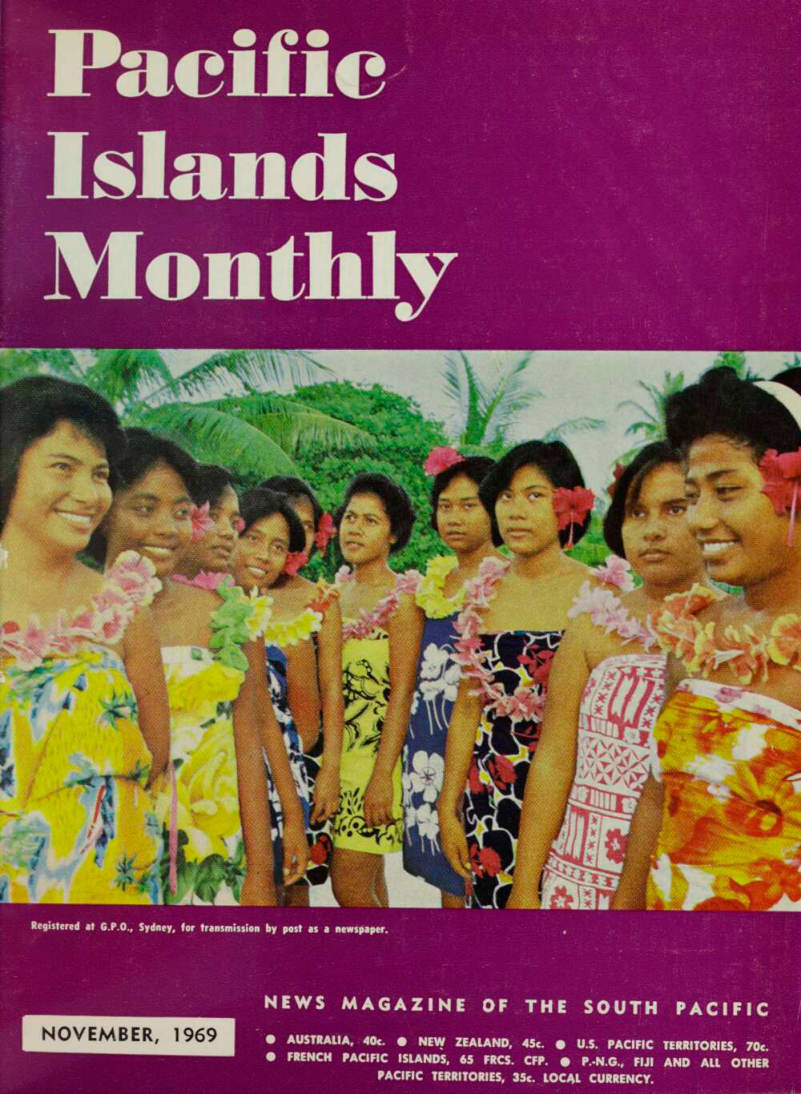 1
1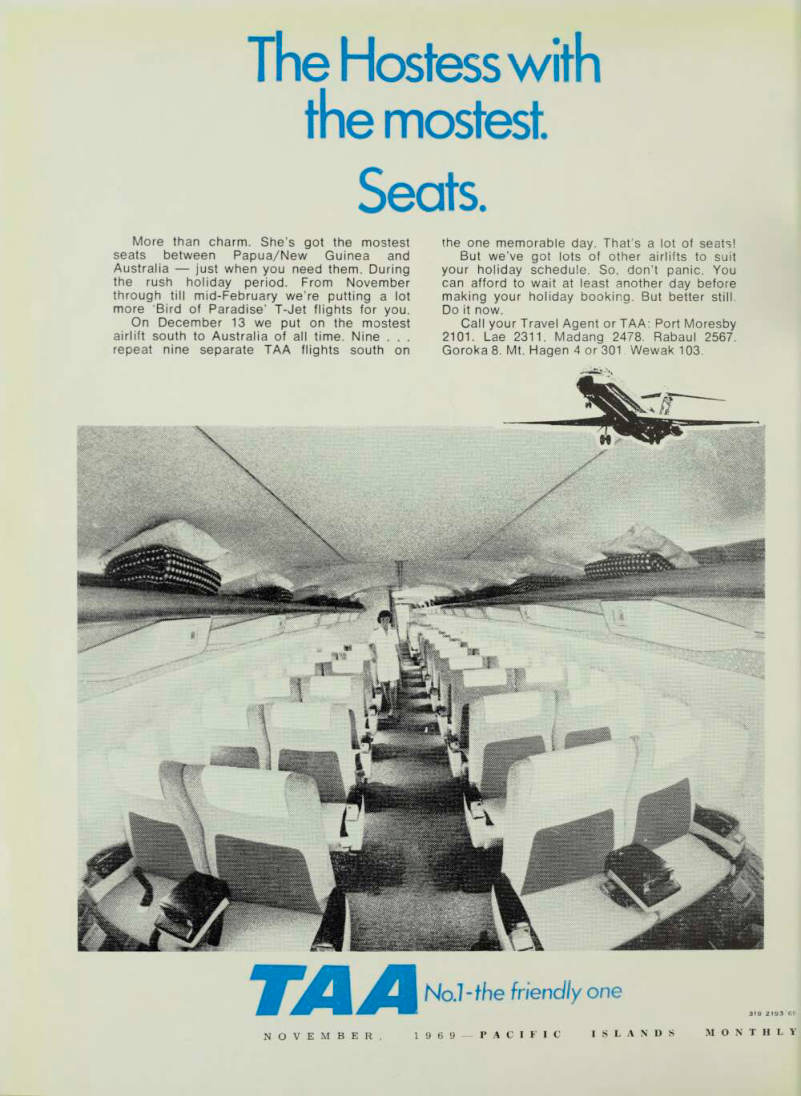 2
2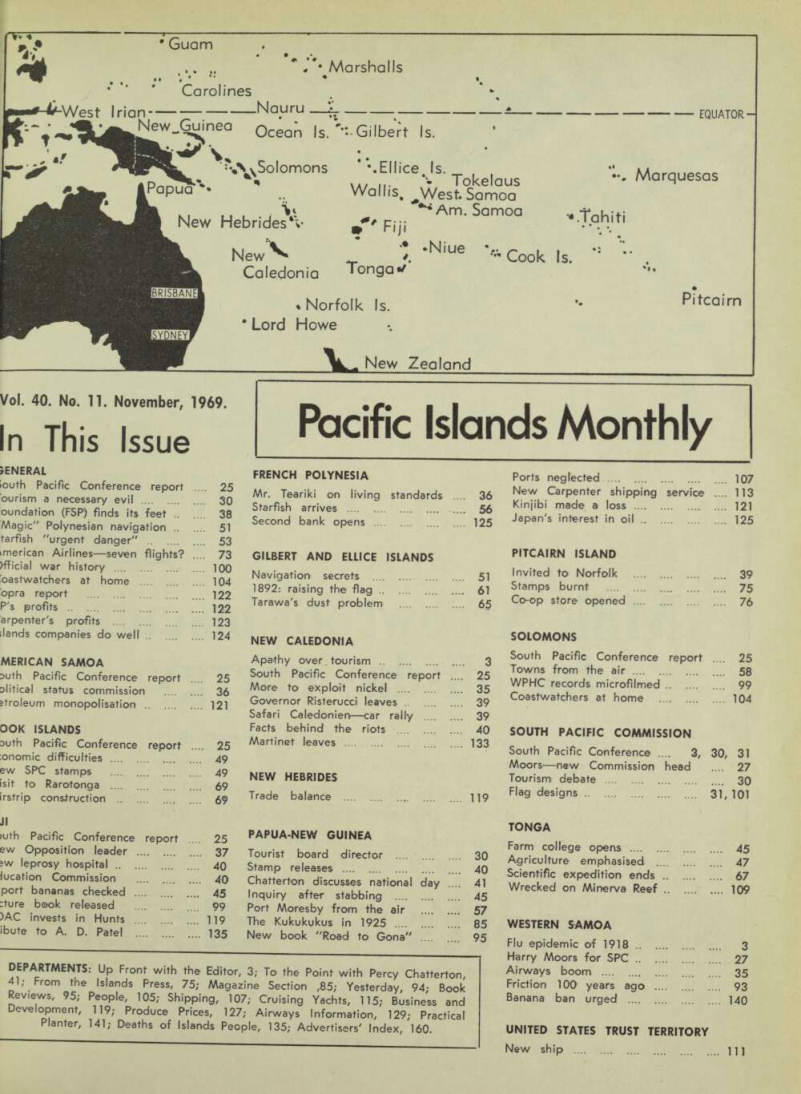 3
3 4
4 5
5 6
6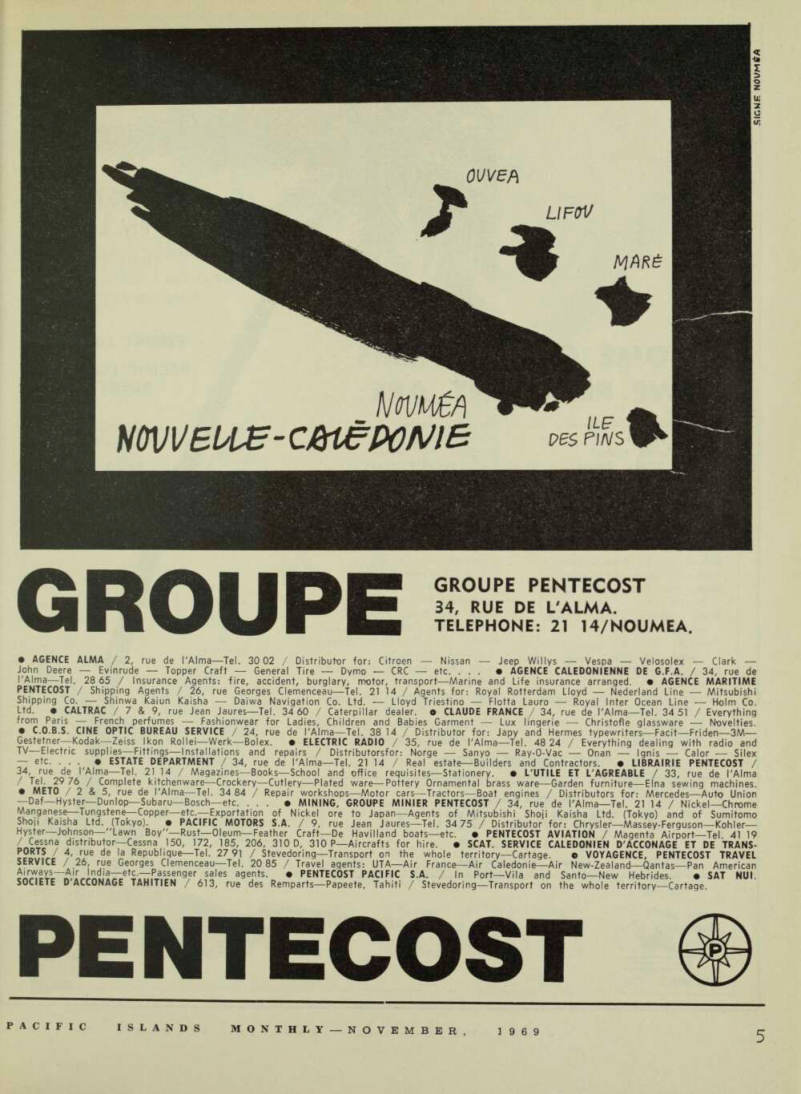 7
7 8
8 9
9 10
10 11
11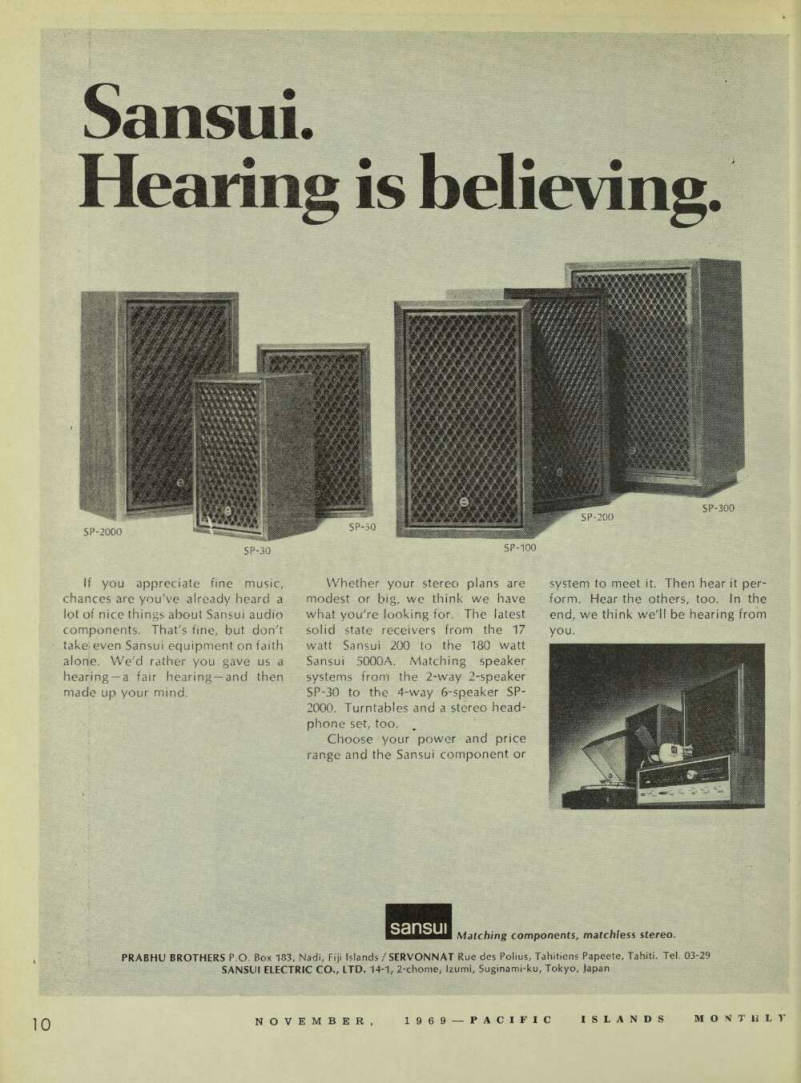 12
12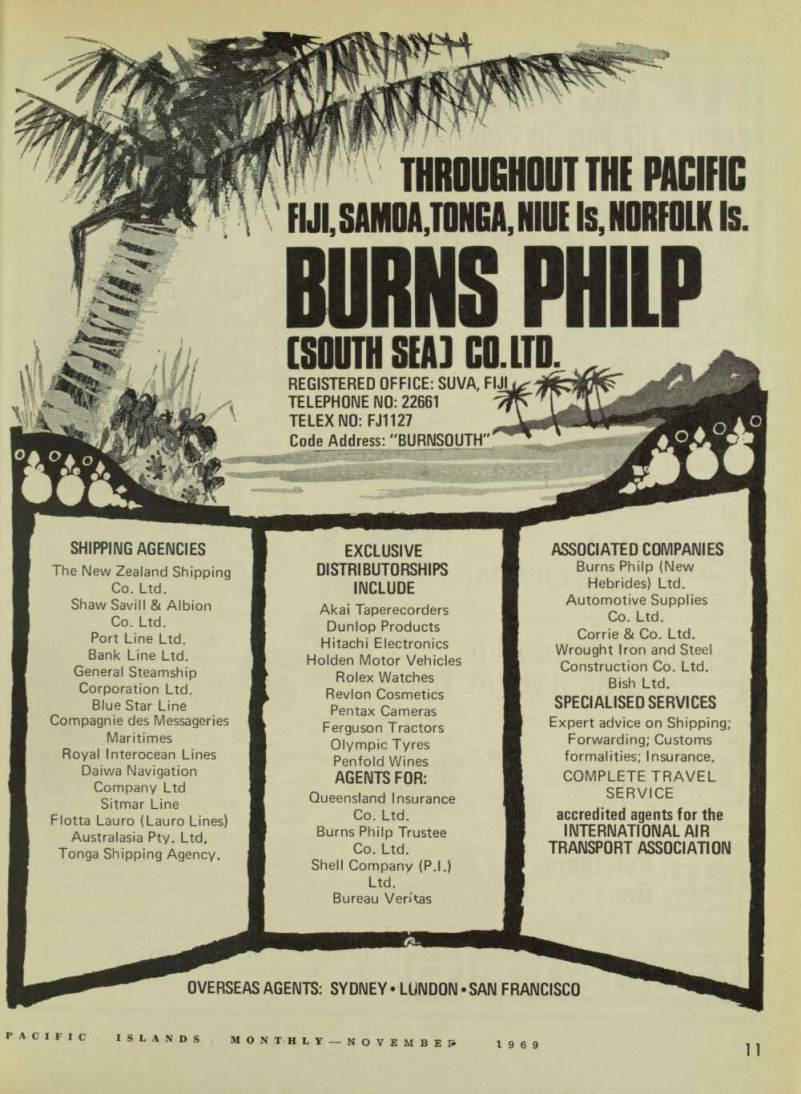 13
13 14
14 15
15 16
16 17
17 18
18 19
19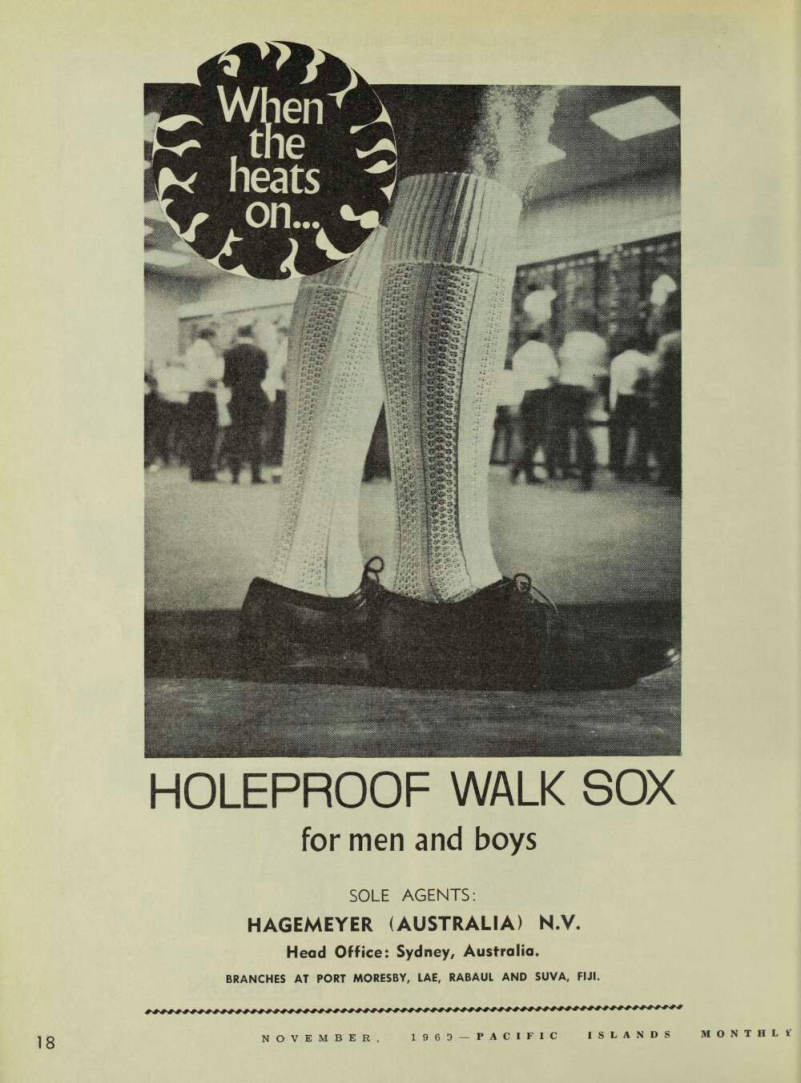 20
20 21
21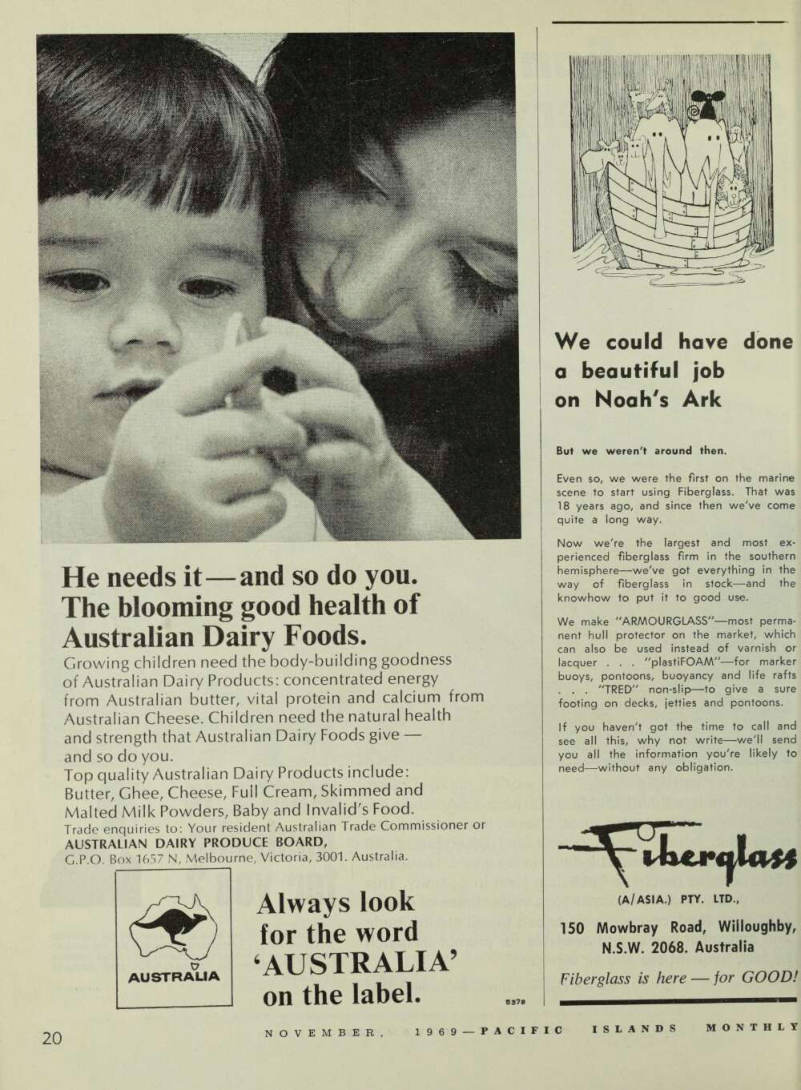 22
22 23
23 24
24 25
25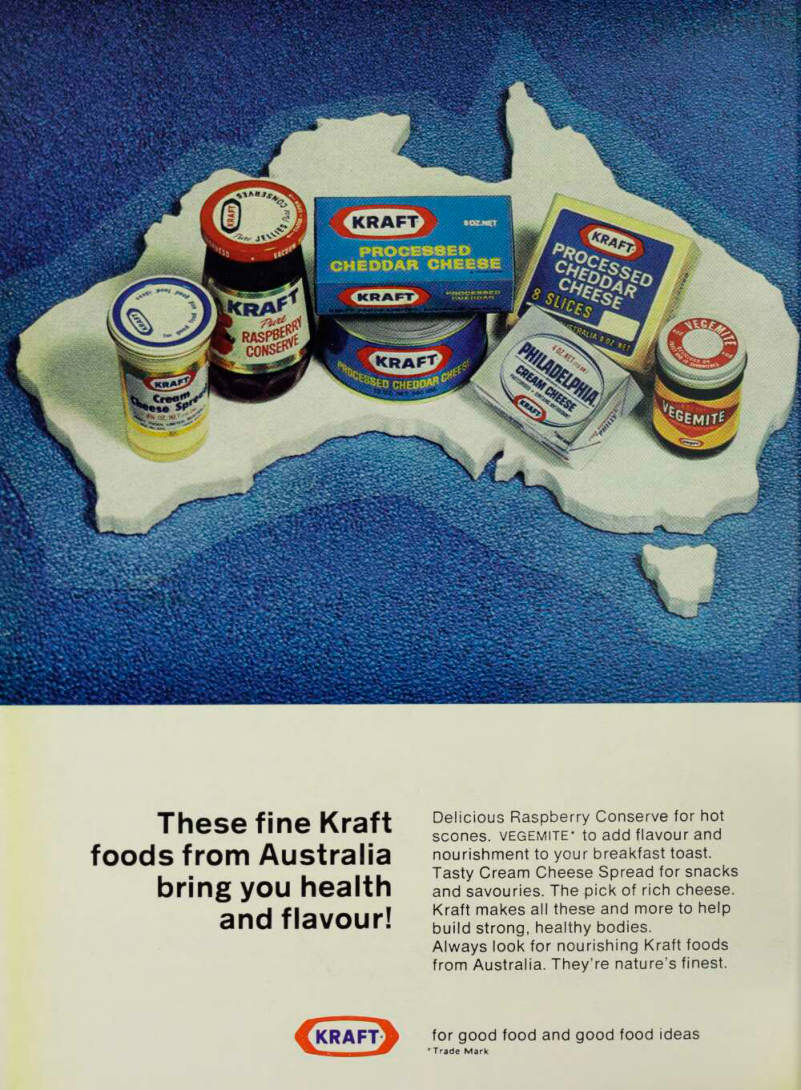 26
26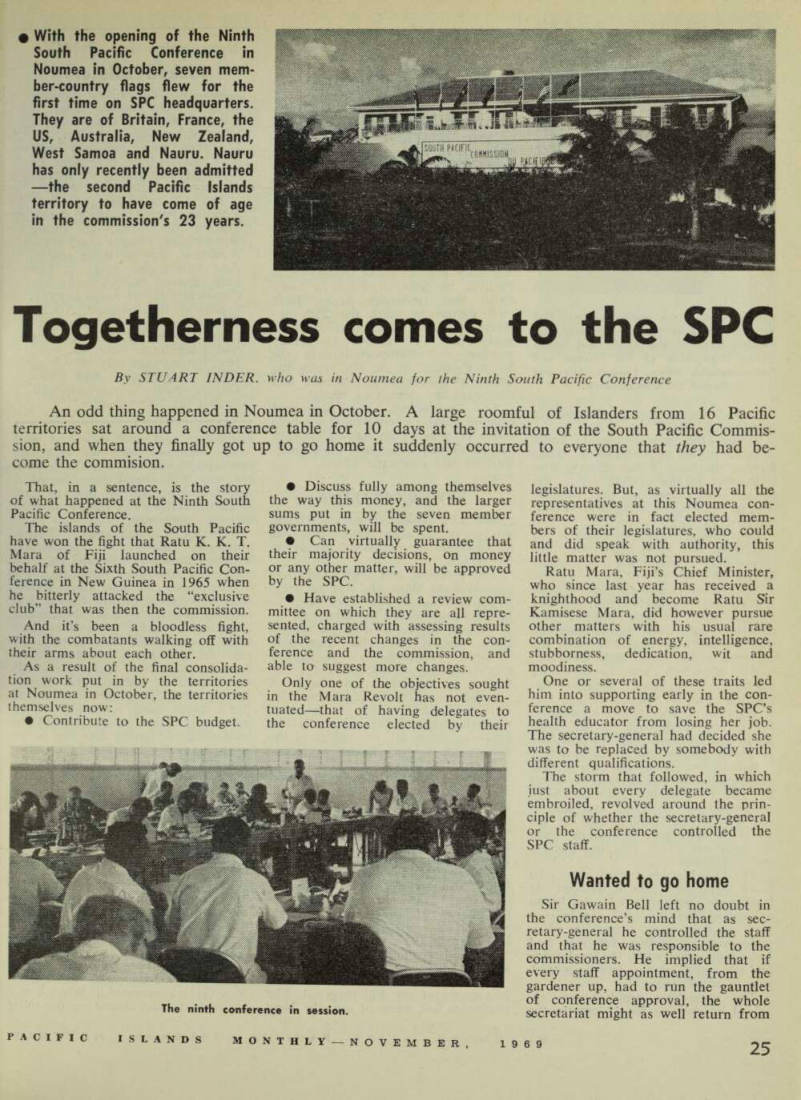 27
27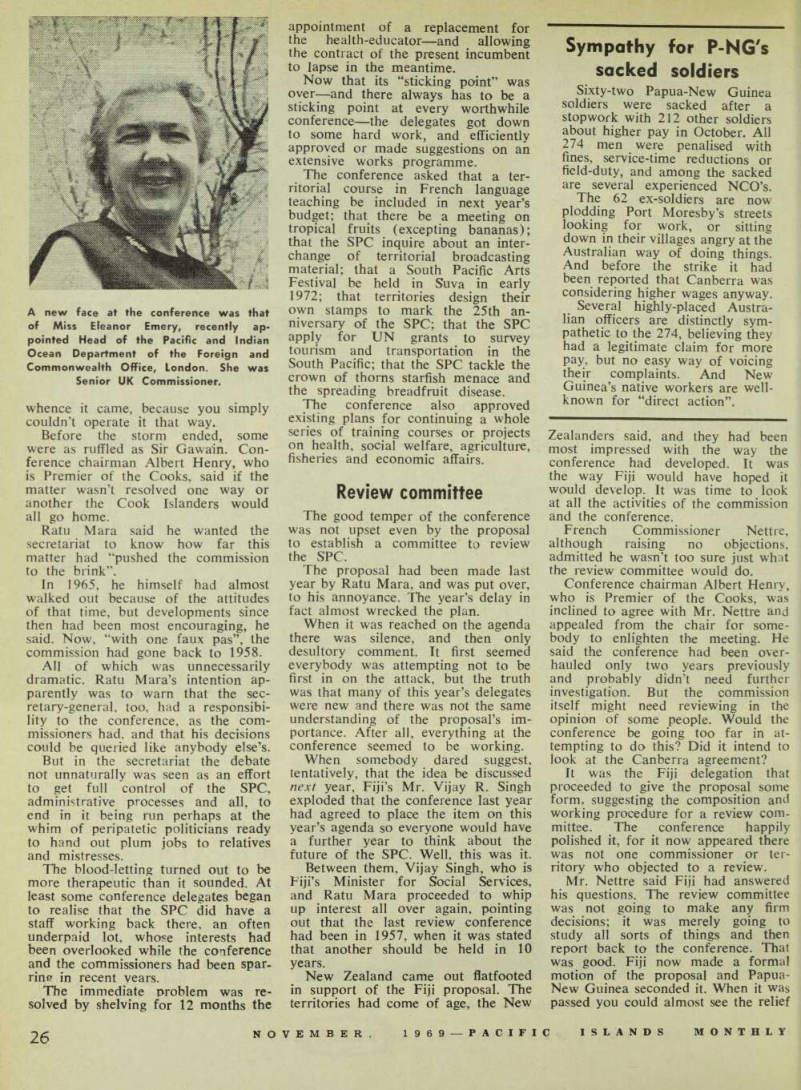 28
28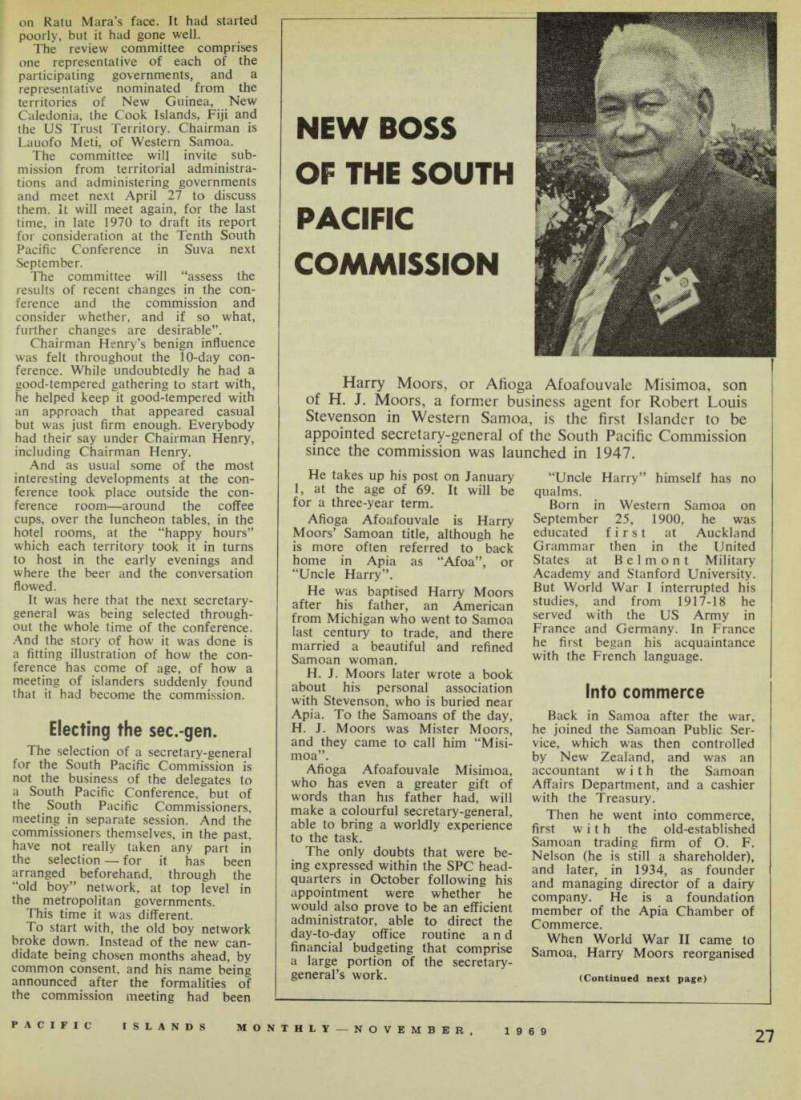 29
29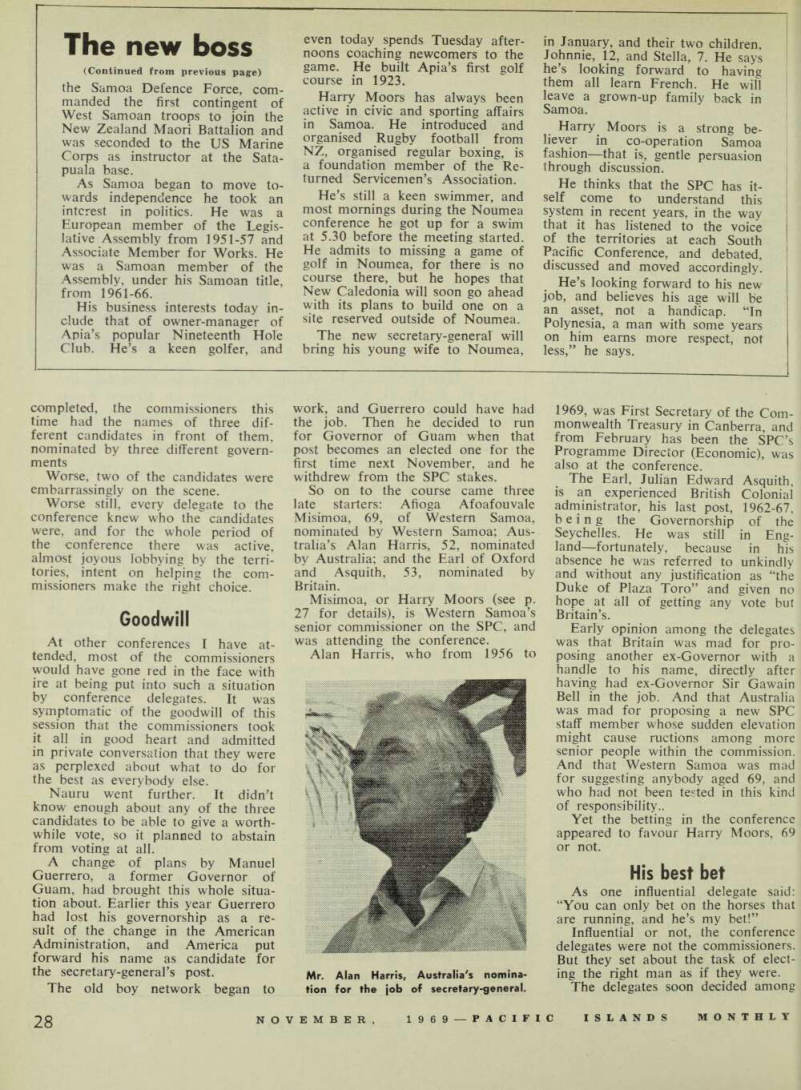 30
30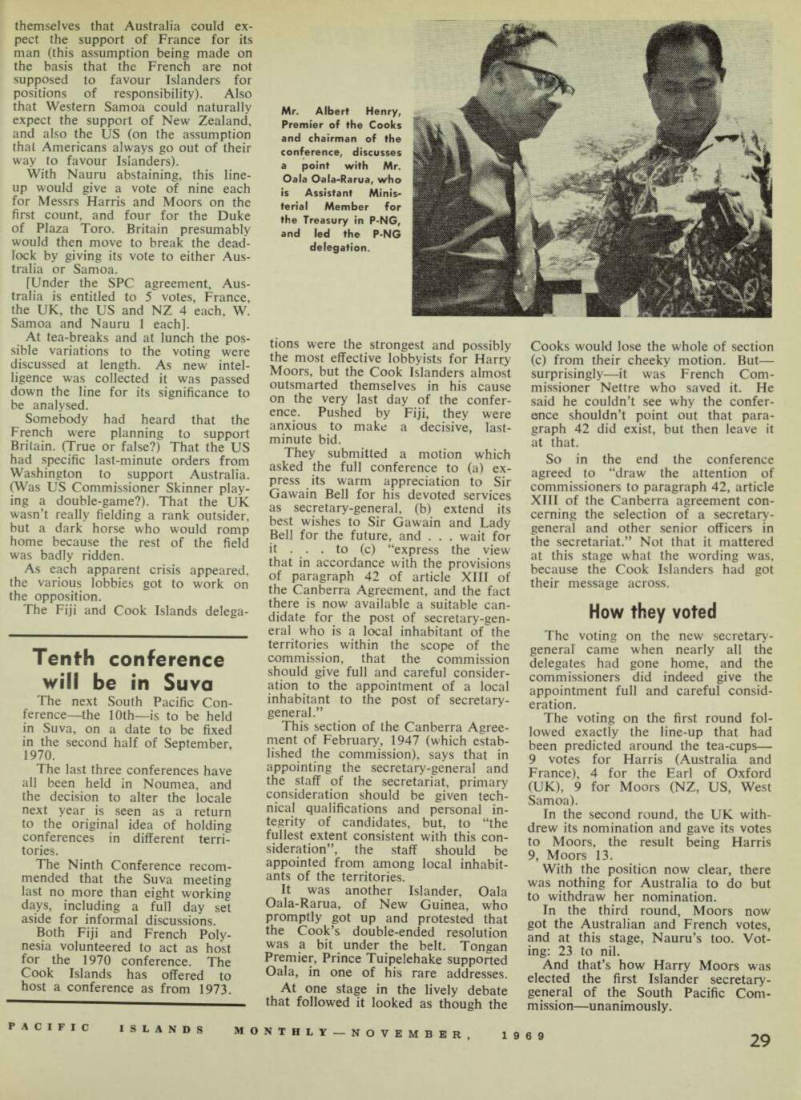 31
31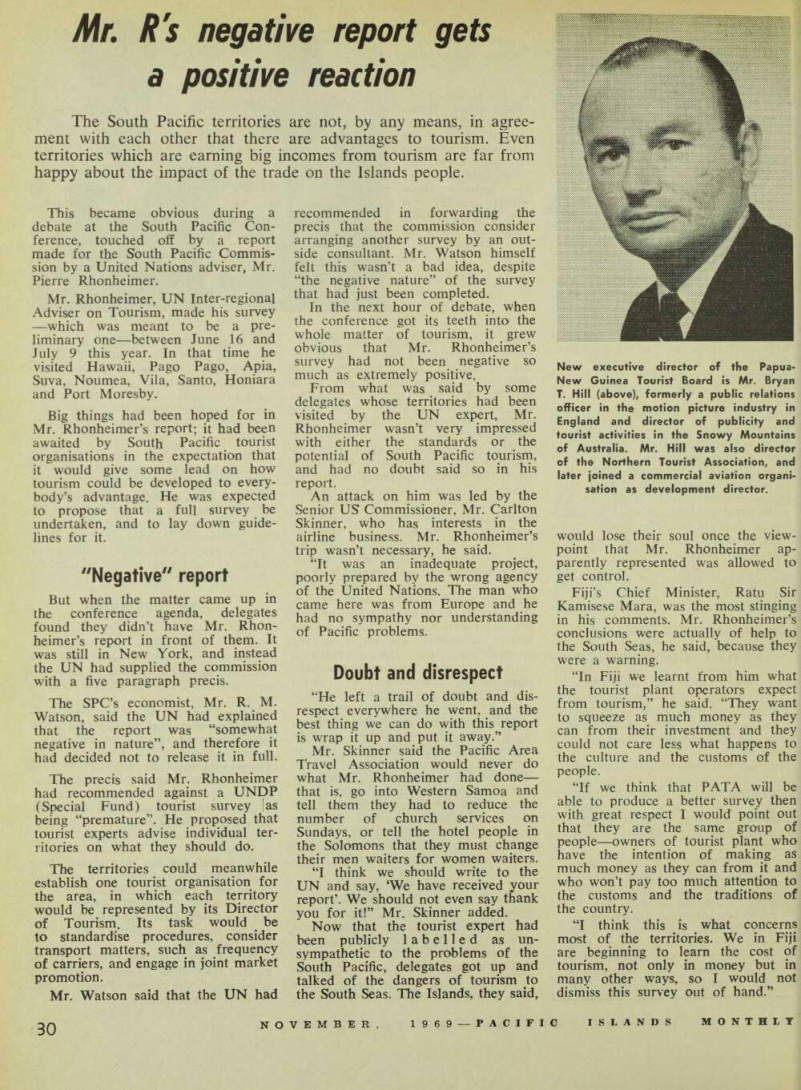 32
32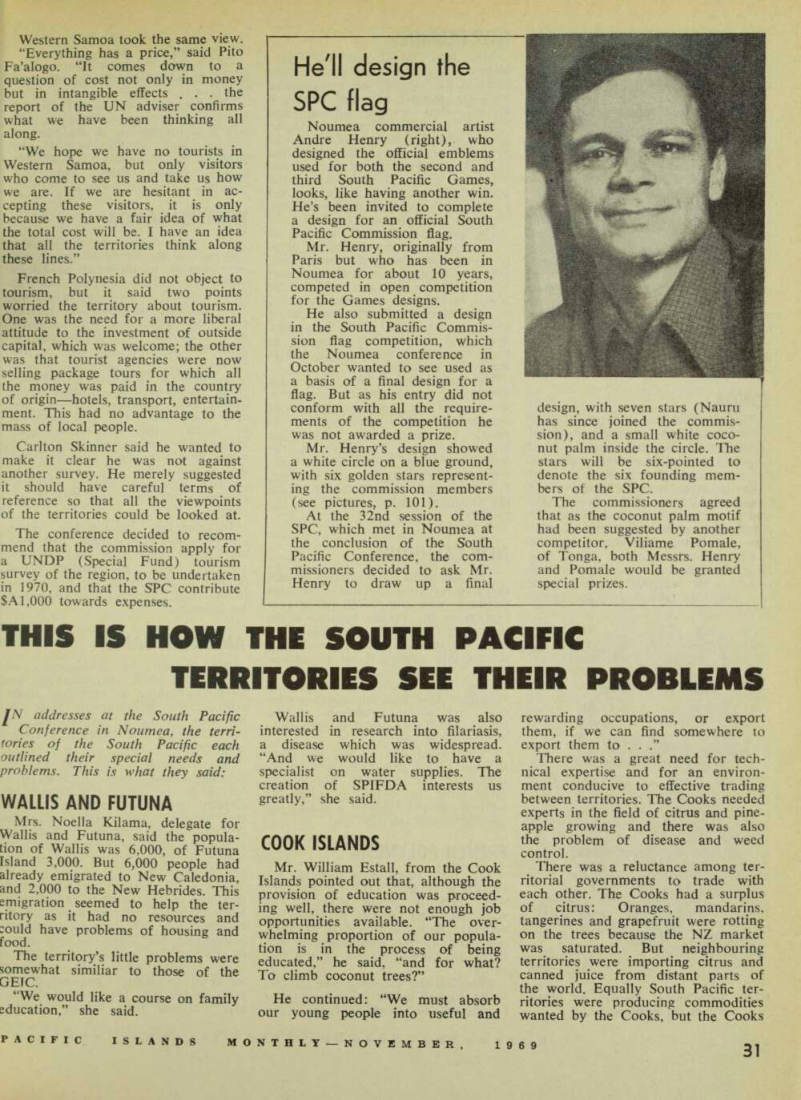 33
33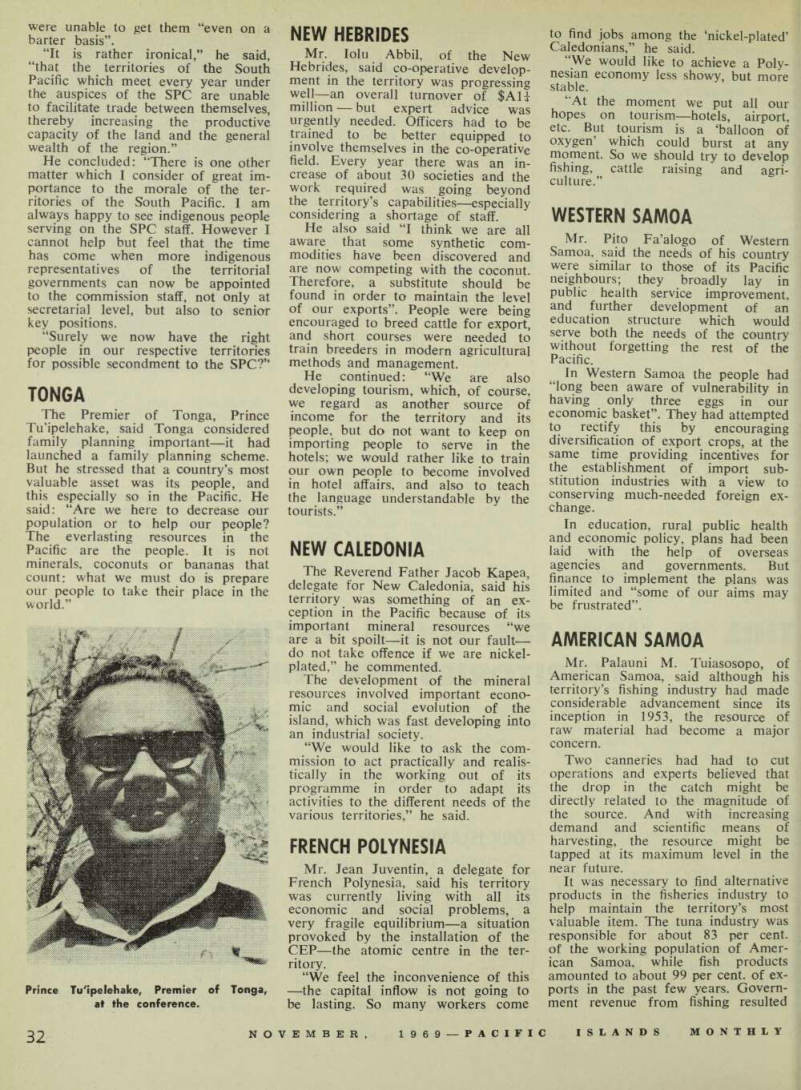 34
34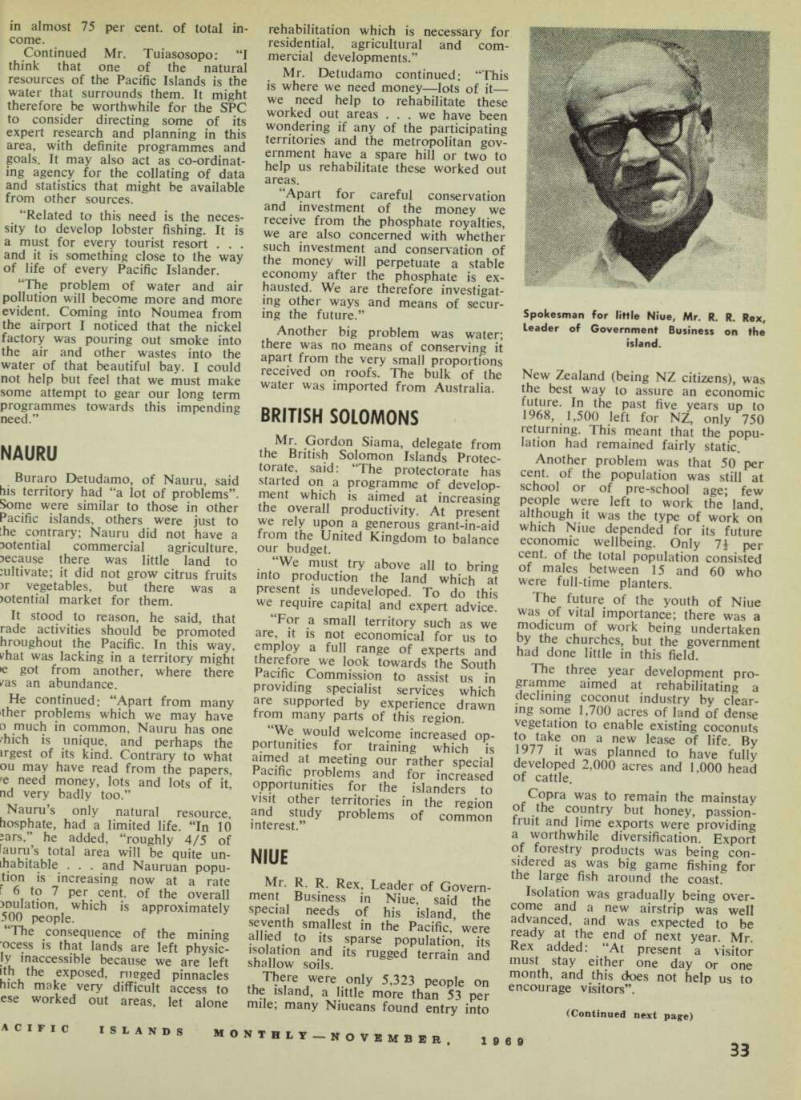 35
35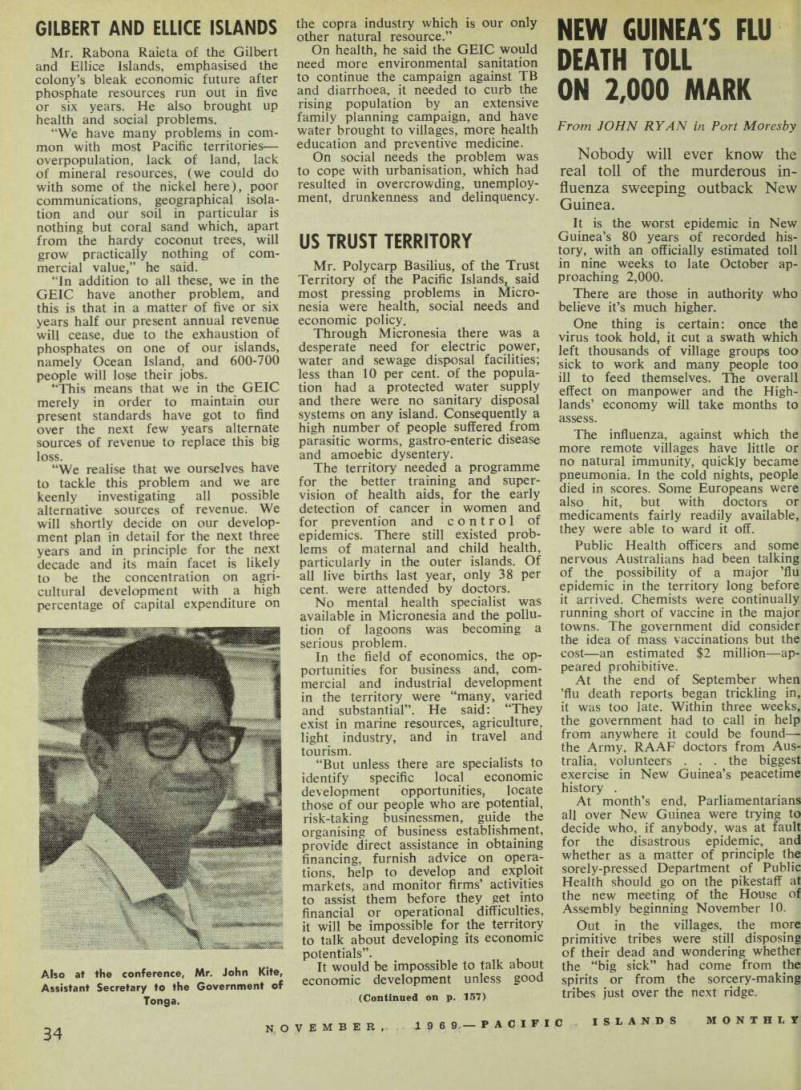 36
36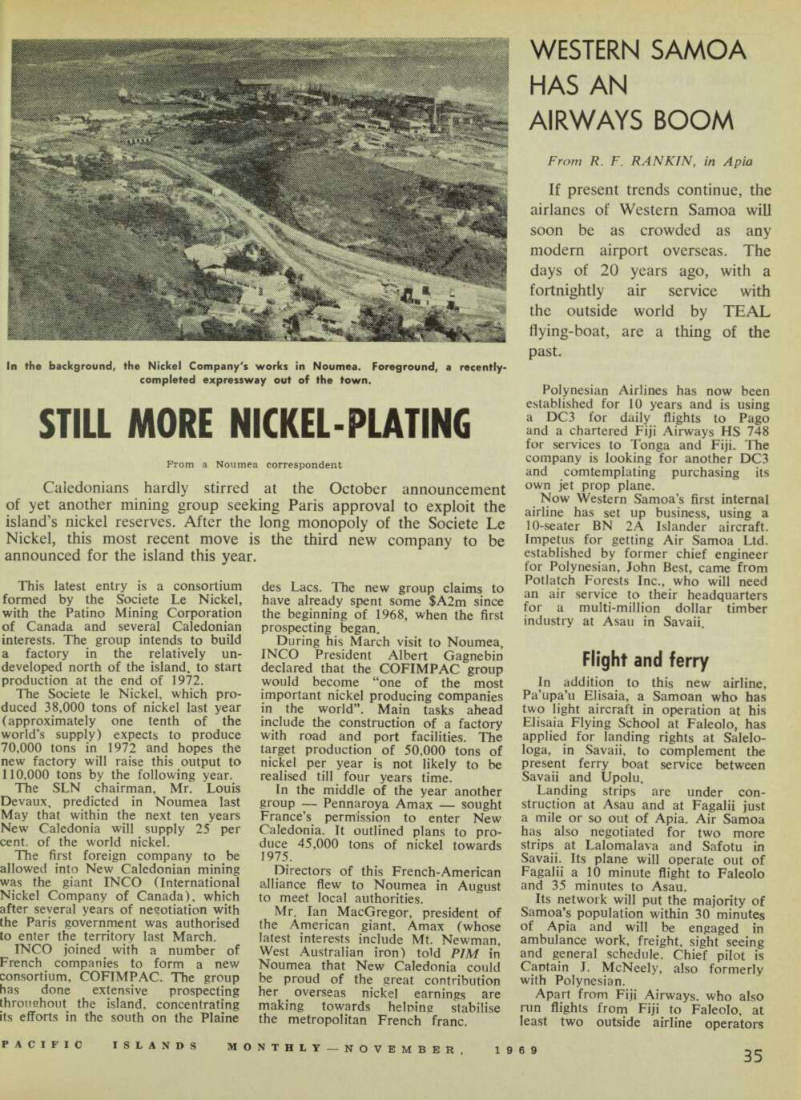 37
37 38
38 39
39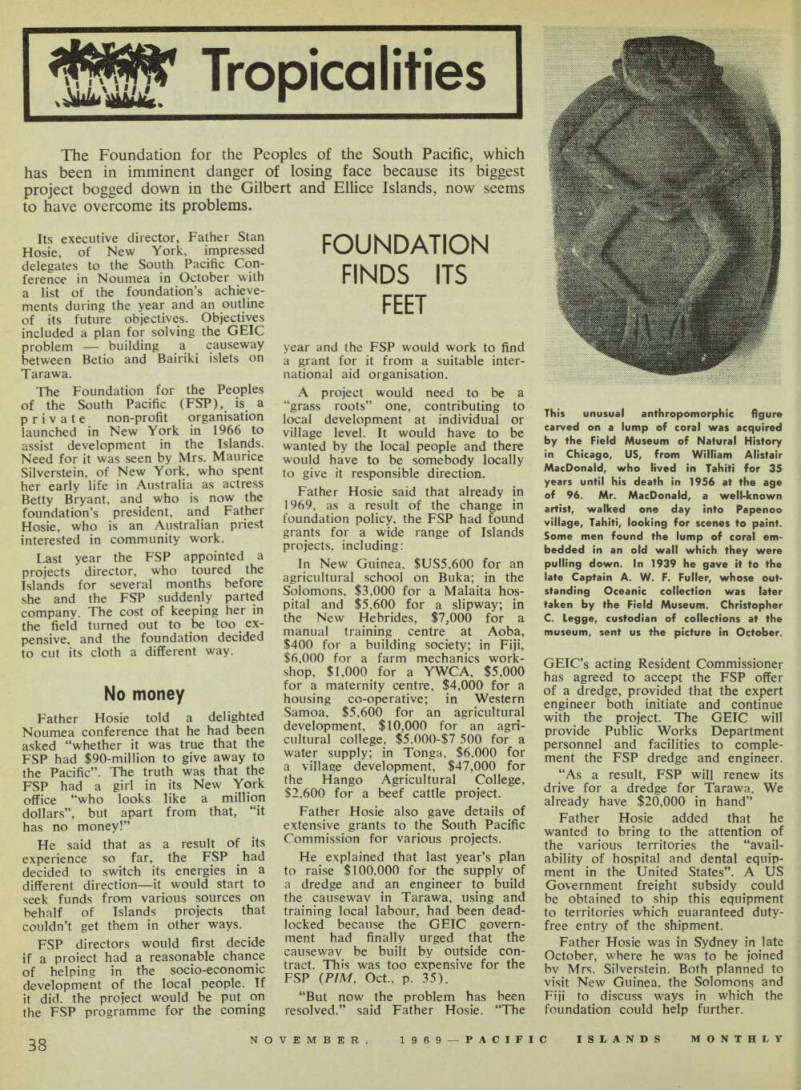 40
40 41
41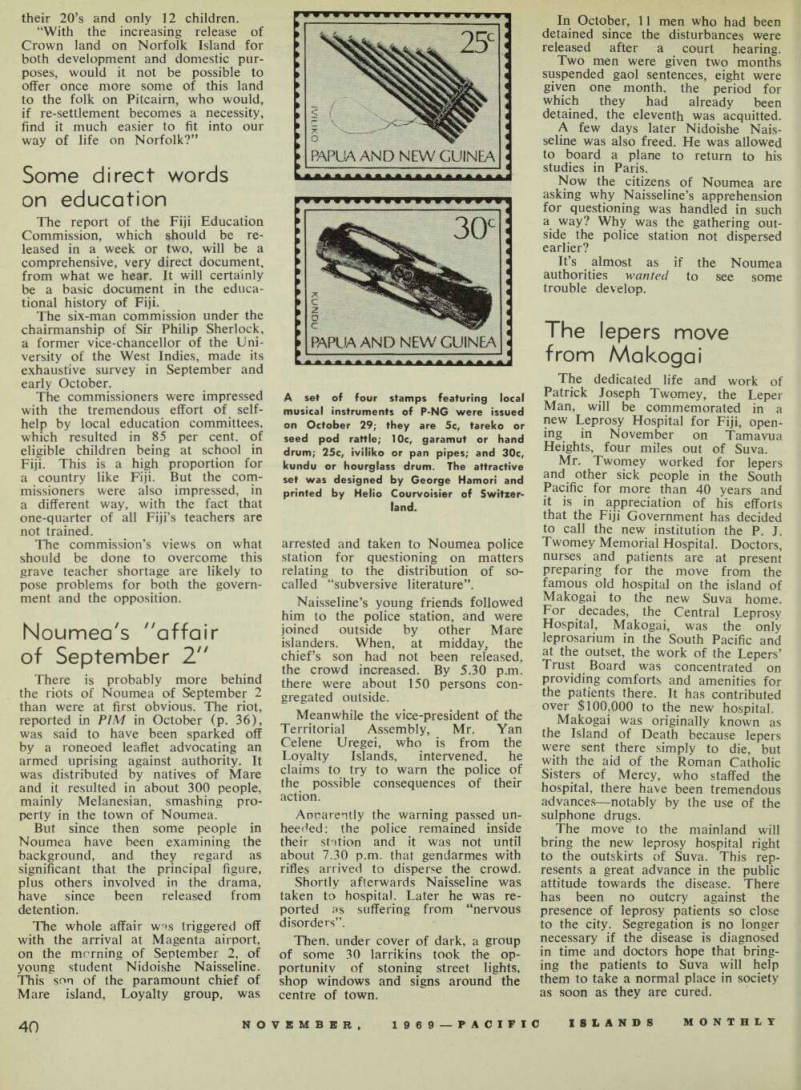 42
42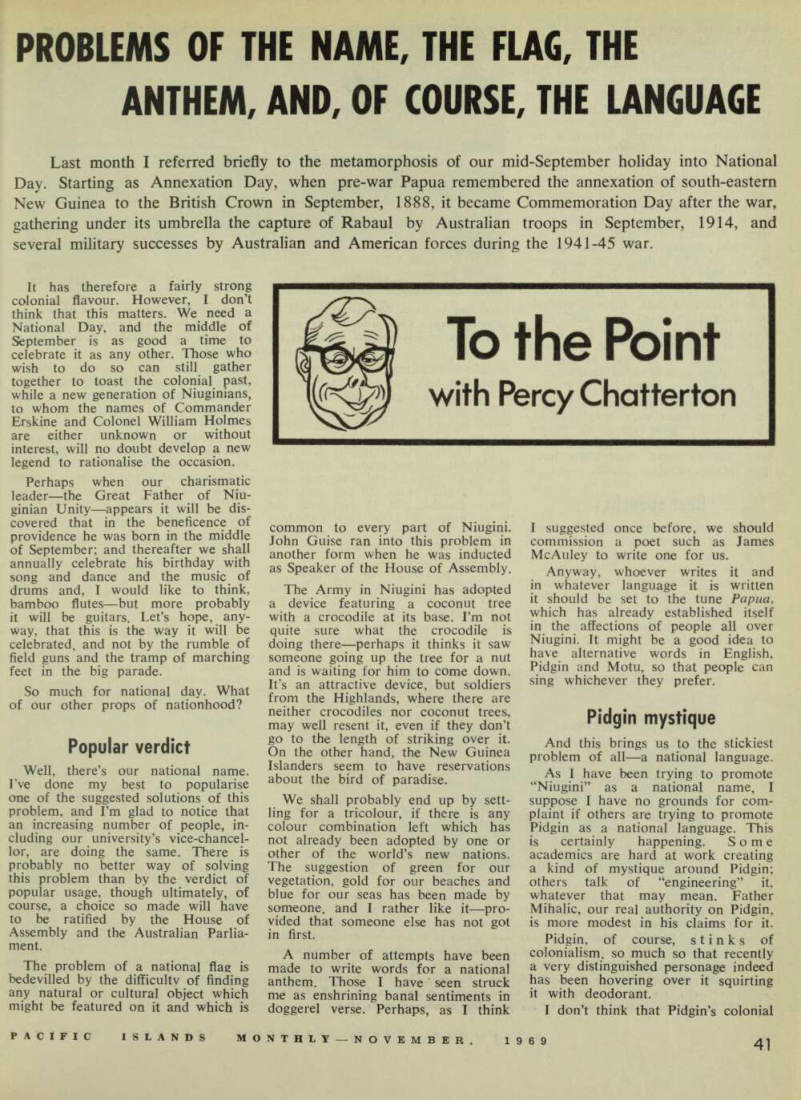 43
43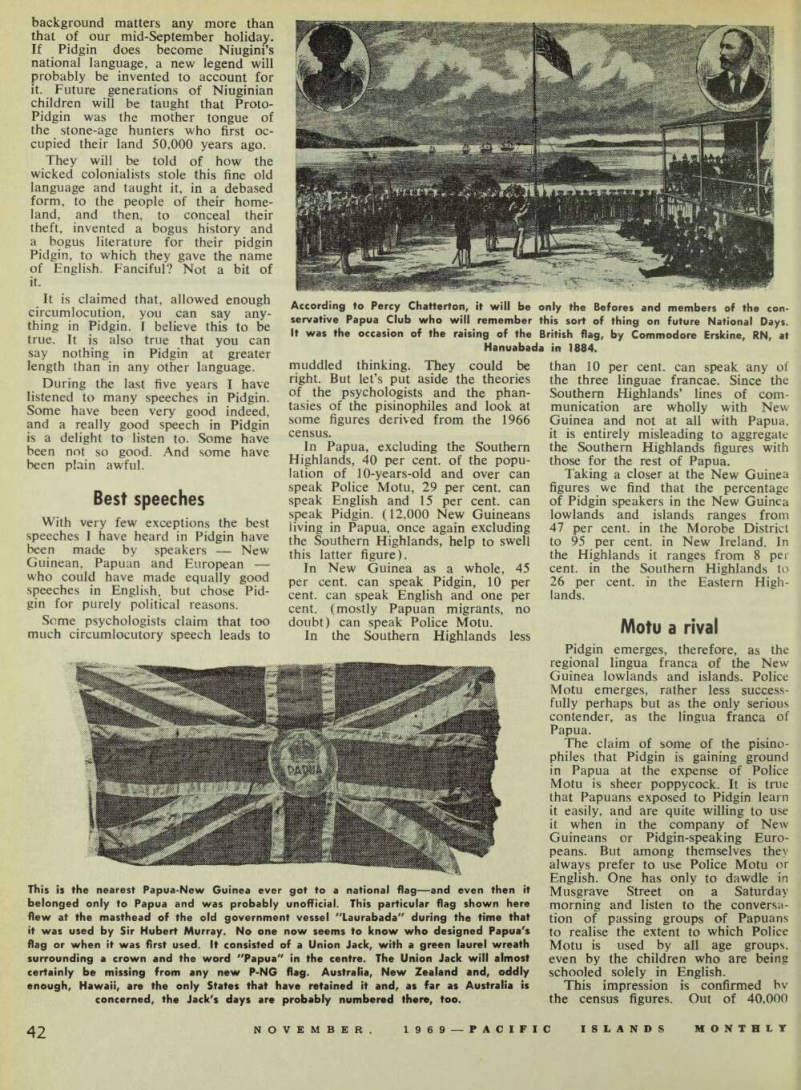 44
44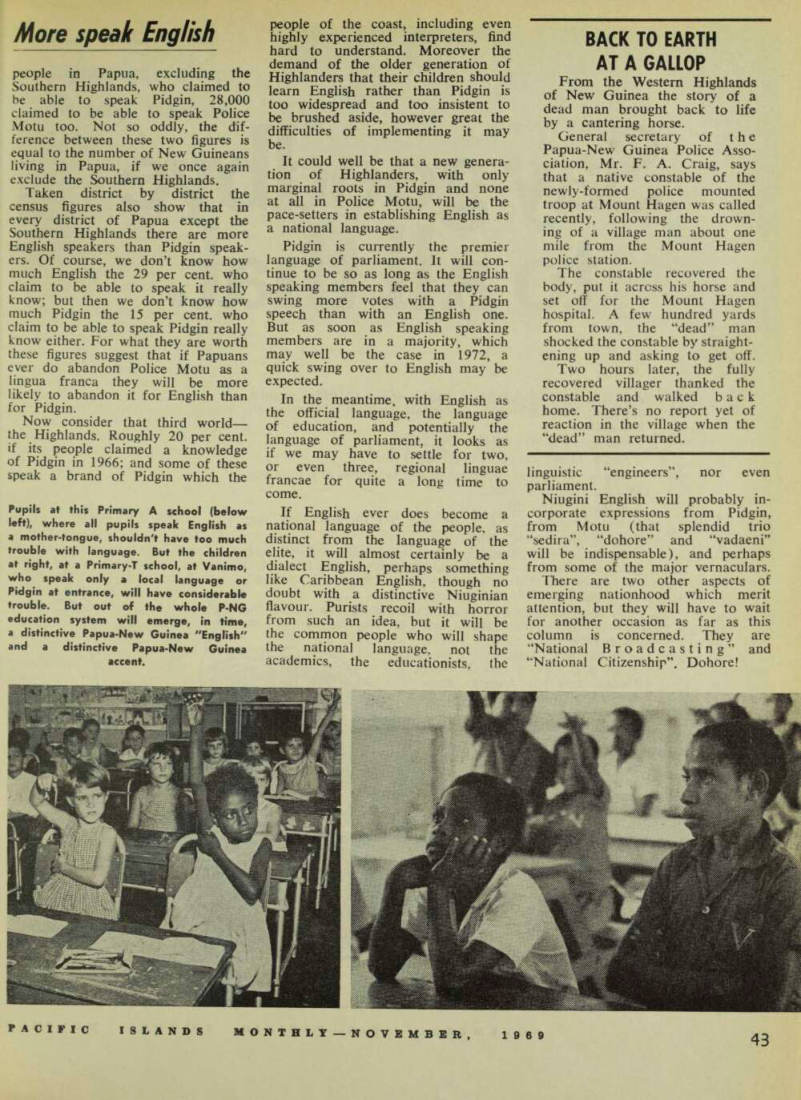 45
45 46
46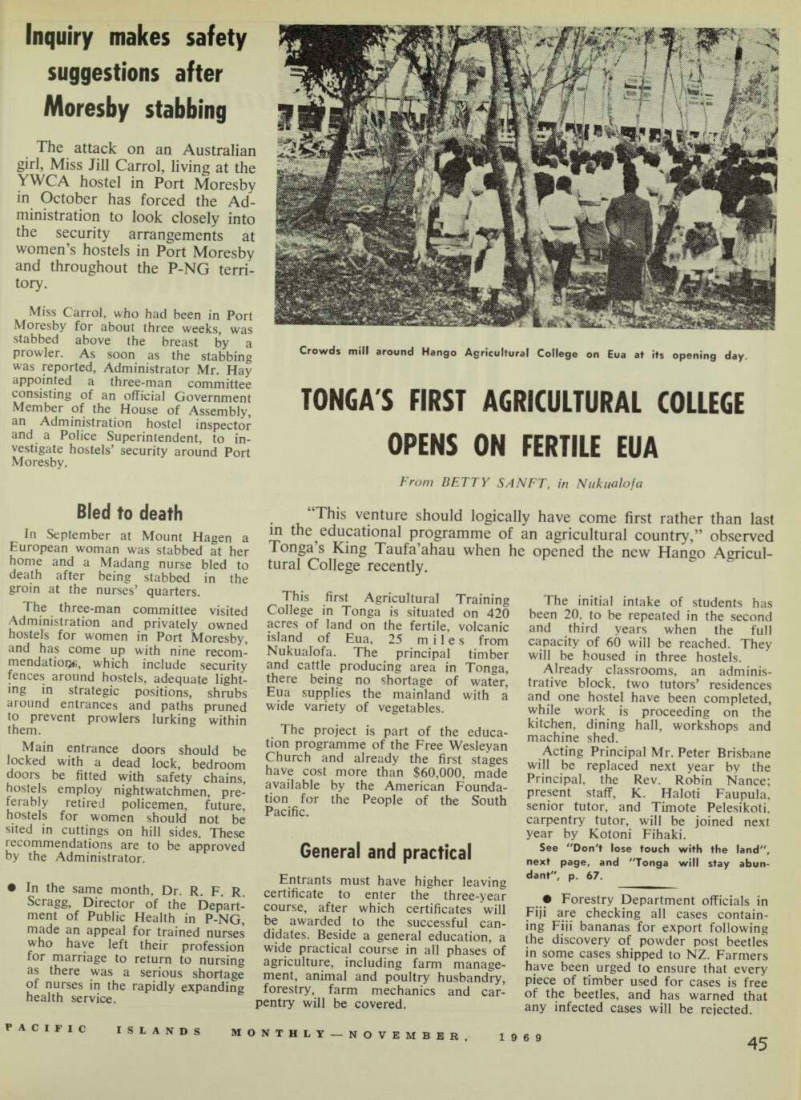 47
47 48
48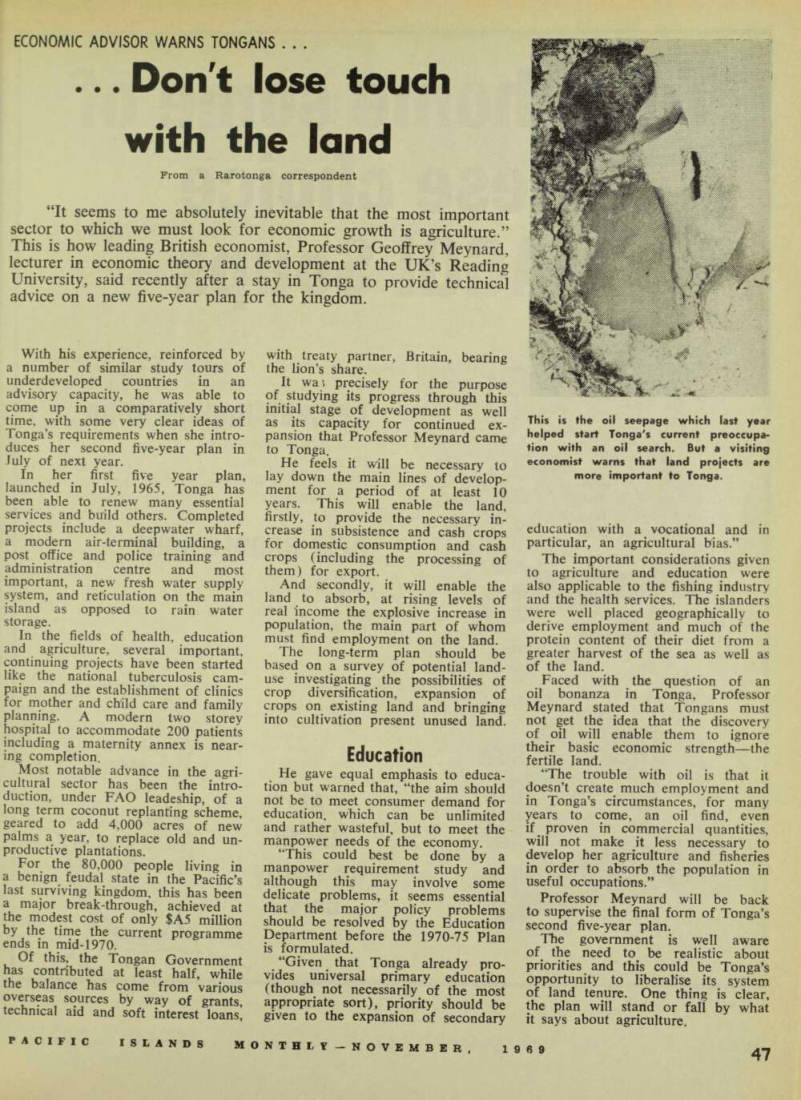 49
49 50
50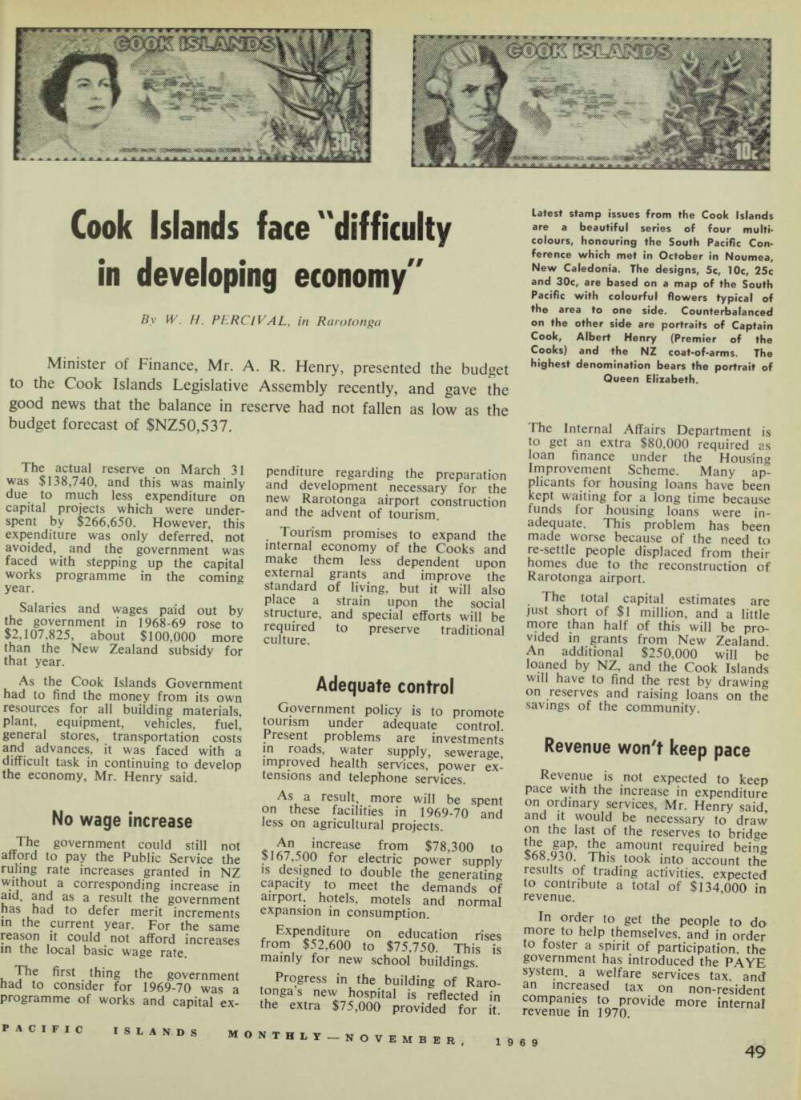 51
51 52
52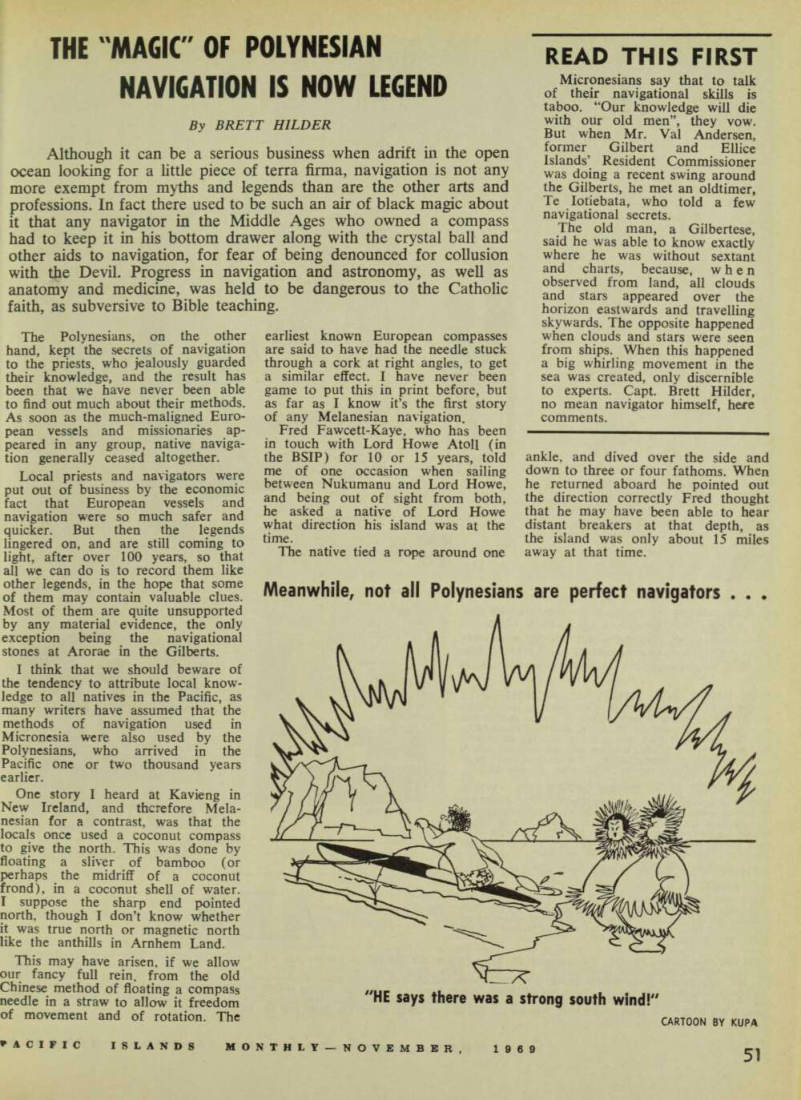 53
53 54
54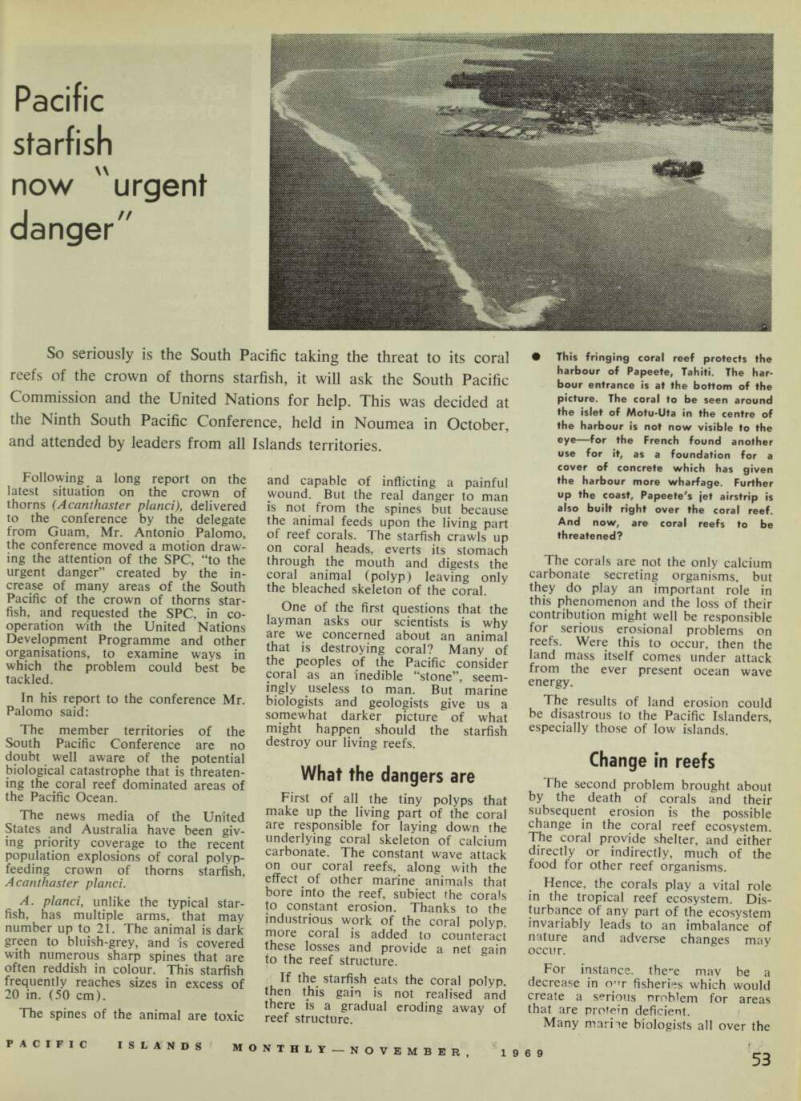 55
55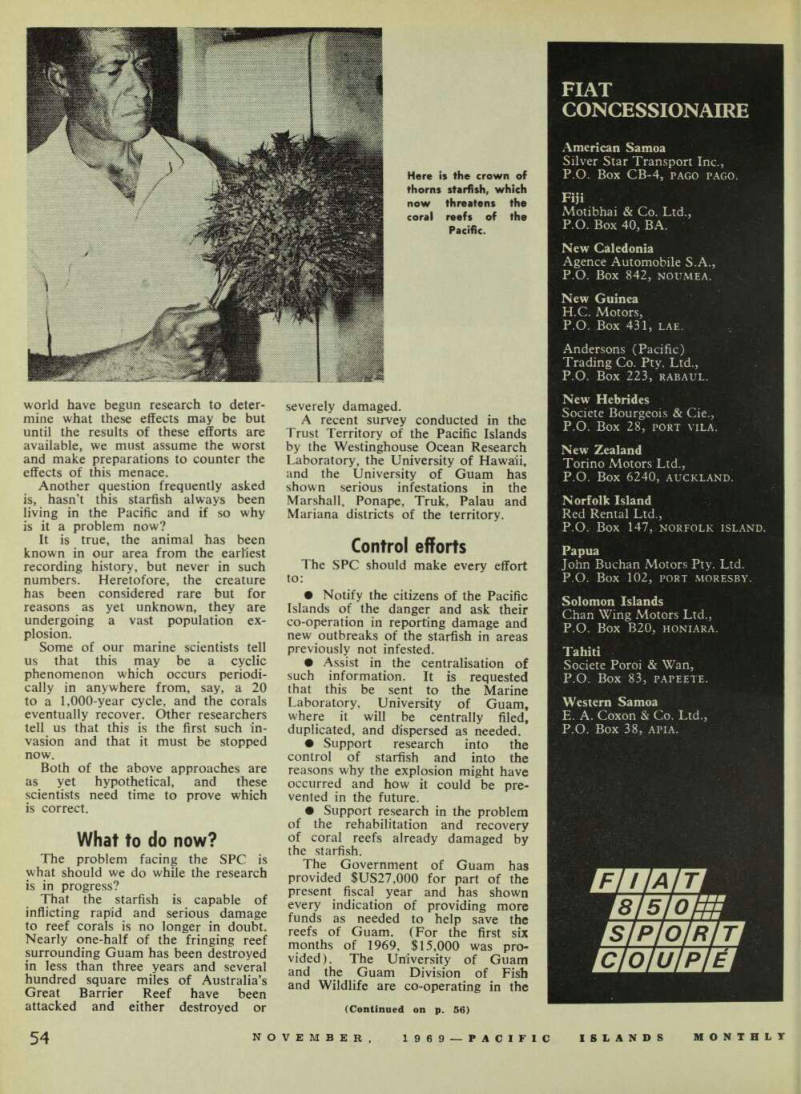 56
56 57
57 58
58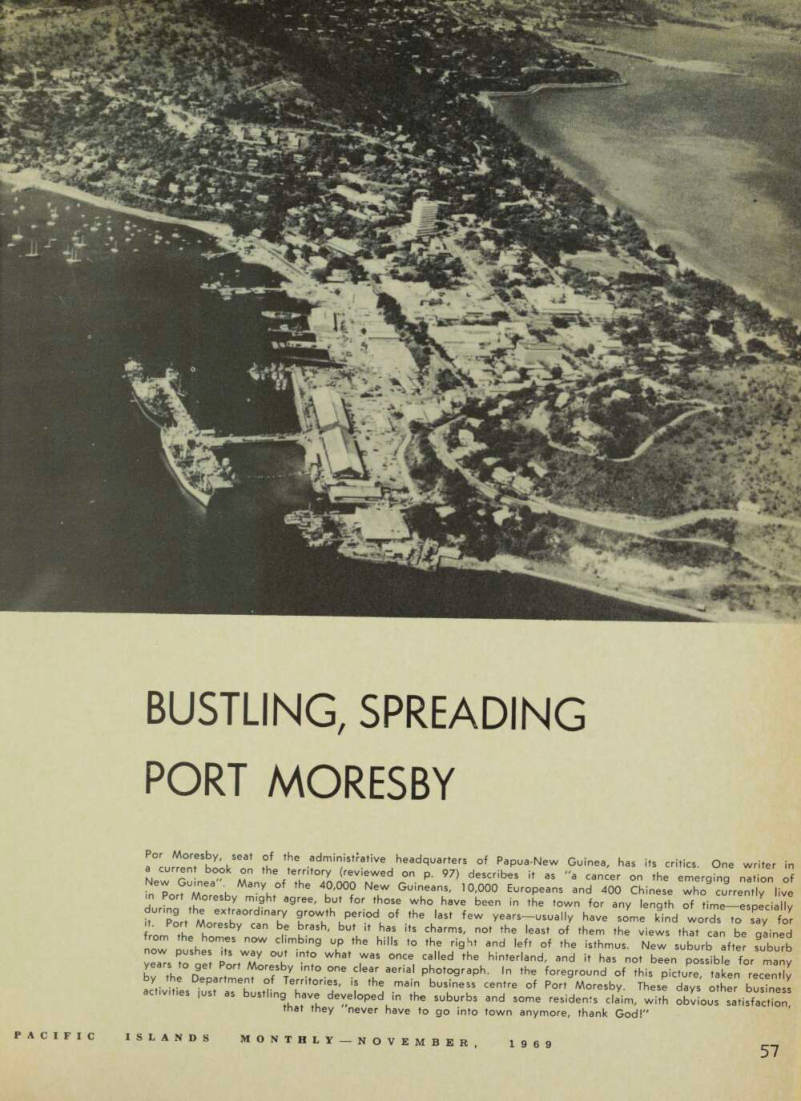 59
59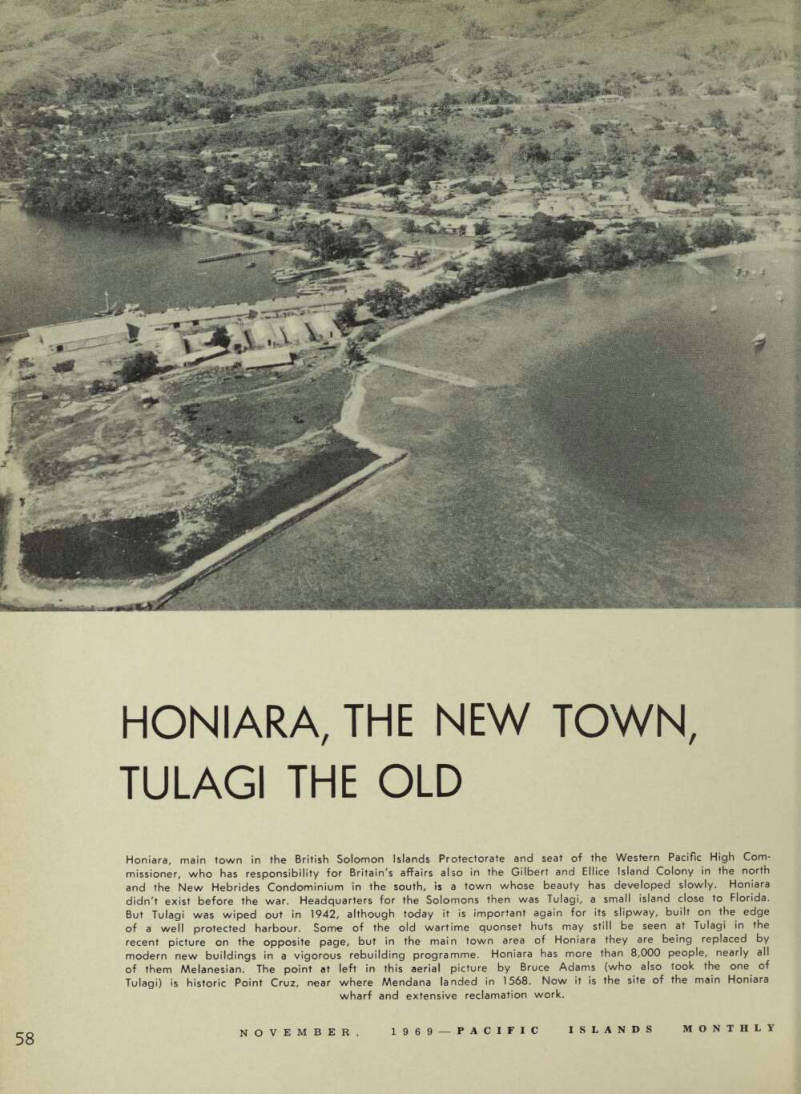 60
60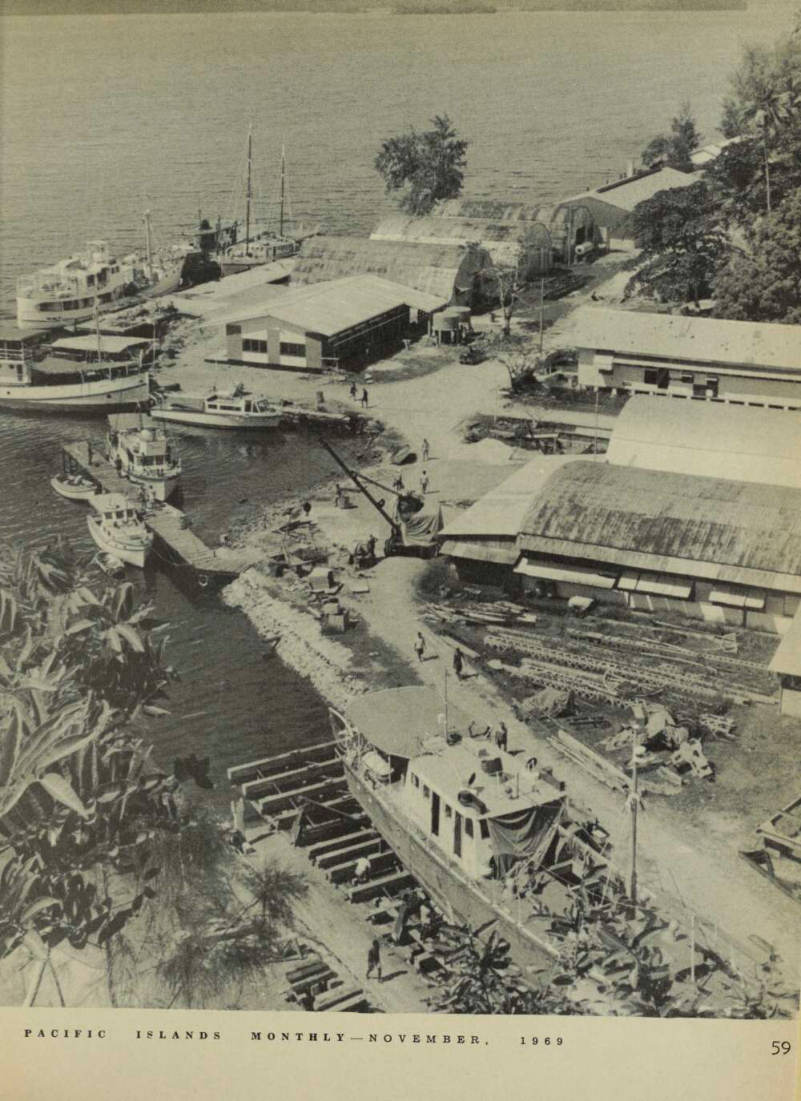 61
61 62
62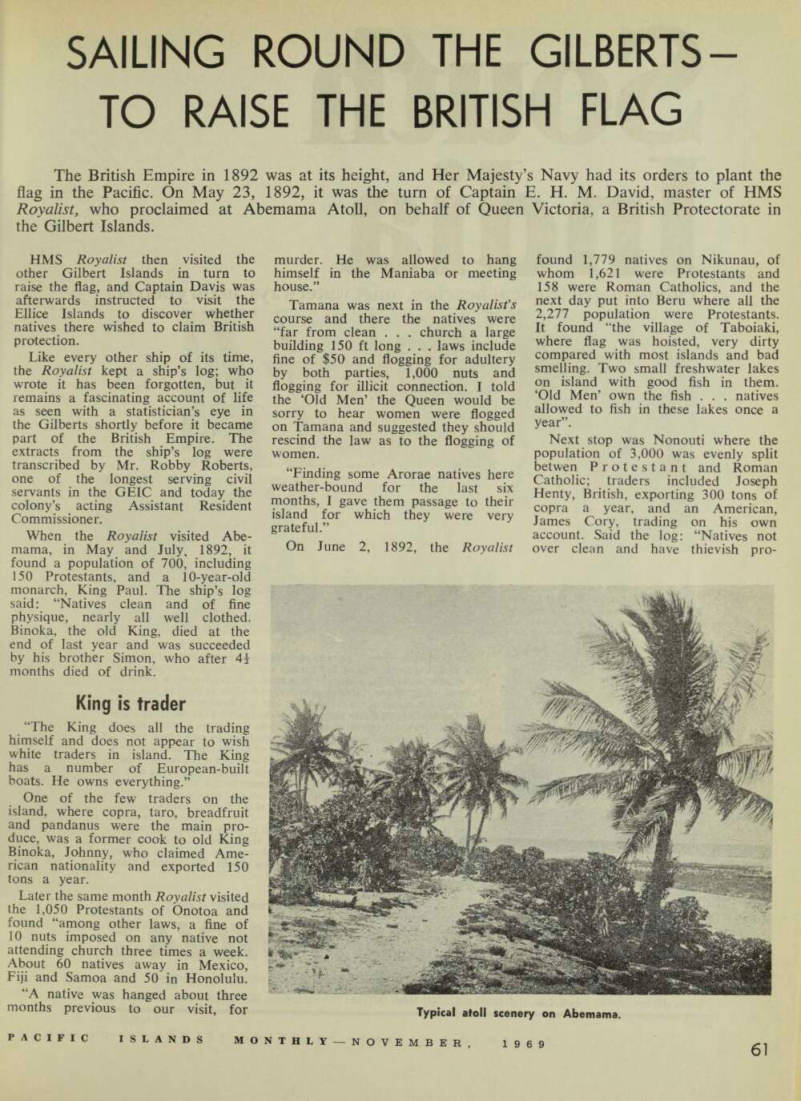 63
63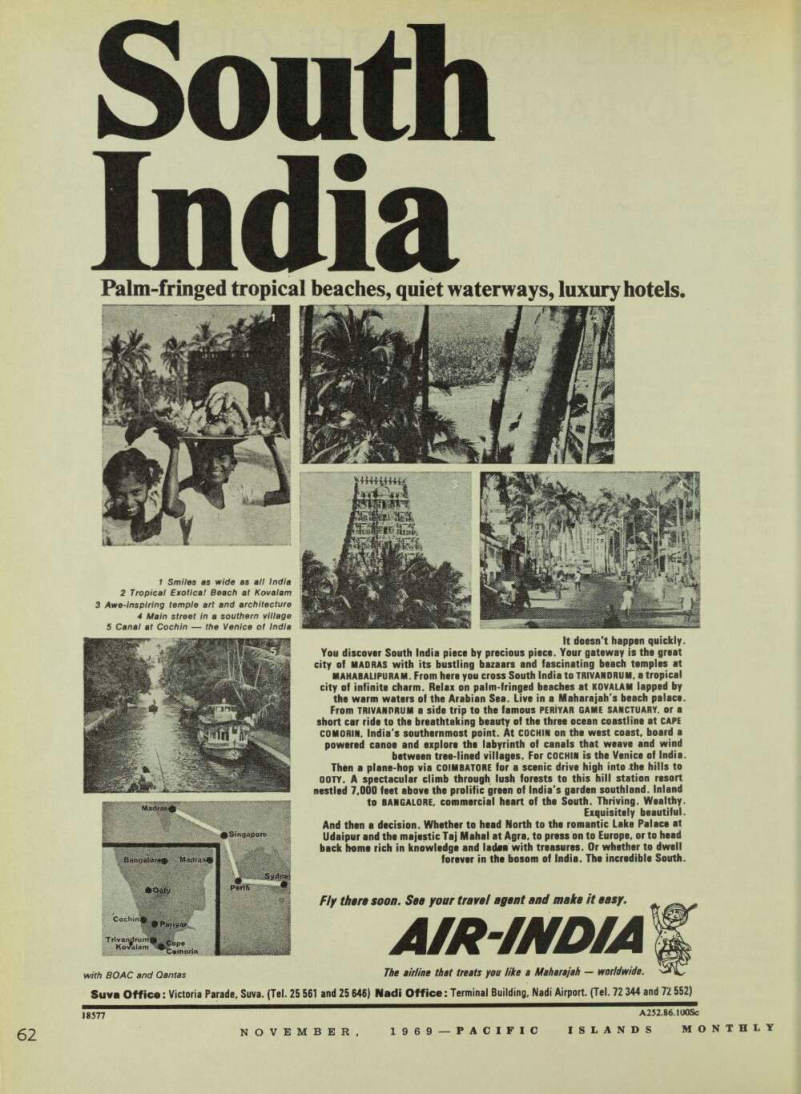 64
64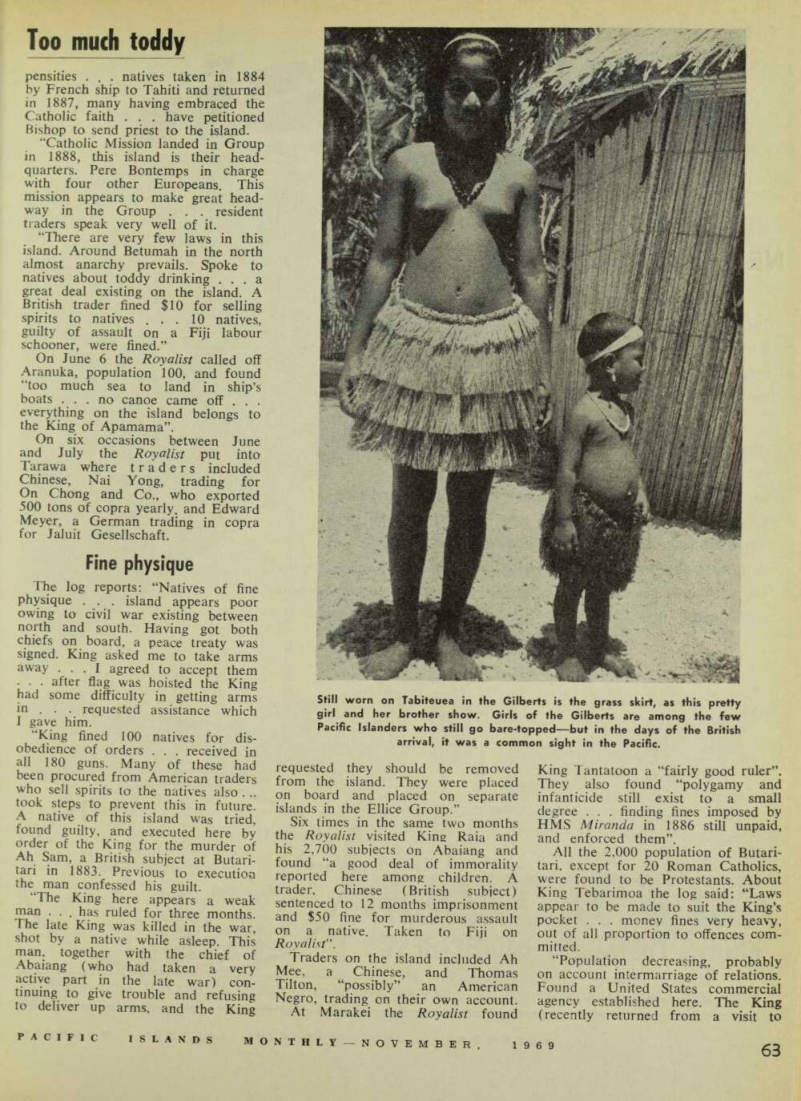 65
65 66
66 67
67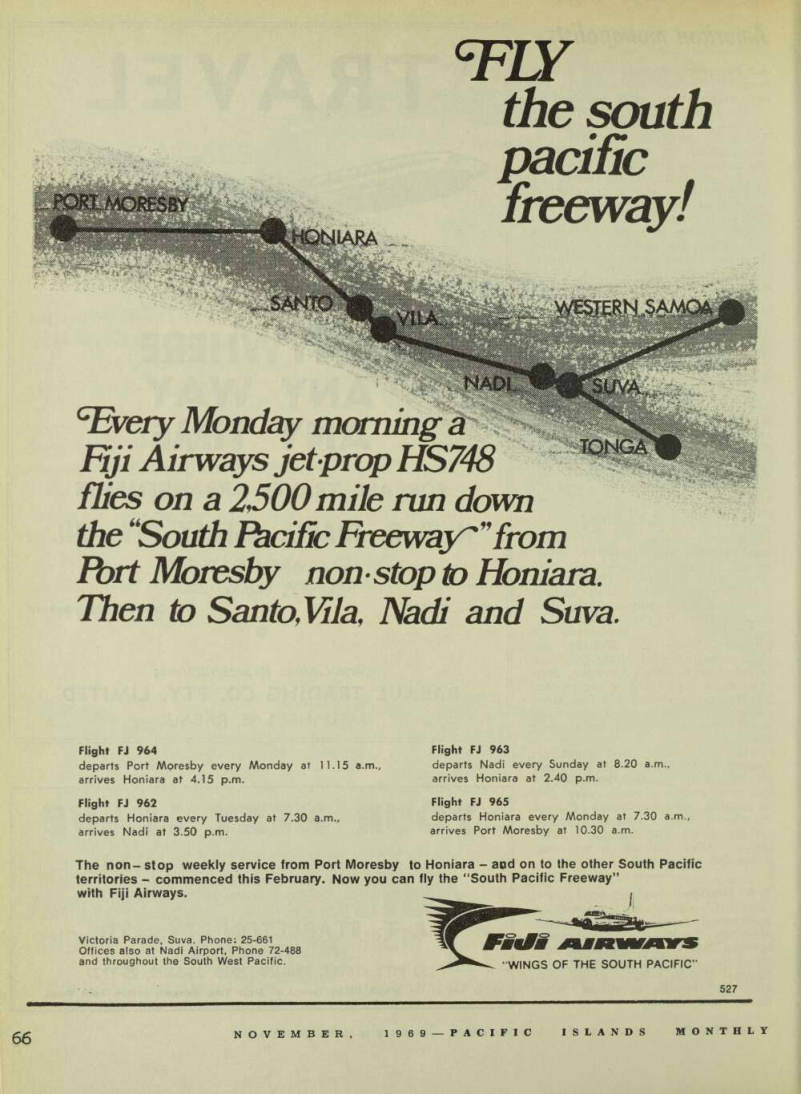 68
68 69
69 70
70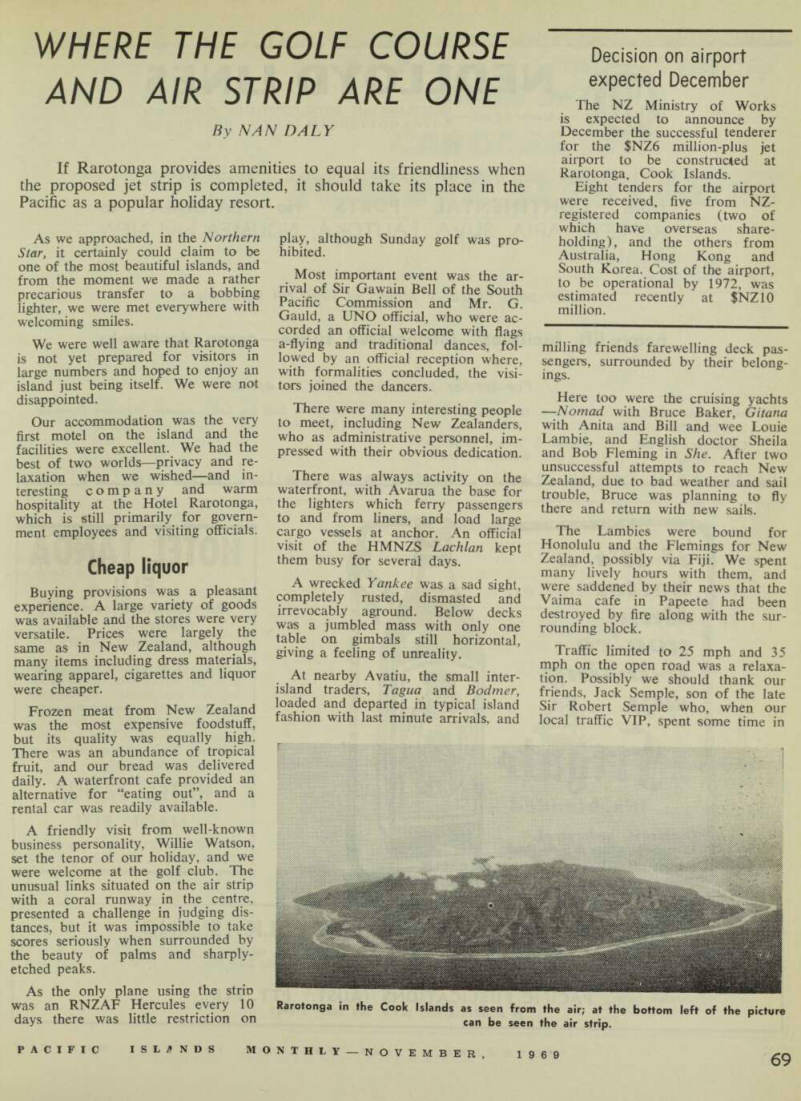 71
71 72
72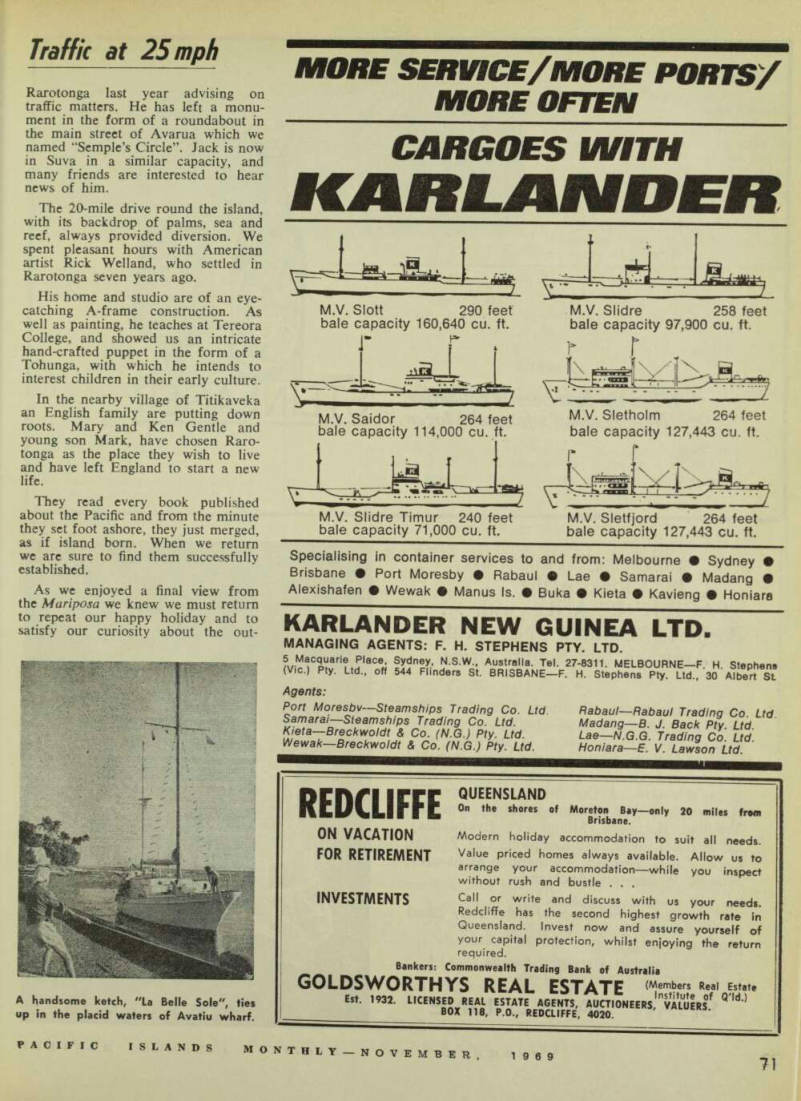 73
73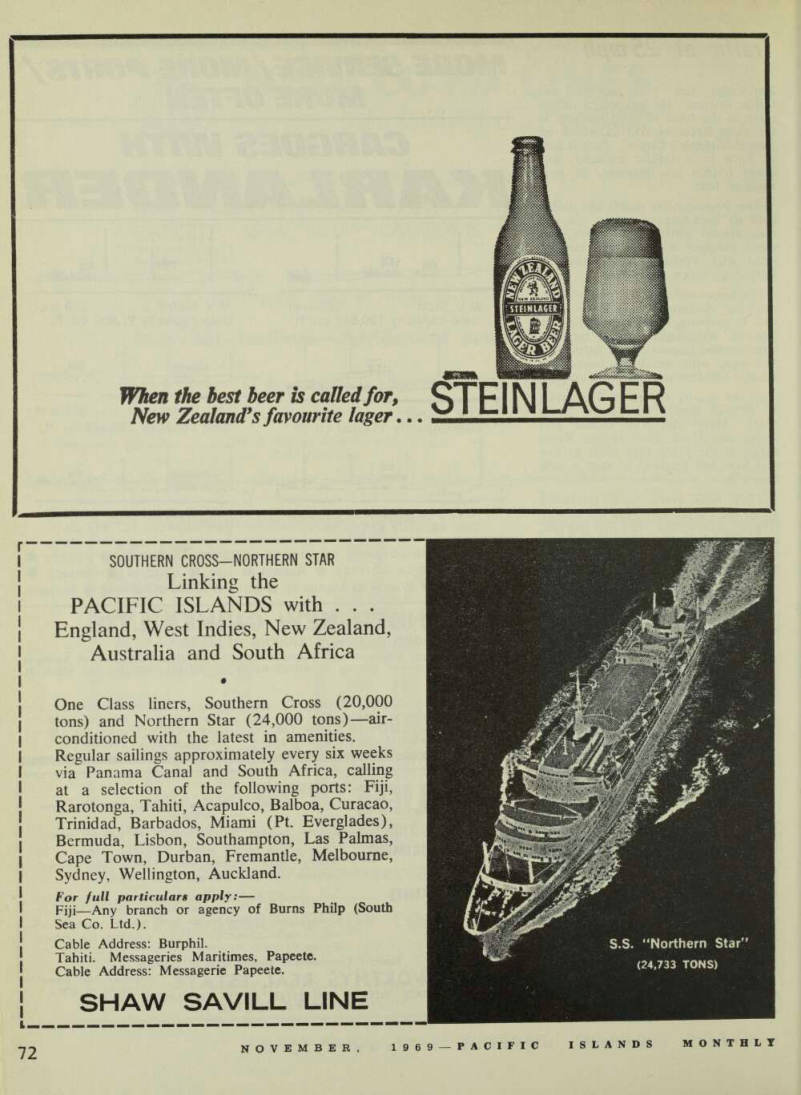 74
74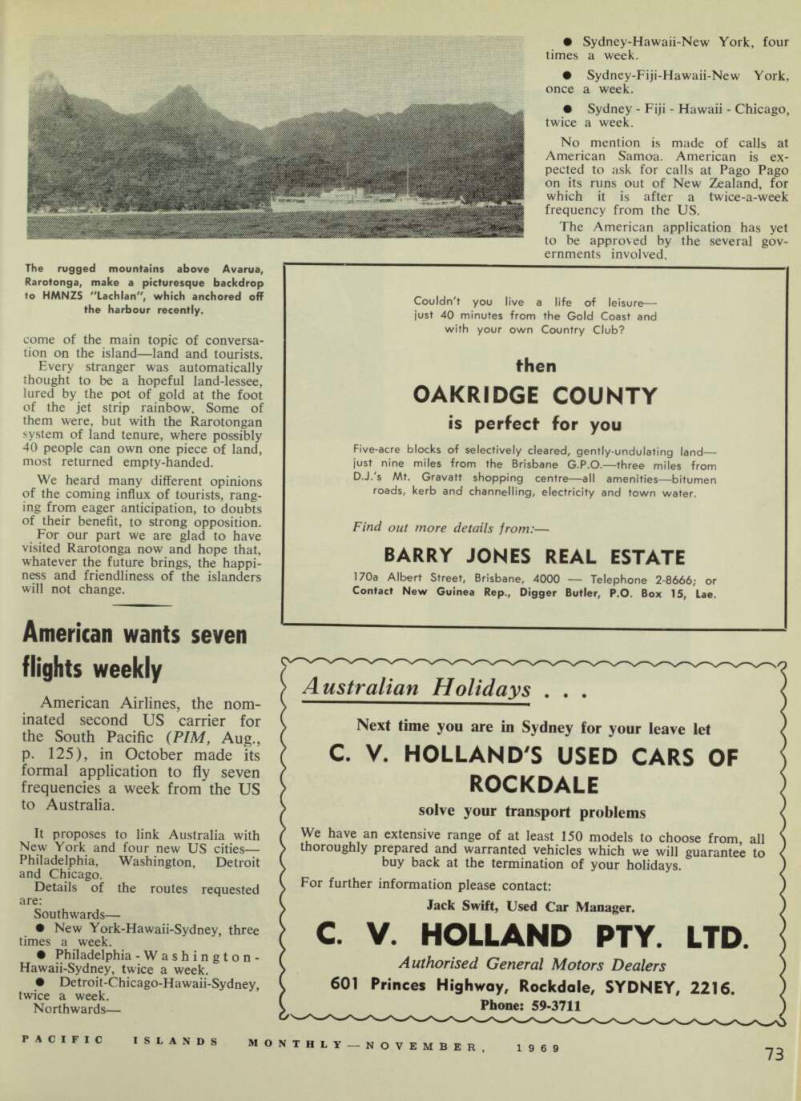 75
75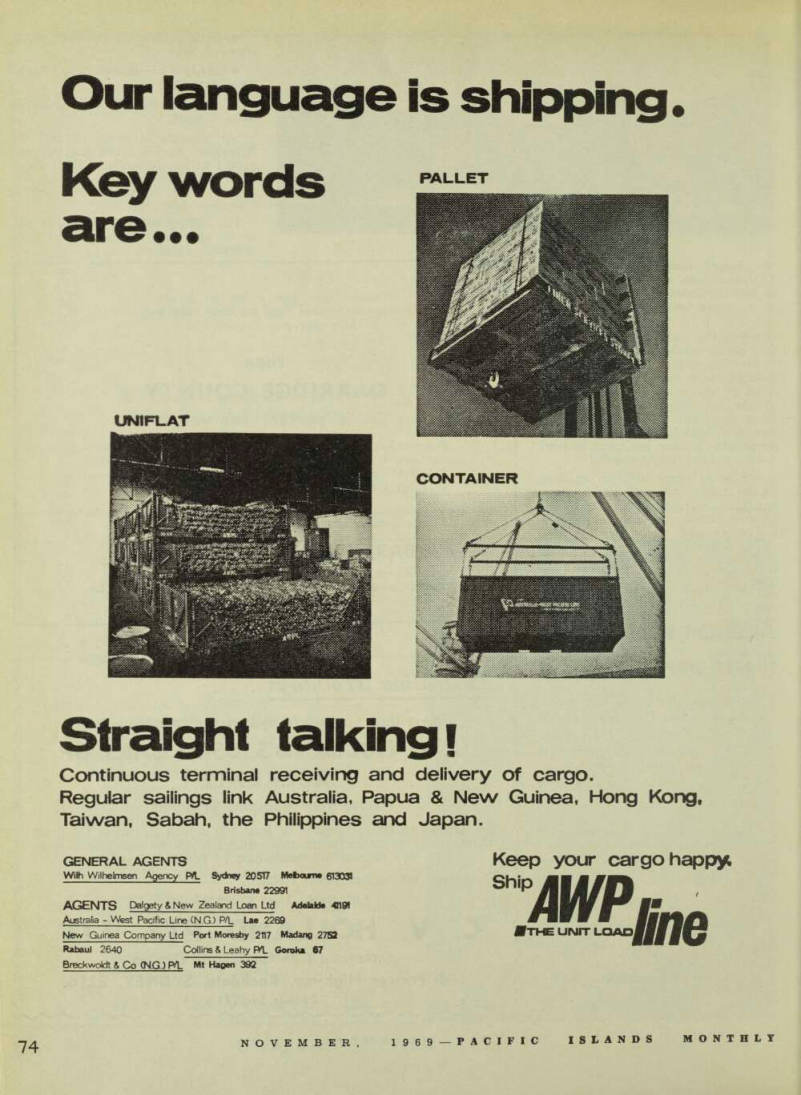 76
76 77
77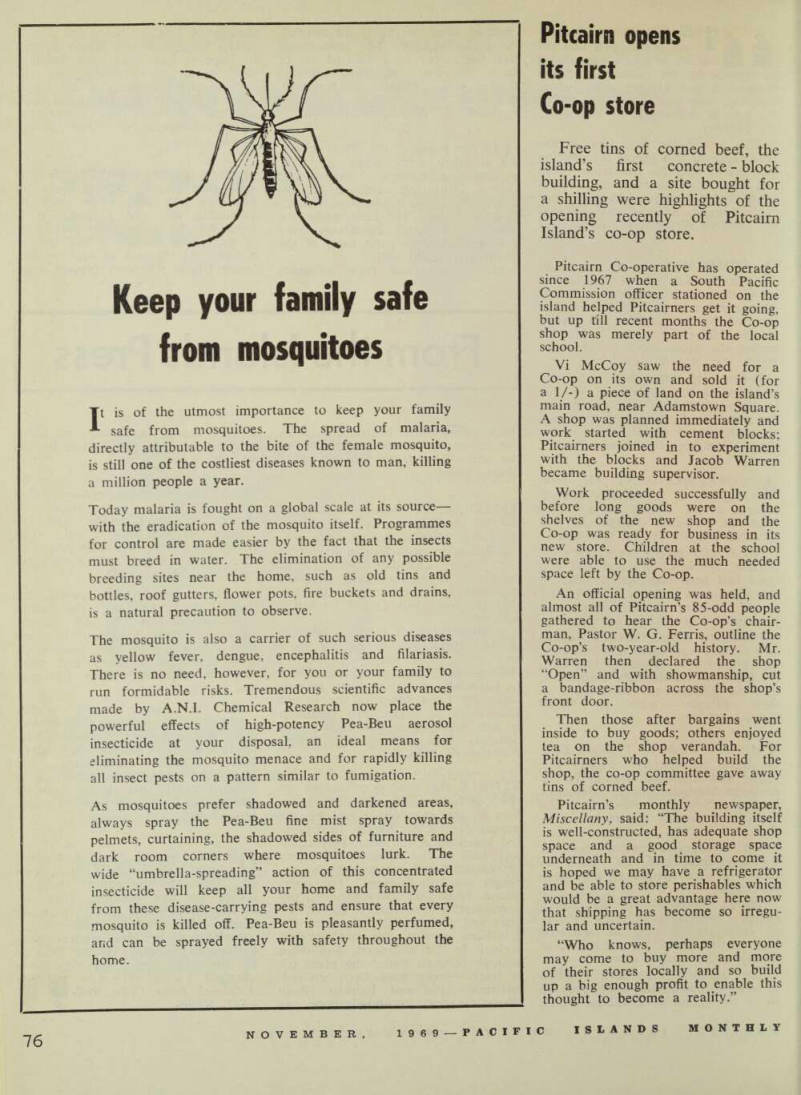 78
78 79
79 80
80 81
81 82
82 83
83 84
84 85
85 86
86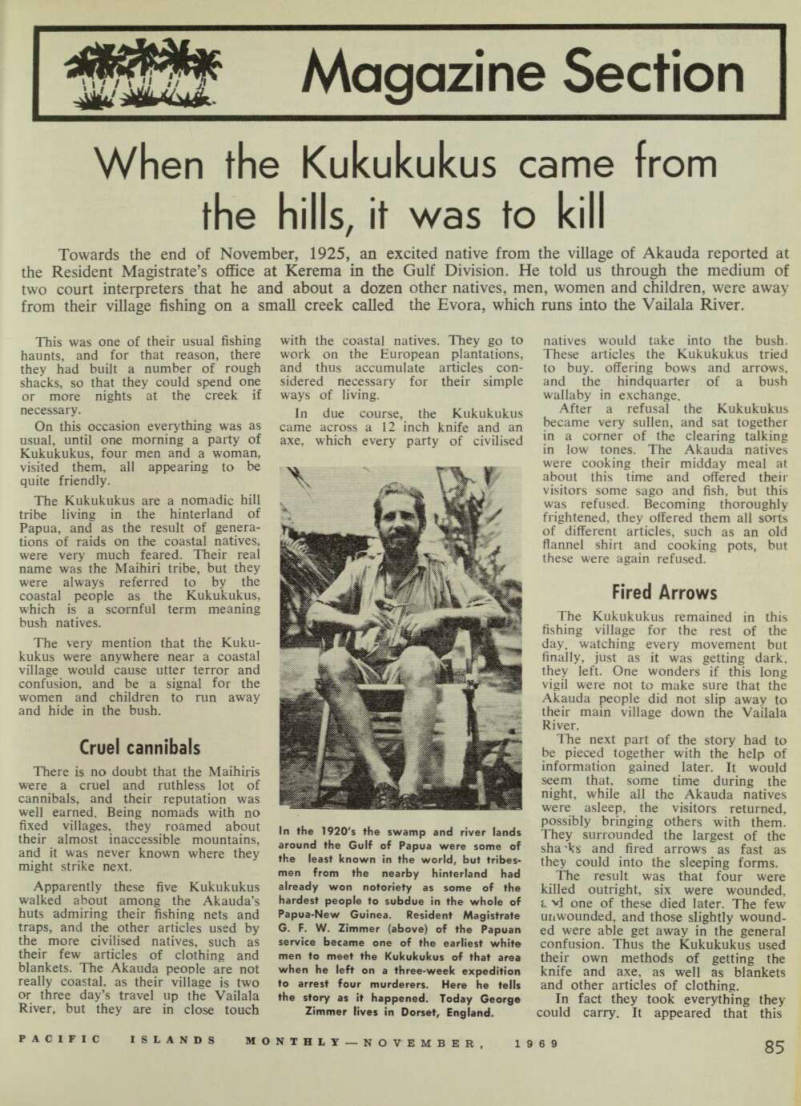 87
87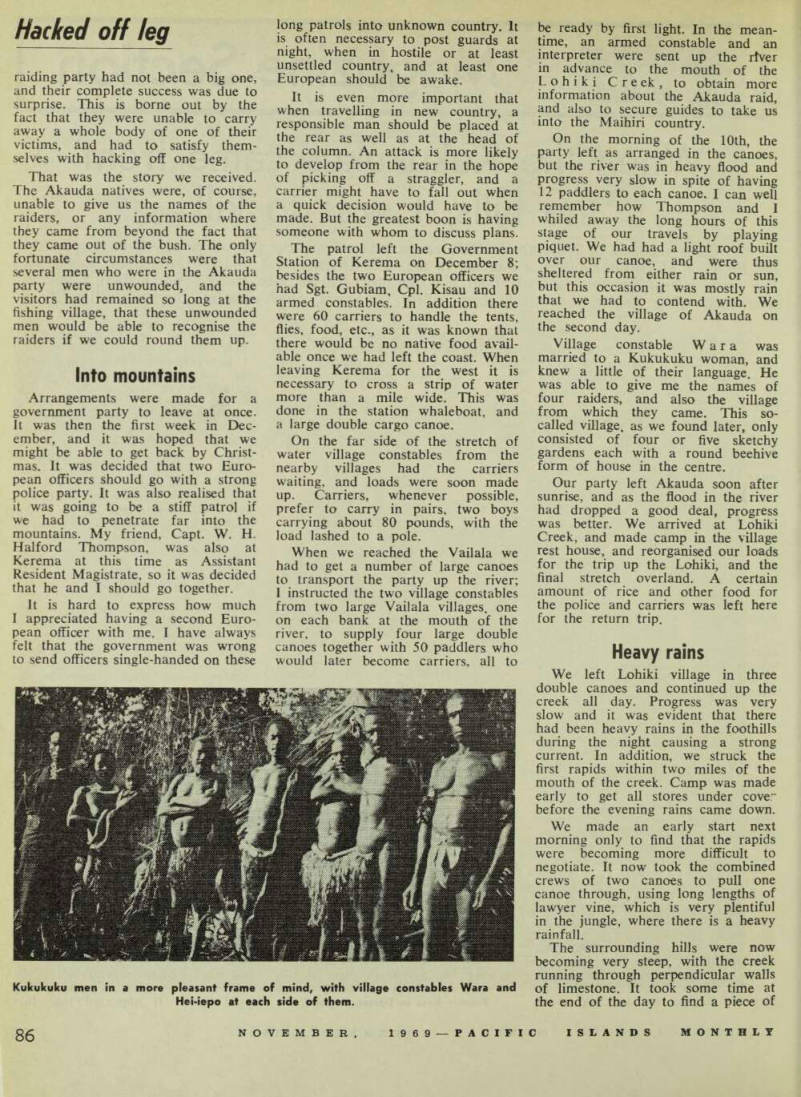 88
88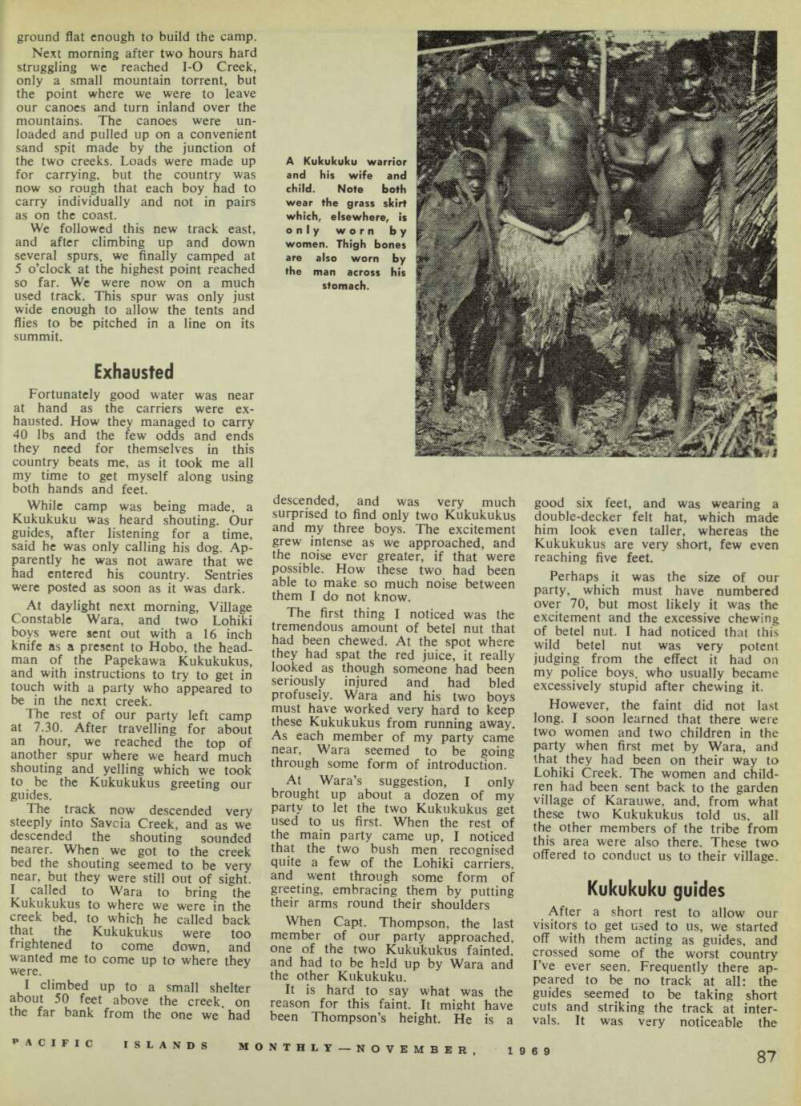 89
89 90
90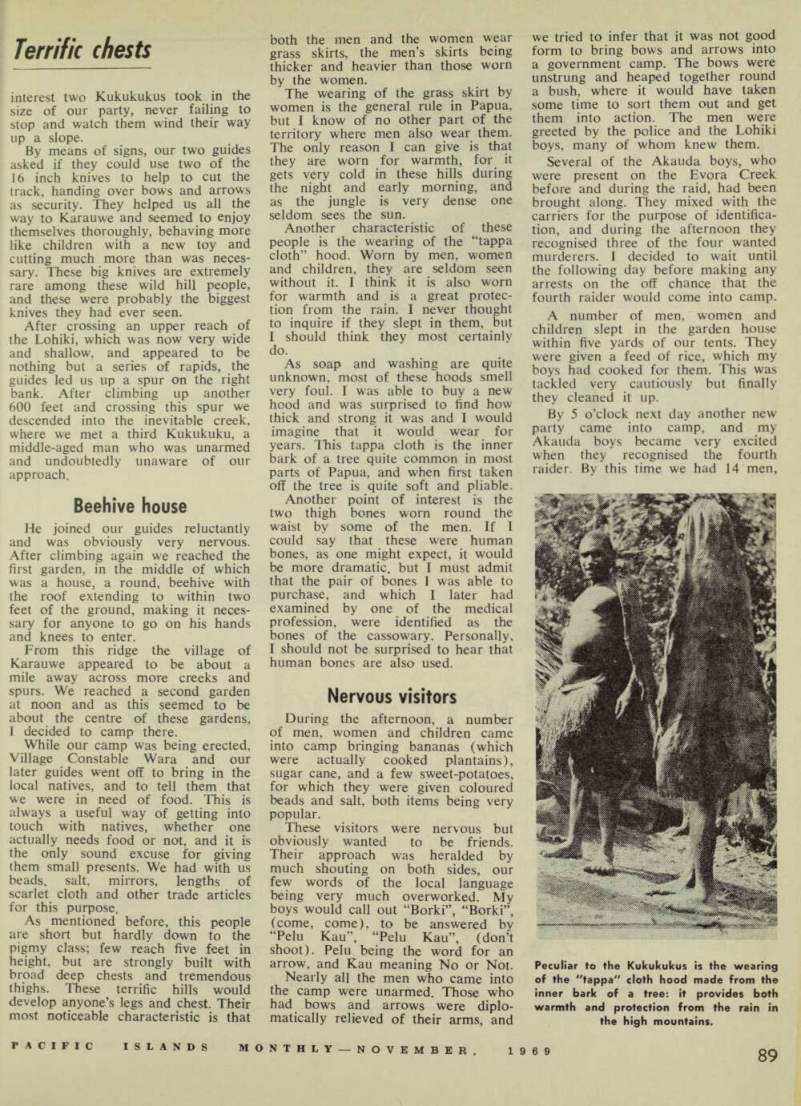 91
91 92
92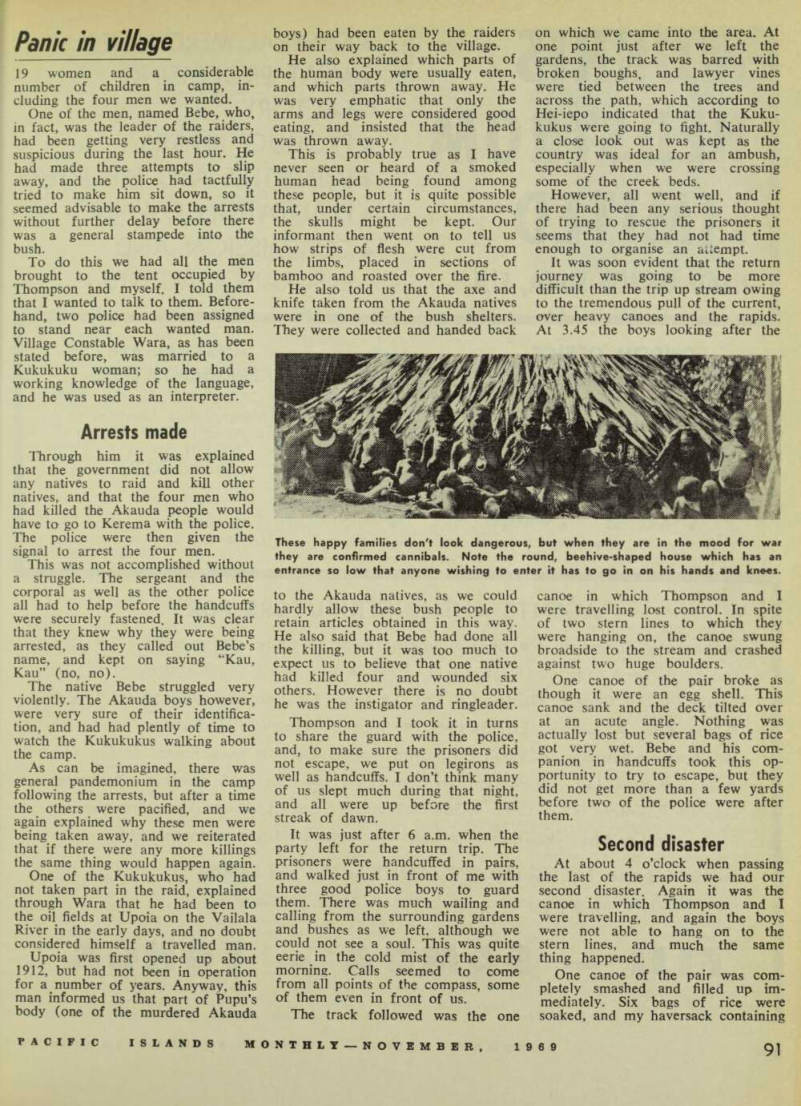 93
93 94
94 95
95 96
96 97
97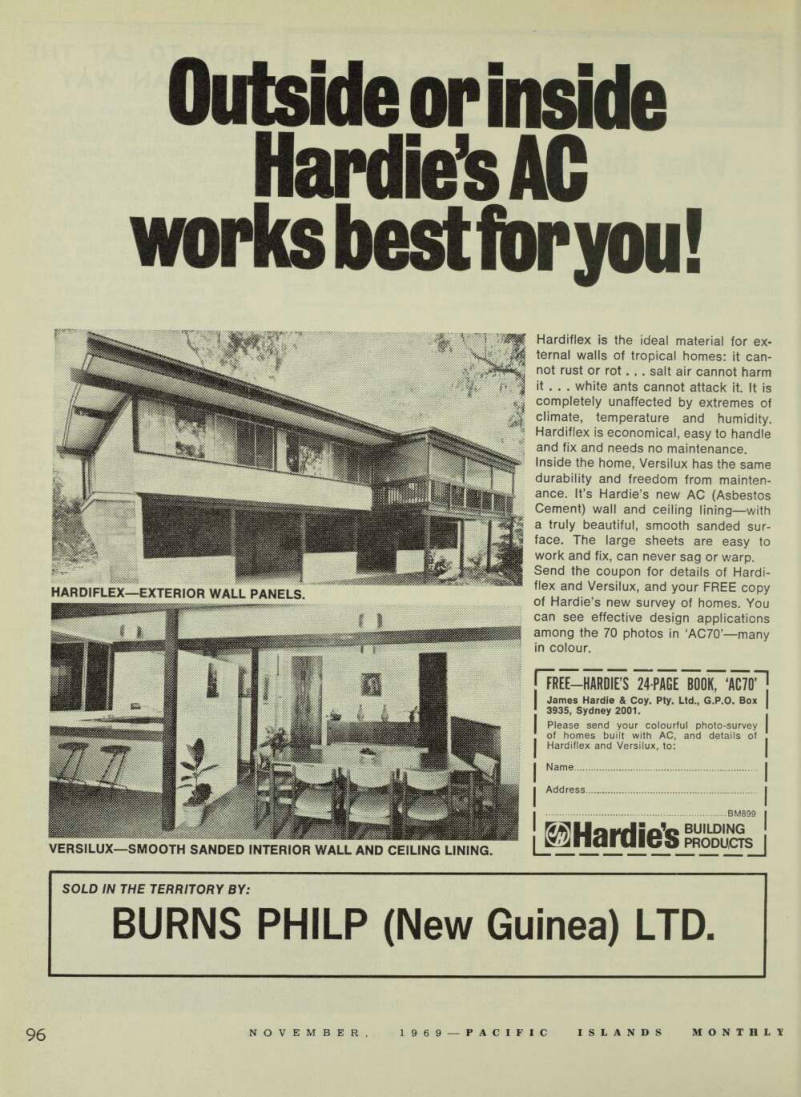 98
98 99
99 100
100 101
101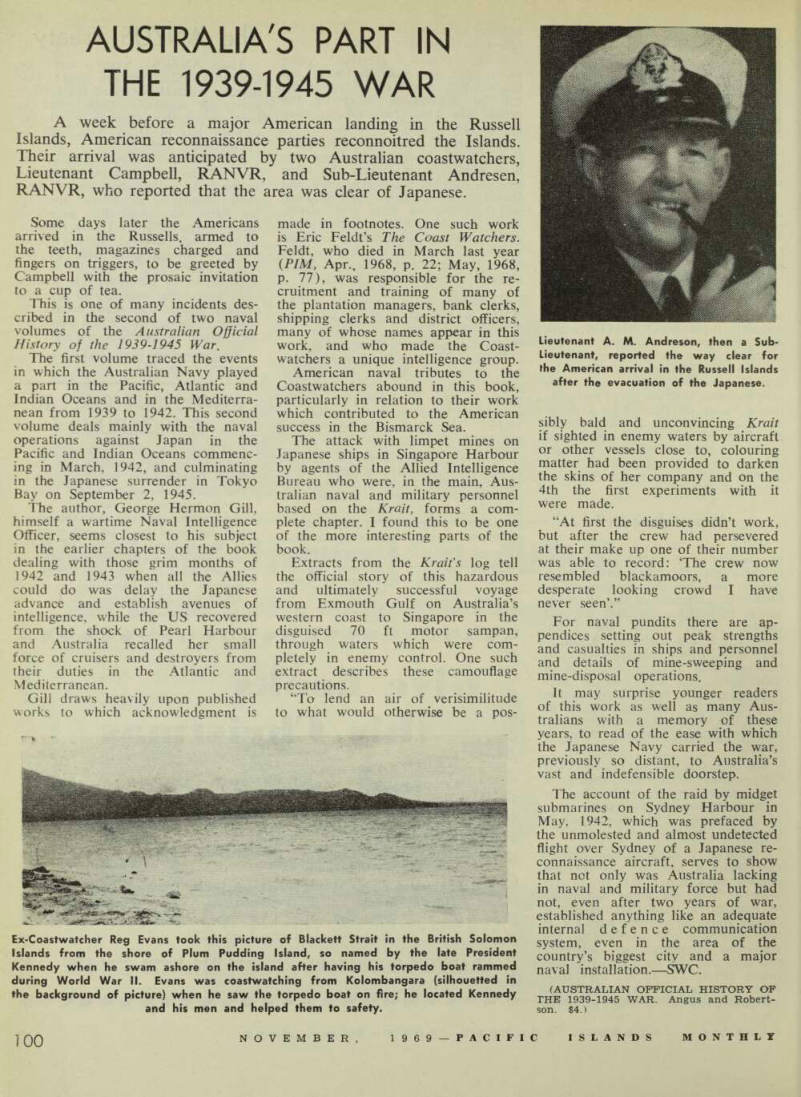 102
102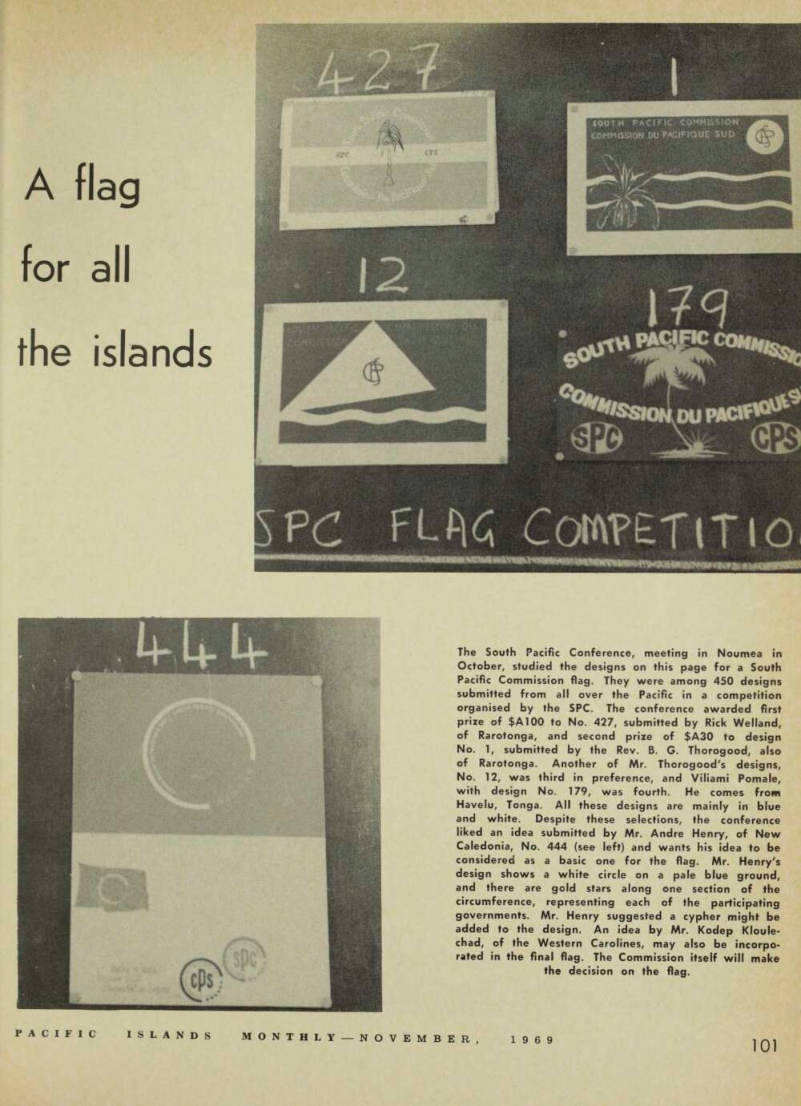 103
103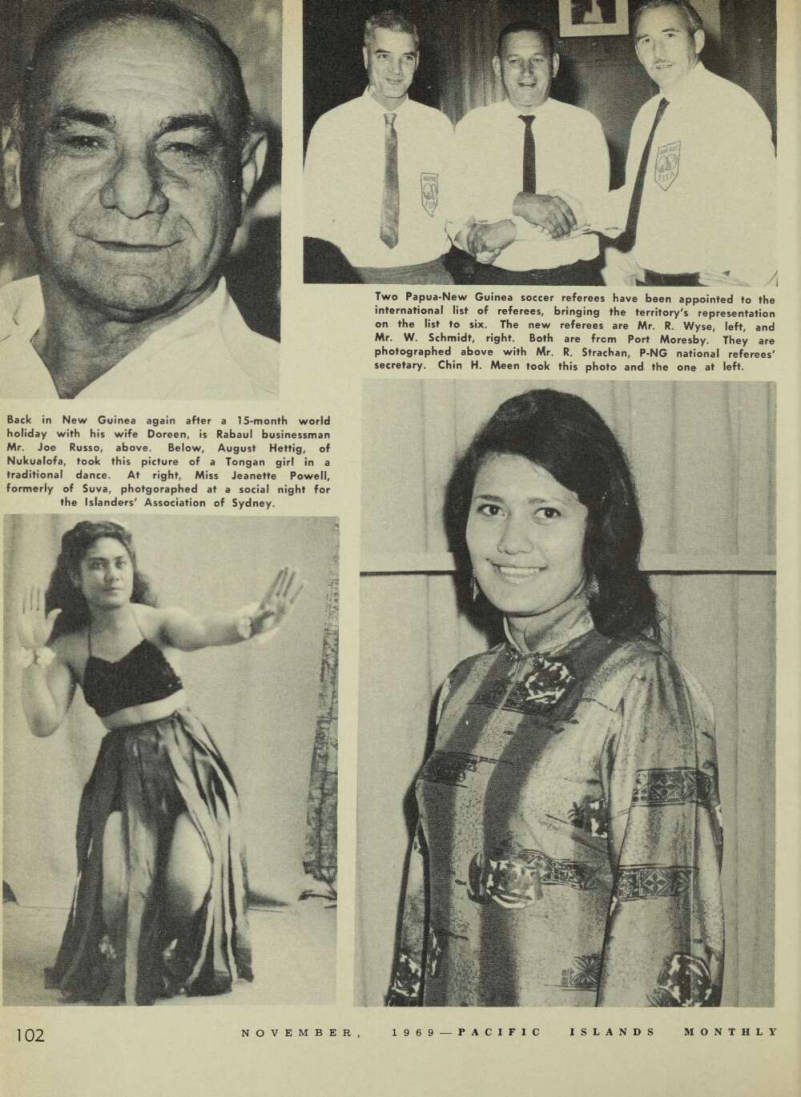 104
104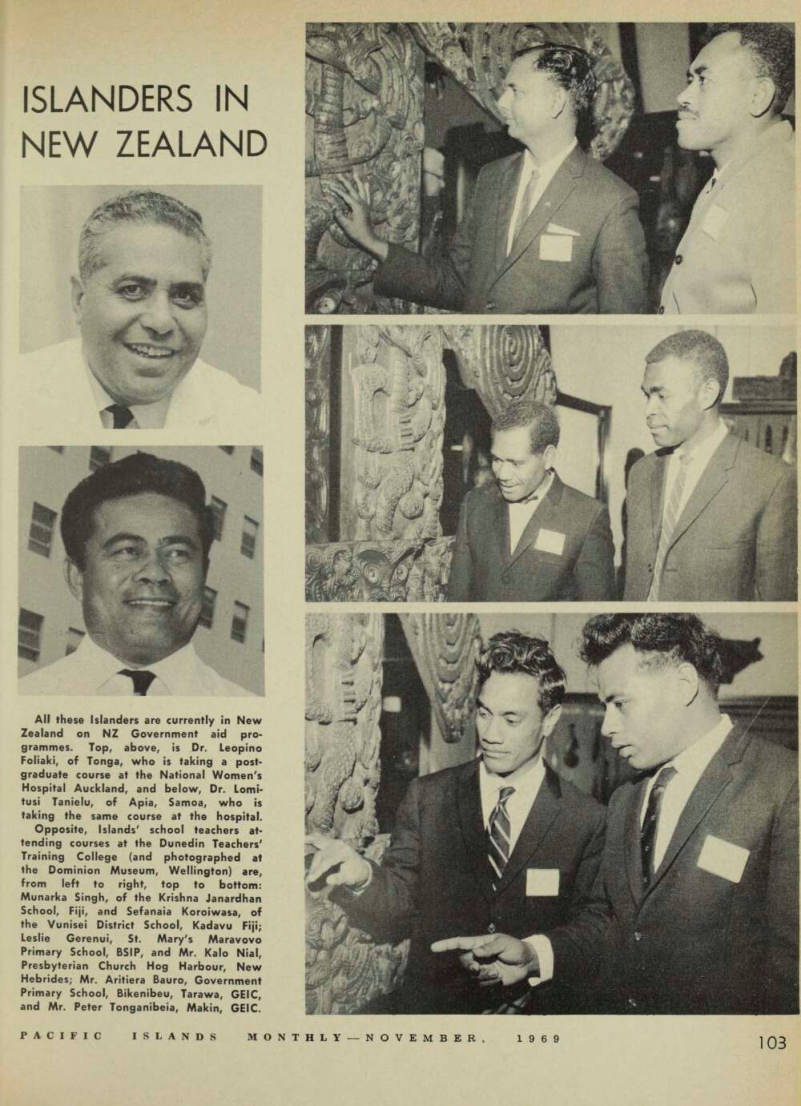 105
105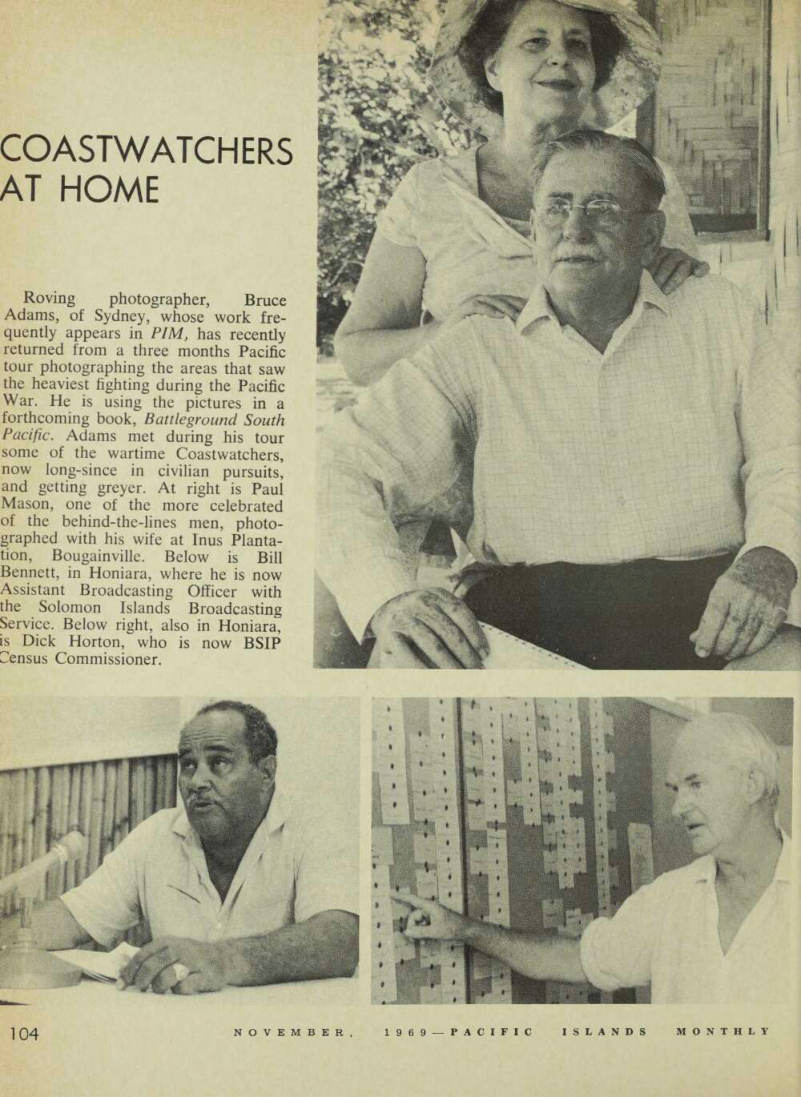 106
106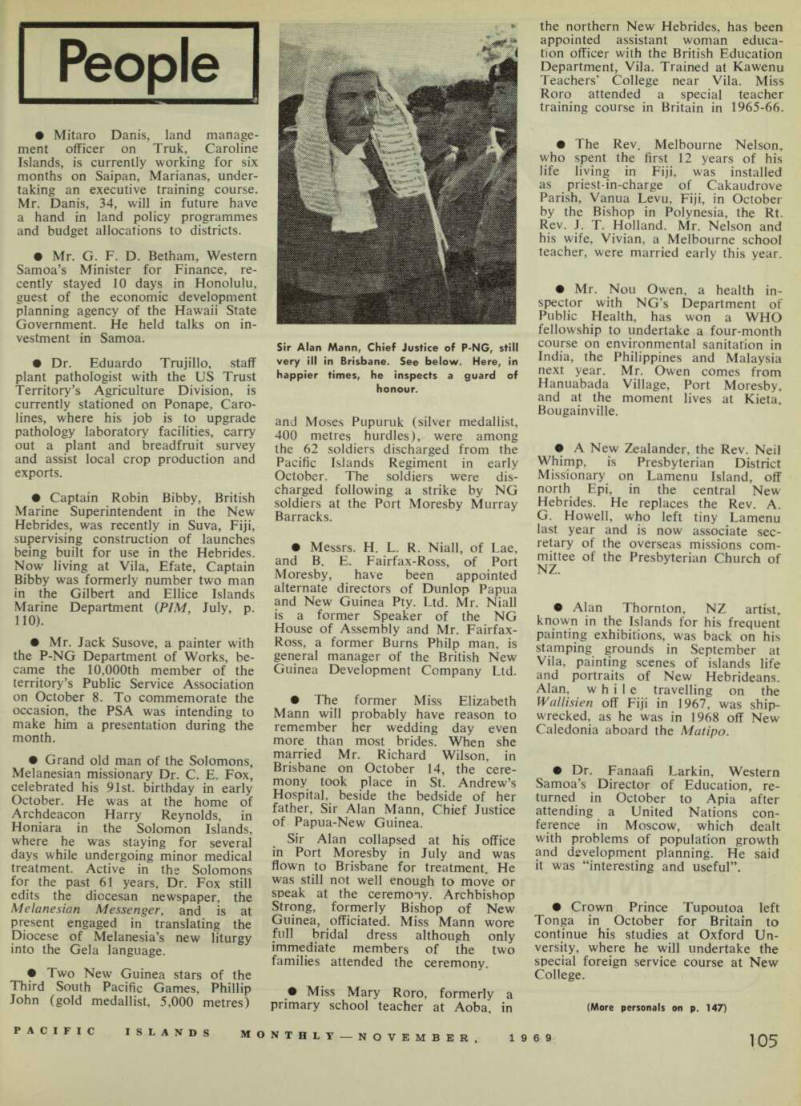 107
107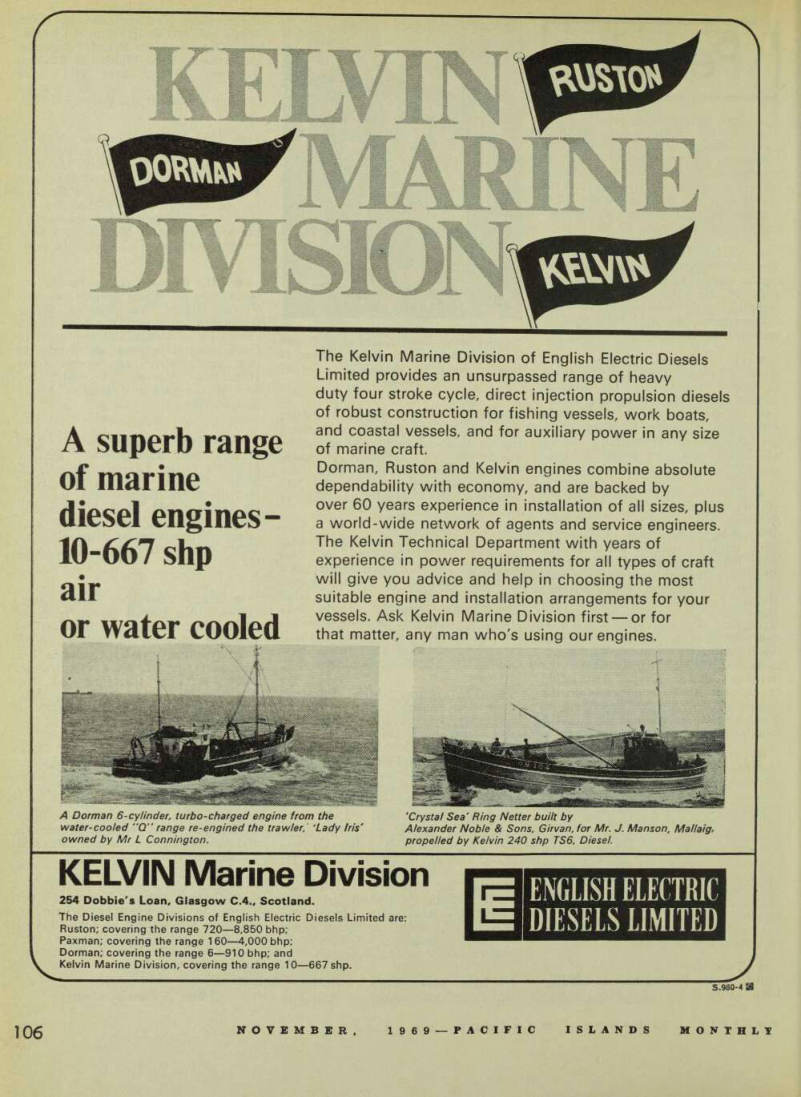 108
108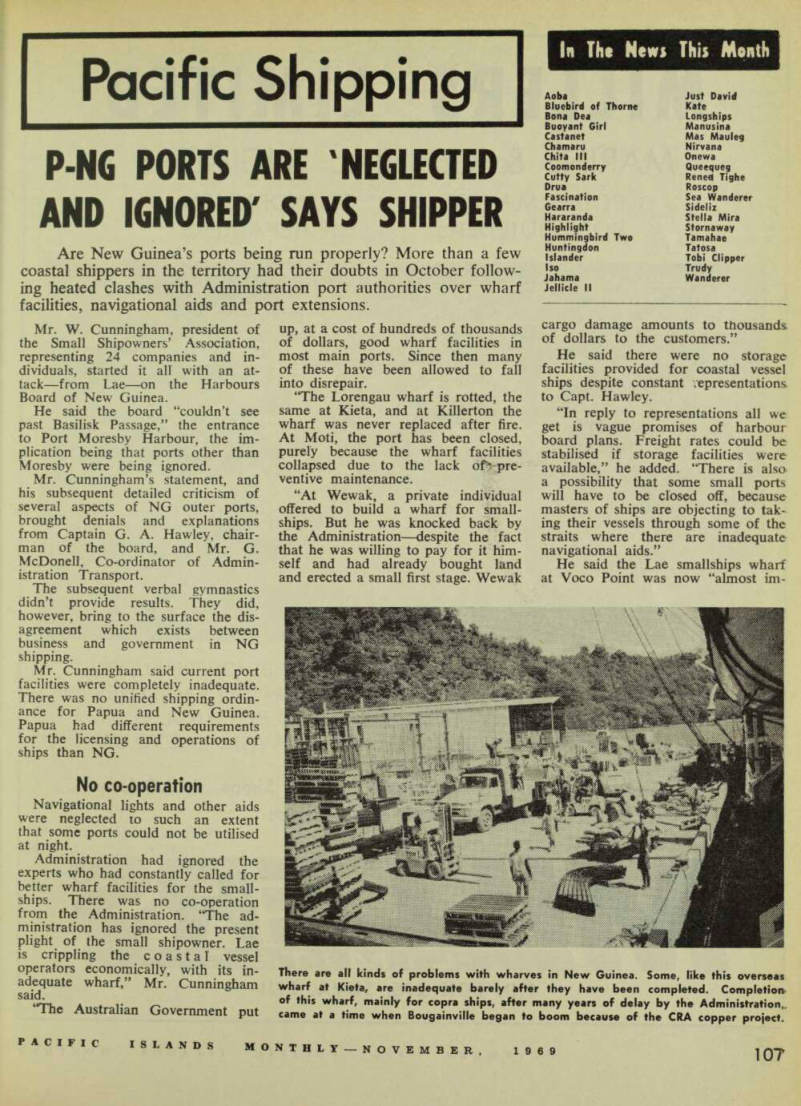 109
109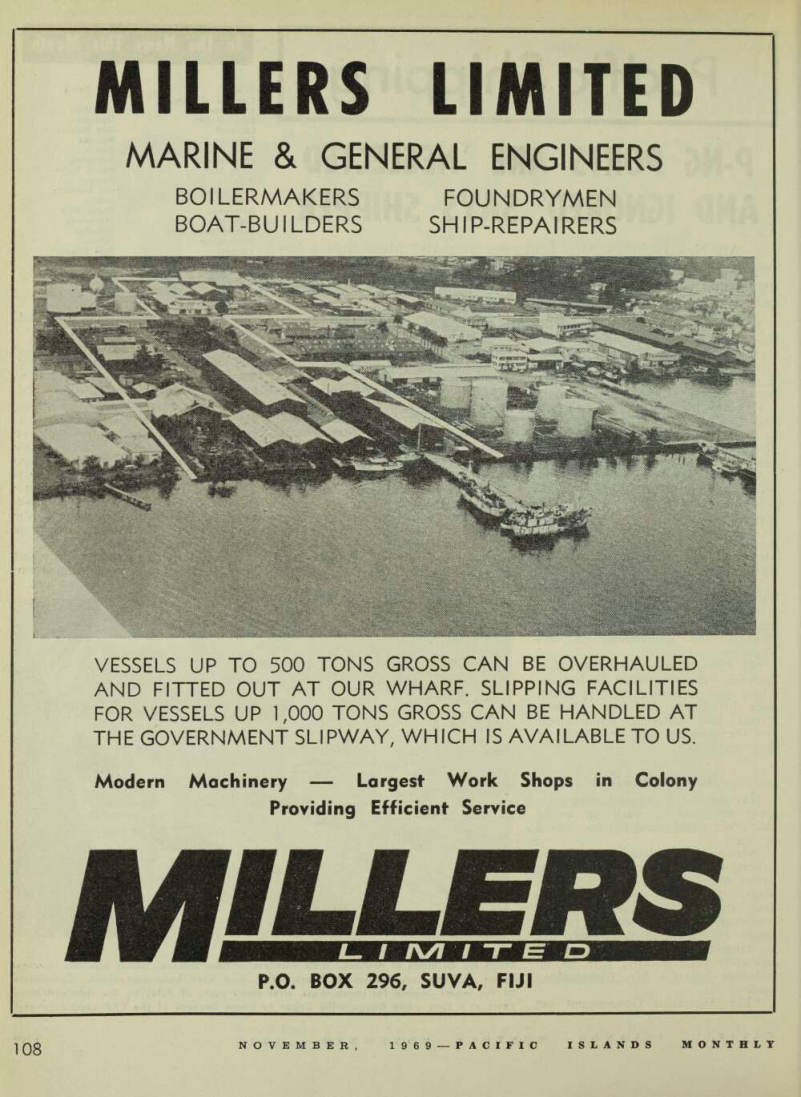 110
110 111
111 112
112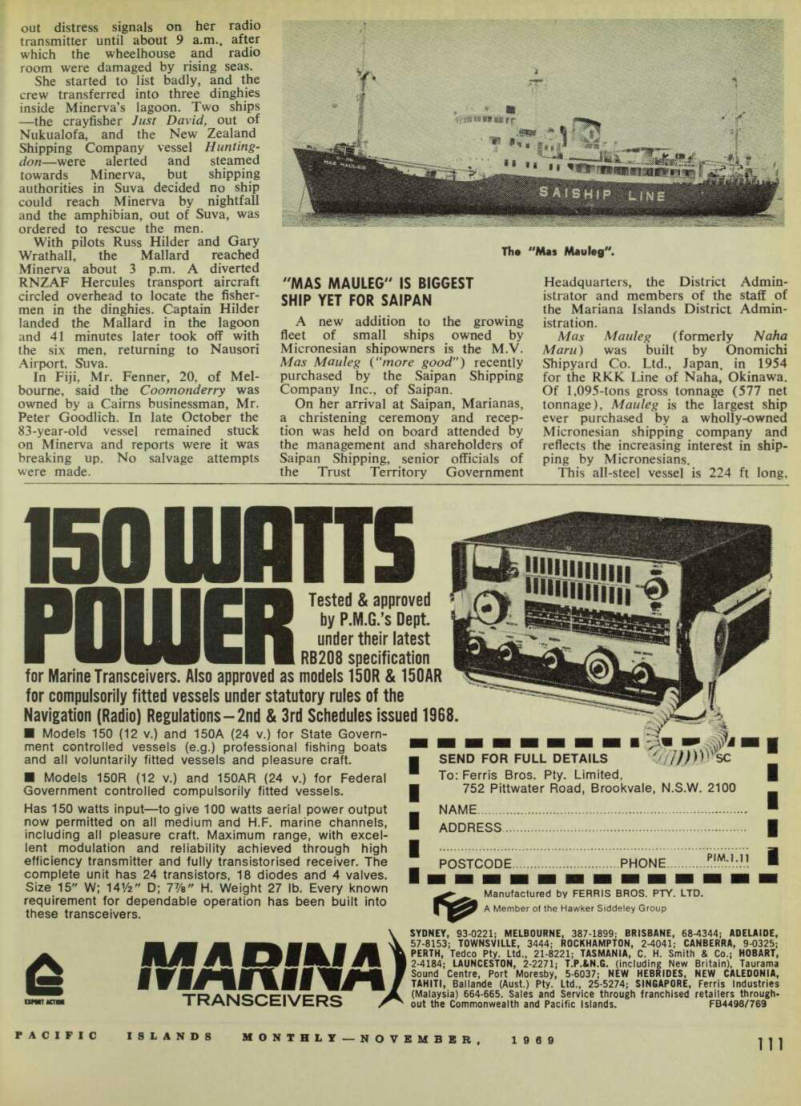 113
113 114
114 115
115 116
116 117
117 118
118 119
119 120
120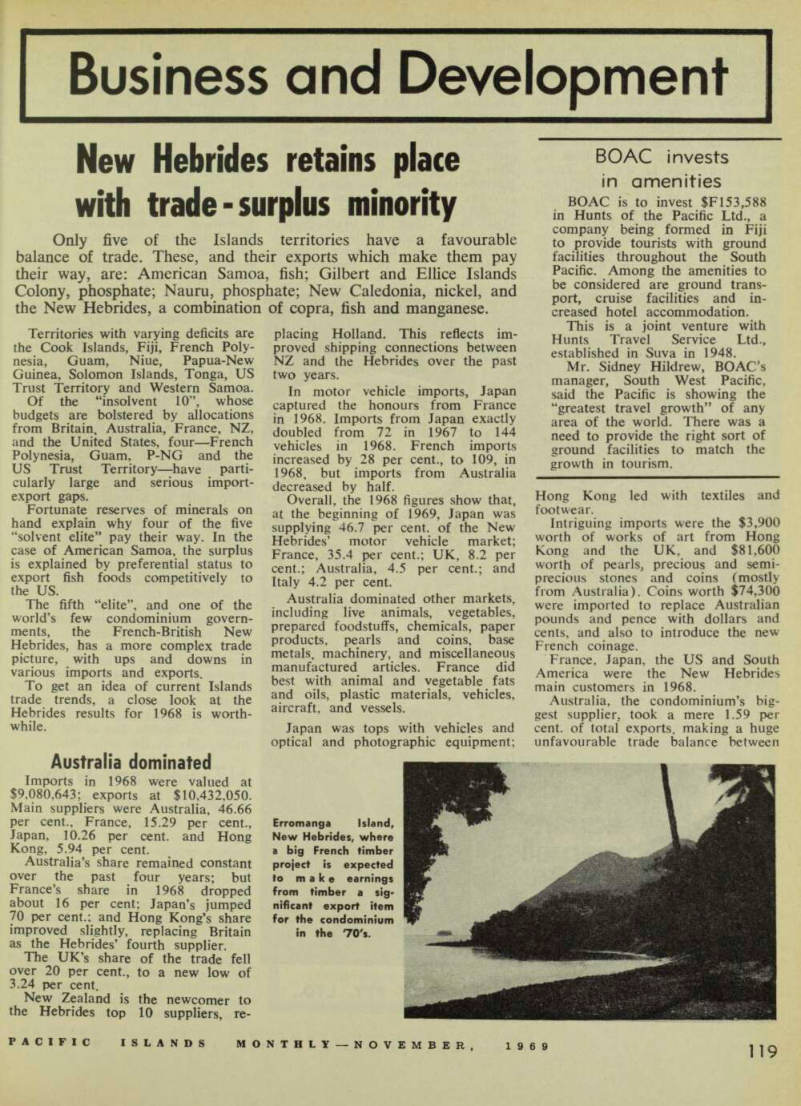 121
121 122
122 123
123 124
124 125
125 126
126 127
127 128
128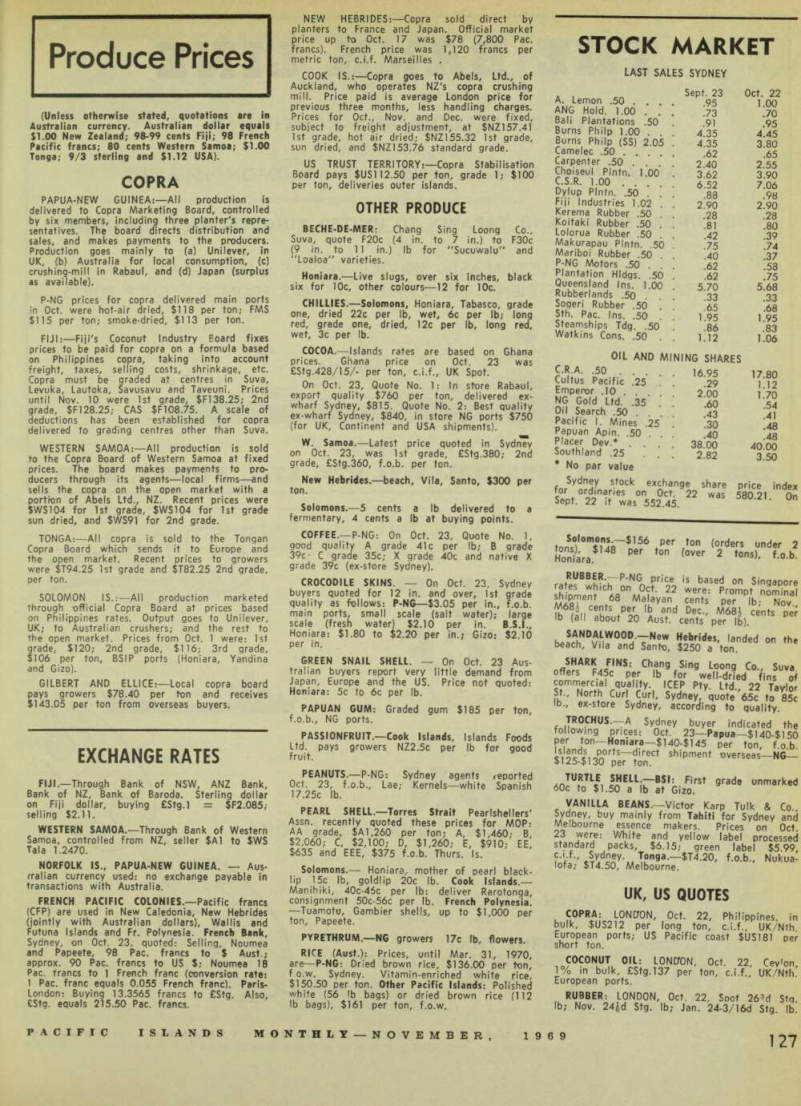 129
129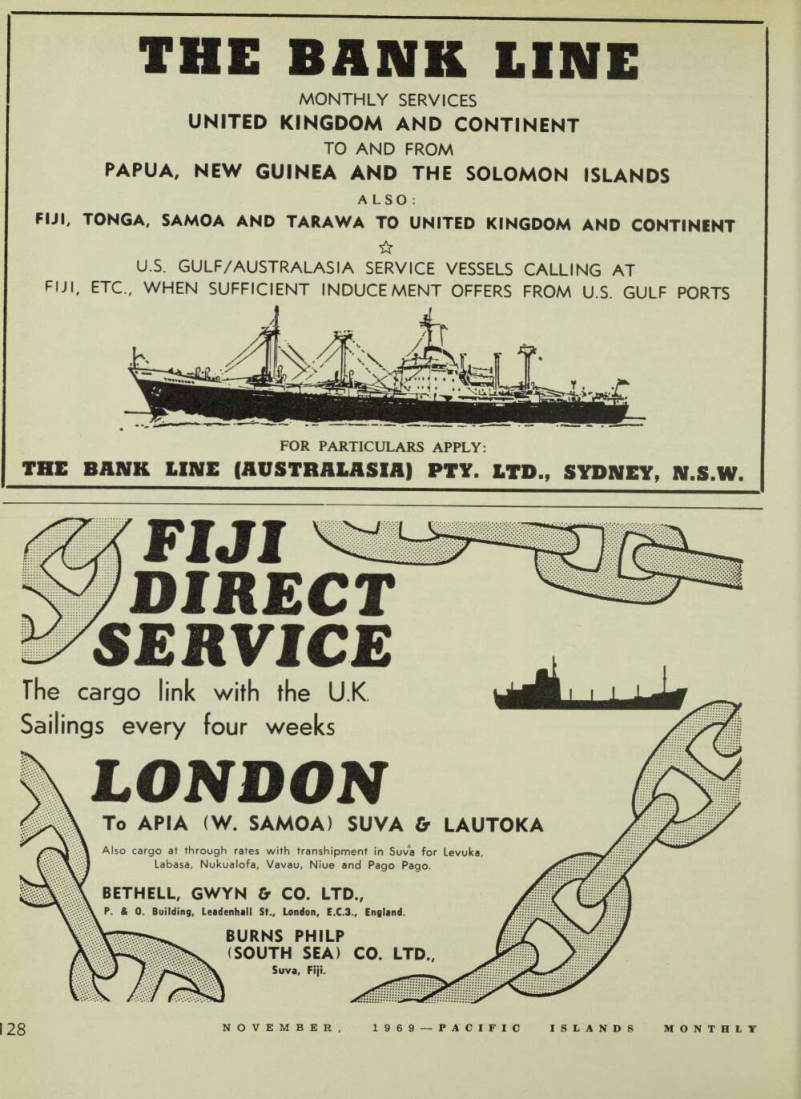 130
130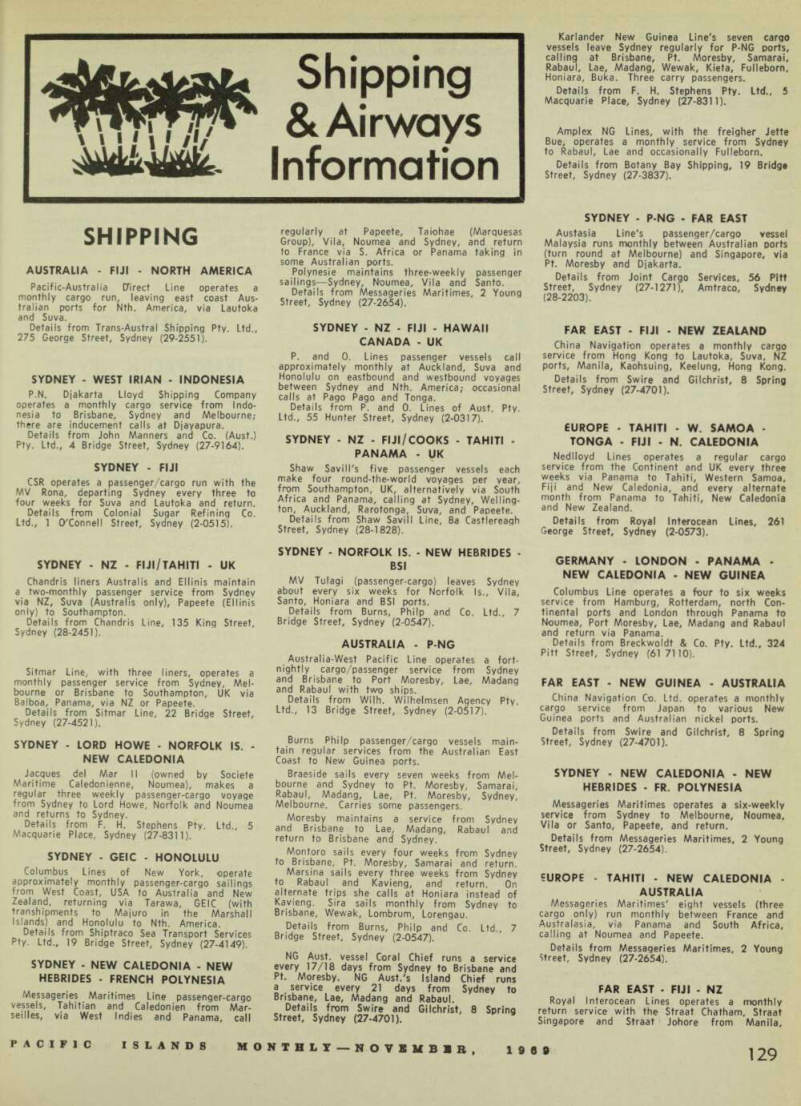 131
131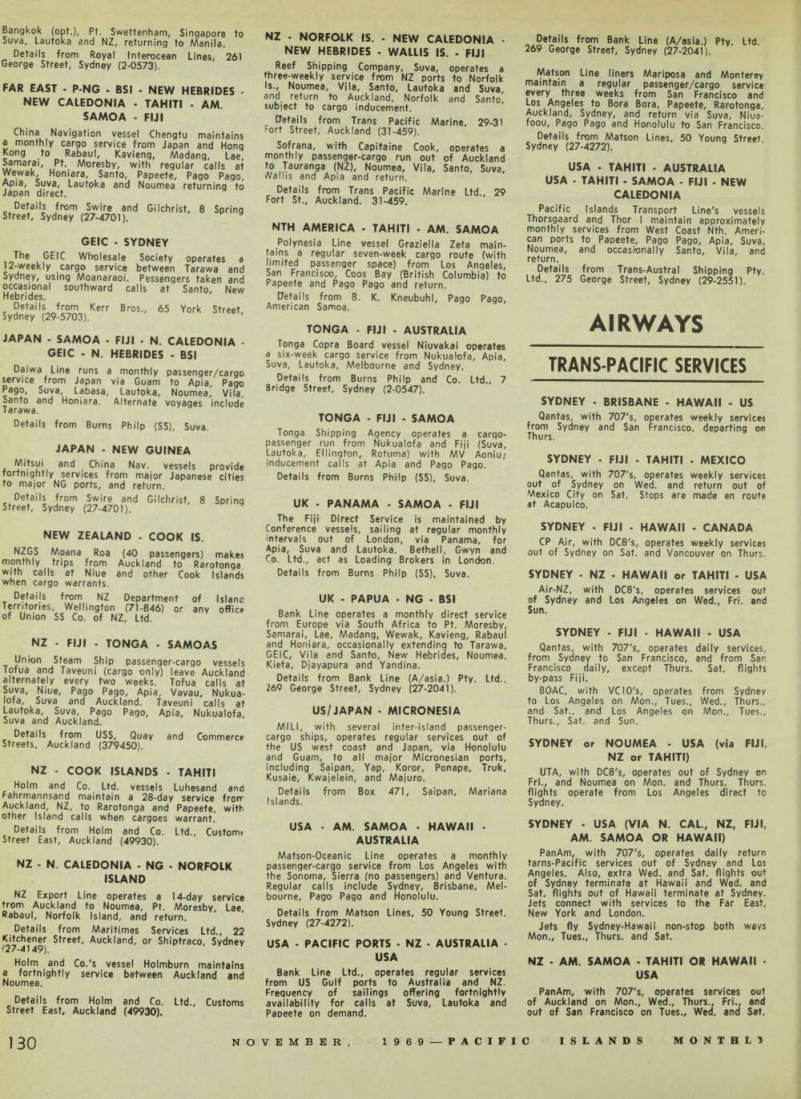 132
132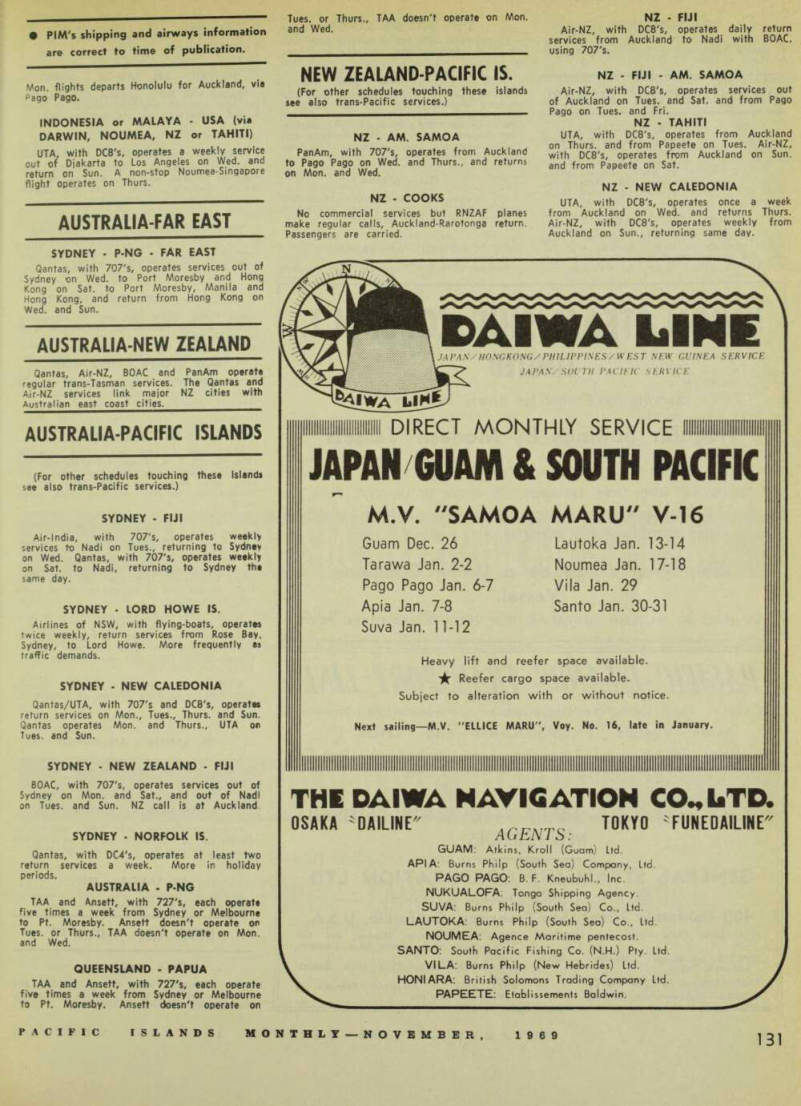 133
133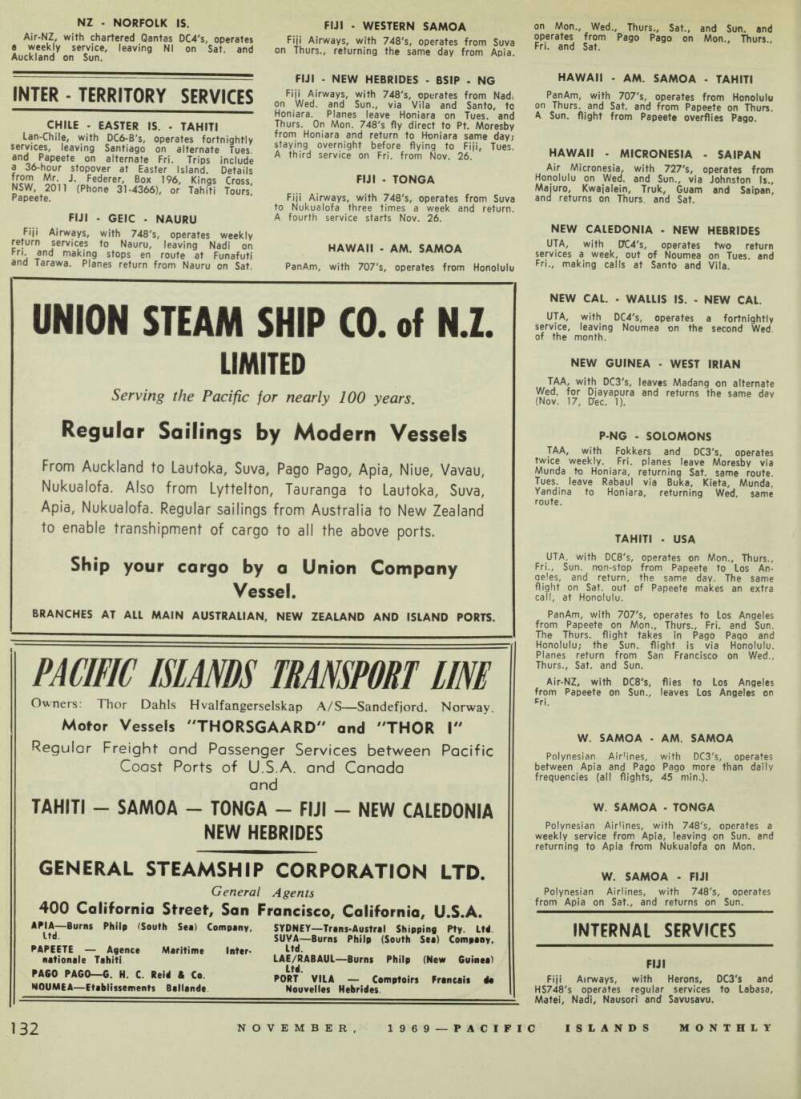 134
134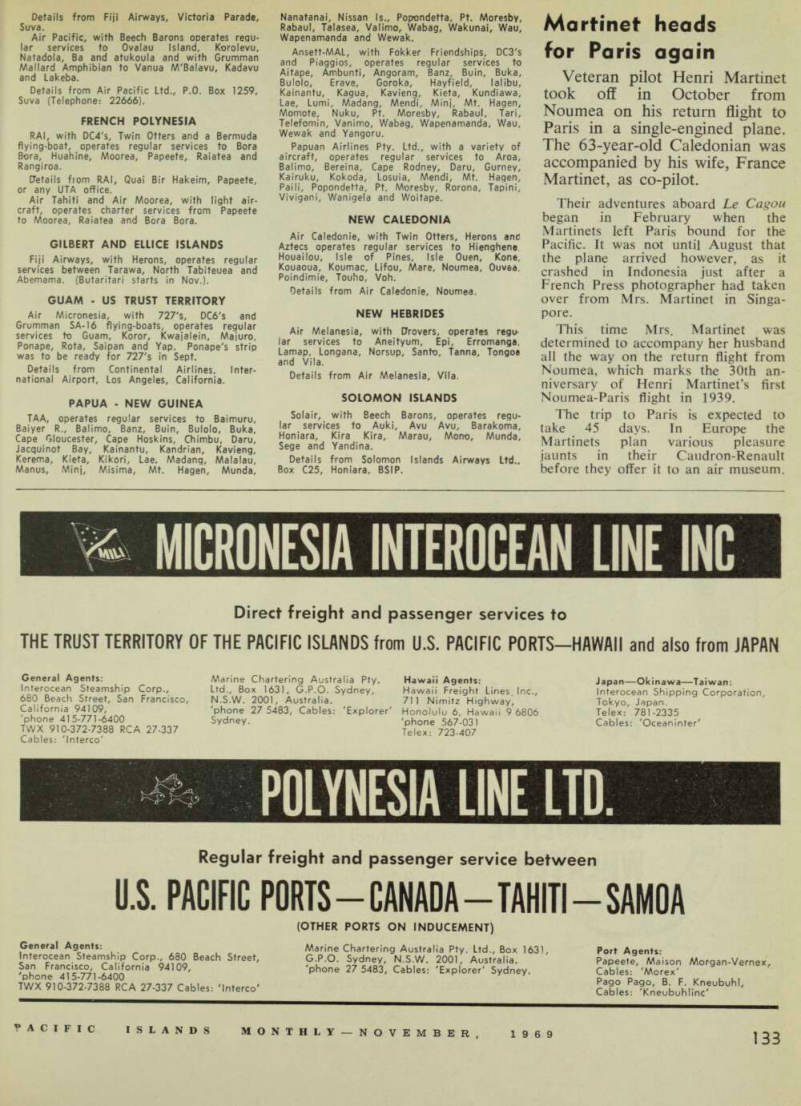 135
135 136
136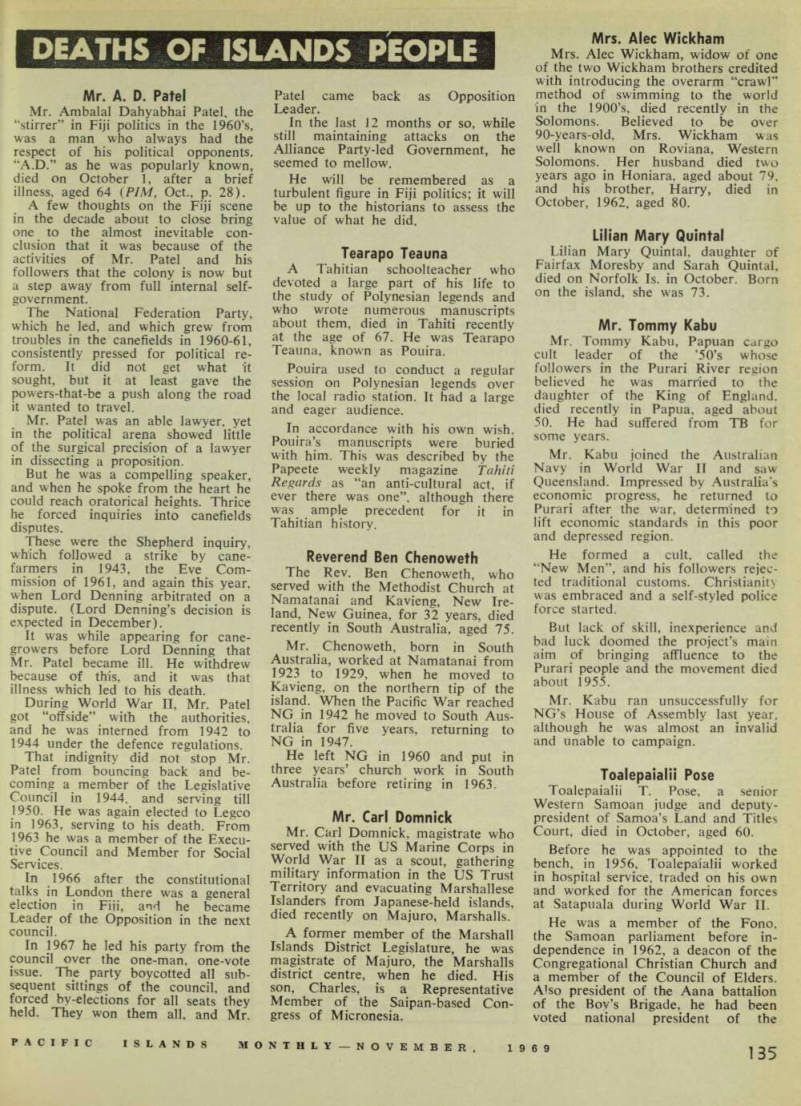 137
137 138
138 139
139 140
140 141
141 142
142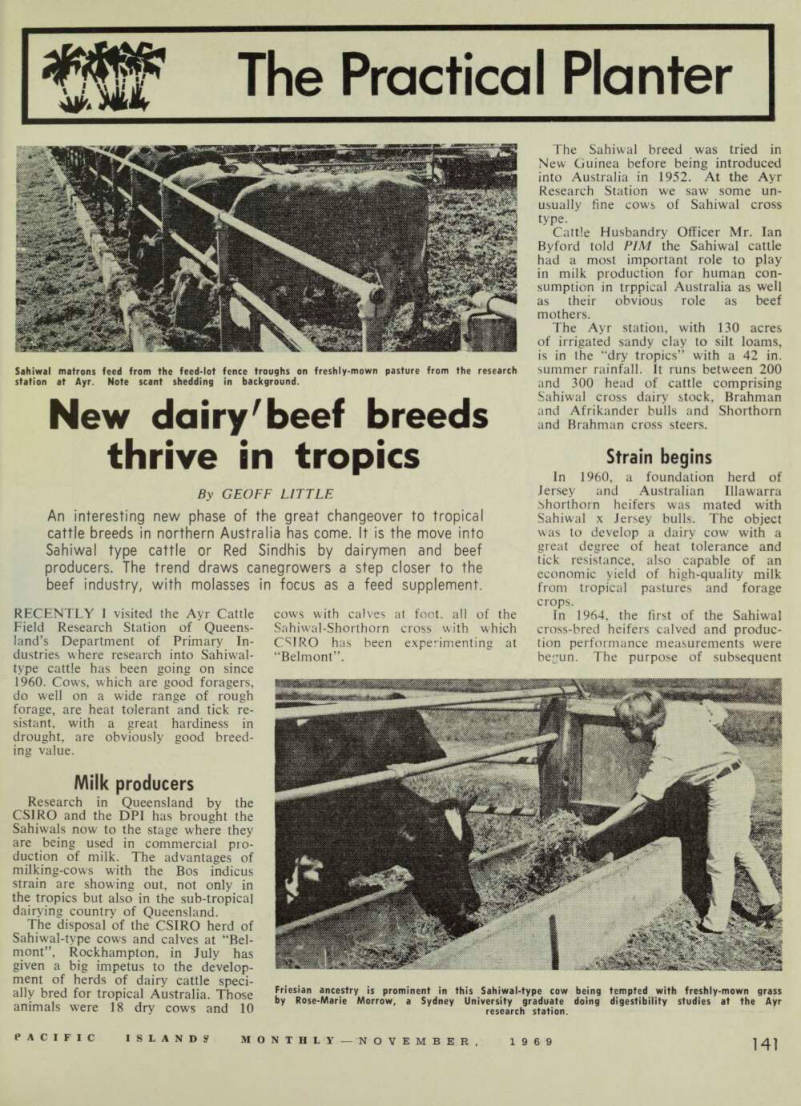 143
143 144
144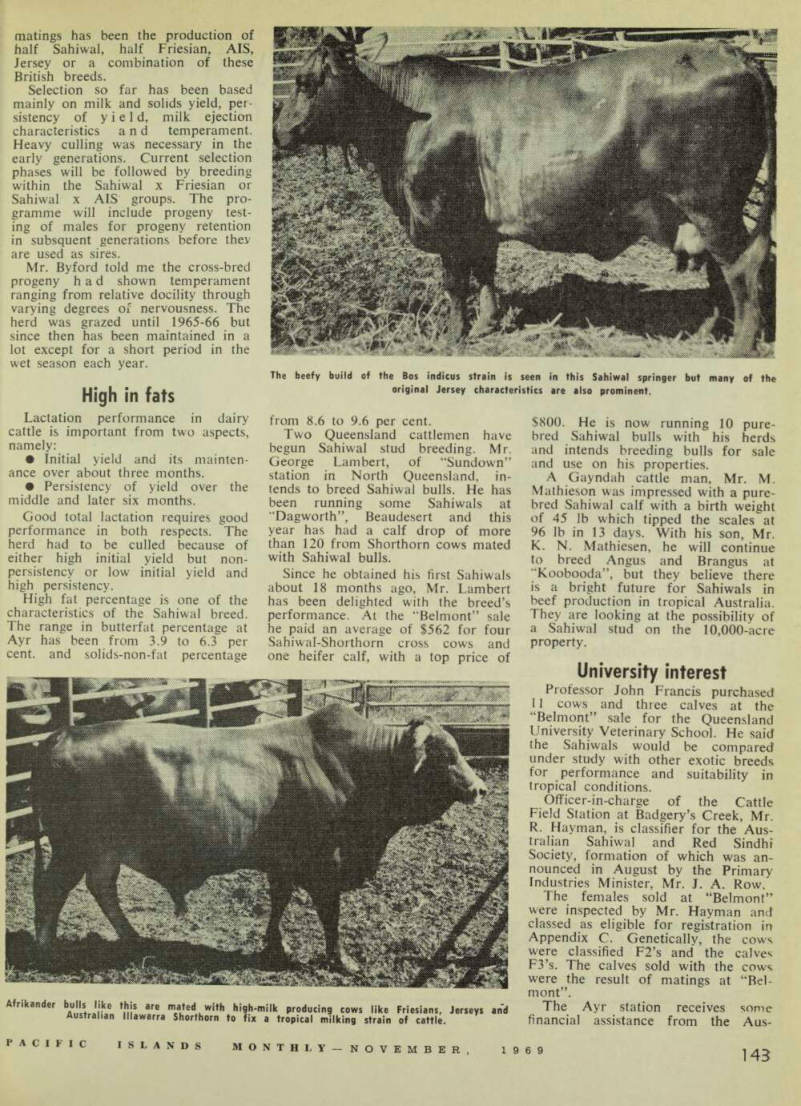 145
145 146
146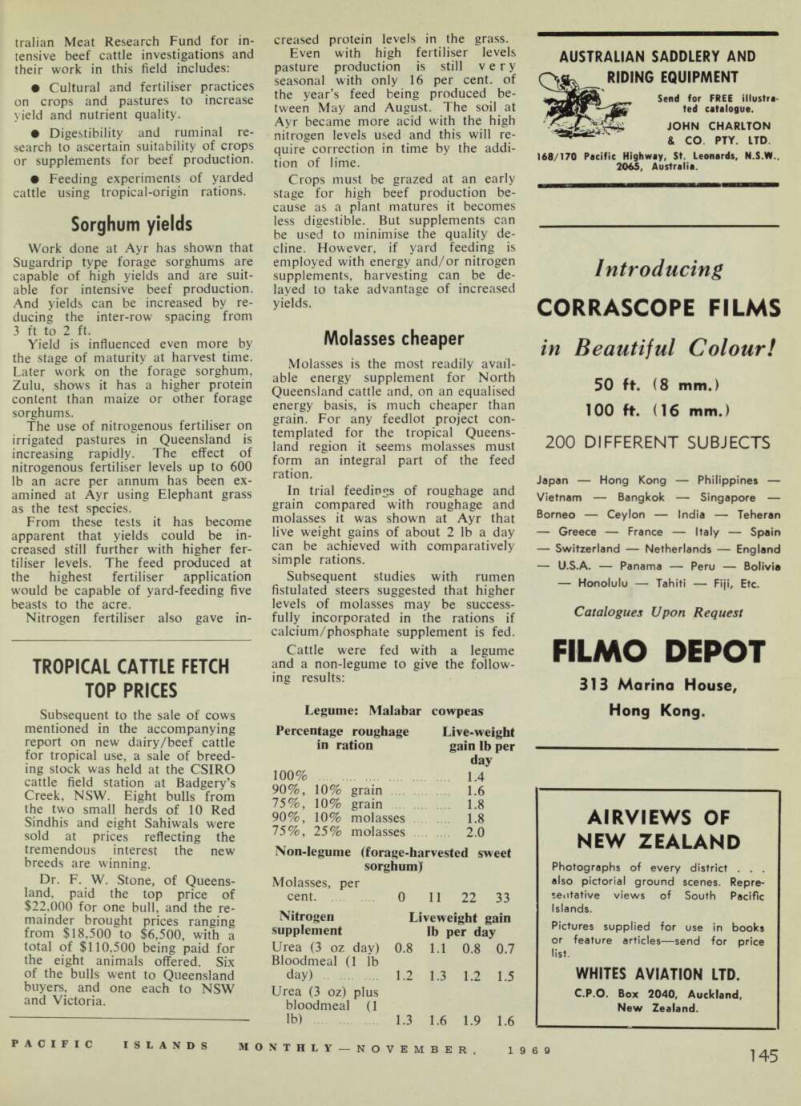 147
147 148
148 149
149 150
150 151
151 152
152 153
153 154
154 155
155 156
156 157
157 158
158 159
159 160
160 161
161 162
162 163
163 164
164