Advertisements & other items, p. 2 (1 item)
the mostest.
The Hostess with
Seats.
More than charm. She’s got the mostest seats between Papua/New Guinea and Australia just when you need them. During the rush holiday period. From November through till mid-February we’re putting a lot more Bird of Paradise’ T-Jet flights for you.
On December 13 we put on the mostest airlift south to Australia of all time. Nine . . . repeat nine separate TAA flights south on the one memorable day. That’s a lot of seats!
But we’ve got lots of other airlifts to suit your holiday schedule. So, don’t panic. You can afford to wait at least another day before making your holiday booking. But better still.
Do it now.
Call your Travel Agent or TAA; Port Moresby 2101. Lae 2311. Madang 2478. Rabaul 2567.
Goroka 8. Mt. Hagen 4 or 301 Wewak 103. r —i
TAA No.l-fhe friendly one
319 2193 69
In This Issue
Ieneral
hurches unite 39 umbo Jets in June, 1970 51 anAm cuts fares 73 ribute to late Bishop Hill 75 ind those turtles! 88 erman shipping drive 107 Waimate" withdrawn 108 rown Agents to invest? 119 opra report 120 eetle project expands 121
Merican Samoa
aydon makes changes 33 Magic Isle" lost in Cooks 107
Ook Islands
uvarov's postmaster 47 jurist chief appointed 65 nip strands on Pukapuka 107 Moana Roa" makes big loss 11l Jl lueprint for self-government 27 \r. A. D. Patel dies 28 : 5 million tourist resort 37 ouncil gets lady's touch 37 itty Burns, painter 51 otel construction halted 65 ir Pacific expands 69 lood rice-growing results 122 porting Pools scheme 122 ugar inquiry ends 122 iji workers for NZ again 124 ;abed, mineral search 125
French Polynesia
Paul Gauguin's tikis 19 Games design contest 39 H-tests to restart 56 Visits to Bora Bora, Moorea 61 Food price war 126
Gilbert And Ellice Islands
No causeway? 35 Shipwrecked sailor 69 Photographic study 93 More for copra producers 125 Christmas Is. planting 141
Lord Howe Island
Committee elected 105 Boats lost and gained 108
Nauru
Taxes for Australians 119 Air agreement with Australia 119 More phosphate money 126
New Caledonia
Riot in Noumea 36 New Noumea hotel 36 Jean Brock's 20 years 38 Historical manuscript 95 Historical anecdotes 97 Australia Week successful 126
New Hebrides
Royal welcome 29 New council sits 30 Vila's wharf starts 34 Forari mines to re-open 121
Niue
The friendly people: Travel feature . 65
Papua-New Guinea
Letter, post-mortem on DDA 25, 39 Native training incentive 27 Democracy tumbles 31 Dull budget session 32 Manus Island gallows 38 Anglicans are independent 49 Hagen Show 74 Challenge of the alps 85 Cars to be assembled 120 Bumper BNG report 121 Rubber producer does well 122 Laloki copper mines again? 123 Steamies profit up 126
Solomon Islands
Royal welcome 30 Bauxite search disappoints 34 New resort opened 71 Chief Beo, 97, dies 105 Copra production up 122
Tonga
Reform wanted 17 New auditor 35 Right Royal party 38 The King and the Press 47
U.S. Trust Territory
"US association" report accepted 34 SUSS million hotels to be built 34 Picture feature 41 More US military bases? 54 Port problems for shipper 109
Western Samoa
Glen Wright letter 25 The "girls" to go? 31 Mataafa admits slapping visitor 33 Fiji plane chartered 33 New women's building 53
DEPARTMENTS: Up Front with the Editor, 3; Letters to the Editor, 17, 25, 158; To the Point with Percy Chatterton, 41; From the Islands Press, 76; Magazine Section, 85; Brett Milder Profile, 87; Yesterday, 91, Book Reviews, 93; People, 105; Cruising Yachts, 113; Business and Development, 119; Produce Prices, 127; Shipping, Airways Schedules, 129; Practical Planter, 141; Deaths of Islands People, 135; Advertisers' Index, 160.
Advertisements & other items, p. 4 (1 item)
Straight talking;
Our language is shipping.
Key words
PALLET
UNIFLAT
H ■
CONTAINER
Straight talking;
Continuous terminal receiving and delivery of cargo.
Regular sailings link Australia, Papua & New Guinea, Hong Kong,
Taiwan, Sabah, the Philippines and Japan.
GENERAL AGENTS
Wilh Wilhelmsen Agency P/L Sydney 20517 Melbourne 613031 Brisbane 22991 AGENTS Dalgety&New Zealand Loan Ltd Adelaide 41191 Australia - West Pacific Line (N.G.) P/L Lae 2269 New Guinea Company Ltd Port Moresby 2117 Madang 2752 Rabaul 2640 Collins & Leahy P/L Goroka 67 Breckwoldt &Co (N.G.) R/L Mt Hagen 392
Keep your cargo happy.
■the UNIT LQAOi
Pacific Islands
Monthly
Established 1930: 39th Year of Publication.
Owned And Published By
Pacific Publications (Aust.) Pty. Ltd.,
29 Alberta St., Sydney, N.S.W., 2000.
Postal Address: G.P.O. BOX 3408, SYDNEY,
N.S.W., 2001.
Telegraphic Address: PACPUB, Sydney.
Telephones: 61-9197, 61-7101, 61-4369,
Chief Executives: Managing Director: R. W. Robson.
Executive Director/Publisher: Judy Tudor.
Executive Director/Business Manager: Selwyn Hughes.
Executive Director/Chief Editor: Stuart Inder.
Pacific Islands Monthly
Editor: Stuart Inder.
Advertising Manager: W. A. Gasnier.
Branch Offices
lelbourne: Newspaper House, 247 Collins St., Victoria, 3000. Tel.: 63-7053. iji: Pacific Publications (Fiji) Ltd., Fiji Times uilding, 20 Gordon Street, Suva. Tel.: 25601.
Fiji Times Office, Vidilo Street, LAUTOKA.
Tel.s 60-422. apua-New Guinea; Pacific Publications (N.G.) ty. Ltd. Representatives: PORT MORESBY, P.O ox 16; LAE, P.O. Box 227; RABAUL, Mr Steve Simpson. P.O. Box 154 (Tel.: 2547).
Representatives
ueensland: Advertising—Beale Media Services, 32 St. Paul's Terrace, Brisbane, 4006. Tel.: 51-5827. ew Zealand: General.—J. D. Whitcombe, C.P.O ox 2229, Queen Street, Auckland. Tel.: 456056. dvertising.—John Bayldon, P.O. Box 366, Auckland. Tel.: 31569. nited States: Mrs. A. L. Craib, 782 Neilsor 1,, Berkeley, California, 94707. Tel.: 5273503 nited Kingdom: S. R. Warman, Park House, 2 Park Street, Croydon, CR9 3NP. Tel.; 01-6884177. . A. Mackenzie, 4A Bloomsbury Square, London, W.C.I. Tel.: Holborn 3779 ipan: Advertising—Universal Media Corpora ion, C.P.O. Box 46, Tokyo. Tel.: 666-3036.
Agents
All main trading firms and stores in the Pacific Islands, acific Publications Pty. Ltd. is the Australian agent for THE FIJI TIMES.
Subscription Rates;
Pacific Islands Monthly" is airfreighted to II subscribers and agents in the South Pacific; copies to other areas go by surface mail, ustralia (incl. Lord Howe Is., and Thursday ;.): $4.50 Aust.; Papua-New Guinea, Norfolk :., Nauru, 8.5.1., G. & E. Group, Tonga and ew Hebrides: $4.00 Aust.; New Zealand: 5.25 NZ; Cook Is., Niue and Western Samoa; 4.00 (local currency); Fiji $4.00 (local jrrency); American Samoa and U.S. Pacific srritories: $B.OO (local currency); French acific Territories—New Caledonia, Tahiti, etc.; 50 French Pacific francs; United States of merica: $9.00 U.S.; United Kingdom and elsewhere: £2/15/- Stg. irmail postage to USA, UK and elsewhere Is additional.
Copyright ©, 1969, Pacific Publications (Aust.) Pty. Ltd.
Up Front
with the Editor
By the time you read this I’ll be in Noumea, listening I hope attentively to the ninth South Pacific Conference—a meeting which promises to be another small step for man if not perhaps a giant leap for mankind. South Pacific Conferences are not as spectacular, or as widely reported, as they once were, yet they are actually more significant now.
The sixth conference, held in Lae, New Guinea, in 1966, was the last of the noisy and spectacular ones.
That was the last of the “big” con ferences, which were held every three years, and attended by hundreds of delegates from all over the South Seas. These were more social meet ings than anything else, and they served a worthwhile purpose in getting Islanders together en masse.
That was before there was a South Pacific Games to achieve the same purpose.
Then suddenly, it seemed, the Islanders became sophisticated. And political. With Fiji’s Ratu Mara lead ing the revolt, large social meetings were out, and annual, hard-headed meetings restricted to serious politicians were in. This is the third of the smaller meetings, and all have been held in Noumea, although they will begin rotating the venues again soon.
Last year Mara won the right for the Islanders to draw up their own agenda, and for the South Pacific Commissioners to accept the decisions of the meeting. Two big steps. This year the conference is likely to set up a review committee, to recom mend further changes, including financial ones.
This year Mara will also get extra support from Nauru, which has now joined the panel of com missioners, alongside Western Samoa.
It won’t be long before Tonga, too, is there with the nobs. The metro politan powers are on the decline in the commission, and the interesting point is that they are not now fighting the inevitable.
The balance of power in the South Seas thus begins to shift. These are interesting times.
COOK Islands’ Premier Albert Henry, who as somebody noted at last year’s conference, is not at all muddled despite his constant insistence that he is, is nevertheless leaving quite a muddle back home while he chairs this year’s Noumea conference. His public servants are in revolt over what are called “special posts”.
Special posts are posts in the Public Service which the government wants the right to fill itself if necessary. The Public Service Asso ciation has attacked the government on this, saving special posts are merely political appointments and the way would be left open for graft.
Back on the attack
Albert Henry replied that some of the PSA’s methods in protesting were political, intended to undermine the working of the government, and con tained “all the characteristics of Communism”. He henceforth refused to recognise the executive committee of the PSA.
The PSA stood by its executive, and took a dim view of the Premier’s reference to Communism.
What a mess to leave behind!
The Cook Islands’ public servants are already angry at their low salaries, which they can’t get in creased because of the chronic shortage of public money, and the Premier’s attack on the executive hasn’t improved their tempers.
Especially as the PSA is fighting against what it considers to be the danger of “jobs for the boys”, and I think they’ve good reason to be suspicious.
Perhaps we’re all wrong. Perhaps
Mr. Henry really is muddled in mak ing a frontal attack on his own Public Service at this time.
BUT this month’s award of the Coconut Cluster for Wooden heads goes not to Mr. Henry but to the Papua and New Guinea Tourist Board for their handling of their task of finding a new executive director.
He was still unnamed at the end of September, although the board advertised widely and expensively this senior executive vacancy in June.
That ad. got some pretty high powered applications from overseas, and the board promptly sent out acknowledgments to applicants on July 3. Good.
But then silence. Long, deep, nail biting silence. Until September 10, when presumably all but a short list of applicants got the following letter: “Dear , Further to our letter of July 3 we regret to advise that your application for the position of executive director was unsuccessful.
We apologise for the delay in reach ing this decision but the response was far greater than we had expec ted. Thanking you for your interest.
Yours faithfully, M. Shannon, for D. N. Harvey, Chairman”.
That letter was a roneoed form letter. It was on the cheapest paper —not on the board’s letterhead. Even the date and the “Dear ” were roneoed. AND the signature of M.
Shannon, for D. N. Harvey!
That mass-produced signature, by somebody on behalf of somebody else, was what shattered one recipient —who thumped his soul-less docu ment on my desk and spat: “I know a couple of other fellows who got these. OK, so we didn’t rate inter views, and that’s the way life is. But we’ve all got good positions in the travel industry, we went to a lot of trouble to tell the board about our selves and to supply references. And they haven’t even got the courtesy to personally sign a letter! How many damn applications did they get, anyway—two million? Boy, if that’s their idea of public relations I’ll certainly remember New Guinea!”
The P-NG Tourist Board thus richly deserves its Coconut Cluster for its magnificent job in planting these time-bombs among key travel people abroad. When each goes off, in its own way and in its own time, the shrapnel could cause fine havoc in the territory.
The Coconut Radio Re
PORTS: W. R. Carney, the best Trade Commissioner for the Pacific Islands Australia has ever had, is leaving his South Seas stamping grounds about January for a new post overseas, I personally hope the radio is on the wrong wave-length, but I fear not. • Q. V. L. Weston, the Republic of Nauru’s first Chief Secretary (since
Our Cover
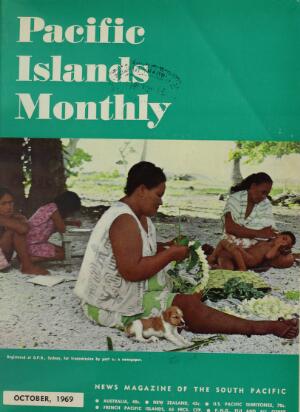
Rangiroa, in the Tua motus of French Polynesia (200 miles NW of Tahiti ), is the locale of this typical family scene with sleepy children, a puppy and women flower-making under the friendly shade trees.
The picture was taken by Miss Chris Osborne.
early 1968) is leaving for Londor to become Nauru’s first representativ< there. The radio says he would hav( quit Nauru anyhow if the Londoi post hadn’t turned up. ® Port Moresby’s new and cheeb weekly newsletter, Inside Moresby circulated on private subscription b] the New Guinea News Service thinks that Canberra’s Georgi Warwick Smith, secretary of th< Territories Department, may, afte: all, be going to London for a pos with the Australian High Com mission. ® The Banaban people of Rab Island, Fiji, haven’t given up th< fight for a greater share of thei dwindling Ocean Island phosphate and they’ve been planning new move with an eminent Sydney barrister.
TED MARRIOTT, Informatioi boss for the British Solomons just arrived in Sydney on leave, ranj immediately to tell me that Honian salvage man Wally Gibbins, wh( holds a theory that the rare Glorit mans breed at the time of the ful moon, put it to the test the othe day.
He did some skin-diving at tin right time in six fathoms of wate on the north coast of Guadalcanal close to Honiara, and his party foun< seven Gloria maris. Next day the; found another 14 shells, up to fou inches long, and most in perfec condition! His diving party include< lain Gower. One of the creature was seen walking along the bottom and Marriott thinks Wally Gibbin got a photograph of it on the move I’ve known Ted Marriott a Ion: time, and I heard him tell this stor with my own ears, otherwise wouldn’t dare report it. What impac the sudden discovery of 21 ne\ Gloria maris will have on the world’ conchologists, let alone the GlorU maris market, I shudder to predict Especially as Wally Gibbins is nov reported to be systematically search ing the Guadalcanal coast.
Stuart Index
Advertisements & other items, pp. 5-18 (3 items)
3
ACIFIC ISLANDS MONTHLY OCTOBER, 1969
Grass Roots Art
OF NEW GUINEA
n Pastor E. F. Hannemann left South Dakota, USA, in 1923 to be a missionary in New Guinea. In the following 33 years, as well as being a pioneer, a teacher and a translator, he also became a collector of native art.
But he wasn't a collector in the ordinary sense. He didn't ship a load of native carvings back to the United States when he retired. He took a collection of designs which he had taken from spears, masks, shields, bows, bowls, canoes, headbands, necklaces, lime containers, drums and all the other decorated objects used in everyday native village life.
We have now published the best of these designs in a 56-page folio called GRASS ROOTS ART OF NEW GUINEA. Along with the designs, Mr.
Hannemann gives a description of each, its place of origin and, usually, some indication of what the artist had in mind when he executed it.
PRICE: Australia and P.-N.G., $1.35 Aust., plus 5c posted; Pacific Islands and Overseas countries, $1.35 Aust., plus 13c posted; U.S.A., $1.70 U.S., posted.
Available from:
Pacific Publications (Aust.) Pty. Ltd.,
29 Alberta Street, Sydney, N.S.W., Australia, 2000. (Postal Address: Box 3408, G.P.0., Sydney, N.S.W., Australia, 2001)
Owen
LIFOV
NmiMm
ILF
NOWBU&-C&tePOMB
P es FINS
GROUPE
GROUPE PENTECOST
34, RUE DE L'ALMA.
TELEPHONE: 21 14/NOUMEA.
• AGENCE ALMA / 12, rue de I'Alma—Tel. 30 02 / Distributor for: Citroen Nissan Jeep Willys Vespa Velosolex Clark John Deere Evinrude Topper Craft —■ General Tire Dymo CRC etc. ... • AGENCE CALEDONIENNE DE G.F.A. / 34, rue de I'Alma—Tel. 28 65 / Insurance Agents: fire, accident, burglary, motor, transport—Marine and Life insurance arranged. • AGENCE MARITIME PENTECOST / Shipping Agents / 26, rue Georges Clemenceau —Tel. 21 14 / Agents for: Mitsubishi Shipping Co. —Shinwa Kaiun Kaisha —Daiwa Navigation Co. Ltd.—Lloyd Triestino—Flotta Lauro —Royal Inter Ocean Line —Holm Co. Ltd. • CALTRAC / 7 &9, rue Jean Jaures —Tel. 34 60 / Caterpillar dealer. • CLAUDE FRANCE / 34, rue de I'Alma—Tel. 34 51 / Everything from Paris—French perfumes—Fashionwear for Ladies, Children and Babies Garment —Lux Lingerie—Christofle glassware—Novelties. • C. 0.8.5. CINE OPTIC BUREAU SERVICE / 24, rue de I'Alma — Tel. 38 14 / Distributor for: Japy and Hermes typewriters—Facit—Friden—3M—Gestetner—Kodak—Zeiss Ikon Rollei—Werk—Bolex. • ELECTRIC RADIO / 35, rue de I'Alma —Tel. 48 24 / Everything dealing with radio and TV —Electric supplies—Fittings—lnstallations and repairs / Distributors for: Norge Sanyo Ray-O-Vac Onan Ignis Calor Silex etc. ... • ESTATE DEPARTMENT / 34, rue de I'Alma—Tel. 21 14 / Real estate —Builders and Contractors. • LIBRAIRIE PENTECOST / 34, rue de I'Alma —Tel. 21 14 / Magazines Books School and office requisites Stationery. • L'UTILE ET L'AGREABLE / 33, rue de I'Alma—Tel. 29 76 / Complete kitchenware Crockery Cutlery Plated ware Pottery Ornamental brass ware Garden furniture Elna sewing machines. • METO /2& 5, rue de I'Alma—Tel. 34 84 / Repair workshops—Motor cars—Tractors—Boat engines / Distributors for: Mercedes Auto Union Daf Hyster Dunlop Subaru Bosch—etc. ... • MINING, GROUPE MINIER PENTECOST / 34, rue de I'Alma—Tel. 21 14 / Nickel—Chrome—Manganese—Tungstene—Copper —etc—Exportation of Nickel ore to Japan—Agents of Mitsubishi Shoii Kaisha Ltd. (Tokyo) and of Sumitomo Shoji Kaisha Ltd. (Tokyo) • PACIFIC MOTORS S.A. / 9, rue Jean Jaures—Tel. 34 75 / Distributor for: Chrysler Massey-Fergusson Kohler Hyster Johnson "Lawn Boy" —Rust-Oleum —Feather Craft—De Havilland boats —etc. • PENTECOST AVIATION / Magenta Airport—Tel. 41 19 / Cessna distributor —Cessna 150, 172, 185, 206, 310 D, 310 P—Aircrafts for hire. • SCAT. SERVICE CALEDONIEN D'ACCONAGE ET DE TRANSPORTS / 4, rue de la Republique—Tel. 49 68 / Stevedoring—Transport on the whole territory—Cartage. • VOYAGENCE, PENTECOST TRAVEL SERVICE / 26, rue Georges Clemenceau—Tel. 20 85 / Travel agents: UTA—Air France —Air Caledonie —Air New-Zealand—Qantas —Pan American Airways—Air India —etc. — Passenger sales agents. • PENTECOST PACIFIC S.A. / In Port—Vilaand Santo—New Hebrides. • SAT. NUI. SOCIETE D'ACCONAGE TAHITIEN / 613, rue des Remparts—Papeete, Tahiti / Stevedoring—Transport on the whole territory—Cartage.
PENTECOST $
Qrnott's« Biscuits
in triple wrapped, tropical packs
'Jt Arnott’s SCOTCH FINGER Biscuits.
A butter-rich, chunky biscuit with the true flavour of shortbread. m r 4 <8? & Arnott’s SALTINE Biscuits.
Light, tangy, crisp cracker biscuit . . . perfect with salads, cheese, soup or eaten plain ■ . . v II m fame* HP olscujli_
rOU* D
Arnott’s CHEESE JATZ Biscuits.
Crisp cracker biscuit with a fine cheese flavour perfect for entertaining.
Arnott’s MILK ARROWROOT Biscuits.
A wholesome, nourishing biscuit especially suitable for children, but a favourite with all the family.
Arnott’s SAO Biscuits.
A light, crisp cracker biscuit . . . delicious with butter and cheese, ham, jam or other spreads. a Arnott’s MONTE CARLO Biscuits.
Crisp short biscuits, flavoured with pure honey and coconut, sandwiched with vanilla cream and raspberry jam. cm ft
shreddedwhotmw
Biscuit* Arnott’s SHREDDED WHEATMEAL Biscuits.
A wholesome biscuit with the nutty flavour of crunchy whole wheatmeal.
Delicious plain or buttered. % v.y' .
ink -
Arnott’s NICE Biscuits.
A sweet plain short-texture biscuit sprinkled with fine sugar. Popular for morning tea.
There is no Substitute for Quality
H 699
SOME OF THE FIRMS
WE REPRESENT ARE:
A. W. Allens (Confectionery) Sunshine Biscuits Sunrise (Confectionery) Flamenco (Instant Coffee) Cremota (Quaker Oats, Jets Pet Foods) Merchants (Canned Soft Drinks) Lunchtime (Honey) South Pacific Canneries (Scallops, Abalone) Safcol (Canned Tuna, Salmon) Hancock's (Spaghetti, Cereals) Melbourne Canning (Jams, Bleach) Water Wheel (Flour, Sharps, Wheat) General Food Corporation (Twisties, Twirlies) Edward Zorn (Margarine, Cooking Fats) Robert Timms (New Guinea Gold Coffees, Teas) Rodd (Cutlery) Palm (Mattresses) Esteel (Cookware) Vendolux (Cafe Bars) Mitchell's (Abrasives) Regent (Swiss Watches) Gainsborough (Furniture) Tamco (Melanie Crockery, Nylon Hardware) Elm a c o (Plastic Household Goods, Electrical Fittings) Brown b u i I t (Pre-Fabricated Houses) Ryline (Fluorescent Lights) Jex (Steel Wool) Austramax (Pressure Lamps) Preservene (Soap Products) Charles Tims (School Requisites) Ascow and Philadelphian (Shirts) Lawn Chair and Tubco (Garden Furniture) Sunrise Lustretone (S.S. Sinks, Plumbers' Supplies) Electronic Industries (Electrical Household Appliances)
S. E. TATHAM
& Co. Pty. Ltd.
MELBOURNE, AUSTRALIA
G.P.O. Box 8, Cables “SEP* Telephone 60-1125
EXPORT AGENTS
PACIFIC ISLANDS
AGENTS
Australian buying and shipping agents for the Gilbert and Ellice lslands Colony 33k Wholesale Society
DIRECT ENQUIRIES WELCOMED
1 \ i 1 1 Associate Company
S. E. TATHAM (FIJI)
Suva, G.P.O. Box 671.
Lautoka, P.O. Box 366.
SINCE 1924
LTD
■ „ I ( if 4 d
ING ,
With mint k ■
chicken.
CK P°.
CAMPFIRE*
.tomato
And
3 new soups
from Heinz
Three new members to the Heinz family of 29 soups.
Heinz Campfire Tomato and Bacon Juicy big red tomatoes singed with the flavour of smoke-cured bacon.
Heinz Spring Lamb with Mint Tender spring lamb with a hint of fresh., green mint.
Heinz Chicken Stockpot Chunks of white chicken meat simmered with a dozen specially selected vegetables.
Heinz soup... It’s the one you know they like
THE PACIFIC
mi, SAMOA,TONGA, NIUE Is, NORFOLK IS.
BURNS PHILP
[SOUTH SEA) CO. LTD.
REGISTERED OFFICE; SUVA, FW
TELEPHONE NO: 22661
TELEX NO: FJ1127
Code Address: "BURNSOUTH'
SHIPPING AGENCIES
The New Zealand Shipping Co. Ltd.
Shaw Savill & Albion Co. Ltd.
Port Line Ltd.
Bank Line Ltd.
General Steamship Corporation Ltd.
Blue Star Line Compagnie des Messageries Maritimes Royal Interocean Lines Daiwa Navigation Company Ltd Sitmar Line Flotta Lauro (Lauro Lines) Australasia Pty, Ltd, Tonga Shipping Agency.
EXCLUSIVE
DISTRIBUTORSHIPS
INCLUDE
Akai Taperecorders Dunlop Products Hitachi Electronics Holden Motor Vehicles Rolex Watches Revlon Cosmetics Pentax Cameras Ferguson Tractors Olympic Tyres Penfold Wines
AGENTS FOR:
Queensland Insurance Co. Ltd.
Burns Philp Trustee Co. Ltd.
Shell Company (P. 1.) Ltd.
Bureau Veritas
ASSOCIATED COMPANIES
Burns Philp (New Hebrides) Ltd.
Automotive Supplies Co. Ltd.
Corrie & Co. Ltd.
Wrought Iron and Steel Construction Co. Ltd.
Bish Ltd.
SPECIALISED SERVICES
Expert advice on Shipping; Forwarding; Customs formalities; Insurance.
COMPLETE TRAVEL
SERVICE
accredited agents for the
INTERNATIONAL AIR
TRANSPORT ASSOCIATION
OVERSEAS AGENTS: SYDNEY • LONDON ♦ SAN FRANCISCO
m
Weet-Bix
■ i
MALTED WHOLE WHEAT BISCUITS
i I?? ltAltil.il W 14004/
When the best beer is called for, New Zealand’s favourite lager.. m
STEIN LAGER
T X m A. % can tempt you away... once you
experience
the unique
flavour and distinctive aroma of
ERINMORE
§FINE
TOBACCOS
SINCE 1810
MURRAYS OF BELFAST
NORTHERN IRELAND
'PJIW
HI SM n' c
F oq
Dr« nK o*: ,,.. m\\\o g» veS get \ong enetgV extra through MVd° thechoco'^^tara* 03 ' term®' 3 j C tWe enr' cl ked vN'rth dtV»e hed tract
.".wr Start du»^ Wlth
k/Vdo- W\\\o rt' ak da‘W v ° l “ oi energy d \fierenc®
All the best
from Australia
Phoenix Biscuits! Best for goodness.
Best for flavour. Best for freshness. Silver foil wrapped to arrive as fresh as
the day they were baked.
9 w * m O’ i * m 0 m m 1 w . j&r
CREAM CRACKER
BISCUITS
8 OiS
CREAM CRACKERS
Flavoursome and filling! A light, creamy cracker that’s a low calorie favourite. Ideal for diet control.
Contains health-giving yeast. 25
COCONUT CREAMS
Wonderful flavour! Baked with the finest quality tropical coconut and crammed full with coconut flavoured cream.
HOLBROOKS!
rice-a-riso
we »avowv moe mm
nceanso
The complete
rice dish
cooks in just
17 minutes.
Now you can whip up a Blue Ribbon special in as little as 17 minutes with Holbrooks Rice-a-Riso. Everything’s in the packet, the rice, all the delicious herbs, spices that make Rice-a-Riso a family favourite ... a favourite with Mum, too, because it’s so quick and easy to prepare.
A RECKITT & COLMAN PRODUCT
SEVEN MOUTH-WATERING FLAVOURS to
please ail tastes . . . Mexican, Spanish, Chinese, Curry, Beef, Mushroom and Chicken. Try one tonight.
Exciting recipes on every pack.
For trade enquiries: Reckitt & Colman Pty. Ltd, Wharf Road, West Ryde, N.S.W., Australia.
Cables: Reckitts, Sydney.
HBIMC
m My boy friend gave me the dinkiest lighter you ever saw.
So dinky, I can’t get flints small enough to fit it.
Another boy friend gave me a lighter he got on the Continent.
When it’s empty, you throw it away.
I can’t remember which I finished with first. Him or it.
I’ve got eighty-three books of matches.
But I like to keep them as souvenirs.
Somebody
please give me
a Ronson
One of these will do very nicely Comet gas lighter Milady gas lighter ■■■ Adonis slim gas lighter Empress gas table lighter, in onyx To givers of Ronson gas lighters. A filling lasts for IorMV ■ months. Re-fuelling lasts 5 seconds. The lighter—with its adjustable flame—could easily last forever.
14
OCTOBER, 1969 PACIFIC ISLANDS MONTHL
Letters
Tongans Want Reform
Sir, —It was with interest and admiration that I read Dr. J.
Fanamanu’s article on the everlasting rule of the monarchs over us Tongans (PIM, July, p. 39). That is insofar as his historical analysis was concerned.
I want to point out that the educated commoners on whom Mr.
Griffin’s article (P/M, April, p. 41) was based, were actually half educated commoners. That does not, of course, mean that there are no educated commoners. It means that most educated commoners, in the eyes of the nobles, are those swal lowed up (to quote the author) by their (the nobles’) diplomacy, “degree of patience and tolerance”.
Therefore they (educated com moners) can not voice their opinions free of the nobles’ influence.
Furthermore not less than 60 per cent, of the nobles have had overseas education compared with the minor fraction of the commoners that have had that privilege. So if overseas education is taken as the standard for being educated, then the nobles are definitely the more educated.
That is they have the qualities of educated men—they know it is more comfortable in the frying-pan than in the fire.
There is no doubt about the contri bution of the nobility to Tonga and “the Tongans being unsurpassed in their love of monarchy”, but to a “half educated” mind the author overstressed the nobility and under estimated the Tongans capacity to bring about reforms. It is for certain that Tongan nationalism will always revolve around the monarchy, but whether Tonga is going to be RULED everlastingly by a monarchy is a different story.
S. Ataata.
St. Lucia, Brisbane, Australia.
View Of Tonga
Sir—Herewith my congratulations to John T. Griffin for his well docu mented, personal-observation story about Tonga (P/M, April) which drew the ire “absolutely false and misleading”) of Tongan Joe Fana manu in July. On the basis of logical evaluation of the two articles, my money is on Griffin.
Glen Wright.
Apia, Western Samoa.
How Legends Grow
Sir, —Your item about Cathy Graindorge, the Papeete travel agency hostess, and the “two huge tikis, found by Paul Gauguin, and currently on show as part of Tahiti’s Gauguin Museum” {PIM, July, p. 103), is a good example of how wildly inaccurate legends grow in the Eastern Pacific.
The two tikis referred to were not found by Paul Gauguin and they came from an island that Gauguin never visited.
The tikis were brought from Raivavae, in the Australs, in 1933.
They stood for many years in the grounds of the old Papeete Museum.
A photograph of one of them in that position appeared in PIM for June, 1967. p. 95.
At the time of their arrival in Papeete from Raivavae, some Tahitians became apprehensive that the ancient gods may have been angered by the disturbance of the tikis from their old resting place.
Apprehension grew to alarm when flames burst from the still waters of Papeete lagoon in front of the Protestant Church. But when some hardy soul plucked up the courage to investigate, it was found that the flames had been caused by a bottle of flour mixed with phosphorous, which had apparently been prepared for killing cockroaches on board one of the local schooners and thrown overboard. The phosphorous, on coming into contact with the sea water, had generated a gas which ignited as the bubbles burst on the surface.
Subsequently, the man responsible for the removal of the tikis from Raivavae was stricken with a myster ious illness, and there was serious talk of petitioning the authorities to command the return of the tikis to that island. However, the man even tually recovered and the tikis stayed.
Nevertheless, the Tahitians are quite justified in spreading the story (as your item put it) that “anyone who touches the aged statues dies”.
The fact is that no one has yet been known to get out of this world alive.
A. T. Kee Toucher.
Papeete.
Tahiti.
Look! No Steering
Sir,—In the August PIM , pages 78-79, the advertisement for Datsun had me intrigued. It’s fantastic, how does it operate? It has no steering wheel.
(Mrs.) Alma Townsend.
Sydney.
Two Rabaul Directors
Met In Japan
Sir, —The reference to Dr. N. H.
Fisher being appointed director of the geological branch of Australia’s Bureau of Mineral Resources ( PIM, May, 1969, p. 110) reminds me of an interesting meeting Dr. Fisher had in Japan in 1966. I was able to introduce him to Dr. Takashi Kizawa, of the Meteorological Re search Institute of Japan. Dr. Kizawa was the director of Rabaul Observa tory during the war years.
Dr. Fisher was director of the observatory immediately before and after the war. When the Japanese captured Rabaul they threw the earth quake recording instruments from the observatory over a cliff.
On the other hand, when the Aus tralian forces recaptured the town they brought the Japanese instru ments to Australia as spoils of war.
Some are still in operation today.
Dr. Kizawa recently spent a year in NZ working with the DSIR Seismological Observatory in Welling ton.
He told me that the only way for him to escape conscription was to volunteer for the job at Rabaul. He was the sole Japanese civilian there during the war years.
At the conclusion of the war in the Islands he was instructed by his commanding officer to destroy all his scientific instruments before the re treat to Tokyo. Instead. Dr. Kizawa quietly disobeyed. He left a note on the equipment which expressed the hope that the next generation would not be beset by war. And he sealed his underground observatory with earth.
It would be interesting to hear from anyone who was involved in the unearthing of the observatory with Dr. Kizawa’s note at the end of the war.
I hope that Dr. Kizawa’s reports and recordings at Rabaul Observatory during the war will one day be pub lished in Australia. They surely have a place in Australian scientific litera ture, if only to fill in the gap in Rabaul recordings during the forced absence of Dr. Fisher from the observatory.
To ensure that his recordings were properly preserved, Dr. Kizawa went back to Japan with some records wrapped around his chest. I was director of Apia Observatory from 1962-65.
John Milne
Canberra, Australia.
More letters on p. 25
P-Ng's Administrators
Sir, —Your article in the August issue on the demise of the DDA is not correct in the statement that DDA began in Papua in 1909.
The Native Affairs Department of Papua controlled native labour and was not the department concerned with district administration. That was controlled by the Government Secretary and the field staff con sisted of eight resident magistrates, 16 patrol officers and 16 assistant resident magistrates, who were loosely called the “outside” men, the name from which Jim Sinclair has taken the title for his biography of Jack Hides.
The field staff were also inspectors of native labour and for these duties they came under the Commissioner for Native Affairs who was always a former resident magistrate.
The Government Secretary was also head of the Public Service, Police and Prisons, Director of Native Taxation and Native Planta tions and responsible for education.
The headquarters staff of the Gov ernment Secretary was small—chief clerk, records clerk, accounts clerk, stenographer, two clerks in the tax ation and census section and six Papuan clerks.
Protocol was strict. Only the Lieu tenant-Governor communicated with Canberra and when the Lieutenant- Governor on his frequent visits to out-stations issued an instruction to a resident magistrate a copy of the instruction had to be sent to the Government Secretary, otherwise, as the instruction neatly put it, “there would be complete chaos.”
The Native Affairs Department was abolished in 1941 and became a branch of the Government Secretary.
The title of Government Secretary was a carry over from British New Guinea administration. Anthony Mus grave, for whom the main street of Port Moresby is named, was Gov ernment Secretary of British New Guinea from 1888 to 1906 and when the territory of Papua was pro claimed in 1906, A. M. Campbell, a resident magistrate, became Gov ernment Secretary. He resigned in 1912 and the then Treasurer, H. W.
Champion, became Government Secre tary and remained in office until the Territory of Papua ceased as an entity in 1942.
Champion had joined the British
New Guinea administration in 1902 from the firm of Burns Philp and became the first Treasurer of Papua in 1906. He was a man of few words, in speech and on paper, and his memoranda rarely went beyond a half sheet of quarto paper. He was something of a financial wizard mainly responsible for running Papua on a shoe-string.
Civil Government in the mandated territory of New Guinea began with a Government Secretary as head of the field staff but owing to differ ences of opinion a new department was formed called District Services and Native Affairs, and a former assistant resident magistrate from Papua became director.
The latest reorganisation by Secretary Warwick Smith and Ad ministrator Hay must result in better efficiency, but it has taken 25 years, during which time all the “bright boys” have played chess with the department.
Ivan Champion.
35 Katumba St., Brisbane.
Who Produces 'Coke 7
Sir, —We feel a correction is warranted concerning an item which appeared in PIM , Sept. (p. 125), about the production of “Coke” in Lae and Rabaul.
The company which has the Coke franchise in Rabaul is Gabriel Achun & Co. Pty. Ltd., and not A. Akun & Co. Pty. Ltd. as reported.
It seems that whoever reported this news item is not worth a grain of salt, much less his profession as a reporter, for failing to ascertain a simple fact such as this.
R. A. Chue,
Manager.
Gabriel Achun & Co. Pty. Ltd., Rabaul, NG. • Correction herewith. Our re porter did in fact ascertain that simple fact, by confirming our report with the Sydney offices of Coca-Cola Export, who okayed the names. We won't be sacking him, despite Mr.
Chue’s lack of confidence in his pro fessional ability.
Glen Wright In Reply
Sir, —Is it not interesting that criticism of my PIM articles about events in Samoa, and of me as a person, has come from Fiji and Tahiti?
Be that as it may, both of them (Malu O Tiafu, PIM July and Richard Goodman, PIM, August) ought to learn a basic lesson in journalism before they embarrass themselves again. This fundamental principle concerns the functions of language: report, inference and judg ment.
The articles that so stir the emotions of Messrs, Tiafu and Goodman are reports. All material is attributed as to source. All in ferences are based on first-hand or authoritative observation and know ledge.
For example, the Chiefs Keep Power story is larded with such attributions as “M.P, Fatialofa said”, “Mata’afa argued”, Members of Parliament “argued” and “said”. I write that I got my information about the matai system from “six dissenting MP’s, the Press, and a host of youth leaders”.
I quite plainly indicate that I obtained information from the
All pioneers of Papua in their time, these three men now live in Australia. At left is Ivan Champion, writer of the letter on this page, and at right, his brother, Claude. Centre is their father, H. W.
Champion. Claude and H. W. live in Sydney, Ivan in Brisbane. In the post war P-NG Administration Claude Champion held the position, like his father earlier, of Government Secretary, although by then the title had been changed.
parliamentary debate (March 28, 1969) over the franchise. This argument revealed that in one dis trict populated by only 655 people more than 21 years old, 1,400 matais were registered. “Was not this an abuse of the matai privilege?” an MP asked.
Again, an MP charged that in this debate there existed “the un desirable spectacle in by-elections of many dozens of new titles being created, even down to children under 10 years of age. Such matais did not have control over customary lands or perform any of the governing functions of a matai but were created solely so that their votes could be registered in support of the candidate or his backers who created the titles. To prevent this cheapening of the matai system, government has made it illegal to confer a title on any person under 21 years of age, but the creation of great numbers of titles for electoral purposes is still possible”.
Not my opinion, but statements by members of parliament, recorded in the official transcript of proceed ings and printed in the Samoa Times, March 21 and 28, 1969.
My story about the edict against ship-docking on Sundays in Apia and other quirks of official Samoa behavior was just as factual. All these things happened.
In neither case did I express an opinion pro or con. Goodman is dead right about my being un sympathetic. I don’t care which way the cat jumps. I take no sides. I am not a participant, but an observer, calling the plays as I neutrally see them, with truth as my sole objective.
I am not by any means immune from commitment of error, and right now I want to correct one I made on page 23, PIM, July, John Wendt of the Western Samoa Price Control Tribunal is not a sheet metal and air conditioning contractor but rather is Financial Secretary to the Government. In this regard may I quote famous New York lawyer Louis Nizer, who writes in his book My Life in Court, that “minor dis crepancies and variations are of no account when testimony flows toward the pole of truth.”
What men do is the stuff of truthful journalism; what they ought to do, of propaganda.
Glen Wright.
Apia, Western Samoa.
New Hebrides Opinion
Sir, —In Sydney we viewed tele vised “Four Comers” with interest ing aspects on Vila, New Hebrides.
Among views offered, an Australian deemed himself an authority on its supposedly precarious future in 10 years’ time.
Such publicised nonsense is to be deplored. It can only foster un necessary fears among the already established—or others who may care to invest in the New Hebrides.
Much is being done by the Con dominium Government (French and British) to educate New Hebrideans.
It will take at least 50 years before the bulk of indigenous people are in a position to handle home affairs along sensible lines.
Present educated ones appreciate that, without European aid and guid ance, they will revert back to stone age existence in no time. It is essential for them also, to bear with the Condominium for their own pro tection.
Another spokesman said that many well-founded, progressive ideas were stunted owing to distrust on either side of the Condominium Govern ment. True, but this applies to other countries with two or more political parties.
The disgruntled few would be mis fits in any other part of the world.
Being outspoken, they, unfortunately, reach the limelight (even gain honours above others who plod along quietly for “good of country”) and air short sighted views to the detriment of those delightful islands.
In the New Hebrides there are many races and creeds working and playing side by side in harmony. No racial discrimination whatsoever.
Although an unusual set-up, the Condominium has managed “entente cordiale” extremely well over the years. However, to restore fairness regarding land problems and other matters for the islanders, the re instatement of a neutral Joint Court President, as in pre-war years (as stipulated by the Protocol) is of utmost urgency. Vive le Condo minium!
(Mrs.) C. M. Ratard,
St. Ives, Sydney.
Fresh Air From Pim
Sir, —You will be pleased to know there is an increasing awareness of the importance of the Pacific Islands in New Zealand . . . and I hope this increases. I am a fan myself, both for pleasure, and because of the political implications and I do my share of trying to wake people up about the Pacific and its importance.
I have travelled extensively and manage to get about a month a year in the Islands and am quietly getting to know them. Your magazine is a delight and I am very impressed by the fresh and enthusiastic way you cover events—it is a real breath of
fresh air.
Barbara Baigent.
Hamilton, New Zealand.
Coastwatching Novel
Sir, —I suppose a novelist has to use his imagination to make up a good story, and I have no doubt that Olaf Ruhen is a good novelist. How ever, he knows nothing about Coast watching. {PIM, Sept., p. 97).
July Tudor’s review of Scan The Dark Coast is an excellent one but it reveals the author’s ignorance of the subject he is writing about, I seldom feel like criticising articles I read in the Press but I feel that I must expose the greatest weakness in the novel under review.
As an old Coastwatcher I must point out that shot-down pilots of any nationality usually arrived at the Coastwatcher’s camp in a shocked and dazed condition. Sometimes they were carried in by the natives, either almost dead from starvation or suf fering from wounds or injuries. They had to be nursed back to health by the Coastwatcher before they could be evacuated.
Sometimes an odd one arrived in fair condition but he certainly did not feel like having an affair with the village girls, nor would he have been allowed to by the Coastwatcher.
As for knocking off two Japanese scouts for their rifles I am afraid that Olaf Ruhen is under-rating the Japs.
They seldom sent out scouts in pairs but mostly in platoon strength. Even two lone Japs would take a lot of knocking off and the natives of New Georgia were not renowned for their aggressiveness against armed men.
Apart from the above criticism, no Coastwatcher would have allowed a shot-down pilot to go outside the perimeter of his camp.
I am afraid that I will not be spend ing $3.25 for Scan The Dark Coast, but I will be spending more than that very shortly for Mary Murray’s excellent and authentic books Escape and Hunted. I have already bought two of each and given them to friends, but need more.
Carden W. Seton.
Sunnybank, Queensland. • Might be fairer of Mr. Seton. nevertheless, to spend his $3.25 and read the book himself. Our review was only eight pars.
(More letters on p. 158)
Not A National Selector
Sir, —Your August issue (p. 103) quoted me as having been a national selector for the Fiji Rugby Union.
I am not certain how this report came to appear in your magazine but I would like to say that although I have done a number of things in the cause of Fiji Rugby over the last 15 years I have never been, nor claimed to be, a Fiji selector.
Mike Linden.
Treasury, Rarotonga, Cook Islands.
Games Yachting
Sir, —Reference your report of yachting at the Third South Pacific Games ( PIM, Sept., p. 35).
Five teams were competing for the three medals at the last heat of the series—Dabb/Antonieff and Burgaud/ Burgaud for the gold/silver, and Gardiner/Gilmore, Arnould/Peaucel lier and Reymond/Palmer for the bronze.
In light conditions the finishing order generally was Burgaud/Dabb/ Reymond, while in fresher breezes the order became Dabb/Gardiner.
The last heat was held in fresh conditions and Dabb won the gold medal. The finishing order for the series was:—
The yachting Technical Committee recommended the Tahiti Yacht Club to propose only one class for the Fourth Games, and depending on the response, then consider a second class for the Fifth Games. This decision was based on the assumption that the Games events were to foster yachting as a sport and not foster a particular class. In reaching this viewpoint both the economic situation and the development of the sport in the South Pacific were considered.
The French Polynesian competitors favoured the Fireball and the class selected will be confirmed by this November.
The yachting event was made pos
Skipper Points lost Country Boat G Dabb .. 6
P-Ng
Circle A.
Burgaud . 14.4 FP Aureole B.
Gardiner . 40 Fiji Shambles F.
Reymond , 44.1 Fiji Christian III J.
Arnould 47.1 FP Amanda Jane A.
Grey .. 61.1 WS Privateer P.
Rothery , 77.7 NC Kris K.
Rodda . .. 78
P-Ng
Fiery Fred Y.
Legat . .. 88 NC Anonomee
sible at Port Moresby by individual members of this association loaning their boats and equipment to com petitors from other countries.
Trevor W. Boughton.
Hon. Sec.
Papua-New Guinea Fireball Association, Port Moresby. • Many thanks for the additional, detailed information to our neces sarily brief summary of the Games yachting events.
Reply To A Reply
Sir, —I was directly referred to by your correspondent, Mrs, Penelope Bryning, in her letter about Percy Chatterton in August (p. 21), so would like to reply. I feel that with six years only in the territory, and in a very limited area and activity, Mrs. Bryning does not seem very qualified to discuss these matters.
Other people could be more com petent than myself, but after social services in South America and the West Indies I have been 17 years in practically all the main areas of the territory, first as a lay missionary then as a health officer.
My wife is from a coastal area and we have three children, who have Christian and tribal names; proof that I am probably more integrated than Mrs. Bryning in her present urban work in private enterprise.
Although presently living in the Highlands, many of my friends are from the coast.
Mrs. Bryning may be a student of the history of Sicily but I have been in Italy and speak Italian, I have previously put my view publicly about the danger for New Guinea of an emerging middle class (includ ing mostly local public servants) formed mainly from former students on the coast.
We don’t want, in 10 or 20 years, to see the Papuans victims in their turn of the type of feeling at present held by many local people against Europeans. The same was evident in the French African colonies after the war, where coloured public servants were often more hated by the Africans than the white administra tors.
John H. Huon De
Navrancourt
Health Extension Officer, PHD, Goroka, NG. • Pitcairn Island post office re leased its fourth definitive issue of postage stamps on September 17. The 13 stamps are all pictorial and the denominations are 1,2, 3,4, 5,6, 8, 10, 15, 20, 30 and 40 cents (in NZ currency).
Advertisements & other items, pp. 19-27 (2 items)
(arnation
N.
PEACOCK
T»A&r MARK tEG»S«»f(j
condensed
Milk
V
*TIIL
teNE"
CREAM
SWEE
(arnation
V^PRODUCT
Now you can enjoy Peacock Full Cream Sweetened Condensed Milk... a top quality condensed milk made by the producers of Carnation Evaporated Milk. It’s on sale at your local store at a value-for-money price.
I ‘ rn^xemm x - ' :i *1 ?**y« ■
bold
beautiful
breed
Outstanding business opportunity
Caribbean . .. Australia’s finest range of fibreglass boats, are coming to this area.
Now’s the time to put in your application for an exclusive distributorship or a manufacturing licence agreement.
Apart from their sensational buyer-appeal, these boats are very competitively priced and offer excellent profit margins. On top of this you’ll be backed by Australia’s largest manufacturer of fibreglass boats, who will help and advise you in all aspects of marketing and manufacture.
Write for further details and a deluxe catalogue today.
Interested in owning one privately?
Pending the appointment of a distributor or licensee in your area, you can save by buying direct from the Australian manufacturer. Send for the free, beautifully illustrated brochure and price list today. Sixteen models from 13 ft. fishing boats and runabouts, to 35 ft. luxury cruisers and work-boats.
Export Marketing Manager, Carrihean Boats Division International of Scoresby. Ferntree Gully Rd., Scores by, V ictoria, A ustn B m m ft ■ ■V:'
m r He needs it —and so do you.
The blooming good health of
Australian Dairy Foods.
Growing children need the body-building goodness of Australian Dairy Products: concentrated energy from Australian butter, vital protein and calcium from Australian Cheese. Children need the natural health and strength that Australian Dairy Foods give and so do you.
Top quality Australian Dairy Products include; Butter, Ghee, Cheese, Full Cream, Skimmed and Malted Milk Powders, Baby and Invalid's Food.
Trade enquiries to: Your resident Australian Trade Commissioner or
AUSTRALIAN DAIRY PRODUCE BOARD,
G.P.O. Box 1657 N, Melbourne, Victoria, 3001. Australia. 4b V
AUSTRALIA
Always look
for the word
‘AUSTRALIA’
on the label.
BS7B
Advertisement
Beauty Digest
For a Lovelier Skin
An exquisite skin is an asset every woman can have whatever her age if she devotes a few minutes of attention to it each day. Try some of these beauty-care suggestions to prove to yourself that, though a lovely, fine-textured complexion is sometimes bom, it is far more frequently created through constant cherishment.
A Complexion Constantly Abloom
rpoday you can actually make your skin go right on thriving and A blooming through the coldest winters and the sultriest summers.
A film of tropical moist oil of Ulan smoothed over your face and neck immediately begins to influence the perfect equilibrium of natural oil and moisture within the skin cells and sets in motion the processes that will soon reveal the soft, flower-like qualities of a complexion well-balanced and well-tended. Used as an individual base beneath make-up, the unique beauty fluid guards your skin against the drying effects of weather and the ingression of cosmetic pigments into the pores and also serves to ensure that your complexion will retain a matt and flawless appearance all through the day.
End dry skin
rst your skin for signs of roughness by gliding the fingertips lightly over your face and neck as you apply your daily base of moist oil. Any dry or rough skin patches which may be evident should be gently massaged with the oil of Ulan to nourish and restore the smooth beauty of your complexion. This will also ensure that your make-up will blend evenly to give your complexion a radiant youthful bloom.
. m
BY APPOINTMENT TO
HER MAJESTY THE QUEEN
SUPPLIERS OF SMOKERS REQUISITES
ALFRED DUNHILL LIMITED
- otf
The House of Dunhill,
the most distinguished
tobacco house
in the world
takes pride in presenting
Dunhill King Size
Filter Cigarettes.
TO^^5 S f QUIS' TES
**&s&!>* pU NW"- 1 "
Th red trad n do n r eg |S a|fr ed ° U 20
unm
LONDON PARIS NEW YORK
The most distinguished tobacco house in the world.
"m Conserves frozen foods for weeks.
Capacity up to 100-lb.
Can also be used for fresh meat, fish, vegetables, butter, etc.
Cools beer, minerals and soft drinks quickly and cheaply.
Capacity up to 80 bottles, allowing DAILY service of up to 300 bottles of really cold drinks!
THE ELECTROLUX C.BO uses no ice or electricity, operates anywhere by Kerosene, YES ANYWHERE economically
and with high efficiency.
ECESBSS2^3
Kerosene
Deep Freezer
* 9 « For better EARNINGS and a NEW way of LIFE
ELECTROLUX CBO KEROSENE FREEZER
DISTRIBUTED BY
W. R. CARPENTER & CO. LTD.
THROUGH
NEW GUINEA CO. LTD., Rabaul, Madang, Lae, Mt. Hagen. COMPTOIR FRANCAIS DES NOUVELLES HEBRIDES, Santo, Vila ISLAND PRODUCTS LTD., Port Moresby. BURNS PHILP LTD., Vila, Santo, Norfolk Island.
MORRIS HEDSTROM LTD., Fiji, Western Samoa, Tonga. E. V. LAWSON PTY. LTD., Honiara.
* €N;
the ontt*®* 1 !® 1 50111
'HtIWM RECEIPT
oo L' * t?/& .
We can’t
take our
minds
Off ShiPS m m m
even when
doing
paperwork
It’s no wonder we’re called the experts. All our crew can think about is ships. At sea and in port we try our utmost to ensure everything goes along without a ripple. And we pride ourselves on our paperwork—it’s always kept on an even keel. Now, why risk choppy waters when we’ve got the all clear — smooth sailing ahead. The China Navigation fleet connects Japan, Hong Kong and the Pacific Islands.
Sydney, Brisbane and Papua/New Guinea ports are regularly serviced by the unitised vessels “Coral Chief’’ and “Island Chief.”
THE CHINA NAVIGATION CO. LTD.
For further details and all enquiries there are Agents at the following ports:—
• PAPUA AND NEW GUINEA;
Steamships Trading Co. Ltd., Port Moresby, Samarai, Lae, Madang, Rabaul. • WEWAK: KAVIENB: Burns Philp (New Guinea) Ltd. • FIJI: Morris Hedstrom Ltd., Suva, Lautoka, etc.
• WESTERN SAMOA: Morris
Hedstrom Ltd., Apia. • TONGA: Morris Hedstrom Ltd., Nuku’alofa and Vava’u. • TAHITI: Etablissements Donald, Papeete.
» NEW CALEDONIA;
Etablissements Ballande, Noumea. • 8.5.1. P.: British Solomons Trading Co. Ltd., Honiara.
• NEW HEBRIDES: Les
Comptoirs Francais des Nouvelles-Hebrides, Vila and Santo. • JAPAN: Butterfield & Swire (Japan) Ltd., Tokyo, Yokohama, Osaka, Kobe and Nagoya.
• EASTERN MANAGERS:
Butterfield & Swire, 9 Connaught Rd., Central, Hong Kong.
SWIRE & GILCHRIST PTY. LTD.,
General Agents in Australia, 8 Spring Street, Sydney. Phone: 27-4701 'PH CN 8955/86
I I / 7. 7 ism
SUM
m '
You’ll love her
for the ]
you
ooks
I get.
That’s what Mazda 1500 can do for her escort. Because she’s suave.
And lovely. With graceful curves.
And a soft, spacious interior.
On the road, she moves like a lady.
Smooth. Quiet. Fast (when she has to be). And always obedient to your every whim.
Mazda 1500. She has the power to change your world.
make her yours
From the world's most progressive automotive plant. Toyo Kogyo Co., Ltd., Hiroshima, Japan
Letters
25
Continued from p. 20
PACIFIC ISLANDS MONTHLY OCTOBER, 1969
Letters
They're studying a blueprint
for Fiji self-government
Now that Lord Denning, Britain’s leading jurist, has (in Sep tember) completed his marathon arbitration hearing on Fiji’s new sugar-cane contract and returned to London to compile his report, Fiji’s political leaders are looking at the next vital problem on the horizon —a new constitution to take this British colony of a half million people into an era of independence.
Lord Denning’s sugar decision is expected to be announced in Fiji in December, and there is not much use local politicians and union leaders attempting to anticipate re actions. Meanwhile the problem of Fiji’s constitution has to be faced, for it won’t wait much longer for solution.
It became an active issue last year, when it was decided that London would again be the venue for a con stitutional conference. But Britain made it clear that she didn’t want a repeat of the 1965 London con stitutional punch-up, when Opposition and Government members fought out their differences in public, and the constitutional changes which followed were an uneasy compromise. All nine members of the Opposition later boycotted the Legislative Council as a protest against the constitution.
Sugar politics
So it’s been agreed that this time there will have to be a measure of unanimity between Government and Opposition beforehand, and earlier this year both Government and Opposition leaders were making some progress in behind-the-scenes talks.
Then things ground to a halt. The feeling of lack of urgency followed realisation by the Government that if agreement could be reached in time to hold a London conference towards the end of this year, then it might all explode into nothing later because the cane contract also had to be negotiated this year. Sugar cane is highly political in Fiji, and mis handled negotiations could rock the boat alarmingly.
Hence the mid-year slackening of efforts towards an early constitutional solution. The latest date for a London conference is now popularly supposed to be about the middle of next year, but in fact no date has been set.
In the meantime there is at least a constitutional blueprint available for study and the governing Alliance Party is studying it hard before mak ing any public statement.
Those members of the public who would like to study for themselves the future framework of a self governing Fiji may do so by paying 7/- Sterling to Her Majesty’s Stationery Office, London, and ac quiring their own copy of the Bahama Islands (Constitution) Order 1969.
This constitution was drawn up at a conference in London in September last year between the UK and repre sentatives of the Bahama Islands.
It confers on the Bahamas the title of the Commonwealth of the Bahama Islands.
This constitution gives the Bahamas internal self-government almost to the point of independence, and this looks like the path the British Crown Colony of Fiji will travel in 1971 when its Legislative Council comes
up for re-election. The Queen would be the head of an autonomous state within the Commonwealth.
New constitution
In detail: The new Bahama Islands con stitution provides for a Governor, who is also commander-in-chief, ap pointed by the Queen; and a Deputy Governor.
There is a Senate (in the Bahamas, 16 members, all appointed), and a
Ratu Sir Kamisese Mara, Chief Minister.
A guard of honour of 48 men and two officers of the 2nd Battalion of the Fiji Infantry Regiment, inspected by the NZ Governor-General, Sir Arthur Porritt, when he arrived at Nausori Airport in September. Sir Arthur and his party stopped over in Fiji for two days, before visiting Western Samoa, the Tokelau Islands and Tonga.
Photo: Bindi Pal.
Blueprint
for Fiji
House of Assembly (38, all elected).
All must be British subjects and possess Bahamian status.
Chief executive is the Prime Minister, who is leader of the majority party in the Assembly. He selects a cabinet of not less than eight other ministers—at least one and not more than three being from the Senate.
The Minister of Finance must come from the Assembly. The Senate can’t initiate money bills, nor can it hold them up for an undue length of time. Nor can it hold up any bill for an undue length of time.
Nine of the 16 Bahamas senators are appointed (by the Governor) on the advice of the Prime Minister; four on the advice of the Leader of the Opposition; and three after con sultation with the Prime Minister and
any other persons the Governor may choose to consult.
Term of the legislature is five years.
The Bahamas constitution estab lishes a Supreme Court, presided over by a Chief Justice, and a Court of Appeal, with a president and not less than two appeal judges. All are appointed by the Governor in con sultation with the Prime Minister.
The Public Service is controlled by a Public Service Commission, ap pointed by the Governor after con sultation with the Prime Minister, and a Public Service Board of Appeal.
There is a Judicial and Legal Service Commission (chairman being the Chief Justice), to control magistrates and government legal officers; and a Police Service Com mission to exercise control over the police force in association with the Police Commissioner.
The Governor still retains certain powers under the Bahamas con stitution but he can delegate them.
He can withhold or reserve assent to bills if he feels they are in consistent with any obligation imposed on Britain by any treaty, are repugnant with provisions in the constitution or affect external affairs, defence, internal security or the police force.
Security Council
But the constitution adds that the Government of the Bahama Islands “shall have such authority to con duct external affairs as may from time to time be entrusted to the Government of the Bahama Islands by Her Majesty’s Government in the United Kingdom”.
Although the Governor is respon sible for defence, internal security and all police matters, “the Governor shall by instrument under his hand entrust the designated minister with authority to discharge that respon sibility”.
In addition there is a Security Council, consisting of the Governor, the Prime Minister and others who may be appointed, empowered to discuss policy on external affairs, defence, internal security and the police force.
The Bahamas framework looks like a satisfactory one for a self-govern ing Fiji. Fiji would differ in the method of election to the legislature, and in the numbers. The major problem facing Fiji is still a satis factory compromise between those who want elections based purely on racial lines, and those who want one man, one vote. It’s in this area that the talking needs to be done before any London conference can meet.
Death in Fiji of Mr
Mr. A. D. Patel
Mr. Ambalal Dahyabhai Patel, a controversial political figure in Fiji , and leader of the Op position Federation Party, died in Fiji on October 1, aged 64, just as this issue was going to press. He became ill during the recent sugar industry arbitration.
Mr. Patel was a brilliant lawyer, and when the occasion roused him, was a compelling and forceful speaker. He was a member of the Fiji Legislative Council from 1944 to 1950, and again from 1963 till his death.
Just before the introduction of the Ministerial system in Fiji, he held the portfolio as Member for Social Services.
With his death there will be speculation about his successor as leader of the Federation Party, particularly with the constitu tional talks in London on the horizon. Two other lawyers will probably compete for the position Mr. S. M. Koya (Lautoka) and Mr. K. C. Ramrakha (Suva).
Employers offered
$80,000 a year to employ more locals
The New Guinea Administra tion is giving private business
men an admonitory shakeup—by
offering them $BO,OOO a year to train native businessmen.
New Guinea’s Ministerial Member for Labour, Mr. Toua Kapena, an nounced the scheme in Parliament— and in the lobbies, government mem bers were telling businessmen that if they did not take the scheme seri ously, they would have themselves to blame if frustrated local people began thinking of expropriation.
At the Papua-New Guinea Week seminar in Sydney last month, a pro minent Tolai, Mr. John Kaputin, said the same thing publicly. And one of New Guinea’s more hard-headed con servatives, Mr. Sinake Giregire, was quick to go on record “that most New Guinean’s do not think the way Kaputin does.”
However, many of the territory’s European businessmen are now look ing at the potential danger of too much commerce and industry remain ing too long in European and Chinese hands.
The government’s $BO,OOO a year for businessmen is for its Indigenous Training Incentive Scheme, the result of two years of world-wide research.
The government looked at the idea of tax rebates for training, but decided the $BO,OOO subsidy would work and look better.
The government will pay the money to approved employers of native people—and in the long term, help these same employers to reduce their payroll.
Native people receive considerably lower wages than Europeans in most fields, yet many big firms are still re cruiting from Australia men for jobs that, with a little training, might soon be handled by local people.
The new scheme to train local people may in turn create a genuine native middle-class of business and competent warehousemen and counter clerks.
The $BO,OOO will be turned out to approved employers in subsidies for vocational training, tool-kits for em ployees—in fact, everything from as sisted leave fares to subsidised accom modation.
And now, with talk of expropriation in the air, many of the territory’s European businessmen are beginning to take notice.
f Tttie
Kents Get Royal
Melanesian
Welcome
Vila and Luganville, the New Hebrides’ major towns, went gay for the three-day visit in early Sep tember of the Duke and Duchess of Kent. Locals made sure there wasn’t too much of importance the regal guests didn’t see during their stay. Earlier, the British royal couple had visited the Solomons.
It was a big three days for the nastic displays, dances, stone-laying nasties displays, dances, stone-laying ceremonies and inspection of fish processing and artifacts, they were on the go from when their private Andover aircraft landed at Bauerfield Airport, Efate, to when they left the same spot for Fiji 72 workladen hours later.
Residents of Vila and Luganville turned out in great numbers to welcome their guests In both towns much work went into cleaning up d nH y hS f l S ;.n e lmi K g M eyeSOr a S t. and brightening up buddings with flags ribbons, streamers and new p - Even threatening ram on the first day discreetly withdrew for warm their arrival exactly on time-3 p.m.
They were first driven to Kawena College, where displays of Hebridean dancmg (a stick dance) were shown and leis and bouquets presented by schoolchildren Next stop, through gaily-decorated Vila, was the site of the new British Base Hospital at Erakor Lagoon where the Duke laid a foundation stone. (It had recently been decided to replace Vila’s 58year-old Paton Memorial Hospital, Hopes are, with UK funds, the new hospital will be completed at Erakor
by 1973, together with a similar hospital, built with French funds).
In a short speech to about 3,000 people at the foundation ceremony, the Duke described the Hebrides as “very beautiful and very interesting islands”.
Mrs Made ine Ralchichi represen[in S g the w0 ® e „. s dubs ’ of the condominium, then presented the Duchess with a mounted and polished pair of pig's tusks. Villagers also gave the regal couple a stuffed turtle, a small wooden spear and three pandanus mats. Vdas Tongan community contributed a polished bowl.
TV 10 ianTO ph e Duke and Duchess sient at visit ' to Santo . Mor y e presented bv youngsters and an assembled 1,500 schoolchildren from Santo and nearby islands got a short glimpse of their visitors ' First call was the South Pacific Fishing Company’s fishing and processing headquarters, Palekula, before the Duke and Duchess were returned to Luganville (Santo’s capital) where they were guests of honour at a reception, attended by 250 locals, hosted by the British District Agent for the Northern
District, Mr. I. D. Field, at agency headquarters, XT , , _.., . ... ot to j out d°p e Eugan- Vl,le was decorated for the occasion, together with a welcoming arch con structed by the Chinese community, Cerem ° nlal shlelds and banners were everywhere, i i * w/Jrannoc LOOK dl VOlCdnoes Returning by Andover to Efate ate r in the afternoon, the royal air craft was diverted over the islands of Ambrym and Lope vi, for a glimpse of two of the Hebrides’ volcanoes. The same night was Vila's biggest social event of ’69—over 400 guests attended a reception at the British Residency for the Duke
f Tttie
Ae French &cond the British Ex-sl?vke- Association Clubhome before , men u -t S i! o fV, iat i? n t, d f rnm Mr 11 C missloner ’ Mr - J - Moundian.
At the Cultural Centre, Mr. R.
Platt showed the couple his new tropical fish tanks, Mr. H. Bregulla talked about his collection of stuffed birds, Mr. Reece Discombe discussed the articles he had recovered from the wreck of La Boussole and Mrs.
The Duke of Kent, stopping to speak with the children of St. John's School at the public rally in Honiara, has a chat with little Claire Montgomery.
Hannah Dale answered questions on shells. All in 15 minutes!
The Duke and Duchess’ Hebrides visit wasn’t long and it was only one stopdown on the couple’s Pacific itinerary. Few would grumble, how ever, that residents didn’t make the best of it.
In the Solomons
On a five-day stopover in the Solomon Islands, the Duke and Duchess of Kent saw and visited three outer islands—Gizo, Malaita and San Cristobal—as well as having a good look around Honiara, the protectorate’s capital, on Guadalcanal.
The Kents attracted 6,000 people at a public rally at Honiara, 3,000 people for their landing by the motor vessel Kwai at Gizo Wharf and 2,000 people at the small village of Ngorangora, near Kirakira Airstrip, San Cristobal.
They were the first members of the royal family to visit the Solomons since the Duke of Edinburgh’s stay in 1959 and the first-ever members to visit San Cristobal, the major southern island.
Their appearances at schools, hos pitals, the rice project, training col leges and colourful canoe exhibitions at Gizo weren’t without small side lights.
At Honiara, it was reported the Duchess was advised by a serious
little schoolgirl not to go swimming in the sea for sharks would eat her.
Outside Honiara, at the Ilu Farm rice-growing project, the Duke found no lack of excitement in a display of crop spraying by a small aircraft.
On the first run, specially for the Duke, the plane flew low enough to —accidentally—catch the royal party with a shower from its spray.
At Gizo, the royal couple headed for a 100-guest reception at the DC’s house in a Land-Rover, but the vehicle wouldn’t go. With smiles all round from the Duke and Duchess— and cheers from a watching crowd —a royal transfer was made into a spare vehicle and the mini-motor cade proceeded successfully to the reception.
Also, on their way to a rally at Lawson Tama, the couple were “challenged” by Guadalcanal warriors, armed and clad in the traditional way.
The Duke and Duchess had been forewarned but when a near-naked spearman hurled himself from behind cover at the royal car, the Duchess gave a distinct start.
The Duke’s later comment: “The spectacular challenge with which we were met —I might almost say ambushed—was extremely impressive and not a little alarming, and I was glad that on close inspection you decided we were not enemies and allowed us to proceed”.
The Duchess of Kent, accompanied by Director of Education, Mr. D. H. Hibbert, stops to admire the children of Chung Wah School, Honiara.
Advisory Council
Wider net for New Hebrides Advisory Council
The first meeting of the new, enlarged New Hebrides Ad visory Council was to sit in Vila on October 1, following elections
throughout the widely-spread
islands of the condominium in July and August to select rep resentatives from the eight new electoral districts.
It was decided last year (P/M, Feb. p. 35) to increase the overall members of the council from 26 to 30, by adding four new private members.
The real significance of the new council is that nearly 60 per cent, of the private members have been elected; previously only 40 per cent, were elected and the rest nominated.
The views and feelings of all Islanders throughout the condo minium are expected to be better heard with eight, instead of four, elected Hebrideans from the eight new electorates.
14 elected
October’s meeting was to be at tended by six official members (number unchanged), 10 nominated members (three British, three French, and four Hebridean) and 14 elected members (three British, three French and eight Hebridean).
There are six official members— the two Resident Commissioners, (Messrs. C. H. Allan and J.
Mouridian), the British Assistant Resident Commissioner and the French Chancelier, the condominium Treasurer and the Superintendent of Public Works.
Nominated members are the Venerable D. A. Rawcliffe, Messrs.
R. U. Paul and Roy Gubbay (British representatives). Father Verlingue and Messrs. Jean Chauveau and Jacques Russet (French), Father Gerard Leymang, Dr. Mak a u Kalsakau, Mrs. Madeline Kalchichi and Mr. Michel Noel (New Hebridean).
The six private members, elected by the Chamber of Commerce, are; Messrs. P. Lutgen, J. Ratard, P.
Delacroix, G. Seagoe, W. Hamlym- Harris and James Burton.
The elected New Hebridean mem bers from the eight new electoral districts are: Messrs. lolu Abbil (Tanna), Tom Tipolomata (Epi and Shepherd Groups), George Kalkoa (Efate, Emau, Nguna and Mataso), William Mete (Aniwa, Futuna, Aneityum and Erromanga), Michael Ala (Aoba, Banks and Torres Islands), Frank Kenneth (Malekula), Michael Liliu (Pentecost) and Pastor Titus Path (Santo).
Alternate nominated members who can attend council meetings in place of absent full nominated members, have been invited to accept appoint ment. They are: Miss Alison Todd, Reverend S. J. Cooper and Mr. G.
Svenne (British), Mrs. Marguerite Colardeau, Mr. Edmond Gauchet and Mr. Yves Tanguy (French), Messrs. Lop Kissel, Andre Carlot, George Tor and Mark Melin.
Of the nominated members, Messrs.
Rawcliffe and Paul of the British trio had served on the previous coun cil, Mr. Rawcliffe as an alternate member. The French members are all new to council, as are the Hebridean members, except Father Leymang.
Mrs. Kalchichi is the second Hebridean woman to be a member.
Mrs. Agnes Terei, of Santo, was first (PIM y Jan., 1966, p. 11).
West Samoa "girls"
are banned
One of Western Samoa’s more bizarre tourist attractions will soon be a thing of the past.
Parliament in September con sidered a bill outlawing the im personation by males of females and vice versa. As a result the mincing, beautifully coiffured, rouged and powdered faafafine now a fairly common sight on Apia’s streets will soon be driven from public view.
Homosexuality has long been accepted as a fact of life in Samoa and these faafafine are in demand as house “girls” or gain fully employed as dressmakers.
Several years ago Police Chief Philipp claimed that lesbianism was an even greater problem than male homosexuality.
It is generally doubted that the righteous indignation of Samoa’s Parliamentarians will result in any dimunition of the practice.
P-Ng's "Sunny" Democratic
Future Takes A Tumble
From JOHN RYAN in Port Moresby
The ‘police actions’ on Bougainville and New Britain have cast a pall over the sunny democracy being so carefully nurtured in the New Guinea House of Assembly.
After five years of democracy, Parliament has discovered that it just cannot advise, cajole, demand or legislate to wipe out or decant New Guinea’s absolute tribalism and, in the case of Bougainville and New Britain, emotionalism.
Among the more constructive and serious of Parliament’s elected mem bers, the rot has set in.
The House’s prestige, privileges and immunities have taken a tumble re cently at the hands of Pangu’s Mr.
Albert Maori Kiki and the Post- Courier Press ban.
Piled on top of the trouble, was the realisation by elected members that nothing they could do in the House would solve or ameliorate the tribal-emotional-breakaway outbursts of Bougainville over the copper and land row, and the perhaps more serious campaign by the Tolais of Rabaul against the newly-proclaimed multi-racial Gazelle Local Govern ment Council,
Native police
After so much talk of Parliamen tary prestige and power in the emerging, rapidly-developing New Guinea, elected members had to sit back nervously while Executive Government at Konedobu and Can berra (the Australian administra tors) had to “solve” Bougainville and Rabaul with planeloads of native policemen.
More than 100 policemen camped near Rorovana to help the govern ment win its confrontation with native landowners who, according to latest reports, have now agreed to sell their 150 acres to Conzinc Rio Tinto for the first stage of the copper project.
Rorovana was a small scale affair, albeit the first real police action since 600 police were flown into Buka Island (northern end of Bougainville District) in 1962 to put down John Teosin’s Hahalis Welfare Society, In 1962, because of the reverberations, everybody thought
that the days of police actions were over.
But those people, convinced that New Guinea’s tribalism was on the way out, that the rule of law was entrenched and that Parliament, with technical-professional help from the Australians, was now running New Guinea, received the shock of their lives when 1,000 policemen were rushed to Rabaul.
One-third of New Guinea’s entire police force in one town at the one time!—the largest police action in New Guinea’s history, including the police in Rabaul for the 1961 Sepik- Tolai street-fighting, in which two rioters were shot dead.
Tolai tribalism
The Rabaul trouble (land, racism, local government and sheer Tolai tribalism) has been mounting for several years, but was ignited in May when the Gazelle (Native) Local Government Council asked the Administrator to proclaim the new council multi-racial; with three Euro peans, one Chinese and 34 Tolai members.
Local government began near Rabaul in 1952 but for years, several influential Tolai groups resisted— leading to the police confrontation at Navuneram in 1958. Recently, Gazelle Council and government men have tried to bring into council influence the resisting Tolais, with moderate success.
The Tolai Cocoa Project which grew out of Tolai demands for economic advances, received technical help from government men—but the private planters were indifferent, and some were guilty of working against the highly successful scheme.
In European business eyes, it was simply good business—and in the business world quite legitimate—to put the opposition out of the running.
In Tolai eyes, it was another proof of lordly Europeans trying to run everything.
When the multi-racial council was
proclaimed and Tolais realised that Europeans and Chinese would be elected, thousands marched in protest.
Nothing was achieved, and the Tolai Mataungan (Alert) Society began a concerted underground campaign, with the help of Mr. Oscar Tammur, M.H.A. (Kokopo), to defeat the Gazelle Council, The Tolais were afraid the Gazelle Council and its European-Chinese members would run the Tolai tribes —and also the cocoa project.
Mataungan began collecting tax— the $l2 which by law, was due only to the council. Battle was joined, and Mataungan less-sophisticated mem bers began making threats of violence against councillors and some Euro peans.
By escalation, it was soon open conflict and three Mataungan leaders were in court (proceeding) for stealing and/or having in their possession Gazelle Council keys to the council chambers and council vehicles.
Senior Lecturer in Law at the University of Papua-New Guinea, Nigerian, Mr. Ikenna Nwokolo, defended them in court and spoke of “government proclamations legalis ing the council retrospectively”.
After years of simmering dis content among many Tolais, it was now open war—and the Local Government Ordinance and the Administrator’s manner of using it was coming further into the spot light.
Right thing?
Back in the Port Moresby Parliament, seven elected Members with ministerial rank were wonder ing if, when involved in the police action decision in the Administra tor’s Executive Council, they had done the right thing.
And in Sydney, an educated young Tolai involved in the Rabaul problem, Mr. John Kaputin, was telling an Australian audience that the Tolais had now begun to fight and that the Tolais would win.
Many of the older elected members, including the Speaker Mr. John Guise, were voicing increasing con cern at New Guinea’s tribalism and the threats of breakaways by Bougainville and New Britain—and trying to track down rumours that some leading Papuans were tired of being “dominated” in Parliament by New Guineans and were thinking of a break way Papua!
If all these cracks in sunny democracy weren’t enough, in Sep tember Mr. Joe Paul Langro an nounced he would resign his ministerial rank in the Assembly.
(Continued on p. 135)
In June, 1968, when the House met for the first time, Pangu declined any ministerial responsibility on the grounds that elected members could not serve two masters: their electorate, AND the government.
Mr. Langro, 30, representing the West Sepik electorate, told the gov ernment much the same thing in September in pulling out of the gov ernment benches. Amid strong re ports that he was joining Pangu, Mr.
Langro said that his job as Assistant Ministerial Member for Informa tion and Extension Services had been too demanding.
His electorate had seen little of him ... and the electorate was what would count when election time came round again in 1972.
But there were other factors in Mr.
Langro’s planned resignation—dismay ing reports that the Department of Information and Extension Services was to be dismantled, with its vari ous divisions (broadcasting, libraries, films) going into other departments.
Once Canberra approved these changes, Mr. Langro could have be come a Member without portfolio.
Most of the 15 Ministerial and Assistant Ministerial Members have had problems in working with, under standing their government depart ments and satisfactorily representing them in Parliament. Some govern ment decisions do not come easily ... and many of them come with out the support or approval of elected members with ministerial rank.
There have been many divisions of loyalties, and it’s quite clear that few Ministerial Members yet appreci ate the Westminster tradition of Ministers submerging their electorate or personal feelings in the interests of a government decision.
Mr. Langro’s loss is the first crack in the cornerstone of Westminster in Papua-New Guinea. More are ex pected—another very soon, but for different reasons. The Ministerial Member concerned is beset by the illness of a member of his family, and may be forced out of the gov ernment ranks.
Chairman of the recently appointed Parliamentary Select Committee on Constitutional and Political Develop ment, Mr. Paulus Arek now faces a new task—the patching up of the Ministerial system as Westminster and Australia prefers it, a “marriage” of New Guinea and Westminster, or a workable alternative . . . and this may be the Presidential federalism now being promoted so strongly by Speaker, Mr. John Guise.
Dull budget in P-NG—because
members had their say
By JOHN RYAN in Port Moresby
A full scale Parliamentary row four years ago and the whims of the general election voters last year, has taken the sting out of New Guinea’s budget debates.
New Guinea’s record $172 million budget for 1969-70 went through the House of Assembly here in Sep tember with barely a whimper; it was one of the dullest, least imaginative debates I have heard.
There’s good reason to that elected members did not have the background to argue the budget with the government experts . . . nor did they have many openings for argument, because this year for the first time, Parliament had been given a significant and genuine consultative part in the early planning of the budget.
Four years ago, the then Member for the Highlands, Mr. lan Downs had led Parliament in revolt against the government budget and had reduced it by $50,000 —a protest against Canberra’s reducing of native public service salaries a few months earlier, and against Canberra’s refusal to let elected members have any real say in budget-making.
In those days, the budget was brought down in Parliament as a fait accompli. But the Downs attack on the 1965-66 budget, his threats of more to come, and the demand by Mr. Guise’s Select Committee on Constitutional and Political Develop ment in 1967 put an end to the government’s absolute power over budgeting.
Real power
The Guise Committee won limited Ministerial Government, a Budget Committee within the House of Assembly, and real budget-making power for the eight elected members given Ministerial rank and member ship of the Administrator’s Executive Council.
Eighteen months ago, when the voters failed to re-elect Messrs. Don Barrett and John Stuntz, and Mr.
Downs retired to Sydney, Parliament no longer had any unaligned elected members capable of seriously ques tioning a government budget.
And early this year, the Admin istrator Mr. Hay kept his end of the ministerial bargain by making sure
that the eight MHA’s with ministerial rank were drawn right into depart mental estimate-making for 1969-70.
They followed the estimates right through to the final stages within the Executive Council.
“We were really involved in it,” says Assistant Ministerial Member for the Treasury Mr. Gala Oala- Rarua. “We have helped put this budget together—it was very hard work,”
Until the Pangu Party or the Independent Group of Elected Mem bers deepen their research, or get financial or legal advice, the annual New Guinea budgets may well con tinue as dull debates.
$195 million budget
The 1969-70 budget is $172 mil lion (up $22 million) but because of a new costing arrangement on government stores in stock for several years, the Treasury Budget figure on paper appears as nearly $176,000,000.
The breakup-—Grant from Aus tralia—s 96 million (up nearly $9 million) Domestic revenue $66,400,000 (up $11,263,000).
Territory Loan $10,500,000 (in cluding World Bank contributions for agriculture and communications).
To the total public budget of nearly $173 million is added $22 mil lion coming in through Common wealth Departments and agencies— making the real budget for 1969-70 just over $195 million.
About 60 per cent, of all the money to run New Guinea this year is from Australia.
To bridge a budgetary gap of $1,500,000, there’s new indirect taxation on luxury goods—sedan cars, station wagons, cigarettes, wines, spirits, tape recorders, record players and petrol. Retailers were quick off the mark—within 24 hours of the budget on August 26, many shop keepers had moved the prices up (some doubled the increases) even though the increases officially should only have come into force with the arrival of new stock.
Haydon Starts By Making
Changes In U.S. Samoa
John M. Haydon’s presence has been more than felt in his first two months as American Samoa’s top executive; and few can disagree that he has tackled his unfamiliar and tough job with zeal.
Most government departments have come under close financial and effici ency scrutiny, several new bodies
have appeared, a close look was had at the territory’s future budget needs, the Governor, a former Port Ad ministrator, has applied his experi ence to improving Pago Pago’s dock and storage facilities.
Even cynics who called Governor Haydon’s ambitious August 6 in augural speech ( PIM , September, p. 53) pure public relations have con ceded that Samoa’s new man is get ting into stride at a fast pace.
Among his new appointments are: Thomas K. Thorpe, 39, of Oregon, appointed Attorney - General, Tagoa’i M. Tunoa, a Yale Uni versity graduate, appointed hospital administrator of the Lyndon B. John son Tropical Medical Centre, and Pemerika L. Tauiliili, University of Hawaii graduate, appointed first assist ant director of the Department of Agriculture for two years.
"Partnership"
Two new councils—with Governor Haydon as an ad hoc member of both—have been formed; a six-man Wage Standards Council, with Carl Meeuwsen, director of Administra tive Services, as chairman, and an eight-man Education Council, with Robert Williams, acting director of education, as chairman.
A “partnership approach” between members of Samoa’s elected Legis lature and the Governor’s staff has begun, initially on budget sitting and education policy and the Governor has outlined three special guidelines Samoa will have to follow to win grant programmes over and above its normal budget from the US Gov ernment; an orderly territory budget process, non-duplication of funds from various US Government depart ments and a fully-informed joint budget review committee.
With several departmental heads, Governor Haydon made an inspec tion trip to the Manua Islands, a part of Samoa often described as neglected, compared to development on the main island of Tutuila, and a new government department—Man power Resources—was formed to hand’e all the activities of the per sonnel office, compile various stat istics on government and private
business and operate the workmen’s compensation programme.
Another visit was to Hawaii to discuss a filariasis research programme, expansion of coast guard services in Samoa, future airline operations into Samoa, and commercial, sports and tuna fishing possibilities. After Hawaii, he represented Samoa at the US National Governors’ Conference at Colorado.
Things seem to be happening in American Samoa and latest news is Governor Hay d o n’s predecessor, Owen Aspinall, is to take over as legal advisor to the comptroller in the Guam Government.
Governor Haydon.
"slapping" tourist
Mata'afa admits "slapping" tourist
Prime Minister Mata’afa of Western Samoa has confirmed that he did hit a German tourist trespassing on the Lepea malae near Mata’afa’s house one Sun day recently.
“I slapped his face because he kept taking my picture,” said Mata’afa, when asked to com ment on a report of the incident in PIM. “It was the bus driver I was really annoyed with but he drove off down the road,” he added.
Mata’afa said that Lepea was off limits to tourists at any time and not just on Sundays. He said that all the local tour agents knew this and that the driver of the tour bus must have known this too. He said that contrary to some reports his wife Fetaui was not involved in the incident.
Polynesian Plane
Is Flown Away
Early in September, Poly nesian Airlines lost possession of the DC4 it was leasing from the Charlotte Aircraft Corporation of North Carolina. Mr. Martin, representing the Corporation, who caused a sensation in August by chaining the plane’s wheels when it was at Tafuna airport in American Samoa, brought a crew down from the US and had the plane flown to Hawaii.
Litigation over the whole deal is still pending, but meanwhile Polynesian is chartering a Fiji Airways 748 for its Tonga and Fiji flights and relying on its remaining DC3 for its now twice daily service to Pago.
Polynesian managing director E. F. Paul meanwhile predicted the purchase of its own jet-prop or jet aircraft within the next few years.
South Seas in a nutshell
Micronesia accepts "free association" with the US
The Congress of Micronesia, after a 45-day session finishing
on August 27, has accepted the
Future Political Status Commis sion’s report recommending free association of Micronesia with the United States.
A 10-member Micronesian Political Status Delegation was created and was due to go to Washington at the end of September to confer with members of the US Congress and the Administration.
A resolution was adopted authoris ing the Washington delegation to study the steps to independence as well as free association with the United States.
Members of the new Political Status Delegation include: Senators Lazarus Salii, Palau; Andon Amaraich, Truk; Tosiwo Nakayama, Truk; Francisco Palacios, Marianas; Bailey Olter, Ponape; and Repre sentatives Ekpap Silk, Marshalls; Olter Paul, Ponape; John Mangefel, Yap; Minoru Ueki, Palau; and Benjamin Manglona, Marianas. Salii and Silk are co-chairmen.
See "US military chiefs look towards Micronesia", p. 54. 9 The most virulent type of in fluenza for many years swept Western Samoa in September filling the hos pitals and resulting in several deaths with its complications of pneumonia.
In an effort to halt its spread the two-week August school holiday was extended an extra week for secondary school pupils and two weeks for primary schools. • Results of mineral investigations by the Conzinc Rio Tinto Company in the Eastern District of the British Solomon Islands have so far proved disappointing, according to a spokes man for the Geological Surveys De partment. The company, which has been prospecting for bauxite on Ugi and Ulawa, has found it present only in very small patches, and these small amounts are not worth exploiting.
This was also found to be the case when investigations were carried out earlier at Maru Bay, San Cristo bal.
Prospecting licences for Ugi, Ulawa
South Seas in a nutshell
and Small Gela were granted to the company in September, and work in the last area, Small Gela, has just begun.
In August the company was granted prospecting licences for the Three Sisters Islands, and a large area of Santa Cruz. • A New Zealand motelier, Trail ways Ltd., has been granted per mission by the Cook Islands Govern ment to build a 36-unit motel on a 20-acre site at Amuri Beach, Aitutaki, The government will take up a third interest in Trailways Aitutaki Ltd., which will own the motel. Clearing has already started and it’s hoped to have the motel completed by January next year when the territory’s main airstrip on Rarotonga is closed down for re-building into an international jet strip. • Indian firewalking ceremonies may be dropped from Fiji’s Hibiscus Festival programme in future be cause of objections on religious grounds by Hindus. They said fire walking should be reserved for re ligious purposes and not be held on a commercial basis as a festival at traction. ® Hopes that Papua’s gas reserves will be utilised were raised again in September by a six-day visit to the territory’s underground and off shore gas prospects in the Gulf by a 12-man Japanese Government team.
Price negotiations were not held.
Oil Search Ltd., oil explorer in Papua for over 30 years, said the Kuru, Bwata and Berikewa gas wells were owned about 71 per cent, by itself, 15 per cent, by British Petroleum and 14 per cent, by Mobil Oil. ® Western Samoa released m October a $1 crown to honour the 75th anniversary of the death of Robert Louis Stevenson, who died in 1894 and was buried at the summit of Mt.
Vaea, adjacent to his home Vailima, in the suburbs of Apia, ® An old pre-war airstrip at Sala maua, in the Morobe District of P NG is to be reconstructed for use by light aircraft. The new airstrip will be 2,200 ft long, 150 ft wide, and will give quicker access for
medical emergencies from Salamaua to Lae and, it is hoped, encourage the tourist trade. • Fletcher Holdings Limited of NZ has won a contract to build SUSS million chain of hotels in Micronesia.
About $70,000 worth of machinery for site preparation was to leave New Plymouth in the Turakina for the Truk group, where the first of seven hotels was to start in September. The contract is with Travelodge Corp. of the US (a subsidiary of Travelodge Australia) and Continental Airlines to build the first of the hotels, on Guam, by January next year, • Llnstitute d’Emission d’Outre- Mer has printed a 100-franc note which will in time replace the note of the same face value issued by the Bank of Indo-China in the New Hebrides, The new note shows on one side the bust of a girl playing a guitar surrounded by a variety of Polynesian objects. On the other side is a girl’s head garlanded with flowers. On this side are printed the words Nouvelles Hebrides. The Bank of Indo-China notes will continue to be legal tender. • Mr. Lindsay James Curtis, 40, a senior parliamentary draftsman in the Australian Commonwealth Gov ernment Attorney-General’s Depart ment, will take up his appointment as Papua-New Guinea’s Secretary for Law on October 27, succeeding Mr.
W. W. Watkins, who retired in mid- September after 20 years in NG. The choice of a man not in the territory public service for the $10,500 a year job was criticised by the NG Public Service Association. • Emergency supplies of food and water were distributed by the gov ernment to outer islands in the Fiji group and rural areas badly hit by a prolonged drought during Sep tember. The long dry spell has re sulted in disastrous losses to farmers, whose crops have withered and died.
On one island alone, Vatoa in the Lau group, more than 5,000 coconut palms have died. • Work is going well on Vila, New Hebrides’, $l.B million over seas ships wharf. Clearing of a five acre site for the wharf and adjacent buildings has been completed, preliminary survey work has been
finished and dredging in 35 ft of water started in September ahead of schedule. Major work on the wharf due for completion by 1972 —is to start between January next year and May, 1971. • Following rejection of a $6 mil lion hydro-electric project to supply future power requirements for Honiara, Solomon Islands. ( PIM , Aug., p. 125), two English firms, McLellan and Partners and Wilton and Bell Dobbie and Partners, both based in Australia, have been jointly engaged by the Solomons Electricity Authority to plan an alternative SUSBOO,OOO diesel scheme. • The New Guinea Administra tion is considering having an ex haustive survey made of a multi million dollar proposal to reclaim a large area of swampland in the Wahgi Valley area of the Western Highlands. Several private firms have submitted reports on how they would conduct the survey. • In the most direct step into politics taken by a P-NG church leader, Anglican Bishop of New Guinea, Bishop David Hand, called for the resignation of Minister for External Territories, Mr. C. E.
Barnes, in Sydney on September 24.
Bishop Hand said Mr. Barne’s politics represented “muddling, ham-handed ness and perhaps even a little panic”.
“I don’t know if it is he or his ad visors who are at fault but we need a new look”, he told members of the Sydney Journalists’ Club at a luncheon. • Two banks have set up branches on the site of the proposed mining township north of Kieta, Bougain ville, adjacent to the island’s huge copper finds. They are the National Bank of Australasia Ltd., which has as clients several contractors for Bougainville Copper Pty. Ltd., and the Commonwealth Banking Corpora tion. • Solair, the New Guinea con trolled Solomon Islands internal air line, has had its protected industry status extended for an additional two years, to 1971. Earlier this year (PIM, June, p. 123), two other air groups tried unsuccessfully to set up other air services in the protectorate.
Now the Solomons Government has decided continued protection of Solair is “in the public interest”. • After over two years dropping broad hints that it would get into the Fiji hotel business, BOAC, the British Government international air-
line, has finally agreed to invest $550,000 with Qantas in two pubs, the Fijian, Sigatoka, and the Mocambo, Nadi, both on the main island, Viti Levu.
Each airline is putting $175,000 into Fiji Resorts Ltd., owner of the Fijian, and $lOO,OOO each into Fiji Mocambo Holdings Ltd., owner of the Mocambo. The Fijian will be extended and 70 new rooms built, making a total of 170 rooms. • Troops from Singapore, Hong Kong, New Zealand and Fiji carried out a two-week jungle warfare exer
cise inland from Sigatoka on the main island of Viti Levu, Fiji, in September. British and Gurkha troops acting as the enemy were “at tacked” by New Zealand and Fiji troops. The Governor, Sir Robert Foster, during a visit to the exercise area landed by helicopter in a “terrorist camp”. • In what must be the fastest growing tourist area in the Islands, about 12,500 visitors entered the United States Trust Territory last year and a further 17,000 visitors are expected this year. Increases have averaged about 45 per cent, per year for the past four years; in 1968 visitors spent $U5540,000, this year they will spend $750,000.
By 1974, providing these trends remain unchanged and corresponding facilities—such as new hotels, are built—the territory can expect 97,000 visitors a year spending about $7 million, • Fiji's bureau of statistics esti mates that gross receipts from tour ism in the first six months of this year totalled more than sl2i million.
This compares with sl7i million in the whole of last year. If the present trend continues for the rest of the year, gross receipts from tourism could soar to more than $26 million, the bureau said. • How to lose 7 lb in three days and wear your car out into the bar gain? Sydney journalist John Bryson came out winner of the Papuan Safari, which started from Port Moresby on September 15—but he returned to Australia a lighter man.
John, who completed the last London-to-Sydney marathon, is all smiles about his first Papuan Safari, in which 16 teams took part. He really believes that it could become the world’s number one safari, taking
Religious scenes by old masters are de picted on a set of four Christmas stamps from Western Samoa to be issued on October 13. These two, 20 sene and 30 sene, show El Greco's "The Nativity" and Velazquez's "The Adoration of the Magi".
over from the ultra-tough East Africa Safari, Says John: “The conditions at Moresby and the fantastic interest take by the people there, could make it big. We drove 800 miles in three days along river beds, through 15 ft high grass and over some of the roughest ground I’ve seen.
“Manufacturers could well use this safari to test their new cars. We drove a lot on disused wartime jeep tracks into foothills of the Owen Stanley Range, one car was destroyed by fire and another retired with a broken sump.”
The safari, arranged by the South Pacific Sports Club, is already an annual event, but it is due soon to become part of the South Pacific Rally series which includes Indo nesia. New Caledonia, New Zealand and Australia. • The Noumea Hotel Residence was opened in New Caledonia in September under Australian manager Jean-Claude Kruger. Built by Cale donian interests for $A300,000, the new 30 room project is situated in a quiet residential street of Baie des Citrons, behind the existing 50 room Noumea Hotel on the beach front.
Offering double accommodation at SAIO per night, the new rooms are equipped with individual refrigerators, and the “Residence” also offers a bar and light refreshments with French television each evening. • The funeral of Bishop Hill, 13 years Bishop of Melanesia, took place before 2,000 people at St.
Barnabas Cathedral, Honiara, in the Solomon Islands on September 1.
The Bishop’s coffin, wrapped in tapa cloth and a mat given by members of the Fijian community, was lowered into a newly consecrated burial plot in the cathedral grounds, specially reserved for those who have served the diocese of Melanesia in special ways.
dream"
Tarawa's causeway may be a "pipe dream"
Because finance is not on its
way yet, feelings in Tarawa, capi
tal of the Gilbert and Ellice Islands Colony, are that the
colony’s proposed causeway be
tween Tarawa’s commercial and government centres, Betio and Bairiki, will never be built.
All investigations, including aerial surveys and searches for sufficient sand and debris in the lagoon to construct the causeway, have been completed, and last year, a newly formed American society, the Foundation for the Peoples of the South Pacific, pledged at least SUSIOO,OOO for a big dredge and its operating costs to start the project.
Since then, the foundation has been unable to raise even half this sum and the dredge, due in Tarawa early this year, has not been seen.
The GEIC has not insisted on the foundation making good its promise as any pressure brought to bear could embarrass both the US Government and the GEIC, especially with the possibility of a US airline. Air Micro nesia, flying into Tarawa.
P and O may join
the jet set
Under a joint jumbo jet-liner arrangement, P and O may begin operating air-ship holidays as package deals in small places such as Fiji, Noumea or Tahiti, where accommodation is limited.
With as many as 350 people coming off a jumbo, the plan is to transfer them to a waiting ship which would offer accom modation as a floating hotel for a day or two and then sail them to other territories before being flown home.
Costly Damage,
Many Arrests
In Riot
Thousands of dollars worth of damage was done to property and three people were injured, one seriously, in a riot in Noumea on September 2. About
300 people, mainly Melanesians,
were involved in the riot.
The riot is said to have been sparked off by a roneoed leaflet advocating an armed uprising against authority. It was distributed among natives of Mare, one of the three Loyalty Islands, and was written in their language.
The Secretary-General of New Caledonia, Mr. P. Lenquette, told an extraordinary session of the Ter ritorial Assembly on September 9 that the leaflet was “a veritable apologia for murder and racism”.
He said the Administration was searching for the authors and dis tributors of the leaflet; and that 21 people had already been arrested for their part in the riot.
Noumea’s Bulletin du Commerce claimed that the authors of the leaf let had fixed on September 24 as the date for an insurrection, but that their plan misfired prematurely.
This followed the arrest at Noumea’s Magenta aerodrome on the morning of September 2 of Nidoiche Naisseline, a leading Mare personality, who was about to return to Mare after conducting a series of emotional political meetings in Noumea.
"Rampage"
Naisseline was taken to police headquarters in Noumea for question ing along with several Europeans, and, as a result, the police seized a quantity of “revolutionary pro paganda material” and some arms, according to the Bulletin.
Meanwhile, a large crowd of Mare Islanders gathered outside the building, blocking traffic in the Place de la Victoire.
At 7 p.m., when about 300 people were still milling around the police headquarters, the gendarmerie was called in to help the police disperse them.
However, some of the crowd refused to be driven off, and fought back with bottles, sticks and stones.
Others went on a rampage through
the town, breaking windows, lights and windscreens. A taxi driver was seriously injured and two policemen were slightly injured during these disturbances.
Following the riot, 20 Loyalty Islands leaders called on the Secretary- General to express their regret for. and disapproval of, the incidents and to assure him that they would try to maintain order among their com patriots, particularly on Mare.
A week later, at the extraordinary session of the Territorial Assembly, members unanimously adopted a motion condemning the instigators of the riot.
At the same time, the Secretary- General urged the Assembly to put quarrels aside and to work out a positive plan of action for social progress that would be “founded on the harmony of the [French and Melanesian] communities”.
P-NG towns to get
urban government
Papua-New Guinea’s bigger
towns are to have urban local government by the middle of next year—or the government will want to know the reason
why!
Port Moresby, Lae, Madang and Rabaul have been selected for the June, 1970, target date, and a string of smaller towns—Popondetta, Kaim antu, Alotau and others—are next on the list.
Since 1952, experimental local gov ernment in New Guinea has mush roomed and now covers nearly 1,900.00 with 142 separate councils, many of them multi-racial. But none of the territory’s towns has ever con templated genuine urban govern ment.
The government has always handled the essential services very few among the rapid turnover of urban population were interested in helping to run their towns—and landholders stood out because they knew urban government would mean land rating.
Now, the government has stepped in and set timetables. Citizens’ ad visory committees are being estab lished to help decide council areas, the services they should handle, the rate of subsidy from central govern ment, and the type of rates and taxes.
The time has come, the govern ment says, for townspeople to begin helping themselves.
Tropicalities
The biggest single resort development in the South Pacific is planned by a Canadian company on land at Deuba about 30 miles from Suva on Fiji’s main island of Viti Levu. Known as Pacific Harbour, it will cover 7,500 acres.
There are plans for hotels, motels, aquatels, commercial sites and a large number of single family, estate and home unit lots, and the working plan has been drawn up by Project Planning Associates Limited, the group responsible for the master plan of Canada’s Expo 67.
Construction of the first stage, at an estimated cost of more than $5 million, is scheduled to begin towards the middle of next year and is pro grammed for completion 18 months later. It will cover 1,150 acres and include all major facilities.
Public take part
The design includes a system of navigable interlinking inland water ways, and over 100 acres of artificial lakes. A number of strategically located marinas will facilitate water sports with special emphasis on yacht ing and deep sea fishing. Also in cluded in the recreational complex will be polo fields, tennis courts, rid ing stables and the first Robert Trent Jones championship golf course in the South Pacific. . . . .
Construction of the first hotel, designed to international resort standards, is scheduled for commence ment in mid-1970. A Canadian public company, Southern Pacific Properties Ltd., has been formed to allow public participation in the new development. The underwriting will be handled by an international group headed by Cochran Murray and Co.
Ltd., members of the Toronto Stock Exchange. . . , Strong support in principle tor the project was announced by the Fiji Government on September 22 by Fiji’s Minister for Communications, Works and Tourism, Mr. C. A. Stinson, who described it as an imaginative pro ject and said it was the type of planned development in Fiji which he had wanted to see go ahead for some time.
Meanwhile, in another major hotel development, an American company, International Leisure Hosts Ltd., of Arizona, announced a merger with Makita Holdings Ltd., owners of Suva’s Isa Lei Hotel. International
Mammoth $5
Million Resort
In Fiji
said the Isa Lei, which has reportedly been up for sale in recent months, would be enlarged to 200 rooms, making it the colony’s biggest hotel.
The American group, with hotel and air charter interests in the US, said it would build two new hotels in Fiji within three years. Its Fiji investment in this time would be between SF6 million to SFB million Plans were to change the name Makita Holdings to Polynesian Resorts Ltd.
Fiji Council gets
a lady's touch
Acting Clerk of Fiji’s Legislative Council is tall, attractive Lavinia Ah Koy, the first woman in Fiji to hold the position, and one of the few, if not the only woman in the world to hold a similar posting. Previous Clerks to the Legislative Council have all been highly qualified academically, many with legal degrees. Lavinia left school at 15 years of age.
The 29-year-old Acting Clerk is the wife of Suva businessman Jim Ah Koy, and the mother of three small children. An expert Hansard re porter, she began her working career as secretary to the Deputy Commis sioner of Police in Fiji, and it was not long before she was seconded to the Legislative Council reporting staff.
She had some experience report ing in the Supreme Court in Suva when she went to Australia for six months and there enrolled at the Syd ney Technical College. At the Sydney Tech, she brought her shorthand speed up from 140 to 160 wpm. She then went to Canberra to observe parlia mentary procedure there and a second visit followed in 1967.
In 1961 she was made acting re-
porter to Fiji’s Legislative Council, and in 1963 the appointment was con firmed. It was at this time she helped perfect a new system of taping mem bers’ speeches. Under the new system a cassette records voices for half an hour, and then is quickly replaced by a fresh cassette while the used one is taken to a typist. Simultane ous reports of proceedings are then available almost immediately.
Part of Lavinia’s many respon sibilities as clerk is having the minutes which members pass printed and ready for members’ perusal the fol lowing morning. She works in close co-operation with the government printer, sending him minutes as soon as they are passed. At the end of the day she proof-reads his printing after she finishes her own work which is usually about 7 p.m. or 8 p.m. when council is in session.
As Clerk of Council she prepares the agenda for each Legislative Council session, pays members their allowances, processes questions with notice and handles replies; records decisions, rulings and daily minutes, and generally attends to the smooth running of council.
Lavinia is secretary to the Fiji branch of the Commonwealth Parlia mentary Association, and recorder of minutes at almost all committees formed within council. Her know
Lavinia Ah Koy.
ledge of the inner working of gov ernment and of the country’s affairs is extensive.
The time could well come when this attractive clerk could play a dif ferent role in the Legislative Council.
She confesses eventually she may stand for election, though it may not be for some years yet. “I feel I am serving the country now,” she said.
Right royal party
in Tonga
HMNZS Taranaki glided into Nukualofa, Tonga, bearing the Gov ernor-General of New Zealand, Sir Arthur Porritt, on the last leg of his Pacific Islands goodwill tour in early September, Sir, Arthur, in mufti, with Lady Porritt and their son Jonathan, watched as the peace and quiet of the Friendly Islands was shattered by a series of reciprocal 21 gun salutes.
Once alongside and formal greet ings over, the party, accompanied by the Commissioner and Consul, Mr.
A. C. Reid, Deputy Premier, Mahe ’Uli’uli Tupouniua and Crown Prince Tupoutoa drove off first to the residency and later to the royal palace to be warmly greeted by King Taufa’ahau Tupou and Queen Mata’aho.
It was a most cordial reunion, for the Tongan royal couple had been entertained at Government House, Auckland, during a private visit earlier in the year.
Then came the feasting and danc ing at Kauvai, the King’s country residence, nine miles away, an ideal tropical setting by the sea for such a significant occasion. Three hundred invited guests, including a fair muster of the ship’s company, sat down to a typical mouth watering, Tongan meal baked in the great earthen ovens and for which elaborate preparations on land and sea had been made for days beforehand.
The guests sat under decorated bowers of greenery, tapa cloth and fine matting and as they ate tasty morsels of spit roast pork, poultry, lobster, marinated fish and yam, large and small groups of dancers and singers entertained.
During the afternoon the chief guests were conducted on a sight seeing tour of the island by the Crown Prince, who until recently had been friend and guide to Prince Richard of Gloucester on his way north to Japan.
A truly royal occasion concluded in the evening with a resplendent
dinner party at the residency where the King and Queen chatted happily and affectionately with their vice regal visitors. Sir Arthur and Lady Porritt and their son Jonathan flew home, no doubt with deeper ties of friendship and understanding linking the hand of the Long White Cloud and the Friendly Isles.
Pioneer Jean Brock
celebrates 20 years
At the close of Noumea’s Aus tralia Week in September, Qantas celebrated the 20 years’ service of Mr. Jean Brock as general sales agent for New Caledonia.
Jean Brock is acknowledged as one of the island’s pioneers in develop ing Caledonian tourism. One of the promoters of early Noumea hotels as well as of the more-recent Noumea Hotel, Mr. Brock also has an interest in the Maeva, a com fortable cruiser recently added to Noumea’s tourist fleet.
Speaking recently of his work for Qantas, Mr. Brock said the Aus tralian airline was the first to operate a commercial service to Noumea after World War 11, beginning with
the Coriolanis flying-boat which could carry 32 passengers and a crew of seven on fortnightly services. Then came the Catalinas and Sandringham flying-boats cruising up to a grand 180 mph. ... x _. , More competitive traffic began in 1953, when Air France obtained com mercial landing rights in Australia.
From DC4’s to Super Constellations and the Electra, Qantas finally intro duced the Boeing 707 jet, with the latest jets now taking Caledonians to Sy dne y in u hours.
Noumea now has six flights a week to Sydney, operated by Qantas, UTA and Pan Am.
A , , .’ , , t i r ‘. s best-remembered flight 2^ as l n 4 ug V s . t ’ w^en *be authorities urgently requested * he t Sandringham flying-boat to look £ or T a i st schooner from tbe Loyalty Islands * La Monique, with some 100 passengers aboard, disappeared off Mare Island. Captain Solly, in his flying-boat, spent a full day from dawn to dusk searching the sea. No sign of the boat or survivors was sighted and the loss of the vessel still remains a mystery, although odd debris was found later.
Prompted by a recent article in the "New Guinea Post-Courier", Mr. Ted Bishton, now of Sydney, called in to show us this interesting snap-shot of the gibbet on which five natives were hanged in the 1920's for the murder of a German planter on Manus Island.
A German planter, Mr. Reisz, says Mr. Bishton, was at his house on the island when Drukal tribesmen came down looking for work. He agreed to employ them and while writing out an agreement on the verandah, he was struck from behind with an axe. A terrified houseboy who witnessed the incident ran to the nearby missionary settlement where he informed a Father Bourchardt.
Mr. Bishton was then a naval petty officer stationed in New Guinea and took a keen interest in the native trial. When the murder was reported to the Adminis trative settlement at Lorengau, a hunt began for the tribesmen.
About 20 men were eventually rounded up, says Mr. Bishton, and five were condemned to the gallows. They were called Drakali, Drukul, Tela, Semil and one other.
Whimpers continue
os history expires
A close observer of recent develop ments in “Happy Valley”, Papua- New Guinea’s administrative head quarters, Port Moresby, writes for the record: PlM’s August article on the demise of Papua-New Guinea’s Department of District Administration now needs a postscript.
PlM’s crack that the old depart ment went out “not with a bang but with a whimper” has proved sadly true. No wrathful roars were heard from the kiaps when the first news of once mighty DDA’s abolition reached outstations via the ABC. At the Mt. Hagen club an ADC was heard weeping quietly into his beer: “We’ve been left for dead—and we ARE dead.” A mildly protesting letter from a Deputy DC in the territory Press evoked swift threats of retribution from the Public Service Board chairman.
At the anu a 1 District Com missioners’ conference a week or so later, Administrator Hay (who had initially fumbled the ball when he told a Press conference that he didn’t know much about the re organisation) blandly said he’d been wanting it for years, and hinted at more pay for DC’s. The boys abandoned their earlier intentions of thumping the table and purred. O tempora, O mores! Is this the breed of Monckton, Hides, Kassa Towns end and Jim Taylor?
It is now beginning to look as though another of PlM’s points— removal of the formidable Dave Fen bury from the centre —may well have been the real reason for the “re organisation”. One current story is that this transfer was demanded by Warwick Smith because he would not go along with Canberra’s ambi tions to fill key Assistant Secretary positions in the Administrator’s De partment with Canberra (i.e., Warwick Smith) nominees.
There is probably more to it, in cluding some sharp differences with the Territories Department amateur experts on security and Army matters.
Representatives of the armed services and other Commonwealth agencies have not concealed their concern at Fenbury’s transfer. Said a Murray Barracks senior officer: “We could do business with that bloke. He’s a pro., but . . . well, you know Canberra. . . .”
The reorganisation was arranged in frantic haste just before Fenbury returned from three months’ leave.
The patter about the urgent need to
achieve better inter-departmental co-ordination, etc., is so much eye wash. At no time did the Director of District Administration report direct to Canberra, and the new arrangement does not put the Ad ministrator in any closer contact with DC’s than he had before.
At any rate, for most practical purposes, the two departments are still operating as seperate entities, under two former Assistant Secre taries—Pearsall and Dyer—who are now called “Directors” and are be ing paid higher duties allowances at junior departmental head level.
Nominally they are responsible to Tom Ellis, but other departments are dealing with them direct. Both are regarded by Canberra as good docile types.
Dyer is a post-war field officer with a commerce degree and before com ing to Moresby was DC of West New Britain. Pearsall, who was trained as a minister of religion, originally joined the service as ADC (or official secretary) to Col. J. K.
Murray. He has spent all his ser vice around headquarters and is the chief beneficiary from the reshuffle.
Little has been heard as yet of the new Department of Social De velopment and Home Affairs, but among the legislation before the House of Assembly is a bill to make its Departmental Head the Chief
Fire Officer. When last seen around Konedobu, Mr. Fenbury seemed re laxed. The same could not be said for Mr. David Chenoweth, the highly competent Principal of the Admin istrative College, who has been also recently “translated” without warn ing to other duties—again, it is said, on orders from Big Brother down below.
Pacific churches
decide to get together
The churches of the South Pacific, like many others in other parts of the world, have for long failed pro perly to exploit the various com munications media. Now there is a good chance that they will remedy the situation, if proposals made by a recent joint churches consultation are taken seriously.
About 40 representatives from Protestant and Roman Catholic Churches throughout the Pacific met at Nobonob, near Madang in New Guinea, to see how the churches could together best use the media at their disposal.
It was the first consultation of its sort to be held anywhere in the world.
Organised by the Christian Litera ture Fund following a survey of the Pacific two years ago, the consulta tion had the advice of experts brought specially from England, America, Africa and Switzerland.
The proposals laid heavy emphasis on the development of existing facil ities and on the need for training Pacific people in the fields of radio, audio-visual aids, literature, literacy and public relations.
Among new organisations and appointments recommended was a clearing house, to be located in Papua-New Guinea, for information on all communication media. This would serve the whole of the Pacific.
The consultation recommended that the Pacific Conference of Churches establish a Christian Com munications Commission and appoint a communications organiser who would co-ordinate work throughout the Pacific.
It was also proposed that another Communications Commission be set up for P-NG and the Solomon Islands.
The two commissions would be ex pected to work closely together.
All this is expected to cost a lot of money, but it seems pretty certain that financial assistance will be avail able on an impressive scale from international funds, especially if Pacific churches showed a willingness to help themselves.
Design Contest For
Pacific Games 71
The Federation Generate des Societes Sportives of Tahiti is running a contest for an emblem for the Fourth South Pacific Games open to all residents of territories taking part in the Games, Entries close on De cember 1.
Three prizes are offered:— 15,000 Pacific francs (SAISO) for the best entry, 5,000 Pacific francs ($5O) for the best entry by a French Polynesian resident and 5,000 Pacific francs for the best entry by a person under 16.
Conditions of entry state that the projects should be simple, in black and white, or presented in four colours at the most. Each entry should measure 25 cm by 20cm or 10 in. by 8 in. Entries should be sent to M. le President de la EGSS (Concours de le ’Emblem des 4eme Jeux du Pacifique Sud), 8P650, Papeete, Tahiti.
Advertisements & other items, pp. 42-44 (1 item)
Fic Best
RUB NOSES
! WITH A
FRIENDLY
NEW ZEALANDER
The Hongi, or nose-rub greeting, is a friendly tradition of our Maori people . . . only one of the many friendly traditions we have in New Zealand.
' ’ , ''V ,> "H ' -
yKM
' When you fly AIR NEW ZEALAND, you don't just get jet-age comfort, superb food and a fast smooth flight. You get the friendliest folk in the air to look after you!
Serving you is their pleasure. Let AIR NEW ZEALAND take you where your heart wants to fly . . . New Zealand, then on to Tahiti, Hawaii and Los Angeles or to Australia, Hong Kong and Singapore.
The whole Pacific belongs to you when you fly with the airline that lives here.
Hongi anyone ?
II ■ ■ . * - ‘ < vV, :
LOS ANGELES
HAWAII
HONG KONG
wmm
SINGAPORE
SAMOA
COOK ISLANDS
NEW CALEDONIA FIJI
\W
BRISBANE
Sydney'
MELBOURNE!
TAHITI
NORFOLK IS
*5
FIC BEST
KNOWS
AUCKLAND
WELLINGTON
RISTCHURCH
With BOAC and Qantas.
See your travel agent or Al R N EW ZEALAN D at Suva or Nadi.
ANZ.PIM.4B
c^iuing
> J L no probit
nee* cm .
Send your friends overseas a gift subscription to
Pacific Islands Monthly
A FASCINATING PACIFIC PACKAGE . .
. . . with concise reporting on the significant news of the South Pacific, penetrating background stories, bright informative magazine articles, big picture features, Pacific travel, profiles of Pacific personalities, a cruising yachtsman s department. Islands' business and development, reviews of the latest books and a special section for planters.
Fill in the form overleaf and leave the rest to us.
Your friends will receive their gift subscription with a card conveying your greetings, before Christmas.
News magazine of the South Pacific
I
□ NEW
□ RENEWAL
(CAPITAL LETTERS)
NAME
ADDRESS
COUNTRY
PACIFIC ISLANDS MONTHLY
Box 3408, G.P.0., Sydney, N.S.W. 2001, Australia. (29 Alberta Street, Sydney 2000.)
OCTOBER, 1969—PACIFIC ISLANDS MONTHLY
To the Point
Some thoughts on the freedom of New Guinea's Press (and radio)
“This gives the future for democracy and freedom of speech little hope,” said Dr. John Gunther, Vice-Chancellor of the University of Papua and New Guinea. He was referring to the report of the House of Assembly’s Committee for Privileges in the much publicised Kiki case, and the subsequent action of the House in ejecting the representatives of Niugini’s only newspaper, the Papua New Guinea Post-Courier, from the House’s Press gallery and precincts.
The quite memorable occasion on which Dr, Gunther spoke these words was a forum organised by the Politics Club of the University of Papua and New Guinea. The audience which packed the univer sity’s lecture theatre heard some of the best oratory I have ever heard in Port Moresby from the quartette of speakers—Dr. Gunther, Post- Courier editor John Lawrence, law lecturer Ikenna Nwokolo and Pangu Pati member Toni Voutas.
One of the fringe benefits of having our own university is that of having a number of first class brains around, housed in persons not inhibited by being public servants and therefore allowed to say out loud what they think. One wonders, in passing, what Dr. Gunther him self would have had to say on this issue if he had still been Assistant Administrator for Services.
It is not always realised what an enormous handicap this situation was before the establishment of the university. The situation is quite different here from what it is in Australia. Here in Niugini, overseas officers of the public service com prise a very substantial proportion of the expatriate community, and its local officers, although a small minority of the total indigenous population, include an overwhelming majority of its best educated sector.
Thankful for university
The British tradition that civil servants should stand aside from public controversy is no doubt sound enough; but its effects in Niugini can be inhibiting of free discussion to an extent often not realised in Australia. So let’s be thankful for the university.
Taking a backward look at the Kiki case I find myself wondering whether for Niugini the concept of parliamentary privilege may not be as great an anachronism as are wigs and gowns. It all started, apparently, with the Mother of Parliaments finding that it had to protect itself from the oppressive acts of the
To the Point with Percy Chatterton
King, and maybe Niugini’s parlia ment needs some way of protecting itself from the oppressive acts of the Department of Territories.
But if its integrity is impugned, its remedy should surely be through the courts, either by actions initiated by individual members or, where the circumstances warrant it, by action initiated by the House as a whole through its Speaker. We politicians do enough harm as it is by enacting laws which give power to petty officials to bullyrag the citizenry and act as prosecutors and judges rolled into one. We do worse when, with out either training or experience in the administration of the law, we set ourselves up as a kind of super court, and hand out penalties for acts which we ourselves judge to be derogatory to our own dignity.
"Black and White" dead
It has been suggested that the recently deceased magazine Black and White sometimes laid itself open to the charge of contempt of parlia ment. Perhaps it did, but parliament surely dealt with the situation more wisely by tightening up a law which applies to everyone rather than by taking action under a law which applies only to itself.
It seems fairly certain that the House’s handling of the Kiki incident has diminished rather than enhanced its dignity. But with all due respect to Dr. Gunther it is open to doubt whether the penalty imposed on the Post-Courier has in fact substantially diminished free dom of speech. Actually, of course, it didn’t even stop the Post-Courier from obtaining and publishing quite a lot of information about what was going on in the House.
I suggest that the real danger to freedom of speech, and so to democracy, in Niugini lies in the control of news media. The right of free speech is of little use to the man who can’t make himself heard; and in Niugini, with its high pro portion of illiterate and marginally literate people, the vital news medium is not the Press but the radio.
The bally-hoo over the ban on the Post-Courier tends to overlook the fact that this journal, Niugini’s only newspaper, has a circulation of under 10,000 in a population of 2i million, and a substantial pro portion of this circulation is among expatriates. It is to be doubted whether more than a few hundred copies circulate among Niuginians, and these only among the more sophisticated Niuginians. In the light of this consideration the Committee
Radio is a two-edged sword
for Privileges’ conclusion that the House’s image in the eyes of Niuginian villagers had been damaged by the publicity given to Albert Maori Kiki’s verbal fireworks by the Post-Courier’s publication of them seems a bit silly.
If the image was tarnished, it was rather through the diffusion of Mr.
Kiki’s innuendoes by the ABC. and presumably (a point which every body seems to have overlooked) by the Administration radio stations which pick up and rebroadcast the ABC news bulletins. Yet the ABC got off lightly and the Department of Information and Extension Services wasn’t even put in the dock.
Role of broadcasting
Radio broadcasting in Niugini is in the hands of the ABC and the Department of Information and Extension Services which operates the Administration radio stations.
The ABC operates stations at Port Moresby and Rabaul, and plans to operate one in Lae. The Admin istration currently operates eight stations: at Daru, Kerema and Samarai in Papua; at Goroka, Mount Hagen and Wewak on the New Guinea mainland; and at Rabaul and Kieta in the New Guinea islands.
Nine further stations are planned: at Lae, Madang, Kavieng, Port Moresby, Popondetta, Mendi, Kun diawa, Vanimo and Kimbe.
It is further planned to increase substantially the power of some of the stations. The general rationale is that the ABC provides programmes aimed at the expatriate and sophis ticated indigenous sectors of the community, while the Administration stations provide programmes for the people of the villages. It seems clear that in a few years time, with more stations and increased power, the Administration network will be a dominant force in shaping public opinion in Niugini.
The Administration’s view of its role in broadcasting has been stated in parliament by the Assistant
Administrator for Services as fol lows— “ Administration stations have been set up essentially as a channel of communication between the govern ment and the people, to explain what the government is doing and to help people prepare for and parti cipate in an informed way in the changes that take place. . . . The programmes make very extensive pro vision for reporting (people’s) reac tions and presenting listeners’ views on matters which concern them. . . .
Administration broadcasting is con cerned with communicating with people, helping them to express their views and to understand the govern ment.”
They plug the government
In other words these stations are mainly concerned with plugging the government line, and criticism of that line only receives publicity by grace and favour of the criticised.
I wonder whether those members of the House of Assembly who have clamoured for Administration radio stations in their electorates realise that these are weapons which could be turned against them later if they step out of line, as has been reported to have happened to Bougainville’s Paul Lapun and Kokopo’s Oscar Tammur. We have been warned.
Since 1966 a Broadcasting Co ordinating Committee, under the chairmanship of Mr. Warwick Smith has been deliberating (apt word!) on the future of broadcasting in Niugini, heading with what Francis Thompson called “deliberate speed, majestic instancy” towards an un disclosed goal.
The Papua-New Guinea House of Assembly in Port Moresby. It has just debated privileges and freedom of speech. The real danger to freedom of speech, says Percy Chatterton, lies in the control of news media in New Guinea, and particularly of radio.
Headquarters building of the Australian Broadcasting Commission in Port Moresby.
The commission, controlled from Australia, is independent and tries to remain im partial. What safeguards will there be should a New Guinea controlled com mission take its place? Would it plug the government line?
There should be independent radio
Is it merely aiming for closer co operation between the ABC and Administration radio of the kind contemplated for Lae, where the two services are to share facilities? Or is the aim to be the amalgamation of the two services in a Niuginian Broadcasting Commission? If so, the Committee might well take a look at recent developments in local broad casting in Britain. Perhaps it is already doing so.
How independent would such a commission be? I find a lot of Aus tralians fairly sceptical about the independence of the ABC. Pressures exerted by the establishment on a Niuginian Broadcasting Commission, both before and after independence, would probably be quite strong.
Any satisfactory scheme for broad casting in Niugini should make pro vision for genuinely independent stations. Some church organisations have been interested in establishing such stations for quite a while.
Bodies such as local government councils might be interested at local levels. The university might be interested at a national level. Com mercial stations in the Australian sense might also be possible. The greater the variety the better.
Stalling for years
The Administration and the Aus tralian Government have been stall ing on this issue for years, putting off the church organisations interest ed by saying that it is bound up with the question of whether commercial broadcasting should be allowed in Niugini or not. Until it is resolved, and the threat of a monopoly of the wave-lengths has been averted, there can be no assurance of freedom to express dissident views.
I repeat what I said earlier in this article that the right of free speech is of little value to a man who can’t make himself heard; and in Niugini heard means heard, not read.
A government monopoly of broad casting could lead to regimentation of thought. But it could also provoke non-acceptance, (“You can’t believe a word they tell you”). An Aus tralian parliamentarian is reported as having said that part of the trouble in Bougainville was due to the fact that the government had talked at the people, not with them.
Exactly the same thing has been said of the situation in the Gazelle Peninsula by people who should know what they are talking about.
Seventeen Administration radio stations talking at the people of Niugini will not necessarily produce docility; and displays of strength by 1,000 police can only be regarded as a temporary alternative to talk ing with people. Uninhibited panel discussions broadcast by independent radio stations might render such displays unnecessary; “sweet talk” from government controlled ones evidently doesn’t.
National holiday
A few months ago I suggested in this column that it was about time we had some sort of civil liberties organisation in Niugini. Now, in a letter to the Post-Courier touched off by the House of Assembly’s Press ban, Mr. Epeli Hau’ofa, of the University of Papua and New Guinea, has come up with the same idea. I hope that someone will get cracking on it before it is too late.
And now to end on a less con
tentious note. As I write we are ap proaching our usual September holiday, the only public holiday which is really our own. In pre-war Papua, if I remember correctly, it was called Annexation Day, com memorating as it did the annexation of British New Guinea in September, 1888.
After the war, when the two ter ritories were amalgamated, some bright lad realised that not only the capture of Rabaul from the Ger mans in 1914 but several important events of the 1942-45 war also oc curred in September; and Annexa tion Day became Commemoration Day in both parts of the territory.
At the August-September meeting of the House of Assembly, Tom Leahy, member for the Markham Electorate, came up with the sug gestion that this mid-September holiday should be re-christened National Day. His motion to that effect was carried on the voices. So from now on National Day it is.
• See "Press freedom could lead to anarchy," p. 47.
What was once Annexation Day in New Guinea, commemorating the annexation of British New Guinea in September, 1888, by William MacGregor, later became Commemoration Day with the addition of some other significant historical dates. But now the P-NG House of Assembly has decided that it will be renamed National Day, and be kept as the territory's national holiday. This reminds Port Moresby resident J. K. McCarthy of what Commodore Erskine said during an even earlier ceremony, in November, 1884 —or what cartoonist McCarthy claims he said...
". .. and furthermore, we guarantee your land forever. There is also some small print on the back but I won't trouble to read you that!"
Advertisements & other items, pp. 48-50 (1 item)
Toyota’s
tells you
Toyota’s Land Cruisei
a lot about
tough trucks
Talk about toughness! The Toyota Land Cruiser is renowned as the toughest 4-wheeled drive vehicle going; smashing across country, fording streams, fighting underbrush. And from the same I company comes three tough trucks. The Toyota Dyna, the Toyota Hi-Lux, and heavy-duty trucks 1 . . . just what you need for heavy work. a
TOYOTA
Toyota Dyna
Toyota 6000 Toyota Hi-Lux Ihe Dyna is a workhorse that will cut jobs down to size. It features a husky 95HP gas powered engine or economical 70HP diesel engine. Vacuum assisted brakes with extra large drums.
An extra-strength solid girder frame, full floating rear axle, and dual rear wheels. Dropsides and rear gate make for easy loading and unloading of any cargo. Handsome and spacious interiors make driving a pleasure. he Hi-Lux is ideal for running errands and doing odd jobs around the farm or town. Beautiful passenger-car styling and comfort complement its strong construction. A big cargo deck of heavy-gauge steel, and a strong all-welded box fcjjp frame give you top utility. And its quiet •s/ 1500 cc engine gives good performance and gas mileage.
Toyota trucks are built with an extrastrong girder frame that is stronger but lighter than conventional chassis. It provides the extra durability needed for unexpected rough terrain or heavy loads.
Equipped with a mighty 155 HP engine that’s tops in its class, Toyota trucks easily tame steep grades and unfinished roads. And yet the two-barrel carburetor gives relatively low fuel consumption for such power. A big diesel engine is also available.
Toyota, proud maker of all these vehicles, is among the world's six largest automakers. You can rely on these trucks from the word go. See them at your Toyota dealer.
TOYOTA MOTOR
DISTRIBUTORS: TERRITORY OF PAPUA & NEW GUINEA: ELA MO- TORS LIMITED: Burns Philp House, Musgrave Street, Port Moresby, Papua / U.S. TRUST TERRITORY: MICROL CORPORATION: P.O. Box 234, Saipan, Mariana Islands, Trust Territory of the Pacific Islands / FIJI ISLAND: AUTOMOTIVE SUPPLIES CO., LTD., P.O. Box 143, Lautoka / AMERICAN SAMOA: BURNS PHILP (SOUTH SEA) CO., LTD., Pago Pago / WESTERN SAMOA: BURNS PHILP (SOUTH SEA) CO., LTD., Apia / GUAM: RICKY’S AUTO CO., P.O. Box 1458, Agana
Practical
Stereo
■ **> A practical stereo system is one that is neither too large nor too small for the average home.
At 70 watts, the attractive Sansui 800 AM/FM Multiplex Stereo Tuner Amplifier is a start in the right direction.
A practical stereo system is one composed of components that are completely compatible in performance.
The Sansui 800, SP-100 3-way 3-speaker stereo speaker system, SR-20208C 2-speed manual turntable and SS-2 stereo headphone set are components that have been designed for complete compatibility as a system.
A practical stereo system is one that offers all the refinements and features of large systems at a price within the means of the average family.
The four components that make up this system incorporate features that many higher powered and priced components lack.
Practical stereo from Sansui, the world's foremost audio-only specialist. Hear this and other practical Sansui systems at your dealer soon.
sansui
PRABHU BROTHERS P.O. Box 183, Nadi, F*ji Islands / SERVONNAT Rue des Poilus, fahitiens Papeete, Tahiti. Tel 03-29 SANSUI ELECTRIC CO., LTD. 14-1, 2-chome, Izumi. Suginamt-ku, Tokyo Japan
can look out for mail
Tom now (officially) can look out for mail
Solitary Tom Neale, now in his mid-60's and official care taker of the remote, deserted atoll Suvarov in the Northern Group of the Cook Islands, received the position of post master recently. Tom has lived on Suvarov for the past two years alone but in good health, and was delighted recently to receive a visit from his daughter who attends school in Rarotonga.
Tom is now responsible for the dispatch and receipt of what mail might come to his atoll. The author of a book "An Island To Oneself", he depends largely on a small, carefully cultivated garden for food. But recent drought has curtailed the variety of his diet. Picture shows Tom receiving his appointment from Cook Islands' Chief Postmaster, Mr.
Verne Bullians.
Press Freedom "Could Lead To Anarchy "
Giving greater freedom to Tonga’s only newspaper—the govern ment owned Chronicle —would lead to “anarchy”, eventual destruc tion and a chance of “Communist or Labour Party” infiltration, said members of the Parliament of Tonga, at a recent meeting.
During a straight-talking session of the parliament one member, Noble Luani, said: “Why should they (the Chronicle) criticise the leaders in government? Why should a banana grower or fisherman say this should be this and so-on? Are we going to obey them?”
Main criticism was directed at the paper’s “Citizen Survey” column, in which members of the public are invited to air their opinions on various matters. But one member also thought that some film adver tising in the newspaper was both “distasteful and misleading”.
The Chronicle replied by reporting the debate on an entire page, and devoted its two middle pages to King Taufa’ahau, who made a speech defending the freedom of the Press.
The Chronicle —edited by Ameri can Peace Corps volunteer, Jack Richard Schwartz—was not the only medium of communication to feel the lash of Hon. Luani’s tongue. At a later sitting he accused the gov ernments’ ZCO radio station of broadcasting news that resulted in undesirable behaviour by some listeners.
His motion, that a committee should be formed to “examine” all local and overseas news items on ZCO, was defeated by 16 to two.
The parliament agreed to two motions affecting the Chronicle. A committee is to be formed to
formulate the presentation of news and whether a news item should be printed. Distribution of the paper is to be speeded up as sometimes it takes a month or longer to reach the outer islands.
A “more mature and reliable person” is also to be appointed “to assist the reporters and clerks because there have been many instances of wrongful or disrespect ful use of some Tongan words”.
The parliament threw out a motion that a special person should be employed to criticise the govern ment in the paper.
Spearheading the attack on the Chronicle, the Hon. Luani, declared: “This motion if passed will open the door for some to criticise your work.
The Chronicle staff, for the work they have done, should be given a pay rise, but reject this motion” to employ a critic.
Backing the attack, Mr. S. Tu’akoi said the House was “one of unity” and that the suggestion that criticism of the government be allowed was a doctrine from “Communist or Labour Party countries”. More criticism would lead to anarchy.
He added: “Mr. Speaker, all ideas put forth by the Chronicle, the ZCO and the hotel, because of the people who are running them, lead only to destruction. For who would be criticised? The King. The features of these new developments will some day lead only to destruction.
“You should watch closely develop ments in this country; they are the factors that start divisiveness in the
King Taufa'ahau—"we can all profit from criticism.
Free to speak
land. Developing is all right but the ideas pumped into it are dangerous.”
Mr. S. L. Unga pleaded for the right of the Chronicle to criticise, because Tonga should not be like “Communist China and Russia” where none dare to open their mouths.
The Premier, Prince Tu’ipelehake, suggested there was hardly enough space for more opinion material in the newspaper’s present size. He added: “One of the provisions of our constitution is that we are free to speak, to listen and so on.
“This freedom is a basic element of a democratic government. For anyone is free to listen to our deliberations and comment on them.”
Later, the Hon. Luani, attacking Radio ZCO, said some films had an age restriction but the radio did not.
Young ones could understand what was being broadcast. All news broad cast should be first examined by a committee.
Citizens were too fond of imitating others. A man had, after seeing a Tarzan film, imitated the hero and ended up with a broken back.
Students at Queen Salote College had unexpectedly demonstrated and shown their feelings.
Ease fears
To ease some fears of a complete return to censorship, King Taufa’ahau spoke in the Chronicle. Because the newspaper was financed by the Tongan government he said, from time to time employees of the gov ernment and officials thought that what was said by the Chronicle might be misinterpreted to be the views or attitudes of the Tongan Government itself, “Such nervousness is understand able,” he added. “These views are only held because they are not used to newspapers making comments on public affairs.
“I should say, had they experience in a country where a free Press is rather the rule than the exception, they would find governments in that country tend to develop a hide about as thick as a rhinoceros’ hide. News paper, radio and television criticism simply bounces off.
“I think we can all profit from criticism.”
Advertisements & other items, p. 52 (1 item)
all girls are not alike...
nor are swimming pool treatment plants.
When it comes to efficiency, simple operation, lowest running costs and a long and trouble free life, P.C.I. equipment is without equal no one ever regretted buying quality and to insist on P.C.I. plant is to secure value second to none. The latest P.C.I. permanent sand media ranges include stainless steel "C Series" plants for the smaller pools, the "H Series" for medium to large pools and horizontal or gravity filters suitable for even the largest complexes.
Write to us for all water supply or industrial fluid treatment needs:-
WATER AND FLUID TREATMENT SPECIALISTS
Telephone 50-173. P.O. Box 9065, Auckland 1.
A member of the Portals Holdings group Pressure or Gravity Filters, Softeners. Deionisers. Metering pumps. Chlorinators.
Stellameta Precoat filters. Airpel strainers. Disposable-cartridge filters.
Berkefeld filters. Test sets. Swimming poo! equipment. Chemicals.
Houseman ft Thompson boiler treatment. Corrosion control and Cleaning, etc., etc.
S 69
Anglican Church In P-Ng
Takes Independence
By Susan Young
The Anglican Church in Papua-New Guinea is now a self governing diocese within the world-wide Communion.
The unspectacular but historic step to independence was taken in Sep tember when the General Synod of the Church of England in Australia, meeting in Sydney, passed for the territory church a new constitution which gives it administrative autonomy.
The Synod was told by the Bishop of New Guinea, the Rt. Rev. David Hand, that self-rule was a natural development for the Church. “It was deaf to us,” he said, “that we in the Church must get on with the job, not just so that we would not be dragging our feet behind political developments, nor merely to keep up with the political Joneses, but be cause it is right and fitting that the Church should be leading the way.”
We trust them
Bishop Hand said he had “the utmost confidence in my people’s adulthood and ability. The sooner we can trust them with full re
sponsibility the better. We won’t let down the mother Church in Aus tralia, but what is more important now I believe is that we shall not let down our own people in Papua- New Guinea.” P ...
Elect bishops
r The chief result of independence will be that the territory Church can now elect its own bishops, instead of having them chosen by the Aus tralian Church. It will also be able to decide whether it wishes to re main part of the Australian Church or form a new Province in the Pacific.
But independence may bring other changes of a kind which could prove a lot less acceptable to the Aus tralian church. , j. °J ay be that t n e form of synodical government which the Papua-New Guinea Church will de velop will not be the same as any body else’s,” said Bishop Hand. “It
may be, as time goes on, that there will be a demand for decisions to be made not by majority vote, but by our traditional Papua-New Guinea method of consensus.
“It may be that they will want for their bishop a different type from the type we expatriates might choose.”
Conflict of ideas
Sydney Diocesan Registrar, Mr.
John Denton, prophesied possible changes which, even as an uncertain long range forecast, must have seemed to General Synod even more disturbing. He foresaw a time when the needs and circumstances of a developing Papua-New Guinea could compel the territory Church into actions, statements and demands which might come into “fundamental conflict” with the ideas and outlook of the Australian Church.
If and when that happened, he said, the Australian Church must react “with charity and understand ing.” (The new territory Church will continue to take substantial financial and staff support from the Australian Church).
Whether or not any of these things come to pass remains to be seen. In the meantime, the newly autonomous Church is already busy getting up its own steam. The new constitution will be officially announced in the diocese in November and then work will start on drawing up legislation to bring before the Church’s first Diocesan Synod.
While the Anglican church in Papua- New Guinea was deciding to become a self-governing diocese in New Guinea the Catholic church in the territory was opening this fine new cathedral in Port Moresby—St. Mary's Memorial Cathedral, a tribute to those who fell in New Guinea battles. It's a striking building of concrete, on the site of the old one in the main street, with a modernistic replica of the tribal Haus Tambaran, or spirit house, at the entrance.
Advertisements & other items, p. 54 (1 item)
International Acco
With every wheel taking its share of the loadi you load more, haul more, make more...
1840 and 1950 TWIN STEER TRUCKS
run rings around the rest!
Those twin steer front axles are there for a very real purpose. They double front axle load capacity, and reduce running costs. All four front wheels turn at the same time, in perfect track, and the tandem duals at the rear follow through as if they're running on rails. In both models, every wheel takes its full share of the load and big high-speed engines handle extra load capacity without turning a hair. the driver, a twin steer ACCO, with power steering, has the ease of handling you'll find in a car.
For the owner, bigger "big" loads haul in more profit on every trip. Have your International dealer prove it with a demonstration.
ACCO 1840 TWIN STEER: 50,500 GVW
International V-345 8 cyl. petrol engine: Gross
BHP-177 at 4,000 RPM.
ACCO 1950 TWIN STEER: 50,500 GVW
Cummins VB-185 diesel engine: Gross BHP- -185 at 3,300 RPM.
INTERNATIONAL TRUCKS
INTERNATIONAL HARVESTER COMPANY OF AUSTRALIA PTY. LTD.
Full details from: NEW GUINEA: N.G.G. Trading Co., Lae.
Steamships Trading Co. Ltd., Rabaul.
New Guinea Goldfields Ltd., Wau.
Wewak Engineers, Wewak.
Madang Contractors, Madang.
C.L.T.C., Banz.
TAHITI: Shelltex Produits, Papeete.
PAPUA: Steamships Trading Co. Ltd., Port Moresby.
SOLOMON ISLANDS: Solomon Motors Ltd., Honiara.
NEW HEBRIDES; Kerr Bros. Pty. Ltd., Sydney.
FIJI: Niranjan's Auto Port, Suva and Lautoka.
NEW CALEDONIA: Marine Agricole Electrique, Noumea. 3591/E/32
Who Brings
A Painter
The Markets
To Life
From Beryl Cates, in Suva
Fiji’s Kitty Burns (her friends call her Kate), is a woman sin gularly without temperament in the accepted sense. Extremely serious about her art, she gives the appearance of rarely, if ever, being ruffled even. She claims the appearance is false. Casual in dress and manner, she and her husband spend most of their leisure hours swimming or riding with their family.
But Fiji’s art lovers are aware of the talent in their midst in the per son of Kitty—in private life Mrs.
Leonard MacKeon. The artist’s name is known well beyond Fiji. Her works hang in private collections all over the world. Murals by her are in Edinburgh Theatre, and in the High Court and a theatre building in Dar es-Salaam.
Two private collectors in the US are sent—at their request—colour slide photographs of those works the artist considers will interest them, and to date they have bought 14 paintings.
Private gallery
Tourists and Fiji residents take the opportunity to possess original Kitty Burns painting by keeping check of what the artist has in her private art gallery in her home in Tamavua, Suva. The art gallery is the only one in Suva.
Prices for the works are high by Fiji standards, but are considered bargains by purchasers. One large contemporary oil, Coconuts, was sold to an American customer for £l2O. In Tanzania, where the artist first began producing work of note, buyers happily paid up to £3OO for her work.
Kitty Burns began her art career when as a Wren in England she won
an amateur water colour competition sponsored by the London Society of Art, as a result of which she was given a grant to study for four years at Edinburgh Art College. The prize -
winning painting now hangs in the Imperial War Museum, London.
After graduating she taught art for 12 months and then married a fellow Scot. They went to Africa with its hard, vivid colours, its lush plant life and intriguing people, and here her talents developed and broadened, and buyers began asking for her works.
Later, while living in Dar-es- Salaam she was asked to do the murals for the theatre and High Court building. On leave from Africa two compositions of African life were accepted for exhibition in the Royal Academy, and a further paint ing accepted by the British Arts Council for exhibition.
After leaving Africa the family went first to Aden and then to Spain with the idea of settling permanently in the latter country. Spain, how ever, disappointed them. They re turned to Scotland and then later made their way to Fiji.
Stylised and selective in drawing and composition, she is nevertheless at her best expressing herself on large canvases. She is a colourist who uses brilliant reds, warm browns and tans and off whites.
Usually her works reflect the Fiji scene, and in particular its heat, noise and colour, and as often as not the patience of its people.
Country scenes and individuals absorb her, but she is perhaps at her best when painting scenes and subjects from Suva’s noisy, colourful markets.
Kitty Burns preparing one of her paintings for dispatch to a customer in America.
This painting sold for $240.
Supersonic jets
to cross Pacific
Pan American World Airways President, Najeeb Halaby said on September 22, the PanAm 747 would operate in the South Pacific next winter, Initial Nadi Airport improvements, to be completed by June, 1970, could greatly assist PanAm to inaugurate the services and the South Pacific community woud be among the first served adequately by the 747.
Mr. Halaby said that he was also gratified that the Nadi Air port improvement programme will eventually include lengthen ing of the runway and expansion of the terminal as the South Pacific will be the ideal route for the Supersonic transport, to be introduced in the middle to late 19705.
Advertisements & other items, p. 56 (1 item)
Akai
THE
MAGNIF
WOR
CENT
D
Model X-200D
Model AA 6000 SW-160 It's truly a magnificent world —the world of AKAI. The soothing, relaxing remoteness of the seashore with easy-tide tempo. AKAI s exclusive CROSS- FIELD HEAD is a prime reason for this magnificent listening experience.
There are many, many more reasons, but S-H-H-H! Listen to AKAI magnificence. It’s the best explanation we can give.
THREE MOTORS AUTO. REVERSE CUSTOM DECK —X-200D *4 track stereo/monaural recording and playback *CROSS-FIELD HEAD *3 motors, 3 speeds *Solid state pre-amplifier with two integrated circuits tape continuous reverse (Auto, reverse) *Manual reverse *Magnificent oil-finished wooden cabinet *For increased stereo enjoyment, use the matching AA-6000, 120 watt solid state amplifier and the matching speaker SW-160 (4 way, 60 watt input).
Prove it by the sound! prove it with
AKAI
CROSS-FIELD HEAD
AUSTRALIA: AKAI Australia Ply. Ltd., 276.CastlaraaBll .St.,.Sydney, N.S.W. «, GlauslussCoy.__P._o. Box WO. Church Seal Norfolk Island, Box 123, Noumea unman autumun L 0 , L ""“- c7'"r“m-m^ K "pn '¥n*?no Paoeete PAPUA & Box 'l2, Honiara, 8.5.1. P. NAURU: NVuru cV-operative Society COOK ISLAND: NT. Napa_ lAuarual Ltd,, Rarotonga TAHITI: Ets. Comirnpex.. P.O. 80, 200, Papeete iey, N.S.W. NEW ZEALAND: G. Glausiuss coy, ru. box dhu, giiiisiuu.l,,l ■ ■■■r --- ■ CoTLtT"*LAUTolur"Burns Philp'lSouth Sea) Co..ltd. SAMOAC B ums Philp (South. Sea) CoiSriS^lS?,Srt Apia Western Samoa NORFOLK ISLAND: Burns.Philp,(Sout^h^Sea)^ Co., Ltd., f SOLO MON IILAND: Mendana Enterprises (Solomon Islandl Ltd.^P.O^ Apid Western Philp (New Hebrides) Ltd., Santo NEW CALEDONIE: NEW GUINEA; S.O. Svensson (N ,G.) Ltd., P.O. H Box 508, Port Moresby TONGA: Burns Philp (South Sea) Co., Ltd., Nuku Alofa
When the Ladies go
"Fa'a Samoa", the work gets done
From GLEN WRIGHT in Apia
Two years ago the Samoan National Council of Women decided to construct a headquarters building in Apia.
They had only SWSIO,OOO but their building would cost $BO,OOO just for materials. What to do? The women came to the rescue. First thing needed was a set of working plans, and among the members was a fully qualified architect whose hus band was a civil engineer.
She was Mrs. Lilan Nelson, wife of the United Nations representative to the Department of Public Works.
Before she departed for Sweden, Mrs.
Nelson drew the plans, free.
Next, one day in June 1967 a few men, directed by construction con tractor and member of parliament, Tofoeono Taulima, and a horde of women appeared on a plot of ground in downtown Apia.
Women toiled
Then, the men instructing, the women toiling, dirt began to fly Foundation trenches were dug, and concrete piers and floors were poured. The women began mixing sand and gravel, pushing wheelbar rows and pounding forms!
When truckloads of lumber, cement, nails arrived, who unloaded them? The so-called weaker sex, of course.
Twenty months and some 4,500 women-hours of labour later, the Women’s Centre of Western Samoa was dedicated.
The story is a heart-warming example of successful co-operation and also of open handed generosity on the part of many people, some from overseas.
For instance, 360 gallons of white paint, all that was needed, was
donated by James Rough of Los Angeles, California.
The Western Samoa Council of Women was organised in August 1953 by Irene Powles, then wife of New Zealand High Commissioner, Guy Powles; Nove Irene Tamasese, wife of the late joint Head of State and Salamasina Malietoa, his sister.
It was then known as the Women’s Central Health Committee.
A primary objective right from the start was a women’s centre of some kind and the fledgling organisation began immediately to collect money for one.
In 1960 Mrs. Powles, first president, returned to New Zealand as her hus band’s tenure as High Commissioner had ended. Mrs. Fetaui Mata’afa, wife of the Prime Minister, was elected to succeed her.
Under Mrs. Mata’afa’s dynamic leadership the council’s fund drive was accelerated. The building fund slowly grew to its eventual $lO,OOO.
But odds against the project were too great even for the Bank of West ern Samoa or any other lender to gamble on; $20,000 would be quickly used for preliminaries, and what then?
Palagi (white man) thinking, said the council’s directors. There was a way— Fa’a Samoa (the Samoan way).
The directors made a deal with contractor Taulima. He would supply a crew of experienced foremen, who would receive food, tobacco and refreshment every day for themselves and their families, and some money on such snecial occasions as Christ mas and White Sunday.
Upon completion of the job his fee and their wages, plus fine and ordi nary mats, coconut oil, tapa cloth and other fringe benefits, would be paid.
Each of the 26 village districts of the council then sent an average of 40 women a week to the job.
While this was going on a contin gent of other women were busy rais ing money. They realised SWS 10,000 from a Queen contest, $B,OOO from a musical concert in American Samoa by 150 members and lesser amounts from such ventures as bazaars, con cert parties, booths at the Independ ence Day celebration and fund drives.
By the time the main hall was completed in June 1968, SWS6O,OOO had been collected and spent.
Cost doubled
The entire front of the building was yet to be constructed. Its cost was estimated at $22,000. At this point the Bank of Western Samoa lent the council enough to finish the job, which took eight weeks and double the estimated cost.
Left owing was $40,000. The coun cil cashed in $B,OOO of government securities and wound up with a mort gage of $32,000. But they had their building.
Ceremonies for the centre’s grand opening on December 17 last year are still talked about, so lavishly Fa’a Samoa they were. Guest of honor His Highness, Head of State, Malietoa Tanumafili 11, cut the rib bon.
All this was achieved by an organi sation only 15 years old, whose 20,000 members are scattered thinly throughout small villages in 26 dis tricts on both Upolu and Savai’i Islands.
US military chiefs look towards Micronesia
John Griffin, staff man with the Honolulu Advertiser, Hawaii, is an Alicia Patterson Fund award winner. In this, the second of his articles we’ve published, he takes a look at the American presence in Micronesia—and its intentions. He says the days when an American congressman, asked what he thought of Micronesia, said, “Mike who?”, may be over. Then why the sudden US interest in these Pacific Islands?
For years the US in its ostrich-like way had colonies (or as we call them, territories) without facing up to the need for a colonial policy. Now events involving Micronesia—the Trust Territory of the Pacific Islands ruled since World War II under United Nations mandate—have forced us to adopt a policy. Briefly, this policy seems to involve having our cake, offering and getting world credit for giving the people self determination, and eating it too, in terms of having them accept a form of regular US territorial status and the presence of American bases.
Guam is a separate, regular US territory due soon to have an elected governor and other advancements; in the long run, however, its fate seems bound with the ethnically related Mariana Islands which are part of the surrounding Trust Ter ritory. American Samoa, a tiny ter ritory of only 28,000 people, re mains a dependent economic chal lenge just starting to explore the potential for its uncertain political future.
So from the outside as the decade ends, it would seem the US is doing quite a bit better than when it started. But both the needs and international stakes are also much higher.
Micronesia is the hottest political
situation and story in the Pacific. A year ago, even six months ago, it was equally hard to find new reading material or someone interested and able to talk about this Trust Ter ritory. Few worried about the tiny islands spread across an area larger than the US yet holding only 100,000 people on total land area smaller than the island of Oahu, which makes up the city county of Hono lulu.
There were some in Hawaii and Washington who knew and cared, of course. Still the tired old story about the Congressman who, when asked what he thought about Micro nesia, responded, “Mike who?”—that is no joke.
Now, however, there is almost too
much to read. The list includes an excellent article in Foreign Affairs, various magazine pieces, a good new book on the political background (The Congress of Micronesia by political scientist Norman Meller; University of Hawaii Press), speeches and news reports of political developments turned out by Micro nesian News Service. There is even tourism material from Air Micro nesia, At the least, Micronesia’s islands, spread almost from Hawaii to the Philippines, are a geographical buffer; the US certainly would not want any other power to have them or have bases there. There are other, humanitarian elements in American policy towards this area, but the strategic and defence considerations (nuclear bomb tests, the missile shooting range at Kwajalein, CIA training for Chinese National gueril las, and now fallback bases) have seemed to predominate.
Leave Okinawa
A Micronesian student-critic of US policy put the current situation this way: “If you didn’t have to get out of Okinawa, you wouldn’t be in such a hurry in the Trust Ter ritory”.
The Micronesian situation rests un easily between American political promises and military pressures; somehow the two must be reconciled in the months ahead The Micronesian situation has been moving on several levels that could mean conflict, potentially embarassing and even degrading, for the United States unless it is handled right.
Two years ago the young Con-
The local airline, Air Micronesia, at Meon Airstrip, Truk, in the Carolines.
gress of Micronesia set up its future status commission to explore pos sibilities, taking the initiative from the Johnson Administration which was considering the idea of its own status commission. The Micronesian group studied, discussed, and travelled widely. Its members talked openly about the possibility of seeking independence, and there was the fear in some American circles that the group would become so committed on that level that it would be hard to compromise later.
Like Puerto Rico
But on April 19 it recommended “that the Trust Territory of the Pacific Islands be constituted as a self-governing state, and that this Micronesian state internally self governing and with Micronesian control of all branches, including the executive negotiate entry into free association with the United States”.
What’s pictured is a state with considerable internal autonomy, such as Puerto Rico, or the relationship of the internally self-governing Cook
Islands with New Zealand. The Micronesian status group foresaw an agreement on American bases in return for considerable financial com pensation for use of the land. In total, the eloquently-written Micro nesian proposal was more moderate than some had expected.
As the Micronesians were moving, so was the Pacific strategic situation and the US military. US policy is now to end the Vietnam war, reducing immediate military needs in Asia. We are expected to return Okinawa to Japanese rule in the very early 19705. The future status of Okinawa’s vast complex of American military bases is uncertain, but at a minimum it would seem nuclear weapons will be banned and possibly “prior consultation” required, as in Japan itself, for any offencive use.
Military bases
With this handwriting on the wall, the American military has been look ing at Micronesia for replacement bases. Ranking military leaders and survey teams have been appearing in western Micronesia with in creasing frequency. Some very ex tensive preliminary or tentative plans for air fields, naval facilities, and troop areas seem to have been made.
What remains is the fact that, while the US can legally put in bases now under the UN Tust Territory agreement, these islands are not American territory. For the military, this means a continuing measure of uncertainty. For others, it raises questions of morality:
Micronesians have the right— which we have reaffirmed —to choose their own political future, a choice which also implies the right to accept or reject US bases.
Although both the Micronesians and the US military were moving in their own independent ways, the Nixon Administration got off to a slow start on the Trust Territory this year. With a suddenness that indicated a bureaucratic political goof, it accepted the resignation, in February, of Democratic-appointed High Commissioner William Norwood, a Hawaii man ver> popular with the Micronesians Washington also let Norwood’s ex perienced deputy leave soon after while the choice of a new high com missioner bogged down in a pat ronage battle.
It was April and weeks of White House delay before the appointment went to Edward E. Johnston, Hawaii state chairman of the Republican Party, a moderate conservative insurance man with good political and administrative skills and a new but seemingly good grasp of the problems facing the US in Micro nesia.
Nixon's interest
Since April, however, the Nixon Administration has shown both interest and action. Interior Sec retary Walter Hickel flew out to Micronesia in early May to install Johnston and make a major policy statement. Hickel promised long needed improvements in Micro nesian participation in government
Saipan Harbour, Marianas, and a group of Micronesians in a World War II landing barge arrive from nearby island, Tinian.
An attractive Micronesian student studying at the Ponape Central School, Caroline Islands
US defence
and more economic benefits. He also said there would be no arbitrary US takeovers of land (meaning for bases) and joint decisions on all important matters in the future.
He didn’t talk about plans for bases, although back in Washington he said the Trust Territory could become an important part of a new US defence perimeter. Nor did he talk about some specific future political status, although it is clear the US wants Micronesia to become an American territory.
The Micronesian reaction was to welcome Hickel’s interest and pro mises, but key leaders made a point of later saying the US should not expect to buy future Micronesian political affiliation with economic benefits.
This was the situation as the Con gress of Micronesia opened regular session in mid-July to consider the status commission report and future steps, Washington expects a Micro nesian group will fly there later in the year for talks on a variety of economic improvements—plus dis cussions of a new political arrange ment. This may mean some “organic act” or “constitution”, sources say;
whether it will be near the ultimate arrangement both sides foresee is uncertain.
There are indications the Micro nesians, which have some very talented top leaders, will not be alone in future negotiations with Washington. The status commission has retained a noted civil rights lawyer, Harrup Freeman. Senators such as Fulbright, Kennedy, and
McCarthy have been contacted and reportedly have expressed an interest.
Various US groups, including some in the New Left, are now following the Micronesian situation. And the UN will be more than a casual spectator.
At the same time, the US military continues surveys, and plans include a B-52 facility on the old World War II B-29 base on Tinian in the Marianas between Guam and Saipan.
Some who have been following the situation see strong evidence Washington has already decided on where it will build what bases and that it wants them as soon as pos sible.
There is a co-ordinating group, but it is no secret that over the years there have been strong differences between the Interior and State Departments on one hand and the Pentagon on the other. Said one source who knows the situation: “There are those in Washington and in the Pacific military who don’t give a damn about the Micronesians’ land or political aspirations.
“They see the place strictly as a military reservation”. The view that the UN is not important is said to be even more widely held, including among those sensitive to Micro nesian hopes. Hard bargaining seems ahead.
Micronesia, the US Trust Territory of the Pacific Islands, wondering about its political future. There are 2,000 islands an atolls covering only 700 sq. miles but spread over an ocea area of three million sq. miles. These fishermen on Saipan a[?] not worrying unduly about political status; as they have alway done, they have risen early to prepare their nets in the harbo[?] before setting out on a day's fishing. More pictures of Mien nesia on the following pages.
The sea is never far away in the Micronesian islands; right, on Ponape agoon locals set off in their traditional out-rigger canoes. Above, [?]he Xavier High School on Moen Island, one of the 100 Truk Islands, which was used by the Japanese during World War II as a naval communications centre.
No one knows who built these ruins of Manmatol (opposite page) made of huge crystals of basalt, but they are spread over more than 100 swampy islets on Ponape lagoon. This page, right, a mother holds her beautiful child at Kolonia, on Ponape.
Taxi drivers, above, wait for customers outside the newly con structed Taga Hotel on Saipan.
Right, efficient members of the Palau District Constabulary go on parade on Koror Island.
"H" tests
French to re-start "H" tests
France will re-start hydrogen bomb tests at its remote test ing centre in the Gambier Atolls of French Polynesia about June next year.
About SAS4 million has been allocated in the current French budget for the tests, the first since September, 1968.
Severe credit restrictions in France prevented tests this year.
The tests are aimed at developing a hydrogen bomb small enough for Polaris-type missiles to equip France’s pro posed nuclear submarines in the 70’s.
Advertisements & other items, p. 60 (1 item)
Reiax With Radio Australia
Dick Williams, compare of Sound Survey, Monday to Thursday at 9.15 p.m. (New Zealand and Fiji Time).
Frequencies: 7.205 megacycles, 41.64 metres; and 11.81 megacycles, 25.40 metres.
ON AIR 18 HOURS A DAY
Daily broadcasts from 6 a.m. to midnight
(New Zealand and Fiji Time)
★ Music that swings and soothes ★ Talks of special interest
★ News you can believe
Here are the frequencies and wavelengths: 6.00 a.m.-12.30 p.m. 11.84 me/s - 25.34 m. 6.00 a.m.-10.00 a.m. 6.00 a.m.-10.00 a.m. 8.00 a.m. - 8.30 p.m. 2.00 p.m. - 8.00 p.m. 6.45 p.m. - 9.15 a.m. 6.45 p.m. - 9.15 a.m. 8.30 p.m. - Midnight 9.55 9.54 15.16 15.24 9.56 11.71 7.205 -31.40 -31.45 - 19.79 - 19.69 -31.38 - 25.62 -41.64 WRITE FOR OUR FREE PROGRAMME GUIDE TO: RADIO AUSTRALIA
MELBOUNE, 3000, AUSTRALIA
The Princess Islands’
Top, approaching Moorea's rugged coastline by smallship from Papeete; on the right is the main street of Paopao on Moorea; above are the thatched-roofed rooms of the Hotel Noa Noa on Bora Bora.
See the article beginning on the opposite page.
offer beauty and value
These two “princesses” offer beauty and value
Visitors to Tahiti who make excursions to the two prin cesses of the Society Islands—Bora Bora and Moorea —find when they return to their air-conditioned rooms in Tahiti that it is hard to decide which of these two spectacularly lovely islands they preferred, writes Ken McGregor.
I know their difficulty. I reached both by ship in June and still I cannot decide which one impressed me the most.
Moorea has many knife-edge mountains and I’m sure the majesty of the cliff walls around Captain Cook’s Paopao Bay couldn’t be equalled.
Distant Bora Bora has really only one haunting edifice—Mount Temanu —which I recall with religious awe, and its beautiful livid clear lagoon with a myriad variety of sea life, pro vided a better aquatic sight than Moorea.
I give up. Why should I make a choice anyway?
To reach Bora Bora, I took a 65minute flight from Faaa airstrip, Tahiti, on a lumbering DC4 of the local airline.
Seats cost about $4O return and on the plane were French Poly nesians, American tourists and several local French people and Chinese businessmen.
"Tahiti plonk"
Service consisted of numerous grins from a smartly dressed Tahitian steward, a sticky lolly and one iced soft drink. Spirited requests by the tourists for a second drink—“ Tahiti plonk”—failed miserably.
Landing bumps forgotten, every one piled out at Bora Bora airstrip, on the outer flat rim of the island.
Half the visitors opted to walk the 500-odd yards to two waiting launches, the rest reached their launch in style on “le truck”.
The first launch took people to the French Noa Noa Club Mediter ranee resort near Vaitape Village but my launch went to the more distant American Hotel Bora Bora, The hotel is owned by Mr. Ed “Huey” Long, also a shareholder in the Pan Am Taharaa, on Tahiti.
Bora Bora is a steep volcanic island with a dirt circumference road surrounded by strips of low-lying
atoll land and surf-washed reefs. A vast and colourful lagoon lies be tween the two land masses.
It took an hour’s ride to reach the hotel, which resembled a neat island-style village from afar and changed into a well-built resort with bure rooms on land and lagoon when we stepped on to an adjacent jetty.
At meals-inclusive rates varying from SUS4O to $BO a day the resort ranks with Fiji’s Toberua Island re sort among the most expensive in the islands.
Most of the launch visitors were on day tours out of Tahiti and re turned by launch and plane in the afternoon. I stayed overnight and found the food and service well above average, my room merely adequate (no air-conditioning and poor lighting) and life relaxing and quiet.
Guests were mainly rather elderly Americans and four Italians from Milan. They felt it was worth pay ing so much for the beauty of Bora Bora’s mountains and lagoon and for the pleasure of its peace and isola tion.
Roast pigs
In the evening, the hotel’s un ruffled long-time manager, Alec Bourgerie, had two huge pigs roasted on the beach, an event which attrac ted islanders from miles around to finish off the meat (after hotel guests had their turn) and to turn on some impressive firelight dancing and sing ing.
With a magnificient sunset (“typical” locals assured me), an endless supply of spirits, Tahitian beer and flame-carrying canoe singers, it was quite a night.
Next day I spent on an around the-island bus tour in one of local skin diver Erwin Christian’s buses.
The big attraction was the spec tacular backdrop of mountains and the only sidelights were stops at yachtsman Alain Gerbault’s grave, a
couple of neglected and defunct sacrificial marae altars, Vaitape Village and a strategic prolonged stay at the local curio dealer’s head quarters.
The highlight of the return flight to Tahiti the following morning was a transit stop, after 10 minutes’ fly ing, at Raiatea. Another volcanic Society Island, Raiatea had only three passengers awaiting the flight to Tahiti.
Bora Bora? It’s undeniably one of, if not the, prettiest islands in the South Seas. For tourists. Bora Bora is also an extremely expensive destination.
Apparently, these two factors go hand in hand.
Moorea visitors can use either light plane of boat. The island’s airstrip has been open for over a year and regular air services from Tahiti are operated by RAI, a local associate company of UTA, and taxi plane services are run by two charter groups, Air Tahiti and Air Moorea.
Flights never take more than 10 minutes and they offer great views of Moorea’s sharp peaks and scenic bays. Charges are $5 each way.
At least two boat operators leave the Papeete wharves daily on Moorea trips which vary from 75 minutes to two hours, depending on the speed of the boats and the weather conditions.
Fares are either 52.50 or $3 each way. The trips are good value be-
Bora Bora's lagoon is one of the most colourful in the Islands, and of course kids agree.
Green Islands
cause they give you time to take in the outlines of Papeete Harbour and the green islands of Tahiti and Moorea.
I went across and back in the faster boat, Keke II, and with ample supplies of Tahitian Hihano beer and Pepsi available, an informal group aboard and smooth waters there and back, the trip was enjoyable and relaxing.
Incidentally, the 11-mile strip of Pacific between the islands has a reputation of always being rough with heads over the side all the way.
Don’t believe that!
I disembarked at the first Moorea landfall, the American Hotel Bali Hai, operated informally by three young Americans, and bought a couple of drinks before leaving for a hike round the island with some “wahines going my way”.
We went about one-and-a-half miles along the island’s dirt road to Captain Cook’s Paopao Bay, passing two curio-cum-dress material stores and the studios of two local artists.
We lunched at a quiet Hotel Aimeo, 500 yards from Paopao Village (several Chinese stores, a poolroom full of women and a dozen two-roomed, European-style Tahitian houses).
Booming reef
The bay is breathtaking. There’s a booming reef at one end, massive jagged cliffs on the two sides and at the rear, verdant valleys rising into the most spectacular peaks, their tops iced with clouds.
Construction had nearly finished on a dozen on-the-water Tahitian style Aimeo bungalows to accom modate 24 guests later in the year with rates at $48 per day per two bed bungalow. These additions will lift the hotel’s accommodation potential to well over 50 guests and give the Bali Hai brisk competition.
Paopao is but a tiny part of Moorea. A day’s visit, with the total cost of lunch and travel out of Papeete at $11 is good value for money. To put it mildly.
• Air Micronesia Inc. is still hoping to establish an air service be tween Nauru and Majuro in US Micronesia, using 8727 aircraft. The company is asking for a subsidy from the Nauru government to help cover the extra costs of operating a jet service. To date nothing has been finalised.
Advertisements & other items, pp. 66-68 (1 item)
freeway!
the south
pacific
C E very Monday morning a
Fiji Airways jet prop HS74B
flies on a 2300 mile run down
the ‘ SouthFhcific Freeways" from
Port Moresby* non stop to Honiara.
Then to Santo, Vila, Nadi and Suva.
Flight FJ 964 departs Port Moresby every Monday at 11.15 a.m., arrives Honiara at 4.15 p.m.
Flight FJ 962 departs Honiara every Tuesday at 7.30 a.m., arrives Nadi at 4.20 p.m.
Flight FJ 963 departs Nadi every Sunday at 8.20 a.m., arrives Honiara at 3.10 p.m.
Flight FJ 965 departs Honiara every Monday at 7.30 a.m., arrives Port Moresby at 10.30 a.m.
The non-stop weekly service from Port Moresby to Honiara - and on to the other South Pacific territories - commenced this February. Now you can fly the “South Pacific Freeway”
with Fiji Airways.
Victoria Parade, Suva. Phone; 25-661 Offices also at Nadi Airport, Phone 72-488 and throughout the South West Pacific. 527 f\
waMm /unw/nrs
WINGS OF THE SOUTH PACIFIC’
MORE SERVICE/MORE PORTS/
MORE OFTEN
CARGOES WITH
BLANDER
OL. a.
M M.V. Slott 290 feet bale capacity 160,640 cu. ft. » y* L M.V. Slidre 258 feet bale capacity 97,900 cu, ft.
- X JL
n « w PUik„| m OC/1 foot M.V. Saidor 264 feet bale capacity 114,000 cu. ft. 1 M.V. Sletholm 264 feet bale capacity 127,443 cu. ft. 4 d M.V. Slidre Timur 240 feet bale capacity 71,000 cu. ft.
M.V. Sletfjord 264 feet bale capacity 127,443 cu. ft.
Specialising in container services to and from: Melbourne • Sydney • Brisbane • Port Moresby • Rabaul • Lae • Samarai • Madang • Alexishafen • Wewak • Manus Is. • Buka • Kieta • Kavieng • Honiara
KARLANDER NEW GUINEA LTD.
MANAGING AGENTS: F. H. STEPHENS PTY. LTD. 5 Macquarie Place, Sydney. N.S.W., Australia. Tel. 27-8311. MELBOURNE—F. H. Stephens (Vic.) Pty. Ltd., off 544 Flinders St. BRISBANE—F. H. Stephens Pty. Ltd., 30 Albert St Agents: Port Moresby—Steamships Trading Co. Ltd Samarai—Steamships Trading Co. Ltd.
Kieta—Breckwoldt & Co. (N.G.) Pty. Ltd.
Wewak—Breckwoldt & Co. (N.G.) Pty. Ltd.
Rabaul —Rabaul Trading Co. Ltd.
Madang — B. J. Back Pty. Ltd.
Lae — N.G.G. Trading Co. Ltd.
Honiara — E. V. Lawson Ltd.
y in Fiji is not complete without a stay at
KOROLEVU BEACH HOTEL
Korolevu, the South Pacific's most famous resort, is a must for all visitors to Fiji. Situated on the beautiful Coral Coast of Viti Levu, Korolevu is a holiday-maker's dream. The beautiful curving white sand beaches and the shimmering palm fronds make a stay at Korolevu a truly memorable occasion.
Other Northern Hotels at Suva, Sigatoka, Nadi, Lautoka, Ba and Tavua.
NORTHERN HOTELS LIMITED,
BOX 285, SUVA, FIJI.
Sales Representative: Shaul International, Hotel Representatives, 34th Floor, Australia Square, Sydney, N.S.W., 2000, Australia.
Telephone: 27-4601. Cable: "Rephotel", Sydney.
Shaul International, 6th Floor, 330 Collins Street, Melbourne, 3000, Victoria, Australia.
Spend $l2 a day in India
and the change is all yours!
!«<• mu 1 Lake Palace Hotel. Udaipur 2 Sun '/)' Sand Hotel. Bombay 3 Oberoi Intercontinental, New Delhi 4 Houseboat on Lake Dal. Kashmir 5 Kovalam Palace Hotel m n And what a change! India is the bustle of big cities, the grandeur of snow-capped mountains, the lush green of the tropical South. India is unique and exciting, a blend of pageantry and progress like no other country on earth. And India is the last of the world’s great holiday bargains. Hotels that are the ultimate in luxury are yours from just $l2 a day.
Modern jets and air-conditioned trains make touring a pleasure. Fly away to India . . . last of the world’s great holiday bargains.
Fly there soon. See your travel agent and make it easy.
AIR-INDIA
with BO AC and Qantas The air,,ne that treats V ou ,ike a Maharajah-worldwide.
Suva Office : Victoria Parade, Suva. (Tel. 25 561 and 25 646) Nadi Office : Terminal Building, Nadi Airport. (Tel. 72 344 and 72 552) ! 1701
These "Savages" Could
Not Be Friendlier
By Lema Low
Travelling on board the Tofua from Suva bound for Niue can be quite an adventure.
As the only ship which regularly does the Auckland-Fiji-Niue-Samoa- Tonga-Fiji-Auckland trip, the Tofua’s limited cabin accommodation is usually booked out months ahead, ex cept for a few berths allotted to each Islands group.
You are therefore in doubt until just before the ship leaves whether you’ve drawn a berth in a cabin with a complete stranger or are destined for a deck passage along with approxi mately 190 other souls. (The deck passengers, I should add, are carried only between islands and not in the colder temperate zone.) In theory, it sounds highly romantic to bunk on deck in the tropical moon light. But decks are hard, the wind can be chilly and the sea rough, and your companions may snore like the dickens and babies will cry.
Excellent food
Apart from deck passages, the Tofua gives pleasant and comfortable travel and suits most tastes. The food is excellent, the service, the slickest imaginable—almost too slick.
Ones plate is whisked away and the table cleared before one has time to say “cheese and crackers”.
Passengers adjourn to the lounge to drink coffee, take a guess on the day’s run, and read a book, play deck games or simply scan the sea, looking for some land.
The only island sighted while travelling through the Fiji Group was Oneata. Then we passed very close to the northern tip of Vavau in the Tongan Group and saw a rugged coastline indented with large caves and crescents of golden sand.
At 5 a.m. on the morning of the third day out from Suva, the Tongan girl sharing my cabin put her head out of the porthole and exclaimed, “There’s Niue!” Someone had told me that Niue from the sea resembled an inverted soup plate, but I thought it looked like a softly-green, wide brimmed sun-hat.
The ship erupted into action.
Everyone had the same idea—bath room, breakfast, packing and disem barkation. A haze of hair oil, talcum powder and perfume quivered above the Tofua.
When she dropped anchor in the blue waters of Alofa Bay, a mountain of luggage had already accumulated in the ship’s foyer and a queue of smartly-dressed people awaited break fast and immigration officials.
Men, in terylene suits and brightly polished shoes, were hardly recognis able as the casual, lava-lava clad songsters of the previous evenings.
Women and girls in modish linen suits and frocks, beautiful shoes and elegant hair-styles, bore no resemb lance to the shock-headed females in muu-muus and flip-flops who had lounged around the ship for two days.
It’s all very well, I thought, to im press people, but, after one look at the swaying gangway, I settled for an old frock and canvas sneakers!
Health, immigration and Customs officials gave us a cordial welcome.
They came out to the ship in a launch, because there is no wharf at Niue, only a concrete jetty and load ing ramp. They were closely fol lowed by the island’s lighterage fleet of whale-boats and flat-bottomed steel barges which idled around until the ship was cleared and unloading could commence.
We passengers leaned over the rail, watching operations. Then we looked at each other and gasped with amaze ment. “Good gosh!” said one, “Don’t tell me they have women working on the boats at Niue!”
The “women”, we discovered, were actually young Niuean men with the traditional long hair which is
assiduously groomed from boyhood in the hope that it will develop abundantly. Then, after a family consultation, invitations are sent out for a hair-cutting party.
A feast is provided by the proud parents and the guests usually con sist of other parents of long-haired sons who no doubt will reciprocate with a similar party later on.
Each guest is given food and a lock of the son’s hair, for which pay ment is made and is carefully recorded by the scribe/treasurer —a donation could be $1 or $2O and such dona tions at a single party could total SBOO. No wonder the parents regard the boy’s luxuriant hair as money in the bank!
The lighterage crews, from long experience, were expert at their hazardous task. The sea-swell was enough to make work tricky, if not dangerous.
Disregarding the captain’s warning that “passengers go ashore at their own risk”, numbers of Tofua passen gers of all ages and conditions ven tured ashore to see Niue, braving the bucking gangway and stumbling into the leaping launch.
The local population were not per mitted onto the jetty, which was buzzing with cargo trucks, directed by a policeman on traffic duty on the road above the landing-place.
However, they crowded every vantage
Brilliant colour
point at the top of the cliffs to wel come visitors and residents.
A luncheon and Niuean fiafia (en tertainment) had been arranged for the passengers, who saw as much as possible during their brief visit and also bought the beautiful Niuean woven ware.
As this was boat-day, the big day of every month for Niue, the main town, Alofi, had come alive like a disturbed ants’ nest, and one’s first impression was of colour, brilliance and action, washed by waves of dazzling sunshine and the heat which radiated from the white limestone roads.
Before coming to Niue, we could find out very little about the island.
Friends murmured vaguely, “Niue?
That’s the phosphate island, isn’t it?”
Well—if Niue’s limestone outcrops were phosphate deposits, it would be the richest island in the world. It has an area of approximately 100 square miles and is an elevated coral outcrop with a shore reef fringing a pre cipitous coastline.
Submarine eruption
When somebody told me that it is the largest coral island in the world, that it was thrust upwards by a terrific submarine eruption and that it is part of an underwater mountain 2i miles high, I felt like clutching the cliffs and saying, “Don’t rock the boat!”
I also appreciated the wisdom of Antione St. Exupery’s “Little Prince”, who lived alone on his planet with three volcanoes which he cleaned carefully every day, because —“one never knows”.
In general formation, Niue consists of two terraces, the lower 90 ft and the higher 200 ft above sea level.
Apart from the rise from the lower to the upper, there are no hills, and no running streams or surface water.
Niue was unlucky enough to ex perience a severe hurricane in February, 1968—and is just recover ing from the extensive damage.
The natural resources of Niue lie in the soil which, though fertile, is not plentiful. This fact, together with the rocky and broken nature of the terrain, makes cultivation difficult. It is almost impossible, for example, to cultivate a nice lawn. Residents have a strong suspicion that the more they cultivate, the more the rocks grow, like mushrooms!
However, the arable areas of soil grow excellent fruit and vegetables including enormous papaws and de liciously sweet kumeras, and the
island is well-wooded with trees and shrubs common to all Pacific Islands.
Coconuts grow throughout the island.
The Niueans are New Zealand citizens and have all rights and privileges, including free education and medical services. Many Niueans reside in New Zealand—more, it is said, than in Niue itself.
Niue is believed to have been in habited for over a thousand years.
Captain Cook called at the island in 1774 and, receiving a hostile recep tion, named it Savage Island, a name which is no longer in general use.
If Captain Cook were to visit Niue today he would have no cause to complain of his reception. The people
are overwhelmingly kind and friendly.
They drop in with gifts and invite you to their homes, their parties and their feasts. They delight in showing their island, in which they have a loving, possessive pride.
Under New Zealand’s benign pro tection and guidance, Niueans are a happy, healthy, vigorous people, in tent on working out their destiny and solving problems in their own way.
Life goes on at a dizzy pace— there are days set aside for going to the bush and cultivation of gardens; there are parties going on all the
time, mostly in peoples’ homes; hardly an evening goes by without a dance somewhere, either to raise money, or to have a good time.
Movies are popular and each time the Tofua arrives there is a new pn> gramme of old favourites, such as “The Ten Commandments”. “Mutiny on the Bounty ”, or “Tarzan”. When Tarzan’s on the go, the excited shrieks can be heard all over Niue.
Niueans have taken to every form of modern transport like ducks to water and the only working quadru peds left on the island are two horses and a donkey—which flatly refuses to give rides to the children.
Motor-bikes and the “go-go” spirit have really hit Niue—so have mini skirts, pipe-stem pants and pop music as played by “The Mustangs”.
Momma on bike
It isn’t only poppa and big brother who ride the motor-bikes, but also momma, big sister and grandma!
Take a Niue flapper with a flashing smile, put a creamy frangipani flower in her black hair, or a snazzy Niue hat on her head, dress her in a pareu mini-skirt and seat her on a motor-bike—no doubt about it, sales would zoom!
To reduce isolation and attract visitors, an airstrip large enough to take jet planes is being built across the higher plateau of the island and is due for completion in late 1971.
Owing to the unstable nature of the terrain, work is slow and difficult.
Niue certainly needs comfortable, high-class accommodation and if it could be built of Niue rock to har monise with the landscape, so much the better. One visualises Niuean artistry decorating the building and tropical trees and flowers filling the gardens.
Guests should be given a Niue menu—the uga (coconut crab), turtle, baked bonita, chicken, delicious kumera and Niue puddings—the good, simple food of the island—at reasonable rates; then they will really appreciate their Niuean holiday.
When we are back home in Fiji we shall always have a warm place in our hearts for Niue. We shall remember the cool breeze sweeping over the plateau, and the terraces, down to the indigo-blue sea—that wide, empty, lovely sea, from which the sunsets glow in unbelievable splendour.
We shall remember the sounds of Niue—of enormous waves thunder ing against the cliffs, cargo cranes grinding under heavy loads, the in cessant buzzing of motor-bikes, peoples’ strong, melodious voices and constant laughter.
This young Niue girl obviously loves posing for the camera. She was seen enjoying the island sunset at Alofi.
New Cooks tourist chief
The Cook Islands Tourist Authority has appointed a general manager to take up office in Rarotonga in October.
He’s Mr. Arthur Helm, of Wellington, New Zealand, an author, Antarctic explorer, traveller to 67 countries and a former tourism offcial for the NZ Government. Mr. Helm will be responsible to Mr. R.
W. Rapley, chairman of the authority.
Air Hazard May Halt Fiji Hotel
Work on the foundations had already begun when it was suggested recentlv that tbp suggesiea recently mat me 1 ravelodge organisation s proposed $650,000 hotel at Nadi Airport might have to be re- Hpci an pH uesigneu.
Mr. C. T. Thompson, general manager for the Travelodge group in Fiji, denied that the stop-work had been ordered by the Fiji Government. He said the Public Works
Department had merely suggested that the company take another look at the hotel ’ s desi 8 n - T* l6 company itself stopped the work on August 22.
The hotel’s site is near the airport boundary and the trouble seems to be that the L Proposed design for a two-storey hotel might prove to be a hazard to aircraft landing and taking off from the airport’s altern ative strip. The hotel was to have been completed by July next year. If the hold-up means a major re-design of the plans, there could be long delay.
Advertisements & other items, pp. 70-72 (1 item)
Turbo Aztec D
i i 11 7* m i ioa ■ m ji D Pii * C W -' N ' '•'&&* '&sr* **£**&*&... ,ll The most popular twin in the Territory
Popular for looks. Popular for capacity.
Popular for price. The Aztec’s luxurious comfortable, air-conditioned cabin makes a teaparty of Territory travel. It’s easy-to-handle short-held characteristics and proven performance make it the popular choice—the obvious choice for New Guinea flying conditions.
Private owners, businessmen, charter services and commuter airlines will love its versatility.
Its useful load of over one ton. Its big, roomy super-soundproofed cabin with seating for six and two big separate luggage compartments.
And the new pilot-pleasing instrument panel specially designed for easy, quick control.
The 250 h.p. twin Lycomings really give you a lift—lift you way above those New Guinea storm clouds and mountain tops to leave the feathers of you and your passengers unperturbed, your schedule undisturbed. The normally aspirated Aztec D cruises at speeds of up to 210 m.p.h. and the Turbo-charged model reaches a cruise speed of up to 250 m.p.h. That’s real performance.
Arrange a test flight with your Piper Dealer today.
From the first moment you see the Aztec D you’ll understand why it’s become—the Most Popular Twin In The Territory.
For more details, contact :
SOUTH PACIFIC
AERO CLUBS
Port Moresby. Phone 5510 Colin Woodward.
ALSO AT LAE AND RABAUL.
ANSETT GENERAL AVIATION PTY. LTD.
P.O. Box 220, BANKSTOWN, N.S.W., 2200.
Piper Aircraft Distributors for Australia, New Guinea and New Caledonia. / A •« A
Let yourself go.
Your poor fellow.
There you stand. And stand. And stand. And little do you realise you’re holding the whole world right in your hand.
Does it sound a little crazy when we tell you all you have to do is call your Pan Am Travel Agent once and you could be halfway around the world by this time tomorrow?
Well, maybe it’s time you got a little crazy. Maybe it’s time to let yourself go. .
Let yourself go to Rome, for example. Or Pans New York. London. Europe. Or all the way around the world. , .. ..
The' world’s most experienced airline makes it all breeze.
We have daily flights to Europe from either San Francisco or Los Angeles. And you can choose from two routes. , , One includes a stopover in New York at no extra fare.
The other wings you direct to Europe, non-stop over the Pole. , , ...
Open your eyes. Look up to the sky. And live the dream.
Give us a call. And we’ll give you the world.
On a few days’ notice.
Pan Am makes the going great.
The world’s most experienced airline. f /"-N f\
r Vti
PAF24A
lone sailor walked 15 days
after being swept off yacht
• On the High Seas all lone yachtsmen dread being swept overboard and having to swim for it. American Fred Wood was knocked into the sea five miles off Christmas Island by the boom of his yacht “Wind Song”, while sailing from Hawaii with all his possessions on board recently.
He never saw “Wind Song” again, but at least “I’m still alive” he writes.
I was swept into the water at three o’clock and land was about five miles off and out of sight below the horizon. I took bear ings from the sun, moon, stars and planets and swam hard, praying not to be swept seaward by the current. I gained land seven hours later and picked my way through gentle surf, distinguishing from rough surf by the different sounds. Using my hands and feet to avoid damage from the coral I staggered onto the beach.
I built a shelter in the lee of the beach by using dry sticks and branches and slept four hours until dawn. I walked windward for a mile until I reached the end of the island, scanned and then followed the beach towards Paris until a coconut grove came into sight in the centre of the peninsula. I made breakfast from young shoots, land crab and coconut water and meat. I continued walking along the beach towards Paris but could only use my sore eyes oc casionally to look for boats or signs.
So I judged my paces to obstacles on the beach and walked blind.
Continued this walk for three days, sleeping in crude shelters and also walking at night when the mosquitos were too thick to let me sleep. I lived off coconuts and even wrapped my feet in coconut fibre when my calouses wore thin. I carried a palm frond for shade, wind shield and sleeping cover. On the way I found and wore for the rest of the trip a pith sun helmet with half of the crown missing.
Crude knife
At Paris I also found a large boat nail which I hammered into a crude knife which I kept tied to my waist band. And I wove a mat. After sleep ing at Paris I started to walk around the lagoon, only to be driven back by the thorn-studded lowland too extensive to get round. I made a pair of wooden sandals and after another night in Paris, made it to the also vacant copra camp of Poland. There T made a G-string from a cast-off woman’s skirt.
I had my first fresh rain water here, caught in an old quart tonic bottle held under a spout. I con structed a screened sleeping cot and spent a fitful night swatting the mosquitos that got in. Found some rock salt spilled on the ground and an open can of rolled oats infested with weavils. I had my first “civilised”
breakfast of salted raw oats and coconuts, I followed the plantation road through a maze of coconut groves until I convinced myself of the futility of this. Then I decided to go cross-country across the lagoon and follow the shore line towards London.
On the sixth day I arrived at an abandoned military camp (Y site) and hungry, tired and footsore, I had a second drink of rain water and managed to bottle another two quarts of the rain. Lived on coconuts, portulaca and oatmeal for the next six days while building a boat and letting my feet heal.
Finished building my punt and pushed off to Little Oasis where I stayed a night and refreshed myself with land crab. Next day paddled to a boat house on the main shore and slept in a screened-in porch. Started before light towards London and I arrived in the village while church was in session. I met a native walk ing down the street and the children standing round the church raised such a commotion when they saw me that the plantation manager came out to see what was happening.
He gave his barely-clad castaway his first bath in five weeks, fed and clothed him and then took him to see officials who asked leisurely questions over coffee and toddy, T spent the remainder of my stay of five days being shown round the plantations, fishing and paddling my punt across the lagoon four miles to the seashore residence where I was alowed to live. The Gilbertese were wonderful to me.
Air Pacific flys
to outer islands
Fiji’s Air Pacific is now operating frequent flights to Kadavu, Lakeba and Vanua Balavu with its Mallard amphibian aircraft.
Flights are operated on Fridays from Suva to Vunisea, Kadavu and fortnightly to Nukunuku, Lakeba and Lomaloma, Vanua Balavu. Flight schedules are according to dates rather than days, because of tidal conditions.
The services also depend on the availability of the aircraft, passenger loadings and weather factors. Fares being charged by the airline are $9 single and $lB return to Kadavu and $2O single and $4O return to Lakeba and Vanua Balavu.
The Mallard carries a maximum of 10 passengers on the 56-mile flight between Suva and Kadavu and six or seven on the 165-mile flight between Suva and the Lau Group.
Surprisingly large numbers of Fiiian adults and schoolchildren have taken advantage of the new flights.
The Mallard also carries small amounts of first-class mail to the outer islands.
Advertisements & other items, pp. 73-74 (1 item)
20 deg.
HAWAIIAN ISLANDS
.KINGMAN REEF
• PALMYRA ISLAND
• WASHINGTON ISLAND
< FANNING ISLAND
« CHRISTMAS
ISLAND
Equator
Loosen your
seal bells!
55s * Some First Class fare from the Qantas chef.
Let’s face it. When you’re on an overseas flight— there’s nothing much else to do —than eat. And drink. We faced it.
And since we like to do things a little better, we decided to make our food as interesting, as delicious, as varied, as a menu in any one of the world’s great restaurants.
We’ve trained our stewards. To mix any cocktail you could ask for. And mix it better.
And we’ve asked our cellar man to choose for you only the finest wines.
So loosen your seat belts. Sit back and enjoy it. You mightn’t see another meal like this...until you fly back with us.
QANTAS. with AIR INDIA, AIR NEW ZEALAND. BOAC. MSA and S.A.A.. 9QI
Guadalcanal
New resort opened for tourists on Guadalcanal
Tambea Village, a new resort for tourists on Guadalcanal in the Solomon Islands and dining out and recreation centre for local people, was opened on a limited scale recently.
The first tourist project of its kind in the protectorate, Tambea also embraces a novel system of owner ship in which most of the share holders will be Solomon Islanders.
The controlling interest will be held by Mr. and Mrs. Olle Torling, and the remaining shares—convertible to cash at any time —will be earned by 45 Tambea villagers in exchange for work.
Plans for the village, to eventually include 25 holiday bungalows, have been taking shape since last Sep tember. At first, only a restaurant was opened to visitors but develop ment is being accelerated.
On the advice of visiting executives of a leading US travel company, and the Fiji Visitors Bureau, the project aims to combine a traditional Pacific Island atmosphere with modern amenities.
Leaf construction
The bungalows (about six will be completed by the end of the year) will be of leaf construction and lighting will be by gas lamps. At the same time, said Mr. Torling, each would have a brick-built toilet and shower, and would be fully furnished including easy chairs, spring mat tresses and refrigerators.
When finished, said Mr. Torling, the resort would include a large fresh water swimming pool, changing rooms, a trading store, a miniature golf course, and a number of beer gardens. Water ski-ing facilities would be operated on a small scale at first and would be expanded later. A vessel for game fishing would be available on charter, and under con struction were two glass-bottomed boats to enable visitors to study the sea life. Custom dancing displays, including girls from the Roman Catholic Mission at Visale, were being organised.
Mr. Torling said the resort would be serviced by local gardens, locally reared poultry, a piggery and local fishing operations. The villagers who will help to operate the project were now being trained, and would wear uniforms.
Advertisements & other items, pp. 75-76 (1 item)
smmt Ckd6m£fA
S u/a*t Cad6u/ufA
o y~ It’s worth saying over and over again because there’s a glass-and-a-half of pure, fresh, full-cream milk in every half-pound of Cadbury’s Dairy Milk Chocolate. No other chocolate can possibly give you that creamy, creamy Cadbury taste. Look for the famous purple and gold wrapper.
CADBURY’S
DAIRY MILK CHOCOLATE
the biggest selling block chocolate in Australia M D7/16/7
INVEST IN SAFETY
INTEREST-BEARING DEPOSITS
Earn extra income by investing in short term deposits at the Commonwealth Trading Bank. • Interest is paid at HIGHEST bank rates. • Your investment is absolutely safe. • Interest commences from the day money is invested. • There is no limit to the amount you may invest. • Approved form of saving for the Government Housing Grant.
Enquire at any branch.
Get with the Strength
mm eoMMomuim
SOUTHERN CROSS-NORTHERN STAR
Linking the
PACIFIC ISLANDS with . . .
England, West Indies, New Zealand,
Australia and South Africa • One Class liners, Southern Cross (20,000 tons) and Northern Star (24,000 tons) —airconditioned with the latest in amenities.
Regular sailings approximately every six weeks via Panama Canal and South Africa, calling at a selection of the following ports: Fiji, Rarotonga, Tahiti, Acapulco, Balboa, Curacao, Trinidad, Barbados, Miami (Pt. Everglades), Bermuda, Lisbon, Southampton, Las Palmas, Cape Town, Durban, Fremantle, Melbourne, Sydney, Wellington, Auckland.
For full particulars apply: — Fiji—Any branch or agency of Burns Philp (South Sea Co. Ltd.).
Cable Address: Burphil.
Tahiti. Messageries Maritimes, Papeete.
Cable Address: Messagerie Papeete.
SHAW SAVILL LINE
Fares Across
Pan Am To Cut
The Pacific
New excursion fares are of fered across the Pacific by Pan American World Airways start ing October 1, and new low bulk fares will be introduced January
1, subject to government appro -
val.
The excursion fares will be con siderably lower than existing economy fares, but higher than fares proposed earlier by Pan Am and rejected by the Japanese and British Govern ments, Rush S. Clark, Director for Australia, said in early September.
“While our initial proposal for significantly reduced Pacific fares was rejected, we feel that the pro posal paved the way for the reduc tions which we now plan to provide the travelling public,” Mr. Clark said.
The bulk fares, for groups of 40 or more, are similar to Pan Am’s earlier proposal via the Great Circle route.
Under the new proposal, the basic 14/21 day roundtrip economy ex cursion fare between New York and Tokyo, either via Fairbanks, Alaska or via the West Coast and Honolulu, will be SUSBS2.
The new bulk fares to be intro duced January 1 require that a minimum of SUSIOO in ground arrangements be purchased in ad dition to the air fare. Under the bulk fare programme. New York-Tokyo fare will be SUS6OO, West Coast- Tokyo SUS4OO, and Hawaii-Tokyo SUS2SO. Travel agents or Pan Am form the groups.
Caledonian Divers
on Japan TV
Melanesian women divers at Hienghene in New Caledonia have become stars of Japanese TV, film ing there since July. The divers in clude a 60-year-old woman who can plunge down to 12 metres in search of trochus shell.
Before plastics overtook pearl shell in the button industry, trochus div ing was a rewarding activity for the women of Hienghene, which is a scenic tourist spot on the east coast, 220 miles from Noumea.
The underwater cameramen from Nippon Television Network also plan to film islanders at Ouvea in the Loyalty group as part of a pro gramme on traditional fishing tech niques.
Advertisements & other items, p. 77 (1 item)
Cheds
are in great shape
■ .m. wii m
A new slender look and a
'••• m
BROCKHOFF
m m
CHEDS
SAVOURY CHEESE
CRACKERS
8 OZ. NET
new “better protection” pack
That’s right. Cheds. The savoury cracker topped with grilled continental type cheese. Cheds. Cheesier than ever.
With a new slim line. Biteable. Crisp. Crunchy.
Tasty. Cheds. Eat them neat. Or added to.
Long and slim - in a new pack that gives better protection. Look for the new pack now.
Cheds - baked oven-crisp by
BROCKHOFF
The Hagen Show is unique—but
bring your own tent
• Life for the tourist in P-NG is not yet wine and roses, as Ken McGregor found out among 10,000 Highlanders . . .
The Mount Hagen Show is still a unique experience with 10,000 Highlanders on parade in all their wildly coloured plumage—even if life gets harder for the tourist as each year the show gets more and more popular.
At this year’s show, held in the Mt. Hagen Showground, seven miles outside the thriving township of the the same name in late August it was open day for local shopkeepers, Hagen authorities and the High landers themselves, as 70,000 visitors of all kinds arrived.
Some prices and services were daylight robbery and operators were only able to get away with them because in most cases visitors didn’t have any choice.
Prices put up for the show were many and varied, from local mini bus charges, because local hire cars were all taken, to top prices for meals. The Hagen Hotel charged tourists 50 cents a shower if they were not staying at the hotel and others, myself included, paid $lO to bed down for two nights on the local primary school floor with a blanket and mattress.
Perhaps the money went to a good cause—nobody told me. Some meal prices in the town were pretty hot and especially designed for the occasion I suspect. Pity. I move around quite a bit and was glad to be at Hagen for the great occasion, but many visitors I spoke to weren’t so philosophical.
10 cents a photo
Even the Highlanders got in on the act, insisting on either 10 or 20 cents before camera fans could take pictures and then they asked fantastic prices for any spears, arrows or miscellaneous junk they carried, Chimbus particularly and Wabag Highlanders proved a nuisance to many by asking for more money after people had bought goods off them.
Most tourists reactions were: “Well, what can we do about it?
We came, after all, and now we’re here we’ll have to buy something and be robbed”. The local get-rich quick-at-any-costs attitude seems a short-sighted one. It would be in teresting to see how many overseas
visitors return to see the show at Goroka next year.
Nevertheless, the Hagen Show lacked nothing in excitement, and the Highlanders themselves were in high spirits. They were the top attraction, but no one enjoyed themselves more than them.
Chimbus, Wabags, Taris, Minj and Wapenamanda men arrived decked in bizarre finery, including bird of paradise feathers, pig’s tusks, shells, leaves, warpaint and an amazing array of weapons varying from bows and arrows to 20 ft spears, Hagen axes and razor-sharp knives.
With their faces a thousand dif ferent colours, everything from nails to bones stuck through their noses and with four or five wives per chief, the Highlanders were an orgy of colour.
Walked 50 miles
Many had walked 50 miles or more up through the Highlands to attend and for most it was the one time of the year there was any con tact among different tribes. Trouble was predicted, but apart from a few drunks and a couple of isolated fights, peace prevailed.
Hamburger stalls, a fairy floss shop and 70-cent cowboy hats were big favourities with the Highlanders, one stall was jampacked by people three or four deep throughout the show.
When it came for the Highlanders to do their dances in the main oval, people 10 and 12 deep thronged the outside fences. With a great roaring chant, the Highlanders surged forward onto the oval, creating 10 times the applause and interest a subsequent polo match received.
Photographers—amateur and pro fessional—charged over the fences to get close-up shots and the High landers doubled their crescendo with drums, yells and animated stamping.
It was a great get together of the one-talks. Most Highlanders had stayed during the show in long houses or Instant Hiltons as they are popu-
larly known outside the show gates.
Many were charged entrance fees to the showground—a point which many visitors and tourists couldn’t under stand as they were, after all, the show, not the visitors.
Exciting drive
Most of the several thousand tourists arrived in Hagen by charter or regular airline flights from Port Moresby and Lae on tiny Cessnas to lumbering DC3’s and Fokker Friendships and for the two days of showtime the nearby airstrip was by far the busiest in NG.
But if you like a drive with rarely a dull moment many ventured along New Guinea’s 300 mile Highlands Road, from Lae to Mt. Hagen. I was a passenger in the Valiant six-cylinder sedan which was on a marathon 6,000-mile test of 10-odd return trips up and down the road, financed by Goodyear Tyres, Mobil Oil and Chrysler.
With co-drivers Colin Davis of
This fine specimen of a man turned out to be quite a businessman and, after charging 20 cents for his picture, spent some time trying to sell the pig tusks which adorned him.
Goodyear and Clyde Hodgins, a Sydney motoring journalist, we left Lae at 6 a.m. and arrived at Hagen about 7 p.m. the same day in time for the show. Our road surface varied from the dry, pot-holed dust stretches of the Leron Plains to the oozing, landslide-torn mud patches of the Daulo Pass, outside Goroka.
Speeds differed from up to 70 mph in isolated stretches to one or two miles an hour up sections of the Kassem and Daulo Passes.
The Valiant ploughed through several waterpasses but there was only one spot—on a tributary of the Markham River outside Lae—where we had a few anxious moments in the middle of a flooded river.
The motor stalled several times but Clyde kept re-starting her and we eventually pulled through, after water had risen to the bottom of the windows.
While the danger of damage to the car from extremely rough strips of the road was always there, it was the near misses with huge trucks on blind bends which kept us well and truly awake.
It’s the best way to see the High lands, though. Tiny, isolated villages line the road, as do the villagers.
Highlanders from Banz, Minj, Chimbu, Nondugl, Goroka, Wata bung and Kundiawa always wave, offer fresh fruit or chat.
Skydivers were a big interest to Western Highlanders, many of whom were familiar with planes, but not men coming in out of the sky.
Hill, 13 years Bishop
Tribute to Bishop Hill, 13 years Bishop of Melanesia
Bishop Alfred Hill, 13 years Bishop of Melanesia, died re cently after over 30 years’ work in the Islands. This tribute comes from the Archdeacon of Melanesia, the Rt. Rev. H. V. C.
Reynolds.
As an old and close friend of Bishop Alfred, I feel moved at this time of his passing to pay tribute to a great man. We had known each other with affection and mutual understanding for over 30 years, and all this became deeper as the years passed on, in that close association we had with each other during his 13 years as Bishop of Melanesia.
In 1936, he joined the staff of the Diocese after an interview with Bishop Walter Baddeley in England. Alfred Hill, then a layman with an extra Master Mariner’s ticket, and a one time captain of a 20,000 ton vessel, had much to give the island Diocese of Melanesia, and it was initially planned, that he be Master of M.Y.
Southern Cross VII, then about to be launched. After leaving the sea, and before coming to Melanesia, he had, for five years, been a lay mis sioner in the East End of London, so he had gained much pastoral experience.
On arrival in the Diocese, plans were changed, and he went to New Britain then a part of this Diocese.
There he was captain of the ketch, M.Y. Cecil Wilson and began his tireless work as an evangelist. This lasted for about two years, when he was recalled to the Solomons to be headmaster of All Hallows School, Pawa, which, owing to many staff changes, was going through a difficult period.
Alfred Hill became the great head master of Pawa for over 14 years.
During these years, his influence over Melanesian youths was immense, and he moulded the lives of many Melanesians, so that now they are holding positions of responsibility in all walks of life, both in the Solo mons and the New Hebrides.
Father Hill, for he was ordained shortly after going to Pawa, also became Farmer Hill and did much to influence the government and all of us on the need of a strong agri cultural bias in the education of the Melanesian.
Then came the Pacific War. It
was a case of “carry on”, and carry on he did in a remarkable way, not a day’s schooling was lost. All the odds were against him, but he won through with a most wonderful spirit of perseverance.
On the resignation of Bishop Gething Caulton, Melanesia strongly nominated him as its next bishop.
So on May 30, 1964 he was consecrated as the ninth Bishop of Melanesia in the old quonset hut, All Saints Cathedral, the first Bishop to be consecrated in Melanesia—and remained so for 13 years.
He was a man’s man, there was no narrowness in his outlook on life, so naturally he was to the many who came to him, a guide and a counsel ler. Another interest of his, was keeping up with the news and thus he was public-spirited; all this was very evident in his forthright speak ing as a member of the Advisory Council and later the Legislative Council. In both the Solomons and the New Hebrides, the ecumenical movement is very much alive, and in the encouraging and promoting of this Bishop Alfred took a very leading and pioneering part in the earlier days.
In his episcopate he achieved much, widening the field of educa tion; the strengthening of the Melanesian Ministry; enlarging the sphere of the Melanesian Brother hood by sending brothers as evan gelists to the Diocese of New Guinea and preparing the way for them to go to Polynesia: increasing the medical work and, greatest of all, preparing and presenting for the episcopate two of his old Pawa pupils, Dudley Tuti and Leonard Alufurai, both consecrated on St.
Andrew’s Dav 1963 in the old All Saints Cathedral.
Bishop Alfred Hill.
From the Islands Press
J M 4 MAN at Newplace Mg A village at Supaina Bay, South Malaita. went to his pastor recently and told him he was engaged. He asked if he could be married next day, and the pastor agreed to perform the ceremony. The guests assembled next day at the South Seas Evangelical Church.
At first it seemed as if the bride was a little late, and the guests waited. But five hours afterwards they were still waiting, and were
beginning to feel rather hungry.
Eventually the guests all went home, but the bridegroom and the pastor waited for another hour, though in vain.
Apparently the bridegroom had told everybody about the wedding, except the bride. When she heard about it from a third party she was not at all pleased, and decided she would not marry anybody! The dis appointed bridegroom, still single, has now left his village.— ltem from BSIP News Sheet, Honiara.
17*OR a long time we have been ■T noticing something very bad and it ought to be stopped. It is about girls, who mainly come from the Chimbu District, that we are writing.
Many girls are sent to school at a young age. When they have grown up and reached a certain level of education, the parents of the girls take them away and let them get married. Something should be done to stop these parents. It they still continue to do this then it is no use sending Chimbu girls to school.— Letter to “Our News” of P-NG.
THE Japanese stowaway from the MV Scandia Clipper escaped from hospital in August and an ex tensive search was carried out. Dr.
Mulligan’s home was broken into and food, cigarettes, shoes, can opener, etc., was stolen, and it was suspected that the stowaway was responsible.
He was recaptured by a police patrol on August 19 after two days of freedom. Arrangements are now being made to repatriate him to Japan as soon as possible.— ltem in the “Bulletin” of Nauru.
TWO fairly large carved stone human heads are now in the care of the curator of the Solomon Islands Museum following their dis covery about 50 yards from the shore at Rove, Honiara, recently.
The carvings show the facial features quite well, and are generally in good condition, although one ap pears to have been part of a larger carving. Their age and origin are at
present unknown.
One of the first tasks for the curator, Mr. Ray Wright, is to remove the handiwork of the resident who found them. The resident decided that the heads needed beautifying, and touched them up with house hold paint.— ltem in BSIP News Sheet, Honiara.
TWO education officers, Taomati luta and Atanraoi Baiteke were stranded at Tabiteuea after conduct ing entrance examinations there re cently. Both officers left Tarawa on board Temauri to conduct entrance examinations on Nonouti, Onotoa, Tabiteuea South and Tabiteuea North.
Telegrams to the Island Councils of these islands had already been sent advising them to have candidates ready before the officers arrived.
However, on arrival at Nonouti they found the telegrams had not reached there and so the examination was delayed. It started at 2 o’clock in the afternoon and went on till 6.15 in the evening.
The same trouble occurred at Onotoa. The ship was delayed there when the captain felt sick, and the doctor advised that he should be taken back to Tarawa immediately.
The officers then contacted the educa tion department at Bikenibeu about what they should do. It was decided that they were to be dropped at Tabiteuea South to finish their work there. Again the two officers found the telegram had not reached the Island Council School there, and spent some time waiting for their candidates to get ready. It was dark when the examination finished and the two officers had to spend the
night there with the headmaster of the Island Council School before proceeding to Tabiteuea North.
On Monday afternoon, the officers set out on canoes for Tabiteuea North. Most of the time there was no wind, and sometimes they had to walk several miles. They arrived at 2 a.m. to find news of their coming had not reached there either. There were no candidates and so they had to postpone the exams till Wednesday and finished on Thursday. The tele grams sent from Tarawa arrived at Tabiteuea North on the Friday, and on the Saturday, the officers returned by the internal air service to Tarawa.
Both officers were very dis appointed at the fact that no one knew they were coming. They did not know who was to blame for this, however, there was one consolation for them, “the flight was an enjoy able one”, commented Ten Taomati luta.— ltem from GEIC Colony Information Notes.
I’D like to tell you a true story which happened on Tongoa dur ing the month of July. One night a woman sat in her house and saw a dim light ascending and descending on a tree some way off her home.
She then went to see what the light was and as she got to the foot of the tree, the light was on the ground.
She covered the light with a coconut shell and went home to sleep.
Early the next morning she got out of bed and hurried to the foot of the tree where she had left the light covered. When she lifted up the coconut shell there underneath was a five cent coin. She picked up the coin and went home happily. When she got home she put the coin in a bottle and to her surprise it increased to $1.20. She spread the story about her village, but not long after, when she returned to see how much her money had increased to, she found the bottle empty.— Letter to “British Newsletter” , New Hebrides.
IT has been reported to us by Mr.
Charlie Aramui of the British District Agency at Lakatoro, that, on Sunday, August 3, a man named Song saw a large stone floating in the sea at Blacksand, near Unua.
Song quickly alerted Chief Harry and some of the other villagers.
By the time they reached the beach the stone had been washed ashore.
The stone was later weighed by Mr.
Oscar Newman and it was found to weigh 120 lbs.— ltem ■■ from Radio Vila, New IH IB Hebrides. m m
Advertisements & other items, pp. 81-88 (1 item)
trumps again!
Philips
come up
PHILIPS
I I' 1 V
iiiiii
Sit down with Philips N 4408 stereo recorder and you have the perfect playing partner, sensitive to your needs, responsive, and with all the vital controls.
Separate recording level controls indicators for the two stereo tracks your right hand exactly what your left hand’s doing. The tone, looks and finesse will squeeze your heart. And the deck Is built to play either flat on the table or standing on edge. A winner 1 See your Philips Dealer now.
cfl VEA* 5
A „ oVE« tR«S TED u f f ° e »os> „ <» f
THt ~o B* A aUDS--*
<„ic H***
(jilleApie J
m
HOR
ANCHOR
FLOUR
MAINTOP HIGH PROTEIN
BISCUIT FLOURS AND WHEATMEALS
Gillespie flours are milled from selected nigh quality Australian wheats and are entoleted for purity. Their consistent high quality has made them the best-known, most asked-tor, brands of flour in the Islands. (Entoletion is a special purification process which reduces the risk of insect infection.)
GILLESPIE BROS. PTY. LTD.
HEAD OFFICE
52 Union St., Pyrmont, Sydney, N.S.W (G.P.O Box 2518, Sydney, 2001).
Phone: 660-4933
CABLE ADDRESS
"GILLESPIE”,
Sydney and Brisbane
BRISBANE OFFICE:
Albion, Brisbane, Queensland. (P.O. Box 8, Albion, Brisbane, 4010/ Phone: 6-1121
m.
Qth&ts
THE GREATTASTE
IN ICE CREAM!
. ■: • < illMf t GAYTIME; Chrunchy, choccoated Streets delights in assorted lovely flavours
VIENNA CHOCOLATE: rich
chocolate freeze topped with Streets choc-chip ice cream.
PADDLE POP: the children’s joy. in Streets rich chocolate strawberry, vanilla and banana.
VANILLA ICE CREAM IN CANS: Rich, creamy Streets Ice Cream for all your desserts. It couldn't be creamier! Stores well in your fridge.
HEART; Delicious, choc-coated Streets ice cream it couldn't be creamier! Try one today! 1 i Trade enquiries to Streets Ice Cream Pty. Ltd.
Box 13 P.O. Arncliffe N.S.W. 2205 Australia.
Cables 'Streets' Sydney, Australia or through your agent.
SVI/09
The champion collie?
The winning redhead?
Perhaps, but man’s best friend— and woman’s too—is the new dauntless DATSUN 1000!
A real purebred, this acclaimed sedan is a delight to drive. A delight to look at Available at: BOROKO MOTORS LTD. Port Moresby, U Honiara./RABAUL GARAGE LTD. Rabaul.
- *• . • ' •* a*. > J ‘*• » -v. • **».• * ■* * * Jf*: •.» - _.,.- »i • • • •* •V' f •. .1 . ; .-•>.* - * < • - M m -' : r a % % * .Ac • * - ■ - **« vV / l« *,. . ■■■- ♦ ■ •••
powerful, precision-made 62 HP
ngine obeys your every command,
moothly. Quietly. Swiftly.
> Easy to own, this 5-passenger
reation from the Orient is
Iso incredibly economical in
ay-to-day living. What more could
au ask of a friend?
.fay Nissan Motor
datsun NISSAN MOTOR CO., LTD.
rc£neT PENTECOST Noumea./SUVA MOTORS LTD. Suva. Lautoka./R.C. SYMES PTY. LTD. fECOST PACIFIC S.A. Port Vila. Santo /MORRIS HFngTnnim irn a„;. /be »m»
Longer life for poles and timber
structures with “Union Carbide”
creosotes and coal tars
Union Carbide Australia Limited is a reliable source for creosotes and coal tars for treating timber exposed to attack by weather, water, insects or fungi. “Union Carbide” creosotes and coal tars control wooddestroying insects or fungi when applied to fence posts, poles, piles in earth or water, or to structural timbers. Timber treated this way outlasts untreated timber by many years.
Enquiries for prices, samples, delivery, etc., are welcome from any country.
Information can be supplied on methods of application, specifications and other forms of creosote and coal tar for special purposes “Union Carbide” creosote and coal tar are available in 45 and 5-gallon drums. i a *■ y ... mi tSR* f\J\ * A** : ri 12 'z 1 : : ■ Other products available from Union Carbide Australia Limited are: “Eveready” Batteries • Lanterns and Flashlights • “Glad” Plastic Household Wrap and Bags • “Zendel” Polyethylene Film for Construction and Agriculture • Chemicals for Mining, Agriculture and Industry.
Union Carbide Australia Limited
167 Kent Street, Sydney, Australia (Cables: “UNICARBIDE,” Sydney) “Union Carbide,” “Glad,” “Zendel” and “Eveready” are registered trade marks. 5010-2
You&-
Bacardi rum:
k
DRY
•JGHT'DP
A< p I K Name a mixer. Any mixer.
Cola, Dry Ginger, Soda, Tonic, Bitter Lemon.
Light smooth Bacardi rum mixes perfectly with any of them. And for an encore, makes the base for the immortal Daiquiri and many another soul-stimulating cocktail and long drink experience.
BOTBACARDI
“MEWOIMfS CTMT MIfIM ’ bacard, * and
BAT DEVICE ARE REGISTERED TRADEMARKS
OF BACARDI A COMPANY LIMITED
PHILIPS
educate
Philips Minilab: An audio teaching system for use by one person or an entire class.
Simple to operate. Backed by Philips world-wide service organisation. Installations range from a Girls’ College in Manila to an Air Force Base in Perth.
illuminate
Philips Leonora; The international look in lighting. More than 200 different designs for domestic and commercial use; the catalogue illustrates them all.
Leonora fittings are now chosen to light the finest homes in Singapore and building projects in Hong Kong. . \ -iS.
communicate
Philips Two-way Radio: These fully transistorised radiotelephone units have been field tested under the most difficult climates and conditions. Ideal for taxi cabs, remote plant sites and mobile business operations. Present varied uses range from emergency service vans in Melbourne, to fishing trawlers in New Guinea.
diagnose
Philips X-ray Equipment: Some of the most advanced electro-medical equipment; x-ray mobile and photofluorographic units, Bucky tables and accessories.
Installations range from the University Hospital in Kuala Lumpur, to the Dental Clinic in Sydney.
Philips products are proven in performance around the world For more specific details contact our Export Manager Neville Rayner, 69 Clarence Street, Sydney 2000 Australia.
Trust in Philips is worldwide. philips 38.5670
Magazine Section
The Challenge Of New
Guinea's Virgin Alps
By James Porter
When I climbed Mt. Wilhelm two years ago, its altitude was shown on all the maps as 15,400 ft. It was rather deflating to the ego therefore to discover on the latest survey charts that it is a mere 14,793 ft above sea-level. But even at this height it remains the territory’s highest, although there are some contenders across the border in West Irian.
Wilhelm’s jagged peak forms part of the Bismarck Ranges in the area just north of Goroka and Mount Hagen. First recorded sighting of the mountain was by members of a German expedition to the nearby Finisterre Ranges in 1888, led by German scientist and explorer Hugo Zoller.
They named the four highest peaks of the Bismarck Range after the children of Bismarck from north to south, they are Herbert Berg, Marien Berg, Wilhelm Berg and Otto Berg.
Although these ranges are only six degrees south of the equator, snow falls often form temporary belts on the mountainsides in some areas. For most of the year though, snow is limited by the presence of warm winds coming up from lower altitudes, melting it quickly into isolated hard ice-packs in the gullies.
Some snow
But whether or not one actually sees snow, the change in climate from the hot humid coastal strip to the chill high altitude air of New Guinea’s Alps is quite startling.
Most visitors or even residents of the territory miss out altogether on this unique area —alpine scenery on a tropical Pacific island. The tortuous mountain backbone of New Guinea has a deservedly rugged reputation, yet access to some of these areas is a good deal easier than many people would expect.
For the person who is reasonably fit and used to walking, a visit to at least the foothills of these mountains
is well within the realm of possibility.
An experienced bush-walker with overnight camping gear would have no trouble at all in ascending Mt.
Wilhelm itself in the space of a few days. No special mountaineering
equipment (such as ropes) is re quired.
Unlike many other high peaks, requiring days, sometimes weeks of approach on foot, Wilhelm is fortu nately within reasonable walking distance of Keglsugl Mission airstrip at 8,000 ft altitude, a mere half-hour’s flight by light aircraft from Goroka.
One day’s walk from Keglsugl village at the end of the strip are the beautiful high altitude Pinde-Aunde Lakes and waterfalls at 11,500 ft.
With a base camp here, Mt. Wilhelm summit may be climbed (up and back) in a day if one commences bright and early.
On the shores of the Pinde-Aunde Lakes the Ausrtalian National Uni versity has constructed a hut for scientists undertaking research work in tropical high altitude flora and fauna. The two lakes are separated by a stepped 500-ft high waterfall.
On the shores of the Pinde-Aunde Lakes which are separated by a stepped 500 ft water fall. Shrouded by dense cloud for most of the year, the summit of Mt.
Wilhelm is beyond the rugged mountain back drop. It looks formid able but in fact it is easily climbed with a little care.
Wilhelm dominates
Lake Pinde being the higher of the two.
Beyond the half-mile-wide lakes, a rugged mountain backdrop soars sky ward in real alpine grandeur to the dominating peak of Wilhelm. The summit itself is out of sight behind this first guardian.
With its lakes, snow, grass and steep rock faces, this area reminded me strikingly of the Cradle Mountain and Dove Lake region in the Cradle Mountain-Lake St. Clair National Park reserve of Tasmania, a favourite resort for Australian bush-walkers.
But Wilhelm is more than twice the height of Australia’s tallest alp, Mt. Kosciusko, and one is certainly well aware of the exhausting effects of high altitude air at this level, ap proaching 15,000 ft.
A few people are unable to adjust readily to the change in oxygen con tent of the air which affects blood cells even in the region of 10,000 ft.
For them “high altitude sickness” will spoil the pleasure, but a normally active person acclimatises very quickly indeed.
Short breath
During our own climb we ex perienced the “short breath” effect and one or two had slight migraine headaches, but only one member was unable to reach the top. He remained in camp at the lakes at 11,000 ft.
The best approach for anyone attempting the top is to base at the Pinde-Aunde Lakes. A Chimbu native guide can be hired for a nominal sum from Keglsugl village if one is unsure of the route.
From Keglsugl the route passes along a stony creek bed for a mile before climbing steeply through dense moss forest to the lower end of a terminal moraine at 10,000 ft. The view from this moraine of the wide Chimbu Valley and the airstrip 2,000 ft below, is in itself spectacular enough to warrant the climb thus far.
Approaching the upper end of the moraine after an early walk along its bed of another mile, a waterfall can be seen which is actually just below Lake Aunde, situated on a small plateau above the timber line.
Following an overnight camp at the lakes, either in one’s own tent or using one of the three or four empty native huts in the area, the keen climber will rise before daylight for the main ascent. It is a fairly steep scramble up above the western side of the lakes, passing right by the
Fabulous view
remains of an aircraft (World War II American bomber) on the ridge be low Wilhelm at about 13,000 ft.
Unless you are already altitude acclimatised by a few days at base camp, rest periods will become more frequent above this level, which is all grass, devoid of timber. Skirting around the base of Wilhelm and over a saddle at approximately 14,000 ft, the summit cairn can be seen about half-a-mile off on a great pile of jagged rocks forming the top.
Apart from a short climb over an exposed face 50 ft below the top, which requires some care (there is a straight drop of several hundred feet below this on the eastern side), no real climbing skill is required.
You will need some luck with the weather, of course, to see the fabulous view of the coastline at Madang and Astrolabe Bay 60 miles away, as these peaks are more often than not shrouded in cloud. The day we arrived at the summit cairn at midday, we saw only other mountain peaks sticking up out of a broad layer of white cloud beneath our feet.
Unconquered
But a few weeks before that I had observed what must be almost the same view of Madang from the top of Mount Otto (11,634 ft high in the same range) on a perfect, cloudless day. That mountain is also within easy reach of Goroka.
For the more energetic climber there are plenty of other challenges well within the scope of a bush walking party, i.e., they don’t require a major expedition.
One of these is Mount Herbert (14,000 ft) about eight miles north west of Wilhelm which is apparently yet unclimbed. Perhaps attempts had been made by patrol officers ap proaching it from Kundiawa, who found difficulty in locating the peak from ground level amid the jumble of valleys and lower mountains which form the approaches on all sides.
Herbert Berg had thus earned the reputation of being New Guinea’s most elusive mountain. But even when this is conquered, the list of unclimbed cloud - scrapers lurking along the unexplored ribs of the high backbone of New Guinea is as yet unlimited.
Epeli Vale Sekidrau, of the Yasawa Islands, helps to make his corner of Fiji an entrancing place for the lucky tourists who get there.
It is a three-day trip from Lautoka in converted Fairmile cruisers, and pretty expensive, but how pleasant it is to be a millionaire, if only for three days!
On the first night we met Epeli, at his village of Nabukeru, in the north of the Yasawas. The occasion was an evening entertainment in a large meeting house, one end packed with a mass of Fijians, and the rest comfortably filled with flickering torches, cameras and millionaires.
The leader of the dance-band bowed humbly and doffed his flowered coronet to the audience, then turned to the massed performers, whispered a few words, and the show was on.
The songs and music were first class, with plenty of variety. The mass was a group called Derua, con sisting of 33 males and 15 females, and containing ukeles, guitars, a lali drum and many hollow bamboos which were thumped, end-on, to the ground. Their leader was a well built man who turned out to be a born showman, without speaking a word, until the show was over. He was introduced to us as Ratu Epeli, with his ancient father, Levinai, the titular chief of the village.
The song and dance group was organised about three years ago by
Epeli to cater for the tourists visiting the Yasawas several days a week, and numbering about 30 at a time. Apart from the other attractions of these islands, the Mystery Island of Sawa-i-Lau lies only a mile from the village of Nabukeru, and apart from old legends there are limestone caves in which are some ancient petroglyphs.
These have never been deciphered but the only other writings they resemble are the earliest inscriptions found in the Indus Valley in India, dating back to about 3,000 B.C. The caves contain sea-water, and one has to swim underwater to see all the petroglyphs in the innermost caves.
The village also does a good trade with native artifacts and sea shells, and there is a school which is very interesting to visitors. Epeli leads the village and two neighbouring ones in public works and the co operative society. He was born in 1913, went to school at Nadi on the main island of Viti Levu, and has, a fine hand in writing and printing.
He has been married twice, has 10 children and some grandchildren, and, when not acting the part of a cannibal chief, can be seen visiting Lautoka neatly dressed and carrying a briefcase as a successful business man. He could make his fortune overseas in show business, but is happier among his own people, doing a very fine job for his native land.
Brett Hilder
Profile
Epeli makes rich men happy
Advertisements & other items, p. 90 (1 item)
Keep your family safe
from mosquitoes
Ti is of the utmost importance to keep your family safe from mosquitoes. The spread of malaria, directly attributable to the bite of the female mosquito, is still one of the costliest diseases known to man, killing a million people a year.
Today malaria is fought on a global scale at its source— with the eradication of the mosquito itself. Programmes for control are made easier by the fact that the insects must breed in water. The elimination of any possible breeding sites near the home, such as old tins and bottles, roof gutters, flower pots, fire buckets and drains, is a natural precaution to observe.
The mosquito is also a carrier of such serious diseases as yellow fever, dengue, encephalitis and filariasis.
There is no need, however, for you or your family to run formidable risks. Tremendous scientific advances made by A.N.I. Chemical Research now place the powerful effects of high-potency Pea-Beu aerosol insecticide at your disposal, an ideal means for eliminating the mosquito menace and for rapidly killing all insect pests on a pattern similar to fumigation.
As mosquitoes prefer shadowed and darkened areas, always spray the Pea-Beu fine mist spray towards pelmets, curtaining, the shadowed sides of furniture and dark room corners where mosquitoes lurk. The wide “umbrella-spreading” action of this concentrated insecticide will keep all your home and family safe from these disease-carrying pests and ensure that every mosquito is killed off. Pea-Beu is pleasantly perfumed, and can be sprayed freely with safety throughout the home.
Pacific industry
Researcher asks Islanders to ...
Spot a turtle and help build a new Pacific industry
By Dr. H. ROBERT BUSTARD of the Australian National University.
Have you seen any turtles with metal tags attached to their front flippers or with a small portion cut out of the rear of the upper shell?
These turtles were tagged on the Great Barrier Reef of Australia at Heron or adjacent islands of the Capricorn-Bunker Group or at Bundaberg on the Queensland Coast. When the turtles are legally taken, rewards are offered for the return of the tag or in the case of clipped turtles for the return of the carapace.
Scientists at the Australian National University became interested in sea turtles six years ago and started a research programme into their ecology, and conservation require ments. The programme, initiated and carried out at the Research School of Biological Sciences in the A.N.U. is a population study. The work has much relevance to problems involved in operating an efficient turtle fishery and turtle hatcheries. I believe that sea turtles are potentially a very valuable resource if properly managed and could provide big money to the Pacific.
Suicidal methods
Present methods of fishing, which rely heavily on taking female turtles when they are out of the water to lay their eggs, are suicidal. They prevent regeneration of the stocks (if the females are taken before the eggs are laid) and put the “fishing” emphasis on the breeding females.
Fishing should take place on the feeding grounds. The green turtle, the most valuable commercial species, feeds mainly on green seaweeds growing in shallow seas. Work in progress will determine the most economic size at which to fish turtles.
One aspect of the work is involved
in the migrations undertaken by turtles in the course of their lives between breeding and feeding grounds. In order to effectively manage the turtle resources of the South Pacific region it is essential to have this information. During the last six years thousands of breeding female turtles have been tagged. This is done by applying a cow ear tag to the trailing edge of the left front flipper, as in the diagram.. In rare cases where the left flipper is damaged the tag is placed on the right flipper.
Although the recent tags bear the word REWARD and give a return address, the early tags only have a serial number on the upper side and the letters A.N.U. on the lower side.
Rewards are payable in respect of both tags and it should be noted that our team are the only people tagging turtles in the South Pacific.
$4 Reward
A reward of SA4 is payable if the tag is returned together with the following information: date taken, place taken and, if possible, the size of the carapace or weight of the turtle. Sizes should be measured over the curve of the upper shell in the
mid-line and from the front to the rear of the shell. Tags should be returned by airmail. Postage will be refunded.
As well as tagging adult female turtles of two species—the green turtle (Chelonia my das) and the loggerhead (Caretta caretta ) —l ran a hatchery at Heron Island capable of holding 50,000 eggs at one time.
This hatchery was operated in three successive years and held eggs of green and loggerhead turtles. The hatchling turtles were marked and liberated within several hours of emergence. Since at birth they weigh only half an ounce and next leave the water in the case of females (males rarely leave the sea) when they weigh between 150-200 lbs, it is not possible to place a physical tag on the hatchling which will re main in place until the turtles attain breeding size.
Shell removed
In order to be able to recognise these hatchlings subsequently a portion of the rear of the upper shell was removed with a specially designed punch. The perimeter of the upper shell has a number of clearly defined shields called marginals. By clipping a different marginal in successive years it is possible at a glance to refer any turtle back to the year it was clipped and so know its age. In the drawing the appearance of the clipped marginal is shown in a four year old green turtle. The cut figured is very distinctive.
In some individuals it may be much less distinct. Arrows point to the three different marginals that were clipped during the study. If turtles
Turtles tagged in thousands
are taken with clipped portions in any one of these three marginals the carapaces should be returned to Dr.
H. R, Bustard, Australian National University, P.O. Box 4, Canberra, Australia.
It is only necessary to send the upper shell. This should be forwarded C.O.D. by air freight. If freight has been paid it will be refunded and a reward of four dollars will be paid for every carapace returned. As before, the sender should state the date and location at which the turtle was taken. Where the carapace has an economic value to the finder (as a tourist souvenir, for instance), this sum will also be paid.
It is particularly requested that people possessing such carapaces return them as soon as possible as the data is essential for the turtle research programme which in turn will benefit the peoples of the Pacific Islands.
It should be emphasised that it is not possible to fake the appearance of the cuts and that rewards will not be paid in respect of shells with cuts other than in any of the positions arrowed in the figure. Furthermore, tagged or clipped turtles will be either green turtles or loggerhead turtles. So far we have not marked other species of sea turtles.
Three captures
Although we have seen most of our turtles several times when they returned to nest at Heron Island later in the same summer we have not received notification of many recaptures elsewhere. This is to be
expected because much of the Barrier Reef is totally uninhabited. Most of our recaptures have come from the Queensland coast.
However, we now have three international recaptures. Two are of green turtles tagged at Heron Island which were recaptured in south-east Papua and in New Caledonia. The third was a loggerhead turtle tagged at Bundaberg in south-east Queen land which was recaptured in the Trobriand Islands.
We hope that as a result of this article many more recaptures will be reported from the South Pacific.
We know that adult turtles make long migrations from our own work and reports elsewhere. For instance the turtles feeding on the Brazilian coast go out to mid-Atlantic to Ascension Island to breed.
Nothing is known about the travels of baby turtles between hatching and maturity. We hope that as a result of this article we will have a number of recaptures from the Pacific in the future.
When this turtle was killed by natives at Pilapila, near Rabaul, P-NG, something of a mystery was made of it. A farsighted photographer took a picture of it before it was eaten and noted that it had a large horny beak, no shell, and bony ridges down its back. Experts later identified it as a Luth or leathery turtle—good to eat, but not the type loooked for in this article. These turtles are the biggest of their species, weighing up to half a ton, and are found in all oceans. The little boy will get a good feed from this 800 lb gentleman for many months ahead—but there won't be any $4 reward for him.
Advertisements & other items, pp. 93-94 (1 item)
Guinea
I
A magazine
of fact
and ideas !
NEW
GUINEA
AND AUSTRALIA, THE PACIFIC
AND SOUTH-EAST ASIA
Don’t miss reading in the latest issue now on sale . . .
★ THE FUTURE
OF PIDGIN . . .
John Gunther Geoffrey Smith Stephen Wurm Don Loycock
75c A COPY
At your bookstore or from: The Sydney & Melbourne Publishing Co. Pty. Ltd. 29 Alberta St., Sydney, N.S.W. 2000. (Postal Address: Box 1813, G.P.0., Sydney, N.S.W., 2001.)
PLASTIC PRODUCTS LIMITED
SERVES THE PACIFIC THROUGH
FREQUENT SHIPPING
PROMPT ATTENTION
REGULAR SERVICE CALLS
Contact New Zealand's
leading Plastics
manufacturer now for full information.
IfiL % m iiPif &
POLYTWIST
Tie it, close it, seal it, save it with "Polytwist"! Lengths of ■ light wire enclosed in strong colourful plastic.
Bath, Sink and
Basin Wastes.
All new plastic plug-and-waste units • Low cost • Attractive appearance • No corrosion. Variety of sizes and complete with plug, backing nut & washer.
DANBAND
The modern way to bind together cartons and containers.
The cheap, safe and easy way to bind or bundle anything from cartons to palletised containers, from sheeted materials to cases or sacks. Enhances appearance and different colours allow colour coding. Available with simple dispenser and sealer/tensioner.
nn P.V.C.
“-J STRETCHWRAP
Strong, wrinkle-free stretch P.V.C. film that "breathes" to keep contents fresh and crisp for long periods. A low cost revolution in meat and produce packaging.
Inexpensive, fast dispenser-applicators available.
BUILDING AND
AGRICULTURAL FILMS
A wide range of films in different weights for varied uses moisture barriers, damp courses, mulching, etc. Full details available on request.
' Bottles,
Jerricans
Jars
Versatile, economical. Over 50 different shapes, sizes, capacities and types, from the five-gallon jerrycan to a tiny 20 c.c. flask and including collapsible, disposable types to cut freight costs to you. Opaque or new clear P.V.C. Coloured or plain. All are low-cost, tough and quickly available. (Can be printed in up to 4 colours.) sa
Polythene
Bags
Strong, hygienic and readily available in the size and quantity you want, from small to extra-large. We will design and print your own sales message in any language on these attractive bags. Your sales go up. Your costs go down.
O Trade inquiries from anywhere in the Pacific area welcomed and answered by retufn mail.
PLASTIC PRODUCTS LIMITED
Please write to: Export Department, Plastic Products Ltd,, P.O. Box 14-027, Panmure, Auckland, New Zealand.
Cables: APEX, Auckland, New Zealand.
E P
PP.EP.S4
Yesterday
“Dick America is Dead” said PIM and in a couple of columns the adventures of an 83-year-old Negro who died at San Cristoval, Solomon Islands, were recounted. Born George Washington Ezekiel Richardson, at Philadelphia, USA, “America” had spent his youth on square-rigged sailing ships around the pearl shell bases of the Torres Straits.
He moved to the Solomons in 1905, beginning as a beche-de mer fisherman off Malaita, and for the next 44 years traded, super vised plantations and grew his own coconuts in various backwaters of the Solomons. Nicknamed Dick America by Islanders, he married a girl from Malaita and left four children.
Other items from PIM, October, 1949, included: Noumea Council, New Caledonia, agreed to sell the US Government an area of 40 acres, on Semaphore Hill, for about £Stg.4,ooo. A new US Consulate was to be built on this site (the previous consulate was damaged in a cyclone).
From Canada came the report that Fiji’s bananas didn’t compare in ap pearance with bananas from South America. Buyers in Vancouver said many Fijji bananas had arrived in wrong stages of maturity; they urged that only the best fruit be exported, lest bad fruit give Fiji a bad name.
Two Islands trading firms, W, R.
Carpenter and Co. Ltd. and Steam ships Trading Co. Ltd., reported respective profits for 1948-49 of £80,194 and £50,907. Last year, Carpenters made over $5 million profit, and Steamies. over $1 million.
Mr. Bill Murnan, an American yachtsman collecting sealife and taking films for the Bishop Museum, Hawaii, arrived at Honiara, Solomon Islands, in his 30 ft stainless-steel yawl, South Seas 11.
The French national airlines, Air France, began a fortnightly service between Paris and Noumea, New Caledonia, with Skymaster aircraft.
Fare on the Brisbane-Noumea leg was £A2B/19/-.
Seven Japanese soldiers were located in a remote village in the Finnisterre Ranges of the Eastern Highlands of New Guinea. They had been hiding with the Highlanders for five years and when found, were suffering from malnutrition.
A Chinese, Ta i She k , was sentenced in a Fiji court to death for the murder of Mr. William Thomas Allen, an engineer of the British Phosphate Commission, at Ocean Island, on April 26. In a tragedy which upset the small Ocean Island community, Mr. Allen was found stabbed in his bedroom, and his wife, stabbed to death also in the lounge room of their home.
A party of three men from Bulolo Gold Dredging Company, had left the small government outpost of Angoram, on New Guinea’s Sepik River, to explore the upper reaches of the muddy Sepik for gold and timber. It was BCD’s second at tempt to locate gold in the Sepik area.
The national status of the people of Western Samoa was altered.
Previously they were classified as British protected persons, in future they were to be NZ protected persons.
Mr. J, K. McCarthy, formerly District Officer, Mada n g , New Guinea, arrived at Rabaul, New Britain, to become DO, Rabaul. He replaced DO Mr. C. D. Bates.
Arrangements were being made for a three-monthly air service by Royal New Zealand Air Force Catalina flying-boats to the Tokelaus, a small group of islands near Apia. Western Samoa. The Tokelaus’ population was increasing rapidly, particularly on Fakaofo Island, and PIM said many people would have to be re settled eventually.
Mr James Michener, the American author of Tales of the South Pacific (from which the play and film South Pacific originated), was in Sydney with his wife en route to several Islands calls. Mr. Michener served with the US Navy in the New Hebrides, New Caledonia and Norfolk Island during World War 11.
On a trip between the Society Islands of Maiao and Moorea, the 107-ton Mervin Brothers schooner Vaiete was lost when big seas in a storm threw her onto a jagged coral reef off Moorea. The nine adults and five children aboard managed to reach Haapiti Village, where the district chief gave them food and shelter.
The 68-year-old memorial to Captain Cook's obser vation of the transit of Venus, at Point Venus, Tahiti, pictured in PIM in 1949. Mr. and Mrs.
Tony Bambridge, one of the island's oldest families stand nearby.
Mr. Bambridge is today a Papeete businessman.
Advertisements & other items, p. 96 (1 item)
developing &
Save more
on Kodak
color
developing &
printing
m So many people are having their color pictures developed and printed by Kodak that it’s now possible to reduce prices.
You win both ways; Better-than-ever quality, and you save around a dollar.
When you want your color film developed and printed, always ask for Kodacolor prints made only by Kodak.
Ask your Kodak dealer for details.
Kodak dealers throughout the Islands.
Kodak
NEW WAY
TO TAKE
BETTER
COLOR
PICTURES!
O.
KODAK INSIAMATIC 133 COLOR OUTFIT
All you need for snapshots in color indoors and out. The outfit includes Kodak Instamatic 133 Camera, Kodacolor Film, flashcube, battery and instructions. The new Kodak Instamatic 133 Camera is elegantly styled and loads instantly with a drop-in film cartridge. So easy-to-use, it features a 2-speed shutter and fixed focus // 11 lens for picturetaking from 4 ft. to any distance.
And for brilliant color flash pictures anytime, simply pop on a flashcube and shoot!
The new Kodak Instamatic 133 Color Outfit is attractively packed and is an ideal gift. See it at your Kodak dealer now.
KODAK (AUSTRALASIA) PTY. LTD.
379-381 George St., SYDNEY. 2000.
ImOQBK Kodak Dealers throughout the Islands
Book Reviews
A Genuine Effort To
Capture The Islands
The beauty of the Islands has been captured perhaps like never before with the publication of two books this month.
Sensitively treated, the Pacific
Islands are among the most photogenic in the world. Small wonder then that A World of Islands offers a galaxy of moving
and exciting pictures of Fiji, the
Gilbert and Ellice Islands and Tonga, for Peter Carmichael has put his soul into his book of
photographs.
Acting as a soothing and informa tive introduction to his pictures, June Knox-Mawer’s text is excellent.
A World Of Islands opens its de luxe pages with Fiji and takes a reader through a journey of photo graphic delight. As the author states, the Islands are a paradise in danger.
Carmichael has tried to capture the astounding beauty of the islands before the modern world takes over completely. His camera dwells fondly on the wicker and straw huts that look so picturesque. The owners would be pleased to move into government built prefabricated con crete houses, but what a sad day for the beauty of the island.
Spirit worship
Events were recorded when the duo were lucky enough to be at the right place at the right moment— and they often were. Featured are an occidental coronation, a kava ceremony of welcome, firewalking ceremonies and the ancient rites of spirit worship.
The Fijian kava (or yagona) ceremony is lushly photographed and there are some hilarious shots of a village fish-catching session in which the women reach into the nets, grab a fish and kill it with their teeth.
Carving is a great part of Fijian life and a number of examples are featured including a man who carves
bowls six feet wide from the trunk of a tree , .
Gilberts are treated separately I*}® E'l |c e Islands and everyday life there is drawn with skill. The only bare breasts in the book are in the Gilberts section—and as the author points out, it s seldom you can see this sight.
Religious life is strong in the Gilberts; in the Ellice Islands, Carmichael’s camera moves into the local houses, where a framed picture of the Queen takes pride of place always. Life is also hard there but the camera shows the people are in harmony with nature and happy.
Tonga is reserved for the last section of the book and offers the sea in all its many aspects on the island.
The beautiful women of Tonga are described well by June Knox-Mawer, who now lives on Fiji, as is its im-
pressive monarch, whose word is law —almost.
A World Of Islands is a beautiful book, especially for those whose mis fortune is to have visited the Pacific Islands and then to be separated from them indefinitely. Photographic albums have been presented before —but this one is well worth a special perusal.
New Guinea would seem to lend itself to photography with its wealth of visual beauty and excitement. And American, James L. Anderson, in his first book has captured the essence of that wild country with a series of beautiful photographs which should impress everyone from the hardened New Guinea expatriate to the first time tourist.
James Anderson aimed to con trast the stone age existence of former cannibals in virtually un explored jungle areas with the
emergence of more civilised natives into the world of the atom. Hence pictures in New Guinea of the primaeval forest alongside a picture of a painted Highlander driving a souped-up motor bike.
Anderson visited the Biam'i area where a patrol he was accompanying, captured a number of natives believed to have been involved in recent in cidents of cannibalism. Text is written with great insight by long time resident of P-NG, Donald Hogg. He covers all aspects of New Guinea from Australia’s involvement to what the future holds for the growing nation.
Burial photos
New Guinea is every bit as good as A World Of Islands. Anderson has climbed up trees to picture the remains of a New Guinea burial and held his camera up to men who have seldom if ever seen a white man. The pic tures are impressive, especially those of the jungle. Sections dealing with the Australian community, the gov ernment and what the future holds, are inevitably a little less exciting.
But for those who want to know more about this strange country New Guinea is the answer.
Wild music
To make the country even more vivid as you read, Anderson has also produced a stereo long-playing record from tapes he managed to taken in New Guinea in between photographs. This Is New Guinea by Hibiscus Records is the sound of the people, from missionary influenced natives of the coast to the wild beating of stone-age natives.
Whether or not you can read and listen at the same time New Guinea is a fine book and well worth a look.
—Jse.
(A World Of Islands; Collins,
London. $12.50.
NEW GUINEA, A. H. and A. W. Reed, (9.95).
Unless Otherwise Stated All
Book Prices Are Given In Aus
Tralian Currency.
New world atlas
A world atlas may be an unusual item to be included with book reviews but we thought this Australian produc tion for use in secondary schools worth a mention.
Special attention is paid to Australia and the South-east Asia region and there are 24 vertical relief maps with colour throughout. One map of parti cular interest shows Australia’s trade with Africa and Asia. (Published by H. E. C. Robinson.
Price $2.95).
A lover's look at Fiji
Books, good and bad have arrived regularly about New Guinea in recent years. The same is now happening with another territory, Fiji.
The latest Fiji book to turn up at PIM is Fiji-Many Flower ing Islands, written by a Canadian lawyer, Mr. C. A, Perkins, who wandered through the colony several years ago.
Mr. Perkins visited many of the lesser known islands in the Fiji group and the result is a charming collection of anecdotes and personal glimpses at the life of the people he so obviously loves.
More than a travel book or a guide to Fiji, it is a racy account
of a keen observer taking an objective look at a people. Local photographer Rob Wright has dozens of his pictures dotted through the book as are many of the author’s own pen draw ings.
The fascinating history of Fiji is given with great gusto and, with some local myths and legends thrown in for good measure, this book seems just the job for extra-curious tourists who would like to know a little more about the islands they are visiting. Come to that, many local Fijians could find a lot of information in this book.
(Fiji-Many Flowering Islands,
Collins, $4.75).
Advertisements & other items, p. 98 (1 item)
Ask your bookseller
The Charter of (he Land
CUSTOM AND COLONIZATION IN FIJI
Peter France
In this study the author seeks to examine the influence, in a Pacific island group, of the variety of alien notions imported by Europeans on the indigenous society, together with the reverse effect of that society on European notions about it. It is a study in cross-fertilization and it concentrates particularly on the aspect of native culture in which the two races were most frequently involved, the possession and transfer of rights to land. $6.75
OXFORD UNIVERSITY PRESS
Ask your bookseller
A TRAVELLER'S GUIDE TO
PAPUA-NEW GUINEA
Ann Mallard. This is Papua-New Guinea's first complete travel guide and in it you will find answers to all your questions about travel to and within the Territory. $4.95
A PROGRAMMED COURSE IN
NEW GUINEA PIDGIN
R. Litteral (Summer Institute of Linguistics). In your own home you can learn from this book and the two 5 inch double track tapes that accompany it. Without the aid of a teacher, you can learn the basic language patterns and so progress to a full understanding and use of the language.
$2.95 {book), $13.50 {set of tapes)
BI LONG 801
Keith R. Pickard. This novel takes you right into the heart of a small mountain community in Papua-New Guinea.
Relationships and conflicts are examined with depth and perception —you won't be able to put the book down until you have finished reading it, $4.20
AN INTRODUCTION TO
NEW GUINEA PIDGIN
Father F. Mihalic. This booklet consists of an English/Pidgin dictionary section containing both words and phrases, and an explanatory introduction —ideal for use as a quick course in New Guinea Pidgin. 85c
THE JACARANDA PRESS
46 Douglas Street, Milton, Queensland, Australia.
How The Americans
Entered The Pacific
In the early 1900’s, after American colonists had proved their claim to govern and own their vast continent from east to west, they turned to the lands of the Pacific. In his book, The United States Enters the Pacific, Lionel E. Fredman, traces the early history of the United States and links its growth with the expansion of Europe into the Pacific.
In 1783 a group of American merchants proposed to break the stranglehold Britain’s East India Company maintained in Asia. Enter prising seamen and merchants sold to
China the sea otter furs of the north west American coast, sandalwood and beche-de-mer from the Pacific Islands and sealskins from the Aus tralian coast.
The first of many New England vessels in the Islands trade took its cargo from Fiji in 1806, and the promised rewards of the Pacific trade loomed closer as treaties were negotiated with China in 1843 and Japan in 1854.
Two-thirds of the world’s whaling fleet at that time sailed under the American flag, and these ships ranged far and wide to all reaches of the Pacific.
Whaling and trade required way stations or what the owners and sea men called euphemistically refresh ment ports. There were a number of islands well suited for safe anchorage, which had agreeable climate and friendly islands girls. Contact also brought missionaries and consuls to control the seamen and collect Customs duties.
Hawaii soon became a busy way station and in 1898 after a series of upheavals, was annexed.
Meanwhille the new steamship services to Australia and elsewhere increased demands for naval bases and coaling stations. Pago Pago on the Samoan island of Tutuila be came a coaling and trading station in 1878, and Germany and Britain also became interested in Islands bases and coaling stations.
In 1889 the three powers agreed upon a tri-partite protectorate and an administration which guaranteed some Islands territories’ independence.
However, 10 years later the kingship of Samoa was abolished and divided between the US, (Tutuila and the Manua Group) and Germany (Western Samoa). Germany relin quished her claims to Tonga.
Mr. Fredman’s book is useful in that it does provide a painless way of absorbing large quantities of history, but more clarification on many points and more details on Islands history
would have been interesting.-
Rlr.
Fthe United States Enters The
PACIFIC, Angus & Robertson. $2.25).
1853 manuscript
New Caledonia in 1853 manuscript
A manuscript account of New Caledonia written seven years be fore the French took possession of the territory in 1853 was among the documents bought by the Library of the University of Hawaii at the sale in Paris re cently of manuscripts and other valuable Pacific items owned by Father Patrick O’Reilly More than a third of the 201 items auctioned at the sale were acquired by the four member libraries of the Pacific Manuscripts Bureau, The manuscript account of New Caledonia in 1846 was one of 12 items bought by the University of Hawaii Library. It is a document of 80 pages written by Francois Leconte, commandant of the French naval station in the Pacific and captain of the frigate Seine.
The Seine, with a crew of 200 men, was wrecked on a reef on the east coast of New Caledonia on July 3, 1846. While awaiting rescue, Leconte took the opportunity to ex plore the countryside and to in terrogate the Marist missionaries who were his hosts. The result was a valuable account of the ceremonies, social life, wars, burials, fishing methods, pottery, etc., of New Cale donia at that time.
Although Leconte’s manuscript was published in Brest in 1851 in the author’s Memoires pittoresques d'un officier de marine, copies of that book are now exceedingly scarce as a large stock of them was destroyed by fire.
No copies are known to exist in Aus tralia.
Advertisements & other items, p. 100 (1 item)
(ora window shopper)
Are you a
window
dresser?
(ora window shopper)
We are. Unashamedly. We dress our windows in superb aluminium and the finest of glass, with all the skill at our disposal and that s considerable. We dress them up. So they’ll stay up; stay looking as good as new almost indefinitely. And not just looking good . . .
They never jam, never rattle, never rust, never need painting. For a lifetime. Especially for window shoppers like you.
P.S.: We make aluminium doors, too. With iust the same care!
ALUMINIUM WINDOWS & DOORS
Wunderlich Limited —Head Office & Showroom: 393 Cleveland Street. Redfern. N.S.W. Australia 2016. Phone 69 0366
Stories Of
Fac I Mating
The Pacific
“New Caledonia is so called after an old name for Scotland, but it is a French island and convicts were once sent there to work the nickel mines. Later they were liberated from them, but could not leave the island. They settled down there and some married white women and some married Kanaka women. The Kanakas are a fine class of native with a beautiful bronze skin; the men are tall and powerful and wonderful swimmers. . . .
“The old Frenchman who acted as doctor, dentist and other things, had been sent there for murder.
While we were there I had to have a back tooth removed and I went to this old man who sat me in an ordinary chair. His ‘anaesthetist’ was a big Kanaka who put his arms around both me and the chair, and as I couldn’t move, the tooth had to come out. He gave me a glass of milky stuff which proved to be cognac, so I soon forgot all about the tooth. . . .
“He probed an abcess in the ear for me as well.
Donkey engine!
“Japanese were at this time (about 1915) employed in the nickel mines; the ore was loaded into barges and Kanakas brought the barges along side the ship and filled baskets which were hoisted on board by our donkey engine. The sand ballast had been discharged, some at sea, the rest in the deep part of the harbour.”
Intriguing? Many seadogs and historians will find these memories so, should they get hold of the latest Annual Dog Watch, a varied collec tion of pieces about ships and the sea published by the Shiplovers’
Society of Victoria.
As usual, the modest booklet is packed with reminiscences from all sorts of people about all sorts of ships and characters. Included is an excellent photo of the missionary vessel, John Williams 111 (formerly the Samoa), which in 1895 was re placed by another Williams vessel and sold to an Australian buyer who renamed her Kashgar.
For New Guineaites there is this account by Commander H. A.
Willian, of the troopship Berrima, of the Australian takeover of Rabaul from the Germans in 1914.
“We landed at Kaba Kaul on September 11, captured the wireless station at Bita Paka, and then 300
ratings and a handful of officers were sent to Herbertshoe to establish a garrison there, Herbertshoe, now Kokopo, is about 16 miles from Rabaul.
“At this time, back in Australia, there had been a general appeal for ‘Christmas Cheer’ for the force in New Guinea, and the response was splendid. This Christmas cheer and our own private parcels came up on a ship which arrived on December 20.
“The private parcels were sorted out there and the public gifts were divided up in proportion between Herbertshoe and Rabaul. I was detailed, with one petty officer and six ratings, to take the motor boat Sydney to Rabaul and bring the gifts back to Herbertshoe. I found my box of camera gear and put it in the first boatload. All our private parcels were put in the gunroom for safety and the four midshipmen agreed not to open anv narcels until
Christmas morning.”
Kmcg.
(The Annual Dog Watch 1969.
Shiplovers’ Society of Victoria. 80c.)
Moresby.
On The Barrier Reef
One of the prettiest towns on Australia’s east coast is the northern Queensland town of Caims, which in earlier years was on Islands-bound shipping runs to Thursday Island and Port
Today Cairns has fewer Islands connections (although it boasts a big Burns Philp motel). But, it’s the northern centre for huge travel and tourism activities around Queens land’s Barrier Reef.
Cairns has much to offer for holidaymakers, with many islands, bays, drives and beautiful beaches to the near north and for those who haven’t made Caims, or are think ing of a stop there, What To See Round Cairns, is an ideal guidebook.
The 120-page booklet is jammed with facts, figures, maps, drawings and pictures of Cairns and at 52.50 it’s keenly priced.
It isn’t hard to see the booklet becoming a must with several others
which have come out.
Kmcg.
(What To See Round Cairns,
Angus and Robertson. $2.50.)
Guinea —political
Problems of New Guinea —political and pastoral
Written in honour of Austra lian historian and geographer, Sir Grenfell Price, by his students and colleagues, Settlement and Encounter is a collection of geo
graphical studies, including one
on vegetation changes in Fiji, and
two on New Guinea.
Written by G. Ross Cochrane, Problems of Vegetat : on Change in Western Viti Leva, Fiji, takes a look at population density and links it with the areas of cultivation. It also takes a look at the Fijian economy, over 80 per cent, of land is Fijian owned, and the typography of the island.
Some Non-nutritive Functions of Food in New Guinea , by David Lea examines the diet problems of New Guinea as they reflect the “cumula tive weight of tradition, beliefs, taboos and prejudices” of the people.
Food payment
The author suggests that as food is an integral part of payments, dis tributions and exchanges in New Guinea, a surplus of food is essential for the proper functioning of the society. The occasional surpluses which result in a village feast, are not good enough—what is needed is a permanent surplus, he says.
Problems connected with waste, storage, methods of distribution of food, nutritional stresses and times and areas of food shortage, he claims, are just as important as studies of food production itself.
In Airtralia in New Guinea : None So Blind, Diana Hewlett examines Australian policy in New Guinea and finds it wanting. She concludes by saying this: “. . . Australia has followed largely without question the precedent of other colonial powers; and in fact has duplicated in a span of a few decades the characteristic features of colonialism which evolved during more than three centuries.
“New Guinea it seems will have to bear the consequences in its modernisation efforts in much the same way as have other colonies,”—
Jse.
(Settlement And Encounter,
Oxford University Press).
Latest Horror Paperbacks
Personal choice:
Science-fiction writers such as Brian Aldiss and Ray Bradbury have been topping best-seller lists with a brand of thriller writing which combines horror with science for some years. All the more exciting then to review a horror book in the old-fashioned sense of the word by American Gerald Kersh.
Nightshade And Damnations is certainly “horrible” and all the more so because mixed in with the thrills are shades of reality which might have really happened. For instance one of many short stories in the volume is The Brighton Monster, an incredible account of a green slimy thing like a man which emerged dripping from the sea off the Sussex coast of England and then months later ran back screaming, A wild tale in the best horror style. but the answer is reasonable even if unproven, The Queen Of Pig Island is a beautiful story of a trio of circus freaks lost on a deserted island and could have been written as a newspaper account so vivid is the idea. Whatever Happened To Corporal Cuckoo is a story which will make you wake up in the middle of the night screaming for the light to be turned on. It concerns a man who wakes up on the battlefield in 1537 with half his head cut off by a sword blow. But it mends . . . and mends . . . and mends.
Kersh, originally born in England, has a notable heritage of horror style writers to draw from. But his style is a unique one. By writing in a factual Hemingway-style he gives one a vital horror feeling, that it actually could happen. (Coronet 80 cents Aust.).
“¥>ELOW the jutting chin, the -tJ gaping wound showed wet and ugly. A bedraggled crow squatted on the dead man’s chest, talons hooked into the skin and dipped daintily into the exposed carrion of the throat ”
Lovely juicy, horror material. But Evil Intent by John Wainwright deals more in black magic than old fashioned horror.
Take the hoary old black magic cult complete with black mass and fertility ritual, give it a modern twist and you end up with a novel
about witch hunting which makes easy reading. When it comes to mystery there’s nothing like good, healthy witch-hunting round the English countryside in the 20th century—and the finish is not what you would expect either. (Fontana 60 cents).
THIS review of paperbacks seems to have more than its quota of horror and mystery. Old reliables, Edgar Wallace and Leslie Charteris both offer fine fare with The Yellow Snake and The Saint In Miami.
Edgar Wallace features hero Clifford Lynne hunting down a nasty oriental called Fing-Su, dreaded member of the Joyful Hands.
Under Fing Su’s satanic leadership the Hands plan to take over China and then the world. But Mr. Lynne is more than enough match to scotch his chances. The Saint will need no introduction to Simon Templar fans; in this edition he gets caught up in the bright Florida sun with a gang of toughs crazy enought to have come from Alice In Wonderland.
The Yellow Snake (Hodder 60 cents), The Saint (Hodder 60 cents).
A COMPLETE change of pace features a look at 26 of the best war stories of all time, intro duced by war veteran himself, Ernest Hemingway. Men At War offers ac counts of action in the front line by Faulkner, Lawrence, Churchill, Tolstoy, Kipling and Forester to name but a few. A must for all amateur war historians (Fontana 90 cents).
SUSANNE HART’S book The Tame And The Wild tells of the adventures of a woman vet in Africa, or how a lady treats a giant bull for warts An entertaining book both for those interested in medicine or just the wonders of Africa. (Fon
tana 80 cents).-
John Eccles.
Advertisements & other items, pp. 102-104 (1 item)
Concessionaire
FIAT
American Samoa Silver Star Transport Inc.,
P.O. Box CB-4, PAGO PAGO.
Fiji Motibhai & Co. Ltd.,
P.O. Box 40, BA.
New Caledonia Agence Automobile S.A.,
P.O. BOX 842, NOUMEA.
New Guinea H.C. Motors,
P.O. Box 431, LAE.
Andersons (Pacific)
Trading Co. Pty. Ltd.,
P.O. Box 223, RABAUL.
New Hebrides Societe Bourgeois & Cie.,
P.O. BOX 28, PORT VILA.
New Zealand Torino Motors Ltd.,
P.O. BOX 6240, AUCKLAND.
Norfolk Island Red Rental Ltd.,
P.O. Box 147, NORFOLK ISLAND.
Papua John Buchan Motors Pty. Ltd.
P.O. BOX 102, PORT MORESBY.
Solomon Islands Chan Wing Motors Ltd.,
P.O. BOX 820, HONIARA.
Tahiti Societe Poroi & Wan,
P.O. BOX 83, PAPEETE.
Western Samoa E. A. Coxon & Co. Ltd., P.O. Box 38, Apia.
f ' m • i i IS « S I r ?.V •i j’T-? i
Everyone should have at least
one Italian love affair.
(With a Rat.)
Of all the cars in your life, you will always remember your Fiat.
Made in Italy for people who love their cars.
Fast, beautiful and responsive.
When will your Italian love affair begin?
Fiat 125:4 cylinder, 1608 cc, twin overhead camshaft, 90 bhp, 100 mph, disc brakes on all 4 wheels, 4 speed synchro gears, heater/demister.
anna
everyday
there are so many
ways to use
NESTLES
IDEAL
MILK
it's doubly rich!
NI
Ideal
evaporated
MILK
NET 14H0Z. AUSTRALIA
all rolled into one.
Imagine fresh, country milk and rich cream That’s Nestle’s Ideal Milk.
Nestle’s Ideal can do so many things for you ... every day.
Use it in your cooking for more nourishing meals.
Whip it into a thick, creamy topping —ideal for dessert.
Pour it straight from the can into tea or coffee —delicious!
And for young children, Ideal provides all the pure milk goodness so necessary. .
Nestle’s ideal Milk ... fresh country milk and cream ... all rolled into one. .
NL57974
Fiji Fashions
For Sydney
Young Suva designer Cherie Whiteside will bring the colour and gaiety of Fijian fabrics to Sydney during October when she exhibits her designs at an inter national trade fair. Cherie also took these photographs.
Modeling her clothes is niece Andra. Top left, Andra relaxing in wide white pants, slit at the ankles, with an all-over Polynesian print in black and brown. The neat belted top is black, as is the lining of the slacks.
Top right Andra poses sexily in two rectangular pieces of material joined only from below the arms to thigh level, making this a loosely draped long dress for evening wear. Its' been dubbed a tobana, Fijian word for wings. Scarlet cotton, printed with black and white and lined with black. Left Andra reclines grace fully at the bar of the Fijian Hotel dressed to kill in lime green patio culottes, banded with a border design in mustard and navy blue. —SUE WENDT.
Recent graduate from the School for Dental Nurses, Wellington, NZ, was Nurse Maara Hosking, of Raro tonga, Cook Islands. Photograph above was taken when she received her certificate and medallion. At right, an attractive bevy of Fijian women swimmers made this picture at the South Pacific Games in Port Moresby. From left to right they are L. Prohert, O.
Pickering, S. Murphy and L. Emberson. -Photo: Chin H. Meen.
Three hopeful entrants in the Hibiscus Festival's Baby Show await the judges' decision at the New Town Hall in Suva. The show, a popular event in the festival, drew a field of more than 100 babies, aged between a month and three years.
Mr. Claude Griffiths, 78, the only surviving son of the founder of "The Fiji Times", placed a wreath on his father's grave at the Suva Cemetery on September 5, the day after the newspaper celebrated its centenary. With Mr.
Griffiths are a great-great-grandson of the newspaper's founder, Mr. Stephen Marshall, of Sydney, and Mr. R. W.
Robson, managing director of Pacific Publications Pty. Ltd., owners of the daily. Mr. Griffiths, who lives in New Zealand, was making his first trip to Fiji in 50 years, and was "astonished" at the changes.—Photo: Bal Ram.
Sir Guy Powles, 12 years High Com missioner in Western Samoa, and Lady Powles, seen below signing the register at the NZ Military Cemetery in Bourail, New Caledonia. The couple recently have been making a tour through the Islands, which has taken them to Fiji, Tonga, New Caledonia and Western Samoa. They renewed many old friendships. In Noumea they were guests of the local rpresen tative of the 3 NZ Division, Alan Mackay, at a reception.
There's nothing puny about the cabbages they grow out around Labasa, Vanua Levu, in Fiji. Shamima Bi, right, needed both hands and arms to support this monster, 17 lb in weight and 32 inches wide. The vegetable was exhibited by the Balebasoga Public School at a recent Junior Farmers club show at Labasa.
Miss Hibiscus,
1969
These shapely girls are the winners of the 1969 Fiji "Miss Hibiscus" contest. Despite continuous rain at the festival, which raised over $16,000, they have reason to be happy; above, in the centre. Miss Hibiscus herself, 18-year-old Laurie Crowe; left, Helen Bentley in second place, and third, on the right, is Virginia Rounds. Cheerful Lusiana Vakarewa, 21, below, left, won herself the Miss Charity Queen title by raising $1,003. The 19 contestants for the title raised a total of $3,824. — Photos: Stan Ritova.
People
• Chief Daniel Tioko Bea, one of the oldest people in the Western District of the Solomon Islands celebrated his 97th birthday in August. Chief Bea, of Dunde Village, Roviana, was one of the first Methodist teachers in the Baniata area of Rendova Island at a time when many of the islanders were pagans. He has 10 children and 43 grand children, and is still active enough to work in his garden. ® Messrs. Philip Dignam, James Whistler and Clive Wilson have been elected members of Lord Howe Island’s Committee, a non-decision making body which makes recom mendations to the island’s board.
Howe is allowed four members on the committee, but only three valid nominations were submitted.
Clive Wilson, also Lord Howe Island’s hapless boatowner and bicycle operator, recently became the father of a second boy, Campbell Bryant.
The baby was born at the island’s Gower Wilson Memorial Hospital and he is a brother for young Craig and Melanie. Clive lost his new $30,000 tourist boat on its delivery voyage from Sydney to Howe in late June. • Father George Kester, longest resident RC priest in Rarotonga, celebrated his 25th year in the priest hood at Titikaveka on July 25. Born in Holland on August 7, 1907, he arrived in the Cook Islands in June, 1947. He almost died of typhoid the following November when he was stationed in Manihiki. • Moorean archaelogist, Mrs.
Marimari Ottino, found an ancient adze similar to those of Polynesia while digging on the island of Madagascar with her French husband recently. Her husband has been doing field work for his Ph.D. degree on Madagascar and the adze is believed to be the first of its kind to be found on the island, although scientists have long been familiar with other similarities between the cultures of Polynesia and Madagascar, • Archdeacon of Suva, the Vener able Jabez L. Bryce has been ap pointed Archdeacon in Polynesia and Vicar of the Parochial District of
Viti Levu West. As Archdeacon in Polynesia he will have the oversight of Anglican work in Fiji outside the Suva area, and in Samoa, Tonga, Gilbert and Ellice Is., Nauru and Ocean Is., Rarotonga, Niue and French Polynesia As Vicar of the Parochial District of Viti Levu West, he will have the Cure of work in the Western Division with head quarters in Lautoka. • Sydney journalist, lan Todd has been made Pago Pago representative of the Samoa Times, Apia. Formerly a Daily Telegraph, Sydney, journalist, Mr. Todd has a two year contract.
A former BBC sub-editor and crime reporter in Canada, he will take up his duties on October 1. • Doctor Jim C, Hitchcock of the division of infectious and tropical diseases, University of California, Los Angeles, has just completed a two month survey of filariasis on Tonga’s northernmost islands of Niuatoputapu and Tafahi. The entire population of 1,400 were given clinical and blood tests village by village. • Dr. J. J. Saave, who has been in charge of the malaria section of the Department of Public Health in P-NG for the past eight years, is to assume other functions within the department where his wide know ledge of each district and the health problems of the territory including malaria, will be utilised. He has commenced compiling an epidemiol ogical report on the changes in disease patterns which have occured over the past decade. He will also report on the general development of health services over this period. • An unusual award was an nounced on September 1 by the Aus tralian Institute of Agricultural Science—it has given a fellowship to a man who died recently. The posthumous award has been made to Mr. Frank C. Henderson, who at the time of his death on July 21, at the age of 58, was Assistant Administrator, Economic Affairs, in P-NG, in recognition of his services to scientific agriculture in New Guinea and his work in the economic development of the country. • Mr. Akila Inivigo is to be sent by P-NG’s Department of Lands, Survey and Mines, to advise Solomon Islanders on alluvial gold-mining techniques. Mr. Inivigo has already supervised an alluvial gold-mining project in the West Sepik District of P-NG, which provided a new cash
income for people of that area. He hopes to be of the same use to the people of the BSIP. • The University of Otago, NZ, has accepted a thesis by the Regional Health Officer for the New Guinea mainland, Dr. L. A. Malcolm, for a doctorate of medicine. Dr. Malcolm is the 11th person to obtain a doctorate from the study of medical conditions in the territory and the eighth officer of the Department of Public Health to do so. He carried out research on the growth and development of children in the Bundi area of the Madang District over a period of two years. He is also currently doing research in the growth and development of children in a number of New Guinea societies. • Bougainville Copper Pty. Ltd. has recently made five senior staff appointments. They are Messrs. R.
W. Ballmer, director of operations and general manager; D. C. Vernon, assistant general manager, R. P.
Ehrlich, project manager, North America; P. W. Quodling, admin istration manager, and J. R. Trezise, concentration manager. Mr. F. F.
Espie remains managing director • The first New Guinea Womens’
Association (Melbourne) Memorial Prize has been awarded to Miss Milika Tom of the Milne Bay District of New Guinea, who obtained top school certificate examination results in home economics. Miss Tom is training to be a welfare officer.
There are almost as many cars on Norfolk Island as there are people; out of a total of 1,300 people, the 1,000th registration of a car took place recently Mr. Alan Buffett took the honour of ownership and the picture shows him fixing the 1,000th plate in place. Wykeham Perry took it for us
Advertisements & other items, p. 110 (1 item)
For Sale
Due to the acquisition of a new service craft, Torres Industries Pty. Ltd. of Thursday Island have available for sale one of their present craft, i.e. “CAPTAIN BANKS” or “GANNET”, with prompt delivery “as is” at Thursday Island. Apart from their role as pilot either vessel is readily adaptable for conversion to a work boat, survey craft, fishing unit or pleasure purposes.
Brief particulars of these excellently maintained units are:
BUILT
LENGTH
BEAM
DRAFT
HULL
ENGINE
AVERAGE SPEED
SLEEPING BERTHS
SURVEY CERTIFICATES
PRICE IDEAS
"GANNET"
1964 39'0 in 5'6 Pine 5 Lw. Gardiner 8 knots 4 16/7/70 $A22,000
CAPTAIN BANKS'
1951 42'6 11'6 5'6
Wooden Coppered
6 Lw. Gardiner 9 knots 4 17/1/70
SAI 8,000
For further information, contact:
BANKS BROS. & STREET of SYDNEY
247 GEORGE STREET, TELEPHONE 27-7774
(Box 1573, G.P.O.—Cable Address TORRES SYDNEY) or Thursday Island; Mr. A. Vowels, telephone Thursday Island 70. l m. pi
7i«il m
m BSyvuriramm
"GANNET"
"CAPTAIN BANKS"
Pacific Shipping
Columbus Line spearheads German drive in the Pacific
To celebrate its centenary next year, Hamburg Sud, the diver sified German shipper and food processor, is fast building up its shipping services and general influence in the Islands.
The company’s subsidiary, Columbus Line, is spearheading its Islands expansion by winning a big chunk of the $l5 million trade between New Guinea and West Ger many and taking on more and more Islands-trained seamen from the Central Pacific.
Last month’s news (PIM, Sept., p. 114) of a direct six-weekly service from Europe to New Guinea and New Caledonia is now followed by an announcement that a third ship will be added to the Columbus’ year-old NZ to Melanesia run by December and that a non-profit making company has been formed in Germany to encourage other German shippers to employ Islands trained seamen.
Columbus has undertaken to employ Islanders trained at the Teraka Training School, at Tarawa, capital of the Gilbert and Ellice Islands. So far, about 110 Islanders have secured jobs on six of Hamburg Sud’s 92 ships.
Since forming the company, Columbus in Sydney told PIM, inquiries had been received from six German shippers interested in employing Tarawa-trained seamen.
Several of these companies indicated they would loan personnel to help train Islanders at Tarawa.
For the company’s Europe-Mela nesia run, Columbus said the chartered 1,600-ton Hinrich Witt would leave Hamburg on October 5, and call at Rotterdam, London, Dunkirk, Le Havre, Panama, Noumea (Nov. 14), Port Moresby (Nov. 20), Lae (24), Madang (27), Rabaul (29) and return via Panama. A second ship, Jupiter, leaves Hamburg on November 7.
Exports from NG to West Ger many are running at about $lO mil lion yearly and imports to the ter ritory at about $5.5 million.
Columbus hopes are this trade will continue to accelerate at the same rate as recent years. NG imports
such as cars, manufactured goods and mining equipment for the Bougainville copper project haven’t been forgotten by Columbus, and as its parent company is a major buyer of cocoa and other foods, chances of exporting NG coffee, tea and passionfruit to Germany are also possibilities.
A call at Kieta, Bougainville, for the Hinrich Witt is probable at a later date when the six-weekly service becomes monthly.
Hamburg Sud is unlisted on Ger man Stock Exchanges as it is wholly owned by Mr. Rudolf A. Oetker, of Bierlefeldt. West Germany. Founded in 1871 to begin a shipping route from Europe to Brazil and Argen tina, the group built up big fleets of ships, which were decimated in both World Wars.
The company re-entered shipping in 1951 when it obtained its first ship. Today there are 92 ships with a deadweight tonnage of 841,500.
Annual income is between $4OO mil lion and $5OO million and 18,000 people are employed.
Columbus entered the South Pacific for the first time in 1959 after the Argentina-US East Coast meat trade collapsed when a foot and mouth epidemic struck Argentina.
The US wanted meat and Columbus immediately set up an Australasia-US run, carrying Austra lian and NZ meat northwards. Four years later two separate services by Columbus were plying this route.
German political influence in the Islands has long gone—her com mercial links are still very much alive through companies such as Hamburg Sud.
Stranded Seamen
On Pukapuka
Pukapuka, perhaps the most isolated of the Northern Cook Islands, made news in early Sep tember when the 127 ft cargo and passenger vessel. Magic Isle, went
Proving a success since going into service in May for Steamships Trading Company Ltd. is the 137-ton passenger cargo vessel "Simon Ruiero", which trades out of Port Moresby around the Papua coast.
Built at Steamies' Moresby shipyard, the all-steel vessel has a built-in freezer hold, a permit to carry 32 deck passengers and a four berth passenger cabin.
Her length is 71 ft and her average speed, 8.9 knots.
aground on a reef off the island.
Magic Isle's five-man crew escaped to the island and afterwards she slipped off the reef and sunk in deep water.
Magic Isle, formerly an American tourist carrier, was bought recently by an American Samoan business man, Mr. Pila Patu, for a reported SUSISO,OOO. She could carry 99 tons of cargo or over 300 passen gers. Mr. Patu had planned to base her out of Pago Pago, Samoa, and operate passenger and cargo trips amlong various Islands territories.
One round-trip to Hawaii a year with a cargo of Islands artefacts was also scheduled.
When Magic Isle grounded on September I she was on her delivery voyage from Los Angeles, California, via Hawaii to Pago Pago, where she was to be re-christened Lady Lata before local officials. Her loss at seldom-visited Pukapuka posed big problems of picking up the stranded seamen.
Pukapuka, a small atoll with a population of 500-odd Islanders, 380 miles northeast of Pago Pago and 720 miles northwest of Raro tonga, is way off normal sea routes and is visited by government vessels out of the Cooks’ capital of Raro tonga about once a year.
A government vessel was not due until November and officials at Pago Pago at first tried to get the Matson freighter Sonoma to divert and pick up the men but this idea was abandoned when Sonoma’s captain said the pickup would mean a 20hour delay for his ship and would cost about SUS6,OOO.
Then, the 47 ft ketch Naomi (at SUSSO a day) set out from Samoa to pick up the seamen. The ketch is owned by New Zealander Darcy Gilberd, who is working in Samoa’s neglected Manua Islands group drill ing water wells. The round trip to Pukapuka was expected to take about six days.
Lord Howe Island Loses And
Gains A New Tourist Boat
Lord Howe Island has lost and gained a new tourist boat in recent weeks. Clive Wilson, the island busi nessman known to almost every visitor because of his boating and bicycle activities, lost a new 36 ft aluminium boat, designated OT79N, while on its delivery trip from Syd ney to Howe.
OT79N suffered serious engine and flooding faults off Newcastle. A Qantas plane located the boat and the China Navigation liner Kuala Lumpur picked up the two pas sengers, Lance Wilson (Clive’s brother) and George Bowtell (a Sydney publican). The boat, which
cost $30,000 was abandoned as it was not practical to take her aboard the Lumpur or tow her back to Sydney. It was insured.
Clive had hoped to replace another of his vessels, the Pacific Chieftain, which was wrecked off Howe, with the OT79N, for fishing and sight seeing expeditions around the island.
OT79N had been built by De Havilland Marine of Sydney and had passed Marine Services Board requirements.
Another tourist boat, the 37 ft Lulawai, was launched successfully several weeks later on the island.
Designed for carrying groups of tourists around Howe’s four-mile lagoon and around the island itself, it was built for Leanda Lei guest house owner, Mr. Roy Wilson (a relative of Clive Wilson) by Bill and Tom Fisher, Jim Fitzgerald, Kevin Wyborne and Don Payten, with added help from locals.
Lack Of Support Halts Uss
Service To The Islands
The Union Steam Ship Co’s Aus tralia-Pacific Islands service has ended abruptly, although not altogether unexpectedly. Officially, the Waimate has been withdrawn, but the company has announced it would consider re-entering the trade should there be sufficient busi ness.
The scheduled mid-September sailing was abandoned. Lack of sup port, coupled with the almost com plete absence of return cargo from the islands, led to the decision to withdraw.
The service was not entirely satisfactory to shippers because it was rarely possible to give firm sailing dates, a month or two in advance, from Australian ports.
To protect bookings previously made for Apia and Nukualofa, the USS Co. made arrangements with Burns Philp to allocate space in the Niuvakai, which left Sydney early in September. BP’s is agents for the Niuvakai, which is owned by the Tongan Copra Board.
The withdrawal of the service, however, will not mean that the Niuvakai will suddenly be guaranteed a full load each time she leaves Sydney, for she has already reached that desirable state.
Fiji importers will have to make some readjustments with the with drawal of the USS Co. service, and because of the strong likelihood of the Niuvakai excluding Fiji from outward trips from Sydney, except for two calls a year at Vatia Point to unload explosives for the Vatu koula goldmines.
She will still call at Labasa on trips from Tonga to Sydney to pick up timber for Melbourne.
West Irian's Shipping
Fleet To Be Enlarged
The United Nations has begun the heart-breaking job of trying to restore West Irian’s coastal ship ping fleet frittered away by the Indo nesians since 1963.
When the Dutch left Irian in 1962, there were 76 coastal ships. In 1967, when 26 experts from the Fund of the United Nations for the Develop ment of West Irian toured the province, there were only 37 ships left in the water, and many others should have been beached.
Executive Secretary of FUNDWI, Mr. Thomas F. Power Jr., passing through Port Moresby in September, said there were now 47 in the water, including four private boats chartered by the Indonesian Government for one year beginning last August.
FUNDWI, using Dutch dollars, has ordered eight new ships for delivery from November to March.
Two of the ships under charter, (about 1,800 tons) are plying Djakarta-Djayapura monthly, and two are trying to keep open the supply lifelines between Merauke, Sorong and Biak.
Mr. Power says there’ll be no marked improvement in West Irian shipping at least until June, 1970.
In addition, many of the Dutch wharves, piers, beacons and other navigational aids have to be restored or improved.
The grounding of the Chinese-owned trader "Lauro" on Vatore Reef, Vella Lavella, Western Solomons, recently (PIM, Sept., p. 115), attracted this photo, submitted by B. M. Healy, of Gizo.
Mr. Healy tells us the ship was grounded for nine days but most of her 30 tons of copra was saved. In Septem ber "Lauro" was at Gizo,
extensively damaged.
More Shipping Poses Port
Problems In Trust Territory
Big inceases in shipping cargo tonnages in the US Trust Territory have emphasised the inadequate port and warehouse facilities in the area.
The result has too often been expen sive vessel delays with big cargo exposures and damages.
MILI, the US shipper which began a 10-year contract to service the territory from the US West Coast and Japan as well as operating inter island services from September 2 last year, reports that 110,000 revenue tons of cargo were carried, an in crease of 35 per cent, over the previous year’s total.
The increased volume, the com pany admits, produced “more prob lems than profits”.
Short-term improvement in facilities at territory ports has since been made, it says, but “permanent improvements” are needed. In adequate port facilities could place a stranglehold on the territory’s economic development.
MILI said 23 round-trip voyages had been made and six more were in progress. Two extra ships, the 6,415-ton Har Gilead and the Ran Annim, had been chartered to maintain services from the Far East and Guam.
Introduction of direct service from the US West Coast had changed buying habits so drastically that shipping requirements had to be “carefully revalued”. “Valuable les sons” had been learned in schedul ing and space requirements.
Despite failure to get US Govern ment aid for a scheme to train Micronesian deck and engine hands, MILI was proceeding with a smaller, company-orientated program. Cap tain C. A. Trueman had been hired as training officer to upgrade standards of skills aboard the three MILI ships as part of a long-range plan of certification and licensing which will produce competent local crews for all six MILI ships.
Shipping Briefs
• The RAN patrol boat HMAS SAMARAI in early September picked up 21 survivors of a wrecked Japan ese fishing vessel, Yutaka Muru No. 12, which went agiound on a reef off Rossel Island. Louisiades, Papua.
The fishermen jumped from their wrecked craft into a liferaft then transferred to a workboat from a trader standing out to sea. The work boat took the men to the open sea outside the reef where they trans ferred to the SAMARAI. • New Guinea’s Bogia Wharf, in the Madang District (mentioned in PIM, Aug., p. 109), will cost
$50,000 and be built by June next year, “subject to budget approval”, Mr. L. W. Johnson, the Assistant Administrator (Services), said re cently. He also said design of an overseas wharf for Wewak was com plete, and it was hoped work would start before 1970. No tender has yet been let for Wewak. • The NZ Government owned passenger and cargo vessel Moana Roa, which makes regular monthly trips out of Auckland to the Cook Islands, lost $NZ229,101 in 1968-69 over $50,000 more than the previous year. The average number of pas sengers carried dropped, as did cargoes carried from the Cooks to NZ. Cargoes from NZ to the Cooks were the highest for the past four years. • Towai, a New Zealand 567-ton coastal vessel, has been sold by her owners. Anchor Shipping and Foundry Company, to a New Guinea-based company and was to leave Wellington for NG in Sep tember to start a 30-day shipping service from NG to other Islands territories. • Beleena, a 65 ft motor vessel was due at Rarotonga, Cook Islands, in late August from Niue to begin a mineral survey of Rarotonga, Aitutaki, Manuae. Mitiaro, Mauke and Nassau, to be carried out by an Australian-registered company.
Avian Mining Pty. Co. Ltd., which has recently been granted permission by the Cook Islands Cabinet to search for minerals.
O Japanese tuna long-line ships will continue to fish within the three to 12-mile zone off the coast of Papua-New Guinea, except in “certain specified areas off south Papua”, until November, 1972.
This is one of the conditions under the Australia-Japan fisheries agree ment, which came into effect in late August. • Fiji’s Fisheries Division is attaching yellow plastic streamers to kalia fish in an effort to trace their movements and develop greater knowledge of possibly productive fish ing grounds. A number of kalia caught by the division have been tagged with a special plastic marker supplied by the CSIRO in Australia.
The tag is a small arrowhead inserted in a muscle of the fish and yellow plastic streamer which is visible externally. Fishermen are asked to help in the research work by returning any tags on fish caught to the Fisheries Department, Suva, or the nearest office of the Depart ment of Agriculture, stating where and when the fish was caught.
In The News This Month
Aloha Annette M Apogee Astrocyte Beleena Black Rose Blanche Bluebird of Thorne Bona Dea Celeusta Ereva Estrelita Free Flight Har Gilead Hihifo Hinrich Witt Invictus lota Janus Lee Keton Altair Kla-How-Ya Kon Tiki Kuala Lumpur Lady Lata Lauro Lulawai Magic Isle
Mamamouchi Metung Mink Moana Roa Myonie Naomi Nexus Niuvakai Ohra
Ot79N
Pacific Chieftain Raireva Ran Annim Regina Maris Samara!
She Shearwater Simon Ruiero Solveiq 111 Sonoma Svanen Teraka Towai Waimate Waitere Yutaka Muru No. 13
Advertisements & other items, pp. 113-116 (1 item)
Marine Ltd.
OCEAN & COASTAL DELIVERIES
PTY. LTD.
Widgiewa Road, Northbridge, Sydney, N.S.W. 2063.
A company engaged in the world wide delivery of vessels of any description or tonnage providing qualified personnel with extensive experience in this specialised work.
Companies who have used our services during the past year include. • Ingram Contractors (Aust.) Pty. Ltd., • Westminster Dredging Co. Ltd., • Australian Dredging & General Works Pty. Ltd., • Carrington Slipway and Engineering Co. Pty. Ltd., • Stannard Bros. Slipway & Engineering Co. Pty. Ltd., • S. G. White & Co. Pty. Ltd.
For free quotation without obligation contact: CAPTAIN PETER MOUNSEY or CAPTAIN TREVOR HAWORTH at Sydney 95-1326.
TRANS PACIFIC
MARINE LTD.
Auckland
Ship Brokers & Marine Consultants.
Our staff of master mariners, surveyors and shipwrights are at your service in the selection of a new or used vessel for work or pleasure.
We are in a position to advise on steel or fibreglass hulls particularly suited to Pacific Island use.
We Specialise in the Delivery of Ships.
CHARTS • HYDROGRAPHIC PUBLICATIONS
As principal agents for British Admiralty, Australian and N.Z. charts and hydrographic publications we are able to airmail your requirements immediately.
NAVIGATION INSTRUCTION
Our correspondence course in coastal and ocean navigation by Capt, G. W. Dunsford, AA.I.N. (Master Mariner square rigged), is currently under revision.
This interesting course in quick accurate methods comes beautifully bound in a permanent book for later reference, and includes all chart instruments.
P.O. Box 3269, Auckland, N.Z.
Cables: "Pacmarine", Auckland.
Wherever you go.. . keep in CONSTANT TOUCH m
CRAMMOND
CTR 66 TRANSCEIVER
POWERFUL . . . RELIABLE . . . MODERN * SIZE; IS" I 17" x 8", WEIGHT; 30 lbs. 12 or 24 VOIT DC. * For all Marine and Land Based services where reliable long distance communication is essential.
MODELS:
CTR 66: 5 Transmitter and 5 Receiver locked frequencies.
CTR66A: 10 Transmitter and 10 Receiver locked frequencies CTR66L: Power output restricted to 25 watts for land based services.
Transmitter input power 70 watts. Silicon transistors. Tuning meter, plus tuning light for ease of transmitter tuning. Five transmitter channels—Receiver tunable 2-10 Megacycles and Broadcast Band with Crystal locking provision on five channels. Automatic noise Limiter. Full reverse polarity protection. Low battery drain.
Two-tone baked enamel finish. Gimbal Mounting Bracket. Fibreqlass Whip Aerials and bases.
CRAMMOND RADIO Mnfg. Co. Pty. ltd.Tffs”
ALL ENQUIRIES DIRECT OR SEE YOUR LOCAL CRAMMOND DEALER For Sales and Service in the New Guinea area contact: AMALGAMATED ELECTRONICS LIMITED, P.O. Box 193, Port Moresby.
WHY BROOKER
• Rugged all welded construction. • Every Brooker Boat is fully welded throughout to produce one extrastrong, extra-stable unit —You won't find one rivet in a Brooker. • Lasts longer than fibreglass in the tropics. • One of Australia's leading Naval Architects was the Design Consultant in creating the range of
BROOKER BOATS.
Sole Export Agents:
GILMAN & CO
(AUSTRALIA) PTY. LTD.,
Gold Fields House, 1 Alfred Street, Sydney, 2000. i m
BOATS ARE BETTER
m ■ **46l
FOR SALE
5*
BOW RAMP LOADING M.V. "GIMADA
LENGTH: 105 ft. BEAM: 26 ft. LOADED DRAFT: 5 ft. 6 in.
DEADWEIGHT: 120 tons. Built 1955.
MACHINERY: Two BL3 Gardner diesel 141 h.p., 2/1 reduction.
AUXILIARIES: 1 x 30 K.W., 2x5 K.W. 220 V driven by Gardner diesels.
WINCH: Electric with 3 ton derrick.
ACCOMMODATION: 16 all told.
CARGO: 1,840 cu. ft. under deck plus ballast and liquid cargo tanks.
EQUIPMENT includes Radar, radio, etc. This vessel, which holds a Survey Certificate from the N.G. Administration, is offered with prompt delivery Port Moresby.
For particulars apply:
CART. W. L. KENNEDY PTY. LTD.
32 BRIDGE STREET, SYDNEY
Phone: 27-3797. Cables: "Capken" Sydney.
BYERS
ANCHORS, ANCHOR CHAIN
WORLD RENOWNED
FORGED INTEGRAL
LINK ANCHOR
CHAIN
EX STOCK, 2", 2i", 2i" DIAMETER. U 2 QUALITY.
OTHER SIZES EX IMPORT.
• "BLACO" INSERTED LINK CHAIN • "KENTER"
JOINING SHACKLES • SWIVELS, etc. • ANCHORS,
STOCKLESS PATENT.
All equipment “Lloyds ”
Certified
BRITANNIC
E. A. MARR & SONS PTY. LTD. 282 COWARD STREET, MASCOT, 2020, SYDNEY, N.S.W. PHONE: 67-6766.
MILLERS LIMITED
MARINE & GENERAL ENGINEERS
BOILERMAKERS FOUNDRYMEN
BOAT-BUILDERS SHIP-REPAIRERS
V % 4- *1 ■ i m T. m VESSELS UP TO 500 TONS GROSS CAN BE OVERHAULED AND FITTED OUT AT OUR WHARF. SLIPPING FACILITIES FOR VESSELS UP 1,000 TONS GROSS CAN BE HANDLED AT THE GOVERNMENT SLIPWAY, WHICH IS AVAILABLE TO US.
Modern Machinery Largest Work Shops in Colony Providing Efficient Service
Z_ I A/7 I
BOX
FIJI
296, SUVA,
Cruising
Yachts
• ALOHA, Ted and Ave r i 1 Gotcher’s 35 ft ketch, left Port Moresby recently for Fiji, via Thursday Island and Cairns, Queens land. The Gotchers hope to stay in Fiji two years.
• Bluebird Of Thorne, 50
ft ketch, with owner, Lord Robin Riverdale of Sheffield, England, and crew Mike Hart, 20, John Hope and Brian Leech, left Nukualofa on September 6 for New Zealand, via Fiji, after a three-day stay in Tonga.
The wishbone rigged steel boat was for several weeks hove to at PaoPao Bay, Moorea, French Polynesia, in June and July. • ASTROCYTE, with Ruth Gould, BLACK ROSE, with the Goodhues, INVICTUS and OHRA, with Lothar Harder, were at Cape town, South Africa, recently. In early 1968 Astrocyte made an ex tensive cruise through New Guinea ( PIM, Nov., 1968, p. 57). • JANUS LEE, Ken Broadhurst’s Tahiti ketch, was at St. Helena, West Indies, in June after a trip from Capetown, South Africa. After the West Indies, Ken was either headed for Brazil or the Mediterra nean. Sid, Barbara and Fred Nettle ton of Shearwater would like to catch up with Ken, so if any yachties know where he’s hiding himself, let us know! • METUNG, 35 ft ketch with Bill and Chevaun Holmes, left Port Moresby recently for South Africa, via Thursday Island, Timor and the Seychelles. The ketch is named after the small town in Victoria where she was built. The Holmes’ dinghy, incidentally, is called Nutmeg. • lOTA, Simon Simpson’s 30 ft yacht, will make an island-to-island trip from Timor to Java, Indonesia, in June and July next year and Mr.
Simpson would like to hear from any yachties who’ve made similar sails in this area. Can anyone help?
He can be contacted c/o Roche Products, Inman Rd., Dee Why, NSW, 2099, or by phone, Sydney, 982-3433. • MYONIE, with A 1 and Helen Gehrman, was in Port Moresby in
late August with plans to push on to Durban, South Africa, via Mauritius. The Gehrmans, an Ameri can couple, have been cruising Melanesia for several weeks and while on Kolombangara, in the Western Solomons, they met an Aus tralian old Islands hand, Brian O’Keeffe, who managed a small sawmill near Monga Village. Brian, they told PIM in a recent note, could spin many a tale of the Solo mons. • MAMAMOUCHI, with the Roberts Brothers, SOLVEIG 111, with Rollo Gebhard and WAITERE, with Downie Muir, were in Port Moresby in late August. They were all Durban-bound.
• Regina Maris, 188-Ton
Norwegian barquentine, left Plymouth, England, on September 14 to retrace Captain Cook’s voyage of discovery to the Islands and Australia 200 years ago. • ESTRELITA, Doug Suther land’s 40 ft tri, made a recent call at Honiara, Solomon Islands, en route to Japan from New Zealand.
Doug built her himself. • NEXUS, Chuck and Frances Harris’ yacht, was at Port Moresby, New Guinea, in August and Sep tember. Chuck and Frances were on the move in the territory by foot, truck and air. They hitched all over Moresby to see most of the events at the South Pacific Games before flying to Lae. From Lae they hitched two separate rides in trucks up the Highlands Road to Mt. Hagen, where they stayed for a couple of days to watch the Highlands Show and slept with many other visitors at the local high school. • EREVA, Fred and Mike Sibthorpe’s cutter, was at Redondo Beach, Los Angeles, California, recently with plans to continue cros sing the Pacific. Friends of Willie and Shirley Barnes of Free Flight. the Sibthorpes stayed in Hawaii for six months late last year and early this year ( PIM , Apr., p. 111). • KETON ALT AIR, reached Christmas Island, in the Phoenix Group, on August 16 from Fanning Island. Her skipper intended to stay on Christmas for about three weeks. • BONA DEA, which won the first Port Moresby-to-Durban cruis ing yacht race in 1967, was in Recife, Brazil, recently with plans to sail to the Azores, in the mid- Atlantic, and Ireland. Before Recife, Bona Dea had made calls at Rio,
St. Helena, Trinidad and Salvador.
The 41 ft ketch won the Moresby- Durban race with an average sail of 138 miles a day. Her skipper, Andy Price, beat Alan Eddy in Apogee and Mr. G. Symons in Atea ( PIM, May, 1968, p. 111). •CE LEU STA, an 18 ft rubber boat fitted with three sails and a canvas cabin, reached Raroia Atoll, Tuamotus, on August 10, with three Italians on board, after a 4,500-mile trip from Callao, Peru.
Celeusta left Callao on June 2 to follow the sea currents used by the Norwegian explorer, Thor Heyer dahl, on the raft Kon Tiki, in 1947.
The crew —Mario Walli, 50, a former army officer, Vittorio Marcioci, 32, a navigation expert, and Sergio Groci, 32, a filmmaker, —carried out various scientific tests en route.
Celeusta had tried to land at the first atoll sighted in the Tuamotus— Pukapuka—but heavy seas forced her to sail on to Raroia, a remote pearling spot. • RAIREVA, sloop with John and Leni Muller of Germany is in NZ from Fiji. John, three years out from home, is thinking about a trip to Indonesian and Malyasian waters, but says he is in no hurry. • KLA-HOW-YA, Art and Anne Ahrens’ ketch out of Vancouver, BC, have been in NZ for about three months. The Ahrens’ many friends in Hawaii will be glad to hear that they will be heading that way again in about six weeks. Last mention was PIM, June, p. 112. • SVANEN, 54 ft British ketch with skipper-owner Alan Batty-Scott will leave Auckland in November for Fiji, New Guinea, the Marianas, Japan, the Philippines and Borneo, and then across the Indian Ocean to spend Christmas 1970 in Durban, South Africa.
Alan and his wife Louise plan to take five or six crew members.
Those interested contact Alan c/o P. 0., Auckland. • ANNETTE M, Jim Pike’s 48 ft auxilliary ketch, which has been in Port Moresby for the past two years on charter work in the Gulf of Papua, recently departed for Brisbane via the Torres Strait. Jim’s wife Joyce is accompanying him.
While working on charter the Joyces visited the Fly River and Murray Island where they became well-known with the locals.
Jim plans a two or three-month holiday before again heading for NG where he hopes to obtain
more charter work. Could be he will sail to Samarai or the Solomon Islands.
He’s a great lover of the Islands and Annette M has dropped anchor at Fiji, Tonga and many others. • MINK, 34 ft cutter owned by Jerry Nolan, sailed into Port Moresby recently with crew Bob Amies and Freddie Varga. Mink had sailed from Cairns, Darwin and Thursday Island and will stay in Moresby until the end of the sou’easter before returning to Thursday Island. In Moresby, Mink will go up on the slips for a check and paint job in
preparation for a trip to Seychelle Islands and Ceylon. • HIHIFO, Melbourne based Bermuda cutter, 42 ft long and owned by skipper Stan Field with crew Mick Hurry, arrived from Apia in mid August. It will probably go on to Suva but is cruising round Tonga for a break. • SHE, 35 ft sloop with Hans Fleming and wife Shelia, tied up on a buoy in Nukualofa, Tonga, for a few days after arriving from Apia, Western Samoa via Vavau. She left mid-August for Suva.
Advertisements & other items, pp. 117-122 (2 items)
Hellaby’S
WOODEN BOATS
ALL CLASSES OF WOODEN BOATS DESIGNED
AND BUILT
Engineering, Electrical and Refrigeration Catered For
MILL KRAFT BOATYARD PTY. LTD.
59 Byron Street, Bulimba, Brisbane, Queensland.
(ESTABLISHED SINCE 1946)
Contractors to Commonwealth and State Governments Quotations free and without obligation.
c m
HELLABY’S
CANNED MEATS
" CROWN "
PACIFIC
9M 0 11
ARROW
m <%n HcLLA$y jm m? 11l im
CORHtDB^
In the islands or in the outback . . . call on
the Teletransceiver ®
Easy to operate new SSB radiotelephone provides reliable economical communications link.
Weighs only 7 pounds but performs like a 100 AMwatt giant! The new model 175-5 Teletransceiver is a ruggedly-built, remarkably compact instrument ideally suited for use in the islands, the outback or wherever the going is rough.
All-solid-state construction for maximum reliability.
Converts from fixed to mobile station in minutes.
Granger Associates teletransceivers are used where communication needs are greatest in pioneer territories, inter-island communications, shore-to-ship and ground-to-air communications.
Designed primarily for Single-sideband operation (required in most countries by the mid-1970'5) an option permits their operation in the AM mode as well until full changeover to SSB. ■ %
O O 'O
MODEL 175 5 TELETRANSCEIVER (R)
Granger
GPI
1-3 Dale St., Brookvole,
N.S.W., Australia. 2100 15 watt PEP SSB- transmitter-receiver.
All-solid-state construction. 4 Channel USB or LSB with optional AM.
Power 12 volts DC. (Mains power supply available) Size: 101" x 10" x 4\"
Also available 50 watt and 100 watt PEP.
'Karitane 29'
- excellent
for tropical conditions
w % ■ r i/ '■ • " -*7 Satisfied customers in New Zealand, Fiji, Samoa and Australia have proven the suitability of the Karitane 29. Fibreglass construction is highly resistant to weathering, rot, corrosion, marine organisms, etc., and is easy to clean.
“ Karitane " boats are built to a Lloyd's moulding specification.
The construction is of heavy-duty fibreglass laminate, equivalent in strength to Jin steel plate. Colours are cast-in so that maintenance is virtually eliminated. The boat is roomy and well-designed, with an unimpeded self-bailing cockpit, measuring 12ft by Bft.
MEASUREMENTS:
L.O.A. —29 ft. Beam 9ft. Draught 2ft 7in. Displacement 4J tons. Speed 9J knots from 36 h.p. motor.
One month delivery date from start of construction Note: 43ft boats are being constructed (“ Islander 43 ’), and we can manufacture up to 65ft
PRICE;
Fully competitive at $4,500 (minus fittings) or fully comple‘ed with all equipment, including echo sounder and radio, $8,766.
Line drawings and complete details are available from . . .
GEORGE & ASHTON LTD.
"P.O. Box 20 56, Dunedin New Zealand Phone:42-779
CAPTAIN T. HAWORTH
NORTHBRIDGE YACHT SERVICE PTY. LTD.,
Widgiewa Road, Northbridge, Sydney, N.S.W., 2063. Phone: Sydney 95-1326.
LORITA MARIA. Masthead sloop, 39 ft x 11 ft 3 in. x 6 ft 6 in., built 1963 to Allan Payne design, 13 Pearce Sails, Diesel Aux. (300 hrs.), new alloy mast and barlow winches, superbly built and maintained, fully equipped for ocean cruising, incl. all nav. aids and 8 man life raft. $30,000.
LANDING BARGE. 71 ft x 18 ft x 3 ft, 90 ton cargo capacity, built 1957. Twin 110 H.P.
Gardner diesels (installed 1963). Fully self contained accommodation incl. refrigeration, all lifesaving and fire fighting equipment, vessel maintained in good order and condition. $35,000.
OCEAN GOING CRUISER. 46 ft x 13 ft x 3 ft 6 in., completed 1967, twin diesels 1,800 mile range constructed to the highest standards, all amenities incl. two way radio, hot showers, refrigeration, walk in engine rooms. $27,000,
FOR FIRE, MARINE
ACCIDENT INSURANCE
Queensland
Insurance
Company Limited
(INCORPORATED 1886 IN AUSTRALIA)
HEAD OFFICE: 82 Pitt Street, Sydney FlJl—Branch Office, Suva, Manager for Fiji: K. Galloway LAUTOKA, BA, LEVUKA, LAB AS A—Burns Philp (South Sea) Co.
Limited. Resident Officer at Lautoka: U. Singh PAPUA & NEW GUlNEA—Branch Office, Port Moresby: Manager for Papua & New Guinea: D. J. Granter
PORT MORESBY, SAMARAI, LAE, MADANG, RABAUL,
KAVIENG—Burns Philp (New Guinea) Limited. Resident Officer at Rabaul: S. W. Tiller. Resident Officer at Lae: J. D. Maclean.
Resident Officer at Mt. Hagen: G. F. Donnelly.
HONIARA (8.5.1. P.) —Breckwoldt & Company (5.1.) Pty. Limited NOUMEA—W. Johnston VlLA—Burns Philp (New Hebrides) Limited.
SANTO—Burns Philp (New Hebrides) Limited NORFOLK ISLAND—Burns Philp (South Sea) Co. Limited OTHER SOUTH SEA ISLANDS—Burns Philp (South Sea) Co.
Limited Assets exceed $A50,000,000 F 317
W. H. GROVE & SONS LTD.
Established 1896
EXPORTERS
P.O. Box 490, Auckland, New Zealand.
Telegraphic and Cable Address: 'Grove' Auckland. • Entrust your requirements to the firm with more than 70 years 7 practical experience in exporting to the Pacific Islands.
Accredited Agents for The New Zealand Dairy Board, The New Zealand Apple and Pear Marketing Board and exporters of all classes of New Zealand manufactured goods and produce. • IN FIJI as W. H. GROVE & SONS (FIJI) LTD.
Ask for FOUREX—the clear sparkling amber beer... available in BOTTLES, CANS and GLASS CANS
VWV The Popular
AAAA BEER
4 lts Quality Never Varies’
Wholesale Distributors:
C. SULLIVAN
(NEW GUINEA) LTD.,
Rabaul, Lae, Madang and Port Moresby.
Also at Lautoka and Suva, Fiji.
SSE
castkmaihi
XXXX
®*TTERAI*
Brewed from the finest Ingredients by Castlemaine Perkins Limited, Brisbane, Queensland, Australia.
INSTANT POWER
when and where you need it!
BRAYBON
PORTABLE POWER UNITS
240 Volt A.C. Output, suitable for heavy duty power tools and electric motors of up to approx. 2 h.p.
Engine Warranty period 12 months. Write for leaflet. * 1 K.V.A. to 5 K.V.A. from $260 ex stock.
Bkaybon Bros. Pty. Ltd.
ELECTRICAL ENGINEERS
” 27-33 WASHINGTON ST..SVONEY 2000
A
great bunch
of flours.
Robert Hutchinson makes the greatest bunch of flours in the Pacific. Bakers’ flour.
Superlite cake and sponge flours.
Biscuit flour and cracker flour.
Wheaten sharps and wheaten meal.
We’re particularly proud of our bunch of flours. So we have a j technical advisory service to help you use them properly.
So next time you see a Robert Hutchinson flour (or even one of our Hutmill stock feeds), remember it’s just one of the bunch. \ ~sr ft* ■» it- 's %w4m h*
ROBERT
HUTCHINSON
LIMITED
the flour people
Hartington Street, Glenroy, Victoria, Australia. 3046. Telephone Melbourne 306 7261 rhiq 2
114
OCTOBER, 1969 PACIFIC ISLANDf MONTHLY
Business and Development
UK Crown Agents to take a good look at Pacific investment
No immediate reactions are likely to follow visits through the British Islands territories in November by two Crown Agents, Messrs.
E. A. Morris, of London, and W. Walter, Sydney-based representa tive for Australasia and the Western Pacific. But the calls will be nonetheless significant because this 136-year-old arm of the UK Government is in the process of taking its longest yet look at in vestment, technical and developmental opportunities in the Islands.
Known in the Pacific primarily as stamp agents for several territory governments and Australian depend ency administrations and as a diversi fied “Customs agent” for supplies and workers to British territories, Crown Agents has resources capable of doing far more.
Its world-wide interests include extensive investment research facil ities, big industry contacts, engineer ing, shipping and procurement know how and loan raising resources.. The group has a 40 per cent, interest in a West Indies bank, through which it offers merchant banking services, and has contributed to loans floated by the Fiji Government.
Through its Sydney man, Mr.
Walter, who knows the Islands well, the Crown Agents has a receptive ear open to development projects proposed by Islands governments.
The group, which likes to call itself a “public service” rather than a de partment of the British Government, has funds ready for investment in viable schemes which need not necessarily reap big profits or returns in the first year or two. Long-term investments are favoured.
Not interested in hotels
But Crown Agents will not be building hotel resorts —the group has no direct tourism investment and isn’t contemplating any.
Islands governments have not in the past pressed hard enough to bodies such as Crown Agents for financial or other help.
For example, the idea put up several years ago that a Pacific Islands Stock Exchange be set up in
Suva, Fiji, has lately interested some therefore created difficulties for us
Americans who wouldn’t be adverse to the proposed exchange being in Port Moresby, New Guinea, instead.
But the intricate knowhow financ ing and technical experience to start an exchange wouldn’t be outside the ability of Crown Agents.
Whatever the project or scheme, the fact remains that there’s much that can be done now—unless most Islands territories want forever to be economically dependent on countries such as Britain. And hopes are that as a result of this tour the Crown Agents will find a way of doing more.
Aussies on Nauru
may have to pay
home taxes by 70
Under new legislation to come into effect in 1970, Australians working in Nauru will be subject to Australian taxation on their income. President Hammer De- Roburt told the Nauruan Parlia ment at the end of August that this had caused great “concern” on the island, which traditionally has never imposed taxation.
“This new situation in Australian legislation, has placed us on precisely the same footing in the eyes of Aus tralian taxation, as any other country which is a foreign country to Aus tralia,” he said. “This change has
which have hitherto never existed.
They arise out of continuing to employ experts, advisors and staff from the country to which we have had a long association and traditional ties.
“However, expatriates from coun tries other than Australia appear to be able to come here without being subjected to tax on their Nauruan earnings in their home countries.
There is an easy way out of this in that if we impose taxes here, then under existing Australian legislation, Australian residents working on Nauru would be exempt from Aus tralian tax on their Nauruan earn ings.
“We, however, have never had taxes and do not see the need ever to have taxes. The thought of the imposition of taxes on Nauru is in fact, contrary to our desires and traditions, as is equally the thought of imposing a discriminatory tax structure which would apply solely to Australian residents working on Nauru so that they may be exempt from Australian taxation.
“Accordingly,” he continued, “we are continuing with our negotiations in Canberra in an endeavour to over come this problem to the mutual satisfaction of all concerned.”
Copra prices move
upwards
Mr. K. G. Oliver, deputy-chairman of the Papua-New Guinea Copra Marketing Board, gave the following report on September 19: Although copra prices remained firm in August and the average for the month finished at $A180.42 (some 38 cents better than July), there was really little activity in the market from the devaluation of the French franc until the first week in September.
Even so, prices remained steady and with the September resumption of trading have made substantial gains. From their level at about SAIBO at the start of the month, prices have moved up and presently buyers are offering as high as $AlB6i c.i.f. Northern European ports for September/October shipment.
Equivalent gains have been re corded in most sectors of the oil seed and oil market with the best gains for groundnut oil. Here, buyers have advanced their prices by as much as £Stg.6 per ton. Coconut oil has followed the upward trend with some quite useful gains.
Cars to be assembled
in P-NG soon
PNG Motors, New Guinea’s publicly-listed motor dealer and taxi operator, anticipates assembly of vehicles in the territory will begin late in this financial year or in July, 1970. The firm’s plans, to set up a motor vehicle assembly plant, are under consideration and negotiation with the NG Administration.
PNG Motors said late last year it wanted two plants—at Port Moresby and at either Lae or Madang. It hoped to assemble Land-Rovers, British Motor Corporation com mercial vehicles and Mini-Mokes and a director of the company, Mr. A. A.
Morris, said the company was also considering building a small passenger vehicle in NG.
The company has not made any other references to the small passenger vehicle in its 1968-69 report, issued recently.
In the report, PNG revealed it made a $121,517 net profit, a profit rise of less than $2,000 on the previ ous year. The latest profit repre sented an earning rate of 20.95 per cent, on current paid-up capital of $580,000.
A final dividend of 12i per cent, was paid to shareholders and directors
warned that tougher times could be ahead: “It is important to draw shareholders’ attention to increasing competition being encountered now and to be faced in the future, to achieve and hold our markets, par ticularly in the field of motor vehicle sales,” they said.
BNG quietly
does well
Pioneer Papuan growers, British NG Development Company Ltd., re leased a bumpier annual report recently.
BNG, established in Papua before World War I as a grower and trader, and since the 1930’s as purely a rub ber, copra and cocoa producer, has rarely done better than it’s doing now.
The company’s 2s. (Sterling) shares, quoted only on the London Stock Exchange, were recently changing hands at a little over 45., offering a yield of over 12 per cent, from the recently-announced 25 per cent, dividend.
For the year ended January 31 this year BNG made a trading profit of £5tg.195,170, compared with a profit of £113,794 for the previous year.
And that’s on a paid-up capital of only £438,750.
No wonder directors lifted annual dividend 6J points to 25 per cent.
A breakdown of 1968-69 figures shows $88,086 was earned from rub ber, £156,479 was earned from copra and £2,995 came from cocoa output (before working expenses).
BNG has made its mark with the development of rubber in Papua, pioneering early experimentation into clonal seeds.
Average selling price per lb was 20.29 pence (18.47 and. in 1967-68) for a production of 2,881,890 lb (2,818,900 in 1967-68). In 1968-69 yield per acre was 716 lb, a slight drop on an average of 723 lb in 1967-68.
Two Papuan estates—Doa and Ifi kinumu—boast 5,094 acres of mature and immature trees. Estate working costs rose by 2.27 and. per lb in 1968-69.
Directors say production for the first four months of the current finan cial year (1,005,000 lb) has shown an increase of 8.25 per cent, over the same period in 1968 and they expect a total crop of three million lb.
BNG’S copra production comes from six plantations—Hisiu Beach, Baubauguina, Gadaisu, Otomatu, Paila and Waigani. Over 8.000 acres are planted, which in 1968-69 produced 3,284 tons at an average selling price of £BO a ton.
Working costs rose by £1 per ton and the good production, directors say, is the result of “more evenly
distributed rainfall over the past two years”. Production this year is “well in advance” of 1968’s figures (1,200 tons for first four months) and a crop of “in excess of” 3,000 tons is expected.
The company’s cocoa—inter-planted with copra on the Baubauguina, Paili and Waigani plantations—totals 1,070 acres of mature and immature trees.
Production in 1968-69 was a dis appointing 1,073 cwts (it reached 1,877 cwts in 1965-66) at an average selling price of £284 per ton.
Summing up prospects for 1969-70 they say, given stable commodity prices and an evenly distributed rain fall, things should be “excellent”.
Port Moresby manager is Mr. B.
Fairfax-Ross and Sydney agents are F. C. Tracy and Cos. Pty. Ltd., who handle several other plantation in terests. BNG’s London-based chair man, Mr. L. A. Worley, will visit NG and Australia in October. Other direc tors are Messrs. D. Owen Jones, M.
B. Baring, L. J. D. Mackie and T. A.
Tweedie.
Fiji manganese shares
will be a good buy
February next year could be the time to buy shares in Fiji manganese miner, Southland Mining Ltd. A heavy increase in the supply of Southland scrip on Australian Stock Exchanges could happen at this time.
Former owner of the firm’s man ganese properties on north-west Viti Levu, Mr. Hari Akhil, received 1.6 million of the company’s 25 cent shares for consideration of his pro perties.
By comparison, the public issue
totalled only 2,152,000 shares of which 550,000 went to institutions and investors outside Australia. Exist ing capital was 1,248,000 shares and total paid-up capital $1,250,000 in five million 25 cent shares.
Under agreement, Mr. Akhil’s shares cannot be sold before February 6, 1970, and the same restriction applies to several other smaller share holdings of directors. Sales of the shares have varied from $4 to $1.82.
They were recently firming around the $3 mark.
Beetle control project
to be extended
The UN/SPC rhinoceros beetle control project is to be extended a further 2J years from its five-year term ending in November. This was decided at the sixth meeting of the Rhinoceros Beetle Operations Board which ended in Apia recently.
Representatives of the six con tributing South Pacific governments attended the meeting in addition to a member of the South Pacific Com mission and observers from the UNDP, FAO and Tonga.
The board was encouraged by re ports of seemingly good progress in the control of this beetle in Western Samoa coconut plantations over the past six months, following the release of a virus attacking the beetle.
This Rhabdion-virus has now spread to other parts of Western Samoa. Originally discovered in Malava in 1963 and obtained by the South Pacific proiect in 1967, it may also be used in Fiji and Tonga.
Meanwhile the control proiect is appointing anew manager, following
the resignation of young Australian Mr. A. (Mick) Catley, who is to re turn to entomology work in P-NG.
Profits double for
Papuan rubber
Lolorua Rubber Estates is the first Papuan rubber producer to show improved results reflecting the greatly-improved world natural rubber prices over the past year. The company has announced doubled profits for 1968-69 and resumption of dividends at a five per cent, annual rate.
Lolorua made $13,948 profit ($5,935 in 1967-68), an earning rate of seven per cent, on its $200,000 paid-up capital.
In PIM, April, p. 118, Lolorua, together with other Papuan rubber producers, were recommended as re covery investments. This company and another, Rubberlands Limited, were especially noted because of their asset backing (over 80 cents) m relation to their selling prices on Aus tralian Stock Exchanges (30 to 40 cents). Lolorua is still 40 cents.
Rubber prices in recent months have continued to hold the 25 pence (Sterling) a lb mark with indications they could go higher. Tests with high yielding trees in Malaysia have shown costs can be reduced to about 10 pence a lb (current Papuan costs are about 16 cents) based on plantings with average productivities of oyer 1.000 lb per acre per year, excluding replanting expenditure.
Where output was increased from 600 lb to 1,200 lb an acre per year, production costs were reduced by fourpence a lb.
This research is due to large-scale look into producing better and cheaper rubber since 1960 because of the continued threat of synthetics.
Results have so far shown that natural rubber can withstand synthetic products. .
' The latest rubber trees in Malaysia can produce up to 3,000 lb an acre, where the average output in 1960 was 600 to 700 lb an acre.
Sporting pool scheme
tor Fiji now
Mr: H. G. Pearce, who last year made a vain attempt to promote sporting pools from Norfolk Island, and earlier this year came to grief with a far more ambitious pools scheme which did get off the ground in Nauru, is still interested in the pools business. This time in Fiji.
Mr. Pearce, who is not now con nected with the Nauru company, Pacific Sporting Pools, not operating
now, was recently visiting Fiji where he was planning a Fiji Racing Pools operation. He was planning to register a company called Fiji Sport ing Pools, apparently associated with a Norfolk Island company.
Coupons were being printed in September but apparently there was much to be done before the opera tion could begin.
One coupon seen by PIM invites investors to predict the results of Brisbane, Melbourne and Sydney races. The coupon offers “an exciting way to win big money, big cash prizes every week”. Investors were invited to bet stakes from five cents up to sl.
A Suva source said profits from the pools were to be earmarked for the establishment of a greyhound racing track in Fiji.
Solomons copra
production up
Copra production is up on last year—but prices have recently been reduced by $lO a ton for the three grades. That’s the current Solomon Islands copra picture. In the first six months of this year Solomons copra output stood at about 12,000 tons.
This compares with just over 10,000 tons and 13,000 tons in the first halves of 1968 and 1967 respectively.
Biggest gains have been in the Western and Central Districts.
New copra prices are $l2O a ton, first grade, sll6 a ton second grade and $lO6 a ton third grade.
Fiji's sugar
inquiry ends
Lord Denning, Britain’s Master of the Rolls, hopes to complete work by December on a document which will have profound implications for the future of Fiji.
It’s the award Lord Denning will make after ending his work in Fiji in September as arbitrator in a dispute between Fiji’s cane farmers and South Pacific Sugar Mills, the colony’s only sugar miller, on the terms of anew contract for the growing, harvesting and purchase of cane.
The present contract, due to expire in March next year, came into force nearly 10 years ago.
The millers pressed for the present contract to be retained. The growers asked for it to be scrapped and for new provisions to be introduced.
Lord Denning faced a potentially explosive situation. Ranged on opposite sides of the Parish Hall at Lautoka, scene of the tribunal, were growers’ representatives from the ruling Alliance Party and the
opposition National Federation Party.
For both parties the tribunal was more than just a straight-out legal battle between farmers and millers.
It was also a fight for the votes of the 15,500 growers.
There were also those present at the tribunal who for many years have nursed a deep dislike, bordering on hatred, for “the monopolistic CSR and its subsidiary South Pacific Sugar Mills”.
Lord Denning poured oil on troubled waters. He charmed every one with his smile and made exactly the right remark whenever a diffi culty arose.
Initially, millers and growers’ counsel had been concerned about the way Lord Denning was handling the proceedings. They felt he was too lenient, and allowed irrelevant issues to arise.
But by the time the tribunal ended it was generally agreed that Lord Denning’s technique had been the right one. No one can complain of being gagged.
Crux of the tribunal was the question of the price to be paid for cane.
The Federation’s demand for a minimum price of $lO a ton was un realistic. The Alliance worked out schemes for sharing the proceeds on a percentage basis, and many people wouldn’t be surprised if Lord Denning adopted the Alliance’s concept of a price formula.
The Alliance took a political risk by briefing an Australian Queen’s Counsel. Mr. Gerard Brennan, to present its case for the farmers.
But Mr. Brennan proved to be a good buy. His grasp of even the most technical aspects of sugar pro duction made him a formidable company opponent.
The Federation lawyers, too, scored on several issues and gained concessions on a number of points from the company.
Both millers and growers are now hopeful that Lord Denning will give them satisfaction.
Good results for
Fiji rice scheme
Fiji continues to make rapid pro gress towards eventual self-sufficiency in rice.
The government’s 250-acre pilot scheme in the Rewa Valley is already proving so successful that 46 farmers in the area expect to increase their yields by four times this year.
Because of newly-irrigated fields and the extensive use of fertilisers and insecticides, the farmers will now have two crops a year.
Under the old one-crop-a-year system, the farmers were only able to produce less than a ton of padi to the acre.
With the new method, they are able to harvest up to two tons of padi to the acre —twice a year.
An Agricultural Department spokesman said the farmers, all Indians who hold leases on the land, were initially critical of the new methods. “Now that they’ve seen the type of rice crops being produced, they’ve changed their outlook”, he said.
If the present project is com pletely successful, it will be extended to cover the 13,000 acres of rice land in the Rewa Valley and an additional 13,000 acres on the Navua Flats.
More oil palm
for New Britain
A second smallholder oil palm scheme is to start in New Britain. It will involve the establishment over the next three years of a further 980 settlers on blocks of 15 acres.
Each settler will plant a minimum of eight acres of oil palms and an area of food crops.
It was decided to proceed with this second scheme because of the good progress being made by the first scheme which involved 580 settlers. At the end of June this year about 280 settlers were established and planted over 1,000 acres of oil palms. The remaining settlers for the first scheme have been established and are expected to have about four acres of oil palms planted on each block by the end of the year.
It is expected that the first 390 settlers for the second scheme will be established in the Buvussi Sub division about mid-1970. The two smallholder schemes when fully estab lished will have a total of 12,000 acres of oil palms in 1973. At full production in 1979, it is estimated that the export income from the two schemes will reach about $4 million a year.
320,000 tons
of copper ore
Reserves of 320,000 tons of ore averaging 5.2 per cent, copper have been proven in an old mining area 17 miles inland from Port Moresby, Papua-New Guinea, and plans are afoot to float anew company in P-NG and Australia later this year to develop the reserves as the ter ritory’s second copper mining ven ture.
Two Melbourne men, Mr. Keith
Turner, a mining consultant, and Mr. L. M. Gross, a businessman, together with other businessmen, are spending about $125,000 on ex ploratory work on the reserves, at Laloki in the Astrolabe mineral field.
Available records show that between 80,000 and 85,000 tons of copper have been produced by several mines on the field between 1907 and 1965. Three mines contributed significantly. They were Laloki, 40,000 tons, Dubuna, 20,000 tons, and Sapphire-Moresby King, 17,000 tons.
The 320,000 tons of proven reserves also average 4.1 dwts. per ton gold and 10 dwt. per ton silver.
About 50 per cent, of the reserves could be mined open-cut and it’s understood about $2 million would be needed to set up a mine and plant facilities.
Three unnamed international miners are believed to be interested in a share. • Mr. Gordon Thompson is the Income Tax Review Tribunal for Papua and New Guinea, for the next three years. Mr. Thompson was admitted to the bar of the Queens land Supreme Court in 1953 where he practised for 13 years and in January was appointed a member of the Board of Review.
Nauru And Australia
Exchange Air Flights
The first air services agree ment between Australia and Nauru come into effect on September 17. The agreement signed in Canberra by the Minister for Civil Aviation, Mr. R. W. Swartz, and the President of the Republic of Nauru, Head Chief Hammer Deßoburt, gives Qantas the right to operate from Aus tralia to Nauru and a Nauruan Airline the right to fly between Nauru and Brisbane. Both Qantas and the Nauruan Airline will be entitled to operate one service a week.
At present there is no direct regular air service between Australia and Nauru, and this is the first inter-governmental air services agreement ever to be signed by Nauru.
Advertisements & other items, pp. 124-126 (1 item)
And Snorkel
efresbing book for anyone
interested in life outdoors
WITH HOOK.
SoSNORKa
SOUTH PACIFIC
N
WITH HOOK, LINE
AND SNORKEL
IN THE SOUTH PACIFIC by Rob Wright •■With Hook, Line and Snorkel" is a Pacific Islands nature book where stories of the ones that were caught, or go away, go alongside fascinating descriptions of such odd.t.es as the rising of the balolo; where adventures with present sharks are described as a counterpoint to . word picture of a tranquil island-studded lagoon and the Islander s way of life upon it. There is practical advice that runs , he way from how to tie knots in monofilament hnes to ways to cook what you have caught. Islands style.
USE THE FORM OVERLEAF TO BECOME A REGULAR READER
OMtDER FORM
"WITH HOOK, LINE AND SNORKEL" sells in Australia and P.-N.G. for $3.75 Aust., plus 21c posted; Pacific Islands and overseas countries, $3.75 Aust., plus 28c posted- U.S.A., $4.50 U.S., posted.
Please send copy(ies) “WITH HOOK, LINE
AND SNORKEL ”to:
NAME - .
ADDRESS
(BLOCK LETTERS, PLEASE)
for which payment of is enclosed.
Pacific Publications (Australia) Pty. Ltd.
29 Alberta Street, Sydney, N.S.W. 2000 (Postal address: Box 3408, G.P.0., Sydney, N.S.W. 2001) f When ordering ask for our Pacific book catalogue
OCTOBER, 1969—PACIFIC ISLANDS MONTHLY
Steel framed economy
dwellings for
Pacific Island areas
m rm RR2.83
■ ECONOM
EASE OF CONSTRUCTION i ..
FLEXIBILITY ...
The Ryson R 5 Economy Dwelling
A new concept in low-cost island dwellings, the Ryson R 5 is specifically designed for employee accommodation in Pacific Island areas. Family units, Boi houses or bachelor quarters.
The tough, all steel construction is easy to erect and it’s up for keeps. Simply bolt the frame sections together—construction time is cut to a minimum. So easy to add verandahs, extra rooms and dividing walls, too —simply expand as required. The steel framework comes to you in a compact knocked-down package—easy to transport by air and other means anywhere.
Many designs can be created from the basic module of 16' x 12' by adding partitions within this area. Further extensions can be made by adding a 7' wide verandah. The verandah can also be closed-in to provide service rooms such as bathrooms, laundry and kitchen.
For more information, send for our illustrated brochure — post-free anywhere.
RYSON RURAL CONSTRUCTIONS pty. ltd.
85 Quay Street, Sydney, Australia 2000 Cables: Ryson Rural Sydney. Telephone: 211-4671
NEW GUINEA DISTRIBUTORS:
Planters Association of New Guinea, P.O. Box 14, Rabaul.
Hebrides manganese mine to re-open
In the New Hebrides the Forari manganese mines, on the main island of Efate, have found a part-purchaser who intends to re-open the mines and recontinue manganese exports to Japan Southland Mining Ltd., Fiji manganese miner and prospector for various minerals in Fiji, New Caledonia, Australia and Africa, has paid an undisclosed sum for a 50 per cent, interest in Le Manganese de Vate (LMV) owner of the mines.
LMV, Southland said, would produce 60,000 tons of ore annually and the first shipment —lO,OOO tons—would be in April next year. Contract arrangements with Japanese
buyers were being finalised in late September, Earlier this year a bigger Australian-based miner, Consoli dated Goldfields, rejected an offer to buy the mines because “reserves were too limited” (m/ May, p n 6) , , , . Southland in September said Forari had reserves—reported independent bod y 300,000 tons of 42 per cent - manganese.
The company, referring to its Fiji manganese exports, also added that 8,000 tons of man ganese were booked for Jap anese shipment by October, which would leave about 4,000 tons in stockpile in Fiji.
Advertisements & other items, pp. 129-131 (1 item)
Into your plans —now!
Move Burns Philp Trustee
If you face facts, you will agree that some major decisions can't be postponed. You will feel, too, that in a rapidly-changing world, it can be unwise to expect friends to solve your problems. Some tasks are suitable for professionals only. Executorship is definitely one of these.
So is the safeguarding of your family's future. You have two solid reasons for moving B.P. Trustee into your planning for the future.
B.P. Trustee is the experienced, professional organisation that is ready to act as Administrator, Trustee, Attorney and Agent, as well as Executor. If you live in Fiji, you can contact our Resident Manager, Mr.
A. W. Cooper. If you're elsewhere in the Islands, senior Trustee Executives from Head Office are responsible, and pay regular visits to Papua- New Guinea. Ask for a free brochure at your nearest B.P. Branch. That's the first step towards securing B.P. Trustee's professional help for the future years.
BURNS PHILP TRUSTEE COMPANY LIMITED
Head Office: 51 Pitt Street, SYDNEY, Australia, 2000.
Telephone: 241-1021. Telegrams: "BURNSTRUST", Sydney.
Directors: J. D. 0. Burns, P. T. W. Black, E. P. Lee, L. N. Stanford, A. H .E. Furze.
Manager: A. H. E. Furze. Secretary: J. M. MacCallum.
Fiji Board of Directors; Sir Maurice Scott, C.8.E., D.F.C. (chairman); D. M. N. McFarlane, C.8.E.; J. A. Baker. 4T> Fiji Manager; A. W. Cooper, C/- Burns Philp (South Sea) Company Limited, Rodwell Road, SUVA.
Telephone: 24-661.
Also Registered Offices at MELBOURNE, BRISBANE, PORT MORESBY (Papua) and VILA (New Hebrides).
Canberra Agent: BURNS PHILP TRUSTEE COMPANY (CANBERRA) LIMITED, C.M.L. Building, University Avenue, CANBERRA CITY, A.C.T., 2601. 9.627
WRITE FOR
FREE
CATALOGUE
SYD
HILL
SADDLES
Syd Hill & Sons are Australia's largest manufacturers of Saddles and Saddlery.
Range includes Stock Saddles, Rodeo, Show, Hunting, Dressage, Polo, Race and Exercise Saddles.
ROVER FOLEY (illustrated)
Ideal for Ladies, Gents or Youths. Light weight saddle for general riding and Polo Crosse, 2 in. knee pads, flat thigh pads and 3| in. dip in seat. From smoothed out pre-dressed Kip.
SYD HILL
458 QUEEN STREET, BRISBANE, QUEENSLAND.
AND SONS
PTY. LTD.
D
Jtapua new guinea
printing co. ply. ltd.
Supplying the Territory with;
• COMMERCIAL JOB PRINTING
• PAPER RULING
• STATIONERY REQUIREMENTS
• RUBBER STAMPS
Mail Orders Invited P.O. Box 633, Port Moresby Cables & Telegrams; p.O. Box 759, Lae Printer Port Moresby P.O. Box 30, Mount Hagen and Lae
P. A
SAVE WITH SAFETY WITH
EAST BRISBANE PERMANENT
BUILDING SOCIETY
3rd Floor, Howard Smith Building, 78-80 Eagle Street, Brisbane.
Telephone. 2-7597.
Enjoy the SECURITY of Assets consisting of First Mortgage housing loans —backed by mortgage insurance. Earn a solid 7% p.a. NET RETURN. Withdrawals may be made at short notice.
I H POST COUPON FOR INVESTMENT DETAILS “ “ ■ 2 2 M
EAST BRISBANE PERMANENT BUILDING SOCIETY
BOX 1162, G.P.0., BRISBANE 4001,
NAME ...
ADDRESS
Now Zealand again
Islands labour can go to Now Zealand again
From a Wellington correspondent The New Zealand Government is to allow Fiji labourers into New Zealand once again to un dertake scrubcutting and other work. The Minister of Labour, Mr. Tom Shand, made the an nouncement in September, and despite protests from New Zea land workers* unions the first group of Fiji men is expected to arrive before the end of the year to start work.
Importation of Fiji labour was banned by Mr. Shand in 1967 when New Zealand was facing serious un employment and the country’s worst economic crisis since the 1930’5.
Mr. Shand said in September that Fiji labourers could again be allowed in because the 1969 registered un employed figures were down two thirds on those of 1968. He said that none of the Fiji people would be taking the job of any New Zea lander, because the Fiji labourers would be required mainly from Sep tember through to February, when New Zealand labourers are employed in other seasonal occupations. But Mr. Shand did say that Fiji labourers might also be employed in other work—land clearing, fruit picking, market gardening and flax cutting.
For some of these jobs there isn’t enough suitable local labour or New Zealanders do not like doing them.
In the past, many North Island farmers have preferred to employ Fiji labourers because they could offer lower wages and get more work done than if they used New Zea land labourers. Fijians also require fewer special amenities.
But with the new scheme the Fiji labourers will be protected to some degree. Where they are em ployed by individuals a responsible organisation—l ik e the Federated Farmers—will supervise the scheme.
And there won’t be free entry as there was prior to 1967. Mr. Shand has set down a number of strict conditions. The Fiji Government’s Department of Labour will select the Fiji men to work in New Zealand, and the New Zealand employers will “sponsor” the workers, paying their air fares to and from New Zealand. The fares and any other
expenses will be deducted from the labourers’ wages by the employers, but Mr. Shand said they should still earn enough to “make their visit profitable”. It has not yet been made clear what rates of pay the Fiji people get.
The New Zealand employers have to insure their Fiji employees against sickness and hospitalisation, and no worker allowed in under the scheme will be permitted to return to New Zealand until a year after his em ployment ends.
It is clear that the new scheme will be strictly controlled. It was introduced mainly because two gov ernment departments—the Lands and Survey Department and the Maori and Islands Affairs Department— found they couldn’t get as many scrubcutters as needed to cut 4,300 acres of scrub in the Gisbome-East Coast area of the North Island.
The national Federation of Labour is to discuss the issue shortly, but it isn’t likely that they will manage to reverse Mr. Shand’s decision.
Search for minerals
on Fiji sea bed
The 60 ft American yacht, Pandora 111, has been chartered for two months by American exploration company, Crawford Marine Special ists, for marine prospecting work around Vanua Levu, Fiji.
The company holds prospecting leases covering 1.2 million acres off the shores of Viti Levu and Vanua Levu and preliminary work off the north, east and south-west coast of Viti Levu was done last year.
Crawford Marine is working in a joint venture with two other US based companies in its exploration for minerals which may have been washed from the main islands of Fiji to lie on the sea bed.
Landowners hope for
copra rebates
News that copra production in the Gilbert and Ellice Islands Colony will total only a dismal 5,500 tons this year won’t inspire copra cutters in the widely-spaced atolls of the territory. But recent moves in the colony’s payments-to-producers system bring hopes that producers will get a bigger slice of the GEIC copra cake.
In April this year the Wholesale Society, the government owned biggest business in the colony, lost its lucrative commission agency for all copra, except from Washington and Fanning Islands. WS, however, still handles stevedoring, loading out and storing, but on a work-performed basis
rather than a flat rate per ton, in cluding commission.
The result of the change could be a saving of $50,000 a year, which could find its way into growers’ hands instead of colony reserves.
About the same time as the WS lost its agency, the copra production bonus scheme, which cost the GEIC Government about $36,000 in rebates in 1967 because of near-record pro duction, was dropped. The scheme featured rebates to Island Councils, not individuals, when certain target production for atolls were exceeded.
It had been criticised because re wards for better outputs of copra were not going into the hands of the growers or copra cutters.
Now, moves are afoot to devise some better systems of “export tax” than the current duty of 20 per cent., payable by the Copra Board to the government, even before the board has received overseas payment for its produce.
Since March 1, 1968, regardless of world copra prices which have had their ups and downs, growers have been paid a small 3i cents per lb for first grade (over 90 per cent, of pro duction) after losing H cents per lb to the government in taxes. From August 18 the board increased this price to 4 cents. Three cents a lb was offered for second-grade copra.
Popular solutions among growers for both the export duty and in
centive rebate systems, would be for export duties to be at least halved and rebates paid to individuals, rather than councils or the colony govern ment. This, of course, would favour big landowners such as Abemama’s acting high chief, and ignore land less copra cutters.
Devising an equitable copra in centive system is almost impossible.
Production is at the weather’s mercy and future output will be affected by the colony’s growing over-popula tion, which every year consumes more coconuts rather than letting the nuts dry for soap, etc.
A bonanza of over 11,000 tons in 1967 was wholly caused by previ ous rains, and in 1968 a drop in pro duction of over 4,000 tons was caused by lack of rains.
This year rains have been good.
Tarawa has collected over 80 inches and some other atolls have over 100 inches. An additional 500 tons (to 6,000 tons) could be produced should the rains’ full effects be felt late this year.
Production will be down in the Line Islands, however. Christmas Island, which usually accounts for over 400 tons, has produced only 40 tons so far because big replanting projects have disrupted growings.
Output from the Burns Philp managed Washington and Fanning Islands will be normal—between 1,400 and 1,800 tons. Last year’s output was 1,800 tons.
Line Islands total, normally around the 2,250 tons mark, will be well under 2,000 tons.
Steamships
goes better
Steamships Trading Company, diversified New Guinea trader, hotelier and planter, reversed its fall ing earning rate for the first time since 1964 when it reported in late September a net profit of $1,312,819 for the year ended June 30, repre senting 17.7 per cent, of paid-up capital of $7.4 million. Earning rate last year was 16 per cent,, the last of steady falls from a 23.8 per cent, rate in 1964. Steamies’ profit was up 10.4 per cent, on last years’ re sult; annual dividend is held at 10 per cent.
Another big Islands firm, Fiji In dustries Ltd., Fiji cement maker, re ported another profit gain in Sep tember. This firm earned $133,412 in 1968-69, an increase of $25,169 on 1967-68 and a wide cover of a 22.8 earning rate for a 14J per cent, unchanged dividend.
Advertisements & other items, p. 131 (1 item)
125
PACIFIC ISLANDS MONTHLY— O C T O B E R . 1969
French Polynesia
faces price war in imported food
A price cutting battle in im ported foodstuffs looked likely in French Polynesia following the formation in early September at Papeete, Tahiti, of an association to buy and distribute hundreds of food lines from the US, France, New Zealand and Australia.
The association, called Sava, was formed by a group of ten local importers Comimpex, Coutimex, Hamon, Wan, Oceania, Mara, Sheilds, Essor, Morgan-Vernex and La Vanille—who were responding to the action of the strong Chinese controlled company of Cida which had in August begun cutting prices on a wide range of imported foods.
Cida had offered discounts to re tailers and hotel and restaurant owners and made inroads into busi
ness of its competitors in the import ing field.
To attract support for competition against Cida, a meeting was called at the Papeete Chamber of Com merce in early September. Over 250 retailers, shopkeepers, hotel caterers and restaurant operators, representing businesses on the major outer islands of Moorea, Bora Bora and Raiatea as well as Tahiti, attended.
Sava officials asked the guests to buy from their organisation, rather than Cida. They argued that food stuffs bought in bulk quantities would be cheaper per item, a saving which would be passed on to retailers and the public.
Trade observers said the Sava versus Cida clash was a reflection of two local trends—resentment from French and Tahitian businessmen that the Chinese have too great a stranglehold on local commerce, and general overstocking of many imports.
Void I’Australie was the invi tation of Noumea stores in Sep tember as they presented Aus tralia Week to their Caledonian clients.
Despite the 12i per cent. French franc devaluation which is now rais ing the price of Australian goods by about 20 per cent., three leading stores offered an extensive variety of Australian foods and fashions.
The fashions were particularly appreciated in a poolside parade of Caledonian mannequins combined with exhibitions from Caledonian and Australian swimming champions.
As far as food tasting was con cerned, the Australian manufac turers had a hard time, especially after school hours, keeping up with the demand for samples of Australian biscuits, ice cream, etc.
Due to the current winter ban on the importation of foreign ice cream, Caledonians had to wait until October before they could buy the Australian sweet.
Other items, from Australian orchids to building materials, were in strong demand with stores reporting up to 20 per cent, increases in sales of Australian goods during the week. • Norfolk Island and Byron Bay Whaling Co. Ltd., which was delisted from Australian stock exchanges seven years ago following the collapse of the whaling industry, will become the vehicle for the exchange listing of an Australian clothing manu facturer, Neater Fashions Ltd. Share holders in Norfolk will receive five fully paid 50 cent shares at par for every 100 shares of 50 cents they hold in Norfolk.
Nauru gets
more for phosphate
Nauru in early September won a 30 cent increase in the price of its phosphate supplied to the three British Phosphate Commissioners— Britain, Australia and New Zealand.
The rise means an extra $525,000 to Nauru in 1970-71 when it will sell 1.75 million tons of phosphate to the commissioners at $12.30 per ton f.o.b. In 1971-72 it will supply 1.35 million tons at a price to be negoti ated.
The increase follows tough and prolonged bargaining between the Nauruans and the commissioners, during which Nauru threatened to sell direct to Australian manufacturers.
Australia said import restrictions would be made if the Nauruans sold direct, and this threat was dropped.
The commissioners agreed to ship the rock in vessels owned or chartered by Nauru, and also allowed Nauru to sell rock to other customers.
Nauru has already sold phosphate to Japan and is hopeful of selling m rvro Australia and NZ have previously been taking two million tons of phos phate a year from Nauru. Main reason for the decrease in quantities to be supplied in 1970-71 and 1971- 72 is the current excess stockpile in Australia and NZ, caused by droughts over the past two years.
Produce Prices
(Unless otherwise stated, quotations are in Australian currency. Australian dollar equals $l.OO New Zealand; 98-99 cents Fiji; 98 French Pacific francs; 80 cents Western Samoa; $l.OO Tonga; 9/3 sterling and $1.12 USA).
Copra
PAPUA-NEW GUINEA:—AII production is delivered to Copra Marketing Board, controlled by six members, including three planter's repre sentatives. The board directs distribution and sales, and makes payments to the producers.
Production goes mainly to (a) Unilever, in UK, (b) Australia for local consumption, (c) crushing-mill in Rabaul, and (d) Japan (surplus as available).
P-NG prices for copra delivered main ports in Sept, were hot-air dried, $llB per ton; FMS $ll5 per ton; smoke-dried, $ll3 per ton.
Fiji;—Fiji's Coconut Industry Board fixes prices to be paid for copra on a formula based on Philippines copra, taking into account freight, taxes, selling costs, shrinkage, etc.
Copra must be graded at centres in Suva, Levuka, Lautoka, Savusavu and Taveuni. Prices until Oct. 13 were Ist grade, $F132.75; 2nd grade, $F122.75; CAS $F102.75. A scale of deductions has been established for copra delivered to grading centres other than Suva.
WESTERN SAMOA:—AII production is sold to the Copra Board of Western Samoa at fixed prices. The board makes payments to pro ducers through its agents—local firms—and sells the copra on the open market with a portion of Abels Ltd., NZ. Recent prices were SWS 104 for Ist grade, SWSIO4 for Ist grade sun dried, and SWS9I for 2nd grade.
TONGA: —All copra is sold to the Tongan Copra Board which sends it to Europe and the open market. Recent prices to growers were $T92.50 Ist grade and $T80.50 2nd grade.
SOLOMON IS.:—All production marketed through official Copra Board at prices based on Philippines rates. Output goes to Unilever, UK; to Australian crushers; and the rest to the open market. Prices from Sept. 1 were: Ist grade, $120; 2nd grade, $116; 3rd grade, $lO6 per ton, BSIP ports (Honiara, Yandina and Gizo).
GILBERT AND ELLICE:—LocaI copra board pays growers $78.40 per ton and receives $143.05 per ton from overseas buyers.
Exchange Rates
FlJl.— Through Bank of NSW, ANZ Bank, Bank of NZ, Bank of Baroda. Sterling dollar on Fiji dollar, buying £Stg.l = $F2.085; selling $2.11.
WESTERN SAMOA.— Through Bank of Western Samoa, controlled from NZ, seller SAI to SWS Tala 1.2470.
Norfolk Is., Papua-New Guinea. Aus
tralian currency used: no exchange payable in transactions with Australia.
FRENCH PACIFIC COLONIES.— Pacific francs (CFP) are used in New Caledonia, New Hebrides (jointly with Australian dollars), Wallis and Futuna Islands and Fr. Polynesia. French Bank, Sydney, on Sept. 25, quoted: Selling, Noumea and Papeete, 98 Pac. francs to $ Aust.; approx. 90 Pac. francs to US $; Noumea 18 Pac. francs to 1 French franc (conversion rate: 1 Pac. franc equals 0.055 French franc). Paris- London: Buying 13.2425 francs to £Stg. Also, CStg. equals 215.50 Pac. francs.
NEW HEBRIDES:— Copra sold direct by planters to France and Japan. Official market price up in Sept, was $75 (7,500 Pac. francs). French price up to Sept. 19 was 1,100 francs per metric ton, c.i.f. Marseilles.
COOK IS.: —Copra goes to Abels, Ltd., of Auckland, who operates NZ's copra crushing mill. Price paid is average London price for previous three months, less handling charges.
Prices for July, Aug. and Sept, were fixed, subject to freight adjustment, at $NZ154.81 Ist grade, hot air dried; $NZ152.71 Ist grade, sun dried, and $NZ151.16 standard grade.
US TRUST TERRITORY:—Copra Stabilisation Board pays $U5112.50 per ton, grade 1; $lOO per ton, deliveries outer islands.
Other Produce
BECHE-DE-MER: Chang Sing Loong Co., Suva, quoted F2oc (4 in. to 7 in.) to F3oc (9 in. to 11 in.) lb for "Sucuwalu" and "Loaloa" varieties.
Honiara.—Live slugs, over six inches, black six for 10c, other colours—l2 for 10c.
CHILLIES.— SoIomons, Honiara, Tabasco, grade one, dried 22c per lb, wet, 6c per lb; long red, grade one, dried, 12c per lb, long red, wet, 3c per lb.
COCOA. —Islands rates are based on Ghana prices. Ghana price on Sept. 24 was £Stg.426/5/- per ton, c.i.f., UK Spot.
On Sept. 25, Quote No. 1: In store Rabaul, export quality $740 per ton, delivered ex wharf Sydney, $BOO. Quote No. 2: Best quality ex-wharf Sydney, $B2O, in store NG ports $750 (for UK, Continent and USA shipments).
W. Samoa. —Latest price quoted in Sydney on Sept. 11, was Ist grade, £Stg.3Bo; 2nd grade, £Stg.36o, f.o.b.
New Hebrides.—beach, Vila, Santo, $3OO per ton, Solomons. —s cents a lb delivered to a fermentary, 4 cents a lb at buying points.
COFFEE.— P-NG: Sept. 25, Quote No. 1, good quality A grade 35c per lb; B grade 32c; C grade 29c,• X grade 32c and native X grade 30c (ex-store Sydney). (Best prices available).
CROCODILE SKINS. On Sept. 25, Sydney buyers quoted for 12 in. and over, Ist grade quality as follows: P-NG —s3.os per in., f.o.b. main ports, small scale (salt water); large scale (fresh water] $2.10 per in. 8.5.1., Honiara: $l.BO to $2.20 per in.; Gizo: $2.10 per in.
GREEN SNAIL SHELL. On Sept, 25 Aus tralian buyers report very little demand from Japan, Europe and the US. Price not quoted: Honiara: 5c to 6c per lb.
PAPUAN GUM: Graded gum $lB5 per ton, f.0.b., NG ports.
PASSIONFRUIT.—Cook Islands, Islands Foods Ltd. pays growers NZ2.5c per lb for good fruit.
PEANUTS. —P-NG: Sydney agents reported Sept. 25, f.0.b., Lae; Kernels—white Spanish 17.25 c lb.
PEARL SHELL.—Torres Strait Pearlshellers' Assn, recently quoted these prices for MOP: AA grade, $A1,260 per ton; A, $1,460; B ( $2,060; C, $2,100; D, $1,260; E, $910; EE, $635 and EEE, $375 f.o.b. Thurs. Is.
Solomons. —Honiara, mother of pearl black lip 15c lb, goldlip 20c lb. Cook Islands. — Penrhyn Island, SNZ7OO a ton (approx.), f.0.b., Rarotonga. French Polynesia. —Tuamotu, Gambier shells, up to $l,OOO per ton, Papeete.
PYRETHRUM.—NG growers 17c lb, flowers.
RICE (Aust.): Prices, until Oct. 31, 1969, are— P-NG: Dried brown rice, 112 lb bags, $137.50 per ton, f.o.w. Sydney. Vitamin enriched white rice, 56 lb bags, $152.50 per ton. Other Pacific Islands: Polished white (56 lb bags) or dried brown rice (112 lb bags), $l6l per ton, f.o.w.
Solomons.— sls6 per ton (orders under 2 tons), $l4B per ton (over 2 tons), f.o.b.
Honiara.
RUBBER. —R-NG price is based on Singapore rates, which on Sept. 23 were: Prompt nominal shipment 74 Malayan cents per lb; Oct M 74 cents per lb and Nov., M 74 cents per lb (all about 22 Aust. cents per lb).
SANDALWOOD.—New Hebrides, landed on the beach, Vila and Santo, $250 a ton.
SHARK FINS: Chang Sing Loong Co., Suva offers F4sc per lb for well-dried fins of commercia! quaMty ICEP Pty. Ltd., 22 Taylor St., North Curl Curl, Sydney, quote 65c to 85c lb., ex-store Sydney, according to quality.
TROCHUS.— A Sydney buyer indicated the following prices: Sept. 25— Papua— $140-$ 150 per ton— Honiara— sl4o-$145 per ton, f.o.b.
Islands ports—direct shipment overseas—NG— sl2s-$l3O per ton.
TURTLE SHELL.—BSI: First grade unmarked 60c to $1.50 a lb at Gizo.
VANILLA BEANS.— Victor Karp Tulk & Co..
Sydney, buy mainly from Tahiti for Sydney and Melbourne essence makers. Prices on Sept. 25 were: White and yellow label processed standard packs, $6.15; green label $5.99, c.i.f., Sydney. Tonga— $T4.20, f.0.b., Nukua lofa; $T4.50, Melbourne.
Uk, Us Quotes
COPRA: LONDON, Sept. 24, Philippines, in bulk, $U5209.50 per long ton, c.i.f., UK/Nth.
European ports; US Pacific coast SUSIB4 per short ton.
COCONUT OIL: LONDON, Sept. 19, Ceylon, 1% in bulk, £Stg.l33/10/- per ton, c.i.f., UK/Nth. European ports.
RUBBER: LONDON, Sept. 23, Spot 27d Stg. lb; Sept. 25-5/16d Stg. lb; Dec. 27| Stg. lb.
Stock Market
Last Sales Sydney
Sydney stock exchange share price index for ordinaries on Sept. 22 was 552.45. On Aug. 22 it was 555.53.
A. Lemon .50 ... .
Aug. 23 Sept. 23 .97 .95 ANG Hold. 1.00 . . . .77 .73 Bali Plantations .50 .94 .9) Burns Philp 1.00 . . . 4.45 4.35 Burns Philp (SS) 2.05 . 4.35 4.35 Camelec .50 .64 .64 Carpenter ,50 ... . 2.35 2.40 Choiseul Plntn. 1.00 3.90 3.62
C.S.R. 1.00
6.88 6.52 Oylup Plntn. .50 . . . .87 .00 Fiji Industries 1.02 . . 2.90 2.90 Kerema Rubber .50 . . .35 .20 Koitaki Rubber .50 . . .84 .01 Lolorua Rubber .50 . . .39 .42 Makurapau Plntn. .50 . .60 .70 Mariboi Rubber .50 . .39 .40 P-NG Motors .50 . . . .63 .02 Plantation Hldgs, .50 . .69 .o2 Queensland Ins. 1.00 . 5.42 bJO Rubberlands .50 . . . .35 .33 Sogeri Rubber .50 . . .65 .65 Sth. Pac. Ins. .50 . . 2.05 1.V5 Steamships Tdg. .50 .87 .06 Watkins Cons. .50 . . 1.15 1.12
Oil And Mining Shares
C.R.A. ,50
16.70 16.95 Cultus Pacific .25 . . .38 J.V Emperor .10 . . . 2.25 2.00 NG Gold Ltd. .35 . . .63 .60 Oil Search .50 ... . .42 .43 Pacific 1. Mines .25 . .35 .30
Papuan Apin. .50 . . .
.37 .40 Placer Dev.* ... 33.50 38.00 Southland .25 ... * No par value 2.90 2.82
Advertisements & other items, p. 134 (1 item)
Direct
THE BANK LINE
MONTHLY SERVICES
UNITED KINGDOM AND CONTINENT
TO AND FROM
PAPUA, NEW GUINEA AND THE SOLOMON ISLANDS
ALSO :
FIJI, TONGA, SAMOA AND TARAWA TO UNITED KINGDOM AND CONTINENT ☆
U.S, GULF/AUSTRALASIA SERVICE VESSELS CALLING AT
FIJI, ETC., WHEN SUFFICIENT INDUCEMENT OFFERS FROM U.S. GULF PORTS \ Vi
FOR PARTICULARS APPLY:
THE BANK LINE (AUSTRALASIA) PTY. LTD., SYDNEY, N.S.W,
FIJI
DIRECT
SERVICE
The cargo link with the U.K,
Sailings every four weeks
LONDON
To APIA (W. SAMOA) SUVA & LAUTOKA Also cargo at through rates with transhipment in Suva for Levuka Labasa, Nukualofa, Vavau, Niue and Pago Pago.
BETHELL, GWYN & CO. LTD.,
P. & 0. Building, Leadenhall St., London, E.C.3., England.
BURNS PHILP
(SOUTH SEA) CO. LTD.,
Suva, Fiji.
Shipping
& Airways Information
AUSTRALIA - FIJI - USA - CANADA Pacific-Australia Direct Line, owned by the Transatlantic Steamship Co. Ltd., of Sweden, operates a fast cargo service, departing Adelaide, Melbourne, Sydney, Newcastle, Port Kembla, Brisbane and (occasionally Townsville) every three to four weeks for Lautoka and Suva en route to West Coast, USA, and Canada.
Details from Trans-Austral Shipping Pty.
Ltd., 275 George Street, Sydney (29-2551).
BRISBANE • SYDNEY - WEST IRIAN •
Indonesia
The P.N. Djakarta Lloyd Shipping Company operates a monthly cargo service from Indo nesia to Brisbane, Sydney and Melbourne.
Calls are also made with inducement at Djayapura.
Details from John Manners and Co. (Aust.) Pty. Ltd., 4 Bridge Street, Sydney (27-9164).
Sydney - Fiji
CSR operates a passenger/cargo run with the MV Rona, departing Sydney every three to four weeks for Suva and Lautoka and return.
Details from Colonial Sugar Refining Co.
Ltd., 1 O'Connell Street, Sydney (2-0515).
SYDNEY - NZ - FIJI/TAHITI - UK Chandris liners Australis and Ellinis maintain a two-monthly passenger service from Sydney via NZ, Suva (Australis only), Papeete (Ellinis only) to Southampton, returning via South Africa.
Details from Chandris Line, 135 King Street, Sydney (28-2451).
Sitmar Line, with three liners, operates a monthly passenger service from Sydney, Mel bourne or Brisbane to Southampton, UK via Balboa, Panama, via NZ, or Papeete.
Details from Sitmar Line, 22 Bridge Street, Sydney (27-4521).
SYDNEY - LORD HOWE - NORFOLK IS. •
New Caledonia
Jacques del Mar II (owned by Societe Maritime Caledonienne, Noumea), makes a regular three weekly passenger-cargo voyage from Sydney to Lord Howe, Norfolk and Nou mea and returns to Sydney.
Details from F. H. Stephens Pty. Ltd., 5 Macquarie Place, Sydney (27-8311).
Sydney - Geic - Honolulu
Columbus Lines of New York, operate approximately monthly passenger-cargo sailings from West Coast, USA to Australia and New Zealand, returning via Tarawa, GEIC (with transhipments to Majuro in the Marshall Islands) and Honolulu to Los Angeles or Vancouver.
Details from Shiptraco Sea Transport Services Pty. Ltd., 19 Bridge Street, Sydney (27-4149).
Sydney - New Caledonia - New
Hebrides - Fr. Polynesia
Messageries Maritimes Line passenger-cargo vessels, Tahitian and Caledonien from Mar seilles, via West Indies and Panama, call regularly at Papeete, Taiohae (Marquesas Group), Vila, Noumea and Sydney, and return to France via S. Africa or Panama taking in some Australian ports.
Polynesie maintains three-weekly passenger sailings between Sydney, Noumea, Vila and Santo.
Details from Messageries Maritimes, 2 Young Street, Sydney (27-2654).
SYDNEY - NZ - FIJI - HAWAII -
Canada - Usa
P. and 0. Lines passenger vessels call approximately monthly at Auckland, Suva and Honolulu on eastbound and westbound voyages between Sydney and Vancouver, San Francisco, Los Angeles, with occasional calls at Pago Pago and Tonga.
Details from P. and 0. Lines of Aust. Pty.
Ltd., 55 Hunter Street, Sydney (2-0317).
SYDNEY - NZ - FIJI/COOKS - TAHITI -
Panama - Uk
Shaw Savill's five passenger vessels each make four round-the-world voyages per year, from Southampton, UK, alternatively via South Africa and Panama, calling at Sydney, Welling ton, Auckland, Rarotonga, Suva, and Papeete.
Details from Shaw Savill Line, 8a Castlereagh Street, Sydney (28-1828).
SYDNEY • NORFOLK IS. • NEW HEBRIDES -
Bsi
MV Tulagi (passenger-cargo) leaves Sydney about every six weeks for Norfolk Is., Vila, Santo, Honiara and BSI ports.
Details from Burns, Philp and Co. Ltd., 7 Bridge Street, Sydney (2-0547).
Australia - P-Ng
Australia-West Pacific Line operates a fort nightly cargo/passenger service from Sydney and Brisbane to Port Moresby, Lae, Madang and Rabaul with two ships.
Details from Wilh. Wilhelmsen Agency Pty Ltd., 13 Bridge Street, Sydney (2-0517).
Burns Philp passenger/cargo vessels main tain regular services from the Australian East Coast to New Guinea ports.
Braeside sails every seven weeks from Mel bourne and Sydney to Pt. Moresby, Samarai, Rabaul, Madang, Lae, Pt. Moresby, Sydney, Melbourne. Carries some passengers.
Moresby maintains a service from Sydney and Brisbane to Lae, Madang, Rabaul and return to Brisbane and Sydney.
Montoro sails every four weeks from Sydney to Brisbane, Pt. Moresby, Samarai and return.
Marsina sails every two weeks from Sydney to Rabaul and Kavieng, and return. On alternate trips she calls at Honiara instead of Kavieng. Sira sails monthly from Sydney to Brisbane, Wewak, Lombrum, Lorengau and return to Sydney.
Details from Burns, Philp and Co. Ltd., 7 Bridge Street, Sydney (2-0547).
NG Aust. vessel Coral Chief runs a service every 17/18 days from Sydney to Brisbane and Pt. Moresby. NG Aust.'s Island Chief runs a service every 21 days from Sydney to Brisbane, Lae, Madang and Rabaul.
Details from Swire and Gilchrist, 8 Spring Street, Sydney (27-4701).
Karlander New Guinea Line's seven cargo vessels leave Sydney regularly for P-NG ports, calling at Brisbane, Pt. Moresby, Samarai, Rabaul, Lae, Madang, Wewak, Kieta, Fulleborn, Honiara, Buka. Three of these ships carry passengers.
Details from F. H. Stephens Pty. Ltd., 5 Macquarie Place, Sydney (27-8311).
Amp lex NG Lines, with the freigher Jette Bue, operates a monthly service from Sydney to Rabaul, Lae and occasionally Fulleborn, and return.
Details from Botany Bay Shipping, 19 Bridge Street, Sydney (27-3837).
Sydney - P-Ng - Far East
Austasia Line's passenger/cargo vessel Malaysia runs monthly between Australian ports (turn round at Melbourne) and Singapore, via Pt. Moresby and Djakarta.
Details from Joint Cargo Services, 56 Pitt Street, Sydney (27-1271), Amtraco, Sydney (28-2203).
FAR EAST - FIJI - NEW ZEALAND China Navigation operates a monthly cargo service from Hong Kong to Lautoka, Suva, NZ ports, Manila, Kaohsuing, Keelung, Hong Kong.
Details from Swire and Gilchrist, 8 Spring Street, Sydney (27-4701).
EUROPE - TAHITI - W. SAMOA -
Tonga - Fiji - N. Caledonia
Nedlloyd Lines operate a regular cargo ser vice from the Continent and UK every three weeks via Panama to Tahiti, Western Samoa, Fiji and New Caledonia, and every alternate month from Panama to Tahiti, New Caledonia and New Zealand.
Details from Royal Interocean Lines. 261 George Street, Sydney (2-0573).
Germany - London - Panama -
New Caledonia - New Guinea
Columbus Line operates a four to six weeks service from Hamburg, Rotterdam, north con tinental ports and London through Panama to Noumea, Port Moresby, Lae, Madang and Rabaul and return via Panama.
Details from Breckwoldt & Co. Pty. Ltd., 324 Pitt Street, Sydney (617110).
FAR EAST - NEW GUINEA - AUSTRALIA China Navigation Co. Ltd. operate a monthly cargo service from Japan to various New Guinea ports, Australian nickel ports, and return to Japan.
Details from Swire and Gilchrist, 8 Spring Street, Sydney (27-4701).
Sydney - New Caledonia • New
Hebrides - Fr. Polynesia
Messageries Maritimes operates a six-weekly service from Sydney to Melbourne, Noumea, Vila or Santo, Papeete, and return.
Details from Messageries Maritimes, 2 Young Street, Sydney (27-2654).
EUROPE - TAHITI - NEW CALEDONIA -
Australia
Messageries Maritimes three vessels run monthly between France and New Zealand or Australia via Panama Canal, calling at Papeete and Noumea.
Messageries Maritimes five passenger-cargo vessels run monthly between France and Noumea via South Africa and Australia.
Details from Messageries Maritimes, 2 Young Street. Sydney (27-2654),
Far East - Fiji - Nz
Royal Interocean Lines operate a monthly return service with the Straat Chatham, Straat Singapore and Straat Johore from Manila, Bangkok (opt.), Pt. Swettenham and Singapore to Fiji (Suva, Lautoka) and NZ, returning to Manila.
Details from Royal Intenocean Lines, 261 George Street, Sydney (2-0573).
FAR EAST - P-NG - BSI - NEW HEBRIDES •
New Caledonia - Tahiti . Am.
Samoa - Fiji
China Navigation vessel Chengtu maintains a monthly cargo service from Japan and Hong Kong to Rabaul, Kavieng, Madang, Lae, Samarai, Pt. Moresby, with regular calls at Wewak, Honiara, Santo, Papeete, Pago Pago, Apia, Suva, Lautoka and Noumea returning to Japan direct.
Details from Swire and Gilchrist, 8 Spring Street, Sydney (27-4701).
Geic - Sydney
The GEIC Wholesale Society operates a 12-weekly cargo service between Tarawa and Sydney, using Moanaraoi. Pessengers taken and occasional southward calls at Santo, New Hebrides.
Details from Kerr Bros., 65 York Street, Sydney (29-5703).
JAPAN ■ SAMOA - FIJI - N. CALEDONIA -
Geic - N. Hebrides • Bsi
Daiwa Line runs a monthly passenger/cargo service from Japan via Guam to Apia, Pago Pago, Suva, Labasa, Lautoka, Noumea, Vila, Santo and Honiara. Alternate voyages include Tarawa.
Details from Burns Philp (SS), Suva.
Japan - New Guinea
Mitsui and China Nav. vessels provide fortnightly services from major Japanese cities to major NG ports, and return.
Details from Swire and Gilchrist, 8 Spring Street, Sydney (27-4701).
New Zealand - Cook Is.
NZGS Moana Roa (40 passengers) makes monthly trips from Auckland to Rarotonga, with calls at Niue and other Cook Islands when cargo warrants.
Details from NZ Department of Island Territories, Wellington (71-846) or any office of Union SS Co. of NZ, Ltd.
NZ - FIJI - TONGA - SAMOAS Union Steam Ship passenger-cargo vessels Tofua and Taveuni (cargo only) leave Auckland alternately every two weeks. Tofua calls at Suva, Niue, Pago Pago, Apia, Vavau, Nukua lofa, Suva and Auckland. Taveuni calls at Lautoka, Suva, Pago Pago, Apia, Nukualofa, Suva and Auckland.
Details from USS, Quay and Commerce Streets, Auckland (379450).
Nz - Cook Islands - Tahiti
Holm and Co. Ltd. vessels Luhesand and Fahrmannsand maintain a 28-day service from Auckland, NZ, to Rarotonga and Papeete, with other Island calls when cargoes warrant.
Details from Holm and Co. Ltd., Customs Street East, Auckland (49930).
NZ - N. CALEDONIA - NG - NORFOLK
Island
NZ Export Line operates a 14-day service from Auckland to Noumea, Pt. Moresby, Lae, Rabaul, Norfolk Island, and return.
Details from Maritimes Services Ltd., 22 Kitchener Street, Auckland, or Shiptraco, Sydney (27-4149).
Holm and Co.'s vessel Holmburn maintains a fortnightly service between Auckland and Noumea.
Details from Holm and Co. Ltd., Customs Street East, Auckland (49930).
NZ - NORFOLK IS. - NEW CALEDONIA - NEW HEBRIDES - WALLIS IS. - FIJI Reef Shipping Company, Suva, operates a three-weekly service from NZ ports to Norfolk Is., Noumea, Vila, Santo, Lautoka and Suva, and return to Auckland, Norfolk and Santo subject to cargo inducement.
Details from Trans Pacific Marine, 29-31 Fort Street, Auckland (31-459).
Sofrana, with Capitaine Cook, operates a monthly passenger-cargo run out of Auckland to Tauranga (NZ), Noumea, Vila, Santo, Suva, Wallis and Apia and return.
Details from Trans Pacific Marine Ltd., 29 Fort St., Auckland. 31-459.
NTH AMERICA - TAHITI - AM. SAMOA Polynesia Line vessel Graziella Zeta main tains a regular seven-week cargo route (with limited passenger space) from Los Angeles, San Francisco, Coos Bay (British Columbia) to Papeete and Pago Pago and return.
Details from B. K. Kneubuhl, Pago Pago, American Samoa.
Tonga - Fiji - Australia
Tonga Copra Board vessel Niuvakai operates a six-week cargo service from Nukualofa, Apia, Suva, Lautoka, Melbourne and Sydney.
Details from Burns Philp and Co. Ltd., 7 Bridge Street, Sydney (2-0547).
Tonga - Fiji - Samoa
Tonga Shipping Agency operates a cargo passenger run from Nukualofa and Fiji (Suva, Lautoka, Ellington, Rotuma) with MV Aoniu.
Calls are also made as required at Apia and Pago Pago.
Details from Burns Philp (SS), Suva.
UK - PANAMA - SAMOA - FIJI The Fiji Direct Service is maintained by Conference vessels, sailing at regular monthly intervals out of London, via Panama, for Apia, Suva and Lautoka. Bethell, Gwyn and Co. Ltd., act as Loading Brokers in London.
Details from Burns Philp (SS), Suva.
UK - PAPUA - NG - BSI Bank Line operates a monthly direct service from Europe via South Africa to Pt. Moresby, Samarai, Lae, Madang, Wewak, Kavieng, Rabaul and Honiara, occasionally extending to Tarawa, GEIC, Vila and Santo, New Hebrides, Noumea, Kieta, Djayapura and Yandina.
Details from Bank Line (A/asia.) Pty. Ltd., 269 George Street, Sydney (27-2041).
Us/Japan - Micronesia
Ml LI, with several inter-island passenger/ cargo ships, operates regular services out of the US west coast and Japan, via Honolulu and Guam, to all major Micronesian ports, including Saipan, Yap, Koror, Ponape, Truk, Kusaie, Kwajelein, and Majuro.
Details from Box 471, Saipan, Mariana Islands.
USA - AM. SAMOA - HAWAII -
Australia
Matson-Oceanic Line operates a monthly passenger-cargo service from Los Angeles with the Sonoma, Sierra (no passengers) and Ventura.
Regular calls include Sydney, Brisbane, Mel bourne, Pago Pago and Honolulu.
Details from Matson Lines, 50 Young Street, Sydney (27-4272).
USA • PACIFIC PORTS - NZ - AUSTRALIA ■
Usa
Bank Line Ltd., operates regular services from US Gulf ports to Australia and NZ.
Frequency of sailings offering fortnightly availability for calls at Suva, Lautoka and Papeete on demand.
Details from Bank Line (A/asia.) Pty. Ltd., 269 George Street, Sydney (27-2041).
Matson Line liners Mariposa and Monterey maintain a regular passenger/cargo service every three weeks from San Francisco and Los Angeles to Bora Bora, Papeete, Rarotonga, Auckland, Sydney, and return via Suva, Niua foou, Pago Pago and Honolulu to San Francisco.
Details from Matson Lines, 50 Young Street Sydney (27-4272).
Usa - Tahiti - Australia
USA - TAHITI - SAMOA • FIJI - NEW
Caledonia
Pacific Islands Transport Line's vessels Thorsgaard and Thor I maintain approximately monthly services from West Coast Nth. Ameri can ports to Papeete, Pago Pago, Apia, Suva, Noumea, and occasionally Santo, Vila, and return.
Details from Trans-Austral Shipping Pty.
Ltd., 275 George Street, Sydney (29-2551).
Airways
Trans Pacific Services
SYDNEY - BRISBANE - HAWAII • US Qantas, with 707's, operates weekly services from Sydney and San Francisco, departing on Thurs.
SYDNEY - FIJI - TAHITI . MEXICO Qantas, with 707's, operates weekly services out of Sydney on Wed. and return out of Mexico City on Sat. Stops are made en route at Acapulco.
SYDNEY - FIJI - HAWAII - CANADA CP Air, with DCS's, operates weekly services out of Sydney on Sat. and Vancouver on Thurs.
SYDNEY - NZ - HAWAII or TAHITI - USA Air-NZ, with DCS's, operates services out of Sydney and Los Angeles on Wed., Fri. and Sun.
SYDNEY - FIJI - HAWAII - USA Qantas, with 707's, operates daily services, from Sydney to San Francisco, and from San Francisco daily, except Thurs. Sat. flights by-pass Fiji.
BOAC, with 707's, operates services on Tues., Thurs. and Sun. out of Sydney and Tues., Thurs. and Sat. out of San Francisco.
NOTE; From Oct. 26, BOAC will replace its 707's with VClO's and operate to Los Angeles instead of San Francisco, five times weekly.
VClO's will leave Sydney on Mon., Tues., Wed., Thurs., Sat., and Los Angeles on Mon., Tues., Thurs., Sat. and Sun.
SYDNEY or NOUMEA - USA (via FIJI,
Nz Or Tahiti)
UTA, with DCS's, operates out of Sydney on Fri., and Noumea on Mon. and Thurs. Thurs. flights operate from Los Angeles direct to Sydney.
SYDNEY ■ USA (VIA N. CAL., NZ, FIJI,
Am. Samoa Or Hawaii)
Pan Am, with 707's, operates daily return tarns-Pacific services out of Sydney and Los
Angeles. Also, extra Wed. and Sat. flights out of Sydney terminate at Hawaii and Wed. and Sat. flights out of Hawaii terminate at Sydney.
Jets connect with services to the Far East, New York and London.
Jets fly Sydney-Hawaii non-stop both ways Mon., Tues., Thurs. and Sat.
NZ - AM. SAMOA - TAHITI OR HAWAII •
Usa
PanAm, with 707's, operates services out of Auckland on Mon., Wed., Thurs., Fri., and out of San Francisco on Tues., Wed. and Sat.
Mon. flights departs Honolulu for Auckland, via Pago Pago.
Indonesia Or Malaya - Usa (Via
Darwin, Noumea, Nz Or Tahiti)
UTA, with DCB's, operates a weekly service out of Djakarta to Los Angeles on Wed. and return on Sun. A non-stop Noumea-Singapore flight operates on Thurs.
Australia-Far East
Sydney ■ P-Ng - Far East
Qantas, with 707's, operates services out of Sydney on Wed. to Port Moresby and Hong Kong on Sat. to Port Moresby, Manila and Hong Kong, and return from Hong Kong on Wed, and Sun.
Australia-New Zealand
Qantas, Air-NZ, BOAC and PanAm operate regular trans-Tasman services. The Qantas and Air-NZ services link major NZ cities with Australian east coast cities.
Australia-Pacific Islands
(For other schedules touching these islands see also trans-Pacific services.)
Sydney - Fiji
Air-lndia, with 707's, operates weekly services to Nadi on Tues., returning to Sydney on Wed. Qantas, with 707's, operates weekly on Sat. to Nadi, returning to Sydney the same day.
Sydney - Lord Howe Is.
Airlines of NSW, with flying-boats, operates twice weekly, return services from Rose Bay, Sydney, to Lord Howe. More frequently as traffic demands.
Sydney - New Caledonia
Qantas/UTA, with 707's and DCB's, operates return services on Mon., Tues., Thurs. and Sun.
Qantas operates Mon. and Thurs., UTA on Tues. and Sun.
Sydney - New Zealand - Fiji
BOAC, with 707's, operates services out of Sydney on Mon. and Sat., and out of Nadi on Tues. and Sun. NZ call is at Auckland.
Sydney - Norfolk Is.
Qantas, with DC4's, operates at least two return services a week. More in holiday periods.
Australia - P-Ng
TAA and Ansett, with 727'5, each operate five times a week from Sydney or Melbourne to Pt. Moresby. Ansett doesn't operate on Tues. or Thurs., TAA doesn't operate on Mon. and Wed.
Queensland - Papua
TAA and Ansett, with 727'5, each operate five times a week from Sydney or Melbourne to Pt. Moresby. Ansett doesn't operate on Tues. or Thurs., TAA doesn't operate on Mon. and Wed.
New Zealand-Pacific Is.
(For other schedules touching these islands see also trans-Pacific services.)
Nz - Am. Samoa
PanAm, with 707's. operates from Auckland to Pago Pago on Wed. and Thurs., and returns on Mon. and Wed.
Nz - Cooks
No commercial services but RNZAF planes make regular calls, Auckland-Rarotonga return.
Passengers are carried.
Nz - Fiji
Air-NZ, with DCB's, operates daily return services from Auckland to Nadi with BOAC, using 707's.
Nz - Fiji • Am. Samoa
Air-NZ, with DCB's, operates services out of Auckland on Tues. and Sat. and from Pago Pago on Tues. and Fri.
Nz • Tahiti
UTA, with DCB's, operates from Auckland and from Pa Peete on Tues. Air-NZ, with DCS s, operates from Auckland on Sun and from Papeete on Sat.
Nz - New Caledonia
UTA with DOS's, operates once a week *- or^i-»^ uc K*^ nd on Wed- and returns Thurs.
A ir ii ' . DCB's, operates weekly from Auckland on Sun., returning same day.
Nz - Norfolk Is.
Air-NZ, with chartered Qantas DC4's, operates a weekly service, leaving Nl on Sat. and Auckland on Sun,
Inter Territory Services
Chile ; Easter Is. - Tahiti
Lan-Chile, with DC6-B's, operates fortnightly service s, leaving Santiago on alternate Tues.
and Papeete on alternate Fri. Trips include a 36-hour stopover at Easter Island. Details •fom Mr. J. Federer, Box 196, Kings Cross, NSW, 2011 (Phone 31-4366), or Tahiti Tours Papeete.
Fiji • Geic - Nauru
Fiji Airways, with 748's, operates weekly return services to Nauru, leaving Nadi on Fri. and making stops en route at Funafuti and Tarawa. Planes return from Nauru on Sat.
Fiji - Western Samoa
Fiji Airways, with 748's, operates from Suva on Thurs., returning the same day from Apia.
FIJI - NEW HEBRIDES - BSIP - NG Fiji Airways, with 748's, operates from Nad on Wed. and Sun., via Vila and Santo, to Honiara. Planes leave Honiara on Tues. and Thurs. On Mon. 748's fly direct to Pt. Moresby from Honiara and return to Honiara same day; staying overnight before flying to Fiji, Tues.
Fiji - Tonga
t /^ Ai^ ays iu With 748 ' s ' operates from Suva to Nukualofa three times a week and return.
Hawaii - Am. Samoa
n n Pa M Am ' 70 7 u s ' °P erat es from Honolulu on Mon. Wed., Thurs., Sat., and Sun. and operates from Pago Pago on Mon., Thurs.
Fn. and Sat.
Hawaii - Am. Samoa - Tahiti
Pan Am, with 707's, operates from Honolulu on Thurs. and Sat. and from Papeete on Thurs A Sun. flight from Papeete overflies Pago.
Hawaii - Micronesia - Saipan
Air Micronesia, with 727'5, operates from Honolulu on Wed. and Sun., via Johnston Is Majuro, Kwajalein, Truk, Guam and Saipan' and returns on Thurs. and Sat.
New Caledonia - New Hebrides
UTA, with oC4's, operates two return services a week, out of Noumea on Tues. and Fn., making calls at Santo and Vila.
NEW CAL. ■ WALLIS IS. - NEW CAL.
UTA, with DC4's, operates a fortnightly service, leaving Noumea on the second Wed of the month.
New Guinea • West Irian
TAA, with DOS's, leaves Madang on alternate Wed, for Djayapura and returns the same day (Oct. 8, 22).
P-Ng - Solomons
TAA, with Fokkers and DOS's, operates twice weekly. Fri. planes leave Moresby via Munda to Honiara, returning Sat. same route.
Tues. leave Rabaul via Buka, Kieta, Munda, Yandina to Honiara, returning Wed. same route.
Tahiti - Usa
UTA, with DOS's, operates on Mon., Thurs., Fri., Sun. non-stop from Papeete to Los An geles, and return, the same day. The same flight on Sat. out of Papeete makes an extra call, at Honolulu.
PanAm, with 707's, operates to Los Angeles from Papeete on Mon., Thurs., Fri. and Sun.
The Thurs. flight takes in Pago Pago and Honolulu; the Sun, flight is via Honolulu.
Planes return from San Francisco on Wed., Thurs., Sat. and Sun.
Air-NZ, with DCB's, flies to Los Angeles from Papeete on Sun., leaves Los Angeles on Fri.
W. Samoa - Am. Samoa
Polynesian Airlines, with DC4's, operates between Apia and Pago Pago more than daily frequencies (all flights, 45 min.).
W. Samoa - Tonga
Polynesian Airlines, with 748's, operates a weekly service from Apia, leaving on Sun. and returning to Apia from Nukualofa on Mon.
W. Samoa - Fiji
Polynesian Airlines, with 748's, operates from Apia on Sat., and returns on Sun.
Internal Services
Fiji
Fiji Airways, with Herons, oC3's and HS74B's operates regular services to Labasa, Matei, Nadi, Nausori and Savusavu.
Details from Fiji Airways, Victoria Parade, Suva.
Air Pacific, with Beech Barons operates regu lar services to Ovalau Island, Korolevu, Natadola, Ba and atukoula and with Grumman Mallard Amphibian to Vanua M'Balavu, Kadavu and Lakeba.
Details from Air Pacific Ltd., P.O. Box 1259, Suva (Telephone: 22666).
French Polynesia
RAI, with DC4's, Twin Otters and a Bermuda flying-boat, operates regular services to Bora Bora, Huahine, Moorea, Papeete, Raiatea and Rangiroa. [retails from RAI, Quai Bir Hakeim, Papeete, or any UTA office.
Air Tahiti and Air Moorea, with light air craft, operates charter services from Papeete to Moorea, Raiatea and Bora Bora.
Gilbert And Ellice Islands
Fiji Airways, with Herons, operates regular services between Tarawa, North Tabiteuea and Abemama.
Guam - Us Trust Territory
Air Micronesia, with 727'5, DC6's and Grumman SA-16 flying-boats, operates regular services to Guam, Koror, Kwajalein, Majuro, Ponape, Rota, Saipan and Yap. Ponape's strip was to be ready for 727's in Sept.
Details from Continental Airlines, Inter national Airport, Los Angeles, California.
Papua - New Guinea
TAA, operates regular services to Baimuru, Baiyer R., Balimo, Banz, Buin, Bulolo, Buka, Cape Gloucester, Cape Hoskins, Chimbu, Daru, Jacquinot Bay, Kainantu, Kandrian, Kavieng, Kerema, Kieta, Kikori, Lae, Madang, Malalau, Manus, Minj, Misima, Mt. Hagen, Munda, Nanatanai, Nissan Is., Popondetta, Pt. Moresby, Rabaul, Talasea, Valimo, Wabag, Wakunai, Wau, Wapenamanda and Wewak.
Ansett-MAL, with Fokker Friendships, DC3's and Piaggios, operates regular services tc Aitape, Ambunti, Angoram, Banz, Bulolo, Erave, Goroka, Hayfield, lalibu, Kainantu, Kagua.
Kavieng, Kundiawa, Lae, Lumi, Madang, Mendi, Minj, Mt. Hagen, Momote, Nuku, Pt. Moresby, Rabaul, Tari, Telefomin, Vanimo, Wabag, Wapenamanda, Wau, Wewak and Yangoru.
Papuan Airlines Pty. Ltd., with a variety of aircraft, operates regular services to Aroa, Balimo, Bereina, Cape Rodney, Daru, Gurney, Kairuku, Kokoda, Losuia, Mendi, Mt. Hagen, Paili, Popondetta, Pt. Moresby, Rorona, Tapinl, Vivigani, Wanigela and Woitape.
New Caledonia
Air Caledonie, with Twin Otters, Herons and Aztecs operates regular services to Hienghene Houailou, Isle of Pines, Isle Ouen, Kone Kouaoua, Koumac, Lifou, Mare, Noumea, Ouvea Poindimie, Touho, Voh.
Details from Air Caledonie, Noumea.
New Hebrides
Air Melanesia, with [Trovers, operates regu lar services to Aneityum, Epi, Erromanga, Lamap, Longana, Norsup, Santo, Tanna, Tongoa and Vila.
Details from Air Melanesia, Vila.
Solomon Islands
Solair, with Beech Barons, operates regu lar services to Auki, Avu Avu, Barakoma, Honiara, Kira Kira, Marau, Mono, Munda, Sege and Yandina.
Details from Solomon Islands Airways Ltd..
Box C 25, Honiara, BSIP.
Advertisements & other items, pp. 137-140 (1 item)
% Micronesia Interocean Line Inc
Direct freight and passenger services to
THE TRUST TERRITORY OF THE PACIFIC ISLANDS from U.S. PACIFIC PORTS—HAWAII and also from JAPAN General Agents: Interocean Steamship Corp., 680 Beach Street, San Francisco, California 94109, 'phone 415-771-6400
TWX 910-372-7388 RCA 27-337
Cables: 'lnterco' Marine Chartering Australia Pty.
Ltd., Box 1631, G.P.O. Sydney, N.S.W. 2001, Australia.
'phone 27 5483, Cables: 'Explorer' Sydney.
Hawaii Agents: Hawaii Freight Lines. Inc., 711 Nimitz Highway, Honolulu 6, Hawaii 9 6806 'phone 567-031 Telex: 723-407 Japan—Okinawa—Taiwan: Interocean Shipping Corporation, Tokyo, Japan.
Telex: 781-2335 Cables: 'Oceaninter'
Regular freight and passenger service between
U.S. PACIFIC PORTS-CANADA-TAHITI-SAMOA
(OTHER PORTS ON INDUCEMENT)
General Agents: Marine Chartering Australia Pty, Ltd., Box 1631, Interocean Steamship Corp., 680 Beach Street, G.P.O. Sydney, N.S.W. 2001, Australia.
San Francisco, California 94109, 'phone 27 5483, Cables: 'Explorer' Sydney, 'phone 415-771-6400 TWX 910-372-7388 RCA 27-337 Cables: 'lnterco' Port Agents; Papeete, Maison Morgan-Vernex, Cables: 'Morex' Pago Pago, B. F. Kneubuhl, Cables: 'Kneubuhlinc'
UNION STEAM SHIP CO. of N.Z.
LIMITED
Serving the Pacific for nearly 100 years.
Regular Sailings by Modern Vessels
From Auckland to Lautoka, Suva, Pago Pago, Apia, Niue, Vavau, Nukualofa. Also from Lyttelton, Tauranga to Lautoka, Suva, Apia, Nukualofa. Regular sailings from Australia to New Zealand to enable transhipment of cargo to all the above ports.
Ship your cargo by a Union Company Vessel.
BRANCHES AT ALL MAIN AUSTRALIAN, NEW ZEALAND AND ISLAND PORTS.
PACIFIC ISLANDS TRANSPORT LINE
Owners; Thor Dahls Hvalfangerselskap A/S—Sandefjord, Norway.
Motor Vessels "THORSGAARD" and "THOR I"
Regular Freight and Passenger Services between Pacific
Coast Ports of U.S.A. and Canada
and
TAHITI - SAMOA - TONGA - FIJI - NEW CALEDONIA
NEW HEBRIDES
GENERAL STEAMSHIP CORPORATION LTD.
General Agents
400 Californio Street, San
APIA —Burns Philp (South Sea) Company, Ltd.
PAPEETE Agence Maritime Internationale Tahiti.
PAGO PAGO—G. H. C. Reid & Co.
NOUMEA—Etablissements Ballande.
Francisco, California, U.S.A.
SYDNEY—Trans-Austral Shipping Pty. Ltd SUVA—Burns Philp (South Sea) Company, Ltd.
LAE/RABAUL —Burns Philp (New Guinea) Ltd.
PORT VILA Comptoirs Francais da Nouveiles Hebrides.
Rambler's Guide to Norfolk bland
A visitor's guide to historic Norfolk Island by an island resident, Mrs. Merval Hoare, who takes the reader with maps and charts on a stimulating tour of every point of interest on this second-oldest British settlement in the South Seas.
Price $l.OO Aust., plus 15c postage, or $1.40 U.S. posted.
Available from:
PACIFIC PUBLICATIONS (AUST.) PTY. LTD.
29 Alberta Street (G.P.O. Box 3408), Sydney.
LIH3
DAIWA LINE
JAPAN/ HONGKONG/PHILIPPINES/WEST NEW GUINEA SERVICE
JAPAN/ SOUTH PACIFIC SERVICE
Hill DIRECT MONTHLY SERVICE
JAPAN GUAM & SOUTH PACIFIC
M.V. "FIJI MARU" Voy. No. 25
GUAM Nov./Dec. 30-1
PAGO PAGO Dec. 12-13
APIA Dec. 13-14
SUVA Dec. 17-18
LAUTOKA Dec. 20-21
NOUMEA Dec. 24-26
VILA Jan. 7
SANTO Jan. 8-9
Heavy lift and reefer space available. • Reefer cargo space available.
Subject to alteration with or without notice.
Next Sailing—M.V. SAMOA MARU Voy. 16 Middle December.
iiiiiiiiiiiiiiiiiiiiiiiiiiiiiiiiiiiiiiiiiiiiiiiiiiiiiiiiiiiiii
iiiiiiiiiiiiiiiiil
THE DAIWA NAVIGATION CO.. LTD.
OSAKA DAILINE
TOKYO ; FUNEDAILINE'
AGENTS:
GUAM: Atkins, Kroll (Guam) Ltd.
APIA: Burns Philp (South Sea) Company, Ltd.
PAGO PAGO; B. F. Kneubuhl., Inc.
NUKUALOFA: Tonga Shipping Agency.
SUVA: Burns Philp (South Sea) Co., Ltd.
LAUTOKA; Burns Philp (South Sea) Co., Ltd.
NOUMEA; Agence Maritime pentecost.
SANTO: South Pacific Fishing Co. (N.H.) Pty. Ltd.
VILA: Burns Philp (New Hebrides) Ltd.
HONIARA; British Solomons Trading Company Ltd.
PAPEETE: Etablissements Baldwin.
KNOCKDOWNS
A practical, low cost, long
life answer to FIELD
ACCOMMODATION
where shipping or transport
to site is involved
C. & I. Knockdowns are shipped as a pack. They are erected in 15 minutes on site and are quickly knocked down for re-location. Construction is rugged yet attractive. Galvanised steel frame, rot and vermin proofed for tropical conditions. Fully insulated and wired where required. Life expectancy more than 10 years. In the booming Australian mining and construction industries, C. & I. Knockdowns are constantly on the move, from site to site. Offices, stores, living accommodation, etc. One waterproof, dustproof C. & I. Knockdown packages to only 2' 0" high; it is palletised and designed for crane lifting. Any number of modules may be very simply linked together.
Available fitted to your specifications suitable for any climate. Louvred wall if required.
Mass
produced
in Modules for every use .L Portable Stackable Palletised (4 huts stacked) f" Rljy I FULL DESIGN, MANUFACTURING & SHIPPING SERVICE AVAILABLE FROM:
HH] COMMERCIAL 0 INDUSTRIAL FIELD ACCOMMODATION
FACTORY: 12 Parramatta Road, Lidcombe 2141. Phone: 648-3205. Cables: “Comvans” Sydney. POSTAL ADDRESS: P.O. Box 55, Homebush, N.S.W. 2140.
Cl 4649/869
Obituaries
Mr. George A. Kassi Mr. George Kassi, who helped trace the fate of many missing Allied air men in the New Guinea area after World War 11, died in Rabaul, New Britain, in September.
Born at Ponape, Caroline Islands, in 1915, he went to Nauru as a child for three years before moving to Rabaul in 1924. For the next five years he was educated at the Mala guna Administration School.
He joined the NG Administration in 1930, first with the Department of Native Affairs. Captured and im prisoned by the Japanese during World War 11, Mr. Kassi memorised the names of captured airmen and took messsages for them. When war ended he was able to supply valuable information about missing prisoners.
After 1945 he resumed work with the Administration, working in co operatives, labour, postal and treasury fields before being placed in charge of stores at Manus Island. Of mixed race himself, he later worked vol untarily between Administration and mixed race people in the Rabaul area.
Mr. William Altmann Mr. William Altmann, who spent 12 years in the Solomon Islands as an agricultural officer, 10 of those years stationed at Gizo, Western District, died recently in Sydney. Mr. and Mrs. Altmann, who were Dutch, were married in the Dutch East Indies (now Indonesia) before World War 11, when Mr. Altmann worked on various tea and rubber plantations.
Both, with two of their sons, spent the war years as prisoners-of-war be fore they moved to Australia. They went to the Solomons in 1957 and Mr. Altmann retired last year to Sydney. His wife died in Australia in April this year. They are sur vived by five children.
Mrs. Stella Bossley The death occurred at Lautoka, Fiji, on September 19, of Mrs. Stella Margaret Bossley at the age of 88.
The daughter of William and Susan Orr, she was born at Liverpool, NSW, Australia, in 1881, and in 1907 at Liverpool she married the late Syd ney Burdekin Bossley. Educated at
The King’s School, Parramatta, he joined the staff of the Colonial Sugar Refining Co. in 1904 as an estate overseer. Their first home in Fiji was at Navo, Nadi.
In 1911, Mr. Bossley resigned to take over Qeleloa Estate, Nadi, as a private planter. The estate was returned to CSR in 1922 when he rejoined the company’s staff. After several years the former estate lands were let out to Indian tenants, Mr.
Bossley remaining at Qeleloa as sector officer.
After her husband’s death in 1935, Mrs. Bossley continued to live in Fiji, spending her time between the various members of her family. Dur ing this period she lived in most of the sugar districts, but she was perhaps best known and most be loved for her gentle nature and sense of humour at Ba and Lautoka.
She is survived by her daughter Ena, widow of the late S. E. B.
Snowsill of Lautoka, and two sons, Syd (“Bhai”) of SPSM, Lautoka, and Harry of Burns Philp Ltd. (Lautoka), and eight grandchildren.
Mr. Hobart Spiller Mr. Hobart (“Little Spill”) Spiller, grand old man of Menapi, Papua, and trader, ship’s purser and planter in the Solomons and Papua for 61 years, died recently in New Guinea, aged 85.
Born in Napier, New Zealand, in 1886, Mr. Spiller went to the Solomons in 1909, taking on various jobs as a trader, smallships officer and labour recruiter. He moved to the tiny Conflict Islands, 70 miles east of Samarai, Papua, before bas ing himself out of Samarai in 1914.
He worked on Burns Philp ships as a book-keeper, purser and super visor before branching out on his own with his own lugger, recruiting and trading around the Papuan coast and the Conflicts, which he enjoyed.
“Little Spill’s” in town was a favourite phrase in Samarai up to World War II and he was a local character. Before the war he bought land at Menapi, Goodenough Bay, to the north of Samarai.
The American Navy used Mr.
Spiller during the war for operations out of Milne Bay but by 1945 Mr.
Spiller had returned to Menapi where he stayed until 1957 when he retired to Port Moresby.
“Little Spill” knew most old-timers (such as the late King Cameron) of Papua and he could spin many a yarn of life in areas 60 years ago.
Advertisements & other items, pp. 141-146 (3 items)
'Sunny' de
135
'Sunny' de (Continued from p. 31)
PACIFIC -SLANDS MONTHLY OCTOBER, 1969
For Sale
Classified Advertisements
Per line, 75c Aust.; Minimum rate. 4 lines.
BODEN’S BOAT DESIGNS PTY. LTD.,
695 George Street, Sydney, 2000. Get your New Boden’s Boat Building Books from Newagents and Booksellers everywhere. Posted direct $3.40, $3.95 airmail.
CONCRETE BLOCK MACHINE. Makes
blocks, flags, edgings, screen-blocks, garden stools—up to 8 at once and 96 an hour.
SAB3 c.i.f. main ports. Send for leaflets.
Forest Farm Research. Londonderry,
N S W.. 2753.
BOAT KITS. 6 ft 6 in. rowing dinghy $A35.50. 8 ft rowing dinghy $A39.95. 8 ft Moppet sailer $A97.65. 9 ft 6 in. fishing dinghy $A57.70. 9 ft 6 in. Moppet major sailer SAI42. 10 ft 10 in. Mirror sailing dinghy $A292.88. “125” 12 ft 6 in. fast racing sailer $A381.63. 16 ft Mirror camping sailer $A545.82. All kits absolutely complete except paint. Prices free of Aust. Sales Tax. Allow approx. SAIO to freight anywhere in the Pacific. Puller, illustrated details on request. Blockey The Boatbuilder, 448 Chapel St., S. Yarra, Vic., 3141, Aust.
FLEETS. 30 ft carvel sloop, profess, bit. 1963, self-draining cockpit, mar. petrol engine, 4 berths, gas stove, s.s. sink $B,OOO.
Fleets, Rowe’s Bldg., Edward Street, Brisbane. Cable: “Fleets”, Brisbane.
A HOME AND BUSINESS IN PARADISE!
Tourist Lodge on a tropic isle. Luxuriously appointed, all amenities and facilities, completely and recently equipped, man and wife gross to $6OO weekly. Present limited accommodation can be greatly Increased. Terrific potential, air and sea connections. Moderately priced for quick sale. Terms available. Reply to: “2898”, C/- Box 3408, G.P.0., Sydney, 2001.
FOR YOUR MARINE TWO-WAY RADIO.
See the Rangemaster H.F. 70, which meets latest P.M.G. specifications. Phone, call or write: Rangemaster Electronic Equipment Pty. Ltd. 31 Rotherham Street, Kangaroo Point, Bris., Q’ld. Ph.: 91.3597.
YACHT FITTINGS. Rigging our specialty —all types Ship Chandlery. The Small Ship Centre, 177 Wellington Road, East Brisbane. 4169, Qld., Aust.
ACCOMMODATION
KINGSCLIFFE, N.S.W. “Koolmurra" Plats, 144 Marine Parade. Modern brick 2 B/R.
S.C. Maximum accom. 5. All carpeted.
Septic, 2 mins, beach. Opposite bowling club. Brochure available. Harry and Margaret Prosser. Telephone: 74-1114, Kingscliffe.
KINGSCLIFFE, N.S.W. 15 minutes Gold Coast, “Carellen” Flats. On beach, comfortable, family accom., modern amenities, fitted for TV, carports, fishing, bowls, tennis. Special off-season tariff: Enquiries: Bill and Anne Diamond, 78 Marine Parade, Kingscliffe, N.S.W., 2413.
THE PINK POODLE MOTEL. Gold Coast
Highway, Surfers Paradise, Q’ld. 4217. New luxury motel, intimate restaurant, telephones, swimming pool, TV, baby sitters arranged. Handy shops, golf, bowls, beach.
Guests met at Coolangatta Airport on request. Write for colour brochure.
SUN, SURF, HOLIDAY. New 8 storey luxury home units. Ocean front, one block from shops, large pool, full service optional, covered car park, elevator, realistic tariffs. Sahara Court, Surfers Paradise, Q’ld., 4217.
PERSONAL
FRANK CORE-GREENSHIELDS is re-
quested to communicate with Mr. Charles R. Black, W.S., 42 Melville St., Edinburgh.
Urgently
TOURISM
TONGA FIRST COMPLETE SIGHTSEEING
TOUR. Write for free brochure. It tells you the secrets of Tonga, how to get there, where to stay, what to see and our first class service. Tonga Sightseeing Tour and Travel Service, Box 215, Nuku’alofa, Tonga Islands, Oceania.
STAMPS & COINS
TOP PRICES PAID FOR ISLAND
STAMPS. Current issues, old accumulations (used or unused), covers, collections.
Seven Seas Stamps Pty. Ltd., Sterling Street, Dubbo, N.S.W., 2830, Aust.
FIND OUT why Philatelists in over 100 countries are members of the Concorde Correspondence Club. Details PIM, 38 Parkside Drive, Edgware, Mddx., England.
PEN FRIENDS
IN PACIFIC age 45-50. Am mother on working holiday. Joan Mclntyre, Box 54, Daru, Papua-New Guinea.
TRADE ENQUIRIES
MAIL ORDER. Whatever you might want from Hong King (Photographic and Cine Equipment, Transistor Radios, Household Appliances, Chinese Brocades. Plastic Flowers, Cultured Pearls, etc.) we can supply you. Right prices and personal care assured. Please write us for quotations. Filmo Depot Ltd,. 313 Marina House, Hong Kong. Established in Hong Kong since 1936.
EXPORT Perlon fish net. Please submit nylon size, mesh eye, depth, length, right price supply. Other requirements welcome.
The Mercantile Trading Co., Box 131, Hong Kong.
WATCH REPAIRS
PACIFIC WATCH REPAIR SERVICE.
Guaranteed watch repairs, fast, efficient service, on all makes of watches, Swiss, Japan, Seiko, Citizen. All repairs done on the latest electronic equipment. Send by registered air mail post to: Allan G.
Hughes, M.H.G.A., 137 Nelson Street, Wallsend, N.S.W., 2287, Australia. Or contact our local agents. Mrs. Parsons, “Elizabeths”, Mount Hagen; Browns Newsagency, Wau; Mrs. D. Raasch, Goroka; Morgan Perth, Port Moresby; Burns Philp, Santo; R. C. Symes, Honiara; Max Haleck, Pago Pago; H. & J. Retzlaff, Apia; A.
Strickland, Niue Is., Roy Gallimore & Ass., Vila.
BOOKS, MAGAZINES, ETC.
ALL BOOKS AND JOURNALS ON AUS-
TRALASIA AND THE PACIFIC BOUGHT
AND SOLD. Catalogues issued and sent free on application. Correspondence invited. Berkelouw, 114 King St., Sydney. 200 ft. Telephone: 28-7874.
VISITING BRISBANE?
Stay at TOWER MILL MOTEL. First class air-conditioned accommodation, T.V., private bathroom and verandah with a delightful view. Two restaurants.
From $lO.OO per day.
Book through your Travel Agent or Airline office or direct to 239, Wickham Terrace, Brisbane. Telephone 31-1421.
WANTED
WANTED. Leading Australian buyers are interested in: battery lead scrap, lead scrap, remelt lead ingots. Please oSer to: Berjak (Australia) Pty. Ltd., “Illoura”. 424 St. Kilda Rd., Melbourne. Cables: “Berjak”, Melbourne, Aust.
LAND WANTED
LARGE TRACT OF FREEHOLD LAND
in Melanesia, Polynesia or Micronesia. Can pay cash.
Please write: "FVC", c/- Box 3408, G.P.0., Sydney, 2001, Australia.
FOR SALE
COFFEE PLANTATION
Seventy-five acres coffee, planted, in good order and in full production. Usual plant and improvements. Good access to nearest town. Altitude: 5,000 feet.
Reply: "Plantation", c/- Box 3408, G.P.0., Sydney, 2001, Australia.
WANTED
BUTTERFLIES AND
LARGE MOTHS,
LARGE INSECTS
AND BEETLES.
From all Islands in New Guinea, Indonesia, Philippines, etc., common or rare.
Good prices paid for perfect specimens.
Collectors who can supply us, please write for free instructions to:
BUTTERFLY COMPANY, 2903 Long Beach
Road, Oceanside, N.Y. 11572, U.S.A.
PROFESSIONAL
HEALTH MANAGEMENT SERVICES
offering specialised consultation to those with environmental management problems.
Lloyd Smith, Palm Cove P. 0., via Cairns, Queensland, 4870, Australia.
vegemite, Tomato and honest-to-goodness kraft Cheddar Cheese
The sandwich
you could live on
%r The bread and butter supply energy and Vitamin A. The tomato adds Vitamin C, the vegemite* yeast extract supplies the precious B group Vitamins for healthy vitality, and the kraft Cheddar Cheese is packed with strengthening protein and calcium, kraft Cheddar has the fresh taste the whole family goes forand they thrive on it!
After all, it takes 8 pints of fresh, creamy milk to make every pound of kraft Cheddar Cheese-that’s why you can rely on its purity and nourishment.
You couldn’t eat better or enjoy lunch more!
80Z.NET
PROCESSED
CHEDDAR CHEESE
for good food and good food ideas
*R EG D. TRADE MARK
-<'l » I H S•" 33 33 S 3 <fo '■ ■ ■Wfr 1
Flour that's
“w* >
MILLED
FRESH
kr^—-*s¥?■ S;As * S}4Ls §.*3 2 j
*_ el* ill r~ M
~n ? g
*iias
when called for by
your shipping agent
ola’ man K- % %-d y^T % ¥ Milled fresn—when called for—then packed in clean, strong sacks or drums. That’s the reason why Mungo Scott’s have the largest output of any mill in Australia.
Mungo Scott’s skilled laboratory staff put to practice, every modern method to ensure you receive the finest quality entoleted flour.
Since 1894 . . . Mungo Scott “a good firm to do business with.** oride ourselves on documentation.
Bakers Flour Sharps Meals Cake Flour Biscuit Flour Sponge Flour
MUNGO SCOTT-FLOUR MILLERS
Isuperbl
A DIVISION OF ALLIED MILLS INDUSTRIES LIMTED Summer Hill, N.S.W., Australia Cable & Telegraphic SUPERB Sydney <8A94l-
CONTENTS 13 '
Coke
r
TRADE MARK REGO
r / V 0 trade *egd Things go better with Coke after Coke after Coke after Coke after Coke after Coke after Coke after Coke after Coke after Coke after Coke after Coke after Coke after A Coca-Cola is bottled throughout Australia by Independent Bottling Companies under authority of The Coca-Cola Company.
“Coca-Cola" and "Coke" are the registered trade marks of The Coca-Cola Company. 15.275"
When only the best will do., and isn't that all the time?
139
PACIFIC ISLANDS MONTH L Y OCTOBER 1969
The Practical Planter
Christmas Island is an atoll situated at two degrees north and 157 degrees west in the Central Pacific. It experiences very uniform temperatures throughout the year with a daily range of 72 to 90 degrees F.
The average rainfall of only 32 inches is irregular and occasionally there are prolonged droughts during which less than 10 inches falls in a 12-month period. Currently, there is a big replanting scheme for the island.
Mr. AA. A. Foale, a coconut agronomist in the joint coconut research scheme, Yandina, BSIP, examines the potential and discusses the special problems of Christmas Is. in this article. Text and pictures from the South Pacific Commission.
Planting Coconuts On
Christmas Island
The soils of Christmas Island differ from the average atoll soils because, evidently, two stages oc curred in the raising of this atoll above the sea. Around the outer edge are white calcareous sands with the fresh-water lens at li to three metres. This soil type has a dark surface layer 15 to 25 cm thick, due to the addition of organic matter, and below that the sand is almost pure-white. The water lens is of low salinity, generally less than 200 parts per million chloride.
On the lagoon side of this soil zone are shallow lagoon mud soils with .5 metre to about one metre of fine calcareous sand particles firmly compacted above a water lens of salinity in the range of 1,000 to 3,000 ppm chloride. This soil type was apparently formed in a shallow lagoon and has been raised above sea level more recently than the deep sands. There are variations in the lagoon mud soils, with layers of hardpan and higher salinities in the water-table, but these other types are of no interest for coconut growing.
Several thousand acres of coconuts were established on lagoon mud soils between 1912 and 1935 by Central Pacific Plantations Ltd., directed by Father Emile Rougier. Planting might also have been done on other soils, but if so, the palms did not survive.
Close control
On the lagoon muds the salinity of the water exerts close control over productivity of the coconuts. For example, with a water-table contain ing 1,000 ppm chloride the palms are highly productive, while at 3,000 ppm there are very few nuts. Salinity varies with rainfall, and several inches of rain can greatly reduce the salinity of the top few inches of the water-table and stimulate increased growth in the coconuts. Gradually
the salinity rises again as water is lost through transpiration by the coconuts, and by evaporation through the relatively thin layer of soil.
It appears that average salinity varies in some measure with the
thickness of the soil layer. There would, for example, be less direct evaporation through two metres of soil than one metre, resulting in lower salinity.
The density of vegetative cover
A bulldozed pit for group planting of seedlings at a depth of up to two metres.
Water table is at three metres.
also affects moisture loss. A dense stand of coconuts will transpire more water than a thin stand, causing a faster rise in ground water salinity.
The total moisture loss from the soil is termed evapotranspiration, and in tropical climates where the soil is fully covered with vegetation the loss is around 50 to 60 in. per annum if the soil is always moist. Under Christmas Island conditions, with a layer of dry sand over the water table and with a cover of coconuts only, within a few weeks the evapotranspiration would certainly be well below 50 in., but, so far, no measurements have been made.
If the average salinity in a certain area of Christmas Island remains constant over a period, then evapotranspiration from this area equals the average annual rainfall, namely 32 in. There may be a tem porary rise in salinity in a dry year and a similar fall in a wet year.
But if evapotranspiration exceeds the average rainfall for several years there will be an overall rise in salinity, which would result in the declining health of the coconuts and their eventual death.
The above discussion would appear to indicate that the most moisture will be available for plant growth where the soil layer is thickest, thereby resulting in least loss of moisture through direct evaporation.
This is, in fact, borne out by actual measurements, as the water-table under areas of unplanted shallow lagoon mud is always more saline than that under the deep sands nearby.
This leads us to the present phase in the development of Christmas Island, which is an attempt to exploit the vast reservoir of low-salinity water beneath the deep sands. There is some evidence that the fresh-water lens is thicker than 10 metres in some areas. If coconuts were planted on these soils in the early days, the reason for their disappearance has been demonstrated by some further plantings made on them in the early 1960’5.
These plantings failed because most of the palms died before their roots could reach the moist layer of sand which occurs just above the water table—at a depth of H to three metres below the soil surface.
An attempt to overcome this establishment problem was made in 1965 during the visit of a Directorate of Overseas Surveys team. The basic idea was to plant coconut seedlings
closer to the water-table by digging very deep planting holes.
Deep planting has resulted in an encouraging improvement in early growth where the depth of soil does not exceed two metres. Below that depth, however, even planting at one metre does not help.
The present manager of Christmas Island Plantations, Mr. P. Langston, has developed a method of planting which might result in successful planting on the deepest sand. This involves making deep pits 12 metres by five metres and one to H metres deep. Coconuts are planted in a cluster of six at metres triangular spacing in each pit, and the density of the pits is arranged to give about 100
palms per acre. The method is made possible by the presence of cheap ex armed forces bulldozers to excavate the pits.
A further advance on the deep planting method used in the trials may result from the use of polybag seedlings. If the seedlings are raised in polybags 50 to 60 cm deep, there are functional roots 40 to 50 cm closer to the water-table than the bottom of the seed nut when it is planted in the field. In this way the seedlings have an extra start in getting their roots down to the moist zone.
Nitrate fertilisers have shown some promise on Rangiroa and are now being tested on Christmas Island.
Two-year-old seedlings planted at (top left to bottom right) 15 cms, 45 ems, 75 cms, and 105 cms. Water table at 165 cms.
The insect species culicoides, better known as the biting midge or ‘nono (A a pest species notorious for the nuisance caused by its unpleasant bites. It is a normal inhabitant of Fiji and Samoa where for some reason, it presents little if any problem and until the introduction of modern high-speed aircraft, it was confined to these islands. Now however, it has been introduced to the Society Islands, islands of the Tuamotu group and Aitutaki in the Cook Islands.
In these islands, it has found conditions which favour its multiplication and, there, it has become a major pest. Dr. E. J. Reye, Research Officer of the Department of Entomology, University of Queensland, has recently concluded a three-month investigation in French Polynesia on the problem.
Aircraft Spread "Biting
Midges" In The Islands
Members of the species were introduced from Fiji to Bora Bora in 1959 as the result of the opening of air services. From there they became established through the Society Islands by 1961 and some of the islands of the Tuamotu group by 1968. Spread from Bora Bora was relatively easy by way of inter-island aircraft and by natural means.
Up to 1959, the long journeys involved in passage from one island to another had conferred a large measure of protection against the introduction of “foreign” insect species such as culicoides, as few could survive. Modern high speed aircraft have largely invalidated this protection and it is clear that other spedes of mosquito may be introduced to island groups and that culicoides will spread further unless preventive action is taken. , ~. •, The biting midge or nono is ap y named foftts bites are v el y pamful, producing oe , , .’ easny P penetrates mosquito nets ’of and, it :Jn becon* so munity life practically impossible, particularly in rural areas. Where the specie' exists, the nuisance caused to local inhabitants is very great and it thus acts as a considerable deterrent to tourism; on both these S tS econom 8 y a Pr ° n ° UnCed 0 " 00 y '
A nuisance
The species in French Polynesia is not known to have any other than nuisance activity. However, it does act as vector to viruses and to some filarial worms in other parts of the world. In the Southern Caribbean area, it, with aedes and culex mosquitoes, acts as vector for Venezuelan encephalitis, especially in coastal areas. The filarial worm (■Mansonella ozzardi ) transmitted is
principally a parasite of animals not man.
The species breeds in brackish water, neither frankly salt nor frankly fresh. Semi-tidal pools, coastal marshes and roadside ditches near the coast are highly favoured but any body of water, small or large, is suitable provided that there is some salt content.
This type of breeding place makes control extremely difficult once the species is established. The conversion of brackish to fresh or sea water by suitable works is effective but is neither easy nor cheap on an ex tensive coastline. The draining of swamps is effective, but again presents difficulties. Such measures may re duce the density but are unlikely to eliminate the insects from an island.
Island biological communities are delicately balanced and the intro duction of anew species has effects which cannot be foreseen and which can be very undesirable. Once the balance is disturbed, it is very difficult to restore and it is a great deal easier to prevent further introduction of new species such as culicoides than to deal with the situation which arises if this is not done.
At the present time, aircraft on international flights are disinsecticised by aerosol spray of passenger com partments on arrival; few inter-island aircraft are subject to any dis insectisation procedure.
To prevent the introduction and internal spread of the culicoides and other “foreign” insects, it is strongly recommended that all international and inter-’island aircraft within the
Pacific area be required to undergo appropriate effective disinsectisation procedures for all flights. At its 18th plenary session in 1968, the World Health Organisation made the follow ing recommendations for the dis insectisation of international air craft:— 1. For pressurised aircraft: (a) Disinsectisation by vapour during flight, or (b) Disinsectisation by aerosols on arrival. 2. For non-pressurised aircraft: (a) Disinsectisation by aerosols at “blocks away”, or (b) Disinsectisation by aerosols on arrival. 3. That the WHO—approved vapour disinsectisation system and formula for aerosols be used. 4. That the recommendations for disinsectisation be implemented by December 31, 1970.
These procedures can be used for inter-island aircraft but it is recom mended that the “blocks away” system is used as insects can be liberated immediately on arrival and as this provides protection in the event of diverted flight or forced landing. The undercarriage and cargo compartments must receive adequate application of the insecticide. A suitable pattern for the disinsectisa tion of inter-island aircraft would consist of:— (a) Placement of dichlorvos strips in cabin and baggage compart ments to deal with insects harbouring in grounded aircraft. (b) “Blocks away” dichlorvos spray applied to cabin, baggage com partments and undercarriage wells and components.
It is strongly recommended that these procedures for international and inter-island flights be adopted as soon as possible in the Pacific islands area in view of the particular vulnerability of the scattered communities it con tains. • The $8.3 million Rouna No. 2 power station on the Laloki River, for supplying Port Moresby and surrounding areas an assured power supply until 1973, was completed in July. Next step for increasing power potential is raising of the local Sirinumu Dam from 76 ft to over 100 ft, which would guarantee water for the Laloki’s hydro-electric project during the dry season. No decision to go ahead with this project has yet been made.
Advertisements & other items, pp. 148-162 (3 items)
Dunlite
The only name you'll ever need for electric power generating equipment...
Why?
Because the Dunlite policy of continuous research and development, prolonged field testing under the most adverse conditions, coupled with strict control over every manufacturing process and the use of very specialised machinery has produced features that guarantee accurate regulation, long operating, trouble-free life with extreme ease of maintenance.
Every Dunlite A.C. plant incorporates as standard equipment such features as engine hour meter—oil pressure safety shut down—automotive type starter —O.B power factor alternator— static voltage control—simplified control panel.
Furthermore all Dunlite power plants are thoroughly run-in, tropic proofed, and are completely ready-to-operate package units with no special installation requirements.
Is it any wonder Dunlite are Australia's largest manufacturers of electric power plants.
And there are over 200 models.
One is just right for your needs.
And it will save you money!
Distributors: Rural Services Pty. Ltd., 65 Ipswich Road, Woolloongabba, Brisbane.
N.G.G. Trading Company Ltd., Lae.
New Britain Electrical Co., Rabaul.
Colyer Watson (N.G.) Ltd., Goroka.
DUNLITE
ELECTRICAL CO. PTY. LTD.
21-27 Frome Street, Adelaide, S.A. 5000.
Telephone: 23-1665.
Cables/Telegrams: "Dunliteco Adelaide".
You get more features for your money when you buy MF Industrial and Construction Machinery.
I* MF 3366 dozers and loaders feature an hydraulic shuttle with instant reverse no declutch, no slip, reverse speeds 20 per cent faster than forward. This means quicker operation—more useful time on the job.
The 76 BHP four cylinder Perkins diesel develops 222 Ib/ft torque at 1150 r.p.m. The dozer blade is 124" wide by 34" deep, controlled hydraulically. It can be angled (up to 27°), pitched (10° plus or minus from vertical) or tilted (7° either way from horizontal) to clean up regrowth, dig irrigation drains, grade roads on plantations, missions and government projects.
The 1.5 yard bucket on the loader gives 13,000 lb breakaway force, lifts 6,500 lb to a dump height of 127 in 6.5 seconds. Rollback at ground level gives you a full bucket every time.
MF 2244 dozers and loaders are the rugged minis of the breed. The 44.3 BHP three cylinder Perkins diesel develops 121 Ib/ft torque at 1360 r.p.m. The fast mechanical shuttle gives four speeds forward and in reverse reverse speeds 17 per cent faster.
The dozer has a 93" blade with wide angle and tilt adjustment operates from 12" below the surface to 34 V 2" above.
The loader, MF 2244 Crawler/loader, gives you a choice of a % yard Drott 4-in-l, or % yard standard bucket. The Drott’s clamping jaw action can be varied to bulldoze dirt, strip topsoil, load gravel or lift logs.
Massey- Ferq uson
ICM earth-
movin
scoop!
m m Ask your Massey-Ferguson distributor about the ripper attachments, tracks, comfortable cockpit and other details.
SET SCREWS
BOLTS & NUTS
Made in high tensile steel, stainless steel. Galvanised, bright or black mild steel, brass, copper or aluminium. Also rivets woodscrews, self tapping screws,
IN FACT ANY TYPE OF FASTENER
FOR ANY APPLICATION
Trade Enquiries Welcome.
CAROHN & CO.,
44 Flora St., Kirrawee, N.S.W., Australia,
AUSTRALIAN SADDLERY AND
RIDING EQUIPMENT
Send for FREE illustrated catalogue.
JOHN CHARLTON
& CO. PTY. LTD.
168/170 Pacific Highway, St. Leonards, N.S.W., 2065, Australia.
HundsMuko
Vigour Renewed
WITHOUT OPERATION
If you feel old before your time or suffer from nerves, brain and physical weakness, you will And new happiness and health in an American medical discovery which restores youthful vim and vigour quicker than gland operation. It is a simple home treatment In tablet form, discovered by an American doctor. Absolutely harmless and easy to take, but the newest and most powerful Invigorator known to science. It acts directly on your glands, nerves and vital organs, builds new. pure blood, and works so fast that you can see and feel new body power and vigour in 24 to 48 hours. Because of its natural action on glands and nerves, your power and memory often improve amazingly.
And this amazing new gland and vigour restorer, called VI- Stlm, has been tested and proved by thousands In America and is now available at all chemists here. Get Vi-Stira from your chemist to-day. Put It to the test. See the big Improvement in 24 hours. Take the full bottle under the guarantee that it must make you full of vim, vigour and energy, and feel 10 to 20 years younger, or money back.
Vi-Stim
To restore I Vim and L Vigour
When
**"4 i p r I Road building, dam construction, land clearing, back filling, firebreak clearing, earth moving ... a few of the many tasks simplified with a Napier Dozer Blade. Easily fitted to tractors with remote control equipment, the 7’ 6” blade is hydraulically operated from the tractor seat. The blade is constructed of heavy pressed steel and has a reversible cutting edge. A stick rake attachment is an optional extra.
For tractors without remote control equipment a hydraulic kit can be supplied.
Ml ' x -M NAPIER BROS. LIMITED, Dalby, Q’land. Albury, N.S.W.
SPECIALIST EXPORTERS
POTATOES ONIONS
GARLIC BLUEPEAS
FRESH FRUIT & VEGETABLES
N.Z. DAIRY BOARD PRODUCTS
GERRARD WIRE TYING EQUIPMENT
GENERAL MERCHANDISE COOLER
FREEZER
Current Quotations from
Turners Supply Company Limited
PO Box 1370, AUCKLAND. Cables "TUSCO" Auckland.
PACIFIC EXPORT DIVISION of TURNERS & GROWERS LTD. Wholesale Fruit and Produce Merchants, Auckland, New Zealand.
Chev. and Ford Blitz, Jeeps,
Studebaker 6x6, G.M.C.
6x6, Landrovers & Toyota
Specialists for 20 years in all
multi wheeldrive vehicles.
COMPLETE STOCKS
Replacement Parts for Ex-Army Jeep, Blitz, Studebaker, G.M.C., Land-Rovers Series 1 and 2, Includes Reconditioned Motors, Transmissions, Differential Centres. Dual Wheel equipment and Garwood D Winches. Power Take-offs, Pumps, Telescopic Hoists and Bodies. • Also comprehensive range of lower priced vehicles.
“Service thi
Authorised Qld. Distributors
and Agents for:
Perfection Gear Co., Darlington, U.S.A.
Alco Universal Joints, Chicago, U.S.A. Gear Co., Chicago, U.S.A.
C.G.T. Transmission Gears, Italy.
SINGLE SOURCE OF SUPPLY—
Spare Parts, Crown Wheel and Pinions.
FULL RANGE—Single and 2 speed. Eaton Rear Axle Parts. Timken Diff. Parts.
Transmission Gears "Fuller", "E.N.V.", "Warner", "Clark", "Turner", "Spicer", "I.H.C."—New Process: "Bedford", G.M.- Bedford 2 Speed Diff Parts. Ball and Roller Bearings, Clutch Plates, Pressure Plates and Seals.
COMPLETE STOCKS—ALL ORDERS FOR
SAME DAY DESPATCH.
f Never Fails ”
PROMPT DESPATCH COUNTRY ORDERSI
F. & D. MOTORS Inc. F. & D. MOTORS TRADING PTY. LTD.
227 GREY STREET, SOUTH BRISBANE.
Telegraphic: GEARDOR. Phones; 4-5325, 4-6049
THE
YORKSHIRE INSURANCE
CO. LTD.
(Incorporated in England)
A MEMBER OF THE GENERAL ACCIDENT GROUP OF COMPANIES
ALL CLASSES OF INSURANCE
AUSTRALIAN HEAD OFFICE: 10-12 Spring Street, Sydney.
Group Manager for Australia: R. M. Trotter.
PAPUA AND NEW GUINEA BRANCH: James Arcade, Cuthbertson Street, Port Moresby.
Manager, J. L. Walters.
CHIEF ISLAND REPRESENTATIVES
Port Moresby, James Services Pty. Ltd.; Rabaul, A.S.P. (N.G.) Ltd.; Lae, New Guinea Industries Pty. Ltd.; Madang, C. Sidaway; Manus, Edgell & Whiteley Ltd.; Honiara, 8.5.1. P., E. V. Lawson, Ltd.; Suva, Williams & Gosling Ltd.; Noumea, R. Laubreaux; Norfolk island, Martin's Agencies; Apia, E. A. Coxon & Co.
STEWARTS AND LLOYDS
IN THE PACIFIC ISLANDS
PIPES FOR TROPICAL CONDITIONS
• Steel Pipe—Galvanised, Ungalvanised, Screwed and Socketed or Plain End for pressure and structural applications • Steel and Malleable Screwed Pipe Fittings • Linepipe and Buttwelding Fittings for welded pipeline installations • Steel Piling Tubes • Cast Iron Pipes • Electric Conduit —Steel and P.V.C. • Light-Gauge Precision Steel Tube • Plastic Pipes—P.V.C. and Low and High-Density Polythene.
For enquiries and supplies contact the following merchants: — Burns Philp (New Guinea) Company Ltd.
Burns Philp (South Sea) Company Ltd.
Morris Hedstrom Ltd.
W. R. Carpenter (Suva) Ltd.
Millers Ltd.
I. H. Carruthers Ltd. 0. F. Nelson & Co. Ltd.
Steamship Trading Co.
Island Products Ltd.
The New Guinea Company Ltd.
Rabaul Metal Industries Ltd.
STEWARTS AND LLOYDS (AUSTRALIA) PTY. LTD.
DISTRIBUTORS DIVISION
Herbert Street. St. Leonards, N.S.W. 2065,
S&LS6IOA
wren theree no power
co*ttfcHtcc6& wt'&v
31 1 m
tim/mtpeM IRON
/ Australia's best selling non-electric Ironl For reliability, ease of handling, and excellence of quality at a low price, you can't beat the HANOI. It's simplicity itself to operate—NO PUMPING IS REQUIRED. IT'S IMPOSSIBLE TO OVERFILL THE FUEL TANK and one filling does approximately 2 hours effortless ironing. Attractively finished in nickel plate. Spare parts always available.
THE PORTABLE OUTDOORS COOKER tt a sensible price!
Twin independent burners for fast cooking. Twin tanks for doubla capacity. Steel case, when opened, acts as triple-wind shield. Rustproof. Noisy or silent burners as required. Small or large porcelain enamel ovens also available separately. HANOl—the lowest priced Quality Twin Burner Portable!
HANOI WORKS
PtyMd
Compo Rd., Salisbury North, Ph. 47 2121
BRISBANE, QUEENSLAND, AUSTRALIA
o A
t F/c& S
V timers
TIME TO TURN
GRASS
INTO LAWN!
Worn
A model available to suit all conditions and every purpose.
Obtainable from:
SUVA MOTORS LTD.
Suva, Lautoka.
ISLAND PRODUCTS LTD.
Port Moresby.
NEW GUINEA CO. LTD.
Rabaul, Madang, Lae, Mount Hagen, Minj, Goroka.
RUGdmysof
PDisons&tt
If you suffer from Rheumatism.
Sleepless Nights, Leg Pains, Backache, Lumbago, Nervousness, Headaches and Colds, Dizziness, Circles Under Eyes, Swollen Ankles, Loss of Appetite or Energy, you should know that your system Is being poisoned because germs are Impairing the vital process of your kidneys.
Ordinary medicines can’t , help much, because you must kill the germs which cause these troubles, and blood can’t be pure till kidneys function normally.
Stop troubles by attacking cause with Cystex—the new scientific discovery which starts benefit In 2 hours. Cystex must prove entirely satisfactory and be exactly the medicine you need or money back is guaranteed. Get Cystex from your chemist or store today
Mm
MUM
If you cough, wheeze, can’t breathe or sleep well due to Asthma, Catarrh or Bronchitis attacks, get MEND AGO from your chemist or store today.
MENDACO works through the blood and bronchial tubes to dissolve and remove offending phlegm congestion. Then your cough Is curbed, you can breathe freely, sleep like a baby, and regain natural energy.
Satisfaction or money back Is guaranteed. Save this notice.
Fiery Eczema
OuicxlyCurbed
Don’t let ugly, disfiguring Pimples, Eczema, Acne, Ringworm, Psoriasis, Blackheads or Itching, Cracking, Peeling, Burning Skin Troubles make Ilfs miserable and spoil your fun.
Don’t be embarrassed and feel Inferior because of a bad skin.
Now every chemist has a new American Hospital Discovery called Nixoderm that stops the Itch in 7 minutes, kills germs and fungus and in 24 hours begins to heal the skin clear, soft and smooth. No matter how long you have suffered or what yoo nave tried, get Nixoderm from your chemist to-day under positive guarantee to return yov money If not entirely satisfied.
s'S %
SOUTHERN PACIFIC INSURANCE
COMPANY LIMITED
Head Office: The Wales House, 66 Pitt Street, Sydney.
Specialising in Pacific Island Insurance requirements for over 30 years. • FIRE • FIRE AND VOLCANIC ERUPTION • HOUSEHOLD COMPREHENSIVE • MOTOR VEHICLE • COMPULSORY THIRD PARTY • COMPULSORY WORKERS' COMPENSATION
• PUBLIC LIABILITY • MARINE
Enquiries invited for all classes of insurance from special representatives at: RABAUL: Jack T. Ray—Manager for Papua & New Guinea, Mango Avenue. P.O. Box 123.
LAE: Alex B. Barker—Manager at Lae, Kam Hong's Building, Coronation Drive. P.O.
Box 758. PORT MORESBY: John L. Pardey—Manager at Port Moresby, Maloney's Building, Cuthbertson Street. P.O. Box 136. SUVA-FIJI; L. M. Rolls—Manager for Fiji, McGowan's Building, Margaret Street. P.O. Box 521.
¥ SULLIVAN EXPORT SERVICE *
C. SULLIVAN (EXPORT) PTY. LTD.
4th Floor, Kemblo Building,
60 MARGARET STREET, SYDNEY, 2000, N.S.W.
and Cables: CHASULL, Sydney.
NEW ZEALAND
C. SULLIVAN (N.Z.)
LTD.
Levein Building, cnr. Paul & Airdale Sts., Auckland, 1.
Telephone: 43-307.
Cables and Telegrams: CHASULL, Auckland.
Also at: PORT MORESBY • LAE • RABAUL • SUVA • LAUTOKA • LONDON ® SAN FRANCISCO
OFFERING A COMPREHENSIVE BUYING SERVICE
TO ISLANDS CLIENTS
Telephone: 29-8144 (6 lines).
MELBOURNE
C. SULLIVAN (EXPORT)
PTY. LTD.
59 William Street, Melbourne, 3000, Vic.
Telephone; 62-6600.
Cables and Telegrams: CHASULL, Melbourne.
Telegrams
BRISBANE
C. SULLIVAN (Q'LAND)
PTY. LTD.
Empire House, cnr. Queen & Wharf Sts., Brisbane. 4000 (G.P.O. Box 1697 V, Brisbane, 4001.) Telephone: 24958.
Cables and Telegrams: CHASULL, Brisbane.
FOR CONSISTENT HIGH QUALITY
USE
FLOUR
mvu Terry Road, Dulwich Hill, N.S.W. 2203 tr I ■ • LI mJ • Cables: "Beacon and Brunton". Phone: 56-1448 Established 1868 Australia’s oldest export ffourmillers.
tudents of Motu in the Territory of apua-New Guinea will be interested to now Pacific Publications Pty. Ltd. has icently published a revised edition of
A PRIMER OF
POLICE MOTU
by Percy Chatterton, LCP, MHA. ice is 60c, plus 5c postage within P-NG, »c airmail to Australia. ile distributor; Percy Chatterton, P.O. Bo* '7, Port Moresby, Papua.
EVERYDAY PRODUCTS
FOR MANY
ISLAND
NEEDS!
'EVERYDAY'
TRANSISTORISED
ELECTRIC FENCER
Fully transistorised unit that makes other types of electric fencing obsolete. Ideal for fixed positioning or strip grazing. Advanced circuitry means batteries last much longer, while still giving a very powerful shock.
Complete with batteries, leads and clips . . . at the incredible price of only $42.95.
THE "SILENT COP"
BLOWFLY TRAP
not only traps and kills da mm adi/ the ies —P revents PARMAKK birth of m i||i ons more .
Lightweight No property or killing Transistorised yard should be without Stock Controller "SILENT COP" Blowfly 29" long $15.50 Traps. p rice . $ 6 .00 1U" long $15.00 (Batteries Inclusive)
SCARE GUNS
L.P. GAS OPERATED
Flint or Battery Fired $78.50 Battery $5.40 extra
CARBIDE OPERATED
Flint or Battery Fired $65 Battery $5.40 extra
Hamilton Knapsack
Fertilizer SPREADER
Spreads Fertilizer and Seeds over 30 ft. width. $7.50.
Above prices are for the Australian mainland. F. 0.8. and Packing extra.
TRADE INQUIRIES INVITED
EVERYDAY
17 Dickson Avenue, Artarmon Phone: 43-2014.
Please send me details of
NAME
ADDRESS
PRODUCTS PTY. LTD.
N.S.W.
1
The ONLY
Kerosine-operated
BATH HEATER
with ALL these worthwhile features * Brass & Copper Construction 4c Lifetime Durability 4t Heavily Nickel Plated 4c Neat & Compact —e asi I y installed 4c Supplied with Cowl and Flue /M $59.00
P.I.M.
Introducing
:ORRASCOPE FILMS
In Beautiful Colour!
50 ft. (8 mm.) 100 ft. (16 mm.)
200 DIFFERENT SUBJECTS
span Hong Kong Philippines ietnam Bangkok Singapore orneo Ceylon India Teheran - Greece France Italy Spain - Switzerland Netherlands England - U.S.A. Panama Peru Bolivia Honolulu Tahiti Fiji, Etc.
Catalogues Upon Request
FILMO DEPOT
818 Marina House, Hong Kong.
AIRVIEWS OF
HEW ZEALAND
Photographs of every district . . . also pictorial ground scenes. Representative views of South Pacific Islands.
Pictures supplied for use in books or feature articles —send for price list.
WHITES AVIATION LTD.
C.P.O. Box 2040, Auckland, New Zealand.
Rambler's Guide to Norfolk Island
A visitor's guide to historic Norfolk Island by an island resident, Mrs. Merval Hoare, who takes the reader with maps and charts on a stimulating tour of every point of interest on this second-oldest British settlement in the South Seas.
Price $l.OO Aust., plus 15c postage, or $1.40 U.S. posted.
Available from:
PACIFIC PUBLICATIONS (AUST.) PTY. LTD.
29 Alberta Street (G.P.O. Box 3408), Sydney.
NEDLLOYD LINES
MANAGERS • NEDERLAND LINE ■ ROYAL DUTCH MAIL - AMSTERDAM
ROYAL ROTTERDAM LLOYD ROTTERDAM
REGULAR SAILINGS BY FAST, MODERN, CARGO VESSELS
from CONTINENTAL PORTS via PANAMA to
PAPEETE, APIA, SUVA, LAUTOKA, NOUMEA and NEW
ZEALAND.
other ports called at subject to sufficient inducement
heavy-lift facilities—refrigerated space—cargo deeptanks
For further particulars apply to agents Ets. Donald Tahiti, Papeete.
Carpenter's Fiji Ltd., Suva.
O. F. Nelson & Co. Ltd., Burns Philp (South Sea) Co. Ltd., Agence Maritime Pentecost Apia- Nukualofa. Noumea.
Russell & Somers (Wellington) Ltd., Wellington, N.Z.
measure master
oefitoH 'mil 11 j.tit itiUmli 11 fl l .itfluf 1 1 1 nilTratrroJm Made especially for those who value top craftsmanship and accuracy above everything, the Rabone Chesterman 2 and 3 feet folding boxwood rules are an object lesson in how good all rules should be. Built to last a lifetime, they'll measure up to anything.
Available from Ironmongers and Tool Dealers. m* o m m m m $ m
See
iii
Rabone
Chesterman
Rabone Chesterman Ltd.
Birmingham 18, England.
MORRIS
HEDSTROM
LIMITED
HEAD OFFICE: SUVA, FIJI
GENERAL MERCHANTS
MEAT PROCESSING
FACTORY
PRODUCE BUYERS
IMPORTERS AND EXPORTERS
PLANTATION OWNERS
COMMISSION AND
INSURANCE AGENTS
LONDON OFFICE:
MORRIS HEDSTROM LTD.,
Park House, 22 Park Street, Croydon,
CR9 3NP
AUSTRALIAN
REPRESENTATIVE:
W. R. CARPENTER Gr CO. LTD.,
(Merchandise Division) the A. Gr N.Z. Building, 68 Pitt Street, Sydney, 2000 Registered Cable Addresses: • DEUBA-SUVA • MORRISHED-LEVUKA • CAMOHE-SYDNEY • SUVAMARK-LONDON • MORRISCO-NUKU'ALOFA • DEUBA-APIA • CODES: ALL
AGENTS AND DISTRIBUTORS FOR:
• Adhesive Tapes Ltd. • Bacardi International • China Navigation Co. • John Dewar £r Sons Ltd. • Electrolux Limited • Evinrude Outboard Motors • Ford Motor Co. • General Electric Co. Ltd. • Glaxo Laboratories • Goodyear Tyre & Rubber Co. • Guinness Exports Ltd. • Imperial Chemical Industries • Matson Navigation Company • Mobil Oil Australia Pty. Ltd. • Max Factor Gr Co. Inc. • Napier Bros. Ltd. • Parker Pen Company • Proctor Gr Gamble • Rootes Ltd. • Rowntree Gr Co. Ltd. • Smiths English Clocks Ltd. • Tanqueray Gordon Gr Co. Ltd. • Taubmans Ltd. • Yorkshire Imperial Metals Ltd.
Morris Hedstrom Ltd. are LLOYD'S AGENTS in FIJI and SAMOA For friendly service and complete satisfaction it’s Morris Hedstrom Ltd. in
FIJI - SAMOA - TONGA
EXPORTERS
to the Pacific Islands!
BRECKWOLDT & CO.
PTY. LTD.
324 Pitt Street, Sydney 2000 Bo* 5027, G.P.0., Sydney. Cable Address: "BREWO", Sydney.
Pacific-lslands Branches:
P.O. Box 222, RABAUL.
P.O. Box 1549, Boroko, PORT MORESBY.
P.O. Box 185, MADANG.
P.O. Box 557, LAE.
P.O. Box 72, KIETA.
P.O. Box 237, MT. HAGEN.
P.O. Box 178, WEWAK.
BRECKWOLDT & CO.
P.O. Box 47, APIA.
BRECKWOLDT & CO. (5.1.) LTD.
P.O. Box C 5, HONIARA.
Head Office:
BRECKWOLDT (Sr CO., HAMBURG/GERMANY.
Offices at; Milan, London, Antwerp. Kuala Lumpur, Bangkok, Hong Kong.
Enquiries from Australian Manufacturers invited.
BRECKWOLDT & CO.
(N.G.) PTY. LTD.
v.v i -4 ..V • sc
We could have done
a beautiful job
on Noah's Ark
But we weren't around then.
Even so, we were the first on the marine scene to start using Fiberglass. That was 18 years ago, and since then we've come quite a long way.
Now we're the largest and most experienced fiberglass firm in the southern hemisphere—we've got everything In the way of fiberglass in stock —and the knowhow to put it to good use.
We make "ARMOURGLASS"—most permanent hull protector on the market, which can also be used instead of varnish or
lacquer . . . "plastiFOAM"—for marker
buoys, pontoons, buoyancy and life rafts . . . "TRED" non-slip— to give a sure footing on decks, jetties and pontoons.
If you haven't got the time to call and see all this, why not write—we'll send you all the information you're likely to need—without any obligation.
(A/ASIA.) PTY. LTD.,
150 Mowbray Road, Willoughby,
N.S.W. 2068. Australia
Fiberglass is here for GOOD!
The only book telling the vivid history of Tahiti from its discovery to the present day
Robert Langdoris
TAHITI: ISLAND OF LOVE
PRICE: SOFT COVER; Australia and P.-N.G., $1.95 Aust., plus 25c posted; Pacific Islands and overseas countries, $1.95 Aust., plus 33c posted; U.S.A. $2.75 U.S. posted.
HARD COVER; Australia and P.-N.G., $3.30 Aust., plus 25c posted; Pacific Islands and overseas countries, $3.30 Aust., plus 35c posted; U.S.A. $4.15 U.S. posted.
Available from:
PACIFIC PUBLICATIONS (AUST.) PTY. LTD.,
29 Alberta Street, Sydney, N.S.W. 2000, Australia. (Postal address: Box 3408, G.P.0., Sydney, N.S.W., 2001, Australia.)
Mini Cost Houses
and Buildings
Easily assembled pre-fab units
from $2.50 per sq. ft.
according to size and finish
The new Brownbuilt mini-cost, modular, pre-fab unit concept was specially developed to provide practical housing for the tropics and remote communities.
Look at these advantages: □ Metal framed to take high wind loadings eliminates warping. □ Metal walled and roofed to take
‘clip-in’ linings and celling panels
(which can be added later). □ Designed for packing for delivery to remote and hilly locations and for assembly by unskilled labour. □ Maximum durability.
Fire resistant, rust proofed, eliminates dry rot and termites. □ 12” modular construction for flexibility of design and size. □ Adaptable to many uses besides homes: churches, schools, stores, messes, offices, dormitories, hospitals, community halls, warehouses, workshops, weekenders.
Send for our detailed illustrated brochure.
Brownbuilt
METAL SECTIONS DIVISION
ALSO: ROOF DECKING • WALL CLADDING
FEATURE GUTTER • CEILING SYSTEMS
U FOAM • SHEET PILING
499 Princes Highway Kirrawee NSW Australia 2232 resident representative John Dwyer Saraga Street Six Mile Port Moresby Telephone 53144
DISTRIBUTORS:
PORT Morobe Constructions RABAUL: Rabaul Metal Industries MORESBY: Pty. Limited. John Stubbs Pty. Limited. & Sons (Papua) Limited. LAE: Lae Plumbing Limited.
D. C. Watkins Limited. Watkins (Overseas) Limited.
MADANG: Madang Building Supplies.
MT. HAGEN: South Pacific Hardware Distributors HONIARA: Tischler Constructions Pty. Limited.
FIJI: Reddy Constructions Company Limited. 8.P22
WE ARE BUYING AGENTS
Since 1890 W. S. TAIT & Co. Pty. Ltd.
31 Macquarie Place, Sydney, N.S.W., 2000
POSTAL ADDRESS: Box 5315, G.P.0., Sydney 2001. ’ TELEGRAPHIC ADDRESS; "Success", Sydney.
FOR PROMPT, CAREFUL AND
EXPERT ATTENTION TO
REQUIREMENTS OF
MERCHANTS IN
THE PACIFIC
£ (Sr
in the
Pacific of:
REGARDLESS OF THE
PRODUCT, OR THE
ORIGIN, WE
CAN SUPPLY
YOUR
NEEDS.
CANNED FISH
BISCUITS
GROCERIES
DRIED PRAWNS
STOVES
TORCHES
TOOLS
EDIBLE OILS
PAPER PRODUCTS
"FULDA" Tyres r '"MYNOR" Cordials "ROWCO" Scrubcutters "SEBEL" Steel Furniture "RIVIERA" Casual Shoes
"MISS MUFFET" Jams
"NOBEL" Intercom Phones "HOADLEYS" Confectionery "FAIRWAY" Fibreglass, Lifebuoys, Rafts, etc.
PLASTEVIC" Vinyl Antifouling Paint
AND
STAINLESS STEEL SINKS
KEROSENE IRONS
KEROSENE REFRIGERATORS
OREGON TIMBER
TOYS
TEXTILES
BLANKETS
SACKS
CIGARETTES
WE SELL ON WORLD MARKETS
Coffee • Cocoa • Shell • Copra, etc.
SPECIALISTS IN ALL FAR EAST GOODS
W. S, T. (Sales)
31 Macquarie Place, Sydney, N.S.W. 2000 POSTAL ADDRESS: Box 5315, G.P.0., Sydney 2001.
TELEGRAPHIC ADDRESS: "Taltco", Sydney.
WE ARE SELLING AGENTS
149
* A C I F I C ISLANDS MONTHLY OCTOBER, 1969
151
' ACIFIC ISLANDS MONTHLY OCTOBER 1969
build up and improve
Ministers agree to build up and improve Pacific aviation
“A landmark in civil aviation history”, is how the Australian Minister for Civil Aviation, Mr.
R. W. Swartz, described a con ference of aviation leaders from six South Pacific countries which ended in Melbourne on Septem ber 20.
It was agreed to take a vigorous joint initiative in regional co-opera tion based on Fiji Airways and im proved aviation services. Ministers saw this as a significant development based on a long period of steady and constructive pioneering in the South Pacific area.
Mr. Swartz said that the meeting of civil aviation leaders had been called at an important stage in the development of aviation in the South Pacific, particularly because of the impending introduction of the Boe ing 747. Because of the growing im portance of aviation in the region, further conferences would be held.
$2l million spent
Ministers who also attended the conference were Mr. William Rodgers, Minister of State for Civil Aviation and Shipping in the UK Board of Trade; Mr. J. B. Gordon, Minister for Transport, NZ; Mr. C. A. Stin son, Minister for Communications, Works and Tourism, Fiji; President Hammer Deßoburt of Nauru and Mr. Buraro Detudamo, Minister for Works, Nauru; and Mr. Langi Kavaliku, Minister of Education and Works, Tonga.
A representative of Western Samoa was unable to attend this meeting but has been invited to future con ferences.
The UK, Fiji, NZ and Australia have been members of the South Pacific Air Transport Council (SPATC) since its inception in 1946.
Since then SPATC has spent more than SA2I million on airports, meteorological and communications facilities in the South Pacific needed for trans-Pacific trunk route opera tion.
Of this, more than $l7 million has been spent on developing Nadi air port, Fiji, as a first-class international jet airport, administered on behalf
of SPATC by the New Zealand aviation authorities.
Work on the first stage of Nadi improvements, the freight building, is to start soon, and it is expected that there will be no need to extend the 10,700 ft main runway to accommo date either the Boeing 747 jumbo jets or the Concorde. But taxiways and turning facilities will have to be improved to enable the big jets to move and turn freely on the ground.
Details of the new terminal facil ities are not yet complete, but they will include automated baggage-hand ling and aerial ways to provide direct access from the passenger ter minal to the aircraft. The first jumbo jets are expected through Nadi early in 1971.
In recent years local Fiji staff have been trained at the airport and in Australia and NZ to a point where, of a total staff of more than 300, the number seconded from overseas is expected to fall to about nine by 1973.
Tonga joins
Tonga has this year joined the council and Nauru and Western Samoa are being invited to join.
SPATC also provides advice and in formation to local administrations, an airport and other ground facil ities required for regional as dis tinct from trunk air services in the South Pacific.
All countries represented have in terests in Fiji Airways—the regional operator based in Fiji. Qantas acquired Fiji Airways in 1958 and in 1959 BOAC and TEAL (now Air New Zealand) joined the company as equal shareholders.
Since then, Fiji Airways has grown from a purely domestic operator in Fiji and now also serves Vila and Santo in the New Hebrides, Honiara and Port Moresby, the Gilbert and Ellice Islands, Nauru, Western Samoa and Tonga. It is soon to acquire its third modern HS74B turbo prop air craft. It also operates DC3 and Heron aircraft. The Fiji Govern
ment joined the company as an equal shareholder in 1965.
In the last three years the govern ments of the British Solomon Islands Protectorate and the Gibert and Ellice Islands Colony, Tonga, Nauru and Western Samoa have welcomed the opportunity of taking up shares and appointing directors to the board of Fiji Airways.
Ministers representing Island gov ernments stressed at the conference the importance of Fiji Airways’ regional services to the island peoples on its route network. Fiji Airways operates in partnership with Poly nesian Airlines based in Western Samoa, and recently there was an exchange of shareholders. Fiji Air ways took over the management of Polynesian Airlines earlier this year.
What about Norfolk,
Mr. Swartz?
Representatives at the con ference seemed happy about events in the aviation world, but in a late September editorial the Norfolk Islander had this to say: “There has been much speculation over the last few months about the rumoured ex tensions and improvements to our own airstrip, and although we throw up our hands in horror at the thought of Norfolk be coming over-run with visitors, nevertheless it is essential that some statement should be made so that we can plan an orderly development of tourism on the island.
“ k A landmark of civil aviation’ is how Mr. Swartz described the conference, and to the people of Fiji, New Zealand, Nauru and Tonga this is no doubt true. May be Mr. Swartz could inform the people of Norfolk Island what our next landmark in civil aviation history will be.”
Air Fare Mini-Go-Round
Reduced air-fares to London for under 26-year-olds make it worth while for young Australian or New Zealanders living in the Islands to return to the mainland before taking off for England, Europe or America.
Schemes such as the BOAC Mini fare operating in the off-season from Sydney and Auckland in June, July, August or October, and return April, May, June, July or August from
London, almost halve the economy class air-fare.
From Sydney it costs 5390 to Lon don via Asia and Europe and $405 via America. New Zealanders can fly in either direction for $397. The flight must be completed in 12 months.
These fares make it cheaper to fly to London, and stop-over on the way, than pay the full economy-class fare to, say, Rome!
Advertisements & other items, pp. 164-165 (2 items)
Letters
158
(Continued from p. 26)
OCTOBER, 1969 PACIFIC ISLANDS MONTHLY
Sydney's Leading Sports Store
MICK SIMMONS
“ The Home of Sport”
Everything for the Sportsman . . . • Surfing and Spearfishing Equipment • Guns and Accessories • Baseball • Body Building • Boxing Apparel • Football (all codes) • Golfing Requirements • Hockey • Ski Wear • Judo • Squash e Tennis • Cricket Headquarters: 720 George St. f Haymarket, N.S.W. (P.O. Box 18, Haymarket, Sydney, N.S.W. 2000.)
YOUR NEXT LEAVE
Modern up to the minute homes at Palm Beach, Avalon, Newport, Church Point, Mona Vale, etc., available to Island Residents for Holidays. Write for information
J. T. STAPLETON PTY. LTD.
ESTATE AGENTS,
133 PITT STREET, SYDNEY, 2000. 25-5305, 25-1737 or any of the Branch Offices located at Mona Vale, Newport, Avalon, Palm Beach.
!■■■!■■■ I HJ|
if it's
better
Rum
you're
wanting
say
fi Ws blended Overproof, underproof, in quarts, pints & 5 oz. flasks.
BLENDED AND BOTTLED BY JOHN WALKER AND SONS LTD. □c;: a® i
FOR AIL WHO DESIRE BETTER COATINGS
AND SURFACES
|ormlneH
r r K
brilliant
gloss
m.
FORMINEX POLYURETHANE COATINGS:
Give a luxurious finish to all types of surface interiors, timber floors, furniture, kitchen cupboards, cement floors, fibreglass, etc.
FORMARINE: For boats, swimming pools, skis, homes, etc.
SPECIAL INDUSTRIAL COATINGS: For all industries. In clear and 20 attractive colours.
FORMINEX FORLINYL: For vinyl and lino floors —never needs polishing. Also available in complete floorcare packs.
FORMINEX PAINT STRIPPER: 100% effective on any paint surface.
FORMINEX BRUSH KLEEN: Removes all paint from any brush.
FORMINEX DEWAXER: Floor cleanser and concentrated dewaxer.
FORMINEX THINNERS: Specially formulated and recommended for use with Forminex coatings.
FORMARINE VARNISH: In clear and timber shades.
Available throughout the South Pacific from:
BROWN & WOOD LTD., BURNS PHILP & CO. LTD., NELSON & ROBERTSON PTY. LTD., STEAMSHIPS TRADING CO. LTD., W. R. CARPENTER & CO. LTD., ISLAND PRODUCTS PTY. LTD., NEW GUINEA CO, LTD., MORRIS HEDSTROM LTD,, THEO. THOMAS & CO. PTY. LTD., W.S.T. (SALES) PTY. LTD.
Index to Advertisers
Adams Industries . .. 20, 86 Air India International .. 64 Air Ne v Zealand 40 Akai Electric Co. Ltd. . .. 52 Ansett General Aviation .. 66 Arnott, Wm. Pty.
Ltd 6, 7 Australian Dairy Produce Board 19 Bacardi International Ltd. .. 83 Bank Line (Australasia) Pty.
Ltd., The 128 Banks Bros. & Street .. .. 106 Bethel I, Gwyn & Co. Ltd. . 128 Braybon Bros. Pty. Ltd. .. 117 Breckwoldt, Wm. & Co. (NG) Pty. Ltd 154 Brittenden & Co 12 Brockhoff's Biscuits Ltd. .. 73 Brownbuilt Ltd 155 Brunton & Co 150 B. 10, 123, cov. iii Cadbury-Fry-Pascall Pty. Ltd. 71 Carnation Co. Pty. Ltd. .. 17 Carohn & Co 145 Carpenter, W. R. & Co. Ltd. 22, cov. iv Castlemaine Perkins Pty. Ltd. 116 Charlton, John & Co. Pty.
Ltd 145 C. & I, Caravans Pty. Ltd. 134 Classified Advertisements .. 136 Coca-Cola Export Corp., The 139 Commonwealth Banking Corp. 72 Crammond Radio Co 110 Cystex 149
Daiwa Navigation Co. Ltd. . 133 Dunlite Electrical Co. Ltd. .. 142 East Brisbane Permanent Building Society .. .. 125 Everyday Products Pty. Ltd. 151 F. & D. Motors, Inc 147 Fiat Motors of Aust. Pty.
Ltd 98, 99 Fiberglass (A/asia.) Ltd. .. 154 Fiji Airways 62 Filmo Depot 151 Forminex Pty. Ltd 159 Frigate Rum 158 Gillespie Bros. Pty. Ltd. .. 78 Gilman & Co 110 Grove, W. H. & Sons Ltd. . 116 Hand! Works Pty. Ltd. . ..148 Hellaby, R. & W., Ltd. ..113 Hill S. & Sons Pty. Ltd. .. 124 Hutchinson, Robert Ltd. .. 118 International Harvester Co. of Aust. Pty. Ltd 50 Jacaranda Press 94 Karlander New Guinea Line Ltd 63 Kennedy, Capt 11l Kodak (A/asia.) Pty. Ltd. . . 92 Kraft Foods Limited .. .. 137
Marr, E. A. & Sons Pty. Ltd. 11l Massey-Ferguson (Aust.) Ltd. 144 Mendaco 149 Mercury International Holdings 18 Mick Simmons 158 Mill Kraft Boatyard Pty.
Ltd 113 Millers Ltd 112 Morris Hedstrom Ltd 153 Mungo Scott Pty. Ltd. . ..138 Murray, Sons & Co. P/L .. 12 Napier Bros. Ltd 146 Nederland Line & Royal Rotterdam Lloyd .. ..152 Nestles Co. (Aust.) Ltd. 13, 100 Nissan Motor Co. Ltd. . 80, 81 Nixoderm 149 Northern Hotels Ltd 63 Oxford University Press .. 94 Pacific Islands Transport Line 132 Pan American Airways . .. 68 Papua-New Guinea Printing Co. Pty. Ltd 124 Paterson Candy International (N.Z.) Ltd 48 Pentecost, Ed 5 Philips N.V 77, 84 Phoenix Biscuits 14 Plastic Products Ltd 90 Polynesia Line Ltd 131 Qantas 70 Qld. Insurance Co. Ltd. .. 115 Rabone Chesterman Ltd. .. 152 Reckitt & Colman Pty. Ltd. . 11 Ronson Products Ltd 16
Rothmans of Pall Mall (Aust.) Ltd 2l Sanitarium Health Food Co. , 15 Sansui Electric Co. Ltd. .. 46 Shaw Savill & Albion Co.
Ltd 72 Small & Shattell Pty. Ltd. . 160 Southern Pacific Insurance Co. Ltd 149 Stapleton, J. T„ Pty. Ltd. . 158 Stewarts & Lloyds (Dist.) Pty. Ltd 148 Sullivan, C. (Export) Pty.
Ltd 150 Swire & Gilchrist Pty. Ltd. . 23 T.A.A cov. ii Tait, W. S. & Co. P/L ..156 Tatham, S. E„ & Co. P/L 8 Toyo Kogyo Co. Ltd 24 Toyota Motor Sales Co.
Ltd 44, 45 Trans Pacific Marine Ltd. .. 109 Turners Supply Co. Ltd. .. 147 Unilever Aust. Rty. Ltd. .. 79 Union Carbide Aust. Ltd. .. 82 Union Steam Ship Co. of N.Z. Ltd 132 Victa Mowers 149 Vi-stim 145 Whites Aviation 151 Wilhelmsen, W., Agency P/L 2 Wills, W. D. & H. 0. (Aust.) Pty. Ltd 140 Wunderlich Ltd 96 Yorkshire Insurance Co. Ltd. 147
Advertisements & other items, pp. 166-168 (2 items)
160
OCTOBER, 1969 PACIFIC ISLANDS MONTHLY
Published by PACIFIC PUBLICATIONS (AUST.) PTY. LTD., 29 Alberta Street, Sydney, 2000. (Telephone: 61-9197). Wholly set up and printed in Australia by The Sydney and Melbourne Publishing Co. Pty. Ltd., 29 Alberta Street, Sydney, 2000.
On World Markets?
WANTING TO BUY OR SELL
PLEASE FEEL FREE TO USE THE SERVICES OF
SMALL AND SHATTELL PTY. LTD.
We have available contacts throughout the world with the products you want to buy.
We also have many customers throughout the world wanting to buy your product.
Forward full particulars to:
SMALL AND SHATTELL PTY. LTD.
P.O. BOX 10, FITZROY, 3065, VICTORIA, AUSTRALIA.
I I • 1 ■ W *o* i I» «?
imp
Mft
aIIM
rim
PHILPcmwGwHj a Head Office:PO RT MO RESBY/PAPU A Cable:BU RPHIL agents for Burns Philp Trustee Co. Ltd.
Queensland Insurance Co. Ltd.
Lloyds of London Stewarts & Lloyds Distributors Pty. Ltd.
Shell Company (Pacific Islands) Ltd. overseas agents Burns Philp & Co., all Australian States Burns Philp & Co. Ltd., London Burns Philp Co. of San Francisco Inc.
TRADE INQUIRIES INVITED
shipping agents for Austasia Line Bank Line Ltd.
Burns Philp & Co. Ltd.
Cogedar Line Campagnie Des Messageries Maritimes Chandris Line Cunard Steamships Co. Ltd.
Nederland Line Royal Dutch Mail P.&O. Orient Line Royal Rotterdam Lloyd The Indo-China Steam Navigation Co. Ltd.
Union Steamship Co. of N.Z. Ltd. air line agents for Ansett-A.N.A.
Trans-Australia Airlines Qantas Empire Airways International Air Transport Representatives travel department Consult our experienced personnel for planning world wide travel ■am distributorships include Beresford Pumps Briggs & Stratton Engines British Paints Buckingham and Carnatic Textiles Citizen Watches “Cecoco” Machinery Conditionaire Air Curtain Doors Hardie’s Building Products International Majora Paints “John” Valves Joseph Lucas Electrical & C.A.V. Equipment Massey-Ferguson Tractors and Equipment Mikimoto Pearls National Radios & Appliances Noritake Chinaware Rover Power Mowers Sunbeam Appliances Tempair Air Conditioners Vauxhall Cars & Bedford Trucks exporters of Coffee & Cocoa Beans, Peanuts, Rubber & Trochus Shell branches and shopping centres PAPUA: Port Moresby, Boroko, Samarai, Popondetta and Daru NEW GUINEA; Rabaul, Kokopo, Kavieng, Lae, Wewak, Madang, Goroka, Wau, Bulolo, Kainantu and Mt. Hagen B R BURNS PHILP (New Guinea) LTD.
J Head Office Port Moresby Telex PM 116 Telegrams all centres Burphil
W.R.DARPENTER & GO.LTD
r J - - -
GENER
4' 1 ■ J, ■ ■ m O v M 21 A/
HANTS
For more than 50 years the W. has brought progress and service to the Pacific Islands—as wholesalers and retailers; as buyers of island produce such as copra, coffee and cocoa beans; and by creating industries and facilities which have contributed to the economic development of the area.
The Group is a buyer of merchandise from world markets, and holds many valuable agencies. These include
• NISSAN/DATSUN • DEWARS WHISKY
• GORDON'S GIN • VICTA MOWERS
• ELECTROLUX
• FORD
• EVINRUDE OUTBOARD MOTORS
CHRYSLER
Associated companies of the Group in the Pacific Island? include;
PAPUA/NEW GUINEA
Island Products Limited New Guinea Company Limited Coconut Products Limited Boroko Motors Limited
FIJI
Carpenters Fiji Ltd.
Morris Hedstrom Limited Island Industries Limited Suva Motors Limited
W. R. CARPENTER & CO. LTD.
HEAD OFFICE: 68 PITT STREET, SYDNEY, N.S.W., AUSTRALIA
CABLE ADDRESS:
"CAMOHE"
TELEPHONE:
25-5421.
U.K. OFFICE:
22 PARK ST., CROYDON, CR9 3NP.
Page scans (168)
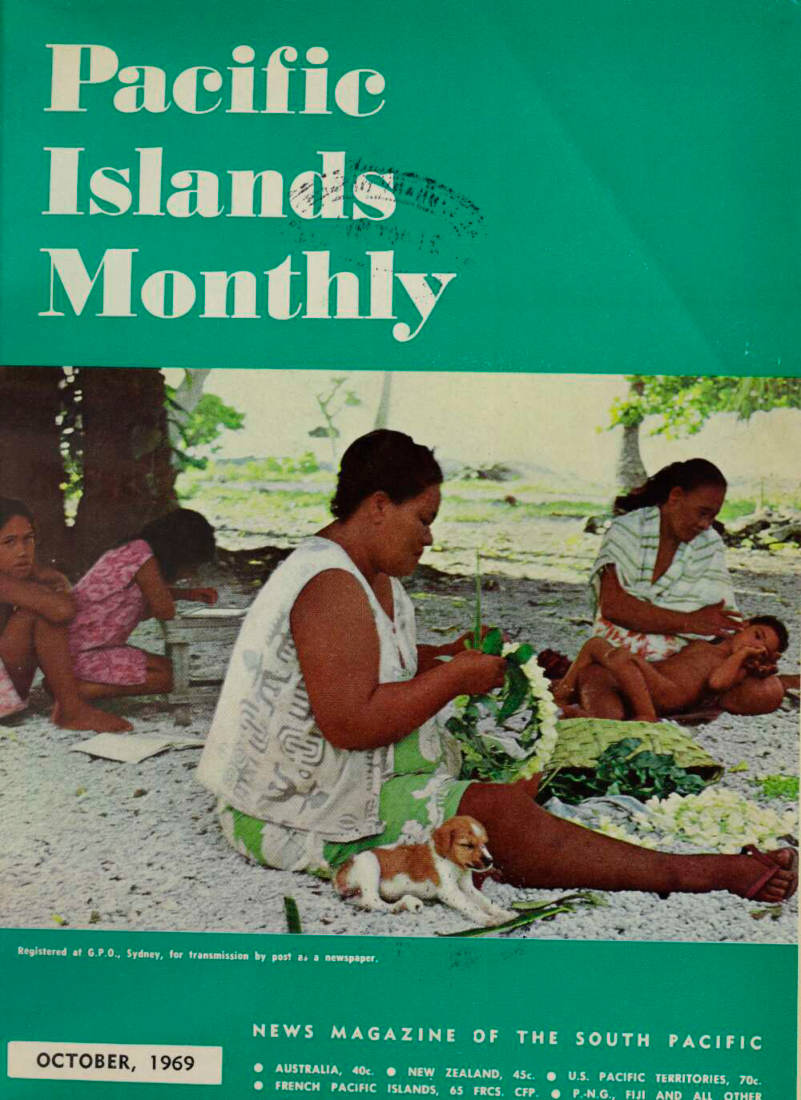 1
1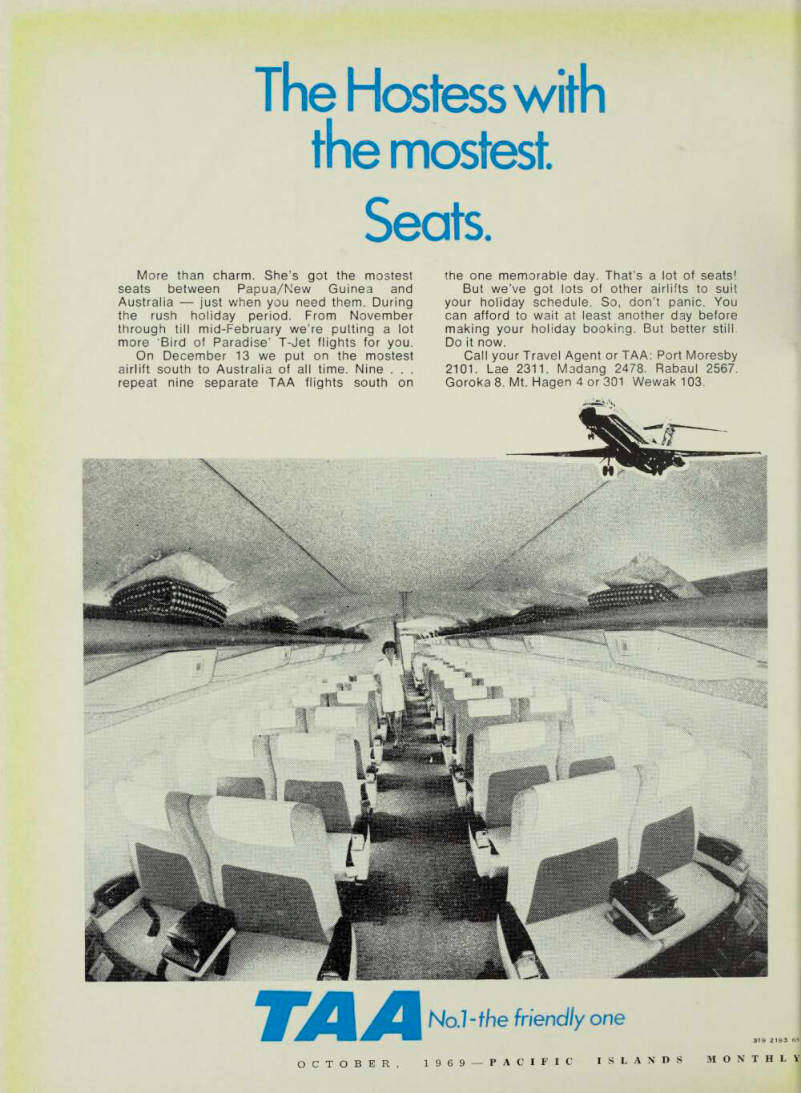 2
2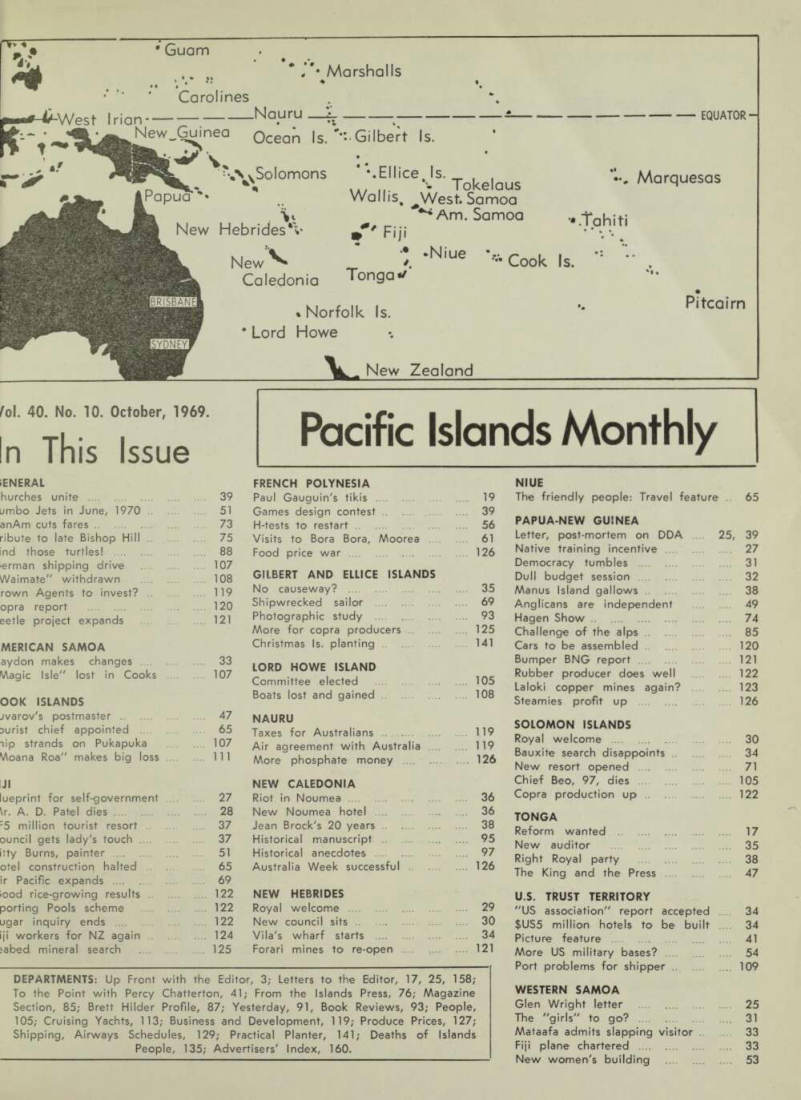 3
3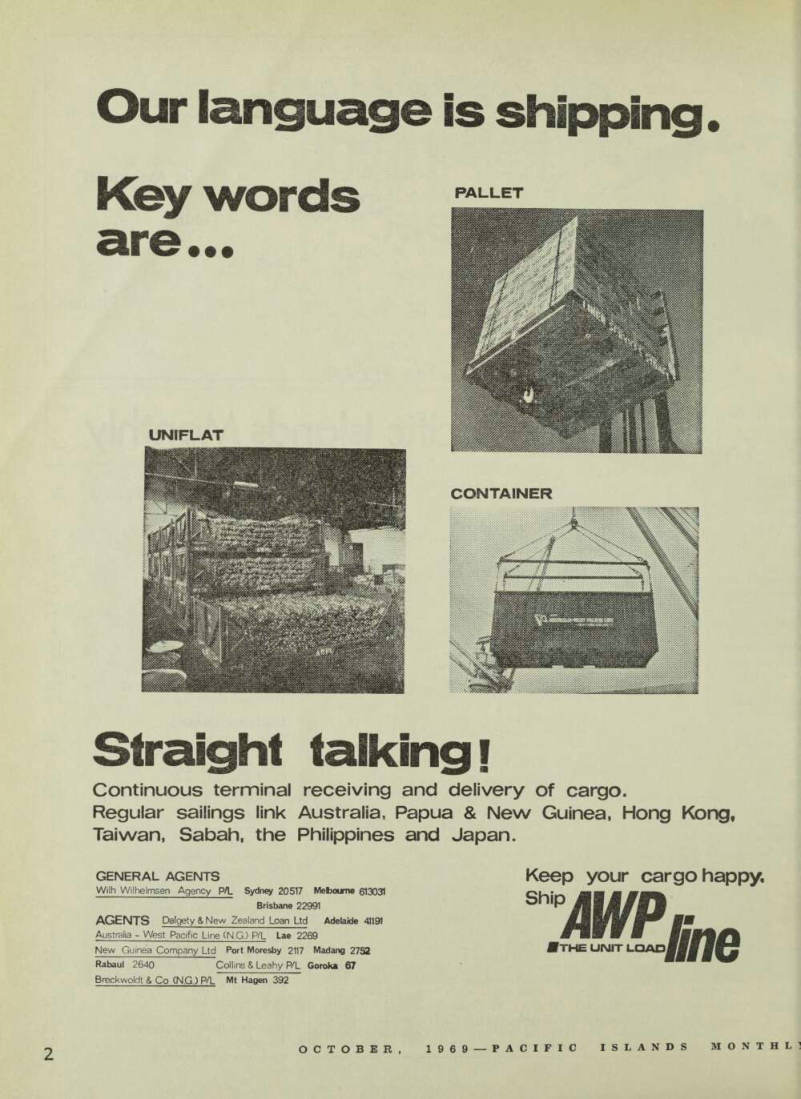 4
4 5
5 6
6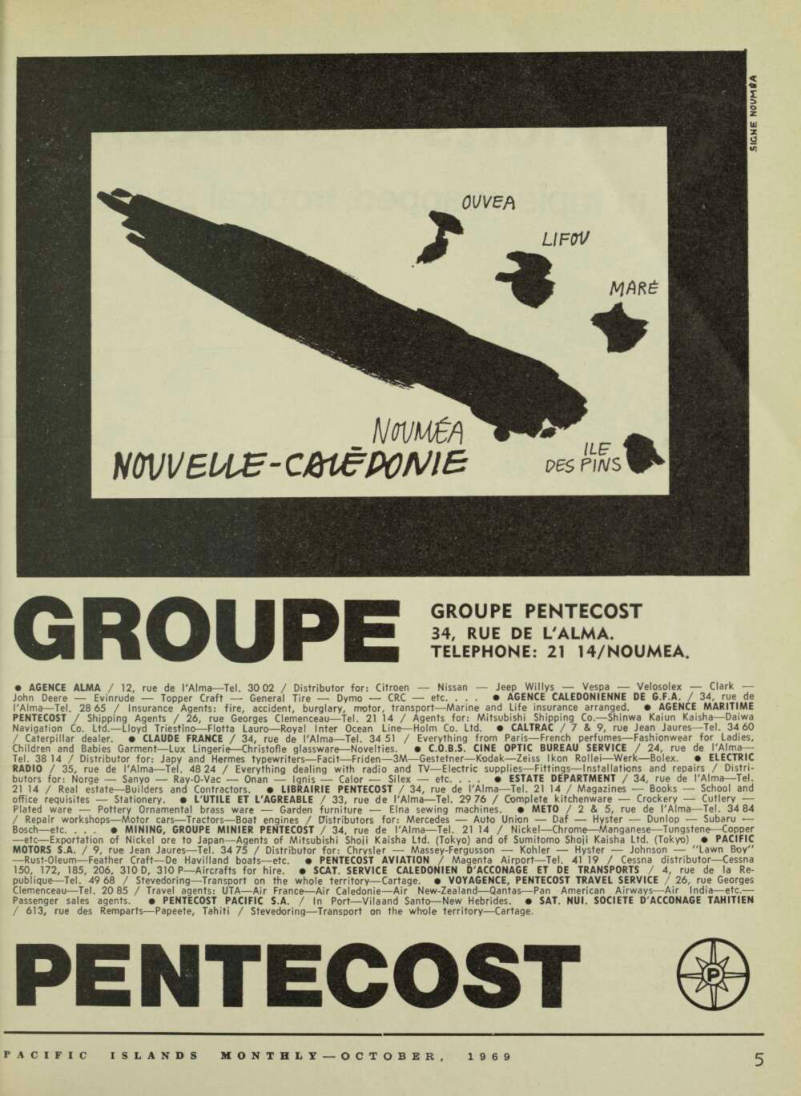 7
7 8
8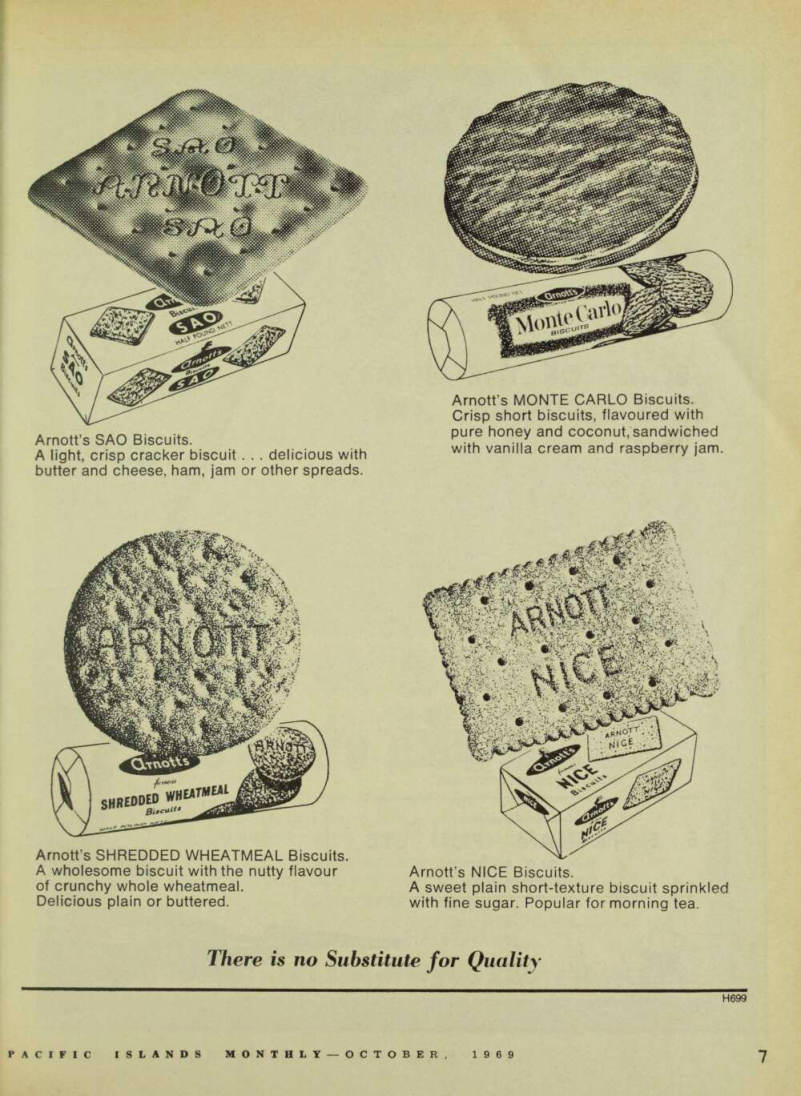 9
9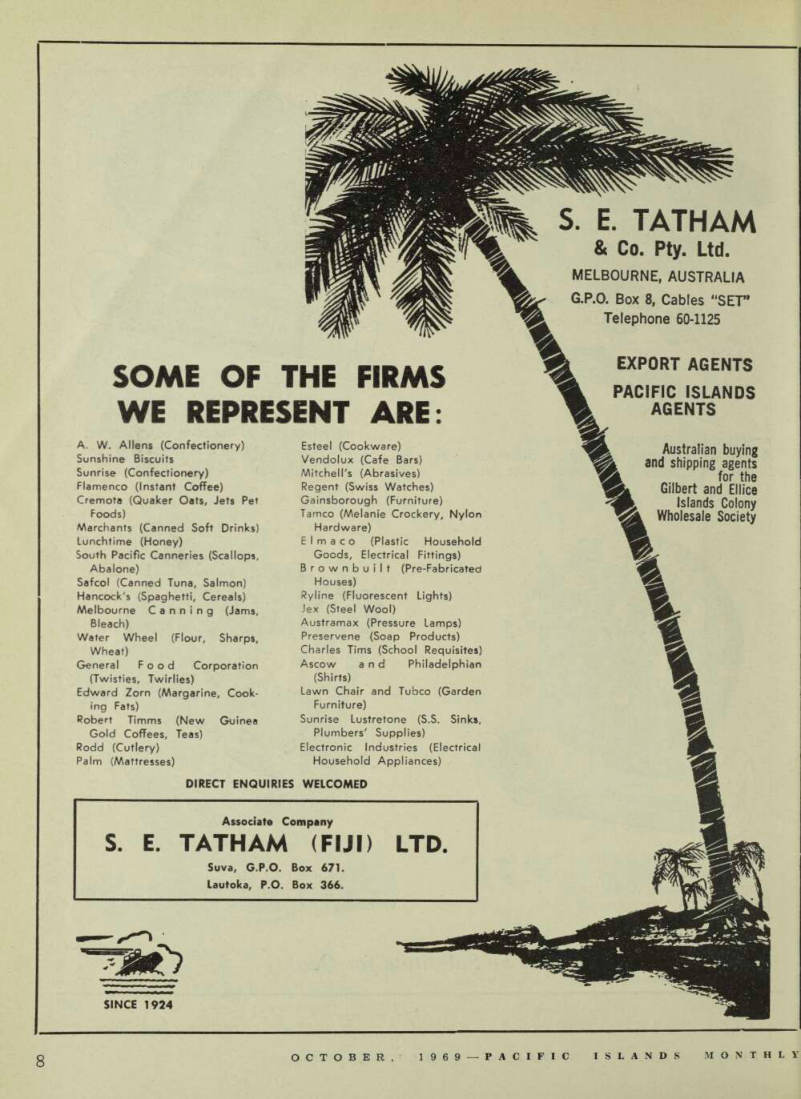 10
10 11
11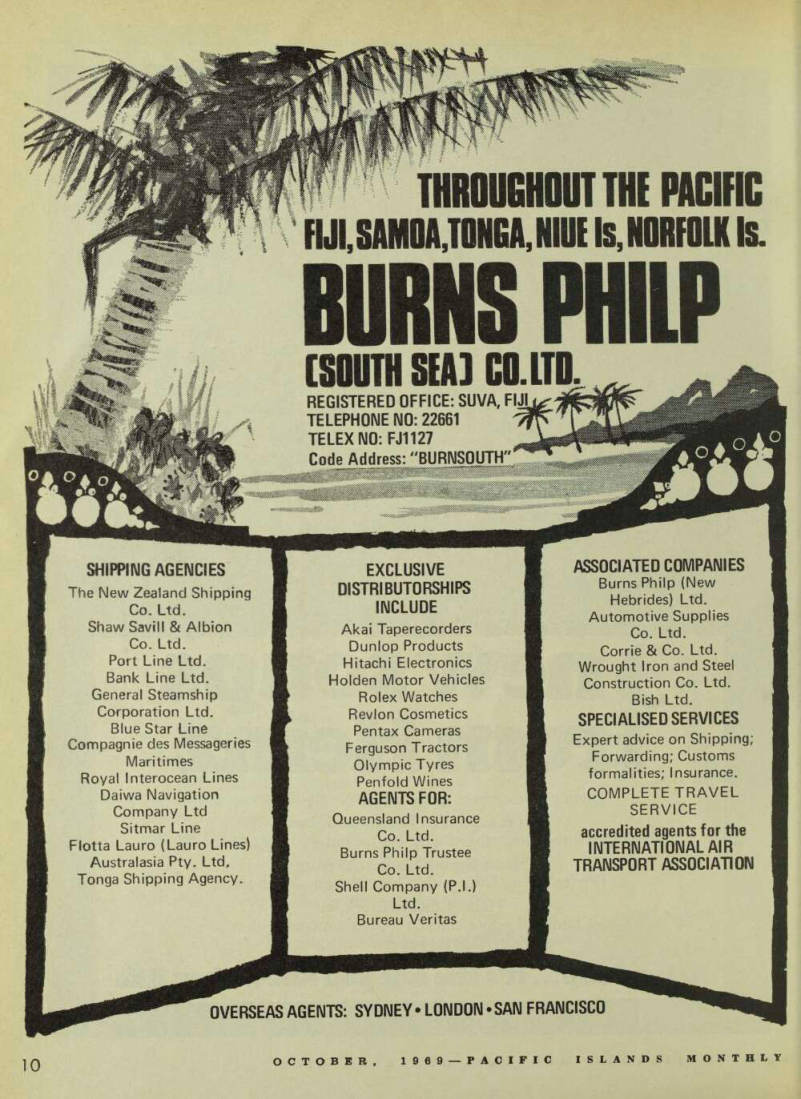 12
12 13
13 14
14 15
15 16
16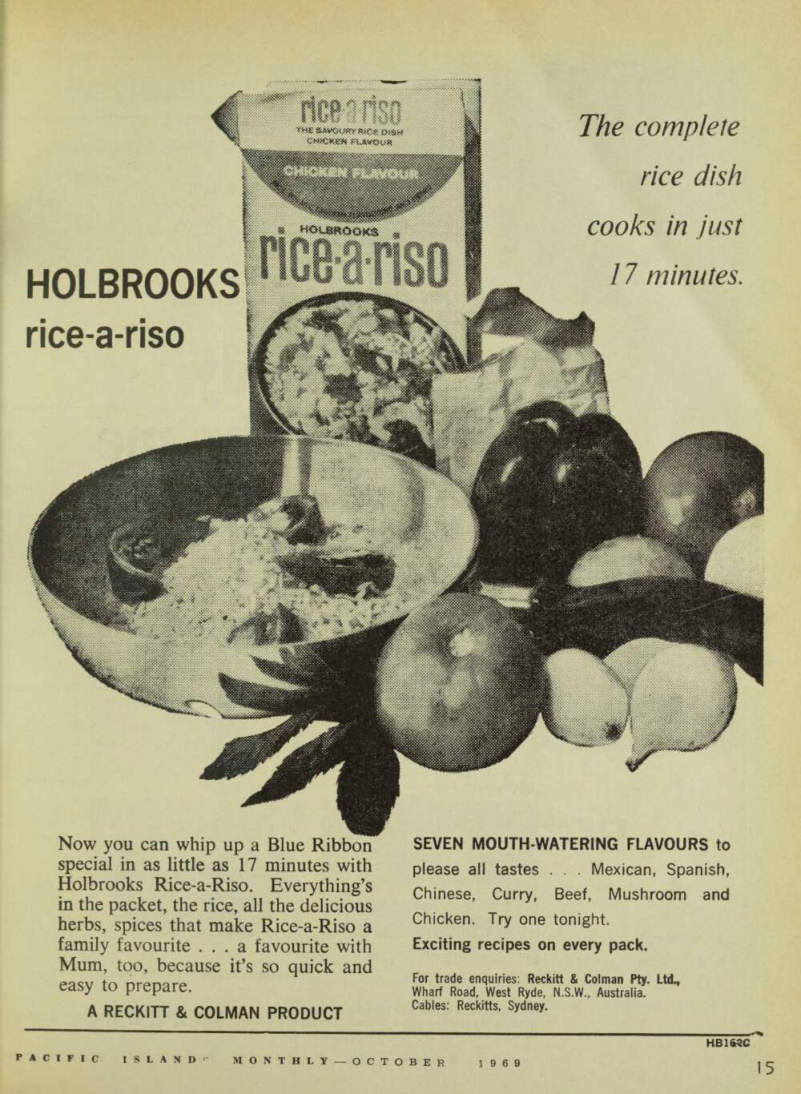 17
17 18
18 19
19 20
20 21
21 22
22 23
23 24
24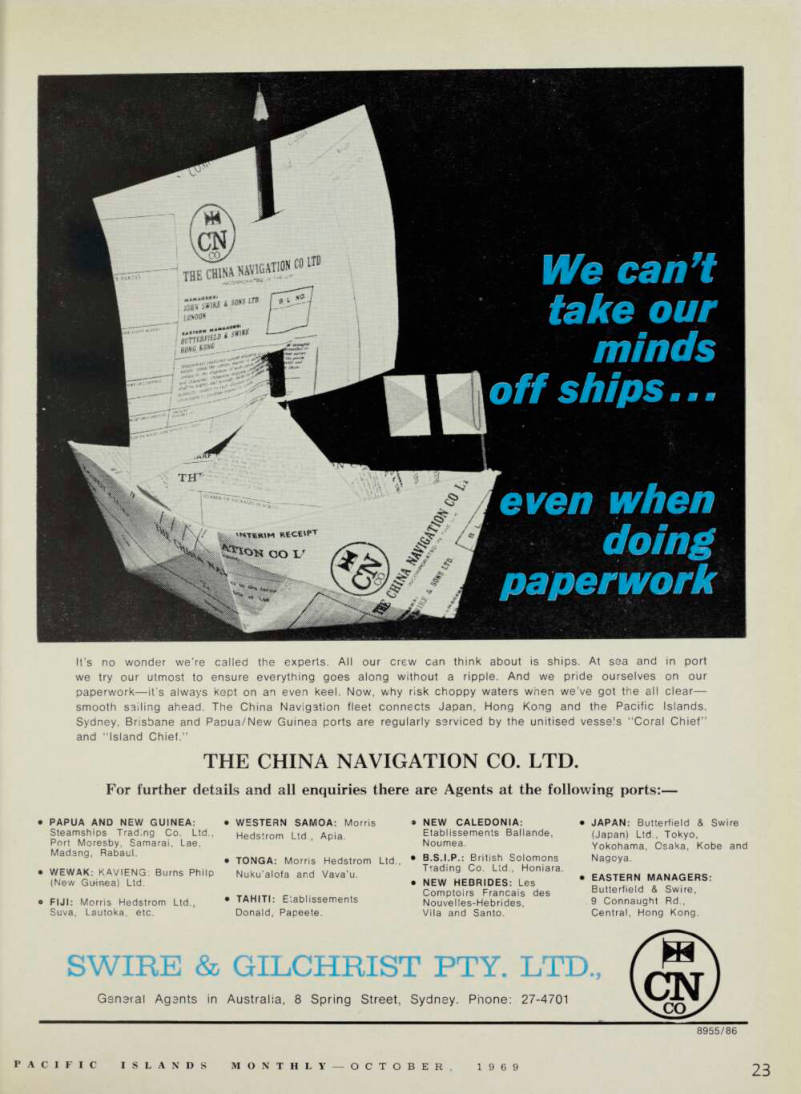 25
25 26
26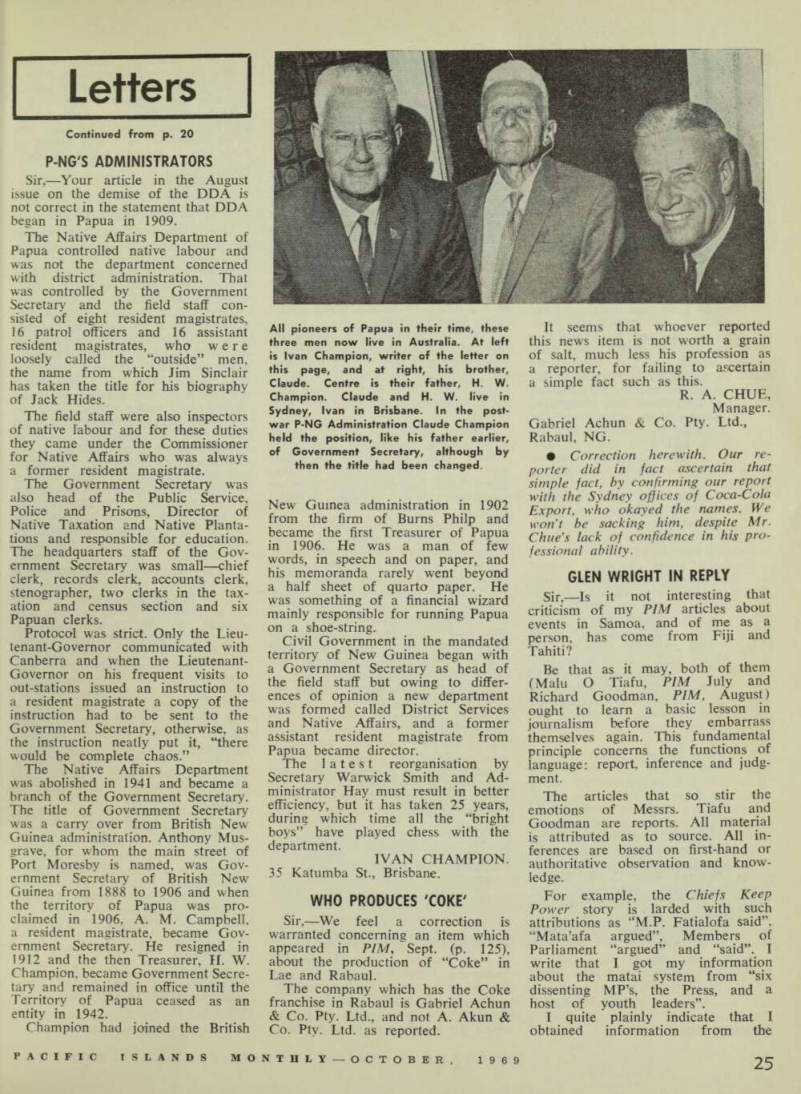 27
27 28
28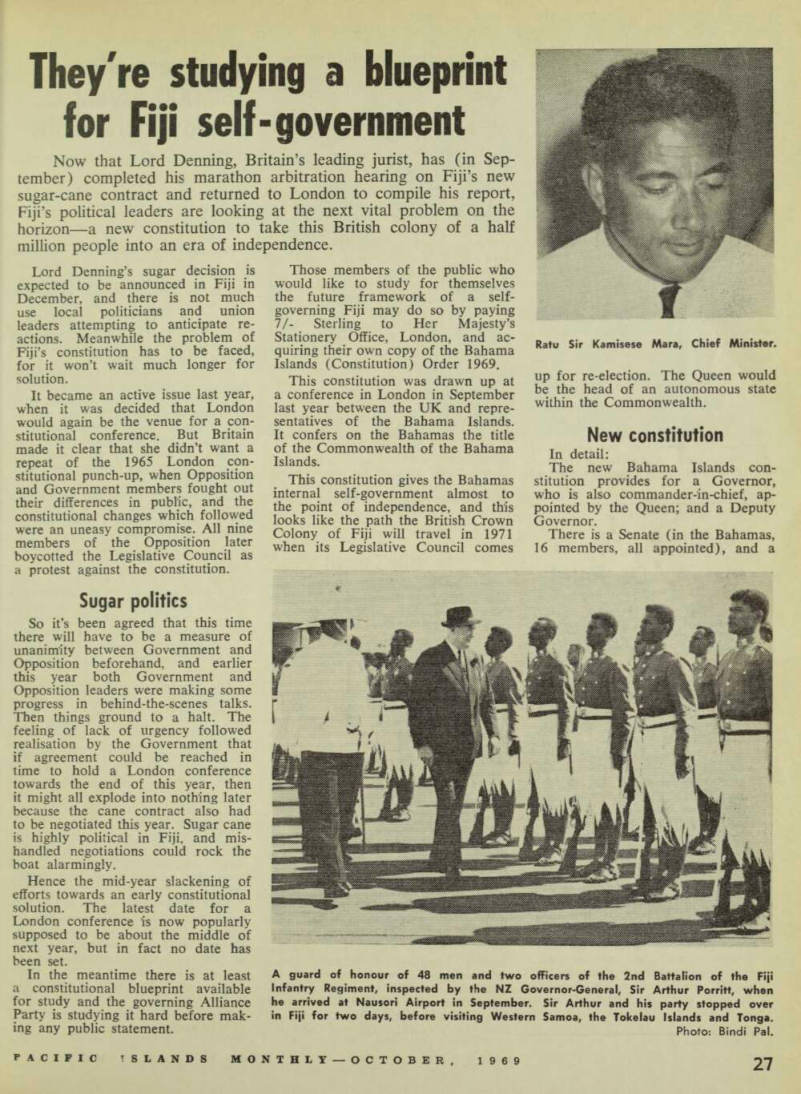 29
29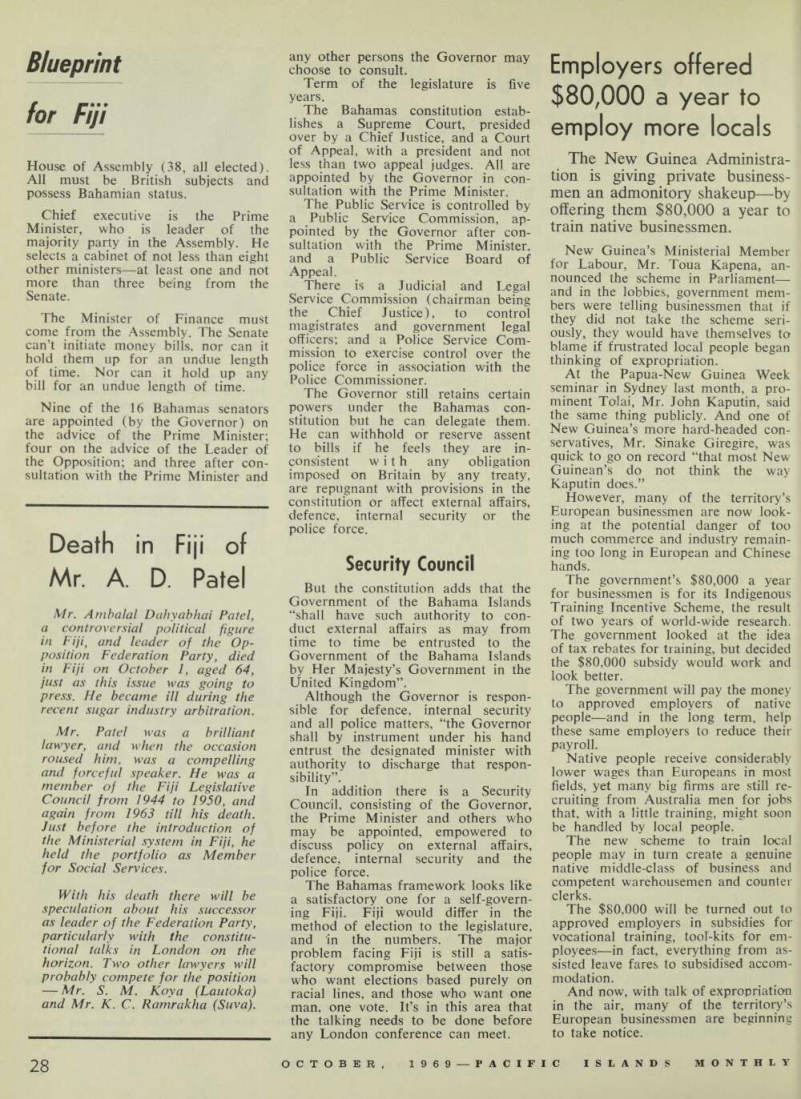 30
30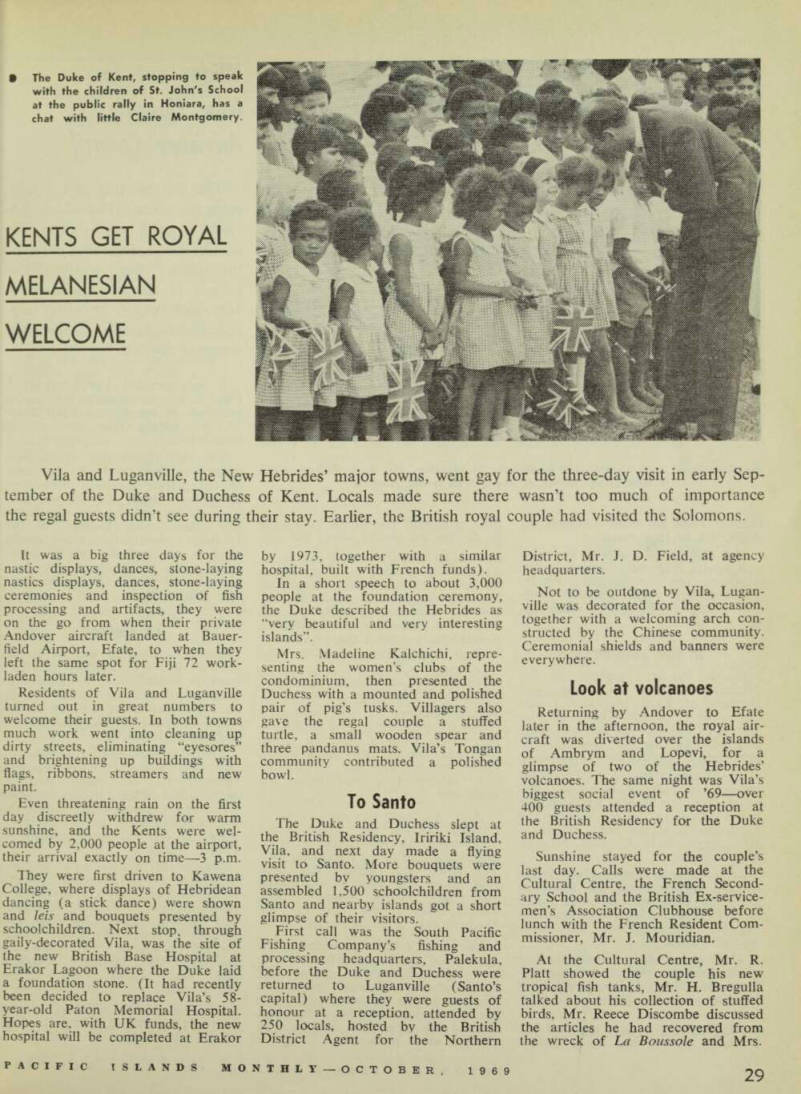 31
31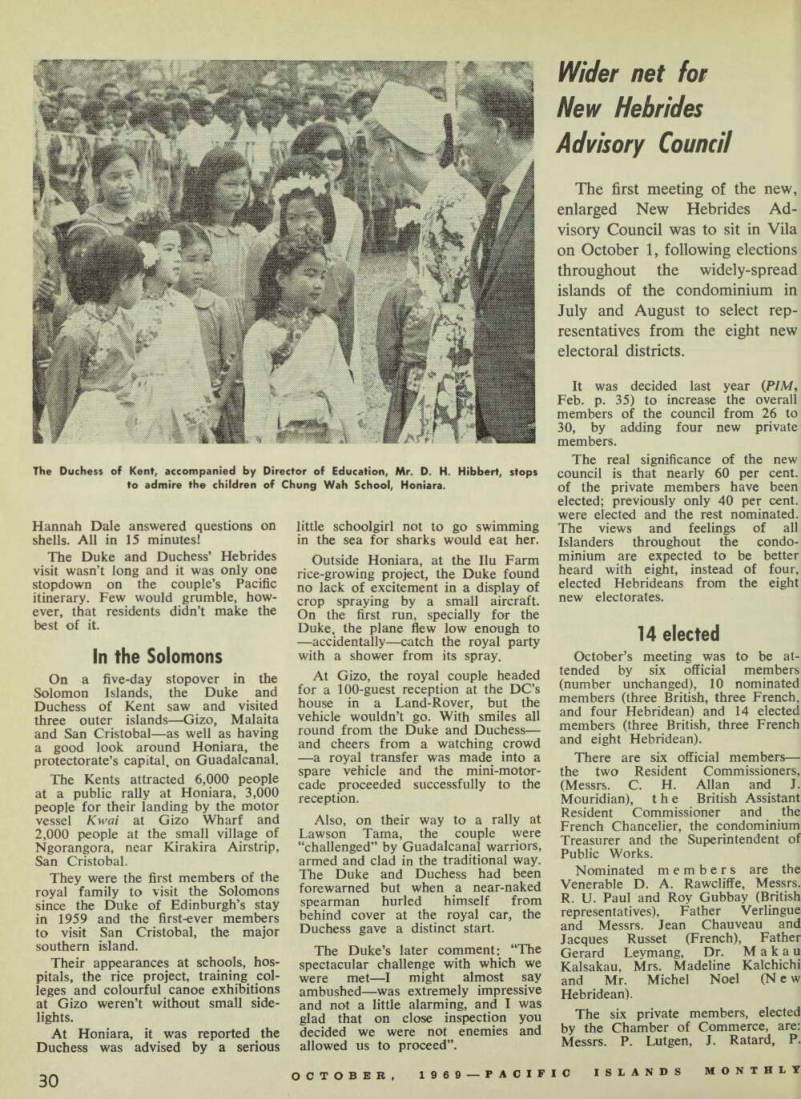 32
32 33
33 34
34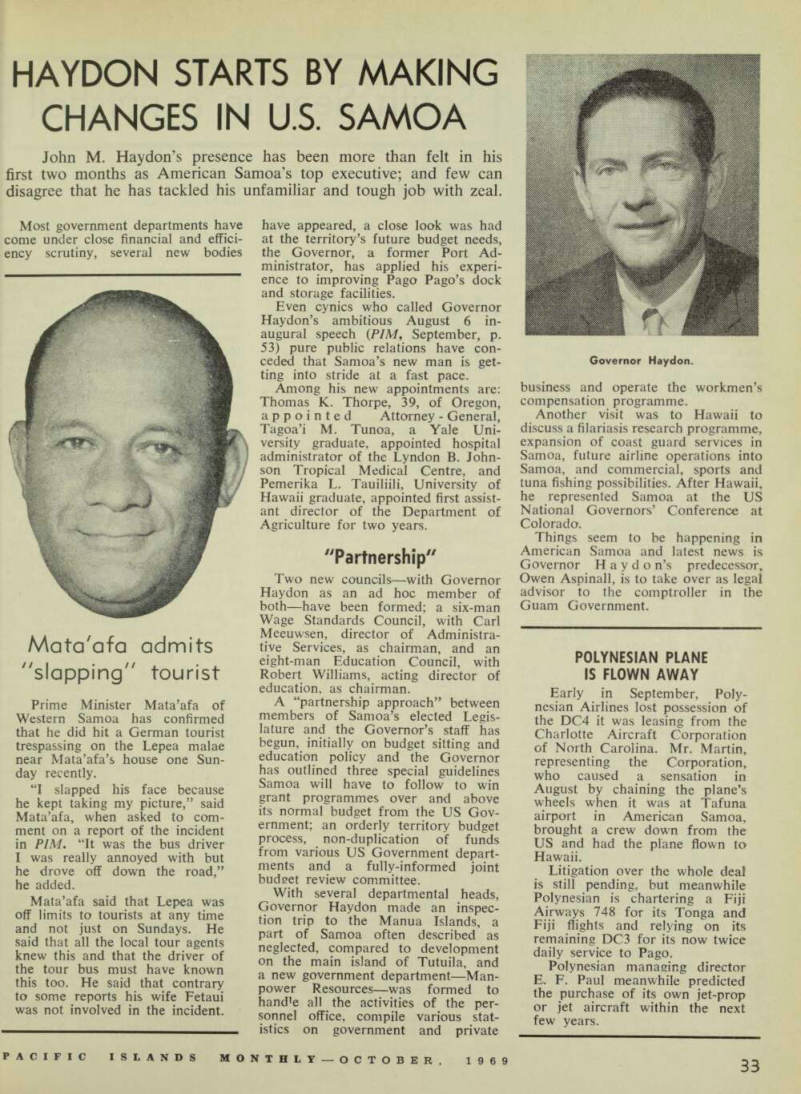 35
35 36
36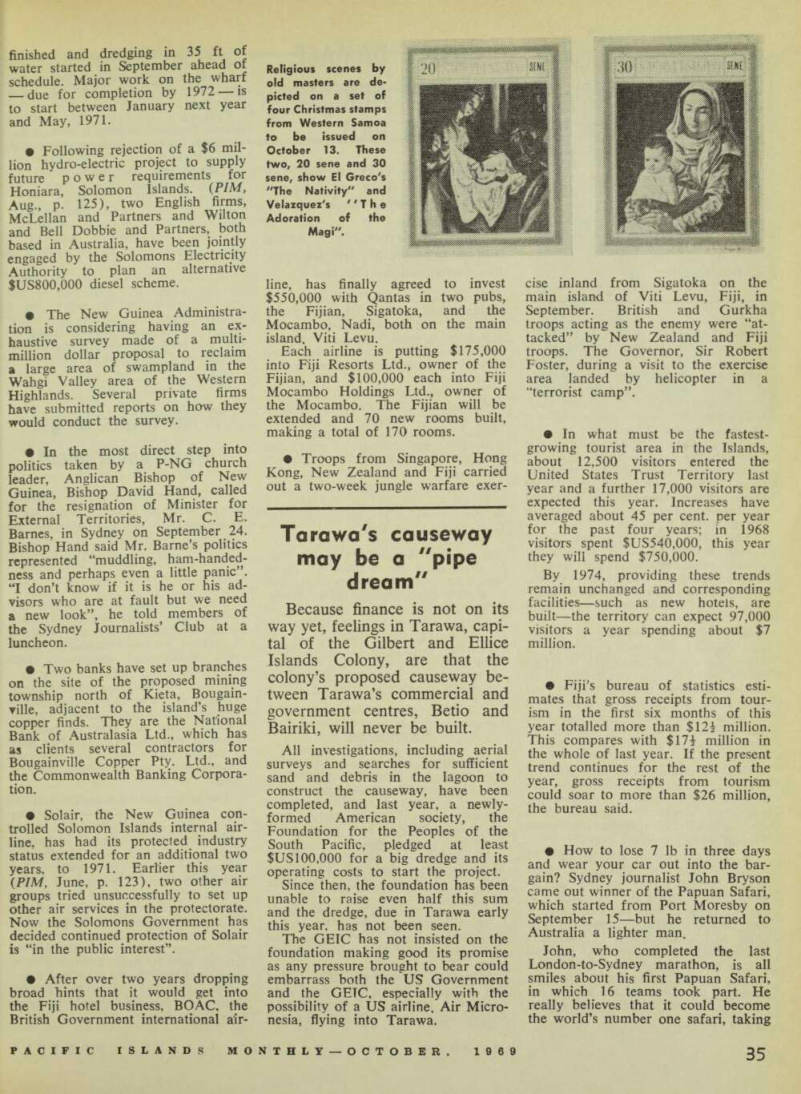 37
37 38
38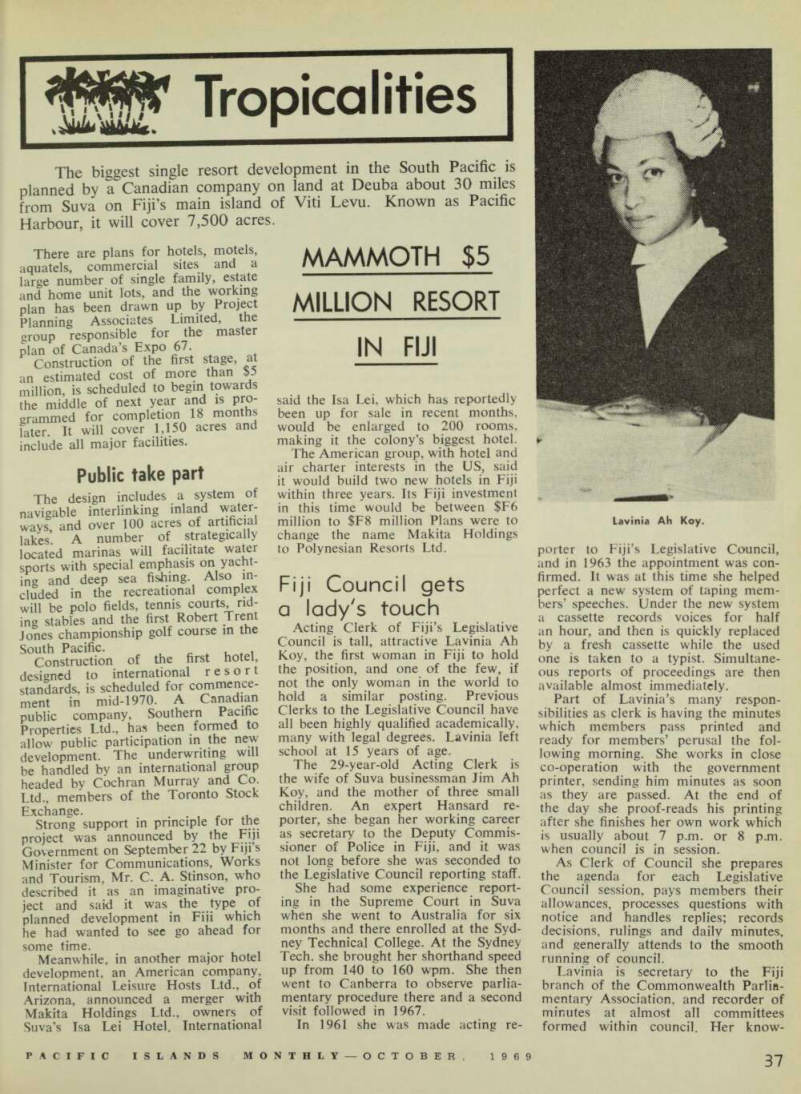 39
39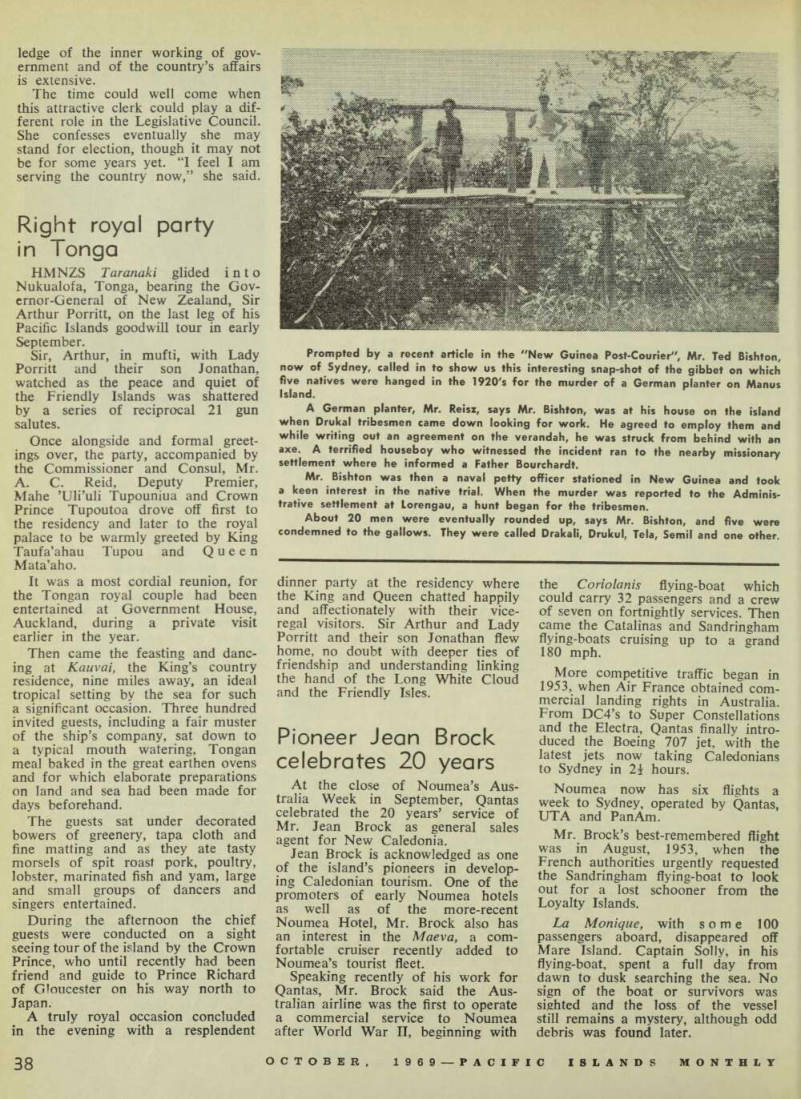 40
40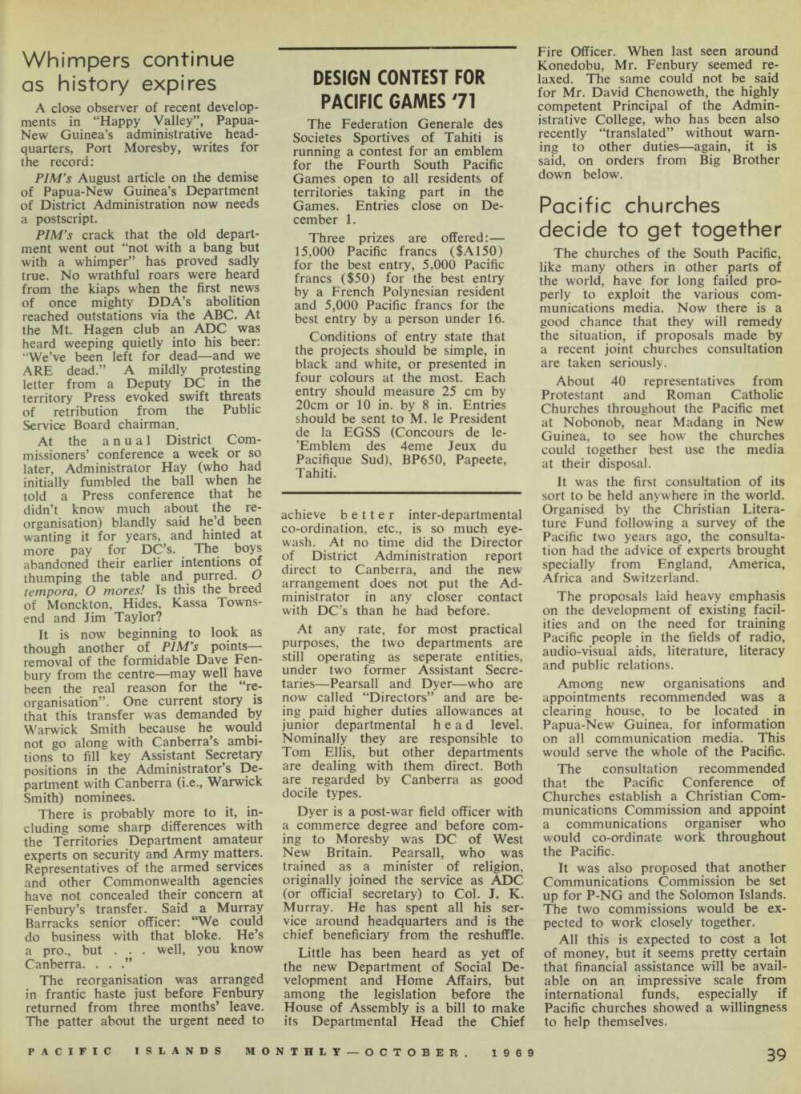 41
41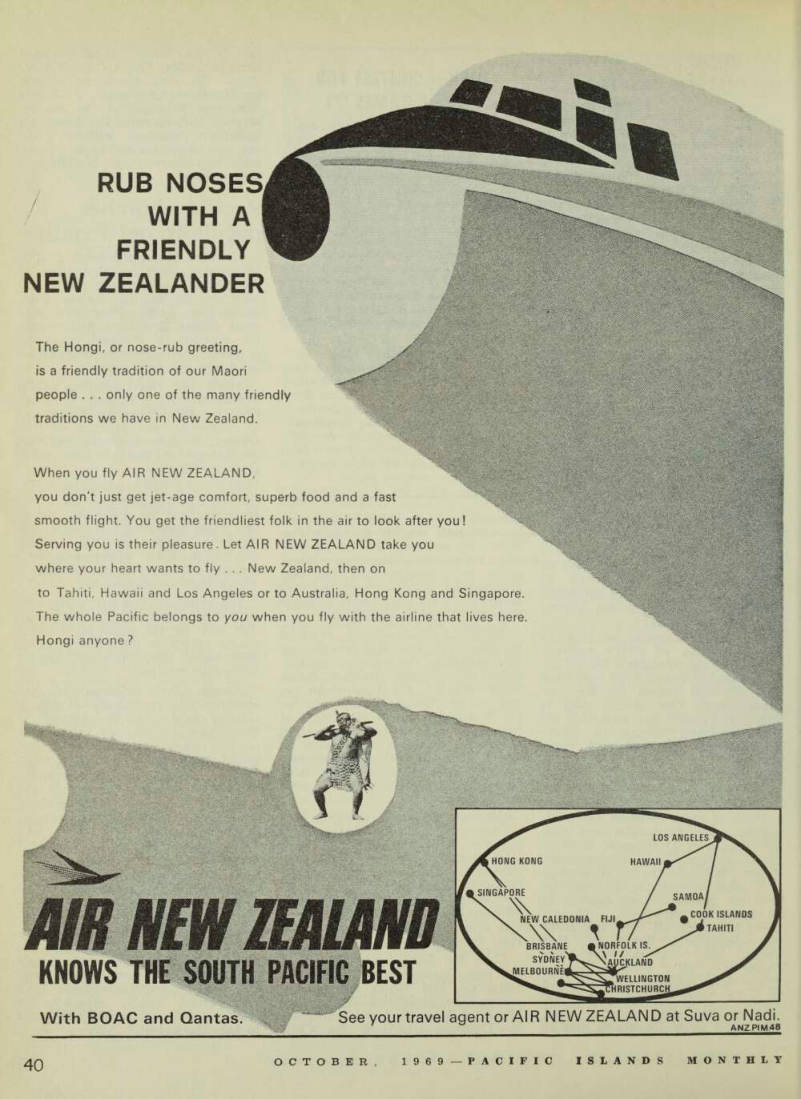 42
42 43
43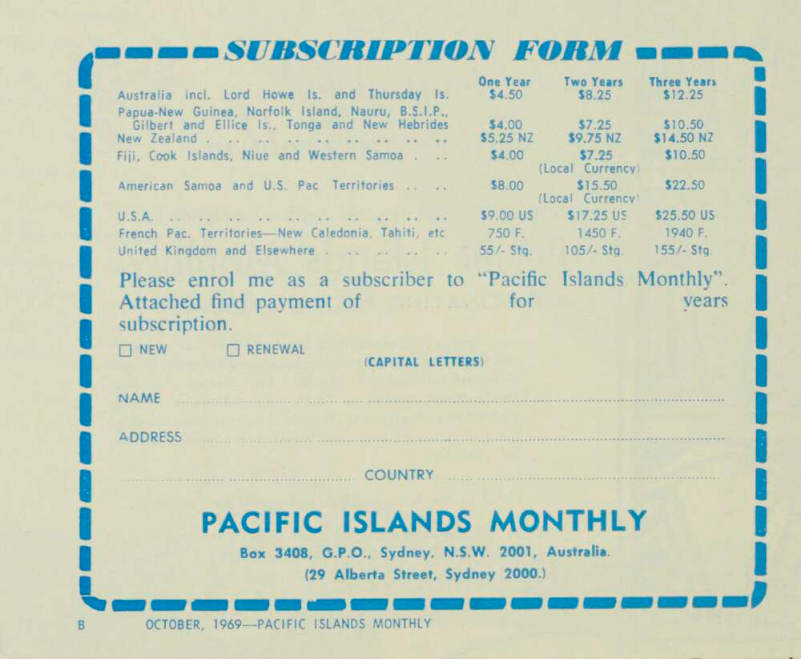 44
44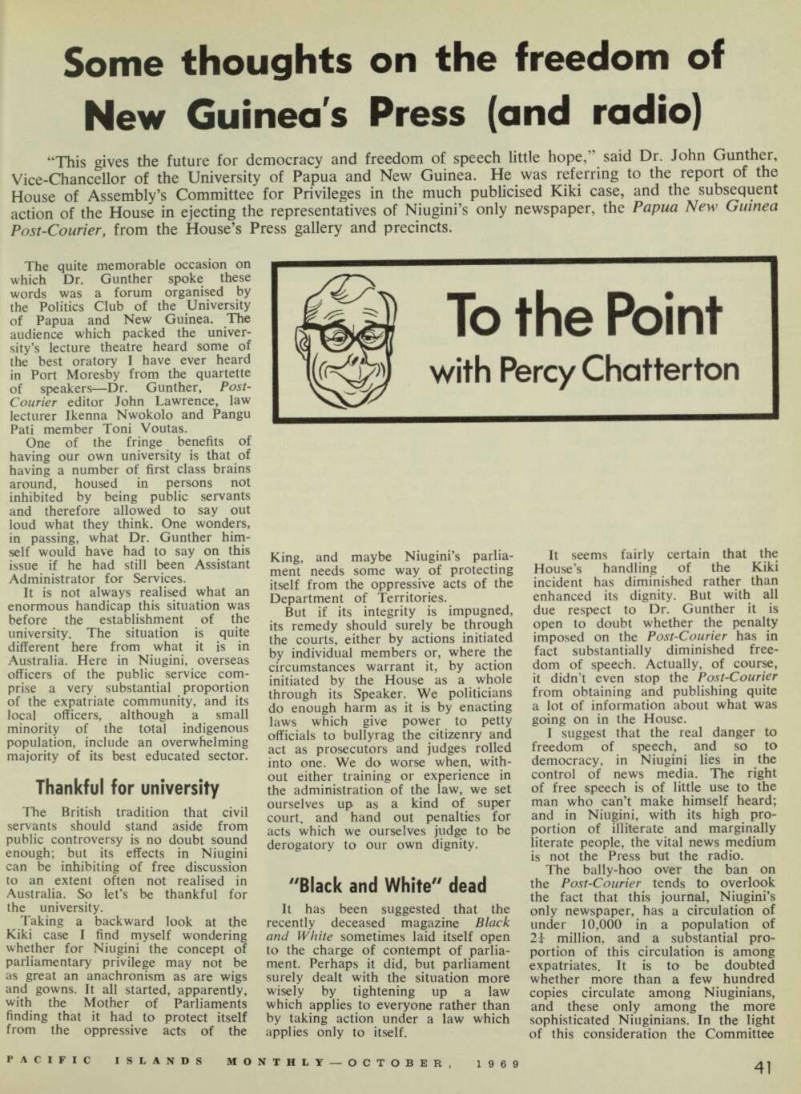 45
45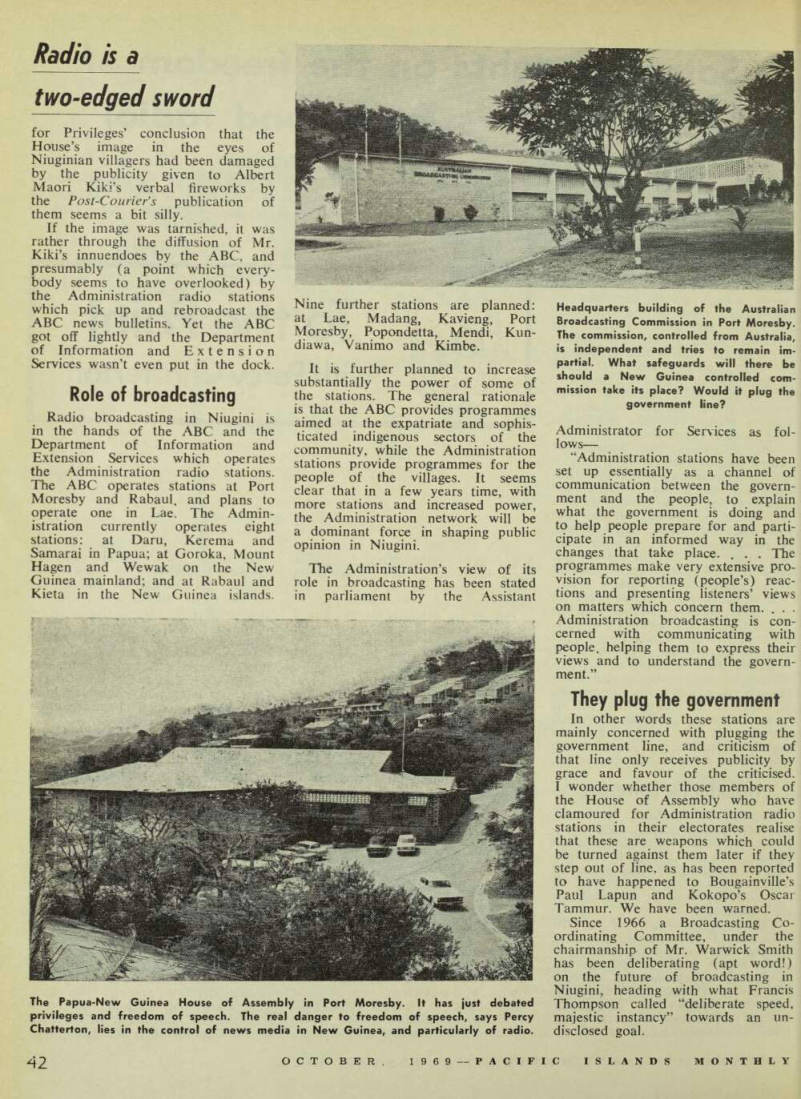 46
46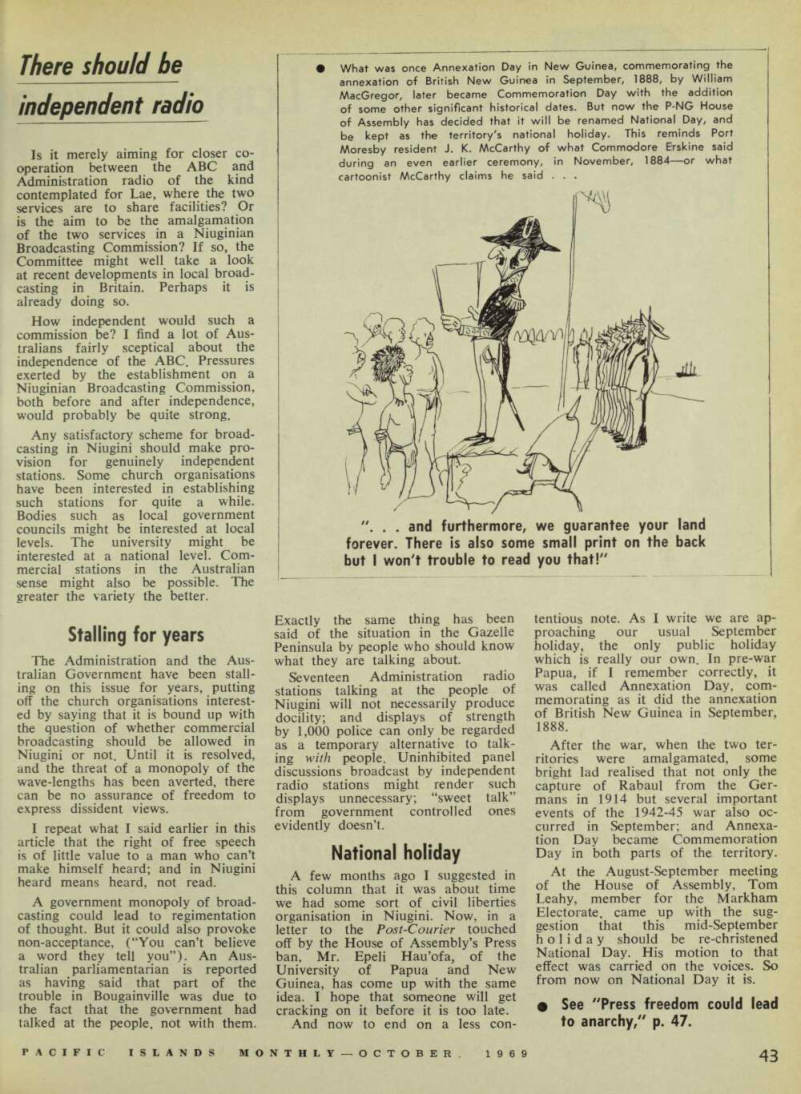 47
47 48
48 49
49 50
50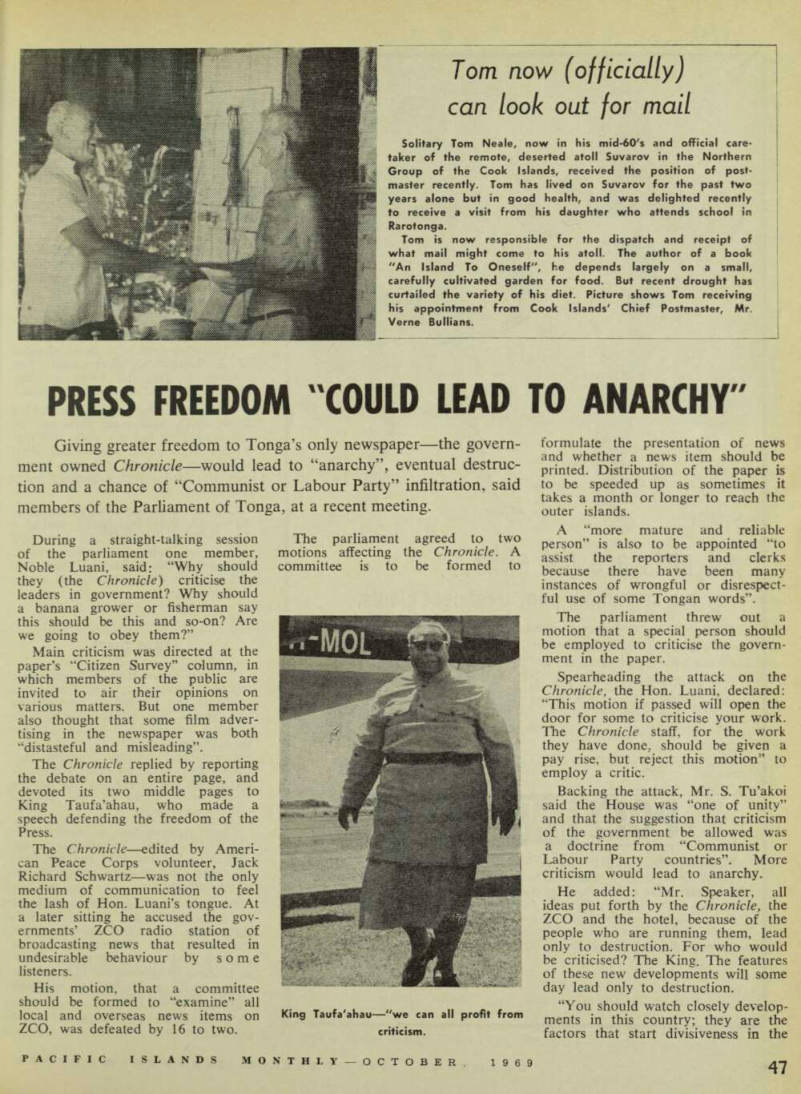 51
51 52
52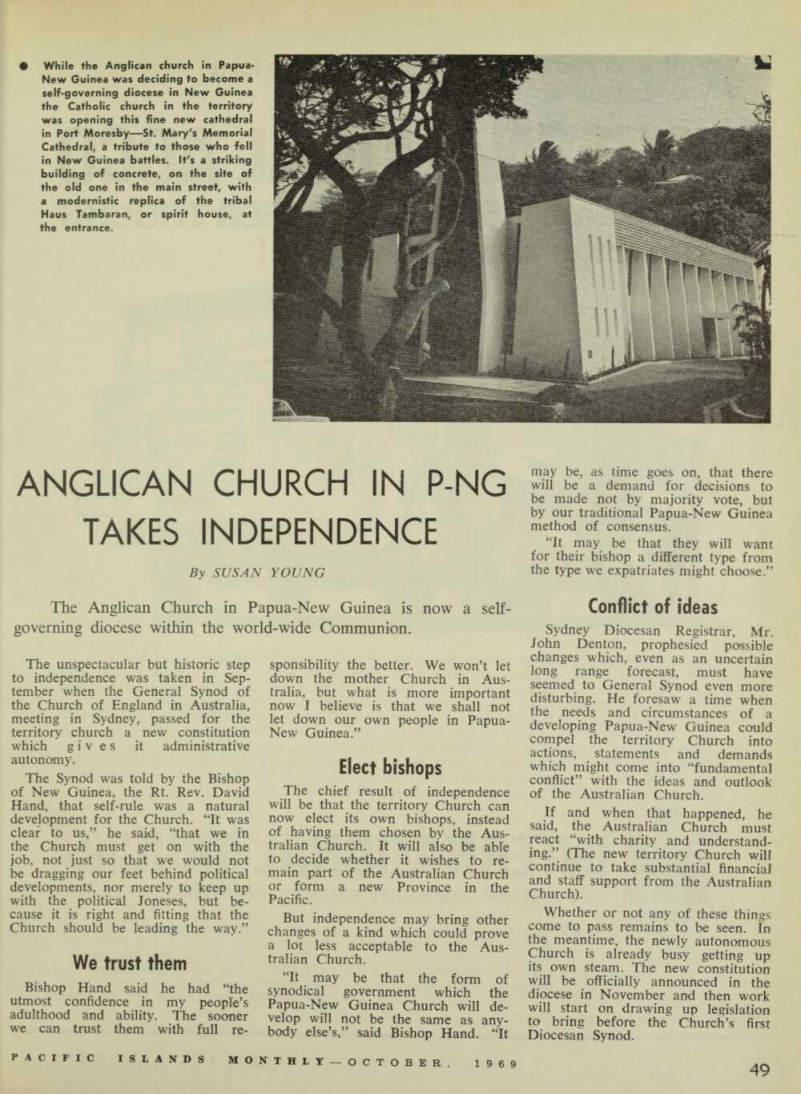 53
53 54
54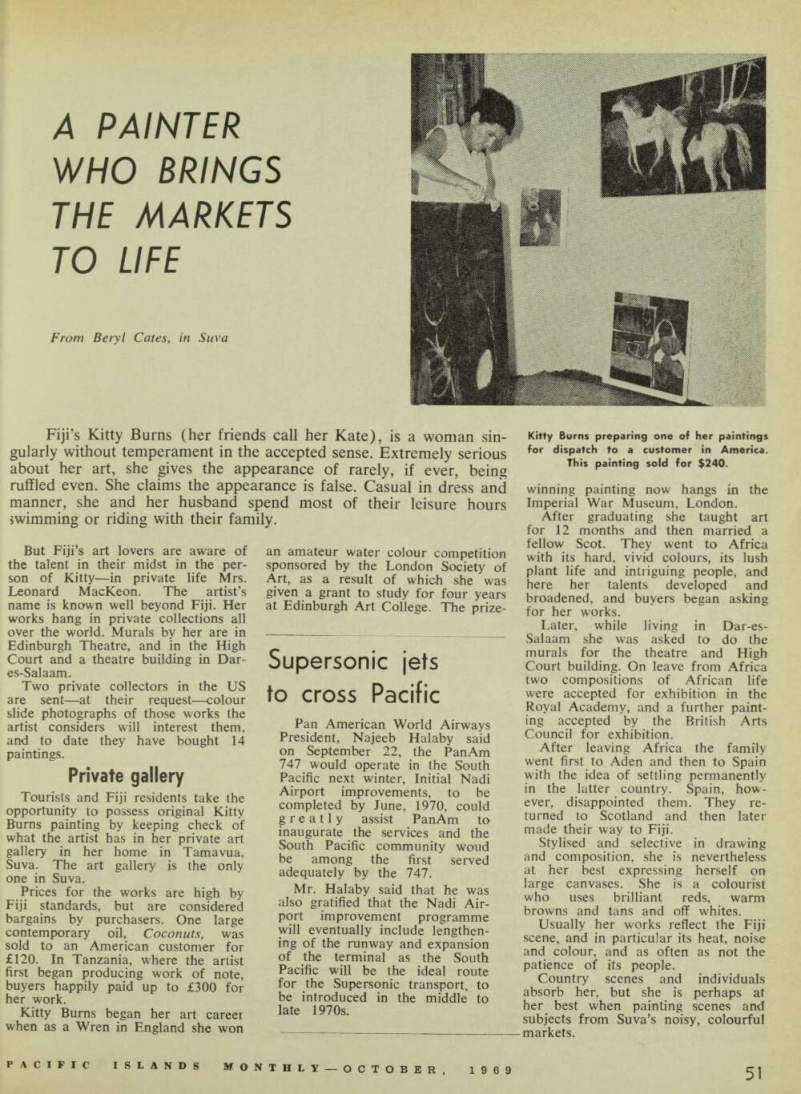 55
55 56
56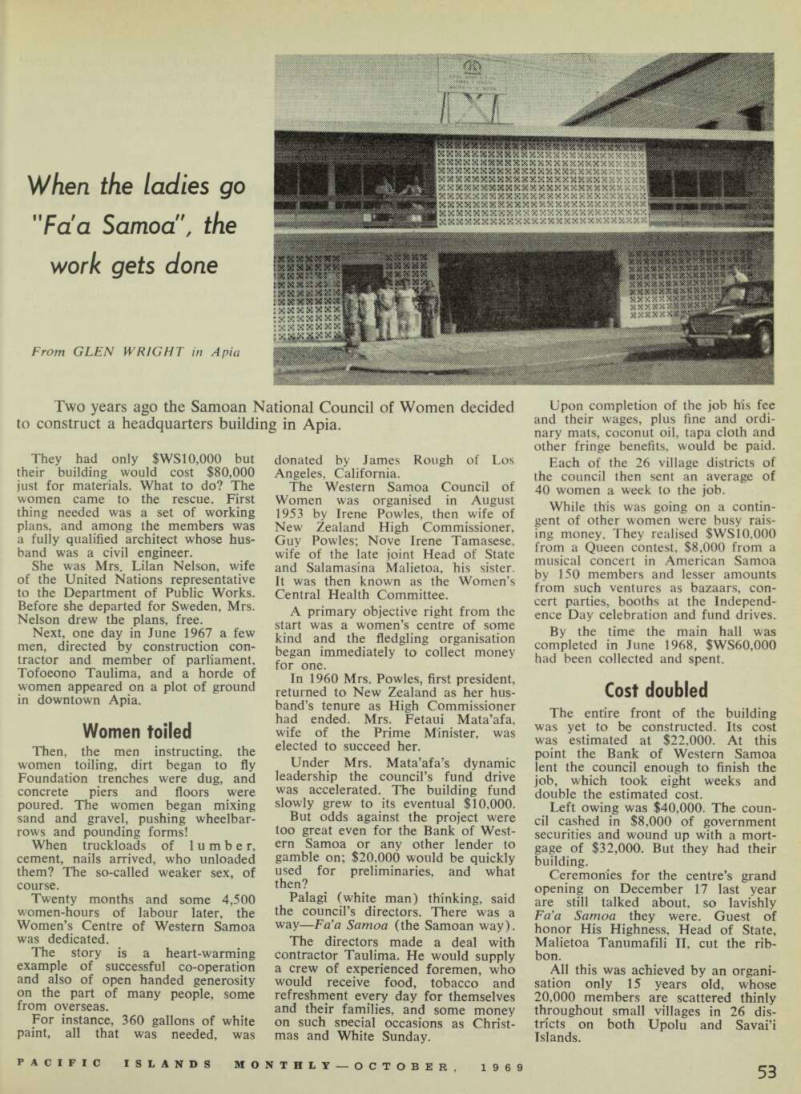 57
57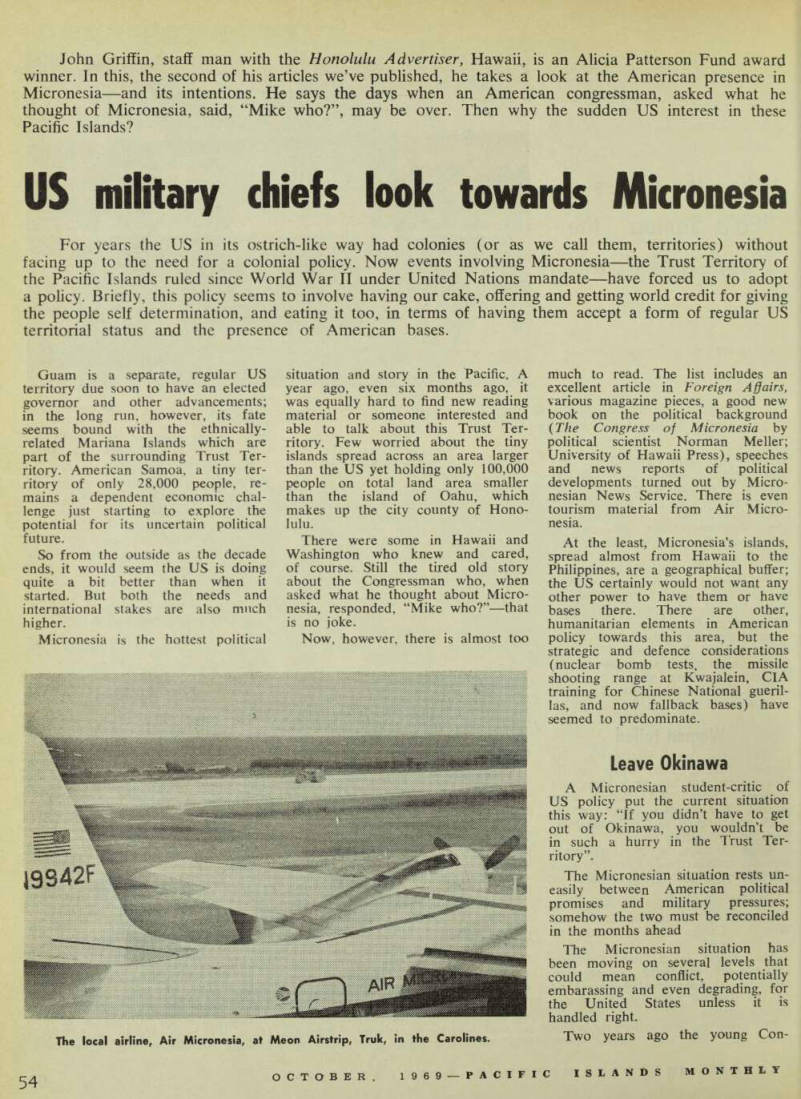 58
58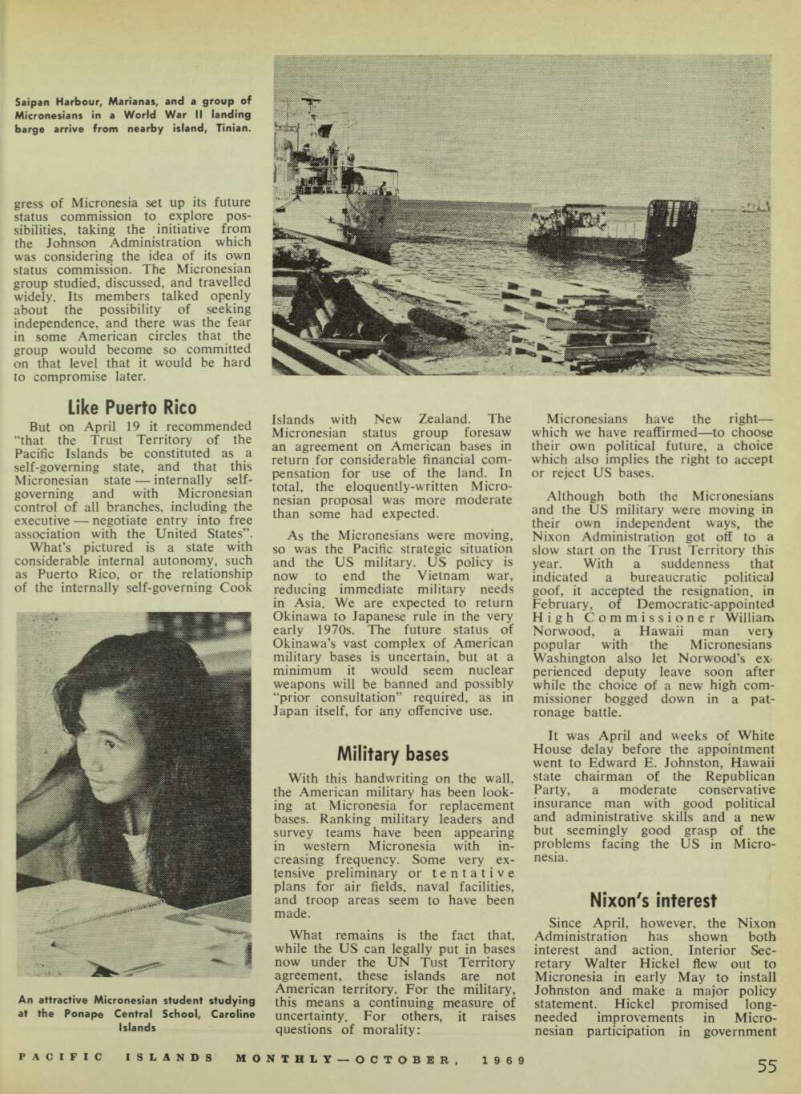 59
59 60
60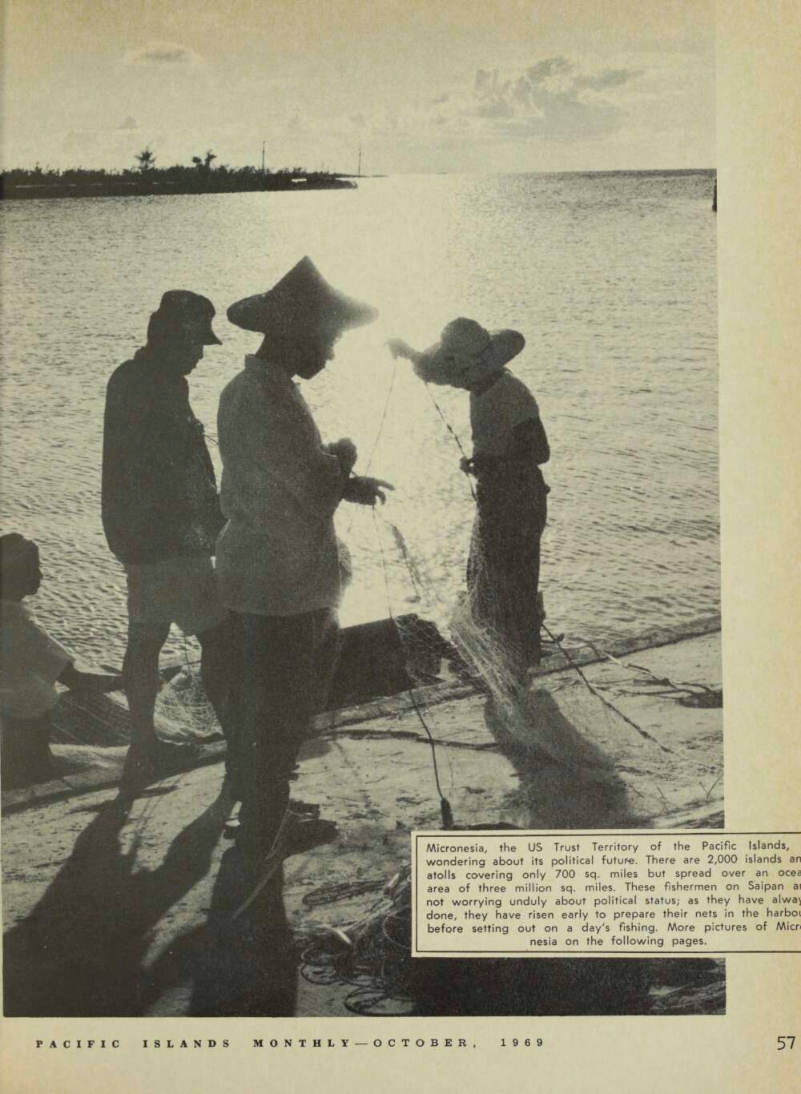 61
61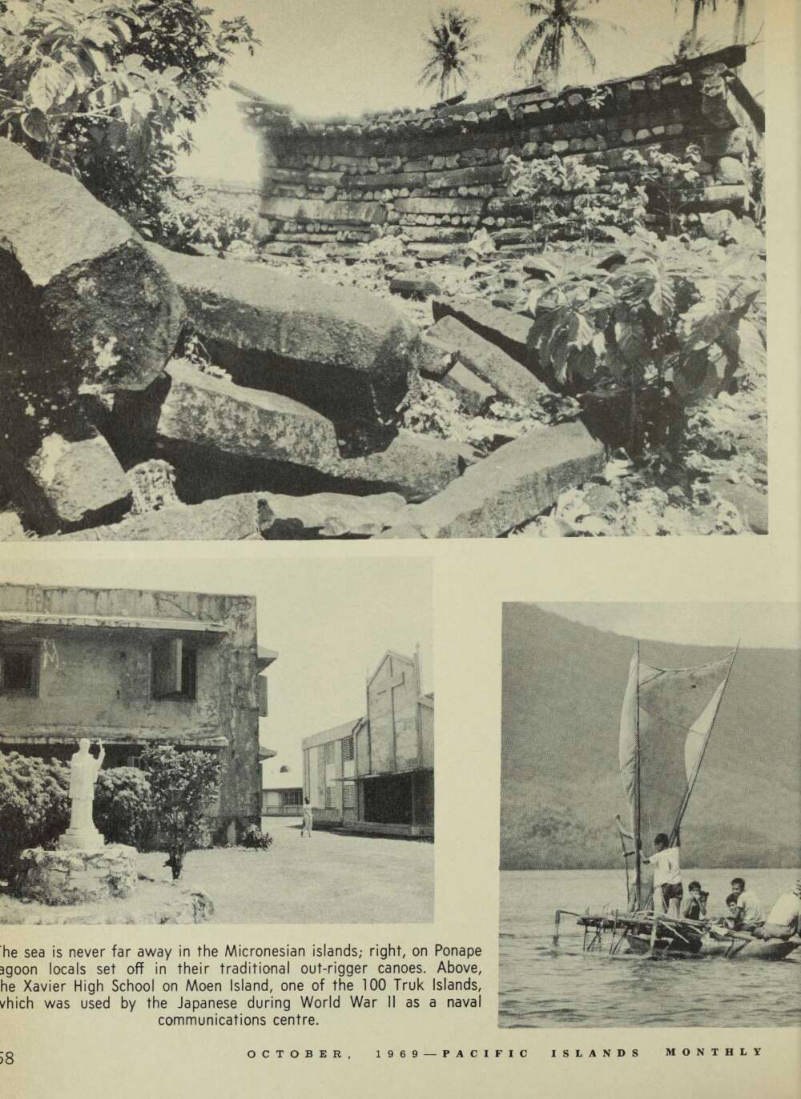 62
62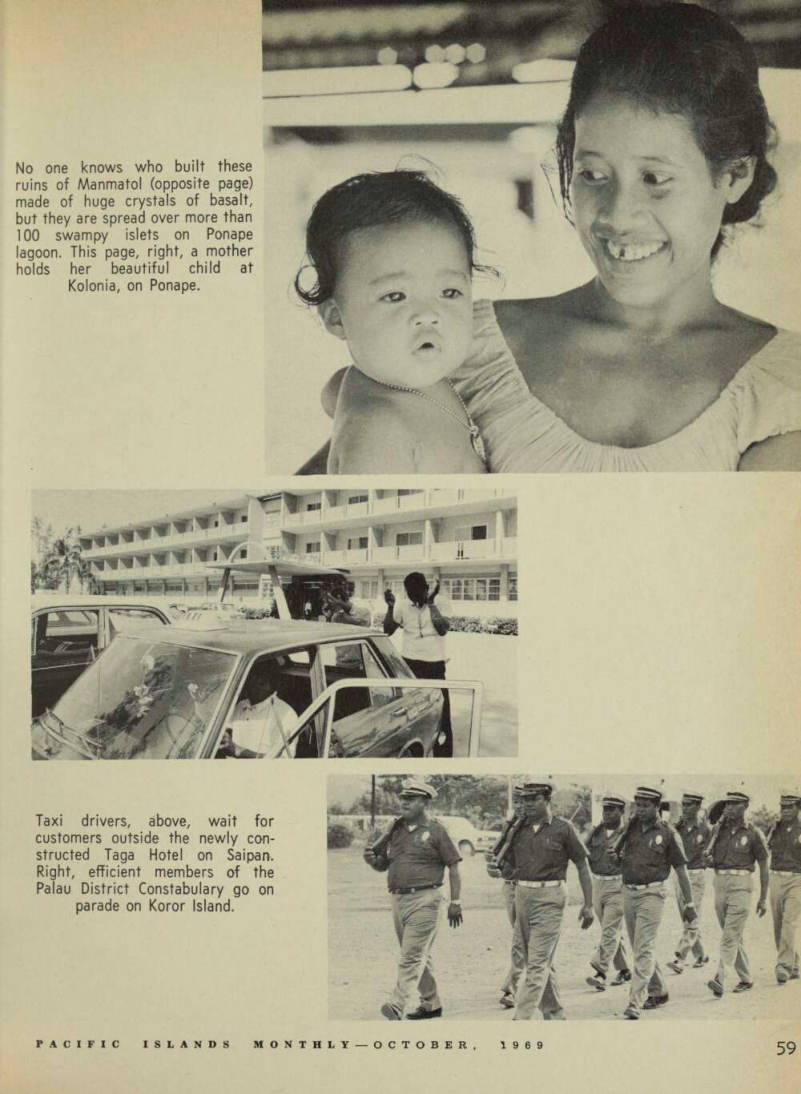 63
63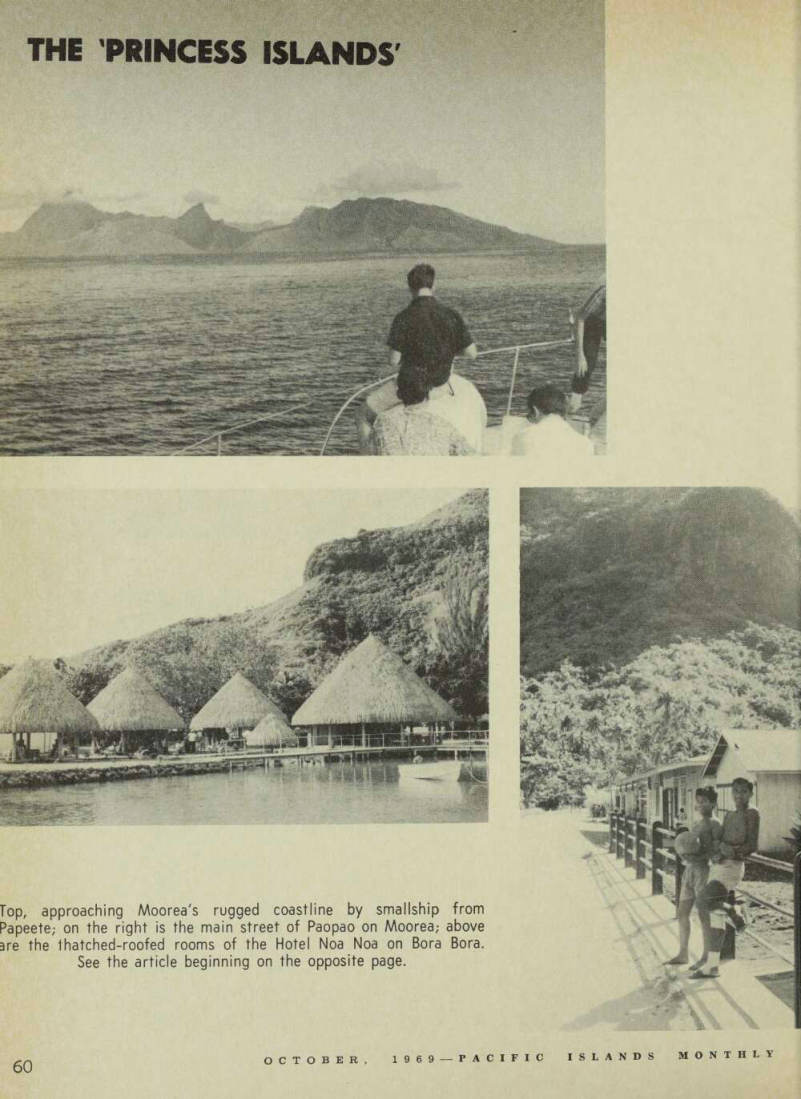 64
64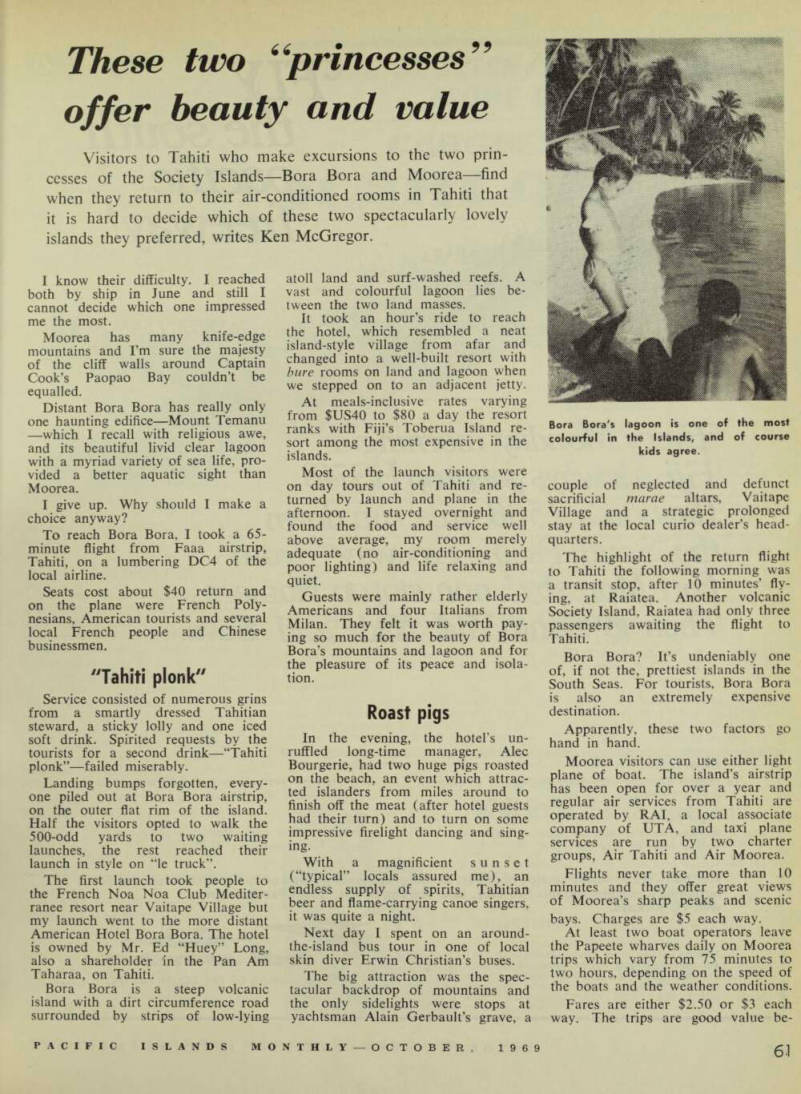 65
65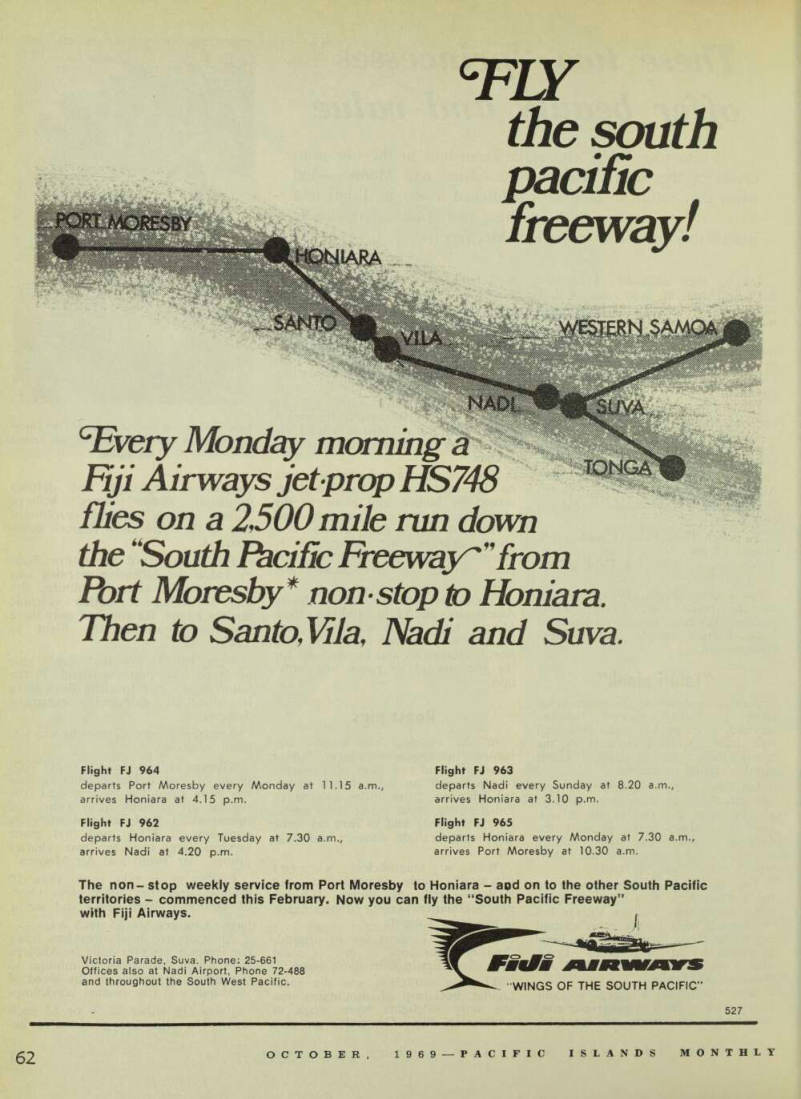 66
66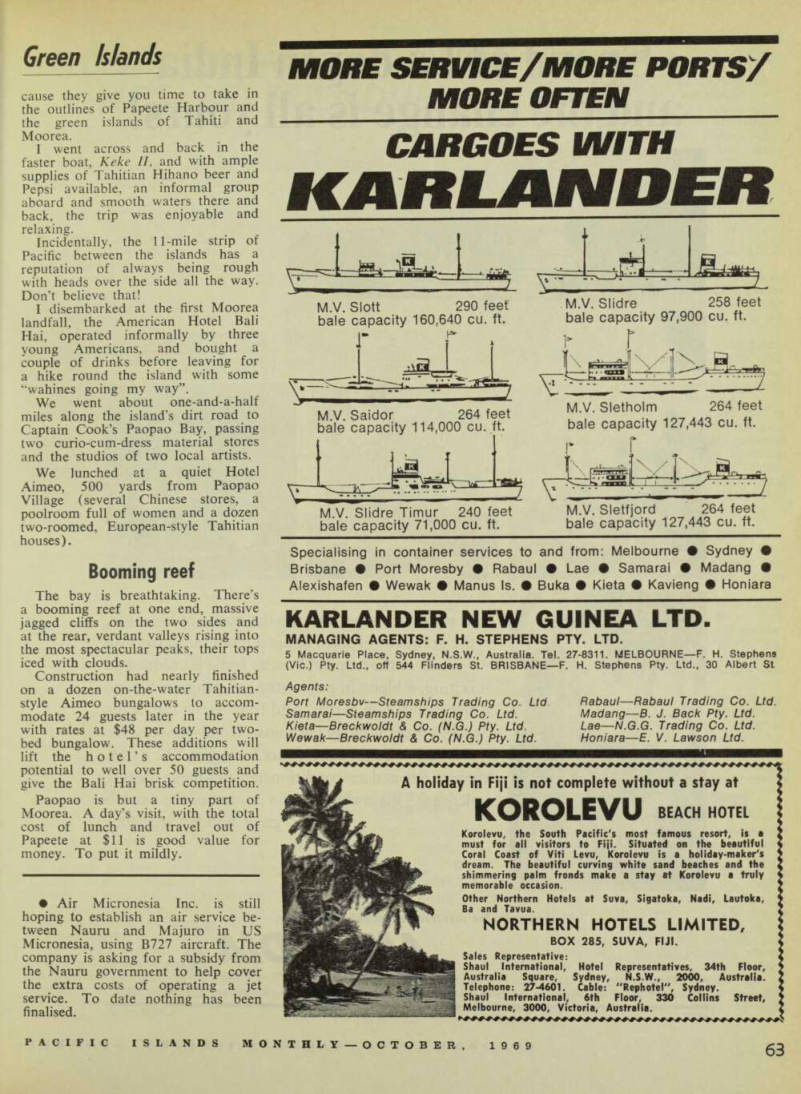 67
67 68
68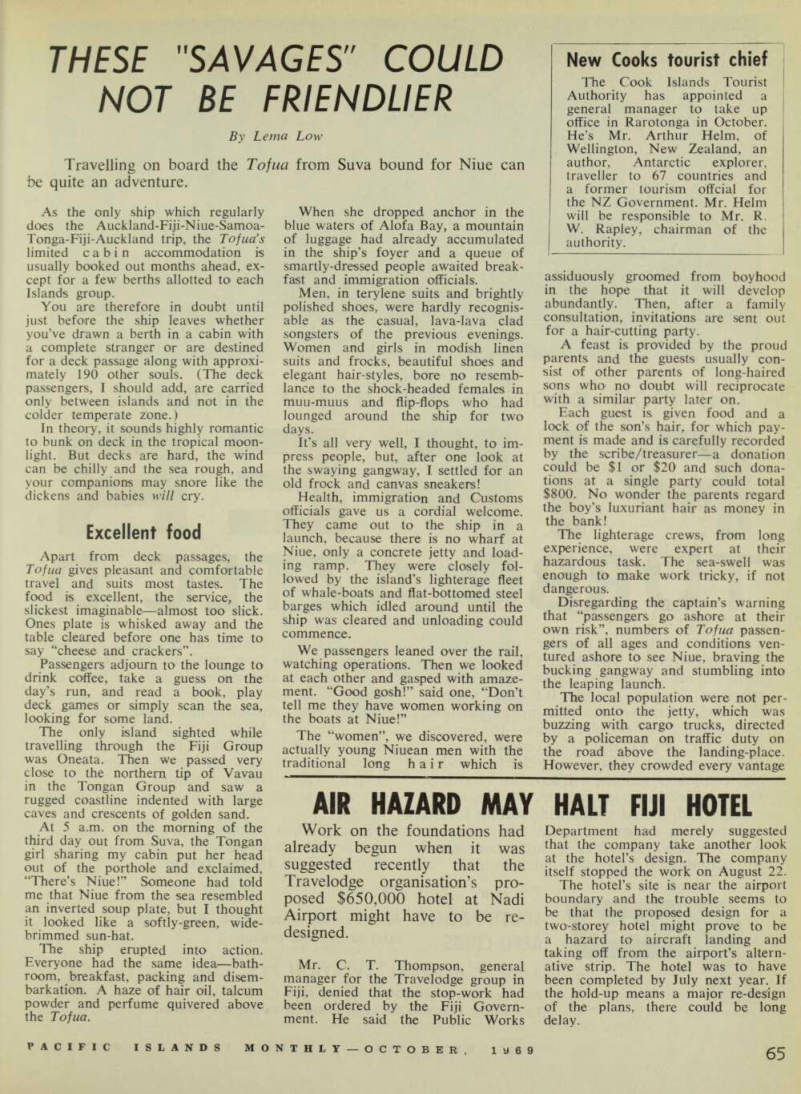 69
69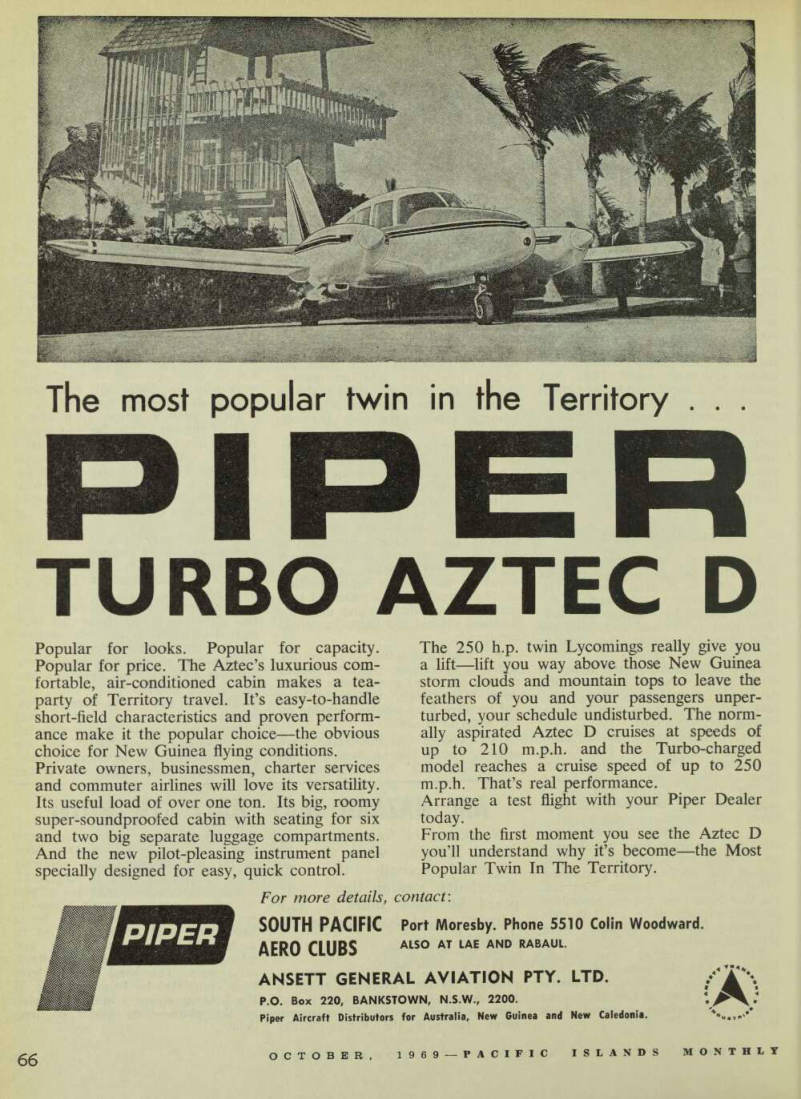 70
70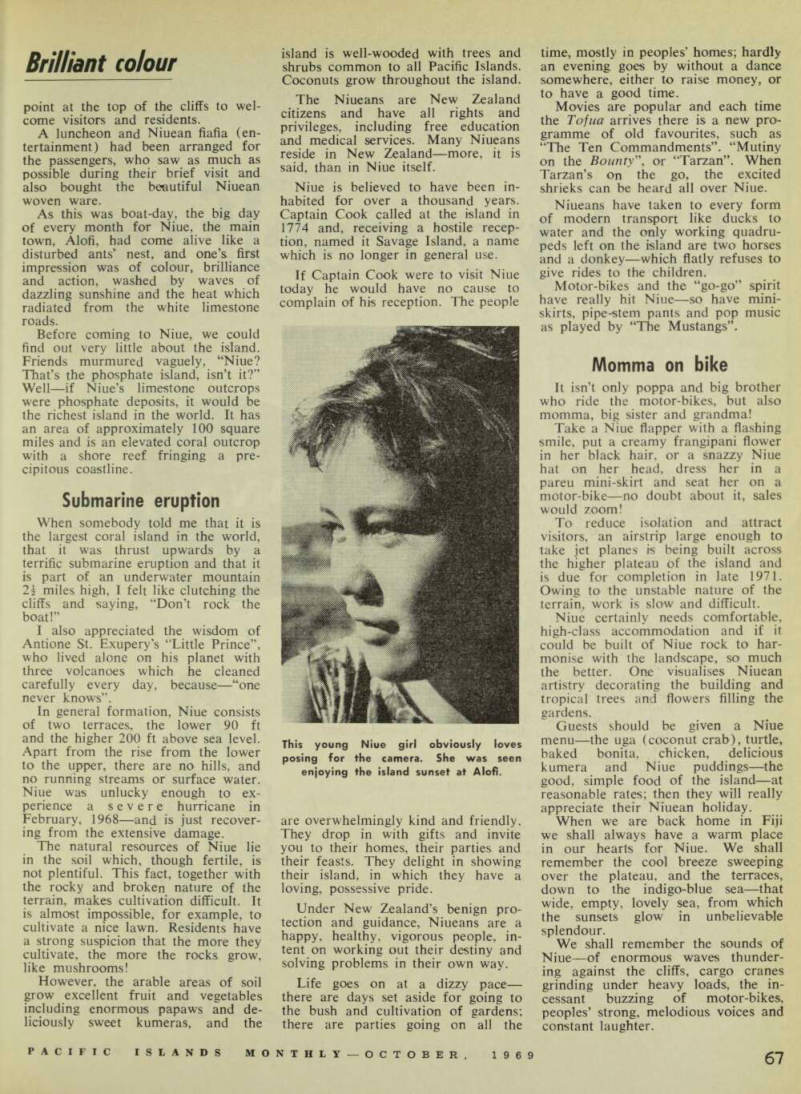 71
71 72
72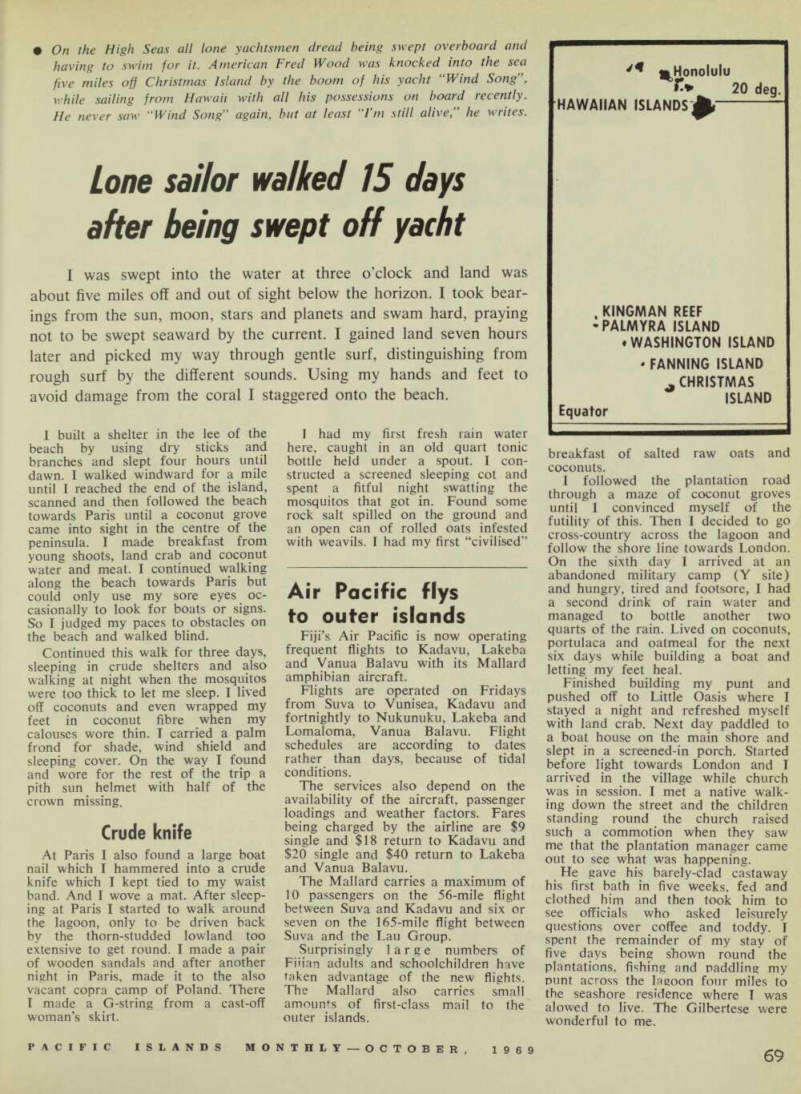 73
73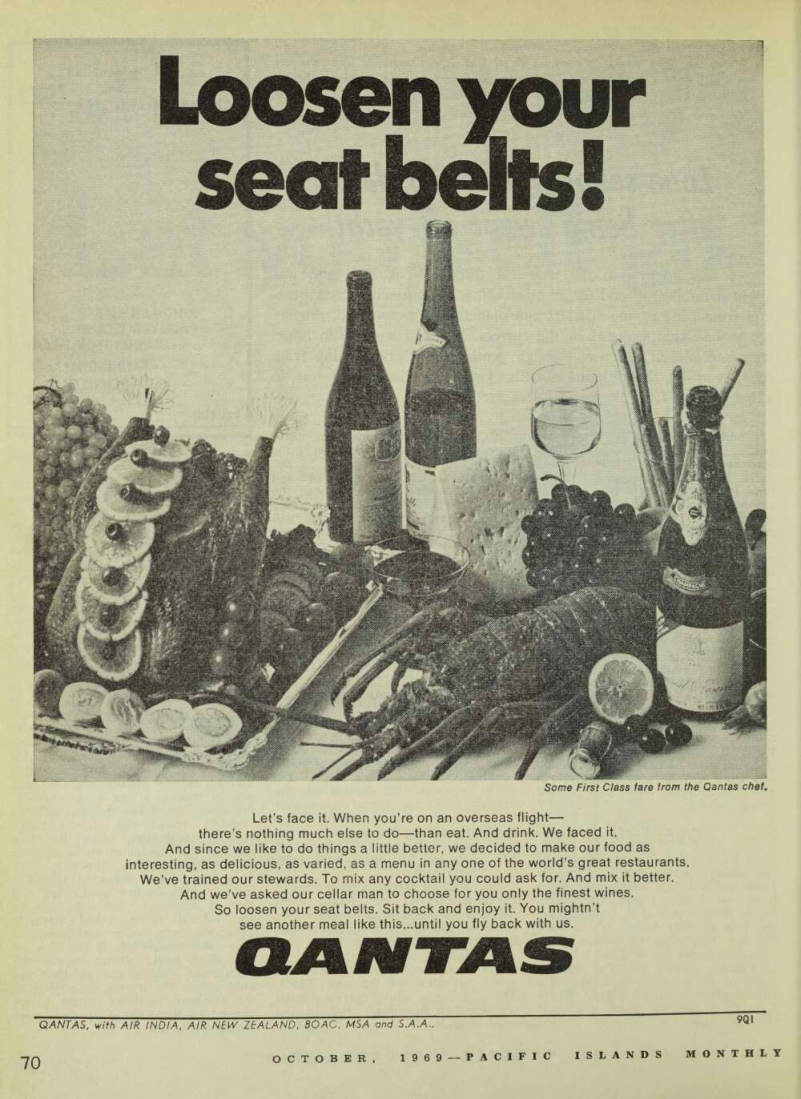 74
74 75
75 76
76 77
77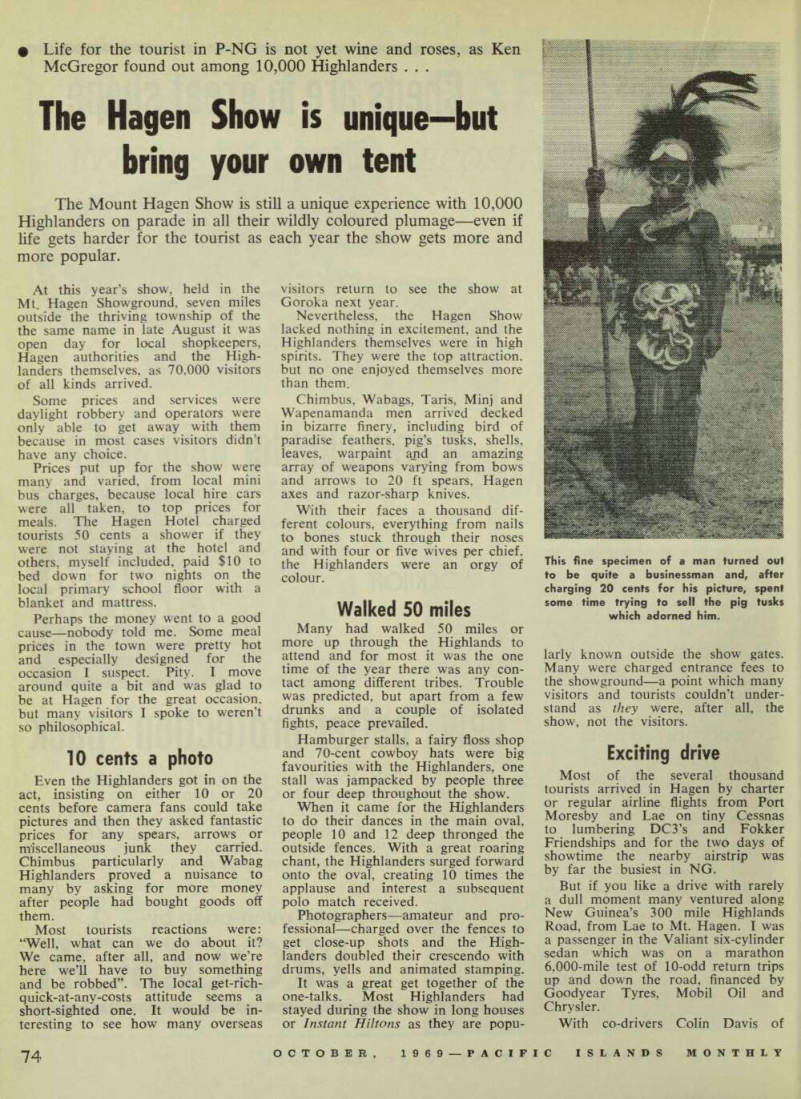 78
78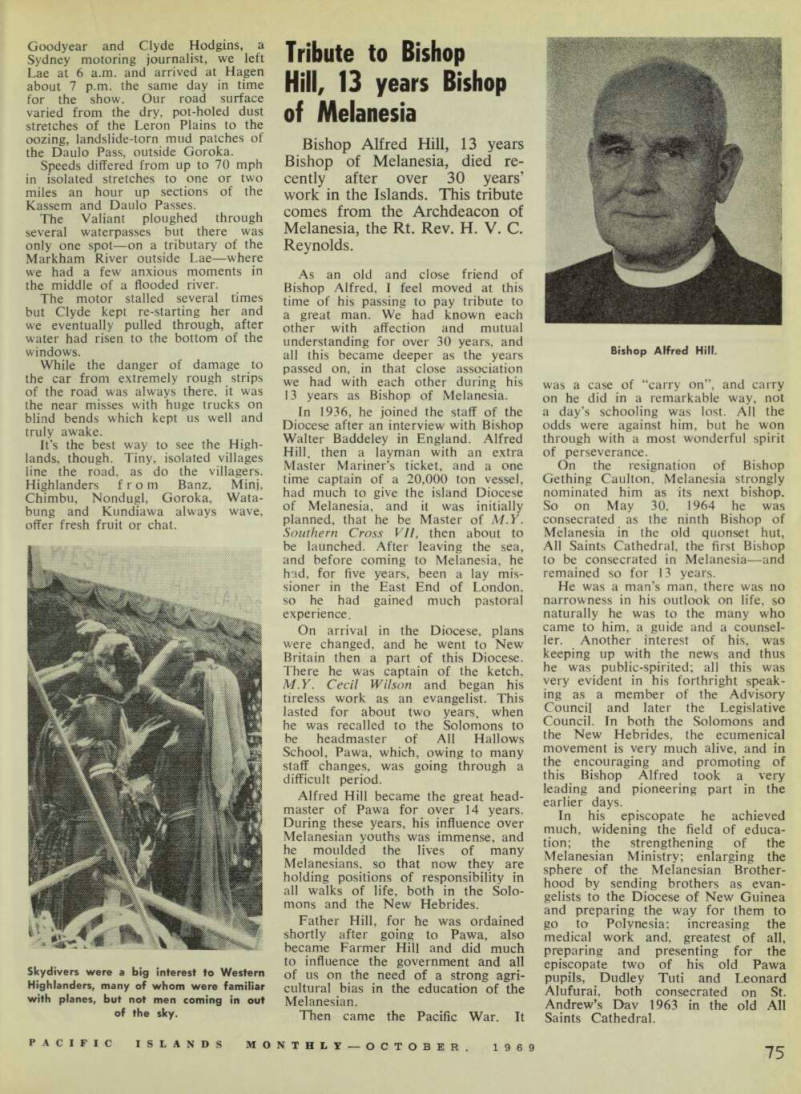 79
79 80
80 81
81 82
82 83
83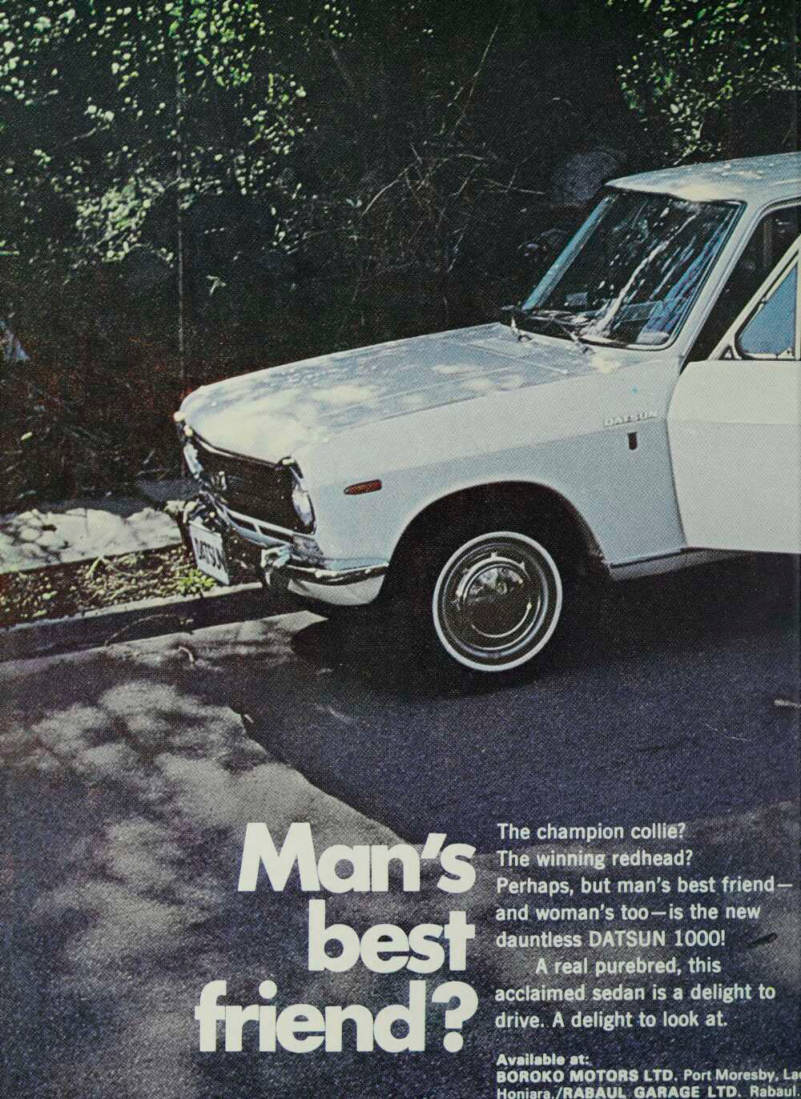 84
84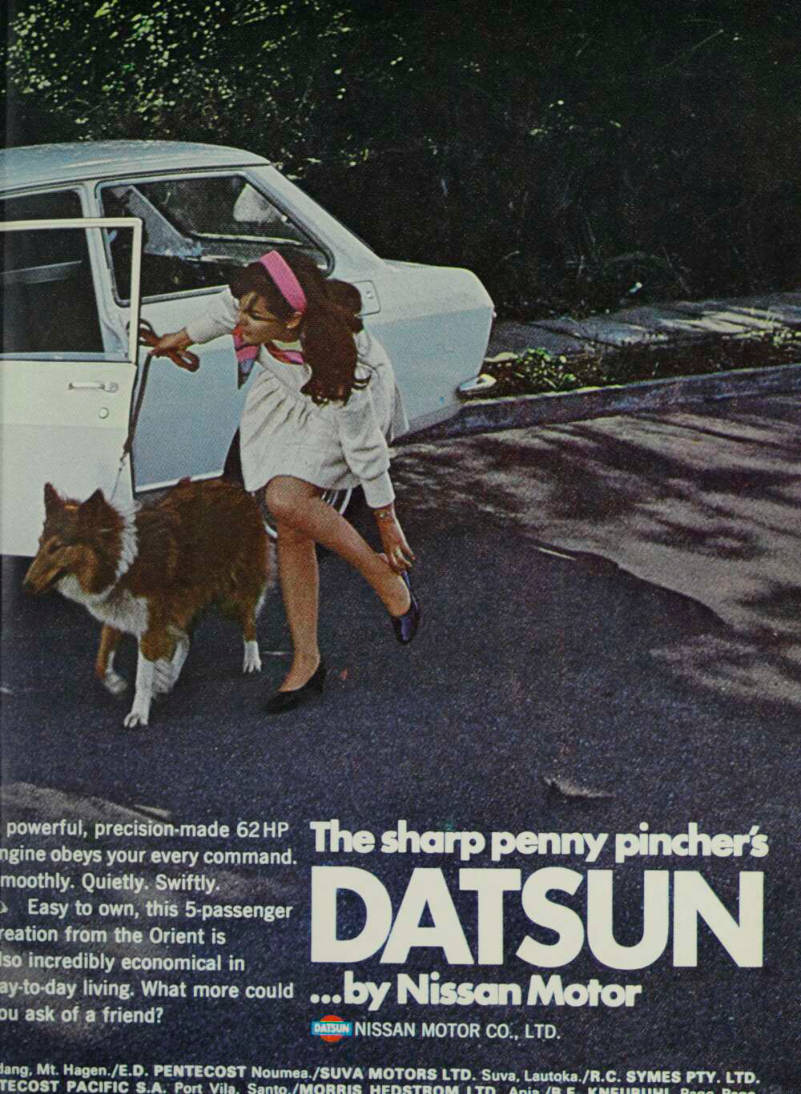 85
85 86
86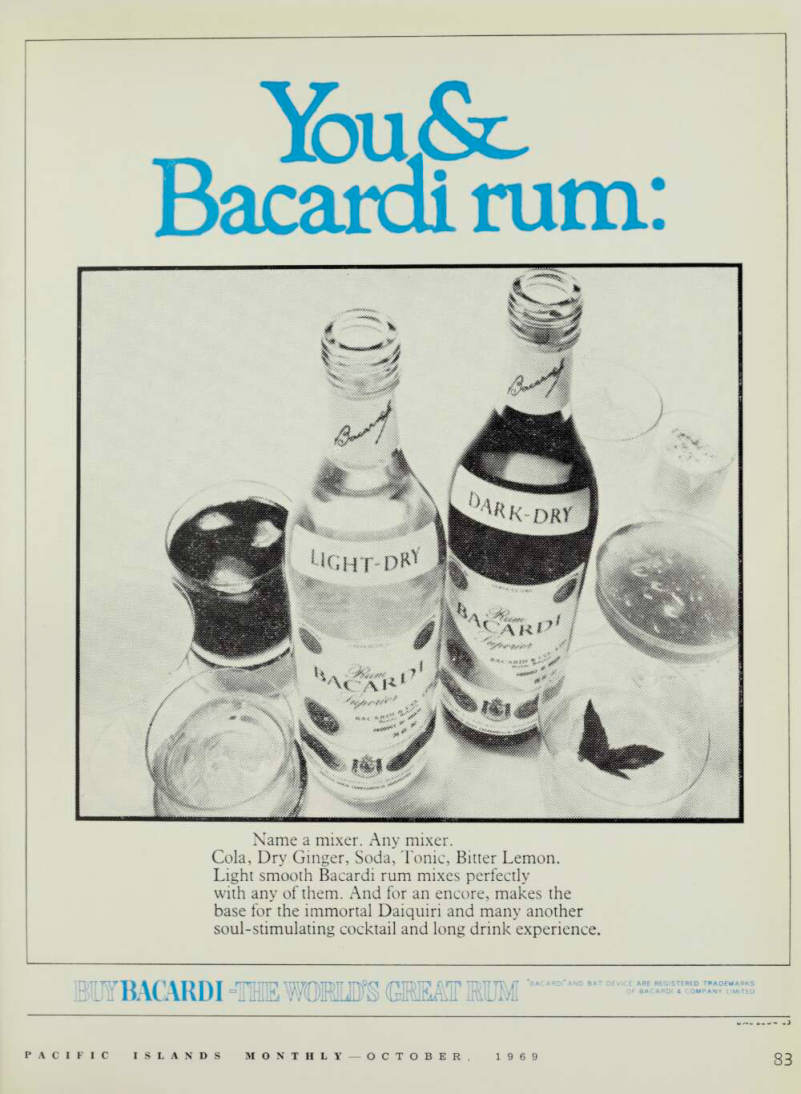 87
87 88
88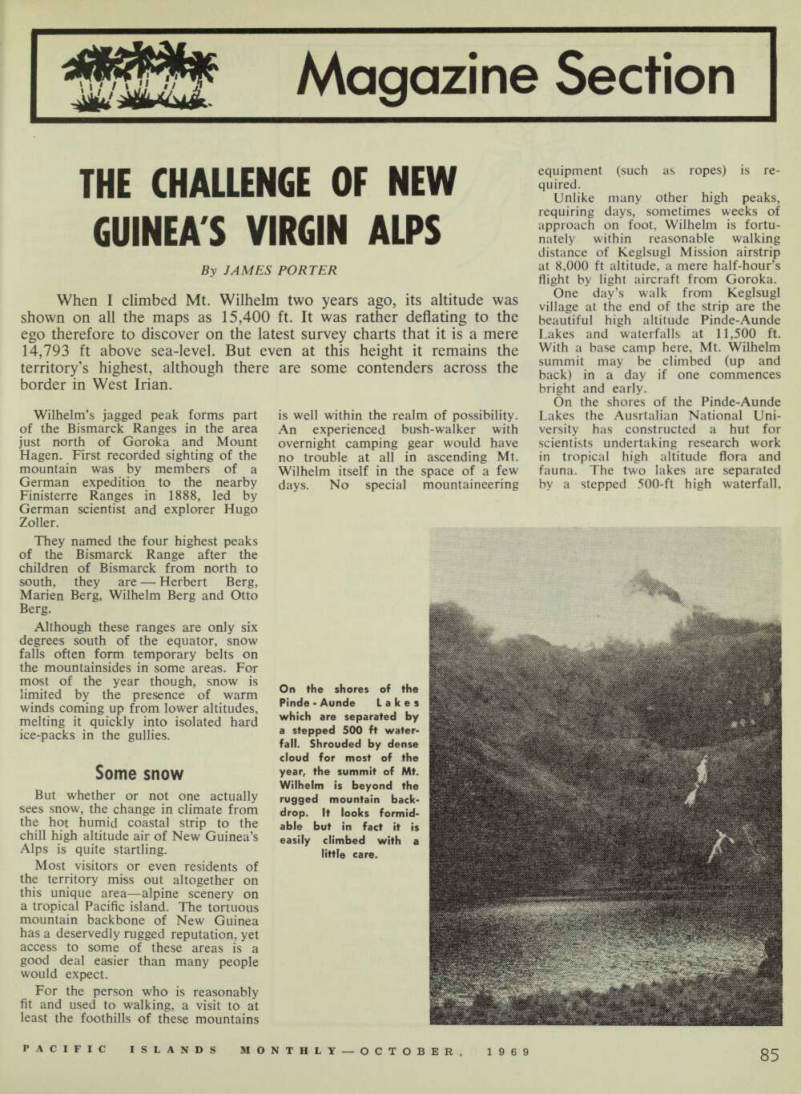 89
89 90
90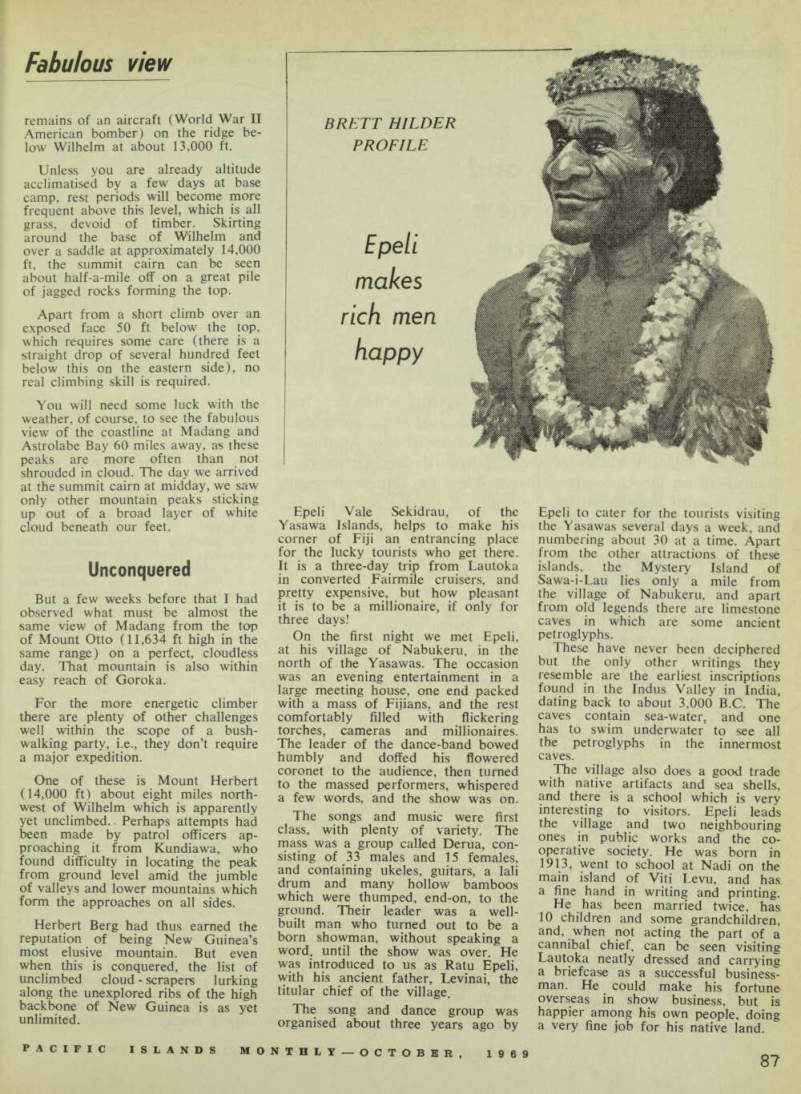 91
91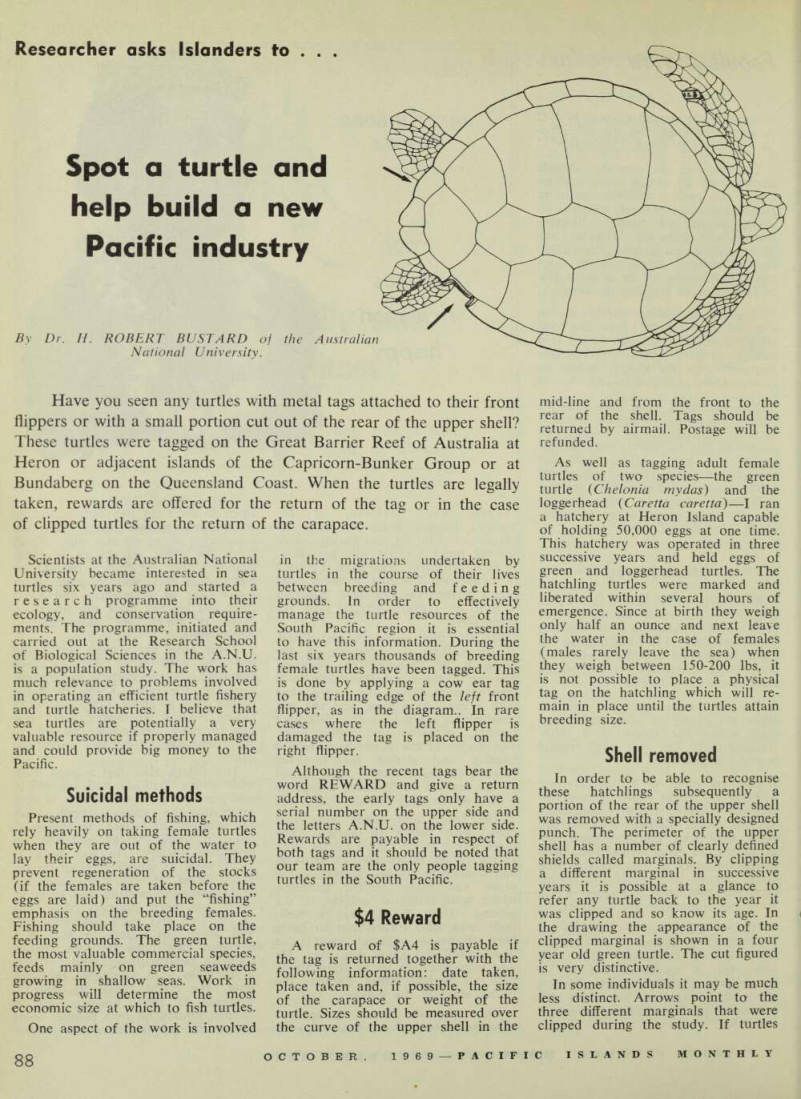 92
92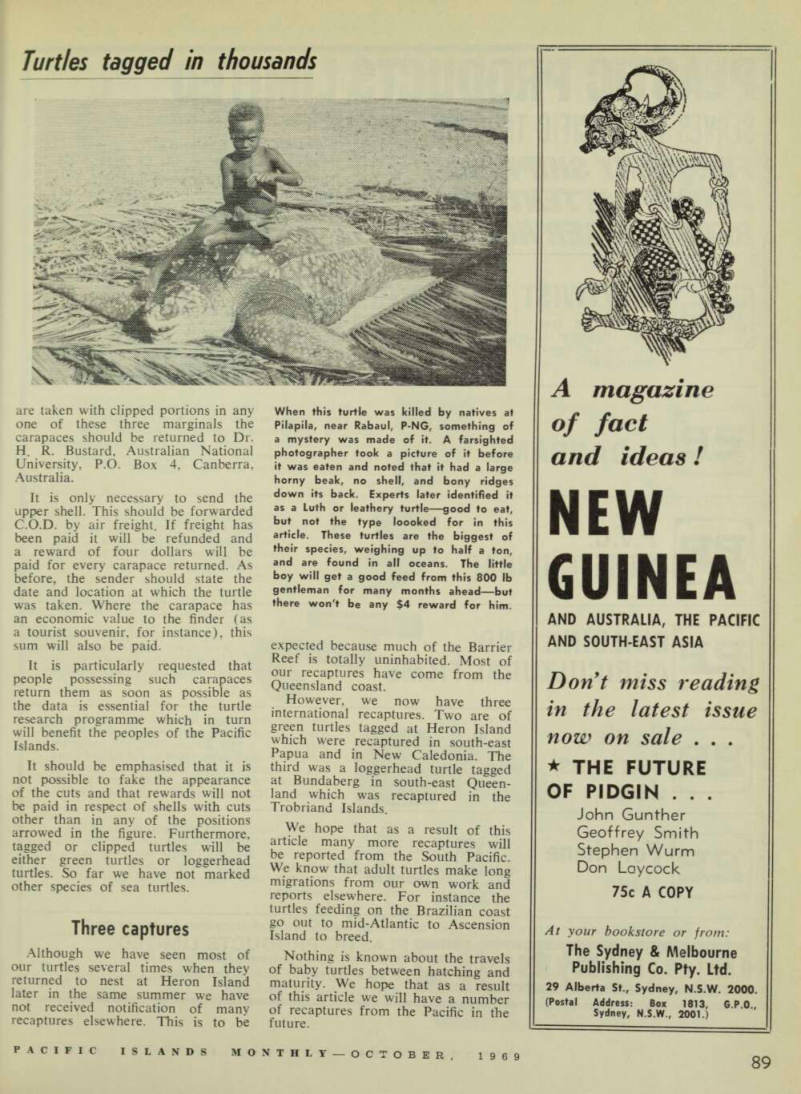 93
93 94
94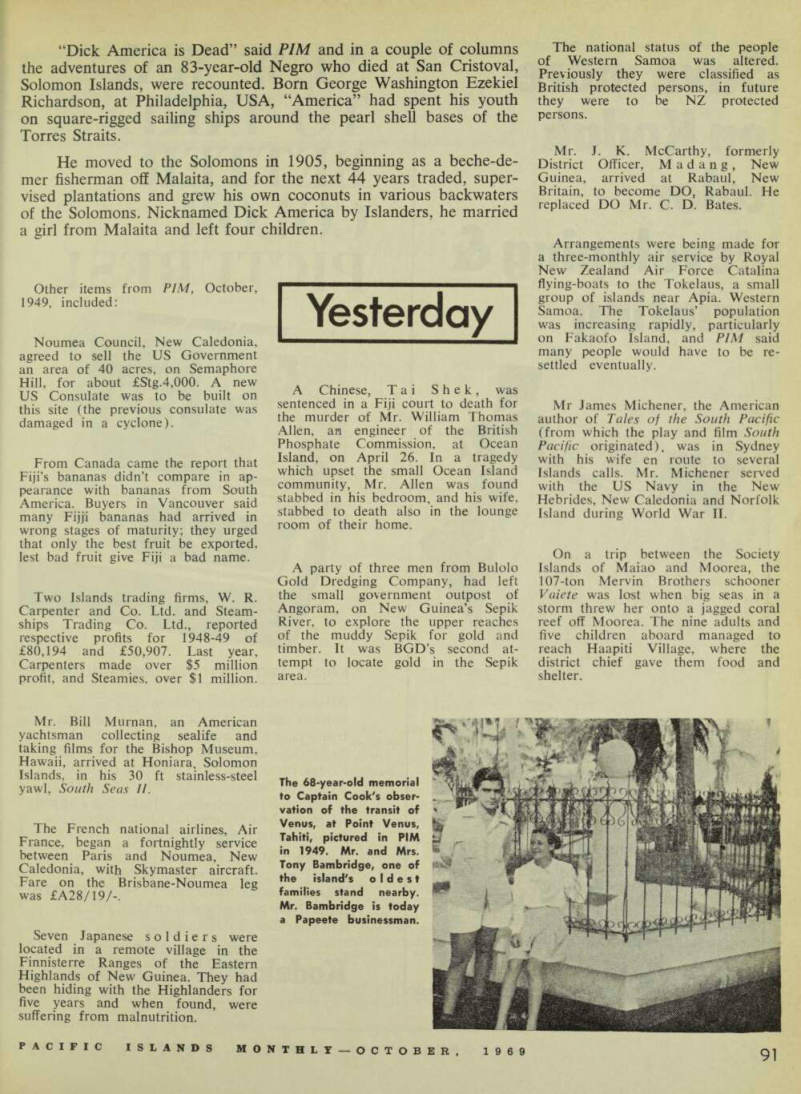 95
95 96
96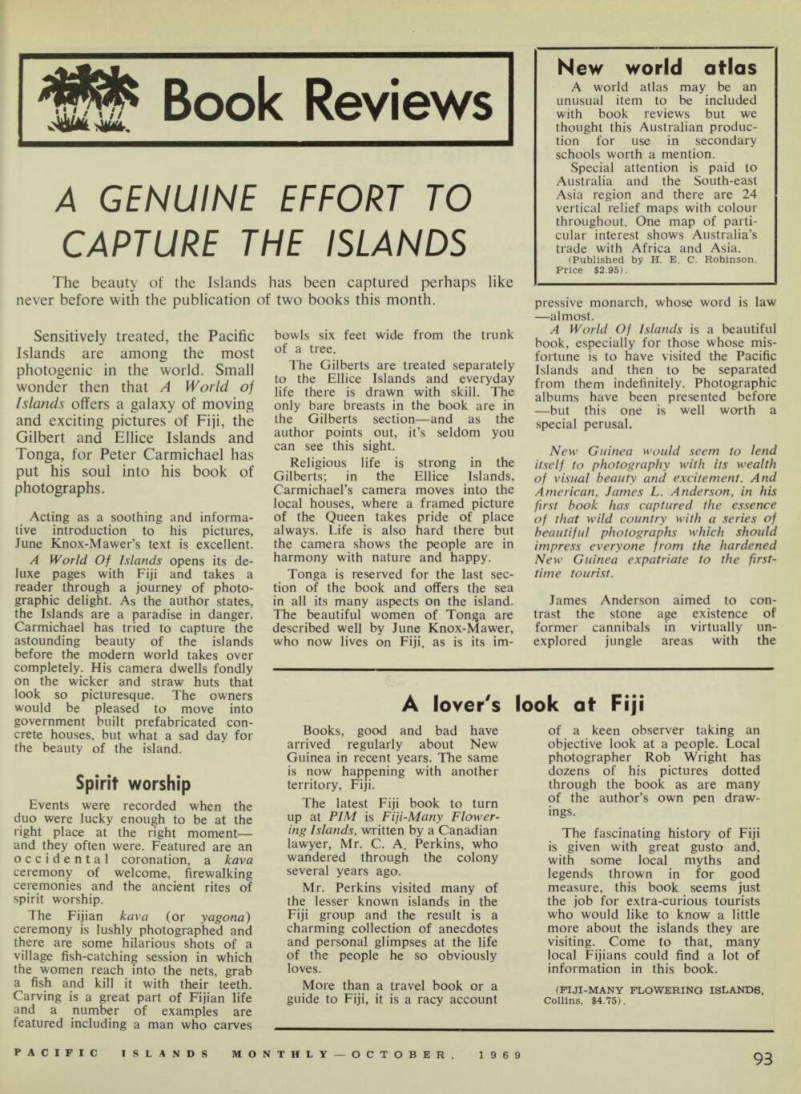 97
97 98
98 99
99 100
100 101
101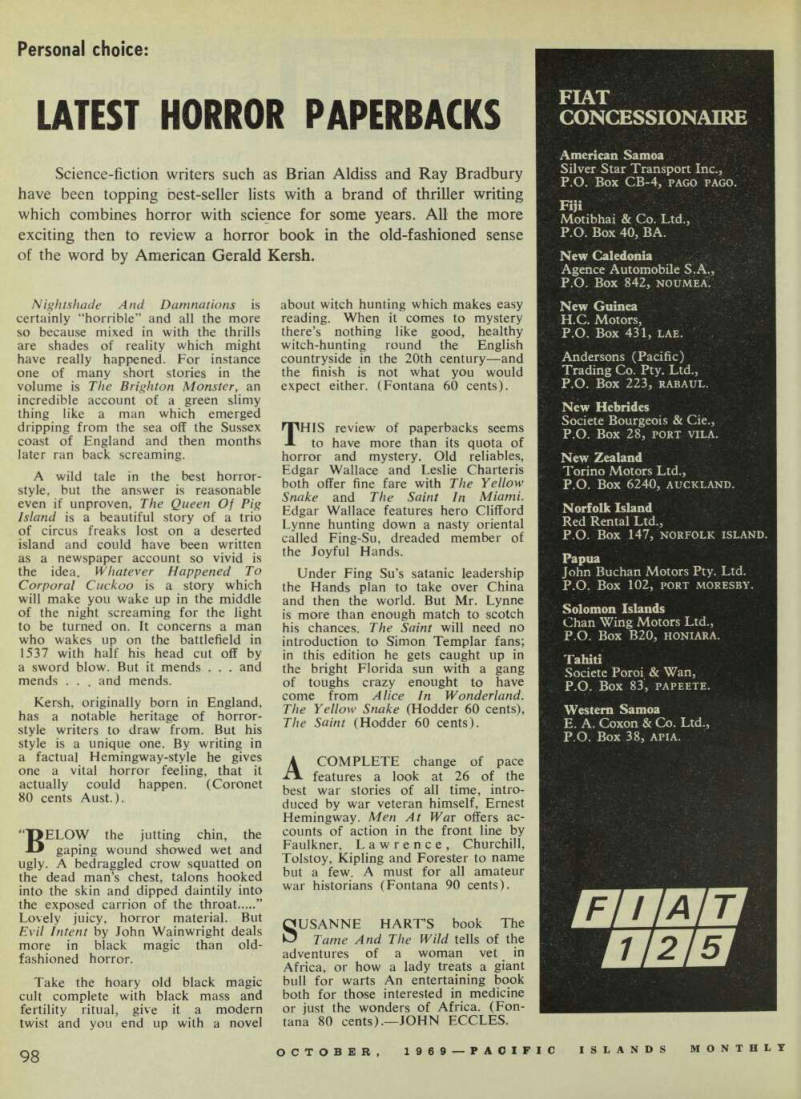 102
102 103
103 104
104 105
105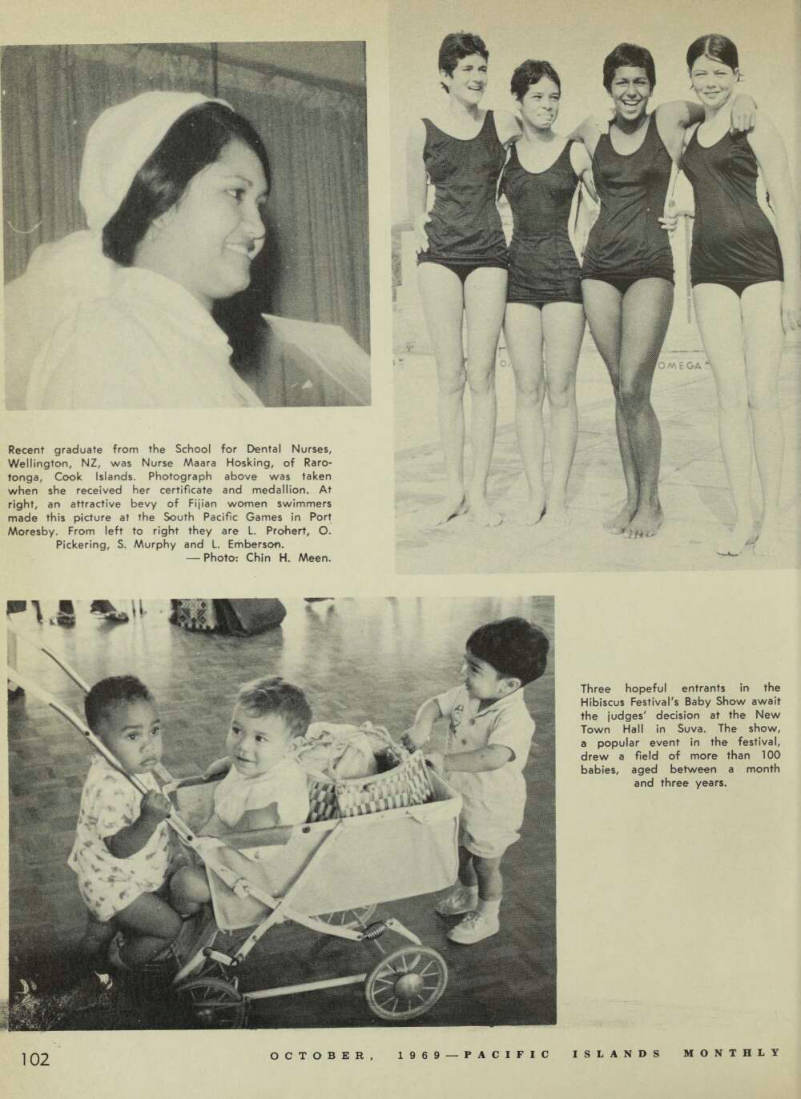 106
106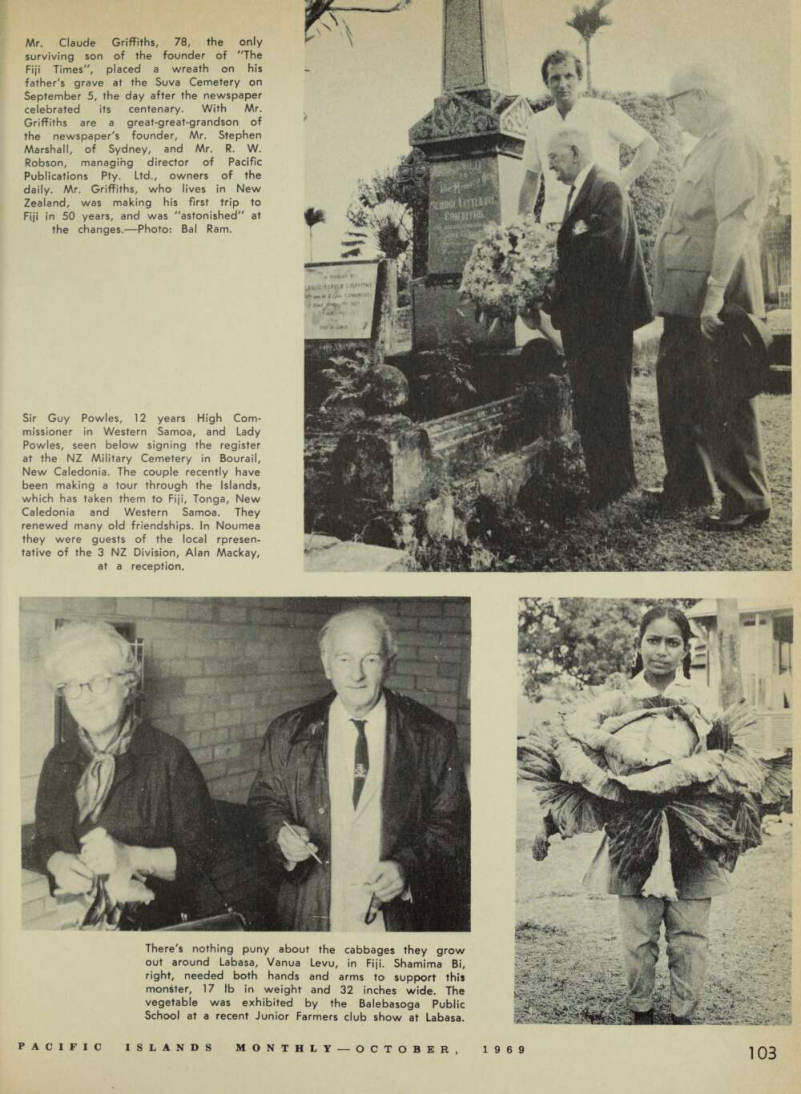 107
107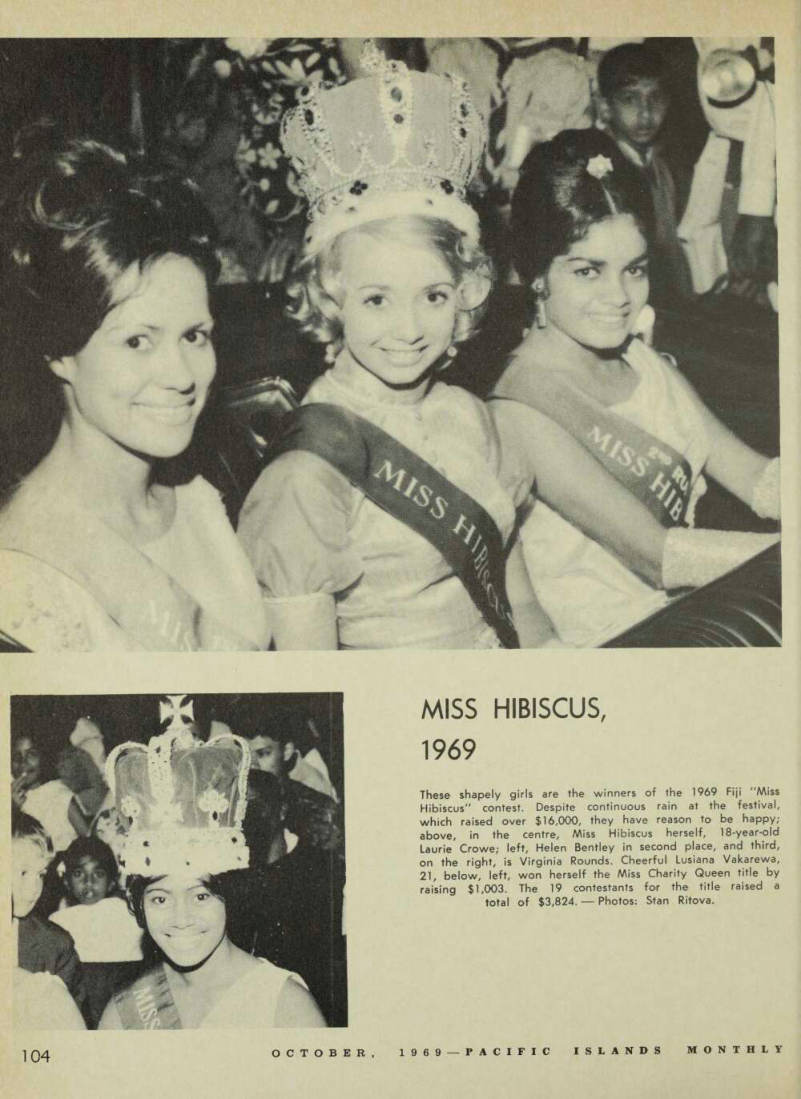 108
108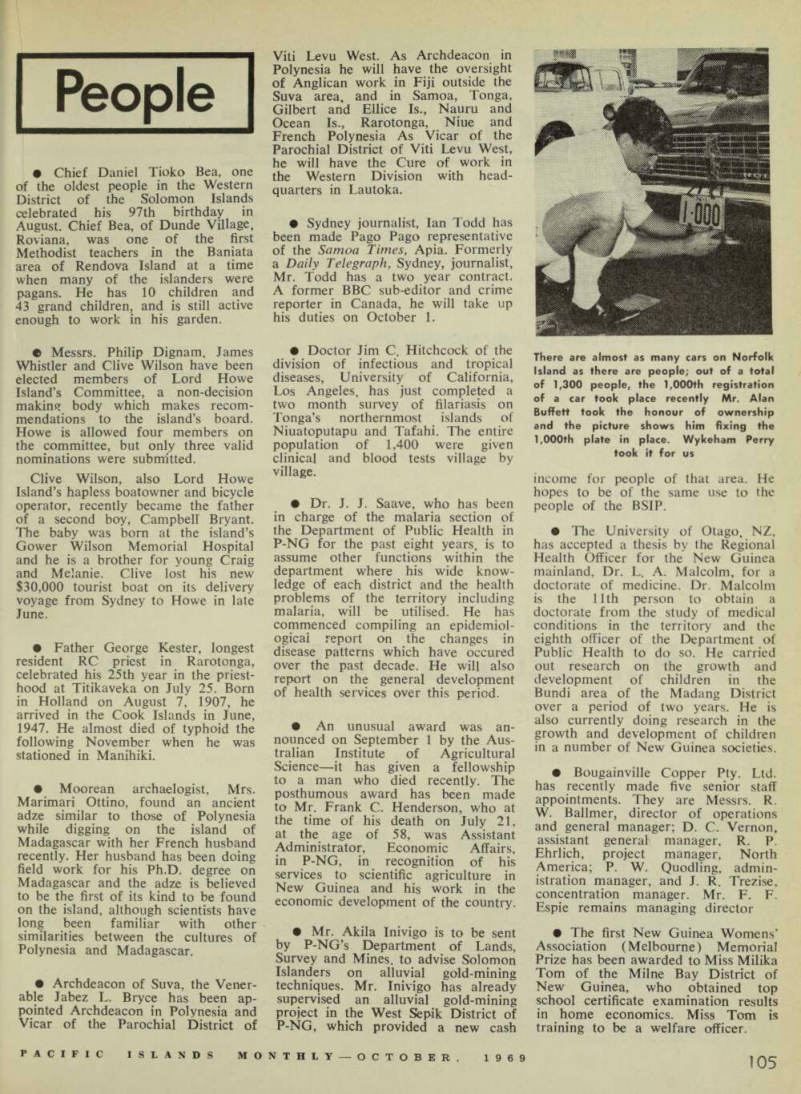 109
109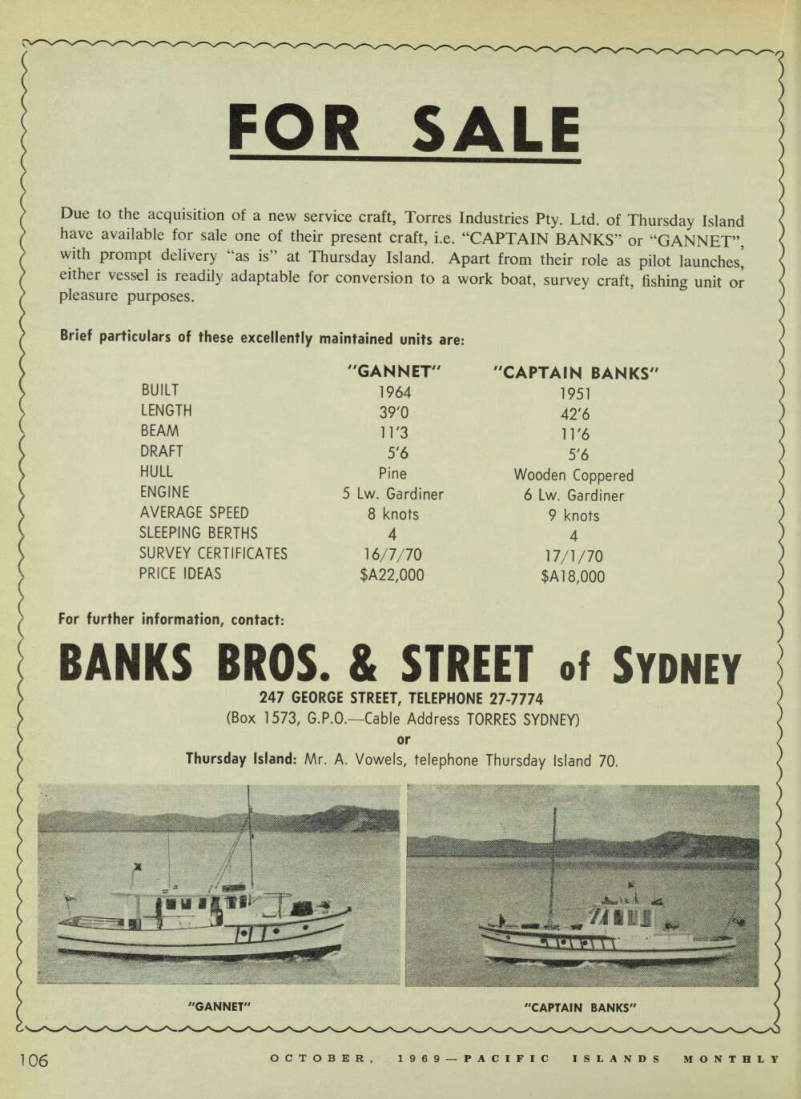 110
110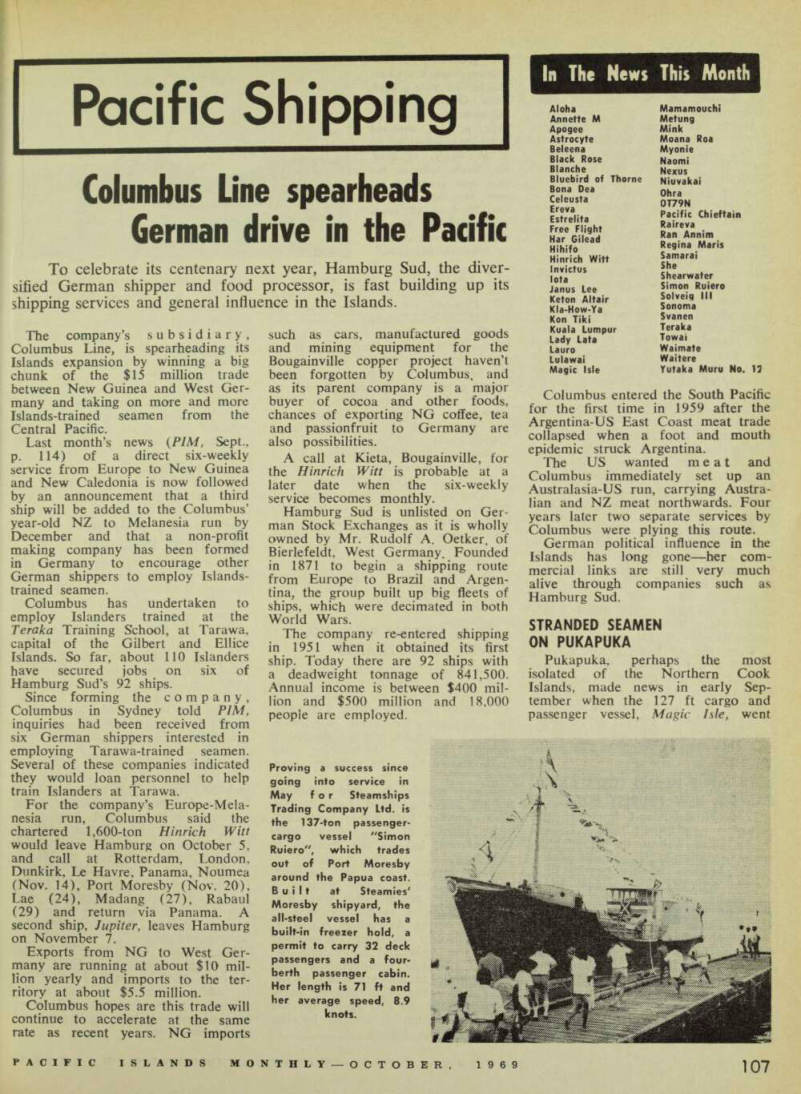 111
111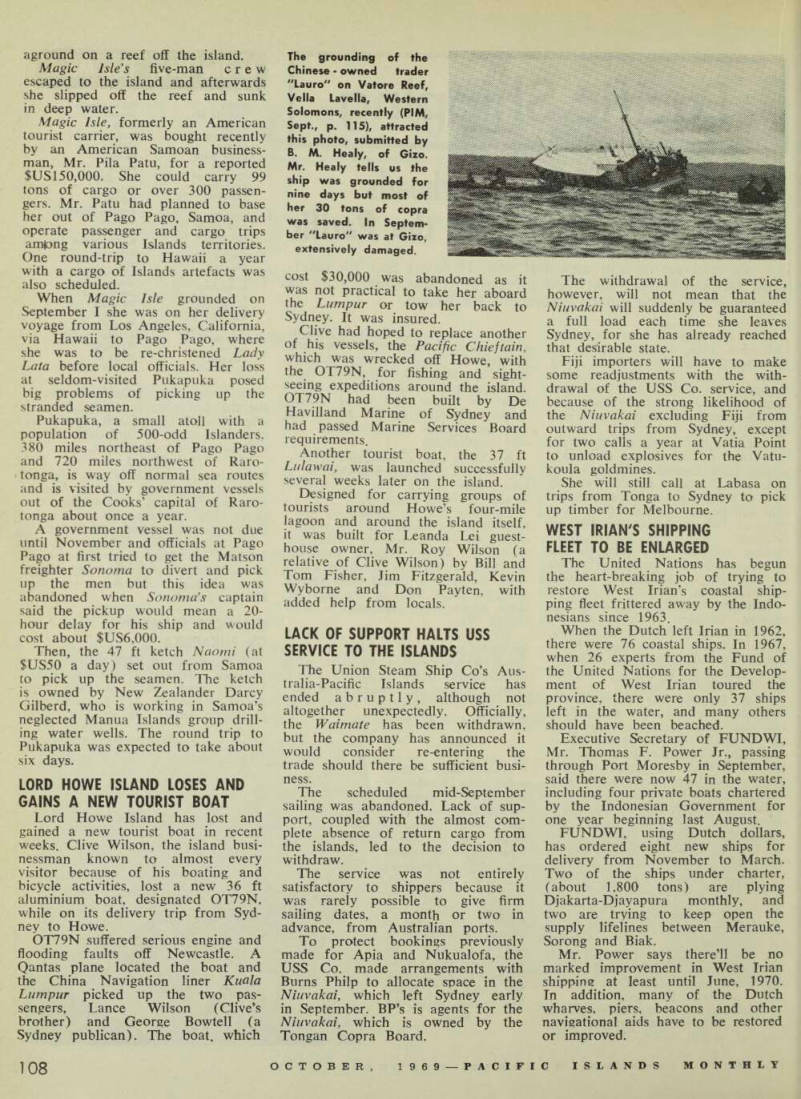 112
112 113
113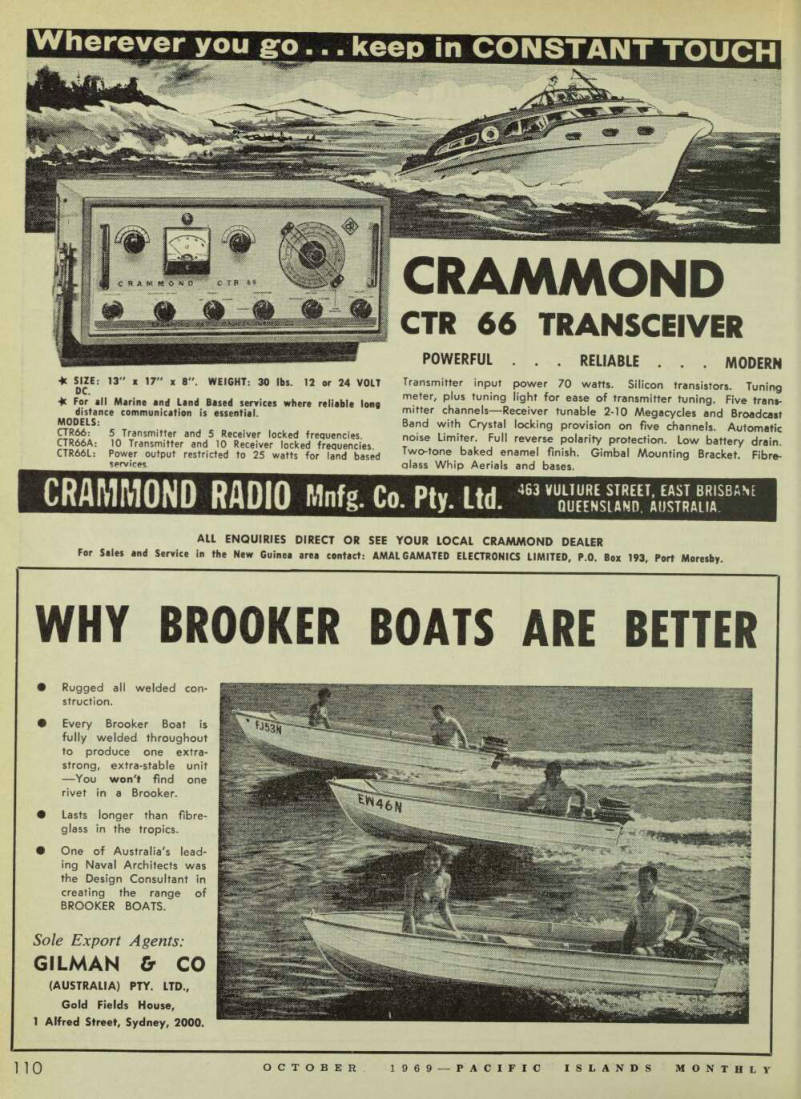 114
114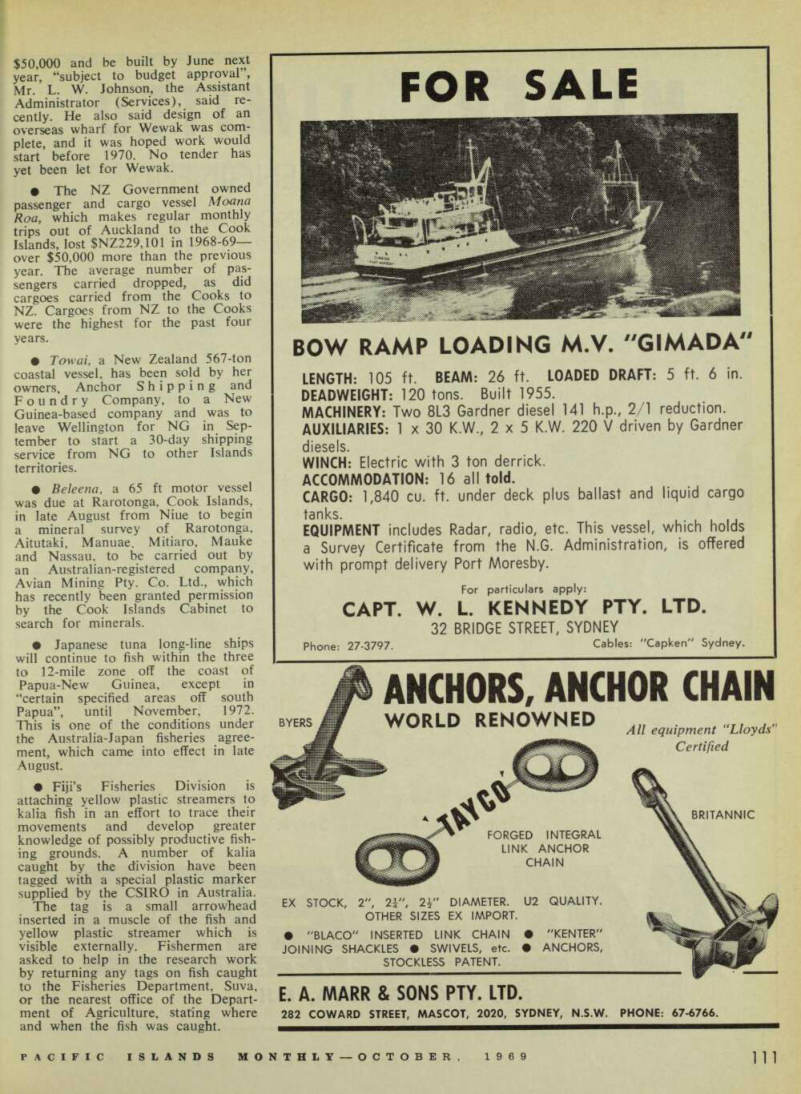 115
115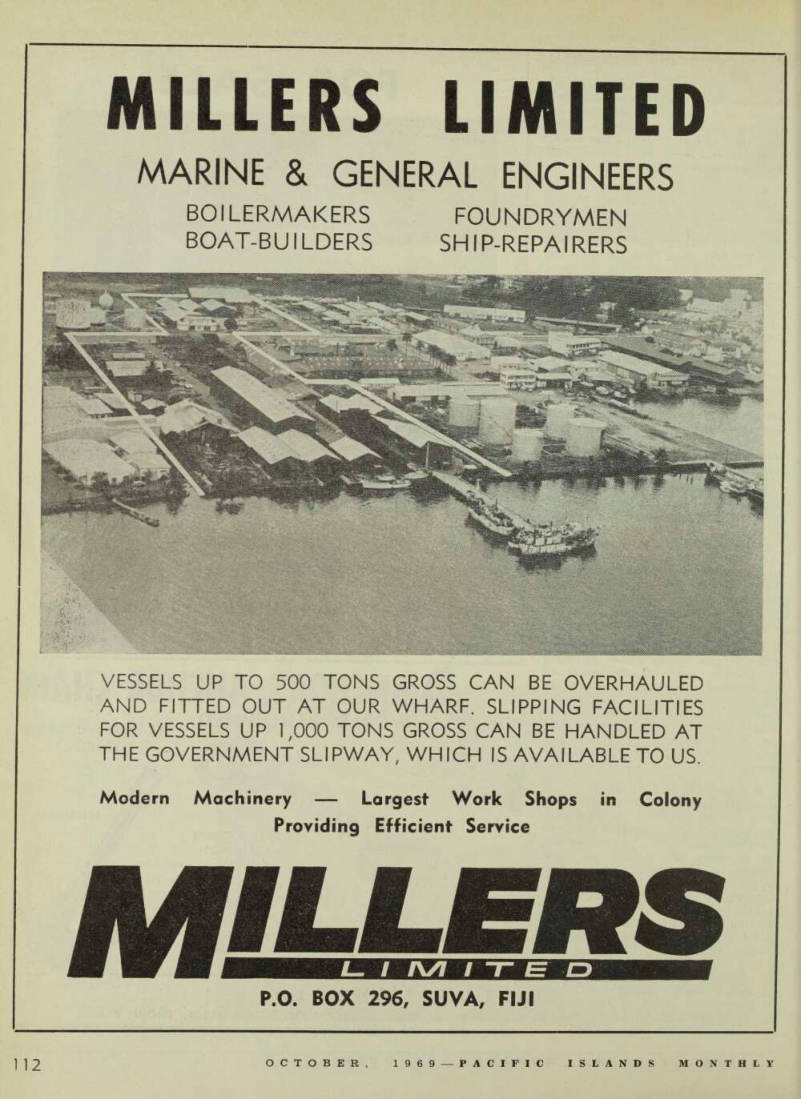 116
116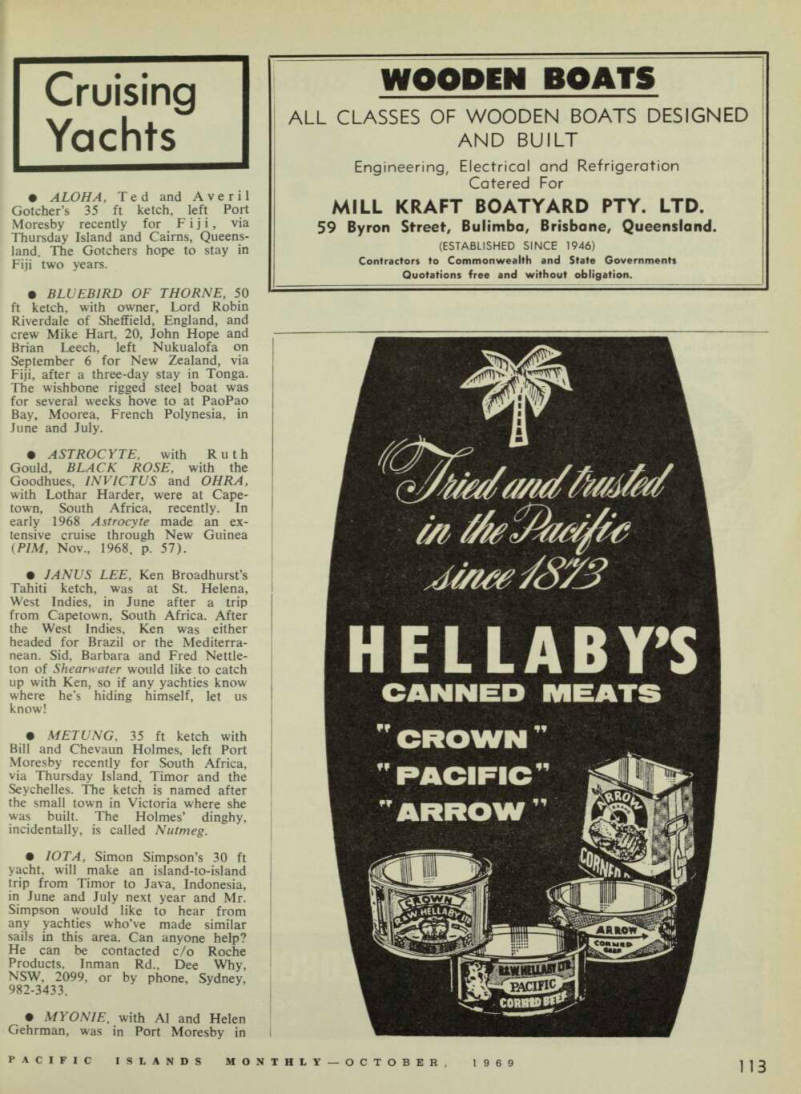 117
117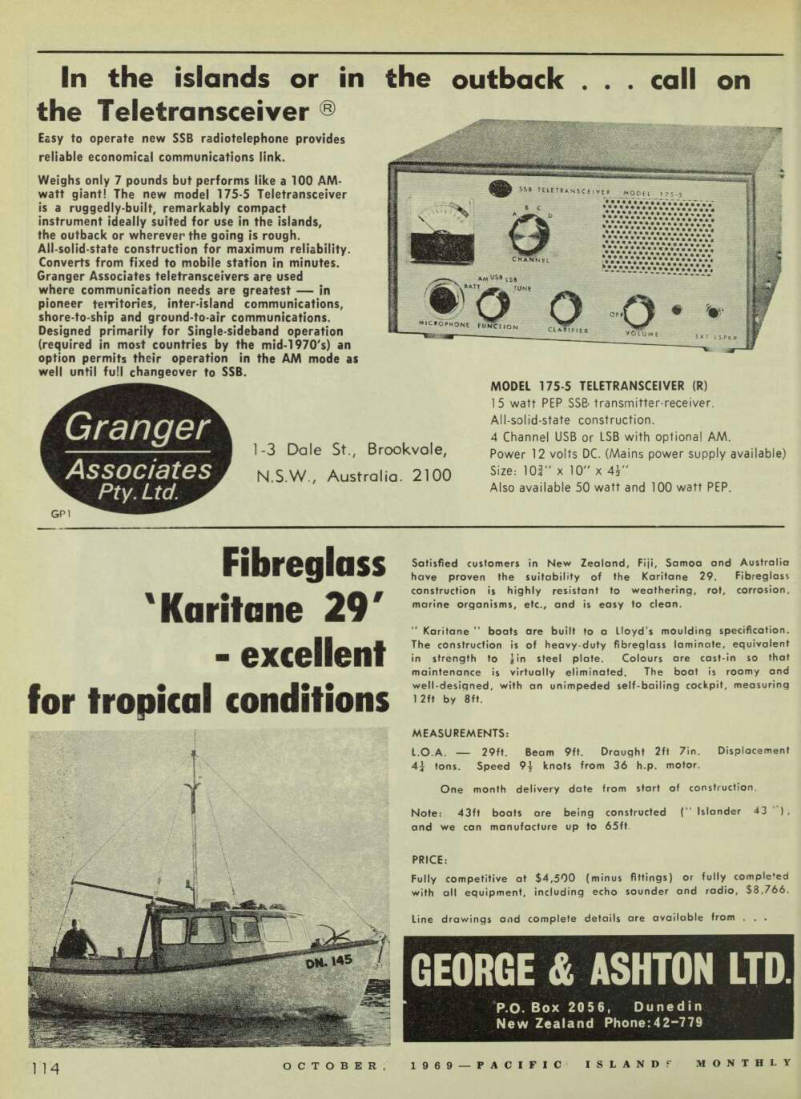 118
118 119
119 120
120 121
121 122
122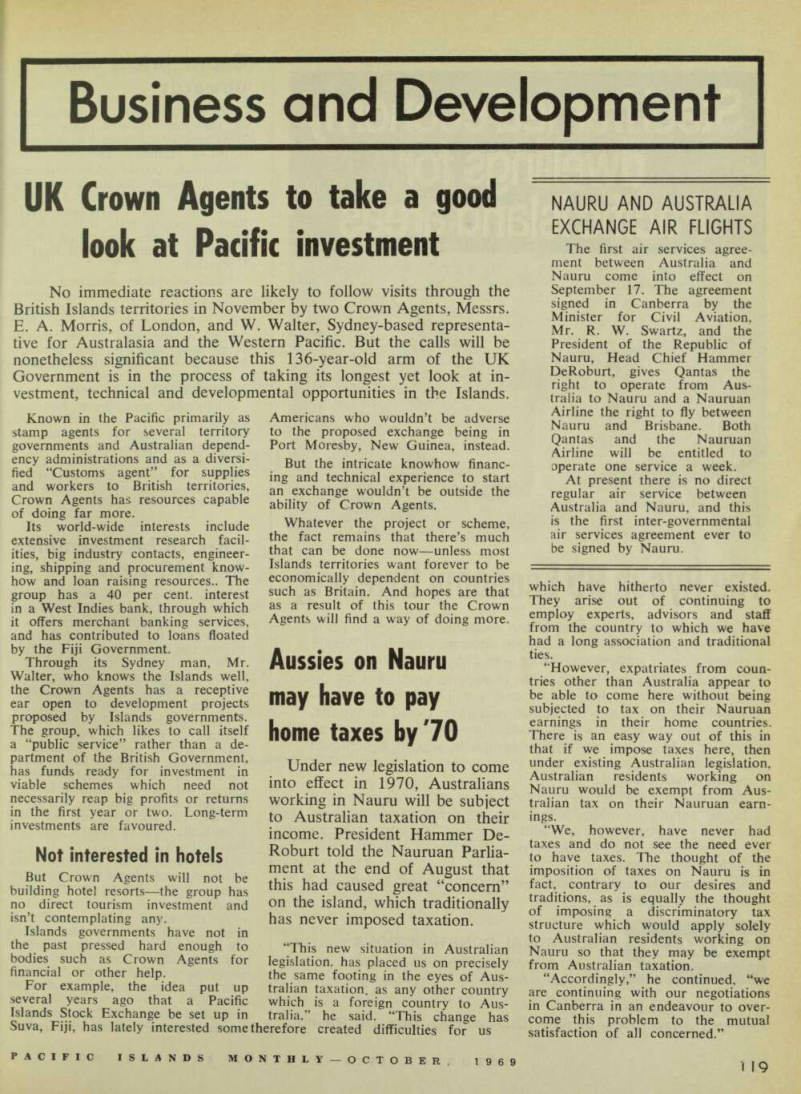 123
123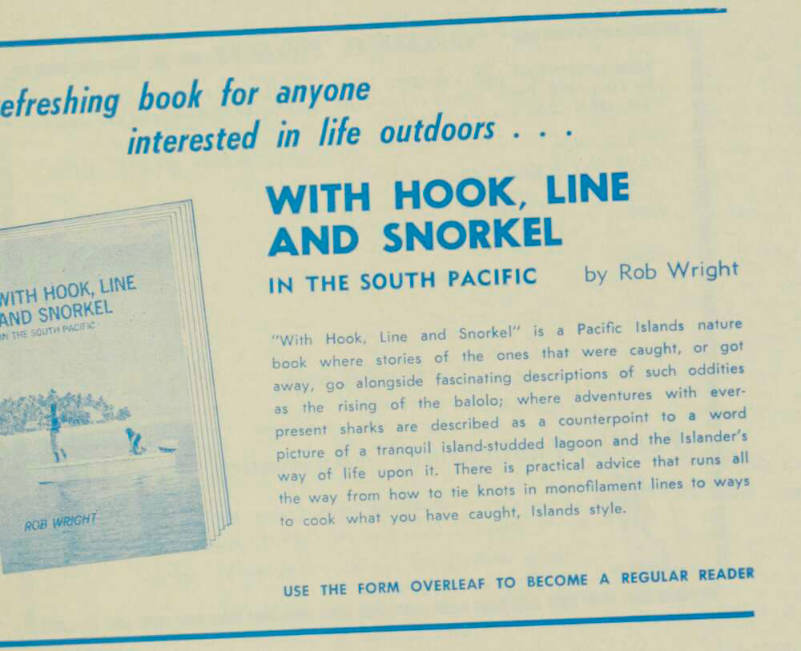 124
124 125
125 126
126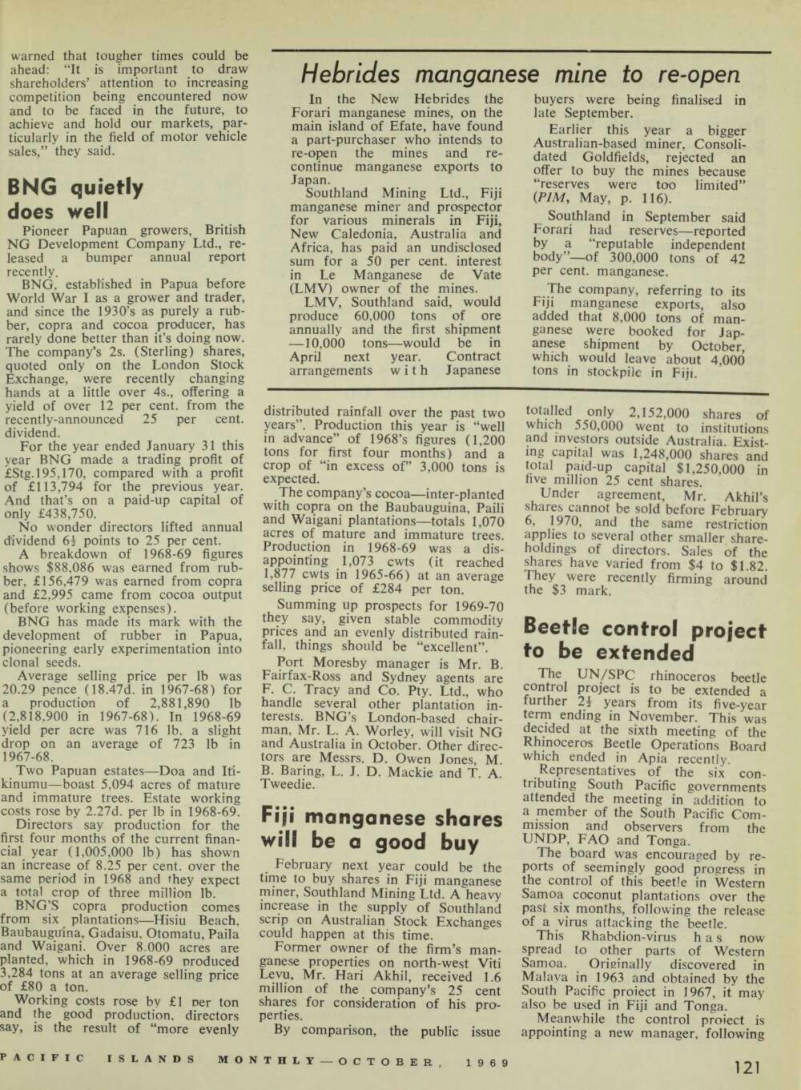 127
127 128
128 129
129 130
130 131
131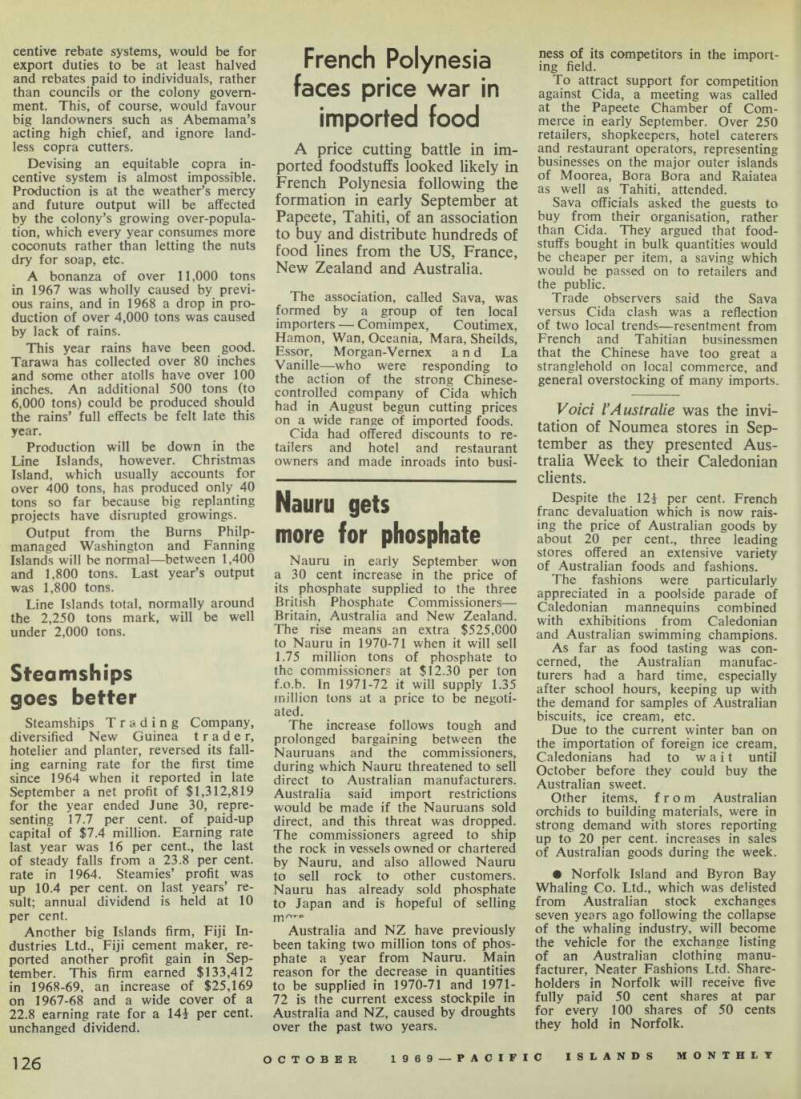 132
132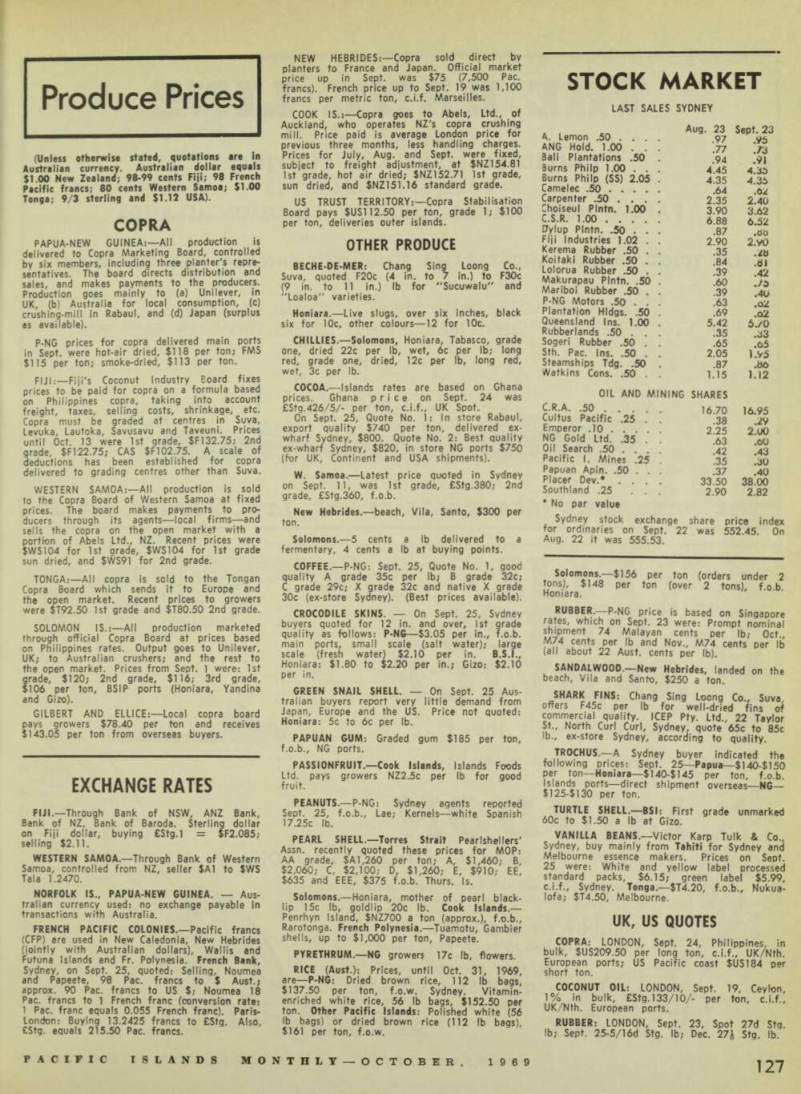 133
133 134
134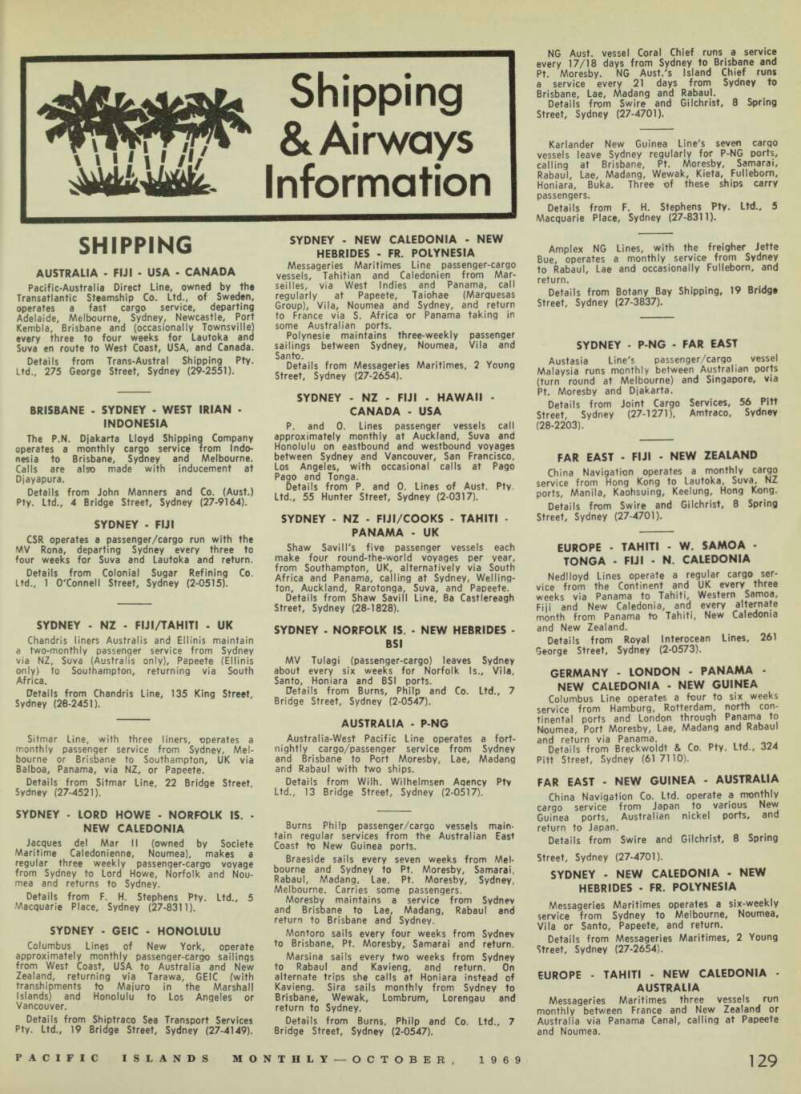 135
135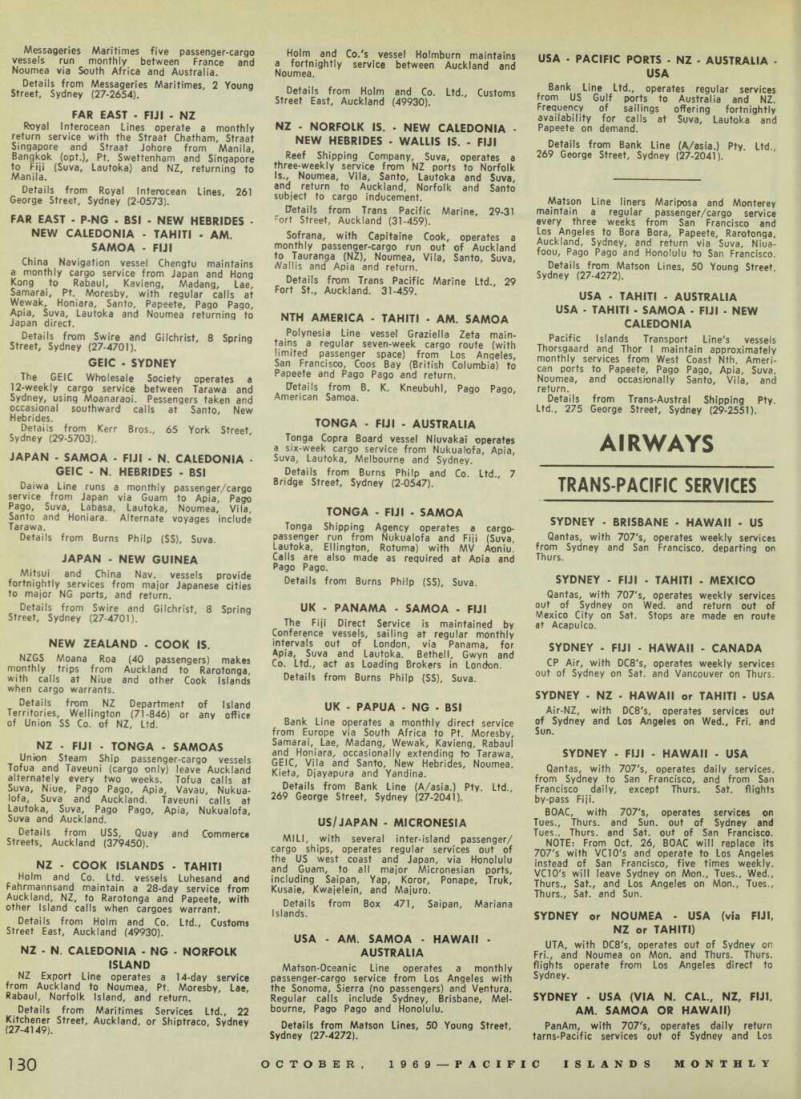 136
136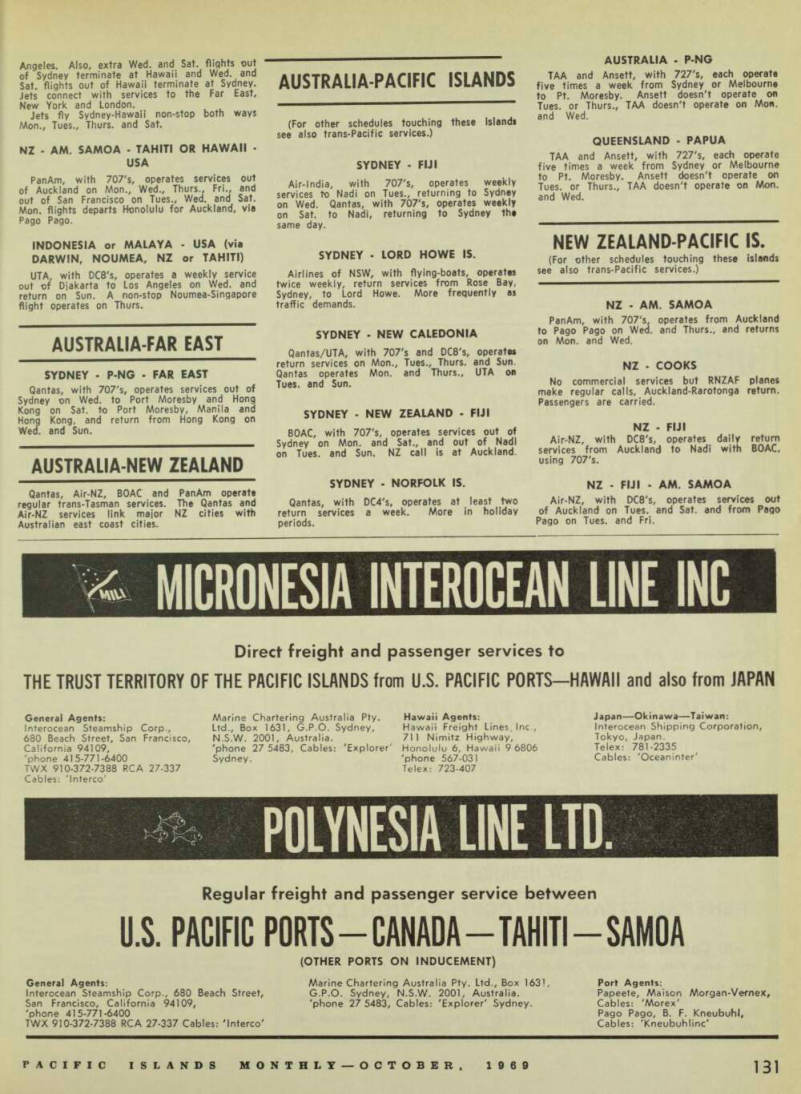 137
137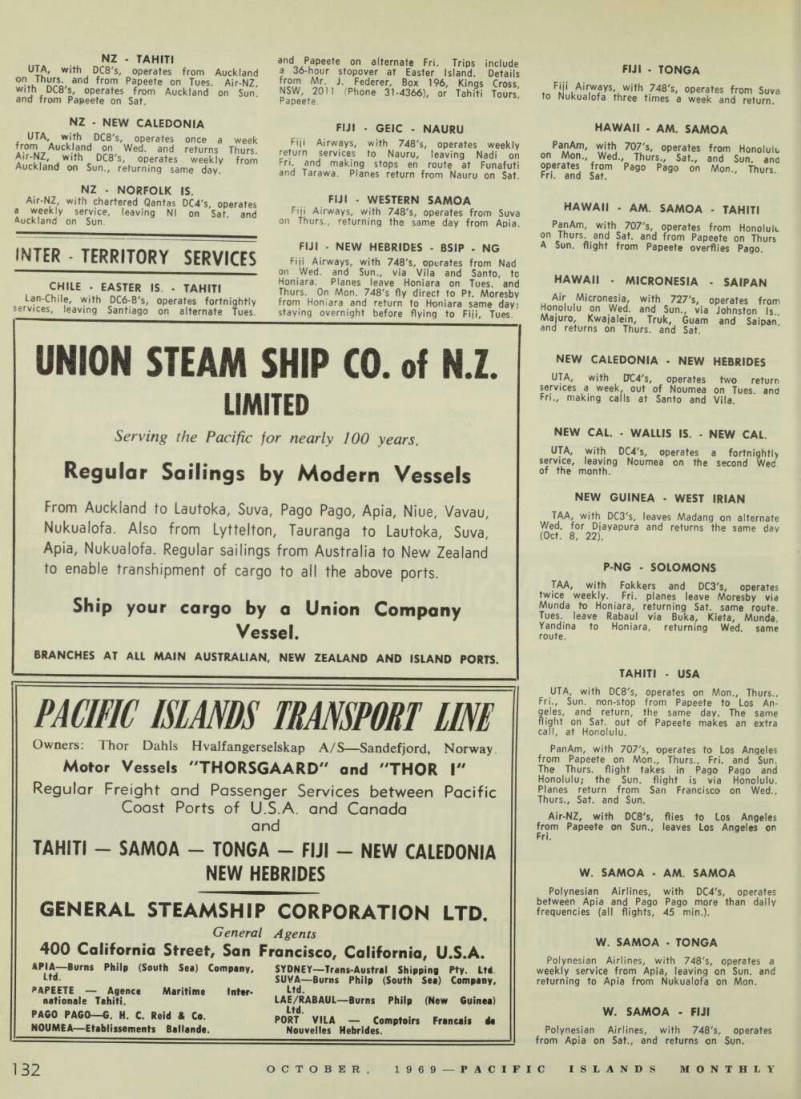 138
138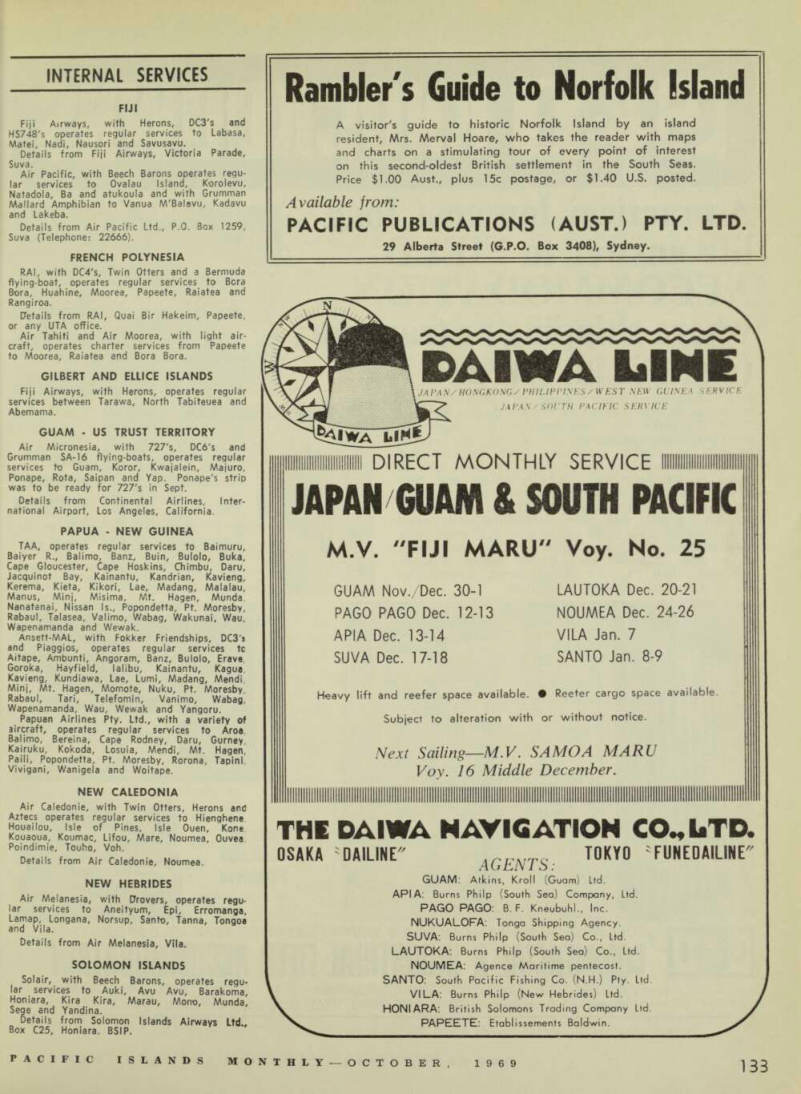 139
139 140
140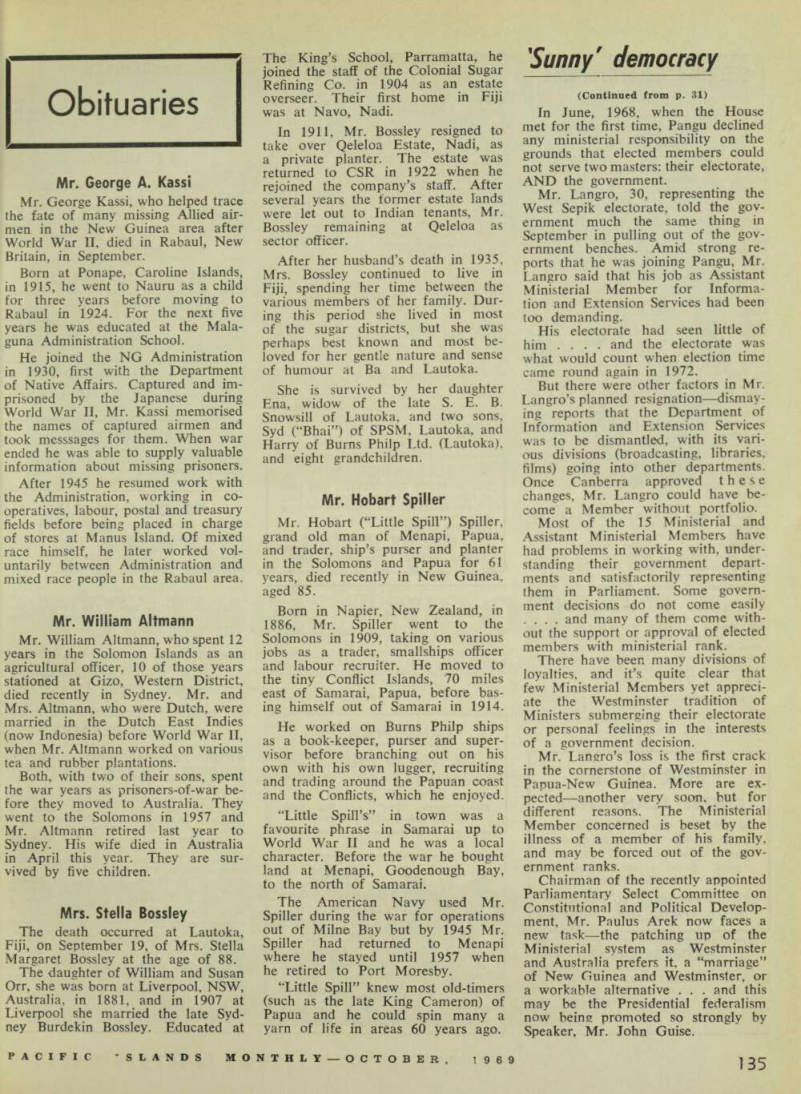 141
141 142
142 143
143 144
144 145
145 146
146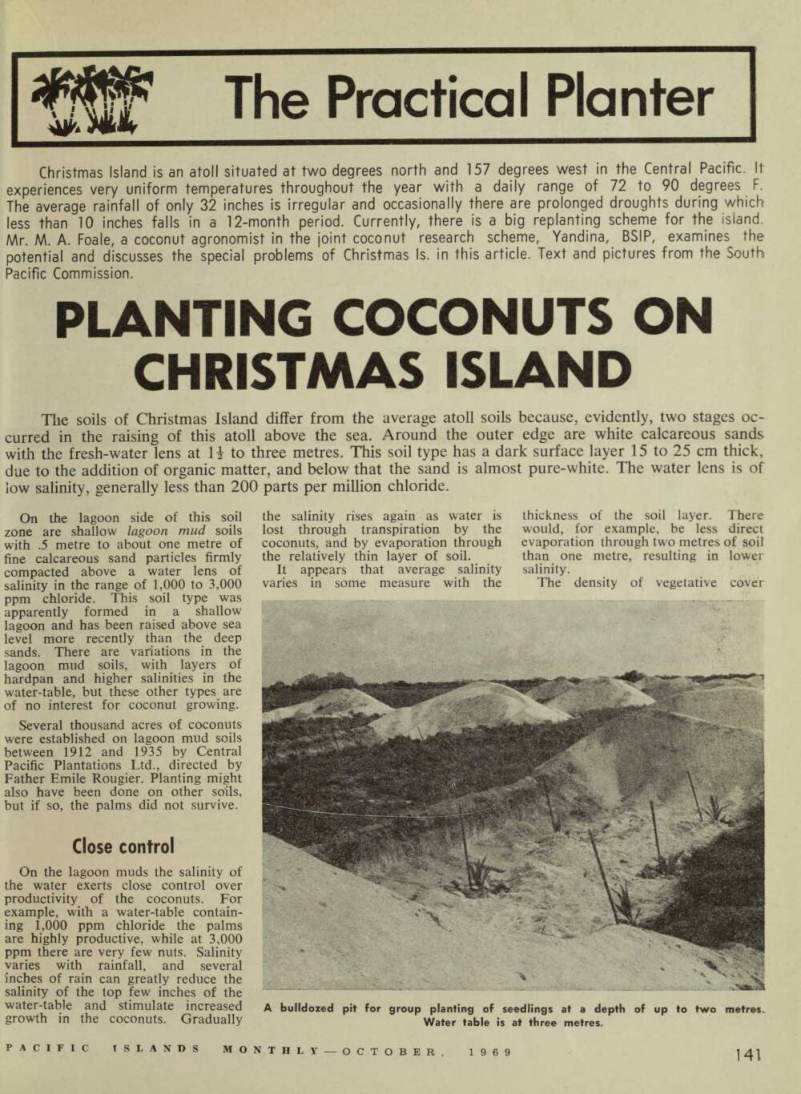 147
147 148
148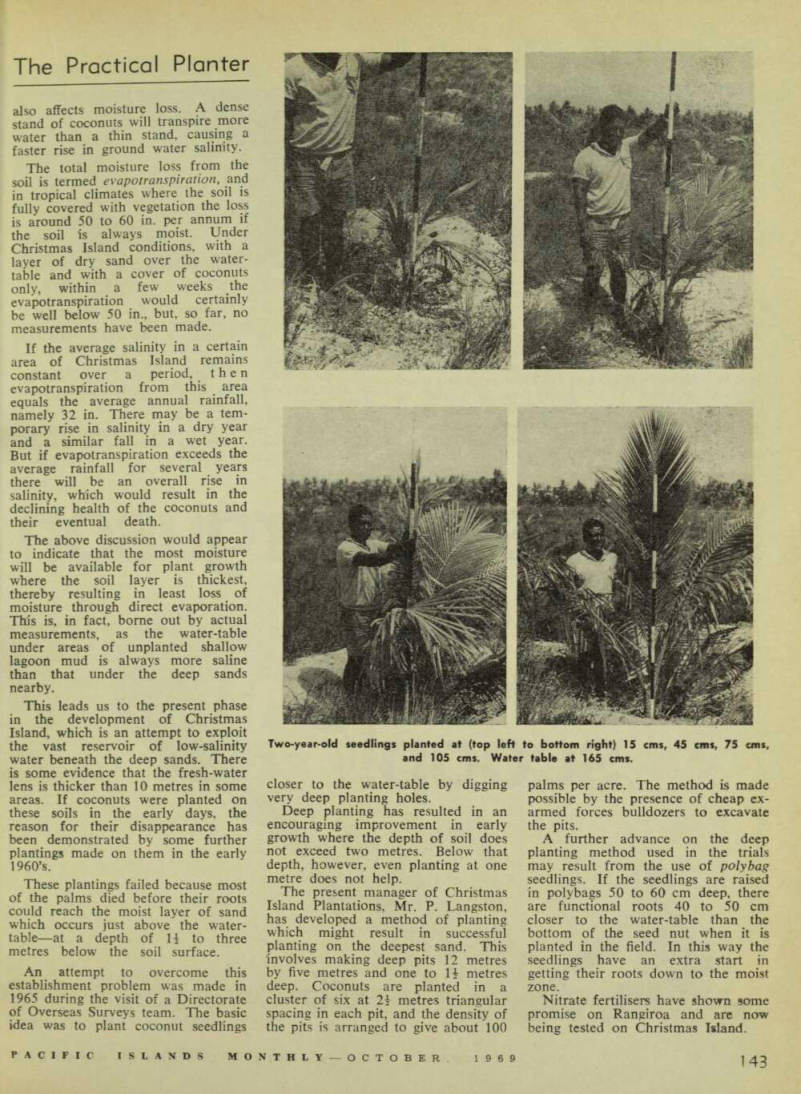 149
149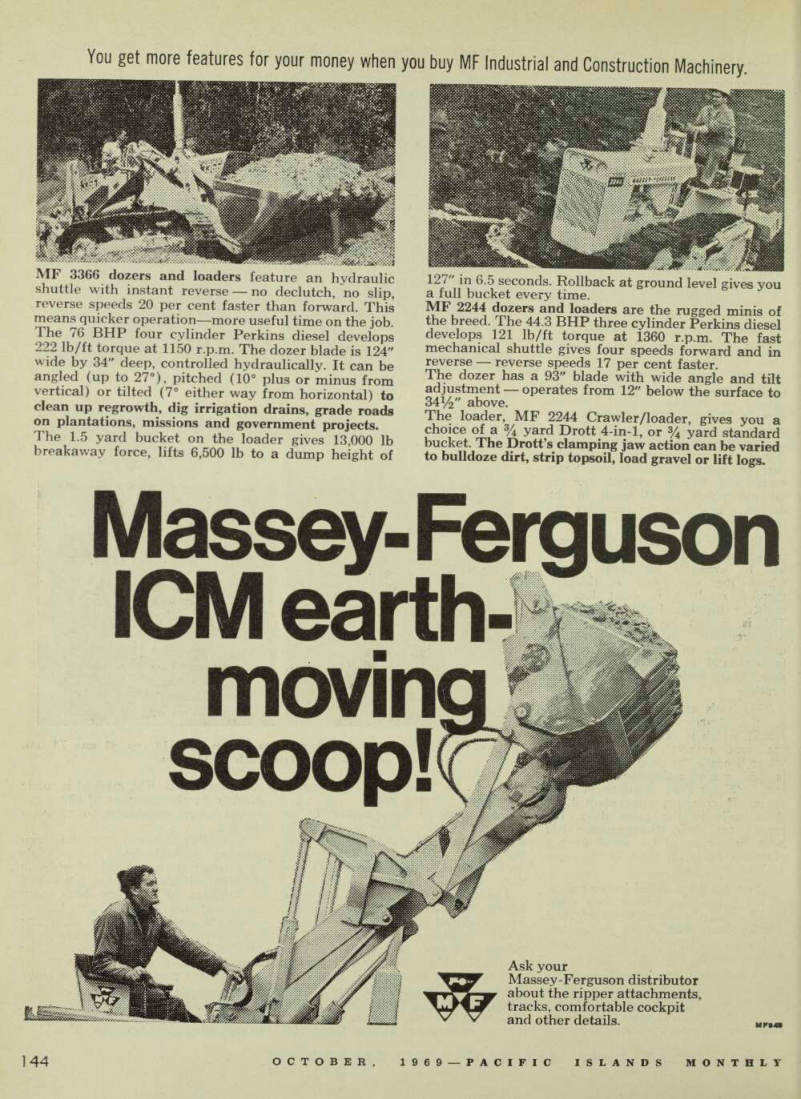 150
150 151
151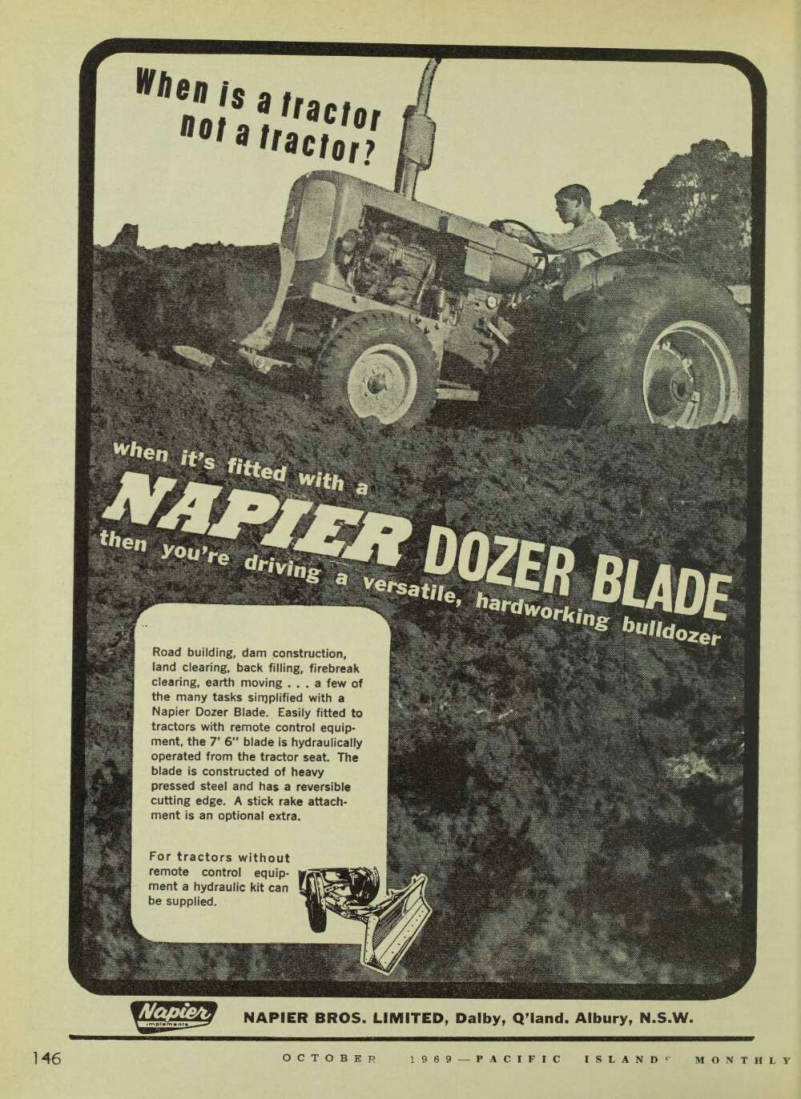 152
152 153
153 154
154 155
155 156
156 157
157 158
158 159
159 160
160 161
161 162
162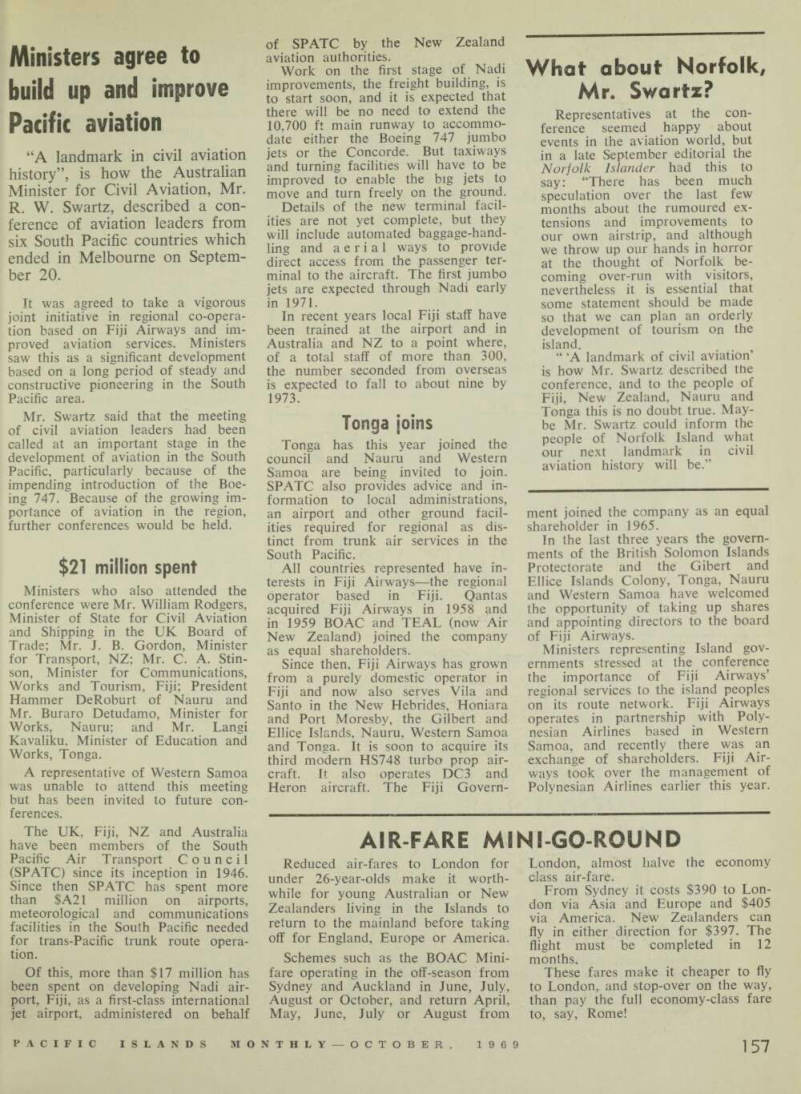 163
163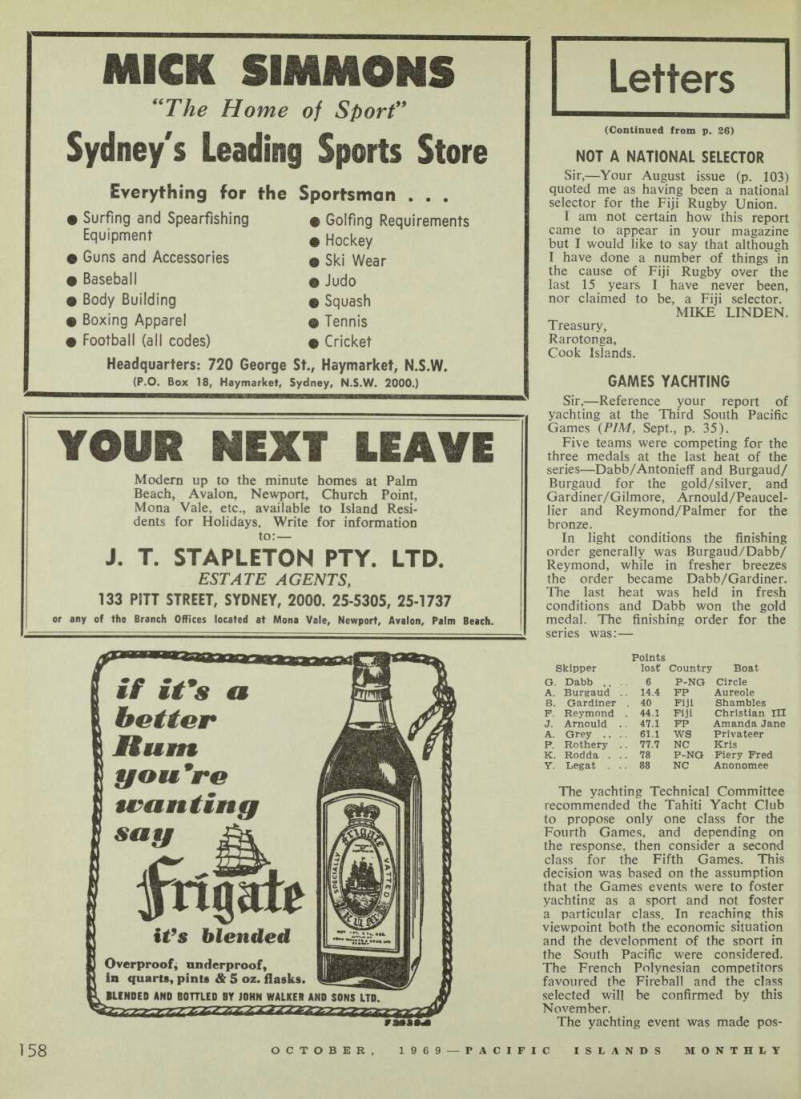 164
164 165
165 166
166 167
167 168
168