Pacific
Islands Monthly
Registered at G.P.0., Sydney, for transmission by post as a newspaper.
September, 1969
News Magazine Of The South Pacific
• AUSTRALIA. 40c. • NEW ZEALAND, 45c. • U.S. PACIFIC TERRITORIES. 70c. • FRENCH PACIFIC ISLANDS, 65 FRCS. CFP. • P.-N.C., FIJI AND ALL OTHER DAnrir rmoiTADirr ■ aaai AimnpuAv
Our Cover
Port Moresby girls like these, in dancing dress like this, were a feature of the entertainments staged with the Third South Pacific Games in Port Moresby in August. Official Games photo grapher Chin H. Meen, a long-time and valued contri butor of ours, took the picture. You'll find a full re port on the Games inside.
Advertisements & other items, p. 2 (1 item)
This is where we go I
wewAk. f"
i **4\ MANUS IS. X
: i "J\ / !' :
D o./AirMADANG*»..
.-sM I
Wfyfi 1 . S* PORT MORESBY
■' s■s£*■'] , Wt, Main routes only
/ RABAUL
v.. s M V"S
HONIARA*
This is where we go I
TVl>a
This is how we go!
In air-conditioned comfort with smooth running twin prop-jet reliability. From Port Moresby to Lae. Madang, Rabaul, Goroka, Mt. Hagen, plus around 40 other centres. With interlocking flights planned to give you the best connections throughout Papua and New Guinea, and to Australia, on TAA’s “Bird of Paradise” T-Jet Services.
Added up. that means more comfort and more flights to more places than any other airline in the Territory.
Is it any wonder more people fly TAA?
Contact your Travel Agent or TAA: Port Moresby 2101. Lae 2311. Madang 2478.
Rabaul 2567. Goroka 8. Mt. Hagen 4 or 301. Wewak 103.
m W the friendly friendly way
319 1643/69
In This Issue
General
Games round-up 25-36, 57-60 Tribute to Sir James Burns 55 Queen of the South Pacific 101 Happiness is a cruise 106 VCIO attracts pasengers 11l World demand for pearls 123
American Samoa
Dominated Games boxing 31 Self-government a step closer 53
Cook Islands
Illegal pubs hit the skids 43 Entering the tuna fishing business 113 Fruit battle 125 Texas leaves its stamp 160
Fiji
Land more mini than maxi 1 Rugby opposition killed at Games 29 Games boxing 31 Sugarcane arbitration 42 "Fiji Times" centenary 45 Paradise is Wainaloka 61 Starfish threat to food supply 63 Accommodation shortage 110 Balance of trade 124 Drought hits sugarcane 124 Beetle fight to cost more 126 NZ exports doubled 159 Striking teachers sacked 159
French Polynesia
Rotui climbs his peak iii 1971 Games in Papeete 27
French strong in basketball 35 Devaluation 121
Gilbert And Ellice Islands
Britain's "go slow" on education 40 Self-government for N. Gilberts 40 "Moanaraoi' taking passengers 116
Guam
Guam girls draw the crowds 33
Nauru
Hotel stands silent ... 127 New police chief 136 Water investigation 161 700 guests at wedding 161
New Caledonia
Games swimming star 30 Top in tennis 31 French dominate volleyball 32 Football stays Latin ... 34 Women's table tennis medal 34 Paris-Noumea air marathon 40 Devaluation 121 Tontouta upgraded 161 TV extension 161
New Hebrides
Will there be a new judge? 87 Picture series 102 Tourists from US encouraged 105 No devaluation 121
Norfolk Island
Trust fund gives century of trouble 91
Papua-New Guinea
Duke, Duchess see Goroka warriors iii Playing with Pidgin 1 Weightlifting win 32 Golf win 35 Yachting popular 35 Tax increases. Budget session 37 Protest on club membership 38 Challenge to Privileges Committee 39 "To the Point" Column 65 Language survey 71 What's your name? 75 Yamamoto's ghost 85 Book on Pidgin 95 Hotel Kieta changes 111 Kieta wharf rammed 115 Copra report 121 Soft drink factories 125 Tea potential 141 Don't restrict councils 157 Giant snail invasion 160 Tyre, battery factory 161 Meningitis cases 161
Solomon Islands
Shell money in museum 98 Authentic story of Coastwatchers 97 Small ships on reefs 115
Tonga
Treasure hunt ii All sorts want to invest 121
Western Samoa
Peace Corps first farewells iii Polynesian Airways in trouble 1 Samoan Bible 1 Boxing wins 31 Asau channel 114
West Irian
Only top Indonesians care 41
DEPARTMENTS: Topicalities, ii; Up Front with the Editor, 3; To the Point with Percy Chatterton, 65; From the Islands Press, 76; Magazine Section, 85; Yester day, 93; Book Reviews, 95; People, 100; Shipping, 113; Cruising Yachts, 118; Business and Development, 121; Produce Prices, 129; Shipping, Airways Schedules, 131; Practical Planter, 141; Deaths of Islands People, 157;
Tropicalities
They're All
After Tongan
Treasure
Negotiations should be finalised in the near future to allow prospecting for oil (black gold) to begin on Tonga. But now Tongans are startled into thoughts of real gold. The story of an alleged multi-million treasure trove of gold and silver at the bottom of the sea in Tongan waters was splashed across the headlines of papers in NZ, Australia and Fiji in August.
THREE New Zealanders, who estab lished a big game fishing enter prise in Nukualofa last year, heard about the wreck of the English priva teer Port au Prince and began to investigate.
After plundering galleons and town in Spanish South America, the 500-ton privateer arrived in Ha’apai for repairs in 1806. Here Finau, the Paramount Chief, who had recently overthrown the Northern Group, Vavau, saw the chance to conquer the remaining Southern Group, Ton gatapu, with the help of cannon and guns off the privateer.
He lulled the sailors with overtures of friendship and though his plans misfired, he managed to capture the ship and slaughter most of the crew.
After the vessel had been stripped of cannon and other loot she was broken up and set on fire.
Finau later adopted one of the survivors, young Will Mariner, who years later returned to London and produced the now famous and valu able book Mariner's Tonga, in which the whole incident is recounted.
"Bullion galore"
The New Zealanders reported last November they searched the area in a glass bottomed boat and found the wreck off shore of the island of Ha’ano in February this year. This is contested by Tongan Chronicle editor, Jack Riechelmann, who in 1965 with an editor of National Geographic, Luis Marden, dived at the Ha’ano wreck but found no sign of treasure.
Because of the brass fastenings of this wreck, Luis Marden said the ship must have been built in the middle 1800’s.
But the New Zealanders claim to have found at least 10, possibly 30 tons of bullion, coins and priceless artifacts which, they allege, is in a strong box the size of a room and in two smaller chests of steel or iron.
Leader of the party, Mr. C. Prast, has claimed that he photographed this
fantastic find, lifted it from the wreck and hid it elsewhere on the seabed pending negotiations with the Tongan Government for a share in the booty.
Tonga is sceptical of the whole story. Her fishermen and divers in the area said these activities could not have been carried out without their knowledge and are emphatic that there is no truth in the allega tions. A Tongan representative of the big game fishing venture said: “It is all bluff.”
When newsmen approached Prince Tu’ipelehake on his arrival in Auck land, Tonga’s Premier discounted it as a “fish story” and added, “I would like to see this treasure with my own eyes to really believe it, and if there is treasure, what belongs to Tonga, belongs to Tonga.” This has since been substantiated by one of Auck land’s Q.C.’s.
The Deputy Premier said in Nuku alofa a few days later that certain persons who had been granted entry permits into Tonga were subsequently reported to be carrying out unauthor ised activities and their permits were revoked by government.
He added that the government had been aware for some time of the pos sibility of existing treasure in Tongan waters, and on the islands within the group and has, as far back as 1965, been looking into the possibility of conducting an organised search.
In mid-August a diving team under Riechelmann began an official under water search of the Ha’ano area, so the Tongan Government was obviously taking no chances.
The issue was further complicated at the end of August when two Tongan divers claimed to police they had gone down with the New
Zealanders and helped recover strong boxes in the wreck containing gold bars.
Port au Prince was sunk 300 ft off-shore in the northern part of Lifuka (see map). The Tongans had stripped the iron from the upper works and knocked the hoops off casks in the hold—iron being a most valuable commodity to them.
But they did not recognise the value of the treasure. When the ship went down most of the money stayed on board although Will Mariner managed to have 40 or 50 dollars from the ship in his pocket when he finally left Tonga.
A passage from his famous book makes it fairly certain that there was treasure on board. “Finau expressed surprise that dollars were money, say ing he had always taken them to be pa’anga’ (a kind of bean which the Tongans used in one of their games).
“He was therefore exceedingly sorry that he had not taken all the dollars out of the Port au Prince before he had ordered her to be burnt. ‘I had always thought’, he said, ‘that your ship belonged to some poor fellow, perhaps to King George’s cook, for Captain Cook’s ship, which belonged to the King, had plenty of beads, axes and looking glasses on board, while yours had nothing but iron hoops, oil skins and 12,000 pa’anga as I thought.
“ ‘But if every one of these was money, your ship must have belonged to a very great chief indeed’.”
Only four years ago the Governor of Haapa'i was quoted in PIM as say ing that a diver could probably locate the wreck in a few hours as the water where the Port au Prince went down was only a few fathoms deep.
Anchor shows where the "Port au Prince" went down.
Hard row to hoe for
W. Samoa's
volunteers
The first lot of Peace Corps volunteers to complete their two-year terms in Western Samoa left for home in August. A few, particularly in the Public Works Department, signed on for up to a year or more but most seemed relieved that their stint was over.
Two more batches of volunteers, mainly for education, are arriving in October and January to keep the total of Peace Corps personnel in Samoa at around 100—down from a peak of 160.
Obviously, 100 young highly moti vated volunteers must achieve some thing in two years but to try and pinpoint tangible gains, apart from hundreds of water-sealed toilets around Upolu and Savaii, is very difficult reports R. F. Rankin from Apia.
Initial enthusiasm for the scheme has worn off mainly for two reasons —Samoa’s greatest need in overseas personnel is for experts and most of these volunteers just out of college are far from that.
Secondly, by being forced to live at the village level of income (SWSSO per month) the volunteers have had to watch every penny. This has in evitably led to a reputation of being stingy, and in Samoa there is no crime much lower than stinginess.
Many of the volunteers have worked hard and quietly under con ditions of a monotonous diet and isolation that would test the highest motives. Others who would have liked to work hard have been thwarted by vagueness in the gov ernment programmes they were sup posed to be working under.
The experience of the first two years of the programme in Samoa will no doubt increase the effective ness over the next two years but un til the country can get volunteers who are expert in their various fields, the whole scheme will remain noth ing much more than an experiment in human relationships.
And there is some suspicion in Samoa, however unjustified it may be, that in this two-way process the volunteers are getting the best of the bargain.
Rotui, the man,
conquers his 'peak'
When Mr. and Mrs. Medford Kellum, an American couple, settled on the island of Moorea in 1924, they built their home (prefabricated in California) at the foot of Mt. Rotui,
a majestic mass of black basalt that rises to a height of 2,949 ft between Papetoai and Paopao Bays.
Six years later, when a son was born to the Kellums, they gave him the name Rotui, after their moun tainous neighbour.
For the first 10 years of his life, young Rotui lived in the shadow of Mt. Rotui, receiving lessons, when he reached school age, from his mother.
Then he went off to attend school in Honolulu and the mainland United States, and thenceforth he and his namesake mountain did not see each other very often.
In fact, after he was 18, Rotui Kellum did not again visit Moorea until he was 36. However, in recent times his visits have been more fre quent. He was there in 1967 and again in July—on leave from his job in Phoenix, Arizona, where he is a lieutenant-colonel in the United States Air Force.
On his latest visit, Rotui Kellum achieved a lifelong ambition. He climbed to the top of the mountain whose name he has borne for 39 years.
Starting out at 6 a.m. with his 12year-old son William, he tackled the mountain on its northern face and reached the top in about seven hours.
The downward trip took three hours.
A feature of the climb was the narrowness of some of the razorback ridges that had to be negotiated.
Sometimes they were only 2i to 3 ft wide.
According to Mr. Medford Kellum, his son and grandson are only the fourth party of climbers to ascend Mt. Rotui in the past 45 years.
Duke and Duchess see
12,000 Goroka
warriors
The South Pacific Games royal tour of New Guinea by the Duke and Duchess of Kent went off like clock work and with only one embarrass ment—a welcome that failed to get off the ground near Rabaul, writes Luke Sela who joined the tour.
Resplendent in ceremonial dress uniform, the Duke opened the South Pacific Games in Port Moresby on August 13 and then, to do the right thing by the rest of New Guinea, flew off to Rabaul and Goroka.
Security men and government officers at Rabaul were a little nervous and quite frankly, were won dering whether some of the Tolai men leading the opposition against the new Gazelle Multiracial Council, might order the Duke’s visit boycotted as another form of protest.
But their worries in Rabaul itself were groundless—thousands were out to see the royalty, with little girls strewing the road with flowers. One petition—if that’s what it was—was presented to the entourage: thrown from among the crowd. It landed in a police vehicle and when the authori ties opened it nervously, they couldn’t even read the writing.
At Vunakanau near Rabaul, the Duke and Duchess visited the Roman Catholic Mission’s teacher college— and it was here that the embarrass ment occurred. The royal couple was to have been welcomed by a tra ditional Tolai ceremonial, but none of those in the ceremony turned up.
For several embarrassing minutes, neither the royal guests or the hosts knew what was happening. They sat expectantly, then began fidgeting and finally gave up. The Duke had to quickly amend his speech and delete all reference to being “thankful for this dancing we have enjoyed”, etc.
Then the royal couple inspected the teacher college dormitories and other facilities—and they were due to inspect the kitchen and the college cook, a man from Bougainville. But the cook was missing and the kitchen stayed locked tight.
Unperturbed, the Duke shot some movie film and then it was off to the Residency for a reception, sleep and off again first thing next day to Goroka in the mainland New Guinea Highlands.
Only a handful of students and teachers were on hand for the royal inspection of the territory’s biggest teachers’ college at Goroka —miserably drizzling rain kept most away.
It was a different matter at the Goroka Showground—l2,ooo magnifi
Mount Rotui climbs to the right.
cently feathered and painted warriors and their women came to see the im portant couple from faraway Britain, the Duke this time in mufti —blue suit and tan shoes.
A convoy of government vehicles brought the dancers in from far afield. More than 500 sang and danced for the royal couple, making the Highlands a memorable spectacle indeed.
To take home, a bow and a hand ful of arrows were given to the Duke; and for the petite Duchess, a woven mat. From the moment the dancing began, formality went by the wayside —the Duke and Duchess wandered among the people, giving the security men a new headache.
The Duke has had several trips to Africa and has seen some very fine tribal dancing, but the African danc ing must have been exceptional if it was better than that at Goroka. It was a grand finale to a short, but colourful tour —with some interesting sidelights.
Polynesian Airlines
in trouble again
Polynesian Airlines was in trouble again in mid-August with its ill starred DC4. A Mr. Paul D. Martin representing the Charlotte Aircraft Corporation of North Carolina, from whom Polynesian is leasing the plane, chained the wheels and removed some parts not long after the plane landed at Tafuna airport, in Ame rican Samoa, on a flight from Faleolo.
The Charlotte Aircraft Corpora tion has filed repossession papers for the plane, claiming that Poly nesian has not paid its rent.
Polynesian on the other hand claims that work on the plane prior to taking it over had not been done
according to the contract and has filed suit against the corporation.
They say the rent has been paid into a trust fund pending the outcome of the litigation—a fact which has been denied by Charlotte in a full page advertisement in The Samoa Times.
Polynesian’s case was scheduled to be heard in Los Angeles in late August. It was agreed after the chaining episode that until the case is heard the plane was to remain untouched by either party at Tafuna.
The chaining incident sparked off a strong protesting cable from the Government of Western Samoa (now a small shareholder in Polynesian) to the newly-arrived Governor
Haydon of American Samoa, but this brought forth only a promise from Haydon that he would make sure the issue would be expedited if criminal charges were involved.
To the West Samoan public, fed up to the teeth with the unreliable service of Polynesian, its delays and antiquated aircraft, and resentful at the government turning down last year an offer of a twice daily service between American and Western Samoa in modern aircraft by Pan American World Airways, the incident was just another in the long series of misadventures they have come to expect in the country’s air services.
His land is more
mini than maxi
Our story in August about “Mini plantations for Maxi-dollars”—has Fiji real estate man Jim Mair a little anxious.
He asks us to point out the mis print which states that his company, Real Estate of Fiji Ltd., has 10 to 50-acre plantations ranging in price from $15,000. The prices, he says, range in fact from as low as $5,000, and go as high as $20,000.
“I do have plantations on the books at $15,000 —but that’s not the lowest price,” he explains. “I’ll be blackballed for charging outlandish prices if the situation isn’t clarified!”
Full churches and thousands of radio listeners in American and Western Samoa listened to the pre sentation and dedi cation of the new Samoan Bible in Apia on August 3. The Bibles, printed by the British and Foreign Bible Society, have sold fast — 3,000 of them went on the first day alone. The first Bible in Samoan was trans lated, printed and bound in four sepa rate volumes in 1855.
Revised in 1872 and again in 1884, the just • published re vision retains the style and dignity of the mid-19th century translation. At right, a Samoan studies her copy.
Advertisements & other items, pp. 6-8 (1 item)
Qrnott's/“ S Biscuits
% is U It %
Lunch size, snack size
SAO biscuits
are the right size!
Crisp, fresh Arnott’s Sao biscuits ... right size to satisfy, right size for snack foods, too! Cheese for lunch? A big slice fits just right on Sao. So does a slice of ham or salami.
Prefer jam or spread? Or how about tomato? Simply serve with Sao—the right-size biscuit that makes all the crisp difference to lunches at home and at school or outof-doors. The triple-wrapped pack keens the biscuits crisp and fresh.
Qrnott's/“ S Biscuits
There is no Substitute for Quality P 594
PLAYING MERIHELL WITH PIDGIN
The New Guinea Administrator, Mr. Hay, believes the time has come for radical changes in the Pidgin mode of address.
In memoranda to government departments, Mr. Hay concedes that “Pidgin is a dynamic language ... but ... it’s possible that some of the more educated Papuans and New Guineans are now offended by ... . some of the Pidgin words.” The New Guinea News Service, digging around among P-NG government departments, reports these words, and Mr. Hay’s “instructions” for alternatives: Man instead of “Kanaka”.
Gel or woman instead of “meri”.
Domestik instead of “manki masta”.
Man or Mister instead of “masta” (depending on context of sentence); man instead of “boy” (except to describe what, by age, is obviously a boy.) Government radio stations and field officers are expected to use the new terms assiduously.
The pump you can
depend on
for Efficiency, Economy and Trouble-Free Service
* Only ONE
moving part.
No valves or
gears to cause
□ WITH its powerful self-priming suction lift of up to 25 ft., the Mono Pump is, without doubt, the world’s simplest and most efficient pumping unit.
Mono has only one moving part, yet will pump liquids of all viscosity from domestic water to thick concentrations of sludge, and solids in suspension, with non-stop ease.
The Mono pump is self-lubricating, and will handle any proportion of air-toliquid without noise, wear or loss of prime.
wear, noise or
service needs.
Whatever your problem, it will definitely pay you to investigate the many advantages of these low-cost, highly efficient Mono units. Phone or write for literature and full particulars.
These are included in the Mono Range — 165 to 32,000 G.P.H.
"M" SERIES 165 to 860 g.p.h.
Motorised or for independent drive.
MONO
CD6O9
SERIES
For Sump Pumping, Liquid Manure Disposal etc. 1,000 g.p.h. and over. Motorised or bareshaft. 165
"CC" SERIES
1,000 g.p.h., close coupled 'D'' SERIES 65 to 11,600 g.p.h.
Motorised or bareshaft.
MONO Automatic
WATER PRESSURE
SYSTEMS
Built to last a lifetime. Maintain constant pressure (30 to 100 p.s.i.) at every tap under all conditions. Capacities from 165 to 1,000 g.p.h. ex-stock. Up to 11,600 g.p.h. to order.
Illustrated
MONO S'R’ES "CC"
165 to 1000 g.p.h. 50 to 100 p.s.i. craao Literature and Details free. Phone or write; —
MONO PUMPS (Aust.) PTY. LTD.
il,o ££j
[pumps I Head Office & Works: LOWER DANDENONG ROAD, MORDIALLOC, VICTORIA.
NEW SOUTH WALES BRANCH: ETHELL ROAD, KIRAWEE, N.S.W.
Branches in All States: Please consult your Telephone Directory .
MP443
Pacific Islands
Monthly
Established 1930: 39th Year of Publication.
Owned And Published By
Pacific Publications (Aust.) Pty. Ltd.,
29 Alberta St., Sydney, N.S.W.. 2000
Postal Address: G.P.O. BOX 3408, SYDNEY,
N.S.W., 2001.
Telegraphic Address: PACPUB, Sydney.
Telephones: 61-9197, 61-7101, 61-4369.
Chief Executives: Managing Director: R. W. Robson.
Executive Director/Publisher: Judy Tudor.
Executive Director/Business Manager: Selwyn Hughes.
Executive Director/Chief Editor: Stuart Inder.
Pacific Islands Monthly
Editor: Stuart Inder.
Advertising Manager: W. A. Gasnier.
Branch Offices
Melbourne: Newspaper House, 247 Collins St..
Victoria, 3000. Tel.: 63-7053.
Fiji; Pacific Publications (Fiji) Ltd., Fiji Times Building, 20 Gordon Street, Suva. Tel.: 25601.
Fiji Times Office, Vidilo Street, LAUTOKA.
Tel.: 60-422.
Papua-New Guinea: Pacific Publications (N.G.) Pty. Ltd, Representatives: PORT MORESBY, P.O Box 16; LAE, P.O. Box 227; RABAUL, Mr, Steve Simpson, P.O. Box 154 (Tel.: 2547).
Representatives
Queensland: Advertising—Beale Media Services, 232 St. Paul's Terrace, Brisbane, 4006. Tel.: 51-5827.
New Zealand; General.—J. D. Whitcombe, C.P.O.
Box 2229, Queen Street, Auckland. Tel.: 456056.
Advertising.—John Bayldon, P.O. Box 366, Auckland. Tel.: 31569.
United States: Mrs. A. L. Craib, 782 Neilson St., Berkeley, California, 94707. Tel.: 5273503.
United Kingdom: S. R. Warman, Park House, 22 Park Street, Croydon, CR9 3NP. Tel.: 01-6884177.
H. A. Mackenzie, 4A Bloomsbury Square, London, W.C.I. Tel.: Holborn 3779.
Japan: Advertising—Universal Media Corpora tion, C.P.O. Box 46, Tokyo. Tel.: 666-3036.
Agents
All main trading firms and stores in the Pacific Islands.
Pacific Publications Pty. Ltd. is the Australian agent for THE FIJI TIMES.
Subscription Rates:
"Pacific Islands Monthly" is air-freighted to all subscribers and agents in the South Pacific; copies to other areas go by surface mail.
Australia (incl. Lord Howe Is., and Thursday Is.): $4.50 Aust.; Papua-New Guinea, Norfolk Is., Nauru, 8.5.1., G. & E. Group, Tonga and New Hebrides; $4.00 Aust.; New Zealand: $5.25 NZ; Cook Is., Niue and Western Samoa: $4.00 (local currency); Fiji $4.00 (local currency); American Samoa and U.S. Pacific Territories: $B.OO (local currency); French Pacific Territories —New Caledonia, Tahiti, etc.: 750 French Pacific francs; United States of America: $9.00 U.S.; United Kingdom and elsewhere: £2/15/- Stg.
Airmail postage to USA, UK and elsewhere Is additional.
Copyright ©, 1969, Pacific Publications (Aust.) Pty. Ltd.
Up Front
with the Editor
As I warned last month, this issue is spilling over with sporting news. While I won’t apologise for that, the pressure on space has squeezed out some items that might otherwise have expected a run on the inside pages, and in the circumstances I am herewith mount ing a rescue operation.
You won’t need me to apologise for that, either, when you see what I’m offering.
First, did Prime Minister Fiame Mataafa of Western Samoa in August take a poke at a local bus driver and a visiting German tourist, or did he not? I don’t know. But just about all of Western Samoa seems to think it knows just what did happen on a recent Sunday in the Prime Min ister’s home village, although there has been no local publicity.
We’ve got two versions, both guaranteed from the horse’s mouth, and both contradictory. We sent one of them to the Prime Minister for his comment, but none was forthcoming at the time we went to the printers.
Not that it matters. If most Samoans were, as it has been claimed, “shocked at this uncharacteristic dis play of Samoan hospitality”, then they have lost their sense of the ridiculous.
Prime Ministers, I think, are as en titled as the rest of us to take active umbrage at having their Sabbath dis turbed by busloads of tourists with cameras. And if they choose to go about it by inviting the offenders to put up their dukes, then surely it adds to the local colour!
Oil in West Samoa?
THERE might well be some real news come out of West Samoa soon. What appears to be oil has been discovered seeping out of swamp banks at Fugalei, about a half-mile out of Apia. The treacly-like sub stance with an oily smell started seep ing from the banks three months ago, according to Afoa Wilson, who owns 29 acres of the swampland.
Wilson told my friend Bob Rankin at the end of August that the sub stance was tested by a visiting Ger man engineer, who said it was oil and to keep it quiet until he returned from Germany.
Oil seepages don’t necessarily mean commercial oil. But Samoa is a neighbour of Tonga’s, where enough seepages have been found recently to interest a whole covy of hard headed international oilmen, who are now negotiating for survey rights.
Maybe coconut palms will yet give way to oil derricks in central Poly nesia.
Cheaper airfares?
AN interview I had the other day with the president of American Airlines, George Spater, gave me a more hopeful, perhaps even cheerful, insight into South Pacific aviation prospects. By which I mean the prospects of us passengers getting cheaper Pacific airfares.
I’m weary of the poor-mouth approach we’ve all been getting from the trans-Pacifio operators in recent years. Passenger-loadings are down, costs are up, there’s no money in the airline business, etc., etc. They promise to relieve us with Jumbos and then warn us that fares will go up, not down. And they dissolve into tears at the very mention of another operator being allowed to cross the Pacific.
George Spater’s American Airlines aren’t operating on the Pacific yet, but it looks as if they will be by January. And Spater says they will need a minimum daily frequency, and probably go to Australia via America Samoa and Fiji.
But. he adds, God bless him; “We
spend s2om. a year on advertising, our strength is in the eastern and mid western areas of the US, and we will sell the South Pacific to that area.
We see no point in sharing existing Pacific traffic; we’ll generate our own.”
Mr. Spater is confident that in a few years Americans will be island hopping in the South Pacific as they do in the Caribbean. He says they will buy real estate and commute.
He says the South Pacific is one of the few areas in the world where fewer Americans are travelling than other nationalities, and American Air lines plans to double the existing US flow in three or four years. They will also extend their hotel interests in the area and are seriously examin ing pospects in Fiji.
He thinks there are more than enough passengers for everyone. I’m all for American Airlines and their breath of fresh air.
P NG flights
WHICH reminds me, recent changes in the registration of Ansett’s in New Guinea, plus Sir Reginald Ansett’s announcement that Ansett Airlines of Papua and New Guinea (registered in Port Moresby), would apply for rights to fly between New Guinea and Guam, have started some in-fighting in the territory.
Ansett of P-NG is to have some local participation, and apparently hopes it might become the national territory airline when the time comes.
But this is a role that the pioneering, locally-backed Papuan Airlines sees itself in, and Patair is currently grind ing its teeth over the intrusion. —Stuart Inder
Advertisements & other items, pp. 10-32 (2 items)
Your Complexion
Advertisement—
Add Beauty to
T> am per your skin with loving care now, and you inevitably build towards its future beauty. Add some of these complexion-care hints to your daily cleanse-tone-and-nourish schedule and the soft bloom of youth will come to the skin surface with astonishing quickness and spontaneity.
Create a Dewy, Youthful Skin Bloom
your complexion with the nourishing and moisturizing elements it needs every day for optimum health and beauty. Stroke a film of tropical moist oil over your skin and you stimulate nature’s way of replenishing sub-surface cells with isotonically balanced oil and moisture and help your skin to bloom with new vitality, recapture its youthful elasticity and radiant splendour.
This unique fluid beautifier is hygroscopic in character, continually attracting and drawing in moisture from the atmosphere j to discourage wrinkle-dryness and tiny lines. Used as an invisible base for makeup, oil of Ulan will encourage your complexion to retain its flower-like loveliness and flawless texture all day long.
Beauty for the Delicate Skin
TTere is a hint to give the skin milky beauty or to soothe a skin which chaps and reddens after exposure to the weather. Your skin will rejoice with a rich reward of radiant beauty by combining two tablespoons of warm fresh milk with a tablespoon of oil of Ulan. Use several pieces of cottonwool and gently smooth the liquid over your skin until you feel it is clear, clean and pure. Gently stroke the balance of the liquid over your skin so the moist oil of Ulan sinks into the skin cells to nourish and soothe the deeper tissue, preventing wrinkle-dryness forming on the skin’s surface. This will induce a condition of velvety smoothness to your complexion.
H UE IS
SAMOA.TONGA
FIJI
>m
THROUGHOUT THE PACIFIC
PHILP
(SOUTH SEAT COm^^H
REGISTERED OFFICE: SUVA, FIJI,
TELEPHONE NO: 22661
TELEX NO; FJ1127
Code Address; "BURNSOUTH' *i - i *
SHIPPING AGENCIES
The New Zealand Shipping Co. Ltd.
Shaw Savill & Albion Co. Ltd.
Port Line Ltd.
Bank Line Ltd.
General Steamship Corporation Ltd.
Blue Star Line Compagnie des Messageries Maritimes Royal Interocean Lines Daiwa Navigation Company Ltd Sitmar Line Flotta Lauro (Lauro Lines) Australasia Pty. Ltd, Tonga Shipping Agency.
EXCLUSIVE
DISTRIBUTORSHIPS
INCLUDE
Akai Taperecorders Dunlop Products Hitachi Electronics Holden Motor Vehicles Rolex Watches Revlon Cosmetics Pentax Cameras Ferguson Tractors Olympic Tyres Penfold Wines
AGENTS FOR:
Queensland Insurance Co. Ltd.
Burns Philp Trustee Co. Ltd.
Shell Company (P. 1.) Ltd.
Bureau Veritas
ASSOCIATED COMPANIES
Burns Philp (New Hebrides) Ltd.
Automotive Supplies Co. Ltd.
Corrie & Co. Ltd.
Wrought Iron and Steel Construction Co. Ltd.
Bish Ltd.
SPECIALISED SERVICES
Expert advice on Shipping; Forwarding; Customs formalities; Insurance.
COMPLETE TRAVEL
SERVICE
accredited agents for the
INTERNATIONAL AIR
TRANSPORT ASSOCIATION
OVERSEAS AGENTS: SYDNEY • LONDON • SAN FRANCISCO
Space Problems?
5S*
Everybody has them...
Brownbuilt’s free advisory service, headed by experienced storage engineers, will inspect your storage problem area...plan the type of installation to overcome it...and recommend the type of Brownbuilt shelving or racking to suit your specific needs. And what a range to choose from fixed or adjustable shelving for very light to very heavy loads; fixed or adjustable pallet and storage racking; the Compactus mobile storage system that can double your storage in the same area; in fact, a type and size for every storage need. And no waste space.
Brownbuilt equipment is specially protected against rust. If space is your problem, see the Brownbuilt shelving at your local distributor, or call in their advisory service now.
Brownbuilt solves them!
Brownbuilt
STEEL EQUIPMENT DIVISION
Resident Representative for TPNG John Dwyer, Saraga Street. Six Mile, Port Moresby.
Phone: 53144.
Distributed by:
TERRITORY OF PAPUA & NEW GUINEA
Lae Plumbing Ltd., Lae. Phone: 2803.
Rabaul Metal Industries Pty. Ltd., Rabaul. Phone: 2062
FIJI
Armstrong & Springhall (Pacific Islands) Limited, Suva. Phone: 24071-3.
Reddy Construction Company Ltd., G.P.O. Box Suva 80.
Phone. 25643, and at Samabula and Lautoka.
NEW CALEDONIA
Ideal Meuble Metallique, Noumea. Phone: 37-82 884083.F.P.
THE EXPERTS
CHOICE^m
When accuracy , reliability , hard hitting power and all round peak performance really count the experts choose I C I Sporting Ammunition. And there's an IC I cartridge for every shooter—l C I Shotgun cartridges for dense even patterns and economy; I C I Rimfires for hard hitting accuracy and reliability; I C I Centrefires for heavier game; and slugs and pellets for lots of fun at low cost. [ For performance and reliability under tough field conditions load up with the expert's choice
HIGH SP££D
•22 pMif im ««**«■> muowmmr 11 amttu c»sr«i*«« 11 ' * supmomc
pafl
SPORTING AMMUNITION ftmi
World
quality
m. $ 1 I* Only the world’s finest Virginia tobaccos are blended to produce ...
PLAYER'S
GOLD
LEAF
one of the great cigarettes
0671-5/67
f: i
You take the
pictures...we'll
do the rest
When you put a lot into taking pictures you want the best prints possible. Leave your films black-and-white or color in your Kodak dealer’s hands. We can supply you with excellent quality prints, quicklyand reliably. All you need do is specify “Prints made by Kodak”. If you want extra prints or enlargements, prints made from your color slides, or duplicate slides we’ll do those too. And, should you run short of film, remember there are Kodak dealers throughout the Islands.
KODAK (Australasia) PTY. LTD. 379-381 George Street, Sydney
New chunky granules
capture all the
natural flavour
of choice
coffee beans
You can see the difference. New Nescafe takes all the flavour of those famous 43 beans and turns them into instant coffee granules big chunky granules that melt instantly in your cup to give you the biggest coffee flavour the coffiest coffee you've ever tasted.
Tender tasty Clix, the Brockhoff golden cracker. Eat them like peanuts or crisps. They’re delicious with dips. And so friendly with so many foods, with fruit, cheese, soup, savouries and sweets nothing could be tastier than Clix the tender, golden crackers that taste as if they are already buttered. a* &
There’s value, variety and quality in
BROCKHOFF BISCUITS
& 7 _3250
m
SOME OF THE FIRMS
WE REPRESENT ARE:
A. W. Allens (Confectionery) Sunshine Biscuits Sunrise (Confectionery) Flamenco (Instant Coffee) Cremota (Quaker Oats, Jets Pet Foods) Merchants (Canned Soft Drinks) Lunchtime (Honey) South Pacific Canneries (Scallops, Aba lone) Safcol (Canned Tuna, Salmon) Hancock's (Spaghetti, Cereals) Melbourne Canning (Jams, Bleach) Water Wheel (Flour, Sharps, Wheat) General Food Corporation (Twisties, TwirMes) Edward Zorn (Margarine, Cooking Fats) Robert Timms (New Guinea Gold Coffees, Teas) Rodd (Cutlery) Palm (Mattresses) Esteel (Cookware) Vendolux (Cafe Bars) Mitchell's (Abrasives) Regent (Swiss Watches) Gainsborough (Furniture) Tamco (Melanie Crockery, Nylon Hardware) Elm a c o (Plastic Household Goods, Electrical Fittings) Brownbuilt (Pre-Fabricated Houses) Ryline (Fluorescent Lights) Jex (Steel Wool) Austramax (Pressure Lamps) Preservene (Soap Products) Charles Tims (School Requisites) Ascow and Philadelphian (Shirts) Lawn Chair and Tubco (Garden Furniture) Sunrise Lustretone (S.S. Sinks, Plumbers' Supplies) Electronic Industries (Electrical Household Appliances)
S. E. TATHAM
& Co. Pty. Ltd.
MELBOURNE, AUSTRALIA
G.P.O. Box 8, Cables “SET”
Telephone 60-1125
EXPORT AGENTS
PACIFIC ISLANDS
AGENTS
Australian buying and shipping agents & «... for the Gilbert and Ellice islands Colony Wholesale Society
DIRECT ENQUIRIES WELCOMED
Associate Company
S. E. TATHAM (FIJI) LTD.
Suva, G.P.O. Box 671.
Lautoka, P.O. Box 366.
SINCE 1924
% \ i 1
Ovaltine
for health
strength
and energy
X &
s mm
Pvaltin^
OVALTINE. The
International Food Drink.
For extra nourishment and quick energy, there’s nothing like OVALTINE.
OV/ OVALTINE Teething Rusks help bring the teeth through faster, with less hurt.
Double toasted nutritious OVALTINE Teething Rusks.
OVALTINE Energy Tablets.
Every one a powerhouse of instant energy. For that extra boost in a minute it’s OVALTINE Energy Tablets.
Trade Enquiries to the Manufacturers: A. Wander (Australia) Pty. Ltd., Box 533888 G.P.0., Melbourne, Australia 3001.
Or Enquire direct to:
Hagemeyer (Australasia) N.V.,
Port Moresby, Lae and Rabaul.
A. S. Farebrother & Co. Ltd., Fiji.
W 0598 (Suppliers also of bulk malt extract in liquid or dry form)
gives c Sad H on toast and ' Na, d ®?che S . S* »'‘JSch beUer V ° U san See drink ion young as Like feel * r.
Y Oh <9 V c. vj 0 _J o £ I u Li^TTrrrrtt2^ M4020/9
V ' V m ' *>>] tfßr/m/r’//'*'"
, vCHICKEN f
With mint •"• u.
CAMPFIRE-
tomato,
and bacon
v
3 new soups
from Heinz
Three new members to the Heinz family of 29 soups.
Heinz Campfire Tomato and Bacon Juicy big red tomatoes singed with the flavour of smoke-cured bacon.
Heinz Spring Lamb with Mint Tender spring lamb with a hint of fresh 3 green mint.
Heinz Chicken Stockpot Chunks of white chicken meat simmered with a dozen specially selected vegetables.
Heinz soup... it’s the one you know they like
INVEST IN SAFETY
INTEREST-BEARING DEPOSITS
Earn extra income by investing in short term deposits at the Commonwealth Trading Bank. • interest is paid at HIGHEST bank rates. • Your investment is absolutely safe. • Interest commences from the day money is invested. • There is no limit to the amount you may invest. • Approved form of saving for the Government Housing Grant.
Enquire at any branch.
Get with the Strength
BUNK COMMONWUITH
When the best beer is called New Zealand’sfavourite lager...
STEINLAGER
¥ m i
When first-aid is needed
-so is DETTOL
When your child gets a cut or scratch you need something that is more effective than a household disinfectant.
You need Dettol.
Dettol guards against the risk of septic infection, penetrates to kill germs and so promote healing.
Dettol does not pain or stain yet is so effective and gentle.
No wonder Dettol is the antiseptic trusted by doctors and nurses and recommended in more than 450 medical text books and papers.
For Trade Enquiries: Reckitt & Colman Pty. Limited, Wharf Road, West Ryde, N.S.W. Australia Cables: Reckitts Sydney Dettol, the most recommended antiseptic is available in cream as well as liquid form. A RECKITT & COLMAN PRODUCT
HP697A
ZfJtL'
DETTOL
DETTOL
Sansui, it's a better receiver.
Whether it's a powerful 180 watt receiver like the Sansui 5000 A, or a modest 17 watt model like the Sansui 200, you'll find the world's highest level of audio engineering in every receiver carrying the Sansui name.
Features like advanced FET circuitry for new standards in FM sensitivity, automatic FM stereo/mono switching and modern black window styling.
Each has been carefully tailored to meet every power and budget need. From the sophisticated 1C and FET circuitry of the 5000 A and 4000, to the linear FM dial scales and one-touch antenna terminals on the 300 and 200, every Sansui offers more in innovation and performance than comparable receivers of other makes.
Get the complete story from your nearest authorized Sansui dealer soon.
Better yet, hear one perform. Let your own ears tell you that it's a better receiver.
II * PRABHU BROTHERS P.O, Box 183, Nadi, Fiji Islands / SERVONN AT Rue des Polius, Tahitiens Papeete, Tahiti. Tel. 03-29 SANSUI ELECTRIC CO., LTD. 14-1, 2-c Home, tzomi, Suginami-ku, Tokyo, Japan
everyday
there are so many
ways to use
NESTLES
IDEAL
MILK
it’s doubly rich!
LE N n
EVAPORATED
milk
*m
AUSTRALIA
NETI4%OZ
Imagine fresh, country milk and rich cream ... all rolled into one.
That’s Nestle’s Ideal Milk.
Nestle’s Ideal can do so many things for you .. . every day.
Use it in your cooking for more nourishing meals.
Whip it into a thick, creamy topping —ideal for dessert.
Pour it straight from the can into tea or coffee —delicious!
And for young children, Ideal provides all the pure milk goodness so necessary. / V: j. e.
Nestle’s Ideal Milk ... fresh country milk and cream ... all rolled into one.
NL57974
I’ve got one lighter made out of two Victorian pennies.
It’s never worked.
I’ve got another that I bought as a holiday souvenir. That went for a week.
I’ve got three other jobs that only need a new little ratchet thingummy.
I’ve got a lighter with a wick like a pyjama cord that lights in a gale and nowhere else.
Lighters ?
I’ve got a drawer full of them.
And a sore thumb.
Somebody
please give me
a Ronson
One of these will do nicely
Adonis slim gas lighter Premier top-selling gas lighter —g Windmaster gas lighter Comet gas lighter To givers of Ronson gas lighters. A filling lasts for iop>|V| months. Re-fuelling lasts 5 seconds. The lighter—with its adjustable flame —could easily last forever.
PACIFIC ISLANDS MONTHLY
IS A FASCINATING PACIFIC
PACKAGE . . .
. . . with concise reporting on the significant news of the South Pacific, penetrating background stories, bright informative magazine articles, big picture features, Pacific travel, profiles of Pacific personalities, a cruising yachtsman's department, Islands' business and development, reviews of the latest books and a special section for planters.
Take out a subscription and dip yourself each month into the real South Pacific.
USE THE FORM OVERLEAF TO BECOME A REGULAR READER
News magazine of the South Pacific
Australia incl. Lord Howe Is. and Thursday Is.
Papua-New Guinea, Norfolk Island, Nauru, 8.5.1. P., Gilbert and New Zealand Ellice Is., Tonga and New Hebrides Fiji, Cook Islands, Niue and Western Samoa .
American Samoa and U.S. Pac. Territories
U.S.A
French Pac. Territories—New Caledonia, Tahiti, etc.
United Kingdom and Elsewhere Please enrol me as a subscriber to “Pacific Islands Monthly”.
Attached find payment of for years
subscription.
□ NEW □ RENEWAL
(CAPITAL LETTERS)
NAME
ADDRESS
COUNTRY
PACIFIC ISLANDS MONTHLY
Box 3408, G.P.0., Sydney, N.S.W. 2001, Australia. (29 Alberta Street, Sydney 2000.) I I I -F
SEPTEMBER, 1969—PACIFIC ISLANDS MONTHLY
LjjsOltS Air, Paris, Rome, Tokyo — wherever the jet routes meet, Peter Stuyvesant is there, wide new world of taste.
Rich choice tobaccos, 7> , Miracle Filter — so much more to enjoy! t i 1592 1672 Atr c TOBA s.ch
CCOS
b z The International Passport to Smoking Pleasure. 0 0 0
WORLD COPYRIGHT.
how much younger
thanyourskin
are you
Have you noticed how wind, sun and the years, age your skin until it really begins to show ? This is natural, but fortunately, not necessary as Avon step in and stop it with a wonderful range of Skin Care Products designed for your 3 Step Skin Care Programme. 1. Cleanse—just before bed or when changing Make-up, use an Avon Cleansing Cream to clean thoroughly face and neck. 2. Freshen— for this important step, usean Avon Freshener to firm and tone your skin to give it a fresh, clear look. 3. Nourish— skin needs nourishing to keep it soft and supple and for this you use an Avon Nourishing Cream.
There is more to find out at your Avon counter, and the sooner you do, the sooner yourskin will lookyoungerthan you !
Avon
Your world of
natural beauty
W*
AVN 14 6448 EN
V % * Seafoam Mills at Brisbane, Toowoomba, Roma, Maryborough, Rockhampton
SEAFOAM FLOUR MILLS
Queensland's Largest Flour Milling Organisation a division of
The Queensland Co-op Milling Assn. Limited
Head office—Box 7 P 0. South Brisbane, Qld. Cable Address: "Seafoam", Brisbane. manufacturers of High Quality Products from Queensland Hard Wheats SEAFOAM (high protein baker's flour) TOPIC (protein rich) EXCELSIOR and
SILVERSPRAY (export flours) SHARPS and MEALS
All products packed under Agents brands Flours and sharps manufactured to suit your requirements—Enquiries welcome.
You’ll love her
for the ? ooks
you I get.
That's what Mazda 1 500 can do for her escort. Because she’s suave.
And lovely. With graceful curves.
And a soft, spacious interior.
On the road, she moves like a lady.
Smooth. Quiet. Fast (when she has to be). And always obedient to your every whim.
Mazda 1500. She has the power to change your world.
make her yours
From the world's most progressive automotive plant.
MAZDA
Toyo Kogyo Co., Ltd., Hiroshima, Japan
15
P A C IJF J C ISLANDS MONTHLY SEPTEMBER, 10 69
From Tonga's 13 to P-NG's 234
the Games go with a bang
By KEN McGREGOR in Port Moresby
New Guinea did it and did it well. The third South Pacific Games many said couldn’t be pulled off by planners without major clangers, went off with almost clockwork precision.
There were mistakes, the worst being the gatekeeping arrangements at the Games opening ceremony at the Konedobu Main Arena.
But overall, visitors went home satisfied NG had handled the Games efficiently. They also noted the small amount of money involved to stage the Games, compared with the big sums France spent on the 1966 Noumea Games.
Visitors to both Games said the food and accommodation at Moresby was much better than provided at Noumea.
Weather was better. Noumea was wet, Moresby was dry and windy.
But the Noumea running track was of international standard and fast; Moresby’s track is new and slow.
Team managers said sports facilities were generally top-class in Moresby.
The Hohola basketball courts, the Boroko Olympic swim pool and the Murray Barracks weightlifting setups all impressed.
They would have preferred a better soccer field, indoor volleyball courts, superior tennis courts and better organised umpiring at table tennis matches.
15 Venues
However, visitors were quick to agree the 1,000-odd officials and organisers from Moresby and Aus tralia had done well. Fifteen different sports had been arranged at 15 widely-scattered venues in and around the town over nine days of compe tition.
With the two villages well outside Moresby proper—on Racecourse Road at the Teachers’ Training College and the Administrative Staff Centre — the biggest job was getting the 1,300 visitors to and from places.
At organising headquarters, Public Works Department, Racecourse Road, a pool of trucks and lorries was on hand day and night. Arrangements were first for drivers to go auto matically to pick up a team. This, however, led to some confusion.
The subsequent drill was then for team managers to ring for a truck when required. This schedule worked
for all teams except the Solomons, who said their players were continu ally kept waiting for periods of up to two hours.
Islanders themselves mostly over came their distance from the bright lights. Alone, in pairs and in groups of four they were a common sight around the town —hitching. Local motorists took the hint and it was never too long a wait, especially for the girls from French Polynesia and Guam.
Shy visitors
Other shyer visitors such as the Solomon Islanders and the New Hebrideans didn’t take to the road like their French cousins and many were stuck in the villages or restricted to team trips. They didn’t see as much as they had hoped.
Nevertheless, the Gaines was a great mixing of the Pacific. The Teachers’ College village had a dis tinct French flavour. The big teams from New Caledonia, Wallis and Futuna, French Polynesia and the New Hebrides were there and con versation in English in either the new dining or recreation halls was rare.
Visitors brought more guitars, ukeleles and colourful clothes than sporting gear. Coke machines were run dry many times and it was un usual when an Elvis Presley record wasn’t erupting from record players day or night.
At the Administrative village, Fijians, Samoans and Nauruans matched the French, guitar for guitar.
If there was anything in it, this camp was noisier. Visitors were housed in new two or four bed room units or comfortable dormitories, and im-
A garden party for the Duke and Duchess of Kent at Government House was Moresby's biggest social night of the year. Those who received invitations dressed up and turned up without fail, others not so lucky considered themselves snubbed. A couple of gate crashers made it also. Here, MHA for the South Fly, Mr. Ebia Olewale, and his wife, meet an attractive Duchess, who had won not a few wolf whistles from the 15,000 crowd at the opening ceremony earlier in the day.
promptu singsings, grog sessions and parties were the order of the day.
The Games visitors were not in terested in developments in Bougain ville, another part of New Guinea, where riot police were called out in a land dispute. They were interested in Port Moresby’s size and in its affluence. They bought big quantities of native artefacts.
The town did not attract the num ber of visitors that had been expected by organisers. Temporary shelters built for native visitors weren’t needed, and there was actually hotel accom modation in the town at short notice.
There was little billeting in private homes.
No complaints of trouble were re ported, although Guam competitors were warned by their delegation head, Mr. Joe Paulino, not to argue and “go away quietly” after some anti- American feeling was voiced by a few from British territories early on.
One Nauruan long distance runner who walked outside the limits of his village was involved in a scuffle with
a couple of local Papuans. Friends said the fight had something to do with a girl; no one was injured and police were not informed.
With big numbers of staff off help ing the Games, many Moresby firms and government departments went short at Games time. Administration and business feeling was that time off would be exploited by many not really needed for the Games—and most of the Games’ helpers weren’t paid full
time when off or they were docked similar periods from their leave.
Games venues bristled with officials in white, and most events went off on time. Daily Games programmes and previous day’s results (not always complete) were on sale in the morn ings and the local Press and radio gave the Games a wide coverage.
Officials badly miscalculated outer gatekeeping facilities for the opening Games ceremony, attended by the Duke and very attractive Duchess of Kent. With just a few minutes to go before the opening at the Konedobu Arena, nearly 5,000 Papuans were waiting outside the tiny turnstiles in a half-mile queue.
Lost money
In order not to let the locals miss out, gatekeepers opened the stadium gates and those outside rushed in free. Over $l,OOO in badly-needed funds was lost.
Financially, the Games Trust made a $250,000 deficit. About $50,0000.
• This was the scene at the main arena at the opening of the South Pacific Games, Port Moresby, in August.
More than 1,000 competitors took part in the Games. When this picture was taken there were more than 15,000 inside and outside the grounds, by the side of Fairfax Harbour, at left. Among the trees in the distance can be seen the buildings that make up Kone dobu, administrative headquarters for Papua-New Guinea. Most of the land in this picture has been reclaimed from the sea in recent years.
Man For Man, Tongans Do
Best At The Games
instead of the expected $lOO,OOO, was raised in ticket, programme and associated activities. Hopes are the NG Administration or the Australian Government will help to cover the amount.
Competition and the new records show that sports standards are rising.
But several of the smaller territories see one danger—the Games could become a flag-waving ceremony for the bigger, richer territories.
They feel they could be squeezed out through lack of funds and train ing facilities. A related view, ex pressed by many Islanders, is that too many Europeans are winning medals. The Games should be for indigenous Islanders, they felt.
Neither of these feelings is wide spread or strong yet—but they shouldn’t be ignored.
New Caledonia became the first territory to win the most medals at a Games away from home. Its real strength was in its girl swimmers, the non-running athletic events and all round versatility.
There was a threatened upset be fore the start of the swim events when it was found that the olympic sized pool was a few millimetres short of international standards. The problem was solved by trimming the special timing plates erected at one end, and everyone heaved a sigh of relief.
Smallest team
Smallest team, Tonga, was the best performer on a per-person-entered basis. The 13 athletes returned home with six gold medals. Nauru, with the smallest population did well, produc ing upsets in tennis and softball events.
Wallis and Futuna kept its sur prises for the volleyball events; American Samoa disappointed in boxing and softball, it could have done better; Western Samoa went well in boxing and weightlifting and the New Hebrides disappointed in soccer but its male sprinters were good.
French Polynesia repeated its good Noumea performances in team sports and it did well in men’s sprints and the jumps. The Solomons team, with scant financial support from the UK, tried hard in rugby and soccer with little success.
Fiji could have done better. It couldn’t win a gold medal in team sports except in rugby where its classy players were never tested and in boxing. Guam’s huge team was generally outclassed. It won more friends than medals and will be best remembered for its softball and judo wins.
Hosts, NG, showed great progress in men’s and women’s athletics and really encouraging was the force it was in team sports. It well-deserved a number two spot on the team ladder.
Now, with the facilities there in Moresby and the keenness aroused locally, the time is right to persevere with the gains in NG. They shouldn’t be lost and territory sporting bodies can take it from here on to put NG well in the running for *7l.
• They are American Samoans watching their team mates, unaware of the camera in their concentration or en thusiasm. A typical scene at the Port Moresby Games.
Tahiti Games
IN 1971
French Polynesia will host the Fourth South Pacific Games in August, 1971. This was decided by the South Pacific Games Council during the Third South Pacific Games in Port Moresby.
The Games would normally be held in 1972 but they would have clashed with the Olympic Games in Munich. The council, faced with the decision of 1971 or 1973, chose 1971. French Polynesia made the only appli cation for the Games and facili ties in and around Papeete on Tahiti are underway.
The council also decided to drop one sport, rugby union, from the compulsory section of the Tahiti Games because of the big size of a rugby team. Other compulsory sports, athletics, swimming, soccer, tennis and basketball, have been retained and two new optional sports— archery and underwater fishing— have been added to the pro gramme.
Tonga's and P-NG's young
athletes strike gold
On a slow new track battling strong winds, athletes from P-NG and Tonga were the most improved of the Games. They notched six gold medals each and NG runners collected several silver and bronze medals as well.
If the young “finds” of these two territories (and not forgetting the depth in sprinters shown by the New Hebrides) can maintain training programs and get regular competi tion, athletics records in Tahiti will go in many events.
Long, hard hours of training paid dividends for the New Guineans and
Tongans, most important of all, they showed that Islanders can make the grade, provided coaches can give them the clues and arrange regular local meets where competition in evitably helps.
As expected. New Caledonia, with its strength in non-running events, and Fiji, with its best in men’s middle and long-distance running, took most of the athletics golds.
New Caledonia won all medals in the men’s hammer throw, gold and silver medals in the men’s discus and shot put, the men’s triple jump and pole vault golds and a silver in the javelin. It was more surprised than any one else when it also collected the marathon gold with an epic run by 32-year-old Noumean Auguste Goe.
Goe had before the race said he was running merely for some champagne friends had promised him should he be able to finish the 26 miles. The big French Press Corps on hand took note and didn’t even join the motorcade of cars following the run around the outskirts of Moresby.
Bad tactics
In women’s events, Caledonia couldn't manage a medal in running, but it won golds in the high jump, javelin and shot put. Noumean 14year-old schoolgirl Henriette Wahu zue’s new Games record of 5 ft 0i in. in the high jump was the ter ritory’s first Games gold medal.
For Fiji, runners S. Tamani (400 metres and 800 metres) and Nsaia Sotutu (3,000 metres steeplechase and 10,000 metres) took four men’s gold medals.
Bad tactics cost tiny Sotutu further golds in the 5,000 metres and the marathon. A marathon hopeful, he pulled out at 19 miles with badly blistered feet. He had led the widely spaced field with a fast pace to the 18-mile mark. Fijians said he lost because he discarded his shoes; others said he burnt himself out too early.
But it was Tonga which produced
the two athletics stars. They were 22-year-old Nukualofa student, Keta longi, and top Islands hurdler, P.
Tuipulotu. Keta won the women’s 100 and 200 metre sprints, the 80 metres hurdles and a Games “first”,
the pentathlon. Tuipulotu jumped
unextended to win the men’s 110 and 400 metres hurdles.
Modest and attractive, Keta had mostly trained herself at Nukualofa’s Rugby ground for three months be fore the Games. Her wins came despite several adversities—meagre facilities and no competition back home, strong winds and a spiked leg in Moresby.
It’s now essential that Tonga’s one woman competitor at the Games generates some real interest in athletics in Tonga.
Tuipulotu won the shorter hurdles in Noumea but hadn’t entered the final of the 400 there because it was run on a Sunday—Tongans, owing to strong religious belief won’t compete on Sundays.
In Moresby there were no Sunday troubles, so he made no mistakes about either race, recording a new best of 14.9 seconds for the 110 metres.
Games home team, NG, made some big strides forward in running both for men and women. Hopes are the good work of coach John Cheffers who is, unfortunately leaving, can be kept up and the
Fiji's big moment and women's long jump gold medallist M. Kadavu takes her place on the dias. P-NG was second and American Samoa third.
promising young ones groomed for even bigger things.
Male successes were Phillip John (a gold in the 5,000 metres, a fast finishing silver in the 10,000 metres and a brave effort in the marathon) and Raka Vele, a gold in the 1,500 metres in a unique team effort in which team mate Dave Keating paced Vele and sacrificed himself to give Vele victory.
Another was Gari Vagi who paced marathon winner Goe in the latter stages. Vagi slowed in the last two miles but still won a silver medal, finishing 10 mins behind Goe at the Konedobu stadium before a chanting elated crowd of locals.
Versatile NG athlete Raki Leka took the gold medal in the first ever Games decathlon, coming from behind with good runs in the 110 metres hurdles and the 1,500 metres.
The territory also produced a trio of sprint (Neomi Taraingal) and middle-distance (Selitia Pipit and Kito Kaida) women’s runners.
They’re all young and will improve.
World class
Neomi picked up minor medals in the 100 and 200 metres behind longi of Tonga, Kaida won the 400 metres in record time and Selitia won the 800 metres, also in record time.
New Hebrides’ tiny Charles God den was unlucky to find a world
class adversary in French Polynesia’s Jean Bourne in the sprints. Godden would have preferred a faster track as he’s been timed better than his 11 seconds in the 100 metres in both the Hebrides and Australia.
Bourne's new record of 21.8 seconds in the 200 metres was notable. New Hebrides showed their strength in men’s sprinters, winning the shorter relay.
Nauru, with its distance runners, Robbie Morgan-Morris, 36, and Tony Bowditch and its discus gold medallist, Lois Lax, unlikely to re appear in Tahiti, has a couple of Nauruan distance prospects. They are Karl Hartmann, 19, and Karl Tabwia, 17. They should do well in ’7l.
Guam’s athletes, outclassed all round, put on sporting performances, coming last many yards behind the field. But they managed a bronze medal in the women’s relay. The slim Guam girls actually came fifth, but the first two placegetters were disqualified. Exhilarated at the an nouncement that they had, after all, collected a medal, the girls jumped in the air and raced into the crowd, kissing all those they met. • A NG cultural centre estab lished for the Games was such a suc cess that there are now moves to maintain the centre as a Moresby tourist attraction.
Noumea schoolgirl H.
Wahuzue, in her first year in athletics,
leaps 5 ft 0½ in. to
win the women's Games high jump and set a new Games record. It was New Caledonia's first gold medal.
Advertisements & other items, p. 36 (1 item)
A
C-3 cs>- 6 August 13th-23rd
THIS IS HOW
THEY PERFORMED
IN MORESBY
Destroy
Rugby Fijians
Opposition
Rugby Union, which attracted
the biggest crowds of the Games apart from athletics, was the
biggest disappointment. Fiji,
which compiled cricket scores against everyone, was so far in front it didn’t matter.
The only competitive interest was in which team would go home with the silver and bronze medals. Little wonder the South Pacific Games Council has scrapped Union from a compulsory to an optional sport for the Tahiti Games. The result there also seems a foregone conclusion.
Locals had tabbed NG the inter national-class Fijians’ biggest chal lenger, but after NG had been beaten 79-0 by the champs (a point a minute) Moresbyites concentrated on men’s swimming events about half a mile away at the town’s Olympic pool where NG was winning things.
And in the final they were murdered 88-3 by Fiji.
Not that New Caledonia or the Solomons were any better than NG.
The Caledonians, mostly Frenchmen, were fit and keen but obviously soccer players, like the most colour ful team, Wallis and Futuna.
The Wallis players, with a rough and tumble frontrower called “Lulu” by a group of wildly partisan sup porters who erupted every time the ball—accidentally—got into Wallis hands, tried everything.
Fast and game, but hopeless tacklers, they dashed everywhere but to no avail.
New Caledonia managed to beat the Solomons and Wallis and Futuna by small margins. The Solomon Islanders couldn’t follow through moves and they kicked too much.
As for the huge, fast and far superior Fijians, who arrived after a successful Australian tour, it’s suffice to say in their runaway wins they took it in turn to score tries. Nineteen tries or so a match meant more than one per player. Tonga, with the smallest Games team, didn’t, un fortunately field a side. Their team was playing havoc in New Zealand in August.
Such a one-sided affair doesn’t augur well for good future Games Rugby—there will have to be much progress made outside Fiji.
Seven Times Winner
Marie Retires At 15
The South Pacific Games saw the best swimming yet produced from youthful champions from the Islands—so much for the con clusion, after the first Games at Suva, that the Islands cannot produce good swimmers.
Men and women swimmers set 16 new Games’ records out of a total of 19 events. They re-wrote the Games’ swimming record book and a 17th new record was missed by only one fifth of a second.
New Caledonia, which won every event at the last Games in Noumea, made a complete sweep of the women’s races, winning all the nine gold medals.
New Guinea, spearheaded by several youngsters trained by top Australian coaches and cheered on by a wildly partisan crowd at Moresby’s attractive Olympic pool, took most of the men’s gold medals. New Cale donia had to be content with the re maining four men’s medals.
Fiji, the only territory to give NG and Caledonia serious competition, was unlucky not to win a gold medal —game Olive Pickering went very close. But it picked up a batch of silver and bronze medals.
French Polynesia didn’t win a medal and Guam, the only other territory “in the swim”, came last in every event with the exception of Doug Harrison’s silver medal in the 200 metres breaststroke. Obviously it had no real competitive experience, perience.
Fiji's potential
One obvious lesson is that stan dards have spiralled in the past six years. Regular training by good coaches and competition has paid off.
Fiji should take note as it has the potential and the swimmers to do better at the next Games.
Noumea’s slight reticent schoolgirl, Marie-Josie Kersaudy, repeated her Noumea achievement of being the Games’ top gold medal winner by collecting another seven (including relays).
She had only one peer—Tonga’s equally reticent Keta longi, who went home with four athletics’ gold medals. Marie, aged 15, says she will now retire from swimming to con centrate on her school work.
Not that Caledonia has any worries—another prodigy, Dolores Anewy, all of 12 years, appeared at the Games as Marie’s understudy.
Dolores swam better times than Marie did at the age of 12 in Noumea.
Versatile Marie won the 100 metres backstroke and the 100 metres butter fly from Olive Pickering and teamgirl (NC), Simone Manner, respectively, by mere touches.
Manner came back to win the 100 metres freestyle and Marie also took the 200 metres individual medley and the distance races (400 and 800 metres). All these five wins were records.
Slight and rather tall for 15, Marie fairly ploughed through the water and treated both heat and final in a modest, businesslike manner.
New to the Games, a NG trio, Nigel Cluer, Neal Bostock and Max Mowen, won five individual golds and led the NG medley relay team to a three second win over the fast Cale donian men.
Nigel Cluer was a particular favourite with the big local crowd who packed the Boroko pool to see him win the 100 metres backstroke, the 200 metres breaststroke and the 200 metres individual medley.
There was also great all round ap plause for Caledonian Jean Mamelin who clipped 1.2 sec. off the 100 metres freestyle record to go well under the the magic minute with 57.2 seconds.
Team managers found the Moresby pool top-class and they were happy with the efficient organisation of the programme.
But New Caledonian officials were distressed to see two of their swim mers disqualified for not touching the end of the pool while turning.
The competitors used fast somersault turns a yard before they approached the pool end and no appeals were made.
New Caledonia's Marie-Jose Kersaudy, who won more medals than anyone at the '69 Games, after winning her heat at the women's swimming 800 metres.
Youngest swimming star of the Games, New Caledonia's 12-year-old Dolores Anewy, after winning her heat of the women's 800 metres freestyle.
by Caledonia
Judo dominated by Caledonia
In its first appearance as an
optional sport at the Games, judo
regularly attracted an inquisitive
and lively crowd in four nightly sessions held indoors at the Ad ministrative College’s new gen eral purpose hall.
Standards were generally good, considering the sport’s infancy in the Islands. The experienced New Caledonians took most of the medals at the expense of French Polynesian, New Guinean and Guam competitors.
Two NG entries, P. Weller and F.
Smith, finished equal third in an early event to collect a bronze medal apiece.
Europeans dominated this sport and Islanders who appeared failed with mostly the same fault—they be came too excited and jumpy early in their bouts, making errors which their opponents quickly capitalised upon.
Guam, which well earned a bronze medal, and French Polynesia, always had a colourful and noisy crew of friends and girlfriends to cheer them on.
New Caledonia
Top In Touch Tennis
Conditions
Extremely difficult playing
conditions ruled top tennis out.
But they didn’t inhibit some
gruelling fightbacks by under
dogs, Guam, American Samoa
and Nauru against strongly
tipped New Caledonia, P-NG
and French Polynesia. New Heb rides and Fiji disappointed. New Caledonia was the superior; NG took out the silver and Nauru the bronze.
Play was on Port Moresby Tennis Club’s courts and several teams were unhappy with the court surfaces, which they said were “only patchy”.
Balls often tended to deflect after hitting lines.
Bugbear was the winds, always worse in the afternoons and a prob lem for the women who would have preferred more morning matches.
Changing direction and strength all the time, the winds acted as if the temporary windbreaks weren’t there.
The tough but unspectacular American Samoan pair, Sam Hocking and his nephew, Pat, stood out, as did the Roberts man and wife com bination of Nauru, New Caledonia’s great singles find N’Godrella and the NG mixed doubles pair, Bob Davies and Iris Hopkins.
Nauru produced good teams of both sexes and with much local sup port whipped the Guam teams and the Fijians.
The New Caledonians adapted well to the courts while the Guam boys didn’t; French Polynesia shone in doubles.
Tennis is proving to be yet another Games sport dominated by the expat riate camp. French, Australian and British players represented the French territories, Fiji, P-NG and Nauru. To encourage Islanders to get in the courts, coaches feel new good-quality courts are needed in all territories and regular competition should be organised.
Many team managers were adamant that Islanders were capable of much better tennis, with the right help and encouragement.
In Tahiti in 1971 there will be greater encouragement for individuals —there will be gold medals for in dividual singles and doubles winners, and not only for the overall team win.
Dominated Boxing
And the crowds loved it all
Fiji And Samoas
With the notable exception of the vigorous French Polynesians and the game New Guineans, boxing stan dards generally weren’t much im proved. Fiji and Samoa dominated the bouts.
The Polynesians had appeared for the first time in Noumea and proved to be gym fighters, folding up under pressure. They couldn’t take the hard punches and went down in short fights.
At Moresby they kept their guards better, traded punch for punch and were better versed in the rules and tactics.
Early bouts produced a few “roughies”, especially from New Guinea and the New Hebrides, As expected, both American and Western Samoan boxers were very strong, taking many places in the semi-finals and finals with Fiji. The New Cale donians, showing they had not neglected modern facilities in Noumea, put on better shows.
The Tongans, despite attacks of flu at their Administrative College
village (Fiji was affected to a lesser extent), fought well in the heavy weight and middlweight classes. The New Guineans showed real future promise and their performances proved there is great potential there to upgrade and expand this sport.
They should do well in 1971.
That the boxing went off smoothly at all was remarkable. Several last minute equipment changes were made and training facilities, despite team managers’ protests, were meagre.
Wrong-weight gloves had to be replaced and the size of the boxing ring, set under floodlights at the Papua Rugby League Ground, was found to be six inches too small.
Both errors were corrected.
Big crowds, bolstered by great numbers of local Papuans and lively French Polynesian supporters, at tended the five nights of fights. The Papuans roared at any wild punches, not to mention any warnings vener able Fiji referee, Stan Brown, handed out. It was all taken very light heartedly.
Tongan middleweight S. Ngalu gains a controversial points decision over American Samoan P. Nonaaea in a night match at the Rugby League Ground, Boroko. Referee is Mr. S. Brown.
Weightlifters
Do Better
Perhaps more than any other
sport at the Games, weightlifting
showed big improvements in
standards and performances and put Islands lifting on the edge of international class.
Obviously far more training and homework had gone into competitors’ efforts than shown in Noumea. The New Caledonians were most im proved, the record-breaking NG team the best and Fiji and Western Samoa strong. The solid French Polynesians disappointing.
Rabaul’s Chinese brothers, Jackson and David Seeto, and Apia’s Paul Wallwork, were outstanding. Fiji collected two gold, silver and bronze medals.
The gym at the Murray Barracks was too small to house the numbers of people who wanted to see the afternoon meets. First day was almost chaos with people being turned away and those in the gym hanging from wall steps, standing around the sides and children allowed to get in the way by surrounding the mats.
There was also confusion and an unexplained holdup between lifts when French coaches questioned rules, particularly in a NG-New Caledonia match.
Wallis and Futuna entries, who were powerful but lacked technique, could do better in Tahiti as could the French Polynesians. Guam is also expected to take part at Tahiti.
West Samoa's Paul Wallwork, gold medallist in the middleweight weight lifting.
volleyball
French take over in volleyball
Volleyball, another ball team sport in which the French dominated, was a rough and tumble affair. Construction of the two asphalt outdoor courts ended only hours before play was to start and coaches from several teams protested that the courts should have been further apart, indoors and built with timber floors to avoid injuries when players dived low.
Their protests were all too late, so the organisers declared the courts not of international standard and staged the matches anyway.
Builders hastily built an inadequate windguard around one court but the strong winds continually upset moves and the proximity of the courts fre quently led to confusion over whistle decisions by referees feet away while two separate games were in progress.
Standards, then, weren’t as high as hoped but vigorous play by both women and men always attracted a great crowd to the Teachers’ College site.
The male Wallis and Futuna team came from behind with great fighting back teamwork to provide more than its share of upsets and took second place behind the French. The New Caledonians were extremely strong and were the best trained, although they didn’t have much fighting spirit.
The French Polynesians, initially a trifle nervous, were always well in the hunt.
The smaller Guam team, great battlers, was overwhelmed by the taller and more constructive French; Western Samoa was slow.
New Guinea, with little practice behind it and less knowledge of the rules, was thoroughly trumped, but the experience won’t hurt.
Women’s volleyball attracted many onlookers, including many “bird watching” New Guineaites, and again the three French territories—Wallis and Futuna, New Caledonia and French Polynesia—were in a class of their own. Year-round training, game procedure and teamwork paid off.
The small Guam girls were great triers and would have dearly pre ferred some indoor games, where they would have fared better. Gusty winds hurt them and they rarely got a run in the court with the wind break.
With the ball extremely light and susceptible to tiny pockets of wind, volleyball is essentially an indoor sport. When it becomes one—at Tahiti in 1972 —the Guam girls should have a better chance. • Port Moresby is wondering how it will continue to utilise the main Games arena now that the Games are over. It was built for the Games and will need to be kept in top condition if it is to be used for major attrac tions. Regular sport in Port Moresby doesn’t need the ground.
Mr. W. H. Johns, chairman of the South Pacific Games (1969) Trust, congratulates M. Bone (New Caledonia), silver medal winner of the shotput, while gold medallist Arnjolt Beer of New Caledonia (middle of dias) and bronze medal winner, L. Tuita, of Wallis and Futuna, look on.
Pretty Guam Soft
Ball Winners Draw
The Crowds
Played on Konedobu Number Two Oval on the shore of Fair fax Harbour, the women’s soft ball always drew a strong crowd to watch some of the Islands’
prettiest girls spinning from base
to base.
American Samoa, Guam, P-NG and Nauru entered teams and standards improved as the matches progressed. The stocky, confident American Samoans started favourites and indeed they won their early matches well, whipping, in particular, the inexperienced and younger Nauruans.
The smaller and keen girls from Guam knuckled down and produced a batch of wins to put them ahead.
Their coach watched the other sides closely and the team exploited mis takes and mishits of their opposition.
But it was the lively Nauruans coming in second, with their three foot teddy bear mascot, who im proved overnight and quickly won everyone’s support as the underdog.
Second time around, they crushed the Samoans with Ellice Island pitcher, Matunga, outstanding. Mighty belts
to the outerfield produced “homers” and they beat the unlucky New Guineans also.
Plagued by loose fielding and easily ruffled, the New Guineans went down a lot; new to the game, they were overcome by more businesslike and experienced combinations.
The Guam girls were the more professional and the most consistent; the Nauruans evoked the thrills and spills and were the most improved and the quickest to learn, led by skipper Jenny Eoe. A French chal lenge in 71 would make softball a great Games series.
There were numbers of pretty girls at the Games and they weren't only in the softball competition. These pretty girls are from Guam; they used their long legs to good effect, speeding down the track to win a bronze medal in the 4 x 100 metres relay.
No Medals
In Netball
A competition disappointment
because only two territories—the Solomons and P-NG—entered, women’s netball attracted only a few onlookers at the Boroko Re serve.
The Fijian team withdrew at the last minute and two outsiders— Manly from Sydney and a “Com bined” team—fielded teams to give the Solomon Islanders and New Guineans a variety of six matches each. No medals were awarded.
The sport, similar to basketball, wasn’t of high standard. The Manly and New Guinean teams were far ahead of the others, mainly because they combined better and were also more familiar with the rules.
The very dark, golden-haired Solomon Island girls were at sea early as they were unaccustomed to the ruling that players were allowed to take a hop, sterv and jump when in possession. Nevertheless, they fought bravely against the faster moving New Guineans.
Aged 16 to 26, the Solomon Is landers had been seasick en-route to the Games (by the vessel Belama) and they were also nervous of on lookers. many of whom were in terested local males.
The NG girls were keen and it was a pity they and their opposition didn’t get a showing from other terri tories. As with all other outdoor ball sports, play was upset by wind.
Usaia Sotutu, Fiji's champion long distance runner, jumps a fence in the 3,000 metres steeple chase, which he won easily to give him a second gold medal.
Its Latin Touch
"Le Football" Keeps
With only fair weather and
ground conditions, soccer stan
dards didn’t measure up to those seen at the Noumea Games. The New Caledonian and French Polynesian teams were in a class of their own, with better team
work, experience and adaptation
to the conditions.
Both played expert penetrating games and could afford to use their reserve players and still romp home against Fiji, NG, the BSIP and the New Hebrides. The Polynesians played a more cautious game while the New Caledonians stood out in attack —they beat Fiji 11-0,
Erratic in goal
New Guinea showed the biggest improvement of the losers and Fiji was erratic with poor goalkeeping.
The BSIP, which registered an early draw against New Caledonia when the Caledonians had seven reserves in their team, was injury-prone and could possibly have done better if they had had a greater number of reserves.
New Hebrides simply didn’t click; individual efforts were good but team work was non-existent.
Like the Solomon Islanders, the Polynesians were later dogged with injuries. Expertise, however, still got them home.
With strong winds, players had to keep the ball as low as possible. Pos
session was easily lost whole move ments collapsed and the tide turned downfield in seconds with the high ball. Only the French mastered this factor and when they slipped, their ““llcm goalkeepers rarely let a ball Islands soccer is firmly in French hands and it may remain so. But New Guinea or the BSIP can im prove, provided their teams get regular competition.
• Seconds after the end of an ex citing 10,000 metres race the three medallists (left to right), Nauru's Robbie Morgan-Morris (3rd), Fiji's Sotutu (Ist) and P NG's big surprise Phillip John (2nd) (who pipped Morris for the silver medal in a photo-finish).
players umpire
Table tennis players umpire own games
French Polynesia didn’t find the table tennis as easy as it did in Noumea, and New Caledonia snatched the women’s gold.
Tipped for a win by many, P-NG’s fighting team with Bill Jones made things tough in the men’s matches and Fiji and New Caledonia made the going hard for the Polynesian women.
Staged indoors at the Murray Bar racks, form generally wasn’t brilliant, with the exception of a couple of lively NG and French Polynesia players. Poor crowds attended and referees and scorers followed suit in later games in the series when they didn’t appear for matches they were supposed to control.
Players frequently called for “volunteer” umpires and often (par ticularly with Fiji and NG women’s teams) players found themselves in volved in matches with team mates from opposing teams scoring—a poor show.
Few Islanders
The Solomons, who sported one Chinese team member aged 42, un luckily lost both games by small margins, and their lack of competi tion in Honiara was evident. Simi larly, Fiji’s men just missed winning some games. Guam had two decent singles men but its doubles pairs didn’t combine.
European and Chinese players, who have had most chances to use the sparse club table facilities available in Islands territories, dominated play, with no actual Islanders appearing as bright prospects. Until the facilities are made available for Islanders in spots such as Suva, Honiara or Vila, this trend will continue.
At Tahiti, seven instead of three gold medals will be awarded for table tennis under new sections to be intro duced —this should be an incentive for more territories to £et in the shoot.
Advertisements & other items, p. 42 (1 item)
Other Pages
THE GAMES ON
For a full, detailed list of Games results turn to p. 36.
And for an extra four-page picture round-up of Games highlights, see pp. 57-60.
Queen of the South Pacific, run in conjunction with the Games, is on p. 101.
Lanky French
Tower In
Basketball
To no one’s surprise, French Polynesia proved to be the Games basketballers. Their men’s team was very tall, with most players over six feet, fast on their feet and accurate shooters.
Their team was the only combina tion of international standard, but keen competition for silver and bronze medals in both the men’s and women’s meets gave the big crowds in the early games at Hohola Courts plenty of entertainment.
New Caledonia, NG and Nauru were strong but left their winning runs until late in the series. New Guinea chalked up a good win over the small, tough men from Guam and also surprised by almost doubling the highly-rated Caledonian’s score in a Saturday night game. Fiji generally disappointed through lack of initiative and poor shooting; the stocky Nauruans weren’t as slow as they looked and several proved great shooters.
Average age 18
The small, young Solomon Islanders were beaten badly by most.
With an average age of 18, they had no experience and could not handle the winds or the springy basket ring.
Hohola Courts were top-class, their lighting facilities excellent for the many night matches and the overall refereeing good, despite isolated mis understandings between coaches.
Members of territory teams sup ported their basketball players far more than in other sports, especially table tennis.
French Polynesia fully deserved its medals; their players were a delight to watch and won’t be easily beaten in Tahiti in ’7l. Nauru and Guam proved to be the most improved battlers but they were hardly a serious threat. • Several New Caledonian team members arrived in Port Moresby without any formal clothes. They complained when the hotel at which they were staying required them to dress for certain occasions. “They could have relaxed their rules for the Games,” said one contestant.
Golfer Hall
Holes In One
New Guinea took all the four gold medals in the Games golf.
Seventy-two holes were to be played at the Lae course but two
days’ play—36 holes—were not
played owing to heavy rains.
Competition among the entrants — NG, French Polynesia, Fiji, BSIP, New Hebrides and Fiji—was closer in the men’s individual event than the women’s individual or the two team events.
Goroka’s John Wilkinson won with a 74 and a 71 for 145, three strokes better than Lae’s John Keating, who had a 75 and a 73 for 148. Fiji’s R. Ali won the bronze with a total of 151.
Miss Jock Munden of Lae easily won the women’s 36 holes by 11 strokes from enthusiastic, Mrs. T.
Bres of French Polynesia.
Play was spirited despite constant heavy ground conditions all over the water-logged course. The Solomons’
John Hall even managed a hole in one!
Mrs. Bres and Ned Peckett, both of French Polynesia, were the only Islanders playing—the rest were all Europeans. Hopes are that French Polynesia’s first course, outside Papeete on Tahiti, will be suitable for competition in the ’7l Games.
• Seventeen-year-old schoolgirl from Daru, in the Golf of Papua, Kito Kaida (right) races away to win the women's 400 metres gold medal for P-NG from favoured Fiji veteran Torika Varo (silver). Sauitia Pepit, of P-NG, was third.
Catamarans may
go into yacht class at Tahiti
Staged for the first time as an
optional Games event, yachting
attracted entries from P-NG, Fiji, French Polynesia, New Cale donia and Alan Grey from Wes tern Samoa.
P-NG was the superior, pushed all the way by the French.
New Guinea were best on the tri angular 12-mile course in Fairfax Harbour when winds were strong— as they were for most of the races.
Moresby’s Geoff Dabb, in Circle, went extremely well in the seven races.
Gusty winds and local water suited Geoff and he took an early lead, los ing only three points in four heats.
New Caledonia, the only team to bring its own boats and sails, couldn’t adapt to the Fireball class yachts.
French Polynesia, despite numerous capsizes, caused the NG team an ulcer or two and Alan Burgaud, in Aureole, got off to a great start when he beat Dabb by over three minutes in the first heat, sailed in moderate conditions.
Strong winds
For following heats the winds strengthened and Dabb forged ahead, but it was not the end of the game for the Frenchmen by any means.
Fiji’s Bill Gardiner in Shambles was also well in the hunt, as was the other NG entry, Keith Rodda in Fiery Fred.
Papua Yacht Club was the head quarters and judges were Australian.
The Games Council have decided to include yachting as an optional sport at Tahiti where the French are cer tain to make a better showing.
Another class as well as Fireballs, which all territories agreed were a suitable craft because of their sim plicity and cheap price, could be featured in Tahiti—possibly cata marans.
Organisers want the sport to appeal to the wider cross-section of the Islanders and the catamarans may be just the answer, with their great speeds and easy handling.
South Pacific Games
Complete results 3rd South Pacific Games
Here is a complete list of the results, including times and re cords, for the Third South Pacific Games in Port Moresby, August 13-23.
Men's Athletics
100 Metres: I—J.1 —J. Bourne (FP), 10.95. 2 —C.
Godden (NH), 11.0 s. 3—S. Pulu (Tonga), 11.0 s.
Record: J. Pothin (NC), 10.65., Suva, 1963. 200 Metres: I—J.1 — J. Bourne (FP), 21.85. (new Games record). 2 —C. Godden (NH), 22.15. 3 —S.
Pulu (Tonga), 22.15. 400 Metres: I—S.1 —S. Tamani (Fiji), 48.85. (new Games record). 2—P. Tuipulotu (Tonga), 49.35. 3—J. Wejieme (NC), 50.15. 800 Metres: I—S.Tamani (Fiji), Im. 57.35. (new Games record). 2—o. Malamala (Fiji), 1m 58.75. 3 —P. Tuinakauvadra (Fiji), Im. 58.95. 1,500 Metres: I—R.1 —R. Vele (P-NG), 4m. 8.65. 2 —M. Guepy (NC), 4m. 11.95. 3—Tuinakau vadra (Fiji), 4m. 12.35.
Record: A. Bowditch (Nauru), 4m. 7.95, Noumea, 1966. 5.000 Metres: I—P. John (P-NG), 16m. 2.85. 2 R. Morgan-Morris (Nauru), 16m. 3s. 3 —U.
Sotutu (Fiji), 16m. ss.
Record: R. Morgan-Morris (Nauru), 15m. 44.85., Noumea, 1966. 10.000 Metres: I—U.1 — U. Sotutu (Fiji), 33m. 13.25. 2—P. John (P-NG), 33m. 17s. 3—R.
Morgan-Morris (Nauru), 33m. 17.25.
Record: R. Morgan-Morris (Nauru), Noumea, 1966, 33m. 4.65. 110 Metres Hurdles: I—P.1 —P. Tuipulotu (Tonga), 15s. 2—C. Tetaria (FP), 15.75. 3—J. Salmon (FP), 15.75.
Record: P. Tuipulotu (Tonga), 14.95, Port Moresby, 1969 (set in early heat). 400 Metres Hurdles; I—P.1 —P. Tuipuloto (Tonga), 53.6 s (equals own record). 2—M. Purpuruk (P-NG), 55.75. 3—M. Blameble (NC), 56.45.
Record: P. Tuipulotu (Tonga), 53.65., Noumea, 1966, and Port Moresby, 1969. 3.000 Metres Steeplechase: I—U.1 — U. Sotutu (Fiji), 9m. 48.8 s (new Games record). 2 —N.
Vuto (Fiji), 10m. 2s. 3—A. Bowditch (Nauru), 10m. 9.65.
Discus: I—A. Beer (NC), 164 ft 9 in. (new Games record), 2 —M. Bone (NC), 143 ft 11 in. 3 V. Liga (Fiji), 128 ft 9 in.
Hammer: I—H.1 —H. Wetta (NC), 141 ft 6 in. (new Games record). 2 —M. Bone (NC), 141 ft 4 in. 3—A. Beer (NC), 137 ft 3 in.
High Jump: I—J. Salmon (FP), 6 ft 2 in. 2 —L. Manuofiua (Wallis), 6 ft 2 in. 3 —P.
Teahu (FP), 6 ft 1 in.
Record: E. Laboran (P-NG), Suva, 1963, J.
Salmon (FP), Noumea, 1966, 6 ft Sin.
Javelin: I—L. Tuita (Wallis), 238 ft 8 in (new Games record). 2 —P. Wakalina (NC), 222 ft 9 in. 3—V. Liga (Fiji), 204 ft 4 in.
Long Jump: I—C.1 —C. Kaddour (NC), 23 ft 03 in. 2 G. Lepping (BSIP), 22 ft 10J in. 3—J.
Pothin (NC), 22 ft 5} in.
Record: C. Tetaria (FP), 24 ft, Noumea, 1966.
Pole Vault: I —Y. Bonnet de Larboyne (NC), 13 ft 10 in. (new Games record). 2. —S. Drollett (FP), 13 ft 2\ in. 3—J. Buboi (P-NG), 12 ft.
Shot Put i—A. Beer (NC), 58 ft 8i in. (new Games record). 2—M. Bone (NC), 46 ft 52 in. 3 L. Tuita (Wallis), 45 ft 5 in.
Triple Jump: I—C. Kaddour (NC), 47 ft 10 in- 2— G. Fafale (BSIP), 47 ft 6 in. 3—P.
Waea (P-NG), 47 ft 1J in.
Record: C. Kaddour (NC), 48 ft 3 in., Nou mea, 1966.
Marathon (about 26 miles, first time com peted): 1 —A. Goe (NC), 2hr 49m. 18.8 s. 2—G.
Vagi (P-NG), 2hr 59m, 12.25. 3—R. Morgan- Morris (Nauru), 3 hr 9m. 2s.
Decathlon (first time competed): I—R.1 —R. Leka (P-NG), 6,185 pts. 2—A. Latu (Tonga), 6,010 pts. 3 —C. Tetaria (FP), 5,896 pts. 4 x 100 Metres Relay: I—NH (J. Bai, Y.
Rolland, V. Korikalo, C. Godden), 42.5 (new Games record). 2—Fiji (A. Eastgate, R. Thomas, S. Yavala, E. Nukutabu), 42.85. 3—FP (J.
Salmon, E. Roche, A. Aunoa, J. Bourne), 42.9. 4 x 400 Metres Relay; I—Fiji (S. Tamani, L. Waqa, S. Yavala, 0. Malamala), 3m. 19.6 s (new Games record). 2 —P-NG (Bro. Gough, D.
Uvah, G. Pou, L. Kilore), 3m. 22.25. 3—NC (J.
Wejiene, D. Lacabanne, M. Blameble, H. Iwa), 3m. 22.95.
Boxing
Flyweight: I—S.1 —S. Chandra (Fiji). 2 —J. Kope (P-NG). No bronze.
Bantamweight: I—J. Aloys (P-NG). 2 —o. Lo gogo (W. Samoa). 3—C. Sen (Fiji) and V.
Barney (NC).
Featherweight: I— P. Yang (P-NG). 2 — l.
Onasa'i (W. Samoa). 3—M. Honakoko (NC) and S. Qoro (Fiji).
Lightweight: I—T.1 —T. Pe'a (Am. Samoa). 2 —E.
Vula (Fiji). 3 —M. Ape'ang (Fr. P) and L.
Sen (NH).
Light-welterweight: I—M.1 —M. Afatasi (W. Samoa). 2—B. Kodang (P-NG). 3—E. Tasso (NH) and J.
Tauotahe (Fr. P).
Welterweight: I —S. Valu (W. Samoa). 2 —M.
Kalo (NC). 3 —Basdeo (no initial —Fiji) and J.
Hila (P-NG).
Light-middleweight: I—A.1 —A. Korovou (Fiji). 2 V. Viliamu (W. Samoa). 3 —K. Hopkins (P-NG) and L. Alifosia (Am. Samoa).
Middleweight: I—M.1 —M. Sagaga (W. Samoa). 2 S. Ngalu (TG). 3—N. Katoutch (NC) and T.
Vahapata (Fr. P).
Light-heavyweight; I—V.1 —V. Salusalu (Fiji). 2 H. Taurei (Fr. P). 3—K. To'o (Am. Samoa).
Heavyweight: I—B.1 —B. Veramu (Fiji). 2—F.
Sekona (TG). 3 —V. Atimalala (Am. Samoa).
Men's Swimming
100 Metres Backstroke: I—N.1 —N. Cluer (P-NG), 1m 9.45. (new Games record). 2—D. Lane (Fiji), Im. 10.1 s. 3—D. Cluer (P-NG), Im. 11.35. 100 Metres Butterfly: I—T.1 — T. Ruyer (NC), Im. 7.85. 2 —M. Mowen (P-NG), Im. Bs. 3—K. Pini
(P-Ng), Im. 9.75.
Record: M. Mowen (P-NG) Im. 7.65., Pt.
Moresby, 1969 (early heat). 100 Metres Freestyle: I—J.1 —J. Y. Mamelin (NC), 57.2 s (new Games record). 2 —P. Wilkins (Fiji), 59.25. 3 —J. Morault (NC), Im. 00.1 s. 200 Metres Breaststroke: I—N.1 —N. Cluer (P.NG), 2m. 50.2 s (new Games record). 2 —D. Garrison (Guam), 2m. 565. 3 —J. Tovitolon (P-NG), 3m. 00.25. 200 Metres Freestyle: I—J. Y. Mamelin (NC), 2m. 10.1 s. (new Games record). 2 —N. Bostock (P-NG), 2m. 12.35. 3—P. Wilkins (Fiji), 2m 14.55. 200 Metres Individual Medley: I—N.1 —N. Cluer (P-NG) 2m. 275. (new Games record). 2 —T.
Ruyer (NC), 2m. 32.15. 3—M. Mowen (P-NG), 2m. 35.15. 400 Metres Freestyle: I—N.1 —N. Bostock (P-NG),
4m. 42.75. 2—P. Maillot (NC), 4m. 51.15. 3 M. Mowen (P-NG), 4m. 545.
Record: D. Douceur (NC), 4m. 42.65., Noumea, 1966. 1,500 Metres Freestyle: I—M. Mowen (P-NG), 19m. 9s (new Games record). 2 —N. Bostock (P-NG), 19m. 20s. 3—P. Maillot (NC), 19m. 32.95. 4 x 100 Metres Medley Relay: I—P.NG (D.
Cluer, N. Cluer, M. Mowen, N. Bostock), 4m. 36.15. (new Games record). 2 —NC (P. Maillot, J. P. Mamelin, T. Ruyer, J. Y. Memelin), 4m. 39.55. 3 —Fiji (D. Lane, M. Veremalua, M. Pro bert, P. Wilkins), 4m. 53.95. 4 x 100 Metres Freestyle Relay: I—NC1 —NC (J.
Morault, J. P. Mamelin, T. Ruyer, J. Y. Mame lin), 4m. 1.45. 2 —P-NG (M. Mowen, N. Cluer, B. Mowen, N. Bostock), 4m. 5.75. 3—Fiji (P.
Wilkins, M. Probert, G. Dale, S. Baleisolome), 4m. 10s.
Record: NC, 3m. 56.45, Noumea, 1966.
Weightlifting
Bantamweight: I—J. Seeto (P-NG), 545 lb (new Games record). 2 —J. Nair (Fiji), 473£ lb.
Featherweight: I—D.1 —D. Seeto (P-NG), 5781 lb (new Games record). 2 —S. Gutahau (NC), 539£ lb. 3 —F. Fuata (W. Samoa), 485 lb.
Flyweight: I —S. Niatou (NC), 4621 lb (first time contested). 2 —S. Oka (P-NG), 4511 lb.
Lightweight: I—C.1 —C. Seeto (P-NG), 667 lb (new Games record). 2 —V. P. Sharma (Fiji), 601 lb. 3—J. Pinius (P-NG), 568 lb.
Middleweight: I—P.1 —P. Wallwork (W. Samoa), 788 lb (new Games record). 2—S. Vonovono (Fiji), 706 lb. 3—R. Bowen (NC), 634 lb.
Light-heavyweight: I—F.1 —F. Selefen (NC), 6941 lb. 2—E. Smith (Fr. P), 617 lb. 3—M. Sivoi (Fiji), 595 lb.
Middle-heavyweight: I —F. Romanu (Fiji), 761 lb (new Games record). 2 —L. Ottley (P-NG), 645 lb.
Heavyweight: I—V.1 —V. Qumivutia (Fiji), 805 lb (new Games record), 2 —P. Seilu (W. Samoa), 651 lb.
Super-heavyweight: I—A.1 —A. Beer (NC), 816 lb (first time contested). 2 —K. Sako (Wallis), 794 lb.
Judo
Lightweight: I— L. Letaud (NC), 25 pts. (first time contested —all events). 2—J. Tsutsui (NC), 15 pts. 3—R. Nichol (FP), 10 pts.
Light-middleweight: I—M.1 —M. Salignon (NC), 27 pt s . 2—P. Burger (Guam), 20 pts. 3—A. Chalons (FP), 10 pts.
Middleweight: I—P.1 — P. N'guyen (NC), 30 pts. 2—N Fiorella (Guam), 25 pts. 3—M. de Cecco (FP), 20 pts.
Light-heavyweight; I —C. Beyney (NC) 30 pts. 2 —R. Pernet (FP), 10 pts. 3—A. Graden (Guam), 10 pts.
Open: I—C. Beyney (NC), 2—M. SaMgnon (NC). 3 —P. Weller (P-NG) and F. Smith (P-NG).
Golf
Men's Individual: I—J. Wilkinson (P-NG), 145 strokes. 2—J. Keating (P-NG), 148. 3—R.
Ali (Fiji), 151.
Women's Individual: I—J.1 —J. Munden (P-NG), 163. 2—T. Bres (FP), 174. 3—J. Abberton
(P-Ng), 178.
Men's Teams: I—P-NG1 —P-NG (J. Wilkinson, J.
Keating), 293. 2—Fiji (R. Ali, R. Reddy), 315. 3 —NH (J. Trainor, K. Carpenter), 373.
Women's Teams: I—P-NG1 —P-NG (J. Munden, M.
Cool), 342. 2 —Fiji (0. Byrnes, M. Shanahan), 368.
Men's Team Sports
Basketball: I—F.P. 2—P-NG. 3—NC.
Rugby: I—Fiji. 2—P-NG. 3—BSIP.
Soccer: 1-NC. 2—FP. 3—P-NG.
Table Tennis: I—FP. 2—P-NG. 3—Fiji.
Tennis: I—NC. 2—P-NG. 3—FP.
Volleyball: I—NC. 2—Wallis. 3—FP.
Yachting; I—P-NG. 2—FP. 3 Fiji.
Mixed Team Sports
Tennis: I—NC.1 —NC. 2 —NG. 3 —Nauru.
Women's Team Sports
Basketball: I—P-NG. 2—FP. 3—Fiji.
Netball: Prize to P-NG, no medals awarded because only P-NG and BSIP entered.
Softball: I—Guam.1 —Guam. 2 —Nauru. 3—American Samoa.
Table Tennis: I—NC. 2—FP. 3—Fiji.
Tennis; I—P-NG. 2—NC. 3—Nauru.
Volleyball: I—FP. 2—Wallis. 3—NC.
Women's Athletics
100 Metres: I—K.1 —K. long! (Tonga), 12.85. 2 N. Taraingal (P-NG), 12.95. 3—T. Varo (Fiji), 13s.
Record: A. Ramacake (Fiji), 12.25. Suva, 1963. 200 Metres: I—K. long! (Tonga), 25.75. 2 S. Kaluat (NH), 25.9. 3—N. Taraingal (P-NG), 26.35.
Record: T. Varo (Fiji), 25.35. Suva, 1963. 400 Metres: I—K. Kaida (P-NG), 59.1 s (new Games record). 2 —T. Varo (Fiji), 59.45. 3—S.
Pipit (P-NG), 59.55. 800 Metres; I—S. Pipit (P-NG), 2m. 22.35. (new Games record). 2—K. Kaida (P-NG), 2m. 22.35. 3—A. Qalo (Fiji), 2m. 25.45. 80 Metres Hurdles: I—K.1 —K. longi (Tonga), 12.15. (new Games record). 2 —N. Taraingal (P-NG), 12.45. 3—D. Chaze (FP). 12.45. 4 x 100 Metres Relav; I— P-NG (K. Kaida, D. Fxon, A. Ka'amana, N. Taraingal), 525. 2 NH (L. Mangawai, L. Hafu, M. Leo, S. Kaluat), 54 7s. 3 —Guam (L. Taitano, I. Cruz, M. Mani- J. Cruz), 56.8. Fiji and NC were dis qua'ified
Record: Fiji, 49.65., Noumea, 1966.
Discus: I—L. Lax (Nauru), 135 ft 11 in. 2 M. Bose (Fiji), 127 ft 5 in. 3—M. Wetta (NC), 121 ft 4 in.
Record: L. Lax (Nauru), 138 ft 10 in., Noumea, 1966.
High Jump: I—H. Wahuzue (NC), sft in. (new Games record). 2 —l. Elocie (NC), 4 ft 11 in. 3—L. Meindu (NC), 4 ft 11 in.
Javelin: I—E.1 —E. Poniewa (NC), 139 ft 9 in. (new Games record). 2—M. Bose (Fiji), 136 ft 10 in. 3 —S. Simutoga (NC), 136 ft 4in.
Long Jump; I—M.1 —M. Kadavu (Fiji), 17 ft 2i in. 2 —D. Exon (P-NG), 17 ft. 3—J. Phineas (Am. S), 16 ft 11 in.
Record: K. Kuruvoli (Fiji), Suva, 1963, A.
Ramacake (Fiji), Noumea, 1966, 18 ft 1 in.
Shot Put: I—M. Wetta (NC), 40 ft (new Games record). 2 —A. Enuafanote (Wallis), 38 ft 7 in. 3—E. Phillips (Fiji), 37 ft 7 in.
Pentathlon (first time contested): I—K.1 —K. long! (Tonga), 3,801 pts. 2—E. Phillips (Fiji), 3,742 pts. 3—Y. Harry (FP), 3,460 pts.
Women's Swimming
100 Metres Backstroke: I—M.1 —M. Kersaudy (NC), Im. 14.9 s (new Games record). 2 —o. Pickering (Fiji), Im. 15.15. 3 —D. Anewy (NC), 1m 17.35. 100 Metres Butterfly; I—M.1 —M. Kersaudy (NC), lm 14.15. (new Games record). 2 —S. Manner (NC), lm 14.25. 3 —o. Pickering (Fiji), lm. 19.75. 100 Metres Freestyle; I—S.1 —S. Manner (NC), lm. 4.9 s (new Games record). 2—M. Anewy (NC), lm 5.45. 3—M. Kersaudy (NC), lm. 5.55. 200 Metres Individual Medley: I—M.1 —M. Ker saudy (NC), 2m. 42.15. (new Games record). 2 S. Manner (NC), 2m. 46.45. 3 —o. Pickering (Fiji), 2m. 48s. 200 Metres Breaststroke: I—C. Hemonot (NC) 3m. 15.85. 2—o. Pickering (Fiji), 3m. 18.8 s. 3 —J. Murphy (Fiji), 3m. 19. 2s.
Record: M. A. Nicollet (NC), 3m. 9.75., Noumea, 1966. 400 Metres Freestyle: I—M.1 —M. Kersaudy (NC), 4m. 55.15. (new Games record). 2 —M. Anewy (NC), 4m. 59.55. 3—C. Legras (NC), sm. 2.75. 800 Metres Freestyle; I—M.1 — M. Kersaudy (NC), 10m. 3.85. (new Games record). 2 —M. Anewy (NC), 10m. ss. 3—G. Legras (NC), 10m. 26.25. 4 x 100 Metres Medley Relay: I — NC (D.
Anewy, C. Hemonot, M. Kersaudy, S. Manner), sm. 15.15. (new Games record), 2 —Fiji (0.
Pickering, J. Murphy, L. Probert, L. Emberson), sm. 21.45. 3—P-NG (T. Mae, P. Mae, J.
McGregor, A. Pini), sm. 32.55. 4 x 100 Metres Freestyle Relay: I—NC1 —NC (S.
Manner. D. Anewy, M. Manner, M. Kersaudy), 4m. 30 9s. (new Games record). 2—Fiii (0.
Pickering, L. Prob°rt, L. Emberson, J. Murphy), 4m. 42.85. 3—P-NG (T. Mae, P. Mae, A. Pini, J. McGregor), 4m. 435.
Scoreboard at a glance
Fairest may to work out "winners" is perhaps to decide the best team on a man-for-man basis. That way, with 12 medals, the 13-man Tongan team would win. Again, gold medals are what count and perhaps the team with the most should take the winner's laurel, regardless of silver and bronze. PIAA takes the middle course and allocates three points for a gold, two for a silver and one for a bronze.
New Caledonia Gold 36 Silver 20 Bronze 21 Points 169 Papua-New Guinea .. 23 23 18 133 Fiji 13 18 25 100
French Polynesia
8 11 13 59 Tonga 6 4 2 28 Western Samoa 4 4 1 21 Wallis and Futuna 1 5 1 14 New Hebrides 1 4 2 13 Guam 1 3 2 11 Nauru 1 2 4 11 American Samoa 1 5 8 Solomons 2 1 5
Tax increases
for New Guinea
• South Pacific Games week was a hectic one for Port Moresby. But other affairs still had to go on, and in the midst of the giant sports contest the P-NG House of Assembly met in Port Moresby for a vital session. Here is that side of the picture.
From JOHN RYAN, in Port Moresby.
Higher charges for cars,
petrol, tape-recorders, record
players, cigarettes, cigars, tobac
co, spirits and wines—that’s the story of indirect tax increases in Papua-New Guinea’s new
Budget.
They are aimed at raising $A 1,500,000 in a full year. The new Budget totals $172 million, of which Australia directly and indirectly is providing nearly 60 per cent.
The territory is raising $66,400,000 from its own resources, plus a record loan target of $10,500,000.
Total Budget is just over 15 per cent, up on last year and shows a heavy leaning towards architectural and engineering projects, especially those which have been running into trouble in the past two years or more. Commonwealth grant this year is $96m.. s9m. more than last year.
Petrol up
Here are the details of the indirect taxation increases: Import duty on sedan cars and station wagons from all sources to rise from 25 to 35 per cent., but no increase on trucks, utilities or motor cycles, because they are vital to transport and com munications.
Duty on petrol to rise from five to eight cents per gallon, meaning that territory motorists no longer get cheaper motoring than people in Australia.
Duty and excise on imported and local cigarettes, tobacco, cigars now 40c a lb, meaning at least an extra one cent for an average packet of 20 cigarettes.
Spirits and wines will cost an extra 16c a bottle, because of the duty increase, and the Treasurer will also get an extra 10 per cent, increase on other luxuries, jewellery, tape recorders and record players.
Later there will also be higher
charges for hospitals and medical and dental services.
Overall, this is a works’ programme Budget, with fringe tax increases but only for the luxury buyers—if liquor, tobacco and cars can be considered luxuries.
General business
Meanwhile, other reports from the Budget session: Everyone in New Guinea agrees that a second international jet air port is becoming essential, if only to bring more tourists into the Pacific circuit, but nobody has been able to agree on where the strip should be built and by whom.
The Member for Madang, Mr.
Jason Garrett, had it debated as a matter of public importance—only to see the debate break down miser ably into regionalism when many
members, especially native members, plumped for the new strip in their own electorates or regions.
Mr. Garrett insisted that Madang was the obvious site —good weather and excellent approaches—but the debate bogged down, with the Admin istration wrapping it up by agreeing that a second international strip was a “must”. But where, and when?
In the House in August, the Member for South Fly in Western Papua, Mr. Niwia Ebia Olewale, de manded that something be done about Papua’s border with Queens land, in the Torres Strait.
In 1878 in the heady days of Queensland colonism, the authorities pushed the Queensland territorial border to within 400 yards of the coast of Papua (between Kussa Island and Papua, north of Boigu Island) to control the pearl beds and the Torres shipping lanes. At the
end of the century, Britain’s Lieu tenant-Governor of British New Guinea (Papua), Sir William Mac- Gregor, was demanding that the border be pulled back nearly 40 miles, but the Order-In-Council (London) permitting this was “lost” when Queensland and the other Australian colonies got rid of all other paperwork in the pell-mell business of creating the Australian Commonwealth in 1901.
Not many in the House last month were fully briefed on the border situation, but they were impressed by Mr. Olewale’s arguments that the Queensland border was taking from Papua much of what belonged to her.
The debate will continue.
No chaplains
It’s a highly religious Parliament (90 per cent, are closely associated with the Missions) but the members were not impressed when the Member for Kompiam-Baiyer, Mr. Traimya Kambipi, asked the Speaker to appoint Parliamentary Chaplains for daily services, including benediction, on the floor.
Reaction ranged up to the assertion that if members wanted “any more religion then they can go to church.”
And the House also got nowhere, apart from expressing its concern, with the old problem of rural people flocking into Papua-New Guinea’s towns for a look at the “big smoke”.
Mr. Meek Singiliong (Finschhafen) wanted the reintroduction of restric tions on movement (something like the old four-day permit) to that the movement of young men to the towns would not decimate the village structures.
Until two or three years ago, many of the urban District Commissioners
could call on special funds to move “vagrants” back home but they have to be careful now, especially with the Pangu Party speaking of “re striction of liberty”.
Mr. Singiliong’s worries have been passed on to the government, but little can be done—at least until Port Moresby, Lae, Madang and other major towns get municipal councils later next year and begin demanding taxes from the rural visitors. Then, the visitors may be more inclined to go back home, restore the village structure and pay taxes to their local councils—and this was a factor in the debate: the annoyance among rural councils that many of their taxpayers can go into the towns and “escape” their tax commitments at home.
Challenge To
Privileges Committee
From JOHN RYAN, in Port Moresby The Papua-New Guinea House of Assembly must be close to the stage where it is sorry that it challenged the general-secretary of the Pangu Political Party, Mr. Albert Maori Kiki, over his political statements in A ustralia.
Mr. Maori Kiki had told Aus tralian audiences that elected native members of Parliament with Ministerial rank were “stooges” for the government, and that other elected members of the Independent Group in Parliament had been offered $60,000 to help represent the planter element in the House of Assembly.
The planters were annoyed. Parlia ment set up a Privileges Committee headed (reluctantly) by the Member for North Fly (Western Papua), Mr.
Warren Dutton, 31, who looks after Standing Orders for the big Indepen dent Group of members in the House.
His small group of fellow members of the Privileges Committee had to try to decide whether their member ship of the committee would affect them politically—whether their com mittee’s challenge of Mr. Kiki (and, indirectly, the Pangu Party) would rebound on them later. Several native members hastily declined offers of seats on the committee.
Eventually Mr. Maori Kiki was called before the committee and asked to explain his statements in Australia. Journalists and others in volved, were also called.
The proceedings earned a big Press and the letters to the editor were
(Continued on p. 136)
many. Some native leaders began speaking of Mr. Maori Kiki as a “martyr” to the cause of the planters and the offended Ministerial mem bers. Pangu members began inter preting the inquiry as a direct attack on their party and in some areas, the Privileges Committee headed by a European was seen as a racial inquisition of a black man.
In late August Mr. Dutton’s com mittee tabled its report.
Although suggesting at one point that Mr. Maori Kiki’s statements in Australia appeared to have been con tempt of Parliament, it could not see just how the charge could be brought home in court. He had made the statements outside Papua-New Guinea and the legal machinery had not been designed to cope with this.
Instead, the committee decided that Mr. Maori Kiki should make a public apology over the statements. Outside Parliament, Mr. Maori Kiki saw no percentage in this, and called in his legal advisers.
The committee also asked the new national daily newspaper, the Post- Courier, owned by the Melbourne Herald group, to apologise for repeatusing the text of Mr. Maori Kiki’s Australian statements, in cover ing the activities of the Privileges Committee.
Newspaper's stand
The Post-Courier declined and sug gested the best place for the whole thing was in a court of law. If the Privileges Committee had hoped for a quiet end to a noisy inquiry, the Post-Courier dashed its hopes by throwing down the gauntlet.
Then on August 28 the full House of Assembly itself got into the serial and adopted the Privileges Commit tee’s report after a long debate. It refused to agree to a motion by Mr.
Michael Somare, Pangu Party leader, that the matter be closed.
The Assistant Ministerial Member for the Treasury, Mr. Oala Oala- Rarua, moved successfully that the Post-Courier’s reporters be excluded from the House for the remainder of the current sitting—probably a week or two.
Footnote : The actual money offered to private members of the House of Assembly last year was
s3o,ooo—not in cash, but in professional and technical services—to help the Independent Group of elected members research their bills and debates more thoroughly. The professional services were to have been arranged by organised employers who were complaining that theirs was the
Gufnea'wiTHOUT U direct represented
tion in Parliament.
Lawyers, journalists, typists and many others were to provide the help for the elected members and they would have been paid by people ranging from lawyers and pharmacists to the bigger retail businessmen.
New Police Chief For Nauru
• Mr. W. V. Scragg has been appointed Director of Police in Nauru and is expected to take up his duties in mid-September. Mr. Scragg will be taking over from Mr. David Mathers, who will be returning to Australia soon. Mr. Scragg, who joined the Honk Kong police in 1941 and was interned during the Jap anese occupation until 1945, has not only wide experience in the varied fields of police work, but speaks fluent Cantonese. He is currently in Sydney.
They want to join a club
Natives carrying placards marched in protest through the streets of Port Moresby, P-NG, in August to demonstrate against alleged discrimination by the town's big clubs who have a majority European membership.
The Pagini Social Club also demon strated against the government's decision to call tenders for land near the P-NG University "even though the Pagini Club saw the land first and should get it".
PoKce were quick to grab one sign that they ruled provocative and destroyed it. It read: "Next time we come it will be in the night" (see picture), but there were no other incidents.
Pagini members marched to the
Returned Services League Club at Ela Beach and to the Papua Yacht Club, to demand entry forms.
Another group made the same demand at the Rugby League Club at Boroko. They got their forms.
The clubs pointed out that there were no restrictions as to race.
Later in the month the territory Land Board heard applications for the land near the university from Pagini and half-a-dozen other clubs including golf, rugby union and Australian rules. The outcome: Pagini was among those recom mended for the land. In Port Moresby many were wondering what part the protest march played in the decision.
Unfinished Story Of The
Bougainville Affair
From a Port Moresby correspondent
What has now become the Bougainville land affair had quietened down at the end of August after being launched at the be ginning of the month in a blaze of Australian newspaper headlines.
Two-inch type shouting “Australia’s Shame” and “Bloody Thugs”, stirred the letter writers and the politicians.
The debate in both chambers of the Australian Parliament on the Bougainville affair, forced by the Labour Opposition, offered very little constructive advice. The Bougain ville matter is complicated. It has developed over some years of admin istrative mismanagement. It can’t be explained in newspaper headlines.
The trouble surrounds efforts of Bougainville Copper Pty. Ltd., operat ing company for the giant Conzinc Riotinto of Australia Ltd., to set up a huge copper development on Bougainville which will give the P-NG Administration between SA2OO m. and S3OO m. in the first 10 years of operation, and an export income in excess of $lOO m. a year. The Ad ministration also has the option of a 20 per cent, equity in the project.
For several years the Administra tion has been acquiring land around the Panguna area in the mountains about 16 miles from Kieta, to go ahead with the project. The people weren’t very co-operative. With some outside advice, they demanded a share in any royalties in the copper.
The government said they could have no royalties—merely an occupa tion fee—because to give royalties in such circumstances wasn’t Aus tralia’s way of doing things.
Resentful
The local people were already re sentful of the way the government had approached them over the land and finally their resentment over the proposed mine site was so strong that the Administration had to re verse its decision not to give royalties to the landowners.
This was a victory which made the government more enemies—for it had, in fact, been proved wrong.
But things in the Panguna area are now going better for everyone. The trouble that won the headlines in August started in the Kieta area, the result of a sudden announcement in March by the Administration that it would acquire the rich European owned Arawa plantation and some nearby native land for a town and port site for the copper project in the mountains, Mr. F, R. McKillop, who owns Arawa 50/50 with Mr. F. J. Salisbury, through their respective companies, Bovo Pty. Ltd. and F. J. Salisbury Pty. Ltd., fought back against the resumption with a team of legal ad
(Continued on p. 164)
Mr. Paulus Arek, MHA for Ijivitari Open (above), was appointed chairman of the P-NG House of Assembly's Select Com mittee on Constitutional Development in August.
Mr. L. W. Johnson was also appointed deputy-chairman at the committee's first meeting since it was appointed in June.
Mr. Arek said the 14-member committee hoped to begin hearing submissions as soon as possible.
The committee's function is to consider proposals to serve as a guide for future constitutional development in Papua and New Guinea.
Other members of the committee are Mr.
Donatus Mola, Mr. Ebia Olewale, Mr. T.
Leahy, Mr. C. G. Littler, Mr. W. Lussick, Mr. Matiabe Yuwi, Mr, Mathias Toliman, Mr. Michael Somare, Mr. J. M. Middleton, Mr. Oala Oala-Rarua, Mr. Sinake Giregire and Mr. Tei Abal.
visers. Mr. McKillop, who has per sonally built the plantation to be one of the territory’s best in the 17 years of the partnership, didn’t want it to go at any price.
But he and his partner lost. In late August, under threat of resump tion, the Administration bought the plantation, which is to cease to operate from September 1.
In the meantime with no lawyers to dispute the issue, a lease was issued by the Administration to
Bougainville Copper Pty. Ltd. over 175 acres of nearby native land at Rorovana. The Rorovanans fought back their own way.
On August 1, the day after the lease was granted, surveyors moved in to mark the boundary of the land, and local women took away a con crete survey peg in protest. On August 5, a bulldozer clearing scrub for the survey team was confronted by a group of about 65 local men and women—who in turn found them selves confronting 70 police especially brought in.
In the words of the Minister for Territories, Mr. C. E. Barnes, address ing Federal Parliament on August 12: “The officer in charge warned the
people to disperse on at least two occasions. He then ordered a group of 15 police carrying shields and batons to move in front of the bull dozer, and attempt to push the crowd away with their shields.
“There was a general melee and at this point the officer in charge decided to attempt to disperse the crowd with teargas. The teargas used is non-toxic. It was only partially effective. After further warnings police were ordered to use their batons about the legs of the natives and after a very short time the crowd dispersed. There were no injuries other than one man who appeared to have grazed his leg falling over a log. No one was injured by the police. Minimum force was used.”
This was the incident which sparked the “Bloody Thugs” headlines. The stories below the headlines failed to point out that as Australia believes in the rule of law, there could hardly be any shame on the police for at tempting to uphold the law. Political and administrative mismanagement which brought the situation about was not police responsibility.
The Kieta episode, like the Pan guna one in its early stages, was mismanaged because the Administra tion failed to tell the landholders what they were about. They merely announced they were acquiring land.
The explosion from both McKillup and Rorovana—came after the Ad ministration’s unexpected announce ment had angered them. If there had earlier been less of the kiap at titude and more dialogue, the con frontation with the police would not have happened.
At month’s end, even the Admin istration realised the problems they had helped create can only be solved through careful discussion, and all parties were then in discussion.
Footnote : Arawa’s owners will get 5A400.000 initially in the sale, plus $200,000 to be put into trust against further payments, to be estimated on the mean price of copra and cocoa over the next five years. If prices rise the partners will get increased pay ments.
Since average cocoa prices have been high in the past 10 months, and there is a cocoa shortage, total pay ments on the plantation assets and potential should top at least $1 mil lion. In addition, there is a separate agreement involving Mr. McKillop’s tropical research work and collection of more than 100,000 orchids, only per cent of which Mr. McKillop feels he will be able to move. This will be put to arbitration.
They Spend More On Beer
Britain’s “go slow” on education in the Gilbert and Ellice Islands Colony, first made known by statements in the colony’s House of Representatives May-June meeting, is provoking bitter criticism, not the least from local missions.
Briefly, the GEIC House was told current education expenditure $424,000 annually would be about as much as the GEIC could afford in future years. Also, government would not be playing a bigger part; education would remain mainly the burden of local Protestant and Roman Catholic Missions ( PIM, July, p. 31).
These hard words waren’t helped by a recent disclosure that the colony government spent $137,920 on primary education last year—s6,oBo less than the $144,000 spent by the colony on beer alone.
Education policy
The Rev. Brian E. Ranford, in charge of most of the Protestant operations, has had some terse words to say on education policy in the GEIC. He said his views were per sonal, and did not necessarily repre sent church or missions attitudes.
“Primary education may or may not be a sound economic investment, but it is needed as a fundamental human right,” he said.
Less than one-third of the GEIC’s children received a satisfactory education, and the government had concluded that the GEIC didn’t need a better primary education.
“What sort of society is to be built
which for its future leadership relies on only one-third of its population?
“The field for selection is small enough by any standards, the colony’s total population being just over 55,000, yet it is proposed that two
thirds of the potential administrators, doctors, teachers and other leaders should not even be allowed to enter the race.”
Mr. Ranford said what was needed was a government committment to provide trained teachers when local councils built suitable classrooms.
Universal primary education should be accepted as an ultimate objective.
Britain, he said, had a “moral responsibility” to guarantee the basic human rights of her subjects in a British colony. The total cost of the GEIC’s primary education budget would “hardly be missed” by the UK Treasury.
Henri Martinet Makes It
New Caledonian aviator Henri Martinet finally com pleted his Paris-Noumea marathon on August 17. An enthusiastic crowd waited at Magenta airport to greet Le Cagou, his single-engine Caudron Renault plane, as it arrived from Vila via Honiara and Santo. The 63-year old veteran was accompanied over his last leg by French co-pilot Rolland Denize, who had flown out from Paris at the end of June to help repair Le Cagou after a crash in the Celebes, Indonesia, in March. They are seen together here (M. Martinet left) with the plane at Honiara. Mrs. France Martinet, who was co-pilot as far as Singapore, plans to accompany her husband on the re turn flight to Paris, in two months’ time. The 28,000 mile flight via Australia is to commemorate Martinet’s original Noumea-Paris adventure in a single-engine plane 30 years ago.
Photo: A. G. Shearer.
North Gilberts wont self-government
People of the Northern Gilberts want some form of se if-g o vernment th]S was discovered by member of the Qjjbert and Ellice Islands Select Committee on a new Constitution, the Hon - Naboua Rateita, who went there j n j u jy to eX plain the present constitution and to collect peoples’ views for a new constitution. ]yj r Ratieta held public meetings at t he most populated villages and found the people keen to discuss constitutional matters. At all the meet- ngs? some attended by over 200, the dominant view was that the colony should be self-governing.
There have as yet been no detailed suggestions from the Northern Gilberts on how to frame a new constitution for the colony—but there have been plenty of ingenious ideas for a new name for the Gilbert and Ellice Islands, including using the name of a local hard-working nurse.
A number of patriots don’t want the name Kiribati, a traditional name for the area, to disappear. On the other hand a fair proportion of electors saw the idea as a means of easing existing tensions in the islands.
Villagers at Tuarabu, Abaiang, came forward with the name Mweroa for the colony when Mr. Ratieta was there. He could not recall anything significant or historical about the name, it certainly was familiar. He learned later that the name belongs to the colony nurse currently work ing on the island. She works so hard, the villagers claimed, that she de served to be accorded the honour, Koinawa Village in Abaiang and villages east of Marakei came up with the more realistic and historical name of Tungavalu, which combines the two indigenous names known to the colony before the advent of Captain Gilbert and Mr. Ellice.
Only the top
Indonesians care about Irian
By staff writer JOHN ECCLES, just back from Indonesia
Towering over Djakarta’s sky-line is the statue of a titan standing arms outstretched on 100 ft high concrete blocks. It honours the “liberation” of West Irian and for those in the know in Indonesia’s capi tal it remains a standing joke that the statue cost more than the government has spent in West Irian rince taking over from the Dutch.
If one is tempted to take an Indo nesian official to task over this, it is likely he will point across the city at another Sukarno monument standing in a dusty park. The solid gold torch at the top, he will say, repre sents the entire gold reserves of Indonesia.
If to an outsider it should seem strange that a country as poor as Indonesia should want to build an empire in the dank jungles of West Irian, a little time spent in Djarkata should give him a glimpse of the in consistencies which could create such a situation.
The city is an architect’s night mare; I am told people learn to love its sprawling, dusty roads and damp heat. For me its canals, used both as urinal and laundry, following boulevards of exceptional ugliness, are a pretty depressing sight.
But go 10 miles out of the city and life seems to stretch its wings again. Verdant rice paddies glitter in the sun under volcanic ranges which stretch right across the middle of Java. People smile continually and their easy grace and hospitality have become a by-word among travellers from Singapore to Istambul.
Tightened grip
So why did this people, having three years ago thrown off the shackles of Sukarno, tighten their grip, by an “act of free choice” on the people of West Irian?
The vast mass of the people of Java—the only island out of Indo nesia’s 3,000 to hold any really political importance—know and care little; but they want it to be theirs.
Government officials that I met, wondered why anyone should blame
them for taking as much of the Dutch-pie as they could snatch after their former masters retired from South-East Asia. The time to com plain was at the United Nations meetings, not now.
But the average Indonesian knows about as much about West Irian as the average Australian about New Guinea. Which is very little.
Whenever I mentioned Irian to a non-official it would often happen that he would shudder and talk about the Japanese and Dutch prison camps far out in its jungle, where many of them were exiled to “during the bad times”.
"Promotion" to Irian
One man told me that even these days soldiers who were to be punished were sent there. Equally, officials who fell out of favour had an excellent chance of finding them selves suddenly “promoted” to Irian.
“Still,” he added, “Remember we have our economic difficulties here and if we have a bad record in Irian, remember the Dutch. Things will improve there.”
For tourists the ups and downs of life in Indonesia can be delightful; but for the peasant, life is as hard as it ever was. Suharto would per haps like his people to care more deeply about their empire, but the average Indonesian is still too tied to the soil to care about anything so distant.
A policeman I found in the pretty, West Javan town of Bandung felt Indonesia should be more intent on preserving good relations with Aus tralia than hanging onto an island which had only unpleasant memories.
Many people asked me if I was Australian. When I explained I was English they looked crestfallen but still invited me home. All their ques tions concerned Australia; they firmly believed it to be, like Indonesia, the country of the future.
But they are sensitive. My police man friend said: “We are a simple people. We might leave Irian one day but no-one is going to tell us to get out. We don’t like criticism—if there is oppression in Irian it will get worse, not better, if others try and tell us what to do.
“We want assistance, not criticism and trouble on our borders. You want democratic elections in Irian but remember we have never had democracy here. It doesn’t mean anything to us; do you think it means anything to the Irianese?”
Everywhere in Java I met young Australians who had crossed from Lombok and Flores and were on their way to Sumatra and the mainland of Asia. Phillip and Joan Testro of Sydney told me: “When we left home we we warned repeatedly about Indo nesia. All we have met are happy, decent and hospitable people. They know little about our country but they are thirsty to learn more. I am afraid Australians in general know still less about Indonesia and don’t appear to be interested in learn ing more.”
Free to speak
I asked one Indonesian student if he felt free to speak his mind.
“Possibly I could get into trouble by talking to you,” he said. “But people are lazy here. Unless I am obviously causing trouble, I would be left
alone. Of course, if I was rich and got into trouble I might have to pay my way out.”
This easy acceptance of corruption is typical of South-East Asia. But in Indonesia it is a way of life. With officials earning less than 12 dollars a month, it is hardly surprising. But the tourist is generally left alone— I bad more trouble getting through the Australian Customs than the Indonesian ones.
A Baghdadi Jew from Surabaja told me: “If I import something with customs duty estimated at 100,000 rupiahs, the official will just tell me to split it down the middle with him.
Half for him and I get half back.
Everyone’s happy.”
On the main roads you can find machine gun-carrying policemen busy stopping traffic to check documents.
If it happens to be one of the island’s thousands of Chinese who is waved down, he generally leaves the police man a little poorer than when he arrived. That is an accepted part of Indonesian life although it doesn’t happen to the tourist any more.
Every Indonesian likes to look down on his Chinese counterpart, who tends to run most of the economic life. I took a lift with one
Chinese from Bogor to Djokjakarta.
Halfway three policemen stopped us and started to talk to my host. They saw me and suddenly were all smiles.
We drove away and said my host: “You saved me some money there,” and bought lunch.
West Irian is more than another place to do business in for the Chinese and Indian businessmen of Java. There might come another time like the mass slaughter before Sukarno’s fall from power, and while it is difficult for a Chinese to leave Indonesia with his money, he can get to Irian with little trouble.
East Java is still a stronghold of communism and a hot-bed of trouble.
In the evening traffic stops passing along the narrow road linking the countless villages of the area. At night the jungle moves closer, elec tricity has not arrived here yet and it tends to get claustrophobic, especi ally if one has just been warned to look out for bandits.
The people here are poor but proud. They believe in the law of the sword; and if Suharto has taken Irian there are 50 million people here who would back him up if any country tried to take it back. And the Indonesians are no cowards.
While East Java is a hot-bed of both nationalism and communism, Bali—probably best off of all the islands—is firmly disinterested in the whole question of Irian.
Some prosperity
Tourism has brought some measure of prosperity to even the poorest Balinese village; in a village without electricity there are always stalls sell ing the incredibly beautiful carvings and paintings of the island. And the vendors know how to get the maxi mum rupiah for their wares.
West Irian could not be further from their minds. Said one stout fellow at a cock-fight: “The Moslems of Java have done much to push for the colonisation of Irian for their own interests. We Hindus do not believe in spreading our wings too far. It’s not necessary.”
But the average Indonesian, al though he may not care now, is going to learn about Irian the hard way. If the government means half of what it has recently promised about future building up of the country, then more and more Indo nesians, albeit unwillingly, will be sent to work there. And taxes will go up to pay for the increased de velopment of this “stone-age” colony, Australia should set about helping its gigantic neighbour to achieve some economic improvement, and help Irian, by the same token to enter the modern world.
Sukarno's statue commemorating the "liberation" of West Irian in Djakarta stands on concrete piles and depicts a peasant breaking the "shackles" of the Dutch.
in Fiji—Lord Denning
New sugar cane deal in Fiji—Lord Denning will arbitrate
Lord Denning, Britain’s lead
ing jurist, is arbitrating a new
sugar-cane contract in Fiji.
Sugar is Fiji’s biggest export and sellers of cane are some thousands of Indian and Fijian farmers. The buyers are the only millers of cane in Fiji—South Pacific Sugar Mills, a subsidiary of the Colonial Sugar Re fining Company.
The last time a contract was negotiated 10 years ago, politicians got strongly into the act and the results were extremely unhappy.
Farmers were persuaded not to cut their cane, and not to plant for the next season’s crop. There was a good deal of intimidation and burning of cane and of houses, and eventually the army and police had to be brought in to maintain order.
A Commission of Inquiry, headed by outstanding English lawyer and financial administrator, then Sir Malcolm Eve, and now Lord Silsoe, was appointed. It laid the blame for the beginning of the trouble pretty evenly on the British and Fiji Gov ernments, the CSR Company and the politicians—mainly Indian—who had made themselves spokesmen for the farmers, in order, the Commission said, to disrupt the industry to gain advantages for themselves.
Price controlled
The Eve Commission devised a system of independent direction of the whole sugar industry in Fiji and laid down a formula, based on costs of production and processing and marketing, and the price for which Fiji’s sugar is sold, either to Britain at a preferential price under the Commonwealth Sugar Agreement, or on the open market.
This was 10 years ago, and it has been a very peaceful 10 years in the sugar industry.
Now the time has come for a re vision of the contract, and the legis lation that followed the Commission’s report lays down a specific procedure for negotiations—replacing the lack of system that produced the chaos of 1959-60.
Millers’ and growers’ representa tives have ageed on major points but the crunch is—as one would ex pect—the price-fixing formula. How much of every dollar are the millers
to get, and how much is for the gjowers.
So the matter has been referred to arbitration and Lord Denning has agreed to be the arbitrator. He is Master of the Rolls in Britain and one of the world’s great jurists. He also reported on the Profumo affair some years ago.
He will be applying a very acute, judicial mind to the new sugar con tract, and will be helped by a former President of the Society of Accoun tants in the United Kingdom.
"An amusing story"
“What an amusing story” was Sydney lawyer, Mr. Francis Bren nan’s comment at Nadi Airport when he was asked on arrival about reports that South Pacific Sugar Mills Ltd. was contributing towards his fee in the arbitration on the new sugar con tract.
Mr. Brennan, Q.C., was briefed to represent the Alliance Cane Con tract Committee during the August arbitration hearing before Lord Denning.
He said he certainly would not have accepted the brief if there had been an indication that in some way or another there would be co-opera tion between the opposing parties.
He added that he had often re presented the Queensland Cane growers’ Council in opposition to the Colonial Sugar Refining Com pany and was no newcomer to the arena of sugar disputes.
Commission
Nauru Joins
Nauru has been admitted as a contributing member of the South Pacific Commission. This brings member governments to seven, Nauru being the second former island territory to join.
The Kingdom of Tonga has re cently been moving to a higher level of participation, but as a British protectorate does not qualify for member government status.
Nauru’s admission follows the application made last year when President Hammer Deßoburt personally attended the annual October conference. Financial contribution—as in the case of Western Samoa—will amount to 1 per cent, of the annual gov ernment contributions, which last year totalled $A855,000.
Rarotonga's 25 Illegal
Pubs Hit The Skids
For a long time people on Rarotonga have been able to enjoy a quiet tipple in one of the island’s many illegal pubs.
But on July 23, Premier of the Cook Islands Mr. A. R. Henry made it clear that his government no longer intended to tolerate the situation.
Addressing his people over Radio Cook Islands, Mr. Henry reiterated a public warning, made by himself on January 14, in which he stated that the government would not tolerate anyone breaking the liquor laws of the country. These laws de fine the illegal manufacture and sale of alcoholic drinks.
In his earlier address Mr. Henry stated that action was going to be taken immediately . In fact, the police made a few raids and offenders operating illegal pubs were taken to court and fined between $3O and $BO, But liquor sales continued and the pubs flourished to the point where at the end of July, 25 of them were known to be in operation.
The decision for drastic action from the government was explained in the Premier’s speech on July 23.
He stated: “It might surprise you all to know that 25 such places known to us are operating in Rarotonga today. But most miserable of all, the operators of some of these illegal liquor dens have introduced as added attractions to their low-minded
customers the selling of young Cook Island girls. . .
Not noted in the address was a claim that several girls from Raro tonga secondary school had attended some of the illegal pubs—and some of them were reputed to be pregnant.
Mr. Henry stated that perhaps the penalties imposed upon the operators were too light—or maybe “too many people of some standing in our com munity, both Maori and European, patronise these places thus encourag ing these law breakers to openly flout the laws of this country”.
Not fooling
But, he stated, perhaps it was thought that because nothing strong happened following his January warning broadcast, law-breakers thought that he was only fooling.
“Let me assure you, ladies and gentlemen, I was not fooling then and I want to emphasise at this point that I am definitely not fooling now”.
Mr. Henry warned people residing under permits that anyone found on premises known to be selling liquor
Outspoken on the matter of Rarotonga's illegal pubs—Premier of the Cooks, Mr.
A. R. Henry. Behind him on his office wall is an aerial picture of Rarotonga.
Photo: Van Eijk and Meers.
without authority would have their permits cancelled immediately and would be required to leave the Cook Islands by the first transport.
He added: “Expatriate officers of government are residing under permits and to all non-indigenous persons in the Cook Islands, this clause would also apply to you!”
Mr. Henry said he would put in writing to the Public Service Com mission that any public servant found on premises being used for illegal sale of intoxicating liquor, shall be regarded as being guilty of improper conduct—bringing the public service into disrepute and disciplinary action be taken against him which may lead to dismissal.
Finally, Mr. Henry conveyed the government’s warning to those illegally selling liquor that the offence carried a fine of S2OO or 12 month’s gaol. Steps, he emphasised, will be taken to enforce these penalties.
Following the radio address there was a reaction of amazement and dis belief on the part of a large section of the general public.
Rumours flew that visiting sailors, through their union activities and influence, would bring about a general strike of waterfront workers.
There was talk of long petitions of protest to the government, and of open defiance.
But by the end of the month the supply ship called without incident, no protests had been circulated—nor had comment appeared in the local newspaper—and the pubs remained firmly closed.
But the question remained in the minds of many people that the action decided upon by the government in cluded measures against imported officers, non-indigenes, and public servants found in illegal pubs.
Other drinkers
But action against the large num bers of drinkers belonging to none of these categories was not defined.
Despite this minor inconsistency, it was clear that nobody intended to challenge Mr. Henry’s words by pay ing a visit to an illegal pub.
And it was reported that sales at the Government Bond—which offers everyone of age a respectable assort ment of beer, wine, and spirits— rose sharply, and guests at the gov ernment-owned hotel’s bar increased appreciably.
Constitution Day, August 4, is a day of big celebrations in the Cooks. This pretty Cook Islander was dancing at this year's celebrations. — Photo: Van Eijk and AAeers.
Advertisements & other items, p. 52 (1 item)
Il#
ni w*
Smter? 1
Centenary Of
'The Fiji Times'
A hundred years old, and once printed its own stamps
When George Hamilton Griffiths arrived on Levuka, Ovalau Island, 100 years ago this September to start the country’s first news paper, there was no form of government whatever in Fiji.
But Mr. Griffiths was a man of tested character and ability and within months his Fiji Times was playing an important part in the preservation of order on the island »9 va !^ U: £r- . , Mr. Griffiths was destined to give his newspaper 40 years’ service as owner and editor but those early days were tough. All the material for the production of the paper was imported in small and irregular sailing craft from England and New South Wales and hurricanes and probleras U he eS had' to comba*° ° f problems tie bad to combat.
He wasnt a man to mix his words arid, unhampered by the strict application of libel laws, he had this to say about the British Consul of 1870, Mr. March: ...
Whlte elephanr
“Eastern monarchs had a way of ruining their influential followers by presenting them with a ‘white elephant’, a royal animal which it was death to correct; an animal that had to be fed on the choicest the land could produce and was allowed to trample down crops and make a nuisance of himself as he pleased without remonstrance or hindrance. u u '. sending Mr. March as sentative have saddled their subiects in Fiji with a ‘white elephant’.” .. i Then the newspaper makes its posttion clear. We are quite aware that
in again making Mr. March the sub ject of an article, we are liable to be accused of alliteration, and would prefer leaving him alone in his glory, with his cloak of supercilious reserve about him, but it is impossible.
“Of all the people in Fiji we are the greatest sufferers by our Consul’s ungracious and over-bearing austerity.
"fWnlar nnn»"
k-OHSUiar Ogre
of , h|s consular ogre a * nd l^ en visd us dai *y in a hi 8 h slat « of excitement, goaded to madness by some acri monious brusquerie, and declaim withering invective against constituted authority in general and the British Consulate in particular, till our very ‘devils’ (boy printing workers) leave the press in affright.
“We are inundated with letters on the same subject so full of vitupera tion an d ornamental exasperation as to be unintelligible.”
Right from the start there was a steady demand for better mail services and it was not long before Mr, Griffiths found a way of speed *ng U P distribution of his paper. He set U P . his OWI ? P°st office a * Levuka and printed his own stamps at The Fiji Times. iT^ ey WCre s j mp^e a ff a i fS on plain w^lte P a P e r a type then known
Smter? 1
printers type. Mr. Griffiths also established an “express” mail de livery.
The service came into being on November 11, 1870, and a Fiji Times editorial said: “Letters need no longer remain in the consulate till they are yellow with age or devoured by rats.
“The Fiji Times Express will secure many of the advantages and com forts of the old country and the Colonies, where prompt delivery of letters and papers brings near the distant and keeps people in corn munication with other parts of the world “We shall no longer be put out side the walls of Creation, but in regular and frequent communication with the great centres of civilisation; we shall feel ourselves to be one w hh the great human family, no longer cut off and isolated, but with the Fi F Times Express we can keep U P 1 ? aa d constant communica tlon Wlth the most distant members of the great fami ly ”
Stamp Service
. e \ l J l Times stamps were in de nominations of Id, 3d, 6d, and 1/-, in Fiji there were agents of the Tiji Times Express at Rewa, Suva, Nadroga, Nadi, Kadavu, Vuna, Wairiki, Savusavu, Lomaloma, Bua, Dreketi, the Ra Coast and Ba River.
The service lasted until May, 1872, when the Cakobau Government, having s t arted its own postal service, stepped in and stopped this private intervention”. But the Fiji Times Express had serve d its purp ' ose> and
The first "Fiji Times" office in Levuka in 1873. Griffiths' residence is on the left and the printing office is on the right.
It shaped opinion
Derrick’s History of Fiji sums up the results: “Not only was the service appre ciated by the planters, but it also pro vided a means of distributing the newspaper to the men in the outlying islands; thus The Fiji Times was able to reflect and shape public opinion in all parts of the group, and it played an important part in the political turmoil of the following four years.”
The stamps were reprinted later, to meet a demand from collectors, but this issue was on a different paper, and the stamps were not used for actual postal purposes.
In 1887 The Fiji Times was trans ferred to Suva and continued un contested until 1901 when The Western Pacific Herald began.
During World War I, Mr. Griffiths died and from this point The Fiji Times met hard times culminating in a successful take-over by The Western Pacific Herald. It became The Fiji Times and Herald and Mr.
Alport Barker, founder of The Herald, remained director for more than 50 years.
In 1951, Mr. Barker was knighted for his service to the country and later he formed his own newspaper and printing company, The Fiji Times and Herald Ltd. In 1956 all the shares of the company were bought by Mr. R. W. Robson on behalf of his Sydney company, Pacific Pub lications Pty. Ltd.
Over some 30 years Mr. Robson had built up the Pacific Publications company to produce PIM and the Pacific Islands Year Book, both of which he founded and edited.
With a lifetime of experience behind him Mr. Robson took a long look at Fiji and came to three major decisions. He needed a modern plant to produce the new Fiji Times (having decided to go back to its original name), the editorial and reporting staff would have to be increased and to to take full advantage of the colony’s ever growing air services, he decided to publish in the morning instead of in the evening, as it hitherto had been published.
In its pioneering days The Fiji Times had to depend on the arrival of ships for news and the “latest intelligence” was often several weeks old. It was not until 1920 that the Pacific Cable Board established a cable station at Suva—and from then on if news was brief it was at least prompt.
The Fiji Times compensated for the brevity of its news by large head
lines. On January 4, 1914, this was a cable item:
The Bolshevist Danger
One Report
Activity Reduced
Melbourne, Thursday.
The Bolshevist danger has been some what reduced.
Another on January 9:
The Hohenzollerns
In Better Health
The Ex-Kaiser And His Wife
Melbourne, this day.
The ex-Kaiser and the ex-Kaiserina have recovered their health.
In 1918 the cable service was sup plemented by a radio link through Honolulu and on Monday, June 30, 1919, The Fiji Times contained the following proud paragraphs: “Our cablegram announcing the signing of the Peace Treaty by Germany was received by us from Paris, via Vancouver, at 3.45 o’clock yesterday morning.
“The actual signing, according to the official cablegram to his Ex cellency the Governor, was at 4 p.m. on Saturday, and, allowing for the difference in time between Paris and Suva, the cable conveying the news reached us within half an hour of the actual occurrence in France “At a few minutes after six o’clock yesterday, as soon as it was daylight, we issued an ‘extra’ notifying the event, which was distributed in town, whilst the outlying subscribers were notified by telephone.
“The official confirmation of the news, to his Excellency the Governor, arrived about midday several hours after our rush message.”
Local news gathering in the early days of The Fiji Times depended, as now, on staff reporters and part-time correspondents.
News by pigeon
From outside Levuka, news arrived by ship, either by letter or in the personal reports of passengers or the ship’s company.
When the capital moved to Suva, the need for speedy communication with the new port, and with govern ment headquarters, arose, and a pigeon service was established. It was an efficient service, too, with 22 minutes a normal time for a message to get from Suva to Levuka.
The shipping news in The Fiji Times in the latter days of Levuka publication carried the sub-heading: By Pigeon Post from Suva.
For The Fiji Times “pigeongram” service, lofts were fitted to the roofs of the Suva and Levuka offices.
Mr. C. W. Caldwell, assistant manager for James McEwan and Cos.,
(Contlnued <rti p. 49)
was a pigeon fancier, and in the latter years of the 19th century he regu larly flew his birds from Des Voeux Road house at Suva to Levuka and elsewhere in the group with press and other messages.
When telephone and telegram services developed, they helped in the gathering of news from the scattered islands of the colony.
In 1961, The Fiji Times established a branch office at Lautoka, and in June, 1962, the Suva and Lautoka offices were linked by teleprinter— the lines and equipment being hired from the post and telegraphs depart ment.
And to bring The Fiji Times in line with the most modern of the world’s newspapers a $100,000 web-offset printing installation was set up on March 3 this year.
It's Been Microfilmed
For Posterity
An interesting aspect of the cen tenary of The Fiji Times is that the files of the newspaper contain the history of the British Crown Colony of Fiji. The Deed of Cession, under which the country was handed over by the ruling chiefs of Fiji to Queen Victoria, was signed in 1874, five years after the newspaper was estab lished.
Fiji Times and Herald Ltd. has arranged to have the 100-years’ file of the newspaper microfilmed, and copies, together with a microfilm reader, are being presented for use by the University of the South Pacific, in Suva, the Suva Public Library, and similar institutions.
Also, as part of its celebrations, the company is establishing a scholar ship for the training of typographical technicians; making a bonus payment to its Fiji staff (now over 200); and entertaining leading Fiji residents at a formal dinner party on September 3, and at a cocktail party (estimated 600-700 guests) on September 4.
Members of the family of the late Mr. G. L. Griffiths (who edited the paper for over 40 years) and of the late Sir Alport Barker (in control for 38 years) will be among the guests.
Congratulations on its centenary have been received by The Fiji Times from leaders around the world, in cluding Queen Elizabeth, the King of Tonga, the Prime Ministers of Australia, New Zealand and Western Samoa.
A 60-page centenary supplement is being published on September 4, The Fiji Times' 100th birthday.
Advertisements & other items, pp. 54-56 (1 item)
anna
FIAT
CONCESSIONAIRE
American Samoa Silver Star Transport Inc.,
P.O. Box CB-4, PAGO PAGO.
Fiji Motibhai & Co. Ltd.,
P.O. Box 40, BA.
New Caledonia Agence Automobile S.A.,
P.O. BOX 842, NOUMEA.
New Guinea H.C. Motors,
P.O. Box 431, LAE.
Andersens (Pacific)
Trading Co. Pty. Ltd.,
P.O. Box 223, RABAUL.
New Hebrides Societe Bourgeois & Cie.,
P.O. BOX 28, PORT VILA.
New Zealand Torino Motors Ltd.,
P.O. BOX 6240, AUCKLAND.
Norfolk Island Red Rental Ltd.,
P.O. Box 147, NORFOLK ISLAND.
Papua John Buchan Motors Pty. Ltd.
P.O. Box 102, PORT MORESBY.
Solomon Islands Chan Wing Motors Ltd.,
P.O. BOX 820, HONIARA.
Tahiti Societe Poroi & Wan,
P.O. BOX 83, PAPEETE.
Western Samoa E. A. Coxon & Co. Ltd.,
P.O. Box 38, APIA.
anna
BBS
FIAT OF AUSTRALIA PTY. LIMITED.
Eveiyone should have at least
one Italian love affair.
(With a Rat.)
Of all the cars in your life, you will always remember your Fiat.
Made in Italy for people who love their cars.
Fast, beautiful and responsive.
When will your Italian love affair begin?
Fiat 125: 4 cylinder, 1608 cc, twin overhead camshaft, 90 bhp, 100 mph, disc brakes on all 4 wheels, 4 speed synchro gears, heater/demister.
omasa
808
FIAT OF AUSTRALIA FLY. LIMITED.
Brownbuilt pre-fab. steel
portal frame buildings
slash costs
Simply bolt together
- no cutting, drilling or welding.
New Concept. This is an entirely new concept in building construction developed by Brownbuilt engineers to Standard Local Government Building Codes.
Pre-Fabricated. Bach portal frame consists of Brownbuilt channels pre-punched and cut, in standard lengths, with apex, haunch and base plate joints, ready for immediate assembly.
Simple and Speedy. Assembly is simply a matter of ‘sleeving’ the joints into the channels and bolting together. Used in conjunction with Brownbuilt steel purlins and girts, a building can be framed very quickly even using non-skilled labour.
One Stop Purchase. Complete buildings supplied using Brownbuilt roofing, wall cladding, fascia gutters and all building components. Packaged kits require minimum space for transportation - save freight costs, permit air-lifting to remote areas.
Single span up to 30' - adaptable to multi-span structures. Special sizes on application. Send for literature.
Brownbuilt
ALSO: ROOF DECKING • WALL CLADDING
FEATURE GUTTER • CEILING SYSTEMS
U FOAM • SHEET PILING
LIMITED Hi
METAL SECTIONS DIVISION 499 Princes Highway Kirrawee NSW Australia 2232 resident representative John Dwyer Saraga Street Six Mile Port Moresby Telephone 53144
DISTRIBUTORS:
PORT Morobe Constructions MORESBY: Pty. Limited. John Stubbs & Sons (Papua) Limited.
D. C. Watkins Limited.
RABAUL: Rabaul Metal Industries Pty. Limited.
LAE; Lae Plumbing Limited.
Watkins (Overseas) Limited.
MADANG: Madang Building Supplies.
MT. HAGEN: South Pacific Hardware Distributors.
HONIARA; Tischler Constructions Pty. Limited.
B-P2I
End the Problem of Cockroaches
Cockroaches
rie cockroach is undoubtedly one of the most detestable of house hold insect pests, and an acknow ledged carrier of the germs of typhoid, cholera, gastro-enteritis and pathogens of polio. He frequently hides near sinks, boilers and hot-water pipes, inside the motor compartments of refrig erators or in radio cabinets, be cause he favours any nook or cranny that is warm or damp.
He runs with a swiftness that sometimes defeats the human eye, can safely submerge in water and emerge unscathed from fire.
Today, as always, the roach is disconcertingly at home in the habitations of man. He thrives on a bewilderingly varied diet—paint, soap, toothpaste, newspapers, old shoes, wood, ink, book-covers— and even the skin he casts off from time to time. He has a fetid odour that is unmistakable and he invariably taints any food that he finds in his wanderings around the home.
If there is no food at all available, roaches can still exist for months on end without visible ill-effect, a fact that is not really so sur prising when you consider that they were in reality among the first of the earth’s inhabitants and have been cleverly learning the art of survival for three hundred and fifty million years.
You can’t possibly escape them —they are found from the middle stretches of the Sahara to the icy wastes of Siberia. Archaeologists, delving into the conditions pre
valent a mere two million years back, have found the fossilised re mains of cockroaches in coal veins which establish that these amazing insects actually reached a length of twelve inches in the dim and distant ages.
Although in past milleniums the world has found it impossible to be finally rid of these insect pests with their amazing ability to dodge annihilation, it is a proven fact that today cockroaches cannot withstand the death-dealing pro perties of Pea-Beu aerosol spray, They fall easy pray to the quick, powerful killing action of this deep-penetrating insecticide and cannot build up any sort of im munity to it.
In the world-wide laboratories of A.N.L Chemical Research, safe, fine-mist Pea-Beu spray was found to be capable of ridding homes of every type of insect pest on a pattern analogous to fumigation, Its wide “umbrella-spreading” action is particularly invaluable and it has the ability to permeate into cracks and crevices to seek out and destroy even invisible and often unsuspected infestations, Economically advantageous be cause of its high concentration and fine-mist distribution, Pea-Beu aerosol spray may be easily and safely used to keep kitchen, pantry, living-room, bedroom, nursery and cellar pest-free. Pea-Beu in aerosol and powder form is safe to use in the presence of children, food and pets, and is available from chemists and leading stores.
Advertisements & other items, pp. 58-60 (1 item)
Toyota’s tough trucks
Toyota’s Land Cruiser
tells you a lot about
Talk about touqhne toughness! The Toyota Land Cruiser is renowned as the toughest 4-wheeled drive vehicle going; smashing across country, fording streams, fighting underbrush. And from the same company comes three tough trucks. The Toyota Dyna, the Toyota Hi-Lux, and heavy-duty trucks . . . just what you need for heavy work. m mm y •• • j 6 :
X ML
* Toyota Dyna
Toyota 6000 mm Toyota Hi-Lux
ESQ
fffSS3
The Dyna is a will cut jobs workhorse that down to size. It features a husky 95HP gas powered engine or economical 70HP diesel engine. Vacuum assisted brakes with extra large drums.
An extra-strength solid girder frame, full floating rear axle, and dual rear wheels. Dropsides and rear gate make for easy loading and unloading of any cargo. Handsome and spacious interiors make driving a pleasure. [he Hi-Lux is ideal for running errands and doing Ddd jobs around the farm or town. Beautiful passenger-car styling and comfort complement its strong construction. A big cargo deck of heavy-gauge steel, and a strong all-welded box frame give you top utility. And its quiet y( 1500 cc engine gives good performance and gas mileage.
Toyota trucks are built with an extrastrong girder frame that is stronger but lighter than conventional chassis. It provides the extra durability needed for unexpected rough terrain or heavy loads.
Equipped with a mighty 155 HP engine that's tops in its class, Toyota trucks easily tame steep grades and unfinished roads. And yet the two-barrel carburetor gives relatively low fuel consumption for such power. A big diesel engine is also available.
Toyota, proud maker of all these vehicles, is among the world's six largest automakers. You can rely on these trucks from the word go. See them at your Toyota dealer.
TOYOTA MOTOR
DISTRIBUTORS: TERRITORY OF PAPUA & NEW GUINEA: ELA MO TORS LIMITED: Burns Philp House, Musgrave Street, Port Moresby Papua / U.S. TRUST TERRITORY: MICROL CORPORATION: P.O. Boj 234, Saipan, Mariana Islands, Trust Territory of the Pacific Islands FIJI ISLAND: AUTOMOTIVE SUPPLIES CO., LTD, P.O. Box 143 Lautoka / AMERICAN SAMOA: BURNS PHILP (SOUTH SEA) CO.
LTD, Pago Pago / WESTERN SAMOA: BURNS PHILP (SOUTH SEA CO, LTD, Apia / GUAM: RICKY’S AUTO CO, P.O. Box 1458, Aganc
In the islands or in the outback . . . call on
the Teletransceiver ®
Easy to operate new SSB radiotelephone provides reliable economical communications link.
Weighs only 7 pounds but performs like a TOO AMwatt giant! The new model 175-5 Teletransceiver is a ruggedly-built, remarkably compact instrument ideally suited for use in the islands, the outback or wherever the going is rough.
All-solid-state construction for maximum reliability.
Converts from fixed to mobile station in minutes.
Granger Associates teletransceivers are used where communication needs are greatest in pioneer territories, inter-island communications, shore-to-ship and ground-to-air communications.
Designed primarily for Single-sideband operation (required in most countries by the mid-1970'5) an option permits their operation in the AM mode as well until full changeover to SSB. %
Granger
1-3 Dale St., Brookvale,
N.S.W., Australia. 2100
MODEL 175-5 TELETRANSCEIVER (R)
15 watt PEP SSB- transmitter-receiver.
All-solid-state construction. 4 Channel USB or LSB with optional AM.
Power 12 volts DC. (Mains power supply avail-able) Size: 101" x 10" x 4±"
Also available 50 watt and 100 watt PEP.
GPI
Dick Williams, compare of Sound Survey, Monday to Thursday at 9.15 p.m. (New Zealand and Fiji Time).
Frequencies: 7.205 megacycles, 41.64 metres; and 11.81 megacycles, 25.40 metres.
REIAX WITH RADIO AUSTRALIA
ON AIR 18 HOURS A DAY
Daily broadcasts from 6 a.m. to midnight
(New Zealand and Fiji Time)
★ Music that swings and soothes ★ Talks of special interest ★ News you can believe Here are the frequencies and wavelengths: 6.00 a.m.-12.30 p.m. 11.84 mc/s-25.34 m. 6.00 a.m.-10.00 a.m. 9.55 „ -31.40 „ 6.00 a.m. - 10.00 a.m. 9.54 „ -31.45 „ 8.00 a.m.- 8.30 p.m. 15.16 „ -19.79 „ 2.00 p.m.- 8.00 p.m. 15.24 „ -19.69 „ 6.45 p.m.- 9.15 a.m. 9.56 -31.38 „ 6.45 p.m.- 9.15 a.m. 11.71 „ -25.62 „ 8.30 p.m. - Midnight 7.205 „ -41.64 „ WRITE FOR OUR FREE PROGRAMME GUIDE TO: RADIO AUSTRALIA
MELBOUNE, 3000, AUSTRALIA
Self-government a step closer
for American Samoa?
Economic, social and political independence leading to full self government —that is America’s intention in American Samoa, said the territory’s new Governor, John M. Hay don, in his inaugural speech in Pago Pago on August 6.
Although he offered no specific constitutional timetable, he said that President Nixon was looking at Samoa’s newly formed Political Status Commission “with personal interest”.
President Nixon wanted the terri tory’s problems solved without hesita tion and as rapidly as possible, said Governor Haydon. He himself was pledged to carry this philosophy out, for the “future of American Samoa and the United States lies in a significant political relationship based on co-operative effort and mutual understanding”.
“American Samoa is a small nation lacking in many natural resources”, he said. “But it is rich in human and physical resources. Our goal is to develop the resources that will en able the people of American Samoa to be fed and housed and clothed and educated as well as anyone else in all the rest of America.
“But these goals must be achieved in ways that will guarantee that the priceless Samoan environment and natural beauty will be guarded and maintained so that Samoa remains a place in which you and your children and their children after them, can live with pride.
Declared U.S. Goal
“The declared goal of the United States in its relationship with Ameri can Samoa is ‘the promotion of economic, social and political de velopment leading to a full measure of self-government and the active participation of residents of this territory in the life of the nation.’ ”
Governor Haydon dedicated him self to reach this goal in “creative, imaginative ways that will give American Samoans the fullest possible voice in the determination of their own future”.
He continued: “You have a need to determine your own future and the opportunity to participate will be offered fully to you, for all of us involved in the administration of American Samoan affairs must be lieve in the people ruling the gov ernment.
“We do not believe that Washing ton should impose its will on the
American Samoan people. Rather it is our belief that government in Washington, DC, should voice the will of the American Samoan people.
“This calls for the most serious and dedicated leadership by Ameri can Samoans as well as for the palagis ... for the responsibility of achievement is mutual in its obligations”.
Governor Haydon added he was not there to “distinguish between races”. He and his staff were there to help “fellow Americans” achieve goals and national progress and standards “which are common to all of us.”
TV helps education
First step to achieve common goals, he continued, would be for the governmental structure to “make certain its own house is in order”.
A complete assessment and inventory of programmes and management would be necessary, as would an in ventory of government practices and properties.
In the field of Samoan education.
Governor Haydon said television had “improved it immensely” but as “those who studied your system have pointed out,” he added, “sometimes an institution so stresses the pursuit of one goal that it exerts a negative influence on the achievement of other goals.
“It must be concluded that the present (television) system is succeed ing in many respects, but it is not suc ceeding completely in meeting the educational needs of American Samoa.”
To achieve these goals, continued the governor, a Governor’s Advisory Council on Education was to be appointed to work with him in “de veloping policies and methods which will give American Samoa the type of complete and effective educational system it needs so urgently”.
There were plans to improve adult education, continue and improve the pre-school education programmes, the training of teachers and the use of qualified Samoans in positions of authority. Also to be established as
soon as possible was a vocational training programme in the territory’s school system designed to meet the “specific requirements” of the economy and also to help those “who choose to leave Samoa and compete for employment in other areas.”
The policy of a dual wage system on jobs held by stateside employees would be abolished as quickly as “proper procedures can be worked out”, he promised. Qualified Samoans would receive the same basic salaries as the US citizens who had been re cruited to fill the jobs originally.
To assist in working out procedures for the elimination of the dual wage system, a Governor’s Advisory Coun cil on Employment and Wages would be appointed. A system of manpower training and development would also be developed so that Samoans could take over these jobs “at the earliest possible moment”.
“Qualifications, full qualifications, will be the key, for I am certain that the American Samoan people have no desire for ‘symbolic’ employment which could prove harmful to your governmental system,” Governor Haydon added.
Governor and Mrs. Haydon.
Advertisements & other items, pp. 61-62 (2 items)
53
PACIFIC ISLANDS M O N T H L Y S E P T E M B E R . 1969
South
India
Palm-fringed tropical beaches, quiet waterways, luxury hotels. ft r « 1 Smiles as wide as all India 2 Tropical Exotica! Beach at Kovalam 3 Awe-Inspiring temple art and architecture 4 Main street In a southern village 5 Canal at Cochin the Venice of India Cocht Tri Kovalam with BO AC and Qantas It doesn't happen quickly.
You discover South India piece by precious piece. Your gateway is the great city of MADRAS with its bustling bazaars and fascinating beach temples at MAHABALIPURAM. From here you cross South India to TRIVANDRUM, a tropical city of infinite charm. Relax on palm-fringed beaches at KOVALAM lapped by the warm waters of the Arabian Sea. Live in a Maharajah's beach palace.
From TRIVANDRUM a side trip to the famous PERIYAR GAME SANCTUARY, or a short car ride to the breathtaking beauty of the three ocean coastline at CAPE COMORIN, India's southernmost point. At COCHIN on the west coast, board a powered canoe and explore the labyrinth of canals that weave and wind between tree-lined villages. For COCHIN is the Venice of India.
Then a plane-hop via COIMBATORE for a scenic drive high into the hills to OOTY. A spectacular climb through lush forests to this hill station resort nestled 7,000 feet above the prolific green of India's garden southland. Inland to BANGALORE, commercial heart of the South. Thriving. Wealthy.
Exquisitely beautiful.
And then a decision. Whether to head North to the romantic Lake Palace at Udaipur and the majestic Taj Mahal at Agra, to press on to Europe, or to head back home rich in knowledge and laden with treasures. Or whether to dwell forever in the bosom of India. The incredible South.
Fly there soon. See your travel agent and make it easy.
AIR-IMDIA
The airline that treats you like a Maharajah worldwide.
Suva Office: Victoria Parade, Suva. (Tel. 25 561 and 25 646) Nadi Office : Terminal Building, Nadi Airport. (Tel. 72 344 and 72 552) 18577
A 252.86. IDOSc
Consolidated
Shy Man Who
An Empire
The life-story of James Bums, who passed away in Bowral, NSW, on August 5, at the age of 87, would serve as a model for any man— and especially any man bom to riches, and the power given by riches.
When his father died in 1923, and (then aged 41) he took command of Burns Philp & Co. Ltd. as chairman and managing director, he already had a creditable record as student, soldier, traveller and rouseabout executive in the Big Firm; and his subsequent career as the active con troller of the BP group of companies was exemplary.
From 1923, for 44 years, the at tendance of chairman James Burns, at his modest offices at 7 Bridge Street, Sydney, was as regular as the Post Office clock, and his service and judgment just as dependable.
James Burns took no part in public affairs, but he was loved and re spected in his private life, and greatly esteemed by his associates in big business. In his 44 years of chair manship, the growth of Burns Philp was phenomenal—soundly based on good management, shrewdly cautious in boom times and careful in slumps.
High standards
Every investor knows the story— it is written indelibly in a half-century of annual balance-sheets, and in stock exchange history around the world.
Mr. Bums would have been the first to insist that little of the credit was his. He was handed a magnificent business by the company’s founder, Sir James Bums, KCMG, and he accepted as his guide the standards set by that far-seeing, redoubtable pioneer; and he had at his side some able and loyal helpers and advisers, in his directors and chief executives.
Good leadership has the quality of attracting good lieutenants; and the young men who had been brought into the firm by the dvnamism and humanism of James Burns I were ready to carry on when the leader
ship was passed to James Bums II —provided the new boss was worthy.
And so the James Burns II era, which was conspicuously successful, really was shaped by a little group, in which Joseph Mitchell, 46 years as general manager, who retired in 1966, and P. T, W. Black, who now is general manager, were very pro minent. That triumvirate Bums, Mitchell, Black probably was among the happiest and most respected in the history of Sydney commerce.
Mr. Burns’ main interest was finance, and the effective use of BP’s ever-accumulating funds. His investments were usually shrewd and profitable—for instance, he was mostly responsible for BP’s acquiring large interests in Broken Hill Pty.
“Joe” Mitchell’s policy usually was “save money”; James Burns believed in making the money work in de velopment and enterprise; and Black probably held the balance nicely between them.
After World War 11, “diversifica tion” became the rule of certain big trading companies with funds to in vest, and James Burns followed that general policy, but cautiously. As a result, BP’s today are not only Islands merchants and shipowners: their interests are spread over a score of industries.
James Burns died as plain “Mr.”
According to well-established politico economic practices he should have been knighted long since—he surely earned the honour. Actually, long years ago, the Bruce-Page Govern ment was ready to recommend knight hoods for the respective heads of the Pacific Islands trading companies; but self-effacing James Burns begged to be excused. He was curt in avoid ing publicity; but, out of limelight, he was a courteous, kindly man.
James Burns was born in 1881, educated at Kings School and was only 17 when he joined the service of the company established by his father in 1883. He gained a com mission in the NSW Lancers (of which his father was colonel); and he fought with the Light Trench Mortar Battery of the AIF, in France, in World War I, and wounded.
His brother Robert was killed in that war, and his brother John, after Middle East service, died in 1921.
It is interesting to note that the Burns family was linked by marriage with the well known Union Steam Ship Co. of New Zealand. In 1913, James Burns II married the daughter of David Mills, of Dunedin, NZ, who, with his brother, Sir James Mills, founded Union Co. in 1875.
Mrs. Burns died in 1962. They had two children—Mrs. B. J. D. Page, of Sydney, and Mr. J. D. O. Burns, who has been a top executive of BP’s for many years, and has followed grandfather and father to the chair.
The late James Bums not only succeeded his distinguished father in the main BP directorate and the boards of numerous subsidiary and associated companies, and in the Aus tralian armed forces: he also became a member of the board of the Burn side Homes (a Presbyterian organ isation which cares for orphaned and destitute children, founded by Sir James Burns) and he served there for 40 years.
Without being maudlin, one can say of him that he was a man who worthily handled a great heritage, and the country he loved and served is poorer for his passing.—RWR.
Mr. Burns, seen here 30 years ago with his wife and 11-year-old son, Mr. J. D. O.
Burns, who today is chairman of the firm.
Advertisements & other items, p. 64 (1 item)
freeway!
fMimi
H u ■
C FIY
the south
pacific
freeway!
‘livery Monday morning a
Fiji Airways jet prop HS74B
flies on a 2,500mi1e run down
the ‘ South Pacific Freeways” from
Port Moresby * nonstop to Honiara.
Then to Santo, Vila, Nadi and Suva.
Flight FJ 964 departs Port Moresby every Monday at 11.15 a.m., arrives Honiara at 4.15 p.m.
Flight FJ 962 departs Honiara every Tuesday at 7.30 a.m., arrives Nadi at 4.20 p.m.
Flight FJ 963 departs Nadi every Sunday at 8.20 a.m., arrives Honiara at 3.10 p.m.
Flight FJ 965 departs Honiara every Monday at 7.30 a.m., arrives Port Moresby at 10.30 a.m.
The non-stop weekly service from Port Moresby to Honiara - and on to the other South Pacific territories - commenced this February. Now you can fly the “South Pacific Freeway”
with Fiji Airways.
Victoria Parade, Suva. Phone: 25-661 Offices also at Nadi Airport, Phone 72-488 and throughout the South West Pacific.
WINGS OF THE SOUTH PACIFIC’
527
Fastest
South Seas’
Men
Jean Bourne (French Polynesia), right, and Charles Godden (New Hebrides), exultar[?] after thefr first and second places In the final of the 100 m. sprint at the Thir South Pacific Games. At left, this is what the final few feet of that race looked like Third placegetter, centre, is S. Pulu, c[?] Tonga. Winning time was a slow 10.9 because of winds. More Games picturs on next pages.
It's not a ballet, they're just looking for the ball. The scene was captured as Wallis and Futuna (with the V-necks) mixed it with New Guinea in a first-round Rugby match. NG won easily—46-0. Below left, Nauru's Lois Lax hurls the discus 135 ft 11 in. to take the women's gold medal.
Below, Tonga's Keta longa, winner of tour athletics gold medals, sprints away with a grin in the 200 m.
The Nauruans and Americans fight it out on the softball field at right. They came in all sizes. The umpire is from Australia.
Above, A. Julien (New Caledonia) collapses after a brave sixth in the 3,000 m. steeplechase. His time was a minute behind that of the gold medallist, Fiji's mighty Usaia Sotutu. Sotutu had earlier collected another gold for the 10,000 m. Right, Raki Leka, of New Guinea, winner of the first decathlon to be staged at a Games.
Rabaul's Jackson Seeto, record-breaking bantamweight weightlifter, won a gold medal for New Guinea.
Judo, dominated by European exponents, was staged for the first time in Port Moresby and drew keen crowds. At right, a French Polynesian basketballer, V. Caurent, is carried off injured during the first women's heat against New Guinea. It was the first upset result of the Games==NG stormed through the last 10 minutes to defeat the Noumea gold medallists 23-17. —ALL PHOTOS ON THESE PAGES BY THE P-NG DEPARTMENT OF
Information And Chin H. Meen.
Wallis and Futuna (dark blouses) clash with French Polynesia at volleyball at top left.
Above, New Guinea's champion yachtsman, Geoff Dabb, in "Circle", rounds a buoy in the Fireball yachting. NG won.
Place Called
Paradise Is A
Wainaloka
From SUE WENDT, in Suva
When the Reverend Brian Hatherly, Vicar of Levuka, goes about his business on the island of Ovalau, he drives a Land Rover with the words ‘Tui Lomalagi” adhered to its dashboard. Roughly translated, the words mean “King of Paradise”.
The explanation is found at Waina loka, a neat cottage settlement on the coast road between Bureta Air strip and Levuka.
Its occupants are Solomon Island ers, descendants of those who were “blackbirded” to Fiji last century to work on the cotton and early sugar plantations. They call their settle ment “Lomalagi”—for it represents new land, new houses and a new life.
Resettlment of Ovalau’s Solomon Islanders on the 465-acre freehold site called Wainaloka became Father Hatherly’s “baby” when he moved to Ovalau five and a half years ago.
Thick with bush
“When we started clearing the land three years ago, it was thick with bush. We had to hack our way through 15 ft high guavas with cane knives,” recalls the Australian-born minister, who is now deputy chair man of the Levuka Township Board and probation officer for the island.
“To date, 26 houses have been completed and the 27th is under construction. Eventually, 35 families —totalling some 260 people—will have a home and 13 acres of land each.”
The plight of the Solomon Island ers in Fiji, most of whom are still illiterate, has concerned the Anglican
Church ever since 1870, when the Reverend (later Archdeacon) William Floyd arrived in Levuka to minister to the European population.
“With the introduction of inden tured labour from India, the ‘black birded’ Islanders were thrown to the wilds,” explained Father Hatherly.
“When the Rev. Floyd arrived, he gathered them together around the second church built at Levuka. When this was blown down in a hurricane, land was secured for them 500 feet up the hill, behind the destroyed church. They eked out a precarious living there for the next 60 odd years “The situation became very grave in 1965, when the original lease was due to expire. With no prospect of further land, an offer was made to the church of two pieces of free hold land, one at Lovoni and the other at Wainaloka.”
Wainaloka was the eventual choice and in 1966 the Inter Church Aid of the World Council of Churches pro mised support for the resettlement of these evictees, both in purchasing the land and building new houses.
With this encouragement and financial assistance, the Islanders— “all hard workers,” says Father Hatherly—have been the first to help themselves.
Having cleared the tropical scrub, they’ve planted subsistence crops,
dug drains and built their weather board houses, each with its fresh coat of paint and clean, neat interior.
Each house is 24 ft by 16 ft with an attached 10 ft by 8 ft kitchen, containing a concrete smokeless stove.
Each has a water-sealed pedestal privy.
“It’s intended that 103 acres will be planted under Caribbean Pine— in 20 years, this should give a security to each family of $2,000 per acre,” said Father Hatherly.
“We’ve a thriving trial plot of pine already and 60 acres have been planted with subsistence crops.
“One of the men has begun making takias (outriggers) and has just launched his first. He hopes to be able to sell these commercially, probably for the tourist trade.”
Others have begun cattle trading* and there are over 25 head at pre sent —as well as innumerable goats, pigs and fowls.
Building roads
Ahead lies the task of reconstruct ing driveways, digging more drains, building bridges across creeks, con structing feeder roads and culverts (one mile of access road was built in 13 hours) and replanting the co conut plantation portion.
“And, of course, there’s the in evitable church building,” smiles Father Hatherly. “This building will be the task of the people. For the time being we make do with the old homestead, which is in a sad state of decay,”
Together with the development of
The Rev. Brian Halherly and the Rev.
Samisone Meke, of Wainaloka a Solo mon Islander or dained in 1968.
Picture is by Nitin Lai, Fiji Visitors Bureau.
Started as a bure
the land and the building of the houses has been the upgrading of St.
James School, built next to the Church of the Holy Redeemer at Levuka.
This school started about 18 years ago as a bure for Solomon Islanders, who hadn’t been able to avail them selves of education up until this time.
The school has grown to a roll of 106 Solomon Island, Indian, Fijian and part-European children, with four government teachers (a Solo mon Islander, an Indian, a Rotu man and a Fijian). It has a library of 4,500 volumes, contributed from church sources all over the world.
Last year was a proud one for the people of Wainaloka. It was the first time in the history of Levuka that Solomon Island children passed their Secondary Entrance Examina tion. There are now four attending secondary school, all of them sup ported by overseas scholarships.
Most of the financing for the scheme has come from the World Council of Churches and its member councils in Australia and Britain.
Contributions have also come from American churches and the Diocese of Waikato in New Zealand.
The Foundation for the Peoples of the South Pacific in New York has provided finance for the erection of a water reticulation scheme, which it is hoped will be started next year. There are plans for the purchase of a tractor and the instal lation of electricity and street light ing.
Council coming
The people are working towards the establishment of a Wainaloka Council, which will be a duly elected council for two years, with a chair man and the responsibilty of running and developing the whole scheme.
The “authority” of the Vicar of Levuka will be gradually withdrawn —though his interest and support will not.
Once, the Solomon Islanders on Ovalau suffered real deprivation and squalor. “Now,” says Father Hatherly, “they’ve been brought out of their state of apathy and given new dignity and purpose.
“All the planning leads in one direction. The people say they are building and planning, not for them selves, but for their children.”
Advertisements & other items, p. 70 (1 item)
Akai-
9
THE
MAGNIF
WOR
CENT
D '
Model X-200D
Model AA 6000 SW-160 It's truly a magnificent world —the world of AKAI. The soothing, relaxing remoteness of the seashore with easy-tide tempo. AKAI's exclusive CROSS- FIELD HEAD is a prime reason for this magnificent listening experience.
There are many, many more reasons, but S-H-H-H! Listen to AKAI magnificence. It’s the best explanation we can give.
THREE MOTORS AUTO. REVERSE CUSTOM DECK—X-200D
*4 track stereo/monaural recording and playback *CROSS-FIELD HEAD *3 motors, 3 speeds *Solid state pre-amplifier with two integrated circuits *Sensing. tape continuous reverse (Auto, reverse) *Manual reverse *Magnificent oil-finished wooden cabinet *For increased stereo enjoyment, use the matching AA-6000, 120 watt solid state amplifier and the matching speaker SW-160 (4 way, 60 watt input).
Prove it by the sound! prove it with
AKAI-
CROSS-FIELD HEAD
AUSTRALIA: AKAI Australia Pty. Ltd., 276 Castlereagh St., Sydney, N.S.W. NEW ZEALAND: G. Glausiuss Coy, P.O. Box 640, Christchurch SUVA: Burns Philp South Sea) Co., Ltd. LAUTOKA: Burns Philp (South Sea) Co.. Ltd. SAMOA: Burns Philp (South Sea) Co., Ltd., Pago Pago Amencan Samoa/Burns Philo (South Sea) Co. Ltd Apia Western Samoa NORFOLK ISLAND: Burns Philp (South Sea) Co., Ltd., Norfolk Island, South Pacific NEW HEBRIDES: Burns Philp (New Hebrides) Ltd Port WBurns Philp (New Hebrides) Ltd., Santo NEW CALEDONIE: “Menard Freres”, P.O. Box 123, Noumea BRITISH SOLOMON ISLAND: Mendana Enterprises (Solomon Island'LtdL, F'.o Box 12, Honiara, 8.5.1. P. NAURU: Nauru Co-operative Society COOK ISLAND: N.T. Napa (Avarua) Ltd., Rarotonga TAHITI: Ets. Comimpex., P.O. Box 200, Papeete PAPUA I NEW GUINEA: S.O. Svensson (N.G.) Ltd., P.O. Box 508, Port Moresby TONGA: Burns Philp (South Sea) Co., Ltd., Nuku Alofa
Fiji food supply
Starfish is threat to Fiji food supply
From SUE WENDT in Fiji
Fiji hasn’t yet come up with any organisation to rival Queens land’s “Save the Barrier Reef” movement, but an increasing number of people are concerned about the future of Fiji’s fish-rich reefs.
Businessmen, government officials and Peace Corps workers met in Suva on August 5 to discuss the value of the coral reefs and the dangers of their over-exploitation.
The Crown of Thorns starfish reared its ugly head in discussion— but local authorities are still look ing to places like Australia, where the Barrier Reef is threatened, to show the way in tackling the problem.
Like Queensland’s Barrier Reef, the colourful platforms of living coral polyp in Fiji are an enormous attraction, as well as being prolific breeding and feeding grounds for an astonishing variety of fish. Without them, at least half a dozen cruise vessels in Suva would find them selves with nowheie to go and noth ing to do.
But Fiji’s reefs have added import ance; a great number of people— Indian and Fijian—still depend on them for food. Even along the Suva foreshore, the women dig for shell fish when the tide is out and conduct fish drives when it is high.
At the Suva seminar, convened by the Department of Agriculture and held under the chairmanship of the project manager of the South Pacific Island Fisheries Development Agency, Mr. Alan Tubb, working parties dis cussed both tourist and industrial use of the reefs, fisheries and the legal implications involved in de veloping reefs as areas of natural re sources.
Whether they came up with any workable solution to all the problems of reef exploitation remains to be seen—but at least they focused at tention on the destructability of Fiji’s reefs.
Mr. Harold Storck, descendant of one of the earliest European settle ment families in Fiji and now gen eral manager of Suva’s longest-estab lished cruise business, has been watching the creeping progress of the Crown of Thorns starfish in Fiji waters for some years.
He believes panic reports about the destructive effects of the star fish pose a greater threat to the local tourist industry than the actual destruction. He recalls an occasion several years ago when reports cir culated overseas that floodwaters had severely damaged large areas of Suva’s reef.
“The impression gained overseas was that the reef had been totally destroyed,” he said. “People who had been contemplating coming here on reef-viewing expeditions changed their minds and went to the Barrier Reef instead.
“We should all be aware of the danger of these creatures spreading— but my own opinion is that regenera tion of the reef itself will save the day. It’s a very slow process—but regeneration is occurring right now.
I know spots where the reef has begun rebuilding itself within six months of the starfish leaving the area.
“I think it’s illogical to attribute the spontaneous increase of these things to human activities, such as the removal of their natural enemy, the triton shell. This surface removal of tritons can have very little effect on the enormous imbalance which must have occurred at some very early stage of the Crown of Thorns’ development throughout the Pacific Ocean.”
Fijian women on a fish drive near Nasese, Suva.
Advertisements & other items, p. 72 (1 item)
6upat2oomph
m m mm , m :■ :■ m
Egg
i I m
Bonanza
The Bonanza 36 is the first and only single-engine airplane to carry 6 passengers at speeds over 200 m.p.h.
It has a useful load capacity of 1,620 pounds and it has already gained a well deserved reputation for its stable flying characteristics and smooth ground handling qualities.
Because of this big capacity . . . and the resulting versatility . . . the Bonanza 36 is not only a boon to business travel, it's a "flying station wagon". Family excursions take on a new dimension in its big, comfortable interior.
Air taxis appreciate the single-engine economy and high cruise speeds that bring expenses down. Air ambulance services like the 4 ft. wide double doors that easily admit bulky stretchers. And others rave about the go-anywhere, carry-anything capability of this rugged, but beautiful, airplane.
Fully loaded, the Bonanza 36 can fly nonstop as far as 980 miles with 45-minute reserve. The 285 h.p. fuel-injection Continental engine moves out fast, but it stretches fuel, too.
Inch for inch, this is a Bonanza, with the same quality design, construction and performance you've come to expect from Beechcraft.
Nothing has been left out. Instead, a lot has been added: a lot of space. With a big 124 cubic foot interior, the Bonanza 36 has more space than any competitive airplane.
Ask Beechcraft Australia to arrange a flight. After you've seen it. . . after you've stretched out in it . . . you'll have to admit: the space race was won by Bonanza.
Beechcraft Australia a division of Hawker de Havilland Australia Pty. Limited. Sole Beechcraft Distributors for Australia and New Guinea.
For more information, write Beechcraft Australia: P.O. Box 90, Yagoona. Located at Bankstown Aerodrome N.S.W.
Branches: Archerfield & Mt. Isa, Old.; Bankstown, N.S.W.; Jandakot & Port Hedtand, W.A.: Parafieid, S.A.; Dealers: Civil Flying Services, Moorabbin, Vic: Air Pacific Limited, Suva, Fiji; Macair Charters Pty. Ltd.
Goroka, TPNG.: British Solomon Airways Ltd., Honiara, BSIP.: R.U.
Paul,Tana Island, New Hebrides; Hawker Siddeley international, " \Wflll!nntnn ft AnrWlpmH N Z,
To the Point
Process Doesn't Mean Replacement
Of White Kiaps With Brown Kiaps
Those readers of PIM who think more highly of me as a missionary than as a politician can cheer up. My brief foray into politics will end in 1972, and I can’t do too much harm between now and then. As for my career as a columnist, perhaps that had better be wound up straight away if I can’t make myself clearer than I seem to have done to one Goroka reader. (See Editor’s Mailbag, July
Pim).
When I let off a light-hearted crack about the possibility of the coastal areas developing an export trade in kiaps to the Highlands, I was, of course, thinking of white kiaps. God forbid that I should encourage any young Papuan to become a kiap, either for local consumption or for export.
This does not mean that I am anti-kiap. The kiap way was, and in diminishing areas still is, the only way in which the situation which had to be handled could be handled.
And with the odd exception here and there the kiaps have done a good job, many of them a superlatively good job.
The high standard of devotion to duty and the personal qualities of the kiaps have been acclaimed in more re cent books on Niugini, including the most recent one of all, John Ryan’s The Hot Land.
However, the time is surely ap proaching, if it has not already arrived, when a start should be made in phasing out the system of adminis tration represented by the word “kiap”.
The old-style kiap—and one of them who retired recently has re vealed that he was attracted to the career by seeing a film version of “Sanders of the River”—had to com bine physical stamina with mental agility. He had to be, as the occasion demanded, administrator, welfare officer, adviser, police officer and magistrate. His frequent changes of hat were confusing to those over whom he exercised authority, and sometimes perhaps to himself.
Brown kiaps
The worst thing that could happen to this country would be that progress towards self-government, and in par ticular progress in the “localisation” of the Public Service, should consist of the replacement of white kiaps by brown kiaps.
As I have said, the job had to be done the kiap way to get it done
To the Point with Percy Chatterton
at all. But we don’t have to go on doing it that way. We can, at least, spare Niuginians from having to engage in sleight-of-hand with hats; and they can be spared the temptation to arrogance which the kiap type of authority engenders. Dare I say that not all European kiaps have resisted the temptation to arrogance? Perhaps even fewer Niuginian ones would do so. u , .
Kiap IS government
tt , • • . .. , h 0f
nHefn f° °i, J. AT™’
It hai hppn thn onvnii ? *« at tlme
!lmi„ h" SoC i m ;
the rnnlrtrltu rtf vt‘ n - ■ CCaSe that the majority of Niuginians continue to talk about “the government” when they mean “the administration”. To them the kiap is the government.
The pattern is changing slowly at the national level, and still more slowly at the local level. One can but hope that one of the developments of the 1970 s will be the progressiye assumption of control of administration by government at all levels, so that the officers of the Public Service will be the servants, not the masters, of the new nation.
Most of us, I think, will hope this, though not perhaps the top business executive who was recently reported
as having said that “democracy had reared its ugly head in Bougainville”, Perhaps even more important and urgent than this is the separation of the magistracy from the administra tion.
For this reason I repeat: God forbid that I should persuade any young Papuan to become a kiap. I will gladly persuade them to train as local court magistrates, as police officers, as welfare officers, as local government advisers, clerks or en gineers (working either under the newly-formed Department of Social Development and Home Affairs, or better still as members of a separate local government service); and as administrative officers too, so long as the t h administrative nffirers ‘A " e ticks of afhffade “ and not ,acks of alHrade ' t*. . n i •. mUST aitord It If anyone says we can’t afford this separation of functions I think the answer is that we can’t afford not to afford it.
And now to get a few records straight. I have not lived in Port Moresby for 50 years, or for 40, or even for 30. As a matter of fact, 50 yeas ago I was sitting in a barn in Northern France waiting to be sent home from a war which I had been told was “the war to end war” to a
Suburbia overtook Hanuabada
country which I had been told was going to become “a land fit for heroes to live in”.
For 18 of my 45 years in Papua I lived in the Yule Island area, and some of my former pupils are prob ably to be found among those locals who, with the help of my old friend and former neighbour, Ron Slaughter, are trying to establish a crayfish in dustry there.
As for Hanuabada, that much vilified village, I left it in 1939, and have been only an occasional visitor to it since. My ex-pupils there are all in their 40’s and 50’s. Indeed, some of them who left my school in the 1920 s are now retiring on ex-gratia pensions from the jobs I sent them to 40 years ago.
The hard way
Although I have lived in only three locations, all in the Central District, I have travelled fairly extensively in all the Papuan districts except the Southern Highlands and the Northern District, and have done it the hard way —by launch, canoe and on foot.
My visits to New Guinea have been more superficial, but 1 have at least seen the main centres in seven of its districts. I have not been as town bound as some people seem to think.
And now let’s get the record straight on Hanuabada.
The people of Hanuabada were virile enough in their day. They were virile enough to wring a subsistence, and a surplus for feasts, from their barren, stony hillsides, from the bush, and from the sea.
They were virile enough to build some of the best dwelling houses to be found in pre-contact Papua, in spite of the fact that they had to go a considerable distance for some of their building material.
They were virile enough to mount an annual trading voyage across the Gulf of Papua in their sturdy but clumsy multi-hulled craft.
There are now between 30,000 and 40,000 indigenes—Papuans and New Guineans—living in the Port Moresby urban area. (It was 32,000 at the last census.) Of these about 6,000 are the descendants of the original Motu and Koita inhabitants. The rest, in cluding several thousand Highlanders, are people who have left their tribal villages and lands to seek their for tune in the big smoke.
Some of these people are well educated and skilled, and hold down useful and important jobs. Others are not afraid of hard work and provide the unskilled labour which any large town needs. But there are also con siderable numbers of bludgers and tax dodgers, who have left their tribal
homes in search of an easier way of life than that of tilling the soil and paying their local government tax.
They subsist by sponging on their one-talks or pilfering their needs from the out-groups. They have come to town to enjoy the amenities of town life without making a contribution to the life of the town.
All these folk, the goodies and the baddies, have come to town because they wanted to. They didn’t have to come; they came by choice.
The people of Hanuabada had no choice. They didn’t come to town.
The town went to them. It swallowed them up and spread a rash of con crete and bitumen over their tribal lands—lands which their forebears, understanding but dimly what they were doing, had disposed of for a few axes, knives and bolts of calico.
Over the years they have received plenty of handouts, some of which have recoiled. The health services they have received have touched off such an upsurge of population that, even if they were still in possession of all their tribal lands, these would no longer provide them with a sub sistence; and the meagre land acreage left to them is not of a kind on which cash crops could profitably be grown.
Again, they have been provided with schools, which have turned out a limited number of high school and university students and a growing army of dropouts who are finding it more and more difficult to get any sort of job at all.
I don’t suggest that the Hanua badans have not been at fault them selves. They have. They have let Hula fishermen monopolise cash fish-
The people of Hanuabada didn't come to town. The town went to them. It swal lowed them up. And now what do they do? Their outlook is grim unless they can keep in front of the rat race. Some, like this skilled craftsman, make curios for sale, but that market is limited.
They were virile enough, those earlier Hanuabadans, to mount an annual trading voyage across the Gulf of Papua in sturdy, if clumsy, crab-sailed craft like these. Today, progress has caught up with them, but don't sneer at the Hanua badans says Percy Chatterton.
How to solve Hanuabada's problem?
ing, and Highlanders, Goilalas and others supply the unskilled labour market. Even before the war they were letting Goaribaris provide the port’s wharf labour, while most of the town’s cooks were from Suau.
But let those whose own noses are clean sneer at the Hanuabadans, not those who are advocating the im portation of Indian labour to do the jobs that their own locals are un willing to take on.
When I contemplate the Hanua bada of today and compare it with the Hanuabada I once knew I am reminded of a poem by Queensland’s aboriginal poet, Kath Walker.
Gumtree in the city street, Hard bitumen around your feet Rather you should be In the cool world of leafy forest halls And wild bird calls.
Here you seem to me Like that poor cart-horse Castrated, broken, a thing wronged, Srapped and buckled, its hell pro longed,
Whose hung head and listless mien express Its hopelessness.
Municipal gum, it is dolorous To see you thus Set in your black grass of bitumen — O fellow citizen, What have they done to us?
A new generation of Hanuabadans may well say, “What have they done to us?” Unless they can keep to the front in the educational rat race, their outlook is fairly grim.
The manufacture and sale of arti facts and curios is providing an income for some, and the quality as well as the quantity of the goods offered for sale is rising. But this market is limited.
Fishing for the local market might provide an outlet for some, and re settlement for cash cropping for others. But both these channels would involve extensive re-education to correct the slant given to their
thinking by an academic type primary
schooling.
Here the former vocational schools, now given a new look as “vocational centres” and improving all the time, can make an important contribution.
We need more of them, and perhaps longer courses. And if they are to
make a substantial contribution to solving the problem of Hanuabada and the urban problem generally some of them must be boarding centres out in the country.
These are the kind of problems which are now to be tossed to the newly - established Department of Social Development and Home Affairs. Circumstances surrounding its establishment have given the cynics a field day, and it does seem unfortunate that the House of Assembly is never taken into the ad ministration’s confidence beforehand when major changes of this kind are contemplated. They always seem to come out of the blue when the House is in recess.
However, let’s be optimistic, and give even Mr. Barnes the benefit of the doubt. But one thing’s for sure: if the new department is to achieve any worth-while results it will need to be provided with pretty substantial funds.
Will it get them, or will it be given the task of making bricks without straw? By the time the September PIM appears the P-NG budget will have been brought down, and we shall know the answer to this question—for the current financial year at any rate.
Advertisements & other items, pp. 74-78 (1 item)
seatbelts!
Loosen your
•i'Jjmji, l ; 1 .
H is Some First Class fare from the Oantas chef.
Let’s face it. When you’re on an overseas flight— there’s nothing much else to do —than eat. And drink. We faced it.
And since we like to do things a little better, we decided to make our food as interesting, as delicious, as varied, as a menu in any one of the world’s great restaurants.
We’ve trained our stewards. To mix any cocktail you could ask for. And mix it better.
And we’ve asked our cellar man to choose for you only the finest wines.
So loosen your seat belts. Sit back and enjoy it. You mightn’t see another meal like this...until you fly back with us.
QANTAS, with AIR INDIA, AIR NEW ZEALAND. BOAC. MSA end S.A.A.. 9QI
r
VILLABOARB
WALLS
THE HEX! BEST THING
TO PAINT ANO PAPEB
V You may have heard that line before somewhere.
It means that what goes underneath is every bit as important as what's on top. This applies to walls, too.
If the walls are going to peel then the wall paper is going to do a strip as well. Or if they're not waterproof your feature wall could change its features overnight. The answer is to use a wallboard that’s really tough: Villaboard.
It’s fire resistant, water resistant and childproof. It won’t warp or buckle or perform a slow peel in front of your friends. But for something so tough, Villaboard is very accommodating. It takes all kinds of surface finishes, even tiles.
So you can use it all over the house if you want to. It’s ideal for ceilings, too. Ask your builder what’s the next best thing to paint and paper.
He knows.
Or send in to us for free colourful and informative literature.
Villaboard
Wunderlich Limited —Head Office and Showroom: 393 Cleveland St. r Redfern, N.S.W. Australia, 2016. Tel.: 69 0366
SOUTHERN CROSS-NORTHERN STAR
Linking the
PACIFIC ISLANDS with . . .
England, West Indies, New Zealand,
Australia and South Africa • One Class liners, Southern Cross (20,000 tons) and Northern Star (24,000 tons) —airconditioned with the latest in amenities.
Regular sailings approximately every six weeks via Panama Canal and South Africa, calling at a selection of the following ports: Fiji, Rarotonga, Tahiti, Acapulco, Balboa, Curacao, Trinidad, Barbados, Miami (Pt. Everglades), Bermuda, Lisbon, Southampton, Las Palmas, Cape Town, Durban, Fremantle, Melbourne, Sydney, Wellington, Auckland.
For full particulars apply: — Fiji—Any branch or agency of Burns Philp (South Sea Co. Ltd.).
Cable Address; Burphil.
Tahiti. Messageries Maritimes, Papeete.
Cable Address: Messagerie Papeete.
SHAW SAVILL LINE
for healthy stock
production
and profit
1-? V; 'I
$3.95 F.O.S.
SYDNEY
IlllllfiHWi
Whatever feed is available - dry feed or green feed - "Minarea" will help ruminant animals extract additional nutritional value from it. It increases the conversion rate of feed eaten to production.
"Minarea" invigorates micro-organisms in the animal's paunch to ensure thorough digestion of feed passing through the digestive tract. Olssons "Minarea" also provides a supplementary ration of essential life giving elements. Elements essential for it to survive and thrive and produce a profit phosphoric acid, lime, urea, salt, protein meal, molasses, copper, cobalt, iron manganese, magnesia, iodine and zinc. When you put out "Minarea" you bring in profit. Enquiries to:—
OLSSOM INDUSTRIES PTY. LTD.
11 WENTWORTH STREET, PARRAMATTA. N.S.W.
P.O. BOX 225 PARRAMATTA. N.S.W. 2150. PHONE 635-7054.
Melanesia Has A Quarter Of The
World's Languages
By DON LAYCOCK, Fellow in Linguistics, Australian National University
It is no secret that Papua-New Guinea is one of the most backward places on the earth. To admit this is not necessarily to imply criticism of the Australian Administration of the area, though there has certainly been, in the interbellum period at least, room for considerable improvement.
However, the root of the territory’s problem lies in its fantastic linguistic diversity, which presents a tangled web that linguists are only now beginning to unravel.
It is now known that there are over 700 distinct languages in P-NG; about 600 of these have been actually listed, and the remaining 100 can be taken as an informed estimate.
This is already more than a sixth of the languages spoken in the world today; but if we extend the area of our consideration to take in West Irian, the British Solomons, the New Hebrides, Fiji, and New Caledonia, we can reach a figure of over 1,000 separate languages —or one-quarter of the known languages of the world.
Small population
No other region in the history of the world has ever shown this amount of linguistic diversity for such a small population, or such a restric ted land area (about 372,000 sq. miles all told, or a little less than the size of the state of South Aus tralia). The reasons for the develop ment of this Pacific babel are still obscure.
It must be noted that these languages are separate languages, not simply dialects or slightly differing regional forms of speech.
Many of these languages, like any other languages, do exist in a number of dialects, differing from each other in matters of vocabulary and pro nunciation, but not sufficiently to impair communication. These dialects have not been taken into account in estimating the number of distinct languages.
However, many of these languages are interrelated. Just as English is related to French and German, and (more distantly) to Persian and Hindi, but is not related to Arabic, Chinese, or Turkish, so groups of interrelated languages can be found in New Guinea.
The best-known group of related languages in the New Guinea area is that of the Melanesian languages —languages carried to the region by relatively late-arriving seafarers.
These languages are related to Poly nesian languages, and also to most of the languages of Micronesia, Indo nesia and the Philippines. Languages such as Tolai (Kuanua), Motu, Kiriwina (Trobriands), and about
200 other languages in P-NG belong to this group.
Speakers of Melanesian languages are rarely found far from the coast, and they tend to get their living from the sea. But in recent years interest has concentrated on the large mass of languages spoken by the people who, even if they live on the coast, turn to the bush rather than to the sea for food and other needs.
These people are usually called “Papuans”, or simply “non-Mela nesians”, but it was only recently that the interrelationships of the languages they speak became even partly known. And the results are
rather surprising.
One family
Work by various linguists—notable among them Professor Wurm, of the Australian National University—has revealed that about 350 of the languages of P-NG (accounting for about 1,300,000 people, or over half the indigenous population) belong to one enormous language “family”, or, more technically, one large “macro phylum”*.
This macrophylum takes in all the * A “macrophylum” Is a language classification of higher order than a “family”. Just as. in biology, living creatures are classified, in descending order, into a hierarchy of phyla, classes, orders, families, genera, and species, so languages are classified in a hierarchy consisting of macrophyla, phyla, micro phyla, stocks, families, sub-families, languages, and dialects.
languages of the Central Highlands of New Guinea, and all non- Melanesian languages to the south of the Central Highlands, as well as all the mainland non-Melanesian languages to the east of Lae, on both sides of the central range.
This group extends into West Irian, and takes in all the languages in and south of the central mountain chain there. Some languages on the north coast of West Irian, notably Sentani, probably also belong to this group.
Of even more interest are the re maining non-Melanesian languages of New Guinea, located mainly in the Madang and Sepik Districts, with a few additional languages scattered throughout New Britain, New Ireland, and Bougainville.
Non-related
These 300 or so languages, far from forming a single interrelated group, are divided into at least 12 non-relatable groups, with a few score—perhaps 100—languages which are “isolates”—that is, languages which are not relatable at all to each other or to any of the others.
Some of the groups, such as the Torricelli phylum in the West Sepik, or the Ramu phylum in the Madang district (accounting for over 60,000 and 30,000 people respectively, although many of the individual languages in each group are spoken by less than 100 people) are quite large, which makes the problem of the origin of the smaller groups even more puzzling.
It may in fact be the case that the present non-relatable groups cannot be related to each other simply because of lack of evidence, and it is likely that the future will see a reduction in the number of separate groups and isolates.
But in my opinion it is unlikely that, at least with present linguistic knowledge and techniques, we will ever reach the stage where there is only a single group of “Papuan” languages.
Arrived when?
This fact poses problems as far as the prehistory of New Guinea is con cerned because a distinct origin and a distinct time of arrival on the island must be established for each separate group.
The problems of contact and mutual influence of the various groups present questions so complex that it will be many years, if ever, before scientists mainly archaeo logists and culture-historians—can even begin to work out the settle ment pattern in New Guinea.
But at least it is clear that the
old and simple opposition between “Papuan” and “Melanesian” will have to be revised.
Even at present, however, we can establish certain cultural patterns that correlate well with the boundaries of certain linguistic groups.
All of the well-known Sepik art, for example, comes from the speakers of a single language group, the Middle Sepik phylum—which may well be part of the large macro phylum, although this is not yet established.
And in the Torricelli mountains, in the West Sepik district, are found a large group of languages, all be longing to the Torricelli phylum, whose speakers are all sago-gatherers rather than cultivators, in spite of the fact that they live on good agri cultural land, along the ridges of the mountains, many miles from the swamps where the sago grows plenti fully.
Old cultural traits
Such a habit must persist from the distant past, when the ancestors of the present population inhabited a different environment.
The persistence of such old cultural traits is well illustrated by the perplexity of an agricultural officer in the West Sepik district who re ported that the inhabitants of one village were happy to plant coffee and other cash crops, while those of
another village, not five miles away, could not be persuaded into any form of agricultural endeavour.
Investigating, I found that a major language boundary, between two non related groups, ran right between the two villages!
This is not to suggest that speak ing a language belonging to a certain group predisposes one to certain cultural patterns, but rather that speakers of related languages share a common origin, and that they retain old patterns of life for perhaps many thousands of years.
There are other puzzles in the linguistic situation in the northern half of the territory. On New Britain, for example, there are only six re maining non-Melanesian languages, in what is predominantly a Mela nesian area, yet these six languages show no demonstrable relationship to each other, or to any other known languages of New Guinea!
Similarly, the non-Melanesian languages of South Bougainville show no apparent relationship to the hand ful of non-Melanesian languages still surviving in the British Solomon Islands, although the geographical distribution, in both these cases, would seem to make such a relation ship almost inevitable.
The complexity of the P-NG linguistic situation made the growth of a “lingua franca” like Pidgin English inevitable, and it will be many years, if ever, before this useful language is replaced by English.
What of the future?
The use of Pidgin in interracial contacts is continually decreasing in proportion to the amount of Pidgin spoken by natives of different linguistic backgrounds, as a result of the increasing mobility of native workers throughout the territory.
What of the future of the tribal languages themselves? Can they hold out against the pressures of English and Pidgin, and growing feelings of national unity? It is certain that few, if any, will ever extend beyond their present boundaries, or ever be learnt by more than a handful of dedicated linguists and missionaries.
But old languages die hard, and people’s emotional attachment to their mother tongue will mean that all of the large language groups in New Guinea will persist for many hundreds of years yet, perhaps even as long as an isolated language like Basque has persisted in Europe, against the competition of French and Spanish.
Meanwhile, the linguists are hard at work, recording, describing, and relating, and the work will not be completed in our lifetimes.
Advertisements & other items, pp. 80-82 (1 item)
Salt
1 ton to 6 tons under 6 tons & over
COARSE 27.50 27.00
COARSE REFINED 29.00 28.50
FLOSSY FINE 30.00 29.50
FINE (HOUSEHOLD) 1121 b. Polylined 30.50 30.00 FINE (HOUSEHOLD) 561 b. Calico 36.00 35.50 F. 0.8., F.O.R. SYDNEY 6 ton concession rates also applicable to composite orders.
PACIFIC SALT
REFINING Co.
CNR. YENNORA AVE., & NELSON ROAD, YENNORA. N.S.W.
P.O. BOX 225, PARRAMATTA, N.S.W. 2150. 632-0442
r
He needs it—and so do you.
The blooming good health of
Australian Dairy Foods.
Growing children need the body-building goodness of Australian Dairy Products: concentrated energy from Australian butter, vital protein and calcium from Australian Cheese. Children need the natural health and strength that Australian Dairy Foods give and so do you.
Top quality Australian Dairy Products include: Butter, Ghee, Cheese, Full Cream, Skimmed and Malted Milk Powders, Baby and Invalid's Food.
Trade enquiries to; Your resident Australian Trade Commissioner or
AUSTRALIAN DAIRY PRODUCE BOARD,
G.P.O. Box n Melbourne, Victoria, 3001. Australia.
Always look
for the word
AUSTRALIA’
on the label.
Ob
AUSTRALIA
For your money, you just can't buy better.
This tractor beats the others hollow on 22 vita! points!
INTERNATIONAL
434 TRACTOR
More for your money
-more where it
matters most!
e I Let's start from the ground up I The International 434 has 13.6 x2B tyres with cast centres as regular equipment, and that gives you a big traction boost to begin with.
Now the gears. The International 434 has 8-speed "no-gap" transmission with a practical gear for every job. There's no over-loading, no power loss and you know what that's worth ... ' * 43 H.P. maximum engine rating when you're working against the clock. After the gears, what next ? There's at least 22 vital points on an International 434 that are better than anything you've seen or tried before! Have 434 two ways, with standard transmission or "change-onthe-go" speed amplifier to give you 16 forward speeds, 4 reverse. Have it now your IH dealer can swing an International 434 your way today !
INTERNATIONAL FARM EQUIPMENT
INTERNATIONAL HARVESTER COMPANY OF AUSTRALIA PTY. LTD.
C ULL DETAILS FROM
FIJI: Niranjan's Auto Port, Suva and Lautoka.
NEW GUINEA: N.G.G. Trading Co., Lae.
Steamships Trading Co. Ltd., Rabaul.
New Guinea Goldfields Ltd., Wau.
Wewak Engineers, Wewak.
Govt. Council, Mt, Hagen.
NEW CALEDONIA: Marine Agricole Electrique, Noumea.
TAHITI: Ets Bredin Freres, Papeete.
PAPUA: Steamships Trading Co. Ltd., Port Moresby.
SOLOMON ISLANDS: Solomon Motors Ltd., Honiara.
NEW HEBRIDES: Kerr Bros. Pty. Ltd., Sydney.
What’S Your
Name Mister?
Latest issue of Nilaidat, P NG University students’ campus magazine, has this to say about when, and when not, to say Mister. “When will expatriates (and also natives) serving be hind bank counters and airline offices address ALL customers politely during the conduct of business?
“In one Boroko bank, given (Christian) names are used for native customers. Surnames and the title “Mister” are omitted. Why? The use of given names appears to be out of place in a bank where all dealings are supposed to be im personal between employees and the public.
“It’s about time those con cerned realised that black natives are not “bush kanakas” or “coons”. This practise con stitutes a breach of good man
Ners And We Resent It.”
Advertisements & other items, p. 83 (1 item)
Cadbury’S
No other chocolate can
possibly give you that creamy,
creamy Cadbury taste...
f/lPr’
9 A| fty
. . . because only Cadbury’s Dairy Milk Chocolate has a glass-and-a-half of pure, fresh, full-cream milk in every half-pound. It’s so smooth . . . so creamy. A good reason for always saying C I want Cadbury’s’.
CADBURY’S
DAIRY MILK CHOCOLATE
the biggest selling block chocolate in Australia MD9/16/7
From the Islands Press
JS IS rpHE director of education am fin A is to be congratulated on HH 9B his firm stand with the students who refused to abide by the rules of the Nasinu Teachers’
Training College. If they are not able to abide by and absorb the discipline and moral training in their two years at the college, how can they possibly be suited to give moral guidance and training to the young children they will soon be in charge of? — Letter from Pat Philitoga in ‘‘The Fiji Times”.
LAST Sunday the wife of Chief Ambangsong was badly hurt by a wild pig which she and her husband were hunting. She is recovering in South West Bay.— New Hebrides Newssheet.
THE rate of compensation paid to a landowner for loss of trees destroyed by government is only $2 per bearing tree not sufficient for a family to buy just one meal.
But a single coconut tree could well keep a whole family for several years.
To us, indigenes, the coconut tree is the “tree of life”. Chopping a tree is like chopping off the neck of a member of the family.
Is there any possibility for govern ment to re-consider its present policy rate? If all our coconut trees were one tree, would there be a possibility of chopping it down? — Letter in ‘‘Colony Information Notes ”, Tarawa.
THE gross waste of Cook Islands mandarins is merely another follow-up of the terrible waste of Cook Islands tangarines. Both fruits were boosted and encouraged as an export crop. Now, with both avail able in more than ample quantities, we find no market. Why?
I suggest the reason is an inflexible monopoly operating on principles that are far from businesslike, an antiquated transportation system in the market country which, coupled with the poor business practices of the distributors, does not even permit people of the South Island to see our superior mandarins, and obvious poor market research by the organisation.
Perhaps it’s about time we turned to other markets. How about Fiji, Samoa and Japan?— Letter from W.
H. Hamhuechen in the “Cook Islands News”, Rarotonga.
1 REFER to the letter from the English seeker of a bride ( PIM, Aug.). Just what does Mr. Rex Jacklin take the Gilbertese woman for? People like him who are com plete foreigners ask for stamps, cor respondence, etc., —but seeking a bride through the local newspaper is utter rot. Does he know the right way to seek a bride or not?
I think it is an offence to us Gilbertese women, for it looks as if we are still backward, uncivilised and ignorant. I am sure no parents will just simply give their daughter like that, or any independent woman will agree. I have read different types of newspapers, but I haven’t come across such a publication like Mr.
Rex Jacklin’s. I am surprised this type of letter is published in CIN.— Letter f rom Terenganiuea Taaram in “Colony Information Notes", Tarawa.
TO those members of the public who feel they derive no benefit from tourism, we suggest they take a realistic look at the situation.
Either they believe in Norfolk Island and the future they can all make for themselves in the tourist industry, providing some of the necessary finance, or they must be branded as those who are only here to make the “quick quid”, and have no regard for the future welfare of the island.
Over the next few months chaff will definitely be sorted from the wheat and we sincerely hope that the majority of thinking people will decide that an investment in the tourist promotion fund will not only be for their own benefit but will also be an investment in the future prosperity of all Norfolk Island.— Editorial in “The Norfolk Islander". 1 WITNESSED an amusing spectacle last night, travelling home on the 4-06 from Konedobu. A bus pulled up opposite the Games oval and I spied two obvious Games visitors. I noticed that they politely stood back and let all the locals into the bus first. But when everybody but the visitors were in the bus the driver yelled out: “All right, that’s enough.”
He then threw the bus into first gear and took off leaving the visitors on the road side.
Letter from K. M. H H Fewster in the “P-NG" H H Post-Courier". W m
Advertisements & other items, pp. 85-92 (1 item)
that’s side-port loading!
that's better-
Its the safest and most efficient way to load and unload cargo. And it’s standard procedure on our fast, reliable services from Australia to Papua and New Guinea.
Servicing this area are “Coral Chief” and “Island Chief.” Both are fully mechanised to ensure the speedier loading of units and to reduce costly delays, pilferage and breakages. Allow us to show you our 20-minute film, “Cargo Revolution.”
When you see how easy it is to save time and money—you’ll probably open wide and say, ahh . . . that’s the way to ship.
For specialised assistance, contact;
NEW GUINEA AUSTRALIA LINE
OF THE CHINA NAVIGATION COMPANY LTD.
SYDNEY—SWIRE & GILCHRIST
PTY. LTD.
AGENTS:
BRISBANE—WILLS GILCHRIST
& SANDERSON PTY. LTD.
PAPUA & NEW GUINEA-
STEAMSHIPS TRADING CO. LTD.
if most lift truck drivers
have only two hands
M & how come so many lift trucks demand three?
ONLY Xyster makes lift trucks for 2-handed people. (Mention it at your next Board Meeting) Tell them about Monotrol, the unique Hyster system that gives your driver smooth, efficient, two-handed control of his truck. One hand to steer, one hand to control the load. And leave the rest to Monotrol. Just a simple onetwo with the Monotrol pedal and all driving functions are under control. Makes a lot of difference in terms of time saved —like getting 9 hours’ work done in 8.
Monotrol is one of a dozen or more features that make Hyster the most productive lift truck you can buy. Mention it to the Board ... it makes the kind of hard sense they like to hear. ONE EASY STEP HYSTER® LIFT TRUCKS CARRY THE KEY TO TOTAL PERFORMANCE
HYSTER AUSTRALIA PTY. LTD.
Ashford Avenue, Milperra, N.S.W. 2214. Phone 77 0511
(LEAN modern SAFETY
is YOURS with LP. GAS
B 3
Electrolux
REFRIGERATORS
I
DISTRIBUTED BY
NOW not only do you gel ELECTROLUX'S economical new cooling unit and the most modern storage providing an abundance of clean, fresh food, and a steady supply of ice cubes and cool drinks.
YOU get safety. YES the
ELECTROLUX L.P. Gas re-
frigerator has incorporated in the burner equipment a proven safety cut-off device which prevents gas escaping if the burner is accidentally extinguished.
Only ELECTROLUX
is Good Enough for You
W. R. CARPENTER & CO. LTD.
and their agents NEW GUINEA CO. LTD., Rabaul, Madang, Lae, Mt. Hagen. COMPTOIR FRANCAIS DES NOUVELLES HEBRIDES, Santo, Vila ISLAND PRODUCTS LTD., Port Moresby. BURNS PHILP LTD., Vila, Santo, Norfolk Island.
MORRIS HEDSTROM LTD., Fiji, Western Samoa, Tonga E. V. LAWSON PTY, LTD., Honiara.
The champion collie?
The winning redhead?
Perhaps, but man's best friendand woman’s too—is the new dauntless DATSUN 1000!
A real purebred, this acclaimed sedan is a delight to drive. A delight to look at.
Available at: BOROKO MOTORS LTD. Port Moresby. Lac u : /BABAIH ftABACg I Til Rflhaut
powerful, precision-made 62 HP igine obeys your every command, noothly. Quietly. Swiftly.
Easy to own, this 5-passenger eation from the Orient is so incredibly economical in ly-to-day living. What more could •u ask of a friend?
The sharp penny pinchers
DATSUN
••• fay Nissan Motor
NISSAN MOTOR CO.. LTD.
ang, Mt. Hagen./E.O. PENTECOST Noumea /SUVA MOTORS LTD. Suva. Lautoka./R.C. SYMES PTY. LTD.
m
KRAFT
*r: s m
KRAFT
Kwxf
RASP®
% KrafT %
KRA
<Sh I ..# <2>
These fine Kraft
foods from Australia
bring you health
and flavour!
Delicious Raspberry Conserve for hot scones, vegemite* to add flavour and nourishment to your breakfast toast.
Tasty Cream Cheese Spread for snacks and savouries. The pick of rich cheese.
Kraft makes all these and more to help build strong, healthy bodies.
Always look for nourishing Kraft foods from Australia. They’re nature’s finest.
KRAFT* for good food and good food ideas ’Trade Mark
I i £ , I- R TO 4 i ’fx Robert Hutchinson has a name for making the very best flours, sharps and meals Robert Hutchinson has many years of know-how in producing quality flours, sharps and meals.
These products are brought to you in jute, calico and hessian sacks, flour and meal also being available in drums. An important feature of Hutchinson flours and sharps is that they are entolcted, a process ensuring outstanding keeping qualities even under the most adverse conditions.
Write Robert Hutchinson for full details: ■ Baker’s Flour ■ Wheaten Sharp* ■ Wheaten Meal ■ Biscuit Flour ■ Cake Flour ■ Hutmill Stock & Poultry Food.
Robert Hutchinson Limited
WH»T
Hartington Street, Glenroy, Victoria, Australia. Telephone 306-7261. Telegraph “Hutmill”
Someone’s
favourite cook
uses
Carnation Milk
for all her
cooking!
: m a ¥ mm m r i ■ au 4 It’s good, sound housekeeping sense to keep Carnation Evaporated Milk in the cupboard ready to use at any time.
So will you, once you've discovered that Carnation Milk is the most convenient milk to cook with.
This wise housewife knows that Carnation Evaporated Milk is the most versatile milk for cooking. The handiest, too. For, unopened. Carnation keeps fresh without refrigeration ready to use at any time.
She uses it in all recipes calling for milk. Just mixes concentrated liquid Carnation Milk with an equal quantity of water and she has dairy fresh milk ready for cooking.
Be a wise housewife. Cook with Carnation Milk. Always keep some cans in your cupboard—ready to use at any time.
I (^nation
EVAPORATED
MILK
Look for the series of picture-recipes on labels Carnation . . . the milk from contented cows
Magazine Section
The ghost of Yamamoto still lingers in the Bougainville jungle
Pictures and story by BRUCE ADAMS.
Our guide stopped and pointed
to a small clump of bushes. We hurried over and where he had pointed was part of a wing of an
aircraft, still recognisable, but
covered with green moss. We carefully scraped the moss away and underneath we saw the faded red paint of the Japanese em blem.
We left this “find” and pushed on further, knowing that we were only a few hundred yards from the main wreckage.
I was searching for Yamamoto’s aircraft, shot down in this vicinity 26 years ago.
The morning of April 18, 1943, two J apanese Mitsubishi Betty bombers were flying low over the jungle-clad island of Bougainville, They were making for the big Japanese airfield at Kahili when they were suddenly pounced on by American Lockheed Lightnings.
In less than five minutes, three escorting Zeroes and two Betty bombers had been shot down for the loss of one American plane.
To observers on the ground it would have looked like just another aerial battle between opposing air forces.
But one Betty held more than just the crew. The Commander-in-Chief of the Japanese Combined Fleet, Admiral Isoroku Yamamoto and his staff were on board.
Man behind Pearl Harbour
Isoroku Yamamoto, the man who planned the Pearl Harbour attack and the Midway Battle one of the greatest naval strategists of his time and founder of the Japanese carrier forces—met his death 200 ft above the jungle of Bougainville because American intelligence managed to break the Japanese naval code.
They intercepted a message that Admiral Yamamoto and his staff
would be making a front line tour of inspection of the Bougainville area and they would be flying from Rabaul to Kahili on a specified date.
The Americans had special long range fuel tanks flown to them, and 16 American Lockheed Lightnings took off from Henderson Field, Guadalcanal, and flew 400 miles over water to be in exact position 30 miles east from Kahili Airfield shortly after 9.15 a.m., April 18, 1943.
Yamamoto was 10 minutes flying time from Kahili when the Americans struck. The other Betty carried Yamamoto’s Chief-of-Staff, Admiral Matomi Ugaki, and his staff.
Although shot down at the same time, Admiral Ugaki and his staff, badly injured, were rescued by Japanese patrol boats shortly after they had crashed into the ocean.
Yamamoto’s plane, after the hit, caught fire, blowing one wing off and then plummeted into the jungle, to explode on impact.
There were no survivors from his aircraft. When rescuers reached the aircraft only two people could be identified. One was Yamamoto and the other Admiral Takata. The rest were charred bodies beyond recog nition. Later it was established Yamamoto was dead before the plane crashed into the jungle—he had been shot through the head and shoulder.
Ashes in Japan
His body was cremated on Bougain ville and his ashes taken back to Japan. But his crashed aircraft still remained in the jungle. That all happened 26 years ago.
Last month I set out to try and locate the crashed aircraft which had become part of the Yamamoto Legend.
My first call was at Port Moresby where I talked to Bill Chapman of the war museum. Bill told me of the wreck and where it was roughly
The wreckage of Yamamoto's plane lies in the Bougainville jungle.
Few had seen wreck
situated outside Buin on Bougainville.
He then produced one of the control columns from Yamamoto’s plane which had been given to him for the museum.
From Port Moresby I flew to Lae where 1 was told that the other control column was owned by the “183 Independent Helicopter Recon naissance Flight” of the Pacific Islands Regiment.
I then flew on to Rabaul and spoke to Father Church of the Catholic Mission at Kokopo, a few miles from Rabaul. Father Church had walked in to the aircraft a few months pre viously and had souvenired the identification plate. As far as I could tell, Yamamoto’s aircraft was spread throughout the Pacific, a piece here, a piece there. But very few people had seen the actual wreck in the jungle.
Two days later I flew to Buin on Bougainville. We landed on an old Japanese wartime airstrip and from there I could see the small township a few miles away. Several miles from there is Kahili airstrip—the one Yamamoto was flying to when he was shot down.
Scarred by bombs
Kahili is a vast open strip of ground with small weeds covering the area.
A United Churches Mission stands at one end of a large white cross on the field, in remembrance of those who never returned. Bomb holes pit the side of the strip and the surrounding plantations are scarred from bombing and machine gunning.
Even the township of Buin has been moved eight miles in from the coast. A few big Japanese naval guns and a native TB hospital are all that is left of the old wartime town site.
At Buin I contacted the assistant district commissioner, Malcolm Lang.
He had spent several years in the Buin area, but had not actually been out to see the wreckage I was after.
Last year, he told me, a photographer from the Japanese Government ar rived in Buin and asked to be taken to the wrecked plane. He was escorted there, returned with his pictures and then returned to Japan.
His sole purpose and mission had been to photograph the wreckage of Yamamoto’s aircraft. pie following day Malcolm Lang assigned a native policeman of the Papuan New Guinea Constabulary to take me to a village 15 miles away where we might be able to seek assistance in obtaining a guide.
The policeman and myself bumped
over a so-called road to a small village called Kokopo (not to be confused with the township of Kokopo near Rabaul), where we stopped our vehicle and were instantly surrounded by natives. Then the policeman took over—he spoke in the native dialect to the crowd for about 20 minutes.
A long walk
We learned that the one old native who, as a young man had helped to carry Yamamoto’s body out of the jungle, had left the village two years previously to work in Kieta.
Another 30 minutes and we found the guide who had led the Japanese photographer in to the wreckage last year. He agreed to take us to the aircraft.
We climbed into the vehicle and drove off to the directions of the guide. Three-quarters of an hour later we stopped at a small bridge over a creek, left the vehicle and proceeded on foot. We were now confronted with what appeared to be an im pregnable wall of tall trees and matted jungle vines.
We cut our way through with bush knives until we eventually came to a narrow, unused track. The guide informed us the track had been used a long time ago when there had been a native village nearby.
For once the jungle was quiet, the only noise that could be heard was of the bushes brushing against our clothing as we stumbled through. We were saturated with sweat when we came to the first river crossing. The cool water was welcome and waist deep, we forged across. More walking, another river, another creek—so it went on for another two hours.
I turned the next corner of the track, and there it was. In a large
clearing, covered with moss and vines, but still bearing the shape of an air
craft fuselage.
The front of the Betty was com pletely destroyed. One engine was burnt and charred. The fuselage and tail plane was practically in one piece. The jungle had started to re claim what was left of the Betty bomber. Thick green moss was grow ing over many parts. Small trees and bushes were sprouting through the gun turrets. 1 could hear lizards scampering across the floor of the fuselage—cobwebs were spread across most of the openings.
Dozens of bullet holes punctured the skin of the fuselage. Nearby on the ground, several feet from the wreckage were two seats. They had come from the centre of the plane, both still in one piece but one with bullet holes in the back. From re ports 1 had heard previously of Yamamoto’s death, I wondered as 1 looked down, if he had been sitting in this seat when the attack had occurred.
The tops of the trees around the Betty showed no signs of scars. They had grown back again over the years.
The ground was damp, soggy and alive with small insects. The camou flage paint had peeled during the years in the rain and heat of the jungle, but the metal had not rusted.
The late afternoon light was now filtering through the trees, the rays falling across the wreckage. The whole scene looked like one of violent death and disaster, of an im portant action that was now almost forgotten in the pages of the history of the Pacific War.
In time to come Admiral Yama moto’s plane will also disappear under the jungle growth and will fade into obscurity.
Kahili airstrip, now covered in weeds, for which Yamamoto's
plane was making
when shot down. A large white cross stands there to re member those who never returned.
End in sight for Vila's "Musical Chairs"
By Robert Langdon
General Franco’s announcement in late July that Prince Juan Carlos, of Bourbon, is to be the next King of Spain will have important repercussions in—of all places!—the Anglo-French Condominium of the New Hebrides.
The ascension of Juan Carlos to the Spanish throne will mean that, for the first time since King Alfonso XIII abdicated in exile in February, 1941, it will again be possible to appoint a neutral president and a neutral public prosecutor to the highest New Hebrides court, the Joint Court in Under the protocol agreed to by Britain and France m 1906, and revised in 1914, for the joint administration of the New Hebrides, it is expressly stated that the King of Spam snail appoint both the president and public prosecutor of the Joint Court. It is stated also that neither of these two officers shall be a British subject or a French Cltizen • To get over the presidency problem in the court, the two other judges—one British and one French—take it in turns to act as president. Thus, in the morning the French judge may occupy the president’s high central chair and
may talk down to and direct his British colleague. But in the afternoon, the situation is reversed.
Although this farcical game of “musical chairs” has been going on f or j us t on 30 years, neither t h e British nor the French judge has ever been known to complain.
Each collects half of the neutral president’s salary for helping to keep his seat warm.
The absence of the third judge, brought up in neither the British nor The French legal systems, no doubt does a little to oil the workings of a court whose machinery, with its three languages -English French and PidgincMksVdTy enough' b °° kS ’
However, the lack of the neutral president means also that if the British and French judges cannot agree on a verdict in a particular case that case must remain unresolved (as there is no other court for the litigants to appeal to).
Or perhaps, one judge must compromise with the other, against his own judgment, so that a decision may be given.
It is one of the absurdities of the Anglo-French protocol governing the New Hebrides that its framers have made no provision for the possibility that Spain might not always have a king—that
occasionally it might have a queen or no monarch at all.
Thus, without an amendment to the protocol, it has been impossible to appoint a neutral president since King Alfonso’s abdication.
By the same token, it seems that, without such an amendment, j* Wlll be impossible for the Joint Court not to have a neutral “ f ce ?f
n"i„ u^a
‘I
& has S
The first, the Count of Buena Esperanza * was president in 1910-13 1914-16 and 1926-32the other, Manuel Bosch-Barrett!
W as president from 1935-39 Two other Spaniards, the Count G f Andino, an early public prosecutor, and Carlos Moysi, acted as president in 1913-14; while in 1916-20, the Dutch native advocate, Dr. Borgesus, tem porarily held the post. In 1932- 35, a Belgian, Paul Cruyl, was acting president. The post was vacant in 1920-26.
It is also over 30 years since the position of public prosecutor was filled.
The Joint Court as it was once. From left, the French Judge, Public Prosecutor, President, Registrar, and British Judge.
Advertisements & other items, p. 96 (1 item)
Say goodbye
to all that.
We know just how you feel. You’ve spent all these months doing all that paperwork. Paying all those bills. Mowing all that grass.
And where did it get you?
And what are you going to do about it?
The world’s most experienced airline thinks it’s time you said goodbye to all that.
And hello to all this.
Hello, Honolulu. Aloha, luaus that last till day-break. And dancing that goes till dawn.
Hello, San Francisco. Los Angeles and Hollywood. Hi there, golden sun and silver sc r een. Leave your cares at home. And your footprints at Graumann’s if you dare. You’ll love every warm glowing minute of it.
By this time tomorrow you could be flying clear across the world. And Pan Am flies to more exciting places than any other airline.
Places like Honolulu. Los Aneeles.
Even New York if you like, with Hawaii and Los Angeles stopovers that won’t add a cent to your fare.
And all it takes is a call to us, or your Pan Am Travel Agent. And you’ll be out of all t h at. And into the world.
Pan Am makes the going great.
The world’s most experienced airline. & T & A N
PAF23A
Shell Money And Cannibal
Bowls In This Museum
From a Honiara correspondent
When the new Solomon Islands Museum was opened in June, a dream of many Honiara residents became a reality at last thanks to a generous gift of $12,500 from the Calouste Gulbenkian Foundation.
For years a section of the com munity in the Solomons has been anxious that old customs and crafts should not die unrecorded, and al though many objects had been col lected, no permanent home could be found for them.
Before 1952, objects collected by touring officers were housed in the Germond library. This was a small building which originally contained a collection of books.
The building stood in the grounds of Government House, and Mr. Geoff Dennis, honorary curator of the small collection, did much to keep the ex hibit in repair.
Later the building fell to pieces, and the collection was moved from one government department to an other, until it ended up at the British Solomons Training College in 1959.
There were additions to the collec tion over the years, but lack of proper storage space precluded any real efforts to build up and catalogue the exhibits, and if some of the arti facts in the collection were not to fall into disrepair, or even to disintegrate altogether, more suitable premises were needed.
Solomons-style house
The new museum is in the main street of Honiara, Mendana Avenue, and stands in Coronation Gardens.
It was designed by architect Mr. Don Woolard to suggest a Solomon Island house in permanent materials, and this it manages to do, despite large pillarbox red doors with their shining chromium handles.
The museum, built by John Lee Constructions Ltd., has a traditional leaf roof, which blends well with its surroundings, and is decorated at each end of the ridge with stylish wooden fish carvings.
The end walls incorporated locally woven bamboo screens, and the window on the road side has a frieze of carved figures, featuring both sharks and humans. This was given
to the museum by Mr. Geoff Dennis, who believes it came from an old custom house on South Malaita.
In the museum garden stands a Japanese field gun, discovered by a geological field party, near the Lungga River, and strategically placed there to fire on Henderson Field.
Nearby is a totem pole illustrating a more personal fight. Two brothers from Santa Ana, in the Eastern Solomons, decided they would turn themselves into sharks—according to a traditional story.
One did so, but the other changed his mind. The shark brother swore angrily that he would eat his human brother should he ever venture into the sea. One day the human brother went for a swim—the pole, about six feet tall, shows him being swallowed by the shark.
Once inside the museum, the first thing to strike the eye is a large relief map of the Solomons hung from the ceiling. The map, prepared by Mr. Les Tickel and the boys of King George VI School, Honiara, is invaluable for helping the visitor to trace the place of origin of many of the exhibits.
A rare collection is of shell money from different parts of the Islands,
accompanied by notes on the lengthy process of making it. Making money could scarcely be more laborious, and it is not surprising that the practice has fallen into disuse.
There are some fine, ancient speci mens of red and black shell money threaded on strings, and also a col lection of bracelet-like shell money made from chunks of fossilised shell.
A bowl and a pumice figure on display from Kolombangara, in the West, are reckoned to be about 300 years old. The bowl was once used in cannibalistic rites—the victim’s blood was caught in the bowl, and the warriors drank it.
Another old exhibit is a cannon from the Astrolabe, in which La
The new museum is built in traditional Solomon Islands' style, with a leaf roof and bamboo screened walls.
Small carved pumice figure from Kolom bangara.
Perouse was wrecked off Vanikoro in 1788. But the oldest exhibit of all is a basalt rock sample from Santa Ysabel, which radio-activity tests have found to be 66 million years old.
Fishing and war weapons are on show and on one wall is a collection of water colours by Mr. Les Tickel, illustrating the various kinds of tattoing done in Bellona.
Not only does this fascinating display include water colours of the Bellona Islanders (Polynesians) covered in traditional tattoing, but there are also details of the different designs used, and their origins.
Honiara Town Council is responsible for administering the museum, through a committee employing a part-time curator, Mr. Ray Wraight, and a caretaker. The committee is anxious that the museum shall not become merely a warehouse of in animate objects, though initially, of course, the emphasis is on collecting as many examples of ancient Solo mons culture as possible.
Relics will return
It was galling in the old days for enthusiasts to see collectors from abroad carrying off ancient relics for their own museums. It is now hoped that some of these will be returned, or at least lent to the museum in Honiara.
A collection of wooden bowls, col lected in the Solomons by the Phila delphia Museum in America, is back in its original home, and negotiations are in hand with Melbourne Museum for the gift or loan of some fine Solomons exhibits on display there.
Recently interest was shown by Moro of Makaruka (Guadalcanal), a well-known “custom man”, who visited the museum. Explaining that it was “custom” to present gifts be fore entering a new “custom house”, Moro gave a length of shell money, a pig and a quantity of vegetables to the curator before he would go inside.
When he entered he took a great interest in the exhibits, and it is hoped that his visit will encourage other Solomon Islanders to take an interest in their museum, and in building up its collection.
A way will have to be found to raise money for improvements and extensions. There is no entrance charge and at the moment a collecting box on the wall, seldom noticed by the visitor, is the only source of in come from the public.
The committee is hoping to raise money by bringing out an illustrated brochure about the museum, to be sold locally and abroad.
Advertisements & other items, p. 98 (1 item)
Why Dulux*came in last
Hi ■a
IBM
s\ ■ • -•
Why Dulux*came in last
with a natural
timber finish.
(POISON
SO
INFLAMMABLE
«.d.b, BALM PAINTS LTD.
ONE GALLON*
*Dulux is a registered trade mark
of BALM PAINTS LTD.
Isn’t it worth waiting for?
Isn’t the latest of the natural timber finishes so much richer and warmer than all the experiments?
Dulux Natural Timber Finish is a brush-on finish that soaks into the wood. It dries to a soft lustre that brings out the grain.
Five dramatic colours —Western Cedar, Pinewood Green, Charcoal, American Walnut and Redwood.
Use it inside for timber ceilings, exposed beams, anywhere that’s safely out of reach of children. Use it outside on fences, pergolas, eaves, gable infills, sundecks. It’s water repellent and it resists moulds and rot. Lasts for years and needs hardly any surface preparation when you refinish it.
Why not have one decorating worry less? Take care of the finish at the start.
Trust Fund Gives A Full
Century Of Trouble
By MERVAL HO ARE, in Norfolk Island
A trust fund, originally set up in 1852 for the benefit of Pit cairn Islanders, has been the subject of friction between Norfolk Islanders and the authorities for over a century. The fund was trans ferred to Norfolk in 1869 —and has just marked its centenary.
The original Norfolk Island Trust fund comprised of money for the Pitcairn Islanders, then still living on Pitcairn, money derived from the sale of cattle and sheep, furniture and other public property on Norfolk Island, and from the sale of land to the Melanesian Mission.
In 1852 the fund amounted to £5,500 and was placed under the control of three trustees appointed by the British Secretary of State for the Colonies.
Since those days the Norfolk Islanders have taken a keen interest in the fund and, from time to time, complained about its management.
When the trust deed was signed in 1869, the money was invested in New South Wales Government stock.
"No claim"
When the island became Common wealth Territory in 1914 the invest ments were transferred to the Com monwealth Government. It was clearly stated in the trust fund that the islanders would have no claim on the fund —to which they had not contributed—and the “whole of the said moneys shall continue to be the property of Her Majesty to be dis posed of as Her Majesty thinks fit”.
By 1926 the fund had become a cause of friction between the people and the authorities. At a public meet ing in that year, a resolution was passed that “there is reason to sup pose that the Norfolk Island Trust fund proper has not been, for some years, dealt with in the terms of the trust deed”.
Commissioner Francis Whysall visited the island in the same year and reported that while it was doubt ful whether the trust deed was bind ing on the Commonwealth, it was un questionable that the original funds had been applied for the general benefit of the Pitcairn Islanders and their descendants, and that the terms of the trust deed, in this respect, had been adhered to.
A trust fund report was usually in cluded in the annual report of the ad ministrators but in the early 1950’s
disappeared. When the people petitioned the Queen in 1955, the accompanying letter contained a strong complaint about the adminis tration of the fund and plea for its restoration.
“The trusteeship was allowed to lapse, the fund itself palpably mis accounted and drawn upon ever since, and ourselves taxed by ordi nance to provide for expenditure over which we have no control. We pray Your Majesty to restore to us our trust fund,” said the plea.
At a 1965 council meeting it was asked what had happened to the fund and at a following meeting the Ad ministrator, the Hon. Roger Nott, quoted extracts from the trust deed and Commissioner Whysall’s findings.
Mr. Nott said the fund was now known as the Norfolk Island Ad ministration Account and over the years the original fund had been gradually absorbed in island expenses, from which all the people had bene fited.
Interest then lapsed for some time but in recent years people have again begun to wonder what has happened to their historic, century old trust fund.
Part of the money that makes up the Norfolk Island Trust Fund came from the sale of land to the Melanesian Mission, which once had its South Seas head quarters on the island. Still a famous landmark there is St. Barnabas Chapel (above), dedicated in 1880.
PIM reported in September, 1949, that under pressure from the “mischief-making” United Nations, the Dutch apparently had “surrendered” to the Indonesians. We commented: “They are now going to allow these people to have an equal, if not a dominant voice, in the future Government of the large archipelagos between Australia and Asia.”
We said: “Dutch interests —which naturally do not like what they see developing in the East Indies —are making a strong effort to keep Dutch New Guinea (the western half of the great island of New Guinea) out of the new set-up, so that the Indonesians can have no voice in the control of Dutch New Guinea —in the future of which Australia and Oceania generally are vitally concerned.
“United States interests, proccupied with the problem of the future of Japan (where the population is increasing by nearly two million a year) are inclined to support the proposition that Dutch New Guinea should be thrown open to colonisation by surplus
Japanese.”
Among other items of that issue 20 years ago: During a 10 week’s cruise, NZ navy frigate Pukaki investigated a new volcanic cone that had more than doubled in size tiny Matthew Island, 200 miles east of New Cale donia in September, 1949. It had been reported by the British Phos phate Commission’s ship, Triona.
Previously a volcanic cone, about 30 acres in extent, Matthew Island was now accompanied by a second cone, thrown up alongside the first, making the whole island the shape of an hour-glass and about 1,200 yards by 800 yards wide.
Sterling had been de-valued about 30 per cent, in relation to the United States dollar. Australian, NZ and Fiji currencies remained in the same relation to Sterling, and there fore automatically were reduced in terms of Dollars.
Two Japanese walked into the government post at Saidor, northern New Guinea, after having lived among the natives of that area for five years without being discovered.
The natives sheltered them and never once mentioned their presence to government officers who patrolled the area regularly.
It was officially announced by Queen Salote, of Tonga, that the Kingdom’s Premier since 1941, the Hon. Ata, QBE, was to retire.
New Caledonia was finding it a costly matter to repatriate its South Asiatic labour in September, 1949.
Contracts expired in the war and post-war periods. But not only had births in the colony increased the number of those needing repatriation, but the cost of passage since 1939 had gone up from 750 francs to 5.000 francs.
When a Fiji-born Indian wrote to the Press objecting to a widespread adoption of Indian “titles” by various local Indians, “although the Indian leaders in India have discarded their British titles,” he said, “Indians in Fiji must be on their guard against fancy foreign titles and slogans.”
Besides being the first time an Indian had called anything Indian “foreign”, this started a discussion in which it was pointed out that Indians in Fiji universally demand the English courtesy title of “Mr.” although this was “absolutely” foreign to them.
In September, 1949. although it was four years since the war ended.
Yesterday
persons desiring to travel to the Ter ritory of Papua-New Guinea still needed a “Permit to Enter”, and had to submit to one of the cumber some, time-wasting controls which bureaucrats loved to devise during the war period, and which they “surrendered with manifest reluc tance”. Today, 20 years later, you still need a “Permit to Enter”.
It was a hectic day in the Pitcairn Island’s little Post Office on August 1, 1949. On that day was released a special issue of postage stamps, commemorating the silver wedding of the King and Queen.
About 1,000 letters posted in Fiji went into the sea during August when a Dakota of the RNZAF, on a flight from Nausori Airport to Auckland, developed engine trouble, jettisoned the mail, and limped home back to Nausori on one engine.
Newcastle (NSW) Methodists observed August 12, 1949, as “Fuzzy Wuzzy Day”. Buttons were sold in the streets and donations sought to the fund for rehabilitating Methodist work in Papua-New Guinea.
This photograph of the Government Buildings, Suva, was published in our issue of 20 years ago. There have been many extensions since.
Advertisements & other items, pp. 100-102 (1 item)
Ideal for tropical coaditions . . . .
George and Ashton refrigerated fibreglass track unit ■natural cheese atilsbest
DISTRIBUTORS
BACON HAMS
iSMAUGOODS
mainland
PRODUCTS LTD
~*”cA. 4 These refrigerated truck units are fully approved by the New Zealand Departments of Health and Agriculture. They can be designed for use with any type of vehicle from pick-ups to semitrailers or they can be used as static storehouses using their own refrigerating units.
These units are made from moulded fibreglass tough, hygienic, colourful. There are no joints to harbour vermin and cleaning is guick, easy and efficient.
Enguiries welcomed.
exac
. . . for architects, surveyors, builders and engineers, the Fibron and Silverline measuring tapes are made to afford the highest degree of accuracy.
Easy to read, with a hook-end for single handed measuring. A heavy, flush fitting handle provides good leverage when winding in.
Fibron is a fibre glass tape which does not stretch or deteriorate even when wet.
Supplied in aluminium, leather or blue plastic coated steel case in a variety of lengths.
Silverline is manufactured from the finest quality steel and will not crack or peel.
Supplied in a stainless and plated steel case in a variety of lengths.
Rabone BH
Chesterman
FIBRON &
SILYERLINE
measuring tapes
Available from your usual supplier
RABONE CHESTERMAN LTD. BIRMINGHAM 18. ENGLAND
Australian engineering
equipment goes everywhere
a m t « « w \ c * What's in Australia for you ? A vast range of engineering machinery designed for precision and built for dependability. This is the machinery that equips Australia's 62,500 factories and helps develop Australia's huge mineral resources. This equipment is good, very good.
And it goes everywhere, from the U.S. to Great Britain, South Africa to South-East Asia. This is the year to look to Australia for equipment of all kinds, proved in operation, competitively priced for both the importer and industrialist, and ready for prompt despatch by fast and frequent shipping services.
what’s in
Australia jL
for you? fin
no >ut today All you have to do is contact the Australian io>/ernment Trade Commissioner A.N.Z. Bank Building, Cm »• qnd Hunter Sts SYDNEY NSW 2000 Tel. 20372 .h/pc/en/sv Australian Department of Trade and Industry.
Book Reviews
Keeping up with the growing importance of Pidgin
Neo-Melanesian, or New Guinea Pidgin, is a language in its own right—not baby talk or broken English. It is spoken by more than a million people and taught at the University of Queensland.
Historically, it began among the New Britain peoples who were work ing as indentured labourers in the plantations of Queensland a century ago. It was born as a compromise, with the Australian managers furnish ing most of the vocabulary and the labourers cementing these into a matrix of Melanesian grammar.
It was primarily the boys’ language, for they developed it. And it is still living and growing in New Guinea and in the Melanesian islands to the east. Government business, radio stations, some newspapers, the mis sions, the P-NG House of Assembly depend on the use of Pidgin.
For those who want to speak Pidgin, or at least know something about it, two new aids have been produced by Brisbane’s Jacaranda Press—the first a small, cheap pocket book, Introduction to New Guinea Pidgin, by Father F. Mihalic, SVD, and second an extensive course in cluding a set of longplay tapes, called A Programmed Course in New Guinea Pidgin, which has been prepared by Rober Litteral. of the Summer Institute of Linguistics.
Small dictionary
Father Mihalic’s pocketbook is a small dictionary, with an introduc tion, It’s been prepared for the visitor, and the transient, for those who don’t plan any extensive study of the language.
There are other small dictionaries already in existence—which have proved themselves over the years— but there is always room for a new one, and especially an up-to-date one from an expert like Father Mihalic, whose Grammar and Dic tionary of Neo-Melanesian is already a basic reference work. This new little book also gives useful phrases.
such as medical complaints, house hold terms, clothing.
Since 96 per cent, of New Guinea’s many existing languages have still yet to be written down. Father Mihalic appreciates the detribalising, communicative unifying value of New Guinea Pidgin, and sees some merit in the arguments of those who think it should be the territory’s official language. ‘lf one objects that in such a case it were better to advise the choice of standard English and be done with it,” he says in his introduction, “one must realise that a language is a living thing. It cannot simply be legislated.
It grows; it grows on people. No matter how many New Guineans at this moment speak standard English, they never feel it is their language.
It remains ever foreign. However, they do feel that Neo-Melanesian belongs to them,”
Mr. Litteral makes the same point. ’’One reason that so many Europeans in New Guinea have never learned Pidgin properly,” he says, “is that they regard it as a ‘barbaric dialect’ of English. Often, as a result, they speak ‘broken’ English, or a type of English resembling that which is supposed to be spoken by American Indians—a dialect that anvone who
has ever seen a Western movie can speak.
“These people fail to see that Pidgin is a language, and not just a dialect of English (just as English is not a dialect of German). Pidgin has its own grammatical structure and vocabulary, even though much of this vocabulary is borrowed from English. For many children born in urban areas it is their mother tongue.
With Papuans and New Guineans as suming increasing responsibility for the development of their country, it would not be surprising if Pidgin became the national language when independence is granted.
“If one is to learn this language properly, he must approach the learning task with the same attitude that he would have if he were learn ing French or German.”
Available to public
This programmed course prepared by Robert Litteral was originally developed to meet the needs of new members of the New Guinea branch of the Summer Institute of Linguistics.
It has been revised and here made available to the general public.
The textbook is to be followed in conjunction with the tapes, which can be played on most portable machines available in the Islands.
The textbook in the programmed course is no good without the tapes, although, of course, one set of tapes can be wedded to any number of
textbooks for group instruction.-
EW.
(Introduction To New Guinea
Ptdgtn, 85C. A Programmed Course
IN NEW GUINEA PIDGIN. $2.95 for the textbook and $13.50 for the tapes. All published by the Jacaranda Press).
Norfolk Island in excellent colour
excellent colour
Some of the best colour photographs of Norfolk Island we’ve seen are to be found in This is Norfolk Island, a new picture book by Norfolk Island resident Rita Hillier. Published by Harper and Durley Publica tions, of Norfolk Island, and selling for $2.75, this attractive book is all in full colour, and the only text, apart from a short introduction, is a brief line or two identifying the pic tures. The prints have been well-selected and well-displayed to show every facet of this island 980 miles north east of Sydney. A number of them are first-rate aerial shots. Visitors or residents will find this book
a satisfying purchase.-
SI.
Advertisements & other items, p. 104 (1 item)
Shows Dekko K.K.
This mark on compound fertilizers,
urea and ammonium sulphate
means far greater crop yields
Ask your supplier for the SDK fertilizer which is best for your needs: compound fertilizer, urea or ammonium sulphate. Of course, if it’s compound fertilizer, you can get it in a number of formulations, including 15-15-15 and 16-20. i
SHOWS DEKKO K.K.
34, Shiba, Miyamoto-cho, Minato-ku, Tokyo Cable Address: SECIC TOKYO Distributed by: THEO THOMAS & CO., PTY. LTD. Rabaul Office: P.O. Box 536 Tel. 2261
Authentic Story
Of The
Coastwatchers
There are probably dozens of novels to be written out of the exploits of the wartime Coast watchers of Bougainville and the Solomons. Olaf Ruhen has written the first of them, Scan the Dark Coast.
The theme is a simple one—a coastwatcher, stationed on an island at the top of New Georgia Sound with a small band of Solomon Islands police, has only one purpose in life: to keep tabs on the Japanese planes that fly overhead on their way to Guadalcanal and report them by radio to headquarters before they reach their target.
He is not required to carry out search-and-destroy missions on the small Japanese garrison at the other end of the island; on the contrary, he is required to remain out of their sight. He must keep on-side with the local villagers and above all avoid involving them in any dealings with the Japanese that would invite reprisals.
No heroics
Someone has recorded somewhere that New Zealanders make the best commercial pilots because of their stolid and commonsense national background. Steve Burroughs was a New Zealander and made the right kind of Coastwatcher for exactly the same reasons. He did not expect to be spectacular or heroic. He had to carry out a patient and not parti cularly rewarding job.
But first Costello, an Australian pilot, was shot out of the sky and joined his camp; then two wounded civilians and a white woman arrived from across the Sound and added their complications to the party.
Costello was the get-up-and-go type who saw no merit in patient coastwatching. Within days he had a girl-friend in a local village, and with the help of her brother had knocked off two Japanese scouts for their rifles.
The brothers two friends coveted rifles of their own, and two other Japanese similarly met their fate.
With the Japanese stirred up like an angry nest of bull-ants, and taking hostages from a local village, with
Burroughs trying to keep his cool, deal with a minor sex angle and at the same time retain his status as a Coastwatcher, the story moves quickly to a reasonably-to-be-ex pected climax.
Olaf Ruhen’s professional expertise comes out in the excellent characterisation and the way he deals with the interplay of four different personalities in an explosive situation.
Good adventure stuff against an authentic background.—JT. (SCAN THE DARK COAST. Hodder and Stoughton. $3.25).
"Kovave", New Journal
Of New Guinea Literature
A pilot edition of Kovave, which the publishers hope to be a regular journal of New Guinea literature, to be seen each June and November, has made its appearance. It’s edited by Ulli Beier, of the English Depart ment of the P-NG University, and most of the contributors of poetry, prose, folklore and drama in this 56-page issue are university students.
The journal is meant to be a work shop magazine, a progress report on New Guinea creative writing, and an encouragement for writers. The pilot edition is most promising. Jacaranda Press. Brisbane, are publishing it.
Advertisements & other items, pp. 105-107 (2 items)
-And The
BALI THE BEAUTIFUL
CRUEL
Indonesia isn’t just a backward country with an outsize population dedicated to the occupation of West Irian. Its 3,000-odd islands contain many unique cultures, and justly most famous of them is Bali, cradle of Hinduism in South-East Asia.
Few Australians visit Bali although it is probably one of the best pub licised islands in the world. The majority of those that do belong to the younger-set seeking a more adventurous than usual holiday, or passing through on their way to Asia.
And Bali, written by Ronald McKie and photographed by Beryl Bernay. could have been published just to show tourists what they are missing.
The book is plentifully littered with lush colour plates of life on the island while Mr. McKie writes like a man who fell in love with the island at an early age and has been back every year since.
Island opens up
Now that the big jets roar into Bali’s airport at a rate of 30 a day the island will open at a frightening pace. But for those who know where to go and how to behave, Bali is and will remain, the nearest thing to paradise.
Bali is amply filled with descrip
tions of cock-fights, cremations and traditional dances. Yet included in the history of the island is the gory, but meaningful, story of Bali’s shame—the slaughter of some 100,000 “Communists” after the abortive “generals’ assassination plot” two years ago.
Mr, McKie describes this, but in other areas he tends to rhapsodise.
In describing a cock-fight he says: “I enjoyed the fight’s fairness and its order. The fighting interested me least. Most fights were over in a few seconds and the cocks died or were maimed and dispatched quickly; they would have felt far more had their throats been cut for the cooking pit . . . it was one of the best organised and fairest betting contests any where”.
Cock fights
When I was there six weeks ago I found the fights exciting but painful to watch. And as for fairness . . .
The cocks ripped and slashed at each other with their steel, razor sharp spurs and when one was too slashed to continue, rarely dead, the village elder in charge of the fights would rip the bird’s right leg off with his hands and hand it to the winning owner. And the bird would finally be dispatched by inserting a metal needle into its neck and letting it
bleed to death on the village soil. Is this being dispatched quickly?
Betting rarely exceeded odds of even or six-to-five and, what amazed and amused me, the “bookies” had the right to change their odds at the end of the first round. So rarely did a winner get back more than double his original bet.
But Bali is crammed full with the sort of information on the island that will make any visiting tourist see the villages and people with new eyes. Nearly every place of any interest (and quite a few new ones) are explored, and Mr. McKie doesn’t pull any punches.
Beryl Bernay’s photography is beautiful if rather unimaginative. The pictures you would expect to see are all there. It is a pity we couldn’t have seen the famous volcanoes of Bali from close-up, or a few of those bare-breasted Balinese ladies that Mr. McKie loves to describe.
You have to look for them now, but they are there.
But Bali is not just another look at Bali. It will give you a definite feel for the island. I hope it gives people that final incentive to go and
see paradise for themselves.
JSE.
(BALI. Angus and Robertson. Pries $6.95).
Just like "Grand'
Mere" made
Even if you are not particularly interested in food, the latest Time- Life package, The Cooking of Pro vincial France, will whet most appetites. 1 say package because this is no ordinary cook-book. It consists of a plastic folder, with a small recipe book tucked into one side—this could be removed and kept in the kitchen. Fitted into the other side is a large book, more fitted for the coffee table, with colour illustrations of French people pursuing food, on the hoof and otherwise, and of magnificient-looking French cuisine.
The entertaining text is by M. F. K.
Fisher, described as “one of the wittiest, most fluent and sensible of the great modern gastronomes”.
In many ways, too, this is also a travel book—not of Paris or the Riviera where most tourists come to roost—but of provincial France where the people have managed to retain their identity longer than most Westerners. Mark Kauffman who travelled all over France to take the photographs, contributes much to the book’s authentic atmosphere.
A delightful gift for any civilized
adult.-
JT.
(THE COOKING OF PROVINCIAL
FRANCE. Distributed in Australia by Angus and Robertson. $6.25).
This Is Norfolk Island
R. S. Hillier The first pictorial book in full colour with 100 photographs by R. S. Hillier depicting some of the finest scenery and characteristic features of this historic island. Price: $2.75 plus postage and packing 20c (Australia). Other countries: $U53.55 (postage paid).
Available from:
HARPER & HURLEY PUBLICATIONS
NORFOLK ISLAND
©ft ft@[p
0 o o O Q o AC W m
UZBS
: • -r ■ssrts I If* I y -f
ms An
>■ ■ I
International Paints can take it
For homes and buildings there is a complete range of Majora Paints.
For surfaces needing a matt P.V.A. finish use Majora “FRESH.” Inside or outside use Majora “BRITE” all purpose full gloss enamel — why buy 2 when 1 will do? ... because “International” have the skills to make paints for tough going. The new “Ninsa II,” has been given the “International” treatment for island service. For every type of vessel, from the largest to the smallest, “International” have developed the best primers, topside finishes, varnishes, and the world’s strongest anti-fouling—whatever the coating, “International” can supply it.
“Ninsa II” was constructed by the Ballina Slipway and Engineering Company, Ballina, N.S.W.
TRAOE MARK
INTERNATIONAL MAJORA PAINTS PTY. LTD.
HEAD OFFICE and FACTORY: PHILLIPS STREET, CONCORD, N.S.W. 73 1201 ALSO AT • MELBOURNE 30 4831 • BRISBANE 56 4565 • ADELAIDE 4 3435 • FREMANTLE 5 3291 • NEWCASTLE 2 5669 mm-H-ff
Tuppenny Coloured
Penny Plain And
Sydney, a book of photographs by David Mist with an introduc tion by Sir Robert Helpman, and New South Wales in Colour, photographs by Douglass Baglin and text by Olaf Ruhen, are among the latest coffee-table volumes to eulogise Australia’s premier city and State.
Sydney, selling for $2.95 is typical Paul Hamlyn value, made possible by large printings at Hong Kong prices; and New South Wales, at $4.50, is no less value from A. H. and A. W.
Reed, and for the same reasons.
The Reed book is all colour and the Hamlyn book has none but a preface.
Sydney has picture text in French and German, which makes it better value for gift giving, and covers its subject very well. But what can the critic say intelligently about these sorts of glossy volumes other than they’re penny plain and tuppenny coloured and you must take your pick.
Advertisements & other items, p. 107 (1 item)
Guinea
I
A magazine
of fact
and ideas
NEW
GUINEA
AND AUSTRALIA, THE PACIFIC
AND SOUTH-EAST ASIA
Don’t miss reading in the latest issue now on sale . . .
★ THE FUTURE
OF PIDGIN . . .
John Gunther Geoffrey Smith Stephen Wurm Don Loycock
75c A COPY
At your bookstore or from: The Sydney & Melbourne Publishing Co. Pty. Ltd. 29 Alberta St., Sydney, N.S.W. 2000. (Postal Address: Box 1813, G.P.0., Sydney, N.S.W., 2001.)
People
• Tanna, New Hebrides, lost two of its longest standing Europeans recently when Dr. and Mrs. Arm strong, who had been on the island, with one or two interruptions, since 1925, retired to Australia.
Dr. Armstrong served as doctor in charge of Lenakal Presbyterian Mission Hospital and opened the post office while Mrs. Armstrong took on several teaching posts.
O The Rev. Roy Chalkley, a former sailor and Missions to Sea men worker in various countries, has taken over duties as Port Chap lain at Suva, succeeding the Rev.
John Coveney, who served in Suva for three years. • Mr. George W. Staempfli, art gallery owner and his wife, arrived in New Hebrides on August 1 for a two and a half week stay to visit islands where good examples of New Hebridean art were still to be found, including Malekula and Ambrym, in the hope of purchasing objects for his gallery. • A former Australian Consul in Noumea and official secretary at the Australian High Commissioner’s office in New Zealand, Dr. John Cumpston, has retired.
Dr. Cumpston, 60, served a total of 33 years in the Department of External Affairs, longer than any other officer in the department.
Well-known in the Pacific Islands, he is also a noted historian, having compiled a pictorial record of the siege of Tobruk and a history of Macquarie Island. In his retirement he intends to complete a book on the history of early Australian ship ping. He has already published two detailed shipping lists of great value to historians. He will continue to live in Canberra. 9 Isa Paeniu, an energetic Ellice Islander who recently returned to Tarawa, Gilbert Islands, after several months’ work with various news media in Australia, has taken over the editorship of the GEIC’s government-owned weekly news sheet, Colony Information Notes.
ClN’s former editor, Bwebwetake Areieta, is now working with the colony's broadcasting set-up.
Former BBC man, Guy Slatter, re mains Information Officer. • Fiji people were shocked at the news of the death of 21-year-old
Mrs, Emily Brideson, formerly of Suva, in the Royal Adelaide Hospi tal in August.
Mrs. Brideson was the daughter of Mr. and Mrs. R. Lobendahn, of Rewa Street, Suva. She and her husband, Mr. Peter Brideson, moved to Adelaide shortly after their wed ding in Suva in January last year.
Six weeks prior to her death, Mrs.
Brideson suffered 70 per cent, burns when her costume caught fire while she was performing an island dance.
She was reported to be recovering, but suffered a sudden relapse early in August. She was the mother of a seven month-old son, Michael. © Father Joseph Halbwachs, 88, a French-born priest who has worked at several mission stations in the Solomon Islands since his arrival in the protectorate from Syd ney in 1910, recently celebrated 60 years of priesthood. Pope Paul sent him a congratulatory telegram, and special Masses and dances were held at Father Halbwachs’ current post, Ruavatau, Guadalcanal. e Suva businessman, Mr. Victor Harm Nam, has become the first Chinese president of the Lions Club in Suva. He was initiated as presi dent by Mr. Arnold C, Babington. of Auckland, NZ, governor of Lions’ District 202 A, which includes Fiji. 9 Hans Kirsch, heavyweight wrestling champion of West Ger many, Europe, and Australia, known professionally as “The Black Hun”, arrived at Rarotonga from Tahiti on July 19. He stayed several weeks to train Cook Islanders in wrestling and judo, and to show people how to become stronger, and
reduce weight. Formerly a German citizen, Mr. Kirsch now lives in Australia and has spent six months in Samoa and Fiji. He is keen to establish a boys’ wrestling club in Rarotonga. • Mr. “Bunny” Bridge, BOAC manager in Fiji is to become manager in Western Africa. Taking over in Fiji is Mr. Charles Pollock who for the past 18 months has been assistant to the general mana ger of Western Region. • The first two Papuans of P-NG to qualify as commercial pilots re ceived their wings from the Minister for Civil Aviation, Mr. Swartz, at a ceremony held at Government House, Port Moresby, recently. They are Mr. Aria Bou, 22, from Kapa kapa in the Central District and Mr. Menson Peni also 22 from Kavieng in the New Ireland Dis trict, Mr. Bou and Mr. Peni under took a two-year Commonwealth flying training scholarship under a scheme conducted by the South Pacific Aero Club. 9 After 39 years service as prin ter for the Cook Islands Christian Church in Rarotonga, Pastor Tariau Tapuni retired in July. Born in Pukapuka in September, 1899, Pastor Tariau went to Rarotonga in 1922 and became a pastor in 1935.
He was taught printing by Rev. J.
Hutchins and began producing church pamphlets and a monthly church review called Karere in 1930, which still circulates in the South Pacific. • A Western District Papuan, Mr.
Lonny Gelea, started two years ago with $2. Now, he’s one of Papua’s outstandingly successful small businessmen. With his first $2 he bought a Japanese flashlight and went shooting crocodiles and pigs with a borrowed gun. With money from the skins and meat he bought his own shotgun—and a fishing net. By selling skins, meat and fish he raised enough money to buy coconuts for husking into copra. According to the latest reports from his village— Kimama near Balimo—Lonny Gelea has just bought a tradestore —and is employing seven fellow Papuans. ® The Principal of the P-NG Administrative College in Port Moresby, Mr. David Chenoweth, 46, has been appointed head of the Public Service Board group charged with bringing more and more Papuans and New Guineans into the Public Service. At present, 14,000 native officers are in the service, representing 70 per cent, of the entire Public Service.
Seven-months-old Michael Brideson being greeted by his grandmother, Mrs. May Lobendahn, of Suva, in Adelaide in August. But it was a sad occasion for Mrs. Lobendahn. See the report below.
• She's Queen of the South Pacific, she's from Port Moresby, her name is Dyann Moreland and she's 20. The Queen competition was run in conjunction with the Third South Pacific Games, and Dyann's prize includes a holiday trip to Fiji. Chin. H. Meen took the picture.
In the New Hebrides
The Lagon Hotel, Vila, New Hebrides, has just been opened and here are four aspects of it.
Top, self-contained units on an artificial island; above, left, a bird's eye view of the new hotel; left, inside one of the units; above, the main accommodation units. For a story on the hotel and New Hebrides tourism see p. 105.
Here and there in the New Hebrides. Top, Vila's small wharf (there's no room for cruise ships— they have to stand off the wharf while passengers are ferried ashore); top right, the moon-like, ash and lava-covered slopes to Tanna's Mount Patton (1,600 ft); above, the British Ex-Servicemen's Club, Vila; above right, the British Residency, Iririki Island, Vila; right, the inter-island cargo ship "Havanah" anchored at Tanna.
At left, the war memorial at Vila, with, in the back ground, Iririki Island, home of the British Residency.
Above: Recent aerial shot of the Vila town area, huddled around the harbour, but now gradually expanding along the foreshores. This, and most of the other photo graphs of the New Hebrides on these pages, was taken by A. G. Shearer.
for tourist build up
New Hebrides will aim at America for tourist build up
From a Vila corerspondent
A new airstrip just opened for service at Lonorore, Pentecost Island, brings the total number of strips served by internal airline Air Melanesia to 13—and means that 11 of the 13 major islands of the New Hebrides are now within easy reach.
This extensive internal air service is of particular interest to tourists.
Most visitors arriving in Vila or Santo are coming to see some of the unique sights which the territory can offer.
Four impressively active volcanoes are within 30 minutes flying time of Vila, there are the big and small Nambas peoples of north Malekula, the Pentecost Jump and mountainous green islands looking exactly as they did when de Quiros, Bougainville and Cook first saw them—unspoiled by the reaching concrete and tarmac fingers of techno-civilisation.
Until a few years ago such tourists were the adventurous few, happy to accept the modest accommodation and excellent food available in Santo and Vila, and willing—once away from the two urban areas—to brave the discomforts of touring vessel, bush and an almost complete lack of accommodation. Well, the times, they are a-changing.
Air conditioned
Just over five years ago the Vate Hotel, with air-conditioned rooms, opened in Vila, the first of the new hotels planned to cater for a tourist industry. (It is worth adding that, popular as the Vate is, it has not reduced in any way the attractions offered across the road by that most efficient family business, with superb cuisine, the Rossi Hotel).
This first major step towards meet ing the accommodation problem was made by Mr. Pierre Bourgeois who had already founded the Coral Tours Travel Agency in 1961. Both these businesses, the Vate Hotel and Coral Tours, have now been acquired by brothers Jean and Pierre Hesnault, who are backing the future of tourism in the New Hebrides on a grand scale.
Opening its bar, lounge and bed room doors on September 29 is the Hotel Lagon, a SAH million project situated on the shores of the lovely Erakor Lagoon.
This superb new hotel is designed to cater for the other, and vastly more numerous kind of tourist, who likes a little luxury and a maximum
of comfort with his sun, palms and sea.
The hotel, only three miles from Vila, is built with a considerate aesthete’s eye for a beautiful and un spoiled setting. Deep palm thatch and cane matting are used to clad practical concrete both in the main service buildings and in the 25 bare chalets so far completed.
Inside each chalet, which can sleep one, two, or three people, cane decorates the walls and fine pandanus matting provides a floor covering, while ceilings are decorated island style in attractive geometric patterns.
Each chalet has its own bathroom, a refrigerator ready-stocked with suitable liquids and—a most attrac tive touch—its own shady verandah where guests can sit and sip their cocktails in peace and watch the evening shadows drawing over the waters of the lagoon.
The hotel has a challenging and very fine nine-hole golf course. It has already been played for some months by members of the Vila Golf Club —although 12 months ago the bush had barely been cleared.
Other facilities include tennis
Why change for
the tourist?
A UN adviser on tourism visited several South Pacific territories in June-July to make a preliminary survey of potential tourism develop ment. Swiss adviser, Mr. Pierre Rhon heimer’s report will be considered by the next annual South Pacific Con ference in Noumea in October.
It was last October’s conference that recommended the UN should be requested to make such a tourist study of the region.
Certain islands then expressed re sistance towards any attempts to make them change their living habits to suit tourist demands. Cook Islands Premier Albert Henry said: “We don’t want to build anything higher than a coconut tree, because if you hide the coconut trees it won’t be an island any more.”
courts, a freshwater swimming pool on the terrace, water-skiing and deep sea fishing. Each chalet will have its own outrigger canoe drawn up on the beach outside the door and the ketch Nirvana (Capt. Georges Balkanyi) will make daily tours to other islands with picnics included.
Jean Hesnault expects nearly all his first visitors to come from Aus tralia and New Zealand, where an advertising campaign has attracted an encouraging number of advance bookings.
The main campaign in America will be launched next year and aims, to show results when the project is. finally completed in early 1971.
Lower rates
The main restaurant and admini strative buildings and bare accom modation for a further 100-odd guests have yet to be constructed. Mean while, rates are proportionally lower and the first year’s guests, prepared to accept the construction work, which will be starting again in January, are getting an “economy/ luxury” holiday.
Hotel building in most parts of the Pacific—especially on a large scale— is a risky business. You have to provide the service before you can get the customers and how can you: be sure that they’ll come, especially with that curious feeling that must be induced when you have a million of your own dollars tied up in the building (half-a-million came as a loan from the Caisse Centrale of France).
“I am sure tourism will increase each year.” says Jean. “But I don’t know how much—it’s difficult to know how long it will take for word to spread. The islands are unspoiled and unknown but I am sure that in five years there will be lots of people in Vila. Fiji took five years to build up and I think it will be the same here.”
Other people in the New Hebrides are equally realistic about tourism but, having seen it they have few doubts about the future of the Hotel Lagon. They don’t see how it can fail.
A Pacific
Happiness Is
Cruise
• South Pacific cruising is all things tc all men. You can be blase. You can have a fun time, a dull time, a noisy time, a quiet time. Sydney housewife Mrs. Jai Nolan read in "PIM" about the regular voyages of the "MV Polynesie" to Noumea, Vila and Santo, and took a 17 day trip at a cost of $363. It so fascinated her that she wrote us about it here. On the op posite page, our Suva correspondent.
Sue Wendt, puts another point of view about other, larger ships.
By Jai Nolan
We left one day late owing to cargo being loaded but I was able to entertain my husband and two friends to dinner so it didn’t matter so much. Our menu was written in French with no choices available but the food was excellent five courses.
Red and white wine was served free of charge with lunch and dinner and our first lunch was served up
shortly after passing Sydney Heads.
A happy introduction to the holiday was an invitation card from the cap tain for each of us to attend a cock tail party that evening.
After lunch we adjourned for coffee and drinks—the bar hours were from 11 am to two pm and five pm to 11.30 pm—and then had a siesta, a wonderful idea, until after noon tea.
In the evening we met the captain in the lounge and passengers were introduced to each other—first names only.
After dinner were films and this was continued every night with bingo, quizzes and dancing as other forms of entertainment. The passengers were mostly like myself, tired and needing a holiday. There were also some French people travelling to Noumea and a Chinese boy return ing home to Santo with his father after having had a heart operation at St. Vincent’s Hospital.
The crew were French and Mel anesian and most spoke English.
They could not have been more courteous, especially Paul, the head waiter, who looked after us like a Dutch uncle.
Breakfast was Continental-style, with an omelette if desired, and we
could eat in our dressing gowns.
The boat rolled a fair bit and the sea can be rough but passengers were able to protect themselves with sea sickness pills.
Every passenger on board was entertained by the captain for lunch or dinner and we arrived in Noumea five days later ready to visit a native feast.
A delightful French girl acted as guide and a bus took us into the hills through native villages and some lovely scenery. The Melan esians are such happy people—they are always smiling.
The feast was cooked by the Mel anesians and consisted of chicken, papaw, sweet potato, tomatoes, onions and coconut milk, all wrapped in banana leaves and cooked on hot stones in a sand pit. The trip cost us 57.50 each.
After getting back we saw an aquarium but had to wait for a long time as the bus waited for passengers to fill-up before leaving. I did not have a meal ashore but as most food, I believe, is imported from Australia and New Zealand, it would have been expensive anyway. I also discovered anything made in France is much cheaper.
We sailed the next morning for Vila after Paul had checked every one was on board. The crew were the band at sea although at Santo some local people came on board and entertained us.
Vila is a very beautiful place, so peaceful with blue waters and lots of green foliage. We did not go ashore until the afternoon as every thing closes from 11 a.m. to two p.m.
We had a few tropical downpours while ashore, each lasting about 15 minutes. But it didn’t worry any
one as we were quick to dry off.
The next day a picnic, costing two dollars, was arranged on the beach. Ice boxes were filled with drinks and food and we visited a native village on the way. I did not take a swimming costume and so when the others were swimming, I looked for sea-shells with the crew.
As lunch was being served by the crew, a tropical downpour began and as I was already saturated I went swimming in my frock. It was most pleasant in the sea with a mug of wine in my hand and the rain com
ing down.
We were all wet but happy and the captain gave us cognac during lunch to warm us up. We visited the new night-club at Vila and I danced with about six different nationalities.
At Santo we went on another picnic but this time there was no more rain. We stayed there over two days, a very pleasant place. We spent two more days in Noumea on our way back and the sea was quite
rough.
It was a clear day when we passed Middleton Reef and we saw many ships that had been stranded and abandoned for years. Later the ship slowed down and we watched the crew fishing for tuna.
In the evening we sailed by Lord Howe Island and the captain pointed out its main features. Our last meal, after a cocktail party, lasted seven courses and shortly after we came tlhrough Sydney Heads and were seen by the immigration. They could not have been more pleasant.
It was a wonderful, relaxing holi day and the crew were always helpful.
There was no tipping on board ex cept at the end when we tipped the head waiter (Continental-style).
It was a lovely, different-from-the usual style, holiday and all we needed was a smallpox vaccination, a pass port and three weeks’ leave.
• The "MV Polynesie" sets off from Sydney on a round trip to New Caledonia and the New Hebrides.
Advertisements & other items, p. 114 (1 item)
Travel
A
LET US BOOK YOU
ANYWHERE
ANY WAY
ANY TIME
FOR ALL TRAVEL ARRANGEMENTS
Contact Mr. Walker N. & R. TRAVEL AGENCY PTY. LTD.
197 CLARENCE STREET,
SYDNEY, N.S.W. 2000
Phone: 29-2871 Cables: "IVAN", Sydney New Guinea Representatives:
RABAUL TRADING CO. PTY. LIMITED
MADANG, LAE, RABAUL
A holiday in Fiji is not complete without a stay at
KOROLEVU BEACH HOTEL
Korolevu, the South Pacific's most famous resort, is a most for all visitors to Fiji. Situated on the beautiful Coral Coast of Viti Levu, Korolevu is a holiday-maker's dream. The beautiful curving white sand beaches and the shimmering palm fronds make a stay at Korolevu a truly memorable occasion.
Nadi, Lautoka, Other Northern Hotels at Suva, Ba and Tavua.
Sigatoka,
NORTHERN HOTELS LIMITED,
BOX 285, SUVA, FIJI.
Sales Representative: Shaul International, Hotel Representatives, 34th Floor, Australia Square, Sydney, N.S.W., 2000, Australia.
Telephone: 27-4601. Cable; "Rephotel", Sydney.
Shaul International, 6th Floor, 330 Collins Street, Melbourne, 3000, Victoria, Australia.
. . . Especially If You
Like To Laze
By Sue Wendt
“Paradise islands strung like jewels across the blue velvet backdrop of the Pacific . . . beauty French-style in Noumea . . .
Fiji’s duty-free shopping and friendly people . . . Polynesian gaiety in Tonga and Samoa . . . romance in the New Hebrides.”
These are some of the catch-cries of the shipping companies as they lure tens of thousands of Australians, New Zealanders and Americans on South Pacific liner cruises each year.
They extol the virtues of shipboard life—its utter relaxation, the fine food and entertainment, the new friends to be made. They conjure up exotic visions of tropic ports, smooth seas and sunshine, treasure troves of duty-free goods, new sights and sounds, balmy nights and moonlight glinting on a silvered wake. . . .
But, having forked out several
hundred dollars to Mr, Chandris, Mr. Sitmar, the P&O people or any one of the other cruise specialists what can one really expect for the money?
Women, of course, shouldn’t pin too much hope on shipboard romance. With a ratio of perhaps three or four females to every male, odds are agin it.
Also, the seas aren’t always smooth or the sun always shining, Fellow passengers can become a terrible bore (though from among 800 or so passengers, one generally
There are Don Juans
finds a handful who are reasonably compatible), and for an active mind, there’s nothing stimulating about sitting in a deckchair for hours on end.
But for those who seek it, there is nothing like a cruise for inducing lethargy of mind and a happy dis interest, temporarily, in the affairs of the real world.
One feels that if a bomb was dropped on the US, for instance, it would warrant one paragraph in the ship’s daily news-sheet. Weather and cricket would command more space.
Happiest cruisers are those who enjoy watching the antics of others.
There are the professional Don Juans and their amateur imitators, gay divorcees and eager widowers, first time-away-from-home teenagers tak ing advantage of it, social climbers (dinner at the captain’s table being the highspot of their trip), blase travellers (“This is my ninth trip to Fiji”) and the round-the-clock revellers.
Toasting bodies
There are dedicated imbibers who. having walked onto the ship and straight into the bar, rarely leave it until reaching home port again. And there are bikinis and toasting bodies, prostrate on the deck.
It’s full-time entertainment—for the people-watchers.
But what of the ports of call?
I’d say stopovers are far too brief for passengers to catch the atmosphere of the “real Islands”. In New Caledonia, particularly, first impressions disappoint and the less adventurous never return.
Anchored some distance from tiny wharves, Noumea—“ Paris in the Pacific”—is dismal and depressing.
Nickel haze hovers over reddish hill sides and buildings look hot and shabby.
Passengers go ashore by ship’s tender or local tourist bureau’s motorised catamaran and then queue on an unsheltered wharf to exchange money at the tiny mobile “bank”.
Officially, nothing but Pacific francs is acceptable—so if you want to shop you queue. To make things more difficult, you have to exchange francs back again before reboarding the ship, because ships’ banks won’t handle them.
Caledonians aren’t enthusiastic about outsiders and treat tourists with noticeable indifference. Nothing persuades them to keep shops open
during the three-hour siesta and if a liner happens to be in port —too bad!
Most visitors go to the Anse Vata, for a swim at Noumea’s plushy hotel Chateau Royal, with its Louis XV decor. Buffet lunch at the Beach Cafe is $3 and a cool drink about SI.
Noumea is an if-you-know-some one-you-can-have-a-great-time place.
Unfortunately most visitors don’t know anybody—and a great many go away wondering why the ship bothered to call at Noumea at all.
Overnight stays are better—the night time entertainment swings but Noumea still has a long way to go.
American Samoa’s beautifully situa ted Pago Pago and the flat clean port of Nukualofa in Tonga have problems, too. But they seem to want the tourist, even if facilities fall short.
Pago Pago prices are high and a dip in the only available swimming pool, at the attractive Hotel Inter continental, costs SUSI.SO. Great for the hotel, but pricey for the tourist.
The picturesque open-sided Samoan dwellings are attractions for sightseers in Pago—and so is its dramatic cable car, strung high across the harbour.
Nukualofa has flying fox colonies nearby and blow holes (great, if they co-operate). There are good, cheap, baskets, but, like Pago, it lacks cheap restaurants and attractive shops. I couldn’t find anywhere to have a cup of tea or coffee in either place, which doesn’t mean there wasn’t one avail able somewhere. But these cups
should be easier to find. A small point, perhaps, but one the short term visitor notices.
Fiji has many duty-free shops at Lautoka, Suva and newly-developing Savusavu. At Suva, the splendid wharf-side welcome of the police band provides a best-possible first impression.
Most tourists in Suva are dis appointed by the absence of an on the-spot tropical beach—even though there are central, though hardly glamorous, sea baths, and swimming pools in several hotels.
Primitive charm
The enjoyment of bargain-hunting generally overshadows such short comings—and here, Fiji beats other islands.
Vila, New Hebrides, lacks most expected visitor facilities, but it’s a unique hotspotch of British, French, Melanesian and Vietnamese, with a primitive charm of its own.
What the cruise visitor thinks of these ports depends mostly on his spirit of adventure and ability to cheerfully take things as they come.
Some ports aren’t as polished as they might be but this can be the reason for their fascination. Rough diamonds have “intrigue potential”.
Islands cruising is the lazy holiday maker’s dream. It’s for those after relaxation and small doses of sight seeing. Fortunatelv for the shippers, thousands go cruising, and generally speaking, they receive value.
NEW ONE FOR HONIARA. —The Chan Wing Motel, opened recently by the Western Pacific High Commissioner, Sir Michael Gass, adds to the growing accommodation in Honiara, British Solomons. It cost $A50,000, and has 13 double rooms with air conditioning, refrigerator, self contained bathroom and fittings for electric stoves. There is a restaurant and a pool is being built. Charges are $l2 a day B-and-B single, $2O a day double. -Photo: Ted Marriott.
Advertisements & other items, pp. 116-117 (1 item)
Crammond
A
NEDLLOYD LINES
MANAGERS • NEDERL AND LINE - ROYAL DUTCH MAIL - AMSTERDAM
ROYAL ROTTERDAM LLOYD ROTTERDAM
REGULAR SAILINGS BY FAST, MODERN, CARGO VESSELS
from CONTINENTAL PORTS via PANAMA to
PAPEETE, APIA, SUVA, LAUTOKA, NOUMEA and NEW
ZEALAND.
other ports called at subject to sufficient inducement
heavy-lift facilities—refrigerated space—cargo deeptanks
Ets Donald Tahiti, Papeete.
Carpenter's Fiji Ltd., Suva.
For further particulars apply to agents O. F. Nelson & Co. Ltd., Burns Philp (South Sea) Co. Ltd. Agence Maritime Pentecost, Apia. Nukualofa. Noumea Russell & Somers (Wellington) Ltd., Wellington, N.Z.
Wherever you g 0... keep in CONSTANT TOUCH w, m m
POWERFUL
CRAMMOND
CTR 66 TRANSCEIVER
RELIABLE
MODERN
* SIZE: 13” x 17" x 8". WEIGHT: 30 lbs. 12 or 24 VOLT DC. * For all Marine and Land Based services where reliable long distance communication is essential.
MODELS:
CTR 66: 5 Transmitter and 5 Receiver locked frequencies.
CTR66A: 10 Transmitter and 10 Receiver locked frequencies.
CTR66L: Power output restricted to 25 watts for land based services.
Transmitter input power 70 watts. Silicon transistors. Tuning meter, plus tuning light for ease of transmitter tuning. Five transmitter channels —Receiver tunable 2-10 Megacycles and Broadcast Band with Crystal locking provision on five channels. Automatic noise Limiter. Full reverse polarity protection. Low battery drain.
Two-tone baked enamel finish. Gimbal Mounting Bracket. Fibredlass Whip Aerials and bases.
CRAMMOND RADIO Mnfg. Co. Ply. Ltd.
463 VULIURE STREET, EAST BRISBANE
QUEENSLAND. AUSTRALIA.
ALL ENQUIRIES DIRECT OR SEE YOUR LOCAL CRAMMOND DEALER For Sales and Service in the New Guinea area contact: AMALGAMATED ELECTRONICS LIMITED, P.O. Box 193, Port Moresby.
MORE SERVICE/MORE
MORE OFTEN
CARGOES WITH
KJknLJUVOER
EL..
M.V. Slott 290 feet bale capacity 160,640 cu. ft. v-; M.V. Saidor 264 feet bale capacity 114,000 cu. ft.
M.V. Slidre Timur 240 feet bale capacity 71,000 cu. ft. £
riL
R M.V. Slidre 258 feet bale capacity 97,900 cu. ft. r M.V. Sletholm 264 feet bale capacity 127,443 cu. ft.
M.V. Sletfjord 264 feet bale capacity 127,443 cu. ft.
Specialising in container services to and from: Melbourne • Sydney • Brisbane ® Port Moresby 9 Rabaul 9 Lae 9 Samarai • Madang • Alexishafen ® Wewak • Manus Is. • Buka • Kieta ® Kavieng • Honiara
KARLANDER NEW GUINEA LTD.
MANAGING AGENTS: F. H. STEPHENS PTY. LTD. 5 Macquarie Place, Sydney, N.S.W., Australia. Tel. 27-8311. MELBOURNE—F. H. Stephens (Vic.) Pty. Ltd., off 544 Flinders St. BRISBANE—F. H. Stephens Pty. Ltd., 30 Albert St Agents: Port Moresbv-Steamships Trading Co Ltd Samarai—Steamships Trading Co. Ltd.
Kieta—Breckwoldt & Co. (N.G.) Pty. Ltd.
Wewak —Breckwoldt & Co. (N.G.) Pty. Ltd Rabaul —Rabaul Trading Co. Ltd Madang — B. J. Back Pty. Ltd.
Lae — N.G.G. Trading Co. Ltd.
Honiara — E. V. Lawson Ltd.
REDCLIFFE
ON VACATION
FOR RETIREMENT
QUEENSLAND
On the shores of Moreton Bay—only 20 miles from Brisbane.
Modern holiday accommodation to suit all needs.
Value priced homes always available. Allow us to arrange your accommodation —while you inspect without rush and bustle . . .
INVESTMENTS Call or write and discuss with us your needs.
Redcliffe has the second highest growth rate in Queensland. Invest now and assure yourself of your capital protection, whilst enjoying the return required.
Bankers: Commonwealth Trading Bank of Australia
GOLDSWORTHYS REAL ESTATE
Est. 1932. LICENSED REAL ESTATE AGENTS, AUCTIONEERS, VALUERS.
BOX 118, P. 0., REDCLIFFE, 4020.
Accommodation
Shortage On
Fiji's Coral Coast
Despite numerous statistics on visitor accommodation put out
by government departments, Pip
still lacks a government plan for the development of tourism on an organised scale.
Managing director of the Fiji Visitors Bureau, Mr. Rory Scott, pressed again for such a plan in his report to a recent board meeting.
During his July visit to Australia, he said, travel wholesalers and re tailers he’d met were seriously con cerned about the lack of serviced accommodation on the Coral Coast.
“They have had to turn away business from Fiji for the last 10 months because of this situation— they are very unhappy about it,” he declared.
“Already Bali is being promoted as a better alternative to Fiji and Noumea.
“Cruises are also filling up more rapidly than last year and some part of the reason seems to be connected with this same lack of hotels (rather than motels or apartments) on the Coral Coast.”
Mr. Scott said the wheel of accom modation availability had come full circle in the space of three years since 1966.
“It begins to look as if we are going to have an endless cycle of alternating glut and famine in our hotel rooms situation,” he continued.
“The only way to avoid this is by the plan for tourism which has been advocated by many overseas experts.
“I believe we should now press government to draw up such a plan and then go out and sell it with vigour and determination.”
At the same board meeting, Mr.
W. S. Barrett, MLC, recommended that the government be asked to make information available on land that is available for hotel sites—and indicate its attitude towards develop ing access to such sites. • The New Caledonian Automo bile Club has announced that the 3rd Safari Caledonien motor rally around the island will be held this year over the weekend of November 1-2.
Last year’s Safari attracted 41 cars, with 12 crews flving across from Australia (F/M, Feb. p. 34).
At the end of the hazardous trial, only 26 of the 41 entrants crossed the finishing line.
VC10's will attract
Pacific passengers
October 28 will be the biggest day for many years in the South Pacific for BOAC, the British Government owned international airline.
BOAC will introduce big VC 10 jets on its trans-Pacific routes on that day, replacing its three-a-week Boeing 707 flights via Honolulu and Nadi, with five flights a week on the VClO’s.
BOAC will also begin operating out of the US West Coast from Los Angeles, California, instead of San Francisco.
New aircraft, higher frequencies and the new take-off point in the US are tipped by many to give BOAC more filled seats. Certainly, the carrier will, initially, win some extra customers.
For several years trans-Pacific
travellers haven’t had much choice of aircraft. There’s been either 707’s or DCB’s and that was it. Now they can fly an aircraft which has made big money and been a brilliant win for BOAC on heavy trans-Atlantic routes.
The VClO’s detractors say it is heavier than the 707 and so is less economical on fuel bills. They also claim the jet needs a far bigger pas senger loading than the 707 before profits are made.
Its backers say the jet looks more attractive with its rear jet engines, its seats are more comfortable and it has a better safety record than the 707.
Right or wrong, introduction of the VC 10 down south means BOAC will pay far more attention to the South Pacific area than it has done pre viously. Further increased frequencies on trans-Pacific routes, with American Airlines to show its face early next year ( PIM , Aug., p. 125), could how ever, make the current passenger load capacity on these routes of under 40 per cent, plunge even further.
Extensions, changes
for Hotel Kieta
Work began in August on a new 30-unit two-storey block addition to the Hotel Kieta, Bougainville. It will cost $lOO,OOO and lift the accom modation capacity of the eight-year old hotel from 20 to about 80 people.
Future expansion plans will also include new bar facilities and still more rooms.
Shareholding in the hotel was reshuffled earlier this year when sole owner and founder, Helmut Kroen ing, of an old German New Guinea family, sold the hotel to Hotel Kieta Pty. Ltd.
About seven people with NG interests, including Mr. Kroening and Mr. Robin McKay, former owner of Bougainville’s Aropa Plantation, have shareholdings in the company.
Until a permanent board of directors has been selected, Mr. Kroening, now living at Mosman a Sydney suburb, is temporary chairman.
Advertisements & other items, pp. 119-120 (1 item)
Consultation
TATTERSALLS
yr ,i
■■imllli m im
MELBOURNE CUP
CONSULTATION
Australasia’s Greatest Lottery on the World’s most famous handicap race.
r PRIZE $A250,000
First past the post in the 1969 Melbourne Cup to be run at Flemington, Australia on Tuesday, November 4, could mean $A250,000 to you! In all there are 4466 prizes totalling $A600,000, 200,000 tickets @ SAS each.
Prizes payable in Australian currency.
TATTERSALL’S SWEEP CONSULTATION
c/o Geo. Adams, 244 Flinders St.,Melb.3ooo Australia Office use only Please allot tickets @ $5 (Aust.) ea. Herewith $ (Add postage or send 2 stamped addressed envelopes for return of tickets and result slips) SYNDICATE NAME (Optional) NAME: Mr., Mrs., Miss
ADDRESS
MILLERS LIMITED
MARINE & GENERAL ENGINEERS
BOILERMAKERS
BOAT-BUILDERS
FOUNDRYMEN
SHIP-REPAIRERS
mmm * ■ ffi si VESSELS UP TO 500 TONS GROSS CAN BE OVERHAULED AND FITTED OUT AT OUR WHARF. SLIPPING FACILITIES FOR VESSELS UP 1,000 TONS GROSS CAN BE HANDLED AT THE GOVERNMENT SLIPWAY, WHICH IS AVAILABLE TO US.
Modern Machinery Largest Work Shops in Colony Providing Efficient Service
MULLERS
P.O. BOX 296, SUVA, FIJI
Pacific Shipping
Cook Islands
Bid To Enter
Tuna Fishing
Business
From a Rarotonga correspondent
After years of discussion and some earlier plans which came to nothing, the Cook Islands are to make another effort to get into the tuna fishing business.
The Cook Islands’ first tuna fishing sampan was launched on July 4. The boat, as yet unnamed, cruised at between 8i to nine knots, had a turning circle of 20 yards, and could be brought to a crash stop in 12 seconds.
“She is quite adequately powered for her size according to her designer and sea trials,” said Mr. V, T.
Hinds, visiting fisheries officer of the South Pacific Commission. “She should be put to maximum use for the benefit of the Cook Islands’ economy in the field of local tuna fishing.”
Ron Powell built her
The sampan, of Hawaiian design, was built by Ronald Powell, a ship wright and for many years fisheries officer for the Cook Islands Gov ernment. Mr. Powell is now employed as a fisheries officer in Truk, Carolines, by the United States Peace Corps, and he was helped in the sampan building by a small team of Cook Islanders.
Mr. Hinds, who is also co-manager for the South Pacific Islands Fishing Development Agency, was in the Cook Islands in June-July on a familiarisation visit. He said that inshore water fishing for skipjack, yellowfin tuna, and albacore. could be developed by Cook Islands fisher
men, but the men would require some training and financial backing.
A feasibility survey would show, within 18 months, whether it was practicable to develop fishing in the Cook Islands, Mr. Hinds pointed out, and a favourable report could be used as a lever to obtain bank loans.
The UK Government has offered to train overseas fisheries officers, giving them a 52 weeks course com-
mencing in October. The only ex pense to the overseas governments would be the fares of their trainees.
The Cook Islands already have some counterpart contributions to offer which other territories lack.
These are the tuna sampan, Raro tonga’s two harbours of Avarua and Avatiu, and some men who were trained in Japanese methods of long line tuna fishing by Michel and Alain Brun, the French brothers who carried out a feasibility survey for Island Foods Ltd. in their vessel Hakua Non, in 1967. No details this survey have been released in Rarotonga.
Judging by the number of tuna he had seen off Rarotonga’s coast, Mr.
Hinds thought it quite possible that the sampan could be used five days a week, leaving the weekends free for the fishermen—a practice which works well in other South Pacific territories.
Before this is attempted a bait “bank” will have to be established using local mackerel such as ature and kopure instead of importing bait from Japan. The bait would have to be glazed to prevent it disintegrating and then kept in a cool store. The bait “bank” project should be started three months before fishing commenced.
The South Pacific Islands Fishing
The Cook's first tuna fishing sampan just after launching. -Photo: Maries Photography.
Development Agency is investigating a number of projects in other terntones, such as green turtle management and farming, and developing brown turtles for the tourist industry.
Edible oysters are cultivated near Sydney, Mr. Hinds said, but there is growing water pollution there and, as there is a minimum of water pollution in the South Pacific Islands, oyster cultivation could develop into an important new occupation allied with the tourist trade. there was a large Asian demand for and this trade could be built; also the pearl shell industry and the development of pearl shell lures for skipjack fishing.
Direct Service
rpnwi pcdmamv
• Germany
A new direct service from Ger many to the Western Pacific will begin in November. The privately owned Hamburg Sud, parent com pany of the Columbus Line, will operate a four to six weeks service from Hamburg, Rotterdam, northern Continental ports and London through Panama to Noumea, Port Moresbv Lae, Madang and Rabaul and return via Panama, To inaugurate the new service the 1,400-ton, 16-knot Heinrich Witt, fly ing the German flag, will arrive in Noumea about mid-November De
tailed freight schedules were being prepared in late August and would be “most competitive” said a Sydney representative of Colombus. Breck woldt and Co. will be New Guinea agents.
Russian Liner For
Port Moresby Congress?
Australian scientists are planning to charter the New Russian liner Shota Rostaveli, 20,000 tons, owned by the Odessa Steamship Co., as a floating hotel for participants at next year’s congress in Port Moresby of the Australia and New Zealand Asso ciation for the Advancement of Science. The Russian line offered the lowest charter rates of the shipping companies approached by the congress organisers. The liner would carry more than half of the 1,500 scientists expected to attend the congress.
Asau Channel Should
Be Finished By May
Work to complete the Asau channel in Western Samoa is ex pected to cost over $W5750,000 and should finish by May, 1970, said Western Samoan Finance Minister Mr. G. F. D. Betham in August.
“Early in the year tenders were in vited from a number of overseas firms for the completion of the work on the Asau channel,” he said. “The work, by Wilkins and Davies involves the dredging of a channel through the coral reef for a distance of approximately 2,600 ft with a width of 225 ft and a depth of 31.5 ft below mean sea-level.
“Following a survey, which neces sarily provides for a wider bell mouth opening at the entrance for safety reasons, an estimated 397,000 cubic yards of material requires to be removed from the sea bed.
“This will be deposited along a rock wall stretching towards the shore to form an airstrip 4,000 ft long and 300 ft wide. Estimated contract price is in the vicinity of $W5720,000 and local costs for the use of govern ment equipment and expenses in the processing of explosives, given as a gift by the Australian Government, are likely to cost an additional $50,000. The contractors have now assembled the equipment for the work at Asau, and it has been agreed that the work should be completed by May, 1970.”
Freighter Ploughs 20 Ft
Into Kieta Wharf
Bougainville’s Kieta Wharf was severely damaged and its adjoining copra shed crushed, when a Bank Line freighter Sprucebank ploughed over 20 ft into the wharf while
docking in late July. No one was injured.
The accident is doubly unfortunate because, in its first 18 months of operation the steel and concrete wharf and its facilities have been greatly over-taxed.
Most of the big local production of copra and cocoa goes through the wharf to Rabaul, New Britain, and the mining equipment and as sociated goods for the CRA copper project nearby have had to be handled.
Storing facilities for inward goods and many exports have simply not been there. Only one ship a time can berth at the 250 ft wharf and other waiting ships have had to stand off.
Businessmen have repeatedly com plained and asked for additional sheds to be constructed.
Small Ships Hit
Reef Hazard
Small ships have been making news in the Solomons. Three went aground on reefs, another casualty was strip ped of all her equipment, and Conzinc Riotinto’s “mini-aircraft carrier” was at anchor at Wagina, while mining men examined nearby bauxite deposits.
Gizo businessman Chan Cheong’s trader Roviana Lauru, grounded on Vatoro Reef, between Baga and Vella Lavella Islands and it was 10 days before another vessel, Salve Regina, floated her off with empty fuel drums.
Raratalu, a mission vessel, joined the Cape Torrens, aground on Alite Reef near Malaita. Another vessel, Lamua, went to Raratalu's aid and became grounded herself.
Lamua freed herself and yet another inter-island vessel. Coral Princess, arrived to free Raratalu and the three retired for repairs at nearby Auki, Malaita.
Cape Torrens, now no more than a rusting hulk, went aground on Alite Reef in May and last word was salvagers were awaiting her insurers to declare her a “write-off”.
Conzinc Riotinto’s helicopter-equip ped research vessel, Craestar, a familiar sight throughout Melanesia in recent years, went to Wagina for early evaluation work on bauxite deposits. After Wagina, plans were to work other local areas.
Bougainville Trading
Company Sells "Nukatoa"
Bougainville Trading Company, the New Guinea planters’ group operat ing shipping and trading operations
in the NG Islands, sold its 650-ton trader Nukatoa recently for an un disclosed sum to a new Port Moresby based company, Kinley Navigation Company.
The 20-year-old Australian E Class vessel, built at Maryborough, Queens land, by the Australian Government for the Australian National Line, has served Bougainville Trading in and around the NG Islands for about nine years.
With a long hold, hatches and a 550-ton general cargo capacity, she can carry short logs.
Kinley’s plans for her are un announced, but she could go on a “milk run” schedule out of Moresby to the NG Islands.
Bougainville Trading’s Nukatoa sale follows the sale last year of another company ship, Nordkil, of 450-tons, to a Noumea, New Cale donia, shipowner, Captain Manner, who now operates services around the Caledonian coast and to Wallis Island and Fiji with Nordkil and another ship, Darega.
Both Nordkil and Nukatoa’s sales were handled through ship-brokers, Captain W. L. Kennedy Pty. Ltd.
Bougainville Trading still has a sister vessel, Nukumanu, of 650-tons, working the NG Islands. Shipping connections in the area are much improved—and more competitive. As a result fewer traders than ever need their own vessels.
Moanaraoi Now Taking
Passengers To The Gilberts
Moanaraoi, the Gilbert and Ellice Islands’ hardy government-owned trader which has been showing its face in ports such as Suva, Majuro and Santo, as well as its regular copra-calls throughout the GEIC, is now offering passages for three “adventurers” out of Sydney.
Rates for the three berths—one first class and two second class— are, Sydney-Tarawa, $l5O (first class) and $75 (second class) one way. The trip usually takes 11-12 days with
no stops en route and next runs out 2 f , Syd " ey w i". be starting in late September and late December. tu i ... n ? rI ? al ™ n . to primitive S3S? 3 Thes e travellers, of course, would need time to spare and “sealegs”.
Moanaraoi is less than 1,000 tons.
The ship’s master is Captain Peter King and her Sydney agents are Kerr Brothers.
Amplex To Call At
Wilelo And Bakada
Amplex NG Line, which operates a three-weekly cargo service out of Sydney to Rabaul, Lae and Fulleborn (New Britain), in New Guinea, with its freighter Jette Bue, is including two further calls on New Britain.
The calls are at Wilelo and Bakada, on the island’s north coast, to service associated companies’’ timber operations and pick up sawn timber for NG and Australian markets.
Amplex, which belongs to Sydney jeweller and businessman, Mr. M. W.
Orr, and his family, owns the Golden Pine Sawmilling Co. Pty. Ltd. of Bulolo. Jette Bue picks up Golden Pine’s sawn timber at Lae.
At Lae, Amplex also has a half interest in Huon Shipping Line Pty.
Ltd., which runs two traders, Sumiho and Kipero, both of about 150 tons, around the Huon Gulf.
On New Britain, Amplex has three major timber leases of about 100,000 acres at Wilelo and Bakada, 30 miles apart, and at Fulleborn on the south coast where there is also a sawmill and cocoa plantation operated by Fulleborn Plantation Ltd. Amplex has a majority shareholding in Fulleborn, with some shares held locally, Amplex is also exporting logs to Japan and Japanese freighters have been calling for loads on a monthly schedule since May. All sawn timber is going to NG or Australia.
In The News This Month
Alpha Helix Altara Auckland Exporter Avenger Beleena Cape Torrens Chamaru Coral Princess Craestar Cutty Sark Hakua Nou Hakuryu Maru Heather George Iso Estrelita Darega Jayel Jette Bue Kipero Koro Lamua Longships
Maiawa Moanaraoi Naime Dogodo Nomad Nordkil Nukatoa Nukumanu Plain Tree Raratalu Renee Tighe Roulette Roviana Lauru Salve Regina Sea Sharp II Snoris Sprucebank Stredec Sumiho Ta Mahae Wild Goose Washkish Wind Song
Advertisements & other items, pp. 122-124 (1 item)
Queensland
FOR FIRE, MARINE
ACCIDENT INSURANCE
Insurance
Company Limited
(INCORPORATED 1886 IN AUSTRALIA)
I lb. AD OFFICE; 82 Pitt Street, Sydney FlJl—Branch Office, Suva. Manager for Fiji: K. Galloway LAUTOKA, HA, LEVUKA, LABASA—Burns Philp (South Sea) Co.
Limited. Resident Officer at Lautoka: U. Singh PAPUA & NEW GUlNEA—Branch Office, Port Moresby: Manager for Papua & New Guinea; D. J Granter PORT MORESBY. SAMARA I, LAE, MADANG, RABAUL, KAVIENG—Burns Philp (New Guinea) Limited. Resident Officer at Rabaul: S W. Tiller. Resident Officer at Lae: J. D. Maclean.
Resident Officer at Mt. Hagen: G. F. Donnelly.
HONIARA (8.5.1. P.) —Breckwoldt & Company (5.1.) Pty. Limited NOUMEA—W. Johnston VlLA—Burns Philp (New Hebrides) Limited.
SANTO—Burns Philp (New Hebrides) Limited NORFOLK ISLAND—Burns Philp (South Sea) Co. Limited OTHER SOUTH SEA ISLANDS—Burns Philp (South Sea) Co.
Limited Assets exceed $ A 50,000.000 F 317
ji/iwyS7J2
HELLABY’S
CANNED MEATS
ff vv
CROWN
" PACIFIC”
ARROW
VV m w K> HtLUey n.f CORBlOrt**
S^iWA
UN* "n
©AIWA LIME
JAPAS/ HONGKONG/PHILIPPINES/W EST SEW GUINEA SERVICE
JAPAS/ SOUTH PACIFIC SERVICE
DIRECT MONTHLY SERVICE
JAPAN GUAM & SOUTH PACIFIC
M.V. "ELLICE MARU" V-14
Guam Oct. 30-31 Pago Pago Nov. 10-11 Apia Nov. 11-12 Suva Nov. 15-16 Laukota Nov. 18-19 Noumea Nov. 21-23 Vila Dec. 3 Santo Dec. 4-5 Heavy lift and reefer space available. • Reefer cargo space available.
Subject to alteration with or without notice.
Next sailing—M.V. Fuji Maru Voy. 25 Middle November. mi
THE DAIWA NAVIGATION CO., LTD.
OSAKA DAILINE" TOKYO 'FUNEDAILINE"
AGENTS:
GUAM: Atkins, Kroll (Guam) Ltd.
APIA: Burns Phi I p (South Sea) Company, Ltd.
PAGO PAGO: B. F. Kneubuhl., Inc.
NUKUALOFA: Tonga Shipping Agency.
SUVA; Burns Philp (South Sea) Co., Ltd.
LAUTOKA: Burns Philp (South Sea) Co., Ltd.
NOUMEA: Agence Maritime pentecost.
SANTO: South Pacific Fishing Co. (N.H.) Pty. Ltd.
VILA: Burns Philp (New Hebrides) Ltd.
HONIARA; British Solomons Trading Company Ltd.
PAPEETE: Etablissements Baldwin. y
Shipping Briefs
• the eastern side of Rarotonga’s Avatiu harbour is being extended 121 ft, and deepened to 16 ft to provide a berth for an oil tanker for the Cook Islands major port.
Avatiu’s existing bulk fuel depot lies in the flight path of aircraft which will use the proposed jetport and plans are to re-site the depot a mile further up the coast and also install bigger tanks. ® Steamships Trading Company’s 13th coastal vessel in New Guinea, Naime Dogodo, made her first ap pearance in Port Moresby recently.
Named after a longtime Steamies’ skipper, the vessel was built by Rabaul businessman, Mr. Henry Chan and her operations will be around the Papuan coast. Her master is Frank Doura. • New Guinea Administration vessel Koro recently put in a stay on the Madang slipway for repairs to her hull and keel following a grounding of 22 hours on a reef north of Saidor.
• Sydney-based architects Richard T. Ross and Associates have designed a 50 ft motor vessel under construc tion for Mr. Hans Beier of Asuramba copra plantation, outside Madang, New Guinea. The vessel will have a cargo capacity of up to 40 tons, • The US Federal Maritime Com mission is currently surveying the freight rate structures, passenger operations and accounting systems of MILI, the official shipper on internal US Trust Territory and US-Japan- Trust Territory shipping runs.
A San Francisco executive from the commission, Mr. John Speer, was recently in Saipan carrying out the survey at the request of TT Director of Transportation, Mr. Ken Allen. • Bums Philp Commodore Brett Hilder will give a talk called “The Navigation of Captain Cook” at the Australian Institute of Navigation’s 20th anniversary convention, at Sydney’s University of New South Wales, starting October 10. Con vention tickets are available from the secretary, Royal Australian Naval House, 32 Grosvenor Street, Sydney. • A research vessel, Alpha Helix, has arrived in Madang, New Guinea, from San Diego, California, to aid 66 scientists from the US, Australia, Japan, Indonesia. France and Malaysia who are studying behavious patterns of local mammals and birds.
The 133 ft vessel will be in Madang waters for several weeks. • Mr. Jim McKinnon, Papua-New Guinea’s House of Assembly member for the Middle Ramu (Open), will
use a 50 ft ferroconcrete canoe he has had built for general purpose
work up the Sepik River. The boat was built by a new firm, Madang Ferroconcrete Industries, which holds orders for three other boats —another canoe for Mr. McKinnon and two 33 ft workboats for local government councils at Bogia and Manam Island. • The Auckland Exporter has been calling regularly at Honiara for cargo from New Zealand every five or six weeks since last November, and has trebled the amount of cargo brought to the Solomons on her first visit. Present indications are that the volume of goods will increase even more.
This is Karlander's latest addition to the Australia-New Guinea service. The "Sala maua" is Karlander's seventh ship on the run and handles unitised and pre-slung cargo, calling initially at two major NG ports. She is expected there in October.
She has a deadweight capacity of 3,470 tons, overall length is 345 ft 1 in. and is 47 ft 6 in. wide. Service speed is 15 knots and in addition to conventional handling methods, forklift trucks are carried on board to transfer cargo simul taneously to holds and 'tween decks.
Advertisements & other items, p. 125 (1 item)
Charts * Hydrographic Publications
We can arrange SALE * PURCHASE * DELIVERY * CHARTERING of Most Types of Vessels We have a consultancy department and we invite shipowners and operators to approach us when considering any items appertaining to the purchase of new or second hand tonnage. We can investigate, develop and operate all forms of shipping projects on an international basis and work is already being undertaken by us in this field.
We Specialise in the Delivery of Ships.
We are principal agents for the sale of British Admiralty, New Zealand and R.A.N. charts and Hydrographic Publications. We carry large stocks and will airmail your orders.
NAVIGATION FOR
YACHTSMEN
This correspondence course by Captain G.
W. Dunsford, AA.I.N. (Master Mariner- Square Rigged) has been completely revised. It teaches Ocean and Coastal navigation. Quick, accurate and simple methods, an interesting course beautifully bound and complete with chart instruments, etc. Special Australian Supplement on local coastal navigation.
TRANS PACIFIC MARINE LTD.
P.O. Box 3269, Auckland, 1. N.Z.
Cables: "PACMARINE", Auckland.
Cruising
Yachts
• MAI AW A, 40 ft American sloop with R. E. Fisher, Harold Lloyd Conway and Gary Dalton, recently reached Auckland, NZ, after a rough four-week trip from Rarotonga, Cook Islands, En route off the NZ coast, Malaga’s mast was broken in a storm but she reached Auckland safely under engine power.
Maiawa reached Rarotonga on April 27 from Honolulu and Fanning Island. • SNORIS, Bob and Claire Hay mos’ 37 ft Swiss ketch, left Vila, New Hebrides, on July 9 for Port Moresby, Papua, after a six-month stay in Hebridean waters. On a circumnavigation, Snoris was last reported in Papeete ( PIM, Dec., 1967, p. 117).
• Heather George, 93 Ft
former trawler, with her owner captain Alan Macleod and his family, is to take up commercial fishing in NZ waters. She made news last year in the Cook Islands when she success fully salvaged a cutter, Tally Ho, wrecked at Manuae {PIM, ' Nov., 1968, p. 111). • LONGSHIPS, Mervin Lippiatt’s 50 ft catamaran, reached Rarotonga, Cook Islands, on July 25 from Tahiti after a stormy passage. With Mervin, were his wife, May and their 13-
months old daughter.
The Lippiatts intend to settle either in New Zealand or Australia.
Their cruise has taken them to the Galapagos Islands, the Tuamotus and Tahiti. Next calls will be Aitutaki and Suva. 9 NOMAD, Bruce Baker’s 39 ft cutter was being careened at Avatiu harbour, Rarotonga, Cook Islands, in late July.
It was lifted out of the water by a big works’ crane and installed in a newly-built cradle.
Nomad’s sails were blown out on May 20 when Bruce ran into bad weather 75 miles from Rarotonga.
He was sailing single-handed and direct for New Zealand.
• CHAMARU, a 49 foot ketch rigged trimaran, arrived in Saipan skippered by its owner US Navy Commander Charlie Sturkey in June, on its way round the world.
The Chamaru was built in Japan under the supervision of now retired US Navy Commander Sturkey.
Commander Sturkey plans a three to four year world cruise and after leaving Saipan expects to call at Guam, Truk, Ponape, Kusaie, Nauru, Ellice Islands, American Samoa, Western Samoa, Tonga, Fiji, New Caledonia, New Hebrides, Norfolk Island, New Zealand (for Christmas and New Year) and then on to Australia, Torres Strait, Bali (plus other Indonesian ports), Singapore, Suez and beyond to the Mediterran ean Europe, and then to the United States.
The cruise has been in the making since October, 1965, when Cdr.
Sturkey, 52, began his last naval duty as ship repair officer at Fleet Activities, Sasebo. During this time the yacht was hand-crafted in Sasebo of Japanese, American and British materials.
To the untrained eye, the two most outstanding features of the triple hulled boat are the plexiglass bubbles above both the indoor navigation area and the bathtub.
The enclosed navigation area was designed by Cdr. Sturkey, a former naval architect. He conceived the bubble idea so that the navigator can operate controls from inside the cabin with visibility through the bubble.
Because the port side had a bubble, Cdr. Sturkey said it was decided that for proper symmetry the starboard side should also have one. The result
Mr. Sturkey's
"Chamaru" is a 49 ft ketch built in Japan of local, American and British materials.
The navigator can operate controls from inside a bubble on the port side, while the bubble on the starboard is used as a sunken bathtub.
was a sunken bathtub which must be reached by climbing. The bather sits with head in the bubble where he, too. enjoys good visibility.
The “hydro-wings” of the boat, while serving to steady it in rough seas with a keel of five degrees at most, will also be used for stowage.
In fact, they provide so much storage space that to utilise all of it would make the boat too heavy.
Erick J. Manners of Norfolk, England, designed the Charnaru. It has a ketch rig with a 43-foot main mast and 29-foot mizzen. The diesel engine is operated from the cockpit, and the yacht can carry fuel for a 1,000 mile range. It can sleep 10, has three toilets and a fresh or salt water shower, • Captain and Mrs. John Elsdon lost all their possessions when their yacht Rosella la Douce went down in heavy seas on the Maskelynes, reef in the early hours of August 9.
The couple’s nightmare began at 3 a.m. when—they were becalmed somewhere near the Maskelynes— Captain Elsdon was not sure of their exact position. Suddenly a squall got up and by the time the captain had got the engines started it was too late. Seas were so high that their dinghy soon capsized. Wearing only shorts, shirts and life jackets they were forced to wade on to the reef, while their yacht went under.
They stood in the water until day break when they were spotted and taken ashore by some men from Kulivu Island who were out fishing in a canoe. Badly cut and shaken they were taken by the chief and his men by canoe to the Malekula main land and then to the Lamap Mission Hospital.
Father Zerger and the sisters pro vided them with clothes, food and a bed for the night; then they flew down to Vila and left for Australia.
Not the least of their losses was a sextant, owned by Captain Elsdon since the war. It was kept in a box which, being water-tight, may yet be found, washed up on the island. • RENEE TIGHE an American yacht, arrived in Vila on July 29 and had on board Earl Koepke and Charles Blankenship. They set out from San Diego four years ago and sailed around the Caribbean before coming to the Pacific.
The two sailors plan going to Malekula before leaving for Brisbane. • A 40-foot trimaran, ESTREL LITA, self-built by owner Doug Sutherland for single-handed ocean racing, reached Honiara in the Solomons, on July 25 on its way
from New Zealand to Japan via Fiji with Sutherland aboard. • WIND SONG, Fred Wood’s yacht, which went adrift—without Fred—off isolated Christmas Island in early July ( PIM , Aug., p. 113), hasn’t been seen since.
Fred took a passage on the US coastguard cutter, Plain Tree, which left Christmas on July 17 for its base in Hawaii. Fortunate for Fred—who could have been maroon ed on Christmas for weeks—the cutter called to service the local research station, operated by the University of Hawaii, • ALTARA, American yacht out of Honolulu, made a call at Fanning
Island on July 17 with one man and two girls aboard. The yacht was helped to anchor by locals who met it in a launch. Altara is Tahiti-bound. • AVENGER, Dave Herman’s 45 ft cutter stopped in at Suva, Fiji, in mid-July after a rough passage from Noumea, New Caledonia.
Planned stops after Fiji were the Samoas and possibly the Cook Islands and Tahiti. • ROULETTE, 35 ft Lodestar tri maran with owner-skipper Lawson Burrows spent the hurricane season in Rarotonga when the crew returned home, then left with local crew mem ber and called at Palmerston, Niue, Vavau and Nukualofa and on to Fiji.
His most exciting moment during the trip was when he was reported missmg while tied up at Rarotonga for a week m July, 1968. • WILD GOOSE, Australian-built ketch, owned and skippered by Ken Matson with wife, two sons and a daughter, spent the hurricane season at Papeete, then Cooks, in May and on to Niue Island. On way from Cooks they called at Beveridge Reef, which is seldom visited, and stayed two days. Left early August for Pago Pago and will reach NZ before the next hurricane season cp a m.nn „ . , ™hZhi A ff S v A v*u 11 ’ 3 1 ft ketch winch left Yokohama, Japan, on May 11 with singlehander American
housewife, Mrs. Sharon Adams, reached San Diego, California in late July. It was a successful attempt to be the first woman to sail ? lone acr ° ss th « North Pacific {PIM, c£’ p ' a • 6 'Tu 8 rmn ent -i y ou *, contact d £ nng MOO-mile sail. In 1965, -f T P nly u five learning to sa ! ’ • e , ° ec Ts ? e fil ? woman to J? 1 singlehanded from Los Angeles, Callforma > to Hawaii, • WASHKISH, the tri which made news in early 1967 when she drifted, unmanned, 2,700 miles from Ua ' Pou ’ Marquesas, to Lakeba, Fiji, has been repaired and re-painted by a couple of energetic Fijians
The Fijians, Uraia Sorovakatini and Tabuisulu Kilikilimapolo, were given the battered Washkish by the Fiji Receiver of Wreck when the tri’s owner, a Canadian, Mrs. J. A.
MacCutcheon, failed to claim her ( PIM, Apr., 1967, p. 22).
Washkish’s mast, sails and other gear were taken by Fiji Customs and auctioned. The Fijians received her hull, where it is now, refurbished, on Tubou Beach, Lakeba, in the Lau Islands of Fiji. • BELEENA, 52 ft motor yacht out of Sydney, reached Suva in late July en route to Tahiti. Seven Aus tralians were aboard. Beleena can carry 10 passengers and five tons of cargo. Its range is 4,000 miles. • TA MAHAE, a 67-year-old sailing schooner refurbished as an Islands trader, was in the New Hebrides recently after a trip from New Zealand, via the Loyalty Islands.
Her master, Captain Anthony Robb, intends to use her for trading around the condominium. • JAY EL, New Zealand trimaran, was sailing through the Fiji Islands in July-August, after three weeks at the Tradewinds Hotel marina, Suva.
She is skippered by John Ibbotson and crewed by his wife. • CUTTY SARK, 60 ft cutter from Wellington, New Zealand, arrived at Rarotonga on July 17 after sailing the 2,180 miles in 16 days.
Built by old seadog Burnie Jones she carried skipper-owner Basil Fleming, Graeme Adams, Graeme Bailey, Ray Donaldson, Jim McGregor, Derek Howells, Kevin Gibbs, Tony Hole, Paul Wilson, Ruth Hobday and Sheila McMeekin.
Basil Fleming, from Brisbane, plans to sail to Tahiti, possibly the Marquesas, then Samoa, Fiji and the New Hebrides. He plans to reach Brisbane by Easter to contest the Brisbane-Gladstone yacht race. • ISO, 42 ft sloop, arrived at Rarotonga from New Zealand on July 19 with skipper-owner Gerry Hansen and four NZ passenger crewmen.
Stops after Rarotonga were to be Tahiti and US. • MYONIE, yacht, owned and skippered by A 1 and Helen Gehrman of the USA visited the small sawmill village of Monga on the island of Kolombangara in the Solomons on its way to Cairns from Bougainville.
The island is managed by an Aus tralian, Brian O’Keeffe, an old timer of the Solomons. The Gehrmans leave Cairns soon for Mauritious and then sail to Durban in South Africa.
Advertisements & other items, pp. 126-128 (1 item)
Pleasure Craft
TRAWLERS - WORK BOATS
n V \ m M.V. "Alepa”. Recently built for T.P.N.G. Dept, of Trade.
H. V. MORRIS BOATBUILDER PTY. LTD.
Aquarium Ave., Hemmant, Brisbane, Old. Telephone 90-4668
SLIPPING FACILITIES TO 80 FEET
RID-X
A revolutionary NEW product epecially de-
signed to provide TROUBLE FREE operation of your septic sytem.
An American product now cleared by Public Health Authorities for sale in Australia and available for Pacific Island residents for the first time.
NO MORE of the irritating troubles associated with septic systems such as BACKING UP with attendant offensive odors. RID-X reactivates and sustains beneficial bacterial action in disposal units and promotes operating strength.
RID-X supplies billions of additional bacteria.
Waste matter is thus broken down and liquefied so that liquid may flow freely and gases may be dissipated through efficient working of the sewerage disposal unit.
RID-X is available in 16 oz. packets at your local store.
Trade enquiries are welcomed by: C. Sullivan (Export) Pty. Limited, Box 3373, G.P.0., Sydney.
WISE BROS. PTY. LTD.
MILLERS OF BAKERS' AND
BISCUIT FLOUR. HIGH PROTEIN
FLOUR. WHEATMEAL AND
SHARPS.
There is a variety of packs available, specially prepared for the export trade.
Wise Bros, have mills at Narranderra and Tocumwal and are able to ship through either Sydney or Melbourne.
The staff of Wise Bros, can supply machinery required for the bread baking industry. This Company represents and operates as sole Australian Distributors for the English manufactured "Mono" oakery equipment.
PARAMOUNT AGENCY, G.P.O. Box 459, Suva
WISE BROS. PTY. LTD.
20 Bridge Street, Sydney. 2000 Australia Cables: "PURITY" Sydney.
FIJI AGENTS:
ISO IBS. WHEN PACKED
PYRAMID FLOUR
Phone: 25438 (Suva); 61723 (lautoka).
Business and Development
French Pacific unhappy at franc drop— but short term visitors will benefit
Caledonians are expressing grave concern at the Pans de cision of August 8 to devalue the franc by 12i per cent., a move which has also hit Tahiti. The New Hebrides franc is not expected to be affected.
Trade union leaders in Noumea have held talks with the Administra tion in a bid to avoid a rise in living costs, since nearly half the territory’s imports come from foreign countries outside the franc zone, mainly Aus tralia.
Since the franc is now worth 12i per cent, less than before, foreign goods, airfreight and fares have automatically risen by at least this amount.
The overseas spending allowance has also been hit. Caledonian tourists, who already could take no more than SA27O out of the territory in one year, can now take only $240.
Caledonian resentment at the French devaluation is intensified by the fact that this French territory is in full economic expansion, especi ally with a second nickel company having been formed in February.
Moreover the nickel territory has a significant surplus of foreign currency earnings over imports.
New Hebrides denial
In late August the Joint Adminis tration of the New Hebrides put out an official statement “denying rumours that have been circulating throughout the territory since the Bth, according to which the New Hebrides franc was to have been de valued at the same time as the Noumea franc”.
The statement pointed out that one New Hebrides franc was still worth one cent Australian. It said 100 New Hebrides francs were now worth 112.5 Noumea francs.
There was not quite the same con cern expressed in Tahiti as in New Caledonia.
Initial reaction in French Polynesia was that devaluation will have two principal effects—(a) there will be
a growth in tourism because visitors will get more for their money, (b) at the same time costs of imports will rise by 12.5 per cent, because almost no consumer products are manufac tured in Tahiti.
Thus what French Polynesia will gain on the roundabouts it might lose on the swing.
Visitors to Tahiti were benefiting
immediately after devaluation. The US dollar was worth 12.5 per cent, more, but there had been no in crease in hotel charges, and it is likely visitors will continue to enjoy these advantages for a month or two yet —and may even continue to enjoy advantages, although on a reduced scale.
Australia and New Zealand, both of which supply goods to the French Pacific territories, expect that de valuation will mean a tightening up of import licensing in the French territories. This is not likely to affect exports of foodstuffs from Aus tralia and New Zealand, because the French need these. But the licensing is expected to restrict other products from Australia and New Zealand, making it harder for these countries to sell. The French will try to bring more of their imports from the Com mon Market countries.
Devaluation was announced only a few weeks before the launching of “Australia Week” in New Caledonia in the beginning of September. It was promoted by three leading retail stores in Noumea, to push Australian goods, and supported by the Aus tralian Trade Commissioners for the Pacific Islands, Mr. W. R. Carney and Mrs. Beryl Wilson, both of whom were in Noumea at the end of August —no doubt also looking at any other likely effect in Australia of the French devaluation.
All sorts want to
invest in Tonga
The Kingdom of Tonga so far is happy with the reactions it has got from its decision in April (P/M.
May, p. 19) to open its doors to overseas investment. Inquiries are still rolling in.
The April announcement, made by Tonga’s Finance Minister, Mahe U.
Tupouniua, invited overseas capital to establish and operate a wide range of businesses and industries, as varied
as the exploitation of seaweed and the assembly of television sets.
In Tonga all land is State-owned and commercial development has traditionally been the prerogative of the Crown.
Inquiries have come from the Pacific, America and Europe.
Enterprises mentioned in initial in quiries in the Pacific area are: Australia—The construction and running of hotels and motels in the Vavau Group and the establishment of a pharmacy.
New Zealand—Farming mussels, a cannery, a soup factory and a boot and shoe repair service, also the establishment of a handcraft agency, a cargo airline service and a com mercial radio station.
Fiji—A rubber beach sandal factory, paper bag manufacture, a slipway and enterprise connected with the sea and its resources.
There is even an inquiry from Norfolk Island about running a vehicle hire service, motels and aquatic sports. One firm elsewhere is interested in the manufacture of beach sandals, wearing apparel, canned fruit juice and the assembly of transistor radios, while a West German agency mentions building a bungalow type hotel.
At least two American firms of consultants, who service large inter national corporations, have written for additional data on the kingdom’s new investment opportunities. In addition, an Australian bank, with branches in Australia, New Zealand and the Pacific, is keen to know more about the new move for local develo ment.
Questioned about the vital matters of land tenure and incentives, the Minister said in August that while the constitution absolutely forbids the freehold sale of land in Tonga, it is possible to negotiate satisfactory leasehold properties at reasonable rates, either through private allot ment holders or the crown. Tonga has a stable government and there are a number of expatriate property holders in the kingdom who have held and worked land for close on a century.
He said that because the govern ment was keen to see private enter prise participating fully in the economic development of the country and provide employment opportuni ties it was doing its utmost to arrange conditions of lease, taxation, import export licences and duty that would provide the necessary incentives.
Negotiations have already started over some firm proposals received from abroad.
p-„| • w i .| J r CON in WOilO
demand
There s a current world-wide demand for cultured and na jural pearlshell. Buyers ¥, * buy e ”°JJgh .fr° m f Loaded with growing orders from European, Japanese and American houses, buyers are snapping up every ton they can find from the three major Islands producers, the Torres Straits, Cook Islands and French Polynesia.
In August, prices for most of the eight quoted grades of shell at
Thursday Island firmed. Operators said, however, the shells, in quantity, weren’t available.
In French Polynesia and the Cooks, living continued in outer atolls for natura j pea rls, as did experiments on cultured pearls by government and private enterprise in French Poly .
In the Solomon Islands a licence to start cultured pearl shelling was submitted by Solomon Islands Sea Pearl Company. This group, formed by Mr. Robert Balziel in partnership with one of the big Thursday Island operators, has been collecting shell
in the Western Solomons for the past 18 months.
Plans are to begin operations in the Manning Strait, between Choiseul and Isabel Islands. Ten other areas have been selected, should first ex periments prove successful. ll will be a while, however, before Solomons pearlshell finds buyers—it’s two years before a cultured pearl is produced.
Fiji's balance of
trade improves
Figures for the first half of 1969 show a substantial improvement in Fiji’s balance of trade. The Bureau
of Statistics reports that after five successive months of deficits, the month of June showed a surplus of $2,326 million.
It cut the overall deficit for the first six months of this year to $15,582 million, compared with $20,2 million for the same period last year. Exports for the period totalled $21,227 million—a rise of 69 per cent over the first half of 1968.
Imports also rose—but not so sharply. They totalled $36,809 mil lion, a rise of 12.1 per cent. The value of exports in the month of June rose to the record monthly total of $8,630 million, mainly be
cause of increased sugar shipments.
Imports during June amounted to $6,304 million.
Machinery and transport equipment was the largest item in the import bill for the first half of 1969, fol lowed by manufactured goods, food and petroleum products. Exports were dominated by sugar and coconut products, followed by miscellaneous transactions and commodities and coconut oil and fats. Petroleum products for re-export were valued at $2,154,000.
Drought hits Fiji
sugar cane industry
At a time when Fiji’s sugar cane industry is again in the spotlight, vast tracts of cane in the Nadi- Sigatoka area have been withered and stunted by continuing drought.
Farmers such as Raviravi grower, Sundresan, have felt their hopes for a good season wither with the cane.
Sundresan, with 13 acres of flat land between Lautoka and Ba, last year harvested 283 tons of cane from five acres. “This year,” he said, I’ll be lucky to get more than 50 tons from this same five acres.”
In their annual report to share holders in August, the directors of South Pacific Sugar Mills Ltd. stated that the drought would be “very seriously felt” this year, even if growing conditions improve.
“The 1969 crop at first looked most promising, but these early hopes have been dimmed by a return to dry conditions which have retarded growth,” the report said.
“Less than half the normal rain fell in the first quarter of this year and these dry conditions have continued.’’
However, the report added an optimistic note: “Sugar cane has remarkable recuperative powers, as was shown last year, and the crop prospect, at present unfavourable, could improve as the season pro gresses.”
Fiji had a record crop last year, with 2,826,136 tons of cane being harvested from 114,314 acres. The report stated that the yield of 24.7 tons per acre indicated a return to more normal conditions compared with the 1967 yield of 19.4 tons per acre—which was the lowest recorded in the last 10 years.
It took 7.18 tons of cane to make a ton of raw sugar, compared with 7.22 tons in 1966 and 7.43 tons in 1967. “Burnt cane in 1968 represented 13 per cent, of the crop and was higher than in 1967, when onlv five per cent, of cane was burnt before harvesting,” the report said.
It attributed some of the increase in burning to anxiety on the nart of growers who feared that if the mills
were closed at the usual time, their cane might not be harvested.
Pointing out that the manufacture of high-quality sugar depends on the supply of unburnt cane, the report warned: “Fiji’s sugar has a good reputation on world markets and the loss of this reputation could make more difficult the task of extending or maintaining existing sugar markets.”
In the year to March 31, the SPSM made a profit of $2,231,050 — nearly $1 million more than for the previous year.
The annual report said that the directors have recommended that the 7i per cent, annual dividend of recent years should be retained, which would mean $1,387,500 would be paid to shareholders.
'Coke' in Lae
and Rabaul
Two new soft drink plants costing nearly $1 million at Lae and Rabaul, New Guinea, will begin operating about October for the Coca-Cola Ex port Corporation. Lae’s New Guinea Industries, with the New Guinea mainland (except Papua) franchise for Coke, will spend $335,000 on its plant in Milfordhaven Road, and A.
Akun and Company Pty. Ltd., with the NG Islands franchise for Coke, will spend a similar amount.
Bottles will come from Australia but when Australian Consolidated In dustries glass and bottle manufactur ing plant in the territory begins at Lae in February next year, all bottles are expected to be bought in NG.
Cooks win first
round on fruit
The Cook Islanders’ “get tough” policy of banning the export of citrus fruit to New Zealand has paid dividends. The New Zealand Gov ernment is investigating a way of “obtaining more favourable con ditions for the industry”.
The storm broke in June when Fruit Distributors Ltd. refused to carry the increased cost of four cents a case of oranges and demanded that the islands’ mandarin produc tion be reduced.
Cook Island Premier, Mr. A. R.
Henry and his cabinet, decided to divert all export citrus fruit to the fruit processing factory in Rarotonga.
No Cook Islands citrus fruit would be available in New Zealand.
The Cook Islanders reversed the decision in July ( PIM , Aug. p. 124) following promot reaction from the NZ Government. is the back ground to the squabble:
On June 24 the premier, in a radio broadcast, pointed out that the citrus industry was the most important one in the Cook Islands and said that recent events had signalled its ultimate end.
The government action in banning exports was taken to obtain more favourable conditions for the industry and to protest against what he called the “uncompromising attitude” of Fruit Distributors Ltd. He wanted a full investigation into Fruit Dis tributors’ marketing of Cooks’ fruit in NZ.
“The argument over fruit prices and conditions of fruit acceptance for the NZ market has been going on for the past 60 years,” Mr. Henry
said. “The ultimate result of this argument has always been that the grower carries the burden, and the Cook Islands Government is left to make the excuses.
“This year the government con siders that the argument and the result are so drastic that only drastic action can be the answer”.
When the NZ Government gave Fruit Distributors the sole rights to import and distribute citrus, bananas and pineapples, one of the conditions was that the firm would encourage the development of fruit growing in Islands territories dependent on New Zealand.
In March, 1963, the firm increased prices for Cook Islands’ mandarins
and tangerines beyond the demand of the growers in order to encourage production of the fruit, and in October, 1954, the company offered prize money of $2OO each year for annual competitions for the growing and packing of mandarins in Raro tonga.
“The devaluation of the NZ cur rency resulted in prices and costs increasing to such an extent that the future of this fruit industry, built up in years past, will be doomed un less a better understanding between the marketing organisation and the producers in reached,” Mr. Henry claimed.
During his visit to New Zealand last April-May the Premier said he interviewed Fruit Distributors to explain his concern over the future of the Cook Islands citrus industry.
He requested the firm to carry the extra cost of four cents a case for oranges, and this request was “flatly refused”. The firm’s represen tatives also said it would be neces sary to reduce mandarin production in the Cook Islands as the demand for them in New Zealand was very limited.
When the Premier returned to Rarotonga on May 19 he found that mandarin growers had lost over
34,000 cases over three shipments— the April and May Moana Roa calls, and that of the Pagensand, because Fruit Distributors Ltd. did not want them.
It was estimated that they would lose a further 16,000 to 18,000 cases of mandarins on the Moana Roa’s June call. This was mainly because most of the fruit was over-ripe. A total loss of 52,000 cases at $1.35 per case worked out at about $80,400.
When this situation became clear, Fruit Distributors Ltd. was asked through the NZ Government to reconsider their decision on prices for the 1969 season.
“They would not budge,” the Premier said, “and it was then that the cabinet, without hesitation, un animously resolved that all citrus fruit this (June) Moana Roa be diverted to the juice factory in protest against Fruit Distributors
Ltd.’s uncompromising attitude. . . .
I feel that if we do not offer resistance to the system to which we are subjected . . . which I liken unto a stranglehold, then we must surely expect the decline and eventual deatn of the most important industry in the Cook Islands.”
Fight against beetle
to cost more
The war against the rhinoceros beetle in Fiji will need more finance during 1970. Superintendent of the Coconut Pests and Diseases Board, Mr. Don Burness, said the board would seek an increase in next year’s budget in order to continue the fight.
He said the board operated on about $120,000 and copra producers, who financed the board with the help of government, could not afford much more money. Nevertheless more funds would have to be found to help prevent the beetle from spreading to Fiji’s major copra pro ducing areas in Caukaudrove, Taveuni and the Lau Group.
Most people are co-operating with the board in its efforts to curb the beetle’s progress, but a shortage of inspectors is a problem, particularly in the vast cane areas.
Sugar cane mill mud, used for fertiliser, provides a perfect breeding ground for the beetle if spread too thickly. The board finds it difficult to police this because of lack of in spectors.
But in August the master of one of Fiji’s inter-island ships was fined $4O for sailing from a beetle-infected area to an uninfected area without a clearance certificate.
Devaluation means
oilseed caution
Mr. lan McDonald, chairman of the Papua-New Guinea Copra Mar keting Board, gave the following report on August 20: The Philippine copra prices for July averaged out at 5A180.04, which is $lO better than for the previous month. As was predicted, copra prices remained firm and the SlO increase over the July average reflects an up ward trend. Prices for the first few days of August have continued firm, and indications are for a monthly average about the same as July, with perhaps a small increase.
The recent devaluation of the French franc has introduced a cauti ous note into the market for oilseeds and the subsequent repercussions in foreign exchange markets have fur ther extended the quiet conditions in most sections.
On August 15, territory producers were paid a price adjustment on 1968 deliveries at the rate of $23.96 per ton and, in all, received an additional $3,060,527. A further adjustment of $2.18 per ton in respect of 1967 pur chases is to be made on September 15. This adjustment is in distribution of an amount of $235,503 refunded by the Commonwealth Government to reimburse the board for losses in curred as a result of Sterling devalua tion during 1967.
Advertisements & other items, pp. 130-134 (1 item)
Plastic Products Limited
SERVES THE PACIFIC THROUGH
FREQUENT SHIPPING
PROMPT ATTENTION
REGULAR SERVICE CALLS
Contact New Zealand's
leading Plastics
manufacturer now for full information.
H POLYTWIST
Tie it, close it, seal it, save it with "Polytwist"! Lengths of light wire enclosed in strong colourful plastic.
Bath, Sink and
Basin Wastes.
All new plastic plug-and-waste units • Low cost • Attractive appearance • No corrosion. Variety of sizes and complete with plug, backing nut & washer.
0 AIM BAND
■ The modern way to bind together cartons and containers.
The cheap, safe and easy way to bind or bundle anything from cartons to palletised containers, from sheeted materials to cases or sacks. Enhances appearance and different colours allow colour coding. Available with simple dispenser and sealer/tensioner.
p.v.c.
STRETCHWRAP
Strong, wrinkle-free stretch P.V.C. film that "breathes" to keep contents fresh and crisp for long periods. A low cost revolution in meat and produce packaging.
Inexpensive, fast dispenser-applicators available.
BUILDING AND
AGRICULTURAL FILMS
A wide range of films in different weights for varied uses moisture barriers, damp courses, mulching, etc. Full details available on request.
Bottles,
Jerricans, A j|
Jars fli
i Versatile, economical. Over 50 different shapes, sizes, capacities and types, from the five-gallon jerrycan to a tiny 20 c.c. flask and including collapsible, disposable types to cut freight costs to you. Opaque or new clear P.V.C. Coloured or plain. All are low-cost, tough and quickly available. (Can be printed in up to 4 colours.)
Polythene
Ij Bags
Strong, hygienic and readily available in the size and quantity you want, from small to extra-large. We will design and print your own sales message in any language on these attractive bags. Your sales go up. Your costs go down.
Trade inquiries from anywhere in the Pacific area welcomed and answered by retufn mail.
PLASTIC PRODUCTS LIMITED
I HQ h MB I Please write to: Export Department, Plastic Products Ltd.,
OOUBLEIP
P.O. Box 14-027, Panmure, Auckland, New Zealand.
Cables: APEX, Auckland, New Zealand.
PP.EP.S4
horses mi you mo?
HINOMDTO
Model MB-140 (14hp) t You really don't need many horses to plow a small field, or a large one either. Some people are feeding horses they never use in the field; but they take them to the field every day. Hinomoto tractors have just enough horses to do the job, with one or two in reserve when you need extra power.
But they don't carry along 20 extra; they don't need them. The Hinomoto Model MB- -140, for example, has an 14 horsepower engine that has power enough, but saves on your fuel bill. You'll find that this little tractor can perform with the best of 'em.
Without a team of extra horses, too!
Your early inquiries invited.
For details about dealerships contact:
TOVOSHA CO., LTD.
55, Joshoji-16, Kadoma City, Osaka 571, Japan.
Cable: TOYOSHA NEYAGAWA JAPAN
"BRAYBON
Portable
Power
Units
240 VOLT
50 CYCLE AC. j
Mobile or Stationary
Will work for YOU!
Suitable for field maintenance including welder, power tools, multiple shearing heads, pumping units, etc. and general household appliances and lighting.
Engine Warranty period 12 months.
Write for leaflet. 1 K.V.A. to 5 K.V.A. from $260 ex stock.
Beos.Pty.Ltd.
ELECTRICAL ENGINEERS
" 27-33 WASHINGTON ST.,SYDNEY 2000
□ f
Bums Philp Trustee
moves into New
Sydney Head Office
The continuing expansion of the Company made it necessary to move into its own building on Monday, August 11. Burns Philp Trustee is now located on the Fourth and Fifth Floors, 51 Pitt Street, Sydney.
The new telephone number is 241-1021, and all mail should be addressed to Box R 321, Royal Exchange, N.S.W., 2000. Next time you visit Sydney, call in and meet a Senior Trustee Executive; he will be pleased to advise you on Estate Planning and other professional services to safeguard your family's future.
Fiji residents are invited to contact our Suva Manager, Mr. A. W.
Cooper. Remember that Senior Trustee Executives pay regular visits to major centres in Papua-New Guinea. Or you can obtain a free brochure, explaining B.P. Trustee's many professional services, at your nearest B.P. Branch. The sooner you know what B.P Trustee can do for you, the better for you and your family.
BURNS PHILP TRUSTEE COMPANY LIMITED
4T* Executor: Administrator: Trustee: Attorney: Agent.
Directors: J. D. 0. Burns, P. T. W. Black, E. P. Lee, L. N. Stanford, A. H. E. Furze.
Manager: A. H. E. Furze. Secretary: J. M. MacCallum.
Telegrams: "Burnstrust", SYDNEY.
Fiji Board of Directors: Sir Maurice Scott, C.8.E., D.F.C. (Chairman), D. ivi. N. McFarlane, C.8.E., J. A. Baker.
Fiji Manager: A. W. Cooper, C/- Burns Philp (South Sea) Company, Rodwell Road, SUVA.
Telephone: 24-661.
Also Registered Offices at MELBOURNE, BRISBANE, PORT MORESBY (Papua) and VILA (New Hebrides).
Canberra Agent: BURNS PHILP TRUSTEE COMPANY (CANBERRA) LIMITED, C.M L Building University Avenue, CANBERRA CITY, A.C.T., 2601. 9 632
I need rest
baby’s exhausted, too
What would you do?
I’ve tried to be an attentive mother but so many times I’ve felt at a loss to know just how to comfort my little one.
Baby, having arrived so much later than Tim and Jen, I’d really forgotten the distressing symptoms that come with teething troubles.
Then, in desperation I remembered Fisher’s Teething Powder.
You’d be amazed what an effective and soothing aid they are to baby’s sore gums, digestive disturbances and intestinal upsets which are natural teething disorders.
Another great virtue of Fisher’s Teething Powders is their safety. They do not contain Calomel, Opiates, Bromides or any harmful substances. Even if the babe by mischance should eat several, they could do no harm.
By giving your baby a Fisher’s Teething Powder as needed, you not only keep the little one happy and well, but save yourself all those upsets and nervous tensions that beset a mother when her baby suffers distress. Be sure to get a supply of Fisher’s Teething Powders from your chemist or store. Only 30 cents for 20 powders. If you have any difficulty buying Fisher’s Teething Powders, write direct to Fisher & Co., Manufacturing Chemists, 17 May St., St Peters, N.S.W.
Postcode 2044.
Nauru's 'hotel' stands silent
(Prom a Nauru correspondent) The site of the Central Pacific Hotel venture at Meneng today is a lonely place. Only a short time ago the area was alive with trades men, bull-dozers and trucks un loading equipment and furnish ings; the scene today is one of silence and solitude, a quiet only broken by the surf on the reef.
The unfinished hotel is boarded up, notices tell the public to keep off the property, and caretakers, Andy and Shirley Russell, a Scots couple who came from Sydney to work in the Pacific Sporting Pools organisation, now find themselves the only survivors of the Euro pean work-force of 70 or more.
The ambitious pools company was in trouble from the moment the Australian State Governments made known their objections to Nauru-based football pools, and the early weeks of the venture showed such a feeble response by the Australian public that the concern was bound to founder.
So many rumours circulated the island about the financial troubles
of the footy pools, that it came as no surprise to hear the Nauru Government announce on July 11 that it would not provide any financial assistance to the Pacific Sporting Pools Ltd. and the subsidiary Central Pacific Hotels Ltd. except that justified on humanitarian grounds.
The government said that if it were formally asked to assist in the repatriation of pools and hotel people to Australia it would do so. Five days later it was asked to help repatnate 62 people to Australia. Until those people were flown out, the British Phosphate Commissioners kept the hotel site community supplied with electricity and essential food supplies.
Local people were extremely sorry for the predicament that most hotel people found themselves in. Typical was the case of a young New Zealand tradesman who returned to Sydney with his wife and baby still owed several hundred dollars in pay.
To describe the whole venture
as a fiasco is to take a kindly view. But many of the Nauruan people expressed little or no con cern over the success or failure of the Pools; they had managed quite well without such a busi ness on the island before and its collapse raised no ripple to dis turb Nauruan life.
The problem that now interests those who are interested at all is whether the hotel will be pur chased and completed. For a little while there was a hope that creditors in the Pacific Sporting Pools Ltd. would be induced to convert their debts into debentures to enable the company, with the help of a bank loan, to finish the hotel.
But not enough creditors were prepared to go along with that and on August 14, the managing director of Pacific Sporting Pools, Mr. W. M. Mayberry, announced that there “was no other course but for the bank to make applica tion to the court in Nauru for an order to wind up the company and for a liquidator to be
appointed.”
Advertisements & other items, pp. 135-136 (1 item)
Order These New Releases From . . .
I i ORDER THESE NEW RELEASES FROM . . .
STAND BY YOUR MAN
STEREO ELPS-3569. $5.50
COUNTRY LOVE SONGS . . .
Vic Damone Someday (You'll Want Me To Want You) / A Fool Such As I / Room Full Of Roses / Together Again / Crazy / I Really Don't Want To Know / Faded Love / You Don't Know Me / Bouquet Of Roses / You Win Again. STEREO WS-1607. $5.50.
TILL . . . Jerry Vale Till / Abraham, Martin and . Tammy Wynette John / Little Green Apples /
PTY. LTD.
437-9 George St., Sydney, N.S.W. 2000
Please forward Name Address Those Were The Days / My I Special Angel / I Love How >— You Love Me / Les Bicyclettes De Belsize / Macarthur Park / Put Your Head On My Shoulder / Look Homeward
Angel. STEREO SBP-233629.
$5.50.
THE TIMES THEY ARE
A-CHANGIN . . . Burl Ives I'll Be Your Baby Tonight / By The Time I Get To Phoenix / Gentle On My Mind / Little Green Apples / Don't Think Twice It's Allright / One Too Many Mornings / Maria / If I Were A Carpenter / Homeward Bound / Folk Singer / The Times They Are ALREADY IT'S HEAVEN . . . David Houston A-Changin'. MONO BP-233566.
STEREO ELPS-3564, $5.50 STEREO SBP-233565. $5.50.
'A' Many more Country and Western records available.
Latest pamphlets dispatched free at your request, tlf- Prompt service and SAFE ARRIVAL GUARANTEED. h Most records available state when ordering.
Postage charge up to
I WALK ALONE . . .
Marty Robbins Today I Started Loving You Again / I Can't Help It / They'll Never Take Her Love From Me / Begging To You / She Thinks I Still Care / The Last Letter / Lily Of The Valley / I Feel Another Heartbreak Coming On.
MONO BP-233597. STEREO
SBP-233597. $5.50.
in MONO or STEREO. Please 3 lb is $l.lO.
TODAY MY WAY . . .
Patti Page All The Time / In The Chapel In The Moonlight / What's She Got That I Ain't Got / I Haven't Anything Better To Do / I Take it Back / There Goes My Everything / Gentle On My Mind / Can't Take My Eyes Off You.
MONO BP-233477. STEREO
SBP-233477. $5.50.
ZETA ENTERPRISES LTD.
* I V * * ... _. / /t - >' J ' - A A remarkable thing ha* happened to pre-cut housing In the Pacific Zeta Enterprises Ud. introduce houses architect designed for the climatic conditions of the Pacific Wuelque chose de remarquable est dans la Pacifique arrive aux maisons prelfabriquees '*** Enterprises present* des maisons dessineis par un architects , la dlveralte du climat Pacifique fool, comfortable and aesthetic; yet they have the strength to withstand hurricanes and earthquakes And the designs are flexible One, or one hundred maintenance free houses delivered complete to any part of the Pacific Write ZETA ENTERPRISES LTD, PO BOX 22. TAUPO. NZ Pre-cut offices and houses Site planning and development Agents : Sunray surveying, draughting and meteorological equipment Aer£s. confortables et esthet.ques, elles sent assez solldes pour aux cyclones et aux tremb.ements de terre IValHeur., le de«.in peut etre accommode aux conditions sp^clales maisons, sans frals dc reparations, expedient & n'lmporte quelle region du Pacifique ZtTA ENTEK ™ ,SES ,TD -M »OX 22. TAUPO, NEW
2KALANU pr ,' f . briqoei
d, Sunr„ - |„ . pwr „„ le dessmateur et le me'te'orollgiste.
Solves all these toilet problems
< > P mm
V^J-MA>W
Caravans, campers, boats, holiday houses, invalids, construction sites or farms—a Porta Potti is the answer.
Porta Potti is 100% portable, has its own water supply, gives up to 50 clean fresh water flushes, needs no external power source for flushing—and evacuates within minutes.
AQUA-KEM the only fully effective chemical for all open and pan toilets.
Aqua-Kern kills bacteria, prohibits formation of gases, breaks down solids, deters flies, eliminates odours, is non-corrosive, non-inflammable, has its own detergent and is very economical.
Although Aqua-Kern is used for Porta Potti it can be purchased separately for all open and pan toilets.
Porta Potti comes in two sections —the upper section which contains the fresh water storage and the bottom section which is a gas-tight, odour-free sealed holding tank which unsnape easily for quick evacuation.
To TECTONICS DISTRIBUTORS, 36 Rossiter Parade, Hamilton, I Old., 4007.
Name Address P/Code I am interested in the "Porta Potti". Please send me, without I obligation, a free illustrated brochure.
Produce Prices
(Unless otherwise stated, quotations are in Australian currency. Australian dollar equals $l.OO New Zealand; 98-99 cents Fiji; 98 French Pacific francs; 80 cents Western Samoa; $l.OO Tonga; 9/3 sterling and $1.12 USA).
Copra
PAPUA-NEW GUINEA:—AII production is delivered to Copra Marketing Board, controlled by six members, including three planter's repre sentatives. The board directs distribution and sales, and makes payments to the producers.
Production goes mainly to (a) Unilever, in UK, (b) Australia for local consumption, (c) crushing-mill in Rabaul, and (d) Japan (surplus as available).
P-NG prices for copra delivered main ports in August were hot-air dried, $llB per ton; FMS $ll5 per ton; smoke-dried, $ll3 per ton.
FIJI: —Fiji's Coconut Industry Board fixes prices to be paid for copra on a formula based on Philippines copra, taking into account freight, taxes, selling costs, shrinkage, etc.
Copra must be graded at centres in Suva, Levuka, Lautoka, Savusavu and Taveuni. Prices until Sept. 15 were: Ist grade, $F130.75; 2nd grade, $F120.75; CAS $F100.75. A scale of deductions has been established for copra delivered to grading centres other than Suva.
WESTERN SAMOA:—AII production is sold to the Copra Board of Western Samoa at fixed prices. The board makes payments to pro ducers through its agents—local firms—and sells the copra on the open market with a portion of Abels Ltd., NZ. Recent prices were SWSIO4 for Ist grade, SWSIO4 for Ist grade sun dried, and SWS9I for 2nd grade.
TONGA: —All copra is sold to the Tongan Copra Board which sends it to Europe and the open market. Recent prices to growers were $T86.75 Ist grade and $T74.75 2nd grade.
SOLOMON IS.:—All production marketed through official Copra Board at prices based on Philippines rates. Output goes to Unilever, UK; to Australian crushers; and the rest to the open market. Prices from Aug. 1 were: Ist grade, $120; 2nd grade, $116; 3rd grade, $lO6 per ton, BSIP ports (Honiara, Yandina and Gizo).
GILBERT AND ELLICE:—LocaI copra board pays growers $78.40 per ton and receives $143.05 per ton from overseas buyers.
Exchange Rates
FlJl.— Through Bank of NSW, ANZ Bank, Bank of NZ, Bank of Baroda. Sterling dollar on Fiji dollar, buying £Stg.l = $F2.085; selling $2.11.
WESTERN SAMOA. —Through Bank of Western Samoa, controlled from NZ, seller SAI to SWS Tala 1.2470.
Norfolk Is., Papua-New Guinea. Aus
tralian currency used: no exchange payable in transactions with Australia.
FRENCH PACIFIC COLONIES.— Pacific francs (CFP) are used in New Caledonia, New Hebrides (jointly with Australian dollars), Wallis and Futuna Islands and Fr. Polynesia. French Bank, Sydney, on Aug. 25, quoted: Selling, Noumea and Papeete, 98 Pac. francs to $ Aust.; approx. 90 Pac. francs to US $; Noumea 18 Pac. francs to 1 French franc (conversion rate: 1 Pac. franc equals 0.055 French franc). Paris london: Buying 13.2085 francs to £Stg. Also, £Stg. equals 215.50 Pac. francs.
NEW HEBRIDES:—Copra sold direct by planters to France and Japan. Official market price up to Aug. 15 was $7B (7,800 Pac. francs). French price was 1050 francs per metric ton, c.i.f. Marseilles.
COOK IS.;—Copra goes to Abels, Ltd., of Auckland, who operates NZ's copra crushing mill. Price paid is average London price for previous three months, less handling charges.
Prices for July, Aug. and Sept, were fixed, subject to freight adjustment, at $NZ154.81 Ist grade, hot air dried; $NZ152.71 Ist grade, sun dried, and $NZ151.16 standard grade.
US TRUST TERRITORY;—Copra Stabilisation Board pays $U5112.50 per ton, grade 1; $lOO per ton, deliveries outer islands.
Other Produce
BECHE-DE-MER: Chang Sing Loong Co., Suva, quoted F2oc (4 in. to 7 in.) to F3oc (9 in. to 11 in.) Ib for "Sucuwalu" and "Loaloa" varieties, Honiara. —Live slugs, over six inches, black six for 10c, other colours—l2 for 10c.
CHILLIES.—SoIomons, Honiara, Tabasco, grade one, dried 22c per Ib, wet, 6c per Ib; long red, grade one, dried, 12c per Ib, long red, wet, 5c per Ib.
COCOA. —Islands rates are based on Ghana prices. Ghana price on Aug. 23 was £Stg.4lo per ton, c.i.f., UK Spot.
On Aug. 25, Quote No. 1: In store Rabaul, export quality $730 per ton, delivered ex wharf Sydney, $784. Quote No. 2: Best quality, ex-wharf Sydney, $7BO, in store NG ports $725 (for UK, Continent and USA shipments).
W. Samoa. — Latest price quoted in Sydney on Aug. 14, was Ist grade, £Stg.3Bs; 2nd grade, £Stg.36s, f.o.b.
New Hebrides. —beach, Vila, Santo, $3OO per ton.
Solomons. —s cents a Ib delivered to a fermentary, 4 cents a Ib at buying points.
COFFEE. —P-NG: Aug. 25, Quote No. 1, good quality A grade 35c per Ib; B grade 32c; C grade 29c; X grade 32c and native X grade 30c (ex-store Sydney). (Best prices available).
CROCODILE SKINS. On August 25, Sydney buyers quoted for 12 in. and over, Ist grade quality as follows: P-NG —s3.os per in., f.o.b. main ports, small scale (salt water); large scale (fresh water) $2.10 per in. 8.5.1., Honiara: $l.BO to $2.20 per in.; Gizo: $2.10 per in.
GREEN SNAIL SHELL. On August 25 Aus tralian buyers report very little demand from Japan, Europe and the US. Price not quoted: Honiara: 5c to 6c per Ib.
PAPUAN GUM: Graded gum $lB5 per ton, f.0.b., NG ports.
PASSIONFRUIT. — Cook Islands, Islands Foods Ltd. pays growers NZ2.5c per Ib for good fruit.
PEANUTS. —P-NG: Sydney agents reported Aug. 25, f.0.b., Lae; Kernels—white Spanish 17.25 c Ib.
PEARL SHELL. —Torres Strait Pearlshellers' Assn, recently quoted these prices for MOP: AA grade, $A 1,260 per ton; A, $1,460; B, $2,060; C, $2,100; D, $1,260; E, $910; EE, $635 and EEE, $375 f.o.b. Thurs. Is.
Solomons. —Honiara, mother of pearl black lip 15c Ib, goldlip 20c Ib. Cook Islands.— Penrhyn Island, SNZ7OO a ton (approx.), f.0.b., Rarotonga. French Polynesia, —Tuamotu, Gambier shells, up to $l,OOO per ton, Papeete.
PYRETHRUM.—NG growers 17c Ib, flowers.
RICE (Aust.): Prices, until Oct. 31, 1969, are— P-NG: Dried brown rice, 112 Ib bags, $137.50 per ton, f.o.w. Sydney. Vitamin enriched white rice, 56 Ib bags, $152.50 per ton. Other Pacific Islands; Polished white (56 Ib bags) or dried brown rice (112 Ib bags), $l6l per ton, f.o.w.
Solomons. —$156 per ton (orders under 2 tons), $l4B per ton (over 2 tons), f.o.b.
Honiara.
RUBBER. —P-NG price is based on Singapore rates, which on Aug. 22 were: Prompt nominal shipment Malayan cents per lb; Sept., M79£ cents per lb and Oct. M79| cents per lb (all about 23 Aust. cents per lb).
SANDALWOOD—New Hebrides, landed on the beach, Vila and Santo, $250 a ton.
SHARK FINS: Chang Sing Loong Co., Suva, offers F4sc per lb for well-dried fins of commercial quality. ICEP Pty. Ltd., 22 Taylor St., North Curl Curl, Sydney, quote 65c to 85c lb., ex-store Sydney, according to quality.
TROCHUS. —A Sydney buyer indicated the following prices: Aug. 25 —Papua— $140-$l5O per ton —Honiara —$140-$145 per ton, f.o.b.
Islands ports—direct shipment overseas—NG— sl2s-$l3O per ton.
TURTLE SHELL.—BSI: First grade unmarked 60c to $1.50 a ib at Gizo.
VANILLA BEANS.— Victor Karp Tulk & Co., Sydney, buy mainly from Tahiti for Sydney and Melbourne essence makers. Prices on Aug. 25 were: White and yellow label processed stan dard packs, $6.05; green label $5.90; c.i.f., Sydney. Tonga.—sT4.2o, f.0.b., Nukualofa; $14.50, Melbourne.
Uk, Us Quotes
COPRA: LONDON, Aug. 22, Philippines, in bulk, SUS2O2 per long ton, c.i.f., UK/Nth.
European ports; US Pacific coast SUSI 74 per short ton.
Coconut Oil: London, Aug. 21, Ceylon,
1% in bulk, £Stg.l3l/10/- per ton, c.i.f., UK/Nth. European ports.
RUBBER: LONDON, Aug. 22, Spot 28d Stg. lb; Sept. 27}d Stg. Ib; Nov. 28}d Stg. Ib.
Stock Market
Last Sales Sydney
Sydney stock exchange share price index for ordinaries on August 22 was 555.53. On July 22 it was 570.07.
July 22 Aug. 23 A. Lemon .50 , . . 1.00 .97 ANG Hold. 1.00 . . .77 .77 Bali Plantations .50 .88 .94 Burns Philp 1.00 . . 4.65 4.45 Burns Philp (SS) 2.05 4.35 4.35 Camelec .50 ... . .56 .64 Carpenter .50 . . . 2.43 2.35 Choiseul Plntn, 1.00 4.20 3.90
C.S.R. 1.00 . . . .
7.60 6.88 Dylup Plntn. .50 . . .95 .87 Fiji Industries 1.02 . 2.85 2.90 Kerema Rubber .50 . .27 .35 Koitaki Rubber .50 . .75 .84 Lolorua Rubber .50 . .40 .39 Makurapau Plntn. .50 .59 .60 Mariboi Rubber .50 . .40 .39 P-NG Motors .50 . . .69 .63 Plantation Hldgs. .50 .68 .69 Queensland Ins. 1.00 5.89 5.42 Rubberlands .50 . . .34 .35 Sogeri Rubber .50 . .65 .65 Sth. Pac. Ins. .50 . 2.10 2.05 Steamships Tdg. .50 .90 .87 Watkins Cons. .50 . 1.15 1.15
Oil And Mining Shares
C.R.A. .50 ... .
17.20 16.70 Cultus Pacific .25 . .45 .38 Emperor .10 ... . 2.35 2.25 NG Gold Ltd. .35 . .62 .63 Oil Search .50 . . . .43 .42 Pacific 1. Mines .25 .45 .35 Papuan Apin. .50 . . .38 .37 Placer Dev.* . . . 35.50 33.50 Southland .25 . . • No par value • 2.80 2.90
Advertisements & other items, p. 138 (1 item)
Our language is shipping
Key words
PALLET
UNIFLAT
CONTAINER
i
Straight talking;
Continuous terminal receiving and delivery of cargo.
Regular sailings link Australia, Papua & New Guinea, Hong Kong,
Taiwan, Sabah, the Philippines and Japan.
GENERAL AGENTS
Wilh Wilhelmsen Agency PA.
Sydney 20517 Meboune 613031 Brisbane 22991 AGENTS Dalgety & New Zealand Loan Ltd Adelaide 41191 Australia - West Pacific Line (N.G.) P/L Lae 2269 New Guinea Company Ltd Port Moresby 2117 Madang 2752 Rabaul 2640 Collins & Leahy P/L Goroka 67 Breckwoldt &Co (N.G.) P/L Mt Hagen 392
Keep your cargo happy
infk
Mthe unit tQAofff Eft*
Shipping
& Airways Information
AUSTRALIA - FIJI - USA - CANADA Pacific-Australia Direct Line, owned by the Transatlantic Steamship Co. Ltd., of Sweden, operates a fast cargo service, departing Adelaide, Melbourne, Sydney, Newcastle, Port Kembla, Brisbane and (occasionally Townsville) every three to four weeks for Lautoka and Suva en route to West Coast, USA, and Canada.
Details from Trans-Austral Shipping Pty.
Ltd., 275 George Street, Sydney (29-2551).
Orient Overseas Line, with three cargo ves sels, operates a regular service from Adelaide, Melbourne, Sydney and Brisbane to Manzanillo, San Francisco, Puget Sound and Vancouver.
Details from H. C. Sleigh Ltd., 115 York Street, Sydney (2-0253).
BRISBANE • SYDNEY - WEST IRIAN •
Indonesia
The P.N. Djakarta Lloyd Shipping Company operates a monthly cargo service from Indo nesia to Brisbane, Sydney and Melbourne.
Calls are also made with inducement at Djayapura.
Details from John Manners and Co. (Aust.) Pty. Ltd., 4 Bridge Street, Sydney (27-9164).
Sydney - Fiji
CSR operates a passenger/cargo run with the MV Rona, departing Sydney every three to four weeks for Suva and Lautoka and return.
Details from Colonial Sugar Refining Co.
Ltd., 1 O'Connell Street, Sydney (2-0515).
SYDNEY - NZ - FIJI/TAHITI . UK Chandris liners Australis and Ellinis maintain a two-monthly passenger service from Sydney via NZ, Suva (Australis only), Papeete (Ellinis only) to Southampton, returning via South Africa.
Details from Chandris Line, 135 King Street, Sydney (28-2451).
Sitmar Line, with three liners, operates a regular passenger service from Sydney, Mel bourne or Brisbane to Southampton, UK via Balboa, Panama, via NZ, or Papeete.
Details from Sitmar Line, 22 Bridge Street, Sydney (27-4521).
SYDNEY - LORD HOWE - NORFOLK IS. •
New Caledonia
Jacques del Mar II (owned by Societe Maritime Caledonienne, Noumea), makes a regular three weekly passenger-cargo voyage from Sydney to Lord Howe, Norfolk and Nou mea and returns to Sydney.
Details from F. H. Stephens Pty. Ltd., 5 Macquarie Place, Sydney (27-8311).
Sydney • Geic - Honolulu
Columbus Lines of New York, operate approximately monthly passenger-cargo sailings from West Coast, USA (with occasional calls at Papeete or Pago Pago) to Australia and New Zealand, returning via Tarawa, GEIC (with transhipments to Majuro in the Marshall Islands) and Honolulu to Los Angeles or Vancouver.
Details from Shiptraco Sea Transport Services Pty. Ltd., 19 Bridge Street, Sydney (27-4149).
Sydney - New Caledonia - New
Hebrides - Fr. Polynesia
Messageries Maritimes Line passenger-cargo vessels, Cambodge and Caledonien from Mar seilles, via West Indies and Panama, call regularly at Papeete, Taiohae (Marquesas Group), Vila, Noumea and Sydney, and return to France via S. Africa or Panama taking in some Australian ports.
Polynesie maintains three-weekly passenger sailings between Sydney, Noumea, Vila and Santo.
Details from Messageries Maritimes, 2 Young Street, Sydney (27-2654).
SYDNEY • NZ - FIJI . HAWAII •
Canada - Usa
P. and 0. Lines passenger vessels call approximately monthly at Auckland, Suva and Honolulu on eastbound and westbound voyages between Sydney and Vancouver, San Francisco, Los Angeles, with occasional calls at Pago Pago and Tonga.
Details from P. and 0. Lines of Aust. Pty.
Ltd., 55 Hunter Street, Sydney (2-0317).
SYDNEY - NZ - FIJI/COOKS - TAHITI
Panama - Uk
Southern Cross, Northern Star and Akaroa passenger vessels each make four round-the world voyages per year, from Southampton, UK, alternatively via South Africa and Panama, calling at Sydney, Wellington, Auckland, Raro tonga, Suva, and Papeete.
Details from Shaw Savill Line, 8a Castlereagh Street, Sydney (28-1828).
SYDNEY - NORFOLK IS. - NEW HEBRIDES -
Bsi
MV Tulagi (passenger-cargo) leaves Sydney about every six weeks for Norfolk Is., Vila, Santo, Honiara and BSI ports.
Details from Burns, Philp and Co. Ltd., 7 Bridge Street, Sydney (2-0547).
Australia - P-Ng
Australia-West Pacific Line operates a reou lar cargo/passenger service from Sydney and Brisbane to Port Moresby, Lae, Madang and Rabaul.
Details from Wilh. Wilhelmsen Agency Ptv Ltd., 13 Bridge Street, Sydney (2-0517).
Burns Philp passenger/cargo vessels main tain regular services from the Australian East Coast to New Guinea ports.
Braeside sails every seven weeks from Mel bourne and Sydney to Pt. Moresby, Samarai, Rabaul, Madang, Lae, Pt. Moresby, Sydney, Melbourne. Carries some passengers.
Moresby maintains a service from Sydney and Brisbane to Lae, Madang, Rabaul and return to Brisbane and Sydney.
Montoro sails every four weeks from Sydney to Brisbane, Ft. Moresby, Samarai and return.
Marsina sails every two weeks from Sydney to Rabaul and Kavieng, and return. On alternate trips she calls at Honiara instead of Kavieng. Sira sails monthly from Sydney to Brisbane, Wewak, Lombrum, Lorengau and return to Sydney.
Details from Burns, Philp and Co. Ltd., 7 Bridge Street, Sydney (2-0547).
NG Aust. vessel Coral Chief runs a service every 17/18 days from Sydney to Brisbane and Ft. Moresby. NG Aust.'s Island Chief runs a service every 21 days from Sydney to Brisbane, Lae, Madang and Rabaul.
Details from Swire and Gilchrist, 8 Spring Street, Sydney (27-4701).
Karlander New Guinea Line's six cargo vessels leave Sydney regularly for P-NG ports, calling at Brisbane, Ft. Moresby, Samarai, Rabaul, Lae, Madang, Wewak, Kieta, Fulle born, Honiara, Buka. Three of these ships carry passengers.
Details from F. H. Stephens Pty. Ltd., 5 Macquarie Place, Sydney (27-8311).
Amplex NG Lines, with the freighter Jette Bue, operates a three-weekly service from Sydney to Rabaul, Lae and Fulleborn, and re turn.
Details from Botany Bay Shipping, 19 Bridge Street, Sydney (27-3837).
Messrs. Keith Holland Shipping Company uses a small motor vessel Jardine to operate fortnightly services from Cairns, Queensland, to Ft. Moresby and Daru, and return.
Details from Herbert S. Craig, Box 12, Port Moresby (2728).
Sydney - P-Ng - Far East
Austasia Line's passenger/cargo vessels Australasia and Malaysia run monthly between Australian ports (turn round at Melbourne) and Singapore, via Ft. Moresby and Djakarta.
Details from Joint Cargo Services, 56 Pitt Street, Sydney (27-1271), Amtraco, Sydney (28-2203).
FAR EAST - FIJI - NEW ZEALAND China Navigation operates a monthly cargo service from Hong Kong to Lautoka, Suva, NZ ports, Manila, Kaohsuing, Keelung, Hong Kong.
Details from Swire and Gilchrist, 8 Spring Street, Sydney (27-4701).
EUROPE • TAHITI - W. SAMOA -
Tonga - Fiji - N. Caledonia
Nedlloyd Lines operate a regular cargo ser vice from the Continent and UK every three weeks via Panama to Tahiti, Western Samoa, Fiji and New Caledonia, and every alternate month from Panama to Tahiti, New Caledonia and New Zealand. Transhipments for Tonga, Am. Samoa, Niue and Fiji ports are off-loaded at Suva (Fiji) and Apia (Western Samoa).
Details from Royal Interocean Lines, 261 George Street, Sydney (2-0573).
Germany - London - Panama •
New Caledonia - New Guinea
Columbus Line will operate a four to six weeks service from Hamburg, Rotterdam, north continental ports and London through Panama to Noumea, Port Moresby, Lae, Madang and Rabaul and return via Panama.
The service will operate from November this year.
Details from Breckwoldt & Co. Pty. Ltd., 324 Pitt Street, Sydney (617110).
FAR EAST - NEW GUINEA ■ AUSTRALIA China Navigation Co. Ltd. operate a monthlv cargo service from Japan to various New P.Kan 3 i P ° rtS ' Australian nickel ports, Japan, rusan, japan.
OetjnU from Swire and Gilchrist, 8 Spring Street, Sydney (27-4701).
Sydney . New Caledonia - New
Hebrides - Fr. Polynesia
tor „v Sa f ies Maritimes operates a six-weekly service from Sydney to Melbourne, Noumea, Vila or Santo, Papeete, and return.
Details from Messageries Maritimes 2 Youno Street, Sydney (27-2654). ' 1 Y ° U " 9
Europe - Tahiti Mciai Rmenai...
Cukurt Tahiti - New Caledonia -
Australia
MilSt Sa9 L r i eS • • Maritim J es vessels Marquisien, Malais, Mauncien and Maori, run monthlv between France and New Zealand or Anctraiia SSJ2T" Canal ’ Cal "" !l at run monthly between France and Noumea via South Africa and Australia. From Sydney cS S re A tur a n , t 0 France via Brisbane and southern Australian coastal ports Ma ' i,im “- 2 Y ° U " 9
Far East - Fiji - Nz
Jff* Ls" a m on,M,
Singaporean. slnat'^VVom ’ft SSSI
IS Hongkong 2 ' Ca "‘ n9 a> Suva a " d Lau,oka - Gao D r e gl M S.,«rSydn°e Y y a \2!os73r a "
• PlM's shipping and airways information are correct to time of publication.
FAR EAST - P-NG - BSI - NEW HEBRIDES -
New Caledonia - Tahiti - Am.
Samoa - Fiji
/CJ\‘ na Navigation vessels Chengtu and Chekiang maintain a monthly cargo service from Japan and Hong Kong to Rabaul, Kavieng, Madang Lae, Samarai, Pt. Moresby, with regu lar calls at Wewak, Honiara, Santo, Papeete, Pago Pago, Apia, Suva, Lautoka and Noumea returning to Japan direct.
Details from Swire and Gilchrist, 8 Spring Street, Sydney (27-4701).
Geic - Sydney
The GEIC Wholesale Society operates a 12-weekly cargo service between Tarawa and Sydney, using Moanaraoi. Passengers taken.
Details from Kerr Bros., 65 York Street, Sydney (29-5703).
JAPAN - SAMOA - FIJI ■ N. CALEDONIA •
Geic - N. Hebrides - Bsi
Daiwa Line runs a monthly passenger/cargo service from Japan via Guam to Apia, Pago Pago, Suva, Labasa, Lautoka, Noumea, Vila, Santo and Honiara. Alternate voyages include Tarawa.
Details from Burns Philp (SS), Suva.
Japan - New Guinea
Mitsui and China Nav. vessels provide fortnightly services from major Japanese cities to major NG ports, and return.
Details from Swire and Gilchrist, 8 Spring Street, Sydney (27-4701).
New Zealand . Cook Is.
mnntM s an 3 , Roa ( 40 passengers) makes wSh th Mii. triP t M° m Au . ckland to Rarotonga wh?n rfl at Nlu * e and other Cook Islands when cargo warrants.
Details from NZ Department of Island Territories Wellington (71-846) or any office of Union SS Co. of NZ, Ltd.
NZ - FIJI - TONGA - SAMOAS Union Steam Ship passenger-cargo vessels I?™ 3 + and Taveuni (cargo only) leave Auckland alternately every two weeks. Tofua calls at Suva, Niue, Pago Pago, Apia, Vavau, Nukua °fa ' l Suv « and Auckland - Taveuni calls at Lautoka, Suva, Pago Pago, Apia, Haapai, Nukua lofa, Suva and Auckland. Waimate from Lyttel- Nukuafofa ° 93 ' Auckland to Lautoka > Suva, Apia, ct« e t ailS A f K m J Quay and Commerce Streets, Auckland (379450).
Nz - Cook Islands - Tahiti
Holm and Co. Ltd. vessels Luhesand and fahrmannsand maintain a 28-day service from Auck'and, NZ, to Rarotonga and Papeete, with other Island calls when cargoes warrant.
Details from Holm and Co. Ltd., Custom* Street East, Auckland (49930).
NZ - N CALEDONIA - NG - NORFOLK
Island
NZ Export Line operates a 14-day service f rom Auckland to Noumea, Pt. Moresby, Lae Rabaul, Norfolk Island, and return.
Details from Maritimes Services Ltd, 22 1274149) Street ' Auckland - or Shiptraco, Sydney Holm and Co.'s vessel Holmbum maintains a fortnightly service between Auckland and Noumea.
Details from Holm and Co. Ltd., Customs Street East, Auckland (49930).
Nz - Tahiti • Uk
New Zealand Shipping Co. Ltd.'s vessel Rangitoto, operating between NZ and UK, via Panama, makes an occasional call at Tahiti, Northbound and southbound.
Details from NZ Shipping Co. Ltd., Custom house Quay, Wellington, NZ, or P and 0, Sydney (2-0317).
NZ • NORFOLK IS. - NEW CALEDONIA ■ NEW HEBRIDES - WALLIS IS. • FIJI Reef Shipping Company, Suva, operates a three-weekly service from NZ ports to Norfolk Is., Noumea, Vila, Santo, Lautoka and Suva, and return to Auckland, Norfolk and Santo subject to cargo inducement.
Cfetails from Trans Pacific Marine, 29-31 Fort Street, Auckland (41-873).
Sofrana, with Capitaine Cook, operates a monthly passenger-cargo run out of Auckland to Tauranga (NZ), Noumea, Vila, Santo, Suva, Wallis and Apia (W. Samoa) and return.
Details from Trans Pacific Marine Ltd., 29 Fort St., Auckland. 31-459.
NTH AMERICA - TAHITI - AM. SAMOA Polynesia Line vessel Graziella Zeta main tains a regular seven-week cargo route (with limited passenger space) from Los Angeles, San Francisco, Coos Bay (British Columbia) to Papeete and Pago Pago and return the same way.
Details from Marine Chartering (Aust.) Pty.
Ltd., Box 1631, GPO, Sydney (27-5483).
Tonga - Fiji • Australia
Tonga Copra Board vessel Niuvakai operates a six-week cargo service from Nukualofa, Apia, Suva, Lautoka, Melbourne and Sydney.
Details from Burns Philp and Co. Ltd., 7 Bridge Street, Sydney (2-0547).
Tonga - Fiji - Samoa
Tonga Shipping Agency operates a cargo passenger run from Nukualofa and Fiji (Suva, Lautoka, Ellington, Rotuma) with MV Aoniu.
Calls are also made as required at Apia and Pago Pago.
Details from Burns Philp (SS), Suva.
UK - PANAMA - SAMOA - FIJI The Fiji Direct Service is maintained by Conference vessels, sailing at regular monthly intervals out of London, via Panama, for Apia, Suva and Lautoka. Bethel), Gwyn and Co. Ltd., act as Loading Brokers in London.
Details from Burns Philp (SS), Suva.
UK - PAPUA - NG - BSI Bank Line operates a monthly direct service from Europe via South Africa to Pt. Moresby, Samarai, Lae, Madang, Wewak, Kavieng, Rabaul and Honiara, occasionally extending to Tarawa, GEIC, or Vila and Santo, New Hebrides.
Details from Bank Line (A/asia.) Pty. Ltd., 269 George Street, Sydney (27-2041).
UK - TAHITI - NZ - AUSTRALIA Cogedar Line vessel Flavia, operates a oassenger service four times a year from Southampton, via Panama, Papeete and Auck land, to Sydney.
Details from agents: H. C. Sleigh, 115 York Street, Sydney (2-0253).
Us/Japan - Micronesia
Ml LI, with several inter-island passenger/ cargo ships, operates regular services out of the US west coast and Japan, via Honolulu and Guam, to all major Micronesian ports, including Saipan, Yap, Koror, Ponape, Truk, Kusaie, Kwajelein, and Majuro.
Details from Marine Chartering Aust. Pty.
Ltd., Box 1631, GPO, Sydney (27-5483) or Box 471, Saipan, Mariana Islands.
USA - AM. SAMOA - HAWAII -
Australia
Matson-Oceanic Line operates a monthly passenger-cargo service from Los Angeles with the Sonoma, Sierra and Ventura. Regular calls include Sydney, Brisbane, Melbourne, Adelaide, Burnie, Pago Pago and Honolulu.
Details from Matson Lines, 50 Young Street, Sydney (27-4272).
USA • PACIFIC PORTS - NZ - AUSTRALIA -
Usa
Bank Line Ltd., operates regular services from US Gulf ports to Australia and NZ.
Frequency of sailings offering fortnightly availability for calls at Suva and Lautoka on demand.
Details from Bank Line (A/asia.) Pty. Ltd., 269 George Street, Sydney (27-2041).
Matson Line liners Mariposa and Monterey maintain a regular passenger/cargo service every three weeks from San Francisco and Los Angeles to Bora Bora, Papeete, Rarotonga, Auckland, Sydney, and return via Suva, Niua foou, Pago Pago and Honolulu to San Francisco.
Details from Matson Lines, 50 Young Street, Sydney (27-4272).
Usa • Tahiti - Australia
Farrell Lines passenger-cargo ships on US Atlantic Coast-Panama-Sydney service makes three-weekly calls at Tahiti on southbound voyages.
Details from Wilh. Wilhelmsen Agency, 13 Bridge Street, Sydney (27-6301).
USA - TAHITI - SAMOA - FIJI - NEW
Caledonia
Pacific Islands Transport Line's vessels Thorsgaard and Thor I maintain approximately monthly services from West Coast Nth. Ameri can ports to Papeete, Pago Pago, Apia, Suva Noumea, and occasionally Lautoka, Vila, and return.
Details from Trans-Austral Shipping Pty Ltd., 275 George Street, Sydney (29-2551).
Airways
Trans Pacific Services
SYDNEY - BRISBANE - HAWAII - US Qantas, with 707's, operates weekly services from Sydney and San Francisco, departing or Thurs.
SYDNEY - FIJI - TAHITI - MEXICO Qantas, with 707's, operates weekly services out of Sydney on Wed. and return out of Mexico City on Sat. Stops are made en route at Acapulco.
SYDNEY - FIJI - HAWAII - CANADA CP Air, with DCB's, operates weekly services out of Sydney on Sat. and Vancouver on Thurs.
SYDNEY - NZ - HAWAII or TAHITI - USA Air-NZ, with DCB's, operates services out of Sydney and Los Angeles on Wed., Fri. and Sun.
SYDNEY - FIJI - HAWAII - USA Qantas, with 707's, operates daily services, except on Thurs., from Sydney to San Francisco, and from San Francisco daily, except Thurs.
Sat. flights by-pass Fiji, BOAC, with 707's, operates services on Tues., Thurs. and Sun. out of Sydney and Tues., Thurs. and Sat. out of San Francisco. (There will be five return flights weekly by November).
SYDNEY or NOUMEA - USA (via FIJI,
Nz Or Tahiti)
UTA, with DCB's, operates out of Sydney on Fri., and Noumea on Tues., Sat. and Sun.
Thurs. flights operate from Los Angeles direct to Sydney.
SYDNEY - USA (VIA N. CAL, NZ, FIJI,
Am Samoa Or Hawaii)
PanAm, with 707's, operates nine return trans-Pacific services a week out of Sydney and Los Angeles. Planes connect with through services to the Far East, London and New York. Two services operate out of Sydney on Mon. and Wed., and two services operate out of Los Angeles on Sat. and Mon.; other services daily.
Jets fly Sydney-Hawaii non-stop both ways Mon., Tues., Thurs. and Sat.
NZ - AM SAMOA - TAHITI OR HAWAII -
Usa
PanAm, with 707's, operates services out of Auckland on Mon., Wed., Thurs., Fri., and out of San Francisco on Tues., Wed. and Sat.
Mon. flights departs Honolulu for Auckland, via Pago Pago.
Indonesia Or Malaya - Usa (Via
Darwin, Noumea, Nz Or Tahiti)
UTA, with DCB's, operates a weekly service out of Djakarta to Los Angeles on Wed. and return on Mon. A non-stop Noumea-Singapore flight operates on Thurs.
Australia-Far East
SYDNEY - P NG - FAR EAST Qantas, with 707's, operates services out of Sydney on Wed. to Port Moresby and Hong Kong on Sat. to Port Moresby, Manila and Hong Kong, and return from Hong Kong on Fri. and Sun.
Australia-New Zealand
Qantas, Air-NZ, BOAC and PanAm operate regular trans-Tasman services. The Qantas and Air-NZ services link major NZ cities with Australian east coast cities.
Australia-Pacific Islands
(For other schedules touching these islands see also trans-Pacific services.)
Sydney - Fiji
Air-lndia, with 707's, operates weekly services to Nadi on Tues., returning to Sydney on Wed. Qantas, with 707's, operates weekly on Sat. to Nadi, returning to Sydney the same day.
Sydney - Lord Howe Is.
Airlines of NSW, with flying-boats, operate* twice weekly, return services from Rose Bay, Sydney, to Lord Howe. More frequently as traffic demands.
Sydney - New Caledonia
Qantas/UTA, with 707's and DCB's, operates return services on Mon., Tues., Thurs. and Sun.
Qantas operates Mon. and Thurs., UTA oe Tues. and Sun.
Sydney - New Zealand - Fiji
BOAC, with 707's, operates services out of Sydney on Mon. and Sat., and out of Nadi on Tues. and Sun. NZ call is at Auckland
Sydney - Norfolk Is.
Qantas, with DC4's, operates at least two return services a week. More in holiday periods.
Australia - P-Ng
TAA and Ansett, with 727'5, each operate five times a week from Sydney or Melbourne to Pt. Moresby. Ansett doesn't operate on Tues. or Thurs., TAA doesn't operate on Mon. and Wed. Both airlines operate a weekly cargo service to NG.
Queensland - Papua
TAA and Ansett, with Fokkers, operate weekly services. TAA leaves Townsville, via Cairns, for Pt. Moresby on Tues. and returns on Sat. Ansett leaves Cairns on Thurs. for Moresby and returns on Fri.
New Zealand-Pacific Is.
(For other schedules touching these islands see also trans-Pacific services.)
Nz - Am. Samoa
PanAm, with 707's, operates from Auckland to Pago Pago on Wed. and Thurs., and returns on Mon. and Wed.
Nz - Cooks
No commercial services but RNZAF planes make regular calls, Auckland-Rarotonga return.
Passengers are carried.
Nz - Fiji
Air-NZ, with DCB's, operates daily return services from Auckland to Nadi; there are extra Auckland-Nadi services Thurs. and Sat.
Nz - Fiji ■ Am. Samoa
Air-NZ, with DCB's, operates services out of Auckland on Thurs. and Sat. and from Pago Pago on Tues. and Fri.
Nz - Tahiti
UTA, with DCB's, operates from Auckland on Thurs. and from Papeete on Tues.
Air-NZ, with DCB's, operates from Auckland on Sun. and from Papeete on Sat.
Nz - New Caledonia
UTA, with DCB's, operates once a week from Auckland on Wed. and returns Thurs.
Nz - Norfolk Is.
Air-NZ, with chartered Qantas DC4's, operates a weekly service, leaving Nl on Sat. and Auckland on Sun.
Inter - Territory Services
Chile - Easter Is. - Tahiti
Lan-Chile, with DC6-B's, operates fortnightly services, leaving Santiago on alternate Tues. and Papeete on alternate Fri. Trips include a 36-hour stopover at Easter Island. Details from Mr. J. Federer, Box 196, Kings Cross, NSW, 2011 (Phone 31-4366), or Tahiti Tours, Papeete.
Fiji - Geic • Nauru
Fiji Airways, with 748's, operates weekly return services to Nauru, leaving Nadi on Fri. and making stops en route at Funafuti and Tarawa. Planes return from Nauru on Sat.
Fiji - Western Samoa
Fiji Airways, with 748's, operates from Suva on Thurs., returning the same day from Apia (Wed.).
FIJI ■ NEW HEBRIDES • BSIP . NG Fiji Airways, with 748's, operates from Nadi on Wed. and Sun., via Vila and Santo, to Honiara. Planes leave Honiara on lues, and Thurs. On Mon. 748's fly direct to Pt. Moresby from Honiara and return to Honiara same day; staying overnight before flying to Fiji, Tues.
Fiji - Tonga
Fiji Airways, with 748's, operates from Suva to Apia three times a week and return.
Hawaii • Am. Samoa
PanAm, with 707's, operates from Honolulu on Mon., Wed., Thurs., Sat., and Sun. and operates from Pago Pago on Mon., Thurs., Fri. and Sat.
Hawaii • Am. Samoa - Tahiti
PanAm, with 707's, operates from Honolulu on Thurs. and Sat. and from Papeete on Thurs.
A Sun. flight from Papeete overflies Pago.
Hawaii • Micronesia - Saipan
Air Micronesia, with 727'5, operates from Honolulu on Wed. and Sun., via Johnston Is., Majuro, Kwajalein, Truk, Guam and Saipan, and returns on Thurs. and Sat.
New Caledonia • New Hebrides
UTA, with t7C4's, operates two return services a week, out of Noumea on Tues. and Fri., making calls at Santo and Vila.
NEW CAL. • WALLIS IS. - NEW CAL.
UTA, with DC4's, operates a fortnightly service, leaving Noumea on the second Wed. of the month.
New Guinea • West Irian
TAA, with DC3's, leaves Madang on alternate Wed. for Djayapura and returns the same day.
P-Ng ■ Solomons
TAA, with Fokkers and DC3's, operates twice weekly. Fri. planes leave Moresby via Munda to Honiara, returning Sat. same route.
Tues. leave Rabaul via Buka, Kieta, Munda, Yandina to Honiara, returning Wed. same route.
Tahiti - Usa
UTA, with DCB's, operates on Mon., Thurs., Fri., Sun. non-stop from Papeete to Los An geles, and return, the same day. The same flight on Sat. out of Papeete makes an extra call, at Honolulu.
PanAm, with 707's, operates to Los Angeles from Papeete on Mon., Thurs., Fri. and Sun.
The Thurs. flight takes in Pago Pago and Honolulu; the Sun. flight is via Honolulu.
Planes return from San Francisco on Wed., Thurs., Sat. and Sun.; Thurs. flight takes in Honolulu and the Sat. flight includes Honolulu and Pago Pago.
Air-NZ, with DCB's, flies to Los Angeles from Papeete on Sun., leaves Los Angeles on Fri.
W. Samoa - Am. Samoa
Polynesian Airlines, with DC4's, operates between Apia and Pago Pago more than daily frequencies (all flights, 45 min.).
W. Samoa - Tonga
Polynesian Airlines, with DC3's, operates a weekly service from Apia, leaving on Sun. and returning to Apia from Nukualofa on Mon.
W. Samoa - Fiji
Polynesian Airlines, with DC3's, operates from Apia on Sat., and on Sun. planes return from Nadi.
Internal Services
Fiji
Fiji Airways, with Herons, DC3's and HHS74B's operates regular services to Labasa, Matei, Nadi, Nausori and Savusavu.
Details from Fiji Airways, Victoria Parade, Suva.
Air Pacific, with Beech Barons operate regular services to Ovalau Island, Korolevu, Natadola, Ba and Vatukoula and with Grumman Mallard Amphibian to Vanua M'Balavu, Kadavu and Lakeba.
Details from Air Pacific Ltd., P.O. Box 1259, Suva (Telephone: 22666).
French Polynesia
RAI, with DC4's, Twin Otters and a Bermuda flying-boat, operates regular services to Bora Bora, Huahine, Moorea, Papeete, Raiatea and Rangiroa.
Details from RAI, Quai Bir Hakeim, Papeete, or any UTA office.
Air Tahiti and Air Moorea, with light air craft, operates charter services from Papeete to Moorea, Raiatea and Bora Bora.
Gilbert And Ellice Islands
Fiji Airways, with Herons, operates regular services between Tarawa, North Tabiteuea and Abemama.
Guam - Us Trust Territory
Air Micronesia, with 727'5, DC6's and Grumman SA-16 flying-boats, operates regular services to Guam, Koror, Kwajalein, Majuro, Ponape, Rota, Saipan and Yap.
Details from Continental Airlines, Inter national Airport, Los Angeles, California.
Papua - New Guinea
TAA, operates regular services to Baimuru, Baiyer R., Balimo, Banz, Buin, Bulolo, Buka,
Cape Gloucester, Cape Hoskins, Chimbu, Daru, Jacquinot Bay, Kainantu, Kandrian, Kavieng, Kerema, Kieta, Kikori, Lae, Madang, Malalau, Manus, Mini, Misima, Mt. Hagen, Munda, Nanatanai, Nissan Is., Popondetta, Pt. Moresby, Rabaul, Talasea, Valimo, Wabag, Wakunai, Wau, Wapenamanda and Wewak.
P-Ng - Solomons
Ansett-MAL, with Fokker Friendships, DC3'» and Piaggios, operates regular services to Aitape, Ambunti, Angoram, Banz, Bulolo, Erave, Goroka, Hayfield, lalibu, Kainantu, Kagua, Kavieng, Kundiawa, Lae, Lumi, Madang, Mendi, Minj, Mt. Hagen, Momote, Nuku, Pt. Moresby, Rabaul, Tari, Telefomin, Vanimo, Wabag, Wapenamanda, Wau, Wewak and Yangoru.
Papuan Airlines Pty. Ltd., with a variety of aircraft, operates regular services to Aroa.
Balimo, Bereina, Cape Rodney, Daru, Gurney, Kairuku, Kokoda, Losuia, Mendi, Mt. Hagen, Paili, Popondetta, Pt. Moresby, Rorona, Tapini.
Vivigani, Wanigela and Woitape.
New Caledonia
Air Caledonie, with Twin Otters, Herons anc Aztecs operates regular services to Hienghene Houailou, Isle of Pines, Isle Ouen, Kone Kouaoua, Koumac, Lifou, Mare, Noumea, Ouvea Poindimie, Touho, Voh.
Details from Air Caledonie, Noumea
New Hebrides
Air Melanesia, with Drovers, operates rego lar services to Aneityum, Epi, Erromanga Lamap, Longana, Norsup, Santo, Tanna, Tongoa and Vila.
Details from Air Melanesia, Vila.
Solomon Islands
Solair, with Beech Barons, operates regu lar services to Auki, Avu Avu, Barakoma, Honiara, Kira Kira, Marau, Mono, Munda, Sege and Yandina.
Details from Solomon Islands Airways Ltd..
Box C 25, Honiara. BSIP
Advertisements & other items, pp. 140-150 (3 items)
Z/Service
FIJI
yy DIRECT
The cargo link with the UK
Sailings every four weeks
LONDON
To APIA (W, SAMOA) SUVA & LAUTOKA Also cargo at through rates with transhipment in Suva for Levuka.
Labasa, Nukualofa, Vavau, Niue and Pago Pago >
BETHELL, GWYN & CO. LTD.,
P. & 0. Building, Leadenhall St., London, E.C.3., England.
BURNS PHILP
(SOUTH SEA) CO. LTD
Suva, Fiji.
THE BANK LINE
MONTHLY SERVICES
UNITED KINGDOM AND CONTINENT
TO AND FROM
PAPUA, NEW GUINEA AND THE SOLOMON ISLANDS
ALSO :
FIJI, TONGA, SAMOA AND TARAWA TO UNITED KINGDOM AND CONTINENT ☆
U.S. GULF/AUSTRALASIA SERVICE VESSELS CALLING AT
FIJI, ETC., WHEN SUFFICIENT INDUCEMENT OFFERS FROM U.S. GULF PORTS &
FOR PARTICULARS APPLY:
THE BANK LINE (AUSTRALASIA) PTY. LTD., SYDNEY, N.S.W.
as. MICRONESIA INTEROCEAN LINE INC
Direct freight and passenger services to
THE TRUST TERRITORY OF THE PACIFIC ISLANDS from U.S. PACIFIC PORTS-HAWAII and also from JAPAN General Agents: Interocean Steamship Corp., 680 Beach Street, San Francisco, California 94109, 'phone 415-771-6400
TWX 910-372-7388 RCA 27-337
Cables: 'lnterco' Marine Chartering Australia Pty.
Ltd., Box 1631, G.P.O. Sydney, N.S.W. 2001, Australia.
'phone 27 5483, Cables: 'Explorer' Sydney.
Hawaii Agents: Hawaii Freight Lines Inc., 711 Nimitz Highway, Honolulu 6, Hawaii 9 6806 'phone 567-031 Telex: 723-407 Japan—Okinawa—Taiwan: Interocean Shipping Corporation, Tokyo, Japan.
Telex: 781-2335 Cables: 'Oceaninter' cr' S -
POLYNESIA UNE LTD.
Regular freight and passenger service between
U.S. PACIFIC PORTS-CANADA-TAHITI-SAMOA
(OTHER PORTS ON INDUCEMENT)
General Agents: Marine Chartering Australia Pty. Ltd., Box 1631, Interocean Steamship Corp., 680 Beach Street, G.P.O. Sydney, N.S.W. 2001, Australia.
San Francisco, California 94109, 'phone 27 5483, Cables: 'Explorer' Sydney, 'phone 415-771-6400 TWX 910-372-7388 RCA 27-337 Cables: 'lnterco' Port Agents: Papeete, Maison Morgan-Vernex, Cables: 'Morex' Pago Pago, B. F. Kneubuhl, Cables: 'Kneubuhlinc'
PACIFIC ISLANDS TRANSPORT LINE
Owners: Thor Dahls Hvalfangerselskap A/S—Sandefjord, Norway,
Motor Vessels "THORSGAARD" and "THOR I"
Regular Freight and Passenger Services between Pacific
Coast Ports of U.S.A. and Canada
and
TAHITI - SAMOA - TONGA - FIJI - NEW CALEDONIA
NEW HEBRIDES
GENERAL STEAMSHIP CORPORATION LTD.
General Agents 400 California Street, San Francisco, California, U.S.A.
APlA—Born* Philp (South Sea) Company, SYDNEY—Trans-Austral Shipping Pty. Ltd.
Ltd.
PAPEETE Agence Maritime Internationale Tahiti.
PAGO PAGO—G. H. C. Reid & Co.
NOUMEA—Etablissements Ballande.
SUVA—Burns Philp (South Sea) Company, Ltd.
LAE/RABAUL —Burns Philp (New Guinea) Ltd.
PORT VILA Comptoirs France!* da Nouvelies Hebrides.
UNION STEAM SHIP CO. of N.Z.
LIMITED
Serving the Pacific for nearly 100 years.
Regular Sailings by Modern Vessels
From Sydney to Lautoka, Suva (including transhipments for Vavau and Niue), Nukualofa and Apia.
Also from Auckland to Lautoka, Suva, Pago Pago, Apia, Niue, Vavau, Nukualofa.
Ship your cargo by a Union Company Vessel.
BRANCHES AT ALL MAIN AUSTRALIAN, NEW ZEALAND AND ISLAND PORTS.
Every bit as rich, as red as it looks.
Fountain Tomato Sauce, made from the finest rich, red tomatoes.
The all-tomato tomato sauce. No preservatives.
No artificial colouring.
Fountain is pure tomato flavour. It’s the real tomato sauce.
Shockproof
is our new
compensator
in the Automatic Engineers’ Level Wild
NA2 (NAK2)
— 3 Maximum damping in winds, by road traffic and other causes of vibration.
Robust pendulum for hard work.
Also new: Press button control for
compensator:
No more tapping on tripod or instrument.
Plus, as before:
Horizontal line of sight (0.05 mm in 30 m), therefore precision levelling is also possible with the Parallel Plate Micrometer Wild GPMI attached.
Upright, brilliant image,telescope magnification 30x, horizontal glass circle (NAK2), endless drive screw, stable, compact and neat design.
WILD
heerbrugg;
Write for descriptive literature:
L AyJJ
AUSTRALIA
291-295 SUSSEX STREET, SYDNEY.
26 6945 65 FLEMINGTON RD., NORTH MELB., VIC. 30 4451
INTERSTATE AGENTS:
S. E. Treliving & Sons Pty. Ltd., ADELAIDE.
TAS.: J. Walch & Sons Pty. Ltd., HOBART.
QLD.: Watson Victor Ltd., EAST BRISBANE.
N.T.: J. R. Roe & Co. Ltd., DARWIN.
W.A.; Henderson Inst. Co. Pty. Ltd., SUBIACO.
T. Brial Bell & Co. Pty. Ltd., PORT MORESBY.
50
yea* 5
rtt o vt* trust**
',O » 05, .,«'« T .1# *iidS-“
j (fillet pie J
(\NC
HOR
ANCHOR
FLOUR
MAINTOP HIGH PROTEIN
BISCUIT FLOURS AND WHEATMEALS
Gillespie flours are milled from selected high quality Australian wheats and are entoleted for purity. Their consistent high quality has made them the best-known, most asked-for, brands of flour in the Islanrds. tEntoletion is a special purification process which reduces the risk of insect infection.)
GILLESPIE BROS. PTY LTD
HEAD OFFICE: CABLE ADDRESS: BRISBANE OFFICE:
52 ,r n i°n S D f -' te!2, on t' J s V dne V. N -S W "GILLESPIE”, Albion, Brisbane, Queensland. (G.P.O. Box 2518 Sydney, 2001). Sydney and Brisbane (P.O. Box 8, Albion, Brisbane, 4010).
Phone: 660-4933 Phone: 6-1121
Lots of people
think O’Briens
only supply glass.
We all make mistakes.
It’s true. We’re Australia’s largest glass merchants. But we don’t stop there. We have hundreds of services to offer the architect, builder, renovator. Here are just three. m Need new shopfittings? We can help you. Three ways. One: We have a complete shopfitting advisory service. We can either supply detailed designs and quotations or we can advise and quote you on your own suggestions. Two: We can supply easily assembled, prefabricated shopfronts, counters and fittings.
Three; Installation services available if required. m ; J* ■n s Glass —we have all types. Plate, sheet, figured rolled. Cut to size, or in case lots. Armourplate and laminated safety glass, structural glass. Spandrel glass. Glare reducing glass. Heat absorbing glass.
Mirrors? You name it. Gold framed. Unframed.
Antique mirrors. Flexible mirrors. Vanity mirrors.
Wall mirrors. One-way vision mirrors. Cut to size or in stock sheets.
Orders and enquiries through the general merchants in your area, or write direct for detailed information, drawings and price lists.
FRANK G. O'BRIEN
223-231 BOTANY ROAD, WATERLOO, SYDNEY, AUSTRALIA 2017 Telegraphic Address: FOBRON t
—FOT64VFP
4 refreshing book for anyone
interested in life outdoors . . .
LI m
HOOK
WITH
i SNORKEL
SOUWPACifIC
AND
1
WITH HOOK, LINE
AND SNORKEL
IN THE SOUTH PACIFIC by Rob Wright With Hook, Line and Snorkel” is a Pacific Islands nature book where stories of the ones that were caught, or got away, go alongside fascinating descriptions of such oddities as the rising of the balolo; where adventures with everpresent sharks are described as a counterpoint to a word picture of a tranquil island-studded lagoon and the Islander's way of life upon it. There is practical advice that runs all the way from how to tie knots in monofilament lines to ways to cook what you have caught. Islands style.
USE THE FORM OVERLEAF TO BECOME A REGULAR READER
■ns- ORDER FORM
"WITH HOOK, LINE AND SNORKEL" sells in Australia and P.-N.G. for $3.75 Aust., plus 21c posted; Pacific Islands and overseas countries, $3.75 Aust., plus 28c posted; U.S.A., $4.50 U.S., posted.
Please send copy(ies) “WITH HOOK, LINE
AND SNORKEL” to:
NAME ’
ADDRESS
(BLOCK LETTERS, PLEASE)
for which payment of is enclosed.
Pacific Publications (Australia) Pty, Ltd,
29 Alberta Street, Sydney, N.S.W. 2000 (Postal address: Box 3408, G.P.0., Sydney, N.S.W. 2001) f When ordering ask for our Pacific book catalogue
SEPTEMBER, 1969—PACIFIC ISLANDS MONTHLY
Budget session
136
SEPTEMBER, 1969 PACIFIC ISLANDS MONTHLY
New Guinea's Budget session (Continued from p. 39)
139
ACIFIC ISLANDS MONTHLY SEPTEMBER. 1969
The Practical Planter
The potential for tea growing in Papua-New Guinea
Specially written for PIM by W. H. W. COULTAS, tea expert with the UK’s Minstry for Overseas Development.
The arrival in 1968 in the London tea auction rooms of the first regular consignments of tea from New Guinea was significant for two reasons. Firstly, it demonstrated to the other producing countries that NG tea could compete with high grown Ceylons, Nilgiris, Assams and Kenyas, though not, of course, with seasonal Uvas or Darjeelings.
Furthermore, that it was possible to maintain an acceptable standard has been demonstrated by the fact that the teas have sold, since the beginning of 1969 in depressed market conditions, at prices varying from Stg.3/8 to 4/- per lb which contrasts with an average of 3/8i for all teas sold in London since then.
The consignments have included a full range of teas comprising orthodox rotovane and CTC manu facture.
The second significant factor, and probably the more important, is that New Guinea growers preferred to sell their teas in London, necessitating the long sea haul round the Cape, instead of selling direct to Australia which is on their doorstep.
This would appear to confirm the unpalatable truth that the Australian tea drinking public has become so used to drinking an inferior brew that the housewife is not prepared to pay more for a quality drink at prices which would enable the New Guinea grower to take advantage of the proximity of this large market.
If therefore New Guinea is to compete with the major producing countries on the London market, what advantages, if any, does she have over her competitors?
Confined
For the present the infant tea in dustry is confined to the Wahgi Valley, a large flat floor valley in the Western Highlands, some 5,500 ft above sea level. The only other tea in the territory is the Department of Agriculture’s experimental station at Garaina, half way between Port Moresby and Lae. at an elevation of 2,100 ft and reached only by air.
Here there are some 300 acres of mature tea comprising a remarkably even type of Assam hybrid, which lends itself to high yields and CTC manufacture. The area is now being ted almost exclusively to supply tea seed for the new plantings in the Wahgi Valley.
The policy of the Australian Goveminent is to assist in the development of a cash economy for the people of the territory and at the same time to attract a substantial investment of private capital for expatriate sources as, quite rightly, this is considered essential for rapid development.
The history of the tea industry in other countries has shown that it is possible only following the successful establishment of large units to persuade the indigenous popula tion to undertake tea cultivation on a small-holder basis. In the years up to 1968 capital investment in the Western Highlands of New Guinea has heen estimated at SAS million, Up to the same time some 16,000 acres of land had been purchased by the Administration for tea grow ing in the Western and Southern Highlands. Of this, approximately 10,800 acres have been allocated for large estates which will form the
Native-grown tea at Mount Hagen.
nucleus around which the industry will grow, while 3,000 acres have been allocated for indigenous small holder blocks to be interspersed among the larger units. An additional 3,000 acres have been set aside for further indigenous small-holder tea development.
Balance
The government policy is thus to establish a balance in the industry’s early years between the proportions of ownership by expatriate enterprises and New Guineans.
Land is leased to companies or individuals in blocks of about 1,000 acres on two conditions —firstly, that a factory is constructed large enough to process the potential crop, and, secondly, that the factory will also undertake the processing of green leaf from the surrounding small-holders.
Exports are expected to reach 2i million lb made tea in 1970-71 and approximately 13 million lb in 1974- 75. The average rainfall varies from 75 in. at Garaina to 100 in. at Mount Hagen. The so-called dry season (in fact rain falls in every month) extends from May to August and the wet season from September to April.
Mean maximum temperatures are in the vicinity of 75 deg. Fahr., with a five degree variation over the year, and the mean minimum temperatures are approximately 55 deg. Fahr, with a similar variation.
These climatic conditions are highly conducive to a continuous and vigorous tea production throughout the 12 months of the year.
The soils of the Wahgi Valley fall into three groups— • Predominately grass land areas which, under natural conditions, are poorly drained. The soils are generally clay loams, silty clay loams and peaty clay. • Soils developed on volcanic intrusive materials which give rise to deeply weathered acid orange and yellow clays on a rolling topography. • Peaty swamp soils which occur extensively in all areas, and in their natural conditions are swamps. These are essentially deep peaty layers over lying pale yellow silty clays.
Indignities
Over much of the valley the water table is just a few inches below the surface, and although the species Camellia Sinensis is probably one of
the hardiest of domestic plants and continues to survive the utmost in dignities perpetrated on it by the human race, it will not tolerate wet feet.
There is no doubt that the tea bush owes its ability to survive droughts, floods, collar-pruning, hard plucking (euphemistically known as “ strip ping”), being grown on steep land or smothered in weeds, to a deep and penetrating tap-root often four to five ft in length.
This shows how important proper drainage is, and will be, to the Wahgi Valley tea soils if the plant is to flourish. However, while adequate routine drain maintenance will no doubt be taken care of by the big producer, will the same be done by the small-holder whose aims are focused on short term profits rather than long term appreciation of his land?
This brings one on to the relative merits of vegetatively propagated tea and seedling tea because apart from all else a VP tea bush has little if any tap-root. The inference, there fore, is that VP tea is less likely to suffer from wet feet than seedling tea in areas with a high water table as found in the Wahgi Valley.
No one yet knows what the economic life of a tea bush is, whether it is seedling or VP, but it is fair to assume that once planted and properly fed and protected from pest and disease, it will continue to provide a steady income for up to 80 years. It would appear to be common sense, therefore, that only
the very best of planting material should be used.
It is often said that in a seedling field of tea 40 per cent, of the bushes produce 80 per cent, of the crop, and this is probably not far from the truth. However in the case of vegetatively propagated tea, 100 per cent, of the crop is produced by 100 per cent, of the bushes, which explains the spectacular increases in yields by the use of clonal material.
Bankruptcy
Departmental reports on New Guinea tea continue to refer to yields of 1,000 lb made tea per acre as being desirable targets, whereas today in the major producing countries a yield of only this magnitude from re planted tea probably means bank ruptcy.
It has now become customary to think in terms of 2,500 lb made tea per acre as being normal for VP tea, and if New Guinea tea is to survive the fierce competition from the rest of the tea producing world then growers must start thinking in terms of 2,000 to 3,000 lb per acre.
Then not only has the New Guinea producer to contend with the problems of a high water table in the Wahgi Valley but also the dominant importance of soil re-action. Soil scientists agree that under normal circumstances there is an upper limit to the pH value of soils in which tea will thrive. The limit occurs be tween pH 6.0 and 6.5. At the other
Young tea at Mount Hagen.
end of the range there appears to be no limiting factor and moderately good tea can be found growing at pH values of 4.5.
A feature of the lake bed and peaty swamp soils is the generally high pH levels. The range of pH is 5.5 to 7.0 with the majority in the range of 6.0 to 6.5, or, in other words, at the extreme end of the high tolerance for tea. Whether environmental conditions of the Waghi Valley result in a lessening of the significance usually placed on the pH of tea soils remains to be seen.
There is also a potential sulphur deficiency throughout the Wahgi Valley which is quite significant in local areas, while experience in coffee has already shown up deficiencies in boron, zinc and magnesium.
Pests
So far New Guinea tea has been relatively free from serious pests and diseases, in particular from the fungus of blister blight (Exobasidium vexans-massee) which is now endemic throughout the tea growing areas of Asia, and which during epidemic attacks can cost up to 2d a lb made tea to control.
A major consideration for the New Guinea planter is that of plant density, and in this respect there are three fundamental assumptions that brook no denial, except perhaps from the greatest diehards.
These are:— • The best cover crop for tea is tea. • There is a straight line relation ship between yields and the number of bushes per acre, subject of course to practical limitations. • The tea bush possesses a strong apical growth, which means that the production of tea producing shoots diminishes from the centre towards its periphery.
The first consideration, therefore, is for an adequate number of bush centres in contra-distinction to a smaller number of well spreading bushes, even though they may cover the area.
What then is the most advan tageous planting density? The answer appears, in the light of experience in other countries to be in the region of 5,000 to 5,500 bushes per acre in a system of hedges. Two considera tions influence present trends towards hedge planting, namely the increasing statutory insistence on soil conserva tion, and the possible development of
mechanical cultivation and harvest ing.
It is difficult to understand, there fore, why much of New Guinea tea has been planted with only 3,500 bushes per acre using seedling tea and not VP.
As the yields are 300 to 400 per cent, greater for VP than seed, surely it is only common sense to overcome these difficulties, however great they may be. Surely it is better to have 100 acres of VP tea than 200 acres of scrubby looking seedling bushes!
Labour problem
Undoubtedly the biggest problem is labour. Of the three beverages tea, coffee and cocoa, tea is by far the most difficult to cultivate, and, unlike the others, labour requirements for tea are not seasonal but remain steady throughout the year, of the order of one to li labourers per acre depending on the yield and the degree of cultivation.
The next problem facing the grower who wants to use only VP material for his plantings is that of selection, and here probably the two most important characteristics to be taaken into account in deciding the type of bush from which to take clonal material are (a) the good fermenters and (b) the high number of plucking points.
It is generally accepted that a bright copper coloured infusion is indicative of a good quality tea.
There are of course exceptions, due to definite genetical factors, of accept able teas having only green infusions though they are bright in appearance.
If, therefore, the initial tests prove that the infusions are bright and coppery then one may confidently expect the bush will produce a good quality tea.
Fermentation
A simulated process of fermenta tion in tea leaves by the use of chloroform was developed by Dr.
Bendall, of Cambridge, in 1958 and has been used since then as a selec tion test for fermentable clones. The tests are simple to carry out in the field and marks ranging from zero to five are afforded to the varying colours ranging from green (non fermenter) to bright reddish brown (excellent-fermenter). Bushes giving readings of zero to two are dis carded and only those in groups three to five are considered further.
As mentioned earlier, the produc tion of flush producing shoots diminishes from the centre of the bush to its periphery, and the selec tion of bushes with a high number of plucking points is best done by
eye at the end of the pruning cycle.
In practice, however, the principle is one of rejection rather than selec tion based on discarding bushes exhibiting unsatisfactory characteris tics. These characteristics are lax plucking tables, an upright instead of a spreading stand, scarcity of maintainance foilage below the pluck ing table, tendency to flowering; prevalence of dormant buds and close internodes with a narrow angle be tween leaf and stem.
From the remainder a further discard is needed of those bushes which are growing under abnormally favourable conditions such as in pockets of good soil or adjoining roads and vacancies.
Success
In this manner potentially high yielding bushes are reserved for further consideration such as suscep tibility to disease or pest.
From this stage, the techniques of successfully producing an adequate number of well-grown clonal plants, by a given time, can only be found by trial and error. Practices vary from country to country and even from district to district. Apart from following a few basic principles, therefore, success depends on the man on the spot.
In case the reader infers from all this that the preparation of clonal material is a difficult, chancy and time-consuming process he may take heart from the success achieved by the tea industry in Ceylon where re planting other than with approved clonal material is no longer permitted by law.
Advantage
Notwithstanding the employment of personnel with tea experience elsewhere, the New Guinea tea in dustry has seemingly failed to take advantage of the agricultural break throughs in other countries and has planted most of its tea with un selected seed at stands per acre which are now considered inadequate.
These factors will prevent the NG planter achieving the high yields now being obtained from replanted tea in India and Ceylon. To these handicaps must also be added the high comparative cost of unskilled labour and the expensive transporta tion charges from the interior to the ports of shipment, both of which will inhibit the territorys ability to com pete on equal terms, in terms of cost, with the major producing countries.
There is, however, one bright side, at the moment; namely the P-NG industry’s freedom from penal taxa tion in the form of cesses, excise levies and export duties which are threatening, during the present period of low prices, the very existence of many producers in India and Ceylon, While these circumstances prevail.
New Guinea tea enjoys a consider able advantage over tea from these countries.
So far the subject of harvesting methods has not been touched upon in this article, and it is one which affects New Guinea to a much greater degree than in either Ceylon or India.
It may be said that there are three methods of plucking—namely, mechanical, semi-mechanical and hand.
The dream of a self-propelled plucking machine has been with planters since the birth of the in dustry and appears to be still with a number of growers in New Guinea.
The two most famous prototypes are those built by the research institutes in Tocklai, Assam, and Georgia, USSR, and the reasons why they have failed to make headway are not difficult to appreciate.
Firstly, unlike the much larger grain and cotton industries, where highly sophisticated mechanical harvesters operate largely over suit ably flat land, the tea areas in Assam and East Africa which are thus topographically favoured are so small by comparison to me areas of broken land under tea, that the capital outlay for experiment and production of a prototype to benefit a relatively small part of the tea industry would not be justified.
Furthermore, as has already been pointed out, there is a definite correlation between yield and stand per acre, which would be a further limiting factor to the accommodation of planting distances to the needs of mechanised implements.
Labour force
Secondly, the statutory require ments in India and Ceylon for estate owners to find employment for their growing labour forces is perhaps the greatest factor operating against mechanised plucking. In addition, a machine powered by a self-contained internal combustion engine carried by the operator precludes the employ ment of women and children, because of weight and fatigue factors, and in these two countries it is these mem
bers of the labour force who are the principal wage earners.
It will be seen therefore, that for largely sociological reasons mechanised plucking is unlikely to have a future where there is a surplus of under-employed labour.
Nor is mechanised plucking likely to have much future in small-holding tea for the reasons that a successful small-holder employs as many mem bers of his family as possible, even, if necessary, his school-going children.
A form of semi-mechanised pluck ing by using shears has been developed on some estates in South India, while in Ceylon the use of shears for bush formation following pruning is becoming increasingly popular.
By contrast, hand plucking, though extremely labour-consuming, has the advantage of selection, and as there is a direct relationship between the quality of the made tea and the standard of plucking, it seems un likely, where labour is available, that the manual will be superseded by the mechanical.
Machines
However, in New Guinea as well as in parts of East Africa where labour is, at present, not plentiful, and particularly in areas where only the male labourers work on estates, there appears to be some scope for the development of self-contained plucking machines of the types used in Japan and Taiwan.
Summing up: The advantages which New Guinea possesses over its competitors are, at present, mostly of a fiscal nature; namely the in dustry’s freedom from penal taxa tion; the climatic conditions in the Highlands are almost ideal for a vigorous and sustained growth of tea throughout the year, and the industry is, by comparison to India and Ceylon and even East Africa, only an infant who, in the process of growing up may, in intelligent guidance and foresight, avoid many of the pitfalls experienced in the older countries.
New Guinea’s disadvantages, which need only be of a passing nature, are poor productivity, having regard to high basic wages and low yields due to seedling plantings, and ex pensive transportation costs from the interior to the outlet ports.
Advertisements & other items, pp. 152-166 (3 items)
The right toolbar for the job:
m * i & s m r 1 m &
the right tractor for the toolbar
(MFS6O toolbar and MFI3S tractor) The MFS6O is strong and versatile. It’s a fullymounted toolbar that’s easy to build-up for any job. Aerating, weeding and general cultivating.
Choose the straight bar from 5' 6" to 12' or the arched bar for rowcrop work—from 5' 6" to 7' 6".
The MFI3S is the world’s top selling tractor because it’s best in value and performance. It’s got power in the forties and full Ferguson System Hydraulics for greater lift and precise implement control. It’s economical to run and comfortable to drive. And it has automatic weight transfer for more traction with 3 point mounted implements.
And you can have Multi-Power transmission for 12 forward speeds and change-on-the-move.
Put the MFS6O and the MFI3S together and you’ve got a great job-matched team.
MASSEY-FERGUSON
See your Massey-Ferguson Distributor now W New Hebrides Fiji, Tonga, Condominium; Western Samoa Pentecost Pacific S.A., and other South Pacific Santo and Vila. territories: Burns Phiip (South Sea) Co. Ltd.
New Caledonia: Pacific Motors S.A., Noumea.
Tahiti: Ets. Donald, Papeete.
Papua and New Guinea: Burns Phiip (New Guinea) Ltd.
British Solomon Islands: R. C. Symes Pty. Ltd., Honiara, Guadalcanal.
MF549/R
X
when quality counts
you can count 0n.,.
NAPIER
& 190. A wheeled offset disc implement with parallel lift action. Suitable for all types of tillage work, quick soil conditioning. ploughing, stubble-mulching, etc. 16, 18, 20, 24 and 28-plate models.
Hydraulic or manual ratchet control available on all models. Disc gangs can be lifted 6|in. clear of ground for turning or transporting. Available with either 22in. or 24in. discs. 050. An all-purpose disc implement particularly suitable for ploughing, stubble mulching and quick soil conditioning. It has maximum underframe clearance and a solid 2in. square steel frame designed for endurance under all conditions. 14, 16, 18, 20, 24, 28-disc models, with 22in. and 24in. dia. discs spaced 9in. apart.
The 050 can be operated in squadrons of 2. 040. This versatile linkage offset disc harrow is available with 12, 14, 16, 18 or 20 discs of 20in., 22in., 24in. diameter and with precision-sealed ball bearings. The overhead gang frames have a high degree of strength and feature ease of adjustment and extra trash clearance.
NAPIER BROS. LIMITED-DALBY, QUEENSLAND; ALBURY, N.S.W.
PAPUA AND NEW GUINEA: Boroko Motors Ltd., Port Moresby, Lae, Madang, Rabaul and Mt. Hagen. FIJI: Morris Hedstrom, Suva and Lautoka. TONGA: Morris Hedstrom Limited, Nukualofa. MARIANAS ISLANDS: J. & G. Motor Company, Guam. RYUKYU ISLANDS: Coral Isle Motors, Okinawa. NEW CALEDONIA: N. Johnston & Cie, Noumea.
NEW HEBRIDES; Burns Philp (New Hebrides) Ltd., Vila. SOLOMON ISLANDS: British Solomons Trading Co. Ltd., Honiara. WESTERN SAMOA: American Development Corporation of Western Samoa. AMERICAN SAMOA: American Samoa Development Corporation, Pago Pago.
AUSTRALIAN SADDLERY AND
RIDING
EQUIPMENT
Send for FREE illustrated catalogue.
JOHN CHARLTON
& CO. PTY. LTD.
168/170 Pacific Highway, St. Leonards, N.S.W., 2065, Australia.
Introducing
CORRASCOPE FILMS
in Beautiful Colour!
50 ft. (8 mm.) 100 ft. (16 mm.)
200 DIFFERENT SUBJECTS
Japan Hong Kong Philippines Vietnam Bangkok Singapore Borneo Ceylon India Teheran Greece France Italy Spain Switzerland Netherlands England U.S.A. Panama Peru Bolivia Honolulu Tahiti Fiji, Etc Catalogues Upon Request
FILMO DEPOT
313 Marina House, Hong Kong.
AIRVIEWS OF
NEW ZEALAND
Photographs of every district . . also pictorial ground scenes. Representative views of South Pacific Islands.
Pictures supplied for use in books or feature articles —send for price list.
WHITES AVIATION LTD.
C.PO. Box 2040, Auckland, New Zealand.
what we build in ...
makes it outstanding
DUNLITE
ELECTRIC POWER PLANT
Over 30 years of continuous design, development and field testing under the most rigorous conditions have produced features in all Dunlite power plants that guarantee accurate regulation, long operating, trouble-free life with extreme ease of maintenance.
Developments such as these are now included as standard features: Engine hour meter to indicate maintenance oil change; oil pressure safety shut down to prevent breakdowns; automotive type starter eliminates decompressor solen-
DUNLITE ELECTRICAL
COMPANY PTY. LTD.
21-27 Frome St., Adelaide, Sth. Aust. 5000.
Cables/Telegrams: "Dunliteco", Adelaide. oids, linkages, etc.; simplified control panel; static voltage control to maintain accurate voltage,- 0.8 power factor eliminates costly power factor correction condensers; no D.C. windings banishes commutator and brush gear problem.
And the most outstanding development in power generators—the first Brushless Alternators designed and manufactured in Australia—making all others completely out of date.
Before you buy a power plant, make sure it's a Dunlite—it will save you money!
Distributed by; • Rural Services Pty. Ltd., 65 Ipswich Road, Woolloongabba, Brisbane. • N.G.G. Trading Company Ltd., Lae. • New Britain Electrical Co., Rabaul. • Colyer Watson (N.G.) Ltd., Goroka.
SPECIALIST EXPORTERS
POTATOES ONIONS
GARLIC BLUEPEAS
FRESH FRUIT & VEGETABLES
N.Z. DAIRY BOARD PRODUCTS
GERRARD WIRE TYING EQUIPMENT
GENERAL MERCHANDISE COOLER
FREEZER
Current Quotations from
Turners Supply Company Limited
P.O. Box 1370, AUCKLAND. Cables "TUSCO" Auckland.
PACIFIC EXPORT DIVISION of TURNERS & GROWERS LTD. Wholesale Fruit and Produce Merchants, Auckland, New Zealand.
Chev. and Ford Blitz, Jeeps,
Studebaker 6x6, G.M.C.
6x6, Landrovers & Toyota
Specialists for 20 years in all
multi wheeldrive vehicles.
COMPLETE STOCKS
Replacement Parts for Ex-Army Jeep, Blitz, Studebaker, G.M.C., Land-Rovers Series 1 and 2. Includes Reconditioned Motors, Transmissions, Differential Centres. Dual Wheel equipment and Garwood D Winches. Power Take-offs, Pumps, Telescopic Hoists and Bodies. * Also comprehensive range of lower priced vehicles.
Authorised Old. Distributors
and Agents for:
Perfection Gear Co., Darlington, U.S.A.
Alco Universal Joints, Chicago, U.S.A.
U.S.A. Gear Co., Chicago, U.S.A.
C.G.T. Transmission Gears, Italy.
SINGLE SOURCE OF SUPPLY—
Spare Parts, Crown Wheel and Pinions.
FULL RANGE—Single and 2 speed. Eaton Rear Axle Parts. Timken Diff. Parts.
Transmission Gears "Fuller", "E.N.V.", "Warner", "Clark", "Turner", "Spicer", "I.H.C."—New Process: "Bedford", G.M.- Bedford 2 Speed DifF Parts. Ball and Roller Bearings, Clutch Plates, Pressure Plates and Seals.
COMPLETE STOCKS—ALL ORDERS FOR
SAME DAY DESPATCH.
"Service that Never Fails”
PROMPT DESPATCH COUNTRY ORDERS!
F. & D. MOTORS Inc. F. & D. MOTORS TRADING PTY. LTD.
227 GREY STREET, SOUTH BRISBANE.
Telegraphic: GEARDOR. Phones: 4-5325, 4-6049
THE
YORKSHIRE INSURANCE
CO. LTD.
(Incorporated in England)
A MEMBER OF THE GENERAL ACCIDENT GROUP OF COMPANIES
ALL CLASSES OF INSURANCE
AUSTRALIAN HEAD OFFICE; 10-12 Spring Street, Sydney.
Group Manager for Australia: R. M. Trotter.
PAPUA AND NEW GUINEA BRANCH: James Arcade, Cuthbertson Street, Port Moresby.
Manager, J. L. Walters.
CHIEF ISLAND REPRESENTATIVES
Port Moresby, James Services Pty. Ltd.; Rabaul, A.S.P. (N.G.) Ltd.; Lae, New Guinea Industries Pty. Ltd.; Madang, C. Sidaway; Manus, Edgell & Whiteley Ltd.; Honiara, 8.5.1. P., E. V. Lawson, Ltd.; Suva, Williams & Gosling Ltd.; Noumea, R. Laubreaux; Norfolk Island, Martin's Agencies; Apia, E. A. Coxon & Co.
FULLY SERVICED MARINE DIESEL ENGINES
AT FRACTION OF ORIGINAL COST
Hi H.P. ENFIELD air cooled twin cylinder Marine Diesel Engines. Model HO2, 1,500 r.p.m. with 2:1 manual reduction marine gearbox, forward and reverse with electric starter ring. Price: £2OO each, packed, insured and delivered to South Pacific port.
Write for photographs and stock lists giving details of our other marine and industrial diesel engines, lighting sets, machine tools and woodworking machinery to:
ELECTRO MOTION (EXPORT) LTD.
161 BARKBY ROAD, LEICESTER, ENGLAND
Cables: Elmotion (Leicester).
D apua new guinea
printing co. pfy. ltd.
Supplying the Territory with;
• COMMERCIAL JOB PRINTING
• PAPER RULING
• STATIONERY REQUIREMENTS
• RUBBER STAMPS
Mail Orders Invited P.O. Box 633, Port Moresby Cables & Telegrams: P.O. Box 759, Lae Printer Port Moresby P.O. Box 30, Mount Hagen and Lae
& $
SOUTHERN PACIFIC INSURANCE
COMPANY LIMITED
Head Office: The Wales House, 66 Pitt Street, Sydney.
Specialising in Pacific Island Insurance requirements for over 30 years. • FIRE • FIRE AND VOLCANIC ERUPTION • HOUSEHOLD COMPREHENSIVE • MOTOR VEHICLE • COMPULSORY THIRD PARTY • COMPULSORY WORKERS' COMPENSATION
• PUBLIC LIABILITY • MARINE
Enquiries invited for all classes of insurance from special representatives at; RABAUL; Jack T. Ray—Manager for Papua & New Guinea, Mango Avenue. P.O. Box 123.
LAE; Alex B. Barker—Manager at Lae, Kam Hong's Building, Coronation Drive. P.O.
Box 758. PORT MORESBY; John L. Pardey—Manager at Port Moresby, Maloney's Building, Cuthbertson Street. P.O. Box 136. SUVA-FIJI: L. M. Rolls —Manager for Fiji, McGowan's Building, Margaret Street. P.O. Box 521.
iera
Turn grass into lawn easier with a ’6B ■A » Obtainable from: SUVA MOTORS LTD., Suva, Lautoka.
ISLAND PRODUCTS LTD., Port Moresby.
NEW GUINEA CO. LTD., Rabaul, Madang, Lae, Mt. Hagen, Mlnj, Goroka.
YOUR NEXT LEAVE
Modern up to the minute homes at Palm Beach, Avalon, Newport, Church Point, Mona Vale, etc., available to Island Residents for Holidays. Write for information to:—
J. T. STAPLETON PTY. LTD.
ESTATE AGENTS.
133 PITT STREET, SYDNEY, 2000. 25-5305, 25-1737 or any of the Branch Offices located at Mona Vale, Newport, Avalon, Palm Beach.
AUSTRALIA:
D. A. Gubbay Pty. Ltd., 149 Castlereagh Street,
SYDNEY 2000.
BRITISH SOLOMONS TRADING CO. LTD.
P.O. BOX 94, HONIARA,
GUADALCANAL.
CABLES: 'TRADE'
GIZO,
WESTERN SOLOMONS
WHOLESALE and RETAIL MERCHANTS SHIPOWNERS, TRAVEL AGENTS, INSURANCE AGENTS, IMPORTERS and EXPORTERS, SHIPPING AGENTS, etc.
Overseas i
JAPAN;
Mitsui & Co., P.O. Box 822,
TOKYO.
U.S.A.:
Burns Philp Company,
311 California Street,
SAN FRANCISCO.
UNITED KINGDOM;
Morris Hedstrom, Candlewick House, Cannon Street, LONDON.
juadatcanaf TJravet Service
For travel around the World. Tours of Guadalcanal and outer Islands of the Solomons.
INTERNATIONAL AIR TRANSPORT ASSOCIATION REPRESENTATIVES. MEMBERS: P.A.T.A.
Bank Line Ltd.
China Navigation Co. Ltd Daiwa Line Karlander Line (Gizo) Lloyds Triestino Messageries Maritimes Pacific Islands Transport Line P. & 0. Orient Line Royal Interocean Lines Shaw Savill & Alibion Co. Ltd Sitmar Line A.M.P. Life Assurance Lloyd's of London Yorkshire Insurance (Sub-Agents) A.N.Z. Bank (Gizo)
AGENTS FOR THE FOLLOWING
British Motor Corporation Honda Scooters & Motor Cycles Ford Tractors McCulloch Chain Saws Remington Small Arms Johnson Outboard Motors Shell Co. (P. 1.) Ltd.
Hawker De Havilland Taubman's Paints Little Ships Boat Finishes Selleys Products Black & Decker Pty. Ltd Coseley Prefab. Buildings C.S.R. Building Materials Cyclone Products Klinkii Plywood Taft Industries Beefeaters Gin Dewars Whisky Gordons Gin Heinekins Beer Martell Brandy San Miguel Beer Tooheys Brewery Long Life Milk Noritake China Willow Ware Mikimoto Pearls
SUPPLIERS TO THE 8.5.1. P. GOVERNMENT.
Fitwear Knitwear Canon Cameras
EMAIL Ltd.
Westinghouse Hoover Ltd.
Longines Watches Rolex Watches Seiko Watches MMM (Aust.) Pty. Ltd.
Philips Electrical Co.
Toshiba Radios, etc.
Weston Electronics 8.5.1. P. Copra Board British Phosphate Commission Burns Philp & Co. Ltd.
Alfred Grant (Real Estate)
FOR CONSISTENT HIGH QUALITY
USE
BW I TT\ Terry Road, Dulwich Hill, N.S.W. 2203 §** 11, LI , Cables; "Beacon and Brunton". Phone; 56-1448 Established 1868 Australia's oldest export Qourmillers.
OTHER HANOI PRODUCTS!
'Handi' range of quality products also includes: a portable Twin-Burner Stovette and 'Handi' Pumpless Petrol Iron.
Keep a
handy!
No need to fumble and fume! Throw light on the subject with a 'Handi'. It's twice as bright as electric light. Completely stormproof. Simple and safe to use.
PRESSURE OPERATED
One filling gives 12 hours of brilliant 300 candle-power lighting. Built to last, with chromed, rust-proofed finish. Petrol or Kerosene models.
Ask for Handi! Everywhere!
HANDI WORKS PTY. LTD,
Compo Rd., Salisbury North - Ph. 472122
BRISBANE, QUEENSLAND. AUSTRALIA
B
Felling, cutting,
parting, carpentering
DOLMAR
solves your problems Distributors:
BRECKWOLDT & CO. (N.G.) PTY. LTD
P.O. Box 222, RABAUL.
P.O. Box 1549, Boroko, PORT MORESBY.
P.O. Box 185, MADANG.
P.O. Box 557, LAE.
P.O. Box 72, KIETA.
P.O. Box 237, MT. HAGEN.
P.O. Box 178, WEWAK.
BRECKWOLDT & CO.,
P.O. Box 47, APIA.
BRECKWOLDT & CO. (5.1.) LTD
P.O. Box C 5, HONIARA.
DOLMAR
Hamburg/Germany Guide Bar Saw Type CL.
C_3 Hipping Saw Type S 150/200 C For big trunks of tropical hard wood with diameter up to 80"
lx X *
STEWARTS AND LLOYDS
IN THE PACIFIC ISLANDS
PIPES FOR TROPICAL CONDITIONS
• Steel Pipe—Galvanised, Ungalvanised, Screwed and Socketed or Plain End for pressure and structural applications • Steel and Malleable Screwed Pipe Fittings • Linepipe and Buttwelding Fittings for welded pipeline installations • Steel Piling Tubes • Cast Iron Pipes • Electric Conduit—Steel and P.V.C. • Light-Gauge Precision Steel Tube • Plastic Pipes—P.V.C. and Low and High-Density Polythene.
For enquiries and supplies contact the following merchants: — Burns Philp (New Guinea) Company Ltd.
Burns Philp (South Sea) Company Ltd.
Morris Hedstrom Ltd.
W. R. Carpenter (Suva) Ltd.
Millers Ltd.
I. H. Carruthers Ltd. 0. F. Nelson & Co. Ltd.
Steamship Trading Co.
Island Products Ltd.
The New Guinea Company Ltd.
Rabaul Metal Industries Ltd.
STEWARTS AND LLOYDS (AUSTRALIA) PTY. LTD.
DISTRIBUTORS DIVISION
Herbert Street, St. Leonards, N.S.W. 2065.
S&LS6IOA
% V k r.' \ % ■o 'T,
othmg
.M-
-can tempt
you away...
once you
experience
the unique
flavour and
distinctive
aroma of
ERINMORE
mm
MURRAY
ERINMORE
MIXTURE
FINE
TOBACCOS
SINCE 1810
MURRAYS OF BELFAST
NORTHERN IRELAND
,S>CX
MORRIS
HEDSTROM
LIMITED
HEAD OFFICE: SUVA, FIJI
• GENERAL MERCHANTS
• MEAT PROCESSING
FACTORY
• PRODUCE BUYERS
• IMPORTERS AND EXPORTERS
• PLANTATION OWNERS
• COMMISSION AND
INSURANCE AGENTS
LONDON OFFICE:
MORRIS HEDSTROM LTD.,
Park House, 22 Park Street, Croydon,
CR9 BNP
AUSTRALIAN
REPRESENTATIVE:
W. R. CARPENTER Gr CO. LTD.,
(Merchandise Division) the A. Gr N.Z. Building, 68 Pitt Street, Sydney, 2000 Registered Cable Addresses: • DEUBA-SUVA • MORRISHED-LEVUKA • CAAAOHE-SYDNEY • SUVAMARK-LONDON • AAORRISCO-NUKU'ALOFA • DEUBA-APIA • CODES: ALL
AGENTS AND DISTRIBUTORS FOR:
• Adhesive Tapes Ltd. • Bacardi International • China Navigation Co. • John Dewar Gr Sons Ltd. • Electrolux Limited • Evinrude Outboard Motors • Ford Motor Co. • General Electric Co. Ltd. • Glaxo Laboratories • Goodyear Tyre Cr Rubber Co. • Guinness Exports Ltd. • Imperial Chemical Industries • Matson Navigation Company • Mobil Oil Australia Pty. Ltd. • Max Factor & Co. Inc. • Napier Bros. Ltd. • Parker Pen Company • Proctor Gr Gamble • Rootes Ltd. • Rowntree Gr Co. Ltd. • Smiths English Clocks Ltd. • Tanqueray Gordon & Co. Ltd. • Taubmans Ltd. • Yorkshire Imperial Metals Ltd.
Morris Hedstrom Ltd. are LLOYD'S AGENTS in FIJI and SAMOA For friendly service and complete satisfaction it's Morris Hedstrom Ltd. in
FIJI - SAMOA - TONGA
How do you deliver a
uniform spray pattern
from 38to66feet wide?
With a Spraying System 5880
Boomjet Spray nozzle
A single, compact nozzle for mounting behind tractors.
The Boomjet Spray nozzle produces a uniform, flat pattern, designed for broadcast spraying grain, grass and related crops. The Boomjet is also ideal for ground spraying in orchards and along fence rows. All brass, with five, fixed-position tips, the Boomjet assembly may be set with two side nozzles blanked out for one-side spraying when required.
SPRAYRITE TRACTOR KIT MODEL SIA & SIB Gear pump assembly for direct coupling to the powertake-off , spline shaft of agricultural tractors.
Tough and efficient another IWD aid.
FOR DETAILED INFORMATION, SEE YOUR NEAREST IWD WEEDONE IVON WATKINS-DOW LTD DISTRIBUTOR OR OUR TECHNICAL SALES REPRESENTATIVE, lAN G RODGER, PH. 25-383, SUVA, P.O. BOX 840, SUVA, FIJI.
W 7330
810-PRODUCTS DIVISION
Sox M 4 New Plymouth
* SULLIVAN EXPORT SERVICE *
C. SULLIVAN (EXPORT) PTY. LTD.
4th Floor, Kemblo Building,
60 MARGARET STREET, SYDNEY, 2000, N.S.W.
Telephone: 29-8144 (6 lines). Telegrams and Cables: CHASULL, Sydney.
MELBOURNE
SULLIVAN (EXPORT)
PTY. LTD.
59 William Street, Mlbourne, 3000, Vic.
Telephone: 62-6600.
Cables and Telegrams: CHASULL, Melbourne.
BRISBANE
C. SULLIVAN (Q'LAND)
PTY. LTD.
Empire House, cnr. Queen & Wharf Sts., Brisbane. 4000 (G.P.O. Box 1697 V, Brisbane, 4001.) Telephone: 24958.
Cables and Telegrams: CHASULL, Brisbane.
NEW ZEALAND
C. SULLIVAN (N.Z.)
LTD.
Windsor House, Queen Street, Auckland Telephone: 43-307.
Cables and Telegrams: CHASULL, Auckland.
Also at: PORT MORESBY • LAE • RABAUL • SUVA • LAUTOKA • LONDON • SAN FRANCISCO
OFFERING A COMPREHENSIVE BUYING SERVICE
TO ISLANDS CLIENTS
WE ARE BUYING AGENTS
Since 1890 W. S. TAIT & Co. Pty. Ltd.
31 Macquarie Place, Sydney, N.S.W., 2000
POSTAL ADDRESS: Box 5315, G.P.0., Sydney 2001 TELEGRAPHIC ADDRESS: "Success" Sydney.
FOR PROMPT, CAREFUL AND
EXPERT ATTENTION TO
REQUIREMENTS OF
MERCHANTS IN
THE PACIFIC
£ <y
REGARDLESS OF THE
PRODUCT, OR THE
ORIGIN, WE
CAN SUPPLY
YOUR
NEEDS.
Sole
Distributors
in the
Pacific of:
CANNED FISH
BISCUITS
GROCERIES
DRIED PRAWNS
STOVES
TORCHES
TOOLS
EDIBLE OILS
PAPER PRODUCTS
"FULDA" Tyres '"MYNOR" Cordials "ROWCO" Scrubcutter* SEBEL" Steel Furniture "RIVIERA" Casual Shoes
"MISS MUFFET" Jams
"NOBEL" Intercom Phones "HOADLEYS" Confectionery "FAIRWAY" Fibreglass, Lifebuoys, Rafts, etc.
PLASTEVIC" Vinyl Antifouling Paint
AND
STAINLESS STEEL SINKS
KEROSENE IRONS
KEROSENE REFRIGERATORS
OREGON TIMBER
TOYS
TEXTILES
BLANKETS
SACKS
CIGARETTES
WE SELL ON WORLD MARKETS
Coffee • Cocoa • Shell • Copra, etc.
SPECIALISTS IN ALL FAR EAST GOODS
W.Z.T&aUs) Pb,.
31 Macquarie Place, Sydney, N.S.W. 2000 POSTAL ADDRESS: Box 5315, 6.P.0., Sydney 2001.
TELEGRAPHIC ADDRESS; "Teitco", Sydney.
WE ARE SELLING AGENTS
ED. PENTECOST
24 RUE DE L AIMA
PHONE: 2114. B.P. BOX 41.
ELECTRIC RADIO: 37 Rue
de I'Alma.
Everything dealing with Radio, Electrical Supplies, Fittings, Installations and Repairs. Distributors for Norge, R.C.A., Sanyo.
MINING OPERATOR:
24 Rue Jean Jaures.
Nickel, Chrome, Manganese. Agents for Mitsubishi Sho|i Kaisha Ltd., Tokyo; Sumitomo Shoji Kaisha Ltd., Tokyo.
PACIFIC MOTORS S.A.:
7 Rue Jean Jaures.
Johnson—" Lawn Boy"
H y s t e r . Rustoleum.
Kohler Massey- Ferguson.
Tel.: 34-60.
PENTECOST AVIATION:
Magenta Airport.
Cessna Distributor.
Tel.: 41-19.
ESTATE DEPT.: 16 Rue de
I'Alma.
Builders and Contractors.
LIBRAIRIE PENTECOST: 24 Rue de
I'Alma.
Books, Magazines, Stationery, School and Office Requisites, Hermes Typewriters, Sports Goods.
AGENCE ALMA: 4 Rue de I'Alma.
Distributors for: Citroen, Nash, Packard, Willys Overland, White Evinrude, Goodyear, Autolite, Baroclem, Velosolex, John Deere, Tools.
CINE OPTIC BUREAU SERVICE: 16 Rue
de I'Alma. Tel.: 38-14—8. P. 41.
New Caledonia Agents for: "Hermes"
Typewriters and Supplies, "Bolex"
Cameras, "Gestetner" Duplicating Machines. Agents Kodak Photographic Equipment and Films. Gillette Razor Blades.
CALTRAC: Rue Jean Jaures.
Distributors for Caterpillar.
CLAUDE FRANCE: 24 Rue de I'Alma.
Everything from Paris. French Perfumes, Fashionwear —Ladies, Children and Babies Garments. Lux Lingerie, Christofle Glassware, Novelties.
METO: 3 Rue de I'Alma. Tel.: 3483.
Repair Workshops Motor Cars, Tractors, Boat Engines, Diesel Motors, Sheet Iron, General Mechanical Work, Rental Cars. Distributors for Mercedes, Man, Autolumion, DAF, Autobianchi, Dunlop.
L'UTILE & L'AGREABLE: 39 Rue de
I'Alma.
Modern Showroom. Complete Kitchenware, Crockery, Cutlery, Plated Ware, Pottery, Ornamental Brass Ware, Garden Furniture, Kelvinator Refrigerators, etc. Agents for: ELNA Sewing Machines.
AGENCE MARITIME PENTECOST
SHIPPING AGENTS; 24 Rue de I'Alma.
Agents for Royal Rotterdam Lloyd, Nederland Line, Mitsubishi Shipping Co., Shinwa Kaiun Kaisha Ltd., Daiwa Navigation Co. Ltd., Lloyd Triestino, Flotta Lauro, Royal Inter-ocean Line.
SERVICE CALEDONIEN d'ACCONAGE
et de TRANSPORTS (SCAT): 4 Rue de la Republique.
Stevedors Transport.
VOYAGENCE PENTECOST TRAVEL
SERVICE: Rue Georges Clemenceau.
Travel Agents: Lf.T.A. Air France, Qantas, Pan American and Air India Passenger Sales Agents.
AGENCE G.F.A.: INSURANCE: 16 Rue
de I'Alma.
Insurance Agents. Fire, Accident, Burglary, Motor, Transport, Marine and Life Insurances Arranged. 24 RUE DE L'ALMA, NOUMEA, NEW CALEDONIA PHONE: 2114. CABLES; "PENTECOST", NOUMEA. B.P. BOX 41.
144
SEPTEMBIiIR IQRQ PAfllFtfi T S I. A K T> S M O V T If t. Y
The Practical Planter
Deaths Of Islands People
Mrs. Bella Riechelmann Mrs. Bella Riechelmann, one of Tonga’s leading and most popular citizens, died on August 7, aged 66.
Educated in NZ, on her return to Tonga she married David Riechel mann and lived at Mu’a, where her husband managed the branch store of Riechelmann Bros, for many years. Mrs. Riechelmann went to Auckland during the war and on her return opened Beach House, at one time Nukualofa’s only hotel, where through her kindly and efficient ser vice she became known to thousands of world travellers. Many remember her as a true friend; one of the great ladies of the Pacific. To the local community she was always sympathetic and remained both friend and benefactor.
Bella is survived by her husband, three sons, Carl, Alan and Jack and a daughter, Mrs. Jean Robertson, who in recent years has taken over the responsibility of Beach House.
The large crowd at Bella Riechel mann’s funeral included Crown Prince Tupoutoa and the British Consul in Tonga.
Mr. Lois Gabriel Frouin The death occurred in Vila on June 29 of one of the New Hebrides oldest identities, Mr. Lois Frouin, at the age of 89. Mr. Frouin was born in Paita, New Caledonia, and had lived in the New Hebrides from the age of 10, almost without inter ruption, Mr. Geoffrey Bliss Mr. Geoffrey Bliss, who died sud denly in Melbourne in July at the age of 64 will be remembered by old Territorians as the general manager of New Guinea Estates.
For 15 years he and his wife Olga lived at Dylup and from here he managed the company’s group of plantations in Madang.
An Englishman who arrived in Australia in the early depression years, he went to NG in 1929 and worked on plantations and the goldfields be fore going to NG Estates, one of the most highly-regarded plantation posts in the territory.
In World War II he served with the NGVR and was one of the small party that stayed behind to stem the Japanese invasion at Madang.
Here he helped organise a drive of 500 head of cattle from Bogadjim to Wau and at this time he saw the potential of cattle in the territory.
After a spell at Dylup after the
war he tried to start cattle raising in several places but he could not get support, either government or private.
Geoffrey was not given to wasting words needlessly but he was a man of great clarity of mind and one whose opinion, when he gave it, was sound and full of good sense.
At the time of his death he was with the Victorian Public Service.— Malcolm White.
Mr. Edmond Caillard Mr. Edmond Caillard, a pioneer planter in the New Hebrides and a keen agriculturist and businessman in both the Condominium and New Caledonia, has died in Noumea, aged 84.
A relative of an early French mariner in the Condominium, Captain Briault, Mr. Caillard went to the New Hebrides from France in 1902 with his mother and brother.
They settled first on Aore, a small island south of Santo, where, despite setbacks from cyclones and the loss of three boats, Mr. Caillard built up a thriving cocoa and coconut planta tion.
He sold the plantation in 1920 and for two years worked as a journalist on the Noumea-based paper La France Australe. In 1923 the three Caillards returned to France; but in 1925 Edmond went back to the New Hebrides and formed a company, la Campagnie Cotonniere.
For the next 25-odd years, Mr.
Caillard built up another plantation near Norsup, Malekula, and estab lished a coconut husking factory and helped provide work for nearly 600 Vietnamese. For many years he was president of the New Hebrides Planters Association before he moved to New Caledonia in 1951.
Chief Patricio Gorai Chief Patricio Gorai, the oldest known Solomon Islander and a famous one-legged leader with a great know-how of traditions and stories, died recently on Fauro Island, Shortland Islands, in the northern Solomons. His age was reputed to be over 100 years.
“Koputui” (the man with one leg) could remember the early European traders to the Shortlands and he could also spin yarns of his part in war parties which raided Bougain ville in the late 1800’s. He acted as interpreter between local people and the traders and he was believed to be the first Shortland Islander to be baptised. His wooden leg was made by a friend.
NG Councils-Speaker
The Rest Of
The News
Don't restrict local
NG Councils-Speaker
Two of the most important men in New Guinea—Administrator, Mr.
Hay, and Speaker of Parliament, Mr.
John Guise —crossed swords over the future of local government, and the possible effects of the recent swallowing up of local government by the Department of the Admin istrator.
Both were speaking in August at the second annual conference of the Local Government Association, which covers 142 councils looking after 1,900,000 people.
Officially opening the conference, Mr. Guise said: “The development most profoundly affecting P-NG since 1945 was the introduction of local government (in 1950) . . . for the first time hundreds of tiny, separate villages began realising that they needed to forget their ancient squabbles and look at themselves as members of a larger family.
“It was intended that these councils should develop along the lines best-suited to local conditions . . . and in accordance with the people’s wishes,” he said.
“But the present development of the councils tends to make their functions even more like their Aus tralian counterparts—and it’s difficult to escape the impression that some where along the line, a quiet (government) decision was made to restrict P-NG’s local government movement and its authority, to the Australian pattern of local govern ment functions.”
Mr. Guise said the huge differences in the living standards between Aus tralia and P-NG made him wonder whether “this apparent restriction on council authority in this country was a very wise decision”.
He told the Local Government conference that it was high time the kiaps took a new look at their at titudes towards councils, and began working to give people in council areas the benefits of greater skill and patience.
There were some serious tensions growing up between councillors and their government advisers, and this might worsen.
Mr. Hay answered quickly that the government unreservedly sup ported local government, and so did its advisers. He said there had been
“no quiet decision to restrict the authority of councils 44 in P-NG.
He then urged delegates to take a look at the real functions of local government, and to try to decide where councils would stand as the movement was extended to cover the territory’s bigger towns.
On the question of a separate Department of Local Government, Mr. Hay repeated the assertion that the government just did not have the staff . . . “and I would like to assure you that the recent reorganisa tion of local government and the Department of District Administra tion will not make local government councils subservient to executive government”.
Mr. Guise read the Administrator’s statement, and began shaking his head. He was not convinced.
NZ doubles its
exports to Fiji
New Zealand’s share of the Fiji market has more than doubled during the past two years according to acting NZ trade commissioner for the Pacific, Mr. Alan Jacobsen.
In Suva in August, he said sales to Fiji last year were worth $6,432,000 compared with $2,936,000 the previous year. He predicted that the present figures would double again within the next two years.
Mr. Jacobsen attributed NZ’s sales mccess in the Pacific Islands to the
growth of export consciousness among NZ manufacturers, price advantages gained by the devaluation of sterling and the greater range of products being produced by increas ingly more sophisticated industries.
He said that NZ penetration of the Pacific market was now 20 per cent.; five years ago it was five per cent.
Fiji's striking
teachers sacked
A recent strike by 85 trainee teachers at Fiji’s Nasinu College became even more serious when 18 of them were told they could not return to the college.
These 18, according to a govern ment spokesmen, were second-year students who had also gone on strike in April, last year.
On being readmitted, they signed an undertaking to abide by agreed procedures for dealing with their complaints. By striking again this year, they “were failing to honour their undertakings”.
The 85 Nasinu students went on strike in June, claiming they had not received a satisfactory reply to a list of demands they had made.
They were suspended by Director of Education, Mr. J. G. Rodger, after failing to return to lectures.
At the end of July, the 67 suspended first-year students were offered readmission to the college,
providing they agreed to sign under takings that they would abide by college rules.
But the students saw this as “a measure to disunite the strikers for the purpose of victimisation”. A seven-man student action committee said the suspended students had unanimously rejected the readmission offer—the conditions of the proposed undertaking were “severely harsh and stringent”.
Chairman of the committee, Mr, Narendra Prasad Maharaj said the students would take legal action and
would write to the Chief Minister Ratu Sir Kamisese Mara, asking for his intervention. Unless the govern ment intervened, he said, the strike would continue indefinitely, At this stage of the dispute, the education department was planning to fill the 18 second-year vacancies with unlicensed teachers, for whom a 16-week emergency training course would be run.
A . , .
Any vacancies caused by the re fusal of first-year students to accept the readmission offer were also to be filled by unlicensed teachers.
Texas leaves its
stamp in Rarotonga
July 4 was celebrated with a
genuine Texan-style barbecue in
Rarotonga this year. American millionaire businessman Finbar Kenny—-in Avarua to view a new
philatelic bureau—arranged the
barbecue, the like of which has never been seen before on the island.
Some 200 invited guests of all kinds crowded the attractive garden patio of Taripo’s Vaikapuangi in Avarua, dancing to the music of Minister of Education’s son, Jake Numanga, and his band. Many just sniffed the aroma of charcoal broiled fillet steak and platters of crayfish specially flown from New Zealand.
The affair was catered by Geoff Everett and his partner Roger Blake, two enterprising foodmen who appear to be gradually filling a long-standing cafe and restaurant need in Raro tonga.
But the high point of the evening was the dispensation of a vast quantity of assorted drinks from a bar where two bartenders spent per haps the five busiest hours of their careers.
By 10 p.m. nobody was feeling much pain. This was evidenced by the fact that a heavy rain, drenching nearly every guest, hardly slowed the pace of dancing or the consumption of the mountains of good food.
The combined effects of food, drink, and the weather however finally turned the hilarious tide. By midnight all was quiet, and the tired caterers and helpers cleaned up the aftermath of what soon became known as “the best do ever remem bered in Rarotonga”—a do that planted Yankee hospitality well in the hearts of a hospitable Cook Islands people, • A giant snail invasion force has been isolated near Kieta wharf in P-NG. Agricultural workers isolated the snails on about three acres of hillside behind the wharf and laid snail baits hoping to kill them off.
The area, however, might have to be patrolled for six months to ensure they are dead. The snails are believed to have been imported from Rabaul in a cargo of building materials.
They originally were brought to P-NG by the Japanese in World War 11.
• A tyre and battery factory seing built in Lae by Dunlop (Papua md New Guinea) Pty. Ltd. at an jstimated cost of $375,000 was ex jected to start operations in early \ugust. Manager of the company, Vlr. D. Hewlett, said that the re reading plant at the factory would >e geared to produce reconditioned yres. The factory would also issemble automotive batteries, repair yres and provide an emergency lervice. Equipment valued at $55,000 vould be installed and about 20 >eople including fitters, retreaders md battery assemblers, would be ecruited in the territory. • London engineer for Crown Agents, Mr. J. P. Casserly, is in 4auru investigating the island’s water iroblems. Results of his investiga ions, especially in the field of utilis ng rainfall, are awaited. • July 19 was a red letter day n the lives of Nauruan dentist Lud /ig Keke and dark-haired Dutch orn Ann Buissink when they were larried at the church of Our Lady, Jueen of the World, at Yarren. Ann’s arents were present, and the recep ion for over 700 guests at Joseph )etsimea’s home, Yarren Lodge, was gay affair. • The International Whaling Com rission in July said there were signs” that the world’s humpback hale population was increasing, .part from an occasional 30 or 40 >oter caught in long boats off Tonga )r purely food purposes, whaling in le Islands has been defunct since Norfolk Island’s whaling business osed in 1962. Humpbacks com bed most of Norfolk’s catches. • The airstrip at Tontouta, New aledonia, is now ready to take imbo jets, following the July com letion of extension works. Its re iforced surface now measures 3,250 ictres and an extended parking area as also been bitumenised. Air :hedules now return to normal after sing modified since last December hen the reconstruction began. • Inland towns of New Caledonia "e to receive TV from Noumea, blowing the opening of a new re y station at Mont Do. The station pened on July 14 (Bastille Day); the >wer is in the mountains out of oulouparis and is already providing ;ception past Bourail to Poya, half ay along the west coast, and to Thio, i the east coast.
Main problem for technicians is e chain of mountains running north * south through the centre of the
island. Television first began in Noumea in October, 1965, and now operates about 3i hours each evening, with the bulk of programmes flown in from Paris. • All possible precautions were taken at Cameron High School, Milne Bay, P-NG, following the notification of two meningitis cases in early August. All pupils were given prophylactic drugs in case the two sick children, both girls, had the highly infectious type of meningitis. • Fiji’s system of land tenure is to be discussed at a special sym-
posium sponsored by the South Pacific Commission and held at the University of the South Pacific in Suva from September 1-12. Speakers are to include Mr. Henry West, Assistant Director of Research in the Department of Land Economy at Cambridge University. Formerly Assistant Commissioner of Lands and Surveys in Uganda, Mr. West is to present a paper dealing with current land tenure trends in the independent African countries.
His visit to Fiji comes at the end of a two-month tour of developing countries undertaken on behalf of his department.
Advertisements & other items, pp. 168-176 (4 items)
Saddles
M m
BARCOO POLEY
Built on Syd Hills patented ARRA saddle tree this saddle can be made to fit any size rider. Knee pads can be made to fit the following heights—2", 2i", 3", 3*", 4".
A 3" knee pad on the Barcoo Poley is equal in grip to a 4£" knee pad on conventional saddles. Thigh pads can be fiat, H", 2" or dip in seat plain type, semi or full roll, 3i", 4", 4*", 5" with super soft seat. Saddle made from special Chrome Buff Hide or Kip.
SYD HILL
SADDLES
Syd Hill & Sons are Australia's largest
manufacturers of Saddles & Saddlery.
Range includes Stock Saddles, Rodeo,
Show, Hunting, Dressage, Polo, Race
and Exercise Saddles.
WRITE FOR
FREE CATALOGUE
ROVER
POLEY
:# Ideal for Ladies, Gents or Youths.
Light weight saddle for general riding and Polo Crosse, 2" knee pads, flat thigh pads and 33" dip in seat. From smoothed out predressed Kip. -
WIZARD SMITH
COX POLEY
Proved over the years to be the ideal saddle for Camp drafting and general Station work.
Features the famous broken neck style that allows the rider to have perfect grip from the knee pads. Weighs only 17 lb bare, has 3" knee pads, flat thigh pads and A\“ dip in seat. Made on best quality solid gullet tree, steel reinforced knee pads and "Staysoft" set seat. Made to fit any size rider. Advise height and weight.
SwAHiIM
AND SONS PTY. LTD.
458 QUEEN ST. BRISBANE. QUEENSLAND.
Rid Kidneys of
PDisonstAdds
If you suffer from Rheumatism, Sleepless Nights, Leg Pains, Backache. Lumbago, Nervousness, Headaches and Colds, Dizziness, Circles Under Eyes.
Swollen Ankles, Loss of Appetite or Energy, you should know that your system Is being poisoned because germs are impairing the vital process of your kidneys.
Ordinary medicines can’t help much, because you must kill the germs which cause these troubles, and blood can’t be pure till kidneys function normally.
Stop troubles bv attacking cause with Cystex—the new scientific discovery which starts benefit In 2 hours. Cystex must prove entirely satisfactory and be exactly the medicine you need or money back is guaranteed. Get Cystex from your chemist or store today
MIUNt
MUM
If you cousrh, wheese, can’t breathe or sleep well due to Asthma, Catarrh or Bronchitis attacks, get MENDACO from your chemist or store today.
MENDACO works through the blood and bronchial tunes to dissolve and remove offending phlegm congestion. Then your cough la curbed, you can breathe freely, sleep like a baby, and regain natural energy.
Satisfaction or money back is guaranteed. Save this notice.
if 11 8 a better Hum
gou*re
wanting
sag
ripte
iVs hi ended wive,**-* Ovcrproof, underproof, in quarts, pints & 5 oz. flasks.
AND BOTTLED iTJOHH
Fiery Eczema
Quickly Curbed
Don’t let ugly, disfiguring Pimples. Eczema, Acne, Ringworm. Psoriasis, Blackheads or Itching. Cracking, Peeling, Burning Skin Troubles make life miserable and spoil your fun.
Don’t be embarrassed and leal Inferior because of a bad skin.
Now every chemist has s new American Hospital Discovery called Nixoderm that the itch In 7 minutes, kills germs and fungus and in 24 hours begins to heal the skin clear, sofl and smooth No matter how loos you have suffered or what yoa nave tried, get Nixoderm from s>ur chemist to-day under post* ve guarantee to return yww money If not entirely aattsAsA.
Established Cable Address:
'*7° “WEYSEAS, SYDNEY”
Ploce yourselves in the hands of Specialists for your requirements in
FRESH FRUIT & VEGETABLES
POTATOES & ONIONS
• We invite your enquiries WEYMARK & SON (Overseas) Pty. ltd.
14-18 STEAMMILI STREET, SYDNEY, N.S.W. 2000
THE BEST LAND VALUE
IN QUEENSLAND:
r-Jlocjcm
arms 5 acre lots some with river frontages Priced from $3,150 Contact New Guinea Rep., Digger Butler, P.O. Box 15, Lae
Or write: BARRY JONES REAL ESTATE
170 a Albert Street, BRISBANE, 4000. Telephone: 2-8666.
R-E-L-A-X
in Big City Comfort
( Wherever you are in the Pacific)
IN INVITING FOAM-RUBBER UPHOLSTERED
LOUNGE CHAIRS FROM
MILLERS LIMITED
f-rom their headquarters in Suva Millers are constantly shipping to islands in the Pacific, items of furniture ranging from expertly - sewn cushions to luxurious lounge suites Convertible divans, cupboard units whatever you require can be made to order by M'Hers' ex oerienced craftsmen And don't forget MILLERS stock a delightful range of c iiian ramtree in tables, travs. bowls and novelties G.P.O. Box 296, Suva.
W. H. GROVE & SONS LTD.
Established 1896
Island Merchants
'6-18 FANSHAWE STREET, AUCKLAND
Telegraphic and Cable Address: “Grove”, Auckland. P.O. Box 490, Auckland. New Zealand Entrust your requirements to the firm with more than 70 years' practical experience in the Island trade.
REPRESENTING MANUFACTURERS
THROUGHOUT FIJI, SAMOA, TONGA, NEW HEBRIDES, NEW CALEDONIA, SOLOMON ISLANDS, SOCIETY ISLANDS, COOK ISLANDS, NIUE, PAPUA,
NEW GUINEA, ETC.
SHIPPERS OF ALL CLASSES OF NEW ZEALAND MANUFACTURES AND PRODUCE SPECIALLY PREPARED FOR THE ISLAND TRADE IN FIJI as: W. H. GROVE & SONS (FIJI) LIMITED
SARI
Sandals and Thongs
The international look
FOR MEN, WOMEN
AND CHILDREN
Sole Distributors: F. L CHARTERS & CO. PTY. LTD. 135 Merivale Street, South Brisbane, Queensland. 4101. Australia P.O. Box 175 South Brisbane, Qld. 4101 0
OCKA
Reg, Design No. 53411
Classified Advertisements
Per line, 75c Aust.; Minimum rate. 4 lines.
FOR SALE
BODEN’S BOAT DESIGNS PTY. LTD.,
695 George Street, Sydney, 2000. Get your New Boden’s Boat Building Books from Newagents and Booksellers everywhere. Posted direct $3.40, $3.95 airmail.
CONCRETE BLOCK MACHINE. Make*
blocks, flags, edgings, screen-blocks, garden stools —up to 8 at once and 96 an hour SAB3 c.l.f. main ports. Send for leaflets Forest Farm Research, Londonderry.
N.S.W., 2753.
BOAT KITS. 6 ft 6 in. rowing dinghy $A35.50. 8 ft rowing dinghy $A39.95. 8 ft Moppet sailer $A97.65. 9 ft 6 in. fishing dinghy $A57.70. 9 ft 6 in. Moppet major sailer SAI42. 10 ft 10 in. Mirror sailing dinghy $A292.88. “125” 12 ft 6 in. fast racing sailer $A381.63. 16 ft Mirror camping sailer $A545.82. All kits absolutely complete except paint. Prices free of Aust. Sales Tax. Allow approx. SAIO to freight anywhere in the Pacific. Puller, illustrated details on request. Blockey The Boatbuilder, 448 Chapel St., S. Yarra, Vic., 3141, Aust.
ATTRACTIVE COTTAGE suit retiring couple. Brick foundation, timber ext., plaster lined, tile roof, 2 B-R.s., L-Dr., S-R., B-R., Septic, kitchen H.W., all elec., garage, laundry, fully carpeted, Venetians, Doug Smith, Nambucca Heads, N.S.W. 135.
FOR SALE or exchange in the Pacific region. Coconut fringed beach resort, overlooking Barrier Reef Islands. Consisting of 6, fully equipped, 4 berth cottages, office, owner’s beach bungalow and freshwater swimming pool. $52,500. Write: Resort, P.O. Box 200, Bowen, Nth. Q’ld.
A HOME AND BUSINESS IN PARADISE!
Tourist Lodge on a tropic isle. Luxuriously appointed, all amenities and facilities, completely and recently equipped, man and wife gross to $6OO weekly. Present limited accommodation can be greatly increased. Terrific potential, air and sea connections. Moderately priced for quick sale. Terms available. Reply to: “2898”, C/- Box 3408, G.P.0., Sydney, 2001.
FOR YOUR MARINE TWO-WAY RADIO.
See the Rangemaster H.F. 70, which meets latest P.M.G. specifications. Phone, call or write: Rangemaster Electronic Equipment Pty. Ltd. 31 Rotherham Street, Kangaroo Point, Bris., Q’ld. Ph.: 91.3597.
FLEETS. 53 ft carvel, general purpose boat, bit. 1965, hardwood hull, beech decks, 7,000 lbs refrigerated space, 5L3 Gardner, good accom., radio, sounder, etc. $28,000. Fleets, Rowe’s Bldg., Edward St., Brisbane. Cable: “Fleets”, Brisbane.
INVESTMENT SPECIAL. Block of 21 flats, under construction, in Sydney beach area.
Anticipated net 12 per cent. p.a. plus fast growth capital gain. We will let and manage for you. Fantastic value at $240,000. Many other similar investments available from $BO,OOO. B. Gomme & Co.
Pty. Ltd., 557 Plttwater Rd., Brookvale, N.S.W., Australia. Sydney 93-0334.
STAMPS & COINS
TOP PRICES PAID FOR ISLAND
STAMPS. Current Issues, old accumulations (used or unused), covers, collections.
Seven Seas Stamps Pty. Ltd., Sterling Street, Dubbo, N.S.W., 2830, Aust.
FIND OUT why Philatelists in over 100 countries are members of the Concorde Correspondence Club. Details PIM, 38 Parkside Drive, Edgware, Mddx., England.
PROFESSIONAL
HEALTH MANAGEMENT SERVICES
offering specialised consultation to those with environmental management problems.
Lloyd Smith, Palm Cove P. 0., via Cairns, Queensland, 4870, Australia.
WATCH REPAIRS
PACIFIC WATCH REPAIR SERVICE.
Guaranteed watch repairs, fast, efficient service, on all makes of watches, Swiss, Japan, Seiko, Citizen. All repairs done on the latest electronic equipment. Send by registered air mail post to: Allan G.
Hughes, M.H.G.A., 137 Nelson Street, Wallsend, N.S.W., 2287, Australia. Or contact our local agents. Mrs. Parsons, “Elizabeths”, Mount Hagen; Browns Newsagency, Wau; Mrs. D. Raasch, Goroka; Morgan Perth, Port Moresby; Burns Philp, Santo: R. C. Symes, Honiara; Max Haleck.
Pago Pago; H. & J. Retzlaff, Apia; A.
Strickland, Niue Is.
ACCOMMODATION
KINGSCLIFFE, N.S.W. “Koolmurra” Flats, 144 Marine Parade. Modern brick 2 B/R.
S.C. Maximum accom. 5. All carpeted.
Septic, 2 mins, beach. Opposite bowling club. Brochure available. Harry and Margaret Prosser. Telephone: 74-1114, Kingscliffe.
KINGSCLIFFE, N.S.W. 15 minutes Gold Coast, “Carellen” Flats. On beach, comfortable, family accom., modern amenities, fitted for TV, carports, fishing, bowls, tennis. Special off-season tariff; Enquiries; Bill and Anne Diamond, 78 Marine Parade, Kingscliffe, N.S.W., 2413.
THE PINK POODLE MOTEL. Gold Coast
Highway, Surfers Paradise, Q’ld. 4217. New luxury motel, intimate restaurant, telephones, swimming pool, TV, baby sitters arranged. Handy shops, golf, bowls, beach.
Guests met at Coolangatta Airport on request. Write for colour brochure.
SUN, SURF, HOLIDAY. New 8 storey luxury home units. Ocean front, one block from shops, large pool, full service optional, covered car park, elevator, realistic tariffs. Sahara Court, Surfers Paradise, Q’ld., 4217.
FOR FIRST CLASS ACCOMMODATION,
Mooloolaba, Alexandra Headland on Queensland’s sunshine coast. Contact: W.
N. Perraton, Esplanade, Mooloolaba, Qld., 4557.
TRADE ENQUIRIES
MAIL ORDER. Whatever you might want from Hong King (Photographic and Cine Equipment, Transistor Radios, Household Appliances, Chinese Brocades. Plastic Flowers, Cultured Pearls, etc.) we can supply you. Right prices and personal care assured. Please write us for quotations. Filmo Depot Ltd,. 313 Marina House, Hong Kong. Established in Hong Kong since 1936.
EXPORT garments, footwear, cloth, radios, rainwear, watches, wood/cane furniture, brilllantine. Import fungus, birdnest, sharkfln, shell. Johnson Young Co., Box 423, Hong Kong.
TONGAN HANDICRAFTS. Send for free list of shopping baskets, hula skirts, tapa cloth, place mats, necklaces, etc. Tonga Enterprise, Box 215, Nuku’alofa, Tonga Islands, Oceania.
BOOKS, MAGAZINES, ETC.
ALL BOOKS AND JOURNALS ON AUS-
TRALASIA AND THE PACIFIC BOUGHT
AND SOLD. Catalogues issued and sent free on application. Correspondence invited. Berkelouw, 114 King St., Sydney. 2000. Telephone: 28-7874.
WANTED
SEA SHELLS. Buy, sell or exchange.
We are the largest traders of sea shells in the world. Collections bought or sold.
Send your sea shells in natural condition or write to: Panchos Shellorama, Box 598, Dania, Florida, 33004, U.S.A, WANTED. Leading Australian buyers are interested in: battery lead scrap, lead scrap, remelt lead ingots. Please offer to: Berjak (Australia) Pty. Ltd., “Illoura”. 424 St. Kilda Rd., Melbourne. Cables: “Berjak”, Melbourne, Aust.
LAND WANTED
LARGE TRACT OF FREEHOLD LAND
in Melanesia, Polynesia or Micronesia. Can pay cash.
Please write: "FVC", c/- Box 3408, G.P.0., Sydney, 2001, Australia.
WANTED
BUTTERFLIES AND
LARGE MOTHS,
LARGE INSECTS
AND BEETLES.
From all Islands in New Guinea, Indonesia, Philippines, etc., common or rare.
Good prices paid for perfect specimens.
Collectors who can supply us, please write for free instructions to:
BUTTERFLY COMPANY, 2903 Long Beach
Road, Oceanside, N.Y, 11572, U.S.A.
VISITING BRISBANE?
Stay at TOWER MILL MOTEL. First class air-conditioned accommodation, T.V., private bathroom and verandah with a delightful view. Two restaurants.
From $lO.OO per day.
Book through your Travel Agent or Airline office or direct to 239, Wickham Terrace, Brisbane. Telephone 31-1421.
Tahiti:
j}Mahd ctf f.cCe
ROBERT LANGDON
The only book telling the vivid history of Tahiti from its discovery by Europeans to the present day.
CRITICS' PRAISE
The author writes in a pleasantly relaxed style . . . and has captured the essence and feel of the island. —Times Literary Supplement.
Vivid and often politically complex history . . . expertly documented.—George Farwell, The Advertiser, Adelaide.
PRICE: SOFT COVER; Australia and P.-N.G., HARD COVER; Australia and P.-N.G., $3.30 $1.95 Aust., plus 25c posted; Pacific Aust., plus 25c posted; Pacific Islands and Islands and overseas countries, $1.95 overseas countries, $3.30 Aust., plus 35c Aust., plus 33c posted; U.S.A. $2.75 U.S. posted; U.S.A. $4.15 U.S. posted, posted.
Order from the publisher, or direct from Islands or Australian booksellers. f
Pacific Publications
(Australia) Pty. Ltd.
29 Alberta Street, Sydney, 2000. (Box 3408, G.P.0., Sydney, N.S.W 2001).
Head Office:PO RT M 0 RESB Y/PAPU A Cable:B URPH IL agents for Burns Philp Trustee Co. Ltd.
Queensland Insurance Co. Ltd.
Lloyds of London Stewarts & Lloyds Distributors Pty. Ltd.
Shell Company (Pacific Islands) Ltd. overseas agents Burns Philp & Co., all Australian States Burns Philp & Co. Ltd., London Burns Philp Co. of San Francisco Inc.
TRADE INQUIRIES INVITED
shipping agents for Austasia Line Bank Line Ltd.
Burns Philp & Co. Ltd.
Cogedar Line Campagnie Des Messageries Maritimes Chandris Line Cunard Steamships Co. Ltd.
Nederland Line Royal Dutch Mail P.&O. Orient Line Royal Rotterdam Lloyd The Indo-China Steam Navigation Co. Ltd Union Steamship Co. of N.Z. Ltd. air line agents for Ansett-A.N.A.
Trans-Australia Airlines Qantas Empire Airways International Air Transport Representatives travel department Consult our experienced personnel for planning world wide travel HU distributorships include Beresford Pumps Briggs & Stratton Engines British Paints Buckingham and Carnatic Textiles Citizen Watches “Cecoco” Machinery Conditionaire Air Curtain Doors Hardie’s Building Products International Majora Paints “John” Valves Joseph Lucas Electrical & C.A.V. Equipment Massey-Ferguson Tractors and Equipment Mikimoto Pearls National Radios & Appliances Noritake Chinaware Rover Power Mowers Sunbeam Appliances Tempair Air Conditioners Vauxhall Cars & Bedford Trucks exporters of Coffee & Cocoa Beans, Peanuts, Rubber & Trochus Shell branches and shopping centres PAPUA: Port Moresby, Boroko, Samarai, Popondetta and Daru NEW GUINEA; Rabaul, Kokopo, Kavieng, Lae, Wewak, Madang, Goroka, Wau, Bulolo, Kainantu and Mt. Hagen
B R BURNSPHILP (NewGuinea)LTD.
1 Head Office Port Moresby Telex PM 116 Telegrams all centres Burphil
WIGABPENTEUGO.LT])
m * J > *~ *r<4 w
GENE
V 2SE
HANTS
For more than 50 years the has brought progress and service to the Pacific Islands—as wholesalers and retailers; as buyers of island produce such as copra, coffee and cocoa beans; and by creating industries and facilities which have contributed to the economic development of the area.
The Group is a buyer of merchandise from world markets, and holds many valuable agencies. These include • ELECTROLUX • NISSAN/DATSUN • DEWARS WHISKY • FORD * GORDON'S GIN • VICTA MOWERS
• EVINRUDE OUTBOARD MOTORS * CHRYSLER
Associated companies of the Group in the Pacific Islands include:
PAPUA/NEW GUINEA
Island Products Limited New Guinea Company Limited Coconut Products Limited Boroko Motors Limited
FIJI
Carpenters Fiji Ltd.
Morris Hedstrom Limited Island Industries Limited Suva Motors Limited
W. R. CARPENTER & CO. LTD
HEAD OFFICE: 68 PITT STREET, SYDNEY, N.S.W., AUSTRALIA
CABLE ADDRESS:
"CAMOHE"
TELEPHONE:
25-5421.
U K. OFFICE:
22 PARK ST., CROYDON, CR9 3NP.
161
ACIFIC ISLANDS MONTHLY SEPTEMBER. 1969
Bougainville Affair
164
SEPTEMBER, 1969 PACIFIC ISLANDS MONTHLY
Bougainville Affair (Continued from p. 39)
Acific Islands Monthly— September. 1969
Page scans (176)
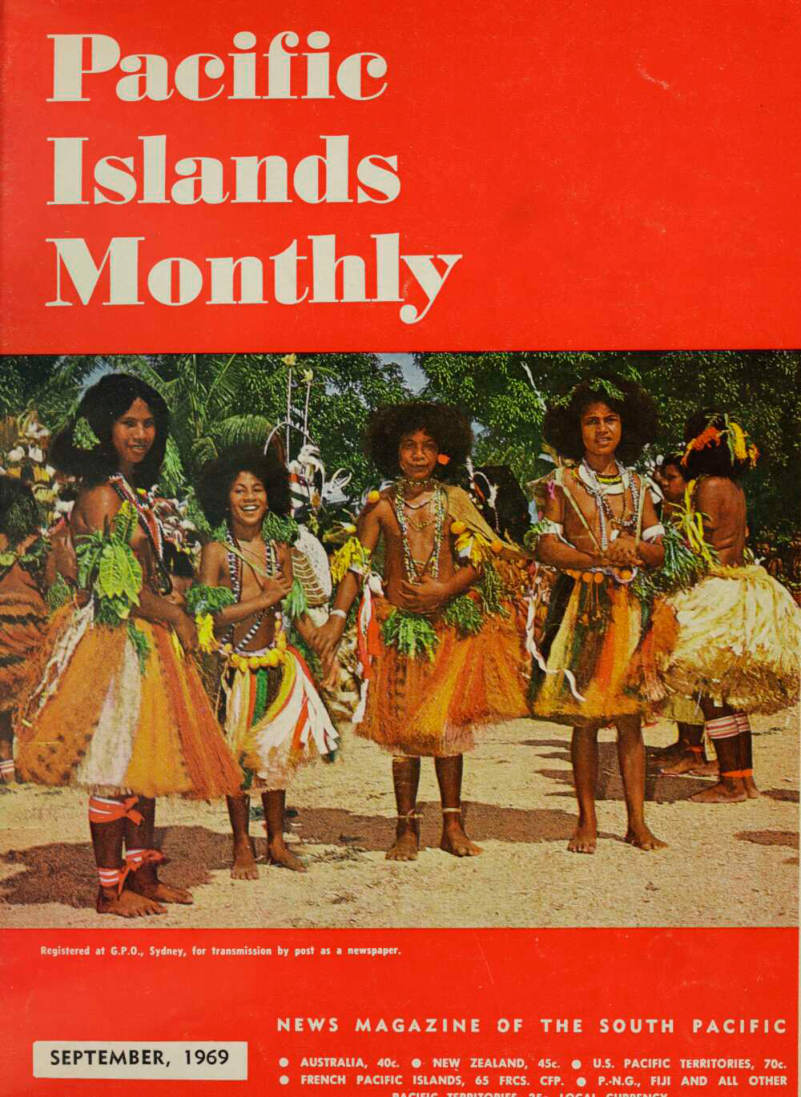 1
1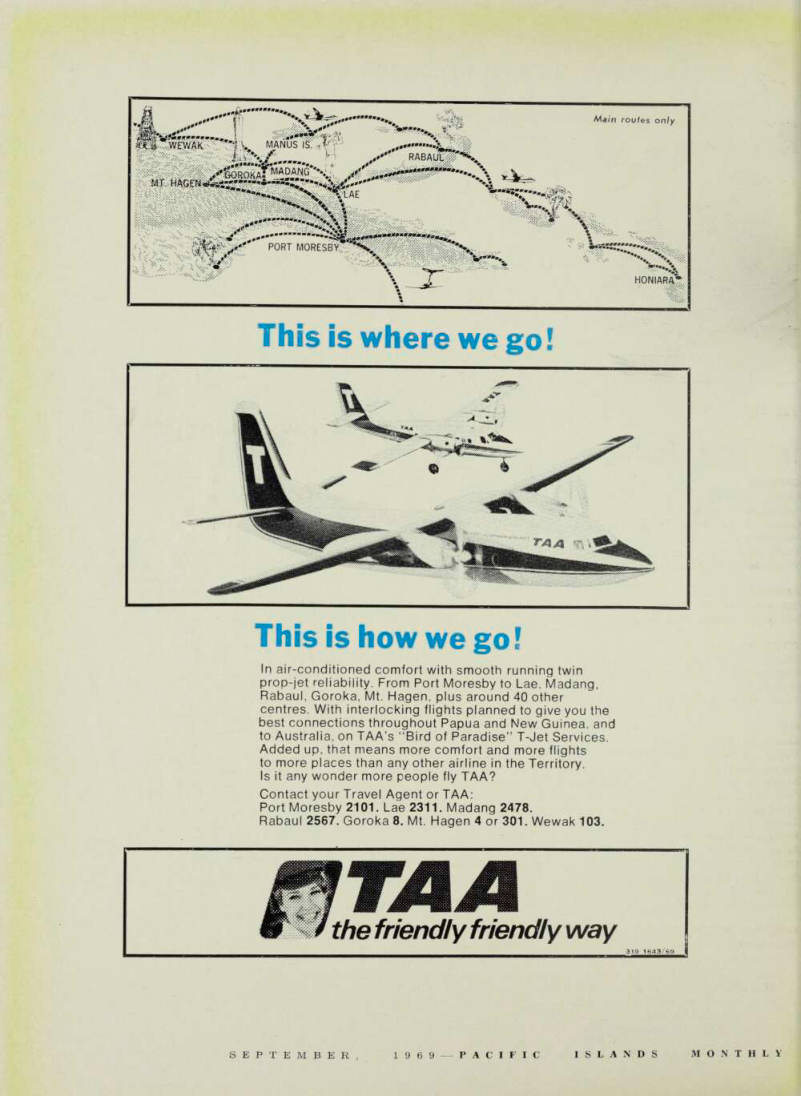 2
2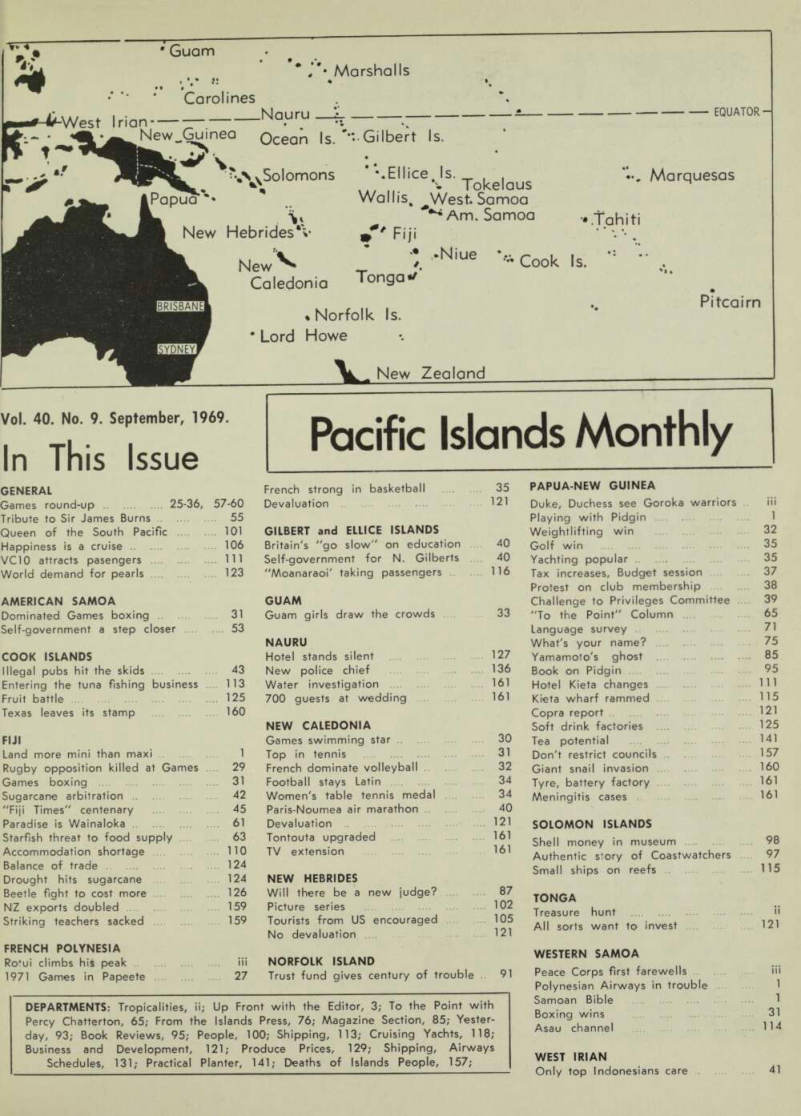 3
3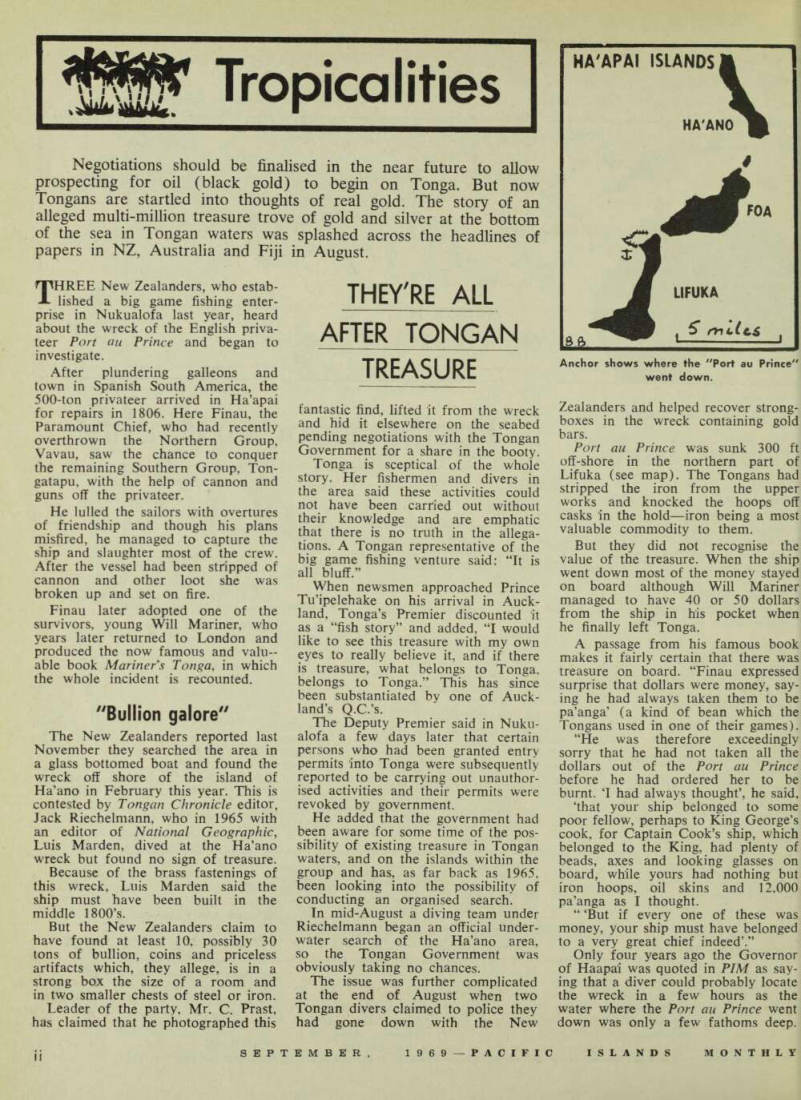 4
4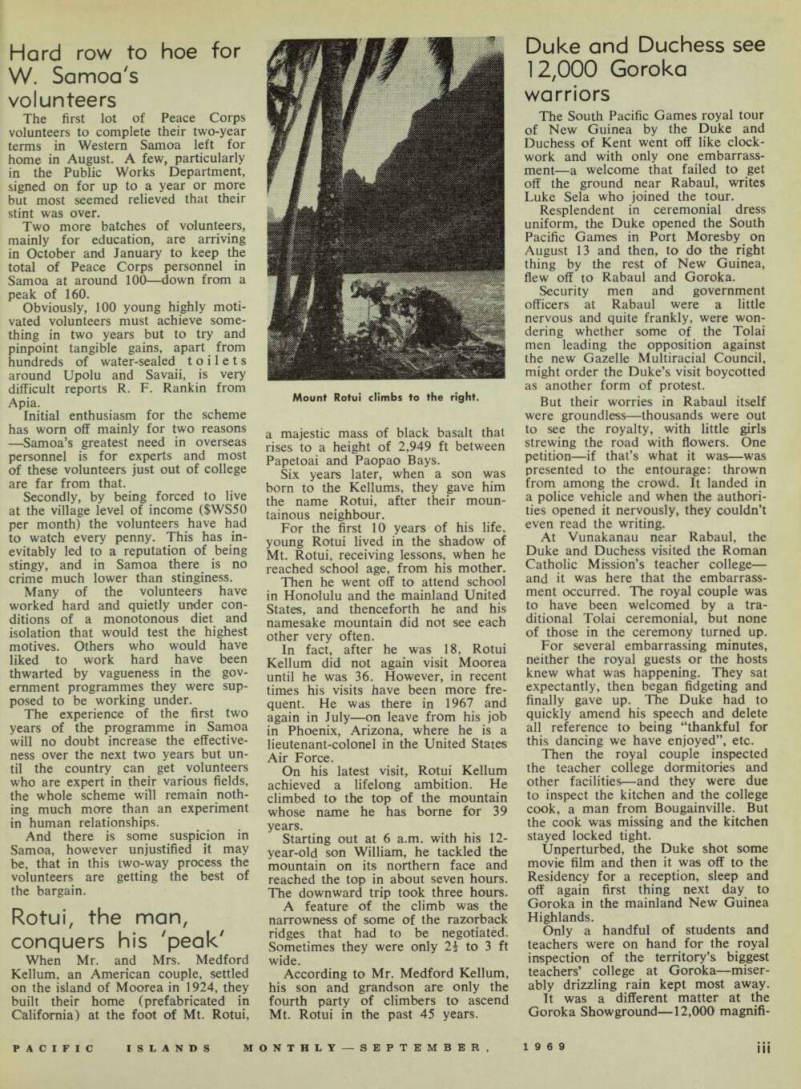 5
5 6
6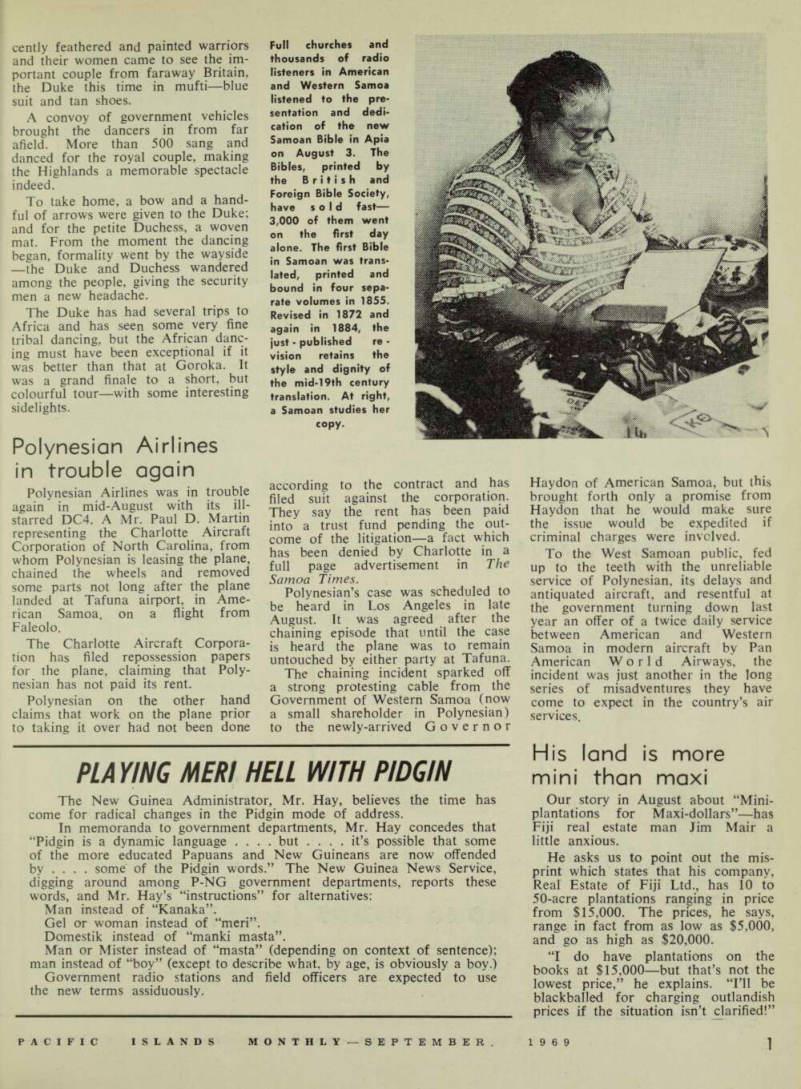 7
7 8
8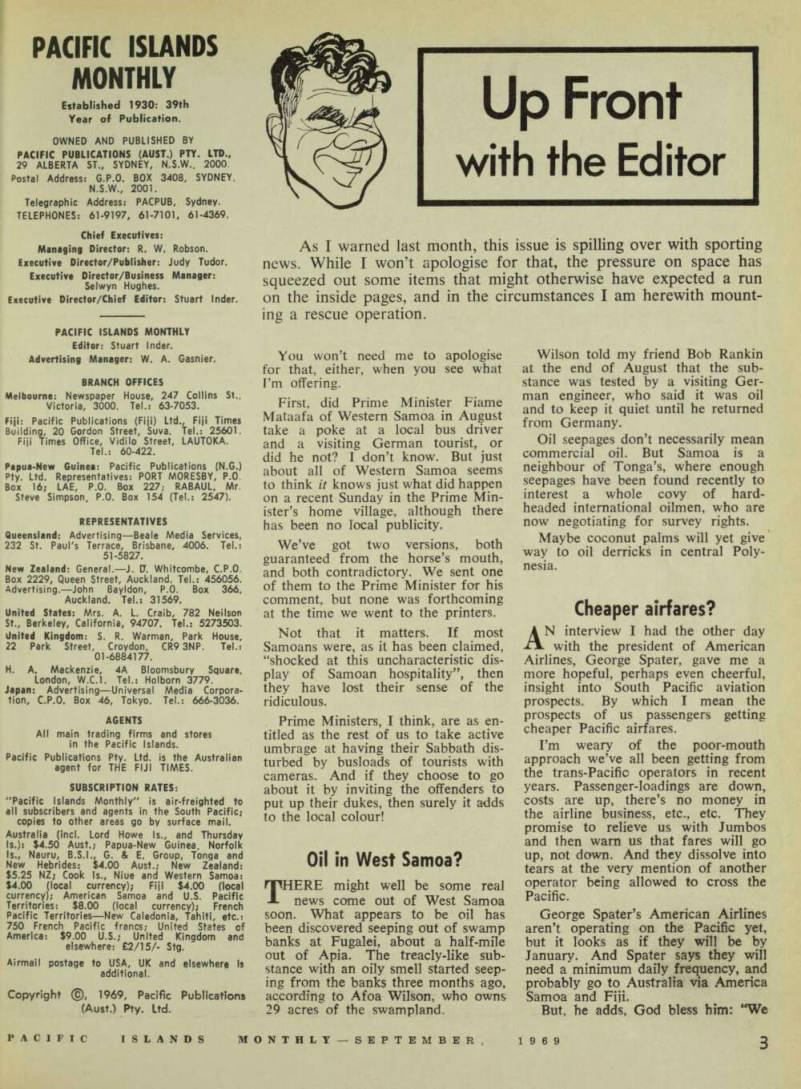 9
9 10
10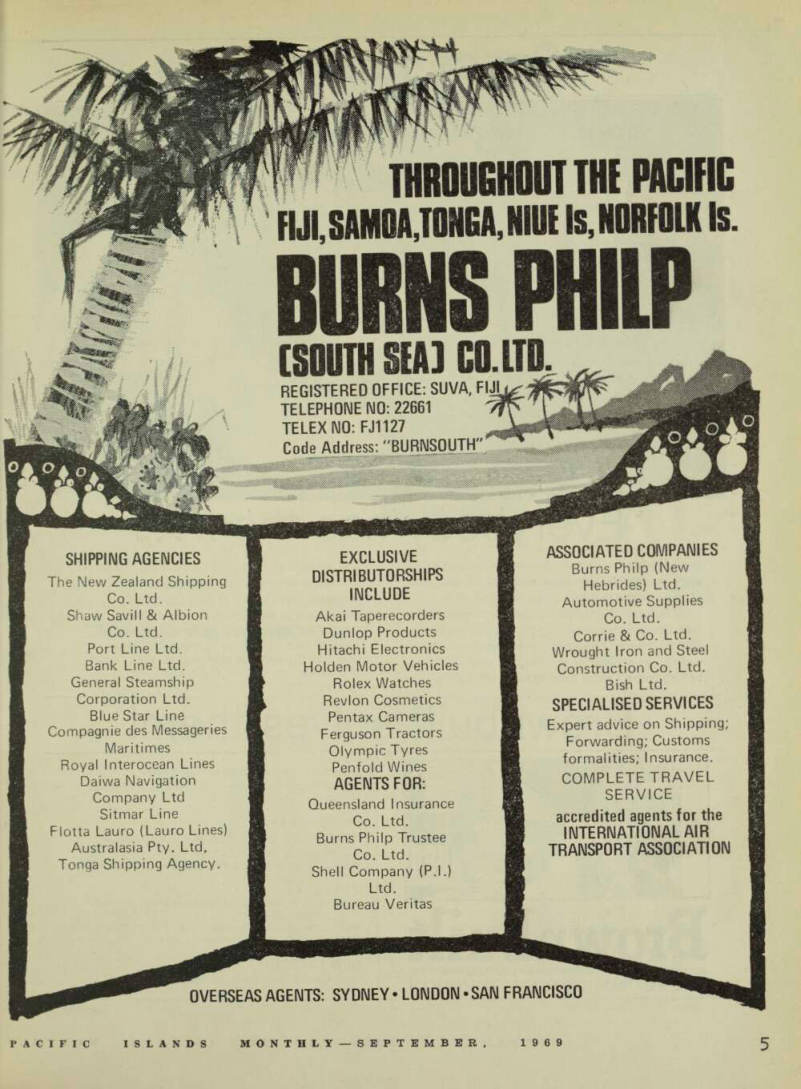 11
11 12
12 13
13 14
14 15
15 16
16 17
17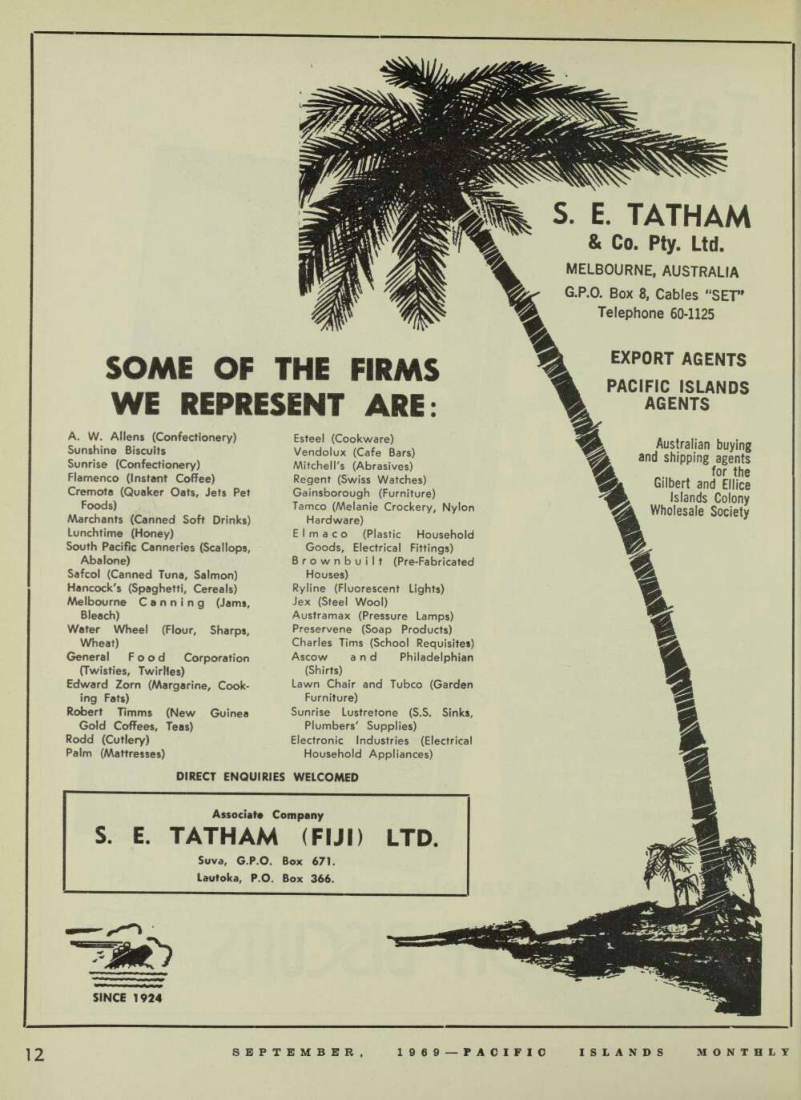 18
18 19
19 20
20 21
21 22
22 23
23 24
24 25
25 26
26 27
27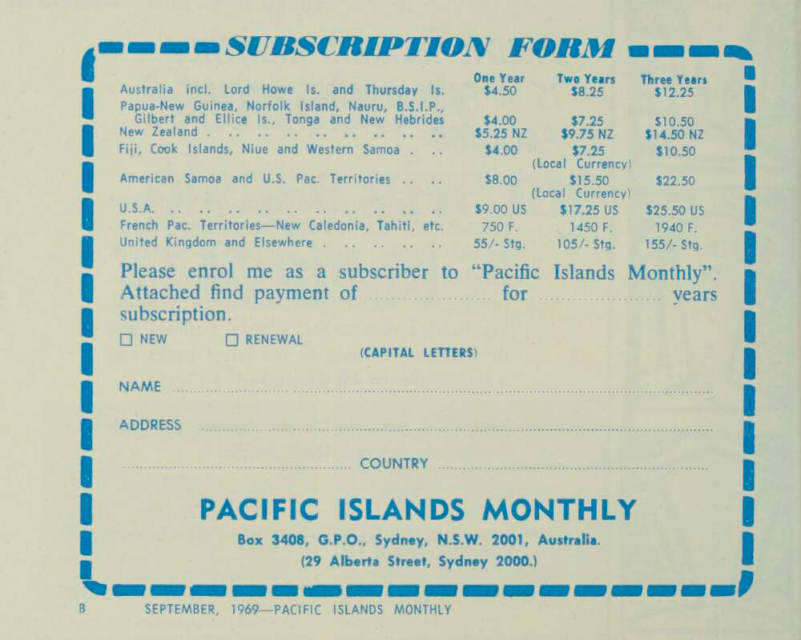 28
28 29
29 30
30 31
31 32
32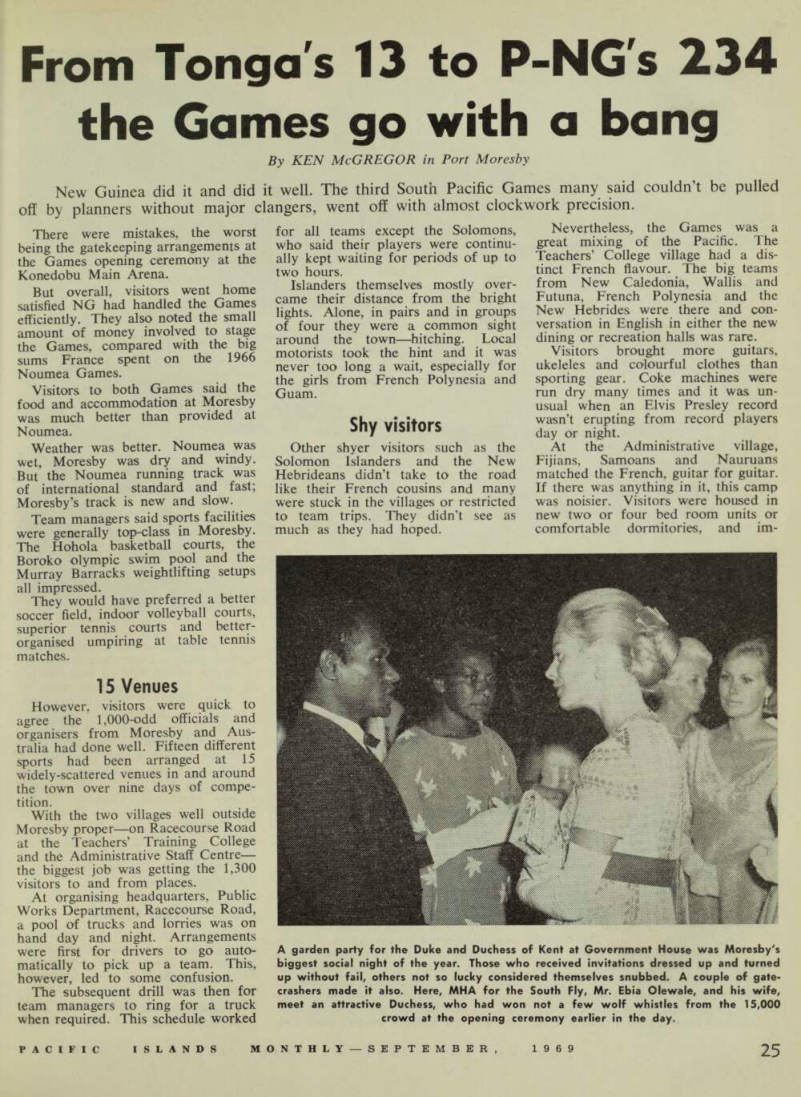 33
33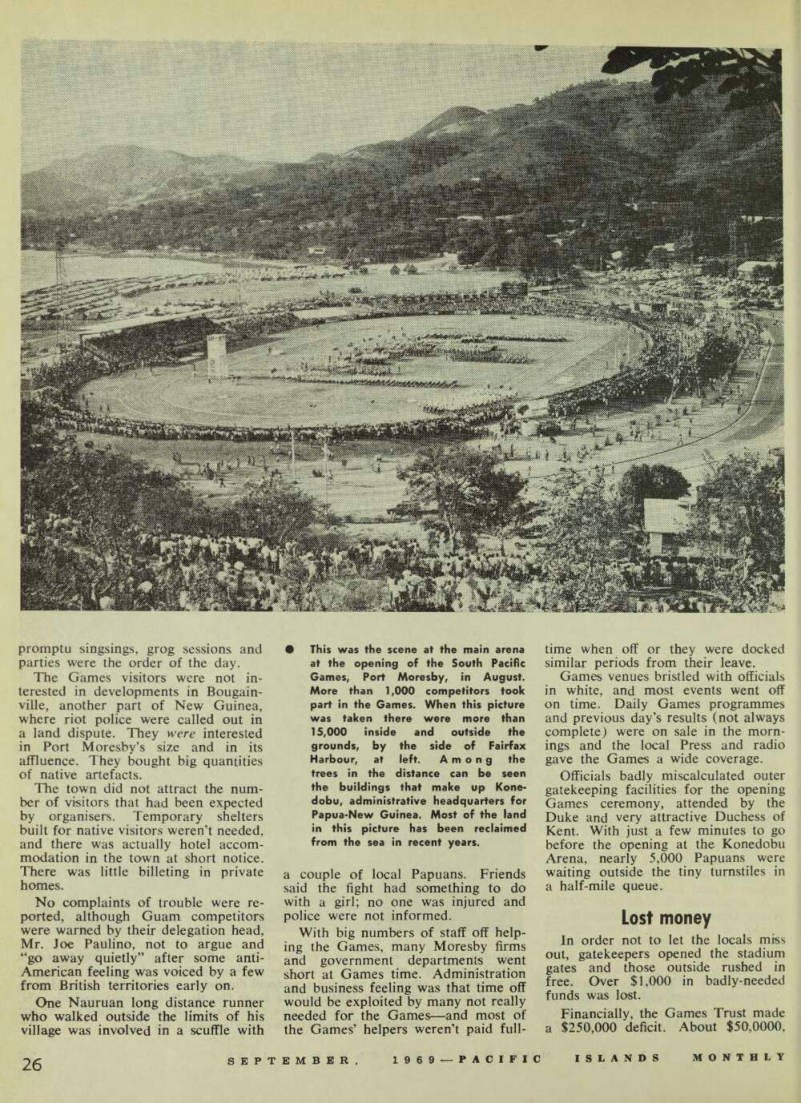 34
34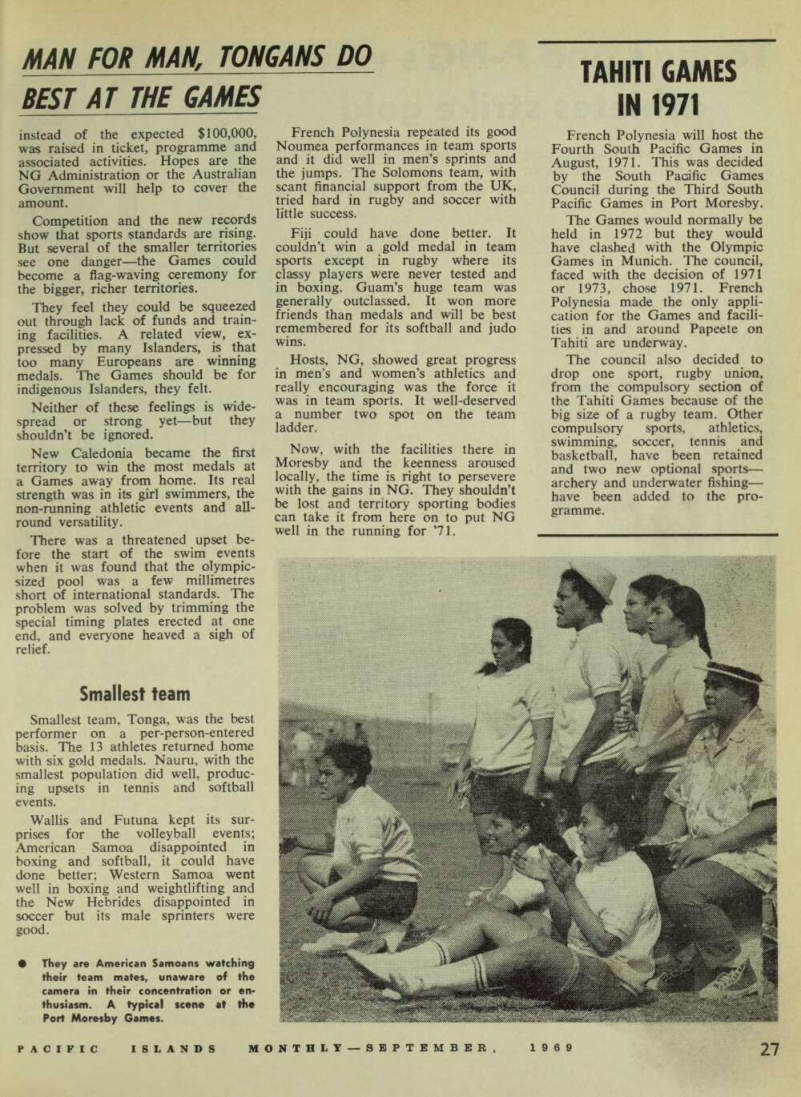 35
35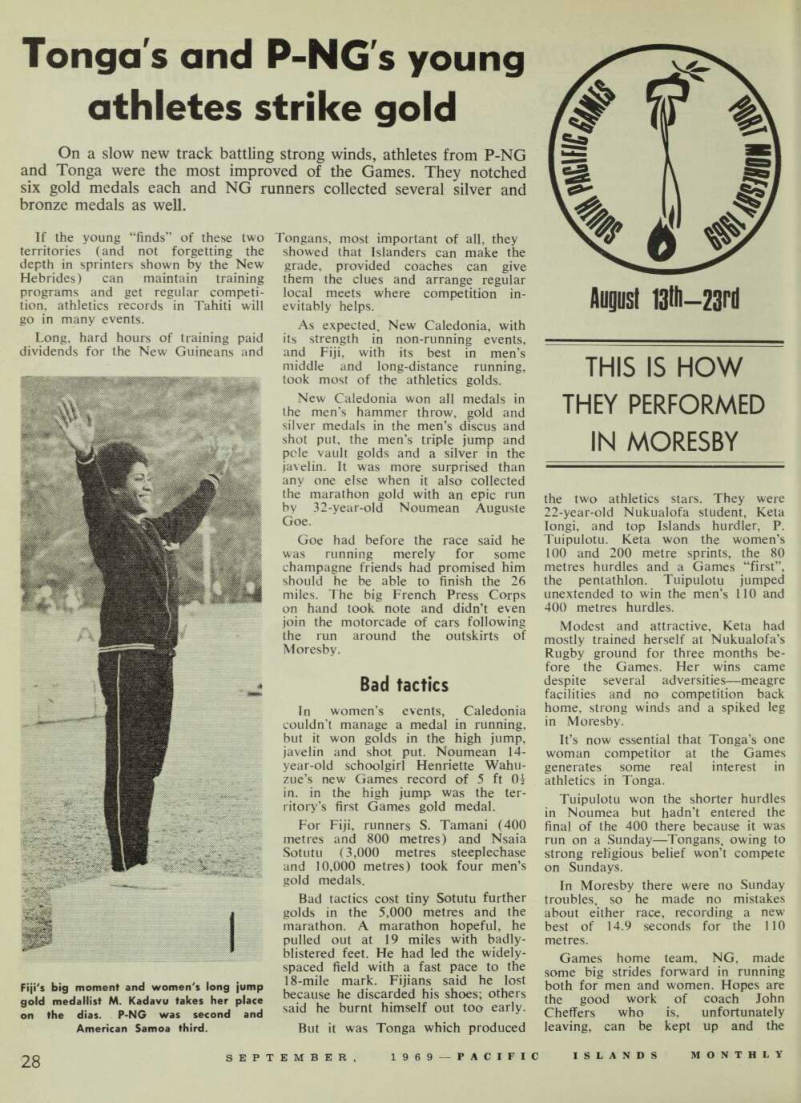 36
36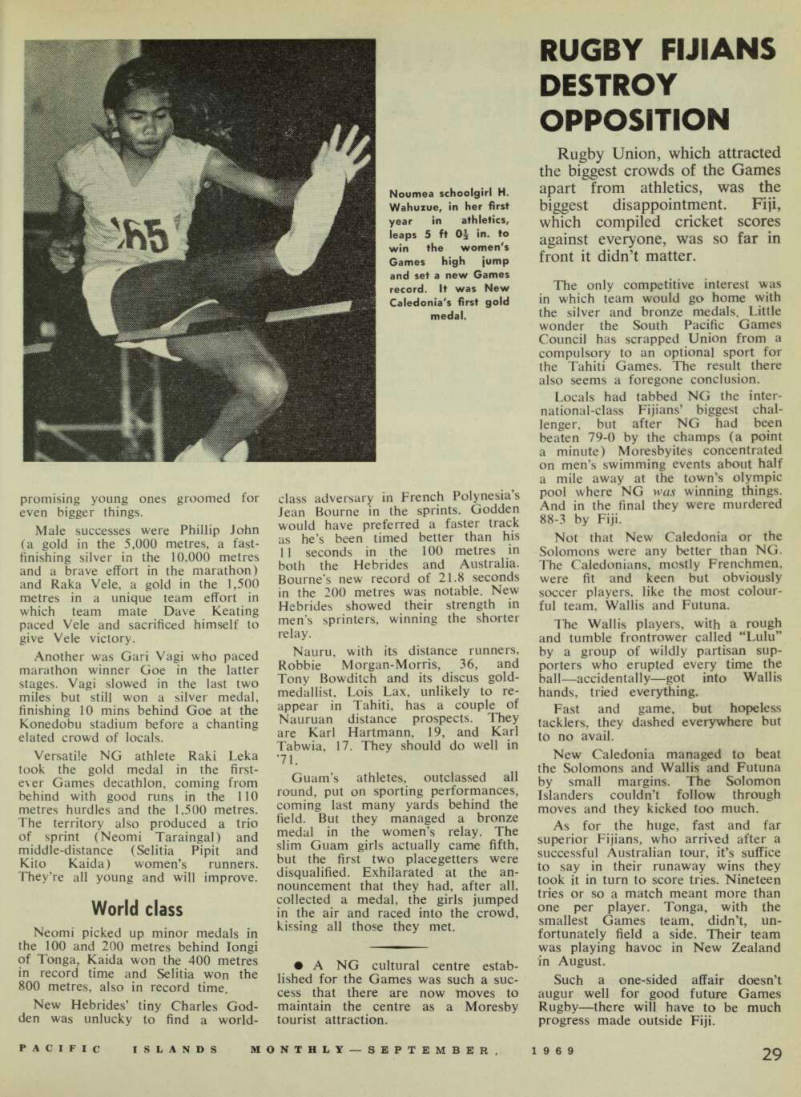 37
37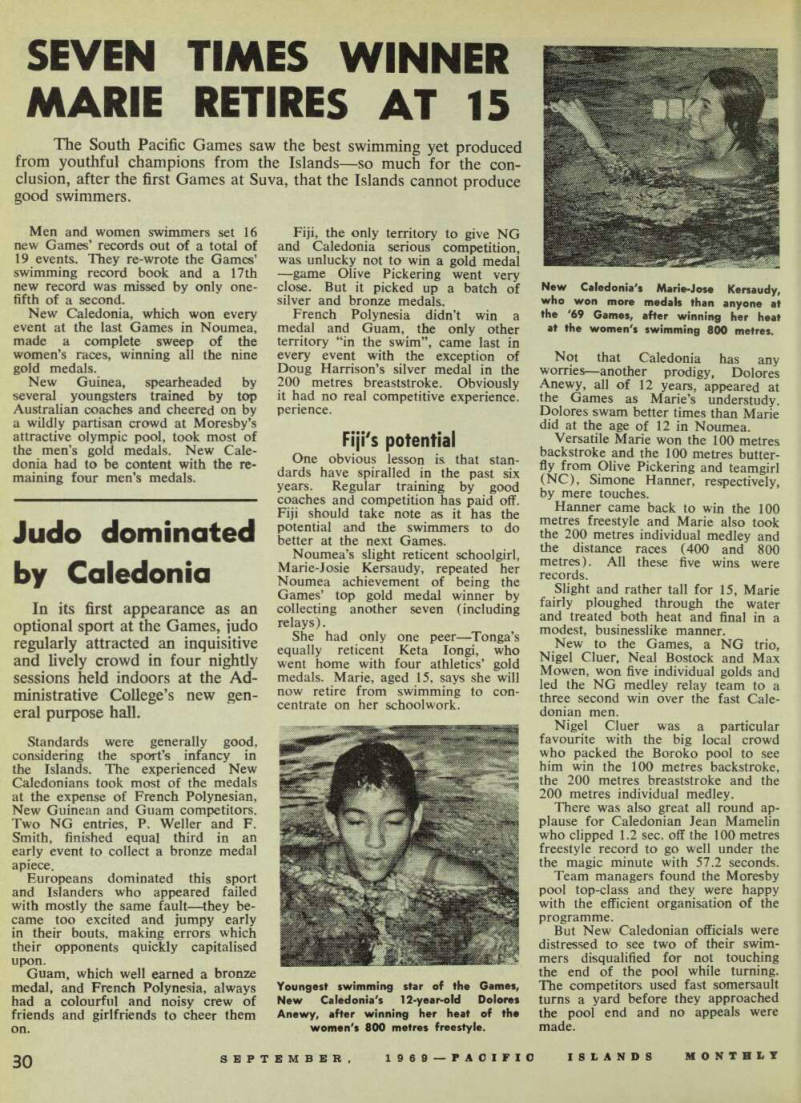 38
38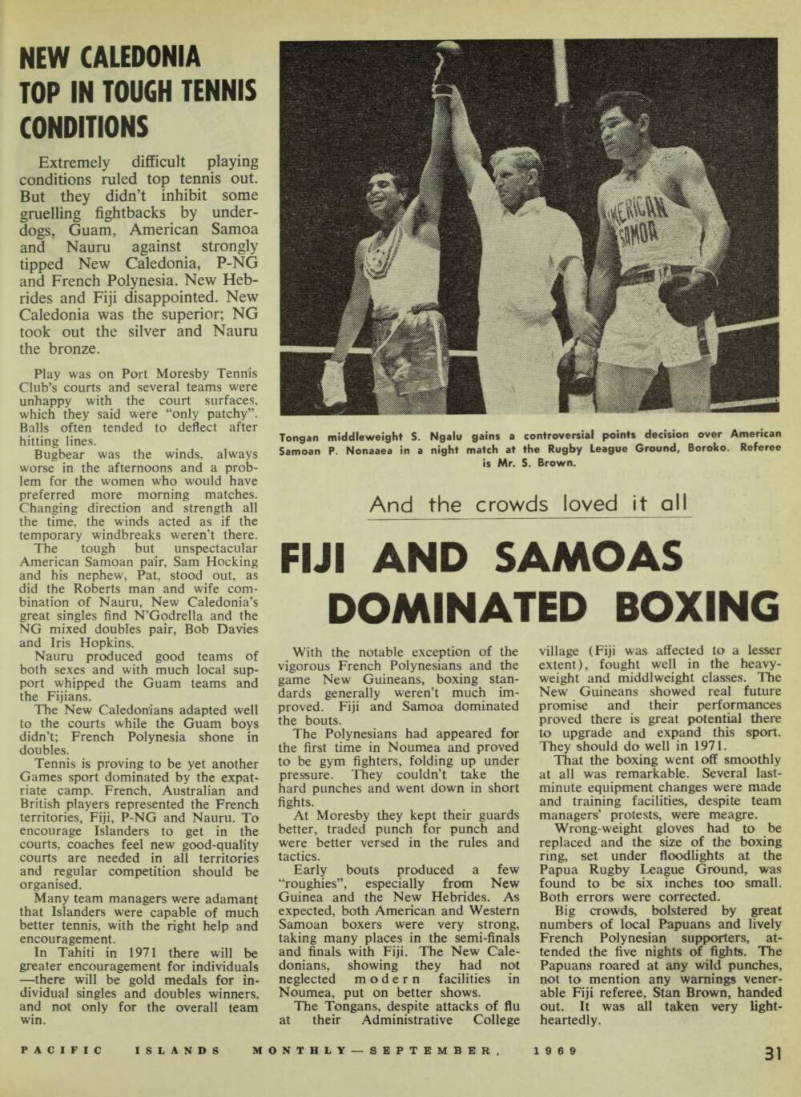 39
39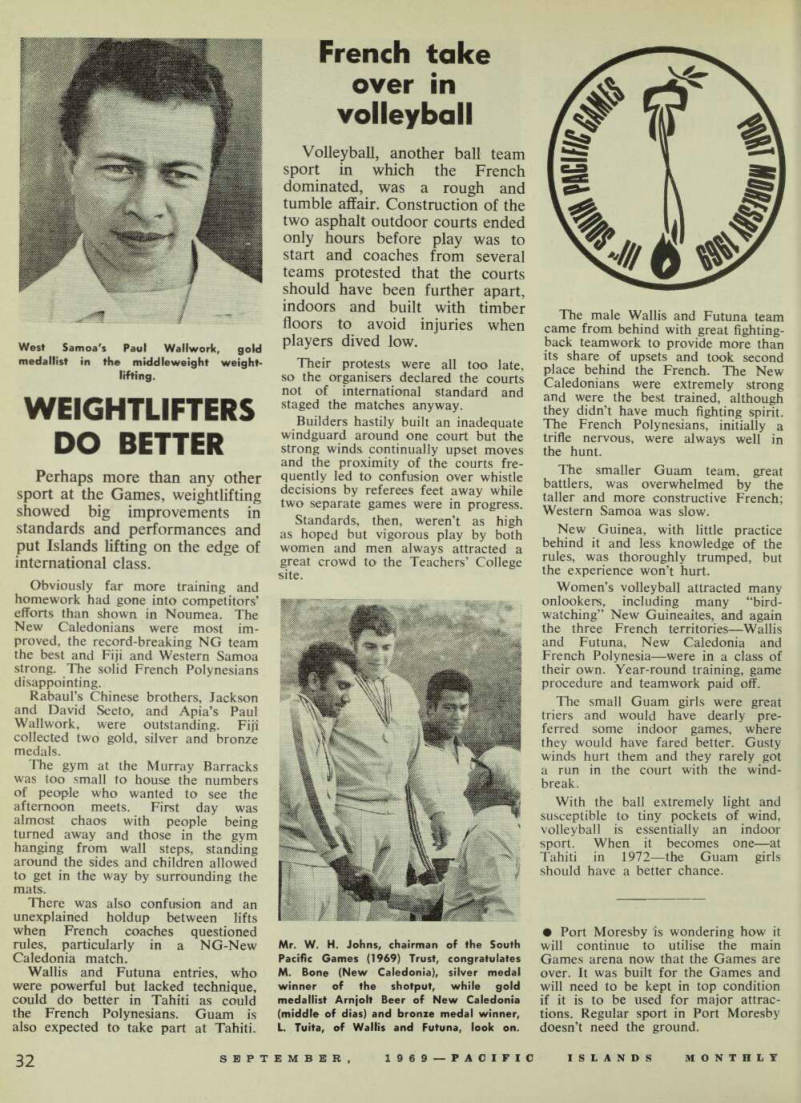 40
40 41
41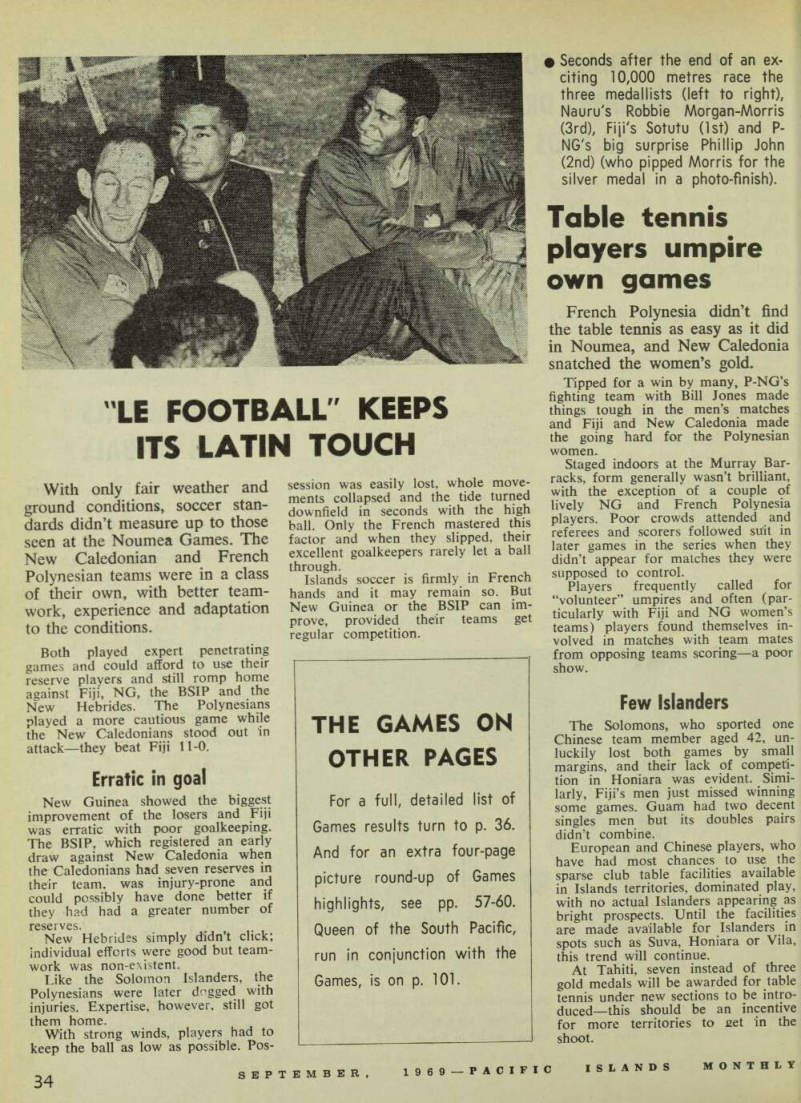 42
42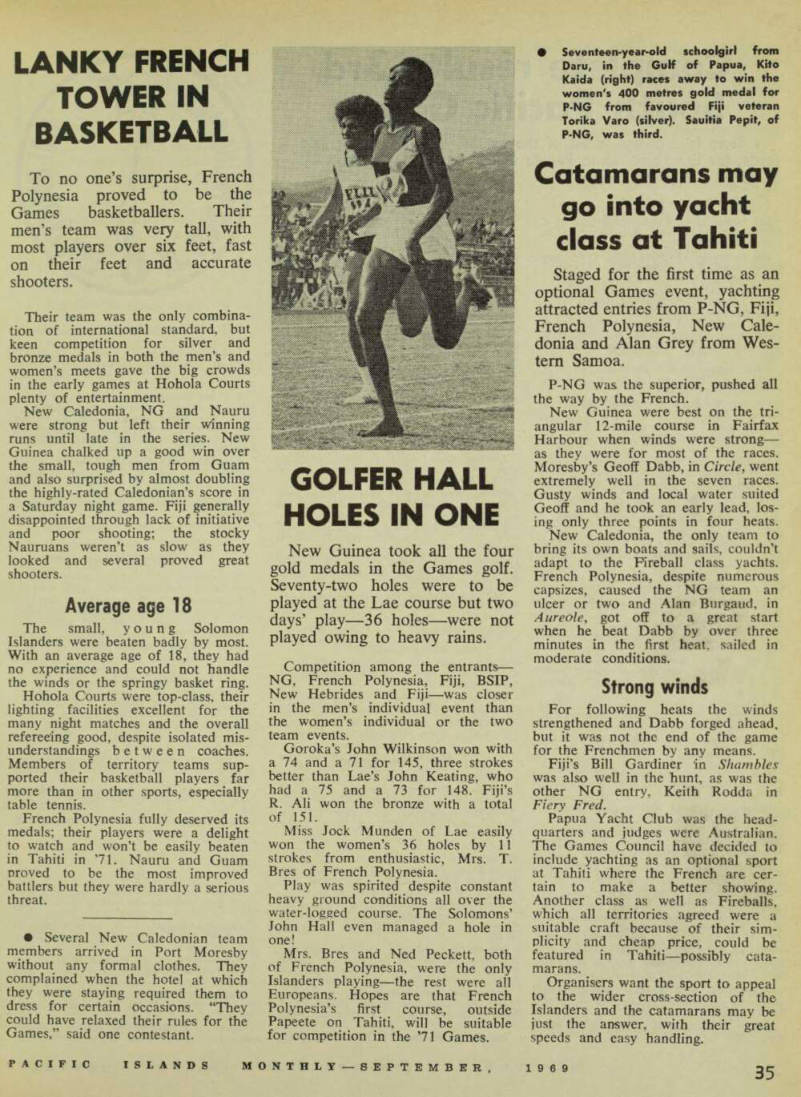 43
43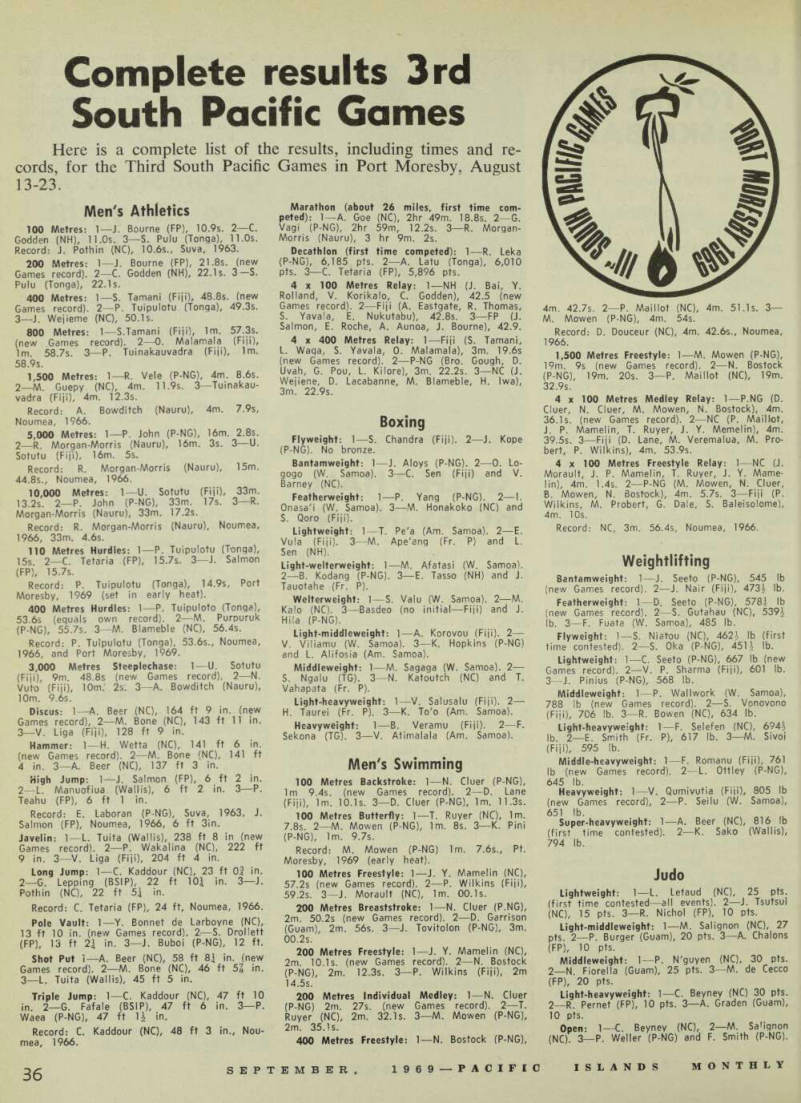 44
44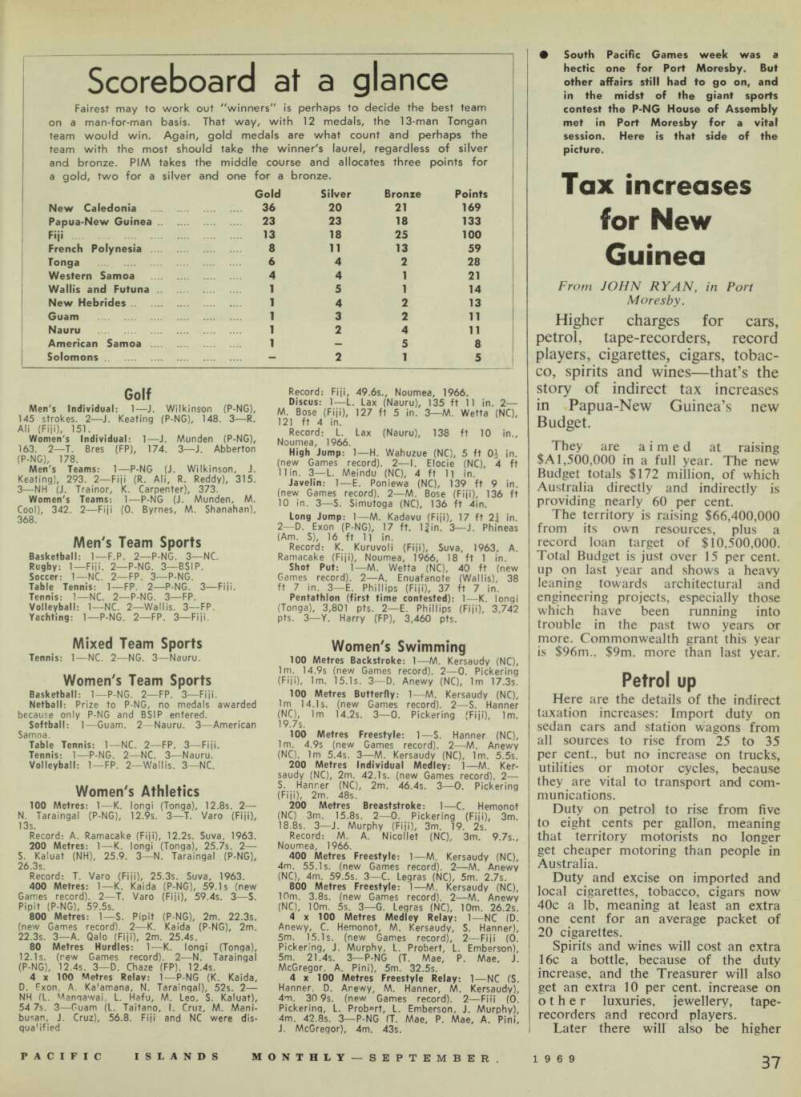 45
45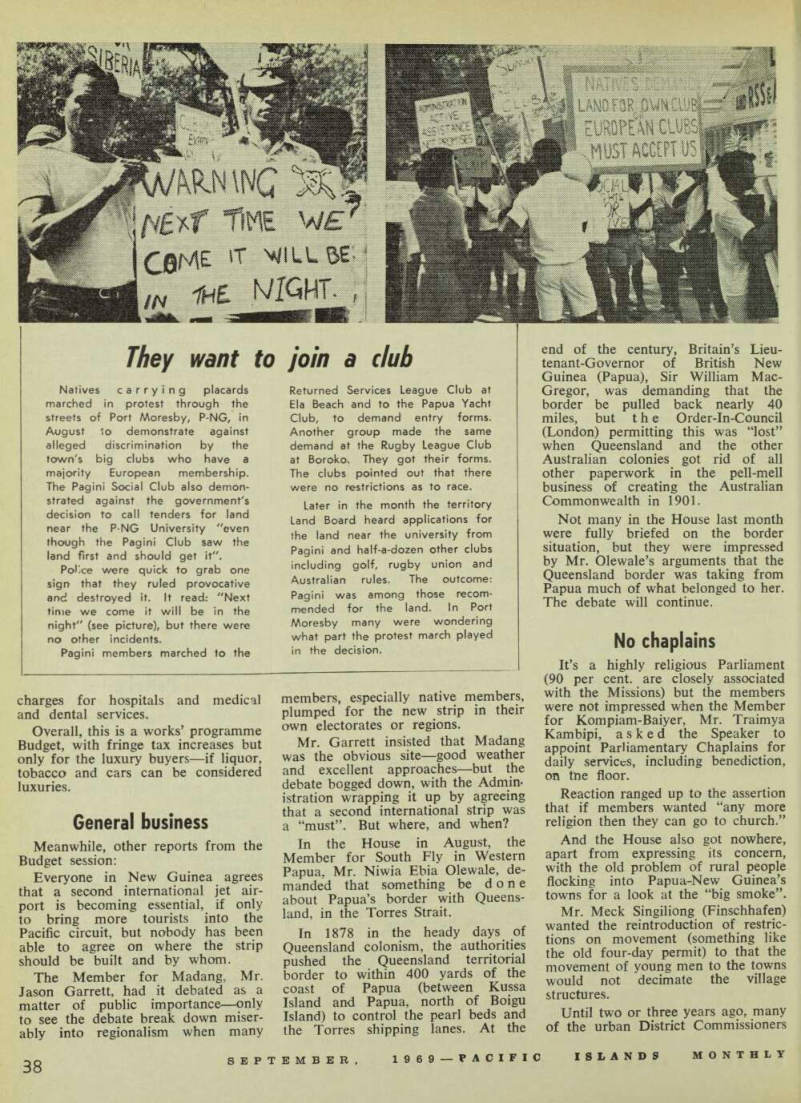 46
46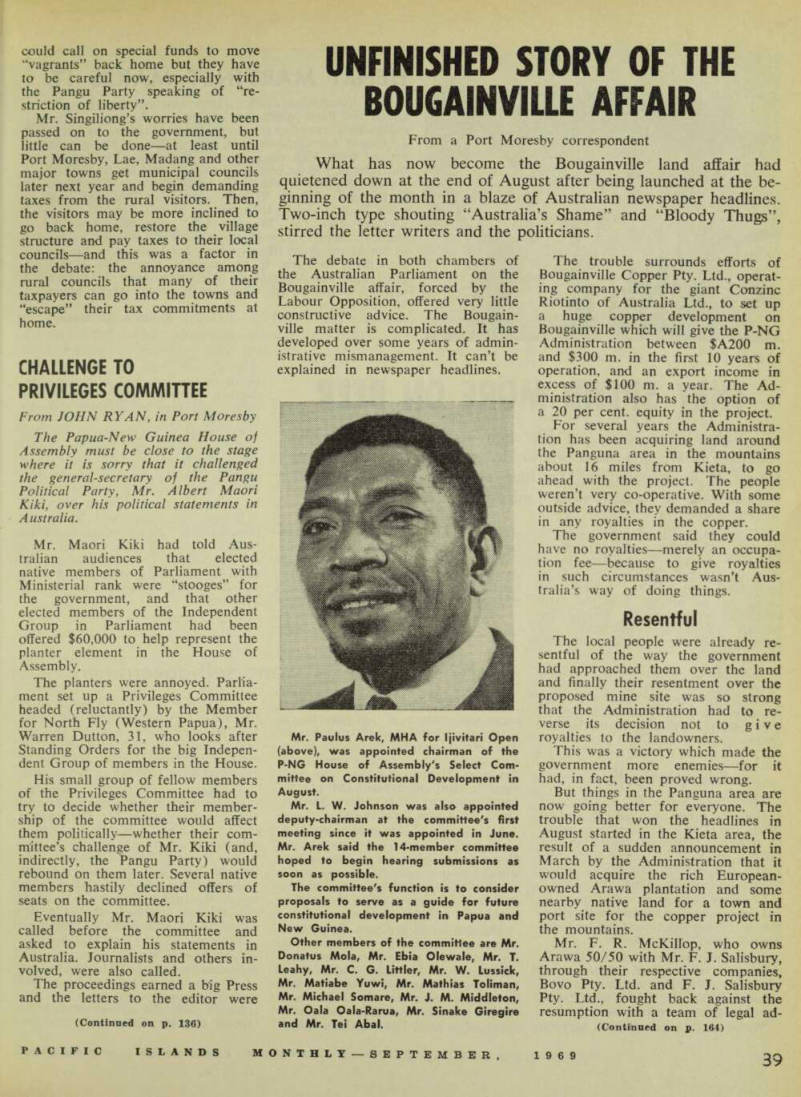 47
47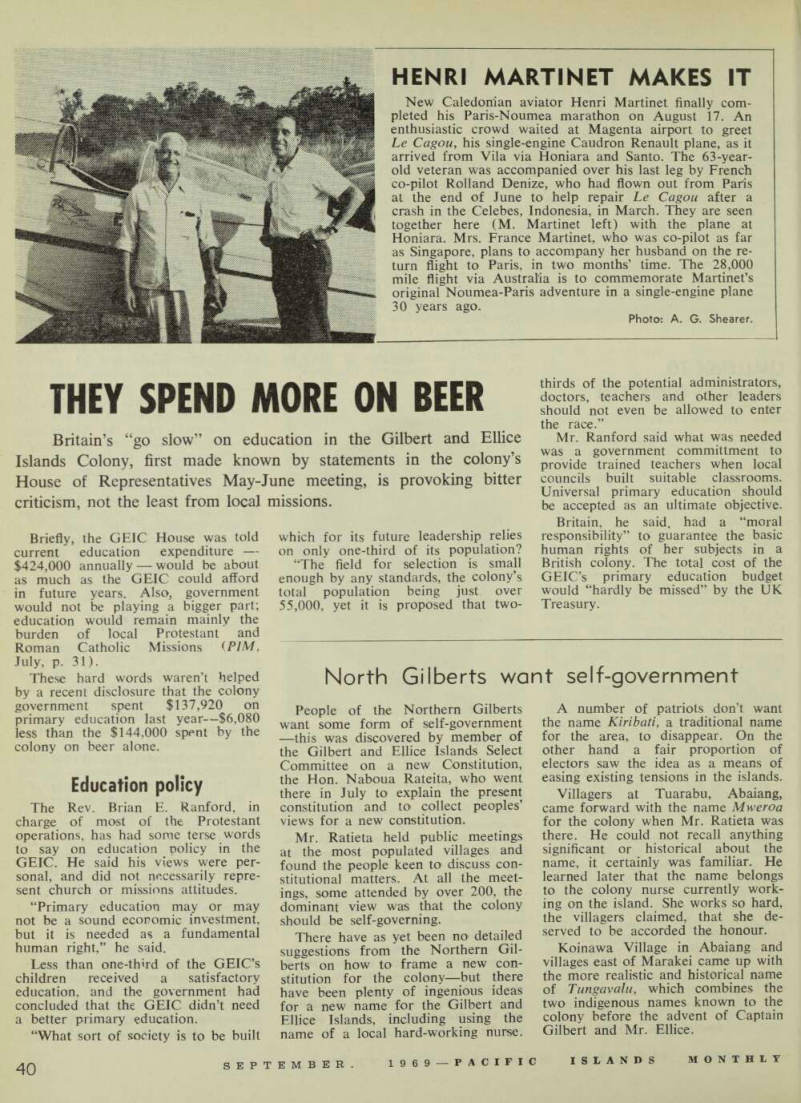 48
48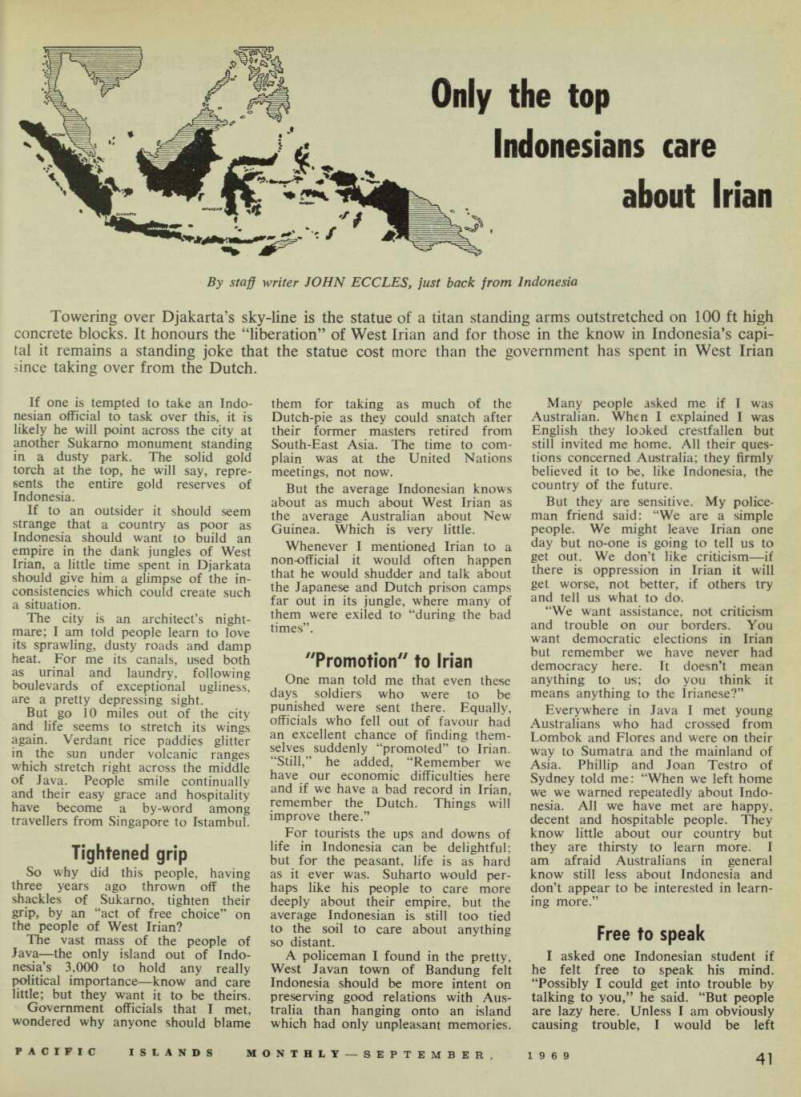 49
49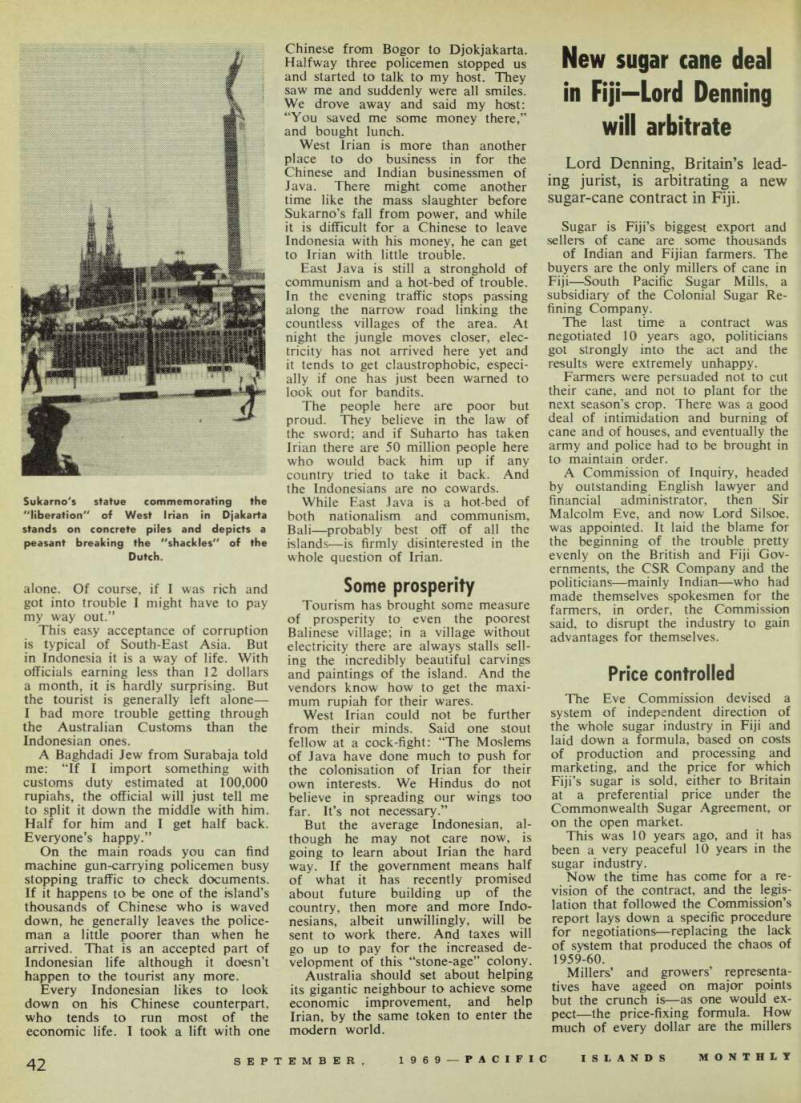 50
50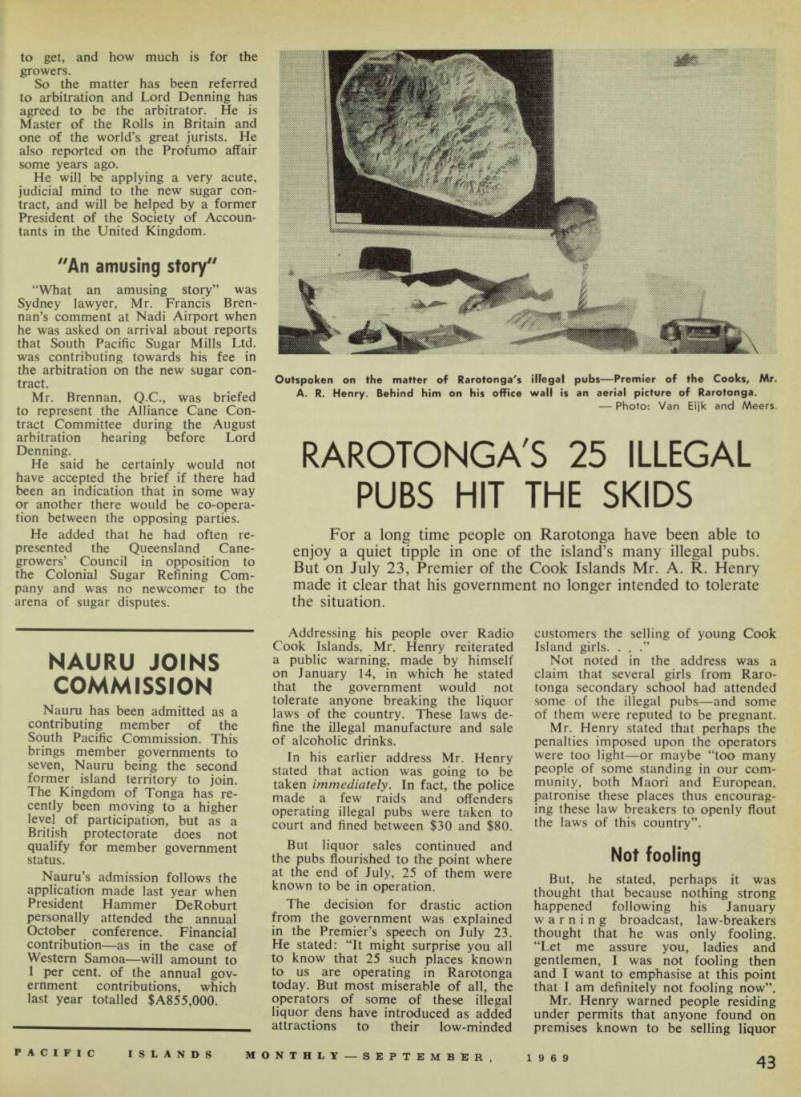 51
51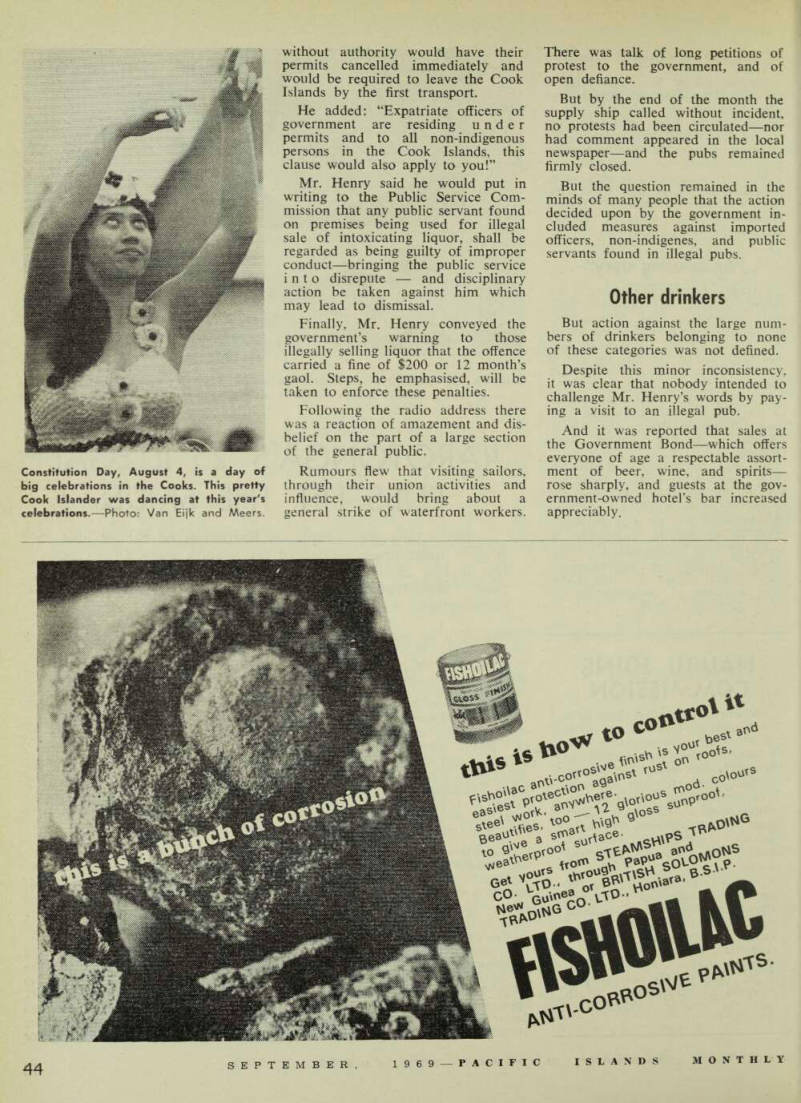 52
52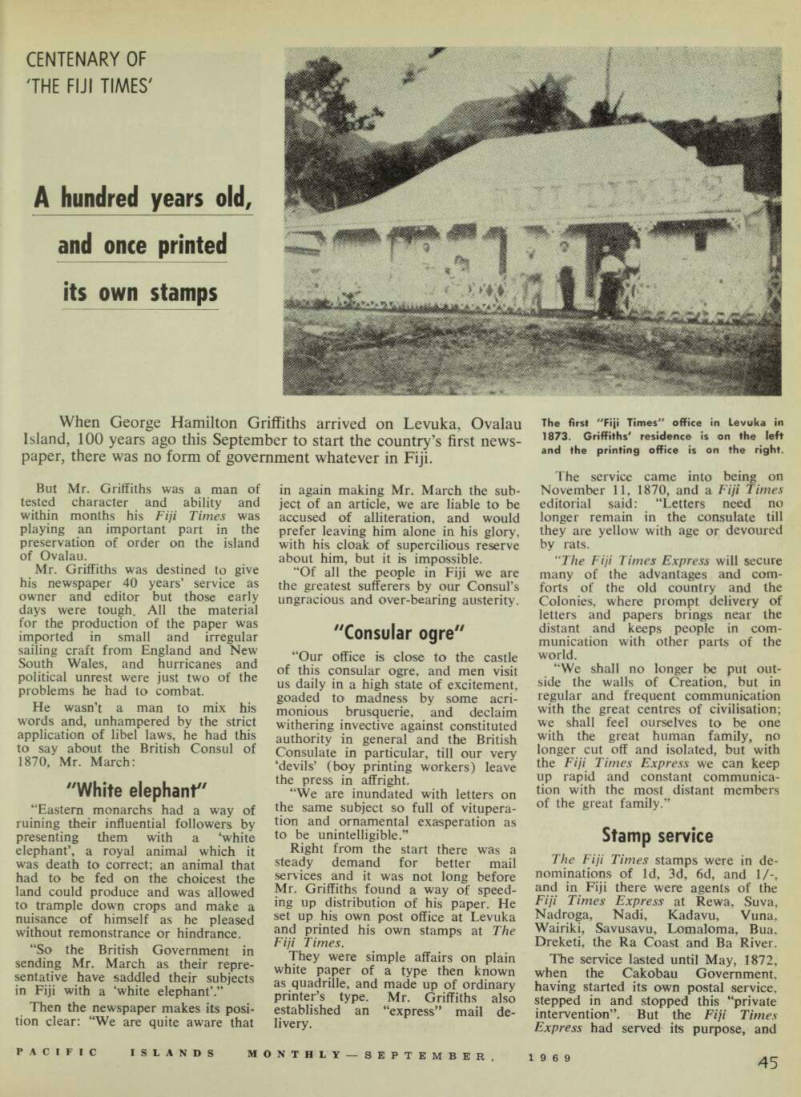 53
53 54
54 55
55 56
56 57
57 58
58 59
59 60
60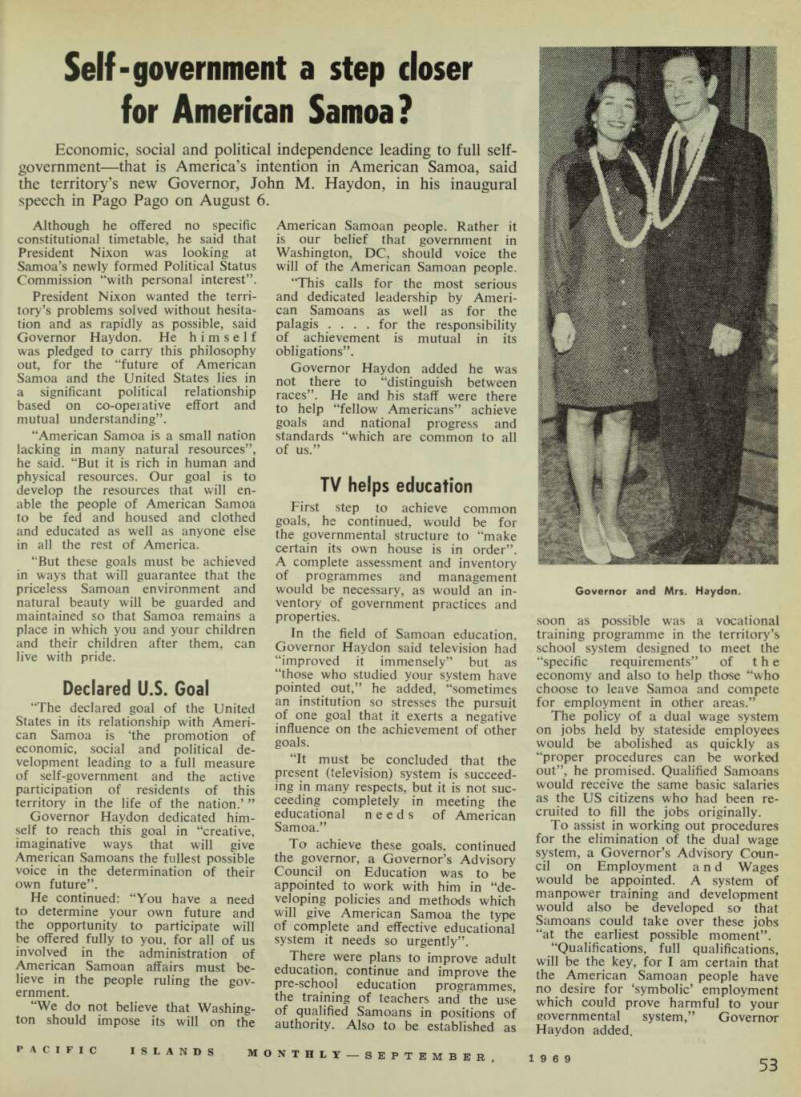 61
61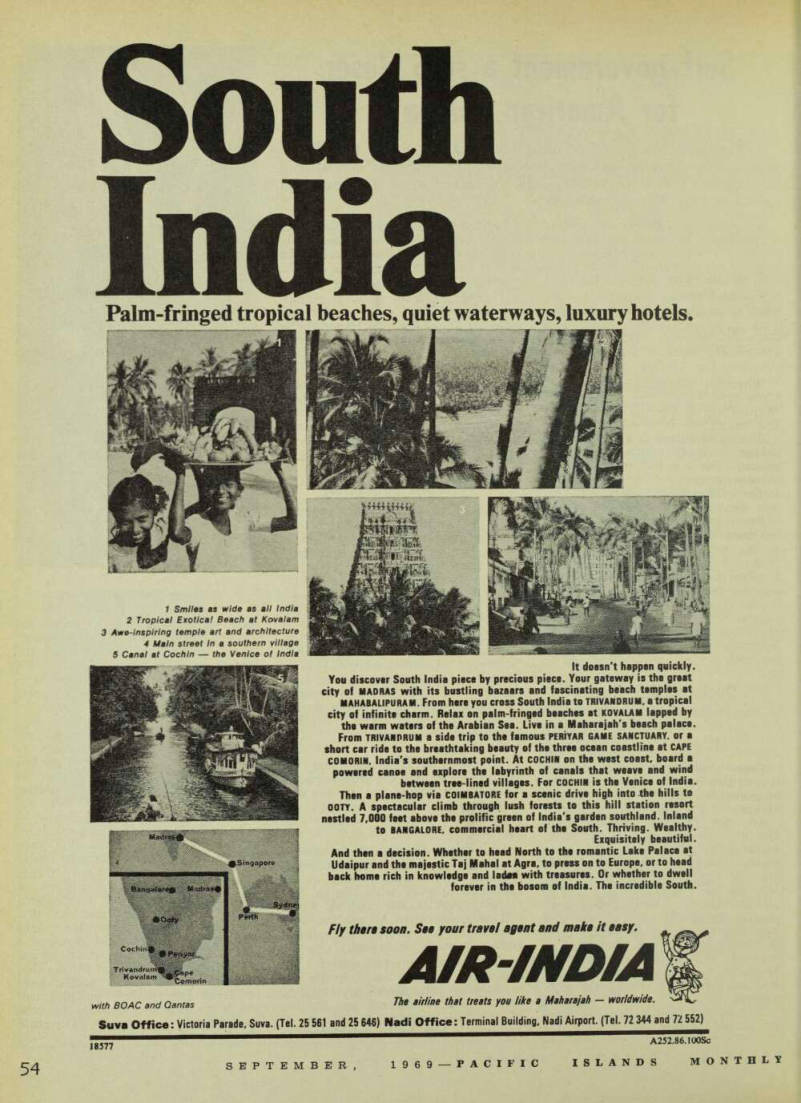 62
62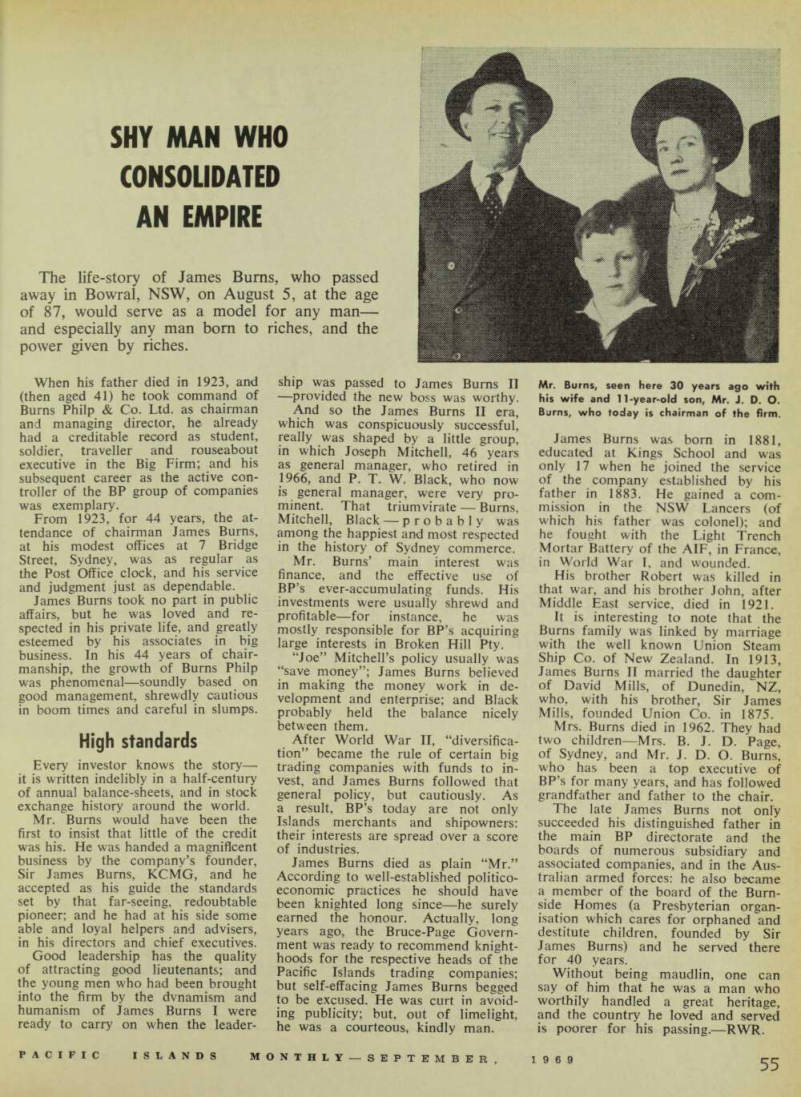 63
63 64
64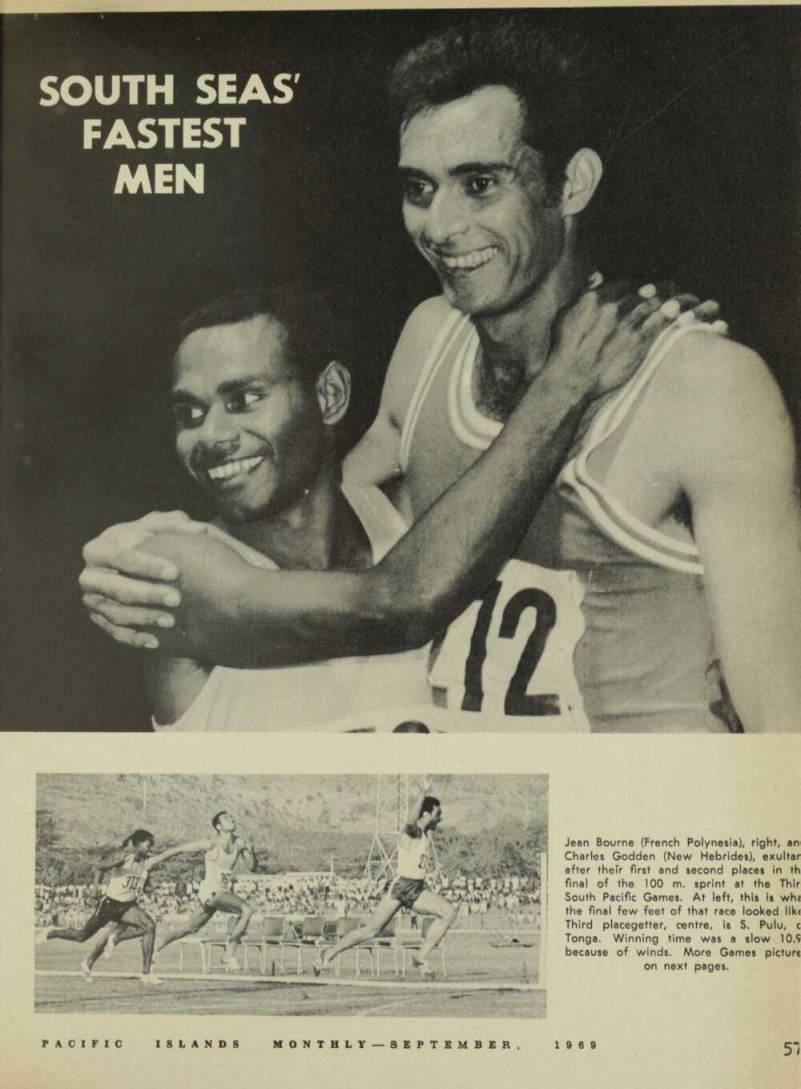 65
65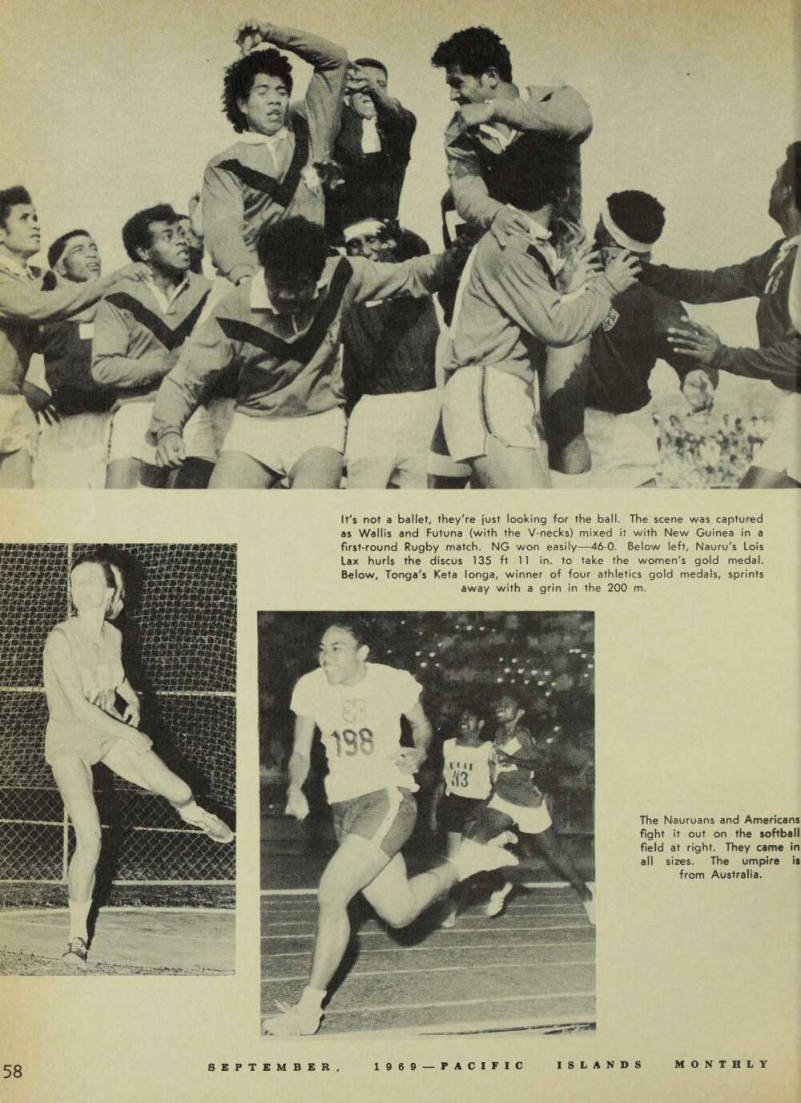 66
66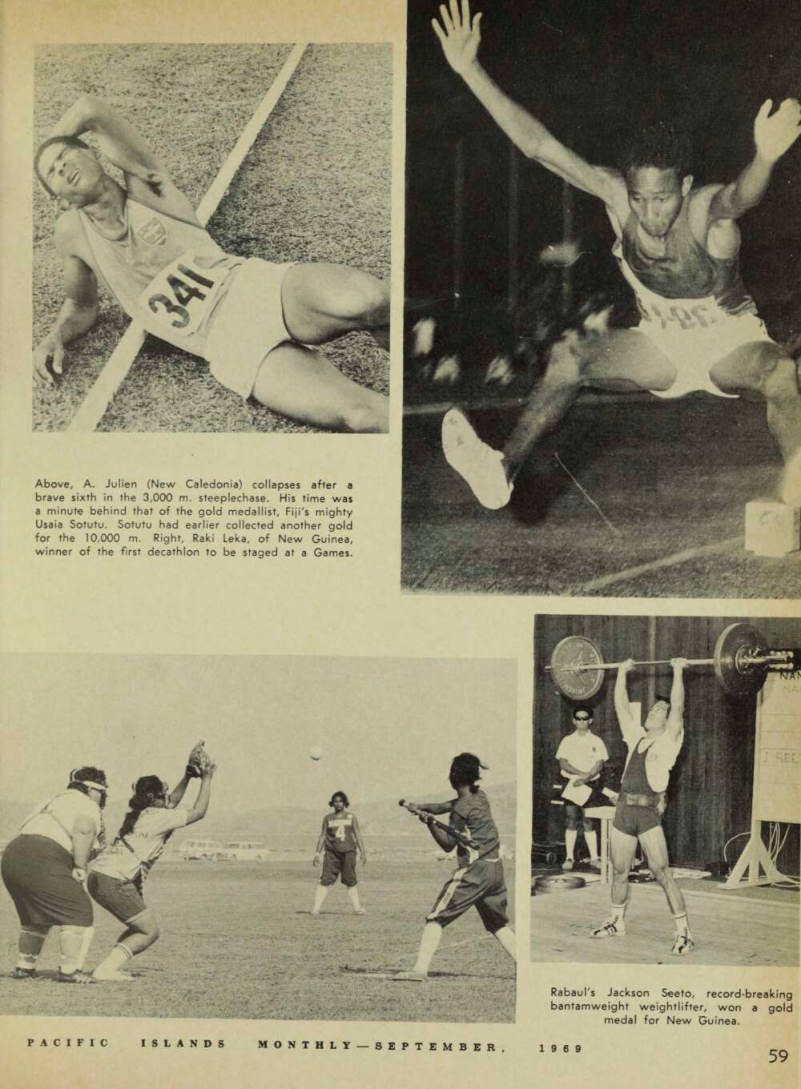 67
67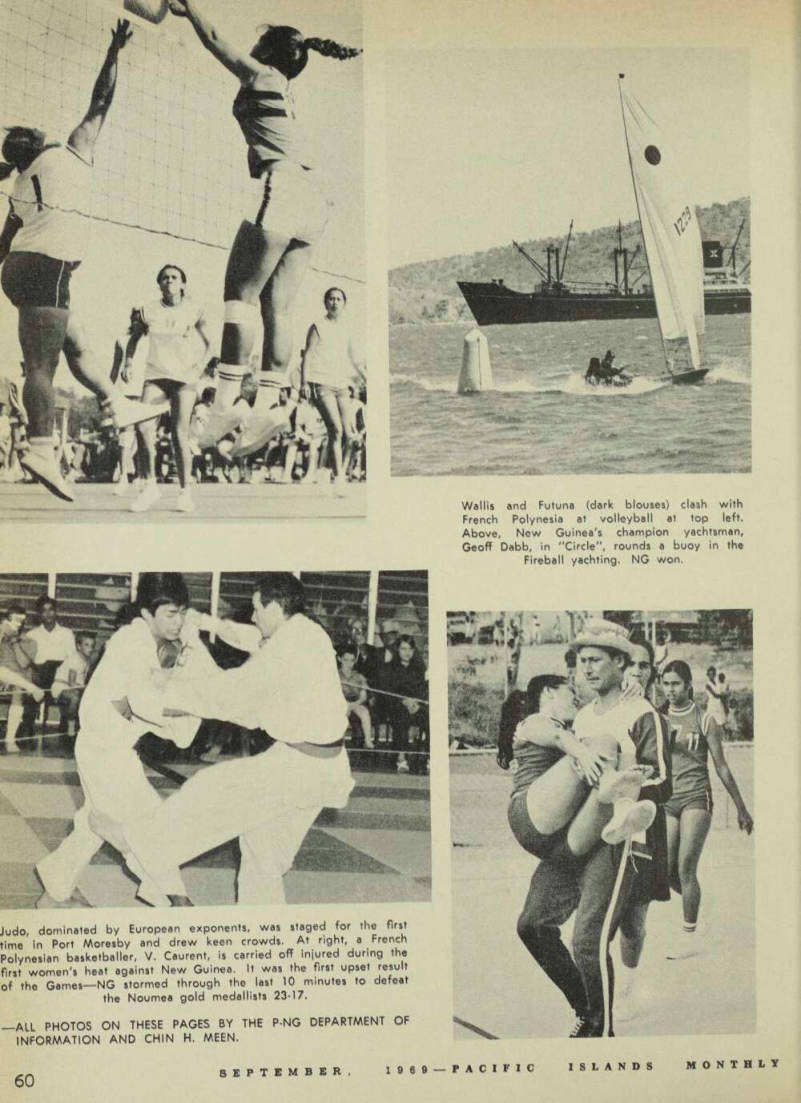 68
68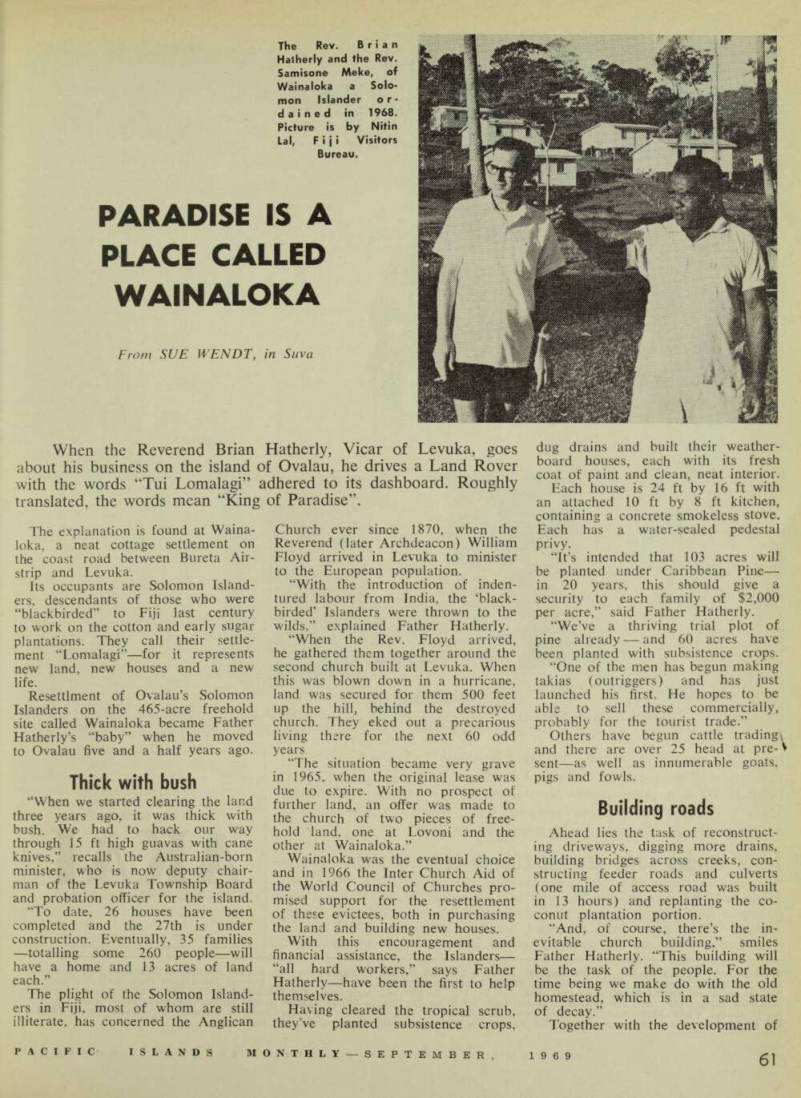 69
69 70
70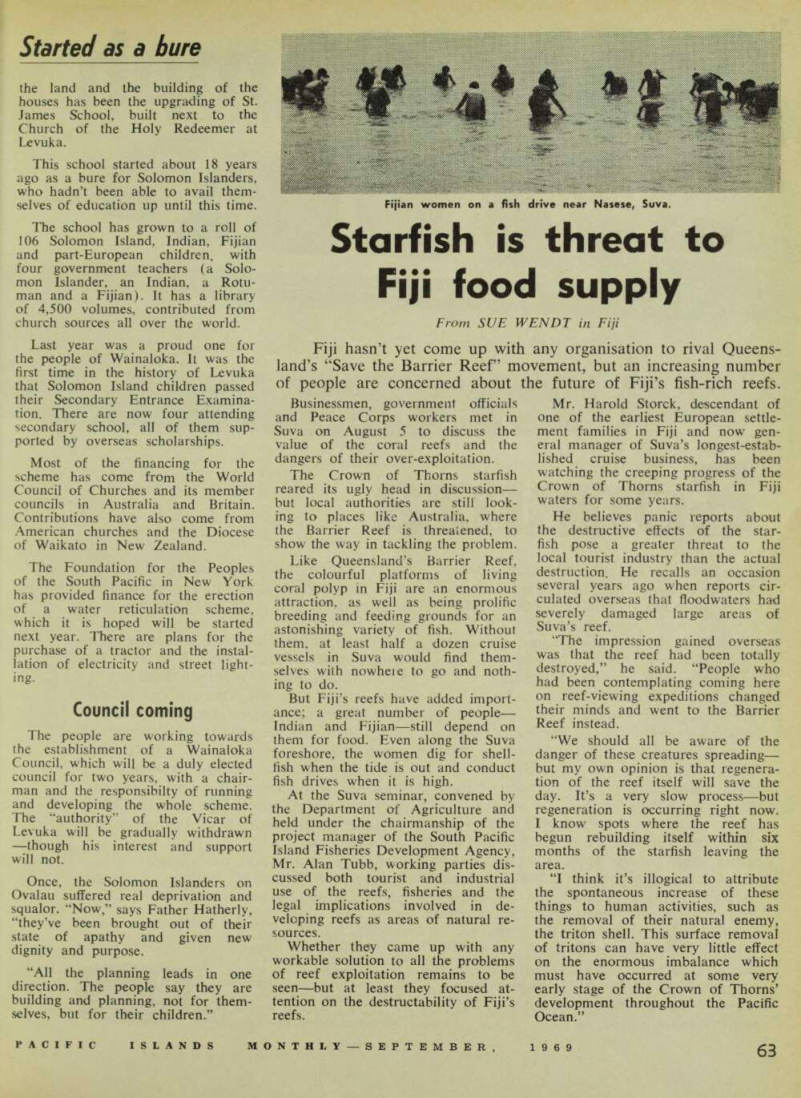 71
71 72
72 73
73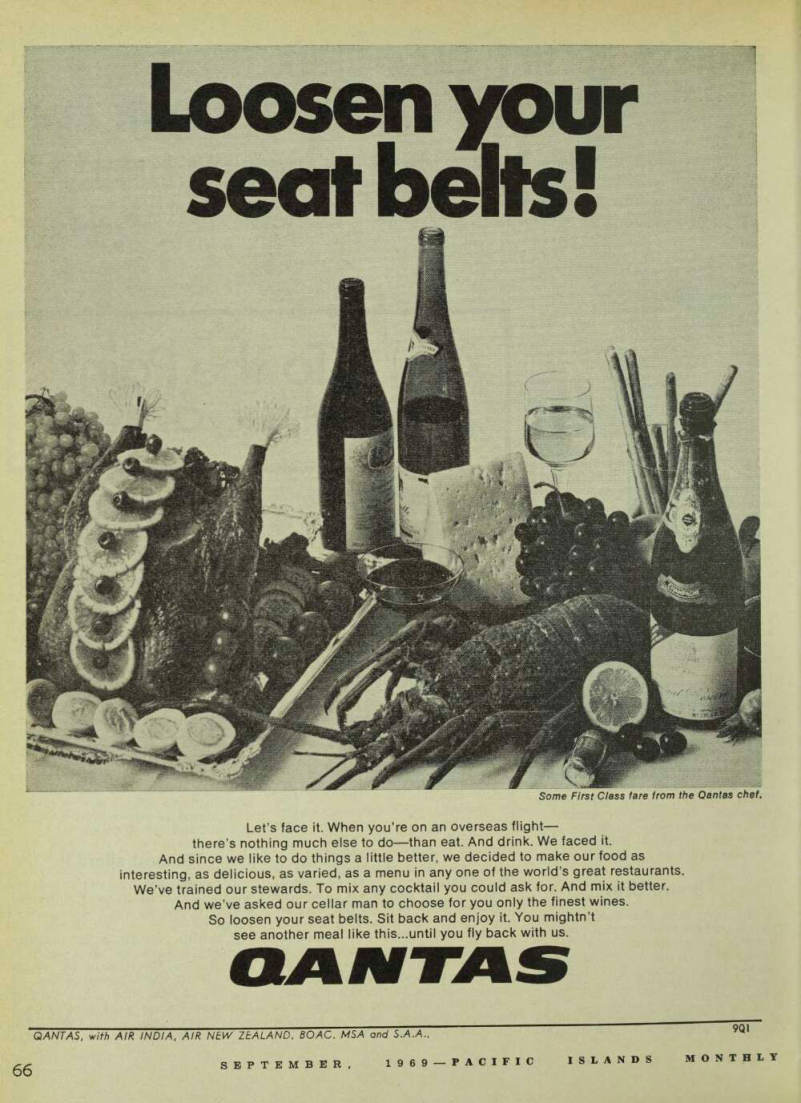 74
74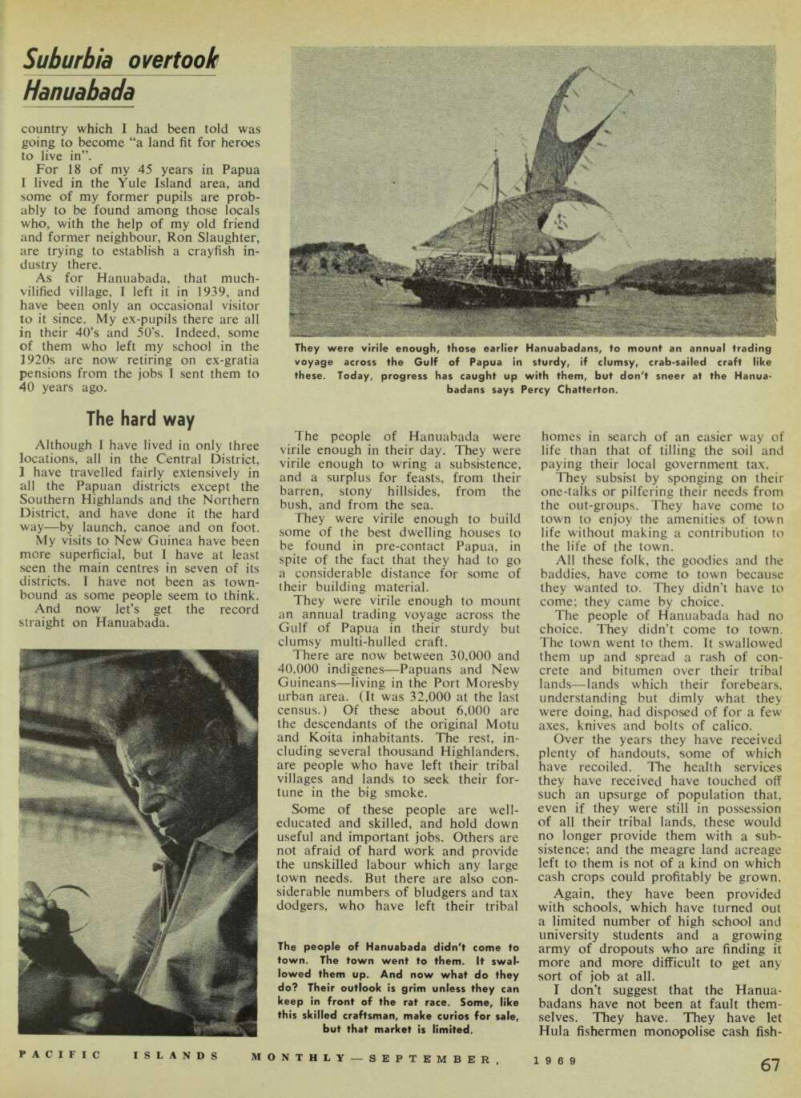 75
75 76
76 77
77 78
78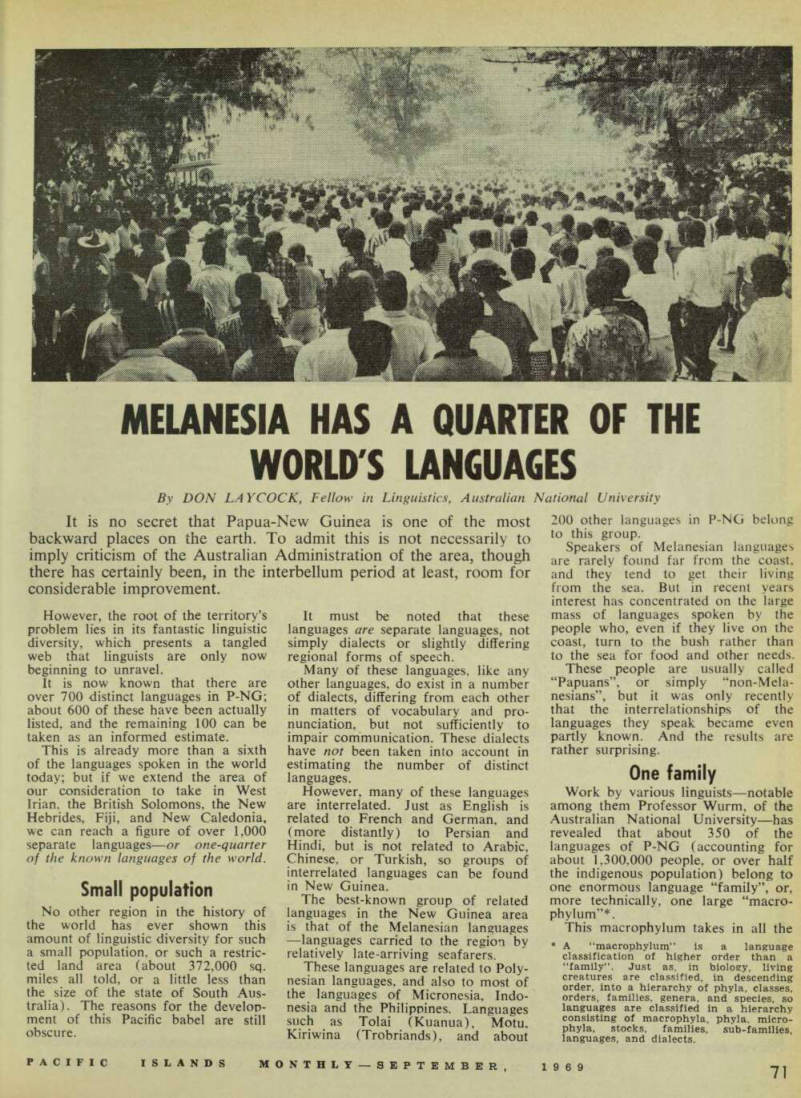 79
79 80
80 81
81 82
82 83
83 84
84 85
85 86
86 87
87 88
88 89
89 90
90 91
91 92
92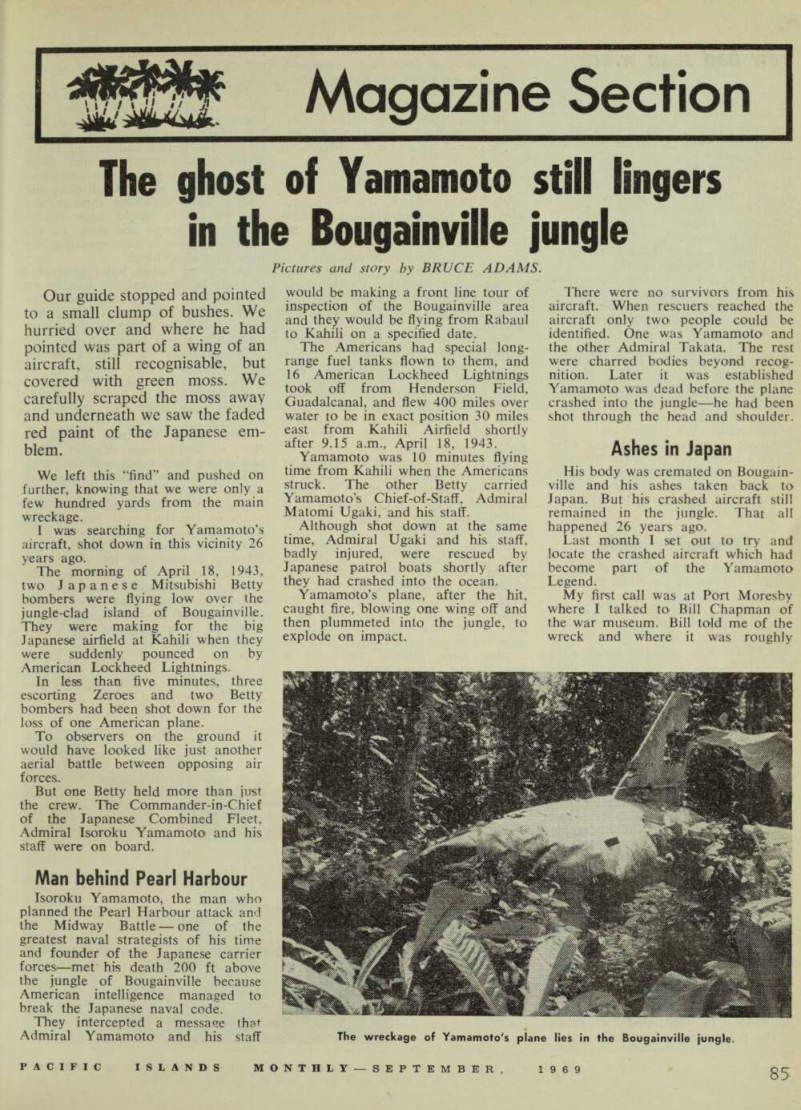 93
93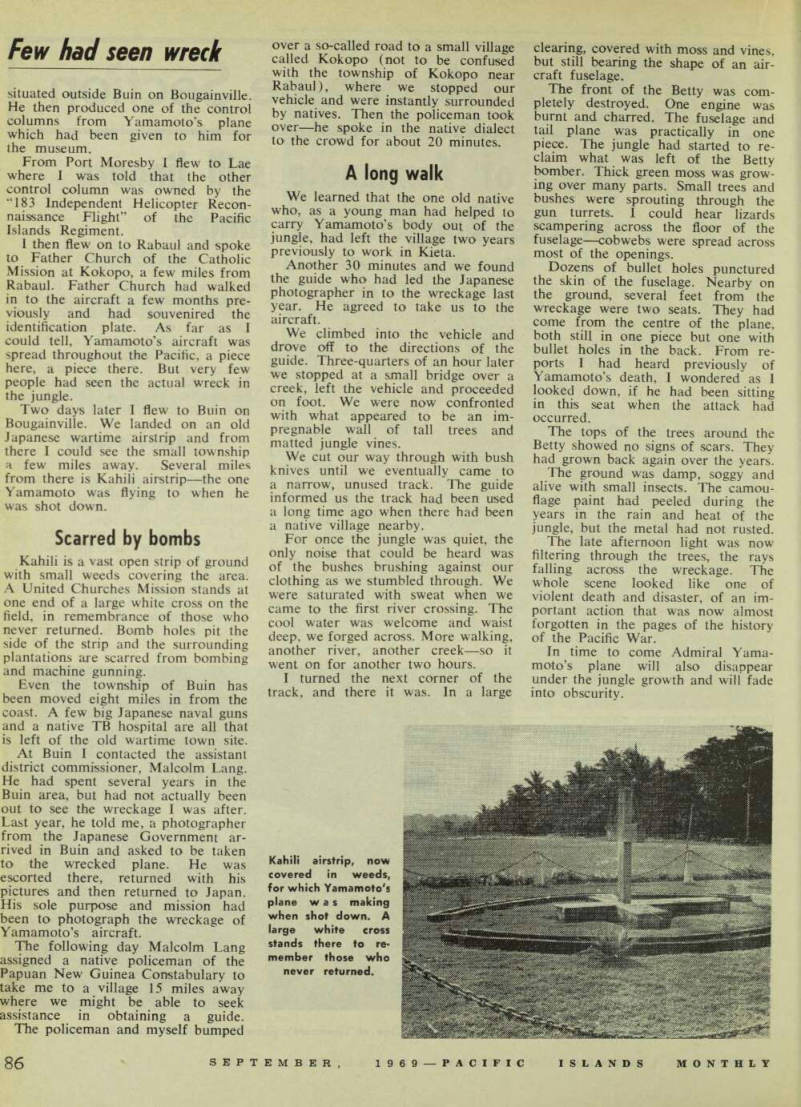 94
94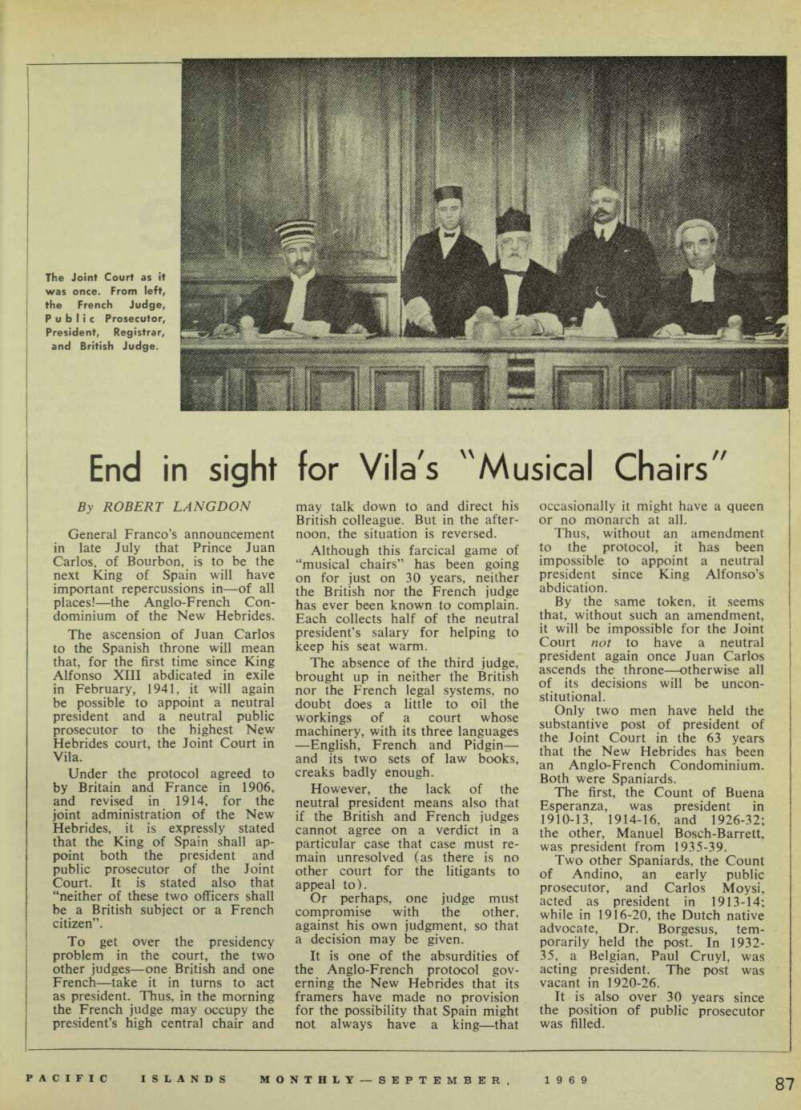 95
95 96
96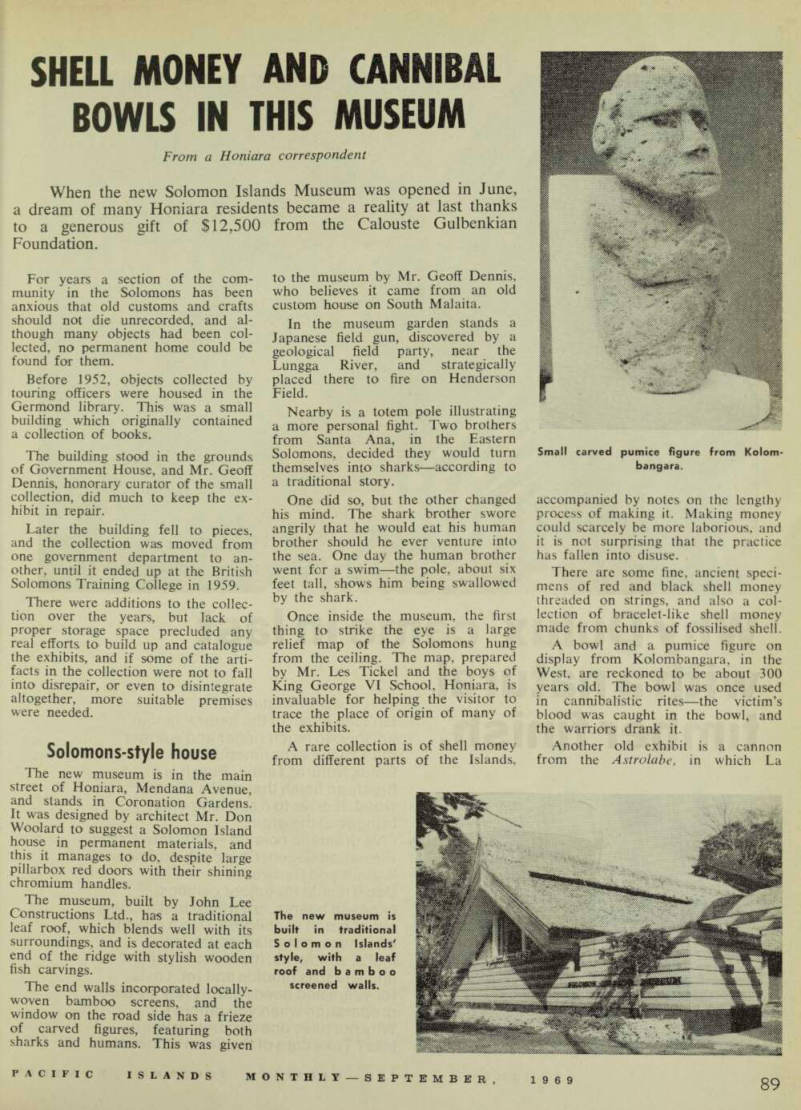 97
97 98
98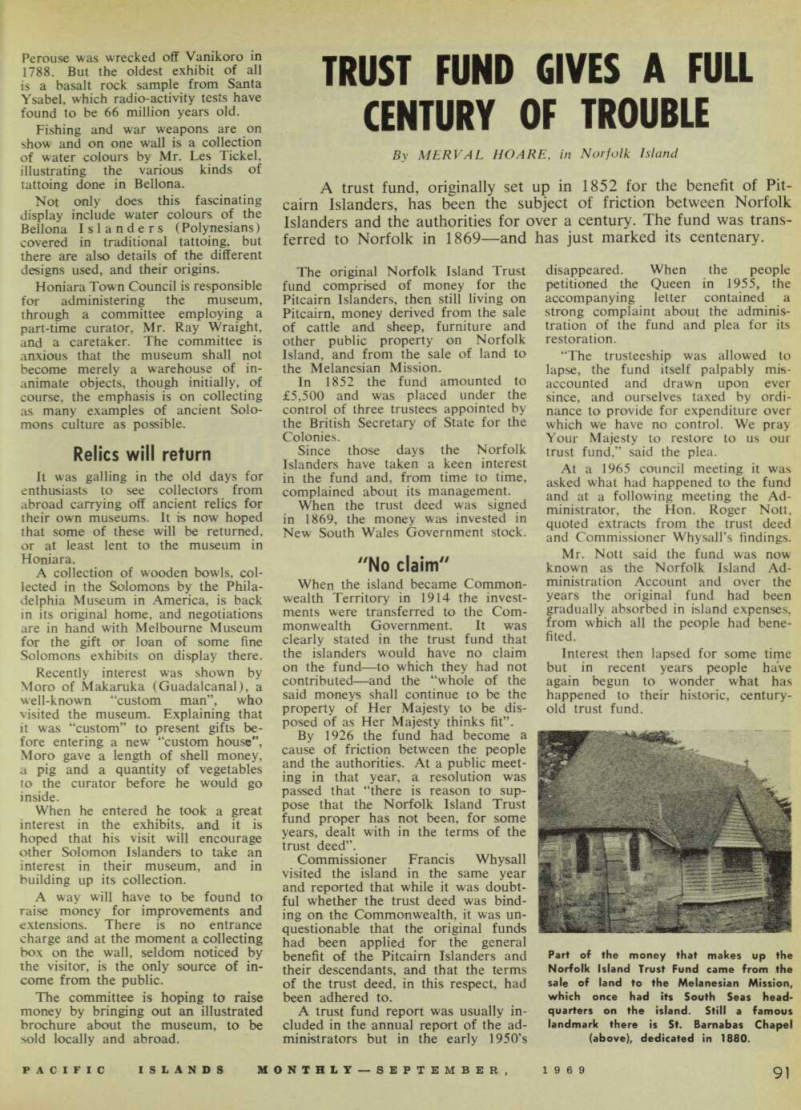 99
99 100
100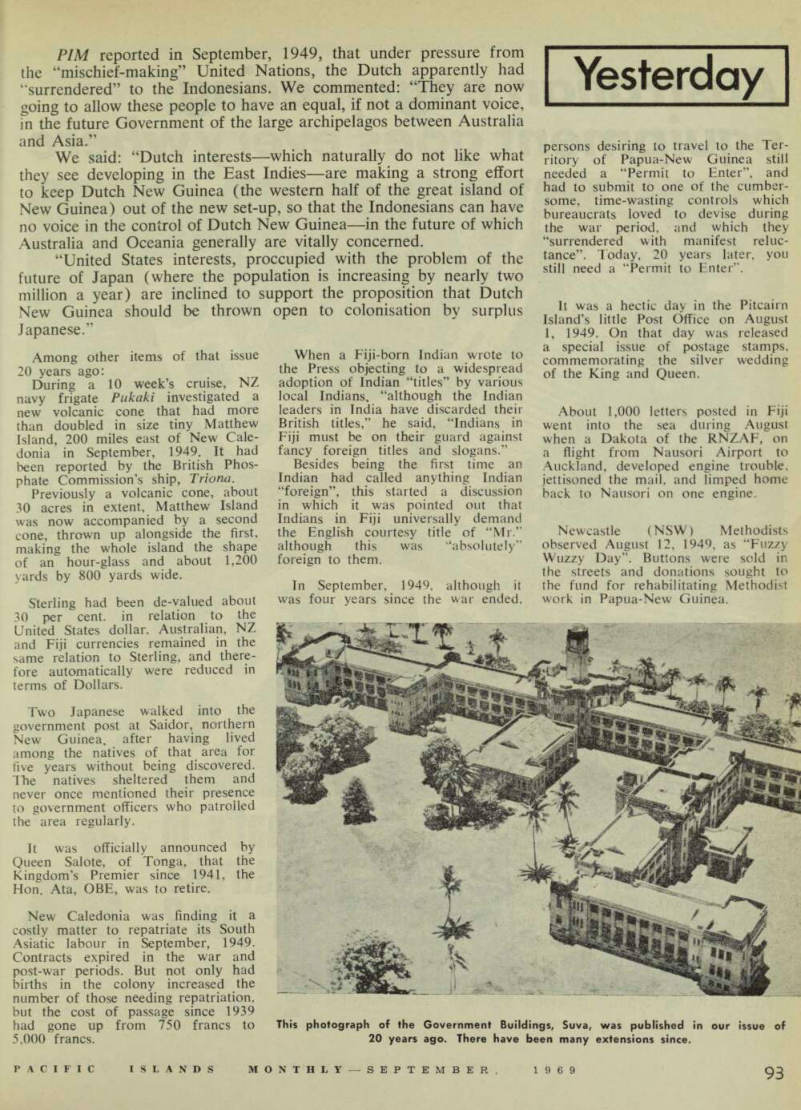 101
101 102
102 103
103 104
104 105
105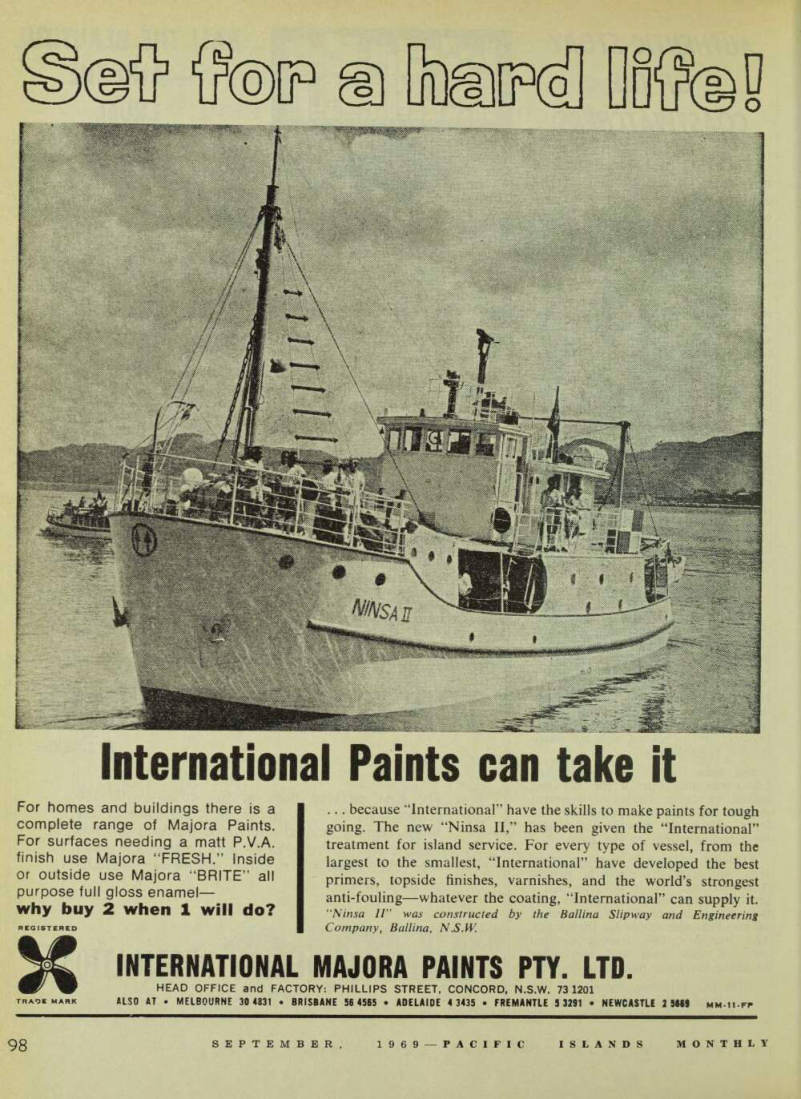 106
106 107
107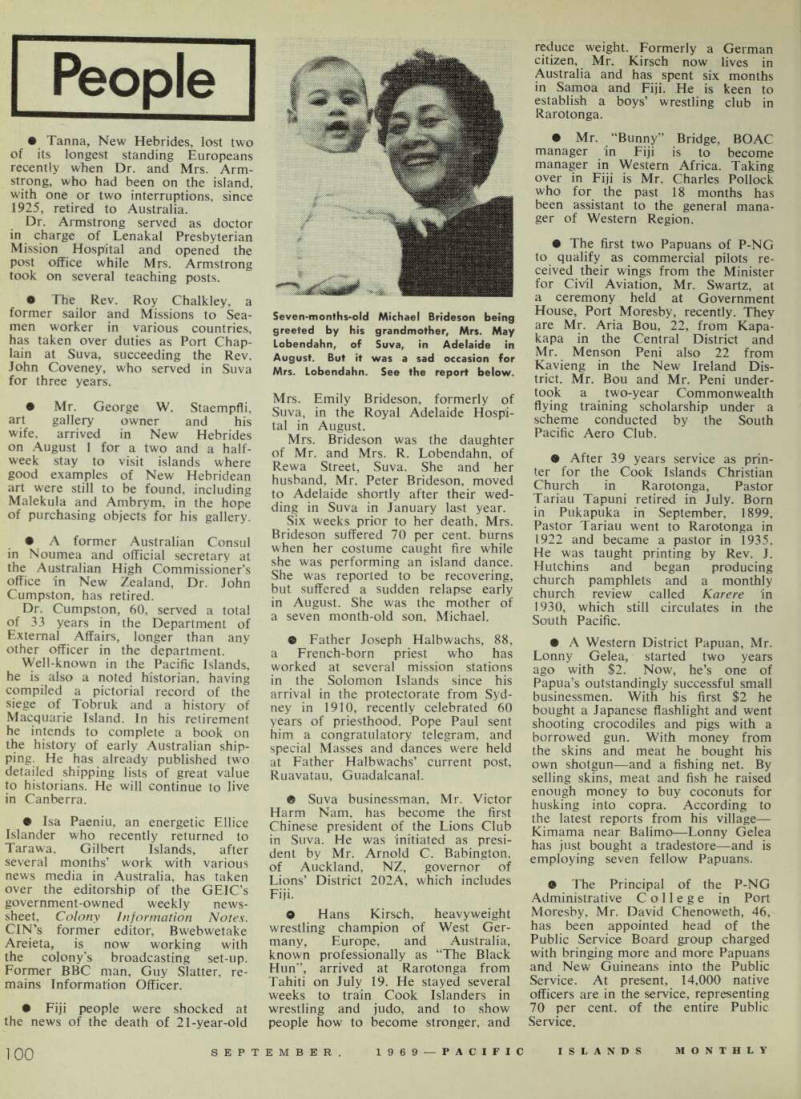 108
108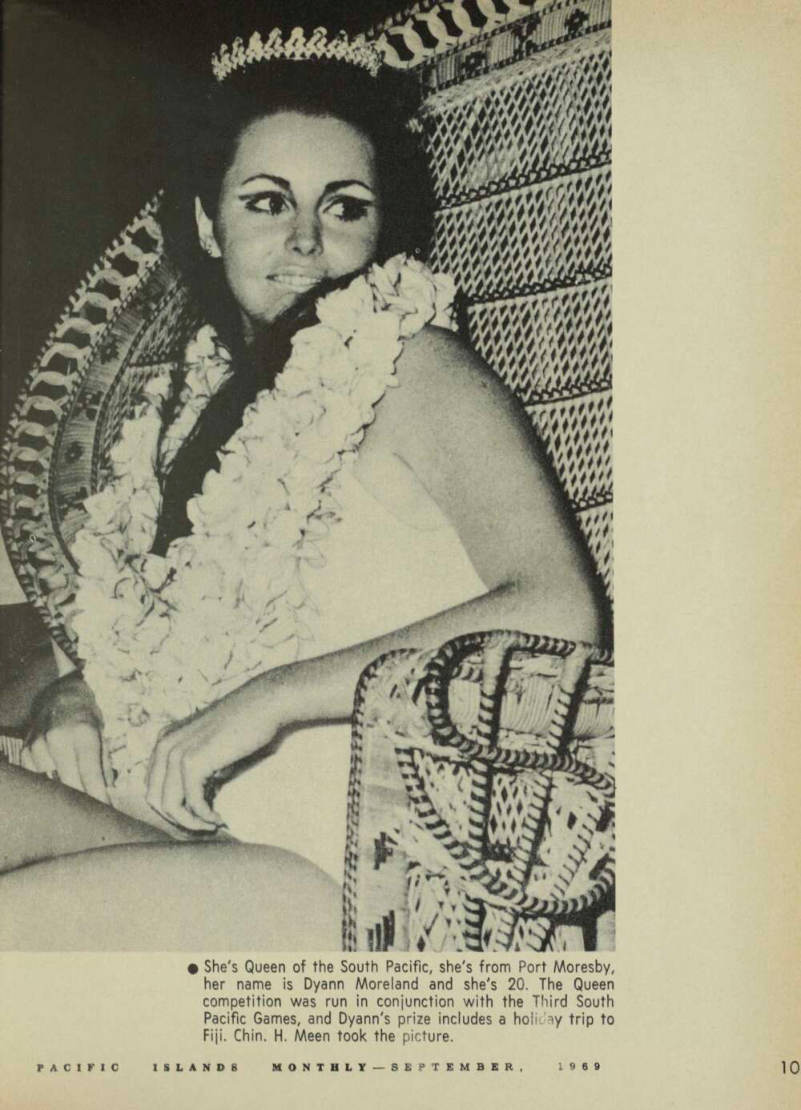 109
109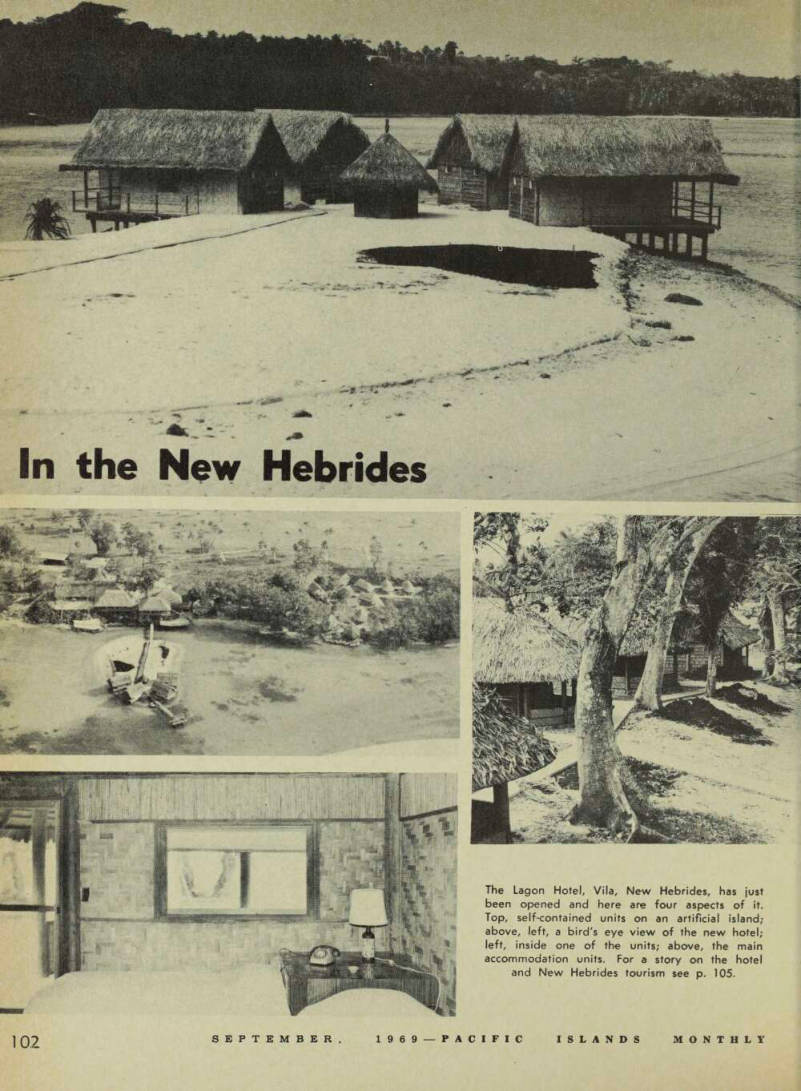 110
110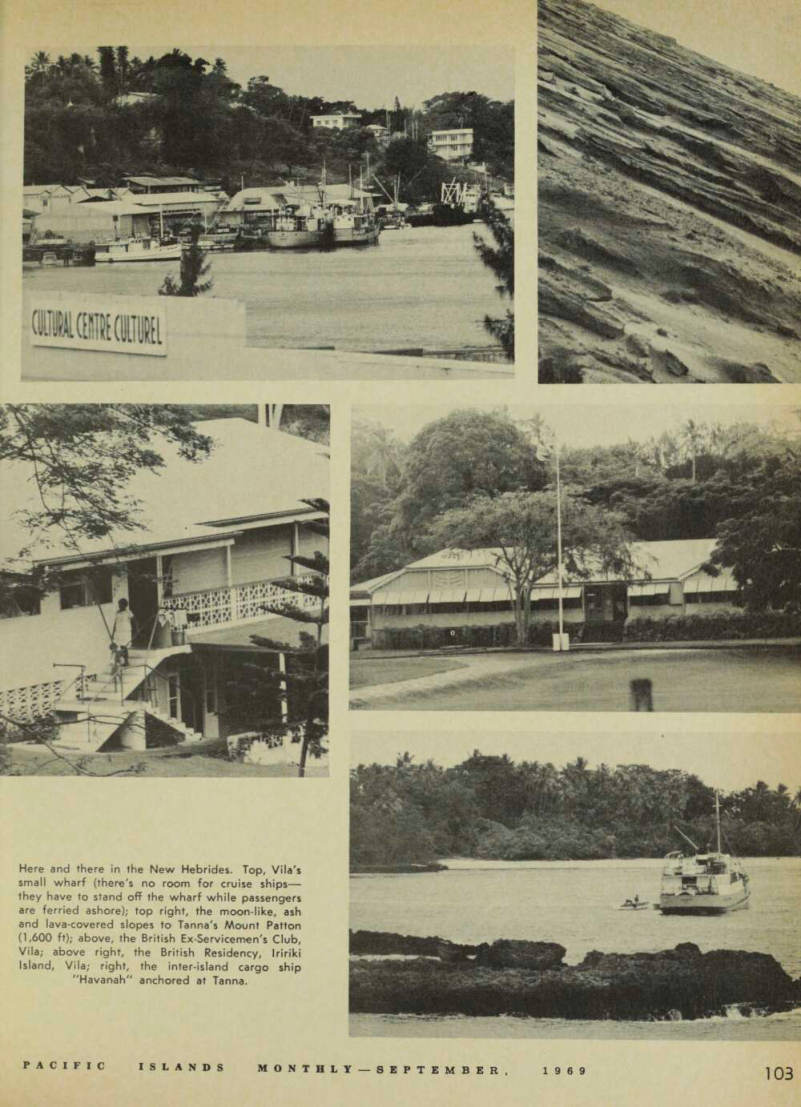 111
111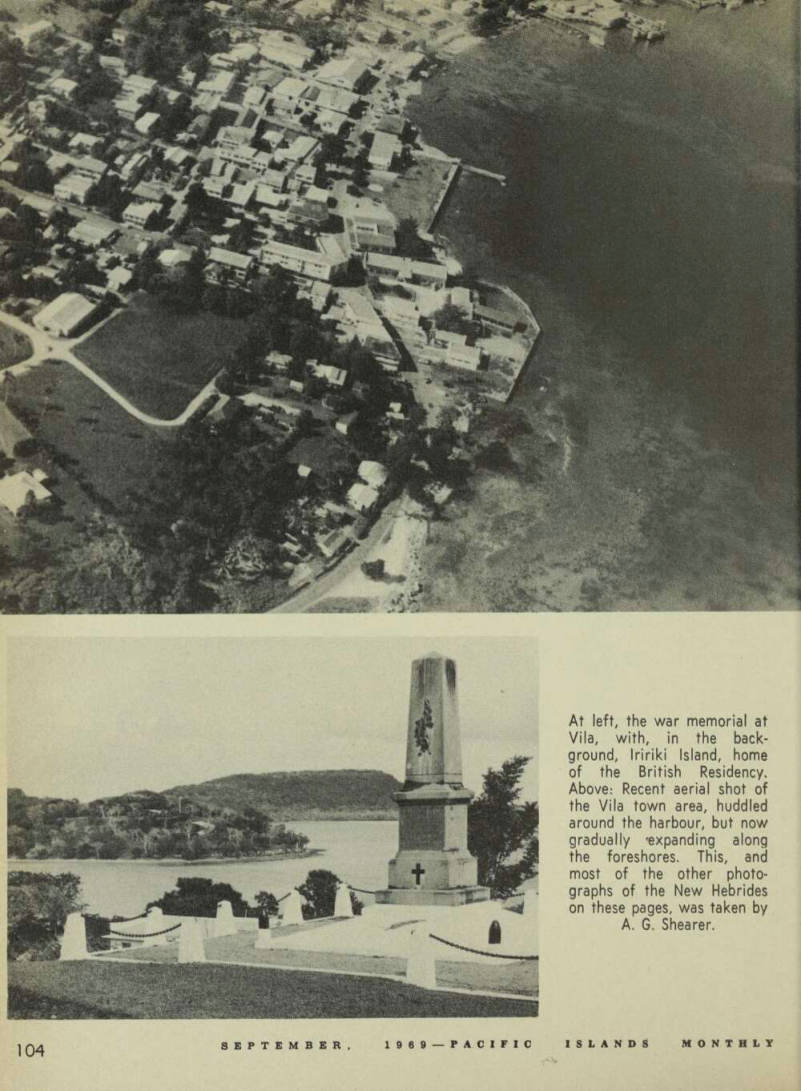 112
112 113
113 114
114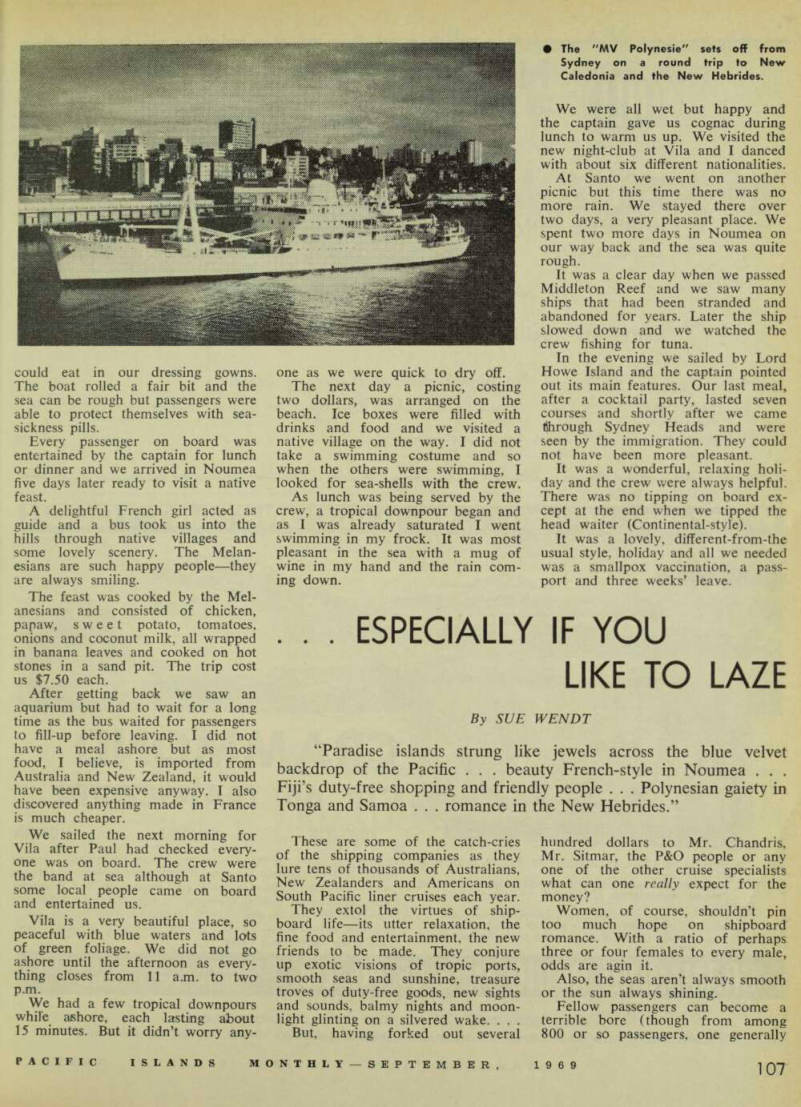 115
115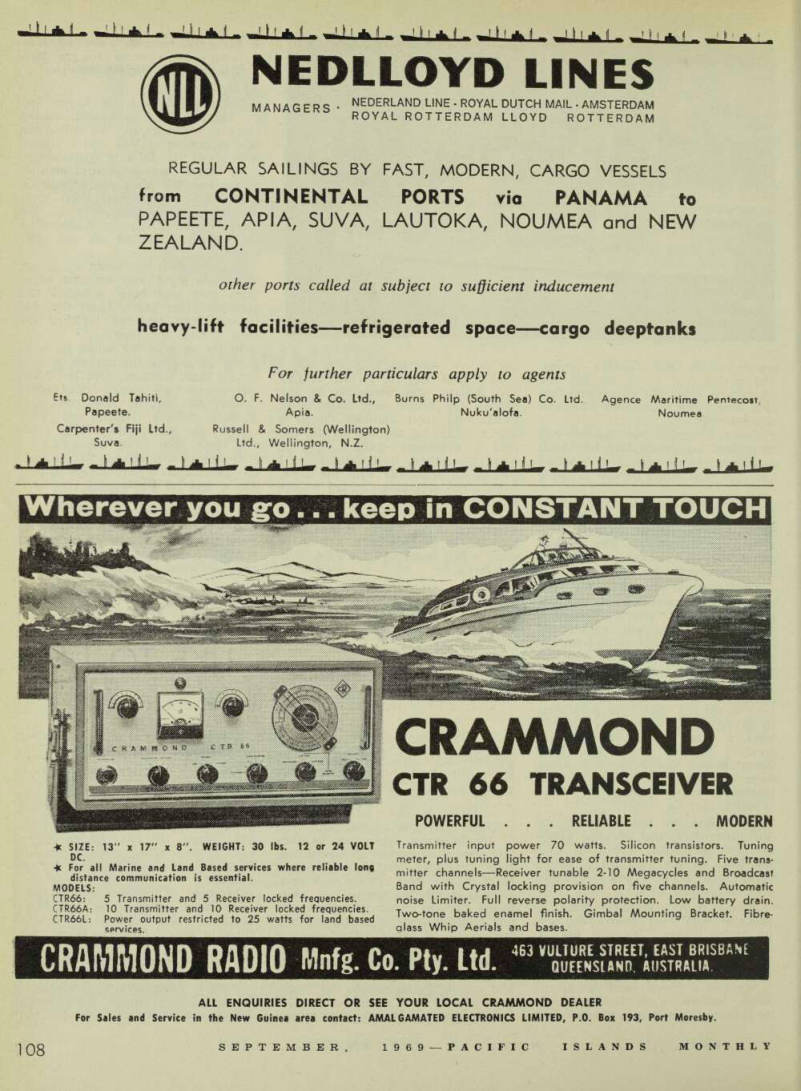 116
116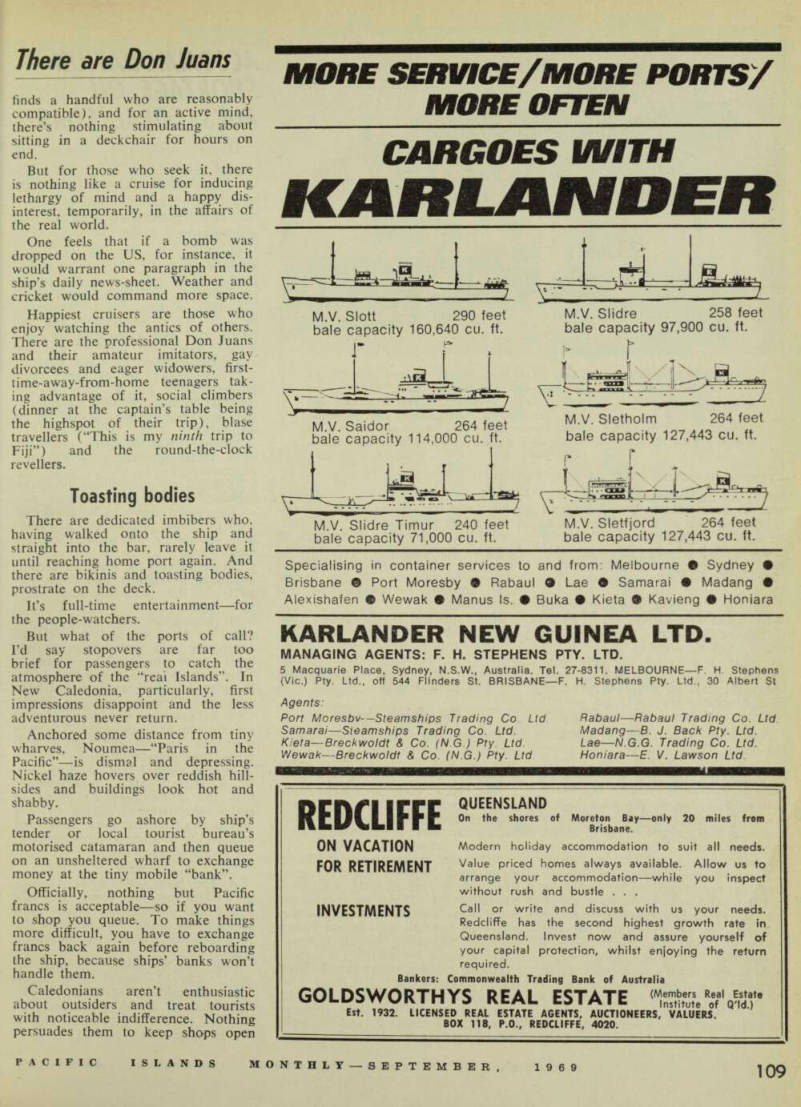 117
117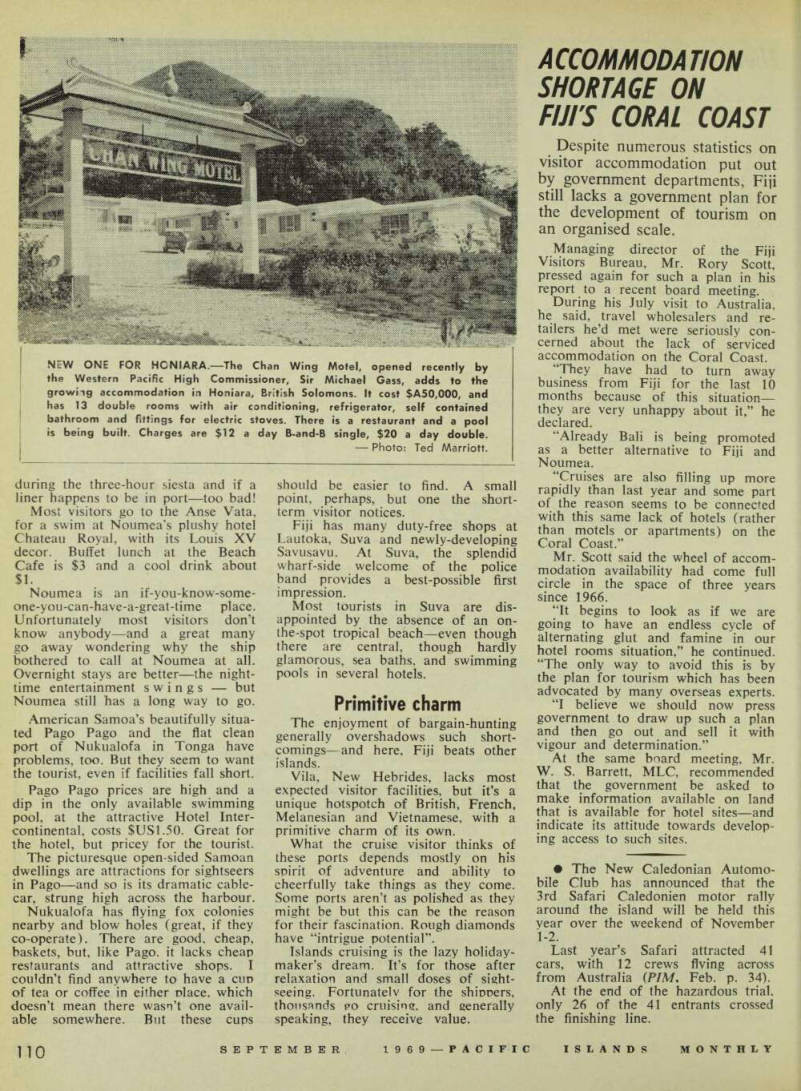 118
118 119
119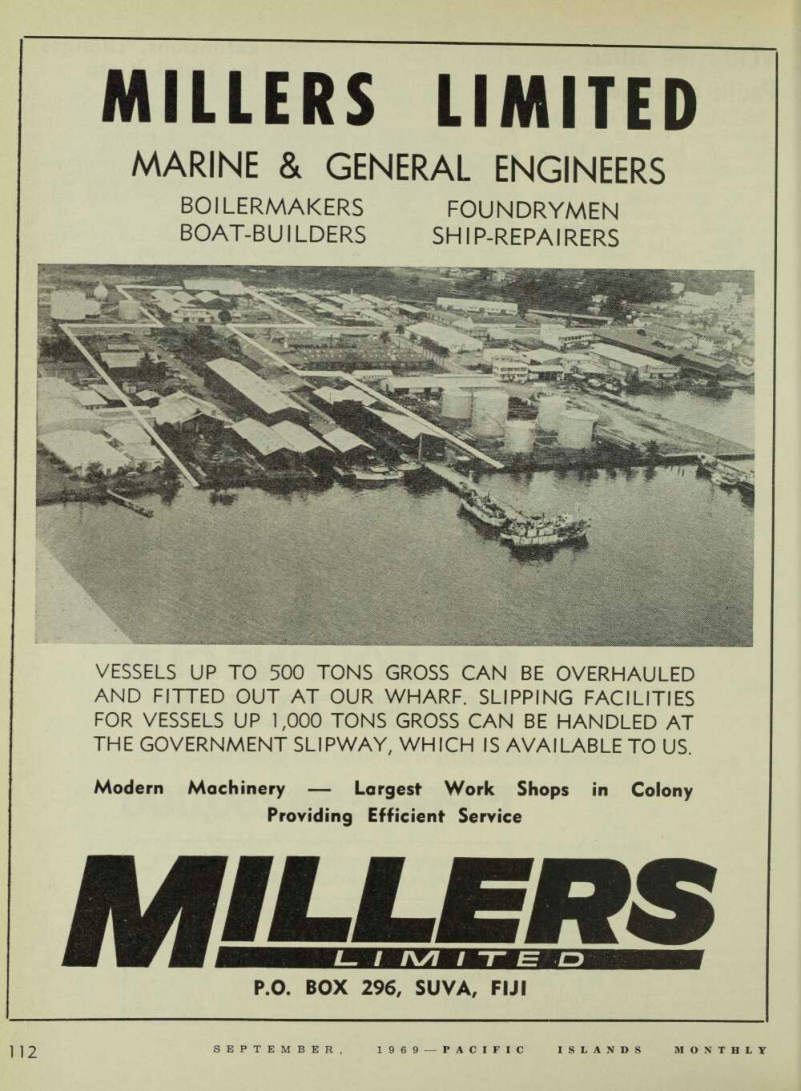 120
120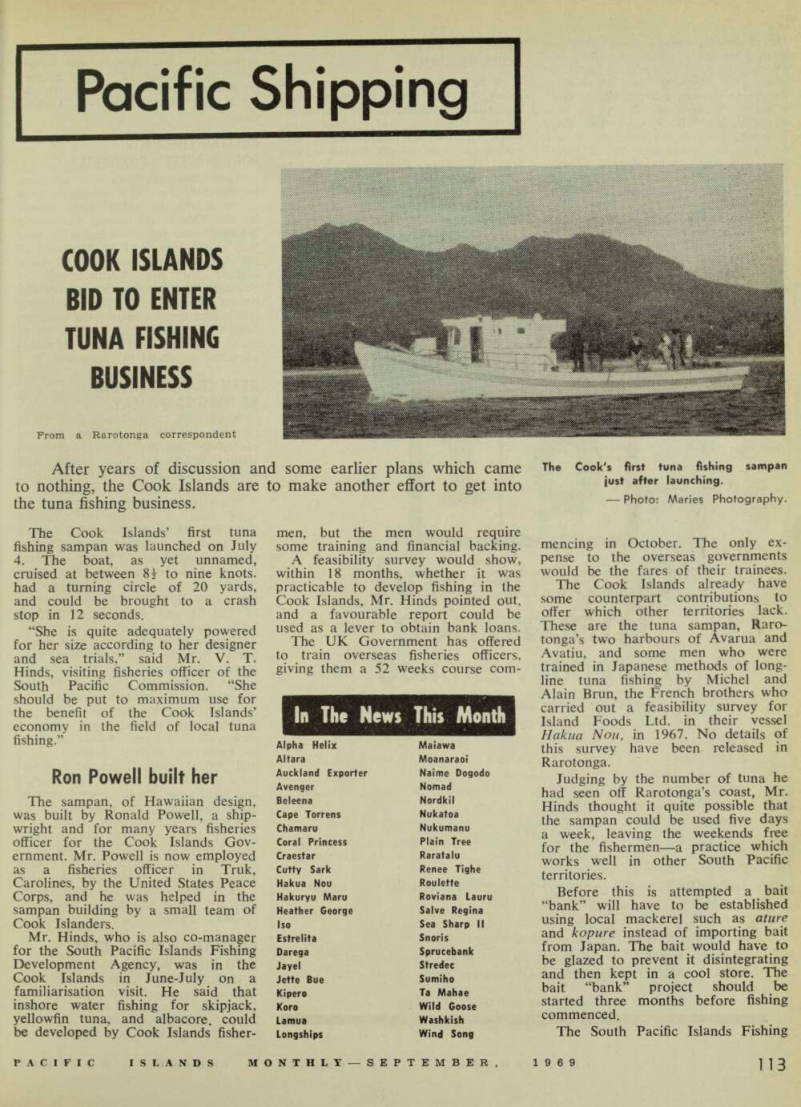 121
121 122
122 123
123 124
124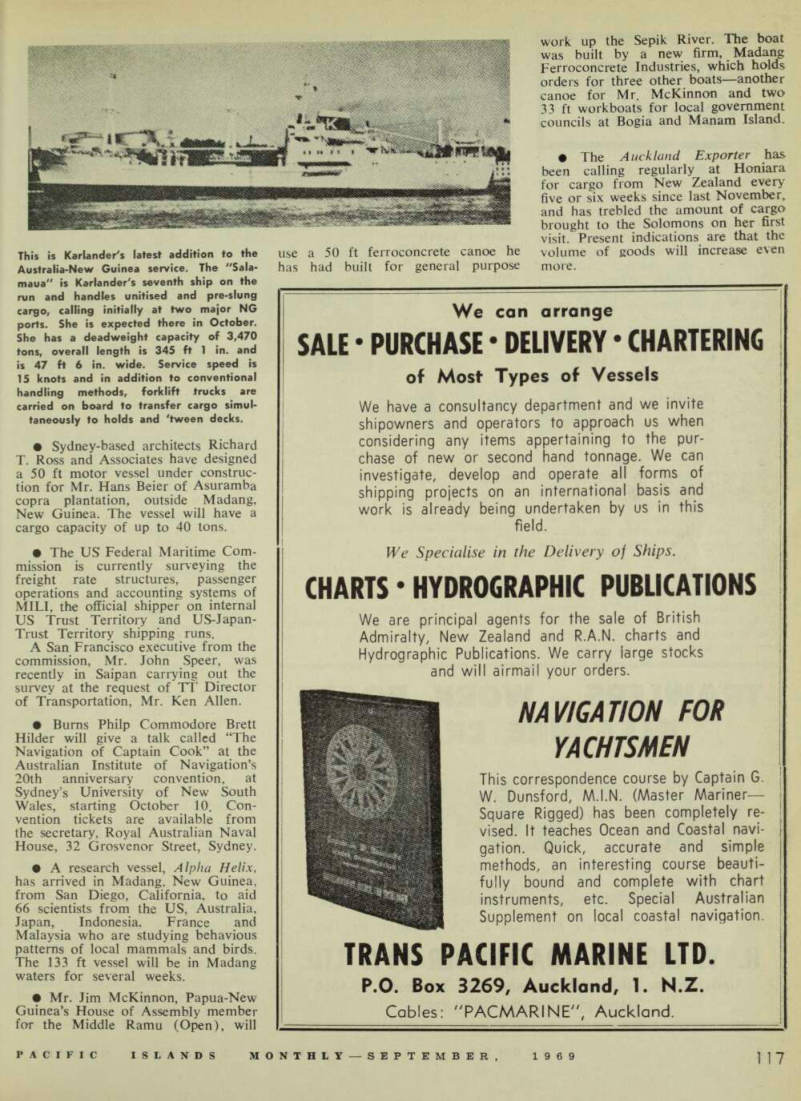 125
125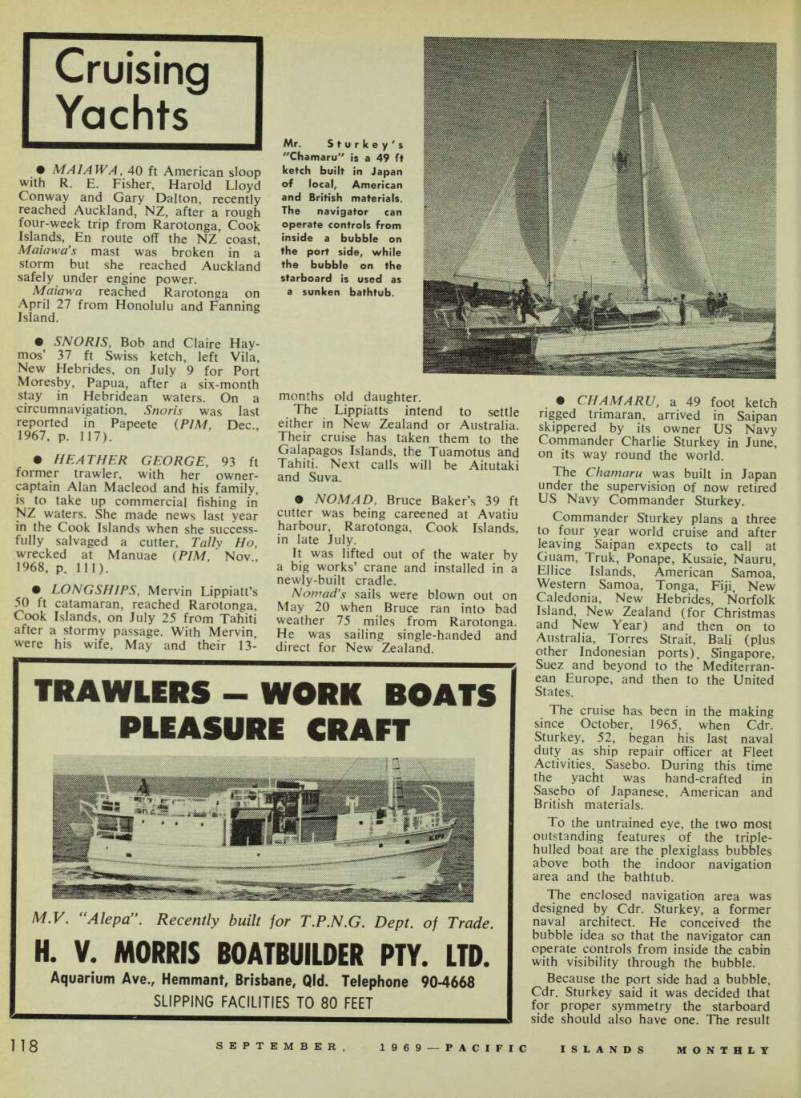 126
126 127
127 128
128 129
129 130
130 131
131 132
132 133
133 134
134 135
135 136
136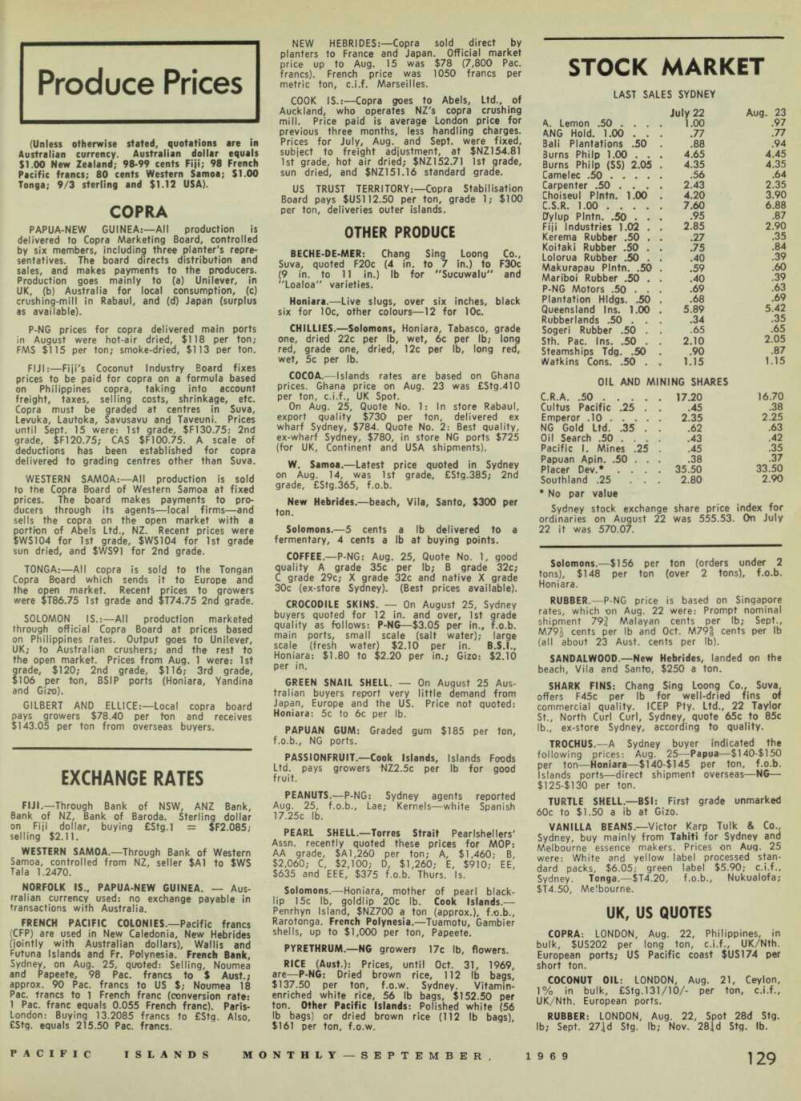 137
137 138
138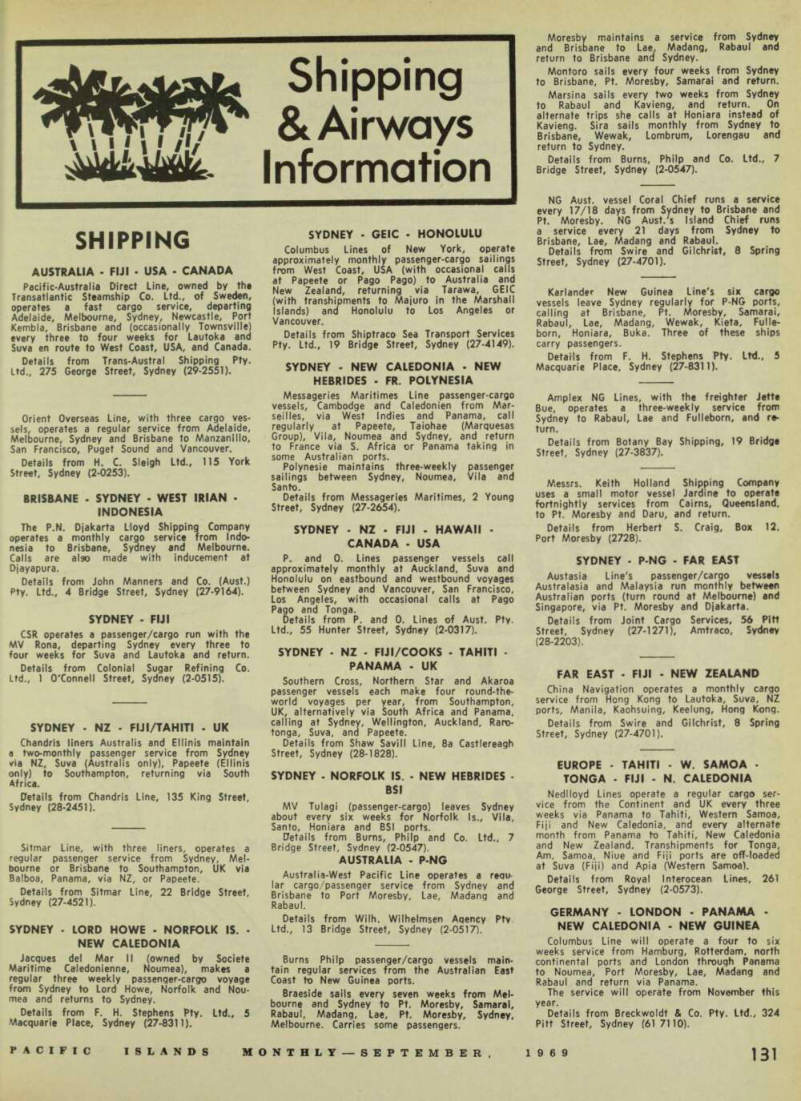 139
139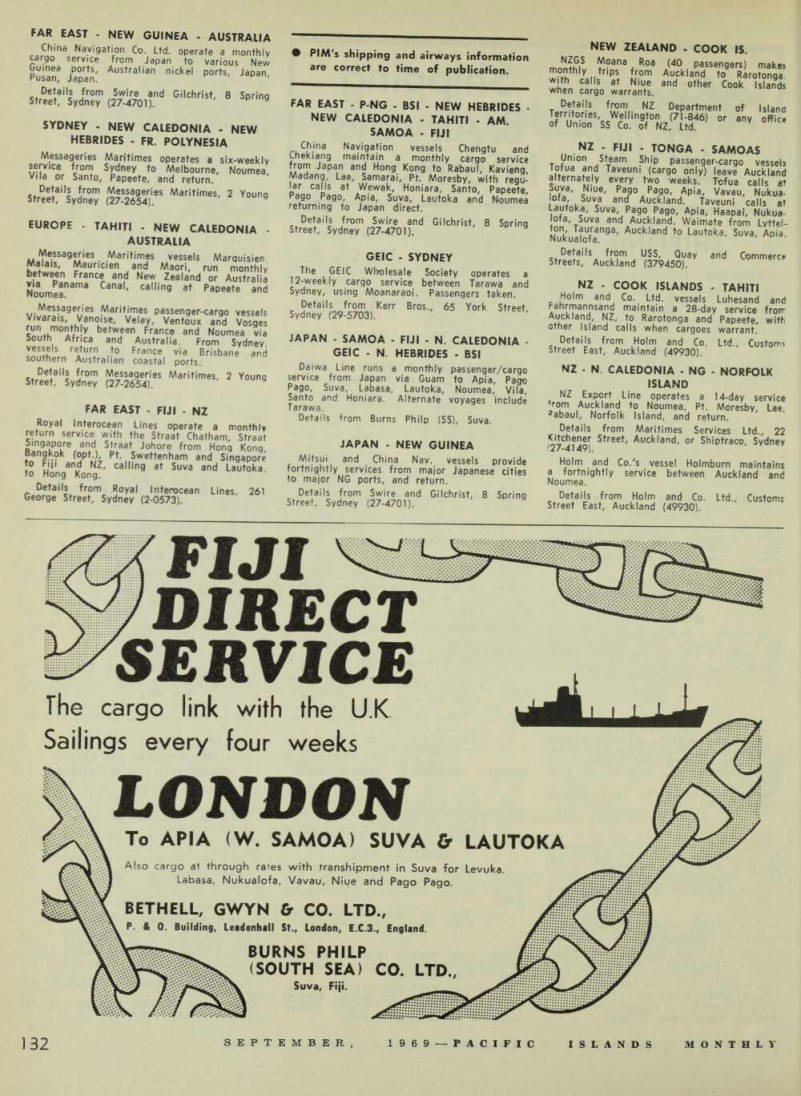 140
140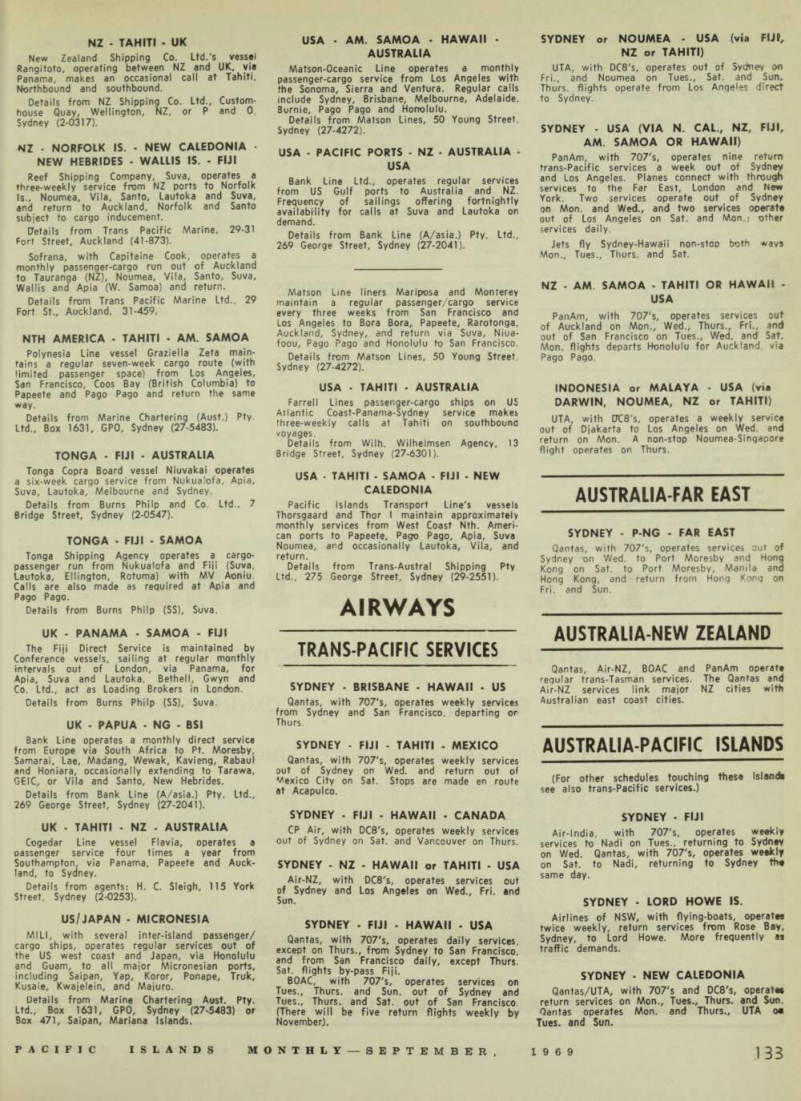 141
141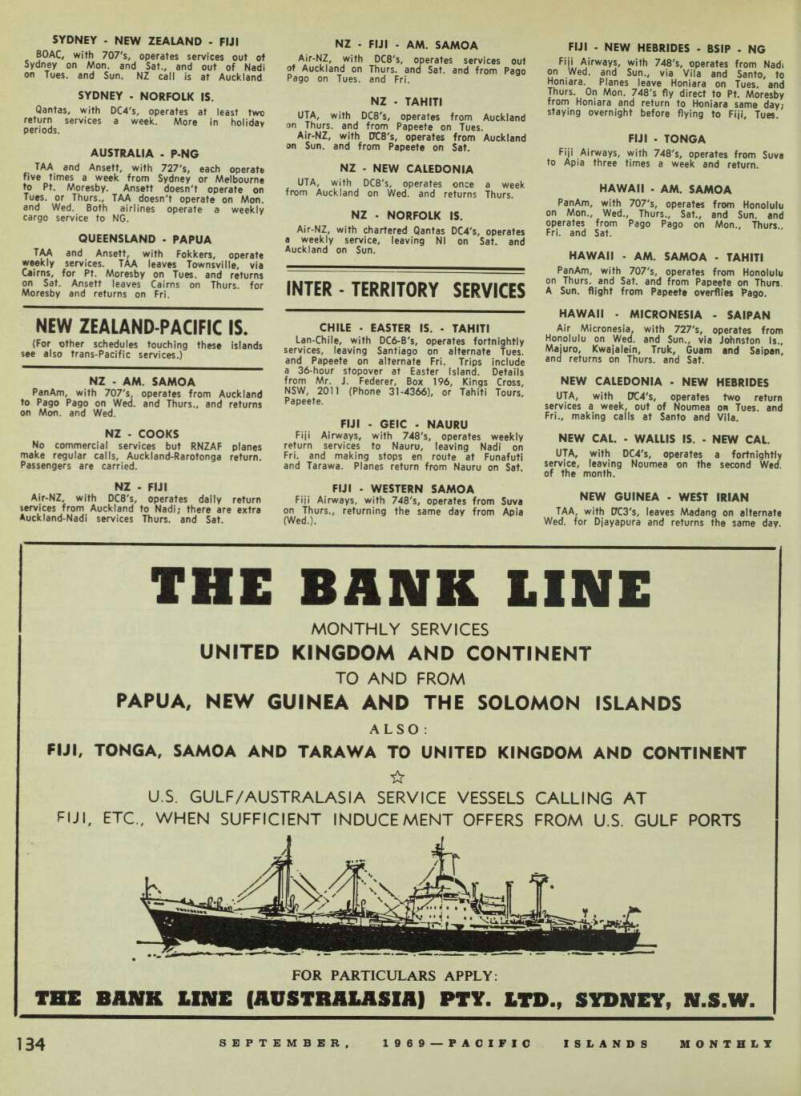 142
142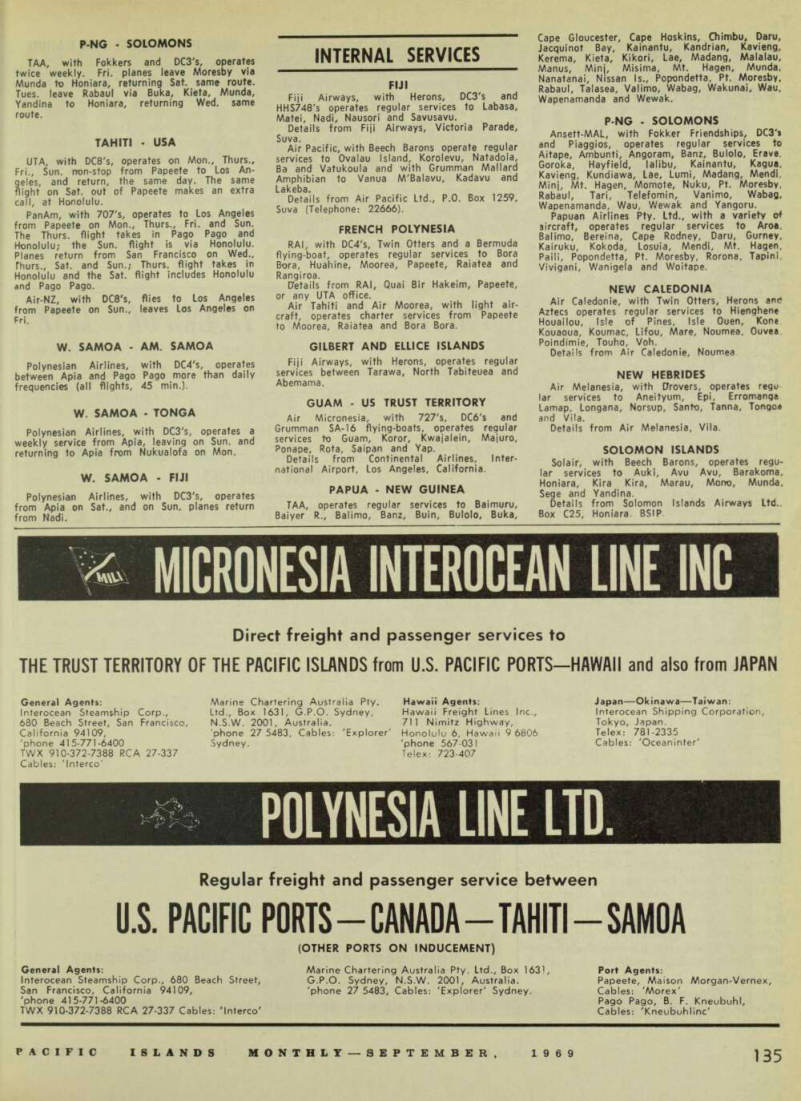 143
143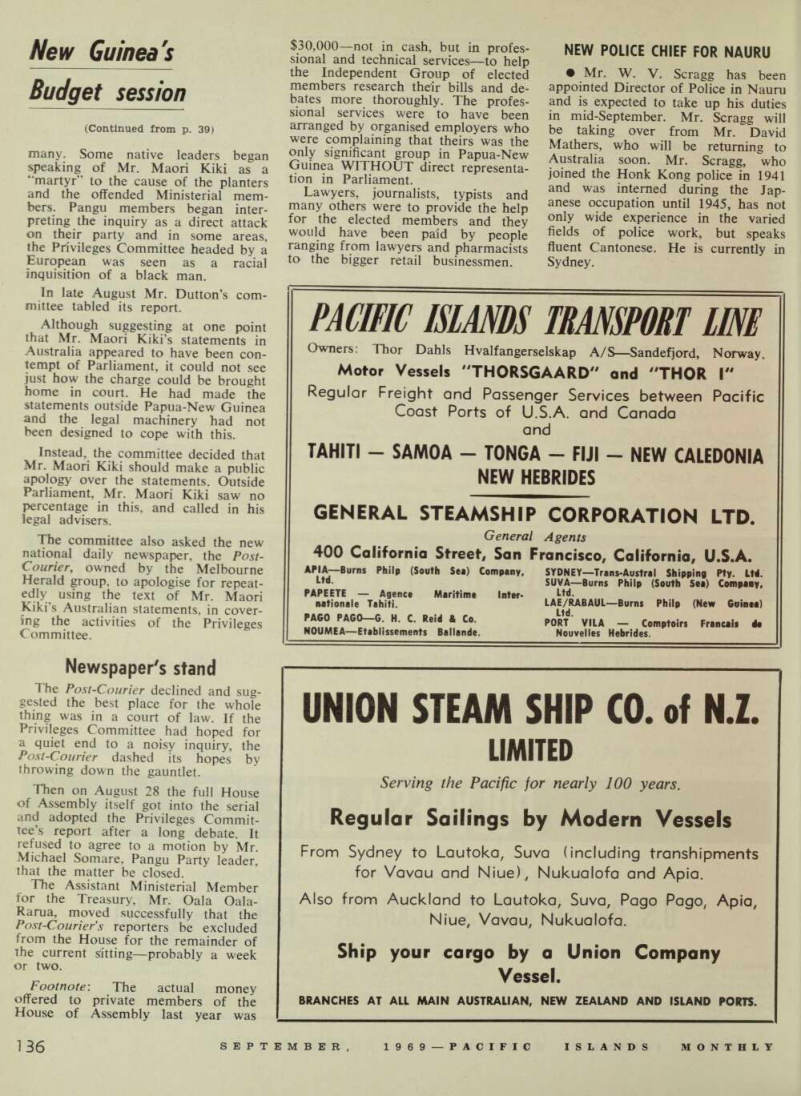 144
144 145
145 146
146 147
147 148
148 149
149 150
150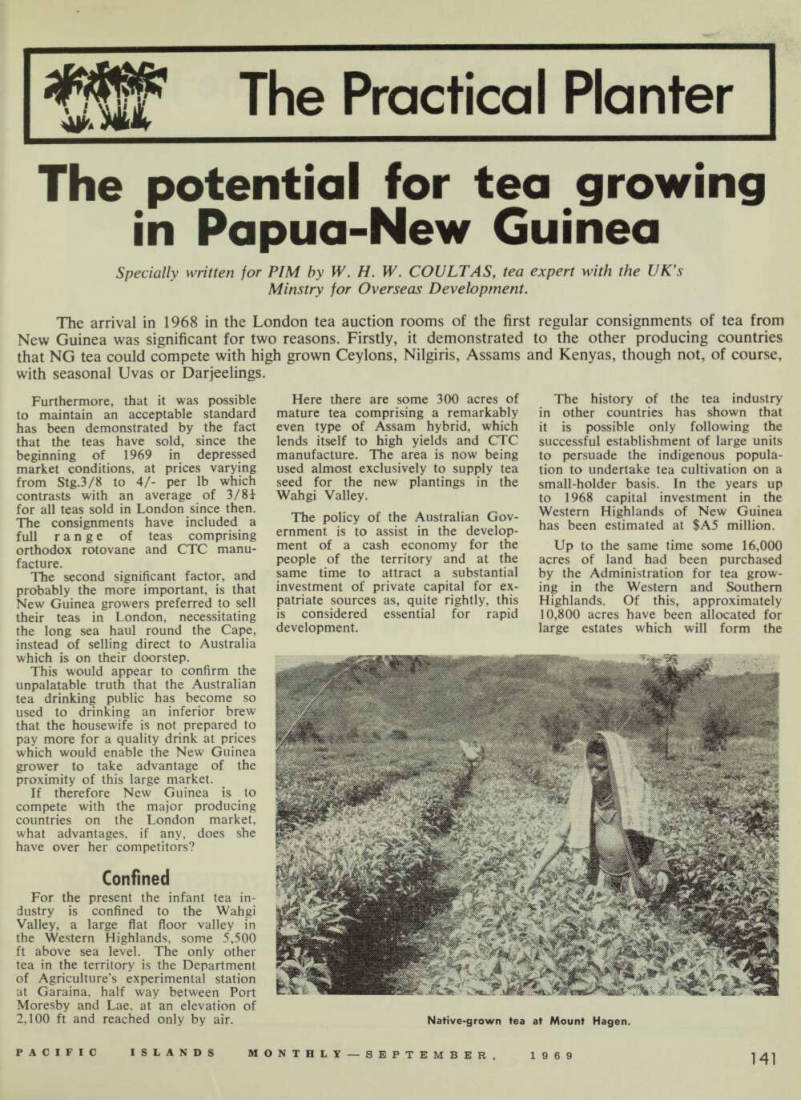 151
151 152
152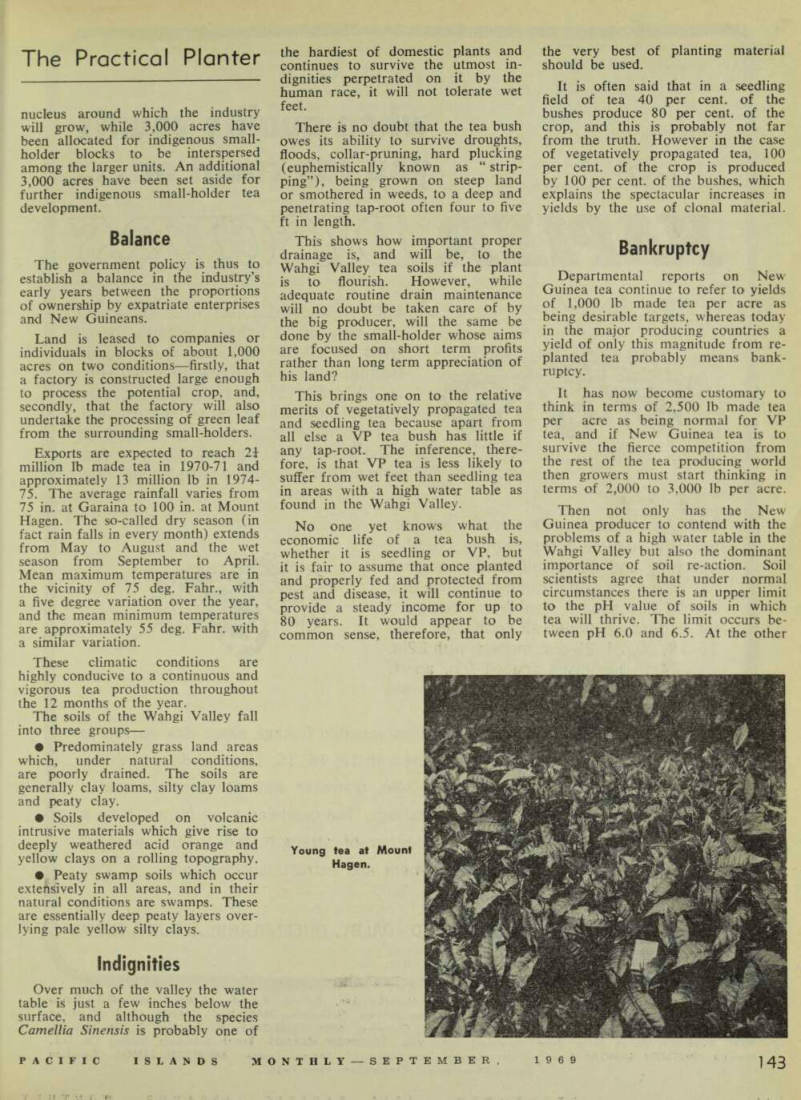 153
153 154
154 155
155 156
156 157
157 158
158 159
159 160
160 161
161 162
162 163
163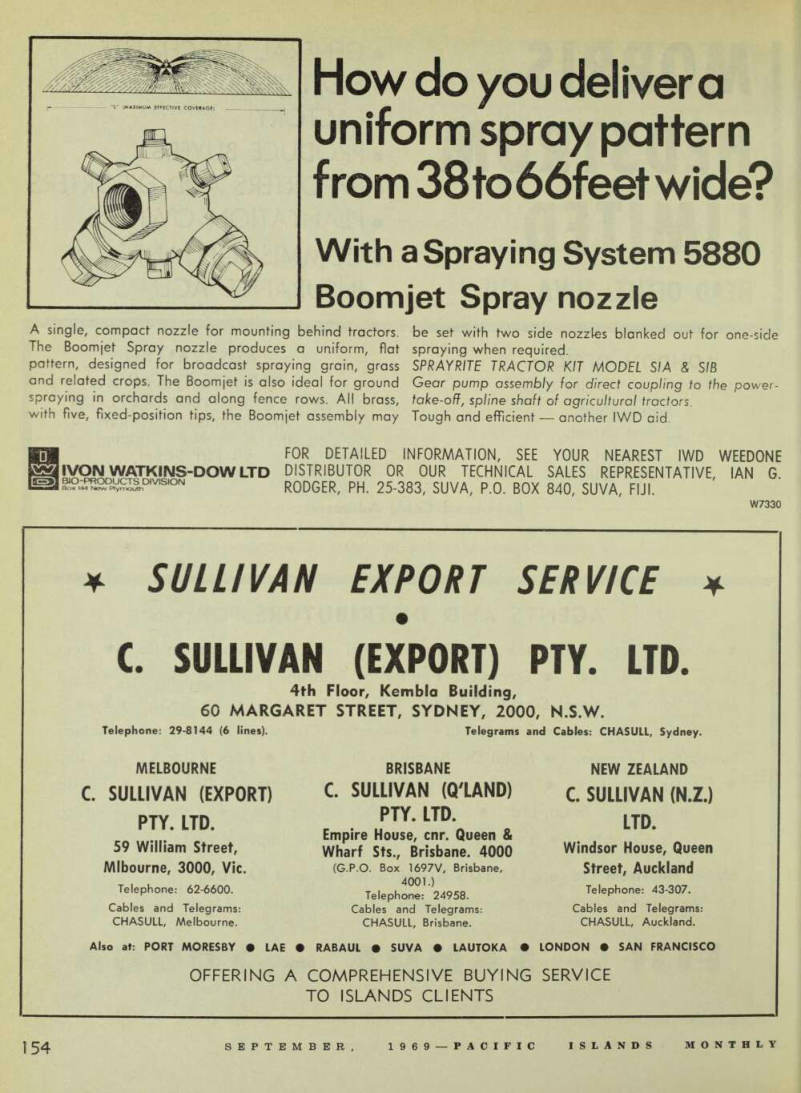 164
164 165
165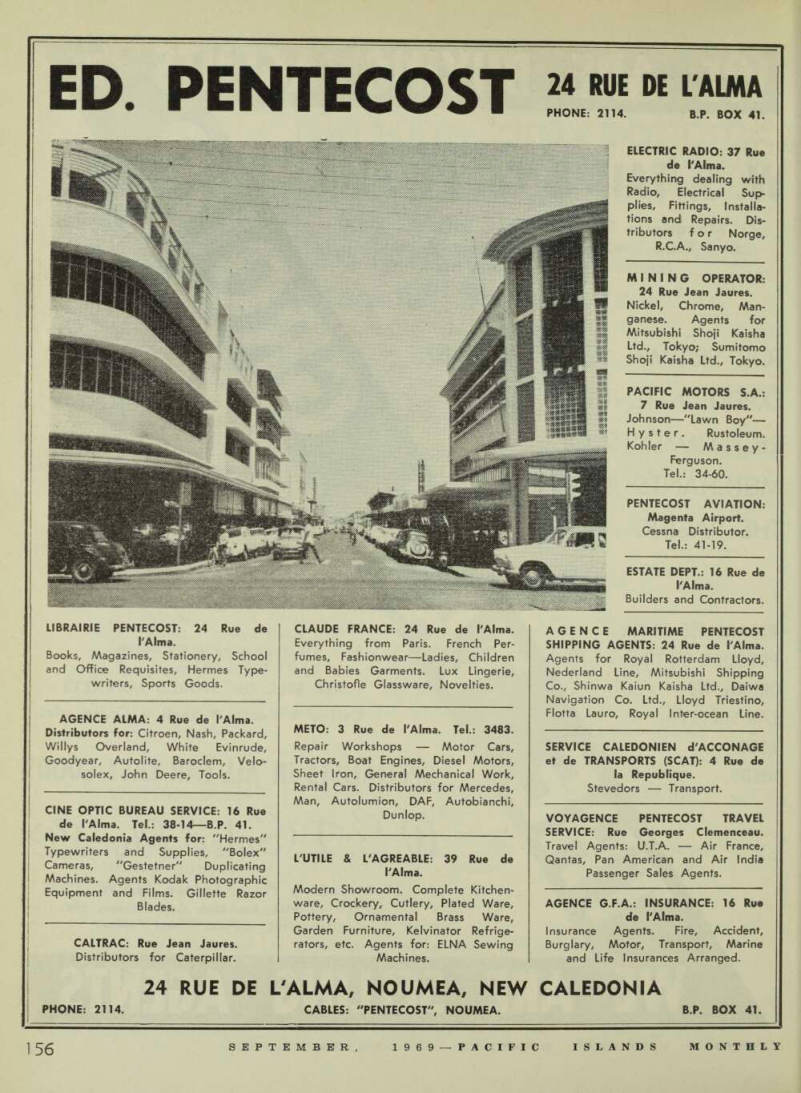 166
166 167
167 168
168 169
169 170
170 171
171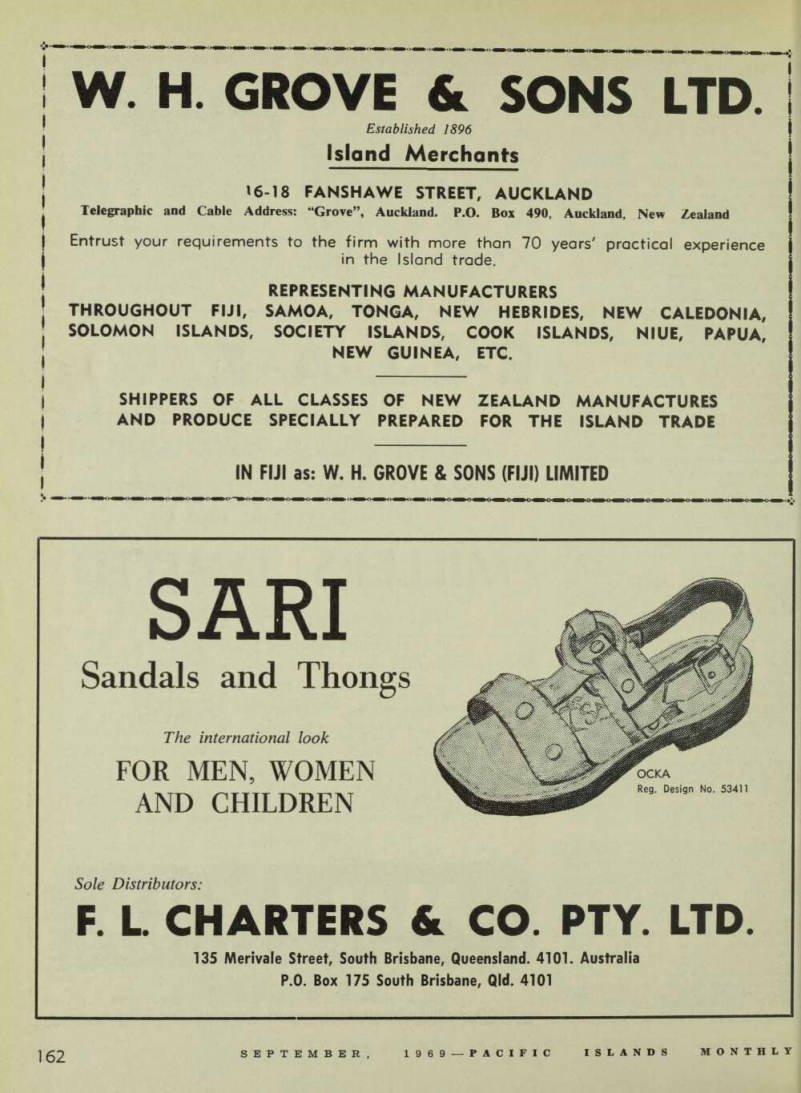 172
172 173
173 174
174 175
175 176
176