Monthly
Pacific Islands Monthly
iegistered at G.P.0., Sydney, for transmission by post as a newspaper.
November, 1968
News Magazine Of The South Pacific
“ Ans?T Wow. • I™™*?™
Our Cover
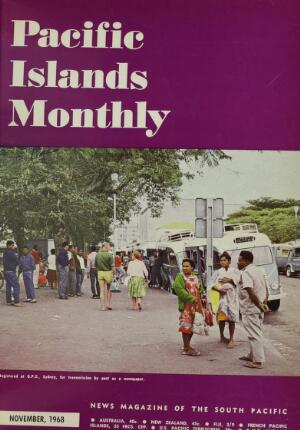
The street scene is i Noumea, French New Cah donia, where the mini-buses i blue and with roll-down blina on all windows are among th most popular means of tram port. And where the Mothe Hubbard dress, as worn by th two local ladies in the fore ground, is still popular femal attire. Noumea is the head quarters of the South Pacific Commission which held ai important Pacific-wide con ference in October. What hap pened at the conference is dis cussed in this issue. The Noumei scene was photographed b: Bruce Adams.
Advertisements & other items, pp. 2-4 (4 items)
November, 1968 Pacific Islands Monti
fly TAA
Most people
V») m i
—they've got the best connections
in the Territory and Australia!
New improved TAA services. From Port Moresby to and from all main centres and through the Highlands a greater spread of services with better connections throughout the Territory. From Port Moresby, to and from Australia, fly TAA’s ‘Bird of Paradise’ T-Jet service. Contact your Travel Agent or TAA: Port Moresby 2101. Lae 2311. Madang 2478. Rabaul 2567. Goroka 8. Mt. Hagen 4. Wewak 103.
Fly TAA the Friendly Way
WM M
■ i 4 316 748/68
I
Small-Portable and
Just Great!
life around the house will be much more complete, if you have at least one X-V Stereo. It's a very handy size, with the same capabilities for complete enjoyment, as the permanently positioned larger units.
For your family pleasure or your own relaxation, you can never go wrong when you buy an X*V.
During your shopping excursions, look for this great stereo. mm 1 2 Pm V \K‘ *-%<y f% % % \ PM*.
J M-9 ; :i
X-1800SD
AKAI
mow
fTi AKAI ELECTRIC CO., LTD
HIGASHIKOJIYACHO OHTA-KU TOKYO JAPAN
» w H M.JIYACHO OHTAKU TOKYO JAPAN “Vur"*Km^s^lh r si“\r y LM“ - s2« t, C phiK'™ S ,h d SI ro S W „H NEI r Z , EA . LAN “,i u S. GIa D usluss o C0 ' 187 ' 189 Hereford Street, Christchurch. Fill Burns Philp (South Sea) Co., Ltd Apia Western Samoa NORFORK ? U p rnS r* h J* P J S °« uth Sea) Co - Ltd •> Pa 6° Pago, American 1 TTH 6 , .v d ßi,„ R rp o^fso U T c E I s ; 0 ., B ° x papeete r A s u "o u sv N ers u o n c r-f.r, a i;^.^ e,y Box c i O oS.. ,s P^rsi^
when quality counts
you can count 0n...
NAPIER
190. A wheeled offset disc implement with parallel lift action. Suitable for all types of tillage work, quick soil conditioning, ploughing, stubble-mulching, etc. 16, 18, 20, 24 and 28-plate models.
Hydraulic or manual ratchet control available on all models. Disc gangs can be lifted clear of ground for turning or transporting. Available with either 22in. or 24in. discs. 050. An all-purpose disc implement particularly suitable for ploughing, stubble mulching and quick soil conditioning. It has maximum underframe clearance and a solid 2in. square steel frame designed for endurance under all conditions. 14, 16, 18, 20, 24, 28-disc models, with 22in. and 24in. dia. discs spaced 9in. apart.
The 050 can be operated in squadrons of 2. si' - 040. This versatile linkage offset disc harrow is available with 12, 14, 16, 18 or 20 discs of 20in., 22in., 24in. diameter and with precision-sealed ball bearings. The overhead gang frames have a high degree of strength and feature ease of adjustment and extra trash clearance.
NAPIER BROS. LIMITED-DALBY, QUEENSLAND; ALBURY, N.S.W.
PAPUA AND NEW GUINEA; Boroko Motors Ltd., Port Moresby, Lae, Madang, Rabaul and Mt. Hagen. FIJI: Lautoka. TONGA; Morris Hedstrom Limited, Nukualofa. MARIANAS ISLANDS: J - & Motor trf U VHa^SOLOMON Isle Motors, Okinawa. NEW CALEDONIA: N. Johnston & Cie, Noumea. NEW HEBRIDES: Burns Phi Ip (New Hebrides) Ltd., Vila. SOLOMON ISLANDS: British Solomons Trading Co. Ltd., Honiara. WESTERN SAMOA: American Development Corporation of Western Samoa. AMERICAN SAMOA: American Samoa Development Corporation, Pago Pago.
Islands Monthly November, 1968
2
NOVEMBER, 1968 PACIFIC ISLANDS MONTE
This Issue
lAL re cuts still possible 26 or W. Pacific post 28 meeting report 30 omes of age 31 ler's letter 36 to leave NZ? 51 lOAC jets in 1969 53 for sea current 105 -ine ships to stay 107 Carpenters profit 121 ''s Fiji Restaurant 153
Can Samoa
on newsletter 39 urism future 45 got to be impressed 60 >hanel, radio DJ 150 chief's problem 151
iitcher on sailing 153
Islands
ing of Aitutaki airstrip 51 to Penrhyn 89 Chambers dies 159 Serna dies 159 tensions ease 27 agreement 27 3f "Tui Lau" loss 29 en" inquiry ... 29 new traffic scheme 38 uinea air services 51
Big Walu caught 57 Sugar cargo record 107 Reef blasting continues 107 Work for "Taranui" 107 Yacht race—record entries 108 Decimal preparations 121 Trade figures up .124 Rice growing efforts 145
French Polynesia
Statue for Pomare V? 37
Gilbert And Ellice Islands
Air services next year 55 Shipping future promising 101 Japanese ships next year 103 Ocean Island phosphate talks 116
Lord Howe Island
Site found for airstrip 39
Papua-New Guinea
Breakaway parties 25 Bougainville moves ... 26 Carpenters buy plantation 26 Moresby's trade union "war" 37 ANGAU picture—who are they? 38 New aircraft arrive 49 Fiji air services opposed 51 Bibliography released 97 Papua's $4 million timber deal 121 P. L. James dies in Brisbane 159
Nauru
Football pools—the details 32
New Caledonia
Nickel exports 122 Record trade hampered 124
New Hebrides
New novel by Thea Astley 97 Tonga to build Vila wharf? 103
Norfolk Island
New petrol plant operating 107 Fryer industry approved 123
Solomon Islands
New aircraft next year 49 Rice grown in 1934 57 Boatbuilding school's future 103 Filei, master of Southern Cross ... 116
Tonga
Miss Nukualofa marries 26 Vavau airstrip wrong place? ... 55 Wharf work in Vila? 103 Captain Filmer—a profile 105 Daniel Tufui in London 116 Oil has potential 122
Us Trust Territory
Small ship travel suggested 53 Self rule possible 59 Bob Halvorsen retires H 6
Western Samoa
Letters of Harry Moors 85
West Irian
Peter Hastings' report 69
Up Front with the Editor, 19; Tropicalities, 37; Travel, 41- To ? mt o r h D r n y Chatterton ' 34 '- Otters, 57; Magazine Section, ' 85; Brda y 93; Book Reviews, 95; From the Islands Press, 115; Shipping 101smg Yachts, ,08; People, 116, Commerce, ,21; Produce Page p-ng. Airways Schedules, 127; Practical Planter, 143; Deaths of Islands People, 159; Index to Advertisers, 134.
Advertisements & other items, pp. 6-20 (12 items)
4
NOVEMBER 1968 PACIFIC ISLANDS MONTH
spark off
Holbrooks brew
the purest vinegar
Every drop crystal-clear to make the most delicious dressings and mayonnaise. Holbrooks use only the purest ingredients in their vinegar. Holbrooks is the brand you can trust whenever you cook. It is clearer to the last drop. ...
HOLBROOKS
mm
HOLBROOKS
Vi
Holbrooks
HOLBROOKS
%>aflish 01i*8S
o°cktatl Onions
Holbrooks
spark off
the party
Three ways to nibble merrily through a party . . . Holbrooks olives, gherkins and onions. Or, toss them through a salad . . . serve as side dishes ... or enjoy them just for themselves. Holbrooks pick only the tenderest, choicest olives, gherkins and onions for bottling, maintaining a superb quality you can rely on always.
For trade enquiries: Reckitt & Colman Pty. Ltc Wharf Road, West Ryde, N.S.W., Australia.
Cables; Reckitts, Sydney.
A RECKITT & COLMAN PRODUCT
HBIS
KRAFT
KRAFT
M
CON
KRAFt
These fine Kraft
foods from Australia
bring you health
and flavour!
Delicious Raspberry Conserve for hot scones, vegemite* to add flavour and nourishment to your breakfast toast.
Tasty Cream Cheese Spread for snacks and savouries. The pick of rich cheese.
Kraft makes all these and more to help build strong, healthy bodies.
Always look for nourishing Kraft foods from Australia. They’re nature’s finest. for good food and good food ideas Trade Mark
KRS73S
BURNS PHILP (SOUTH SEA) CO. LTD.
SHIPPING, CUSTOMS AND FORWARDING AGENTS
F* • • ■j |:
SUVA
LEVUKA.
LAUTOKA.
LABASA.
SAVU SAVU.
BA.
SIGATOKA.
TAVUA.
TAVEUNI,
BRANCHES
Samoa:
APIA.
PAGO PAGO.
Tonga:
NUKUALOFA.
HAAPAI.
VAVUA.
NORFOLK ISLAND.
NIUE ISLAND.
AGENTS FOR:
QUEENSLAND INSURANCE CO. LTD.
BURNS PHILP TRUSTEE CO. LTD.
SHELL COMPANY (P.l.) LTD.
OVERSEAS AGENTS
BURNS, PHILP Cr CO. LTD., Sydney.
BURNS, PHILP Cr CO. LTD., London.
BURNS PHILP CO. OF SAN FRANCISCO.
SHIPPING AGENCIES
• The New Zealand Shipping Co. Ltd. • Shaw Savill & Albion Co. Ltd. • Port Line Ltd. • Bank Line Ltd. • General Steamship Corporation Ltd. • Blue Star Line • Cunard Line • Compagnle des Messageries Maritlmes • British India Steam Navigation Co. Ltd. • Royal Interocean Lines • Nederland Line Royal Dutch Mail/Royal Rotterdam Lloyd.
EXCLUSIVE DISTRIBUTORSHIPS INCLUDE
• AKAI TAPERECORDERS
• DUNLOP PRODUCTS
• EPIGLASS PRODUCTS
• FERGUSON TRACTORS
• HELENA RUBENSTEIN
• HITACHI ELECTRONICS
• HOLDEN VEHICLES
• JOHNSON'S WAXES
• ROLEX WATCHES
• REVLON COSMETICS
• PENTAX CAMERAS
• SUNBEAM APPLIANCES
INTERNATIONAL AIR TRANSPORT ASSOCIATION REPRESENTATIVES for
QANTAS EMPIRE AIRWAYS LTD. AIR NEW ZEALAND UNION DE TRANSPORTS AERIENS :: ALITALIA PAN AMERICAN AIRWAYS
ASSOCIATED COMPANIES
BURNS PHILP (NEW HEBRIDES) LTD.
AUTOMOTIVE SUPPLIES CO. LTD.
CORRIE & CO. LTD. • WROUGHT IRON AND STEEL
CONSTRUCTION CO. LTD. • BISH LTD.
SPECIALISED SERVICES
EXPERT ADVICE ON WORLD AND LOCAL TOURS — TRAVEL — SHIPPING — FORWARDING — CUSTOMS
FORMALITIES — INSURANCE.
REGISTERED OFFICE: SUVA, FIJI
Code Address: "BURNSOUTH
Happiness is a healthy baby
growing on Heinz,
the only Peak-Nutrition process Baby Food Only Heinz has the Peak-Nutrition cooking process. We developed it. And we hold the patent. That’s why Heinz gives your baby more to grow on than other baby foods.
More essential nourishment for a healthy body. More flavour. More vitamins Is anything but Heinz good enough for your baby, in these first vital years?
Heinz Peak-Nutrition process Baby Food gives your baby more to grow on •.. than other baby foods
pSINZi
BABY t
Irooos
PliNZ
BABY
foods
Men of tomorrow need Weet-Bix today
Every minute they’re awake, they’re on the go. honest-to-goodness, natural foods they eat.
Foods like Weet-Bix at breakfast time. Every golden Weet-Bix flake is a whole wheat grain, mellowed by the sun and loaded with the energy that growing youngsters need.
Pour on icy cold milk. Top with fruit.
Breakfast's ready a breakfast that helps to build men of tomorrow. (that goes for all the fan Where do they get the energy? From the
I’ve got one lighter made out of two Victorian pennies.
It’s never worked.
I’ve got another that I bought as a holiday souvenir. That went for a week.
I’ve got three other jobs that only need a new little ratchet thingummy.
I’ve got a lighter with a wick like a pyjama cord that lights in a gale and nowhere else.
Lighters ?
I’ve got a drawer full of them.
And a sore thumb.
Somebody
please give me
a Ronson
One of these will do nicely
Adonis slim gas lighter Windmaster gas lighter Comet gas lighter m?. g th erS D 0f r R n nSOn . gas U B hters - A filling lasts for months. Re-fuelling lasts 5 seconds. The lighter its adjustable flame-could easily last forever. with
RONSOtN
Sss u
■MBM"
TOYOTA (060
TOY fl Tfl m 0 ■■■:; m i ••• KL%
Toyota trucks and wagon;
The chassis is made of special steel. It’s a girder type, lighter and s' than most The big Toyota diesel has strengthened cylinder block an< with water jets and Bosch type injection. Proving itself in all c and con An extra comfortable cab, smaller turning radius, special safety fe They’re something special the tougher trucks from ‘
f. *> X m 'm m m m m
y just don t come tougher
iged frame and straight line propeller shaft stand up longer over any )r speed. The husky six-cylinder 145 BHP engine stands the toughest mt. nore room inside. The floor is completely flat, no bulge. nore safety, more convenience. You can raise and lower the rear window driver's seat. enough for real family use the Toyota Land Cruiser, Station Wagon, s one of the top auto makers in the world, exporting to over 100 countries, rts of the world it’s known they don't come tougher than Toyota.
R K. AK.n W ?n^ E fo 1 & T PAPUA: THE PORT MORESBY FREEZING CO., LTD., MARY ST., PORT MORESBY, rH^^r AU r° D T ESUPPLIES Ca#LTD - P -°’ BOX 143 LAUTOKA/AMERICAN SAMOA: BURNS ” CO " LTD " PAGO p AGO/ WESTERN SAMOA: BURNS PHILP (SOUTH SEA) CO., LTD APIA / KY S AUTO CO., P.O. Box 1458, AGANA
Everything Remplo\
makes has one thine
in common-quality
- A ' m.. - : Luxurious Divan Sets and Spring Interior Mattresses. Deep, durable comfort Remploy also make a wide range
of Industrial protective clothing,
and such commercial and household products as Domestic Furniture, School Satchels, Brief Cases,
Shopping Bags, Ironing Tables.
Remploy are represented in the South Pacific by
DEMKA PTY. LTD
Shell House, 2-12 Carrington Street, Sydney, New South Wales, Australia The spacious Gladstone Bag. One of many fine Remploy Travel Easy armchair— one item in our range of Metal Furniture.
Remember the 'good old days'?
Those were the days when spring-wound phonographs were still too expensive for the average family and when stereo referred 1 6 a kind of 3-D picture you looked at. Those were the days of the scratchy and widegrooved 78 records, noisy and undersized speakers, whistle and beat filled AM broadcasts.
They were the days when people who took their music seriously attended live performances to hear it.
Recording and transmitting techniques have come a long way since then. So has home stereo equipment like this powerful all-Sansui system. The 5000 AM/FM Multiplex Stereo Tuner Amplifier incorporates the latest 1C and FET circuitry for 180 watts in power a bandwidth from 15 to 30,000 Hz and a distortion factor that never exceeds 0.8%.
Matching components include the SP-2000 4-way 6-speaker system with a frequency response : range from 30 to 20,000 Hz and 70 watts handling capacity, the SR-40408C 2-speed manual turntable and the SS-2 stereo headphone set.
With these components, it is now possible to reproduce sound faithfully and without distortion beyond the limit of human hearing. You can now hear lifelike performances without leaving the comfort of your living room.
Does anyone still long for the "good old days''?
Scutsuii
Fiji; PRABHU BROTHERS P.O. Box 183. Nadi, Fiji Islands / SERVONNAT Rue des PoMus, Tahitiens Papeete, Tahiti Tel. 03-29 SANSUI ELECTRIC CO., LTD. 14-1 2-rhome, Izuml, Suginamt-ku, Tokyo japan
Easiest, most economical way we know
to switch to a high-performance twin
twin COMANCHE
Idea! for New Guinea flying conditions with high performance, twin-engine reliability, providing you with fast, economical transport and good loadcarrying capacity. The twin Comanche B tops 205 m.p.h., cruises comfortably at 194 m.p.h. at 75% power with over seven hours endurance, even with a full useful load of over 1,390 lbs.—loo Imp. gallon fuel capacity, passengers and baggage. It features low-drag, Tiger-Shark nacelles, housing two world-proven, 160 h.p.
Lycoming 10-320-B engines with superior Bendix fuel injection.
The Piper Twin Comanche is relaxing to fly—luxurious to fly in, with superb seating, air-conditioning and double soundproofing for whisper-quiet comfort.
PIPER
ANSETT GENERAL AVIATION PTY. LTD.,
BANKSTOWN AIRPORT, N.S.W.
For New Guinea Enquiries Contact
SOUTH PACIFIC AERO CLUBS, Port Moresby.
PHONE: 5510 —Colin Woodward. Also at Lae and Rabaul.
Wunderlich materials—
set modern design trends
The trend today is for modern design —low-cost maintenance-free building materials. The answer lies with asbestos-cement manufactured and supplied by Wunderlich Limited.
The vast range of asbestos-cement products includes flat sheets for walls and ceilings—profile sheets for carports, gable ends, feature walls and garages—and corrugated sheets for roofing, walling and fencing.
Construction of economical flats, home units and residences demands modern design trends —in asbestoscement —by Wunderlich Limited.
Write for free, informative literature on asbestos-cement building products.
Wunderlich Limited Head Office: 393 Cleveland Street, Redfern, 2016. Australia.
Telephone 69 C 366.
ASBESTOS-CEMENT PRODUCTS
AVAILABLE FROM AUTHORISED DISTRIBUTORS
cz> In this can is Dairy Frost mix.
It needs no storage refrigeration!
No mixing. [Fresh milk]
Pour the mix
into this
Dairy Frost
machine...
*** c*y**y/' ? /«\%% %%**.* **.%%%** * ><m ♦ ♦ j
* * *V %%%** X* I
♦ I v* * * *♦♦ ♦ I
♦A*§iM * *V>
' AVV* A*
A* ♦ ♦ * A*A*
A*A*A*A*
A*A*A*A*
AA*A ♦
♦AVA*
*A*A * ♦ ♦ V Vo * »♦ vw *>>WoV >y*v 111 l Famous M 100 Counter model.
then lift the lever
and dispense
extra thick Frosty Shakes
or soft serve cones
Simple. Moneymaking!
Thick shakes earn big money.
With this Dairy Frost combination, they’ve never been easier to make.
Everything’s done. The mix is super-pasteurised.
Rich and creamy.
No storage refrigeration needed! No mixing.
No preparation. Nothing to be added.
It’s packed in I gallon cans.
It stays pure and fresh until it’s needed.
The Dairy Frost dispenser is fully automatic.
It’s easy to clean, simple to operate and engineered for a long, trouble-free life. You can rely on that.
It’s made by the largest manufacturer and distributor of thick-shake and soft serve machines in the Southern Hemisphere.
It’s worthwhile getting the full facts about Dairy Frost mix and Dairy Frost dispensers.
Write to the Export Department.
They’ll tell you all you want to know.
Rental $3.00 per week in New Guinea and New Britain only. Elsewhere machines to be purchased for $1200.00.
Dairy Frost
13 South Street, Rydalmere, N.S.W. 2116 Phone 638.0401.
< < o > m Bl am «□ □ z < >• or 03 1 SI. >- Ml qb £ "•v-iS m m
Greenlites are the only matches
in the world that light when wet... they’re made for your part of the world Ireenlites are tropical matches, waterproof. Ask for them. /lade in Australia by Bryant & May.
Triple-wrapped packets
Qrnotts
Biscuits
is:v. l «h::ss«s M ■ pi, fern. : m sis: X X I X os Of <0 o <* v
... for extra energy
There is no Substitute for Quality
5
1 F I C ISLANDS MONTHLY NOVEMBER, 1968
6
NOVEMBER, 1968 PACIFIC ISLANDS MONTH
7
1F I C ISLANDS MONTHLY— NOVEMBER, 1968
November, 1968 Pacific Islands Month
Ific Islands Monthly— November, 1968
10
NOVEMBER, 1968 PACIFIC ISLANDS MONTH
12
NOVEMBER, 1968 PACIFIC ISLANDS MONTH!
14
NOVEMBER, 1968 PACIFIC ISLANDS MONTHI
15
3IFIC ISLANDS MONTHLY NOVEMBER, 1968
16
NOVEMBER, 1968 PACIFIC ISLANDS MONTHL
Up Front
with the editor
When, one day, there is no further need for those small roneoed newsletters now put out by the Administrations of nany of our smaller island territories, PI M's “From the Islands Press” section will lose much of its flavour.
iESE newsletters take the place of newspapers in the smaller itories which have no newspapers their own, although sometimes i supplement existing newspapers give the Establishment its own :e.
"he best fun is to be had from ;e news-sheets which have the il publishing field to themselves, se are usually crammed with all s of public announcements, small it ads., letters and local trivia ch are the true stuff of the South 5 (“Lost: A male dog, white with wn spot near the tail, has been sing from Miss Morning Glories ddie’s home in Lakepa since last irday”, reports Tohi Tala Niue, how else would you know about s Freddie’s colourful Christian ies?).
What's not there
Tie newsletters are often reveal y noteworthy too for the material is not in them, and certainly s the awareness of missing items ch sets off the critics of the ernmental mini-press. lie report from Pago Pago on criticism of Pago’s official News letin, mentioned in this issue, is recent example. Some Samoan slators have complained that :ialdom carefully sifts the news content, and “if the content suits ain people then it is printed, if then the public is not subjected this particular news”. ’ersonally I’m not aghast, as some the Samoan legislators appear to at this “un-American suppression the news”. how me the South Seas Admini tion (or any other) which doesn’t
select only the news it wants known and omit the rest. Obviously it can’t fit all the local news into its news-sheet, and once it starts the process of selection it will select the items which it thinks might help its aims, or certainly omit those items which don’t help its aims.
Even an independent-minded editor of a government publication will be overruled at times by departmental officers who are less enlightened but carry more rank. It’s the price you pay for the service you get, and since the service is free, this is fair enough.
The editors, too, have to lump it, although I don’t imagine any one of them would believe for a moment he was producing an independent newspaper. There are ways he can fight back, as Walter Hambuechen, editor of the government-operated, roneoed daily Cook Islands News showed recently, when he objected to office censorship on a story he was running about the French A-bomb on nearby Mururoa. He was told his story was against government policy, so next day he paid for an advertise ment in his own paper to explain the censorship and his own stand in the matter. That’s the true stuff of the South Seas!
On your toes
l can appreciate the complaints of private enterprise editors about the continued existence of a separate government news-sheet in their area, if they confine their objections to the loss of newspaper revenue repre sented by the news-sheet’s policy of free public advertisements. But a government news-sheet, with all its shortcomings, can still help keep the independents on their toes, and also provide them with editorial ammuni
tion with which to thump Establishment from time to time.
Fifteen years ago, in New Guin the professional thorn in my s was Kate Vellacott-Jones, the I ministration’s PRO, who was dedicated to digging out good ne stories for her own releases that was rarely safe to seek her help contacting government sources case she put two and two togetl and scooped you on your own ra< bulletins.
And in Fiji 10 years ago, wh I was doing a short stint as edii of The Fiji Times, my particu problem was a pair of first-r; reporters masquerading as Govei ment PRO’S, called Jack Hackett a George Rawnsley. May their qui never run dry, but their task u to produce daily government har outs for the newspapers and o weekly summary of the news f radio broadcast on Friday night.
Extraordinary how many imp< tant government releases were ma on Fridays, so that first news of the would be contained in the PR bulletin—thus scooping the nev paper. The coincidence never ceasi to amaze even Jack and George— so they maintained during t] inevitable post-mortems at the loi bar, which at that period constitufi the Club Hotel in its entirety. In tl anxiety to compete, our ulcers m< not have benefited, but Fiji’s new paper readers probably did.
Stuart Ind[?]
Pacific Islands
Monthly
Established 1930: 39th Year of Publication.
Owned And Published By
Pacific Publications Pty. Ltd.,
29 Alberta St., Sydney, N.S.W., 2000.
Postal Address: G.P.O. BOX 3408, SYDNEY,
N.S.W., 2001.
Telegraphic Address: PACPUB, Sydney.
Telephones: 61-9197, 61-7101, 61-4369.
Chief Executives: Managing Director: R. W. Robson.
General Manager: Selwyn Hughes.
Book Publishing Division
Editor: Judy Tudor.
Pacific Islands Monthly
Editor: Stuart Inder.
Branch Offices
Melbourne: Newspaper House, 247 Collins St., Victoria, 3000. Tel.: 63-7053.
Fiji: Pacific Publications (Fiji) Ltd., Fiji Time* Building, 20 Gordon Street, Suva, Tel.: 25601.
Fiji Times Office, Vidilo Street, LAUTOKA.
Tel.: 60-422.
Papua-New Guinea: Pacific Publications (N.G.) Pty. Ltd. Representatives: PORT MORESBY, P.O.
Box 16; LAE, P.O. Box 227; RABAUL, Mr.
Steve Simpson, P.O. Box 154 (Tel.: 2547),
Representatives
Queensland: Advertising—Beale Media Services, 45 Wickham Terrace, Brisbane. Tel.: 2-3188.
New Zealand: General.—J. D. Whitcombe, C.P.O.
Box 2229, Queen Street, Auckland. Tel.: 76056.
Advertising.—John Bayldon, P.O. Box 366, Auckland. Tel.; 23-651, United States: Mrs. A. L. Craib, 782 Neilson Street, Berkeley, California, 94707.
United Kingdom: S. R. Warman, Park House, 22 Park Street, Croydon, CR9 3NP. Tel.: 01-6884177.
H. A. Mackenzie, 4A Bloomsbury Square, London, W.C.I. Tel.: Holborn 3779.
Agents
All main trading firms and stores in the Pacific Islands.
Pacific Publications Pty. Ltd. is the Australian agent for THE FIJI TIMES.
Subscription Rates:
"Pacific Islands Monthly" is air-freighted to all subscribers and agents in the South Pacific; copies to other areas go by surface mail.
Australia (incl. Lord Howe Is., and Thursday Is.): $4.50 Aust.; Papua-New Guinea, Norfolk Is., Nauru, 8.5.1., G. & E. Group, Tonga and New Hebrides: $4.00 Aust.; New Zealand: $5.25 NZ; Cook Is., Niue and Western Samoa: $4.00 (local currency); Fiji £2/5/- (local currency); American Samoa and U.S. Pacific Territories: $B.OO (local currency); French Pacific Territories —New Caledonia, Tahiti, etc.: 660 French Pacific francs; United States of America: $9.00 U.S.; United Kingdom and elsewhere: £2/15/- Stg.
Airmail postage to USA, UK and elsewhere is additional.
Advertisements & other items, pp. 21-26 (5 items)
19
CIFIC ISLANDS MONTHLY NOVEMBER, 1908
20
NOVEMBER, 1968 PACIFIC ISLANDS MONTHL
Ogden Industries
OFFERS YOU
N 0.2258 NO. 234 Padlock Padlock n N0.210/211 Streamlatch NO. 245 Padlock No. 201 Nightlatch No. 203 Deadbolt No. 570 Series Cylinder Mortice Locks & Latches No. 400 Door Closer No. 402 Door Closer No. 137 Locking Lever Handle No. 590 Short Back Set Cylinder Mortice Deadlocks No. 270 Coin Machine or Cabinet Lock
a full range
of hardware
INCLUDING
locks for
every purpose
No. 2258 Padlock Safe, inexpensive 5-disc tumbler padlock. Solid die-cast case.
Brass shackle. 900 key changes.
No. 211 Streamlatch Solid brass cylinder and bolt.
Over 78,000 different key patterns.
Many popular durable finishes.
No. 234 Padlock 5-pin tumbler mechanism. 78,000 key changes. Solid extruded brass case, steel shackle.
No. 245 Padlock For heavy duty, top security. 5 pick-proof tumblers. 78,000 key changes. Solid extruded brass case. Shackle locks both sides.
No. 570 Series Cylinder Mortice Locks and Latches All moving parts are of solid brass, precisely machined and finished to give a lifetime of service.
No. 201 Nightlatch Solid brass bolt works on a double spring action. 78,000 key changes.
No. 400 Door Closer Pneumatic action. Specially designed for use on medium internal doors up to 70 lbs. weight.
“Hold-open” checking device holds door open at any desired angle.
No. 402 Door Closer Fast, positive pneumatic action.
Powerful internal spring. Easy to regulate closing speed. Exclusive “hold-open” feature.
No. 203 Deadbolt Ideal for back doors. 78,000 key changes.
No. 590 Short Back Set Cylinder Mortice Deadlocks For hinged or sliding metal or wooden doors.
No. 137 Locking Lever Handle 5-disc tumbler mechanism. Locks or unlocks with a 90° turn of key.
Actuating mechanism also engages or disengages with a 90° turn of lever handle when the assembly f is unlocked by the key.
No. 270 Coin Machine or Cabinet Lock 5-disc tumbler mechanism. 960 key changes. Adaptable to a wide variety of applications and functions.
Manufactured in Australia by
Ogden Industries
PTY. LIMITED
Edward Street, Huntmgdale
Victoria, Australia
- .V ia
BY APPOINTMENT TO
HER MAJESTY THE QUEEN
SUPPLIERS OF SMOKERS REQUISITES
ALFRED DUNHILL LIMITED
pu
The House of Dunhill,
the most distinguished
tobacco house
in the world
takes pride in presenting
Dunhill King Size
Filter Cigarettes.
IVAJ^UISITE 5
E QU |S
" e Dunhill Th e nann a r.\ste re6 . ion d °
A ,fred v 20
unni
LONDON PARIS NEW YORK
The most distinguished tobacco house in the world.
N P 29 - ■ ■
& r ■l. ■V a •12
iLil
*0 *>*Ql mm star. -
Flour that s
MILLED
FRESH
**s,s*nt mmsm ■ *«— —ass S-Ag 4 S*§ to. 8! S, &5
sw| , |3H s*
* -n set® scon*
when called for by
your shipping agent
s m / y #S %0 ■V » ■V Milled fresh—when called for—then packed in clean, strong sacks or drums. That's the reason why Mungo Scott’s have the largest output of any mill in Australia.
Mungo Scott’s skilled laboratory staff put to practice, every modern method to ensure you receive the finest quality entoleted flour.
Since 1894 . . . Mungo Scott “a good firm to do business with.
We oride ourselves on documentation
MUNGO SCOTT PTY. LTD.
Bakers Flour Sharps Meals Cake Flour Biscuit Flour Sponge Flour
ppurai
Summer Hill, NS.W., Australia Cable & Telegraphic SUPERB Sydney
RBA 1
co yea* 5
rtß otff R f«isTf»
f ?!f » oS .»» «• '
THt ~o B** aiidS*-
(jiUeApie J
&NC
HOR
ANCHOR
FLOUR
MAINTOP HIGH PROTEIN
BISCUIT FLOURS AND WHEATMEALS
Gillespie flours are milled from selected high quality Australian wheats and are entoleted for purity. Their consistent high quality has made them the best-known, most asked-for, brands of flour in the Islands. (Entoletion is a special purification process which reduces the risk of insect infection.)
GILLESPIE BROS. PTY. LTD
HEAD OFFICE:
52 Union St., Pyrmont, Sydney. N.S.W. (G.P.O. Box 2518, Sydney, 2001).
Phone: 68-4931
CABLE ADDRESS;
'GILLESPIE”,
Sydney and Brisbane
BRISBANE OFFICE:
Albion, Brisbane, Queensland PO. Box 8 Albion Brisbane, 40’0 Phone; 6-1121
Sfaefe
THE GREAT TASTE
IN ICECREAM!
— 1 ■N / SWISS DAIRY ROLL; one of Streets best-loved ice cream dessert!
Rich, creamy ice cream rolled up in fluffy sponge cake, spread wil raspberry. Delicious!
Trade enquiries to Streets Ice Cream Pty. Ltd.
Box 13 P.O. Arncliffe N.S.W. 2205 Australia.
Cables 'Streets’ Sydney, Australia or through your agent.
SVI
21
1F I C ISLANDS MONTHLY— NOVEMBER. 1968
22
NOVEMBER 1968 PACIFIC ISLANDS MONTH
Pompous platitudes about "one nation"
won't stop breakaway movements
From a Port Moresby correspondent Close on the heels of the move for a referendum on Bougainville’s future comes the formation f the “Melanesian Independence Front” at Rabaul. But whereas the Bougainville move, which sked for a referendum on whether Bougainville should stay with New Guinea, join the Solomons, r become independent, was made by Bougainville men in Port Moresby, and, to some extent at ny rate, took Bougainville itself by surprise, the Melanesian Independence Front originated in Rabaul and appears to have taken Port Moresby by surprise.
le surprise is, of course, only ive, as talk of this kind has been g on sporadically for years both Bougainville and New Britain, t is surprising is that it should so enly have become articulate. )th Don Barrett and Matthias Liman, who should know their ml as well as anyone, seem to I a rat. icy feel that there may be a con on between the abortive efforts ;ome Europeans to form the icultural Reform Party” at the of the last House of Assembly ions and the present move, and ler to what extent this also may mropean-inspired. rhaps the most surprising feature le formation of the “Front” is 3 Baining’s association with it as lairman. It is difficult to see how in square this role with his many ory-wide interests, such as his chairmanship of the P-NG ist Board. at, of course, is his problem, wer, this dichotomy, like that 3 aul Lapu n ’ s simultaneous isal of the Bougainville referen and a bill to establish a common for the territory, suggests that is muddled thinking going on.
Front's platform
e front’s platform is forthright separate independence for 'JG Islands (New Britain, New id, Bougainville and Manus), a parliament based at Rabaul, nembership of the British Com /ealth and the UN. rrently the NG Islands contain eventh of the territory’s people re responsible for over one-third ; exports. far there has been little interest id less enthusiasm for the pro among NG Islanders in Port shy. Their number, by the way, nsiderable. [ministration attitude and the
Administrator’s Executive Council to these expressions of separatism has been one of prim disapproval, and the A.E.C. has announced its inten tion of seeking a debate on the subject in the house, which meets on November 18.
Support unknown
Fair enough. But attitudes of prim disapproval and emotional rhetoric are not going to get us far. In Bougainville this week a conference of local government councils dis cussed the earlier proposal for a Bougainville referendum, and there was a majority against it.
But there seems to have been a sizeable and certainly a vocal minority in favour of it. Just how
much support there is in the Islands generally, or in New Britain in parti cular, for the new proposals of the front is at present anybody’s guess.
A hard look at the present admin istrative and governmental set-up seems to be called for.
How do we go about commending national unity to the people? Do we need to delegate more responsibility and more power of decision-making to regional, district and local govern ment levels?
Do we need to create governmental agencies between the local govern ment level and the national level of the House of Assembly, just as we already have district and regional headquarters in the field of administra tion? Should the present rather wishy washy district ‘advisory councils be
Vin To Baining, MBE.
Territory - wide in terests, and now chairman of an "in dependence front".
replaced by elected district councils with some real authority?
What to do?
Should there be regional councils with some power of subsidiary law making within the national legislative framework?
And, touchiest question of all but one that must be faced, is there any real hope of containing separatist tendencies with a national legislature in which one region, by virtue of its high density population, is in a position of permanent political dominance?
If the debate envisaged for the November meeting of the House of Assembly faces up to questions such as these, much good may come out of it. But a smoke-screen of pious and pompous platitudes will do us no good at all.
As Don Barrett has recently said, there is a need for more than lip service to the concept of a Papua- New Guinea nation. • Although the South Pacific’s seven international carriers failed to agree on any fare cuts at a recent meeting of the International Air Transport Association at Cannes, France, Mr. R. L, Frederick, Pacific vice-president, American Airlines, told PIM in October that more air line competition in the area would soon bring down fares. He added that American Airlines had lodged an objection to the tentative approval for Eastern Airlines to fly the South Pacific next year, and that his com pany was still hopeful that it would get a permit to fly trans-Pacific.
Paul Lapun, espousing the Bougainville movement.
Advertisements & other items, p. 27 (1 item)
25
IFIC ISLANDS MONTHLY NOVEMBER, 1968
There's A 'Right
Of Self
Determination'
By Leo Han Nett, A
Bougainvillian in Port Moresby
Proposals for a referendum to enable the people on Bougain ville to decide if they want to re
main with Papua-New Guinea,
become independent or join up with the British Solomon Islands Protectorate, will be discussed in the November meeting of the P NG House of Assembly—and it is apparent there will be a lot of opposition to the proposal from all sides of the House.
Opposition will certainly come from the government, which is well aware of its responsibility to work for unity of the whole territory— as well as being aware of the benefits that will flow from the rich copper deposits on Bougainville.
Plenty of people have been voicing their opinions since the moves were introduced into the Assembly last meeting, but the Administration is trying to play it cool. At a forum held in late September at the Uni versity of Papua-New Guinea, called to discuss the referendum proposal, the Administration refused an invita tion to send a speaker.
It seems to me the Administration is using the period before the debate in November to divide the Bougain villians. But this won’t help. It will rebound once the leaders of Bougainville, together with the majority of the educated, thinking Bougainvillians who are behind this move, make a concerted effort to win their people.
I was one of the people who called for this referendum. The moves began on September 8, when two members for the Bougainville Open Electorate, Paul Lapun and Donatus Mola, had a meeting with a group of 25 Bougainvillians stay ing in Port Moresby. The group was composed mainly of students and men working with the Administra tion. We passed a motion which resulted in the application which will be discussed in November.
The main reason we called for a referendum was to get the people of Bougainville to think seriously of their future. It is commonly feared
by Bougainville people that the isle will aways be a hard-working si; girl to feed fat Mrs. Territory. 1 this is of secondary importance. 1 fundamental reason for the call a referendum was the belief in right of self-determination.
Bougainvillians should have chance to think about their o viction that they are a differ people, a well-knitted group v should therefore be on their own.
Their tie with Papua-New Guii was due to an accidental act history—to a bungling act of t alien powers, Germany and Engla in a settlement of their dispute o Samoa in 1898.
The meeting very favourably c< sidered union with the Brit Solomons, to whom Bougainvilli; are more akin racially, and for im Bougainvillians in Buin and Sh there are even affinity ties.
It seems to us that the feeling close relationship and desire for un between the Solomons people a the Bougainvillians is mutual.
Pretty Mrs. Miss
Miss Nukualofa 1968 (above) is now [?] Tupou. Soon after arriving back from prize trip to Fiji in late September [?] Nukualofa, 24-year-old Saane Tu[?] married Tonga's new Assistant Crc[?] Solicitor, Tevita Tupou, 27. The cuu[?] have known each other for six ye[?] Meanwhile, due to a mix-up in dona[?] monies, Miss Siosi'ana 'Uheina Tonga now been declared winner of the fu[?] raising section of the Miss Nukual Contest, replacing Miss Fale Siliva.
Advertisements & other items, p. 28 (1 item)
26
NOVEMBER, 1968 PACIFIC ISLANDS MONTHI
Calmer approach to Fiji's
political problems
From a Suva correspondent An easing of tension and a calmer approach to Fiji’s politi al problems came in October, although meetings held by the 7 ijian Association—the Fijian political arm of the Alliance *arty—continued to give rise to anti-Federation Party state ments.
was hoped that the Chief ister, Ratu K. K. T. Mara, who Iso president of the association.
Id make a statement relating to in Association activities. How , journalists interviewing him >wing his return from the South fic Commission Conference were d to refrain from political itions. Up until the end of )ber, Ratu Mara had not been uaded to comment on the subject, he Chief Minister may have felt, nany others do, that “no talk is 1 talk” at the moment—at least i tempers have cooled sufficiently animosity arising from Fijian iciation —Federation Party clashes ided.
Appeals to government
eas not to over-emphasise race lict resulting from the September lection results came from several :tions. Thirty-eight employees of •uva engineering company ap ;d to government authorities and Press to cut down on the “un l and unnecessary amount of icity shedding light on the mous friction that exists between two party opponents”. This city, they said, “extols more i rather than mollifies the situa ley urged that incidents of nee be placed in a proper >ective and recognised as being mmon social problem of today ;her than the direct result of it political and racial friction, couldn’t be denied however, cases of stone-throwing and lit reached a disturbing peak in October. During one two-week d, Western Division police re d reports of 60 cases of crate stoning of cars, taxis and ; and 33 cases of stoning of js and shops. In several cases, lefendents claimed their reasons political. One said he stoned les because he was not in agree
ment with Federation Party policy.
Another said he was disturbed by the result of the elections.
Magistrates voiced their concern over the increased violence and hooliganism, emphasising the court’s neutrality in matters of political and racial consideration. Social problem or not, it was obvious that the political climate had become an excuse for some to give vent to feelings of tension and resentment.
Europeans had no cause for com placency either, since Fijian Associa tion meetings showed that the Fijian people had discovered a new deter
mination to play a much larger role in the governing of things.
At a meeting at Labasa, a resolu tion was passed stating that Legisla tive Council membership should be restricted to people of Fijian descent
A competition was held in Suva to find the best illuminated house and the best illuminated business premises on the night of October 21 which is the Hindu "Diwali", or Festival of Lights. Pictured is Mrs. S. P. Mahara[?], of Suva, carrying a bowl of lighted "deeyas" (candles), fruit and flowers.
Photo: Ambika Prasad.
through either the maternal or paternal side.
“This is in keeping with the rules of the Indian Parliament, where persons other than Indians are not eligible for membership,” the resolu tion stated.
“Using the same principle the Fiji Legislature should be open only to persons who have a trace of Fijian blood.”
The meeting decided that big businesses like South Pacific Sugar Mills, Carpenters, Burns Philp, Morris Hedstrom, Millers, the in surance companies and banks and town councils, township boards and the government should strike a racial balance between Indians and Fijians, department by department—“even if by so doing the standard of efficiency suffers slightly”.
Other resolutions approved were: • Indians who had lived for seven years or more in Fiji should not be issued with a Fiji passport. Their right to reside by virtue of being resident for seven years should be “unilaterally abrogated” and they should be given six months to leave Fiji. Those of this category in employment in the government and commerce should be dismissed and their positions filled by Fijians.
Deportation
• Those not descended from in dentured labourers should have their names removed from the electoral role so that they may not be an elector or a candidate in national or local elections. • Those descended from in dentured labourers should be kept under surveillance—if it is estab lished that their activities “are not consistent with the general desire for good neighbourliness and good race relations, they should be given six months’ notice to leave Fiji”. • Legislation should be intro duced to limit Indian families to three children. Deportation within six months would be the penalty for failure to comply with this.
At the Fijian Association’s meet ing at Tavuki, on the island of Kadavu, it was stated that Fijians of Kadavu did not want officials or even members of the Federation Party to set foot there.
The meeting also repeated earlier demands for the deportation of the Federation Party leader, Mr. A. D.
Patel, repeal of the Agricultural Landlord and Tenant Ordinance, abolition of the two seats proposed for Indians on the Native Land Trust Board, no renewal of Indian leases
and no common roll until the Fijians were ready for it. It opposed immediate independence, but sup ported internal self-government.
The Federation Party was quick to challenge the legality of the deportation demands, stating that deportees would be the responsibility of the United Kingdom Government —which would have to defend such action in the United Nations.
Furthermore, it stated, India would be under no obligation to take back any of the British Indians who had gone aboard and who were no longer citizens of “Free India”.
A high official in the government agreed with the illegality of deporta tion. “These demands absolutely cannot be implemented—they carry no legality whatsoever,” he said.
“You cannot deport people en masse like that—you can’t even deport one person without very good reason, certainly not for political beliefs.
“All these resolutions do is express the very strong feelings of a certain section of the Fijian community.”
The Suva branch of the General Electors’ Association passed a unanimous resolution at its annual meeting in Suva on October 22, opposing any reduction in General Electors’ seats in the Legislative Council.
This following a speech by Mr.
Charles Stinson, the Minister for Communications, Works and Tourism, who said that last year ministers had agreed in principle to consider reducing their representation —and that the time to accept such a reduction would be when dis cussions were held in London on further changes to the constitution.
Mr. Stinson said the decision had been reached at a time when ministers considered that racial understanding of politics in Fiji was improving. It was reached before the walk-out of the Opposition at the Legislative Council, before the intro duction of policies of boycott and non-co-operation with representatives of other races and before the launch ing of a “vicious campaign based on racial and class hatred and personal abuse of opponents”.
“I have been disturbed by these events and by the results of the by-elections. They have caused me to change my mind,” Mr. Stinson said.
It still remains for the Federation Party to reveal its intentions regard ing the next session of the Legisla tive Council. The first sitting is expected to be held on November 22, when the Minister for Finance, Mr. H. P. Ritchie, will present his Budget report.
Sugar - Sweet
And Sour
Fiji will export less sugar at prices over double current world prices as a result of a new inter national sugar agreement. The agreement, restricts all sugar exports, but offers exporters prices of about £Stg.37 a ton, compared with recent £stg.l6 a ton prices.
The colony’s future production will be limited to about 336,000 tons, which include 145,000 tons to the free world market, 140,000 tons to Britain (under the Com monwealth Sugar Agreement), 36.000 tons to the US and 15,000 tons for home consumption.
Welcomed by Fiji’s only exporter, CSR, the news may be harder to take for farmers—lndian and Fijian—who can produce over 336.000 tons of sugar under good weather conditions.
Advertisements & other items, p. 29 (1 item)
27
CIFIC ISLANDS MONTHLI-N O V E M B E B , 1968
Western Pacific
Gass To Take Up
Post In December
From a Hong Kong correspondent The new High Commissioi for the Western Pacific, Mich
Irving Gass, expects to be on
way to take up his appointm toward the end of Decemt Mr. Gass, who will succ< Sir Robert Foster, is preset Acting Governor of Hong Ko while Sir David Trench is leave in England.
Mr. Gass, who is a former Cl Secretary to the Western Pacific E Commission, will be sadly missed Hong Kong, where he did valm work as Acting Governor during Communist disturbances of 1 i summer. In fact, many Hong K organisations do not want to see 1 go, and already there is speculal that he might become Governor Hong Kong when Sir David Tre completes his present term in 19 Asked to comment on this ] sibility, Mr. Gass joked that had nothing to do with him si he did not appoint Governors. Pres further, he replied, “Personally think there is not the slightest ] sibility at all.”
Mr. Gass acted as High O missioner several times during
Latest photo of Mr. Michael Gass.
n as Chief Secretary of the stern Pacific High Commission n 1958 to 1965. hiring this time he was closely >ciated with Sir David, who was h Commissioner from 1960 to 3.
Ir. Gass will leave Hong Kong r Trench returns from leave on ember 16. orn in April, 1916, Michael Gass educated at King’s School, ton, and Christ Church Oxford, was appointed Chief Secretary VPHC in July, 1958, and became g Kong’s Colonial Secretary in ember, 1965. He began his er with the Colonial Service in , 1939, as Administrative Officer ic Gold Coast, now Ghana, where ivas appointed Assistant District imissioner. He saw military ser with the Gold Coast Regiment ast Africa, and Burma, and was j mentioned in dispatches. After war he resumed his Gold Coast it as District Commissioner, and promoted Senior Assistant jtary, 1951, Assistant Regional er, 1953, and Permanent Secre and Regional Officer, 1957. is next move was to the Western ip- The Hong Kong newspapers lined his new appointment with question, “Will he be our next ‘mor?” Mr. Gass, who certainly ?e knighted following his appoint , will lose money to take on the He has a great interest in the i Pacific and was popular in olomons.
Robert Foster, whom he suc , is to become Governor of A formal marine court of ry at Suva in October found ;he master of the MV Wallisien grossly negligent in his handling * ship shortly before it grounded lukutolu Reef, Yacata Island, ay 8, last year. ! court found that Captain J - Lamberty was incompetent, ight not generally incompetent, lation to particular aspects of avigation and handling of the etween her departure from Suva be grounding. ; court recommended that he 1 be severely censured, en she grounded, the Wallisien tons) was about 18 miles south r dead reckoning or intended >n, the court said. 3mpetent steering by one or helmsmen was probably a con ng cause of the grounding, the found.
Advertisements & other items, p. 30 (1 item)
28
NOVEMBER, 1968 PACIFIC ISLANDS MONTH
Tui Lau Loss Shocks Fiji
From Sue Wendt, in Suva Shock and consternation were the local reactions when the Tui Lau was abandoned as a total loss after the 800-ton tourist carrier was grounded on a reef near Totoya Island, 120 miles south-east of Suva, about 11 p.m. on October 25.
Two attemps to pull her off the reef by the guided missile destroyer HMS Fife failed.
The anti-aircraft frigate HMS Puma stood by while 42 passengers, including about seven children, and 37 crew were winched to safety by the Wessex helicopter off the Fife.
Tui Lau had grounded forward on then slewed around into rough seas and began to break up. She was heading from Kabara to Suva.
The three overseas passengers were an American widow Mrs. Elizabeth Museus of Los Angeles, and two Wellington businessmen Vern Edwards and his brother-in-law, Alan Ramsey.
No casualties
There were no casualties and all on board were calm.
Conditions were described as un pleasant and nasty for boats.
Passengers later praised the calm ness of the crew, especially Tui Lau’s hostess, Lulu Leiser of Lomaloma.
She constantly moved among first class and other passengers to keep them calm.
Without the help of Fife rescue operations would have been far more perilous and Fiji’s Governor, Derek Jakeway went aboard Fife later to thank the ship’s company for the
rescue by speaking over Fife's internal television service.
Last off Tui Lau was Commander Jerome Benson, executive officer of Fife, who directed uplift operations of passengers and crew from Tui Lau’s deck.
Captain Don Wendt was Tui Lau’s master.
The loss of Tui Lau is a severe blow to both commercial and tourist development and demoralising for the Fijian people.
She was bought earlier this year by a group of Fiji provinces, the Marine Co-operative Association, and cost over £FIOO,OOO to put into service (PIM, Aug., p. 47).
Mr. C. D. Aidney, a director of her managing agents, Williams and Gosling, said Tui Lau’s loss was “a moral tragedy for the Fijian people”.
“The Fijians had such an affection for the ship which they regarded as their own,” he said.
A replacement?
He said a replacement must be obtained and it was not the end of the association.
Insurance cover is expected to recoup some of loss but not all.
Salvage chances seemed extremely slight but attempts were made by the Uluilakeba to recover passenger luggage.
Shortly after Rob Wright took this picture of the "Tui Lau" on the reef she began to break up and became a total loss.
Advertisements & other items, p. 31 (1 item)
29
IFIC ISLANDS MONTHLY NOVEMBER, 1968
more power for the Islanders
There was blood and thunder about more power for the Islanders
From KATHLEEN HANCOCK, in Noumea Beetles and burgeoning populations loomed large on the horizon at the Bth South Pacific Conference held here in October. For 10 days, delegates from Islands territories serviced by the South Pacific Commission aired their views on subjects that ranged from rhinocerous beetle control to mental health.
And they also approved or cut items in the works programme and budget submitted to them by the commission.
Delegates arrived from islands as distant as Guam and Tahiti, the Solomons and the Gilberts. The problems that face them in their home territories are equally diverse.
Some are as old as the Pacific itself, but most of them have been aggravated by contact with Western civilisation.
Fiji’s Chief Minister, Ratu K. K. T.
Mara, chaired the conference, and it was clear from the outset that he had no intention of being a mere figurehead.
In his opening address he said, “While I shall certainly do my best to be a fair and impartial chairman, I do not propose to be a silent one. In fact, Ratu Mara will be in a much more favourable position to catch the chairman’s eye!”
More say
He suggested that delegates should have a more direct say in the pro jects proposed for their benefit. And he put forward the idea that dele gates to the South Pacific Conference should be elected representatives of their peoples, rather than appointed, as they are now. This would help to ensure that conference decisions would be carried out in the terri tories.
It was soon clear that the chair man was frustrated—to put it mildly —by the relationship of the Islands’ delegates to the six commissioners, who sat at the top of the confer ence room, looking rather like a group of schoolmasters in charge of a study group.
It’s not beyond the realms of pos sibility that ancient Pacific rivalries could have entered into this attitude.
Western Samoa, in the person of that formidable old party, Afoafouvale Misimoa, sits with the commissioners
of the five Western Powers admin istering South Pacific territories.
By right of her complete independ ence, Western Samoa was elected to the “ Commissioners’ Club” some years ago. And however gratifying it may be to other Pacific territories to have one of their own occupying a commissioner’s seat, old jealousies die hard.
When Ratu Mara stated bitterly that under the present rules Fiji was less equal than some who participated there, it could be that he had Western Samoa in mind.
As for the commissioners them selves, probably they did not feel like schoolmasters so much as prisoners in the dock, under strong verbal attack from the bar. The UK Senior Commissioner, Mr. F, D.
Webber, proposed that next year the commissioners be distributed among the delegates.
The chairman referred in his open ing address to the “extension and strengthening of the conference in the operation of the South Pacific Com mission.” He thanked the metro politan powers for “their readiness, not only to accept this new concept, but to actively co-operate in making it work.”
Irked
But later in the week he said that although he didn’t think the com missioners intentionally tried to muzzle him by asking him to become chairman, he was irked by the idea that the commission could impose its decisions on the delegates.
“It seems,” he said, “ that the delegates have come of age, but not the Commission.”
There was also a good deal of blood and thunder from the floor
of more power for delegates. Tor who sends a delegate, but has vote because of her British adv on defence, complained that decisi of the conference lacked finality.
“Why,” asked Inoke Faletau, the decisions of the conference as recommendations to the a missioners? What right has session (of commissioners) to del what the conference puts forwarc He went on to make the pi that the South Pacific Commis; was not recognised by the UN an entity. And so there would alv be delays in getting assistance fi the international agencies for c< mission projects that requ monetary or specialist help.
But in the end, the confere delegates ended with far more in affairs than some of tl apparently expected.
At this 1968 meeting there seer to be signs of a more indepenc attitude on the part of the Fre Pacific territories. Last year, and gates from New Caledonia, Fre Polynesia, and Wallis sat obediently to put forward t whispered views of their advisers to approve the pronouncements their commissioner. This year tl were healthy signs of an inten to stand on their own feet.
Mr. Nettre, the French Comi sioner, for some reason stroi opposed the extension of the rh cerous beetle research project a United Nations Development 1 gramme help. This attitude to a search project that is literally matter of life and death to s( islands puzzled the conference, met with a barrage of criticism.
Mr. Nettre was roundly defeated
Ratu Mara—no mere figurehead.
:nch Polynesia’s Jean Bambridge 1 that though his islands didn’t ’er from infestation, they would ! to share the problems of other itories and make a contribution the cost of the project.
I new feeling of sympathy towards Commissioner for France finally jrged. This could have arisen n Mr. Nettre’s acceptance of the iv of independent thinking from e French Pacific delegates. Or :ou!d have come from a wider isation of the totally different re mship between France and her •seas territories, in contrast to the e bonds that tie the US, Great ain, Australia and New Zealand heirs. itizens of French territories are ichmen, represented in the French eminent in Paris. And so it’s im ible for the French Commissioner ;ive a snap decision on matters :ting their welfare. The French eminent, as their elected repre itive, has the final say. was interesting to hear Ratu a, in spite of earlier criticism 'ranee’s blocking tactics, compli t Mr. Nettre on making a great ession in agreeing to a confer discussion on the future of the h Pacific Commission. And I t think there was any tongue-in k about his sentiments. ’oafeuvale Misimoa at one point out of his way to congratulate French Commissioner for stick to his guns. And Mr. O. P. tes, speaking for New Zealand, ; the point that relations between rs and territories were not ys the same. seemed obvious that here he red to the often difficult posi- Mr. Nettre found himself in. The nissioner for France has been up into something of a confer bogey-man over the years, partly ise of his insistence on precision accuracy in the area of finance, aostly because he is often forced stonewalling tactics by France’s ic relationship with her Pacific es. £ imminent upgrading of Nauru delegate to commissioner will anew look to the group of men” at the top of the confer room. When the membership ais newly independent Pacific i is confirmed (in about three is), the commission won’t be so ly weighted in favour of the ipolitan powers. The delay in i’s entry was merely technical, g from the need for the French nsult with Paris, sident Deßoburt, though not
(Continued on p. 135)
t officially on the SPC, spoke with the force and authority of a com issioner proper. From his delegate’s it he strongly supported Ratu ara’s stand on the need for an mediate review of the South cific Commission’s role in the cific. And he was bitterly dis pointed in Albert Henry’s resolu n recommending the postponement the consideration of a review com ttee until the 1969 conference.
Dne of the biggest projects con ered by the conference was the ablishment of a reef and lagoon icries agency. Both the UNDP and : FAO promised all the help they ild give with this.
Fhe UNDP observer said his ;ncy was prepared to recommend allocation of 5U5477,000 over ee years. It might seem odd that mds communities need help in an a they’re been concerned with thousands of years, but this is t another example of the effect raising health and living standards, ks Pacific populations have in ased, the lagoons have been fished Islanders have found them es short of the one source of tein freely available at low cost, and so they need to leam to build / types of boats to fish outside reef. The habits of deep sea must be studied. Old methods st be discarded, new ones learnt, 'here was some indecision last r about whether the so-called tall conference” held every year ; an improvement on the “large ferences” that used to take place ry three years.
No doubt
'his year there was no doubt in :gates’ minds. A “small confer -3” will be held every year. There some feeling that the time wed—eight days—was too short. 1 the question of venue also came Noumea was decided on for t year, but if the budget allows, may be the host the following *. The idea is to have them at ;rent venues as in the past, he feeling round the table at this th South Pacific Conference ved an increasing concern with subjects of youth work, mental th, conservation of food and re ces. And this concern, coming \ a gathering of peoples un istomed in the past to thinking id, is tribute enough to the in
tensive work carried out by the South Pacific Commission over the past 21 years.
Credit for the emergence of anew pattern of thinking in Islands terri tories can largely be laid at the door of the hard-working, under-paid, totally professional staff of the South Pacific Commission.
Talk of tourism took up a size able piece of the delegates’ time at the conference Oddly enough, the subject first came up during an early discussion on the devastating effects the introduction of foot-and-mouth disease could have on the economy of the South Pacific.
It wouldn’t be only livestock that would be affected. Joe Blow, his pockets stuffed with lovely dough, would be so restricted in his move ments between islands that he would, at least temporarily, disappear from the Pacific scene.
At this point the UNDP observer suggested that the approprite depart ment of the UN would be willing to undertake a preliminary study of tourism in the Pacific in 1969 or 1970.
Ratu Mara didn’t think the rules permitted discussion of tourism, but the commissioners said the rules could be bent by amendment. Even that stickler for precision and pre cedence, Mr. Nettre, was heard to say that the rules of procedure were a frame from which one should be able to break away. (Gasps all round.)
He waxed eloquent
And Albert Henry waxed eloquent on the subject of tourism. He said that co-ordination and planning in this area benefited every territory. (Remember that this was early in fhe piece).
On the last morning of the con ference the subject of tourism came up again. But what a volte face from the Cook Islands! His territory, said the Prime Minister, could not accept the idea of entry into an outside tourist organisation. All the charm of the Cook Islands would be lost if it were to be sold for tourism. (Mental picture of the lovely Cooks being sold into tourist White Slavery by the wicked UN.) “I do not accept the idea of chang ing my way of life to suit the tourist,” said Mr. Henry. “I will not change—you will not find a multi storey hotel in the Cook Islands. I will build nothing higher than the coconut tree!”
Now this last statement rang a distant bell. Up in the far-off New Hebrides, a US-Hong Kong syndicate has bought 5,000 acres of land at
Hog Harbour on Espiritu Santo, where the beaches are the most beautiful in the Pacific.
They are going to rename the whole area Champagne Beach, which should give Tom Harrisson pause.
And among the slogans of this syndicate is the cry—“We will build nothing higher than the coconut tree!”
Later that morning, over a cup of tea, Ratu Mara said that tourism had many more advantages than dis advantages. It provided work for a great number of people and the benefits filtered down through the community. Crafts were fostered.
The influx gave a stimulus to market gardeners and other producers of foods. And services like water and electricity were being brought faster to once remote areas. (Will Fiji ever get That Road?)
Pretty relaxed
“And like a woman,” Ratu Mara said, “a country that is admired will start to adorn herself.” Now the villages in Fiji are cleaner, and that section of gaol formerly reserved for offenders against civic tidiness has fallen into disuse.
Inoke Faletau of Tonga was pretty relaxed about the whole thing, too. “Tourists can’t take away your culture,” he said.
Western Samoa made a nice point.
“We have no tourists,” said Pito Fa’alogo. “We have visitors and they are welcome.”
Ratu Mara pointed out that tourism was necessary for over-populated countries like Fiji, where the popula tion was approaching half a million.
Papua-New Guinea’s Joe Paul Langro was all for tourists, too, and said his government had just estab lished a Tourist Board. And French Polynesia echoed Ratu Mara, saying that tourism could help Tahiti with the financial problems arising from conditions that will soon bring her population to 100,000.
UNDP’S Alexander Hixon cleared up a few points on tourism by say ing that no one was less fond of the typical cruise director than he was.
However, there was no place to go but on, and a UN study of tourism in the area could result in great sav ings of money and effort. It seemed, from what Mr. Hixon was saying, that no one was going to be pushed about—only informed, so that they wouldn’t build the wrong kind of hotel in the wrong place for the wrong kind of people.
(Continued on p, 136)
The end result was that the Unite Nations Interterritorial Adviser c Tourism is to undertake a preliminan tourist survey of the South Pacif to submit proposals for a full tourr study later.
Finally, some of the things thj were noted in passing at the Sout Pacific Conference: ® The articulate and trenchai comments from the younger delegat* from Western Samoa, the Coo Islands and Tonga—a new generatio of Pacific politicians, this. ® The rapport between Fiji an Tonga. ® Albert Henry’s constant n iteration that he was “all muddle up”. The Cook Islands’ Prime Mil ister is about as muddled up j France’s sharp-eyed Mr. Nettre. 9 The avoidance of any serioi discussion of land tenure, except b the NZ Commissioner, Mr. O. 1 Gabites, who stated roundly th: land tenure was an impediment 1 progress in the Pacific and th a societies that had this problem woul not get ahead as quickly as the should. 9 US Commissioner Carl et o Skinner’s strong backing of any mo 1 * to put more power into the ham of the Islands’ delegates. 9 The pleasure with which tb SPC Publications Bureau announce its contribution of SAII,OOO to tb SPC budget—the amount being tb bureau’s profit on the sale of scho< readers to the member territories. 9 The willingness of the le prosperous territories to contribu financially to SPC projects, indica ing the value of the work of tb SPC in the eyes of those most direct' involved. • The reiteration of Fiji’s del gate, Mr. Vijay Singh, of his 196 statement that indigenous peopL have a right to share in the busine field. Last year he had pointed oi that one of the most disruptive fora in politics was the feeling that weall was concentrated in the hands of a alien people. • The plea of the director of tb SPC’s Social Development Sectic for specialist services in the testini guidance and selection of students ft secondary education. • The telling comments by S Gawain Bell, on the poor salary scai prevailing at the SPC. He said th austerity was not necessarily goc for morale and that high-level sta should not be obliged to keep loo' ing to means of saving a dollar he; and a penny there.
Advertisements & other items, p. 32 (1 item)
30
NOVEMBER, 1968 PACIFIC ISLANDS MONTH
And Now The Spc's
Crisis Is Over
By Stuart Inder
It’s been 21 years, and the South Pacific Commission has come of age. It reached adulthood during the Eighth South Pacific Conference in Noumea in October. Nobody should underestimate the significance of what has happened there.
meetin 8 has spelled the end of the “ exclusive dub ” charge that was first leveded at the commissioners by Ratu Mara ’ of Fip ’ in - 1965 ' lt is vld<H 7 for the Islanders in their sustamed assault on the remnants of the SPCs metro P olitan Paternalism.
It means the way is finally clear for the SPC to become a genuine, useful forum for the exchange of opinions by the Islanders themselves, and for the Islanders to take a real P art in making the policy that may help satisfy some of their wants.
Among the important improvements to have come out of this Noumea conference are an understanding that Islands delegates are old enough now to be able to draw U p an agenda and discuss what they want at their own conference; and that their recommendations on the SPC budget and works programme should be accepted by the commissioners.
PrAnf nf
iTOOT 01 Tn 6 puddlDQ
s the c^fo 0 "’ th conference, ratified changes ™ — l ° § lve affect the progr amm e in four hours, compared with four days last year. (The budget was for a total of $A983,892—5885,000 of it from the financial contributions of the six participating governments, which have agreed to increase their contributions by 10 per cent this year.) T SPC has "<* -ceded to ‘hemse $ lves qU be S allowed 6 financial contributions to help them become more responsible; or thS dele B ates be elected by their territories rather than be nominated But these are matters that can be
discussed next year when the Ninth South Pacific Conference is expected to set up a review committee “to the results of the recent changes in the conference and the commission and consider what further changes might appear desirable”, Ratu Mara would have liked to have seen the review conference established immediately, but one at a time is good fishing, and he has no reason to be dissatisfied at the size of this year’s catch. Next year it looks like Mr. Albert Henry, of the Cooks, will be in the conference chair, and the work of softening up what s left of the opposition should continue apace,
Thev / Vg 01*0Wi1 Ud
' ° ** Certainly with Nauru, and pre sumably Tonga (soon to get full independence) sitting at the corn missioner’s table at next year’s con ference, the days of dominance by metropolitan commissioners will have
zfbTer fi xr hatthels,anders
h Paternalism once was acceptable, but today, as Ratu Mara has said, the terntones have grown up.
If . the metropolitan powers had continued to insist on being over lords ’ listening with only half an ear to Islanders droning away on a largely irrelevant agenda drawn up by somebody else 12 months ahead the SPC would have been wrecked’ . * . eir recognition of the facts . . in me Pacific today’s com
“"credit" gOVernments
Certainly there is still some way to go > some technical problems to be overcome before the SPC will be come geared to the new pace. But its crisis is over, and that is a very yeTr ™ b ' rthday ** fOT itS 2,St
pools scheme
More than coupons in Nauruan pools scheme
By Ken Mcgregor
No Pacific Islands territory has held more magic for over seas businessmen over the last 12 months than tiny Nauru.
Since it became an independent republic on January 31 this year, the phosphate-rich nine square-mile island has attracted more potential investors than any other South Pacific island in the last 10 years.
Nauru offered no taxes. It was an ideal strategic base between South-East Asia and Australasia for business projects aimed at markets which could be counted in the hundreds of millions of customers.
And, of course, Nauru needed to start diversifying for the time when its phosphate will run out.
So they came. Hoteliers from the US and Britain, several international airlines, financiers, casino operators from the US and Europe, builders from Australia and fish canners from Japan and Nationalist China. Even the French had a quiet look.
Even the French
Some “swotted up” on every 4 con ceivable fact about the island before jumping aboard chartered aircraft for Nauru. Others just went willy nilly.
Nauru listened, pondered and rejected scheme after scheme. It lost count of the propositions to put up a pub, and it couldn’t recall how many tips it received on how to invest its phosphate royalties.
The republic took a tough stand on all proposals. Businessmen wanted
a foot in Nauru but the price asked by Nauru was too high.
Then, in September, the thaw came. A big deal was clinched to give Nauru two lucrative projects which will not cost one Nauruan cent.
As reported in PIM, October issue, p. 26, the Sporting Pools Bill was passed by the Nauruan Parlia ment to give an Australian-owned,
Nauru-registered company, Pac Sporting Pools Ltd., a 1 6-year ‘ elusive licence” to run a masi football pools operation.
The promoters expect that upws of one million football coupon: week will be filled in by Australi and New Zealanders and proces by Nauruan headquarters. The i moters expect to take a share the estimated $35,000 a week wl goes to British pools from Austra
s2m hotel
The extraordinary part of 1 parliamentary bill concerns w went with the football pools. I moters of the company agreed form four subsidiary compar build a luxury hotel costing upwa of $2 million at Anabare Bay, Nai and hoped to operate weekly frei services with chartered aircraft their own airline, between Nauru Australia. All at the compai cost.
Pacific Sporting Pools will pay Nauruan Government $25,000 fr the whole project by June 30 t
Pacific Sporting Pools intends to[?] DC6 aircraft weekly on Nauru's strip (left, back of the picture) build a hotel at Anabare Bay, out the picture at right. Nauru's s[?] used to handle chartered DC4's of Australia and now can take D[?] and HS748's. Fiji Airways will crease its fortnightly services weekly calls early next year, but present has temporary landing rig[?] only. Micronesian Airways will she operate to Nauru from Majuro.
Nauru's President Hammer DeRoburt.
Nauru gave Pacific Sporting Pools per mission to set up a football pools opera tion.
r. This is expected to be the ial payment to the Nauruans.
Vhat is the company and who the men behind it?
Tie two principals of the company Mr. H. G. Pearce and Colonel M. Mayberry.
Larlier this year the pair operated of a tiny down-town Sydney ee. They had no staff; an attrac downstairs receptionist con ally took messages because most ;s both were out —commuting to eminent contacts in Canberra or bourne. Mr. Pearce made several rlwind trips to Norfolk and orally acted as spokesman. .bout August, they got a new ress. A suite in an expensive k in Sydney’s business heart. A ty receptionist of their own, rate offices, a manager, big rs over the wide glass doors: ntral Pacific Airlines”, “Central fic Hotels”. here is talk of hiring public ions consultants in the New r. Conferences with international ties to charter DC6 aircraft, rush s to Melbourne and Sydney :>rt to confer with President imer Deßoburt. flurry to get first equipment y on the Triaster in October, ig visits to top Australian artment of Civil Aviation people correspondence with Reserve i and Postal officials, auru’s football pools are on their
Good contacts
; 51, Mr. Pearce is a former ral politican of long-standing more recently a lobbyist, ling government liaison work for Australian companies. He >usly has very good government icts and remains convinced that Nauru project will not fail. 53, Colonel Mayberry is very i the former company director Army type. He will put his Mr. Pearce’s ideas into practice, working behind the spotlights, :ome technical and other details, cific Sporting Pools Limited’s building team and supplies id at Nauru in October and i work on the first stage of lotel and pools complex. Com m date for this stage is April xt year and it will include 34 ►oms, lounges, dining-room, bar pools offices, estimated to cost 000. swimming pool will later be for Nauruans as well as hotel 5. e company has not yet gained
approval from Australia’s Depart ment of Civil Aviation to operate air services between Nauru and Aus tralia to carry the hundreds of thousands of football coupons. It is here there could be trouble if other carriers protest that the company is trying to set up a passenger service in competition with established air lines.
There is little doubt the company wants the aircraft only to get its coupons delivered. But the attitude of Nauru is different. It wants its own passenger-carrying airline one day.
Mr. Pearce said that Central Pacific Airlines was formed “specifically for the carriage of mail and freight, generated by the football pool operation”.
Do its best
“No existing or planned air facilities can cope with the deadline or volume,” he said. “It is proposed, therefore, that CPA provide suitable aircraft and operate as a carrier between Nauru and Australia.
“Under the agreement with Nauru, the company will use its best endeavours to make the airline avail able for the carriage of passengers between Nauru and Australia as re quired by the republic from time to time.”
Mr. Pearce said DC6 or DC6B aircraft were suitable and the com pany intended to charter two of these aircraft from overseas when it obtained permission to land in Aus tralia.
He said services would be weekly, Nauru-Sydney, on Fridays and Saturdays. The DC6’s were capable of doing this run non-stop with limited loads.
Few busier offices
By early November there were few busier Sydney offices than the luxury suite headquarters of Messrs. Pearce and Mayberry. Both remained con fident that the Nauruan venture will go over smoothly and they said $120,000 in funds from Australia wide shareholders had been sub scribed by then to get things moving in Anabare Bay.
All in all, phosphate may not be the only thing which puts Nauru on the map for the outside world in future. Millions of tiny coupons may do it.
Colonel W. M. Mayberry, who is backing Mr. Pearce in moves to get football pools, air freight and hotel operation going on Nauru by April next year. He put in several months duty on Bougainville during World War 11, and afterwards joined the boards of several Australian companies, including insurance groups.
Mr. H. G. Pearce, a director of Pacific Sporting Pools, "takes five" on a recent visit to Nauru. Born in Queensland, Mr.
Pearce has spent a good deal of time in Great Britain watching English football pools operations. Now he is confident they can be equally successfully operated from the Central Pacific. He has also had hotel experience—in 1962-63 he spent several months on Norfolk Island getting one of the island's major hotels started.
Advertisements & other items, pp. 34-35 (2 items)
32
NOVEMBER, 1968 PACIFIC ISLANDS MONTH
33
IFIC ISLANDS MONTHLY NOVEMBER, 1968
In Niugini, as elsewhere, people
don't always matter very much
When following news of events in various parts of the world one finds oneself asking, “Dc people matter any more?” Even in our little world of Papua-New Guinea the question sometimes obtrudes itself.
PORT MORESBY is overlooked by two BPs—Burns Philp and Burns Peak. The former calls for no explanation. The latter is an 800 ft hill which looks down on its shoreward side on Konedobu, Gov ernment House and Hanuabada Village. On the inland side it looks down on what I can remember as a quiet, grassy valley to which, when I lived at Hanuabada in those far off days before the war, we used sometimes to repair—climbing over a saddle in the hills—for picnics, scout and guide outings and such like.
Now that once grassy valley is crossed by a bitumen highway, and is full of the little concrete-brick boxes which comprise the low covenant suburb of Hohola. A sub stantial proportion of the hundreds of Papuan and New Guinean public servants who work in the Admini stration’s headquarters at Konedobu live there.
Years of talk
For years we here in Port Moresby have been talking about the Bums Peak road, a road which would cross or cut through the saddle south of Bums Peak and give a direct link between Hohola and Konedobu, cutting the road distance between these two places from over five miles (by the route the buses follow) to under two miles.
We have differed among ourselves as to whether this road could follow the existing contours or whether it would involve extensive excavation; we may have held varying opinions as to how soon we would get it; but we have all assumed that this was something we ought to have as soon as possible.
Now the experts have flabbergasted us by telling us that we don’t really need it at all.
Why have they come to this un expected conclusion? I think that it’s because they have been watching the wheels go round instead of watching the faces of the people who use the wheels.
Hoholas public servants have to be out of their little boxes by 7 a.m.
To The Point
With
Percy
Chattert
at the latest if they are to be in time for work in Konedobu at 8 a.m.
The timetable rating for the bus journey of 51 miles is three-quarters of an hour, but in the rush hour it may well take substantially more than that, especially since, at each of the numerous stops, the driver conductor has to dispense tickets before he moves on.
As a matter of fact, many of the lower paid of these workers have to give away the bus journey towards the end of the fortnightly pay period, when funds are running low, and foot-slog it over the hills to Konedobu. They may well arrive at work sooner, though sweatier, than their more affluent colleagues who travel by bus.
Of course, it isn’t only the Niuginians who live in Hohola who would benefit from the Burns Peak road, though their gain would be the most spectacular. Overseas public servants living in the high-covenant suburb of Boroko would also find
the new route quicker and more c venient, as would the people of b races who are rapidly filling up new suburb of Gordon; while th whose job is in Port Moresby Tc would benefit by the drawing off the Konedobu traffic.
But the men who watch the wh( go round and feed traffic flow c into computers say we don’t n it. Don’t people matter any mor A FEW weeks ago an astonish scene was witnessed at I Moresby’s Taurama Hospital, police riot squad, complete with s helmets, truncheons, pistols, shi< and dogs confronted a group grief-stricken villagers who v objecting to an autopsy being can out on the body of a fellow villa who had collapsed and died sudde after an all-night party.
The intractable factor in sue! situation is that both sides are ri —from their respective points
At present the [?] from Hohola to K[?] dobu (shown) is miles long. The posed road via B[?] Peak would cut distance to 1½ m[?] But will anyb[?] build it?
w. The villagers (they come from ullage which expanding urbanisa i is threatening to swallow up but ich is essentially still a bush age) said, “This is our flesh and od; we claim the right to mourn bury him according to our own toms”. The doctors and the aner said, “We don’t know why man died and it is our duty to out”.
Barrier of truncheons
ut there were people available ► could have found a less drastic tion than the riot squad if they been given the chance. Ministers the United Church, of which t of the villagers are adherents, ht have helped if they had been sd in. hen there was the District linistration man from District -e who, following a deputation villagers to the Administrator, called in 48 hours after the ition first developed! He □aded the deputation to accept autopsy and accompanied them ; to the hospital, only to find the autopsy had already taken 3 willy-nilly behind a barrier of zheons, pistols, shields and dogs, as this confrontation necessary what did it achieve? »me of the dead man’s relatives, iding his widow, came to talk ae after it was all over. They known me since they were and talked freely. They had , and indeed still were, stirred nd resentful. ley may well have appeared le and dangerous to timid or in rienced Europeans. But I didn’t the impression that they had usly contemplated violence. They hoped to persuade, perhaps to urise, the doctors to forgo the isy. I doubt whether they had asly contemplated breaking into norgue and snatching the body, t even if they had! Moresby’s ral Police Station at Boroko is than a mile from the hospital, e event of the situation becom igly, a single police officer on spot with a walkie-talkie radio have brought a riot squad on -by to the scene in two minutes, hy the histrionics? ;11, the doctors got their own Presumably they found out why nan died. Possibly they made small addition to the sum total cientific knowledge. Certainly added yet another group of e to those (for this kind of mt has occurred before, though o dramatically) who have made ieir minds never to allow them-
selves to be taken to hospital, howeV r J? ay be .‘ When I talked with them, I found that what stuck in their throats most wa fi e „ d°g s * * Are we pigs ° r wallabies , they asked, “that they have to bring out their dogs to us?”
Surely the proper use of police dogs is to track down suspected criminals or escapees. Their value in confront ing mob violence is dubious; i understand that even those tough characters, the American police, are coming round to this view. And anyway, this was not a violent mob.
Not in fact, nor probably in intern 10 n nn . t . nnn°t thp,w P r matter .. a " y ™ ore , ?
Dont their feelings matter? Doesnt their grief matter?
St a vnr' \ i n tt UDA KOGA is 10. He comes from the Goilala, a mountainous stretch of country less than 100 miles from Port Moresby, but still very primitive.
Recently police in Moresby rounded up a number of vagrants.
Without visible means of suonort they were living with and on relatives employed about the town. As usual, some of them were from Goilala, and of these a dozen or so were .^ ough *° be d ealt with by the Childrens Court rather than the ...
Suda was the youngest. Eileen
Tom, middle-aged welfare assistant from Hula, on the Papuan coast. was there as a sort of prisoners’ friend. The magistrate told them that they would have to go back home and if they hadn’t the price of an air fare they would have to walk back.
What else could he tell them?
Glummer and qlummer
3 they’re going to walk. I’m g° in g to walk with them,” said Eileen Tom - And she did.
I saw them off. Suda was a merry Httle chap, but he got glummer and glummer as the time drew nearer for him to board the truck which was to take theip to the Toad .^ the Vanapa River, some 20 miles out of Moresby, from where they would start their long trek into the hills. What is he going back to? n , ... lfle Goilala sub-district has a stee Ply mountainous terrain and a s f arse population (as compared with those in . tbe Highlands proper) scatter cd in small hamlets over a large area - The first contacts its people had with the outside world were when they were visited by missionaries of the Order of the Sacred Heart over half a centur y aRO. and no" °ong after they made their first acquaint-
A riot squad, such as the one above (plus dogs), recently confronted a group of grief stricken Niugini villagers who were objecting to an autopsy being carried out on the body of a fellow villager at Port Moresby's Taurama Hospital. The autopsy was carried out, of course, but a handful of Niuginians were, and probably still are, resentful.
Photo: Bruce Adams.
World's most hair-raising airstrip
ance with government officers.
They did not receive either with enthusiasm, and they have not been given much cause to become enthusiastic since. Goilala became and has remained Papua’s Cinderella.
Goilala has no road link with the coast, and of its two airstrips one, Tapini, is probably one of the world’s most hair-raising strips—a sloping shelf on the edge of a gorge, on which planes land uphill, and from which they take off again by rushing off the end of the strip and becom ing air-borne over the gorge.
English potatoes and other cool climate vegetables grow well on these mountains, but transporting them to Port Moresby and marketing them at a competitive price is the problem.
Papuan Air Transport’s new “Skyvan” planes, when they arrive, may make the problem a bit easier to solve, but the only real solution is a road link to meet the Brown River road, which now reaches from Moresby past the Brown to the Vanapa River, currently being bridged. This road is planned to continue through flat country to Bereina, in the fertile Mekeo plain.
A road from the Goilala moun tains to link up with it would be quite a project, and the experts say that as compared with similar pro jects in other parts of the territory it isn’t worth it.
In the meantime there is only one Administration primary school in the whole of the Goilala (population
30,000). There are a number of mission primary schools, but, accord ing to Louis Mona, Goilala’s MHA, only one of them covers the full primary curriculum. So of course there is no high school in Goilala, and so far appeals for a vocational school have fallen on deaf ears. Even these schools, apparently, only cater for a primary-top intake, so for Goilala they are out.
Goilala men, harried by their local government councils to pay tax, flock into Moresby to take jobs as un skilled labourers, and quite often get involved in crime; while small boys head for town in the forlorn hope of being able to wriggle their way into an urban school and so get their feet on to an educational ladder which will go somewhere and not turn out to be a variant of the Indian rope trick.
No wonder young Suda Koga looked glum as he headed for home.
What’s in it for him? Frustration and boredom in his village? A job on one of Moresby’s garbage trucks?
Or a cell in Boumana Gaol?
A few weeks ago a small boy in New Guinea, just about the same age as Suda, was bitten by a death adder. A radio and aviation network swung into action in an attempt, unfortunately unsuccessful, to save the lad’s life. The economics of the exercise were not considered.
And quite right too.
But does a 10-year-old have to be bitten by a death adder before he
is treated as a human being i not as a potential unit of manpow Don’t people matter if they ] in an area of low economic potent; Doesn’t Suda Koga matter? Eil Tom thinks he does.
Suda Koga, 10, and Eileen Tom.
Advertisements & other items, pp. 36-38 (4 items)
34
NOVEMBER, 1968 PACIFIC ISLANDS MONTH!
35
IFIC ISLANDS MONTHLY—N O V E M B E R . 1968
36
NOVEMBER, 1968 PACIFIC ISLANDS MONTH
We're going to need your help
Letter from the Publisher
Next year, Pacific Islands Monthly will be in its 40th year.
As life-spans of magazines go these days, that’s getting on a bit.
At the same time, the Pacific Islands territories which we have served for two generations are changing more rapidly than ever before and we need extra information on our growing readership, if we are to continue to plan PIM intelligently.
In the December issue, therefore, we will conduct a readersurvey, You will be asked to tick off some answers on a simple form and return it to us. It will be quite painless and, to make it more entertaining, there will be prizes of $2O each for the first three letters opened on a certain date.
You will get the full details of this next month.
Some people may dismiss coupon-filling and lucky number prizes as a gimmick or kid stuff, not to be taken seriously. We suspect that some of our long-time and most discerning readers are in this category.
We want the opinion of this type of reader and therefore assure you that we are quite serious. The few minutes that you spare in ticking off answers will be of inestimable value to us. May we count on your help?
As for the money prizes: Most people should find something to do with $2O that they get for nothing, but if they cannot, their pet charity would be delighted to have it.
Next month, then, we will be seeking your indulgence and your active participation in our first reader-survey.
JUDY TUDOR,
Publisher, Pacific Publications Pty, Ltd.
Tropicalities
The beginnings of trade unionism in Papua-New Guinea took the form of the establishment of “Workers’
Associations” catering for workers in all occupations. Such associations were formed in several of the main towns, and in one or two cases on a district basis, and have functioned with varying measures of success.
)utstanding has been the Rabaul ociation, which, under its able and rgetic president, Thomas Toßun , has successfully negotiated with Employers’ Federation a whole es of awards for various groups workers, including awards for lifted tradesmen. Rather less suc ful has been the Port Moresby rkers’ Association, which, once hie lead, seems to have drifted into doldrums. .11 along it has been recognised these all-inclusive Workers’ As ations could only be regarded as age on the way to craft unions, during the last few years moves i been made in several parts of territory in this direction, notably ;he timber industry and among hers. :>rt Moresby Workers’ Associa s president, Oala Oala-Rarua, on other hand, has advocated a ral association with specialist ps within its structure. His at >ts to get this concept off the nd have not, however, met with iSS.
Overtones
Port Moresby the issue has now i on political and personal over ;. It began when Gavera Rea, one he four co-chairmen of Pangu made it known that he was help- Port Moresby’s wharfies to lise themselves into a union of own the Central District rside Workers’ Association. ;ly after, it transpired that Pangu ; secertary, Albert Maori Kiki, helping workers in the building try to form and secure registra for a “Central District Building :ers’ Union”. ese moves were clearly a threat le Port Moresby Workers’ As tion’s already crumbling founda and president Oala Oala-Rarua sd vigorously, claiming that the
There's a trade union war in Port Moresby
formation of these unions was a Pangu Pati move to get the workers on-side politically.
To get the full flavour of this dis pute it is necessary to remember that Oala Oala-Rarua was one of the founders of Pangu Pati, and sub sequently resigned from it (or was tossed out of it—we never quite learned which) after a disagreement over some rather brash statements he had made on independence during a visit to Sydney.
Messrs. Kiki and Rea denied that they were grinding a political axe, claimed that they had been asked by the workers concerned to help them form unions, and asserted that the Port Moresby Workers’ Association was no longer effective, if indeed it could be said to exist.
Mr. Oala-Rarua retorted that the Workers’ Association had more than 400 members and was campaigning for more.
“It’s a pity to see the Port Moresby Workers’ Association going down the drain,” riposted Albert Maori Kiki smoothly.
Messrs. Kiki and Rea went on to challenge Mr, Oala-Rarua to lodge an objection, under the Industrial Organisations Ordinance, to the registration of the Building Workers’
Union, a move which would expose him to cross-examination on the real state of his Workers’ Association.
There the matter stands at present.
Perhaps the day of the general “Workers’ Association” is nearly over.
One can feel sympathy for Oala Oala- Rarua, who has pioneered Papua- New Guinea trade unionism; but it does look as if his star as a trade
union leader may be setting. Maybe he won’t mind all that much; as As sistant Ministerial Member for Treasury he has plenty of new interests and opportunities.
Just to what extent there may be political motives behind the two Pangu men’s incursion into trade unionism is anybody’s guess. But, as a South Pacific Post editorial has pointed out, even if Pangu Pati has ideas for using unions to increase its mass support, this is a perfectly legitimate political tactic which it is entitled to employ.
Tahiti’s political
monument
ALTHOUGH Tahiti already has more historical monuments than most of the other South Pacific islands put together, it seems that these days, with about 25,000 tourists visiting the island annually, and look ing for things to see, it can never have quite enough.
The monuments put up in the past year or two to Samuel Wallis, Tahiti’s first European visitor, and to Bougain ville, the French explorer, have been valuable additions to such tourist sights as the Gauguin museum, and the Cook and Duff memorials at Point Venus.
Now there is a proposal to put up a statue to Tahiti’s last king, King Pomare V, who ceded Tahiti and its dependencies to France in 1880.
However, when the question of the Pomare V memorial was considered in October by one of the committees of French Polynesia’s Territorial Assembly, the member charged with supplying facts about the project
Oala Oala-Rarua.
was not enthusiastic—apparently for political reasons.
“If a monument is to be erected to King Pomare V,” he said, “then the French Government should entirely foot the bill.
“However, if Tahiti wants to put up a monument to one of its sovereigns, then it should choose Queen Pomare IV, who reigned for nearly half a century and who presided over the destiny of the country in particularly grave circum stances . . .”
We gather from these remarks that Tahiti’s pro self-government politicians see nothing to be proud about in Pomare V, the “giveaway king”.
On the other hand, they would be pleased to honour the king’s mother, Pomare IV, who reigned from 1827 to 1877, and who refused to submit to French authority for nearly three years after France declared her country a protectorate in the early 1840’s.
Is the passing of
the bure far off?
PICTURE FIJI: Sunny islands and atolls, slender palms and gentle seas . . . and instead of the traditional thatched bures, hundreds of little boxes. Maybe thousands.
Fiji’s landscape might be ditted with flat-roofed, box-like dwellings, prototypes of a £2OO house designed by the Medical Department as a sug gested substitute for bures and for housing farmers on development schemes.
The low-cost house, with an area of 320 square feet and containing a living area, kitchen and washroom (with shower and water-seal latrine), can be put up on a do-it-yourself basis. A Medical Department spokes-
man estimated that it would take about a fortnight for one man to build it.
Sad as the passing of the pic turesque bure might seem to anyone who doesn’t have to live in one, the introduction of a practical, hygienic, inexpensive substitute became neces sary in Fiji with the rising costs of 6wre-building. A few years ago, you could have a decent bure built for around £5O-£6O. Now, certainly in areas close to towns, it will cost £l5O or more—if you can get the materials.
As the Medical Department fellow said: “The substitute mightn’t look very
beautiful—but it’s more sensible 1 the working Fijian. Even if he bi a bure for £l5O, it would need repa ing after three years. And the 1 expectation of a bure is only abx 10 years all told.
“The low-cost house would last family man at least until his childi were grown up and able to affc homes of their own.”
The day when the village-st; bure, atmospheric but not really co fortable, is little more than a musei piece, may be fast approaching.
Run for your life!
ANY pretence of low-gear livii far from the hectic pace madding crowds and such, has 1 Suva forever. On the roads, anyw; With the introduction in Octol of the city’s new traffic seller Suva’s drivers, possessed of a suich disregard for life, have achieved n heights of enthusiastic recklessness, The scheme introduces a new tral flow along Stinson Parade and 1 new bridge across Nubukalou Cre and a system of one-way stre< Those one-way streets do it! Drive intent upon reaching some obsci destination in the fastest time thr caution to the winds. Pedestrians j invisible, or they’re regarded prime targets in the game of hum skittles . . .
Confusion reigned during the fi few days of the new scheme’s inti duction. Cars were parked in i
NAMES PLEASE. We know who some of those former members of the New Guinea Volunteer Rifles are, but we have drawn a blank with others. At a recent re-union the NGVR-ANGAU Association in Australia the above picture was produced by F[?] Still and after a lot of discussion this caption was worked out: Back row (left to rig[?] —Albert Pawley, Fred Halford, Les Kissick, Fred Still, (Unknown), (Unknown), [?] Fred Blakey (or Dick Ashwell). Front row (left to right)—Doug Clark (probably), Hardacre, Reg Plumb, Tom Zoffman and Alan Dunwoodie. Can anybody fill the ga[?] The photograph was taken in Wau about 1942. Secretary of the NGVR-ANG Association is Bill Tuckey, 1 Bellevue Drive, Carlingford, NSW, who can supply e[?]
copies of the photo.
The "Vale Sau Rawa rawa" (very low cost house) in the picture is partly cement and
partly rough-treated
timber. At com mercial prices in Suva, either or both materials could be used, with the total cost only £200.
ipping areas, particularly at inter com. There were still traffic signs be erected, others to be taken wn. People complained that it took ;m longer now to get from one int to another. Drivers negotiated indabouts, only to find themselves :ing a fearsome stream of on ning one-way vehicles. More than j policeman, watching safely from sidelines, appeared to find the lation amusing—or ludicrous.
Within the first few days, a bus ;hed happily into the side of a ked taxi in the centre of town; a engine careered into a car and Drry at the busiest intersection (the (-officer in charge of the fire ;ine was praised for his quick iking: he threw hose and beaters ) a passing taxi and rushed on to fire). *erhaps it’s only the comparatively t number of vehicles packed into datively small city area that makes a’s traffic seem so frantically hell t. The buses, frequently proceed at a terrifying pace, do nothing help. Neither do the children, who t unexpectedly from footpaths, y games in the roadway and seem er to have heard the “Look first :he Left” jingle. fiva pedestrians can only agree i the sentiments of Ratu Edward :obau, who said recently that Fiji ■ proceeding at too fast a pace. words referred to the colony’s irs in general, but they really n to have particular application to traffic.
irstrip for Lord
owe is nearer IEY’VE finally decided on what appears to be a satisfactory site Lord Howe Island’s first air- ) —and the thing that remains to lone now is to convince the NSW Commonwealth Governments money should be spent on build it. he Australian Department of Civil ition says the strip can be built $900,000, and would run 4,000 om the top of the bank at Blinky :h to a spot in the lagoon off dy Point, 20 yards offshore, here would be a strip of bitumen n the centre 100 yards wide, the rest would be grassed. Four >es would have to be moved to e way for the airstrip, ord Howe, 300 miles east of the tralian coast, is a popular tourist rt for Australians, who at pre get there by flying-boat. But flying-boats won’t last for ever, thus the necessity for the air investigation.
Advertisements & other items, pp. 39-40 (2 items)
37
IFIC ISLANDS MONTHLY NOVEMBER, 19
38
NOVEMBER, 1968 PACIFIC ISLANDS MONTHL
They Want To
Ban A. Samoa's
News Bulletin
From GLEN WRIGHT, in Pago Pago A charge of deliberate censor ship of news has been levelled at the United States Government Information Office here by Samoan legislators. The accu sation was contained in a state
ment signed by the Speaker of
the Legislative Assembly and
the Leader of the Senate of American Samoa.
The Office of Samoan Informa tion, among other things, publishes a daily news bulletin that is widely disseminated.
“The news, of whatever nature, that is given to the News Bulletin, is carefully sifted for content,” reads the critical statement. “If the content suits certain people, then they are printed; if not, then the public is not subjected to this particular news.
“The legislature of American Samoa desires to go on record at this time as having the desire to give all the news to the people.
“Suppression of the news is not an American tradition and an Ameri can Samoan legislature will follow American tradition. The legislature hereby calls on the News Bulletin and anyone having to do with the publication of this government news medium and especially on Governor Owen S. Aspinall, to join in this great American tradition of freedom of the Press in all its connotations.”
Activities of the US Information Office here have been criticised for some time by the publishers of nearby Western Samoa’s two weekly newspapers. The Samoa Times and the Apia Advertiser, both edited by New Zealanders, argue that its pub lication of a free-distribution daily bulletin is unfair competition that hampers their efforts to grow and prosper.
Peter Creevey, editor of the Times, says that his protests have elicited the answer that when one of the local papers becomes a daily, the US government will quit publishing the NewS' Bulletin. Creevey protests that this is absurd: the Samoan papers cannot get enough circulation to do
that so long as the Bulletin competes.
“While an enormous amount of money is spent by the US on the Office of Samoan Information to produce government news, the local independent newspapers are asked to replace the Daily Bulletin; but they are stymied by its give-away policy, its cheap production methods, and free inclusion of public notices which would normally provide revenue for non-subsidised free enter prise,” says Creevey.
The Times, owned by a consortium of Samoan investors, was started in 1962 and has grown phenomenally during the past two years of Creevey’s tenure. It has a weekly paid circulation of 7,500 in both American and Western Samoa. Its 16 tabloid pages are fat with advertising, 70 to 78 in recent issues.
Nine of its 16 pages are in English.
The Advertiser, 12 smaller tabloid pages per issue, also bi-lingual, is only two-years-old. Despite its front page assertion in every edition that it was “the largest selling newspaper circulated in Western Samoa”, it gave up trying to compete for paid circulation with the Times, as of its September 4 edition, and became a free circulation shopping news of 2,000 copies, fortnightly instead of weekly. It is owned and edited by R. F. Rankin.
It will continue
Nevertheless, the News Bulletin will continue. Several members of the legislature had moved to ban it, but chief of the Office of Samoan Information, Ed Engledow, argued effectively before the lawmakers for its retention.
He asserted that the services now provided by the Bulletin could not be carried out by any other medium. If there was a sufficiently good news paper around he would be happy to lower the Bulletin’s colours, he said.
As a result of Engledow’s testi mony, the legislature voted $76,000 subsidy for support of the Office of Samoan Information in 1970.
Engledow is talking through his hat when he says that the local Press cannot cope.
Hundreds of Americans do not subscribe to the local newspapers be cause they get the Bulletin free. With the income thus lost the local Press could afford to install wire news service, upgrade editorial staffs.
All news items could easily be included in the news columns and propaganda run in Letters to the Editor departments or as signed opinion articles.
Advertisements & other items, pp. 41-42 (2 items)
39
CIFIC ISLANDS MONTHLY NOVEMBER, 1968
south pacific
Call
around the
more often!!
Honiara Tarawa Funafu Jr . Jor i / Vila 1 ■m
Now-three flights a fortnight to
HON lARA
Fiji Airways has increased its flights between Fiji, the New Hebrides and the Solomons. Three flights a fortnight, in each direction, means you can call around the islands more often. Fiji Airways jet-prop HS74B leaves Fiji for Honiara every Thursday, and alternate Sundays."
The smooth, fast and efficient service of Fiji Airways HS74B Jet Prop is now available for more travellers who demand speed and comfort.
The increased service makes it easier than ever to link up with international trans-Pacific flights. ♦ Oct. 13 and 27, Nov. 10 and 24, etc. Victoria Parade, Suva Offices at Nadi Airport and throughout the South West Pacific.
WINGS OF THE SOUTH PACIFIC"
o CT> SEE YOUR TRAVEL AGENT OR FIJI AIRWAYS General Sales Agents for BOAC and QANTAS in East Fiji and Tonga.
Crossroads of new guinea
new guinea
travel
A Regular Rim Department
Reporting News Of South
Seas Tourism And Travel
From The Inside
jOORT MORESBY bids fair to become in its own right an aerial A crossroads of the Pacific. More aircraft will put their noses down at Jackson’s Airport as travellers take advantage of new Pacific traffic patterns, which now make it possible for them to get in and out of New Guinea from Manila and Hong Kong in the north, from the south via Sydney, and from the east via the Solomons and Fiji. In October, for instance, Qantas 707 jets increased their services from Sydney to Hong Kong via Port Moresby to two a week, both ways. There is plenty to look at for all these new travellers to the big Australian territory, population two million, as the pictures overleaf show.
Local life is colourful, and styles of dress can be depended upon to differ widely.
That's part of the territory's charm. It's shell that is being worn at right.
Papua-New Guinea's main towns have their differences too. At top is hilly Port Moresby by the Coral Sea, and below, flat Lae, spreading around its airstrip on the shores of the Huon Gulf. Above right are pig jaws and a human skull near an outpost at Telefomin, in the Sepik.
Telefomin can be reached by air.
From west to east. Top, the harbour at Vanimo, near the Indonesian border. Below, the volcano ringed harbour of Rabau main town on New Britain. At right is part of the road to the Highlands as it climbs up from the Markham Valley.
Advertisements & other items, pp. 43-46 (4 items)
41
ACIFIC ISLANDS MONTHLY NOVEMBER. 19C8
42
NOVEMBER, 1968 PACIFIC ISLANDS MONTHL
43
ACIFIC ISLANDS MONTHLY NOVEMBER, 1968
44
NOVEMBER, 1968 PACIFIC ISLANDS MONTHLY
CROSSROADS OF NEW GUINEA (CONTD.)
Onscious
Ravel
Merican
Amoa Has
[?]Igger
[?]Lans
By Ken Mcgregor
Cricket, American Samoan style, is today so far away rom the cricket that early missionaries brought to the Samoans ■ l ust doesn t matter, and lovers of real cricket will have to lake allowances when they visit American Samoa. But it will € worthwhile to watch a game, if only for the sheer fascination f it.
imoans have vastly changed ish cricket rules and procedures transform the game Islands ion. But they also bet quite ily on a game. A loss can mean one village is SUS3OO out-of et!
I watched a vigorous ' of Samoan cricket played a le of miles from Pago. Faleniu Pavaiai villages combined to Taputimu village by an innings two runs. ic whole game had a musical with Samoans clapping all the dancing and singing. Samoan nen were apt to miss most of wildly-tossed balls, but when connected the result was often auty —with the ball ending up a way away, in a nearby lagoon, ips, or past a nearby busy e teams had 25 men, or boys, de for batting, and at least le this number for fielding, e bowls were delivered alter ed from each end of the pitch dozens of villagers not in the collected on the sidelines to loud Polynesian songs. th at least 50 fielders of varying spread out up to 200 yards from the sand-pitch, the eyes
of the bowling team were on two Samoans near the pitch, each armed with a whistle.
All fielders slow-clapped until a batsmen was caught, or bowled out.
Then silence.
Victory dance
Suddenly the Samoans with whistles began blowing them loudly.
These two started a short vigorous victory dance which every fielder immediately copied. With the whistle bursts being the only sounds for about two minutes, the dance worked up to a climax when everyone jumped in the air with a cry of glee.
Meanwhile, the next batsman had arrived, supported by an exuberant song from the sidelines. And the extraordinary game went on.
At the finish, Faleniu and Pavaiai villagers collected SUS2S from the luckless Taputimu villagers.
Samoan cricket is one of the treats in store for visitors to Ameri can Samoa. The territory’s main (but small) island of Tutuila has a great deal to offer tourists during a two or three-day stay.
American Samoa is serviced almost daily by Pan American jets out of
New Caledonia, Australia, New Zealand, Hawaii or the US, and it boasts one of the most attractive and modern resorts in the Pacific Islands—Pago Pago’s 101-room, fully airconditioned Intercontinental Hotel.
During my stay at the Inter continental in early September, the hotel’s manager, Mr. Rudy Ritcher, told me the hotel had begun making good profits since early this year.
Since it opened in late 1965 the hotel has chalked up considerable losses and this is the first year it has entered the black.
Mr. Ritcher said the hotel had maintained a 75 per cent, room occupancy this year and several times had been full, with more visitors, particularly Americans, making three or four-day stopovers in American Samoa before heading northwards to Tahiti or Hawaii or southwards to Australia or New Zealand.
Intercontinental’s current high room occupancy is the best argument for a $2.2 million, 114-room ex tension to the hotel, which the American Samoan Government hopes the US Will pay for.
Most of the new rooms, each of which, like the present rooms, would have a bathroom, are planned for the Pago Pago side of the hotel,
• If you're looking for spectacular South Seas scenery, you'll find it on the main island of American Samoa, Tutuila.
lore hotel rooms soon
ar an oil dock area. They would larger than the present rooms.
Regular diners at the hotel told i that since Mr, Ritcher arrived rlier this year to take up a ©ne ar contract job to manage the tel for Intercontinental Hotels (a n American Airways subsidiary) vice had greatly improved.
Big improvement
‘Before, we had to wait up to minutes before we were asked at we wanted,” one American said.
Iso, the food has improved.” \mericans said the hotel’s prices food compared well with prices Tokyo and Hawaii hotels. Some, vcver, commented that the general el service was not as good as over s hotels. ‘The hotel is overstaffed because hink Samoans as hotel employees not yet as productive as some el employees elsewhere,” a Cali lian said. l2O Samoans are employed the hotel as waitresses, waiters, tenders, cleaners, cooks, pool sndants, gardeners and service ids.
The ideal number of employees fid be about 100, but Samoans not yet trained to the extent of rseas hotel employees and can’t expected to work as well,” Mr. :her told me.
I stay on the hotel grounds as :h as possible to try to keep constant touch with all our depart its. In this way I am getting to w the Samoans better and find- I can help them more.” ome Australians and New landers will find that on top of jasic tariff of from SUSIS to >25 for a room without meals, es generally are high. But they about the same as in French mesia and New Caledonia—and e hotels in Fiji can be dearer.
Spectacular scenery
ji unanswered question crops up i the hotel’s current profitability: t returns can the 1,200 Samoan eholders, who contributed 1350,000 to its original cost, set? The undisclosed losses up to year may prevent dividends for e time yet, but a statement from hotel’s nominal owner, the ;rican Samoan Development Cor ition, to put these Samoans in picture would be well-received lly. Somebody should do it. fter travelling Tutuila’s major
Tourist future looks very good'
jstern and eastern roads and its iwly-developed road across the high irt of the island to Fagasa Bay, it obvious that one of American xnoa’s greatest tourist assets is its ectacular scenery.
Smooth, sealed roads, often curl ? within yards of bright beaches, d the impact of the jagged >untain ranges that surround you Pago, are tourist-getters.
But if the visitors are looking for changed islanders in traditional five huts then they would be tter off almost anywhere else in s South Seas. On Tutuila the new rricane houses have almost re ced traditional fales.
Although there is the anxiety to :ourage tourists, some visitors n’t always find themselves properly ved when they get there. There i be an irritating attitude of it’s )d-enough.
Short measure!
»Vith three others I took a Dutapu Tour with Samoa Tours I Travel Agency, a Samoan-run r operator. We each paid SUS 6 the tour in a late model Ford an to the western side of the nd. Time of the tour was ad fised in a Samoa Tour handout as 5e hours and the charge: “SUSS person”. )ur Samoan driver-guide stopped V once, for five minutes, near a top. Although he reeled off the les of villages as we passed them guide didn’t tell us anything ut the places we saw, despite ly questions from us. /e were back at base in an hour a half, where we found the active girl who had sold us the had gone home and her replace it, equally attractive, was unable inwilling to explain why the tour half as long as advertised, at ter cost.
Three new hotels?
ast year, 10,000 people stayed e than a day in American Samoa.
Y stayed an average of three to i-and-a-half days and spent a
of SUS 2 million. This year
00 visitors are expected, and they spend at least SUS4OO,OOO more. ie territory’s two major tour ators are Samoan Tours and > Pago Tours, owned by the -sified islands firm, N. F. ibuhl, Inc. iere is talk of at least three new t hotels to be built on Tutuila. osals from two American air-
fines, Continental and Eastern, depend upon their obtaining flying nghts into the territory and the final government go-ahead has not been given for a locally-financed hotel, to be built near Tafuna airport.
Governor Aspinall’s attitude re mains that a profitable future for Intercontinental Hotel must be assured before other hotels go up, and he is unlikely to allow additional hotel construction before he is con vinced the hotel’s 1,200 Samoan shareholders will not suffer as a result of hotel competition.
Generally, American Samoa’s tourist future looks very good. More hotels certainly will be built, a golf course is proposed behind Pago Pago, and Tafuna airport is likely to become even a busier stopover for trans-Pacific jets in the near future.
A model Samoan village and a modern restaurant are planned on reclaimed land areas in Pago Pago Bay.
What needs attention is the service out of Pago to Apia, Western Samoa, and some of the onward connections from there. I heard many com plaints in Pago about the unreliable air connections between Tafuna and Apia, operated by Polynesian Air lines. One man was furious at hav ing been delayed a fortnight in Tonga because Polynesian flights from Apia did not arrive; it cost him $lOO and upset his entire Pacific travel itinerary, he said. The thing to do is to check and double check, and even then not work to a tight schedule. • See "American Samoa: In Many Ways You've Got to be Im pressed", p. 60.
A Britten-Norman Is lander aircraft off the Australian coast.
They'll shortly be seen in New Guinea.
See story at right.
Advertisements & other items, pp. 47-50 (4 items)
45
IFIC ISLANDS MONTHLY NOVEMBER, 1968
'Hong
m
SST 3
e f!
SAIL IN A SOPHISTICATED
YACHT-LIKE SHIP
Delightful company all about you.
And thoughtful service. The offseason reduction applies to all fares and every cabin, First Class or Tourist, are ‘outside’ with your own private view of the sea. Glamour and no clamour . . Intimate bars . . delightful dining-rooms and gorgeous food. Every inch of the ship is airconditioned. You can sun yourself on sports decks . . talk to new-found friends on the wide verandahs . . sparkle and splash In the swimming pool. And adventure gaily on shore.
Could be a wonderful leave, couldn’t It? Sign up now for funl
Walk up the gangway on
Nov. 29th and save 25%
IN FARES
SAILING FROM RABAUL ON A
THREE-WEEK CRUISE TO
1
FORGET
'HONG
KONG
VIA
JAPAN and TAIWAN
the bumper-tobumper traffic and the hectic holiday crowds . . let a turquoise sea and an azure sky welcome you aboard an elegant white yacht, the well-known
AT OFF-SEASON FARES
TJILUWAH
In port, our fully air-conditioned ship is your hotel, saving holiday costs. So pack up and go! To enjoy the snow sport country in Japan . . the golden shrines . . the glittering Ginza . . and remember the Japanese hold exquisitely colourful festivals all the year round, at the drop of a cherry blossom. In Hong Kong everything’s in season except the prices; they’re lower, and currency devaluation makes them spectacularly small. You can come home like a walking Christmas-tree, laden with Eastern treasures from every port. For details of onward travel to Europe, or return to Rabaul, contact your Travel Agent.
PORTS OF CALL
TJILUWAH departs Rabaul 29th November, calls at Yokkaichi, Nagoya, Tokyo, Yokohama, Kobe, Keelung (Taiwan), and fabulous
HONG KONG.
FARES:
One way Rabaul/Japan from $348 First Class, $194 Tourst Class.
One way Rabaui/Hong Kong from $392 First Class, $244 Tourist Class.
Other faret on application.
Sail the sophisticated way with
ROYAL INTEROCEAN LINES
Ask your Travel Agent for the fascinating details or Australian Head Office: ROYAL INTEROCEAN LINES, 261 George Street, Sydney, N.S.W. 2000
a
Fight Glare Strain
and Eye Strain
with ZEISS UMBRAL
ZEISS SUNGLASSES
"ZEISS UMBRAL" sunglasses absorb irritating rays (infrared and ultraviolet).
They protect and soothe the eyes in conditions of extreme glare strain.
Their sherry-like lens tint goes particularly well with sun tan. They do not distort colour values. They increase the visual sharpness of the eyes in glare conditions. Latest style Ladies' and Gents' Frames.
Ask for “ZEISS UMBRAL”
Suncastle Brand
CARL
ZEISS
Distributing Agents for CARL ZEISS PTY. LTD,, Sydney.
BRECKWOLDT & CO. PTY. LIMITED
RABAUL
SYDNEY •
• LAE i
KIETA • WEWAK • MORESBY
MADANG • HONIARA
PROUDS (FIJI) LIMITED
The Triangle, Suva, Fiji
What a wonderful way to see
fascinating, friendly
FIJI?
At fabulous KOROLEVU BEACH HOTEL—the resort that made Fi|i famous—at the air-conditioned CLUB HOTEL, SUVA, or at HANOI, LAUTOKA, TAVUA, BA and SI6ATOKA, wherever you travel around Viti ’.evu, the main island NOBTifeBM 11 uS™ e' t'" d 3 W3rm we,com « at a NORTHERN HOTELS Hotel. Discuss your tour with your travel agent, he will be happy to make all arrangements, or if you prefer, write to us direct.
NORTHERN HOTELS LTD.,
BOX 285, SUVA, FIJI
AusTralian agents; Shaul International, 7th Floor, 291 George St., Sydney, N.S.W. Telephone: 29-2701.
When you’re
thinking of Europe,
it helps to think big.
Here’s big.
Here’s the world’s most experienced airline with more flights to more places than ever.
For instance, now we can take you to Honolulu and the west coast of the U.S. mainland any day of the week. And then zoom you over our fast polar route nonstop to London and on to Paris.
Or, if you’ve the time, we’ll take you from California nonstop to New York. And then on to Europe.
With stopovers, of course, at no extra fare. Prefer our Oriental way? Then come with us via Sydney to Hong Kong, and on to places like Bangkok, New Delhi, Tehran and Beirut on your way to Europe.
And save the U.S.A. for last.
A Pan Am® travel agent can give you the details.
And the President’s Hospitality Card that will get you discounts in the U.S.A. of 10% to 50%. However you go to Europe with us, you can go clear round the whole big world. With the airline that’s been thinking bigger longer. With one ticket, one airline, one standard of flying: the very best there is.
Pan Am makes the going great
World’s most experienced airline.
NADI: NADI AIRPORT, 72-100 SUVA: 38 THOMSON STREET, 25-657
47
CIFIC ISLANDS MONTHLT-N O V E M B E R . 1968
48
NOVEMBER, 1968 PACIFIC ISLANDS MONTH!
Solomons
More Aircraft
For P-Ng And
Britten-Norman Islander air craft, recommended earlier this year for service in Tonga and the
GEIC (P/M, Mar., p. 45), have
been sold to two New Guinea air firms for service in NG and the Solomons.
Mr. H. P. Hunt, of H. M. Hunt Motors Pty. Ltd., of Sydney, told PIM that four of the 10-seater £Stg.3o,ooo British planes were sold to Macair, operator of Solomon Islands Airways and NG charter activities, and Aerial Tours of Port Moresby, a charter operator in Western Papua and the Sepik.
He said Aerial Tours’ two aircraft were to be delivered in Port Moresby in October, and that Macair’s would be delivered in February and March, 1969.
Aerial Tours had agreed to buy four more Islanders, Mr. Hunt said.
The whole deal is worth nearly $500,000.
Option lapsed
Mr. Hunt said several other parties in the Pacific Islands were interested in buying the Islanders and some held options to buy the planes. Fiji Airways Ltd. had previously held an option to buy two, but one of these options had lapsed, and the other option ended in December.
H. M. Hunt Motors is Australian
South Pacific selling agent for Islanders and the company hopes have 25 in service in this area late 1969. The first Islander began rations for a Queensland company February this year, serial Tours is run by NG busi man Mr. Dennis Douglas, who ently operates with a variety of t aircraft. [acair plans to have its Islanders acing its Baron and Dove aircraft internal services in the Solomons June next year. he Islanders can take off on short ?h strips of well under 1,000 ft, lights of up to 810 miles at speeds ip to 168 mph. They carry nine engers and a pilot. They offer ;rs a choice of two engines— )ming or Rolls-Royce Continental. 0 plans to use them in Tonga he GEIC have been made, but Airways would like to use them s bids for internal air services lese territories are successful (see f on p. 55). 1 AIRWAYS’ plans to extend its Solomons Islands services to Moresby by February, 1969, meeting stiff opposition from is Australian Airlines. TAA ■ently operates weekly services Rabaul and Lae to Honiara Fokker Friendships, and it feels if Fiji Airways begins to operate
Jy Honiara-Moresby non-stop
it would lose over 50 per cent, s passengers and freight because business in or out of the lions comes from Moresby, ji’s Minister for Communica , Works and Tourism, Mr. les Stinson, recently told PIM Fiji Airways hopes to begin fly to New Guinea soon after its id 748 aircraft arrives late this The airline also hopes to services to Noumea, New Cale i. r. Stinson said there was a imonwealth spirit” on the board le airline since two new mem -Tonga and the Western Pacific Commission—had joined (PIM, . P- 43).
' returned to Fiji in October a trip to the US and Britain, s he discussed Fiji Airways’ with the British Board of 5 and BOAC, a partner in the e. *• Stinson examined several re ment aircraft for Fiji Airways’ of ageing Heron aircraft but he no decisions had yet been made hich planes to buy.
PER 18 years, Canadian Pacific
drlines’ fortnightly jet services
to New Zealand, from Vancouver via Hawaii and Fiji, look like ending by mid-1969. The Canadian Government has received 12 months’ notice from the New Zealand Government of the termination of the two governmental reciprocal air service agreement.
Canada is expected to confer with NZ over this action, which stems mainly from the 5300,000-odd revenue Canada is taking out of the NZ economy by flying people and freight from NZ. .. X 7„ , , Air NZ has never taken up reciprocal rights to fly to Canada and
all NZ-Canadian air business has gone Canada’s way.
A spokesman for CPA in Sydney told PIM that NZ’s move would not affect the new Canada-Australia weekly flights, which were due to start on November 1. \ ITUTAKI airstrip is to be up -Braded as a temporary replace m^ nt * or the strl P. at Rarotonga, w . cb * s be rebuilt as a jet stnp by 1971 - Work on Aitutaki was to in September so that it will be ready by next March, when the present Rarotonga strip will be closed.
Advertisements & other items, pp. 52-54 (4 items)
50
NOVEMBER, 1968 PACIFIC ISLANDS MONTHI
South
Palm-fringed tropical beaches, quiet waterways, luxury hotels. i* X P 0 m ■ I il. . 1 Smiles as wide as all India 2 tropical Exotica! Beach at Kovalam 3 Awe-inspiring temple art and architecture 4 Main street in a southern village 5 Canal at Cochin the Venice of India m ««*»•' " ■ ’ , i ' • Singapore KpvaJam It doesn't happen quickly.
You discover South India piece by precious piece. Your gateway is the great city of MADRAS with its bustling bazaars and fascinating beach temples at mahabalipuram. From here you cross South India to TRIVANDRUM, a tropical city of infinite charm. Relax on palm-fringed beaches at KOVALAM lapped by the warm waters of the Arabian Sea. Live in a Maharajah's beach palace.
From TRIVANDRUM a side trip to the famous PERIYAR GAME SANCTUARY, or a short car ride to the breathtaking beauty of the three ocean coastline at CAPE COMORIN. India's southernmost point. At COCHIN on the west coast, board a powered canoe and explore the labyrinth of canals that weave and wind between tree-lined villages. For cochin is the Venice of India.
Then a plane-hop via COIMBATORE for a scenic drive high into the hills to OOTY. A spectacular climb through lush forests to this hill station resort nestled 7,000 feet above the prolific green of India's garden southland. Inland to BANGALORE, commercial heart of the South. Thriving. Wealthy.
Exquisitely beautiful.
And then a decision. Whether to head North to the romantic Lake Palace at Udaipur and the majestic Taj Mahal at Agra, to press on to Europe, or to head back home rich in knowledge and laden with treasures. Or whether to dwell forever in the bosom of India. The incredible South.
Fly there soon. See your travel agent and make it easy.
AIR-INDIA
with BOAC and Qantas The airline that treats you like a Maharajah worldwide.
Suva Office : Victoria Parade, Suva. (Tel. 25 561 and 25 646) Nadi Office : Terminal Building, Nadi Airport. (Tel. 72 344 and 72 552)
A 252.86. IOOSc
Australian Holidays . . .
Next time you are in Sydney for your leave let
C. V. HOLLAND'S USED CARS OF
ROCKDALE
solve your transport problems We have an extensive range of at least 150 models to choose from, all thoroughly prepared and warranted vehicles which we will guarantee to buy back at the termination of your holidays.
For further information please contact: Jack Swift, Used Car Manager,
C. V. HOLLAND PTY. LTD.
Authorised General Motors Dealers 601 Princes Highway, Rockdale, SYDNEY, 2216.
Phone: 59-3711
r. aaagg?y>rv^nT
if it 9 s
better
Rum
you 9 re
wanting
say
Ws blended Overproof, underproof.
In quarts, pints & 5 or. flasks. rvBLENDED AND BOTTLED BY JOHN WALKER AND SONS LTD. saa <1 & raass*
NEDLLOYD LINES
MANAGERS • NEDERL AND LINE - ROYAL DUTCH MAIL - AMSTERDAM
ROYAL ROTTERDAM LLOYD ROTTERDAM
REGULAR SAILINGS BY FAST, MODERN, CARGO VESSELS
from CONTINENTAL PORTS via PANAMA to
PAPEETE, APIA, SUVA, LAUTOKA, NOUMEA and NEW
ZEALAND.
other ports called at subject to sufficient inducement
heavy-lift facilities—refrigerated space—cargo deeptanks
For further particulars apply to agents Ets. Donald Tahiti, O. F. Nelson & Co. Ltd., Burns Philp (South Sea) Co. Ltd., Agence Maritime Pentecost, Papeete. Apia. Nukualofa. Noumea.
Carpenter's Fiji Ltd., Wm. Breckwoldt & Co. (8.5.1. P.) Burns Philp (New Guinea) Ltd., New Guinea Company Ltd.
Pty. Limited. Port Moresby & Lae. Rabaul & Madang.
Suva.
HOTEL TANOA
FIJI
Air-conditioned luxury only
minutes from Nadi
International Airport.
Coming to or passing through Fiji, your first stop should be the Tanoa.
Superb hilltop location. 24-hour meal and room service. Fresh water swimming pool. All the comforts of a modem international hotel . . . music nightly. Fijian entertainment every Saturday night.
HOTEL TANOA
NADI, FIJI
P.O. Box 211, Nadi Airport.
Cables: TANOA, Fiji. Telex: FJII6O.
Holidays in Sydney?
Before you visit Sydney contact us about buying a near-new Holden. We’ll have the Holden you want ready when you arrive. When you leave we’ll BUY
BACK AT A PRE-
ARRANGED PRICE.
Why not write us now and get full details. You’ll find it’s cheaper than hiring a car.
SUTTONS MOTORS HOMEBUSH
112 Parramatta Road, Homebush, N.S.W. Phone: 76-0333
Planning a trip to Honiara, Solomon Islands?
CONTACT BLUMS HOMETEL
Self contained modern flats with private toilet, shower, refrigerator and all modern facilities in each room. Low daily, weekly and monthly rates.
Cable or write: Blum's, Honiara, for bookings. Tours arranged.
RAMBLER'S GUIDE TO HORFOLK ISLAND
$l.OO at bookstalls or from PACIFIC PUBLICATIONS PTY. LTD., Box 3408, G.P.0., Sydney,
N.S.W., 2000
(plus 15c postage).
51
IFIC ISLANDS MONTHLY—N O V E M B E R , 1968
52
NOVEMBER, 1968 PACIFIC ISLANDS MONTHL
Go By Islands
Rader For The
Deal Holiday
There are four ways of seeing
ic Islands—by air, by cruise
ier, by Islands trader or by
:ivate yacht. Travellers who
ive the time —and the sealegs— do a trip by Islands trader /ear that this is the best method seeing the Real Islands.
They argue that the traders have Islands crew, they stop at many tall ports where liners or jets can’t —and, above all, they are cheap! r example, round trips out of dney on the Tulagi to Norfolk and, the New Hebrides and the lomons, or on the Niuvakai to i, both Samoas and Tonga, cost Dut $lO per day, all meals in ded. rhese enthusiasts will be un abtedly taking a close interest in new shipping services in the i Trust Territory, which began on Member 1, operated by the cronesian Interocean Line Inc. m, Sept., p. 103).
Fascinating
fhe Marshalls, Carolines and rianas remain the least-visited nds in the Pacific, and they boast ic really fascinating landfalls, h as Koror, Yap, Ponape, Majuro, ;a, Saipan and Truk, dr. Erik Murer, the Norwegian n Australasian representative for LI, told PIM in October that his ipany hoped to boost tourism in junction with Air Micronesia by ring part ship/part plane pass s to travellers.
We have about 10 ships of under )00 tons each,” he said. “They all freighters and they operate n the US West Coast to the terri ’ or from Japan to the territory r merely inside Micronesia.
MILI won’t be competing against new airline for passengers, but hope to work out package tours hat part of a tour of Micronesia one by aircraft and part is done boat.” lr. Murer said travellers could to Saipan or Guam from Japan the US and then pick up a finer for three or four stops at soiled atolls before catching
planes out of Micronesia.
Others could take round trips by freighter from San Francisco or Osaka, Japan.
Mr. Murer said Marine Charter ing Co., Inc., of San Francisco, the parent company of MILI, was a small shipping company by inter national standards. Its ships were small enough to make its 10-year Micronesian contract economical.
MILI would not receive a govern ment subsidy but it was expected the company would carry most gov ernment cargo as well as general goods and building material cargoes and Micronesian copra exports to Japan and the US.
BOAC, which operates three trans pacific flights a week via Fiji and Hawaii with Boeing 707 jets, will introduce rear-engined VC-10 jets on this run in October next year.
The VC-lO’s, a great success for the airline on the high-density Atlantic runs, are expected to win BOAC a bigger slice of the South Pacific travel cake. The VC-lO’s are similar to the 707’s but their basic weight is more.
BOAC will also change its west coast US stopover from San Francisco to Los Angeles—a move which will interest Air New Zealand, which chose Los Angeles in preference to San Francisco when they began their trans-Pacific services.
Advertisements & other items, pp. 55-56 (3 items)
53
CIFIC ISLANDS MONTHLY—N O V E M B E R , 1968
Karlander New
GUINEA LINE LTD.
MILFORD HAVEN ROAD, LAE, N.G. TELEPHONE 2381
Regular cargo vessels trading between
Australia, Papua, New Guinea and
Solomon Islands
SPECIALISING IN CONTAINER SERVICES
Agents: c?M T AD / )f 1 0R^ BY STEAMSHIPS trading co. ltd
—STEAMSHIPS TRADING CO. LTD
RABAUL—RAEAUL TRADING CO. LTD.
WEWAK—BRECKWOLDT & CO. (N.G.) PTY LIMITED
LAE—N.G.G. TRADING CO. LTD
HONIARA—E. V. LAWSON LTD.
Managing Agents:
F. H. STEPHENS PTY. LTD.
P ' ace ' Sydn6y ' Ns W - 5000 ' *»*"«•. Telephone: 27.83,,.
MELBOURNE F. H. Stephen, (Vic )IPt» ltd etf 544 Flinders St.. Melbourne, rdicramc e u L « 3000 ' Australia BRISBANE F. H. Stephens Pty. Ltd 30 Albert St., Brisbane, 4000, Australia
INFORMATION IS NOT LIKE OIL
Searching for oil is sometimes chancy— you may strike it, or you may not.
Information is not like oil, however. It is there, waiting for you.
You can get the information you require about Australia through the Commonwealth Trading Bank of Australia.
With a network of over 1,000 branches covering every part of Australia, the Commonwealth Trading Bank can provide up-to-the-minute, accurate information on Australia’s economic structure, its markets, raw materials, primary and secondary industries, trade and investment opportunities.
To tap this wealth of information write to the Chief Manager, International Division, Commonwealth Trading Bank, Box 2719, G.P.0., Sydney, N.S.W., Australia, 2001.
COMMONWEALTH TRADING BANK
of Australia
When you’re off to London to see your married sister again after seventeen years, it’s nice to go with someone you know. is someone you know 8Q5.46.6
54
NOVEMBER, 1968 PACIFIC ISLANDS MONTHL
[?]ome on GEIC and
Decisions y to [?]ome on GEIC and Tongan airlines
By a staff writer
Tonga now looks like being beaten f the Gilbert and Ellice Islands in e race to get their internal air rvices going. But who will operate ther service still remains a big icstion.
Applications will close later this ar for proposals to run the GEIC’s rvices, and three companies—Fiji rways Ltd., Air Pacific Ltd. and >lomon Islands Airways—are all pected to apply.
The British aircraft manufacturer, iwker de Havilland, has minority crests in two of these firms and sir proposals are expected to ggest using de Havilland Beechcraft craft.
Fiji Airways will propose using her its own Heron aircraft to erate initially, or Norman-Britten anders. Herons look the best bet cause of their ready availability.
The GEIC has three strips— rawa, Funafuti and Abemama— lich could take light aircraft and »rk has already started on a fourth ip—Tabiteuea.
Tonga’s position with available air ips is poor. Its Fuaamotu strip on ngatapu, which connects the igdom with Fiji Airways and Poly ?ian Airlines regional services to i and Western Samoa, is the only ip passed by aviation authorities suitable for aircraft operations.
Phe newly-constructed strip on vau, on which Air Pacific aircraft fe been landing lately, fully-laden h Tongan officials as a demon ition that the strip is safe, still ; not been approved for com rc’ial flights and it is even possible vau may have to provide another drip site.
Several months ago, the Tongan vemment announced that it had epted “in principle” a proposal t Air Pacific provide an internal service, using Vavau and a pro ed strip on Haapai. The govern ed has had nothing to say about ; since, although neither has it udiated the announcement.
Nevertheless, both Tonga and the stem Pacific High Commission e now each bought 10,000 £FI res in Fiji Airways and have ts on the board, and thus it would be surprising if Fiji Airways won contract for the Tonga’s internal service after all.
Advertisements & other items, pp. 57-58 (3 items)
Cific Islands Monihly_N O V E M B E R , 1968
Travel
a
LET US BOOK YOU
ANYWHERE
ANY WAY
ANY TIME
FOR ALL TRAVEL ARRANGEMENTS
Contact Mr. Walker or Miss Pope
NELSON & ROBERTSON TRAVEL SERVICE
197 CLARENCE STREET,
SYDNEY, N.S.W. 2000
Phone: 29-2871. Cables: "IVAN", Sydney.
A lew Guinea Representatives:
RABAUL TRADING CO. PTY. LIMITED
MADANG, LAE, RABAUL.
YOUR NEXT LEAVE
or any Modern up to the minute homes at Palm Beach, Avalon, Newport, Church Point, Mona Vale, etc., available to Island Residents for Holidays. Write for information to:—
J. T. STAPLETON PTY. LTD.
ESTATE AGENTS ,
133 PITT STREET, SYDNEY, 2000. 25-5305, 25-1737 of the Branch Offices located at Mona Vale, Newport, Avalon, Palm Beach.
THE
TOILET CLEANSER
with septic tanks
1 LB.B OZ.NET
TOILET
CLEANSER
gives you u
cleon snorkling
toilet
KILLS GERMS
SAFEGUARDS YOUR FAMILY
SAFE WITH SEPTIC TANKS
A RECKITT & COLMAN PRODUCT
For trade enquiries; Reckitt & Colman Pty. Ltd., Wharf Road, West Ryde, N.S.W., Australia.
Cables: Reckitts, Sydney. toilet cleanser sa *e with septic tanks
1 LB. NET
ECONOMY SIZE
FAMILY SIZE
RCS 6:
56
NOVEMBER, 1968 PACIFIC ISLANDS MONTHL
The Editors Mailbag
Early Rice Growing
Sir,—l have just seen the June ue of PIM with the note that rice Itivation in the British Solomon ands began in 1937, the venture ng a total failure.
However, several years before the pointment of Johns to the Pro torate, rice had been grown on a all scale at Ugi Island. I have a Dtograph of a field of hill or dry d rice grown on that island about 14 by the Melanesian Mission. [t is interesting to read that the t lot of rice grown post-war on adalcanal gave poor yields ough being of an unsuitable type, the Americans grew very satis tory rice, as I saw for myself 1945. Further, an expert from w Zealand by the name of Ojala 5 given hints by the Fiji Depart nt of Agriculture on the best ieties suitable for the Solomons; ; would probably have been in 14. It is certainly very encourag to know that it is already possible look forward to the Protectorate ig self-supporting in rice.
Yours sincerely,
R. A. Lever
rey, *land
Explanation For Haze
■ir,—l would like to comment on i’s September article titled “Well, it the Bomb”, referring to the haze” over Fiji in ?ust. There is nothing mysterious ut this smoke haze which erally occurs every winter season which originates from the :anoes of Ambrym Is., Lopevi Is.
Tanna Is. in the New Hebrides, 'he craters of the volcanoes on ;e islands are continuously active it least the extent of pushing out e quantities of smoke into the osphere. This smoke normally >erses fairly rapidly, though in the v Hebrides area itself a noticeable 5 exists at all times, luring the winter months of i year a temperature inversion nally occurs somewhere between 10 to 9,000 ft altitude and covers SW Pacific area. The effect of inversion is to contain any dust, ke, salt spray, etc., in the air >w and to prevent these particles n dispersing into the atmosphere ve. If sufficient quantities of these urities are present we get the lomena of “haze” or “smog”.
Additionally during these same winter months the general wind pattern in this area tends to winds at times quite fresh and persistent blowing from west to east.
The effect of this is, of course, to contain the large quantities of smoke from the New Hebrides volcanoes in that area below the inversion layer and to blow this smoke from the New Hebrides towards Fiji to the east.
As an example, the following con ditions were observed on September 15 and 16 during the course of a flight from Fiji to New Hebrides to Honiara and return. A marked in version was apparent with a cloud layer at 8,000 ft. Above, the sky was completely clear, while below 8,000 ft a thick smoke haze occurred.
Over Ambrym Island a cloud generated by the heat of the volcano towered to 20,000 ft with thick brown smoke rising to the inversion layer. West of the New Hebrides only slight haze was noticeable, but eastwards all the way to Fiji and beyond the smoke haze was contained below the inversion layer.
I trust that the above explanation will assist in clearing the “fog” which seems to surround the reasons for this normal yearly phenomena,
A. G. Shearer
Suva, Fiji • Many thanks to Captain Shearer, of Fiji Airways, for this enlightenment. Presumably, though, the smog that troubled the Gulf of Papua about the same time, and which was also discussed in our story, came from another source?
"Fascinating" Cruise
Sir, —We left Sydney for P-NG earlier this year on our yacht Astrocyte with Ray Moon, of Sydney, and Yvonne Hackett, of Melbourne, as crew.
We visited Rossel Island, Misima, Samarai, Fergusson, Urasi, Kiriwina, Lae, Madang, Wewak, Angoram on the Sepik, and Vanimo.
This was roughly the route taken by La Belle Sole last year and we feel that the north coast of P-NG is a fascinating and rewarding cruising ground.
From Vanimo our next ports of call were Biak and Sorong in West Irian, then Ambon and Bali in Indo nesia, The weather there was decidedly
equatorial and oily calms, light winds and heavy squalls made it necessary to use the engine for long periods.
However fuel is available at all the ports mentioned.
Contrary to the predictions of friends and acquaintances, the Indo nesia port officials and people of West Irian treated us with courtesy and hospitality and were most help ful.
Only in Ambon were we dis concerted. While the skipper was ashore three naval policemen, bristl ing with guns, came aboard and pro ceeded to demand cigarettes, food, a watch, radio and even the cat!
We had been forewarned of this and advised to give in. However, our decided “No’s” to all demands except cigarettes caused only sour looks and no strife, and after an hour of con versation, we emerged with three smiling new pen pals!
We sail shortly for Durban, re gretfully leaving behind us the “green isles” but look forward to PIM for many years to come.
Ruth Gould.
On board the Astrocyte.
Lotteries For Fiji?
Sir, —I have resided in Fiji for over 61 years, and have lived in many areas of the main island of Viti Levu. It is most disheartening and distressing to see in all parts of Fiji the number of children who have no schooling whatsoever, on
ccount of their parents under rivileged status.
Lately I have met many young tidian and Fijian boys who, when asked them what school they 'ent to, invariably replied, “Me ever go school”. Goodness knows ow many thousands are in a similar ;ate.
All private schools charge quite irge quarterly sums for admission, uite beyond the means of many imilies. Many small boys take up ork selling newspapers, others roam bout shining shoes of the tourists, ad others carry parcels for tourists hen the ships are in.
What kind of a society are we ring to have when these children row up?
The roads around the island, even i the environs of Suva, are still of ic gravel and grade variety—dusty, irty and shocking to drive on. Great ritain’s first thought in all the rionies she governed was TRADE, id her last thought was roads.
The Americans in contrast make lie tarred roads (such as those in 'awaii) wherever they go.
The Australian States and New ealand, Ireland, Malta, have state itteries, which have greatly bol ered their economies, and their ivernments are able to provide free nd compulsory) schools, and large ims are spent on hospitals and iblic works.
If a vote were taken in Fiji I low that an ovewhelming number ould vote for the establishment of state lottery. After all, it is only iman nature to have the occasional utter”.
A few months ago a questionnaire is given to several civic bodies garding the establishment of a ite lottery, and for reasons quite iderstandable they turned it down, few moralists and church leaders )uld have felt duty bound to pose any such action, and would ve censured those voting for it.
Fiji asked the Australian Govern ent for a £F3 million loan a little file ago, and were turned down ry smartly. The Australian onomy is greatly helped by the ide they do with Fiji, but that did t soften their hearts. The Aus trian Government will help all the ist Asian countries, such as Indo sia, but the Pacific Islands near rir doors are quietly ignored.
H. S. Faddy
va, Fiji.
Fishing made
easy
Was the big walu which leapt out of the sea in Fiji’s Somo somo Strait recently and accom modatingly stranded itself on a hatch cover of the MV Tui Lau, a gift from Dakuwaqa, the shark god? Or was it simply escaping from the jaws of a hungry shark?
No one knows, but the obliging walu—somewhere between 30 and 40 lb was subsequently featured on the menu.
Its leap into the Tui Lau was emulated by a big ogo a few seconds later, but the ogo was luckier. It managed to throw it self back into the sea. When the fish themselves are proving to be so co-operative, where’s the challenge for big game enthusiasts?
Advertisements & other items, pp. 59-60 (3 items)
57
CIFIC ISLANDS MONTHLY NOVEMBER, 1968
58
NOVEMBER. 1968 PACIFIC ISLANDS MONTHLI
\pjo3sjo piepwqs
co/vhi
A»SIHM HOIOOS DIVH
jnoA asreu
s« •>
1I«*1 OIOS
DIVH
urn
Micronesia Capable Of
Self-Rule: Norwood
Micronesia’s 92,000 islanders are now capable of governing themselves, but because they have no major industry they are far from being economically self sufficient. This is the thinking of the territory’s High Commissioner for the past three years, Mr. William R. Norwood, who told a PIM staff writer in Sydney in October that Micronesia’s biggest problem remained econo mic development.
Mr. Norwood said Micronesians had made good political progress since their two-house Congress had started nearly four years ago. And he believed that if a referendum on the political future of the territory were to be held this year “a con servative 70 per cent.” of Micro nes'ians would vote for “some form” of a continuing relationship with the US.
The question was, when should such a referendum be held? “I also think almost 90 per cent, of the educated islanders of the Marianas would favour affiliation with Guam, which is already US-owned terri tory”, he said. “Guam’s prosperity and its similar ethnic and cultural ties appeal to these islanders.
“I personally feel that the improved travel developments among our islands, particularly with our new air services and our coming shipping changes, will improve con tact and help to mould Micronesia into more of a nation than a group of scattered islands.
“Hopefully, then, Micronesians may come to think of themselves as part of a distinct race and stick together rather than some split up and go to Guam and the rest eventually become independent.
Nationhood
“Congress has already, and is con tinuing to, contribute to this feeling of nationhood.”
Mr. Norwood, who is a former journalist and public relations con sultant, said the biggest industry on the horizon for Micronesia was tourism. Improved air services had begun this year and the new airline operator, Continental Airlines, was committed to build six hotels.
Work on two—at Truk and Palau —was expected to start by the end of this year.
Mr. Norwood said he welcomed the current Fiji Airways proposal to fly its HS74B prop-jet from Nauru to Majuro, Marshall Islands, and to establish a link with the South
Pacific. He understood Air Micro nesia would also fly this run.
“Tourism could be a big future employer of Micronesians, not just as bell-hops and tour guides, but as employees in the other industries like dry-cleaning, bakeries and stores which follow tourist developments.”
Developments delayed
He said US tariffs—which were payable on goods produced in Micro nesia—were delaying developments in two possible other major industries —fishing and handicrafts.
“I realise Micronesians, like American Samoans, won’t go fishing for weeks on end away from their homes. But I am sure technological breakthroughs Will come which will eliminate the need for fishermen to do this.
“Currently we have at least one big fish cannery which has operations in Pago Pago wanting to set up a cannery here. But all our exports to the US would have to pay tariffs while in American Samoa canners don’t have to pay these tariffs be cause the fish is produced in a US owned territory.
“The same applies to handicrafts —we have US manufacturers willing to invest only if they can get around the tariffs which don’t make big operations economic. However, 1 remain hopeful the tariffs can be waived and these two industries can get going.”
Mr. Norwood said Micronesia had no known mineral resources but an agreement had recently been signed with a subsidiary of Continental Oil for a prospect to look at phosphate deposits in the Palau group.
Mr. Norwood said there could be a “population crisis” ahead because of the limited land area available.
He was hopeful Micronesians could be absorbed into the US, Guam or Hawaii or that people from certain over-populated districts could be persuaded to move to less-populated areas.
Advertisements & other items, p. 61 (1 item)
Letters
59
\CIFIC ISLANDS MONTHLY NOVEMBER, 1968
American Samoa: In Many Ways
You've Got To Be Impressed
Staff writer KEN McGREGOR recently spent a week in Pago Pago, American Samoa, where he spoke to just about everyone—from Governor Owen Aspinall downwards. Here are his impressions.
The young American Samoan looked at the rain bouncing on the roof of Pago Pago’s new shipping terminal—one of the more garish signs of change in the territory—and told me, with measured optimism;
“Every new car that is landed, every jet that comes in, and every new visitor who comes to our shores —they all change us and we can never be the same again. But it’s no use crying out that change should never have started. We must accept changes and prepare ourselves for the future.
“Here in American Samoa it may be that we are the only Islanders who are properly equipped to cope with change.”
Measured optimism is a feature of the territory, and it suits this land of contrasts. For instance: • American Samoan schools have television masts perched on their roofs (a sign of the television orientated education system, one of the most up-to-date in the world); yet, despite an annual rainfall of 200 in., there is a water shortage in the territory.
Land of contrasts
e The latest American cars run along top-class roads; yet the terri tory cannot—or will not —support a bakery. • American Samoan soil is fertile, and her waters abound in fish, and yet there is a woeful shortage of territory-produced food. • There are the latest style busi ness suits, but no dry cleaners.
And yet, despite the contrasts, I judged after my recent visit to American Samoa that the US Ad ministration not only means well, but is doing, if not consistently well, then at least as well as can be expected.
That is the general picture. Now that picture in detail.
The US policy in Samoa is based on the premise that to survive as a Polynesian race the Samoans must be able to cope with the rapid changes of today—many of which are foreign to the hearts of easy-going Polynesians—and that to be able to cope with these changes Samoans must be well educated. Thus educa tion is the cornerstone of the govern ment’s policy.
Instructional television is being beamed at an average of two hours a day to all primary and high schools on Tutuila, the eastern
Manua Islands and northerly Swaii Island.
The telecasts, begun late in 196 are designed to give Samoan childn at the age of 18 a thorough unde standing of the English language ai an education to final high scho level.
The American Samoan Cover ment already feels the scheme is success. “It has exceeded our me optimistic dreams”, a govemme official told me.
Best results
Mr. Roy Cobb, Director « Education, said: “We are findii only if we start TV lessons wi the youngest Samoans of six primary school entrance age c* we get the best results. Those si
One of American Samoa's new TV-orientated schools.
r ear-olds who started off with us in 964 and are now 10 are under tanding English far better than lamoans of high school age who ame in at an older age. When these 0-year-olds finish the television ourse, in 1976, they will be able to old their own with any other of 18 in the world”.
He pointed out that there are Iready more American Samoans liv ig in the US than living in Samoa -and working in second class jobs, his showed, he said, that an in snsive education system was called >r, “If you remember that because f American Samoa’s small size it ill never be able to support a Dpulat'ion bigger than 50,000 there ill continue to be a steady flow I Samoans to job opportunities over :as,” Mr. Cobb said.
And educated Samoans, of course, ill have better job opportunities, an ill-educated Samoans.
Mr. Bill Dale, the Assistant irector of Education, told me that levision programmes were con lually being prepared and the lildren were never shown the same ow twice. His department pre ires new films and tapes every year -no tapes are kept.
“All schools are in talkie-radio ntact with other schools and if achers don’t feel that a certain >son was successful or did not get ross to the children the next pro ved lesson does not go on.
“We remake the film, rewrite the struction books and repeat the un ccessful lesson in another fashion itil we feel the Samoans have iderstood what they are being Jght. If they don’t take in the ;son the second time, the whole ocess is repeated, in a third fashion.
Criticism
“When the children understand, d only then, do we proceed with j following lessons.”
On the face of it American moa’s education system is an im essive one—it certainly impressed j and it certainly impresses many moans—but there is criticism of 5 system in the territory.
One Samoan put it this way: “To grade Samoa, we must be healthy st. It took us seven years to get modern medical centre—the LBJ opical Medical Centre—and even •w the centre is still not well uipped. Other priorities should
have been considered before huge sums were allocated for education.
“We have a huge rainfall of 200 in. a year and yet we don’t have any good water systems.” (There was a water shortage while I was in American Samoa, although it rained heavily every day of my stay).
A Samoan from Se’etaga Village said that he thought that many children were satisfactorily repeating sentences learned on television with out knowing anything of the struc ture of sentences.
Outside education, American Samoans can expect a watering down in major public works, intensified efforts in agriculture and a steady growth in tourism.
Governor Aspinall (one year a Governor and six years in the terri tory), who works long hours, favours white suits in public appearances and is less interested in publicity than his predecessor (H. Rex Lee), has yet to show he has Governor Lee’s capacity to extract extra US funds for American Samoan projects.
And with the US tightening its purse strings it seems likely that it will reduce its grants to the territory.
Reduce grants
Probably no one in American Samoa is watching this month’s US elections more closely than Governor Aspinall. His job is a political “plum” awarded by pressure in the US Con gress.
During his years in Samoa, Gov ernor Aspinall has built up a good working knowledge of Samoa. He has just completed his first year of Governorship and has not yet had time to put into action any ideas he may have as opposed to the policies of Governor Lee.
There is plenty of scope, for in stance, for him to put the territory back on a solid food production basis.
Government to blame
After all, American Samoan agri culture is a shambles. The territory cannot produce even half of each of the two staple foods for its people —taro and bananas.
Most food is imported, whether it’s taro from Western Samoa, or tinned food from the US. With no bakery, all bread is flown in by jet from Hawaii. Households must order weeks ahead or stockpile huge
Mrs. Owen Aspinall, attractive Samoan wife of the Governor.
An American Samoan hurricane house functional, free, but often spoiled by its occupants.
'•amen need help
nounts of foods in refrigerators— : as best they can.
The government must take the !ame for neglect here. Only a iltry 5 per cent., or about J 5400,000 of the budget, keeps a :eleton-staffed Agriculture Depart ent going. Hopes are that next ;ar this allocation will reach J 5500,000, or 7 per cent, of the rritory’s budget.
Certainly the Bank of American imoa, with a current surplus of luid funds, could come to the party id step up loans to Samoans pre ired to farm.
In recent months the Agriculture epartment has been conducting a nning battle with a Samoan farm g trio which grows about 100 acres taro. This trio waits until taro ts scarce as it has done many times er the past two years and then Us taro from 15 cents to 20 cents pound, way above normal profit ie prices of 10 cents a pound he government says taro can be sily grown at a cost of about six nts a pound to the farmer).
Another headache for the Agri- Iture Department is the Sigatoka if crop disease.
This disease, imported from Fiji my years ago, has reduced the ritory’s banana crop by more than If. Here, the government has sponded by loaning bulldozers to *mers at $7 an hour hiring charges stead of the $2O an hour normal arge.
Drain on economy
Copra payments to growers by the ritory’s Copra Board were recently sreased from $lOO a ton to $125 a i. However, copra production ;ms poorer than ever with annual xluction at about 100 tons.
The rearing of beef cattle hasn’t m a success. Of the territory’s two rds, both on Tutuila, there are ly about 140 head of cattle which n’t even supply local needs. And, cap it all, cocoa and coffee efforts ve already failed.
It is a sad fact of life in American tnoa that the territory can’t feed df. No matter how far the newer sorts, such as fish and assembled tches, can be stepped up, there I be a continual drain on the )nomy because of the high prices
living standards up
o be paid for most of the people’s oods.
With this in mind, what is being one to help the economy of Samoa 0 enable Samoans to look after hemselves—at home?
So dependent is the territory on he whims of Washington that it light have faced a minor recession 1 the past two years because of iccessive reduced budget allocations, ad it not been for SUS 4 million in ery welcome tourist dollars received ver this period.
But for all the territory’s apparent lortcomings, one must be impressed y much recent progress in American amoa. Dozens of the latest-model merican cars run on smooth bitu len roads which curl within a few ards from some of the prettiest ;aches. PanAm jets maintain almost lily services to the US, Hawaii, Aus alia and NZ, and is widely publicis g the territory’s charms.
A spectacular chairlift (built for JS 150,000) crosses massive Pago ago Bay between equally-spectacular [circling mountains shrouded in 'er-changing clouds. Tastefully tofed schools, complete with dozens : television receivers, nestle near :aches.
Great strides have been made in urist facilities, including a busy t airstrip, a luxury resort hotel, e unique chairlift and improved cilities for handling huge liners in igo Pago Bay. Living standards ive risen, medical services are odern and good, almost no money s been spared to build up the ex asive education system and news sdia have been vastly improved th a radio station and limited State le television programmes.
Wholeheartedly
In any country in the world, it very easy to criticise the govern ;nt in power. This is probably m more so in American Samoa cause Americans seem to always things more wholeheartedly than dr British or French counterparts.
Take the hundreds of free bund le houses built by the Government American Samoa on Tutuila for those Samoans who lost their mes during 1966. They are solid, >dem style buildings, designed to nd up to the strongest winds. In :m I saw the best and the worst ults of genuine American efforts overcome the problem of the rricane. (Over)
■uture in doubt
Some Samoans have made big iprovements to the new houses by troducing furnishings, tapa mats id planting colourful flower gardens itside. Others have even put in jds to sleep on.
But many Samoans have refused improve the houses, and some nes four or five families have oved into sleep on the floors with gs and dogs, etc. Strips of corruga d iron and old tins are often mmed in windows and many sitors from Western Samoa, with e memory of attractive little atched huts, find American hurri ne homes just about the ugliest fht anywhere.
Meanwhile, the big question in nerican Samoa is: What does nerica intend to do with her terri fy? And, as I reported in Sep nber (p. 25), nobody seems to ow.
Divided
The Samoans themselves are dded on this question. There are ee prevailing views: one, that the untry should seek independence; o, that it should seek assimilation th the US; three, it should seek litical union with independent astern Samoa.
A fourth group of Samoans cannot ike up its mind whether American tnoa should go for independence assimilation.
One Samoan, a well-educated in, holding a key job with the nerican Samoan Government, had ne strong feelings on the subject American Samoa’s future.
He stressed that American Samoa not equipped for independence— . But, he said, “Let us run our n country internally for a few irs and then let the Samoans :ide by a national vote what they uld like to do”.
He said that the US Department the Interior cannot continue to a negative policy on American noa. [n my view, American success in territory will depend ultimately her revolutionary educational tern. Of course, it’s too soon tell whether the system Will work not. The first real results won’t felt for another eight years.
However, if ambition and money anything to go by (and the lericans have plenty of both: the icational programme is costing m a hearty SUS 2 million a year), n it is likely that the present lerican policy in the Pacific will >ve to be a lot more than a mere >p in the Big Pond.
Advertisements & other items, pp. 62-69 (6 items)
60
NOVEMBER, 1968 PACIFIC ISLANDS MONTHL
61
ACIFIC ISLANDS MONTHLY NOVEMBER, 1968
Hedstrom
MORRIS
LIMITED
HEAD OFFICE: SUVA, FIJI
LONDON OFFICE
Morris Hedstrom Limited Candlewick House, 116/126 Cannon St.,
LONDON, E.C.4.
AUSTRALIAN REPRESENTATIVE
W. R. Carpenter & Co. Ltd. (Merchandise Division) the A.&N.Z. Building 68 Pitt Street, Sydney 2000
REGISTERED CABLE ADDRESS:
DEUBA—SUVA, MORRISHED—LEVUKA, CAMOHE-
SYDNEY, SUVAMARK—LONDON, AAORRISCO
NUKUALOFA, DEUBA—APIA, CODES: ALL
For Friendly Service and complete satisfaction it's Morris Hedstrom Ltd. in
General Merchants
Produce Buyers
Importers and Exporters
Plantation Owners Commission and Insurance Agents
AGENTS & DISTRIBUTORS FOR:
Adhesive Tapes, Ltd.
Bush Radios, Ltd.
Bowater—Scott Corporation, Ltd.
China Navigation Co.
John Dewar & Sons, Ltd.
Electrolux Limited.
Evinrude Outboard Motors.
Ford Motor Co.
General Electric Co. Ltd.
Goodyear Tyre & Rubber Co.
Guinness Exports, Ltd.
Medley, Thomas &■ Co. Ltd.
Imperial Chemical Industries, Ltd.
Matson Navigation Company.
Mobil Oil Australia Pty. Ltd.
Max Factor £r Co. Inc.
Napier Bros. Ltd.
Parker Pen Company Ransomes, Simms & Jefferies, Ltd.
Rootes, Ltd.
Smiths English Clocks, Ltd.
Tanqueray Gordon Gr Co. Ltd.
Taubmans, Ltd.
Yorkshire Imperial Metals Ltd.
Morris Hedstrom Limited are
LLOYD'S AGENTS
in Fiji and Samoa
FIJI - SAMOA - TONGA
FOR ALL WHO DESIRE BETTER COATINGS
AND SURFACES
v " GLOSS
W Cl{^
FORMINEX POLYURETHANE COATINGS:
Give a luxurious finish to all types of surface interiors, timber floors, furniture, kitchen cupboards, cement floors, etc.
FORMARINE: For boats, swimming pools, skis, homes, etc.
SPECIAL INDUSTRIAL COATINGS: For all industries. In clear and 20 attractive colours.
FORMINEX FORLINYL: For vinyl and lino floors —never needs
polishing.
FORMINEX PAINT STRIPPER; 100% effective on any paint surface.
FORMINEX BRUSH KLEEN: Removes all paint from any brush.
FORMINEX DEWAXER: Floor cleanser and concentrated dewaxer.
FORMINEX THINNERS: Specially formulated and recommended for use with Forminex coatings.
FORMARINE VARNISH: In clear and timber shades.
Available throughout the South Pacific from:
BROWN & WOOD LTD., BURNS PHILP & CO. LTD., GILLMAN & CO. (AUST.) PTY. LTD., NELSON & ROBERSTON PTY. LTD., STEAMSHIPS TRADING CO.
LTD., W. R. CARPENTER & CO. LTD., ISLAND PRODUCTS PTY. LTD., NEW GUINEA CO. LTD., MORRIS HEDSTROM LTD., HOME DECORATORS PTY.
LTD., THEO. THOMAS & CO. PTY. LTD., W.S.T. (SALES) PTY. LTD.
Motoring is only great when you
have a great road car!
Mustang-bred Falcon! Sleekest and toughest package of success on the road. Up to 210 horsepower... Wide-track... long wheelbase... road-hugging centre-of-gravity... and a massive “Torque-box” chassis!
Outright winner of Australia’s most gruelling event-the Bathurst 500-miler! Drive one and you'll understand why! 4# &
FALCON
Enquiries: Morris Hedstrom Ltd. Fiji, Tonga and Western Samoa. Boroko Motors Ltd. Territory of Papua and New Guinea.
R. L. Holloway Norfolk Island. Burns Philp Ltd. New Hebrides N. Johnston and Co. New Caledonia.
Advertisementm This nourishing beauty oil that can be used as a truly superb foundation beneath make-up represents a perfectly balanced supply of those elements that closely approximate nature’s skin food. Harsh weather, unintentional neglect and sometimes the stealthy erosions of Old Father Time rob the skin of its vital emollients and fluids, but modern science now makes it possible to overcome most of the hazards that can beset a beautiful complexion.
In some countries of the world this beautifying moist oil is known as oil of Olay and in Britain it is known as oil of Ulan, and complexions of every type benefit from its beautifying influence, rapidly begin to recapture the smooth radiance of youth and the soft bloom of true loveliness.
New Beauty
for your
Complexion
ffloday even a drastically de- -*■ vitalised complexion can be brought back to exceptional life and loveliness through the scientific discovery of a tropical moist oil which is unprecedented in its ability to restore natural, beautifying oil and moisture to the skin cells. Simply by smoothing this remarkable beauty fluid over the face and neck it is possible to encourage the skin to function as primarily intended, constantly maintaining its petal-soft smoothness and dewy perfection.
The moist oil is isotonically balanced, exerting a sufficiency of pressure to merge easily with the skin’s own fluids rather than ride inconsequentially on the surface, and its rich values are able also to influence the replenishment of the plasma colloids (water carriers of the skin). It has hygroscopic properties which attract and draw moisture to the skin from the atmosphere, and the complexion is therefore able to resist falling prey to wrinkle-dryness.
Beauty Skin-care
Consultants
Recommend
For sheer loveliness in complexion beauty, consultants are now recommending that a film of moist tropical oil of Ulan should always be smoothed over the fact and neck before applying make-up. This will nourish and beautify the skin as well as protect it against the drying effects of wind and weather. * * * Keep your complexion constantly beautiful by anointing the skin every day with a film of tropical moist oil. This unique beauty fluid is important to every type of complexion because it assists nature in the maintenance of a natural oil and moisture balance on the skin surface. Stroke the moist oil of Ulan in an upward direction from the neck until the entire complexion is covered with a lovely, dew-like film. Used as a powder-base, you will find that oil of Ulan not only beautifies and protects the skin against drying, wrinkle-making effects of the weather but ensures that your make-up smooths on evenly and has a remarkably finer finish.
SOME OF THE FIRMS
WE REPRESENT ARE;
S. E. TATHAM
& Co. Pty. ltd.
MELBOURNE, AUSTRALIA
G.P.O. Box 8, Cables “SET”
Telephone 60-1125
EXPORT AGENTS
A. W. Allens (Confectionery) Sunshine Biscuits Sunrise (Confectionery) Flamenco (Instant Coffee) Cremota (Quaker Oats, Jets Pet Foods) Merchants (Canned Soft Drinks) Lunchtime (Honey) South Pacific Canneries (Scallops, Abalone) Safcol (Canned Tuna, Salmon) Hancock's (Spaghetti, Cereals) Melbourne Canning (Jams, Bleach) Water Wheel (Flour, Sharps, Wheat) General Food Corporation (Twisties, Twirlies) Edward Zorn (Margarine, Cooking Fats) Robert Timms (New Guinea Gold Coffees, Teas) Rodd (Cutlery) Palm (Mattresses) Esteel (Cookware) Vendolux (Cafe Bars) Mitchell's (Abrasives) Regent (Swiss Watches) Gainsborough (Furniture) Tamco (Melanie Crockery, Nylon Hardware) Elm a c o (Plastic Household Goods, Electrical Fittings) Brownbuilt (Pre-Fabricated Houses) Ryline (Fluorescent Lights) Jex (Steel Wool) Austramax (Pressure Lamps) Preservene (Soap Products) Charles Tims (School Requisites) Ascow and Philadelphian (Shirts) Lawn Chair and Tubco (Garden Furniture) Sunrise Lustretone (S.S. Sinks, Plumbers' Supplies) Electronic Industries (Electrical Household Appliances)
PACIFIC ISLANDS
AGENTS
Australian buying and shipping agents for the Gilbert and Ellice Islands Colony wfik. Wholesale Society
DIRECT ENQUIRIES WELCOMED
Associate Company
TATHAM (FIJI
Suva, G.P.O.
Lautoka, P.O.
LTD
m i i Box 671.
Box 366.
Wet)
SINCE 1924
THE B4CIFICS FINEST
ICECREAM
BULK ICE CREAM
In assorted flavours and fruited
HOME PACKS
In pints, quarts and 3 pints.
Assorted flavours and fruited.
STICK LINES
Chocolate coated. In assorted flavours
STROLLAWAY SUNDAES
Assorted flavours in large round cartons
CHILLYCHUNKS
Assorted Ice lollies. Milk Ices and Fruit Juices
JOLLI LOLLIES
Assorted flavours: Iced lollies in Polythene Bags
ORDERS THROUGH
YOUR NORMAL AGENTS
DISTRIBUTORS: R. & W. HELLABY LTD
CABLES ‘HELLABYS* P.O. BOX 2193 AUCKLAND.
63
CIFIC ISLANDS MONTHLY NOVEMBER, 1968
65
\CIFIC ISLANDS MONTHLY NOVEMBER, 1968
67
&CIFIC ISLANDS MONTHLY NOVEMBER, 1968
West Irian: Agonised casuality
of the Indonesian crisis
The time is fast approaching when the West Irianese will be given an opportunity to decide whether to remain within the Indonesian Republic. In this article, PETER HASTINGS discusses the possible method of determining the people’s wishes, and is validity, and reports on the present state of West Irian at first hand. A more detailed account, from which this article has been distilled, is to be found in the latest issue of New Guinea Quarterly, which Peter Hastings edits.
The agreement signed in New York by Holland and Indonesia in 1962 transferred sovereignty to Indo nesia with the obligation that Dja karta would hold an “act of self determination” before the end of 1969 to allow the West Irianese to decide “(a) whether they wish to remain with Indonesia; or (b) whether they wish to sever their ties with Indonesia”.
Awkward questions have already arisen as to what method of ascer tainment Indonesia will use and which West Irianese should be ascer tained. Of West Irian’s 800,000 at least 300,000 are primitive High lands people who can neither read nor write and most of whom have little if any political sophistication.
The people who count in West Irian politically are the urban elites and the coastal Papuans who have had some 80 years or so of more or less continuous Christian missionary contact—Protestant in the north, Catholic in the south.
An Indonesian “electoral team” has been in West Irian for some time trying to determine a “formula” for ascertainment. So far they have not produced one, although a “one man, one vote” ascertainment has been rejected. West Irian’s terrain con tains some of the worst country in the world and the costs and logistic requirements of a universal referen dum are too enormous for Indonesia to afford.
Not one man one vote Djakarta also rejects the notion of “one man one vote” on the not unreasonable grounds that half the population wouldn’t have the faint est idea of what it was supposed to be voting for or against.
It is likely that the method of ascertainment will be through consul tation between the Indonesian Gov ernment and elected and appointed
“tribal” leaders—a difficult and scarcely convincing act of self-deter mination in a country which has neither tribal organisation nor tribal leaders in the African sense and where there are more than 300 sep arate languages, Coastal Papuans who' are the important voters are already angry and resentful over a series of resolu tions, voicing solidarity with Indo nesia and requesting cancellation of the act of self-determination, passed by the regional councils of Biak, Sukarnapura and Manokwari.
These are successors to the re gional councils set up by the Dutch, which used to consist of appointed and elected members. Today they consist only of members appointed by the Indonesian Administration.
They are widely condemned as stooge bodies, and West Papuans fear that the outside world will re gard them as genuine voices of
Papuan feeling. The chances ar that the UN representative an( his assistants may be obliged t take Papuan reservations of thi sort into account at the time o ascertainment.
Indonesia’s dream of sovereignt in West Irian was more excitin than the reality.
Indonesian civil servants, troop! political agitators and black marke operators poured into West Iria after the takeover in 1962, but nc thing had prepared them for th reality of the area; its gaunt, forbic ding, strangely beautiful landscape: its primitive people (“they are s black”, an Indonesian civil servai remarked to me with refreshin candor) or for the immense admir istrative effort that would be require of Indonesia to maintain its new pr( vince.
Indonesia’s administration of We: New Guinea in the last five yeai has been nothing short of calamitou;
Sukarnapura, in Dutch times—"extraordinary beautiful". Now it's another Asian town with the Papuans noticeably absent.
[hile many members of the West ianese elite were prepared to try id work with the Indonesian Jministration nothing prepared em for what was to follow. Indo sia quickly abandoned all pretence maintaining either a proper iministration or the economic velopment projects started by the itch.
Indifference in Djakarta, the com- Isions of confrontation and sheer pstical incapacity led to rapid ministrative breakdown in an area ►re than ordinarily dependent upon ;h grade administrative skills and art and upon good communica ns.
Beatings, shootings
fhe Indonesian Army carried out nerous beatings, shootings and lings in order to ensure a passive •ulation. In 1965 the situation so deteriorated that the pro :e was virtually closed to all signers and to all but carefully cted members of the Indonesian icstic Press. ollowing the 1965 coup in Indo a, West Irian once again became issue of Indonesian political con nce and attempts were made to irbish the Administration and to ct new life into the practically met West Irianese economy. he problem in providing a new for West Irian was the dire lomic straits in which Indonesia id itself. It had practically no ping, no aircraft and very little to spare for what was yet her part of the Republic clamor
ing for assistance even though the Province’s political pacification was obviously a top priority matter, not ordy * n v * ew °f the coming act of self-determination but because of *h e problems posed Indonesia’s rnorale and national self-respect by 2,000 or more refugees who had crossed into Papua-New Guinea seeking asylum or permissive resi dence. The vast majority of the refu g ees were the economically dis- ? f Sukarnapura and J ° bS 3nd con ! um f r “ d tEXST* ’
Nevertheless about 300 West Irian ese > including families, who had suffered or might suffer hardship under the Indonesians have been ? ranted “permissive residence” in Australian New Guinea on the strict understanding that tbpv n/iu undertake anv nnlitiVall - t ? ot
Many have sfmnlv clisobLed S fn*
junction thp 1R f
suffering to feXgs
of pan-Papuanism already loosely established among some of the elites by Dutch-Australian actions in the years P rior to 1963.
F ° r those familiar wit h the frag mePted nature of Papuan society, and its terrain, the ability of Welt
Papuans to organise politically has been nothing less than amazing. At least three organisations exist in West New Guinea devoted to the notion of West New Guinea inde pendence.
They are the Odganisasi Papua Merdeka (OPM) or Free Papua Organisation, the Gerakan Papua Merdeka (GPM) or Free Papuan Movement and the Gerakan Nasional Papua (GNP) or National Papua Movement. They represent different degrees of anti-Indonesian feeling and all have loose links, but the OPM is the better organised and is financed by private Dutch, Japan ese, US and, allegedly in Djakarta, Australian money. Some officials in Djakarta insist that the money isn’t entirely private—that foreign govern ment funds play a role.
Political rebellion
There is also some evidence that Chinese Communist funds find their way into West New Guinea on the logical grounds that Peking can only profit from anything that embar rasses the present Djakarta regime.
Despite sporadic denials from Djakarta the OPM has been un doubtedly at the back of the continu ing rebellion of the Arfak tribes people in the mountains at the back of Manokwari.
In 1965-66 there were 4,000 dis affected Arfak people, a problem tribe in Dutch times, with nothing more at their disposal than primitive weapons and rusty World War II Japanese, US and Australian arms.
The situation they created was
"Uno Don't Sell Us Like Animals",
"New Guinea Belongs to the Papuans", are among the signs on these placards displayed by West Irianese demonstrating against the Indonesian take-over in 1962.
Today their islands are in economic and
political shambles.
West Irian today
various enough to warrant a number 3f Indonesian air force bombing raids and armed patrols accounting For 1,200 dead. The situation is low more or less under control ilthough the province, coastally at all jvents, seethes with discontent.
My own return to West Irian after i five years’ absence proved some hing of an anti-climax. I was the irst foreign journalist permitted an maccompanied visit since 1964 and \dam Malik moved heaven and larth to obtain the reluctant permis ion of a suspicious Home Affairs Ministry to obtain approval.
At first glance Sukarnapura hadn’t hanged much since Dutch days ilthough this was more a tribute to he solidarity of the Dutch infra tructure than to maintenance and levelopment since the takeover.
The bitumen roads that serve the own and airport had stood up well, tie docks and installations put in y US forces in 1944 looked much lie same, the comfortable villas uilt high on the steep hillsides sur ounding the stunning, glittering anorama of Humboldt Bay looked 00l and inviting as ever. But there changes.
Sentani Airport was in bad shape nd there had been hardly any new uilding in the intervening years part from a new Christian church, le completion of the West New ruinea Regional Council chambers darted by the Dutch) and next to , the somewhat flashy, sinister new jgional police headquarters.
Troops everywhere
In Dutch days Hollandia, like lanokwari, had been an extra rdinarily beautiful, somewhat eepy Dutch tropical outpost with a lint East Indies flavour. Sukarna ura is now another Asian town, an lusion created is not so much by the bundance of Indonesian flags and mguage signs but by the Indonesian uality of life.
Indonesian troops and police in ingle greens throng the town, lakassarese huddle over stalls in le central market.
The most noticeable characteristic F Sukarnapura today is the absence F the Papuan whom one sees in the ack roads of Sukarnapura tending is gardens, driving trucks or carry ig huge loads. The schools, the Iministrative offices, the shops are lied with Indonesians who also in abit the high, pleasant, hillside
illas and drive the jeeps, Holdens, ords, Volvos, Volkswagens and iats that pound up and down the ;eep roads with aimless fury.
The hotel was indescribably dirty fid uncomfortable even by Indone an standards. The stench of un ushed lavatories suffused the area )r a radius of 100 yards. Prices were dronomical. Two rounds of micro :opic chicken satay came to $A7.50. tin of Heineken’s was $1 and a ack of Benson and Hedges the ime.
My companion and I became rapid aware that we were being followed /erywhere. Hotel receptionists were armed and hostile when we in sted on visiting the markets and nphatically demanded that we lould be accompanied.
We soon found out why. In the :ntre of the market was an enclosed ea which was the Papuan market odelled on the style of the tradi anal New Guinea hung. Prices ere extremely high. At the official te of 10 Irbar (Irian Barat) rupiah the US dollar three tiny tomatoes >st 50c and half a smoked fish $2.
Being watched
The reason for our being watched eca m e apparent immediately, ipuans approached us and talked us in Pidgin which neither the :avily armed police, stray soldiers )r our anxious hotel guide could iderstand. The Pidgin speaking ipuans had all at one time or [Other worked in Australian New uinea.
Their stories weren’t pretty though all were similar. There aren’t enough jobs and wages were w. The Indonesians had taken er all the principal administrative bs and the only ones available for
’apuans were given to Indonesian tooges.
Hundreds of Papuans were in aol, beatings were common and lany had been shot out of hand. In lanokwari, in Merauke and further in Sorong many Papuans had een shot in the market place as a earning. There had even been public xecutions in Sukaraapura itself.
Those who had been civil servants nder the Dutch had been kicked ut of their houses and dispossessed.
Wiat about the well-stocked shops, 'e asked?
These were very recent, the Pap ans answered, and besides very few adonesians could afford the prices, ;t alone Papuans.
A Papuan standing by asked the levitable question—“ What can Aus *alia which promised us so much i the old days do to help us now?”
I wanted to go to Manokwari nd Sorong and Merauke as I had een promised, and I asked the right fficial about this. He shook his ead sorrowfully. Very well then ould I see the political prisoners?
“Which political prisoners?” he sked blandly.
“Specifically the 31 held at Ifar icluding the former Irianese Gov rnor, Bonay, and some young stu ents,” I replied.
“Oh, those political prisoners,” he nswered, “I’m afraid you cannot, hat is an internal Indonesian latter. Incidentally, who told you bout them?”
Two other sources of information jmained to be tapped—the mission ries and the Fund for the United lations Development of West Irian
Indonesia is trying to make amends
(FUNDWI) organisation which had just set up its headquarters to over see administration of the SUS2S million grant—originally $3O mil lion—made by Holland at the time of the takeover.
The missionaries were uniformly gloomy. The Administration was old order, they said, inefficient, cor rupt and xenophobic. Missionary Aviation Fellowship Cessnas were providing nearly 80 per cent, of all Administrative contact with outlying bush strips in the Highlands and in the southern part of the territory.
At a guess there were between 6,000 and 10,000 Indonesian soldiers in West Irian, a large proportion at Manokwari. They had a reputation for brutality and corruption although they were expecting better things from the new Panglima (Command ing General) Sarwo Edhie, a tough uncompromising paratroop general with a reputation for personal hon esty and sincerity.
The situation of the missionaries throughout the island, comprising some 200 to 300 families, was un comfortable. In the Highlands, mis sionaries were almost entirely respon sible for civilising contact and even for such small economic develop ment as there was. Indonesian field staff was well-trained and resented missionary activities.
Church conflicts
There is a growing conflict be tween Christian and Islamic interests.
Djakarta might have saved a great deal of friction and hostility if it had taken care to see that Indonesian administrative field staff and senior Administrative officers in West New Guinea had been recruited from among Christian Indonesians.
Although this would have run counter to the Republic’s policy of recruiting its civil service regardless of regional or religious affiliations it would have been politically wise.
Islamic interests are now militantly interested in West New Guinea and the almost certain result will be a further alienation of the indigenous population.
The economic development of the island is practically at a stand still. The Dutch commenced various projects, rice growing near Merauke, a large and very efficient native timber and saw mill co-operative at
Manokwari, market gardening at Sentani and various projects on Biak —the island to the north of New Guinea which was also the site of the KLM Boeing jet strip.
At the time of their departure they had a large number of economic development projects on the books, mainly of a co-operative nature but these have all been abandoned.
FUNDWI was set up to administer a $3O million gift from Holland to which Indonesia was supposed to contribute a similar sum. When Indonesia left the United Nations the fund was frozen.
It now stands at $25 million—ss million having gone on administra tive expenses, into an emergency fund and into paying salaries and expenses of the special UN economic survey teams that have visited the island since Indonesia rejoined the UN.
Half the fund is being devoted to rehabilitation of utilities such as water purification plants in the main centres and to communications.
Indonesia’s capacity to maintain air services in the island the only means of communication with the Highlands—has long since been ex hausted.
At present, apart from Missionary Aviation Fellowship resources, it has three twin Otters currently grounded for lack of spare parts, a Piaggio, a Dakota which is unserviceble and a few other small craft. The Indo nesian Air Force is also almost with out transport facilities.
Coastal shipping is practically non existent. A senior Army officer, an old friend of mine, told me that officers and men in Manokwari had
been without home leave for three years owing to lack of transport.
The other half of the special fund will go on long term economic pro jects, mainly in food growing and timber development. Some of this amount is earmarked for investment loans in small local industries such as importing leather for shoes and flour for urban bread consumption.
The total grant, equal to one year’s Netherland’s subsidy before the takeover, will be spent by 1970.
It is a pitifully small amount of money and there is no more in sight.
There have been some investigative activities by several Japanese com panies into timber and fisheries development and Freeport Sulphur has been examining the feasibility of copper extraction on the far west coast. Access is difficult and costs are high and there are rumours that Freeport Sulphur may pull out or examine the possibilities of nickel in the island of Waigeo to the north.
One way and another West Irian is a sorry mess but not the sort of mess that can be easily swept under somebody’s carpet and quietly for gotten. The chances of West Irian registering a severance vote next year are slim and the thought of the explosive chain reaction in Indo nesia if it did—horrifying.
Winds of change
West Irian is an unfortunate casualty of Indonesia’s continuing economic crisis. Currently Djakarta is making what amends it can. The majority of the political prisoners are being released and those still detained at least accorded more humane treatment.
The Army’s switch of command ers, the sudden spurt of Djakarta interest in the province’s economic problems and the attempt to clean up the Administration are straws in the wind of change.
The question is whether the same wind will continue to blow at the end of next year. Probably not, despite the coming problem of the two New Guineas and their nascent inclinations towards a free, Melane sian state in the future.
It is an ironic comment on the age of decolonisation that relatively huge sums of money, almost $ll a head for every Australian, are being spent in East New Guinea to prepare it for independence only to make it the envy and despair of its captive neighbour and the target of Indonesian resentment.
Former Governor Bonay, installed by the Indonesians, but who quickly lost favour.
Now he's in gaol, and said to be ill.
Advertisements & other items, pp. 70-76 (7 items)
68
NOVEMBER, 1968 PACIFIC ISLANDS MONTHL
69
3IF I C ISLANDS MONTHLY—N O V E M B E R , 1968
70
NOVEMBER, 1968 PACIFIC ISLANDS MONTHL
makes Furniture
PDNGRASS
-a wide range to suit all requirements for HOTELS • MOTELS • CAFES • AUDITORIUMS • CLUBS CANTEENS • MEETING HALLS • SCHOOLS • CHURCHES
here’s the diip
PDNGRASS lOils
A NEW DESIGN
for maximum utility and wear
Polli Chair features: • Precision engineered lightweight steel frames finished in twin-coat baked enamel or nylon. • Exclusive air-cushion seat and back. • Attractive colour range. • Easy wipe-over cleaning. • Insert nylon tips for floor protection. • Easy-lift handle. • Stack comfortably and compactly.
Write for full information to:
PDNGRASS BROS.
FURNITURE PTY. LTD,
36 Luland Street, Botany, N.S.W. 2019 Australia
CHAIR
IT
STACKS
15
HIGH
Cables: ‘PONGRAS’ Botany P1954/68
The easiest body-building
course in the world.
Australian Dairy Foods.
From the lush pastures of Australia comes the concentrated energy of Australian Butter and Cheese. They are the ideal foods for growing children who need the energy and Vitamin A goodness of Butter, and the bodybuilding protein of cheese which is rich in calcium to help promote strong bones and teeth. You need it, too!
Look for these top-quality Australian dairy foods: Butter, Cheese (processed and unprocessed), Skim Milk, Butter Oil, Clarified Butter, Malted Milk, Powdered Full Cream Milk and Butter Milk, Infants’ and Invalids’ food.
Always look for . i j. / uut , (jl —• AUSTRALIAN DAIRY PRODUCE BOARD, G.P.O. Box 1657 N, Melbourne, Victoria, 3001, Australia. the word ‘AUSTRALIA’ on the label.
AUSTRALIA
Trade enquiries to: — Your resident Australian Trade Commissioner, or 4280 C
Don’t buy
a fork lift"
...until you see
a TCM
flex it’s
muscles
I.
iroir !
I I I - Let us show you a range of fork lifts that will handle any job from 2,000 to 55,000 lbs.
Well built, easy to operate with plenty of musclepower —that's TCM. The newest most up to the minute range of dependable fork lift trucks ever to arrive from Japan (TCM superior production techniques provide a better product at competitive prices) and they're loaded with features to save your company time and money; here are just a few : • Roller type upright mast made from high strength steel permits fast extension without lubrication.
Low centre of gravity for utmost stability backwards, forwards, left or right giving safer driving and operation even on rough sites.
Fast lifting speeds • Compact stable design with sturdy lightweight small chassis takes small difficult turns with ease • Versatile with big range of labour saving accessories • Wide range view • Easy check and care maintenance to powerful compact engine • Long wearing tyres Spare parts (if needed) readily available.
POST NOW FOR BROCHURE ETC.
I TO: WESTCO AUSTRALIA PTY. LTD..
j 231 Mitchell Road. St. Peters. N. S. W. 2044
Jname'
|COMPANY NAME
•address
1 POST CODE
TCM
TCM FORK LIFT TRUCKS PETROL DIESEL OR C.P. GAS MODELS.
Importers :Westco Australia Ply. Ltd., St. Peters, N.S.W. Distributors; N.S.W. Westco Motors N.S.W., 231 Mitchell Rd.. St. Peters. 51-2881. Vic. Westco Motors N.S.W., 97 Bertie St., Port Melb. 64-3963. Old. Westco Motors (QLD.I, 104 Melbourne St., South Bris. 45-921. Toowoomba Westco Truck Sales, Herries St. 23-488 Townsville Westco Motors. N.Q.. Bowen Rd. 93318. W.A. Consolidated Pine Industries Pty. Ltd., 33 Roberts St.. Osborne Park 24-5600 N.T. Westco (N.T.) Pty. Ltd , 20 Smith St. West, Darwin. 3979. Tas. Associated Machinery Services Pty. Ltd.. 3-15 Patrick St., Hobart 34-3821 and Cnr. Queen and South Sts..
Ulverstone. 1183. S.A. Enquiries to Westco Motors N.S.W., Melbourne. Distributor required for S.A., replies to Westco Motors N.S.W., Sydney. Papua and New Guinea Area Steamships Trading Co Ltd. .
New price for
‘Quarterly 9
New Guinea Quarterly, published by the Council on New Guinea Affairs, is to increase in price to 75 cents a copy, but new subscribers still have time to take advantage of the old subscription rates of only SA2 a year within Australia, New Zealand and New Guinea, $2.20 elsewhere, if they act promptly. Postal address for New Guinea Quarterly is Box 1813 GPO, Sydney.
Cheds are in great shape
Mm 0 ' y
A new slender look and a
-v.
BROCKHOFF
CHEDS
SAVOURY CHEESE
CRACKERS
8 OZ.NET
new “better protection” pack
That’s right. Cheds. The savoury cracker topped with grilled continental type cheese. Cheds. Cheesier than ever.
With a new slim line. Biteable. Crisp. Crunchy.
Tasty. Cheds. Eat them neat. Or added to.
Long and slim - in a new pack that gives better protection. Look for the new pack now.
Cheds - baked oven-crisp by
BROCKHOFF
3224
dfd
too A - aW >" •>« ;'oi In the last financial year, Australia’s exports topped the SA3OOO million mark a figure that put Australia high on the list of world trading nations. What does the world buy from Australia? The same kinds of products she sells to the Pacific Islands: foods, building materials, developmental equipment, automotive products, textiles and lots more.
eft*
x\w \v\fc e
o X^ e OO
Art*®
OO arou daV to®? co^V; V\« xeV" c\® s o\.° T M>s O^ 5 d'*' *«5» duW \\an
VQP'
w'd® r\d tt\en For names and addresses of suppliers of
Australian products, write, telephone or
call Mr. W. R. Carney, the Australian Government T rade Commissioner, at A.N.Z.
Bank Building, Corner Pitt & Hunter
Streets, Sydney. Telephone 2 0372.
AUSTRALIAN DEPARTMENT OF TRADE AND INDUSTRY (
NPPI/GE/287
mm s s
71
ACIFIC ISLANDS MONTHLY NOVEMBER, 1968
73
ACIFIC ISLANDS MONTHLY NOVEMBER. 1968
74
NOVEMBER, 1968 PACIFIC ISLANDS M O N T H L 1
The Penitents!
The following item is con tained in an official Indonesian Government newsletter pub lished in Canberra in October.
“Penitent West Irian
Ese Forsake Mountain
HIDE-OUT: Thirteen hundred West Irianese had come down from their mountain ‘hide-out’ to seek the protection of Indo nesian troops posted in the Bird’s Head region of the province, said a Djakarta mess age dated September 21.
“The West Irianese involved had been led astray some time ago by irresponsible elements and had deserted their home village for a life of insurgency.
“Upon their return as peni tents they had expressed a desire to help the Indonesian troops bring about security and peace in West Irian.”
End the Problem of Cockroaches
Cockroaches
rphe cockroach is undoubtedly one of the most detestable of house hold insect pests, and an acknow ledged carrier of the germs of typhoid, cholera, gastro-enteritis and pathogens of polio. He frequently hides near sinks, boilers and hot-water pipes, inside the motor compartments of refrig erators or in radio cabinets, be cause he favours any nook or cranny that is warm or damp.
He runs with a swiftness that sometimes defeats the human eye, can safely submerge in water and emerge unscathed from fire.
Today, as always, the roach is disconcertingly at home in the habitations of man. He thrives on a bewilderingly varied diet—paint, soap, toothpaste, newspapers, old shoes, wood, ink, book-covers— and even the skin he casts off from time to time. He has a fetid odour that is unmistakable and he invariably taints any food that he finds in his wanderings around the home.
If there is no food at all available, roaches can still exist for months on end without visible ill-effect, a fact that is not really so sur prising when you consider that they were in reality among the first of the earth’s inhabitants and have been cleverly learning the art of survival for three hundred and fifty million years.
You can’t possibly escape them —they are found from the middle stretches of the Sahara to the icy wastes of Siberia. Archaeologists, delving into the conditions pre
valent a mere two million years back, have found the fossilised re mains of cockroaches in coal veins which establish that these amazing insects actually reached a length of twelve inches in the dim and distant ages.
Although in past milleniums the world has found it impossible to be finally rid of these insect pests with their amazing ability to dodge annihilation, it is a proven fact that today cockroaches cannot withstand the death-dealing pro perties of Pea-Beu aerosol spray.
They fall easy pray to the quick, powerful killing action of this deep-penetrating insecticide and cannot build up any sort of im munity to it.
In the world-wide laboratories of A.N.I. Chemical Research, safe, fine-mist Pea-Beu spray was found to be capable of ridding homes of every type of insect pest on a pattern analogous to fumigation.
Its wide “umbrella-spreading” action is particularly invaluable and it has the ability to permeate into cracks and crevices to seek out and destroy even invisible and often unsuspected infestations.
Economically advantageous be cause of its high concentration and fine-mist distribution, Pea-Beu aerosol spray may be easily and safely used to keep kitchen, pantry, living-room, bedroom, nursery and cellar pest-free. Pea-Beu in aerosol and powder form is safe to use in the presence of children, food and pets, and is available from chemists and leading stores.
Advertisements & other items, pp. 77-86 (5 items)
75
ACIFIC ISLANDS MONTHLY NOVEMBER, 1968
77
* A C I F I C ISLANDS MONTHLY NOVEMBER. 1968
Capture all hearts with
AVON. family gifts Finding perfect presents has never been so easy. Avon gives you so many ideas with a selection of exciting, intriguing, beautifully packaged gifts. For him. For her.
For young and old. Choose Avon for all the family. a I V
Avon your world of natural beauty
AVON COSMETICS • NEW YORK • LONDON • PARIS AV N I 3 64 SO E N
~smp(£
o Q o o 0 o I?
IF •« t \
SML
m ** m w I
International Paints can take it
For homes and buildings there is a complete range of Majora Paints.
For surfaces needing a matt P.V.A. finish use Majora “FRESH-.” Inside or outside use Majora “BRITE” all purpose full gloss enamel — why buy 2 when 1 will do? .., because ‘lnternational” have the skills to make paints for tough going. The new “Ninsa II,” has been given the “International” treatment for island service. For every type of vessel, from the largest to the smallest, “International” have developed the best primers, topside finishes, varnishes, and the world’s strongest anti-fouling—whatever the coating, “International” can supply it.
“Ninsa II” was constructed by the Ballina Slipway and Engineering Company, Ballina. N.S.IV.
TRADE MARK
INTERNATIONAL MAJORA PAINTS PTY. LTD.
HEAD OFFICE and FACTORY: PHILLIPS STREET, CONCORD, N.S.W. 73 1201 ALSO AT • MELBOURNE 30 4831 . BRISBANE 56 4565 • ADELAIDE 4 3435 • FREMANTLE 5 3291 • NEWCASTLE 2 5669
When there’s a fire you call a fireman, right?
When you’re off colour you call a doctor, right?
And when you have something to ship between Japan, Hong Kong, and the Pacific Islands, or between Australia and New Guinea, you call us—The China Navigation Company. Like a doctor, our treatment is sure and prompt.
We are pioneers in the field of palletisation, and our second unitised vessel, “Island Chief,” has
now joined “Papuan Chief,” providing fast,
regular services from Sydney and Brisbane to
P./N.G. ports.
But we don’t rest on our past successes. Just like the medical men, our research experts are always at work—looking for even better ways to help you. So if you’re suffering from heartburn or hypertension because of shipping worries, give us a chance to show you how we
OPERATE!
For further details see your local
CHINA NAVIGATION CO. Agent.
We have them at the following ports: Papua and New Guinea: Steamships Trading Co. Ltd., Port Moresby, Samarai, Lae, Madang, Rabaul.
Wewak: Burns Philp (New Guinea) Ltd.
Kavieng: Burns Philp (New Guinea) Ltd.
New Caledonia: Etablissements Bellande, Noumea. 8.5.1. P.: British Solomons Trading Co. Ltd., Honiara.
New Hebrides: Les Comptoirs Francais des Nouvelles-Hebrides, Vila and Santo.
Fiji: Morris Hedstrom Ltd., Suva, Lautoka, etc.
Western Samoa: Morris Hedstrom Ltd., Apia.
Tonga: Morris Hedstrom Ltd., Nuku'alofa and Vava’u.
Tahiti: Etablissements Donald, Papeete.
Japan: Butterfield and Swire (Japan) Ltd., Tokyo, Yokohama, Osaka, Kobe and Nagoya.
Eastern Managers: Butterfield and Swire, 9 Connaught Road, Hong Kong.
(c|) SWIRE &YUILL PTY. LTD.
General Agents for:
THE CHINA NAVIGATION CO LTD
b it true that the ne’
is the most pract ica
Frankly, our answer would be biased.
Besides, DATSUN owners know best.
They'd tell you about the high performance of DATSUN's rugged 62 HP engine.
An engine with high torque that hits 84mph! They also appreciate the roomy, safe cab and special suspensions. That's not only to keep the driver comfortable, but to keep the most delicate loads, up to 1/2 ton, secure. Even over rough roads.
After all, that's what the new DATSUN Pickup is all about. It gets just about anything anywhere anytime. To make sure of it, we made this pickup exceptionally maneuverable. That gets it through side streets other pickups can't manage.
The turning radius, for example, is only 13.1 ft. And when it comes to economy, that's when all DATSUN owners sound
improved DATSUN
kkup around ?
lusiastic. They know how profit-
carefully conceived pickup has
them. )oner you speak to a DATSUN
iwner, the sooner you're likely
le one yourself!
XT SUN
VN MOTOR CO , LTD
WML
DATSUN
Finally, a pickup
with real truck capacity!
Here’s a vehicle that handles a full one ton!!! And a power packed 1300 cc engine that generates 67 rugged horses! Designed for long-life and heavy duty, this tested pickup-truck is also amazingly economical! See for yourself the many performance features the DATSUN 1300 Pickup offers! le at:
O MOTORS LTD.
resby, Lae, Madang. en
NTECOST
RABAUL GARAGE LTD.
Rabaul
PENTECOST PACIFIC S.A.
Port Vila, Santo.
SUVA MOTORS LTD.
Suva. Lautoka.
R.C. SYMES PTY. LTD.
Honiara.
MORRIS HEDSTROM LTD.
Apia.
B.F. KNEUBUHL
Pago Pago.
, i ■ m m Robert Hutchinson has a name for making the very best flours, sharps and meals Robert Hutchinson has many years of know-how in producing quality flours, sharps and meals.
These products are brought to you in jute, calico and hessian sacks, flour and meal also being available in drums. An important feature of Hutchinson flours and sharps is that they are entoleted, a process ensuring outstanding keeping qualities even under the most adverse conditions.
Write Robert Hutchinson for full details: ■ Baker’s Flour ■ Wheaten Sharps ■ Wheaten Meal ■ Biscuit Flour ■ Cake Flour ■ Hutmill Stock & Poultry Food.
Robert Hutchinson Limited
Hartington Street, Glenroy, Victoria, Australia. Telephone 306-7261. Telegraph “Hutmill”
Philips
for the modern
kitchen
There's no better help for a modern housewife than a Philips kitchen appliance. They make work in the kitchen much easier and much shorter for her. All Philips kitchen appliances carry a complete guarantee and are perfectly safe in operation.
HA2660. Unique, absolute safe, low pressure gasifier system of the Philips kerosene gas range. Odourless, clean and comfortable cooking. Easy operation.
Very low running-costs.
V v!
HM3060 Beautifulthree speed Philips hand-mixer. It is light-weight and consequently very easy to handle.
HM3420. Toasting according to taste.
Light, medium or brown. The Philips automatic toaster will supply fresh toast within seconds.
HM3210. The Philips electric coffee grinder grinds coffee to any degree of fineness in minimum time.
Absolutely safe.
PHILIPS
PHILIPS
for lasting value
Materials
on the
equipment
on the
plantation.
bb.. ic n They all need protection.
And the best covering you can get is . . .
Mylex Vynaprufe
RV150 The unique construction of Nylex ‘Vynaprufe’ RV150 makes it the best protection you can get — a tough nylon mesh laminated between two layers of super-strong vinyl. Best outside because it remains unaffected by all weather conditions. Goods are carefully protected — even if out in the open for months at a time. Best inside, because it’s lightweight, easier to handle, and has exceptional tear resistance. And in various colours including safety colour for night-driving — yellow. Nylex ‘Vynaprufe’ won’t rot or mildew. Is impervious to oil, grease anc fertilisers. Is waterproof — a wet tarpaulin is nevei a problem. You just fold it and stow away. Nylex ‘Vynaprufe’ RV150. Best protection a man can get!
See for yourself. Fill in this coupon. We’ll send you samples. Right away.
TO: Export Division NYLEX CORPORATION LIMITED, 165 Cremorne Street, Richmond, Melbourne, Victoria, Australia.
Please forward brochure and samples of 'Vynaprufe' RV150 for use as Name Company.— Address;.—
79
ACIFIC ISLANDS MONTHLY NOVEMBER, 1968
83
CIFIC ISLANDS MONTHLY NOVEMBER 1968
Magazine Section
Pacific Islands Monthly
Apia trader wrote his "wonderful" Islands tales at the urging of R.L.S.
• Former PIM assistant editor Robert Langdon is these days with the Australian itional University, Canberra, where he has established the Pacific Manuscripts Bureau the Research School of Pacific Studies. The main purpose of the bureau is to ck down unpublished documents of value concerning the Pacific Islands and to tain copies of them on microfilm for four world libraries specialising in Pacific learch. The four libraries are the National Libraries of Australia and New Zealand; > Mitchell Library, Sydney; and the Library of the University of Hawaii, Honolulu, me of the documents that come into the bureau's hands have strange and romantic tories to them. Here is the story of how an. . . .
By Robert Langdon
Two evocative and exciting novels about the South Sea slands, which were written at the suggestion of the celebrated tovelist Robert Louis Stevenson, are among a number of un mblished literary items that have been lent to the Pacific Manuscripts Bureau recently for copying.
Fhe two novels are the work of late Harry J. Moors, an Ameri i, of Apia, Western Samoa, doors died in Samoa in March, 16, after more than 40 years in Islands. He was the author of a dy book of reminiscences entitled th Stevenson in Samoa (Boston, 0). doors’ book describes how Steven urged him to write down some the “wonderful stories” about his ly career that he had related to venson. fhe book also tells how, shortly ore Stevenson’s death in 1894, ors and Stevenson had planned to to uninhabited Nassau Island, ich Moors owned, so they could h do some serious writing, un urbed.
Leading businessman
doors was one of the leading inessmen and planters in Apia ;n Stevenson first arrived there in member, 1889. He was closely as ated with the novelist throughout five-year sojourn in Samoa, iorn in Detroit in 1854, Moors ; went to Samoa in 1875, probably i supercargo of a ship trading out San Francisco.
After a second visit to Samoa in 1878, he entered the service of the Government of Hawaii (then an independent kingdom) and worked as an agent for the Board of Im migration. In that capacity, he made several voyages to the Marshall and Gilbert Islands to recruit labourers for Hawaii’s sugar plantations.
The Marshalls and Gilberts in those days were raw, lawless places, where fierce islanders frequently fought each other, and picturesque and ruffianly European beachcombers were commonplace.
Moors had a number of adventures
in these islands. Then, in 1883, he went to Samoa again, married a part- Samoan girl, and settled down.
In 1884, he established a whole sale and retail business in Apia with one E. A. Grevsmuhl; and two years later, he set up in business on his own account. By the time Stevenson arrived in Apia, Moors was a prosperous man and a leading figure in the local business and planting world.
Having been forewarned of the famous novelist’s arrival in Samoa, Moors made a point of meeting him and his entourage—partly, no doubt, with an eye to business—as soon as Stevenson’s chartered schooner Equator dropped anchor in Apia harbour.
“At that time,” Moors recalled in With Stevenson in Samoa, “there was but one hotel in Apia, and as it badly needed to be ‘under new management.’ I invited the party . . . to stay at my house. This was the beginning of a long acquaintance.”
Moors said that after the Steven sons had stayed with him for some time, they rented a small cottage nearby; but even then the novelist still spent a large part of his time at his house.
“Often during the fine evenings,”
Moors wrote, “he would sit on my balcony facing the moonlit sea; and he would relate in his most engaging way some of his experiences and adventures to eastward in the Marquesas and Tahiti groups, and then carry me with him in a disserta tion on the wildly savage Gilberts.
I was familiar with all the different islands, and having visited them much earlier than he had, I was able to point out how conditions had been
R. L. Stevenson and family in Samoa at the time H. J.
Moors knew him.
They talked to one another—man to man
modified by the arrival of whit! settlers . .
Moors recorded that when th Stevensons decided to make the] home in Samoa, RLS approache; him to look out for a suitable prc perty. Moors arranged for th novelist to inspect a number of prc perties, among which was Vailiim an estate behind Apia of 400 acre: Stevenson bought it for $4,000.
The novelist and his family the went off on a voyage to Sydney leaving Moors to supervise the cor struction of a temporary house fc them at Vailima, pending the erec tion of a permanent one.
On their return, Stevenson agai spent much of his time in Moor: house, where he wrote A Footnot to History, an account of Samoa political troubles over the previou eight years.
One of Stevenson’s biographer: Elsie Noble Caldwell, has recorde that Stevenson became less friendl with Moors as time went on becaus Moors overcharged him “in nearl all his dealings”.
However, Moors’ own accour gives the impression that gres cordiality always reigned betwee them; that Moors had the privileg of reading most of Stevenson' Samoan works in manuscript; an that he and Stevenson spent man hours discussing the novelist’ literary projects.
Frank discussions
On such occasions, Moors wrote “all reserve was thrown aside; w talked to each other as man to mac and friend to friend”.
It was in one of these frank dis cussions, about the end of 1893, tha Stevenson suggested that Moor should try his own hand at author ship.
Moors, who had recently returne* from the World’s Fair in Chicago had severely criticised Stevensoi over The Wrecker, which had jus appeared, and which the novelist has written in collaboration with hi stepson, Lloyd Osbourne.
Stevenson took Moors’ plain speaking in good part, and declares that if he could only get away some where and work undisturbed, h( might accomplish something better. ’
Moors suggested that Stevenson should try Nassau Island, an uni inhabited atoll several hundred miler east of Samoa, which Stevenson has
Tsited in the Janet Nichol in 1890. doors had recently bought the atoll rom a fellow-American for $4,000.
At the mention of Nassau, Steven on declared brightly that it was “the ery thing”. “We will go down there agether,” he said, “and I’ll see that ou write down some of those wonderful stories you have told me, f your early experiences among the >lands. You can do it, Moors—do it dmirably, I’m sure —and I’ll help ou over all the rough places. In eturn, you will be able to help me i many ways”.
Moors recorded that although he ad never written anything apart rom “a scattering lot of political ocuments,” he readily consented to make an effort in the direction idicated,” although he scarcely leant his promise to be taken jriously.
Not long afterwards, he went to lassau and set a party of islanders ) work clearing away vegetation, lanting coconuts, and otherwise im roving the atoll’s 350 acres.
On Moors’ return to Apia, Steven an took a lively interest in his ccount of the work at Nassau, and le pair drank “a quiet toast” to their future happiness in Elysian fields”.
However, the Moors-Stevenson terary partnership on Nassau was ot destined to eventuate, for Moors 'ent off on another business trip to le United States, and while he was icre, Stevenson died.
Shattered
“All our plans were shattered in n instant,” Moors wrote quaintly, ut Stevenson’s words of encourage lent to him were not forgotten; and yentually he began writing the story f his early islands career in the form f a novel. It turned out that he had a much material that he wrote two ovels.
One he called The Tokanoa: A lain Tale of Some Strange Adven ires in the Gilberts. The other was ntitled Tapu: A Tale of Adventure i the South Seas. Both tales were llegedly compiled “from the diary f John T. Bradley, labor agent”.
For Tapu, Moors got an old friend, Arthur Mahaffy, a brilliant British olonial administrator in the Pacific, a write a preface. Mahaffy, who had len spent 15 years in the South eas, said that Tapu was “a most wonderful book”, of remarkable ccuracy, and quite surprising detail nd local colour.
“As I read the book,” he went on, the glare of the equatorial sun on le snow-white coral beaches, the eep shade of the dim maniapa or
‘speak house,’ the wonderful virtuosity of the ruioa or Gilbert Island dance, all of these and many other features of Island life came back to me.”
Mahaffy was similarly generous in his praise for other aspects of Tapu, and wound up with the remark that Moors probably knew more about the South Seas than anyone living.
Had Tapu been published, and had it taken the public’s fancy in the same way as it took Mahaffy’s, it would clearly have been a bestseller.
However, for some reason possibly because Moors’ business ventures in the islands had made him independent of the proceeds of literary endeavours—neither Tapu nor The Tokanoa got beyond the type script stage.
The typescripts were still among Moors’ papers when he died in 1926, and they have remained in his family ever since.
Wondering
About a year ago, one of Moors* daughters, Mrs. Priscilla Munsch, of Manila, Philippines, happened to look through the novels, and, wondering whether they might yet be publish able, she sent them to a Suva friend, the Venerable C. W. Whonsbon- Aston, to see if he could do anything with them.
Archdeacon Whonsbon-Aston sought the advice of Mr. Stuart Inder, editor of the Pacific Islands Monthly.
Mr. Inder suggested that, regardless of whether a publisher might be found, Mrs. Munsch should ensure that the novels were preserved for study by Pacific scholars by allowing the Pacific Manuscripts Bureau to make microfilm copies of them for deposit in the four Pacific research libraries.
Now a chance
Mrs. Munsch agreed to this sug gestion. She also gave the Bureau permission to allow the Department of Pacific History at the Australian National University to seek a pub lisher for her father’s work. Thus, there is now a chance that the two novels will yet achieve the dignity of print, and that Robert Louis Stevenson’s faith in her father’s literary ability will be justified after three-quarters of a century.
Stevenson and Moors spent long hours discussing the Gilberts —which they both knew well. Many years later this picture was taken of Te Kop, of Abemama, whom RLS had considered to be "the handsomest man on Abemama".
Vailima, as it was when RLS owned it. The author is standing on the balcony. Harry Moors helped him find the land on which to build. Today Vailima is the official residence of Samoa's Head of State.
Advertisements & other items, pp. 87-89 (4 items)
85
CIFIC ISLANDS MONTHLY NOVEMBER, 1968
86
NOVEMBER, 1968 PACIFIC ISLANDS MONTHLI
Cadburyis
When you buy chocolate
always say ‘I want Cadbury’s’
Nothing else has got that Cadbury’s taste because there is a glass-and-a-half of pure, fresh, full-cream milk in every half-pound of Cadbury’s Dairy Milk Chocolate.
Look for the famous purple and gold wrapper.
CADBURYiS
DAIRY MILK CHOCOLATE
the biggest selling block chocolate in Australia Mpa/ia/7
87
ACIFIC ISLANDS MONTHLY NOVEMBER, 1968
At Penrhyn, Pearls Are
Where You Find Them
• Dr. David Lewis, a New Zealand medical practitioner and yachts man, has recently taken up a research fellowship at the Australian National University, Canberra, to study the star navigation techniques of the Pacific Islanders in the context of Pacific history. He was sailing around the world with his family when he learned of his appointment, and he made a hurried trip from England in his 39 ft gaff ketch "Isbjorn" to take the appointment up. En route, the Lewises—Dr. David, his wife Fiona, 19-year-old son Barry, and daughters Vicky, 6, and Susie, s—called at isolated Penrhyn Island in the Cook Group. Here (which the natives call Tongareva) they found that . . .
By David Lewis
We reached Tongareva after a leisurely voyage of 1,100 miles from Nukuhiva, Marquesas Islands.
At 9 a.m. one day in August, the tops of coconut palms came abruptly over the horizon 10 miles ahead.
Eagerness to enter Tongareva’s lagoon was tempered by prudence.
The passage through the reef being to windward, we laboriously dis mantled the steadying canvas and hoisted staysail and gaff mainsail to forestall any such untoward event as engine failure.
But all went well.
Our 30-year-old Kelvin diesel drove us steadily through Taruia Pass, stemming the swirling outflow.
Isolated coral patches that studded the lagoon were easily picked out from the ratlines and avoided.
Twelve and a half days out from Nukuhiva the anchor went down in eight fathoms off the village of Omoka.
Jostling
“Kiaorana!” came the familiar greeting, as Resident Agent and the doctor (both Cook Islanders) came on board, while the yacht was surrounded by a jostling throng of outrigger canoes.
The Resident Agent proved to be Dane Rasmussen, a son of the famous Danish Islands skipper, Captain Viggo Rasmussen, who married a Tongareva girl and spent his last years on that island.
A fair proportion of the atoll’s 600 people were children, and it seemed that most of them were accompany ing us whenever we went ashore.
Our Pied Piper progress up the village street was repeatedly inter
rupted by greetings, questions and invitations to visit. Gauguinesque groups of women sitting back on their heels were usually to be seen paring pandanus leaves with knives made out of a crashed wartime B-24 (It also provided material for combs and aluminium watch straps).
Whipped white
The men would be drying copra or working on their semi-open cutters or the lateen rigged asymetric out rigger canoes whose design had been adopted from the Gilberts years before.
A famous schooner skipper, Philip Woonton, whose mother came from Manihiki, the next island (185 miles
away), had retired to Tongarev where he had been born.
The day he visited us the lagoo< was being whipped white by a strom south-easter and Isbjorn was tossini so widly that I feared lest his 8 years might preclude his comim aboard.
I might have saved myself th worry. He strode up to the landing hefting a sack heavy with drinkin nuts and sugar cane.
With a hearty “Good day captair here’s some kai for your wahine' galley!”, he tossed it to me on handed—and I collapsed under th weight.
He went up the yacht’s side witl more agility than I could muster, ani after an interested inspection of ou rig, went below for refreshments.
“Pearls? Yes,” he told us, “th men still dive for them in the lagooi whenever the price of copra is down Most shell is in 20 fathoms.
“No, their only gear is a pair o goggles and a stone to carry then down.
Pearls in their oysters
“But there are often pearls in th( smaller shallow water pipi oysters.' The rest of his talk was full o fine sailing ships; his memories wen clear, though sometimes hard t< follow over so great a time span his escape from capture by Felix Voi Luckner in World War I. being inter larded with reminisences of th< Islands in the Second.
When I returned from rowing hin ashore, I noticed a dreamy look ii Fiona’s eyes.
“Don’t be silly, you would have to dive for weeks before finding i single pearl,” I asserted, correctl) interpreting her thoughts.
Nevertheless, that afternoon founc
"Isbjorn" under sail.
jr Avon rubber boat tethered to a >ral head in the lagoon and our Tie being divided between care of e bobbing children and swimming )wn through shoals of brilliant-hued ;h to prize out clams and small :arl oysters with marlin spikes.
Back on board, Fiona was pre iring the shellfish for supper when e suddenly cried out—and held it a small golden pearl!
Next day, we prepared to continue ir voyage towards Australia. Paper cks were enthusiastically exchanged th the Resident Agent and the ctor.
Chances were nil
“No car magazines, I suppose?” the ter inquired wistfully, “I know 5 have only four miles of road, but y patients do enjoy looking at ;m.”
It was not easy to repay all the ; ts that were pressed upon us— sadfruit, coconuts, shell necklaces, ndanus mats, a stem of bananas, ar hen’s and one turtle egg.
The best we could do was to give Be cigarettes, one of my books,
two gallons of lubricating oil and sweets for the children.
“There are still two hours till the tide turns in the pass,” said Fiona tentatively.
“But the chances of finding another pearl are literally nil,” I protested.
“Besides it’s a long way to row against this wind. . . .”
I was certainly out of breath by the time we reached a distant coral patch in the Avon, and, to make matters worse, no sooner did we
begin diving than I spotted a white shark with a black tipped fin. Not wishing to alarm Fiona, I said nothing.
Moreover, this type of shark is reputed to be generally harmless.
But a little later when a second and then a third swam by, each bigger than the last, my nerve failed and I told Fiona, urging immediate departure.
“Oh, you mean because of the sharks?” she remarked, reluctantly tossing her string-bag of shell into the Avon. “Yes, I saw them all the time but they didn’t seem interested in us.”
As soon as we began trying to winch in the 18 fathoms of anchor chain to which Isbjorn was lying, it became apparent that it was snagged beneath a mushroom head of coral.
By dint of letting out more chain, zig-zagging, and frantically winding in, we managed to clear it after an exhausting hour and motored belatedly to Taruia Pass where we hoisted sail and stood to sea.
Triumphant
That evening we dined on fried coconuts and bananas, boiled bread fruit, and oysters and clams fried in batter. As Fiona was preparing it, there was a triumphant exclamation in the galley.
Feminine logic in the face of mere probality had been vindicated. She had discovered a second pearl!
[?]ool's in aboard "Isbjorn". Mrs. Fiona Lewis superintends the lessons of six-year-old Vicky (left) and five-year-old Susie.
Penrhyn Island women plait pandanus leaves.
Advertisements & other items, pp. 91-92 (2 items)
89
CIFIC ISLANDS MONTHLY NOVEMBER, 1968
Foods
When the best beer is called for, New Zealand's favourite lager . msm. kfi M
STEINLAGER
GENERAL
FOODS
...bring you the good things in life!
ViV
ICE CREAM
Good things like creamy smooth Tip Top ice cream. A whole range of flavours in take-home packs, in novelties, and in bulk. Tip Top another quality General Foods product.
Trade enquiries to General Foods Corporation (N.Z.) Ltd., P.O Box 722, Auckland, N.Z.
The Rise And Fall Of
Life On The Big Pond
A Pacific Passenger
One of a series, by BILL DAME
Our trans-Pacific luxury liner carries a cross section of society at any given time and it’s the cruise director’s responsi bility to make sure that each passenger enjoys his or her voyage. His job is one of the most sensitive aboard ship. He has to be a quick-witted super-diplomat, since he never knows what kind of new experience he’s going to have from day to day.
A veteran cruise director was having coffee one morning with an engineer who was glad that he worked with predictable equip ment instead of unpredictable people, and said so to the cruise director in no uncertain terms.
But the cruise director stuck up for people. He said: “People are always interesting, and I never know when someone will challenge my control of a situation.
“The closest I ever came to losing control came with dear Della, bless her heart. She was one of those old fashioned ladies from the old school. A cameo pin on her high lace collar, long sleeves trimmed with lace and she always smelled of violets.
Soft spoken, delicate and very polite, she had an inner radiance that approached being angelic. We all loved her.
But not Della
“Well, when the ship dropped anchor in the Bora Bora lagoon the main deck foyer was jammed with excited passengers waiting to board the launches for shore. A few passengers were up on Prom and Boat Decks taking pictures of the island backdrop, and when they came down to go ashore they brought word that dear Della was sitting up on deck under her lifeboat, wearing her life jacket.
Naturally, I went right up to see what was the matter, “I approached her gingerly and asked her what she was doing and why she was wearing a life jacket.
She said, ‘Oh, don’t worry about
me, dear boy. I’m not going ashore. I just want to sit here and look at the pretty island. I’ve never seen an island before and I wanted to before it’s too late, and isn’t it beautiful?’
“She turned her face back towards the island and started dabbing at her eyes with her hankie.
“I was quick to offer solace.
I said, ‘Yes, it is beautiful. But you’ll smile again as soon as you’re ashore and smell the flowers and see the people and all the scenery a little closer.
Come on; I’ll ride in the same launch with you’. I held out my hand to her.”
"The islands will sink"
“ ‘Oh, no!” She said. “I’d rather stay here, thank you, but I do feel that I . . . that I . . . should . . . tell someone what I know, but you’d think I’m foolish if I did. Would you?” She turned those big, troubled, misty blue eyes on me and I just had to ask her what she knew. And this is what she told me: “I read a book about the Pacific that had a chapter in it about sunken islands, and the author said that just as all islands have risen from the bottom of the sea in past ages, the islands that are out here now can just as surely sink!
“I hope all those people in the boats can swim, and all those poor people who live on the island, but, but, . . . Her voice really wavered and she began to sob as she confessed, ‘I can’t;’”.
This really amused the engineer who gave a belly laugh as he got up to leave. “That’s what you get
when you work with people!” he said.
“Wait a minute, Greasy Hands; you haven’t heard the best part,” the cruise director said, and the engineer sat down again. “Dear Della didn’t go ashore at Bora Bora, Tahiti, New Zealand or Suva.
“And there was nothing that I could do, or that anyone else could do, that would convince her that the islands wouldn’t sink.
This is a true story, brother. This is real.
He laughed again
“She was even afraid that the hook would get caught in some underwater cave or around some mammoth boulder which would pull the ship down when the island sank. But she did go ashore at Sydney because Aus tralia’s a continent.
“She was perfectly happy and relaxed at sea. It was only when we were anchored in some lagoon or tied up at a wharf that she got uneasy and either wore or carried her life jacket.”
The engineer laughed again and made to leave, but the cruise director said: “The best is yet to come,” and the engineer sat down again.
Her senator told her
“She was the first one off the ship at Honolulu,” the cruise director said with a satisfied smile.
The engineer looked blankly at him in silence for a moment, then asked, “What made her change her mind? Surely she knew that Honolulu’s on an island, didn’t she?
“She did, indeed,” the cruise director replied. “But she had written a letter to her senator before she left home and asked if Hawaii was safe to visit and he had answered that it was. She showed me the letter when I con gratulated her on the dock!”
The engineer left the officers’ mess for his predictable engines, still shaking his head.
Advertisements & other items, pp. 93-94 (2 items)
91
CIFIC ISLANDS MONTHLY NOVEMBER, 1968
Dolmar
.LfJ
can tempt
you away... once you
experience
the unique
flavour and
distinctive
aroma of
ERINMORE
m
MURRAY S
fin.
FINE
TOBACCOS
m
SINCE 1810
MURRAYS OF BELFAST
NORTHERN IRELAND
Felling, cutting,
parting, carpentering
DOLMAR
solves your problems
Distributors:
Wm. BRECKWOLDT & CO.
Rabaul Madang Port Moresby Lae Kieta Wewak Honiara Apia Sydney P.O. Box 222 P.O. Box 185 P.O. Box 409 P.O. Box 557 P.O. Box P.O. Box 178 P.O. Box C 5 P.O. Box 47 —G.P.O. Box 5027, 2001
DOLMAR
Hamburg/Germany
.;, 7 .
Guide Bar Saw Type CL Ripping' Saw Type S 150/200 C For big trunks of tropical hard wood with diameter up to SO"
yesterday
Norfolk Island was well up in the news 20 years ago.
Prosperity for the “Little Island” could be on the way, PIM said. The Australian Government had undertaken to build a £120,000 hotel near the south-western section of the airport (it never did) and also start a regular cargo service with the “Dongarra” (2,500 tons), then under construction in Australia.
Burns Philp had, of course, been running ships to Norfolk for many years, but in 1948 only the old steamer “Morinda” was making regular calls at Norfolk —and then only once every three months.
OTHER items in PIM foi Nov ember, 1948. included.
THE newly-formed South Pacific Commission held its second session in Sydney in October.
Secretary General was Mr. W. D.
Forsyth, now an Australian Ambassador in the Middle East, and his deputy was Mr. H. E.
Maude, now with the School of Pacific History, Australian National University, Canberra.
PAPUA’S fruitless oil search was in full swing and the Australasian Petroleum Company was busily sinking a well at Oroi, 60 miles northwest of Port Moresby. Nearly 400 Europeans and 2,500 Papuan labourers were involved.
NATIONS were debating Aus tralian and New Zealand trusteeship control of New Guinea and Western Samoa in the United Nations. New Zealand was being praised for its administration of Samoa, but Australia was being blasted, by Russia, for its opera tions in New Guinea. The Rus sians said that Australians in NG were stealing native lands and depriving NG of adequate health services.
THE New Zealand vessel Matai was a most welcome sight in Luganville, Santo, New Hebrides, in mid-October when she arrived with her holds filled with NZ beer. The island had a shortage of beer “adding up to years,”
PIM reported.
THE old Island trader was a thing of the past in the Gilbert and Ellice Islands, said a visitor to Tarawa, administrative centre of the islands. All business
was being handled by native co operatives. Lovers of the old South Seas viewed this news with regret because in the 1800’s and earlv 1900’s the GEIC boasted many of the South Pacific’s most bizarre and colorful trading characters.
LONDON-BORN Frederick
Cuthbert, who made a fortune of over £lOO,OOO in the 1930’s through his big share holdings in New Misima Gold Mines Ltd., and Cuthberts Misima Goldmine Ltd., died in Brisbane, aged 92. A bachelor, “Freddie” made and lost two mining fortunes in Queensland before he started mining Misima Island, Papua, in 1929 —while in his seventies. In the early 1930’s on extraordinarily rich extractions of gold, his New Misima company was paying dividends of 120 per cent. When he died (as a result of a fall) he was worth at least £250,000.
HAROLD CATTY, pioneer Pacific aviator and chairman of South Seas Marine Products Ltd., announced plans to set up a tuna industry which would be based at Suva with all catches to be sent to Pago Pago, Ameri can Samoa, for canning before they were exported to the US.
SSMP was to be a Suva-registered company with British and Ameri can shareholders, Mr. Catty said. (The firm was not a success).
THE Free Church of Tonga had acquired a sleek, 80 ft schooner, Caroline, for maintain ing operations among the numerous mission stations in the Tongan Islands. She was built originally for the British Admiralty and sold to the church for £6,500.
Mr. E. J. Maelstrom (Now
Sir Edward), Sydney philan thropist and manufacturer of refrigerators, gave £20,000 to the Australian Government to set up a sheep-breeding industry at Nondugl, in the Highlands of NG.
Mr. Hallstrom had 500 Romney Marsh sheep flown to Nondugl from Australia.
THERE was a backlog of 100 passengers in Apia waiting for berths to New Zealand because the Union Steam Ship Company vessel Matua, withdrawn to NZ in August for her annual survey, was not expected to be back on her normal run until mid-Nov ember due to delays in Auckland dockyards. The delays meant more headaches for the USSC and “further exasperation” for the already frustrated Islands travel ler, PIM said.
The Rev. Wilfred F. Paton, of the Presbyterian Overseas Mission, retired from the New Hebrides in October, 1948. Pic ture shows him with his native elders.
Advertisements & other items, pp. 95-96 (2 items)
93
CIFIC ISLANDS MONTHLY NOVEMBER, 1968
for yourself...
Handle them
new super 8
Kodak Instamatic
Movie Cameras
m Hi 1 . m I Smallest super 8 cameras yet so small they fit in the palm of your hand. In three smart models Ml 2, Ml 4 and MlB all inexpensively priced.
Super 8 movies have never been so easy or so handy.
All you do is drop in the film cartridge, aim the camera and press the button. You get brilliantly clear and sharp movies because the picture area is 50% larger than standard Bmm movies. Even a child can take good movies with a Kodak Instamatic Movie Camera.
From Kodak dealers throughout the Islands.
KODAK (Australasia) PTY. LTD. Mf Jk Mlp 379-381 George Street, Sydney. AUUQlili
KIBB4
eccentric aeroplanes
Book Reviews
Parer: The bloke with the eccentric aeroplanes
Most pre-World War II residents of New Guinea knew Ray Parer as the bloke with the claim next door; as a drinking mate; or the owner of sometimes eccentric aeroplanes. Most knew, too, something of his pre-New Guinea days and his famous flight, with John Mclntosh, from England to Australia in 1920.
A new book, Battling Parer, by Englishman John Godwin, gives the full story of the Parer-Mclntosh flight to win the £10,000 offered by Australian Government for a flight from England to Australia; while the later Parer-Hemsworth attempt in the Melbourne Centenary Race, of 1934.
In neither race was Parer and partner successful but in both, some kind of record was put up for improvisation and endurance.
Off-the-beam
A small part of the book deals with Parer’s life in New Guinea— which lasted from the late 1920’s until he left there in 1961 for good but this section is mainly superand occasionally off-the-beam An example, the wrecked Bristol freighter was not at the bottom of Wau airstrip while Ray Parer was
flying. Bristol freighters did not come into use until after the war and this one was wrecked a few years after. It was being flown around the world for its makers during a sales campaign and, in Wau, parked on the sloping airstrip and without anyone in attendance, rolled downhill to crash in a coffee plantation.
But everyone who knew Ray personally, and a great many who are simply interested in aviation, will find the account of the two UK-Australia “races” in which he took part of absorbing interest.
In both cases his plane was out of the race almost before it started, but he carried on against what seemed like impossible odds because he seemed incapable of quitting.
When he decided to take part in the 1920 race, neither he nor John Mclntosh, who was not an airman
but a Lieutenant in the AIF, had been discharged from the services, and the first part of their incredible journey included some cloak-and dagger stuff when they imagined that they had to keep out of the sight of the Army and Air Force authorities.
But this typical Parer antic was only part of their troubles. To begin with, they had no money to buy a plane. This was eventually overcome, with the help of Peter Dawson, a whisky millionaire who “liked Australians”, and they purchased a war-disposals DH9, which had originally been built as a day bomber. Its greatest asset was a range of 500 miles—a range that was necessary if they were to cross the last hurdle of the 12,000-mile journey—the Timor Sea between Timor and Darwin.
Hazards
But except on that one vital occasion, the DK9 rarely flew for more than a fraction of 500 miles without experiencing engine or radiator trouble; or being forced to land because of weather or other hazards.
Their first hop, after leaving Hounslow at 10.30 am on January 8, 1920, was typical. They had scarcely crossed the French coast when they were enveloped in cloud and were finally forced to land in a ploughed field.
A tyre blew out, a wheel was twisted beyond repair and Parer ended by borrowing a horse and dray from a farmer, drove 15 miles to the nearest railway station, took
smashed wing in this picture prevented Ray Parer and Charles Lexius-Burlington (to Parer's right) from being the first airmen on the Edie Creek Goldfields.
Ray Parer as Brett Milder saw him in later years.
Most other men would have quit
a train to Paris and at Le Bourget got a replacement wheel.
Three days later they took off from the ploughed field and reached Le Bourget, where they were to re fuel. The weather closed in, they went sight-seeing for three days until it cleared. They then found a fault in a petrol-pump. It was January 17 before they left Paris.
Fog came again and they were forced to land eight miles from Lyon, where they spent two days again repairing the petrol-pump and a crack in the exhaust pipe.
And so it went on. They had another forced landing in the Syrian Desert (stalled engine). In Calcutta they stayed two weeks and, with the help and guidance of an ex-Indian Army Major, made £2,000 stunting over the city and dropping leaflets advertising Lipton’s tea, Shell petrol and Firestone tyres.
On April 1 they left India and flew into Burma. Over Moulmein the engine cut out and rather than land in a crowd of people who had come to see their arrival, Parer deliberately crashed the plane.
It was almost a write-off. They were there seven weeks while the plane was virtually rebuilt and while they pondered the sense of going on.
Both reached a low point of despond ency at this stage.
Typical
Most other men would have quit right there. But as repairs pro gressed, their spirits, which were never dampened for long, rose. In mid-June they were in Singapore, but not till August 2 were they poised in Timor, ready to tackle the last hop across the sea to Darwin.
Crashes, oiled-up plugs, engine fail ures, leaky radiators, weather, all had continued to play a part in never-ending chapters of accidents.
They landed in Australia at 6.25 pm on August 2, 1920—six months and 25 days out of Hounslow. It was typical that they were hours overdue on this last leg of the jour ney and that the petrol-tanks were bone dry on landing. The winners took 29 days.
Throughout the long months of effort, Parer had landed on open fields, paddocks, golf courses, polo grounds and, once, on a shingle island in the middle of the Irra waddy. Only occasionally on aero dromes—one reason being that, in those days, there were few con
structed airfields outside Europe and the US.
Fourteen years later, the 1934 Melbourne Centenary air race was, in some respects, Parer history re peating itself. His friends on Morobe goldfield contributed to the cost of the effort but the plane purchased was again an ex-Air Force job a Fairey Fox machine that had originally served with RAF bomber squadrons. Although aircraft were now growing in sophistication this one, with modifications, cost less than half of the DH9 of 1920.
Parer perhaps, should have been fore warned by that fact alone.
On this occasion he had as a running-mate a young pilot, God frey Hemsworth, who had worked for Parer’s NG air-freighting com pany. But the results were little different. Before the Fairey Fox was half way across the Channel, on October 20, the engine began to backfire and they had a forced land ing in a field near Boulogne. They
made two attempts to reach Par before succeeding. As they got goii again they heard that Scott ai Campbell-Black had already reach* Australia and won the race.
In spite of this they decided carry on and finally reached Me bourne (after being reported missiu twice), on February 13, 1935. Wi an elapsed time of less than foi months, Parer had beaten his ow 1920 record handsomely. (The wii ners took two days, 22 hours, * mins.) Mr. Godwin’s story of Parer is straightforward account without ar literary gimmicks. He manages t hold interest throughout the narr; live.
Extravaganzas
Only slightly less extraordinai than the Parer flying extravaganzs is the fact that his biographer shoul turn out to be a middle-aged En| lishman, headmaster of a primal school in Lincolnshire, who know nothing about New Guinea at first hand, has never been a pilot and
parently, never met his subject. In :ent years Australian writers have t about done New Guinea to ith; none thought it worthwhile write a book about Ray Parer. ; are indebted to someone 12,000 les away for doing just that.
Fhe book does, however, deserve >etter title than it’s got. A battler, the Australian context, usually ijures up a vision of a man h 17 kids, who had gone through Depression and been evicted ee times from his farm, ending broken in spirit, in an Old Men’s me, very sorry for himself.
Whatever Ray Parer was, he was r er sorry for himself. He made a at deal of money at times and he lost it again, it was not be se of Depressions but because never cared enough about busi s. le was the greatest of all impre ss in the days when planes were ;k together with string and wing-gum. Some of his most 'aordinary exploits resulted from own shortcomings, such as hav left his tool-kit in the hangar, f he had not had to spend so :h of his time and determination ing out of his own scrapes, then probably would have ended up president of an international air . But if he had, then he wouldn’t e been New Guinea’s Ray Parer.
Territorian tru. —J.T.
BATTLING PARER. Published by iy Ltd. $3.75.) DNEY publishers Angus and Robertson deserve thanks for ing now recognised the real value Gavin Souter’s descriptions of tiey which they interleaved with /ishy-washy collection of photo )hs in 1965 and released under title of Sydney. They have re lished the prose in its own right, )rated with a number of George nar’s sketches, in a more compact lat, retitled Sydney Observed 75). This, now, is a book for ing as well as for giving; a book comes off the coffee table and to the bedside table, where it be better appreciated for what is—a brilliant mosaic of the ;h Pacific’s largest city. For the Sydney, from the pen of a real leysider, you need go no further.
Advertisements & other items, p. 97 (1 item)
95
CIFIC ISLANDS MONTHLY NOVEMBER, 1968
(Or Somewhere)
People And Their Emotions In
The New Hebrides
Although the action in A Boat Load of Home Folk, by Australian novelist Thea Astley, appears to take place in\he New Hebrides, readers shouldn’t be fooled. The novel is about people and emotions and not about places.
The New Hebrides supplies a con venient port for the home-folk to visit; a compliant native youth to partner the homosexual priest; and a hurricane at the psychological moment. Otherwise any place that could supply these same ingredients would have done as well.
Father Lake is, of course, shore based; his aberration discovered on the eve of arrival of the Malekula.
On the ship are the other characters —Stevenson, the government agent, returning from leave and to his mistress; two frustrated elderly spin sters, one sentimental, one still actively optimistic; womanising Gerald Seabrook and his disenchanted wife; and the captain who carries on a running battle with the government agent.
The emotions of all Thea Astley characters are always several sizes
larger than life and these are n* exception. Given heat treatment exotic surroundings, an impendini and finally actual hurricane, the 1 ' develop to lethal size and final!: destroy their owners as surely a.
Malekula spits herself on a reef ai the height of the storm.
This writer’s prose always seem: to be achieved with a scalpel rathe; than by normal means, and it is £ tale with small comfort in it. Nc happy endings; no softening rounc the edges. Instead, black, soul searching, men with cancerou? lumps and sex problems and women fretted by their inadequacies. Devoid of humour but with plenty of the comedy of human absurdity. None theless, excellent in its own peculiar way.—JT.
(A Boat Load Of Home Folk.
Published by Angus and Robertson. $3.25.)(
Advertisements & other items, p. 98 (1 item)
96
NOVEMBER, 1968 PACIFIC ISLANDS MONTHL
Valuable Bibliography On Ng
MORE than 10,000 references to literature on Papua-New Guinea and West Irian, published in many countries and several languages over a period of more than a century, are contained in a three-volume Ethnographic Bibliography of New Guinea, just published by the Depart ment of Anthropology and Sociology at the Australian National University, Canberra.
The references are to books and articles on “traditional and changing
indigenous cultures of this region”— but the compilers make that phrase cover an unexpected variety of material, such as contemporary re ports on various Budget sessions of the New Guinea legislature, the development of political parties, the escape of Australian civilians from wartime New Guinea, an article on Papua’s “Nick the Greek”, a reference to John Hunter’s Historical Journal of the Transactions at Port Jackson of 1793, a National
Geographic picture series of 1927, an article by Governor im Thum, of m Geographic Journal of 1915 on European Influence on the Pacific, 1513-1914" etc., etc No research student would complain at the size of the net cast, Inis is a rich catch; a wealth of pointers to unexpected sources. The bibliography is particularly strong on articles and is worth having for these rp, Ihere is an author index, a proper names index and a district index (the districts being the administra-
tive districts of P-NG), and the compilation is so well done that it would be difficult not to find what you were looking for.
The printing is clear and the price ($l2 for the three volumes) excellent value. Publishers are the ANU Press, Canberra. @ Sea Quest, by yachtie Charles A. Borden, certainly lives up to its sub-title, “Small Craft Adventures from Magellan to Chichester”. There are literally hundreds of fascinating anecdotes from all over the world
about cruising yachtsmen and the! yachts—and cruises through thi South Pacific get a particularly goo< run.
Many people who have madf names for themselves at sea are ii this book—people such as Captaii Slocum, Alain Gerbault, Robei
Frisbie, Herman Melville, A 1 am
Majorie Petersen, Miles Smeeton am Eric De Bisschop.
Dozens of the yachts mentione< in Quest have filtered through PIM' Cruising Yachting pages in recen years, and names like Awahnee h Dove, Firecrest, Golden Hina Highlight, Jellicle, Kon-Tiki, Nan Sang, Rehu Moana, Sea Wanderei Stella Maris, Stornaway, Tangaro' and Wanderer 111 will be familiar t: regular readers.
Borden has included the sailim feats of the early Polynesians, Micrc nesians, Vikings, European explorer and some of the present-day raft a tiny-craft sailors.
And the famous Dr. Earl Reynolds case is covered. Yachtin enthusiasts will remember that Di Reynolds was found guilty in Hono lulu of entering, in his ketcl Phoenix, an area of Micronesi: “forbidden” by the United State
nic Energy Commission. He ;ht this and won. uthor Borden’s massive list of lowledgements will give readers e idea of the painstaking research went into preparing this book— arch that will place Sea Quest he shelves of almost every cruis yachtie’s bookcase, and find a e in the homes of anyone who a taste for sea yarns.—K.McG.
EA QUEST. Published by Robert Hale ted. $5.65.) The biography of Jack Hides, Papua, The Outside Man, is cted to be released any day by idowne Press. It’s by New lea’s Jim Sinclair, of Goroka, an side man” himself, who is mtly working on his third book, the P-NG Constabulary up to period of World War 11. His book was the autobiographical nd the Ranges. Jim reports he appy with the presentation of Outside Man, which is a large tat with plenty of pictures.
Advertisements & other items, pp. 99-100 (2 items)
97
I F I c ISLANDS MONTHLY NOVEMBER, 1968
Albury
GRAMMAR SCHOOL
New South Wales, AUSTRALIA
announces that it has a limited number of vacancies for
OVERSEAS STUDENTS
in both Primary and Secondary Grades Established in 1866, Albury Grammar School is a Presbyterian Boarding and Day School catering for boys of all denominations from 6 to 19 years, it offers a first-class education, preparing students for matriculation to all Australian Universities. In addition it has specialist courses in Agricultural Science and Farm Management. The School’s spacious grounds are ideally situated in Albury, on the banks of the Murray River, midway between Sydney and Melbourne.
Enrolments for February 1969 are now being received Enquiries will be welcomed by
The Headmaster,
Albury Grammar School,
Albury, N.S.W. 2640
AUSTRALIA.
ALL SOULS' SCHOOL
Charters Towers, North Queensland Church of England boarding school for boys from Grade 3 to Matriculation.
Under the control of the Brotherhood of St. Barnabas.
Individual attention: classes average 25.
Modern brick classrooms opened 1964, Science Block 1965, Dining Hall 1967.
Spacious grounds: 5 ovals, 4 tennis courts, gymnasium and swimming pool.
Healthy climate: 1,000 feet above sea-level.
Particulars may be had from the Headmaster.
Br. M. A. P. Mattingley, M.A. (Tas.), Dip.lnst.Ed. (Lond.), M.A.C.E.
First Term begins 28th January, 1969; boarders return by 27th.
Complete—on the spot—
printing and stationery service
• All Types Commercial Job Printing and Paper Ruling • Stationery Requirements • Rubber Stamp Suppliers • Mail Orders Invited. 1 apu new guinea printing co. ply. ltd.
P.O. Box 633, Cables & Telegrams: Port Moresby Printer Port Moresby
This Month's Paperback
Thriller
Francis Clifford is a master story-teller when it comes to fast-moving thriller fare yet “Act of Mercy” manages to maintain reality in an unreal situation.
Well written, with no sex dragged in just for the sake of sex, it keeps the reader in a high state of excitement until the last page.
Tom Jordan is employed by a British company as manager of a sugar plantation in a South American state. The peace of his life and that of his young wife is shattered when the country erupts with another revolution and they find the ex- President ill and hiding in the bushes in their front garden.
Their first impulse is to aid the sick man but before the end of the day Jordan and his wife, as well as the deposed President, are being hunted as savagely as wild animals. Most of the action takes place when they try to escape over the mountains into the next country. (ACT OP MERCY. Hodder. 80c.)
Advertisements & other items, p. 100 (1 item)
98
NOVEMBER, 1968 PACIFIC ISLANDS MONTHL
Nostalgia For
Car Lovers
Islands auto enthusiasts of sufficient vintage to recall the glamour of names such as Tispano Suiza, de Dion-Bouton, Alvis, Auburn, etc., will ex )erience nostalgia from Cars In Colour.
Eighty cars of “personality” ire presented on pages of full :olour, with brief technical and ;eneral details on the facing •ages. These notes and the engthy foreword (which reads ike an art show description) re written by UK motoring Durnalist Michael Sedgwick.
Although mainly concerned dth “specialist” and sports/ During cars, about two-thirds of le book is taken up with eteran and vintage models. The election of post-1945 cars is tetchy and despite the fact that lany superb machines have ap eared in recent years, the itest model included is a run f-the-mill 1961 MG A roadster.
But the pictures are good and 11 the machines shown are iteresting even to younger •otorists. Everything considered, ’s worth a place on the car ithusiast’s bookshelf, and at le price, is good value for
loney,
JM.
(Cars In Colour. Angus &
►bertson. $4.95.)
Advertisements & other items, pp. 101-102 (3 items)
99
CIFIC ISLANDS MONTHLY NOVEMBER, 1968
The Bahai
The only book telling the vivid history of Tahiti from its discovery to the present day
Robert Langdoris
TAHITI: ISLAND OF LOVE
PRICE: SOFT COVER; Australia and P.-N.G., $1.95 Aust., plus 25c posted; Pacific Islands and overseas countries, Aust., plus 33c posted; U.S.A.
U.S. posted. $1.95 $2.75 HARD COVER; Australia and P.-N.G., $3.30 Aust., plus 25c posted; Pacific Islands and overseas countries, Aust., plus 35c posted; U.S.A.
U.S. posted. $3.30 $4.15
Available from:
PACIFIC PUBLICATIONS PTY. LTD..
29 Alberta Street, Sydney, N.S.W. 2000, Australia. (Postal address: Box 3408, G.P.0., Sydney, N.S.W., 2001, Australia.)
mm Baha'i Temple, Mona Vale Road, Ingieside, Sydney.
THE BAHAI
FAITH
(New Testament Ref: Rev. 21: 1-5) “As the body of man needeth a garment to clothe it, so the body of mankind must needs be adorned with the mantle of justice and wisdom. Its robe is the Revelation vouchsafed unto it by God. Whenever this robe hath fulfilled its purpose, the Almighty will assuredly renew it” (Gleanings from the Writings of Baha’u’llah, pp. 80-81)
ENQUIRIES ABOUT THE BAHA'I FAITH
CAN BE MADE TO:
National Spiritual Assembly of the Baha'is of the Hawaiian Islands, 3264 Allan Place, Honolulu, Hawaii, 96817.
National Spiritual Assembly of the Baha'is of New Zealand, P.O. Box 1906, Auckland, New Zealand.
National Spiritual Assembly of the Baha'is of the South Pacific Ocean, P.O.
Box 639, Suva, Fiji Islands.
National Spiritual Assembly of the Baha'is of the South West Pacific Ocean, P.O. Box 26, Honiara, Guadalcanal, British Solomon Islands.
National Spiritual Assembly of the Baha'is of the Gilbert and Ellice Islands, Bikenibeu, P.O. Tarawa, Gilbert and Ellice Islands.
National Spiritual Assembly of the Baha'is of Australia Incorporated, 2 Lang Road, Paddington, N.S.W. 2021, Australia.
The Bismarck Archipelago and New Guinea Baha'i Teaching Committee, P.O. Box 362, Rabaul, T.P.N.G.
IN GOOD COMPANY-
memo i mmm mi scorn
Motor Vessel
"TURRAMA'
Owner:
A. McMaster, Tuncurr^
mom
N.S.W.
smm 3 V ■ Well equipped TURRAMA is fitted with the world famous Gardner
6LX Marine Diesel Engine.
In company with fishing craft in waters throughout the world, "TURRAMA" enjoys the economy, reliability and high power-to-weight, power-to-space design of Gardner Marine Diesel Engines. For over 60 years fishing vessels in all waters have been proving the superiority and outstanding performance of Gardner. Engines installed over 30 years age are still performing well in many instances. Models from 28 to 260 B.H.P. offer a range for every size and type of boat. Australia-wide Sales, Service and Technical assistance.
DIESEL
POWER
Gardner 6LX marine diesel engines with alternative settings up to 144 B.H.P. can be supplied, depending on application.
Other engines in the Gardner range offer ratings from 28 to 260 B.H.P.— aM with the same world-wide record of reliability and long service.
Gardner offers a range of engines virtually custom built for every type of craft —new or old. Full specifications are available from: Sole Agents for N.S.W., Papua, New Guinea and South West Pacific Islands
FERRIER & DICKENSON
PTY. LTD.
Telegrams: "FERREOUS", Sydney
SALES SERVICE SPARE PARTS:
Herbert Street, Artarmon, N.S.W., 2064, Australia Telephone: 43-1215
POSTAL ADDRESS:
P.O. Box 21, Artarmon. N.S.W., 2064, Australia
100
NOVEMBER, 1968 PACIFIC ISLANDS MONTHL
Cruising Yachts
Pacific Shipping And Cruising Yachts
Central Pacific Ships
Are After Business
The Gilbert and Ellice Islands look set to take a bigger share of Central Pacific shipping operations themselves and thus save valuable revenue, and make some good profits.
An aggresive attitude by colony anners could see the GEIC in ming months set up regular ship ng links—with Gilbert ships—to auru, parts of Micronesia, the lemons and the New Hebrides.
A northern link to Japan, however, )uld be the biggest success.
Some of the same pushing that ablished the Tarawa-Majuro trade k about a year ago with the Whole e Society’s Moana Raoi is currently eded to take advantage of the jsels owned directly, or indirectly, the GEIC Government.
The vessels include the Ninikoria , $500,000-plus buy which arrived August, the Moana Raoi, the lolesale Society’s smart trader, Teraka, the seamen’s training ship ich arrived back in Tarawa from >ng Kong on September I and is w doing some inter-island work tead of merely “bedding-down” at rawa, and the four smaller tourers vanga, Temauri, Tautunu and bakea.
Successful trip
Moana Raoi has now made her ond successful trip to Sydney. She ried 400 tons of top-quality sun ed copra each time. A day’s run her Tarawa-Sydney route could e her additional stops at New ledonia or the New Hebrides, the them Solomons, Nauru or Ocean md. fhe 997-ton Ninikoria, which can ry up to 150 deck and cabin pas gers, has been maintaining services Fiji, has had recruiting trips to the w Hebrides, the Line Islands and ;rnal runs in the GEIC. ■'o extend operations GEIC is ly to encounter stiff opposition m other shippers. Nauru will get 6,000-ton ship next year and is ious to run her own line with jruan ships. Micronesia Interocean e Inc., based in Saipan, Marianas,
would welcome a link-up with Tarawa or Nauru itself and it will also make efforts to replace GEIC trading links in the Marshalls with its own ships.
Burns Philp and Co. Ltd. and the Karlander Line would not let the Moana Raoi into the Solomons or New Hebrides without a fight and Fiji would obviously rather send transshipment cargoes from Suva to Tarawa itself.
But the colony, with the help of the former Wholesale Society manager, Mr. W. J. Kirkby-Jones, has had very great success with its Marshall Islands run and at Majuro, more than any other port, the sight of the Moana Raoi is a very happy one to locals.
One correspondent at Majuro said
in September; “The arrival of the Moana Raoi is getting to be an event that one looks forward to. It does mean a profusion of food and trade goods in the local stores”.
Another correspondent, Mr.
Proud flagship of the GEIC fleet is the "Ninikoria", which carries up to 150 cabin and deck pasengers and will be invaluable as a recruiter and transporter to Ocean Island, Nauru, the Line Islands and the New Hebrides. Her master is Captain E. V. Ward.
"Ninikoria" was photographed in Suva.
dney E. Patterson, said many idents of Majuro liked to see the ->ana Raoi “coast up to our dock, its white majesty filled with goodies the Marshalls.” He added: ‘I wonder if there are readers of M who are aware that they can ler now from New Zealand, Aus lia, Fiji and Tarawa with the vices that the Wholesale Society made available through the ninal in Majuro,” he said.
This is merely the beginning of /ice throughout the islands of :ronesia, and in time may allow to unite with the Gilberts, possibly a confederation called South East :ronesia.
I proposed this name to the EC’s Colony Information Notes ;n I was in Tarawa last September I was informed that even though IC was looking for a new colony le, this venture with the Marshalls ild have too much of a political rtone, but the article was even ly printed, I understand.
Now, with the ships joining us, e again as we used to be before two world wars, and with the Micronesia route and Fiji Airways te to intersect at Majuro, this icular confederation does not
seem so remote, at least to some of U 5 here in the M a rs hal ls.” (Before 1914, Burns Philp, with small steamers and schooners, maintained calls in the Marshalls, via the GEIC, despite German commercial and government opposition).
Mr. Patterson said the only real difference between the Marshallese and Gilbertese was that one group speaks “Queen’s English” and the other, “Americanese”.
“South East Micronesia” or not, there does seem opportunities at present for the GEC to extend shipping operations. The colony has the ships, it continues to produce excellent seamen and its copra and phosphate economy has everything to gain by making its mark felt in regional shipping operations.
Japanese Shipping Moves
Into Central Pacific
Daiwa Line, the Japanese shipping company which operates a monthly passenger-cargo service from Japan to Guam and the Pacific Islands, hopes to extend its calls to Tarawa, GEIC, early next year.
Mr. S. Takato, general manager of the company’s business department, said Daiwa would appoint the Wholesale Society, Tarawa, as its agent for cargoes of canned goods, textiles, cement, steel products and motor vehicles.
He said three vessels—the 9,685ton Fiji Maru, 9,369-ton Samoa Maru and 9,779-ton Tokai Maru —would operate in the South Pacific. Of these motor vessels, Fiji Maru had a speed of 13 knots and the other two ships n knots.
Daiwa currently calls at Pago Pago, Apia, buva, Labasa, Lautoka, Noumea, Vila and Santo.
Whither The Auki
Boatbuilding School?
, What s the future of Auki’s Boat Building School, on Malaita, in the Solomons?
PlM’s correspondent on Malaita recently reported that the school was abeyance at the moment” with nothing finalised about the future, The school’s instructor, Mr. Frank Faulkner, was on leave in Hawaii and n °t expected back in Auki until October and the school’s assistant instructor, Mr. David Pratt, a Solo ™°. n blander f ro ™ Mimda, was super- V1S1I ?8 small repair jobs Smce the Solomons Government took over the sch ° ol from the South P acif ic Commission, over $60,000 , s b . een s P e nt on the school, primarily to instruct 24 Pacific Islanders on two-year boat building courses. The first two-year course l uly thi , S yea , n No other u ses have been P lanned -
Vila Wharf: Tonga
May Submit Bid
Tonga is expected to submit a sub contracting bid for Vila’s proposed milllon P lus deepwater wharf, Tenders for construction of the wharf will close on November 14 (PIM, Sept., p. 103) and at least 12 builders from Australia, Britain and France will make offers. The New Hebrides Condominium will announce the successful tenderer by February next year, and it is hoped work will get underway by mid-1969.
Tonga has already had valuable— and successful—experience in wharf building. Its government-owned Tonga Construction Company combined with English consulting engineers to build
visit to Sydney "Moana Raoi's" [?]ster, Captain P. King (left) talks to Mrs. [?]yl Wilson, an Australian Trade Com [?]sioner for the Pacific islands, and Mr. el Cameron, travel manager of the Bank of New South Wales.
[?]red off Majuro, Marshall Islands, [?]na Raoi" is a welcome sight to [?]ents there, with its Australian cargoes.
Queen Salote Memorial Wharf Nukualofa, n late September Mr. J. R. Taylor, •artner in Wilton and Bell Dobbie I Partners, and Mr. Jack Woods, lirector of G. Dews and Company 1., made an on-the-stop final lection of this wharf and they are ected to report that the project ; a complete success, partly because the “unequalled teamwork by igans”. representative of the Tongan istruction Company flew to Vila early October to inspect the site the Vila Wharf. is a result of this visit, the com y was expected to offer a sub tract bid in association with G. vs, who will make a full tender, he New Hebrides.
Ivate Eyes 7 Look For
I Pacific Current
omewhere below the surface of South Pacific Ocean is a lost or current, reports Glen Wright, Apia. Ten American “detectives” now searching for it. hey are oceanographers from the pps Institute of the University California, aboard the research el Alexander Agazziz. They ;ed Western Samoa recently en te to where they think they may the elusive flow, heir task is to find and trace the :t course of the current, which r suspect passes near the Samoan ids. It originates in the north intic near Greenland, sweeps n the Atlantic and around arctica, then comes up into the ific off the coast of New Zealand, veen there and the Antarctic it ppears. previous research trip by the pps scientists from Melbourne to paraiso resulted in proof that great “river in the sea” heads ird Tahiti and the Samoas before ets lost. Their present voyage is the purpose of finding and trac ks course farther into the Pacific, he Scripps experts explained that » quite easy to identify such a y of water within water even igh it is deep beneath the surface.
Arctic stream that feeds it has iin properties of salinity, tem ture, dissolved oxygen and micro ient content which makes it ; distinctive. imples of water, flow measure ts and depth soundings are used race the course. he work is regarded by the cander Agazziz staff as pure re :h at the present stage. However, tical applications of the informa discovered will be sought, as the
JS Navy takes an interest in such esults. A large body of water which i drastically different from the water round it can make an excellent iding place for a submarine.
The Scripps private eyes of the ;a will intensively explore the ocean etween here and Tahiti and will iturn to Apia unless positive traces f the current are found. In that ase, Tahiti will then become the lexander Agazziz’s last port of call efore returning to California.
0 Re-Scheduling
Dr Bank Ships
Two directors of the Bank Line imited of London—Mr. I. S.
IcEwen and Mr. E. B. Oliver— ok a six-week look at ports in Aus alia and the Pacific Islands in ctober and November.
They visited Sydney, Brisbane, oniara, Suva, Nukualofa and Apia, id major NG ports to see at first md recent developments.
A Bank Line spokesman in Sydney Id PIM that the company did not an re-scheduling its services to lands ports which handle big loads copra, coffee or cocoa.
He said the company was now king small quantities of NG High nds tea to Britain and had also en approached by Islands timber porters to carry timber. Most ships ;re full of other Islands produce r Europe at present and there were • plans to begin carrying timber on big scale, he said.
Igar Cargo Record
The biggest cargo of sugar ever to ive Fiji has been carried in a ,894-ton British bulk carrier, ap □priately called Sugar Crystal.
The carrier, owned by the Sugar ne Ltd., of London (a subsidiary the Tate and Lvle Group) took 17,000 tons of sugar at Labasa d Lautoka before sailing for ndon at the end of September.
Hie Glasgow-built Sugar Crystal, lich features luxury accommoda n and a swimming pool for its :w of 35, entered service in January s year.
1 Reef Blasting
An Gets Going
Captain S. B. Brown, of the iroro, has reported the completion the first phase of the Fiji Marine partment’s reef blasting programme improve access for shipping in the ;er islands.
Captain Brown said that the pas :e at Viwa Island had been lightened and coral heads at the ide of the lagoon removed to )w an anchoring for larger vessels, 2 passage and inner anchorage
now have a minimum depth of 15 ft, but the passage is still narrow at the outer entrance.
A boat passage into the village at Yasawa-i-rara island has also been completed. The removal of coral heads in the outer harbour will now allow small Government boats to anchor in the lee of protecting rocks.
Shipping Briefs
„ T , „ • Norfolk Islands new $135,000 bulk petroleum plant stepped into top gear for the first time in October when the tanker Pacific Carrier discharged 160,000 gallons of petroleum products in 10 hours. The tanker, chartered by Mobil Oil Australia
Ltd., discharged the petrol at the nearly-completed Mobil plant at Ball Bay. When contractors complete the plant, by the end of the year, supplies will be delivered locally in bulk by a tanker lorry. In future, tankers will have to make only two calls at Norfolk a year because of the plant, The Norfolk Islander quoted Mr.
Frank Thompson, the local Mobil a S ent > a s saying that petrol prices would be reduced once deliveries started from the plant, • For the next two or three months, the Suva-registered freighter Taranui and her Fijian crew will be investigating marine life, conducting
magnetic research and taking echo soundings and plankton samplings in New Zealand waters and the western Tasman. The 954-ton freighter, owned by the South Seas Shipping Company, has been chartered by the New Zealand Department of Scientific and Industrial Research. ® A $14,000 wharf will be built at Graciosa Bay, Santa Cruz, in the southern Solomons. Work will be done by the Public Works Department and will start in June next year. Waters at the wharf will be 12 ft deep at low tide so the wharf will be able to accommodate ships protectorate’s Itoe7ve™ ,ly ** protectorate s largest vessel. • The European Common Market has granted New Caledonia a SUSI
million loan for deepening and improving its Noumea Harbour to handle more of the bigger liners ply ing the Pacific Islands on cruises out of Europe, the US and Australia.
Liners have been calling at Noumea for several years now but many pas sengers have said facilities and amenities were not as good as Suva or Papeete.
New Caledonia has also been granted a $U5671,000 subsidy by the Common Market for the start of construction of a sea wall which will eventually link Noumea with the nearby island of Nou loan is for 20 years with two per cent, annual in terest, and payments must start after three years.
In The News This Month
Alexander Agazziz Aoniu Atea Beiama Bona Dea Carousin II Cetacean Cythera Daru Dove Fiji Maru Gabrielle 111 Ilahee Iris II Iso Karen Margrethe Kochab Maris Maroro Moana Raoi Mjojo Mundeamo Nagada Nexus Nightingale
Ninikoria Niuvakai Nivanga Nomad Ohra Pacific Carrier Perpetua Que Sera Roulette Samoa Maru Schnoufi Snoopy Sugar Crystal Sylvia Tabakea Tally Ho Taranui Tatalagu Taurangi Tautunu Temauni Tokai Maru Viking Ahoy Windwagon Zinas II
Advertisements & other items, pp. 103-106 (5 items)
Cific Islands Monthly—N O V E M B E R , 1968
102
NOVEMBER, 1968 PACIFIC ISLANDS MONTHL
Millers Limited
MARINE & GENERAL ENGINEERS
BOILERMAKERS
BOAT-BUILDERS
FOUNDRYMEN
SHIP-REPAIRERS
- - ; VESSELS UP TO 500 TONS GROSS CAN BE OVERHAULED AND FITTED OUT AT OUR WHARF. SLIPPING FACILITIES FOR VESSELS UP 1,000 TONS GROSS CAN BE HANDLED AT THE GOVERNMENT SLIPWAY, WHICH IS AVAILABLE TO US.
Modern Machinery Largest Work Shops in Colony Providing Efficient Service
MILLERS LIMITED
P.O. BOX 296, SUVA, FIJI
ATS
■ k r 145 ■ t'*. - * i* *iVE I- . a
What do this fishing boat
and this refrigerated unit have in common?
Fibreglass construction
that is ideal for tropical conditions
Fibreglass is resistant to rust, rot, fatigue, weathering, or corrosion, and impervious to attacks by worms or insects. With moulded fibreglass, there are no joints to harbour vermin, and cleaning is easy as the surface is smooth and nonporous. Colours and designs can be cast right in so that maintenance is virtually eliminated.
George and Ashton refrigerated units: approved by N.Z. Departments of Health and Agriculture and can be used on any type of vehicle or as static storage units using their own refrigerating units. All models can be supplied complete with refrigerated units or the purchaser can arrange for a freezer unit to be installed locally.
George and Ashton 1 Karitane 1 Fishing Boats: a new design, are proving themselves in New Zealand and enquiries and orders have already been received for these boats from Samoa, Fiji and Australia. They are built to a Lloyds moulding specification and are approved by the Marine Department. The body is very roomy and has a self-bailing cockpit of 12ft x Bft. Standard dimensions of this craft are L.O.A. 29ft; beam, 9ft; draught 2ft 7in.
Forty foot length boats are under construction and we can manufacture up to 65 feet.
Full details and drawings are available.
All enquiries should be addressed to:
GEORGE & ASHTON LTD.
P.0.80x 2056, Dunedin New Zealand Phone:42-779
Cific Islands Monthly November, 1968
104
NOVEMBER, 1968 PACIFIC ISLANDS MONTHL
has made
Brett Milder
Profile
New arrival has made his mark
/CAPTAIN FILMER is a comparatively new arrival in the Pacific trade, but he made his name very quickly by sailing his 1821-ton command, MV Niuvakai, for several days after the main engine broke down. The ship wasn’t fitted with canvas hatch covers, but he rigged sails from awnings and other canvas and was making good headway, then the wind failed, and a tug towed the ship to Brisbane.
Niuvakai belongs to the Government of Tonga, and carries a full Tongan crew with the exception of the master, chief engineer and electrician. She is running regularly between Melbourne, Sydney. Fiji, Samoa and Tonga, with Burns Philp as agents in most of the ports, Cecil Howard Filmer was born at Johannesburg in 1915, and after school and college there he joined the training ship General Botha at the age of 15. At the end of the two-year course he got first class passes and was appointed Midshipman, RNR. He then spent three years in the merchant ships of Houlder Bros., running to South America, and passed for second mate in London at the age of 21.
After three months training for the Royal Navy he transferred to that service in June, 1 Q 37. In l q 3B he was navigating officer HMS Grenade and in 1939 transferred to the Fleet Air Arm to train as a pilot. During 1940 he was operating from the carriers Glorious and Ark Royal, was shot down twice over Norway, taken
prisoner by the Germans and spent five years in prison camps in Germany. He escaped twice but was recaptured each time. He was mentioned twice in dispatches during his operational service, Free in 1945 he commanded a squadron of Mosquito aircraft for two years and then served in the carriers Illustrious and Vengeance for three years. The next five years were spent ashore in important posts of naval air training, including the revision of the Manual of Airmanship.
In 1957, after 20 years of service, “Fil” retired from the Navy and entered the business world of London. Twelve months in the office of the British Independent Air Transport As sociation cured him of living under a bowler hat, and he entered the boating business at the Isle of Wight. During the long off-seasons he did short voyages in merchant ships, and after four years went back to sea permanently. He sailed in Saint Line ships to South America, and to the Pacific in the Bank Line. In 1964 he was granted a master’s certificate of service and in June, 1965, he went master of the Tongan Gov ernment vessel Aoniu, transferring to the Niuvakai six months later, His main hobby now is the handling of a cine-camera with both artistic and professional skill. for he was once a member of the Royal Photographic Society, Indeed, his many skills make him a distinguished member of the mixed repertory of Pacific Islands
ship-masters.
Brett Hilder.
Advertisements & other items, pp. 107-110 (4 items)
105
CIFIC ISLANDS MONTHLY NOVEMBER, 1968
106
NOVEMBER, 1968 PACIFIC ISLANDS MONTHL
SPBtfff
I I exterior
GLOSS 100% ACRY tIC
9 GLOSS
SPBtfff
«VLIC
PAIN'
HOUSE
£ XTERxor house paiN
V »VID WHITE \
JWKf* IMLbM
WHITE
iMppfi ' fpt
L. % <i
“Wet” paint.
For any time of the year.
Want to paint during the 'wet’? No problem.
Just decide between a full gloss and a subdued one.
Get Dulux* 'Spruce’ or Dulux 'Lo-Gloss' and go for your life.
If the surface is damp, who cares? Either paint will still go on happily.
In fact, they like water so much, you wash out last several seasons longer.
Shiny 'Spruce' or not-so-shiny 'Lo-Gloss'.
P.S. We make them in New Guinea now so we know they're right for New Guinea conditions. your brushes in water when you’re finished.
With either of these paints you just push on regardless of the surface.
Masonry, galvanised iron, timber or fibre—they're all the same to 'Lo-Gloss' and 'Spruce'.
Why not dress up your house now?
In a coat that will r Dulux is a registered trade mark of BALM PAINTS LTD. mm
SAFELY DELIVERED
, ■?. IN-,-: i t wAi t* *— - j
tiiM’ ■
>■■ll 1
y/ TUI LAU" NORWAY-FIJI
From within Arctic Circle and through the North Atlantic Winter
EFFICIENTLY MANAGED
m •nr
"ONEHUNGA" renamed "JEAN PHILIPPE"
Reef Shipping Co. Ltd. NZ/Pacific Islands Service We can arrange SALE • PURCHASE • DELIVERY • CHARTERING of Most Types of Vessels We have a consultancy department and we invite shipowners and operators to approach us when considering any items appertaining to the purchase of new or second hand tonnage. We can investigate, develop and operate all forms of shipping projects on an international basis and work is already being undertaken by us in this field.
We Specialise in the Delivery of Ships.
TRANS PACIFIC MARINE LTD.
P.O. BOX 3269, AUCKLAND, NEW ZEALAND.
€ m m •ikjk' ■<
HELLABY’S
CANNED MEATS
ff
CROWN
" PACIFIC
"ARROW ”
il M *RO KWh life
HEIIAeP
min
107
CIFIC ISLANDS MONTHLY NOVEMBER, 1968
Cruising Yachts
Record Entries In Fiji
Yacht Race
The annual Suva - Levuka yac race, which this year attracted record 52 entries, was won duri: the October long weekend by form World War II bomber pilot, IV James Verran, in his 25 ft cn Shearwater.
Mr. Verran, Fiji’s Controller Transport and Civil Aviation, to both the coveted Mobil Cup (fij prize in the race) and the Prou Trophy (for the first inboard-power launch to cross the finishing line).
Among the competitors, though tl year without luck, were sea-goi schoolteachers Marion Anderson ai Jan Williams, who won the race 1967. They were the first women ev to do so.
From the starting line near B Island, the boats followed a 20-m course along the sheltered east cos of Viti Levu to Natovi, a sect riddled with reefs, then turned e£ for the 10-mile passage across op( sea to Ovalau. They then followi a 10-mile course around the northe end of Ovalau and down the islanc east coast to Levuka.
Despite the advantage held by b launches in rough seas, the race h been won three times in recent yea by small outboard boats.
Several competitors had to wit draw through engine trouble and tv boats were scratched, but the re continued on to make the race tl most successful since it was reviv< in 1959.
The race was held in fine weathe with choppy seas and a strong soutl east wind which favoured the mo highly powered craft. Moderate rough seas were experienced rour Cape Horn, Ovalau, on the last le Walter Whippy won the Adi Vui Cup (for the launch to establish tl fastest time from start to finish) : his 12 ft 6 in. speedboat Moc Doggie ll —on only one propel! blade. The other was broken soc after the start, when the speedbo< hit a coral patch while turning ; high speed.
Despite this, the soeedboat achieve a top speed of about 20 knots j choppy seas between Natovi ar Ovalau.
Walter Whippy’s elder broth* Mitchell in his soeedboat Tuna, car tured the overall second prize—tb
bil Trophy. He also won the rcury Trophy, for being owner of first outboard powered boat to ;s the line. he Skyline Trophy, for the first t over the line went to J. B. itford’s Nirvana 11, and W. G. nson’s Tou To won the Epiglass phy for the best overall con mt.
Ir. John Gilmore, skipper of ’ana, received a consolation prize giving assistance and thereby ig his place in the race. He with v to take Mr. Bill Cruickshank’s ibout Windmiller in tow, but was r able to continue in the event n duty boat Inez took over. ► TATALAGU, Tony Daniels’ 35 rimaran, was in Antigua, West ies, in October with plans to off for the South Pacific, via ama, early next year. ) CYTHERA, 50 ft Australian h with Peter Fenton, his wife and r 14-year-old daughter Penny, was the Virgin Islands, West Indies October. Cythera was in Port -esby in May, 1967 (PIM, June, 7, p. 113). i DOVE, Lee Graham’s 24 ft p, was in Curacao, West Indies, eptember, after a trip from Cape ti, South Africa. The sloop passed iugh the South Pacific in 1966 1967. i ATE A, 30 ft ketch, was at Cape nedy, Florida, in October with don Simmonds, his wife Cookie, daughter Carol, 18. A tea passed ugh the Pacific Islands in 1964-
Daru, Mjojo, Ohra, Bona
I, Karen Margrethe And
CAROUSIN II were all in Durban, South Africa, in early October. Ron Smith was on Daru; Rod and Di Pickering were on Mjojo; Lothar Harder was on Ohra; Fred Price, Dick Thornbury and Andy Price were on Bona Dea; Virginia and Fred Deven port were on Karen Margrethe; and Mike Kane was on Carousin 11. • QUE SERA, with skipper Charles Gibbs and a crew of three, was at Lord Howe Island recently with plans to stay on the island until Christmas when the 35 ft sloop will push on for a Pacific cruise. • NIGHTINGALE, American 34 ft ketch, arrived in Suva on October 7 from Nukualofa with skipper owner Thomas Bennett, his wife Marilyn and son Larry. Plans were to stay in Fiji until October 25, then leave for Russell, NZ. • IRIS 11, sloop, arrived in Suva on October 9 with skipper Zigurds Freilands and his wife Virginia, from Nukualofa, Mr. Freilands was con sidering taking a flat in Suva until the hurricane season was over. • ILAHEE, backyard-built ketch, will leave Vancouver, Canada, late this year for Hawaii or southern Polynesia with a sculptor, Mr. Albert Seidl, who will be doing the trip to prove that Polynesians originally migrated from the Bella Coola Valley, 350 miles north-west of Vancouver. • ISO, 42 ft sloop with Captain G. Hansen and crew members P.
Hollan, C. Blankenship and L. Geller, arrived at Rarotonga from Huahine and Bora Bora on September 4. • SCHNOUFI , 30 ft ketch with owner-captain Jean Pierre Jourdan,
[?]ochab", the Aley [?]lily's 40-ft yawl, [?]ch will remain in Fiji group for [?]ricane season, [?]n aboard are [?]d and Mrs. Aley their baby ghter Dawn Tiare.
Photo: Nitin Lal.
s wife Janine, and their two tildren, Catherine 18, and Philippe ), arrived at Rarotonga from uahine, Raiatea and Bora Bora on ptember 16.
Before the Cooks, Pacific calls jre the Galapagos, Marquesas ands and Tahiti. They intended to il to New Zealand, with a possible 11 at Tonga en route, • TALLY HO, 29 tons gaff-rigged tter wrecked at Manuae, a small Dll in the Cook Group, on August , was successfully salvaged by the ft ex-trawler, Heather George. e was filled with empty 44 gallon urns to give buoyancy, and then ked off the reef. The yacht’s mast ipped off about two feet above deck 'el during this operation, and she iched Rarotonga, almost totally bmerged, on September 12. On ptember 20 attempts were made beach her at Avatiu where owner ptain Jim Louden intends to carry t major repairs. Heather George t Rarotonga for New Zealand on stember 16. On board were owner ?tain Alan McLeod, his wife, Joan, d five of their six children. Also board were Roger Dowman, /igator-radio operator, and offrey Leeden, engineer. All are w Zealanders. • NAGADA, 30 ft ketch, with •. Edgar Haering and his wife, will ve Finschhafen, New Guinea, late s year for Madang and the start 18 month’s proposed cruising.
Mr. Haering, who has done some lising to the Ninigo Islands, 80 les east of Madang, says there is •me money to be earned”, before extended cruise begins.
• NOMAD, 50 ft NZ steel yawl, left Finschhafen in August after a two-day stay, for Long Island and Madang. After Madang, the yawl will make an extensive power cruise up the Sepik River and then return to Madang and Rabaul.
Aboard were skipper Bryan Williams, wife Pauline, and their three children, Mark, 14, Suzanne, 13, and Jannise, 11 (PIM, Sept., p. 103). • TAURANGI, 35 ft New Zea land trimaran, with Messrs, F.
Melhop, P. Braithwaite, “Cully” Judd and Grey Easterbrook (formerly of Rabaul), reached the Seychelle Islands, Indian Ocean, in early Sep tember after a 20-day passage from the Cocos (Keeling) Islands.
In a note to PIM, Frank Melhop said for two years Taurangi had cruised South-East Asian waters.
“Taurangi left Rabaul for the Philip pines but unfortunately the advent of the north-west monsoon stretched this passage to Zamboanga, took 3,000 miles and 50 days sailing time,” he said.
“After various problems with officialdom, and a loss of some yachting gear, Manila was finally reached. Then a quiet passage was made to Hong Kong.
“A Chinese fishing junk gave the Taurangi crew some bad moments while en route to Saigon but daily visits by the US navy and airforce gave some sense of security to the vulnerable craft.
“Cambodia was the next port of call, before Thailand where Taurangi
spent a year, making charter trips to coral islands in the Gulf of Siam.
“May 1968 saw Taurangi's dep arture from Thailand, and after a stop at Singapore berthed at the Kartika Bahari Yacht Club, Djakarta.
The crew were made most welcome and enjoyed the hospitality of many of the clubmembers. Any yachts wishing to visit Djakarta are advised to write to Colonel Jasa Nataku sumah, Yacht Club Katika Bahari, TG Priok, Djakarta.”
Taurangi made many stops in Melanesia in 1966 and appeared in these columns several times. • MUNDEAMO, Californian ketch, with skipper Phil Dutcher and his wife Virginia, arrived in Suva from Vavau on October 2, with the intention of spending three weeks in Fiji waters, • SYLVIA, 47 ft American sloop skippered by Robert C. Welles, arrived in Suva on October 2 from Apia, with Mr. Welles’ wife and three sons. They planned to leave Fiji around October 13, for Auckland.
• Gabrielle 111, 55 Ft Van
couver sloop, owned by a Canadian millionaire and skippered by Mr. F.
Christensens, spent a week in Suva during early October, en route to Sydney, via New Caledonia, for the Sydney-Hobart race. The six crew members are George Blackwell, Tom Childs, Robbie Rea, John Hammond, Gernot Spalleck and John Simonett. • CETACEAN, ketch, with skip per R. Clark Barthol and Meta
The racintg yach
"Maris" - a Tasman Seabird - at Princes Wharf, Suva, in late
September, before
leaving Fiji for Sydney. On board when she sailed was the owner, marine artist Jack Earl, who once sailed "Maris" to third place in the Sydney - Hobart race.
Also travelling were Bill Hunter, an American, and Kevin Glacken, an Aus tralian.
irthol, Dennis Fontany and Patricia hlson, left Suva for Port Moresby i September 3. She had been in Fiji ice her arrival from Apia on July • WINDWAGON, 59 ft American ixiliary ketch, arrived in Suva on :tober 5 from Nukualofa, Owner ipper Dick Tretheway of Los igeles, his attractive wife Livi (short r Olivia) and his 15-year-old son ott left the US West Coast on ne 16 with two self-confessed land bbers, Virgil Schuerr and Tom >bb, as crew. The five have sailed dually “by the book”, with Mr. etheway having had only eight iling lessons before beginning the p and teaching himself navigation im a text-book on the subject as ; voyage progressed. Up until Fiji, was all smooth sailing.
Mr. Tretheway bought the 30-year -1 ketch in July, 1967, from Bob d Dede Connelly of San Francisco, to made many friends in the South cific during a two-year—from 64-66—circuit of the Islands.
The Tretheways planned to leave ii waters at the end of October r Russell and Auckland, where sy’ll spend a month, and then dney, where they’ll stay for two three months. They intend to urn to Los Angeles in September Kt year. • ZINAS 11, Mr. D. Fominas’ ft sloop, was to leave New Britain late October for Australia. The op was forced by storms to shelter Jacquinot Bay, on New Britain’s ath coast, in September. • NEXUS, Chuck Harris’ 30 ft op, was to leave Auckland on ptember 27 for Brisbane, via NZ •ts, Lord Howe and Norfolk ands, after a three-month stopover NZ. Crewmember is Barry Ross. • SNOOPY, 33 ft Hawaii cutter, .died Rarotonga from Aitutaki on (tember 23 with Norman Mailan, wife and their three children, xt stops are Tonga and NZ. • PERPETUA, 40 ft US trimaran, h Dustin and Carol Ogg and Alan 1 Charlene Walker, left Rarotonga September 30 for Tonga and NZ. :vious stops included French Poly ia. • ROULETTE, 35 ft trimaran with vson Burrows, Colin Campbell, i Aitcheson and Allan Meech, ched Rarotonga from the Societies September 23. Mr. Burrows in ded to sail to Aitutaki and his w were to return to NZ. • An alert has been circulated oughout the US Trust Territory a missing 28 feet sloop, nehune, which left Hong Kong on
April 19 for Australia, via the Trust Territory. Aboard were a former administration worker in Micronesia, Gerry McLaughlin, and Miss Mary Harbart. Both are US citizens. 9 RENEE TIGHE, Earl Koephe’s 30 ft ketch, was to leave Fiji at the end of October for NZ. She has undergone repairs and painting in Fiji. • TAMUM-SHUD, Stan Holder’s 30 ft sloop, in Tongan waters since August, recently made a five-week stopover at Vavau, Tonga’s most northerly group. During his stay there Stan reported that 12 overseas yachts called in.
Advertisements & other items, pp. 110-112 (3 items)
108
NOVEMBER, 1968 PACIFIC ISLANDS MONTHL
109
CIFIC ISLANDS MONTHLY NOVEMBER, 1968
Most
AUTHORISED
EXPERIENCED
FIBERGLASS
FIRM IN THE
SOUTHERN
HEMISPHERE I
We have everything in Fiberglass—and the know how!
Write for FREE pamphlets on
Fiberglass sheathing and
"ARMOURGLASS"!
We are at present appointing local agents in the South Pacific and would welcome enquiries.
THOUSANDS OF SATISFIED
CUSTOMERS
(A/asia.) Pty. Ltd., Willoughby, N.S.W., Australia Fiberglass is here for GOODI
• BROADCAST AND SHORT
WAVE 4 BANDS COVERING
540 Kcs. TO 30 Mcs.
• TWO MECHANICAL FILTERS
ENSURE MAXIMUM SELEC-
TIVITY.
• PRODUCT DETECTOR FOR
S.S.B. RECEPTION.
• AUTOMATIC NOISE
LIMITER.
• LARGE TUNING AND BAND-
SPREAD DIALS FOR AC-
CURATE TUNING.
• CALIBRATED ELECTRICAL
BANDSPREAD.
• "S" METER AND 8.F.0.
• 2 MICROVOLTS SENSITI-
VITY FOR 10 dB S/N
RATIO.
COMMUNICATIONS RECEIVER $125.0C
Sole Australian A,ents Prise: POA Sydney-
CONSULT YOUR LOCAL RADIO DEALER,"ofT
MAIL THIS COUPON
IP/ease forward free illustrated literature and specifications on Trio equipment. (A unit of Jacoby Mitchell Holdings Ltd.) Name 376 EASTSRN VALLEY WAY, ROSEVILLE, NSW Address Cables and Telegraphic Address: ‘WESTELEC.* Sydney. Phone: 40 1212 ! - p -'- M
W. H. GROVE & SONS LTD.
Established 1896
Island Merchants
*6-18 FANSHAWE STREET, AUCKLAND
Telegraphic and Cable Address: “Grove”, Auckland. P.O. Box 490, Auckland, New Zealand Entrust your requirements to the firm with more than 70 years 7 practical experience in the Island trade.
REPRESENTING MANUFACTURERS
THROUGHOUT FIJI, SAMOA, TONGA, NEW HEBRIDES, NEW CALEDONIA, SOLOMON ISLANDS, SOCIETY ISLANDS, COOK ISLANDS, NIUE, PAPUA,
NEW GUINEA, ETC.
SHIPPERS OF ALL CLASSES OF NEW ZEALAND MANUFACTURES AND PRODUCE SPECIALLY PREPARED FOR THE ISLAND TRADE IN FIJI as: W. H. GROVE & SONS (FIJI) LIMITED
Back On
The Job
After lying idle in Suva iarbour for years, the 60 ft notor yacht Viking Ahoy began vork in October, under charter o the Peace Corps.
Her first job was to carry ’eace Corps volunteers and upplies to Kadavu.
After extensive refitting, the kustralian-built Viking Ahoy low has deck space for 60 >assenger and sleeping accom nodation for 18. She is being >perated by a company called /iking Ahoy Golden Sands Charter Cruises Ltd. When not »eing used by the Peace Corps he will be available for tourist barter.
Advertisements & other items, pp. 113-116 (5 items)
111
LCIFIC ISLANDS MONTHLY NOVEMBER, 1968
112
NOVEMBER, 1968 PACIFIC ISLANDS MONTHL
C. Sullivan (Export) Pty. Ltd.
A BREATH OF FRESH AIR
Peter Barry She Taught Me To Yodel / Over Hilltop And Hollow / Cuckoo Call / Mursheen Dirkin / Moonlight On The Murray / Cattle Call / There's A Love Knot In My Lariat / Faraway / I'm Castin My Lasso Towards The Sky / The Overlander Trail. CAM-129.
Stereo CAMS 129. $2.50.
SURELY GOODNESS AND
MERCY
THE COUNTRY WAY
Charley Pride Mono LPM-3895. $5.50 Stereo LSP-3895. $5.50
TIM KhLVLS
J twelve soncs of chmstnus
TWELVE SONGS OF CHRISTMAS
Jim Reeves Mono LPM-2758. $5.50 Stereo LSP-2758. $5.50 George Beverly Shea Where The Roses Never Fade / Jesus Walks Among Us / Heavenly Sunshine / Oh Day Of Rest And Gladness / Tell It Again / Bring In The Sheaves / Thanks To God / Amazing Grace / Just A Wayward Lamb / With Christ As My
Pilot. LPM-3864. STEREO
LSP-3864. $5.50.
ALL MY LOVE
Don Gibson It's A Sin / Run Along Blues / We Live In Two Different Worlds / The Chance I Had To Take / No Doubt About It / This Cold War With You / Just To Hurt Me / Losing Your Love / Where Is Heart Tonight / There'll Be No Teardrops Tonight. LPM-
-3843. STEREO LSP-3843.
$5.50.
OI^ERJTHEM_NJE W RELEASES from
• PTY. LTD
437-9 George St., Sydney, N.S.W. 2000
Please forward Name Address ★ Many more Country and Western records available. m' Latest pamphlets dispatched free at your request. ★ Prompt service and SAFE ARRIVAL GUARANTEED. ★ Most records available in MONO or STEREO. Please state
when ordering.
★ Postage charge up to 3 lb is 80c.
CONNIE IN THE COUNTRY
Connie Smith Cry, Cry / Fooling' Around / World Of Forgotten People / I'm Little But I'm Loud / Slowly / I Overlooked An Orchid / A' Sleeping At The Foot Of The Bed / You Aint Woman Enough.
CAL-2120. STEREO CAS 2120. $2.50.
CHET Chet Atkins Foggy Mountain Top / Truck Drivers Blues / Make The World Go Away / Oh Baby Mine / Oklahoma Hills / Just Out Of Reach / Release Me / Coin' Down the Road / Wabash Cannon Ball.
CAL-2182. STEREO CAS-2182. $2.50.
★ SULLIVAN EXPORT SERVICE *
C. SULLIVAN (EXPORT) PTY. LTD.
4th Floor, Kemblo Building,
60 MARGARET STREET, SYDNEY, 2000, N.S.W.
Telephone: 29-8144 (6 lines). Telegrams and Cables: CHASULL, Sydney.
C. SULLIVAN (Q'LAND) PTY. LTD.
Empire House, cnr. Queen & Wharf Sts., Brisbane. 4000 (G.P.0., Box 1697 V, Brisbane, 4001.) Telephone: 24958. Cables and Telegrams: CHASULL, Brisbane.
C. SULLIVAN (N.Z.) LTD.
Windsor House, Queen Street, Auckland Telephone: 43-307. Telegrams and Cables: CHASULL, Auckland.
Offices at: LONDON, SAN FRANCISCO,
AND AT SUVA AND LAUTOKA, FIJI;
RABAUL AND LAE, NEW GUINEA.
Students of Motu in the Territory of Papua-New Guinea will be interested to know Pacific Publications Pty. Ltd. has recently published a revised edition of
A PRIMER OF
POLICE
MOTU
by Percy Chatterton, LCP, MHA.
Price is 60c, plus 5c postage within P-NG, 10c airmail to Australia.
Sole distributor; Percy Chatterton, P.O. Box 572, Port Moresby, Papua.
FOR FIRE, MARINE
ACCIDENT INSURANCE
FlJl—Branch Office, Suva, Manager for Fiji: K. Galloway LAUTOKA, BA, LEVUKA, LAB AS A—Burns Philp (South Sea) Co.
Limited. Resident Officer at Lautoka: U. Singh PAPUA & NEW GUlNEA—Branch Office, Port Moresby: Manager for Papua & New Guinea: D. J. Granter
PORT MORESBY, SAMARAI, LAE, MADANG, RABAUL,
KAVIENG—Burns Philp (New Guinea) Limited. Resident Officer at Rabaul: A. Leong. Resident Officer at Lae: J. D. Maclean.
HONIARA (8.5.1. P.) —Breckwoldt & Company (5.1.) Pty. Limited NOUMEA—W. Johnston VlLA—Burns Philp (New Hebrides) Limited.
SANTO—Burns Philp (New Hebrides) Limited NORFOLK ISLAND—Burns Philp (South Sea) Co. Limited OTHER SOUTH SEA ISLANDS—Burns Philp (South Sea) Co.
Queensland
Insurance
CompaLimited
(INCORPORATED 1886 IN AUSTRALIA)
HEAD OFFICE: 82 Pitt Street, Sydney Limited Assets exceed $A50,000,000
F 317
THE
KV-52
Ball bearing puller
The KV-52 is a new, time-saving, designed-forthe-purpose ball bearing puller. With it, the dismounting of ball bearings seated in a machine, electric motor, gearbox or the like, takes but a few minutes— even if the shaft end projects beyond the bearing itself. The various tool components are manufactured of specially suited alloy steel, heat-treated and with dull chrome finish.
All components are stamped with their respective part number and the puller arm sets are coloured differently.
The tool set is packed in an easy-to-select and practical special box of steel.
Write for free illustrated literature
i. ■ Available from.
J. A. HEMPILI & SONS
PTY. LTD.
375 KENT STREET, SYDNEY, 2000, N.S.W., AUSTRALIA,
BRITISH SOLOMONS TRADING CO. LTD.
P.O. BOX 94, HONIARA, CABLES: "TRADE" GIZO,
GUADALCANAL. WESTERN SOLOMONS
WHOLESALE and RETAIL MERCHANTS SHIPOWNERS, TRAVEL AGENTS, INSURANCE AGENTS, IMPORTERS and EXPORTERS, SHIPPING AGENTS, etc. a
AUSTRALIA;
D. A. Gubbay Pty. Ltd., 149 Castlereagh Street,
SYDNEY 2000.
f ver3eas :
JAPAN: U.S.A.:
Mitsui & Co., Burns Philp Company, P.O. Box 822, 311 California Street,
TOKYO. SAN FRANCISCO.
UNITED KINGDOM:
Morris Hedstrom, Candlewick House, Cannon Street, LONDON.
Guadalcanal travel Se
fuaaaicanal travel Service For travel around the World. Tours of Guadalcanal and outer Islands of the Solomons.
INTERNATIONAL AIR TRANSPORT ASSOCIATION REPRESENTATIVES. MEMBERS: P.A.T.A.
Bank Line Ltd.
China Navigation Co. Ltd.
Daiwa Line Karlander Line (Gizo) Lloyds Triestino Messageries Maritimes Pacific Islands Transport Line P. & 0. Orient Line Royal Interocean Lines Shaw Savill & Alibion Co. Ltd.
Sitmar Line A.M.P. Life Assurance Lloyd's of London Yorkshire Insurance (Sub-Agents) A.N.Z. Bank (Gizo)
AGENTS FOR THE FOLLOWING
British Motor Corporation Honda Scooters & Motor Cycles Ford Tractors McCulloch Chain Saws Remington Small Arms Johnson Outboard Motors Shell Co. (P. 1.) Ltd.
Hawker De Havilland Taubman's Paints Little Ships Boat Finishes Selleys Products Black & Decker Pty. Ltd.
Coseley Prefab. Buildings C.S.R. Building Materials Cyclone Products Klinkii Plywood Taft Industries Beefeaters Gin Dewars Whisky Gordons Gin Heinekins Beer Martell Brandy San Miguel Beer Tooheys Brewery Long Life Milk Noritake China Willow Ware Mikimoto Pearls
SUPPLIERS TO THE 8.5.1. P. GOVERNMENT.
Fitwear Knitwear Canon Cameras
EMAIL Ltd.
Westinghouse Hoover Ltd.
Longines Watches Rolex Watches Seiko Watches MMM (Aust.) Pty. Ltd.
Philips Electrical Co.
Toshiba Radios, etc.
Weston Electronics 8.5.1. P. Copra Board British Phosphate Commission Burns Philp & Co. Ltd.
Alfred Grant (Real Estate)
113
CIFIC ISLANDS MONTHLY NOVEMBER, 1968
114
NOVEMBER, 1968 PACIFIC ISLANDS MONTHU
Islands Press
From The
mm T LEAVE Fiji for the third 11 A and last time tomorrow. I arrived on September 14, the beginning of Hibiscus Festival week.
I then saw the sun perhaps for a total of 12 to 18 hours. The rest was cold, damp, grey weather of unrelieved gloom and, not wanting to buy transistor radios or binoc ulars, I was confined to a hotel bedroom silently (and sometimes vocally) cursing your travel pro pagandists.
I took interest in statistics, talked with local residents and came up with the conclusion that my experiences in Suva had not been exceptional. Indeed the rain fall over my two weeks in the city has been less than usual—after all this is the dry season!
I know that Suva cannot help its weather but the truth is that almost any place in the United States gets more sunshine than Suva and this fact I intend to make good and clear as soon as I get back because I feel I have been cheated and I resent it.— Letter from C. H. K. Bushwell, of California, in The Fiji Times”.
I WANT to talk about a very useful time which we are going to discover in the future, that is “independence”. We are going towards that time, we Solomons Islanders.
All departments want us to govern ourselves. You leaders and all people should think about it.
What will make us able to stand?
I think that farming is the only thing whole population on earth lived by. All lives are fed by farms, so I think that planting is very important in the world.
Independence does not come by dreaming and we will not get rich by not working. The best way to develop our Solomon Islands is to work hard and work properly and then perhaps we can attain independence.
We can now prepare for independence by planting more coconut plantations, cocoa planta tions and other crops. We must feed our cows, pigs and chickens with good food so they can pro vide us with milk and meat and then we can earn more money from them. By doing all this the Solomon Islands will grow up.
If it takes hard work to reach independence then we must all work as hard as we possibly can. —Letter from Michael Pedoro in “The Solomon Islands Farmer”.
PIT latrines in Inave will soon become a relic of the past.
Twenty-two cheap flush toilets have been purchased from the Health Department, one for every house in the area, and these have replaced the old pit latrines. These flush toilets are mounted on a con crete pedestal, and require flush ing with a bucket of water. They are fly-proof. —Item in the “Cook Islands News”, Rarotonga.
WANTED to a buy a male pig dog—a strong fellow capable of chasing, biting and can have a go at the flesh at the same time.
Ring phone number 51.—Adver tisement in “Tohi Tala Niue”,
LATEST edition of Australian FIX magazine contains an amusing and fascinating pictorial account of the happy crew of the colony’s trading ship Moana Raoi while at Sydney, for the first time last month.
FIX states it arranged with the ship’s Sydney agents, Kerr Bros.
Pty. Ltd., to show the crewmen the first city they had visited. How the colony sailors enjoyed Sydney is reflected in the happy expres sions on their faces as they gazed at the huge and strange animals at Sydney’s Taronga Park Zoo.
The FIX representatives were amazed when two sailors, Toke and Tomi, undertook to mount the elephants and rode them with no trouble at all, commenting “It’s no different to climbing a coconut tree”.
From a lower platform the sailors politely viewed the tower ing “sails” of the new Opera House but only evinced real interest when it was casually mentioned that the ultimate cost of the city’s pledge to culture would be about $lOO million—3o times as much as the annual cost of running the whole of the Gilbert and Ellice Islands Colony.— ltem in the “Colony Information Notes”, Tarawa.
THE correspondent from Palmerston Island writes that during the last three months of 1967, 35 big turtles were caught there. Of these, there were two large females the islanders hoped to ship to Rarotonga per Tagua, however, Capt. Silk refused them aboard as he was making the long circuit through the northern group.
The correspondent writes that the turtles came on the main island, on Cooks Island and on Toms Island; presumably they were laying eggs. Many healthy young turtles were hatched, and some were caught and kept in captivity.
The little captives were fed paua until they grew to three or four inches then the careful Palmerston Islanders let them go free.— ltem in the “Cook Islands News”, Raro tonga.
FIJI’S women athletes at the South Pacific Games in Port Moresby next year will be glad to hear that they need not fear being carried off to the hills by raiding New Guinea tribesmen.
This assurance has come from the highest level—the Commis sioner of Police for the Royal Papua and New Guinea Con stabulary, Mr. R. C. Cole.
Writing to the Fiji Commis sioner of Police, Mr. R. T. M.
Henry, Mr. Cole said Games officials in Port Moresby had been amazed to hear that some athletes were worried about visit ing New Guinea after hearing stories that “women are not safe from primitive tribes who fre quently raid the towns”.
“We simply do not have pri mitive tribes visiting and threaten ing the safety of anyone in the towns,” Mr. Cole said.
“It is too fantastic to even com prehend. The normal forces of law and order will be very much in evidence during the Games and no official or participant need be apprehensive in any way about their own or anyone’s safety.”— Item in “The Fiji Times”.
THIS morning a radio message was received from the yacht Sylvia which visited Rarotonga recently. The yacht called in at Suwarrow Island and found the island’s only inhabitant, Tom Neale, safe, well and happy. Tom sent his kind wishes to the gov ernment and people of the ■■ B| Cook Islands.— ltem in the |H “Cook Islands News”, Raro- M tonga. m
Advertisements & other items, p. 117 (1 item)
115
CIFIC ISLANDS MONTHLY NOVEMBER, 1968
People
• Mr. George Clarke, a NG old hand and an employee of Burns Philp for about 40 years, has left Madang to retire in Australia. He joined BP’s in 1922 and from 1931 to 1937 served as purser in BP steamers; in 1938 he moved to Rabaul for BP’s and two years later he joined the AIF.
After six years’ military service he returned to Rabaul and rebuilt the company’s business. He was posted to Madang as manager in 1962. • Mr. R. G. Lynch, a New Zea lander, was to leave NZ in October for Tarawa, GEIC, for a two-year appointment as chief accountant for the Wholesale Society. He will be ac companied by his wife and their two sons. Mr. Lynch succeeds Mr. K. G.
Ussher, who declined to renew his contract after the company’s general manager, Mr. W. J. Kirkby-Jones, resigned in June following recom mendations by the society’s board of directors (PIM, Aug., p. 26). • Mr. V. J. Andersen, Resident Commissioner of the GEIC, and Mr.
C. P. North-Coombes, the GEIC’s Attorney-General, were to leave Tarawa on October 21 for talks in London on Ocean Island’s phosphate industry. In London, the two will be joined by Te Reuben K. Uatioa, the colony’s Chief Elected Member.
Representatives from the Banabans of Rabi, Fiji, will also attend the talks (the Banabans are the former residents of Ocean Island), • After 22 years in the administra tion of the US Trust Territory, Mr.
Robert Halvorsen has retired, and is now expected to live with his family on Ponape, Caroline Islands. Mr.
Halvorsen was first sent to Ponape in 1946 as a Native Affairs Officer; in 1955 he became district administrator for Yap and later for Truk. He returned to Ponape in 1964 as DC for that district and served there until his retirement this year. • Viliame Rasigatale Raikuna— known as “Bill” to the thousands of tourists he welcomed to Fiji during five years as senior tourist officer for the Fiji Visitors Bureau—is now ensconced in the bureau’s new office in Auckland. It opened on October 1.
Mr. Raikuna, 44, took his wife, Vosita, his son, three daughters and his 18-year-old niece with him to New Zealand, where he will spend
at least two years as manager of the Auckland office, which is in the Tower Block, Canterbury Arcade, High Street, Bill Raikuna is a much-travelled man, having been in the wartime Royal Fiji Naval Volunteer Reserve and the merchant navy. • Te Naboua Ratieta, the senior executive officer in the GEIC’s Resident Commissioner’s office, Tarawa, won the vacant seat of Marakei in the colony’s House of Representatives following by-election voting in late September. ® After nearly 32 years in educa tion in Fiji, New Zealander Mr. Max Bay retired from the field in mid- October. He had held the position of Deputy Director of Education since 1963. But Mr. Bay isn’t enjoy ing a well-earned rest —he took up anew office appointment with Car penters Fiji Ltd. the next day. He and his wife plan to continue living in Fiji.
Mr. Bay moved to Fiji in 1937 and has played an important role in the development of the colony’s education facilities. His past appoint ments include being headmaster of two schools, principal for 12 months of the Nasinu Training college, an
education officer, a member of tJ 1955 Committee on Agricultui Education and Chief Inspector Schools. As well as his distinguish! record in education, Mr. Bay hi been active in sporting circles. B has represented Fiji in hockey ai bowls. He is a strong support of Junior and Senior Young Farr ers’ Clubs and the Student Farrm Scheme. • Mr. Justice Ronald Kna Mawer, Puisne Judge in Fiji sim 1966, has been appointed Chi Justice of both Tonga and Naur He replaces Mr. Justice Cliffo« Hammett, Chief Justice of Tonj since 1956. • Captain O. L. Owen has be* appointed general manager of tl Bank Line (Australasia) Pty. Ltd. I succeeds Captain W. M. Reade, wl died in Sydney on June 16, aged t (P/M, July, p. 131). • John Filei, the first Solomc Islander to be awarded the certificai of master (Solomons) and mai (Pacific Islands), has been appoint® captain of the Melanesian Mission touring vessel Southern Cross. File who has been in the church’s marii service for 12 years, succee* Captain C. F. Healy, who resigned • Dr. George Hardie Mennie, ♦ Scotland, will serve a three-ye: term in the Pacific Islands as medical and health officer for tH South Pacific Health Service. D Mennie, whose wife is a nurse ar midwife, will leave London in mu November to begin his service i Fiji. His area includes Tonga, tB Solomon Islands, the Gilbert an Ellice Islands, the New Hebride Western Samoa, the Cook Islandl Niue and the Tokelau Islands.
Dr. Mennie went into genen practice in April this year. Befoi that he was senior house officer i Stobhill General Hospital, Glasgow He studied at Aberdeen Universit Medical School. • Mr. Daniel Tufui, Tonga'j Crown Solicitor, left Tonga on Sep tember 28 for a legal course ii London, to be followed by a perior with various legal authorities. Th first Tongan to occupy this positio* in the kingdom, Mr, Tufui has ai Australian wife, Jean. Anothe Tongan, Mr. Tevita Tupou, will ao for Mr. Tufui. Mr. Tupou returnee from London himself after a studl course a week before Mr. Tufui lef: (More personals on p. 151)
Mr. Jim MacGregor-Dowsett, long-time New Guinea planter (he went to NG in World War I and stayed until the end of World War II) was back in NG re cently with a party of war veterans com memorating the 25th anniversary of the recapture of Lae. He now lives in Geelong. Victoria. Chin H. Meen took the
photograph in Port Moresby.
• Four pretty faces smiled for "Fiji Times" photographer Chandra Pal's camera after Helena Reiher (centre) was crowned Miss Hibiscus in September. On her left is Mary Fong, who came second, and on her right is third place winner, Elenoa Cuanilawa. In front is petite Paula Singh, this year's Charity Queen. Between the four of them, the girls won 78 prizes—the best, of course, being a £100 cheque for Helena and a trip to Australia by Pan American Airways, returning via Noumea by Matson Lines. Helena is the second daughter of Mr. and Mrs. Tom Reiher, of Abemama, Gilbert Islands.
Cpl. Tovill, of Rabaul, and Sgt. K. Morcom, of Adelaide, supervise the building of a sports pavilion at Menyamya, P.NG.
Mr. S. D. Wilson, new Resident Commissioner on Niue. He succeeds Mr. L. A. Shanks.
Left, a proud Simon Kaumi, Deputy Chief Electoral Officer in P-NG, with his son, Simon Jnr. Earlier this year Mr. Kaumi was in New York where he attended a session of the UN.
Right, Sa'olotoga Lolesi, Economic Dev elopment Officer of Western Samoa, relaxes between seminars at this year's general course at the Asian Institute, Bangkok.
[?]e, George Ellis, of the Cook Islands, is a karate black belt, 1st dan. (right) he trains with New Zealander John Jarvis. Above right, tea [?] in Fiji—through the lens of Rob Wright's camera. Below right, [?] Hazelman. AIR NZ's entrant in the 1968 International Air Hostess [?] Below, Commodore of the P&O Fleet C. Edgecombe and Miss Hibiscus entrants on the bridge of the "Oriana" in Suva.
I After his initial introduction Acting Bursar at the University the South Pacific for four months tier this year, Mr. A. Knox has r taken up his full appointment Bursar of Fiji’s developing uni jity. Formerly Bursar of the nadu Bello University in Northern eria, he has had extensive ex ence in university administration.
Ir. Hari Ram, Education Officer i the Department of Education, a, has been appointed Assistant istrar. Mr. Ram, formerly a >ndary school teacher in Fiji, is a helor of Science graduate from University of Delhi. » American Samoa’s former Gov >r, 58-year-old H. Rex Lee, has i appointed a member of the US cral Communications Commis for a period of seven years. He es his current post as an assistant inistrator with the Agency for rnational Development, to take his new job on the seven-man mission.
Officially, attractive Betty id’s job is “assistant to the ager”, but to the thousands of tiers to American Samoa’s new d station WUV she is the ter y’s Number One disc jockey. of five Samoan employees at V (“We love to listen to WUV,” oan children say), Betty an ices most records on WUV. She at Fagaalu village, Tutuila, not from WUV’s smart new recording re near Leone. Her boss, State • Vern Williams, often records oan singsongs for broadcasting WUV. He arrived in Pago Pago er this year on a one-year con with the Government of Ameri- Samoa.
Mr. Manasa Koroi Vatuloka, a jar-old Fijian schoolteacher, was itly presented with the Mount in Medal by the Governor of Sir Derek Jakeway, for rescuing idian woman and two girls from ming. Vatuloka swam through dy water in a Fiji river to find i. They were unconscious but revived by artificial respiration.
Mountbatten Medal is awarded ic Royal Life Saving Society for •est rescue of the year—anywhere lie world—by a qualified life- American Samoa’s police chief, f Tu’ufuli, has plenty of problems
;se days with small burglaries on increase around Pago Pago and eral road fatalities already this ir. But perhaps his major head le is coping with Tutuila’s spiral l number of buses. He told PIM ently that were too many buses tund (about 75) for the number would-be passengers. The Samoan ned and run buses, many nothing re than rebuilt utilities, sometimes 1 up chasing pedestrians along the ds to win a new customer, he said, j solution? “Well, Pago Pago is ig and deep bay,” he said. » Mr. H. H. Hendon, managing ctor of Fiji Enterprises Pty. Ltd., le a recent business trip to Fiji examine latest trends in tourism, is reported to be interested in :ing hotel investments in the my. Fiji Enterprises operates an and Centre” in Spit Road, ;man, a Sydney suburb. The centre tides a Fiji Restaurant. i Viliame Liga, holder of the Fiji lin record of 236 i ft, is the ny’s sole representative at the mpic Games in Mexico City. He previously represented Fiji at one iipic and two Commonwealth les.
Mr, Rudy Ritcher, the Pago a Intercontinental Hotel’s popular ager, is a sailing enthusiast and never he has a spare moment ich isn’t often these days with ness better than ever) he nips n the hotel’s tiny skiff. The skiff, :h is also available to hotel ts, is housed near the hotel’s 1 private beach. Mr. Ritcher tells le time, when unpredictable winds led him halfway across Pago ) Bay. Ever since, he has been in labit of warning would-be sailors it Pago’s winds.
Nimilote Verebasaga, an en :r with Fiji Airways, has become first local employee to obtain a licence in aircraft maintenance leering. Nimilote, who comes Nunivaivai Village at Tailevu, n engineering when he was 17 was in charge of maintaining merating plant at the Fulton ionary College. He joined Fiji ays in 1953 and recently passed British Air Registration Board 748 airframe licence examina conducted by the Department transport and Civil Aviation, He and two other Fiji Airways mtices —R. Southey and A. dale —will attend the Hawker “ley Aviation Technical School lanchester, England, and after s a course with Rolls-Royce.
Advertisements & other items, pp. 118-119 (2 items)
116
NOVEMBER, 1968 PACIFIC ISLANDS MONTHL
Acific Islands Monthly—N O V E M B E R . 1968
Opened Up
When The
Ground
During September, the Wewak area was rocked by five large earthquakes and hundreds of minor earth tremors.
In the worst 'quake (measured on a seismograph machine at force seven), at the end of the month,
damage was widespread—though
no lives were lost.
Cracks three inches wide ap peared on the Wewak-Maprik road (see picture at left), scores of water tanks split and shelves in stores crashed to the floor (at Wirui, the mission store reported damage estimated at $1,000).
Several native houses collapsed (top); so did a brick wall at the new Public Works Department.
The Wewak hospital admitted several people with minor injuries.
According to the observer in charge of the Port Moresby geo physical observatory, Dr. D. Den ham, the number of earthquakes in the Wewak region in September was far greater than the average of the past 10 years.— P NG official pictures.
Development
Bunsiness and
$4M Timber Project
For Papua
A $4 million timber and harbour project for McFarlane Harbour, Marshall Lagoon, 100 miles southeast of Port Moresby, was announced in October by Mr. Steven Rich, chairman of ANG Holdings Ltd., Papuan sawmiller, rubber and coffee grower and owner of Moresby’s celebrated local “sky scraper”, ANG House.
The project is aimed at the Aus lian and Japanese markets for hard d softwood logs and sawn timber d the Japanese market for wood ips. Development will be over a ee-year period.
Partners in the project will be ANG ddings (51 per cent.), Jardine itheson and Co. (Aust.) Pty. Ltd. ) per cent.) and several Austra a finance houses and industrial npanies (24 per cent.), lardine Matheson is a member of • big Hong Kong-based merchant •up but it is understood funds will ne from its Australian subsidiary.
Three stages
fhree other investors are the steel nt, BHP, the insurance group, r C, and the South Pacific sub iary of the Honolulu-based Dil ?ham Corporation. There will also loan funds from the ANZ Bank I the P-NG Development Bank.
Tie project features three stages: > Construction of a 17-mile road m Kupiano, McFarlane Harbour, a sawmill owned by a subsidiary ANG Holdings—Pacific Islands -poration —at Kapa r i , Cape dney. (Work on the road has :ady been begun by Dillinghams).
I Dredging of McFarlane Harbour constructing berthing and other ilities to handle vessels of up to 30 tons. These are to be finished September next year.
I Development of the harbour, cessing and loading facilities to ble pneumatic loading of 20,000wood-chip carriers by 1970-71.
Tie headquarters of Pacific Islands ■poration will move from Port resby to Kupiano, where a town > housing 750 Papuans and 50 opean families will be built.
PIC holds nearby timber leases of about 175,000 acres with exceed 1,000 million super feet of timber.
Exports are expected to reach $2 million by 1970 and $4 million by 1972, Mr. Rich said.
The project has been announced at a time when many NG timber log ex porters are wondering just what is the future of their industry. For several months they have been offered prices often lower by 20 per cent, than paid a year ago by Japan—really the only market for logs. Several timber firms, particularly on New Britain, have argued that at current prices it is just not economical to export logs.
Japan is overstocked with timber and she is currently in the happy position of offering to buy logs— at her own reduced prices—from several major timber producers in South- East Asia as well as New Guinea.
One major producer on Bougain ville recently told PIM the great weakness of NG timber exports, which have been bounding ahead in recent years, is that they are sold mainly to the one source, which in the end names her own price.
ANG Holdings is already deeply committed in timber operations. Fol lowing two encouraging, but small, profits, its listed company suffered a $89,865 loss in the year ended June 30 because its major sawmill lost nearly five month’s operations follow ing a serious fire Forecasts of dividends by the listed company have not eventuated.
The company’s view is that timber prices will recover and good markets will be made in Australia. Jardine Matheson, through its Hong Kong offices, will act as selling agent and the company hopes that good markets will eventually be won in South Korea as well as Japan.
Carpenter's profit
a real beauty!
It’s impossible not to view the W. R. Carpenter Group’s 1967-68. result as anything but a rip snorter.
Despite devaluation losses of over $300,000, despite increased labour and general expenditure, despite low prices for Fiji’s sugar and despite “disappointing” profits from its two coconut oil mills at Rabaul and Suva, the group has turned in besTever profits and upped its dividend for the second year running.
W. R, Carpenter Holdings Ltd. made a consolidated net profit of $5,165,344 in the year ended June 30 —a figure which includes an extra $lBO,OOO by two New Guinea sub sidiaries. It is the first time the group has exceeded ssm. profit.
Yearly dividend was raised from 16 to 18 per cent, (a payout to share holders of $2,700,000) and the final interim payout of 10 per cent, is equal to an annual rate of 20 per cent., which was last paid in 1950-51.
Subsequently, last year’s small profit drop—which broke a run of
23 successsive rises in profits—has been reversed. More important, the group’s falling trend in earning rates in recent years has been reversed also.
Profit jumps by 8.2 per cent.—or $392,083 —and earning rate recovers from 31.9 per cent, to 33.2 per cent; a very healthy cover for the 18 per cent, dividend.
Fiji residents will be more than interested in the directors’ admission that the group made a profit—over book values—of $1,598,491 —on the insurance settlement paid by Lloyds of London on last year’s loss of the trans-Pacific passenger-cargo vessel Lakemba.
This money, shown as part of a figure of $1,715,312 for profits on fixed assets, is not included in the consolidated net profits. (The Lakemba hit a reef off Vatulele Island, Fiji, in October last year and later sank).
Directors said higher prices and bigger production of copra and cocoa, advances in merchandising turnovers in the Islands and improved weather conditions, particularly in Fiji, were the major factors in the improved figures.
They report that turnover and earnings have been maintained in the opening months of this financial year but declined to offer any firm fore casts.
Copra production for 1967-68 rose by 288 tons to 10,896 tons, and cocoa was up by 208 tons to 1,300 tons.
Production of the Suva coconut oil mill was still below capacity but showed an improvement of 20 per cent, on the previous year. The Rabaul mill’s production rate was maintained. Prices fell recently, they said.
Turnover of merchandising activ-
ities in NG rose by “about 22 per cent.” while in Fiji they “showed an overall increase”.
The chairman and managing direc tor, Mr. C. H. Carpenter, made the following points; • Earlier plans the company had to invest in hotel ventures in the Islands or Australia are off. • There will be no replacement for the lost Lakemba. • Small profits from the NG tea project, which will cost Carpenters $3 million, are expected late next year. • Profits from the Rabaul desic cated coconut project are already coming in—although this scheme has taken longer to get going and cost Carpenters more than was originally anticipated, • The political climate in both Fiji or New Guinea was not as bad as was generally reported by news media and these two territories re mained conducive to investment.
Directors did not think—at this stage —they should withdraw or withhold investment from these major Pacific Islands territories. • Plucking the company’s NG tea crops by machine was virtually out.
No machines had yet been found which could properly do the job and hand labour would most likely be used.
All considered, it was an impressive report and few doubt that if nothing unforeseen happens Carpenters will return next year to its proud 1951 20 per cent, dividend. The group’s 50 cent, shares, incidentally, were around their 52.50 mark in late October. Little wonder.
Tongan oil 'worth
more investigation'
Tonga’s oil potential at Eua “not negative”, according to a senh geologist with the Shell Company < Australia, Mr. W. F. Kleinmiede, wl paid a four-day visit to Eua in Sej tember.
He examined seepages of oil four by Tongans at Eua in September ar confirmed soon after by Mr. J. C Grover, Fiji’s Director of Geologic Surveys. ( PIM, Oct., p. 27).
Mr. Keinmiede said the oil se page in Eua was not contaminatio It was worth further investigate and Shell would decide whether i continue its search when sample tes and technical considerations we: known.
Record nickel
exports
New Caledonia’s mining indust] broke all records in the first nil months of this year with expor (principally nickel) worth aboi 7,376,667,000 Pacific francs (approx mately $A73,766,670).
The only other exports were coff< (849 tons worth 48,813,000 francs copra (809 tons, 12,262,000 franci and trochus (31 tons, 327,0( francs).
The future for the nickel indust] in New Caledonia at present is e: tremely bright, as the world produ tion of that metal next year is n expected to meet the world deman The French Secretary of State f( Overseas Territories, Mr. Mach Inchauspe, said in an interview c Paris television after a visit to Ne Caledonia in September, that 6,0( new jobs would be created in Ne Caledonia soon because of expansic in the territory’s mining industry.
However, Mr. Inchauspe said in Press interview that there were st: delays in setting up a second minii company with the Intemation Nickel Company of Canada as participant to exploit New Cal donia’s nickel.
Mr. Inchauspe said “lack of o ordination” was the cause of tl delays. However, a memoranda of agreement had now been drav up, and its final approbation depend* only on technical problems.
At present, the Rothschild-own* Societe le Nickel is New Caledonia only nickel miner. It has been mu* criticised by New Caledonians recent years because of its strangll hold on their country’s economy.
The French Government announce
Mr. S. S. Proud, a director of W. R.
Carpenter Holdings Ltd.
Mr. W. R. Carpenter, deputy managing director of W. R. Carpenter Holdings Ltd.
arly two years ago that it intended end the monopoly that Le Nickel d enjoyed for about a century ’IM, Jan., 1967, p. 142).
In making the announcement in )umea at the time of the Second -uth Pacific Games, the then French inister for Overseas Territories, meral Billotte, said that the second mpany would have French, New Jedonian and foreign interests, but foreign interests would be in the nority.
There have been many reports since :n about the likely make-up and istruction of the new company, t a definite agreement has yet to erge.
ales to Reds help
iji trade figures
Fiji’s trade deficit for August was y £F329,000 —a vast improvement the average monthly deficit of 690,000 for the first half of this ir.
Fhe Fiji Bureau of Statistics report s the improvement is due to bigger ;ar exports. Two-thirds of the gust income from exports, which died £2,721,000, was for 46,174 s of sugar exported to Britain,
nada and neighbouring Pacific
mds. interesting feature of August le was the shipment of 1,504 tons coconut oil to Russia for a return £192,000. It was the biggest ship it ever of goods from Fiji to ;sia. Total Russian have never risen ►ve £28,000 a year, aigust exports also included 11,175 ounces of gold, worth £170,000 4,842 cases of bananas worth )00. Exports of watermelons pro ed over £4,000. mports for August cost £3,050,000 lightly up on the first seven months this year.
Tie adverse balance of trade at the of August stood at £10,700,000 ipared with £7,700,000 for this od last year.
srfolk to have
for industry
he Norfolk Island Council in ober gave its approval to the blishment of a fryer (rabbit breed industrv on the island—even leh the Administrator, Air Corn lore R. N. Dalkin, who is chair i of the council, voted against it. .monq reasons given in council the establishment of a fryer in ry: > It could solve the present un ilovment situation.
• One hundred and twenty tons of fertiliser would be available each week which would improve pastures. • Prices for rabbits and rabbit production, would be lower than in Australia. • Such an industry could en courage young people to go back to the land.
At present two applications are before council for permission to set up commercial rabbit farms; one is from two Australian business men, Messrs. Jamison and Williams, and the other is from local trader Ken Prentice.
Air Commodore Dalkin gave coun cil the following reasons for voting
against the introduction of rabbits: There were some weighty argu ments against it from the conser vationist viewpoint; long-term there may be some unsavoury aspects for the island, such as the effluent problem and the proliferation of flies; the economic prospects may not be as fruitful as people imagined; and the type of employment may not be at tractive, especially to younger people.
He said there was no guarantee that only one operator would set up business. Two more such businesses on the island “might affect adversely the unique characteristics of the island.”
Meanwhile, there is considerable
local opposition to the introduction of rabbits to Norfolk—even as a meat industry. The Flora and Fauna Society and a number of individuals have expressed their disapproval to council.
Restrictions hamper
N. Caledonia trade
France should scrap New Cale donia’s import licensing system so the territory’s importers could buy more goods from Australia, which was a far closer—and in some cases cheaper— manufacturer and producer than France.
This was the comment of a three man delegation of Noumea business men—Messrs. N. Daly, B. Laroque and G. Lavoix—who paid a week’s visit to Sydney in October at the invitation of the Australian Depart ment of Trade.
Mr. Daly, leading Noumea busi nessman and also one of New Cale donia’s keenest sportlovers said busi nessmen felt the import licences restricted freedom of choice of im ported goods.
“The licences were introduced maybe 20 years ago, when Austra lia’s secondary industries were un
developed,” he said. “Australia, or New Zealand for that matter, didn’t produce the textiles or hardware needed in Noumea and so naturally most of these items came from France.
“We feel today the position has changed. Australia produces dozens of the things she used to import from Britain and she is also exporting many manufactured lines she didn’t make a few years ago.
“If import licences were scrapped we feel many more Australian goods, particularly textiles, hardware and foods, would be highly-competitive with French goods on the Noumea market and importers would have a better choice of what to buy.”
Mr. Laroque said shipping services from Australia to New Cale donia were excellent at present, with one ship arriving each week. Trade restrictions held up more trade, however.
“Through our deputy in the French Parliament we have made representa tions for our licences to be abolished but so far this has been to no avail,” he said. “France sees New Cale donia, and for that matter French Polynesia, as a part of France, and she does not encourage Noumea’s right to shop around for goods.”
Copra market repor
Chairman of the P-NG Copi Marketing Board gave the followii report on the world copra mark on October 23: During the past few weeks the: have only been minor day-to-d: changes in prices, mainly inter-deall trading with little actual interest c the part of consumers.
November shipment prices ha been generally around SUSI9I.I with some odd lots down 5U5190.50. However, there appea to be a firming tendency in tl market at present, with the like: hood of prices going to SUSI 93.
Rainfall in the Philippine growii areas recovered to around norm during August, but over the last ' months or so has only been 67 p cent, of normal.
The market for food oils ai fats is generally steady at preset but it is expected that pressure ■ supplies will be less pronounced du ing 1968-69.
Supply pressure will probably con from fish oil and palm oil. Co sequently one way and anothe supply and demand over the next ye may be expected to remain in fair close balance, without any maj< price movement.
Fiji Closer
To D-Day
The campaign to prepare people for the decimal currency changeover in Fiji on January 13 is intensifying. By October 11, over 1,000 government officers had been schooled in the com plexities of the changeover.
Decimal Currency Board courses for key personnel in commerce and industry are being held throughout the colony until the end of November. Some government departments have appointed their own training officers.
There are also increasing re quests for the government to release some coins—those of equal value to the present cur rency, such as the 10 cent coin which will equal 1/ prior to January 13. It’s felt this would help the tourist industry in particular, enabling hotel staff to get used to the new coins and their value before D-Day.
Advertisements & other items, pp. 123-126 (3 items)
121
CIFIC ISLANDS MONTHLY NOVEMBER. 1968
122
NOVEMBER, 1968 PACIFIC ISLANDS MONTHL
The Big Company
With the
Personal Touch
Your intelligence tells you that Estate management and planning need the expertise and training of a big Trustee Company—yet sentiment urges you to choose a trusted family friend as Executor. Think about it deeply; the honour you do your friend may also impose a burden on him which could cause him much distress—and your family, loss of security.
A brief chat with a senior Trust Executive of Burns Philp Trustee will convince you of the personal touch this Company gives its clients. And this is the ideal situation; sympathetic understanding coupled with the wise guidance of experts in a complicated, sophisticated field.
Ask for the Company's free, 10-page brochure at any B.P. Branch.
Executive Officers at Head Office handle the business affairs of all Islands clients. A senior Executive of Burns Philp Trustee visits Papua-New Guinea every few months. Should you need urgent advice, write to the Head Office at once. You will not place yourself under any obligation.
BURNS PHILP TRUSTEE COMPANY LIMITED
Executor: Administrator: Trustee: Attorney: Agent Directors: J. D. O. Burns. P. T. W. Black. E. P. Lee. L. N. Stanford.
Manager: A. H. E. Furze.
Secretary: J. H. I. Bathgate.
Head Office: 7 Bridge Street, SYDNEY. Box 543, G.P.O. 2001.
Telegrams: "BURNSTRUST", Sydney. Also Registered Offices at Melbourne, Brisbane, Port Moresby (Papua), Suva (Fiji) and Vila (New Hebrides).
Canberra Agent: BURNS PHILP TRUSTEE COMPANY (CANBERRA) LIMITED, Suite 601, C.M.L. Building, University Avenue, CANBERRA CITY, A.C.T. 2601. 9.604*
IMPORTANT ANNOUNCEMENT TO
PLANTATION OWNERS
ROBERT SEARS & CO. PTY. LTD.
MORTDALE, NEW SOUTH WALES
Designers and Manufacturers of Successful Tried and Proved
COPRA AND COCOA DRYERS
OIL BURNERS AND HEAT RAISING EQUIPMENT
Wish to announce that they have appointed as their local New Guinea agent
ELVEE TRADING PTY. LTD.
ELVEE TRADING PTY. LTD. are also Agents and Suppliers of Agserv Division of Geigy (Aust.) Pty. Ltd. Insecticides Weed Killers Fontan and Swingfog Spraying and Fogging Equipment. Whirlwind Heavy Duty Grasscutting Equipment. Rega Hand and Power Operated Spraying Equipment. Mono Pumps.
Produce Prices
Unless otherwise stated, quotations are Australian currency. Australian dollar uals $l.OO New Zealand; 9/7 Fiji; 98 ench Pacific francs; 80 cents Western moa; $l.OO Tonga; 9/3 sterling and
.12 Usa.)
Copra
PAPUA-NEW GUINEA:—AII production delivered to Copra Marketing Board, otrolled by six members, including three inters’ representatives. The board directs itribution and sales, and makes pay mts to the producers. Production goes linly to (a) Unilever, in UK, (b) Aus ilia for local consumption, (c) crushing -11 in Rabaul, and (d) Japan (surplus available). Prices generally tally with ing rates in Philippines. ’-NG purchase prices for copra de- Jred main ports in October were hot dried, $l5l per ton; FMS $l4B per ; smoke-dried, $146 per ton. <TJI: —The Fiji Coconut Industry Board es the prices to be paid for Fiji >ra on a formula based on that for ilippines copra, and taking into account ight, taxes, selling costs, shrinkage, . The copra must be graded at centres Suva, Levuka, Lautoka, Savusavu and /euni. Prices in Suva until “further ice” were: Ist grade, £FSB/7/6; 2nd
De, £Fs3/10/-; Cas, £F44/2/6. A
le of deductions has been established copra delivered to grading centres er than Suva.
WESTERN SAMOA:—AII production is 1 to the Copra Board of Western noa at fixed prices. The Board makes unents to producers through its agents he local firms—and sells the copra on open market with a portion of Abels NZ. Prices in Oct. were SWSI27 grade one, SWSI27 for grade one dried, and SWSII4 for grade two.
'ONGA: All copra is sold to the Tonga ira Board which sends it to Europe the open market. October prices growers were $T98.50 first grade and 6.50 second grade.
OLOMON IS.; All production marketed )ugh official BSI Copra Board, at es based on Philippines rate. Output 3 to Unilever, UK; to Australian ihers; and the balance on to the open ket. Prices in October were: Ist le. $140; 2nd grade, $136; 3rd grade, i per ton, BSIP ports (Honiara, dina and Gizo).
Exchange Rates
[JI - —Through Bank of NSW, ANZ k, Bank of NZ, Bank of Baroda. tralian dollar on Fiji pound, buyer 35, seller 2.0576. Fiji-London, £FIO4 5 £Stg.loo.
ESTERN SAMOA.—Through Bank of tern Samoa, controlled from NZ seller to SWS Tala 1.2470.
3Rfolk Is., Papua-New Guinea.
istralian currency used: no exchange ible in transactions with Australia.
Lench Pacific Colonies.—Pacific
cs (CFP) are used in New Cale a, New Hebrides (jointly with Aus an dollars), Wallis and Futuna ids and Pr. Polynesia. French Bank, ley, on Oct. 24, quoted: Selling tnea and Papeete, 98 Pac. francs to Jst.; approx. 90 Pac. francs to US $• nea 18 Pac. francs to 1 French franc version rate: 1 Pac. franc equals 3 -,,^ nc . h fr anc). Paris-London; Buy £> ar l CS to , £Stg ' Also - £ S^ls 215.50 Pac. francs.
GILBERT AND ELLICE —Production marketed in Europe through official Copra Board, at prices based on Philippines rates less freight, etc. The Copra Board subsidises the price at $67.20 per ton for first grade.
NEW HEBRIDES: —Copra sold direct by planters to France and Japan. Official market price in October was $B2 (8,200 Pac. Francs). French price was 930 francs per metric ton, c.i.f., Marseilles.
COOK IS.:—Copra goes to Abels, Ltd., of Auckland, who operates the only NZ copra crushing mill. Price paid is average London price for previous three months, less handling charges. Prices for October, November and December, have been fixed, subject to freight adjustment, at $NZ184.06 first grade, hot air dried; SNZIBI.9B first grade, sun dried, and $NZ180.42 standard grade, all per ton packed f.o.b.
AMERICAN SAMOA:—Copra Board buys all copra, for export to the US; Oct. price was US6V4 cents per pound, dry.
Other Produce
BECHE-DE-MER: Chang Sing Loong Co., Suva, quoted F 2- (4 in. to 7 in.) to F3/- (9 In. to 11 in.) lb for “Sucuwalu” and “Loaloa” varieties.
Honiara.—Live slugs, over six inches, black—six for 10c, other colours—l2 for 10c.
COCOA: —Islands rates are based on Ghana prices. Ghana price on Oct. 22 was £Stg.372 per ton, c.i.f., UK Spot.
On Oct. 22, Quote No. 1: In store Rabaul, export quality $660 per ton, ex wharf Sydney, $725, and steady. Quote No. 2: Best quality, ex-wharf Sydney, $730, in store NG ports $648 (for UK, Continent and USA shipments).
W. Samoa. Latest price quoted in Sydney, on Oct. 16, was; Grade 1, £Stg.33o; grade 2, £Stg.3lo.
New Hebrides. beach, Vila, Santo, $250 per ton.
Solomons.—4 cents a lb delivered to a fermentary, 3Vz cents a lb at buying points.
COFFEE.—P-NG: Oct. 22, Quote No. 1, good quality A grade 38 Vic to 42c per lb; B grade 37c to 41c; C grade 34Vic to 36Vic; X grade 36c to 39c and native X grade 34c to 35Vic (ex-store Sydney).
Crocodile Skins. On Oct. 22,
Sydney buyers quoted for 12 in. and over’ first grade quality as follows: P.-N.G.— $2.80 per in., f.o.b. main ports, small scale (salt water); large scale (fresh water) $l.BO per in. 8.5.1., Honiara; $1.89 to $2.10 per in.; Gizo: $2.10 per in.
Green Snail Shell. On Oct. 22
Australian buyers reported very little demand from Japan, Europe and the US.
Prices were not quoted. Honiara: 16c lb.
PAPUAN GUM: New Guinea graded gum $lB5 per ton, f.0.b., Samarai, un graded gum $174, f.0.b., NG.
PEANUTS.—P.-N.G.: Sydney agents re ported Oct. 22, f.0.b., Lae; Kernels— white Spanish 15c lb.
PEARL SHELL. Torres Strait Pearl shellers’ Assn, recently quoted these prices for MOP: AA grade, $A1,250 per ton; A $1,450; B, $1,800; C, $1,900; D, $1,220' E, $B4O and EE, $6OO f.o.b. Thurs. Is.
Solomons. Honiara, mother of pearl blacklip 15c lb, goldlip 20c lb.
Cook Islands.—Penrhyn Island, SNZ7OO a ton (approx.), f.0.b., Rarotonga.
RICE (Aust.): Prices, until Mar. 31, 1969, are—P.-N.G.; Dried brown rice, 112 lb bags, $136 per ton, f.o.w. Sydney or 56 lb bags, $153 per ton. f.o.w. Brown, Melbourne. Vitamin enriched white rice, 40 lb bags $146 per ton. Other Pacific Islands: Polished white (56 lb bags) or dried brown rice (112 lb bags), $l6l per ton. f.o.w.
Solomons.—sl6o per ton (orders over 2 tons), $l6B per ton (under 2 tons) f.o.b. Honiara.
RUBBER. P-NG price is based on Singapore rates, which on Oct. 22 were - Prompt nominal shipment 57 Vs Malayan cents per lb; Nov., M57V 4 cents per lb and Dec., M57Vs cents per lb (all about 18 Aust. cents per lb).
SANDAEW OOO . —New Hebrides, landed on the beach, Vila and Santo, $3OO a ton.
SHARK FINS: Chang Sing Loong Co Suva, offers F4/6 per lb for well-dried fins commercial quality. ICEP Pty. Ltd. 22 Taylor St., North Curl Curl, Sydney’ quote 65c to 85c lb., ex-store Sydney according to quality.
TR f °£ HUS—A s y dn ey buyer indicated the following quotations to Islands pro ducers; Oct. 22 Papua $175-$lB5 per ton Honiara 4 cents per lb f.o.b. Islands ports—direct shipment to overseas markets.
TURTLE SHELL —BSI: first grade un marked 60c to $1.50 a lb at Gizo.
VANILLA BEANS.—Victor Karp Tulk & Co Sydney, buy mainly from Tahiti for Sydney and Melbourne essence makers.
Price on Oct. 22 were: white and yellow label processed, standard packs, $5.80, green label $5.70, c.i.f., Sydney. Tonga.— $T14.20, f.0.b., Nukualofa: $4.50 Mel bourne.
Uk, Us Quotes
• c OPRA: LONDON, Oct. 22, Philippines.
SUSI9S Per long ton. c.i.f.
UK/Nth. European ports; US Pacific coast, SUSI 64 per short ton.
Coconut Oil: London, Oct. 22.
Ceylon, 1% i n bulk, £Stg.lsl per ton, c.i.f. UK/Nth. European ports.
Rubber: London, Oct 22 Snot
T' 20 - 13/1M st «- ib - *“>•
Stock Market
Sydney stock exchange share price for ordinaries on Oct. 22 was 534.63. On Sept. 23 it was 555.25.
Last Sales
Sydney
Sept. 23 Oct. 22 A. Lemon .50 . . .85 .83 ANG Hold. 1.00 1.00 1.00 Bali Plantations .50 .83 .85 Burns Philp 1.00 . . 5.45 5.60 Burns Philp (SS) 2.05 3.90 3.80 Camelec .50 .65 .67 Carpenter .50 . . . 2.40 2.45 Choiseul Plntn. 1.00 3.25 3.80
C.S.R. 1.00 . .
5.44 5.10 Dylup Plntn. .50 .92 .95 Fiji Industries 1.02 . 2.20 2.25 Kerema Rubber .50 .25 .18 Koitakl Rubber .50 .68 .75 Lolorua Rubber .50 -22 .21 Makurapau Plntn. .50 .55 .57 Maribol Rubber .50 .27 .24 Plantation Hides. .50 .48 .55 Queensland Ins. 1.00 7.40 6.70 Rubberlands .50 . . .25 .25 Sogeri Rubber .50 . .60 .62 Sth. Pac. Ins .50 1.50 1.80 Steamships Tdg. 50 .80 .78 Watkins Cons. .50 . 1.10 1.25
Oil And Mining Shares
C.R.A. .50 . .
19.00 17.70 Cultus Pacific .25 . .52 .40 Emperor .10 2.75 1.60 NG Gold Ltd. .35 . .82 .80 Oil Search .50 .72 .43 Pacific I. Mines .25 .27 .24 Papuan Apln. .50 . .51 .36 Placer Dev.* • No par value 28.50 31.00
Advertisements & other items, pp. 127-128 (3 items)
125
CIFIC ISLANDS M O N T H L Y N O V E M B E R , 1968
126
NOVEMBER, 1968 PACIFIC ISLANDS MONTHL
The Bank Line
MONTHLY SERVICES
UNITED KINGDOM AND CONTINENT
TO AND FROM
PAPUA, NEW GUINEA AND THE SOLOMON ISLANDS
ALSO :
FIJI, TONGA, SAMOA AND TARAWA TO UNITED KINGDOM AND CONTINENT ☆
U.S. GULF/AUSTRALASIA SERVICE VESSELS CALLING AT
FIJI, ETC., WHEN SUFFICIENT INDUCEMENT OFFERS FROM U.S. GULF PORTS
FOR PARTICULARS APPLY:
THE BANK LINE (AUSTRALASIA) PTY. LTD., SYDNEY, N.S.W.
SOUTHERN CROSS-NORTHERN STAR
Linking the
PACIFIC ISLANDS with . . .
England, West Indies, New Zealand,
Australia and South Africa • One Class liners, Southern Cross (20,000 tons) and Northern Star (24,000 tons) —airconditioned with the latest in amenities.
Regular sailings approximately every six weeks via Panama Canal and South Africa, calling at a selection of the following ports: Fiji, Rarotonga, Tahiti, Acapulco, Balboa, Curacao, Trinidad, Barbados, Miami (Pt. Everglades), Bermuda, Lisbon, Southampton, Las Palmas, Cape Town, Durban, Fremantle, Melbourne, Sydney, Wellington, Auckland.
For full particulars apply: — Fiji—Any branch or agency of Burns Philp (South Sea Co. Ltd.).
Cable Address: Burphil.
Tahiti. Messageries Maritimes, Papeete.
Cable Address: Messagerie Papeete.
SHAW SAVILL LINE
Shipping, Airways
Information
• PIM's shipping and airways schedules are revised each month just before publication from infor mation supplied by the shipping and airways companies. Detailed information on ships' sailing dates should be obtained from shipping agents.
Shipping Timetables
USTRALIA - FIJI - USA - CANADA Pacific-Australia Direct Line, owned by e Transatlantic Steamship Co. Ltd., of reden, operates a fast cargo service, parting Adelaide, Melbourne, Sydney d Brisbane every three to four weeks r Lautoka and Suva en route to West ast, USA, and Canada.
Details from Trans-Austral Shipping y. Ltd., 275 George Street, Sydney 9-2551).
Orient Overseas Line, with four cargo jsels, operates a monthly service from elalde, Melbourne, Sydney and Brls ne to Suva, Lautoka, San Francisco, get Sound and Vancouver.
Details from H. C. Sleigh Ltd., 115 rk St., Sydney (2-0253).
Brisbane - Sydney -
West Irian - Indonesia
rhe P.N. Djakarta Lloyd Shipping tnpany operates a monthly cargo service m Indonesia to Brisbane, Sydney and Ibourne. Calls are also made every .0 weeks at Sukarnapura.
Details from John Manners and Co. ust.) Pty. Ltd., general agents, 4 Bridge , Sydney (27-9164).
Sydney - Fiji
3SR operates a passenger/cargo run ;h the MV Rona, departing Sydney iry three to four weeks for Suva and utoka and return.
Details from Colonial Sugar Refining Co. 1., 1 O’Connell St., Sydney (2-0515).
DNEY - FIJI - TONGA - SAMOA Jnlon Steam Ship Co. maintains six-weekly cargo service with the Jmate from Sydney to Lautoka, Suva eluding transhipments for Vavau and le), Nukualofa and Apia with return Sydney via Auckland. The return trip aslonally takes in Malua (Fiji) and uranga (NZ) for timber.
Details from Union Steam Ship Co. of , 247 George St., Sydney (2-0528).
SYDNEY - NZ - FIJI/TAHITI - UK niandris liners Australis and Elllnlfl intain a two-monthly passenger service m Sydney via NZ, Suva (Australis y), Papeete (Ellinls only) to Southamp , returning via South Africa.
Details from Chandris Line, 135 King , Sydney (28-2451). iitmar Line, with four liners, operates monthly passenger service from iney, Melbourne or Brisbane to ithampton, UK via Balboa, Panama NZ, Fiji or Papeete.
Details from Sltmar Line, 22 Bridge St Iney (27-4521).
Sydney - Geic - Honolulu
Columbus Lines of New York, operate approximately monthly passenger-cargo sailings from West Coast, USA (with occasional calls at Papeete or Pago Pago) to Australia and New Zealand, returning via Tarawa, GEIC (with transhipments to Majuro in the Marshall Islands) and Honolulu to Los Angeles or Vancouver.
Details from Shiptraco Sea Transport Services Pty. Ltd., 19 Bridge Street, Sydney (27-4149).
Sydney - Lord Howe - Norfolk
Is. - New Caledonia
Jacques del Mar n (owned by Societe Maritime Caledonienne, Noumea), makes a regular three weekly passenger-cargo voyage from Sydney or Melbourne to Lord Howe, Norfolk and Noumea.
Details from P. H. Stephens Pty. Ltd., 5 Macquarie Place, Sydney (27-8311),
Sydney - New Caledonia -
New Hebrides - Fr. Polynesia
Messageries Maritimes Line passenger cargo vessels, Tahitien and Caledonlen from Marseilles, via West Indies and Panama, call regularly at Papeete, Taiohae (Marquesas Group), Vila, Noumea and Sydney, and return by same route.
Polynesie maintains three - weekly passenger sailings between Sydney, Noumea, Vila and Santo.
Details from Messageries Maritimes, 2 Young St., Sydney (27-2654).
SYDNEY - NZ - FIJI - HAWAII -
Canada - Usa
P. and O. Lines passenger vessels call approximately monthly at Auckland, Suva and Honolulu on eastbound and westbound voyages between Sydney and Vancouver, San Francisco, Los Angeles, with occasional calls at Pago Pago and Tonga.
Details from P. and O. Lines of Aust.
Pty. Ltd., 55 Hunter St., Sydney (2-0317).
Sydney - Nz - Fiji/Cooks -
Tahiti - Panama - Uk
Southern Cross, Northern Star and Akaroa passenger vessels each make four round-the-world voyages per year, from Southampton, UK, alternatively via South Africa and Panama, calling at Sydney, Wellington, Auckland, Rarotonga, Suva, and Papeete, Details from Shaw Savlll Line, 8a Castlereagh St., Sydney (28-1828).
Sydney - Nz - Tahiti •
Panama - Usa
Holland-America Line passenger vessel Maasdam leaves Sydney twice a year for Panama and USA, calling at Wellington and Papeete.
Details from Holland-America Line, cnr.
Bridge and Pitt Sts., Sydney (27-6432).
Sydney - Norfolk Is. - New
Hebrides - Bsi
MV Tulagi (passenger-cargo) leavea Sydney about every six weeks for Norfolk Is., Vila, Santo, Honiara and BSI ports.
Details from Burns, Philp and Co. Ltd., 7 Bridge Street, Sydney (2-0547).
Australia - P-Ng
Australia-West Pacific Line operates a regular cargo/passenger service from Mel bourne, Sydney and Brisbane to Port Moresby, Lae, Madang and Rabaul.
Details from Wilh. Wilhelmsen Agency Pty. Ltd., 13 Bridge St., Sydney (27-6301).
Burns Philp passenger/cargo vessels maintain regular services from the Aus tralian East coast to New Guinea ports.
Braeslde sails every eight weeks from Melbourne and Sydney to Pt. Moresby, Samarai, Rabaul, Wewak, Madang, Leio, Port Moresby, Sydney, Melbourne.
Moresby maintains a service from Sydney and Brisbane to Lae, Madang, Rabaul and return to Brisbane and Sydney.
Malekula sails every four weeks from Sydney to Brisbane, Port Moresby.
Samarai and return.
Details from Burns, Philp and Co. Ltd., 7 Bridge Street, Sydney (2-0547).
China Navigation vessels Papuan Chief and Island Chief operate a two-weekly service from Sydney to Brisbane, Port Moresby, Lae, Madang and Rabaul.
Details from Swire and Yuill Pty. Ltd. 2 Spring St., Sydney (27-4701).
Karlander New Guinea Line’s six cargo vessels leave Sydney approx, weekly for P-NG ports, calling at Brisbane, Pt.
Moresby, Samarai, Rabaul, Lae, Madang, Wewak, Kleta, Pulleborn, Glzo, Honiara, Buka and Vanimo.
Details from P. H. Stephens Pty. Ltd., 5 Macquarie Place, Sydney (27-8311).
Amplex NG Lines, with the freighter Jette Bue, operates a three-weekly service from Sydney to Rabaul, Lae and Pulleborn, and return.
Details from Auscan Shipping Pty. Ltd 68 Pitt St., Sydney (27-9886).
Messrs. Keith Holland Shipping Com pany uses a small motor vessel Jardine to operate fortnightly services from Caims, Queensland, to Port Moresby and Daru, and return.
Details from Herbert S. Craig Box 12, Port Moresby (2728).
Sydney - P-Ng - Far East
Austasia Line’s passenger/cargo vessel!
Australasia and Malaysia run monthly between Australian ports (turn round at Melbourne) and Singapore, via Pt.
Moresby and Djakarta.
Details from Blue Star Line (Aust.) (27*1271)*” 32-34 Brl dge St., Sydney
Australia-West Pacific Line vessels maintain a passenger/cargo service from Adelaide, Melbourne, Sydney, Brisbane to Lae thence Taiwan, Hong Kong and Manila, with return to Australia occasionally via Island ports.
Details from Wilh. Wilhelmsen Agency, 13 Bridge St., Sydney (27-6301).
China Navigation Co. Ltd. vessels Changsha and Taiyuan provide a monthly passenger-cargo service calling at Pt.
Moresby when northbound between Aus tralia, Manila, Keelung and Hong Kong.
Details from Swire and Yuill Pty. Ltd., 8 Spring St., Sydney (27-4701).
Dominion Far East Line vessels Francis Drake and George Anson maintain monthly passenger-cargo services between Sydney and Japan (via Manila, Hong Kong and Formosa), return via Guam.
Details from H. C. Sleigh Ltd., 115 York Street, Sydney (2-0253).
SYDNEY - NZ - N. CALEDONIA - N. HEBRIDES - FR. POLYNESIA - FIJI Messageries Maritimes operates a six weekly service from Sydney to Melbourne, Auckland, Noumea, Vila or Santo, Papeete, Suva, and return.
Details from Messageries Maritimes, 2 Young St., Sydney (27-2654).
Europe - Tahiti - New
Caledonia - Australia
Messageries Maritimes vessels Marquisien, Malais, Mauricien and Maori, run monthly between France and New Zealand or Australia via Panama Canal, calling at Papeete and Noumea.
Messageries Maritimes passenger-cargo vessels Vivarais, Vanoise, Velay, Ventoux and Vosges run monthly between France and Noumea via South Africa and Aus tralia. From Sydney, vessels go to Noumea: return to France via Brisbane and southern Australian coastal ports.
Details from Messageries Maritimes, 2 Young St., Sydney (27-2654).
EUROPE - TAHITI - W. SAMOA -
Tonga - Fiji - N. Caledonia
Nederland Line Royal Dutch Mail and Royal Rotterdam Lloyd operate a regular passenger/cargo service from the Con tinent and UK every three weeks via Panama to Tahiti, Western Samoa, Fiji and New Caledonia, and every alternate month from Panama to Tahiti, New Cale donia and New Zealand. Transhipments for Tonga, Am. Samoa, Niue and Fiji ports are off-loaded at Suva (Fiji) and Apia (Western Samoa).
Details from Royal Interocean Lines, 261 George St., Sydney (2-0573).
Far East - Fiji
China Navigation Co. Ltd. four “K” vessels operate a monthly cargo service from Japan and Hong Kong southwards to Fiji direct, returning to Japan via NZ and the Far East.
Details from Swire and Yuill Pty. Ltd., 8 Spring St., Sydney (27-4701).
Far East - Fiji - Nz
Royal Interocean Lines operate a monthly return service with the Straat Torres, Straat Madura and Houtman from Hong Kong, Bangkok (opt.), Pt. Swetten ham and Singapore to Fiji and NZ, calling at Suva and Lautoka, and returning via the Philippines.
Details from Royal Interocean Lines, 261 George St., Sydney (2-0573).
FAR EAST - P-NG - BSI - NEW
Hebrides - New Caledonia
Tahiti - Am. Samoa - Fiji
China Navigation vessels Chengtu and Chekiang maintain a monthly cargo service from Japan and Hong Kong to Rabaul, Kavieng, Madang, Lae, Samarai, Pt. Moresby, with regular calls at Wewak’
Honiara, Santo, Papeete, Pago Pago, Apia, Suva, Lautoka and Noumea returning to Japan direct.
Details from Swire and Yuill Pty. Ltd., 8 Spring St., Sydney (27-4701).
Geic - Sydney
The GEIC Wholesale Society operates a seven-weekly passenger-cargo service between Tarawa and Sydney.
Details from Kerr Bros. Pty. Ltd., 4 O’Connell St., Sydney (28-1474).
Japan - New Guinea
Mitsui Osk Lines of Japan, with six cargo vessels, operate a monthly service from major Japanese cities to major NG ports, and return.
Details from Mcllwraith McEacharn Ltd., 247 George St., Sydney (27-1481).
JAPAN - SAMOA - FIJI - N.
Caledonia - N. Hebrides - Bsi
Daiwa Line runs a monthly passenger/ cargo service from Japan via Guam to Apia, Pago Pago, Suva, Labasa, Lautoka, Noumea, Vila, Santo and Honiara.
Details from Burns Philp (SS), Suva.
New Zealand - Cook Is.
NZGS Moana Roa (40 passengers) makes monthly trips from Auckland to Rarotonga, with calls at Niue and other Cook Islands when cargo warrants.
Details from NZ Department of Island Territories. Wellington (71-846) or any office of Union SS Co. of NZ, Ltd.
NZ - FIJI - TONGA - SAMOAS Union Steam Ship passenger-cargo vessels Tofua and Taveuni leave Auck land every two weeks. Tofua calls at Suva, Pago Pago, Apia, Niue, Vavau, Nukualofa, Suva and Auckland. Taveuni calls at Lautoka, Suva, Apia, Haapai, Nukualofa, Suva and Auckland.
Details from USS, Quay and Commerce Sts., Auckland (49930).
Nz - Cook Islands - Tahiti
Holm and Co. Ltd. vessels Luhesand and Pahrmannsand maintain a 28-day service from Auckland, NZ, to Rarotonga and Papeete, with other Island calls when cargoes warrant.
Details from Holm and Co. Ltd., Customs Street East, Auckland (49930).
Nz - Tahiti - Uk
New Zealand Shipping Co. Ltd.’s vessel Rangitoto, operating between NZ and UK, via Panama, makes an occasional call at Tahiti, northbound and southbound.
Details from NZ Shipping Co. Ltd., Customhouse Quay, Wellington, NZ, or P and O, Sydney (2-0317).
NZ - N. CALEDONIA • NG -
Norfolk Island
NZ Export Line operates a 28-day service from Auckland to Noumea, Port Moresby, Lae, Rabaul, Norfolk Island, and return.
Details from Maritimes Services Ltd., 22 Kitchener St., Auckland, or Shiptraco, Sydney (27-4149).
NZ - NORFOLK IS. - N. CALEDONIA NEW HEBRIDES - WALLIS IS. - Fli Reef Shipping Company, Suva, operate a three-weekly service from NZ port to Norfolk Is., Noumea, Vila, Wallis L and Suva, and return to Auckland.
Details from Trans Pacific Marini 29-31 Fort St., Auckland (41-873).
Nth America - Tahiti -
Am. Samoa
Polynesia Line vessel Graziella Zet maintains a regular seven-week carg route <with limited passenger space) froi Los Angeles, San Francisco, Coos Ba (British Columbia) to Papeete and Pag Pago and return the same way.
Details from Marine Chartering (Aust.
Pty. Ltd., Box 1631, GPO, Sydne (26-6701).
Tonga - Fiji - Australia
Tonga Copra Board vessel Niuvaks operates a 49-day passenger-cargo servic from Melbourne and Sydney to Lautok* Suva, Apia, Pago Pago and Nukualofa.
Detailr from Burns Philp ana Co. Ltd 7 Bridge Street, Sydney (2-0547).
Tonga - Fiji - Samoa
Tonga Shipping Agency operates cargo-passenger run from Nukualofa an Fiji (Suva, Lautoka, Ellington, Rotuma with MV Aoniu. Calls are also made a required at Apia and Pago Pago.
Details from Burns Philp (SS), Suva.
UK - PANAMA - SAMOA - FIJI The Fiji Direct Service is maintainei by Conference vessels, sailing at regula monthly intervals out of London, vli Panama, for Apia. Suva and Lautoka Bethell, Gwyn and Co. Ltd., act as Load Ing Brokers in London.
Details from Burns Philp (SS), Suvi UK - PAPUA - NG - BSI Bank Line operates a monthly dlrec service from Europe via South Africa t Pt. Moresby, Samarai, Lae, Madant Wewak, Kavieng, Rabaul and Honlan occasionally extending to Tarawa, GEIC or Vila and Santo, New Hebrides.
Details from Bank Line (A/asia.) Pti Ltd., 269 George St., Sydney (27-2041).
UK - TAHITI - NZ - AUSTRALIA Cogedar Line vessel Flavia, operates passenger service four times a year froi Southampton, via Panama, Papeete an Auckland, to Sydney.
Details from agents; H. C. Sleigh, 11 York St., Sydney. (2-0253).
Usa - Am. Samoa - Hawaii
Australia
Matson-Oceanic Line operates monthly passenger-cargo service from Lc Angeles with the Sonoma. Sierra an Ventura. Regular calls include Sydne: Brisbane, Melbourne, Adelaide, Burnli Pago Pago and Honolulu.
Details from Matson Lines, 50 Youn St.. Sydney (27-4272).
USA - PACIFIC PORTS - NZ -
Australia - Usa
Bank Line Ltd., operates reguls services from US Gulf ports to Australl and NZ. Frequency of sailings offerln fortnightly availability for calls at Suv and Lautoka on demand.
Details from Bank Line (A/asia.) Pt; Ltd.. 269 George St.. Sydney (27-2041).
Matson Line liners Mariposa an Monterey maintain a regular passenger cargo service every three weeks from Sa.
I PlM's shipping and airways timetable* are correct to time of publication.
rancisco and Los Angeles to Bora Bora, ipeete, Rarotonga, Auckland, Sydney, id return via Noumea, Suva, Niuafoou, igo Pago and Honolulu to San Francisco Details from Matson Lines. 50 Voun*. reel, Sydney (27-4272).
Usa - Tahiti ■ Australia
Farrell Lines passenger-cargo ships ol 3 Atlantic Coast-Panama-Sydney service ake three-weekly calls at Tahiti on uthbound voyages.
Details from Wilh. Wilhelmsen Agency i Bridge St.. Sydney (27-6301).
USA - TAHITI - SAMOA - Fill ■
New Caledonia
Pacific Islands Transport Line’s vessel* lorsgaard and Thor I maintain approxi ately monthly services from West Coast :h American ports to Papeete, Page igo, Apia. Suva, Noumea, occasionally igo, Apia, Suva, Noumea, and oc sionally Lautoka, Vila, Lae, Rabaul, d return.
Details from Trans-Austral Shipping Pty, d., 275 George St., Sydney (29-2551).
Advertisements & other items, pp. 129-130 (2 items)
127
CIFIC ISLANDS MONTHLY NOVEMBER, 1968
128
NOVEMBER, 1968 PACIFIC ISLANDS MONTHL
Airways Timetables
(International Dateline is crossed be een Nadi and Honolulu.)
Trans Pacific Services
rDNEY - BRISBANE - HAWAII - US QANTAS (with 707’s) iurs.: Dep. Syd. 1700, arr. Bris. 1815, dep. 1900, arr. Honolulu 0755, dep. 0900, arr. San Francisco 1645. iurs.: Dep. San Francisco 2100, arr.
Honolulu 2255, dep. 2359, arr. Bris. 0525 Sat., dep. 0610, arr. Syd. 0725.
SYDNEY - FIJI - HAWAII - USA QANTAS (with 707’s) ,es., Sat., Sun.; Dep. Syd. 1700, arr.
Nadi 2245, dep. 2330, arr. Honolulu 0735, dep. 0900, arr. San Francisco 1645. in., Wed., Fri., Sat.: Dep. Syd. 1900, arr. Nadi 0045, dep. 0130, arr. Hono lulu 0935, dep. 1100, arr. San Francisco 1845. in., Wed., Fri., Sun.: Dep. San Francisco 2000, arr. Honoloulu 2155, dep. 2300, arr. Nadi 0315, dep. 0400, arr. Syd. 0615. in., Tues., Sat.: Dep. San Francisco 2100, arr. Honolulu 2255, dep. 2359, arr. Nadi 0415, dep. 0500, arr. Syd. 0715 - BOAC (with 707’s) es., Thurs., Sun.: Dep. Sydney 1900, arr. Nadi 0045, dep. 0130 Wed., Fri., Mon. (cross Dateline), arr. Honolulu 0935, dep. 1100, arr. San Francisco 1845 Tues., Thurs., Sun. es., Thurs., Sat.: From London, New York, dep. San Francisco 2000, arr.
Honolulu 2155, dep. 2300 (cross Date line), arr. Nadi Thurs., Sat., Mon. 0315, dep. 0400, arr. Sydney 0615. rDNEY - FIJI - TAHITI - MEXICO QANTAS (with 707’s) d.: Dep. Syd. 2000, arr. Nadi 0145 Thurs., dep. 0230, arr. Papeete 0845 Wed., Dep. 2230, arr. Acapulco 1030 Thurs., dep. 1130, arr. Mexico City 1220 (to London). ;.: Dep. Mexico City 2200, arr. Acapulco 2255, dep. 2355, arr. Papeete 0400 Sun., dep. 0500, arr. Nadi 0745 Mon dep. 0830, arr. Syd. 1045
Sydney Or Auckland - Fiji -
Hawaii - Canada
Canadian Pacific (With Dos’S)
Fri.: Dep. Sydney 1900, arr. Nadi 0055 Mon., dep. 0140, arr. Honolulu 0950 Sun., dep. 1130, arr. Vancouver 1950 Sun.
Fri.: Dep. Vancouver 1800, arr. Honolulu 2040, dep. 2245, arr. Nadi 0305 Sun., dep. 0345, arr. Sydney 0600 Sun.
Alt. Sun: the DCB’s end and start at Auckland, leaving at 2205 and arriving at 0640.
Sydney - Nz - Hawaii Or
Tahiti - Usa
AIR-NZ (with DCB’s) Wed., Fri.: Dep. Syd. 1500, arr. Auckland 1945, dep. 2100, arr. Honolulu 0720, dep. 0830, arr. Los Angeles 1625. dep. 2359, arr. Papeete 0655, dep 0815, arr. Los Angeles 1905.
Wed., Sun.; Dep. Los Angeles 2100, arr.
Honolulu 2315, dep. 0030, arr. Auck land 0715 Fri.. Tues., dep. 0900, arr.
Syd. 1005.
Fri.: Dep. Los Angeles 2100, arr. Papeete 0215 Sat., dep. 0330, arr. Auckland 0715 Sun., dep. 0900, arr. Syd. 1005.
SYDNEY - USA (VIA N. CAL, NZ,
Fiji, Am. Samoa Or Hawaii)
PANAM (with 707’s) Sun.: Dep. Syd. 1815, arr. Auckland 2300, Daily: Dep. Sydney 1645, arr. Nadi 2230, dep. 2315, arr. Honolulu 0720, dep. 0845, arr. Los Angeles 1640.
Wed.: Dep. Sydney 1445, arr. Noumea 1815, dep. 1900, arr. Pago Pago Wed. 0015, dep. 0100, arr. Honolulu 0705, dep. 0900, arr. Los Angeles 1655.
Sat.: Dep. Sydney 1400, arr. Auckland 1845, dep. 1940, arr. Pago Pago Sat. 0010, dep. 0100, arr. Honolulu 0705,
dep. 0900, arr. Los Angeles 1655.
Sat., Mon., Wed.: Dep. Los Angeles 2145, arr. Honolulu 2355, dep. Sun., Tues., Thurs. 0100, arr. Nadi Mon., Wed., Fri. 0515, dep. 0615, arr. Sydney 0830.
Sun., Tues., Thurs., Fri.: Dep. Los Angeles 2145, arr. Honolulu 2355, dep. Mon., Wed., Fri., Sat. 0100, arr. Sydney Tues., Thurs., Sat., Sun. 0745.
Thurs.: Dep. Honolulu 1015, arr. Pago Pago 1425, dep. 1515, arr. Noumea Fri. 1700, dep. 1745, arr. Sydney 1935.
Mon.; Dep. Honolulu 1015, arr. Pago Pago 1425, dep. 1515, arr. Auckland Tues. 1800, dep. 1840, arr. Sydney 1945.
Sydney Or Noumea - Usa (Via
Fiji, Nz Or Tahiti
Uta Airlines (With Dcb’S)
Mon.: Dep. Noumea 1120, arr. Nadi 1400, dep. 1445, arr. Papeete 2050 Sun., dep.
0900 Mon., arr. Los Angeles 1955.
Thurs.; Dep. Noumea 1020, arr. Auckland 1340, dep. 2345, arr, Papeete 0630 Thurs., dep. 0900, arr. Los Angeles 1955.
Prl.: Dep. Sydney 2050, arr. Papeete 0730 Fri., dep. 0900, arr. Los Angeles 1955.
Mon.: Dep. Los Angeles 2345, arr. Papeete 0500 Tues., dep. 0645, arr. Auckland 1030 Wed., dep. 1230, arr. Noumea 1415.
Thurs.: Dep. Los Angeles 2345, arr.
Papeete 0500 Fri., dep. 0645, arr.
Sydney 1055 Sat.
Fri.: Dep. Los Angeles 2345, arr. Papeete 0500 Sun., dep, 0745, arr. Nadi 1030 Mon., dep. 1115, arr. Noumea 1215 Sat.
NZ - AM. SAMOA - TAHITI OR
Hawaii - Usa
PANAM (with 707’s) Mon., Fri.: Dep. Auckland 2359, arr.
Papeete Mon., Fri. 0645, dep. 0745 arr. Los Angeles 1830, dep. 1945, an San Francisco 2050.
Thurs., Sat.: Dep. Auckland 1940, an Pago Pago Thurs., Sat. 0010, dep 0100, arr. Honolulu 0705, dep. 090 C arr. Los Angeles 1655.
Wed., Sat.: Dep. San Francisco 2200, an Los Angeles 2305, dep. 2359, an Papeete Thurs., Sun. 0510, dep. 061 C arr, Auckland Fri., Mon. 0950.
Mon.: Dep. Honolulu 1015, arr. Pag Pago 1425, dep. 1515, arr. Aucklan Tues. 1800.
Wed.: Dep. Honolulu 0115, arr. Pago Pag 0525, dep. 0615, arr. Auckland Thun 0900.
Indonesia - Usa (Via Darwin,
Noumea, Nz, Or Tahiti)
Dta Airlines (With Dcb’S)
Wed.: Dep. Djakarta 2020, arr. Darwb 0225 Thurs., dep. 0305, arr. Noume 0905, dep. 1020, arr. Auckland 134 C dep. 2345, arr. Papeete 0630, dep. 090 C arr. Los Angeles 1955.
Mon.: Dep. Los Angeles 2345, arr. Papeet 0500 Tues., dep. 0645, arr. Aucklam 1030, dep. 1230, arr. Noumea 1415, dep 0050 Thurs., arr. Singapore 0615.
Australia-Far East
Sydney - P-Ng - Far East
QANTAS (with 707’s) Thurs.: Dep. Syd. 1130, arr. Pt. Moresb 1520, dep. 1605, arr. Manila 1900, dep 1945, arr. Hong Kong 2130.
Fri.: Dep. Hong Kong 2130, arr. Manil 2310, dep. 2355, arr. Pt. Moresby 070 Sat., dep. 0745, arr. Syd. 1130.
Sun.; Dep. Syd. 1130, arr. Pt. Moresb 1520, dep. 1605, arr. Hong Kong 2025 Sun.: Dep. Hong Kong 2230, arr. Pt Moresby 0655 Mon., dep. 0745, an Syd. 1130.
Australia-New Zealand
Q ANT AS, AIR-NZ, BOAC and PANAN operate regular trans-Tasman services THE QANTAS and AIR-NZ services linl major NZ cities with Australian eas coast cities.
Australia-Pacific Islands
Sydney - Fiji
AIR-INDIA (with 707’s) Tues.: Dep. Sydney 1045, air. Nadi 1630 Wed.; Dep. Nadi 0800, arr. Sydney 1025
Sydney - Lord Howe Is.
AIRLINES OF N.S.W. (with flying-boats) About twice weekly from Rose Bay Time of departure depends on high tld« in the lagoon at Lord Howe Is.
Sydney ■ New Caledonia
QANTAS/UTA (with 707’s) Mon., Prl.: Dep. Sydney 1100, arr. Noumea 1440, dep. 1600 for Sydney, arr. 1755 Tues., Sat.: Dep. Noumea 0930, arr. Syd 1150, dep. 1310, arr. Noumea 1715.
Sydney - New Zealand - Fiji
BOAC (with 707’s) Mon., Sat.: Dep. Sydney 0900, arr. Auck land 1345, dep. 2130. arr. Nadi 002 C (Tues., Sun.).
Tues., Sun.: Dep. Nadi 0505, arr. Auck land 0755, dep. 0930, arr. Syd. 1035 thence London via Singapore.
Sydney - Norfolk Is.
QANTAS (with DC4’s) Fed., Sat.: Dep. Sydney 0800, arr. NI 1450. Flight extends NI-Auckland-NI Wed., Sat. only (See “NZ —Pacific Islands’’). hurs., Sun.: Dep. NI 1445, Sydney, arr. 1850.
Australia - P-Ng
Trans Australian Airlines and Ansett- NA each operate from Sydney or Mel mrne to Pt. Moresby and return five tnes a week, with Boeing 727’5.
Northbound
isett-ANA; Mon.: Dep. Melb. 0700, arr.
Syd. 0805, dep. 0835, arr. Bris. 0945, dep. 1035, arr. Pt. Moresby 1325.
Wed.: Dep. Syd. 0630, arr. Bris. 0740, dep. 0820, arr. Pt. Moresby 1110.
Frl.: Dep. Syd. 0700, arr. Bris. 0810, dep. 0850, arr. Pt. Moresby 1140.
Sat.: Dep. Melb. 0700, arr. Syd. 0805, dep. 0910, arr. Pt. Moresby 1250. in.: Dep. Syd. 0700, arr. Pt. Moresby 1040.
KA: Tues., Thurs., Sat., Sun.: Dep. Syd. 0700, arr. Bris. 0810, dep. 0850, arr.
Pt. Moresby 1140.
Fri.: Dep. Melb. 0700, arr. Syd. 0825, dep. Syd. 0910, arr. Pt. Moresby 1250.
Southbound
isett-ANA: Mon.: Dep. Pt. Moresby 1415, arr. Bris. 1655, dep. 1800, arr. Syd. 1910, dep. 2000, arr. Melb. 2110.
Wed.: Dep. Pt. Moresby 1200, arr.
Bris. 1440, dep. 1545, arr. Syd. 1655, dep. 1800, arr. Melb. 1910.
Fri.: Dep. Pt. Moresby 1230, arr. Bris. 1510, dep. 1615, arr. Syd. 1725, dep. 1800, arr. Melb. 1910.
Sat.: Dep. Pt. Moresby 1340, arr, Syd. 1710, dep. 1800, arr. Melb. 1915.
Sun.: Dep. Pt. Moresby 1130, arr. Bris. 1410, dep. Bris. 1500, arr. Syd. 1610, dep. Syd. 1800. arr. Melb. 1910.
LA: Tues., Thurs., Sat., Sun.: Dep. Pt.
Moresby 1230, arr. Bris. 1510, dep. 1545, arr. Syd. 1655, dep. 1800, arr.
Melb. 1910.
Fri.; Dep. Moresby 1340, arr. Syd. 1705, dep. 1800, arr. Melb. 1910.
TAA and ANA each operate a weekly 34 from Sydney to P-NG with cargo ly.
Queensland ■ Papua
TAA (with Fokkers) es.: Dep. Townsville 1110, arr. Cairns 1215, dep. 1315, arr. Pt. Moresby 1535. iurs.; Dep. Pt. Moresby 1445, arr. Cairns 1705, dep. 1800, arr. Townsville 1855.
ANSETT-ANA (with Fokkers) iurs.: Dep. Cairns 1325, arr. Pt. Moresby 1545.
I.: Dep. Pt. Moresby 0745, arr. Cairns 1005.
New Zealand-Pacific Is.
(For other schedules touching these inds see also Trans-Pacific Services),
Nz - Am. Samoa
PANAM (with 707’s) urs., Sat.; Dep. Auckland 1940, arr.
Pago Pago Thurs., Sat. 0010. m.: Dep. Pago Pago 1515, arr. Auck land Tues. 1800. *i.: Dep. Pago Pago 0615, arr. Auck land Thurs. 0900.
Nz - Fiji
AIR-NZ (with DOS’s) ily: Dep, Auckland 2130, arr. Nadi 0020, dep. Nadi 0505, arr. Auckland 0755.
Thurs., Sat.: Dep. Auckland 0800, arr.
Nadi 1050.
NOTE: Mon., Sat. flights ex-Auckland and Tues., Sun. flights ex-Nadi are operated by BOAC.
Nz ■ Fiji - Am. Samoa
AIR-NZ (with DOS’s) Thurs., Sat.: Dep. Auckland 0800, arr.
Nadi 1050, dep. Nadi 1145 (cross Date line), arr. Pago Pago 1445.
Wed., Pri.: Dep. Pago Pago 1600 (cross Dateline), arr. Nadi Sun. 1700, dep.
Nadi 1800, arr. Auckland 2050.
Nz • New Caledonia
Air-Nz And Uta (Dos’S)
Sun.: Dep. Auckland 1300 for Noumea, arr. 1445, dep. 1600, arr. Auckland 1930.
Wed.: Dep. Auckland 1230, arr. Noumea
• PlM’s shipping and airways schedules are correct to time of publication.
1415, dep, 1020 Thurs., arr. Auckland 1340.
Nz - Norfolk Is.
AIR-NZ (with Qantas DC4’s on Charter) Sat.; Dep. NI 1600, Auckland, arr. 2000.
Sun.: Dep. Auckland 1030, arr. NI 1340.
Nz - Tahiti
UTA-French Airlines (with DCB’s) Thurs.: Dep. Auckland 2345 for Papeete (cross Dateline), arr. Thurs. 0635.
Tues.: Dep. Papeete 0645 for Auckland (cross Dateline), arr. Wed. 1030.
Inter - Territory Services
Chile - Easter Is. - Tahiti
LAN-Chile (with DC6-B’s) Alt. Tues.; Dep. Santiago 0100, arr.
Easter Is. 0700 (24-hour stopover), dep. 0700 Wed., arr. Papeete 1500.
Alt. Sun.; Dep. Papeete 1900, arr. Easter Is. 0700 Mon. (24-hour stopover), dep. 0700 Tues., arr. Santiago 1900.
NOTE: Schedules have been cut down on Tahiti-Easter Is. connections. Details from Mr. J. Federer (31-4366), Sydney; or Tahiti Tours, Papeete.
Fiji - Geic - Nauru
Fiji Airways (With Hs74B)
Alt. Sun. (Nov. 17, Dec. 6); Dep. Suva 0600, arr. Nadi 0635, dep. 0720, arr.
Funafuti 1020, dep. 1105. arr. Tarawa 1435, dep. 1520, arr. Nauru 1650.
Alt. Mon. (Nov. 18, Dec. 7): Dep. Nauru 0700, arr. Tarawa 0930, dep. 1015, arr.
Funafuti 1345, dep. 1430, arr. Nadi 1730, dep. 1815, arr. Suva 1850.
Fiji - New Hebrides - Bsip
Fiji Airways (With Hs74B)
Thurs.: Dep. Suva 0700, arr. Nadi 0735, dep. 0820, arr. Vila 0955, dep. 1040. arr. Santo 1130, dep. 1215, arr.
Honiara 1510.
Fri.: Dep. Honiara 0730, arr. Santo 1025, dep. 1110, arr. Vila 1200, dep. 1245, arr. Nadi 1620, dep. 1705, arr. Suva 1740.
NOTE: An additional fortnightly service operates here, leaving Fiji on alternate Sundays and returning on alternate Mondays. Times are the same as above.
Fiji - Tonga
Fiji Airways (With Hs74B)
Wed., Sat.: Dep. Nadi 0610, air. Suva 0645, dep. 0715, arr. Tonga 1015, dep. 1100, arr. Suva 1200, dep. 1300, arr Nadi 1345.
Fiji - Western Samoa
Fiji Airways (With Hs74B)
Wed.: Dep. Nadi 1100, arr. Suva 1145, dep. 1240, arr. Apia 1640 Tues.
Tues.: Dep. Apia 1720, arr. Suva 1920.
Hawaii - Am. Samoa
PANAM (with 707’s) Mon., Thurs.: Dep. Honolulu 1015, arr.
Pago Pago 1425.
Wed., Sun.: Dep. Honolulu 0115, arr.
Pago Pago 0525.
Sat.; Dep. Honolulu 1615, arr. Pago Pago 2025.
Mon., Wed., Thurs., Sat.; Dep. Pago Pago 0100, arr. Honolulu 0705.
Fri.: Dep. Pago Pago 0145, arr. Honolulu 0750.
Hawaii - Am. Samoa - Tahiti
PANAM (with 707’s) Thurs.: Dep. Honolulu 1615, arr. Papeete 2140.
Sat.: Dep. Honolulu 1615, arr. Pago Pago 2025, dep. 2115, arr. Papeete Sun. 0105.
Thurs.: Dep. Papeete 2245, arr. Pago Pago Fri. 0055, dep. 0145, arr. Honolulu 0750.
Sun.; Dep. Papeete 0200, arr. Honolulu 0720.
Hawaii - Micronesia - Guam
Air Micronesia (With 727’5)
Sun.; Dep. Honolulu 0700, arr. Johnston Is. 0845, dep. 0915, arr, Majuro 1005
Mon., dep. 1035, arr. Kwajalein 112 i dep. 1150, arr. Truk 1210, dep. 125 arr. Guam 1530, dep. 1615, arr. Saipa 1650.
Sat.; Dep. Saipan 0850, arr. Guam 092 dep. 1010, arr. Truk 1035, dep. 112 arr. Kwajalein 1540, dep. 1610, ar Majuro 1655, dep. 1725. arr. Johnste Is. 2215, dep. 2245, arr. Honolul 0025.
NOTE: A second similar service—c Wednesdays—was to start in late Octobe
New Caledonia - New Hebrides
UTA (with DC4) Tues.: Dep. Noumea 0800, arr. Santo 104 dep. 1110, arr. Vila 1215, dep. 153 arr. Noumea 1725.
Fri.: Dep. Noumea 0800, arr. Vila 095 dep. 1315, arr. Santo 1420, dep. 145 arr. Noumea 1730.
NEW CAL. - WALLIS IS. - NEW CA UTA (with DC4) Second Wed. each month.
Wed. (Nov. 13): Dep. Noumea 0800, ai Wallis 1530.
Thurs. (Nov. 14): Dep. Wallis 1100, ai Noumea 1630.
New Guinea - West Irian
TAA (with DCS’s) Fortnightly flights leave Lae, v Wewak, to Sukarnapura and return tl next day (Nov. 18, Dec. 2).
P-Ng - Solomons
TAA (with Fokkers and DCS’s) Tues.; Dep. Pt. Moresby 0700, arr. Li 0800, dep. 0900 for Buka, Mund Honiara, arr. 1630.
Wed.: Dep. Honiara 0740 for Mund Buka, Rabaul, Lae, Pt. Moresby, ar 1415.
Tahiti - Usa
UTA-French Airlines (with DCB’s) in.: Dep. Papeete 0900, arr. Los Angeles 1955, dep Mon. 2345, arr. Papeete Thurs. 0500. urs.: Dep. Papeete 0900,, arr. Los Angeles 1955, dep. Thurs. 2345, arr.
Papeete 0500. t.: Dep. Papeete 0700, arr. Honolulu 1225, dep. 1355, arr. Los Angeles 2150, dep. Sat. 2345, arr. Papeete 0500.
PANAM (with 707’s) n., Fri.: Dep. Papeete 0745, arr. Los Angeles Mon., Fri. 1830, dep. 1945, arr. San Francisco 2050. urs.: Dep. Papeete 2245, arr. Pago Pago Fri. 0055, dep. 0145, arr. Honolulu 0750, dep. 0900, arr. Los Angeles 1655. i.: Dep. Papeete 0200, arr. Honolulu Sun. 0720, dep. 0900, arr. Los Angeles 1655. d., Sat.: Dep. San Francisco 2200, arr.
Los Angeles 2305, dep. 2359, arr.
Papeete Thurs., Sun. 0510. urs.: Dep. Los Angeles 1300, arr.
Honolulu 1510, dep. 1615, arr. Papeete 2140. .: Dep. Los Angeles 1300, arr. Honolulu 1510, dep. 1615, arr. Pago Pago 2025, dep. 2115, arr. Papeete Sun. 0105.
W. Samoa - Am. Samoa
’Olynesian Airlines (With Dcs)
a-Pago Pago: Three times Wed., Fri., twice Tues., Sun., once Sat. ;o Pago-Apia: Three times Wed., Fri., twice Tues., Sat., once Sun. (all flights 45 mins.).
W. Samoa ■ Tonga
’Olynesian Airlines (With Dcs)
i.: Dep. Apia 0800, arr. Tonga Mon. 1100. a.: Dep. Tonga 1200, arr Apia Sun. 1510.
W. SAMOA - WALLIS IS. - FIJI
‘Olynesian Airlines (With Dcs)
xrs.: Dep. Apia 0800 (cross Dateline), arr. Wallis 0835 Fri., dep. 0855, arr.
Nadi 1200. : Dep. Nadi 1245, arr. Wallis 1545, dep. 1600 (cross Dateline), arr. Apia 1840 Thurs. irs.: Dep. Apia 0800 (cross Dateline), arr. Nadi 1200, dep. 1245 Fri., arr.
Apia 1840 Thurs.
Internal Services
Fiji
iji Airways, with Herons, DC3’s and HS74B operates regular services to asa, Matei, Nadi, Nausorl and usavu.
'etails from Fiji Airways, Victoria ade, Suva. ir Pacific, with Beech Baron aircraft, rate regular services to Ba, Bureta, olevu, Nadi and Nausori.
'etails from Air Pacific Ltd., Suva one 25137).
French Polynesia
AI, with DC4’s, Twin Otters and a muda flying-boat, operates regular ices to Bora Bora, Huahine, Moorea, eete, Raiatea and Rangiroa. etails from RAI, Qual Bir Hakelm, 'eete. or any UTA office.
Guam - Us Trust Territory
Air Micronesia, with 727’5, DC6’s and Grumman SA-16 flying-boats, operates regular services to Guam, Koror, Kwajalein, Majuro, Ponape, Rota, Saipan and Yap.
Details from Continental Airlines, Inter national Airport, Los Angeles, California.
Papua - New Guinea
TAA, with Fokker Friendships, DC3’s, Twin Otters and Aztecs, operates regular services to Baimuru, Baiyer R., Balimo, Banz, Buin, Bulolo, Buka, Cape Gloucester, Cape Hoskins, Chimbu, Daru, Finschhafen, Garaina, Goroka, Gurney (Samarai), Jacquinot Bay, Kandrian, Kavieng, Kerema, Kieta, Lae, Madang, Malalaua, Manus, Minj, Misima, Mt. Hagen, Munda, Nissan Is., Popondetta, Pt. Moresby, Rabaul, Talasea, Wabag, Wakunal, Wau, Wapenamanda and Wewak.
Ansett-MAL, with Fokker Friendships, DC3’s and Piaggios, operates regular services to Altape, Ambunti, Angoram, Banz, Bulolo, Erave, Goroka, Hayfiela, lalibu, Kainantu, Kagua, Kavieng, Kundiawa, Lae, Lumi, Madang, Mendl.
Minj, Mt. Hagen, Momote, Nuku, Pt Moresby, Rabaul, Tari, Telefomin, Vanimo, Wabag, Wapenamanda, Wau, Wewak and Yangoru.
Papuan Airlines Pty. Ltd., with DC3’« and Piaggios. operates regular services tc Aroa, Balimo, Bereina, Cape Rodney, Daru. Gurney, Kairuku, Kokoda, Losula.
Mt. Hagen, Paili, Popondetta, Pt. Moresby, Rorona, Tapini, Vivigani, Wanigela and Woitape.
New Caledonia
Air Caledonie, with Twin Otters, Herons and Aztecs operates regular services to Hienghene, Houailou, Isle of Pines, Isle Ouen, Kone, Kouaoua, Koumac, Llfou, Mare, Noumea, Ouvea, Poindimie, Touho, Voh.
Details from Air Caledonie, Noumea.
New Hebrides
Air Melanesia, with Drovers, operates regular services to Aneityum, Epl, Erromanga, Lamap, Longana, Norsup, Santo, Tanna, Tongoa and Vila.
Details from Air Melanesia, Vila.
Solomon Islands
Solomons Islands Airways, with Dove and Beech Baron aircraft, operates regu lar services to Auki, Avu Avu, Barakoma, Honiara, Kira Kira, Marau, Mono, Munda, Sege and Yandina.
Details from Solomon Islands Airways Ltd., Box C 25, Honiara, BSIP.
Advertisements & other items, pp. 131-135 (6 items)
129
ICIFIC ISLANDS MONTHLY NOVEMBER, 1968
Japan Guam & South Pacific
N»a UM
DIRECT MONTHLY SERVICE
M.V. "SAMOA MARU" V-10
Dep. JAPAN December 25.
GUAM December 31.
PAGO PAGO January 10-11 APIA January 11-12.
SUVA January 15-16. *LABASA January 16-18.
LAUTOKA January 19-21.
NOUMEA January 24-25.
VILA February 4.
SANTO February 5-6. * Subject to cargo inducement.
Heavy lift and reefer space available.
Subject to alteration with or without notice.
Next Sailing — M.V. “Fiji Maru”, V-21, End January.
THE DAIWA NAVIGATION CO., LTD.
OSAKA: "DAILINE" TOKYO; "FUNEDAILINE"
AGENTS:
GUAM: Atkins, Kroll (Guam) Ltd.
APIA: Burns Philp (South Sea) Company, Ltd.
PAGO PAGO: B. F. Kneubuhl.
NUKUALOFA: Tonga Shipping Agency.
SUVA: Burns Philp (South Sea) Co., Ltd.
LAUTOKA: Burns Philp (South Sea) Co., Ltd.
NOUMEA: Agence Maritime Pentecost.
SANTO: South Pacific Fishing Co. (N.H.) Pty. Ltd.
VILA: Burns Philp (New Hebrides) Ltd.
HONIARA: British Solomons Trading Company Ltd.
PAPEETE: Etablissements Baldwin.
UNION STEAMSHIP CO. OF N.Z.
LIMITED
Serving the Pacific for nearly 100 years.
Regular Sailings by Modern Vessels
From Sydney to Lautoka, Suva (including transhipments for Vavau and Niue), Nukualofa and Apia.
Also from Auckland to Lautoka, Suva, Pago Pago, Apia, Niue, Vavau, Nukualofa and from New Zealand to Port Moresby direct.
Ship your cargo by a Union Company Vessel.
BRANCHES AT ALL MAIN AUSTRALIAN, NEW ZEALAND AND ISLAND PORTS.
PACIFIC ISLANDS TRANSPORT LINE
Owners: Thor Dahls Hvalfangerselskap A/S—Sandefjord, Norway.
Motor Vessels "THORSGAARD" and "THOR I"
Regular Freight and Passenger Services between Pacific
Coast Ports of U.S.A. and Canada
and
TAHITI - SAMOA - TONGA - FIJI - NEW CALEDONIA
NEW HEBRIDES
GENERAL STEAMSHIP CORPORATION LTD.
General Agents 1 Bush Street, San Francisco 4, California, U.S.A.
APlA—Burns Philp (South Sea) Company, SYDNEY—Trans-Austral Shipping Pty. Ltd.
Ltd.
PAPEETE Agence Maritime Inter- LAE/RABAUL—Burns Philp (New Guinea) Ltd.
SUVA—Burns Philp (South Sea) Company, Ltd. nationale Tahiti.
PAGO PAGO—G. H. C. Reid & Co.
NOUMEA—Etablissements Ballande.
PORT VILA Comptoirs Francais da Nouvelles Hebrides.
AUSTRALIA.WEST PACIFIC LINE
KID GLOVE SERVICE
Exporters/Importers. Your cargo to and from Papua/ New Guinea is assured “Kid Glove Service” when entrusted to Australia-West Pacific Line.
By advanced, modern techniques in cargo handling, the proven service of A.W.P.L. is still second to none in the Papua/New Guinea Trade.
Your cargo is treated V.I.P. when shipped A.W.P.
For further enquiries, please contact A.W.P.L. Agents:— i Sydney, Melbourne and Brisbane—With. Wilhelmsen Agency Pty. Ltd.
Adelaide—Dalgety and New Zealand Loan Ltd.
Lae, Rabaul, Madang—New Guinea Company Limited.
Port Moresby—lsland Products Limited.
AUSTRALIA WEST PACIFIC LINE
FIJI
DIRECT
SERVICE
The cargo link with the U.K.
Sailings every four weeks
LONDON
To APIA (W. SAMOA) SUVA & LAUTOKA Also cargo at through rates with transhipment in Suva for Levuka, Labasa, Nukualofa, Vavau, Niue and Pago Pago.
BETHELL, GWYN & CO. LTD.,
Beaufort House, Gravel Lane, London, E.l, England.
BURNS PHILP
(SOUTH SEA) CO. LTD
Suva, Fiji.
The only book telling the
vivid history of Tahiti
from its discovery to
the present day
Robert Langdon’s
TAHITI: ISLAND OF LOVE
PRICE: SOFT COVER; Australia and P.-N.G., $1.95 Aust., plus 25c posted; Pacific Islands and overseas countries, $1.95 Aust., plus 33c posted; U.S.A. $2.75 U.S. posted.
HARD COVER; Australia and P.-N.G., $3.30 Aust., plus 25c posted; Pacific Islands and overseas countries, $3.30 Aust., plus 35c posted; U.S.A. $4.15 U.S. posted.
Available from:
Pacific Publications Pty. Ltd.
29 Alberta St., Sydney, N.S.W. 2000, Australia. (Box 3408, G.P.0., Sydney, N.S.W., 2001)
RAMBLER'S GUIDE TO
NORFOLK ISLAND
$l.OO at bookstalls or from Pacific Publications Pty. Ltd., Box 3408, G.P.0., Sydney (plus 15c postage).
INTEROGEAN STEAMSHIP
H 3
GENERAL AGENTS
680 Beach Street, San Francisco, California 94109.
Telephone: 415-771-6400 ITT 910-372-7388 RCA 27-337 Cables: "INTERCO"
POLYNESIA LINE LTD.
MOTOR VESSEL "GRAZIELLA ZETA"
Regular Freight and Passenger Service between Pacific coast Ports of U.S.A.—Canada and Tahiti—Samoa (other ports on inducement)
MARINE CHARTERING AUSTRALIA FTY. LTD.
Box 1631, G.F.0., Sydney, N.S.W. 2001, Australia Telephone: 26-6701 Cables: "EXPLORER—Sydney'
PORT AGENTS
PAPEETE: Maison Morgan—Vernex, Cables—"Morex".
PAGO PAGO: B. F. Kneubuhl, Cables —"Kneubuhling".
130
NOVEMBER, 1968 PACIFIC ISLANDS MONTHL
131
iCIFIC ISLANDS MONTHLY NOVEMBER, 1968
132
NOVEMBER, 1968 PACIFIC ISLANDS MONTHL
133
CIFIC ISLANDS MONTHLY NOVEMBER, 1968
Index to Advertisers
Adams Industries . .. 65, 75 Agencies Sales & Service P/L 152 Air India International .. 50 Akai Electric Co. Ltd. ... 1 Albury Grammar School .. 97 All Souls' School 98 Ansett General Aviation Ltd. 14 Arnott, Wm. Pty, Ltd. . .. 18 A. Overseas P/L .. 147,150 Australian Dairy Produce Board 71 Australian Dept, of Trade and Industry 74 Avon Cosmetics Ltd 77 Baha'i Faith, The 99 Baker, W. Jno 147 BALM Paints Ltd. . .. 106 Bank Line (Australasia) Pty.
Ltd., The 126 Bethel I, Gwyn & Co. Ltd. . 132 Blum, A. J. & G 52 Bonds Industries Pty. Ltd. . 137 Braybon Bros. Pty. Ltd. .. 157 Breckwoldt, Wm. & Co. (NG) Pty. Ltd 92 British Solomons Trading Co.
Ltd 114 Brittenden & Co 90 Brockhoff's Biscuits Ltd. .. 73 Brunton & Co 149 B. 6, 123, cov. iii Bryant & May 17 Cadbury-Fry-Pascall Pty. Ltd. 86 Carnation Co. Pty. Ltd. . insert Carpenter, W. R. & Co. Ltd. 139, cov. iv Classified Advertisements .. 136 Commonwealth Trading Bank 54 Crammond Radio Co 156
Crest Mills (Fiji) Ltd 151 Cystex 155 Oairy Frost Pty. Ltd 16 Daiwa Shipping Line .. .. 129 Defender Co. Pty. Ltd. .. 154 Dunlite Electrical Co. Ltd. .. 142 Earlwood & Canterbury Per manent Building Society Ltd 139 Everhard Concrete Products Pty. Ltd 151 Everyday Products Pty. Ltd. 159 Ferrier & Dickinson P/L .. 100 Fiberglass (A'asia.) Pty. Ltd. 109 Fiji Airways 40 Filmo Depot Ltd 150 Fisher, Peter, Trading P/L . 157 Ford Sales Co 64 Forminex Pty. Ltd 63 Frigate Rum 51 Gabba Wrecking Pty. Ltd. .. 148 Gas Supply (N.G.) Pty. Ltd. 153 General Foods Corp. (N.Z.) Ltd 90 George & Ashton Ltd. . ..104 Gillespie Bros. Pty. Ltd. .. 140 Grove, W. H. & Sons Ltd. 110 Handi Works Pty. Ltd. .. 152 Harris, Keith & Co. Ltd. .. 156 Health Management Services 159 Heinz, H. J. & Co. Aust. Ltd. 7 Hellaby, R. & W., Ltd. 67, 108 Hemphill, J. A., & Sons P/L 114 Holland, C. V., Pty. Ltd. .. 51 Hotel Tanoa 52 Hutchinson, Robert Ltd. . . 82
I. Ltd 144 International Harvester Co. . ' International Majora Paints Ltd 78 J. Stanley Johnston .. ..112 Karlander New Guinea Line Ltd 53 Kodak (A'asia.) Pty. Ltd. .. 94 Kraft Foods Limited .. .. 5 Mendaco 155 Mick Simmons 150 Millers Ltd 104, 154 Morris Hedstrom Ltd 62 Mungo Scott Pty. Ltd. .. 22 Murray, Sons & Co. P/L .. 92 Nederland Line & Royal Rotterdam Lloyd .. .. 52 Needham & Co 134 Nelson & Robertson Pty. Ltd. 55 N.G. Aust. Line 79 Nissan Motor Co. Ltd. . 80, 81 Nixoderm 155 Northern Hotels Ltd 47 Nylex Corporation Ltd. . .. 83 Ogden Industries Pty. Ltd. . 20 Oriental Exotics 159
P.A.A 48
Pacific Islands Society, The 154 Pacific Islands Transport Line 130 Papua-New Guinea Printing Co. Pty. Ltd 98 Philips N.V 83, 140 Polynesia Line Ltd 133 Pongrass Bros. Furniture P/L 70 Qantas 54 Old. Insurance Co. Ltd. .. 113 Reckitt & Colman Pty. Ltd. 56 Remploy Ltd 12
Ronson Products Ltd Rothmans of Pall Mall (Aust.) Ltd 2 Royal Interocean Lines . .. -4 Running & Co. Pty. Ltd. .. 14 Sanitarium Health Food Co.
Sansui Electric Co. Ltd. .. I Sears, Robt. & Co. P/L .. 12 Shaw Savill & Albion Co.
Ltd 12 Small & Shattell Pty. Ltd. . If Southern Pacific Insurance Co. Ltd if Stapleton, J. T., Pty. Ltd. . f Stewarts & Lloyds (Dist.) Pty. Ltd 14 Sullivan, C. (Export) P/L .. 11 Suttons Motors £ T.A.A cov.
Tait, W. S. & Co. P/L .. 14 Tatham, S. E., & Co. P/L t Toyota Motor Sales Co.
Ltd 10, 1 Trans Pacific Marine Ltd. .. 1C Turners Supply Co. Ltd. .. If Unilever Aust. Pty. Ltd. .. 2 Union Steam Ship Co. of N.Z. Ltd If Vi eta Mowers If Vi-stim If Weston Electronics Pty Ltd. 11 Weymark Pty. Ltd If Whites Aviation If Wilhelmsen, W., Agency P/L 1' Wunderlich Ltd 1 Yorkshire Insurance Co. Ltd. If Zeiss, Carl, Pty. Ltd. . .. i
Advertisements & other items, pp. 136-144 (8 items)
134
NOVEMBER, 1968 PACIFIC ISLANDS MONTHL
Needham & Co. Pty. Ltd.
G.P.O. Box 90, Brisbane, Queensland, 4001, Australia,
SOLE TERRITORY AGENTS
FOR:
s fA«
Ull
ENQUIRIES INVITED.
• PEPS I-COLA BOTTLES AND CANS
• OLYMPLUXE SEWING MACHINES
• THREE STAR BRAND CANNED FISH
• LAUNDRY SOAP, TOILET SOAP, FLOUR, SALT Indents Arranged Require Sole Distributors/Stockists for various Papua-New Guinea areas.
BRAYBON
PORTABLE
PETROL
ELECTRIC
SETS
h
POWERED BY
FOUR CYCLE INDUSTRIAL ENGINES
DOMESTIC APPLIANCES
T.V.AND POWER TOOLS
MODELS AVAILABLE:
1.000 WATT 240 VOLT $250.00
2.000 WATT 240 VOLT $350.00
4.000 WATT 240 VOLT $450.00
Plus Tax (if applicable) and freight Capital Cities.
Distributed by:
STEAMSHIPS TRADING CO. PTY. LTD,
Papua and New Guinea.
MANUFACTURERS TERMS ARRANGED
BRAYBON BROS. PTY. LTD.
27-33 Washington Street, Sydney. Phone; 61-6853.
Wenger Swiss Army
unique in precision
Sole Importers:
PETER FISHER
TRADING PTY.LTD
88 Liverpool Street
SYDNEY
Telephone 26 1109 a
Knives,
and efficiency
WENGER
ging
shirt
© Grand Slam, the only sports shirt with the underarm gusset to let you swing freely.
Honeycomb Mesh, Terry Towelling, Polyester and Cotton Permanent Press, Boys’ Honeycomb Mesh.
H A Grand Slain ' mim : k •TV
in swinging new colours
BOND’S "Grand Slam"
8694
b xO a
EARN
P.A
CURRENT RATE
your money
grow!
... invest in the
Earlwood-Canterbury Permanent!
Here are six good reasons why: 1. Your money is safe. It is invested in “bricks and mortar security’’ and in addition, is guaranteed by the Permanent Building Societies Guarantee Fund up to $lO,OOO. 2. No fixed investment term. Your money is available for withdrawal at short notice, either in whole or part. 3. Earns 6% P.A. dividend. This is the current dividend paid to investors on July 3rd, January 3rd. 4. Net return on your money. You receive a full dividend, not one less deductions or market losses. 5. How much may be invested? From $1 up to $lO,OOO. 6. Your investment is “gilt-edged.” Your money is invested in literally hundreds of first quality homes. As a member of the Association of Permanent Building Societies of N.S.W. we operate to very strict standards of conduct and liquidity to give complete protection to you, the investor.
EARLWOOD-CANTERBURY PERMANENT
BUILDING SOCIETY LIMITED
142 Beamish Street, Campsie, N.S.W. 2194, Australia Gentlemen , Forward me Application Form for investment in the Earlwood- Canterbury Permanent.
NAME
ADDRESS
ECP4
(LEAN modern SAFETY
is YOURS with LP. GAS
S 3
Electrolux
REFRIGERATORS
C 1
DISTRIBUTED BY
W. R. CARPENTER
and their agents NOW not only do you get ELECTROLUX'S economical new cooling unit and the most modern storage providing an abundance of clean, fresh food, and a steady supply of ice cubes and cool drinks.
YOU get safety. YES the
ELECTROLUX L.P. Gas re-
frigerator has incorporated in the burner equipment a proven safety cut-off device wh : ch prevents gas escaping if the burner is accidentally extinguished.
Only ELECTROLUX
is Good Enough for You
& CO. LTD.
GUINEA CO. LTD., Rabaul, Madang, Lae, Mt. Hagen.
PRODUCTS LTD., Port Moresby.
RIS HEDSTROM LTD., Fiji, Western Samoa, Tonga.
COMPTOIR FRANCAIS DES NOUVELLES HEBRIDES, Santo, Vila BURNS PHILP LTD., Vila, Santo, Norfolk Island.
E. V. LAWSON PTY. LTD., Honiara.
What will lighting be like in 1969?
This 32-page book tells you now.
And it’s free.
What's inside? Ideas. Trends. News. Advice from one of the great Australian decorators. Colour photographs of 37 pendants, 65 ceiling lights, 18 wall brackets, 13 exterior fittings. A range that will appeal to all your customers. By Leonora, the newsmakers.
Cut out and post this coupon for your free Leonora Catalogue. Or, if you prefer to keep your magazine intact, send a letter or postcard.
LEONORA DIVISION
OF PHILIPS ELECTRICAL PTY. LTD.
Douglas St.. Wallsend, N.S.W. Australia. 2287.
Please send me, free and post free, the new Leonora Lighting Catalogue.
Name Address Postcode % h EX m* .
I 11 I ••• tv ri<? 5 t rx Fiji Agent: Philips Electrical (Fiji) Ltd., Su G.P.O. Box 1362 Suva.
Papua and New Guinea Agea Electrical Fncinecrinc Stmolies Ptv
/. S. TAIT & Co. Pty. Ltd.
31 Macquorie Place, Sydney, N.S.W., 2000
POSTAL ADDRESS: Box 5315, G.P.0., Sydney 2001.
TELEGRAPHIC ADDRESS; "Success", Sydney.
)R PROMPT, CAREFUL AND
PERT ATTENTION TO
QUIREMENTS OF
ERCHANTS IN
IE PACIFIC
lARDLESS OF THE
)DUCT, OR THE
GIN, WE
I SUPPLY
IR
DS. A
ft * A*
Sole
Distributors
in the
Pacific of:
CANNED FISH
BISCUITS
GROCERIES
DRIED PRAWNS
STOVES
TORCHES
TOOLS
EDIBLE OILS
PAPER PRODUCTS
"FULDA" Tyres '"MYNOR" Cordials "ROWCO" Scrubcutten "SEBEL" Steel Furniture RIVIERA" Casual Shoes
"MISS MUFFET" Jams
"NOBEL" Intercom Phones "HOADLEYS" Confectionery "FAIRWAY" Fibreglass, Lifebuoy* Raffs, etc.
PLASTEVIC" Vinyl Antifouling Paint
AND
STAINLESS STEEL SINKS
KEROSENE IRONS
KEROSENE REFRIGERATORS
OREGON TIMBER
TOYS
TEXTILES
BLANKETS
SACKS
CIGARETTES
WE SELL ON WORLD MARKETS
Coffee • Cocoa • Shell • Copra, etc. &
SPECIALISTS IN ALL FAR EAST GOODS
w. £ 7. (&u Pt^
31 Macquarie Place, Sydney, N.S.W. 2000 POSTAL ADDRESS: Box 5315, G.P.0., Sydney 2001.
TELEGRAPHIC ADDRESS: "Taitco", Sydney.
WE ARE SELLING AGENTS
DUNLITE: Electric Power for All Needs
WHAT YOU SHOULD EXPECT FROM YOUR
NEXT ELECTRIC POWER PLANT-
DEPENDABILITY:
ACCURACY;
ECONOMY:
SAFETY:
Dunlite "single-unit 7 ' plants offer such trouble-free service they have long since become the first ch of buyers in industry and government alike. It's their ability to stand up to prolonged period l continuous running—their rugged, yet simple, precision construction.
Dunlite power plants are always conservatively rated and guarantee accurate voltage regulation u all load conditions.
Dunlite plants guarantee extremely low running costs, long, trouble-free life and can be easily n tained by unskilled personnel.
Dunlite design eliminates all troublesome belts and couplings, all dangerous exposed wires terminals. Every unit is a complete, tropic proofed, package unit with no special installation req ments.
Dunlite offers a choice from the largest range of power plants manufactured in Australia —over 200 different models, with ent driven units available with 10 different makes of engines. Ask your nearest distributor for further details he can advise the rplant for your own needs.
Ask too, about the revolutionary new Dunlite Brushless alternators.
Distributed by:
« Rural Services Pty. Ltd., 65 Ipswich Road, Woolloongabba, Brisbane. • N.G.G. Trading Company Ltd., Lae. • New Britain Electrical Co., Rabaul. • Colyer Watson (N.G.) Ltd., Goroka.
DUNLITE ELECTRICAL CO. PTY. IT
21-27 Frome St., Adelaide, Sth. Auit. 5000 Telegrams/ Cables: "DUNUTECO", Adelaide.
PC blood and thunder^
135
CIFIC ISLANDS MONTHLY NOVEMBER, 1968
PC blood and thunder^ (Continued from p. 31)
SPC bloody and thunde
136
SPC bloody and thunde (Continued from p. 135)
NOVEMBER, 1968 PACIFIC ISLANDS MONTHL
138
NOVEMBER, 1968 PACIFIC ISLANDS MONTH®
Cific Islands Monthly— November, 1968
1F I C Islands Monthly-November. 1 968
142
NOVEMBER, 1968 PACIFIC ISLANDS MONTH
For The Pacific Islands
The Practical Planter
Cassia: A New Spice Prospect
In coming months, PIM will publish articles supplied by the British Government's Tropical Products Institute on the various forms of the spice cassia. This month: Chinese cassia.
Chinese cassia, which is derived from the bark of the ■innamonutn cassia tree, has been cultivated in China since time nmemorial. The best of it comes from the Tung Ring district i southern Kwangsi, but there are extensive plantations around oting and Lukpo in Kwangtung, where good cassia is produced.
le cassia is grown on artificially iced hillsides at altitudes of from to 1,000 ft. The first cut of is obtained when the trees are it six years old. A few trees are uncut until 10 years old or more rovide the “buds” and seed; such may reach heights of up to t. The majority of the trees that used for bark production are n in plantations, and are usually agated from cuttings planted ig February, March or April— Jtimes, however, seed is used— seedlings are raised in nursery and, when one to two years planted out 2 ft apart, hen the trees are five to seven ; old and five to nine ft high, are cut down close to the ground a number of new shoots grow mm the stump and roots. The ts are harvested twice a year, main harvest in June-July and ler smaller one in January nary.
Ringed
oots which are 1 in. to li in. are cut a few inches above id level and stripped of their and leaves. They are ringed a large-bladed knife at intervals to 24 in. or else cut into pieces, tudinal slits are made and the is removed in two pieces by s of a curved horn spatula,
e bitter-tasting epidermis is
ved, either by scraping, or with all plane, and the bark dried in
the sun until it turns brown and curls into a hollow tube or quill. These are finally collected into bundles of about 18 in. diameter, and bound with rattans.
After passing through the hands of a number of intermediaries, the cassia reaches Hong Kong. Here the bundles are opened, and the cassia is immediately sorted into grades ac cording to thickness. The rolls, which are still semi-soft, are unrolled and both surfaces are cleaned of mud, insect fragments and dust with a stiff brush. Then they are washed in cold water, dried in the sun and tied into bundles of about 4 lb. each.
After fumigation for 12 hours, the bundles are packed into bales, usually of one picul (133£ lb.), in which form they are exported.
Main areas
The main cassia producing areas are situated on or near the mountainous border between Kwangsi and Kwangtung. Trees growing at the lower altitudes yield a relatively thick, coarse bark, somewhat deficient in flavour, containing 1.0 to 1.2 per cent, of volatile oil. This type of bark, the trade in which is centred on Lukpo, is sent to Canton, and forms the ordinary “cassia lignea” of commerce. Being brittle, much of it is broken in course of preparation for the market; it is, therefore, sold in three grades—whole quills, known as “China rolls” or “Canton rolls”,
“selected broken” and “extra selected broken”.
The better qualities are obtained from trees growing at high altitudes.
They are thinner, darker and of better flavour, having higher content of volatile oil (up to 215 per cent).
Three grades of whole quills, or “Kwangsi rolls”, are sold thin, medium and thick.
Finest
The finest cassias, which are much in demand in the US, are produced in the district of Tung King, in the extreme south of Kwangsi, near the Tonking border. These cassias are marketed as “Yunnan rolls”—thin, medium and thick—and as Yunnan broken cassia. One expert calculates that the volatile oil content of Yunnan cassia varies from 2.0 to 2.75 per cent, in the rolls and from 2.0 to 2.25 per cent, in the broken grade.
The refractive index of the oil varies from 1.58 to 1.602.
Cassia “buds” and seeds required for propagation are obtained from trees which have not been coppiced, but allowed to grow on for 10 years or more. The “buds” are not true buds but are the immature fruits together with the cup-shaped calyx into which the fruit is deeply set, and a short, slender stem.
When dried they are greyish-brown in colour, the fruit smooth and the calyx hard and wrinkled; they have a faint cinnamon-like odour, and a warm, sweet and pungent flavour.
Cassia buds are exported mainly to the US, Germany and Russia.
The twigs bearing the fruits are used by the Chinese as a remedy for fever, and the seeds are taken steeped in wine or eaten with betel-nut. The very thick bark obtained from such
hese trees as can be spared is not 3rted but is used in China, where is highly valued as a materia Uca. assia oil ; Distillation of this oil, main constituent of which is amic aldehyde, is a cottage istry. The distillation material, listing principally of the twigs leaves cut from the shoots used bark production, is usually stored 1 required, or dried and sold to ill-owner. It consists of about 70 cent. leaves and 30 per cent, s. he stills, which are set up on the ides close to streams from which r can be piped, are made locally consist of a cylindrical body of ;nt and wood or tinned metal, base being a shallow cast-iron ng-pan.
Slowly
ie still is charged with one picul 2 lb.) of leaves and twigs and 2\ s of water, and heated by means fire, using as fuel cassia wood which the bark has been re jd. Distillation is carried out ly to prevent the loss of vapours igh the loose fitting joints of the and condenser, and lasts three s or longer. ie mixture of oil and water ti collects on the underside of ondenser drains off into a trough ing round the inside of the head, which it is led away to the ator, the distillation waters being ned to the still and cohobated. e main trading centre for cassia s Wuchow, on the West River wangsi, close to the Kwangtung ;r. From here it is shipped down to Canton and Hong Kong, ssia oil exported from China is ally adulterated to a greater or extent with a mixture of rosin kerosene, sometimes with etic cinnamic aldehyde or a ire of this aldehyde and benzyl te. ur grades of a cassia oil are commonly exported from Hong ; the best quality, containing 95 per cent, of cinnamic alde contains very little adulterant; ower qualities, containing 85 to ;r cent, and 80 to 85 per cent, lehyde, are prepared from pure >y adding suitable quantities of ture of equal parts of cassia oil, and kerosene. The fourth quality fs of cassia oil of 80 to 85 per aldehyde content, to which "tic cinnamic aldehyde has been to bring the total up to 90 to r cent.
Advertisements & other items, pp. 145-146 (3 items)
143
I F I C ISLANDS MONTHLY NOVEMBER, 1968
144
NOVEMBER, 1968 PACIFIC ISLANDS MONTHI
Gabba Wrecking Pty. Ltd
rtf SPECIALISING IN ALL EX ARMY 6 x 6 AND 4 x 4
VEHICLES AND SPARE PARTS:
G.AA.C. Banjo and split diff. Studebaker and KBF. International Diamond 1-6x6. Chev., Ford, Dodge Weapon Carrier. International F.W.D. Jeep/l. Rover 4x4. Large stocks of new and used parts.
NEW PARTS
Eaton 2-speed crown and pinions—fit all American and English trucks.
Universal to fit any vehicle. Bearings —ball and taper and engine bearings, pistons and rings, valves, gasket kits, oil seals, sealed beams, spot and fog lights, tools.
SPECIALISED SERVICE-NEW OR RE-CONDITIONED:
All automobile electrical starters, generators, regulators, carburettors, fuel pumps. Exchange units on hand.
Waukesha diesel 110 and 240 volt, 60 cycle—first class order $1,500.00 JlO diesel air-cooled lighting plant, 240 volt, 6 K.V.A. (Brand New) $1,350.00 Deutz diesel power and lighting plant. Air-cooled mains to plant automatic 240 and 415 volt, 26 K.V.A., 50 cycle—as new $2,790.00 Diesel engines—good condition 40 to 225 h.p.
Sand and water pump —Mars. all enquiries promptly attended to
GABBA WRECKING PTY. LTD
16-26 Balaclava Street - , Woolloongabba.
Telephone: Brisbane 91-4154.
Telegrams: Gabwreck, Brisban
STEWARTS AND LLOYDS
IN THE PACIFIC ISLANDS
PIPES FOR TROPICAL CONDITIONS
• Steel Pipe—Galvanised, Ungalvanised, Screwed and Socketed or Plain End for pressure and structural applications • Steel and Malleable Screwed Pipe Fittings • Linepipe and Buttwelding Fittings for welded pipeline installations • Steel Piling Tubes • Cast Iron Pipes • Electric Conduit —Steel and P.V.C. • Light-Gauge Precision Steel Tube • Plastic Pipes—P.V.C. and Low and High-Density Polythene.
For enquiries and supplies contact the following merchants: —
STEWARTS AND LLOYDS (DISTRIBUTORS) PTY. LIMITED
Herbert Street, St. Leonards, N.S.W. 2065.
Burns Philp (New Guinea) Company Ltd.
Burns Philp (South Sea) Company Ltd.
Morris Hedstrom Ltd.
W. R. Carpenter (Suva) Ltd.
Millers Ltd. i. H. Carruthers Ltd. 0. F. Nelson & Co. Ltd.
Steamship Trading Co.
Island Products Ltd.
The New Guinea Company Ltd.
Rabaul Metal Industries ltd.
S&LS6IOA
own rice variety
Fiji may soon have own rice variety
A new era in Fiji rice-growing was reached recently with the appointment of Mr. Alwyn Chan Choong as rice plant breeder for the Fiji Department of Agriculture. With two graduate officers (the other is Mrs. Suliana Siwatibau) now working towards the creation of new varieties of rice, Fiji may soon move into line with territories which tailor-make their own varieties to suit their own requirements.
It is slow, expensive work and it would be foolish to expect immediate results, but it is the basis from which real results can be achieved. The hope is that it will lead to self sufficiency for Fiji in rice.
In a report in September, Mr. John Deering, information officer for the department, warned against expecting too much of good varieties which produce high yields in one type of environment.
He said that although the Philip pines produced IRS variety, known as “miracle rice”, was undoubtedly a fine piece of work by rice breeders, the claims made for it tended to mislead those who didn’t realise that every variety of every crop has its preferences regarding climate, soil
and cultural treatments.
IRS was introduced to Fiji in 1966 and while rather spectacular results— -2i tons to the acre—were achieved under experimental conditions at Dobuilevu in Ra earlier this year, another trial at Korovisilou in Serua resulted in a much less impressive yield of 14 cwts.
But not always
In the case of Korovisilou, the variety was grown as transplanted wetland rice. Although the yield was still above the national average, it was of little interest to those seeking a big improvement.
In an identical trial at Vuci, Nausori, earlier this year, IRS pro
New seed introductions are grown under carefully regulated conditions in Fiji. Here young seedlings grow in simulated flood conditions. Photo: Rob Wright.
«d well over 35 cwts —proving t a good variety will not neces ily maintain its high yields if en from one set of conditions to fher.
R 8 also leaves something to be ired as a food. Fiji is not a erty-stricken, starving country and [seholders will buy imported rice, n if it costs more, providing its king and eating qualities are erior. n their search for improved eties Mr. Chan Choong and Mrs. atibau will look for heavier yields, d cooking quality, adaptability various conditions likely to be met farms and a type which will make ning easier. 3 Fiji the most worrisome pests diseases are leafhoppers, army m, leafrollers, fool’s rice and it, as well as a host of diseases :h attack young seedlings. All of e can be controlled with nicals, but it is an expensive and procedure. Obviously, Jtence to disease will be an ntial characteristic of any new variety developed in Fiji.
Bother problem with rice is that more it carries, the more chance e is of it blowing over in rain wind. Fallen, or lodged, rice is ' difficult to harvest—almost im ible with mechanical harvesters id the grain is frequently lost or
wetted so that it is hard to store and may start to germinate in the sack.
The trend is to grow shorter strawed varieties which are stronger, with more woody stems capable of supporting a greater weight. The new variety FKI3S, released after extensive testing at Kornovia research station and other centres, is an example of this stronger variety. It is typical of the new varieties now being produced—any farmer who has grown a crop of the old New Guinea variety, with its problems of lodging, is well aware of the advantages, T
»W 0 main C^OUpS
Rice varieties fall into two main groups—those which pass from sowing to harvest in a fairly fixed number of days regardless of the time of year at which they’re planted, and those which flower and mature at a fixed date each year, whether they’ve been sown in the ground for eight months or three. The latter varieties are sensitive to the shortening period of daylight as the winter months ap proach, and, in Fiji, normally mature around the end of April, To increase yields, particularly from limited acreage, its obviously desirable to try to grow two crops a year. This is quite feasible, since most good varieties take only four or five months to mature—and it is especially so if soil moisture can be controlled to allow planting when ever the farmer chooses, This need has led to the develop-
and long strawed varieties of rice, caged against bird damage, being grown in Fiji. Photo: Rob Wright.
nt of the double-cropping system Koronivia, but it has also neces ted the establishment of an :ient irrigation and drainage :em so that water can be run on off the fields at any time.
Varieties like IRS, IRS, FKI3S and
from Taiwan-Taichung—ripen
inder four months. The backbone Fiji’s rice industry for several ades the old light sensitive ety known as BG7s—can be very uivenient, since it is almost certain ripen within a week or two of end of April. This applies whether is planted in October or in aary.
Twice a year
he new pilot project in the Rewa ey, incorporating both irrigation drainage, will be based on one he new varieties and considerable aground work has been done at onivia and in the nearby farming s to enable farmers to be fairly tin of a good crop twice a year, rials have been carried out to the best planting times and to ?lish the best cultural methods as spacing of rows and the unt of seed to sow. New and - sophisticated insecticides have tried and new seed dressing to rol diseases in young seedlings, eeds are always a hazard in any i of agriculture, and trials with ariety of weed killers are in ress. Fertiliser responses vary— ; rice varieties yield quite well r impoverished conditions but r little improvement with ferti while others respond magnifi y, quite justifying the cost of the iser. ork in Fiji over the last few ! has been almost entirely ted to investigating the best ways rowing and improving its own lished rice varieties and the new from overseas. Now, the aim is jvelop a Fiji product, eminently 1 to its climate and conditions.
The asparagus-like vegetable ca, one of Fiji’s national icies, was blamed in September n outbreak of sugar cane disease awn as Fiji Disease—in the wai mill area. Fiji Disease is d by sap-sucking insects which on both daruka and sugar cane.
SPSM spokesman warned that srs who planted daruka near sugar cane crops were taking > risk, unless they ensured that laruka seed was clean.
Advertisements & other items, pp. 147-160 (14 items)
145
IFIC ISLANDS MONTHLY NOVEMBER, 1968
tactical Planter
top of
m a mi
HIGH SPt£D
the tree
* , . . that’s ICI Sporting Ammunition.
Tops for accuracy tops for reliability tops for hard hitting power and all round peak performance.
There’s an ICI cartridge for every shooter, whether it be ICI shotgun cartridges for dense, even patterns and economy, ICI rimfires for hard hitting accuracy and reliability, ICI centrefire for heavier game, or ICI slugs and pellets for lots of fun at low cost Get with the top shooters load up with the top ammo
SPORTING
AMMUNITION
AMSTt
The first name you
think of in
COCOA AND
COPRA DRYERS
JZ
O V E Kit A
Write for full details & specifications: N.R.M.A. House, 26 Ridge Street, North Sydney 2060.
Cables: "CHATSPA", Sydney. Telephone: 92-027] Sole Agents T.P.&N.G.:
A S P. (N.G.) PTY. LTD.,
Box 166, P. 0., Rabaul, T.N.G.
Cables: "CHATSPA", Rabaul. Tel.: 2370
JNO. BAKER
For Veterinary Instilments
BAKERS 4-BLADE STATION-KNIFE
Sheffield made. 4 in. stag haft, 54.45, postage extra.
HODGE PATTERN CALF DEHORNER
Suitable for calves up to 12 months' old. $28.50 postage or freight extra.
KEYSTONE CATTLE DEHORNER
(Not illustrated). For grown cattle, very strong. $31.75, postage or freight extra.
W. JNO. BAKER PTY. LTD.
26 Pitt Street, Sydney, N.S.W. 2000, Aust.
Phone: 27-7584
If Your Problem is Manipulating Metal...
i I For further information contact You could need the assistance of the only Australian company who offers a Comprehensive Range of Specialised Machinery to the Sheet Metal and Plate Working Industries.
We supply:
Manual and Power Folders; Cramp and Pan; Treadle and Power Guillotines; Plate Shears,- Press Brakes; Open Fronted and Column Type Presses; Sheet Metal and Plate Rolls,- Pittsburgh Machines,- Universal Nibblers,- Universal Steel Workers,- Metal Saws,- Spot Welders and Roll Forming Equipment.
AGENCIES SALES and SERVICE Pty. Ltd.
ASSEMBLY ST. (P.O. Box 87),
SALISBURY NORTH, QUEENSLAND, 4107.
CABLE: "FABFRODUCT" BRISBANE.
Phone: BRISBANE 47-1193.
Pmttafpefro/
Australia's best selling non-electric Iron! For reliability, ease of handling, and excellence of quality at a low price, you can't beat the HANOI. It's simplicity itself to operate—NO PUMPING IS REQUIRED. IT'S IMPOSSIBLE TO OVERFILL THE FUEL TANK and one filling does approximately 2 hours effortless ironing. Attractively finished in nickel plate. Spare parts always available.
THE PORTABLE OUTDOORS COOKER at a sensible price!
Twin independent burners for fast cooking. Twin tanks for doubl capacity. Steel case, when opened, acts as triple-wind shield. Rust proof. Noisy or silent burners as required. Small or large porcelai enamel ovens also available separately. HANOI —the lowest price QUALITY Twin Burner Portable!
Better buy HANDI! Available at leading stores or direct from manufacturers: —
nrrm
WORKS.
Compo Rd., Salisbury North, Ph. 47 2121
BRISBANE, QUEENSLAND, AUSTRALIA
THE ARGENTINIAN ESTATES OF BOVRIL LIMITED, BUENOS AIRIES, SOUTH AMERICA, have a name for packing the tastiest and best PURE CORN BEEF available. 11
AVAILABLE:
in 7-oz or 12-oz cans net weight contents.
KUDOS
f/ Taper cans.
Contact your local supplier or write direct to the Agents for the Pacific Area for particulars.
RUNNING & CO. PTY. LTD.
71 YORK STREET, SYDNEY, 2000.
Cables & Telegrams: "RUNNING", Sydney Tel. No. 29-2129
PLAIN AND
SELF RAISING
FLOUR,
CUk fc*c
ESTABLISHED 1868
Agents for Fiji, Tonga and Samoa: C. SULLIVAN (PACIFIC ISLANDS) LTD., Suva, Fiji.
The ideal book for the Pacific Planter 1968/69
Power Farming Technical Annual
The most comprehensive farm and plantation machinery guide ever published.
PRICE: $2.75 Aust. plus 45c posted.
Available from: The Sydney and Melbourne Publishing Co. Pfy. Ltd., 29 Alberta Street, Sydney, N.S.W. 2000, Australia. (Postal address: Box 1813, G.P.0., Sydney, N.S.W., 2001, Australia.)
MICK SIMMONS
“The Home of Sport”
Sydney's Leading Sports Store
Everything for the Sportsman . . . • Surfing and Spearfishing Equipment • Guns and Accessories • Baseball • Body Building • Boxing Apparel • Football (all codes) • Golfing Requirements • Hockey • Ski Wear • Judo • Squash • Tennis • Cricket Headquarters: 720 George St., Haymarket, N.S.W. (P.O. Box 18, Haymarket, Sydney, N.S.W. 2000.)
• PERFORATED ALUMINIL
SHEETING FOR
PERMANENT COCOA
DRYER BEDS
• COMALCO DOUBLE-RI
ALUMINIUM ROOF &
WALL SHEETING
• A.S.P. 20 FOOT SPAN
PREFABRICATED STEEL
MULTI-PURPOSE
BUILDINGS TO ANY
LENGTHS
A.S.P. (N.G.) PTY. LTD.
P.O. Box 166, Rabaul, T.N.G.
Phone; Rabaul 2611.
Cables; "CHATSPA", Rabaul
Introducing
CORRASCOPE FILM
in Beautiful Colour
50 ft. (8 mm.) 100 ft. (16 mm.)
200 DIFERENT SUBJECT
Japan Hong Kong Philippines Vietnam Bangkok Singapore Borneo Ceylon India Tehe Greece France Italy Sp Switzerland Netherlands Englj U.S.A. Panama Peru Bo I Honolulu Taniti Fiji, Etc Catalogues Upon Request
FILMO DEPO!
313 Marina House, Hong Kong
TURNERS & GROWERS LTD.
AUCTIONEERS FRUIT & PRODUCE MERCHANTS
AUCKLAND, NEW ZEALAND
WE SPECIALISE IN THE EXPORT TO THE TROPICS
OF NEW ZEALAND PRODUCE, POTATOES, ONIONS,
APPLES AND FRUITS IN SEASON
All Inquiries to our Export Organisation:
Turners Supply Company Limited
Box, 1370 Cables Auckland, N Z. “Tusco”, Auckland
The most comprehensive book ever published on the Pacific Islands.
1 Oth EDITION
PACIFIC ISLANDS YEAR BOOK
and WHO'S WHO
PRICE: Australia and P.-N.G., $7.80 Aust., plus 50c posted; Pacific Islands and overseas countries, $7.80 Aust., plus 90c posted; U.S.A., $lO U.S. posted.
Pacific Publications Pty. Ltd. 29 Alberta Street, Sydney, N.S.W. 2000, Australia. (Postal address: Box 3408, G.P.0., Sydney, N.S.W., 2001, Australia.)
AIRVIEWS OF
NEW ZEALAND
Photographs of every district . . also pictorial ground scenes. Representative views of South Pacific Islands.
Pictures supplied for use in books or feature articles —send for price list.
WHITES AVIATION LTD.
C.P.O. Box 2040, Auckland, New Zealand.
Bury your Waste Water safely in New EVERGLAS
Deep corrugated Fibreglass
Soakage Trench
• Hygienic underground drainage disposal. • Low cost easily handled 4 foot lengths. • Fits neatly together fastest installation.
Dimensions: 19 in. across x 10 in. deep.
$l.OO per lin. ft.
TRADE ENQUIRIES INVITED
Write for illustrated brochures on coloured GLO- TUBS, freight-saving exportsize concrete tubs, incinerators, etc.
EVERHARD CONCRETE PRODUCTS PTY. LTD.
Newman Road, Geebung, BRISBANE. Phone: 59-7377. 2? i I «
CATTLE
FEEDS
• PELLETS
• CRUMBLE
• MASH
New low prices
mean bigger dairy
profits for YOU.
Crest Calf replacer milk is scientifically fortified to give your calves all the vital health elements they need.
FE
CREST MILLS
KINGS RD,, NAUSORI,
FIJI. PHONE: 188.
Specialising in Pacific Islands
Insurances
FIRE • MOTOR VEHICLE • MARINE • HULLS AND CARGO
• EMPLOYER'S LIABILITY.
Bonds—in accordance with Administration Ordinances—COPßA insured from drier to buyer—and all other classes arranged at lowest current rates.
Established Agencies throughout the Territory of Papua and New Guinea.
RABAUL, T.N.G. —Managing Agents: New Guinea Co., Ltd. Island Representative: J. T. Ray, Rabaul Branch.
SUVA, FIJI Colony of Fiji Branch Office: McGowan's Building, Margaret Street, Suva. Branch Manager: L. M. Rolls.
SOUTHERN PACIFIC INSURANCE CO., LTD.
Head Office: The Wales House, 66 Pitt Street, Sydney 2000. %
The "HALLMARK"
Rotary Drum Dough Mixer
By Small & Shattell Designed with the following features : Simplicity of design and operation ★ Hygienic Low maintenance costs ★ Capacity 50 to 150 lb. of flour ★ Fast mixing times ★ Dough cannot be overmixed Air tight lid locks in flavour ★ All steel construction 7 i Designed and manufactured by Australia’s leading food machinery supplier
SMALL and SHATTELL PTY. LTD.
41-49 Johnston Street, Fitzroy, Victoria, 3065, Australia
A CAS SUPPLY (New Guinea)
PTY. LTD.
J HEAD OFFICE: P.O. BOX 1468, BOROKO For y° ur bottled and bulk gas contact our dealers throughout the Territory for Guinea Gas.
Bulk Terminals and cylinder refilling facilities at; PORT MORESBY • LAE • WEWAK • RABAUL for
COOKING • HOT WATER • REFRIGERATION
Territory Distributors: W. R. CARPENTER & CO. LTD. GEORGE PAGE PTY. LTD.
NEW GUINEA CO, LTD. BURNS PHILP (N.G.) LTD.
Established Cable Address:
1870 “WEYSEAS, SYDNEY”
Place yourselves in the hands of Specialists for your requirements in
FRESH FRUIT & VEGETABLES
POTATOES & ONIONS
★ We invite your enquiries WEYMARK & SON (Overseas) Pty. ltd.
14-18 STEAMMILL STREET, SYDNEY, N.S.W. 2000
THE
YORKSHIRE INSURANCE
CO. LTD.
(Incorporated in England)
tustralian Control Office: 20 Queen St., Melbourne, 3000. Manager for Australia: H. N. Crawley.
ALL CLASSES OF INSURANCE
Including FIRE • ACCIDENT « GUARANTEE • MOTOR • WORKERS • MARINE APUA AND NEW GUINEA BRANCH: James Arcade, Cuthbertson Street, Port Moresby Manager, J. L. Walters.
U , P . CH ' EF ISLAND REPRESENTATIVES "tv lJd Mid.„ a^ eS r Pt £ Ltd '' * abaul j A.S.P. (N.G.) Ltd.; Lae, New Guinea Industries urn" 9, C -. Sl n av ?. ay; M* Edgell & Whiteley Ltd.; Honiara, 8.5.1. P., E. V. Lawson Ltd., Suva, Williams & Gosling Ltd.; Noumea, R. Laubreaux; Norfolk Island, Martin's Agencies : Apia, E. A. Coxon & Co.
:nder SLUGS SNAILS
Me,,. wu «. POWDM ( \ original metaldehyde formulation . £
The Pacific Islands Society
Box 2434, G.P.0., Sydney, 2001.
Phone: 56-3926 (Hon. Secretary).
A social and cultural centre for those Interested in the Pacific Islands.
Regular meetings and social gatherings, with lectures, are held at the Feminist Club Rooms, 7th Floor, 77 King St., Sydney, on the last Thursday of each month at 8 p.m.
R-E-L-A-X
in Big City Comfoi
{W her ever you are in the
IN INVITING FOAM-RUBBER UPHOLSTEREC
LOUNGE CHAIRS FROM
MILLERS LIMITED
From their headquarters in Suva Millers are constantly shipping to islands in the Pacific, items of furniture ranging from expertly - sewn cushions to luxurious lounge suites. Convertible divans, cupboard units . . . whatever you require can be made to order by Millers' experienced craftsmen. And don't forget MILLERS stock a delightful range of Fijian raintree in tables, trays, bowls and novelties.
G.P.O. Box 296, Suva.
iLANDSMADEHOUIG
Vigour Renewed
WITHOUT OPERATION
If you feel old before your time or suffer from nerves, brain and physical weakness, you will find new happiness and health in an American medical discovery which restores youthful vim and vigour quicker than gland operation. It is a simple home treatment in tablet form, discovered by an American doctor. Absolutely harmless and easy to take, but the newest and most powerful invigorator known to science. It acts directly on your glands, nerves and vital organs, builds new, pure blood, and works so fast that you can see and feel new body power and vigour in 24 to 48 hours. Because of its natural action on glands and nerves, your power and memory often improve amazingly.
And this amazing new gland and vigour restorer, called Vi- Stim, has been tested and proved by thousands in America, and is now available at all chemists here. Get Vi-Stim from your chemist to-day. Put it to the test. See the big improvement in 24 hours. Take the full bottle under the guarantee that it must make you full of vim, vigour and energy, and feel 10 to 20 years younger, or money back.
Vi-Stim
To restore I Vim and L Vigour
Rid Kidneys of
Poisons&Acids
If you suffer from Rheumatism, Sleepless Nights, Leg Pains, Backache, Lumbago, Nervousness, Headaches and Colds, Dizziness, Circles Under Eyes, Swollen Ankles, Loss of Appetite or Energy, you should know that your system Is being poisoned because germs are impairing the vital process of your kidneys.
Ordinary medicines can’t help much, because you must kill the germs which cause these troubles, and blood can’t be pure till kidneys function normally.
Stop troubles by attacking cause with Cystex—the new scientific discovery which starts benefit in 2 hours. Cystex must prove entirely satisfactory and be exactly the medicine you need or money back is guaranteed. Get Cystex from your chemist or store today.
Turn grass into lawn easier with a ’6B
SCTA
Obtainable from: SUVA MOTORS LTD., Suva, Lautoka.
ISLAND PRODUCTS LTD., Port Moresby.
NEW GUINEA CO. LTD., Rabaul, Madang, Lae, Mt. Hagen, Mlnj, Goroka.
Hnw
MiM
If you cough, wheeze, can’t breathe or sleep well due to Asthma, Catarrh or Bronchitis attacks, get MENDACO from your chemist or store today.
MENDACO works through the blood and bronchial tubes to dissolve and remove offending phlegm congestion. Then your :ough is curbed, you can breathe freely, sleep like a baby, ind regain natural energy.
Satisfaction or money back is guaranteed. Save this notice.
Fiery Eczema
QuicklyGurbed
Don’t let ugly, disfiguring ‘imples, Eczema, Acne, Ringworm, Psoriasis, Blackheads or tchlng, Cracking, Peeling, Burnng Skin Troubles make life aiserable and spoil your fun. )on’t be embarrassed and feel nferior because of a bad skin, low every chemist has a new Lmerican Hospital Discovery ailed Nixoderm that stops the tch in 7 minutes, kills germs .nd fungus and in 24 hours beins to heal the skin clear, soft nd smooth. No matter how long ou have suffered or what you lave tried, get Nixoderm from our chemist to-day under poslive guarantee to return your aoney if not entirely satisfied.
One of the best books published on Pacific shells
Walter O. Cernohorsky's
MARINE SHELLS OF THE PACIFIC
Fine plates of all shells described; numerous diagrams; over 240 pages.
PRICE: Australia and P-NG, $6.50 Aust., plus 17c posted; Pacific Islands and overseas countries, $6.50, plus 49c posted; USA. $B.OO U.S. posted.
Pacific Publications Pty. Ltd
29 Alberta Street, Sydney, N.S.W. 2000, Australia. (Postal address: Box 3408, G.P.0., Sydney, N.S.W., 2001, Australia.)
• To Islands Cordial-makers . , . Pastrycooks . .
FOLLOW THE EXAMPLE OF
AUSTRALIA'S LEADING FOOD PROCESSORS
WHO FOR 30 YEARS HAVE CONSISTENTLY USED
GOLD BADGE
FINE QUALITY
ESSENCES and EDIBLE COLOURS
Confectioners . . .Canners . . c
BRAN
AND
CO. LT
Samples are available for manufacturers We are Flavouring Specialists producing highly concentrated soluble essences for the fo industries and invite your enquiries, either direct or through your usual buying channels.
KEITH HARRIS
Sefton Road, Thornleigh, N.S.W.
Cables: Kehar, Sydney
& co. LTD.
1015 Ann Street, Valley N.l, Ql Cables: Keharbris, Brisbane
-Increased POWER Greater RELIABILITY and PERFORMANC
CRAMIVIOND CTR 66 TRANSCEIVER
m m For all Marine and Land based services where
IT’S all NEW! and features
★ Fibreglass printed circafl boards for reliability. ★ Silicon Transistors.
SILICON Transistors, the latest advance In solid state circuitry providing GREATER RUGGEDNESS . . . GREATER
RELIABILITY.
. . . You'll like the New Styling, to
2-TONE BAKED ENAMEL FINISH
Transmitter input power 70 watts—so watts Aerial Power. Tun meter, plus tuning light for ease of transmitter tuning, transmitter channels—Receiver tunable 2-10 Megacycles Broadcast Band with crystal locking provision on 5 channels. I 3 Watt Receiver Audio Power. reliable long distance communication is essential. • Size 13 in. x 17 in. x 8 in. Weight 30 lbs. 12 or 24 Volts DC.
• P.M.G. APPROVAL.
Automatic Noise Limiter. Full reverse polarity protection. I battery drain. Gimbal Mounting Bracket. Fibreglass Whip Aer and bases. Model CTR 66 L for services restricted to 25 W< Aerial Power.
CRAiMMONO RADIO Wnfg. Co. Pty. Ltd.
463 VULTURE STREET, EAST BRISBANE
QUEENSLAND. AUSTRALIA.
ALL ENQUIRIES DIRECT OR SEE YOUR LOCAL CRAMMOND AGENT
Classified Advertisements
Per line, 75c Aust.; Minimum rate. 4 lines.
STAMPS Cr COINS
SH PAID FOR STAMPS. Collections, umulations. On-paper Used Stamps, ised Stamps. Or First Day Covers, d stamps or detailed list with price Hired. John Laredo, Box 46, Milson’s nt, N.S.W., 2061.
P PRICES PAID FOR ISLAND
IMPS. Current Issues, old accumulations ed or unused), covers, collections, en Seas Stamps Pty. Ltd,, Sterling set, Dubbo, N.S.W., 2830, Aust.
IMP COLLECTORS. Send 5c stamp for ;age and receive free bargain bulletin Bxclting stamp offers. Interpbil (Q’ld), Queen St., Brisbane, Q’ld. 4000.
SLEY FIRST DAY COVERS from
tralia and Pacific Islands. Sent to abers at special rates. Join by senda few dollars to Wesley Cover Service, 46, Milson’s Point, N.S.W., 2061.
Ist your Account is in credit, all new es are sent. Don’t delay send today, ley Cover Service, Box 46, Milson’s it, N.S.W.
PROFESSIONAL
iLTH MANAGEMENT SERVICES offer-
specialised consultation to those with ronmental management problems, d Smith, Palm Cove, P.O. via Cairns, jnsland, 4870, Australia.
PEN FRIENDS
[E NEW FRIENDS all over the world aining our unique correspondence club being formed. Send for free member- Arthur Ward’s Correspondence , P.O. Box 189, Marrickville, N.S.W., , Australia.
TRADE ENQUIRIES
L ORDER. Whatever you might want Hong Kong (Photographic and Cine pment, Transistor Radios. Household iances, Chinese Brocades, Plastic ers. Cultured Pearls, etc.) we can ly you. Right prices and personal assured. Please write us for atlons. Filmo Depot Ltd., 313 Marina e, Hong Kong. Established In Hong r since 1936.
ORT garments, footwear, cloth, s, rainwear, watches, wood/cane ture, brilliantine. Import fungus, lest, sharkfin, shell. Johnson Young Box 423, Hong Kong.
AGENTS REQUIRED
all the Pacific Islands to obtain for supplies of used postage stamps )m commercial firms. No knowledge, perience or capital is needed and we y really high rates of commission, ite for further details to; fERS STAMPS LTD., 21 Clifton Grove, irehills, Leeds 9, Yorkshire, England.
BOOKS, MAGAZINES, ETC.
ALL BOOKS AND JOURNALS ON AUS-
TRALASIA AND THE PACIFIC BOUGHT
AND SOLD. Catalogues issued and sent free on application. Correspondence invited. Berkelouw, 114 King St., Sydney. 2000. Telephone: 28-7874.
LARGEST PAPERBACK bookshop In Australasia. Send for list of bargain hardbooks, prints and drawings. Abbey’s Bookshop, 115 Pitt Street, Sydney, N.S.W., 2000, Australia.
ACCOMMODATION
SUN, SURF, HOLIDAY. New 8 storey luxury home units. Ocean front, one block from shops, large pool, full service optional, covered car park, elevator, realistic tariffs. Sahara Court, Surfers Paradise, Q’ld., 4217.
WANTED
WANTED. Leading Australian buyers are interested in; battery lead scrap, lead scrap, remelt lead ingots. Please offer to: Berjak & Partners, 424 St. Kilda Road, Melbourne, 3004, Vic., Aust.
LAND WANTED
LARGE TRACT OF FREEHOLD LAND
in Melanesia or Polynesia. Fiji preferred. Can pay cash.
Please write: "MPL", c/- Box 3408, G.P.0., Sydney, 2000, Australia.
POSITIONS WANTED
HOTELIER & CATERER with ocean going experience as Passenger Liner Chief Catering Officer, also Hotel, Guest House and Oil Rig Manager in Nigeria, seeks similar position in Pacific Islands or mainland. Have run personnel and purchasing depts. in catering group, and trained kitchen and restaurant staff.
Hold regular and higher grade cookery diplomas. Airmail to John Sutherland, The Cabin, Greenisland, Belfast, North Ireland.
EXPERIENCED Marine Radio Officer (first-class certificate), Astro-Navigation Qualifications, seeks combined deck and radio duties, long voyages. Navigation Services, Box 2145 T, Melbourne, Vic., 3001.
POSITION WANTED
INTERNATIONAL
TRAVEL/HOTEL MANAGER
ex Tarawa, G.E.1.C., desires managerial position in Pacific in aviation, tourist or hotel industry. Main interest sales promotion, marketing and systems work. Excellent recommendations to substantiate manage-
ment ability.
Contact; M. I. PRENDERGAST, 3 leura St., Doncaster East, 3109, Victoria, Aust.
FOR SALE
“TARKARRI”. 110 ft X 20 ft X 8 ft, just completed, full refit. Kauri pine planking on sawn blue gum frames. New BL3B Gardner 200 h.p., range 3,000 miles, engine raom and deckhouse aft, skipper and passenger acc. on deck, crew in foc’sle, cargo 200 tons, fitted for abalone fishing with all gear for three divers, easy converted to cargo. Owing to 25% reduction in price of abalone this vessel can no longer operate at a profit. Price: $A55,000. Contact: Bern Cuthbertson, 8 Esplanade, Lindisfarne, Tasmania, 7015, Aust.
CONCRETE BLOCK MACHINE. Makes
blocks, flags, edgings, screen-blocks, garden stools —up to 8 at once and 96 an hour.
SAB3 c.i.f. main ports. Send for leaflets.
Forest Farm Research, Londonderry.
N S W.. 2753.
FLEETS. 42 ft carvel workboat, professionally built 1962, 120 h.p. Caterpillar marine diesel, 4:1 reduction, approx. 300 cu. ft freezer space, 2 way radio, sounder. $14,000. Fleets, Rowe’s Bldg., Edward St., Brisbane. Cable: Fleets, Brisbane.
"SAMOAN SONGS OF LOVE AND
DANCING", 33-1/3 LP record containing 14 of the most melodic Samoan songs— recorded in Apia. £2/10/- Samoan currency, post paid. Samoa Records, P.O.
Box 139, Apia, Western Samoa.
OPAL PENDANTS. Solid milky opal, flashing colours, set with r. gold or silver neck chain and clasp, in box, $9 Aust.
Send money order (plus $2.25 sales tax if in Aust.). K. Shells, 36 Tramway Pde., Beaumaris, 3193, Aust.
BODEN’S BOAT DESIGNS. The well
known Naval Architect, Cecil E. Boden. has compiled two excellent Boatbuilding Books for the amateur builder. One is a manual on Boatbuilding, the other a Design Book describing and pricing over one hundred boats to build. These books can be yours for $3.50 including surface mail postage, plus $1 for airmail. 695 George Street, Sydney, N.S.W., 2000, Aust.
LAND
FOR SALE
RABAUL
Tenders are invited for purchase of Freehold Land situated opposite Queen Elizabeth Park. Frontage approximately 250 ft. x 100 ft. to Casuarina Avenue between Park and Kamerere Streets. Suitable for residential development. Highest Tender not necessarily accepted.
Address enquiries to:
RABAUL TRADING CO.
PTY. LTD.,
P.O. Box 219, Rabaui, T.N.G.
Introducing totally new ACCO-1950 twin steei
INTERNATIONAL
TRUCKS
GREATER PAYLOAD PAYOFF
THROUGH TWO FRONT AXLES!
PURPOSEFUL! This is the truck for ‘go’ and ‘do’.
Factory-designed, engineered and manufactured wholly in Australia. Brute strength and unequalled ride go hand-in-hand with the ability to handle larger payloads.
PROFITABLE! That extra axle up front doubles frontload capacity, means bigger payload (up to 60,000 lb.
GCW) with maximum profit return from every load you haul. All four front wheels turn at the same time; the steering system has been engineered to ensure correct tracking, no tyre scuffing. This truck suits a variety of uses with the body of your choice. Everything about it is on your side.
POWERFUL! New light-weight high-speed Cummins Vale V-8 185 b.h.p. diesel is matched to five-speed main and three-speed auxiliary transmissions. And when the going gets rough, you get great gripping power by means of the tandem-drive rear axles’ power divider lock.
PLEASING! It looks a tough one. It is! It looks like a maximum loader. It is! Yet, for the driver, a new easy cab entry forward of the front wheels, a new air ventilating system, deep padded seat (same for passenger) and an instrument panel with see-in-aflash fully calibrated individual instruments. Your ride for profit is comfortable.
PROGRESSIVE! Assurance of ability to ‘work’ . . . higher standards of comfort . . . highly competitive prices ... a look ahead . . . that’s INTERNATIONAL TRUCKS that’s your new INTERNATIONAL ACCO
1950 TWIN STEER!
INTERNATIONAL BUILD A TRUCK
TO DO A J 08...
CHANGE IT ONLY TO DO IT BETTER ■ II TAHITI: Ets Bredin Freres, Papeete.
PAPUA; Steamships Trading Co. Ltd., Port Moresby.
SOLOMON ISLANDS; Solomon Motors Ltd., Honiara.
NEW HEBRIDES; Kerr Bros. Pty. Ltd., Sydney.
FIJI: Niranjan's Auto Port, Suva and Lautoka.
NEW CALEDONIA: Marine Agricole Electrique, Noumea.
NEW GUINEA; N.G.G. Trading Co., Lae.
Steamships Trading Co. Ltd., Rabaul.
New Guinea Goldfields Ltd., Wau.
Wewak Engineers, Wewak.
Govt. Council, Mt. Hagen.
H2253/E/
147
DIFIC ISLANDS MONTHLY NOVEMBER. 1968
Practical Planter
148
NOVEMBER, 1968 PACIFIC ISLANDS MONTHL
•raetleal Planter
150
NOVEMBER, 1968 PACIFIC ISLANDS MONTH
(Continued from p. 116)
IFIC ISLANDS MONTHLY NOVEMBER, 1968
152
NOVEMBER, 1968 PACIFIC ISLANDS MONTH!!
I F I C Islands Monthly November, 1968
154
NOVEMBER, 1968 PACIFIC ISLANDS MONTH
155
I F I C ISLANDS MONTHLY NOVEMBER, 1968
156
NOVEMBER 1968 PACIFIC ISLANDS MONTH L.
157
C I F I C ISLANDS MONTHLY NOVEMBER, 1968
158
NOVEMBER, 1968 PACIFIC ISLANDS MONTHL
Deaths Of Islands People
Mr. Donald W. Chambers Ir. Donald W. Chambers, who lived in Rarotonga for the last years, died there on September aged 79. l native of Yorkshire, England, Chambers spent his working life Rdia before retiring in 1937 and ig to the Cook Islands. He blished the first Boy’s Club in Cook Islands, using his own ley to do so. The club flourished 1 village cinema shows were >duced, then membership began Iwindle. [r. Chambers was interested in 1 music and bought musical uments for local youths to fise on. His house at Black Rock always open to young people, was a foundation member of the otonga Bowling Club and its sec ry for many years until ill health ?ed him to resign. He was also ;en botanist and stamp collector represented the Church of land, co-ordinating the visits of lican clergymen, r. Chambers is survived by an r brother.
Robati Sema obati Sema, the oldest retired or in the Cook Islands, died on ember 16 at Rakahanga aged 80. xactly 56 years before, he entered amoa Theological College. In 1, he became pastor for the
London Missionary Society at Titi kaveka and he was later pastor and schoolteacher at Rakahanga and Mani hiki. Pastor Sema became Nikao’s first pastor in 1937 and in that year he laid the foundation stone for the present Nikao church.
After terms at Rarotonga and Mangaia he retired in 1950, at the end of 33 years’ service.
Robati is survived by his widow, 10 children, 69 grandchildren, 42 great grandchildren and one great great grandchild.
Mr. Phillip L. James Mr, Phillip Lyndon James, a pro minent company director and com munity worker in Rabaul, New Britain, died in Brisbane recently. He was 55.
When Mr. James arrived in the territory with his wife, Hulda, in 1949, he worked for the Rabaul power station. After three years he formed a business which operated agency lines, building prefabrication and a plantation.
Mr. James studied at Perth Uni versity Science Faculty, where he was a brilliant student (he obtained an honours degree) and an outstand ing athlete.
In Rabaul, he was prominent in sporting circles, and was one of the prime movers behind th e town’s swimming club.
Mr. James is survived by his widow and four daughters.
Advertisements & other items, pp. 161-164 (4 items)
159
CIFIC ISLANDS MONTHLY NOVEMBER, 1968
Products
HEALTH MANAGEMENT
SERVICES
Under the direction of Lloyd Smith, C.S.I. (C) L.M.R.S.H., Palm Cove P. 0., via Cairns, Queensland, 4870.
Are you satisfied with the sanitation of the area under your control?
What about — • Water supply and safety. • General cleanliness. • Sewage and garbage disposal. • Elimination of pests. • Prevention of food poisoning.
HEALTH MANAGEMENT SERVICES provide
consultation services to individuals, companies, and communities and issue certificates of approval to those complying with our scientifically based health protection standards.
Staffed only by specialised personnel qualified to help you recognise and remove hazards to health and safety.
Enquiries are invited. They will be treated in confidence and without obligation. Write Lloyd Smith, Palm Cove P. 0., via Cairns, Queensland, 4870, Australia.
TO ISLAND TRADERS AND
RESIDENTS
Whatever your requirements in Asian Art, Handicrafts, Fashion and General Mer-
chandise, our experienced
representation can help you.
We deal direct with manufacturers and save you "middle-man" extras.
Specialist representation in Singapore, Kuala Lumpur, Bangkok and Hong Kong.
So write now outlining your requirements to:
ORIENTAL EXOTICS
P.O. Box 67, 206 Pine Tree House, Malvern, 2nd Floor, Tanner Rd., Victoria, North Point, Australia. Hong Kong. (Prop.: D. J. (Ben) van Linge—ex Nauru).
EVERYDAY
PRODUCTS
|4'i.cvr i
'LY- Ti
The ONLY Kerosine-operated
BATH HEATER
with ALL these worthwhile features • Brass and Copper Construction • Lifetime Durability • Heavily Nickel Plated • Neat Compact—easily installed • Supplied and with Cowl and Flue. $54.00 The
'SILENT COP" BLOWFLY TRAP
not only traps and kills the flies—it prevents the birth of millions more. No property or killing yard should be without "SILENT COP"
Blowfly Traps. Price: $5.25.
VERYDAY PRODUCTS PTY. LTD.
105-107 Reserve Road, Artarmon, N.S.W., Australia.
* SCIENCE 4
WQ MD6B catalog
.■■r EXPERIMENT KITS
P SCIENCE, COMPUTERS, MATHS,
f GAMES FOR THINKERS, SPACE AGE,
LIBRARY OF KNOWLEDGE, SCALE MODELS,
fir, ARTS AND CRAFTS, ETC. j
SEND 5c to Dept. P. I.
MODERN SCIENCE SUPPLIES
BOX 3702, G.P.O. Sydney 2001 Visit our shop ot 141 York St. .■■T experiment kits
|F SCIENCE, COMPUTERS, MATHS,
f GAMES FOR THINKERS, SPACE AGE,
LIBRARY OF KNOWLEDGE, SCALE MODELS,
fir, ARTS AND CRAFTS, ETC.
The BABCOCK DESALINATOR
If you require fresh water from salt or brackish water U Babcock Desalinator is the answer. It is a compact package unit able to produce its own weight of high quality fresh wab every hour for special process work, domestic purposes ar
drinking.
It operates on the cooling water from a diesel engine or h< water from any source in the range of 140° F. to 190° including a steam coil or electrical element.
Three sizes of units are available at present, with outputs varyir from 4 to 35 tons per day. All are suitable for both land ar marine use. The dimensions of the smallest unit are: 38" lor x 18" wide x 48" high and the largest, 80" long x 37" wide
72" high.
A Babcock Desalinator can be assembled with a diesel generate or with a “domestic" hot water boiler as a transportable skidmounted, packaged unit, to provide electricity, drinkable fres water and “domestic" hot water in arid or isolated areas whei only brackish or salt water is available.
Fully descriptive pamphlet will be sent to you on request.
BABCOCK & WILCOX AUSTRALIA LTD
Head Office & Works: Regents Park, N.S.W. 2143 Queensland: 108 Creek St., Brisbane, 4000. Sydney: 247 Georg St., Sydney, 2000. New Zealand: Babcock & Wilcox (Ne Zealand) Limited, Box 3819, G.P.0., Auckland, New Zealani BW/242 TREMENDOUS SAVINGS WITH THE WORLD'S MOST FAMOUS NAMES IN PUMPS, MOTORS AND GENERATORS. QUALITY GUARANTEED at DIRECT DISPOSALS
32 VOLT 900 WATT
LIGHTING ■
Plants
$75 Consists of famous 2 h.p. fully ball bearing "TAS” T.S. petrol motor belt-driving a "Bendix Eclipse" D.C. generator. Unit is mounted on steel base and is fully portable. If required, comes complete with automatically adjustable "Lucas’’ voltage regulator (automatically adjusts for charging 24 volt or 32 volt sets of batteries) and amp. control rheostat. Use for charging batteries, running lights or motors direct (without the use of batteries). Motor uses I pint of fuel per hour. Have lighting for 5c per hour runs up to 15 sixty watt bulbs in 32 volts.
Extras if required— "Lucas" reverse current relay (solid silver contacts) $9.50. Moving coil amp. meter $6.95. Voltmeter $3.50. Rotary switch 75c. This lot for $2O.
PACK. SHIPPING COST $l5.
Brand new Army "L’
FIELD
TELEPHONES
$15.50 (2 for $29) Made by L. M. Ericcson
6 MONTHS’ GUARANTEE
housed in completely rust proof metal case. Has long distance ringing generator complete with bell. As used by P.M.G. linesmen and the Army. Ideal for property to property, house to house or shed, line testing, fire fighting communications, etc. Absolutely brand new in original wax sealed cartons. Size 10” x s£” x 5”.
Battery set 80c extra per phone. m
rrm
5,200 CRH*
CENTRIFUGAL PUMP
A real scoop! Direct purchase and top quality. inlet. 1” outlet (0.0.) corrosion proof (salt water proof), all metal centrifugal pumps. Capacity up to 5,200 g.p.h., pressure up to 45 P. 5.1..
Heavy duty bearings gives pump smoother running and long life.
Handles heaviest loads and highest speeds designed to pass solids such as sand, silt, dirt, etc., without damage. Heads to 90ft., suction lift to 25ft. A bargain never before offered in Australia. Spare parts always available. Full 90-day guarantee.
Foot valve for 3” pipe $1.55, for 1 " $1.85 (Post if separate 20c‘ 3" pulley to suit *. $1.85 LPack. post $l.l
DIRECT “'spoils
MAIL ORDERS: DIRECT DISPOSALS
36 HELEN ST., VALLEY, BRISBANE,
QLD. 4006 (3 SHOPS BRISBANE. PH. 5 4833)
FREIGHT RATES QUOTED ARE FOI
ANYWHERE IN SOUTH PACIFIC ANI
NEW GUINEA.
seiowi wee.
SAVE $/Of
• SEA HAWK.
BRAND NEW
■J V) 2.5 h.p.
OUTBOARD
MOTOR
120 d»y» or 12.000 miles full GUARANTEE Whichever comes 7 Freight $4.50. Brand new 1968 "T.A.S., T.S." outboard motors.
Powerful enough to push a 12 ft boat at 10 m.p.h. Low fuel consumption, uses 1 pint per hour (travel for 10 miles for sc).
Sturdily constructed, thoroughly reliable. Has recoil starter, air cleaner, chrome molybdenum crankshaft and con rod. Spares will be available for years to come.
lead Office: PORT MORESBY/PAPUACabIe:BURPHIL
agents for Burns Philp Trust Co. Ltd.
Queensland Insurance Co. Ltd.
Lloyds of London Stewarts & Lloyds Distributors Pty. Ltd.
Shell Company (Pacific Islands) Ltd. overseas agents Burns Philp & Co., all Australian States Burns Philp & Co. Ltd., London Burns Philp Co. of San Francisco Inc.
TRADE INQUIRIES INVITED
shipping agents for Austasia Line Bank Line Ltd.
Burns Philp & Co. Ltd.
Cogedar Line Campagnie Des Messageries Maritimes Chandris Line Cunard Steamships Co. Ltd.
Nederland Line Royal Dutch Mail P.&O. Orient Line Royal Rotterdam Lloyd The Indo-China Steam Navigation Co. Ltd.
Union Steamship Co. of N.Z. Ltd. air line agents for Ansett-A.N.A.
Trans-Australia Airlines Qantas Empire Airways International Air Transport Representatives travel department Consult our experienced personnel for planning world wide travel m distributorships include Beresford Pumps Briggs & Stratton Engines British Paints Buckingham and Carnatic Textiles Citizen Watches “Cecoco” Machinery Conditionaire Air Curtain Doors Hardie's Building Products International Majora Paints “John” Valves Joseph Lucas Electrical & C.A.V. Equipment Land Rovers & Rover Cars Massey-Ferguson Tractors and Equipment Mikimoto Pearls National Radios & Appliances Noritake Chinaware Rover Power Mowers Sunbeam Appliances Tempair Air Conditioners Vauxhall Cars & Bedford Trucks exporters of Coffee & Cocoa Beans, Peanuts, Rubber & Trochus Shell branches and shopping centres PAPUA: Port Moresby, Boroko, Samarai, Popondetta and Daru NEW GUINEA: Rabaul, Kokopo, Kavieng, Lae, Wewak, Madang, Goroka, Wau, Bulolo, Kainantu and Mt. Hagen
B R BURNS PHILP (NewGuinea)LTD.
J Head Office Port Moresby Telex PM 116 Telegrams all centres Burphil
WJ.CARPENTERBCO.ITD
GENE
& * \ == A
|NOV
RC HANTS
For more than 50 years the W. TTTarpenter Group has brought progress and service to the Pacific Islands—as wholesalers and retailers; as buyers of island produce such as copra, coffee and cocoa beans; and by creating industries and facilities which have contributed to the economic development of the area.
The Group is a buyer of merchandise from world markets, and holds many valuable agencies. These include • ELECTROLUX • NISSAN/DATSUN • DEWARS WHISKY • FORD • GORDON'S GIN • VICTA MOWERS
• EVINRUDE OUTBOARD MOTORS • CHRYSLER
Associated companies of tti Group in the Pacific Islanc include:
PAPUA/NEW GUINEA
Island Products Limited New Guinea Company Limited Coconut Products Limited Boroko Motors Limited
FIJI
Carpenters Fiji Ltd.
Morris Hedstrom Limited Island Industries Limited Suva Motors Limited
W. R. CARPENTER & CO. LTD
HEAD OFFICE: 68 PITT STREET, SYDNEY, N.S.W., AUSTRALIA
CABLE ADDRESS:
"CAMOHE"
TELEPHONE:
25-5421.
U.K. OFFICE:
22 PARK ST., CROYDON, CR9 3NP.
Published by PACIFIC PUBLICATIONS PTY. LTD., 29 Alberta Street, Sydney, 2000. (Telephone: 61-9197). Wholly set up am
printed in Australia by The Sydney and Melbourne Pub lishing Co. Pty. Ltd., 29 Alberta Street, Sydney, 2000.
Cific Islands Monthly November, 1968
Page scans (164)
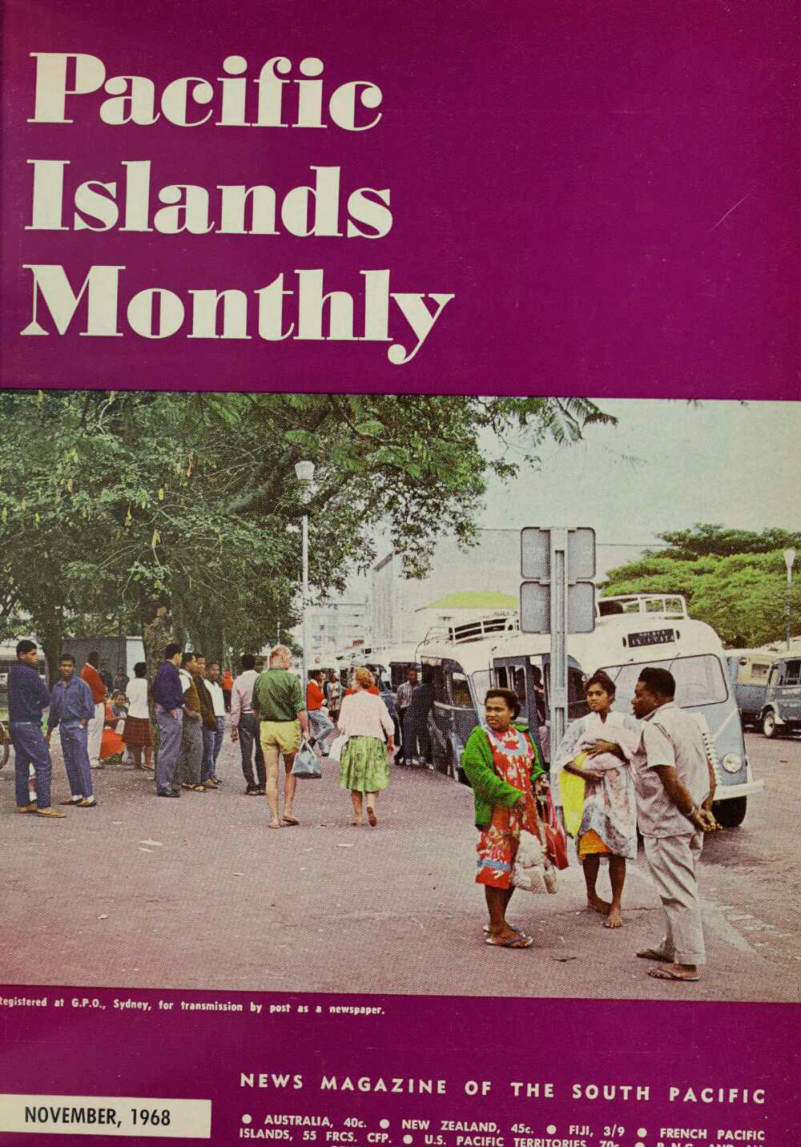 1
1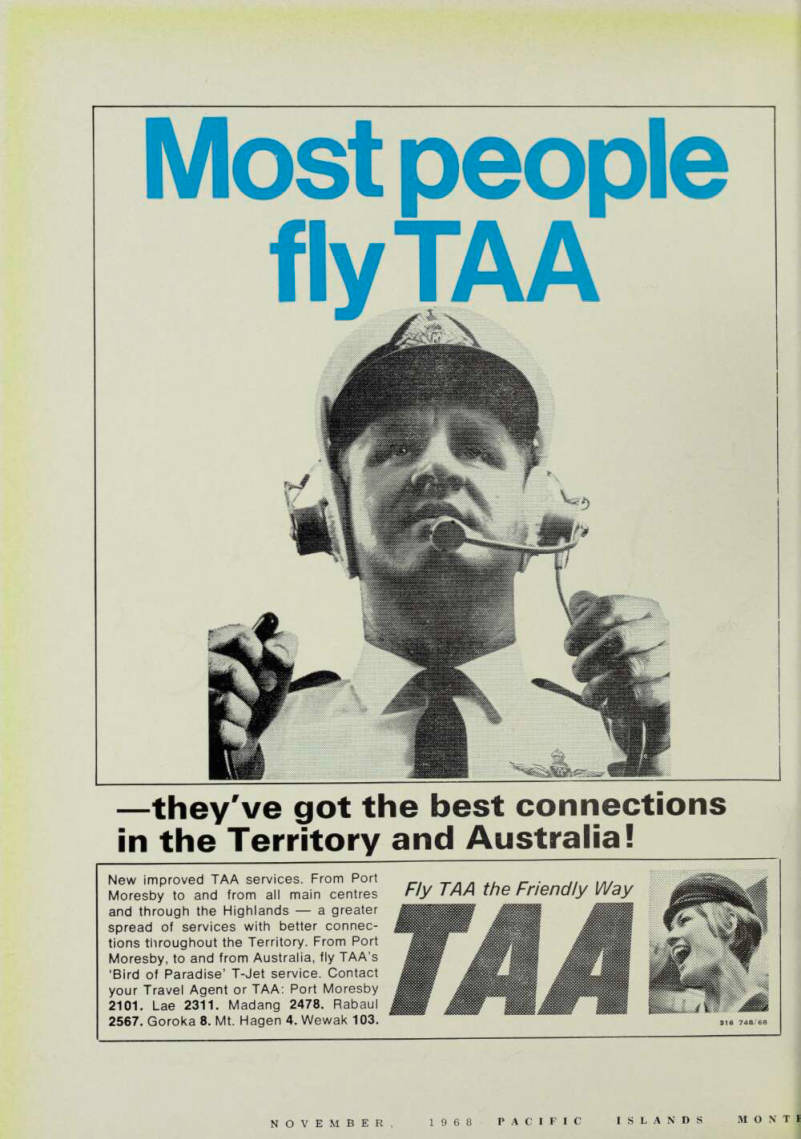 2
2 3
3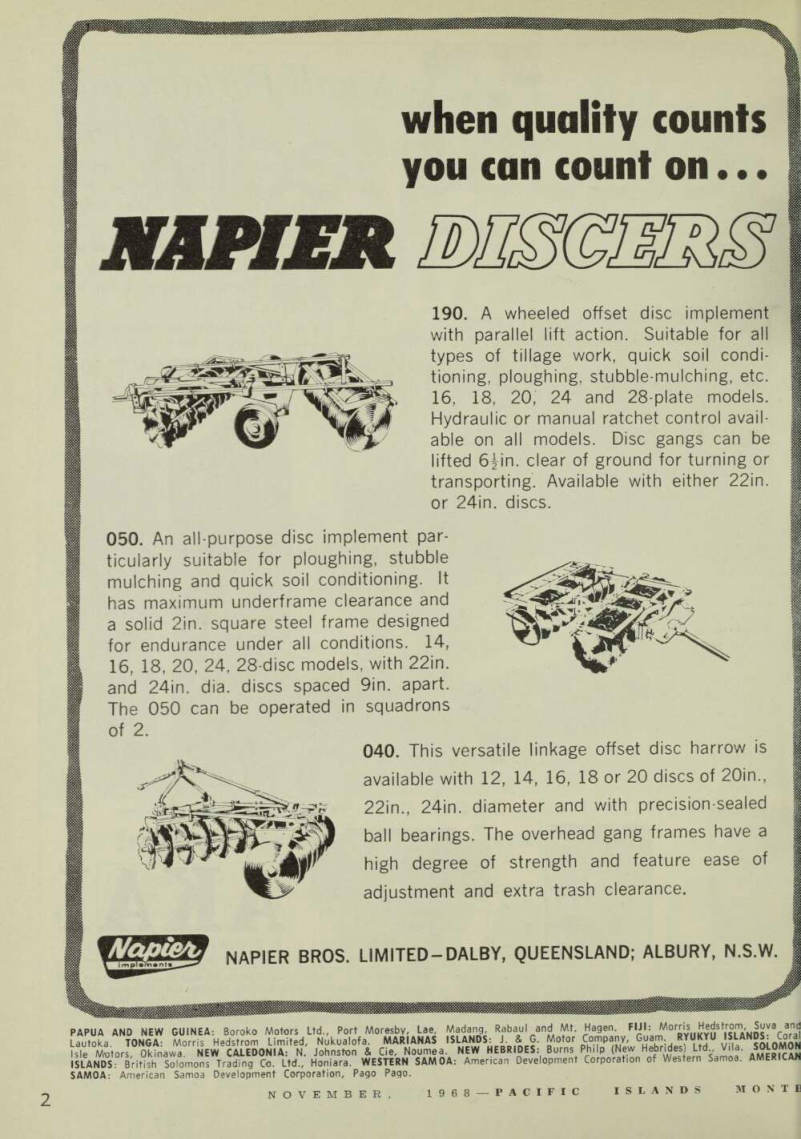 4
4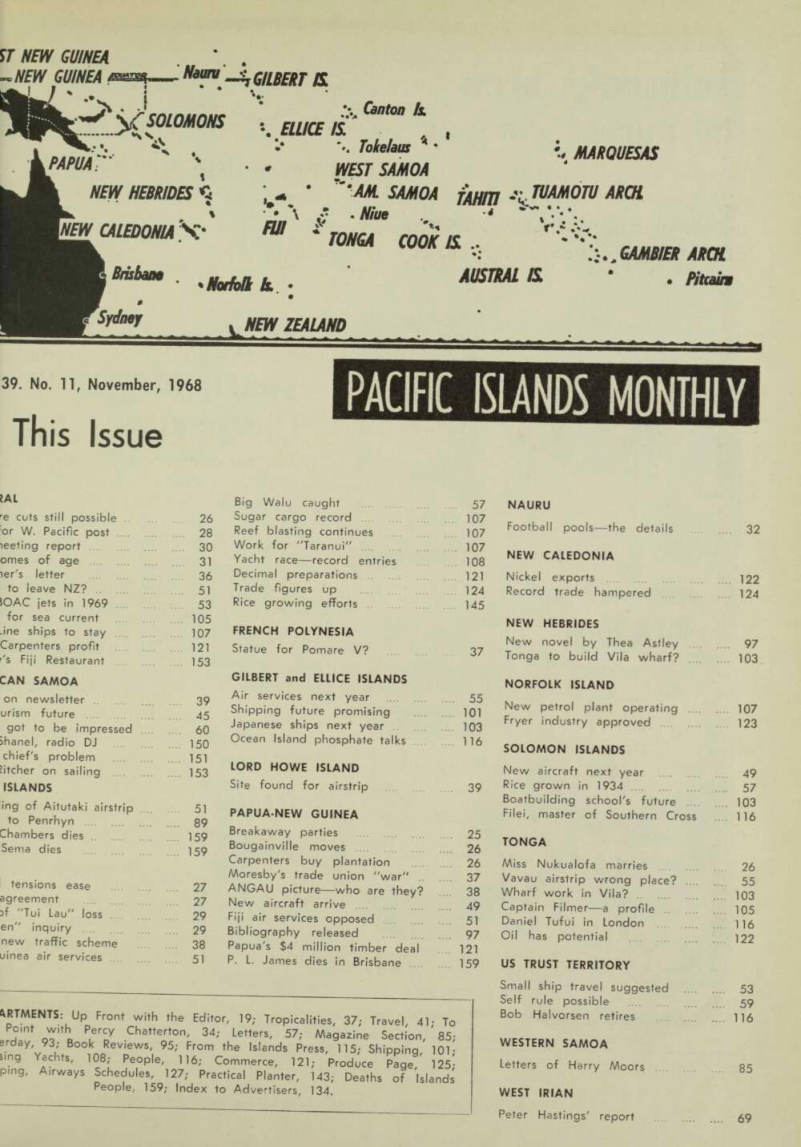 5
5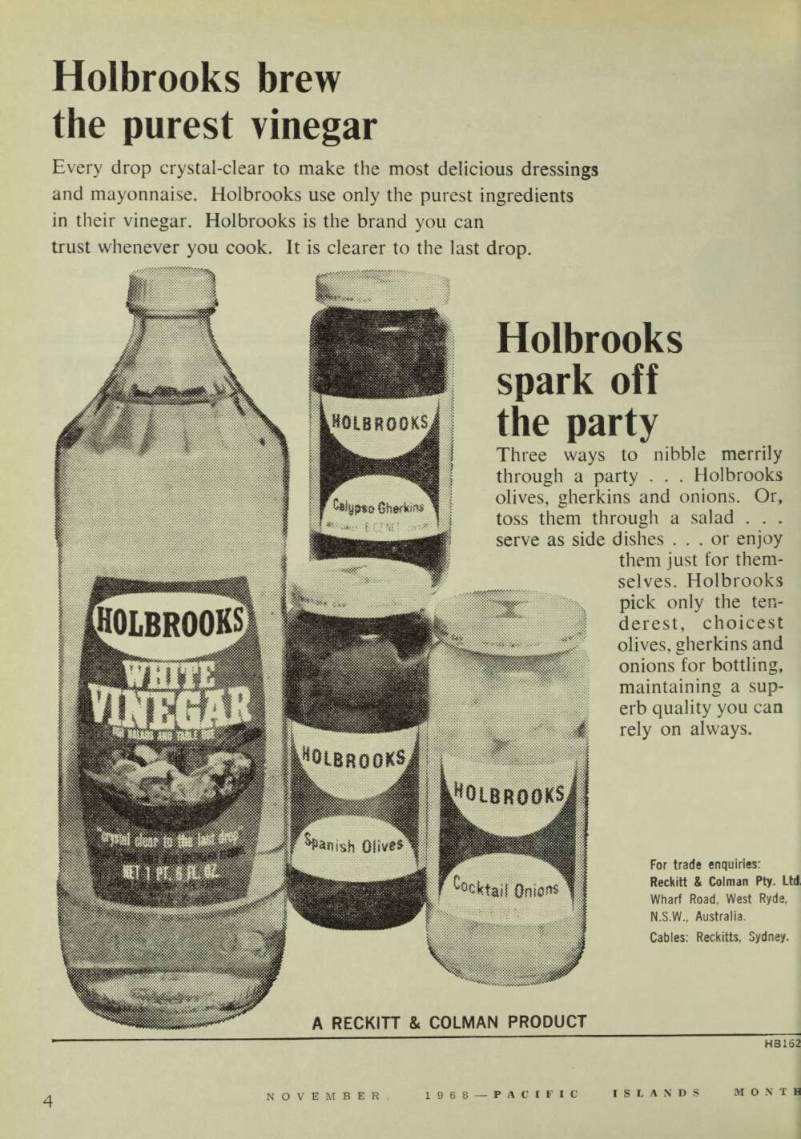 6
6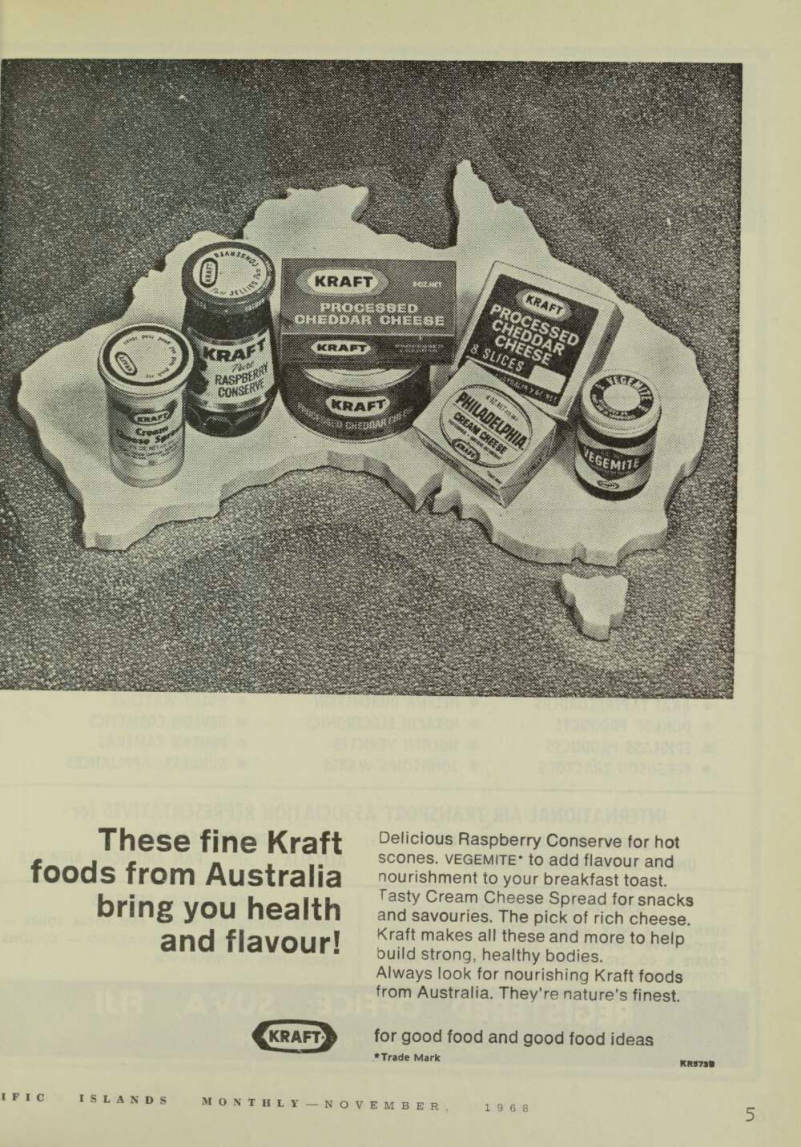 7
7 8
8 9
9 10
10 11
11 12
12 13
13 14
14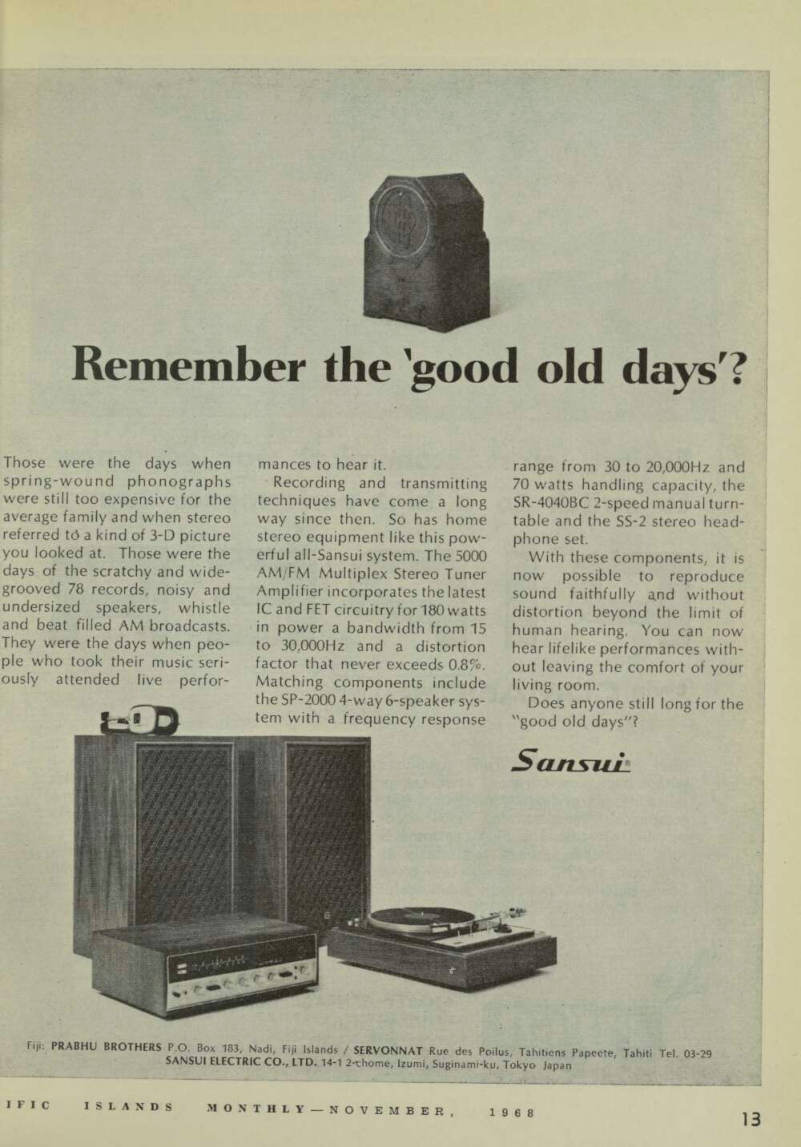 15
15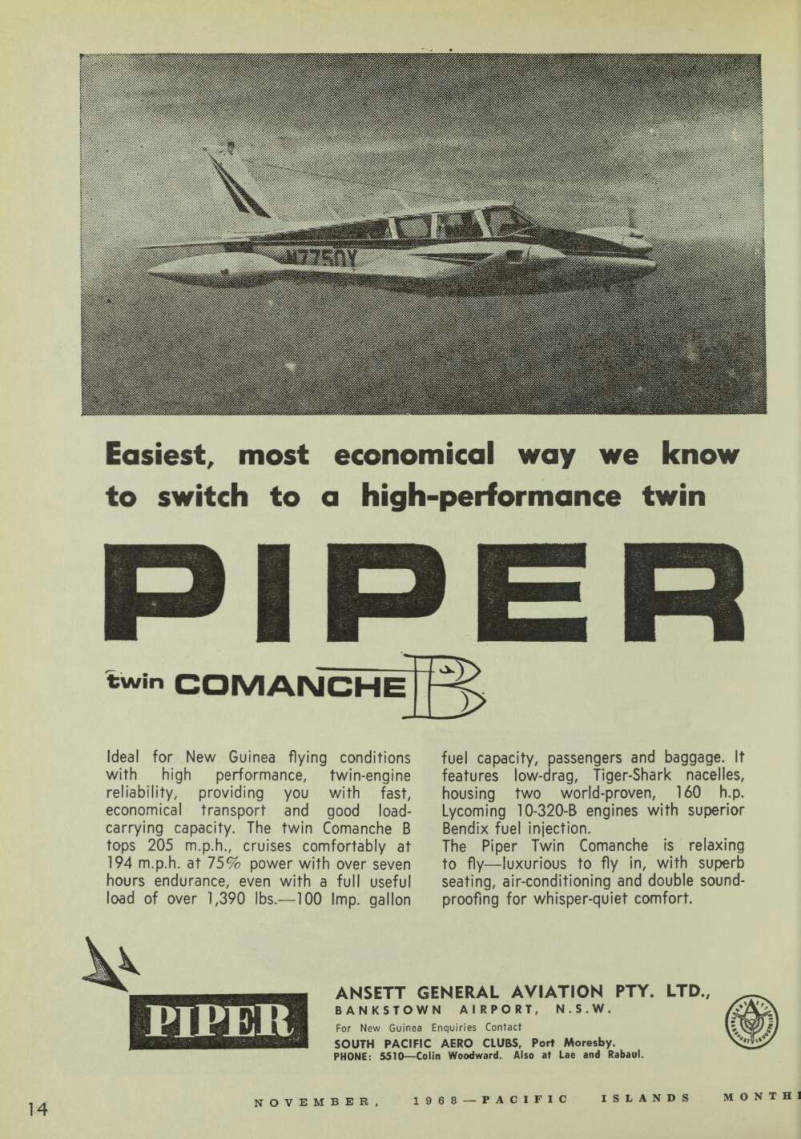 16
16 17
17 18
18 19
19 20
20 21
21 22
22 23
23 24
24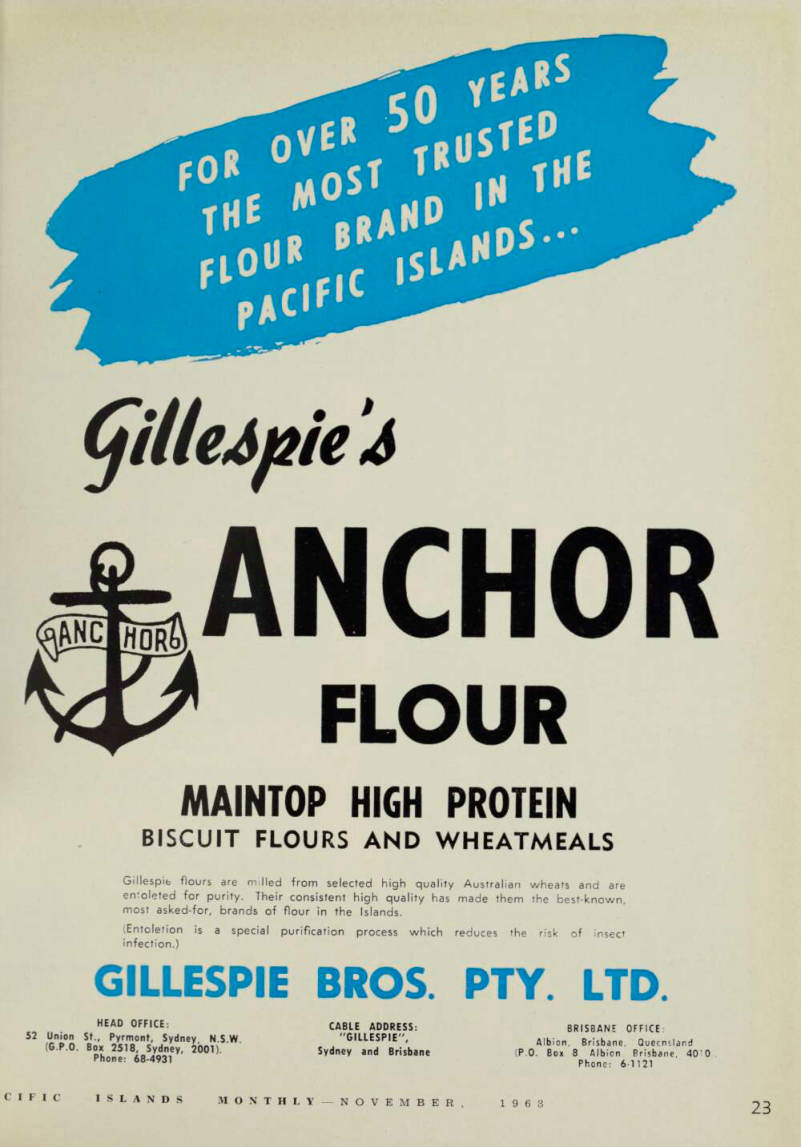 25
25 26
26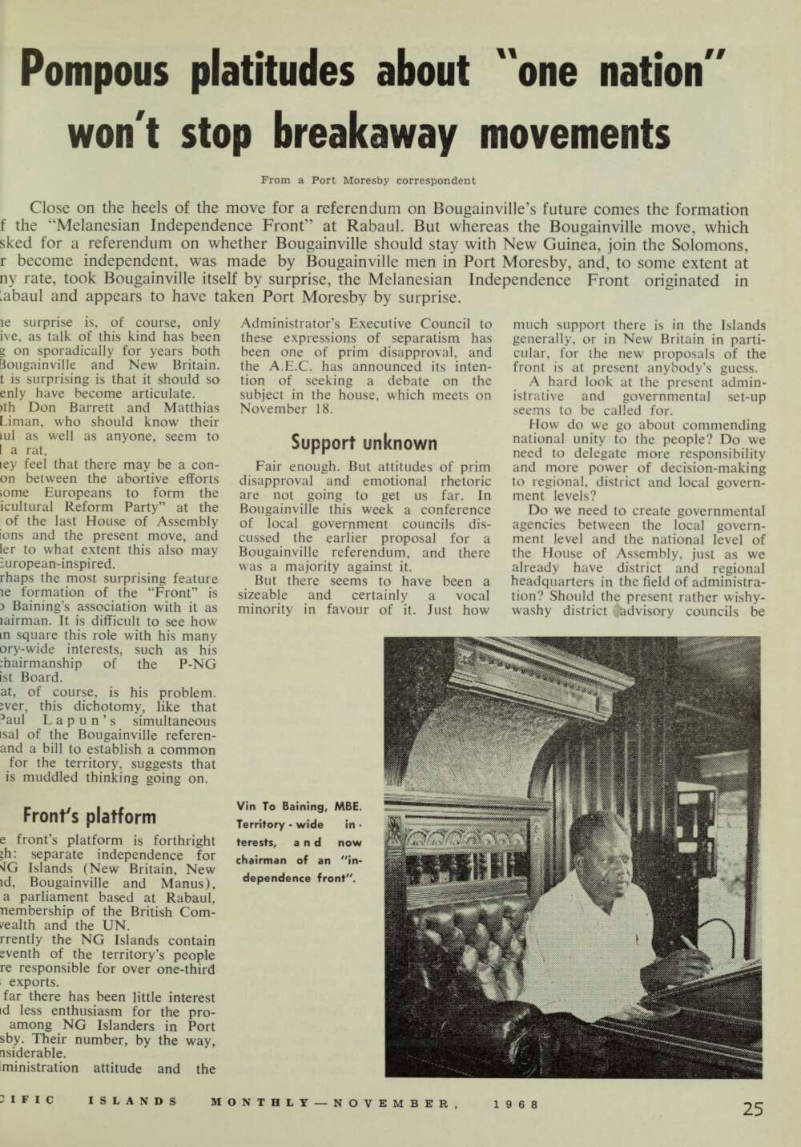 27
27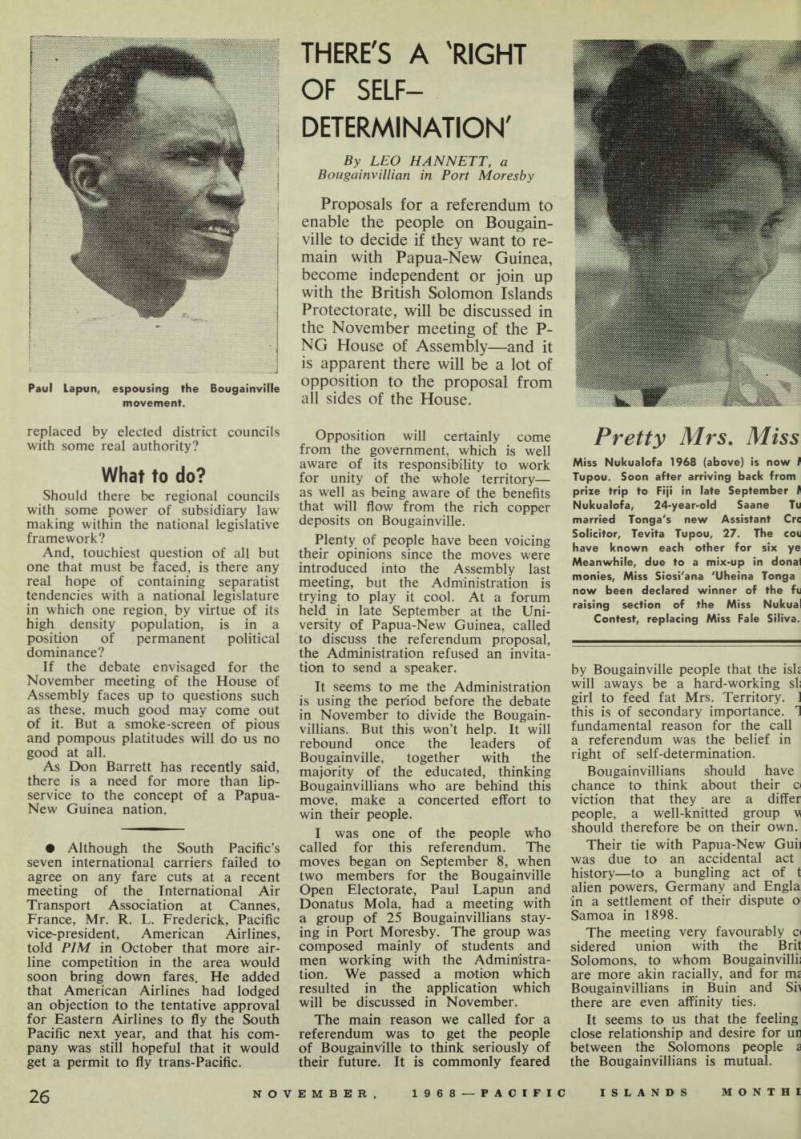 28
28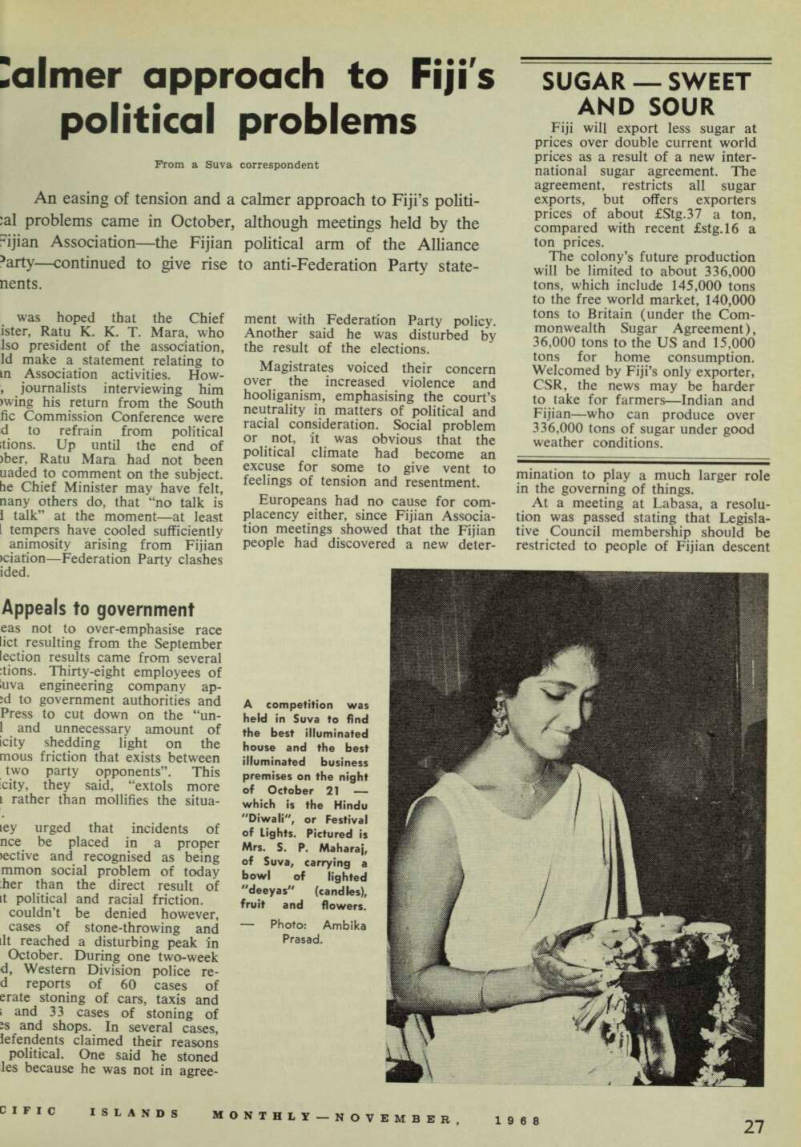 29
29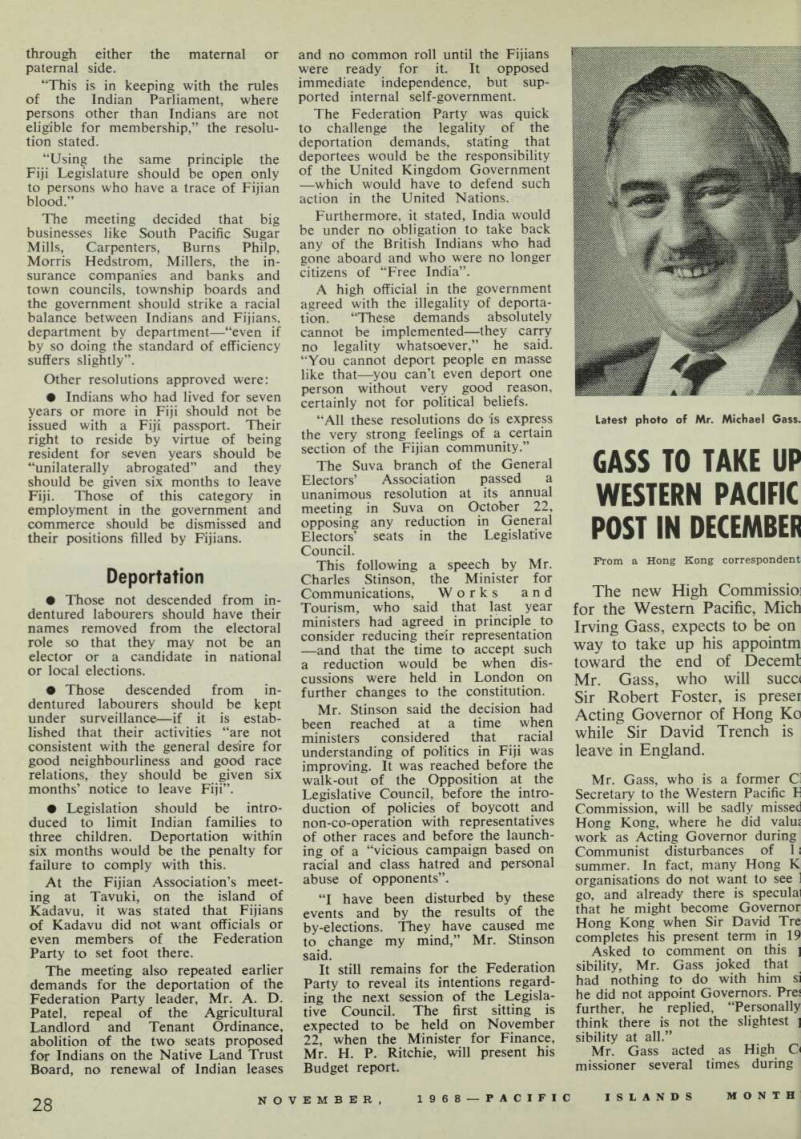 30
30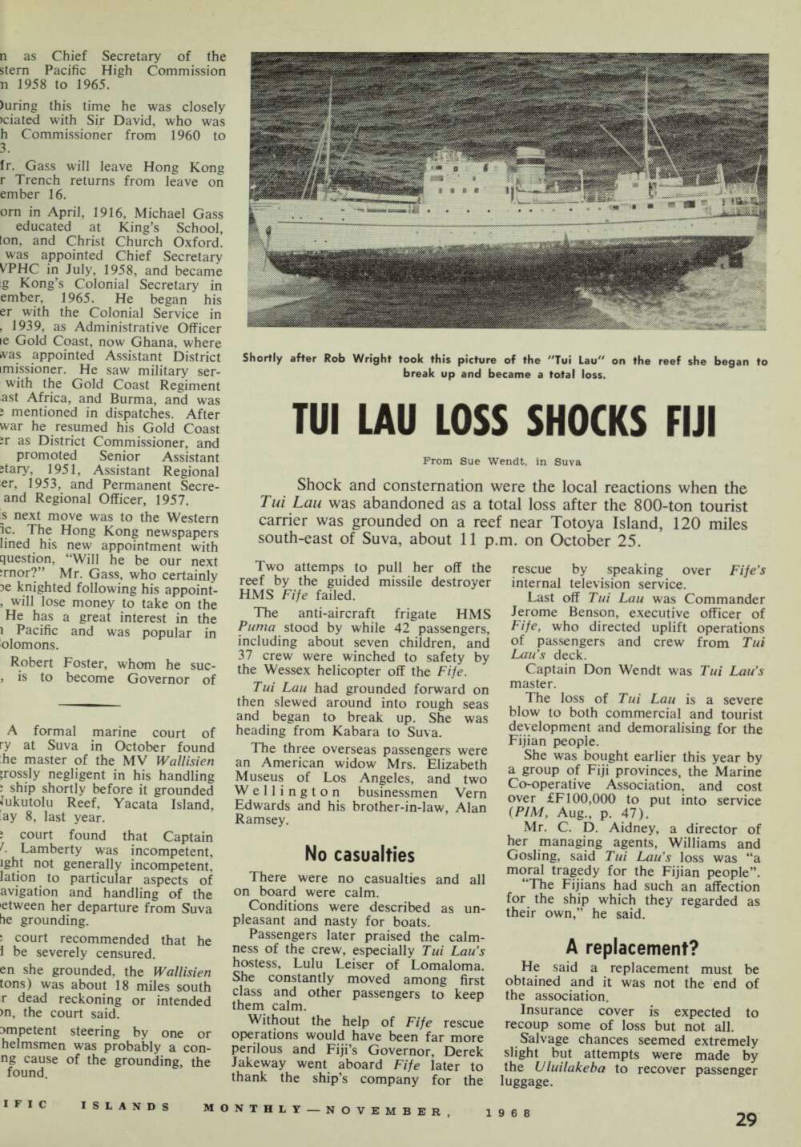 31
31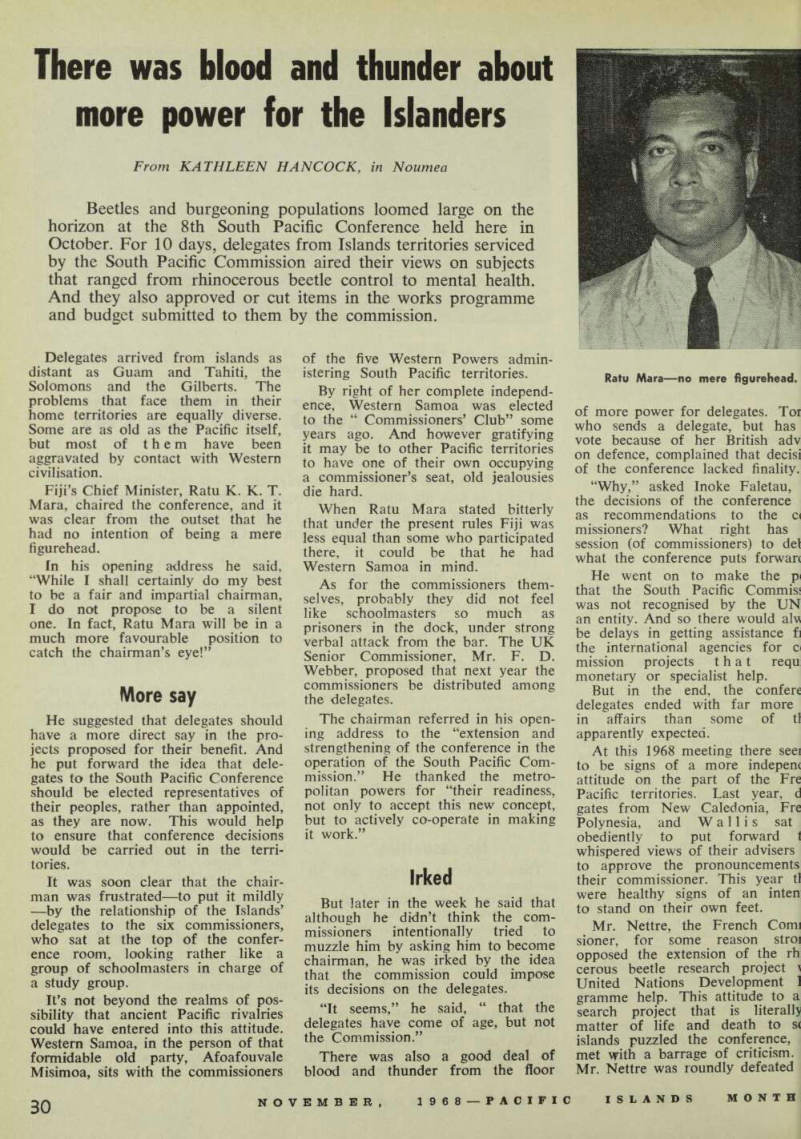 32
32 33
33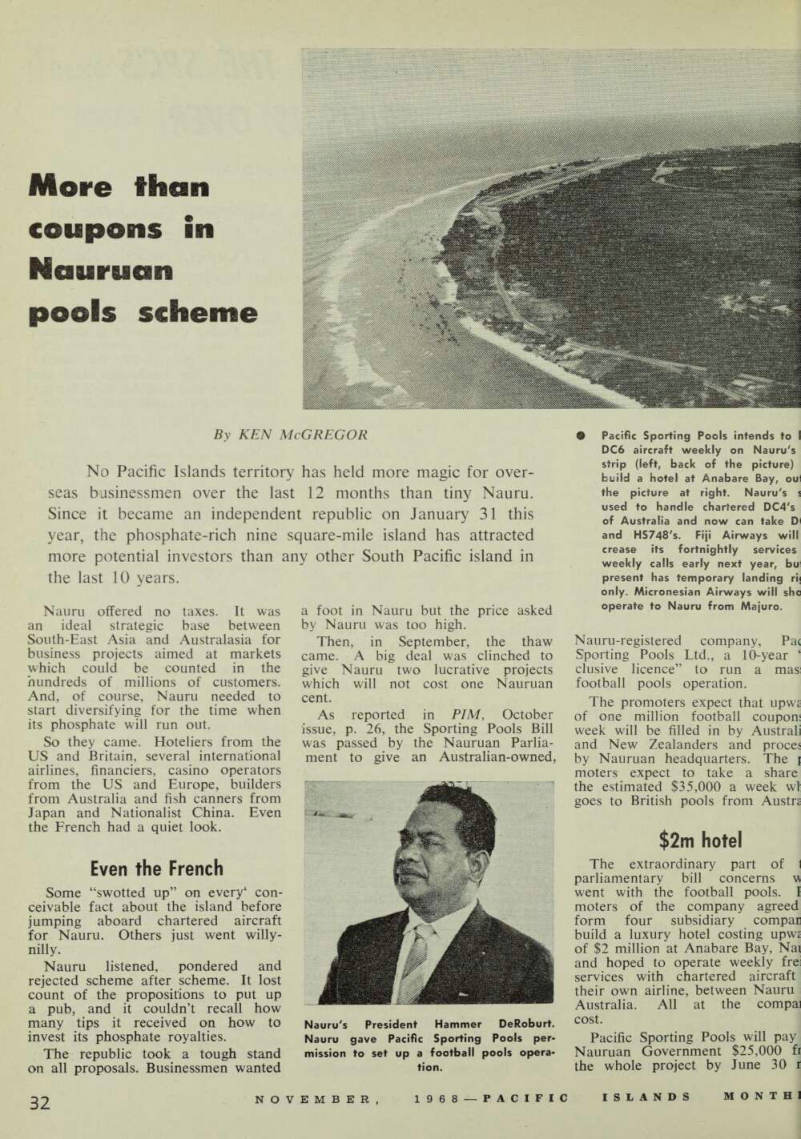 34
34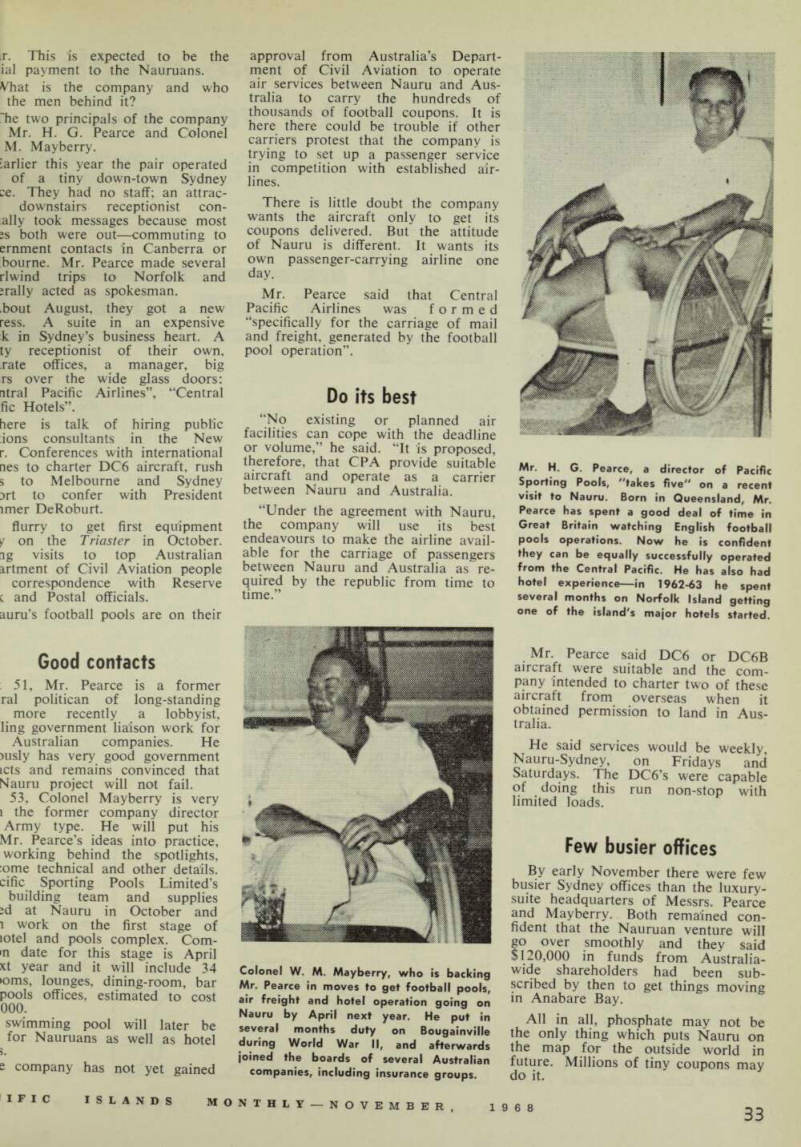 35
35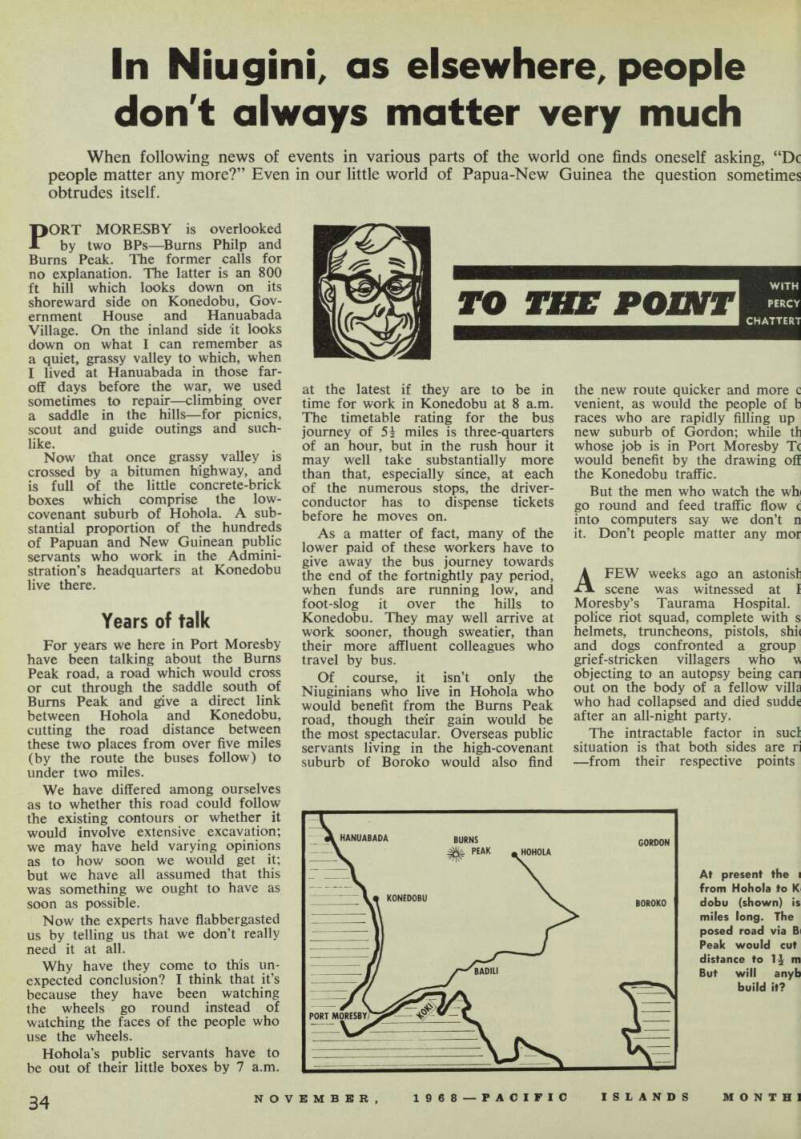 36
36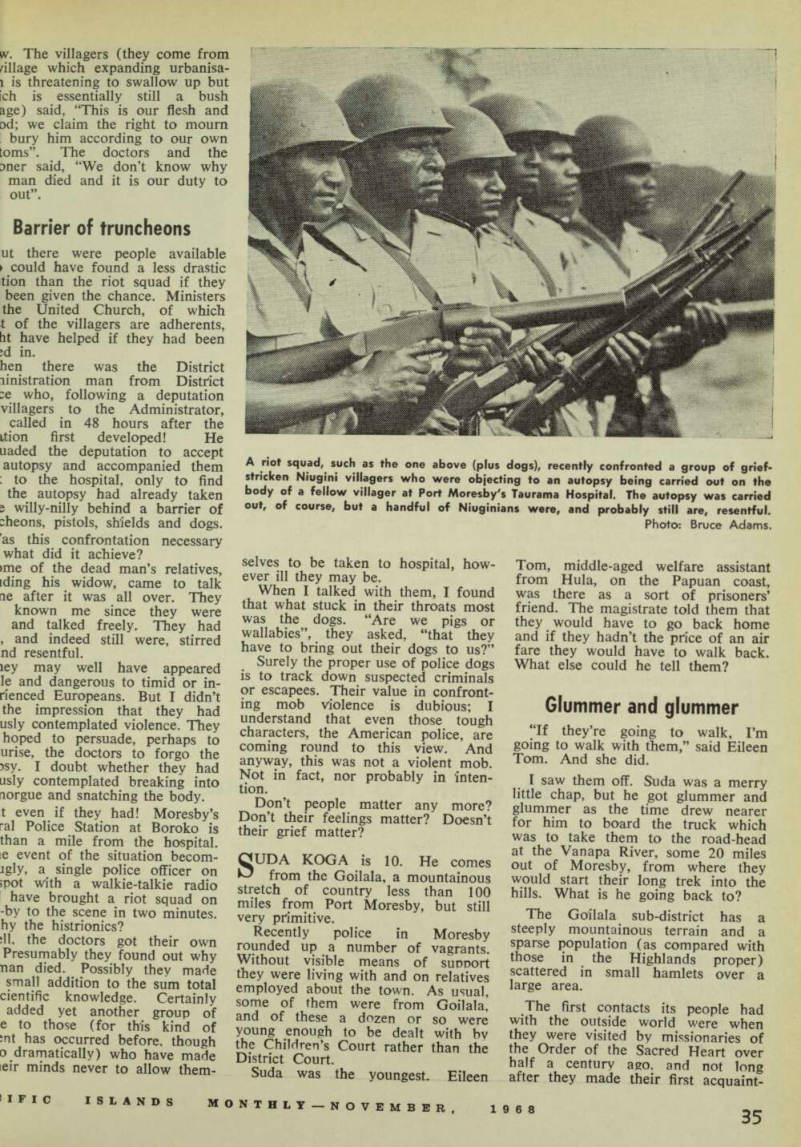 37
37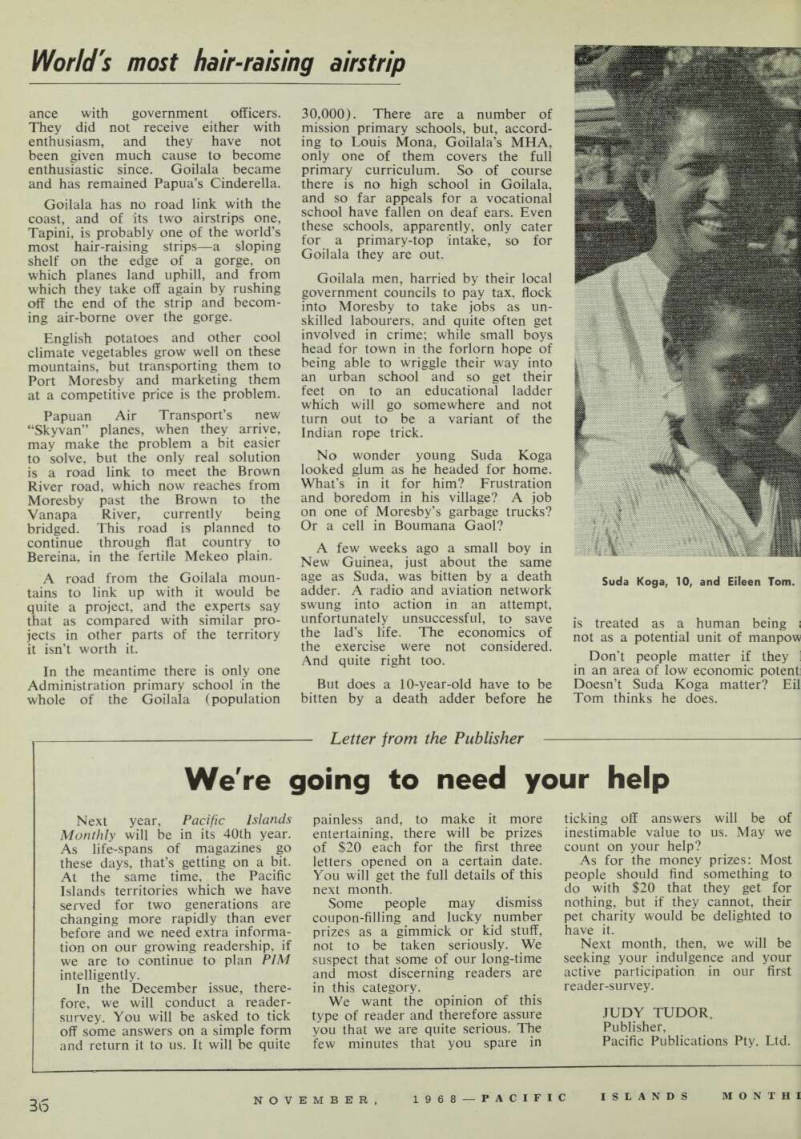 38
38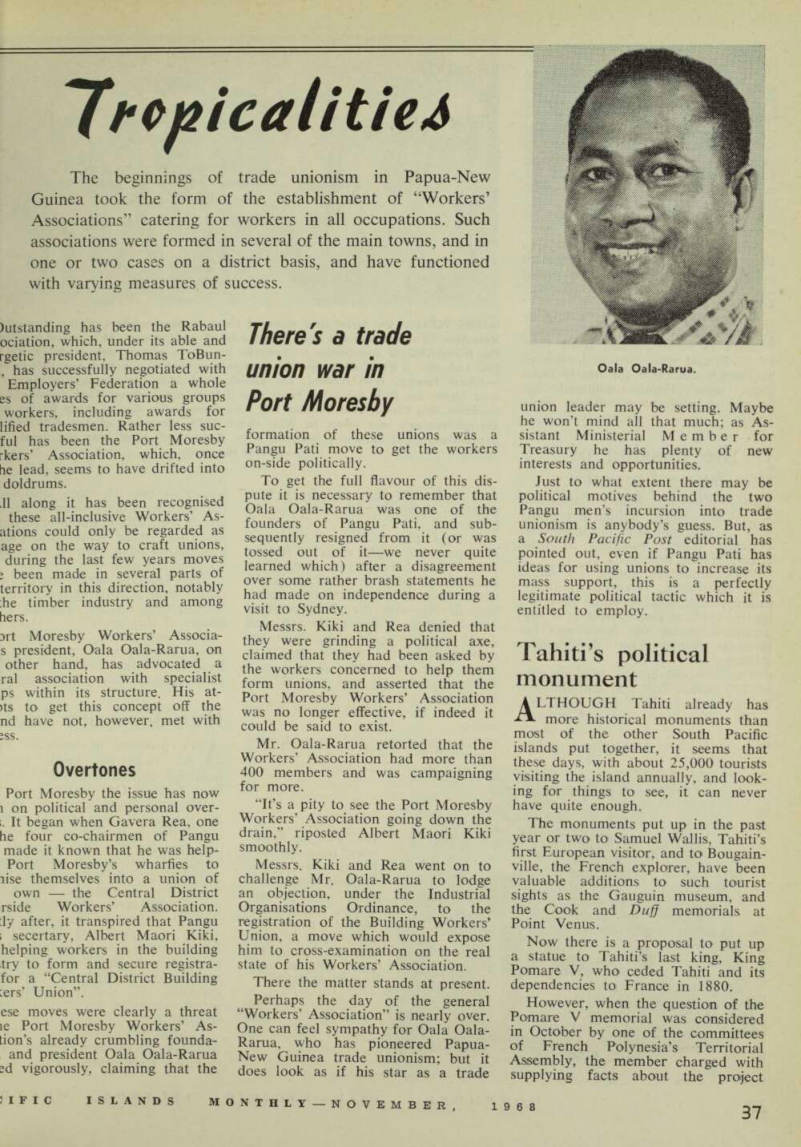 39
39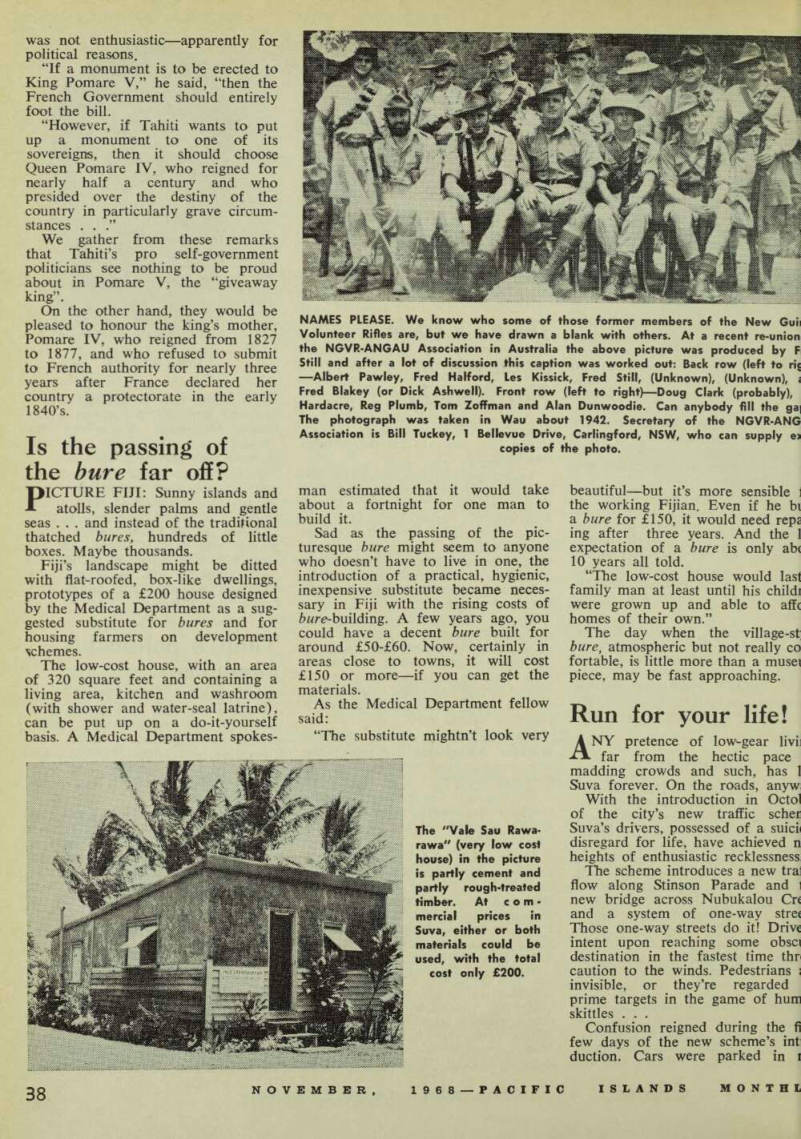 40
40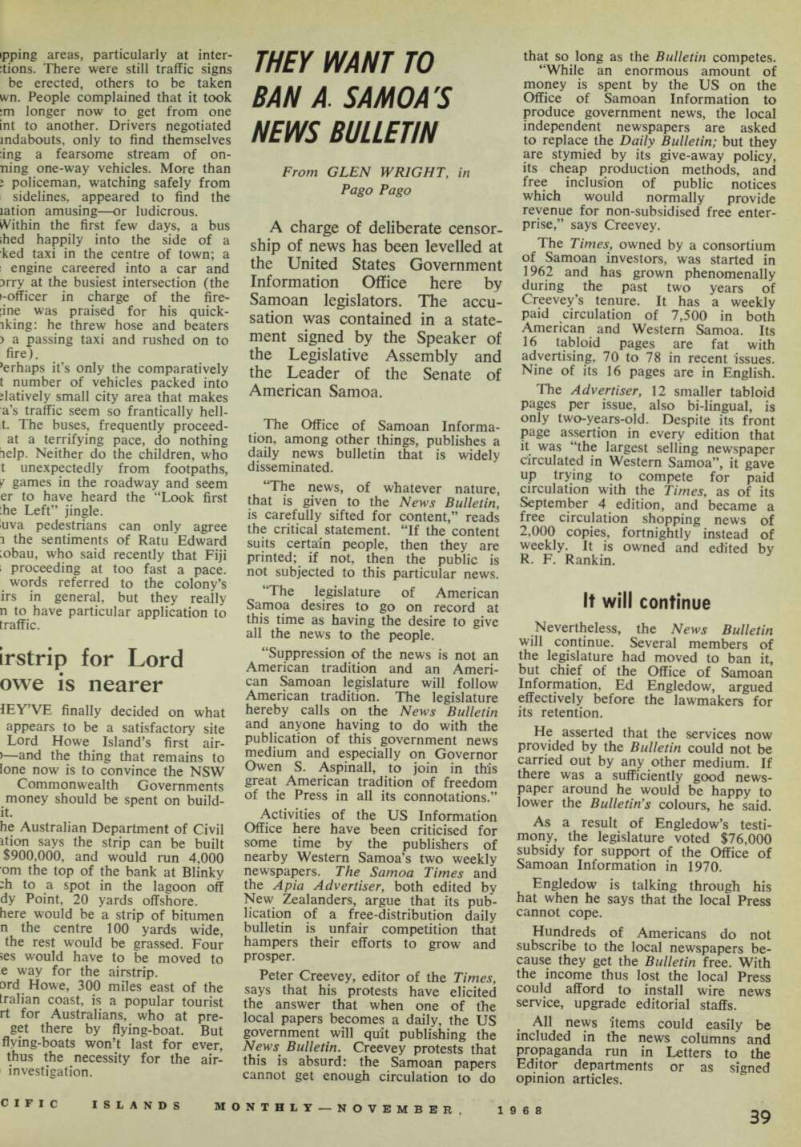 41
41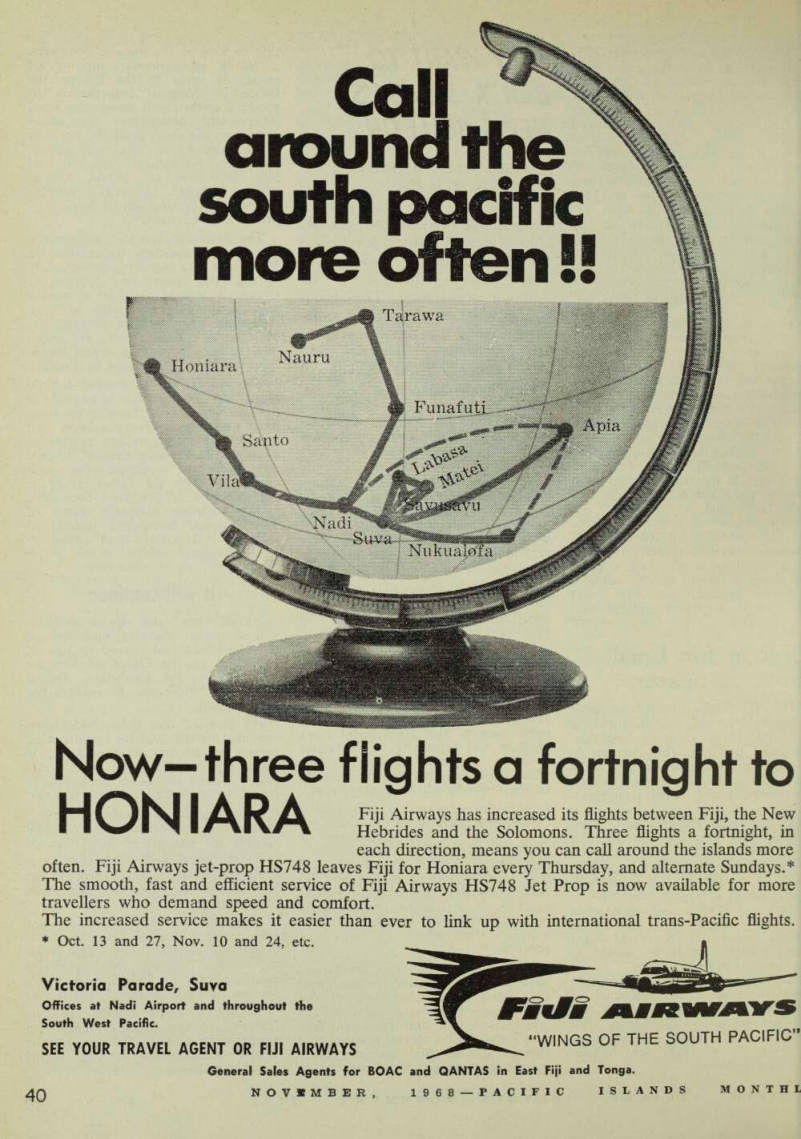 42
42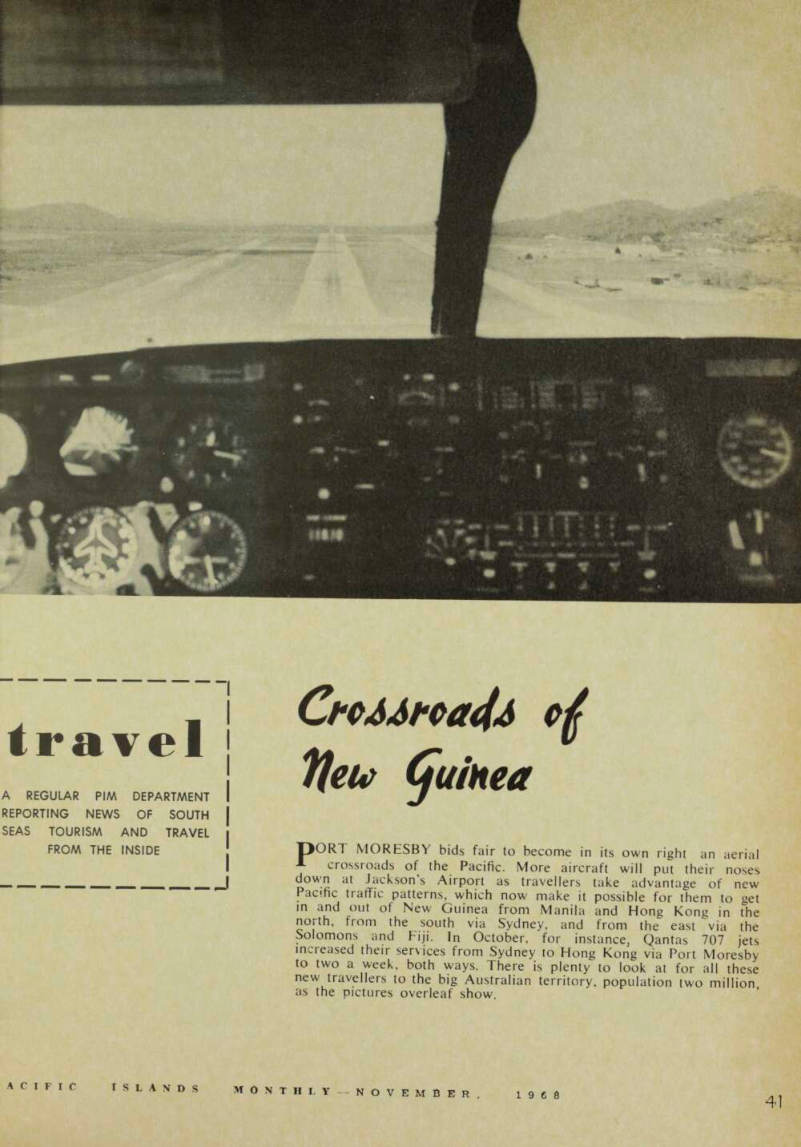 43
43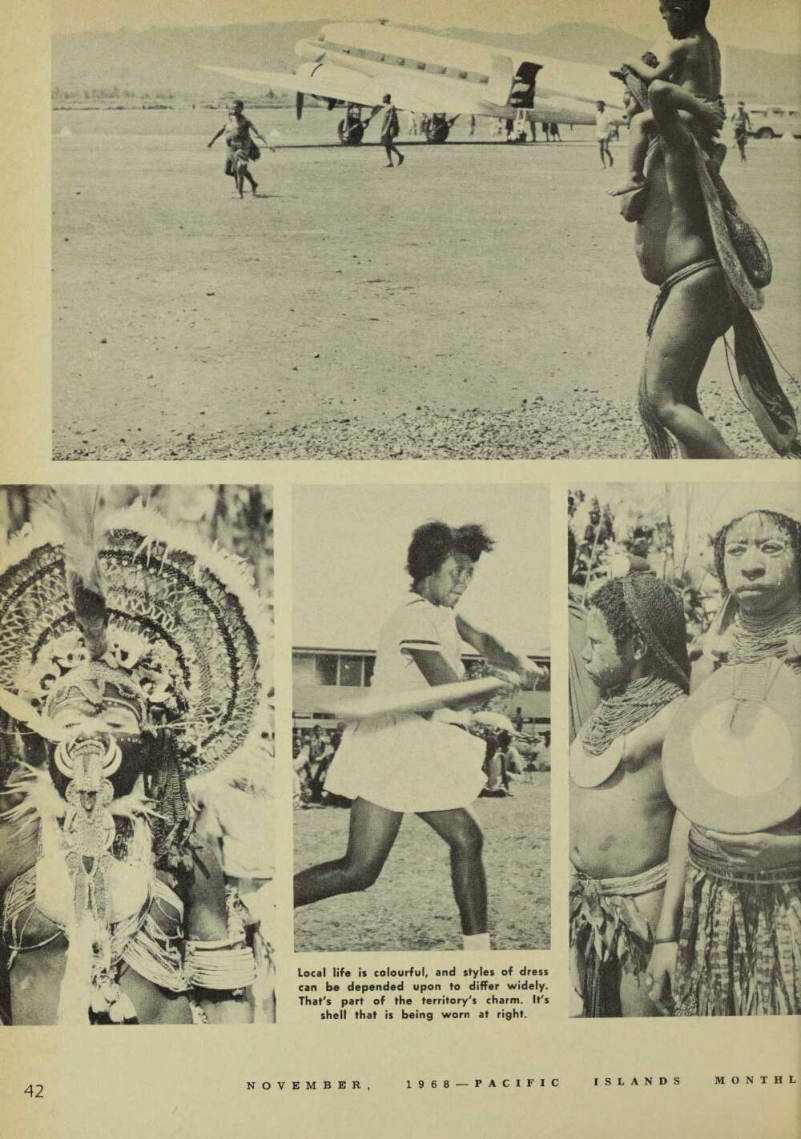 44
44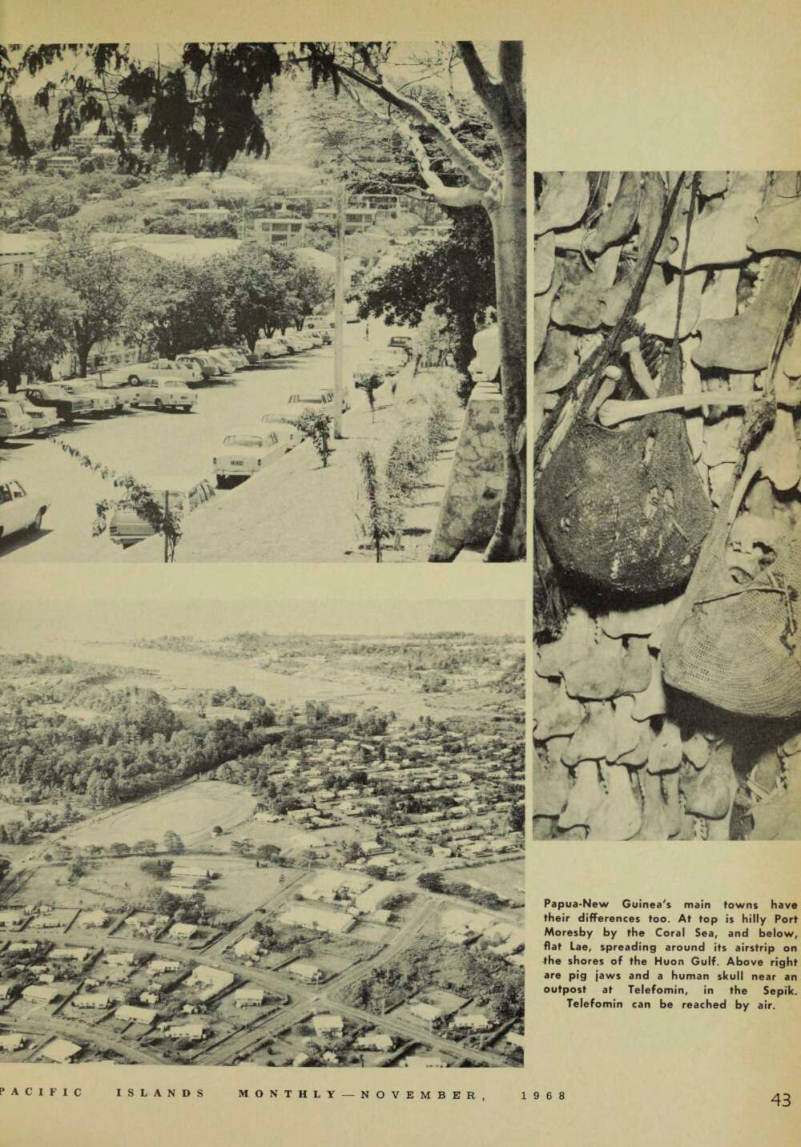 45
45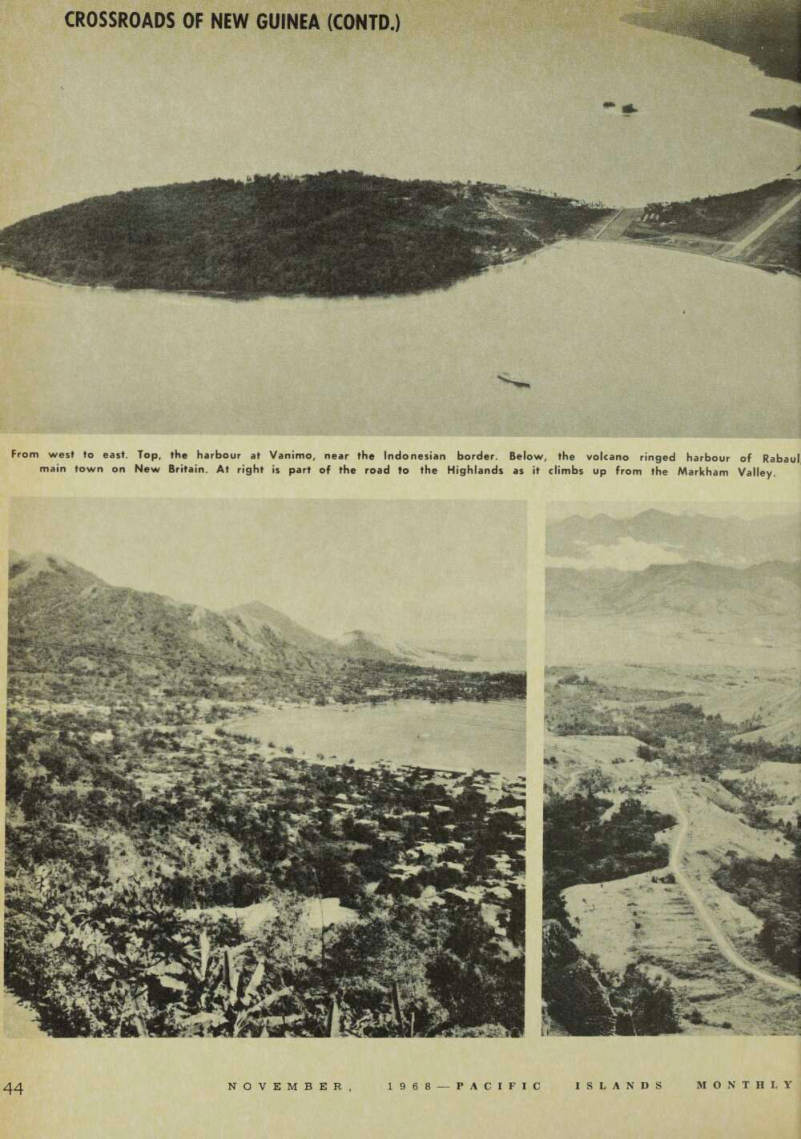 46
46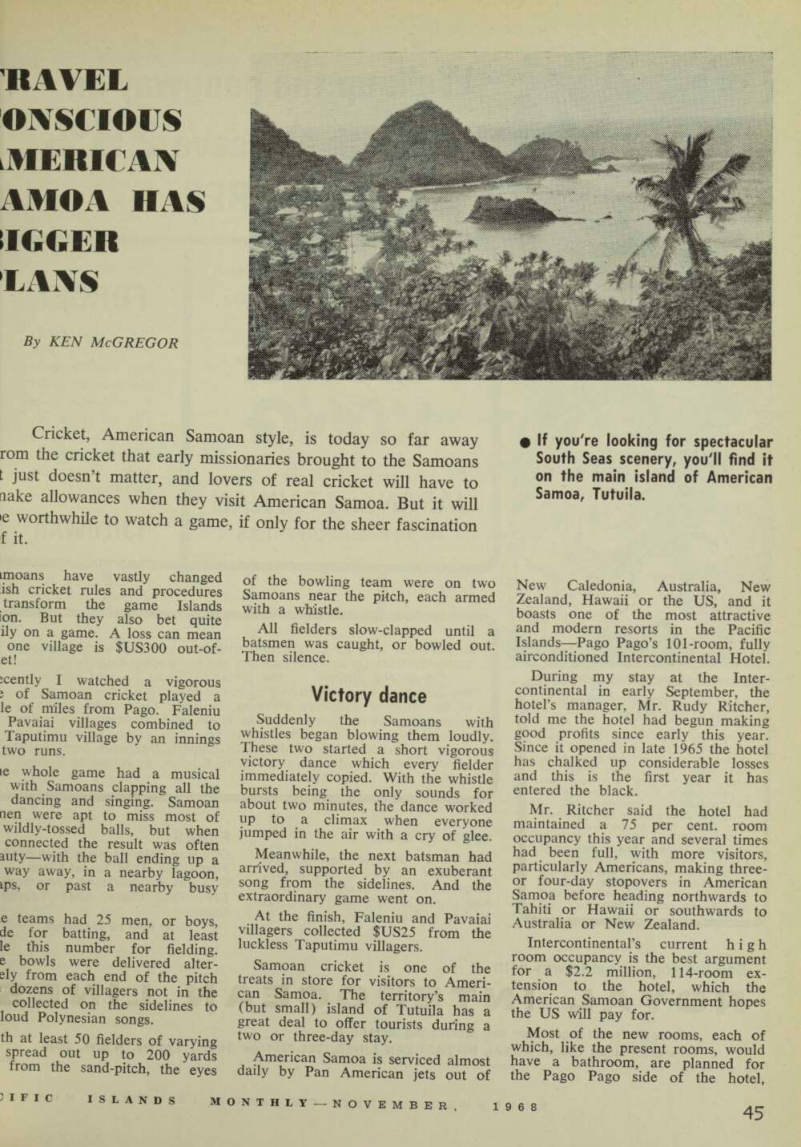 47
47 48
48 49
49 50
50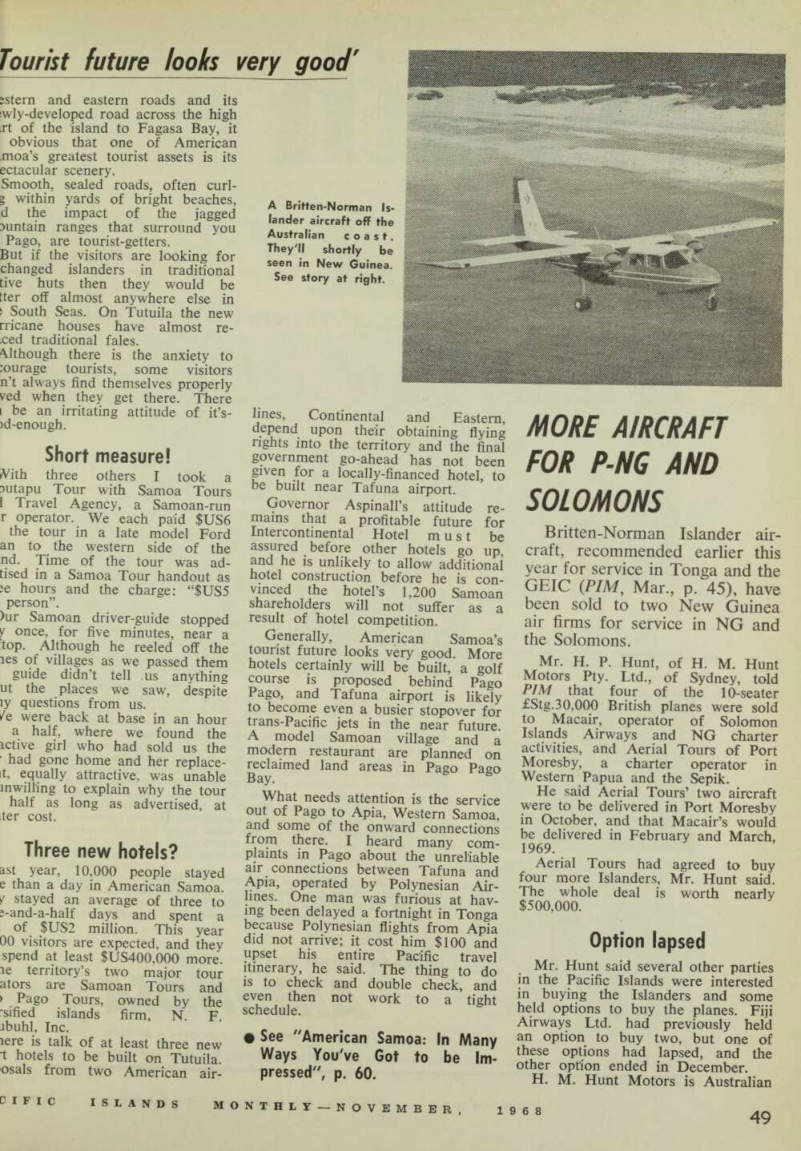 51
51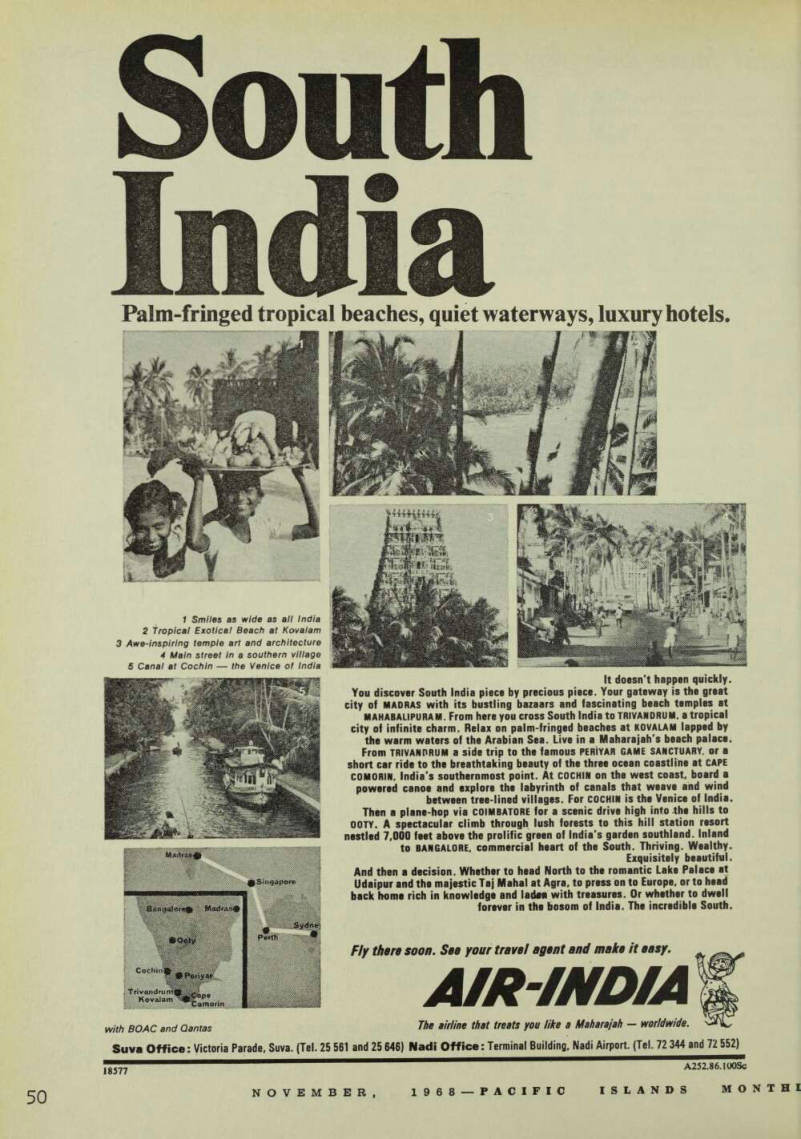 52
52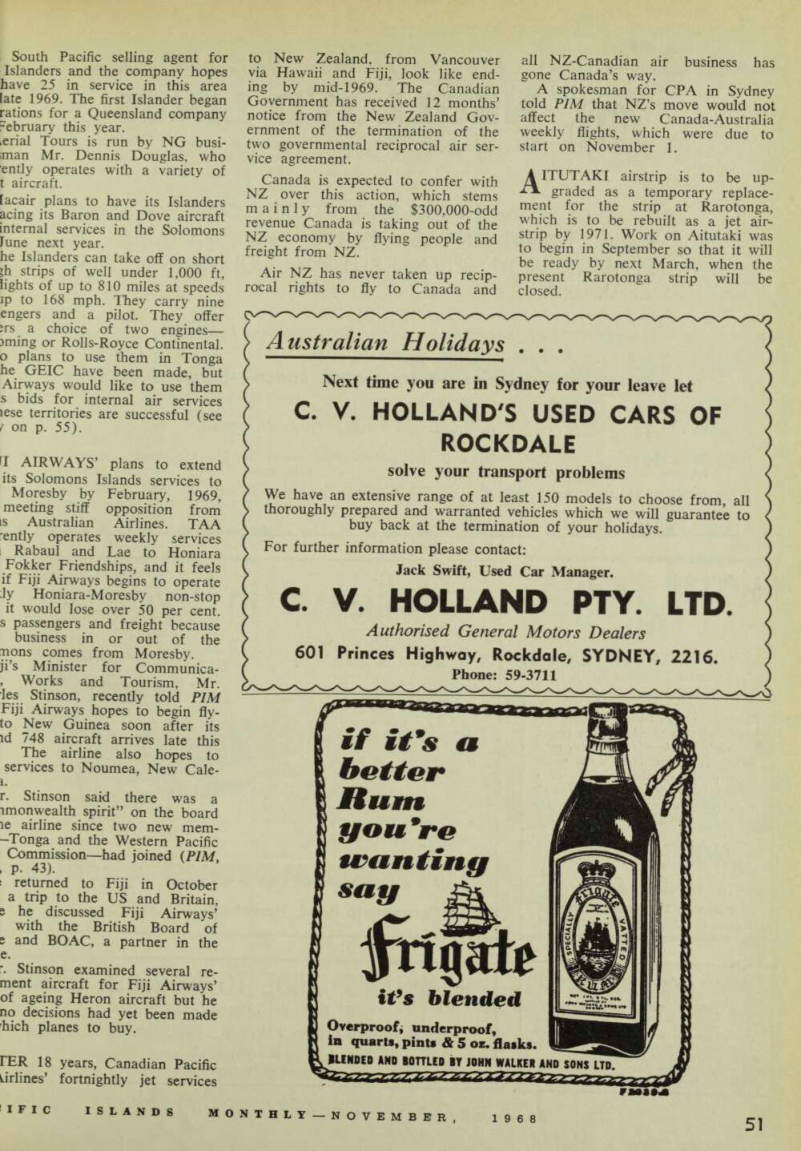 53
53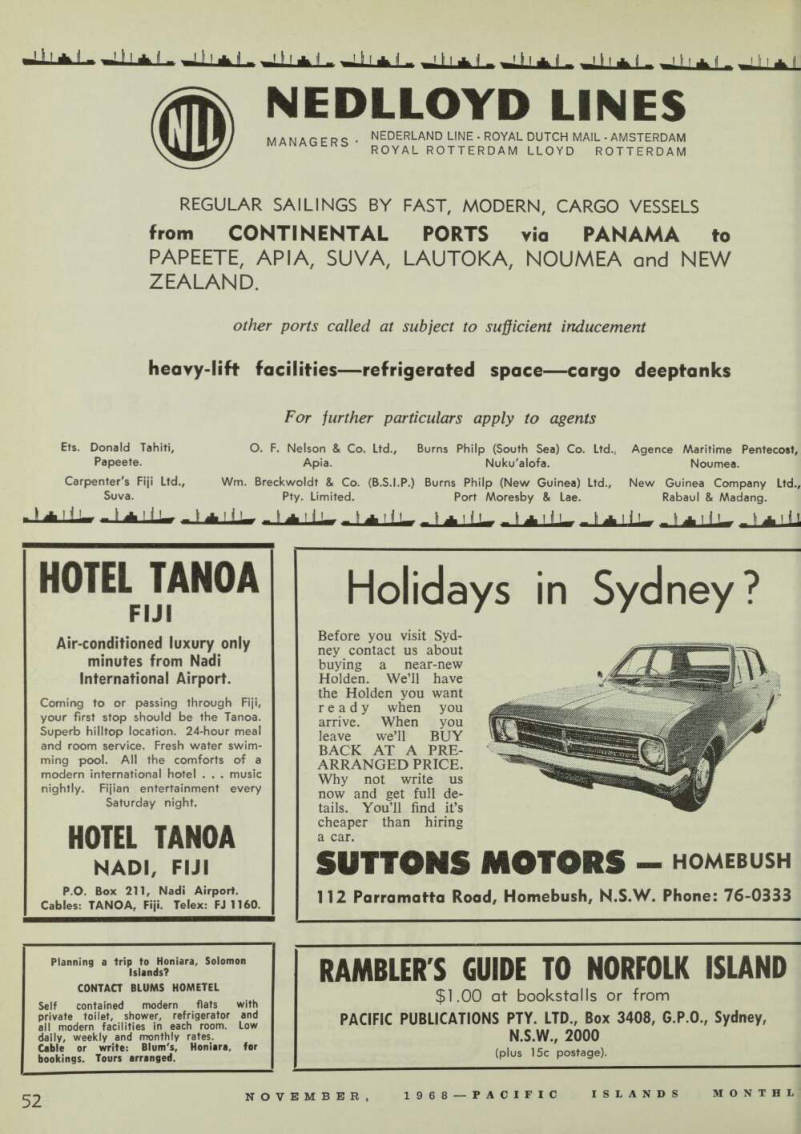 54
54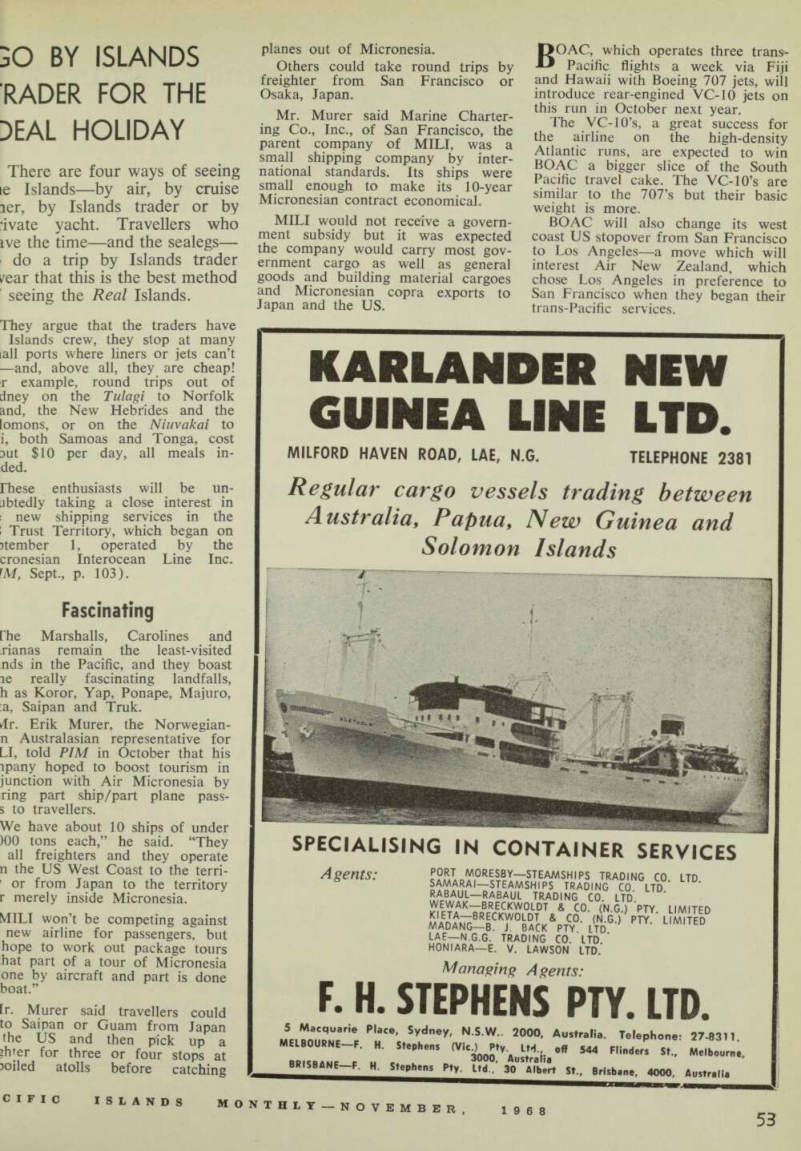 55
55 56
56 57
57 58
58 59
59 60
60 61
61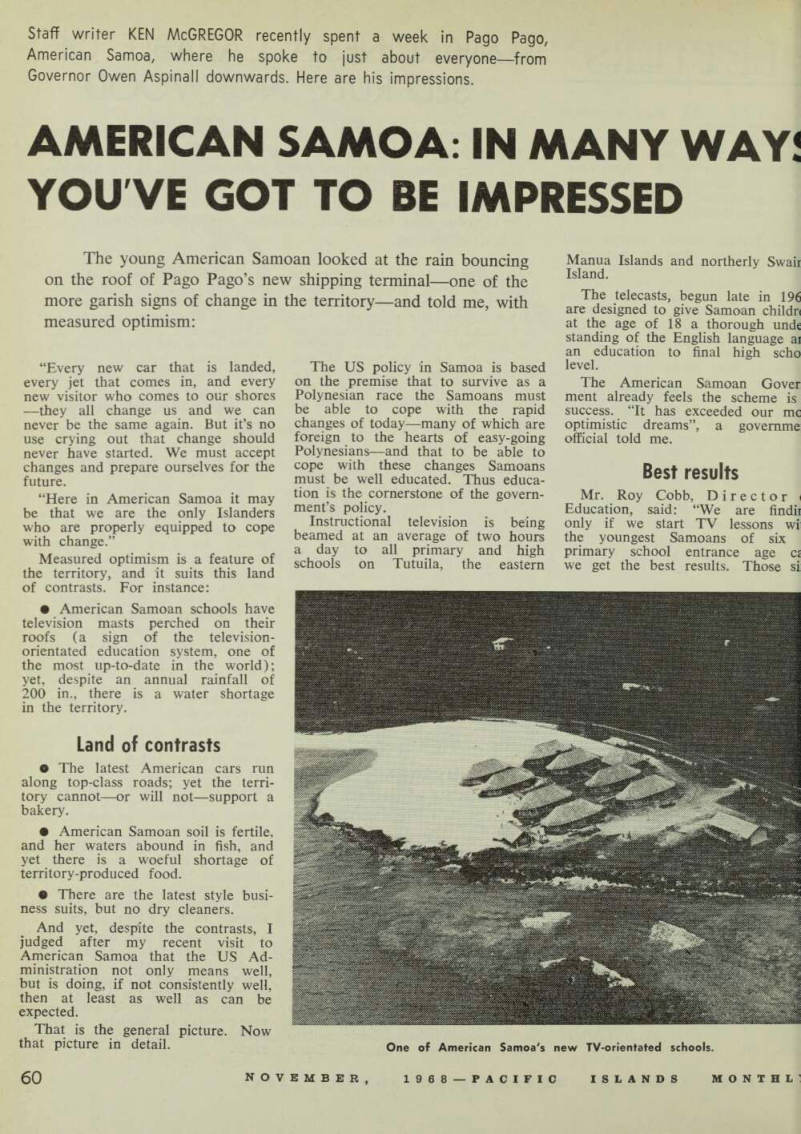 62
62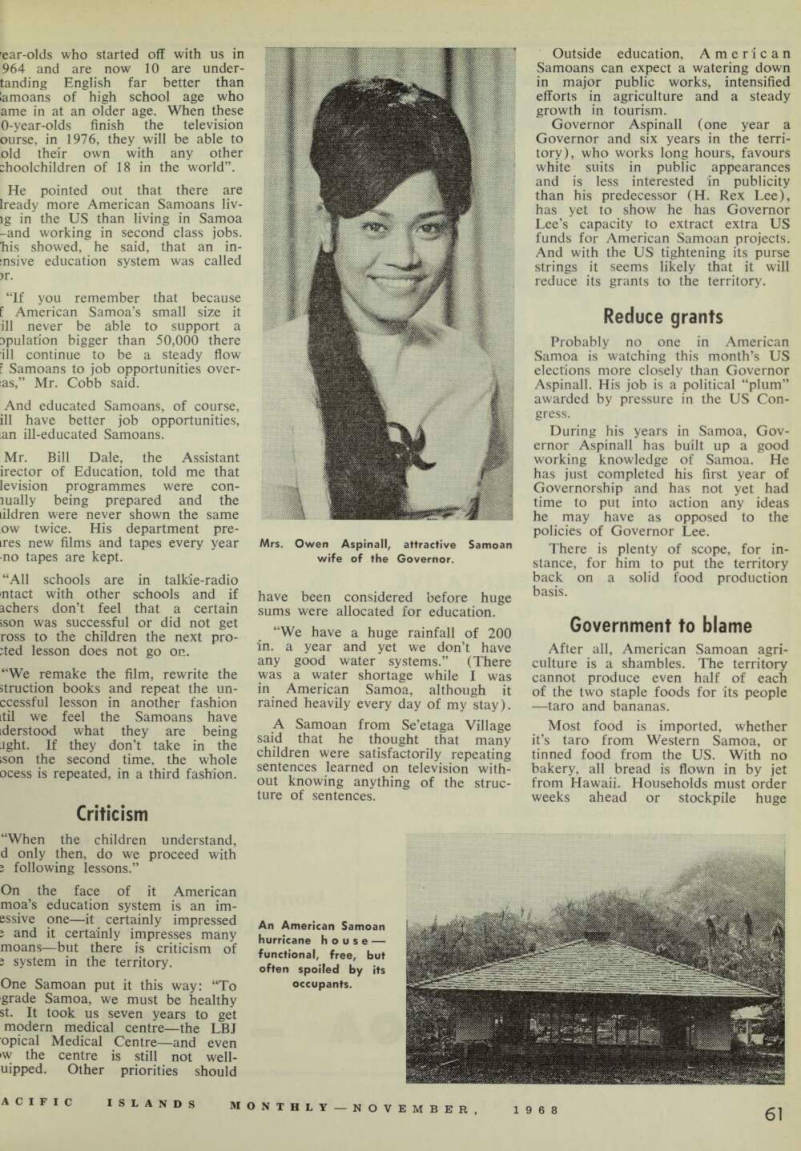 63
63 64
64 65
65 66
66 67
67 68
68 69
69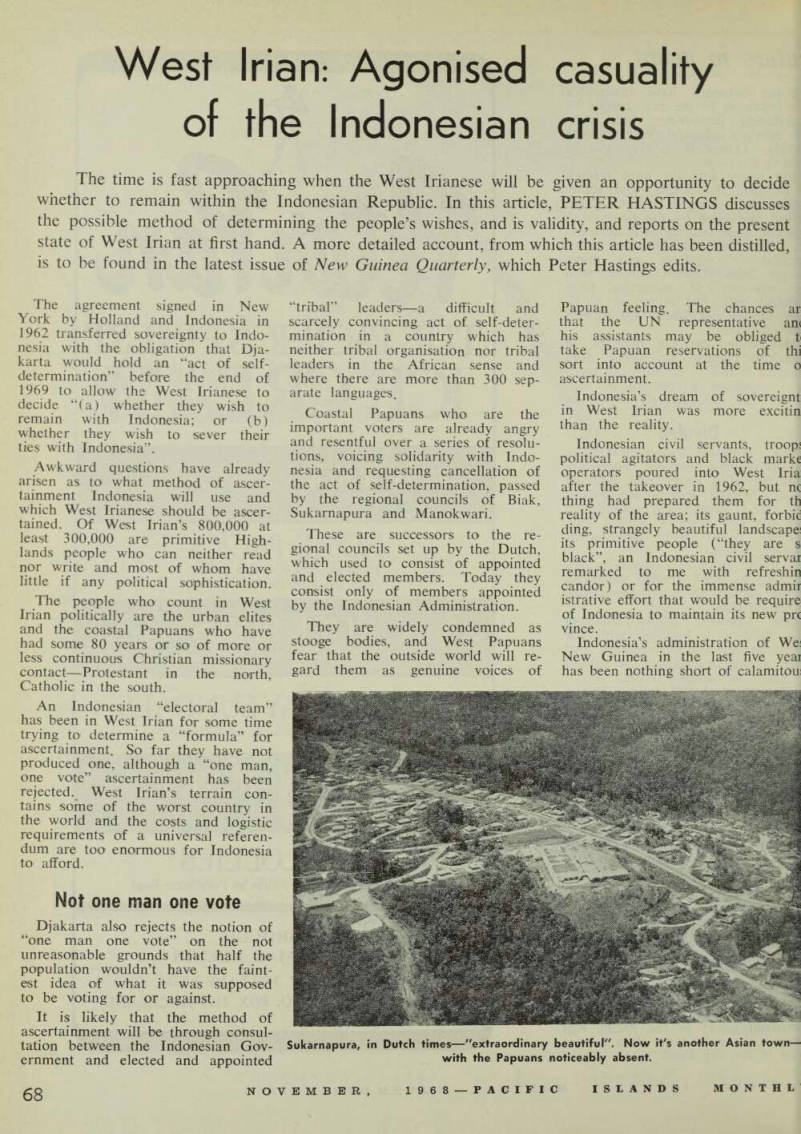 70
70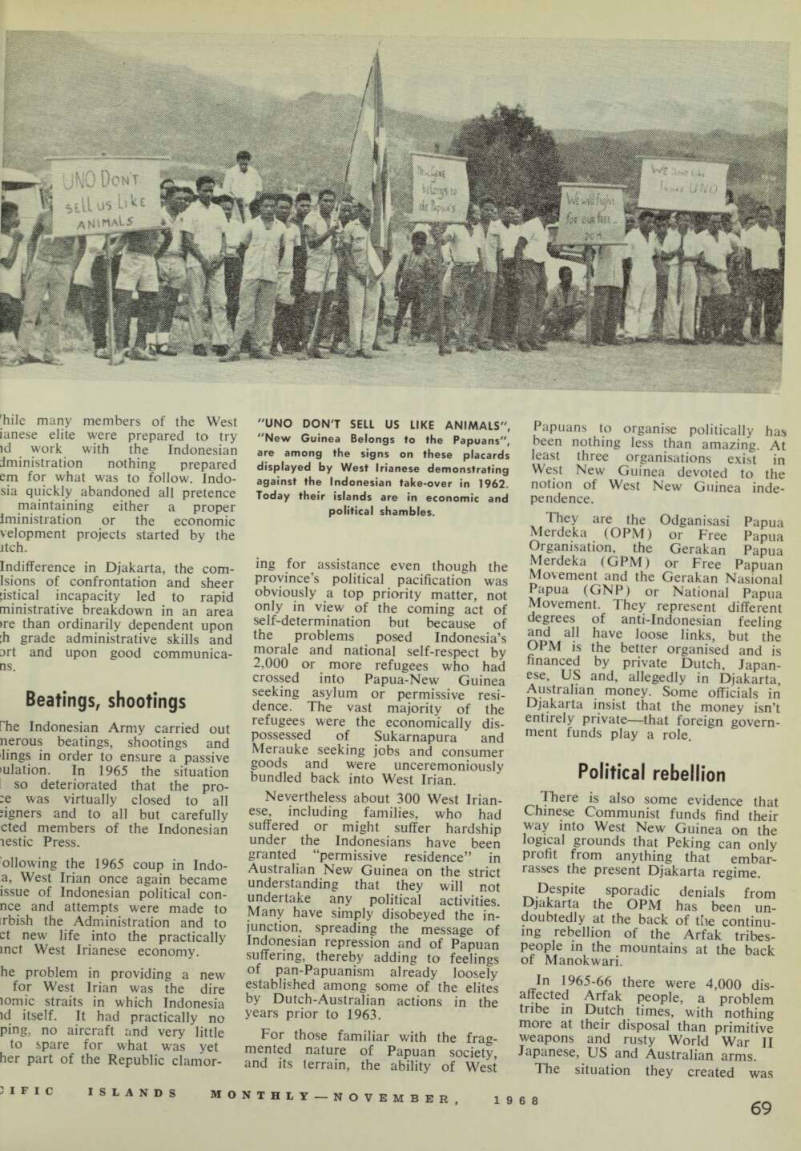 71
71 72
72 73
73 74
74 75
75 76
76 77
77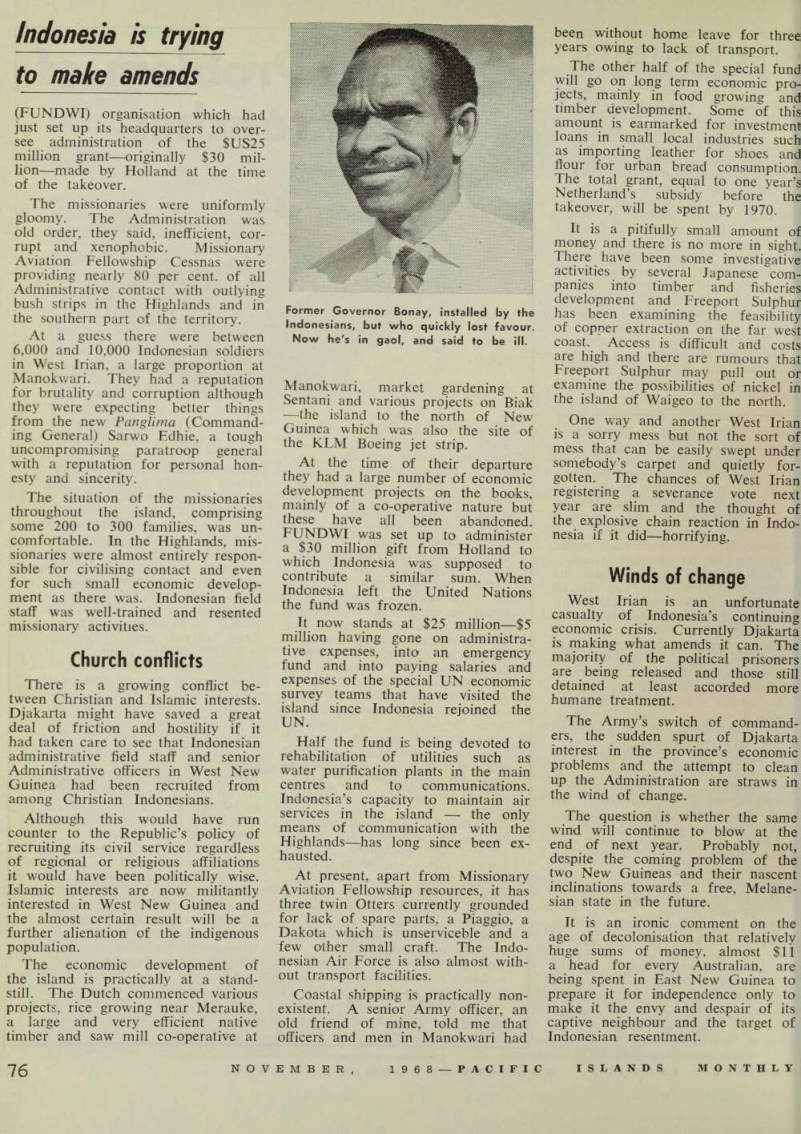 78
78 79
79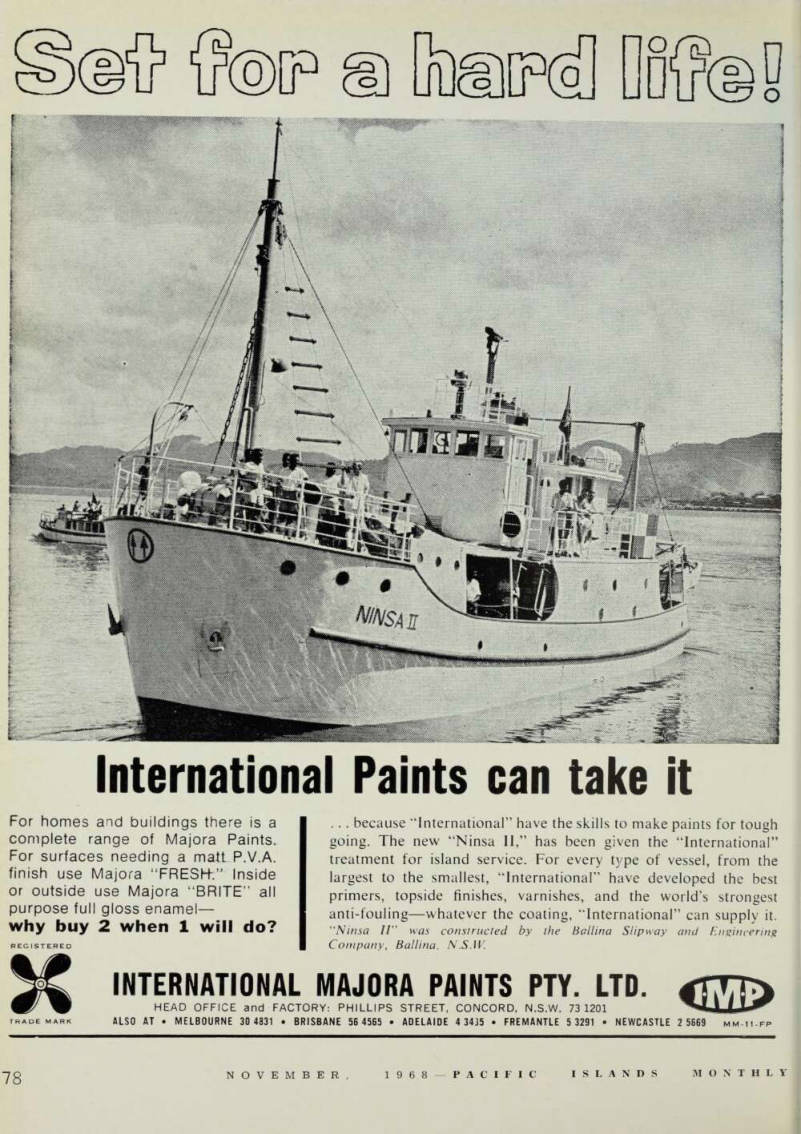 80
80 81
81 82
82 83
83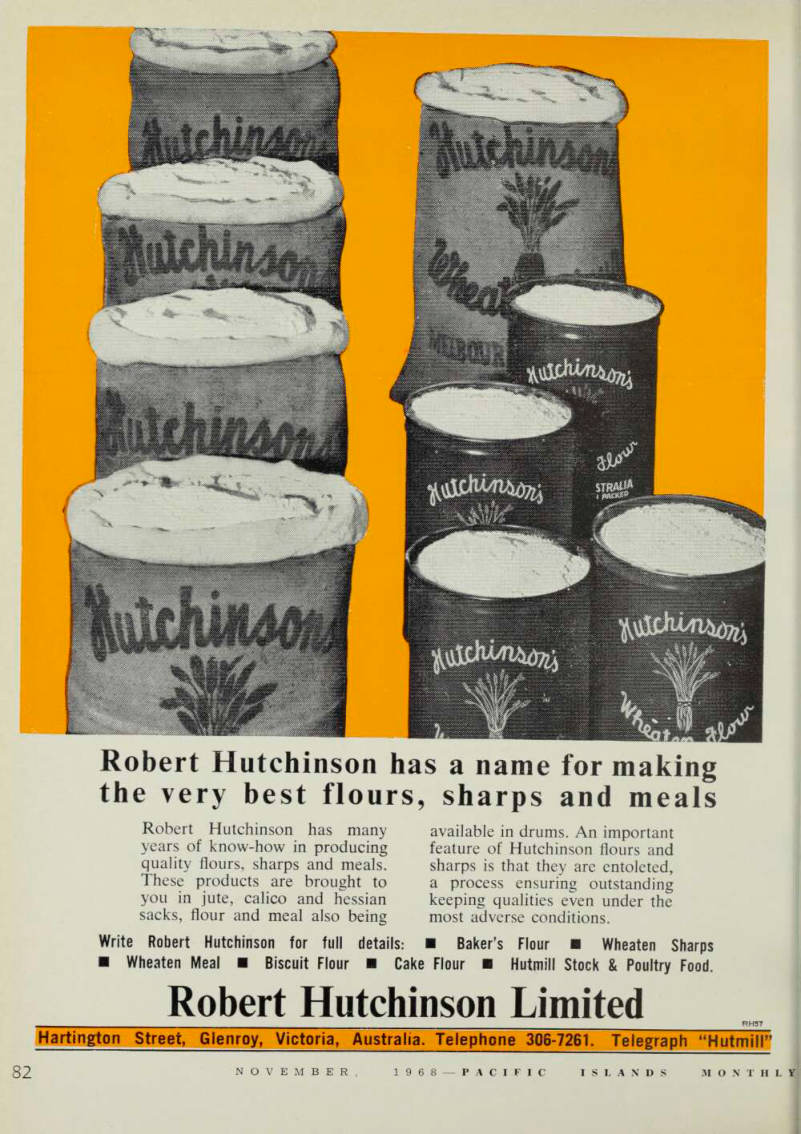 84
84 85
85 86
86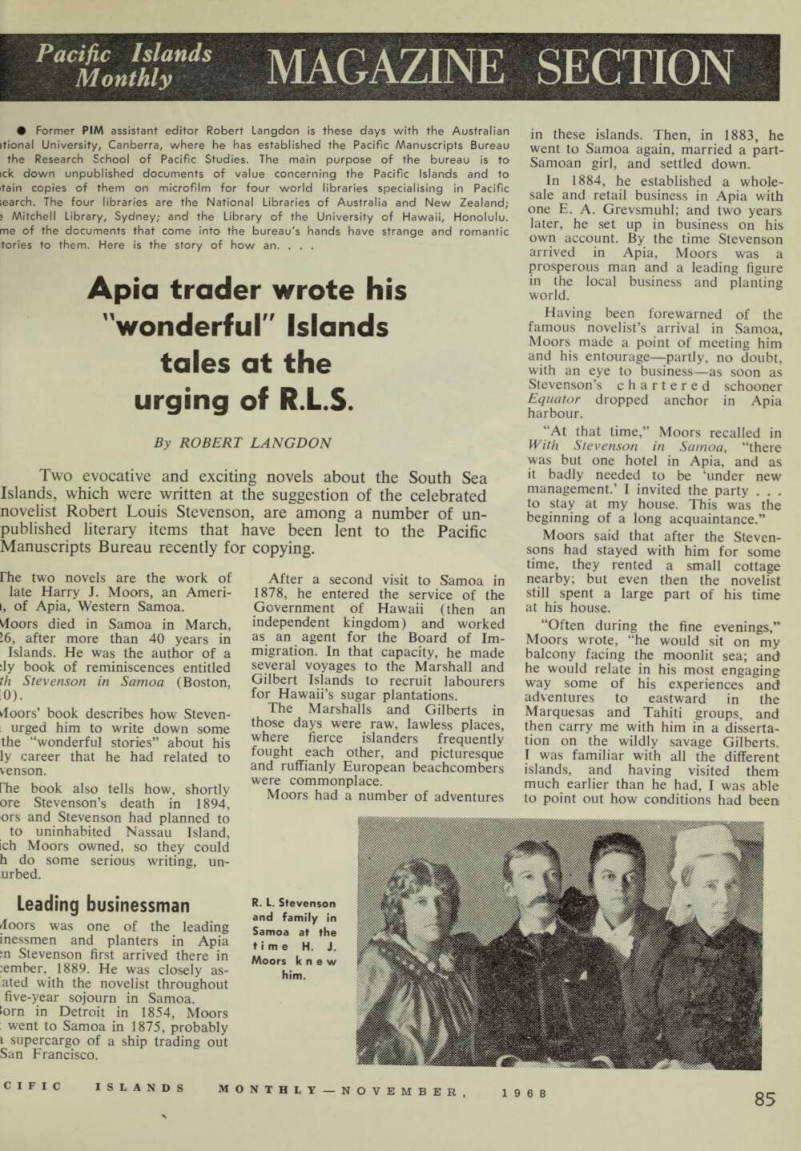 87
87 88
88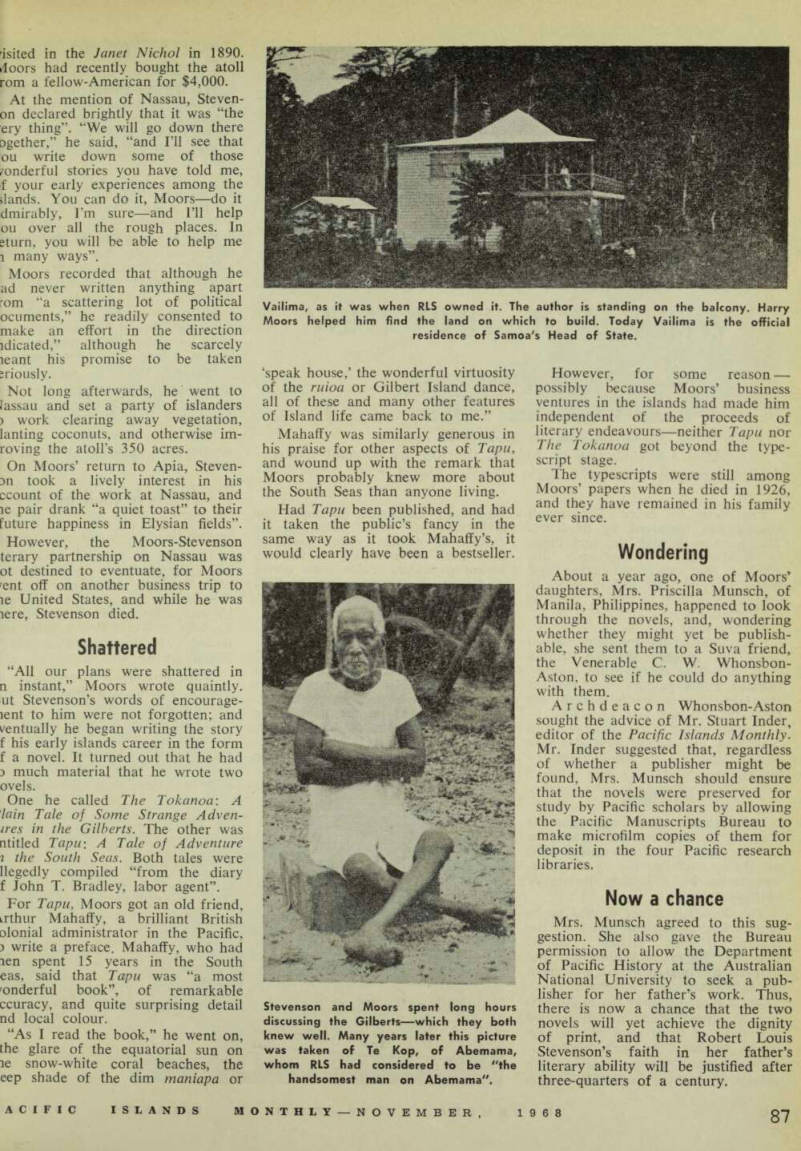 89
89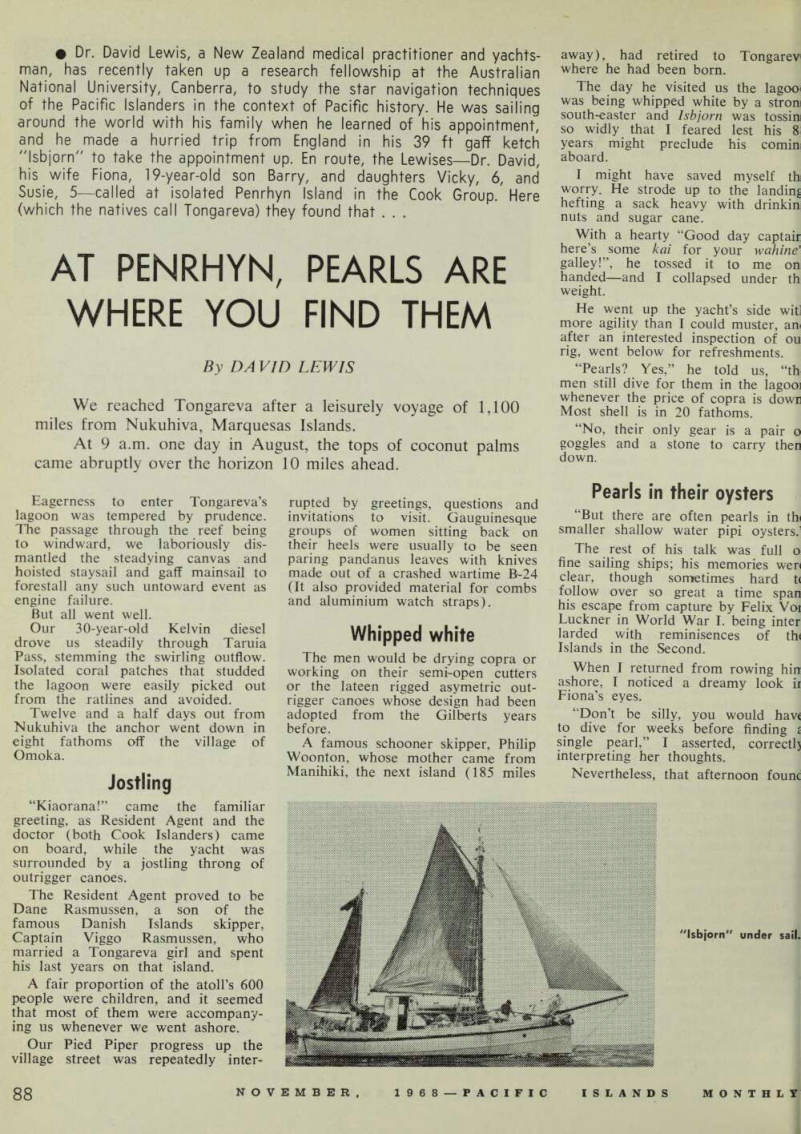 90
90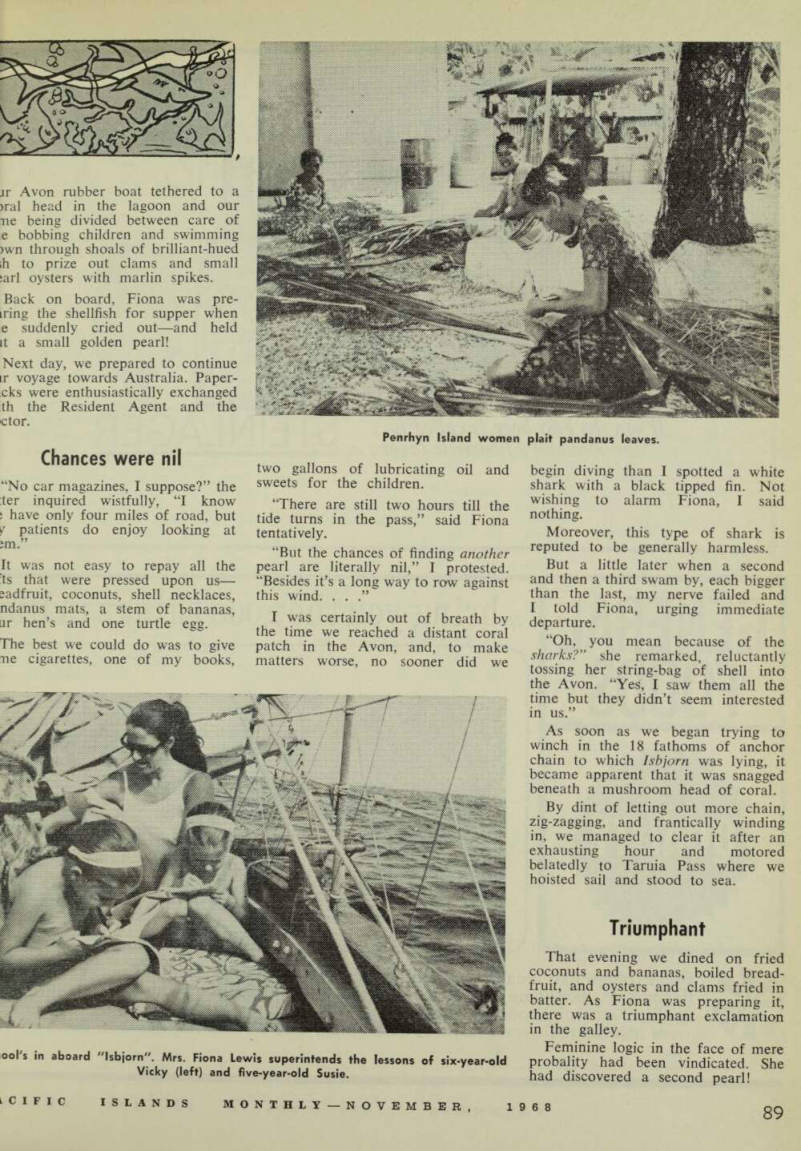 91
91 92
92 93
93 94
94 95
95 96
96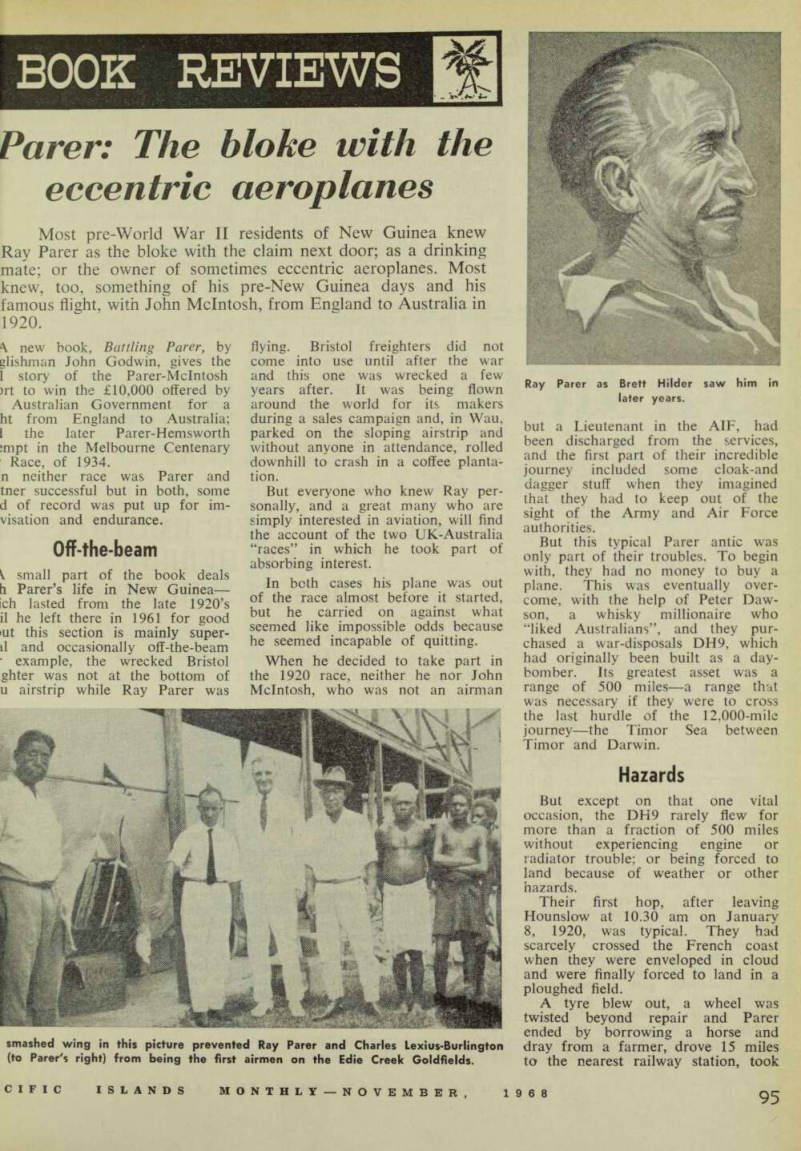 97
97 98
98 99
99 100
100 101
101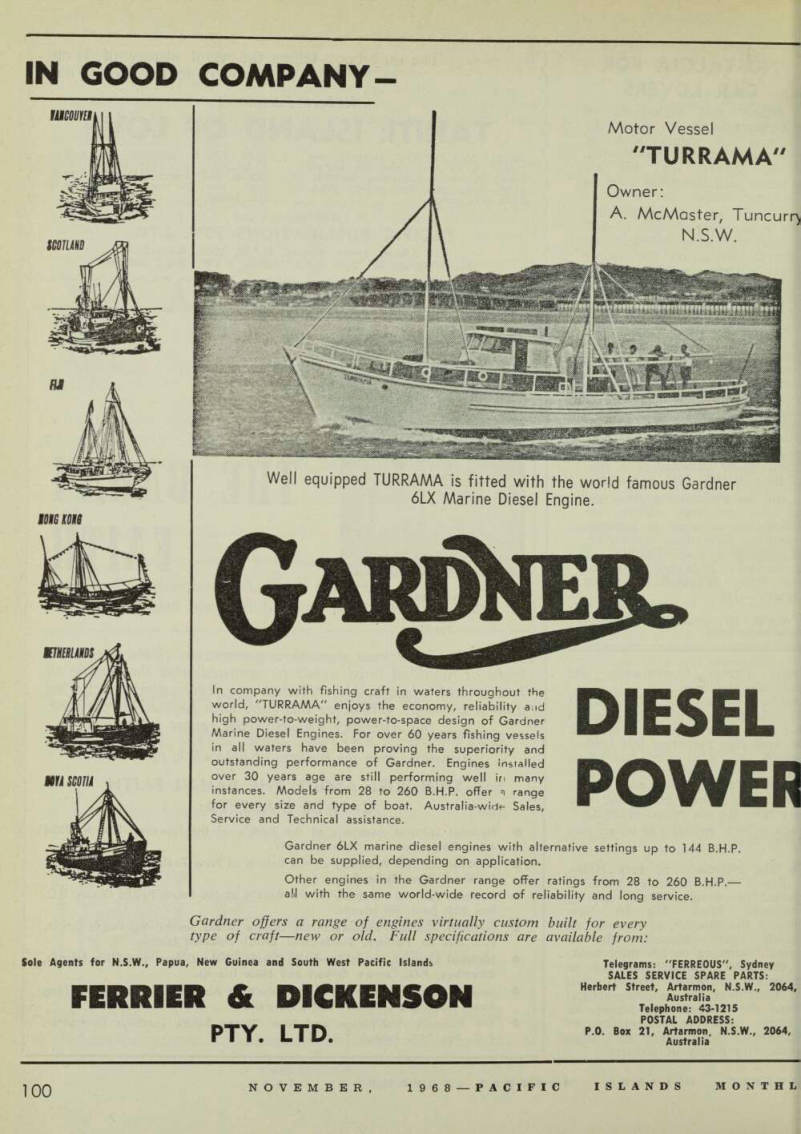 102
102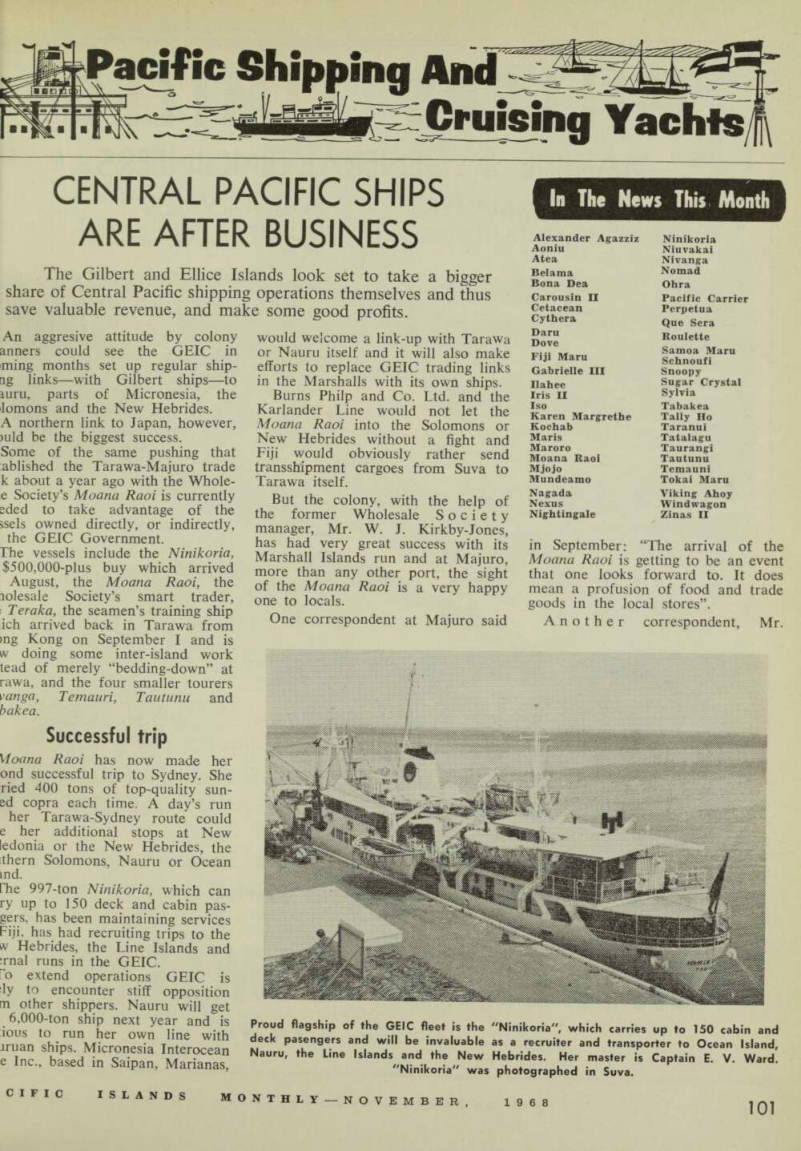 103
103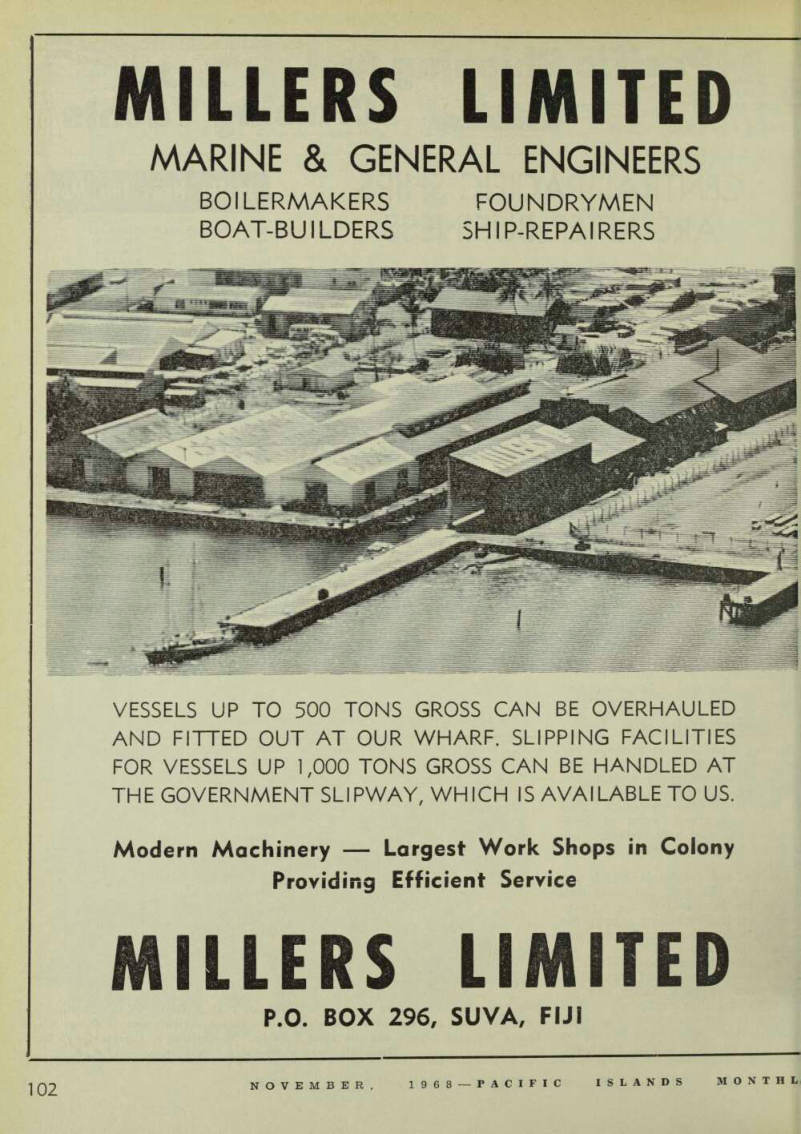 104
104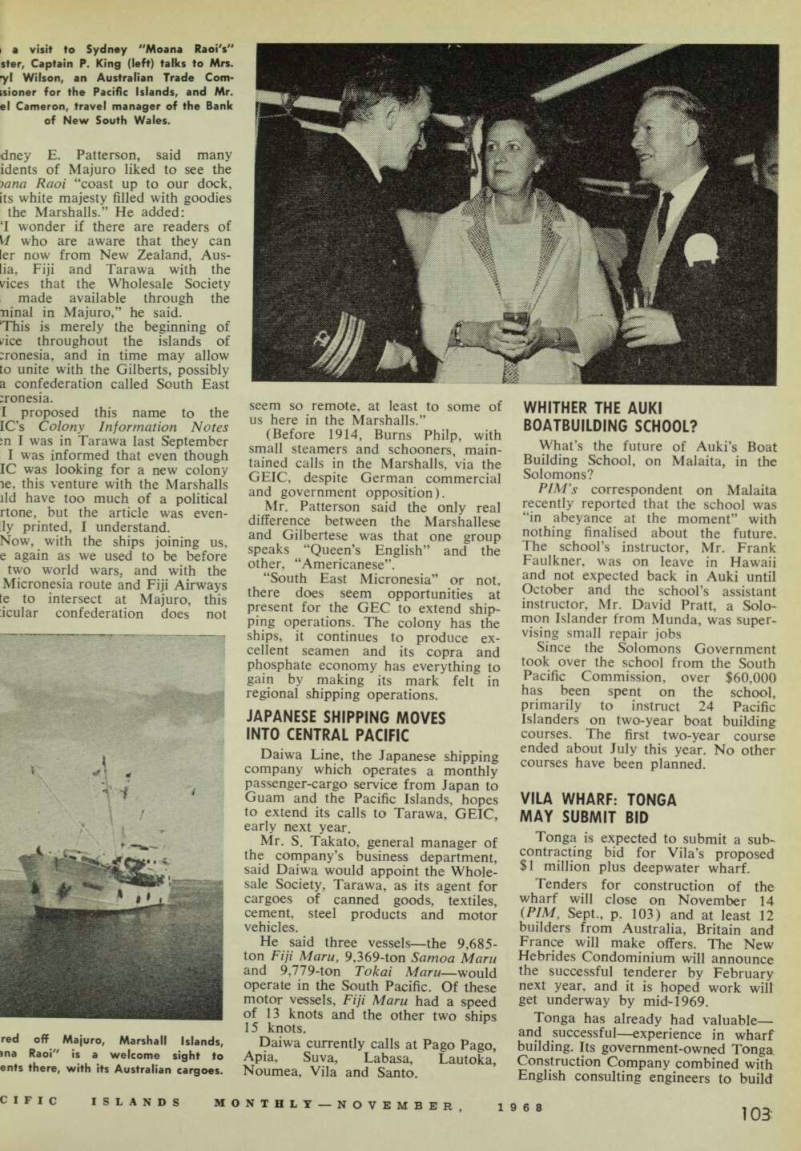 105
105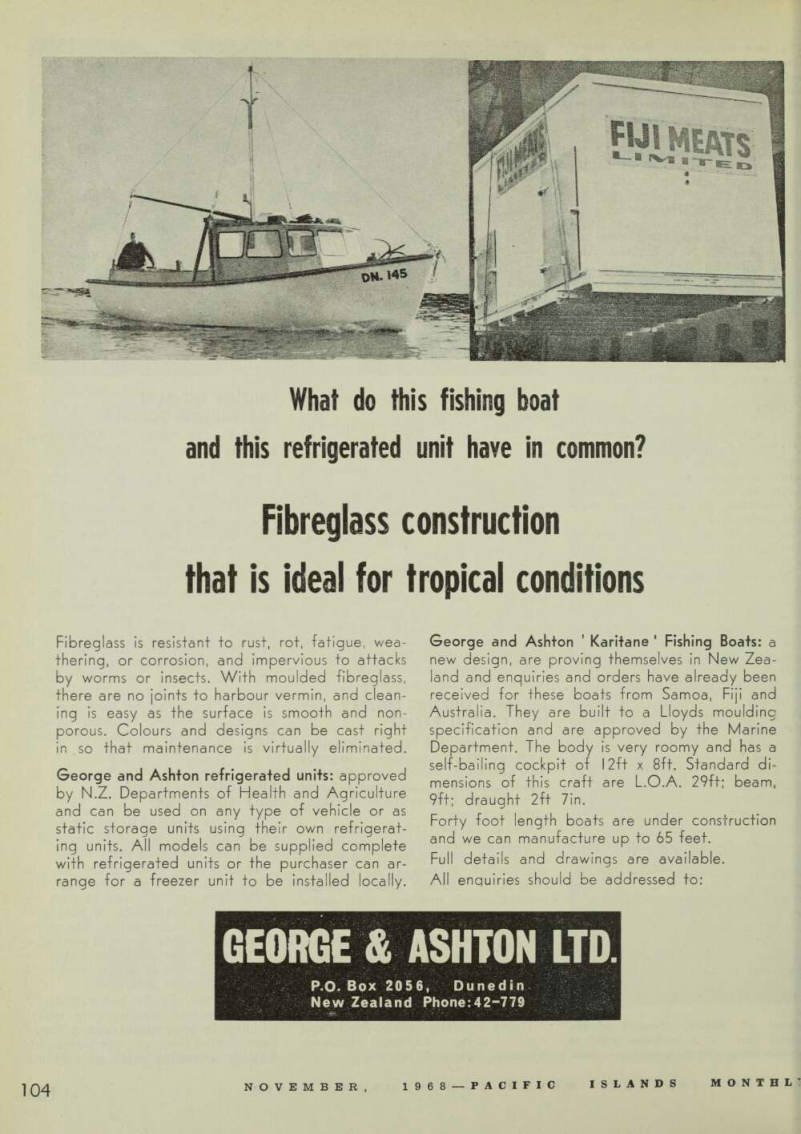 106
106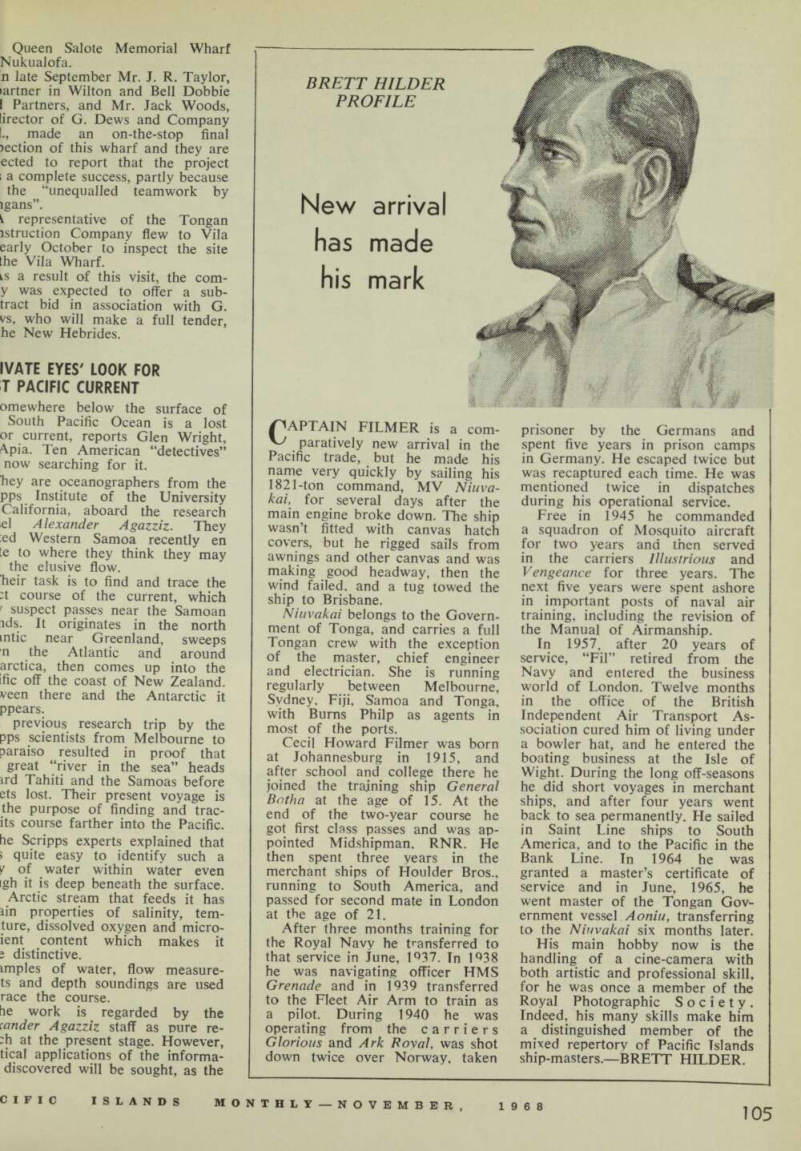 107
107 108
108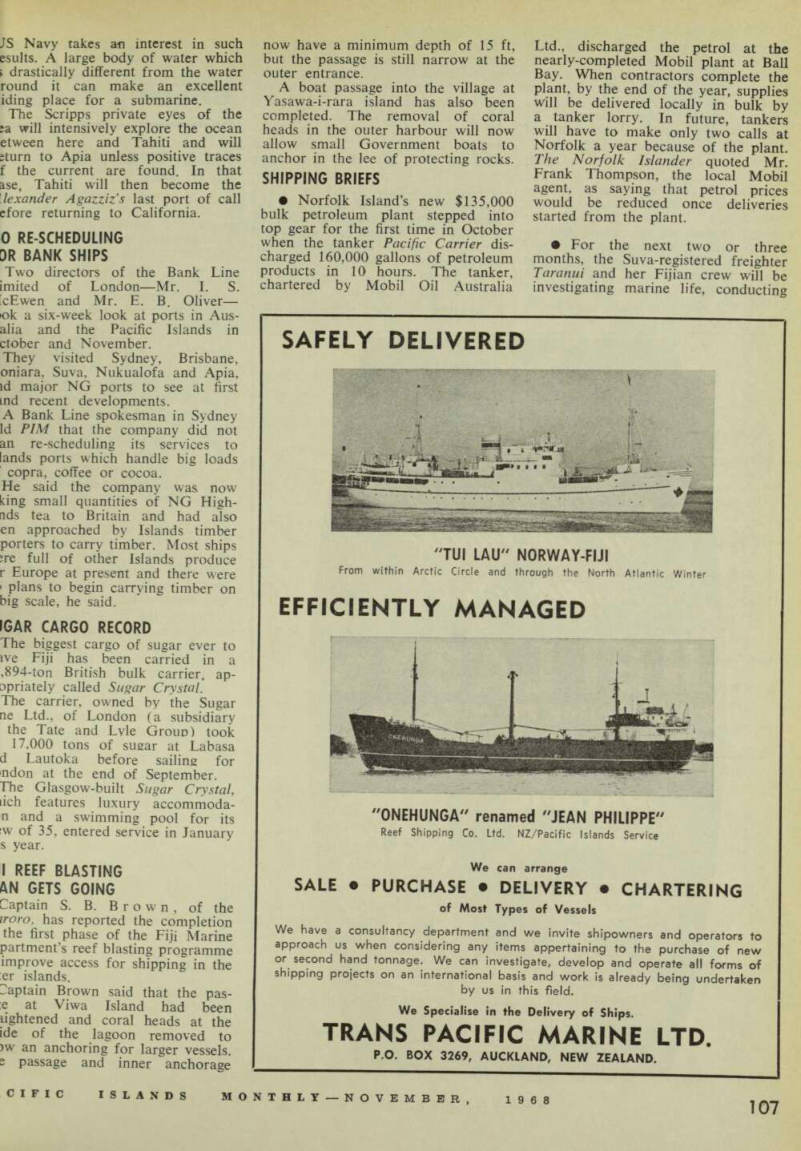 109
109 110
110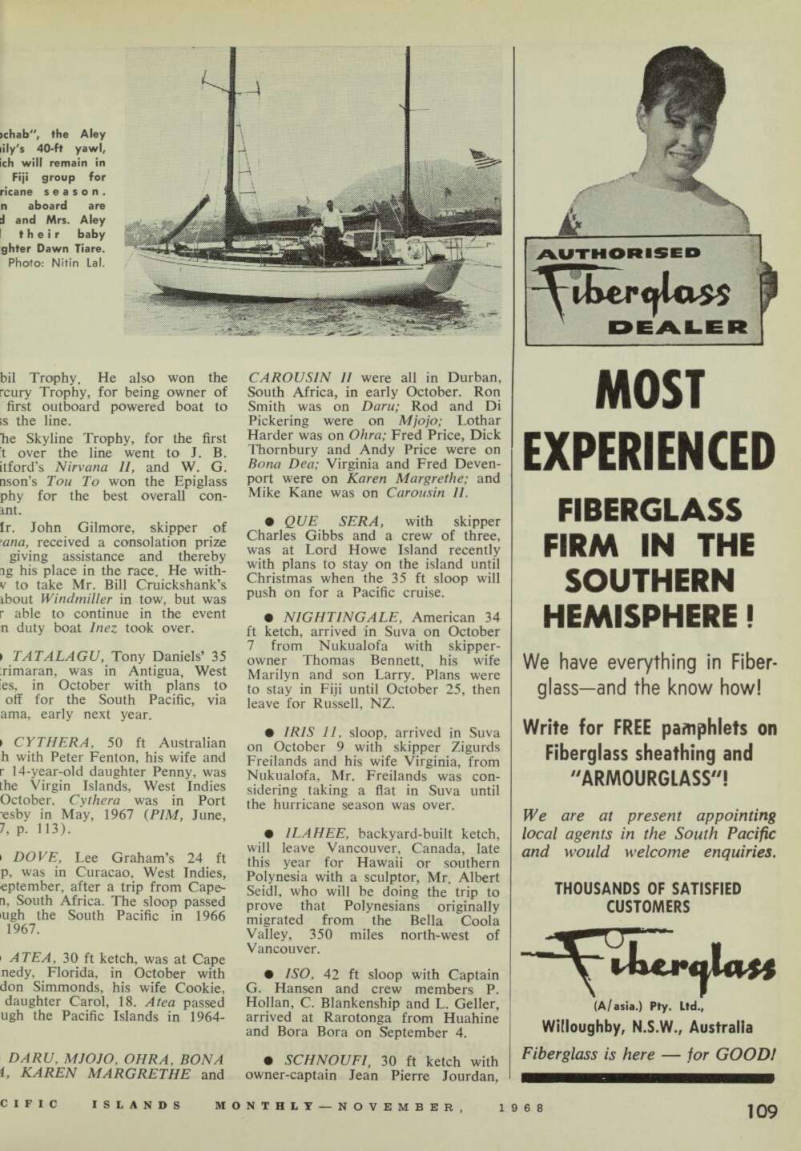 111
111 112
112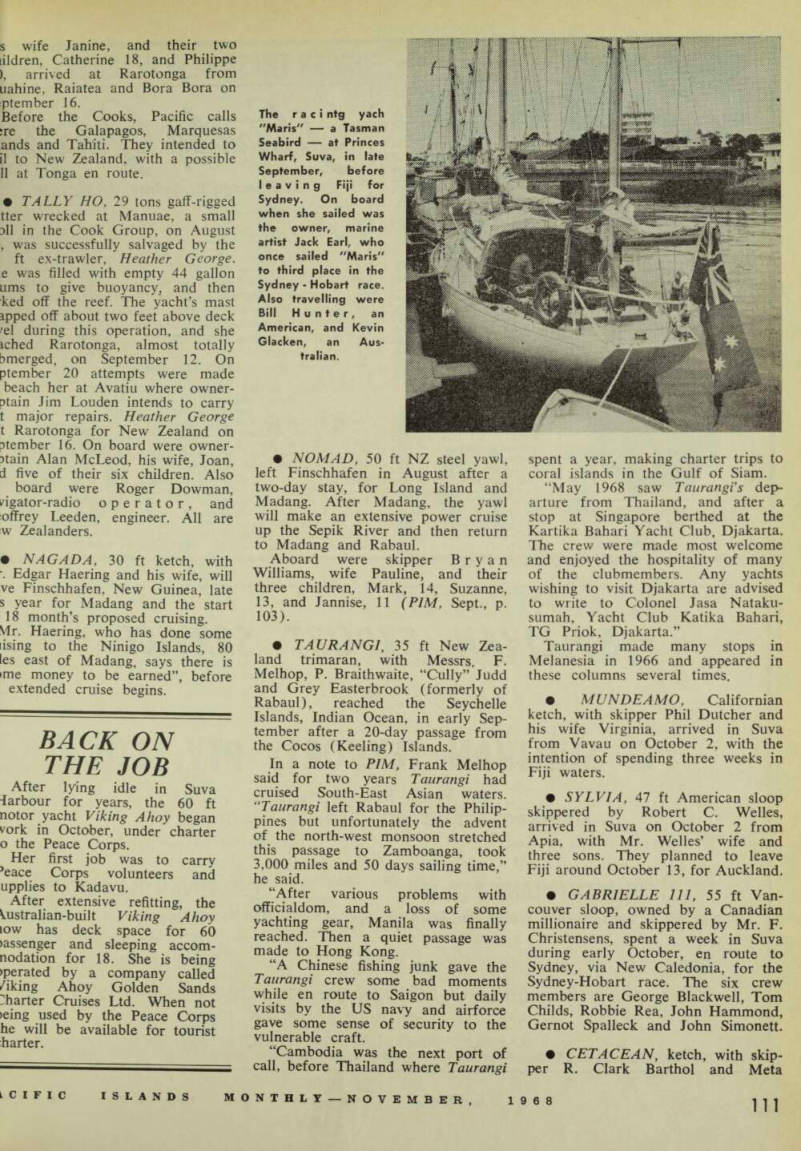 113
113 114
114 115
115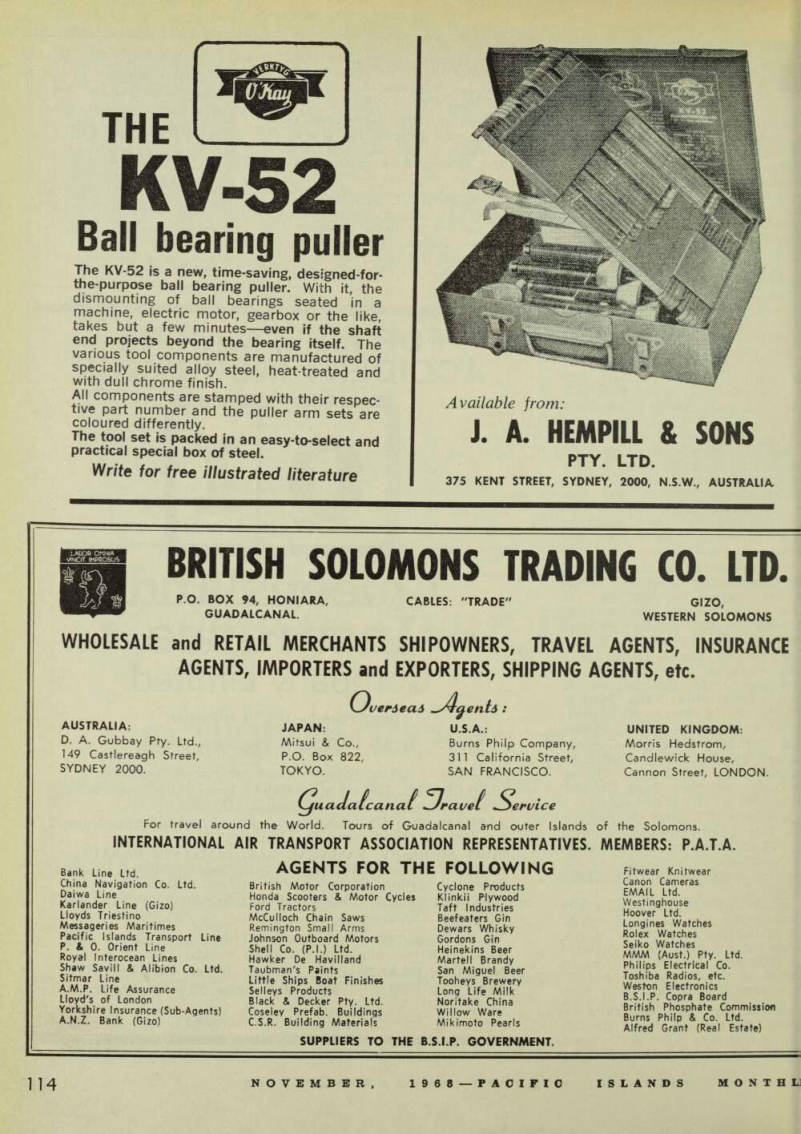 116
116 117
117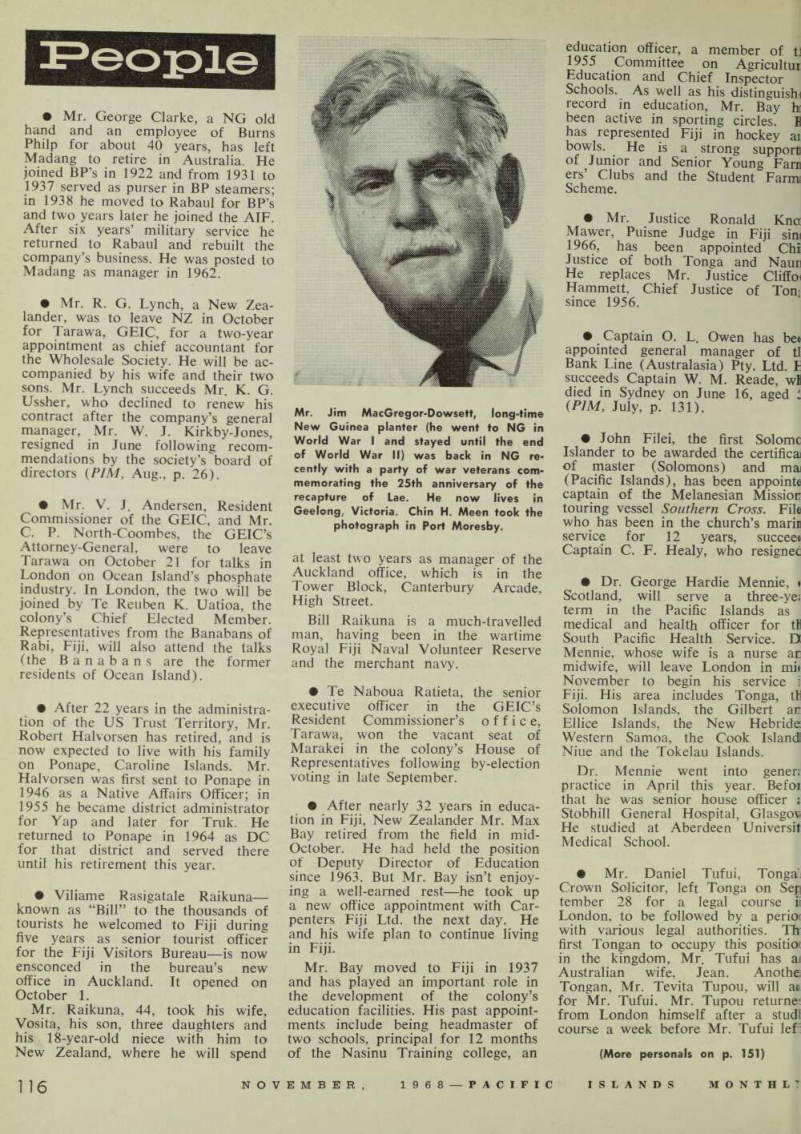 118
118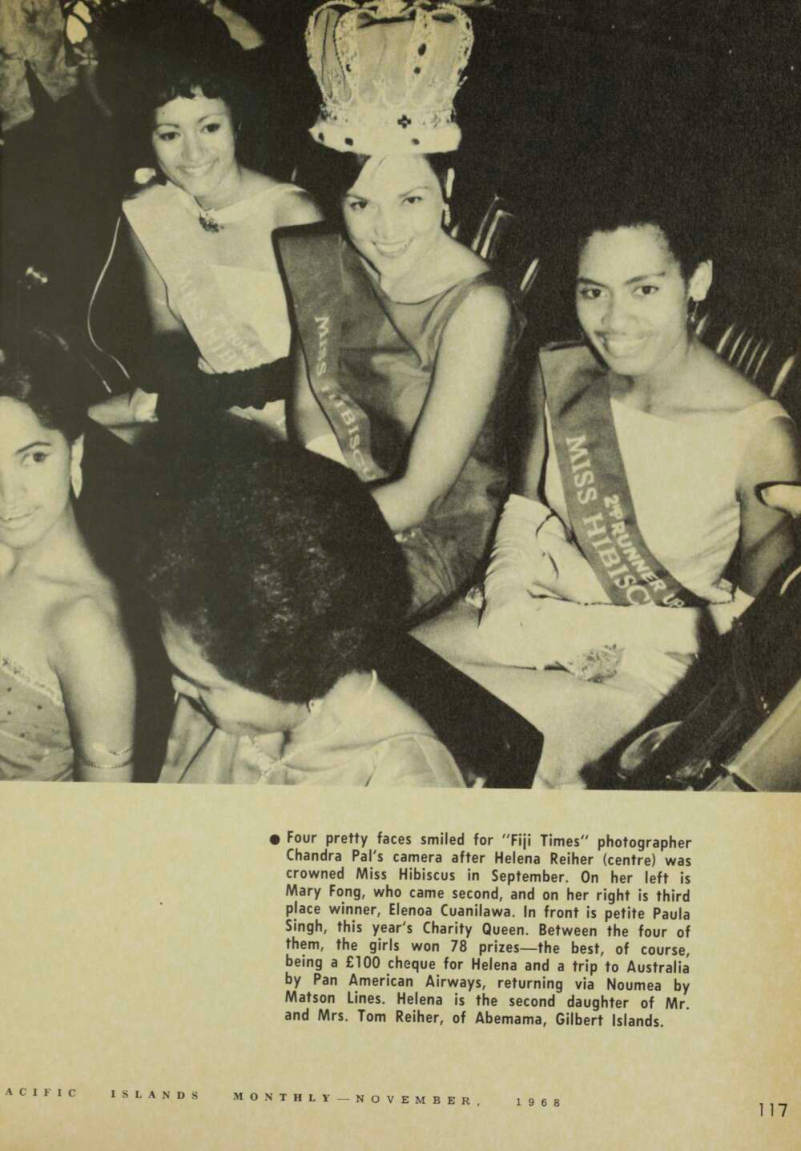 119
119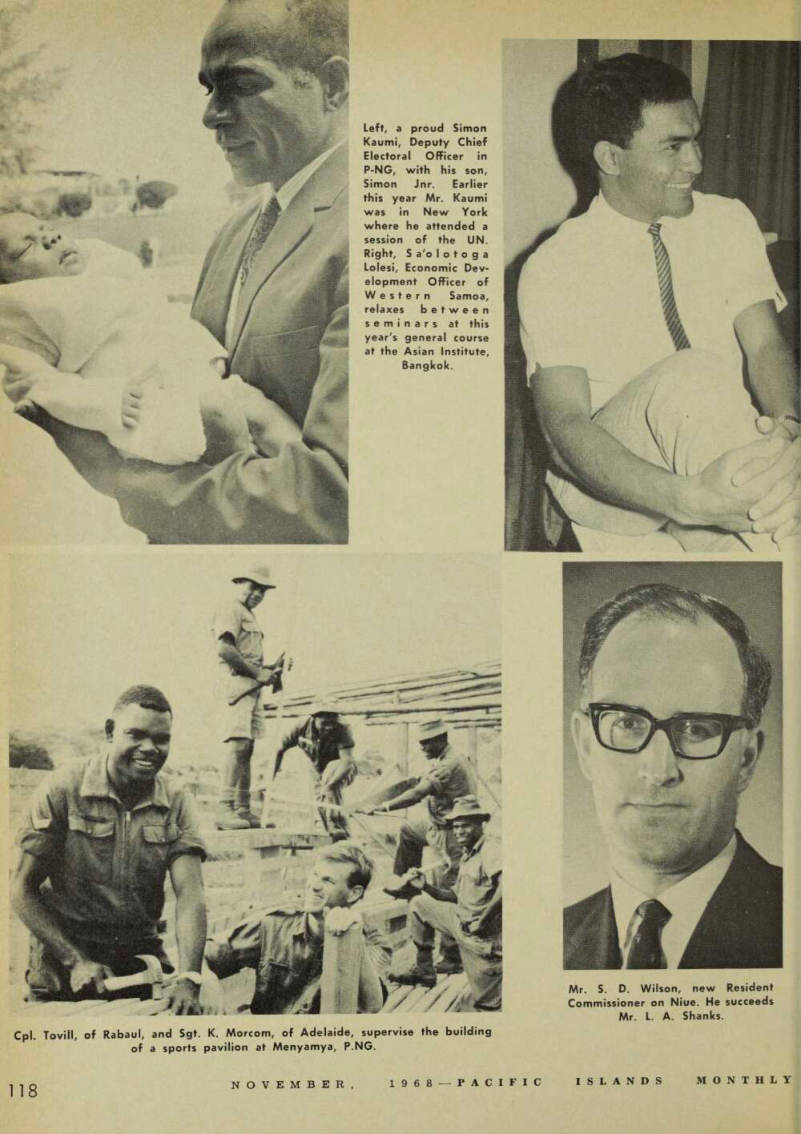 120
120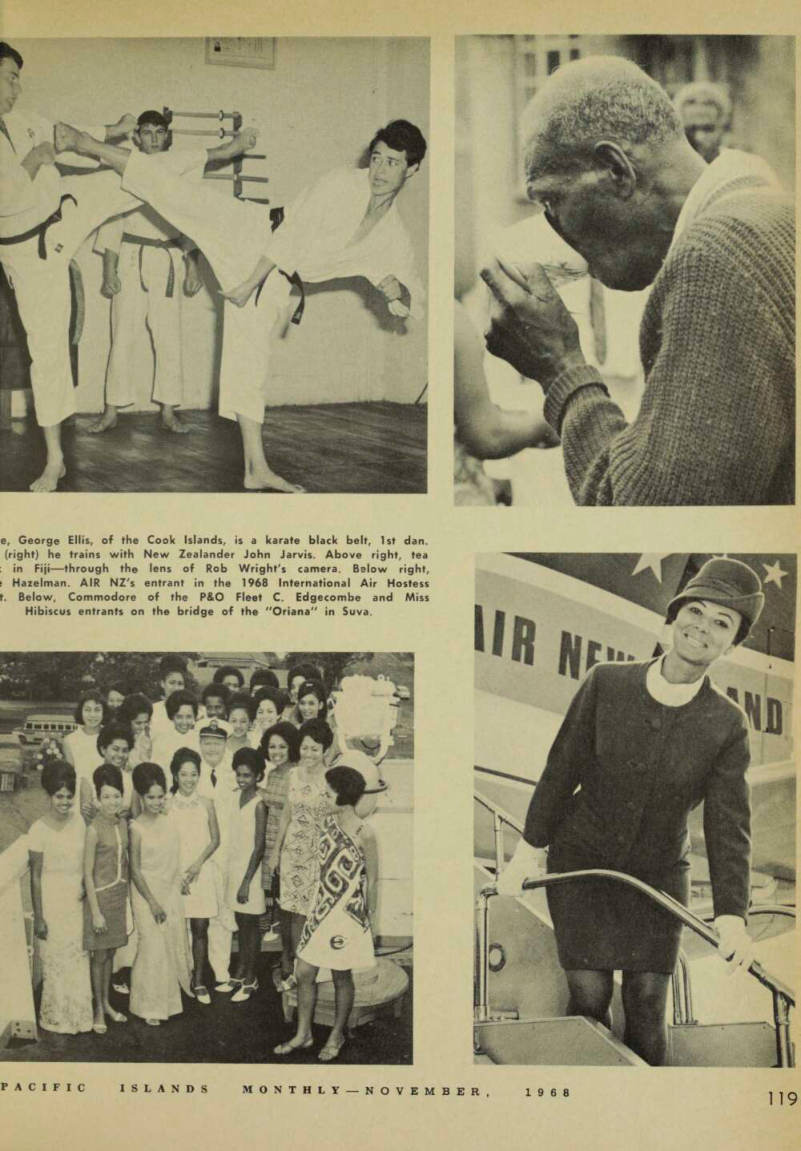 121
121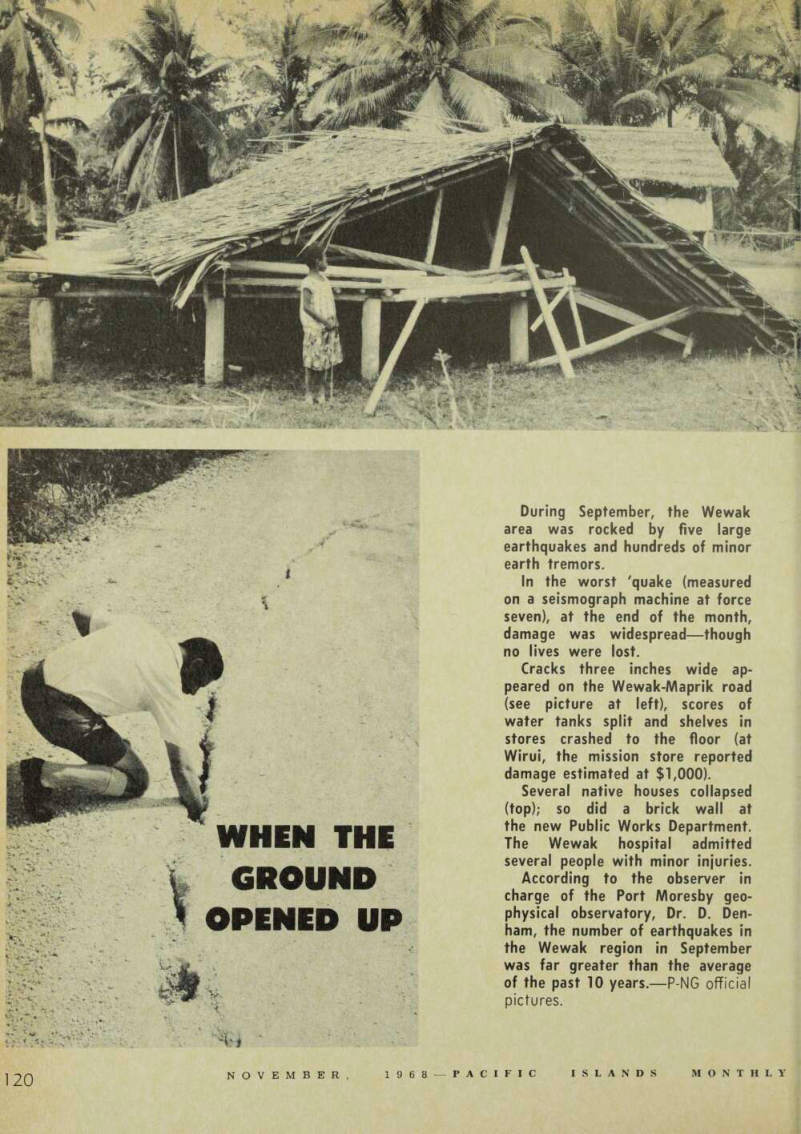 122
122 123
123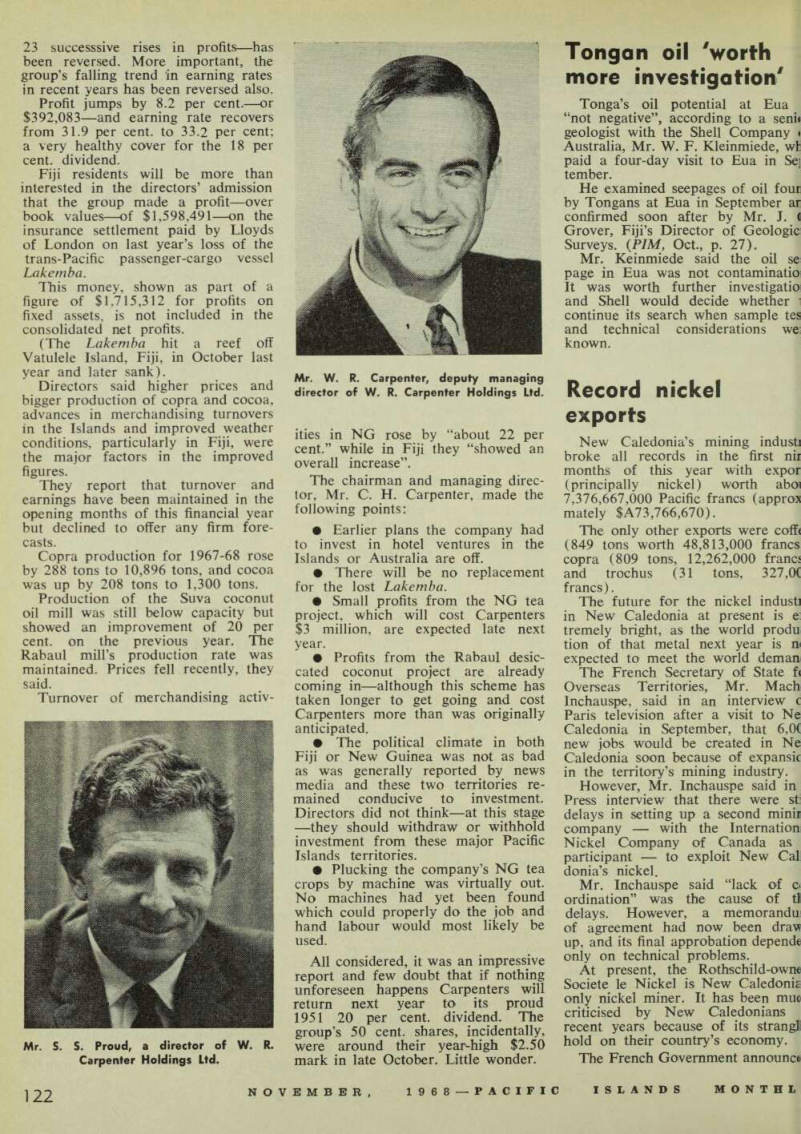 124
124 125
125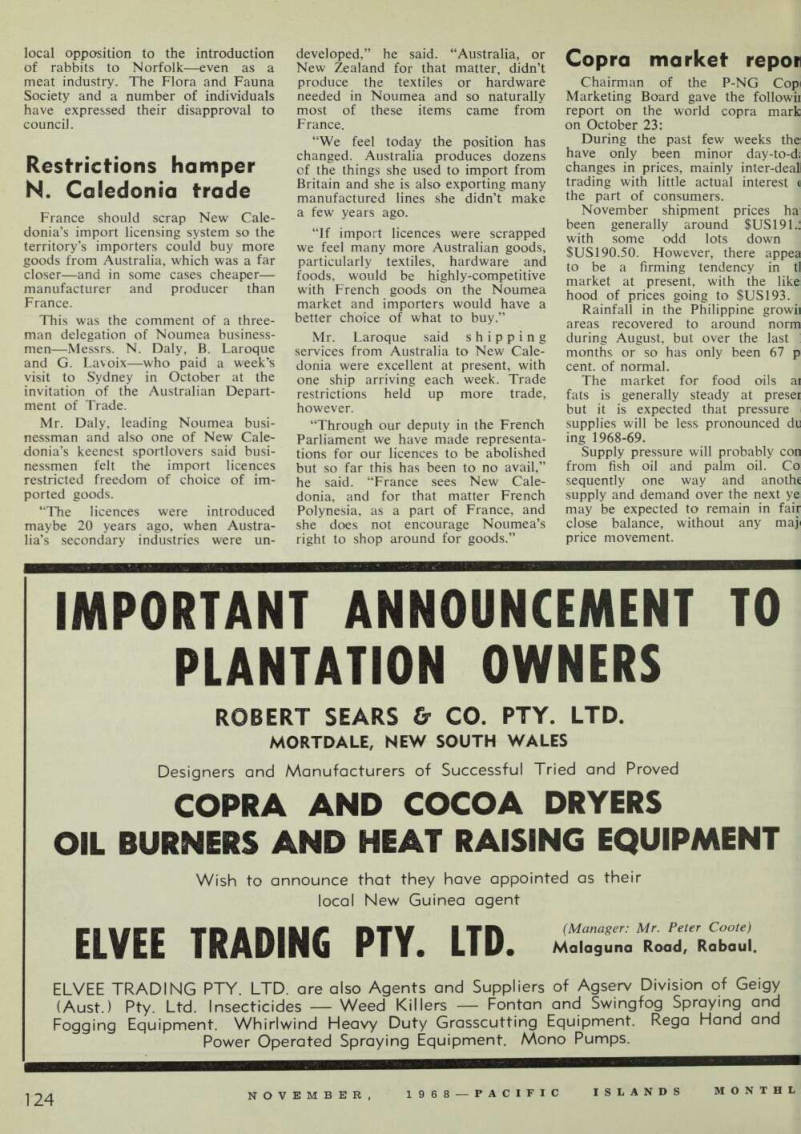 126
126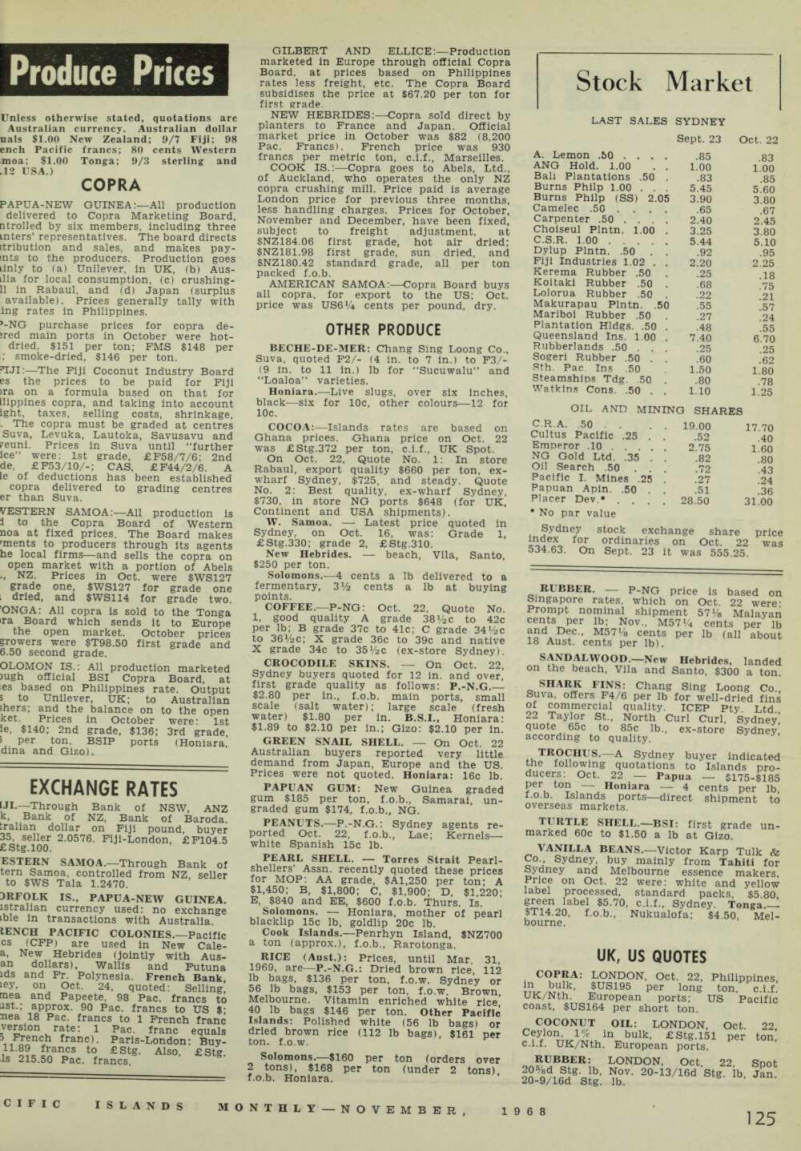 127
127 128
128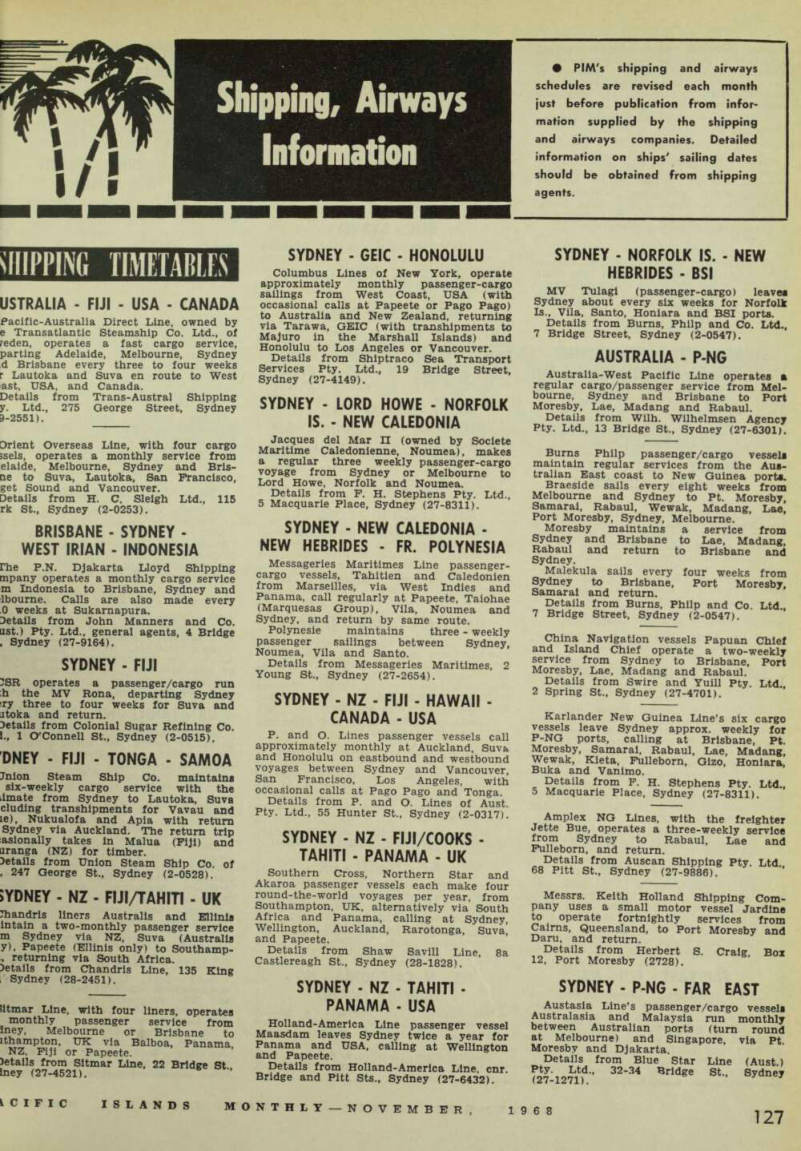 129
129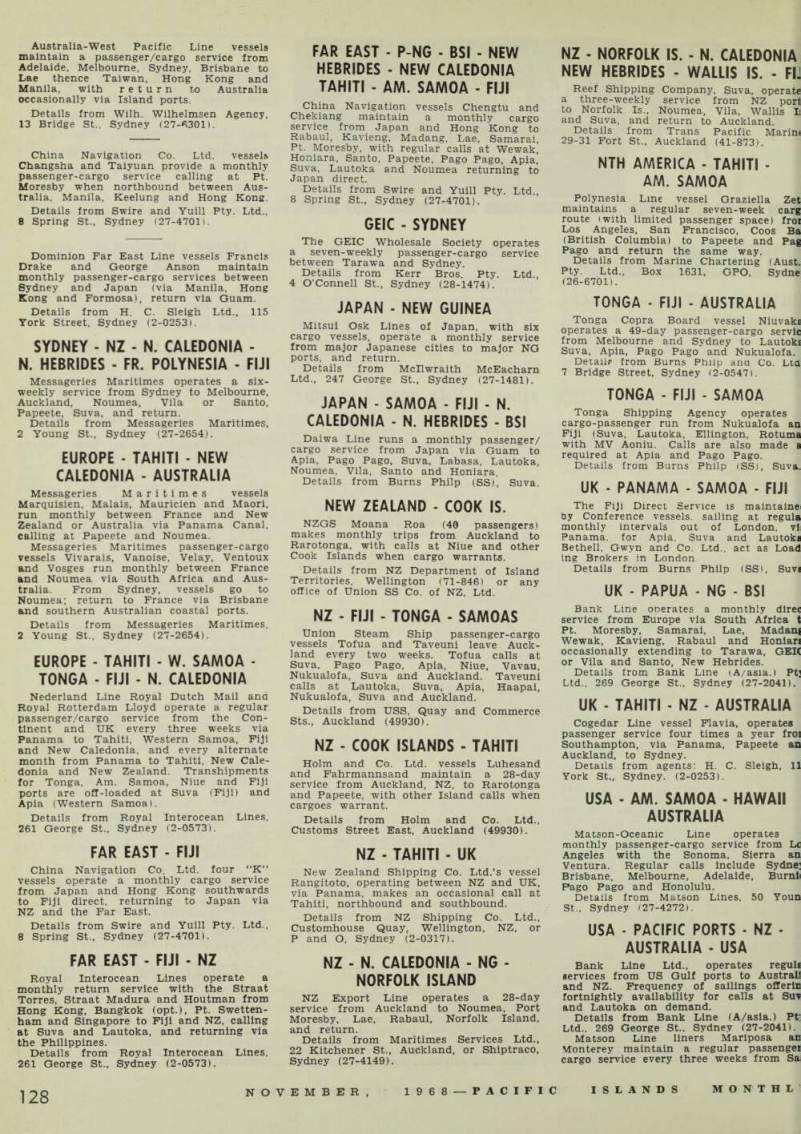 130
130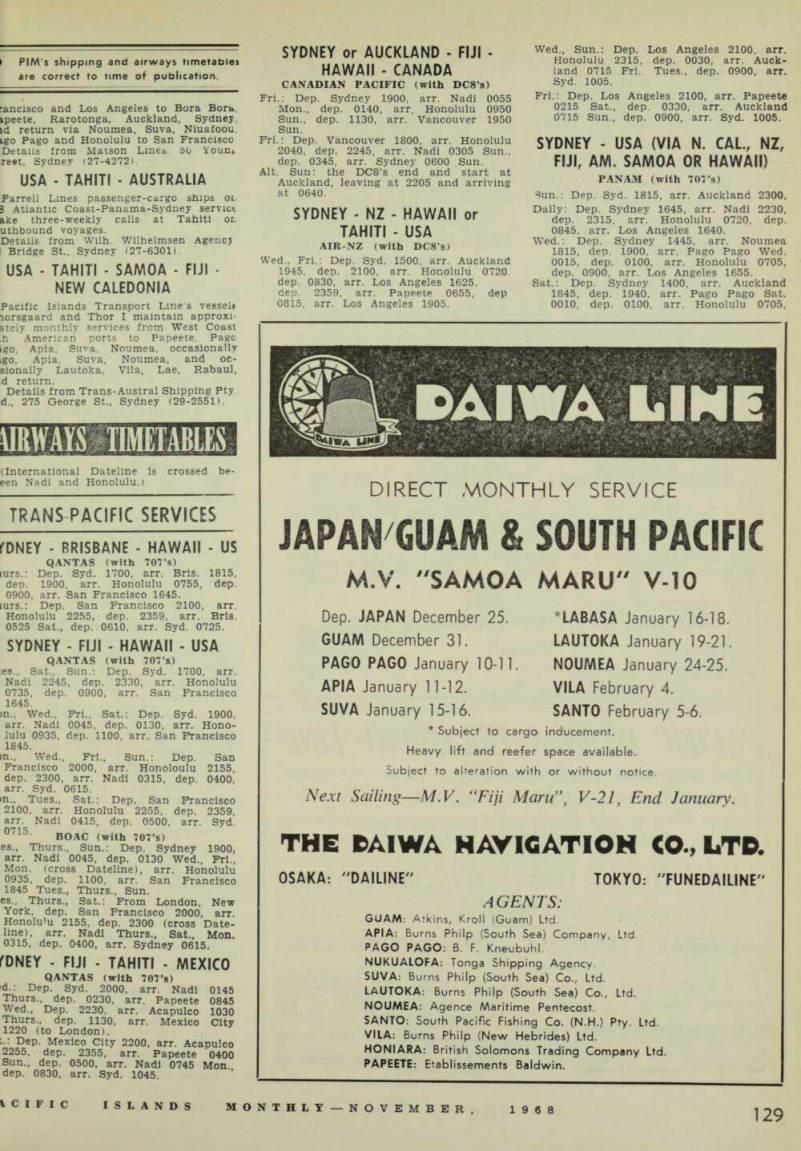 131
131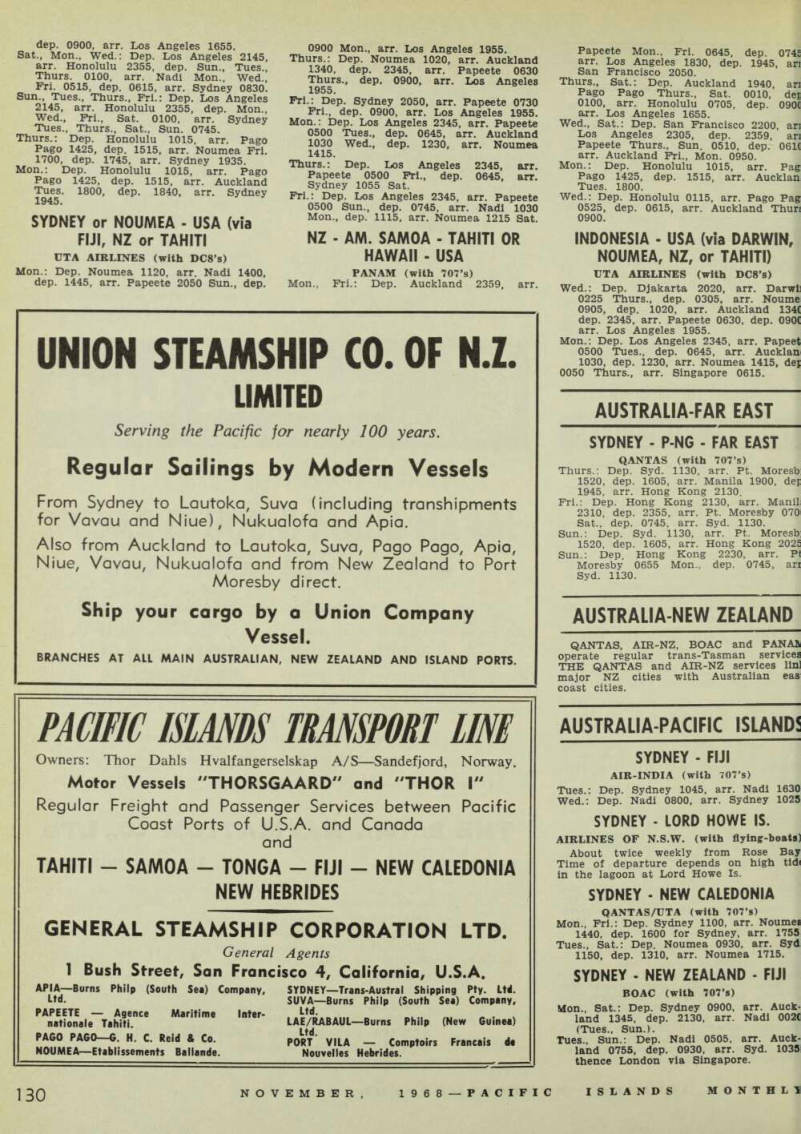 132
132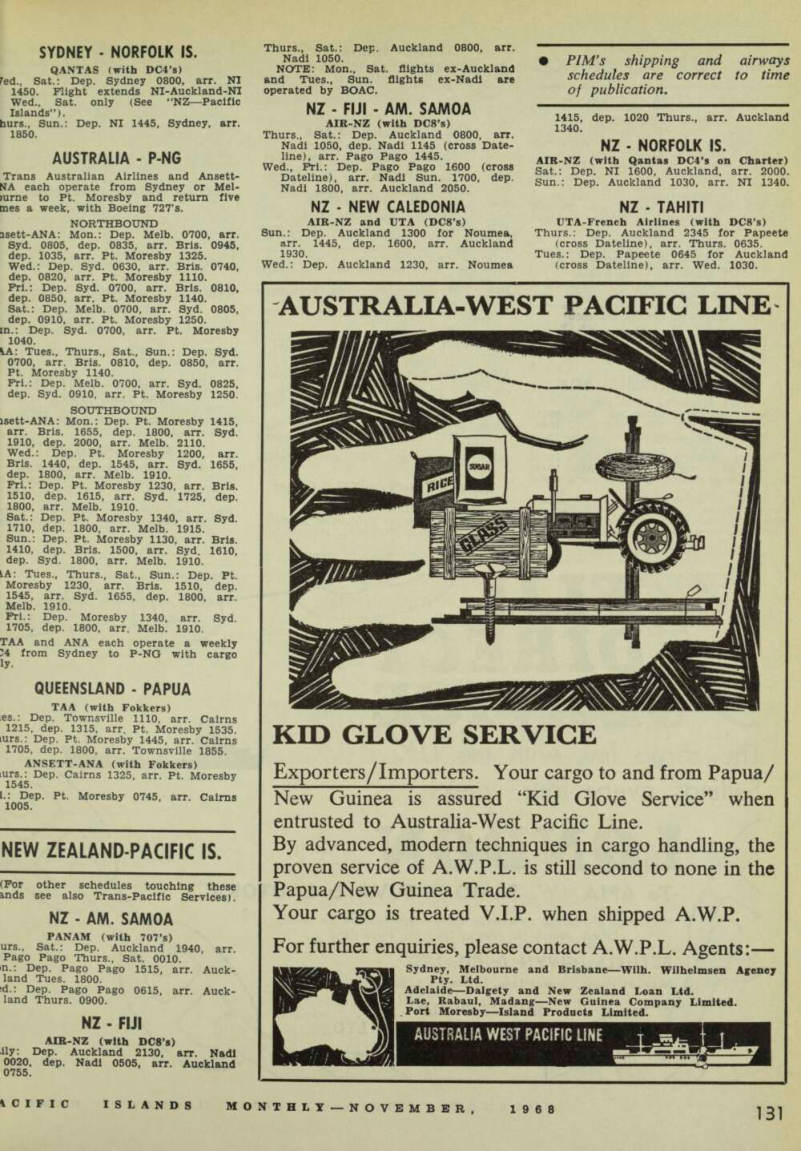 133
133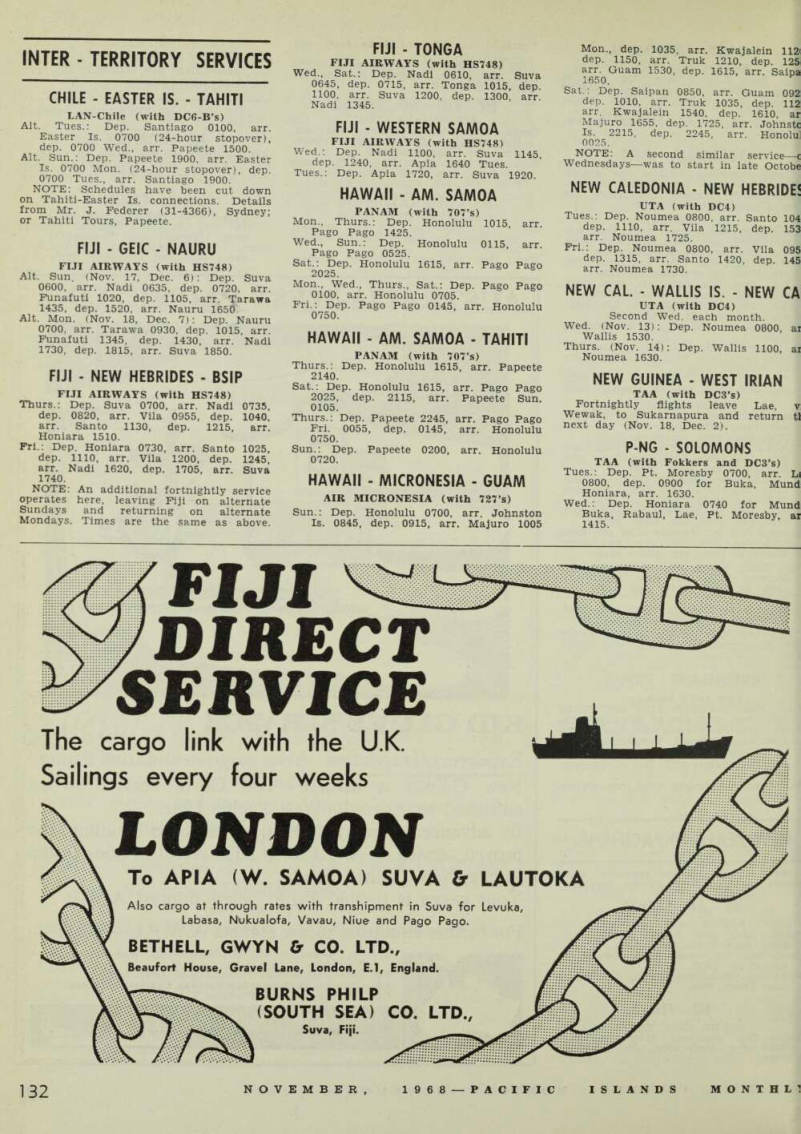 134
134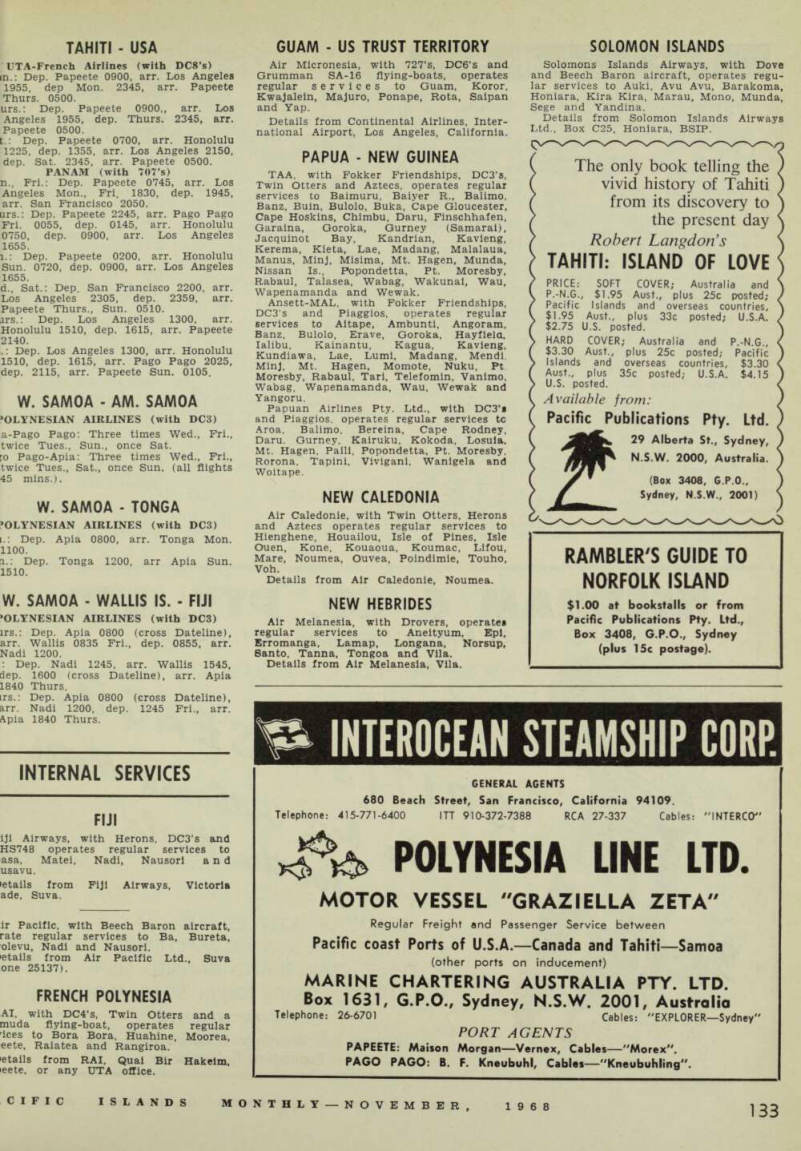 135
135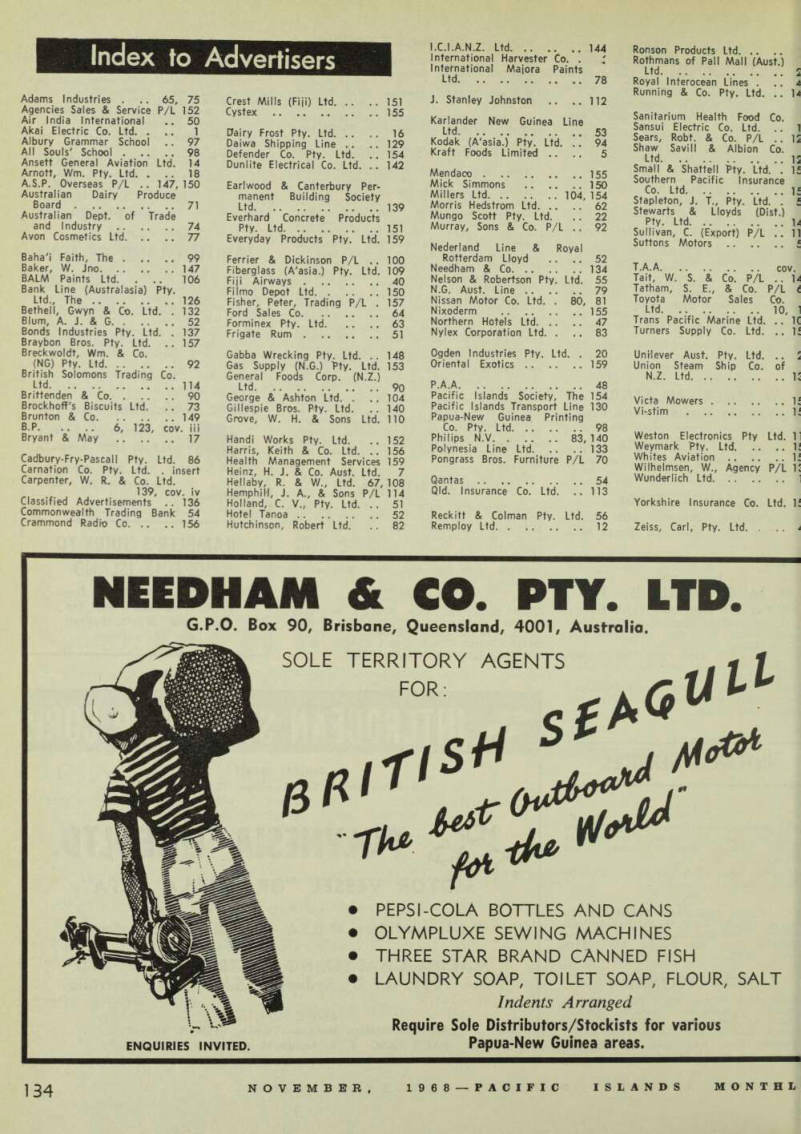 136
136 137
137 138
138 139
139 140
140 141
141 142
142 143
143 144
144 145
145 146
146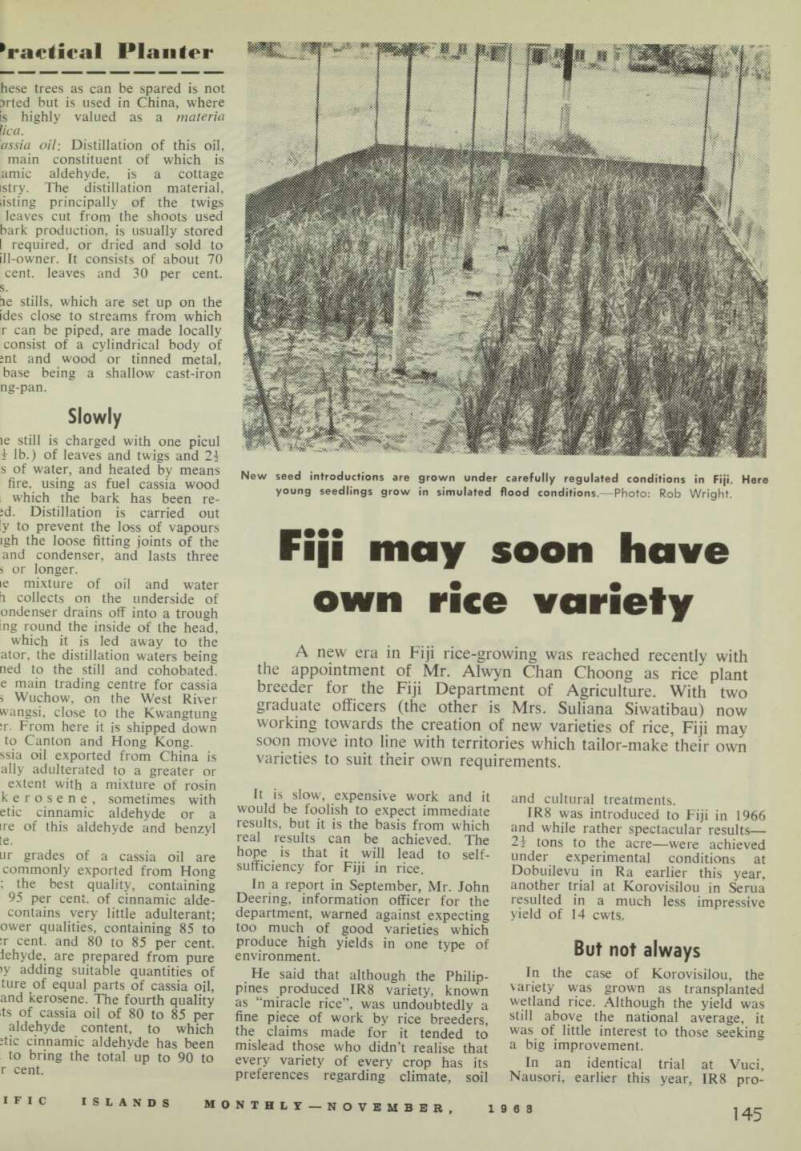 147
147 148
148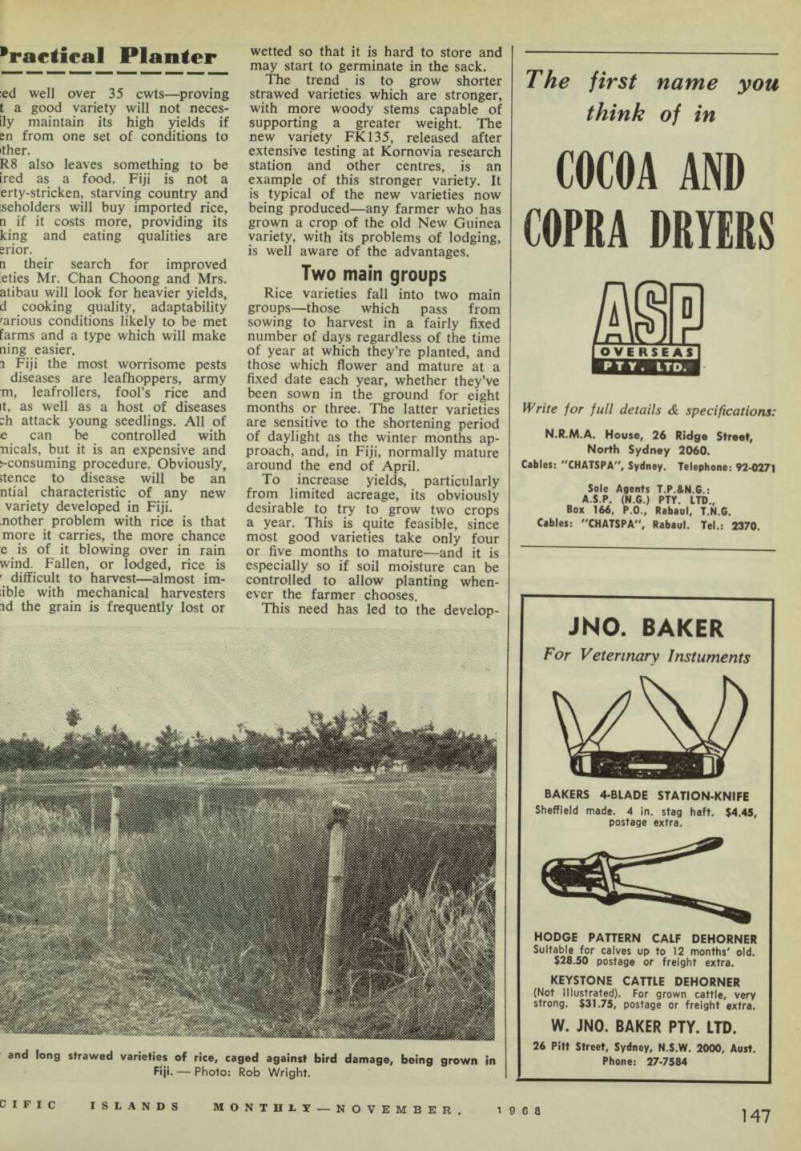 149
149 150
150 151
151 152
152 153
153 154
154 155
155 156
156 157
157 158
158 159
159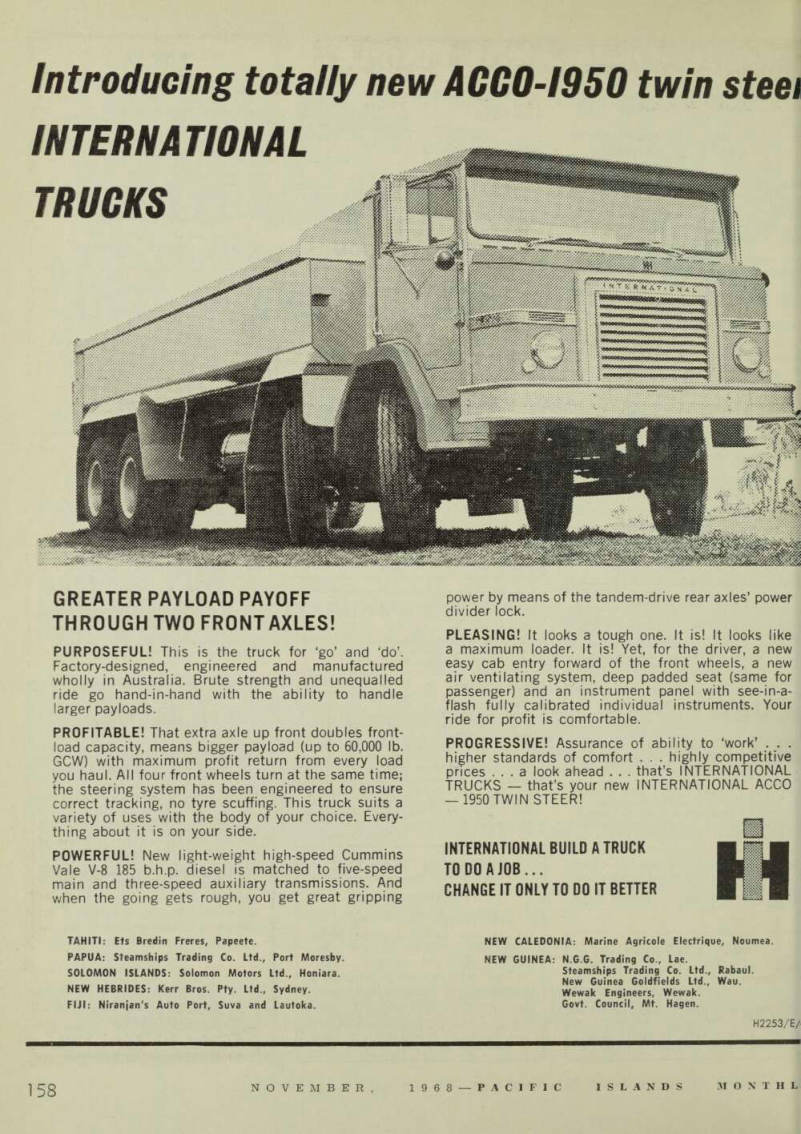 160
160 161
161 162
162 163
163 164
164