Monthly
Pacific Islands Monthly
Registered at G.P.O., Sydney, for transmission by post as a newspaper.
October, 1968
News Magazine Of The South Pacific
*LANDS TR S5 UA FRCS 0 ' c f ? T'u 45 ‘ » ‘ 3/9 • ™NCH PACIFIC ISLANDS, 55 FRCS CFP. • US. PACIFIC TERRITORIES, 70c. • P.-N.G. AND All OTHER PACIFIC TERRITORY IC, i r\r ai
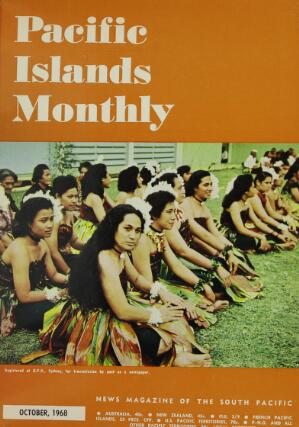
Our Cover
These pretty T origans, waiting on the sidelines to begin a dancing display, were caught in Nukualofa by a Qantas photographer on the look-out for local colour.
Inside, you will find a report on recent progress in the kingdom.
Advertisements & other items, pp. 2-16 (14 items)
fly TAA
Most people
j m ■
—they've got the best connections
in the Territory and Australia!
New improved TAA services. From Port Moresby to and from all main centres and through the Highlands a greater spread of services with better connections throughout the Territory. From Port Moresby, to and from Australia, fly TAA’s ‘Bird of Paradise’ T-Jet service. Contact your Travel Agent or TAA: Port Moresby 2101. Lae 2311. Madang 2478. Rabaul 2567. Goroka 8. Mt. Hagen 4. Wewak 103.
Fly TAA the Friendly Way
WM M
» 316 74868
NOW, THE MOST
COMPLETE
MODEL, X-3601
-1 (W a r* « 1 1 a * Magnetic Brake: Developed to bring the tape to an immediate stop in a split second, without making it saggy or too taut. * Automatic Volume Control (Comput -Q- -matic): Developed to automatically adjust the sound level for perfect high fidelity recording The operator is relieved of the burden to manipulate the volume control watching the VU meters, as the occasion warrants. * Automatic Dust Minder; Developed to indicate the dust deposits on the heads. Such deposits account for 90% of the failures in most tape recorders. Clean the heads as dictated by the indication of the lamp.
Three Speed Motor For Capstan Drive: Developed 3 tape speeds (7*s, 3\ and W ips), which can be determined by the electrical selection of the motor speed The 15 ips tape speed is made possible by the capstan and pinch wheel unit * Cross Field Head: Developed to permit low tape speeds with amazing frequency response and perfect high fidelity recording * 4 track stereo/monaural recording and playback * 50 watt solid state amplifier Automatic continuous reverse (Reverse -o- matic) X-360D tape deck is also available There are others too, all making for perfection in sounds for your maximum enjoyment. m * X
model x-v Portable Stereo Tape Recorder
fi • 4 track stereo/monaural recording and playback • 4 speeds (15/16, V/ 8 , 3% and #7" reels •The Wide Cross-Field frequency response • New brush- -7 less micro motor •40 watt solid state amplifier • 16 hours maximum recording capacity • Perfect
AC or DC (re chargeable) operation
IAKAI
AUSTRALIA:
I ELECTRIC CO.. LTD.
IKOJIYACHO OHTA-KU TOKYO JAPAN
rhrkWlirrh 1 ' 2 ° Cla [ B " ce S,reel ' NS W NEW ZEALAND: G. Glausiuss Coy. 187-189 Hereford Street Jf f , F ’ JI ISEANOS . Burns Philp (South Sea) Co.. Ltd., Suya. Burns Philp (South Sea) Co., Ltd., Lautoka SAMOA: Burns Philp (Sou't sea; Co., Ltd Pago Pago, American Samoa, Burns Philip (South Sea) Co., Ltd., Apia Western Samoa Norfork Island' Burns Philo (South Sea CALEM^-M^nird'" F d :- Sout B h Pac , lf,c - , NEW H£BR ' DES: Burns Philp (New Hebrides) Ltd., Port Vila Burns Philp (New Hebrides). Ltd. P Santo NEW Ltd Pi L ! i^c a . S D M L J mdh S I* du t ? efal Gallieni c NotJfnea BRfTiSH SOLOM( J N 'SLANGS: Mendana Enterprises (Solomon Islands Ltd., P.O. Box 12. Honiara BS I P NAURU: Nauru Co-operative Society. COOK ISLANDS: NT. NAPA (AVARUA) Ltd Rarotonga TAHITI V- C mimpex, P n o. Box 200 Papeete PAPUA i NEW GUINEA: S.O. Svensson (N.G.) Ltd. PO Box 508 “ ' ' ' Pty. Ltd., P.O. Box 59. Madang, N.G. Pacific Indent Co., P.O Box 154. Rahaul, N.G TONGA: Port Moresby. Papua. S. & G, Oiczbalis Burns Philp (South Sea) Co.. Ltd. Nukualofa
ft 1 ♦ s i » arnOT' Ml'Gf m * > •v s * O^c <7^ Arnotts Nice Biscuits Crisp and sugar-sprinkled Arnott s Lemon Crisp Biscuits With tangy lemon centres
ore*gSi iC I
7il
W HEATM^ L
SHREDDED
Biscuit* Arnott’s Orange Slice Biscuits Tangy orange cream in biscuit sandwich Arnott’s Shredded Wheatmeal Biscuits Golden-grain goodness for morning tea.
farrUK* Biscay,
FOUND
Arnott’s MILK ARROWROOT Biscuits All-day energy for children a favourite with all the family. a Arnott’s SAO Biscuits Ideal for snacks, suppers or between meals.
S ici Arnott’s SCOTCH FINGER Biscuits Chunky and butter-rich, with the true shortbread flavour. * & Arnott’s CHEESE JATZ Biscuits Crisp as could be with a fine cheese flavour perfect for entertaining.
There is no Substitute for Quality
BURNS PHILP (SOUTH SEA) CO. LTD.
GENERAL MERCHANTS AND SHIPOWNERS
SHIPPING, CUSTOMS AND FORWARDING AGENTS
' ■ - . • ' ■ . 1 - ■ • ■
Fiji:
SUVA
LEVUKA.
LAUTOKA.
LABASA.
SAVU SAVU.
BA.
SIGATOKA.
TAVUA.
TAVEUNI.
BRANCHES
Samoa:
APIA.
PAGO PAGO.
Tonga:
NUKUALOFA.
HAAPAI.
VAVUA.
NORFOLK ISLAND.
NIUE ISLAND.
AGENTS FOR:
QUEENSLAND INSURANCE CO. LTD.
BURNS PHILP TRUSTEE CO. LTD.
SHELL COMPANY (P. 1.) LTD.
OVERSEAS AGENTS
BURNS, PHILP & CO. LTD., Sydney.
BURNS, PHILP & CO. LTD., London.
BURNS PHILP CO. OF SAN FRANCISCO.
SHIPPING AGENCIES
• The New Zealand Shipping Co. Ltd. • Shaw Savill & Albion Co. Ltd. • Port Line Ltd. • Bank Line Ltd. • General Steamship Corporation Ltd. • Blue Star Line • Cunard Line • Compagnle des Messageries Maritimes • British India Steam Navigation Co. Ltd. o Royal Interocean Lines • Nederland Line Royal Dutch Mail/Royal Rotterdam Lloyd.
EXCLUSIVE DISTRIBUTORSHIPS INCLUDE
• AKAI TAPERECORDERS
• DUNLOP PRODUCTS
• EPIGLA3S PRODUCTS
® FERGUSON TRACTORS
• HELENA RUBENSTEIN
• HITACHI ELECTRONICS
• HOLDEN VEHICLES
• JOHNSON'S WAXES
• ROLEX WATCHES
® REVLON COSMETICS
• PENTAX CAMERAS
• SUNBEAM APPLIANCES
INTERNATIONAL AIR TRANSPORT ASSOCIATION REPRESENTATIVES for
QANTAS EMPIRE AIRWAYS LTD. AIR NEW ZEALAND UNION DE TRANSPORTS AERIENS ALITALIA PAN AMERICAN AIRWAYS
ASSOCIATED COMPANIES
BURNS PHILP (NEW HEBRIDES) LTD.
AUTOMOTIVE SUPPLIES CO. LTD.
CORRIE & CO. LTD. • WROUGHT IRON AND STEEL
CONSTRUCTION CO. LTD. • BISH LTD.
SPECIALISED SERVICES
EXPERT ADVICE ON WORLD AND LOCAL TOURS
TRAVEL SHIPPING FORWARDING CUSTOMS
FORMALITIES INSURANCE.
REGISTERED OFFICE: SUVA, FIJI
Code Address: "BURNSOUTH"
Get it
out of our system
(\bull like what you hear)
The world’s highest standards of audio engine ering have a way of coming through in each of these all-Sansui systems. ■ Whether you choose the large System 1 or the compact System 3, you 11 like what you hear, and you’ll keep liking it year after year. ■ Each system features quality components that have been designed for complete compatibility, not only in performance, but in styling as well. ■ See and hear a professional Sansui system soon. It’s
as easy as one, two, three.
1.
AU-777 Solid State Control Amplifier. 70W.
Bandwidth 20 to 50,000 Hz. Distortion 0.5%.
Separate pre- and main amp sections.
TU-777 Solid State AM, FM Multiplex Stereo Tuner. FET circuitry.
SR-4040 Handsome 2-speed manual turntable. 45 and 33, I 3rpm. Tubular tonearm with high compliance moving magnetic coil.
Wow and flutter 0.08%.
SP-200 Three-way, 5-speaker system. 40VV.
Fre. Response 35 to 20,000 Hz.
Fiji: PRABHU BROTHERS, P.O. Box 183
SANSUI ELECTRIC
2.
AU-535 Solid State Control Amplifier. 60W Bandwidth 20 to 30,000 Hz. Distortion 0.5%.
Independent pre- and main amps. 4-position speaker selector.
TU-555 Solid State AM, FM Multiplex Stereo Tuner. FET circuitry.
SR-3030 Two-speed manual turntable.
SP-50 Two-way, two-speaker system. 25W.
Fre. Response 50 to 20,000 Hz.
SansiuL
Nadi, Fiji. Tahiti: SERVONNAT, Rue des I CO. LTD., 14-1 2-chome, Izumi, Suginami-I 3.
AU-222 Solid State Control Amplifier. 46W.
Bandwidth 20 to 20,000 Hz. Distortion 0.5%, Six inputs.
TU-535 Same as System 2.
SR-2020 Two-speed manual turntable.
SP-30 Two-way, two-speaker bookshelftype system. 20W Fre. Response 50 to 20,000 Hz. ilus, Tahitiens, Papeete, Tahiti. Tel. 03-29. , Tokyo, Japan.
All the best
from Australia
Phoenix Biscuits! Best for goodness.
Best for flavour. Best for freshness. Silver foil wrapped to arrive as fresh as the day they were baked.
W *■ m \ & m. o m m . m Xs«~~ t: ,
CREAM CRACKER
CREAM CRACKERS
Flavoursome and filling! A light, creamy cracker that’s a low calorie favourite. Ideal for diet control.
Contains health-giving yeast.
COCONUT CREAMS
Wonderful flavour! Baked with the finest quality tropical coconut and crammed full with coconut flavoured cream.
M4(VB4
m
IBiI
My boy friend gave me the dinkiest lighter you ever saw.
So dinky, I can’t get flints small enough to fit it.
Another boy friend gave me a lighter he got on the Continent.
When it’s empty, you throw it away.
I can’t remember which I finished with first. Him or it.
I’ve got eighty-three books of matches.
But I like to keep them as souvenirs.
Somebody
please give me
a Ronson
One of these will do very nicely Milady gas lighter Comet gas lighter mm Adonis slim gas lighter r i Empress gas table lighter, in onyx
RONS DIN
its adjustable flame could easily last forever.
GENERAL
FOODS
...bring you the goodthings in life
potoll m to#' m d *** m o AV Good things like Bluebird Potato Chips. American processed, salted, greaseless. TI crisp, crunchie potato chips. Bluebird another quality General Foods produc Trade enquiries to General Foods Corporation (N.Z.) Ltd., P.O Box 722, Auckland, N.Z.
J can tempt you away... once you
experience
the unique
flavour and distinctive aroma of
ERINMORE
MURRAY
ERINMORE
MIXTURE .
tV'V
§FINE
TOBACCOS
SINCE 1810
MURRAYS OF BELFAST
NORTHERN IRELAND
Happiness is a healthy baby
growing on Heinz,
the only Peak-Nutrition process Baby Food
Only Heinz has the Peak-Nutrition cooking process. We developed it. And we hold the patent. That’s why Heinz gives your baby more to grow on than other baby foods.
More essential nourishment for a healthy body. More flavour. More vitamins Is anything but Heinz good enough for your baby, in these first vital years? Heinz Peak-Nutrition process
Baby Food
gives your baby more to grow oh •. than other baby foods ■w
(ABY
mmzi
BABY *
Mamie says:
Young lions roar
for Marmite,
the appetite builder
Finicky eaters soon become hearty eaters when you give them Marmite. On toast. As a hot drink. Blended into your cooking. Marmite is an excellent source of Vitamin B, helps to build vitality while it sharpens their appetites. It’s the little extra something Marmite has.
THE WONDERFUL FAMILY OF
SANITARIU M BHH H EAUH FOODS
f r\ ' 9 M 1 wuiTrn 51 * t 1 v &. ■■■ r exth ■ * I 3 M 3.6
Give memories
Give a
Kodak Instamatic
camera outfit
What a great way to remember birthdays, weddings, holidays, and anniversaries. All the good times.
Choose from the wonderful range of Kodak Instamatic camera gift outfits. There are three available to take either blackand-white or color snapshots.
Or there are cameras alone from low-cost high-performance cameras for youngsters, through to precision movie cameras They all load easily, instantly. Simply drop in a film cartridge and shoot. They all take great pictures.
And remember Kodak film. It makes the best pictures color slides, black-and-white or color snapshots and color movies From Kodak dealers throughout the islands. for Dad.
Kodak (Australasia) Pty. Ltd. 379-381 George Street, Sydney
Kodak
World
quality
m m o r* & Only the world’s finest Virginia tobaccos are blended to produce ...
PLAYER’S
GOLD
LEAF
one of the great cigarettes
0671-5/67
a In this can Is Dairy Frost mix.
It needs no storage refrigeration!
No mixing. [Fresh milk]
Pour the mix
into this
Dairy Frost
machine...
ms ♦V* ♦«> 11 :■ < ■ , Famous M 100 Counter modeL
then lift the lever
and dispense
extra thick Frosty Shakes
or soft serve cones
Simple. Moneymaking!
Thick shakes earn big money.
With this Dairy Frost combination, they’ve never been easier to make.
Everything’s done. The mix is super-pasteurised.
Rich and creamy.
No storage refrigeration needed! No mixing.
No preparation. Nothing to be added.
It’s packed in I gallon cans.
It stays pure and fresh until it’s needed.
The Dairy Frost dispenser is fully automatic.
It’s easy to clean, simple to operate and engineered for a long, trouble-free life. You can rely on that.
It’s made by the largest manufacturer and distributor of thick-shake and soft serve machines in the Southern Hemisphere.
It’s worthwhile getting the full facts about Dairy Frost mix and Dairy Frost dispensers.
Write to the Export Department.
They’ll tell you all you want to know.
Rental $3.00 per week in New Guinea and New Britain only. Elsewhere » machines to be purchased for $1200.00. DSlfy FITOSt 13 South Street, Rydalmere, N.S.W, 2116 Phone 638.0401.
Bacardi rum
D
DR Y
light Sbl,
CIARf 7
1 ft Ig Name a mixer. Any mixer.
Cola, Dry Ginger, Soda, Tonic, Bitter Lemon.
Light smooth Bacardi rum mixes perfectly with any of them. And for an encore, makes the base for the immortal Daiquiri and many another soul-stimulating cocktail and long drink experience.
EOT BACARDI -THE WOIMS GIMTT MM
"bacardi"and bat device are registered trademarks
OF BACARDI i COMPANY LIMITED
BACARDI INTERNATIONAL LTD., HAMILTON. BERMUDA.
1
IFIC ISLANDS MONTHLY OCTOBER, 1968
2
OCTOBER, 1968 PACIFIC ISLANDS MONTHL
3
CIFIC ISLANDS MONTHLY OCTOBER, 1968
4
OCTOBER, 1968 PACIFIC ISLANDS MONTHL
5
IFIC ISLANDS MONTHLY OCTOBER, 1968
6
OCTOBER, 1968 PACIFIC ISLANDS MONTH
Ific Islands Monthly October, 1968
8
OCTOBER, 1968-PACIFIC ISLANDS MONTHI
9
IF.C ISLANDS MONTHLY-OCTOBER, 1968
10
OCTOBER. 1968 PACIFIC ISLANDS MONTH!
11
ISLANDS MONTHLY-OCTOBER, 1968
12
OCTOBER, 1968-PACIFIC ISLANDS MONTH
13
" 1 F I C ISLANDS MONTHLY OCTOBER, 1968
Up Front
with the editor
Although even now it’s pretty well impossible to know the tate that West Irian is in, the recent relaxation of the embargo m visiting journalists has enabled some light to be shed on the cene. And not even rose-coloured spectacles would improve
he sight.
IE pressmen who recently went en masse at the invitation of popular Indonesian Foreign ister, Mr. Malik, got a quick trip nd and their aircraft had more a share of engine troubles, they still managed to be fairly ral in their reports of economic ►s, mismanagement, unhappiness, ilderment, and of a small but e underground movement dedica te the task of throwing the Indo ms out. -ter Hastings, editor of New lea Quarterly, said the same I but with more detail, and with - sympathy for Indonesia, in a s of articles in The Australian had had been granted special >s a week or two earlier.
U these stories were far removed i the boasts of Sukarno and Dr. ndrio in 1962 that the territory the Papuans were about to be ted, after having “been stunted he chains of colonialism for so lat was the year the Dutch were ed out in what PIM described rially as “the most cynical piece itemational betrayal in a genera which has left those closest to dth feelings of apprehension. ie and something like despair”, ice the Indonesians were not at time, nor since, able to over ; their own problems at home is obvious that they wouldn’t be to keep the Papuans in the to which they had begun to accustomed under the Dutch even with the help of the ■ous financial legacy left by h colonialism. though regular supplies of goods i fact, in those early days, arrive ikarnapura, they were promptly hipped to other parts of the ;red republic without the
Papuans getting so much as a smell of them. And because the Press was kept out, nobody really knew what happened after that.
Our own occasional reports came from missionaries and others, most reluctant informants at best. The world was better informed on events in Red China and Mongolia than on Indonesian West Irian after 1962.
Why it's open
The fact that we are getting something now is due to the prac tical honesty of Mr. Malik, who apparently feels that with the UN’s “act of determination” on the horizon for next year there is not much point in continuing to conceal the sorry mess in West Irian. And furthermore, that there are not now any fears left that anybody else would want to nurse the West Irian baby.
That’s the tragedy of it, of course.
Nobody wants the baby, ill as it is with malnutrition. Nobody but Indo nesia, who is stuck with it anyway, and must, to save face, see to it that the act of determination in 1969 results in a West Irian decision to remain with Indonesia.
It will be a simple thing to arrange, and I have no doubt that it will be arranged and that the UN people on the spot will not criticise the arrangements. The UN observer team will be present to report what happens, not to lay down any rules about what should happen.
They will not be international police.
Indonesia won West Irian in 1962 —neither fairly nor squarely—but she won it, and it is now too late to put the clock back.
The Dutch were willing to push the country forward to self determination, and had in fact
suggested 1970 as a date for self-n Alternatively, in September, 19' the Dutch proposed to the Gene Assembly that the Netherlai relinquish sovereignty over West N Guinea, and continue to sup] money and if necessary experienc public servants, on condition tl the country be put under UN sup vision and be gradually prepared : self-determination.
That proposal was really throw] down the gloves to all the g talkers in the UN. The Dutch wl saying in effect that here was chance for all those noisy < colonisers, those persistent insist on the right of self-determination ; all. to put their money where th mouth is and support the right of 1 Papuans of West Irian for a bit what everybody else was getting.
But the UN rejected the plan, a that is when I lost confidence in 1 UN as an organisation willing fight for people as distinct fr<
politicians.
Although they had a long way go. the West New Guineans h been enabled to glimpse a future 1 their race, and it was the Indonesia not the Dutch, who should have be told their run was made too la That was an international betrayal the Papuans, and it’s marked delibly in my black book.
Now it’s history. Even if, by soi mad chance, the West Irianese n< year decided they didn’t want remain with Indonesia, there nobody else who would have the Without a patron they could r survive.
And history, as Gibbon said, simply little more than the regisi of the crimes, follies, and m fortunes of mankind.
Stuart Ind
Pacific Islands
Monthly
Established 1930: 39th Year of Publication.
Owned And Published By
Pacific Publications Pty. Ltd.,
29 Alberta St., Sydney, N.S.W.. 2000.
Postal Address: G.P.O. BOX 3408, SYDNEY,
N.S.W., 2001.
Telegraphic Address: PACPUB, Sydney.
Telephones: 61-9197, 61-7101, 61-4369.
Chief Executives: Managing Director; R. W. Robson.
General Manager: Selwyn Hughes.
Book Publishing Division
Editor: Judy Tudor.
Pacific Islands Monthly
Editor: Stuart Inder.
Branch Offices
Melbourne: Newspaper House, 247 Collins Sr., Victoria, 3000. Tel.: 63-7053.
Fiji: Pacific Publications (Fiji) Ltd., Fiji Times Building, 20 Gordon Street, Suva. Tel.: 25601 Fiji Times Office, Vidilo Street, LAUTOKA.
Tel.; 60-422.
Papua-New Guinea: Pacific Publications (N.G.) Pty. Ltd. Representatives: PORT MORESBY, P.O Box 16; LAE, P.O. Box 227; RABAUL, Mr.
Steve Simpson, P.O. Box 154 (Tel.: 2547).
Representatives
Queensland: Advertising—Beale Media Services, 45 Wickham Terrace, Brisbane. Tel.: 2-3188.
New Zealand: General.—J. O’. Whitcombe, C.P.O.
Box 2229, Queen Street, Auckland. Tel.: 76056.
Advertising.—John Bayldon, P.O. Box 366, Auckland. Tel.: 23-651.
United States: Mrs. A. L. Craib, 782 Neilson Street, Berkeley, California, 94707.
United Kingdom: S. R. Warman, Park House, 22 Park Street, Croydon, CR9 3NP. Tel.: 01-6884177.
H. A. Mackenzie, 4A Bloomsbury Square, London, W.C.I. Tel.: Holborn 3779.
Agents
All main trading firms and stores in the Pacific Islands.
Pacific Publications Pty. Ltd. is the Australian agent for THE FIJI TIMES.
Subscription Rates:
"Pacific Islands Monthly" is air-freighted to all subscribers and agents in the South Pacific; copies to other areas go by surface mail.
Australia (incl. Lord Howe Is., and Thursday Is.): $4.50 Aust. ; Papua-New Guinea, Norfolk Is., Nauru, 8.5.1., G. & E. Group, Tonga and New Hebrides: $4.00 Aust.; New Zealand; $5.25 NZ; Cook Is., Niue and Western Samoa: $4.00 (local currency); Fiji £2/5/- (local currency); American Samoa and U.S. Pacific Territories: $B.OO (local currency); French Pacific Territories —New Caledonia, Tahiti, etc.: 660 French Pacific francs; United States of America: $9.00 U.S.; United Kingdom and elsewhere: £2/15/- Stg.
Airmail postage to USA, UK and elsewhere is additional.
Advertisements & other items, pp. 17-20 (5 items)
15
CIFIC ISLANDS MONTHLY OCTOBER, 1968
16
OCTOBER, 1968 PACIFIC ISLANDS MONTHL
Carnation
i* **sS&Wl*w*o
Condensed
I m
TEN £D
c ßeam
SWEE
NEW
CARNATION
PRODUCT!
Now you can enjoy Peacock Full Cream Sweetened Condensed Milk... a top quality condensed milk made by the producers of Carnation Evaporated Milk. It’s on sale at your local store at a value-for-money price.
o o m
EARN
P.A.
CURRENT RATE
... watch
your money
grow!
... invest in the
Earlwood-Canterbury Permanent!
Here are six good reasons why: 3M a rlntp r pH m hu e +h iS D Safe ’ 14 A '™ ested in “ bricks and mortar security” and in addition, is guaranteed by the Permanent Building Societies Guarantee Fund up to $lO,OOO. wholJ'o e r d pa n rt eStment t6rm ’ m ° n6y ' S available for withdrawal at short notice, either 3. Earns 6% P.A. dividend. This is the current dividend paid to investors on July 3rd, January 3rd losses 6 * rBtUrn ° n y ° Ur m ° ney * YOU reCBiVe 3 fU " dividend - not one 'ess deductions or market 5. How much may be invested? From $1 up to $lO,OOO. es^ r a's nf ed^ed 'V Your money is invested in literally hundreds of first quality homes. As a member of the Association of Permanent Building Societies of N.S.W. we operate very strict standards of conduct and liquidity to give complete protection to you, the investor.
EArIwOOD-CANTERBURY PERMANENT
BUILDING SOCIETY LIMITED
142 Beamish Street, Campsie, N.S.W. 2194, Australia Gentlemen, , Forward me Application Form for investment in the Earlwood- Canterbury Permanent.
NAME...
ADDRESS
ECP4
50
f °l .OS' !IN
y£A> s
THE "
fIOHE
r* |,d
cif |C
|SI
aHP $ -
(jiltedpie
HOR
ANCHOR
FLOUR
MAINTOP HIGH PROTEIN
BISCUIT FLOURS AND WHEATMEALS
Gillespie flours are milled from selected high quality Australian wheats and are entoleted for purity. Their consistent high quality has made them the best-known, most asked-for, brands of flour in the Islands. (Entoletion is a special purification process which reduces the risk of insect infection.)
GILLESPIE BROS. PTY. LTD
52 Union
(G.P.O
HEAD OFFICE:
St., Pyrmont, Sydney, N.S.W.
Box 2518, Sydney, 2001).
Phone: 68-4931
CABLE ADDRESS:
"GILLESPIE",
Sydney and Brisbane
BRISBANE OFFICE:
Albion, Brisbane, Queensland. (P.O. Box 8, Albion, Brisbane, 4010).
Phone: 6-1121
17
CIFIC ISLANDS MONTHLY OCTOBER, 1968
18
OCTOBER, 1968 PACIFIC ISLANDS MONTHL 1
In This Issue
Leral
tua" sold 41 ition loading problem 45 New Zealand development 47 id O increases cruises 47 plans to extend services 49 k New Guinea eggs 54 >els of John Frum 83 Pic War history 99 I since 1885 99
Rican Samoa
t lies ahead? 25 shipping future for Pago Pago? 105 lery management changes 118 information officer 118 :h assembly plant 125
>K Islands
me to lease Aitutaki 25 services to NZ 47 tsman's fish story .. 70 rmath of the by-elections ... ... 20 ches call for unanimity 20 Governor 21 some firewalkers 39 Airways may extend services ... 47 ►rt on Jumbo jets 49 tclubs, penthouses for Suva ... 51 r: Future of the Fijian 54 V series 66 es go bush 73
Producing ferro-concrete vessels 107 Canada could give aid 123 Japanese commercial moves 124
French Polynesia
Tahiti road plan attacked 24 How to stay prosperous 26 Tahitians knock bomb tests 26 Tahiti-Moorea tunnel criticised 54
Gilbert And Ellice Islands Colony
Mr. Derek Lowe returns 30 Competition for Majuro shipping link? 103 Wholesale Society's new manager ... 135
Nauru
Japanese phosphate deal 24 Football pools on the way 26
New Hebrides
"Fairstar" for Christmas 43 Gospel of John Frum 83 Tenders called for Vila wharf 103 Manganese mines to close 123
Niue
Tourist prospects 43 Beer can tappers 73
Bee-keeping 143
Norfolk Island
Football pools proposal rejected ... 26 Sydney travel specialist 43
Tribute to new Administrator 53 "At the crossroads?" 61 They've won a "double royal" 63
Papua-New Guinea
Budget session 22 It bewildered the House 22 Michael Somare talks to Australians .. 29 No more nudity 29 Tax experts 30 Happiness and education 32 Sea monster 33 Capital guarantee re-affirmed 34 University controversy 52 Profile of Bill Tebb 59 Kassa Townsend's memoirs 95 Picture book ... 96 Englishman's adventures 97 Best cocoa prices in 10 years 124 Planters' proposals ... 125 Talks on copper 125
Solomon Islands
Census preparations 29 Plans for second Malaita airstrip 49 Forestry law 53 Alvin Blum dies 126
Tonga
Oil prospects 27 Beauty parade 27 Wage increases soon? 28 Rugby series 66
Us Trust Territory
Link with Fiji? 47 Shipping contract announced 103
Western Samoa
Play is a "Revolution" 30 Shortage of teachers? 63 Auditor resigns in disgust 73
APARTMENTS: Up Front with the Editor, 15; Topicalities, 29; Travel, 39; To he Point with Percy Chatterton, 32; Letters, 53; PIM Points, 73; Magazine jiection, 83; Life on the Big Pond, 91; Yesterday, 93; Book Reviews, 95; From he Islands Press, 101; Shipping, 103; Cruising Yachts, 109; People, 118; -ommerce, 123; Produce Page, 126; Deaths of Islands People, 127; Shipping, Airways Schedules, 129; Practical Planter, 143; Index to Advertisers, 136.
Into Opposition
Fiji Flare-Up As
Indians Sweep Back
From SUE WENDT, in Suva The still unanswered question of whether the newly-elected Opposition intends to walk out of Fiji’s Legislative Council again was overshadowed in September by the wave of anti- Federation Party feeling which flared after the results of the by-elections became known.
At mass meetings throughout the colony, thousands of Fijians have exhibited a disturbing and fierce emotionalism, prompted by un certainty over the future and sheer outrage at the Federation Party’s con tention that it now has a mandate to push for immediate independence for Fiji, and common roll.
For Alliance supporters, the results of the September elections were a rude shock—a landslide vistory for the Federation Party in all nine seats.
And with a greater majority than in the 1966 elections. Of the 59,786 Indians who voted (75,973 were eligible to do so) 46,960 gave their support to the Federation, leaving an ineffectual 12,826 votes for the Alliance. The percentage of votes for the nine seats averaged just over 80 per cent, for Federation candi dates far better than in the general election.
Was it fear?
There has been much speculation over the reasons behind the 16,000 non-votes —was it fear of being branded traitors to their race if they cast their votes for the Alliance?
Was it uncertainty—or simply dis interest and apathy? But the fact re mains that the Alliance cannot depend upon these 16,000 votes in future elections.
Another fact emerged. The Federa tion Party can no longer argue, when advocating common roll, that dissension between the various sects of the Indian community will prevent wholesale Indian rule for Fiji. The by-elections proved that in matters of national and racial interest, a significant proportion of the Indian community will act as one.
The colony-wide meetings, called by the Fijian Association in an effort to discover Fijian opinion on inde pendence and common roll, began a
few days after the elections, in an atmosphere of snowballing tension and anger.
The first, chaired by the Vunivalu of Bau, Ratu George Cakobau, was in Suva. Resentment over the Federa tion Party’s criticism of the Chief Minister, Ratu K. K. T. Mara, was aired. There were calls for the im mediate deportation of all Indians in Fiji and particularly the Federation president, Mr. A. D. Patel. Speakers demanded the return of land to Fijian hands.
In a strongly-worded statement, the Fijian Association delivered a warn ing—“No further abuse levelled against Fijian chiefs and traditions by the Federation Party will be tolerated as of now”—and expressed strong views against the Federation’s per
sistent demands for immediate inc pendence and common roll.
“Fijians insist that the control the country should be returned Fijian hands, by force if necessary, it stressed.
Ultimatum
Since the meeting had been chair by Ratu George Cakobau, it seem that this no-nonsense ultimatum a its threat of force had the offic approval of not only the 2,000 Fijia who attended, but at least one their normally pacific leaders. But week or so later, at another meeti of more than 2,000 Fijians at Nausc Ratu George made an appeal agaii violence. He pointed out that soi Indians were not anti-Fijian and tl they subscribed to Fijian idea “These are the people we cam drive away from Fiji,” he declarec Other Fijian leaders also warn against attempts to solve the politii impasse with violence. Nevertheli the tension continued and anxh over what might happen ran deep.
There were isolated incidents stone-throwing and abuse of India] The Lautoka and District Taxi Uni announced that it was banning nij work because members’ cars, pai cularly those driven by Indians, h been stoned at night.
Who was doing the stone-throwi was not specified, but in the Navi area of Lautoka, two police cars one reported to belong to an Indi senior inspector and the other to
jian Special Branch inspector—had sir windscreens smashed in separate eidents.
Such attacks threatened to become discriminatory. Hooligans were imed, but the culprits remained isive.
There were reports of Indians seek \ police protection without having fered actual attack. Indians living the isolated Lau Group must have serienced trepidation when a letter peared in The Fiji Times urging it they be the first to hand back :ir estates to Fijians. ‘lf their fellow Indians in Viti vu will not respect our Chief, then igration away from Lau would be better future policy for them to low . . .” said the writer. Lau is home of Chief Minister Ratu K. T. Mara.
Demands
\t other meetings throughout the ony, resolutions were passed nanding the repeal of the Agri tural Landlord and Tenants Ordi ice; the rejection of a common I until the Fijian leaders asked it; a ban on the recruitment of ians into the Fijian Military *ces and increased Fijian repre tation in the Council of Ministers.
Speakers declared opposition to appointment of Indian members the Native Land Trust Board and ed for the appointment of a Fijian head of the Ministry of Natural ;ources. One resolution urged the ouragement of Fijians as taxi rators and shopowners and another gested a campaign to unite the an race under the guidance of Fijian Association, federation Party followers des eed these anti-Federation demon tions as the result of last-ditch Tts to stir up Alliance support, •eby improving the party’s image the eyes of the UK and the ted Nations. They claimed that ance leaders were concerned lest outside world should realise that was ruled by vested interests, he fervent nationalism seen at Fijian gatherings was deliberately yoked, claimed Federation sup ers, because the by-election re ed in a vote of no confidence for Government. The meetings didn’t !ly mirror Fijian feeling, they —the only way to discover that for the Alliance to declare the Fijian seats vacant (this last by tion was for the Indian seats) and e another by-election, he Federation paper, the Pacific iew, accused the governing party employing a psychology of fear, uing the Fijian people with a
belief that the Indians sought to take their land. This, said the news paper, was one of the most misunder stood aspects of the Federation’s demands for equal land rights for Indians.
It rejected as “absurd allegations” the firmly-held belief of Alliance supporters that the Federation Indians aimed to eject Europeans from Fiji— and asserted that the Federation Party did not want complete severance of ties with Britain. It advocated political independence only —so that the country “could deal with Australian business interests on an equal footing, instead of being subjugated by them”.
"General elections"
The by-elections were the first step in the “march to nationhood,” claimed the Federation Party—the next step was a call for general elections. At a public meeting in Suva, Mr. A. D. Patel urged the establishment of a “freedom fighting fund” to assist the party to pursue its aims.
Whether or not general elections are held sooner than anticipated, it’s clear that not only Fiji’s political future but its industries and economy will be jeopardised if both parties continue on their present collision course.
Fiji’s “march to nationhood” (peacefully) is so largely dependent upon the confidence and goodwill engendered by political stability that the effect of racial upheaval—even the threat •of it—would be at least temporarily disastrous to develop ment.
Are bags packed?
More than one European with money in the colony has talked lately of packing bags and booking open air tickets, to be used in the event of real trouble. While it’s important not to over-dramatise isolated incidents of violence, it’s equally important to remember that though thoughts of departure may be voiced lightly, they do exist in the minds of some.
The use of force—from any direc tion at all—would do everything towards intensifying Fiji’s problems.
And the continued vilification of public figures by supporters of either party could very effectively ignite a potentially explosive situation.
It is as imperative for those who react with unthinking anger to adopt a rational, clear-headed approach towards peaceful solution as it is for Federation Party Indians to desist from their avowed intention of bull dozing the country into premature constitutional changes and inde pendence.
Churches appeal for unanimity
The ominous implications of Fiji’s by-election results brought con cerned reaction from the churches. The Synod of the Diocese of Polynesia urged that a meeting be held as soon as possible between Christian, Hindu, Muslim and Sikh leaders in an effort to avert racial conflict.
It asked the Vicar-General of the Diocese to approach leaders of all religious denominations seeking joint action on the matter.
The synod approved an amended resolution which said that in view of partisan feeling in Fiji at this time, all citizens should realise their common humanity and find ways of settling their differences.
When he was moving the original motion the Dean of Suva, the Very Rev. D, R. McQueen, said he was doing so because of the political situation.
“I am beginning not to like the terms ‘expatriate’ and ‘indigenous’,” he said.
The Rev. P. Thirwell said Hindu friends had told him they wished leaders of all faiths would get together at this time to give some kind of moral leadership in the crisis Fiji was facing. Another speaker called for a joint appeal from spiritual leaders to all people of the colony.
Advertisements & other items, p. 22 (1 item)
20
OCTOBER, 1968 PACIFIC ISLANDS MONTHL
New Governor
in December
New Governor of Fiji—who has been named at a sticky time polit ically —is Sir Robert Foster, at present High Commissioner for the Western Pacific, based in Honiara.
Sir Robert is to take over from popular, goodlooking Sir Derek Jakeway, who is retiring.
Sir Derek leaves Fiji on November 14 and Sir Robert will leave Honiara for Suva on December 20 after a round of farewells there. No an nouncement about Sir Robert’s suc cessor had been made by the end of September, but one was expected soon.
Sir Robert, 55, was educated at Eastbourne College and Peterhouse, Cambridge, where he graduated B.A. (Hons.). He joined the colonial service as a cadet in Northern Rhodesia in 1936 and served as a District Officer, Provincial Commis sioner, and Secretary, Ministry of Native Affairs.
He was appointed Chief Secretary, Nyasaland, in 1961 and Deputy Governor in 1963. The following year he was appointed WPHC, where he has been responsible for British interests in the Solomons, the Gilbert and Ellice Islands and the New Hebrides.
During the war he served in the Kenya Regiment and the North Rhodesia Regiment in East Africa and Madagascar, leaving the army with the rank of major. He became a C.M.G. in 1961 and K.C.M.G. in 1964. In 1966 he was made an Officer of the Legion of Honour.
He and Lady Foster have been very popular in Honiara.
(Continued on p. 137)
Sir Robert Foster
Arriving as he will be at a critical stage of Fiji’s political devel opment, Sir Robert may face a more difficult and uncomfortable task than many of his predecessors. It is a time for resolution and diplomacy.
If the independence-pushing Fed eration Party had its way his term would be short-lived. He would be the last of Britain’s colonial repre sentatives to reside in the big white house overlooking Suva’s botanical gardens.
Federation Party supporters have already voiced their interest in hear ing his views on the future of the colony, challenging him to be out spoken about the line Britain intends to take on the question of Constitu tional changes and independence.
Damning colonialism in one of its recent editorials, a Federation pub lication described the new Governor as having “the same background as thousands of expatriates who built and lost an Empire”. It wondered whether Sir Robert would “have the initiative and enterprise to learn from the past mistakes of his pre decessors”.
The retiring Governor, personable, popular Sir Derek Jakeway, also faced a difficult task during his five year term of office. The present Constitution was introduced in Sep tember, 1966, and he won praise for his part in helping bring the new system into operation. Many hoped he would be appointed for a fur ther term.
Advertisements & other items, p. 23 (1 item)
21
CIFIC ISLANDS MONTHLY OCTOBER, 1968
P-NG’s Budget meeting
was a talk-fest
From a Port Moresby correspondent The second meeting of Papua-New Guinea’s second House of Assembly began on August 26 and ended in the early hours of September 13—making it the longest single meeting in the legislature’s history.
It was the Budget meeting, and the second reading debate on the 1968-69 Budget was easily the longest and dullest on record. Gone were the fire works sent up in former years by Downs, Stuntz and Barrett. Ron Neville occupies lan Downs’ seat opposite the senior official member, Frank Henderson, but if lan Downs’ mantle has fallen on Ron Neville’s shoulders it can hardly be said to be a good fit.
Treasurer Newman listened happily while Ron Neville and Pangu’s leader Michael Somare made, from opposite points of view, criticisms which neatly cancelled each other out. Tony Voutas offered his usual painstaking, slightly academic analysis, a bit above the heads of many of his fellow members.
Other European members rode their individual hobby horses. Paulus Arek, ex-teacher from the Northern District of Papua, but a fluent and effective speaker of Pidgin, made a forceful contribution, and Tom Koraea, the young Papuan who inflicted a surprise defeat on Albert Mauri Kiki in the Kikori electorate, made an extremely good speech in clear, simple English.
Flew too high
So, too, did Louis Mona, new member for Goilala, who pointed out that his neglected mountain elec torate didn’t even get a mention in the Works programme, and who thought it a bit unfair that all Moresby’s crimes should be attributed to the Goilalas.
Some of the other indigenous speakers in English spoiled them selves by trying to fly to high.
There were, of course, the usual run of “I want” speeches, listing the needs of the speaker’s own electorate.
These reached an all-time high in a speech by Koriam Michael Urekit, member for the Kandrian-Pomio electorate in New Britain, who listed his requirements as a cadet patrol officer, a fish freezer, a road from the north coast, two agricultural
officers, a demarcation committee, a high school and a doctor.
Most of the speeches by ministerial and assistant ministerial members sounded as if they had been written for them by their departments.
Departmental heads would be wiser to supply their ministerial members with “the makings” and leave them to compose their own speeches.
When the debate fizzled out at midnight on the last night of the meeting, most members had “had it”, and only a handful of them made any contribution to the committee stage.
Budget debates in P-NG’s parlia ment have an even greater air of unreality than those in Canberra and Westminster, since in this case there
is no alternative government to th; provided by the Administrate: When, a couple of years ago, the fir House gave vent to its sense < frustration by lopping $50,000 o the appropriation, this did not lead 1 the fall of the government but mere! to the loss of the $50,000.
Fireworks
The fireworks of the meeting wei provided by two debates which ha nothing at all to do with the Budge The first of these had its origin i widespread dissatisfaction with tf result of the local officers’ salari< case, which dragged on for a ye£ and a half in the Public Servic Arbitration Court presided over t Mr. Matthews.
A private member’s bill brougl down by Moresby’s Percy Chatterto proposed a five-man commission ( inquiry, presided over by a judge c the Supreme Court, to conside whether local officers’ salaries an allowances were adequate, and to la down guide lines for future arbitn tion on indigenous public servant pay of the same kind as those lai down for arbitration on oversee public servants’ pay by the Chambei committee of 1954.
This proposal was supported insid the House by Pangu Pati and som unaligned elected members, and ou side the House by the Public Servic Association.
It was obvious from the start th< the proposal was a lost cause, but touched off lively debate, with a( cusation and counter-accusation flun across the floor of the House.
The Government and its supportei
Tom Koraea—"clear, simple English",
Salary debate was i lost cause
ad no difficulty in defeating the ;cond reading by a substantial lajority; but the fact that 15 elected lembers were sufficiently uneasy on ic issue to abstain from voting, and lat five of these were ministerial id assistant ministerial members, uck out like a sore thumb.
A worried Government indicated at, in spite of its previous in ansigence on the issue of a ultiple bench and an appeal system r Public Service arbitration, it Duld now give sympathetic con leration to a bill on these lines lich Wally Lussick, member for 2w Ireland and Manus Regional, ntemplated bringing down. This Ite-face gave Chatterton an open l for a parting crack to the effect at as an ex-minister of religion he is suspicious of eleventh hour con rsions.
Wally Lussick’s bill was tabled on ' last day of the meeting and will debated in November.
Storm in tea-cup
Lhe second and smaller tea-cup rm was occasioned by a Covena nt bill designed to give the Land les Commission a new look. All portant cases will in future be ird in the first instance by a bench three commissioners instead of by ; sitting alone, and the judges iring appeals will be given more ow room through a wider range grounds for appeal and a wider ge of possible verdicts.
"lo one disagreed with these pro als in principle, though Tony Jtas was concerned to note that Government was advocating in land titles field exactly what it so reluctant to grant in the field Public Service arbitration. •ut a number of members were happy about the new rules for eals being applied to appeals ady lodged against decisions ch had been handed down by the emission, especially as some of 132 appeals currently outstanding e appeals by the Administration f against decisions favouring genous groups. notable example is Port -esby’s, “Newtown” case, where the ministration is appealing against a sion by the Chief Land Titles
Commissioner that an area of land with $2 million worth of improve ments on it actually belongs to a native group and not to the Crown.
Percy Chatterton, in whose baili wick Newtown is situated, objected to the rules of the game being changed at half time to give the losing side a better chance of winning in the second half. Secretary for Law Wally Watkins repudiated the sug gestion that the processes of the courts could be compared with a foot ball match. A substantial majority of members agreed with him, and the bill became law.
However, this victory could boome rang, as it will make it much more difficult for the Government to argue against Wally Lussick’s proposal for a similar structure in Public Service arbitration.
An odd feature of the second House is that while “party” has become a dirty word, “group” is quite a respectable one. Sensitive to this, Messrs. McKinnon and Buchanan, the only declared members of the All People’s Party, changed their designation at the first meeting to “All People’s Group”. On the other hand, the 10 members of the parliamentary wing of Pangu Pati hold firmly to their identity as a party, in the face, sometimes, of almost hysterical abuse.
And now an “independent mem bers’ group” has emerged with, at the moment, an almost party-like coherence which has enabled it to bring strong pressure to bear on the Government. Can it hold together?
And if it does, is a “group”, playing
each situation by ear as it comes along, more innocuous than a “party” with a declared platform?
Guise's success
Speaker John Guise presided over the long drawn-out meeting with firmness spiced with humour, and his practice of holding up proceedings at intervals to explain in Pidgin what was going on and what the next step would be was much appreciated, and made the sittings more meaningful to many new members and some old ones.
His dignity was in no way dimished by his abandonment, early in the meeting, of his wig, which hereafter will be worn on ceremonial occasions only. It tickled his bald pate, he ex plained apologetically.
The Speaker’s task, as well as the participation of the members in the House’s proceedings, may be made easier when a select committee, ap pointed to consider how parliamentary procedures might be streamlined and simplified, comes back with its re commendations.
Another select committee whose report will be awaited with interest is that set up, on the motion of Northern Regional’s Bill Fielding, to examine the feasibility of permanent overseas officers of the Public Service being incorporated into an overseas branch of the Commonwealth Public Service instead of being, as at present, members of the territory service. This idea has often been mooted, and is certainly worth looking at again.
Local Government
Members of the old House who appreciate a touch of humour were heard chuckling over a letter they received while the meeting was in progress. Back in 1966 former member for Rigo-Abau, Dirona Abe, introduced a motion calling for the detachment of local government from the sphere of influence of the Depart ment of District Administration and the setting up of a separate Depart ment of Local Government. The pro posal was vigorously opposed by the then Director of District Administra tion, J. K. McCarthy.
The letter which members received during the House’s recent meeting came from the newly-formed Local Government Council Association of Papua and New Guinea, and advocated the creation of a Depart ment of Local Government. It was signed by the association’s secretary, J. K, McCarthy.
(Continued on p. 137)
Jim McKinnon, almost all of the All People's Group.
At the Budget meeting, the seven ministerial and eight assistant ministerial members made their parliamentary debut.
They made speeches, generally in support of the Government, though Oala Oala Rarua spoke critically of the Government’s attitude on one isssue, and Siwi Kurondo, assistant ministerial member for Forests, en livened the budget debate by ex pressing the view that his Department had not received an adequate alloca tion, an unconventionality that further endeared an already popular member to a delighted House.
In the adjournment debates they, very properly, talked about their own electorates and the needs of their constituents. And when all was over they drove away in shiny black Holdens carrying number plates with the initial letters MM.
These letters presumably stand for Ministerial Member, though one well-known parliamentarian h as. rather unkindly suggested that they stand for Manki Masta, the pidgin expression for a personal servant, while others have been heard refer ring to these chariots as the Micky Mouse cars.
However good the intention behind the provision of this harmless little bit of ostentation may have been, the soundness of its psychology is open to question.
What fias gone on behind the scenes—at caucus meetings of official, ministerial and assistant ministerial members, and at meetings of the Administrator’s Executive Council— is hidden from the uninitiated.
It is too early yet to judge how this rather off-beat plan will turn out.
In Canberra, Westminster, or any other Westminster-type legislature, a minister is a member of the party in power, and contested the election as such. He takes office in the as surance that the policies he will be called on to implement will be the policies he has advocated and which the voters who sent him to parlia ment may be presumed to want.
Our ministerial and assistant ministerial members have no such assurance, and their way may prove hard and thorny. Time alone will show how they will make out.
Meanwhile, the attitude of the House is generally sympathetic. Those who have sneered at the $5,000 a year and the shiny cars have been few; those who have given the MMs the credit for good intentions and hard work have been the more numerous.
Plain, Simple
Gobbledegook
A bewildered P-NG House of Assembly (most of whose mem bers speak little or no English) in September passed without dis cussion the following: “A Bill for an Ordinance to amend the Ordinances Interpre tation Ordinance 1949-67, as amended by the Ordinances Inter pretation (Place Names) Ordin ance 1968, the Ordinances In terpretation (Subordinate Legis lative Instruments) Ordinance 1968 and the Ordinances Inter pretation (Constitutional changes) Ordinance, 1968, and for other purposes.”
It was not surprising that the next motion met no opposition.
The bill, moved by Pangu Pati member Tony Voutas, sought a seven-man select com mittee to report on Parlia mentary procedures “So the elected members will be able to have a greater understanding of the work of the House and to take a greater part in it.”
Advertisements & other items, pp. 24-25 (2 items)
22
OCTOBER, 1968 PACIFIC ISLANDS MONTHL
23
CIFIC ISLANDS MONTHLY— O C T O B E R , 1968
seventh member
Nauru will be seventh member of SPC
The Republic of Nauru is con fident that it will be admitted to the South Pacific Commission in October as a full member. The Republic will thus become the seventh member of the SPC and will be the second territory, after Western Samoa, to have succeeded to membership after having passed through a period of colonial rule.
Nauru made its application for membership early this year and expects to have it accepted at a meeting of the SPC to begin in Noumea on October 2. President Hammer Deßoburt will attend that meeting.
Nauru will probably provide one per cent, of the annual SPC budget, as does Western Samoa.
After attaining membership Nauru intends to play it by ear. President Deßoburt has no particular axes to grind on the commission, although he has been a supporter of Ratu K.
K. T. Mara’s insistence on a greater say in SPC affairs by the Pacific territories themselves, rather than the metropolitan powers.
Ratu Mara will be chairman of this year’s conference, at which there will be delegates from all SPC terri tories.
Phosphate deal
President Deßoburt was in Mel bourne in September, completing a contract with Mitsubishi Ltd. of Japan to supply 300,000 tons of phosphate to Japan during the current financial year, at $l4 a ton —s3 better than is being paid by the BPC for two million tons a year.
This is the first phosphate sold by the Nauruans on the world market and obviously means that after 1970 the price to the BPC (Australia and NZ) will be higher.
Also in September the Nauruans reached agreement with the BPC on the price of BPC assets to be taken over by the Nauru Phosphate Corporation on July 1, 1970. The price is $21,053,216, which is $750,000 lower than the price asked by the BPC.
Nauru now has a bank—the Bank of New South Wales—which will set up a branch in the republic “at an early date”.
Work on South Pacific Games arena
As sportsmen throughout the South Pacific seriously train for the Third South Pacific Games to be held in Port Moresby from August 13-23, 1969, builders are well ahead with work on new grounds and swimming pools. Above, the main athletics arena alongside Port Moresby harbour is now being grassed.
PNG’s multi
million boost
That $l,OOO million five-year programme for P-NG, intended to “quicken the progress of the territory towards economic self reliance”, got a lot of space in the Australian Press when it was announced in September. How ever, territorians regarded the announcement cautiously; they will be convinced when words have turned into actions.
Nonetheless, Minister for External Territories Barnes is adamant that the money will be spent. How will it be raised?
By increased support from the Commonwealth with a growing share of the expenditure coming from territory revenue and loans, and loans from inter national sources.
The programme plans to in crease the plantings of tree crops by New Guineans by more than 50 per cent.; to increase by five fold the number of beef cattle raised by New Guineans; to expand timber production and exports by almost threefold; and to more than double the manu facturing output. It is also planned to increase substantially spending on roads, bridges and other transport facilities.
"Acrobatic" road
plan for Tahiti under fire
Prom a Papeete correspondent Le Journal de Tahiti, one c
Papeete’s three daily newspaper
recently launched a trenchant a tack on General de Gaulle’s pla to build a road through Tahiti rugged and mountainous intern
(PIM, Aug., p. 49).
Le Journal, which generally 100 l with favour on de Gaulle and h works, said the projected road wi “ridiculous” and would serve r useful purpose.
The plan to build the road wi announced by General de Gaul during a visit to Tahiti in Septembe 1966, when he said that the ro£ would “commemorate for ever” tl nuclear testing project at Mururc Atoll {PIM, Oct, 1966, p. 11).
In attacking the trans-island roe plan, Le Journal de Tahiti said th; the money for the project could 1 spent to much better advantage i improving the existing coast roa round the island. This road cove 160 kilometres, or approximately 1C miles.
Advertisements & other items, p. 26 (1 item)
24
OCTOBER, 1968 PACIFIC ISLANDS MONTHL
the American Samoans
'Where are we going?' ask the American Samoans
By staff writer KEN McGREGOR
The 26,000 islanders of American Samoa, who in recent years have found themselves caught in the maelstrom of pro gress, are currently wondering about their political future. What does the United States Government plan to do with the territory?
During a week’s stay in America amoa’s main island, Tutuila, in ;ptember, I asked this question of 'erybody I met—business leaders, avernment officials and Samoans ’ all kinds—but I failed to get any tisfactory answer. Nobody knew, I found that the Samoans them- Ives were divided as to what they ought should be done—divided ur ways, thus: • Independence. • Assimilation with the United States. • Confusion, not knowing whether there should be independence or assimilation. • Political union with independent Western Samoa.
Here is a summary of their -sent attitudes, as I saw it: Independence.—The small, but Dwing group of Samoans who nt independence advocate a com :te restoration of the fading power the traditional matai, or chiefs. :aded by at least two American moan chiefs, they would like the aericans to leave tomorrow. To ;m, palangi (the Samoan word for foreigners) is a dirty word. Their nands may get louder until some t of US policy statement is issued satisfy them.
Assimilation. The Samoans who uld like to go all the way with US are a much bigger group, nposed of what you might call ordinary Samoans, especially se Samoans such as taxi-drivers I hotel workers who benefit directfrom the American dollar. They aid like full US citizenship ter than their present national us, and they expect this would ? B be‘tte e r m holies r Wg ’onfusion. The biggest proportion
T rr ;, 7 T
absorbing the efforts of the injections of American budget 171 ° f . recent y !f rs > *"4 the “ ges *!v s r/T w brou,?ht— rk ’ ” lu 9 h better j^ h< ?9 ls > >penty. How is this a good thing
for American Samoa? They recog nise and are grateful for what America has done but they are not sure of its affects yet.
Alliance with Western Samoa.
Such a possibility has only minor support in American Samoa. Ameri can Samoan leaders are suspicious that this course would mean that American Samoans would be re garded as country cousins by the powerful matais of Western Samoa.
Among the big group of confused Samoans was a well-educated man, holding a key job with the Samoan Government, who summed up his doubts to me this way: “We want to be American and Samoan, but more particularly Samoan,” he said. “We would like to keep the better things in Samoa’s culture and tradition, and don’t mind leaving behind the bad.
Head for the liqhtS
t “ . The P an Am flights from State- Sl<ae re fularly bring back Samoans think there may be a future bere a * home after all—and that never happened until a few years a S°’ w hen America took a real in terest and poured in money. But Samoans still head for the bright M‘ s . ° f * he , States on those PanAm S' S c°°’ a b £ a JJ se . ‘? ey “ n t iee “Thp itnttpH "aded.
P lted , States Government Governor As^ii 6 We “ re 801ng nnl:rv twA? I ? 3^- * lve . us n 0 S£‘ Cy a h “ s ® 1 th "? k there 15 non f ■ fl„ at ha PPen when some people '"dependence? What .. w . say ' a ® ° l , eady or capable °|
ILn<wm who tAuawah
wa ?‘ this sort of Americanisation to happen on Tutuila “Over the next few'years we would like to see more important govern ment departments than just a couple of minor departments like Tourism run by Samoans.
“We would also like to say how the money allocated to American Samoa should be spent. Many of us don’t feel that Samoans should be used as guinea pigs to see if tele vision can solve the world’s educa tional problems.
“I personally feel too many dollars have gone too fast on education.
You only have to open your eyes to see our agriculture doesn’t exist.
“Let us run our own country in ternally for a few years and then let Samoans decide by a national vote what they would like to do.”
This man stressed, like many others, that American Samoa is not equipped for independence at the moment. But he added, like many others, that the US Department of Interior cannot continue to have a negative policy on American Samoa. It must formulate plans for Samoa’s political future, or if it has formulated them, it must reveal them.
I think this line of argument will grow, and this is not a bad thing.
It shows that America’s efforts to build up the once-neglected Samoan islands are beginning to pay off. • For a look at developments In
American Samoa, including the
territory's spectacular educa
tional TV and tourist develop ments, see Ken McGregor's long report in next month's issue.
Gambling on Paradise
Paradise
Although the New Zealand Government is decidedly unhappy about some aspects of it, the Premier of the internally-self governing Cook Islands, Mr.
Albert Henry, has been negotiat ing with an unnamed American syndicate which wants to lease Aitutaki island (pop. 2,600), 140 miles north of Rarotonga, for 21 years, as a tourist resort. The deal would involve use of the island’s wartime airstrip and erection of a gambling casino, and would return up to SNZ6 million a year to the Cooks.
Major NZ concern is for air rights in the Cooks to be re tained by Air NZ, and NZ has power to defend these and also to turn thumbs down on the leasing proposal if it so desires.
Mr. Henry talked with the NZ Government in Wellington about the proposal in Septmber before going on to the South Pacific Conference in Noumea.
Advertisements & other items, p. 27 (1 item)
25
CIFIC ISLANDS MONTHLY— O C T O B E R , 1968
No Tahitian bouquets for French bomb success
The majority of French Polynesia’s politicians have refused to support a motion congratulating French scientists and technicians on “the remarkable performance constituted by the first French thermo nuclear experiment”.
When a motion to this effect was introduced in the Territorial Assembly at the end of August by a pro-de Gaulle minority group, the territory’s outspokenly anti-bomb majority parties defeated it by 12 votes to five.
One member, who said he was saddened by France’s entry into the thermo-nuclear club, added that “science without conscience is the ruin of the soul”.
France’s first thermo-nuclear explosion took place at Fangataufa Atoll, about 800 miles south-east of Tahiti, on August 24. Two other explosions followed at nearby Mururoa Atoll on September 8 and 9.
These ended the series for 1968, which was deemed highly successful by the French authorities.
Only one problem
French Minister soys . . .
Only one problem in Tahiti: How to stay prosperous
From a Papeete correspondent
French Polynesia, according to
the French Secretary of State for Overseas Territories, Mr. Michel
Inchauspe, has only one major
problem—how to stay pros
perous.
Mr. Inchauspe, who took charge of the Overseas Territories Department after the French general elections in July, said this in Tahiti in September in the course of a familiarisation tour of France’s Pacific territories.
Addressing local notabilities soon after arriving in Tahiti, Mr. Inchauspe said, in effect, that thanks to the nuclear testing project, French Poly nesia was playing an important role in the “great national enterprise” which would ensure France’s inde pendence.
This had resulted in profound and rapid changes in the territory, some of which had possibly been too rapid.
However, the changes had brought full employment and a general rise in the standard of living.
Now, the territory’s only problem was to “consolidate the advantages” of the present situation and stay prosperous.
He denied that France was only interested in the territory as a nuclear testing base. How otherwise, he said, could one explain the large sums that the government had invested in edu
cation and socio-educational equip ment?
At a Press conference several days later, Mr. Inchauspe said that French aid to French Polynesia would not cease when the nuclear testing project closed down. One new project that the government envisaged was the creation of a oceanographic research institute, which would pave the way for the exploitation of the territory’s lagoons and surrounding seas.
“We have in view, in particular,”
Mr. Inchauspe said, “the develop ment of marine cultures and deep
sea fishing, which should lead, amoi other things, to the establishment ( a tuna-canning industry.”
Mr. Inchauspe said the governme would continue to support eve: development in the field of tourisi and in the traditional industries < agriculture and cattle-raising.
On political matters, Mr. Inchaus] was vague, cautious and sometim completely silent.
He refused to be drawn on oi set of questions put to him concer ing relations between his governme and the majority parties in the loc Territorial Assembly which ha repeatedly demanded internal government and the cessation nuclear testing (see panel).
Mr. Inchauspe’s only concession this field was to say that the gove ment would review the territon statut (constitution) “if French Pol nesia desires it”. This would be do as part of a [de Gaulle-inspired] pi to provide French regional authoriti with wider powers.
Nothing was said by the Minisl to give credence to a news rep< which has since emanated frc Noumea, suggesting that Fran plans to abolish the Assemblies Tahiti, New Caledonia and Wal and set up a single Pacific regi called France Australe, under o Assembly with no taxing powers a which would act only as advisers the Paris government.
Pools scheme moves to Nauru
Mr. George Pearce, who recently failed in efforts to set up a Si million football pools operation on Norfolk Island, now appears to have made a spectacular success of similar plans for Nauru.
In September the Nauru Parliament passed the Sporting Pools Bill, giving Nauru power to licence Mr. Pearce’s company, Pacific Sporting Pools Limited, for 10 years. Under arrangements with Nauru, PSPL will run an operation from Nauru, initially based on the Australian Rules football season, starting in April next year. The bill may prevent the Nauruans themselves from entering the pools.
The company, with Mr. Pearce and a business associate, Colonel W. Mayberry, as directors, is to pay all entry money received to an independent stakeholder appointed by the Nauruan Republic, who will disburse prizes, pay a licence fee of five per cent, of gross receipts to Nauru and return the surplus funds to the promoters. The licence fee will rise gradually to 22i per cent, after 10 years.
Also, as a complementary part of the project, a hotel will be built on Nauru, to accommodate staff who will be brought to Nauru to supervise the pools operations, but also for tourists. It will be Nauru’s first hotel. Nauru expects an initial income of $25,000 from the whole project by June 30, 1969.
News of the Nauru deal closely followed announcements from Norfolk Island that the Norfolk Island Council had opposed the intro duction of football pools to be operated by another of Mr. Pearce’s companies, Sloop Ltd., which was recently registered on the island ( PIM, July, p. 28). The council had waited until receiving advice from the Australian Government on the Sloop proposals before stating its position. Thus this was the end of the Norfolk scheme.
Advertisements & other items, p. 28 (1 item)
26
OCTOBER, 1968 PACIFIC ISLANDS MONTHL
There's 'Black Gold'
Fever In Tonga
From a Nukualofa correspondent In Tonga today, the talk is of oil—and the talkers are optimistic. The confirmation of oil seepage on the coast of Eua has boosted the morale of the kingdom, and if nobody is say ing that the oil is there in commercial quantities, at least nobody is saying it isn’t.
The oil seepage was confirmed in stember by Mr. J. C. Grover, Fiji’s rector of Geological Surveys, fol ding earlier reports by King ufa’ahau, and others, that an oil e substance had been seen on the ist of Eua. [n confirming these reports Mr. over said that contamination could ; be ruled out, but in view of the t that reports of oil at Eua date :k more than 30 years, it appeared st likely that the oil is hydro bon seepage. dr. Grover’s study of Eua revealed t it is the highest point of a huge rine basin. This basin appears to tch approximately 200 miles by miles, with the comparatively flat nd of Tongatapu rising out of it. onga is taking the possibility of oil strike seriously and it would n that some in Australia share optimism. No sooner had the r s broken that the King had sred an investigation into the oil Eua than an oil exploration com y in Australia offered to under : a survey of the Eua findings. /hen the deposits were declared tive, Tonga’s Secretary to Govern it and the Crown Solicitor went Australia for talks with legal
experts on the problems involved should there be oil in the kingdom.
Before his departure, the Secretary said that at this early stage the gov ernment must move cautiously.
Immediately after his return from Sydney in September there was no coment from him.
Despite the local enthusiasm, some experts have warned that only about one in 10 oil seepages are worth fol lowing up, as they rarely turn out to be economic deposits.
On September 18 a senior geologist with the Shell Company of Australia, Mr. W. F. Kleinmiede, arrived in Nukualofa and immediate arrange ments were made for him to make an exploratory expedition to Eua.
He first had an audience with the King. The geologist was expected to arrive back in Nukualofa in late Sep tember.
Should extensive oil deposits be found in Tonga there will be no land speculation, since the Crown owns all the land. Nobles and other private individuals have large estates which they lease from the Crown.
At the age of 16 every male may apply for a land allotment and pay an annual poll tax, but leases can be terminated at any time.
Meanwhile, the Tongan vessel, Hifofua, calls at Fiji regularly to tow the oil barge with Tonga’s quota of oil, and distributes it round the scat tered island groups of the kingdom.
It is an expensive chore which must be carried out to supply fuel for domestic purposes, electricity and transport.
It is early days yet, but everyone has the right to dream a little. And what glorious prospects could lie ahead!
As Mr. Grover said, “If you do not investigate you will never know if there is any petroleum present.
There may be natural gas which could be the basis for industries which could develop the country and pro vide jobs for generations unborn.”
II 'member' system
for Niue now
iue Island in October will in- Jce a full ministerial member m of government, to replace the ed system operating since 1966. ill be a major step towards full nal self-government. le island will retain its executive nittee, under the Leader of jrnment Business, Mr. R. R. Rex, its members will have wider msibility but not yet full in ual ministerial responsibility.
Tongan Beauty
Slim Tongan beauty Fale Siliva (above) gets a week’s holiday in either Pago Pago or Suva as the result of the generosity of another beautiful Tongan, Miss Saana Tufui, 24.
Miss Tufui recently won the title of Miss Nukualofa, 1968, but also topped the fund-raising section of the competition. She asked that this part of her prize be given to Miss Siliva, who had raised the next highest amount of money. It was Tonga’s first beauty contest and they will now be a regular feature.
Advertisements & other items, p. 29 (1 item)
Islands Monthlt-October, 1963
Tonga’s new breed
The dilemma that faces Tonga’s new breed
By a special correspondent, a “Worried Tongan”.
There has been a big awakening in Tonga. The kingdom is on the move. It’s asserting itself, and it’s all due to education. The word here now is “learn”. Learn all day, every day. The kingdom is filled with school children in their uniforms, parading, singing plcn.’ing. New school buildings are going up everywhere and the churches vie with each other to provide the best in education. There never was a time like this.
But some of us are worried.
This gigantic scheme to turn out progressive citizens able to manage their own affairs, can be a tragic failure if these newly educated people have nothing to use their education on. They will expect to be provided with occupations suitable to their newly-acquired skills. But nobody appears to be working on the details as to how this will be done.
Warned
We have already been warned of the frightening problem of the population explosion that faces us in the kingdom, and of the short age of land. There are in fact many acres of untouched jungle land throughout these Friendly Islands requiring cultivation, but they belong to the High Chiefs, who perhaps yet may be persuaded by their sovereign to distribute it.
But land will not necessarily satisfy the new students, who are
already losing their knowledge of traditional ways as they devour books, listen to their transistors, go to the movies and absorb with approval the big outside world of the mini-skirt, the crazy hair-cut, the Beatles and the hippies. These are a new kind of Tongan.
For them, the new world is one of perpetual freedom and hap piness. This is the disturbing factor.
We who worry about the pace, worry about the impact the world is having on Tonga’s children, are called old-fashioned. But surely too much knowledge, too quickly, can be a dangerous thing? Surely we cannot afford to condemn all our old methods and old customs as primitive?
For Tonga, heading for com plete independence next year, there are days ahead calling for challenge and prayer. Let there be calm and mature judgment. That is what Tonga needs.
Tonga is a land of school children, parading and singing. These were taking part in the recent 50th birthday celebrations of King Taufa'ahau.
Photo: Hettig.
Tongans Should
Get A Wage
Increase Soon
From a Nukualofa correspondent T origans should soon get mot money in their pay packets—and no in the opinion of some, before timi Wages for civil servants, for instanc* stand at the rate agreed upon i 1958, although the cost of living he naturally continued to increase sine then.
The Tongan Government h£ agreed in principle to raise the cei ing of wages, and the Minister c Finance, Mahe Tupouniua, b( fore leaving for a world tour in lal August (he was to attend a semina on aid and trade in Britain and leadership course in the US) said tha be intended to discuss the repei cussions of a Tongan wage increas with financial experts in England an America.
The question was, he said, ho 1 Tonga could cope with the financii burden of a wage increase.
Mahe said that while in Britai he would discuss further planned d< velopment for Tonga along the lim of the present scheme, with emphas on transport, communications, agr culture, and fisheries.
He hoped to have discussions wit the British Ministry of Developmei on such priorities as the tourist hot expansion and the development c the Fua’amotu Airport to inte national standard. These two pr< jects, he said, were worthy of financii assistance, and they could strengthe the country’s economy.
During his stay in Britain, he wj to finalise negotiations for the pr< curement of the Tongan Goven ment residence in Sussex, where, is hoped, the King and Queen wi stay in December.
Back at Vavau ...
Meanwhile, Vavau’s clifftop ai strip, key to an internal air servi( for Tonga, has still not been grant* official approval, even though A Pacific has made eight landings ( the strip with Beech Baron aircraJ A spokesman for Air Pacific which expects to operate the regul air service—told PIM in late Se tember: “The strip is satisfactory fi (Beach Baron) aircraft”. The spoke man said that the UK Board Trade report, which branded the str as dangerous, contained “a lot ( inaccuracies”.
Advertisements & other items, p. 30 (1 item)
28
OCTOBER, 1968 PACIFIC ISLANDS MONTHL
Tropicalities
For Michael Somare, leader of the Pangu Pati in the P-NG House of Assembly, it was a long, hard week. Between Septem ber 13 and September 21, he spoke to hundreds of people in Sydney, Melbourne and Canberra; he shook scores of hands and did a lot of smiling.
>Y the middle of that week, when Somare spoke to students at i'dney University, he admitted that ; was looking forward to going home ►r a rest. Nonetheless, he gave a re xed talk, and his message, by and rge, was the same as it had been rlier, when he gave the Sir Hubert urray Memorial Lecture at the liversity, and earlier still when he oke in Melbourne. The message, iefly; • New Guineans must be given are say in how the money raised the territory is spent. The present uation, with Australia doing most the saying and the spending, can t lead New Guineans to political iturity. • Australians should do more to acate New Guineans to political ponsibility. Education is No. 1 ority. • P-NG needs more skilled help m overseas to open up the country 1 help New Guineans to help mselves. This is where Australian iduales can do a lot. • The Ministerial system, though 4ep in the right direction, is not lly effective. Ministers should have >ay in moulding policy—and not merely as an advisory body. • The Pangu Pati hopes for home 5 within 5-10 years and independ e within 20.
Jichael Somare’s speech at Sydney iversity was met with mild lause from the students, some of n wearing Pangu Pati T-shirts, ) later asked questions which e, on the whole, as reasonable lis address. ►ne or two of the students, how ", seemed a little disappointed, y had come to hear a radical, but man wasn’t one. his disappointment was apparent [uestions which touched on “black ed of whites” and “police and y power”. lichael Somare replied that “black ed of whites” played no part in
Michael Somare
Talks To The
Australians
P-NG politics and that the police and army were in P-NG to serve the gov ernment—and that is how it should be.
The students who had invited Somare to speak—the Racial Activity Committee of the Students for a Democratic Society-seemed to find this pretty tame stuff. We spoke to SDS chairman Mike Jones about his organisation’s reaction to Michael Somare. Was Somare too conserv ative for their tastes?
Jones wasn’t sure. On the one hand, he said, Somare could genuinely be a mild politician; on the other, he could have been putting on a diplo matic front. “After all,” said Jones, you can’t be a student all your life.”
No longer naked
and unashamed
TO the European population of Mount Hagen, in New Guinea’s Western Highlands, the sight of bare brown bosoms and buttocks is com monplace.
But it seems that some people draw a firm line between that area of nudity and the exposure of more intimate parts of the indigenous anatomy even when such immodesty involves only carved wooden figures!
The entrance to a Mount Hagen tourist agency is flanked by two native-carved men. Until recently, the two wooden gentlemen stood there naked and unashamed.
Then somebody compained that the two gents were exposing more than was required in the interests of decency. Result is that now one wooden gentleman hides his shame
under a bunch of feathers, and the other sports a fibre drape.
Is it only one’s imagination that detects a change in their expression of impassive pride? Surely they are not really blushing when the wind ruffles their substitutes for the fig leaf?
The wind does blow pretty strong in Mount Hagen, and perhaps they ought to be issued with trousers.
Back to the BSIP
to count heads
T™ arrival in mid-August at A Honiara of a former Coast watcher has meant the start of pre parations for the Solomons first-ever 1969 census — set for December, Britain has held a census in the Solomons every 10-odd years since 1930, but always it has been a sampling , or has been based largely on estimates. 1969’s count will be a head count and a computer will VoTn% OCess - V* st count ’ in 1959 > was 1Z4,076 people and an estimated figure in 1966 was 142,740.
For the former Coastwatcher Mr D, (Dick) C. Horton—his return to Honiara was personally significant because it was his first look at the protectorate in 25 years and a far cry from his grim months spent on a tiny island in the New Georgia Group spying on Japanese Zeros and rescuing American sailors. spent seven years in the BSIP directly before World War ? S , a District Officer at Tulagi, Ysabel, Malaita and Guadalcanal In 1965 he published a book on his experiences. The Happy Isles ■ A Diary of the Solomons.
For the past 11 years he has been
Michael Somare.
a science schoolteacher at Sussex, England, but early this year Britain asked him to organise and conduct the Solomons census.
With his previous Solomons ex perience, and census work behind him in Malaya in 1947, Mr. Horton seems a likely person to help count 150,000-odd Solomon Islanders living in 10 main clusters of islands and dozens of other small outliers.
He told us recently he hoped to recruit about 500 people in the Solomons, particularly Solomon Islands schoolteachers, to count the people in their districts.
Professional help and advice will come from Dr. H. F. Zwart, a South Pacific Commission demographer, Dr. Norma McArthur, a Professorial Fellow at the Australian National University, Canberra, and Mr. T, E.
Smith, of the Institute of Common wealth Affairs, London University.
Mr. Horton said he didn’t expect any more trouble like the kind got from Malaita, San Cristoval and some Guadalcanal Islanders in 1949 when the census failed because of opposition or non-co-operation. The “Marching Rule” movement, was at that time strong.
Preliminary results of next year’s census will be available in early 1970 but the report on the census will not be published until 1971.
Meanwhile Mr. Horton hopes to bring out another book—not on the census but on wartime experiences in the Solomons.
“Revolution” comes
to West Samoa
WHAT is probably the first authentic Samoan drama ever written was produced in Apia re cently as part of the Apia Repertory Society’s school drama festival.
Entitled “Comes the Revolution”, it was written by Albert Wendt, a Samoan college teacher whose grand father was German.
The simple, one-act play deals with a group of four Samoan village youths playing at war. In their play world army they drill and plan for an imaginary rebellion against their parents, village elders, and the entire adult population of the world.
With the unthinking cruelty of youth, they choose the village idiot as the future “king” of their revolu tionary state, and make him the butt of their savage and irreverent fun.
The climax is tragic. Just as the boys finish a mock crowning of the idiot, an elderly chief on a stroll around the village comes upon the scene.
He chases the boys away, brandish
ing a stick. The idiot “king” seeing his beloved “field marshal” being attacked, savagely kills the old chief with his own stick as his “subjects” look on in horror.
As his friends flee, the idot lugs the dead body to a grave and stands sadly contemplating it, applauding his own action as the curtain falls.
The script is full of the impatience of youth, rejection of the Establish ment and scorn for authority. It could have been the product of Hippieland anywhere. It does not truly represent the present-day at titudes of Samoan youth, but may be a valid prophecy of things to come, considering the rapid sophistica tion of Samoan society.
Quality of the ten plays presented by various colleges during the festival
was surprisingly high. Costuming au sets were imaginative and charactei isations well portrayed. The Samoan displayed a flair for the dramatic.
However, dialogue, all in Englisl was weak; many lines were forgotte and cues missed; unavoidable flaw stemming from the use of an iir perfectly learned second language.
It’s their
cup of tea
THE people of Wurup are wise aboi tea. And in the P-NG Depar ment of Agriculture it’s said thj the people of Wurup grow better te than some expatriate tea growers i the district.
Dr. D. P. Sinha, an anthropologi from the Research School of Pacif Studies at the Australian Nation; University, has just completed year’s fieldwork in P-NG, and 1 has some theories about the Wuru tea growers. According to Dr. Sinh the Wurup people have made a sw cess of tea because: • The whole community pa ticipates in tea growing. • The growers use tradition ground and traditional methods < reclaiming land. • The Department of Distri Administration at Mt. Hagen h; been ever ready with assistance.
Dr. Sinha feels that the Wurup t< project should be held up as a mod for indigenous economic develo ment in the territory.
They drew out the
wrong marble
A SUDDEN ban by Fiji police September on bingo—which h been a fixture in Suva for at lea 15 years—brought consternation fro loyal adherents and puzzlement fro the rest of the Fiji populace.
Why all the fuss, people wonders Lotteries are not illegal in Fiji, pr viding they’re conducted under ; official permit.
Wasn’t it rather late in the day discover that the regulations were worded that the playing of bin; wasn’t permissible and that t lottery permit held by bingo orga isers shouldn’t have been issued the first place?
News of the ban was a disappoii ment to many Suva housewives, f whom bingo is their big night o each week. The organisers we
oncerned because money raised trough bingo goes to worthy causes ike education and the maintenance and of the St. John Ambulance Irigade. The Stella Maris Primary chool was able to tarseal its road, t a cost of £1,300, with the pro eeds of bingo evenings.
But two weeks later the law had een amended and bingo now had :gal approval—and a minor crisis as averted.
The amendment provides that a >ciety properly registered can rganise a lottery which “takes the )rm of the game commonly known > bingo, tombola or housey-housey.” rganisers of bingo games are ex npted from complying with certain iquirements which relate to lotteries id which were never intended to iply to bingo.
'rom out of
he past
iUR request last month for infor ' mation about the whereabouts of e piece of machinery connected ith the ill-fated de Ray’s expedition New Ireland (the machinery was ctured on p. 51 alongside a letter om Mrs. Nari Watkins) has brought prompt reply from reader Bill dl, of Lambom, New Ireland. The achinery is in the middle of Lambom Hage, and here is his photograph prove it. Lambom is on a small and opposite the colony which had ch a short and tragic history in e 1880’s.
Bill Pell says that it was brought the village before World War I, der the direction of the then chief, aranganu, and was secretly placed the entrance of the men’s house, ne of the women and children of : village being permitted to see it ing set up.
According to Bill, by the time rs. Watkin’s picture was taken the 1 men’s house had fallen down, new one was erected on a site rther from the prying eyes and rs of womenfolk, but the “iron”, the machinery is known locally, nained where it was.
The old men of the village reject ; suggestion that the “iron” ever I mark a chief’s grave. The village lay is slowly encroaching on the toric piece of equipment because :re is little other room for ex nsion.
In Bill Pell’s picture, one of iranganu’s direct descendants is nding beside the “iron”. Bill adds: The supports for this iron, and the
mill wheel which is now in Rabaul, are still to be found at the site of the de Rays colony. Perhaps one day they can all be re-erected in Rabaul.”
We certainly concur with Bill Pell’s suggestion, which is also what Mrs. Watkins wanted: Here’s a chance for a piece of New Guinea history to be restored and displayed.
Burns comma-less
Philp & Go.
BURNS PHILP is as much a part of life in the South Seas as the palm tree. But have you ever noticed how the company spells its name?
The question is prompted by a reader who has been noticing the commercial headlines in some of the metropolitan newspapers lately, where the company is spelt Burns, Philp. That comma has seemed most aggressive when set in half-inch type, and the reader has pointed out, ac cusingly, that PIM doesn’t use the comma.
That’s true, we don’t. And we re main unrepentant.
James Burns and Robert Philp were trading independently in Aus tralia in 1877 when that year they entered into a partnership which eventually, on April 1, 1883, resulted in the registration of Burns, Philp and Co. Ltd., complete with comma.
Philp himself retired in 1892, but the company went on to expand and register other companies.
Its prosperous and oft-quoted sub sidiary, Burns Philp (South Sea) Co.
Ltd., has no comma (and note also it has no final “s” in Sea). Nor is there a comma in Burns Philp Trustee Co. Ltd., or Bums Philp (New Guinea) Ltd., or Burns Philp (New Hebrides) Ltd.
But the European company, Bums, Philp and Co. Ltd., of London, does
have a comma. The American com pany backed away from the dilemma altogether by registering itself as Burns-Philp Co. of San Francisco Inc.
So what? So “Beeps” (as we say in the Islands) can register itself any way it likes, but PlM’s printers and sub-editors have long since called their own truce, and as far as we are concerned it’s a comma-less Burns Philp, or simply BP’s, in our pages.
It may be sloppy journalism, but boy, it’s simple!
They’re getting
the big ones
AN increasing number of big fish records are being broken with whoppers caught in Fiji waters. And visitors are hauling in a fair share of them.
One of the most recent to go was the Fiji women’s record for an 80 lb test line, when Melbourne visitor Mrs.
E. H. B. Neill boated a 137 lb sail fish and 60 lb wahoo off Qalito Island in the Mamanucas.
Mrs. Neill, wife of Colonel E. H.
B. Neill (who is chairman of direc tors of the Melbourne Age), was fishing from Mr. Graham Wallace’s Sere-ni-Wai.
Another visitor, New Zealander Mr. Bob Doig, went out in the Sere-ni-Wai in mid-September and hooked a 258 lb striped marlin— believed to be the first of its kind to be caught in Fiji waters.
Mr. Doig, who was on a five-day fishing trip in Fiji with five other NZ anglers, owns and operates his own big-game fishing launch, the Diomedia, from the Bay of Islands, Russell, NZ. He hooked the marlin with an 80 lb Dacron line on the southern side of Beqa Reef.
One of Chief Maran ganu's descendants stands beside the "iron" in Lambom, New Ireland. See "From out of the past".
Advertisements & other items, p. 31 (1 item)
29
CIFIC ISLANDS MONTHLY_ Q C T O B E R . 1 968
An Apology To
Mr. Derek Lowe
Mr. Derek Lowe, buying manager for the Gilbert and Ellice Islands Wholesale Society, has written to PIM through a firm of Melbourne solicitors, taking strong objection to references to him in an article we published in August, “How to Succeed in Business and Be Really Trying”.
Mr. Lowe believes the article may lead people to conclude that he had been guilty of some action for which he could be charged, and further, that on account of his conduct he has not returned to the Gilbert and Ellice Islands.
He denies that any of the losses referred to in the PIM article could in any way be attributed to him; he says he has not resigned from the society, that he has no intention of doing so, and that he is returning to Tarawa in September.
PIM wants to take this first op portunity to state quite clearly that the article was not meant to imply any improper motives or actions to Mr. Lowe. There was and is no question in our minds of Mr. Lowe’s personal honesty.
In fact, Mr. Lowe was one of the men PIM referred to when we stated that several new executives from Australia “had set about making the society an efficient commercial enter prise”. No reflection on Mr. Lowe’s reputation in any way at all was in tended by the PIM article and we apologise to Mr. Lowe if he felt any such interpretation could be con strued by readers. The article was published to underline the difficulties inherent in a clash of cultures in the Islands.
Advertisements & other items, pp. 32-33 (2 items)
30
OCTOBER, 1968 PACIFIC ISLANDS MONTHL
31
iCIFIC ISLANDS MONTHLY_ O C T O B E R , 1968
happiness without education?
Who says that you can't have happiness without education?
To The Point
“You can’t have happiness without education. The village person is unhappy because he is ignorant.” So said Dr. Gunther, Vice-Chancellor of the University of Papua and New Guinea, according to August’s Pacific Islands Monthly. I find it hard to believe that Dr. Gunther really said this, but if he did he was talking through his hat.
The gentle cynic who wrote the book of “Ecclesiastes” was far nearer the mark when he wrote, “For in much wisdom is much vexation, and he who increases knowledge increases sorrow”.
Dr. Gunther goes on to say that “the greatest demand in the House of Assembly has been for schools for the children”. TTiis is true, but it is because those who have made the demand hope that western style schooling will rescue their people from the disorientation into which the clash of cultures has thrown them, not because they are ignorant, not because they are uneducated, not because they are unhappy.
Papuan villagers are not ignorant, unless we arrogantly assume that the only knowledge worth having is the knowledge we possess. Papuan vil lagers certainly do not know many things which Dr. Gunther knows, but they possibly know quite a few things that Dr. Gunther doesn’t know and would be the better for knowing.
"Not unhappy"
Papuan villagers are not un educated, unless we equate education with schooling, or unless we take as our examples villages where the impact of our civilisation has destroyed the indigenous system of education. In communities which we have not disrupted the products of that system are well prepared for adult life and have well-integrated personalities, which is more than can be said for many of the products of our system.
In the past Papuan villagers were not unhappy. I have lived among them and I know. Where they are unhappy now it is because we have disrupted their happiness.
I do not say this in criticism or bitterness. It had to be. But go into any village today and you will be likely to find that it is not the “un educated” who are unhappy, but the “educated”.
Even the women were not the downtrodden drudges they have some-
With
Percy
Cha7Terto’
times been represented to be by superficial observers. They worked hard, very hard, but they had lots of fun too. They were proud of their skills, and happy in the knowledge that it was those skills which kept their children well fed. They enjoyed the contentment of leading purpose ful lives.
No, I am not idealising the past.
I am not seeking to revive the myth of the noble savage. Of course, there were snakes and scorpions in their Eden, There was sickness, warfare and sorcery, and the suffering and fear which these things engendered.
But when all the debit items had been chalked up, there was, I believe, a substantial credit balance of hap piness. And that’s as much as any of us can expect.
They were happy, and why not, with no policemen to arrest them, no public servants to bully them, and no politicians to bamboozle them?
Something like this is the message of Queensland’s part-aboriginal poet, Kath Walker. By the way, I hope that her two books of poems (“We Are Going” and “The Dawn Is At Hand”, published by Jacaranda Press), are to be found on the shelves of the P-NG University library.
Kath Walker is no nostalgic senti mentalist. She recognises that her people must learn a new way of life, but she is insistent that the old way was a happy way.
We who came late to civilisation, Missing a gap of centuries, When you came we marvelled [and admired, But with foreboding.
We had so little but we had [happiness.
And again: No more woomera, no more [boomeran No more playabout, no more the [old way Children of nature we were then, No clocks hurrying crowds to tol Now I am civilised and work in [the white wa Now I have dress, now I have [shoe 'lsn’t she lucky to have a good [jot Better when I had only a dillyba Better when I had nothing but [happinei She is sceptical of the happine of the white man’s way.
Suddenly caught up in white ma [wa: Gladly and gratefully we accept, And this is necessity.
But remember, white man, if life [is for happinei You too, surely, have much to [chang Kath Walker is right, of cours There is no turning back.
Eagerly we must learn to change , Learn new needs we never wante ( New compulsions never needed, The price of survival.
In the Biblical story of the Garde of Eden we read that, followir Adam and Eve’s expulsion, an angi with a flaming sword barred th way by which they might have r< turned. Today’s angel brandishes transistor radio with its extende antenna glitteringly sword-like. An
ven if the young Niuginians he mfronts were to throw away their rist watches, those symbols of their jw-found bondage to time, and ■eep back, they couldn’t re-capture icir old happiness. Perhaps they will ; able to create for themselves a vw happiness. Let’s hope so.
N the same article from which I have already quoted, Dr. Gunther recorded as having said of the ouse of Assembly; “The under cretary system in the last Assembly iled mainly because we expected 0 much from the under-secretaries”, didn’t. It failed because, apart >m tossing them a few files and ports to read and sending them : to officiate at the opening of hos als, schools and council chambers, j Administration never succeeded making up its mind what it inted them to do.
"Mini-truth"
Dr. Gunther is also quoted as dng that “The new Ministerial unbers are better educated”. This a mini-truth. Of the fifteen nisterial members and assistant nisterial members, four are ex ler-secretaries, three are described having had no formal education all, and two as having had only a mary education. Of the remaining not more than three could be 1 to be substantially better icated than the former under retaries.
U 1 this doesn’t mean that they n’t do a good job—if given the nee. tor does it mean that I am “agin” university. I agree with your cor )ondent when he says: “Why uld the Vice-Chancellor have to ify the university’s existence?” y indeed? But if it is felt necessary do so, let the many good argu its that are lying around be put vork.
'here is no need to fall back on it the university’s Professor of tory, in his inaugural lecture, bribed as “fantasy”. There are ly reasons why it is nice to have niversity. But there is one reason r it is essential to have a univer and to have a good one. For ty’s and tomorrow’s Niuginians it a Kath Walker’s phrase, “the price survival” —in a world in which e is more suffering, more fear more unhappiness than their fathers ever knew, am prepared to stand up and be ited among those who say that need the university, we need it
A barbery shop on the campus?
now, we need it to be as good as we can make it, and we can’t expect it to be good if it has to work on an inadequate or a year-to-year budget.
I don’t know how many members of the House of Assembly accepted the university’s invitation to pay it a visit during the Budget meeting of the House. Those who did seem to have been favourably impressed, though one European member com mented, a little unkindly, that if the university did get more money it might advantageously spend some of it in establishing a barber shop on the campus.
However, a few cracks like this won’t do it any harm, and J. K.
McCarthy’s brilliant cartoon in August PIM may do it more good than pages of statistics.
THE debate continues on a name for the territory and has now moved into the House of Assembly.
South Bougainville’s versatile Paul Lapun has brought down a private member’s bill designed to provide for the use of “Niugini” as the ter ritory’s official name. Wisely he con tented himself with presenting and commending the bill, and deferring debate on it to the House’s Nov ember meeting, thus giving members an opportunity of canvassing the views of their constituents in the meantime.
Pretty way out
It seems unlikely that anything ap proaching unanimity will be obtain able at present. The competition recently organised by the South Pacific Post brought in an enormous variety of suggestions, a large pro portion of them showing a desire for a complete break with the “colonial” past and an entirely new name, but whether this can be taken as an indication of the views of the people at large is very doubtful.
Some of the suggested new names were pretty way out, for example “Jinpramesia” and “Pibnib”. If I remember correctly it was not actually one of these two but an equally eccentric one which was put forward by its author as the answer to our problem because, he said, “Niugini sounds ridiculous”.
I have recently received a letter from a very old friend and former missionary colleague, now retired in Sydney, in which he urges me not to
lose heart but to continue to promote “Ha del Oro”. He goes on to suggest that if “Ha del Oro” is too long it might be shortened to “Deloro”.
I’m not sure I like this; it sounds a bit too much like a Latin Ameri can film star. Frankly, I’m afraid that “Ha del Oro” is a non-starter, or at best a rank outsider. However, outsiders have been known to win their races. Anyway, I prefer “Ha del Oro” to “Jinpramesia” —or “Pibnib”.
At the risk of beating again a drum I have beaten before, I must go on to say that agreeing on a
national name, if we can agree oi one, is only the beginning and no the end of the trail to national unit} in an area which has no natural unity If this needed underlining, it has beei well and truly underlined by th< surprise move of a Bougainville grou] asking for a referendum in 1970 01 whether Bougainville should sta; with Niugini, join the British Solo mons or become independent.
Can't be laughed off
This move, spearheaded by tw< of the three members for Bougain ville in the House (and the third being an assistant ministerial membei could hardly lend his name to it) cannot just be laughed off. True, th participants were all Bougainvill men resident in Port Moresby, an< we don’t know yet to what exter they are representative of publi opinion in Bougainville itself. But i they are, the solution must be fouu in persuading the people of Bougain ville that it is in their best interes to remain with Niugini, not in ap peals either to emotion or the bi stick.
With a parliament in which a organised Highlands bloc coul dominate the House, separatist move ments are an ever-present possibility In the last House we managed t avoid the formation of such a bloc Shall we be able to in this House If not, the outlook for national unit is grim. Already some coasts members are getting a trifle tired o being lectured like naughty childre by certain Highlands members when ever they want to move a bit faste than “easy, easy”.
Have to live with
On a “one vote one value” systeir a permanent Highlands majority i assured, and this is something w have to live with. But a too tyrannies use of the power that that majorit gives could end in a Biafran-typ disaster.
Oddly enough, the Papua v. Ne\ Guinea issue is hardly an issue oul side Rugby League circles. In fad it often seems that the men fror the Sepik have more in commoi with the men of the Papuan coas than with their fellow New Guineans Perhaps this is because both live h economically depressed areas. • The Anglican Church in P-NC has started turning away from it schools children whose parents have failed to pay the education fee which were introduced for the firs time by the church this year.
The Pacific
The Monster
From The
Depths Of
The Pacific
Look at the creature above and stop worrying about things from outer space. It’s time to worry about things from inner space. This siwster fish was caught at 45-60 fathoms, with a handline off Avoca Point, Lae, NG. It’s photographed against a 20 in. rule.
The people in the know call it the Crocodile fish (for obvious reasons) or the Searobin (for reasons that escape us). It’s a very rare fish. Only one other has been caught in NG waters.
For the science-minded we supply the following information (from “The Fishes of New Guinea” by lan S. R. Munro): “Armoured Searobins—Crocodilefish (Family PeristediidaeV Deep water fishes intermediate between the flatheads and the bony headed gurnards of the Family Triglidae. They resemble the later in having the head encased in a bony cuirass, but the armour is extended on to the body in the form of heavy bony plates bearing s P ine *- They are depressed like the platycephalids but the pectoral fins have the two lower rays free in the form of finger-like processes as in the case of the gurnards. They are bottom living and rather sedentary, highly specialised and possible degenerate and moving towards extinction.
Elongate and fusiform. Head large, depressed and encased in a bony cuirass bearing spines. Preorbital bones produced forwards into protruding horns. Body armoured with spiny bony plates. Dorsal fin continuous and deeply notched, or completely divided Pectorals short, with lowermost two rays free and in the form of finger-like feelers. Ventral fin widely separated. Mouth small and inferior Lower jaw with barbel and dermal appendages. Gill membranes separate narrowly joined to isthmus anteriorly. Teeth absent. Mostly rose coloured. J Well, it takes all sorts.
Advertisements & other items, p. 35 (1 item)
Cific Islands M O N T H L Y O C T O B E R , 1968
Capital Guarantee
New Guinea Re-Affirms
The Budget meeting of the P-NG House of Assembly unanimously re-affirmed the De velopment Capital Guarantee Declaration passed by the first House of Assembly in 1966.
This declaration reads: “This House, recognising that the economic development of the Territory of Papua and New Guinea is dependent upon the steady inflow of outside capital and representing the people of the Territory of Papua and New Guinea, determines that such in flow shall be encouraged for the benefit of the territory and its peoples, and invites and welcomes capital investment for develop mental purposes in Papua and New Guinea, and guarantees to the world that expatriate capital invested in Papua and New Guinea for the establishment of new industries or the develop ment of existing industries shall not be subject to expropriation, nor to discriminatory taxation or other like levies, nor to oppressive trading legislation, nor to un reasoning limitations on its re patriation, and solemnly charges future parliaments of the Terri tory of Papua and New Guinea with the obligation not to legislate in a manner incon sistent with this declaration un less that proposed legislation has support of the majority of the electors of the territory expressed by a referendum and resolves that this resolution, which shall be transmitted to the United Nations Organisation and to the Parliament of the Common wealth of Australia, shall be known as the Development Capital Guarantee Declaration.”
Advertisements & other items, p. 36 (1 item)
34
OCTOBER, 1968 PACIFIC ISLANDS MONTHLI
Battlegrounds
Of The Pacific
In Member, veterans of the Battle of Tarawa will arrive in the GEIC to mark the 25th anniversary of that bloody battle. What of the other battlegrounds of the Pacific 25 years later?
IT is a long time since Australian- American troops were seen in force in the South Pacific. But the relics of their battles remain. Old tanks with jungle vines creeping over them, landing barges rusting by the foreshore, and aircraft falling to pieces are found everywhere. The only well kept reminders of the bloody battles of the Pacific war are the war cemetries, like Bomana (where some 4,000 servicemen are buried), just out of Port Moresby, and Bita Paka near Rabaul.
From Bomana, P-NG, a steep road winds up to the Sogeri tableland. On the tableland is a monument which marks the start of the Kokoda Trail.
A few miles further on the road stops at Ower’s Corner. It was from here in 1942 that all equipment and pro visions had to be carried over the Trail.
At Wewak beach a Japanese and an American landing barge lie side by side.
One of the last of the Japanese Zero fighters, can be seen on a con crete slab, at Kavieng, New Ireland.
After many years, it is slowly crumbling to pieces.
An important Japanese bastion in the South Pacific during the war was Rabaul. During their occupation, the Japanese had fortified and honey combed the hills surrounding the harbour. Today American landing barges, rusted and rotting, are still to be seen on the foreshores.
August 1942, when the US Marines landed on Guadalcanl, was a turning point in the Pacific War. On the beaches, in the surrounding hills, plantations, creeks, rivers, can be seen scars and relics of the battle.
Henderson Airfield, which was the prize of the battle, still has the skeleton of the wartime control tower protruding above the tall kunai grass on the side of the present airfield.
Tenaru Beach, where the first American landing on Guadalcanal was made, still has an American field gun protruding through the sand, pointing out to sea, waiting for an enemy that will never appear. (Over)
Pictures by BRUCE ADAMS
The Kokoda Trail Today
Advertisements & other items, p. 40 (1 item)
Battlegrounds Of The Papfic
38
(Contd.) m
OCTOBER, 1968 PACIFIC ISLANDS MONTHL
Of Fiji
Awesome,
Incredible
Firewalkers
Of Fiji
From SUE WENDT, in Suva
The drums begin several days before the actual ceremony, beating out an insistent, hypnotic pre lude to one of the most mysterious religious rites in Fiji. It is the annual self-purification and fire walking ceremony of the devotees of Maha Devi, the Divine Mother, an awesome practice still followed wherever Southern Indians of the Hindu religion have settled in Fiji.
Phis year’s ceremony, watched by Governor and his family as well hundreds of Maha Devi followers, ious Fijians and incredulous Euro m tourists, was held in September the grounds of the Suva Sangam ?h School. It was the culmination 10 days of total abstinence, rship and meditation for two -en or so devotees selected to Ik on fire in the name of the ►ther. ncompatible though it may seem h palm trees and other mani tations of the South Seas, Indian walking remains an integral part the life in the colony, signifying tenacity with which the Indian ►pie have clung to their traditions I culture. n keeping with the times, it has ome a tourist showpiece. But for se who undergo the ordeal of , whipping and self-inflicted
piercing with skewers and needles, it is a spiritually-elevating form of penance.
At 2 p.m. on a hot, hazy Sunday the participants, some of them quite small boys, walked several miles from the Maha Devi Temple at Samabula to the black sand flats at Laucala Bay, separated from spectators by a circle of rope and accompanied by the indefatigable drumming.
They wore garlands of marigolds and yellow robes, representing the robes of the Mother (as well as the Maha Devi, she is known as the Goddess Kaali or Maari) and their faces were smeared with Vermillion dye and yellow tumeric powder, con sidered by sect members to be a
symbol of prosperity and of power to destroy disease.
They carried tridents, the three prongs of which are said to destroy the three demons of lust, greed and anger, and they were followed by the heavy, cloying fumes of incense. To the unbelievers—the onlookers—it was a strangely eerie spectacle.
At the water’s edge the drumming never faltered as the devotees forced fine skewers through their cheeks, noses, lips, arms and earlobes. One pushed a needle-sharp instrument into one cheek and out the other, so that an end protruded on each side.
Another thrust a skewer through his forehead. There was no sign of blood or of pain—other than the grimaces of those watching. The faces of the devotees mirrored nothing but dazed oblivion.
Up at the Sangam School, about four miles away, hundreds of people waited around the roped-off fire pit, where frequent raking ensured that the glowing coals retained their heat.
Here, too, the goat-hide drums main tained a ceaseless pounding.
Boys moved among the crowd, dipping bunches of leaves into a
"Fine skewers go through cheeks, noses, lips, arms, earlobes. There is no sign of blood or of pain."
cet of yellow-coloured liquid and hing it into the air. The same done around the edge of the fire until the ground was quite damp. still the drums continued, arely can so many colours have i seen together. The Indian com ity has a propensity for bright ling and the scene at the fire dng—with Maha Devi followers ivid yellow, the priest in scarlet, women and girls in shimmeringly escent lime greens, luminous pinks purples—was one of unrivalled iance.
Tension high
msion was high by the time devotees, having completed the ication rites at the water’s edge walked the four miles to Sama , danced and leapt with ecstatic into the fire-pit area, jsponding to the increased tempo le drums, they cavorted silently re a much-decorated image of joddess. The eyes of some rolled ly. Others, their faces like pin ions, were without expression, nlike Fijian firewalking—inspired ;gend rather than religious belief lndian performance is fairly hy, with the devotees leaping i and again across the white-hot
coals. During the ceremony I wit nessed, one man apparently felt the heat. He staggered drunkenly and missed a turn. He was whipped with a length of rope—but seemed to feel no pain.
A girl, perhaps 12 or 13, was led to the edge of the pit, a stunned,
bewildered expression on her face.
The drums quickened, but she backed away from the heat and prostrated herself before the Goddess instead.
Overhead a lone paper kite flew and outside an ice-cream van was doing good business.
Finally the roped-off area was filled with Maha Devi worshipers, the fire walkers still energetically cavorting, the others following the praying to the Divine Mother. Several times around the ring they went. And still the drumming.
Then they were gone and a loud speaker announced the end of the ceremony. The silence was almost uncomfortable as people moved off to avoid the mundane reality of traffic congestion.
[?]ith yellow robes and garlands of marigolds, and with the incessant beating of [?]e drums, the devotees of the Divine Mother move in procession to the fire pit, to walk the hot coals. There is dazed oblivion on some faces.
Not all Indian fire walking is done in Suva. These devotees seen walking through a trench of live coals were photographed by Rob Wright at Labasa, on the neighbouring island of Vanua Levu. Men with buckets are sprinkling holy water.
The procedure is the same.
Advertisements & other items, pp. 41-44 (4 items)
travel
39
CIFIC ISLANDS MONTHLY OCTOBER, 1968
“A woman’s place
is in the plane”
And a man's. No question. Particularly when they both come from India, with its ancient heritage of courteous hospitality. Here’s what we mean.
Take that service panel above your head. Press the button marked “Hostess” and watch the action. They glide in. From all directions. Only the rustle of silk gives them away.
And watch the stewards! Impeccable. Precise. Brilliant!
Between stewards and hostesses you feel as if you belong to them. Whether it’s she softening the pillow behind your head, he lighting your cigarette, she adjusting the tilt to your armchair, he bringing you a dry martini, she bringing you soft, downy in-flight slippers, he suggesting Veuve Cliquot, she Lanson Rose, he serving a soft full-bodied Puisseguin St. Emilion with your veal, she dipping a small bunch of exquisite grapes in a goblet of champagne, it’s all terribly good and exciting!
Relaxing and fun!
Think of the attention we love to give you all along the Air India routes that spread to thirty cities in twenty-five countries on five continents.
No matter where you go in the world, or which route you choose to take, be it Rome, Zurich, Frankfurt, Paris, London, New York, anywhere we delight in winning your heart! So on we go!
To fabulous Rome! What a ball! Why land at all?
Hear that? It’s the sigh of a silken sari on course for you again!
AIR INDIA FLIES BOEING JETS TO ADEN, BAHRAIN. BEIRUT. BOMBAY. BRUSSELS, CAIRO. CALCUTTA. FRANKFURT, GENEVA, HONG KONG, JAKARTA. KUALA LUMPUR. KUWAIT. LONDON, MADRAS. MAURITIUS. MOSCOW, NAIROBI. NANDI, NEW DELHI. NEW YORK. PARIS. PERTH, PRAGUE, ROME, SINGAPORE, SYDNEY, TEHERAN. TOKYO, ZURICH.
See your travel agent and make it easy.
I A/ R-INDIA
The airline that treats you like a Maharajah worldwide Suva Office: Victoria Parade, Suva. (Tel. 25 561 and 25 646) Nadi Office: Terminal Building, Nadi Airport. (Tel. 72 344 and 72 552) with BO AC and Qantas 18592 mm 1 3 i> m m m m
“ MATUA” SOLD
The Union Steam Ship Company vessel Matua, retired in late August after 30 years continuous service to the Pacific Islands out of New Zealand, was sold in September for an undisclosed price to E. K.
Litonjua Steamship Company of Manila. She was expected to leave Auckland for the Philippines in mid-Octobed, and may be used on Eastern trade routes, although there is also a possibility she will be scrapped.
V. >5
SAIL IN A SOPHISTICATED
YACHT-LIKE SHIP
Delightful company all about you.
And thoughtful service. The offseason reduction applies to all fares and every cabin, First Class or Tourist, are ‘outside’ with your own private view of the sea. Glamour and no clamour . . intimate bars . . delightful dining-rooms and gorgeous food. Every inch of the ship is airconditioned. You can sun yourself on sports decks . . talk to new-found friends on the wide verandahs . . sparkle and splash in the swimming pool. And adventure gaily on shore.
Could be a wonderful leave, couldn’t it? Sign up now for funl
Walk up the gangway on
Nov. 29th and save 25%
IN FARES
SAILING FROM RABAUL ON A
THREE-WEEK CRUISE TO
■HONG
KONG
VIA
JAPAN and TAIWAN
AT OFF-SEASON FARES
FORGET
the bumper-tobumper traffic and the hectic holiday crowds . . let a turquoise sea and an azure sky welcome you aboard an elegant white yacht, the well-known
TJILUWAH
In port, our fully air-conditioned ship is your hotel, saving holiday costs. So pack up and go! To enjoy the snow sport country in Japan . . the golden shrines . . the glittering Ginza . . and remember the Japanese hold exquisitely colourful festivals all the year round, at the drop of a cherry blossom. In Hong Kong everything’s in season except the prices; they’re lower, and currency devaluation makes them spectacularly small. You can come home like a walking Christmas-tree, laden with Eastern treasures from every port. For details of onward travel to Europe, or return to Rabaul, contact your Travel Agent.
PORTS OF CALL
TJILUWAH departs Rabaul 29th November, calls at Yokkaichi, Nagoya, Tokyo, Yokohama, Kobe,
Keelung (Taiwan), and fabulous
HONG KONG.
FARES:
One way Rabaul/Japan from $348 First Class, $194 Tourst Class.
One way Rabaul/Hong Kong from $392 First Class, $244 Tourist Class.
Other fares on application.
Sail the sophisticated way with
ROYAL INTEROCEAN LINES
Ask your Travel Agent for the fascinating details or Australian Head Office: ROYAL INTEROCEAN LINES, 261 George Street, Sydney, N.S.W. 2000 832
travel
41
DIFIC ISLANDS MONTHLY OCTOBER, 1968
42
OCTOBER, 1968 PACIFIC ISLANDS MONTHL
The Dinkum Tourist?
When Niue airstrip is completed in two years, the problem will be:
What Will They Do With
From a Niue correspondent The Hakupu Hilton, the Matalau Motel and the Hiku tavake Hotel are jokes on Niue—there is no public accommoda tion on the island.
But things will have to change ten Niue’s airfield is completed in proximately two years. The crews aircraft will want accommodation, [ey may be scheduled in and out Niue in one day, but aircraft netimes have troubles.
And with the planes will come itors of all sorts—tourists, advisers, ormation gatherers, members of rliament —and they will all want :ommodation.
Which adds up to one thing; Niue 1 need a hotel. 3 eople who visit Niue today are irded with residents. The recent ith Pacific Commission’s seminar on Ration and course on farm man ment had participants scattered aughout Alofi.
You need friends
•Jo private persons visit Niue un they have relations or friends on island. tnportant visitors sometimes stay he Residency of the Resident Com sioner, but until recently (when vo-bedroom annex was built for ”s) the Residency was only a large e-bedroom house, and if the en ibent Resident Commissioner had :ral children, the children had to 'e out of their bedrooms for the :ors. □metimes visitors are accommo d at the Administration’s bachelor rters. ourists will mean a lot of changes Niue, of course. At the moment -Niueans need a landing permit et foot on Niue soil, so presum r the permit regulations would 2 to be changed, he liquor laws would have to be iged, too. At present liquor is 2d to permanent residents under ;rmit system of so many points a ith, so that would have to be lifted. A hotel would want to sell or to guests, and perhaps also to nanent residents. ach a hotel would add a new
dimension to life on Niue if it was possible for locals to dine and dance and have a drink in civilised sur roundings.
And if the hotel had a swimming pool so much the better—but that would certainly have to be for guests only, otherwise it would be swamped with locals wanting a dip.
What would tourists do on Niue?
Well, the island isn’t a tourist paradise m the jet-set sense. It’s not beautiful —a 100-square mile lump of solid coral rock—and there are no taxis, although there’s nothing to stop someone starting a taxi service. And there’s little to buy on Niue except baskets and other woven ware.
However, lower terraces of the island are riddled with caves, which would keep cave explorers happy, and there’s a nine hole golf course, and (New Zealanders note) NZ currency is used.
But even if there is not an awful lot to do and see by “swinging” standards, there is sun, plenty of it, and the Niueans are a pleasant people.
If you want to get away from it all, Niue is a good bet.
THHE Sitmar Line, which has been A running cruises with its liners to many major Pacific Islands ports for several years, will make its first appearance in the New Hebrides when its liner Fairstar anchors off Vila on Christmas Day this year.
Fairstar will offload its passengers with its own boats for a six-hour visit to Vila as part of an eight-day cruise from Sydney.
Sitmar’s New South Wales manager, Mr. George Grieshaber, told PIM his company would step up its cruising operations in the South Pacific after it received two refur bished liners, Fairwind and Fairlands, which it had bought recently from the Cunard Line.
Fitted with stabilisers and capable of carrying 1,600 passengers, they would be ready for service in the last half of next year.
Businesswoman
sells Norfolk to Australians
Norfolk Island Travel Service, Australia’s only travel agency which can claim to specialise in Norfolk, and Norfolk alone, got off to a shaky start in a tiny, first-floor office above a Sydney milkbar just three years ago.
Today, with a smart, ground-floor office in another part of Sydney, the agency proudly claims that it books one in every five Australian travellers to Norfolk.
The agency’s owner, Mrs. Aileen Dickson, has done remarkably well in the tough travel agency world, but her ? success is not really surprising.
She’s a good businesswoman.
Besides being a housewife and mother of four children, she operates three other businesses—Rock-A-Bye, Baby Sitters (one of New South Wales biggest baby-sitting companies), Jan
Practising what she preaches about a fisherman's paradise, Mrs. Dickson with a 9 lb trumpeter she caught recently on Norfolk.
ar Telephone Answering Service and ydney Information Services.
Her interest in Norfolk started dien she bought the information ser ice firm in December, 1963, and, r ith a staff of two, started answering eneral inquiries by telephone. This ampany handled, by contract, in uiries from firms for trade statistics ad general information.
Many of the inquiries were from eople who were thinking of taking holiday on Norfolk Island.
Mrs. Dickson saw that there was a opening for a travel agency which aew Norfolk, and in July, 1965, with ithor Rob Nicholson {The Pit rimers) as an original partner, she >rmed Norfolk Island Travel Service.
Plenty of business
The volume of work handled by ie agency grew rapidly, and it soon scame obvious that the agency needed rger premises.
In August, 1967, Mrs. Dickson ased her present headquarters in a nail arcade, for a period of three :ars.
Mrs. Dickson feels that Norfolk the one place in the South Seas here travellers like to plan their own >lidays, and she does not promote lackage tours” to the island Ithough she will sell them if people k for them.) Mrs. Dickson is not worried by e predictions that Norfolk will lose i its New Zealand tourists to the x>k Islands by the early 1970’s— arfolk, she feels, can more than ake up for the loss of New Zea iders by extra Australian visitors, ovided the island is promoted more Australia.
Coming from a businesswoman of rs. Dickson’s calibre, it’s a point )rth considering. ? granted 51 acres on Buka Island, opposite Sohano on Bougainville, the New Guinea Land Board, a ;-man syndicate plan to build a 70,000 Melanesian-style hotel re rt on the land by mid-1969.
The syndicate, consisting of two nericans, New Guineans and New alanders, planned to form a com ny, New Britain-Solomon Hotels y. Ltd., and build 10 independent ing units housing 40 people at ika.
Advertisements & other items, pp. 45-46 (3 items)
43
CIF I C ISLANDS MONTHLY— O C T O B E R , 1968
44
OCTOBER, 1968 PACIFIC ISLANDS MONTHLI
Wednesday
Pan Am has a few words for the U.S.A.
Sunday
Monday
Tuesday
Wednesday
Thursday
Friday
Saturday
you can keep right on with us. Right across the American sky. From California to New York. From sea to shining sea. All with one ticket. One airline. And one standard of flying: the very best there is.
Pan Am makes the going great Nadi. Nadi Airport, 72100. Suva. 38 Thomson Street, 25657. P AF i gA Every day to Honolulu. And only we have it. Every evening at 11.15 p.m.
And from there to the West Coast of the U.S.A. we have any number of flights, up to sixteen a day, to be more specific. And from California World’s most experienced airline
loadings gone?
But where have all the loadings gone?
By a staff reporter
out of Indonesia) and Canadian Pacific will soon be starting its first weekly service.
Qantas’ general manager. Captain R. J. Ritchie, recently said the 17 per cent, increase in air passenger traffic forecast for this year was “un likely to be achieved”. He said no increase had been recorded so far on the Pacific.
Captain Ritchie said the disappoint ment was a “lull” and “temporary”.
He remained confident that the travel boom predicted for the South Pacific was approaching.
Two results of the current drop in tourist travel between the US and Australasia could be an even closer sales alliance among three Common wealth carriers—Qantas, Air-NZ and BOAC—which might be extended to UTA. This would be prompted by a mutual fear of increasing PanAm services on the South Pacific.
UTA, in particular, would probably not knock back some sort of arrange ment similar to its very successful “pooling” tie-up with Qantas on Sydney-Noumea runs.
UTA sees PanAm as a powerful and far bigger airline, out to domin ate South Pacific services by starting as many improved frequencies as it
Things in Pacific aviation just aren’t what they were supposed to be. Current overall passenger loadings of about 40 per cent, for trans-Pacific commercial air
flights are causing concern
among the six international
carriers—Qantas, UTA, PanAm,
Air-NZ, BOAC and Canadian Pacific.
While individual airlines will not say what actual passenger loadings they are obtaining, all are far from happy with the number of seats they have sold lately.
Reasons given for the slowdown in trans-Pacific travel vary from the first effects of President Johnson’s pleas for Americans to restrict over seas travel to New Zealanders stay ing home because of devaluation effects.
But one fact sticks out —passengers wishing to cross the South Pacific, be it from San Francisco or Sydney, are over-catered for.
Qantas and Pan-Am operate nine services each, BOAC and Air-NZ three each, UTA four (counting its service
This is part of a new block of 89 air conditioned units at Aggie Grey's Apia hotel. Designed and built locally, the spacious new building reflects credit on manager Allan Grey. The pillars are faced with volcanic lava brought from Savaii.
A pool is to be built in the square below.
Photo; Rob Wright.
in before it is joined by another merican airline; probably Eastern txt year.
However, UTA itself would have do the proposing, as the Com onwealth carriers would first con ntrate on strengthening their own ►nds before marrying the French, TO Airways Ltd., which operates HS74B prop-jet services fort ?htly northwards to Nauru, has plied to United States aviation thorities for rights to extend these •vices to Majuro, Marshall Islands, the application is successful, and is unlikely unless US carriers are en added regional air rights in the nth Pacific, it will start the first link between the South Pacific mds and the widely scattered atolls the US Trust Territory. Its im itations for tourism are very big :ause it would mean tourists would able to see the GEIC and Nauru hout having to backtrack their way air.
IR NEW ZEALAND will operate return DCS jet services from w Zealand to Rarotonga as well ‘through” services from NZ to the ited States, via Rarotonga, when -otonga’s jet airstrip opens in 1970, . Frank H. Reeves, chief executive, -NZ, said in September. It was first announcement the Cooks ild get a return jet service as well being a trans-Pacific stopover and mphasised the hopes Air-NZ has the territory as a big holiday ination for New Zealanders.
N indication of the growing struggle to capture South Seas *ists was the announcement in tember that P & O is to run 32 ses out of Sydney in 1969—25 them to the Islands. This repre s an increase of 33 per cent, on year’s 21 cruises out of Sydnev P & O. 0 sell the 41,500 berths available the cruises (which, as far as the ids are concerned, last from six 17 days, and between them take Noumea, Lauloka, Suva, Pago o, Nukualofa, Apia, Savusavu, nara and Rabaul), P & Q ched a massive promotion cam n in late September. me 1,000 postcards were sent to )Ie in Australia and New Zealand 1 Sunny Suva, with the compli ts of P & o, suggesting that receivers get in touch with their est P & O office. & O launched “Cruise Fort
lights” in Australia and New Zea and, together with cruise competi ions. Department stores in major centres featured P & O displays md advertisements were placed in all nedia.
But one publicity problem stumped * & O. At a Press conference to innounce the line’s 1969 fare, •üblicity officer Bill Olson lamented he fact that the aeroplane people lad coined “jet set” to glamourise lying, but that the boat people hadn’t een able to come up with anything d match this. Were there any sug estions, he wondered.
How about “steam set”?
FTTA French Airlines is planning U to extend its South Pacific ser ices from Tahiti to Santiago, Chile, y early 1970. The new service will ike 12 hours by DCB-62 jet, arrently the world’s biggest com lercial aircraft.
UTA moves to enter South America om the Pacific Islands are in direct Dntrast to Qantas thinking, which ;es an Australia-South America air nk a commercial impossibility be mse of the very small trade between ic two continents and virtually no iterchange of tourists.
French ties with South America •e stronger with many Frenchmen ring in several South American mntries. South American-France ade is also significant.
At present LAN-Chile, Chile’s itional airline, operates services om Santiago to Tahiti, via Easter land. LAN-Chile, which had previ isly planned to start non-stop Tahiti intiago services in September this ar (P/M, July, p. 51), now hopes start these services early next year.
No agreements have yet been made tween UTA and the Chilean Gov nment, but Chile may insist on ench help in upgrading Easter and airstrip before UTA is allowed to Santiago. ►LANS are under way to build an airstrip at Parisi, on south alaita, in the Solomons. Malaita, 3 BSIP’s most populous island, is •eady serviced by half-hour air ?hts from Honiara to the island’s pital, Auki, on the north-eastern side the island.
F/M’s correspondent on Malaita d construction equipment was re ally moved to Parisi and VSO remy Lamb was put in charge of tial work.
A FINAL report on the extension of Nadi Airport for the opera tion of jumbo jets and supersonic airliners will be made after a meet ing in October between a working group of the South Pacific Air Trans port Council and the Fiji Govern ment.
During a visit to Fiji in September the Australian Minister for Civil Aviation, Mr. R. N. Swartz, who is also the permanent chairman of the SPATC) which administers the air port) said preliminary sketch plans for a terminal building had already been developed. Final details would be completed after the October meet ing.
THE 19,339 ton flagship of the American President Lines, the President Cleveland, will make its first voyage into the South Pacific early next year. It is due to arrive in Suva, carrying 304 first class and 380 tourist class passengers, on January 28—the same day as the Matson liner Monterey.
The voyage is part of the Ameri can President Lines’ new cruise pro gramme for 1969. The company’s normal route is from the US Pacific Coast to the Far East.
President Cleveland was built in 1947 at the Bethlehem-Alameda Ship yard at Alameda, California. She was one of the America’s first post war liners.
Advertisements & other items, pp. 47-52 (7 items)
travel
45
ACIFIC ISLANDS MONTHLY OCTOBER, 1968
46
OCTOBER, 1968 PACIFIC ISLANDS MONTHLI
gSj'When you’re
1 I
INFORMATION IS NOT LIKE OIL
Searching for oil is sometimes chancy— you may strike it, or you may not.
Information is not like oil, however. It is there, waiting for you.
You can get the information you require about Australia through the Commonwealth Trading Bank of Australia.
With a network of over 1,000 branches covering every part of Australia, the Commonwealth Trading Bank can provide up-to-the-minute, accurate information on Australia’s economic structure, its markets, raw materials, primary and secondary industries, trade and investment opportunities.
To tap this wealth of information write to the Chief Manager, International Division, Commonwealth Trading Bank, Box 2719, G.P.0., Sydney, N.S.W., Australia, 2001.
COMMONWEALTH TRADING BANK
of Australia
?u m gSj'When you’re flying off to the other side of the world for the very first time it’s nice to go with someone you know. is someone you know QANTAS, with AIR INDIA, AIR NEW ZEALAND, BOAC and S.A.A. 8Q1.46.48
ZEISS
Fight Glare Strain
and Eye Strain
with ZEISS UMBRAL
ZEISS SUNGLASSES
"ZEISS UMBRAL" sunglasses absorb irritating rays (infrared and ultraviolet).
They protect and soothe the eyes in conditions of extreme glare strain.
Their sherry-like lens tint goes particularly well with sun tan. They do not distort colour values. They increase the visual sharpness of the eyes in glare conditions. Latest style Ladies' and Gents' Frames.
Ask for “ZEISS UMBRAL”
Suncastle Brand
□MID
Distributing Agents for CARL ZEISS PTY. LTD., Sydney.
BRECKWOLDT & CO. PTY. LIMITED
RABAUL
SYDNEY • KIETA •
• LAE • MADANG
WEWAK • T»>RT MORESBY
• HONIARA
PROUDS (FIJI) LIMITED
The Triangle, Suva, Fiji
YOUR NEXT LEAVE
Modern up to the minute homes at Palm Beaeh Avalon, Newport, Church Point, Mona Vale, etc., available to Island Residents for Holidays. Write for information to:—
J. T. STAPLETON PTY. LTD.
ESTATE AGENTS,
133 PITT STREET, SYDNEY, 2000. 25-5305, 25-1737 »r .ny of th. Bench Offices located at Mane Vole, Newport, Avalon, Palm
Call
around the
south pacific
more often!!
Homai Vila Tail Funafu A V* / / Suva
Now—three flights a fortnight to
pj I /V D Ai Fiji Airways has increased its flights between Fiji, the New I Hebrides and the Solomons. Three flights a fortnight, in each direction, means you can call around the islands more often. Fiji Airways jet-prop HS74B leaves Fiji for Honiara every Thursday, and alternate Sundays.* The smooth, fast and efficient service of Fiji Airways HS74B Jet Prop is now available for more travellers who demand speed and comfort.
The increased service makes it easier than ever to link up with international trans-Pacific flights. * Oct. 13 and 27, Nov. 10 and 24, etc.
Victoria Parade, Suva Offices at Nadi Airport and throughout the South West Pacific.
SEE YOUR TRAVEL AGENT OR FIJI AIRWAYS General Sales Agents for BOAC and QANTAS in East Fiji and Tonga,
WINGS OF THE SOUTH PACIFIC
KARLANDER
GUINEA LINE LTD.
MILFORD HAVEN ROAD, LAE, N.G. TELEPHONE 2381
Regular cargo vessels trading between
Australia , Papua , New Guinea and
Solomon Islands
SPECIALISING IN CONTAINER SERVICES
A *** s: ltd -
RABAUL—RABAUL TRADING CO. LTD.
WEWAK—BRECKWOLDT & CO. (N.G.) PTY. LIMITED
KIETA—BRECKWOLDT & CO. (N.G.) PTY. LIMITED
MADANG—B. J. BACK PTY. LTD.
LAE—N.G.G. TRADING CO, LTD.
HONIARA—E. V. LAWSON LTD.
Managing Agents:
F. H. STEPHENS PTY. LTD.
5 Macquarie Place, Sydney, N.S.W., 2000, Australia. Telephone: 27-8311.
MELBOURNE—F. H. Stephens Ltd., off 544 Flinders St., Melbourne, BRISBANE—F. H. Stephens Pty. Ltd.,' 30 Albert St., Brisbane, 4000, Australia
NEDLLOYD LINES
MANAGERS • NEDERLAND LINE - ROYAL DUTCH MAIL - AMSTERDAM
ROYAL ROTTERDAM LLOYD ROTTERDAM
REGULAR SAILINGS BY FAST, MODERN, CARGO VESSELS
from CONTINENTAL PORTS via PANAMA to
PAPEETE, APIA, SUVA, LAUTOKA, NOUMEA and NEW
ZEALAND.
other ports called at subject to sufficient inducement
heavy-lift facilities—refrigerated space—cargo deeptanks
Ets. Donald Tahiti, Papeete.
Carpenter's Fiji Ltd,, Suva.
For further particulars apply to agents O. F. Nelson & Co. Ltd., Burns Philp (South Sea) Co. Ltd., Agence Maritime Pentecost, Apia. Nukualofa. Noumea.
Wm. Breckwoldt & Co. (8.5.1. P.) Burns Philp (New Guinea) Ltd., New Guinea Company Ltd.
Pty. Limited. Port Moresby & Lae. Rabaul & Madang.
ENGLAND—U.S.A.—EUROPE—CANADA—SOUTH AMERICA
SOUTH AFRICA—JAPAN
Australian International TRAVELCENTRE Pty. Ltd. will arrange steamer and air reservations on all principal services for travel anywhere.
BOOK NOW FOR 1969 AND 1970
STEAMER AIR RAIL MOTOR COACH RESERVATIONS COMPLETED Individual itineraries—a speciality—prepared FREE.
Tour Planning, Maps and Brochures Supplied.
Book Now With
AUSTRALIAN INTERNATIONAL TRAVELCENTRE PTY. LTD.
Carlton Centre, 55-63 Elizabeth Street, Sydney, N.S.W. 2000.
Phone: 25-6875 Cables: 'TRAVAUST'
OFFICIAL PASSENGER BOOKING AGENTS
Planning a trip to Honiara, Solomon Islands?
CONTACT BLUMS HOMETEL
Self contained modern flats with private toilet, shower, refrigerator and all modern facilities in each room. Low daily, weekly and monthly rates.
Cable or write: Blum's, Honiara, for bookings. Tours arranged.
Rambler's
Guide to
Norfolk Island
A visitor's guide to historic Norfolk Island by an island resident, Mrs.
Merval Hoare, who takes the reader with maps and charts on a stimulating tour of every point of interest on this second-oldest British settlement in the South Seas. Price $l.OO Aust., plus 15c postage, or $1.40 U.S. posted.
Available from:
Pacific Publications Pty. Ltd.
29 Alberta Street (G.P.O. Box 3408), Sydney.
What a wonderful way to see
fascinating, friendly
FIJI?
At fabulous KOROLEVU BEACH HOTEL—the resort that made Fiji famous—at the air-conditioned CLUB HOTEL, SUVA, or at NANDI, LAUTOKA, TAVUA, BA and SIGATOKA, wherever you travel around Viti '.evu, the main island in the Fiji Group, you'll find a warm welcome at a NORTHERN HOTELS Hotel. Discuss your tour with your travel agent, he will be happy to make all arrangements, or if you prefer, write to us direct.
NORTHERN HOTELS LTD.,
BOX 285, SUVA, FIJI
Australian agents: Shaul International, 7th Floor, 291 George St„ Sydney, N.S.W. Telephone: 29-2701.
travel
47
CIFIC ISLANDS MONTHLY— Q C T O B E R , 1968
48
OCTOBER, 1968 PACIFIC ISLANDS MONTHL
49
ACIFIC ISLANDS MONTHLY OCTOBER, 1968
M
W* XB I
w
50
OCTOBER, 1968 PACIFIC ISLANDS MONTHLI
Nightclubs,
Penthouses
For Suva
From a Suva correspondent The Indian-owned Narain Con •uction Company, one of Fiji’s isiest developers, is currently in- Ived in three big building projects lich it claims will cost £660,000.
The company released plans last mth for Fiji’s tallest building, a 00,000 15-storey block of home its to be called Narain Towers ictured). The price for each of its □ penthouses will be between 0,000-£25,000.
In addition, the company obtained uctant approval for a restaurant ;nce last month from the Central visional Liquor Tribunal, It was a nightclub-restaurant, containing ings worth £30,000 and costing 3,000 overall, which the company mds to open within the next three •nths in Sonoma Street, Walu Bay. fhe reluctance related to the ting for the proposed restaurant, e Tribunal was doubtful about the irability of having it in the heart Suva’s industrial area —and im ;ed the condition that the restaur should be open only from 7 p.m. vards.
Largest
Vlr. Rowley Pym, spokesman for developers, claims the nightclub taurant will be the largest, not iched to a hotel, in Fiji, t will be built above a former vanised iron factory, which the bunal has stipulated must be re ved before the establishment ns. Plans are to specialise in ian curry, fresh seafoods and 3ical fruits—and it’s hoped to ig in overseas artists for the htly floorshow. >n December 1, underterred by dmistic pronouncements about a 'eit of accommodation in Suva, r ain will open another of its jects. It is the £lOO,OOO Town use, a block of 30 serviced, air ditioned and self-contained apart its in Forster Street, overlooking city and harbour, he building will contain a roof ien and bar, with an adjacent aurant capable of seating 100 pie. liere will be 14 one-bedroom
apartments, able to accommodate four people and expected to cost around £5 per day for each apart ment.
The 16 bed-sitting rooms, accom modating two people, will be about £3 per day. Mr. Pym said the Town House would provide meal service from its own cafeteria and make
available a baby-minding service, He also hinted that local hoteliers might have to keep an eye on their trained staff. The demand for efficient waiters, waitresses, chefs and maitre d’s is at an all-time high in Suva, making the need for immediate establishment of a central staff train ing school more urgent than ever.
Plans for a 15-storey £500,000 block of home-units overlooking Albert Park presage a new era of high-density living in Suva. Pictured is an artist's impression of Narain Towers, which will contain 72 home-units, two penthouses, 75 garages, a swimming pool, a golf putting-green and a roof garden. The developers, Narain Construction Co, Ltd., claim it will be both earthquake and hurricane proof. Construction is expected to begin early next year, with completion 12 months later.
Advertisements & other items, p. 53 (2 items)
51
CIFIC ISLANDS MONTHLY— O C T O B E R , 1968
wantiny
if it*s a
better
Mtum
you 9 re
wantiny
iVs blended Overproof, underproof, in quarts, pints & 5 oz. flasks.
BLENDED AND BOTTLED BY JOHN WALKER AND SONS LtIT
52ZZZ2Z2Z222222222;
The Editors Mailbag
Canberra denies withholding support from NG University
Sir, —The article entitled “New Guinea University Frets About Its Future” ( PIM , Aug.) would have its readers believe that the Australian Government is unconvinced on the impor tance of the university and is withholding financial support.
This does not accord with the facts.
It was the government that ap pointed the Currie Commission and it was the government that took the decision to establish the university. 1966/67 was the first full financial year of its operation and its income from grants and scholarships has in creased from $l.B million in that year to almost S 3 million in 1967/68, and in the current year the total funds that will be available for uni versity purposes including a govern ment supported loan will be some $3.85 million.
The government will continue its support in the future because it believes that the work of the uni versity is important.
It is true that the government did not accept proposals put to it by the university last September involv ing a build-up of enrolments of 825 equivalent full-time students by 1970 and requiring an allocation of some $4.5 million in 1968/69. This is hardly a cut back in expenditure (as the article describes it) nor cause to make the university fret about its future.
The government announced its in tentions on the level of enrolments when the university was established.
Furthermore, the university authori ties were told what funds were expec ted to be available each year up to 1970. The government has not gone back on this.
Not accepted extra plans
What it has done is that it has not accepted more expansive pro posals put to it by the university.
Far from being cut back, expenditure in 1968/69 is expected to increase by very nearly $900,000 over that in 1967/68, and my understanding is that the university itself has accepted that the funds available to it in 1968/69 Will meet the financial re quirements of its present programme.
The reason for not accepting the university’s proposals was not, as the article seems to imply, purely one of funds. Not least of the considera tions is the limitation imposed by the numbers of students successfully completing the secondary courses at the high schools.
Moreover, the territory needs not only graduates in Arts, Law, Science and Education (the courses conduc ted by the university) but also suitably qualified people in fields such as Engineering, Agriculture, Medicine, Dentistry, Public Admini stration, Forestry, Accountancy, Busi ness, Surveying and Teaching and there must be a flow of students into the institutions conducting these courses.
There must also be a flow of young people from secondary schools directly into the Administration and private enterprise. A greater number of students could enter the university only at the expense of these other very important needs.
In 1968 very nearly 80 per cent, of the students who passed the School Certificate examination pro ceeded to further training. No student was denied the opportunity of further education; the intakes into other tertiary training institutions fell
well below their targets for the ye Nor would it be correct to cc elude from the statement in 1 article that preliminary year numbi were kept down to around 100 tl this was the intake of new stude; for 1968. The total intake includi part-time and post-graduate studei was well in excess of 200.
Where are the graduates?
In support of the case for a m( rapid build-up of enrolments th envisaged by the government, 1 article quotes Dr. Gunther as sayi that if 2,000 graduate expatria could be replaced tomorrow, million could be saved every y< in salaries, i.e., more than the u versity would cost to operate for year.
The potential saving from 1 replacement of expatriate officers suitably qualified indigenous ofFio is real enough. The fact of 1 matter is, however, there are nothi like 2,000 expatriate Arts, Law a Science graduates in the territo Moreover, as I have pointed c above, a greater intake for the ti versity could at present only redr the intake to other fields and t saving would be no greater fre replacing, say, an expatriate A graduate than from replacing an ( patriate engineer or doctor or ag culturist and probably not ve much greater than from replacing expatriate clerk by a seconda qualified indigenous clerk.
It is clear that it would not in the interests of the territory concentrate on Arts, Law and Scien graduates and to neglect the train! of people in other fields or postpone any direct entry to t
Minister for Territories, Mr. C. E. Barr
Dr. John Gunther
hiblic Service and private enterprise >f high school graduates.
The article refers to the demand nd need for more schools for hildren. This, of course, is an mportant part of the problem and ; is relevant that the current uni ersity expenditures equal almost 20 er cent, of the total expenditures of le territory’s Education Department n more than 200,000 children in rimary schools and nearly 14,000 i secondary and technical schools, t is planned that by 1973 some ,000-7,000 students will be passing ut of secondary and technical hools each year.
Budget changes?
As to the article’s points on the □dgetary system, I would agree that inual budgeting creates difficulties >r forward planning and arrange>icnts are being developed that I flieve will be satisfactory to both ie university and government.
The recommendation of the Currie ommiss'ion that university finance j provided from Australia overlooks at the university is an integral part ■ the territory education system, would not be consistent with the ovement towards a self-contained rupture of government within the rritory to place university funds its'ide the general framework of rritory finances. Grants to the uni rsity take their place in accordance th their priority in relation to all her activities in the territory.
C. E. Barnes
Minister for External Territories. inberra, 3T
Bsip Forestry Law
Sir, —In 1960 a Forestry regulation came law in this Protectorate, mong the provisions of the regula >n was one that stated that un gistered land, i.e. native customary nd, could be declared a Forestry serve. At that time, Legislative mncil consisted entirely of minuted members.
Another provision of the regula •n stated that any land anywhere uld by order of the Chief Forestry Ficer be declared a Forestry area, d this provision was invoked on ne 19 to declare seventeen large Jas of native land, and also land which timber companies are now erating, to be Forestry areas.
Under the provision of this Forestry Ja section it is an offence punish le by a fine of $100, and/or six mths imprisonment to cut down V tree. A “tree” is defined as in
eluding saplings or brushwood. It is also an offence to make any new gardens or settlements within the Forest area.
The declared areas on Guadalcanal have not been demarcated by survey, but, apparently, have been determined by reference to aerial photographs.
There are no “cut” lines on the ground or any survey posts or pegs.
This will put an end to “shifting” cultivation by people of the villages in the areas. As they have no chemical fertilisers or animal manures, however, they will be faced very quickly with the fact that their standard root crops (sweet potato, taro, and yams) will diminish rapidly in quantity and quality. One native described it as a law suitable for wild pigs and not for human beings, meaning that when a wild sow was killed any piglets would be captured and kept within a fence.
The people of Guadalcanal have formed a Peoples’ Protection Party and are framing a petition seeking to have these obnoxious sections of the Forestry Regulations repealed.
Their committee has already placed objections before a Legislative Council select committee on forestry which was formed at the same time that the areas were declared. They are angry that no opportunity was given them to raise any objections before the declarations were made.
They intend to do their utmost through the courts and, if necessary, by appeals from any adverse verdicts of the local courts to the Privy Council or to the appropriate com mittees of the United Nations.
They will base their case on the provisions of Pacific Orders in Council of 1875 and 1893 which undertook to protect the “sovereignty” of chiefs and headmen in these Solomon Islands. Part of the “sovereignty” of chiefs and headmen is their power to allocate custom land to their people for garden or settlement purposes.
As in Papua-New Guinea, this land was never annexed. All alienated land in this country has been acquired by purchase. The people whose land has been “declared” believe that the action of Government is unjustified confiscation and expropriation, parti cularly as the regulation makes no provision for the payment of com pensation, royalties, or rentals to the native owners.
Charles K. Man,
Secretary, Peoples’ Protection Party.
Rere Plantation, via Honiara,
Bsip.
From Grocery Counter To
Government House
Sir, —In the mid-thirties there arrived at Salamaua, in the then Mandated Territory of New Guinea, a tall, gangling fresh-faced English youth engaged by W. R. Carpenter & Co. as a grocery assistant in their general store. His name was Robert Dalkin.
In his quiet way he got on with his job, kept clear of the sometimes boisterous doings that from time to time erupted, and when a fair-haired English lass arrived to join the firm as a typist he found a companion with common interests for off-duty hours.
He often spoke of his ambition to leam to fly a plane and his chance came when engineer/pilot Arthur Collins, of Mandated Airlines, acquired a superannuated DH Moth, which he made available for flying lessons.
It was not long before he could be heard, most afternoons after the store closed, droning around over head, getting in hours and experience, while we down below acquired gallonage.
Came the war and we all eventu ally dispersed into its vast melting pot, many never to show up again anywhere. But in 1942, in a Mel bourne newsreel, I saw an RAAF parade at Darwin for the bestowal of decorations for air operations in
Robert Dalkin, as the RAAF knows him.
See below.
Hudsons over Jap occupied Timor and among those who stepped out to be “gonged” was our English friend, now an officer with the
Raaf.
I met Robert Dalkin again, this time in the flesh, at Nowra, NSW, in 1951. We altered course to a nearby beer foundry to exchange intelligence reports; these revealed that he had married that girl at Salamaua, had a son and daughter, had stayed on as a permanent RAAF officer at war’s end and was cur rently in command of the combined services anti-submarine training wing at the RAN airbase at Nowra. He was a wing-commander.
Later, occasional Christmas cards and sometimes newspaper items afforded sketchy glimpses of an onward-moving service career with postings to Eastern Command HQ at Lapstone, CO at Point Cook and at Williamtown air station, RAAF HQ at Canberra, then somewhere along the line Group-Captain and to England on special duties. Hon orary appointments also made him Aide to the Governor-General and Equerry to the Queen.
Back in Sydney myself eighteen months ago from a couple of years on Nauru Is. I was loomed over by a tall form while trying on new shoes in a department store—him self again, back from UK and again located at Canberra.
Then, leafing through a recent issue of PIM a familiar face leapt out at me—Air Commodore Robert Dalkin, now appointed Administrator of Norfolk Island. From WRC to VIP; from grocery counter to Government House; congratulations on such nice flying, Bob and Helen.
Bert E. Weston.
Heathcote, NSW. • See “Norfolk at the crossroads”, p. 61.
Tahiti-Moorea Tunnel
Sir, —There must be a lot of other people deeply appalled at the thought of the proposed road tunnel between Tahiti and Moorea. (F/M, June, p. 50).
I had always admired the French for being one of the few nations in western Europe not for sale for Ame rican dollars, but this independent attitude doesn’t seem to apply outside continental France.
Everybody who goes to the movies must know by now that the view of Moorea from the sea is about the
most beautiful sight on earth, and therefore anybody who would ex change this for an underground trip in a fume-filled tunnel is nothing but a barbarian and shouldn’t go to Tahiti at all—he’d enjoy his vacation more if he spent it at the Chicago meatworks, or next door to a ferti liser factory.
Apart from this, people who can’t spare an hour for the crossing haven’t got time for a holiday. They are too busy.
If Americans want to make their own country hideous that’s their business, but let them leave Tahiti alone. It needs no improvement. Just buy some more comfortable boats, and leave it at that.
Then any American tourist who still requires a faster ride to Moorea should be fired out of a cannon, preferably without a crash helmet.
John Wiseman.
Fairstar, c/- London.
Future Of The Fijian
Sir, —We’re in England on vaca tion, and have made arrangements to have the Pacific Island Monthly mailed here, and have just finished reading staff writer Judy Tudor’s most interesting article on Fiji in July’s issue. You are very well in formed, and as the main theme is tourism and its impact on the economic side of life in Fiji, and especially on the living standards of the native, you may be interested in a few observations I would like to make.
My wife and I have lived in Fiji since 1962 and it did not take many months for me to realise what a raw deal the indigenous inhabitant was getting; he has little or no chance of obtaining a post of any significance in commercial business.
Tourism, in my opinion, was made for him; visitors from abroad come to these islands to see Fijians and their way of life, and bring their millions of dollars with them, but precious little of this wealth gets into the hands of the Fijian. Many people would be astounded to know that tourism in Fiji is controlled by about half-a-dozen individuals. The Fijian is no fool, he sees the wealth of the overseas visitor, takes the few pounds paid to the village for performing a meke and knows that if he complains a village a little way away would be only to willing to accept the fee.
Little is being done to better the lot of the average Fijian. Unlike most societies there is virtually no middle class, all business is in the hands of the large Australian in
terests or the few locally born Eure peans. Unfortunately trade union; which had the blessing of the TUC are a farce. They are formed, due obtained from the workers, ba advice given, books and funds jus disappear and no action is taken.
You are quite correct when yo state much talk goes on around th yaqona bowl. For four years I hav lived with these people and ther is no doubt that unless something i done and done quickly to elevat them, the masses will, as you sa> vote Federation. Mr. A. D. Pate] who tries to explain his party’ absence from Legco, as no confidenc in the Government, may have a rea platform at the next election, thei God help Fiji and another Britisl colony.
L. M. Summers
Nasilai Tropicana Ltd., Suva, Fiji, but temporarily in Hants, England
Freak Eggs
Sir, —Some weeks ago one of m black orpington fowls laid a freai egg, which weighed four ounces. Tb circumferences, in length and breadtl respectively, were Si in. and 6i in It contained yolk and white of norma size, and ALSO a perfect, hard shelled, medium-sized egg.
The following day a hen wai found dead in the pen, and wondered if it was the layer of th< giant egg.
However, this week, another hug( egg was laid; the same in every de tail as the abovementioned, excep that this one was slightly larger. I topped the scale at five ounces, anc it s circumferential measurement; were 81 in. and 7 in.
Now I am of the opinion that th< same hen may have produced botl eggs.
Have other readers seen similai freak eggs?
Arnold Willmann
Hawaneuna Plantation, Samarai, Papua. • Ocean Island, Nauru and Christmas Island (Indian Ocean] British Phosphate Commissioners staff who may be on leave in November are invited to attend the “Phosphateers” annual Christmas re union, to be held at the Brighton Town Hall (Melb.) on Saturday, November 30, at 6 p.m. Those in terested should contact the hon. secretary, Bruce Peek, 32 Primula Street, North Blackburn, Victoria 3130.
Advertisements & other items, pp. 54-60 (5 items)
52
OCTOBER, 1968 PACIFIC ISLANDS MONTHL
Tcific Islands M O N T H L Y - O C T O B E R . 1 96 8
55
ACIFIC ISLANDS MONTHLY OCTOBER, 1968
Philips
il
for excellent
musical
reproduction
A Philips radiogram brings hours of pleasurable listening to your favourite records or your preferred radio programme. All Philips radiograms have a mellow intimate sound and refined, modern styling.
F9X3BA. Fully compatible stereo radiogram.
LW, MW and 4 x SW. F + FM/Stereo.
Hi-fi stereophonic loudspeakersystem.
Electro-acoustical reverberation unit.
A wealth of special features.
F6XSSA. Stereo radiogram with rapido sound and lighted record changer compartment. MW and 5 x SW. Record changer fully automatic, four speeds.
FBXSSA. De luxe radiogram with fine acoustical properties, dark high-gloss finish. Hi-fi sound reproduction through 6 twin-cone loudspeakers. Four speed changer.
PHILIPS
PHILIPS
for lasting value
I/Oirer ntvny ...
George & Ashton’s fibreglass
boats are ready for anything
r I I .
George & Ashton
P.O. Box 2056, South Dunedin,
New Zealand.
The illustration left shows the launching at Port Chalmers of the first of George & Ashton’s “ Fibreglass Fleet.” Since then, these fibreglass boats have been proved in use and repeat orders have been received from the original customer (Skeggs Fisheries Ltd), and additionally enquiries have been received from Fiji.
Samoa and Australia.
The boats are built to Lloyd’s specifications and are Marine Department approved: the construction is of heavy duty fibreglass laminate, equivalent in strength to J steel plate.
Colours are cast-in so that maintenance is virtually eliminated.
The fibreglass hull itself is resistant to weathering, rot, corrosion, is easy to clean and is impervious to attacks by worms.
The boat is roomy and well designed: and minus trawl winch and associated gear, makes an ideal lines or work boat, as this leaves it with an unimpeded self-bailing cockpit measuring 12ft x Bft. The wheelhouse allows for a forward steering position there is adequate shelter for four men, plus completely housing the engine.
MEASUREMENTS:
L.O.A. —29 ft.
Beam 9ft.
Draft 2ft Tin.
Displacement 4* tons.
Speed 9i knots from 36 h.p. motor.
PRICE:
Fully competitive at $4,500 (minus fittings) or fully completed with all equipment including echo sounder and radio $8,766. One month delivery date from start of construction.
Incidentally, these fibreglass boats can be built up to 65ft in length.
Lines drawings and complete details are available from:
11l ¥ St
Wunderlich materials—
set modern design trends
The trend today is for modern design —low-cost maintenance-free building materials. The answer lies with asbestos-cement manufactured and supplied by Wunderlich Limited.
The vast range of asbestos-cement products includes flat sheets for walls and ceilings—profile sheets for carports, gable ends, feature walls and garages—and corrugated sheets for roofing, walling and fencing.
Construction of economical flats, home units and residences demands modern design trends —in asbestoscement —by Wunderlich Limited.
Write for free, informative literature on asbestos-cement building products.
Wunderlich Limited Head Office: 393 Cleveland Street, Redfern, 2016. Australia.
Telephone 69 0366.
ASBESTOS-CEMENT PRODUCTS
AVAILABLE FROM AUTHORISED DISTRIBUTORS
EXP 83
#cr: »**<*«» . f^ m fi *s HI H [ ~~. - .
I H , Robert Hutchinson has a name for making the very best flours, sharps and meals Robert Hutchinson has many years of know-how in producing quality flours, sharps and meals.
These products are brought to you in jute, calico and hessian sacks, flour and meal also being available in drums. An important feature of Hutchinson flours and sharps is that they are entoleted, a process ensuring outstanding keeping qualities even under the most adverse conditions.
Write Robert Hutchinson for full details: ■ Baker’s Flour m Wheaten Sharps ■ Wheaten Meal n Biscuit Flour ■ Cake Flour ■ Hutmill Stock & Poultry Food.
Robert Hutchinson Limited
RHS7
Hartington Street, Glenroy, Victoria, Australia. Telephone 308-7261. Telegraph “Hutmill”
57
CIFIC ISLANDS MONTHLY OCTOBER, 1968
He worked
A Brett Hilder Profile
He worked under the waves
BILL TEBB, at present of Wewak, New Guinea, is a webb-footed mariner who has spent most of his working time under the waves. His paternal ancestors were from Flanders, and his father was serving in the Royal Horse Artillery when our William Leslie Tebb was born at Woolwich, London, on May 3, 1919. The son-of-a-gun went to school at Bloomfield Road and at Fox Hill until he joined the Navy as a boy in the training ships, in 1933. He served during the troubles in Palestine and Abyssinia with the rank of Boy in the submarine parent ship Cyclops, repairing and relaying oil lines which had been destroyed at Haifa. Next year he was around Spain during the Civil War as an Ordinary Seaman in HMS Devonshire.
In 1939 he was back in the UK doing a diving course and in January, 1940, he joined the armed merchant ship Carinthia.
This ship was torpedoed off Ireland six months later, leaving Bill swimming for 24 hours. He was spotted by an Australian Sunderland flying-boat, which brought the destroyer Wren to rescue him.
Bill returned to submarines, serving in L 23 in 1941, and then volunteered for “special service” in two-man torpedoes. They were steered to their target by two “charioteers”, who attached the warhead to the target and then either tried to escape or gave themselves up. Bill’s major effort in this dangerous game culmina ted in the abortive attack on the German battleship Tirpitz in a Norwegian fjord. The 10 men split into two parties of five, to escape over Norway into Sweden.
Bill’s party was captured by Gestapo and in escaping again Bill shot the two guards.
The party was well treated in Sweden, though Bill was tried for murder and acquitted. He got back to England two months later in a Mosquito aircraft, under the wing of Dr. Malcolm Sargent, who was a courier at the time.
Bill received a Mention in Despatches and he rejoined the depot ship Titania in Scotland.
He was then seconded to the com bined operations pilotage party, whose job was to survey and clear approaches to enemy beaches to
enable landings to be made. He was in the midget submarine X 24 for the purpose, and for the Normandy landing on “D-Day” they waited at the mouth of the Orne River to guide the first wave of landing craft to the beach and later tied up to HMS Bulolo.
As the invasion progressed Bill’s work involved underwater surveys of rivers, and reporting by radio behind the enemy lines as part of the forward observation bombard ment parties. At the fall of Caen, Bill found that his name was marked “to be shot on recapture” on the Gestapo papers.
He returned to England and worked on MTB’s at Portsmouth, running courier services.
At the end of the war in Europe Bill was retained for clearing mines and destroying wrecks in North Africa and Malta, in between attending war crimes trials at Nuremberg. He gave evidence at the trial of Field Marshall Keitel, who had signed Bill’s death warrant among others.
Bill left the Royal Navy in 1949 with rank of Leading Sea man, his career having been pun ctured in places by short bursts of wild living ashore. He then be came a civilian diver and builder in the Thames, with diminishing financial hopes, so set forth to find a country more fit for heroes to live in.
He arrived in Australia in the Orontes in late 1950, and hitch hiked his way to Thursday Island to engage in pearl diving. He served in the pearling lugger Paxie and the trawler Crystal Star, and then joined the Commonwealth as a diver to work in the ports of New Guinea. This included run-
ning barges between Lae and Labu, and landing the army at Vanimo. After three years Bill resigned and spent a year in the Far East, on which history is silent.
He returned in 1955 to do a pearl diving survey with Bob Bunting, and after that went to Australia for sick leave. In 1956 Bill had six months around Darwin, doing a Commonwealth diving survey of the Arafura Sea, mainly checking on Japanese pearling luggers. In 1957 he was back in Port Moresby, where he had obtained a limited Master’s Certificate in 1952 and joined the Administration as a trawler master. In this capacity he has served at Rabaul, Port Moresby and finally at Wewak, where he has been based for the last six years, with the trawler Rouna Falls. In December, 1967, Bill married Sister Lois Richardson at Wewak, where they are happily making a home.
Bill’s name remains on the Navy List, probably for unmen tionable jobs. His war service has been mentioned in the following books: —Above us the Waves, by Warren and Benson; None but the Brave, by Lief Larsen; The Frogmen, by Waldron, and Shetland Bus, by Howard. My sketch was made in NG on Anzac
Day, 1968,
Brett Hilder.
Advertisements & other items, pp. 61-62 (2 items)
59
ICIFIC ISLANDS MONTHLY OCTOBER, 1968
Pilsener
fresh ...
sparkling
cooling
RESCH’S
SPECIAL EXPORT
PILSENER
Specially brewed for tropical climates . . . never affected by even the hottest temperatures . . . refreshing . , cooling . . . invigorating.
RESCH'S'
SPECIAL EXPORI
PILSENER
JLP.4389 HPA
The versatile meal
Imperial Corned Beef really is a versatile meal, because it goes with everything. From salads to cooked vegetables, or serve it fried with chips. And of course it’s delicious in sandwiches. Whichever way you choose, Imperial Corned Beef is always easy to prepare, and adds succulent, spicy flavour to any meal.
Try it soon, and these other fine Imperial products; Camp Pie, Trim, Vienna Sausages, Lambs’ Tongues and Beef Sausages. All perfect because they’re all —Imperial.
IV. Angliss & Company Pty. Ltd., Agents for Tongala Milk Products and Berri Fruit Juices 255 George St., Sydney, N.S.W. 2000
Norfolk is at the crossroads
says its new administrator
From MERVAL HO ARE, in Norfolk Island Norfolk Island has reached a crucial stage in its develop ment: it is at the crossroads. This is the view of the island’s new Administrator, Air Commodore R. N. Dalkin, DFC, giving his first review of his plans for this Australian territory.
Addressing the Fourth Norfolk and Council at its first meeting cently he said; “It seems to me at a choice must soon be made we are to advance and make ogress. For example, on the one nd we have seen produced in :ent months a developmental re rt, a plan of the classic type, mpiled by a most experienced and pable developmental planner of the Ddern school, “On the other hand, a report ued by equally expert nature-loving nservationists takes a rather dif ent approach to the future course on which the island should ibark.”
Problems
The reports referred to are the )rfolk Island Planning Report 1968 Mr. H. L. Westerman (F/M, ig., p. 43) and the Conservation port 1968 by Professor John rner, Mr. C. N. Smithers and Dr.
D. Hoogland, Mr. Westerman stated that the md’s resident population could be 00-6,000 by 1980. Air Commodore Ikin considers that although mges lie ahead the resident popu ion will rise more slowly than s. No population explosion is icipated. \ir Commodore Dalkin sees one the problems as education. On rfolk, where education is free and npulsory, and where there is no ation, the cost, including capital it, of educating each child attend school in 1967 was in the inity of $350. With an increase the number of residents, and a responding increase in the number school children, costs within the ct few years might well be around )0,000 a year. \s the island’s total revenue for >6-67 was only about $396,000 id this included a Commonwealth nt of $66,000) the possible rise education costs could impose a ere strain on the island’s finances
—unless accompanied by a corres ponding increase in revenue.
Then there is the problem of legislation. Although many ordinances were passed during the last few years, and some are currently in the draftsman’s hands, a number of Norfolk laws require up dating.
Yet another problem is the ever increasing number of companies registering on the island. This, together with other developments, has resulted in a situation which the Administration is at present not fully geared to cope with. The Registrar’s department, the Works organisations and possibly other Administration sections, are currently under estab lished or understaffed.
Air Commodore Dalkin is in terested in tourism, and hopes to see the number of visitors rise beyond the 1967 peak figure of 8,422.
He believes that Norfolk has a tremendous amount to offer the tourist. The island’s scenic beauty, the traditional, unhurried way of life and the wide variety of sports avail able to out-door enthusiasts—in particular walking, rock-fishing, swimming and golf—all help to make the island a popular holiday resort.
Proud tradition
Mainlanders can meet the friendly descendants of the Bounty men and their wives—people with a proud tradition. Many a pleasant hour may be spent wandering through the old convict settlement at Kingston, and there are the added attractions of duty-free shopping and good accommodation at reasonable prices.
Air Commodore Dalkin speaks highly of the Qantas and Air New Zealand services which conduct flights to and from the island.
However, he stresses that the pressures of tourism must not be permitted to get to the self-defeating point where the identity of the island is threatened.
He points out: “A UNESCO study in 1966 showed that there is a close relationship between the restoration and preservation of cultural property (e.g., historical sites and monuments, landscapes, parks, natural sites) and the development of tourism.
“The notion of tourism being an ‘industry’, and having consequential economic benefits, is not always fully realised by people,” he says.
“Tourism can undoubtedly bring very significant economic benefit to an area which that area cannot always earn in any other way; frequently several times greater than any other potential earnings.
Tourist revenue
“Some figures are revealing. The US Department of Commerce estimated that some two dozen tourists per day throughout the year would be economically comparable to acquiring a new manufacturing in dustry having an annual pay-roll of SUSIOO,OOO. It has been estimated in Britain that a town has only to attract one overseas visitor every night to earn a gross annual revenue of $A1,750. The tourist as a con sumer not only comes with money in hand, he pays his own freight!
“Income from tourism can be made to be relatively stable. Sight seeing as a ‘product’ can be sold over and over again.”
Air Commodore Dalkin, who has a university degree in history, political science and international relations, is intensely interested in Norfolk’s history. Under his leader ship a few local enthusiasts have already banded together and formed an historical society. This is an
Air Commodore R. N. Dalkin.
stitution long overdue on Norfolk.
He also has plans for a museum house what is available of the and’s historical documents and tifacts. A well-stocked museum uld become a star tourist attrac m.
“Norfolk Island,” said Air Com xlore Dalkin, “with its two main earns of history, the convict period d the Pitcairn-Norfolk era, would an ideal venue for a properly ganised symposium of historians, rtanists, architects and other pro isional groups should also be en uraged to hold “working holidays” the island.
Norfolk Islanders
dn a double royal
IHE Queen has granted her patronage to the Norfolk Island gri cultural and Horticultural ciety, which has been functioning ermittently on the island since last itury. At the same time, the wfolk Island Flora and Fauna ciety has been told that the Duke Edinburgh had consented to be ne its patron. This society, was med only last year. Norfolk, dis ced by Cook in 1774, was settled ►m Botany Bay in 1788, and thus :ame the second British settlement be established in the South cific.
Advertisements & other items, pp. 63-64 (3 items)
61
t C I F I C ISLANDS MONTHLY OCTOBER, 1968
62
OCTOBER, 1968 PACIFIC ISLANDS MONTHLT
IflMsCBWt
PUSH DIG HIT
... with INTERNATIONAL INDUSTRIAL EQUIPMENT
International Industrial Equipment is designed to do your job better, to give you bigger profits. In the International range, there’s a choice of three powerful crawlers; three rubber-tyred loaders with a range of several bucket capacities plus the 4-in-l bucket (dozer, skid shovel, scraper or clamshell); a back-hoe and front-end loader combination and the most agile of mobile cranes.
Ml A4O-2 SUPERLOADER featuring front wheel drive that puts the traction where it’s needed. ■m B-2275 TRACTOR simplified working forces operate powerful tools at both ends.
A4l-2 MOBILE CRANE with power steering and articulated slewing action for confined areas. * - • Vi .y, A-2554 SUPERLOADER built to give more extra-big capacity bucket loads at every pass. 1
500 SERIES CRAWLER TRACTOR little
giant for big jobs where only the lightest machinery can go.
BTD-6 CRAWLER TRACTOR biggest proven profit-builder in the up to 50-hp drawbar class. 4 4-IN-1 —one machine, four operations a bulldozer, skid shovel, scraper or clamshell.
BTD-8 CRAWLER TRACTOR—heavy-duty rear end to keep you in the field longer, build profits.
INTERNATIONAL
HARVESTER
FOR FURTHER INFORMATION. CONTACT;
TAHITI: Hintze & Company, PAPEETE.
NEW GUINEA; N.G.G. Trading Co., LAE.
Steamships Trading Co. Ltd.,
RABAUL.
New Guinea Goldfields Ltd., WAU.
Hagen Auto Port, MT. HAGEN.
Auto Repairs, Banz.
PAPUA: Steamships Trading Co. Ltd.,
PORT MORESBY.
SOLOMON ISLANDS;
Solomon Motors Ltd.,
HONIARA.
NEW HEBRIDES; Kerr Bros.
Pty. Ltd., SYDNEY.
NEW CALEDONIA: Agence
Automobile, NOUMEA.
FIJI: Niranjan's Service Station, SUVA.
Hi 935 E/PIM
“underpaid”
Samoan teachers “underpaid”
The Western Samoan Govern ment could face a shortage of teachers if teachers in NZ heed a recent request not to accept work in that country.
The request has been made by the New Zealand Educational Institute, as a result of com plaints of poor salaries paid NZ teachers in Western Samoa.
According to reports in the NZ Press, NZ teachers in Western Samoa received a 20 per cent, cut in salary following devaluation. “This,” said Mr. L.
E. Patchett, chairman of the NZEI, “was a breach of the spirit of their term of service.”
At last report, the NZEI was trying, through the NZ Govern ment, to restore teachers’ wages in Western Samoa to pre-deval uation level.
Mr. Patchett said that the NZEI did not want any more of its members to be exploited, as was happening now.
Advertisements & other items, pp. 65-68 (3 items)
63
ACIFIC ISLANDS MONTHLY OCTOBER, 1968
Gheds
Cheds are in great shape
* m •
A new slender look and a
m
BROCKHOFF
i ■
GHEDS
SAVOURY CHEESE
CRACKERS
8 01. NET
new “better protection” pack
That’s right. Cheds. The savoury cracker topped with grilled continental type cheese. Cheds. Cheesier than ever.
With a new slim line. Biteable. Crisp. Crunchy.
Tasty. Cheds. Eat them neat. Or added to.
Long and slim in a new pack that gives better protection. Look for the new pack now.
Cheds - baked oven-crisp by
BROCKHOFF
3224
. to yQ tft t>o oa I : I ■
TOY6TS
Khrrihs)
■ .» \ ; aiiir pS '• :-: ■e r Wa? i •At r- I* I ■ v - ■
Toyota trucks and wagons
The chassis is made of special steel. It’s a girder type, lighter and stro than most ot The big Toyota diesel has strengthened cylinder block and h with water jets and Bosch type injection. Proving itself in all clirr and condit An extra comfortable cab, smaller turning radius, special safety feat They’re something special the tougher trucks from To^
W- TOYOTA MOT'
VjSoioi]
ley just don’t come tougher
i rugged frame and straight line propeller shaft stand up longer over any jin or speed. The husky six-cylinder 145 BHP engine stands the toughest ihment. e's more room inside. The floor is completely flat, no bulge, e's more safety, more convenience. You can raise and lower the rear window the driver's seat. jed enough for real family use the Toyota Land Cruiser, Station Wagon. )ta is one of the top auto makers in the world, exporting to over 100 countries.
I parts of the world it’s known they don't come tougher than Toyota.
BUTORS: NEW GUINEA & PAPUA: THE PORT MORESBY FREEZING CO., LTD., MARY ST., PORT MORESBY, I FIJI ISLAND: AUTOMOTIVE SUPPLIES CO., LTD.. P.0.80X 143 LAUTOKA / AMERICAN SAMOA: BURNS (SOUTH SEA) CO., LTD., PAGO PAGO /WESTERN SAMOA: BURNS PHILP (SOUTH SEA) CO., LTD., APIA / A: RICKY’S AUTO CO., P.O. Box 1458. AGANA
. .% m i
The easiest body-building
course in the world.
Australian Dairy Foods.
From the lush pastures of Australia comes the concentrated energy of Australian Butter and Cheese. They are the ideal foods for growing children who need the energy and Vitamin A goodness of Butter, and the bodybuilding protein of cheese which is rich in calcium to help promote strong bones and teeth. You need it, too!
Look for these top-quality Australian dairy foods: Butter, Cheese (processed and unprocessed), Skim Milk, Butter Oil, Clarified Butter, Malted Milk, Powdered Full Cream Milk and Butter Milk, Infants’ and Invalids’ food.
Always look for Trade enquiries to: — Your resident Australian Trade Commissioner , or AUSTRALIAN DAIRY PRODUCE BOARD, G.P.O. Box 1657 N, Melbourne, Victoria, 3001, Australia. the word‘AUSTRALIA’ on the label. v
AUSTRALIA
4260 C
65
ACIFIC ISLANDS MONTHLY OCTOBER, 1968
Rugby Series
Tonga Lost The
But Won Respect
From A. F. TINSLEY, in Suva
Despite losing, two games \
one, the 11th test series be twee
Fiji and Tonga, the 1968 Tonga
rugby team which toured Fiji i
August and September, returne
home with the respect of thoi sands of Fiji rugby fans for the
aggressive and courageous pla\
In the words of their manage Father D. W. Mullins, who has dor so much for Tonga rugby over mar years, “they learned much that wi benefit them in their first-ever toi of New Zealand next year”.
The 25 players, average age 2, who except for a brief practise t< gether had not played as a team bi fore leaving Tonga, looked a formi< able lot on arriving by sea, singir lustily and with high hopes of victorious tour. Their combine weights totalled nearly four ton Their captain, forward Uaisale Lati kefu, “old man” of the team at 3' towered 6 ft 5 in. and weighed 17 stone. (He was in good company: 1 other members of the Tongan teai were over 6 ft tall.) One thing they were to learn ovt the next three weeks was that Fijiai were tough. The Tongans flew horn a battered band, one with a broke right leg, one with a broken ri (with which he bravely playe through the final test because thei wasn’t anyone else available) an others with lesser injuries.
Encouraging
The South Pacific Trophy, a giar tanoa made by the people of Kabar and presented years ago for annm competition between the two grouf by the late Tui Naiyau and by Rat Edward Cakobau, had eluded th Tongans again.
Fiji has now won it seven times and Tonga three. The first test, i 1924, was drawn.
In this age of over-plentifn penalty-kick scores, it was encourag ing to see proof of plenty of ball spinning play on the tour. Opposin; lines were crossed 30 times for trie and converted tries, with the honour going to Fiji by 20 times to 10
here were only 15 penalty-kick *>res, of which Fiji’s totalled eight, id just one drop goal in three tests id matches involving Suva, Rewa, adi, Lautoka and Nadroga.
Within five days of arriving—they ere welcomed by Sir Maurice Scott, esident of the Fiji Rugby Union, id a host of other officials—the angans took the field for their first atch, against Rewa, at Suva’s Buck irst Park.
The play did not set the field alight, id Tonga drew the match which swa should have won had it not «n for poor handling and a failure grab opportunities. The score was 6, after Tonga had led 3-0 at half ne.
The first test at Buckhurst, which llowed this game, was played he re some 5,000 people. It was [Other story altogether—a thrilling, ictuating struggle, with injuries lore. Fiji led 6-3 at half-time, only lose 6-8 with minutes left for play ter a lovely converted try by break vay Supelio Fotu and full-back >ne Sika.
During this game Tonga played ire and more as a team and Fiji, ter a brilliant opening, fell away der heavy pressure from the tre jndous assault of the hard-working mgan pack.
Victory
Another two point victory was inga’s, 12-10 after a 6-10 half-time licit, over Nadi, with Sika’s fine ±ing largely responsible for the □mph. Both sides tackled well and ne individual play was brilliant.
The second test was one that few 11 forget—a match in which Tonga’s tiger, Taniela Tonga, suffered a iken leg, in which the visitors led -3 at half-time, and in which a isational last-minute try gave Fiji 12-10 victory.
The winning score came as Fiji re hammering the Tonga line and eree Murray McNae was glancing dously at his watch. The ball ne to Fiji from a scrum, went ►se as a player was tackled, and s grabbed by Seru Naitau, play ; his first test match, who flung ciself over to produce one of the ►st sensational victories in the tory of the tests. \t the end of the game thousands spectators poured onto the pitch i fights broke out. It was some le before police could clear the ging, hysterically-happy mob.
Fhe Tongans were not at all pleased ier with this pitch invasion or with frequent encroachment of the
Packs were terrific
fitch during the game by the specta ors, and before leaving for home, father Mullins suggested Fiji should lo something to stop crowds from mpeding play.
The Tongans were showing ever ncreasing improvement in various ategories of play by the time they net Lautoka to fight a 14-14 draw fter Lautoka had led 8-6 at half ime. They threw the ball around in j-and style, but near full time, with 14-11 lead, over-eagerness gave way a penalty kick and Buli tied the core with a fine effort.
A huge crowd jammed Buckhurst *ark for the Suva-Tonga match, in /hich Suva, under-dogs in the betting, /on 12-3, after Tonga had led 3-0 t half-time.
There were some great offensives taged by both sides; the packs were srrific, with Suva’s excelling; and nder the fiercest of late pressure "onga sometimes went to pieces in anic. Outstanding for Fiji was the t. John’s College, Ovalau, old coy, >io “Bosco” Tikomaisuva, on the /ing, with a try from near the line nst before full-time.
Tonga then journeyed to the cane ountry to meet Nadroga who routed he visitors 24-3 after leading at half ime 8-0. They crossed the Tongan ine six times with tries and converted ries, which made Tonga’s lone goal, , penalty-kick by Panuve late in the ame, look very sad.
Chips were down
And so Tonga came to the third ?st and their final match. The chips /ere down; the score in games one -11.
After leading 5-0 in the fifth rfinute, and trailing 5-6 at half-time, 7 iji came through as victors and olders of the trophy by 13-9.
The winning try came from a srrific struggle near the Tongan line, fiji’s “Bosco” got possession and •assed to Tukaitabua. Nasova was up /ith the three-quarters, took Tukia abu’s pass and had to make the gonising split-second decision of whether to plunge through himself >r pass to unmarked winger, Sefanaia latu.
He did the sensible thing, barged hrough several players and flung limself over for what many felt was he greatest effort of the whole Tmgan tour.
High praise must go to Fiji’s kipper in all three tests, forward ope Naucabalavu, who commanded lis pack and his team well, and to ull-back Josateki Nasova, a former fiji captain.
Advertisements & other items, pp. 68-72 (5 items)
66
OCTOBER, 1968 PACIFIC ISLANDS MONTHLI
67
VCIFIC ISLANDS MONTHLY OCTOBER, 1968
Beauty
Advertisement
How to be
a Perennial
Beauty
THE scientific discovery of a tropical moist oil with a consummate influence on skin cells and an ability to revive and sustain the youthful splendour of the skin now makes it possible for every woman to enjoy a complexion of youthful beauty throughout the years ahead.
The remarkable properties of this revitalising moist oil provide nature with the vital supplementary action necessary when natural oil supplies dwindle and moisture decreases. It is an isotonically balanced fluid oil that merges readily with the skin’s own fluids and its rich values are immediately utilised to ensure that the complexion withstands any inclination to atrophy and wrinkle.
A new, perennial bloom pervades the skin when this nourishing beauty fluid is smoothed daily over the face and neck and used as a protective base beneath make-up. All day long the complexion is securely “proofed” against wrinkle-dryness because the moist oil has an osmotic pressure sufficient to reach and replenish the moisture carriers (plasma colloids) of the skin. Its hygroscopic elements attract moisture from the atmosphere to the skin, constantly absorbing it so that the complexion is encouraged to retain its dewy, peachesand-cream appearance.
Known as oil of Ulay in England and as oil of Olay in other parts this beautifying moist oil is available at chemists in the Pacific Islands as oil of Ulan, a priceless gift indeed to those women who long to be the perennial beauties of this modern world.
Beauty Skin-care
Consultants
Recommend
Beauty-care consultants are now recommending that, to take full advantage of the benefits of this moist Ulan oil, it should be smoothed over the face and neck daily before applying make-up.
In this way it helps the plasma colloids to check lines and gives the skin a youthful bloom. ♦ * * Keep your complexion constantly beautiful by anointing the skin every day with a film of tropical moist oil. This unique beauty fluid is important to every type of complexion because it assists nature in the maintenance of a natural oil and moisture balance on the skin surface. Stroke the moist oil of Ulan in an upward direction from the neck until the entire complexion is covered with a lovely, dew-like film. Used as a powder-base, you will find that oil of Ulan not only beautifies and protects the skin against drying, wrinkle-making effects of the weather but ensures that your make-up smooths on evenly and has a remarkably finer finish. ♦ ♦ ♦ For a beautiful smooth neck, toning is of immense value for it prevents the neck and throat from becoming slack and tired. Soak a cotton pad in lemon Delph freshener, and briskly pat both neck and throat in an upward and outward direction. This whips up the circulation so that sluggish skin cells are reactivated and any tendency to sallowness is corrected.
Cm
\ PONGRASS
makes Furniture
-a wide range to suit all requirements for HOTELS • MOTELS • CAFES • AUDITORIUMS • CLUBS CANTEENS • MEETING HALLS • SCHOOLS • CHURCHES
here s the
PONGRASS
A NEW DESIGN
for maximum utility and wear
Polli Chair features; Precision engineered lightweight steel frames finished in twin-coat baked enamel or nylon.
Exclusive air-cushion seat and back. • Attractive colour range. • Easy wipe-over cleaning. • Insert nylon tips for floor protection. • Easy-lift handle. • Stack comfortably and compactly.
Write for full information to;
PONGRASS BROS,
FURNITURE PTY. LTD.
36 Luland Street, Botany, N.S.W. 2019 Australia r
CHAIR
IT
STACKS
15
HIGH
Cables: ‘RONGRAS’ Botany P1954/68
$15.95 m L 52. Lockwood ‘Astro” Lamp. $14.95 and * *2
MANUFACTURED BY
D. G. LOCKWOOD fc CO. PTY. LTD.,
810 GLENFERRIE RD.,
HAWTHORN, VICTORIA.
v '•
WHO CAN ARRANGE FOR DELIVERY ANYWHERE
IN THE WORLD. PRICES (IN AUST. DOLLARS)
INCLUDE PACKING, INSURANCE & REGISTERED
POSTAGE. POSTAL NOTES. MONEY ORDERS, BANK
DRAFTS ACCEPTED FROM ANY COUNTRY.
THE BCIFICS FINEST
ICECREAM
BULK ICE CREAM
In assorted flavours and fruited
HOME PACKS
In pints, quarts and 3 pints.
Assorted flavours and fruited.
STICK LINES
Chocolate coated. In assorted flavours
STROLLAWAY SUNDAES
Assorted flavours in large round cartons
CHILLYCHUNKS
Assorted Ice lollies, Milk Ices and Fruit Juices
JOLLI LOLLIES
Assorted flavours: Iced lollies in Polythene Bags
ORDERS THROUGH
YOUR NORMAL AGENTS
DISTRIBUTORS: R. & W. HELLABY LTD
CABLES ‘HELLABYS’ P.O. BOX 2193 AUCKLAND.
68
OCTOBER, 1968 PACIFIC ISLANDS MONTHL
' A C I F I C Islands Monthly October, 1968
2,500 Miles
Fish On His
Tail For
From W. H. Percival,
in Rarotonga
Schools of fish often follow
ships at sea for a few days, bu they seldom follow the same vessel for 2,500 miles. Yet c school of about 60 dorado, am all about the size of an average tuna, did this recently when the 3
followed single-hander Jim Lou
in rr his gaff-rigged cuttei
Tally Ho” from the Galapagos
Islands to the Marquesas.
It was as well for Jim that thev did because he left Panama with limited food supplies and had to ration himself carefully. The dorado, a type of dolphin, were a gift from Neptune.
They fed on flying fish—and Jim fed on the dorado. He hooked and ate 25 before the school finally left him.
' How could he be sure it was the same fish that followed him all that distance? When Tally Ho was becalmed the dorado rested in the shade of the hull, and he would slip overside and swim down among them. Several of the fish bore freshly healed wounds round their mouths.
These were fish which had taken his hooks but had managed to escape.
Into the pan
On good sailing days the dorado would surround the Tally Ho as they searched for flying fish. The flying fish would leave the sea and skim above the waves in desperate efforts to escape. But the dorado could swim almost as fast as their finny prey could fly, and they usually caught them.
Other flying fish would crash against the cutter’s hull and fall into the sea to be devoured by their hunters. A few would land on deck —and they went into Jim’s frying pan.
Jim Loudon is a New Zealander.
He bought Tally Ho in England and is sailing her to New Zealand where he intends to slip and refit her.
Afterwards he may do some com-
nercial fishing to offset his expenses.
“Tally Ho is a famous vessel,” he aid when he was in the Cooks ecently. “She was built in 1910. In 927, she won the Fastnet Cup— nd that race was a very big one n those days. When I was in a Spanish port a local man who could »arely speak six words of English ame up to me. He grinned hugely, minted at the ship’s stern and said, Tally Ho! Me know her. Been here nany time before.’ ”
“She’s even known here in Raro onga,” Jim went on. “Ronald towell, who’s building that fishing ampan, knows her.”
Crew left
Tally Ho, a 29 tonner and 47i t long, is registered at Brixham. •he looked like a big boat for one nan to handle, but Jim doesn’t have my trouble. He said: “She’s a good sea boat, and as ound as the day she was built. She’s milt of teak and oak, with copper astenings. She’s a quality boat, but ier sails will need renewing by the ime I reach New Zealand. However, ’d prefer to have a crew.”
He left England with a crew of hree other New Zealanders. They :alled in at Lisbon and spent three nonths in the Mediterranean. Ports >f call included Gibraltar, Algeciras, fangier, Casablanca and Las Palmas before they crossed the Atlantic to he West Indies. There the crew left he Tally Ho, and Jim used her in :harter work for three months.
Risks
Knowing the risks of engaging :rews in foreign ports, Jim decided ;o sail alone from there. From the Marquesas he sailed to Tahiti and Moorea before reaching Rarotonga.
He found Cook Islanders to be the friendliest people he had met an his voyage. “There was good sail ing in the Caribbean”, he said, “but you knew the people just didn’t like whites. Here, it’s different. When you step ashore you’re met with smiling faces and hospitality”.
Western Samoa: Waste
From R. F. RANKIN, in Apia Fed up with the continued failure of Parliament to act on his reports and tired of working
with inadequate staff. Western
Samoa’s Chief Auditor R. J.
Campagnolo resigned in disgust
earlier this year. He had been Chief Auditor since 1959 and need not have retired until 1970.
His final report, just tabled in
Parliament, was a farewell block buster.
In it he said many top officials were incompetent; there had been many cases of extravagance and waste of public funds; and the situation was worsening.
He cited cases of senior public servants and Ministers not paying rent for government houses; non payment for electricity supply by Ministers “and other dignitaries”, with individual outstanding accounts as high as $900; planters being paid incentive money for coconut trees that do not exist; continued serious financial irregularities in the Public Service; and a number of other questionable activities involving Ministers and various government officials.
He said that some officials did not act in the public interest; schemes had been sponsored by the govern ment without adequate investigation; too many officials acted out of self interest or privilege and were not controlled; and too many officials were lax in supervision.
Mr. Campagnolo said that until there was a considerable improve ment in moral fibre, discipline and the attitude of various officials and other authorities towards mismanage ment and maladministration, the public interest would continue to suffer.
“During my years of service, various authorities gave the impres sion at times that the question of a proper audit did not greatly matter,” said Mr. Campagnolo.
He concluded his report with the hope that his resignation would lead these authorities “to a proper realisa tion that their responsibilities to the people include a responsibility to see that an adequate audit service is obtained.”
In any other country, revelations of such Ministerial abuse of privilege would no doubt lead to public out cry, demanding heads. In Samoa,
politicians seem to be able to get away with anything but sexual in discretion. The Auditor’s report has caused a minor sensation but no action.
Despite the hard things the report says, the country is not reeking of corruption and most officials, if in competent, are honestly so.
As long as Chief Auditors can continue to present such blistering reports to Parliament and the public, Samoa’s officials and politicians are likely to remain nominally honest.
In other words, things are not really as bad as they might sound from the report.
Fiji: Nurses Go Bush
From SUE WENDT, in Suva In the event of complaints about conditions, pay, study requirements, etc., the nursing profession readily wins public sympathy. It has never been known for its rewards—other than the rather tenuous one of self satisfaction —and the faded image of Florence Nightingale is hardly enough to attract new recruits.
Until fairly recently nurses re frained from going on strike to settle their disputes, the welfare of patients remaining their first consideration.
The question of improved pay and conditions had to be settled through long drawn-out and frequently un satisfactory negotiation.
Now the ladies of the lamp have adopted a more militant stand. Strikes and threats of strikes swept Austra lian hospitals last year—and recently in Fiji, student nurses at Lautoka Hospital decided to adopt the same “improve-conditions or walk-out” technique.
More than 50 student nurses downed bedpans and bandages at midnight and fled to the hills, where they managed to avoid police, tracker dogs and anxious hospital staff until the following afternoon.
The situation was not without humour, though not for the girls.
They spent the night shivering with cold and sleeping on the ground at Tavakubu—for reasons which seem slightly confused.
The girls, Indians, Fijians and Chinese, said they had asked the Matron, Miss K. C. Maniram, for the same study-day conditions as nurses at Suva, whom they claimed got the night off before and after study-day, which is once a fortnight. Indian girls claimed there was discrimination against them. One girl said they’d been treated “like labourers, not students”.
Pu &,Nts
Miss Maniram said the student nurses had approached her without consulting the tutor sister and were very arrogant. She’d told them she would look into the matter if they returned to their duties, but they took to the hills instead.
Having been discovered next day in the mountains, the rebellious students returned to the hospital, pro mised never to make such a dramatic departure again and apologised to the hospital authorities.
According to the medical super intendent at Lautoka Hospital, Dr.
Dharam Singh, arrangements to meet the request for two nights off had been made only an hour before the girls left.
“The system just hadn’t had a chance to get under way,” he said, after the event.
A week later new rates of “pocket money” were announced for student nurses in Fiji. Effective from August 1, they are £4 a month for first-year students, £5 a month for second-year students and £6/10/- a month for third-year students. The old rates were £2, £3 and £4 respectively.
Niue: Beer Can Tappers
From J. Edward Brown,
on Niue On Niue Island most men tap the tops of their beer cans before they open them. If you ask them why they do it they say vaguely that it stops the can’s contents from squirting out all over the place.
I’d thought this a peculiarly Niuean custom, with no real basis in fact, but I was at a party the other night when a crewman from a visit ing yacht tapped his beer can.
He was a young American and he said he was a pseudo-aerospace engineer—pseudo because he’d never
actually designed anything in th< aerospace engineering field (he’c spent most of his working life as 5 public relations officer).
Anyway, I asked him why h< tapped the top of his can of beer. impedes the capillary action,’ he told me solemnly, and went intc a further involved scientific explana tion, concluding with the fact thai it only works with warm beer. With cold beer you don’t have to do it.
Though the beer he was drinkim was cold he still tapped the top oi the can before he opened it, and or Niue most men do it to beer cans whether the beer is warm or cold, sc it is a compulsive tic no mattei what an aerospace engineer says.
But maybe everybody everywhere taps the top of their beer can before they open it. And maybe it’s generally known everywhere that it impedes the capillary action.
But I don’t know because Niue is an isolated place, cut off from the mam stream of current customs and thought. It is far from any of the other scattered islands of the South Pacific—374 miles from Tonga and 320 miles from Western Samoa.
We occasionally see passing vessels moving along the horizon like toy ships, but they never acknowledge the presence of Niue. Only one ship a month stops here, the Union Steam Ship Company’s Tofua.
There is no airfield, though Niue is on the Fiji-Tahiti air route and big jets fly overhead.
You can lose your sense of pro portion in the endless days of sun shine, so a visiting yacht with new faces, new conversation and new thoughts (on such things as opening beer cans) is an event.
But you don’t realise how remote Niue is until something happens to bring it forcibly home. And that something, as far as we were con cerned, was a straw.
After three years on Niue Island we went home to New Zealand on furlough. On board the Tofua we relaxed in the lounge and watched the rather forbidding cliffs of Niue disappear. Then the bar opened and so I bought drinks from Dick, the long-time bar steward of the Tofua.
For our children it was lemonade and it came with ice and a straw.
Judith, the oldest, was just five and she’d never seen a straw in a drink before. She looked at it suspiciously and asked what it was.
And when she was told she wanted to know what to do with it. She was told to suck. She did and she smiled.
What an amazing place the outside world is, I thought wryly as I sipped my drink.
Advertisements & other items, pp. 73-84 (2 items)
from dangerous
-Advertisement- .. ‘ V ' ii* m ? : ' » 71 T m
Keep your home safe
flies and mosquitoes
Most housewives know only too well the annoyance caused by flies and mosquitoes that invade the home, but not all are aware that these insect pests are guilty of conveying all manner of germs that are dangerous to human beings. One fly may carry over threeand-a-half million virulent bacteria, and the bite of a single mosquito could transmit malaria, dengue, yellow fever, encephalitis or filariasis.
It is probably all too easy to regard as harmless those two houseflies buzzing round your living-room— but stop and consider that if their progeny manage to survive every hazard you will have 382,020,000 billion descendants to deal with before the summer’s end, and it becomes imperative that you kill those two flies forthwith!
Mosquitoes also multiply at an alarming rate, and even in our enlightened era this dread insect still kills a million people a year. Since it needs water in order to begin breeding, initial preventive measures point to the elimination of all places where small reservoirs of water might collect, such as oil tins or bottles, fire buckets, roof gutters or drains.
The housewife has a particularly successful means at hand for instantly killing insect invaders, thanks to the development of a powerful safe aerosol spray insecticide ideal for domestic purposes. Because of its complete ease of application, high concentration, and exceptional factors of safety, Pea-Beu aerosol fine-mist spray may be used to keep kitchen pantry, living-room, bedroom, nursery and cellar pest-free. Its “umbrellaspreading” action expands widely and deeply requiring an economical minimum of spraying to destroy flies, mosquitoes, cockroaches, fleas, moths, bugs and ants.
/: n p & e A ®ca
Contained Diesel Electric Sets
‘’ s I I > 3 -f J H fl . ' I I I.
Ms>Vi
AVAILABLE AS
• MANUAL START
• ELECTRICAL START
•REMOTE CONTROL
• FOLLY AUTOMATIC
POWERED
er.
COBlilX
240 VOLT 1 PHASE 50 CYCLE 1500
WITH 12 VOLT ELECTRIC START
BATTERY CHARGING
BRA YBOH FL3 SERIES DIESEL
BEMERATIHB SET
The name Braybon has an outstanding reputation in the field of self-excited and self-regulating alternators and in this series the alternators are direct coupled to air cooled Lister diesel Engines of suitable horse power.
The new FL series of rotating armature alternators embody the same well-proven Braybon system of control incorporating a preset reactance to provide practically constant voltage under all conditions. This system, being used worldwide today, was originally patented by Braybons in 1950.
The machines are of robust design and incorporate the highest standards of Australian engineering and manufacturing practices, together with good ventilation and the use of high quality Class E insulation on both rotor and field systems. The overall weight has been reduced considerably as compared with other available machines.
MANUFACTURED BY
BRAYBON BROS
PTY.
. LTD.
27-33 WASHINGTON STREET, SYDNEY - PHONE: 61 6853 (4 LINES) TELEGRAMS: “BR AYBONIAN," SYDNEY.
S. E. TATHAM
& Co. Pty. Ltd.
MELBOURNE, AUSTRALIA
G.P.O. Box 8, Cables ‘‘SET”
Telephone 60-1125
SOME OF THE FIRMS
WE REPRESENT ARE
Sunshine Biscuits Sunrise (Confectionery) Flamenco. (Instant Coffee) Cremota (Quaker Oats, Jets) Marchants (Canned Soft Drinks) Hancock's (Spaghetti, Cereals) Melbourne Canning (Jams, Bleach) Water Wheel (Flour, Sharps, Wheat) General Food Corporation (Twisties) Edward Zorn (Margarine, Cooking Fats) Macßobertson’s (Chocolates, Confectionery)
EXPORT AGENTS
PACIFIC ISLANDS
AGENTS
Australian buying and shipping agents „ IL for the Gilbert and Ellice Islands Colony xak Wholesale Society Rodd (Cutlery) Palm (Mattresses) Esteel (Cookware) Vendolux (Cafe Bars) Warner-Drayton (Fans) Mitchell’s (Abrasives) Regent (Swiss Watches) Gainsborough (Furniture) Austramax (Pressure Lamps) Preservene (Soap Products) Charles Tims (School Requisites) Ascow and Philadelphian (Shirts) Lawn Chair and Tubco (Garden Furniture) Sunrise Lustretone (S.S. Sinks, Plumbers’ Supplies) Electronic Industries (Electrical Household Appliances)
DIRECT ENQUIRIES WELCOMED
5* 1 i 1 Associate Company
s. E. TATHAM (FIJI) LTD.
Suva, G.P.O. Box 67t.
Lautoka, P.O. Box 366
SINCE 1924
m il o i* * '
CONSULATE
( We/ttAv/
Du TEH TIPPED CIGARETTC
COOL CLEAN CONSULATE
Come over to Consulate, enjoy the rich inviting flavour of choice Virginia tobaccos enhanced by a touch of refreshing menthol. People who know the best, insist on Consulate—the world’s first Virginia menthol cigarette. r: i 'T* f * UK
COOL CLEAN
** * 1 mm W%
CONSULATE
For that surprising extra it gives you
:■ t When there’s a fire you call a fireman, right?
When you’re off colour you call a doctor, right?
And when you have something to ship between Japan, Hong Kong, and the Pacific Islands, or between Australia and New Guinea, you call us—The China Navigation Company. Like a doctor, our treatment is sure and prompt.
We are pioneers in the field of palletisation, and our second unitised vessel, “Island Chief,” has now joined “Papuan Chief,” providing fast, regular services from Sydney and Brisbane to P./N.G. ports.
But we don’t rest on our past successes. Just like the medical men, our research experts are always at work —looking for even better ways to help you. So if you’re suffering from heartburn or hypertension because of shipping worries, give us a chance to show you how we
OPERATE!
For further details see your
NAVIGATION CO. Agent.
We have them at the following ports: local CHINA Papua and New Guinea; Steamships Trading Co. Ltd., Port Moresby, Samarai, Lae, Madang, Rabaul.
Wewak: Burns Philp (New Guinea) Ltd.
Kavieng: Burns Philp (New Guinea) Ltd.
New Caledonia: Etablissements Bellande, Noumea. 8.5.1. P.: British Solomons Trading Co. Ltd., Honiara.
New Hebrides: Les Comptoirs Francais des Nouvelles-Hebrides.
Vila and Santo.
Fiji: Morris Hedstrom Ltd., Suva, Lautoka, etc.
Western Samoa: Morris Hedstrom Ltd., Apia.
Tonga: Morris Hedstrom Ltd., Nuku’alofa and Vava’u.
Tahiti: Etablissements Donald.
Papeete.
Japan: Butterfield and Swire (Japan) Ltd., Tokyo, Yokohama, Osaka, Kobe and Nagoya.
Eastern Managers; Butterfield and Swire, 9 Connaught Road, Hong Kong. m CN SWIRE &YUILL PTY LTD. 8 Spring street Sydney. Phone: 27-4701.
General Agents for:
THE CHINA NAVIGATION CO LTD
7135/FP
What will lighting be like in 1969?
This 32-page book tells you now.
And it’s free.
What’s inside? Ideas. Trends. News. Advice from one of the great Australian decorators. Colour photographs of 37 pendants, 65 ceiling lights, 18 wall brackets, 13 exterior fittings. A range that will appeal to all your customers. By Leonora, the newsmakers.
Cut out and post this coupon for your free Leonora Catalogue. Or, if you prefer to keep your magazine intact, send a letter or postcard.
LEONORA DIVISION
OF PHILIPS ELECTRICAL PTY. LTD.
Douglas St.. Wallsend, N.S.W. Australia. 2287.
Please send me. free and post free, the new Leonora Lighting Catalogue.
Name Address Postcode L 3202
Is it true that the ne
is the most practice
Frankly, our answer would be biased.
Besides, DATSUN owners know best.
They’d tell you about the high performance of DATSUN's rugged 62HP engine.
An engine with high torque that hits 84mph! They also appreciate the roomy, safe cab and special suspensions. That's not only to keep the driver comfortable, but to keep the most delicate loads, up to 1/2 ton, secure. Even over rough roads.
After all, that's what the new DATSUN Pickup is all about. It gets just about anything anywhere anytime. To make sure of it, we made this pickup exceptionally maneuverable. That gets it through side streets other pickups can't manage.
The turning radius, for example, is only 13.1 ft. And when it comes to economy, that's when all DATSUN owners sound
improved DATSUN
ickup around ?
:husiastic. They know how profit-
s carefully conceived pickup has
them. ;ooner you speak to a DATSUN owner, the sooner you're likely
me one yourself!
ATSUN
SAN MOTOR CO.. LTD
I r r
DATSUN
Finally, a pickup
with real truck capacity!
Here's a vehicle that handles a full one ton!!! And a power packed 1300 cc engine that generates 67 rugged horses! Designed for long-life and heavy duty, this tested pickup-truck is also amazingly economical! See for yourself the many performance features the DATSUN 1300 Pickup offers! 3le at:
KO MOTORS LTD.
oresby, Lae, Madang, gen
ENTECOST
a.
RABAUL GARAGE LTD.
Rabaul.
PENTECOST PACIFIC S.A.
[Port Vila, Santo.
iSUVA MOTORS LTD.
ISuva. Lautoka.
R.C. SYMES PTY. LTD.
Honiara.
MORRIS HEDSTROM LTD
Apia.
B.F. KNEUBUHL
Pago Pago.
Motoring is only great when you
have a great road car!
Mustang-bred Falcon! Sleekest and toughest package of success on the road. Up to 210 horsepower.,. Wide-track... long wheelbase... road-hugging centre-of-gravity... and a massive “Torque-box” chassis!
Outright winner of Australia’s most gruelling event-the Bathurst 500-miler! Drive one and you'll understand why!
A i m m m •: -•
FALCON
Enquiries; Morris Hedstrom Ltd. Fiji, Tonga and Western Samoa. BoroKo Motors Ltd. Territory of Papua and New Guinea.
R. L. Holloway Norfolk Island Burns Philp Ltd. New Hebrides N. Johnston and Co. New Caledonia
rn B
PLUG IN YOUR NEW ELECTROLUX
-AND ENJOY A BETTER LIFE!
Think of it—cold drinks and fresh food whenever you want it.
Plenty of ice cubes from the large freezing compartment, and lots of meat and vegetables in the slim, modern cabinet. You open the door to a new way of enjoying life when you open your new Electrolux electric refrigerator.
The new all-electric refrigerators from Electrolux are built for tropical climate, and will work day and night with all the trouble-free performance that you have come to expect from an Electrolux product.
There is a size just right for your home. Call on us and see the complete range.
SI
Electrolux
DISTRIBUTED BY
Modern, slim-line design at a price you c afford.
Quality built into every detail.
Large capacity for ice-making.
All-electric operation—very low running cost;
W. R. CARPENTER & CO. LTD.
and their agents ISLANDS UI pRnnN?TC LT . D Tn Rabau \ Mada " 9 ' Lae ' Mt - Ha 9 e " COMPTOIR FRANCAIS DES NOUVELLES HEBRIDES, Santo, Vila.
MORRIS HFD'TBHM ith • Moresby. BURNS PHILP LTD., Vila, Santo, Norfolk Is.
MORRIS HEDSTROM LTD., Fiji, Western Samoa, Tonga. E. V. LAWSON PTY. LTD., Honiara.
m wm ft
The sandwich
vegemite, Tomato and honest-to-goodness kraft Cheddar Cheese The bread and butter supply energy and Vitamin A. The tomato adds Vitamin C, the vegemite* yeast extract supplies the precious B group Vitamins for healthy vitality, and the kraft Cheddar Cheese is packed with strengthening protein and calcium, kraft Cheddar has the fresh taste the whole family goes forand they thrive on it!
After all, it takes 8 pints of fresh, creamy milk to make every pound of kraft Cheddar Cheese-that's why you can rely on its purity and nourishment.
You couldn’t eat better or enjoy lunch more!
KRAFT
IK for good food and good food ideas
REGD. TRADE MARK
81
ACIFIC ISLANDS monthly OCTOBER, 1968
Magazine Section
Pacific Islands Monthly
The surprising Gospels of John Frum: He who swept sin away
Narrated by DON MARSH
Englishman Don Marsh has travelled much about the South Pacific as a shipwright, piledriver, sawyer and carpenter, and much of his time has been spent in the New Hebrides islands of Tanna and Aneityum, where there is still to be found a cargo cult called the John Frum movement.
On Tanna Don Marsh played music in the John Frum band and worked behind the counter of a trading post, where he first heard the stories of the cargo cult adherents and decided to put them on paper. The cult gospels begin with . . .
The Gospel According
To Basis
►Y trade, being recruited by a * sawmill I, Basis, am a lumber k, but am now also a weather )?het since the day I came face face with John Frum—god of the rgo Cult. [t so happened that I was recruited the island of Tanna to go south labour in Kraft’s sawmill at eityum. So happy was I to have ained employment after being so g idle in the village that I made way to the kava grounds to with the weather station f at Isangel. >n this day I was not drunk refore —l was on my way to get nk, I took a short cut to the kava und which took me past a big iyan tree. Usually in such a tree tig-foxes hang up in the daytime sleep, and many a time with my sket I have shot a whole row of d. So by habit I glanced among multitude of hanging roots when, and behold, an apparition took n among the tangle of roots and ;s * As my vision became clearer 'eheld a man—a very tall man i a very white skin. I observed : he was wearing a white sport’s :et done up with silver buttons, n his hair was white. So white the apparition that I had diffi y to keep my eyes open in order concentrate. efore I had time to flee in terror,
the white form spoke, saying: “Basis, I am about to make delivery to you of a big ice box, an outboard motor, a pair of pointed shoes, and a coil of barbed wire”.
I was amazed at the presents he was offering me for they were the very things I wanted most. The moment I was promised such a cargo I knew just who I had come face to face with; it was John Frum, god of the Cargo Cult, in person.
He spoke in a voice like the whine of a Hawaiian guitar, for I have heard such an instrument being played by an Englishman in George Bright’s Trading Post, but this voice was more musical.
My tongue could not move to form words to thank my god for his generosity, but he could see that he had made me happy for he said in a voice that still frightened me; “Basis, from this day on you shall be my weather phophet so that I shall always know just when it is safe enough to ship my cargo across the ocean from the United States, and whether it be more safe to unload at Lenakel or Port Resolution. And make sure it’s not raining on the day of my arrival or the cargo will get spoilt, for I shall be bringing much cake mixture. And, to aid you in your post as weather prophet, I hereby declare all the leaves of the trees on the island of Ambrym to be holy in your hands, and the source of magic for your spells, even to the sinking of the islands of your enemies.”
So saying he departed from view, just as I was about to request a" cargo of shin guards for playing football in safety. He did not go or disappear in the ordinary sense of the word; no, he opened his mouth wider and wider until he was com pletely swallowed up from view, and I saw him no more.
My heart rejoiced to know that I had been chosen to become a weather prophet. I had heard it said m the Presbyterian Church that many are called but few are chosen. I bounded into the kava ground with glee to where my companions were already gulping kava in much haste from coconut shells. Even though they were already half drunk they believed me when I told them I had actually seen John, who had declared me to be his Weather Prophet, and that I was sober at the time.
Throughout the night I was numbed with kava, not feeling the myriads of mosquitoes that feasted on me. When sober enough to stand I turned my face towards Aneityum, as a crusader setting out on his first mission to force conversions; for it now lay in my power by medium of the magic Ambrym leaves to con vince or terrorise the inhabitants of Aneityum to abandon the White Man’s religion and accept the more beneficial John of the Cargo Cult.
T STEPPED foot on the shores of Aneityum with misgivings, for the population was not pleased to see me, nor did I receive a welcome like the other workers. At first I thought
the fault lay with me for I did not look my best after being so seasick on the voyage over, but it was more than a mere pasty look.
For years they had heard tell of John Frum, but no man yet had had the courage to actually claim to have seen this god until I mentioned the vision 1 had witnessed. The ignorant masses laughed and tittered when I began to preach and promise cargo, and they sought ways to have me deported from their midst.
Not in vain did they seek for a reasonable complaint, as wicked men always find excuses. I felt that some thing was amiss when the villagers did not issue me with a temporary wife as custom demands for a man brought to work on a strange island.
The other timber workers had been enjoying wives from the very first day. even those with boils, but I had been denied all comfort. When the launch brought the District Agent, and the council held their meeting, I beheld the reason why.
I had arrived in Aneityum with a running sore upon my chin. No European ointments or injections had been able to heal my affliction. False witch doctors came forth at the council meeting and charged me with being a carrier of venereal disease, and all were afraid to stand near me.
But the District Agent was a just man, and postponed my deportation until he returned on the next voyage with a mission doctor. Upon thorough examination that good doctor declared me clean. He did not know what it was I had but assured the council and false wit nesses that it definitely was not VD or yaws, for he could recognise VD with his eyes shut since he had cured so many Aneityumese of it on former visits. But having a running sore was not the only reason for wanting me deported, as I was about to learn.
Because the Aneityumese had broken age-old custom by not supply ing me with a wife—l stole one.
This act of defiance fired their anger, and set them all to persecute me. They put me in Coventry. At night even my wife’s voice faded to a murmer.
In my hour of loneliness I remembered John, for it was for his sake that I was being made a martyr.
It was a Sunday so I was not in the jungle chopping down kauri trees.
In the heat of the midday sun 1 wandered over to the beach at Anelgauhat, and there I built myself a cairn of coral slabs as sorcerers had done in days gone by.
I gathered leaves from the jungle, and with orchids I boiled the mixture in the whalers’ abandoned boiling down pots. After boiling, I took a soggy handful over to my cairn, where I squeezed the juice all over the stones and over myself, all the time calling upon John Frum to knock out the supports from under the island in order that it should sink beneath the waves to drown all my persecutors and also those not yet old enough to persecute.
I gazed out towards the tiny reef island of Inyeug, expecting it to dis appear first but, if anything, it stood out more boldly from the surround ing surf. I glanced at the ripples in the bay expecting them to advance right up the beach; but they came and went, came and went, until my shrill voice became hoarse calling upon John to halt their retreat.
The chief, who had watched my antics with derision, blew a summons on his conch shell which brought forward all the villagers to dance lewdly in front of me, and all the picanins to throw stones.
Then in a flash I saw what had gone wrong—instead of using the leaves of Ambrym as I had been instructed by John I had made use of local jungle leaves which held within them no magic powers. And so I addressed the raging multitude, saying: “Sinners, consider yourselves lucky I had no Ambrym leaves to squeeze or by now you would all be surely drowned”.
After the jeering had died down and my tormentors returned to their vices, a lone sympathiser approached during my hour of doubt. It was the mill owner’s sawyer—an English man with a Japanese wife. He stealthily approached just as soon as the tumult had died down to comfort me with words, saying: “Do not despair, Basis, old Johhnie Frum did not sink this island as you requested because he knows that you can not swim, for I’ve see you floundering in the fishing holes myself. Had Aneityum sunk —you would have sunk too, and it’s 90 miles to Tanna even if you could paddle across.
Next time you curse your enemies, first make sure you are standing in a canoe, and I am steering the towing launch. Make sure you have a paddle or you will drift over to New
Caledonia. Do this and Johnni Frum will obey you, and bless you spell in double-Dutch”.
I took the sawyer’s advice an fashioned a dug-out canoe with ou rigger. And I sent a message to th chief of Ambrym to send me dow a sack full of his deadly leaves fc John Frum’s sake that I may reveng myself upon this horde of ui believers.
I am now ready to sink Aneityun but a snag has occurred—a hurricar swept through the islands an destroyed the sawmill’s towir launch, so the sawyer is left wil no vessel for his survival and thei is not enough room in the canc with me. My employer, Kraft, hi got him to build a catamaran, s I will wait until it is launched befoi I squeeze any more juices over rr pile of coral slabs: then heaven he the infidels.
The Gospel According
To Nako
I, NAKO, copra drier, but Hij Priest since my ears were blessi by the voice of the god of the Carj Cult, do give this testimony.
It came to pass one Saturd: after I had refereed a soccer mat( at Isangel that I was wending n way down to Bob Paul’s store whi I heard a distinct ringing in my e< but more like the buzz of a home nest. I thought at first that ti ringing was due to a sharp blow had received on the side of my he: following a goal I disallowed f offside. By the time I had reach Lenakel the ringing was formii words so I stopped near the missi< water-well to listen.
At first I did not guess who < earth it was who wished to addn me in such a secretive way, but soon as I heard the sentences foi into Pidgin English—l knew. It w surely John Frum, god of the Car Cult. I recognised him before had even promised to ship me a cargo.
The voice spoke: “You, Nal have found favour in my eyes f you have never allowed a player score who was yards offside, n given a penalty to a team that w winning. Your whistle has becoi as a scourge to the fouler. Yo interpretation of an indirect free ki has always baffled both sides. F your honesty and impartiality sport I declare you to be my Hi Priest.
“Upon that cricket cap you i wearing you shall paint a red cro
id it shall be a sign for the Cargo ult. You shall erect a shrine at ing’s Cross and at other suitable oss-roads throughout this island st the same as the Catholics do on Fate. But upon my altar you shall ace a model aeroplane with two igines, no—four engines. And upon ch side of my aeroplane you shall ace torch batteries, for if any ipid infidel should ignorantly ask ►u why you are not using candles e same as the Catholics do you may iswer them thus: ‘John Frum is modern god, and his Cargo Cult is -to-date. Candles are a symbol of cadence and waste, old age and st glories; besides, they blow out len the wind is blowing’.
“And behind my shrine you will a red cross, and whosoever >ks upon this red cross and believes all not perish, but I shall declare n clean, and shall in due time send n a cargo of ice boxes, ping pong Us, bicycle clips and scout knives; i anything else he should care to : for.”
There was no one near the well to ar me so I cried aloud: “John, at I really want is a hurricane ip, a mosquito net, a sewing chine that is worked by the foot, in opener with a wheel on it like • Wilkins has got, lavatory paper ! white men use, and ...”
Jut before I could ask for any ig more, the voice interrupted: hn knows what you want before i actually want it. But to be the safe side, I will send you one everything we use in the United tes on the first ship I am sending.
I’ll call you a ‘Brother’; for you, •ther Nako, will build me a jetty Port Resolution for my ship to or to, and a warehouse which you . fill full of sandalwood and green il shell. And I shall want a punt case the harbour is too shallow my ship, forcing me to anchor side. Declare the volcano sacred, the lake below, for a :anologist is on his way to tamper i the crater.
Do all this and my ship will drop hor off Tanna, and you will be forever; never having to break n another coconut again to smoke ra for Bob Paul.” /hen John Frum had finished ring in my ears I was beside elf with glee, for it meant that Follower of the Cargo Cult would work again. How superior it > religion! I skipped on to Bob l’s store, and by his bake-house vealed to the Futuna girls what ears had heard, and because they .®d upon me with wonder I was u*ed to promote myself from
I bought each girl who believed me a one shilling lollipop, and I went on my way rejoicing. fFHE Englishman got to hear of A my promotion to Father, and being a soccer player himself, he approached me one day on the field at Isangel at half-time. His team was losing so he was not too happy.
He was an “odd ball” who called himself a Freethinker, and was curious to know all about John.
Firstly—how could I prove that John was the god of the Cargo Cult and not George Bright who pioneered the Trading Post?
Using the authority of my high rank and inspired by the voice I had heard, I replied: “Our god can only be John alone for all his cargo is free, yet every trader on Tanna makes it his life’s purpose to end up with a profit”.
My wisdom overwhelmed him and prompted him to inquire further: “Why have you chosen red for your colour and not purple? You will surely have the Communists com plaining”.
This Freethinker received his en lightenment from my own tongue: “John chose red for himself because his brother in Europe wears red every time he gives away his cargo of toys to the very young at Christmas time”, I thought I had amazed him and I had. He gasped: “But that other fellow in red is called Santa Claus.
He is not a brother to any god— he is a myth. No adult in the British Isles believes in Santa Claus”.
I knew I had won the discussion.
With chiding I replied: “That is the reason you don’t get toys anymore —because you have ceased to be lieve, O ye of little faith. But we Tannese of the true faith still believe and so we shall receive our promised cargo and, what is more, we shall receive it many times a year from John and not just once a year deliveries like Santa Claus makes; and you can’t get much cargo in a sled. Santa Claus would be of no
use to us because it never snows in the New Hebrides”.
The Englishman was baffled and admitted defeat by changing the subject. He said, “Many months ago the Futuna girls told me that you had been made a Brother by John but you have since promoted your self up to Father. Who gave you authority to promote yourself? As a carpenter I cannot promote myself”.
I did not wish to baffle him with skilful words so I replied simply: “By the authority invested in me as High Priest I promoted myself. Not only that—l have since declared myself the Patron Saint of Soccer!
I’m now one jump ahead of the Catholics who have a saint for every day of the year and one for every known crime—so I’m told. And I’ve declared our active volcano, Yehue, to be holy; and also Lake Siwi in the old crater. And when the vulcano logist, whom I’ve heard about, at tempts to lower himself into the active crater to investigate its rumblings—l will personally sever his rope ladder”.
The Englishman showed alarm at my threat for I last saw him racing up the hill to Isangel to warn the French and British Agents just what to expect in the near future. This is proof enough that he believes me in all that I have said about John, and so I have every reason to believe that I have made my first European convert; if so—l’ll make him patron saint of something or other.
TN due course of time I built the A jetty as directed by John Frum, and I saw to it that a large ware house was constructed of bamboo.
The ‘John Frum’ punt was put together by a green snail fisherman who had seen a punt when he was loading his green snail shells into BP’s ship, Darnley.
Furthermore, I built John a house on the branches of a banyan tree at Whitesands. My friend, Kabalu, set out to find a virgin to be John’s first wife for I had failed to locate one, but I did manage to scrape together a dozen females who had worked for Europeans and had learnt to cook European style, and who were widowed and unwanted.
But John Frum did not come at the expected time, and it is under standable for the bread-fruit tree jetty floated away at high tide and we never saw it again. Then there came an undersea earthquake which sent a tidal wave that raced up the beach and washed the warehouse away, and all the sandalwood that was stored inside. The punt, which
Brother Nako right up to Father Nako.
had been made with packing case always leaked and broke in two whe it drifted onto a reef. The house built in the tree, which Mr. Gen called an eagle’s nest, lasted until north wind blew and shook it oi of the branches.
This pleased the dozen widows f( they were always complaining aboi the accumulation of brimstone froi the volcano, causing them to t continually sweeping, and rubbir the grit out of their eyes.
So nothing was ready to receh John’s ship at the expected hou We heard on our radio, accordir to Tamana who operates the wirele station, that the ship had to tui back when the captain couldn’t s< the jetty, but would come agai: And the cargo ship will come aga: just as soon as I can press-gang few workers into building a ne jetty, but next time our jetty will I tied to a tree at high tide.
SINCE declaring our volcan Yehue, to be sacred and tl rightful property of John Frum, party of British and French Agenl protected from the wrath of Jot by their armed police forces, a proached the slope leading up to tl crater. They were accompanied I a spy called a “vulcanologist” who job was said to be to lower himse down inside the crater and pol among the cinders.
I quickly summoned the followe of John Frum but arrived too la to prevent the European party fro reaching the rim. In fact—tl vulcanologist had already tied safety rope around himself and w preparing to climb down the Jacol rope ladder before he becan alarmed at our presence.
The spy had no sooner begun t descent when he saw a knife drav in readiness to cut the rope. J proved to be a man without coura; for he had no sooner seen the met blade glinting in the sun than 1 clambered up the few steps, drew i his rope ladder and, far ahead the police forces, flew for his lil Even though armed with rifles, tl enemies of John Frum proved the worthlessness. A courageous nu situated on the rim of a volcai with a knife is more powerful thj a coward dangling on the end a rope even though armed with rifle.
Yehue has not been troubled 1 such pests since then, and my kni is ever eager to serve my god shou any other sponsor of vermin 1 found to lower spies into ho ground. It is a long time since Tam
ijoyed a human sacrifice and I, ako, High Priest, am just living for lat day when courage returns to lat vulcanologist and, with his false use of confidence, he attempts to ratch the slopes of our sacred )lcano with his spiked boots.
I have spoken.
The Gospel According
To Wapitani
TURING the war against Japan I worked for the Yanks in Vila. this port I heard talk of John 5m the lips of many Americans, attended religious services in all e known denominations. Some eachers called John—John the iptist; others called him John the vine; John the Prophet; St. John; d John with the broom who is ing to sweep away all the sins the world.
John with the broom was the most pular with us Hebrideans for we derstood him: he was practical tereas all other gods were abstract, j don’t understand miracles, or lyer, or collection boxes, but we understand the purpose of a K>m in sweeping things clean.
None of us labourers could pro vince John of the Broom for our 5 cannot shape to a “Br”, so we >rtened his name to John Broom, 1 pronounced him John Frum. [ noticed all the cargo the Yanks re bringing for their war effort, 1 was told a fellow called Uncle u sent it all, and no one had pay for it. He was a grown-up ita Claus. When the war finished, cargoes finished, but word went •und that we Hebrideans were next the list. }nly on the blessed island of tina did the people believe that in Frum would send them cargo v that all the white men had got irs. became John Frum’s dentist be ise I had helped the Yank dentist Vila. I stationed myself at Waisisi, I I used kava for anaesthetic. vb. may not be as strong as 'acaine for I have had to tie many latient to a tree before pulling a th because the nerve is not numb •ugh. But John is going to send a cargo of novacaine, and •erdermic needles, and various ped forceps, a white gown, and a ling machine. I want this equip it because I broke the Chief of iwa’s tooth and could not extract root. I have been hiding from i ever since.
A white journalist pointed out to me that I had now waited 20 years for my cargo of dental supplies to arrive and they were still not in sight.
I asked him how long he had waited for Jesus Christ to arrive, and he replied that it must be nearly two thousand years; so I informed him that I was prepared to wait a further 20 years for John but was he pre pared to wait another two thousand years for Jesus? He said that he would not be alive then—so I have far more chance of seeing my god than he has.
The Gospel According
To Nasi
I WAS trained by the Presbyterian Church to become a school teacher. I battled with my scripture lessons: trying to work out how all the animals got into the ark; how walls could fall at the sound of a trumpet; why Jesus did not visit Pilate and the priests upon his resurrection instead of only those who expected him to rise, etc.
One day my class was empty, and there were not enough congregation in church to hold a service. The followers of John Frum had started up their own schools and services, and the people had flocked to them.
John Frum had been seen, felt, and heard; so I joined the stampede to the new religion.
The Cargo Cult was far easier to understand than the Bible, and so I became a convert and got promised a cargo of typewriters, ball point pens, coat hangers, and an ice box like everyone else.
All three Christian missions panicked because we had won over most of their members. They took their fears to the government, and so began our persecution. Our teachers were exiled to other islands because the missionaries did not want competition. They had suppressed our custom dances many years ago but these now sprang up again. Our kava grounds were re-opened and our tabu grounds restored. Mother Hubbard dresses were turned into mats and our girls once more wore
grass skirts. There was freedom in the air as the white man’s hold on our minds was broken.
Now I teach the benefits of the Cargo Cult. I salute our red flag with the floral design. I look forward to the arrival of my own personal cargo. I feel alive again and not just an imitation white man. When John Frum brings us some new school books I am going to start a university. Father Nako has already given me a degree, and I have not yet sat for any examination—such are the benefits of the Cargo Cult.
The Gospel According
To Kabalu
AS a boy I chewed kava roots for the Elders. When strong enough I worked in the yam gardens. I was not educated nor knew anything about visions or ghosts, and had only heard rumours of a Cargo Cult.
One full moon I was watching the females pacing out their custom dance. They were all donned in Mother Hubbards—a sack-like dress introduced by European missionaries to cover the God-given nakedness of our women. These Mother Hubbards cover the body from chin to toe and to finger tips, and are unsightly to all but a missionary. I felt the urge to make a bonfire of all such apparel, and for a return to grass skirts. The more I thought about it the more I felt the urge to abandon enforced European ways and to re turn to our old ways.
The High Priest informed me that this urge came from John Frum, and he made me John Frum’s Master of Ceremonies just as soon as I had been converted. I had been a Con ductor of Custom Dances, which had to be held in secret because of suppression by the missionaries, so being an MC was a promotion and I brought the custom dances out into the open, no longer being afraid since I had the power of John behind me.
I became fired with zeal for my mission. Mother Hubbards were re duced to the rags they were, and grass skirts came into vogue again.
Eventually I hope to get them danc ing in the nude again same as they do on Aneityum. Also I shall re introduce tattooing, and also en courage my people to carry their water in bamboo poles instead of relying on a tap at the end of a water pipe, for such a pipe at
Isangel went bone dry many tim when there was no water in the tan but a spring always provides wat otherwise it would not be called spring.
And I want a return to our o marriage customs. In the old da a wife was bought for so many pig so many tusks, so many dogs’ teet sharks’ teeth, whales’ teeth. B among Christians a father-in-la receives nothing at all, and the bri( only a piece of paper called a licenc Whereas native weddings last ful three days of feasting—a white mai wedding is all over and done with an hour, and during celebrations the reception, the couple inevitab get so bored that they sneak awa and so that the merrymakers knc just when they are sneaking awi they tie tin cans to their get-awi car so that it makes a big clath Custom weddings make a man real feel that he has been married.
So, under the urge of John Fru I organised the dance. I had t dancers form a circle and ra around a hurricane lamp to t] music from a guitar band. I used knotted stick as the symbol of n authority, with which I kept sor sort of order. Far too many dance wanted to creep away among t wild tobacco plants, but I beat the back with my stick.
ONE day John Frum made me fe his presence, and under his sp( an urge came upon me to spend : my money for I felt that John w coming from America with silv dollars, and so Australian poun would no longer be legal tender, I spread the good news, and no time at all everybody was floe ing to the Trading Posts. So anxio were Tannese to spend their mon in time the Madame Edie sold o her stores in the very first rush. ! the avalanche of bodies proceed to George Bright’s Trading Post.
George Bright was truly a smt operator. When he observed th John Frum was on the march he g out all his red calico and sold He sold John Frum singlets; Jo] Frum boot polish: John Frum ht oil; John Frum chewing gum; ai everything else in his store was so under the name of John Frui Because of this I believe that Geor had become a convert; and also \ English worker who came and playi his Hawaiian guitar at our custo dances at Lokatai; and also the Av tralian, Gerry Horman, who travell( over the island buying up John Fru copra.
After George Bright had sold ot
he mass moved on to Bob Paul’s tore. But Bob Paul never sold John Frum this and that”—he called . spade a spade; he never even lamed his bake-house after John 7 rum.
After spending all my Australian lounds I felt that John was going o bring me a lot of cargo along /ith the silver dollars. I felt I was bout to receive an ice box, a amahawk, an egg whisk, a crate of whisky, a set of false teeth, a bull ozer for the village, a spear gun for ly son. a grandfather clock for my dfe —because a pendulum fascinates er —a septic tank with a chain to ull, and sun glasses for one of my aughters, and a primus stove for lie family.
And for this cargo I promised John would find him a virgin, even if took the whole year.
A S Master of Ceremonies I was given the task of training the ohn Frum army. I have been only ble to drill them with six-foot poles ecause that is all we natives have ot, but John Frum is coming with cargo of cannons, and gunpowder, nd scout tents. So we all drill ready )r the day of his coming.
I gave myself the rank of sergeant lajor, and I designed a flag for my rmy. At first the French DA was ostile to us saluting our own flag, ut when he saw that it was a length f red trade calico with a design of owers on it, he could see that it as a flag of peace, so he went on is way, shrugging his shoulders.
While drilling my soldiers at Port esolution I saw the jetty that had een built. I could see that not /en a punt could tie up to it, and felt that John would be bringing is cargo by air. So I prepared an rstrip on the slopes of the dance round at Lokatai.
When the Englishman came to lay us music one day he observed lat the airstrip was nowhere near mg enough, it sloped steeply, and rily a helicopter could land there, don’t know what a helicopter is at I believe the Englishman is right, id I now felt that the cargo was iming by helicopter.
Years went by and no helicopter ime. Then one day I was at Bob aul’s airstrip watching Paul Burton ring a plane in when I noticed a >rt of flag at the end of the runway, aul Burton told me that a plane mnot land without it, because of :gulations; it is called a windsock, id can tell which way the wind blowing.
It dawned on me why John had sver come. I have now erected a
regulation size windsock at Lakatai.
Now there is nothing to prevent John Frum from landing with his cargo, I do hope it’s soon because my roof is leaking and I need a new one.
The Gospel According
To Tamana
IN the beginning I was engaged in the sandalwood trade, and I also supplied firewood to several bake houses. One day there was a dispute over the ownership of a wife: and I received a sentence, for I lacked any defence after the woman betrayed me; for such is the way of a woman when she is no longer satisfied.
I spent my sentence in the gaol in the British Paddock. My punish ment consisted of mowing lawns, trimming hedges, and unblocking drains. The gaol building had no door, for the termites had eaten it and it had never been replaced. So there was nothing to prevent me of a night time strolling along to the meteorological station and observing the wireless operator broadcasting his daily weather report.
Very soon I felt that I had learnt enough to be able to operate a trans mitter myself. Before I had even trimmed my last hedge or unblocked by last drain, the High Priest had made me John Frum’s wireless operator; the station to be built at Sulphur Bay—away from the prying eyes of white men. 1 had no money so I must confess that in order to assemble a trans mitter I had to pay several trips to the rubbish dumps. Eventually I gathered enough parts together to make a start. The main set I found was very battered and rusty but at least thiee of the nobs worked: and I found enough wire to reach into the branches of a tree.
I had seen an educational film shown by the District Agent all about the Flying Doctor Service in Aus tralia, so I had seen how to make electricity by pedalling. I was very lucky to find a pair of bicycle pedals on a dump, for no one uses bicycles on Tanna because of the mountains.
Father Nako said that John Frum had left them there for me; and in
his first cargo I was to receive a motor bike.
I know that electricity has to be accumulated and I found a battery at the back of Jocteur’s workshop: it leaked but I soon patched that up.
I installed my machine under a banyan tree at Sulphur Bay. I had enough wire to connect everything I had found together, and straight away I had success with broadcast ing. I called to the United States and immediately John Frum replied.
He told me all about his cargo and what each of the faithful would re ceive. T asked for an English motor bike instead of a Japanese one and I was promised it.
But the radio station operates no more, for the combined District Agents made a raid on my establish ment. They were a dishonest raid ing party for they sneaked in at night time, not giving me any warning in order to bury my equipment. The raiding party was armed with rifles and torchlights.
The first thing I knew was the shine of a torchlight in my eyes. I was just giving John Frum a weather report. Torchlights were flashing everywhere and both DA’s were pok ing sticks into my equipment. The interruption put John right off the air. The police searched around to see where John’s voice had come from. They pulled out wires, and shone along the aerial wire going up into the tree where my wife was acting as antenna.
They poked my wife down with poles, causing her to lose much skin.
They claimed that they had exposed me, and that it was my wife who was the voice of John Frum. But those accusations are not true for my wife was only acting as a re ceiver, and only passing the received messages down the aerial wire. They said they heard a woman’s voice, but what do you expect when a voice has flown all the way from America; and besides—my instruments are far from new. Also one of the sergeants was a queer and hears feminine voices all the time anyway.
So between them all they wrecked my radio station. They held me up to ridicule. They threatened me with gaol if I did it again.
These days I never hear the voice of John: no more news about his cargo ship. Luckily he had time to tell me he was bringing a full hold of silver dollars, so that we were able to spend the old-fashioned Aus tralian money. He told me he had a brother called Uncle Sam who was very rich, and a very poor brother in England named John Bull who was once the richest man in the
world until he employed idiots tc advise him. He did mention a Sant< Claus, but he only dealt in toys; anc what we want are golf clubs, frying pans, and such.
So now I shall never know whet my twin-engined motor bike is com ing; nor can I warn John Frun of approaching hurricanes. I live like every other believer, in anticipa tion—expecting my cargo to arrive with every turn of the tide.
The Gospel According
To Marsh
ONCE upon a time I was working in the Trading Post at Tanna I was employed to do repairs bu soon found myself engaged in buying copra and selling behind the counter My employer was a man of imag ination. When the Tannese begai spending all their paper money be cause John Frum was bringing silvei dollars, he named all the articles ir his store after John Frum; and w( sold out all the rubbish we had neve] been able to sell.
It was not that the population hac lost confidence in the pound as th( British have done—it was just tha silver dollars were nicer to kook a and felt nicer to handle. Silver re tains its value whereas pound note: have to be promised value—a promise worth no more than the promise oj cargo of the Cargo Cult.
The Cult gave people new hope They built a jetty, a warehouse, e punt, a Tarzan tree house, and the) cleared land for an airstrip. The) cleaned up the villages in expectatior of John in the same way as loyai members of the Commonwealth deal away all unsightly refuse just be fore the Queen’s visit.
The stamping ground at Lokata: was opened, and I played music there. Old songs were revived, and there was joy on the dancers’ faces, The missions had suppressed the dances and the songs, but the people were now in full revolt —singing their praises of sunshine, full moon, coastal reefs, taro and yam gardens, fishing with cobwebs, etc.
John Frum had won. It always pays for the man behind a store counter to be on the side of the winner. Being on the side of the winner means I shall receive a cargo of roller skates for, as a boy, that is what I always wanted. I shall not be building any jetties or airstrips, but it is great fun watch ing other people do it.
Advertisements & other items, pp. 85-92 (8 items)
83
CIFIC ISLANDS MONTHLY— O C T O B E R , 1968
84
OCTOBER, 1968 PACIFIC ISLANDS MONTHL
85
Cine ISLANDS MONTHLY-OCTOBER. 1968
86
OCTOBER, 1968 PACIFIC ISLANDS MONTHL
m
Stormlight Model BR49A 300 candle power lamp fitted with unique self-priming Kerosene (paraffin) lighter for simple, convenient pre-heating. Also available Stormlight X 2468 a completely dependable storm and weatherproof lantern giving brilliant all-round a 1 illumination. A
REGD
BRITISH SOLOMON ISLANDS PROTECTORATE; W.S.T. (Sales) Pty. Ltd., 22 Jamison Street, Sydney, Australia.
NEW GUINEA/PAPUA: W.S.T. (Sales) Pty. Ltd., 22 Jamison Street, Sydney, Australia.
NEW CALEDONIA: W.S.T. (Sales) Pty. Ltd., 22 Jamison Street, Sydney, Australia.
NEW HEBRIDES: W.S.T. (Sales) Pty. Ltd., 22 Jamison Street, Sydney, Australia.
TAHITI: W.S.T. (Sales) Pty. Ltd., 22 Jamison Street, Sydney, Australia.
FIJI ISLANDS: K. Witherington, P.O. Box 293, McGowan Building, Suva, Fiji.
TONGA; K. Witherington, P.O. Box 293, McGowan Building, Suva, Fill.
mmt CadSmefi
swmt€%d6m(fA
s'want CadimtfA
S'want Ca
o *r It’s worth saying over and over again because there’s a glass-and-a-half of pure, fresh, full-cream milk in every half-pound of Cadbury’s Dairy Milk Chocolate. No other chocolate can possibly give you that creamy, creamy Cadbury taste. Look for the famous purple and gold wrapper.
CADBURY’S
DAIRY MILK CHOCOLATE
the biggest selling block chocolate in Australia MD7/16/7
FOR ALL WHO DESIRE BETTER COATINGS
AND SURFACES
|ormmeif
(KBS*
r K
brilliant
gloss
Oft m
FORMINEX POLYURETHANE COATINGS:
Give a luxurious finish to all types of surface interiors, timber floors, furniture, kitchen cupboards, cement floors, etc.
FORMARINE: For boats, swimming pools, skis, homes, etc.
SPECIAL INDUSTRIAL COATINGS: For all industries. In clear and 20 attractive colours.
FORMINEX FORLINYL: For vinyl and lino floors —never needs polishing.
FORMINEX PAINT STRIPPER: 100% effective on any paint surface.
FORMINEX BRUSH KLEEN: Removes all paint from any brush.
FORMINEX DEWAXER: Floor cleanser and concentrated dewaxer.
FORMINEX THINNERS: Specially formulated and recommended for use with Forminex coatings.
FORMARINE VARNISH: In clear and timber shades.
Available throughout the South Pacific from:
BROWN & WOOD LTD., BURNS PHILP & CO. LTD., GILLMAN & CO. (AUST.) PTY. LTD., NELSON & ROBERSTON PTY. LTD., STEAMSHIPS TRADING CO.
LTD., W. R. CARPENTER & CO. LTD., ISLAND PRODUCTS PTY. LTD., NEW GUINEA CO. LTD., MORRIS HEDSTROM LTD., HOME DECORATORS PTY.
LTD., THEO. THOMAS & CO. PTY. LTD., W.S.T. (SALES) PTY. LTD.
87
CIFIC ISLANDS MONTHLY OCTOBER, 1968
88
OCTOBER, 1968 PACIFIC ISLANDS MONTHL
89
ACIFIC ISLANDS MONTHLY— o C T O B E R , 1968
On The Ship
Life On The Big Pond
The Luckiest Man
One of a series, by BILL DAME
Lucky Louie and one of his buddies were sunbathing on the fantail of the trans-Pacific luxury liner and carefully study ing the racing forms of Auckland and Sydney. The ship was southbound to these ports and the men were planning their bets.
“How do you explain your phenomenal winning streak?” the buddy asked. “Seems like you win every race and pool.”
Lucky Louie smiled. “Two things are involved”, he said.
“First, I learned long ago to study a situation carefully, then follow my hunch. Second, I have a little jade pendant that seems to help”.
That amused his buddy, who sneered: “You’re a superstitious fool. There’s no more power in a piece of green rock than there is in, in . . . my watchband”.
Tall tales
Lucky Louie wasn’t upset.
Good-naturedly he explained, “When I wear the pendant, I almost always win. When I don’t wear it, I’m fifty-fifty”.
Lucky Louie told his buddy that he had bought the pendant from a tattooed old seaman in a Suva bar. The seaman had told him that he’d offended the little fellow some way and couldn’t get him to work anymore, but told some tall tales about his past in fluence, “I didn’t believe a word of all that rot,” said Lucky Louie, “but I did take pity on the old geezer and bought it. I had a jeweller clean it up and attach a fine gold chain and intended to take it home to Margie.
“Didn’t want to leave it in my locker, so I wore it, and that’s when my luck began to change.
I won the next three pools and a tape recorder, a transistor radio and a camera.
“I wore him around my neck for several weeks and couldn’t lose for a while, but gradually I did. So I put him back in his velvet box in my locker and forgot him.
Couldn't lose
“I tried to figure it out, and the only crazy thought that made any sense was that I must have run him down. So after he was in my locker for a week or more, I felt lucky one night and put him around my neck and sat in a poker game and couldn’t lose. So I figured like this: when I wear him for short spells, I win; when I wear him too long, I lose. So now I bring him out only when I need him. Can you explain it?”
The sceptical buddy debated the question in silence. Then, look ing to the deck above, he asked, “Do you know any of those men up there skeet shooting?”
Lucky Louie squinted at the group and said, “No. Why?”
Unsuspecting
“Well, take that little friend of yours out of your pocket and let’s see how good he is today.
See the man in the blue sports shirt? My five bucks says he’ll miss three of his clay pigeons.”
Lucky Louie fumbled in his pocket and soon had his little jade friend safely chained around his neck. He gently rubbed it as he studied the unsuspecting passenger in the blue shirt, licked his finger and held it in the wind for a second, and said, “My five bucks says he’ll miss four”.
A few moments later blue shirt’s turn with the shotgun
came. He positioned himself, and, 10 clay pigeons later, had missed only three.
Lucky Louie’s buddy was triumphant. “Like I said. Lucky, you’re superstitious”, he chortled.
“And you owe me five bucks”.
Sneer
“I didn’t say that he was always accurate,” Lucky Louie protested, “And I think I’ll leave him around my neck because I’ll be picking a winning number on the Auckland pool tonight.” Lucky Louie rubbed his little friend reflectively and watched a sneer slowly appear on his buddy’s face.
Up on deck, the blue-shirted passenger opened his wallet and withdrew a SlO bill to pay off his own bet with a fellow passenger.
The winning gentleman smiled broadly as he opened his own wallet to place the $lO inside, sneezed, and the bill fluttered away and was caught in a down draft which blew directly towards Lucky Louie who was in the middle of a luxurious, arm stretching yawn. The flying bill struck his outstretched hand which he clamped shut immedi ately.
His buddy had witnessed every thing and sat bolt upright, his eyes wide in enraged, incredulous disbelief. He stammered for words, but found none.
"Keep it, man"
Both passengers and the skeet shooting officer bounded down the stairs. Lucky Louie casually extended the bill and asked, “Whose is this?”
“Keep it man, keep it!” The sneezer ordered, laughing, “If you hadn’t caught it, it would’ve blown away.”
Lucky Louie stuffed the bill in his trouser pocket, then raised his little jade friend to his lips and kissed it tenderly, saying, “Thanks.
I forgot to let you warm up a while ago, didn’t I?“
Advertisements & other items, pp. 93-94 (2 items)
91
VCIFIC ISLANDS MONTHLY OCTOBER, 1968
Steinlager
When the best beer is called for, New Zealand’s favourite
• BROADCAST AND SHORT
WAVE 4 BANDS COVERING
540 Kcs. TO 30 Mcs.
• TWO MECHANICAL FILTERS
ENSURE MAXIMUM SELEC-
TIVITY.
• PRODUCT DETECTOR FOR
S.S.B. RECEPTION.
• AUTOMATIC NOISE
LIMITER.
• LARGE TUNING AND BAND-
SPREAD DIALS FOR AC-
CURATE TUNING.
• CALIBRATED ELECTRICAL
BANDSPREAD.
• "S" METER AND 8.F.0.
• 2 MICROVOLTS SENSITI-
VITY FOR 10 dB S/N
RATIO.
rf I m
COMMUNICATIONS RECEIVER
Sole Australian Agents $125.00 Price: FOA Sydney, Ex Bond
CONSULT YOUR LOCAL RADIO DEALER. OR
MAIL THIS COUPON
Please forward free illustrated literature and specifications on Trio equipment. (A unit of Jacoby Mitchell Holdings Ltd.)
376 EASTERN VALLEY WAY, ROSEVILLE. N.S.W.
Cables and Telegraphic Address: 'WESTELEC, mmomm—mm Sydney. Phone: 40 1212 Name Address..
P.I.M
yesterday
PIM reported in October, 1948, that in the year 1948-49 the Australian Government intended to spend £3 million of Australian funds on the territory of P-NG. We commented: “This outpouring of the Australian taxpayers’ money on behalf of the territories does not matter very much while the Austra lian Socialist Government is engaged in an orgy of wasteful expenditure. Two or three million pounds scarcely count against a total dissipation of overburdened taxpayers’ funds running into scores of millions.” And now, 20 years later, a Liberal Government has announced that it will spend $l,OOO million on P-NG over the next five years.
AMONG other items of that issue of 20 years ago: IN October, 1948, the movies had been established for a couple of months in Santo, New Hebrides, and they were causing some unexpected repercussions.
Planters who were in a position to promise prospective labour a free trip to the pictures each week had a distinct advantage over those who could not. Our corres pondent in Santo wrote: “Labour is so difficult these days that any inducement to obtain it is eagerly sought”.
THE missionary society of the Church of Latter Day Saints (the Mormons) of Salt Lake City, USA, had laid the founda tion stone of a group of build ings (chapel, assembly rooms, missionary quarters) in Papeete.
The buildings were to cost $200,000 and were to be paid for by the Mormons.
THE breaking of four teeth in the main cog wheel of the blower equipment of the port motor caused the crash of the Guinea Air Traders’ Lockheed aircraft near Lae, in April, 1948, in which 37 people were killed.
This information was given privately to PIM in September, 1948. (A report on the crash, prepared by Civil Aviation Department, had not been re leased by the Australian Govern ment). Apparently the breaking of the cog wheel had caused the motor to fail suddenly. It was the territory’s worst air crash, then or since.
SEARCH teams by the Ameri can Graves Registration Service had arrived in P-NG to undertake work that was expected to close the territory to any further searching for American
dead. The teams were to cover the territory thoroughly. They were to travel on foot and were either to interrogate natives on the spot or have representatives of outlying villages brought to them. They were to work out of Lae, Madang and Port Moresby. an alligator with a gut line,” announced PlM’s headline. The man with this fisherman’s tale to end all fisher man’s tales was Mr. Aubrey Ede, acting captain of the Talasea, who
caught a 7 ft crocodile off Gavit Wharf, New Britain. He used a gut line No. 18, with a 5/0 hook.
The boys of Gavit later ate the reptile with relish.
FROM January 1, 1949, the Tokelau Islands were to be come part of New Zealand, PIM reported. The Tokelaus, British possessions since 1916, had been administered by New Zealand through Western Samoa since 1925.
THE American forces garrison on Christmas Island, in the remote Line Island Group, was to be completely evacuated by October 15. Administration was to be carried out by occasional traders out of Tarawa, Gilbert Islands, but the British resident officer on Christmas Island, former Solomons planter, Mr. H.
A. Markham, was to stay.
THE ashes of Judge H. F.
Ayson, who had died in May, arrived in Rarotonga from NZ on September 18 aboard the trader Maui Pomare. They were placed in the LMS churchyard.
Judge Ayson spent 27 years in the Cook Islands, first as Judge of the High and Native Courts, and then as Resident Com missioner from 1922 to 1943.
This picture of Miss Polynesia, 1948 (Miss Johnny Frisbie) appeared in PIM 20 years ago this month. Miss Frisbie married C. F. Hebenstreit in 1956, and the couple live in Dunedin, NZ.
Advertisements & other items, pp. 95-96 (2 items)
93
LCIFIC ISLANDS MONTHLY OCTOBER, 1968
p»fSS&*
m Ml Wines
\QO& S
\W* N eT ,\ue
[wed
\»a V*a ,\A\c vow pao lY\e y.e'r\6 roa' >*ov > ra \\a ,nX oo o^ a iroP 5>^ 3 » ao o<i s \s\ a In the last financial year, Australia's exports topped the $A3000 million mark — a figure that put Australia high on the list of world trading nations. What does the world buy from Australia? The same kinds of products she sells to the Pacific
Islands: foods, building materials, develop-
mental equipment, automotive products, textiles and lots more.
sAJS^'
n\N e ea* y\\W 1\M* 10VW° 0° od avo«. da'i iv' es , \ds DO' c \e 5 va''v s,evw oM elf r\es c \e 5 \ cavs; % c ks, c0 nd'*'° a Aov dUW \\ao oP' c no xpe' T ad s For names and addresses of suppliers of
Australian products, write, telephone or
call Mr. W. R. Carney, the Australian Government Trade Commissioner, at A.N.Z.
Bank Building, Corner Pitt & Hunter
Streets, Sydney. Telephone 2 0372.
AUSTRALIAN DEPARTMENT OF TRADE AND INDUSTRY I
NPPI/GE/287
VAW
t\a' s
aw'
Book Reviews
Vivid reminiscences of a New Guinea district officer
G. W. L. Townsend, known throughout his New Guinea career as Kassa Townsend, was one of those stalwarts of Empire who are now virtually extinct because (thanks partly to them) the world has become too safe, civilised and well-organised to have need of them.
For more than 20 years, Townsend ved in the old Mandated Territory New Guinea as a patrol officer, ing deputy district officer, acting trict officer and finally district icer.
His headquarters for long periods re in the wildest and most isolated ces at the Back of Beyond, where Uen tracks did not exist, where low Europeans were few, and ere unpredictable, headhunting ives were numerous. \bout nine years of his career re spent in the uninviting Sepik strict, where, almost single-handed, brought law and spread Govem nt influence to some 20,000 square es of untamed, unmapped and le known country. His chief job 5 to stamp out inter-tribal fight and the practice of taking heads.
"Agin the Government"
t was a job for only the hardiest I most determined of spirits, as Sepik people were “agin the vernment” for the very good son that the Government (i.e., vnsend) interfered with customs ich they wished to preserve.
They were determined to con ic their old ways. I was deter led to stop them,” Townsend says his vivid, posthumous auto graphy, District Officer.
So it developed into a game, the ;s of which they understood very -kly, and as quickly turned to ir own advantage.
They learned that they could k;e all their preparations—even let r intentions be known abroad— that, according to the rules of /ernment which I followed, I ild be unable to take any action inst them until such time as a I or a fight had actually taken :e.
“On several occasions I arrived at a village to find that they were mak ing new ceremonial carvings in con nection with a projected head-hunting raid or tribal war. I was even permitted to see them and the sago palm leaf that was being sewn together to partition a part of the House Tambaran for one of their nefarious purposes.
Impasse
“At these times I would sit down among the old men of the village and argue the Government’s position and point out that Government’s idea of law and order did not include either head-taking or war between neighbours.
“It made no difference. Just as strongly the elders would point out, perfectly logically as far as they were
concerned, that there was now an increasing number of young men in the village who had not taken their heads and therefore could not get married or take their places in the community.”
Having reached this impasse, and being unable to station sufficient police in the district to “prevent what we called crime and what these people regarded as a way of life”, Townsend would fall back on what became a well-known warning—that if the people killed, the Government would hang them.
Occasionally, it seems, Townsend’s warnings had the desired effect. But three times, during his time in the Sepik, various villages went on head hunting sprees in direct defiance of his warnings.
On each occasion, Townsend and his native police went in relentless
Kassa Townsend.
Wewak as it was in 1937, when Kassa Townsend was bringing law and order to the Sepik.
''Something from the Middle "
pursuit of the ringleaders, and on each occasion it took two months of combing through jungle and swamp before the wanted men were ap prehended.
As far as Townsend was con cerned, he dared not fail to bring the killers To justice, for at least 30,000 Sepik people were “waiting for a sign of weakness” on the part of the Government.
However, capturing the killers was relatively easy compared with the grisly business that fell to Townsend afterwards.
Hangman
“Each time after capture” his autobiography records, “we sent the accused to Rabaul for trial, and, after a lapse of months, they were returned for execution within the district.
“Three times I took men back to the very spots where they had made their killings and hanged them with my own hands.
“Then I cut the brand-new manilla rope into two-foot lengths and distributed it to as many villages as I could reach, with instructions that it should be placed in each House Tambaran as a visible sign that Gov ernment meant what it said. ...”
Townsend describes the practice of taking the accused for trial all the way from their villages to Rabaul, and then hanging them, months later, back home, and before an audience rounded up from far and wide, as “nauseating” and “like something out of the Middle Ages”.
Yet “barbaric as it might have been” and “soul-sickening” as it was to the individual European officers concerned, it was effective, he says.
Although it did not bring com plete peace to the Sepik, “Govern ment writ ran faster and further be cause of it”.
Wide appeal
It was the ultimate demonstration that the Government meant the warnings it gave; that the Govern ment was strong. And because strength was something the Sepik people understood, aspired to and admired, there was no resentment among them over what Townsend and his men did after having “abided by the well-known rules”.
Townsend’s account of his days as a pursuer of headhunters and a hang man of condemned killers is the most memorable aspect of a lively book
that should have a wide appeal to New Guinea old hands and will prove a salutary eye-opener to a younger generation who only know the comparatively comfortable New Guinea of today.
The book begins in the year 1921 when Townsend, fresh from six years in Egypt, Gallipoli, France and Belgium, arrived in Rabaul as a “general assistant” in the Expropria tion Board.
Rabaul and the rest of New Guinea that had just been mandated to Australia by the League of Nations were still under the control of the military administration that had taken over from the Germans in 1914.
Many Germans, heartlessly re lieved of almost everything they possessed by the Australian ex propriation authorities, were still there, and Townsend (convinced that this was not expropriation, but loot ing) describes how he enabled one woman to retrieve a silver brush and comb that her husband had given her as a wedding present.
Townsend’s first job with the
Expropriation Board was to sit a little room with the word “Kass (cashier) over the door and ke an eye on the Malay clerks.
It was there that he acquired t name, “Kassa”, which stuck to hi throughout his New Guinea care( and it was there that he began learn “something of the natural ai unnatural phenomena” that made i life in New Guinea.
£3OO a year
However, Townsend remained wi the Expro. Board only a few mont until he was appointed a patr officer in the Department of tl Government Secretary at £3OO year.
His first posting was to Aitap where, under the tuition of a likeafc gin-swigging acting deputy distri officer, he was soon initiated into ti informal ways of out-station cor procedure.
A stint of tax-gathering followe and then an encounter with t] people of Arasili who can cor municate with each other over loi distances by means of whistles.
Townsend’s description of mai of his early experiences—particular his experiences with the auditc minded bureaucrats of Rabaul—ha' a high humour content. But the is probably no episode that qui matches up to his description of sermon on sin that he heard deliver* one Sunday by a Samoan pastor the Astrolabe Bay area.
"Somebody hears you"
“You tell a lie,” the pash thundered to his native congreg tion, “and you think nobody know You steal something, and you thir nobody sees you.
“SOMEBODY hears you, som body sees you. In Heaven there an angel who hears and sees ar writes in a book. And when a ms and a woman sneak away into tl bush at night, the darkness does n< prevent the angel from writing dow what they do.
“And when you die and appe< for judgment, God will say ‘Rea out the book about him’, and tl angel with read things which yo remember and things which you ha\ forgotten. And the bad man c woman will be sent to hell and thru: into the fire.
“And the fire will burn the mei off his bones and dry up the wate in him until he cries for a drinl But there will be no drink and th man will like to die; but he canm die.
“And then will appear a little yil with a tin. And the man will I for a drink and the devil will me towards him. But before he iches him, another man will cry • a drink and the devil will go vards him. ‘And the bad man will be mad h thirst and want to die; but he mot die. Then he will call the dl again, and the devil will come ough the flames and give him the And the man in torment will se the tin and drink. Drink at? WATER? No, by Christ.
Rosene!”
n the course of his 20 years in territory, Townsend worked in ry district, serving finally at ilised Salamaua, the headquarters the rich, gold-producing Morobe rict. But he never found a post t suited him better than the Sepik.
Forgotten history
n describing the highlights of his eer, Townsend records a lot of icrto unknown or largely forgotten ory, which territorians of the sent day should find of absorbing rest.
Except for the part about the ik River hangings, Townsend s his story largely without com it—until the last couple of pters where he has some emely critical things to say about official bungling that preceded fall of Rabaul and the collapse he New Guinea Administration, is a result of the official shilly llying, he says, no one, civilian soldier, “ever really knew the *e; no one had any clear idea it to do in the event of an in on; and, even when the Japanese ibs began to fall in January of 2, no effort was ever made to civilians out or to get military forcements in”. he general muddle, the absence real decisions, and the “futile irity measures that concealed ling but vacant minds” impelled msend to angrily resign from the ninistration in October. 1941, and rn to Australia to offer himself Army service.
Ships sent to troops
[owever, in the following Feb •y, with Rabaul a shambles, he sent back to New Guinea to ; charge of all New Guinea affairs SVau, which had not then been jpied by the enemy, rom there, he was able to enlist aid of small craft from unaffected is of the Sepik, Madang and obe Districts and send them to
New Britain to assist in the evacua tion of fleeing troops.
He also swore-in former Admini stration officers as members of his organisation, which eventually be came the Australian New Guinea Administration Unit (ANGAU), Townsend says that the formation of ANGAU prevented the Japanese invasion from having the shattering effect on native morale that it otherwise would, because the men that the natives had long known as “Government” were still there at the helm.
Townsend remained with ANGAU until October, 1942. He then joined the Far Eastern Liaison Office— FELO—whose object was to lower the morale of the Japanese, to mis lead them, and to impair their fight ing efficiency, etc., by means of radio broadcasts, air-dropped leaflets and native agents.
When he left FELO at the end of the war with the rank of lieutenant-colonel and an OBE, he had no inclination to go back to New Guinea.
He knew, for one thing, that life in the territory would never be the same as it had been in the pre-war years; he was over 50; and he could still not forget the muddle that had preceded the Japanese invasion.
His postwar career—at a desk in the United Nations Secretariat in New York —was seemingly out of keeping with his rugged, individualis tic life as a New Guinea district officer.
But Judy Tudor, who edited his autobiography for publication and who has contributed an interesting foreword to it, does not think it really was.
Joins UN
“The ability to embrace an idea and carry it through grew in him during those years in the New Guinea bush,” she says, “and when, in 1946, he decided that the United Nations idea was right, the rest followed as a matter of course.”
Townsend remained with the UN for 10 years, before retiring to his native Queensland, where he died in February, 1962.
His autobiography is a fine monu ment to a useful life. It is a book in the same tradition as those of two of his well-known con temporaries—the late Eric Feldt’s The Coast Watchers and J. K.
McCarthy’s Patrol into Yesterday— and it should prove to be equally popular. —Robert Langdon. (DISTRICT OFFICER. Pacific Publica tions, Sydney. $4.50.)
Advertisements & other items, p. 97 (1 item)
95
CIFIC ISLANDS MONTHLY OCTOBER, 1968
New Guinea
Picture Book
There is little doubt that Islands children make good subjects for pictures, whether walking, eating, talking, or merely just thinking, and the late Australian film-maker Boris Cook (tragically drowned in the Trobriand Islands of Papua in 1965, aged 34) well knew it.
Before his death he had taken a series of pictures of the daily life of a young Papuan girl in Port Moresby, and with an attractive young author, Patricia Johnson, planned a short, pictorial book about Maia’s first day at school. It has just been published by Angus and Robert son at $2.25, and is called “Maia goes to School”. It is suitable for kindergarten and lower primary.
Although the book's foreword gives a detailed description of Cook’s film-making ability it un fortunately fails to tell us what the connection is between his films and this book; we are left to presume that the pictures are stills from one of Cook’s films.
Kmcg.
Advertisements & other items, p. 98 (1 item)
96
OCTOBER, 1968 PACIFIC ISLANDS MONTHL
surprising Michael
Into the interior with the surprising Michael
Any comparison between District Officer and New Guinea Venture, by Michael Courage and Dermot Wright is not only coincidental but downright impossible.
The Venture was actually per formed by Michael Courage alone and where Dermot Wright comes into the picture will remain as obscure to the reader at the end of the story as at the beginning.
Perhaps he is responsible for the unusual words that creep into the book—like pan pan meaning papaw and haro meaning taro. The jacket flap says of him that he “lives in a black and white cottage in Surrey”; and he joined a group of publishing companies after the war as a director and chief photographer and that he contributes to the constructional trade press.
How this fits him for writing a book about New Guinea, God knows; it might have been better if he had remained decently out of sight as the editor and let Michael get all the credit.
The entertaining parts of this book couldn’t have originated in a black-and-white house in Surrey and for this we give Michael alone an “A” (for accomplishment).
For example, when he is decanted straight from London into Madang and then sent off with an Anglican Mission party to walk eight days into S'imbai, a patrol-post on the southern fall of the Schroeder Range, the strain is considerable. But at last they top the last rise and see their objective, the mission house, in the valley below.
Relief!
The knees of Michael and another tenderfoot turn to water with relief but the Rev. Peter Robin, who led the party, is of sterner stuff, and a
tried-and-true Territorian. Besides, they have to pass the Kiap’s house on the way to the mission and naturally a call on the Patrol Officer is obligatory. To quote: “. . . Now that we had actually arrived the only thing that seemed to matter was a hot shower followed by a long, long rest to relieve the tension. Instead, we were stuck in an unbearably hot native house drinking warm Australian beer out of cans and trying to appear light heartedly excited at meeting a fellow human being, I suppose at any other time I could have taken quite an interest in this tall character [the patrol officer] with his shock of red hair and gingery beard. He was mad keen to go to Paris, during his leave, to see a man who had invented a one-man helicopter. He was certain that such a machine would solve many of the transport problems in New Guinea.”
How he got there
As one who has had similar ex periences from time to time, I can vouch for the fact that this is pure New Guinea and a long, long way from Surrey.
But to return to the beginning:
During his last term at Eton, Michael Courage, of the English brewery family which is now about to take on Carlton United in Melbourne (may God protect them), decided that he wanted to do his bit for mankind. He therefore joined the British Voluntary Service Overseas and was assigned to the Anglican Mission in New Guinea.
He duly arrives in Port Moresby, gets transit accommodation at the Anglican mission near the town, makes his acquaintance with a deep pit latrine and fearsome creatures that run about the ceiling over his bed (gekkos) and so on to Aiome to prepare for the trek to Simbai.
At Aiome there are more head on encounters with the rigours of the country. At breakfast, on his first morning, while he was eating his “pau pau” he noticed that small brown spots were gathering on it.
“You’ll get used to the spots,” another missionary-in-training warned him. “They are only cockroach droppings. If you keep quiet you can hear them chewing away at the reeds in the roof. . . .” He advised Michael to always wear a hat in doors.
That night, in bed, Michael
listened to cockroaches chewing an heard rats scuttling about.
There was plenty to think aboi At Simbai they were on the edge ( Pygmy country—in fact, it w; necessary only to go outside tl mission house, blow on a whist and hundreds of them poured from the adjacent jungle.
Michael was amazed—and so wi your book-reviewer. I seem i remember, in the 1930’5, that anoth( member of Britain’s brewaucrac Lord Something-or-Other of Guinne fame, made an expedition to Ne Guinea and in the Ramu discoven what were said to be pygmies.
Whether these people are pygmii (or negritoes) has been argued aboi ever since and most anthropologic opinion seems to be in the negath —that they are merely a stunte version of the other tribes surroun* ing them.
Eton to the rescue
After he had sampled tl exertions of foot transport Michae like most other people who ha\ tried it in New Guinea, started 1 think of ways and means of easir the human burden. He appealed 1 the boys still at Eton, who provide something like £BOO and this in tui allowed Michael to import a strir of donkeys. How he got the« donkeys up from Madang to Simb; takes up the latter part of the boc and provides some hila r i o u moments.
Any reader of hard-core Ne Guinea literature will have few du moments from Michael’s story. Tl blurb on the dust-jacket, designe to bemuse stay-at-homes in Wappin or Tooting, is a load of old rubbis and should be disregarded.
The story should be read for win it is: the reactions of a well-endowe English youngster to a head-o encounter with New Guinea.
He sees things that a lot of r have forgotten how to see; some c the snippets of information he hah digests are quite mad and wide c the mark but his pertinent reflection on missions, missionaries, VSO, th native inhabitants and New Guine generally are generally fascinatin and frequently valid.
The Courage venture took plac in 1961. Since then he has joine< the family brewery and now, at 25 is a director. Pity, really. In t'im he might have made a damn goo<
Territorial! !-
JT.
(NEW GUINEA VENTURE. Robert Hale $3.25.
Advertisements & other items, pp. 99-100 (3 items)
97
CIFIC ISLANDS MONTHLY OCTOBER, 1968
98
OCTOBER, 1968 PACIFIC ISLANDS MONTHLI
Samoa mo Samoa
The Emergence of the
Independent State of Western Samoa
J. W. DA VIDSON
Perhaps the most intimate account that has yet been written of the impact of Western civilization upon any non-European country, this is a study of Samoa’s political evolution by one who was a leading participant in many of the more important events of recent years. Its vantage point is that of Samoan society itself, not that of its invaders.
The title Samoa mo Samoa (Samoa for the Samoans) is a twentieth-century political slogan; but it expresses an attitude that has dominated Samoan thinking since the arrival of the first Europeans. $9.75
OXFORD UNIVERSITY PRESS
war in the Pacific
New assessment of the war in the Pacific
If published war histories have the advantage of hindsight, an assessment of the war histories themselves may be expected to be of special value. And such is the case with The War With Japan: A Concise History, by Sydney historian Charles Bateson.
This book is the first attempt to tell the story of the four years of the Pacific war in a single volume, and to do it the author has had to analyse the history books.
Even then, it’s a feat to get a war n such a broad canvas into 400 ages, and still retain the relevant etails, but Mr. Bateson does it irprisingly well—if you take into :count his Australian bias. The mericans or the British might not ways agree with his assessments, ut Mr. Bateson has had the advan iges of more than 20 years of war istories and of published accounts f all aspects of the war from both des. And he shares these references ith the reader through prolific foot- Dtes and with reading lists at the id of each chapter, so that we are Idom left in any doubt as to when ic interpretation is his and when is somebody else’s.
In view of this variety of research aterial he has been able to study, is difficult to argue against his own ithority.
Adventure story
Whether the reader will want to in issue or not from time to time, e fact is that this is a book which m be read through like an adventure Dry, with mounting interest. The mouement may be known, but the ot isn’t. Viewed from 20 years off, was a surprising war.
Mr. Bateson presents the four ars in 14 chapters—Pearl Harbour, ic Japanese Forces and Plans; The ill of the Philippines; The Conquest Malaya; The Fall of Burma; The :>ral Sea and Midway Battles; The ruggle for New Guinea; Guadal nal—First Allied Offensive; Two onged Allied Drive; Island-hopping e Central Pacific; Towards the lilippines; The Forgotten Armies; nal Drive to Victory; and After loughts.
Typical of the way the author goes out his assessment is this comment i the capture of Tarawa, in the ilberts, with the loss of 1,090 uerican men and 2,311 wounded: lolland Smith alone among the litary leaders claimed after the war
that Tarawa was a costly blunder.
He asserted that as Tarawa had no particular strategic value it should have been by-passed, with the Ame ricans moving straight into the Marshalls.
What we didn't know
“Guided by hindsight this view possibly is correct, but at the time nobody appreciated how heavily Japan’s air power had been hit in the operation against Rabaul or that the Combined Fleet would not give battle for the retention of the Marshalls. Nor was the weakness of the defences of the Marshalls realised, because it was still thought these had been heavily fortified before the war. . . . When the wisdom of the Tarawa operation is under question, it is well to remember that it was inevitable that the first atoll assault in the Central Pacific, no matter when or where it took place, should lead to heavy casualties. ... If Tarawa’s capture was wasteful of lives it certainly saved many lives later, because the lessons of Tarawa were assimilated quickly and applied im mediately, effecting enormous impro vements in administration, organisa tion and tactics, which reduced casualties. In spite of the blunder of going ashore when the tide was un favourable and the loss of perhaps twice the number of lives that should have been lost, the conclusion is inevitable that Tarawa was worth while strategically and tactically.”
Bateson frequently refers to General MacArthur’s antagonism towards the Australian troops who were doing most of the fighting in New Guinea. Unable, in Melbourne, to appreciate the difficulties of the terrain at Milne Bay and along the Kokoda Trail, MacArthur concluded that Australian leadership in the field was inefficient and lacked enterprise and aggression. He was doubtful also, says Bateson, of the fighting qualities of the Australian troops.
The problems of competing Ame rican and Australian commands is a recurring theme in the early stages of Bateson’s account. He says at one point, “Commonsense, tact and firm ness usually settled these command problems, but they would have been better solved had the question of command been clearly laid down at the outset instead of often being left deliberately vague.”
All sorts of information come our way in this concise history, such as the statistics on the Allied submarine campaign in the Pacific, which fell far short of expectations.
From Pearl Harbour to the last day of 1942, Allied subs sank only 139 Japanese merchantmen, totalling 590,000 tons gross, an average of only 45,397 tons a month—compared with the Japanese submarine record during 1942 of 1,160 Allied and
neutral ships of a gross tonnage of 6,266,000, a monthly average of 522,184 tons.
Bateson says lack of combat ex perience and the excessive caution of submarine skippers, defects in the depth control and exploders of Allied torpedoes, faulty dispositions, the employment of insufficiently aggressive tactics and the absence of radar, were all factors which con tributed to the Allied failure here.
But where does one cease quoting?
This may not be a definitive his tory of the Pacific War, but it’s worth having until such a book turns up.
SI.
(The War With Japan. Ure Smith,
Sydney. $7.95).
A 40 ft by 10 ft whale was ■ caught last Friday by Mr. W.
Cook, 67, of Fasi, and four fishermen, three miles to the east of the island of Tau. It was the first whale caught this season.
Mr. Cook said they trailed the whale until it came within 10 ft whereupon Mr. Cook’s son, Alipeti, harpooned the whale.
They spent three hours battling the whale, spearing it four times until it died.
Mr. Cook said it was: “the hardest battle I’ve ever had”. The catch was towed to Nukualofa where it was cut up on Friday night for sale early Satur day morning. Item in “The Chronicle”, Nukualofa.
BOTH Samoas should look forward with interest to the details of the legislation which is being prepared in American Samoa to give more regional gov ernment authority to the village councils of the territory.
In the days of the Navy administration (up to 1951), the system was probably adopted more to get village problem solv ing out of the defence administra tion’s hair than to build up civic responsibility in the local people.
Today, it is being realised that the solidity of the traditional councils, and their acceptance by the people, make it ideal as a framework for local government development. Editorial in “The Samoa Times”, Apia.
CERTAIN residents of Black Rock are concerned and worried about the way inmates of the prison walk around the com munity, as they claim, without any supervision. “It is almost as if they are not in prison at all”, one informant said.
A lady complained that a prisoner approached her two little girls near Black Rock and asked them to remove their clothes for him; another prisoner, coming from the toilet at Black Rock, had made an open indecent exposure to schoolgirls returning from Nikao.
A Rutaki woman was surprised to see the prisoners fishing on the Rutaki Reef. Said a Black Rock housewife—“ What’s the point of going to prison. They even get to go and see rugby games these days. It’s no punishment any more, is it?” Item in “Cook Islands News”, Rarotonga.
WHETHER or not to extend happy birthday greetings to Joseph Screen, assistant com missioner for administration, was a major issue Wednesday on the floor of the Senate.
A resolution sponsored by Senator Palacion . . . would ex tend best wishes to Screen on his 42nd birthday . . .Senator Mirosi Ismael of Ponape opposed the resolution, saying “when it comes to Screen, I’m hesitant”.
Responding to Ismael, Senator Isaac Lanwi of the Marshalls added that “if it is said from the bottom of our hearts, it should be approved”.
The proposal was referred to committee for further study.— Item in the “The Marshall Islands Journal”, Majuro.
From The
Islands Press
A MAGISTRATE has awarded $159.70 damages to a man who was served a bad steak at a Port Moresby hotel. Henri Lachajczak claimed $2,000 dam ages from Boroko Hotels Pty. Ltd.
Mr. A. H. Germain heard the case in the Central District Court.
Lachajczak told Mr. Germain he was served a bad steak at the Boroko Hotel on March 21. He said he ate part of the steak and later became ill.
A Public Health Department inspector, Mr. R. Daly, said he examined three 60 lb cases of steak at the hotel.
He found the steak to be decayed and ordered it to be destroyed. Mr. Germain awarded Lachajczak $l5O damages for a “severe” amount of pain and suffering six to 12 hours after eating the steak. He also awarded $9.70 “special” damages.— ltem in “South Pacific Post”, Pt. Moresby.
GRAND PARADE: If you have not seen a Euclid scraper trailer, or a 50-ton compaction roller, or a hefty Caterpillar grader, now is your chance.
At 10.30 a.m. tomorrow the heavy equipment will be moved from the wharf to Vaiola, in a procession. The purpose of this parade is to enable the general
public to view the equipment.
Pupils from the Niue High School and Halamahaga will also be watching the procession.
If there is any change to the time of the procession, it will be broadcast over Radio Niue this evening. Item in “Tohi Tala Niue”, Niue.
QUITE a lot of people must have taken notice of the straight line of nails sticking out of the planks on the bridge across the Avana River at Ngatangiia.
I am sad to observe that the beautiful pattern has been broken lately, obviously by motorists who have managed to yank some of them out with the tyres of their carelessly-driven motor vehicles.
The fact is that these nails play an important part in the bridge’s construction, and like Sello-tape and safety pins, etc., they are meant to hold things together, and without them the bridge will eventually collapse.
I feel nailed to appeal to all those who have noticed such important objects in their tyres that as soon as they have had their fun with them, to return them to the proper channels so that eventually with time, patience, deliberate meticulousness and a few bangs, they can be driven home again. — Letter from Les Kajer in the “Cook Islands News”, Rarotonga.
MANY people today are wondering if Fiji has any dark clouds grouping along the horizon? I think the answer is yes.
Big trouble lurks with the friendliest people in the world: the people with the brightest of flashing smiles—the Fijians.
How to strengthen the econo mic standing of the Fijian is the biggest problem facing this country today. It is a problem for both government and opposition to solve.
Whatever racial injustice may prevail in Fiji today the ultimate problem in an independent Fiji will be that of Fijian-Indian co existence.
Please believe me, the Fijian of today is not ready to compete with his more industrious Indian brother. For him it is far easier to fight than to compete.— mm ■■ Letter from L. V. Cakau in H ‘‘The Fiji Times”, Suva. J J
History of USSC
since 1875
The Union Steam Ship Com pany NZ Ltd. is as much a part of the Islands as palm trees and coral reefs. Islands old hands (and new hands for that matter) will therefore welcome the pub lication of Union Fleet 1875- 1968, a booklet which describes itself, somewhat quaintly, as “being a list of ships owned by the Union Steam Ship Company . . . since its inception in Dunedin in 1875, together with a list of some of the significant dates in the history of the Line”.
Among significant dates in USSC’s history are: • August 21, 1877. Taiaroa started a mail service from Sydney to Noumea under con tract to the Government of New Caledonia. 9 June 4, 1884. Waircirapo left Auckland on the first excursion by the company to the South Seas. • April, 1914. The Grand Pacific Hotel, Suva, was built by USSC. (It was sold in 1959).
Published by NZ Ship and Marine Society, Union Fleet is written by I. J. Farquhar and handsomely illustrated (18 pic tures) by J. E. Hobbs. It is available from the society for
Snzi.
Advertisements & other items, p. 101 (1 item)
99
% C I F I C ISLANDS MONTHLY OCTOBER, 1968
O’Grady does
it again
In less than 10 years the six book written by John O’Grady have soh a million copies and have created ai Australian record. A seventh “Gon , Troppo ”, has just emerged and wil add more to the O’Grady fortunes.
The latest vehicle for the O’Grad; wit is about tourists and tropica tourist resorts—although here th( language isn’t Fijian, or Hindi o colonial French but plain Australian And the Islands aren’t South Sea: but tucked safely inside Queensland’: Great Barrier Reef.
The story is slight—it’s about i Northern Territory cattleman driver out by drought to take a temporary job as a rouseabout on a Whitsunday island—but it serves as a vehicle foi the O’Grady dialogue, in whicl department the master has not los his expertise.
The narrative is in the first persor by a bearded character namec Whiskers (guess who), who for no apparent reason also appears to be working at the tourist resort instead of living off his royalties in Sydney There is a love interest (the NT cattleman, not Whiskers), some in formation about Barrier Reef waters and a lot about Australian tourists, most of which is believeable.
Studded with Australian idiom and illustrated by Benier, it will be wel comed by O’Grady fans.—JT. (GONE TROPPO. Ure Smith. $2.75.)
Advertisements & other items, pp. 102-104 (3 items)
United Stocks
CUMULATIVE INDEX
to the
PACIFIC ISLANDS
MONTHLY
(Volumes 1-15)
The index covers the 15 vital years from August, 1930, to July, 1945, when many of the events which shaped the Pacific of today took place. But PIM in those years (as is the case today) did not only concern itself with current affairs. It abounded also in articles on every aspect of Islands life both past and present—from agriculture, anthropology and aviation to shipping, tourism, vulcanology and the weather. Islands history was (as it still is) a PIM specialty.
Now, with the aid of the new cumulative index, you can find in a few seconds everything PIM ever published from 1930 to 1945 on any subject, whether it was a two-line snippet or a major article.
The index is one of the most detailed productions of its kind ever published. It is divided into nine sections—aircraft, authors of articles, biographical entries, book reviews, companies, letters to the editor, poems and short stories, ships, and territories. Nearly 10,000 people are listed in the biographical section, and there are some 200,000 entries relating to them.
The territories section, which deals with Islands groups such as the Cook Islands, Fiji, French Oceania, Papua, etc., is equally minutely indexed and cross-indexed under a wide range
of headings.
The index contains 228 closely-printed, but easy-to-read pages measuring 11 by 8i inches. It is cloth-bound and printed on tough, long-lasting paper.
PRICE: Australia and P-NG, 525.00 Aust., plus 80c posted (includes registered postage); elsewhere, $25.00 Aust., plus $1.05 posted (includes registered postage); USA, $30.00 U.S. posted (includes registered postage).
Pacific Publications Pty. Ltd
29 Alberta St., Sydney, N.S.W. 2000 (Box 3408, G.P.O., Sydney, N.S.W. 2001)
101
VCIFIC ISLANDS MONTHLY OCTOBER, 1968
SOI two BO bush
MANY OF THE WORLD’S NEWEST
AND MOST
EFFICIENT lOATS
»■ II
Illustrated are:
Top: 'EASTERN MAHIGIR', built in England for prawn fishing in the Bay of Bengal; powered by Kelvin Diesel TB, 240 s.h.p. with reduction gear.
Below: 'KIARA', research boat at Lagos owned by The Nigerian Federal Fisheries Service; powered by two Kelvin Diesel 120 s.h.p. engines.
KELVIN
ARE POWERED DV
SOI two BO bush
POWER
RANGE
10 s.h.p. to 320 s.h.p.
Kelvin Diesel are the leading power units within their power range in new British fishing boats up to 80 ft. long—this confirmed over the last two years by the statistical account compiled by 'World Fishing'.
Despite the home demand 75% of Kelvin engines are exported to the world's markets and the pictures show two of the fine modern vessels in which they are installed.
Our close association with fishing interests ensures that every Kelvin engine is designed to meet fishing requirements and, in the larger engines of the T range, to provide many extra advantages such as multiple ancillary drives, hydraulic reverse/reduction gear, a special highly developed cooling system, all of this combined with extremely robust construction, ease of access, and compact size.
THE BERGUS-KELVIN CO. LTD., Dobbies Loan, Glasgow, Scotland Agents and Distributors: PACIFIC INDENT COMPANY, RICHARD & AHIQUIST PTY. LTD., P.O. BOX NO. 154, MARINE & GENERAL ENGINEERS,
RABAUL, P.O. BOX 176,
NEW GUINEA RABAUL, NEW GUINEA
ERROL W. G. HASSAL, ESQ..
MANAGER, N.G.G. TRADING CO.,
P.O. BOX 459, LAE,
TERRITORY OF PAPUA & NEW GUINEA
M. D. FORSYTH, ESQ., MANAGER,
FISH PACKERS (PAPUA) PTY. LTD.,
PORT MORESBY,
TERRITORY OF PAPUA & NEW GUINE/
Cruising Yachts
Pacific Shipping And Cruising Yachts
Micronesian shipping contract will mean big improvements
Marine Chartering Co., Inc., of San Francisco, California, las won an agreement with the United States Government for , shipping route from the US to the US Trust Territory and rithin the Trust Territory.
he company beat six other pro ds to run the service—one of the Id’s longest shipping routes. larine Chartering will form a oration called Micronesia Inter m Line Inc., which will give six its 12 board appointments to ronesians. Shares in the new pany will be offered to Micro ms and already people and busi concerns in the Trust Territory 5 indicated they would buy 250,000 worth. lands the new service is expected connect include Koror, Rota, cus, Saipan, Jaluit, Ponape, ffthuap, Kusaie, Yap, Eniwetok, Liro, Kwajalein and Truk. ans include replacing the govern t-owned World War II ships now jrvice in the first year of opera and setting up more frequent at all major ports in the iana, Marshall and Caroline ids. It is also hoped to train •onesians as seamen and steve s and improve wharf handling ities at Micronesian ports. ne plan, “to provide a direct ce to the easternmost districts”
IS ports could adversely affect a ing trade built up by the GEIC’s lesale Society over the last two s between Tarawa and Majuro, ihalls. creasing supplies of Australian Is have been filtering into the >halls via Wholesale Society :1s (worth 5A300,000 last year), e official disapproval of US com e. icronesia’s new sea transporta system, due to start right away, ly follows its new aircraft ces, also begun this year. arine Chartering already has a i in the South Pacific; an as
sociate company is general agent for the Polynesia Line Ltd., which regularly services Papeete and Pago Pago with the motor vessel Graziella Zeta.
They've Invited People
To Build That Wharf
Vila’s deepwater wharf, the most talked-about unbuilt wharf in the Pacific Islands in recent years, came a step closer to reality in September when tenders were called by the New Hebrides Condominium for its con struction.
Wilton and Bell Dobbie and Partners, consulting civil engineers to the condominium, have recom mended that the 700 ft wharf be
built to the south of Vila township, in Pontoon Bay.
A dozen contractors from Aus tralia, Britain and France are ex pected to submit tenders which close on November 14.
Overseas vessels to Vila have always had to anchor about half a mile offshore and offload cargo into slow and small lighters because, in contrast to its sister port, Luganville, Santo, Vila has never had a deep-
Islanders in Fiji, Western Samoa and Tonga took their first look at the replacement for the venerable "Matua" in September as the 2,808-ton trader "Taveuni" made her first round of islands ports in September. Here, "Taveuni" is seen alongside the missionary ship "John Williams VII", the latest of a succession of famous South Pacific ships of the same name. Both were berthed in Suva.
iter wharf capable of handling even tall ocean-going freighters.
Thus Santo has excellent deepwater larf facilities while Vila, the ministrative capital and far bigger atre, has not.
A Vila wharf would boost tourism cause cruise liners would be able berth easily. All the cruise ship erators are after new island stops the South Pacific and two—Sitmar d Matson are already making dr first appearances in Vila late s year.
In late 1964 the estimated cost of ; wharf, a cargo shed and access ids, was £Stg.soo,ooo. Costs since ;n presumably have risen consider ly but the condominium today has Dbably never been in a better sition to foot the bill—with the momy booming last year.
J Shipping Future
R Pago?
Could Pago Pago rival Suva as : Pacific Islands’ major shipping nsportation terminal in the 1970’s 1980’s?
Not if Fiji can possibly help it, t if hopes expressed to PlM’s ship ig roundsman in Pago Pago re itly come to fruition, Suva could d herself fighting a battle in the ning days of bigger ships and con aerisation.
Phis Pago Pago thinking is essenti / long-term, when markets of the cific Islands are expected to have >wn significantly to a stage when itainerised vessels on trans-Pacific ites make only one stop-over in the ith Pacific to offload cargo de led for four or five territories.
Cargoes would be off-loaded in itainers and then trans-shipped by ders to other ports, giving the itainerised vessels a faster cross . With Fiji by far the biggest itral market, the days when Fiji go is off-loaded at Pago Pago, if t, seem as far off as at present.
Fhe US has long regarded Pago ?o, with its huge sheltered bay, tow entrance and extensive deep ter facilities, as the best island hour in the South Pacific. This is ictly why Tutuila was originally imed by America. some Americans now argue that »o Pago Harbour, since its con l was taken from the US Navy the US Department of the In ior 17 years ago, has been fleeted as a potential trans-ship nt centre for American, Australian New Zealand goods bound for er bigger Pacific Islands markets, h as Western Samoa, Tonga and i.
Mr. John Calver, 51, master of
American Samoa’s new government seagoing tug, Tatosa, believes Pago Pago has a “great future” with new “monster” ships scheduled to reach the South Pacific in coming years.
He said at a cost of a “few thousand dollars”, coral heads and obstructions could be cleared from Pago Pago Harbour to widen the entrance of the harbour to four times the width.
Mr. Calver said the harbour’s new terminal and oil dock could already take big liners and tankers with drafts of over 30 feet. With addi tional dredging and coral clearing
Pago Pago could berth ships with “great drafts of up to 42 feet.”
“I believe that the money the US has been putting into American Samoa should be more directed to the territory’s prime usefulness—a sea transportation terminal—if Ameri can Samoa is ever going to amount to anything,” he said.
Suva, Mr. Calver felt, would grow as a business centre and Pago Pago would grow as a port. The Govern ment of American Samoa should recognise this, and exploit Pago Pago’s harbour facilities now, he said.
Producing Ferro
Icrete Vessels
Fiji Airways pilot with little ious experience in boat building gone into the ferro-concrete boat ling business, successfully build craft with a hard-chine hull, e is Mr. James H. Mair, formerly lydney, who has been in Fiji for and a half years. Before that, spent five years as a navigator Air New Zealand. r iss Tiffany, a34ft 6 in., £7,500 e fishing cruiser named after his thter and built by him at Nausori yard, was launched on the Rewa :r in September. She was christ -I—with a glass of beer over her s—by Fiji’s Minister for Com ications, Works and Tourism, C. A. Stinson, who took the op unity to hint that government tance might soon be available locally-built boats intended for ism. r. Stinson said import duty was be reimposed on similar craft ght in from overseas—a measure pied to encourage the local stry. Craft like Miss Tiffany, he were certain to be forerunners xtensive boat-building operations Fiji tourism. r. Mair’s new company, Ferro t Limited, was registered in Fiji LUgUSt. e has already received a firm r for a 38 ft ferro-concrete diesel and industrial concerns in Fiji shown interest in at least three r tugs. There have also been •us inquiries about two house s, a catamaran capable of carry -40 passengers and intended for as a sightseeing craft in the iwas, and the possibility of build a number of 200 ft ocean-going
cargo barges of ferro-concrete.
“Experiments carried out while we were building Miss Tiffany proved that it’s possible—using new tech niques—to produce a hard-chined hull that is lighter, stronger and more economical than a conventional timber-planked hull,” Mr, Mair said.
“Given a more favourable tariff entry into Australia there seems no reason why these hulls cannot be exported there and to other island territories.”
Miss Tiffany has been fitted with the latest gamefishing equipment, to standards laid down by the Inter national Game Fishing Association.
She has one double and four single berths, plus air conditioning, an automatic fresh water system, 7 ft
headroom, shower and toilet, dual control and an aft platform with entry doors for skin-diving parties, The craft can cruise for 10 days without refuelling and carries sufficient lifesaving and medical equipment including an automatic inflatable lifecraft, to ensure safety for 29 passengers. She is powered with a 130 b.h.p. Perkins diesel, Miss Tiffany will be based at Suva and made available for game-fishing and cruising charter. Mr. Mair said that, depending upon capital, his company intends to open a number of fishing lodges on islands near to Suva. Negotiations are still under way, but it is expected that construc tion of the first lodge will begin before the end of the year.
[?]s Tiffany", after her launching on Rewa River. — Photo: Stan Whippy.
In The News This Month
Andante Apogee Ariel Asitalonoma Ariadne Dear Dear Louise Defiant Discovery Driver Erava Fidelis Graziella Isbjorn John Williams VII Kelasa Kelea Kochab La Karovo Lady Lesa Malaguena Maris Matua Miss Tiffany Narhval
Olympia Princess Rambler Rebel Rehu Moana Roiaata Seafari Sek-Sek Sharolyn Swanhilde Sylvia Tally Ho Tamam-Shud Tatosa Taveuni Tere Tolukatea Tradewind Triton Valentine II Vela Waka Toru Wanderjahr Zeta
Advertisements & other items, pp. 105-110 (7 items)
103
I F I C ISLANDS MONTHLY OCTOBER, 1968
104
OCTOBER, 1968 PACIFIC ISLANDS MONTHL
Cummins
Service the Seaboard
OUT WITH THE OLC
ip sarafia iisiSl 1 m f r
fvmm
w~~
IN WITH THE NEW
CUMMINS
No matter WHAT the trouble may be or WHEN it occurs, w expect our customers to call us whenever they need service. W The Cummins NH-220-M 165 b.h.p. inline marine have built our reputation on giving prompt, expert assistance diesel engine illustrated here will repower this the kind that keeps your CUMMINS Marine Diesel operatinj fishing boat. profitably. Remember ANY TIME is the right time to call us 687
t
SAFELY DELIVERED
■UJ
"TUI LAU" NORWAY-FIJI
From within Arctic Circle and through the North Atlantic Winter
EFFICIENTLY MANAGED
J
i isSMSiM
"ONEHUNGA" renamed "JEAN PHILIPPE"
Reef Shipping Co. Ltd. NZ/Pacific Islands Service We can arrange SALE • PURCHASE • DELIVERY • CHARTERING of Most Types of Vessels We have a consultancy department and we invite shipowners and operators to approach us when considering any items appertaining to the purchase of new or second hand tonnage. We can investigate, develop and operate alt forms of shipping projects on an international basis and work is already being undertaken by us in this field.
We Specialise in the Delivery of Ships.
TRANS PACIFIC MARINE LTD.
P.O. BOX 3269, AUCKLAND, NEW ZEALAND.
MILLERS LIMITED
MARINE & GENERAL ENGINEERS
BOILERMAKERS FOUNDRYMEN
BOAT-BUILDERS SHIP-REPAIRERS
v ■ ■ ■ VESSELS UP TO 500 TONS GROSS CAN BE OVERHAULED AND FITTED OUT AT OUR WHARF. SLIPPING FACILITIES FOR VESSELS UP 1,000 TONS GROSS CAN BE HANDLED AT THE GOVERNMENT SLIPWAY, WHICH IS AVAILABLE TO US.
Modern Machinery Largest Work Shops in Colony Providing Efficient Service
MILLERS LIMITED
P.O. BOX 296, SUVA, FIJI
EXPORTERS
to the Pacific Islands!
BRECKWOLDT & CO.
PTY. LTD.
324 Pitt Street, Sydney 2000
Box 5027, G.P.0., Sydney. Cable Address: "BREWO", Sydney.
Pacific-Islands Branches:
P.O. Box 222, RABAUL/New Guinea
P.O. Box 409, PORT MORESBY/I.P.N.G.
P.O. Box 185, MADANG/T.N.G.
P.O. Box 1, LAE/T.N.G.
P.O. BOX, KIETA/BOUGAINVILLE
P.O. Box 178, WEWAK.
P.O. BOX 47, API A/Western Samoa
BRECKWOLDT & CO. (5.1.) PTY. LTD.,
P.O. Box C 5, HONIARA, 8.5.1. P.
Head Office:
BRECKWOLDT Cr CO., HAMBURG/GERMANY.
Offices at: Milan, London, Antwerp, Kuala Lumpur, Bangkok, Hong Kong.
Enquiries from Australian Manufacturers invited.
WM. BRECKWOLDT & CO.
(N.G.) PTY. LTD.
sv i A ■ TR»«ri • u •*<
IUMiT
IN GOOD COMPANY
Motor Vessel
"GIPSY'
Owner:
N. Bucklond, Eden. N.S.W
mourn smm mo mo \ mmm ion scorn In company with continuous working craft throughout the world, "GIPSY"
operates under reliable
Gipsy is fitted with the heavy duty Gardner 6LX Marine Diesel Engine, set to develop 110 B.H.P. at 1300 R.P.M. (this is a continuous rating). The 6LX is designed for fresh water-cooling with an engine-mounted header tank. Remote control arrangements for reverse gear and engine speed are available including hydraulic single lever controls.
DIESEL
POWE
Gardner 6LX marine diesel engines with alternative settings up to 144 B.H.P can be supplied, depending on application.
Other engines in the Gardner range offer ratings from 28 to 260 B H P all with the same world wide record of reliability and long service.
Generations of operators have, and still do, place their faith in Gardner diesel engine design, performance and trouble-free economy.
Prompt Service and Spare Parts Gardner offers a range of engines virtually custom built for every type of craft new or old. Full specifications are available from: Sole Agents for N.S.W., Papua, New Guinea and South West Pacific Islands
& DICKINSON
PTY. LTD.
Telegrams: "FERREOUS", Sydney
SALES SERVICE SPARE PARTS;
Herbert Street, Artarmon, N.S.W., Ausl Telephone: 43-1215
POSTAL ADDRESS:
P.O. Box 21, Artarmon, N.S.W., 2064, Au
105
LCIFIC ISLANDS MONTHLY OCTOBER, 1968
106
OCTOBER, 1968 PACIFIC ISLANDS MONTHL
107
CIFIC ISLANDS MONTHLY OCTOBER, 1968
108
OCTOBER, 1968 PACIFIC ISLANDS MONTHI
surprising Yachts
ASITALONOMA, 33 ft Tongan t which made news earlier this when skipper David Fifita of srva Reef fame sailed her to NZ April and March PIMs ) has taken on a one-year charter by US Peace Corps for transporta of PC people among the main j Tongan groups.
ANDANTE, Don Woods’ olulu sloop was back home in ember after a six-month cruise he US Trust Territory—last leg a 2,000-mile hop from Majuro, shall Islands. Micronesia remains least visited area of the Pacific.
APOGEE, singlehander Alan /’s tiny American yacht, reached lada, capital of Britain’s Wind- I Islands, West Indies, in mid to complete a five and a half circumnavigation. Alan made y friends during his treks through Pacific Islands in 1966-67.
ARIADNE, “S no w” Gate e’s big motor-ketch was still ored in Suva’s Bay of Islands in August with “Snow” and his attractive wife Julie admitting o plans to move on for at least uple of weeks.
Dear Dear Louise, Sailed
wo Americans, William Hard and s Avery left Suva for San icisco on September 12 after ral days’ cruise in the Lau islands.
DISCOVERY, with the Hogan ily of four, returned to Honolulu September 1 after a two-year >e which included interesting s at Easter Island, Pitcairn and ral calls in the Tuamotus and quesas.
DRIVER, Canadian luxury p with the Graham family of six in Brisbane in early September r making a short stop in New ;donia after leaving Suva in ust. Plans are to head for Darwin then Durban, after a cruise of ensland’s Great Barrier Reef. • ERAVA, the Sibthorpe’s cutter, in Honolulu in August after a lay passage from Papeete. With 5 in French Polynesia behind, t year’s goal is the West Indies. ► KELASA, with Harry Gilbert his attractive fiancee Adrienne
tzenik, was in Suva in early Sep iber with plans to “shortly” start nd hopping en route to Singapore. ; proposed stop was Rabaul.
I KELEA, was to be in Panama mid-September en route to Van ver, Canada, from the Windward nds. Aboard were Canadians irles and Leiv Kennedy and their Curtis who crossed from South ica to reach Rio de Janiero earlier year and spent some time making »s on the South American coast >re reaching Grenada in July. \ KOCHAB, sailed by the Aley ily of three, reached Suva on tember 13 from Vavau, Tonga, Rarotonga. Mr. and Mrs. Aley’s nt daughter, Dawn, was born in iti. > LA KAROVO, with Dr. and . Watson, was at Santo, New Tides, in early August after a from Efate. Next planned stop the Watson’s cruise around the Id will be Port Moresby. 1 MARIS, Jack Earl’s yacht, hed Suva on September 13 i Vavau, Tonga, and Honolulu, tination is Sydney.
NARHVAL, David Erlenkotter’s ;rican cutter which “bumped”
Alan Eddy’s Apogee in various s in the South Pacific and Indian ms and now the Caribbean, was Grenada, Windward Islands in with cruising plans before re ing to Hawaii later this year.
PRINCESS, en route to San icisco, put into Rarotonga in □st with Bill Barnes and Steve mfield. Next calls will be Tahiti Hawaii. Cruising since 1966, the i has made many stops in Poly i and eastern Melanesia.
OLYMPIA, 50 ft steel-hulled t, made a recent call in at ang, New Guinea.
RAMBLER, Richard and Ann s’ ketch, was on her way out of □lulu in August for Ponape and , Micronesia. Eventual calls de Australia and NZ.
REBEL , with Marvin and Ann n, was to leave Port Macquarie, South Wales, in early September Lord Howe Island where the ns hope to spend a few days re pushing onto other island
• ROIAATA, small NZ cutter, left Suva on September 12 for Noumea and Sydney. Crewmen Neil Gillard, Alan Bell and Bryan O’Donnell had fingers crossed the passage would not be half as bad as their 14-day “horror” trip from NZ to Nukualofa recently. • SEAFARI, Roy and Betty Milford’s refitted trimaran, was in Rarotonga in September with sails unfurled for an extended cruise to Aitutaki, Suwarrow, Tonga and Auckland. • SEK-SEK, 25 ft Lae-built sloop, was at Finschhafen in August with
plans to sail to Long Island, Madang and the Ninigo Islands, New Guinea, Aboard were two young Germans, Gerhard Nagel and Jorg Riedemann. • SHAROLYN, Troy Cook’s schooner was back in Hawaii in August after an unsuccessful attempt to reach the Marquesas. Plans are undecided. • SWANHILDE, Mr. Ber n i e Skinner’s ferro-cement sloop, planned to leave Honolulu in October for the US after a month’s stopover in Hawaii. Rarotonga and Tahiti both saw Swanhilde earlier this year ( PIM , Aug., p. 104).
SYLVIA, with the Welles family ve, was in Rarotonga in August a passage from Bora Bora and • popular French Polynesia stops, calls: Tonga, Fiji and NZ.
TALLY HO, solo yachtsman Loudon’s 58-year-old cutter, in Rarotonga in late August of Moorea, French Polynesia, plans to push onto NZ for ing and an overhaul.
TAMAM-SHUD, small NZ >, was to leave Nukualofa in ist for Haapai, Vavau, both >as, Fiji and Wallis Island with :r-skipper Stan Holder and one member.
TERE, Louis Valier’s luxury i, was in Honolulu mid-Sep er after an extensive seven h cruise of French Polynesia.
TOLU KATE A, NZ trimaran, Auckland on August 5 with a of four for a leisurely cruise to ime a . Several monthes ago, :a‘s former Education Director, W. Batten, sailed Tolukatea from lalofa to NZ, and sold her.
• TRADEWIND, medium-sized trimaran with the Bauch brothers and a crew of three, was at Raro tonga in August after many stops in French Polynesia. Stops will include Aitutaki, Palmerston, Tonga, Fiji, New Caledonia and Australia. • TRITON, sailed by three bachelors, Don Marmo, lan Eeles and Tony Spooner, called at Honolulu on September from the Marquesas, en route to San Francisco. • VALENTINE 11, venerable yachtswoman Peggy Slater’s sloop was in Honolulu in August after the sloop was towed into harbour after several mishaps. • VELA, Mr. Ed Pollocks’ well fitted ketch, was back in Honolulu in mid-September after a couple of months cruising the Society Islands; last stop was Takaroa before Mr.
Pollock, Marilyn, and their three children headed north. • WANDERJAHR, skippered by Dieter Kading, sailed out of Honolulu on August 31 bound for Long Beach, California. The ketch reached Hawaii four weeks previously from Papeete.
• LADY LESA, 54 ft motor launch, lost at sea on a trip from Kawau, NZ, to Noumea in June, carried one of NZ’s oldest boat-build ing identities, Mr. Roy Lidgard. No stranger to the Pacific Islands, Mr.
Lidgard was known to many cruising yachtsmen for his hospitality and ever-ready advice.
Beds for yachtsmen were always open to visitors at his Kawau home, as Mr. Lidgard had cruised on and off himself for 30-odd years.
Since 1945 he built Defiant, which he owned and sailed to Suva and back, Ariel, which his son Jim (also lost on Lady Lesa ) helped build, and Fidelis, now owned by Jim Davern, which is still winning ocean yachting races. Many a cruising yachting book mentions Mr. Lidgard; cruising yachtsmen will miss him.
As well as his son, Jim, 46, one of Mr. Lidgard’s grandsons Geoff, 23, and one crewmember Louis Fraser, 22, were lost on the Lady Lesa ( PIM, Aug., p. 26). • MALAGUENA, 26 ft sloop, with singlehander David Thomas, 24, of Wellington, NZ, reached Raro tonga on August 24 from Wellington.
After Rarotonga, Mr. Thomas hopes to visit Aitutaki, Niue, Apia, Tonga
Suva before returning to Welling . demonstrator with the psychology artment of NZ university, Mr. mas has had extensive experience i racing yachts. His father, Mr.
W. Thomas, who now lives in ney, was the former owner of 73 ft motor yacht, Coongoola, ently on mineral survey work for United Nations in the Solomons. » WAKA TORU, 64 ft home le trimaran with eight people, ading three children, was missing, jved lost, on a trip from Sydney Noumea, via possibly Lord Howe id, in mid-August, espite an extensive air-sea search a general alert to shipping and authorities, there was no trace he trimaran after it left Sydney August 18. board were Mr, and Mrs. William e, their children Richard, seven, imund, 12 and Joanne, 16, and hree-girl crew from Sydney— ;es Sally Scales, 28, Diane Jeill, 21, and Valerie Quirk, 32. t. Shute, an English migrant dng in Sydney as an economist, t three years and $12,000 build the trimaran. He advertised re leaving Sydney for four “non king” girls to come along as r and was swamped with nearly applicants, of which he picked ! (P/M, Aug., p. 104).
'dney police believe wild storms Lord Howe may have wrecked trimaran.
ISBJORN, 39 ft gaff ketch with David Lewis and family, arrived iva on September 8 at the end of :-month voyage from England. r. Lewis, a New Zealander, flew v days later to Australia to take a two-year fellowship in the irtment of Pacific History at the ralian National University. He accompanied by his wife and hters, Suzie, 6, and Vicky, 5, his 19-year-old son Barry re ied in Suva to take care of the i. ; the university, and in associated work, Dr. Lewis will investigate ds navigating techniques in the jxt of Pacific history, le Lewis family has been sailing vorld for the past four years, ley began with a voyage in the naran Rehu Moana, which took . from England and the United s, down to the Straits of sllan, and across the Pacific to Zealand, was on the Pacific part of that ge that Dr. Lewis made a name himself by using (as far as is possible) only the navigation
methods of the ancient Polynesians —studying the stars, wind and current directions, and watching the habits of seabirds.
After writing a book, entitled Daughters of the Wind, on the voyage as far as New Zealand, the Lewis family sailed their catamaran back to England. There they bought Isbjorn (which is Norwegian for “polar bear”) to sail back to the Pacific.
Their route on this voyage was via the Azores, Caribbean, Panama Canal, Galapagos, Marquesas, Penrhyn Island and Apia. The high lights of it included a stay among the San Bias Indians, who live on
islands off the Atlantic coast of Panama, and diving for pearl shells in Penrhyn lagoon.
Dr. Lewis expects to spend about six weeks in Canberra before return ing to Suva to fetch his ketch and begin field work before the hurricane season starts. He will probably visit the Solomons, Gilberts, Marshalls and Carolines, where he will be eager to contact any Islanders who still sail by star navigation.
Meanwhile, Mrs, Lewis and daughters will be ensconced in a flat in the Canberra suburb of Garran —glad to have their feet on terra firma for the first long spell in four years.
Advertisements & other items, pp. 111-119 (9 items)
109
CIFIC ISLANDS MONTHLY OCTOBER, 1968
For Sale, Charter Or Lease
Triple expansion steam 1,150 Length O.A. 113 ft 4 in.; Length B.P. 107 ft 7 in.; Beam 26 ft 7 in.; Depth 13 ft 6 in. moulded, 11 ft 6 in. depth of hold; Draft loaded 12 ft 4 in.; Tonnage gross 242; Displacement 500 tons full load; Speed on trial 12.18 knots; Bunkers 100 tons of coal; Single screw; Steel construction.
Can readily be converted for oil firing.
GENERAL: Built by J. S. Watson Ltd., Gainsborough, U.K., to class—loo Ai Lloyds 1943.
STATE OF REPAIR: The Tug is currently in working condition, being under current survey of the Marine Board of Victoria.
SPARES: A spare propeller, shaft and certain other spares are available and included with the ship.
Apply Mr. R. PHERSSON—92 Leila Road, Carnegie, Melbourne, Victoria, Australia I
OCEAN
GOING
STEAM
TUG
Further information available on application PRICE: Subject to negotiation.
CAPTAIN W. L. KENNEDY PTY. LIMITED
(Established 1931)
SHIPBROKERS, BUSINESS Cr REAL ESTATE
32-34 Bridge Street, Sydney, 2000
’Phone: 27 3797. Cables: “CAPKEN”, Sydney.
CARGO VESSEL, 600 tons dwt., Lloyds Class, machinery aft, 2 hatches, good cargo gear. Best offer.
CARGO VESSEL, about 480 tons dwt., diesel engine aft, 2 hatches, 1 hold, good gear, well maintained, recently through survey. $95,000.
LICENSED PASSENGER FERRY, 104 ft, carry 250 passengers, twin diesel, in survey. $50,000.
STEEL WORK VESSEL, 75 ft x 20 ft, built 1966, lift about 80 tons, in full survey. $llO,OOO.
REFRIGERATED CARGO VESSEL, 71 ft x 19 ft, built 1965, 240 h.p. diesel, excellent accommodation, a well maintained unit. $BO,OOO.
STEEL WORK VESSEL, fitted refrigerated cargo 1,000 cu. ft, Gardner 6LX diesel, built 1961, well fitted throughout. $44,000.
CARGO VESSEL, 66 ft x 18 ft, wood copper sheathed, 260 h.p. diesel, excellent condition. $36,000.
TRAWLER, 50 ft x 15 ft, built 1964, 140 h.p. Rolls-Royce diesel, fully equipped and in survey. $21,000.
WORKBOAT, 28 ft x 10 ft, flush deck, wheelhouse forward, winch, 56 h.p. diesel 2/1 reduct. $5,000.
We shall be pleased to obtain independent surveys of any craft we offer and subsequently arrange delivery either on ship’s deck or sea as desired.
RAMBLER'S GUIDE TO NORFOLK ISLAND
$l.OO at bookstalls or from PACIFIC PUBLICATIONS PTY LTD., Box 3408, G.P.0., Sydney. (plus 15c postage).
what makes
the
DUNLITE
Brushless
Alternator
so superior
to others ?
©Only wearin(
part ONE heavy duty bal race. © Out-put termin als, straigh from Sta t o Windings.
@“Diotran”Solic
state regulato
©Rotating field
© “Solid State’ device. © Flexible steel coupling discs.
©Suitable for
close coupling to 10 Leading makes of engines.
BECAUSE THE MODERN DESIGN AND SAFETY FEATURES IN DUNLITE BRUSHLESS ALTERNATOR HAS MADE ALL OTHER COMPLETELY OUT OF DATE AND EXPENSIVE TO MAINTAIh ■ Alternators using slip rings, commutators with associated brush gear are prone to trouble, require constant maintenance. DUNLITE BRUSHLESS selfexciting, self-regulating Alternators have only ONE wearing part which eliminates maintenance except for an annual greasing. The design is extremely simple. The alternator has a revolving field system —on the end of the shaft is mounted a small 3phase alternator exciter rotor, the out-put being connected through silicon rectifiers to the main alternator field.
B Most imported alternators usually rely on voltage regulators of outdated design.
B DUNLITE has an exclusive 'Diotran' solid sta encapsulated regulator. This means no moving pai —everything sealed against dust, moisture, vibi tion.
B DUNLITE SPARE PARTS are readily available frc Dunlite distributors and agents—No delay waiti for imported spare parts from overseas.
B DUNLITE BRUSHLESS Alternators are modern design, made to world standards of quality enginet ing, yet remain extremely competitive in price.
B DUNLITE BRUSHLESS Alternators can be fitted your own choice of ten leading engines to suit yoi particular generating plant requirements.
BEFORE YOU BUY, MAKE SURE IT'S A DUNLITE—IT WILL SAVE YOI MONEY! SEE YOUR LOCAL DUNLITE DISTRIBUTOR—HE KNOWS.
DUNLITE ELECTRICAL CO. PTY. LTD.
21-27 Frome Street, Adelaide, South Australia 5000.
Cables/Telegrams: "DUNLITECO ,, / Adelaide.
Distributors: Rural Services Pty. Ltd., 65 Ipswich Road, Woolloongabb; Brisbane.
N.G.G. Trading Company Ltd., Lae.
New Britain Electrical Co., Rabaul.
Colyer Watson (N.G.) Ltd., Goroka.
FOR SALE OR CHARTER
STEEL TRADING VESSEL
Currently operating New Guinea waters. As new, lavishly appointed, under full survey, 35 ton capacity, wet or dry and insulated hold.
Accommodation: Master and four pasengers forward, crew of four aft. Speed: 10 knots cruising. Built 1966.
Price: $60,000.
Please note: This vessel was advertised on page 111, July "Pacific Islands Monthly", where a price of $6,000 was inadvertently inserted.
Full details from:
STEEL BOAT BUILDING (0. OF AUSTRALIA
No. 3 South Wharf, South Melbourne, Victoria, 3205, Australia.
SUPERIOR
GENERATING SETS
(NEW)
Automatic Stop Start or Manual 10 KVA Single or 3-phase—2 cyl. Fetters Diesel. 15 KVA 3-phase—3 cyl. Fetters Diesel.
Limited Number Only
FROM $l,OOO FOB MELBOURNE
Further Details Contact —
STOKOE MOTORS PTY. LTD.
36 Macaulay Road, North Melbourne 3051, Australia
AUTHORISED
MOST
EXPERIENCE
FIBERGLASS
FIRM IN THE
SOUTHERN
HEMISPHERE!
We have everything in Fit glass—and the know how Write for FREE pamphlets Fiberglass sheathing and
"ARMOURGIASS"!
We are at present appoint local agents in the South Pac and would welcome enquir
THOUSANDS OF SATISFIED
CUSTOMERS
(A/asia.) Pty. Ltd., Willoughby, N.S.W., Australia Fiberglass is here for GOC
□Bill
THE BAHAT
FAITH
Baha'i Temple, Mona Vale Road, ingleside, Sydney. (New Testament Ref: John 16: 12-13) “I testify before God to the greatness, the inconceivable greatness of this Revelation . . . He it is Who in the Old Testament hath been named Jehovah, Who in the Gospel hath been designated as the Spirit of Truth, and in the Qur'an acclaimed as the Great Announcement (The Covenant of Baha’u’llah, pp. 34-35)
ENQUIRIES ABOUT THE BAHA'I FAITH
CAN BE MADE TO:
National Spiritual Assembly of the Baha'is of the Hawaiian Islands, 3264 Allan Place, Honolulu, Hawaii, 96817.
National Spiritual Assembly of the Baha'is of New Zealand, P.O. Box 1906, Auckland, New Zealand.
National Spiritual Assembly of the Baha'is of the South Pacific Ocean, P.O.
Box 639, Suva, Fiji Islands.
National Spiritual Assembly of the Baha'is of the South West Pacific Ocean, P.O. Box 26, Honiara, Guadalcanal, British Solomon Islands.
National Spiritual Assembly of the Baha'is of the Gilbert and Ellice Islands, Bikenibeu, P.O. Tarawa, Gilbert and Ellice Islands, National Spiritual Assembly of the Baha'is of Australia Incorporated, 2 Lang Road, Paddington, N.S.W. 2021, Australia.
The Bismarck Archipelago and New Guinea Baha'i Teaching Committee, P.O. Box 362, Rabaul, T.P.N.G.
COMPLETE - ON THE SPOT - PRINTING
AND STATIONERY SERVICE
• All Types Commercial Job Printing and Paper Ruling • Stationery Requirements • Rubber Stamp Suppliers • Mail Orders Invited.
D apua new guinea printing co. ply. ltd.
P.O. Box 633, Port Moresby Cables & Telegrams: Printer Port Moresby
icreased POWER Greater RELIABILITY and PERFORMANCE
CRAMMOND CTR 66 TRANSCEIVER
For all Marine and Land based services where
IT’S all NEW! and features
★ Fibreglass printed circuit boards for reliability. ★ Silicon Transistors.
SILICON Transistors, the latest advance in solid state circuitry providing GREATER RUGGEONESS . . . GREATER
RELIABILITY.
. . . You'll like the New Styling, too!
2-TONE BAKED ENAMEL FINISH
Transmitter input power 70 watts —50 watts Aerial Power. Tuning meter, plus tuning light for ease of transmitter tuning. 5 transmitter channels —Receiver tunable 2-10 Megacycles and Broadcast Band with crystal locking provision on 5 channels. Full 3 Watt Receiver Audio Power. reliable long distance communication is essential.
Size 13 in. x 17 in. x 8 in. Weight 30 lbs. 12 or 24 Volts DC.
P.M.G. APPROVAL.
Automatic Noise Limiter. Full reverse polarity protection. Low battery drain. Gimbal Mounting Bracket. Fibreglass Whip Aerials and bases. Model CTR 66 L for services restricted to 25 Watts Aerial Power.
RAMMOND RADIO Mnfg. Co. Pt». Ltd. "rS’S"
ALL ENQUIRIES DIRECT OR SEE YOUR LOCAL CRAMMOND AGENT
PROVEN QUALITY • PROVEN SAFETY • PROVEN PERFORMAN
HALLSTROM
KEROSENE or L.P. GAS
or SEALED UNIT REFRIGERATORS
The name you know & the performance you expect m ' * As you know our famous Halistrom Silent Knight has operated in the Islands for over 30 trouble-free years— you too, can put your faith and food in a Halistrom.
Illustrated above; 3 cubic ft. model available as Electric, L.P. Gas or combination Gas/Electric and also Kerosene.
Illustrated left: Halistrom Food Freezer—almost 12 cubic ft. of entirely usable frozen food space, sealed unit operation.
PTY. LTD., 462 Willoughby Road, 1 MAELSTROMS PTY. LTD., 462 Willoughby Road, Willoughby, N.S.W. 2068. Willoughby, N.S.W. 2068.
Please forward details and prices of your Company's Name [aJu,Knc tOrS I Please forward Trade Prices or nearest MR - /MRS Trade Distributor
ADDRESS
L P.I.M. 10/68 Authorized by P.I.M. 10/68
Bury your Waste Water safely in New EVERGLAS
Deep corrugated Fibreglass
Soakage Trench
• Hygienic underground drainage dis-
posal.
• Low cost easily handled 4 foot lengths. • Fits neatly together fastest installation.
Dimensions: 19 in. across x 10 in. deep.
$l.OO per lin. ft.
TRADE ENQUIRIES INVITED
Write for illustrated brochures on coloured GLO- - freight-saving exportsize concrete tubs, incinerators, etc.
EVERHARD CONCRETE PRODUCTS PTY. LTD.
Newman Road, Geebung, BRISBANE. Phone: 59-7377. 1 LL I
REFRIGERATION PLANT IN IMMACULATE CONDITION AT
A FRACTION OF ORIGINAL COST
HALL THREE-CYLINDER AMMONIA COMPRESSORS, 25/30 tons output ice per day. Fully motorised 400/3/50 AC, with water circulating pumps, brine pumps, etc. Manufacturer's original price for above installation: £5tg.5,500 each Ex Works. Our Price: £Stg.l,Bso each C.I.F.
HALL TWIN-CYLINDER AMMONIA COMPRESSORS, 15/17 tons output ice per day. Fully motorised 400/3/50 AC, with water circulating pumps, etc. Manufacturers' original price for above installation. £Stg.4,ooo each Ex Works.
Our Price: £Stg.l,loo each C.I.F.
Horizontal Shell and Tube Condensers and Liquid Receivers available for above units at Small Additional Charge.
All prices quoted include packing, insurance and shipping charges.
Write for photographs and further details, to: —
ELECTRO MOTION (EXPORT) LTD
161 Barkby Road, Leicester, England.
Cables: ELMOTION, Leicester, England.
Advertisement
Soften
Those Forehead
Lines
Cherish the smooth serenity o] your forehead by firmly coaxinf a film of vitalizing night cream into the skin from brow to hairline, using the fingers of bott hands in upward movements Now, placing the hands on the centre of the forehead witt fingers interlocked, pull the fingers apart, so that the Ular vitalizing night cream is smoothed across the forehead to ease away any vertical lines.
A i
GUINEA-GAS
n
GAS SUPPLY (New Guinea)
PTY. LTD.
HEAD OFFICE: P.O. BOX 1468, BOROKO
For all your bottled and bulk gas contact our dealers throughout the Territory for Guinea Gas.
Bulk Terminols and cylinder refilling facilities at: PORT MORESBY • LAE • WEWAK • RABAUL for
COOKING • HOT WATER • REFRIGERATION
Territory Distributors: W. R. CARPENTER & CO. LTD. GEORGE PAGE PTY. LTD.
NEW GUINEA CO. LTD. BURNS PHILP (N.G.) LTD.
THE ARGENTINIAN ESTATES OF BOVRIL LIMITED, BUENOS AIRIES, SOUTH AMERICA, have a name for packing the tastiest and best PURE CORN BEEF available.
"KUDOS"
AVAILABLE:
in 7-oz or 12-oz cans net weight contents.
Taper cans.
Contact your local supplier or write direct to the Agents for the Pacific Area for particulars.
RUNNING & CO. PTY. LTD.
71 YORK STREET, SYDNEY, 2000.
Cables & Telegrams: "RUNNING", Sydney Tel. No. 29-2129
• PERFORATED ALUMINIU
SHEETING FOR
PERMANENT COCOA
DRYER BEDS
• COMALCO DOUBLE-RII
ALUMINIUM ROOF &
WALL SHEETING
• A.S.P. 20 FOOT SPAN
PREFABRICATED STEEL
MULTI-PURPOSE
BUILDINGS TO ANY
LENGTHS
A.S.P. (N.G.) PTY. LTD.
P.O. Box 166, Rabaul, T.N.G.
Phone: Rabaul 2611.
Cables: "CHATSPA", Rabaul
CONTACT YOUR
LOCAL DEALER
KILL FLIES
SIMON
NMI
Attracts, kills and collects flies, blowflies and other flyir insects. Fully automatic all electric. No chemicals or bai Insects attracted by black light specially reflected killed c
electric grid.
N.S.W.
Henry Simon (Aust.) Ltd., Sydney 68-3291 Blinmans Marketing Co., Sydney 32-3867 Dickson & Johnson Pty. Ltd., Sydney 644-2811
WEST AUSTRALIA
Master Butchers' Co-op. Ltd., Perth .. 6-3321
VICTORIA
Henry Simon (Aust.) Ltd., Melbourne . 94-03 Master Butchers Ltd., Melbourne ... 33-04 Victorian Hospital Assoc., Melbourne . 24-32
SOUTH AUSTRALIA
Master Butchers Ltd., Adelaide 51-14
€ 8 ///
Ji/ieeVS'/J?
HELLABY’S
CANNED MEATS
CROWN
" PACIFIC"
m *•» fr
ARROW
M-h si i!
CORHtt#**
\e first name you
think of in
COCOA AND
IPRA DRYERS
? for full details & specifications:
.R.M.A. House, 26 Ridge Street, North Sydney 2060. : "CHATSPA", Sydney. Telephone: 92-0271 Sole Agents T.P.&N.G.:
A.S.P, (N.G.) PTY. LTD.,
Box 166, P. 0., Rabaut, T.N.G. les: "CHATSPA", Rabaul. Tel.; 2370. its of Motu in th© Territory of •New Guinea will be interested to Pacific Publications Pty. Ltd. has ly published a revised edition of
°ercy Chatterton, LCP, MHA.
s 60c, plus 5c postage within P-NG, rmail to Australia. istributor: Percy Chatterton, P.O. Box ort Moresby, Papua.
A PRIMER OF
POLICE
MOTU
IMON
LAND
Butchers' Co-op. (Old.) Ltd., Brisbane 53-577 :helmore & Co. Pty. Ltd., Mackay 2111 Pty. Ltd., Mackay 2121 s & Campbell Ltd., Townsville ... 127 Allen & Son Ltd., Townsville ... 91
Over 1,000 Units Installed in Aus-
tralia Last Summer.
USERS INCLUDE:
Food Retail Shops, viz., butchers, bakers, supermarkets, etc. Dining Rooms and Kitchens, viz., restaurant, hotel, motel, club, factory, etc. Hospitals and Institutions, viz., kitchens, laundries, wards, nurseries, schools, etc. Govt, and semi-Govt., viz., hospitals, railways, prisons, armed forces, etc.
TASMANIA
Meat Traders (Tas.) Co-op., Launceston 2-5343 Moonah 8-3779 J. R. Hall Machinery (Tas.) Pty. Ltd., Hobart 2-3956
NORTHERN TERRITORY
South Pacific Trading Corp., Darwin 3430
111
DIFIC ISLANDS MONTHLY OCTOBER, 1968
112
OCTOBER, 1968 PACIFIC ISLANDS MONTH
113
I F I C ISLANDS MONTHLY OCTOBER, 1968
114
OCTOBER, 1968 PACIFIC ISLANDS MONTHL
115
DIFIC ISLANDS MONTHLY OCTOBER, 1968
116
OCTOBER, 1968 PACIFIC ISLANDS MONTHL
117
I F I C ISLANDS MONTHLY OCTOBER, 1968
People
rpHE Bishop of Polynesia, the Right
R ev - I- C. Vockler, will now resign on October 30—earlier than ex pected—because of ill-health. Bishop Vockler, who plans to join a religious order, was expected to return to Fiji m mid-October after undergoing a “minor but urgent” operation in Lon don in September, • Mr. C. Walker, chief agricul tural officer with the Department of Agriculture in Fiji is attending a three-month course in Australia on the administration of agriculture. He left Fiji on September 2.
The course includes observational tours of the Murrumbidgee irrigation area and the Wagga district in New South Wales. The cost of Mr.
Walker’s training is being met by Australia’s South Pacific Aid Pro gramme.
Mr. P. L. Rhodes, senior research officer in Fiji’s Department of Agri culture, attended a conference of the Food and Agriculture Organisation International Rice Commission at Kandy, Ceylon, in September. He pre sented two papers on rice research in Fiji.
Another senior research officer, Mr. P. G, Thompson, from the Agri cultural Station at Sigatoka, visited New Delhi in India during Sep tember to investigate new varieties of high-yield sorghum. The sorghum, developed by the Rockerfeller Found ation, can yield two tons of grain per acre. Hybrids being tested in Fiji have shown yields of one ton an acre.
Mr. Thompson also visited Aus tralia for discussions with the Bread Research Institute on the question of milling sorghum, which has been found to be an acceptable substitute to wheat sharps in roti making. • Archbishop Serio Pignedoli, one of the most important men in the Vatican, observed the work of the Roman Catholic Church in Fiji and other Pacific islands in September, during his extensive tour of South- East Asia and the Pacific, The Archbishop, 58, is secretary of the Congregation for the Evan gelisation of the Peoples. He has been a close associate of Pope Paul for many years. After Fiji, his next stop was at Tahiti. • Mr. Ben Christian, the head of the world’s smallest civil service—
on Pitcairn Island—was due in Suva in October for a three-month course in administration and accounting at the South Pacific Office, which is the administrative centre for Pitcairn affairs. • Mr. K. E. Miles, a former Postmaster-General in Zambia, arrived in Suva last month to take up his new appointment as Post master-General in Fiji. He succeeded Mr. W. G. Cruickshank, who retired early this year. Mr. Miles, who is married with two daughters, began his career in 1935 when he joined the British Post Office as telephone traffic superintendent at Southamp ton. In 1955, he was appointed assistant controller of telecommunica tions in the Federation of Rhodesia and Nyasaland, was promoted to deputy-controller in 1958 and to con troller in 1962. The following year he became Postmaster-General in Northern Rhodesia and he continued in this post when Rhodesia became the Republic of Zambia on becoming independent in 1964. He left Zambia last year. • Mr, Edward Engledow, who has had extensive experience as a newspaper writer and government in formation officer in Guam, the US Trust Territory and Hawaii, has taken up a two-year appointment as In formation Officer in Pago Pago for the Government of American Samoa. • Mr. K. R. McKinnon, Papua- New Guinea’s Director of Education, was to travel to the United States in September on a Carnegie Corpora tion travel grant to study educa tional planning in theory and practice in the US and Africa.
• In a colourful ceremony Rarotonga, Cook Islands, recei Miss Freda Story, daughter of Le lative Assembly Speaker, Mrs.
Story and the town’s “miracle m technician Fred Story, married Tepou Boaza, a member of the C Islands police force and Atiu’s A (chiefly) family. • Recent marriages in the I* Hebrides have included Mr. Ai Teora, of Malekula, to Miss H< Albert, of Mele; Mr. Maxime Cai of Erakor, to Miss Agnes Lamoure? of Mele, and Mr. Jacques Carlol Miss Pinaues Waoute, of Erakor. • Muslim missionary Maulana Hussein Akhtar, 72, is spending months in Fiji as the guest of the Muslim League. He is giving U on Islam at mosques throughout colony. Maulana Akhtar, who secretary of the Majlis Taha Khatme-Nabuwat Jamaat for training of missionaries at Mull Pakistan, has visited India, Ker Uganda, Tanzania, Iran, Iraq : England during his mission journeys. • Cannery management char in American Samoa include the 5 tember arrival of the new gem manager of Van Camp, Mr. I Gene Kreps, of California, and departure later this year of ] Vernon Wright, manager of i cannery since 1964. Mr. Wright ; his wife are to take up other pointments with Van Camp’s par company, Ralston Purina, at C fornia. • New Zealander Mr. R.
Twentyman is settling in as the r chief manager of the Bank of IS Zealand in Fiji, succeeding Mr.
J. M. Bacon, who is due for p retirement leave. Mr. Twentym whose wife accompanied him to P joined the bank in 1926 at Pahiatua branch. He has h managerial positions at the H Street, Auckland, Te Aro, Welling! and Palmerston North branches.
One of the cutest girls at recent social night of t[?] Islanders Association of Sydney was Miss Faye Smith, forme of Suva, who plans to live Sydney. Miss Smith, who w[?] a nurse before she became stenographer for a Sydney fir[?] has also been doing some da[?] ing for a big Sydney retail sto[?] Photo: Jim Fairborn.
Popular Bougainville identity Wong You recently took a vacation in the Far East his first visit to the area for 50 years.
He is photographed here with his wife in Hong Kong, by Port Moresby identity and old friend, C. H. Meen.
People In Pictures
Nemesio Toitoka and Tipoulisio Tuhimutu, fire dancers from the Wallis Islands, entertain participants at a recent seminar on New Caledonia organised by UTA and Qantas.
During a recent visit to Minnesota, USA, Bishop George Ambo of New Guinea meets Pastor Fred Scherle and his wife. Pastor Scherle is a New Guinea oldhand.
Remy and Janet Frouin leaving the Delegates Office Vila, New Hebrides, recently after their wedding. Janey is the eldest daughter of Mr. and Mrs. Reece Discombe
New Guinea oldhand Mr. "Maty" Gilbert Renton, formerly of Rabaul, recently made a sentimental journey to the territory.
Chin H. Meen took this picture in Port
Moresby.
This group of NZ scouts recently spent 10 days in Tonga, during which time they toured villages on foot, attended three feasts, visited the palace and presented the King with gifts. They thought it was marvellous.—Photo: August Hettig.
AT A RECENT Islanders Association of Sydney social night: Top, Mr. and Mrs. Tim Lel[?] formerly of Suva. Middle, Mr. and Mrs. Nesbi[?] Bentley, who now live in Victoria, where M[?] Bentley runs a small farm. Below, Elizabet Benz (left) and Rita Nielson, formerly of Rotuma[?] Pictures by Jim Fairburn
Above, New Zealander Miss Marion Anderson has become the first woman in Fiji to fly solo. Marion is a teacher at the Ratu Sukuna Memorial School. Left, Atu Waqa, 23, an apprentice engineer with Fiji Airways, has become the first Fijian to fly solo in the colony.
Pictures: Chandra Pa.
bove, Mr. and Mrs. Gordon Rounds, formerly of Suva and now living in Sydney, at a recent Islanders Association [?]f Sydney social night. Below, the Rev. John Su, formerly [?]f Rabaul, now of Hong Kong, recently revisited P-NG. hin H. Meen's picture shows him at Jackson Airport with Mrs. Danny Seeto.
Above, Mrs, Clem Palmer (left), formerly of Suva, and Talei McCaig, formerly of Savosavu, Fiji, recently attended a social night of the Islanders Association of Sydney. Both have now settled in Sydney.
Above, Constable Nelson Ratu, of the Solomon Islands Police Force, recently made a dramatic arrest—at sea. A man had been prowling in the hospital grounds at Honiara when he was seen by Ratu. He ran away and dived into the sea, and was followed by the constable (a member of the Police Wafer Polo Team). Ratu made his arrest after following the man well out to sea in an area notorious for sharks. The man was suffering from cramp, and Ratu had to assist him ashore. Picture: Ted Marriott.
Advertisements & other items, pp. 120-121 (2 items)
118
OCTOBER, 1968 PACIFIC ISLANDS MONTHI
119
ACIFIC ISLANDS MONTHLY OCTOBER, 1968
New Hebrides manganese
Business and
Development
New Hebrides manganese mine closes
The New Hebrides is to lose its third top export earner— manganese ore. Cie. Francaise des Phosphates de TOceanie, the French Rothchild-controlled company which has mined man ganese deposits at Forari, on the east coast of Efate, for the past seven years, has announced production will be stopped, in several stages.
Poorer grades of ore and “market roblems” are the official reasons for ic closure of the mines, but PIM nderstands the lower prices being ffered by the mine’s only customer, apan, have made production un :onomical.
The official French New Hebrides ewsletter says the condominium’s conomy will suffer from the loss of ic mines. “During the manganese xploitation period the condominium as had an unprecedented industrial ctivity,” the newsletter says.
Manganese, an essential element i steel production, was first mined t Forari in July, 1961, and the first xport shipment to Japan went on anuary, 1962. Exports for 1962 were 4,908 tons.
Early estimates of marketable ore r ere one million tons, and if this as mined at a rate of 60,000 tons year the mines would have had life of over 14 years.
Exports in 1965 were 65,000 tons, hich sold for £5tg.749,935, and only arned less than copra and frozen sh exports.
Of the several hundred New [ebrideans and Frenchmen working le manganese mines, only those with schnical experience are expected to nd other jobs.
There has been talk of a closure >r some time, and in recent weeks lany men had been put off, and the lajority were expected to go in Sep ;mber and October. Some of these nd many other New Hebrideans ave been travelling to New Cale onia to work in the nickel mines for etter money. These departures have aused embarrassment to New tebrides contractors with work to nish, and needing skilled men.
Canada could
give aid to Fiji
People in Fiji who’ve been looking towards Australia as a possible potential benefactor, might be better advised to turn their eyes in the op posite direction—to Canada.
According to Mr. Robert H.
Gaynor, the Canadian Government’s itinerant Trade Commissioner for New Zealand and Fiji, his govern ment might be interested in financing one or several of Fiji’s development projects providing a substantial amount of Canadian equipment and personnel was involved.
Mr. Gaynor said this during a visit to Fiji in August-September, a visit which concided with the arrival of
a couple of go-ahead representatives from two of Canada’s largest con sultant engineering firms, as well as Ontario’s personable Minister for Trade and Commerce, Mr. J. S.
Randall.
The engineering men were Mr.
Hans Von Cube, foreign operations manager for the Foundation of Canada Engineering Corporation Ltd., Toronto, and Mr. G. E. M. Proctor, a partner in the Ontario-based Proctor and Redfern Group of consulting engineers and planners.
Having spent a week investigating projects worth millions of pounds— including the Queen’s Road between Suva and Nadi, possible sewerage schemes, the Rewa and Navua irriga tion proposals and forestry and tourism development—both of them professed interest in doing the job.
Any job.
Even if the World Bank was unable to provide the £FS million necessary to reconstruct the Queen’s Road, they said, the Canadian Government: might come to the aid of the party.
“As a general rule, the Canadian Government is willing to finance the Canadian content of a project. To date, it hasn’t financed the local content,” Mr. Proctor pointed out.
Whatever the ultimate source of finance for the road, he added, Fiji would be wise to bring in outside skill and experience.
“The cpmbined experience gained over many years and in hundreds of different situations is one of the advantages of a foreign consulting firm,” he said. “It brings fresh thinking which might be lacking in a government or local firm.”
Mr, Proctor wouldn’t commit him self on the question of current plans for how “The Road” is to be built, saying that the present estimated cost was based on certain design criteria upon which he wasn’t prepared to comment.
“But like everything else, there’s no limit to the level of sophistication which could be achieved with the project. From the point of view of development, the new road is certainly necessary.”
Mr. Von Cube and Mr. Proctor are not the first to show interest in Fiji’s various development projects —but they intend to be among the first in line when tenders are handed out.
Mr. Randall, who was on his way through to Australia and South-East Asia as leader of a Canadian Trade
Mr. J. S. Randall.
Mission of 14 businessmen, was enthusiastic about Canada’s potential involvement in Fiji development.
Offering Ontario’s help in such fields as road construction, engineering and forestry, he remarked: “We have the same know-how as the Americans but we are not too big to come and work with people like yourselves”, Good advice—and Fiji s hoteliers should heed it immediately. Not sometime in the future.
Japanese on the
move in Fiji
September brought an encouraging progress report from one Japanese owned factory in Fiji—the tuna-can ning plant at Levuka—and news that another Japanese project—an as sembly plant for Tokyo-manufactured camera parts—might be established.
The canning factory, owned by the Pacific Fishing Company, is turning out between 1,680 and 1,920 cans of tuna a day. Sales of both flaked and solid-packed tuna have been good and prices are lower than similar lines produced in Japan and Aus tralia.
A spokesman for the distributors,
Banno Oceania Ltd., said a local company had shown interest in ex porting the canned tuna to Noumea, Tonga and Samoa. There were also plans for exporting further afield.
The question of establishing a camera plant in Fiji was raised dur ing a visit last month by Mr. Takeo Maeda, executive vice-president of the Canon Camera Company of Tokyo.
Because labour costs were rising in Japan, he said, his company was looking for alternative countries in which to establish plants. Canon pro duces 27 per cent, of Japan’s annual output of four million cameras and holds a big percentage of the country’s export trade.
Mr. Maeda said that if it was de cided to extend his company’s opera tions to Fiji, an assembly plant would be built first to handle camera parts manufactured at Canon’s plants in Tokyo.
Cocoa prices
best for years
Worsening crop prospects, due to bad weather, for the world’s two biggest producers of cocoa—Ghana and Nigeria— sent the already-high world cocoa prices spiralling in Sep tember, to give New Guinea and Western Samoa producers their best prices in over 10 years.
Prices for in-store NG cocoa and ex-wharf Sydney NG cocoa jumped over $lOO in September to $690 and $625 per ton and prices offering for Western Samoa cocoa leapt from £Stg.2Bs to £Stg.32s per ton.
World prices in London for Ghana cocoa topped £Stg.36o on September 20—the highest since June, 1958.
New Guinea growers and sellers responded in Rabaul and by late September much of 1969’s crops were sold months ahead, at prices around $650.
“One producer near Kokopo sold his whole 1969 crop of 100 tons to us this morning for $660 per ton,” one broker said.
However, some brokers pointed out that cocoa reached Stg.soo per ton in 1954-55, and if the Ghana crop was “any sort of a disaster,” this figure could possibly be reached again.
A London broker predicted highest ever prices of £Stg.7oo a ton in 1969 because there would, in his estima tion, be a major world-wide shortage of cocoa. The problem for growers was thus whether to sell now or not.
Most major confectionery manu facturers keep from 12 to 18 months cocoa supply on hand and they must keep purchasing to maintain their stocks.
Watch assembly
for American Samoa
Sheffield Watch Company of New York will spend between SUS6O,OOO and SUS 100,000 to set up a watch assembly plant near Tafuna Airport, Lutuila, American Samoa.
The company will employ 50 Samoans and three resident super visors and it hopes production will start by next February.
Mr. Mundey Johnston, special assistant to American Samoa’s Gov ernor, told PIM in September that Sheffield had been granted a special quota of watches it could assemble n Samoa and export, duty-free, to he US. Under US law, some pro lucts could be imported duty-free if aver 50 per cent, of the cost of these aroducts was incurred in US terri ories, he said.
Sheffield planned to import all watch aarts from Japan and Europe and rain Samoans to assemble them.
Mr. Johnston said another US erritory, the Virgin Islands, currently lad at least seven watch manufac urers, including Sheffield, exporting nillions of watches annually to the JS.
He said it was “unlikely” other US vatch manufacturers would follow Sheffield into American Samoa be muse special watch quotas were lecessary from the US Department )f the Interior.
These things need
Fixing/ say planters
In his recent report for the year :nded June 30, 1968, Mr. W. J.
Jrose, president of the Planters’ As ociation of New Guinea, touched >n problems varying from land short ige in Rabaul to piecework systems or plantation labour.
Mr. Grose’s main points and com nents included: • Copra producers have not yet eceived full compensation for stori ng devaluation losses late last year ilthough the Australian Minister for ixternal Territories, Mr. C. E.
James, had indicated that full com >ensation would be made by Aus ralia. • Government help was needed o set up a separate cocoa research >rganisation. • It was “ridiculous” that in the 12 years since the Japanese ocupancy md destruction of some land records nany pre-World War II titles had not >een restored. Land tenure was one >f the “key retarding factors” re ponsible for the economy of NG lot keeping pace with rapid political nogress.
• Administration policy towards rural development was attracting large companies and New Guinean resettlement schemes at the expense of the backbone of NG’s development to date—the owner-manager. This was “inimical” to the best interests of the territory as a whole, Mr. Grose said. • Shipping costs, to and in NG ’“U’nUoct t u a were among the highest m the world” and were “beyond planters’ control”. Mr. Grose hoped “something constructive” would come as a result of Australian examination of services, for which his association had repeatedly asked.
Talks, but nothinq
'. 3
firiH/ OH NG CODDCf
A September statement from Nippon Mining Company of Japan that “broad agreement” had been reached between Rio Tinto Zinc Company of Britain and seven Jap anese smelters on Bougainville’s copper reserves was hurriedly cor , RT7 - . . rec a day c Q J^ ipp °? f sai l InH tra^ijfi^Aiv M Q ir.sm ™ 1S !j! ’ iIZ lr T?nfmlr t in SUS7O milhon for the P ro J ect In
(Continued on p. 135)
exchange, Japanese smelters would be supplied with 635,000 tons of copper ore over 10 years beginning 1973.
The Japanese companies would also export mining equipment worth between SUS2O million and SUS3O million for the project on deferred payment terms. Nippon also said copper ore dressing facilities capable of handling 40,000 tons of ore a day would be set up.
RTZ, parent company of Conzinc Riotinto, which has a two-third in terest in Bougainville Copper Pty.
Ltd., said in London that the Nippon report was wrong and no announce ment could be expected for “some days or possibly weeks”.
Following RTZ’s denial, Nippon said there would be negotiations on price, quality and delivery terms of the Bougainville copper ore when Mr. F. Espie, managing director of Bougainville Copper, arrived in Japan in October. • The Wholesale Society of the Gilbert and Ellice Islands Colony has appointed a new general man ager, Mr. William Hardy, He will replace Mr. W. J. Kirby-Jones, who resigned in June following recom mendations by the society’s board of directors (P/M, Aug., p. 26).
Mr. Hardy was formerly with a Unilever subsidiary, United Africa Company, in Nigeria and Kenya, and recently carried out a technical assist ance assignment in Ceylon. He was awarded the OBE in 1962.
Advertisements & other items, pp. 125-127 (3 items)
123
ACIFIC ISLANDS MONTHLY OCTOBER, 1968
Queensland
FOR FIRE, MARINE
ACCIDENT INSURANCE
Insurance
Company Limited
(INCORPORATED 1886 IN AUSTRALIA)
HEAD OFFICE: 82 Pitt Street, Sydney FlJl— Branch Office, Suva, Manager for Fiji: K. Galloway LAUTOKA, BA, LEVUKA, LABASA— Bums Philp (South Sea) Co.
Limited. Resident Officer at Lautoka: U. Singh PAPUA & NEW GUlNEA —Branch Office, Port Moresby: Manager for Papua & New Guinea: D. J. Granter
PORT MORESBY, SAMARAI, LAE, MADANG, RABAUL,
KAVIENG —Bums Philp (New Guinea) Limited. Resident Officer at Rabaul: A. Leong Resident Officer at Lae: J. D. Maclean HONIARA (8.5.1. P.) —Breckwoldt & Company (5.1.) Pty. Limited NOUMEA—W. Johnston VlLA —Bums Philp (New Herbrides) Limited SANTO—Bums Philp (New Herbrides) Limited NORFOLK ISLAND —Bums Philp (South Sea) Co. Limited OTHER SOUTH SEA ISLANDS—Bums Philp (South Sea) Co.
Limited Assets exceed $A50,000,000
The Big Company
With the
Personal Touch
Your intelligence tells you that Estate management and planning need the expertise and training of a big Trustee Company—yet sentiment urges you to choose a trusted family friend as Executor. Think about it deeply; the honour you do your friend may also impose a burden on him which could cause him much distress—and your family, loss of security.
A brief chat with a senior Trust Executive of Burns Philp Trustee will convince you of the personal touch this Company gives its clients. And this is the ideal situation; sympathetic understanding coupled with the wise guidance of experts in a complicated, sophisticated field.
Ask for the Company's free, 10-page brochure at any B.P. Branch, Executive Officers at Head Office handle the business affairs of all Islands clients. A senior Executive of Burns Philp Trustee visits Papua-New Guinea every few months. Should you need urgent advice, write to the Head Office at once. You will not place yourself under any obligation.
BURNS PHILP TRUSTEE COMPANY LIMITED
Executor: Administrator: Trustee: Attorney: Agent Directors: J. D. O. Burns. P. T. W. Black. E. P. Lee. L. NL Stanford.
Manager: A. H. E. Furze.
Secretary: J. H. L. Bathgate.
Head Office: 7 Bridge Street, SYDNEY. Box 543, G.P.O. 2001.
Telegrams: "BURNSTRUST", Sydney. Also Registered Offices at Melbourne, Brisbane, Port Moresby (Papua), Suva (Fiji) and Vila (New Hebrides).
Canberra Agent: BURNS PHILP TRUSTEE COMPANY (CANBERRA) LIMITED, Suite 601, C.M.L. Building, University Avenue, CANBERRA CITY, A.C.T. 2601. 9.604
125
ACIFIC ISLANDS MONTHLY OCTOBER, 1968
Produce Prices
Unless otherwise stated, quotations are in Australian currency. Australian dollar equals $l.OO New Zealand; 9/7 Fiji; 98 French Pacific francs; 80 cents Western Samoa: $l.OO Tonga; 9/3 sterling and
$1.12 Usa.)
Copra
PAPUA-NEW GUINEA:—AII production is delivered to Copra Marketing Board, controlled by six members, including three planters’ representatives. The board directs distribution and sales, and makes pay ments to the producers. Production goes mainly to (a) Unilever, in UK, (b) Aus tralia for local consumption, (c) crushing mill in Rabaul, and (d) Japan (surplus as available). Prices generally tally with ruling rates in Philippines.
P-NG purchase prices for copra de livered main ports in September were hot air dried. $163 per ton; FMS $l6O per ton; smoke-dried, $l5B per ton.
FIJI:—The Fiji Coconut Industry Board fixes the prices to be paid for Fiji copra on a formula based on that for Philippines copra, and taking into account freight, taxes, selling costs, shrinkage, etc. The copra must be graded at centres in Suva, Levuka, Lautoka, Savusavu and Taveuni. Prices in Suva until “further notice” were: Ist grade, £F62/5/-; 2nd grade, £FS7/5/-; CAS. £F47. A scale of deductions has been established for copra delivered to grading centres other than Suva.
WESTERN SAMOA:—AII production is sold to the Copra Board of Western Samoa at fixed prices. The Board makes payments to producers through its agents —the local firms —and sells the copra on the open market with a portion of Abels Ltd., NZ. Prices in Sept, were SWSI27 for grade one, SWSI27 for grade one sun dried, and SWSII4 for grade two.
TONGA: All copra is sold to the Tonga Copra Board which sends it to Europe and the open market. September prices to growers were $T98.50 first grade and $T86.50 second grade.
SOLOMON IS.: All production marketed through official BSI Copra Board, at prices based on Philippines rate. Output goes to Unilever, UK; to Australian crushers; and the balance on to the open market. Prices in September were: Ist grade. $140; 2nd grade, $136; 3rd grade, $126 per ton, BSIP ports (Honiara Yandina and Gizo).
GILBERT AND ELLlCE:—Production marketed in Europe through official Copra Board, at prices based on Philippines rates less freight, etc. The Copra Board subsidises the price at $67.20 per ton for first grade.
NEW HEBRIDES;—Copra sold direct by planters to France and Japan. Official market price on Aug. 30 was $B2 (8,200 Pac. Francs). French price was 970 francs per metric ton, c.i.f., Marseilles.
COOK IS.:—Copra goes to Abels, Ltd., of Auckland, who operates the only NZ copra crushing mill. Price paid is average London price for previous three months, less handling charges. Prices for October, November and December, have been fixed, subject to freight adjustment, at $NZ184.06 first grade, hot air dried; SNZIBI.9B first grade, sun dried, and $NZ180.42 standard grade, all per ton packed f.o.b.
AMERICAN SAMOA;—Copra Board buys all copra, for export to the US; Sept, price was US6V4 cents per pound, dry.
Other Produce
BECHE-DE-MER: Chang Sing Loong Co Suva, quoted P 2- (4 in. to 7 in.) to P3/- (9 in. to 11 in.) lb for “Sucuwalu” and “Loaloa” varieties.
Honiara.—Live slugs, over six inches, black—six for 10c, other colours—l2 for 10c.
COCOA: —Islands rates are based on Ghana prices. Ghana price on Sept. 20 was £ Stg.36o per ton, c.i.f., UK Spot.
On Sept. 20, Quote No. 1: In store Rabaul, export quality $625 per ton, ex wharf Sydney, $690, and steady. Quote No. 2: Best quality, ex-wharf Sydney, $695, in store NG ports $625 (for UK, Continent and USA shipments).
W. Samoa. Latest price quoted in Sydney, on Sept. 21, was: Grade 1, £ 5tg.325; grade 2, £Stg.3os.
New Hebrides. beach, Vila, Santo, $250 per ton.
Solomons. —4 cents a lb delivered to a fermentary. 3Vz cents a lb at buying points.
COFFEE.—P-NG: Sept. 23, Quote No. 1, good quality A grade 39c to 42V 2 c per lb; B grade 37y 2 to 4iy 2 c; C grade 35c to 37c; X grade 36c to 39c and native X grade 34c to 35 J / 2 c (ex-store Sydney).
Crocodile Skins. On Sept. 23,
Sydney buyers quoted for 12 in. and over, first grade quality as follows: P.-N.G.— $2.80 per in., f.o.b. main ports, small scale (salt water); large scale (fresh water) $l.BO per in. 8.5.1., Honiara: $1.89 to $2.10 per in.; Gizo: $2.10 per in.
Green Snail Shell. —On Sept. 23
Australian buyers reported very little demand from Japan, Europe and the US.
Prices were not quoted. Honiara: 16c lb.
PAPUAN GUM: New Guinea graded gum $lB5 per ton, f.0.b., Samarai, un graded gum $174, f.0.b., NG.
PEANUTS. —P.-N.G.: Sydney agents re ported Sept. 23, f.0.b., Lae; Kernels— white Spanish 15c lb.
PEARL SHELL. Torres Strait Pearl shellers’ Assn, recently quoted these prices for MOP; AA grade, $A1,250 per ton; A $1,450; B, $1,800; C. $1,900; D, $1,220; E, $B4O and EE, $6OO f.o.b. Thurs. Is.
Solomons. Honiara, mother of pearl blacklip 15c lb, goldlip 20c lb.
Cook Islands.—Penrhyn Island, SNZ7OO a ton (approx.), f.0.b., Rarotonga.
RICE (Aust.): Prices, until Mar. 31, 1969, are—P.-N.G.: Dried brown rice, 112 lb bags, $136 per ton, f.o.w. Sydney or 56 lb bags, $153 per ton, f.o.w. Brown, Melbourne. Vitamin enriched white rice, 40 lb bags $146 per ton. Other Pacific Islands: Polished white (56 lb bags) or dried brown rice (112 lb bags), $l6l per ton. f.o.w.
Solomons.—sl6o per ton (orders over 2 tons), $l6B per ton (under 2 tons), f.o.b. Honiara.
RUBBER. P-NG price is based or Singapore rates, which on Sept. 19 were Prompt nominal shipment 55 V 4 Malayar cents per lb; Oct., M 55% cents per 11 and Nov., M 55% cents per lb (all aboul 18 Aust. cents per lb).
SANDALWOOD.—New Hebrides, landed on the beach, Vila and Santo, $3OO a ton SHARK FINS: Chang Sing Loong Co.
Suva, offers P4/6 per lb for well-dried flni of commercial quality. ICEP Pty. Ltd 22 Taylor St., North Curl Curl, Sydney quote 65c to 85c lb., ex-store Sydney' according to quality.
TROCHES.—A Sydney buyer Indicated the following quotations to Islands pro ducers: Sept. 23 Papua $175-$lB5 per ton Honiara 4 cents per lb fob. Islands ports—direct shipment to overseas markets.
TURTLE SHELL.—BSI: first grade un marked 60c to $1.50 a lb at Gizo.
VANILLA BEANS.—Victor Karp Tulk & Co., Sydney, buy mainly from Tahiti for Sydney and Melbourne essence makers Price on Sept. 23 were; white and yellow label processed, standard packs, $5.90, green label, $5.80, c.i.f., Sydney. Tonga.— $T4.20, f.0.b., Nukualofa.
Uk, Us Quotes
COPRA: LONDON, Sept. 20, Philippines, in bulk, SUS2OO per long ton, c.i.f.
UK/Nth. European ports; US Pacific coast, $U5167.50 per short ton.
Coconut Oil; London, Sept. 20,
Ceylon, 1% in bulk, £Stg.lss per ton, c.i.f. UK/Nth. European ports.
Rubber: London, Sept. 19, Spot
19 7 /sd Stg. lb, Oct. 19%d Stg. lb. Dec. 19-15/16d lb.
Exchange Rates
FlJl.—Through Bank of NSW, ANZ Bank. Bank of NZ, Bank of Baroda.
Australian dollar on Fiji pound, buyer 2.0235, seller 2.0576. Fiji-London, £F104.5 to £Stg.loo.
WESTERN SAMOA.—Through Bank of Western Samoa, controlled from NZ seller SAI to SWS Tala 1.2470.
Norfolk Is., Papua-New Guinea,
— Australian currency used: no exchange payable in transactions with Australia.
French Pacific Colonies.—Pacific
francs (CFP) are used in New Cale donia, New Hebrides (jointly with Aus tralian dollars), Wallis and Futuna Islands and Fr. Polynesia. French Bank, Sydney, on Sept. 24, quoted: Selling, Noumea and Papeete, 98 Pac. francs to $ Aust.; approx. 90 Pac. francs to US $; Noumea 18 Pac. francs to 1 French franc f conversion rate: 1 Pac. franc equals 3.055 French franc). Paris-London: Buy ng 11.89 francs to £Stg. Also, £Stg. ;quals 215.50 Pac. francs.
Stock Market
Last Sales Sydney
Oil And Mining Shares
Sydney stock exchange share prici i£dex for ordinaries on Sept. 23 wa 555.25. On Aug. 23 it was 609.39.
Aug. 23 Sept. 23 A. Lemon .50 . . . .85 .85 ANG Hold. 1.00 1.00 1.00 Bali Plantations .50 .78 .83 Burns Philp 1.00 . 5.50 5.45 Burns Philp (SS) 2.05 3.70 3.90 Camelec .50 . . .65 .65 Carpenter .50 . . 2.35 2.40 Choiseul Plntn. 1.00
C.S.R. 1.00 .
Dylup Plntn. .50 . 3.40 6.04 .75 3.25 5.44 .92 Fiji Industries 1.02 . 2.25 2.20 Kerema Rubber .50 .26 .25 Koitaki Rubber .50 .62 .68 Lolorua Rubber .50 .30 .22 Makurapau Plntn. .50 .52 .55 Mariboi Rubber .50 .26 .27 Plantation Hldgs. .50 .45 .48 Queensland Ins. 1.00 7.50 7.40 Rubberlands .50 . .21 .25 Sogeri Rubber .50 .53 .60 Sth. Pac. Ins. .50 . 1.85 1.50 Steamships Tdg. .50 .76 .80 Watkins Cons. .50 . 1.00 1.10
C.R.A. 50 23.00 19.00
cultus Pacific .25 . . 60 52 Emperor .10 2.15 2 75 NG Gold Ltd. .35 . . .78 82 Oil Search .50 ... 1 28 72 Pacific I. Mines .25 . '27 do. rights 37 ‘27 Papuan Apln. .50 . . ‘.62 51 Placer Dev.* ... 25.75 28.50 * No par value
Deaths Of Islands People
Dr. E. A. Holland Dr. E. A. Holland, a New Guinea old hand” who spent 14 years work ng at Madang, Salamaua and Cavieng before World War 11, died n Sydney on September 5, aged 78.
He first went to NG in 1927 and ifter spells as a doctor at Salamaua ,nd Madang he moved to Kavieng, >Jew Ireland, in 1932. Dr. Holland pecialised in tropical medicine at learby Anelaua Leprosarium for everal years until all Europeans were ivacuated from Kavieng in 1941. He lidn’t return to the territory, due to 11-health.
Brother George Tweedy
Brother George Tweedy, who spent •0 years working as a Roman Catholic missionary in Papua, died ecently at Port Moresby. He was r 4.
After attending a Sydney Roman Catholic training school, Brother [weedy went to Papua in 1919 and vas stationed on Yule Island, in the *apuan Gulf. He continued to work it Yule Island until shortly before lis death, when he moved to Port Moresby.
Miss Grace Wilkinson Miss Grace Wilkinson, the grand laughter of David Wilkinson, who vas interpreter to King Cakobau vhen the Deed of Cession was igned in 1874, has died in Suva at he age of 75.
Miss Wilkinson was a well-known dentity in Suva, her main interest >eing St. Andrew’s Church, where he was organist for over 50 years. 7 or more than 30 years, she was smployed by Whan’s Construction Company, which has now closed iown.
She was also treasurer of the Suva iTWCA for several years.
Mr. Christopher Bryant
A funeral with military honours vas held in Suva for Mr. Christopher Jryant, who died at the Colonial War Vlemorial Hospital on September 9.
Mr. Bryant, who was 77, was well cnown in Fiji as a farmer and saw niller. He served at Gallipoli with he British Army.
He moved to Fiji from Somerset, England, with his brother Walter and lived for many years at Black Rock, Sfamada, near Nadi Airport. He later oined his brother at Wainadoi, on ;he South Coast of Viti Levu.
Mr. J. M. M. Ramsay Mr. James Maxwell Muir Ramsay, a former secretary of the Fiji Marine Board, died in Sydney recently, aged 54. He was born in Fiji and was the son of the late Dr. W. M. Ramsay, who was in the Fiji Medical Depart ment.
Mr. Ramsay entered the govern ment service in the Customs and Ex cise Department in 1935, and re mained with that department through his career.
He retired in 1959 and with his wife and three children went to live in Lane Cove, Sydney.
Mr. George Arthur Mr. George Arthur, who spent 30 years as a teacher, chief inspector for schools and acting Director of Education in Fiji, died in Napier, NZ, on September 5, aged 64.
He arrived in Fiji in 1929 and left in 1958. Mr. Arthur is survived by a daughter, Mrs. Janet Bassett, of Auckland, and his parents, Mr. and Mrs. R. J. Arthur, of Napier.
Mrs. Ursula Harris Mrs. Ursula Harris, a longtime resident of P-NG, died in Sydney re cently.
Mrs. Harris arrived in the territory from Australia in 1921 with her husband, Gordon. They bought a plantation on Djaul Island, New Hanover, and remained in the terri tory until the outbreak of World War 11. They returned after the war and settled in Rabaul for some years before moving permanently to Aus tralia.
Mrs. Harris is survived by her husband, a daughter, and nine grand children.
Mr. Walter Kaltang Mr. Walter Kaltang, chief cook for the past five years on the Euphrosyne 11, the British Residency vessel in the New Hebrides, recently died in Sydney where he was receiv ing medical treatment.
Alvin J. Blum Prominent Solomon Islands busi nessman Mr. Alvin J. Blum died suddenly in Honiara on September 23 less than two weeks after his latest venture a cafeteria adjoining his Honiara hometel opened with popular support.
Mourners from all sections of Honiara’s community attended his
funeral from the Bahai Centre.
Born in New Jersey, USA, in 1912, Mr, Blum worked as a commercial traveller before World War 11, when he served for four years in the US Army’s medical corps in the South Pacific.
After 1945 he entered the clothing business in the US and married Gertrude Gewertz, of New York. The Blums settled in Honiara in 1954 after a passage on the old BP steamer Malaita.
In his 14 years on Guadalcanal, Mr. Blum tried many business ventures, some with great success: he set up a laundry and dry-cleaning service, a bakery, general stores at Honiara and Auki, Malaita; he began making aerated waters and planned a small oil mill to extract oil from peanuts and copra for local con sumption.
In recent years Mr. Blum became best-known as the owner of Blums Hometel, Honiara, which offered motel-type accommodation for tourists to the Solomons.
He was also very active in com munity projects, serving on the Honiara Town Council, as chairman of the BSIP Chamber of Commerce and treasurer of the Young Men’s Farmers’ Club.
Mr. Blum is survived by his wife and his daughter, Mrs. Keithie Sanders, who is now living in the Cook Islands.
Commander C. J. R. Webb The death in Melbourne on Sep tember 19 of old New Guinea hand Commander C. J. R. Webb, RANR, affectionately known as “Webbie”, removes from the scene a genial and colourful sailor. He was 86.
He first came into my ken when I
(Continued on. p. 137)
Alvin Blum, as Brett Hilder saw him.
vas a junior in the Naval Intelligence Division. This was in the days when General Wisdom was the Admin strator of New Guinea. He then held he dual appointments of Harbour naster at Rabaul, and skipper of the 7 ranklin, formerly the R.A.N. Col ege yacht and then used by the Administrator.
During World War I, “Webbie” tad served in the R.A.N. and had ommanded the destroyer H.M.A.S. farra, the first ship of the R.A.N. to >ear that name. The nature of his onsequent New Guinea appoint nents was such that Naval Intelli ence quickly made use of his ervices, initially in obtaining data ic collected during the cruises of tie Franklin, a vessel, incidentally, /hich demanded much skill in her andling. Some few years later when t was decided to set up a coast /atching organisation in New Guinea Webbie” acted as its foundation tone; and, understandably, great was is pride in its later wartime achieve lents, which, as history has demon trated, were so much due to the ite Commander Eric Feldt.
Among the appointments held by ’ommander Webb during World Var II were that of Naval officer i-charge, Oro Bay, and commanding fficer, H.M.A.S. Tancred; but robably it was in his role as com lodore of various convoys that he ecame more widely known.
New Guinea was to see him again fter the termination of the war, for mong the tasks he undertook was to ispect the sunken Japanese shipping t Rabaul and advise as to its demoli on or salvage.
Experienced in the ways of the ja even as far back as the days of le sailing-ships, “Webbie” again saw mch of the sea in the post-war years, lis time in the service of the Aus alian Shipping Board. An early, if ot his first command, was that of faster of the Dalby, and later he ammanded several of the large iver-class vessels. Any resentment lown by the merchant service crews iwards the high standard of dis pline he insisted upon was dissipated nee his human qualities came to be jalised.
A seaman’s life, particularly for lose in command, can be a very mely one; but the last few years of is long and active life brought Webbie” many social compensations, >r he frequently attended as member le Naval and Military Club, Mel oume, and also the Toorak R.S.L. lub, popularly known as “The [eroes” Club, where he found ap
preciative listeners to his seemingly inexhaustible store of reminiscence.
The quality of boyish exhuberance which he retained even in his ad vanced years was quite remarkable and contributed largely to his per sonal charm.
I join with many comrades, in a farewell salute to an old sailor!— Walter Brooksbank.
D. S. Hore-Lacy adds; “Webbie” was born in Yorkshire in his father’s rectory and showed his determination to go to sea at an early age. At 15 he joined HMS Conway, where he soon learned the rudiments of sail. His first voyage took 169 days via the Cape of Good Hope, then south of Australia, and north to China with stores for the troops in the Boxer Rebellion. In Rabaul he and his charming wife, Taffy, made great numbers of friends. She survives him, together with their daughter, Mrs. John Maloney, and two grand sons. We will miss this much loved sailor.
Advertisements & other items, p. 130 (1 item)
The Bank Line
MONTHLY SERVICES
UNITED KINGDOM AND CONTINENT
TO AND FROM
PAPUA, NEW GUINEA AND THE SOLOMON ISLANDS
ALSO :
FIJI, TONGA, SAMOA AND TARAWA TO UNITED KINGDOM AND CONTINENT ☆ U S. GULF/AUSTRALASIA SERVICE VESSELS CALLING AT FIJI, ETC., WHEN SUFFICIENT INDUCEMENT OFFERS FROM US. GULF PORTS & A
FOR PARTICULARS APPLY:
THE BANK LIME (AUSTRALASIA) PTY. LTD., SYDNEY, N.S.W
SOUTHERN CROSS-NORTHERN STAR
Linking the
PACIFIC ISLANDS with . . .
England, West Indies, New Zealand,
Australia and South Africa
• One Class liners, Southern Cross (20,000 tons) and Northern Star (24,000 tons) —airconditioned with the latest in amenities.
Regular sailings approximately every six weeks via Panama Canal and South Africa, calling at a selection of the following ports: Fiji, Rarotonga, Tahiti, Acapulco, Balboa, Curacao, Trinidad, Barbados, Miami (Pt. Everglades), Bermuda, Lisbon, Southampton, Las Palmas, Cape Town, Durban, Fremantle, Melbourne, Sydney, Wellington, Auckland.
For full particulars apply: — Fiji—Any branch or agency of Burns Philp (South Sea Co. Ltd.).
Cable Address: Burphil.
Tahiti. Messageries Maritimes, Papeete.
Cable Address: Messagerie Papeete.
SHAW SAVILL LINE
gT , '' i£-W ' mm ;■ ; a:* jk '* S.S. “Northern Star’
(24,733 TONS)
Shipping, Airways
Information
Shipping Timetables
PIM's shipping and airways schedules are revised each month just before publication from infor mation supplied by the shipping and airways companies. Detailed information on ships' sailing dates should be obtained from shipping agents.
AUSTRALIA - FIJI - USA - CANADA Pacific-Australia Direct Line, owned by le Transatlantic Steamship Co. Ltd., of weden, operates a fast cargo service, eparting Adelaide, Melbourne, Sydney nd Brisbane every three to four weeks sr Lautoka and Suva en route to West oast, USA, and Canada.
Details from Trans-Austral Shipping ty. Ltd., 275 George Street, Sydney 29-2551).
Orient Overseas Line, with four cargo sssels, operates a monthly service from delaide, Melbourne, Sydney and Bris ane to Suva, Lautoka, San Francisco, uget Sound and Vancouver.
Details from H. C. Sleigh Ltd., 115 ork St., Sydney (2-0253).
Brisbane - Sydney -
West Irian - Indonesia
The P.N. Djakarta Lloyd Shipping ompany operates a monthly cargo service ■om Indonesia to Brisbane, Sydney and [elbourne. Calls are also made every -10 weeks at Sukarnapura.
Details from John Manners and Co.
Aust.) Pty. Ltd., general agents, 4 Bridge t., Sydney (27-9164).
Sydney - Fiji
CSR operates a passenger/cargo run ith the MV Rona, departing Sydney very three to four weeks for Suva and autoka and return.
Details from Colonial Sugar Refining Co. td., 1 O’Connell St., Sydney (2-0515).
YDNEY - FIJI - TONGA - SAMOA Union Steam Ship Co. maintains six-weekly cargo service with the Palmate from Sydney to Lautoka, Suva Including transhipments for Vavau and iue), Nukualofa and Apia with return ) Sydney via Auckland. The return trip ccaslonally takes in Malua (Fiji) and auranga (NZ) for timber.
Details from Union Steam Ship Co. of Z. 247 George St., Sydney (2-0528).
SYDNEY - NZ - FIJI/TAHITI - UK Chandris liners Australis and Elllnla lalntain a two-monthly passenger service rom Sydney via NZ, Suva (Australis nly), Papeete (Elllnis only) to Southamp m, returning via South Africa.
Details from Chandris Line, 135 King t., Sydney (28-2451).
Sltmar Line, with four liners, operates monthly passenger service from ydney, Melbourne or Brisbane to outhampton, UK via Balboa, Panama, ia NZ, Fiji or Papeete.
Details from Sltmar Line, 22 Bridge St., ydney (27-4521).
Sydney - Geic - Honolulu
Columbus Lines of New York, operate approximately monthly passenger-cargo sailings from West Coast, USA (with occasional calls at Papeete or Pago Pago) to Australia and New Zealand, returning via Tarawa, GEIC (with transhipments to Majuro in the Marshall Islands) and Honolulu to Los Angeles or Vancouver.
Details from Shiptraco Sea Transport Services Pty. Ltd., 19 Bridge Street, Sydney (27-4149).
Sydney • Lord Howe - Norfolk
Is. - New Caledonia
Jacques del Mar II (owned by Societe Maritime Caledonienne, Noumea), makes a regular three weekly passenger-cargo voyage from Sydney or Melbourne to Lord Howe, Norfolk and Noumea.
Details from F. H. Stephens Pty. Ltd., 5 Macquarie Place, Sydney (27-8311).
Sydney - New Caledonia -
New Hebrides - Fr. Polynesia
Messageries Maritimes Line passenger cargo vessels, Tahitien and Caledonien from Marseilles, via West Indies and Panama, call regularly at Papeete, Taiohae (Marquesas Group), Vila, Noumea and Sydney, and return by same route.
Polynesie maintains three - weekly passenger sailings between Sydney, Noumea, Vila and Santo.
Details from Messageries Maritimes, 2 Young St., Sydney (27-2654).
SYDNEY - NZ - FIJI - HAWAII -
Canada - Usa
P. and O. Lines passenger vessels call approximately monthly at Auckland, Suva and Honolulu on eastbound and westbound voyages between Sydney and Vancouver, San Francisco, Los Angeles, with occasional calls at Pago Pago and Tonga.
Details from P. and O. Lines of Aust.
Pty. Ltd., 55 Hunter St., Sydney (2-0317).
Sydney - Nz - Fiji/Cooks -
Tahiti - Panama - Uk
Southern Cross, Northern Star and Akaroa passenger vessels each make four round-the-world voyages per year, from Southampton, UK, alternatively via South Africa and Panama, calling at Sydney, Wellington, Auckland, Rarotonga, Suva, and Papeete.
Details from Shaw Savill Line, 8a Castlereagh St., Sydney (28-1828).
Sydney - Nz - Tahiti -
Panama - Usa
Holland-America Line passenger vessel Maasdam leaves Sydney twice a year for Panama and USA, calling at Wellington and Papeete.
Details from Holland-America Line, cnr.
Bridge and Pitt Sts., Sydney (27-6432).
Sydney - Norfolk Is. - New
Hebrides - Bsi
MV Tulagl (passenger-cargo) leave* Sydney about every six weeks for Norfolk Is., Vila, Santo, Honiara and BSI ports.
Details from Burns, Philp and Co. Ltd., 7 Bridge Street, Sydney (2-0547).
Australia - P-Ng
Australia-West Pacific Line operates • regular cargo/passenger service from Mel bourne, Sydney and Brisbane to Port Moresby, Lae, Madang and Rabaul.
Details from Wilh. Wilhelmsen Agency Pty. Ltd., 13 Bridge St., Sydney (27-6301).
Burns Philp passenger/cargo vessel* maintain regular services from the Aus tralian East coast to New Guinea port*.
Braeside sails every eight weeks from Melbourne and Sydney to Pt. Moresby, Samarai, Rabaul, Wewak, Madang, Lae, Port Moresby, Sydney, Melbourne.
Moresby maintains a service from Sydney and Brisbane to Lae, Madang, Rabaul and return to Brisbane and Sydney.
Malekula sails every four weeks from Sydney to Brisbane, Port Moresby, Samara! and return.
Details from Burns, Philp and Co. Ltd., 7 Bridge Street, Sydney (2-0547).
China Navigation vessels Papuan Chief and Island Chief operate a two-weekly service from Sydney to Brisbane, Port Moresby, Lae, Madang and Rabaul.
Details from Swire and Yuill Pty. Ltd., 2 Spring St., Sydney (27-4701).
Karlander New Guinea Line’s six cargo vessels leave Sydney approx, weekly for P-NG ports, calling at Brisbane, Pt.
Moresby, Samarai, Rabaul, Lae, Madang, Wewak, Kieta, Fullebora, Glzo, Honiara, Buka and Vanimo.
Details from F. H. Stephens Pty. Ltd., 5 Macquarie Place, Sydney (27-8311).
Amplex NG Lines, with the freighter Jette Bue, operates a three-weekly service from Sydney to Rabaul, Lae and Pulleborn, and return.
Details from Auscan Shipping Pty. Ltd., 68 Pitt St., Sydney (27-9886).
Messrs. Keith Holland Shipping Com pany uses a small motor vessel Jardine to operate fortnightly services from Cairns, Queensland, to Port Moresby and Daru, and return.
Details from Herbert S. Craig, Box 12, Port Moresby (2728).
Sydney - P-Ng - Far East
Austasia Line’s passenger/cargo vessel* Australasia and Malaysia run monthly between Australian ports (turn round at Melbourne) and Singapore, via Pt.
Moresby and Djakarta.
Details from Blue Star Line (Aust.) Pty. Ltd., 32-34 Bridge St.. Sydney (27-1271).
Australia-West Pacific Line vessels maintain a passenger/cargo service from Adelaide. Melbourne, Sydney, Brisbane to Lae thence Taiwan, Hong Kong and Manila, with return to Australia occasionally via Island ports.
Details from Wilh. Wilhelmsen Agency 13 Bridge St., Sydney (27-6301).
China Navigation Co. Ltd. vessels Changsha and Taiyuan provide a monthly passenger-cargo service calling at Pt.
Moresby when northbound between Aus tralia, Manila, Keelung and Hong Kone.
Details from Swire and Yuill Pty. Ltd. 8 Spring St., Sydney (27-4701).
Dominion Far East Line vessels Francis Drake and George Anson maintain monthly passenger-cargo services between Sydney and Japan (via Manila, Hong Kong and Formosa), return via Guam.
Details from H. C. Sleigh Ltd., 115 York Street, Sydney (2-0253).
SYDNEY - NZ - N. CALEDONIA - N. HEBRIDES - FR. POLYNESIA - FIJI Messageries Maritimes operates a six weekly service from Sydney to Melbourne, Auckland, Noumea, Vila or Santo Papeete, Suva, and return.
Details from Messageries Maritimes, 2 Young St., Sydney (27-2654).
Europe - Tahiti - New
Caledonia - Australia
Messageries Maritimes vessels Marquisien, Malais, Mauricien and Maori, run monthly between France and New Zealand or Australia via Panama Canal, calling at Papeete and Noumea.
Messageries Maritimes passenger-cargo vessels Vivarais, Vanoise, Velay, Ventoux and Vosges run monthly between France and Noumea via South Africa and Aus tralia. From Sydney, vessels go to Noumea: return to France via Brisbane and southern Australian coastal ports.
Details from Messageries Maritimes 2 Young St.. Sydney (27-2654).
EUROPE - TAHITI - W. SAMOA -
Tonga - Fiji - N. Caledonia
Nederland Line Royal Dutch Mail ana Royal Rotterdam Lloyd operate a regular passenger/cargo service from the Con tinent and UK every three weeks via Panama to Tahiti, Western Samoa, Fiji and New Caledonia, and every alternate month from Panama to Tahiti, New Cale donia and New Zealand. Transhipments for Tonga, Am. Samoa, Niue and Fiji ports are off-loaded at Suva (Fiji) and Apia (Western Samoa).
Details from Royal Interocean Lines 261 George St., Sydney (2-0573).
Far East - Fiji
China Navigation Co. Ltd. four “K” vessels operate a monthly cargo service from Japan and Hong Kong southwards to Fiji direct, returning to Japan via NZ and the Far East.
Details from Swire and Yuill Pty. Ltd 8 Spring St.. Sydney (27-4701).
Far East - Fiji - Nz
Royal Interocean Lines operate a monthly return service with the Straat Torres, Straat Madura and Houtman from Bong Kong, Bangkok (opt.), Pt. Swetten lam and Singapore to Fiji and NZ, calling it Suva and Lautoka, and returning via ;he Philippines.
Details from Royal Interocean Lines 161 George St., Sydney (2-0573).
FAR EAST ■ P-NG - BSI - NEW
Hebrides - New Caledonia
Tahiti - Am. Samoa - Fiji
China Navigation vessels Chengtu and Chekiang maintain a monthly cargo f ™ m . Ja P a n and Hong Kong to p? b ™.!;oS Madang, Lae, Samarai.
Pt. Moresby, with regular calls at Wewak s?v n lar r’ S + al to ’ Papeete, Pago Pago. Apia,’
Suva, Lautoka and Noumea returning to Japan direct.
Details from Swire and Yuill Pty. Ltd 8 Spring St., Sydney (27-4701).
Geic - Sydney
The GEIC Wholesale Society operates a seven-weekly passenger-cargo service between Tarawa and Sydney. . S?A ails from Kerr Bros. Pty. Ltd. 4 O Connell St., Sydney (28-1474).
Japan - New Guinea
Mitsui Osk Lines of Japan, with six cargo vessels, operate a monthly service from major Japanese cities to major NG ports, and return.
Details from Mcllwraith McEacharn Ltd., 247 George St., Sydney (27-1481).
JAPAN - SAMOA - FIJI - N.
Caledonia - N. Hebrides - Bsi
Daiwa Line runs a monthly passenger/ cargo service from Japan via Guam to Apia, Pago Pago, Suva, Labasa, Lautoka Noumea, Vila, Santo and Honiara Details from Burns Philp (SS)', Suva.
New Zealand - Cook Is.
NZGS Moana Roa (40 passengers) makes monthly trips from Auckland to Rarotonga, with calls at Niue and other Cook Islands when cargo warrants.
Details from NZ Department of Island Territories. Wellington (71-846) or any office of Union SS Co. of NZ, Ltd.
NZ - FIJI - TONGA - SAMOAS Union Steam Ship passenger-cargo vessels Tofua and Taveuni leave Auck land every two weeks. Tofua calls at Suva, Pago Pago, Apia, Niue, Vavau Nukualofa, Suva and Auckland. Taveuni calls at Lautoka, Suva, Apia, Haapai, Nukualofa, Suva and Auckland.
Details from USS, Quay and Commerce Sts., Auckland (49930).
Nz - Cook Islands - Tahiti
Holm and Co. Ltd. passenger-cargo vessel Magga Dan maintains a 28-day service from Auckland, NZ, to Rarotonga and Papeete, with other Island calls when cargoes warrant.
Details from Holm and Co. Ltd..
Customs Street East, Auckland (49930).
Nz - Tahiti - Uk
New Zealand Shipping Co. Ltd.’s vessel Rangitoto, operating between NZ and UK via Panama, makes an occasional call at Tahiti, northbound and southbound.
Details from NZ Shipping Co. Ltd.
Customhouse Quay, Wellington, NZ or P and O, Sydney (2-0317).
NZ - N. CALEDONIA - NG -
Norfolk Island
NZ Export Line operates a 28-day service from Auckland to Noumea, Port Moresby, Lae, Rabaul, Norfolk Island and return.
Details from Mari times Services Ltd., 22 Kitchener St., Auckland, or Shiptraco, Sydney (27-4149).
NZ - NORFOLK IS. - N. CALEDONIA - NEW HEBRIDES - WALLIS IS. - FIJI Reef Shipping Company. Suva, operates a service from NZ ports to Norfolk Is., Noumea, Vila, Wallis Is and Suva, and return to Auckland , Q ° e , ta i ls . f i° m . Trans Pacific Marine. 29-31 Port St., Auckland (41-873).
Nth America ■ Tahiti -
Am. Samoa
Polynesia Line vessel Graziella Zeta maintains a regular seven-week cargo route (with limited passenger space) from L S s - i A i lgeles ’ s . an Francisco, Coos Bay (British Columbia) to Papeete and Pago* Pago and return the same way.
Details from Marine Chartering (Aust ) ««-670J,K" B ° X 1631 ’ GP °’ Sydne?
Tonga - Fiji - Australia
Tonga Copra Board vessel Niuvaka* operates a 49-day passenger-cargo service from Melbourne and Sydney to Lautoka Suva, Apia, Pago Pago and Nukualofa Detail* from'Burns Philp and Co. Ltd 7 Bridge Street, Sydney (2-0547).
Tonga - Fiji - Samoa
Tonga Shipping Agency operates a cargo-passenger run from Nukualofa and Fiji (Suva, Lautoka, Ellington, Rotuma) with MV Aoniu. Calls are also made a* required at Apia and Pago Pago.
Details from Burns Philp (SS), Suva.
UK - PANAMA - SAMOA - FIJI The Fiji Direct Service Is maintained by Conference vessels, sailing at regular monthly intervals out of London, via Panama, for Apia, Suva and Lautoka Bethell, Gwyn and Co. Ltd., act as Load ing Brokers in London.
Details from Burns Philp (SS), Suva UK - PAPUA - NG - BSI Bank Line operates a monthly direct service from Europe via South Africa to Pt. Moresby, Samarai, Lae, Madang, Wewak, Kavieng, Rabaul and Honiara, occasionally extending to Tarawa, GEIC, or Vila and Santo, New Hebrides.
Details irom Bank Line tA/asia.) Pty Ltd., 269 George St., Sydney (27-2041).
UK - TAHITI - NZ - AUSTRALIA Cogedar Line vessel Flavia, operates a passenger service four times a year from Southampton, via Panama, Papeete and Auckland, to Sydney.
Details irom agents: H. C. Sleigh, lIS York St., Sydney. (2-0253).
Usa - Am. Samoa - Hawaii
Australia
Matson-Oceanic Line operates a monthly passenger-cargo service from Lo* Angeles with the Sonoma, Sierra and Ventura. Regular calls include Sydney, Brisbane, Melbourne, Adelaide, Burnle, Pago Pago and Honolulu.
Details from Matson Lines, 50 Young St.. Sydney (27-4272).
USA - PACIFIC PORTS - NZ ■
Australia - Usa
Bank Line Ltd., operates regular services from US Gulf ports to Australia and NZ. Frequency of sailings offering fortnightly availability for calls at Suva and Lautoka on demand.
Details from Bank Line (A/asia.) Pty.
Ltd., 269 George St., Sydney (27-2041).
Matson Line liners Mariposa and Monterey maintain a regular passenger/ cargo service every three weeks from San
Francisco and Los Angeles to Bora Bora, Papeete, Rarotonga, Auckland, Sydney, md return via Noumea, Suva, Niuafoou, Pago Pago and Honolulu to San Francisco.
Details irom Matson Lines, 50 Young Street, Sydney (27-4272).
Usa - Tahiti - Australia
Farrell Lines passenger-cargo ships on 3S Atlantic Coast-Panama-Sydney service nake three-weekly calls at Tahiti on louthbound voyages.
Details from Wilh. Wilhelmsen Agency 13 Bridge St., Sydney (27-6301).
USA - TAHITI - SAMOA - FIJI -
New Caledonia
Pacific Islands Transport Line’s vessels Ihorsgaard and Thor I maintain approxl nately monthly services from West Coast Tth American ports to Papeete, Pago Pago, Apia, Suva, Noumea, occasionally ’ago, Apia, Suva, Noumea, and oc laslonally Lautoka, Vila, Lae, Rabaul, ind return.
Details from Trans-Austral Shipping Pty.
Ltd., 275 George St., Sydney (29-2551).
Advertisements & other items, p. 131 (1 item)
129
ACIFIC ISLANDS MONTHLY OCTOBER, 1968
Airways Timetables
(International Dateline Is crossed be ween Nadi and Honolulu.)
Trans Pacific Services
SYDNEY - BRISBANE - HAWAII - US QANTAS (with 707’s) [’hurs.: Dep. Syd. 1700, arr. Bris. 1815, dep. 1900, arr. Honolulu 0755, dep. 0900, arr. San Francisco 1645. rhurs.: Dep. San Francisco 2100, arr.
Honolulu 2255, dep. 2359, arr. Bris. 0525 Sat., dep. 0610, arr. Syd. 0725.
NOTE: This schedule changes slightly )ct. 27.
SYDNEY - FIJI - HAWAII - USA QANTAS (with 707’s) Tues., Sat., Sun.; Dep. Syd. 1700, arr.
Nadi 2245, dep. 2330, arr. Honolulu 0735, dep. 0900, arr. San Francisco 1645. 4on„ Wed., Fri., Sat.: Dep. Syd. 1900, arr. Nadi 0045, dep. 0130, arr. Hono lulu 0935, dep. 1100, arr. San Francisco 1845. 40n., Wed., Frl., Sun.; Dep. San Francisco 2000, arr. Honoloulu 2155, dep. 2300, arr. Nadi 0315, dep. 0400, arr. Syd. 0615. 40n., Tues., Sat.: Dep. San Francisco 2100, arr. Honolulu 2255, dep. 2359, arr. Nadi 0415, dep. 0500, arr. Syd. 0715 - BOAC (with 707’s) hies., Thurs., Sun.: Dep. Sydney 1900, arr. Nadi 0045, dep. 0130 Wed., Frl., Mon. (cross Dateline), arr. Honolulu 0935, dep. 1100, arr. San Francisco 1845 Tues., Thurs., Sun.
Tues., Thurs., Sat.; Prom London, New York, dep. San Francisco 2000, arr.
Honolulu 2155, dep. 2300 (cross Date line), arr. Nadi Thurs., Sat., Mon. 0315, dep. 0400, arr. Sydney 0615.
NOTE: This schedule changes slightly )ct. 27.
SYDNEY - FIJI - TAHITI - MEXICO QANTAS (with 707’s) Ved.: Dep. Syd. 2000, arr. Nadi 0145 Thurs., dep. 0230, arr. Papeete 0845 Wed., Dep. 2230, arr. Acapulco 1030 Thurs., dep. 1130, arr. Mexico City 1220 (to London). sat.: Dep. Mexico City 2200, arr. Acapulco 2255, dep. 2355, arr. Papeete 0400 Sun., dep. 0500, arr. Nadi 0745 Mon., dep. 0830, arr. Syd. 1045.
NOTE; This schedule changes slightly )ct. 27.
Sydney Or Auckland - Fiji -
Hawaii - Canada
Canadian Pacific (With Dos’S)
Alt. Sun. (Oct. 13, 27): Dep. Sydney 1900, arr. Nadi 0055 Mon., dep. 0140, arr. Honolulu 0950 Sun., dep. 1130, arr. Vancouver 1950 Sun.
Alt. Pri.; Dep. Vancouver 1800, arr. Hono lulu 2040, dep. 2245, arr. Nadi 0305 Sun., dep. 0345, arr. Sydney 0600 Sun.
Alt. Sun. (Oct. 6, 20): the DOS’s end and start at Auckland, leaving at 2205 and arriving at 0640.
NOTE: Weekly flights start November.
Sydney - Nz - Hawaii Or
Tahiti - Usa
AIR-NZ (with DOS’s) Wed., Fri.: Dep. Syd. 1500, arr. Auckland 1945, dep. 2100, arr. Honolulu 0720, dep. 0830, arr. Los Angeles 1625.
Sun.: Dep. Syd. 1815, arr. Auckland 2300, dep. 2359, arr. Papeete 0655, dep. 0815, arr. Los Angeles 1905.
Wed., Sun.: Dep. Los Angeles 2100, arr.
Honolulu 2315, dep. 0030, arr. Auck land 0715 Frl.. Tues., dep. 0900, arr.
Syd. 1005.
Frl.: Dep. Los Angeles 2100, arr. Papeete 0215 Sat., dep. 0330, arr. Auckland 0715 Sun., dep. 0900, arr. Syd. 1005.
SYDNEY - USA (VIA N. CAL, NZ,
Fiji, Am. Samoa Or Hawaii)
PANAM (with 707’s) Daily: Dep. Sydney 1645, arr. Nadi 2230, dep. 2315, arr. Honolulu 0720, dep. 0845, arr. Los Angeles 1640.
Wed.: Dep. Sydney 1445, arr. Noumea 1815, dep. 1900, arr. Pago Pago Wed. 0015, dep. 0100, arr. Honolulu 0705, dep. 0900, arr. Los Angeles 1655.
Sat.: Dep. Sydney 1400, arr. Auckland
• PlM's shipping and airways timetables are correct to time of publication.
1845, dep. 1940, arr. Pago Pago Sat. 0010, dep. 0100, arr. Honolulu 0705, dep. 0900, arr. Los Angeles 1655.
Sat., Mon., Wed.; Dep. Los Angeles 2145, arr. Honolulu 2355, dep. Sun., Tues., Thurs. 0100, arr. Nadi Mon., Wed., c.,/ r k 0515 ' * ep ‘ 061 ®’ arr - s y dne y 0830.
Sun -» Tnes-. Thurs. Fn.: Dep. Los Angeles a £L’- H °nolulu 2355, dep. Mon., Sfi - ’ °l 00 ’ Sydne y Thi^ S,, Tw Ur iT Sat v Sx in; c 074- Thurs.. Dep. Honolulu 1015, arr. Pago f-fno If 25, 1515 - arr - Noumea Fri.
Mn n l7 °°’n d n P ' 4745 ’, f rr ‘ -.^ dney 1935, Mon.. Dep. Honolulu 1015, arr. Pago l i 4|nn 15 1 S„ arr ' Au o ck ]and fJJSf* 18 ° 0, dep ' 1840> arr - Sydney
Sydney Or Noumea - Usa (Via
Fiji, Nz Or Tahiti
Uta Airlines (With Dcs’S)
Mon.; Dep. Noumea 1120, arr. Nadi 1400, dep. 1445, arr. Papeete 2050 Sun., dep. 0900 Mon., arr. Los Angeles 1955.
Thurs.; Dep. Noumea 1020, arr. Auckland 1340, dep. 2345, arr. Papeete 0630 dep. 0900, arr. Los Angeles Fri.: Dep. Sydney 2050, arr. Papeete 0730 Fri., dep. 0900, arr. Los Angeles 1955.
Mon.: Dep. Los Angeles 2345, arr. Papeete 0500 Tues., dep. 0645, arr. Auckland 1030 Wed., dep. 1230, arr. Noumea 1415.
Thurs.: Dep. Los Angeles 2345, arr.
Papeete 0500 Fri., dep. 0645, arr.
Sydney 1055 Sat.
Fri.; Dep. Los Angeles 2345, arr. Papeete 0500 Sun., dep. 0745, arr. Nadi 1030 Mon., dep. 1115, arr. Noumea 1215 Sat.
NZ - AM. SAMOA - TAHITI OR
Hawaii - Usa
PANAM (with 707’s) Mon., Fri.: Dep. Auckland 2359 ar Papeete Mon., Fri. 0645, dep. 074 arr. Los Angeles 1830, dep. 1945, ar San Francisco 2050.
Thurs., Sat.: Dep. Auckland 1940, ar Pago Pago Thurs., Sat. 0010, de] 0100, arr. Honolulu 0705, dep. 090' arr. Los Angeles 1655.
Wed., Sat.: Dep. San Francisco 2200, ar Los Angeles 2305, dep. 2359, ar Papeete Thurs., Sun. 0510, dep. 06H arr. Auckland Fri., Mon. 0950.
Mon.: Dep. Honolulu 1015, arr. Pag Pago 1425, dep. 1515, arr. Aucklan Tues. 1800.
Wed.: Dep. Honolulu 0115, arr. Pago Pag 0525, dep. 0615, arr. Auckland Thur 0900.
Indonesia - Usa (Via Darwin,
Noumea, Nz, Or Tahiti)
Uta Airlines (With Dos’S)
Wed.: Dep. Djakarta 2020, arr. Darwi 0225 Thurs., dep. 0305, arr. Noume 0905, dep. 1020, arr. Auckland 1341 dep. 2345, arr. Papeete 0630, dep. 090< arr. Los Angeles 1955.
Mon.: Dep. Los Angeles 2345, arr. Papeet 0500 Tues., dep. 0645, arr. Aucklan 1030, dep. 1230, arr. Noumea 1415, dej 0050 Thurs., arr. Singapore 0615.
Australia-Far East
Sydney - P-Ng - Far East
QANTAS (with 707’s) Thurs.: Dep. Syd. 1130, arr. Pt. Moresb 1525, dep. 1610, arr. Manila 1905, del 1945, arr. Hong Kong 2230.
Fri.: Dep. Hong Kong 0900, arr. Manil 0940, dep. 1025, arr. Pt. Moresby 172 E dep. 1810, arr. Syd. 2140.
NOTE: From October 27 this servic will be twice a week.
Australia-New Zealand
Qantas, Air-Nz, Boac And Pan An
operate regular trans-Tasman services THE QANTAS and AIR-NZ services linl major NZ cities with Australian east coast cities.
Australia-Pacific Islands
Sydney - Fiji
AIR-INDIA (with 707’s) Tues.: Dep. Sydney 1045, arr. Nadi 1630, Wed.: Dep. Nadi 0800, arr. Sydney 1025.
Sydney - Lord Howe Is.
AIRLINES OF N.S.W. (with flying-boats) About twice weekly from Rose Bay.
Time of departure depends on high tide in the lagoon at Lord Howe Is.
Sydney - New Caledonia
QANTAS/UTA (with 707’s) Mon., Prl.; Dep. Sydney 1100, arr. Noumea 1440, dep. 1600 for Sydney, arr. 1755.
Tues., Sat.: Dep. Noumea 0930, arr. Syd. 1150, dep. 1310, arr. Noumea 1715.
Sydney - New Zealand - Fiji
BOAC (with 707’s) Mon., Sat.: Dep. Sydney 0900, arr. Auck land 1345, dep. 2130, arr. Nadi 0020 (Tues., Sun.).
■ues.. Sun.: Dep. Nadi 0505, arr. Auck land 0755, dep. 0930, arr. Syd. 1035, thence London via Singapore.
Sydney - Norfolk Is.
QANTAS (with DC4’s) Ted.. Sat.: Dep. Sydney 0800, arr. NI 1450. Flight extends NI-Auckland-NI Wed., Sat. only (See “NZ —Pacific Islands”). hurs., Sun.; Dep. NI 1445, Sydney, arr. 1850.
Australia - P-Ng
Trans Australian Airlines and Ansett- NA each operate from Sydney or Mel lurne to Pt. Moresby and return five mes a week, with Boeing 727’5.
Northbound
nsett-ANA: Mon.: Dep. Melb. 0700, arr.
Syd. 0805, dep. 0835, arr. Bris. 0945, dep. 1035, arr. Pt. Moresby 1325.
Wed.: Dep. Syd. 0630, arr. Bris. 0740, dep. 0820, arr. Pt. Moresby 1110.
Pri.; Dep. Syd. 0700, arr. Bris. 0810, dep. 0850, arr. Pt. Moresby 1140.
Sat.: Dep. Melb. 0700, arr. Syd. 0805, dep. 0910, arr. Pt. Moresby 1250. un.: Dep. Syd. 0700, arr. Pt. Moresby 1040.
AA; Tues., Thurs., Sat., Sun.: Dep. Syd. 0700, arr. Bris. 0810, dep. 0850, arr.
Pt. Moresby 1140.
Pri.: Dep. Melb. 0700, arr. Syd. 0825, dep. Syd. 0910. arr. Pt. Moresby 1250
Southbound
nsett-ANA: Mon.: Dep. Pt. Moresby 1415, arr. Bris. 1655, dep. 1800, arr. Syd. 1910, dep. 2000, arr. Melb. 2110.
Wed.: Dep. Pt. Moresby 1200, arr.
Bris. 1440, dep. 1545, arr. Syd. 1655, dep. 1800, arr. Melb. 1910.
Pri.: Dep. Pt. Moresby 1230, arr. Bris. 1510, dep. 1615, arr. Syd. 1725, dep. 1800, arr. Melb. 1910.
Sat.: Dep. Pt. Moresby 1340, arr. Syd. 1710, dep. 1800, arr. Melb. 1915.
Sun.: Dep. Pt. Moresby 1130, arr. Bris. 1410, dep. Bris. 1500, arr. Syd. 1610, dep. Syd. 1800, arr. Melb. 1910.
AA: Tues., Thurs., Sat., Sun.; Dep. Pt.
Moresby 1230, arr. Bris. 1510, dep. 1545, arr. Syd. 1655, dep. 1800, arr.
Melb. 1910.
Pri.: Dep. Moresby 1340, arr. Syd. 1705, dep. 1800, arr. Melb. 1910.
TAA and ANA each operate a weekly C 4 from Sydney to P-NG with cargo »iy.
Queensland - Papua
TAA (with Fokkers) ues.: Dep. Townsville 1110, arr. Cairns 1215, dep. 1315, arr. Pt. Moresby 1535. burs.; Dep. Pt. Moresby 1445, arr. Cairns 1705, dep. 1800, arr. Townsville 1855.
ANSETT-ANA (with Fokkers) burs.: Dep. Cairns 1325, arr. Pt. Moresby 1545. ri.: Dep. Pt. Moresby 0745, arr. Cairns 1005.
New Zealand-Pacific Is.
(For other schedules touching these lands see also Trans-Pacific Services).
Nz - Am. Samoa
PANAM (with 707’s) iurs., Sat.: Dep. Auckland 1940, arr.
Pago Pago Thurs., Sat. 0010. on.: Dep. Pago Pago 1515, arr. Auck land Tues. 1800. ed.: Dep. Pago Pago 0615, arr. Auck land Thurs. 0900.
Nz - Fiji
AIR-NZ (with DOS’s) ally; Dep. Auckland 2130, arr. Nadi 0020, dep. Nadi 0505, arr. Auckland 0755.
Thurs., Sat.: Dep. Auckland 0800, arr.
Nadi 1050.
NOTE: Mon., Sat. flights ex-Auckland and Tues., Sun. flights ex-Nadi are operated by BOAC.
Nz - Fiji - Am. Samoa
AIR-NZ (with DOS’s) Thurs., Sat.: Dep. Auckland 0800, arr.
Nadi 1050, dep. Nadi 1145 (cross Date line), arr. Pago Pago 1445.
Wed., Pri.: Dep. Pago Pago 1600 (cross Dateline), arr. Nadi Sun. 1700, dep.
Nadi 1800, arr. Auckland 2050.
Nz - New Caledonia
Air-Nz And Uta (Dos’S)
Sun.: Dep. Auckland 1300 for Noumea, arr. 1445, dep. 1600, arr. Auckland 1930.
Wed.: Dep. Auckland 1230, arr. Noumea 1415, dep. 1020 Thurs., arr. Auckland 1340.
Nz - Norfolk Is.
AIR-NZ (with Qantas DC4’s on Charter) Sat.: Dep. NI 1600, Auckland, arr. 2000.
Sun.; Dep. Auckland 1030, arr. NI 1340.
Nz - Tahiti
UTA-French Airlines (with DOS’s) Thurs.: Dep. Auckland 2345 for Papeete (cross Dateline), arr. Thurs. 0635.
Tues.: Dep. Papeete 0645 for Auckland (cross Dateline), arr. Wed. 1030,
Inter - Territory Services
Chile - Easter Is. - Tahiti
LAN-Chile (with DC6-B’s) Alt. Tues.: Dep. Santiago 0100, arr.
Easter Is. 0700 (24-hour stopover).
dep. 0700 Wed., arr. Papeete 1500.
Alt. Sun.: Dep. Papeete 1900, arr. Easter Is. 0700 Mon. (24-hour stopover), dep. 0700 Tues., arr, Santiago 1900.
NOTE: Schedules have been cut down on Tahiti-Easter Is. connections. Details from Mr. J. Federer (31-4366), Sydney or Tahiti Tours, Papeete.
Fiji - Geic - Nauru
Fiji Airways (With Hs74B)
Alt. Sun. (Oct. 13, 27): Dep. Suva 0600, arr. Nadi 0635, dep. 0720 arr Funafuti 1020, dep. 1105, arr. Tarawa 1435, dep. 1520, arr. Nauru 1650.
Alt. Mon. (Oct. 14, 28): Dep. Nauru 0700, arr. Tarawa 0930, dep. 1015, arr.
Funafuti 1345, dep. 1430, arr. Nadi 1730, dep. 1815, arr. Suva 1850.
Fiji - New Hebrides - Bsip
Fiji Airways (With Hs74B)
Thurs.: Dep. Suva 0700, arr. Nadi 0735, dep. 0820, arr. Vila 0955, dep. 1040 arr. Santo 1130, dep. 1215, arr.
Honiara 1510.
Fri.: Dep. Honiara 0730, arr. Santo 1025, dep. 1110, arr. Vila 1200, dep. 1245 arr. Nadi 1620, dep. 1705, arr. Suva 1740.
NOTE: An additional fortnightly service operates here, leaving Fiji on alternate Sundays and returning on alternate Mondays. Times are the same as above.
Fiji - Tonga
Fiji Airways (With Hs74B)
Wed., Sat.: Dep. Nadi 0610, arr. Suva 0645, dep. 0715, arr. Tonga 1015, dep. 1100, arr. Suva 1200, dep. 1300, arr Nadi 1345.
Fiji - Western Samoa
Fiji Airways (With Hs74B)
Wed.; Dep. Nadi 1100, arr. Suva 1145 dep. 1240, arr. Apia 1640 Tues.
Tues.: Dep. Apia 1720, arr. Suva 1920.
Hawaii - Am. Samoa
PANAM (with 707’s) Mon., Thurs.: Dep. Honolulu 1015, arr.
Pago Pago 1425.
Wed., Sun.: Dep. Honolulu 0115, arr Pago Pago 0525.
Sat 2o25 eP ' H ° nolUlU 1615, arr ‘ Pago Pago Mon., Wed., Thurs., Sat.: Dep. Pago Pago 0100, arr. Honolulu 0705. 8 Fri.: Dep. Pago Pago 0145, arr. Honolulu 0750.
Hawaii - Am. Samoa - Tahiti
PANAM (with 707’s) Thurs. Dep. Honolulu 1615, arr. Papeete Sat.: Dep. Honolulu 1615, arr. Pago Pago 2025, dep. 2115, arr. Papeete Sun. 0105.
Thurs.: Dep. Papeete 2245, arr. Pago Pago Fri. 0055, dep. 0145, arr. Honolulu 0750.
Sun.; Dep. Papeete 0200, arr. Honolulu 0720.
Hawaii - Micronesia - Guam
Air Micronesia (With 727’5)
Sun.: Dep. Honolulu 0700, arr. Johnston Is. 0845, dep. 0915, arr. Majuro 1005 Mon., dep. 1035, arr. Kwajalein 1120, dep. 1150, arr. Truk 1210, dep. 1255 arr. Guam 1530, dep. 1615, arr. Saipan 1650.
Sat.: Dep. Saipan 0850, arr. Guam 0925, dep. 1010, arr. Truk 1035, dep. 1120, arr. Kwajalein 1540, dep. 1610, arr.
Majuro 1655, dep. 1725, arr. Johnston Is. 2215, dep. 2245, arr. Honolulu 0025.
New Caledonia - New Hebrides
UTA (with DC4) Tues.: Dep. Noumea 0800, arr. Santo 104( dep. 1110, arr. Vila 1215, dep. 153( arr. Noumea 1725.
Fri.: Dep. Noumea 0800, arr. Vila 0955 dep. 1315, arr. Santo 1420, dep. 145( arr. Noumea 1730.
NEW CAL. - WALLIS IS. - NEW CAI UTA (with DC4) j Second Wed. each month.
Wed. (Oct. 9): Dep. Noumea 0800, an Wallis 1530.
Thurs. (Oct. 10): Dep. Wallis 1100. an Noumea 1630.
New Guinea - West Irian
TAA (with DC3’s) Fortnightly flights leave Lae, vi Wewak, to Sukarnapura and return th next day (Oct. 7, 21).
P-Ng - Solomons
TAA (with Fokkers and DCS’s) Tues.: Dep. Pt. Moresby 0700, arr. La 0800, dep. 0900 for Buka, Munda Honiara, arr. 1630.
Wed.: Dep. Honiara 0740 for Munda Buka, Rabaul, Lae, Pt. Moresby, an 1415.
Tahiti - Usa
UTA-French Airlines (with DCS’s) Mon.: Dep. Papeete 0900, arr. Los Angele 1955, dep Mon. 2345, arr. Papeet Thurs. 0500.
Thurs.: Dep. Papeete 0900,, arr. La Angeles 1955, dep. Thurs. 2345, arr Papeete 0500.
Sat.: Dep. Papeete 0700, arr. Honoluh 1225, dep. 1355, arr. Los Angeles 2150 dep. Sat. 2345, arr. Papeete 0500.
PANAM (with 707’s) Mon., Fri.; Dep. Papeete 0745, arr. Loi
Angeles Mon., Fri. 1830, dep. 1945, arr. San Francisco 2050. burs.: Dep. Papeete 2245, arr. Pago Pago Fri. 0055, dep. 0145, arr. Honolulu 0750, dep. 0900, arr. Los Angeles 1655. in.; Dep. Papeete 0200, arr. Honolulu Sun. 0720, dep. 0900, arr. Los Angeles 1655. ed. Sat.: Dep San Francisco 2200, arr.
Los Angeles 2305, dep. 2359, arr.
Papeete Thurs., Sun. 0510. iurs.; Dep. Los Angeles 1300, arr.
Honolulu 1510, dep. 1615, arr, Papeete 2140. it.: Dep. Los Angeles 1300, arr. Honolulu 1510, dep. 1615, arr. Pago Pago 2025, dep. 2115, arr. Papeete Sun. 0105.
W. Samoa - Am. Samoa
Polynesian Airlines (With Dcs)
jia-Pago Pago: Three times Wed., Fri., twice Tues., Sun., once Sat. igo Pago-Apia: Three times Wed., Fri., twice Tues., Sat., once Sun. (all flights 45 mins.).
W. Samoa - Tonga
Polynesian Airlines (With Dcs)
n.: Dep. Apia 0800, arr. Tonga Mon. 1100. m.: Dep. Tonga 1200, arr Apia Sun. 1510.
W. SAMOA - WALLIS IS. - FIJI
Polynesian Airlines (With Dcs)
iurs.: Dep. Apia 0800 (cross Dateline), arr. Wallis 0835 Fri., dep. 0855, arr.
Nadi 1200. i.: Dep. Nadi 1245, arr. Wallis 1545, dep. 1600 (cross Dateline), arr. Apia 1840 Thurs. urs.: Dep. Apia 0800 (cross Dateline), arr. Nadi 1200, dep. 1245 Fri., arr.
Apia 1840 Thurs.
Internal Services
Fiji
Fiji Airways, with Herons, DC3’s and HS74B operates regular services to basa, Matei, Nadi, Nausori and vusavu.
Details from Fiji Airways, Victoria rade, Suva.
Mr Pacific, with Beech Baron aircraft, srate regular services to Ba, Bureta, rolevu, Nadi and Nausori.
Details from Air Pacific Ltd., Suva hone 25137).
French Polynesia
JAI, with DC4’s, Twin Otters and a rmuda flying-boat, operates regular vices to Bora Bora, Huahine, Moorea, peete, Raiatea and Rangiroa.
Details from RAI, Quai Bir Hakeim, peete. or any UTA office.
Guam - Us Trust Territory
Mr Micronesia, with 727’5, DC6’s and umman SA-16 flying-boats, operates pilar services to Guam, Koror, irajalein, Majuro, Ponape, Rota, Saipan d Yap.
Details from Continental Airlines, Inter tional Airport, Los Angeles, California.
Papua - New Guinea
FAA, with Fokker Friendships, DC3’s, r in Otters and Aztecs, operates regular vices to Baimuru, Baiyer R., Balimo, nz, Buin, Bulolo, Buka, Cape Gloucester,
Cape Hoskins, Chimbu, Daru, Finschhafen, Garaina, Goroka, Gurney (Samara!), Jacquinot Bay, Kandrian, Kavieng, Kerema, Kieta, Lae, Madang, Malalaua, Manus, Minj, Misima, Mt. Hagen, Munda, Nissan Is., Popondetta, Pt. Moresby, Rabaul, Talasea, Wabag, Wakunai, Wau, Wapenamanda and Wewak.
Ansett-MAL, with Fokker Friendships, DC3’s and Piaggios, operates regular services to Aitape, Ambunti, Angoram, Banz, Bulolo, Erave, Goroka, Hayfielo, lalibu, Kainantu, Kagua, Kavieng, Kundiawa, Lae, Lumi, Madang, Mendl.
Minj, Mt. Hagen, Momote, Nuku. Pt Moresby, Rabaul, Tarl, Telefomin, Vanimo, Wabag, Wapenamanda, Wau, Wewak and Yangoru.
Papuan Airlines Pty. Ltd., with DC3’« and Piaggios, operates regular services tc Aroa, Balimo, Bereina, Cape Rodney, Daru. Gurney, Kairuku, Kokoda, Losuia.
Mt. Hagen, Paili, Popondetta, Pt. Moresby, Rorona. Tapini, Vivigani, Wanigela and Woitape.
New Caledonia
Air Caledonie, with Twin Otters, Herons and Aztecs operates regular services to Hienghene, Houailou, Isle of Pines, Isle Ouen, Kone, Kouaoua, Koumac, Lifou, Mare, Noumea, Ouvea, Poindimie, Touho, Voh.
Details from Air Caledonie, Noumea.
New Hebrides
Air Melanesia, with Drovers, operates regular services to Aneityum, Epl, Erromanga, Lamap, Longana, Norsup, Santo, Tanna, Tongoa and Vila.
Details from Air Melanesia, Vila.
Solomon Islands
Solomons Islands Airways, with Dove and Beech Baron aircraft, operates regu lar services to Auki, Avu Avu, Barakoma, Honiara, Kira Kira, Marau, Mono, Munda, Sege and Yandina.
Details from Solomon Islands Airways Ltd., Box C 25, Honiara, BSIP.
• PlM’s shipping and airways schedules are correct to time of publication.
Advertisements & other items, pp. 133-137 (4 items)
131
'ACIFIC ISLANDS MONTHLY OCTOBER, 1968
©Aiwa Line
DIRECT MONTHLY SERVICE
JAPANGUAM & SOUTH PACIFIC
M.V. "SAMOA MARU" V-10
Dep. JAPAN December 6 GUAM December 11.
PAGO PAGO December 21.
APIA December 21-22.
SUVA December 24-25.
LABASA December 25-27.
LAUTOKA December 28-30.
NOUMEA January 1-3.
VILA January 14.
SANTO January 15-16.
Heavy lift and reefer space available.
Subject to alteration with or without notice.
Next Sailing — M.V. “Tokai Mam”, V-9, End December.
THE DAIWA NAVIGATION CO., LTD.
OSAKA: "DAILINE" TOKYO: "FUNEDAILINE"
AGENTS:
GUAM: Atkins, Kroll (Guam) Ltd.
APIA: Burns Philp (South Sea) Company, Ltd.
PAGO PAGO: B. F. Kneubuhl.
NUKUALOFA: Tonga Shipping Agency.
SUVA: Burns Philp (South Sea) Co., Ltd.
LAUTOKA; Burns Philp (South Sea) Co., Ltd.
NOUMEA: Agence Maritime Pentecost.
SANTO: South Pacific Fishing Co. (N.H.) Pty. Ltd.
VILA: Burns Philp (New Hebrides) Ltd.
HONIARA: British Solomons Trading Company Ltd.
PAPEETE: Etablissements Baldwin.
UNION STEAMSHIP CO. OF N.Z.
LIMITED
Serving the Pacific for nearly 100 years.
Regular Sailings by Modern Vessels
From Sydney to Lautoka, Suva (including transhipments for Vavau and Niue), Nukualofa and Apia.
Also from Auckland to Lautoka, Suva, Pago Pago, Apia, Niue, Vavau, Nukualofa and from New Zealand to Port Moresby direct.
Ship your cargo by a Union Company Vessel.
BRANCHES AT ALL MAIN AUSTRALIAN, NEW ZEALAND AND ISLAND PORTS.
PACIFIC ISLANDS TRANSPORT LINE
Owners: Thor Dahls Hvalfangerselskap A/S—Sandefjord, Norway.
Motor Vessels "THORSGAARD" and "THOR I"
Regular Freight and Passenger Services between Pacific Coast Ports of U.S.A. and Canada and TAHITI - SAMOA - TONGA - FIJI NEW CALEDONIA
NEW HEBRIDES
GENERAL STEAMSHIP CORPORATION LTD.
1 Bush Street, San Francisco 4, California, U.S.A.
AP . l sr ßurnS Phl,p (South Sea) Com P an V/ SYDNEY—Trans-Austral Shipping Pty. Ltd.
LT(I, SUVA—Burns Philp (South Sea) Company, PAPEETE Agence Maritime Inter- Ltd - General Agents nationale Tahiti.
LAE/RABAUL —Burns Philp (New Guinea) Ltd.
PORT VILA Comptoirs Francais de PAGO PAGO—G. H. C. Reid & Co.
NOUMEA—Etabiissements Ballande.
Nouvelles Hebrides.
AUSTRALIA-WEST PACIFIC LINE
KID GLOVE SERVICE
Exporters/Importers. Your cargo to and from Papua/ New Guinea is assured “Kid Glove Service” when entrusted to Australia-West Pacific Line.
By advanced, modern techniques in cargo handling, the proven service of A.W.P.L. is still second to none in the Papua/New Guinea Trade.
Your cargo is treated V.I.P. when shipped A.W.P.
For further enquiries, please contact A.W.P.L. Agents:— 1 Sydney, Melbourne and Brisbane—Wilh. Wilhelmsen Agency Pty, Ltd.
Adelaide—Dalgety and New Zealand Loan Ltd.
Lae, Rabaul, Madang—New Guinea Company Limited.
Port Moresby—lsland Products Limited.
AUSTRALIA WEST PACIFIC LINE
m
FIJI
DIRECT
SERVICE
The cargo link with the U.K.
Sailings every four weeks
LONDON
To APIA (W. SAMOA) SUVA & LAUTOKA Also cargo at through rates with transhipment in Suva for Levuka, Labasa, Nukualofa, Vavau, Niue and Pago Pago.
BETHELL, GWYN & CO. LTD.,
Beaufort House, Gravel Lane, London, E.l, England.
BURNS PHILP
(SOUTH SEA) CO. LTD
Suva, Fiji.
INTEROCEAN STEAMSHIP
GENERAL AGENTS
680 Beach Street, San Francisco, California 94109.
Telephone: 415-771-6400 ITT 910-372-7388 RCA 27-337 Cables: "INTERCO"
POLYNESIA LINE LTD.
MOTOR VESSEL "GRAZIELLA ZETA"
Regular Freight and Passenger Service between Pacific coast Ports of U.S.A.—Canada and Tahiti—Samoa (other ports on inducement)
MARINE CHARTERING AUSTRALIA PTY. LTD.
Box 1631, G.P.0., Sydney, N.S.W. 2001, Australia Telephone: 26-6701 Cables: "EXPLORER—Sydney”
PORT AGENTS
PAPEETE: Maison Morgan—Vernex, Cables—"Morex".
PAGO PAGO: B. F. Kneubuhl, Cables—"Kneubuhling".
133
ACIFIC ISLANDS MONTHLY OCTOBER, 1968
Commerce
135
Commerce (Continued from p. 125)
ACIFIC ISLANDS MONTHLY OCTOBER, 1968
Index to Advertisers
Adams Industries . 67, 71, 116, a- * . 155 Air India International .. 40 Akai Electric Co. Ltd. ... 1 Angliss, Wm. & Co. (Aust.) Pty. Ltd 60 Arnott, Wm. Pty. Ltd. . 2, 3 A. Overseas Pty. . Ltd 117, 118 Australian Dairy Produce Board 66 Australian Dept, of Trade & Industry 94 Australian International Travel Centre 50 Bacardi International Ltd. .. 14 Baha'i Faith, The 112 Bank Line (Australasia) Pty.
Ltd., The 128 Bergius-Kelvin Co. Ltd. . . 102 Bethel I, Gwyn & Co. Ltd. .. 134 Blum, A. J. & G 50 Braybon Bros. Pty. Ltd. .. 72 Breckwoldt & Co. Wm. .. 107 British Tobacco Co. (Aust.) Ltd 12 Brittenden & Co 92 BrockhofF Biscuits Pty. Ltd. 63 Brownbuilt Ltd 144 Brunton & Co 154 B. .. 4, 125, 154, cov. iii Cadbury-Fry-Pascall Pty. Ltd. 88 Carnation Company Pty. Ltd. 16 Carpenter, W. R. & Co. Ltd. n -x- j 81 ' °° v - iv Classified 138 Commonwealth Trading Bank of Australia 46 Crammond Radio Co 113
Crest Mills Ltd 149 Cummins Diesel Sales & Service (Aust.) Pty. Ltd. . 104 Cystex 154 Dairy Frost Pty. Ltd. . .. 13 Daiwa Shipping Line .. ..131 Dickson & Johnson Pty. Ltd. 154 Durrlite Electrical Co. Ltd. . 110 Earlwood & Canterbury Per manent Building Society Pty. Ltd 17 Electro Motion (Export) Ltd. 115 Everhard Concrete Products Pty. Ltd 115 Ferrier & Dickinson Pty.
Ltd. 108 Fiberglass (A'asia.) Pty. Ltd. 112 Fiji Airways Ltd 48 Filmo Depot Ltd 155 Fordigraph Pty. Ltd 152 Forminex Pty. Ltd 90 Frigate Rum 51 Gas Supply (New Guinea) Pty- Ltd 116 General Foods Corporation N.Z. Ltd 8 Gillespie Bros. Pty. Ltd. .. 18 Grove, W. H. & Sons Ltd. 148 Hallstroms Pty. Ltd 114 Handi Works Pty. Ltd. .. 150 Heinz, H. J. & Co. (Aust.) Ltd 9 Hellaby, R. & W., Ltd. 70,117 Hutchinson, Robert Ltd. 58 International Harvester Co. . 62
Johnston, J. Stanley .. ..136 Karlander New Guinea Line 49 Kennedy, Captain W. L. ..109 Kerr Bros. Pty. Ltd 149 Kodak (A/asia.) Pty. Ltd. .. 11 Kraft Foods Limited .. .. 82 Lingard Investments Pty. , Ltd. 155 Lockwood, D, G. & Co. Pty Ltd 69 Massey-Ferguson (Aust.) Ltd. 142 Mendaco 154 Mick Simmons 151 Millers Ltd 106 Mungo Scott Pty. Ltd. .. 139 Murray, Sons & Co. Pty.
Ltd 8 Nederland Line & Roval Rotterdam Lloyd .. .. 50 N.G. Aust. Line 76 Nissan Motor Co. Ltd. . 78, 79 Nixoderm 154 Northern Hotels Ltd. .. !. 50 Nylex Corporation Ltd. .. 140 Oxford University Press .. 98
P.A.A 44
Pacific Islands Society .. 152 Pacific Islands Transport Line 132 Pacific Publications Pty.
Ltd 100 Papua-New Guinea Printing Co. Pty. Ltd 112 Phersson, R 109 Philips, N.V 55, 77 Phoenix Biscuits 6 Polynesia Line Ltd 135 Pongrass Bros. Furniture Pty. Ltd 68 Qantas 46 Qld. Insurance Co. Ltd. .. 124 Ronson Products Ltd. ... 7
Rothmans of Pall Mall (Aust.) Ltd Royal Interocean Lines . 4: Running & Co. Pty. Ltd. .. 11< Sanitarium Health Food Co. 1C Sansui Electric Co. ... * Shaw Savill & Albion Co.
Ltd Simon, Henry (Aust.) Ltd 116, 11/ Small & Shattell Pty. Ltd. .. 14d Southern Pacific Insurance Co. Ltd is; Stapleton, J. T„ Pty. Ltd. ! 47 Stewarts & Lloyds (Dist.) . pt ,y- Ltd 15C Steel Boat Building Co. of Australia m Stokoe Motors Pty. Ltd. .. 11l Sullivan (Export) Ltd. . .. 154 I-A.A cov. ii Tait, W. S. & Co. P/L . . 141 Tatham, S. E„ & Co. P/L 74 Tilley, The Lamp Co. Ltd. .. 86 Tooth & Co. Ltd 60 Toyota Motor Sales Co.
Ltd 64, 65 Trans Pacific Marine Ltd. .. 105 Turners Supply Co. Ltd. .. 151 Union Steam Ship Co. of N.Z. Ltd 132 Victa Mowers 153 Vi-stim 152 Weston Electronics Pty. Ltd. 92 Weymark Pty. Ltd 154 Whites Aviation 152 Wild Aust. Pty. Ltd 148 Wilhelmsen, W., Agency P/L 133 Wunderlich Ltd 57 Yorkshire Insurance Co. Ltd. 152 Zeiss, Carl, Pty. Ltd 47
Advertisements & other items, pp. 138-144 (5 items)
More Exciting Country
nc/i
WHYSO“
pn
teeter
dauis
A TOUCH OF SADNESS
Jim Reeves Mono LPM-3987.
Stereo LSP-3987. $5.50 $5.50
WHY SO LONELY
Skeeter Davis Mono LPM-3960. $5.50 Stereo LSP-3960. $5.50
BEST Of SKEETER DAVIS
Skeeter Davis The end of the world / I'm saving my love / I will / Something precious / Now I lay me down / Gonna get along without me now / He says the same things to me / I can't stay mad at you.
LSP/LPM-3374. $5.50.
GREAT COUNTRY SONGS
Don Gibson I'd just be fool enough / Lost highway just out of reach / A born loser / I thought I heard you call my name / Don't touch me / When I stop dreaming I'm hurting' / Lets fall out of love.
LSP/LPM-3680. $5.50.
BIG COUNTRY HITS
Hank Snow I hove you because / 1 care no more / A legend in my time / That heart belong to me / Frauline / Bury me deep / Send me the pillow that you dream on / Return to me / Mansion on the hill / Address unknown. L-101198. $5.50.
MID THE GREEN FIELDS OF
VIRGINIA
The Carter Family Keep on the sunny side / The winding stream / My clinch mountain home / Bury me under the weeping willow / Over the garden wall / Motherless children. LPM-2772. $5.50.
MORE EXCITING COUNTRY
& WESTERN RELEASES
★ ★ ★ ★ ★ Many more Country and Western records available.
Latest pamphlets dispatched free at your request.
Prompt service and safe arrival guaranteed.
Most records available in MONO or STEREO.
Please state when ordering.
Postage charge up to 3 lb is 80c.
/ / PTY. LTD.
437-9 George St., Sydney, N.S.W. 2000
Please forward Name Address
Classified Advertisements
Per line, 75c Aust.; Minimum rate. 4 lines.
ACCOMMODATION
SUN, SURF, HOLIDAY. New 8 storey luxury home units. Ocean front, one block from shops, large pool, full service optional, covered car park, elevator, realistic tariffs. Sahara Court, Surfers Paradise, Q’ld., 4217.
TO LET
HOLIDAY FLAT, Mona Vale, Sydney.
Accommodate 4, opposite beach, fully furnished, cutlery, china. $45 per week.
Write: EDS, C/- Box 3408, G.P.0., Sydney, 2001, Aust.
FOR SALE
COCKER SPANIELS and Basset Hound puppies. All stock from champion prize winning parents. Enquiries: Green Glen Kennels, Hume Highway, Leppington, 2171, N.S.W., Australia.
“TARKARRI”. 110 ft x 20 ft x 8 ft, just completed, full refit. Kauri pine planking on sawn blue gum frames. New BL3B Gardner 200 h.p., range 3,000 miles, engine rsiom and deckhouse aft, skipper and passenger acc. on deck, crew in foc’sle, cargo 200 tons, fitted for abalone fishing with all gear for three divers easy converted to cargo. Owing to 25% reduction in price of abalone this vessel can no longer operate at a profit. Price: $A55,000. Contact: Bern Cuthbertson, 8 Esplanade, Lindisfarne, Tasmania, 7015 Aust.
CONCRETE BLOCK MACHINE. Makes
blocks, flags, edgings, screen-blocks, garden stools —up to 8 at once and 96 an hour.
SAB3 c.i.f. main ports. Send for leaflets.
Forest Farm Research, Londonderry
N.S.W., 2753.
BODEN’S BOAT DESIGNS. The well
known Naval Architect, Cecil E. Boden, has compiled two excellent Boatbuilding Books for the amateur builder. One is a manual on Boatbuilding, the other a Design Book describing and pricing over one hundred boats to build. These books can be yours for $3.30 including surface mail postage. 695 George Street. Sydney.
N.S.W., 2000, Australia.
FLEETS. 42 ft carvel workboat, professionally built 1962, 120 h.p. Caterpillar marine diesel, 4:1 reduction, approx. 300 cu. ft freezer space, 2 way radio, sounder. $14,000. Fleets, Rowe’s Bldg., Edward St Brisbane. Cable: Fleets, Brisbane
TRADE ENQUIRIES
MAIL ORDER. Whatever you might warn from Hong Kong (Photographic and Cine Equipment, Transistor Radios, Household Appliances, Chinese Brocades. Plastic Flowers, Cultured Pearls, etc.) we can supply you. Right prices and personal care assured. Please write us for quotations. Filmo Depot Ltd., 313 Marina House, Hong Kong. Established in Hong Kong since 1936.
EXPORT Perlon fish net. Please submit nylon size, mesh eye, depth, length, right price supply. Other requirements welcome.
The Mercantile Trading Co., Box 131 Hong Kong.
HONK KONG/JAPANESE goods. Wigs, toys, radios, cameras, clothings, handicrafts. Cheap prices! Mandarin International, Box 1414 M, G.P.0., Melbourne Vic., 3001, Aust.
STAMPS & COINS
CASH PAID FOR STAMPS. Collections.
Accumulations. On-paper Used Stamps.
Unused Stamps. Or First Day Covers.
Send stamps or detailed list with price required. John Laredo, Box 46, Milson’s Point, N.S.W., 2061.
TOP PRICES PAID FOR ISLAND
STAMPS. Current issues, old accumulations used or unused), covers, collections Seven Seas Stamps Pty. Ltd., Sterling Street, Dubbo, N.S.W., 2830, Aust.
STAMP COLLECTORS. Send 5c stamp for postage and receive free bargain bulletin of exciting stamp offers. Interphil (Q’ld), 513 Queen St., Brisbane, Q’ld. 4000.
WESLEY FIRST DAY COVERS from
Australia and Pacific Islands. Sent to members at special rates. Join by sending a few dollars to Wesley Cover Service, Box 46, Milson’s Point, N.S.W., 2061.
Whilst your Account is in credit, all new issues are sent. Don’t delay send today.
Wesley Cover Service, Box 46, Milson’s Point, N.S.W.
HIGHEST PRICES paid for Island stamps and all kinds of philatelic covers. P. Lee, P.O. Box 1000, Canberra City, A.C.T., 2601, Australia.
BOOKS, MAGAZINES, ETC.
ALL BOOKS AND JOURNALS ON AUS-
TRALASIA AND THE PACIFIC BOUGHT
AND SOLD. Catalogues issued and sent free on application. Correspondence invited. Berkelouw, 114 King St., Sydney. 2000. Telephone: 28-7874.
BOOKS FOR ALL. Let me know your requirements. My terms are the best and you will get prompt and personal service.
Highest prices paid for any Pacific literature. Specialist in library supply.
Bryan Hood, 8.A., Dip. N.Z.L.S., International Bookseller, 29, Corn St., Witney, Oxon, England.
LARGEST PAPERBACK bookshop in Australasia. Send for list of bargain handbooks, prints and drawings. Abby’s Bookshop, 115 Pitt Street, Sydney, N.S.W., 2000, Australia.
ORDER YOUR COPY NOW!
HANDBOOK
OF
FIJI
Newly revised Third Edition
The Third Edition of the "Handbook of Fiji" is due for publication in November.
Recognised as the most comprehensive source of reference on the Fiji Islands, the Handbook is an invaluable adjunct to all Pacific libraries.
PRICE: Australia and Papua-New Guinea, $2.00, plus 30c posted; Pacific Islands and overseas, $2.00 Aust., plus 41c posted; USA, $2.75 U.S. posted.
Order through your usual bookseller or direct from the
publishers:
PACIFIC PUBLICATIONS
PTY. LTD.
Box 3408, G.P.0., Sydney, N.S.W. 2001, Australia.
WANTED
SEA SHELLS. We buy perfect specimer K. Mijts, Agronomy Department, Ue versity of New England, Armidale, N.S.V 2351, Aust.
WANTED. Leading Australian buyers a interested in: battery lead scrap, les scrap, remelt lead ingots. Please offer t Berjak & Partners, 424 St. Kilda Roa Melbourne, 3004, Vic., Aust.
PROFESSIONAL
IF YOU LIVE AWAY from your homelan or reside permanently in one of tt smaller or under developed countries < the world, life assurance (includin annuities) can offer very attractive ta and Estate Duty advantages and thi applies especially if you are an expatrrat of the United Kingdom. We are expert in dealing with these matters and if yo wish to obtain the maximum benefi according to your circumstances, yo should consult us without delay—Hughes < Company Limited, Incorporated Insuranc Brokers, Beresford House, Beresfor Street, St. Helier, Jersey, Channel Islands
TAPA DESIGNS OF THE
SOUTH SEAS
Informative booklet containing samples of actual tapa cloth from Tonga, Fiji, Wallis, Samoa. One U.S. dollar, or equivalent. Postage paid. No. c.o.d.'s.
LAURENT, K.M. 16, Punaauia, Tahiti.
1 11 3S 38 38 33 M • / a’''-: -- . s Wmmm= T v * * »
i :.r TV'
*~ i'STlw ■ .^, •w
Flour that s
-~ - •• #. — t
SIS* s2f? SaS? W '
MILLED
FRESH
t*fnm
Iti 33*i
, !»L f jh
a: I*l •"SS** mISFOrrt *- r A?r
when called for by
your shipping agent
O » ac *m * s^* aw. *V-. h* W m
trJm
Itv^
t * Milled fresh—when called for—then packed in clean, strong sacks or drums. That’s the reason why Mungo Scott's have the largest output of any mill in Australia.
Mungo Scott’s skilled laboratory staff put to practice, every modern method to ensure you receive the finest quality entoleted flour.
Since 1894 . . . Mungo Scott “a good firm to do business with."
We oride ourselves on documentation.
MUNGO SCOTT PTY. LTD.
Bakers Flour Sharps Meals Cake Flour Biscuit Flour Sponge Flour
mam
Summer Hill, NS.W., Australia Cable & Telegraphic SUPERB Sydney R8A948
Materials
on the
j0b...
equipment
on the
plantation.
They all need protection.
And the best covering you can get is . . .
Mylex Vynaprufe
RVISO
The unique construction of Mylex ‘Vynaprufe’ RVISO makes it the best protection you can get a tough nylon mesh laminated between two layers of super-strong vinyl. Best outside because it remains unaffected by all weather conditions. Goods are carefully protected even if out in the open for months at a time. Best inside, because it’s lightweight, easier to handle, and has exceptional tear resistance. And in various colours including safety colour for night-driving yellow. Mylex ‘Vynaprufe’ won’t rot or mildew. Is impervious to oil, grease and fertilisers. Is waterproof a wet tarpaulin is never a problem. You just fold it and stow away. Mylex ‘Vynaprufe' RVISO. Best protection a man can get!
See for yourself. Fill in this coupon. We’ll send you samples. Right away.
TO: Export Division MYLEX CORPORATION LIMITED, 165 Cremorne Street, Richmond, Melbourne, Victoria, Australia.
Please forward brochure and samples of ‘Vynaprufe’ RVISO for use as , ; Name Company;.
Address:—
WE ARE BUYING AGENTS
Since 1890 W. S. TAIT & Co. Pty. Ltd. 31
Macquarie Place, Sydney, N.S.W., 2000
POSTAL ADDRESS: Box 5315, G.P.0., Sydney 2001.
TELEGRAPHIC ADDRESS; "Success", Sydney.
OR PROMPT, CAREFUL
iXPERT ATTENTION TO
REQUIREMENTS OF
MERCHANTS IN
’HE PACIFIC
AND
& & irajji>i i l j . t
in the
Pacific of:
A*
REGARDLESS OF THE
PRODUCT, OR THE
IRIGIN, WE
:an SUPPLY
OUR
IEEDS.
"FULDA" Tyres '"AAYNOR" Cordials "ROWCO" Scrubcutters "SEBEL" Steel Furniture "RIVIERA" Casual Shoes
"MISS MUFFET" Jams
"NOBEL" Intercom Phones "HOADLEYS" Confectionery "FAIRWAY" Fibreglass, Lifebuoys, Rafts, etc.
PLASTEVIC" Vinyl Antifouling Paint
AND
FISH
CANNED
BISCUITS
GROCERIES
DRIED PRAWNS
STOVES
TORCHES
TOOLS
EDIBLE OILS
PAPER PRODUCTS
STAINLESS STEEL SINKS
KEROSENE IRONS
KEROSENE REFRIGERATORS
OREGON TIMBER
TOYS
TEXTILES
BLANKETS
SACKS
CIGARETTES
WE SELL ON
Coffee • Cocoa
WORLD MARKETS
• Shell • Copra, etc.
SPECIALISTS IN ALL FAR EAST GOODS
W. £ 1. (Zales) Pty. £&
31 Macquarie Place, Sydney, N.S.W. 2000 POSTAL ADDRESS: Box 5315, G.P.0., Sydney 2001.
TELEGRAPHIC ADDRESS: "Taitco", Sydney.
A
WE ARE SELLING AGENTS
The right plough for the job
%w * -.1 u
the right tractor for the plough
(The MF6S disc plough and MFI6S tractor) The MF6S looks as good as it works. Simple lines mean exceptional clearance beneath the beam and between the discs. It’s a fast worker at any depth shallow or deep. And a thorough worker in any condition hard soil, light soil, trash or mud.
Free-rotating discs are 26" and 28" sizes. Once-aseason lubrication is all they ever need. The tubular beam is super-strong. And you can add extra weight when the going gets too tough. The MF6S is easy to set up and easy to adjust. Choose the 2 or 3 disc model—both equipped to handle an extra disc for a wider run.
The right tractor for the MF6S is the new MFI6S.
Power has been increased to tackle tough jobs in tough conditions and you can have Multi-Power for 12 forward speeds and change-on-the-move.
Flip the switch to high for a 30% increase in speed. Flip it to low for more pulling power.
Without changing gear. And the 165’s Ferguson System Hydraulics give greater lift and precise implement control.
Put the MF6S disc plough and the MFI6S tractor together and you’ve got a job-matched team.
MASSEY-FERGUSON
See your Massey-Ferguson Distributor now w New Hebrides Condominium: Pentecost Pacific S.A., Santo and Vila.
Fiji, Tonga, Western Samoa and other South Pacific territories: Burns Philp (South Sea) Co. Ltd.
New Caledonia: Pacific Motors S.A., Noumea.
Tahiti: Ets. Donald, Papeete.
Papua and New Guinea: Burns Philp (New Guinea) Ltd.
British Solomon Islands: R. C. Symes Pty. Ltd., Honiara, Guadalcanal.
MF7OI IR
P-NG Assembly
137
P-NG Assembly (from p. 23)
New Governor (from p. 21)
Obituaries (from p. 127)
ACIFIC ISLANDS MONTHLY OCTOBER, 1968
138
OCTOBER, 1968 PACIFIC ISLANDS MONTHLI
139
ACIFIC ISLANDS MONTHLY OCTOBER, 1968
141
ACIFIC ISLANDS MONTHLY OCTOBER, 1968
The Practical Planter
The (Beekeeping)
Dream That
Became
A Reality
"A huge quantity of honey awaits to be gathered in many Pacific Islands, given the right men, the funds and the ability to work bees under tropical conditions—which is not always easy!" So writes J. B. MACKISACK who in this story describes how he set up a beekeeping business on Niue.
About four years ago in New Zealand 1 read an article about a part-time beekeeper on a Pacific Island who worked sees in shorts, in almost perpetual summer, and received few if any bee stings. Since I was down in the dumps (it was cold and vet and my bees were stinging), I thought what a great sort of ife this would be. But at that time it was just a happy thought, lothing more.
rhe following autumn I happened mention the article to a staff mber of the NZ Honey Marketing thority in Auckland. He told me t the authority was receiving small aments of honey from a few hives t on a place called Niue.
V year later the subject came up in during a conversation that I I with Mr. Colin Rope, Govern nt Honey Grader at the Honey rketing Depot. He gave me a iple of Niue honey and worked the amount of Niue honey sent Auckland over past years. Those ires renewed my interest in bee ping on Niue.
Ihortly after my conversation with . Rope, I heard that Mr. R. S.
Ish, Apicultural Advisory Officer the Department of Agriculture, I been asked to go to Niue to
make a survey of the possibilities of commercial beekeeping following re ports received from Mr. Colin Goose, manager of the NZ Honey Marketing Authority.
I rang Mr. Walsh and told him of my interest in beekeeping in the Islands. I asked him to let me have a report on Niue’s beekeeping possibilities on his return from the island.
Trial run
While Mr. Walsh was away, I asked the Department of Island Territories’ Auckland Office for all available information on Niue. Soon afterwards I met Mr. A. J. Neil, Economic Development Officer for Niue, who had just returned from the island, and who was later to become a great help in making the
necessary business arrangements.
On the return of Mr. Walsh, from whom I received a detailed and favourable report, I wrote to the Resident Commissioner of Niue, Mr.
L. A. Shanks, putting up a tentative proposal for a beekeeping business.
Things now began to move rapidly, and it was agreed that we should undertake a trial run with 55 hives of bees. The purpose of this was to test how the hives would travel in the ship’s cooler, how they would stand being unloaded in lighters at Niue, and whether they would establish themselves after their journey. He also discussed what form the business would take and how much assistance we would need from the Administration of Niue.
The result of these discussions was the formation of the Niue Island Honey Co. Ltd., in which the Niue Development Board became a share holder. The purpose of the company was to purchase 650 hives of bees and ship them from New Zealand to Niue, together with a light truck
The author laying out honey combs for the bees to clean.
id trailer, and all the necessary ant and equipment to set up a >ney processing factory on the and.
Work on the factory began soon ter the formation of the company.
The trial run with 55 hives took ace in March, 1967. Strong hives ere selected, which were loaded to the cooler space in the Union ompany’s vessel Tofua, and kept at temperature of approximately 55 :g. in the dark.
Anxiety
The bees were watered daily rough screens in the top of each ve. By the time the ship had ;en at sea for seven days many ;es were impatient to get out, and e bees rushed to the screens as soon i any light was shown. During this •st voyage there was considerable ixiety. If the crew and passengers : the Tofua had been terrorised by yarms of bees on this trip, there ould have been little hope of future ips on the same ship.
On arrival at Niue the unloading ent smoothly enough, although »me of the Niuean cargo workers ere not very happy when they iw a few bees escaping. The sudden se of temperature from 55 deg. in ic hold to approximately 85 deg. itside gave us some anxiety. The 'ves were loaded into containers in ie hold for their trip ashore in In spite of being “lightered” hore, loaded onto trucks, and ansported two miles to an unload g area, no hives were lost—as "tits. However, some hives lost lany bees by being partly smothered ith the high temperature during the me taken to complete their unload ig and release.
It was estimated that approxi mately one-third of the hives lost alf strength of bees, the balance aving fewer losses. As a result of lis trial shipment, 300 hives were ansported in the following July id another 300 in August without ie loss of a single hive.
For the main shipments, the hives ere trucked to a central checking id packing area in the Waikato, len trucked 90 miles to Auckland. >aded into the ship’s cooler and arried more than 2,000 miles over ie normal route of the Tofua, irough Suva, Pago Pago and Apia ) the port of Alofi, Niue. After nloading. less than one per cent, of ie queen bees were found to be
lost—no more than is often lost in a major trucking operation in New Zealand.
I will say that I lost a lot of weight after each unloading. The worry and anxiety took more out of me than the actual physical work and the heat, both of which were considerable.
Relief
A huge sigh of relief went up when the first 300 hives were set out in one big field as a staging area.
The hives were checked for release, the screens were removed and the lids put on. The screens were then packed and sent back on the same ship for use with the next lot of hives. It was a big day.
The next big job—in settling those first 300 hives—was to clear 300-odd apiary sites in the bush, and fit up a workshop and extracting plant in the new factory building. My son Murray, who had come to assist at this stage, and our worthy Niuean assistant, Foster Ikimau, had plenty to do, as extra hive equipment had to be made up in addition to all the other work.
The weather during the first two months or so was not favourable to the build-up of hive strength, and the hives didn’t reach full working strength until November. They were at their best shortly before Christmas.
Honey was taken and extracted from August onwards in increasing amounts, until a peak in January which held until a most unwelcome hurricane in February cut off pro duction completely.
During this period we extracted and shipped to New Zealand approxi mately 40 tons of honey. Although production for the period was not as high as had been hoped for, we feel sure that we would have reached
10 tons per 100 hives if it had not been for the hurricane. Until that wretched hurricane things were booming.
A preliminary warning of the hurricane came during Thursday, February 8, 1968. After the “final” warning, early the following morn ing, hives that were not already “strapped” had to be attended to by several very frantic and anxious men with a strapping machine. The work went on during the Friday right until the wind became too strong, and conditions became too dangerous.
It was a very unpleasant ex perience. The winds reached 100 miles per hour, first from one direc tion and then from the opposite direction, and almost all the trees and shrubs were stripped bare of leaves.
Narrow escapes
No hives were lost, although many had narrow escapes from falling trees and branches. Some hives could scarcely be seen for the debris and rubbish strewn over them, but they were all right underneath, although the bees were very bad-tempered.
Seldom in 30 years of beekeeping have I seen bees so cross as during and immediately after the hurricane.
And that, briefly, is how the bee keeping industry started on Niue.
We came, of course, to produce honey. We also came to help the island’s economy, and to train Niueans to take over the business eventually. The shares held by the Niue Development Board, and probably my own shares, will be available to any Niueans who can prove themselves capable and willing to carry on this work.
For myself there has been the challenge of setting up a new in dustry from scratch, and the satis
The recently-completed honey house of the Niue Island Honey Co. Ltd
action of building up a unit /hich must benefit the economy of fiue, both with income from exports nd the service the bees give in ollination. The benefits will be felt nost keenly when the industry has een built up to 2,000 hives, which estimate to be the island’s potential.
A huge quantity of honey awaits 3 be gathered in many Pacific slands, given the right men, the ands, and the ability to work bees nder tropical conditions—which is ot always easy!
Problems
There are problems with hives i the Islands which are not found i temperate climates. Bees clog up le queen’s brood nest with nectar nd so retard breeding, and it is continuous job moving combs to vercome this. Often extra brood oxes are put underneath so that le queen works down to empty □mbs. Honey flows almost in ariably come in short breaks. There . no swarming and generally little, ' any, stinging. When working at le hives, the flies are usually more oublesome than the bees.
With an average relative humidity f 90 per cent, and an average immer temperature in the high 80’s, is not easy to do sustained physical ork. I have never been cold here, fldom even cool. A day spent ebbing hives, with the high loss of ody liquid through perspiration, ;aves one physically exhausted, [owever, the average annual tem erature of 76.6 deg. is ideal for zmtinuous beekeeping—and I mean □ntinuous. There are no winter ack periods, as in cooler climates.
Faith in Niue
Most of the honey comes from )rest trees and shrubs, with which lost of Niue is covered. A small mount comes from tropical legumes hich have been introduced for asture. Some trees flower twice a ear; one has been known to flower i December and again in March; nd another species flowers in July nd again in early December.
In spite of some setbacks, I have nth in Niue, to the extent that plans re now being made to purchase and nport another 600 hives. The dream rat I had more than four years ago f running a tropical beekeeping in ustry, clad in only shorts and mdals, has now become a reality.
Advertisements & other items, pp. 145-148 (3 items)
143
\CIFIC ISLANDS MONTHLY OCTOBER, 1968
Brownbuilt
SPECIFIED FOR
THESE
COMMONWEALTH
DEPT. OF WORKS
PROJECTS:
New Guinea Housing for Papuan Infantry Regiment.
Taurama Army Barracks.
Commonwealth Banks.
Reserve Banks Honiara, Port Moresby.
Lae Army Barracks.
P.M.G. Station, Rabaul.
Australian Capital Territory Orroral Valley Tracking Station. 2CA Canberra.
Tidbinbilla Tracking Station.
Bureau of Mineral Resources.
The Secretariat Building.
Royal Military College —Duntroon.
Dept, of Navy— H.M.A.S. Harman Barracks Northern Territory Darwin Hospital.
Reserve Bank.
Commonwealth Education Dept.
R.A.A.F. Hangars.
New South Wales Holsworthy Army Camp.
R.A.A.F. Base, Richmond.
Kapooka Army Camp.
D.C.A. Buildings, Mascot.
Atomic Energy Commission. ... and similar projects in other States.
Fiji Derrick Technical Institute, Suva.
Suva Post Office.
Brownbuilt
the stronu roof!
L 6St u su P ervised by the Department of Civil Engineering, University of Melbourne, proved the ability of the Brownbuilt decking system to withstand upward suction loads equivalent to winds of cyclonic force.
POSITIVE CONCEALED FIXING.
Brownbuilt’s great strength lies in its deep rib profile, concealed fixing method and exclusive, proven button-punching process for sheet interconnection. The combination of all three results in a completely secure, weatherproof, maintenance-free roof unaffected by heat expansion.
Note these other features: 1. Greatest span strength permits economical roof frame designs. 2. Most versatile—adaptable to all roof designs . . . flat ski 11 ion, steep pitch, up-and-over and radial pitch. 3. Wide selection of materials—galvanised steel, copper, aluminium, stainless steel, pre-coated “COLORARMOR.” 4. Unmatched service—qualified technical representation coupled with smooth-running shipping facilities through our Export Division.
Prompt and complete documentation—we take care of the details.
METAL SECTIONS DIVISION
499 Princes Highway, Kirrawee, Sydney, 2232.
Cable: AAetform.
Local Distributors Morobe Constructions Pty. Ltd., Saraga Street, 6 Mile, Port Moresby.
D. C. Watkins Ltd., Angau Drive, Boroko, Port Moresby.
John Stubbs & Sons (Papua) Ltd., Lawes Road, Port Moresby.
Madang Building Supplies, Madang.
Lae Plumbing Ltd., Lae.
Reddy Constructions, Suva, Fiji.
Here’s proof:
Brownbuilt’s unique button-punching process.
Brownbuilt
LIMITED
BB:P18
The 'HALLMARK''
Rotary Drum Dough Mixer
By Small & Shattell Designed with the following features: it Simplicity of design and operation ★ Hygienic it Low maintenance costs it Capacity 50 to 150 lb. of flour it Fast mixing times it Dough cannot be overmixed it Air tight lid locks in flavour it All steel construction m 8 4 Designed and manufactured by Australia’s leading food machinery supplier
SMALL and SHATTELL PTY. LTD.
41-49 Johnston Street, Fitzroy, Victoria, 3065, Australia
145
ACIFIC ISLANDS MONTHLY OCTOBER, 1968
Practical Planter
Beekeeping prospects
in the Islands
By R. S. WALSH, Apicultural Advisory Officer, NZ Department of Agriculture.
Honey bees arrived in the Pacific many years ago. In all the Islands I have visited, with the exception of Niue, the German strain of black bee is firmly established. However, in countries where beekeeping is carried out on a large scale, a programme to eradicate the German bee, and replace it with the Italian or some other strain, has been vigorously undertaken.
These strains are considered to be quieter and generally more prolific. Nonetheless, I have found the pure German bees in the Islands are good workers and not unduly difficult to handle.
By using the local (i.e., German) bees and housing them in hives made from local timbers, a comparatively inexpensive industry could be started in most Islands. But there are problems, and the biggest is a lack of knowledge of beekeeping. Another problem is that many Islanders have little or no English. For a European to teach beekeeping to these people, it would be necessary to train one or two English speaking natives from the various groups and then leave it to them to teach others who are interested.
Good quality honey is at present in demand overseas—and in the Islands—and beeswax was recently fetching the highest price ever.
Although the honey market
fluctuates, it is unlikely that a serious glut in honey could occur, because crop failures, or near failures, hit some part of the honey producing world almost annually.
Boost incomes
Although I consider beekeeping in a small way by individuals or groups supplying a central packing plant would help boost incomes, it does appear that large commercial opera tors will soon start beekeeping in the Islands. Niue Island is already in this category (see story p. 143), although the Islanders themselves have some interest in the venture.
A New Zealander proposes to establish 300 hives in Fiji, and in Tonga the nucleus of what could
Niue beekeeping assistant, Foster Gufi Gufi, holding a frame of queen cells.
;come a large commercial concern is been formed.
Most of the Islands-produced )ney I have sampled is of good lality. There is some that is rather irk, such as the honey from the iconut palm, but generally speaking ivours are good, with colours »vering a fairly wide range between hite and dark brown. If the flavour good, light honeys will always ing a better price than dark meys. but there will always be a •od sale—at a good price—for dark mey to health conscious people, id this trade is increasing.
I have studied the results of itanical surveys covering various oups of islands, and, from a know dge of honey sources gained in iue and elsewhere. I have been able trace honey plants, common to ost Islands, that produce good lality honey.
Excess water
The humidity in some islands is :ely to increase the water content honey to a point where its keeping lalities would be endangered and market value seriously jeopardised, lis can occur, even when every ecaution for its prevention is taken.
Equipment is available for the re oval of excess water from honey).
NIUE ISLAND: The first indica ms that Niue could produce a fine lality honey came a few years ago icn Mr. Percy Walsh (no relation).
Ministry of Works employee and lateur beekeeper, sent samples of s Niue honey to New Zealand for praisal.
Subsequently at the request of the iue Island Administration I was ked to visit the island and assess e possibilities of commercial honey oduction there. I found the island be a beekeepers’ paradise. There is an almost continuous honey flow lich kept the bees contented and, cause of this, beekeepers could ndle the hives without protective Mhing. (The bees on Niue were e gentle Italian strain, obtained a w years previously from an Auck id beekeeper).
In most beekeeping countries, 'arming is one of the beekeepers’ igbears but on Niue it appeared be a rarity.
There are disadvantages as well as vantages to these Utopian con tions. Honey comes in so fast that e bees fill the comb cells in which e queen should be laying her eggs
r the production of worker bees, tie result is a much smaller work g force than one would like to see.
Nevertheless, each hive was pro icing about 200 lb of honey per ;ar.
Beekeepers have to make pro sion to replace queen bees at regu r intervals and also breed them for e purpose of increasing the number hives. This I found difficult on iue. It may have been the time of e year, but should queen breeding i a large scale be possible, it >ens up tremendous possibilities for e island’s beekeeping, particularly hen the airstrip is completed. It Duld mean the raising of thousands queen bees for sale overseas at a ne when breeding in other •untries is very difficult.
No diseases
There are no bee diseases in Niue, irds and rodents do not disturb e hives, and there are no wasps, ch as the vespula Germanica •ec'ies, to plague the hives as in ew Zealand.
FIJI: The islands of Fiji should ove excellent country for bee ;eping. There are numbers of fine )ney producing plants similar to ose in Niue—and many as yet un sted. Some areas will undoubtedly 5 better for honey production than hers and these will be found as fiaries are spread out over the lands.
Beekeeping on a medium scale as carried out in the dry south istern part of Viti Levu for many ;ars, and the honey examined New Zealand was found to be good quality though rather thin )died.
Earlier this year a New Zealand ;ekeeper loaded 300 hives on a ship nmd for the coconut plantations on anua Levu. However, the bees died i route, and shipments from Aus alia are now being made to replace em.
Whether the serious brood disease lown as BL exists in the colony is icertain.
TONGA: The islands of Tonga ive great possibilities for honey •eduction. The similarity of the jgetation of Vavau to that in Niue quite striking. Wild hives estab ?hed in trees and buildings were •und to have ample supplies of mey in a variety of colours and avours, and the bees showed no gn of disease.
Eua is a well-forested island that
ives promise of supporting many flonies of bees. One particularly ne honey tree that is found in Niue r as noticed in abundance.
Good progress
The main island of Tongatapu oes not have as much forest area s other islands in the group but does ossess a wide variety of honey roducing plants. A number of hives ere sent to Tongatapu earlier this ear and were found to be making aod progress. However, since it as winter and relatively cool, there as not the spectacular flow of oney experienced in Niue—little lore than was necessary to support le colonies was being gathered by le bees. The honey was light in flour and a number of flavours ere detected, all of them extremely leasant. The Tongatapu hives were lipped to the island on the deck of le Mania and were watered as re wired. The success of this shipment f bees has shown that hives can be iccessfully sent to the Islands as sck cargo during the winter months.
WESTERN SAMOA: Earlier this ;ar, Western Samoa planned to nport 300 hives from NZ, with the Itimate aim of setting up 200 flonies. The staff of Alafua Agri iltural College—where one hive is ;pt—are interested in bees, and at ne time beekeeping was taught icre. A boy who had assisted me hen I was at Niue, had been trained Alafua College.
The New Zealand High Com lission in Western Samoa has shown terest in the suggestion that bee >eping could be the means of earn g overseas funds, and has inquired lout the possibilities of finding some jrson qualified to teach beekeeping.
Much of the flora and timber mnd in Western Samoa is similar i that on Niue. The climate, apart om the high humidity, is ideal for iney production, and, apparently, 3 serious bee diseases exist.
Bees are not useful only as honey oducers; they are useful also as 3llinating agents. In most honey oducing countries, beekeepers are lid to locate their colonies in the cinity of crops for which pollina -3n is essential. The coconut palm ill produce more nuts if ample 3llinating agents are available. i Planters—for information on
workboats, please turn to
p. 155.
Advertisements & other items, pp. 149-156 (6 items)
147
ACIFIC ISLANDS MONTHLY OCTOBER, 1968
Practical Planter
Tachiometer!
■ •' - Jt
GROVE
BUIU)WCS
m B
W. H. GROVE
& SONS LTD.
Established 1896
P.O. BOX 490, AUCKLAND,
NEW ZEALAND.
ISLAND
MERCHANTS
REPRESENTING
MANUFACTURERS
THROUGHOUT THE
PACIFIC ISLANDS
In Fiji as
W. H. GROVE & SONS
(FIJI) LTD.
WILD
HEERBRUGG
NEW!
RDS Self-Reducin
TACHIOMETER!
* Features optical plummet and detachable tribrach for increased accuracy in tacheometric traverses.
For full details and informative literature contact: 65 Flemington Road, North Melbourne, Victoria. 30-4451. 291-295 Sussex Street, Sydney, N.S.W. 26-6945.
INTERSTATE AGENTS:
S.A.: E. Treliving and Son Pty. Ltd., W.A.: Henderson Inst. Co. Pty. Ltd., Adelaide. Subiaco.
TAS.: J. Walch & Sons Pty. Ltd., WT . D D g r ... n N.T.: J. R. Roe & Co. Ltd., Darwin.
OLD.: Watson Victor Ltd., East T.P.N.G.: B. Bell & Co. Pty. Ltd., Brisbane. Pt. Moresby.
KINKELDER Spraying Equipment
Produced by Leading European Specialists in Plant Protection There is a model for
EVERY
PLANTATION,
CROP,
BUDGET and Most makes of Tractors With the "KINKELDER" LOW VOLUME mist blowing system you can SAVE UP TO 40% on your Spraying Costs— Write for free brochure describing this system to: Sole Distributors for Pacific Islands —
KERR BROTHERS PTY. LIMITED
4 O'Connell Street, Sydney 2000.
P.O. Box 3838, G.P.0., Sydney 2001. Cable Address: "Carefulness".
PIG
FEEDS
• PELLETS
• CRUMBLE
• MASH
New low prices mean bigger pig profits for YOU.
Fortified Crest feeds help produce heavier pigs, reduce mortality rates.
FE
(REST MILLS
KINGS RD„ NAUSORI,
FIJI. PHONE: 188.
Fifth Edition
HANDBOOK OF PAPUA AND NEW GUINEA
A reference book for businessmen, travellers, schools, universities and libraries. Government departments, tourists and territory residents. The latest edition contains full details of the structure of the administration including the names of officials, and, of special importance, a summary of the major political developments in the territory.
Price: $2.00 Aust., plus postage, 20c British Commonwealth, 35c Foreign, $2.75 U.S. posted.
From your bookseller or
PACIFIC PUBLICATIONS PTY. LTD.
29 ALBERTA STREET, SYDNEY (G.P.O. Box 3408).
7b m
STEWARTS AND LLOYDS
IN THE PACIFIC ISLANDS
PIPES FOR TROPICAL CONDITIONS
• Steel Pipe—Galvanised, Ungalvanised, Screwed and Socketed or Plain End for pressure and structural applications • Steel and Malleable Screwed Pipe Fittings • Linepipe and Buttwelding Fittings for welded pipeline installations • Steel Piling Tubes • Cast Iron Pipes • Electric Conduit—Steel and P.V.C. • Light-Gauge Precision Steel Tube • Plastic Pipes—P.V.C. and Low and High-Density Polythene.
For enquiries and supplies contact the following merchants: — Burns Philp (New Guinea) Company Ltd.
Burns Philp (South Sea) Company Ltd.
Morris Hedstrom Ltd.
W. R. Carpenter (Suva) Ltd.
Millers Ltd.
I. H. Carruthers Ltd.
STEWARTS AND LLOYDS (DISTRIBUTORS) PTY. LIMITED
Herbert Street, St. Leonards, N.S.W. 2065.
S&LS6IOA
0. F. Nelson & Co. Ltd.
Steamship Trading Co.
Island Products Ltd.
The New Guinea Company Ltd Rabaul Metal Industr
GUP
He'd do better with a
HANOI
KERO-PET
Stormproof
LANTERN ■
Twice as bright as electric light!
Don't put up with dim, eye-straining light get a HANOI Pressure Lantern for brilliant 300 candle-power lighting in your home, caravan for fishing, boating ANYWHERE! gives you approximately 12 hours of brilliant lighting.
The HANOI is completely stormproof, easy, safe to use and one filling Beautifully finished, rustproofed. You can pay a lot more for a lantern, but you can't buy better.
Other HANOI quality products include: The HANOI Portable Twin- Burner Stovette and the HANOI Pumpless Petrol Iron. Ask for HANOI!
AVAILABLE IN KEROSENE AND PETROL MODELS
\ / / I \ I I / % / N
HANOI WORKS
p ... Compo Rd„ Salisbury North, Ph. 47 2121 rty.ua. brisbane> QUEENSLAND, AUSTRALIA
MICK SIMMONS
“The Home of
Sydney's Leading Sports Store
Everything for the Sportsman . . . • Surfing and Spearfishing Equipment • Guns and Accessories • Baseball • Body Building • Boxing Apparel • Football (all codes) • Golfing Requirements • Hockey • Ski Wear • judo • Squash • Tennis • Cricket Headquarters: 720 George St., Haymarket, N.S.W. (P.O. Box 18, Haymarket, Sydney, N.S.W. 2000.)
TURNERS & GROWERS LTD.
AUCTIONEERS FRUIT & PRODUCE MERCHANTS
AUCKLAND, NEW ZEALAND
WE SPECIALISE IN THE EXPORT TO THE TROPICS
OF NEW ZEALAND PRODUCE, POTATOES, ONIONS,
APPLES AND FRUITS IN SEASON
All Inquiries to our Export Organisation:
Turners Supply Company Limited
Box, 1370 Cables Auckland, N.Z. “Tusco”, Auckland
The most comprehensive book ever published on the Pacific Islands .
1 Oth EDITION
PACIFIC ISLANDS YEAR BOOK
and WHO'S WHO
PRICE: Australia and P.-N.G., $7.80 Aust., plus 50c posted; Pacific Islands and overseas countries, $7.80 Aust., plus 90c posted; U.S.A., $lO U.S. posted.
Pacific Publications Pty. Ltd. 29 Alberta Street, Sydney, N.S.W. 2000, Australia. (Postal address: Box 3408, G.P.0., Sydney, N.S.W., 2001, Australia.)
InsIUUID
Vigour Renewed
WITHOUT OPERATION
If you feel old before your time or suffer from nerves, brain and physical weakness, you will find new happiness and health in an American medical discovery which restores youthful vim and vigour Quicker than gland operation. It is a simple home treatment in tablet form, discovered by an American doctor. Absolutely harmless and easy to take, but the newest and most powerful invigorator known to science. It acts directly on your glands, nerves and vital organs, builds new, pure blood, and works so fast that you can see and feel new body power and vigour in 24 to 48 hours. Because of its natural action on glands and nerves, your power and memory often improve amazingly.
And this amazing new gland and vigour restorer, called Vi- Stim, has been tested and proved by thousands in America, and is now available at all chemists here. Get Vi-Stim from your chemist to-day. Put it to the test. See the big improvement in 24 hours. Take the full bottle under the guarantee that it must make you full of vim, vigour and energy, and feel 10 to 20 years younger, or money back.
T 9 O ■ • To restore
Vi-Stim^r
PROVED BY
1200 USERS
IN N.S.W.
ALONE!
The outstanding merits of the low cost Fordigraph Consul duplicator have been proved by its performance in everyday use. It is ideal for the office or school: reliable, efficient, versatile, foolproof and easy to use.
When you buy a duplicator, why not buy the advantages already proven by 1200 users in N.S.W. alone?
Up to 500 copies of anything you type , write or draw.
Foolscap copies cost less than V2c each.
Up to seven colours at once from one original.
No messy inks or stencils required.
De Luxe Model large range of foolscap and brief duplicators for heavier Also a PHONE 25 2821 NOW OR WRITE OR CALL FOR DEMONSTRATION, FORDIGRAPH (N.S.W.) PTY. LTD., 428 GEORGE ST., SYDNEY.
AIRVIEWS OF
NEW ZEALAND
Photographs of every district , . . also pictorial ground scenes. Representative views of South Pacific Islands.
Pictures supplied for use in books or feature articles —send for price list.
WHITES AVIATION LTD.
C.P.O. Box 2040, Auckland, New Zealand.
THE
YORKSHIRE INSURANCE
CO. LTD.
(Incorporated in England)
Australian Control Office: 20 Queen St., Melbourne, 3000. Manager for Australia; H. N. Crawle
ALL CLASSES OF INSURANCE
Including FIRE • ACCIDENT • GUARANTEE • MOTOR • WORKERS • MARIN PAPUA AND NEW GUINEA BRANCH; James Arcade, Cuthbertson Street, Port Moresby Manager, J. L. Walters.
CHIEF ISLAND REPRESENTATIVES
Port Moresby, James Services Pty. Ltd.; Rabaul, A.S.P. (N.G.) Ltd.,- Lae, New Guinea Industrie Pty. Ltd.; Madang, C. Sidaway; Manus, Edgell & Whiteley Ltd.; Honiara, 8.5.1. P., E. V. Lawson Ltd.; Suva, Williams & Gosling Ltd.; Noumea, R. Laubreaux; Norfolk Island, Martin's Agencies Apia, E. A. Coxon & Co.
The Pacific Islands Society
Box 2434, G.P.0., Sydney, 2001.
Phone: 56-3926 (Hon. Secretary).
A social and cultural centre for those interested in the Pacific Islands.
Regular meetings and social gatherings, with lectures, are held at the Feminist Club Rooms, 7th Floor, 77 King St., Sydney, on the last Thursday of each month at 8 p.m.
ICTA
Turn grass into lawn easier with a ’6B 9 M Obtainable from: SUVA MOTORS LTD., Suva, Lautoka.
ISLAND PRODUCTS LTD., Port Moresby.
NEW GUINEA CO. LTD., Rabaul, Madang, Lae, Mt. Hagen, Mlnj, Goroka.
Specialising in Pacific Islands
Insurances
FIRE • MOTOR VEHICLE • MARINE • HULLS AND CARGO
• EMPLOYER'S LIABILITY.
Bonds—in accordance with Administration Ordinances—COPßA insured from drier to buyer—and all other classes arranged at lowest current rates.
Established Agencies throughout the Territory of Papua and New Guinea.
RABAUL, T.N.G.—Managing Agents; New Guinea Co., Ltd. Island Representative: J. T. Ray, Rabaul Branch.
SUVA, FlJl—Colony of Fiji Branch Office: McGowan's Building, Margaret Street, Suva. Branch Manager: L. M. Rolls.
SOUTHERN PACIFIC INSURANCE CO., LTD.
Head Office: The Wales House, 66 Pitt Street, Sydney 2000.
Rid Kidneys of
Poisonsifldds
If you suffer from Rheumatism, Sleepless Nights, Leg Pains, Backache, Lumbago. Nervousness, Headaches and Colds, Dizziness. Circles Under Eyes, Swollen Ankles, Loss of Appetite or Energy, you should know that your system is being poisoned because germs are impairing the vital process of your kidneys.
Ordinary medicines can’t help much, because you must kill the germs which cause these troubles, and blood can’t be pure till kidneys function normally.
Stop troubles by attacking cause with Cystex—the new scientific discovery which starts benefit in 2 hours. Cystex must prove entirely satisfactory and be exactly the medicine you need or money back is guaranteed. Get Cystex from your chemist or store today.
Established 1870 Cable Address:
“WEYSEAS, SYDNEY'
Place yourselves in the hands of
Specialists for your requirements
in
FRESH FRUIT & VEGETABLES
POTATOES & ONIONS
★ We invite your enquiries
WEYMARK & SON (Overseas) Pty. ltd,
14-18 STEAMMILL STREET, SYDNEY, N.S.W. 2000
Mnwt
MBS®
If you cough, wheeze, can’t breathe or sleep well due to Asthma, Catarrh or Bronchitis attacks, get MENDACO from your chemist or store today.
MENDACO works through the blood and bronchial tubes to dissolve and remove offending phlegm congestion. Then your cough is curbed, you can breathe freely, sleep like a baby, and regain natural energy.
Satisfaction or money back is guaranteed. Save this notice.
BURNS PHILP (New Hebrides) LTD.
REGISTERED Office: VELA, NEW HEBRIDES
Branch office at SANTO
Exporters, Importers and General Merchants
Commission, Shipping and Custom Agents
Representatives for BURNS PHILP TRUSTEE CO. LTD., QUEENS- LAND INSURANCE CO. LTD. AND LLOYD S OF LONDON, Agents SCraETE DES PETROLES SHELL DES ILES FRANCAISES DU PACIFIQUE, and numerous overseas manufacturers of all classes of merchandise.
Sydney Agents: BURNS, PHILP & CO. LTD., 7 Bridge St.
San Francisco Agents: BURNS-PHLLP CO. OP SAN FRANCISCO INC 311 California St.
London Agents: BURNS, PHILP & CO. LTD., 35 Crutched Friars, E.C.3.
Fiery Eczema
QuicklyCurbeo
Don’t let ugly, disfiguring Pimples, Eczema, Acne, Ringworm, Psoriasis, Blackheads or Itching, Cracking, Peeling, Burning Skin Troubles make life miserable and spoil your fun.
Don’t be embarrassed and feel inferior because of a bad skin.
Now every chemist has a new American Hospital Discovery called Nixoderm that stops the itch in 7 minutes, kills germs and fungus and in 24 hours begins to heal the skin clear, soft and smooth. No matter how long you have suffered or what you have tried, get Nixoderm from your chemist to-day under positive guarantee to return your money if not entirely satisfied.
PLAIN AND
SELF RAISING
FLOUR,
CU/c fob/#/
ESTABLISHED 1868
Agents for Fiji, Tonga and Samoa: C. SULLIVAN (PACIFIC ISLANDS) LTD., Suva, Fiji.
149
ACIFIC ISLANDS MONTHLY OCTOBER, 1968
Practical Planter
150
OCTOBER, 1968 PACIFIC ISLANDS MONTHLF
151
ACIFIC ISLANDS MONTHLY OCTOBER, 1968
Practical Planter
153
ACIFIC ISLANDS MONTHLY OCTOBER, 1968
Practical Planter
Workboat
Maintenance
What To Look For In
A New Workboat
A lot has been written about routine maintenance of work boats, their fuel consumption and general operation, but com paratively little has been written about the selection of a new craft and the equipment to go in it. Here are some hints on the new workboat by PlM’s marine engine specialist.
Workboats are general utility ssels, and many “work” features n be included at the time of buying. )r instance, the correct power can installed for maximum speed at out 80 per cent, of engine output which is often the best fuel con niption point.
Where to install the engine is a cky problem, and there are no hard d fast rules. However, here are me pointers: • If you install the engine for’d, u get a lot of room amidships, but iciency is impaired. • If you install the engine amid ips, you get normal efficiency. • If you install the engine right (driving for’d to a V drive return x and back through the conven nal stern tube with a normal SS ipeller shaft) you get maximum ice for cargo, and, provided that 5 engine is not very heavy, this is good, safe position. (Among other ngs it keeps water and exhaust )es short and the noise right aft.)
Safe, reliable
Some owners prefer a twin screw :ause it is safe, reliable and moeuvrable —but it is relatively ex isive.
A small auxiliary set can be useful the workboat operates in remote :as, otherwise an alternator run ig off the main engine can give tteries that extra boost.
Fhere are two types of steering ir to choose between for a new rkboat; the manual gear and the iraulic gear (controls can also be nual or hydraulic).
Exhaust systems vary, and Island workboat owners have distinct pre ferences in this regard.
Dry exhausts have their advantages, particularly when overhead. Wet ex hausts (with circulating water going into the exhaust pipe for silencing and cooling) are also popular.
The wet section is a special rubber which does not corrode or rust away.
Excellent
With a new craft, fit up-to-date stern or underwater gear; excellent shafting is now available and very fine propeller alloys.
However, it is advisable to fit anode pads near the propeller.
On the original electrical section, good batteries are essential, and while the nickel alkaline tyres are excellent trouble-free units, there are very good reliable lead-acid types.
To save space, fuel tanks (prefer ably of heavy gauge black iron) can be built in on a new craft.
The building of the workboat, whether timber or steel, should be supervised by a reputable naval architect, who will ensure that both materials and workmanship are en tirely satisfactory.
Designs and specifications are available in Sydney by competent de signers, the majority of whom are prepared to vary the general layout arrangements to suit specific require ments.
Advertisements & other items, pp. 157-160 (4 items)
155
I C I F I C ISLANDS MONTHLY OCTOBER, 1968
Practical Planter
Beauty For
Advertisement
Your Eyes
The delicate tissue around your eyes can be kept velvety soft and smooth and completely free from wrinkle-dryness, enhancing the true beauty of your eyes.
When giving your complexion its nightly nourishing cream with Ulan vitalizing night cream, gently fingerprint on a little extra round the eyes and leave it to become absorbed naturally by the warmth of your skin. This nightly massaging will soon erase tiny lines and crow’s-feet.
EXPERIMENT KITS
SCIENCE, COMPUTERS, MATHS,
GAMES FOR THINKERS, SPACE AGE,
:i_IBRARY OF KNOWLEDGE, SCALE MODELS,
ARTS AND CRAFTS, ETC.
SEND 5c to Dept. P.I.
MODERN SCIENCE SUPPLIES
BOX 3702, G.P.O. Sydney 2001 Visit our shop at 141 York St.
I ntroducing
CORRASCOPE FILMS
in Beautiful Colour!
50 ft. (8 mm.) 100 ft. (16 mm.)
200 DIFERENT SUBJECTS
Japan Hong Kong Philippines Vietnam Bangkok —■ Singapore —• Borneo Ceylon India Teheran Greece France Italy Spain Switzerland Netherlands England U.S.A. Panama Peru Bolivia Honolulu Taniti - Fiji, Etc.
Catalogues Upon Request
FILMO DEPOT
313 Marina House,
Hong Kong
FACTORIES, HOSPITALS, HOTELS, CLUBS:
for hygiene
& permanence,
Dickson & Johnson
Stainless Steel
DICKSON & JOHNSON PTY. LTD.
327-341 Chisholm Road, Auburn, N.S.W.
Telephone 644-2811.
In all kinds of equipment you need tha famous qualities of stainless steel: easy maintenance, hygiene, lifetime service, lustrous beauty (in a word, 'Beautility').
But just as important as the metal itself is its fabrication. To increase the usefulness and enhance the design, you need the mastery of Dickson & Johnson fabrication. Precise, experienced, versatile. Enquire now send for the Dickson & Johnson catalogue that shows every way you can benefit from fine stainless steel products.
Sole Representative: Consolidated Agencies, 69 Gumming St., Suva, Fiji. G.P.O. Box 88, Phone 22 589. Telegrams and cables 'Consoldate, Suva'.
DJIIB
★ SULLIVAN EXPORT SERVICE ★
C. SULLIVAN (EXPORT] PTY. LTD.
4th Floor, Kemblo Building,
60 MARGARET STREET, SYDNEY, 2000, N.S.W.
Telephone: 29-8144 (6 lines). Telegrams and Cables; CHASULL, Sydney.
C. SULLIVAN (Q'LAND) PTY. LTD.
Empire House, cnr. Queen & Wharf Sts., Brisbane. 4000 (G.P.0., Box 1697 V, Brisbane, 4001.) Telephone; 24958. Cables and Telegrams: CHASULL, Brisbane.
C. SULLIVAN (N.Z.) LTD.
Windsor House, Queen Street, Auckland Telephone: 43-307. Telegrams and Cables: CHASULL, Auckland.
Offices at: LONDON, SAN FRANCISCO,
AND AT SUVA AND LAUTOKA, FIJI;
RABAUL AND LAE, NEW GUINEA.
lead Office: PORT MORESBY/PAPUACabIe:BURPHIL
agents for Burns Philp Trust Co. Ltd.
Queensland Insurance Co. Ltd.
Lloyds of London Stewarts & Lloyds Distributors Pty. Ltd.
Shell Company (Pacific Islands) Ltd. overseas agents Burns Philp & Co., all Australian States Burns Philp & Co. Ltd., London Burns Philp Co. of San Francisco Inc.
TRADE INQUIRIES INVITED
shipping agents for Austasia Line Bank Line Ltd.
Burns Philp & Co. Ltd.
Cogedar Line Campagnie Des Messageries Maritimes Chandris Line Cunard Steamships Co. Ltd.
Nederland Line Royal Dutch Mail P.&O. Orient Line Royal Rotterdam Lloyd The Indo-China Steam Navigation Co. Ltd Union Steamship Co. of N.Z. Ltd. air line agents for Ansett-A.N.A.
Trans-Australia Airlines Qantas Empire Airways International Air Transport Representatives travel department Consult our experienced personnel for planning world wide travel !1? distributorships include Beresford Pumps Briggs & Stratton Engines British Paints Buckingham and Carnatic Textiles Citizen Watches “Cecoco” Machinery Conditionaire Air Curtain Doors Hardie’s Building Products International Majora Paints “John” Valves Joseph Lucas Electrical & C.A.V. Equipment Land Rovers & Rover Cars Massey-Ferguson Tractors and Equipment Mikimoto Pearls National Radios & Appliances Noritake Chinaware Rover Power Mowers Sunbeam Appliances Tempair Air Conditioners Vauxhall Cars & Bedford Trucks Cocoa Beans, Peanuts, Rubber & Trochus Shell branches and shopping centres PAPUA; Port Moresby, Boroko, Samarai, Popondetta and Daru NEW GUINEA: Rabaul, Kokopo, Kavieng.
Lae, Wewak, Madang, Goroka, Wau, Bulolo, Kainantu and Mt. Hagen
BURNSPHILP (New Guinea) LTD.
Head Office —Port Moresby Telex PM 116 Telegrams all centres Burphil
io.umimTm & CD.LTD
IP * 3 & D
\BHARY Op
V o v .a
17 OCT 1968
X O A N & V A* mmm
GENERAL MERCHANTS
For more than 50 years the W. R. Carpenter Group has brought progress and service to the Pacific lslands-as wholesalers and retailers; as buyers of island produce such as copra, coffee and cocoa beans,- and by creating industries and facilities which have contributed to the economic developmerit of the area.
The Group is a buyer of merchandise from world markets, and holds many valuable agencies. These include • ELECTROLUX • NISSAN/DATSUN • DEWARS WHISKY • FORD • GORDON'S GIN • VICTA MOWERS
• EVINRUDE OUTBOARD MOTORS • CHRYSLER
Associated companies of th Group in the Pacific Island include:
PAPUA/NEW GUINEA
Island Products Limited New Guinea Company Limited Coconut Products Limited Boroko Motors Limited
FIJI
Carpenters Fiji Ltd.
Morris Hedstrom Limited Island Industries Limited Suva Motors Limited
W. R. CARPENTER & CO. LTD.
HEAD OFFICE: 68 PITT STREET, SYDNEY, N.S.W., AUSTRALIA
CABLE ADDRESS:
"CAMOHE"
TELEPHONE:
25-5421.
U.K. OFFICE:
22 PARK ST., CROYDON, CR9 3NP.
Published by PACIFIC PUBLICATIONS PTY. LTD., 29 Alberta Street. Sydney. 2000. (Telephone; 61-9197). Wholly set up and printed
printed in Australia by The Sydney and Melbourne Publishing Co. Pty. Ltd., 29 Alberta Street, Sydney, 2000.
Acific Islands Monthly— October. 1968
Page scans (160)
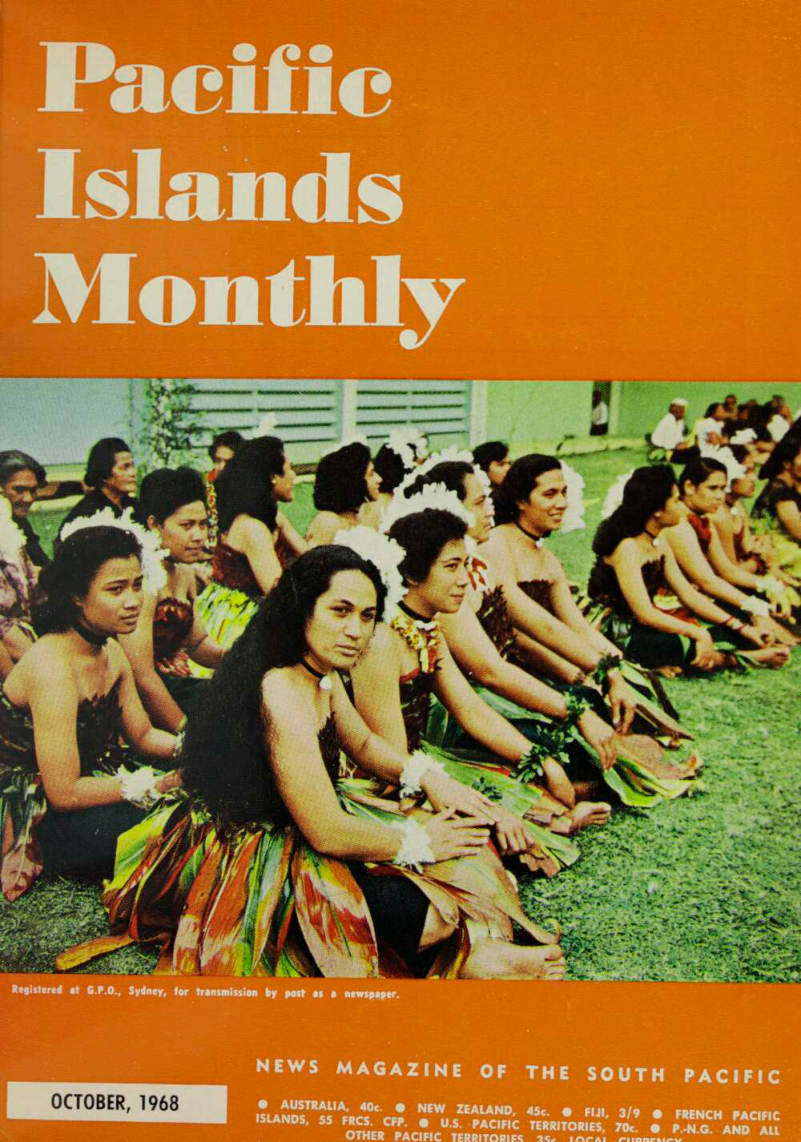 1
1 2
2 3
3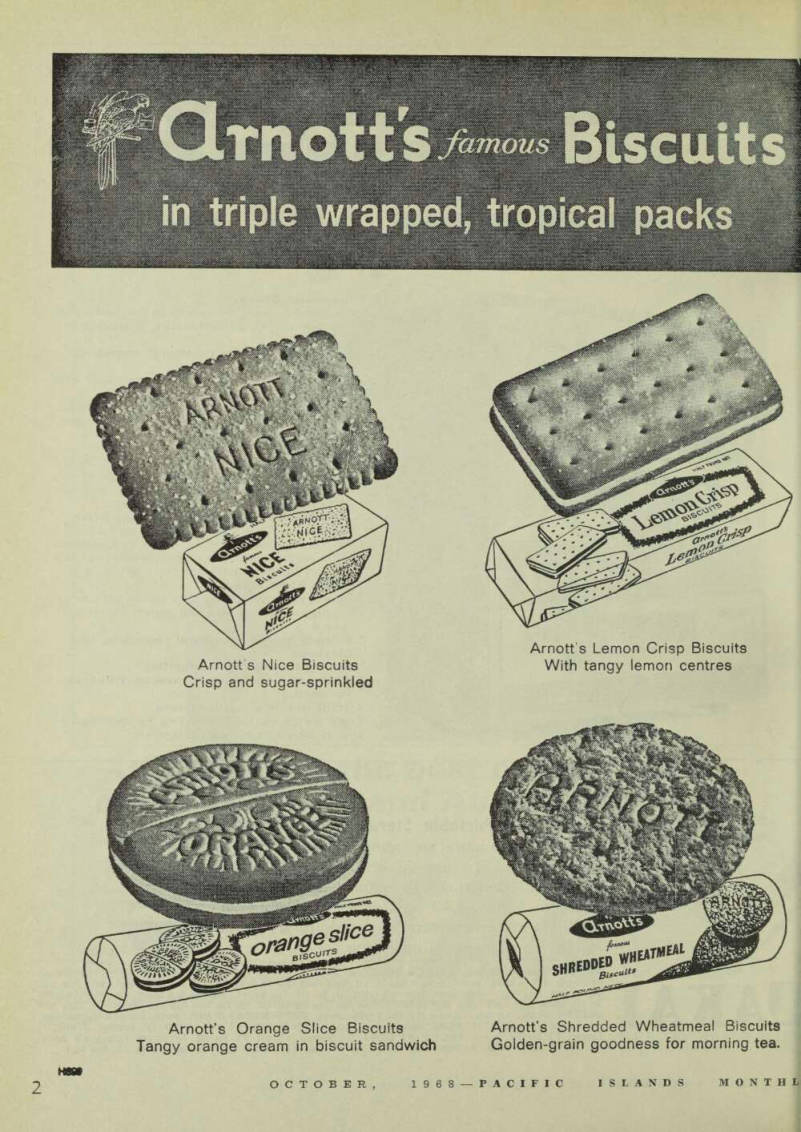 4
4 5
5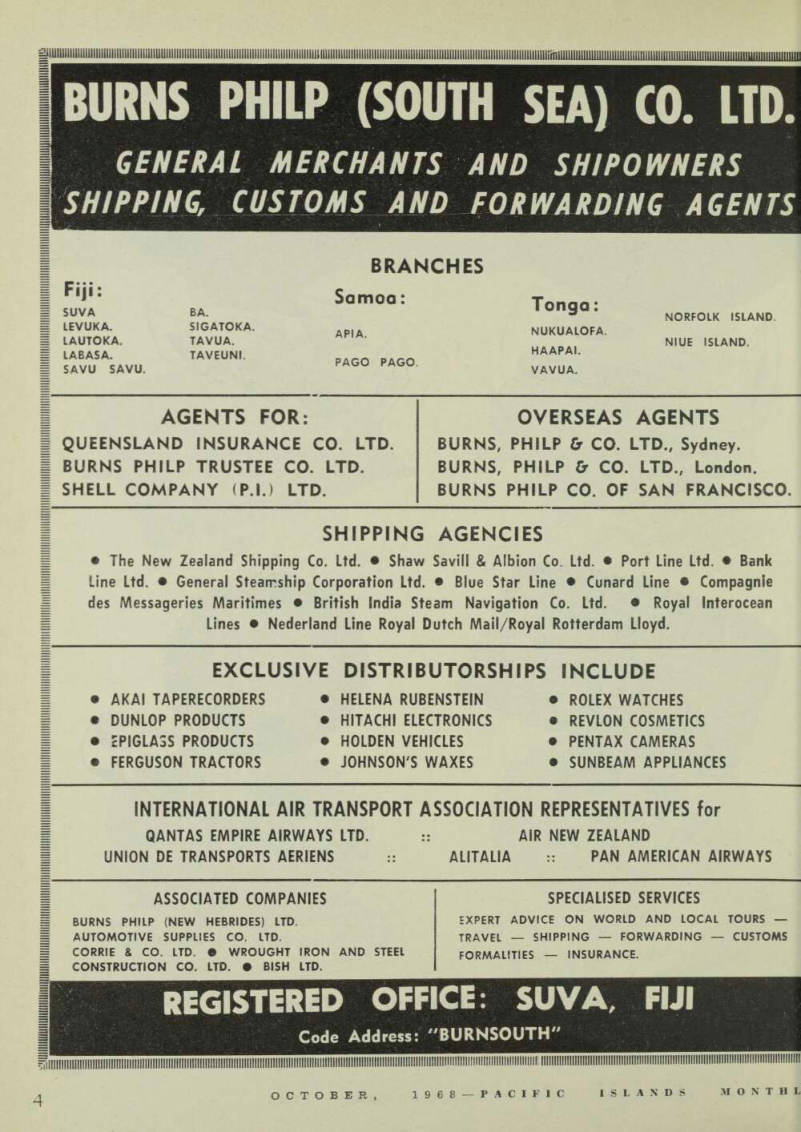 6
6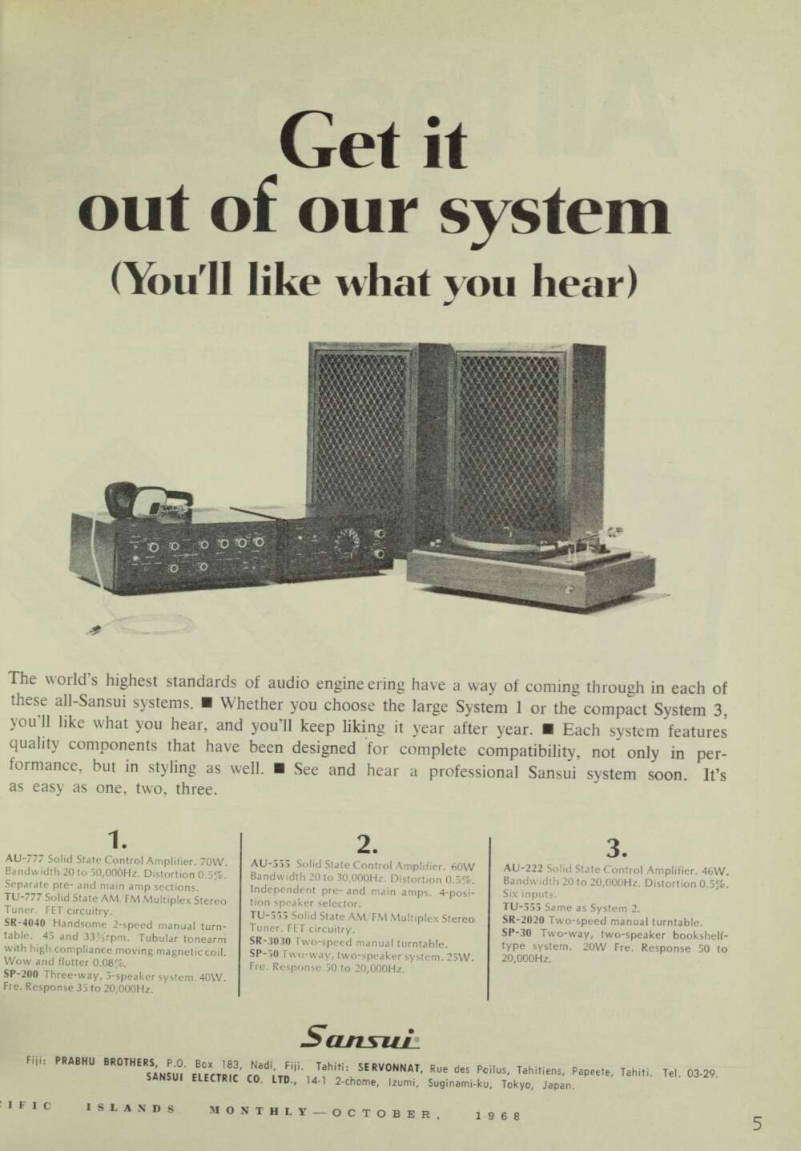 7
7 8
8 9
9 10
10 11
11 12
12 13
13 14
14 15
15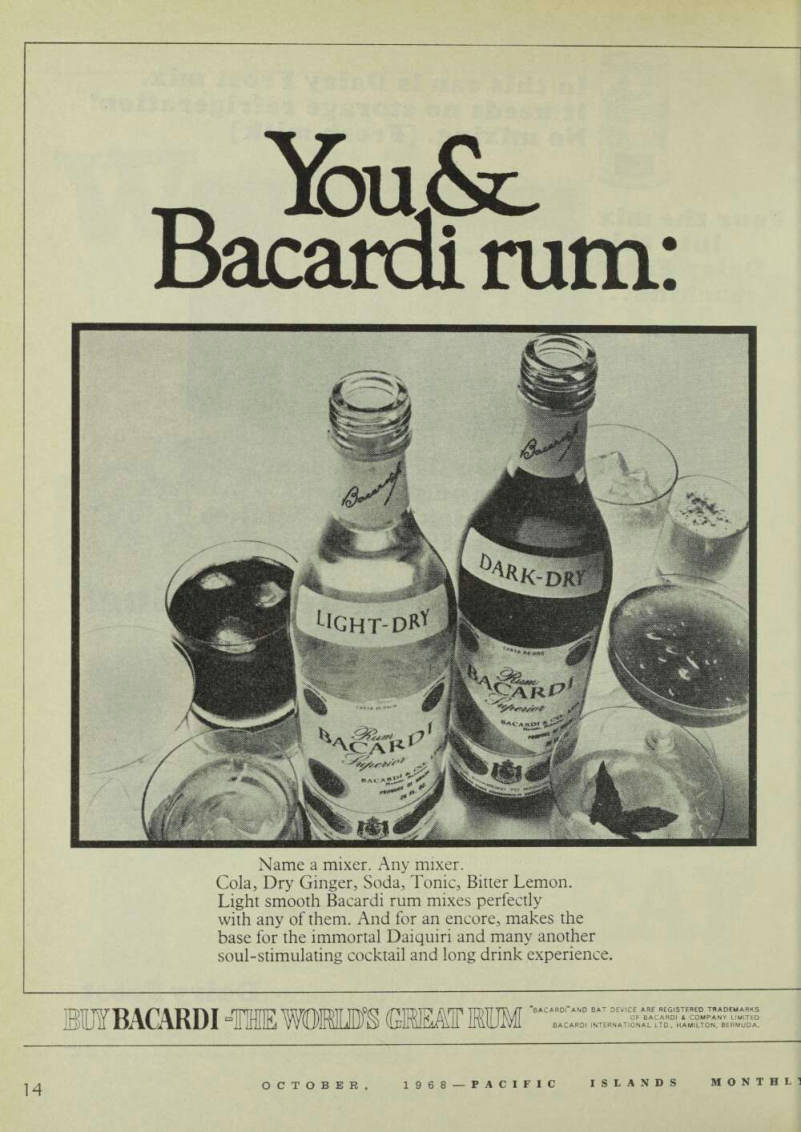 16
16 17
17 18
18 19
19 20
20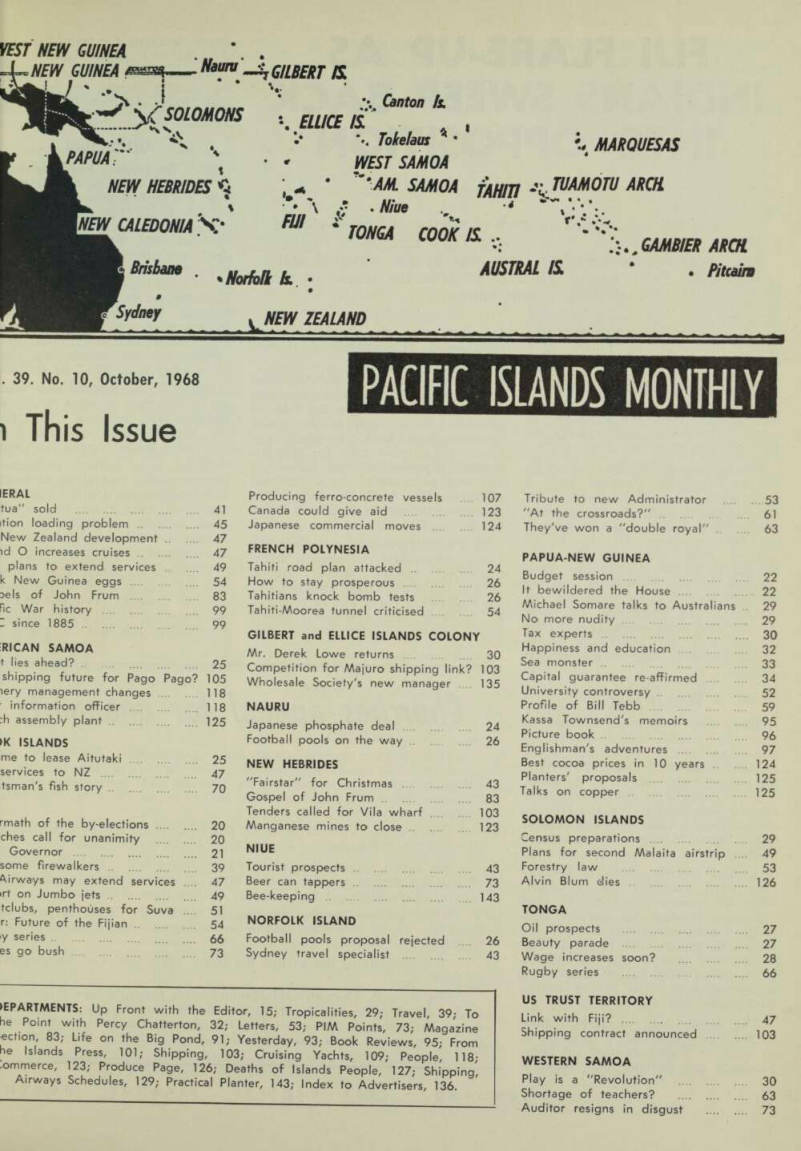 21
21 22
22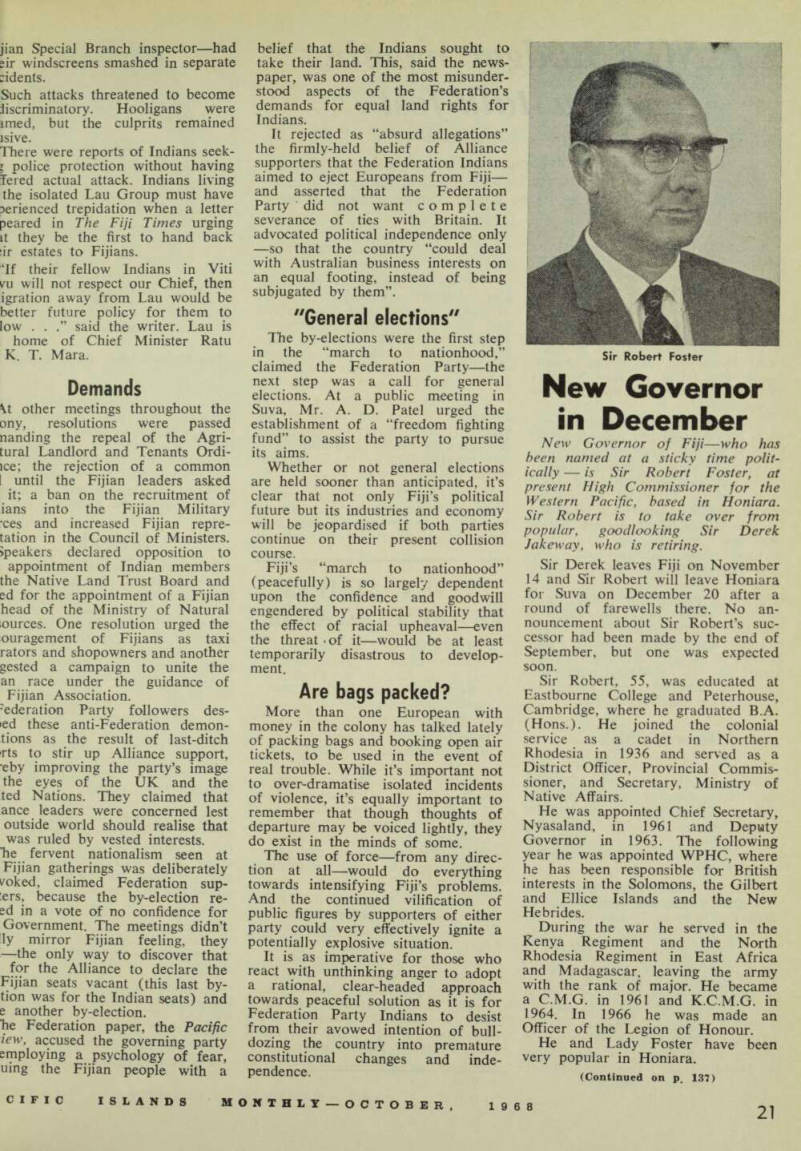 23
23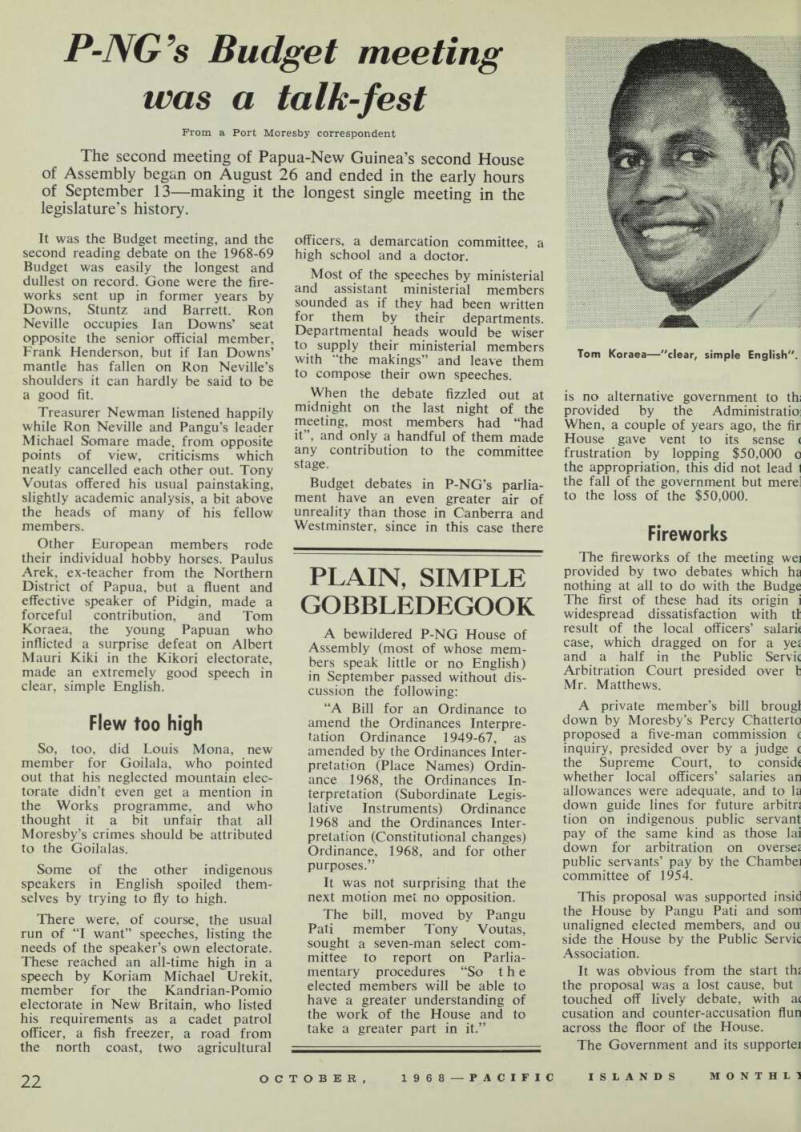 24
24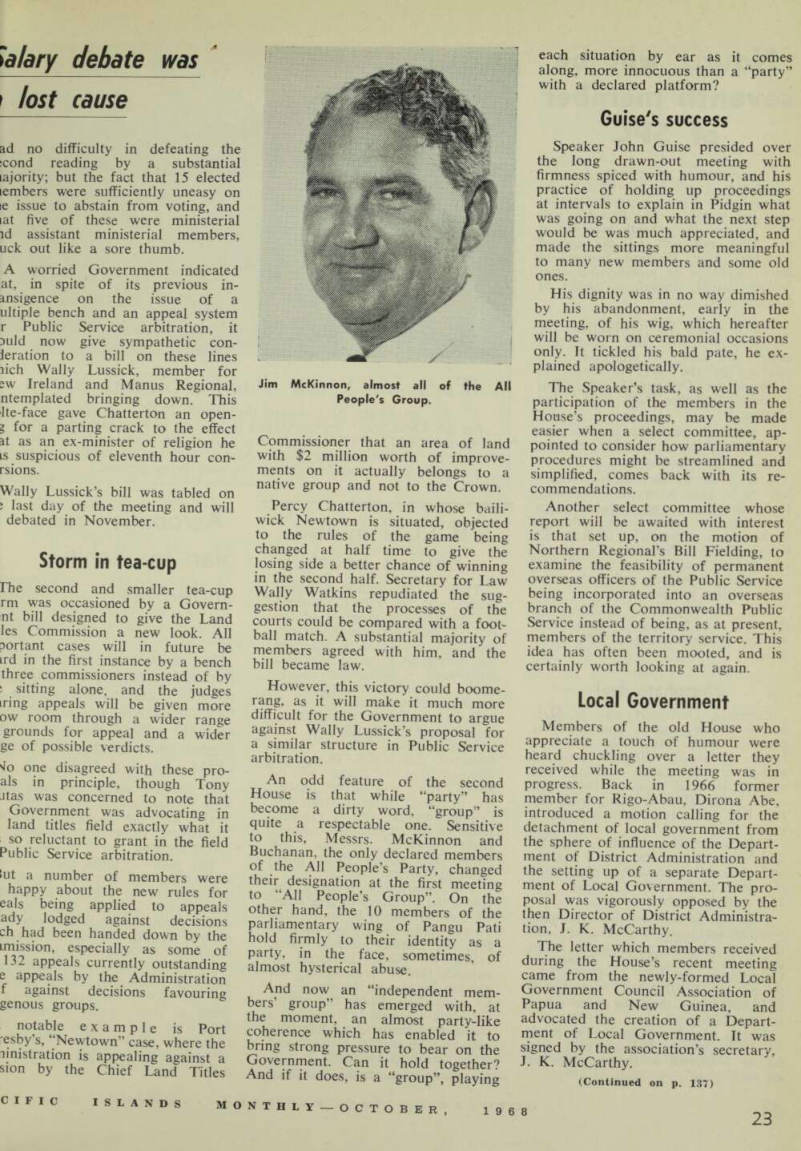 25
25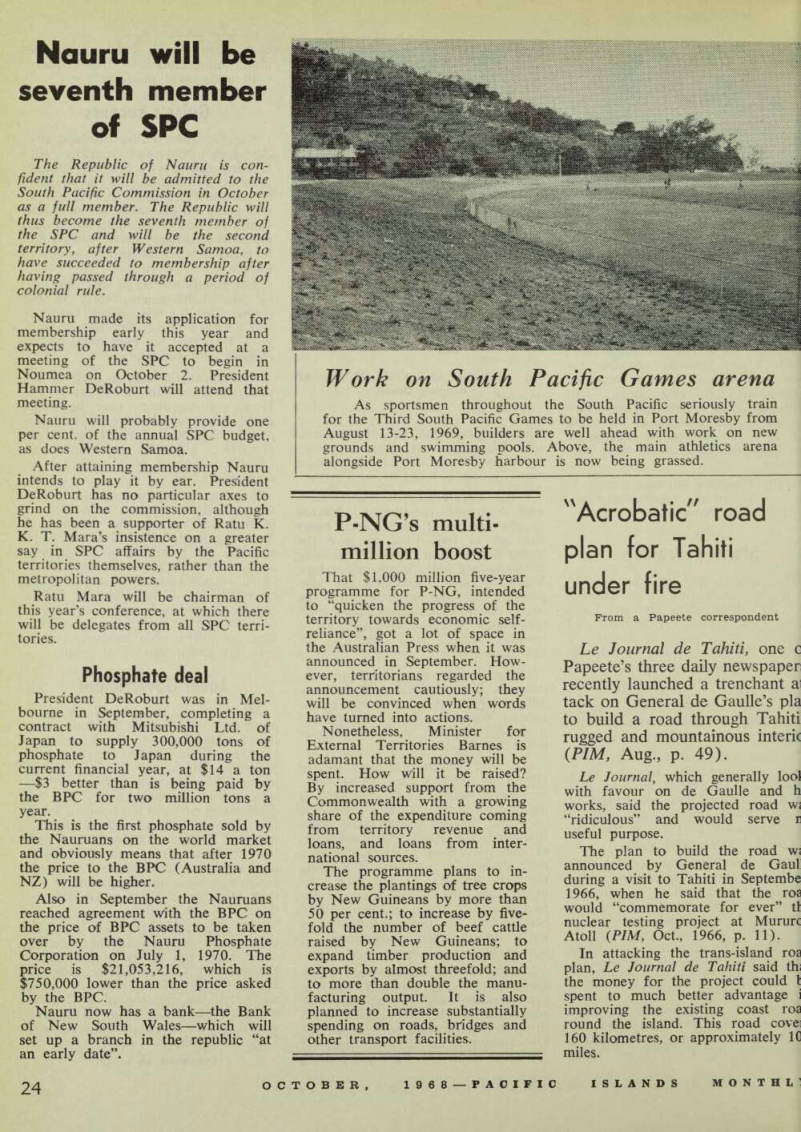 26
26 27
27 28
28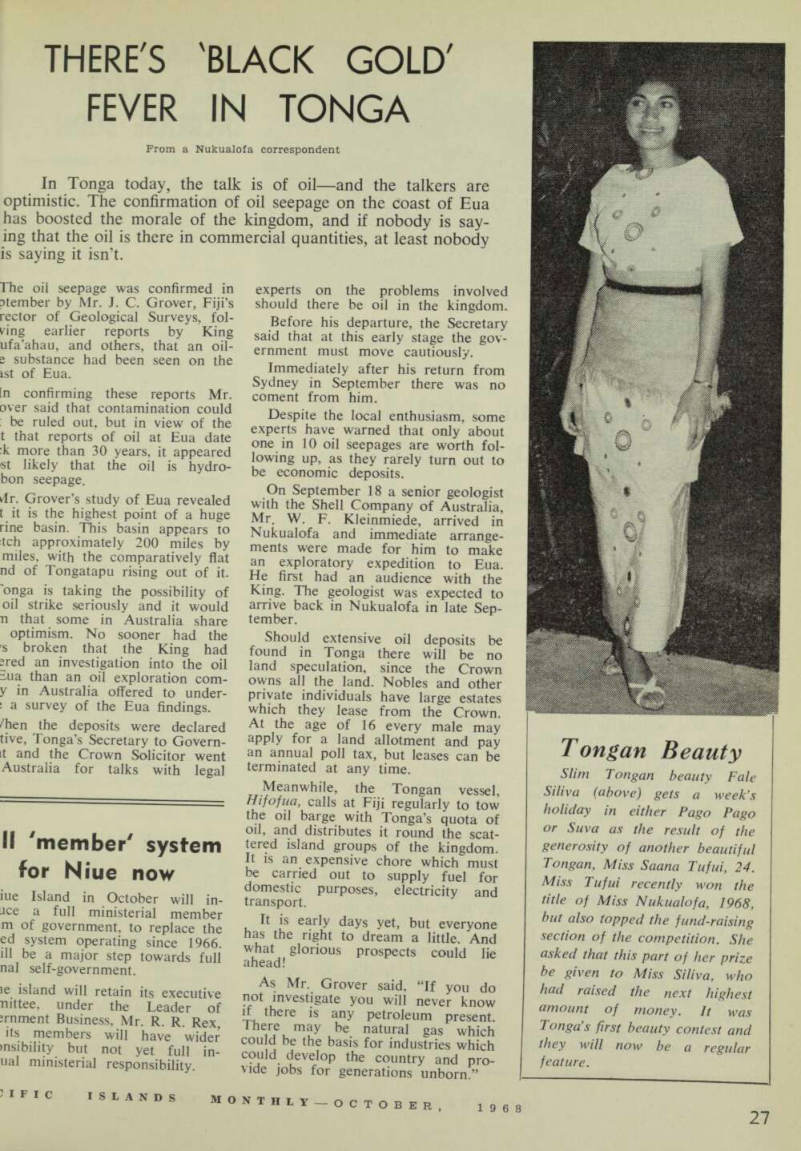 29
29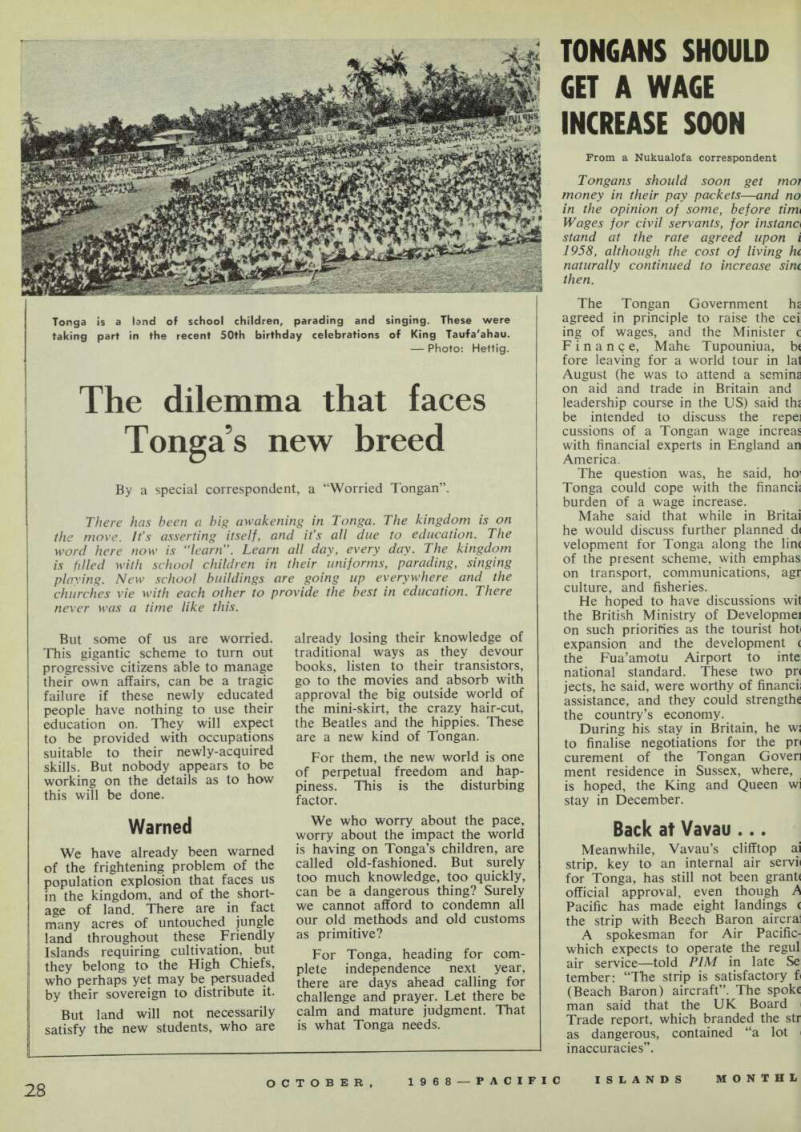 30
30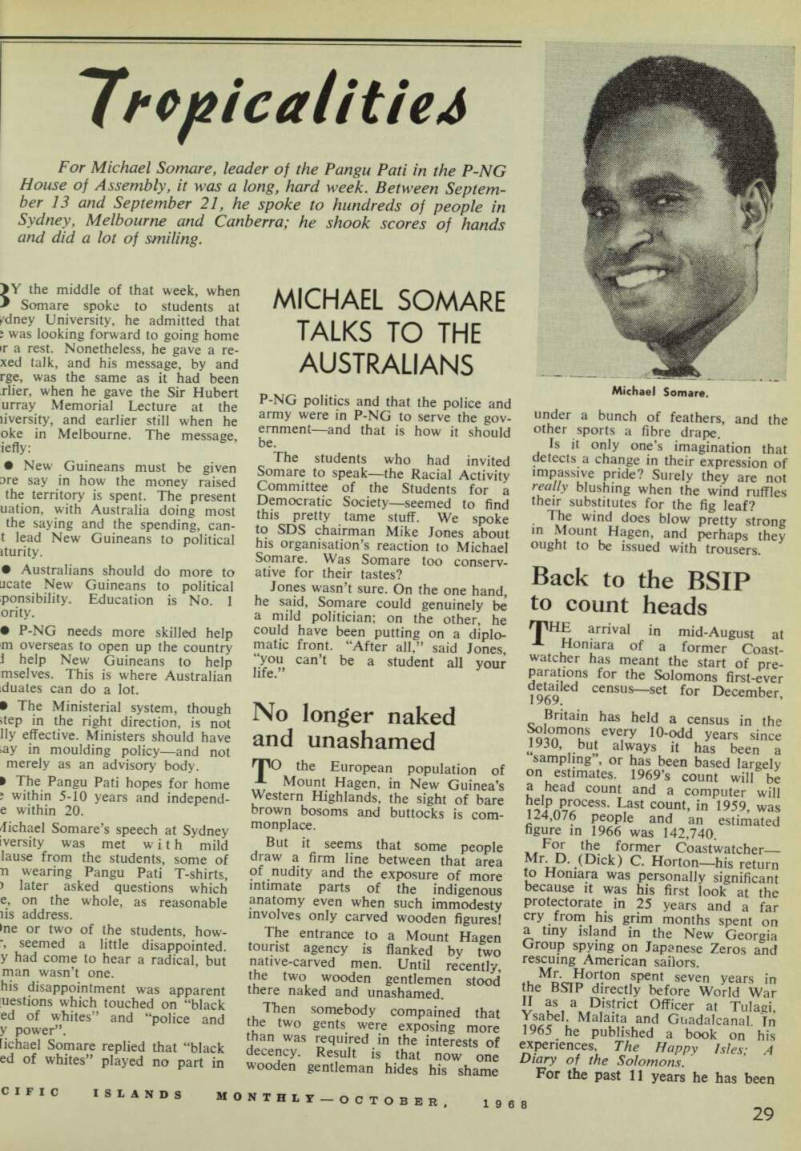 31
31 32
32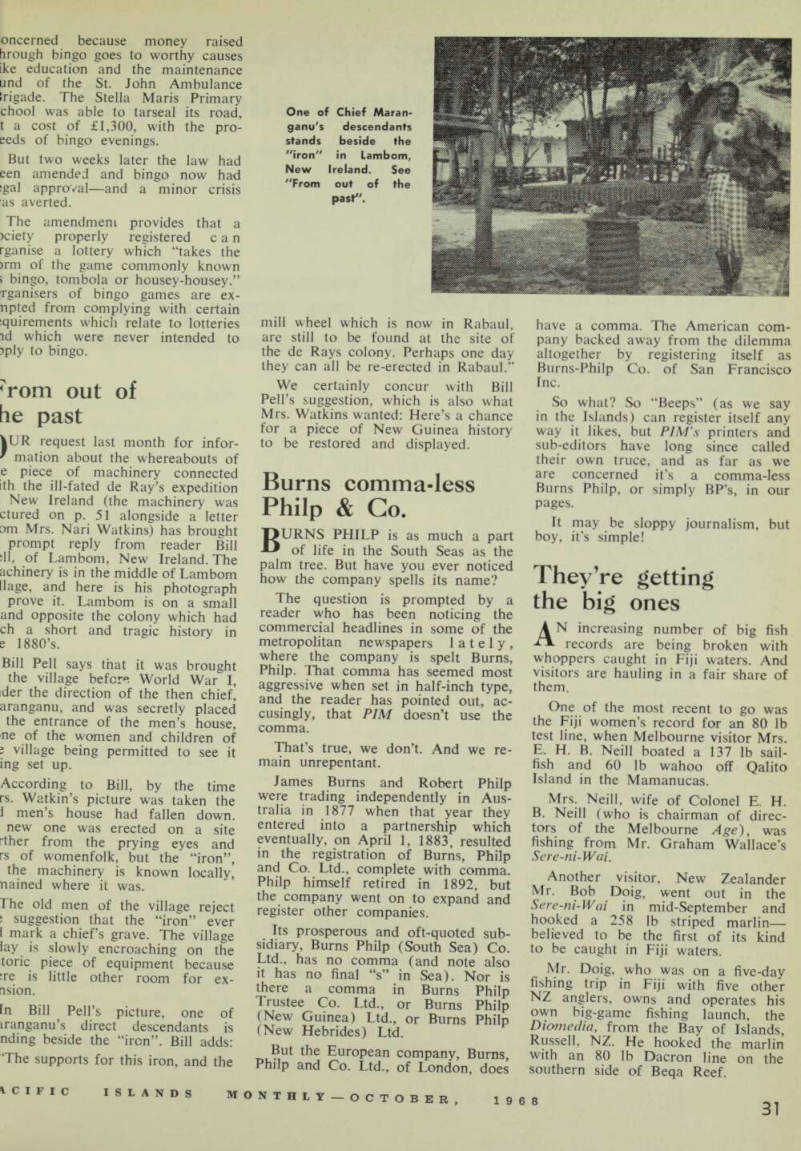 33
33 34
34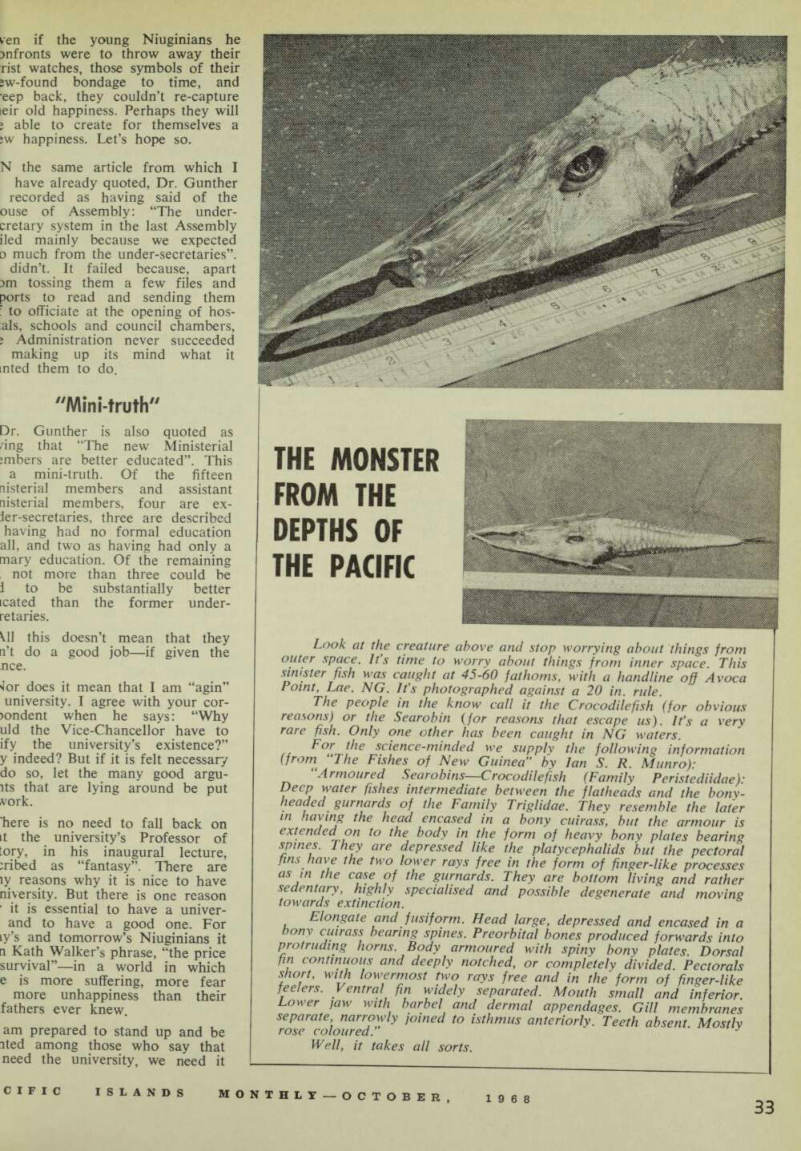 35
35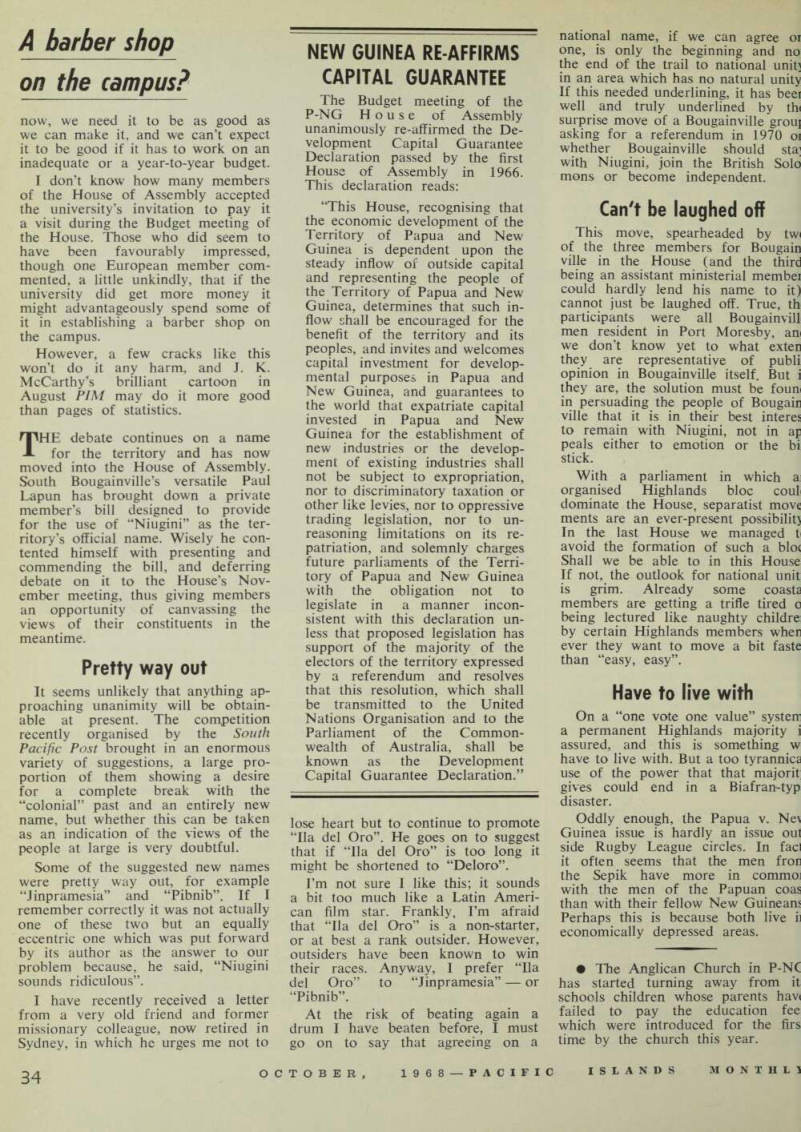 36
36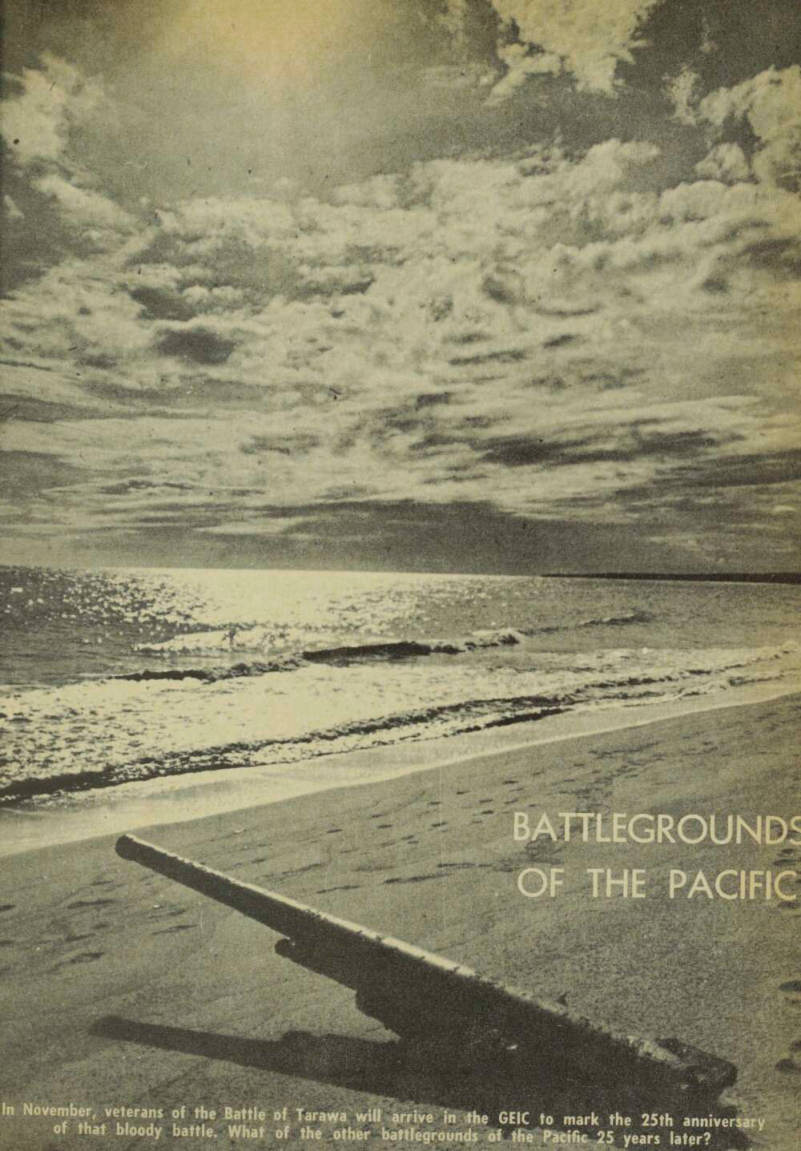 37
37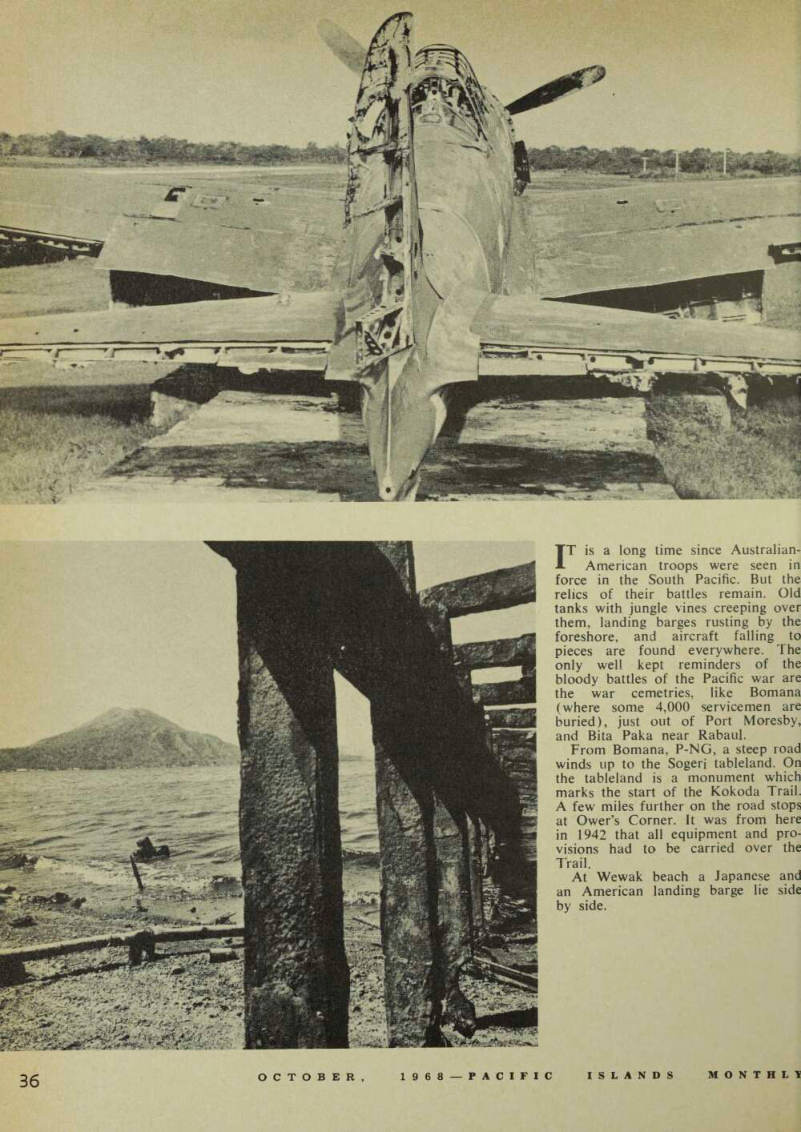 38
38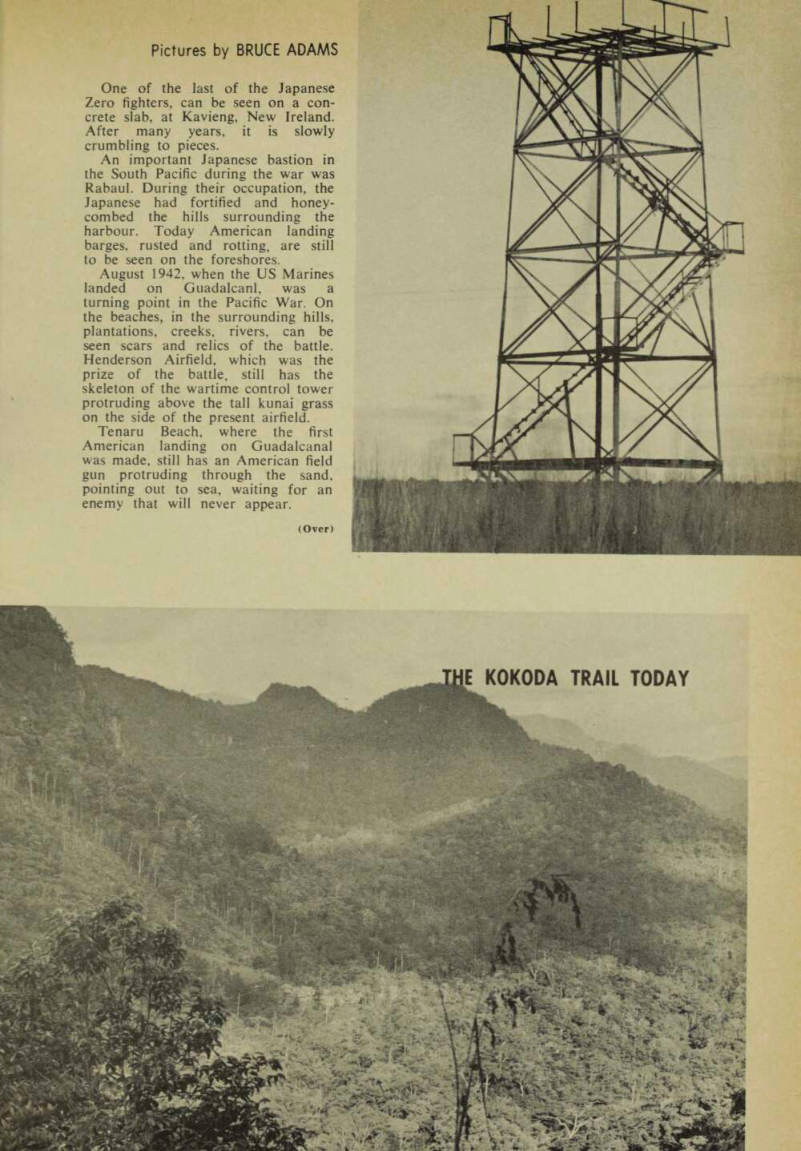 39
39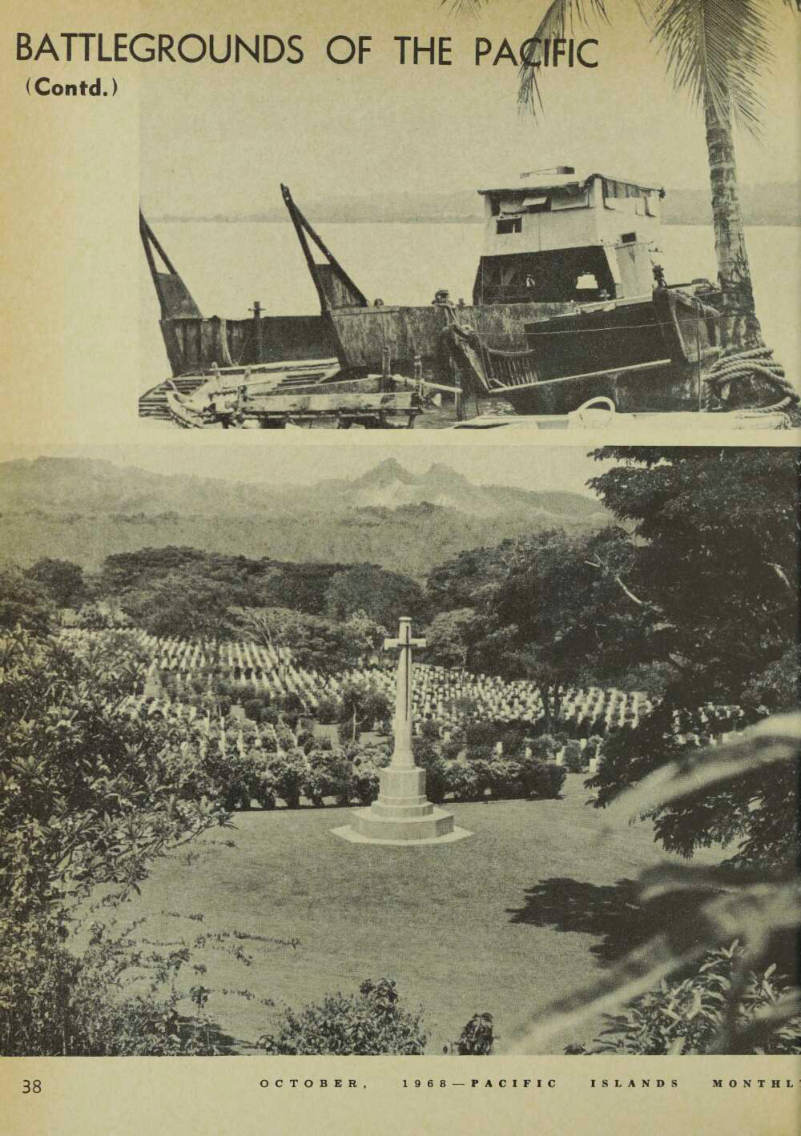 40
40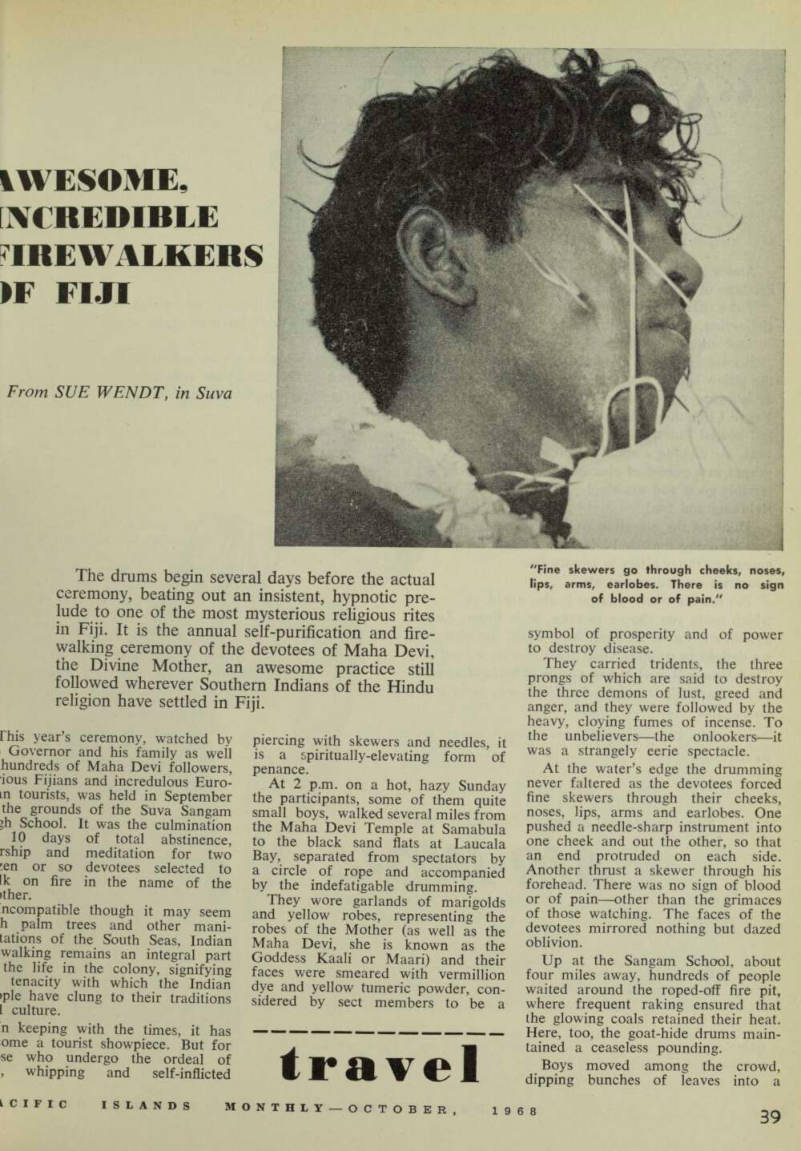 41
41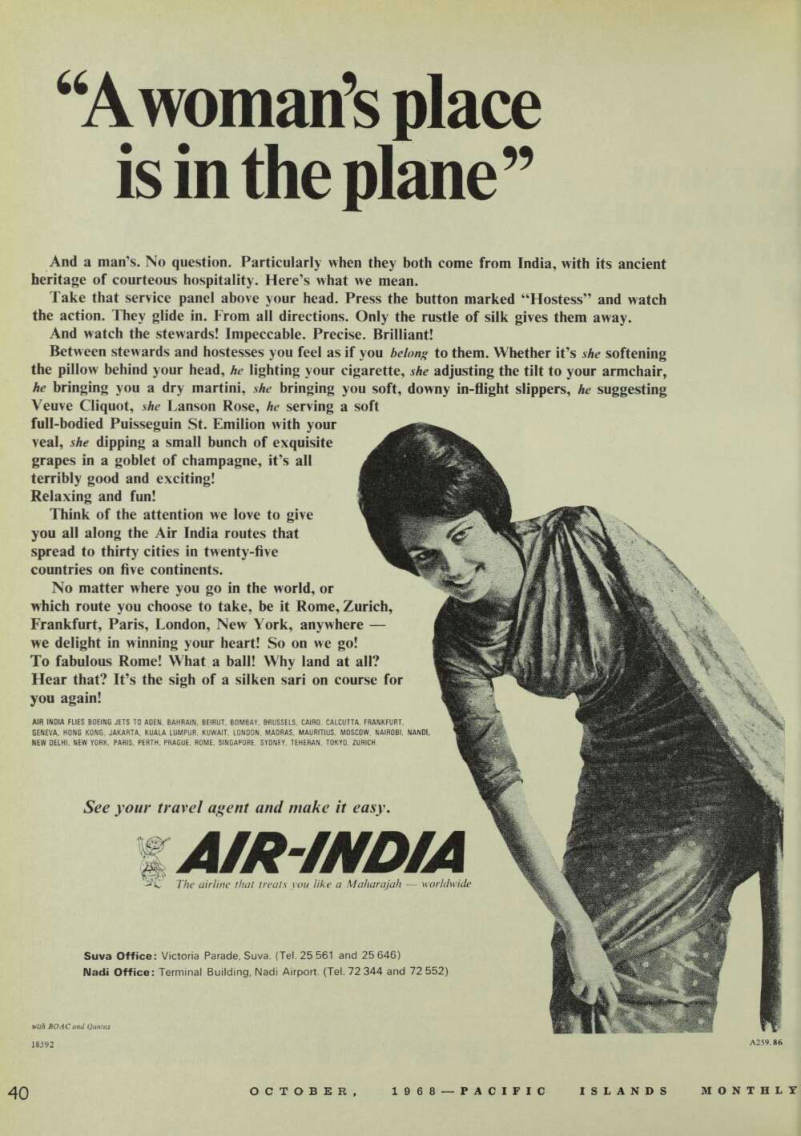 42
42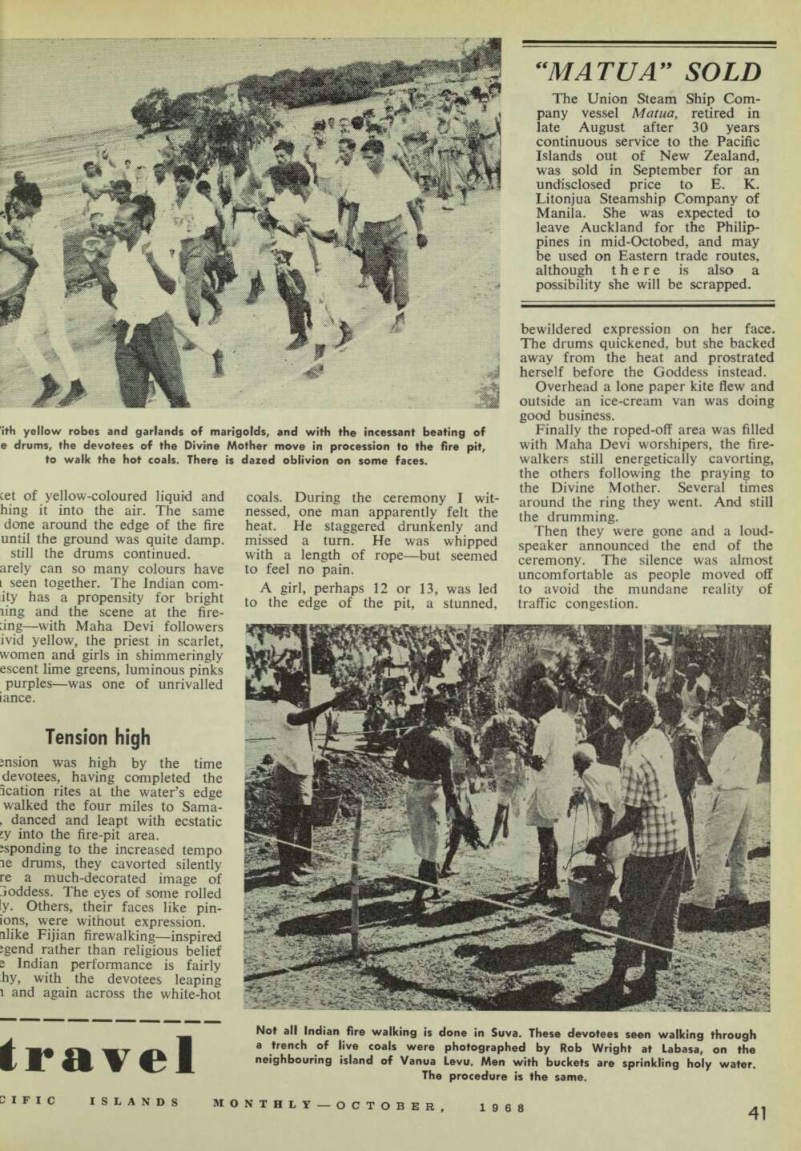 43
43 44
44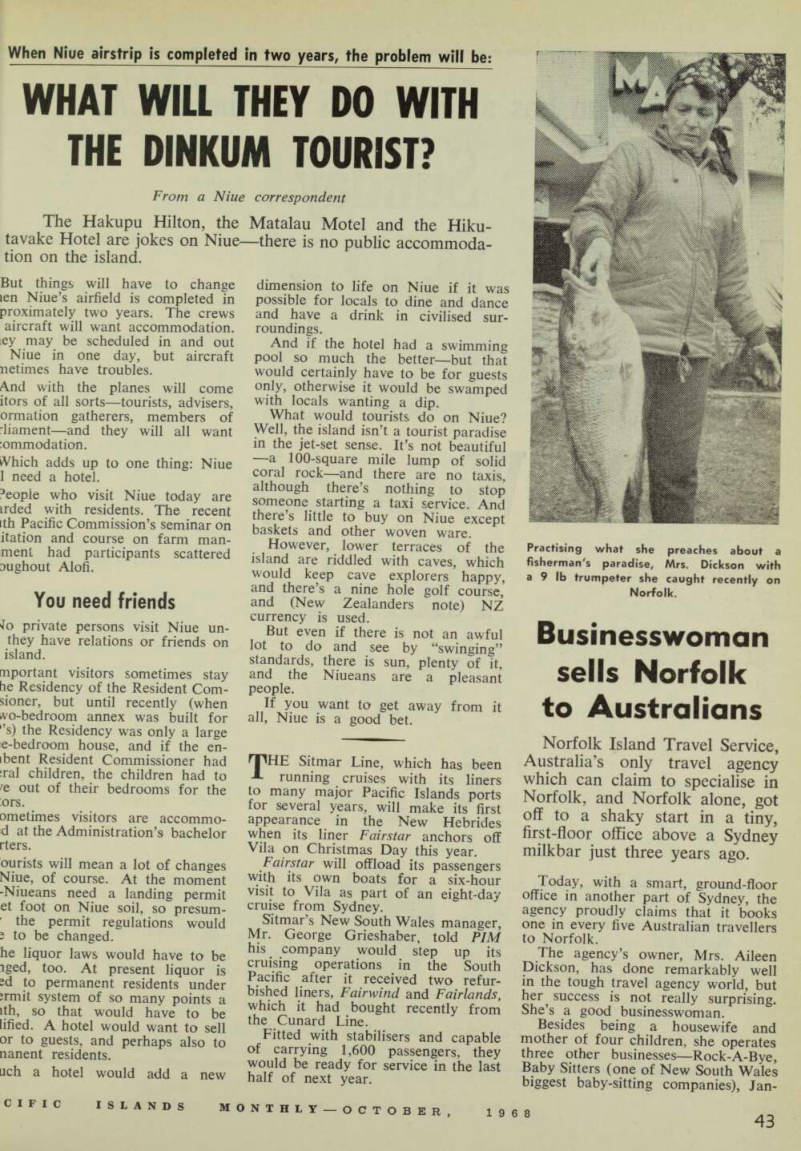 45
45 46
46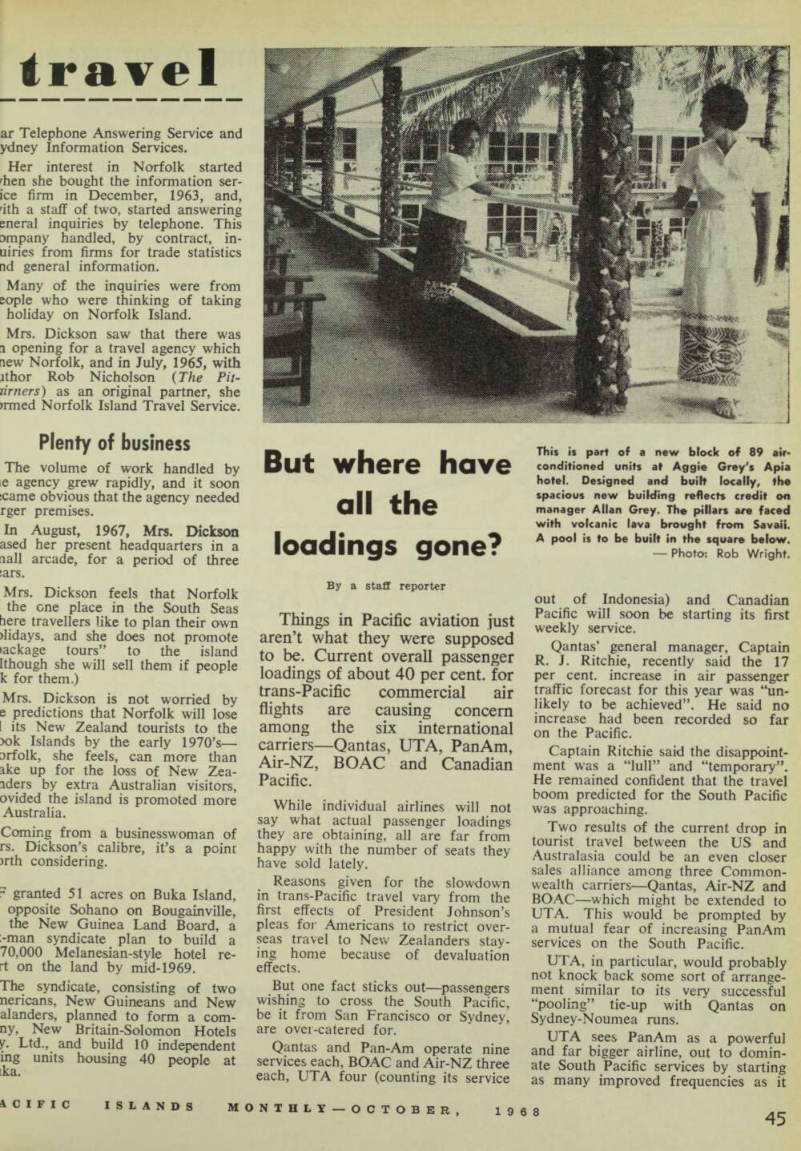 47
47 48
48 49
49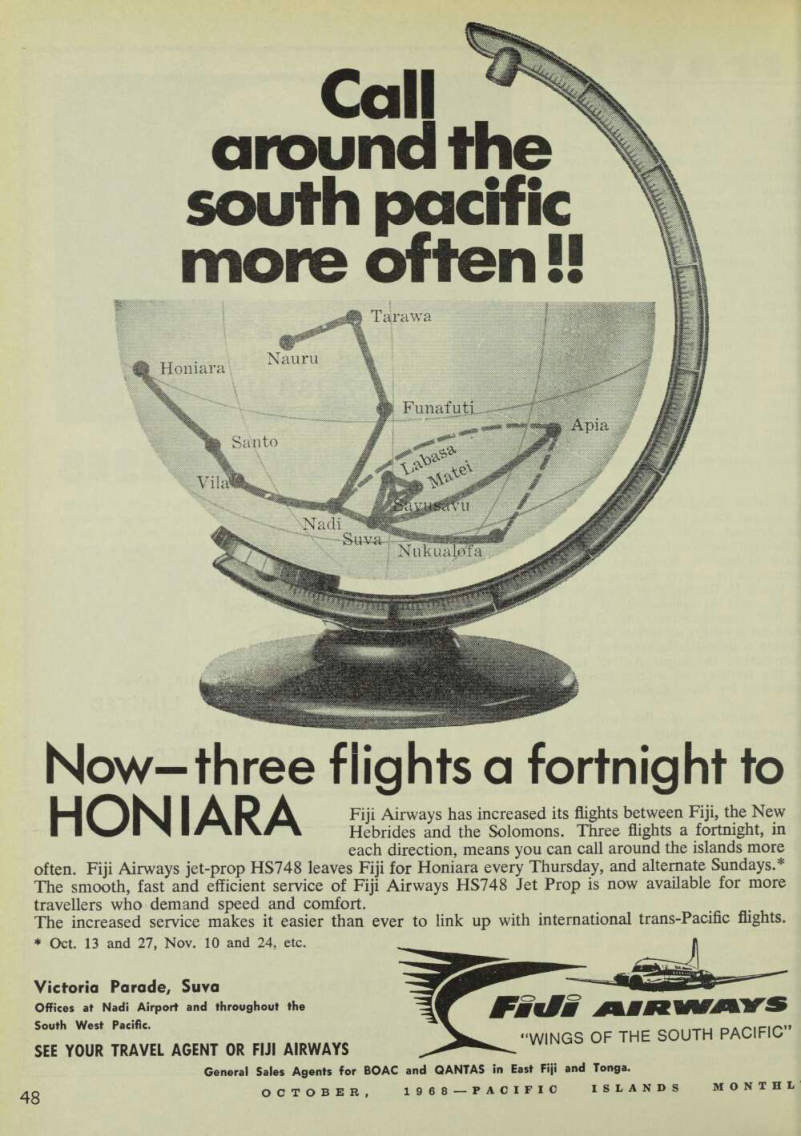 50
50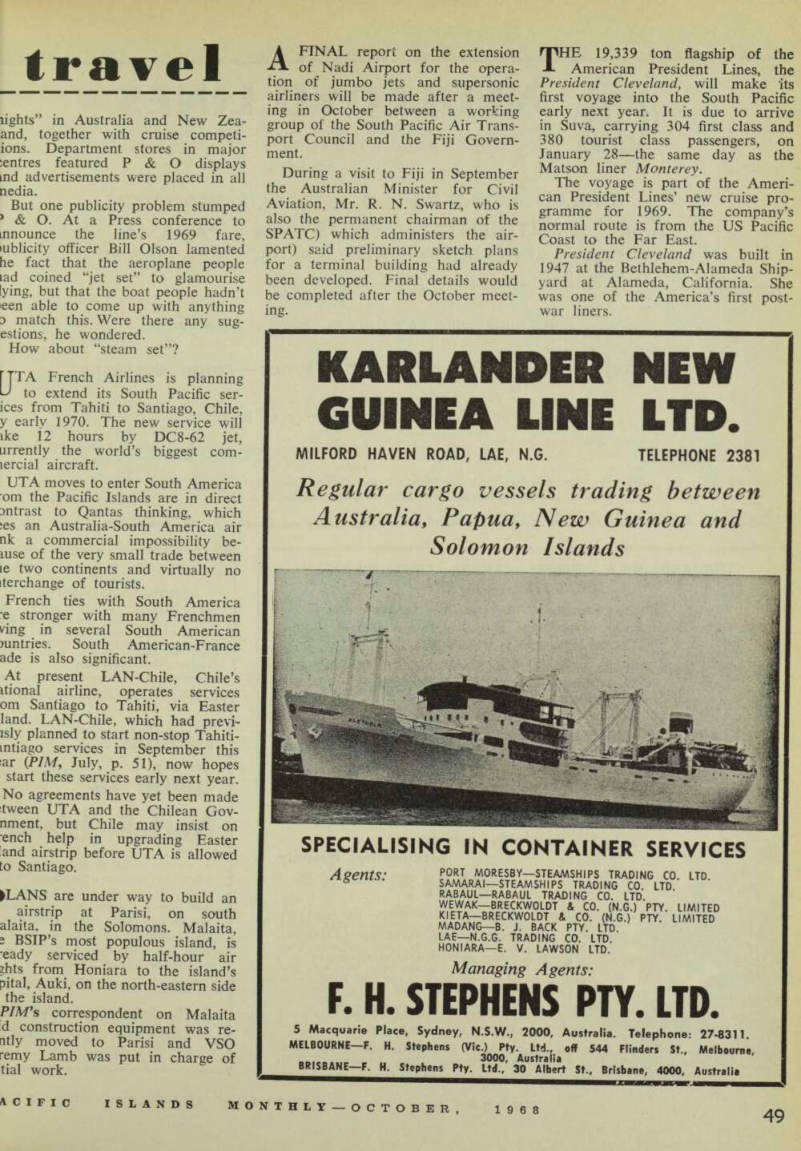 51
51 52
52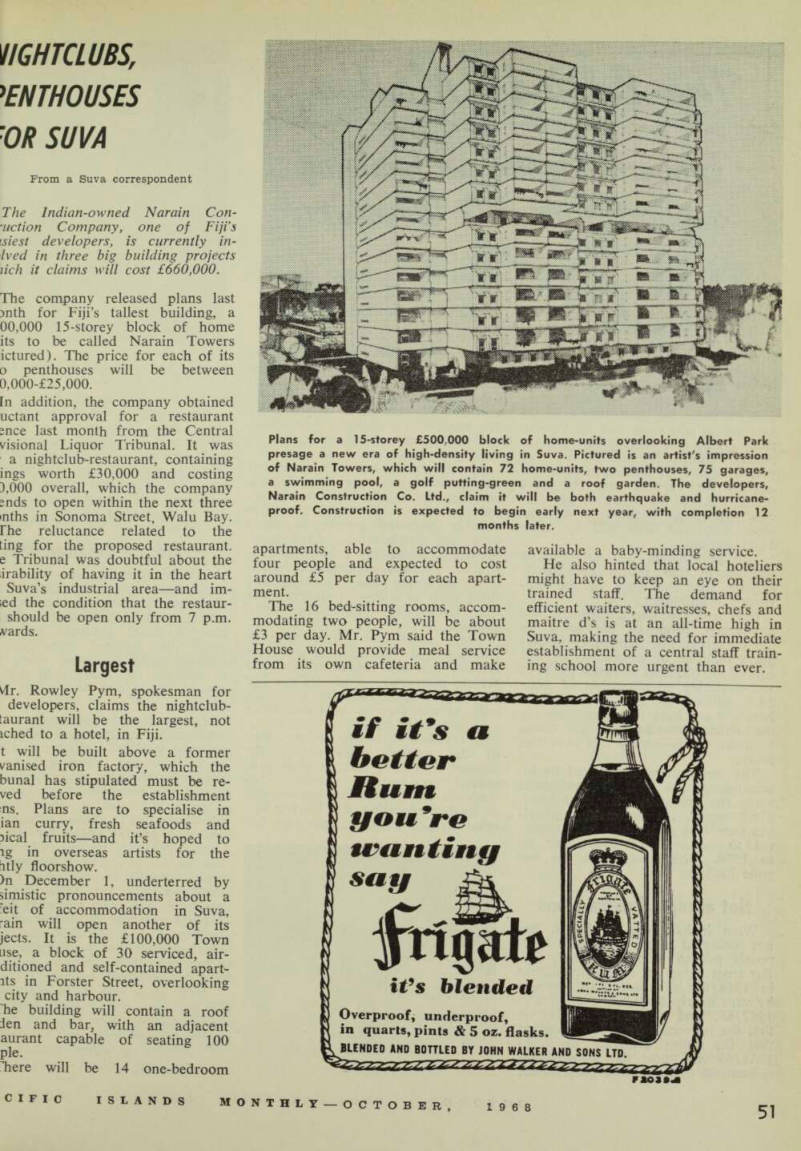 53
53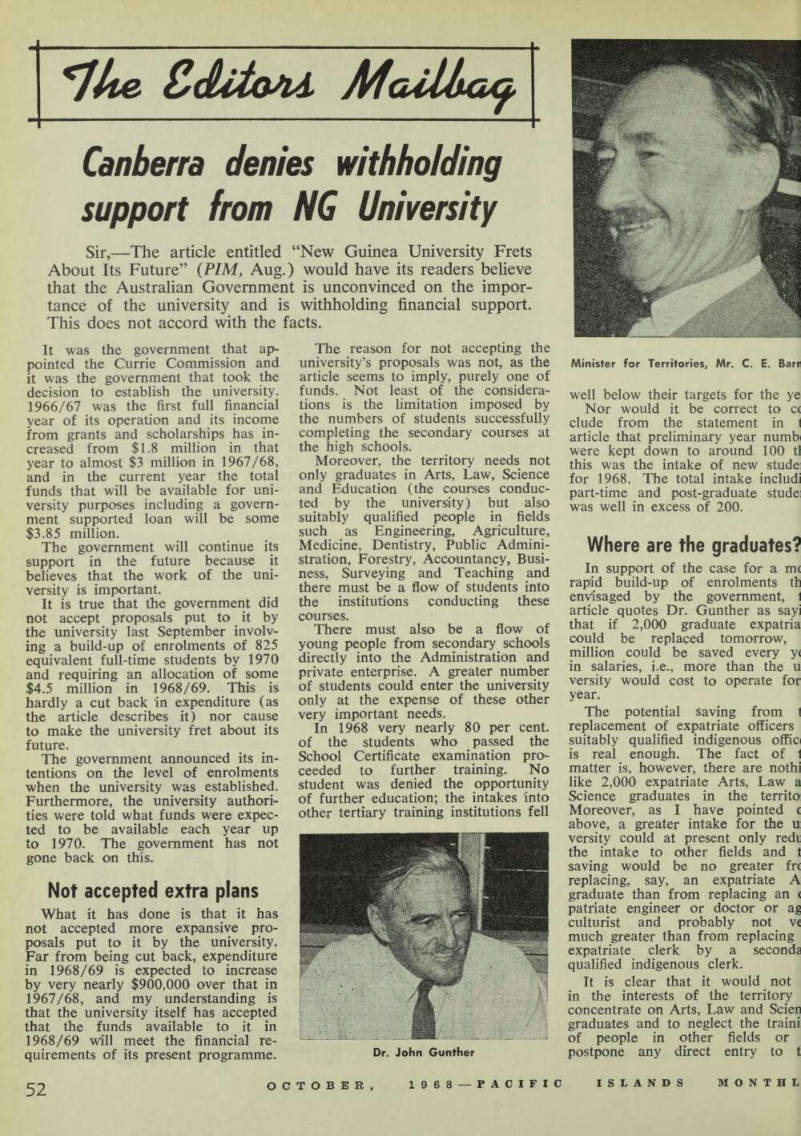 54
54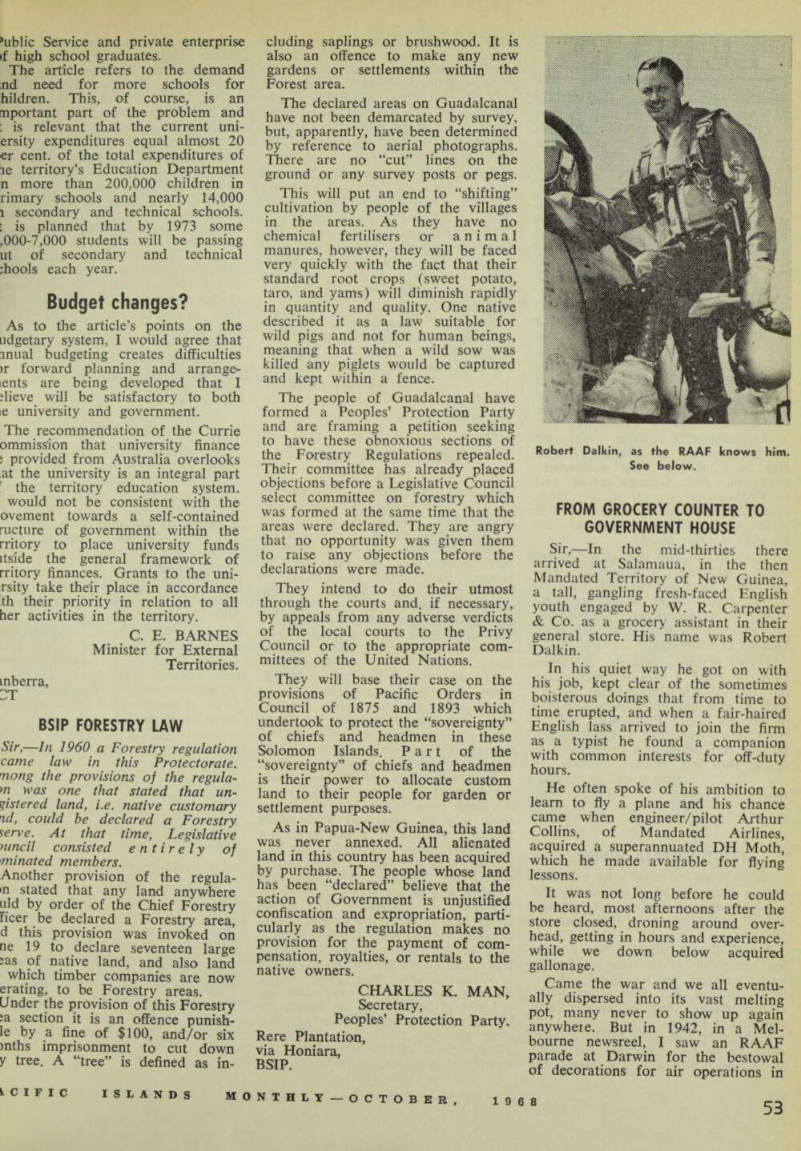 55
55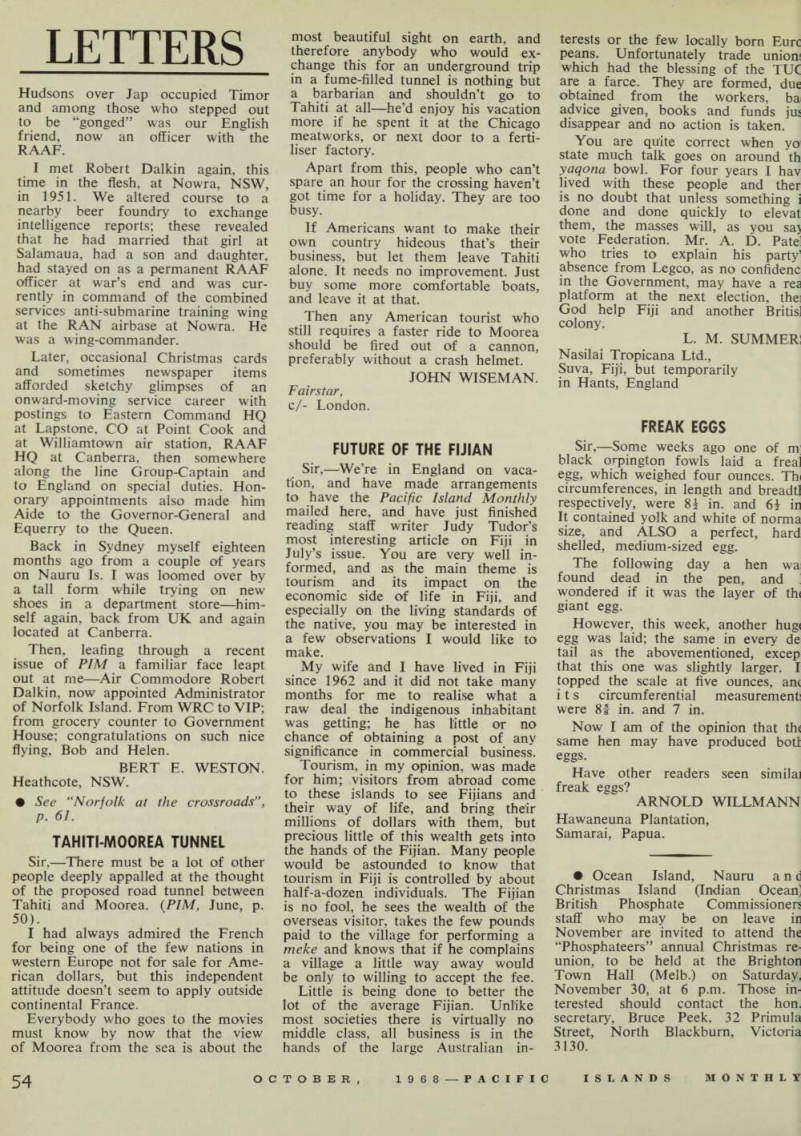 56
56 57
57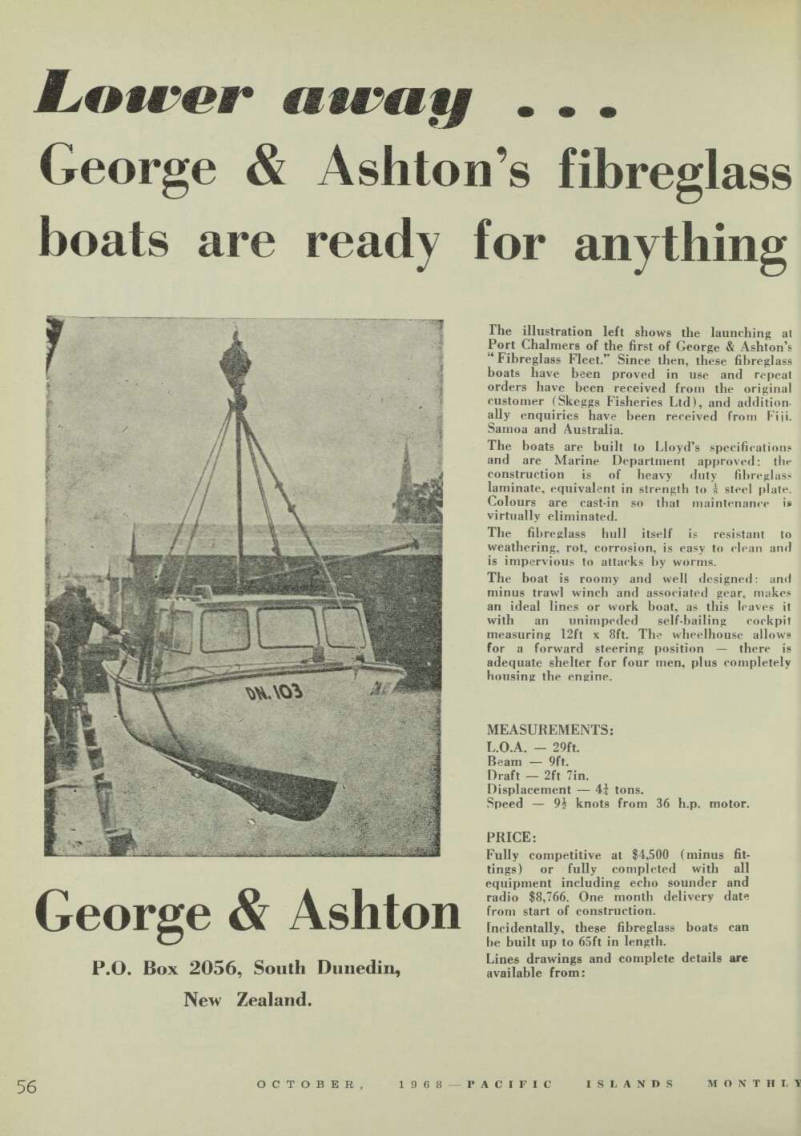 58
58 59
59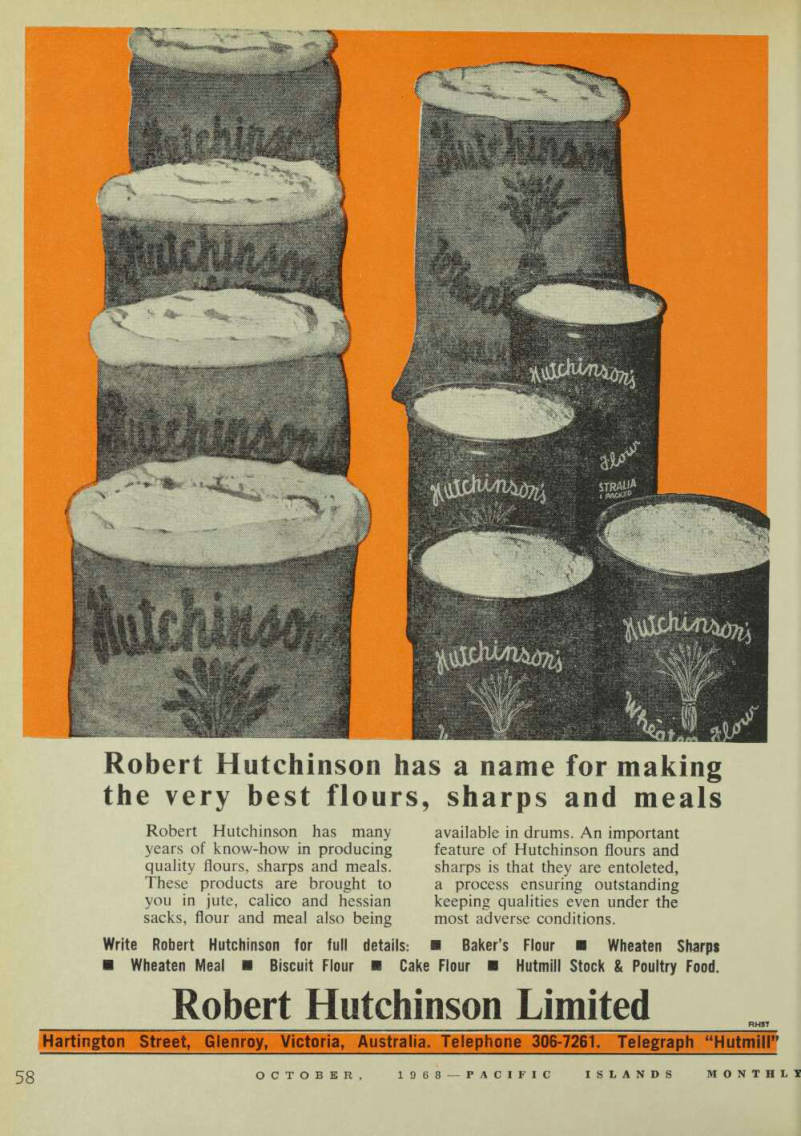 60
60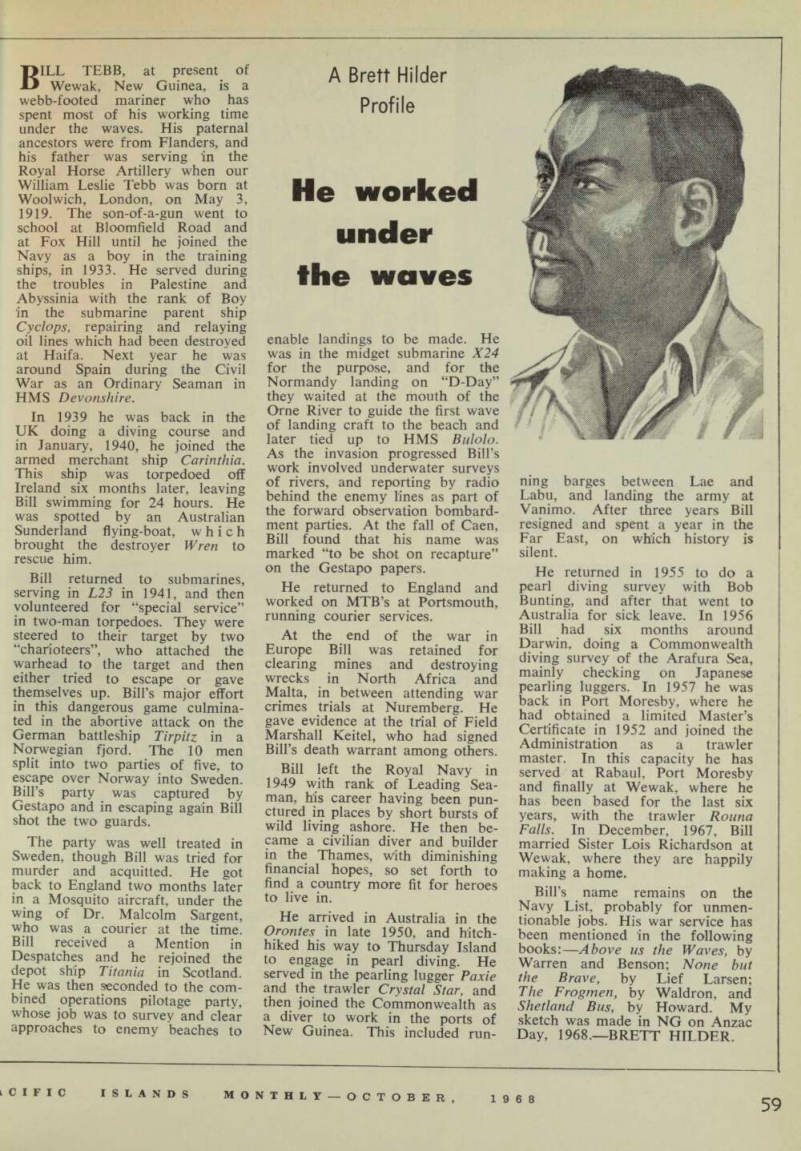 61
61 62
62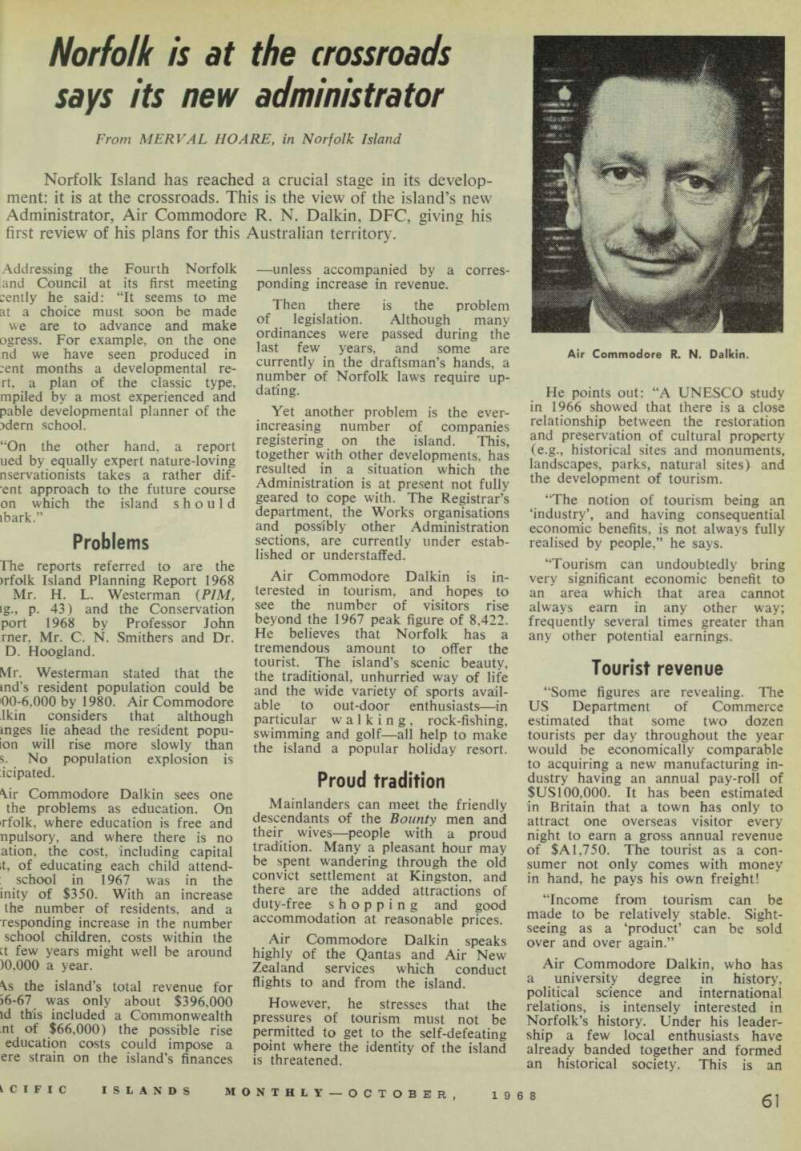 63
63 64
64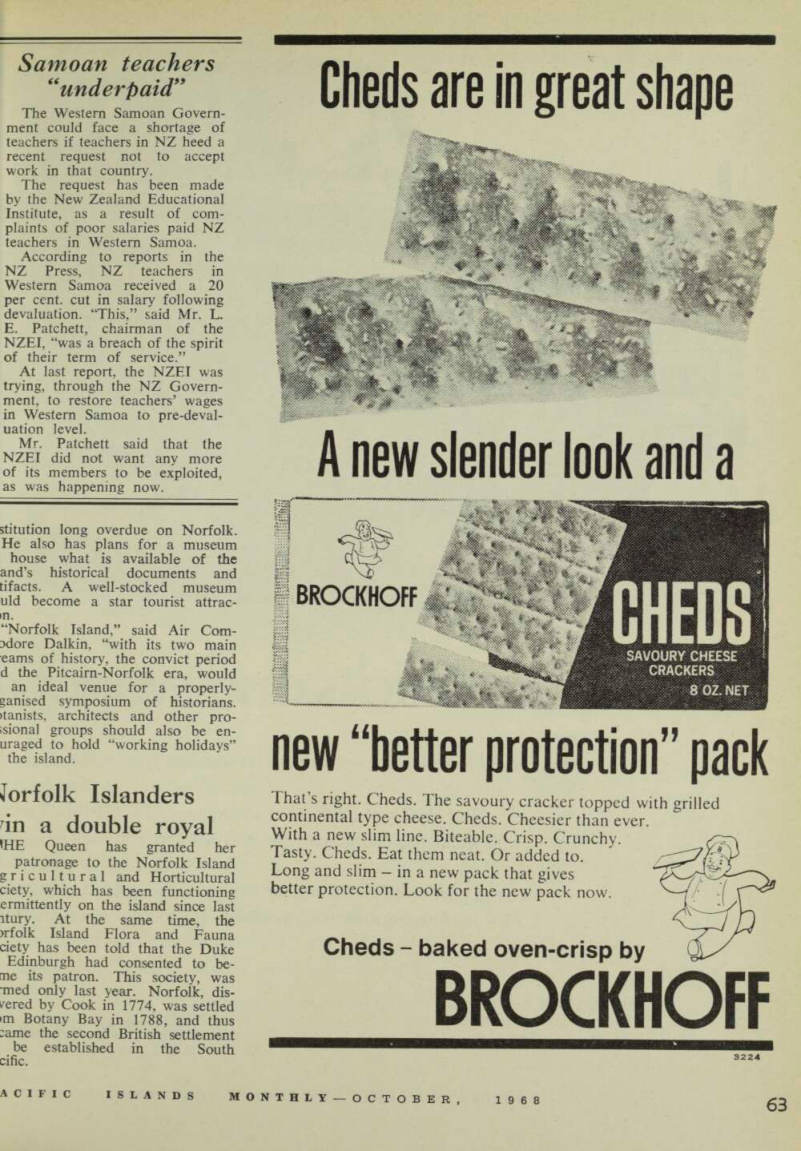 65
65 66
66 67
67 68
68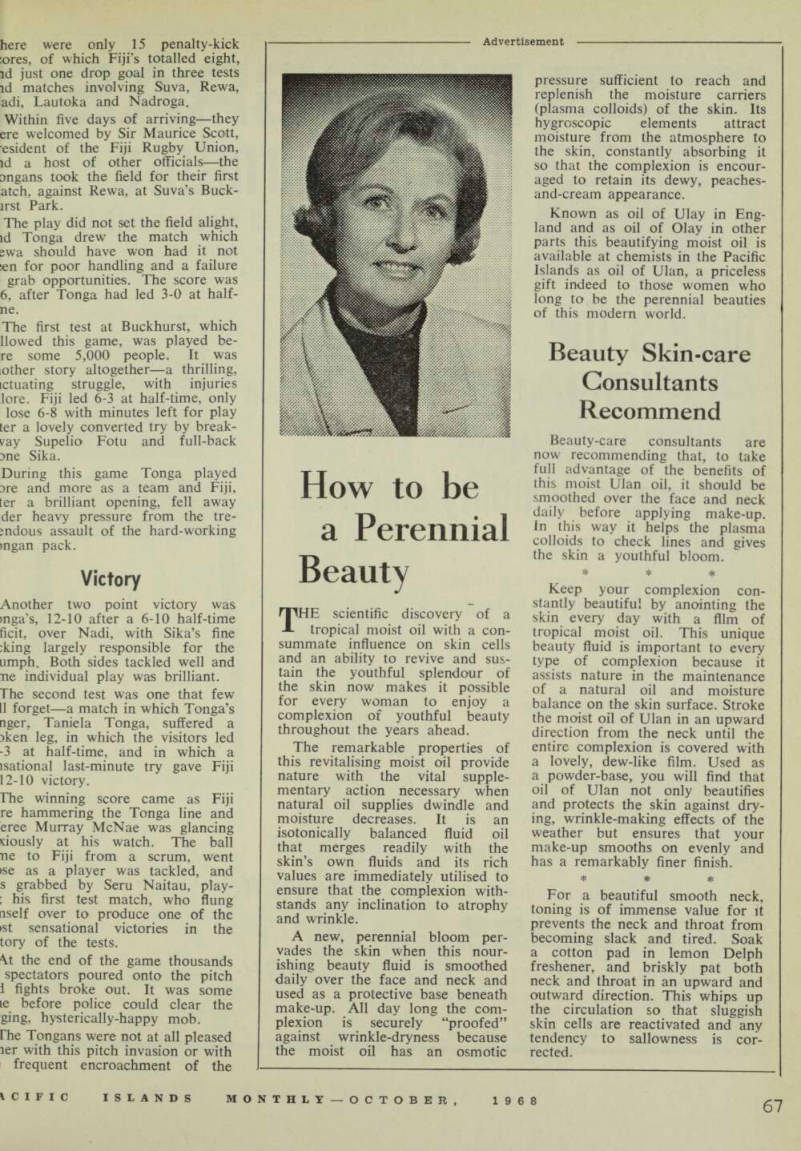 69
69 70
70 71
71 72
72 73
73 74
74 75
75 76
76 77
77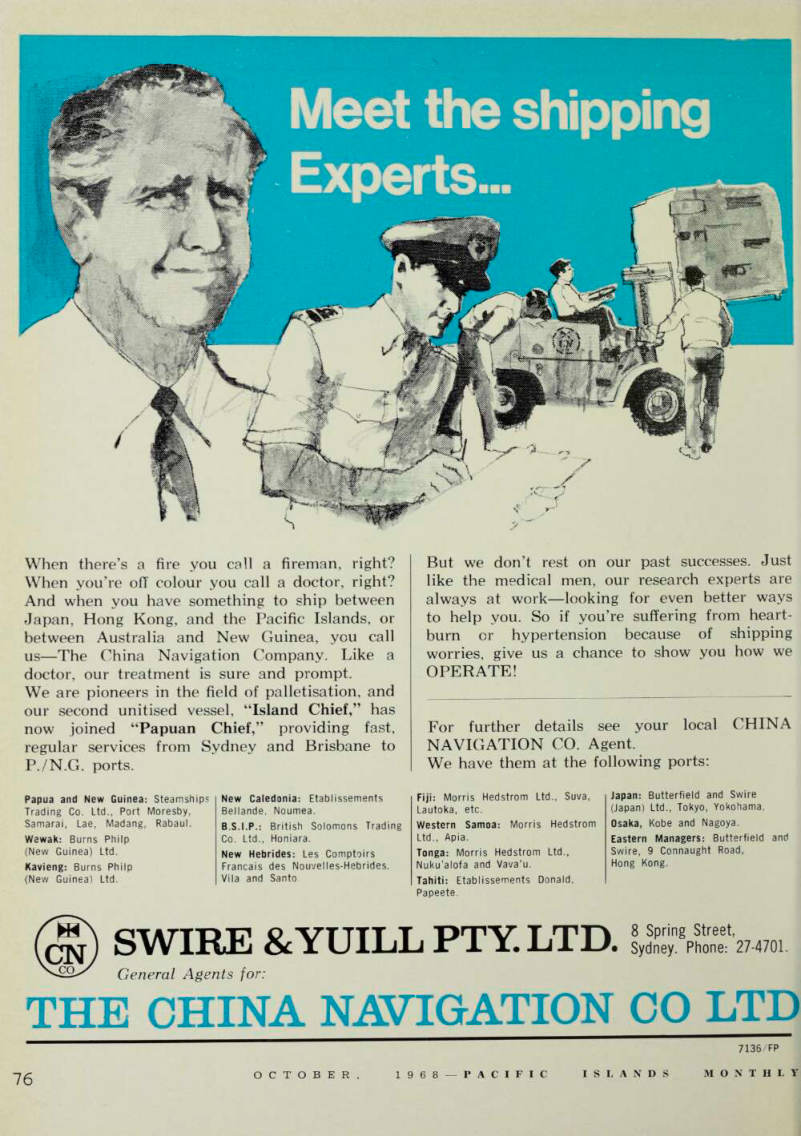 78
78 79
79 80
80 81
81 82
82 83
83 84
84 85
85 86
86 87
87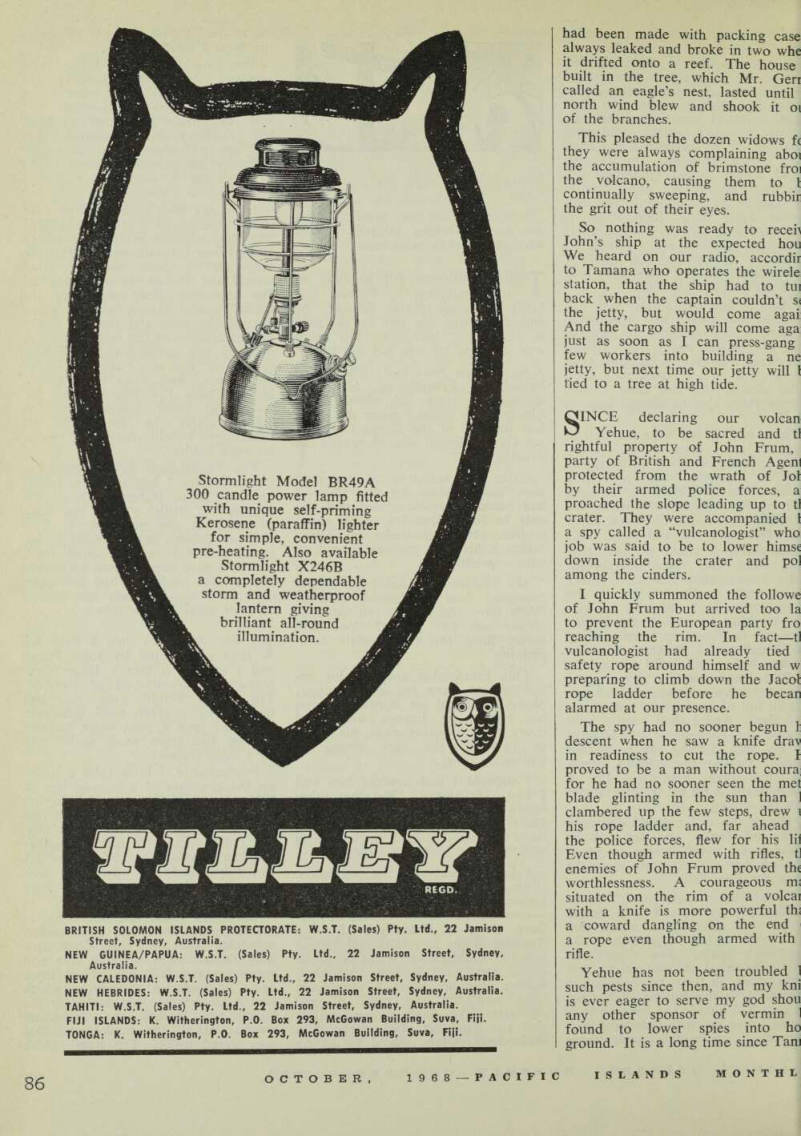 88
88 89
89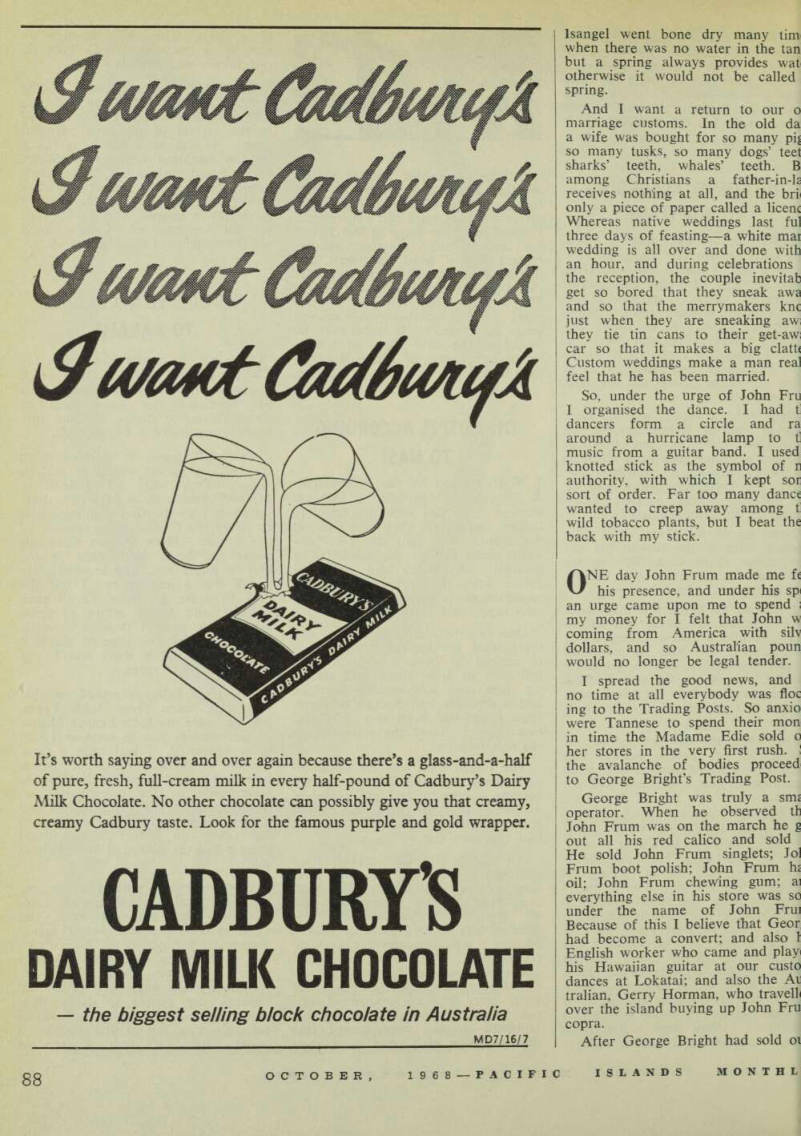 90
90 91
91 92
92 93
93 94
94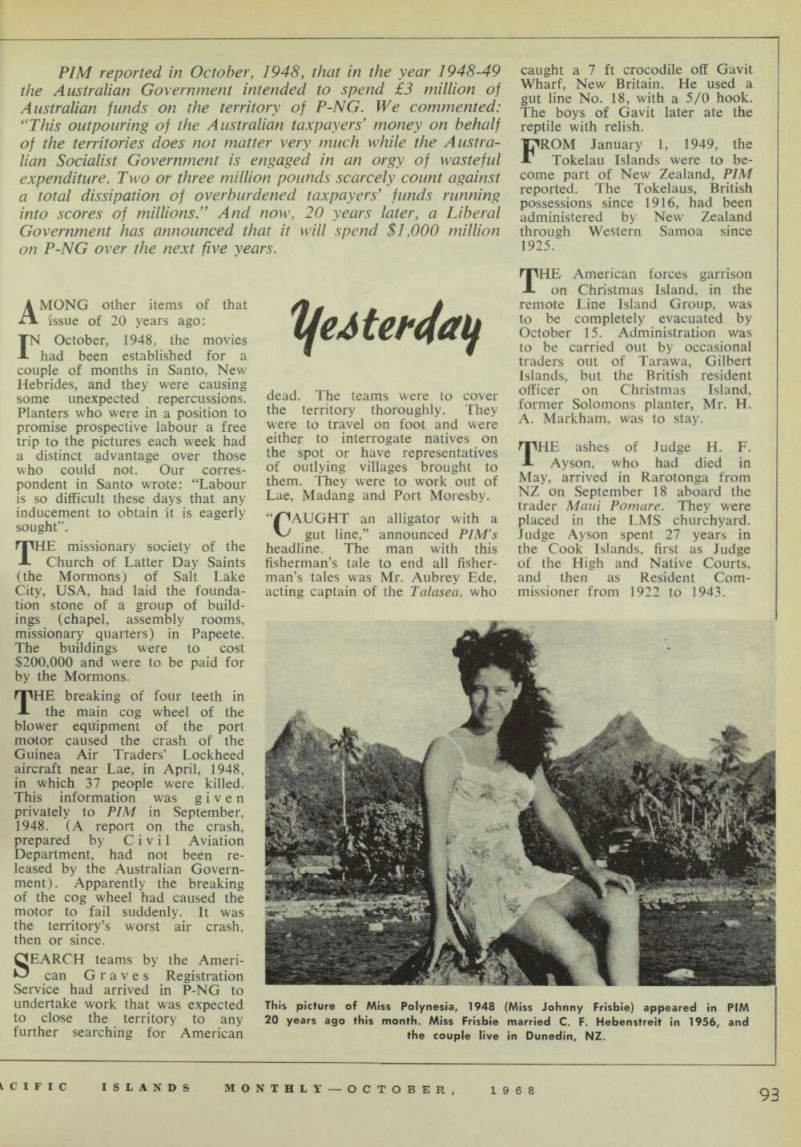 95
95 96
96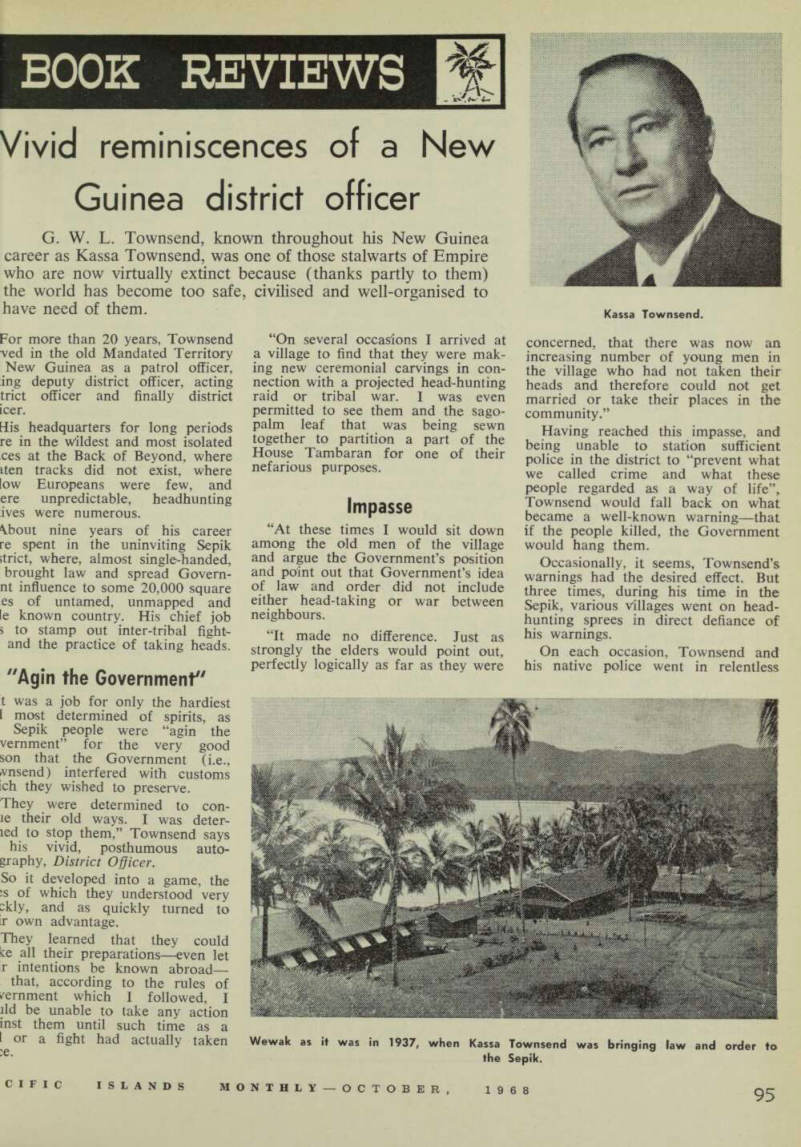 97
97 98
98 99
99 100
100 101
101 102
102 103
103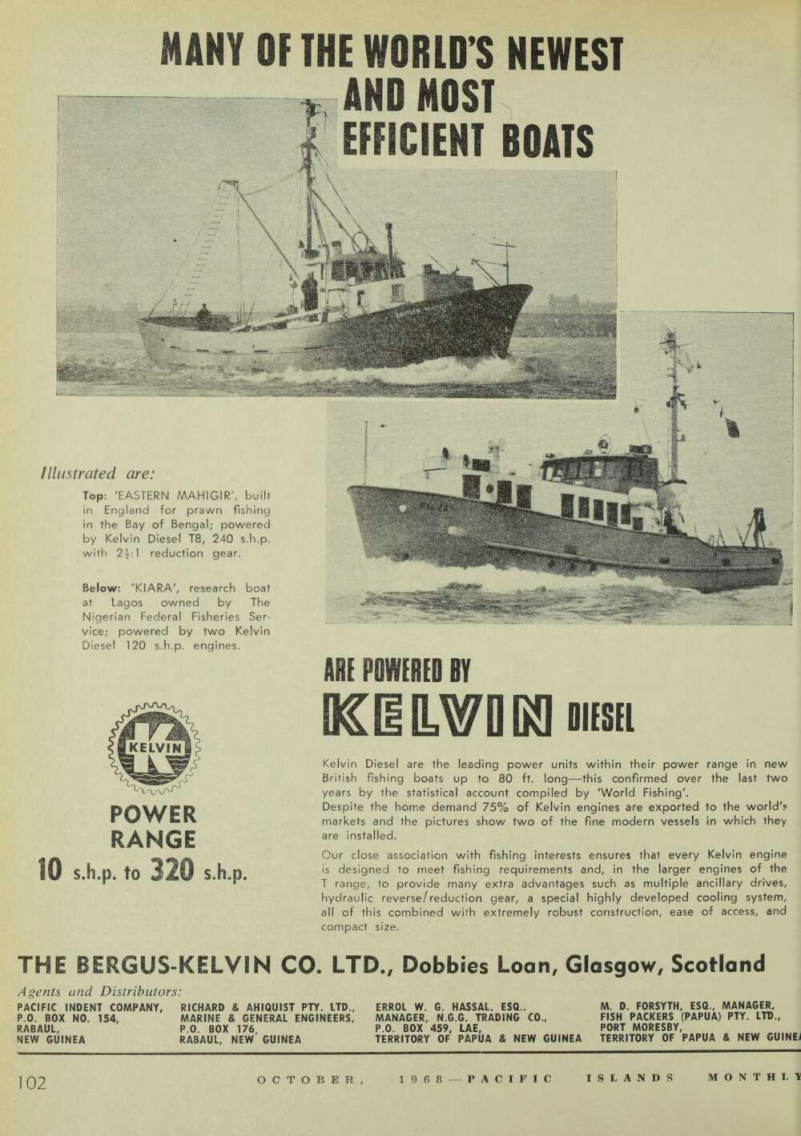 104
104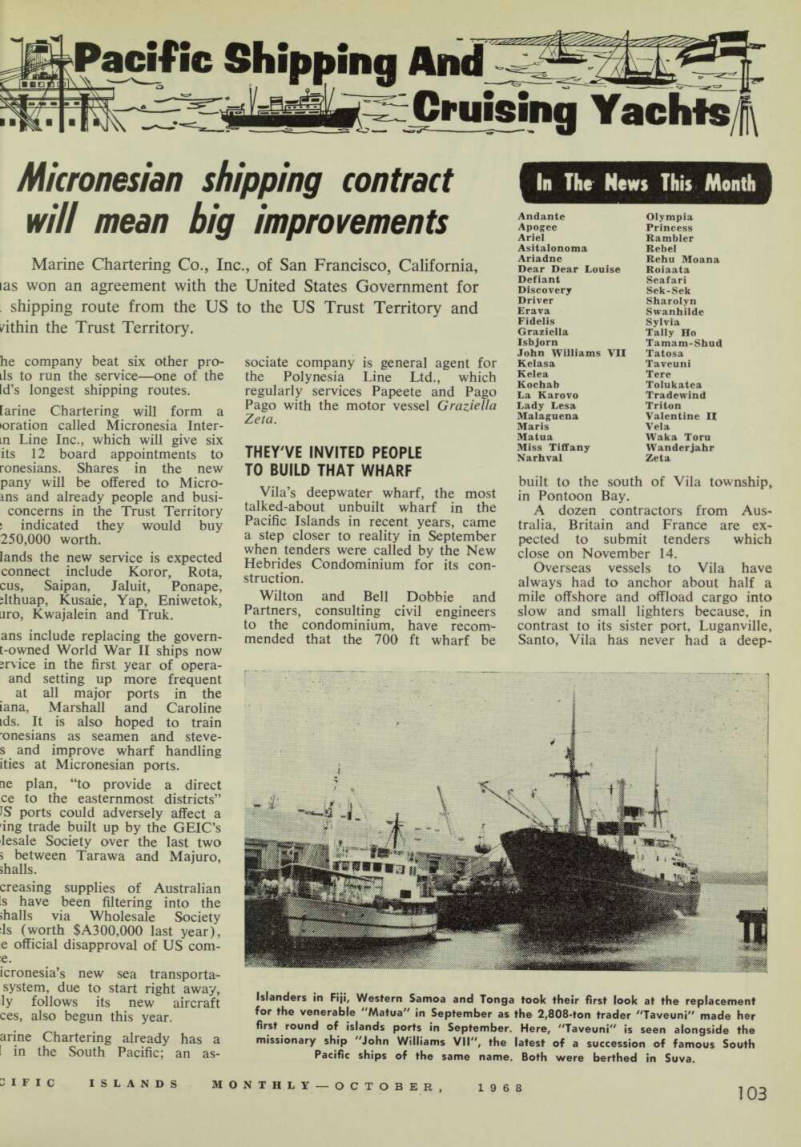 105
105 106
106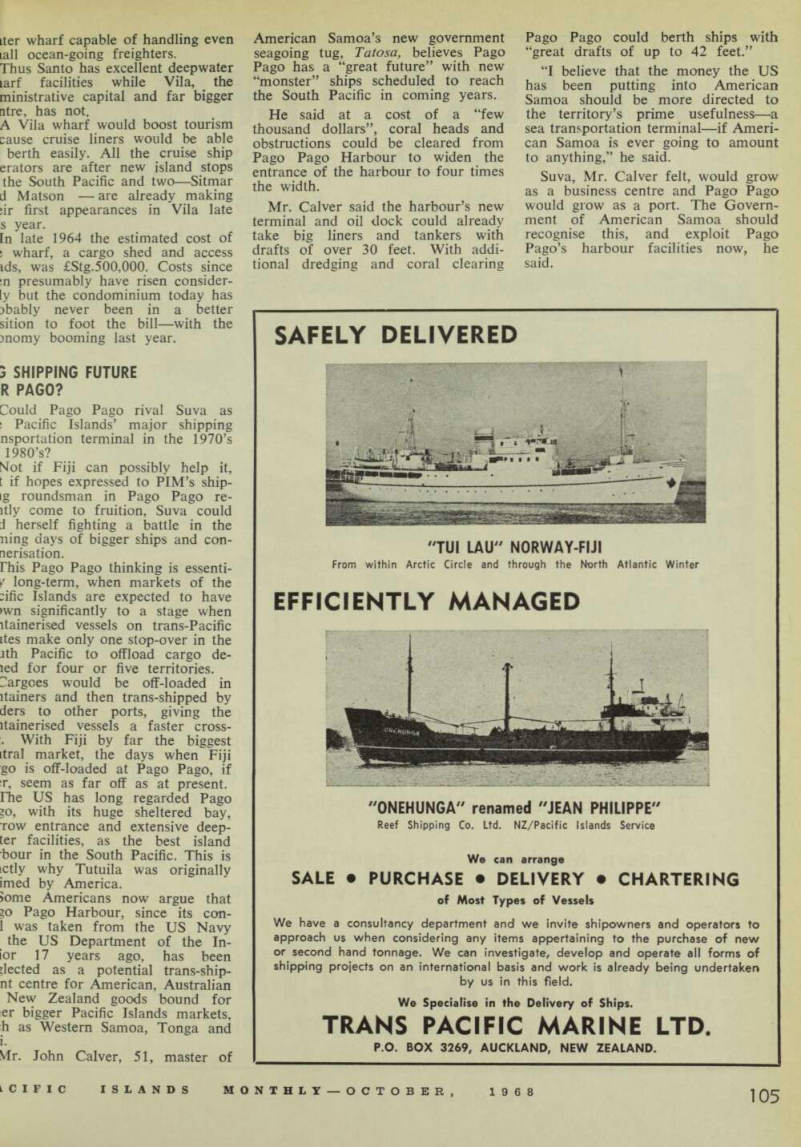 107
107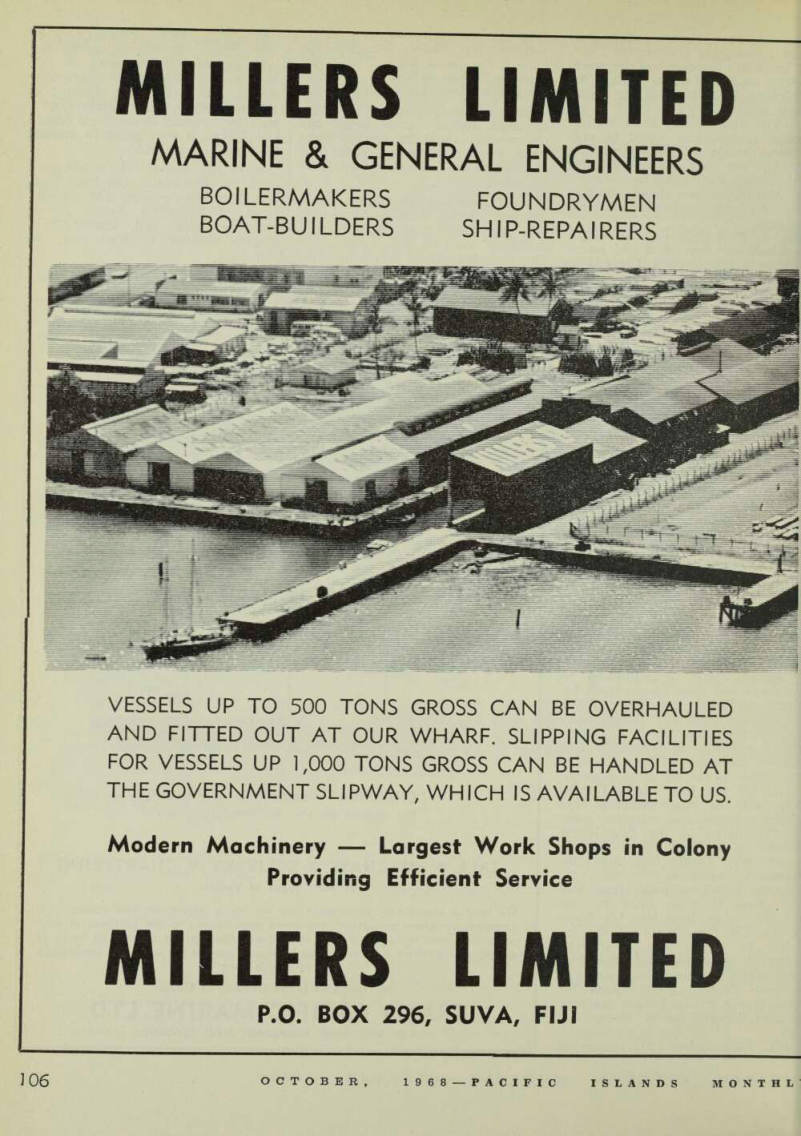 108
108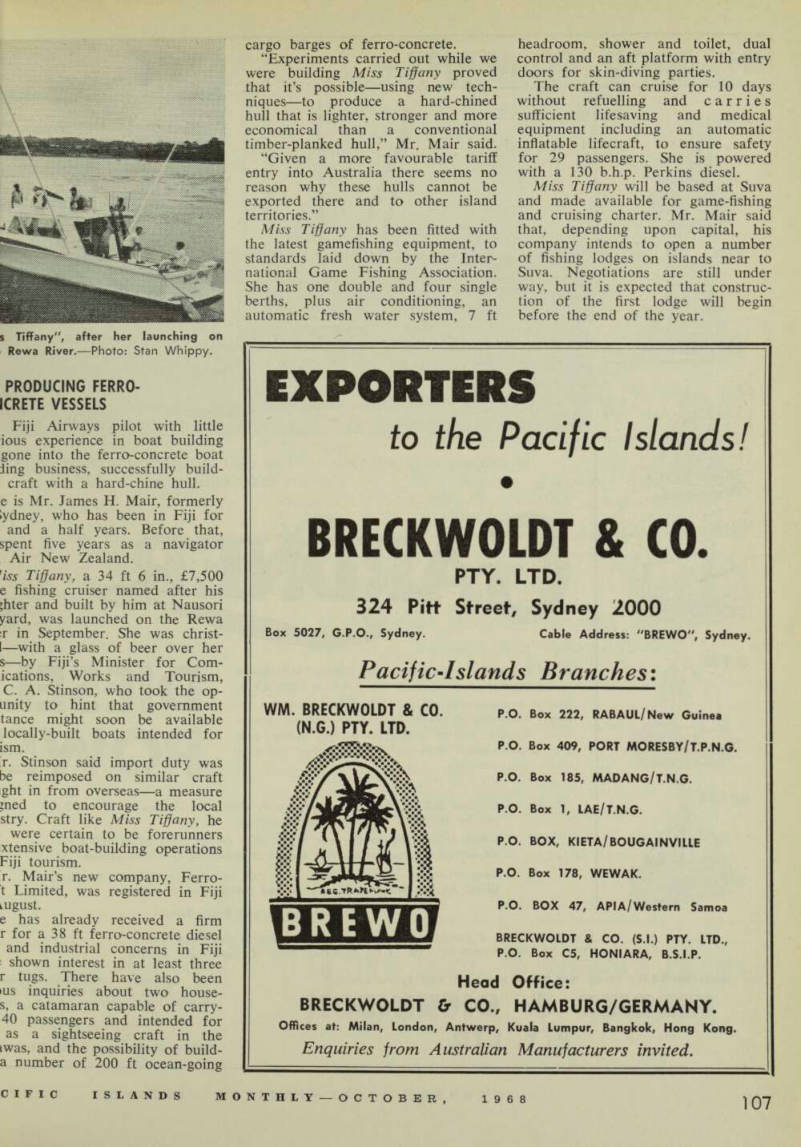 109
109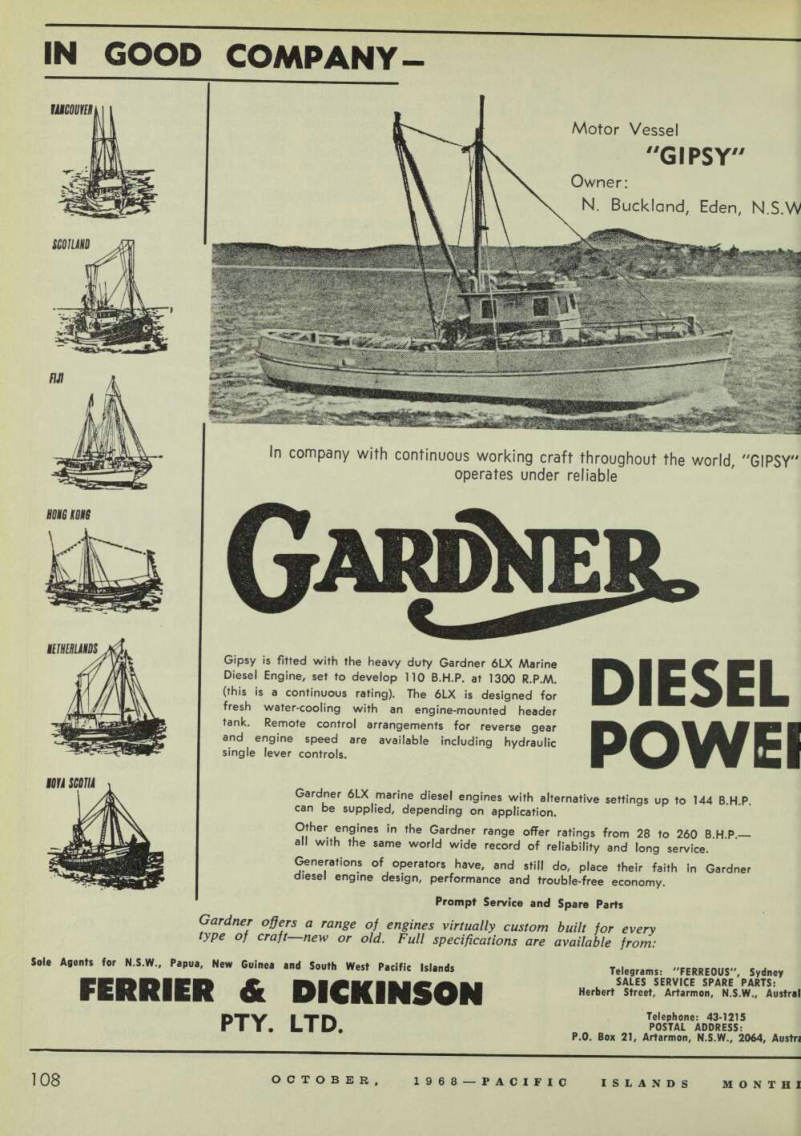 110
110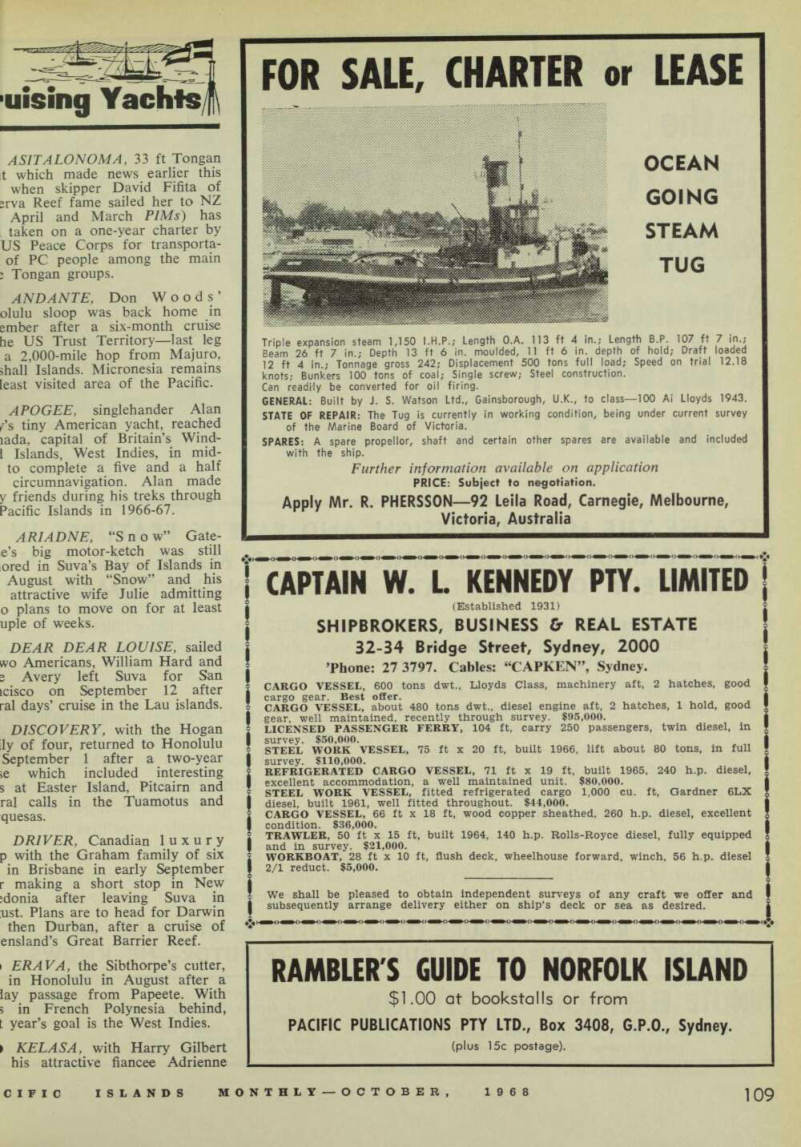 111
111 112
112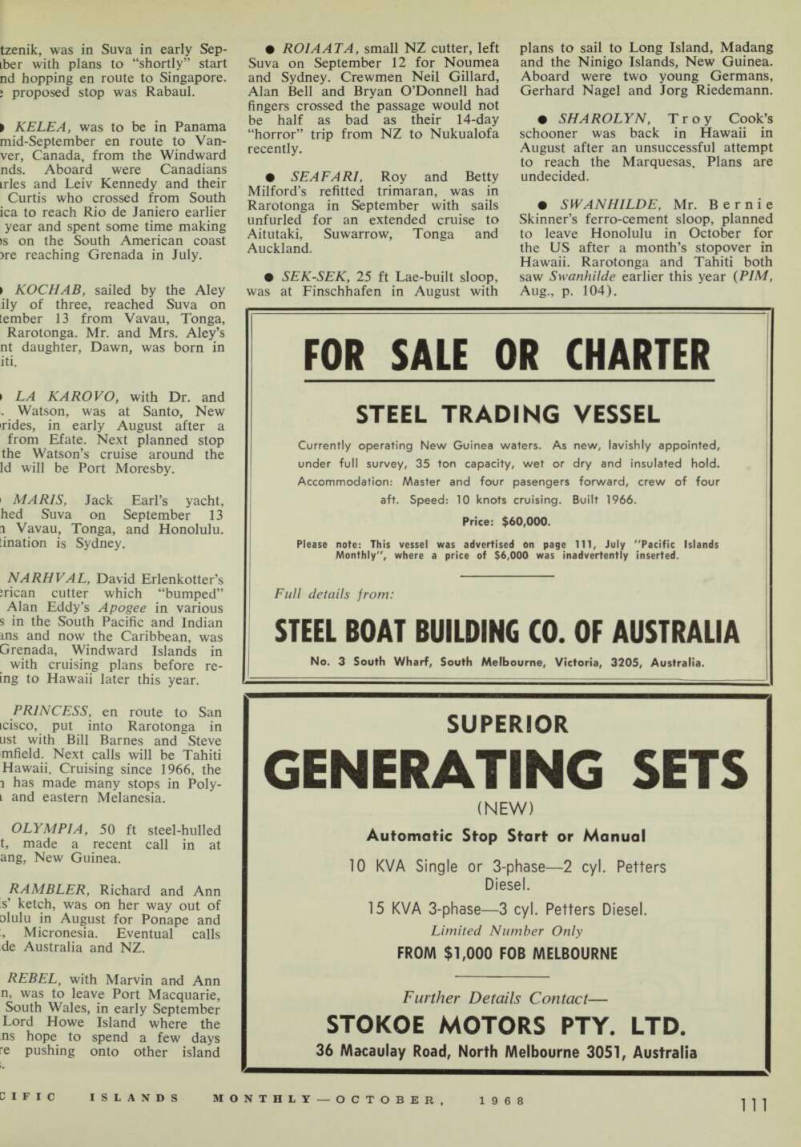 113
113 114
114 115
115 116
116 117
117 118
118 119
119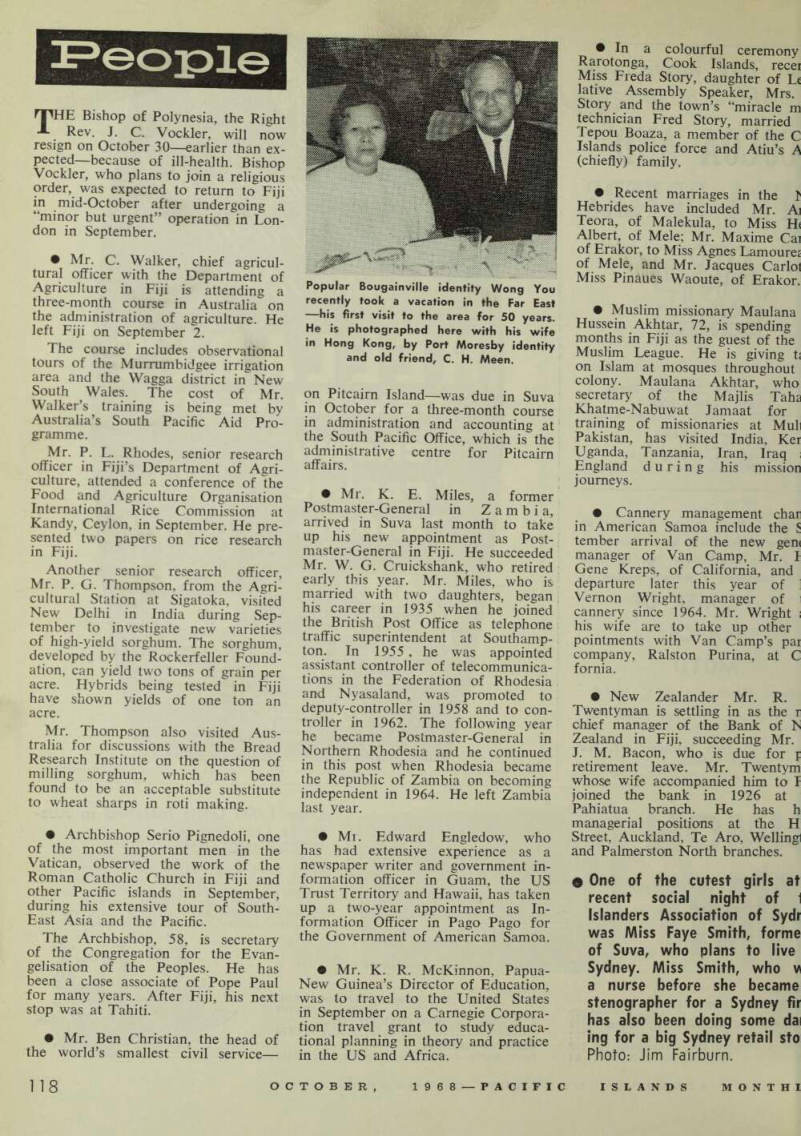 120
120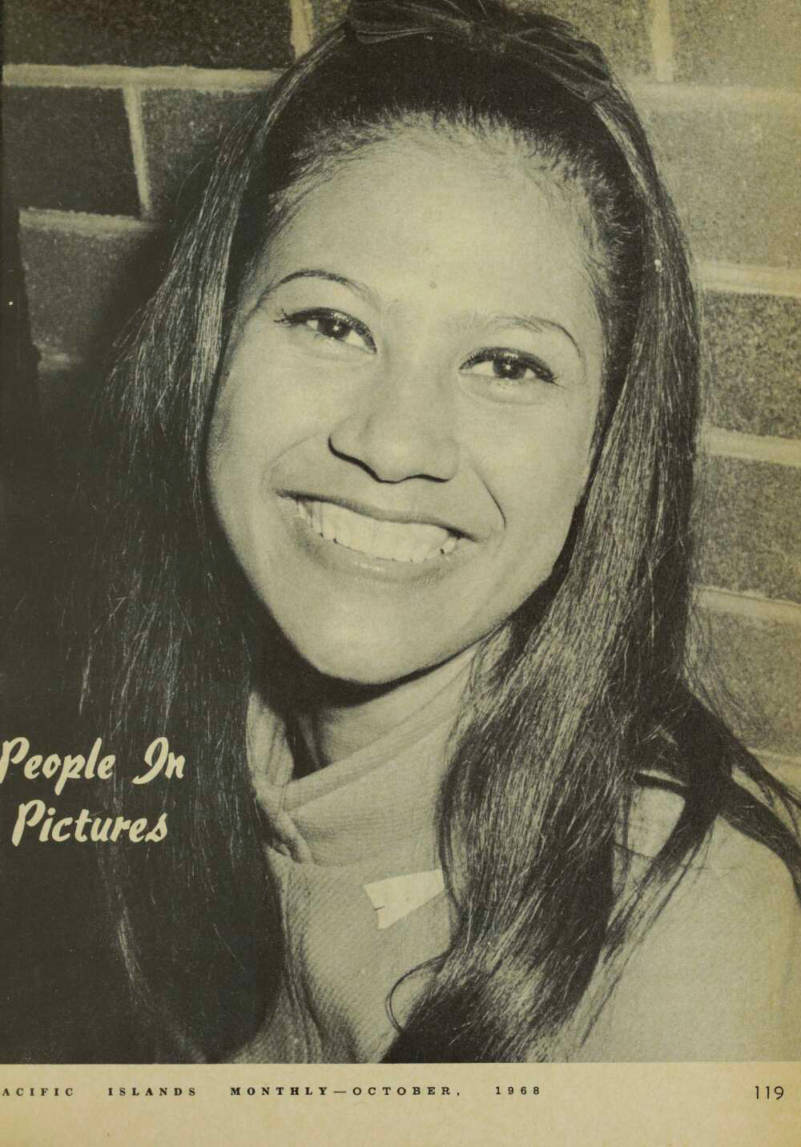 121
121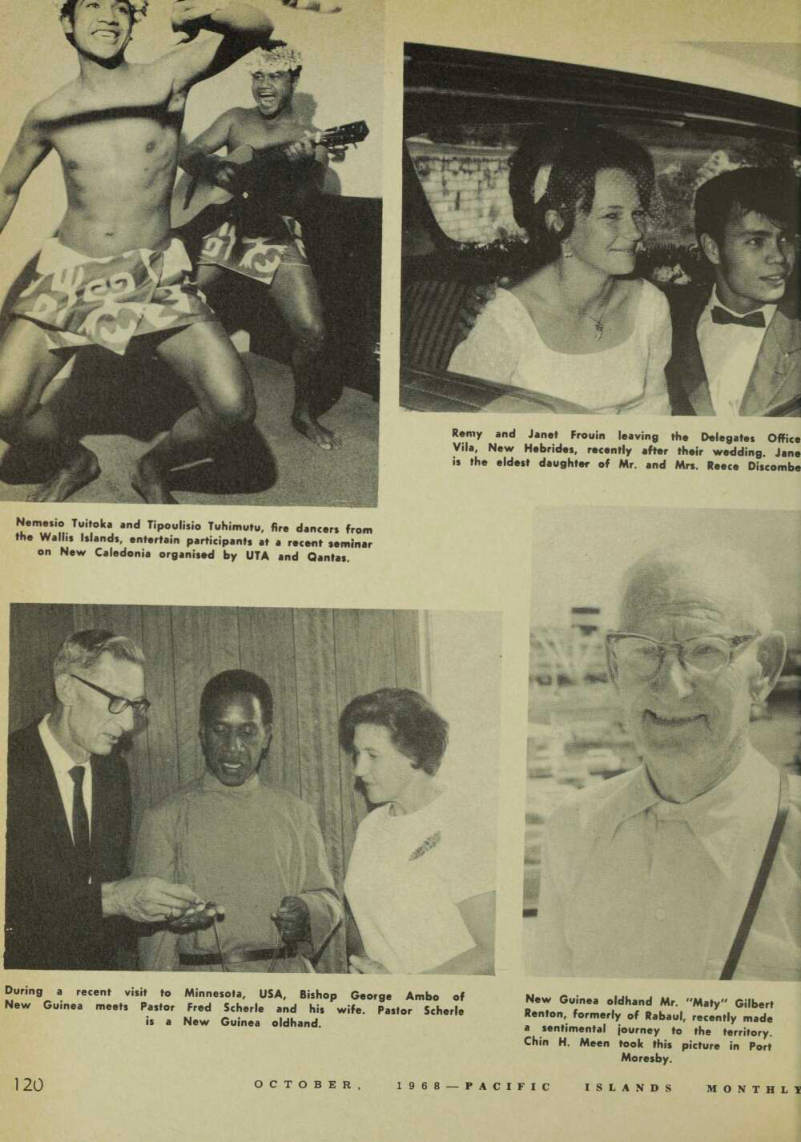 122
122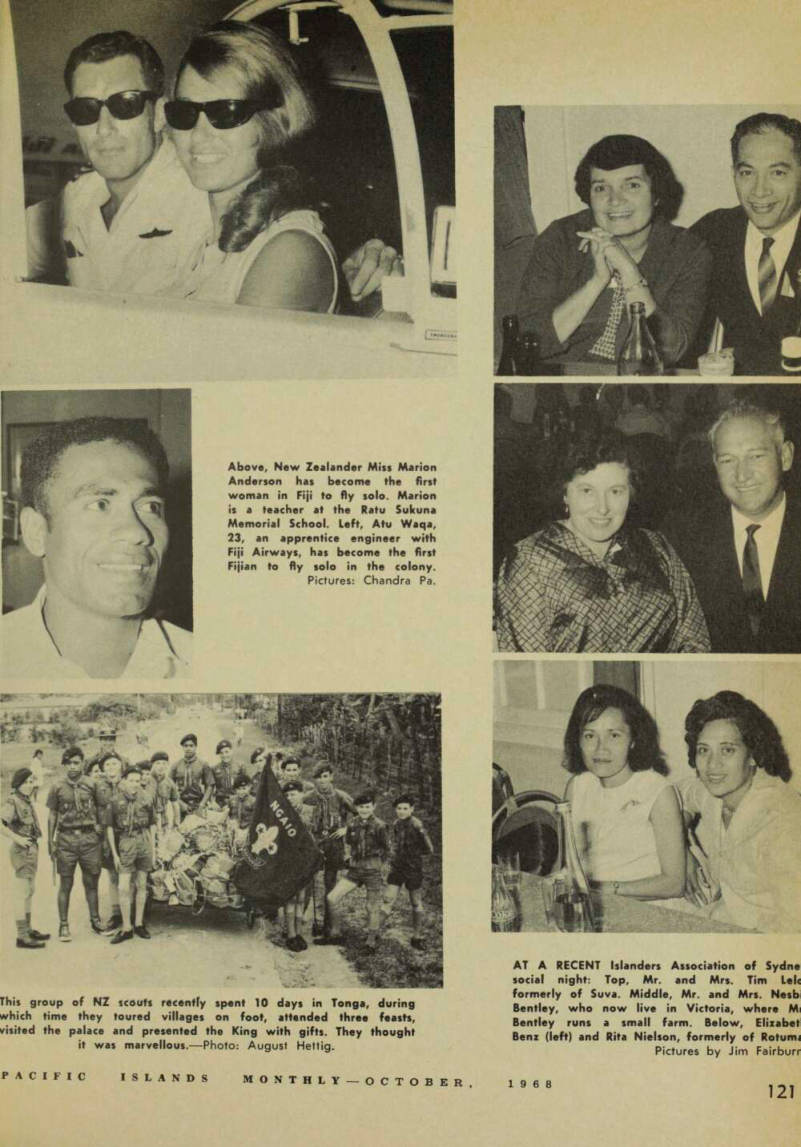 123
123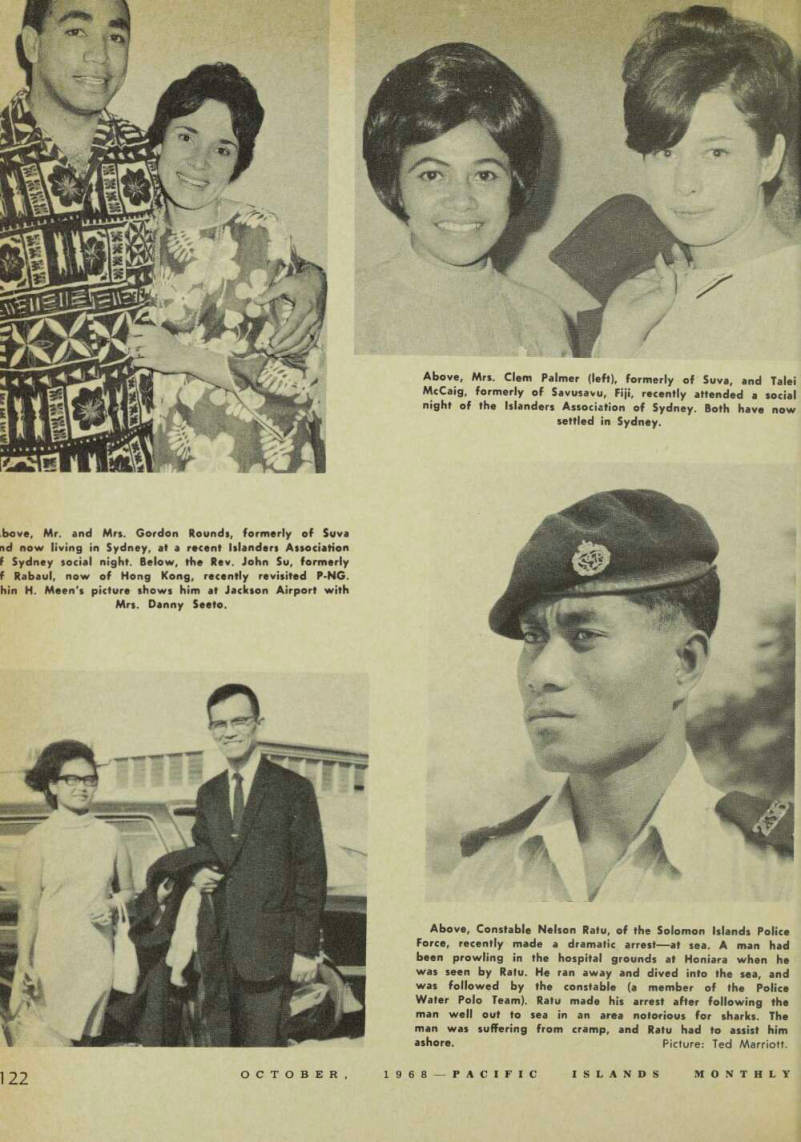 124
124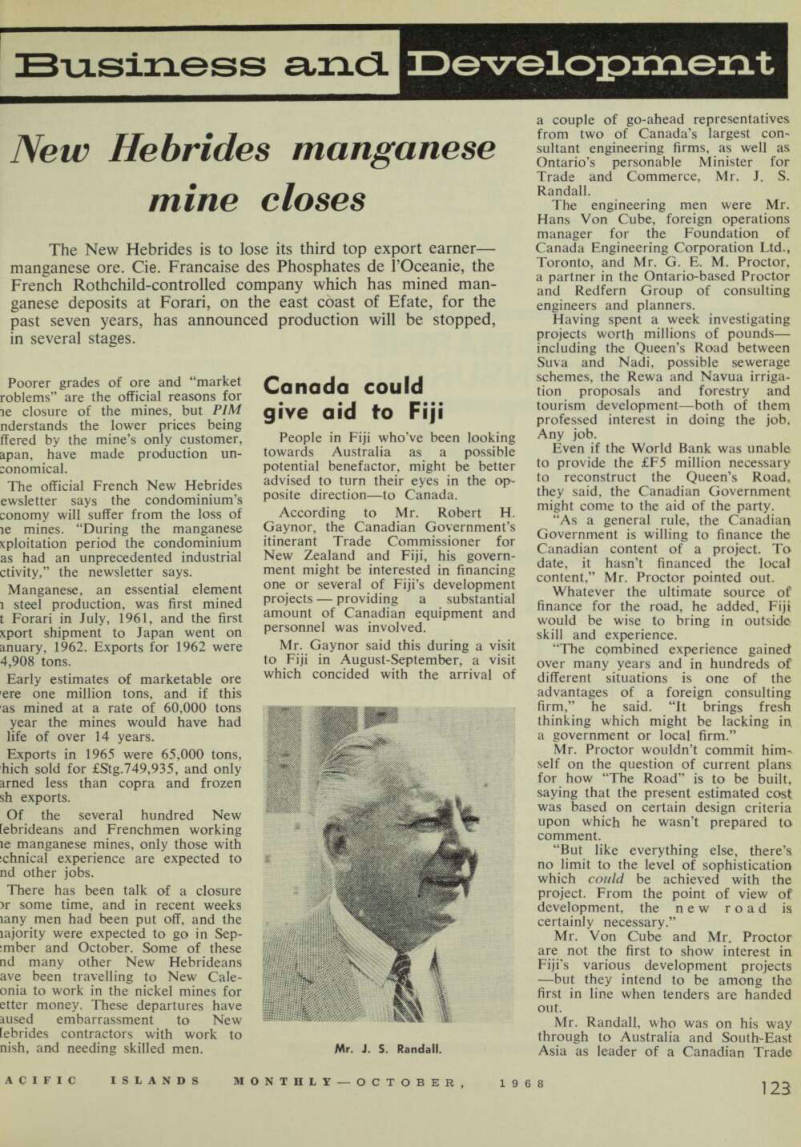 125
125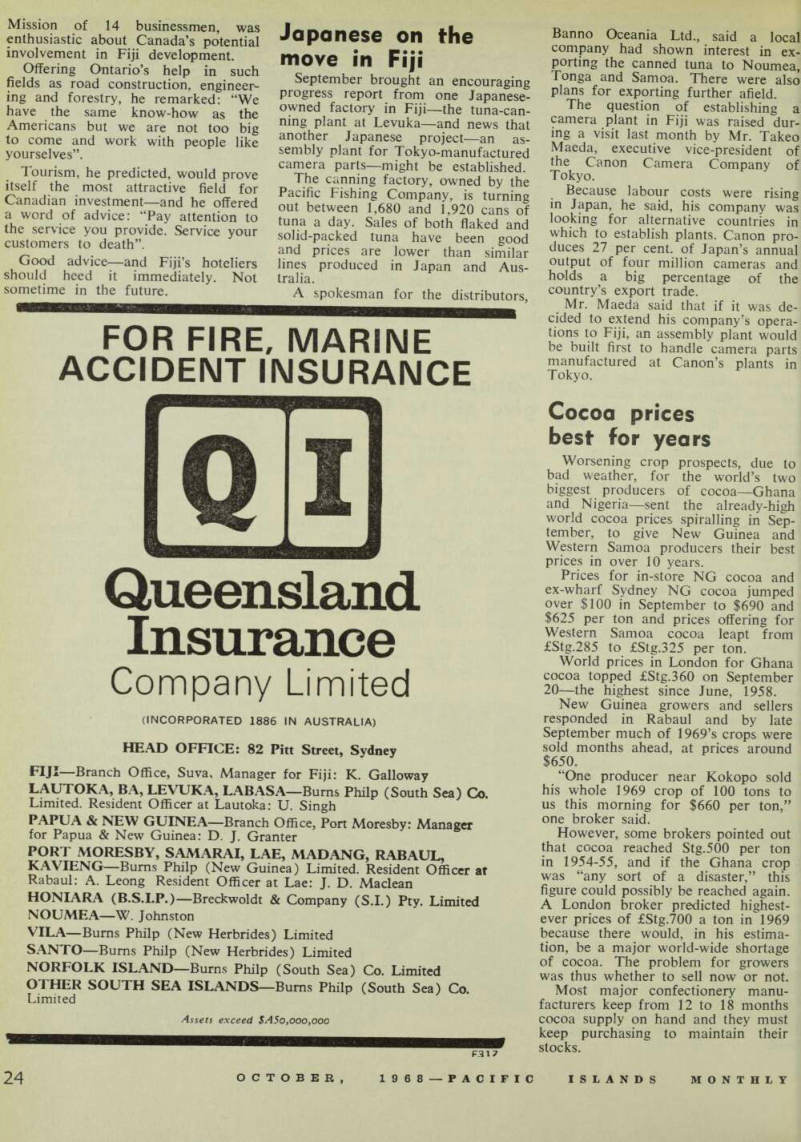 126
126 127
127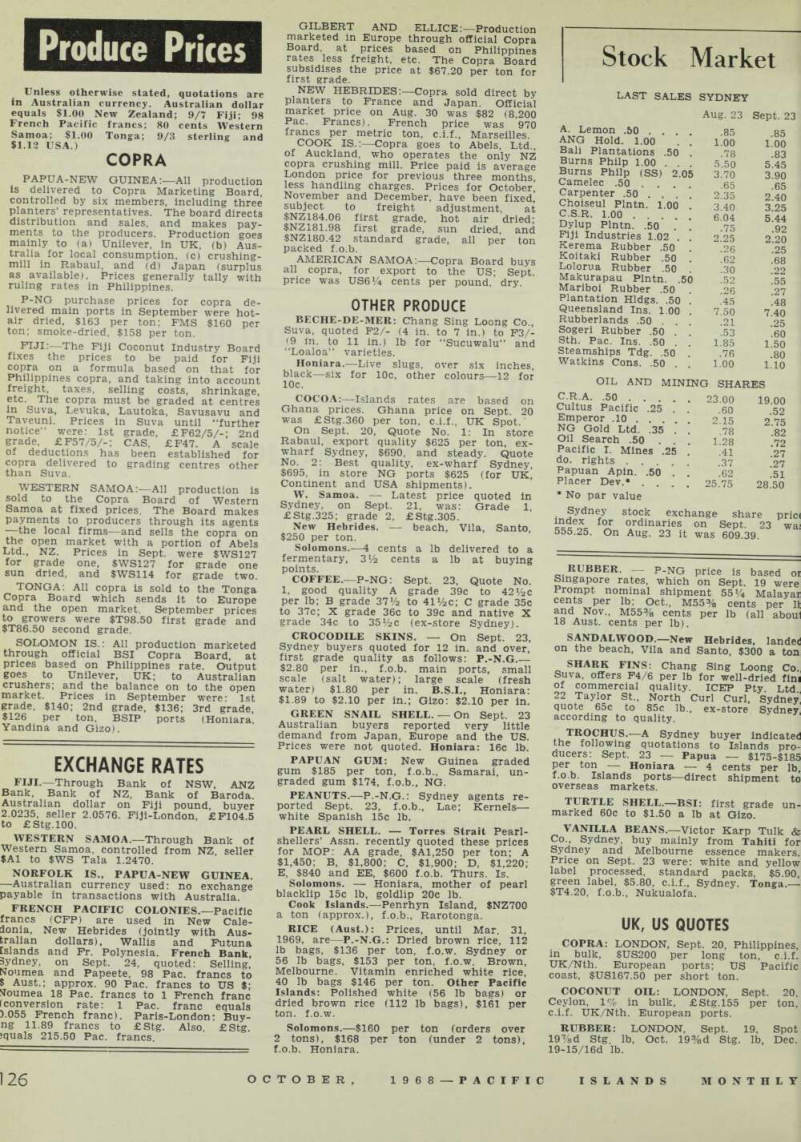 128
128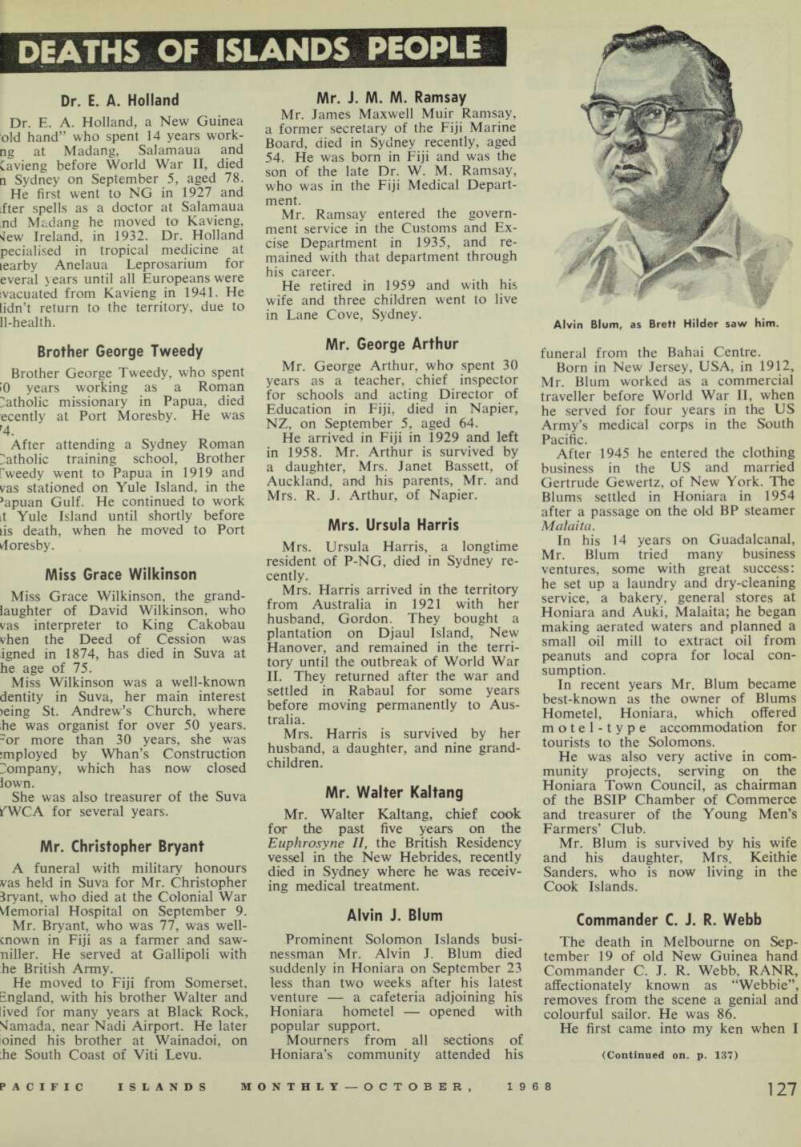 129
129 130
130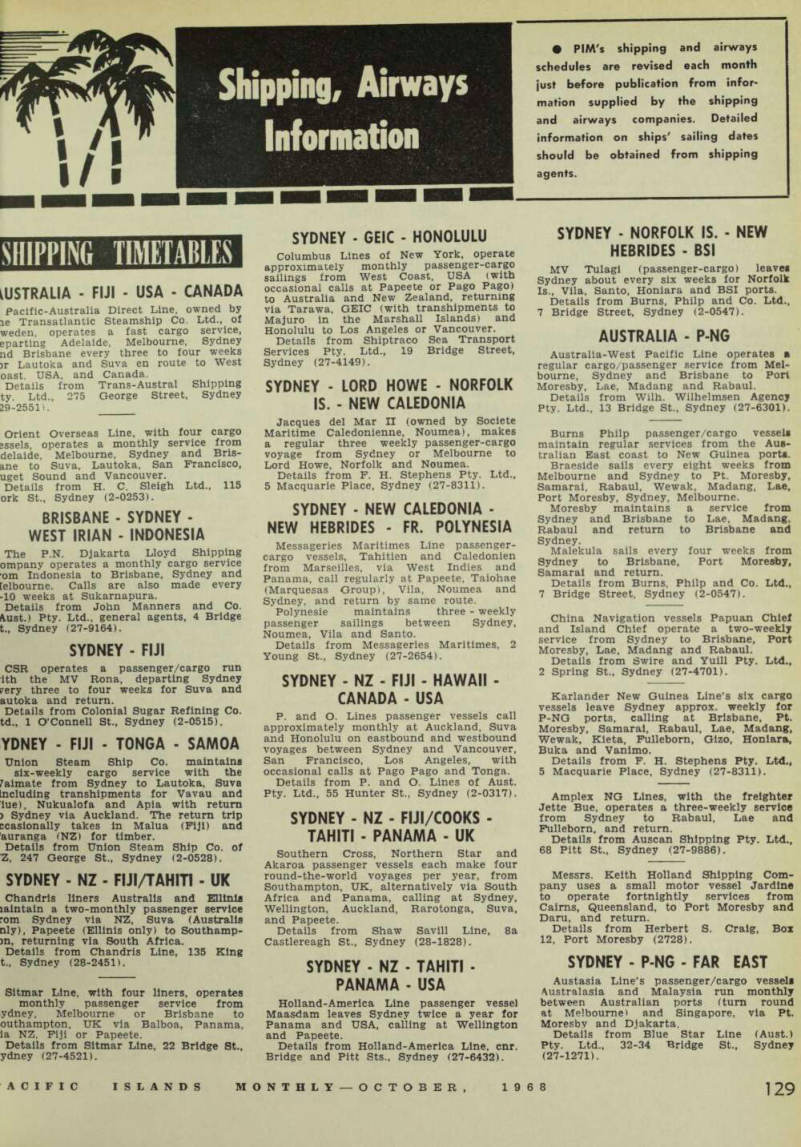 131
131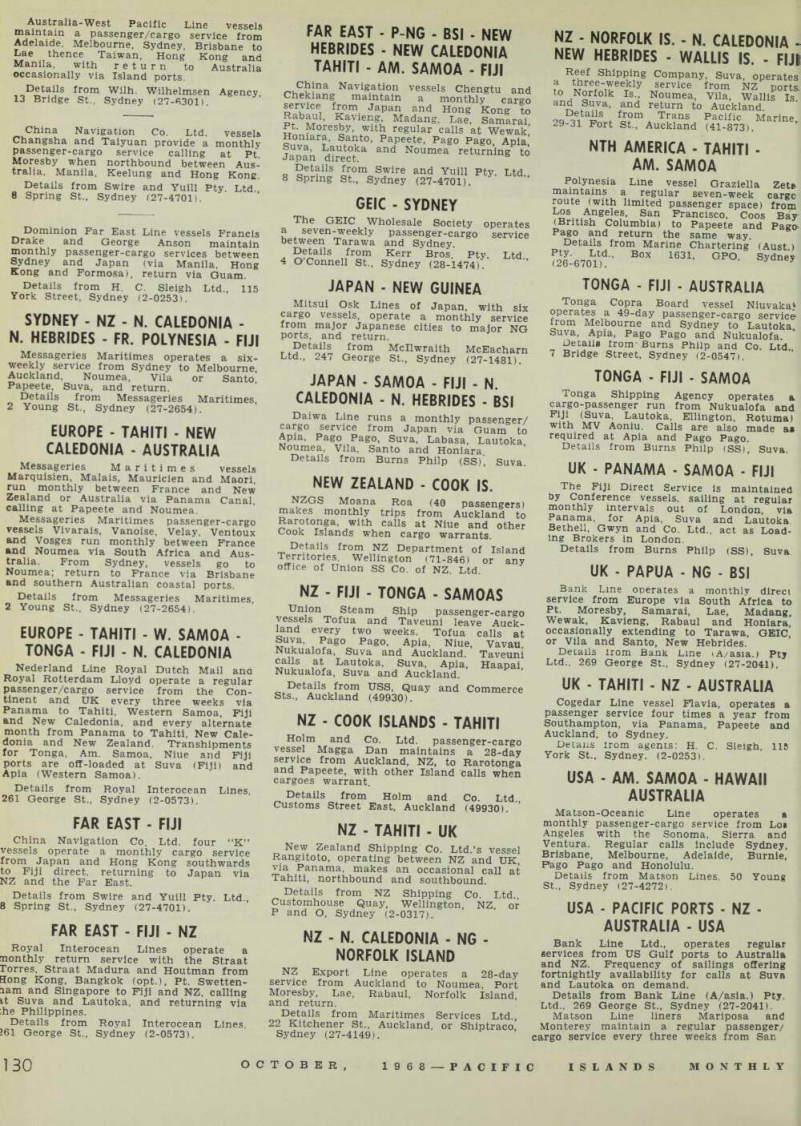 132
132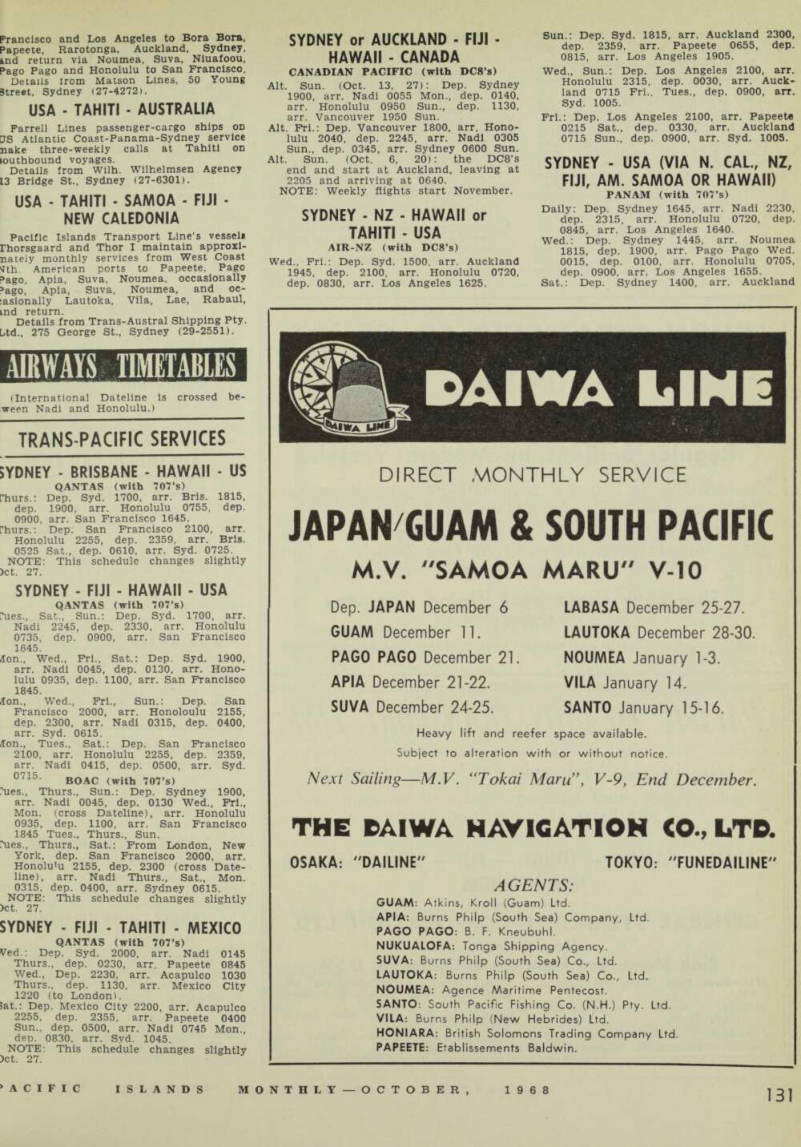 133
133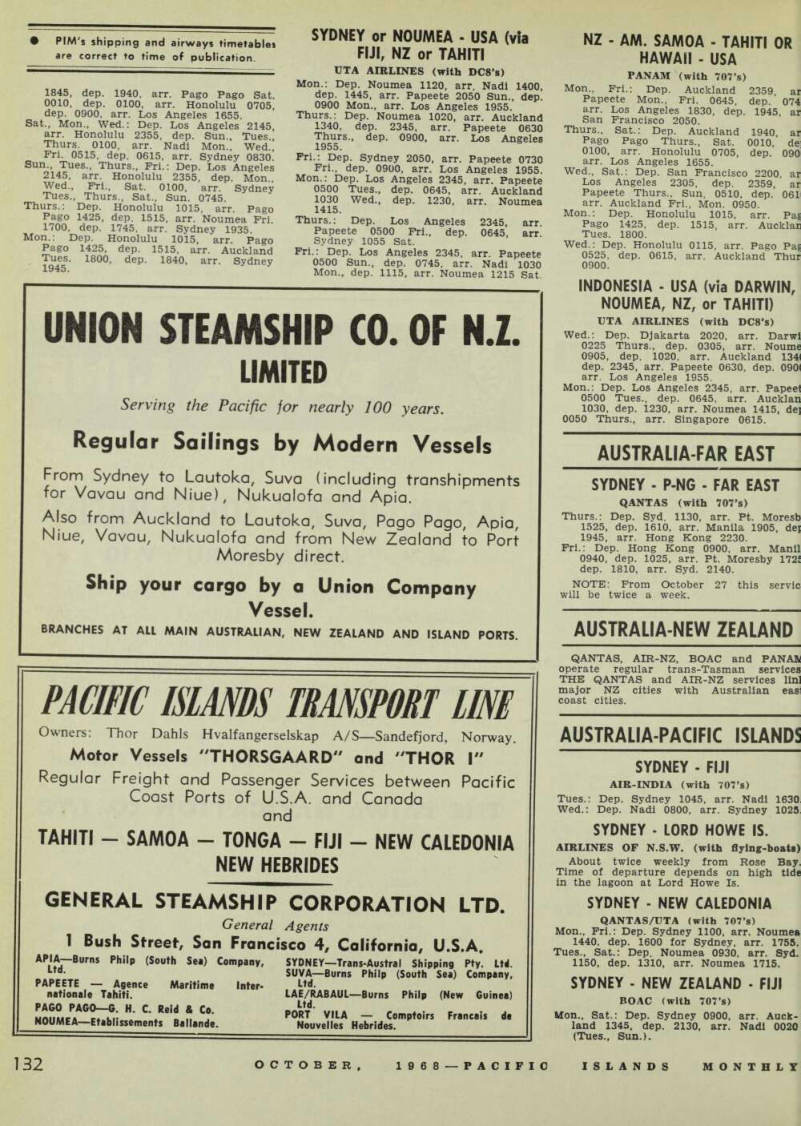 134
134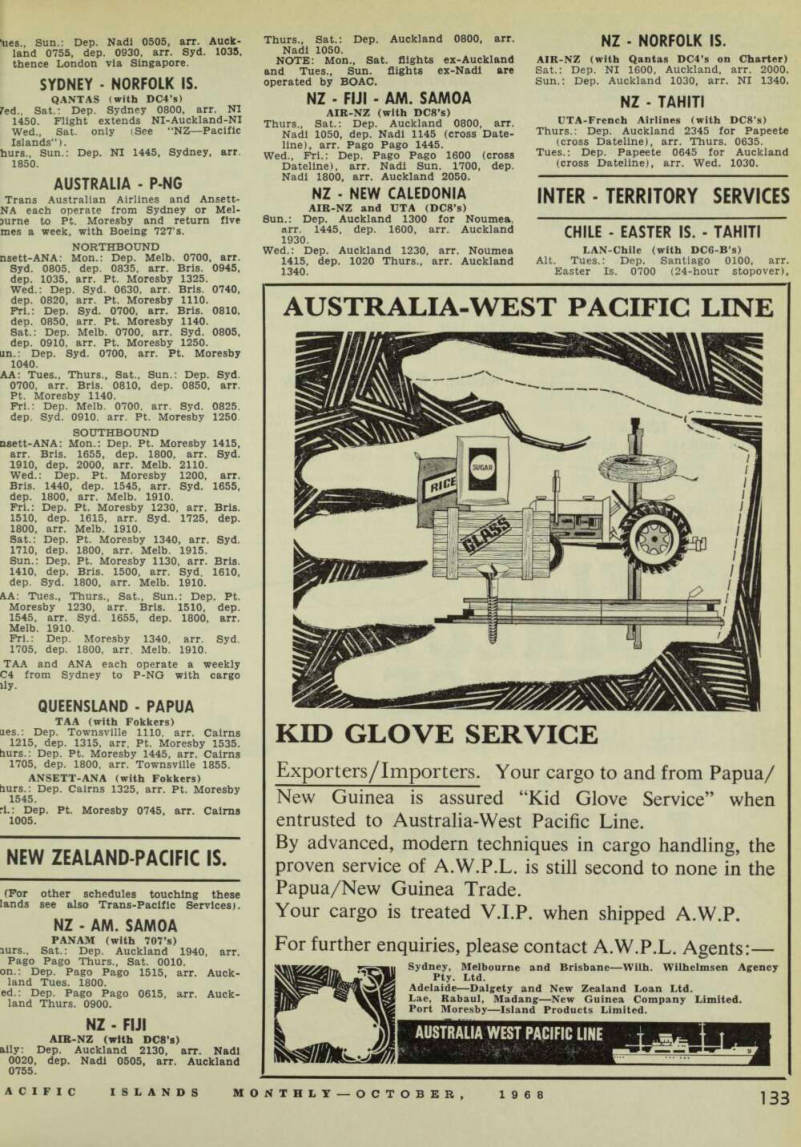 135
135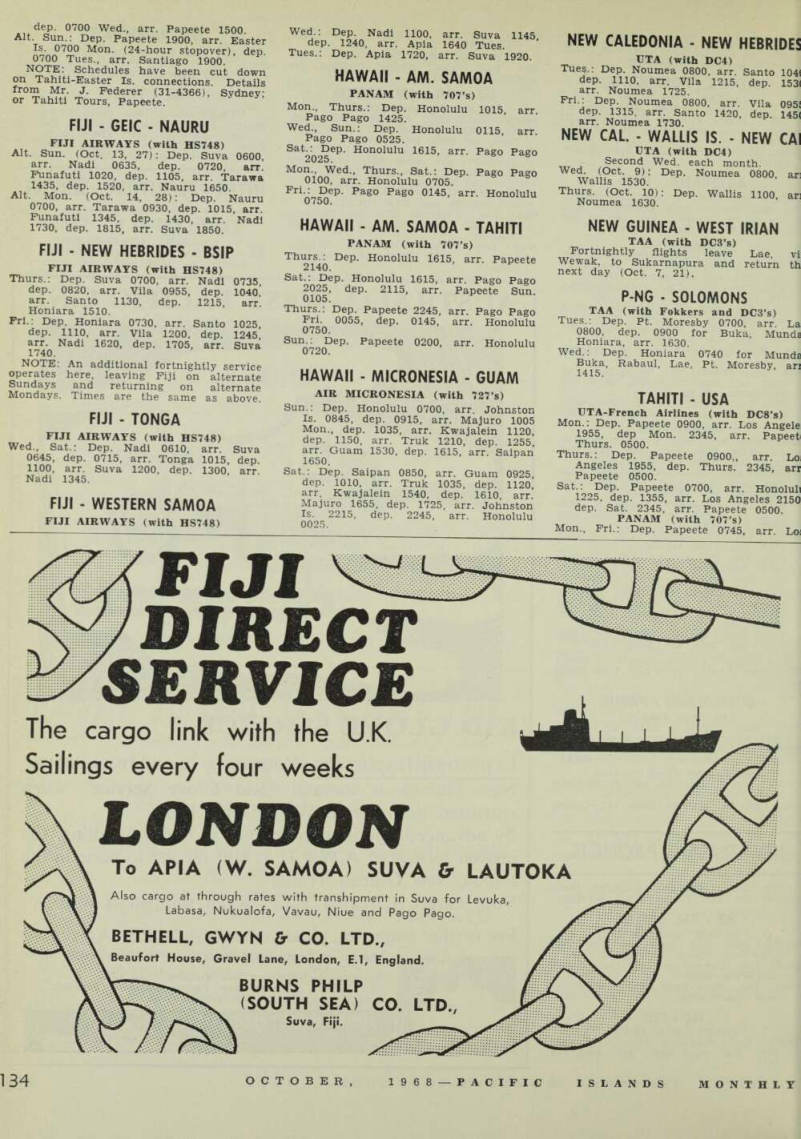 136
136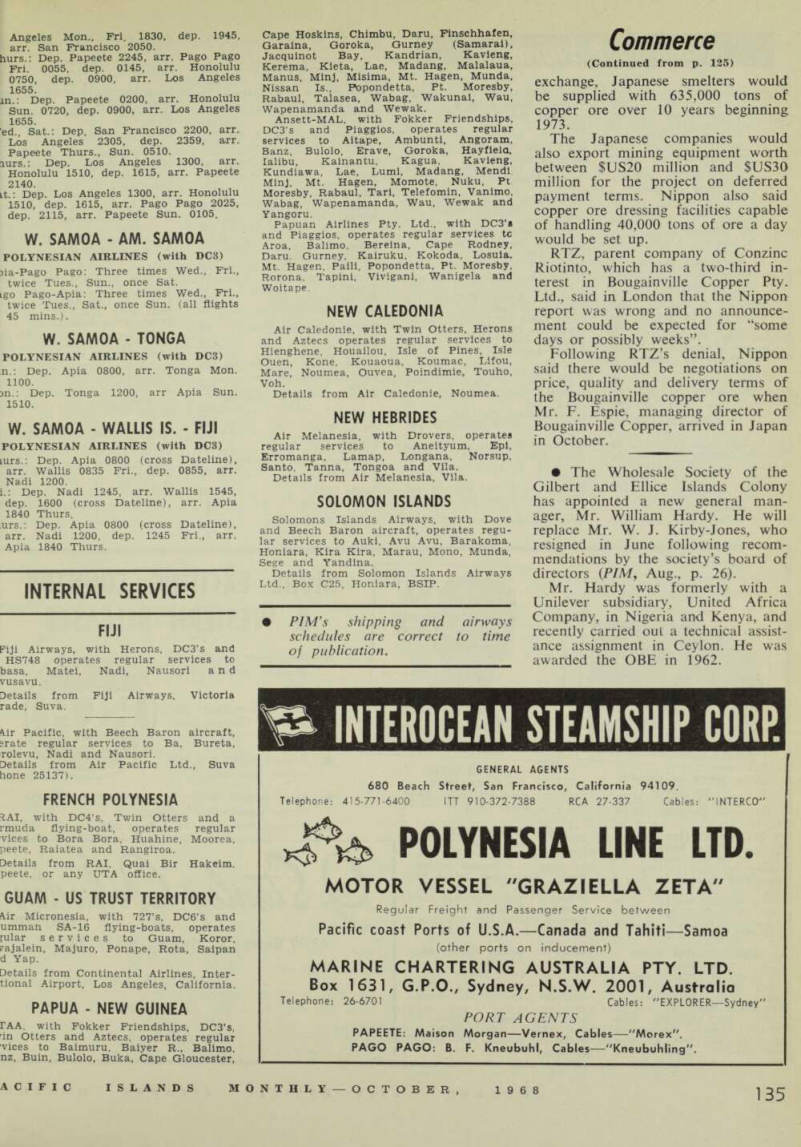 137
137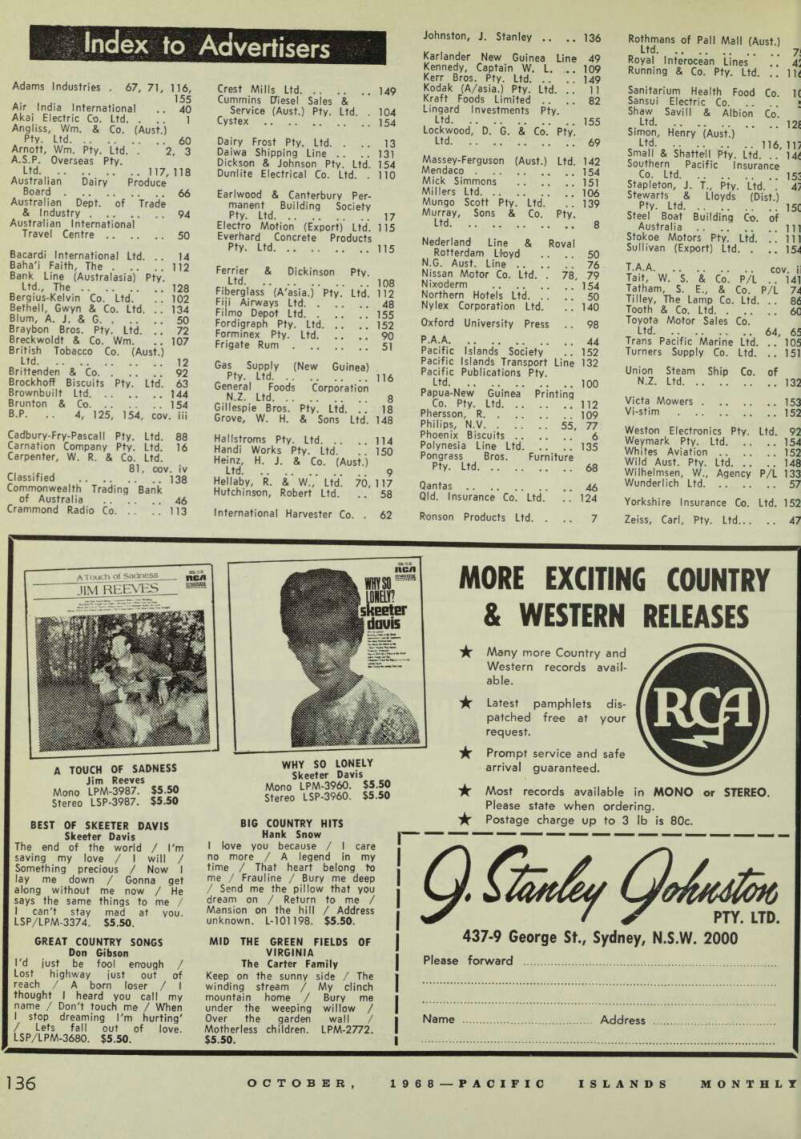 138
138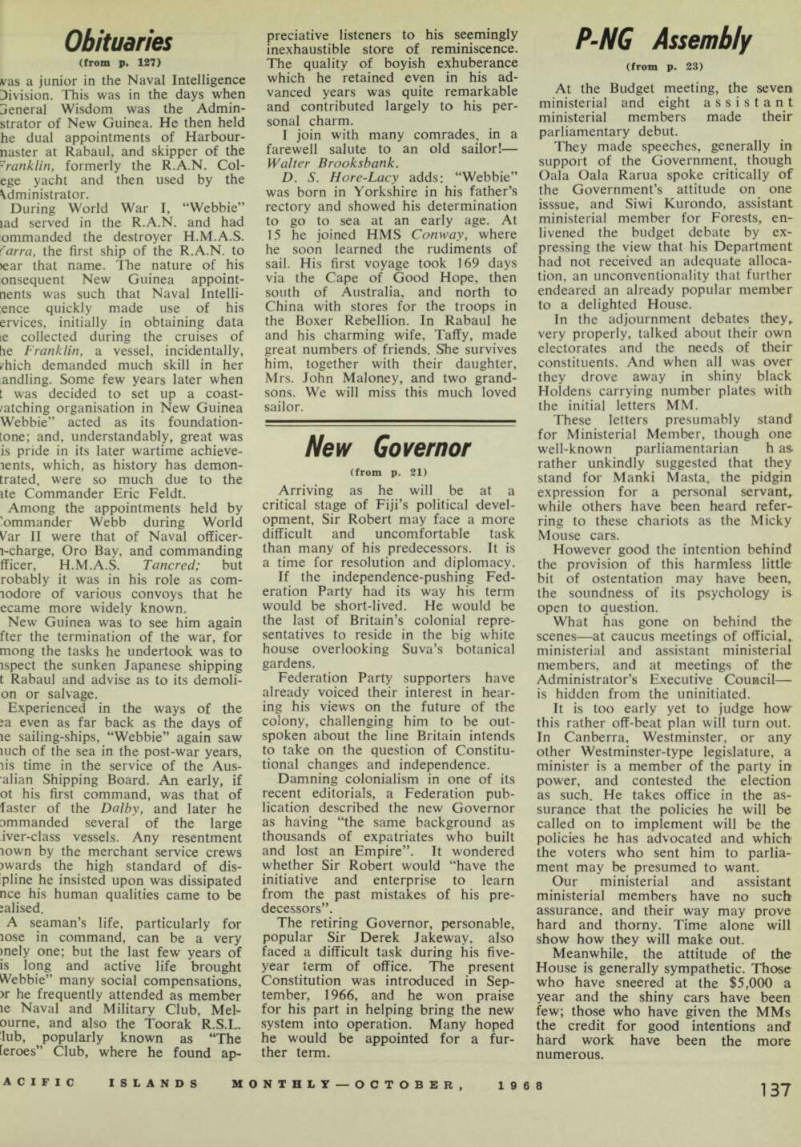 139
139 140
140 141
141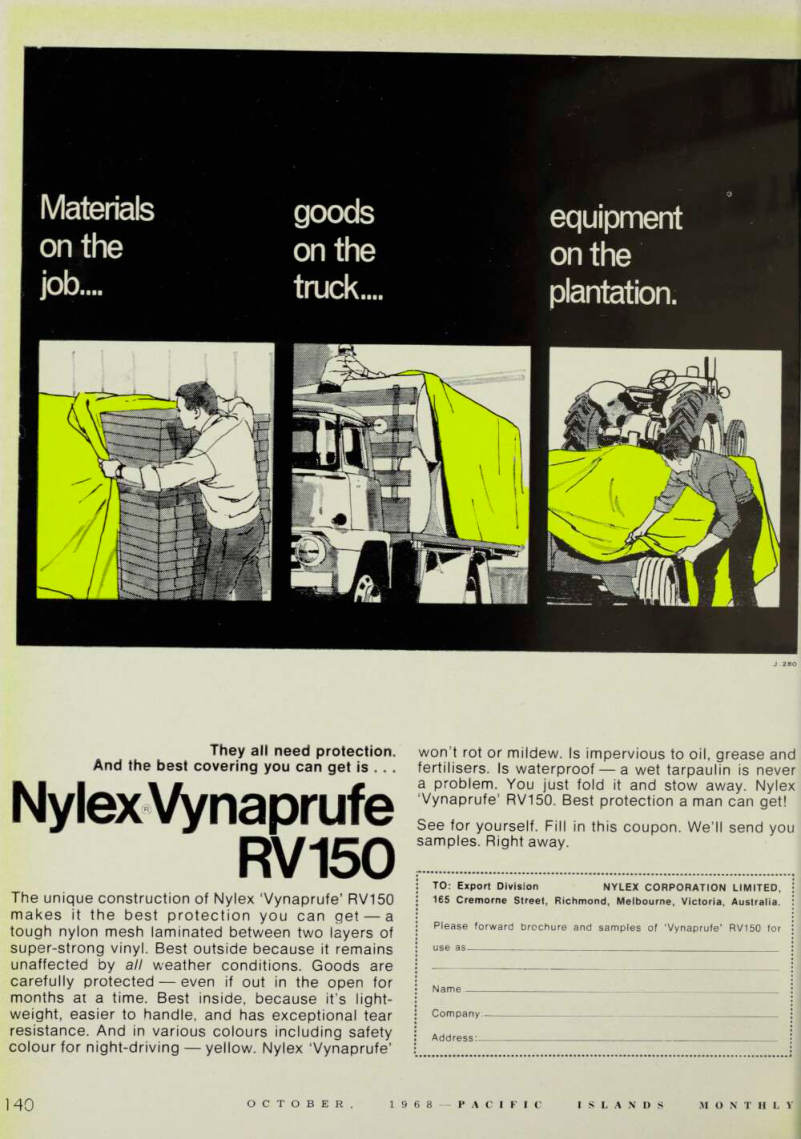 142
142 143
143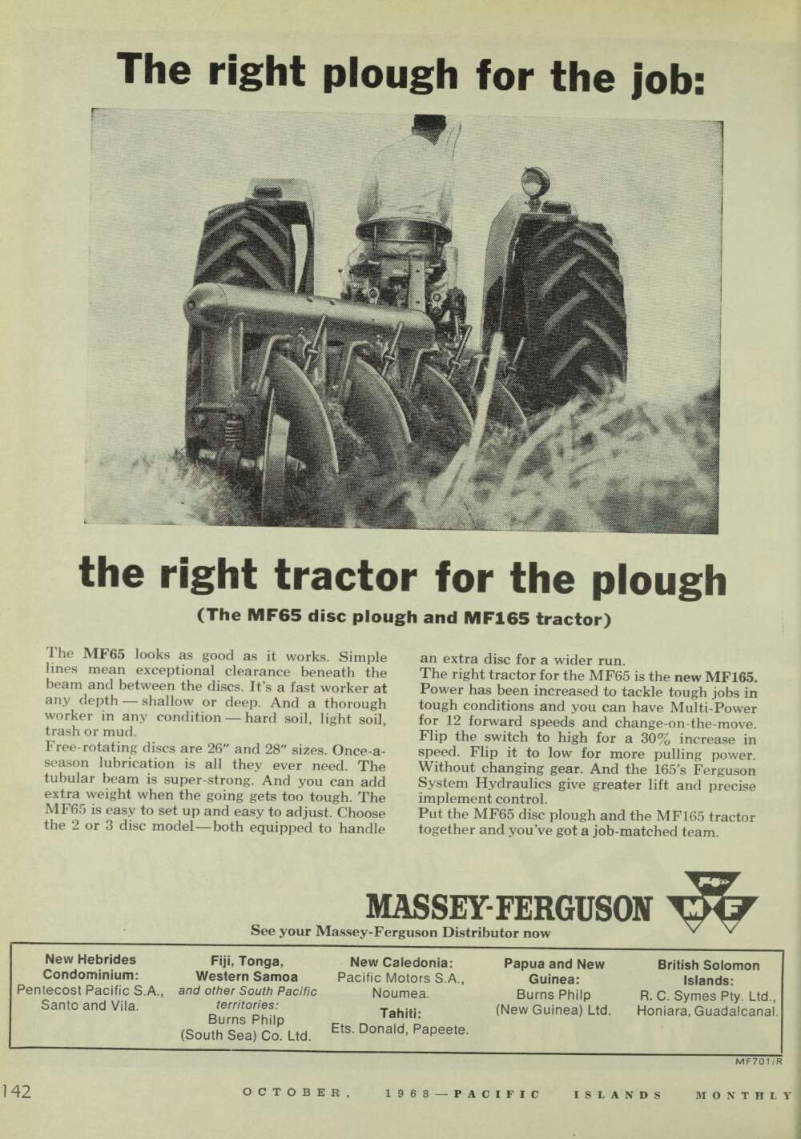 144
144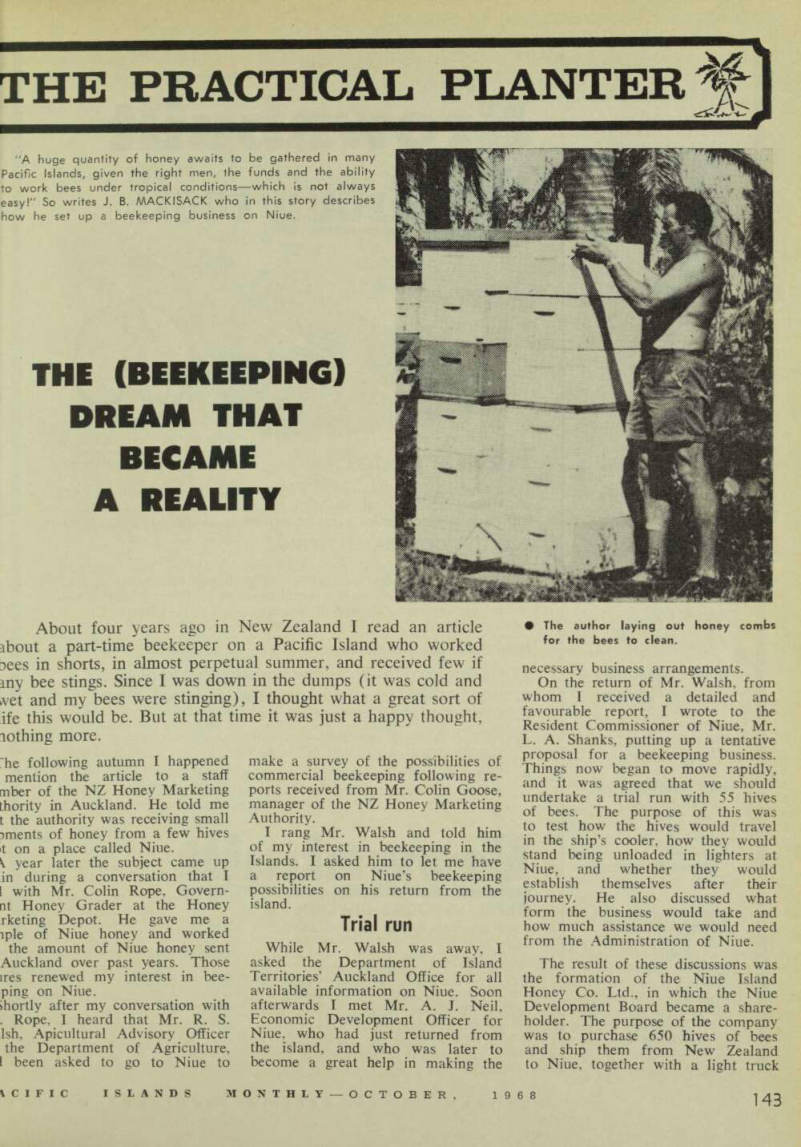 145
145 146
146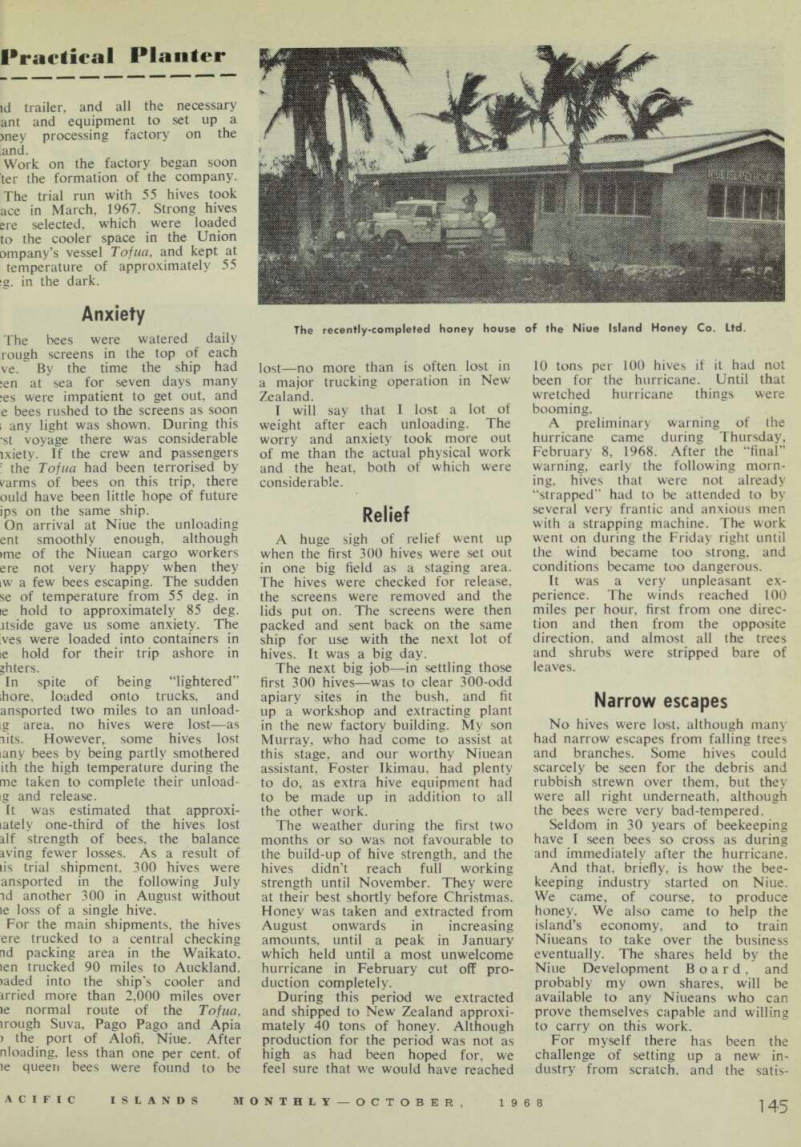 147
147 148
148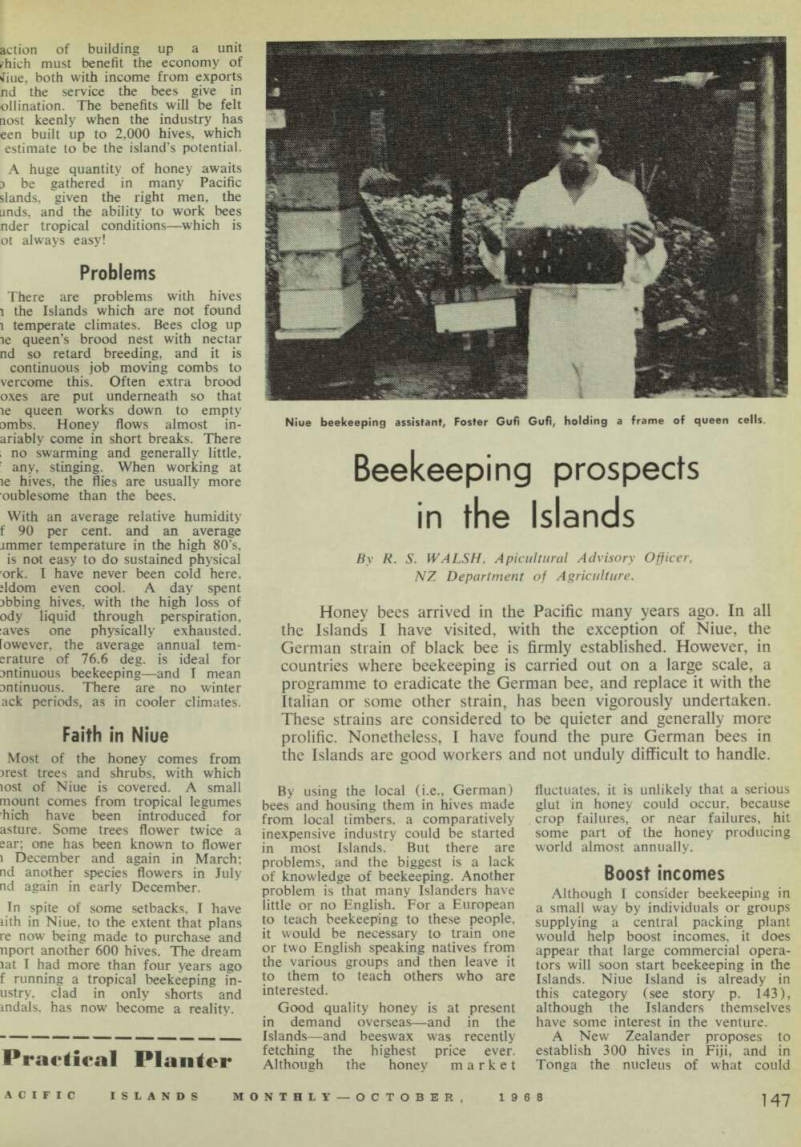 149
149 150
150 151
151 152
152 153
153 154
154 155
155 156
156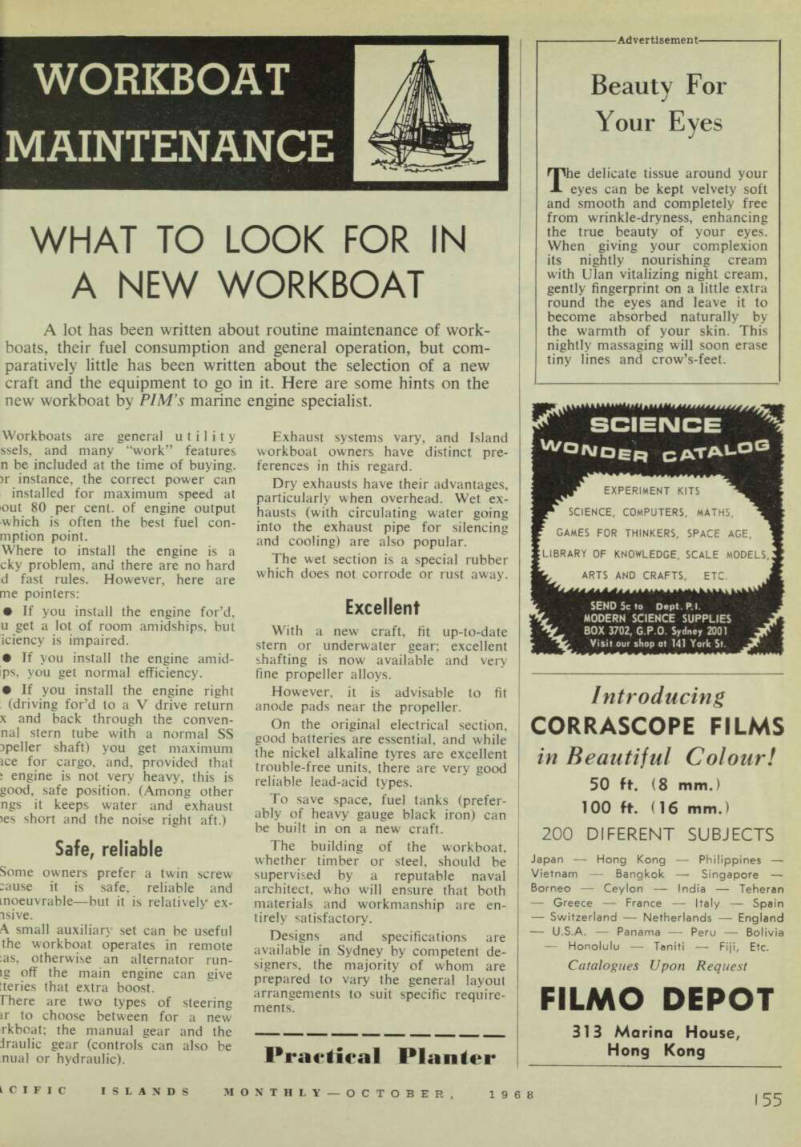 157
157 158
158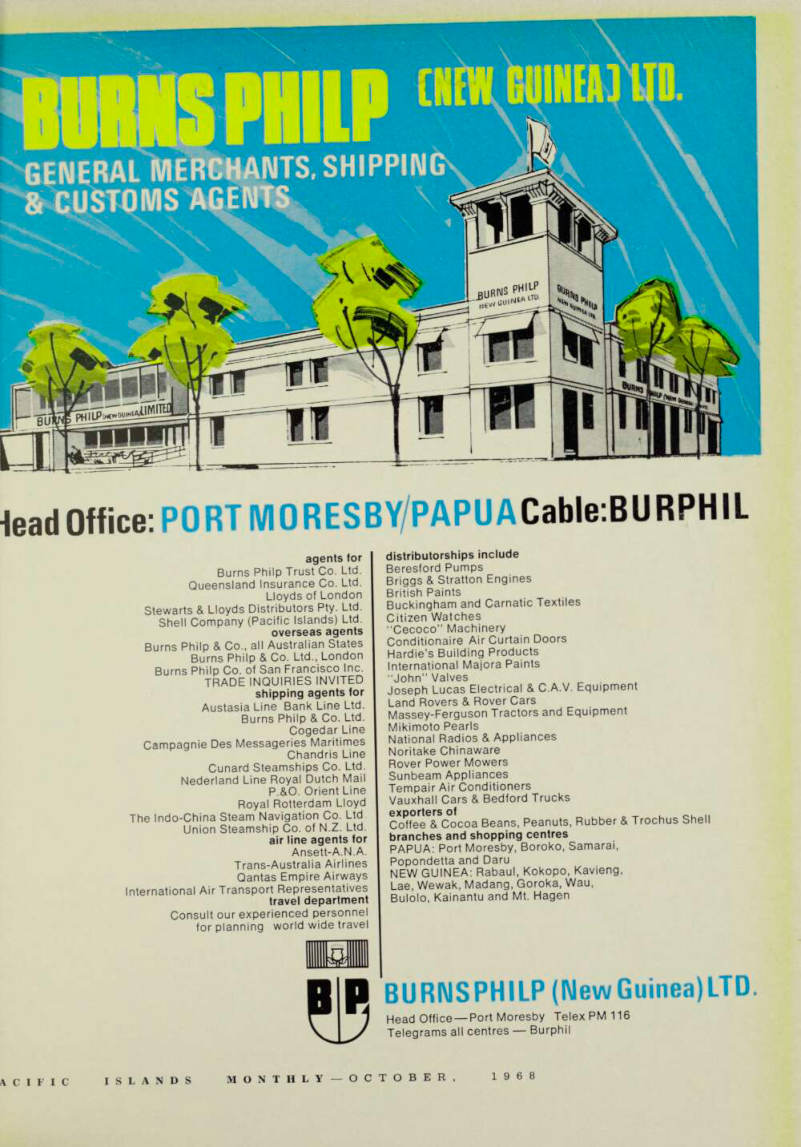 159
159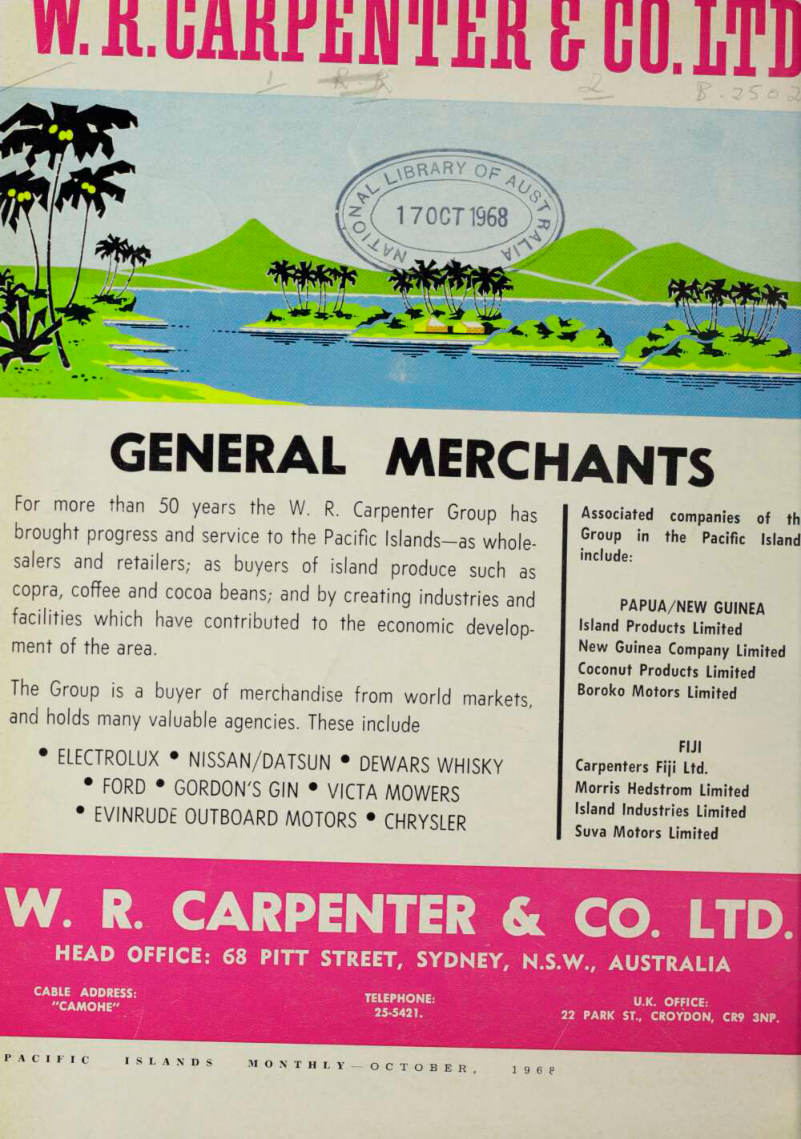 160
160