Monthly
Pacific Islands Monthly
Registered at 6.P.0., Sydney, for transmission by post as a newspaper.
September, 1968
news magazine of the south pacific
.* ANDs! « I,A FR CS OC w. • W U ,s ZEA pACmc TERR.ToJeS ' 7„ /9 * F,KNCH PAC'"C other pacific territories, T 3s<. c O URRE*c P r. N G AND AU
THE COVER: For most visitors, first intr duction to Suva comes via the oversei wharf, and its cruise ships, here phot graphed by Rob Wright. But what's Su> like for a resident? Sue Wendt has som thing to say about it on p. 55.
Advertisements & other items, p. 2 (2 items)
September. 1968 Pacific Islands
One flight... .
lit
1823 miles of extra care
Between Rapua/New Guinea and Australia, everyone gets extra care when they fly TAA ‘Bird of Paradise’. Business or holiday travel, family travel or sentimental journey whatever your reason to fly, you’ll relax and enjoy TAA’s international standards of service with five hostesses to pamper your every need. Drinks are free first class. Meals are culinary masterpieces from canapes right through to cheese, coffee and mints. Everyone gets extra care on a ‘Bird of Paradise’ flight especially the youngsters, who’ll really enjoy their games and books. So take care to book TAA, and we’ll take extra care of you. Call your Travel Agent or TAA now.
Pert Moresby 2101, Lae 2311, Madang 2478, Rabaul 2567, Goroka 8, Mt. Hagen 4, Wewak 103.
Fly TAA the Friendly Way
In This Issue
Eneral
FA on air fares 41 antas, PanAm clash 43 eekly Canadian air services 45 jstralian foreign policy 89 >ok for stargazers 91 story of Gippsland Shipping , 93 e Quinn loses court case 105
Aerican Samoa
67: a record year 67 nnery head leaves 110
>Ok Islands
Hie Watson; 40 years a trader 29 i| mb haze? ;j King contest H w dollar notes ;;; >men police on the way iv ra's little "Opera House" 21 u Mara on self-government 21 ans in NZ 23 lind the by-election 24 nese drift to Solomons 25 lustrial developments 30 i Lau" off to Lau 39 m members for Fiji Airways 43 1 islands in the sun 55 ng club airborne 61 1 Yadali" trading to Vanua Levu 101 ter rice results 116
Meat: another setback 117 Australia's "lack of interest" 118 Customs system changes 118 Mr. C. E. Best dies 129
French Polynesia
Tahiti-Moorea air services 45 Tureians travel to Papeete 63
Gilbert And Ellice Islands Colony
Call for airline operators 45 Christmas Island's brighter future 65 "Moana Raoi" in Sydney 97 Robert Narruhn dies in Suva 129
Lord Howe Island
Shipping freight rates up 101
Nauru
Aussie Rules catches on i v Plans to register ships 95
New Hebrides
Economic progress 19 Census details released 20 British shipping regulations 99 Pastor Wimbong in Sweden 110 Mr. E. Ohlen dies in Sydney 129
Niue
A Spring "bush" day 67 New administrator 110
Papua-New Guinea
Kuru disease caused by cannibalism ii Students protest at apartheid 27 Papuan tourist resort 47 Moresby's unemployment troubles 59 Papua's last cannibals 70 Memories of L. Wilkinson 79 Bougainville's "German times" 81 Political future discussed in book 89 BP's ships leave Bougainville 97 Lae shipping terminal opened 101 Another brewery for Moresby 110 Bright future for pearls 115 PNG Motors go public 117 Nickel, copper found near Sepik 118 Big crocodile skins sale 118 Copra growers' payout 118
Solomon Islands
Captain Ladd: no narrow shaves! ii Chinese castaways from Rotuma 25 "Coral Queen" returns • 99 GPL's new general manager 110
Tonga
August Hettig profile . 83 Shipping services for NZ? 101 New hotel manager arrives 110 Vavau copra does best 118
Us Trust Territory
Bikini people to go home ii
Wallis, Futuna Islands
Road accidents galore 65
Western Samoa
Bomb haze? |j Traders and their meat problems iii Privies to go 28 Airline staff stood down 29 Tourist increase 45 More Asau wharf delays 95
DEPARTMENTS: Up Front with the Editor, 15; Tropicalities, ii; Port Moresby Personality iv; Travel, 39; To the Point with Percy Chatterton, 52; Letters 49- YaXrtoS Fr°o n ' th'’ Book Shipping/95 Cruisfng Pnioa the glands Press, 109; People, 110; Commerce, 115; Produce Page, 119; Shipping, Airways Schedules, 121; Deaths of Islands People, 129; Practical Planter, 135; Index to Advertisers, 128.
Tropicalities
Is it The Bomb? Undoutedly any unnatural happening in the South Pacific during the next few months will be blamed on the French nuclear tests —and one such happening was the mysterious haze over Fiji and Western Samoa in August. It produced brilliant sunsets and sunrises, turned the sun to blood-red and reduced visibility in Fiji to five to 10 miles.
At the same time people in Port Moresby were complaining about a haze which had hovered about southeastern Papua for more than a week in August. At one stage visibility at Port Moresby airport was reduced to one mile.
There were no hard and fast explanations for either phenomenon.
However, a random check of atmospheric radiation made at Apia Meteorological Observatory early m August showed radiation to be twice the normal background level.
Some suggested that the cause might be volcanic ash from the New- Hebndes, but the Nadi Meteorological Office had not been notified of any eruptions
thm^because
dust from the French tests could reach Fiji only by travelling east around the world—and there had not been enough time for it to do this.
And in Port Moresby, the Meteoro-
Well, Is It
The Bomb?
logical Office said that the Papuan haze was caused by industrial smoke (i.e., smog) from the cities of Aus tralia. According to the Met Office, the smog had moved in an arc through the Coral Sea and the Solo mons to Papua.
Could this arc have extended as far as Fiji and Western Samoa?
Could it be that the idyllic South Seas are becoming the victims, not of The Bomb, but of smog?
There is probably some very ordinary explanation, but, like our maiden aunt, we prefer to suspect the bomb.
How to put your
foot in it and win
AUGUST’S international fishing contest at Korolevu, Fiji, had its fair share of minor disasters, not the least being the Fiji team’s forced withdrawal on the opening day of the contest.
Fiji team - members, Mr. D.
Ellerton, Mr. George Rawnsley, the Australian Commissioner, Mr. R. N.
Birch, and Mr. Syd Gould, had to return to Suva after the windscreen on their launch, Inez, was smashed.
Their opponents, a team of enthusiastic New Zealanders, took home the Air New Zealand Trophy for the winning team, plus the Prouds Trophy, the Gokal Trophy, the Burns Philp Trophy, the Millers Ltd. Trophy, the Tip-Top Trophy and the K. Witherington Trophy.
The Tip-Top Trophy (for the heaviest billfish) went to New Zealander Mr. C. Shields, who brought in a 128 lb sailfish —a new Fiji record.
The contest had its humorous ! moments, including the time a 70 lb wahoo revenged itself on Mr. Ken Wiles, 38, of Papatoetoe, Auckland.
Mr. Wiles, who took the Prouds Trophy with a 79 lb wahoo, trod on the smaller fish while it was lying in the cockpit of the Sere-ni-Wai.
“When 1 stepped over it my foot slipped into its mouth —which it promptly closed,” explained Mr.
Wiles, who went home with an additional trophy—three stitches and a bandaged left foot.
“Not me, a couple
of other fellows”
CAPTAIN Fred Ladd did not have a narrow shave while flying in the Solomons about two months ago, as we reported on page 41 of August
Pim.
According to Fred himself he was out fishing on the reef that day. It all happened to another pilot who was taking a load of Solomon Islander passengers from Henderson Field on Guadalcanal to a Mission strip at Avu Avu. We quote Fred: “On approach to the airstrip, the pilot had under-carriage selection trouble and landed wheels up—a perfect landing for this mode of arriving back on earth. The aircraft was not badly damaged and the passengers were not aware that any thing untoward had occurred until they were vacating the aircraft and found it unnecessary to use the steps.”
We hope this sets the record straight. Captain Ladd was one of the late Harold Gatty’s pioneer pilots on Fiji Airways. He now runs his own charter air service in New Zealand and went to the BSIP earlier this year on a three months’ contract to relieve a pilot on leave from the local air company.
They died because
they ate their dead
THE fatal disease, kuru, peculiar to the Fore people near Goroka, New Guinea, for at least 70 years, is caused by ritual cannibalism, practised by these Highlanders up till the mid-1950’5.
This fact has been suspected tor several years now but in Sydney in August, a New Zealand doctor, Dr, R. W. Hornabrook, put firmly on the record, his view that the brain disease among the Fore Highlanders stemmed from their former flesh eating days. .
“Kuru is the first chronic disease of the nervous system in man which
has been shown to be caused by an infective agent cannibalism,” said Dr. Hornabrook.
He was speaking at the Australian Medical Association congress, held at Sydney University. Dr. Hornabrook returned to Wellington Hospital before the congress ended but he was expected in Port Moresby in late August to take up his new appoint ment—Director of the P-NG Uni versity’s planned Institute of Human Biology.
The doctor said that kuru, an organic disease of the nervous system, was confined to the Fore linguistic group of the central NG Highlands.
“Kuru is a common disorder in the Okapa sub-district and has come to be a dominant factor in the culture of the local people,” he said. A kuru sufferer would lie down and die six nonths to three years after develop ing the disease.
Dr. Hornabrook said that Drs. R. and Shirley Glasse in 1963 first drew attention to the fact that Fore in formants agreed that kuru was not mown to their ancestors and at first nade its appearance in one village it the turn of this century.
“They also drew attention to the ;enerally-held description of the pread of kuru among the Fore over he next 50 years. By 1957 kuru ; ases were occurring over an area of ,000 square miles; between 100 and 00 people were succumbing each ear.
“In the last 10 years there has een a gradual reduction in the total umber of cases. There have also een changes in the age and sex icidence.
“Children are no longer affected nd although young women still omprise the bulk of the cases, there re now a significant number of adult lale patients.”
Dr. Hornabrook said that chim anzees inoculated with tissue taken om dead human kuru victims had the disease themselves, esearch on the chimpanzees lowed that kuru was a virus, he Ided.
The phenomenon of kuru was first corded after the war by anthro >logists and in 1957 Drs. Vincent gas and D. C. Gajdusek identified as a disease and described the cidence of it in a combined medical iper.
Following this publication the sease received world publicity and as popularly known (but not to >ctors, who objected to the term) the laughing death” because ctims were unable to control their tions in the last stages and their ovements, and sometimes their jghter, appeared exaggerated.
The Fore people had a history, until recent years, of ritually eating portions of their own dead—as a gesture to the departed.
They’re smuggling
in corned beef
Western Samoan farmers are in a big flap, mostly over mutton flaps.
They want a ban on importation of mutton, canned fish, eggs and poultry.
They have already succeeded in ex cluding “Pisoupo” canned corned beef. (PIM, Aug., p. 118).
But they are vigorously opposed by householders and merchants. The first want competition to keep prices down and the second want to retain a pro fitable business.
Prime Minister Fiame Mata’afa supports the proposed ban on the grounds that the price of mutton flaps (rib and belly portions) is out of proportion to their food value. But the Legislative Assembly is sharply divided. There will be many a lengthy “fono” before the matter is settled.
Meat imports into Samoa last year totalled 700 tons, 80 per cent, of which was mutton flaps. To provide the same weight in local beef at an average of 500 lb per animal would require 3,500 additional animals a year.
Last year the commercial beef slaughter was only 1,351 head. The first three months of this year 606 head were marketed as meat. But even at this rapid rate of increase, critics point out that it will be several years before local production can meet present demand, let alone the demand of an increasing population.
The imported mutton, 95 per cent, of which comes from New Zealand, is landed for 9 Samoan cents a pound, wholesaled for 10c and retailed at between 13c and 15c. Local beef wholesales for 13c and retails for 20c for stewcuts and 40c for steaks.
Beef from New Zealand and Aus tralia sells for the same prices.
The controversy over the proposed ban inflated demand for mutton so greatly that when a shipment of a ton of it missed the boat in New Zealand recently, its Samoan con signee had it air-freighted.
Retailers and Samoan Customs De partment report that canned fish such as sardines and mackerel have rocketed in consumption since the corned beef ban last year. New Zea land corned beef had been landed for 9c a lb and sold over the counter for 40c.
The sardines and mackerel are only 15c a lb, and fresh marlin and other seafish can be bought at the two canneries in nearby American Samoa for the same price.
Even so, the demand for the more expensive corned beef is so great it is being smuggled into Apia. Re cently Customs officers caught a taxi driver leaving the wharf area with his car’s luggage compartment full of large cans of it, just as a New Zealand ship was departing.
To alleviate the problem, the gov
Fiji’s Minister of Finance, Mr. H. P. Ritchie, in August released the designs for the colony’s new 50 cent and one dollar notes for security reasons, minus signatures. Pre changeover operations are being conducted with the utmost secrecy hut it’s believed Fiji’s decimal currency has actually arrived from Britain and is now happily biding its time in the Treasury vaults at Suva. D-day is January 13 next. The 50 cent and one dollar notes will he basically the same in colour as the notes they’ll replace. Each incorporates the famous Anni goni portrait of the Queen and to avoid confusion, the value has been shown in both words and numerals . The notes also feature the Fiji coat of arms and tapa motifs.
ernment is encouraging the raising of rabbits and poultry, both of which thrive in Samoa, but without much success.
One poultry farmer has 5,000 hens producing up to 180 dozen eggs daily, but complains that he cannot sell them all because eggs are being im ported from Australia and New Zea land. The current price of eggs is 70c a dozen, grade A large.
The same goes for chickens. Large quantities of frozen poultry come in from the United States each month at 40c a lb in preference to the local supply at the same or lesser price, despite protests of government agri cultural officers.
It’s Australian
(Republican) Rules
FIJI may boast its Rugby prowess, and Australians of the southern states may deplore the lack of competition from overseas in their version of the national sport, but Nauru has the answer to them both.
A by-product of the Nauruan invasion of Victorian secondary schools over the last decade or so is a growing band of dedicated Aus tralian Rules players in the island republic.
Although Australian administra tion of Nauru ceased last January, football is one part of Australian life that seems certain to remain a permanent feature of Nauru. Nauru has special links with Geelong, the chief port for ships plying from Nauru.
President Deßoburt recently watched a Geelong match from a special Presidential box. and is re ported to have invited the Geelong team to visit Nauru. If they did, they might find the ground and the temperature a little rougher than they are used to, but one thing they would find for sure—a mightly wel come.
For the second successive year, a full season of Australian football is being played in Nauru, concurrent with the Victorian League season.
Every Saturday afternoon at four o’clock the Nauru airstrip takes on the appearance of any southern Aus tralian town where the community is small enough to permit car parking around the ground.
A large section of the population rings the oval, which is marked by a line of sand poured on the darker ground, with cars, trucks, Jeeps and Land-Rovers and an odd assortment of other vehicles becoming grand stands and sun shelters for the big game. t , Onto the field trot two husky teams of 18, booted and clad like
any « ,iV H Austra t lian sid , es ’ de xhe leL S B^wl ree re P departments and enterprils such as the Nauru Co-operative Society and the British Phosphate Commissioners, play under names like Panser, Elco and Hawks The Hawks are the Police team, last year’s champions and current fnvnnritM ‘ Most of the players are Nauruan, but the field umpire is always an Australian. He bounces the ball, and a mighty leap and a punch sends
the ball well out to a team mate waiting for a kick. Plenty of boisterous rivalry for a mark leads to some scrappy fumbling as players mix it willingly, striving for possession.
The play goes back and forth until a long ranging kick finds its way safely into the hands of the full forward right in front, who kicks be tween the portable steel posts for a goal. The posts have to be portable an aeroplane has to land here next day!
Around the outskirts of the crowd cruises a Land-Rover with a sign proclaiming “Iced Drinks”. Players can wilt, but spectators appreciate a cool orange cordial, so the vehicle stops now and then while members of the Apex Club sell (for charity) drinks to the thirsty crowd.
The hard ground provides a few grazes, the keenness of the game will perhaps bring on some fisticuffs that the umpire quickly quashes, but on into the sunset they slog out the final tally of points. A goal brings an excited round of tooting car horns, and some teams even have their band of feminine supporters dressed in the team colours, cheering wildly at every forward movement.
The pressure is perhaps not up to that on the Melbourne Cricket Ground or the Adelaide Oval—for one thing there is only one game each week, so that teams play about once in three weeks. But there is practice three times a week all the same, and when the semi-final and final rounds are played, the excitement grows high. 1967’s Grand Final, played on the same day as Melbourne’s, produced a thrilling match, followed by all the celebrations, including a Grand Ball, that such an auspicious occasion warrants.
The third rib
of the law
YET another masculine stronghold will topple in Fiji before the year is out. The Suva Police Force is to be invaded —for the first time — by women police officers.
This enlightened move was an nounced in the Legislative Council by the Chief Secretary, Mr. G. P.
Lloyd, who said finance had recently been made available for the establish ment this year of a section of women police in Suva. Further funds will cater for a similar section at Lautoka in 1969. . t .
It is intended to start with six women in Suva, employed on the basis of a 36-hour duty week at special constabulary rates.
Bikini's Bomb
exiles return
Talking of nuclear tests in the Pacific, the former residents of Bikini Atoll, Marshall Islands, are to be returned to Bikini after 22 years of exile on Kili, another Marshall atoll.
The 150 Marshallese (now numbering about 300) were removed by the United States in 1946 so that 20 nuclear tests could be conducted on the atoll.
The last of these tests was in 1958 and the atoll is now safe enough for the Bikini Islanders to return home.
Over the next two years, they will be completely resettled on the atoll, and a new community centre will be built for them.
Advertisements & other items, p. 5 (1 item)
Iii
ACIFIC ISLANDS MONTHLY-s E P T E M B E R . 1968
Personality
Port Moresby
For the past four-and-a half years, Joy Scragg, wife of P-NG’s Director of Public Health, Roy Scragg, has been president of the Port Moresby Branch of the YWCA. The associa
tion is expanding quickly,
and Joy is kept busy.
Originally from Adelaide, where she worked as a nurse, Joy arrived in the territory in 1950. She settled in Port Moresby after three-and-a-half years in Kavieng. She is on the committee of the Horti cultural Society, and is noted for her excellent flower dis plays. For five years in suc cession she won the champion ship prize in the society’s flower show. Joy has a family of three boys and a girl, all of them at school or university in Australia. One of the boys is studying medicine. Sibyl Lloyd.
Advertisements & other items, pp. 7-20 (14 items)
1
3 TFIC ISLANDS MONTHLY-SEPTEMBER, 1968
Model, X-360!
NOW, THE MOST
COMPLETE
(> M *■ f i c -w
Isr Ig
G * Magnetic Brake; Developed to bring the tape to an immediate stop in a split second, without making it saggy or too taut. * Automatic Volume Control (Comput -Q- -matic): Developed to automatically adjust the sound level for perfect high fidelity recording.
The operator is relieved of the burden to manipulate the volume control watching the VU meters, as the occasion warrants. * Automatic Dust Minder: Developed to indicate the dust deposits on the heads. Such deposits account for 90% of the failures in most tape recorders. Clean the heads as dictated by the indication of the lamp.
Three Speed Motor For Capstan Drive; Developed 3 tape speeds 3h and Ih ips), which can be determined by the electrical selection of the motor speed. The 15 ips tape speed is made possible by the capstan and pinch wheel unit. * Cross Field Head: Developed to permit low tape speeds with amazing frequency response and perfect high fidelity recording. 4 track stereo/monaural recording and playback 50 watt solid state amplifier Automatic continuous reverse (Reverse -o- matic) X-360D tape deck is also available.
There are others too, all making for perfection in sounds for your maximum enjoyment. c* V
model x-v Portable Stereo Tape Recorder
r-s • 4 track stereo/monaural recording and playback • 4 speeds (15/16, 1%, 3% and #7" reels • The v . Wide Cross-Field frequency response • New brush- " less micro motor •40 watt solid state amplifier • 16 hours maximum recording capacity •Perfect
AC or DC (re chargeable) operation
v 'I '%
JAKAI
ChnsS 1 FII| n KTAN A n? ra i aSla P il; L !!' ™ Clare " ce V ree, c Sydnee - NS W NEW ZEALAND: G Glausiuss Coy. 187-189 Hereford Street SufcT lfrt F plan S pi N n DS i 8 P (S ° B Uth S ?Jr Co ;; Ltd ’ P SI ?- 6,05 Philp (Sou,h Sea) Co - L,d - SAMOA; Burns Philp (South Sea) Co.. i Pago. American Samoa. Burns Philip (South Sea) Co.. Ltd., Apia Western Samoa.
Co.. Ltd, Norfolklsland.joufh Pacific. NEW HEBRIDES: Burns Philp' (New
M ELECTRIC CO.. LTD.
HIKOJIYACHO OHTAKU TOKYO JAPAN
lfd LE P°n N 'fir,; M l 9 na Hnn,? r o eS B R c a , S D J l! du Gdneral Galilfim : Noumea - BRITISH SOLOMON 'SUNOS: Mendana Enterprises (Solomon Islands) Ltd.. P.O. Box 12, Honiara 8.5.1. P. NAURU: Nauru Co-operative Society. COOK ISLANDS: NT NAPA (AVARUA) Ltd Rarotonga TAHITI- Etc y mi Ud BX ' P 0 Bo°x X 59 0 °M a d a r te N c P f P t f rf NE t W r GU ' NEA: ™ Box 508.. PapuTs. & G JicztaHs Pty. Ltd.. P.O. Box 59. Madang, N.G. Pacific Indent Co.. P.O. Box 154. Rabaul, N.G. TONGA: Burns Philp (South Sea) Co.. Ltd. Nukualofa
For workshop
for industry
C G f
Industrial Gases
COMWELD Gas Welding & Cutting Plants; Rods & Fluxes; Flame Cleaning, Flame Hardening & Flame Heating Equipment.
EMF
Electric Welding
Equipment
Arc Welding Machines; Automatic Welding Machines; Electrodes.
Arnold-DeVilbiss
Spray Painting
Equipment
including spray guns, air filters and compressors— to multi-purpose units with spray booths and a full range of automatic equipment.
GIG can meet all your requirements for welding, cutting, bending, shaping and spray painting with equipment and instructive literature that cannot be matched.
Available only from
CIG NEW GUINEA PTY. LTD. P.O. Box 93 Lae.
CIG’S LOCAL TECHNICAL SALES REPRESENTATIVE MR R L. Steadaon.
CIG New Guinea Pty. Ltd. P.O. Box 1636 Boroko T.P.N.G.
BOROKO MOTORS LTD. P.O. Box 72 Mt. Hagen.
MADANG SLIPWAYS LTD. P.O. Box 47 Madang.
N.G.G. TRADING CO. Milford Haven Road P.O. Box 469 Laa.
BOROKO MOTORS LTD. P.O. Box 1259 Boroko.
J. L. CHIPPER & CO. Box 228 Rabaul.
MESSRS. COLLINS & LEAHY PTY. LTD. P.O. Box 57 Goroka.
TISCHLER ENTERPRISES PTY. LTD. P.O. Box 812 Honiara Guadalcanal INDUSTRIAL GASES FIJI LIMITED G.P.O. Box 687 Suva Fiji ■aaaa/ar
mm I exterior gloss 100% a ch^ iC
9 GLOSS
“ R YLXC HOUSE PAIN t
SPRUCE
PAINT
HOUSE
V »VI0 WHITE
M-'
»rr-' i
Art 1
m
m • ft/
■i
Wet” paint.
For any time of the year.
Want to paint during the wet’? No problem, lust decide between a ull gloss and a subdued one. set Dulux* 'Spruce' )r Dulux 'Lo-Gloss’ md go for your life, f the surface is damp, vho cares? Either paint will still go on happily, n fact, they like water o much, you wash out last several seasons longer.
Shiny 'Spruce' or not-so-shiny ‘Lo-Gloss’.
P.S. We make them in New Guinea now so we know they’re right for New Guinea conditions. your brushes in water when you’re finished.
With either of these paints you just push on regardless of the surface.
Masonry, galvanised iron, timber or fibre—they're all the same to 'Lo-Gloss' and 'Spruce'.
Why not dress up your house now?
In a coat that will *Dulux Is a registered trade mark of BALM PAINTS LTD.
lamp
BURNS PHILP (SOUTH SEA) CO. LTD.
GENERAL MERCHANTS AND SHIPOWNERS
SHIPPING, CUSTOMS AND FORWARDING AGENTS
Fiji:
SUVA
LEVUKA.
LAUTOKA.
LABASA.
SAVU SAVU.
BA.
SIGATOKA.
TAVUA.
TAVEUNI.
BRANCHES
Samoa:
APIA.
PAGO PAGO.
Tonga:
NUKUALOFA.
HAAPAI.
VAVUA.
NORFOLK ISLAND.
NIUE ISLAND.
AGENTS FOR:
QUEENSLAND INSURANCE CO. LTD.
BURNS PHILP TRUSTEE CO. LTD.
SHELL COMPANY (P. 1.) LTD.
OVERSEAS AGENTS
BURNS, PHILP Cr CO. LTD., Sydney.
BURNS, PHILP Cr CO. LTD., London.
BURNS PHILP CO. OF SAN FRANCISCO.
SHIPPING AGENCIES
• The New Zealand Shipping Co. Ltd. • Shaw Savill & Albion Co. Ltd. • Port Line Ltd. • Bank Line Ltd. • General Steamship Corporation Ltd. • Blue Star Line • Cunard Line • Compagnie des Messageries Maritimes • British India Steam Navigation Co. Ltd. • Royal Interocean Lines • Nederland Line Royal Dutch Mail/Royal Rotterdam Lloyd.
EXCLUSIVE DISTRIBUTORSHIPS INCLUDE
• AKAI TAPERECORDERS
• DUNLOP PRODUCTS
• EPIGLA3S PRODUCTS
• FERGUSON TRACTORS
• HELENA RUBENSTEIN
o HITACHI ELECTRONICS
© HOLDEN VEHICLES
© JOHNSON'S WAXES
• ROLEX WATCHES
• REVLON COSMETICS
• PENTAX CAMERAS
• SUNBEAM APPLIANCES
INTERNATIONAL AIR TRANSPORT ASSOCIATION REPRESENTATIVES for
QANTAS EMPIRE AIRWAYS LTD. :: AIR NEW ZEALAND UNION DE TRANSPORTS AERIENS :: ALITALIA PAN AMERICAN AIRWAYS
ASSOCIATED COMPANIES
SPECIALISED SERVICES
BURNS PHILP (NEW HEBRIDES) LTD.
AUTOMOTIVE SUPPLIES CO. LTD.
CORRIE & CO. LTD. • WROUGHT IRON AND STEEL
CONSTRUCTION CO. LTD. • BISH LTD.
EXPERT ADVICE ON WORLD AND LOCAL TOURS
TRAVEL SHIPPING FORWARDING CUSTOMS
FORMALITIES INSURANCE.
REGISTERED OFFICE; SUVA, FIJI
Code Address: "BURHSOUTH"
Hill 1111111111111111111 1111 i 111111 I 11111 1111 1 i:III I I M I 111111111111111111111111111111111111111111111111111111111111111111111111111111111111111111 Jl 11 i 11111111
. . . that’s ICI Sporting Ammunition.
Tops for accuracy tops for reliability tops for hard hitting power and all round peak performance.
There’s an ICI cartridge for every shooter, whether it be ICI shotgun cartridges for dense, even patterns and economy, ICI rimfires for hard hitting accuracy and reliability, ICI centrefire for heavier gamo, or ICI slugs and pellets for lots of fun at low cost Get with the top shooters load up with the top ammo
SPORTING
AMMUNITION
Motoring is only great when you
have a great road car!
Mustang-bred Falcon! Sleekest and toughest package of success on the road. Up to 210 horsepower... Wide-track... long wheelbase... road-hugging centre-of-gravity...and a massive “Torque-box” chassis!
Outright winner of Australia's most gruelling event-the Bathurst 500-miler! Drive one and you’ll understand why! w
FALCON
Enquiries: Morris Hedstrom Ltd. Fiji, Tonga and Western Samoa. Boroko Motors Ltd. Territory of Papua and New Guinea.
R. L Holloway Norfolk Island. Burns Philp Ltd. New Hebrides N. Johnston and Co. New Caledonia.
oacaidirum:
, l-Jv'- D
LIGHT
DR Y
SCarP 1
VgaM 7
s .
It fs< & ► Name a mixer. Any mixer.
Cda, Dry Ginger, Soda, Tonic, Bitter Lemon.
Light smooth Bacardi rum mixes perfectly with any of them. And for an encore, makes the base for the immortal Daiquiri and many another soul-stimulating cocktail and long drink experience.
BOTBACARDI “THE WOMB'S (CHEAT HIM 1
bacaroi'and bat device are registered trademarks „ . „ OF BACARDI A COMPANY LIMITED
BACARDI INTERNATIONAL LTD., HAMILTON. BERMUDA.
KRAFT
m i it
CON
r a
•CRAFT:
«n»»2
These fine Kraft
foods from Australia
bring you health
and flavour!
Delicious Raspberry Conserve for hot scones, vegemite* to addflavour and nourishment to your breakfast toast.
Tasty Cream Cheese Spread for snacks and savouries. The pick of rich cheese.
Kraft makes all these and more to help build strong, healthy bodies.
Always look for nourishing Kraft foods from Australia. They’re nature’s finest. for good food and good food ideas • Trade Mark
I’ve got one lighter made out of two Victorian pennies.
It’s never worked.
I’ve got another that I bought as a holiday souvenir. That went for a week.
I’ve got three other jobs that only need a new little ratchet thingummy.
I’ve got a lighter with a wick like a pyjama cord that lights in a gale and nowhere else.
Lighters 7 I’ve got a drawer full of them.
And a sore thumb.
Somebody
please give me
a Ronson
One of these will do nicely
Premier top-selling gas lighter Adonis slim gas lighter Windmaster gas lighter Cornet gas Comet gas lighter mon g thf S R? f f R n nSOn , gas lighters. A filling lasts for months. Re-fuel ling lasts sseconds. The lighter-with its adjustable flame-could easily last forever V n- i e niimg lasts tor . ■fuelling lasts 5 seconds. The lighter-with RONSON e flame - could easily last forever. n x
Everything Remploy
makes has one thing
in common-quality
Luxurious Divan Sets and Spring Interior Mattresses. Deep, durable comfort.
Remploy also make a wide range
of Industrial protective clothing,
and such commercial and household products as Domestic Furniture, School Satchels, Brief Cases,
Shopping Bags, Ironing Tables.
Remploy are represented in the South Pacific by
DEMKA PTY. LTD
Shell House, 2-12 Carrington Street.
Sydney, New South Wales, Australia The spacious Gladstone Bag. One of many fine Remploy Travel Bags.
Easy armchair — one item in our range of Metal Furniture.
wort Avon
Your 3 steps
to complete
skin beauty in
the AVON world
Gently apply an AVON Skin Cleanser that is right for you. The choice of Skin Cleansers in the AVON world will thrill you.
Stimulate with an A VON Skin Freshener to firm and tone your skin... to keep you fresh and glowing with health.
Nourish and protect your skin with a Moisturiser such a generous range to choose from in the AVON world of natural beauty. du f CrnVnX V
NOW FOR YOU
Three entirely new aids to a lovelier skin [EW! 'Stay Fair’ Night ream for normal skin. iEW! 'Super Rich’ ream for extra dry skin.
EW 'Deep Clean’ leansing Lotion for Drmal skin.
Ask for them at your A VON store KXftt
Avon
your world of natural beauty
AVON COSMETICS • NEW YORK • LONDON • PARIS
AVNB-64f0-EN
The four
exclusive new
soups:
(four more for the Heinz Gourmet range)
Soup
ourmet
Sou
Gourmet
CONDKNS
COLONIAL
OLD
Sou
Gourmet
JOCK POT
BUTTON
SLICED
CONO
mushroo
Soup
Gourmet
buttered (fish
YEGETAB
emmj ttKl
MILD
CURRY
DUTCH
Sliced Button Mushroom Tiny delicate button mushrooms. Nobody but Heinz uses this kind of mushroom in soup.
Cooked tender, but still firm enough to bite into.
Rich cream stock.
Buttered Vegetable
Fresh, crisp vegetables, cut in big pieces. Sauted carefully in butter. Simmered until tender in creamy stock.
Mild Dutch Curry A gentle curry. Tender beef, long-grain rice, garden vegetables. Mildly spiced, rich and hearty.
Old Colonial Stockpot A full-bodied soup that lives up to its name.
Tender lamb, young vegetables, barley and rice.
Exclusive recipe; big oldfashioned flavour.
Heinz Gourmet soups: consumer tested and approved .
Gourmet Soup
CHICKEN
Soup
Soup
Gourmet
Gourmet Soup
Gourmet Gourmet
PEA
SPLIT
TURKEY
CHICKEN
BEEF
HZ94I
& 4
TAlfi
£ 0 I y Wr £4 Cl ' wm. r I --—cr.-c- --■ - i ... i.
Steel sheets & coils from Australia
If you use steel sheet or coils consult Lysaght . . . one of the world's largest producers of zinc coated steel sheet and coil, supplying over fifty different countries.
The Lysaght range includes: Galvanized steel sheet and coil. Uncoated and electrical steel sheet and coil. Long length roof and walling shapes. Corrugated galvanized steel sheet up to 30 ft. in length. Structural floor decking systems. Marviplate, plastic (vinyl) film laminated to metal sheets. Prefabricated galvanized steel silos up to 100 tons capacity. Grain Augers. Water Tanks to 10,000 gals, capacity. Rural buildings.
LYSAGHT
JOHN LYSAGHT (AUSTRALIA) LIMITED Head Office: 50 Young Street, Sydney Export Department: Cnr. Hunter and Pitt Streets, Sydney y y * Postal Address: Box 196 G.P.O. Sydney 2001. Cables: Galvanized. Sydney
STEEL
’SfHV/Cf}
85.336
Qrnotts
famous
Biscuits
TRIPLE
* s%.
PACKS
ft er * %% It. 5^ % ■ -■
Serve simply
with Sao...
There is no Substitute for Quality
2
SEPTEMBER, 1968 PACIFIC ISLANDS MONTHI
Cific Islands Monthly—S E P T E M B E R , 1968
4
SEPTEMBER. 1 9 68 PACIFIC ISLANDS MONTHI
5
CIFIC ISLANDS MONTHLY—S E P T E M B E R , 1968
September, 1968 Pacific Islands Monthl
Cific Islands Monthly-S E P T E M B E R , 1968
8
SEPTEMBER, 1968-PACIFIC ISLANDS MONTHI
Ific Islands Monthly—S E P T E M B E R , 19 68
September, 19 6 8 -Pacif.C Islands Montbi
11
3I F I G ISLANDS MONTHLY-S E P T E M B E R , 1968
12
SEPTEMBER. 196 8 - PACIFIC ISLANDS MONTHI
13
CIFIC ISLANDS MONTHLY SEPTEMBER, 1968
Up Front
with the editor
Although they have lately been getting some newspaper attention through expressing their views on apartheid to a visit ing South African Ambassador, the students of Papua-New Guinea’s young university don’t normally go in for demonstra tions. I don’t go along with the apprehensions of some New Guinea people who claim the students are more ready to demonstrate than get down to serious study.
fhey study all right. They work d. During a recent couple of ;ks in New Guinea, when there s a seminar at Waigani, I spent a of time on that campus, and I icluded that the New Guinea dents behave pretty much as versity students do everywhere, f there is a difference it’s in the ilication with which the Port resby students apply themselves to ir studies. Most of them find the versity hard work, t takes 60 hours of their week, because most of them are on ernment scholarships they keep r noses well down. If they lose : scholarship they know they ild be out on their ear, for cash fairy godmothers are com iities in short supply where they le from. Their scholarship pre ss them with pocket money of / $lOO a year, and not much i to earn anything more. They k hard because nobody who I’t a solid background of English, did not have the early spur of ilastic competition that can be id in any good state school in tralia, can afford to coast at a r ersity. he problems of simply “fitting to university life can be difficult jgh—and that’s what I want to about here. To make the point, quote from an interesting series oneoed papers made available to Teshers at P-NG, covering advice personal relationships, vocational and methods of study. I came ►ss them by accident and the set is worthy of wider distri on. ere are some of the points they e:
• Try to understand your parents.
Remember that your parents probably have a harder life than you have.
They were children during the war and this may have made things more difficult for them than it was for you growing up in the 1960’5. Some of your parents are not educated.
Almost none of your parents are as well educated as you are. Still, they know more than you do about a lot of things, and you must realise that they have advantage of ex perience which you must respect. • Accept responsibility. Act like an adult and everybody, including your parents, will treat you as one. • Don’t feel guilty about grow ing up. If your parents are reluctant about allowing you to grow up and think you should not have any independent ideas of your own, then don’t feel guilty about the fact that you do have these feelings. Rebellion against the authority of parents can be managed peacefully and needn’t cause any split in family relation ships. • Remember that nastiness, spreading rumours, gossiping, loud arguments, remarks made about people that they can overhear . . . are all signs of immaturity. People who are mature find it possible to get along well enough with others even if they don’t like everybody.
In a group as large as this one there are bound to be some people that you do not like. Remember also that there will also be people who dislike you. But this is no barrier to co operation and consideration. Spend your leisure time with those whose
company you enjoy but be polite 1 everybody. • Threats of sorcery, beatinj and murder should be taken for whi they are—threats. Nobody ca actually kill you without getting ini very serious trouble himself. Foil this out, and anyway don’t give hii the opportunity! Your attitude 1 sorcery ought to be that it can oh be worked if you allow it t Illnesses are often psychologic rather than physical. This does n< mean that the symptoms and tl actual illness are imagined or dor exist. They are there all right ar they are just as serious as if the cause was physical. You can st: die of an illness which has no knov physical cause because you a psychologically prepared for Sorcery works in this society ai psychosomatic diseases exist in Eur pean society because everybody guilty of something. Therefore ever body is anxious and afraid sometim and this is where a threat of this kii can work. So get help if you a worried. • In the old days it was wise f villagers and older people to di courage [marriage] relationships oi side their group because people we still suspicious of each other ai because the bride price should j to the village and not to a strait: place. Now people are movii around more freely and these facto don’t count as much. But peop remember the old rules thou| they’ve forgotten the reason for thei It is wise not to offend unless y< can’t help it. But if you are genuine attached to somebody who com from a place your own people wou disapprove, then you must decide f yourself whether the relationship i the people are more important you, and either discontinue tl relationship or explain how you fe to the people and take whatever co sequences are involved. ... It your life and your decision.
And as a tailpiece, some practia intelligent advice on how to beha at the table: “Eat quietly: a certa amount of noise with foods celery or apples can’t be helped b slurping soup or coffee is bi manners”.
Stuart Ind
Pacific Islands
Monthly
Established 1930: 39th Year of Publication.
Owned And Published By
Pacific Publications Pty. Ltd.,
29 Alberta St., Sydney, N.S.W., 2000.
Postal Address: G.P.O, BOX 3408, SYDNEY,
N.S.W., 2001.
Telegraphic Address: PACPUB, Sydney.
Telephones: 61-9197, 61-7101, 61-4369.
Chief Executives: Managing Director: R, W. Robson.
General Manager: Selwyn Hughes.
Book Publishing Division
Editor; Judy Tudor.
Pacific Islands Monthly
Editor: Stuart Inder.
Branch Offices
Melbourne; Newspaper House, 247 Collins St Victoria, 3000. Tel,: 63-7053.
Fiji: Pacific Publications (Fiji) Ltd., Fiji Times Building, 20 Gordon Street, Suva. Tel.: 25601 Fiji Times Office, Vidilo Street, LAUTOKA.
Tel.: 60-422.
Papua-New Guinea: Pacific Publications (N.G.) Pty. Ltd. Representatives: PORT MORESBY, P.O Box 16; LAE, P.O. Box 227; RABAUL, Mr.
Steve Simpson. P.O. Box 154 (Tel.: 2547).
Representatives
Queensland: Advertising—Beale Media Services, 45 Wickham Terrace, Brisbane, Tel.: 2-3188.
New Zealand: General.—J. 0. Whitcombe, C.P.O Box 2229, Queen Street, Auckland. Tel.: 76056 Advertising.—John Bayldon, P.O. Box 366, Auckland. Tel.: 23-651.
United States: Mrs. A. L. Craib, 782 Neilson Street, Berkeley, California, 5273503.
United Kingdom: S. R, Warman, Park House, 22 Park Street, Croydon, CR9 3NP. Tel.: 01-6884177.
H. A. Mackenzie, 4A Bloomsbury Square London, W.C.I. Tel.: Holborn 3779.
Agents
All main trading firms and stores in the Pacific Islands.
Pacific Publications Pty. Ltd. is the Australian agent for THE FIJI TIMES.
Subscription Rates:
"Pacific Islands Monthly" is air-freighted to all subscribers and agents in the South Pacific; copies to other areas go by surface mail, Australia (incl. Lord Howe Is., and Thursday Is.): $4.50 Aust.; Papua-New Guinea, Norfolk s., Nauru, 8.5.1., G. & E. Group, Tonga and New Hebrides: $4.00 Aust.,- New Zealand: $5.25 NZ; Cook Is., Niue and Western Samoa: $4.00 (local currency); Fiji £2/5/- (local currency); American Samoa and U.S. Pacific Territories: $B.OO (local currency); French Pacific Territories—New Caledonia, Tahiti, etc.: 660 French Pacific francs; United States of America: $9.00 U.S.; United Kingdom and elsewhere: £2/15/- Stg.
Airmail postage to USA, UK and elsewhere is additional.
Advertisements & other items, pp. 21-24 (4 items)
15
CIFIC ISLANDS M O N T H L T S E P T E M B E R . 1968
16
SEPTEMBER. 196 8 PACIFIC ISLANDS MONTHL
Ogden Industries
OFFERS YOU
a full range
of hardware
n No. 2258 NO. 234 Padlock Padlock N0.210/211 Streamlatch No. 245 Padlock S^s NO. 201 Nightlatch NO. 203 Deadbolt No. 570 Series Cylinder Mortice Locks & Latches No. 400 Door Closer No. 402 Door Closer No. 137 Locking Lever Handle No. 590 Short Back Set Cylinder Mortice Deadlocks No. 270 Coin Machine or Cabinet Lock
INCLUDING
locks for
every purpose
No. 2258 Padlock Safe, inexpensive 5-disc tumbler padlock. Solid die-cast case.
Brass shackle. 900 key changes.
No. 211 Streamlatch Solid brass cylinder and bolt.
Over 78,000 different key patterns.
Many popular durable finishes.
No. 234 Padlock 5-pin tumbler mechanism. 78,000 key changes. Solid extruded brass case, steel shackle.
No. 245 Padlock For heavy duty, top security. 5 pick-proof tumblers. 78,000 key changes. Solid extruded brass case. Shackle locks both sides.
No. 570 Series Cylinder Mortice Locks and Latches All moving parts are of solid brass, precisely machined and finished to give a lifetime of service.
No. 201 Nightlatch Solid brass bolt works on a double spring action. 78,000 key changes.
No. 400 Door Closer Pneumatic action. Specially designed for use on medium internal doors up to 70 lbs. weight.
"Hold-open” checking device holds door open at any desired angle.
No. 402 Door Closer Fast, positive pneumatic action.
Powerful internal spring. Easy to regulate closing speed. Exclusive "hold-open” feature.
No. 203 Deadbolt Ideal for back doors. 78,000 key changes.
No. 590 Short Back Set Cylinder Mortice Deadlocks For hinged or sliding metal or wooden doors.
No. 137 Locking Lever Handle 5-disc tumbler mechanism. Locks or unlocks with a 90° turn of key.
Actuating mechanism also engages or disengages with a 90° turn of p lever handle when the assembly r is unlocked by the key.
No. 270 Coin Machine or Cabinet Lock 5-disc tumbler mechanism. 960 key changes. Adaptable to a wide variety of applications and functions.
LOCK
UP
/&c/tJV&QcC
Manufactured An Australia by
Ogden Industries
PTY. LIMITED *
Edward Street. Huntingdale
Victoria, Australia
f you want
to send
kimonos
to Kobe
WmM V #1 1 i $ •> t Q
it’s all right by us
Kimonos to Kobe. Chopsticks to China. We can arrange it. We have a regular service
connecting Japan, Hong Kong and the
Pacific Islands: an extensive fleet operating to and from the Far East.
So whatever your consignment, wherever its destination, the ships of The China Navigation Company will get it there quicker, safer.
For further details see your loca'
CHINA NAVIGATION CO. Agent. We
have them at the following ports: Papua and New Guinea: Steamships Trad ing Co. Ltd., Port Moresby, Samarai, Lae, Madang, Rabaul.
Wewak: Burns Philp (New Guinea) Ltd • Kavieng: Burns Philp (New Guinea) Ltd.
New Caledonia: Etablissements Ballande, Noumea. • 8.5.1. P.: British Solomons Trading Co.
Ltd., Honiara.
New Hebrides: Les Comptoirs Francais des Nouvelles-Hebrides, Vila and Santo. ■ Fiji: Morris Hedstrom Ltd., Suva, Lautoka, etc.
Western Samoa: Morris Hedstrom Ltd., Apia. • Tonga: Morris Hedstrom Ltd., Nukualofa and Vava’u.
H CN CO ■ Tahiti: Etablissements Donald, Papeete. japan: Butterfield & Swire (Japan) Ltd., Tokyo, Yokohama, Osaka, Kobe and Nagoya.
Eastern Managers: Butterfield & Swire, 9 Connaught Rd., Central, Hong Kong.
WIRE & YUILL PTY. LTD ■ 8 Spring Street, Sydney. Phone 27-4701. ral Agents for:
HE CHINA NAVIGATION CO. LTD.
50
y£A* s
nl oVE R TROSTf®,
f °. ,c *o* ' ,H T HE
THE ■
e(.OP R
RAN D
Clf» C
|SI
anps-
(jilleApie J
m
NOR
ANCHOR
FLOUR
MAINTOP HIGH PROTEIN
BISCUIT FLOURS AND WHEATMEALS
Gillespie flours are milled from selected high quality Australian wheats and are entoleted for purity. Their consistent high quality has made them the best-known, most asked-for, brands of flour in the Islands. (Entoletion is a special purification process which reduces the risk of insect infection.)
GILLESPIE BROS. PTY. LTD
HEAD OFFICE;
52 Union St., Pyrmont, Sydney, N.S.W (G.P.O. Box 2518, Sydney, 2001).
Phone: 68-4931
CABLE ADDRESS;
"GILLESPIE",
Sydney and Brisbane
BRISBANE OFFICE;
Albion, Brisbane, Queensland. (P.O. Box 8, Albion, Brisbane, 4010).
DL/ino. A. 1191
17
ACIFIC ISLANDS MONTHLY SEPTEMBER. 1968
There's progress in the New Hebrides
but it's not political
From a Vila correspondent The condominium of the New Hebrides has made some progress since Kathleen Woodburn published 20 years ago her book called, Backwash of Empire. When she published that, Whitehall showed little interest in the territory that was shared by Britain and France under a protocol proclaimed at the turn of the century. But the progress that has been made has not been political.
Economic progress came with the ippointment of Mr. J, S. (later Sir ohn) Rennie as Resident Commis ioner after World War 11. With his irrival the British Government at ong last acknowledged its respon ibility in education; activities of the oluntary agencies were correlated nd a college for the training of New lebridean teachers was built.
The progress which Sir John com lenced continued, and two years ago Tr. Fred Lee, British Secretary for he Colonies, gave an assurance in n address inaugurating Radio Vila lat Britain had no intention of with rawing from the New Hebrides.
Tiis was a statement which was heard dth relief by French as well as ritish residents of the Condominium.
There has been material growth nd expansion in both the British and rench sectors of the economy since ien. Burns Philp has erected a ne new store in Vila; an equally npressive Condominium office block ill soon be ready for occupation aht beside it, and new administra rative offices have been built by the Tnch administration.
Buoyant economy
With this material growth and :pansion there has been further idence of a buoyant economy with e substantial surplus announced by e Condominium Treasurer at the id of last year.
Politically, the Protocol is still e yardstick by which every proposed )litical change must be measured, nd when two administrations share e government there must be com omise, which prevents decisions ing made quickly. While both (ministrations may strive to find the ghest common factor, the result more often the lowest common nominator. Thus constitutional welopment has been bogged down.
There was a major step in 1958, hen the first meeting of the New
Hebrides Advisory Council was inaugurated with 12 unofficial members (four French, four British and four New Hebridean, all nominated by the two Resident Com missioners) and two Condominium officers as official members, plus the two Resident Commissioners as co presidents.
The number of unofficial members has increased since then, with a pro portion of the members elected. But new plans for a further constitutional step, which was expected by 1966, have not been formulated because of lack of agreement between the two metropolitan governments.
The life of the Advisory Council has had to be extended and we have now got to the stage when some
decision must be made for the future.
The Local Government council system, inaugurated 10 years ago with so much promise, has been bogged down like the Advisory Council.
No enthusiasm
The first councils, complete with a chairman, secretary, and a built-in taxation system, were created to fill an administrative vacuum left by the decline in authority of the village chiefs. But today they function merely after a fashion, with no great enthusiasm on the part of the elected members; in some areas the people have expressed definite opposition to them. The town council for Luganville
The people of Tanna, an island In the south of the New Hebrides, cling to their ancient customs and face the camera shyly. These children are grouped near a John Frum red cross, symbol of Tanna's cargo cult.
has met with the same attitude, because it is only an advisory body.
Local councils would have more opportunity to function if they had more work to do, and if they had officers who could guide their activity.
Certainly sections of the Condo minium have made progress in talk ing together over these past 10 years, but they have made no progress in acting together. The Advisory Council has not become a body which is representative of the citizens of the New Hebrides, and the two national administrations have not conceded authority and responsibility to a single Condominium administration.
Probably the only Condominium department which is a true Condo minium service is the Postal Depart ment, which provides facilities which everyone needs. All its officers are paid entirely from Condominium revenue, and it is responsible for earning a considerable proportion of Condominium funds. But there is no unity in the other departments.
Separate marine services
There is not, for instance, a Con dominium Medical Department as such, but there are three medical services—a Condominium one and national medical services for Britain and France, Yet there would be great advantages if all these services were to come under one unified direction.
The same applies to the marine service, of which there are three separate ones. How much more effectively could manpower be used if these were made into one depart ment (for one thing, there would be a more efficient distribution of surface mail to the outer islands!).
The New Hebrides constabulary, concerned with the maintenance of law and order in the Condominium, is still divided in to two sections.
They get together when guards-of honour are required to welcome visiting VIPs.
Education problem
There is still no Condominium Educational Department, even though the Advisory Council agrees to a subsidy of £Stg.6l,ooo to be divided between the two national administra tions.
With the experience gained after all these years there should be evidence of common action with education. The two administrations should surely place a proportion of their subsidies in the hands of a joint service instead of dispersing them to their own nationals.
It is all very well for the national
(Continued on p. 151)
linistrations to talk about the ments they themselves make— ch they do —but a great amount this money obviously goes in the ntenance of separate, expensive unnecessary national administra s. Individual New Hebrideans do see much of it, and have no say iow it should be spent. >ne success in the last decade has i with the co-operative movement, sties have sprung up everywhere :h are in the main loyally and /ely supported by their members, the end of the year stores show mdsome profit. et the co-operatives do not ititute a Condominium depart t, and two national officers inister separately a service strictly New Hebrideans, which could be ed for the common good. he great trouble in the New rides is still that there is no such on as a New Hebridean. The f Hebrides is still comprised of ish and French, and not New rideans. he local people cannot be ects of either power, or of both, ravel overseas, they are furnished an inadequate document, ough a new document is now g prepared, and will in ap ance be similar to a passport, it still not give the holder any is in a foreign country, would not be difficult to amend ocol so that a passport could the holder the right to claim sction from the consulate of ;r or both powers, yet the New ridean appears not to count for hing.
What of the future?
r hat is the political future of the tory? How strong is the desire independence? tnong the younger educated group, pendence is sometimes discussed is no more than an ideal for the re, for they know that indepen e in itself would not increase the >nal pay packet. here is, however, a growing New rides national consciousness, and ’sire to support the things which ribute to that development. this bilingual, multi-racial com ity, there is an abundance of aal goodwill which is evident, for iple, in athletic contests. Now is time for action, and the future he Condominium will take care self. But where is the action?
Advertisements & other items, p. 25 (1 item)
19
ACIFIC ISLANDS MONTHLY SEPTEMBER, 1968
"Me no wantem cencus",
Santo's bushmen said
Although the New Hebrides has been jointly administered by Britain and France for more than 60 years, there are still parts of the large island of Espiritu Santo which have never been brought under effective administrative control and where little is known about the inhabitants.
This is stated in a recently-issued 500-page report on the Condo minium’s first census, which was taken on May 28, 1967.
The report says that nearly 2,000 people are estimated to live in the untamed parts of Santo, which are known as the Santo bush.
These areas have had a long history of nativistic movements result ing mainly from unhappy contacts with Europeans. The Santo bush also contains the highest mountains in the Condominium, and as these are linked with a system of steep ridges and deep valleys, they have helped to keep it isolated.
Despite the human difficulties and mountainous terrain, census officers, in conjunction with a WHO anti tuberculosis team, made an effort to make a census of the bushmen. But they finished up with a list of 832 people who refused to be enumerated.
When asked why they would not co-operate, most of the bushmen simply said: “Me no wantem” and refused to be more explicit.
Anti-European feeling
The worst area for non-co-opera tion was the Upper Jordan Valley where only 13 of the estimated popu lation of 313 were prepared to give details about themselves to the census officials.
“The almost complete failure of the census in the Upper Jordan Valley can be attributed to the long history of anti-European feeling in this part of Santo,” the report says.
The report adds that census officers also ran into uncooperative New Hebrideans on the island of Tanna, where the John Frum cargo cult has created difficulties of administration since World War 11.
However, the census on Tanna was conducted with considerably less difficulty than was at first feared.
Only about 500 people were not enumerated out of a total population of nearly 11,000.
The main finding of the census was that the total population of the New Hebrides on May 28, 1967, was 77,988.
92 p.c. New Hebrideans
Of this figure, New Hebrideans numbered 72,243, or 92.6 per cent.
The biggest of the other ethnic groups were; Europeans, 1,773; Polynesians and Micronesians, 1,270; and part- Europeans, 1,151.
The non-New Hebridean popula tion tends to be concentrated in the urban and periurban areas of Vila and Santo, the report says. But the New Hebridean poulation in those areas is growing, and each town now contains, respectively, about 3,200 and 2,500 New Hebrideans from other islands besides those locally born.
There is an increasing tendency by young New Hebridean men to drift away from subsistence and vil lage agriculture to more sophisticated occupations.
On this subject, the census report says: “Whereas 80 per cent, of males aged more than 30 years who were gainfully employed were engaged in subsistence and village agriculture, less than 60 per cent, of those aged 15 to 29 years were so occupied”.
The report goes on to say that the New Hebridean population is probably increasing at about 2.5 per cent, per year, which means that it will double in less than 30 years if the estimated growth rate continues.
Work force
By 1982, the New Hebridean work force could be nearly 30,000 compared with fewer than 20,000 in 1967, while the increase in the number of school-age children is likely to be of similar magnitude or even larger.
Despite a surplus of males of most ages, the New Hebridean birth rate is more than double that of
lost populations of European origin, fhile the rate of natural increase 45 births and 20 deaths per 1,000 opulation) is considerably higher lan the corresponding rate in Aus ■alia (19 and 9 per 1,000).
After reviewing estimates of the opulation in the New Hebrides nee Europeans discovered the group i 1606, the report says: “There can e little doubt now that much of le old thinking about disastrous eclines in poulation numbers in the lew Hebrides should be discarded.
“Too many writers have accepted ncritically estimates of pre-contact opulations which had no more lundation in fact than the assump on that a large island must have a irge population, and the bigger the land the bigger its population must e.
Labour traffic losses
“At the other end of the time :ale, they have relied—equally un ritically—on inadequate or in implete population estimates, so lat the extent of the decline in umbers has been doubly exagger ted.
“In addition, epidemics and perhaps >me chronic diseases which have een introduced have been assumed ) fall equally on all populations hatever their size or distribution; tid despite all evidence that it was ot, the labour traffic to Queensland id Fiji is generally depicted as a le-way movement from which ractically no one returned.
“The effects of epidemics on popu ition size and structure, and thence i subsequent growth cannot be isessed, but the direct loss to the ipulation through the labour trade as probably little more than 10,000 eople over a span of 40 or more sars, and this represents a loss of ily a few hundreds each year.”
Suva’S “Little Opera
House”
Critics called it a “little Sydney Opera House” because of the cost, but there’s really not much comparison be tween Suva’s £400,000 Town Hall and the multi-million dollar edifice at Sydney’s Bennelong Point. For one thing, the Suva building is complete—for another, the main hall can be used for opera. The Town Hall features a restaurant (with —of all things—medieval decor), a central auditorium that can seat 734 people, elaborate murals and a refreshment bar. It was opened in August by Fiji’s Governor, Sir Derek Jakeway.
Full self-governing Fiji
is inevitable'
From a Suva correspondent Stresssing the constructive policies of his own Alliance Party and the destructive aims of the Federation—“lf they are the party of smashing down, we are the party of building up”— Fiji’s Chief Minister, Ratu K. K. T. Mara, talked during last month’s policy speech of the inevitability of a fully self
governing Fiji.
But he was adamant about the need to maintain Fiji’s link with the British Crown. “Reckless and irresponsible men,” he said, “would not stampede the government into pointless and harmful courses.” He dismissed the Federation Party’s contention that it will smash the Constitution as being another way of saying that its members were “bankrupt of ideas and believe only in destruction”.
Full self-government, said Ratu Mara, would follow “ordered and systematic handover of power”, without “chaos and anarchy in the streets”.
He told delegates at the Alliance Party convention at Lautoka that the party was itself re-drafting the Constitution to meet the needs of the self-governing Fiji which was not now far off m* . , . , The delegates (over 700) unammously approved a resolution calling for more constitutional talks with Britain before the Fiji general elections in 1971. The 11 aims outlined by the Chief Minister as Alliance Party policy were. • A steady, progressive move towards internal self-government, main-
taining Fiji’s links with the British Crown. • The welding together of one nation, while recognising and respect ing the different cultures, traditions and special contributions of Fiji’s richly-varied communities, • The most vigorous prosecution of economic development, having re gard to the needs and aspirations of the people. • The encouragement of new in diistries and investment. • A rapidly expanding tourist in dustry, with the widest possible spread °I * ts benefits. • The closest attention to the Zltj* T t i ndustry ’ both internationally and at home, Social justice and educational opportunities for all.
Accelerated localisation to give FlJl& P eo P le the opportunities their education fitted them for, and a bigger share in shaping the country’s future * improved health services. « Improved roads, postal and tele communication services and shipping, • Vigorous encouragement and assistance to the co-operative move ment.
Several of these are predictably
restrained, lacking the glitter of Federation Party leader, Mr. A. D.
Patel’s golden promises of free educa tion for all children, free medical service, old age pensions and so on.
It is not a platform with much oomph or appeal for the individual, as is Mr. Patel’s, but it is far more credible. Whether the poorer people will be tempted by the glitter or settle for the solid, unsensational assurances of the Alliance Party is being decided as this issue of PIM goes to press. (Polling in the by election to fill the nine Legislative Council seats forfeited last September by the Opposition begins on August 31 and continues until September 7).
Party seeks affiliation
In a pre-election development, the National Democratic Party—a pre dominantly Fijian political organisa tion which claims membership of over s,ooo—decided to seek affilia tion with the Federation Party.
The party’s general secretary, Mr.
Apisai Tora, said implementation of the decision would depend on negotiations between the NDP’s executive committee and the Federa tion Party on matters of policy.
Mr. Tora told more than 100 delegates at a National Democratic Party meeting at Naboutini on August 14 that he favoured affilia tion with a large political party.
The party’s president, Mr, Isikeli Nadalo, said the Alliance Party had held the helm of government for two years with no sign of progress seen or felt and that other races in the colony were enjoying the liberty of full national rights, were well educated, financially stable and politically mature.
A. D. Patel.
Advertisements & other items, p. 27 (1 item)
21
ACIFIC ISLANDS MONTHLY SEPTEMBER, 1968
Pope's Encyclical
Will Make It
Harder For Fiji
From a Suva correspondent Pope Paul’s decision on birth control has not exactly been re ceived with enthusiasm in some
important quarters in Fiji—a
colony where there is official en couragement for people to con
trol the population growth.
Mr. R. L. Munro, president of the Family Planning Association of Fiji, described the Pope’s ruling against all forms of artificial birth control as “disappointing”. Which was putting it mildly, considering his own organi sation’s efforts towards stemming the colony’s population explosion.
“The association would hope that married couples, irrespective of their religious beliefs, would know that children are the main sufferers from excessive family size and that control of family size is a basic human right attainable by methods which, although not sanctioned by Pope Paul’s encyclical, are nevertheless ethical,”
Mr. Munro said.
His anxiety was probably heightened by the fact that only a week or so before the Pope’s decision was announced, the results of the 1966 Fiji Census was published.
One of the most urgent points stressed was the need to create more jobs for the growing number of men looking for work.
Figures indicated that the number of young men seeking employment over the next 10 years would be eight times greater than those who would normally be expected to re tire during that time. The position looked like becoming particularly acute in the major industry of cane farming.
In addition to that, a Medical De partment report—also published be fore the Pope’s encyclical—showed that the overall infant death rate in Fiji, which has been falling for years, was now among the lowest in the world.
Obviously any force opposing birth control, particularly one as strong as that emanating from Rome, must cause concern to a body which is doing its utmost to curb Fiji’s popu lation growth.
And although the Roman Catholic population of Fiji is a surprisingly low 8.6 per cent, of the total, the effects of such religious rulings, ac
cording to Mr. Munro, can be more widespread than the numbers indicate although the real effects will probably be felt in the Roman Catholic pocket! of population, such as those a Taveuni and Sigatoka.
By coincidence, the Family Plan ning Association’s 1967 annual re port came out exactly a week aftei the encyclical—and it contained 5 warning that Fijians were adopting family planning far too slowly, “Unless Fijians are to lose th< benefits of planned parenthood, mud more will have to be done to per suade their political, religious am other leaders that family planninj is as important for Fijians as it is fo the rest of the developing world,’ the report said.
It warned that without plannee parenthood, Fijians would lose thi advantages of better living standards better education and healthie mothers and children in an improv ing family and national economy.
It stressed also the gravity o the future for Fiji unless its self sufficiency in food production wa vastly improved.
Nevertheless, despite the slight ai of pessimism, the report showed tha the gospel, as carried by the asso ciation’s 16 branches in Fiji, is havinj an effect.
It said that 32.5 per 1,000 coule be used as a close approximation t< the true 1967 birth rate (the exac figures are confused by the fact tha the 1967 registrations contain an un usually high number of births relat ing not to actual 1967 births, but t< those occurring in previous years).
Deducting the estimated death rati of 5.01, Fiji now has a growth rah of about 27.5 per 1,000 —a big im provement on previous years.
Population details
The figures also showed that the birthrate of Indians in Fiji is stil dropping faster than that of the Fijians, with the Indian rate beinj 32.01 per 1.000 and the Fijian rate 36.48 per 1,000.
The population—as estimated uj until December 31, 1967—was showr as consisting of: Indians. 250,513; Fijians, 208,468 Europeans. 13,499; those of mixec descent, 10,414; Polynesians, Micro nesians, Melanesians, 8,017; Rotu mans, 6,177; Chinese, 5,716; others 152 .. . making a total for Fiji ol 502,956 people.
The report also said: “The association believes tha. family planning is a proper part ol sex education and that sex education on a comprehensive scale, should be part of the school curriculum.”
change migrant policy
Pressure on NZ to change migrant policy and Fiji watches with Interest
By Kathleen Hancock, in Auckland
Recent pressure has been put on the New Zealand Govern ment for an increase in the rate of assisted migration to New Zealand. The NZ Manufacturers’ Federation, which supports an increase, has reported that there are vacancies for skilled workers in many manufacturing industries and has said that if these vacancies were filled jobs would be created for semi skilled and unskilled workers.
Any change in New Zealand’s imigration policy will be closely atched in the Pacific, especially in 'ercrowded, under-developed Fiji.
Last year New Zealand placed a tal ban on the three month working :rmit so popular with citizens of ji, both Fijian and Indian. And rmanent immigration into New :aland from Fiji is so difficult as be just about impossible.
If an increase in the rate of NZ imigration is granted, will this san a continuation of the old iropean/Polynesian bias?
Limitations
Cook Islanders, as New Zealand izens by right, may enter the untry freely. Samoans receive /curable treatment and immigrants >m Northern and Western Europe ve little difficulty in becoming new tiers. But there are strict limita ns on the entry of citizens from n-European countries, even if they ; British citizens.
The New Zealand Immigration :partment operates on no formal otas and entry is largely at the cretion of the official concerned each individual transaction. The eration of the system leads to a »picion on the part of non ropeans and non-Polynesian inders that the immigration laws : racist. They certainly give scope • the exercise of prejudice. [n Fijian eyes, New Zealand is
beginning to look a bit like those two-faced figures with a smiling countenance to the fore and a nasty grimace to the rear. She is generous with aid to Fiji—willing to send scarce teachers to help raise the colony’s educational standards—and the donor of a magnificent gift of buildings and amenities to Fiji’s new University of the South Pacific.
But to Fijian and Indian, Kiwiland is beginning to take on something of the aspect of the old-time lady bountiful, who was always willing to take hot soup to the needy villagers, but would have fainted if any of them had presumed to enter her drawing-room.
Nevertheless, during the period when the temporary labour permit system was operating between New Zealand and Fiji, immigrants crowded in great numbers into small houses and flats. Housing conditions deteriorated fast and caused values to drop in the areas affected.
Both Fijian and Indian had high standards of cleanliness at home; but temporarily transplanted into an un familiar environment, they tended to get slack. This was partly due to all-male households.
There were several contributing factors to this state of affairs.
The air fare to New Zealand was high. Rents were also higher than the immigrants had expected. Ex pensive, warm clothing often had to be bought. And all these out
goings, combined with the short period of the work permit, forced workers to pack the greatest possible number into the smallest possible space. Only by these means could they hope to save enough to be able to take money home, which was the whole object of the exercise.
Ordinary, tolerant New Zealanders began to regard all short term workers from the Islands as a threat to living standards.
When this became evident, some of the companies that engaged regu lar batches of labour, especially from Fiji, set up a kind of private welfare service for their temporary workers.
Personnel officers kept an eye on living conditions.
The men were helped to find accommodation at a reasonable rent.
And both Indian and Fijian em ployees were counselled on the necessity of turning a hand to “women’s work”, if they wanted to keep healthy themselves and remain on friendly terms with their fellow citizens.
Highly regarded
When they could still enter New Zealand on working holidays, Fijians and Indians were highly regarded in factories and assembly plants. The personnel manager of one large plant told me he’d like to see the scheme reinstated, with the permit covering a longer period—say, six months or a year.
“They’ve just got the hang of things when they’ve got to leave,” he said.
But even on the old terms, he’d
• Fiji is overcrowded and under developed. Many people in Fiji would like to work in NZ as they had been doing until last year when NZ placed a ban on the three-month working permit.
like to see them back. “We’re still putting men on,” he said. “We don’t advertise these days, but we take men on through relatives or friends, or even off the street.”
As far as New Zealand’s farming community is concerned, many farmers would welcome back Indian scrub-cutters, in spite of the fall in farm prices. Generally farmers praise both the output and the outlook of the Indian farmers they formerly employed on a temporary basis.
“They did a darn good day’s work,” one farmer told me. “They were always willing and cheerful— not like the lot we’re getting now.”
The unemployment bogey has always been made good use of by the opponents of multi-racial immigration into New Zealand, especially the Federation of Labour.
Economy now healthier
Rising unemployment figures were given as the reason for banning the work permits issued to Fiji. But New Zealand’s internal economic situa tion is widely considered healthier these days than it was when over-full employment was helping to create a work force with more than its fair share of drifters.
New Zealand, as part of S-E Asia, is anxious to get together in the areas of trade and defence with India, Thailand, Singapore and Malaysia, not to mention her nearer Islands neighbours. It’s hard to see how she can look her fellow negotiators in the eye over the conference table while her immigration laws dis criminate against their nationals.
And with her experience of the enemy drive towards Fii during the Pacific War, it would seem obvious that good relations with this neighbouring island group, eventually to become independent, are very important.
No Fijian, Indian, Singapore Chinese or Thai expects New Zealand to open her doors at random to all comers. But they would like to see the same criteria applied to all immigrants, regardless of race or colour.
Insistence on a certain standard of education would be understood.
But a screening according to race is likely to be misinterpreted. In the US the old quota system discrimina ted harshly against Asians in particu lar. But recently the “national origin” provisions in the US immigra tion laws were wiped out completely.
If New Zealand expects her Pacific neighbours to co-operate with her in trade and stand with her against possible aggression, she needs to look to her social attitudes.
Advertisements & other items, p. 29 (1 item)
23
'CIFIC ISLANDS MONTHLY SEPTEMBER, 1968
Fiji By-Elections
Background To The
From a special correspondent in Suva The by-elections for nine vacant Indian seats in the Fiji Legislative Council, being held in Fiji in the first week of Sep tember, have been brought about by the walkout of the nine members of the Opposition in the Council at the end of last year. The Opposition walked out in protest against Fiji’s new Constitution, which came into effect in 1966.
The constitution was framed at a conference in London in July, 1965, attended by all the elected members of the old Legislative Council (Fiji, Indian, European), plus the Governor and some high UK officials.
The conference decided that the new council should be elected on communal rolls—lndian, Fijian and General—with other rolls for cross voting across all communities; but a vocal section of the Indians, the Federation Party, demanded a common roll.
A common roll, of course, would have given the Indians now the largest community in Fiji, political control of the Crown colony, now emerging into independent statehood.
It was rejected emphatically by the Fijian, European, Chinese and mixed race communities, and by an in fluential section of the Indians.
After the general election in
October, 1966, the new council com prised: Ex-Officio Members (3 European; 1 Fijian) Fijians (9 on communal roll, 3 from cross-voting roll, 2 nom. by Council of Chiefs) . .. 1 Indians (9 from communal roll, 3 from cross-voting roll) 1 Europeans (6 from general roll, 3 from cross-voting roll) Chinese (1 from general roll) Total membership 4 The Indian Federation Party woi all the nine Indian Community scab with the following majorities: Suva 2,89 Tailevu-Rewa 2,54 S. Central Viti Levu 2,73 SW Viti Levu 3,57 W. Viti Levu 4,09 NW Viti Levu 29 NE Viti Levu 1,84 North and East 1,09 NE Vanua Levu 2,55 An analysis of the official return of that Indian Communal electio showed: Votes for official Federation candidates 43,17 Votes for other candidates, generally anti-Federation . . . . 22,63 Total valid votes cast in this (Indian) section of the general election 65,7C This meant that about 65 per cen of the Indian voters supported th Federation Party; about 35 per cen voted for non-Federation candidate
Racial bitterness
The nine Indian Federation Pari members took their seats in the ne council as the official Oppositioi They would not associate with th other three elected Indians. Th latter, with all the members repn senting other races, had groupe themselves as the Alliance and b< came the Government Party, heade by Ratu K. K. T. Mara.
After a number of sittings, dm ing which they showed increasin opposition and racial bitterness, th nine Federation Indians walked ou
(Continued on p. 127)
They announced they would fight outside the council for anew Con stitution, a common roll, removal of British control and European dominance, and early self-government and independence. They appealed to the United Nations, and demanded that a UN committee be allowed to come and assess the situation.
They rejected a Government appeal for them to return to the council.
Their seats were then declared vacant and this by-election for the nine seats (within the Indian community only) is being taken.
The Alliance Party organisers claim they will now cut down the Federation Party vote, and even win one or two seats. But neutral observers expect that the Federal Party will retain all nine seats.
Valuable help
The non-Federation Indians mostly educated men—are giving the Alliance valuable help; but although the Alliance Government now stands high in public esteem (Ratu Mara has done an excellent job as Chief Minister), the party finds it difficult to reach the majority of the semi literate Indians from whom the Federation gets its major support.
These people are shut off by the barriers of language and ignorance.
They accept the Federation speakers’ promises, such as, easier access to Fiji-owned lands; a review of the Constitution, and introduction of the
common roll: the end of European domination of the council, to be followed by the ousting of the British control of the government, and in dependence; a challenge to the “power” of the Australian corpora tions now operating in Fiji; a bigger and better life for Fiji’s 250,000 Indians.
Re-election
Most of what is practicable in this is already in the policies being activated by Ratu Mara’s administra tion.
The re-election of the Indian Opposition (one of the nine has since resigned from the Federation Party and will be an Alliance candidate) may not take the political situation in Fiji any further.
It would mean that 60 per cent, of the Indian vote had gone to the Federation, but on the last election figures it appears that practically the whole of the remainder of Fiji’s multi-racial population supports the present government, which in any case would not be changed.
And the question is, if the Federa tion Party members get back, what can they do other than a further boycott and a further trial of strength?
Fiji just now. superficially, appears to be prosperous. The colony is packed with tourists, and their money spreads to many places.
If the Alliance Government can get an overall 35 to 40 per cent, of this by-election vote, the politico economic situation can be regarded as safe.
No job for harbourmaster
harbourmaster
In August, Tonga decided not to renew the service contract of Captain J. C. Hozack, the kingdom’s Chief Harbourmaster and Marine Superintendent for the past three years.
Captain Hozack, popular in shipping circles, had returned to Nukualofa in early August after completing a special three months’ port and navigational course in Australia, at the kingdom’s expense. Soon after arrival at Nukualofa he was told his contract would not be be renewed. He flew back to Sydney.
His virtual dismissal by Tonga, after completing a ship ping course which would have been of extra value to the kingdom, came as a surprise to everyone. It’s understood that another European will be ap pointed to the vacant post.
Advertisements & other items, p. 30 (1 item)
24
EPTEMBER, 1968 PACIFIC ISLANDS MONTHL
Adrift For Nearly Three Months
Nearly three months after the Nationalist Chinese fishing boat Hsienchin burned and sank off Rotuma on June 5, the South Pacific gave up the last of the boat’s survivors—7oo miles from Rotuma in the Solomon Islands.
)uring July and August, the rageous story of the survivors, of their dead shipmates, reached outside world from Honiara, ital of the Solomons.
'he story of the privations of the Chinese seamen adrift on the enchin’s three rafts has two corn able “castaway” sagas in recent rs—the Minerva Reef Tongans, sing for four months in 1962, and Cook Islands drifters, missing two months in 1963, he Hsienchin’s 11 survivors were overed clinging to tiny rafts in ote Solomon Islands weeks after j had been presumed dead, dter treatment in Honiara’s pital, the survivors told reporters it had happened when the enchin had gone down.
Search abandoned
•f Hsienchin’s 20-man crew, one vned soon after abandoning ship. remaining 19 boarded three s built of glass fishing floats, iboo and 44-gallon drums, aft One, with six men under tain Chi Son Chin, took 39 days drift more than 700 miles until cached a small beach near Taipe age, on remote Santa Cruz. /hen news of these survivors Led Honiara, Australian and NZ
aircraft scoured the entire area for six days.
During the search Raft Two turned up, on the opposite side of Santa Cruz. Of the four men aboard, one died shortly after landing. His three shipmates rested for several days on Santa Cruz before being taken to Honiara hospital.
On July 29 the air search was abandoned, and most people con sidered that Raft Three containing nine men, was lost.
Then, in the early hours of August 11, the raft was spotted off the coast of San Cristobal by the inter island trader, Vula. On board were two brothers, Lee Ah-wong and Lee Ah-yung. They were starved, sun burnt and almost lifeless. They had been at sea for 69 days. Their seven shipmates were dead.
With the three rafts accounted for, Hsienchin's crew list read; one drowned, eight dead from privations and 11 alive.
In late August, after a couple of days rest as guests of Honiara’s Chinese community, Captain Chin told how he and the five men aboard his raft endured their 39 days at sea.
For the first nine days the three
the first group of "Hsienchin" survivors after treatment in Honiara hospital. "Hsienchin's" captain, Chi Son Chin, is second from left. RIGHT, the last two survivors still in hospital—they are brothers and were picked up after 69 days at sea.
The raft (upside down) which carried the last of the "Hsienchin's" survivors 700 miles from Rotuma to the Solomons. A bow and arrow, with which the survivors attempted to shoot birds, lean against one of the drums on the left.— All photos by Ted Marriott.
rafts were roped together. There was no fresh water and the only food was five pounds of biscuits.
Raw fish
The rafts were separated by heavy seas on the ninth day. Soon after, the biscuits were finished and for six days no one had anything to eat. Rain water was caught in plastic raincoats and the tops of glass fishing buoys.
A fishing hook was filed from the tongue of a haversack buckle and three to four pound fish were caught.
Also, flying fish landed on the raft.
All fish were eaten raw.
Once all were thrown into the sea when the raft capsized.
The raft was becalmed two miles off Fataka Island, 300 miles to the south-east of Santa Cruz, but by this time all were too weak to swim to the island. Ten days later winds, a shirt-made sail and biscuit-tin oars helped drive the raft onto Santa Cruz.
On Santa Cruz Taipe villagers took the seamen by canoe to Graciosa Bay, where the Chinese met the touring District Com missioner for the Eastern Solomons, Mr. John Russell. And thus the big search began to reclaim men who had long since been presumed lost at sea.
Advertisements & other items, p. 31 (1 item)
25
CIFIC ISLANDS MONTHLY SEPTEMBER, 1968
planned
Pacific council planned
The formation of a Pacific regional council to improve regional co-operation and under standing has been proposed by the Leader of the Opposition in New Zealand, Mr. Kirk. The council should include New Zea land, Australia, Fiji, Western Samoa, Tonga, Niue, the Cook and the Tokelau Islands, he said.
It would establish agreement on such matters as Customs and immigration, fishing zones, de fence, education and the develop ment of under-d evel o p e d countries.
Such a council could later be extended to take in Indonesia, Malaysia, Thailand, the Philip pines and perhaps Japan, said Mr. Kirk. Eventually North American interests could be in cluded.
Representatives of countries in the proposed council would be members of their parliaments rather than members of their governments, said Mr. Kirk, This would give member countries a broader political knowledge of one another.
challenge on
Administration faces challenge on NG salaries
From an AAP-Reuter correspondent in Port Moresby The P-NG Administration could face its first major challenge in the territory's new House of Assembly when it begins its budget session on August 26.
At this second meeting (the new 94-member House was inaugurated in June), the government members, who are in the minority, will be faced with a private member’s bill seeking a committee of inquiry into the territory’s 14,000 local New Guinean public servants. It will be introduced by Mr. Percy Chatterton, of Port Moresby, a former missionary.
It has the support of the territory’s Public Service Association, which has for years been pressing for higher salaries for its local members. The association is confident the bill will be carried.
It also has the support of the Pangu, the House’s only party of substance, and is likely to appeal to a number of other members who are former public servants.
The Administration has not yet decided its attitude to the bill.
But an Assistant Administrate] Mr. L. W. Johnson, said: “In th past the Administration attitude ha been firmly that public servar salaries are a matter for arbitration’
If, as this indicates, the Admin stration does oppose the bill, som of its Ministerial and Assistai Ministerial Members will be in a embarrassing position.
Three of them two years ag publicly supported the association case for higher salaries at an arbitn tion hearing. But as Ministers, the will be expected not to publicl oppose the Administration.
Their only loophole would be t abstain—and even this would be see as a blow to the Administration authority.
Mr. Chatterton said he wants th committee to inquire into th appropriateness of present salarie “for the maintenance of an efficien dedicated and contented publi service”.
He would ask that the commissio: consist of five members, appointed by the territory’s Chief Justice. Th commission would report to th Minister of External Territories am the House.
The move is the latest in a battl begun more than three years ag( by the territory’s public servio association. It lost the long firs round when the Public Servio Arbitrator, Mr. L. G. Matthews rejected most of its claims.
Not a safe landing place for aircraft now is the former airstrip at Mt. Hagen in NG Western Highlands. The airstrip has been moved out of town, and new commercial buildings and roads have been built on the old airfield, which has become part of the town's business area.
Advertisements & other items, p. 32 (1 item)
26
SEPTEMBER, 1968 PACIFIC ISLANDS MONTHLI
Thorough The
Apartheid
Spanners Out
From Leo Morgan,
in Port Moresby 'he students of the two-and-a-half r-old University of Papua-New hea staged their first demonstra at Jackson’s Airport, Port resby, in late July , against the th African Ambassador to Aus la, Mr. J. C. Maree. Mr. Maree returning to Canberra after a k’s “familiarisation” tour of Port *esby, Lae and the Highlands. s the South Pacific Post had ►rted, it was inevitable that the ersity should eventually join the •national ranks of university onstrators. The demonstration, rally, received a lot of publicity, e reports were favourable and rs very critical. le South Pacific Post in particu was cynical of the demonstra and claimed that our motives : not shown. It also suggested demonstrations should be con -1 only to basic issues, and that re was expected from our ire) leaders”.
Racist
me of these views would be by a majority of territory Euro s, especially those who would -ise for the sake of criticising, not necessarily because they d particularly care to offer any : constructive. e way I see it, as a university nt and participant, the demon on against the racist and re ive policies of the South African :rnment had clearly-defined /es. It was directed against i Africa’s policy of apartheid,
at a white minority having all the power, property and prestige (as we have in this country) and it was a protest against Mr. Maree’s half truths, evasive answers and his arrogance in answering student questions at a meeting previously held at the university.
In the meeting, I for one failed to see how Mr. Maree could describe all the separate tribal groups in South Africa as separate nations and then describe the Dutch and English there as one separate nation, when it is obvious that the only thing that unites them is the colour of their skin. We students could not also understand why Asians, according to Mr. Maree’s reasoning, could be honorary white men. Would that be because they, like the Boers and
English, are predators and settlers?
It seemed to me that when Mr.
Maree spoke about nations, he really meant races.
The demonstrators have been con demned for displaying such signs as “Black Power” and “Maree Stinks”, and “Go to Hell”. But I think we had every right to use the “black power” cliche in a demonstration against apartheid. For too long it has been a case of “white power” (and there is no justification in volved).
Frustration
But we did have such signs as “We Condemn Apartheid”, “No Separate Nations Here”, “Integrate Not Segregate”, and those few signs that suggested Mr. Maree should go to hell could be related to student frustration in not getting satisfactory answers to their questions at the meeting. In any case, in any demon stration there are always a few slogans unpalatable to some people.
Many of the students hope to see a peaceful multi-racial society develop in this country. But such a society could not develop if we had white people “hating” black people and black people “hating” whites, and while white people lived in one section of the town and blacks in another (as in South Africa).
The demonstration was peaceful and lawful. It was against apartheid, and not against the Territories Minister, Mr. Barnes, and the Aus tralian Government for allowing Mr.
Maree into our country, as some reports said.
A grim Mr. J. C. Maree, South African Ambassador to Australia, bundles briefcase and umbrella into his car at Jackson's Airport, Port Moresby, as students from the University of P-NG register their disapproval. Critics of some of the placards and some of the demonstrators feel that they were scarcely calculated to change South African thinking.— " South Pacific Post" photo.
Czech protest'
in P-NG
Papuans and New Guineans streamed into churches in Port Moresby late in August to sign a petition protesting against Soviet aggression in Czecho slovakia.
The petition was organised by all churches in Port Moresby.
A spokesman, Father A. F, Meaney, said about 5,000 signa tures were collected.
Some churches put signs up in Pidgin explaining the back ground to the crisis.
The petition was to be sent to the Soviet Embassy in Canberra.
Advertisements & other items, p. 33 (1 item)
27
' 1 F I C ISLANDS MONTHLY SEPTEMBER, 1968
Samoan privy is (somewhat
hesitantly) on the way out
From GLEN WRIGHT, in Apia The ugly, incongruous lagoon privy that has marred the tropically picturesque shoreline of Western Samoa for so long may soon be a thing of the past. Its replacement is the water sealed toilet, a simple and cheap device being energetically in troduced by the Peace Corps.
Some 400 of these toilets have been installed in the past few months, accompanied by a noticeable reduction in the number of beach outhouses. Acceptance increases as the price reduces. Cost per unit is now down to SWSI.4O.
The outhouse is an accoutrement of societies without plumbing the world over, but the lagoon privy has been a special feature of Samoan life. It is a rickety shack of clapboard or palm-frond, sheltering a board seat perforated by oval holes and set on stilts over the water at high tide and the coral at low. It is reached by a pier of loose rock or teetery timber.
Not Very sound
™. T
sursj" xiSS,
theorised that the sea was a better place for disposal of human waste than the earth. Aesthetically and scientifically offended devotees of the South Seas mystique have been ever since trying to get rid of it.
The theory of that Victorian medic was never very sound. Because of encircling reefs, tides that wash many shores do not go out to sea but remain in placid lagoons, and so does the waste.
The water-sealed toilet is simple and effective. It consists of a concrete bowl with rump-shaped opening on top and metal trap in the bottom, quite like the ones used in modem homes. The bowl is flanged around its under edge with an extending ring. The unit is set over a hole in the ground and earth is packed over the flange, -phe bowl is flushed by pouring in a gallon or two of water, which washes the waste into the hole below, leaving enough clean water in the
sr-stt
, Th, j Mjg g
m existing outhouses m the interior, the only new P lts 3X1(1 structures needed are for replacement of the lagoon latrines.
However, the Samoan changes his habits slowly, despite his avowals
to the contrary. He is not beat at the door of the Peace Corps he quarters demanding immedi delivery and installation of its n< fangled plumbing fixture.
In at least two instances he not only rejected the idea out hand but has replied with large-sc countermeasures. The lagoon c house in a village near Apia on road to the airport recently fell ap from sheer old age. Despite Pe Corps pleas to accept water-sea toilets in its place, the people vc for retention of the old and famil They replaced the little old with a large new one; iron-roc wooden building painted glean: white. Community-sized, it has rooms, one for men and the ol for women; each has many holes various sizes.
Peace Corps "of no use"
Perhaps this is the village fi which comes the writer of the foil ing, a theme submited anonymoi to a teacher by an upper fi student at an Apia college.
“Great expectations of the pe< from the Peace Corps of chai and new ways of living and hell the adults to know changes from 1 ago to nowadays. But the P« Corps not doing this. They just c< here to have the villagers labou: and serving them. The Peace C< girl in my village seldom has ha face and is always stuck up. T* interest of the people in Peace Q is weaker and weaker. They tl Peace Corps of no use at all dislike them.”
The first contingent of P< Corps Volunteers arrived here October, 1967. There are now of these university-educated yc Americans scattered over the nat They serve as aides in educal public health, agriculture, pr works and economic planning as specialists in law, pharm dentistry, nursing, civil engineei architecture and economics, addition, the Corps conducts cla in arts and crafts to develop dividual artistic creativity and c munity cottage industry.
• Western Samoa's famous privies, the US Peace Corps has its way, tl[?] may soon be replaced by simf[?] cheap, water-sealed toilets. Althou[?] the author of this article attribute the lagoon privies to a mission!
PIM has always been under the pression that they were introdu[?] by the late Dr. S. M. Lambert, of Rockefeller Foundation, in a campa[?] against hookworm.
“We are helping a newly indepen nt nation become self-sufficient,” ys young, personable, Corps direc r David Ziegenhagen.
In so doing, he says, the volunteers idergo the unique experience of coming assimilated into the moan communal social system, ley literally become members of family units which make up each lage and district. They work on 5 farms, help fill the family larder, ntribute to the common purse, and ide by the rules as established by j Matais, or chiefs.
They have 24-hour-a-day jobs and 2 dominated by the strong-willed moans, who are very selective in cepting what the volunteers offer.
Go native
As a result the volunteers tend “go native” at first. But, says jgenhagen, they recover soon and gin to express their individualities.
However, Samoans do not take idly to undertaking assignments for yone except their chiefs. Inevit ly friction develops because the ace Corpsmen are trying to teach ;m to do things.
Consequently, as in the student’s ade, the Corps is often criticised the Samoans, who either do not derstand that what they complain out stems from their overlording the volunteers, or don’t, upon ex igence, like the changes they have ced for.
Nonetheless, director Ziegen gen says that the longer the Corps 5 here, the less criticism it re ves. By and large, the govern mt is enthusiastic about the pro imme.
Advertisements & other items, p. 34 (1 item)
28
SEPTEMBER, 1968 PACIFIC ISLANDS MONTH
Polynesian Airlines
Stands Down Pilots
Withdrawal in August of the certificate of airworthiness for its chartered DC4 aircraft threw the Apia-based Polynesian Air lines Ltd. into confusion. The airline quickly revamped all its schedules using only its two remaining DC3’s, and stood down, temporarily, most of its pilots and engineers.
Polynesian’s chairman of direc tors, Mr. E. F. Paul, said the airline could not bear the burden of paying all its salaried staff while it remained short of equip ment, with a grounded DC4.
Hopes were that an aircraft similar to Fiji Airways’ HS 748 could be chartered to replace the DC4.
"Willie" Watson:
40 Years An
Island Trader
One of the Cook Islands’ most successful citizens, and one of Rarotonga’s oldest identities is
cheerful, optimistic William H.
Watson.
“11HLLIE”, as he is known to his ** European friends (and “Viri Vokotini” to his Maori friends) was born in Scotland. In Rarotonga, he worked his way up from near-sub sistence level during the depression of the 30’s to become one of the Cook Islands’ most prominent citizens.
These days “Willie”, and his charming wife, Marie, keep two homes, one in Cambridge, New Zealand, and one in Avarua, Raro tonga. They spend New Zealand summers in Cambridge, and the Cook Islands’ cool seasons in Rarotonga.
In an interview in Avarua recently, “Willie” told our Cook Islands cor respondent, W. H. Percival, how he had come to settle in the Cooks, “As a boy in Scotland I read every book I could get about the South Sea Islands. I developed an irresist ible urge to reach the Islands and become an Islands trader. So I came here in 1928,” he said.
But “Willie” didn’t go directly to the Cooks from Scotland.
After being demobilised from the Argyll and Sutherland Highlanders after World War I, he had spent several years working in the coal mines in New Zealand and Australia.
However, he never lost his urge to settle in the Islands. In New Zealand, in 1928, he met a Captain “Topsail” Jack Williams who “sold” the Cooks to him. A week after that
meeting “Willie” was on board the SS Makura bound for Rarotonga.
For two years “Willie” worked for a firm on Rarotonga. Then, on May Day, 1930, he took out his first trading licence.
With modest capital (and faith and determination), he opened a small general store in Avarua. He worked alone from 6.30 am to 9.30 pm, and sometimes had to work on Sundays.
About a year later he bought a billiards table and opened a billiards saloon. This increased his income, but also his hours of work.
In 1933 he married Marie Peyroux, the daughter of Jean Peyroux, a Frenchman, and his Polynesian wife.
Marie cheerfully helped “Willie” in the store, and also made cakes and bedspreads which sold quickly.
The next milestone in “Willie’s” career was when he bought out W.
H. Grove and Sons store in Raro tonga.
Partnership
He began to buy and export copra, mother-of-pearl shell, cowry shell, hula skirts, shell necklaces, dried fish, tomatoes, citrus fruit, and locally-made hats and mats. All this was in addition to his regular busi ness in groceries, hardware, drapery and fancy goods.
In 1943, when the bottom fell out of the trade in pearl shell brooches and similar items “Willie” Watson went into partnership with Harry Scott and established a small clothing factory on Rarotonga. ( PIM, Oct., 1962, p. 39). Many setbacks and difficulties had to be overcome, but the business prospered and expanded.
“Willie” became a member of Rarotonga’s Island Council, and was the mover for a Cook Islands Legislative Council.
For nine years he served the Cooks, first Island Council, then on the
"Willie" Watson and his wife, Marie.
Legislative Council and finally on the Legislative Assembly.
In October, 1958, “Willie” Watson stood as a native member against 15 Polynesians. Old hands scoffed at his chances, but many Cook Islanders remembered what he had done for them in the depression and the lean years of World War 11. They stood behind him solidly and, without looking for votes, he romped home an easy winner with 1,609 votes — 884 votes ahead of his nearest rival.
More schools
From the outset of his political career “Willie” Watson stressed the need for secondary schooling in the Cook Islands. As a result, Rarotonga’s Tereora College was opened on February 18, 1954, and Junior High Schools were built on Aitutaki, Atiu and Mangaia some years later.
He was one of the first to battle for a pure water supply for Raro tonga, and big improvements, at great expense, have been carried out during recent years. In January, 1967, Mr. George L. Chan, a public health engineer with the South Pacific Com mission, demonstrated how a plenti ful supply of pure water can be obtained cheaply on Rarotonga by means of water galleries. (P/M, May, P- 67).
“Willie” campaigned successfully for improved medical service and internal self government for the Cook Islands. (The Cook Islands became internally self-governing in August, 1965). And, it was “Willie” who, in 1951 helped found the Cook Islands Crippled Children’s Society.
Destroyed by fire
Fire completely destroyed “Willie’s” store in Avarua in Nov ember, 1957. Undaunted, he im mediately began to build a much larger one.
It was opened in December, 1958, and it is the largest store in the Cook Islands. The 6,000 sq. ft. supermarket was constructed almost entirely by local labour. Today, the permanent staff of United Island Traders is 48 and 10 extra staff are employed on busy Saturdays.
In 1955, “Willie” took his wife and their two children, Betty and Jean, on a tour of Europe which lasted 14 months. Five years later “Willie” and his wife toured Europe, Russia and the US and, in 1965, took a combined business and pleasure trip to Australia, the Philippines, Hong Kong and Japan.
Advertisements & other items, p. 35 (1 item)
I C I F I C Islands Monthly September, 1968
Developments
Big Industrial
In Fiji
From a Suva correspondent Important developments in two of Fiji’s major industries—sugar and copra production—have occurred just when public attention was focused on the by-elections to fill the nine vacancies in the Legislative Council.
Both developments are concerned with the relationships between growers and millers in each industry; and only persons deeply involved can really understand the technical points now under argument. But they are important.
A new sugar-cane contract, between millers and growers, will be required next year. Drafts now are being prepared for the Sugar Advisory Council.
When the Alliance Party, which is directly influenced by the Chief Minister, Ratu Mara, met in pre election convention in July, it an nounced that it would recommend 13 changes in the existing contract.
The rival Federation Party also sought many changes.
Chief Minister Mara was attacked by the Federation on the proposed 13 changes; and was obliged to ex plain and defend them. As some of these changes were in favour of the growers, and against the sugar com pany, the Chief Minister was made to appear as a critic of the company.
The mouthpieces of the Federation Party have been attacking the Chief
Minister with such virulence that the campaign has tended to become anti- Mara just as much as anti-British.
In any case, the sugar industry has now become involved in political wrangling, which everybody, wanted to avoid.
Thus with copra. When copra prices nose-dived in July, the copra milling (or Carpenter) interests protected themselves by announcing some pretty drastic cuts in the rates and conditions under which they accept copra from the growers. The new rates were criticised by Fiji interests, who argued that the millers should carry a larger share of the losses represented by the calamitous change in the market.
Public comment
The copra-millers, of course, defended themselves and, as there is no government marketing organisa tion such as the Papua-New Guinea Copra Marketing Board, there was public comment. The government spokesmen especially the Chief Minister became slightly involved on the side of the copra-producers (mostly Europeans and Fijians).
Again, it appeared to be a little embarrassing for the Chief Minister, for it is the policy of his government to maintain good relations with the big corporations which control sc much of the economy of Fiji.
It only goes to show the difficulties that beset the feet of an honest Chiel Minister, who tries to walk in fail balance between Fiji’s producers anc the powerful corporations which buj their products.
Fiji's new Tradewinds Hotel, in the Bay of Islands four miles from Suva, is attracting not only tourists for its beds, but yachts and cruising yachtsmen for its mooring berths. Many cruising yachtsmen are finding the Tradewinds area a convenient spo to spend a week or two between islands.
Advertisements & other items, p. 36 (1 item)
30
EPTEMBER, 1968 PACIFIC ISLANDS MONTHL
Colombo Plan (but it's broke)
Australia now has a South Pacific Colombo Plan (but it's broke)
By Stuart Inder
If we make an exception of Papua-New Guinea, for whose administration Australia is directly responsible, Australia’s friends and neighbours in the islands of the South Pacific don’t get any extra consideration from this year’s Australian Budget, brought down in Canberra in August.
P-NG gets $9,408 million more an last year, for a total Common :alth grant of $87,353 million, d she’ll need every cent, and more, r the big job of development that s yet to be done in that territory.
Norfolk Island, the only other istralian South Pacific territory now t since Nauru’s independence of it January (and Nauru paid its n way with phosphate profits any iy) gets the same Australian hand t as last year—s66,ooo for general ministration and an additional 0,000 for restoration and main lance of its tourist-attracting con t ruins (which it also got last ir).
Australia’s contribution to the uth Pacific Commission is down s year—s2s7,3oo compared with 59.000 last year. Only about 57.000 of last year’s contribution s spent.
They'll share what's left
Phe rest of the South Pacific will /e to share a mere $420,000 to be de available under Australia’s nth Pacific Aid Programme ictly the same as last year.
Phis is the first time since the icme was started in 1965 with )0,000 that there has been no rease.
But there is a gleam of hope. \t some time since the last Budget, hout any publicity at all, the aid igramme has dropped its insistence being a plan for distribution of hnical aid only, and the way is v clear for it to develop into a e South Pacific Colombo Plan.
Jntil this year the plan has been led ASPTAP—Australian South :ific Technical Aid Plan. Under it, South Pacific territory (not Aus lian) could ask for, say, machinery be installed in a technical college, ; it could not ask for money to Id the college itself. It could ask the provision of engineers to ign a new road, but could not for money to build the road.
Restricted as it was, this assistance was welcomed in the South Pacific, but there were hopes in the Pacific that the plan would in time be widened. There were signs last year that the men of Australia’s Depart ment of External Affairs responsible for administering the plan were beginning to be less fussy about how the money was used in the Islands.
Anxious
External Affairs has in fact been anxious to widen the scheme, but it has had Cabinet and Treasury to contend with. 1 understand that External Affairs budgeted for a much bigger increase in the South Pacific Plan this year, but despite an overall increase in Australian aid to developing countries
this year other commitments absorbed all the money. This isn’t good enough.
The South Pacific is in need too.
ASPAP (without the “T”) is a fine vision, but it would remain just a vision without the money.
Certainly Australia’s expenditure on external economic aid has in creased at a much faster rate than both national income and total government spending since 1958/9.
All told, Australia has provided, as outright gifts, more than $1,130 million in official economic aid to developing countries since the end of World War 11.
The total amount to be provided this year is $155 million—com prised of $l5 million in multilateral programmes, $4l million in bila teral programmes and $9B million for P NG.
Aid for P NG
The P-NG handouts do, of course, comprise a big percentage of total aid payments each year. Of the $1,000.5 million paid out since 1958/9 (including the 1968/9 estimate) $668 million has been allocated to
P-Ng.
According to a comparative table published with this year’s Federal Budget, Australia now ranks second only to France in the proportion of overseas aid it gives, when expressed as a percentage of national income.
The French figure (for 1967) is
Like all the other Islands in the South Pacific, Tonga is doing her best to promote tourism, but she is not finding it easy there are stumbling blocks. For instance, the pro posed internal air service can't get off the ground because Vavau airstrip (right) has not been granted official approval.
Pilots say that cross winds in the area make landing dangerous.
0.98 per cent. Australia is 0.79, fol lowed by Belgium and the Nether lands each with 0.60, the US and Germany with 0.53 and Britain with 0.49.
It would be an interesting study to see how the aid figures were com piled in the various countries.
France, like Australia, gives a big proportion of its overseas aid to its own territories. But does the aid figure given for Britain take into consideration such British handouts as the grant to sugar-producing countries (Fiji is one) to offset the poor world prices for sugar? For Fiji this is a valuable consideration.
It could be that the aid table might take on a different appearance with closer examination.
But undoubtedly Australia has a good, and improving, record of external aid grants. What is needed is more attention to the needs of the South Pacific, in addition to such requirements as India’s Indus Waters Scheme and the Special Common wealth African Assistance Plan.
FOOTNOTE : To be found in the “other services” section of the Prime Minister’s Department 1968 Budget appropriation is a sum of 57,000, — the cost of the official visit recently of President Hammer Deßoburt of Nauru. It compares with $20,000 for the visit of the Emperor of Ethiopia.
Advertisements & other items, p. 37 (1 item)
31
LCIFIC ISLANDS MONTHLY SEPTEMBER, 19
Indonesians kill 162
in West Irian
Indonesians had killed 162 Papuan tribesmen in the two year-old rebellion of the Arfak tribe on the Manokwari coastal area of West Irian, Indonesia’s Army Chief, General Pang gabean, admitted in Djakarta in August.
General Panggabeau said a further 138 tribesmen had been taken prisoner and a total of 3,539 tribesmen had surrended since the uprising started in late 1965.
His statement followed the words of General Sjarif Thajeb that “perhaps 20 West Irianese” had died in the uprising in 1965. General Thajeb said this when he visited NG earlier this year with a six-man Indonesian parliamentary delegation.
He said Indonesian air force planes had strafed unoccupied open ground at Manokwari to “scare” West Irianese. Mano kwari is about 400 miles west of Sukarnapura, West Irian’s capital.
farewell to "Matua"
The Islanders say farewell to "Matua"
To many Pacific Islanders ships are just about as important as people, sometimes more so, so when the venerable Union Steam Ship Company vessel Matua made her last calls at islands ports in August, after 32 years service, hundreds of Islanders turned out at each port to give her a fitting farewell.
On her final call at Nukualofa, the Matua was farewelled by some 500 people who packed Queen Salote wharf. She presented a handsome sight silhouetted against the grey dawn.
A few moments before leaving a white pennant was unfurled from the Matua’s main mast to a distance of 371 ft —one foot for every month of service.
Two rockets
The tail of the pennant was caught and tied back with a fine line, so that it curled and billowed in the breeze. The reflection of the ship’s lights on it, in the early dawn, made it look like a comet in the sky.
Two rockets were fired and Matua was away, her siren answering the call of other vessels in port, while the Police Band added its farewell.
Tongans will remember her best for the time she evacuated all the people from Niuafo’ou, or Tin Can Island, after the volcano on the island erupted in 1946.
Suva gave the Matua no less enthusiastic a departure. Amid dozens
of rocketing fireworks and a chom of sirens from other ships in por she sailed out of the Bay of Island to the sounds of Isa Lei and Aul Lang Syne from the Fiji Militar Forces Band, A Matua office dropped a huge salusalu off he bridge into the sea.
Emotional
A plaque presented by the peopl of Fiji in 1946 in appreciation c the Matua’s war service was returne for safe-keeping, amid emotiom speeches from the ship’s maste: Captain Peter Bennett and the Mayc of Suva, Councillor L. G. Usher.
After a speech of his own, th Minister for Communications, Wori and Tourism, Mr. C. A. Stinsoi read a message from the Governo: Sir Derek Jakeway.
Captain Peter Bennett had sper many years on USS Islands rum having also commanded Matua sister ship Tofua.
USS is to replace Matua ten porarily with a 2,808-ton trade: Taveuni.
The "Matua" berthing at the deep-water wharf at Apia, Western Samoa, where she was as familiar a sight to Samoans as she was to Fijians and Tongans in other port;[?]
colony's "big problems"
GEIC'S House examines colony's "big problems"
Drunkenness and the “crime wave” on Tarawa were two of the main topics discussed at the second meeting of the Gilbert and Ellice Islands Colony House of Representatives, held at Tarawa in late July and early August.
A six-man committee, including four islanders, was set up by the House to examine the colony’s liquor licence ordinance and the means of enforcing it.
Motions carried varied from calls for a basic wage and minimum hours to be set for domestic servants to possible government restriction on Bingo and card playing.
The GEIC’s top politician and chief elected member, 43-year-old Reuben K. Uatioa, took a big part in debates.
In his opening address to the House, the Resident Commissioner, Mr. V. J. Andersen, again stressed the big problems facing the colony— its isolation from overseas markets and major shipping routes, its rapidly increasing population, its few economic resources and the vital revenue that would be lost when phosphate supplies from Ocean Island are worked out about 1980.
Mr. Andersen said the GEIC would be “lucky” if it reached half last’s year’s record production of copra because of a severe drought. How ever, this position had been relieved somewhat because of higher world prices for copra this year.
Business lost
Fiji Airways’ HS 748 fortnightly service through Tarawa to Nauru had failed to attract the hoped-for increased freight and passenger traffic because of high air fare and freight rates, and the “out and back nature” of the service, he said. Tarawa had also lost most of the business derived from small planes stopping off, on delivery flights from North America to Australia. These planes were cal ling at Pago Pago because Canton Island airfield was now closed.
He said 1967 was a successful financial year—revenue amounted to $3,800,000 and expenditure was $3,160,000, down on the revised estimate because the colony’s new vessels could not be delivered and paid for in 1967, Referring to crime and drunken ness, Mr. Andersen said government procedures for money control had been “tightened up” and training
programs for Islanders would emphasise integrity, honesty and the ability to resist “bubuti” pressures.
He recommended to the house that a select committee examine liquor legislation because of the increase of crimes involving liquor, Mr. Andersen said that the per ton costs of phosphate mining on Ocean Island were being reduced to the lowest level possible, and, in turn, the maximum sum of money available per ton exported was available to the Banaban community as royalty and to the colony as phosphate taxation.
Independence question
He commented on the recent Banaban petition to the UN Com mittee of 24, seeking UN support for the independence of Ocean Island as a Banaban state.
“I am sure that the people of the GEIC, and their elected representa tives, do not accept that there are any grounds for agreeing to the creation of an independent state on Ocean Island,” Mr. Andersen told the House.
“The chief elected member went to New York in lune to oppose the Banaban petition in the Committee of 24. To the best of my knowledge the committee has not recommended that Ocean Island should be inde pendent.”
Talking of family planning, Mr.
Andersen said islanders should limit the numbers of children in their families. “The unavoidable, inescap able answer is that the land, food and work cannot be so stretched and that now is the time to limit a family to two, or at the most three, children,” he said.
“There are those who say. ‘But why doesn’t the government find land in other countries where our surplus population can live and work?’. Let me tell you that it is not for want of trying.
“Our Pacific neighbours have their own population problems and need their land and their work for their own people. The metropolitan countries have immigration policies which shut the door to the entry of settlers from this country, or demand highly specialised skills in their im-
migrants, which our villagers do not possess, or are impossibly remote in terms of cost and distance.
“The BSIP has in recent years taken in almost 2,000 settlers from this colony, but these settlers have created difficulties and the protec torate is not at all enthusiastic about accepting more people from our islands.
“We have, however, invited three members of the protectorate’s legisla tive council to visit us later this year, so that they can see for them selves the poverty of the land and the work we do to assist ourselves in the outer islands.”
Mr. Andersen said resettlement could not “appreciably” reduce the population of the GEIC. “The plain, bald truth of the matter is that, if the people of this colony want a reasonably satisfactory future for themselves, their children and their children’s children, they must be pre pared to adopt the family planning techniques available to them.”
Mr. Andersen said the GEICs constitution had been in force little more than seven months and the occasion was only the second meeting of the House of Representatives, “Perhaps it is premature to men tion it, but I can see value in members giving some thought to the next stage of constitutional develop ment for the colony. This stage can only be decided upon after very detailed examination of the several possibilities open to us and the timing and nature of this next step should be a matter for the people of these islands and you, their elected re presentatives.”
Mr. V. J. Andersen
Advertisements & other items, p. 40 (1 item)
'Hong
c i
SAIL IN A SOPHISTICATED
YACHT-LIKE SHIP
Delightful company all about you.
And thoughtful service. The offseason reduction applies to all fares and every cabin, First Class or Tourist, are ‘outside’ with your own private view of the sea. Glamour and no clamour . . intimate bars . . delightful dining-rooms and gorgeous food. Every inch of the ship is airconditioned. You can sun yourself on sports decks . . talk to new-found friends on the wide verandahs . . sparkle and splash in the swimming pool. And adventure gaily on shore.
Could be a wonderful leave, couldn’t it? Sign up now for fun!
Walk up the gangway on
Nov. 29th and save 25%
IN FARES
SAILING FROM RABAUL ON A
THREE-WEEK CRUISE TO
FORGET
'HONG
KONG
VIA
JAPAN and TAIWAN
the bumper-tobumper traffic and the hectic holiday crowds . . let a turquoise sea and an azure sky we I come you aboard an elegant white yacht, the well-known
AT OFF-SEASON FARES
TJILUWAH
In port, our fully air-conditioned ship is your hotel, saving holiday costs. So pack up and go! To enjoy the snow sport country in Japan . . the golden shrines . . the glittering Ginza . . and remember the Japanese hold exquisitely colourful festivals all the year round, at the drop of a cherry blossom. In Hong Kong everything’s in season except the prices; they’re lower, and currency devaluation makes them spectacularly small. You can come home like a walking Christmas-tree, laden with Eastern treasures from every port. For details of onward travel to Europe, or return to Rabaul, contact your Travel Agent.
PORTS OF CALL
TJILUWAH departs Rabaul 29th November, calls at Yokkaichi, Nagoya, Tokyo, Yokohama, Kobe, Keelung (Taiwan), and fabulous
HONG KONG.
FARES:
One way Rabaul/Japan from $348 First Class, $194 Tourst Class.
One way Rabaul/Hong Kong from $392 First Class, $244 Tourist Class.
Other tares on application.
Sail the sophisticated way with
ROYAL INTEROCEAN LINES
Ask your Travel Agent for the fascinating details or Australian Head Office: ROYAL INTEROCEAN LINES, 261 George Street, Sydney, N.S.W. 2000 83298
Bestling
W.Samoa
INDEPENDENT Western Samoa A —cosmopolitan, fast-developing yet serene—is a land in an ideal setting. Samoans know about traffic jams and business conferences and Alka Seltzer. But they also know the sound of the wind in the palm trees and the sight of the moon over a peaceful lagoon. Above, the famous “Beach” Apia’s main street—which runs the entire length of the town’s foreshore. BP's dominates the scene. Next to BP’s is the Post Office and next to that is the Bank of Western Samoa. Just a few minutes drive away is the idyllic beach (left). (Over)
Samoans, like all Polynesians, love messing about in boats. The two boats at left are at Matautu, just outside Apia (which can be seen across the harbour). Samoans are also great ones for the land— although in Western Samoa the land is often wild as the picture (below left) shows. These tall trees of Savaii Island are the ones that interest Potlatch Inc., the American timber company which recently signed a $6 million deal with the Western Samoan Government (P/M, Apr., p. 22). Below, the Sliding Rocks of Papasee’a, just 15 minutes drive from Apia. There are three sets of sliding rocks here.
The first is for children, the second is for women and the third (pic tured) is for men.
This group of singers and dancers (top) performs for guests at Aggie Grey’s Hotel in Apia. Above, Prime Minister Mata’afa’s home on the outskirts of Apia. The building is a combination of Samoan and European architecture. And left, one of Apia’s little oddities—the Tenpenny Store. Nobody is quite sure how the building—a cafe—got its name, but Fiji photographer Rob Wright (who took all the pic tures on these pages) suggests that ten pennies will buy a cup of tea.
Advertisements & other items, p. 43 (1 item)
Acific Islands Monthly—S E P T E M B E R , 1968
Lem's islands in the sun
Above, mist-shrouded Vatu Vara in the Northern Lau Group. An eccentric American millionaire once owned the island. Gossip had it that he payed for everything in gold, so a rumour naturally got about that there was a cache of bullion on the island, and Vatu Vara became known as "Treasure Island". Left, an historical tree. In the middle of the last century, a Tongan Chief, Ma'afu, who ruled the Mualevu in Northern Lau, crushed a rebellion on the island. To com memorate the occasion Ma'afu planted the tree (at left). The Lau Group is today becoming a tourist attraction, as the story opposite tells.
Photos are by Rob Wright.
Our girl in Suva, Sue Wendt, recently took a trip on the 'Tui Lau'. She sent us this report.
travel
The Ship That Will Bring
Tourist Dollars To Lau
A Regular Rim Department
Reporting News Of South
Seas Tourism And Travel
From The Inside.
Not so long ago a sturdy Norwegian-built cargo vessel with the name Alta on her bow regularly plied a hazardous route through some of the world’s iciest seas, hundreds of miles north of the Arctic Circle.
Commissioned in 1950 for service long the rugged north coast of lorway, the 701-ton Alta was named fter the tiny fishing village in Jtenfjord where the giant German attleship Tirpitz was sunk by the oyal Air Force in the closing years f World War 11.
Recently however, this itinerant orwegian lady has found herself a lace in the sun—but not the Mid ght Sun.
Now named the Tui Lau, she’s ie latest addition to Fiji’s inter land fleet ( PIM , Aug., p. 47). nder the command of youthful aptain Don Wendt, one of Fiji’s )lest masters and the first to obtain i extended ticket, she recently began weekly service carrying cargo and issengers between Suva, Cakaudrove id the beautiful, remote islands of e Lau Group, east of Viti Levu.
Colourful ceremony
Naming the ship in July (during colourful ceremony which included e presentation of tabua and the rowing of a tanoa of yaqona over r bows) the Vunivalu of Bau, Ratu jorge Cakobau, predicted that the a Lau —the second vessel to be quired by the Maritime Co erative Shipping Association Ltd. would play a vital role in the Dnomic advancement of the Fijian ople.
Through their membership of jian co-operative societies, hundreds Lau and Rabi Islanders own a rt of the Tui Lau. Ultimately, her □fits will be theirs—and, on paper least, the potential profits seem nsiderable. According to Captain endt’s estimation, a five-day trip th capacity passengers and cargo •eight charges are £F4/10/- per i) would gross £3,500. Total costs mid be around £1,200.
The islanders’ excitement at par ipating in such a creditable venture evident whenever the ship arrives
at a new port of call. They stream aboard to examine their “property”, exclaiming with awe at her size and fittings, even trespassing up to that sacrosanct preserve, the bridge, to chat with Captain Wendt—who re mains unperturbed by such ebullient behaviour.
For its passengers—32 first class, 27 second class and 47 economy— the Tui Lau is a new and fascinating experience in shipboard informality and it’s a trip to stir the pioneer spirit. Round trip fares cost £37/10/for first class, £22/10/- for second, and £l2/10/- for economy, with half fare for children under the age of 12 years.
Scattered as they are over thousands of square miles of ocean
(their aggregate area totals 178 square miles) the islands of Lau have a peculiarly elusive quality. When anchored in the lee of one, its nearest neighbour is generally wreathed in the blue mist of distance and the fact that relatively few people can quote statistics about Lau adds mystery.
You feel you’re the first to tread those fine white beaches—and certainly the spontaneous excitement of the local populace indicates how few European feet have paved the way.
During a recent voyage in the Tui Lau we made our first overnight stop at Vanua Balavu, the largest island in the group, with an area of 20 square miles.
Part of the southern section of Lau, Vanua Balavu is closer to Tonga than to Suva and it was at the village of Lomaloma that a Tongan chief called Ma’afu established a Tongan community in 1855. The 300 or so villagers, even if born in Fiji, still consider themselves purely Tongan. Strangely, they were the first Lauan inhabitants we were to meet.
Having dropped anchor a little after sunset, we faced a journey through unrelieved darkness, by punt and on foot, to reach Lomaloma, once an important cotton-growing centre. Here, we were treated to an impromtu display of Tongan action dancing and singing, a rare sight in Fiji unless imported. The Loma lomans, with an eye to supplementing village revenue, hope to polish their performance a little and present it as a regular tourist attraction— they’re aware of the tide which can follow the first ripples of tourism.
Among passengers on my trip— which took in Cikobia, Katafaga, Lakeba, Nayau, Oneata, Moce, Komo, Kabara and the Vanua Balavu ports—was the new Roko Tui Lau, Pita Matasau, who was transporting his family and furniture to Lakeba, administrative centre of the group.
A learned, eloquent Fijian from the province of Lomaiviti, the new Roko is enthusiastic about the advent of
Captain Don Wendt, 34, master of the "Tui Lau", who brought the ship from Norway to Fiji in June, The trip, via Panama, took two months.
>urism as an added source of income om Lau.
“I am very very anxious to do ly best for the people of Lau, irticularly in financial matters,” he lid. “Lau might be one of Fiji’s lost affluent provinces, but the oney could be used more wisely.
“There’s so much to be done in ie field of education. There are ill many out here who never go i school at all. Tourism may help little towards financing a better stem.”
An airstrip at Lakeba, he added, ould be an enormous advantage bringing tourists to the area— though ships like the Tui Lau ould always play a valuable dual le in carrying both cargo and issengers.
At this stage though, the islands Lau are still unchanged, and the Hagers still relatively free from trat some consider the corrupting fects of commercialisation. Even e occasional bare-breasted maiden n be seen.
You can buy a necklace of shells r 2/- and on the sleepy island of oce some of the best tapa cloth be had anywhere is available at a tarter the Suva market price. (Moce is also remarkable for its nine inhabitants, who’ve obviously ard nothing of the dangers of •pulation explosion. I stopped unting at 40 but I’m sure there s quite as many dogs, all related, there are children. And there are mty of those.) Viewed purely in its role as a pra-carrying vessel, the Tui Lau 11 undoubtedly live up to Ratu iorge Cakobau’s predictions of sat economic benefit. But to the anders themselves and particu •ly the new Roko Tui Lau—its sst interesting contribution will be bringing the outside world in. At i rate the tentacles of tourism are iching out, it shouldn’t be too long fore far-flung Lau is in the swing
things, comparatively-speaking.
• UTA French Airlines will sup rt moves for expansion of South cific excursion air fare rates at s annual meeting of the Inter tional Air Transport Association at innes, France, in mid-September, ie airline, which calls its proposals romotional tariffs”, wants to attract Dre Australians who haven’t flown fore into its two Islands draw rds—Papeete and Noumea.
Advertisements & other items, pp. 45-48 (3 items)
39
ACIFIC ISLANDS MONTHLY SEPTEMBER, 1968
Spend $l2 a day in India
and the change is all yours!
w% 111 ft ft m 1 Lake Palace Hotel. Udaipur 2 Sun 'n' Sand Hotel, Bombay 3 Oberoi Intercontinental. New Delhi 4 Houseboat on Lake Dal. Kashmir 5 Kovalam Palace Hotel h
mvu
mi mi |fc m m
P.SSSW
\ And what a change! India, where $l2 a day puts you right in the lap of luxury in some of the finest hotels in the world, whether you choose one that was originally a Maharajah's palace, or an ultra modern hotel of international standard.
At new Delhi the OBEROI INTERCONTINENTAL. At Agra the CLARKS SHIRAZ. At Bombay the TAJ MAHAL HOTEL and the SUN 'N' SAND. And at Cochin on the coast, the SEALORD and CASINO hotels. At Bangalore the BANGALORE INTERNATIONAL.
All five star Internationals offering the comforts you would expect to get anywhere in the world. Air-conditioning, swimming pools etc., plus the added charm of Indian courtesy. At Udaipur live in utter luxury upon the waters of a placid lake, in an exquisite white marble palace—the world famous LAKE PALACE HOTEL.Or a Maharajah s beach palace at Kovalam on the languid palm-fringed coastline of the warm Arabian sea. Dwell in a Maharajah's summer palace at the edge of a winding lake in the Periyar Game Sanctuary. Relax at Doty, seven thousand feet up a lush green mountainside in a true colonial hotel, the SAVOY. Complete even to shuttered doors on long cool verandahs, and turbanned servants. Or sleep in peace at night snugly housed aboard a fabulous houseboat at Kashmir. And for those who wish to spend less than $l2 a day and still enjoy modern comfort, India abounds in less expensive private hotels, beach inns and lodges, and motel-style bungalows.
And the hotel in which you stay is an exciting part of your colourful Indian holiday, for India is lavish with endless variety. Wherever your nomadic inclination leads you in this vast and dazzling land. Visit sun drenched beaches, mystic temples, majestic mountains, bustling bazaars, placid lakes. Thrill to awe inspiring architecture r
contrasting topography, generous hospitality.
fly there soon. See your travel agent and make it easy.
AIR-INDIA
with BO AC and Qantas The airline that treats you like a Maharatah-worldwide.
Suva Office: Victoria Parade, Suva. (Tel. 25 561 and 25 646) Nadi Office: Terminal Building, Nadi Airport. (Tel. 72 344 and 72 552) A253.86.1005C 18750
Here’s a tough one!
(it's a money-saver too) ... we've created a chair which represents a new approach to seating—using new material, new technology. We took polypropylene, one of the strongest plastics yet invented. We blow-moulded it, and finished up with the toughest, most comfortable low-cost stacking chair we have ever made. We call it The Tempo. It's actually a whole range of chairs, each with tough metal frame, and blow-moulded seat and back. You should look at the new Tempo range—it provides new solutions to a great number of people-seating problems.
You'll receive the full story on the Tempo range if you contact Harry Sebel, the Chair man.
THE PEOPLE SEATING PEOPLE
Tempo De-Luxe chair Sebels (Aust.) Limited, 96 Canterbury Road, Bankstown 2200. Phone 70.0771
Handle them
for yourself...
new super 8
Kodak Instamatic
Movie Cameras
Ml 2, Ml 4 and M 1 8 all inexpensively priced.
Super 8 movies have never been so easy or so handy.
All you do is drop in the film cartridge, aim the camera and press the button. You get brilliantly clear and sharp movies because the picture area is 50% larger than standard Bmm movies. Even a child can take good movies with a Kodak Instamatic Movie Camera.
From Kodak dealers throughout the Islands.
Smallest super 8 wKmr cameras yet —so small they fit in the palm of your hand. In three smart models KODAK (Australasia) PTY. LTD. 379-381 George Street, Sydney.
Kodak
travel
41
ACIFIC ISLANDS MONTHLY SEPTEMBER, 1968
more Pacific
PanAm announces more Pacific and Oantas protests
By a staff writer
The Australian Government, under pressure from its national airline, Qantas, strongly opposed Pan Ameri can’s plans to almost double its trans pacific services from September 6.
Without prior approval from Aus tralia, PanAm Director for Australia, Mr. Rush S. Clark, said in mid- August that his airline would increase flight frequencies between Sydney and the United States from seven to 12 times a week.
But a week later Australia granted PanAm only two of its five new. proposed services, giving PanAm nine flights a week each way, the >ame as Qantas.
Pan Am’s statement won the com pany a lot of publicity—as did a limilar one earlier this year that s anAm would inaugurate weekly lights from Sydney to Tokyo, via juam. Australia objected shortly be bre the proposed first flight, and the ervice was never begun.
If PanAm had won approval for 12 services it would have been offer ng better frequencies on Qantas’ lome ground.
Qantas, of course, doesn’t want this o happen. If it ever does, Qantas vill insist on increased frequencies or itself and another termination ►oint on the west coast of the US— .os Angeles.
Mr. Clark said Pan Am’s new ser ices would include non-stop flights rom Honolulu to Sydney, thus laking the first two-stop (Honolulu nd San Francisco) flights from Jew York to Sydney.
With load factors below 40 per ent. on trans-Pacific air traffic at resent the argument for sharply icreased frequencies is hard to nderstand.
CO strengthen and widen its in fluence on regional Pacific Is mds routes, Fiji Airways Ltd. elcomed its fifth and sixth partners i August—the Tongan Government nd the Western Pacific High Com u'ssion.
With a limited number of shares, le new partners will take up seats n the airline’s crowded board (Fiji Jrways is equally owned by Qantas, iir NZ, BOAC and the Fiji Govern lent). Their inclusion in Fiji Air ays means that the airline can in-
Tease its flights to Honiara (com nission headquarers since 1952) and Nukualofa.
Shortly after this news, the Fiji Sovemment announced that it was lolding “aviation talks” with the Vestern Samoan Government. It is possible Western Samoan Govern nent, or the Apia-based Polynesian Urlines Ltd., may become Fiji Air vays’ seventh shareholder.
Also, Fiji Airways could become i minor shareholder in Polynesian Airlines, particularly following the ate August news that Pan Arneri an’s plans to start flights between he two Samoas in September has ieen called off. The Western Samoa Jovemment blocked PanAm follow ag cries that the service would put 'olynesian out of business.
Meanwhile, many were asking that s one of Fiji Airways’ major bug ears has been getting its four owners ? agree on policy and equipment in tie past, what will happen in the Liture with two additional opinions y contend with?
A FTER over 20 years of a trans-Pacific air “infrequency”, Canadian Pacific Airlines will start :s first weekly Australia-to-Canada ir services, via Fiji and Hawaii, on tovember 1, using 135-passenger )CB’s.
After November, the Australian irline Qantas will also change to r eekly its fortnightly flights with •oeing 707’s from Sydney to 'ancouver, via Fiji, Hawaii and San rancisco.
CPA has operated fortnightly nee its first trans-Pacific commercial ight, with a 32-seat pressurised DC4, n July 13, 1949. The fortnightly :hedule has been hard to sell. Now, -PA is hopeful traffic will build up— it does, CPA will introduce to re run 199-passenger DCB-63 stretch” jets shortly after June, 1969.
CPA feels Canadians want to see lore than just Australia or New ealand when they travel the South acific route, and they will promote >urs to NG from Australia, through ieir selling agents in the territory— msett.
Canada also has extensive mineral ad timber interests in the territory Placer, International Nickel, Cultus acific and Bougainville Develop lent Corporation), and CPA can aunt on some steady business, from icse quarters.
A new weekly service six weeks fter the International Air Transport
Association’s chin-wag over air fares at Cannes, France, in mid-September, would also give CPA bigger nails to drive if it continues to press for big cuts in trans-Pacific ordinary fare rates.
In the past, CPA has won itself some publicity with its repeated calls for air fare cuts on the South Pacific —exposing the only cracks in the ranks of the six trans-Pacific opera tors in this area. At the September Conference, opposition to any sub stantial air fare cuts is likely to be too strong. But there are hopes that a compromise may ensue in the form of extended excursion fares. rE Gilbert and Ellice Islands Colony has called for airline operators to make proposals for an internal air service in the colony.
Aided by heavy construction equip ment transferred from the defunct nuclear testing site in Christmas Island, the colony is stepping up work on airstrips on main islands of the widely-scattered group. A light plane on July 10, made the first landing since World War II on a mud-rolled 2,600 ft airstrip on Abemama and a second strip on Tabiteuea is expected in September. Air Pacific Ltd. and Fiji Airways Ltd. are reported among those airlines interested in running the service.
FRENCH Polynesia’s internal air line, RAI (a subsidiary of UTA- French Airlines), hopes to begin four-times-a-week return flights between Papeete and the newly-built airstrip on Moorea, 12 miles away, with a new Twin Otter aircraft. RAI is obviously expecting a considerable
leap in the number of travellers to beautiful Moorea now the partly-UTA owned Hotel Mediterranee resort is getting underway. Support by Austra lian tourists for the resort is still below hopes.
VISITORS to Western Samoa in the first half of this year totalled 3,972 to show an 8,4 per cent, in crease over the same period for last year. Visitors from the United States jumped 38 per cent, to 1,662, but visitors from New Zealand showed a slight fall. Average age of the visitors was 43 and average stay almost four days.
The increase in visitors is expected to accelerate over the second half of the year, says PlM’s Apia corres pondent.
These results are slightly ahead of predictions made by travel consul tants several years ago, which claimed that by 1970 visitors would total 20,000 annually, and that the tourist industry would shortly be one of Samoa’s largest money earners.
In line with the growth of the tourist industry, several big hotel plans are in the negotiating stage.
The Australian company of Travelodge has now put forward plans to the Government for a Sim upgrading of the Casino Hotel now owned by the Government Hotel Development Corporation ( PIM , Aug., p. 41); and a group of United States investors has put forward pro
Apia's Casino Hotel, built in German times, has beautiful grounds. Australian Travelodge has a plan for upgrading it (see below). Photo is by Rob Wright, of Fiji.
osals envisaging a SHm hotel n the site of the old quarantine tation at lanmeasina, a couple of hies out of Apia.
An engineering consultant on this roject arrived from New Zealand in august. Plans include reclamation f a part of the lagoon to provide better beach and swimming, and a larina for small craft and water ding. i GOOD example of the kind of tourist development going ahead Papua-New Guinea without any lss is to be found in the tourist sort which Mr. and Mrs. A. E. ridland have established at r anigela, in Collingwood Bay, on e very beautiful but little-known >rthem coast of Papua.
Mr. Cridland was once a well iown resident magistrate for the ipuan Administration. He retired 1940 and bought a rubber planta m at Cape Nelson in the Colling xxl Bay area, and, although driven it temporarily by the Japanese in sion, he and his family have lived that area ever since.
Learning of the eagerness of liters to the territory to see some ng of the real P-NG, he estab tied a tourist resort at Wanigela.
Parties of up to 20 people are :en to Wanigela for a stay of from ee days to a week and are accom >dated in a series of houses made native materials, with modem enities.
Pours for Americans are organ d by Mr. Lars Eric Lindblad, of idblad Travel Inc., New York, who ids tourists to the most interesting ces off the beaten track. All of tours to P-NG have followed the ic procedure—to Port Moresby lunch and then direct to nigela by air. (The Cridlands have ie-up with BOAC and TAA.) fhe American tours have proved successful that advanced book s have been made for 1969 and 0, for about 16 people in each ty of tourists.
"AA brings 14 people at a time Wanigela and they stay there for days after visiting the Sepik and Highlands. 4iss Alma Colomba, a tour con tor for Grandi Viaggi, of Turin, y, takes parties of Italian tourists Wanigela. ourists who visit the Wanigela )rt can travel by boat and canoe ig the coasts and rivers and visit quiet little beaches and the native iges.
Advertisements & other items, pp. 49-54 (4 items)
43
ACIFIC ISLANDS MONTHLY SEPTEMBER, 1968
Travel
LET US BOOK. YOU
ANYWHERE
ANY WAY
ANY TIME
FOR ALL TRAVEL ARRANGEMENTS
Contact Mr. Walker or Miss Pope
NELSON & ROBERTSON TRAVEL SERVICE
197 CLARENCE STREET,
SYDNEY, N.S.W. 2000
Phone: 29-2871. Cables: "IVAN", Sydney.
New Guinea Representatives:
RABAUL TRADING CO. PTY. LIMITED
MADANG, LAE, RABAUL.
V. ti
What a wonderful way to see
fascinating, friendly
FIJI?
At fabulous KOROLEVU BEACH HOTEL—the resort that made Fiji famous—at the air-conditioned CLUB HOTEL, SUVA, or at NANDI, LAUTOKA, TAVUA, BA and SIGATOKA, wherever you travel around Viti '.evu, the main island JO 0 ' 11 find a warm welcome at a NORTHERN HOTELS Hotel. Discuss your tour with your travel agent, he will be happy to make all arrangements, or if you prefer, write to us direct.
NORTHERN HOTELS LTD.,
BOX 285, SUVA, FIJI
Australian agents: Shaul International, 7th Floor, I 29 George St " Sydne y' N.S.W. Telephone: 29-2701.
QANTAS, with AIR INDIA. AIR NEW ZEALAND, BOAC and SAA.
When you’re flying off to the other side of the world for the very first time it’s nice to go with someone you know. is someone you know 8Q1.46.48
fresh ...
sparkling .
cooling
RESCH’S
SPECIAL EXPORT
PILSENER
Specially brewed for tropical climates . . . never affected by even the hottest temperatures . . . refreshing . . • cooling . . . invigorating.
' RESCH’S
SPECIAL EXPORT
PILSENER
BF.4SSt.HPA
FACTORIES, HOSPITALS, HOTELS, CLUBS:
for hygiene
& permanence,
Dickson & Johnson
Stainless Steel
•rm
DICKSON & JOHNSON PTY. LTD.
327-341 Chisholm Road, Auburn, N.S.W.
Telephone 644-2811.
In all kinds of equipment you need the famous qualities of stainless steel: easy maintenance, hygiene, lifetime service, lustrous beauty (in a word, 'Beautility').
But just as important as the metal itself is its fabrication. To increase the usefulness and enhance the design, you need the mastery of Dickson & Johnson fabrication. Precise, experienced, versatile. Enquire now send for the Dickson & Johnson catalogue that shows every way you can benefit from fine stainless steel products.
Sole Representative: Consolidated Agencies, 69 Gumming St., Suva, Fiji. G.P.O. Box 88, Phone 22 589. Telegrams and cables 'Consoldate, Suva'.
DJIIB
Surfers Paradise
the right climate for investment For advice consult
COUZINS REAL ESTATE PTY.LTD.
Cnr.Gold Coast Highway and Elkhorn Ave., Surfers Paradise Qld. Phone: 9 4322 ai JaJI Si s &
if it*s
better
Hum
you *
trait tiny
say
fi
it’s blended
Overproof, underproof, in quarts, pints & 5 oz. flasks.
BLENDED AND BOTTLED BY JOHN WALKER AND SONS LTD.
Planning a trip to Honiara, Solomon Islands?
CONTACT BLUMS HOMETEL
Self contained modern flats with private toilet, shower, refrigerator and all modern facilities in each room. Low daily, weekly and monthly rates.
Cable or write; Blum's, Honiara, for bookings. Tours arranged.
Introducing
CORRASCOPE FILMS
in Beautiful Colour!
50 ft. (8 mm.) 100 ft. (16 mm.)
200 DIFERENT SUBJECTS
Japan Hong Kong Philippines Vietnam Bangkok Singapore —• Borneo Ceylon India Teheran Greece France Italy Spain Switzerland Netherlands England U.S.A. Panama PeTJ Bolivia Honolulu Taniti Fiji, Etc.
Catalogues Upon Request
FILMO DEPOT
313 Marina House,
Hong Kong
KARLANDER NEW
GUINEA LINE LTD.
MILFORD HAVEN ROAD, LAE, N.G. TELEPHONE 2381 Regular cargo vessels trading between Australia, Papua, New Guinea and Solomon Islands m
SPECIALISING IN CONTAINER SERVICES
Agents : f J. r t steamsh IPS trading co. ltd
—STEAMSHIPS TRADING CO. LTD
SKS.RV; LIMITED
l'F , PTY “
LAE—N.G.G. TRADING CO. LTD
HONIARA—E. V. LAWSON LTD.'
Managing Agents:
F. H. STEPHENS PTY. LTD.
5 Macquarie Place, Sydney, N.S.W., 2000, Australia. Telephone- 27-8311 “ ::r,; rr -—* •- BRISBANE-F. H. Stephens Pty. Ltd., 30 Albert St., Brisbane, 4000, Australia
YOUR NEXT LEAVE
Modern up to the minute homes at Palm Beaeh Avalon, Newport, Church Point, Mona Vale, etc., available to Island Residents for Holidays. Write for information to:
J. T. STAPLETON PTY. LTD.
ESTATE AGENTS,
133 PITT STREET, SYDNEY, 2000. 25-5305, 25-1737 " «n, of Hit Branch Offices located at Mona Vale. Newport, Avalon, Palm Beach.
The world.
Either way.
Now we can take you West via Sydney to Hong Kong and then on to Europe and ’round the world.
Or, go ’round the world with us in the other direction, if you like —to the East via the U.S.A.
That means that from Nadi now Pan Am can take you ’round the world any way you like. And whichever way you go, when you take off with us you’ll know you’ve chosen to go with the very best there is.
Call a Pan Am Travel Agent or Pan Am Office when you’re ready to take on the world. We d love to take you along.
NADI: NADI AIRPORT. TEL. 72-100.
SUVA: 38 THOMSON STREET. TEL. 25657.
Pan Am makes the going great
World’s most experienced airline.
travel
45
ACIFIC ISLANDS M O N T H L Y S E P T E M B E R , 1968
travel
47
C.F.C ISLANDS MONTHLY-S E P T E M B > * , 1968
The Editavs Maillag
Tears Of Gratitude
Sir, —If tears of gratitude could be sent by wireless, the Tongans would send them to the residents of Gisborne, NZ, to the NZ Minister of Justice, Mr. Hanan. Their humanitarian attitudes and gestures to Captain Tevita Fifita and his crew in their hour of rejection and desperate loneliness in New Zealand reaffirm my all-but-shattered faith in human kindness.
Captain Fifita and his crew sailed the 1,200 miles from Nukualofa to Auckland in the 36 ft yacht Asitalonoma, which was built in a backyard. They had hoped to get jobs so that they could buy a new engine for their yacht which was run by a four-cylinder Ford car engine. This was the very first trip of the Asitalonoma to any port outside Tonga. On arriving in Auck land, Captain Fifita and his crew were refused work of any kind, although jobs were available at the time.
The refusal of the New Zealand authorities to permit Captain Fifita and his crew jobs to enable them to purchase their very much needed, and often dreamed of, engine does aot come as a surprise.
As was pointed out in PIM [March, p. 19): “Tonga over the /ears has been getting the crumbs :rom the rich man’s table, while ier neighbours have been feeding generously at the same table”. One ’eels that if the Asitalonoma had ieen a yacht from one of Tonga’s reighbours the response from the mthorities in New Zealand would rave been different. But beggars can’t >e choosers.
The Tongans are fully aware that 'Jew Zealands unemployment policy nust be safeguarded, but it is amaz ng that such a rich country as New Zealand should make such a big issue >ut of the effort of a handful of ►oor Tongans to seek jobs to buy ri engine for their yacht.
As a Tongan, I find that the »hrase “extending a helping hand” which was introduced by highly ivilised white missionaries) now has false sound. Are policies more mportant than people?
However, despite what has tappened, I hold in the highest steem the very kind efforts of the esidents of Gisborne, who fed, lothed and housed Captain Fifita
and his crew and enabled them to buy their dreamed-of engine.
What the people of Gisborne did for these poor Tongans, I am sure, represents the true spirit of New Zealand.
Joe Fanamanu
Nukualofa, Tonga
P-Ng's Banking System
Sir, —When the Minister for Terri tories was in Port Moresby, Mr.
Sinake Giregire, the Ministerial Member for the Department of Posts and Telegraphs, P-NG, included the following in an address to the Min ister in the Goroka Local Govern ment Council Chambers: ... “In finance for the increas ing number of native businessmen in this territory, the Development Bank is not providing the facilities we hoped it would, primarily because there are insufficient branches. We in Goroka have sufficient native busi nessmen and small planters to warrant the establishment of a branch of the Development Bank here and I could name another 20 towns in this territory requiring the same facilities.
“In other words, there is a case for the Development Bank to be divided as was the Commonwealth Bank, namely, into a Banking Cor poration with a development bank, a savings bank and a trading bank.
Unless the Reserve Bank of Aus tralia and the trading banks in this territory are prepared to give the same proportions of overdrafts to de posits in this developing area, as they do in Australia, the territory’s own trading bank should be started immediately.
“However, I feel the trading banks could play a much greater part in the finance required for the develop ment of this territory, and the assist ance of native businessmen and in fact all businessmen, if the Reserve Bank in Australia would release some of the special account funds held on their behalf, and at this stage frozen, for the specific purpose of providing the increasing finance that is going to be required to de velop this territory, and finance the increasing number of small native businessmen.
“This, with the correct relationship with Australia, about which I am not going to speak now, will make this
territory one of the wealthiest parts of Australasia in the foreseeable future. We have the land, we have the labour. We only need the finance to develop it.
“As a businessman, I believe in competition, and I would urge the trading banks to stay in the territory to compete with the proposed terri tory bank and provide that competi tion which has enabled the Australian banks to play such an important part in the development of Australia.
“The releasing of special funds by the Reserve Bank will enable them to provide that additional finance that is not available under the present banking policy. I want their competi tion and I want our special bank so that we have the same banking system that is operating in Australia so successfully.”
The above speech was made by a man who, in my opinion, ranks third or fourth in the Ministers, because he is a Member of the Administrator’s Council the equivalent of Aus tralia’s inner cabinet. Also, he is under 35 years old, and has been regarded by some Europeans as pro gressive.
If these are the views of a relatively progressive Minister, they give an indication of the native people’s conservative approach to territory affairs.
Stephenson Fox.
Goroka, New Guinea.
Holm Withdrawal
Sir, — PIM, July (p. 97) carried an article regarding four new cargo runs to the Pacific Islands. While I have no desire to cross swords with Mr.
Rilk, the Australian manager of Columbus Lines, and can accept defeat by a larger and wealthier organisation, for the sake of putting the record right I would like to contradict the portion where Mr. Rilk says he spoke to me and I refused to co-operate with his company. The fact is that I have never spoken to Mr. Rilk and I feel that the “co operation” has been very one-sided.
What actually happened was that I had a ring from his Auckland agent asking if I would co-operate with them, and as a result of this phone call it was agreed that two days later I should have discussions with one of their representatives in Wellington.
When I approached this representa tive for discussions he advised me that he thought there was now nothing to discuss.
I am not bearing any malice in this matter, which as far as I am concerned is now history. But as I have been very keen on co-operation
tween shipping lines, I feel I would e to have my say.
Your article also implied that dumbus Lines had the support of : South Pacific Export Action Com ttee. In fact, this committee was ; up by our firm at the request the Government and has worked vays in very close co-operation th us.
It should be mentioned that dumbus Lines also approached the wernment for assistance and when s was refused they increased the ight rates drastically.
You mentioned that our company d requested a subsidy of fZ 150,000 from our Government, lat we asked for was a repayable in by way of a guaranteed freight • a period of one or two years.
J. F. Holm,
Managing Director dm & Co. Ltd., dlington • For a full record of Holm’s ■■hdrawal from the Melanesian vices readers should see the long ter in Aug. “PIM” (p. 55) from >lm’s general manager, Mr. I. A. ■Kay.
How Ugly Can You Get?
sir, Percy Chatterton suggests \M, July, p. 52) that ‘New means’ is a clumsy, ugly name for people. I would like to remind i that it is not nearly as ugly ‘Singaporeans’ or ‘Sabahans’, ich refer to the people of gapore and Sabah, respectively, knd ‘Nugini’ could be pronounced h the Nug rhyming with snug to ke it sound like an Australian original word.
Vhat about the Republic of lanesia, Pangu, East Irian, or just in unaltered Papua and New inea?
Vhat is so wrong with the bird paradise as an emblem? It may be found in every region of ma-New Guinea, but neither is kiwi found in every region of v Zealand. The important thing heir uniqueness to the respective ntries, like the kangaroo and emu Australia.
John Milne
igkok, uland
> Reader Milne, formerly of stern Samoa, may not have read ?ust “PIM”, in which Percy
Chatterton (p. 52) says that “Nugini” is sloppy usage and that “Niugini” (the word which won Ada Ole Anna Arisa, 10, the “Find a Name” con test) is correct.
Lieutenant Pilsbury
Sir, —I refer to your article “Lieut.
Pilsbury goes home” (PIM, Aug., p. 30). The aircraft was found by Mr.
Michael Clayton, a surveyor em ployed until recently in the Buin area of P-NG; not by Father O’Sullivan.
Mr. Clayton was engaged in survey work in the vicinity of Kangu Hill, and by sheer chance one of his survey lines went across the Corsair. He then reported the find to the ADC in Buin, and to others. Father O’Sullivan reported this find to some Air Force officers while in Australia recently, and it was an Air Force officer who excavated the remains.
In recent weeks the Buin area has been visited by more people excavat ing remains of soldiers—Japanese soldiers. Headed by Mr. Hamasaki, a former battalion commander on Bougainville, a team of 30 excavated the remains of nearly 700 Japanese soldiers buried in this area.
The bones were reverently placed in plastic and nylon bags, and taken back to Japan. Mr. Hamasaki esti mated (from the few remaining re cords and his own knowledge) that nearly 12,000 Japanese dead are buried in southern Bougainville nearly 25 per cent, of the Japanese force here in the war. Most of these died of hunger and disease.
Harry B. Ogilvy
Patrol Officer.
Buin. Bougainville.
Png.
Where Is It?
Sir, —I’m enclosing an old photo that may prove of interest for PIM readers. It belongs to my late father’s collection.
The photo says the machinery is part of a chiefs tomb. Chiefs and tombs for them have gone out of date in New Guinea lately, but I wonder where this symbol has dis appeared to? De Ray’s expedition broke up in New Ireland in Queen Emma’s time and perhaps this piece of machinery could be traced and placed in one of Rabaul’s sites of interest, adding to the country’s historical focus. The photograph was taken about 1926.
(Mrs.) Nari Watkins
Raua Estate, Bougainville, NG • The Southern tip of New Ireland was the scene of a French “South Sea Bubble” in the 1880’s when Charles Marie Bonaventure de Bred, who called himself the Marquis de Rays, although his title was never proved, sold £300,000 worth of shares to 600 gullible Frenchmen, Italians and Belgians in the mythical colony of “Nouvelle France” at what he named Port Breton (Port Praslin).
Four shiploads of colonists, pitifully ill-equipped, arrived at Port Breton, only to find it a desolate, malarial place and the natives thoroughly treacherous. The infant colony lasted less than two years, most of the survivors eventually settling in Aus tralia and New Caledonia. A large mill stone from the expedition, which looks like it could have been con nected to the machinery in Mrs.
Watkins’ photographs, is now erected in Rabaul, with an identifying plaque.
An excellent summary of the De Rays swindle is to be found in an appendix to R. W. Robson’s book, “Queen Emma” (Pacific Publica tions).
Does anybody know where this piece of machinery from the tragic De Rays expe dition to New Ireland is now? See the letter in column 3.
Advertisements & other items, pp. 55-57 (3 items)
'Acific Islands Monthly September, 1968
Morris
HEDSTROM
LIMITED
HEAD OFFICE: SUVA, FIJI
LONDON OFFICE
Morris Hedstrom Limited Candlewick House, 116/126 Cannon St.,
LONDON, E.C.4.
AUSTRALIAN REPRESENTATIVE
W. R. Carpenter & Co. Ltd. (Merchandise Division) the A.&N.Z. Building 68 Pitt Street, Sydney 2000
REGISTERED CABLE ADDRESS:
DEUBA—SUVA, MORRISHED—LEVUKA, CAMOHE-
SYDNEY, SUVAMARK—LONDON, MORRISCO
NUKUALOFA, DEUBA—APIA, CODES: ALL
For Friendly Service and complete satisfaction it's Morris Hedstrom Ltd. in
General Merchants
Produce Buyers
Importers and Exporters
Plantation Owners Commission and Insurance Agents
AGENTS & DISTRIBUTORS FOR:
Adhesive Tapes, Ltd.
Bush Radios, Ltd.
Bowater—Scott Corporation, Ltd.
China Navigation Co.
John Dewar Gr Sons, Ltd.
Electrolux Limited.
Evinrude Outboard Motors.
Ford Motor Co.
General Electric Co. Ltd.
Goodyear Tyre & Rubber Co.
Guinness Exports, Ltd.
Medley, Thomas & Co. Ltd.
Imperial Chemical Industries, Ltd.
Matson Navigation Company.
Mobil Oil Australia Pty. Ltd.
Max Factor £r Co. Inc.
Napier Bros. Ltd.
Parker Pen Company Ransomes, Simms £r Jefferies, Ltd.
Rootes, Ltd.
Smiths English Clocks, Ltd.
Tanqueray Gordon & Co. Ltd.
Taubmans, Ltd.
Yorkshire Imperial Metals Ltd.
Morris Hedstrom Limited are
LLOYD'S AGENTS
in Fiji and Samoa
FIJI SAMOA - TONGA
.Etters
51
ISLANDS MONTHLY SEPTEMBER, 1968
tween shipping lines, I feel I would e to have my say.
Your article also implied that >lumbus Lines had the support of : South Pacific Export Action Com ttee. In fact, this committee was ; up by our firm at the request the Government and has worked vays in very close co-operation th us.
It should be mentioned that dumbus Lines also approached the wernment for assistance and when s was refused they increased the ight rates drastically.
You mentioned that our company d requested a subsidy of \Z 150,000 from our Government. iat we asked for was a repayable in by way of a guaranteed freight ■ a period of one or two years.
J. F. HOLM,
Managing Director dm & Co. Ltd., dlington • For a full record of Holm’s •hdrawal from the Melanesian vices readers should see the long >er in Aug. “PIM” ( p. 55) from >lm’s general manager, Mr. I. A. ■Kay.
HOW UGLY CAN YOU GET?
5ir, — Percy Chatterton suggests \M, July, p. 52) that ‘New means’ is a clumsy, ugly name for people. I would like to remind i that it is not nearly as ugly ‘Singaporeans’ or ‘Sabahans’, ich refer to the people of gapore and Sabah, respectively.
Vnd ‘Nugini’ could be pronounced h the Nug rhyming with snug to ke it sound like an Australian original word.
Vhat about the Republic of lanesia, Pangu, East Irian, or just in unaltered Papua and New inea?
Vhat is so wrong with the bird paradise as an emblem? It may be found in every region of ina-New Guinea, but neither is kiwi found in every region of v Zealand. The important thing heir uniqueness to the respective ntries, like the kangaroo and emu Australia.
, , JOHN MILNE
igkok, uland
New Guinea needs a department
of informal education
For a long time my attitude to professional “consultants” has been coloured by the views of one Parkinson, of “Parkinson’s Law” fame. However, the form displayed by the English consul tants called in to look at Papua-New Guinea’s transport problems has given me pause.
Two things which they have said have particularly pleased me. For one thing, they have praised the “self-help” efforts of Papuans and New Guineans, especially in the field of road building, and compared them favourably with those of the people of other developing countries. I believe that this praise is well deserved, though of course here and there one comes across less com mendable attitudes.
In the second place, they have ex pressed disagreement with the World Bank experts’ doctrine that economic factors must be paramount over human, social and political ones in the development of Papua-New Guinea. Some of us have been un happy about this doctrine for quite a long time, but we have been written off as sentimentalists. Pro fessional consultants are not senti mental; they can’t afford to be.
I hope that the consultants’ words will carry the weight they deserve.
Hard-boiled
“Hard-boiled” doctrines have been taking a knock in other fields too; for instance, in the field of education, where there has been a tendency to assume that we need university graduates so badly that the whole educational system must be geared to producing them, even if the result turns out to be that we produce nine social misfits for every one graduate.
The other day I heard of a 19year-old youth in one of the urbanised villages close to Port Moresby. He left primary school four years ago as a drop-out from Standard 4, since when he has spent most of his time idling in his village, a village in which subsistence garden ing, hunting and fishing have been virtually abandoned.
His story came to my notice when he was picked up by the police for stealing cigarettes from a trade store.
He got a two week gaol sentence, which will probably do him no harm but which won’t really solve anything.
There are scores, and will soon be hundreds, like him in the
To The Point
With
Percy
Chatterton
urbanised and semi-urbanised villages of Port Moresby and its environs.
It’s easy to say that these lads should be prepared to take pick-and shovel jobs. Perhaps they should, but at 15 or 14 or even younger, when they are eased out of primary school to make room for more promising youngsters, they are not sufficiently developed physically to tackle pick and-shovel jobs, even if the Depart ment of Labour, which has the last word until they are 16, was prepared to let them try, and even if their schooling had not conditioned them against doing so.
In one’s more pessimistic moments one feels that all their schooling has done for them is to unfit them for contentment in any walk of life open to them.
Recognition of the existence of thi problem is growing, but ideas o: what to do about it are not to plentiful.
Great credit is due to the Anglica Mission for setting up a Yout Employment Office, aiming speciall at placing teenagers in jobs, at thei Franciscan Friary at Koke. It ha already had some success; but th fact that it is currently advertisin for jobs for “100 employable youn men” suggests either that employei are not co-operating very heartily c that the jobs aren’t there (see p. 59] The technical division of th Department of Education is giving il vocational schools a new look. It i actively preparing to give speck training to teachers for these schooli and is looking at the idea of utilisin
School drop-outs in the towns spend their time idling in ugly shanty villages like thi one not far from main P-NG administrative headquarters in Port Moresby.
the services of village craftsmen to teach traditional arts and crafts.
It is disheartening to hear that the implementation of this obviously sensible idea is bogged down by the difficulty of fitting such uncon ventional “teachers” into an over sophisticated Public Service.
Insofar as their aim is to re orientate their students towards village life, village crafts and rural occupations, these vocational schools :an do a very valuable job, especially f they are prepared, as Don Barrett las suggested, to take on not only school leavers as such but also youngsters who have already left ichool and have tasted the bitterness of finding themselves unwanted in a
vage-earning world.
In the urban situation it is a bit larder to see where they are heading, fhe “handyman” kind of skills their tudents will acquire are not likely 0 be of much use to them in getting obs, and there is only a limited scope or “cottage industry” types of money naking.
However, even if no more is tccomplished than to keep the Youngsters off the streets during heir middle teens, it will have been omething worth doing.
And there are all sorts of uncon rentional possibilities. Just this week 1 news item has told of a group of tudents in a vocational school in Vestern Papua which is being joomed to establish an airline Agency at their local airstrip.
What answers?
Efforts to find answers are not onfined to the Department of Educat ion. I have already described in this olumn a self-help scheme among iris at the Kaugere Community Centre. A similar scheme is now working very successfully among boys nd young men at the Hohola Com mnity Centre. I have just bought well-made set of book-shelves from tiese lads, and I believe that orders or various types of simple furniture re coming in well.
These schemes operate under the dng of the welfare branch of the )epartment of District Administra tor Another self-help venture of similar though more ambitious ind, this time promoted by an nthusiastic officer of the Department f Trade and Industry, is Port Moresby’s Welders’ Club.
These are all self-supporting efforts, lough the Welders’ Club is hoping or an Administration grant to help ; establish itself on firmer founda ions.
Some agencies have sought to
ameliorate the lot of the youthful unemployed by providing recreational facilities for them, and now DDA itself is reported to have entered this field. Admirable as such activities may be, they are a poor substitute for a job and a pay packet.
However, if DDA’s rugged chief, Tom Ellis, could be persuaded to turn out and lead the unemployed in a few Sue Becker type physical exercises on Ela Beach oval, and the Welders’ Club were allowed to take up a collection among the admiring spectators, two birds might be killed with one stone.
The spotlight has certainly been on education lately. The department has staged an “education week”, intended primarily to interest parents in what their kids are up to. A UNESCO expert has arrived to promote primary school science. The university’s foundation Professor of Education has delivered his inaugural lecture, and a distinguished visitor from the University of London is here to speak on “Education— Imported or Home-Grown?”
Our own Director of Education, on the eve of a study tour overseas, has let it be known that we may expect changes in the structure of our primary and secondary educa-
tion next year. A new Education Ordinance is reported to be in the making, though its contents are still very hush-hush, and a Curriculum Committee is rumoured to be work ing away like mad behind closed doors.
The Cinderella of the Education Department is adult education. Jim Horner is doing his lonely best, but he must have been a bit embarrassed when two Zambian visitors turned U P to see what we are doing in this field. The Press boys photographed him showing them a map of the territory, but I wonder what else he showed them, What we need is a new division in the department, which for want of a better name might be called the Division of Informal Education. (After Nancy Phelan’s book, Serpents in Paradise, I just couldn’t hear to hear it called Fundamental Education). As I think of it, it would take care of three areas of education which are outside the scope of main stream education.
The first of these would be adult education in the normally accepted meaning of the term. In this area we must aim at giving the customers what they want, not what we think they ought to want. And w© must
Her health is being well looked after by the New Guinea Administration. But will she get an education?
recognise that their wants are pretty utilitarian.
However, in a few years there may emerge a new class of adult student, those who are fairly well educated and reasonably well paid, and are looking for savouries rather than bread and butter. This is where the university could make a worthwhile contribution to adult education.
Another would be the vocational training of school drop-outs and un employed youths, at present being tackled uncoordinatedly by Educa tion’s technical division and through self-help schemes by welfare officers and voluntary agencies.
The third area in which such a division would operate would be one almost entirely neglected at present, the problem of providing some sort of preparation for adult life for the 50 per cent, plus of P-NG’s child population which has now, and will have in the forseeable future, no chance of securing a formal school education at all.
All that the Admnistration has done in this field so far has been to discourage the missions from trying to cope with it.
IN whatever other respects we may be backward in educational matters, we can at least claim to be up-to-date in one aspect—we have had our first student demonstration, which took place on the occasion of the South African Ambassador’s visit to Port Moresby.
Public reaction to it was, to me at any rate, unexpected. No huffing and puffing from Colonel Blimp. No scarifying comments from the High land Farmers and Settlers’ Associa tion. No suggestion that communist agitators are at work. Not even any sneers about academics. (After nearly half-a-century on this side of the world I still can’t get used to the Australian habit of using the word “academic” as a term of abuse).
Far be it from me to discourage our students from demonstrating.
But I would like to see them thinking up some fresher techniques than the display of scruffily written and often badly expressed slogans on placards and banners.
I was delighted with those demon strators on behalf of America’s poor who thought up the idea of obstruct ing Miami’s traffic during the Republican convention by driving a mule train through the streets.
True, mules aren’t easy to come by in Moresby. But we have plenty of push bikes. A covey of 50 or 100 well deployed pedal cyclists could attract quite a lot of attention to their cause during Saturday morn ing shopping hours.
Grin and bear it
used to be and what must inevitably come. Change is certain. The direc tion it will take seems less so.
In the meantime, for someone straight out of a homogenised, instant-mix, pre-packed, comfort conscious society like Sydney, life in the colony of Fiji presents more than a few surprises.
You learn to accept such minor irritations as weevils in the flour and unwashed, unpacketed rice, cock roaches in the cupboards and mildew on the floors, doors, clothes and furnishings. You grin and bear it, if you can, when a glorious-looking peach, costing perhaps l/6d, turns 3ut to be utterly tasteless because it’s i Californian import and, like many Dther foodstuffs here, has been sub ected to the rigours of deep-freezing.
Hurricane troubles
You accept philosophically the 'act that hurricane slats, ready to be vhipped over the windows, are an jssential part of household equip nent. (They tell me hurricanes come n 10-year cycles, but I haven’t been ible to work out whether we’re in he middle of a cycle or the end of me. Whichever it is, the hurricane lats are close at hand). It’s also lightly unnerving to hear tales of lisastrous floods and of the tidal vave which might have been lisastrous had it not been miracu ously deflected by the reefs ringing luva Harbour.
There are other minor hazards, pecially for government wives, rhey take the form of morning offee parties, seemingly innocuous •ut actually hotbeds of gossip, only ome of it based on fact but all of t lavishly garnished in the telling.
Ay initial shock at hearing some one’s reputation torn to shreds by he wife of an extremely prominent itizen has worn off now, since every ody suffers the same fate. And when // our reputations are in tatters, why wry?
No-one would consider us part of he cultural mainstream (Oh! Was here once live theatre, concerts, good ew films?) though the local radio tation does a sterling effort in im roving the minds of its English peaking listeners. I can’t vouch for he minds of Fijian and Indian udiences since their programmes are i Fijian and Hindustani.
A typical daily programme would aclude a mid-morning concert with .iza Della Casa, soprano, a mid
afternoon concert with Strauss, a late night (9.30 p.m.!) concert with Haydn, Britten and Stravinsky. To be fair, soap operas such as “A Portrait of Jennifer” offer a little light relief, but having managed to avoid listening to it in Australia it seems a little silly to risk becoming an ad dict in Fiji. With only one English language programme, English-speak ing listeners must submit to the turgid sentimentality of such serials or simply switch off.
Lifeless TV sets
Television is unknown of course, apart from curiously lifeless sets in duty-free stores, but the occasional television “personality” does pass through in the guise of tourist, bring ing a breath of promise—or is it a threat?—from the outside world.
The locals feel they can lay claim to at least one celebrity—Raymond Burr. Since the on-screen perpetuator of Perry Mason—the Lawyer who Never Lost—bought Naitaubu Island, his every move, including his inten tion of breeding pheasants on the island, has been followed with as siduous attention. One wonders how many of those who follow the actor’s activities with such interest have
actually seen him playing his famous television role.
Working wives are the rule rather than the exception in Fiji but to a newcomer, it seems a great deal of European skill is being wasted be cause of the delicacy (that word again!) of the employment situation.
Local labour must be utilised and one understands that—but surely there must be a way of preventing the talents of trained nurses, school teachers and so on from being wasted while their husbands are serving in banks and government positions.
While there’s a depressing lack of enlightenment in some spheres, (though perhaps no more than any where else), there’s evidence of spectacular achievement in others.
One is always bumping into cliques of business speculators, from Australia, America and occasionally England, speaking their own kind of linguistic shorthand and enthusing over the potential of this place, the untapped tourist markets (can there still be some?) the fortunes to be made, the nightclubs, new hotels, island resorts to be developed. And they hint darkly of vast financial resources upon which they can draw.
The amazing thing is that from week to week one can hear the same conversation from an entirely new set of mouths. The supply of potential new investors seems endless.
One wonders, if all the schemes came to fruition, where it would end!
Even 300 islands in the sun must have their limitations. . . .
• Despite widespread business specula tion, Stravinsky symphonies and the occasional presence of a real live TV star, there is still plenty of Islands tradition in Fiji. Below, Fijians ceremoniously prepare yaqona for a feast.
Advertisements & other items, pp. 58-64 (5 items)
52
SEPTEMBER, 1968 PACIFIC ISLANDS MONTHLI
53
' ACIFIC ISLANDS MONTHLY SEPTEMBER, 1968
Cheds
are in great shape
fM
A new slender look and a
BROCKHOFF
CHEDS
SAVOURY CHEESE
CRACKERS
8 02. NET
new “better protection” pack
1 hat s right. Cheds, The savoury cracker topped with grilled continental type cheese. Cheds. Cheesier than ever.
With a new slim line. Biteable. Crisp. Crunchy.
Tasty. Cheds. Eat them neat. Or added to.
Long and slim - in a new pack that gives better protection. Look for the new pack now.
Cheds - baked oven-crisp by
BROCKHOFF
3224
"Fiji is an arena for political polemics . . . and, in some cases, a backwater for frustrated, professional colonialists. Xenophobia based on colour seems absent, though keen, often virulent, racial rivalry is not. Wages, even for the skilled, are woeful, yet the boom in overseas investments continues, even increases. Anomalies exist everywhere . . ."
300 optimistic,
WFK ISLANDS MONTHLY GIVES YOU
A COMPLETE COVERAGE OF PACIFIC NEWS
V The Pacific Islands Monthly does more than just record the South Pacific news. PlM’s staff writers analyse significant events from reports received from Islands correspondents, and present the news against the background of the entire Pacific.
Fully illustrated, regular features include all the news of personalities, politics, economics and developments in the South Seas, plus views and comments, and a big section for the practical planter.
The Pacific Islands Monthly also contains authoritative historical features on the Pacific's turbulent past, a big shipping section with a complete roundup of marine news; plus cartoons and sketches on the lighter side of the Pacific.
If the best in Pacific reading and entertainment is good enough, then you must get PIM every month.
USE THE FORM OVERLEAF TO BECOME A REGULAR READER. *
mum
m m he New/s Magazine Of The South Pacific drcumstance. Sir Derek vorn in as Governor of nment House, Suva, in he Acting Chief Justice, Hammett looks on. Sir Fiji shortly. Life is a iss for the Government it for Government wives matter of coffee and ore than a Robinson :e with 20th century Now that I’m back and ensconced 5 a resident, I wonder about the isdom of risking further displeasure. ,s a visitor one enjoys a measure of npunity—as a resident, I might not e so lucky! But let’s be brave and resume that even the most loyal aiviti (person born in Fiji) would dmit to a few thorns among the >ses. Or rhinoceros beetles amid le palm fronds. (Indeed, one such uculent insect was found recently c m any auinoniauve, out in a place like Fiji you soon absorb an incredible hotch-potch of impressions.
As a tourist, one sees only the surge and colour of the marketplace, translucent seas shimmering under a tropic sun, coconut palms feathering and swaying to the touch of the tradewinds. Hibiscus flowers bloom pink and brazen red and the Fijian people smile and make you feel that theirs is true, uncalculated friendliness. But to its residents, Fiji is mous optimism here— piism. Fiji is an arena emics (usually termed olitical situation) and, in some cases, a backwater for frustrated professional colonialists.
Xenophobia based on colour seems absent, though keen, often virulent, racial rivalry is not. Wages, even for the skilled, are woeful, yet the boom in overseas investment continues, even increases. Anomalies exist everywhere.
For both the indigenous people and those temporarily posted here, Fiji resembles a half-way house, precariously poised between what
w t
an extra ratio
27Z Extra power
3ZZ extra speed
mm ? • r % k •< Flick a lever. Feel the immediate, smooth, responsive surge of power to overcome that tough spot. Flick it back. Instantly your original ground speed is restored for normal going —no declutching, no loss of engine or PTO speed or power. This is fingertip farming at its best. This is 434 Speed Amplifier at work.
Speed Amplifier gives you 16 forward gears ... an extra ratio in each gear, 27% extra power or 37% extra speed. Safe? You have engine braking in every gear. No roll-back on slopes either, even when starting off on hillsides.
Why not ask your IH distributor to demonstrate the advantages of this 40 h.p. Speed Amplifier tractor.
Compare its price. Compare its value. You won’t do better anywhere else.
FOR FURTHER INFORMATION, CONTACT:
NEW GUINEA; N.G.G. Trading Co., Lae.
Steamships Trading Co. Ltd., Rabaul.
New Guinea Goldfields Ltd.. Wau.
Auto Repairs, Banz.
Wewak Engineers, Wewak.
TAHITI: Hintze & Company, Papeete.
PAPUA; Steamships Trading Co. Ltd., Port Moresby.
SOLOMON ISLANDS: Solomon Motors Ltd., Honiara.
NEW HEBRIDES: Kerr Bros. Pty. Ltd., Sydney.
FIJI: Niranjan's Auto Port, Suva and Lautoka.
NEW CALEDONIA: Agence Automobile, Noumea.
H2123/E/32
ALUMINIUM
ADJUSTABLE
SUN
LOUVRES
For more than 50 years the products of Wunderlich Limited manufacturers and distributors of Australia’s largest range of building materials have
been exported
throughout the Islands of the South Pacific.
The company's range of products, which are available to meet the needs of architects and builders, is well known. • Wunderlich Aluminium Adjustable Sun Louvres are made to order to a standard shape (width and profile)—in aluminium up to 12' high —to operate from inside or outside the building.
Free Colour Catalogues Available I i. I i .• a / Head Office: 393 Cleveland St., Redfern, N.S.W., Australia. 69 0366
WSL6.6SE
55
ACIFIC ISLANDS MONTHLY SEPTEMBER, 1968
57
'ACIFIC ISLANDS MONTHLY SEPTEMBER, 1968
Unemployment
Action Against
In Port Moresby
From a Port Moresby correspondent
Something positive is being
done about the unemployment
and youth problems in Port
Moresby as a result of action by the Anglican, United and Catho lic Churches.
The Rev. John Key, of Moresby’s \nglican Church, recently confronted lis parishioners with a youth survey irepared by Messrs, T. E. Daw and ST. Doko for the Administration. The •eport showed that last year 1,700 people had completed their )rimary education, but places could )e found in secondary institutions for mly 1,000 of them.
The other 700 had joined the ranks )f the drop-outs who flock to the own to seek work.
The report had a dramatic effect »n the Rev. Key’s parishioners, tome 30 of them formed themselves nto a community action group, and lecided to set up an employment igency for Moresby’s youth.
A storeroom under the Koki church las been chosen as a suitable premises or the agency.
Mrs. Beverley Peterson, a parish oner who has been managing a rock shop, but who prefers to under ake some voluntary service to the ommunity, has offered to be the gency’s first director. An attractive ed-head with a vivacious personality, Jrs Peterson expects to quickly stablish contacts with the employ lent officers in the local firms.
Sympathetic
Already the Department of Labour j interested and sympathetic. There sems a good chance that the agency dll both help young people to find lbs and provide a useful service to mployers.
Meanwhile, the United Church has een busy with a scheme of its own nd has made careful and detailed lans for a mobile welfare unit which dll regularly visit the shanty settle ments scattered around the town to rovide a variety of services to both arents and children.
The Catholics have already pro ided an attractive youth centre open 3 all young people on Hubert lurray Highway at Boroko.
Port Moresby is beset with many roblems, but at least it is not lack ig in men and women of goodwill.
Advertisements & other items, pp. 65-66 (2 items)
59
ACIFIC ISLANDS M O N T H L Y s E P T E M B E R , 1968
mosquitoes
Advertisement
Keep your home safe
Most housewives know only too well the annoyance caused by flies and mosquitoes that invade the home, but not all are aware that these insect pests are guilty of conveying all manner of germs that are dangerous to human beings. One fly may carry over threeand-a-half million virulent bacteria, and the bite of a single mosquito could transmit malaria, dengue, yellow fever, encephalitis or filariasis.
It is probably all too easy to regard as harmless those two houseflies buzzing round your living-room— but stop and consider that if their progeny manage to survive every hazard you will have 382,020,000 billion descendants to deal with before the summer’s end, and it becomes imperative that you kill those two flies forthwith!
Mosquitoes also multiply at an alarming rate, and even in our enlightened era this dread insect still kills a million people a year. Since it needs water in order to begin breeding, initial preventive measures point to the elimination of all places where small reservoirs of water might collect, such as oil tins or bottles, fire buckets, roof gutters or drains.
The housewife has a particularly successful means at hand for instantly killing insect invaders, thanks to the development of a powerful safe aerosol spray insecticide ideal for domestic purposes. Because of its complete ease of application, high concentration, and exceptional factors of safety, Pea-Beu aerosol fine-mist spray may be used to keep kitchen pantry, living-room, bedroom, nursery and cellar pest-free. Its “umbrellaspreading” action expands widely and deeply requiring an economical minimum of spraying to destroy flies, mosquitoes, cockroaches, fleas, moths, bugs and ants.
erous
mosquitoes
Ctvw In this can Is Dairy Frost mix.
It needs no storage refrigeration!
No mixing. [Fresh milk]
Pour the mix
into this
Dairy Frost
machine •..
IS H m (mw.ww s ♦ * «%• V ♦> ♦*♦♦ *** * ♦ ♦ ♦ ♦ '**;&* ** * ♦ *&3KrewßL»! ♦ ♦ * ♦ ♦ ♦ *♦ ♦♦ ♦ ♦ :-:t; *vvv »V*V* ssssss& Famous Ai 100 Counter model.
then lift the lever
and dispense
extra thick Frosty Shakes
or soft serve cones
Simple. Moneymaking!
Thick shakes earn big money.
With this Dairy Frost combination, they’ve never been easier to make.
Everything’s done. The mix is super-pasteurised.
Rich and creamy.
No storage refrigeration needed! No mixing.
No preparation. Nothing to be added.
It’s packed in I gallon cans.
It stays pure and fresh until it’s needed.
The Dairy Frost dispenser is fully automatic.
It’s easy to clean, simple to operate and engineered for a long, trouble-free life. You can rely on that.
It’s made by the largest manufacturer and distributor of thick-shake and soft serve machines in the Southern Hemisphere.
It’s worthwhile getting the full facts about Dairy Frost mix and Dairy Frost dispensers.
Write to the Export Department.
They’ll tell you all you want to know.
Rental $3.00 per week in New Guinea and New Britain only. Elsewhere machines to be purchased for $ 1200.00.
Dairy Frost
13 South Street, Rydalmere, N.S.W. 2116 Phone 638.0401.
gets Fiji
Unlimited enthusiasm gets Fiji Flying Club airborne
From David Evans, in Suva The Victa Airtourer taxied to a stop on the apron oppo site the control tower at Nausori airport, the engine revved once, then the propeller fluttered to a stop. The canopy slid back with a clatter and out onto the wing stepped Charles Stinson, OBE, Fiji’s Minister for Communcations, Works and Tourism.
After several hours of dual flying, 2 had just completed his first solo rcuit of the airfield, and it was his rthday.
The Victa Airtourer, its stubby ;llow and white fuselage now a miliar sight in Fiji skies, is owned / the colony’s newest air service, ir Pacific Ltd., and is chartered f the Fiji Flying Club.
This club is the result of the fore ght and hard work of a number of dng enthusiasts in Fiji who have, me of them for a number of years, sen trying to get a flying club “off e ground”. The main difficulties sre the large initial cost of an air aft and the lack of a qualified structor.
Hearing of the difficulties, and eing the possibilities of expanding e new company, Air Pacific’s Suva >ss, Pat Macassey, offered to supply e Victa. The offer was not long in :ing accepted.
A bunch of eager flyers, headed \ a figure long familiar in Fiji ing, Tom French, and another perienced flyer with many hours to s credit, Tom King, of the Bank New South Wales, promptly rmed the Fiji Flying Club. They jre joined by would-be pilots with icks of enthusiasm but little or no actical experience—men such as teve” Stevenson, a man familiar th those interested in competitive
motoring events in Fiji, and long time citizen Jock Baker.
The club’s 50 flying members are forming the nucleus of a strong band of enthusiasts who will probably supply the colony with many pilots of commercial standard.
The club is based in Suva, where there are currently over 30 members receiving flying training, and it has a branch in Lautoka, where some 20 north-west members are now receiv ing regular training at Nadi Inter national Airport. There are a further 40-odd potential flyers who have recently joined the club and many of these will be taking up flying training in the near future.
Amazing
The enthusiasm with which the club was met by local citizens when it was formed was amazing. Among its flying members are Vijay R. Singh, the Minister for Social Services, Adi Samanunu Cakobau, daughter of Ratu George Cakobau, the paramount chief of Fiji, and several members of the Ragg family, of Northern Hotels, including David junior, who has also recently completed his first solo.
When the club was formed and the aircraft arrived, there was still one problem to be surmounted—there was no instructor. Air Pacific was
still trying to find a suitable profes sional to act as a full-time instructor when Tom King stepped in and offered his services gratis to the club. Tom has over a thousand hours as an instructor, and his experience dates back to the war years when he helped train RAAF pilots.
Tom worked like a Trojan until Air Pacific found a full-time instruc tor in Clive Plane, a man with several thousand hours of flying ex perience.
Though the club is only three months old, the members have already clocked up 150 hours of flying time, and the hours are now being stacked up at a rate of more than 25 per week. Six locally-trained pilots are now flying solo, and this requires an average of six to eight hours per pupil. Many others will go solo in the near future.
The object of most of the fledgling flyers is to obtain the little folder now familiarly known to them as the PPL—the Private Pilot’s Licence.
Quite a handful
To qualify for the licence a pilot must have at least 40 hours air ex perience (with almost half of them solo), high passes in examinations in the principles of flight, air naviga tion, aero engines and airframes, meteorology and, since the Victa is equipped with a VHP radio receiver and transmitter, a practical and written examination in radiotele phony.
This is quite a handful, but the
Fiji's Minister for Communications, Works and Tourism, Mr. Charles Stinson (in cock pit), is congratulated after his first solo flight by his instructor, Mr. Clive Plane.
rainees are tackling the theoretical lide of things enthusiastically. Fiji \irways pilot, Trevor Morl e y , ogether with several others, is ecturing the flyers at the Derrick rechnical Institute one night every veek —at no charge.
All the student pilots must under ake a medical examination and take •ut a permit to fly—a Student Pilot’s dcence. This entitles them to fly oth dual and solo under the super ision of the instructor.
When the cost of flying instruction £F6 an hour) is included, a private ying licence costs about £F2SO. Why, len, are people so eager to learn ) fly? Most of them just love ying. You will, however, strike the idividual like Suva builder and otelier Y. P. Reddy who, besides is passionate love of flying, also itends to use his licence to keep an /e on his rapidly expanding Viti evu-wide business interests.
With the rapid growth of private ying in Fiji, the club is already mtemplating the acquisition of lother aircraft. There is, of course, so the possibility that one of the embers, having gained his (or her) :ence, may decide to buy an air aft.
Meanwhile, with the coming of ivate flying to Fiji, the Victa’s radio llsign—“Victa Bravo Delta”—is scorning familiar to all who listen on the Fiji airwaves.
Advertisements & other items, pp. 67-68 (2 items)
61
ACIFIC ISLANDS M O N T H L Y S E P T E M B E R . 1968
Robert Hutchinson Limited
■ft mm mmm m m n m ■ >■ ■ r ■ Robert Hutchinson has a name for making the very best flours, sharps and meals Robert Hutchinson has many years of know-how in producing quality flours, sharps and meals.
These products are brought to you in jute, calico and hessian sacks, flour and meal also being available in drums. An important feature of Hutchinson flours and sharps is that they are entoleted, a process ensuring outstanding keeping qualities even under the most adverse conditions.
Write Robert Hutchinson for full details: ■ Baker’s Flour ■ Wheaten Sharps ■ Wheaten Meal si Biscuit Flour ■ Cake Flour ■ Hutmill Stock & Poultry Food.
Robert Hutchinson Limited
Hartington Street, Glenroy, Victoria, Australia. Telephone 306-7261. Telegraph “Hutmill”
Their Fete
Solved
When the results of the general :ction in French Polynesia were hoed to Papeete from the outlying ands early in July, the electoral icials were puzzled to note that t a single vote had been recorded the people of Tureia.
Tureia, a small atoll in the amotu Archipelago, is 60 miles of Mururoa, the centre of orations for the French nuclear ts Normally, it has a population 60 or 70 people; but when no vs was heard from them after : election, speculation grew that had been wiped out by (a) ►mic radiation, (b) a tidal wave, (c) some other natural disaster.
Stories about Tureia’s missing )ple were published in the Papeete vspapers. Questions were asked >ut them in the Territorial As ibly. hnally, the mystery of their dis >earance was solved. The Tureians 1 deserted their island en masse I had sailed for Papeete for the itille Day celebrations, otherwise >wn as Le Fete.
Advertisements & other items, pp. 69-70 (2 items)
Islands Monthly-Septembee, 1968
Icecream
THE KCIFICS FINEST
BULK ICE CREAM
In assorted flavours and fruited
HOME PACKS
In pints, quarts and 3 pints.
Assorted flavours and fruited.
STICK LINES
Chocolate coated. In assorted 'flavours
STROLLAWAY SUNDAES
Assorted flavours in large round cartons
CHILLYCHUNKS
Assorted Ice lollies, Milk Ices and Fruit Juices
JOLLI LOLLIES
Assorted flavours: Iced lollies in Polythene Bags
ORDERS THROUGH
YOUR NORMAL AGENTS
DISTRIBUTORS: R. & W. HELLABY LTD
CABLES ‘HELLABYS’ P.O. BOX 2193 AUCKLAND.
Swim
in cool
clear
waters...
K nr*t* H Insist on Paterson Candy equipment for pools of all sizes definitely the finest available and designed for the most efficient operation, the lowest running costs and for a long and trouble free life.
N Z
PATERSON CANDY
INTERNATIONAL (N.Z.) LTD
Water and Fluid Treatment Specialists 3-5 Eden Street, Newmarket. P.O. Box 9065, Auckland, S.E.I.
Telephone 50-173. Telegrams; Patcandy, Auckland. N.Z.
New Zealand Associates of: Paterson Candy International Ltd.
Houseman & Thompson Ltd. Chlorination Equipment Ltd.
Bell Brothers (Manchester) Ltd. Metering Pumps Ltd.
Stella-Meta Filters Ltd. British Berkefeld Filters Ltd.
for Christmas?
A new lease for Christmas?
News that an effort will b( made to plant an extra 3,00( acres of coconuts on Christina: Island gives hope that the lane of this massive atoll can b( better utilised than in recen years.
Set in the mid-Pacific, Christma is one of the Line Islands and is nc to be confused with the phosphat island of the Indian Ocean, althoug] many people still do.
About 100 miles in circumference it boasts a land area of 222 squar miles—nearly double the total lan area of the 25 Gilbert and Ellic Islands (125 square miles).
Currently there is no central cocc nut plantation on Christmas Islanc but there are several big groves nort and south of its extensive lagoor Only about 6,000 acres —or 10 squar miles—are planted with coconuts an production is roughly 400 tons c copra annually.
Drawback to large-scale plantatio development remains the unpredic: able rainfall, which is usually to low, a factor which has made th quality of its soils suspect for turr ing out big, healthy nuts.
However, copra production froi its two wealthier Line Island sister?
Fanning and Washington islands, w£ well up last year.
Fanning success
Fanning Islands Plantations Ltd a subsidiary of Burns Philp an Company Ltd., has recently reporte that 834 tons of copra were pre duced at Fanning and 967 tons cam from Washington, totalling 1,80 This total figure is not far belo 1 the record for these two islands just over 2,000 tons.
BP’s continued success with Fai ning and Washington may ha\ prompted Christmas’ current owne the Gilbert and Ellice Islands Colom to try to put its plantings on a con mercial footing, but anyway th colony has this year appointed European manager to supervise tl 80 to 90 labourers on the islan and hopes to overcome Christma lack of rain by planting all ne coconuts deeper into the soil.
Expansion on the island woul
ilso offer more employment to the Jilbertese, and they need it.
Copra has now been produced rom Christmas Island for 66 years, "hree different owners have planted Lever’s Pacific Plantations Ltd, ;ased the island from Britain for 9 years in June, 1902.
This company planted 70,000 oconut seedlings over 1,457 acres nd also introduced “silver lip” pearl hells into Christmas’ lagoon.
Rougier's interest
Eleven years later, the famous lissionary-turned-planter, Fat h er manuel Rougier, bought the lease om Levers. Less than a year later, s resold the lease to Central Pacific oconut Plantations. CPCP produced bout 400 tons of copra annually om Christmas for the next 30-odd jars, and when the company left the land after World War II well over 30,000 coconut trees were bearing.
During its ownership, the GEIC is not been able to boost production luch over 400 tons, but for a time : ter 1956 Britain used the island ; an on-again, off-again nuclear sting base and the colony could irdly put its best foot forward.
Late last year the GEIC’s Whole le Society vessel Moana Raoi ansferred very big quantities of luipment associated with the tests om Christmas to Tarawa, and with e “bomb business” now safety jhind it and an ambitious replant g project on hand, Christmas land may perhaps look forward at st to a brighter future.
Advertisements & other items, p. 70 (1 item)
September, 1968- Pacific Islands Monthl
Smashing traffic
statistics
The small French Pacific territory of Wallis and Futuna recently established what must surely be a record in the field of road traffic statistics.
Although there are only some 50 motor vehicles in the terri tory, eight of them were dam aged in one week in five separate accidents.
Among those who have re cently been injured in road accidents in the territory is the 84-year-old Vicar Apostolic of Wallis and Futuna, Monseigneur Poncet. He had to spend two days in bed after a Citroen he was travelling in overturned in a ditch.
Advertisements & other items, pp. 71-72 (2 items)
65
ACIFIC ISLANDS MONTHLY SEPTEMBER, 1968
Beauty
Advertisement
How to be
a Perennial
Beauty
THE scientific discovery of a tropical moist oil with a consummate influence on skin cells and an ability to revive and sustain the youthful splendour of the skin now makes it possible for every woman to enjoy a complexion of youthful beauty throughout the years ahead.
The remarkable properties of this revitalising moist oil provide nature with the vital supplementary action necessary when natural oil supplies dwindle and moisture decreases. It is an isotonically balanced fluid oil that merges readily with the skin’s own fluids and its rich values are immediately utilised to ensure that the complexion withstands any inclination to atrophy and wrinkle.
A new, perennial bloom pervades the skin when this nourishing beauty fluid is smoothed daily over the face and neck and used as a protective base beneath make-up. All day long the complexion is securely “proofed” against wrinkle-dryness because the moist oil has an osmotic pressure sufficient to reach and replenish the moisture carriers (plasma colloids) of the skin. Its hygroscopic elements attract moisture from the atmosphere to the skin, constantly absorbing it so that the complexion is encouraged to retain its dewy, peachesand-cream appearance.
Known as oil of Ulay in England and as oil of Olay in other parts this beautifying moist oil is available at chemists in the Pacific Islands as oil of Ulan, a priceless gift indeed to those women who long to be the perennial beauties of this modem world.
Beauty Skin-care
Consultants
Recommend
Beauty-care consultants are now recommending that, to take full advantage of the benefits of this moist Ulan oil, it should be smoothed over the face and neck daily before applying make-up.
In this way it helps the plasma colloids to check lines and gives the skin a youthful bloom. * ♦ ♦ Keep your complexion constantly beautiful by anointing the skin every day with a film of tropical moist oil. This unique beauty fluid is important to every type of complexion because it assists nature in the maintenance of a natural oil and moisture balance on the skin surface. Stroke the moist oil of Ulan in an upward direction from the neck until the entire complexion is covered with a lovely, dew-like film. Used as a powder-base, you will find that oil of Ulan not only beautifies and protects the skin against drying, wrinkle-making effects of the weather but ensures that your make-up smooths on evenly and has a remarkably finer finish. * * * For a beautiful smooth neck, toning is of immense value for it prevents the neck and throat from becoming slack and tired. Soak a cotton pad in lemon Delph freshener, and briskly pat both neck and throat in an upward and outward direction. This whips up the circulation so that sluggish skin cells are reactivated and any tendency to sallowness is corrected.
IS
Philips
for a happy
home
Make a happy home happier still with a Philips radio set. They are available in all sizes; from a handy all-transistor portable to a beautifully styled stereo set. All Philips sets, however, have one thing in common: excellent musical quality.
RpcttbbtH
L6X3BT. Tops in sophisticated sound reproduction. Seven wavebands: LW, MW and 4 x SW + FM.
Dimensions: 14 9 /, 6 "x10 1 /i6"x4 3 /4'’ 22RL166. Ultra-slim portable with two loudspeakers.
Connection for babyphone/public address.
Dimensions: 8 , /, 6 "x4”/i 6 "x1 1 /,6 W .
LSX4ST. AM Portable with MW and 3 x SW.
Connections for gramophone, earphone and outdoor aerial. Dimensions 14'V4"x8 5 /e"x4 5 /, 6 ".
L4X26T. Four waveband, all transistor portable. Excellent sound reproduction, seven transistors, two diodes.
Dimensions: 1274 w x8 3 / B "x4 // .
PHILIPS
PHILIPS
for lasting value
For 'Bush' Days
Spring In Niue
Is A Time
From J. Edward Brown, in Niue
August on Niue Island is the month when most of the hibiscus bushes start to sprout greenery again, and buds appear on the tips of the branches. And then the housegirls spend hours outside threading the blossoms on to cotton and appear with leis of hibiscus flowers around their necks.
With spring in the air, Mele, one of our housegirls, asked why we didn’t have a “bush” like some of the other Europeans living on the island.
A “bush” is a plot of land up on the central plateau where there is soil and where it is possible to grow vegetables such as taro and yams and tapioca, and fruit such as bananas.
“I’ve talked to my parents and you can have a piece of their bush,”
Mele told my wife.
A “bush” is a good idea if you are interested in gardening because it’s almost impossible to grow any thing in the grounds of our house, or any of the other houses on the lower plateau. The lower plateau is 70 feet or so above the sea, and it is rocky.
Sawdust for soil
We have big lawns but there’s no soil under the grass. The ground was originally built up with sawdust which has rotted into so-called soil, but it is very thin and has to be continually spread with fresh sawdust.
The lower plateau of the island is riddled with caves and caverns and there are small holes in our back lawn which go through to a cave which runs from the coast right under
our house. And when the tide and the wind are right, cold air is ex pelled through these small holes with a whoosh as the Pacific rollers break on the reef, and the cold air flattens the grass.
In a really heavy sea the house shudders slightly, and I sometimes wonder if it is safe.
The sawdust comes from the timber mill which processes timber from the extensive forest on the fertile central plateau, the only place
where food crops really grow well.
On the west side of the island all the villages are on the sterile lower plateau and all the villagers go up on to the central plateau to grow their food.
Thursday is a big “bush” day and half the staff of the government departments take the day off. Late in the day Niueans emerge with bicycles groaning under the weight of husked coconuts tied together, hands of bananas, plaited coconut leaf baskets of kumeras and yams, taro and tapioca and thick branches to be used as firewood.
“Bush” days are regular events in the subsistence economy of Niue, and the Niueans are actually forced by law to till the soil.
Forced by law
There is a law which says that Niueans must plant enough food for their familites, and crops are regularly inspected to ensure that enough is planted. Niueans who don’t plant enough food have to appear before the court.
Most Europeans eat imported food from New Zealand so there is no compelling reason for them to plant in the bush.
Some do, though. We have a friend, John, with a piece of “bush”.
He grows parsley. It’s delicious.
• In spring a young man's fancy turns to thoughts of marriage?
Obviously cartoonist Nolarae, of Niue, doesn't view spring from the masculine viewpoint.
for A. Samoa
A record year for A. Samoa
According to the latest annual report of America Samoa (pub lished recently), 1966-67 was a record year for the territory. A record number of tourists arrived; a record amount and value of fish products were exported; the net tonnage of vessels arriving in Pago Pago harbour was nearly double that of the previous year; a record number of planes arrived at Pago Pago airport; and the Bank of American Samoa re ported records in loans granted and in the numbers of savings and commercial accounts.
Advertisements & other items, pp. 73-75 (2 items)
67
PACIFIC ISLANDS M O N T H L T S E P T E M B E R , 1968
We put our tough
THE HI-ACE LINE
II
MBI
I ou get the same Toyota truck toughness in a brand new line of commercial vans. Giving you more big load room in less space —the Hi-Acecommercials from Toyota.
Unitary construction makes them stronger lighter, and allows more load room.
Tough 74 hp, 4 cylinder engine gives you more torque. The engine's square design" means less cylinder wear, more uniform torque.
There are nine models to choose from. Including a delivery van, pickup, commuter and station wagon. There's one to match your needs. The new Hi-Ace, from Toyota.
(TOYOTA
(M)TOYOTA MOTOR
MO TORI
DISTRIBUTORS: NEW GUINEA & PAPUA: THE PORT MORESBY FREEZING CO., LTD., MARY ST., PORT MORESBY, PAPUA / FIJI ISLAND: AUTOMOTIVE SUPPLIES CO., LTD., P.O. BOX 143 LAU- TOKA/AMERICAN SAMOA.- BURNS PHILP (SOUTH SEA) CO., LTD., PAGO PAGO/WESTERN SAMOA: BURNS PHILP (SOUTH SEA) CO., LTD., APIA /GUAM: RICKY’S AUTO CO., P.O. BOX 1458, AGANA
reputation on the line
THE HI-LUX LINE
n ere's a brand new I tonner bonnet truck. Toyota's HI-LUX. With big payload room in the rear and passenger car comfort up front.
The chassis is an allwelded box section that won’t bend or twist. The 1490 cc engine delivers 74 high torque horsepower. The cargo deck is low for easy access.
The cab is roomy.
With curved side windows. The deep cushioned foam rubber seat adjusts to fit you. The padded dashboard and recessed, glareproof gauges mean more safety. Wrap around windshield gives you more visibility. The HI-LUX lives up to the line —they don’t come tougher than Toyota!
G Toyota’s live up to their tough reputation.
Drive the Hl-ACE or HI-LUX and you’ll see.
As people in over 100 countries have seen.
Toyota is among the world's top 10 automobile manufacturers, with a sales and service organization ready to serve you anywhere.
Toyota!
Papuan Wonderland
There are cannibals in the Papuan Wonderland
From a Port Moresby correspondent Something is being done to tame the last of the cannibals in P-NG. The Administration has set up a base camp at Sadado, some 350 miles north-west of Port Moresby, among the warring Biami cannibals.
Allan Johnson, 24, Assistant District Commissioner from the Nomad patrol post, 20 miles west of Sadado, has set up the camp with 10 policemen.
The Administration decided to establish the Sadado camp after an Unevangelized Fields Mission had gone into the area. Although the UFM patrol met with no violence, the Administration was worried that the presence of white men might stir up the Biami people.
Until recently little attention was paid to the Biami. They were virtually left alone until November, 1962, when Acting Assistant District Officer M. Lang, and Patrol Officer R. W. Henderson, took a patrol into the middle reaches of the Strickland River.
A member of the patrol, Constable Kasiga, 26, was hacked to death by four men who claimed Kasiga had assaulted one of their wives.
As a result of the killing, the Administration set up the Nomad patrol post in 1962.
The single patrol officer at Nomad began working around the fringes of the aggressive Supei, Kubor, Biami and Gubusi tribesmen, trying to halt the traditional killing and cannibalism.
Things began to look good. But the Nomad patrol officer was never quite sure what was happening out in the bush.
Slaughter
Then, in May, 1967, the Kubor cannibals broke their fast. They swept in at dawn with their bone tipped arrows, killing clubs and bamboo knives to slaughter four people in a longhouse only 12 miles from Nomad station. Two of the bodies were sliced up on the spot, carried off and eaten. The only evidence —a jawbone and one piece of a tibia—still hang on a nail today, in the Nomad Sub-district Office.
For the Administration, it was the worst cannibalism since the discovery of the Keba (Southern Highlands) cannibals in 1962, and one of the
most highly publicised since that Easter Monday in 1901, when the English LMS missionaries, Chalmers and Tomkins and 10 of their native adherents, were slaughtered and eaten on Goaribari Island, in the far west of the Gulf District.
Less than five years ago, many of the estimated 4,000 longhouse people in the Nomad Sub-district were cannibals. It’s the last big stronghold of cannibalism in P-NG.
There’s no social stigma in cannibalism near Nomad. Very little is known of the people so far, but it seems they seek human flesh as a suppplement to the colourless and monotonous sago.
Perhaps some of them, like the Kukukukus and more recently some of the Southern Highlanders, feel that by eating the slain enemy they acquire that man’s strength as a leader or warrior.
Many of the Gubusi and Biami people are afraid of the Administra tion, and repeatedly race into the bush when they sight a patrol.
Not long ago, one Fabe clan threatened to attack the next patrol it saw. “We want to be left alone . . . we don’t want the Administra tion” the Fabe leaders told the patrol, as they hovered on top of a sharp little hill, twanging their bow strings by way of warning.
The first journalist allowed into the Sadado area, the ABC’s John Ryan, said in Port Moresby: “The Biami cannibal people and their nervous neighbours live in carefully hidden, heavily-fortified longhouses with great logs which crash over the small doorway, the moment danger threatens.
“Loopholes in the blackpalm walls of the longhouses give the defenders a big advantage against an enemy in the open. The arrows, four feet long and delicately carved, are some times tipped with human bone.
“Tracks to the longhouses are often almost impossible to find. This is the first line of defence.”
Patrols with local guides often have great difficulty, because the guides don’t like approaching a long house community which almost in variably are at war with their own.
Occasionally, the nervous guides lead
(Continued on p. 144)
Assistant District Commissioner Allan Johnson stands beside a burial platform outside a deserted longhouse in the Nomad area of west P-NG.
the patrols away from longhouses known to be aggressive.
However, ADC Allan Johnson’s latest patrol among the Gubusi-Biami longhouses set out to call the bluff of the Fabe group which last year had threatened to attack, Johnson’s armed patrol crept for one mile along ravine-top paths, down sharp hills and through a stinking sago garden, and towards a longhouse he hoped to catch un awares.
The idea was to capture one or two Fabe people and to hold them long enough to convince them the Administation is friendly, and is trying to help them.
But a Fabe lookout spotted John son and also the five armed police men, and the Fabe fled, dropping a five-year-old native boy in their haste to reach the jungle. Johnson’s patrol interpreter, a former cannibal named Nogoi, grabbed the little boy.
The boy, Gosuma, aged five, was convinced Johnson and his men were cannibal raiders, and he was going to be killed. For 20 minutes, Nogoi, and the Karkar (Madang) policeman, Siebert, tried everything they knew to halt his wailing and screaming.
No use
Eventually, Gosuma seemed re assured, and was instructed to begin calling his father and friends from the jungle. It was just no use.
After 20 minutes, Johnson gave little Gosuma a brand-new Admini stration bushknife in the hope that this, in a community still using stone axes, would convince the Fabe community the Administration was friendly.
For little Gosuma, it had been a very rough day, psychologically.
Johnson and the patrol were the first white men he’d seen; and he’d also been spared from what be be lieved would be certain death.
Next day, Johnson’s patrol sur prised two haughty Biami warriors in a garden. Both quietly snuffed their fire, slowly reached for their bows and arrows, rose and headed in separate directions.
One climbed a pig-fence and came within five feet of Johnson’s patrol —then raced up a sharp hill and turned left into the jungle, with Johnson’s native policemen on his heels. But too late.
The Biami longhouse was further up the hill, and the police rushed it, hoping for a hostage.
The patrol was too late. All it found inside was an old woman
moaning with fear, and a smiling little girl too young to know wha was happening. The patrol sat dowi cautiously, and the interpreters begai calling into the jungle, hoping th( men would come.
Within half an hour, two mei appeared, but not those who’d beei in the garden. Tentative contact wai achieved, but nobody knows wha reception the next patrol will get.
A few days later, the patro cautiously examined three more long houses, and found one recentb evacuated. Johnson camped then two days, hoping they would return but they didn’t. Perhaps the nex patrol will have better luck.
Suspicious
The sullen and suspicious attitude of the Gubusi and Biami longhouse was hard to take. But there wa one welcome relief, on the soutl bank of the Rentoul River.
Tribesmen with bananas, coconu milk and water, came forward an< took Johnson to a brand-new res house.
Last year, many of the men o this community had been gaoled fo their part in an unsuccessful rai( on another longhouse. It was in gaol ironically, that the Administration’ message of friendship finally wen across.
Director of District Administra tion, Mr. T. W. Ellis, has only 52( staff. There are not enough to g( round, and forgotten little com munities like Nomad have to suffer The Administration is well awar< that the Biami people must hi brought under control. With the res of the nation developing rapidly forgotten pockets like the Nomac area could be political dynamite ii a few years.
In Port Moresby, an officia summed up the Administration’: attitude: “We want to help the Biam people, but the Administration doe; not have the money or the men. I the Biamis can be made to give ug their killing and cannibalism ant still remain happy with that way o life, then the Administration will b( happy. The Administration can dc nothing else.”
And what do the Biamis think?
Not long ago, one Biami lookec ADC Johnson in the eyes and tol< him in all sincerity: “When our children cry for nc apparent reason, we parents know that they are hungry for humar flesh.”
Advertisements & other items, pp. 77-84 (1 item)
Ie Greatest
NAME 111
CIGARETTES
Ail over the world, on six continents, in 160 countries, on 100 airlines and 150 shipping lines, the swing is to Rothmans, the world's largest-selling King Size Virginia. Rothmans choice mild tobaccos and finer filter are known throughout the world for the cooler, smoother, more satisfying taste they give. Try them now and you’ll agree, Rothmans King Size.really satisfies.
WORLD’S LARGEST SELLING KING SIZE VIRGINIA
w *
Nice an
e di r i & &
Imperial
HOME
Bk m vK ■ Imperial “Home Style”
Casserole, brimming with the goodness of chunky cut Vegetables and Rich Tender Meat, is a Complete Meal, Ready to Serve in Minutes.
This is just one of our Famous Range of Imperial “Home Style” Meals . . .
Try them. All Perfect ...
They’re aII—“IMPERIAL”.
I
Qthedts
THE GREAT TASTE
IN ICE CREAM!
L\i GAYTIME: Chrunchy, choccoated Streets delights in assorted lovely flavours. / A A
VIENNA CHOCOLATE: rich
chocolate freeze topped with Streets choc-chip ice cream.
PADDLE POP: the children’s joy, in Streets rich chocolate strawberry, vanilla and banana. ■Tm VANILLA ICE CREAM IN f GALLON CANS Rich, creamy Streets Ice Cream for all your desserts. It couldn't be creamier! Stores well in your fridge.
I ¥ I v\ HEART: Delicious, choc-coated Streets ice cream it couldn't be creamier! Try one today!
SWISS DAIRY ROLL: one of Streets best-loved ice cream desserts!
Rich, creamy ice cream rolled up in fluffy sponge cake, spread with raspberry. Delicious!
Look for Streets-The Great Taste
in all kinds of delicious ice treats!
SVI/04
The New
DATSUN Pickup
saves money
makes money
. ... ... „ ... i u &
inally a dramatic departure i pickups! The new, improved ATSUN is a marvel of econojy with all the ruggedness of ton truck! Whatever the curmcy, whatever the job, you ckup savings with DATSUN! et anything anywhere anytime! owerhouse Performance...
BOOcc! High Torque! 67 HP! eet delivery deadlines at 78 ph! igh Payload ... ggest in its class!!! Loads up one full ton!
Available at: Special Suspension... to carry even delicate cargo securely!
Spacious Cab... completely redesigned for extra comfort, space and safety!
Easy to Drive—Easy to Use... fully synchromeshed 4 speeds!
Loads/unloads in a jiffy!
Amazing Economy... carefully built for year after year of highly dependable use!
Economical to run! Economical to maintain!
Give your business a pickup by DATSUN soon!
DATSUN
NISSAN MOTOR CO. r LTD.
BOROKO MOTORS LTD. RABAUL GARAGE LTD.
Port Moresby, Lae, Madang, Rabaul.
Mt. Hagen.
SUVA MOTORS LTD. MORRIS HEDSTROM LTD.
Suva, Lautoka. Apia.
E.D. PENTECOST
Noumea.
PENTECOST PACIFIC S.A.
Port Vila, Santo.
R.C. SYMES PTY. LTD.
Honiara.
B.F. KNEUBUHL
Pago Pago.
They all need protection.
And the bast covering you can get is . . .
Mylex Vynaprufe
RVISO
The unique construction of Mylex ‘Vynaprufe’ RVISO makes it the best protection you can get a tough nylon mesh laminated between two layers of super-strong vinyl. Best outside because it remains unaffected by all weather conditions. Goods are carefully protected even if out in the open for months at a time. Best inside, because it’s lightweight, easier to handle, and has exceptional tear resistance. And in various co'ours including safety colour for night-driving yellow. Mylex ‘Vynaprufe’ won’t rot or mildew. Is impervious to oil, grease and fertilisers. Is waterproof a wet tarpaulin is never a problem. You just fold it and stow away. Mylex ‘Vynaprufe’ RVISO. Best protection a man can get!
See for yourself. Fill in this coupon. We’ll send you samples. Right away.
TO: Export Divis on NYLEX CORPORATION LIMITED. 165 Cremorne Street, Richmond, Melbourne, Victoria, Australia.
Please forward brochure and samples of 'Vynaprufe’ RVISO for use as Company Aocress
New! Easy-to-open can
Now the Carnation can has a raised rim.
It’s easy to open with any can opener.
Double your coffee enjoyment...
Add Carnation Evaporated Milk. Creamy Carnation makes every cup of coffee richer, tastier.
Thai’s because Carnation Evaporated Milk is twice as rich as ordinary milk. Try Carnation next time you have coffee.
It’s so simple to use. Just punch and pour, stir and enjoy.
Carnation . . . the milk ‘from contented cows’.
When only the best will d 0... and isn't that all the time?
Magazine Section
Pacific Islands Monthly
The Coral Sea rooster and other (unlikely) stories...
Old hand LANCE WILKINSON, in Milne Bay, does some remembering.
We’re sitting down, firmly anchored in the lee of Nuatutu Plantation on Goodenough Island, waiting impatiently for wind, sea and rain to abate. It’s been rough weather now for 10 days and we’re feeding 16 recruits. They have already eaten the profit away, and are now eating their way well into the loss. We are completely out of grog, so that even with the rain our hides are cracking.
is nothing else for us to • do but sit and yarn. So we sit d think about the old times and men in small ships who were in )rse predicaments than us. We rn about 'HE BLOKE who had just come through the Hornbill Passage on st Cape. He was a bit rattly when landed, and had to hold his glass both hands. He wasn’t suffering )m a hangover, though what is causing the trouble was that he’d it missed a watery grave and his rves were a little on edge.
He’d been in the thick of it in i Passage. Waves were 20 ft high. 5t as he was congratulating him f on having two engines and having come through without a atch a real beauty of a wave Re along. The bow of his boat >e to the occasion and the wheel Re off in his hand. The key fell wn, and only the quick substitu n of a screwdriver saved him m destruction.
He still managed to spill quite a lot of his double rums for hours after he landed Four landlubbers who left Misima for Samarai in a 32 ft launch with four dozen of beer for breakfast didn’t have a navigator, so they had to navigate themselves.
Just on daylight, after a gruelling all-night run, they heard a rooster crow. This threw the amateur navi gators out they weren’t supposed to be near land. They altered course.
A little later the rooster crowed again, and again the navigators altered course.
That darn rooster was worrying them. They decided that it must be on a reef in the area and they kept a wary look-out, and reduced speed.
They kept up this vigilance until one of the men, who had gone to the stern, heard the rooster crow immed iately beneath him. And there it was lashed to the bottom of a dinghy!
It was a good job that the men had a little humour left, otherwise the crewman who had souvenired the
rooster at Misima might have gone to his watery grave. . . .
THE LUGGER skipper who sailed into Sewa Bay one night after a hard trip from Mambare way had just about had it, and so had his crew. The order to drop anchor was obeyed with alacrity. Sewa Bay is one of the best anchorages in Papua. It is almost landlocked, with an entrance a mere 200 yards wide. Ten fathoms of chain was let go in three fathoms of water.
After the traditional one under the yardarm, the skipper and his crew took to their cots and slept the sleep of the just.
When the skipper woke next morn ing he couldn]t see land. He thought at first that his eyes must be deceiv ing him, or that Whitton Bros.’ rum had finally caught up with him, but his crewmen confirmed that there was no land in sight.
After a lot of blasphemy it was discovered that the anchor was firmly caught in the bobstay with the anchor chain trailing to no purpose
Samarai, focal point of Milne Bay, and guardian of the China Straits. On August 1, district headquarters was moved from Samarai to Alotau.
in the water. But for native goss: this story may never have been r ported. ...
THEN there were the four blob who left Woodlark Island f( Samarai. This was a long time ag They took with them a plentiful su; ply of victuals from Gus Nelsor pub.
Towards midnight, when slumb was beginning to overtake high spiri and revelry, a terrific jolt was fe on the troll line. While hauling it ; —and wondering what sort of mo: ster was on the end of it the noticed that one of their numb was missing. Naturally, he turne out to be the oversize fish tl hook was firmly embedded in h calf.
After getting him aboard, pumpii him out and administering a powe ful dose of Gus Nelson’s anaethetic a little rough surgery was perform* —with a sheath knife. The victt suffered no serious after effects, e: cept that he never took another drit at sea. . , .
A WELL - KNOWN prospech chartered a launch from Bun Philp in Moresby to take some su] plies to Vilirupa, about 60 miles u in Marshall Lagoon. As it was long weekend, he took with hii three friends, intending to retui within three days.
To lighten the charter fee, Bun Philp gave him some cargo to drc on the way.
Shortly after clearing Basilisk Pa sage, it was discovered (by a moi observant passenger) that what m supposed to be a keg of cement fc a mission station was, in fact, a fivi gallon keg of BP OP rum. (Th was a particularly powerful bre and was often broken down wit plonk to make it drinkable.) Of course the launch didn’t mak it to Vilirupa, or anywhere else i the Marshall Lagoon. It made i way (giddily) out to sea. As far £ the people in Moresby were coi cerned it was lost.
Burns Philp was in the process c claiming insurance when the launc steamed back into Moresby o what locals described as a deliriui tremens course. BP was so glad t see the vessel that it forget to charg the man ...
That’s how that yarn goes, anywa]
Advertisements & other items, pp. 85-88 (2 items)
79
LCIFIC ISLANDS MONTHLY SEPTEMBER, 1968
Cadbury's
No other chocolate can
possibly give you that creamy,
s . . . because only Cadbury's Dairy Milk Chocolate has a glass-and-a-hall of pure, fresh, full-cream milk in every half-pound. It's so smooth . . . so creamy. A good reason for always saying C I want Cadbury’s'.
CADBURY'S
DAIRY MILK CHOCOLATE
the biggest selling block chocolate in Australia
©ft {?®o°
0 o o Q o vT r ■ rH >r s ' . .
XI r - ' W ■ L H M ■ ■ ■ v ?«
International Paints can take it
For homes and buildings there is a complete range of Majora Paints.
For surfaces needing a matt P.V.A. finish use Majora “FRESH.” Inside or outside use Majora “BRITE” all purpose full gloss enamel — why buy 2 when 1 will do? ... because “International” have the skills to make paints for tough going. The new “Ninsa II,” has been given the “International” treatment for island service. For every type of vessel, from the largest to the smallest, “International” have developed the best primers, topside finishes, varnishes, and the world’s strongest anti-fouling—whatever the coating, “International” can supply it.
“Ninsa II” was constructed by the Ballina Slipway and Engineering Company, Ballina, N.S.W.
INTERNATIONAL MAJORA PAINTS PTY. LTD.
HEAD OFFICE and FACTORY: PHILLIPS STREET, CONCORD, N.S.W. 73 1201 1 ff trademark ALSO AT • MELBOURNE 30 4831 • BRISBANE 56 4565 • ADELAIDE 4 3435 • FREMANTLE 5 3291 • NEWCASTLE 2 5669 mm-ii-fp
The Relics Of "The German Times"
Bougainville, Where They Treasure
By Kakata
Generally speaking the Bougainville Islanders are a communicative people who, at the slightest pretext, will down tools and enter into long and interesting conversations on any number of topics.
On many occasions I have spent hours listening to the rumblings of old men as they retold the past in their native tongue, waiting patiently for someone to translate their stories into Pidgin.
Often the conversations would ntre on “the German times”, often misleading term since the natives id to confuse the early days of the istralian Administration with the >t days of the German. (The srman Administration, of course, me to an end in 1914).
Bougainville Island is named after 5 French explorer, Louis de mgainville, who discovered it in 68. During the century following v Europeans set foot on the island, lose who did were sailors, from s occasional whaling or trading ssel, who went ashore in search of jsh water.
Towards the end of the 19 th ntury both England and Germany owed interest in acquiring vereignty over Bougainville. In 86 the Germans annexed it, and s was later ratified in the Anglo ;rman Settlement of 1898.
During the last two decades of j 19th century the first trading
posts were established on the island, and the first European settlers and missionaries arrived. Trade goods were the first articles of western origin to enter the island in quantity.
Still valued
The most common relics of the German era still in use are steel axe heads. Some of these were acquired from traders, and others were re ceived in payment for land sales.
These axes have a narrow blade and a hammer head. All of them are now burnished brown with age, and most have worn short after countless sharpenings on coarse river stones. Nonetheless, they are still valued for their balance and their ability to keep a sharp edge.
Many of them are mounted on black-palm handles, some of which are decorated with intricate geometric designs—an indication that these axes were regarded as treasures. (Bear in
mind that before the arrival of the European, the Bougainville native had used stone axes).
I once inquired in a village in the Siwai division of South Bougain ville if anyone had a stone axe-head.
The villagers replied that they had none, but they did show me two rusty iron adze-heads hanging from the rafters of the village drum house.
These had been unearthed near the village during the preparation of a new garden site. No one knew why they may have been buried in the bush, or where they had come from.
Judging from their antiquated shape, and the degree of corrosion, it appeared that they might well have dated back to the last century. They may even have come from Forsayth’s store which was looted and destroyed by Siwai natives near Mamagota village in 1897.
Traffic in firearms
During the last century a prolific traffic in firearms, introduced by traders and recruiters, existed in many parts of the Pacific. Although percussion lock muskets could be found in the nearby Solomon Islands in the 1920’5, I have not seem a Bougainville native with one. Perhaps some of these muskets did enter the island in the early days, but if they
Kieta, Bougainville, as it was in "the German times," before World War I. Many natives on Bougainville still talk about the German Admin istration, and treasure relics from that time.
father to son
lid they must have been confiscated oon after the establishment of gov rnment control.
The early traders did bring with hem shotgun barrels which had been ut down and sharpened into chisels. k>me are still used to gouge out the ateriors of logs during the manu acture of the prized “garamut” slit ongs.
Most village men possess a long pear which they use when hunting igs. Most of these spears are carved rom a 5 ft length of black-palm, nd they are generally tipped with piece of sharpened steel bound into tie haft with either rattan cane or opper wire. In some instances these pears have been handed down from ather to son for three generations r more.
Some of the older spears are pped with triangular-bladed socket ayonets. There bayonets are thought a have been introduced by the Jermans. Found in a variety of mgths and sizes, many of them ear ordnance marks from some of Europe’s most famous arsenals, triangular bayonets were in common se by European armies during the ist century).
Golden sovereigns
Some of the old people keep olden sovereigns as curios. These re said to have been earned as wages n copra plantations in the Solomons nd elsewhere about the turn of the sntury. Probably they would be ven more common today if many ad not been used to pay tax during le mid-war years.
The oldest sovereign I have seen i the territory was dated 1854 which n old man cashed at the Bank of ISW in Rabaul. Coins such as lese are rare in Bougainville, but it ► their existence that occasionally ives rise to rumours that the natives ossess “golden dubloons” salvaged rom the wrecks of Spanish galleons.
German coins
Equally rare now are German oins —marks and pfennig. Most of lem passed out of circulation many ears ago. An occasional mark is eceived in change in coastal stores, hough, and I saw one cashed at You’s store at Buka Passage i 1961; it was dated 1908.
More common are coins intro uced by the Japanese during the for use in the islands they
conquered and placed under military administration. Much of Bougain ville was under Japanese control from 1942-45.
In 1962 a native, digging a garden near Buin, South Bougainville, un earthed a great hoard of copper and aluminium invasion coins. His delight quickly changed to anguish when they turned out to be valueless!
I was once asked by a Bougain ville Islander where he could buy a mine dectector. He had seen them used during the war, but he was not interested in finding bombs or scrap iron; he wished to search a nearby island for a wooden chest reputedly full of silver coins.
He had heard the village elders tell of an old man who lived on the island in “the German times”. He had sold a lot of copra to the traders, who once plied the coast, and over the years had received a considerable numbers of coins in payment. He kept these in a wooden chest which he carried with him wherever he went. When he died his kinsmen searched for the chest, but it could not be found. They deduced that he had buried it somewhere on the island.
Perhaps one of these days some body will dig it up and unearth with it yet another ailment introduced by expatriates—treasure fever!
Advertisements & other items, p. 87 (1 item)
81
ACIFIC ISLANDS MONTHLY SEPTEMBER, 1968
A Tongan
Brett Milder Profile
Old Hand
August Hettig, photographer
and trader of Nukualofa, comes from a German family which arrived m the Islands m about 1890. The Hethgshved m Samoa, Tahiti and New Zealand, before settling in Tonga in 1892. „ . , , , , August Hettig s father, Wilhelm JaC( iT7-S ettlg ’ k n ?^ n to everybody as Willie, married a Nukualofa girl (later he was to marry another local girl) and went into business as a copra-buyer, trader, boatbuilder and manufacturer of aerated waters. He died in 1949. * o^ gU TT was on une * 1896. He spent four years at school m Auckland before joining his father s business.
Over the years August has added photography to the busi-
ness, but dropped the boatbuilding and copra-buying, August has married twice. His fi rs t w jf e was Anna Maria Maka, and t he Maria, daughter p Atnnio D ™ t .. A . . .
By his first wife August had a son , Frederick, now a schoolboy of 14. August also has two adopted daughters, Betty and Lili. .
A;P art * rom business, and colour-photo processing, August b QS always enjoyed producing amateur theatricals. In the Novem ber, 1951, issue of PIM there appeared a photograph of the cast G f t h e Mikado, a production directed by Princess Mata’aho, the present Queen of Tonga, assisted
by August Hettig.
Brett
Hilder.
Advertisements & other items, pp. 89-90 (2 items)
83
ACIFIC ISLANDS MONTHLY SEPTEMBER, 1968
Weet-Bix
m \4 m
Men of itomorrow need
(that goes for all the family, too) Every minute they’re awake, they're on the go.
Where do they get the energy? From the honest-to-goodness, natural foods they eat.
Foods like Weet-Bix at breakfast time. Every golden Weet-Bix flake is a whole wheat grain, mellowed by the sun and loaded with the energy that growing youngsters need.
Pour on icy cold milk. Top with fruit.
Breakfast’s ready a breakfast that helps to build men of tomorrow.
Weet-Bix
MALTED WHOLE WHEAT BISCUITS
tfi
The stings and arrows
Life On The Big Pond
The stings and arrows of outrageous fortune
One of a series, by Bill Dame
The trans-Pacific luxury liner was nearing Tahiti. The evening meal was over and several crewmen were on the fantail enjoying the tropical sunset and engaging in that time-honored ritual, the Bull Session. A group of new men, all university students at sea for the summer, was clustered around a middle aged, tattooed salt, listening to his stories of Tahiti as it used to be before the tourist invasion.
“The girls were relatively un sophisticated and their wants were simple in the old days,” he sighed. “Whenever a ship tied up at the dock, the waterfront girls were always there, impatiently waiting for their men to swarm ashore and give them presents from overseas. And all it took to please them was a new dress, a comb and mirror set or a pack of candy. And they really knew how to express their appreciation, too.”
“How do you approach a Tahitian girl?” someone asked.
The method
“Each man has his own method,” the old salt shrugged.
“And it’s perfectly permissible in their culture for a girl to make all the overtures when she sees a guy she wants.”
“How do they go about it?” another asked.
“In different ways. Let’s see.
Oh! I’ll tell you how one little cutie did it. It’s an incredible story, and you may not believe it, but it really happened.”
The group leaned forward, and the old salt began his tale. “It was about 12 years ago. A hand some young fellow, engaged to a pretty girl back home and proud of his virginity, was aboard this very ship and latched onto me in Tahiti to show him around. We rented a car, picked up my vahine from one of the waterfront bars and started around the island just after lunch.
“We stopped at my vahine’s place on the outskirts of town
and my young friend drank pop in a Chinese store while he waited for us. While he was there, a beautiful and very exotic young girl of around 16 came to the store and made some small purchase, “She stared at him as only an interested Tahitian girl can stare at a man she wants when my vahine and I arrived and honked the horn for him to hop in the car. As he got into the back seat, the young girl, who was a friend of my vahine’s, came over and exchanged a few words with us. I agreed with her that my friend needed a date and she hopped in the back seat by him and off we went.
“He remained aloof and con centrated on the scenery, but she was a dedicated Tahitian and concentrated on him.
“Half way around the island the fanbelt broke and I had to walk back a mile to a store that had a telephone where I rang town and ordered a new fanbelt.
I arranged for it to be delivered to a bus driver who would bring it to me.
Excited
“I bought some cheese, bread, corned beef and wine and re turned to the car not exactly dreading the four-hour wait. The late afternoon was beautiful and we had parked very near a
secluded little cove that promised good swimming. We swam until past sunset, then built a little fire for a signal to the bus driver and had our picnic.”
Another crewman had wandered out on to the fantail and stood against the rail close to the old salt’s group. He listened at tentively to the excited unfolding of the yarn.
The old salt went on: “The wine really excited the young girl, but my astonished buddy wouldn’t co operate. He explained that he was being true to his girl, and that made the Tahitian really angry.
She stood in front of him and hurled a threat at him which my thoroughly amused vahine trans lated. ‘She say if you no do it, she gone follow you around town tell all you friends you not real man, so more bettah you get busy.
Ha!’ ”
Triumphant
The old salt paused for a few seconds. Then in almost funereal tones he told of how the an guished boy and the triumphant girl walked away into the dark ness to a small patch of grass nearby; of how, a few moments later, the night’s calm was rent with sudden cries of pain; and of how the would-be lovers quickly leaped back into the firelight and furiously began to flick from their naked bodies the biggest, blackest ants he had ever seen. After that, said the old salt, the two went to the beach and buried their stinging bodies in the cool, wet sand until the fanbelt was replaced.
Some of the listeners believed the tale; some didn’t, and a good natured argument over “true” or “false” erupted among them as the old salt smiled and slowly walked away, followed by the un smiling late arriver.
When they were away from the group, the late arriver hissed, “You old reprobate! If you ever tell anyone who . .
“Relax, buddy,” the old salt ordered nonchalantly. “I’ve never used your name when I tell the story,”
Advertisements & other items, p. 92 (1 item)
grow!
o
EARN
P.A.
CURRENT RATE
... watch
your money
grow!
... invest in the
Earlwood-Canterbury Permanent!
Here are six good reasons why: 3n a rln+LH m K ne +u iS D Safe ‘ ** in " brick s and mortar security” and in addition, is guaranteed by the Permanent Building Societies Guarantee Fund up to $lO,OOO. \n whole fi o e r d paT StmBnt money ‘ S available for withdrawal at short notice, either 3. Earns 6% P.A. dividend. This is the current dividend paid to investors on July 3rd, January 3rd. losses 81 retUm ° n y ° Ur m ° ney ’ You receive a full dividend, not one less deductions or market 5. How much may be invested? From $1 up to $lO,OOO. 6. Your investment is “gilt-edged.” Your money is invested in literally hundreds of first-quality nomes. As a member of the Association of Permanent Building Societies of N.S.W. we operate to very strict standards of conduct and liquidity to give complete protection to you, the investor.
EARLWOOD-CANTERBURY PERMANENT
BUILDING SOCIETY LIMITED
142 Beamish Street, Campsie, N.S.W. 2194, Australia Gentlemen , Forward me Application Form for investment in the Earlwood- Canterbury Permanent.
NAME.
ADDRESS
ECP4
yesterday
The big news in the South Pacific 20 years ago was the im pending arrival of the new London Missionary Society vessel “John Williams VI” in November. The 380-ton ship was offi cially named in a colourful ceremony at London on August 5 by Princess Margaret before a big gathering of society repre sentatives, members of associated churches and representatives of Pacific Islands governments. Princess Margaret was presented to a small boy, Anthony Robbins, said to be the great-great grandson of the original pioneer missionary, John Williams, murdered by New Hebrideans over 100 years ago.
OTHER items in PIM, for September, 1948, included: THE New Hebrides was “well catered for” with air con nections, PIM said. Two airlines, a Noumea-based French company, TRAPAS, from Noumea and Trans Oceanic Airways, from Sydney, were regularly servicing the Condominium, and the Aus tralian airline, Qantas, was talking about starting a fortnightly service between Sydney and Santo. Qantas had already carried out survey flights, but had had to make three postponements of its starting date.
WESTERN Samoan planters were being urged to produce more copra, cocoa and bananas and to further develop the re sources of the territory.
KOKOLA and Kokola Extended Plantations, near Namatanai, New Ireland, NG, were both up for sale. There were 1,500 acres with 32,000 coconut and 100 cocoa trees on the plantations, which at the time had 80 to 90 years of an original 104-year lease to run. Former owner was the late Mrs. E. B. Hertz.
THE Presbyterian Church of the New Hebrides was inaugura ted as an independent church with a separate constitution on July 1 at Tangoa, Santo. Representatives of the church throughout the New Hebrides, from Australia and New Zealand, attended the cele brations. New Hebrides’ new church would not break all its ties with its parent churches over seas and would still receive support from both Australia and NZ, said the report in PIM.
NEW Zealand had suddenly decided to lift the value of its pound from a par level with the Australian pound to a par
level with the British pound—a move which caused widespread change in the exchange rates of several Pacific territories. Most affected were NZ’s bigger trading partners Fiji, Western Samoa, Tonga, the Cook Islands and Norfolk Island. The Australian pound remained at 25 per cent, below both the British and the New Zealand pounds. Fiji’s traders wanted Fiji’s pound strengthened, but the Fiji Government an nounced in early September that there would be no alteration to its exchange rate.
A DECISION was expected in September on the site for the future international airport for Fiji—and both major rivals—Nadi and Nausori—were ardently press ing their claims. Nadi had every thing in its favour except one thing—its 130-road mile distance from Fiji’s capital, Suva. Never theless, it was the big tip.
THE oil search in Papua was to be stepped up and the Aus tralasian Petroleum Company Pty.
Ltd. was buying two additional drilling outfits for use on the company’s extensive drilling areas in Western Papua. Drilling sites had been selected. APC, then and now, was an associate company of Oil Search Ltd.
BURNS Philp and Co. Ltd. had received a new auxiliary ketch at Santo, New Hebrides, for trading throughout the New Hebrides. The ketch, 82-ton Koro, would be based at Vila and take the place of the motor vessel Muliama, recently diverted to trading in the Solomons. Koro’s master was Captain D. Anderson, who had experience on New Guinea runs.
SUVA’S trial bus service was under way. “The traffic authori ties, bubbling over with reason ableness, have altered and ex tended the timetables”, PIM said.
“The flat rate fare of sixpence, however, remains a major hurdle for short-distance travellers”.
LEVUKA, Fiji’s former capital on Ovalau, felt itself badly done by in the realm of public works, and on a visit by the Governor, Sir Brian Freeston, Levuka residents asked for ad ditional roads for the island and a small jetty to be built at Lodoni.
PIM said Lodoni was literally a “jumping-off place” ferry passengers had to take off their shoes and paddle across the mud flats to reach Levuka.
What did Ocean Islanders look like around the turn of the century? One of PlM's longest contributors, who was around those islands about 1904, has turned up this picture of a group of that time. The Ocean Islanders of today live on Rabi, in the Fiji Group.
Advertisements & other items, pp. 93-94 (2 items)
87
ACIFIC ISLANDS MONTHLY SEPTEMBER, 1968
Get it
out of our system
(\bu f U like what you hear) The world’s highest standards of audio engineering have a way of coming through in each of these all-Sansui systems. ■ Whether you choose the large System 1 or the compact System 3, you’ll like what you hear, and you’ll keep liking it year after year. ■ Each system features quality components that have been designed for complete compatibility, not only in performance, but in styling as well. ■ See and hear a professional Sansui system soon. It’s
as easy as one, two, three.
1.
AU-777 Solid State Control Amplifier. 70W.
Bandwidth 20 to 50,000 Hz. Distortion 0.5%.
Separate pre- and main amp sections.
TU-777 Solid State AM/FM Multiplex Stereo Tuner. FET circuitry.
SR-4040 Handsome 2-speed manual turntable. 45 and 33Krpm. Tubular tonearm with high compliance moving magneticcoil.
Wow and flutter 0.08%.
SP-200 Three-way, 5-speaker system. 40W.
Fre. Response 35 to 20,000 Hz. 2.
AU-555 Solid State Control Amplifier. 60W Bandwidth 20 to 30,000 Hz. Distortion 0.5%.
Independent pre- and main amps. 4-position speaker selector.
TU-555 Solid State AM/FM Multiplex Stereo Tuner. FET circuitry.
SR-3030 Two-speed manual turntable.
SP-50 Two-way, two-speaker system. 25W.
Fre. Response 50 to 20,000 Hz. 3.
AU-222 Solid State Control Amplifier. 46W.
Bandwidth 20 to 20,000 Hz. Distortion 0.5%, Six inputs.
TU-555 Same as System 2.
SR-2020 Two-speed manual turntable.
SP-30 Two-way, two-speaker bookshelftype system. 20W Fre. Response 50 to 20,000 Hz.
SotlsilLl
Fiji: PRABHU BROTHERS, P.O. Box 183, Nadi, Fiji. Tahiti: SERVONNAT, Rue des Poilus, Tahitiens, Papeete, Tahiti. Tel. 03-29.
SANSUI ELECTRIC CO. LTD., 14-12-chome, Izumi, Suginami-ku, Toyko, Japan.
Book Reviews
Potted imponderables of Australia's defence
Until 1942 Australia had no foreign policy worth calling a foreign policy. Australia was part of the British Empire and Britannia ruled her waves. If Britain fought, Australia fought alongside her, believing that Britain’s interests were her own.
When the mother lion went into battle she was followed by her loyal cub.
Then came World War 11, and, i 1942, the fall of Singapore— nd everything changed. Suddenly ritannia no longer ruled the waves -not in Australian waters anyway -and the Japanese were on Aus alia’s doorstep.
It was at that time that Prime linister Curtin turned to the US Tee of any pangs as to our aditional links with the United ingdom”, and asked for help.
And the Americans sent help— icn, money and machines. It was profound reversal of ties for Aus alia, this new alliance with America, id it was one that affected Aus alia and Australians strongly.
Singapore started it
From the fall of Singapore on ards Australia was forced to depend creasingly on the US. It was in ustralia’s interests to support the S and she has done so pretty insistently in postwar years (with ie exception, of course, of Suez, hen Menzies was every inch a ueen’s man). In particular Aus alia, unlike Britain, has supported merica by refusing to recognise Red hina.
Now with Americans and Aus alians fighting side by side in ietnam, and with British troops aving their bases East of Suez, ustralia and America are closer lan ever.
These developments are underlined Australia Faces Southeast Asia: he emergence of a foreign policy, brief (168 pages) report on and lalysis of Australia’s foreign policy nee the war. It is written by an merican husband and wife team, mry and Mary Belle Vandenbosch le’s Professor Emeritus of Political cie n c e at the University of entucky).
The book, which is divided into eight chapters (each of which can be read as a separate essay), places particular emphasis on recent events —such as the confrontations in West New Guinea and in Malaysia, and the war in Vietnam. The authors don’t make many strong judgments, but those that they do make are sound.
As far as Vietnam is concerned, the Vandenboschs seem to be mild mannered hawks. Describing Aus
tralia’s involvement in the war, they give the opposition a fair go—but are critical of confused thinking in the Australian Labour Party.
For instance, an ALP resolution in 1965 recognised that the presence of American forces in Vietnam was “necessary”. The resolution called on western nations to withdraw support “from the forces of reaction, oppression and tyranny” (i.e., the government) in South Vietnam and urged that “a programme of full scale economic and social assistance” should be implemented.
But, as the Vandenboschs point out: “To whom this assistance should be given after support of the existing government had been withdrawn was not indicated by the resolution”.
New Guinea
Coming nearer home, this book has some commonsense things to say about New Guinea. To quote: “The territory’s sparse population is divided into numerous primitive ethnological groups with hundreds of different languages, living in mountain pockets with great distances between them.
To build a nation, much less a strong society, out of such groups and under such geographic conditions is a slow process. To grant self government prematurely would be
iwise and would not benefit the habitants”.
Although this book places a lot : importance on the American liance, this alliance is not the be-all id end-all of Australian foreign >licy—as the Vandenboschs recog se.
Speaking of the possibility of a lion between New Zealand and ustralia, they write: “If threats to e security of the two states con me, and especially if Australia and ew Zealand should fear that the nited States might withdraw from e area, or that disagreement might ;velop between them and America, ncerted action would be highly sirable”. ‘7/ Australia and New Zealand
should fear that the United States might withdraw from the area. . . ”
Well, many people in Australia and New Zealand do fear that the United States might withdraw. And surely the crux of the matter is that Australia must not become so dependent on America that she is unable to develop her own defence policies.
Pessimistic now
The authors appear to avoid this issue, and don’t make enough of Australia’s fear of an American withdrawal. Certainly their book was written before the de-escalation of the Vietnam war, before the Vietnam peace talks, before the assassination of Robert Kennedy and Martin Luther King. It does not, therefore, reflect the pessimism of many Aus tralians, who feel that America may be tempted, because of her internal strife and because of anti-US feeling in Europe, to withdraw into isola tionism.
But their book is good, potted politics, which will make Australians
at least ponder on the defence problems of their own area, if it will not supply any answers. And it comes at a time when in Canberra there is being mounted a thorough review of Australia’s defence and foreign policy, likely to determine Australia’s direction for the next decade.—Sß.
(Australia Faces Southeast
ASIA. University of Kentucky Press, distributed in Australia by Tudor Distri butors Pty. Ltd. $7.00.)
The Future Of New Guinea
Those who followed with interest the proceedings of last January’s 34th summer school of the Australian Institute of Political Science in Canberra, which dealt with P-NG (P/M, Feb., p. 31), will be pleased to know that Angus and Robertson has now published all the papers read at the school (in paperback at $2.25) —which must be some sort of record. Sometimes a year has elapsed before the publication of some seminar papers in Australia.
The book, New Guinea . . . Future Indefinite?, is edited by John Wilkes, and comprises papers by academics E. K. Fisk and Edward P.
Wolfers, Minister for External Territories C. E. Bames, politician Kim E. Beazley, and J. H. Wootten and N. L. Cowper.
What makes this a more useful compilation than otherwise is the inclusion of the discussions on the papers.
According to J. F. Blaxland in a foreword, the contributions of New Guinean participants “were not fully balanced by adequate presenta tion of viewpoints of the less articulate but numerically, and possibly politically, more significant highlanders”, and he adds: “Nor, apart from the notable contribution of lan Downs, were the attitudes and views of the expatriate Australian community in P-NG expressed as fully as may have been desirable.”
Emphasis of the school was on P-NG’s political future, and strong feelings were expressed on this subject. A common view on the part of many European speakers was that Australia’s paternal and colonialist attitude towards the territory must end; and that independence for the territory should be a stated policy.
Most of the New Guinean speakers, on the other hand, never men tioned the word independence, or if they did, they seemed to think it was a long way off. Less definite—and passionate—views were expressed on the economic and social future of the territory.
Advertisements & other items, pp. 95-96 (2 items)
89
ACIFIC ISLANDS MONTHLY SEPTEMBER, 1968
Deep Freezer
\7*rT Conserves frozen foods for weeks.
Capacity up to 100-lb.
Can also be used for fresh meat, fish, vegetables, butter, etc.
Cools beer, minerals and soft drinks quickly and cheaply.
Capacity up to 80 bottles, allowing DAILY service of up to 300 bottles of really cold drinks!
THE ELECTROLUX C.BO uses no ice or electricity, operates anywhere by Kerosene, YES ANYWHERE economically
and with high efficiency.
Electrolux
a
Kerosene
Deep Freezer
--JV »>' 9 d For better EARNINGS and a NEW way of LIFE
ELECTROLUX CBO KEROSENE FREEZER
DISTRIBUTED BY
W. R. CARPENTER & CO. LTD
NEW GUINEA CO. LTD., Rabaul, Madang, Lae, Mt. Hagen.
ISLAND PRODUCTS LTD., Port Moresby.
MORRIS HEDSTROM LTD., Fiji, Western Samoa, Tonga.
THROUGH
COMPTOIR FRANCAIS DES NOUVELLES HEBRIDES, Santo, Vila BURNS PHILP LTD., Vila, Santo, Norfolk Island.
E. V. LAWSON PTY. LTD., Honiara.
Handbook for mateur stargazers
mateur stargazers
i MATEUR observers of constellations and other objects of the y throughout the Pacific Islands 10 sometimes find themselves ►ndering the identity of particular irs or bright lights will find first -1 in the 237 page book, Astro >mical Objects for Southern descopes.
Written by Professor E. J. artung, of Melbourne University, is intended as a handy reference ide for amateur stargazers who mt to know where and what there to be looked at. It will give them rundown on the various types of jects available for study, and a Die and description of 1,093 jects in the Southern Hemisphere, ch of which has been observed by 2 author. He has selected these being the more interesting and ractive of 4,000 objects. There are pages of pictures of some of these jects and a chapter on equipment d observing for amateurs.
Professor Hartung stresses that the apter on amateur observing ex -sses his own preferences and pro lure and that its “only justifica n” is that it is based on nearly years of observing on every avail le occasion and “one is bound to im something during that time”. ; doesn’t need to apologise for the actical help he gives to the amateur
this handbook.-
EW.
Astronomical Objects For
UTHERN TELESCOPES. Melbourne iversity Press. $6.75.)
Advertisements & other items, pp. 97-98 (2 items)
91
\CIFIC ISLANDS MONTHLY SEPTEMBER, 1968
St. Bede's
COLLEGE
CHRISTCHURCH, N.Z.
BOARDING SCHOOL
FOR BOYS
FORM 3 TO FORM U 6
All Buildings Centrally Heated For Prospectus Apply: Rev. Fr. Rector, St. BEDE'S COLLEGE, Christchurch, N.Z.
I ANGUS AND
M/i ROBERTSON
Polynesian Isles of
the South Pacific
JOHN COCKCROFT
This pictorial book is the second in a series which describes lands rich in legend and history, and tells of the modern world's influence on them. Published September, $5.25.
ISLES OF THE SOUTH PACIFIC:
PAPUA AND NEW GUINEA, $5.00
(now available). MELANESIAN
ISLES OF THE SOUTH PACIFIC
(available early 1969).
When the best beer is called for , New Zealand 9 s favourite lager . msm
STEINLAGER
> \ •*» m
MURRAY
Sf£&Si m *<•
Clothing
can tempt you away... once you
experience
the unique
flavour and distinctive aroma of
ERINMORE
m fine
m TOBACCOS
im SINCE 1810
MURRAYS OF BELFAST
NORTHERN IRELAND
History For
Shiplovers
“Story of Gippsland Shipping” is good reading for those in terested in factual accounts about ships. The 110-page book contains dozens of anecdotes about the men who sailed the east Victorian coast from 1770 to the present day.
Written by two authors from Vic ia, Messrs. P. J. Williams and J.
Bull, it is readable, with indexes • both ships and general events, well as some well-produced photos old ships.
Several of the Gippsland ships peared later in New Guinea waters, plain Alexander Rennie took the •ton schooner Dove from Mel urne in 1878 in the hope of strik ! it rich in the rumoured goldfields New Guinea.
Dove reached NG, but due to •ious mishaps Captain Rennie and crew returned home empty aded.
Steamships Trading Co.
Phe 100-ton steamer Queenscliff, ilt in Melbourne in 1876, spent ,ny years plying the Gippsland ist before Captain A. S. Fitch Light her in 1918 and a year later >k her up to New Guinea. Captain ch started Steamships Trading Dprietary Ltd. with Queenscliff.
He used her to trade around all Papuan trading posts.
Another ship to make its mark NG after many years work around ppsland was the big steamer of same name. Gippsland was used the Allies in World War II for nsport of supplies and men around NG Islands.
After this war, a salvage company d her around NG, but she was scked during a storm about 1948.
Story of Gippsland Shipping is xi value for shiplovers.—K.McG.
Story Of Gippsland Shipping,
liam Publications, Eaglemont, Mel rne. $1.50.) • A successful general cook book t published in 1965 by the women the New Guinea Lutheran Mission id printed by the mission’s High ds Publishing Co., Wapenamanda, ;stern Highlands) has now been ised. It’s oriented to territory iditions and with more than 300 ?es it’s good value at $2.00 (direct m the mission press).
Advertisements & other items, pp. 99-102 (2 items)
93
ICIFIC ISLANDS MONTHLY— SEPTEMBER, 1968
Faith
nn
THE BAHAI
Baha'i Temple, Mona Vale Road, Ingleside, Sydney. (Biblical References: Daniel 7: 9-10 Rev. 20: 11-12) The Book of God is wide open, and His Word is summoning mankind unto Him . . . He, verily, enjoineth all men what is right, and forbiddeth whatsoever degradeth their station.’ (Gleanings from the Writings of Baha’u’llah, pp. 182/3) ENQUIRIES ABOUT THE BAHA I FAITH
CAN BE MADE TO:
National Spiritual Assembly of the Baha'is of the Hawaiian Islands, 3264 Allan Place, Honolulu, Hawaii, 96817.
National Spiritual Assembly of the Baha'is of New Zealand, P.O. Box 1906, Auckland, New Zealand.
National Spiritual Assembly of the Baha'is of the South Pacific Ocean, P.O.
Box 639, Suva, Fiji Islands.
National Spiritual Assembly of the Baha'is of the South West Pacific Ocean, P.O. Box 26, Honiara, Guadalcanal, British Solomon Islands.
National Spiritual Assembly of the Baha'is of the Gilbert and Ellice Islands, Bikenibeu, P.O. Tarawa, Gilbert and Ellice Islands.
National Spiritual Assembly of the Baha'is of Australia Incorporated, 2 Lang Road, Paddington, N.S.W. 2021, Australia.
The Bismarck Archipelago and New Guinea Baha'i Teaching Committee, P.O. Box 362, Rabaul, T.P.N.G.
KEEP YOUR "PIM" INTACT
We have available a folder in which you can bind 12 copes of the “Pacific Islands Monthly” yourself. The folder has a dark green plastic cloth cover with “Pacific Islands Monthly” in gold letters on the back.
It will keep your copies of “PIM” in their original condition and make a handy reference library of Pacific Islands affairs.
Price $2.00 Aust. ($3.00 U.S. post free)
PACIFIC PUBLICATIONS PTY. LTD.
29 Alberta Street, Sydney, 2000, N.S.W., Australia (Box 3408, G.P.0., Sydney, 2000.)
IN GOOD COMPANY
moons smm fiji mo mo mims mii scorn Motor Vessel
TURRAMA'
Owner:
A. McMaster, Tuncurry
N.S.W.
f m mm mm Well equipped TURRAMA is fitted with the world famous Gardner 6LX Marine Diesel Engine.
GARftrcg*
In company with fishing craft in waters throughout the world, "TURRAMA" enjoys the economy, reliability and high power-to-weight, power-to-space design of Gardner Marine Diesel Engines. For over 60 years fishing vessels in all waters have been proving the superiority and outstanding performance of Gardner. Engines installed over 30 years age are still performing well in many instances. Models from 28 to 260 B.H.P. offer a range for every size and type of boat. Australia-wide Sales, Service and Technical assistance.
Gardner 6LX marine diesel engines with alternative settings up to 144 B.H.P. can be supplied, depending on application.
Other engines in the Gardner range offer ratings from 28 to 260 B.H.P.— all with the same world-wide record of reliability and long service.
Gardner offers a range of engines virtually custom built for every type of craft —new or old. Full specifications are available from:
DIESEL
POWER
Sole Agents for N.S.W., Papua, New Guinea and South West Pacific Islands.
KRRIER & DICKINSON
PTY. LTD.
Telegrams: "FERREOUS", Sydney
SALES SERVICE SPARE PARTS:
Herbert Street, Artarmon, N.S.W., 2064, Australia Telephone: 43-1215
POSTAL ADDRESS:
P.O. Box 21, Artarmon, N.S.W., 2064, Australia
NEW GUINEA
AND AUSTRALIA. THE PACIFIC AND SOUTH-EAST ASIA
A magazine of fact and ideas!
New Guinea is the first magazine devoted to New Guinea's economic, social and political problems in development. It also takes notice of other Pacific islands.
Included among contributors are top Australian writers on South-East Asia and the Pacific, politicians and New Guinea leaders.
Published quarterly by the Council on New Guinea Affairs, New Guinea covers the vast and complex problems of Papua- New Guinea in a lively but responsible way, not only placing this territory in an Australian context, but in a Pacific and South-East Asian perspective.
Keep informed on New Guinea—wherever you may live.
USE THE FORM OVERLEAF TO BECOME A SUBSCRIBER.
!"■■■ SUBSCRIPTION FORM to a
ANNUAL SUBSCRIPTION (4 ISSUES): Australia, New Guinea and New Zealand— s2.oo Aust. post free. Elsewhere —$2.20 Aust. post free.
Please enrol me as a subscriber to “New Guinea Quarterly”.
B Attached find payment of for years
subscription.
(CAPITAL LETTERS)
NAME
ADDRESS
COUNTRY
NEW GUINEA QUARTERLY
Box 1813, G.P.0., Sydney, N.S.W. 2001, Australia. (29 Alberta Street, Sydney, N.S.W. 2000.)
D SEPTEMBER, 1968—PACIFIC ISLANDS MONTHLY
Cruising Yachts'
Pacific Shipping And
Two years old and still in [?]irginal solation
Completed two years ago, the deep water wharf at Asau, Western Samoa, will continue to stand in virginal isolation for some time yet.
iy some incredible engineering .calculation, only after the Sim. arf was completed was it dis ered that the coral sea bed was tough for the dredge to dig out 3,600 ft channel through the oon to the open sea. The New dand Navy came to the rescue, after more than a year of blast hundreds of tons of war surplus ?edo heads, squid bombs and TNT, end is still not in sight, larly this year it was predicted t with the blasting, the wharf uld be opened this September, wever in August, Samoan Director Works L, McQuitty announced t it was unlikely that the wharf ild be opened this year. He said t Public Works had run into un ected difficulties but that good gress was being made in dredging blasted coral. He said over half channel had now been cleared the dredge was clearing about 20 ft daily of the 120 ft wide nnel.
Tie wharf plays a vital part in latch Forest plans for Savaii
timber development. Potlatch mana ger T. Shelton is now permanently in Samoa and the company is all set to start building its mill at Asau.
The only delay in this, according to Mr. Shelton, is the hold up in finalis ing a lease for the mill site. After the usual protracted argument and
negotiation, expected in things of this nature in Samoa, this will be finalised shortly and work on the mill and the S6m. timber project should be well under way by the end of the year.
The wharf should certainly be open by the time the mill is in opera tion some time next year. The two year delay however has not enhanced the value of expert advice in the eyes of Samoans.
Nauru To Register
Own Ship
On July 12 the Speaker of the Nauruan Parliament gave assent to the Registration of Ships Act, paving the way for Nauru to register its own ships. Members of Parliament wrestled with the complex bill over several sessions before accepting the inevitable conclusion that the tech nical requirements of such a measure just had to be accepted.
The new law is obviously intended to provide for the blue, gold and white flag of the Republic to fly over the 6,000 ton vessel that the Nauru
Savaii's new wharf at Asau, vital for the $6 million Potlatch timber project, is not yet able to handle shipping.
.ocal Government Council has under instruction in Scotland.
The ship is expected to go into ervice early in 1969, and will carry lassengers and freight between Aus ralia, Nauru and possibly other ports, fhe cargo one way will, of course, e Nauru’s only export, the phosphate hat has made the island rich.
Advertisements appeared recently q Nauru, seeking two young men as ipprentices and another as a writer, or the ship’s crew. This appears to »e the limit of Nauruan participation n the ship’s operations, at least at irst. It has not been officially stated vho will comprise the ship’s crew, >ut it is understood that there may >e jobs for other Pacific Islanders in he total complement.
Ownership of the vessel is one of he oddities of the Nauruan political tructure, since the Nauru Local jovernment Council comprises the line men who were also the elected nembers of the old Legislative Council, and who with nine more lew members, comprise the Nauru Parliament.
President Hammer Deßoburt is till also Head Chief of Nauru by Trtue of his still being leader of the Government Council, and iealth and Education Minister Austin Bemicke is the council’s ecretary. Presumably the Head Zhief and his Council will apply to he President and his Government br registration of the ship, and no loubt after due deliberation it will >e granted.
Ips Halt Bougainville
Zalls For Time Being
After over 40 years of regular ihipping services to Bougainville >orts, Burns Philp and Company Ltd. vill stop calling regularly at Bougain ville when the firm’s 16-year-old >assenger-cargo vessel Malekula eaves Kieta about August 29.
BP’s general shipping manager, Mr. “Monty” Stobo, told PIM that t was no longer economically worth vhile to call at the plantations of >oraken, Teopasino, Numa Numa or \rigua where cargoes of copra nave to be loaded by surfboats or ighters because no deepwater wharves ire available.
Mr. Stobo said it was possible BP vould resume calls at Kieta later.
ECieta’s new wharf can handle nedium-sized freighters of the Malekula class.
BP’s decision to eliminate several )f its less important NG calls is part ?f a reappraisal the company has )een making for several months now 3f all its shipping activities. Hopes ire to reduce massive shipping losses
of recent years and produce shipping profits by 1970.
The company made its first call at Bougainville in 1922 with its motor vessel Melusia. Since then the company has made regular calls to Bougainville—-except for a three-year break during World War 11. fiiAAMi daai/ DAvc ucd
Moana Raoi Pays Her
First Visit To Sydney
Tucked neatly at No. 7 berth, Sydney Cove, beside Sydney’s massive Harbour Bridge, the small interisland trader Moana Raoi went virtually unnoticed during her twoweek stay in Sydney in August. She
was behind the big passenger ter minal (which receives regular calls by 40,000-ton P and O liners)—and the white hull of her 700-ton body hardly filled the length of her wharf, Sydney Press, radio and television didn’t g j ve the ship, or her successful star t on a regular shipping service between Tarawa, GEIC, and Sydney, a WO rd of mention. But for those who cared, the Moana Raoi was a hit.
Everybody who went on board was impressed. Some said she was the best-kept and “cleanest” vessel in Sydney for many years. Others re marked at the friendliness and
ciency of her 24-man Gilbert and ice Island crew. lopra buyers praised her first con nment of 400 tons of sun-dried >ra as better than top New Guinea >ra, and shiplovers had only one ;stion for Captain Peter King: 0 you take passengers?”
Vtoana Raoi’s appearance in Syd r was the result of long negotia is between her owners, the govern nt-run GEIC Wholesale Society, 1 Australia for permission to sell :r 2,000 tons of copra a year in stralia to an agreed copra buyer, fhe service means that the GEIC ; an additional market for its Kiuce and is also able to import ae consumer goods itself, thereby ing overseas exchange, ronically, for her Sydney stay, >ana Raoi was berthed a few blocks ay from the headquarters of Burns ilp and Co. Ltd. which began its n shipping services to the Gilberts t on 70 years ago. Excluding the npany’s plantation interests on ming and Washington Islands, , of course, hasn’t operated in the TC since 1945. \s with its activities in the Scio ns, BP pulled out of these two ritories because the company n’t receive compensation from tain for equipment losses during Pacific War. 7 OOTNOTE: Moana Raoi does e passengers—two of them!
Itain Introduces Shipping
3Ulations For N. Hebrides
fhe New Hebrides—for long arded as the best spot in the South ls to register “any old tub” :cause shipping regulations were ;ually non-existent there) —is to inter this reputation, at least as as British-controlled vessels are icerned.
Dn July 20 the British Resident mmissioner, Mr. C. H. Allan, ned a new regulation to “provide the control and safety of British sels”.
Broadly, it means that certificates competence will be introduced for w requirements and conditions Jer which passengers and goods y be carried. Restrictions will be ced on unseaworthy vessels.
While not all parts of the regula a were in force in August, a RIM ■respondent in Vila said residents the New Hebrides hoped the ndards of safety and seamanship vessels throughout the condo lium would improve.
Britain will enforce the regulation dually, and after 12 months, safety tificates will be legal requirements ships registered by Britain and in the New Hebrides.
Commander F. W. Hunt has been appointed Licensing Officer.
French-controlled vessels and vessels owned by New Hebrideans are not covered by the British regulations.
A Second Life For
The 'Coral Queen'
After an absence from the Solomons of nearly three years, the supposedly irreparable Coral Queen recently berthed at Santa Cruz, Gaudalcanal her machinery and engines overhauled and her fittings and super-structure repaired. She had a new master, Captain Harry Moss, and a new crew of Solomon
Islanders and at last report she was looking for work in the Solomons.
Once the BSIP High Com missioner’s vessel, she went aground on Papari Reef, off Ysabel Island, on February 4, 1965, and was re floated with the help of dynamite, which severely damaged her hull. In late 1965 the government offered her for public tender because it was judged she was damaged so ex tensively she could not be repaired.
Mr. Lawrie Crowley, a New Guinea businessman, bought her and had Captain Moss carry out repair work at Tulagi and Taroaniara boat yards.
Now, with a second life, the future looks bright for the Coral Queen.
Pints" Roundup Of
Hipping News
Among recent shipping develop lents in the Islands: • One of the newest inter-island aders plying Fiji waters is the 7-ft motor cutter Lei Yadali, bult ver seven years in a boatyard at /ainunu, Vanua Levu, by her wners, Charles Whippy, 29, and [enry Bhurra, 29. Named after the lountain on Vanua Levu, where her mber came from, Lei Yadali jgularly runs from Suva to Labasa, avusavu and Wainunu. • To start a deepsea commercial shing business, the Rabi Island Council is having four fishing vessels uilt at the Suva Shipyards of Millers ,td. Rabi, north of Taveuni, will ;ceive the first vessel—a 26-ft boat -about September. • A new $150,000 freight terminal 3r the Australia-West Pacific Line t Lae was opened by the P-NG Ldministrator, Mr. D. O. Hay, ecently. It is expected that the ter linal, which can handle up to ,000 tons of cargo at a time, will reatly speed up Lae’s cargo-hand ing facilities. AWPL’s decision to iuild the terminal at Lae reflects its tiinking—and the thinking of several »ther major firms—that Lae is NG’s astest-growing town. • Freight rates for Sydney to Lord €owe Island cargo on the French »wned Jacques del Mar II increased rom August 1, by up to 25 per cent, slew rates are $37.50 per ton for ;eneral cargo (old rate, $3O) and >5O per ton for freezer and cooler argo (old rate, $45 per ton), tydney shipping agents said it was it least 10 years since the charges vere changed. Increased operating md stevedoring charges in Australia lad caused the rises, they said. • A new small-ships wharf at Vasu, on the northern side of the Tuon Peninsula, New Guinea, was •ecently opened. The wharf, built vith the help of the local Kabwum jeople, will save many hours in load ng and off-loading coastal traders. [Previously the traders had to spend ip to a day loading by raft.) • Mrs. E. Feldt, widow of Com mander Eric Feldt, who organised ;he Coastwatchers during World War 11, launched a new Royal Australian Navy patrol boat, HMAS Madang, at Brisbane in August. Commander Feldt died earlier this year, aged 68, and his ashes were scattered at sea from another RAN patrol boat, HMAS Samarai, off Madang, NG, on May 20.
• Tonga is considering shipping some of its copra and bananas in its own vessels to New Zealand instead of using Union Steam Ship Company vessels. Tongan leaders recently pointed out that the USS has been making profits by hauling Tongan produce, while some of Tonga’s own vessels have been operating at a loss. The Tongan Government in August was considering a proposal to operate ships to NZ, but observers felt any decision to put Tongan ships into NZ would meet solid resistance from the USS, a wholly owned subsidiary of P and O. • An ultra-modern lighthouse on Vadua Island, off western Vanua
Levu, began operating in mid-August.
It is the third lighthouse built from special British grants to Fiji since May. The two other lighthouses are at Makogai and Vatu-i-ra. • Two former New Zealand coastal ships, the Waiotahi and the Hokianga were being fitted out recently for service in Papua and the Solomons. The Waiotahi, a 36-year old vessel of 208 tons, was being fitted out at Onehunga, and the Hokianga, a 30-year-old vessel of 169 tons, was being fitted out at Auckland. The Waiotahi will go to Honiara, and the Hokianga will sail for her new owner in Port Moresby.
In The News This Month
Alena Antares Avanti Bacchus Camira Carousin’ II Coral Queen Dear Dear Louise Driver Eryx II Belly Hokianga Jacques del Mar II Jahama Kittiwake Korora Lei Lei Lassen Lei Yadali Madang, HMAS Malekula Melusia Mistral II
Moana Raoi Neophyte Nomad Okeanos Opty Pacific Crusader Procax Roiaata Roulette Samarai, HMAS Santa Maria Sarabande Staghound Tawarra Tere Valhalla Waiotahi Woomera Yeti Zarathrustra Zwerver II
Advertisements & other items, pp. 103-110 (4 items)
95
CIFIC ISLANDS MONTHLY SEPTEMBER, 1968
96
SEPTEMBER, 1968 —'PACIFIC ISLANDS MONTHL3
George & Ashton’s fibreglass
Lower away ...
boats are ready for anything
f
George & Ashton
P.O. Box 2056, South Dunedin,
New Zealand.
The illustration left shows the launching at Port Chalmers of the first of George & Ashton’s 44 Fibreglass Fleet.” Since then, these fibreglass boats have been proved in use and repeat orders have been received from the original customer (Skeggs Fisheries Ltd), and additionally enquiries have been received from Fiji, Samoa and Australia.
The boats are built to Lloyd’s specifications and are Marine Department approved: the construction is of heavy duty fibreglass laminate, equivalent in strength to i steel plate.
Colours are cast-in so that maintenance is virtually eliminated.
The fibreglass hull itself is resistant to weathering, rot, corrosion, is easy to clean and is impervious to attacks by worms.
The boat is roomy and well designed: and minus trawl winch and associated gear, makes an ideal lines or work boat, as this leaves it with an unimpeded self-bailing cockpit measuring 12ft x Bft. The wheelhouse allows for a forward steering position there is adequate shelter for four men, plus completely housing the engine.
MEASUREMENTS:
L.O.A. —29 ft.
Beam 9ft.
Draft 2ft 7in.
Displacement tons.
Speed 9i knots from 36 h.p. motor.
PRICE:
Fully competitive at $4,500 (minus fittings) or fully completed with all equipment including echo sounder and radio $8,766. One month delivery date from start of construction.
Incidentally, these fibreglass boats can be built up to 65ft in length.
Lines drawings and complete details are available from:
LANDING BARGES
For SALE, HIRE or CHARTER
for Oil, Mining, Pastoral, Fishing, Constructional and Coastal Survey work. m mm* Shallow draught barges of any size built to specification in compliance with Commonwealth survey standards.
Powered by G.M. marine diesels or motors to order.
MARINE CONTRACTORS PTY. LTD.
Phone: 2822; or P.O. Box 1034, Darwin, N.T., Australia.
Experienced Barge Operators, Shipbuilders, Contractors and Marine Engineers.
MILLERS LIMITED
MARINE & GENERAL ENGINEERS
BOILERMAKERS
BOAT-BUILDERS
FOUNDRYMEN
SHIP-REPAIRERS
7 VESSELS UP TO 500 TONS GROSS CAN BE OVERHAULED AND FITTED OUT AT OUR WHARF. SLIPPING FACILITIES FOR VESSELS UP 1,000 TONS GROSS CAN BE HANDLED AT THE GOVERNMENT SLIPWAY, WHICH IS AVAILABLE TO US.
Modern Machinery Largest Work Shops in Colony Providing Efficient Service
MILLERS LIMITED
P.O. BOX 296, SUVA, FIJI
FOR SALE OR CHARTER
STEEL TRADING VESSEL
Currently operating New Guinea waters. As new, lavishly appointed, under full survey, 35 ton capacity, wet or dry and insulated hold.
Accommodation: Master and four pasengers forward, crew of four aft. Speed; 10 knots cruising. Built 1966.
Price: $60,000.
Please note; This vessel was advertised on page 111, July "Pacific Islands Monthly", where a price of $6,000 was inadvertently inserted.
Full details from:
STEEL BOAT BUILDING CO. OF AUSTRALIA
No. 3 South Wharf, South Melbourne, Victoria, 3205, Australia.
Complete—on the spot—
printing and stationery service
• All Types Commercial Job Printing and Paper Ruling • Stationery Requirements • Rubber Stamp Suppliers • Mail Orders Invited. 1 R pua new guinea printing co. pfy. ltd.
P.O. Box 633, Cables & Telegrams: Port Moresby Printer Port Moresby
S. E. TATHAM
& Co. Pty. Ltd.
MELBOURNE, AUSTRALIA
G.P.O. Box 8, Cables “SET”
Telephone 60-1125
SOME OF THE FIRMS
WE REPRESENT ARE
Sunshine Biscuits Sunrise (Confectionery) Flamenco. (Instant Coffee) Cremota (Quaker Oats, Jets) Marchants (Canned Soft Drinks) Hancock's (Spaghetti, Cereals) Melbourne Canning (Jams, Bleach) Water Wheel (Flour, Sharps, Wheat) General Food Corporation (Twisties) Edward Zorn (Margarine, Cooking Fats) Macßobertson’s (Chocolates, Confectionery)
EXPORT AGENTS
PACIFIC ISLANDS
AGENTS
Australian buying and shipping agents for the Gilbert and Ellice Islands Colony Wholesale Society Rodd (Cutlery) Palm (Mattresses) Esteel (Cookware) Vendolux (Cafe Bars) Warner-Drayton (Fans) Mitchell’s (Abrasives) Regent (Swiss Watches) Gainsborough (Furniture) Austramax (Pressure Lamps) Preservene (Soap Products) Charles Tims (School Requisites) Ascow and Philadelphian (Shirts) Lawn Chair and Tubco (Garden Furniture) Sunrise Lustretone (S.S. Sinks, Plumbers’ Supplies) Electronic Industries (Electrical Household Appliances)
DIRECT ENQUIRIES WELCOMED
a 1 1 1
SINCE 1924
Associate Company
s. E. TATHAM (FIJI) LTD
Suva, G.P.O. Box 671.
Lautoka, P.O. Box 366
MOST
EXPERIENCE!
FIBERGLASS
FIRM IN THE
SOUTHERN
HEMISPHERE >
We have everything in Fibe glass—and the know how!
Write for FREE pamphlets o Fiberglass sheathing and
"ARMOURGLASS"!
We are at present appointin local agents in the South Pacif and would welcome enquiries
THOUSANDS OF SATISFIED
CUSTOMERS
(A/asia.) Pty. Ltd., Willoughby, N.S.W., Australia Fiberglass is here for GOOD
SAFELY DELIVERED
N w** ►» » •
"TUI LAU" NORWAY-FIJI
From within Arctic Circle and through the North Atlantic Winter
EFFICIENTLY MANAGED
"ONEHUNGA" renamed "JEAN PHILIPPE"
Reef Shipping Co. Ltd. NZ/Pacific Islands Service We can arrange SALE • PURCHASE • DELIVERY • CHARTERING of Most Types of Vessels We have a consultancy department and we invite shipowners and operators to approach us when considering any items appertaining to the purchase of new or second hand tonnage. We can investigate, develop and operate all forms of shipping projects on an international basis and work is already being undertaken by us in this field.
We Specialise in the Delivery of Ships.
TRANS PACIFIC MARINE LTD.
P.O. BOX 3269, AUCKLAND, NEW ZEALAND.
MAIL ORDER the LATEST COUNTRY & WESTERN HITS
SING, SMILE AND SIGH I
WITH TEX MORTON I W
CALENDAR
HITS
REG LINDSAY ON TOUR
"SING, SMILE AND SIGH." Tex Morton. Mono R 66-258. $2.95.
f S PTY. LTD.
437-9 George St., Sydney, N.S.W. 2000
"REG LINDSAY ON TOUR." Reg Lindsay.
Mono FL 32811. $5.75.
M Many more Country and Western records available.
M Latest pamphlets dispatched free at your request. ■¥ Prompt service and safe arrival guaranteed. ¥ Most records available in MONO or STEREO. Please state when ordering. -K Postage charge up to 3 lb., is 80c.
"REG LINDSAY ON
TOUR." $5.75.
Boilem' Cabbage Down / My Gal Country Style / He Doesn't Deserve You Any More / Three Minutes To Go / You Ain't Woman Enough / Those Little Things / Abilene / Various Artists. FL- -32811.
"LONESOME COUNTRY"
Curly Putman I'm Not The Boy I Used To Be / Hummin A Heartache / Green Green Grass of Home / Hurtin' Like A Heartache / My Elusive Dreams / Set Me Free.
ML-32738. $5.75.
"COUNTRY MEMORIES"
Slim Whitman Broken Wings / Need You / Hasta Luego / The Keeper Of The Key / I'll Never Pass This Way / Chained To A Memory /Yearning / Kentuck / Roses Are Red. IRL-32728. $5.75.
"COUNTRY! COUNTRY!
Glen Garrison Green To Blue / Listen / They're Playing My Song / Gigawackem / Your Side Of Me / My New Creation / Strong And Handsome / Wild Goose Chase / Goodbye Swingers. IRL-32710. $5.75.
Increased POWER Greater RELIABILITY and PERFORMANCE
u 111 i ■■ i
SK M
• For all Marine and Land based services where reliable long distance communication is essential. • Size 13 in. x 17 in. x 8 in. Weight 30 lbs. 12 or 24 Volts DC.
• P.M.G. APPROVAL.
islaimwam
H S ail NEW! and features
★ Fibreglass printed circuit boards for reliability. * Silicon Transistors.
SILICON Transistors, the latest advance in solid state circuitry providing GREATER RUGGEDNESS . . . GREATER
RELIABILITY.
. . . You'll like the New Styling, too!
2-TONE BAKED ENAMEL FINISH
Transmitter input power 70 watts —50 watts Aerial Power. Tuning meter, plus tuning light for ease of transmitter tuning. 5 transmitter channels—Receiver tunable 2-10 Megacycles and Broadcast Band with crystal locking provision on 5 channels. Full 3 Watt Receiver Audio Power.
Automatic Noise Limiter. Full reverse polarity protection. Low battery drain. Gimbal Mounting Bracket. Fibreglass Whip Aerials and bases. Model CTR 66 L for services restricted to 25 Watts Aerial Power.
ALL ENQUIRIES DIRECT OR SEE YOUR LOCAL CRAMMOND AGENT
99
LCIFIC ISLANDS MONTHLY SEPTEMBER, 1968
Crulsing Yachts
• JAH AM A, 36 ft ketch with ck Ross and Robert Hervin, left d nolulu on July 16 for the arquesas Islands and Tahiti. Jack’s fe, Hamae, was to join the ketch Papeete. • TERE, 48 ft ketch, with Louis ilier and daughter Kathy, Dr. ank Tabrah and wife Ruth, and ;ir sons Joe and Tom, of Kohala, iwaii, reached Bora Bora in early ly from Honolulu after calls at karoa, Rangiroa, Tahiti, Moorea d Raiatea. Louis served with the > Navy on Bora Bora during World ar 11.
• Pacific Crusader, 35 Ft
tch, with Denis Budge, his wife yllida, Caroline Fitzwilliams 24, d Desmond Fitzgerald, was to ive Port Moresby in early August • Durban via Thursday Island and irwin.
The ketch reached Port Moresby mid-July after a 13-day passage •m Noumea. She left NZ on June Mrs. Budge told PIM in a note it the 36 ft Sydney ketch SARA INDE, skippered by Basil D let in, was at Santo, New Hebrides, in ; July. Since arriving in Santo, sil had flown to Sydney on busi es with plans to return—and haps to work there. • LEI LEI LASSEN, 25 ft fibre ss folkboat, with singlehander lann Trauner, was to leave Port >resby in August or September for irban, via Thursday Island and ristmas Island. In a note from jresby, Mr. Trauner said he ched Moresby on July 2 from peete, after a stop at Pago Pago. didn’t visit the Cooks or Fiji, we reported him in August as /ing planned to do. He said he was y pleased with the performance his folkboat, despite some rough ather north of Fiji, Vlr. Trauner said four other lising yachts were in Moresby in ly August: ZARATHRUSTRA, m Hamburg, Germany; SANTA 4RIA, from Holland; BACCHUS; 1 the 34 ft Norwegian cutter OCAX. The 83 ft 100-ton French looner ERYX II was at Thursday md, he said. • OPTY, 31 ft yawl with solo :htsman Leonid Teliga (a Polish iter), was to leave Suva in early
August for Casablanca, Morocco, via the Indian Ocean. In Suva, Mr.
Teliga was reported by “The Fiji Times” as saying he couldn’t call at Australia because the Australian Immigration Department refused him a visa. Mr. Teliga was also reported as calling himself a “sort of Chichester for Poland”. • YETI, 35 ft NZ sloop, left Vila on June 24 for a cruise of the Loyalty Islands and a stop at Noumea before returning to Auckland. Yeti left NZ about three months ago and made a stop in Suva before reaching Vila on June 16. • OKEANOS, 39 ft staysail schooner in which Joe and Benita Pachernegg roamed the Pacific for four years in the early 1960’5, was recently sold by auction in Sydney for $6,200. She was sold by a crippled road accident victim, Mr. Roger Bartlett, 25, who bought her for $9,000 in 1966, to a former naval man, Mr. William Key. The sale was arranged by Australian Customs officials, who seized her for non payment of duty in early 1967. The Pacherneggs were recently working in New Guinea. • CAROUSIN’ 11, 40 ft trimaran, with American skipper-owner Mike Kane and a crew of three Austra lians. was to leave Darwin on July 23 for Durban, via the Cocos Islands and Mauritius. In a note to PIM, Mike said that since stopping in Tahiti last December his trimaran had sailed 6,000 miles. So far, he had had 16 male crew members and six women cooks in his round-the world attempt. • ROULETTE, 35 ft ketch, with Lawson Burrows, Colin Campbell,
Jim Aitcheson and Allan Meech, was to leave Rarotonga in July for Tahiti, via Aitutaki and Penrhyn Island (PIM, Aug., p. 104). • NOMAD . 50 ft NZ steel yawl, with skipper Bryan Williams, wife Pauline, and their three children, Mark, 14, Suzanne, 13, and Jannise, 11, was to leave Lae, NG, in August for Madang and a long power cruise up the Sepik River—then back to Madang and over to Rabaul.
Mrs. Williams told PIM Nomad had made stops at Port Moresby, Samarai and the Trobriand Islands before reaching Lae in early August.
Nomad has already done extensive cruising in Polynesia and the New Hebrides in 1966 and has appeared in these columns several times. • ANT A RES, 24 ft NZ yacht, was up for sale on Norfolk Island in July after she completed an eight day trip from NZ with Dale Petersen, his wife Lee, and Peter Luxmore.
Dale, a pharmaceutical chemist, hopes to open his own pharmacy on Norfolk. • MISTRAL 11, staysail schooner, with nine young Australians, recently returned to Sydney from Lord Howe Island after an unsuccessful attempt to sail around the world. The schooner was damaged by heavy seas on her way to Lord Howe. While anchored off Middle Beach, Lord Howe, her anchor fouled and she went aground early in July and her hull was ex tensively damaged. Islanders helped refloat her. • ARIADNE, 70 ft NZ motor ketch, with owner-skipper “Snow”
Gatehouse, his attractive wife, Julie, and crewman Jerry Davitt, was
"Nomad's" crew, Mr. and Mrs. Bryan Williams, and their children Mark (seated), Suzanne and Jannise (see below).
ored at Suva in mid-August with set plans for moving on. “Snow” 1 PIM he had left Napier, NZ, June 11 for an “extended” cruise, I Ariadne had offloaded six of her en-man crew in Tonga en route Fiji. » DRIVER, 62 ft Canadian luxury ap, with the Graham family of , left Suva in early August after tay of nine weeks, and sailed for Iney, via Noumea. • KELASA, 36 ft gaff-rigged ter, with Canadian skipper, Harry bert and his fiancee, Miss rothea Mackellar, reached Suva early August from Tonga. After i, they plan to visit the New brides and Port Moresby. • AVANTI, 73 ft Danish-owned sail schooner, reached Rarotonga m Tahiti on August 12. Aboard re skipper Leif Brochmann, his )ther Erik, and eight crew —iniding Englishmen, Americans, a edish-Tahitian, an Australian, a )t and a Finn. 4vanti left Denmark last year, and for Sydney where she will jrate on a tourist charter basis, i called at the Galapagos Islands ere the crew caught eight turtles J eleven sharks because food sup es were low. Avanti also made a 1 at Nukuhiva, Marquesas Islands, • food and fuel.
• Dear Dear Louise, 28 Ft
trimaran from San Francisco, with William Hard and Mike Avery, reached Rarotonga in early July after calls at Hawaii, Tahiti, Bora Bora {PIM, Aug., p. 105) and Matahiva (Tuamotus). • VALHALLA, 61 ft ketch, skip pered and owned by an attractive American journalist, Ann Brittain, 24, with crew Ray Weldon, 26, Tony Hawkins, 22, Mike Haines, 24, and Nigel Ray Young, 19, was at the Cocos and Keeling Islands, Indian Ocean, in mid-July en route to Durban, via Mombasa, from Port Moresby.
In a note to PIM, Ray Weldon said Miss Brittain bought Valhalla. at Sydney and sailed the ketch to Port Moresby, via Thursday Island, where she signed on Ray as a crew member. She recruited the rest of the crew in Port Moresby. • ZWERVER 11, 48 ft ketch, with skipper-owner Jaap Alenson, his wife Marie, daughter Amanda and crew Dick Johnson and Jeff Stookey, was to leave Nukualofa in mid-August for NZ and Australia. Previous calls included the Galapagos Islands, the Marquesas, Tahiti, Huahine and Bora Bora.
• KITTIWAKE, 25 ft sloop, with inglehander Ed Boden, 41, was to save Sydney in mid-August for amarai, Papua, and Kieta. NG, via Queensland’s Great Barrier Reef. Ed, Californian-born mechanical en ineer and surveyor, told PIM he oped to spend the next three years ruising the South Pacific after reach ig Bougainville.
He bought the 16-year-old sloop i England in 1962 and left South ampton late that year on an ex mded cruise. Stops so far have icluded many European ports, the Zest Indies, Balboa, the Galapagos slands, Nukuhiva. Ua-Pou. Tahiti, loorea (where he met Mr. and Irs. “Med” Kellum), Rurutu Austral Islands), Raiatea, Tahaa ad Bora Bora in French Polynesia, arotonga. Aitutaki. Nukualofa and fZ. He arrived in Sydney early this ;ar.
“I was told I was the fifth yacht ) visit Rurutu in five years,” Ed >ld PIM. “The islanders were very iendly so I stayed for a couple of eeks and helped fix up the motors I jeeps and outboard engines on moes. The friendliest people I met ere the Cook Islanders on itutaki.”
Ed said he liked travelling alone, is ambition was to be the first ichtsman to “sail around the world id not write a book”. • HELLY, 38 ft American sloop, as to leave Sydney in late August ►r Queensland’s Great Barrier Reef ith three former US Air Force en. Ken Grant, Winslow Brabson id Ben Kajer. • ALENA, Lord Howe workboat, as reported cruising the New ebrides recently with a team of ord Howe Islanders, including ipper Alan Williams, Rodney and [ichael Thompson and Richard waiter. • TAW ARRA, Sydney-registered I ft masthead sloop, was refitting at iva in August, prior to returning to /dney on the last lap of a world jyage. The three-man crew consists : its owner, retired English busi ;ssman, Mr. E. N. Fearis, the skip :r, 28-year-old John Smith, who is Sydney boat builder, and Mr. nith’s English-born wife, Josephine, he sloop left Australia in 1965, Hind for England, via Suez. • ROIAATA, 32 ft cutter, with ipper Neil Gillard and crew Alan ill. Bryan O’Donnell and Owen otterell, was in Suva in July en
route to Noumea from Nukualofa {PIM, Aug., p. 104).
The cutter had to spent some time in Nukualofa, after a rough 14-day trip from NZ, while repairs were made to her top sides, rails, and boom mast. Neil Gillard plans to call at Brisbane and Sydney with the Roiaata. • KORORA, 33 ft ferro-cement ketch, with NZ’s Dr. M. Watson, his wife Robin, their three daughters Rebecca, eight, Sarah, seven, Judith, three, and crewman Tony Collins, was on a cruise of the Vavau and
Haapai Islands, Tonga, recently be fore pressing on to the Samoas, Fiji, the New Hebrides, New Caledonia and New Guinea, with plans to spend Christmas in Durban, South Africa. Korora reached Nukualofa in late May. • C AMIR A, 41 ft yawl, with four Italian migrants to Australia— Bruno Yalta, Luciana de Gastani Nino Yugovaz and Luigi Romolo— was in Rarotonga in early July for a week’s stay en route to Aitutaki, Tahiti, Honoloulu, San Francisco and Panama.
Advertisements & other items, pp. 111-112 (3 items)
103
iCIFIC ISLANDS MONTHLY— SEPTEMBER, 1968
‘Staghound’ is?
Anyone know where
Do any readers know the whereabouts of former yachtsman Paul Hurst, who cruised many parts of Melanesia and South-East Asia in the early 1960’s in his 40 ft ketch Staghound?
Staghound’s last mention in these columns was in January, 1964, when PIM reported that Mr. Hurst had been in Bangkok on November 15, 1963.
Will anyone who can help please write to this department, or to Mr. Edgar Haering, C/- Post Office, Finschhafen, New Guinea?
PONGRASS
BROS. MARINE PTY. LTD.
Manufacturers of
FIBREGLASS BOATS for 17 years invite enquiries from
DISTRIBUTORS & AGENTS
in the SOUTH PACIFIC
THE PONGRASS FLEET COMPRISES * The new 18 ft. Fleet Rover * Fleet V 156 * Fleet Arrow V 136 * Fleet Boy 12 (4 times Australian champion) * Fleet Fisher 12
EACH OFFERING
*AI value. * Superbly designed by Marine architects. * Highest quality—built by experienced craftsmen. * Exclusive M.F.S. construction of Moulded Fibreglass Stringers.
No dry rot, no joints in the hull or on deck to leak. * Cannot warp. * Top performance.
Maximum SAFETY and strength. * Durability and lifelong easy maintenance. * Smooth boating, easily handled. * Wide range of deck colours.
THE
NEW
PONGRASS
FLEET
ROVER
18 ft.
Cruisette for outboard and inboard/ outboard motors.
CT3 Write for full information to: i
PONGRASS BROS. (MARINE) PTY. LTD.
36 LULAND STREET, BOTANY, N.S.W. AUSTRALIA 2019.
Cables: ‘Pongras’ Botany.
P3292/68
104
SEPTEMBER, 1968 PACIFIC ISLANDS MONTHLI
merican yachtsman
loses in court
American yachtsman and self tyled adventurer Lee Quinn ost a damages claim of $BO,OOO rom Associated Steamships Pty. ,td., owner of the freigher Voomera, in a judgment in the Admiralty Court in Sydney in arly August.
Mr. Quinn sued the company fter the Woomera cut in two lis auxiliary ketch Neophyte in l spectacular accident off Sydney leads three years ago. Three ;irls aboard the Neophyte, ennifer Verplak, Barbara Sodt, if Hawaii, and Helena Ander on, of Canberra, suported Mr.
Quinn’s claim.
Mr. Justice MacFarlan found hat the Neophyte was at fault »y not keeping a proper lookout, le said Miss Anderson was at he tiller and had not seen the Voomera until seconds before he collision.
Advertisements & other items, pp. 113-116 (4 items)
105
iCIFIC ISLANDS MONTHLY SEPTEMBER, 1968
Queensland
FOR FIRE, MARINE
ACCIDENT INSURANCE
Insurance
Company Limited
(INCORPORATED 1886 IN AUSTRALIA)
HEAD OFFICE: 82 Pitt Street, Sydney FIJI- Branch Office, Suva, Manager for Fiji: K. Galloway LAUTOKA, BA, LEVUKA, LAB AS A—Bums Philp (South Sea) Co.
Limited. Resident Officer at Lautoka: U. Singh PAPUA & NEW GUINEA—Branch Office, Port Moresby: Manager for Papua & New Guinea: D. J. Granter
PORT MORESBY, SAMARAI, LAE, MADANG, RABAUL,
KAVIENG —Bums Philp (New Guinea) Limited. Resident Officer at Rabaul: A. Leong. Resident Officer at Lae: J. D. Maclean HONIARA (B.S.I.P.) —Breckwoldt & Company (S.I.) Pty. Limited NOUMEA—W. Johnston VILA—Bums Philp (New Herbrides) Limited SANTO—Bums Philp (New Herbrides) Limited NORFOLK ISLAND—Bums Philp (South Sea) Co. Limited OTHER SOUTH SEA ISLANDS—Bums Philp (South Sea) Co.
Limited Assets exceed $A5o,000,000 F317
BRITISH SOLOMONS TRADING CO. LTD.
P.O. BOX 94, HONIARA,
GUADALCANAL.
CABLES: "TRADE'
GIZO,
WESTERN SOLOMONS
WHOLESALE and RETAIL MERCHANTS SHIPOWNERS, TRAVEL AGENTS, INSURANCE AGENTS, IMPORTERS and EXPORTERS, SHIPPING AGENTS, etc.
AUSTRALIA:
D. A. Gubbay Pfy. Ltd., 149 Castlereagh Street,
SYDNEY 2000.
JAPAN:
Mitsui & Co., P.O. Box 822,
TOKYO.
Overseas sdyents :
U.S.A.:
Burns Philp Company, 311 California Street,
SAN FRANCISCO.
Guadalcanal travel L
Guadalcanal travel Service For travel around the World. Tours of Guadalcanal and outer Islands
INTERNATIONAL AIR TRANSPORT ASSOCIATION REPRESENTATIVES.
Bank Line Ltd.
China Navigation Co. Ltd.
Daiwa Line Karlander Line (Gizo) Lloyds Triestino Messageries Maritimes Pacific Islands Transport Line P. & 0. Orient Line Royal Interocean Lines Shaw Savill & Alibion Co. Ltd.
Sitmar Line A.M.P. Life Assurance Lloyd's of London Yorkshire Insurance (Sub-Agents) A.N.Z. Bank (Gizo)
AGENTS FOR THE FOLLOWING
British Motor Corporation Honda Scooters & Motor Cycles Ford Tractors McCulloch Chain Saws Remington Small Arms Johnson Outboard Motors Shell Co. (P. 1.) Ltd.
Hawker De Havilland Taubman's Paints Little Ships Boat Finishes Selleys Products Black & Decker Pty. Ltd.
Coseley Prefab. Buildings C.S.R. Building Materials Cyclone Products Klinkii Plywood Taft Industries Beefeaters Gin Dewars Whisky Gordons Gin Heinekins Beer Martell Brandy San Miguel Beer Tooheys Brewery Long Life Milk Noritake China Willow Ware Mikimoto Pearls
SUPPLIERS TO THE 8.5.1. P. GOVERNMENT.
UNITED KINGDOM:
Morris Hedstrom, Candlewick House, Cannon Street, LONDON. of the Solomons.
MEMBERS: P.A.T.A.
Fitwear Knitwear Canon Cameras
EMAIL Ltd.
Westinghouse Hoover Ltd.
Longines Watches Rolex Watches Seiko Watches MAMA (Aust.) Pty. Ltd.
Philips Electrical Co.
Toshiba Radios, etc.
Wesfon Electronics 8.5.1. P. Copra Board British Phosphate Commission Burns Philp & Co. Ltd.
Alfred Grant (Real Estate)
W. H. GROVE & SONS LTD.
Established 1896
Island Merchants
16-18 FANSHAWE STREET, AUCKLAND
Telegraphic and Cable Address: “Grove”, Auckland. P.O. Box 490. Auckland. New Zealand Entrust your requirements to the firm with more than 70 years' practical experience in the Island trade.
REPRESENTING MANUFACTURERS
THROUGHOUT FIJI, SAMOA, TONGA, NEW HEBRIDES, NEW CALEDONIA, SOLOMON ISLANDS, SOCIETY ISLANDS, COOK ISLANDS, NIUE, PAPUA,
NEW GUINEA, ETC.
SHIPPERS OF ALL CLASSES OF NEW ZEALAND MANUFACTURES AND PRODUCE SPECIALLY PREPARED FOR THE ISLAND TRADE IN FIJI as: W. H. GROVE & SONS (FIJI) LIMITED
€ m
jj/weysyj?
HELLABY’S
CANNED MEATS
ff
CROWN
ff ff
PACIFIC
* ff
ARROW
>* m
JBt*
K, HEUAep nf nun
CORKS*#*
GENERAL
FOODS
...bring you the good things in life! ie i Ml ' ' ' m m -
aTa
Irvines Pastry, Irvines Cakes, Irvines Cookies, Irvines Frozen Pies . . . more quality General Foods products. They’re made in the most modern factory of its type in the Southern Flemisphere.
Trade enquiries to General Foods Corporation (N.Z.) Ltd., P.O Box 722, Auckland, N.Z.
FIRST QUALITY
m i At;
rmTTiT
For further particulars contact:
WM. BRECKWOLDT & CO.
2143
RABAUL—P.O. Box 222. Tel.:
MADANG—P.O. Box 185.
PORT MORESBY—P.O. Box 409.
LAE—P.O. Box 1.
KIETA—P.O. Box.
WEWAK—P.O. Box 178.
HONIARA—P.O. Box C 5. Tel.: 84
APIA —P.O. Box 47. Tel.: 76-3 R
SYDNEY—G.P.O. Box 5027.
Tel.; 61-7110.
107
ACIFIC ISLANDS MONTHLY SEPTEMBER. 1968
108
SEPTEMBER, 1968 PACIFIC ISLANDS MONTHLI
Fron the Islands Press
Married couple with no children require small, affec tionate, docile, male cat to live in excellent home with good food.
Required for light domestic mouse work. Previous experiences desir able but not essential. Copies only of references. — Advertisement in “The Nautilius”, Ocean Island.
LIVING in Papua-New Guinea can have its compensations.
Only last week we learned there is little danger of a nuclear attack in the territory.
There are other compensations also. As yet the territory has not experienced all the discomforts that can be caused by strikes.
Even our recent riots seem innocuous when compared with recent student demonstrations in Australia. Nobody has yet tried to overturn the Administrator’s car as Sydney students tried to overturn the Prime Minister’s car.
And our police have not yet found it necessary to mount cavalry charges in the main street as Melbourne police did to disperse student demonstrators.
It’s good to live in a civilised country! Editorial in “South Pacific Post”, Port Moresby.
ON Thursday last week, a blue Yamaha motor-bike was accidentally burnt at Tapaiki, Toi.
The incident occurred when an old man by the name of Palalagi set fire to surrounding bushes on his coconut plantation.
The motor-bike was parked on the opposite side of this coconut plantation and the poor old man didn’t think that there was a motor-bike in the area. While he was cleaning and burning his coconut plantation, the motor-bike was burning merrily along with it too. Later in the day when the owner came to take his bike away, what a sad sight met him! The owner of the bike didn’t do any harm to the old man but he was very upset, but no-one could be blamed for the mishap. The owner of the motor-bike was Mr.
Lagotia, also of Hikutavake, who went and bought himself a new bicycle to replace his burnt “Yamaha”. You have heard of the “Burning Bush” well how about the “Burning Yamaha”.— Editorial note in the “Tohi Tala Niue”, Niue Island.
LOST, a bird namely, a drake, white in colour, has been missing from its home at Vaiea some days ago. Would the person knowing whereabouts this drake maybe, please get in touch with F. Talihega, of Vaiea.—Advertise ment in “Tohi Tala Niue”, Niue Island.
DIG this game man. It’s cool— it’s got soul. Fab. Man, but fab.
Let’s try some more wild accusations.
For instance —most farmers in Fiji are lazy layabouts who won’t till their soils; politicians as a race are often dishonest self-seekers; some students at the University of the South Pacific are nothing but irresponsible children; the practice of sleeping while driving is known among Fiji bus drivers.
Have all Fiji’s taxi drivers the necessary skill to take passengers?
Commerce in Fiji is full of illegal practices.
Yippee. Kaila. Yahoo. Let’s join the Gounder Go-Go. Let’s
suggest that anyone and every one is guilty and let them prove themselves innocent. Roll up to the Fiji social casino. We’re all free —let’s see who can attack (as vaguely as we can). — Letter from “Civil Servant” in “The Fiji Times”, Suva.
THE criticism of the Fiji Broad casting Commission by the members of the Legislative Council was very timely and true.
Why has the public to put up with the battering of the ear drums from a continual string of advertisements and no entertain ment?
Why did the government turn down the offer of an Australian electrical firm to install television at Suva and Lautoka? Television has lately been introduced into New Caledonia, Malaya and Western Samoa but as usual Fiji is 100 years behind the times.
If some influential person were to draw up a petition to the gov ernment to have television in stalled, how the public would flock to see it, and the colony would gain some worthy entertainment. —Letter from H. S. Faddy in “The Fiji Times”, Suva.
New Guinea life has its compensations, says the “South Pacific Post". Even local riots aren't as bad as Australian student demonstrations. This was a demonstration by public servants in Port Moresby last year, against a wage decision. In the front line there are some prominent New Guinean leaders.
Advertisements & other items, p. 117 (1 item)
109
ICIFIC ISLANDS MONTHLY SEPTEMBER, 1968
Poeple
• Visiting Nauru in August were Mr. and Mrs. C. Trillin, of New York. Mr. Trillin is a staff writer of the New Yorker magazine, who specialises in articles mainly on race relations in various parts of the United States, and occasionally over seas. Mrs. Trillin is a teacher at the New York State University. They were visiting Fiji for a series of articles which Mr. Trillin is writing, when the opportunity arose to visit Nauru.
After Nauru they proposed to call at Tonga, both the Samoas and Tahiti. • Mr. Hugh Evans is the newly appointed Director of Education in Nauru. Mr. Evans was formerly an Education Officer in the RAAF, with the rank of Squadron Leader, and had previously served in the Army and as a teacher. He joins the de partment headed by Mr. John Ayers, secretary for Education and Health’ who has acted as Education Director since earlier this year. • Mr. Aminiasi Katonivualiku, 31, on August 6 became the third Fijian m recent years to be admitted to the Bar in the Supreme Court, Suva. Mr.
Katonivualiku, who is with the Suva legal firm of Comptons, graduated with a Bachelor of Laws degree from Victoria University, Welling ton, in 1966 and was admitted to the New Zealand Bar at Wellington in
September, 1967.
• Mr. lan McDonald, P-NG old hand, of Port Moresby, has donated an album of about 100 photographs to the library of the University of P-NG. The photographs, taken in and around Rabaul between 1923 and 1927 by Colonel Lovett Cameron, of Djaul Plantation, New Ireland, include shots of the residence of Queen Emma and the offices of the Kuo Min Tang. • Mr. Benjamin Brial, the retiring deputy for Wallis and Futuna in the French Parliament, was re-elected in the general elections in early July.
He defeated Mr. Herve Loste, a former deputy, by 1,863 votes to 1,509. • Five New Caledonians will represent France at the Olympic Games in Mexico City in October.
They are record-breaking swimming champion Marie-Jose Kersaudy and
her ‘back-stop” Simone Hanner, weightputter A. Beer, and two foot ballers, Kanyan and Charles.
Marie-Jose Kersaudy, when only 12, won seven gold medals for swimming at the Second South Pacific Games in Noumea in December, 1966, to become the star performer of that tournament. Recently, she made news in Europe when she broke several French and European women’s swimming records. • Mr. Tapangkai Sopi, dresser in the New Hebrides Health Service for over 20 years, was recently awarded the British Empire Medal for his work. Currently in charge of the World Health Organisation’s anti tuberculosis team on Ambrym, Mr.
S°Pi has spent most of his time on Malekula and in charge of the French hospital at Norsup, Malekula. • Mr. B. W. Blaikie has been ap pointed a director of Steamships Trading Co. Ltd., of P-NG. Steamies’ group accountant for several years Mr. Blaikie fills the seat left vacant by Mr. T. L. Armitage, who died in Port Moresby in February. • Mr. Paul Brown, previously executive officer for Guadalcanal Plains Ltd., Solomons rice and sorghum grower, hotel owner and food store proprietor, has recently been appointed the company’s general manager. His appointment closely followed the retirement, for health reasons, of Mr. Ken Dalrymple-Hay from the position of managing director. Mr. Hay, 73, who was convalescing at his Palm Beach, Sydney, home in August, remains chairman. • Mr. S. D. Wilson, administrative assistant to Niue’s Resident Com missioner from 1958 to 1961, has been appointed Niue’s Resident Com missioner. Mr. Wilson, who suc ceeds Mr. L. A. Shanks {PIM, Aug., 110), joined New Zealand’s Depart ment of Island Territories 11 years ago. • Representing the Tokelau Islands community of Wellington, NZ, Mr.
J. Pedro recently presented Group Captain D. B. Flintoff, of the RNZAF, with a silver replica of a Sunderland flying-boat to mark the islanders’ gratitude for the many mercy missions to the Tokelau Islands made by the RNZAF since 1945. With the Sunderland service now discontinued, hopes are that a Grumman Mallard amphibian air craft can be used out of Fiji for mercy flights to the Tokelaus.
• New Guinea’s Deputy Coi missioner of Police, Mr. A.
Eskine, was to resign from t force on September 2 for “domes reasons”. Mr. Eskine arrived in N in June, 1965, as Assistant Poli Commissioner, and was promoted deputy this year. He planned to vi relatives in Australia after leavi Port Moresby, and then travel Britain. • Mr. John Fokkema, a form manager of Chevron Hilton Hofc at Sydney and Surfers Paradis Queensland, took up his post manager of Nukualofa’s DatelL Hotel in early August. He replac Mr. Kim Mahnkopf, who was i cently appointed manager of Suvj new Tradewinds Hotel. Mr. Fokkem born in Holland, brought with hi to the Dateline a new cook, M George Deraux, a Frenchman, wl is expected to revamp the hote menus. • Pastor Jonathan Wimbong, i Sa n t o’s Luganville Presbyterh Church, recently attended the Wor Council of Churches Assembly Sweden as the representative of tl New Hebrides Presbyterian Churc Born on Malekula and trained Tangoa Island, Pastor Wimboi spent two years in Sydney at tl Croydon Bible College before beir ordained in 1956. He has bee stationed at Luganville for near] two years. • Mr. Thevenin, new Frenc head of the New Hebrides Agricultui and Animal Husbandry Departmen recently made a “familiarisatio tour” aboard the motor vessel Navak visiting Malekula, Ambrym, Paam and Pentecost. Dr. de Wilde, maternal and child health special!; from the World Health Organisatioi went along also. • Mr. Brian Leamy, administrate of Pago Pago’s five-year-old canner] Star Kist Inc., for the past fou years, was to leave Pago Pago i late August for a new Star Kis appointment at Puerto Rico, Mrs Leamy and the couple’s children lei for New Zealand in early August.
• One of the prettiest girls at
recent social night organised by[?] the Islanders Association o[?] Sydney was Miss lsapell[?] Tuatoki from Tonga. Miss Tua[?] toki went "island style" for the night, complete with hibiscus necklace and colourful dress Photo: Jim Fairborn.
People In Pictures
On a recent visit to Rakiraki, Viti Levu, Fiji's Chief Minister, Ratu Mara, was garlanded by tiny Kumari Veena, of the Naria Bharteeya School, Ra. For her big moment, Kumari was more than glad Ratu Mara was seated—it solved a height problem.
During the recent Fiji Governor's tour of the northern division, a very small Fiji miss, dressed in traditional masi costume, presented Lady Jakeway with a bouquet at Saqani village. Watching are Sir Derek, and his ADC, Flight-Lieutenant B. Giiliver.
Miss Christine Piethe, P-NG's first American Field Service Exchange student, was to leave Port Moresby in August for her home at Detroit, US, after three months study at Port Moresby High School.
Photo: Chin H. Meen.
Over 700 guests attended the recent wedding re ception of Miss Janet Wong, eldest daughter of Mr. and Mrs. Wong Yuk Chee, of Lae, to Mr. Daniel Wong, eldest son of Mr. and Mrs. Wong Kam Fai, of Rabaul. After a honeymoon in Hong Kong and Japan the couple planned to live at Port Moresby.
Photo: Chin H. Meen.
[?]OVE, twenty-year-old Apenisa Hing, of Tamavua —Fiji's first Adonis, Senior—lives up to the traditional proportions of his thical Greek namesake. Perhaps his job at the Suva slaughterhouse [?]ps keep him in trim. The Adonis competition was run by Char [?]n's All Races Club, and Apenisa's prize was presented by club [?]asu er Mr. W. W. Bentley. ABOVE RIGHT, John Ovia, of Hisiu, [?]aua, newly-graduated Army fitter, turner and vehicle mechanic, congratulated by his proud sister, Leotine. The Acting Commander, NG Command, Colonel B. B. Hearn, presented 27 other soldier [?]aduates with certificates in a recent ceremony at Port Moresby.
LOW RIGHT, Terry Akins, who currently operates a Sydney travel [?]ency specialising in Fiji. Last year she spent several months on staway Island resort, off Lautoka, working for the resort's manager, Dick Smith. BELOW, Marctoni Lawakeli, Joeli Ramanu and Taniela [?]isau (left to right)—three Fiji geological assistants in the Solomons carrying out geological work (picture by Rob Wright).
Port Moresby's Pearls
Advertisements & other items, pp. 118-121 (2 items)
110
SEPTEMBER, 1968 PACIFIC ISLANDS MONTHLI
113
ACIFIC ISLANDS MONTHLY— SEPTEMBER. 1968
Development
Business and
Pearls Could Bring Big
Money To P-Ng
From YVONNE BLAKENEY, in Port Moresby The pearl—of the “teardrop of the moon” to give it its legendary Japanese name—has provided P-NG with a new, million dollar industry. Next year, the first pearls produced by a farm in Fairfax Harbour, five miles across the bay from Port Moresby, will be sold on the Moresby market.
Set against a backdrop of barren 11s that characterise the Moresby ea, the farm is a 400-acre water ise operated by Pearls Pty. Ltd., □stralia.
Port Moresby managing agent for e company, Mr. Neville Barnes, id that the pearls would be sold as ms, not jewellery, and that the ice could vary from Sioo to $2OO ch.
He said: “Practically all our pro iction will be sold through the panese pearl market but a small lantity will be marketed through . E. Barnes Trading Company Pty. d., mainly to private local buyers io have expressed interest in Gaining some locally-grown pearls.
“If successful, we will examine the issibility of using other outlets.”
The pearls produced during three years of tests have been equal to the world’s best. They have soft warm colours and a very smooth surface.
They range in size from 11 to 15 millimetres.
The industry will give a big boost to the territory from overseas ex change earnings, taxation and employ ment. Forty New Guineans are now being trained in many aspects of the pearling industry and their number should increase to 60 within a year.
Six Japanese are now carrying out the more detailed and technical activities and are helping to train the indigenous workers.
General manager of Pearls Pty.
Ltd., Australia. Mr. H. Iwaki, surveyed the New Guinea waters early in 1965 and found conditions in Fairfax Harbour similiar to those
at Kuri Bay, Western Australia, where there is a large pearling station.
Temperatures, salinity, tidal move ments and the type of plankton were all tested with favourable results.
Conditions were also similiar to those in Burma where some of the world’s best pearls are produced.
Ideal
Therefore, Mr. Iwaki felt that Fairfax Harbour was an ideal place to extend pearling activities. A thousand oyster shells in which nuclei had been inserted were ship ped from Western Australia to New Guinea and tests were started.
Results from the first harvest verified Mr. Iwaki’s judgment in selection of a site, and a further 6,000 shells were imported in 1966.
Periodical tests showed good results and progress. Early in 1967 the company decided to go into full pro duction with a further consignment of 50,000 shells.
Setback
Then the first setback occurred.
There was a severe attack by the Polycheate worm which burrows into the shell and weakens the oyster.
The worm caused heavy losses before it was brought under control by early 1968. A further 70,000 shells were then installed in the farm.
The Administration was enthusiastic
[?]PPOSITE: Top, the pearl farm of Pearls [?] Ltd., Australia, from the air. Work eds and living quarters are on the [?]omontory at left. In Fairfax Harbour [?]n be seen the rafts from which the ster baskets hang. Bottom, Mr. Yasuo mamoto, Port Moresby manager of [?]arls Pty. Ltd., Australia, inspects half arls. THIS PAGE; Samples of well-formed If pearls produced by the company.
about the new project, and gave much assistance m the initial stages.
The pearl farm consists of 12 long, grey teak rafts floating on drums in the protected waters. From these rafts, baskets containing the oysters are suspended. Made from teak saplings cut from New Guinea forests, the rafts are about 100 ft Jong by 50 ft wide.
Worksheds and living quarters for the workers have been built on a nearby barren promontory. Fresh water from Port Moresby is brought across the harbour by a pipe 4i miles . .
To the casual visitor, there is little to indicate great expense, but the
company has invested half a million dollars in equipment, reclamation, buildings, rafts and oysters , ' 1 he harvesting season for the round pearls is between November and December The oyster shells—which are about 9 in. wide—are placed in plastic covered wire baskets divided into ten compartments and are rested for six months after they have arrived from Western Australia. The baskets, attached to the rafts, are suspended at depths of between 15 to 20 ft.
After six months they are brought
(Continued on p. 142)
Better yields from
Fiji rice
August brought an encouragi report for those dedicated to t expansion of Fiji’s smaller rural i dustries, particularly the experiment rice-growing concerns—but it was report with a sting.
It was announced that yields Fiji’s main rice-growing areas—Re\ and Navua—were up to 50 per cei more this year, compared with U year’s production figures. A m variety known as FK 135 was yiel ing up to H tons an acre, wh grown on irrigated land, and fertilis trials were increasing yields by up 50 per cent.
On the Dravo Developme Scheme in Bau, a yield of mo than H tons per acre was obtaine compared with half a ton on lar not subjected to fertiliser trials.
But in the latest governme progress report, the Minister f Natural Resources, Mr. W, ] Brown, warned that Fiji would ha to pay a “staggering” price f imported rice unless local growii efforts were intensified.
Mr. Brown said rice imports h year cost £F766,000. The value local rice production was on £555,000. Fiji consumed 23,000 to of rice in 1967, was expected consume 25,000 in 1970 and 1 1975, 32,000 tons.
Local rice production has be< hampered by the uncertain rainfa which results in late planting aj low yields, but farmers are hopef that the situation will be improv< by the new high-yield varieties ai new irrigation methods.
Mr. Brown said the governme was planning to irrigate about 71 acres of rice land at Nausori.
A United Nations pilot project c another 250 acres at Nausori h been approved and a team w; also carry out a three-year pr investment study into irrigation ar drainage of 8,000 acres on the Rev Plains.
In addition, the government hi decided to employ a firm of overse; consultants to carry out a simils survey of the Navua Plains. Th two-year survey is expected to sta at the end of the year.
Third brewery
for P NG
Plans to build the P-NG’s thir brewery and to place a major terr tory vehicle distributor on an Aui tralian stock exchange were ar nounced in August.
Sponsors of the two projects ir
;nd to have residents of New Guinea nancing and owning most of each roject. This reflects current thinking y NG that local capital should be sed to develop secondary industries.
The brewery, to be built in Port loresby, will be financed by six jrritorians “representing the widest ossible interests”. Mr. Norman /hite, a Port Moresby solicitor and lokesman for the six men, said that le expected cost of the brewery is 750,000.
The money would come “wholly” *om New Guinea, Mr. White said, lowever, the brewery itself would be lanned by a Japanese firm, Asahi irewing Company, and its beer would possibly be of a Japanese style”.
A company, called Papua New iuinea United Brewery Ltd., would e formed to run operations and it muld be initially privately owned dth a public listing on Australian tock Exchanges an eventual goal.
NG’s two existing breweries are the outh Pacific Brewery Ltd., of Port loresby, and Guinea Brewery Ltd., f Lae. Both are controlled by a lajor Asian corporation, centred in ingapore.
*NG Motors to
jo public
There was more than a little public Nations in the announcement by a ydney stockbroker, Patrick and Company, that territorians would e offered 500,000 50 cent shares in ie vehicle distributor, PNG Motors ,td., of Port Moresby.
If PNG Motors can attract several jrritorian investors it will give tie firm a favourable local image.
Patrick and Company told PIM tiat PNG Motors would be floated ►n Sydney Stock Exchange in late leptember or early October with a •aid-up capital of $500,000 or 1600,000 in 50 cent shares.
Earnings would be 20 per cent, ind it was hoped to pay dividends of at least” 10 per cent., the brokers aid.
Since its foundation, under a dif erent name, in Port Moresby in 954, PNG Motors has prospered vith NG’s rapidly expanding car )Opulation. Today it has branches it Port Moresby, Lae, Rabaul and tfadang and plans to set up a Mt. -lagen branch.
The company is sole distributor or the British Motor Corporation ine of cars and trucks —such as the Vlorris, Nuffield and Riley range— md it also has the NG franchise for laguar and Daimler cars. Other
activities include selling petroleum products, running two fleets of taxis, panel-beating, car body making and maintaining Administration cars.
Director of operations in Port Moresby is businessman, Mr. Alan A. Morris, Chairman is Sir Donald Cleland, NG’s former Administrator.
Another setback
L .
for Fiji moot
Fiji’s embryonic meat exporting industry has suffered another setback through the tightening-up of meat regulations in American Samoa.
Initial consignments of Fiji meat
to Pago Pago were received with enthusiasm, but Burns Philp (South Sea) Co. has had to abandon tern porarily its beef exports to the terri tory because of the recent enforce ment of local import regulations.
A spokesman for Burns Philp in Fi jj Mr. Paul Best, explained that in order to export any more meat, the company would have to conform to US mainland requirements, which in volve inspection of slaughtering and processing facilities by an offical from the Department of Agriculture in Washington.
The company’s export activities are being kept on ice until after the publication of a report now being
prepared by an Australian beef expert who has studied the Fiji industry.
A ban is still in force on imports of Fiji-produced corned beef into Western Samoa. Western Samoan authorities say they cannot afford the imports, in terms of foreign exchange, and would prefer local people to buy Samoa meat and fish (see story in Tropicalities).
Bank of NSW
for Nauru?
Two senior officers of the Bank of New South Wales, visited Nauru in August to examine the prospects of establishing a branch of the bank which could supply full trading and savings bank facilities in the Re public. The only banking services at present available in Nauru are those of the Commonwealth Bank agency conducted by the post office.
This results in large sums of money having to be carried around by hand, and business often becomes a cumbersome process.
In recent months several over seas financial corporations, including American interests wishing to build a hotel, have taken close looks at Nauru.
Fiji will change
Customs system
Fiji will have more than decimal currency to confuse its business com munity next year. The government has announced that a new Customs tariff system—the internationally-used Brussels Nomenclature, already adopted by about 100 countries—will be introduced in January. The change over, a government release hinted, will not be easy.
“Although it is based on precision of definition and relative simplicity,” it said, “any system which aims to classify all goods in international trade must, of necessity, be some what complex.
“Nevertheless, it is considered that the system is the most simple method of doing what it sets out to do.”
Which, beneath the verbosity, seems to be one way of saying the new system is the best of a bad lot.
Vavau copra
progress
For the first time in seven years, Vavau has regained its position as the top copra-producing island group of Tonga, ahead of its two rivals, Tongatapu and Haapai.
Vavau was hit by a severe hurri cane in 1961 which in two years minimised copra production from 4.764 tons in 1960 to 150 tons in 1962. Latest figures, for 1967, reveal production of 2,704 tons—a good recovery.
By clearing allotments for Tonga’s coconut rehabilitation scheme, Vavau producers have been largely respon sible for the comeback. The early 1970’s should see 1960 figures equalled again.
With vanilla bean growers in creasing planting on Vavau—and re ceiving $4.20 f.o.b. per lb—Vavau could be heading for prosperous times.
Commerce briefs
• Australia’s 1968-69 government grant to New Guinea is $B7 million, $9.4 million, or 12 per cent, more than in the previous year. In addition, Australian departments, such as Commonwealth Works, Army and Aviation, will spend $23 million, making a total of nearly $llO million provided for the territory in the Aus tralian budget. ® “Indications” of copper and nickel have been located by the Aus tralian Bureau of Mineral Resources in the south-western area of New
Guinea’s Sepik River, on a tributary of the Frienda River, north of Tele fomin and about 56 miles east of the West Irian border. In a prospective area of about eight square miles, traces of porphyry copper were found by a bureau mapping team recently and during the same mapping opera tion, the team located 400 square miles of ultrabasic rocks which are usually associated with nickel. • Three separate lots totalling 1,374 crocodile skins from the Western District of Papua were re cently sold at Daru to two buyers, Mr. George Craig, of Daru, and the Horiushi Trading Company, of Japan, for over $25,000. The skins, mainly freshwater belly types, came from Lake Murray, Kiunga and Morehead. • In late August the Oil Search Ltd. and Esso Exploration’s first well on Ini Island, in the Gulf of Papua, had reached a depth of 6,401 feet and was testing a “gas flow” en countered at 6,380 feet. Drillers were hopeful because Ini is less than 13 miles from where huge gas flows were tapped earlier this year,
P-NG copra growers
will get more
New Guinea copra growers will re ceive an extra 5A29.69 for every ton of copra they delivered to the P-NG Copra Marketing Board during 1967 as a final price distribution payout.
With deliveries of copra to the board in 1967 totalling 108,114 tons, the extra payment will cost the board over $3,2 million.
The $29.69 does not include a bounty of $2 per ton paid by the board during the first half of 1967 and a similar $3 bounty per ton paid during the last half of the year.
Generally, NG growers seemed satisfied with this final $29 payment, which is greater than similar pay ments made by copra bodies in other Pacific Islands territories.
Since NG copra prices are not keyed so tightly to day-to-day changes in world prices as, for example, Fiji and the Cooks, the policy of the board has been to pay prices well below world ruling rates and build up its own reserves, making final payments from accumulated reserves.
This policy was strongly criticised early this year by Mr. J. W. Grose, president of the Planters’ Association of New Guinea, which represents the territory’s major copra producers.
Mr. Grose had argued that growers should receive 90 per cent, instead of 60 per cent, of current world prices.
The board is currently paying out about 75 per cent, of the world rates to growers.
up to be operated on. This consists of the insertion of artificial nuclei around which the cultured pearls grow.
When the oyster shells are taker from the baskets they open slightl> and a wooden wedge is placed inside the lip to prevent it from closing, They are then taken to the operation room, a high structure built out ovei the water.
The shell is placed in a clamp and the first process involves cutting a small portion of the nacre (mothei of pearl) producing mantle. Ar incision is then made over the top of the muscle and into the gonads.
A small piece of the nacre-produc ing mantle is placed into the incision where it grafts to the wound and forms a sac around the nucleus and covers it with nacre.
Then the delicate process of in serting the nuclei is carried out, aftei which the operated shells are returned to the baskets. Four months latei they are X-rayed to determine pro gress made. If the pearls are forming properly they are allowed to grow for a further 14 months before the} are harvested.
This year 70,000 shells were operated on.
Mr. Barnes said in August that about one to two per cent, of the harvest would be perfect pearls.
About 30 per cent, are usually very good medium size pearls.
“Our aim is to produce a warm, pink tinge in the pearls. So far this has been achieved with considerable success/ 4 Mr. Barnes said.
The only difference between a cultured pearl and a natural pearl is that the irritant, in the form of a nuclei, has been artificially inserted.
Half pearls
If the oyster shell vomits the nuclei, or if the pearl is not forming pro perly, half pearls are grown as an expense recovery. In this operation the mantle of the oyster is pushed back and four or five nuclei are glued on with contact cement. The mantle then folds back and the half pearl is formed in about nine months time. They are drilled off the shell at the farm, then shipped to Japan for full treatment. Half shells are harvested between May and June.
Three hundred shells can be opera ted on in a day by experts such as Port Moresby manager, Mr. Yasuo Yamamoto. By 1970, more than 100,000 shells will be operated on.
Advertisements & other items, pp. 123-125 (3 items)
115
ACIFIC ISLANDS MONTHLY SEPTEMBER, 1968
116
SEPTEMBER, 1968 PACIFIC ISLANDS MONTHL
Tragedy
When a “Compliment”
The honouring of a trusted, devoted friend by appointing him your Executor may well turn out to be tragedy for your family, and heartache for your friend. The management and planning of an Estate places on him a burden which he—however well-meaning—may not be equipped to handle. To ensure that your family's future is guarded with understanding and wisdom, it is essential that it be entrusted to people trained to do just that.
The first step is to ask for the Burns Philp Trustee brochure at any B.P. Branch. It explains why practical men and women appoint a professional Executor and so place full responsibility where it belongs in the capable hands of Burns Philp Trustee.
Executive Officers at Head Office handle the business affairs of all Islands clients. A senior Executive of Burns Philp Trustee visits Papua- 3Mew Guinea every few months. Should you need urgent advice, write to the Head Office at once. You will not place yourself under any
•obligation.
BURNS PHILP TRUSTEE COMPANY LIMITED
Executor: Administrator: Trustee: Attorney: Agent Directors: J. D. O. Burns, P. T. W. Black, E. P. Lee, L. N. Stanford.
' 7*|j ▼ Manager: A. H. E. Furze.
Assistant Manager: J. H. L. Bathgate.
"Secretary: J. M. MacCallum.
Head Office: 7 Bridge Street, SYDNEY. Box 543, G.P.O. 2001.
Telegrams: "BURNSTRUST", Sydney. Also Registered Offices at Melbourne, Brisbane, Port Moresby (Papua), Suva (Fiji) and Vila (New Hebrides). ■Canberra Agent: BURNS PHILP TRUSTEE COMPANY (CANBERRA) LIMITED, Landtrust Building, East Row, CANBERRA CITY, A.C.T. 2600.
Turns to
Tragedy
9.597
a I m 9
p\,v£ vS
SVA
O Soda Water Tonic Water Dry Ginger Ale Bitter Lemon in non return bottles A full range of flavors in Gi & Shelleys cans.
SHELLEY & SONS CORDIAL FACTORY PTY. LTD.,
SYDNEY AUSTRALIA.
Bougainville copper
reserves quadrupled
Estimates of copper reserves at Panguna, Bougainville, have almost been quadrupled to nearly 1.000 million tons of low-grade ore—ranking the deposits bigger than all the deposits in Aus tralasia and comparable with the world’s biggest copper deposit.
Conzinc Riotinto, which has a two-thirds interest in the Panguna project, announced in late August that 500 million tons of ore with an average grade of 0.51 per cent, copper and 0.4 dwt. a ton gold were available for open-cut mining.
In addition, recent drilling has indicated another 400 million tons of lower-grade copper. Pre viously CRA had proved ore reserves of 230 million tons at a slightly higher grade.
While a final decision to go ahead with the mining opera tions has not been officially made, there is now little doubt the green light will be given.
If hoped for production of 120.000 tons of copper con centrate is produced annually it will be worth SI20 million a year in exports for New Guinea.
Produce Prices
Unless otherwise stated, quotations are in Australian currency. Australian dollar equals $l.OO New Zealand; 9/7 Fiji; 98 French Pacific francs; 80 cents Western Samoa; $l.OO Tonga; 9/3 sterling and
$1.12 Usa.)
Copra
PAPUA-NEW GUINEA:—AII production is delivered to Copra Marketing Board, controlled by six members, including three planters’ representatives. The board directs distribution and sales, and makes pay ments to the producers. Production goes mainly to (a) Unilever, in UK, (b) Aus tralia for local consumption, (c) crushing mill in Rabaul, and (d) Japan (surplus as available). Prices generally tally with ruling rates in Philippines.
P-NG purchase prices for copra de livered main ports in August were hot air dried, $163 per ton; FMS $l6O per ton; smoke-dried, $l5B per ton.
FIJI:—The Fiji Coconut Industry Board fixes the prices to be paid for Fiji copra on a formula based on that for Philippines copra, and taking into account freight, taxes, selling costs, shrinkage, etc. The copra must be graded at centres in Suva, Levuka, Lautoka, Savusavu and Taveuni. Prices in Suva until “further notice” were; Ist grade. £F62/5/-; 2nd grade. £FS7/5/-; CAS, £F47. A scale of deductions has been established for copra delivered to grading centres other than Suva.
WESTERN SAMOA:—AII production is sold to the Copra Board of Western Samoa at fixed prices. The Board makes payments to producers through its agents — the local firms—and sells the copra on the open market with a portion of Abels Ltd., NZ. Prices in Aug. were SWSI27 for grade one. SWSI27 for grade one sun dried, and SWSII4 for grade two.
TONGA: All copra is sold to the Tonga Copra Board which sends It to Europe and the open market. August prices to growers were STBS first grade and ST73 second grade.
SOLOMON IS.: All production marketed through official BSI Copra Board, at prices based on Philippines rate. Output goes to Unilever, UK; to Australian crushers; and the balance on to the open narket. Prices on Aug. 13 were: Ist jrade, $140; 2nd grade, $136; 3rd grade,
Exchange Rates
FlJl.—Through Bank of NSW, ANZ Bank, Bank of NZ, Bank of Baroda.
Australian dollar on Fiji pound, buyer J. 0235, seller 2.0576. Fiji-London, £P104.5 <o £Stg.loo.
WESTERN SAMOA.—Through Bank of Western Samoa, controlled from NZ seller SAI to SWS Tala 1.2470.
Norfolk Is., Papua-New Guinea.
-Australian currency used: no exchange jayable in transactions with Australia.
French Pacific Colonies.—Pacific
'rancs (CFP) are used in New Cale lonia, New Hebrides (Jointly with Aus ralian dollars), Wallis and Futuna slands and Pr. Polynesia. French Bank, Sydney, on Aug. 23, quoted: Selling, Noumea and Papeete, 98 Pac. francs to 5 Aust.; approx. 90 Pac. francs to US $; Noumea 18 Pac. francs to 1 French franc conversion rate: 1 Pac. franc equals *055 French franc). Paris-London: Buy ng 11.88 francs to £Stg. Also, £Stg ;quals 215.50 Pac. francs
$126 per ton, BSIP ports (Honiara, Yandina and Gizo).
GILBERT AND ELLlCE:—production marketed in Europe through official Copra Board, at prices based on Philippines rates less freight, etc. The Copra Board subsidises the price at $67.20 per ton for first grade.
NEW HEBRIDES:—Copra sold direct by planters to France and Japan. Official market price on Aug. 16 was $B5 (8,500 Pac. Francs). French price was 1,020 francs per metric ton, c.i.f., Marseilles.
COOK IS.;—Copra goes to Abels, Ltd., of Auckland, who operate the only NZ copra crushing mill. Price paid is average London price for previous three months, less handling charges. Prices for July, August, and September, have been fixed, subject to freight adjustment, at $NZ229.32 first grade, hot air dried; $NZ227.22 first grade, sun dried, and $NZ225.66 standard grade, all per ton packed f.o.b.
Other Produce
BECHE-DE-MER: Chang Sing Loong Co., Suva, quoted P 2- (4 in. to 7 in.) to P3/- (9 in. to 11 in.) lb for “Sucuwalu” and “Loaloa” varieties.
Honiara.—Live slugs, over six Inches, black—six for 10c, other colours—l2 for 10c.
COCOA:—lslands rates are based on Ghana prices. Ghana price on Aug. 23 was £ 5tg.295 per ton, c.i.f., UK Spot.
On Aug. 23, Quote No. 1: In store Rabaul, export quality $520 per ton, ex wharf Sydney, $585, and steady. Quote No. 2: Best quality, ex-wharf Sydney, $570, in store NG ports $512 (for UK.
Continent and USA shipments).
W. Samoa. Latest price quoted In Sydney, on Aug. 14, was: Grade 1, £ Stg.2Bs; grade 2, £Stg.26o.
New Hebrides. beach, Vila, Santo. $250 per ton.
Solomons.—4 cents a lb delivered to a fermentary, 3Vs cents a lb at buying points.
COFFEE.—P-NG: Aug. 23, Quote No. 1, good quality A grade 39c to 42V 2 c per lb; B grade 37% to 41V 2 c; C grade 35c to 37c; X grade 36c to 39c and native X grade 34c to 35V 2 c (ex-store Sydney).
Crocodile Skins. On Aug. 23,
Sydney buyers quoted for 12 in. and over’. first grade quality as follows: P.-N.G. $2.80 per in., f.o.b. main ports, small scale (salt water); large scale (fresh water) $l.BO per in. 8.5.1., Honiara; $1.89 to $2.10 per in.; Gizo: $2.10 per in.
Green Snail Shell.—On Aug. 23
Australian buyers reported very little demand from Japan, Europe and the US.
Prices were not quoted. Honiara; 16c lb.
PAPUAN GUM; New Guinea graded gum $lB5 per ton, f.0.b.. Samarai, un graded gum $174, f.0.b., NG.
PEANUTS.—P.-N.G.: Sydney agents re ported Aug. 23, f.0.b., Lae; Kernels— white Spanish 15c lb.
PEARL SHELL. Torres Strait Pearl shellers’ Assn, recently quoted these prices for MOP: AA grade, $A1,250 per ton; A $1,450; B, $1,800; C, $1,900; D, $1,220- E, $B4O and EE, $6OO f.o.b. Thurs. Is.
Solomons. Honiara, mother of pearl blacklip 15c lb, goldlip 20c lb.
Cook Islands.—Penrhyn Island, SNZ7OO a ton (approx.), f.0.b., Rarotonga.
RICE (Aust.): Prices, until Mar. 31, 1969, are—P.-N.G.: Dried brown rice 112 lb bags. $136 per ton, f.o.w. Sydney or 56 lb bags, $153 per ton, f.o.w. Brown, Melbourne. Vitamin enriched white rice 40 lb bags $146 per ton. Other Pacific Islands; Polished white (56 lb bags) or dried brown rice (112 lb bags), $l6l per ton, f.o.w.
Solomons.—sl6o per ton (orders over 2 tons), $l6B per ton (under 2 tons) f.o.b. Honiara.
RUBBER. P-NG price is based on Singapore rates, which on Aug. 23 were; Prompt nominal shipment 54% Malayan cents per lb; Sept., M54V 2 cents per lb and Oct., 54% cents per lb (all about 17 Aust. cents per lb).
SANDALWOOD. —New Hebrides, landed on the beach, Vila and Santo, $3OO a ton.
SHARK FINS: Chang Sing Loong Co.
Suva, offers F4/6 per lb for well-dried fins of commercial quality. ICEP Pty Ltd 22 Taylor St.. North Curl Curl. Sydney! quote 65c to 85c lb., ex-store Sydney, according to quality.
TROCHUS.—A Sydney buyer indicated the following quotations to Islands pro ducers: Aug. 23 Papua $175-$lB5 per ton Honiara 4 cents per lb, f.o.b. Islands ports—direct shipment to overseas markets.
TURTLE SHELL.—BSI: first grade un marked 60c to $1.50 a lb at Gizo.
VANILLA BEANS.—Victor Karp Tulk & Co., Sydney, buy mainly from Tahiti for Sydney and Melbourne essence makers.
Prices on Aug. 23 were: white and yellow label processed, standard packs $5 90 green label, $5.80, c.i.f., Sydney.
Uk, Us Quotes
COPRA; LONDON. Aug. 23, Philippines, in bulk, SUS22O per long ton, c.i.f.
UK/Nth. European ports; US Pacific coast, SUSI 92 per short ton.
Coconut Oil; London, Aug. 23
Ceylon, 1% in bulk, £Stg.ls6/10/- per ton, c.i.f. UK/Nth. European ports.
Rubber: London, Aug. 23, Spot
19-3/16d Stg. lb. Sept. 19d Stg. lb, Oct. 19%d lb.
Stock Market
Sydney stock exchange share price in dex for ordinaries on Aug. 23 was 609.39. On July 23 it was 616.76.
Last Sales
Sydney
July 23 Aug. 23 A. Lemon .50 . . . .87 .85 ANG Hold. 1.00 1.00 1.00 Bali Plantations .50 .68 .78 Burns Philp 1.00 . . 4.83 5.50 Burns Philp (SS) 2.05 3.75 3.70 Camelec .50 .58 .65 Carpenter .50 . . 2.50 2.35 Choiseul Plntn. 1.00 3.50 3.40 6.04
C.S.R. 1.00 . . .
6.30 Dylup Plntn. .50 .73 .75 2.25 Fiji Industries 1.02 . 2.20 Hackshalls .50 . . 1.75 1.75 .26 .62 Kerema Rubber .50 .25 Koitakl Rubber .50 .62 Lolorua Rubber .50 .30 .30 Makurapau Plntn. .50 .52 .52 Marlboi Rubber .50 .25 .26 Plantation Hldgs. .50 .40 .45 Queensland Ins. 1.00 7.50 7.50 Rubberlands .50 . . .21 .21 Sogerl Rubber .50 . .54 .53 Sth. Pac. Ins. .50 . 1.85 1.85 Steamships Tdg. .50 .84 .76 Watkins Cons. .50 .95 1.00
Oil And Mining Shares
C.R.A. .50 . .
19.20 23.00 Cultus Pacific .25 . .62 .60 Emperor .10 . . . 3.05 2.15 NG Gold Ltd. .35 . .70 .78 Oil Search .50 1.24 1.28 Pacific I. Mines .25 .51 .41 do. rights ... .25 .37 Papuan Apln. .50 . .78 .62 Placer Dev.* * No par value 29.50 25.75
Advertisements & other items, p. 128 (1 item)
The Bank Line
MONTHLY SERVICES
UNITED KINGDOM AND CONTINENT
TO AND FROM
PAPUA, NEW GUINEA AND THE SOLOMON ISLANDS
ALSO :
FIJI, TONGA, SAMOA AND TARAWA TO UNITED KINGDOM AND CONTINENT ☆
U.S. GULF/AUSTRALASIA SERVICE VESSELS CALLING AT
FIJI, ETC., WHEN SUFFICIENT INDUCEMENT OFFERS FROM U.S. GULF PORTS ■I ' •• Viil
FOR PARTICULARS APPLY;
THE BANK LINE (AUSTRALASIA) PTY. LTD., SYDNEY, N.S.W. r.
SOUTHERN CROSS—NORTHERN STAR
Linking the
PACIFIC ISLANDS with . . .
England, West Indies, New Zealand,
Australia and South Africa • One Class liners, Southern Cross (20,000 tons) and Northern Star (24,000 tons) —airconditioned with the latest in amenities.
Regular sailings approximately every six weeks via Panama Canal and South Africa, calling at a selection of the following ports: Fiji, Rarotonga, Tahiti, Acapulco, Balboa, Curacao, Trinidad, Barbados, Miami (Pt. Everglades), Bermuda, Lisbon, Southampton, Las Palmas, Cape Town, Durban, Fremantle, Melbourne, Sydney, Wellington, Auckland.
For full particulars apply: — Fiji—Any branch or agency of Burns Philp (South Sea Co. Ltd.).
Cable Address: Burphil.
Tahiti. Messageries Maritimes, Papeete.
Cable Address: Messagerie Papeete.
SHAW SAVILL LINE
Shipping, Airways
Information
Shipping Timetables
• PlM's shipping and airways schedules are revised each month just before publication from infor mation supplied by the shipping and airways companies. Detailed information on ships' sailing dates should be obtained from shipping agents.
AUSTRALIA - FIJI - USA - CANADA Pacific-Australia Direct Line, owned by the Transatlantic Steamship Co. Ltd., of Sweden, operates a fast cargo service, departing Adelaide, Melbourne, Sydney and Brisbane every three to four weeks for Lautoka and Suva en route to West Coast, USA, and Canada.
Details from Trans-Austral Shipping Pty. Ltd., 275 George Street. Sydney (29-2551).
Orient Overseas Line, with four cargo vessels, operates a monthly service from Adelaide, Melbourne, Sydney and Bris bane to Suva, Lautoka, San Francisco, Puget Sound and Vancouver.
Details from H. C. Sleigh Ltd., 115 York St., Sydney (2-0253).
Brisbane - Sydney -
West Irian - Indonesia
The P.N. Djakarta Lloyd Shipping Company operates a monthly cargo service from Indonesia to Brisbane, Sydney and Melbourne. Calls are also made every 8-10 weeks at Sukarnapura.
Details from John Manners and Co. (Aust.) Pty. Ltd., general agents, 4 Bridge St., Sydney (27-9164).
Sydney - Fiji
CSR operates a passenger/cargo run with the MV Rona, departing Sydney every three to four weeks for Suva and Lautoka and return.
Details from Colonial Sugar Refining Co.
Ltd., 1 O’Connell St., Sydney (2-0515).
SYDNEY - FIJI - TONGA - SAMOA Union Steam Ship Co. maintains a six-weekly cargo service with the Waimate from Sydney to Lautoka, Suva (including transhipments for Vavau and Niue). Nukualofa and Apia with return to Sydney via Auckland. The return trip occasionally takes in Malua (Fiji) and Tauranga (NZ) for timber.
Details from Union Steam Ship Co. of NZ, 247 George St.. Sydney (2-0528).
SYDNEY - NZ - FIJI/TAHITI - UK Chandris liners Australis and Elllnls maintain a two-monthly passenger service from Sydney via NZ, Suva (Australis only). Papeete (Elllnis only) to Southamp ton, returning via South Africa.
Details from Chandris Line, 135 King Bt., Sydney (28-2451).
Sltmar Line, with four liners, operates s monthly passenger service from Sydney, Melbourne or Brisbane to Southampton, UK via Balboa, Panama, via NZ, Fiji or Papeete.
Details from Sltmar Line, 22 Bridge St., Sydney (27-4521).
Sydney - Geic - Honolulu
Columbus Lines of New York, operate approximately monthly passenger-cargo sailings from West Coast, USA (with occasional calls at Papeete or Pago Pago) to Australia and New Zealand, returning via Tarawa, GEIC (with transhipments to Majuro in the Marshall Islands) and Honolulu to Los Angeles or Vancouver.
Details from Shiptraco Sea Transport Services Pty. Ltd., 19 Bridge Street, Sydney (27-4149).
Sydney - Lord Howe - Norfolk
Is. - New Caledonia
Jacques del Mar II (owned by Soclete Maritime Caledonienne, Noumea), makes a regular three weekly passenger-cargo voyage from Sydney or Melbourne to Lord Howe, Norfolk and Noumea.
Details from F. H. Stephens Pty. Ltd., 5 Macquarie Place, Sydney (27-8311),
Sydney ■ New Caledonia -
New Hebrides - Fr. Polynesia
Messageries Maritimes Line passenger cargo vessels, Tahitien and Caledonien from Marseilles, via West Indies and Panama, call regularly at Papeete, Taiohae (Marquesas Group), Vila, Noumea and Sydney, and return by same route.
Polynesie maintains three - weekly passenger sailings between Sydney, Noumea, Vila and Santo.
Details from Messageries Maritimes, 2 Young St., Sydney (27-2654).
SYDNEY - NZ - FIJI - HAWAII -
Canada - Usa
P. and O. Lines passenger vessels call approximately monthly at Auckland, Suva and Honolulu on eastbound and westbound voyages between Sydney and Vancouver, San Francisco, Los Angeles, with occasional calls at Pago Pago and Tonga.
Details from P. and O. Lines of Aust.
Pty. Ltd., 55 Hunter St.. Sydney (2-0317).
Sydney - Nz - Fiji/Cooks -
Tahiti - Panama - Uk
Southern Cross, Northern Star and Akaroa passenger vessels each make four round-the-world voyages per year, from Southampton, UK, alternatively via South Africa and Panama, calling at Sydney, Wellington, Auckland, Rarotonga, Suva, and Papeete.
Details from Shaw Savill Line, 8a Castlereagh St., Sydney (28-1828).
Sydney - Nz - Tahiti -
Panama - Usa
Holland-America Line passenger vessel Maasdam leaves Sydney twice a year for Panama and USA, calling at Wellington and Papeete.
Details from Holland-America Line. cnr.
Bridge and Pitt Sts., Sydney (27-6432).
Sydney - Norfolk Is. - New
Hebrides - Bsi
MV Tulagi (passenger-cargo) leaves Sydney about every six weeks for Norfolk Is., Vila, Santo, Honiara and BSI ports.
Details from Burns, Philp and Co. Ltd., 7 Bridge Street, Sydney (2-0547).
Australia ■ P-Ng
Australia-West Pacific Line operates • regular cargo/passenger service from Mel bourne, Sydney and Brisbane to Port Moresby, Lae, Madang and Rabaul.
Details from Wilh. Wilhelmsen Agency Pty. Ltd., 13 Bridge St., Sydney (27-6301).
Burns Philp passenger/cargo vessels maintain regular services from the Aus tralian East coast to New Guinea port*.
Braeslde sails every eight weeks from Melbourne and Sydney to Pt. Moresby, Samarai, Rabaul, Wewak, Madang, Lae, Port Moresby. Sydney, Melbourne.
Moresby maintains a service from Sydney and Brisbane to Lae, Madang, Rabaul and return to Brisbane and Sydney.
Malekula sails every four weeks fron Sydney to Brisbane, Port Moresby Samarai and return.
Details from Burns, Philp and Co. Ltd. 7 Bridge Street, Sydney (2-0547).
China Navigation vessels Papuan Chle and Island Chief operate a two-weekl: service from Sydney to Brisbane. Por Moresby, Lae, Madang and Rabaul.
Details from Swire and Yuill Pty. Ltd. 2 Spring St., Sydney (27-4701).
Karlander New Guinea Line’s six cargi vessels leave Sydney approx, weekly fo P-NG ports, calling at Brisbane, Pi Moresby, Samarai, Rabaul, Lae, Madang Wewak, Kleta, Fulleborn, Glzo, Honiara Buka and Vanlmo.
Details from F. H. Stephens Pty. Ltd. 5 Macquarie Place, Sydney (27-8311).
Amplex NG Lines, with the frelghte Jette Bue, operates a three-weekly servlc from Sydney to Rabaul, Lae an Fulleborn, and return.
Details from Auscan Shipping Pty. Ltd 68 Pitt St., Sydney (27-9886).
Messrs. Keith Holland Shipping Com pany uses a small motor vessel Jar din to operate fortnightly services froi Cairns, Queensland, to Port Moresby an Daru, and return.
Details from Herbert S. Craig, Bo 12, Port Moresby (2728).
Sydney - P-Ng - Far East
Austasia Line’s passenger/cargo vesse Australasia and Malaysia run month] between Australian ports (turn rout at Melbourne) and Singapore, via P Moresbv and Djakarta.
Details from Blue Star Line (Aust Ptv. Ltd., 32-34 Bridge St., Sydm (27-1271).
Australia-West Pacific Line vessels maintain a passenger/cargo service from Adelaide, Melbourne, Sydney, Brisbane to Lae thence Taiwan, Hong Kong and Manila, with return to Australia occasionally via Island ports.
Details from Wilh. Wilhelmsen Agency, 13 Bridge St., Sydney (27-6301).
China Navigation Co. Ltd. vessels Changsha and Taiyuan provide a monthly passenger-cargo service calling at Pt.
Moresby when northbound between Aus tralia, Manila, Keelung and Hong Kong.
Details from Swire and Yuill Pty. Ltd., 3 Spring St., Sydney (27-4701).
Dominion Far East Line vessels Francis Drake and George Anson maintain monthly passenger-cargo services between Sydney and Japan (via Manila, Hong Song and Formosa), return via Guam.
Details from H. C. Sleigh Ltd., 115 fork Street, Sydney (2-0253).
Europe - Tahiti - New
Caledonia - Australia
Messageries Maritimes vessels Jarquisien, Malais, Mauricien and Maori, un monthly between France and New Zealand or Australia via Panama Canal, ailing at Papeete and Noumea.
Messageries Maritimes passenger-cargo essels Vivarais, Vanoise, Velay, Ventoux ,nd Vosges run monthly between France nd Noumea via South Africa and Aus ralia. From Sydney, vessels go to loumea; return to France via Brisbane ,nd southern Australian coastal ports.
Details from Messageries Maritimes, Young St.. Sydney (27-2654).
EUROPE - TAHITI - W. SAMOA -
Tonga - Fiji - N. Caledonia
Nederland Line Royal Dutch Mail and Loyal Rotterdam Lloyd operate a regular assenger/cargo service from the Con- Inent and UK every three weeks via anama to Tahiti, Western Samoa, Fiji nd New Caledonia, and every alternate ionth from Panama to Tahiti, New Cale onia and New Zealand. Transhipments jr Tonga, Am. Samoa, Niue and Fiji orts are off-loaded at Suva (Fiji) and pla (Western Samoa).
Details from Royal Interocean Lines, B 1 George St., Sydney (2-0573).
Far East - Fiji
China Navigation Co. Ltd. four “K” jssels operate a monthly cargo service om Japan and Hong Kong southwards • Fiji direct, returning to Japan via Z and the Far East.
Details from Swire and Yuill Pty. Ltd., Spring St., Sydney (27-4701).
Far East - Fiji - Nz
Royal Interocean Lines operate a onthly return service with the Straat urres, Straat Madura and Houtman from Dng Kong, Bangkok (opt.), Pt. Swetten im and Singapore to Fiji and NZ, calling Suva and Lautoka, and returning via e Philippines.
Details from Royal Interocean Lines, il George St., Sydney (2-0573).
FAR EAST - P-NG - BSI - NEW
Hebrides - New Caledonia
Tahiti - Am. Samoa - Fiji
China Navigation vessels Chengtu and lekiang maintain a monthly cargo rvice from Japan and Hong Kong to
Rabaul, Kavieng, Madang, Lae, Samarai, Pt. Moresby, with regular calls at Wewak, Honiara, Santo, Papeete, Pago Pago, Apia, Suva, Lautoka and Noumea returning to Japan direct.
Details from Swire and Yuill Pty. Ltd., 8 Spring St., Sydney (27-4701).
Japan - New Guinea
Mitsui Osk Lines of Japan, with six cargo vessels, operate a monthly service from major Japanese cities to major NG ports, and return.
Details from Mcllwraith McEacharn Ltd., 247 George St., Sydney (27-1481).
JAPAN - SAMOA - FIJI - N.
Caledonia - N. Hebrides - Bsi
Daiwa Line runs a monthly passenger/ cargo service from Japan via Guam to Apia, Pago Pago, Suva, Labasa, Lautoka, Noumea, Vila, Santo and Honiara.
Details from Burns Philp (SS), Suva.
New Zealand - Cook Is.
NZGS Moana Roa (40 passengers) makes monthly trips from Auckland to Rarotonga, with calls at Niue and other Cook Islands when cargo warrants.
Details from NZ Department of Island Territories, Wellington (71-846) or any office of Union SS Co. of NZ, Ltd.
NZ - FIJI - TONGA - SAMOA The Union Steam Ship Co. passenger/ cargo vessel Tofua departs from Auckland every month for Fiji, Tonga and Samoa.
Tofua maintains a service every four weeks from Auckland to Suva, Pago Pago, Apia, Niue, Vavau, Nukualofa, Suva, and return to New Zealand (usually Auck land).
Details from USS of NZ, Quay and Commerce Sts., Auckland (40-430).
Nz - Cook Islands - Tahiti
Holm and Co. Ltd. passenger-cargo vessel Magga Dan maintains a 28-day service from Auckland, NZ, to Rarotonga and Papeete, with other Island calls when cargoes warrant.
Details from Holm and Co. Ltd., Customs Street East, Auckland (49930).
Nz - Tahiti - Uk
New Zealand Shipping Co. Ltd.’s vessel Rangitoto, operating between NZ and UK, via Panama, makes an occasional call at Tahiti, northbound and southbound.
Details from NZ Shipping Co. Ltd., Customhouse Quay, Wellington, NZ, or P and O, Sydney (2-0317).
NZ - NORFOLK IS. - N. CALEDONIA - NEW HEBRIDES - WALLIS IS. - FIJI Reef Shipping Company, Suva, operates a three-weekly service from NZ ports to Norfolk Is., Noumea, Vila, Wallis Is. and Suva, and return to Auckland.
Details from Trans Pacific Marine, 29-31 Fort St., Auckland (41-873).
Nth America - Tahiti -
Am. Samoa
Polynesia Line vessel Graziella Zeta maintains a regular seven-week cargo route (with limited passenger space) from Los Angeles, San Francisco, Coos Bay (British Columbia) to Papeete and Pago Pago and return the same way.
Details from Marine Chartering (Aust.) Pty. Ltd., Box 1631, GPO, Sydney (26-6701).
Tonga - Fiji - Australia
Tonga Copra Board vessel Niuvaka* operates a 49-day passenger-cargo service from Melbourne and Sydney to Lautoka, Suva, Apia, Pago Pago and Nukualofa.
Detail? from Burns Philp and Co. Ltd., 7 Bridge Street, Sydney (2-0547).
Tonga - Fiji - Samoa
Tonga Shipping Agency operates a cargo-passenger run from Nukualofa and Fiji (Suva, Lautoka, Ellington, Rotuma) with MV Aoniu. Calls are also made a« required at Apia and Pago Pago.
Details from Burns Philp (SS), Suva.
UK - PANAMA - SAMOA - FIJI The Fiji Direct Service is maintained by Conference vessels, sailing at regular monthly intervals out of London, via Panama, for Apia, Suva and Lautoka Bethell, Gwyn and Co. Ltd., act as Load ing Brokers in London.
Details from Burns Philp (SS), Suva UK - PAPUA - NG - BSI Bank Line operates a monthly direct service from Europe via South Africa to Pt. Moresby, Samarai, Lae, Madang, Wewak, Kavieng, Rabaul and Honiara, occasionally extending to Tarawa, GEIC, or Vila and Santo, New Hebrides.
Details from Bank Line (A/asia.) Ptj Ltd.. 269 George St., Sydney (27-2041).
UK - TAHITI ■ NZ - AUSTRALIA Cogedar Line vessel Flavia, operates a passenger service four times a year from Southampton, via Panama, Papeete and Auckland, to Sydney.
Details from agents: H. C. Sleigh, 115 York St., Sydney. (2-0253).
Usa - Am. Samoa - Hawaii
Australia
Matson-Oceanic Line operates a monthly passenger-cargo service from Lo« Angeles with the Sonoma, Sierra and Ventura. Regular calls include Sydney, Brisbane, Melbourne, Adelaide, Burnie, Pago Pago and Honolulu.
Details from Matson Lines, 50 Younp St., Sydney (27-4272).
USA - PACIFIC PORTS - NZ -
Australia - Usa
Bank Line Ltd., operates regular services from US Gulf ports to Australia and NZ. Frequency of sailings offering fortnightly availability for calls at Suva and Lautoka on demand.
Details from Bank Line (A/asia.) Pty.
Ltd., 269 George St., Sydney (27-2041).
Matson Line liners Mariposa and Monterey maintain a regular passenger/ cargo service every three weeks from San Francisco and Los Angeles to Bora Bora, Papeete, Rarotonga, Auckland, Sydney, and return via Noumea, Suva, Niuafoou, Pago Pago and Honolulu to San Francisco.
Details from Matson Lines. 50 Young Street. Sydney (27-4272),
Usa ■ Tahiti - Australia
Farrell Lines passenger-cargo ships on US Atlantic Coast-Panama-Sydney service make three-weekly calls at Tahiti on southbound voyages.
Details from Wilh. Wilhelmsen Agency 13 Bridge St.. Sydney (27-6301).
• PlM's shipping and airways timetables are correct to time of publication.
USA - TAHITI • SAMOA - FIJI -
New Caledonia
Pacific Islands Transport Line’s vessel! rhorsgaard and Thor I maintain approxi mately monthly services from West Coast Nth. American ports to Papeete, Pago Pago, Apia, Suva, Noumea, occasionally Pago, Apia, Suva, Noumea, and oc casionally Lautoka, Vila, Lae, Rabaul, and return.
Details from Trans-Austral Shipping Pty.
Ltd., 275 George St., Sydney (29-2551).
Airways Timetables
(International Dateline is crossed be tween Nadi and Honolulu.)
Trans Pacific Services
SYDNEY - BRISBANE - HAWAII - US QANTAS (with 707's) Thurs.: Dep. Syd. 1700, arr. Brls. 1815, dep. 1900, arr. Honolulu 0755, dep. 0900, arr. San Francisco 1645.
Thurs.: Dep. San Francisco 2100, arr.
Honolulu 2255, dep. 2359, arr. Brls. 0525 Sat., dep. 0610, arr. Syd. 0725.
SYDNEY - FIJI - HAWAII ■ USA QANTAS (with 707’s) Tues., Sat., Sun.; Dep. Syd. 1700, arr.
Nadi 2245, dep. 2330, arr. Honolulu 0735, dep. 0900, arr. San Francisco 1645.
Mon., Wed., Fri., Sat.; Dep. Syd. 1900, arr. Nadi 0045, dep. 0130, arr. Hono lulu 0935, dep. 1100, arr. San Francisco 1845.
Mon., Wed., Fri., Sun.; Dep. San Francisco 2000, arr. Honoloulu 2155, dep. 2300, arr. Nadi 0315, dep. 0400, arr. Syd. 0615.
Mon., Tues., Sat.: Dep. San Francisco 2100, arr. Honolulu 2255, dep. 2359 arr. Nadi 0415, dep. 0500, arr. Svd’ 0715. * BOAC (with 707’s) Tues., Thurs., Sun.: Dep. Sydney 1900, arr. Nadi 0045, dep. 0130 Wed., Fri., Mon. (cross Dateline), arr. Honolulu 0935, dep. 1100, arr. San Francisco 1845 Tues., Thurs., Sun.
Tues., Thurs., Sat.: Prom London, New York, dep. San Francisco 2000, arr Honolulu 2155, dep. 2300 (cross Date line), arr. Nadi Thurs., Sat., Mon. 0315, dep. 0400, arr. Sydney 0615.
SYDNEY - FIJI - TAHITI - MEXICO QANTAS (with 707’s) Wed.: Dep. Syd. 2000, arr. Nadi 0145 Thurs., dep. 0230, arr. Papeete 0845 Wed., Dep. 2230, arr. Acapulco 1030 Thurs., dep. 1130, arr. Mexico City 1220 (to London).
Sat.: Dep. Mexico City 2200, arr. Acapulco 2255, dep. 2355, arr. Papeete 0400 Sun., dep. 0500, arr. Nadi 0745 Mon dep. 0830. arr. Syd. 1045.
Sydney Or Auckland - Fiji -
Hawaii - Canada
Canadian Pacific (With Dcb’S)
Alt. Sun. (Sept. 15, 29): Dep. Sydney 1900, arr. Nadi 0055 Mon., dep. 0140 arr. Honolulu 0950 Sun., dep. H3o’ arr. Vancouver 1950 Sun.
Alt. Fri.: Dep. Vancouver 1800, arr. Hono lulu 2040, dep. 2245, arr. Nadi 0305 Sun., dep. 0345, arr. Sydney 0600 Sun.
Alt. Sun. (Sept. 8, 22): the DCB’s end and start at Auckland, leaving at 2205 and arriving at 0640.
Sydney - Nz - Hawaii Or
Tahiti - Usa
AIR-NZ (with DCB’s) Wed., Fri.: Dep. Syd. 1500, arr. Auckland 1945, dep. 2100, arr. Honolulu 0720, dep. 0830, arr. Los Angeles 1625.
Sun.: Dep. Syd. 1815, arr. Auckland 2300, dep. 2359, arr. Papeete 0655, dep. 0815, arr. Los Angeles 1905.
Wed., Sun.: Dep. Los Angeles 2100, arr.
Honolulu 2315, dep. 0030, arr. Auck land 0715 Fri., Tues., dep. 0900, arr.
Syd. 1005.
Fri.: Dep. Los Angeles 2100, arr. Papeete 0215 Sat., dep. 0330, arr. Auckland 0715 Sun., dep. 0900, arr. Syd. 1005.
SYDNEY - USA (via N. CAL, FIJI,
Nz, Am. Samoa Or Hawaii)
PANAM (with 707’s) Tues., Wed., Pri., Sun.: Dep. Sydney 1730 (arr. Nadi 2315, dep. 2359), Honolulu arr. Tues., Wed., Fri., Sun. 0805, dep. 1000 for Los Angeles, arr. 1755.
Mon.: Dep. Syd. 1600 for Noumea (arr. 1930, dep. 2030), Pago Pago (arr. Mon. 0145, dep. 0225), Honolulu (arr. Mon. 0830, dep. 1000), Los Angeles, arr. 1755.
Thurs.: Dep. Sydney 1600 for Auckland (arr. 2045, dep. 2145) for Honolulu, arr. Thurs. 0800, dep. 1000 for Los Angeles, arr. 1755.
Sat.: Dep. Syd. 1600 for Auckland (arr. 2045, dep. 2140), Pago Pago (arr. Sat. 0210, dep. 0250), Honolulu (arr. Sat. 0855, dep. 1000), Los Angeles, arr. 1755.
3un., Mon., Wed,, Fri.: Dep. Los Angeles 2145 for Honolulu, Nadi, arr. Tues., Wed., Fri., Sun. 0515, dep. 0615, and Sydney, arr. 0830. 3at.; Dep. Los Angeles 2145 for Honolulu, Pago Pago, arr. Sun. 0510, dep. 0610, Noumea, arr. Mon. 0755, dep. 0845, Sydney, arr. Mon. 1035. fues.: Dep. Los Angeles 2145 for Hono lulu, Auckland, arr. Thurs. 0745, dep. 0825 for Sydney, arr. 0930. rhurs.: Dep. Los Angeles 2145 for Hono lulu, Pago Pago. arr. Fri. 0510, dep. 0610, and Auckland, arr. Sat. 0855, dep. 0945 for Sydney, arr. 1050.
NOTE: PanAm will begin two new •eturn trans-Pacific flights from Sep ;ember 6. New schedules will include four ion-stop flights Honolulu-Sydney weekly. ?or details, see your nearest PanAm office.
Sydney Or Noumea - Usa (Via
Fiji, Nz Or Tahiti
Uta Airlines (With Dcs’S)
Mon.: Dep. Noumea 1120, arr. Nadi 1400, dep. 1445, arr. Papeete 2050 Sun., dep. 0900 Mon., arr. Los Angeles 1955.
Thurs.: Dep. Noumea 1020, arr. Auckland 1340, dep. 2345, arr. Papeete 0630 Thurs., dep. 0900, arr. Los Angeles 1955.
Fri.; Dep. Sydney 2050, arr. Papeete 0730 Fri., dep. 0900, arr. Los Angeles 1955.
Mon.: Dep. Los Angeles 2345, arr. Papeete 0500 Tues., dep. 0645, arr. Auckland 1030 Wed., dep. 1230, arr. Noumea 1415.
Thurs.; Dep. Los Angeles 2345, arr.
Papeete 0500 Fri., dep. 0645, arr.
Sydney 1055 Sat.
Fri.; Dep. Los Angeles 2345, arr. Papeete
0500 Sun., dep. 0745, arr. Nadi 1030 Mon., dep. 1115, arr. Noumea 1215 Sat.
Nz * Am. Samoa, Tahiti Or
Hawaii - Usa
PANAM (with 707’s) Mon.; Dep. Auck. 2359, arr. Papeete 0645 Mon., dep, 0745, arr. Los Angeles 1830.
Thurs.: Dep. Auck. 2145, arr. Honolulu 0800 Thurs., dep. 1000, arr. Los Angeles 1755.
Sat.: Dep. Los Angeles 2359, arr. Papeete 0510 Sun., dep. 0610, arr. Auck. 0950.
Sat.: Dep. Auck. 2140, an*. Pago Pago 0210, dep. 0250, arr. Honolulu 0855, dep. 1000, arr. Los Angeles 1755.
Tues.: Dep. Los Angeles 2145, arr. Hono lulu 2355, dep. Wed. 0100, arr. Auck land 0745 Thurs.
Thurs.: Dep. Los Angeles 2145, arr.
Honolulu 2355, dep, 0100 Fri., arr.
Pago Pago 0510, dep. 0610, arr. Auck land 0855 Sat.
Indonesia - Usa (Via Darwin,
Noumea, Nz, Or Tahiti)
Uta Airlines (With Dos’S)
Wed.: Dep. Djakarta 2020, arr. Darwin 0225 Thurs., dep. 0305, arr. Noumea 0905, dep. 1020, arr. Auckland 1340, dep. 2345, arr. Papeete 0630, dep. 0900, arr. Los Angeles 1955.
Mon.: Dep. Los Angeles 2345, arr. Papeete 0500 Tues., dep. 0645, arr. Auckland 1030, dep. 1230, arr. Noumea 1415, dep. 0050 Thurs., arr. Singapore 0615.
Australia-Far East
Sydney - P-Ng - Far East
QANTAS (with 707’s) Thurs.; Dep. Syd. 1130, arr. Pt. Moresby 1525, dep. 1610, arr. Manila 1905, dep. 1945, arr. Hong Kong 2230.
Pri.: Dep. Hong Kong 0900, arr. Manila 0940, dep. 1025, arr. Pt. Moresby 1725, dep. 1810, arr. Syd. 2140.
NOTE: From October this service will be twice a week.
Australia-New Zealand
Qantas, Air-Nz, Boac And Panam
operate regular trans-Tasman services.
THE QANTAS and AIR-NZ services link major NZ cities with Australian east coast cities.
Australia-Pacific Islands
Sydney ■ Fiji
AIB-INDIA (with 707’s) Tues.; Dep. Sydney 1045, arr. Nadi 1630.
Wed.: Dep. Nadi 0800, arr. Sydney 1025.
Sydney - Lord Howe Is.
AIRLINES OF N.S.W. (with flying-boats) About twice weekly from Rose Bay.
Time of departure depends on high tide in the lagoon at Lord Howe Is.
Sydney - New Caledonia
QANTAS/UTA (with 707’s) Mon., Frl.: Dep. Sydney 1100, arr. Noumea 1440, dep. 1600 for Sydney, arr, 1755.
Tues., Sat.: Dep. Noumea 0930, arr. Syd. 1150, dep. 1310, arr. Noumea 1715.
• PlM’s shipping and airways schedules are correct to time of publication.
Sydney - New Zealand - Fiji
BOAC (with 707’s) Mon., Sat.: Dep. Sydney 0900, arr. Auck land 1345, dep. 2130, arr. Nadi 0020 (Tues., Sun.).
Tues., Sun.: Dep. Nadi 0505, arr. Auck land 0755, dep. 0930, arr. Syd. 1035, thence London via Singapore.
Sydney - Norfolk Is.
QANTAS (with DC4’s) Wed., Sat.: Dep. Sydney 0800, arr. N 1 1450. Flight extends NI-Auckland-NI Wed., Sat. only (See “NZ —Pacific Islands’’).
Thurs., Sun.: Dep. NI 1445, Sydney, arr. 1850.
Australia - P-Ng
Trans Australian Airlines and Ansett- ANA each operate from Sydney or Mel bourne to Pt. Moresby and return five times a week, with Boeing 727’5.
Northbound
Ansett-ANA; Mon.: Dep. Melb. 0700, arr.
Syd. 0805, dep. 0835, arr. Bris. 0945, dep. 1035, arr. Pt. Moresby 1325.
Wed.: Dep. Syd. 0630, arr. Bris. 0740, dep. 0820, arr. Pt. Moresby 1110.
Pri.; Dep. Syd. 0700, arr. Bris. 0810, dep. 0850, arr. Pt. Moresby 1140.
Sat.: Dep. Melb. 0700, arr. Syd. 0805, dep. 0910, arr. Pt. Moresby 1250.
Sun.; Dep. Syd. 0700, arr. Pt. Moresby 1040.
TAA: Tues., Thurs., Sat., Sun.: Dep. Syd. 0700, arr. Bris. 0810, dep. 0850, arr.
Pt. Moresby 1140.
Pri.: Dep. Melb. 0700, arr. Syd. 0825, dep. Syd. 0910, arr. Pt. Moresby 1250.
Southbound
Ansett-ANA: Mon.: Dep. Pt. Moresby 1415, arr. Bris. 1655, dep, 1800, arr. Syd. 1910, dep. 2000, arr. Melb. 2110, Wed.: Dep. Pt. Moresby 1200, arr.
Bris. 1440, dep. 1545, arr. Syd. 1655, dep. 1800, arr. Melb. 1910.
Pri.: Dep. Pt. Moresby 1230, arr. Bris. 1510, dep. 1615, arr. Syd. 1725, dep. 1800, arr. Melb. 1910.
Sat.: Dep. Pt. Moresby 1340, arr. Syd. 1710, dep. 1800, arr. Melb. 1915.
Sun.: Dep. Pt. Moresby 1130, arr. Bris. 1410, dep. Bris. 1500, arr. Syd. 1610. dep. Syd. 1800, arr. Melb. 1910.
TAA; Tues., Thurs., Sat., Sun.: Dep. Pt.
Moresby 1230, arr. Bris. 1510, dep. 1545, arr. Syd. 1655, dep. 1800, arr.
Melb. 1910.
Pri.; Dep. Moresby 1340, arr. Syd. 1705, dep. 1800, arr. Melb. 1910.
TAA and ANA each operate a weekly DC4 from Sydney to P-NG with cargo only.
Queensland - Papua
TAA (with Fokkers) Tues.: Dep. Townsville 1110, arr. Cairns 1215, dep. 1315, arr. Pt. Moresby 1535.
Thurs.; Dep. Pt. Moresby 1445, arr. Cairns 1705, dep. 1800, arr. Townsville 1855.
ANSETT-ANA (with Fokkers) Thurs.: Dep. Cairns 1325, arr. Pt. Moresby 1545.
Pri.: Dep. Pt. Moresby 0745, arr. Cairns 1005.
New Zealand-Pacific Is.
(For other schedules touching these islands see also Trans-Pacific Services).
Nz - Am. Samoa
PANAM (with 707’s) Pri.: Dep. Pago Pago 0610, arr. Auckland Sat. 0855.
Sat.: Dep. Auckland 2140, arr. Pago Pago Sat. 0210.
Nz - Fiji
AIR-NZ (with DOS’s) Daily: Dep. Auckland 2130, arr. Nadi 0020, dep. Nadi 0505, arr. Auckland 0755.
Thurs., Sat.: Dep. Auckland 0800, arr.
Nadi 1050.
NOTE: Mon., Sat. flights ex-Auckland and Tues., Sun. flights ex-Nadl are operated by BOAC.
Nz - Fiji - Am. Samoa
AIR-NZ (with DOS’s) Thurs., Sat.: Dep. Auckland 0800, arr.
Nadi 1050, dep. Nadi 1145 (cross Date line), arr. Pago Pago 1445.
Wed., Pri.: Dep. Pago Pago 1600 (cross Dateline), arr. Nadi Sun. 1700, dep.
Nadi 1800, arr. Auckland 2050.
Nz - New Caledonia
Air-Nz And Uta (Dos’S)
Sun.: Dep. Auckland 1300 for Noumea, arr. 1445, dep. 1600, arr. Auckland 1930.
Wed.; Dep. Auckland 1230, arr. Noumea 1415, dep. 1020 Thurs., arr. Auckland 1340.
Nz • Norfolk Is.
AIR-NZ (with Qantas DC4’s on Charter) Sat.: Dep. NI 1600, Auckland, arr. 2000.
Sun.: Dep. Auckland 1030, arr. NI 1340.
Nz - Tahiti
UTA-French Airlines (with DCB’s) Thurs.: Dep. Auckland 2345 for Papeete (cross Dateline), arr. Thurs. 0635.
Tues.: Dep. Papeete 0645 for Auckland (cross Dateline), arr. Wed. 1030.
Inter - Territory Services
Chile - Easter Is. - Tahiti
LAN-Chile (with DC6-B’s) Alt. Tues.: Dep. Santiago 0100, arr.
Easter Is. 0700 (24-hour stopover), dep. 0700 Wed., arr. Papeete 1500.
Alt. Sun.: Dep. Papeete 1900. arr. Easter Is. 0700 Mon. (24-hour stopover), dep. 0700 Tues., arr. Santiago 1900.
NOTE: Schedules have been cut down on Tahiti-Easter Is. connections.
Details from Mr. J. Federer (31-4366), Sydney; or Tahiti Tours, Papeete.
Fiji - Geic - Nauru
Fiji Airways (With Hs74B)
Alt. Sun. (Sept. 8, 22): Dep. Suva 0600, arr. Nadi 0635, dep. 0720, arr.
Funafuti 1020, dep. 1105, arr. Tarawa 1435, dep. 1520, arr. Nauru 1650.
Alt. Mon. (Sept. 9. 23); Dep. Nauru 0700, arr. Tarawa 0930, dep. 1015, arr.
Funafuti 1345, dep. 1430, arr. Nadi 1730, dep. 1815, arr. Suva 1850.
Fiji - New Hebrides - Bsip
Fiji Airways (With Hs74B)
Thurs.: Dep. Suva 0700, arr. Nadi 0735, dep. 0820, arr. Vila 0955, dep. 1040. arr. Santo 1130, dep. 1215, arr.
Honiara 1510.
Fri.: Dep. Honiara 0730, arr. Santo 1025, dep. 1110, arr. Vila 1200. dep. 1245. arr. Nadi 1620, dep. 1705, arr. Suva 1740.
NOTE: An additional fortnightly service operates here, leaving Fiji on alternate Sundays and returning on alternate Mondays. Times are the same as above.
Fiji - Tonga
Fiji Airways (With Hs74B)
Wed., Sat.; Dep. Nadi 0610, arr. Suva 0645, dep. 0715, arr. Tonga 1015, dep. 1100, arr. Suva 1200, dep. 1300, arr.
Nadi 1345.
Fiji - Western Samoa
Fiji Airways (With Hs74B)
Wed.: Dep. Nadi 1100, arr. Suva 1145, dep. 1240, arr. Apia 1640 Tues.
Tues.; Dep. Apia 1720, arr. Suva 1920.
Hawaii - Am. Samoa - Tahiti
PANAM (with 707’s) Tues.; Dep. Honolulu 1200, arr. Pago Pago 1610, dep. 1655, arr. Papeete 2045.
Tues.: Dep. Papeete 2230, arr. Pago Pago 0040 Wed., dep. 0130, arr. Honolulu 0735, dep. 0900, arr. Los Angeles 1655.
Hawaii - Micronesia - Guam
Air Micronesia (With 727’5)
Sun.; Dep. Honolulu 0700. arr. Johnston Is. 0845, dep. 0915, arr. Majuro 1005 Mon., dep. 1035, arr. Kwajalein 1120, dep. 1150. arr. Truk 1210, dep. 1255, arr. Guam 1530, dep. 1615, arr. Saipan 1650.
Sat.: Dep. Saipan 0850, arr. Guam 0925, dep. 1010, arr. Truk 1035, dep. 1120, arr. Kwajalein 1540, dep. 1610, arr.
Majuro 1655, dep. 1725, arr. Johnston Is. 2215, dep. 2245, arr. Honolulu 0025.
New Caledonia - New Hebrides
UTA (with DC4) Tues.: Dep. Noumea 0800, arr. Santo 1040, dep. 1110, arr. Vila 1215, dep. 1530, arr. Noumea 1725.
Fri.; Dep. Noumea 0800, arr. Vila 0955, dep. 1315, arr. Santo 1420, dep. 1450, arr. Noumea 1730.
NEW CAL. - WALLIS IS. - NEW CAL.
UTA (with DC4) Second Wed. each month.
Wed. (Sept. 11): Dep. Noumea 0800, arr.
Wallis 1530.
Thurs. (Sept. 12): Dep. Wallis 1100, arr.
Noumea 1630.
New Guinea - West Irian
TAA (with DOS’s) Fortnightly flights leave Lae, via Wewak, to Sukarnapura and return the next day (Sept. 9, 23).
P-Ng - Solomons
TAA (with Fokkers and DOS’s) Tues.: Dep. Pt. Moresby 0700, arr. Lae 0800, dep. 0900 for Buka, Munda, Honiara, arr. 1630.
Wed.; Dep. Honiara 0740 for Munda.
Buka, Rabaul, Lae, Pt. Moresby, arr. 1415.
Tahiti - Usa
UTA-French Airlines (with DOS’s) Mon.: Dep. Papeete 0900, arr. Los Angeles 1955, dep Mon. 2345, arr. Papeete Thurs. 0500.
Thurs.: Dep. Papeete 0900,, arr. Los Angeles 1955, dep. Thurs. 2345, arr.
Papeete 0500.
Sat.: Dep. Papeete 0700, arr. Honolulu 1225, dep. 1355, arr. Los Angeles 2150, dep. Sat. 2345, arr. Papeete 0500.
PANAM (with 707’s) Thurs.: Dep. Los Angeles 1300, dep. Hono lulu 1630, arr. Papeete 2155.
Fri.: Dep. Papeete 0800. arr. Honolulu Fri. 1320, dep. 1500, arr. Los Angeles 2255 Fri.
Sat.: Dep. San Francisco 2200, dep. Los Angeles 2359, arr. Papeete 0510 Sun.
Mon.: Dep. Papeete 0745, arr. Los Angeles Mon. 1830.
Tues.: Dep. Papeete 2230, arr. Pago Pago Wed. 0040, dep. 0130, arr. Honolulu 0735, dep. 0900, arr. Los Angeles 1655.
Tues.: Dep. Los Angeles 0830, arr. Hono lulu 1040, dep. 1200, arr. Pago Pago 1610, dep. 1655, arr. Papeete 2045.
W. Samoa - Am. Samoa
Polynesian Airlines (With Dcs)
Apia-Pago Pago; Three times Wed., Fri., twice Tues., Sun., once Sat.
Pago Pago-Apia; Three times Wed., Fri., twice Tues., Sat., once Sun. (all flights 45 mins.).
W. Samoa ■ Tonga
Polynesian Airlines (With Dcs)
Sun.: Dep. Apia 0800, arr. Tonga Mon. 1100.
Mon.: Dep. Tonga 1200, arr Apia Sun. 1510.
W. SAMOA - WALLIS IS. - FIJI
Polynesian Airlines (With Dcs)
Thurs.: Dep. Apia 0800 (cross Dateline), arr. Wallis 0835 Fri., dep. 0855, arr.
Nadi 1200.
Fri.; Dep. Nadi 1245, arr. Wallis 1545, dep. 1600 (cross Dateline), arr. Apia 1840 Thurs.
Thurs.: Dep. Apia 0800 (cross Dateline), arr. Nadi 1200. dep. 1245 Fri., arr.
Apia 1840 Thurs.
Internal Services
Fiji
Fiji Airways, with Herons, DC3’s and a HS74B operates regular services to Labasa, Matei, Nadi, Nausori and Savusavu.
Details from Fiji Airways, Victoria Parade. Suva.
Air Pacific, with Beech Baron aircraft, operate regular services to Ba, Bureta, Korolevu, Nadi and Nausori.
Details from Air Pacific Ltd., Suva (Phone 25137).
French Polynesia
RAI, with DC4’s, Twin Otters and a Bermuda flying-boat, operates regular services to Bora Bora, Huahine, Moorea, Papeete, Raiatea and Rangiroa.
Details from RAI, Quai Bir Hakeim, Papeete, or any UTA office.
Guam - Us Trust Territory
Air Micronesia, with 727’5, DC6’s and Grumman SA-16 flying-boats, operates regular services to Guam, Koror, Kwajalein, Majuro, Ponape, Rota, Saipan and Yap.
Details from Continental Airlines, Inter national Airport, Los Angeles, California.
Papua - New Guinea
TAA, with Fokker Friendships, DC3’s, Twin Otters and Aztecs, operates regular services to Baimuru, Baiyer R., Balimo, Banz, Buin, Bulolo, Buka, Cape Gloucester, Cape Hoskins, Chimbu, Daru, Finschhafen, Garaina, Goroka, Gurney (Samarai), Jacquinot Bay, Kandrian, Kavieng, Kerema, Kieta, Lae, Madang, Malalaua, Manus, MinJ, Misima, Mt. Hagen, Munda, Nissan Is., Popondetta, Pt. Moresby, Rabaul, Talasea, Wabag, Wakunai, Wau, Wapenamanda and Wewak.
Ansett-MAL, with Fokker Friendships, DC3’s and Piaggios, operates regular services to Altape, Ambunti, Angoram, Banz, Bulolo, Erave, Goroka, Hayfield, lalibu, Kainantu, Kagua, Kavieng, Kundiawa, Lae, Lumi, Madang, Mendi.
MinJ, Mt. Hagen, Momote, Nuku, Pt.
Moresby, Rabaul, Tarl, Telefomin, Vanimo, iVabag, Wapenamanda, Wau, Wewak and Fangoru.
Papuan Airlines Pty. Ltd., with DC3’a md Piaggios, operates regular services tc \roa, Balimo, Bereina, Cape Rodney, Daru. Gurney, Kairuku, Kokoda, Losuia.
Vlt. Hagen, Paili, Popondetta. Pt. Moresby, Rorona, Tapini, Vivigani, Wanigela and Voitape.
New Caledonia
Air Caledonie, with Twin Otters, Herons md Aztecs operates regular services to lienghene, Houailou, Isle of Pines, Isle >uen, Kone, Kouaoua, Koumac, Lifou, 4are, Noumea, Ouvea, Poindimie, Touho, roh.
Details from Air Caledonie, Noumea.
New Hebrides
Air Melanesia, with Drovers, operates egular services to Aneityum, Epl, Jrromanga, Lamap, Longana, Norsup, Janto, Tanna, Tongoa and Vila.
Details from Air Melanesia, Vila.
Solomon Islands
Solomons Islands Airways, with Dove nd Beech Baron aircraft, operates regu ir services to Auki, Avu Avu, Barakoma, foniara, Kira Kira, Marau, Mono, Munda, ege and Yandina.
Details from Solomon Islands Airways td., Box C 25, Honiara, BSTP.
Advertisements & other items, pp. 131-135 (2 items)
©Aiwa Line
DIRECT MONTHLY SERVICE
JAPAN GUAM & SOUTH PACIFIC
M.V. "FIJI
Dep. JAPAN October 30.
GUAM November 4-5.
PAGO PAGO November 16-17.
APIA November 17-18.
SUVA November 21-22.
MARU" V-20
*LABASA November 23-24.
LAUTOKA November 25-26.
NOUMEA November 29-30.
VILA December 10.
SANTO December 11-12. * Subject to cargo inducement.
Heavy lift and reefer space available.
Subject to alteration with or without notice.
Next Sailing — M.V. “Samoa Mam”, V-10, End November.
THE DAIWA NAVIGATION CO., LTD.
OSAKA: "DAILINE" TOKYO; "FUNEDAILINE"
AGENTS:
GUAM: Atkins, Kroll (Guam) Ltd.
APIA: Burns Philp (South Sea) Company, Ltd.
PAGO PAGO: B. F. Kneubuhl.
NUKUALOFA: Tonga Shipping Agency.
SUVA: Burns Philp (South Sea) Co., Ltd.
LAUTOKA: Burns Philp (South Sea) Co., Ltd.
NOUMEA: Agence Maritime Pentecost.
SANTO: South Pacific Fishing Co. (N.H.) Pty. Ltd.
VILA: Burns Philp (New Hebrides) Ltd.
HONIARA: British Solomons Trading Company Ltd.
PAPEETE: Etablissements Baldwin.
UNION STEAMSHIP CO. OF N.Z.
LIMITED
Serving the Pacific for nearly 100 years.
Regular Sailings by Modern Vessels
From Sydney to Lautoka, Suva (including transhipments for Vavau and Niue), Nukualofa and Apia.
Also from Auckland to Lautoka, Suva, Pago Pago, Apia, Niue, Vavau, Nokualofa and from New Zealand to Port Moresby direct.
Ship your cargo by a Union Company Vessel.
BRANCHES AT ALL MAIN AUSTRALIAN, NEW ZEALAND AND ISLAND PORTS.
PACIFIC ISLANDS TRANSPORT ME
Owners: Thor Dahls Hvalfangerselskap A/S—Sandefjord, Norway.
Motor Vessels "THORSGAARD" and "THOR I"
Regular Freight and Passenger Services between Pacific
Coast Ports of U.S.A. and Canada
and
TAHITI - SAMOA - TONGA - FIJI - NEW CALEDONIA
NEW HEBRIDES
GENERAL STEAMSHIP CORPORATION LTD.
General Agents 1 Bush Street, San Francisco 4, California, U.S.A.
APlA—Burns Philp (South Sea) Company, SYDNEY—Trans-Austral Shipping Pty. Ltd.
Ltd.
PAPEETE Agence Maritime Inter-
LIU.
LAE/RABAUL—Burns Philp (New Guinea) Ltd.
SUVA —Burns Philp (South Sea) Company, Ltd. nationale Tahiti.
PAGO PAGO—G. H. C. Reid & Co.
NOUMEA—Etabiissements Ballande.
PORT VILA Comptoirs Francais dc Nouvelles Hebrides.
AUSTRALIA-WEST PACIFIC LINE
aIC
KID GLOVE SERVICE
Exporters/Importers. Your cargo to and from Papua/ New Guinea is assured “Kid Glove Service” when entrusted to Australia-West Pacific Line.
By advanced, modern techniques in cargo handling, the proven service of A.W.P.L. is still second to none in the Papua/New Guinea Trade.
Your cargo is treated V.I.P. when shipped A.W.P.
For further enquiries, please contact A.W.P.L. Agents:— Sydney, Melbourne and Brisbane—Wilh. Wilhelmsen Agency Pty. Ltd.
Adelaide—Dalgety and New Zealand Loan Ltd.
Lae, Rabaul, Madang—New Guinea Company Limited.
Port Moresby—lsland Products Limited.
AUSTRALIA WEST PACIFIC LINE
FIJI DIRECT SERVICE
vio PANAMA Regular Sailings every four weeks
London to Suva & Lautoka
Through Bills of Lading to LABASA - LEVUKA - APIA - PAGO PAGO
NUKUALOFA - VAVAU - NIUE
For further particulars apply to BETHELL, GWYN & CO. LTD. BURNS PHILP Beaufort House, Gravel Lane, (SOUTH SEA) CO. LTD.
London, E.l. Suva.
INTEROCEAN STEAMSHIP
GENERAL AGENTS
680 Beach Street, San Francisco, California 94109.
Telephone: 415-771-6400 ITT 910-372-7388 RCA 27-337 Cables: "INTERCO"
KjfV POLYNESIA LINE LTD.
MOTOR VESSEL "GRAZIELLA ZETA"
Regular Freight and Passenger Service between Pacific coast Ports of U.S.A.—Canada and Tahiti—Samoa (other ports on inducement)
MARINE CHARTERING AUSTRALIA PTY. LTD.
Box 1631, G.P.0., Sydney, N.S.W. 2001, Australia Telephone: 26-6701 Cables; "EXPLORER—Sydney"
PORT AGENTS
PAPEETE: Maison Morgan—Vernex, Cables—"Morex".
PAGO PAGO: B. F. Kneubuhl, Cables—"Kneubuhling".
RAMBLER'S GUIDE TO
NORFOLK ISLAND
$l.OO at bookstalls or from Pacific Publications Pty. ltd., Box 3408, G.P.0., Sydney (plus 15c postage).
Fiji Politics
127
(Continued from p. 24)
ACIFIC ISLANDS MONTHLY SEPTEMBER, 1968
index to Advertisers
Adams Industries . 59, 65, 141, 147 Air India International .. 40 Akai Electric Co. Ltd. ... 1 Angliss, Wm. & Co. (Aust.) Pty. Ltd 72 Angus & Robertson .. 91 Arnott, Wm. Pty. Ltd. . .. 14 A. Overseas Pty.
Ltd 141, 147 Avon Cosmetics Ltd 11 Bacardi International Ltd. .. 7 BALM Paints Ltd 3 Bank Line (Australasia) Pty.
Ltd., The 120 Bethel I, Gwyn & Co. Ltd. 126 Blum, A. J. & G 46 B. 150 Braybon Bros. Pty. Ltd. .. 151 Breckwoldt, Wm. & Co. (NG) Pty. Ltd 146 British Solomons Trading Co.
Ltd 106 Brittenden & Co 92 Brockhoff's Biscuits Ltd. .. 54 Brunton & Co 145 B. .. 4, 116, 145, cov. iii Cadbury-Fry-Pascall Pty. Ltd. 80 Carnation Co. Pty. Ltd. .. 77 Carpenter, W. R. & Co. Ltd. 90, cov. iv C. Ltd 2 Classified Advertisements . . 130 Couzins Real Estate Pty. Ltd. 46 Crammond Radio Co 102 Crest Mills (Fiji) Ltd 139 Cystex 145 Daiwa Shipping Line .. .. 123 Dickson & Johnson Pty. Ltd. 46 Dunlite Electrical Co. Ltd. .. 136
Earlwood & Canterbury Per manent Building Society Ltd 86 Equipment Distributors Pty.
Ltd 132 Everhard Concrete Products Pty. Ltd 151 Ferrier & Dickinson Pty.
Ltd 94 Fiberglass (A/asia.) Pty. Ltd. 100 Filmo Depot Ltd 46 Frigate Rum 46 Gabba Wrecking Pty. Ltd. .. 140 General Foods Corp. (N.Z.) Ltd 108 George & Ashton Ltd. . .. 96 Gillespie Bros. Pty. Ltd. .. 18 Grove, W. H. & Sons Ltd. 106 Hand! Works Pty. Ltd. .. 138 Heinz, H. J. & Co. Aust. Ltd. 12 Hellaby, R. & W„ Ltd. 63, 107 Hughes & Co. Ltd 141 Hutchinson, Robert Ltd. . . 62 I. Ltd 5 International Harvester Co. . 56 International Majora Paints Ltd 82 J. Stanley Johnston ..102 Karlander New Guinea Line Ltd 47 Kerr Bros. Pty. Ltd 139 Kodak (A/asia.) Pty. Ltd. .. 42 Kraft Foods Limited .. 8 Lingard Investments Pty.
Ltd 147
Lysaght, John (Australia) Ltd 13 Marine Contractors Pty.
Ltd 97 Massey-Ferguson Aust. Ltd. . 134 Mendaco 145 Mick Simmons 147 Millers Ltd 98,142 Morris Hedstrom Ltd 50 Mungo Scott Pty. Ltd. .. 131 Murray, Sons & Co. Pty.
Ltd 92 Napier Bros. Ltd 149 Nederland Line & Royal Rotterdam Lloyd .. ..128 Nelson & Robertson Pty. Ltd. 43 N.G. Aust. Line 17 Nissan Motor Co. Ltd. . 74, 75 Nixoderm 145 Northern Hotels Ltd 43 Nylex Corporation Ltd. . .. 76 Ogden Industries Pty. Ltd. . 16
P.A.A 48
Pacific Islands Society, The 143 Pacific Islands Transport Line 124 Papua-New Guinea Printing Co. Pty. Ltd 99 Paterson Candy International (N.Z.) Ltd 64 Philips N.V 66 Polynesia Line Ltd 127 Pongrass Bros. Furniture Pty.
Ltd 152 Pongrass Bros. (Marine) Pty.
Ltd 104 Qantas 44 Qld. Insurance Co. Ltd. .. 105 Remploy Ltd 10 Ronson Products Ltd 9
Rothmans of Pall Mall (Aust.) Ltd 71 Royal Interocean Lines . .. 34 Sanitarium Health Food Co. 84 Sansui Electric Co. Ltd. .. 88 Sebels (Aust.) Ltd 41 Shaw Savill & Albion Co.
Ltd 120 Shelley & Sons Cordial Factory Pty. Ltd 117 Small & Shattell Pty. Ltd. . 140 Southern Pacific Insurance Co. Ltd 147 St. Bede's College 91 Stapleton, J. T., Pty. Ltd. . 47 Steel Boat Building Co. of Australia 99 Stewarts & Lloyds (Dist.) Pty. Ltd 138 T.A.A cov. ii Tait, W. S. & Co. P/L .. 133 Tatham, S. E., & Co. P/L 100 Tooth & Co. Ltd 44 Toyota Motor Sales Co.
Ltd 68, 69 Trans Pacific Marine Ltd. .. 101 Turners Supply Co. Ltd. .. 145 Unilever Aust. Pty. Ltd. .. 73 Union Steam Ship Co. of N.Z. Ltd 124 Victa Mowers 144 Vi-stim 143 Weymark Pty. Ltd 147 Whites Aviation 143 Wilhelmsen, W., Agency P/L 125 Wills, W. D. & H. 0. (Aust.) Pty. Ltd 78 Wise Bros. Pty. Ltd 143 Wunderlich Ltd 58 Yorkshire Insurance Co. Ltd. 144
Advertisements & other items, p. 136 (1 item)
Nedlloyd Lines
MANAPFRq • ne °ERLAND LINE - ROYAL DUTCH MAIL - AMSTERDAM
ROYAL ROTTERDAM LLOYD ROTTERDAM
REGULAR SAILINGS BY FAST, MODERN, CARGO VESSELS
from CONTINENTAL PORTS via PANAMA to
PAPEETE, APIA, NUKUALOFA, SUVA and NOUMEA
from CONTINENTAL PORTS and U.K. via SUEZ to PORT MORESBY, HONIARA, RABAUL, LAE and MADANG other ports called at subject to sufficient inducement
heavy-lift facilities—refrigerated space—cargo deeptanks
excellent passenger accommodation For further particulars apply to agents Ets. Donald Tahiti, Nelson & Co. Ltd., Burns Philp (South Sea) Co. Ltd., Agence Maritime Pentecost, Papeete. Apia. Nukualofa. Noumea.
W. R. Carpenter & Co., Wm. Breckwoldt & Co. (8.5.1. P.) Burns Philp (New Guinea) Ltd., New Guinea Company Ltd., Suva. Pty. Limited. Port Moresby & Lae. Rabaul & Madang.
Deaths Of Islands People
Judge Ralph I. Gore
Another of the famous Australian Did Timers”, who gave Papua and few Guinea distinction and a flavour i the quarter-century between the /orld Wars, has passed on. Judge alph Thomas Gore, CBE, who had sen living in Southport, Queensland, nee his retirement in 1962, died in risbane on August 1, aged 79.
He was born in NSW, educated in risbane ,and joined the Crown Law ffice in Port Moresby in 1924, when ir Hubert Murray was trying—with i infinitesimal budget and a tre lendous belief in humankind—to lake an orderly State out of Papua’s ilf million primitive Melanesians, e was identified with the Murray while New Guinea ill was a “Mandated Territory”, id in no way associated with Papua.
No man in Papua was better lown or more highly respected an Ralph Gore—not even Murray mself. He became Judge Gore in >2B, and was chief of Papua’s legal stem right up until the Japanese vasion in 1942; and after the war ? returned to the Bench of what is iw the Territory of P-NG.
A biographer wrote of him in >65; “A kindly tolerant man, rich wisdom and learning, who like any other Australians devoted his ; e to the service of a people whose istiny is inextricably involved with ir own.”
Judge Gore became an Associate the Chief Justice of Australia in >l5. He was called to the Queens nd Bar in 1916; and was engaged private practice until he went to ipua in 1924. In 1916, he married iss Mabel Shand, daughter of the dl-known Warner Shand, and she ared his public life in Papua and tired with him to Southport in 1962. le Judge was awarded the CBE in >53; and his many friends insisted at he had truly earned a higher stinction to crown his long, useful reer.
Judge Gore wrote his autobio aphy after he retired. Justice zrsus Sorcery was published in *65. In it there are many indications his deep and sympathetic under anding of the New Guinea mind id outlook.
Mr. C. E. Best Mr. Clyde Edwin Best, one of the st-known identities in Fiji shipping *cles, has died in Suva, aged 79.
Mr. Best, who was bom in Aus dia, went to Fiji in 1909 and
joined Henry Marks and Co. He worked for Morris Hedstrom Ltd. at Lautoka before becoming a Customs and shipping agent, and was then with the Union Steam Ship Company until 1942, part of the time as the Lautoka manager.
Following his retirement from USS he joined Williams and Gosling Ltd., where he remained until forced to leave through ill health.
Mr. Best was a keen sportsman, excellent rifle shot and strong supporter of the Lautoka and Suva Bowling Clubs, He was a life member of the Lautoka Club.
Ex-members of the old Fiji Defence Forces knew him as Captain Best—he was commissioned in 1922.
Mr. Best leaves a widow, Viti, twin daughters, Mrs. Mattie Edmunds, of Broadbeach, Queensland, and Mrs.
Podge Wardrop, of Lautoka, and a son, Philip, of Suva.
Mr. Robert Narruhn Mr, Robert Narruhn, a long time trader in the Pacific Islands and the grandson of one of the first Euro peans to settle in the Line Islands, died recently in Suva. He was 78.
Born on Ponape, Caroline Islands, he spent several years on Jaluit and Likiep in the Marshalls. When the Japanese forced many Europeans to leave the Marshalls during World War I, he moved to Butaritari.
In 1922, Mr, Narruhn joined Bums Philp (South Sea) at Tarawa, later transferring to a BP store at
Butaritari. He also did 12 months work aboard the BP trader Mauno.
Shortly after 1941, he left Butaritari to avoid the Japanese invasion, and in 1943 he was in Suva, working for BP. He left BP in 1961 after nearly 40 years’ service with the company.
Mr, Narruhn stayed on in Fiji and tok a temporary job for a short time at Suva’s Club Hotel.
His brother Fred, who was decora ted by American forces for gallantry against the Japanese on Makin Atoll, Gilberts, in 1943, lives in San Francisco. Three of his four daughters live in Suva, and one in the US. A son, Fred, lives in the Marshalls, and two other sons live in the US.
Mr. Narruhn’s grandfather came from Germany, and his father moved to the Marshalls from the Line Islands in the late 1800’s and married one of the De Brunn family.
Mr. Emile Ohlen Mr. Emile Ohlen, who served in the New Hebrides contingent of the French Pacific Battalion in World War I, and later spent about 27 years in the New Hebrides as a marine engineer and plantation manager, has died in Sydney, He was 76.
Born in New Caledonia, he served as an engineer on Messageries Mari times ships before 1914. After war service he moved to Vila as chief engineer aboard the Victory, the touring vessel of the French Resident Commissioner.
From 1925 to 1928 he operated an engineering workshop in Vila, but in January, 1928, the workshop was burnt down in a fire which broke out in the nearby French store of
Cfnh.
After that Mr. Ohlen worked on plantations, and for several years .managed a plantation at Port Havannah and another plantation at Tagabe.
He left the New Hebrides after World War II and settled in Sydney, but he always remained interested in condominium events.
Mr. John Mansakau Mr. John Mansakau, a chief of Tongoa Island and the son of “Sandy” Mansakau, a former British police sergeant in the New Hebrides, died recently in Vila after a long illness.
Chief Graham Kalsakau, of Vila, and Islanders from Tongoa, Paama and Emae attended his funeral at Vila.
Judge Gore (right) with Mr. Ivan Champion.
Advertisements & other items, pp. 137-142 (5 items)
129
ACIFIC ISLANDS MONTHLY SEPTEMBER, 1968
130
SEPTEMBER, 1968 PACIFIC IST. ANDS MONTHLY
Classified Advertisements
Per line, 75c Aust.; Minimum rate, 4 lines.
TRADE ENQUIRIES
MAIL ORDER. Whatever you might want from Hong Kong (Photographic and Cine Equipment, Transistor Radios, Household Appliances, Chinese Brocades, Plastic Flowers, Cultured Pearls, etc.) we can supply you. Right prices and personal care assured. Please write us for quotations. Filmo Depot Ltd., 313 Marina House, Hong Kong. Established in Hong Kong since 1936.
EXPORT garments, footwear, cloth, radios, rainwear, watches, wood/cane furniture, brilliantine. Import fungus, birdnest. sharkfin, shell. Johnson Young Co., Box 423, Hong Kong.
ACCOMMODATION
SUN, SURF, HOLIDAY. New 8 storey luxury home units. Ocean front, one block from shops, large pool, full service optional, covered car park, elevator, realistic tariffs. Sahara Court, Surfers Paradise, Q’ld., 4217.
SURFERS ACCOMMODATION CENTRE
Main Place, Broadbeach.
Phone: 9-4633. P 0. Box 158, Surfers Paradise.
Specialising in all types of accommodation on Queensland's famous Gold Coast. Enquiries promptly attended to.
• LETTING SPECIALISTS • PROPERTY
MANAGEMENT • REAL ESTATE AGENTS
• INSURANCE AGENTS • TRAVEL BOOKINGS.
A. J. D. McARTHUR (Manager).
BOOKS, MAGAZINES, ETC.
ALL BOOKS AND JOURNALS ON AUS-
TRALASIA AND THE PACIFIC BOUGHT
AND SOLD. Catalogues issued and sent free on application. Correspondence invited. Berkelouw, 114 King St., Sydney. 2000. Telephone: 28-7874.
LARGE TWO COLOUR ILLUSTRATED
CATALOGUE of Modern Adult Novels, Art Books and Magazines, send International Reply Coupon value 1/-, fast and reliable mail order service. Jasmit Publications (Dept. PIM), 42 Station Road, Padiham, Lancashire, England.
STAMPS & COINS
TOP PRICES PAID FOR ISLAND
STAMPS. Current issues, old accumulations (used or unused), covers, collections Seven Seas Stamps Pty. Ltd., Sterling Street, Dubbo, N.S.W., 2830, Aust.
STAMP COLLECTORS. Send 5c stamp for postage and receive free bargain bulletin of exciting stamp offers. Interpbil (QTd), 513 Queen St., Brisbane, Q’ld. 4000.
USED POSTAGE STAMPS of Pacific Islands. Papua and New Guinea, New Zealand and Australia. Pay 60 cents per oz for stamps off paper or 30 cents per oz on small paper as cut from mail, and all your mail expenses. Send any amount.
V. Kuna & Co., Box 77, P. 0., Clarence Street. N.S.W., 2001. Australia.
PEN FRIENDS
WANTED in Australia, New Zealand.
Contact: Ali, Box 71, Nadroga, Fiji.
EDUCATION
THE MOORE SCHOOL specialises in preparing foreign students for U.S. universities. Co-ed. Some scholarships. Write: Registrar, 700 Peninsula Ave., Burlingame, California, U.S.A.
FOR SALE
BODEN’S BOAT DESIGNS. The well
known Naval Architect, Cecil E. Boden, has compiled two excellent Boatbuilding Books for the amateur builder. One is a manual on Boatbuilding, the other a Design Book describing and pricing over one hundred boats to build. These books can be yours for $3.30 including surface mail postage. 695 George Street, Sydney.
N.S.W., 2000, Australia.
BOMADERRY/NOWRA. 4 bed, brick home, large rumpus room, T.T., complete with carpets, Venetian blinds, air conditioner and heating, built 2 years only, elevated position, good views, close to rail terminal, opp. bowling green. $26,000. S. Mitchell, C/- 6 Park Road, Huskisson, N.S.W., 2540.
“ANTARES”, 24 ft 10 in. J. O. G.
Stilletto. Just crossed Tasman; full ocean racing equipment; fibre-glassed completely; fast, well-proven yacht. $A4,000.
D. Petersen, Norfolk Island.
HUSKISSON. 2 bed rustic pine, plaster lined, tile roof, wall to wall carpet, Venetian blinds, garage, opp. bowling club, close to beach, permission to erect 6 holiday units, large area flat land. $14,000 0.n.0. B. Steuart, 6 Park Road, Huskisson, N.S.W., 2540.
FLEETS. 33 ft cutter, IVa in. hardwood planking, built 1963, 40 h.p. marine diesel installed new, dacron sails, self-draining cockpit, fibreglass and stainless steel tanks. $9,750. Fleets, Rowe’s Building, Edward Street, Brisbane. Cable: Fleets, Brisbane.
HUSKISSON. 3 bedroom fibro cottage, excellent condition, close to beach, furnished. $7,700. B. Steuart, 6 Park Road, Huskisson, N.S.W., 2540.
FLEETS. 42 ft carvel workboat, professionally built 1962, 120 h.p. Caterpillar marine diesel, 4:1 reduction, approx. 300 cu. ft freezer space, 2 way radio, sounder. $14,000. Fleets, Rowe’s Bldg., Edward St., Brisbane. Cable: Fleets, Brisbane.
HUSKISSON, South Coast, N.S.W. 3 hours Sydney, seaside resort, self service mixed with milk bar and tearoom, best business in town, good storage. 2 bedroom residence, furnished, excellent family business. S.A.V. excellent turnover. $27,000.
S. Mitchell, C - 6 Park Road, Huskisson,
N.S.W., 2540.
SERVICE STATION, Sydney (Western Suburbs), no company agreement, corner site, freehold, good worshop, 8.000 gals., one owner 30 years (retiring). Good used car outlet. Liberal petrol rebates. $A40,000, part finance available approved buyer. Residence available. Box 59, P. 0., Drummoyne, N.S.W., 2047. Phone: 649-7278.
CONCRETE BLOCK MACHINE. Makes
blocks, flags, edgings, screen-blocks, garden stools—up to 8 at once and 96 an hour.
SAB3 c.i.f. main ports. Send for leaflets.
Forest Farm Research, Londonderry,
N.S.W.. 2753.
POSITIONS WANTED
LAW GRADUATE, eight year’s legal experience, admitted practitioner three States and high court. Seeks any suitable position (not necessarily legal) South Pacific area. Minimum term two years.
Clancy, P.O. Box 1407, Darwin, N.T., 5790, Australia.
t
■piiyM
I I Sll S 3 33 S 3 Sll <fo ,J «P ' ■>' -V.
Flour that s
MILLED
re 5 s § ' J T *
FRESH
®f*wCO ; ■«%§" £ * S
when called for by
your shipping agent
o s « m s ■jess -- --■ / H % %> ■> I > ¥ Milled fresh—when called for—then packed in clean, strong sacks or drums. That’s the reason why Mungo Scott’s have the largest output of any mill in Australia.
Mungo Scott’s skilled laboratory staff put to practice, every modern method to ensure you receive the finest quality entoleted flour.
Since 1894 . . . Mungo Scott "a good firm to do business with."
We oride ourselves on documentation.
Bakers Flour Sharps Meals Cake Flour Biscuit Flour Sponge Flour
MUNGO SCOTT PTY. LTD
HUSH!
Summer Hill, NS.W., Australia Cable & Telegraphic SUPERB Sydney
RBA94P
ESCO dragline buckets are engineered for faster loading.
Request catalogue 188. im MM M Ll Greater closing power of ESCO clamshell buckets bites off bigger loads. Get catalogue 199. - ESCO shovel dippers custom engineered to meet your digging requirements. See catalogue 189.
M w ESCO heavy duty fast hoe dippers dig faster last longer. Get catalogue 1918.
ESCO’s exclusive conical mating of point and adaptor gives full digging strength. Catalogue 187.
K ♦ 4 ESCO cutting edges and end bits wear longer won’t break! Refer to catalogue 212.
EQUIPMENT DESIGNED TO GIVE YOU A COST-CUTTING EDGE You get a big edge over competition when you have ESCO equipment working for you. Every ESCO product—whether it’s a bucket, two-piece tooth, or cutting edge—is the result of ESCO’s constant development of new and more efficient designs for higher production and lower operating costs.
ESCO equipment is job-engineered to meet your particular requirements by experienced engineers who know and understand the field conditions under which your equipment must operate. And they make sure you benefit from ESCO’s special shock- and abrasion-resistant alloys which give longer wear life.
For further particulars and supplies contact the following ESCO dealers: N.S.W.: MARINE & INDUSTRIAL POWER PTY. LTD. 149-155 Milton St.. ASHFIELD, N.S.W., 2131. Tel.; 71-0711. NEWCASTI E,
Tel.: 68-4298; WAGGA WAGGA, Tel.: 2386.
VIC.: MARINE & INDUSTRIAL POWER PTY LTD. 572-574 Lonsdale St., MELBOURNE, VIC., 3000. Tel.:' 67-7753, 67-2247.
S. AUST.: A. NOBLE & SON LTD., 246 Port Rd. t HINDMARSH,
ADELAIDE, S.A., 5000. Tel.: 46-4022. 46-4024.
QLD.: UNDERHILL DAY & CO. PTY. LTD. 23 Lang Parade.
AUCHENFLOWER, BRISBANE. OLD., 4066. Tel.: 70-2141.
W. AUST.: HODGSON & CRANSTON PTY. LTD., 274 Hay St. East, PERTH. W.A., 6000. Tel.: 23-2388. Also Boulder Rd., Kalgoorlie, W.A., 6430. Tel.; 15. 115 and 723.
W. AUST.; MARINE & INDUSTRIAL POWER PTY. LTD., 198 Wellington St.. PERTH. W.A., 6000. Tel.: 21-5651 TAS.: BRYCE WATSON PTY. LTD., 303 Elizabeth St.. HOBART, TAS., 7000. Tel.; 34-2544. 34-2545. SOMERSET, Tel.: 35-1230.
N.T.: HUNSBURY MACHINERY (AUSTRALIA) PTY. LTD., Stuart Highway. DARWIN, N.T.. 5790. Tel.: 44-364.
N.G.: BLACKWOOD HODGE PTY. LTD., LAE, Territory Papua, New Guinea. Tel.: LAE 2692.
MALAYSIA:
J. WHYTE (Malaya) SDN. BHD.
P.O. Box 79, Petaling Jaya. Selangor, MALAYSIA.
Branch Offices: Singapore, Penang, Jesselton.
Manufactured under licence in Australia by
EQUIPMENT DISTRIBUTORS PTY. LTD.
22 O’RIORDAN STREET, ALEXANDRIA. N.S.W., 2015.
Telephone: 69 7031, 69 7032. Telegrams: “EQUIPSID” SYDNEY Industry’s most complete line of buckets . . . two-piece teeth, ripper teeth and shanks, cutting edges, end bits, router bits—and Jaw crusher wearing parts. ce-4,68
WE ARE BUYING AGENTS --
W. S. TAIT & Co. Pty. Ltd.
31 Macquarie Place, Sydney, N.S.W.,
POSTAL ADDRESS: Box 5315, G.P.0., Sydney 2001 TELEGRAPHIC ADDRESS: "Success", Sydney.
FOR PROMPT, CAREFUL AND
EXPERT ATTENTION TO
REQUIREMENTS OF
MERCHANTS IN
FHE PACIFIC
"FULDA" Tyres '"AAYNOR" Cordials "ROWCO" Scrubcutters "SEBEL" Steel Furniture RIVIERA" Casual Shoes
"MISS MUFFET" Jams
NOBEL" Intercom Phones HOADLEYS" Confectionery "FAIRWAY" Fibreglass, Lifebuoys, Rafts, etc.
PLASTEVIC" Vinyl Antifouling Paint
AND
tour
NEEDS
* 2000 &
Distributors
in the
Pacific of:
REGARDLESS OF THE
PRODUCT, OR THE
ORIGIN, WE
CAN SUPPLY
CANNED FISH
BISCUITS
GROCERIES
DRIED PRAWNS
STOVES
TORCHES
TOOLS
EDIBLE OILS
PAPER PRODUCTS
STAINLESS STEEL SINKS
KEROSENE IRONS
KEROSENE REFRIGERATORS
OREGON TIMBER
TOYS
TEXTILES
BLANKETS
SACKS
CIGARETTES
WE SELL ON WORLD MARKETS
Coffee • Cocoa • Shell • Copra, etc.
SPECIALISTS IN ALL FAR EAST GOODS
W. T. (£ales) Pt\j. £Xb.
21 Macquarie Place, Sydney, N.S.W. 2000 POSTAL ADDRESS: Box 5315, G.P.0., Sydney 2001.
TELEGRAPHIC ADDRESS: "Taitco", Sydney.
WE ARE SELLING AGENTS
The right blade for the job;
m:gm
the right tractor for the blade
(MF2I multi-purpose blade and MFI3S tractor)
Use the MF2I for general earthmoving, road building, back filling and levelling. It’s simple to operate no skill needed. And when it’s fully mounted it’s depth-controlled by the tractor’s hydraulic system.
Blade pitch adjusts from 0° to 40°, blade angle from 0° to 60° either way. And the blade can be reversed completely for back filling.
Both angle and pitch of blade are adjustable from the tractor’s seat. Blade is 6 feet long.
Extensions may be added to make it up to 8 feet.
The MFI3S is the world’s top selling tractor because it’s best in value and performance. It’s got power in the forties and full Ferguson System Hydraulics for greater lift and precise implement control. It’s economical to run and comfortable to drive. It has automatic weight transfer for more traction with 3 point mounted implements.
And you can have Multi-Power transmission for 12 forward speeds and change-on-the-move.
Put the MF2I multi-purpose blade and the MFI3S tractor together and you’ve got a jobmatched team.
MASSEY-FERGUSON
See your Massey-Ferguson Distributor now New Hebrides Condominium; Pentecost Pacific S.A., Santo and Vila.
Fiji, Tonga, Western Samoa and other South Pacific territories: Burns Philp (South Sea) Co. Ltd.
New Caledonia: Pacific Motors S.A., Noumea.
Tahiti: Ets. Donald, Papeete.
Papua and New Guinea: Burns Philp (New Guinea) Ltd.
British Solomon islands: R. C. Symes Pty. Ltd., Honiara, Guadalcanal.
MFSSI/R
131
Acme ISLANDS MONTHLY SEPTEMBER, 1968
133
•ACIFIC ISLANDS MONTHLY SEPTEMBER, 19 6S
Poultry can
The Practical Planter
Poultry can thrive in the Islands
Poultry is a natural for the Pacific Islands. Egg produc tion can be sustained at a higher level for longer periods in the tropics than in temperate zones. In Apia, where 10 years ago the poultry industry was virtually non-existent, three commercial farms now supply the needs of the town’s 20,000 people.
There is one big drawback to rofitable poultry production in imoa, though, a drawback which takes it difficult for poultry products > compete with overseas poultry: tost poultry food, except grit, has > be imported, and it is very ex msive.
R. F. Rankin writes about local mditions in Apia: Work on local poultry foodstuffs starting this year at the Regional ollege of Tropical Agriculture at lafua by FAO livestock expert Dr. eddy. The results of his investiga ons could have a profound effect on ie poultry industry throughout the lands. Dr. Reddy is confident that palatable and nutritious mash can j produced economically from local •ains and meals.
Bigger
If he does make this breakthrough ie poultry industry in the South acific will become much bigger than is at present.
In Samoa, most local farmers iport their day-old chicks from Z, Australia or Fiji. Restrictions gainst Newcastle disease prohibit the iportation of higher producing lines om the USA and England.
Peter Plowman, a leading Western Samoan poultryman whose farm has been praised by overseas experts, is
now hatching his own chicks and getting a successful dual purpose breed from a cross between Aus tralian Rhode Island White roosters and White Leghorn hens.
It does not seem to make much difference what breed is imported— all the breeds and their crosses seem to lay and thrive equally well.
With imported foodstuffs specially
this brooder was made from cocoa wire and hardboard ousing. With proper diet and clean water, chickens are easy [?] raise in West Samoa, and need no expensive or elaborate equipment. -Photo: R. F. Rankin.
One of Peter Plowman's laying houses. Running water is provided in the trough that can be seen just above the food trough. Laying boxes are at the rear. The house is divided into 6 ft by 8 ft compartments with up to 30 pullets to each compartment.
Mr. Plowman keeps his breeders in a similar house with 12 hens and a rooster to each compartment. Three muscovy ducks can be seen on the concrete path towards the far end of the house. They thrive on the mash that falls to the ground, and they have almost eliminated the fly problem. These quick-growing table birds breed abundantly. -Photo: R. F. Rankin.
nixed for each stage of growth, rais ng the chickens is straightforward.
Vlost are kept in 6 ft x 3 ft brooders nade of cocoa wire and hardboard lousing. They are rat-proof (rats iresent quite a problem to Islands loultrymen) and heated for the first ew days of a chick’s life by an slectric bulb.
All the commercial farmers in >amoa keep their birds off the p-ound at all stages of their life.
Jome put the pullets into imported >attery cages when they are nearing he laying stage. Others keep them n home-made wire pens a few feet >ff the ground. Results seem equally 'ood.
With the big advances in pasture nanagement in Samoa in recent 'ears, it seems that open range yould provide even more economic esults, but this has yet to be tried.
Whatever the method, the in lustry is not going to show any big tdvances until food costs are cut übstantially by the use of local n gradients. » DON’T THROW AWAY that old dish drainer that has been dis carded from your kitchen, even if it is rusty. Paint it up, and it will make a handy carry-all in which to place odd tools for a particular job.
• The fifth in a series of articles on spices. Further information on cardamom, or any other spice mentioned in the series, may be obtained from The Tropical Products Institute, 56-62, Gray's Inn Road, London, WCI, which supplied PIM with this article.
Peter Plowman with one of his handsome Rhode Island White roosters. Mr. Plow man is producing a dual purpose breed by crossing these roosters with White Leghorn hens.
Advertisements & other items, pp. 143-144 (2 items)
135
ACIFIC ISLANDS MONTHLY SEPTEMBER, 1968
A Plant To Suit Every Need
DUNLITE
the leading name in
\ electric power plants
A PLANT TO SUIT EVERY NEED
ENGINE
OPERATED
POWER PLANTS
WIND ill
DRIVEN
POWER PLANTS
BELT DRIVEN
ALTERNATORS
BATTERY
CHARGERS
and NOW. . .
PORTABLE 240 V. 2KW
POWER PACKS
These tough, reliable power units are compact and light enough to be carried in back of a car or trailer and carted to all points of the compass.
Their robust all-weather (drip-proof) construction lets them function faultlessly in all climatic conditions . . . from the South Pole to the tropics.
DUNLITE POWER PACKS incorporate the time-proven Dunlite single unit design, self-exciting, self-regulating alternator directly mounted to the engine to ensure perfect alignment.
The solid state voltage regulator maintains voltage control even under heavy motor starter loads.
Two three-pin individually switched outlets are provided for easy, safe connections.
Dunlite build the best in alternators . . . engine operated, wind-driven, or belt-driven. They also make the most efficient battery chargers. Ask the plantation owners who depend on Dunlite! o m m Dunlite 2KW Power Pack with 6 h.p. engine, complete with carrying frame. Dimensions—length 26 in., width in., height in. All this weighs only 150 pounds!
FREE LITERATURE IS AVAILABLE ON REQUEST.
DUNLITE ELECTRICAL COMPANY SI:
21-27 FROME STREET, ADELAIDE, SOUTH AUSTRALIA 5000 Distributors: • Rural Services Pty. Ltd., 65 Ipswich Road, Woolloongabba, Brisbane. • N.G.G. Trading Company Ltd., Lae. • New Britain Electrical Co., Rabaul. • Colyer Watson (N.G.) Ltd., Goroka.
Cardamom requires shade,
height and moisture
The cardamom plant (Elettaris Cardamom Matori) re quires elevation, moisture and shade. In Southern India and Ceylon it grows in jungles at altitudes of between 2,500 ft and 5,000 ft with an average temperature of 72 deg. Fahr. and an average yearly rainfall of 120 in. The shade provided by the
jungles is particularly important.
The soil should be rich, with a high humus content (swampy ground is suitable). Loamy soil, as used for pepper, is quite satisfactory, and cardamom is often planted as a secondary crop alongside pepper. In some areas it is grown with coffee.
The first harvest can be gathered in the fifth year. Production may continue for eight years, after which the planting has to be renewed.
The plants are propagated either by division of the rhizomes (bulbs) or by seed growth in beds and nurseries (though the seeds germinate very slowly). If rhizomes are used, the soil is thoroughly cleaned, and holes are dug 12-15 in. deep, 11 to 2 ft wide and 7 ft apart in both directions. In Ceylon, cardamom is propagated mainly by seedlings which have been in a nursery for about a year.
Smaller quantities
Harvesting takes place principally in February/March and August/ September, but smaller quantities can be obtained throughout the year, at two-monthly intervals. The capsules are gathered from the stems just before complete maturity when still somewhat green but beginning to turn yellow. If left on the stems to ripen, the capsules split and eject the seeds.
It is now the practice to cut off each fruit carefully with scissors, a portion of the pedicel being left attached to each capsule. (It was formerly the custom to pull off whole racemes of fruit, but this was waste ful because not all fruits ripen together). The yield is from 150 to 300 lb of cardamoms per acre.
The capsules are prepared for the market by drying, or curing, which can be done in two ways. The oldest, and cheapest method is to dry the fruits slowly on mats by exposure to
the sun. Care is necessary, since too rapid, or excessive, drying may cause the capsules to swell, burst and lose their seeds. Sun-drying also bleaches the capsules to some extent.
Higher price
The other method of drying is to use kilns. Kiln-dried cardamoms re tain their green colour, are less liable to split and fetch a higher price than the sun-dried spice. However, they must be thoroughly dried, otherwise they may become mouldy in course of shipment. Fresh cardamoms lose about 75 per cent, of their weight on drying, but the precise amount varies, as some types are moister than others.
In India, completion of drying is judged by weight loss, the standard loss for any particular locality having been determined by practical trials.
Commercial cardamoms contain about 10 or 11 per cent, of moisture.
In the Indian kiln, the cardamoms are dried on bamboo floors, while in the Ceylon kiln, the drying trays are timber-framed with wire mesh or hessian bottoms.
Great importance
The main objective in drying cardamoms is to prevent the capsules from splitting, and thus exposing the seeds to the atmosphere. The seeds contain the bulk of the volatile oil in the spice (averaging about 6 per cent.) but the seed-vessel contains very little. Exposed seeds lose their volatile oil fairly rapidly—as much as 30 per cent, in eight months— whereas the loss from the whole, unsplit fruits is very slight in the same period.
Apart from this, the trade attaches great importance to the external ap pearance of the capsules themselves, which may be either green or bleached. Green cardamoms are most
luited for distillation and should be irm to the touch and tightly closed.
Bleached cardamoms are a fancy ;rade used mainly in mixed spices or pickling and other culinary pur >oses.
Bleaching is sometimes carried out >y exposing the fruits to the fumes )f burning sulphur in sealed rooms; >r it may be done by stirring the ruits in an extract of the soapberry ree, which are then exposed to the un, and sprinkled occasionally with vater.
When the capsules are sufficiently hied, the pieces of attached stalk ire clipped or rubbed off, and re noved by hand—or machine— vinnowing.
The final product may need a urther air-drying before shipment.
Junlight spoils the colour of the Iried fruits and they should be stored n a dark room, in rat-proof metal >r wooden boxes.
For export, the capsules should be jacked in venesta cases, lined with in-foil, polythene or Sisalkraft, or n new jute bags with waterproof inings. Cardamom seeds should be lacked in clean, dry tinplate con ainers, or in waterproof lined /ooden cases.
Advertisements & other items, pp. 145-146 (2 items)
137
A, CIFIC ISLANDS MONTHLY SEPTEMBER, 1968
Practical Planter
PmPi£Wpe/ro/ IRON
m m
STEWARTS AND LLOYDS
IN THE PACIFIC ISLANDS
PIPES FOR TROPICAL CONDITIONS
• Steel Pipe—Galvanised, Ungalvanised, Screwed and Socketed or Plain End for pressure and structural applications • Steel and Malleable Screwed Pipe Fittings • Linepipe and Buttwelding Fittings for welded pipeline installations • Steel Piling Tubes • Cast Iron Pipes • Electric Conduit—Steel and P.V.C. • Light-Gauge Precision Steel Tube • Plastic Pipes—P.V.C. and Low and High-Density Polythene.
For enquiries and supplies contact the following merchants: — Burns Philp (New Guinea) Company Ltd.
Burns Philp (South Sea) Company Ltd.
Morris Hedstrom Ltd.
W. R. Carpenter (Suva) Ltd.
Millers Ltd.
I. H. Carruthers Ltd. 0. F. Nelson & Co. Ltd.
Steamship Trading Co. island Products Ltd.
The New Guinea Company Ltd.
Rabaul Metal Industries Ltd.
STEWARTS AND LLOYDS (DISTRIBUTORS) PTY. LIMITED
Herbert Street, St. Leonards, N.S.W, 2065.
S&LS6IOA
WH£N THefttS NO £UCTRtC POW£R
PmPi£Wpe/ro/ IRON
m
ftii
'uczT~
m / Australia's best selling non-electric Iron! For reliability, ease of handling, and excellence of quality at a low price, you can't beat the HANOI. It's simplicity itself to operate—NO PUMPING IS REQUIRED. IT'S IMPOSSIBLE TO OVERFILL THE FUEL TANK and one filling does approximately 2 hours effortless ironing. Attractively finished in nickel plate. Spare parts always available.
THE PORTABLE OUTDOORS COOKER at a sensible pricel Twin independent burners for fast cooking. Twin tanks for double capacity. Steel case, when opened, acts as triple-wind shield. Rustproof. Noisy or silent burners as required. Small or large porcelain enamel ovens also available separately. HANOl—the lowest priced QUALITY Twin Burner Portable!
Better buy HAN DU Available at leading stores or direct from manufacturers: —
man
WORKS
Compo Rd., Salisbury North, PH. 47 212)
BRISBANE, QUEENSLAND, AUSTRALIA
Control For
Cocoa Pest
The P-NG Administration will spend $250,000 to combat weevil infestations to cocoa trees in the Popondetta area of the Northern District, Papua.
Cocoa trees in the area have been badly stricken with weevil in recent months.
Department of Agriculture workers will carry out a 12month spraying programme using Dipterex insecticide. Hopes are that this will reduce infesta tion to a level where growers will be able to control the weevils by routine pest control.
Cocoa trees in the territory’s two richest-growing area s Rabaul-Kokopo, New Britain, and Madang-Karkar Island— have also been adversely affected in recent months by cocoa’s other big enemy—the Dieback fungus disease.
Several European planters and companies in the Rabaul area have reported significant falls in production due to Dieback, which cannot be controlled by chemical treatment.
Advertisements & other items, pp. 147-148 (2 items)
139
ACIFIC ISLANDS MONTHLY SEPTEMBER, 1968
Practical Planter
KINKELDER Spraying Equipment
Produced by Leading European Specialists in Plant Protection There is a model for
EVERY
PLANTATION,
CROP,
BUDGET and Most makes of Tractors With the "KINKELDER" LOW VOLUME mist blowing system you can SAVE UP TO 40% on your Spraying Costs— Write for free brochure describing this system to: Sole Distributors for Pacific Islands —
KERR BROTHERS PTY. LIMITED
4 O'Connell Street, Sydney 2000.
P.O. Box 3838, G.P.0., Sydney 2001. Cable Address: "Carefulness".
One of the best books published on Pacific shells
Walter O. Cernohorsky's
MARINE SHELLS OF THE PACIFIC
Fine plates of all shells described; numerous diagrams; over 240 pages.
PRICE: Australia and P-NG, $6.50 Aust., plus 17c posted; Pacific Islands and overseas countries, $6.50, plus 49c posted; USA. $B.OO U.S. posted.
Pacific Publications Pty. Ltd
29 Alberta Street, Sydney, N.S.W. 2000, Australia. (Postal address: Box 3408, G.P.0., Sydney, N.S.W., 2001, Australia.)
POULTRY
FEEDS
• PELLETS
• CRUMBLE
• MASH
New low prices mean bigger egg and poultry profits for YOU.
Fortified Crest feeds help produce better egg production, healthier heavier birds in less time.
CWSV
FE
(REST MILLS
KINGS RD., NAUSORI,
FIJI. PHONE: 188.
Write for our free health and feeding charts.
★ SULLIVAN EXPORT SERVICE *
C. SULLIVAN (EXPORT) PTY. LTD.
4th Floor, Kemblo Building,
60 MARGARET STREET, SYDNEY, 2000, N.S.W.
Telephone: 29-8144 (6 lines). Telegrams and Cables: CHASULL, Sydney.
C. SULLIVAN (Q'LAND) PTY. LTD.
Empire House, cnr. Queen & Wharf Sts., Brisbane. 4000 (G.P.0., Box 1697 V, Brisbane, 4001.) Telephone: 24958. Cables and Telegrams: CHASULL, Brisbane.
C. SULLIVAN (N.Z.) LTD.
Windsor House, Queen Street, Auckland Telephone: 43-307. Telegrams and Cables: CHASULL, Auckland.
Offices at: LONDON, SAN FRANCISCO,
AND AT SUVA AND LAUTOKA, FIJI;
RABAUL AND LAE, NEW GUINEA.
Keep pace wUh the
Entertainment U/oM!
lONTACT our agents listed below and hear the whole exciting story! Current triumphs ' in the entertainment centres of the world are now available to YOU!
PAPUA & NEW GUINEA
Mr. Geo. Page, Territory Film Distributors, P.O. Pox 25,
PORT MORESBY.
Tel. 2258, 5086
FIJI
Stinsons Limited, G.P.O. Box 240,
SUVA. •
Tel.: 22841
TONGA
Mr. R. Vea, P.O. Box 41,
NUKUALOFA.
Tel. 457
WESTERN SAMOA
Mr. R. H. Carruthers, P.O. Box 578,
APIA.
Tel. 88 Our Agents are continually supplied with the latest releases. If it is not convenient to call, write to your nearest agent for the latest MGM catalogue.
Workboat
Maintenance
How To Go About
That Overhaul
The time comes when your workboat needs a thorough overhaul. Here’s a step-by-step account of how to go about it, prepared for PIM by a leading marine engine specialist.
1. Slip the craft and thoroughly clean the hull. Then, with a sharp pointed knife, lightly probe the keel, the lower plank ing, the stem and the shaft log.
If the knife finds easy entry in any of these areas look for borers or dry-rot. Caulking should be checked and, if necessary, renewed. 2. Look inside the hull and the stern and under the decking for dry-rot. The steering gear, from steering wheel to rudder, should be overhauled if possible.
Examine fastenings, wires, and the rudder shaft quadrant fitting. 3. Remove all floor boards and clean out the bilges, checking the bilge pump and pipes at the same time.
Check, renew
4. Thoroughly inspect the propeller and shaft. Examine the propeller nut (and lock-nut if fitted) for slackness, and check shaft and propeller for corrosion. If zinc plates or anodes are fitted, renew them—they are cheaper than propellers and shafts. Check rudder pintle bearing if fitted— since a loose bearing will cause vibration. The same applies if the tailshaft aft end bearing is worn. A loose, worn bearing will cause excessive wear to the shaft. Therefore, examine the stern tube aft end bolts and bearing.
5. If the engine exhaust outlet is aft, inspect the piping, and clean out the silencer. 6. With the engine, check the in jectors first and give the engine a top overhaul. This may not be necessary if the workboat hasn’t been used much, but a change of oil and good crank case flush out are always worth while. Renew the oil and fuel filter elements to get the full benefit of new oil. 7. If the engine has been running in a rough or uneven manner it may pay to re-calibrate the fuel injection pump. 8. Clean and flush out the reverse gear—residue from clutch plate wear can affect the ball bearings.
Adjust the ahead clutch and also the reverse band. Clean the re duction gear and renew oil. 9. Overhaul the water circulation system—unless it is air-cooled.
Examine the pump for wear and clean or- flush out all water jackets, including the fresh water heat exchanger. This is par ticularly important if the boat is operating in sandy or muddy water, since build up of silt will cause excessive pitting. 10. Finally, check the instruments and tachometer for accuracy. e Readers who wish to know more about workboat main tenance should address their
questions to: The Editor,
Practical Planter section, Pacific Islands Monthly, GPO Box 3408,
Sydney, NSW, 2001.
Advertisements & other items, pp. 149-162 (13 items)
141
ACIFIC ISLANDS MONTHLY SEPTEMBER, 1968
Practical Planter
Copra Dryers
■ Advertisement
Nourish
Your
Complexion
Youthful, line-free loveliness is restored to the complexion when it is generously nourished at night. After removing your make-up, massage gently with Ulan vitalizing night cream, paying particular attention to the crow’s-feet area where ageing lines and wrinkles first appear.
The vital blend of vitalizing elements and moist oils contained in the Ulan cream protects against wrinkle dryness and renders the skin wonderfully soft and velvety. This skin nourishment should be maintained during the day by smoothing in a film of Ulan before making-up.
The first name you
think of in
COCOA AND
COPRA DRYERS
Write for full details & specifications: N.R.M.A. House, 26 Ridge Street, North Sydney 2060.
Cables: "CHATSPA", Sydney. Telephone: 92-0271 Sole Agents T.P.&N.G.:
A.5.P. (N.U.; PIT. LIU.,
Box 166, P.O.,Rabaul, T.N.G.
Cables: "CHATSPA",RabauI. Tel.: 2370.
IF YOU LIVE AWAY from your homeland or reside permanently in one of the smaller or under developed countries of the world, life assurance (including annuities) can offer very attractive tax and Estate Duty advantages and this applies especially if you are an expatriate of the United Kingdom. We are experts in dealing with these matters and if you wish to obtain the maximum benefit according to your circumstances, you should consult us without delay—Hughes & Company Limited, Incorporated Insurance Brokers, Beresford House, Beresford Street, St. Helier, Jersey, Channel Islands.
R-E-L-A-X
in Big City Comfort
( Wherever you are in the Pacific)
IN INVITING FOAM-RUBBER UPHOLSTERED
LOUNGE CHAIRS FROM
MILLERS LIMITED
From their headquarters in Suva Millers are constantly shipping to islands in the Pacific, items of furniture ranging from expertly - sewn cushions to luxurious lounge suites. Convertible divans, cupboard units . . . whatever you require can be made to order by Millers' experienced craftsmen. And don't forget MILLERS stock a delightful range of Fijian raintree in tables, trays, bowls and novelties.
G.P.O. Box 296, Suva.
The most comprehensive book ever published on the Pacific Islands.
10th EDITION
PACIFIC ISLANDS YEAR BOOK
and WHO'S WHO
PRICE: Australia and P-NG, $7.80 Aust., plus 50c posted; Pacific Islands and overseas countries, $7.80 Aust., plus 90c posted; U.S.A., $lO U.S. posted.
Pacific Publications Pty. Ltd. 29 Alberta Street, Sydney, N.S.W. 2000, Australia. (Postal address: Box 3408, G.P.0., Sydney, N.S.W., 2001, Australia.)
MONO
Bread Slicer and
Heat Sealer Machine
“Slice and Wrap Bread for Increased Profits” ■ ■ m
Favorit Bread Roll & Bun
Divider Rounder Machine
30 pieces per operation.
ALSO AVAILABLE:
MONO 6 in. Table Dough Moulder.
MONO Half-Sack or One-Sack High Speed Dough Mixer.
MONO Pasty and Turnover Machine. tV *KOS. Pry . ‘ lr o
WISE BROS. PTY. LTD.
20 BRIDGE STREET, SYDNEY, 2000, AUSTRALIA
CABLES: "PURITY SYDNEY". PHONE; 27-3335.
Fiji enquiries: PARAMOUNT AGENCY, SUVA, FIJI.
For freshly milled bakers' flour, sharps, biscuit flour, wheatmeal. 2X
ISO LBS. WHEN PACKED
PYRAMID FLOUR
AND TURTLE SHARPS
The Pacific Islands Society
Box 2434, G.P.0., Sydney, 2001.
Phone: 56-3926 (Hon. Secretary).
A social and cultural centre for those Interested in the Pacific Islands.
Regular meetings and social gatherings, iplth lectures, are held at the Feminist 31ub Rooms, 7th Floor, 77 King St., Sydney, on the last Thursday of each nonth at 8 p.m.
AIRVIEWS OF
NEW ZEALAND
Photographs of every district . . . also pictorial ground scenes. Representative views of South Pacific Islands.
Pictures supplied for use in books or feature articles—send for price list.
WHITES AVIATION LTD.
C.P.O. Box 2040, Auckland, New Zealand.
OlandsMaqeYoung
Vigour Renewed
WITHOUT OPERATION
If you feel old before your time or suffer from nerves, brain and physical weakness, you will find new happiness and health in an American medical discovery which restores youthful vim and vigour quicker than gland operation. It is a simple home treatment in tablet form, discovered by an American doctor. Absolutely harmless and easy to take, but the newest and most powerful invigorator known to science. It acts directly on your glands, nerves and vital organs, builds new, pure blood, and works so fast that you can see and feel new body power and vigour in 24 to 48 hours. Because of its natural action on glands and nerves, your power and memory often improve amazingly.
And this amazing new gland and vigour restorer, called Vi- Stim, has been tested and proved by thousands in America, and is now available at all chemists here. Get Vi-Stim from your chemist to-day. Put it to the test. See the big improvement in 24 hours. Take the full bottle under the guarantee that it must make you full of vim, vigour and energy, and feel 10 to 20 years younger, or money back.
Vi-Stim
To restore I Vim and L Vigour
Fifth Edition
HANDBOOK OF PAPUA AND NEW GUINEA
A reference book for businessmen, travellers, schools, universities and libraries. Government departments, tourists and territory residents. The latest edition contains full details of the structure of the administration including the names of officials, and, of special importance, a summary of the major political developments in the territory.
Price: $2.00 Aust., plus postage, 20c British Commonwealth, 35c Foreign, $2.75 U.S. posted.
From your bookseller or
PACIFIC PUBLICATIONS PTY. LTD.
29 ALBERTA STREET, SYDNEY (0.P.0. Box 3408),
Turn grass into lawn easier with a ’6B
iCTA
Obtainable from: SUVA MOTORS LTD., Suva, Lautoka.
ISLAND PRODUCTS LTD., Port Moresby.
NEW GUINEA CO. LTD., Rabaul, Madang, Lae, Mt. Hagen, Mlnj, Goroka.
THE
YORKSHIRE INSURANCE
CO. LTD.
(Incorporated in England)
Australian Control Office: 20 Queen St., Melbourne, 3000. Manager for Australia: H. N. Crawley.
ALL CLASSES OF INSURANCE
Including FIRE • ACCIDENT • GUARANTEE • MOTOR • WORKERS • MARINE PAPUA AND NEW GUINEA BRANCH: James Arcade, Cuthbertson Street, Port Moresby.
Manager, J. L. Walters.
CHIEF ISLAND REPRESENTATIVES
Port Moresby, James Services Pty. Ltd.; Rabaul, A.S.P. (N.G.) Ltd.; Lae, New Guinea Industries Pty. Ltd,; Madang, C. Sidaway; Manus, Edgell & Whiteley Ltd.; Honiara, 8.5.1. P., E. V. Lawson, Ltd.; Suva, Williams & Gosling Ltd.; Noumea, R. Laubreaux; Norfolk Island, Martin's Agencies; Apia, E. A. Coxon & Co.
Fiery Eczema
Quickly Curbed
Don’t let ugly, disfiguring Pimples, Eczema, Acne, Ringworm, Psoriasis, Blackheads or Itching, Cracking, Peeling, Burning Skin Troubles make life miserable and spoil your fun.
Don’t be embarrassed and feel inferior because of a bad skin.
Now every chemist has a new American Hospital Discovery called Nixoderm that stops the itch in 7 minutes, kills germs and fungus and in 24 hours begins to heal the skin clear, soft and smooth. No matter how long you have suffered or what you have tried, get Nixoderm from your chemist to-day under positive guarantee to return your money if not entirely satisfied.
BURNS PHILP (New Hebrides) LTD.
REGISTERED Office: VILA, NEW HEBRIDES
Branch office at SANTO
Exporters, Importers and General Merchants
Commission, Shipping and Custom Agents
Representatives for BURNS PHILP TRUSTEE CO. LTD., QUEENS- LAND INSURANCE CO. LTD. AND LLOYD’S OF LONDON, Agents for SOCIETE DES PETROLES SHELL DES ILES FRANCAISES DU PACIFIQUE, and numerous overseas manufacturers of all classes of merchandise.
Sydney Agents: BURNS, PHILP & CO. LTD., 7 Bridge St.
San Francisco Agents: BURNS-PHILP CO. OP SAN FRANCISCO INC., 311 California St.
London Agents: BURNS, PHILP & CO. LTD., 35 Crutched Friars, E.C.3.
PLAIN AND
SELF RAISING
FLOUR,
CUk *#/
ESTABLISHED 1868
Agents for Fiji, Tonga and Samoa: C. SULLIVAN (PACIFIC ISLANDS) LTD., Suva, Fiji
Mm If you cough, wheeze, can’t breathe or sleep well due to Asthma, Catarrh or Bronchitis attacks, get MENDACO from your chemist or store today.
MENDACO works through the blood and bronchial tubes to dissolve and remove offending phlegm congestion. Then your cough is curbed, you can breathe freely, sleep like a baby, and regain natural energy.
Satisfaction or money back is guaranteed. Save this notice.
Rid Kidneys of
Poisons&Aads
If you suffer from Rheumatism, Sleepless Nights, Leg Pains, Backache, Lumbago, Nervousness, Headaches and Colds, Dizziness, Circles Under Eyes, Swollen Ankles, Loss of Appetite or Energy, you should know that your system is being poisoned because germs are impairing the vital process of your kidneys.
Ordinary medicines can’t help much, because you must kill the germs which cause these troubles, and blood can’t be pure till kidneys function normally.
Stop troubles by attacking cause with Cystex—the new scientific discovery which starts benefit in 2 hours. Cystex must prove entirely satisfactory and be exactly the medicine you need or money back is guaranteed. Get Cystex from your chemist or store today.
TURNERS & GROWERS LTD.
AUCTIONEERS FRUIT & PRODUCE MERCHANTS
AUCKLAND, NEW ZEALAND
WE SPECIALISE IN THE EXPORT TO THE TROPICS OF NEW ZEALAND PRODUCE , POTATOES , ONIONS,
APPLES AND FRUITS IN SEASON
AH Inquiries to our Export Organisation:
Turners Supply Company Limited
Box, 1370 Cables Auckland, N.Z. “Tusco”, Auckland
EXPORTERS
to the Pacific Islands!
BRECKWOLDT & CO.
PTY. LTD.
324 Pitt Street, Sydney 2000
Box 5027, G.P.0., Sydney. Cable Address: "BREWO", Sydney.
Pacific-Istands Branches:
P.O. Box 222, RABAUL/New Guinea
P.O. Box 409, PORT MORESBY/T.P.N.G.
P.O. Box 185, MADANG/T.N.G.
P.O. Box 1, LAE/T.N.G.
P.O. BOX, KIETA/BOUGAINVILLE
P.O. Box 178, WEWAK.
P.O. BOX 47, APIA/Western Samoa
BRECKWOLDT & CO. (5.1.) PTY. LTD.,
P.O. Box C 5, HONIARA, 8.5.1. P.
Head Office:
BRECKWOLDT Cr CO., HAMBURG/GERMANY.
Offices at: Milan, London, Antwerp, Kuala Lumpur, Bangkok, Hong Kong.
Enquiries from Australian Manufacturers invited.
WM. BRECKWOLDT & CO.
(N.G.) PTY. LTD.
»SS I ,*.£
11:1 *VI i >
The ideal book for the Pacific Planter 1968/69
Power Farming Technical Annual
The most comprehensive farm and plantation machinery guide ever published.
PRICE: $2.75 Aust. plus 45c posted.
Available from: The Sydney and Melbourne Publishing Co. Pfy. Ltd., 29 Alberta Street, Sydney, N.S.W. 2000, Australia. (Postal address: Bex 1813, G.P.0., Sydney, N.S.W., 2001, Australia.)
Advertisement
Beauty For
Your Eyes
Tie delicate tissue around your eyes can be kept velvety soft I and smooth and completely free ' from wrinkle-dryness, enhancing the true beauty of your eyes.
When giving your complexion its nightly nourishing cream with Ulan vitalizing night cream, gently fingerprint on a little extra round the eyes and leave it to become absorbed naturally by the warmth of your skin. This nightly massaging will soon erase tiny lines and crow’s-feet.
MICK SIMMONS
“ The Home of Sport”
Sydney's Leading Sports Store
Everything for the Sportsman . . . • Surfing and Spearfishing Equipment • Guns and Accessories • Baseball • Body Building • Boxing Apparel • Football (all codes) • Golfing Requirements • Hockey • Ski Wear • Judo • Squash • Tennis • Cricket Headquarters: 720 George St., Haymarket, N.S.W. (P.O. Box 18, Haymarket, Sydney, N.S.W. 2000.)
PERFORATED ALUMINIUM
SHEETING FOR
PERMANENT COCOA
DRYER BEDS
• COMALCO DOUBLE-RIB
ALUMINIUM ROOF &
WALL SHEETING
• A.S.P. 20 FOOT SPAN
PREFABRICATED STEEL
MULTI-PURPOSE
BUILDINGS TO ANY
LENGTHS
A.S.P. (N.G.) PTY. LTD.
P.O. Box 166, Rabaul, T.N.G.
Phone: Rabaul 2611.
Cables: "CHATSPA", Rabaul
Established Cable Address:
1870 “ WEYSEAS, SYDNEY”
Place yourselves in the hands of Specialists for your requirements in
FRESH FRUIT & VEGETABLES
POTATOES & ONIONS
★ We invite your enquiries WEYMARK & SON (Overseas) Pty. ltd.
14-18 STEAMMILL STREET, SYDNEY, N.S.W. 2000
r SCIENCE v
V ° w D6r CATAUOG
EXPERIMENT KITS
SCIENCE, COMPUTERS, MATHS
GAMES FOR THINKERS, SPACE AGE,
IBRARY OF KNOWLEDGE, SCALE MODELS,
ARTS AND CRAFTS, ETC.
f \ SEND 5c to Dept. P.I.
MODERN SCIENCE SUPPLIES
BOX 3702, G.P.O. Sydney 2001 Visit our shop ot 141 York St. /
Specialising in Pacific Islands
Insurances
FIRE • MOTOR VEHICLE • MARINE • HULLS AND CARGO
• EMPLOYER'S LIABILITY.
Bonds—in accordance with Administration Ordinances —COPRA insured from drier to buyer—and all other classes arranged at lowest current rates.
Established Agencies throughout the Territory of Papua and New Guinea .
RABAUL, T.N.G.—Managing Agents: New Guinea Co., Ltd. Island Representative: J. T. Ray, Rabaul Branch.
SUVA, FlJl—Colony of Fiji Branch Office: McGowan's Building, Margaret Street, Suva. Branch Manager: L. M. Rolls.
SOUTHERN PACIFIC INSURANCE CO., LTD.
Head Office: The Wales House, 66 Pitt Street, Sydney 2000.
c kS SPECIALISING IN ALL EX ARMY 6 x 6 AND 4 x 4
VEHICLES AND SPARE PARTS:
G.AA.C. Banjo and split difF. Studebaker and KBF. International Diamond 1-6x6. Chev., Ford, Dodge Weapon Carrier. International F.W.D. Jeep/L Rover 4x4. Large stocks of new and used parts.
NEW PARTS
Eaton 2-speed crown and pinions—fit all American and English trucks.
Universal to fit any vehicle. Bearings—ball and taper and engine bearings, pistons and rings, valves, gasket kits, oil seals, sealed beams, spot and fog lights, tools.
SPECIALISED SERVICE—NEW OR RE-CONDITIONED:
All automobile electrical starters, generators, regulators, carburettors, fuel pumps. Exchange units on hand.
Waukesha diesel 110 and 240 volt, 60 cycle—first class order $1,500.00 JlO diesel air-cooled lighting plant, 240 volt, 6 K.V.A. (Brand New) $1,350.00 Deutz diesel power and lighting plant. Air-cooled mains to plant automatic 240 and 415 volt, 26 K.V.A., 50 cycle—as new $2,790.00 Diesel engines—good condition 40 to 225 h.p.
Sand and water pump—Mars.
Telephone: Brisbane 91-4154. all enquiries promptly attended to
GABBA WRECKING PTY. LTD.
16-26 Balaclava Street, Woolloongabba.
Telegrams: Gabwreck, Brisbane.
SMALL & SHATTELL PTY. LTD.
are pleased to announce their appointment as the Sole Pacific Distributors for the full range of the famous Japanese "Nakai" range of mixing machines. Included in this range is a 20 quart planetary mixer with two stainless steel bowls and three different beaters. Complete, f.o.b.
Melbourne $350.00. a
FOR FURTHER INFORMATION CONTACT:
SMALL A SHATTELL PTY. LTD.
41-49 Johnston Street, Fitzroy, 3065, Vic., Australia
when
quality
counts:
© Expo*' >ii I ¥** T
NAPIER ROTARY
high speed
clearing or mowing
at low cost As well as being capable of clearing light scrub, ti-tree, manuka, etc., with ease, the Napier Rotary Slasher is unrivalled for pasture topping, stubble mulching and stubble shaving of all types of grain crops and cane. The extra ruggedness of the Napier Slasher allows high speed to be maintained in anything from pasture to brush. The implement is available as a mounted or trail model and has a full 5' 6" cut.
you can
count on
0 p 51 PAPUA AND NEW GUINEA: Boroko Motors Ltd., Port Moresby, Lae, Madang, Rabaul and Mt. Hagen FIJI; Morns Hedstrom Limited, Suva and Lautoka. TONGA; Morns Hedstrom Limited, Nukualofa. MARIANAS ISLANDS' J and G Motor Company, Guam. RYUKYU ISLANDS: Coral Isle Motors, Okinawa. NEW CALEDONIA: N Johnston & Cie Noumea NEW HEBRIDIES: Burns Philp (New Hebridies) Ltd., Vila. SOLOMON ISLANDS: British Solomons Trading’ Co Ltd Honiara. WESTERN SAMOA: American Development Corporation of Western Samoa. AMERICAN SAMOA: American Samoa Development Corporation, Pago Pago.
ass*
WORLD-WIDE
HOLIDAYS
The prices don’t amount to much . . . yet these BOAC World-Wide Holidays offer more!
More places to go, more sightseeing, more time “there” instead of “going there.” And more comfort—because you’ll travel in the BOAC Armchair, the most comfortable, economy class seat in the world.
All this, and the prices are lower!
Look at these examples —then see your BOAC Travel Agent, TAA, General Sales Agent for BOAC, or clip the coupon. And learn about the hundreds of BOAC World-Wide Holidays you can afford.
ROUND-THE-WORLD HOLIDAYS . . .
from 47 days and $1,497.
NORTH AMERICAN HOLIDAYS . . .
from 30 days and $999.
BRITAIN AND THE CONTINENT HOLI-
DAYS . . . from 41 days and $1,359.
FAR EAST HOLIDAYS . . .
from 15 days and $736.
GRAND ORIENT HOLIDAYS . . .
from 14 days and $670.
BRITAIN AND EUROPE HOLIDAYS
(VIA MIDDLE EAST) . . .
from 36 days and $1,360.
FIJI AND NEW ZEALAND HOLIDAYS
. . . from 11 days and $214.
These holidays are available for sale in Australia and T.P.N.G. only.
All prices quoted from Sydney.
ALL OVER THE WORLD
TAKES GOOD CARE OF YOU.
Please send me information about □ Round-the-World holidays □ Britain and Continental Europe holidays □ North American Holidays □ Far East/Grand Orient holidays □ Fiji and New Zealand holidays j (School project material) BOAC, 64 Castlereagh St., Sydney 2000
NAME
ADDRESS
POSTCODE
My travel agent is
BOAC:PS(WP.LI^
BOAC with Air India, Air New Zealand and Qantas.
BRAYBON
PORTABLE
PETROL
ELECTRIC
SETS
POWERED BY
fFOUR CYCLE INDUSTRIAL ENGINES
DOMESTIC APPLIANCES
T.V. AND POWER TOOLS
MODELS AVAILABLE:
1,000 WATT 240 VOLT $250.00
2,000 WATT 240 VOLT $350.00
4,000 WATT 240 VOLT $450.00
Plus Tax (if applicable) and freight Capital Cities.
Distributed by:
STEAMSHIPS TRADING CO. PTY. LTD.
Papua and New Guinea.
MANUFACTURERS TERMS ARRANGED
BRAYBON BROS. PTY. LTD.
27-33 Washington Street, Sydney. Phone: 61-6853.
Bury your Waste Water safely in
NEW EVERGLAS
Deep corrugated
Fibreglass Soakage Trench
• Hygienic underground drainage disposal. • Low cost easily handled 4 ft. lengths. • Fits neatly together—fastest installation.
Dimensions: 19 in. across x 10 in. deep. $l.OO per lin. ft.
TRADE ENQUIRIES INVITED.
Write for illustrated brochures on coloured GLO-TUBS, freight saving export-size concrete tubs, incinerators, etc.
EVERHARD CONCRETE PRODUCTS PTY. LTD.
Newman Road, Geebung, BRISBANE. Phone: 59-7377.
LUMSDEN TRACTOR SPARES
All your earthmoving spares for tractors, trucks, loaders.
Blades, winches, hydraulics, gears, hubs, grousers, chains, rollers, heads, crankshafts, etc.
New, reconditioned or used. QUALITY SPARES PROMPT SERVICE.
For personal specialised attention; JIM LUMSDEN, 2 Ivy Street, BOTANY, 2019, Australia. Phone: 666-8348. After Hours: 529-9208.
Ba
(PONGRASE
makes Furniture
-a wide range to suit all requirements for HOTELS • MOTELS • CAFES • AUDITORIUMS • CLUBS CANTEENS • MEETING HALLS • SCHOOLS • CHURCHES
here s the
PONGRASS
A NEW DESIGN
for maximum utility and wear
□ Poll! Chair features: • Precision engineered lightweight steel frames finished in twin-coat baked enamel or nylon. • Exclusive air-cushion seat and back. • Attractive colour range. • Easy wipe-over cleaning. • Insert nylon tips for floor protection. • Easy-lift handle. • Stack comfortably and compactly.
Write for full information to:
PONGRASS BROS
FURNITURE PTY. LTD.
36 Luland Street, Botany, N.S.W. 2019 Australia
CHAIR
IT
STACKS
15
HIGH
cables: PONGRAS’ Botany PI 954/68
Head Office: PORTMORESBY/PAPUACabIe:BURPHIL
agents for Burns Philp Trust Co. Ltd.
Queensland Insurance Co. Ltd.
Lloyds of London Stewarts & Lloyds Distributors Pty. Ltd.
Shell Company (Pacific Islands) Ltd. overseas agents Burns Philp & Co., all Australian States Burns Philp & Co. Ltd., London Burns Philp Co. of San Francisco Inc.
TRADE INQUIRIES INVITED
shipping agents for Austasia Line Bank Line Ltd.
Burns Philp & Co. Ltd.
Cogedar Line Campagnie Des Messageries Maritimes Chandris Line Cunard Steamships Co. Ltd.
Nederland Line Royal Dutch Mail P.&O. Orient Line Royal Rotterdam Lloyd The Indo-China Steam Navigation Co. Ltd Union Steamship Co. of N.Z. Ltd. air line agents for Ansett-A.N.A.
Trans-Australia Airlines Qantas Empire Airways International Air Transport Representatives travel department Consult our experienced personnel for planning world wide travel
DHffl
distributorships include Beresford Pumps Briggs & Stratton Engines British Paints Buckingham and Carnatic Textiles Citizen Watches "Cecoco” Machinery Conditionaire Air Curtain Doors Hardie’s Building Products International Majora Paints “John” Valves Joseph Lucas Electrical & C.A.V. Equipment Land Rovers & Rover Cars Massey-Ferguson Tractors and Equipment Mikimoto Pearls National Radios & Appliances Noritake Chinaware Rover Power Mowers Sunbeam Appliances Tempair Air Conditioners Vauxhall Cars & Bedford Trucks exporters of Coffee & Cocoa Beans, Peanuts, Rubber & Trochus Shell branches and shopping centres PAPUA: Port Moresby, Boroko, Samarai, Popondetta and Daru NEW GUINEA: Rabaul, Kokopo, Kavieng, Lae, Wewak, Madang, Goroka, Wau, Bulolo, Kainantu and Mt. Hagen
Dp BURNS PHILP (New Guinea) LTD.
y Head Office Port Moresby Telex PM 116 Telegrams all centres Burphil
WR.CARPENTERCCfI.LTD
f* t V it * *
GENERAL MERCHANTS
For more than 50 years the W. R. Carpenter Group has brought progress and service to the Pacific Islands-as wholesalers and retailers; as buyers of island produce such as copra, coffee and cocoa industries and facilities which have contributed to the developmerit of the area. Qs SEPI96B The Group is a buyer of merfrbaKffiise fr6m : .w.Qff£f markets, and holds many valuable agencies. These include • ELECTROLUX • NISSAN/DATSUN • DEWARS WHISKY • FORD • GORDON'S GIN • VICTA MOWERS
• EVINRUDE OUTBOARD MOTORS • CHRYSLER
Associated companies of the Group in the Pacific Islands include:
PAPUA/NEW GUINEA
Island Products Limited New Guinea Company Limited Coconut Products Limited Boroko Motors Limited
FIJI
Carpenters Fiji Ltd.
Morris Hedstrom Limited Island Industries Limited Suva Motors Limited
W. R. CARPENTER & CO. LTD.
HEAD OFFICE: 68 PITT STREET, SYDNEY, N.S.W., AUSTRALIA
CABLE ADDRESS:
"CAMOHE"
TELEPHONE:
25-5421.
U.K. OFFICE:
22 PARK ST., CROYDON, CR9 3NP.
Pham. Farmw6
142
(Continued from p. 116)
SEPTEMBER, 1968 PACIFIC ISLANDS MONTHLY
143
ACIFIC ISLANDS MONTHLY SEPTEMBER, 1968
Cannibals
144
(Continued from p. 70)
SEPTEMBER, 1968 PACIFIC ISLANDS MONTHLY
145
ACIFIC ISLANDS MONTHLY SEPTEMBER, 196 8
146
SEPTEMBER, 1968 PACIFIC ISLANDS MONTHLI
147
1 C I F I G ISLANDS MONTHLY SEPTEMBER, 1968
Published by PACIFIC PUBLICATIONS PTY. LTD., 29 Alberta Street, Sydney, 2000. (Telephone: 61-9197). Wholly set up and printed
printed in Australia by The Sydney and Melbourne Publishing Co. Pty. Ltd., 29 Alberta Street, Sydney, 2000.
150
SEPTEMBER, 1968 PACIFIC ISLANDS MONTHL
New Hebrides
151
CIFIC ISLANDS MONTHLY SEPTEMBER, 1968
(Continued from p. 20)
Published by PACIFIC PUBLICATIONS PTY. LTD., 29 Alberta Street, Sydney, 2000. (Telephone: 61-9197). Wholly set up and printed
printed in Australia by The Sydney and Melbourne Publishing Co. Pty. Ltd., 29 Alberta Street, Sydney, 2000.
\ C I F I C Islands Monthly— September, 1968
Page scans (162)
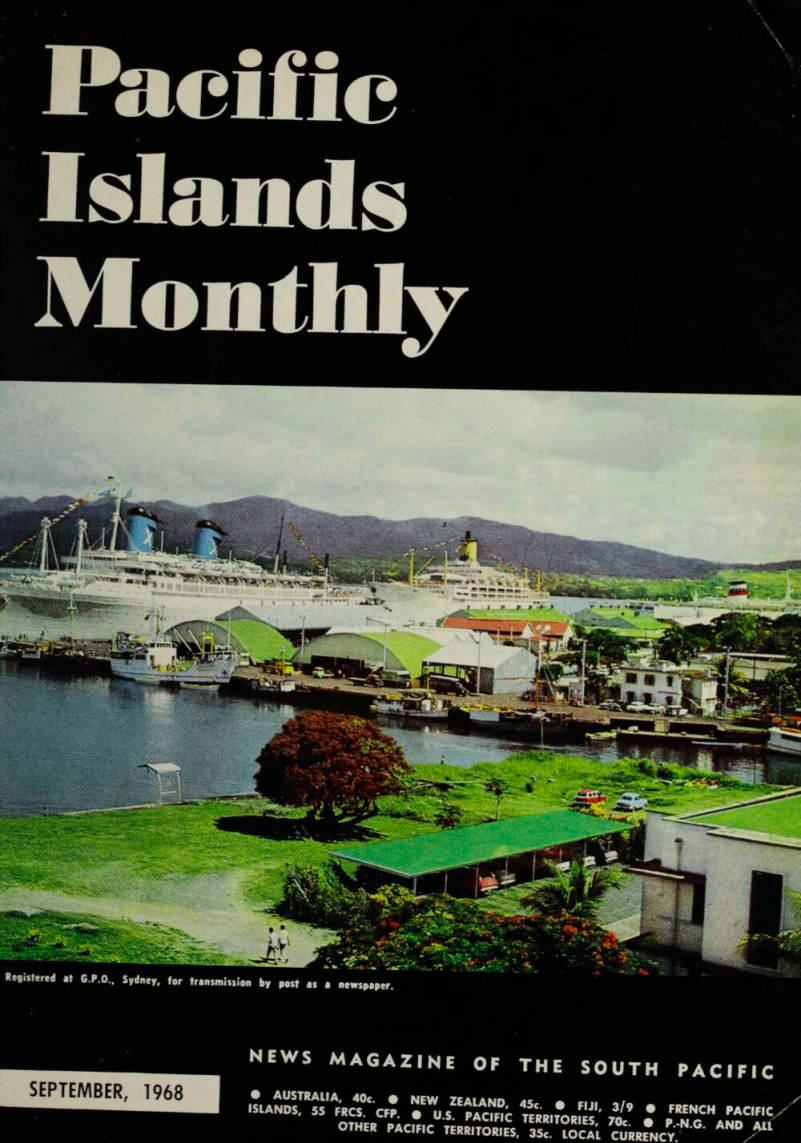 1
1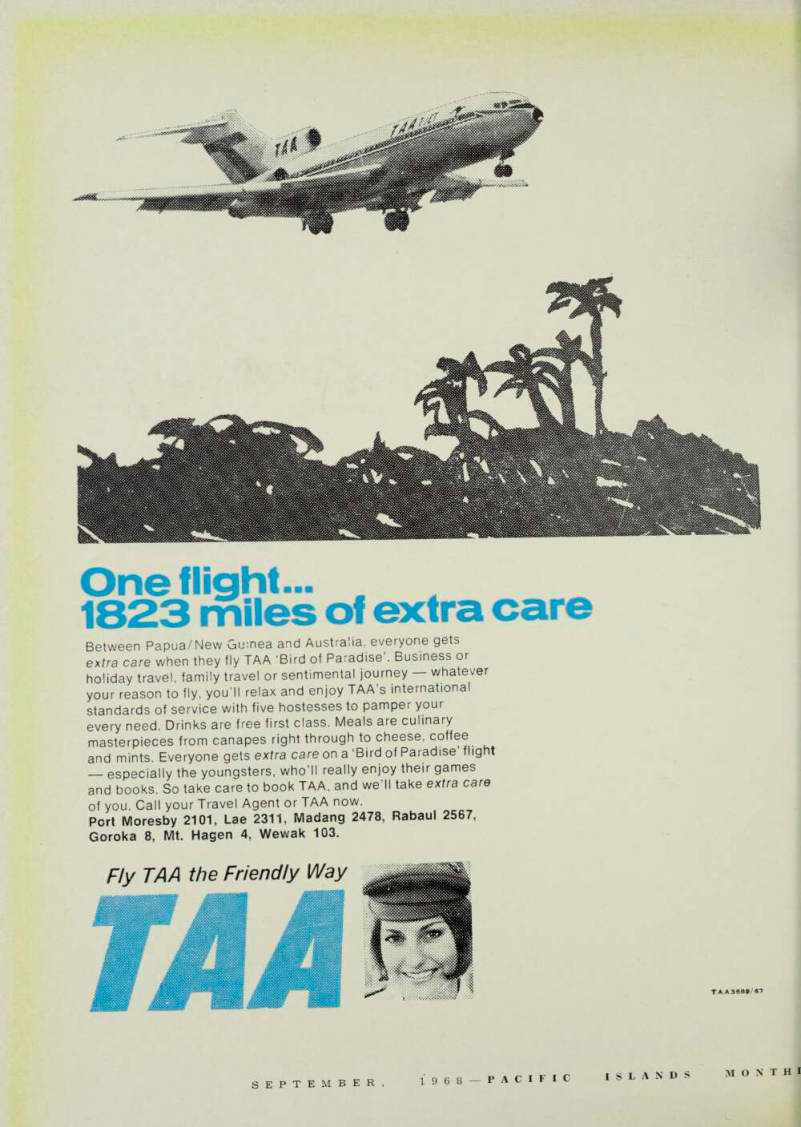 2
2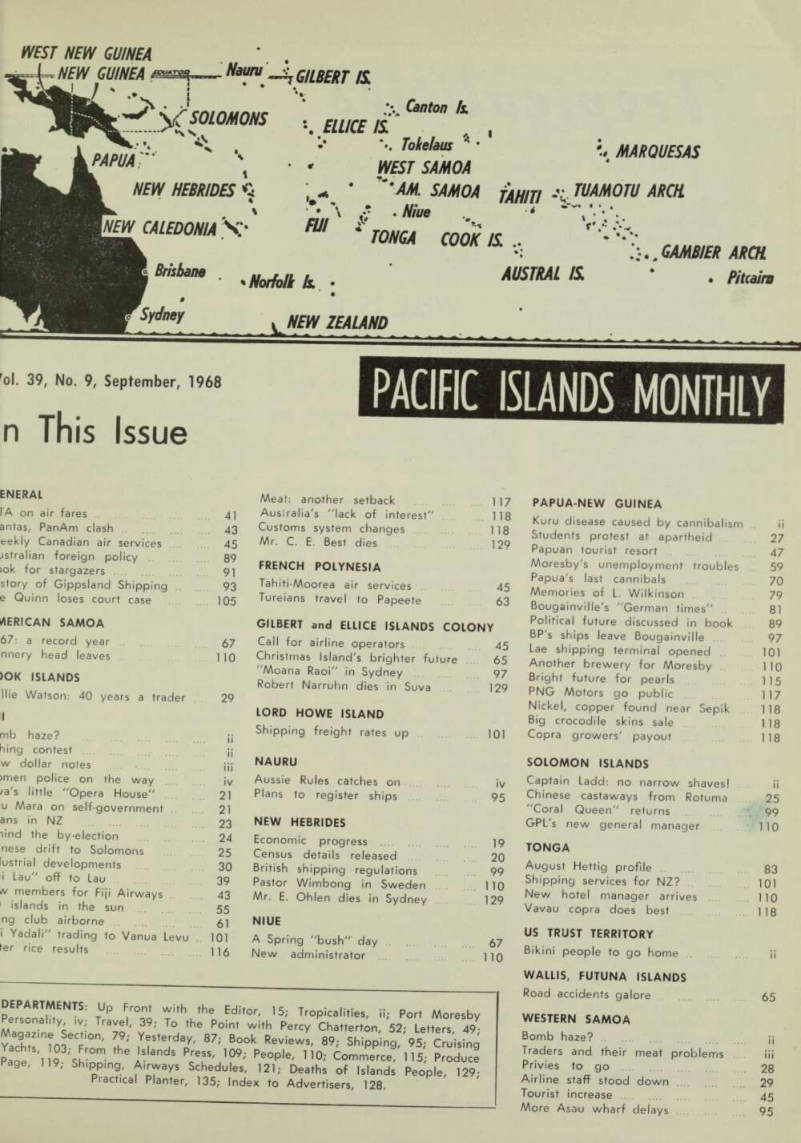 3
3 4
4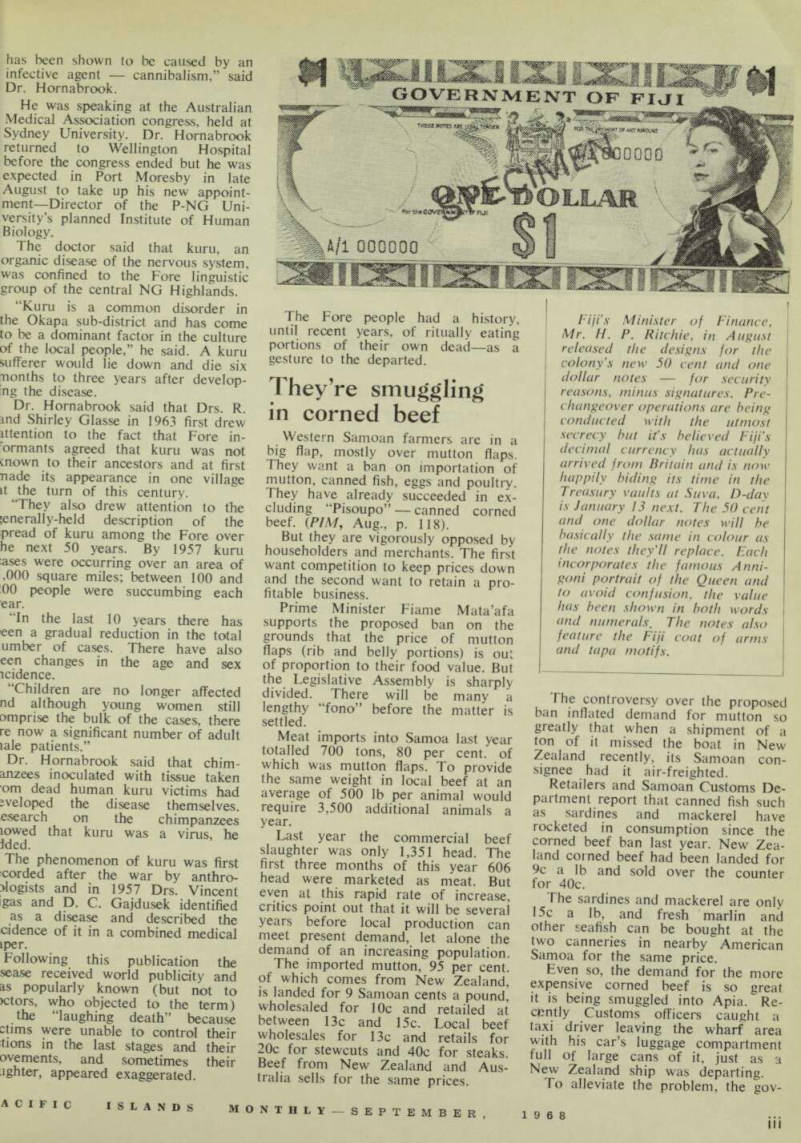 5
5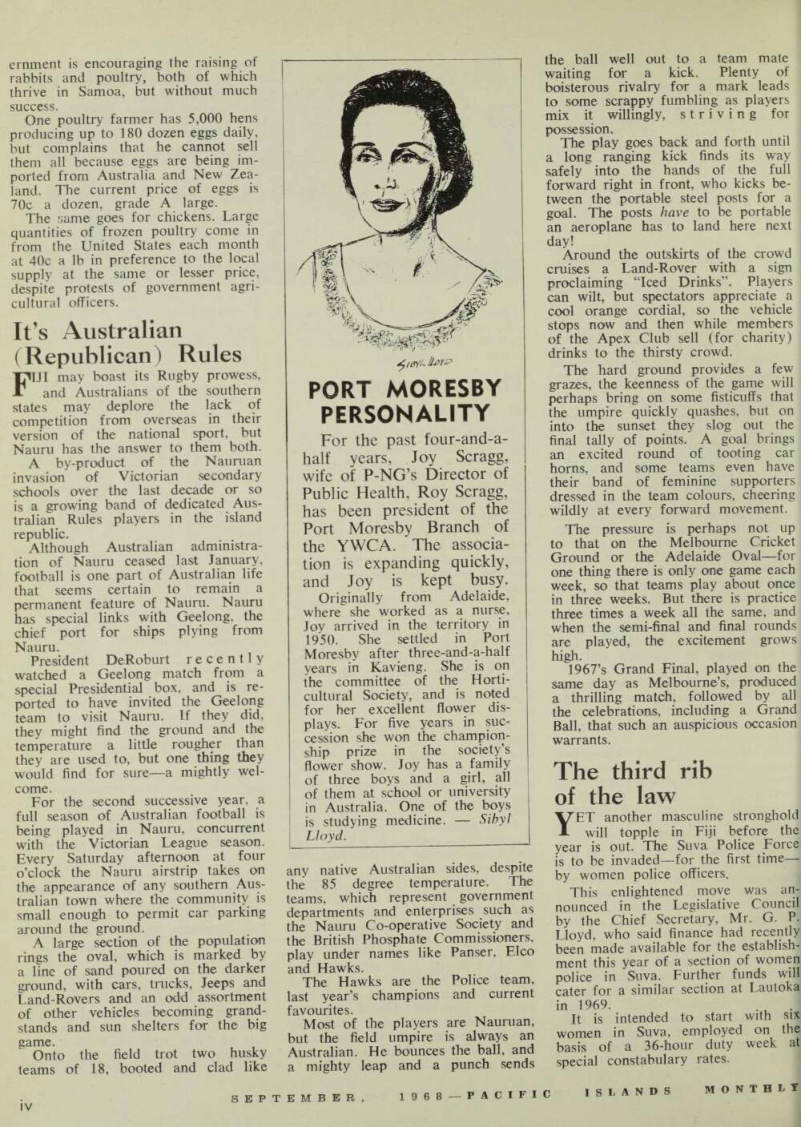 6
6 7
7 8
8 9
9 10
10 11
11 12
12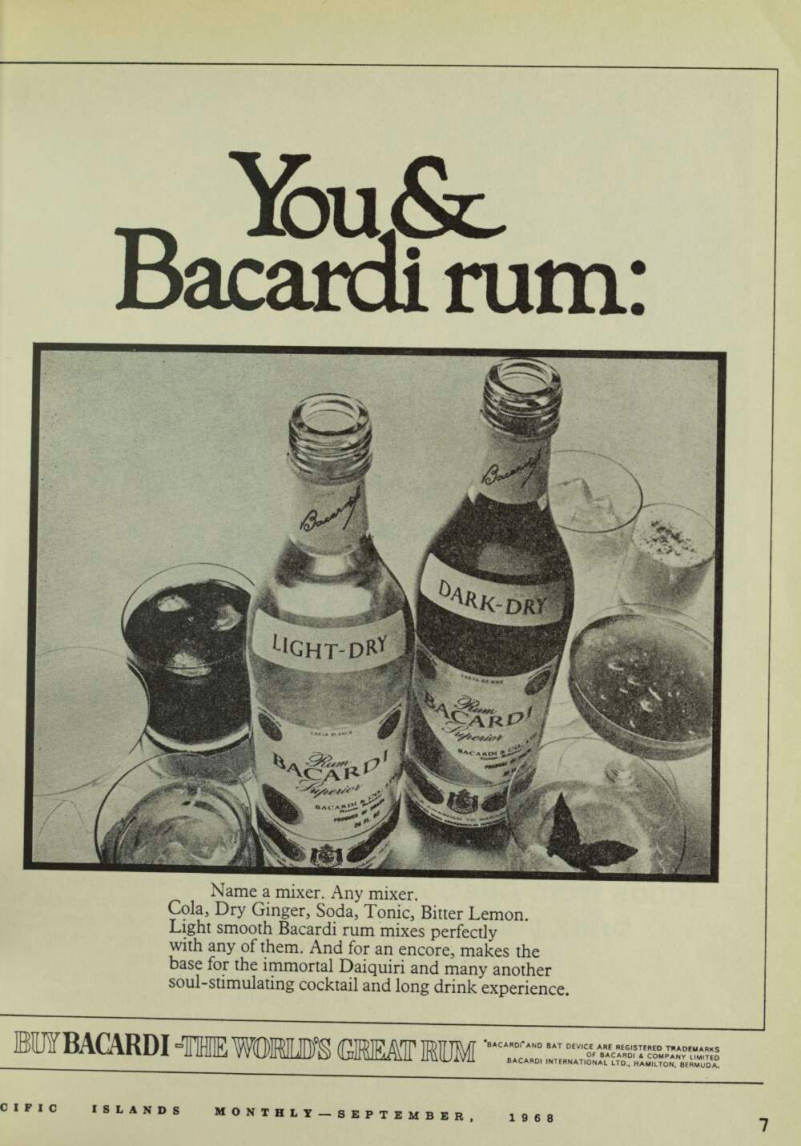 13
13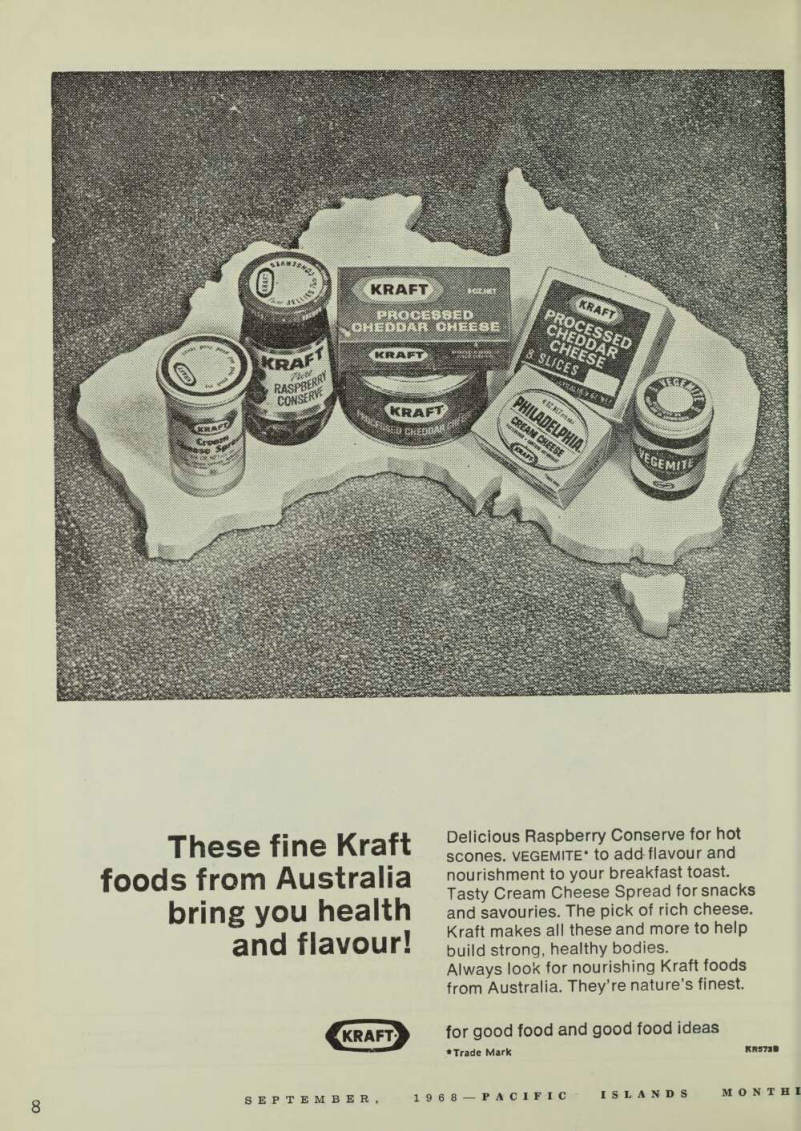 14
14 15
15 16
16 17
17 18
18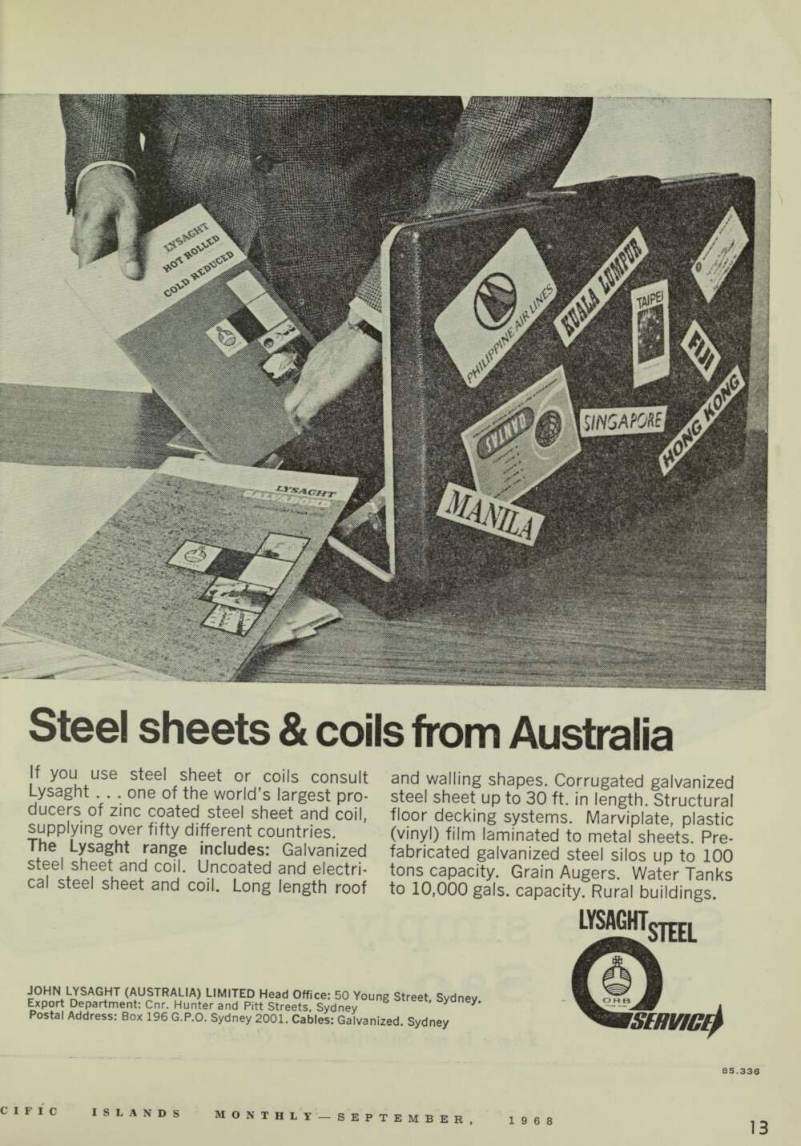 19
19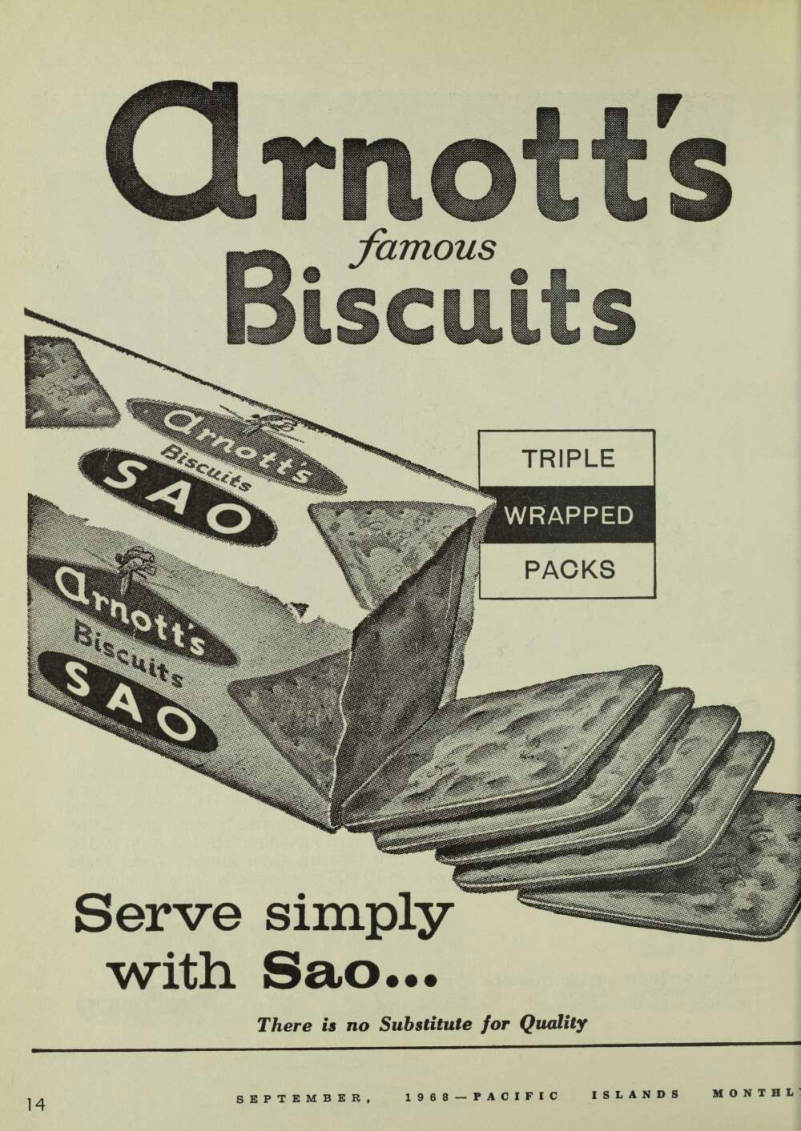 20
20 21
21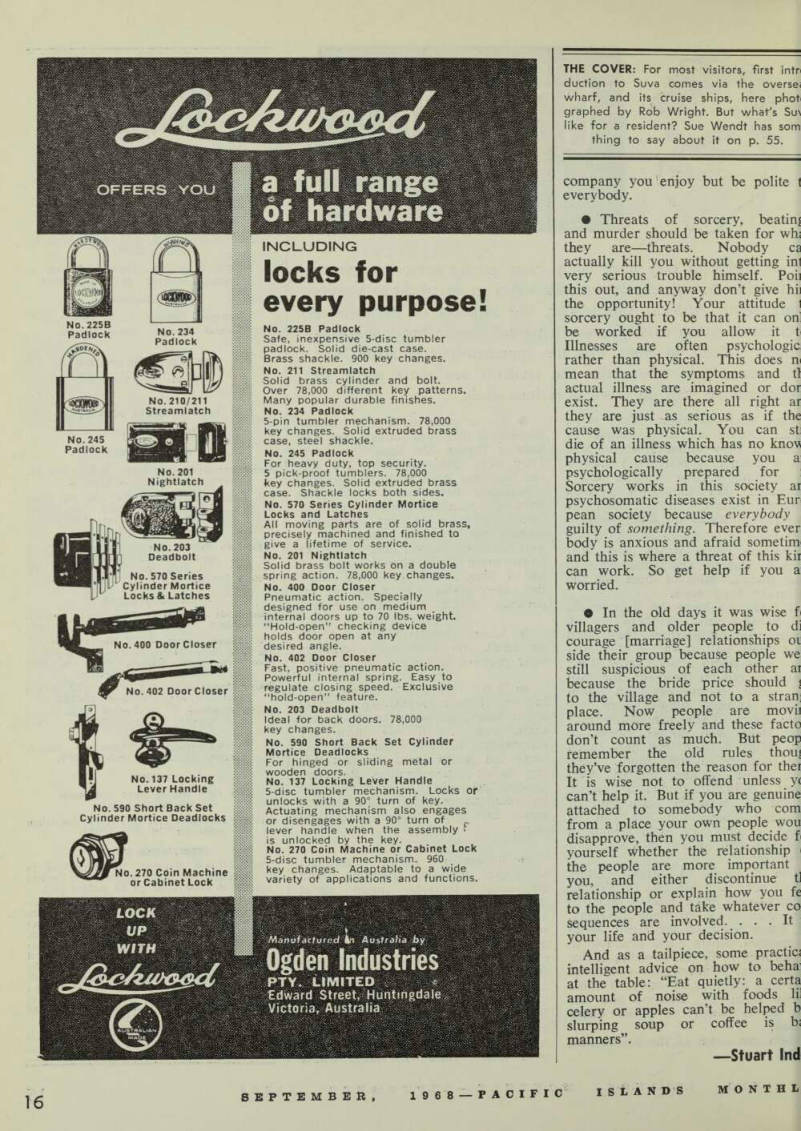 22
22 23
23 24
24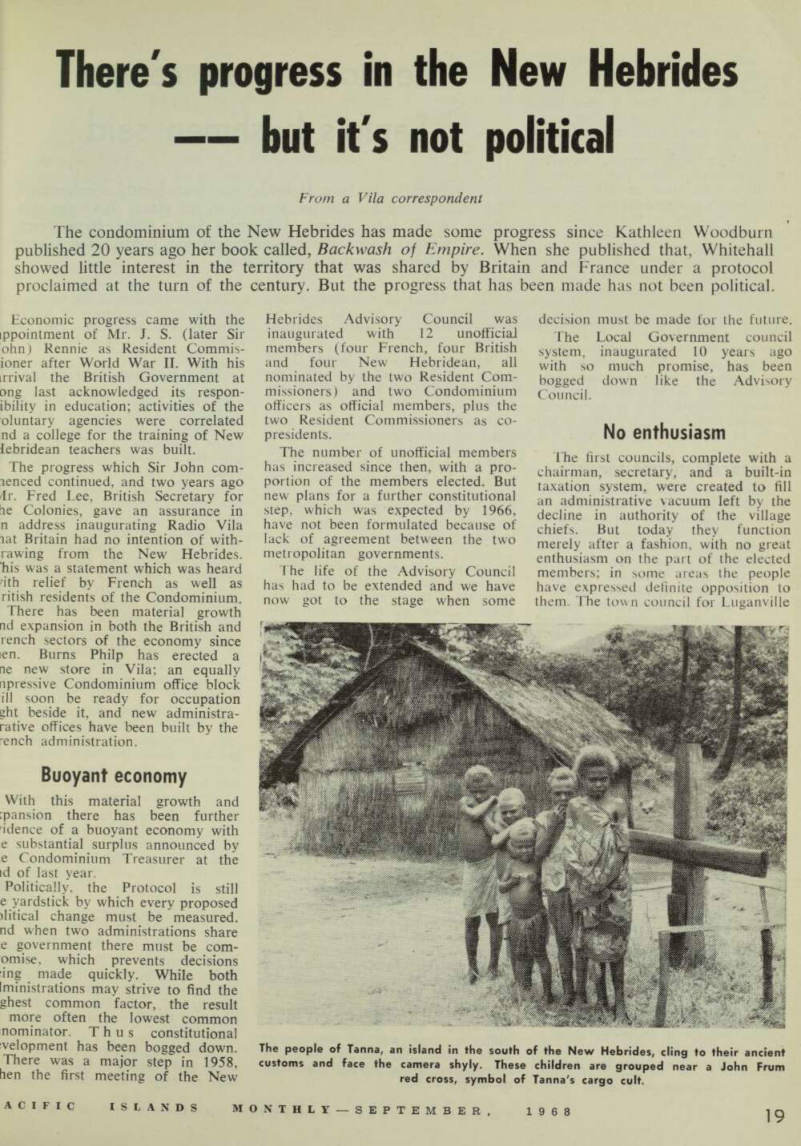 25
25 26
26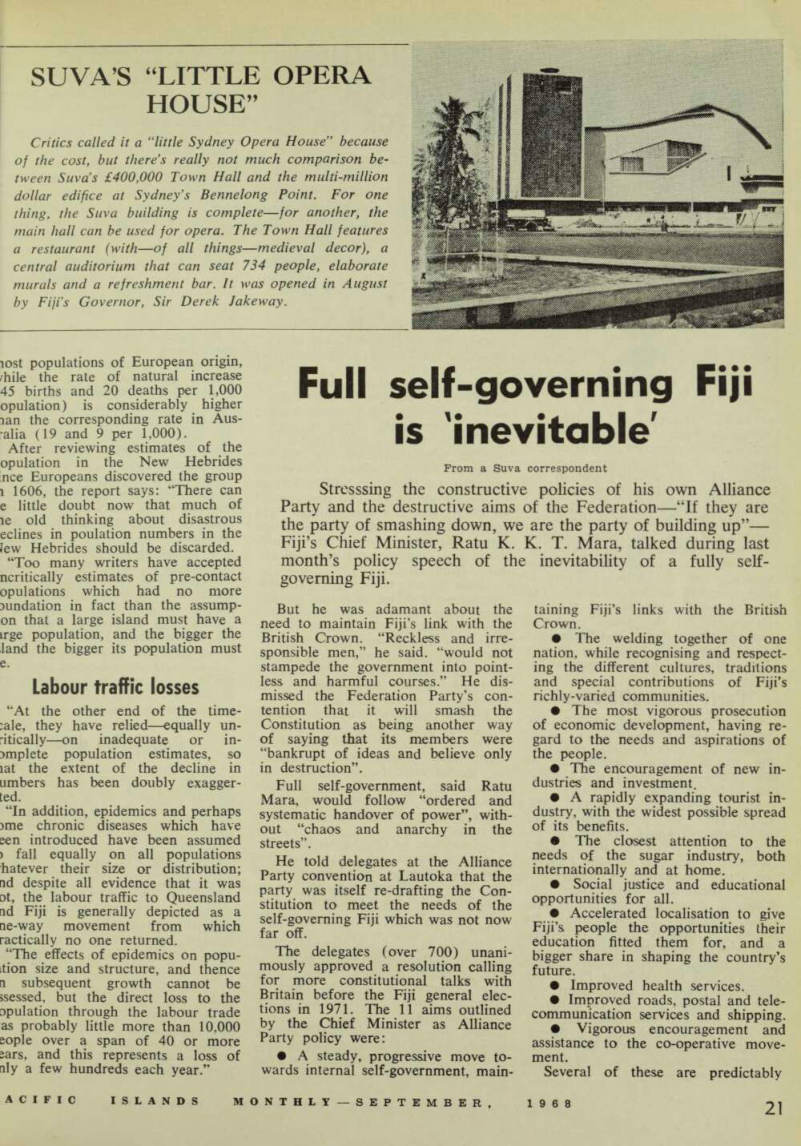 27
27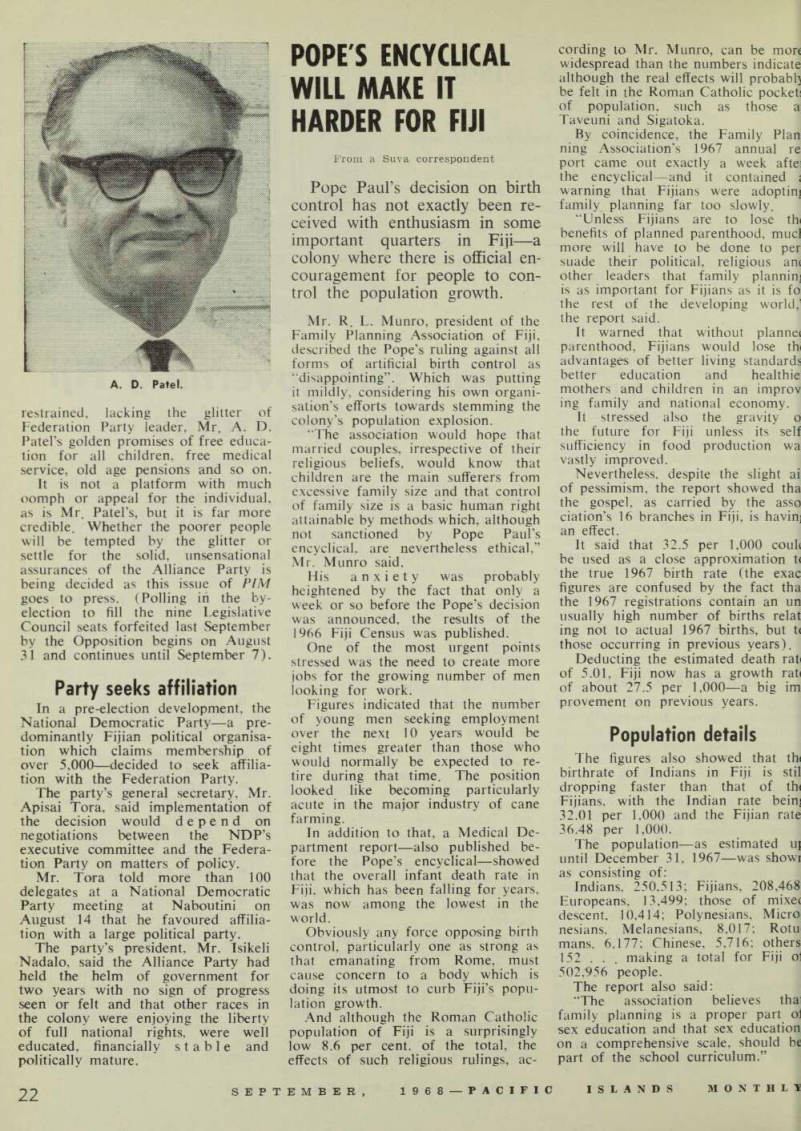 28
28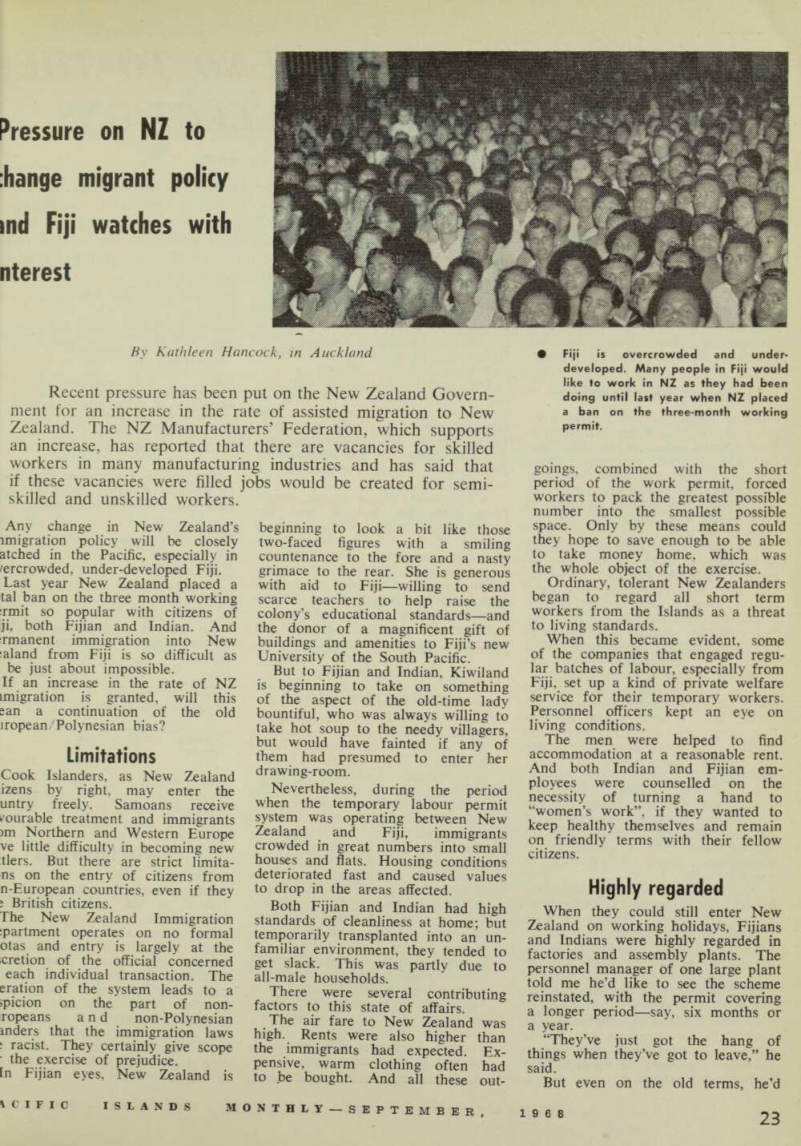 29
29 30
30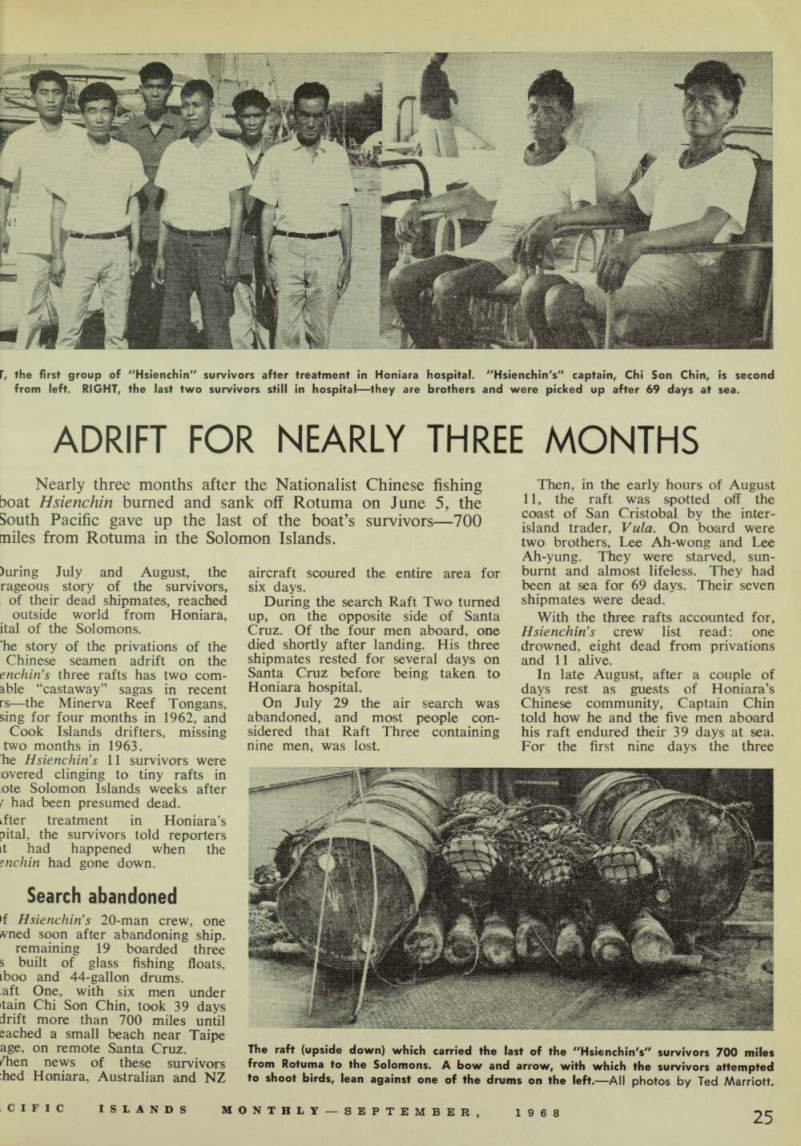 31
31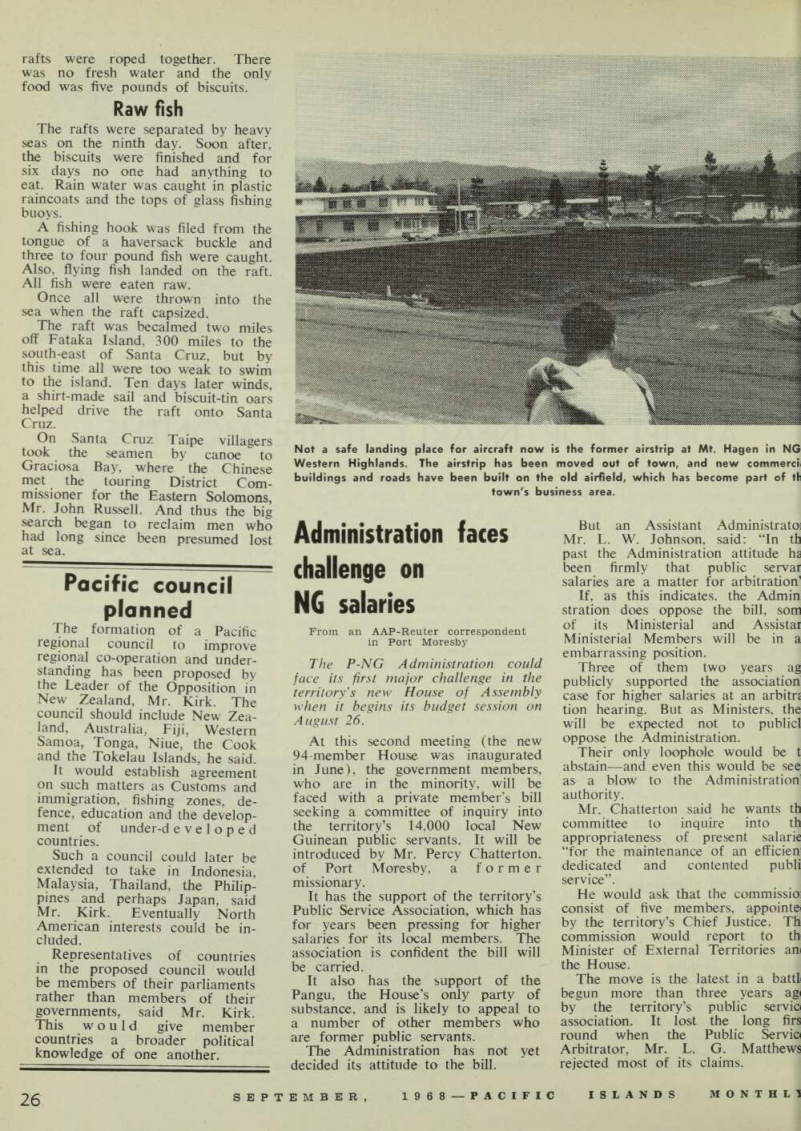 32
32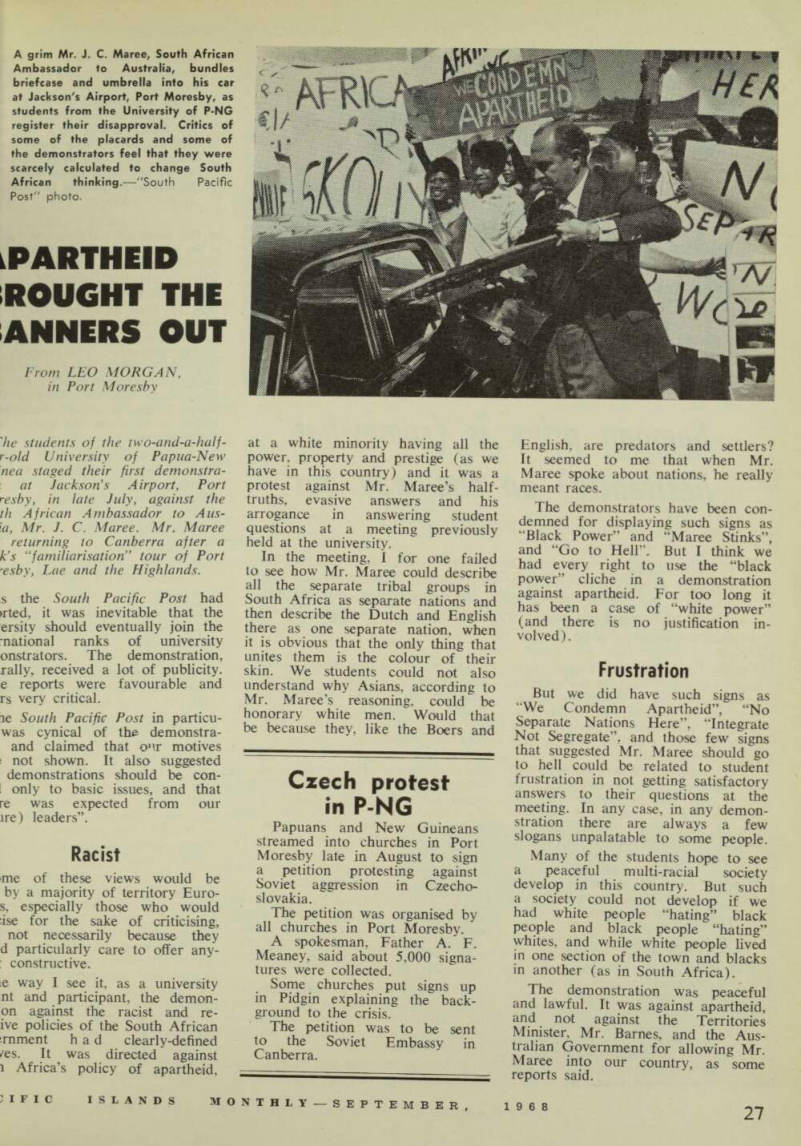 33
33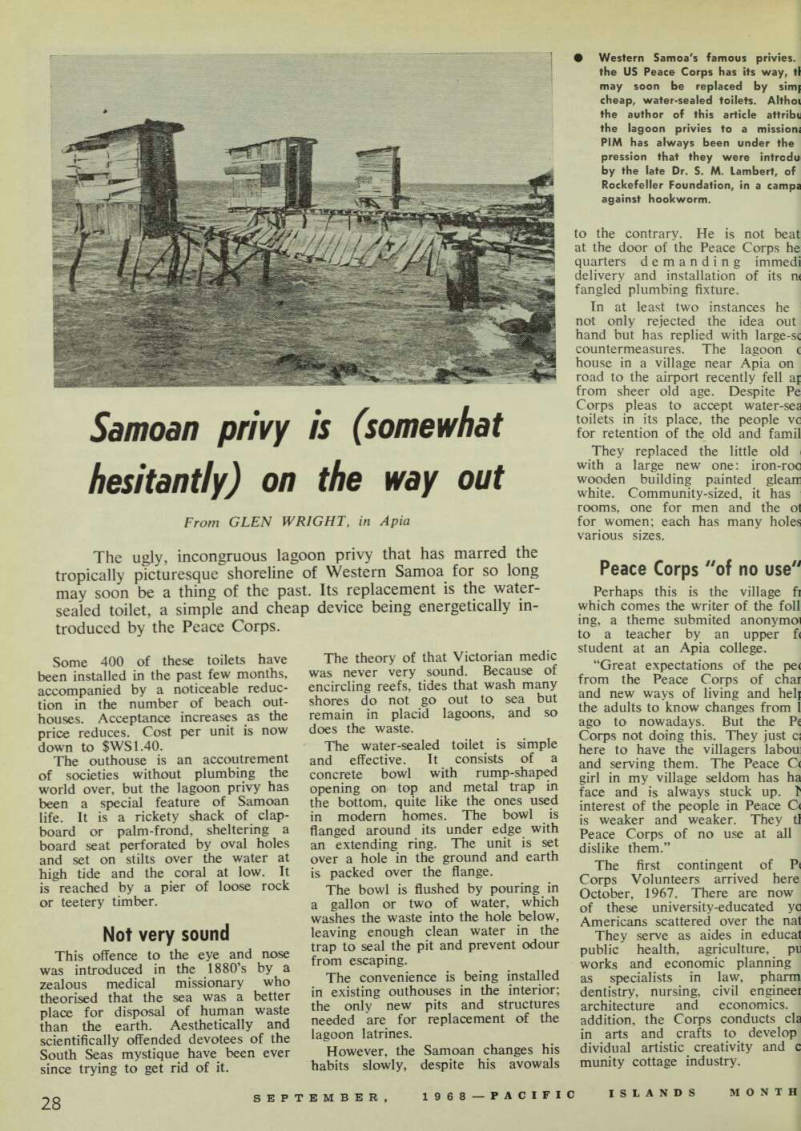 34
34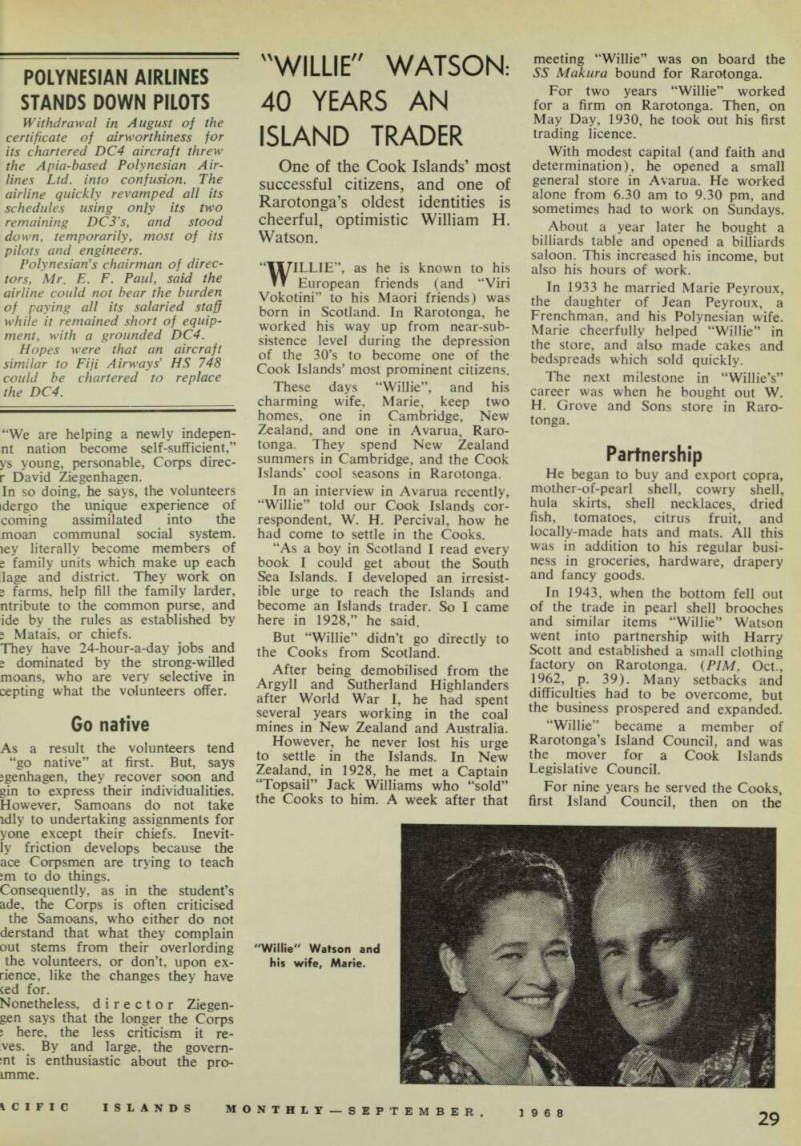 35
35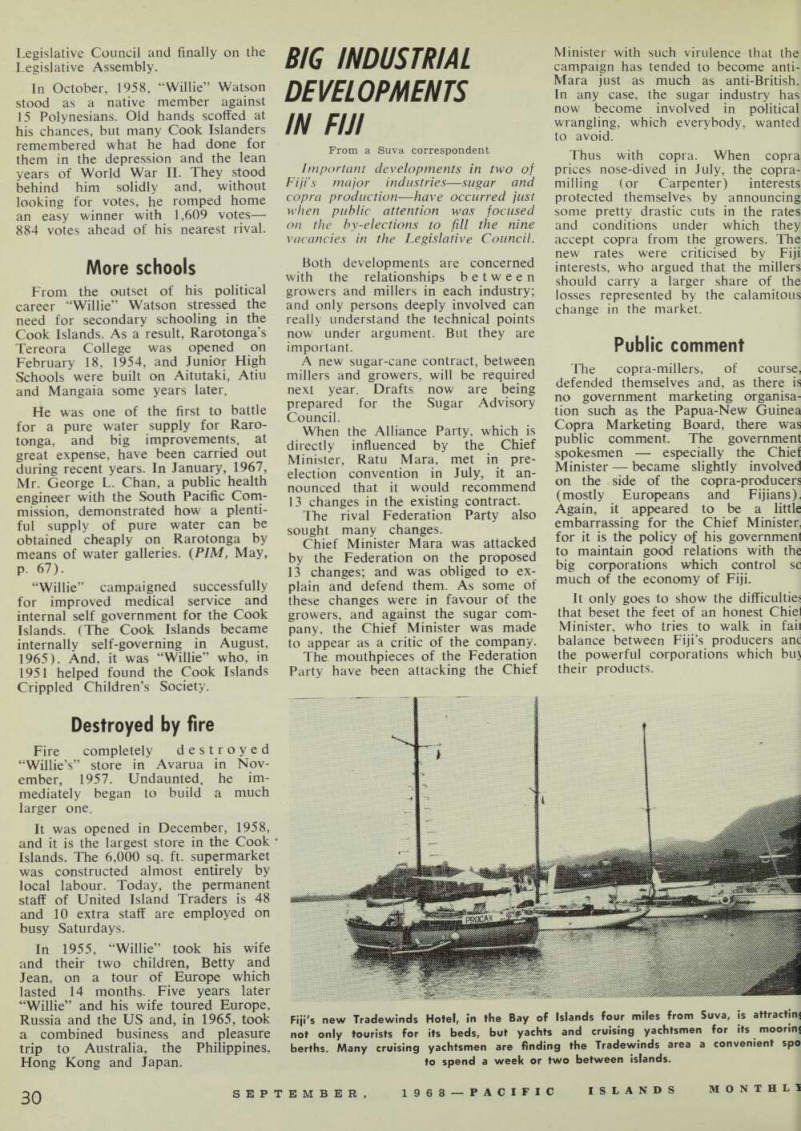 36
36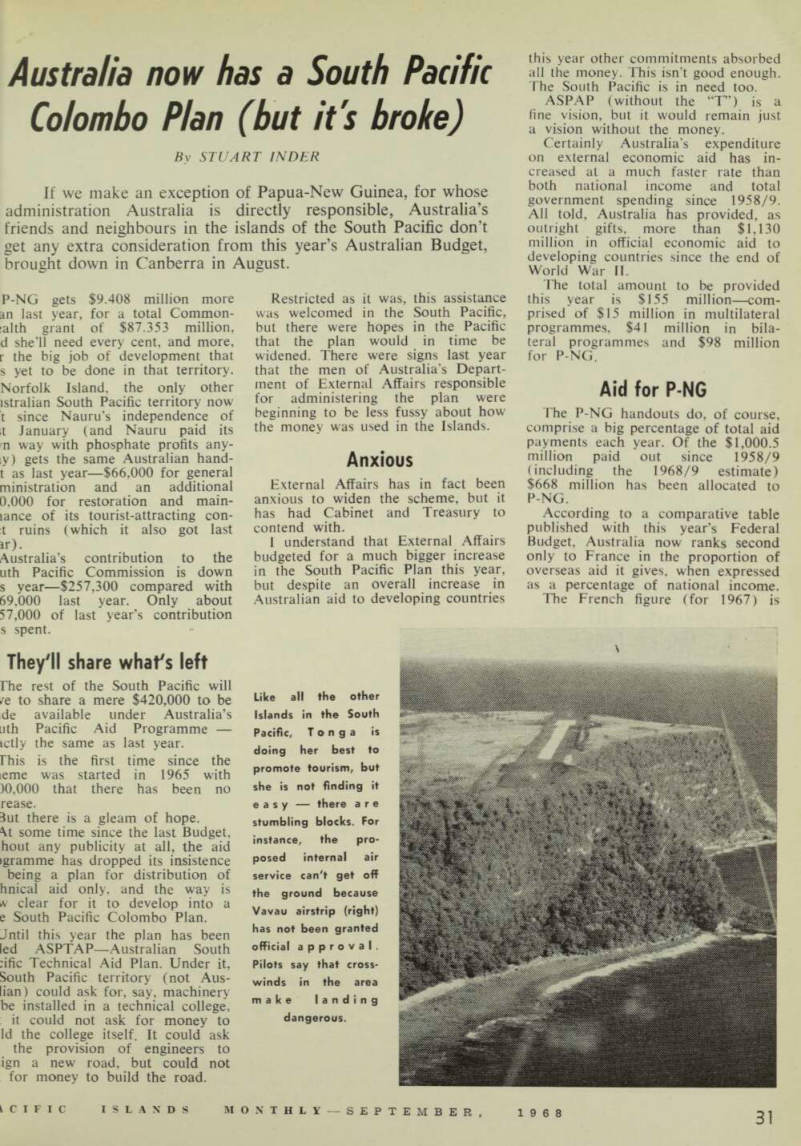 37
37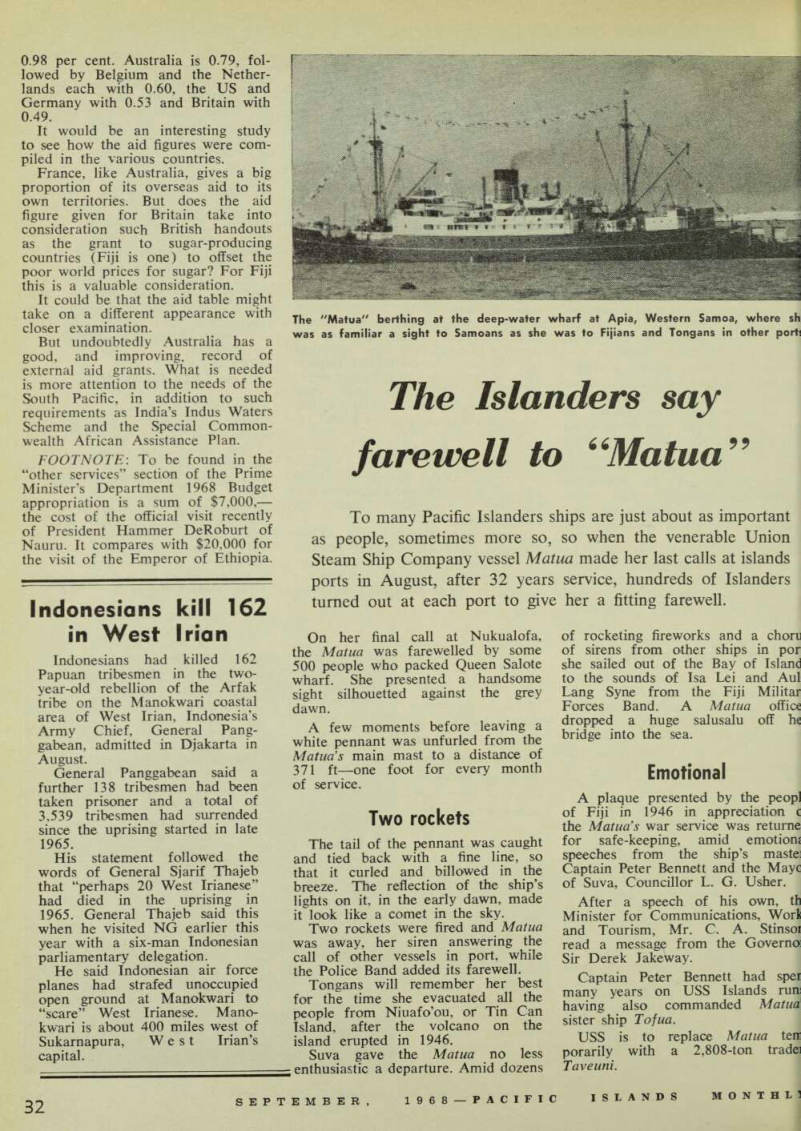 38
38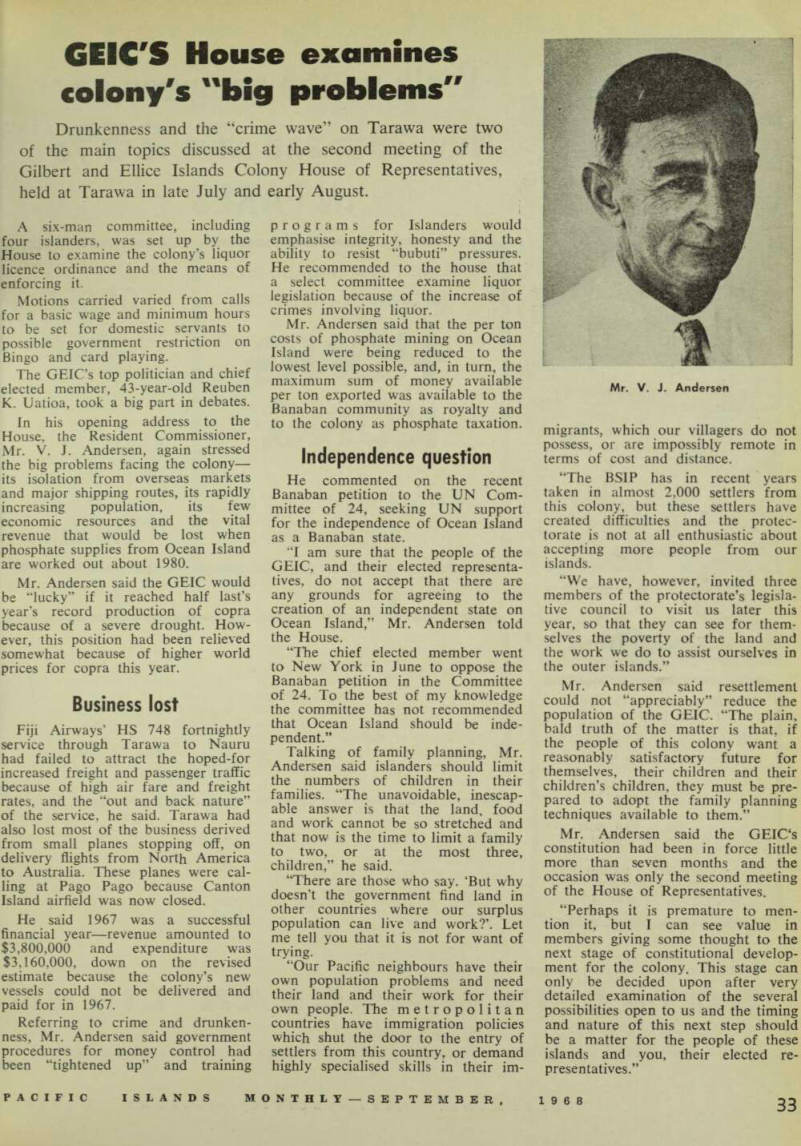 39
39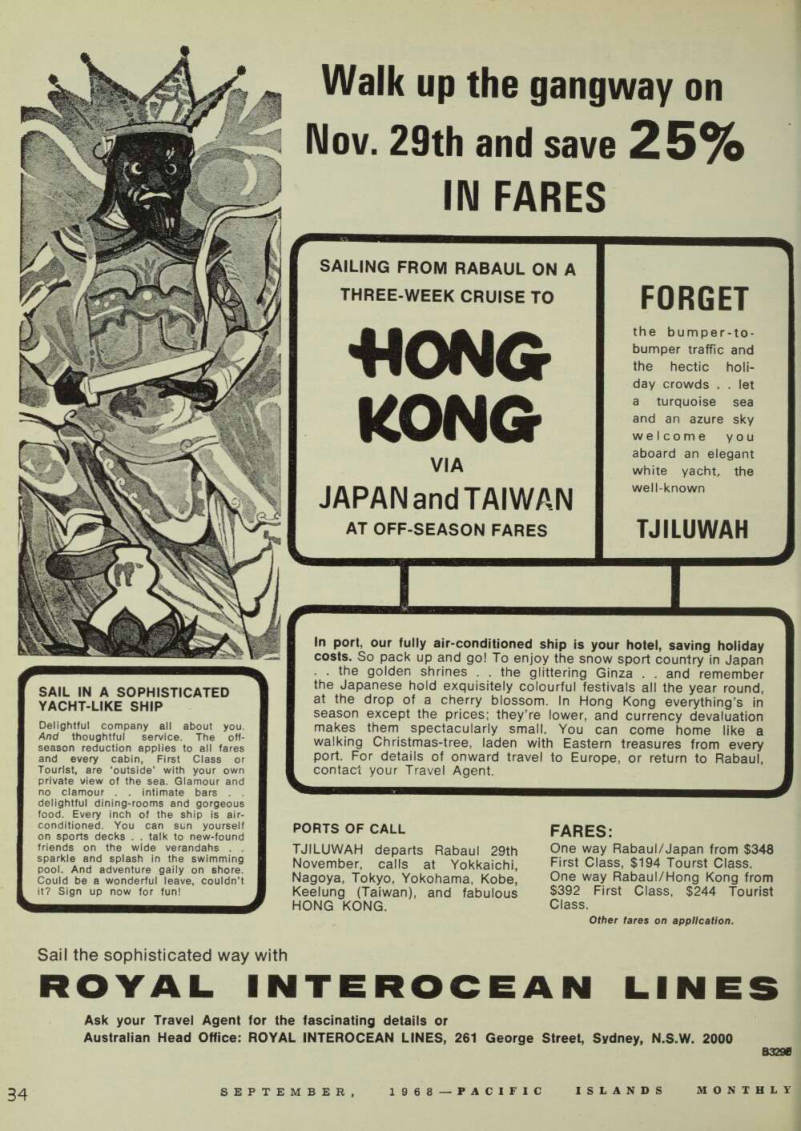 40
40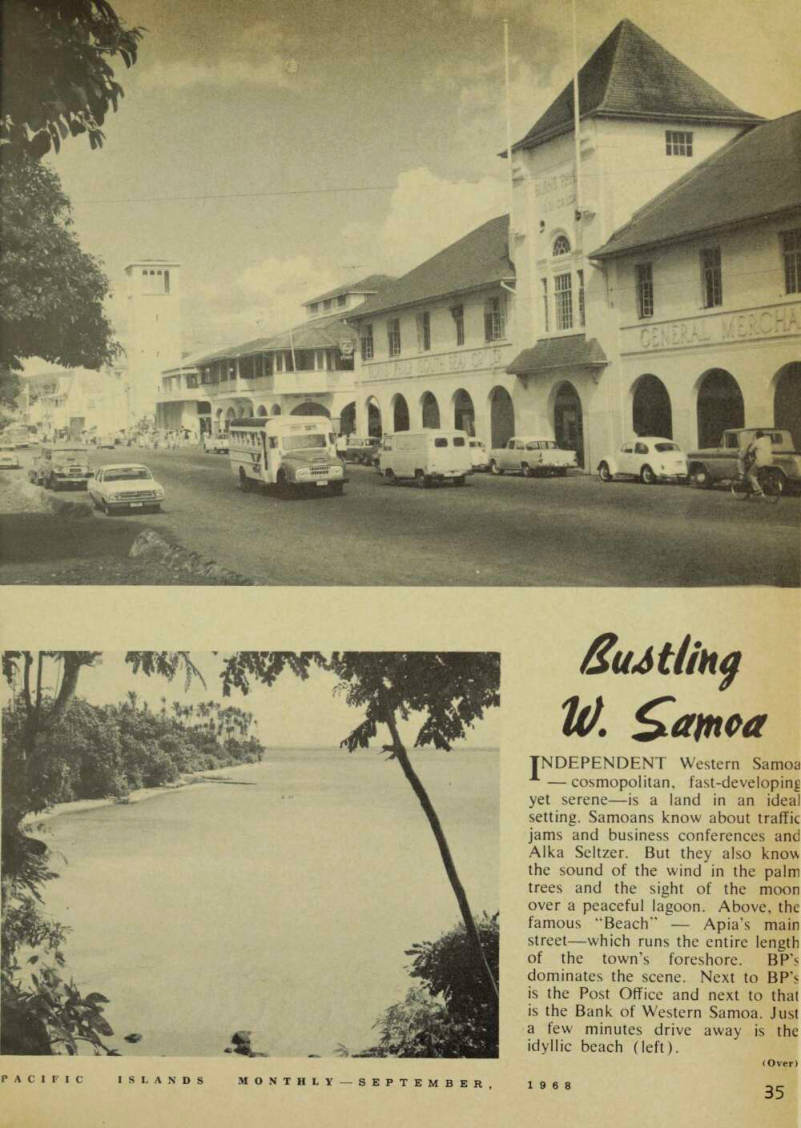 41
41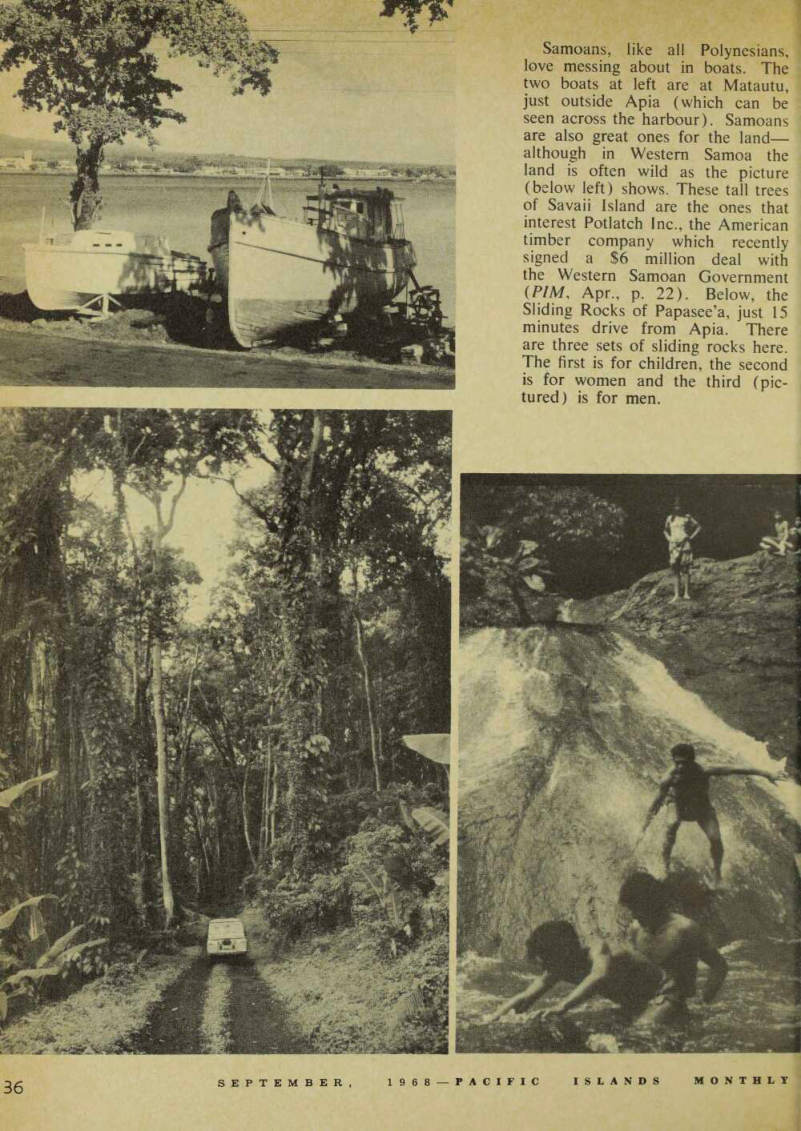 42
42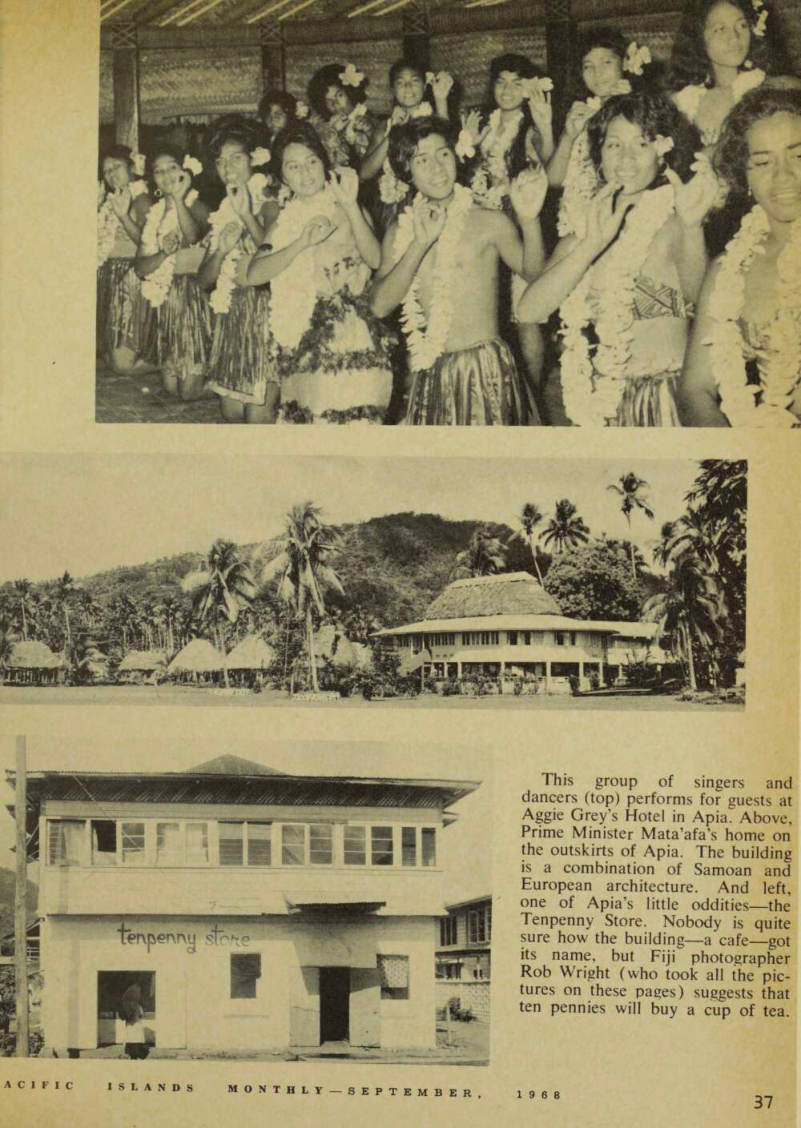 43
43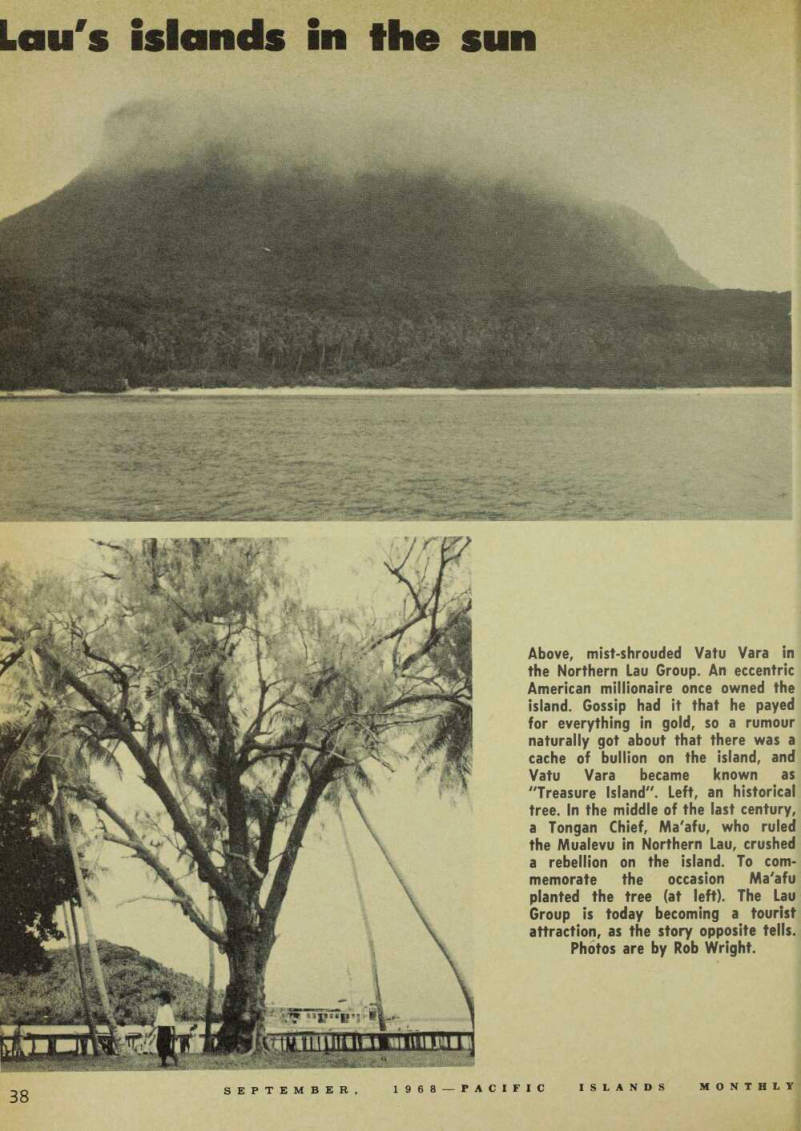 44
44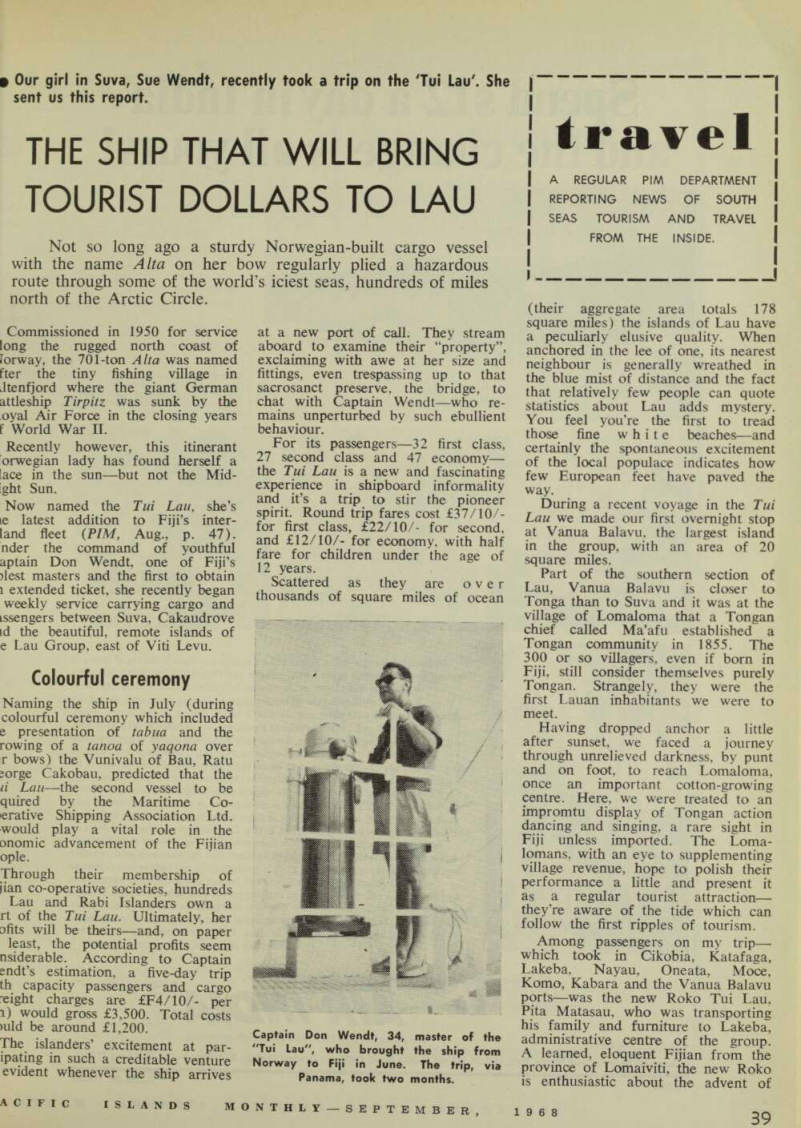 45
45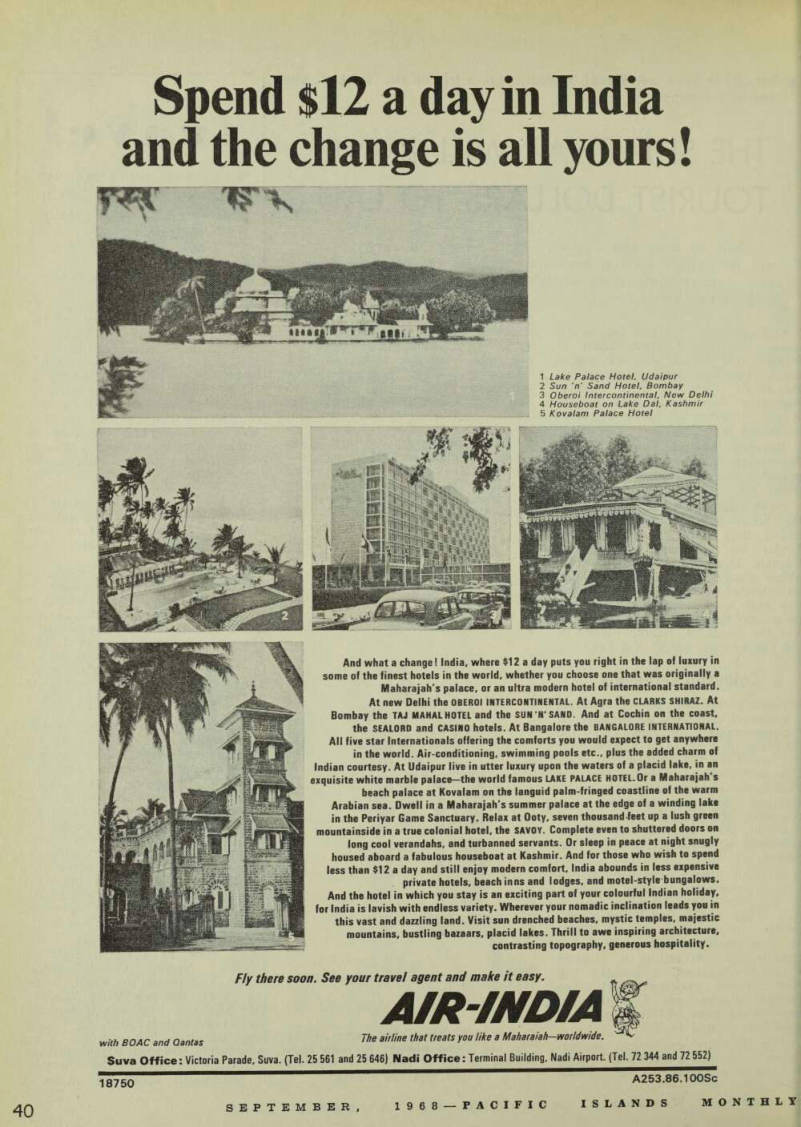 46
46 47
47 48
48 49
49 50
50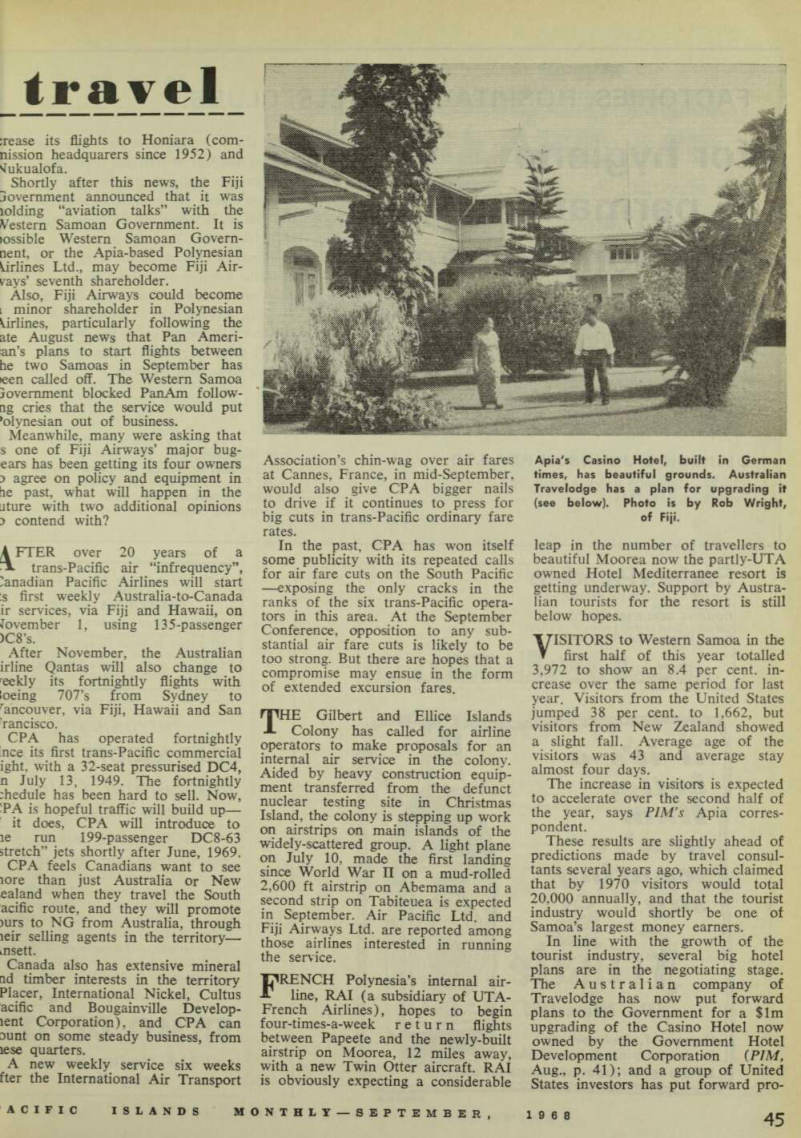 51
51 52
52 53
53 54
54 55
55 56
56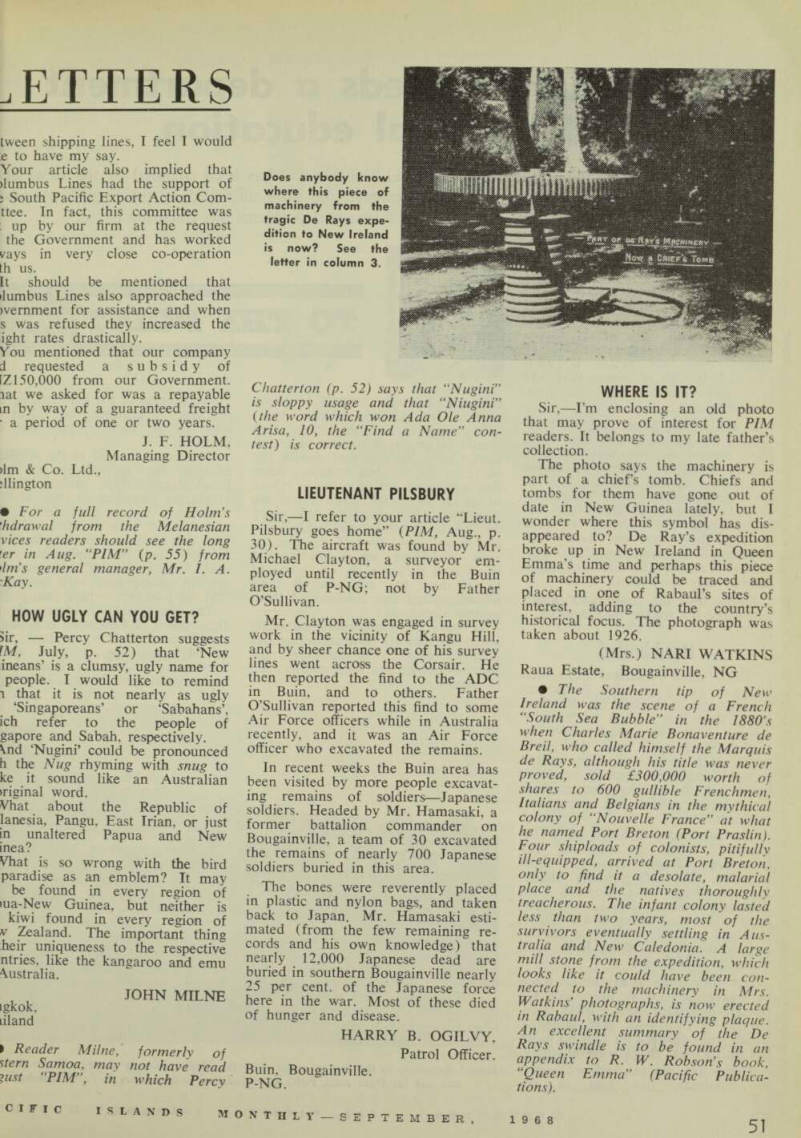 57
57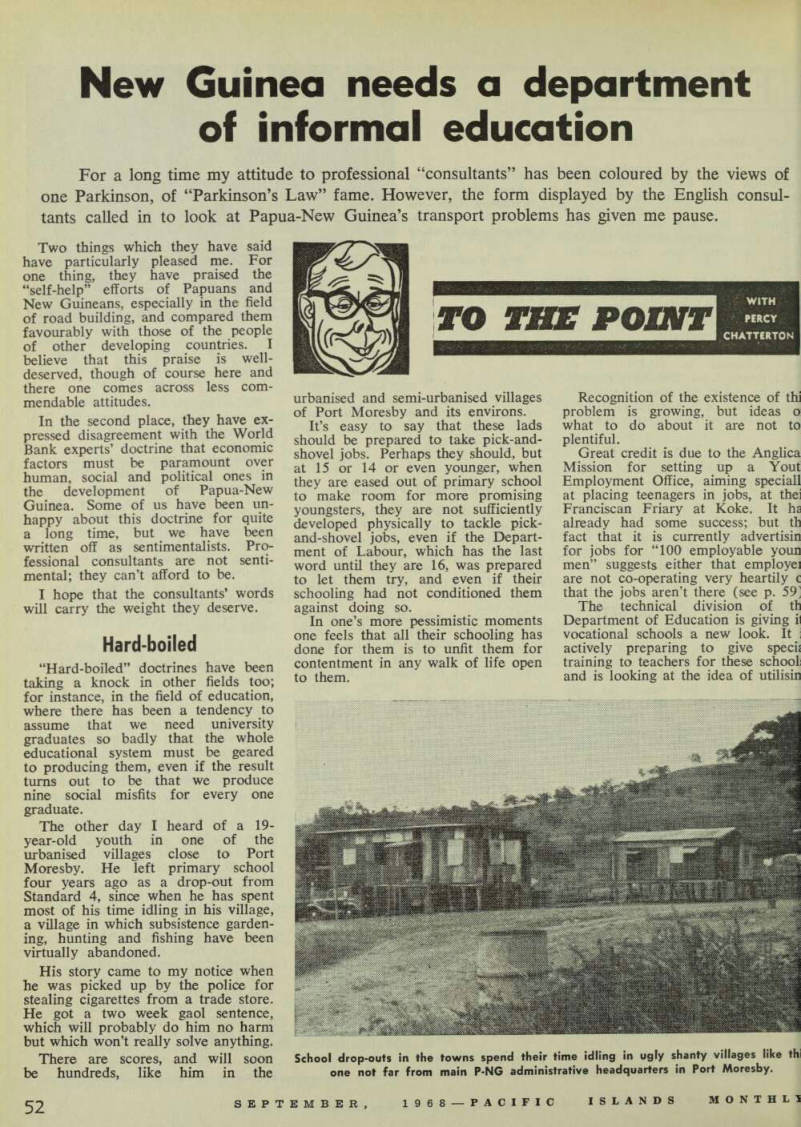 58
58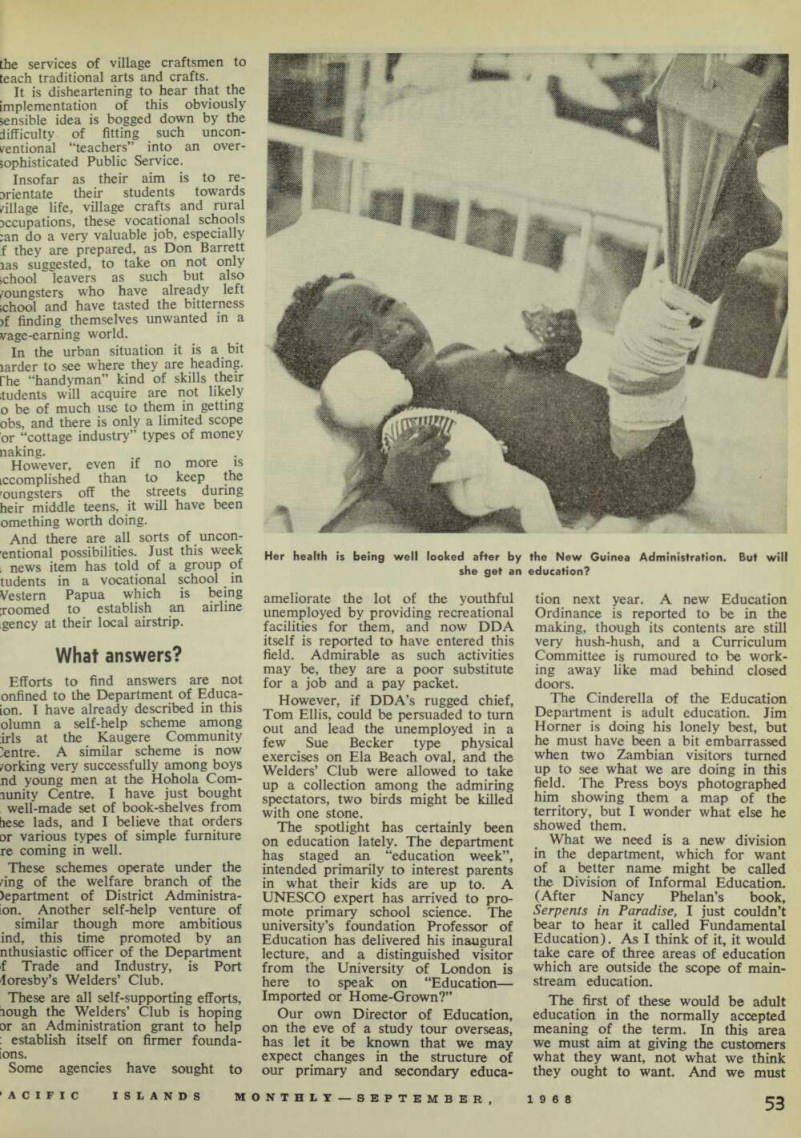 59
59 60
60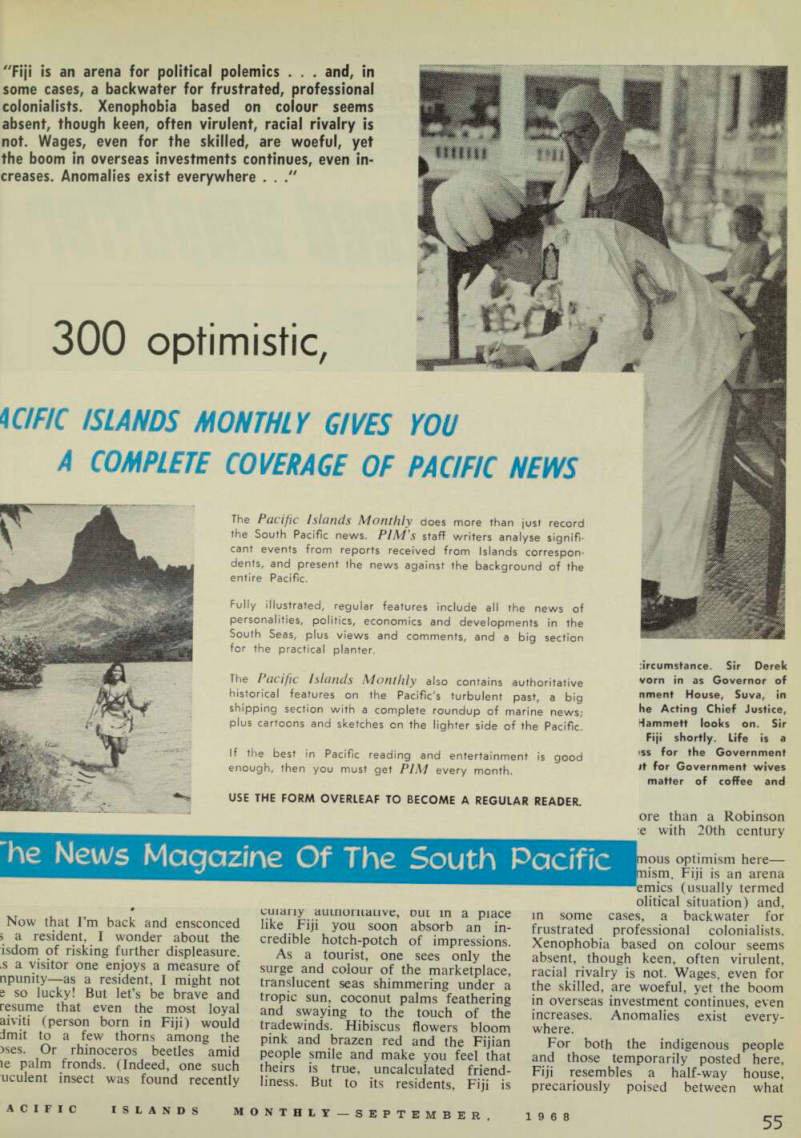 61
61 62
62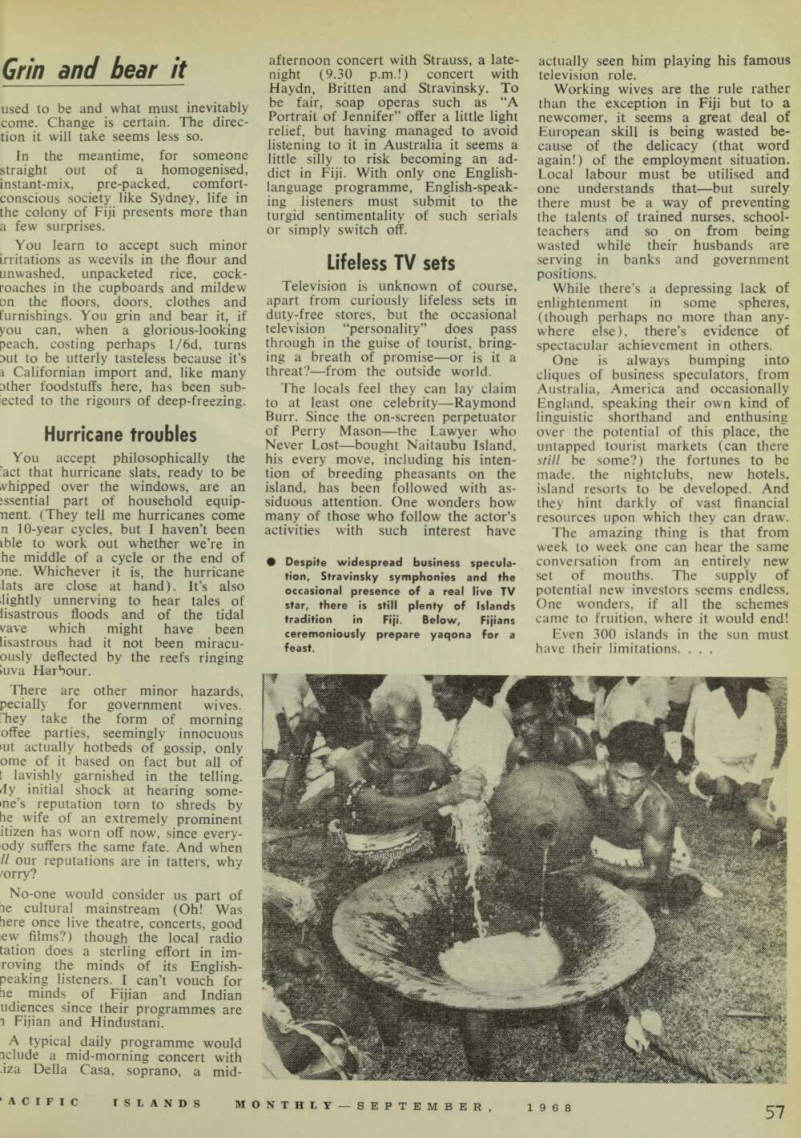 63
63 64
64 65
65 66
66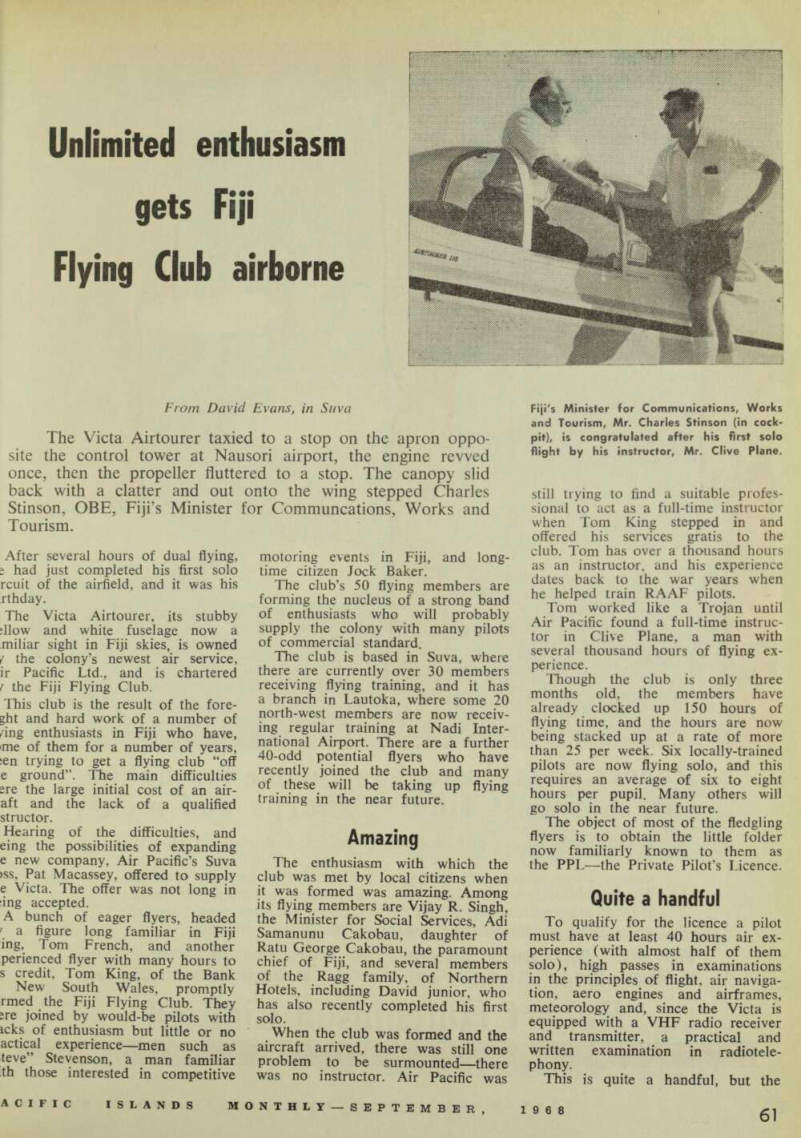 67
67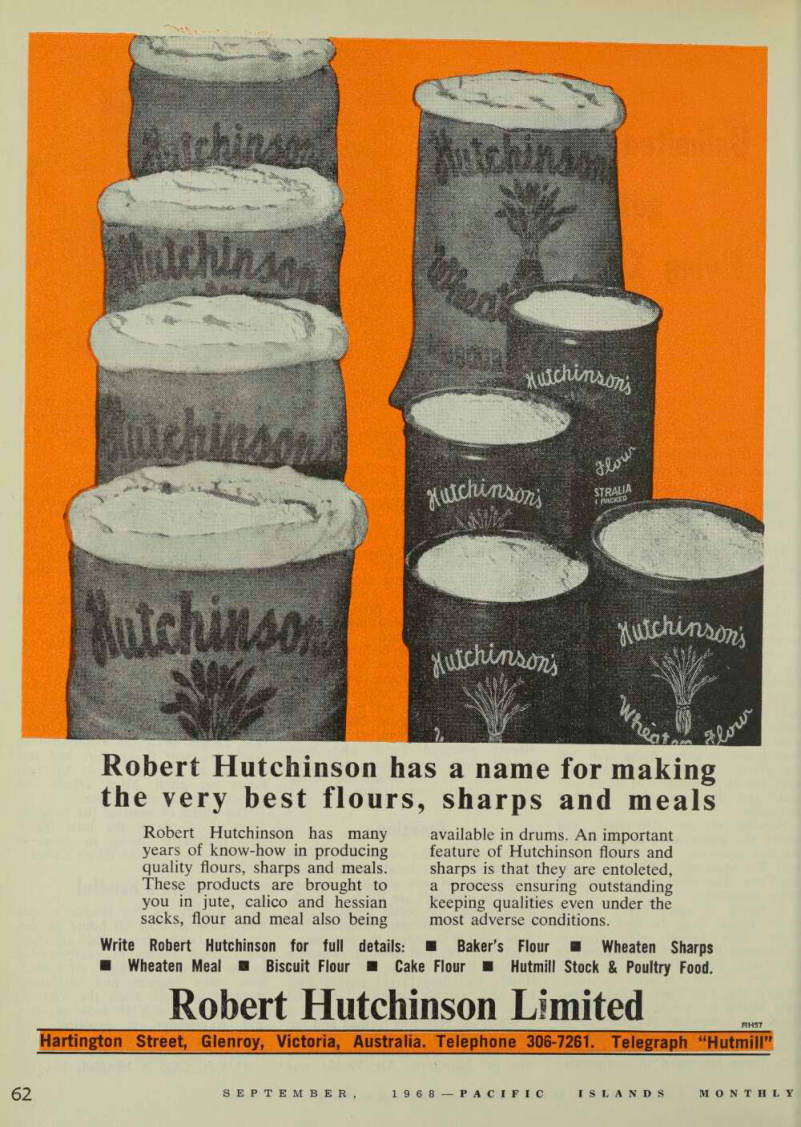 68
68 69
69 70
70 71
71 72
72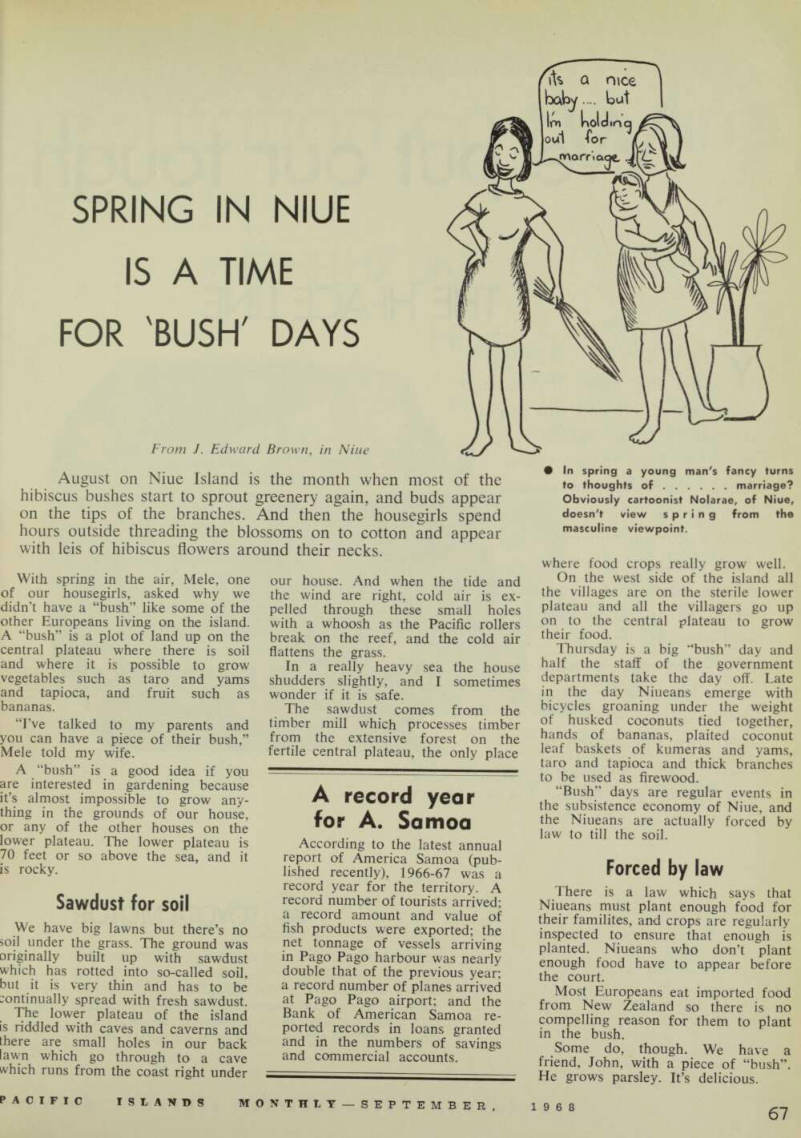 73
73 74
74 75
75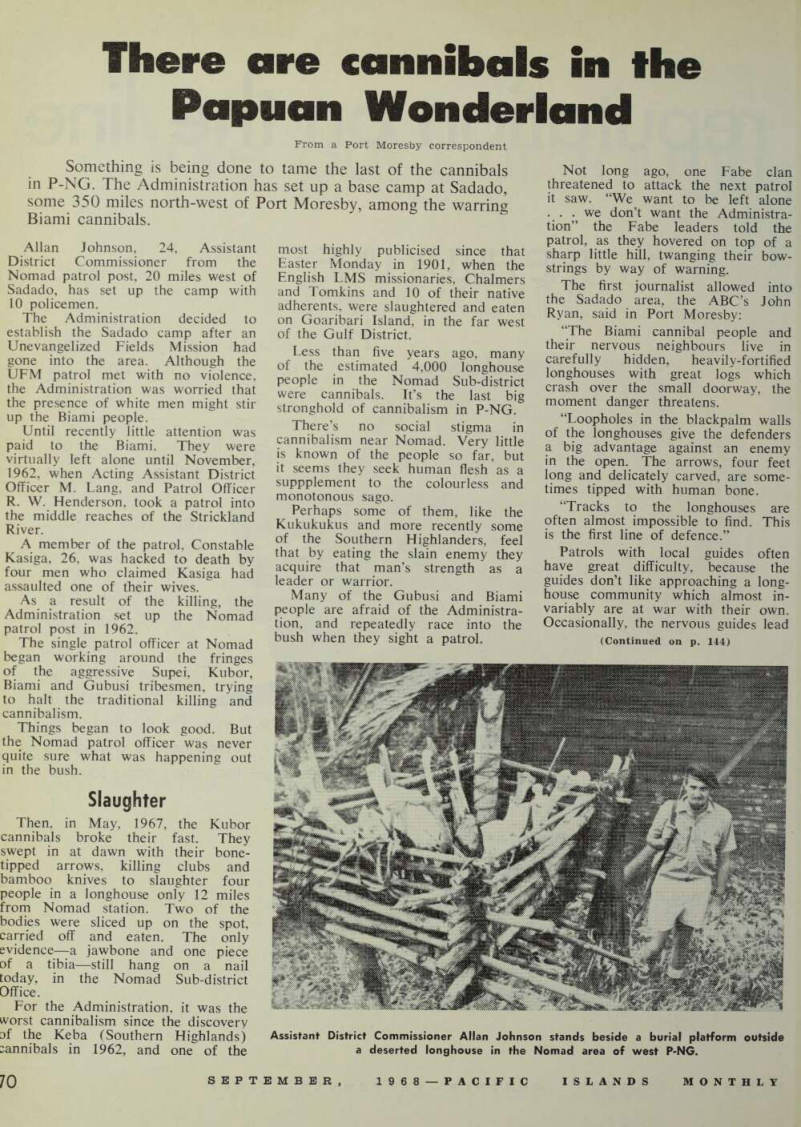 76
76 77
77 78
78 79
79 80
80 81
81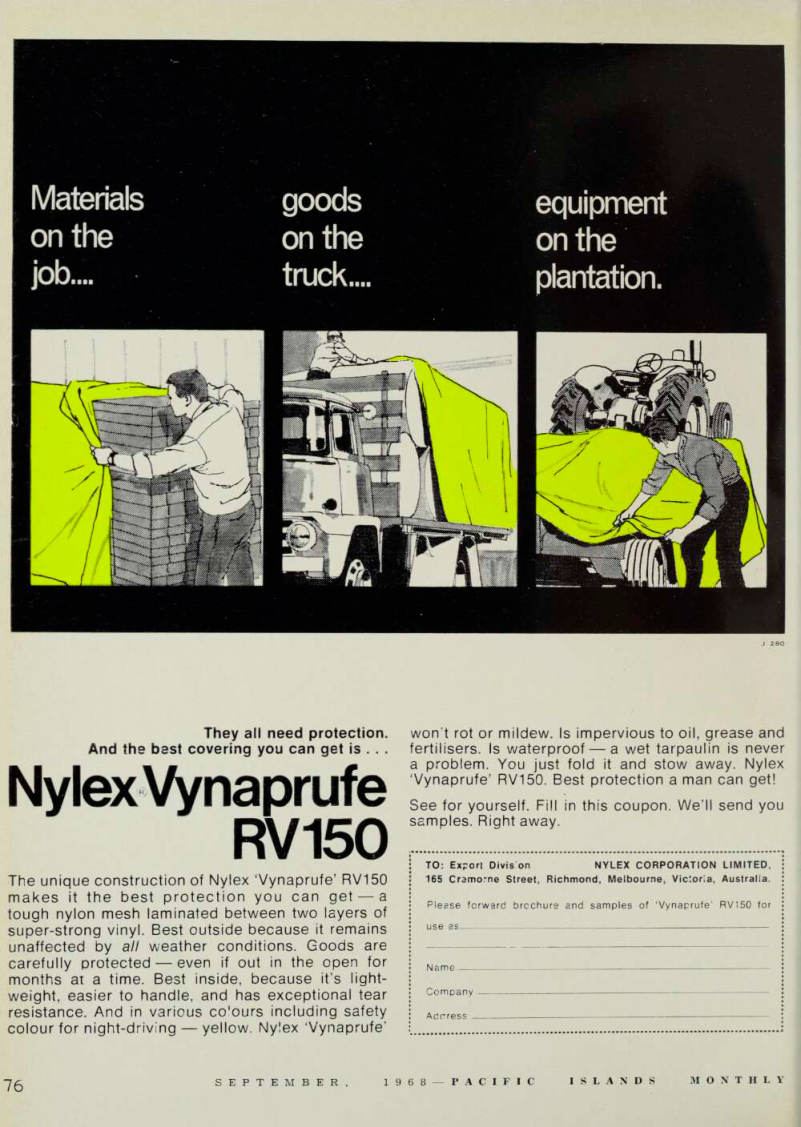 82
82 83
83 84
84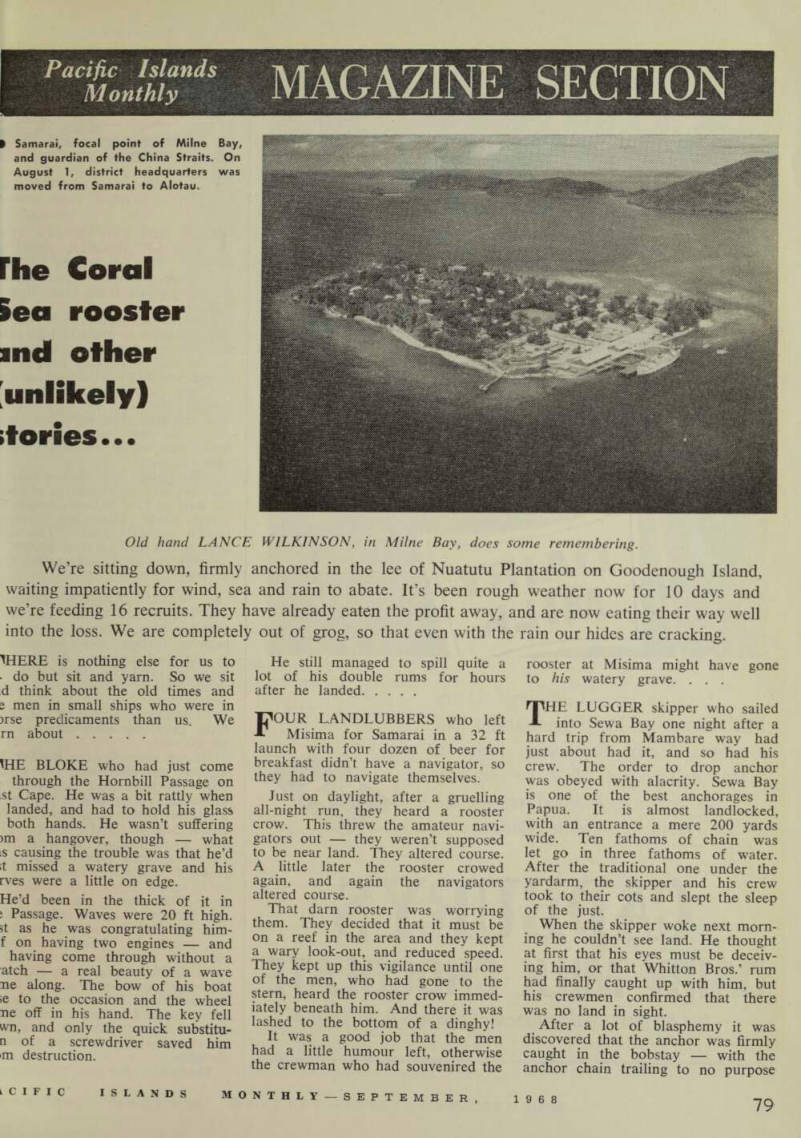 85
85 86
86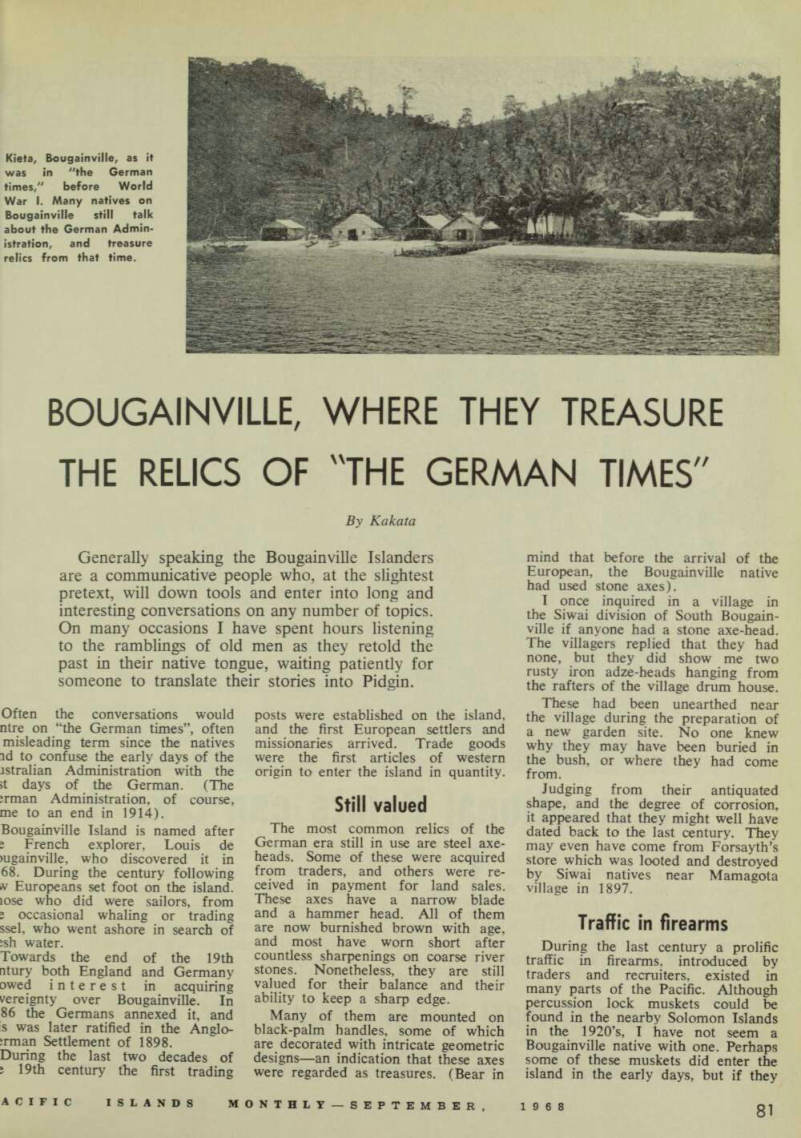 87
87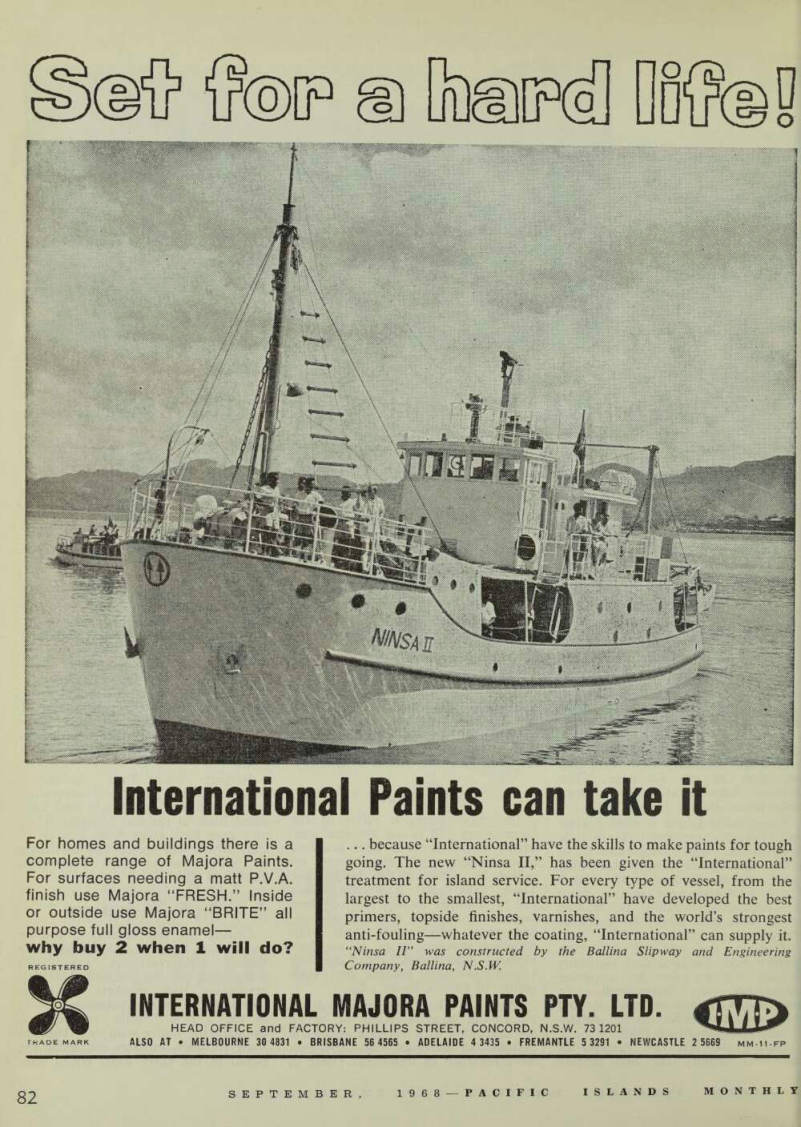 88
88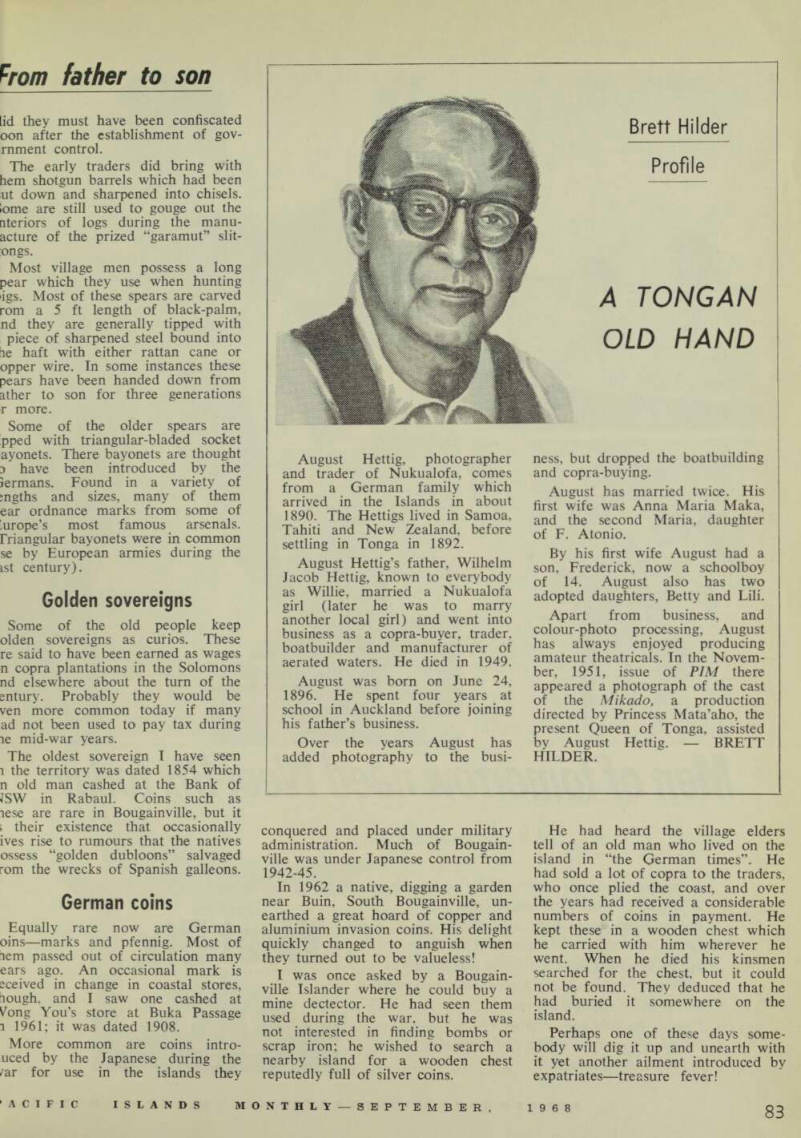 89
89 90
90 91
91 92
92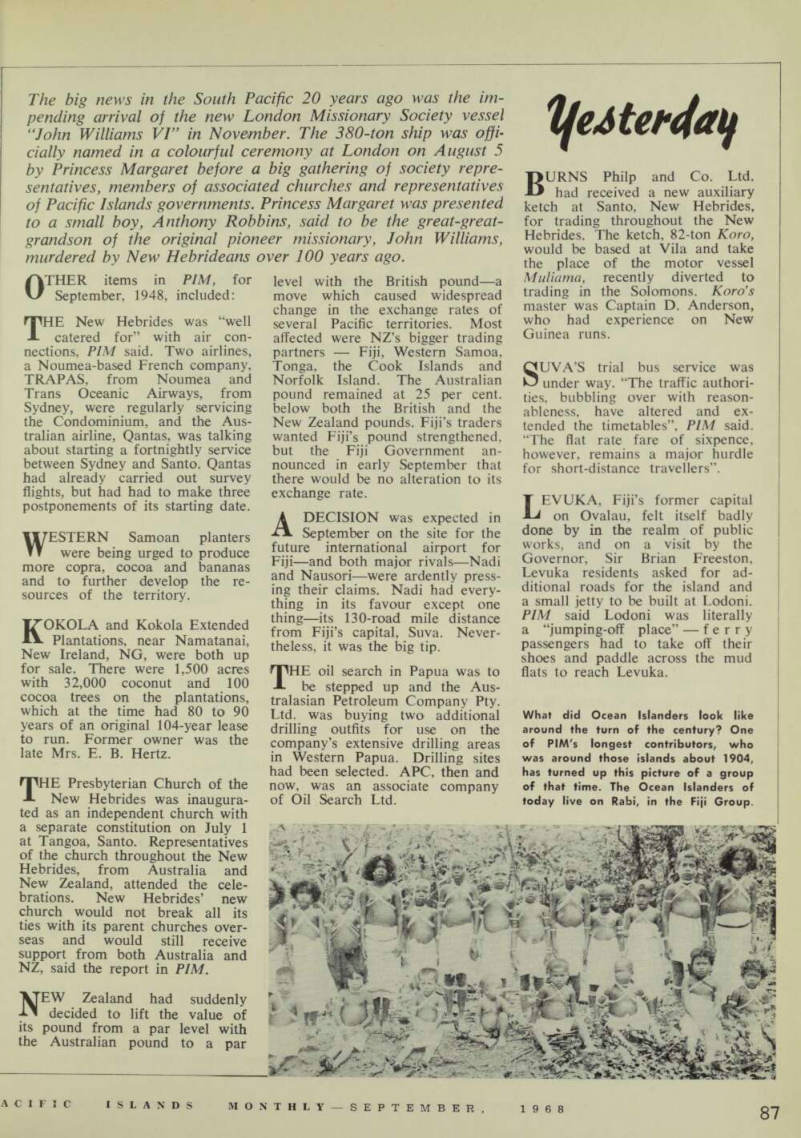 93
93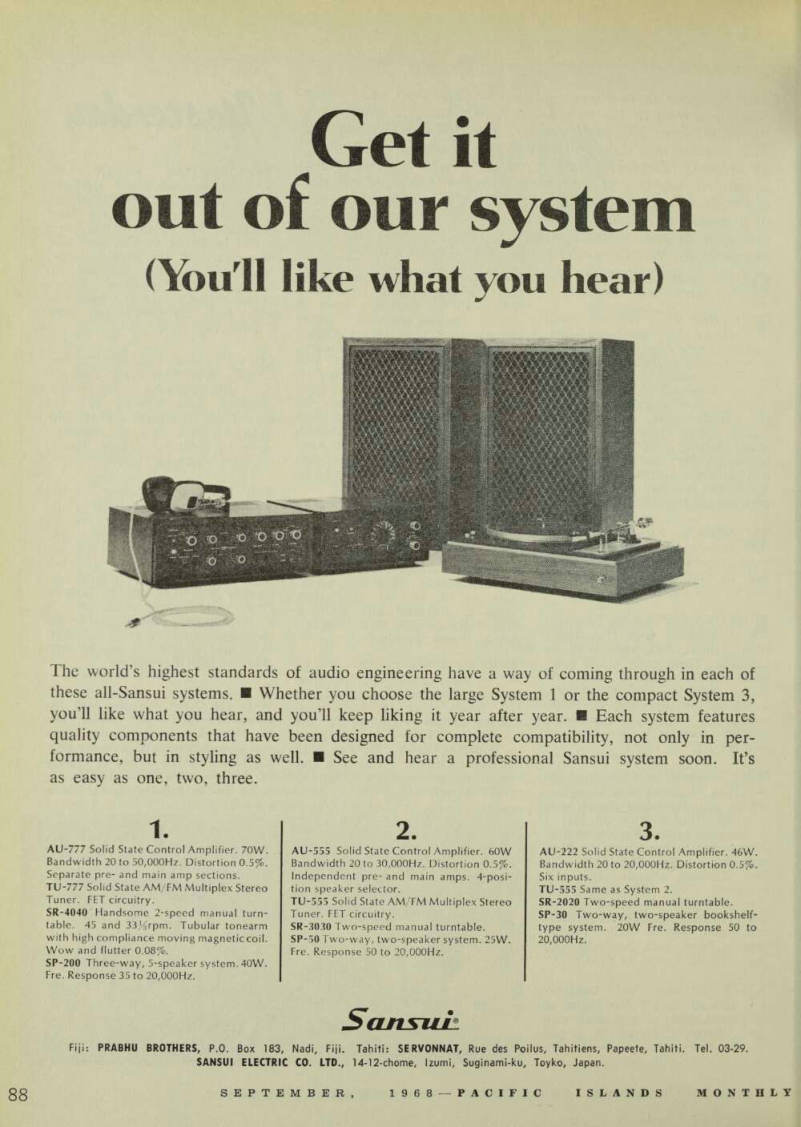 94
94 95
95 96
96 97
97 98
98 99
99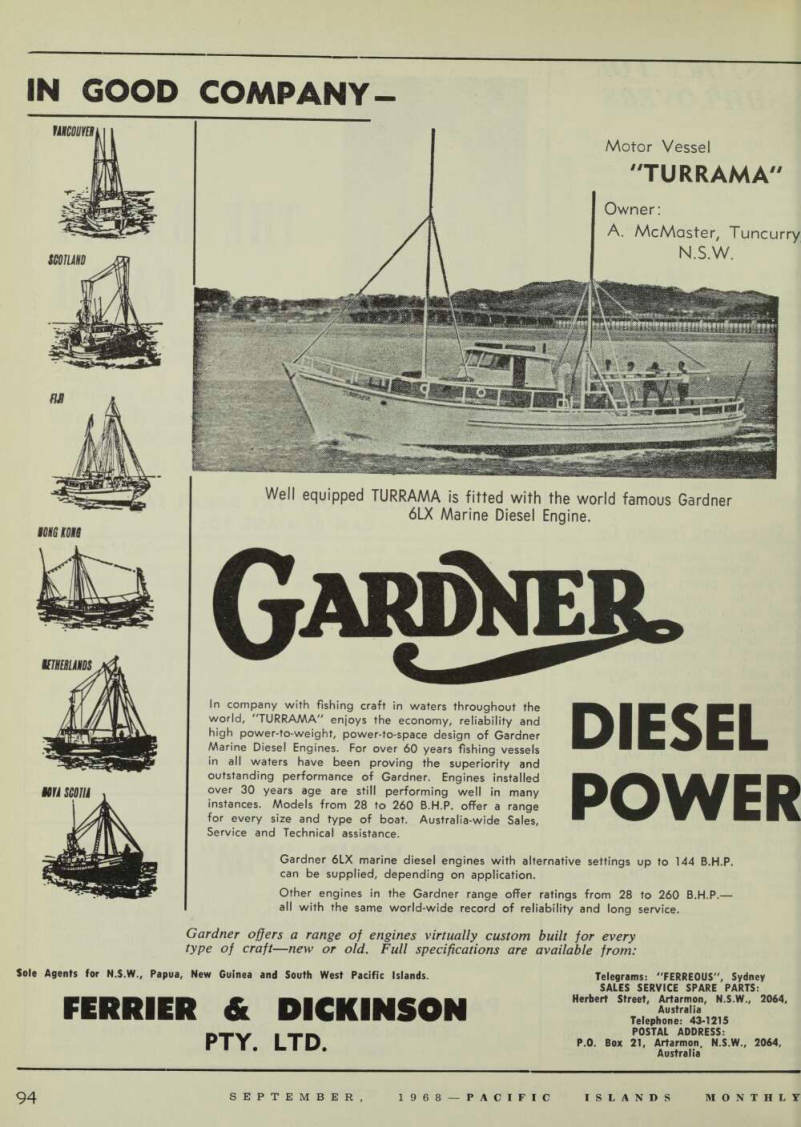 100
100 101
101 102
102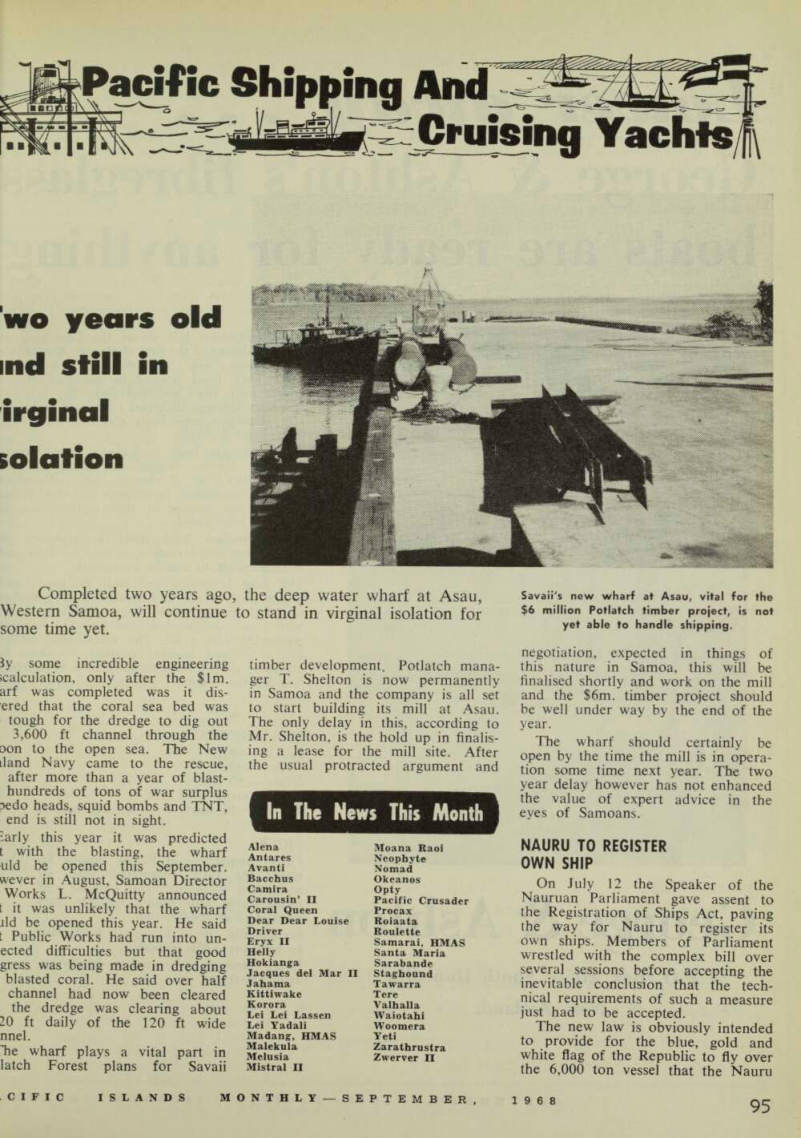 103
103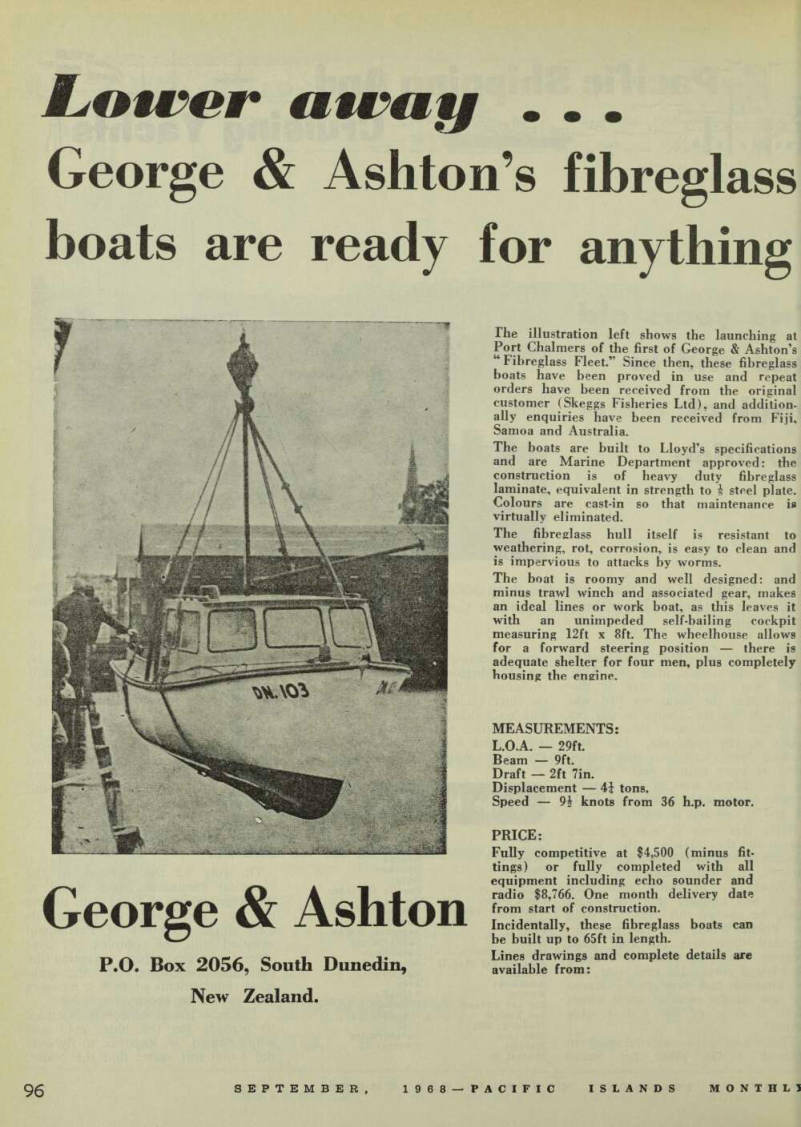 104
104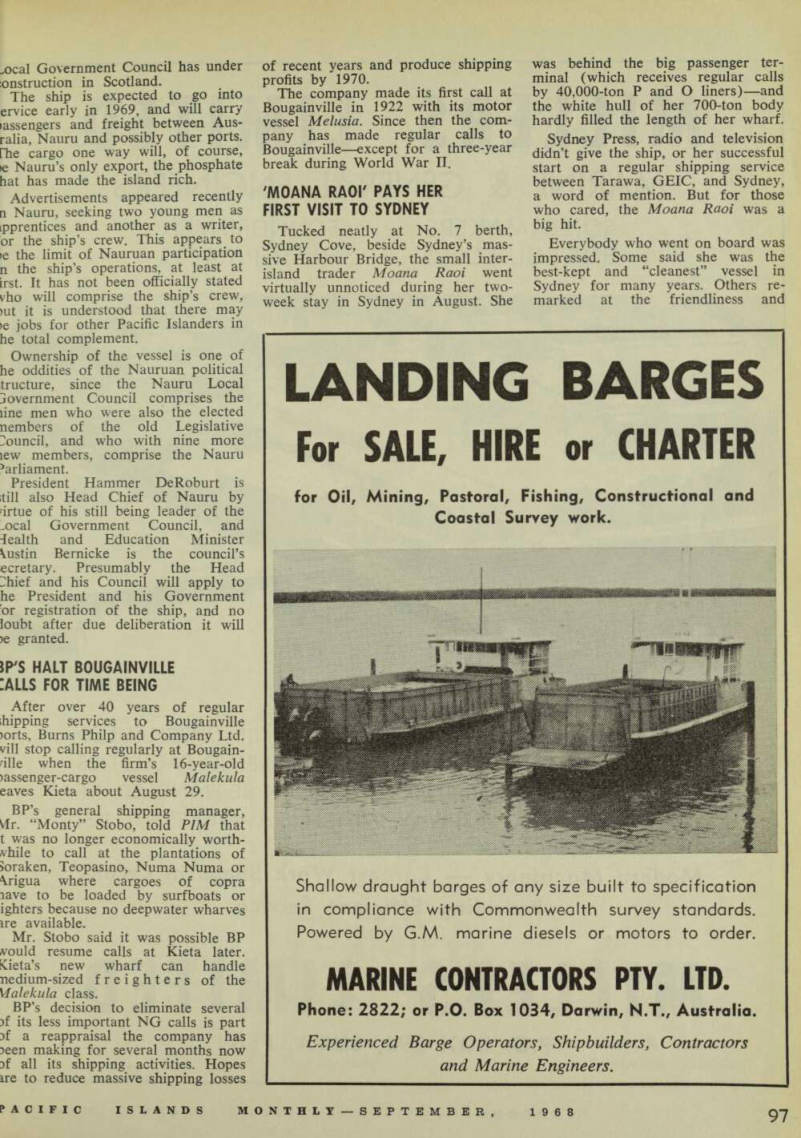 105
105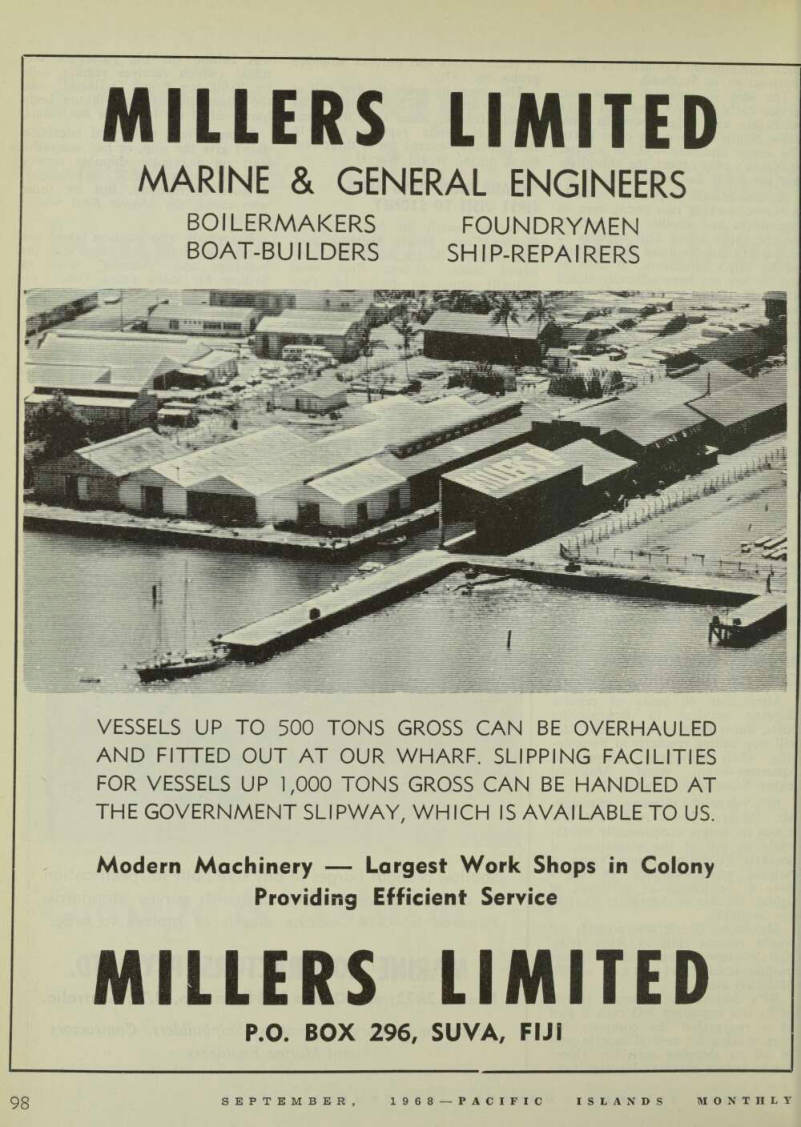 106
106 107
107 108
108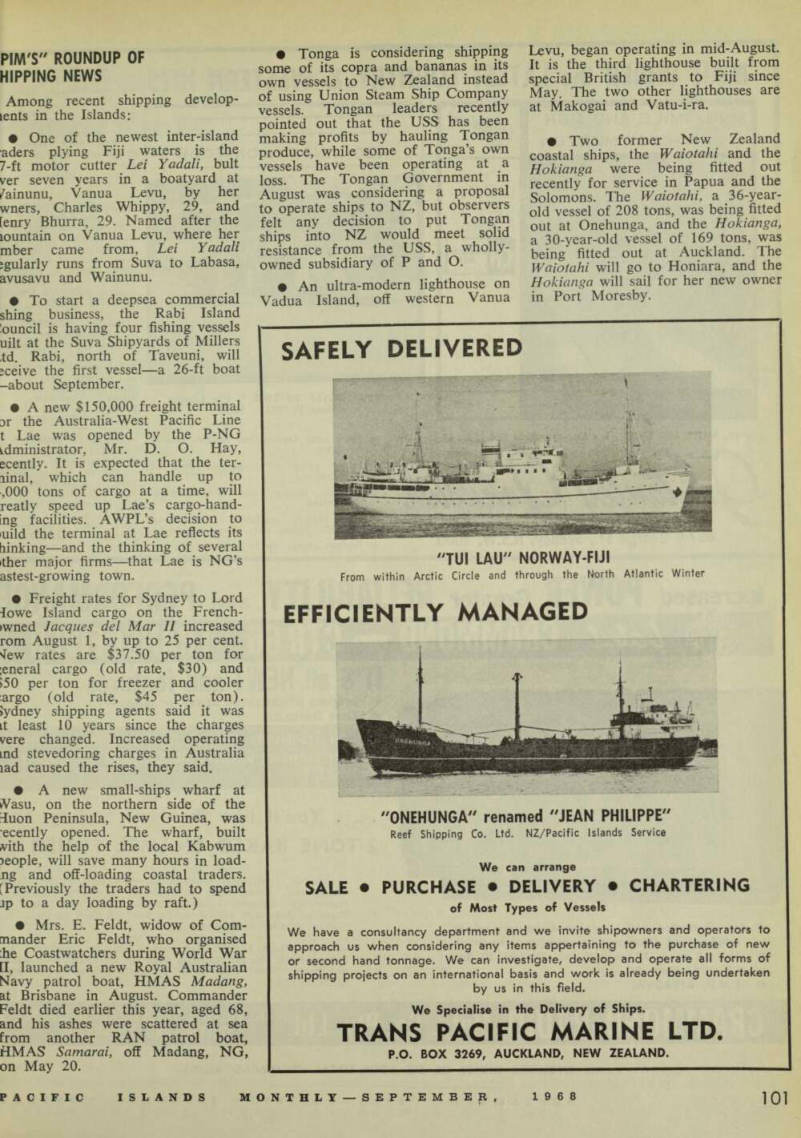 109
109 110
110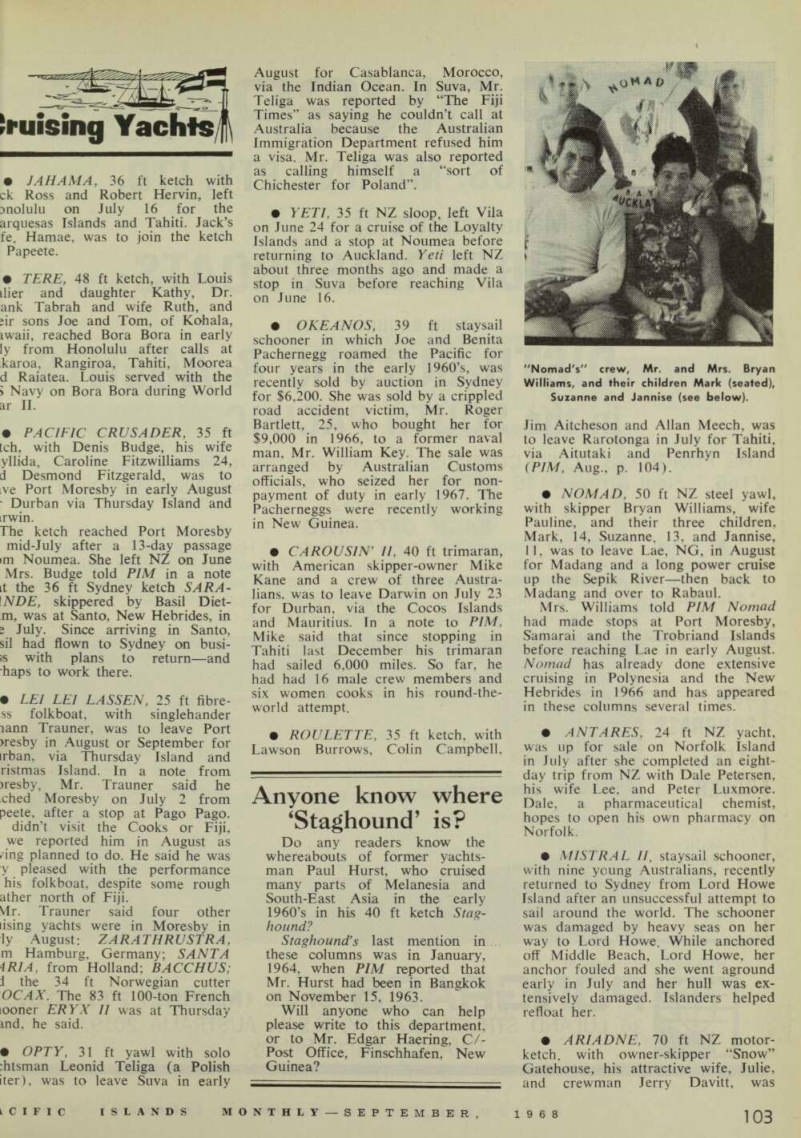 111
111 112
112 113
113 114
114 115
115 116
116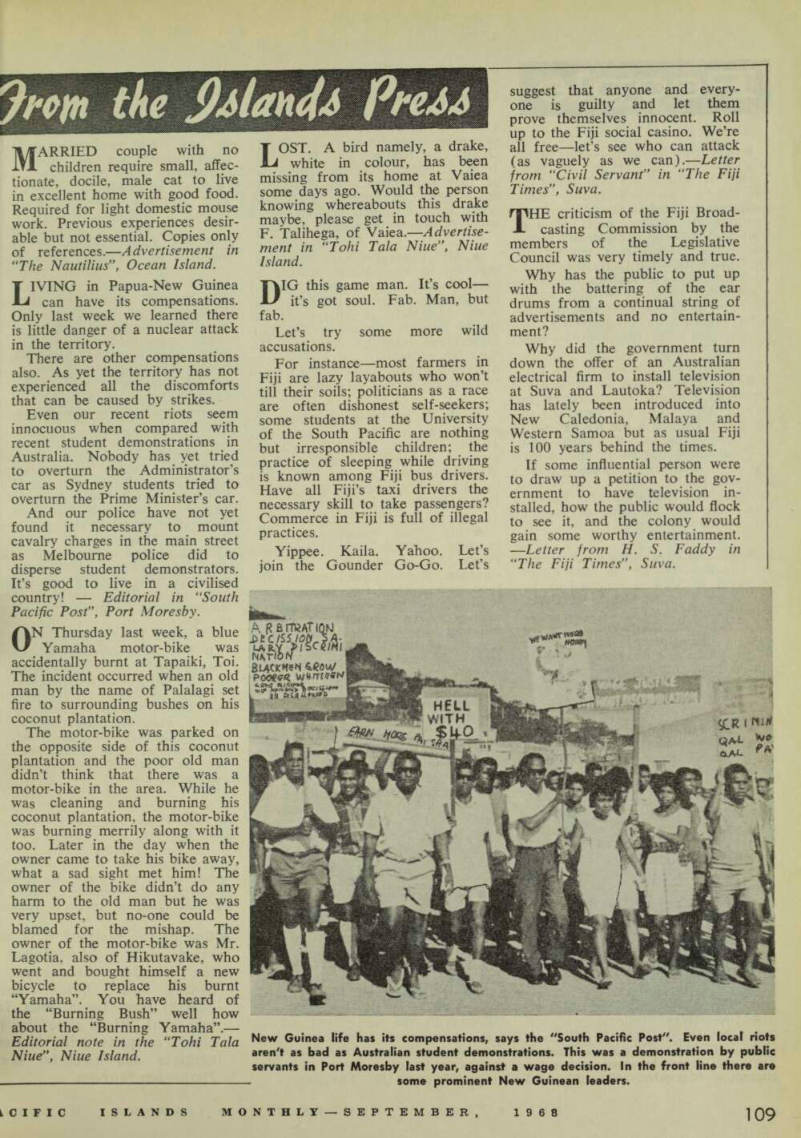 117
117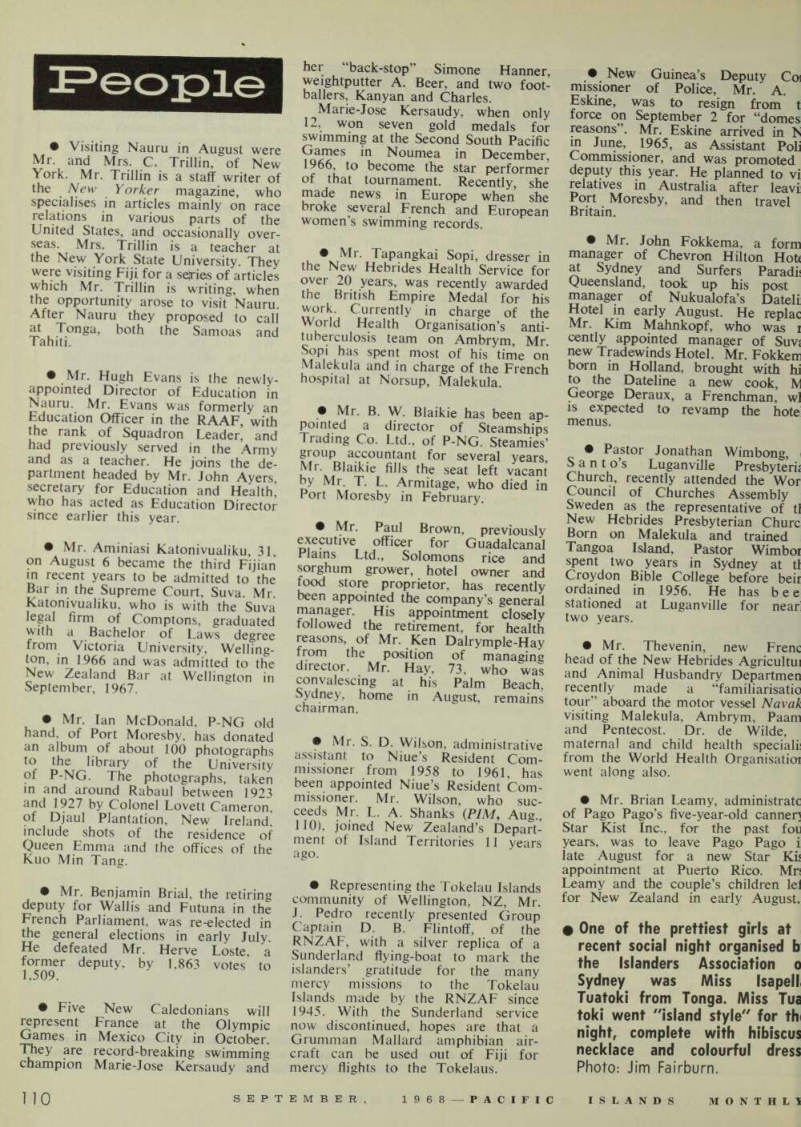 118
118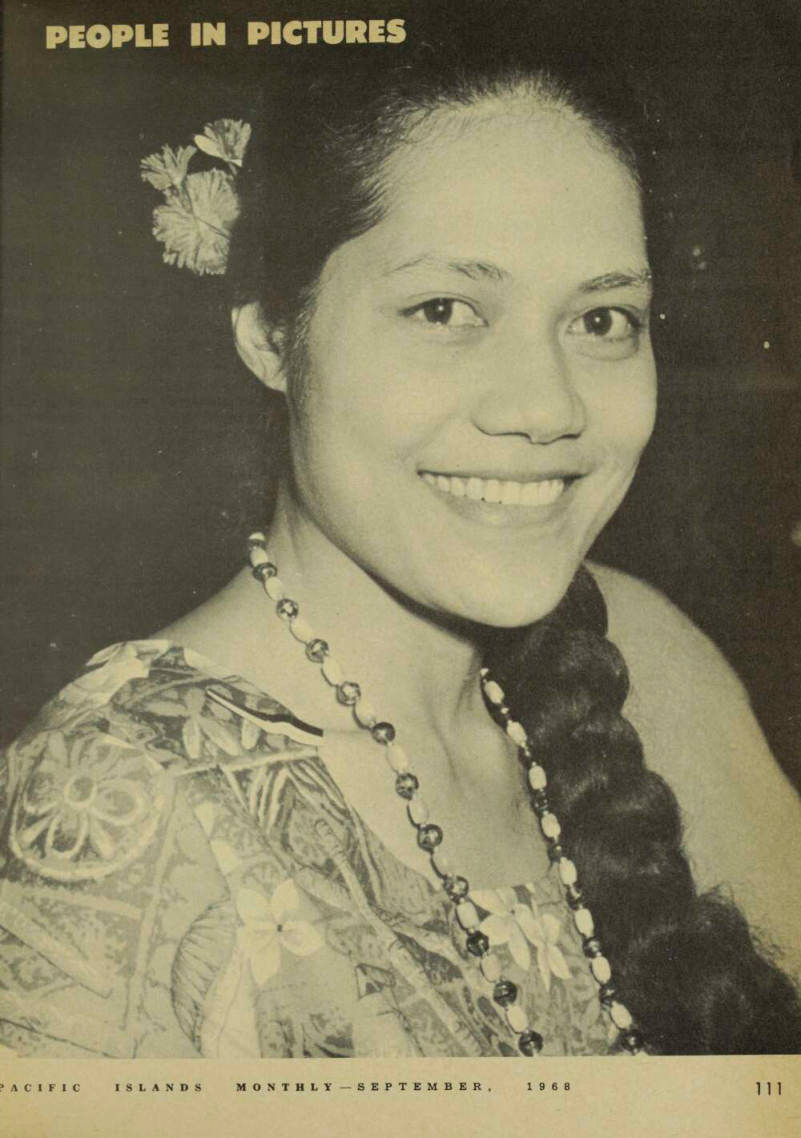 119
119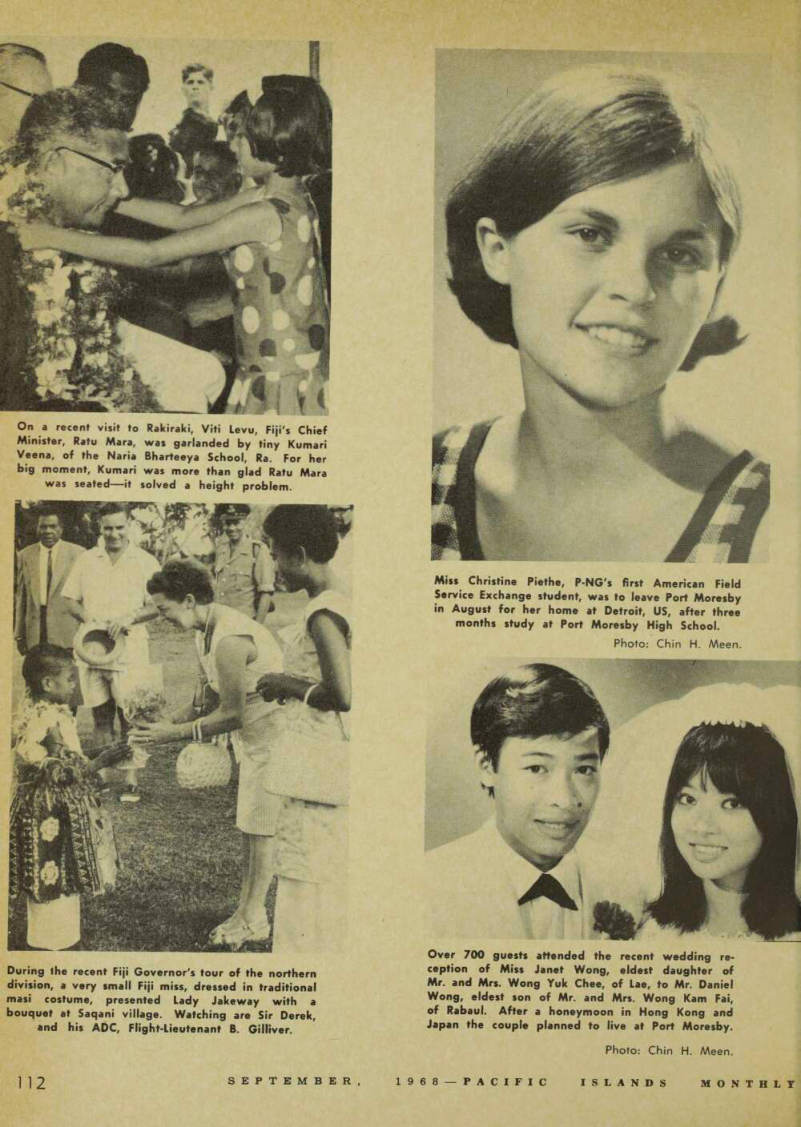 120
120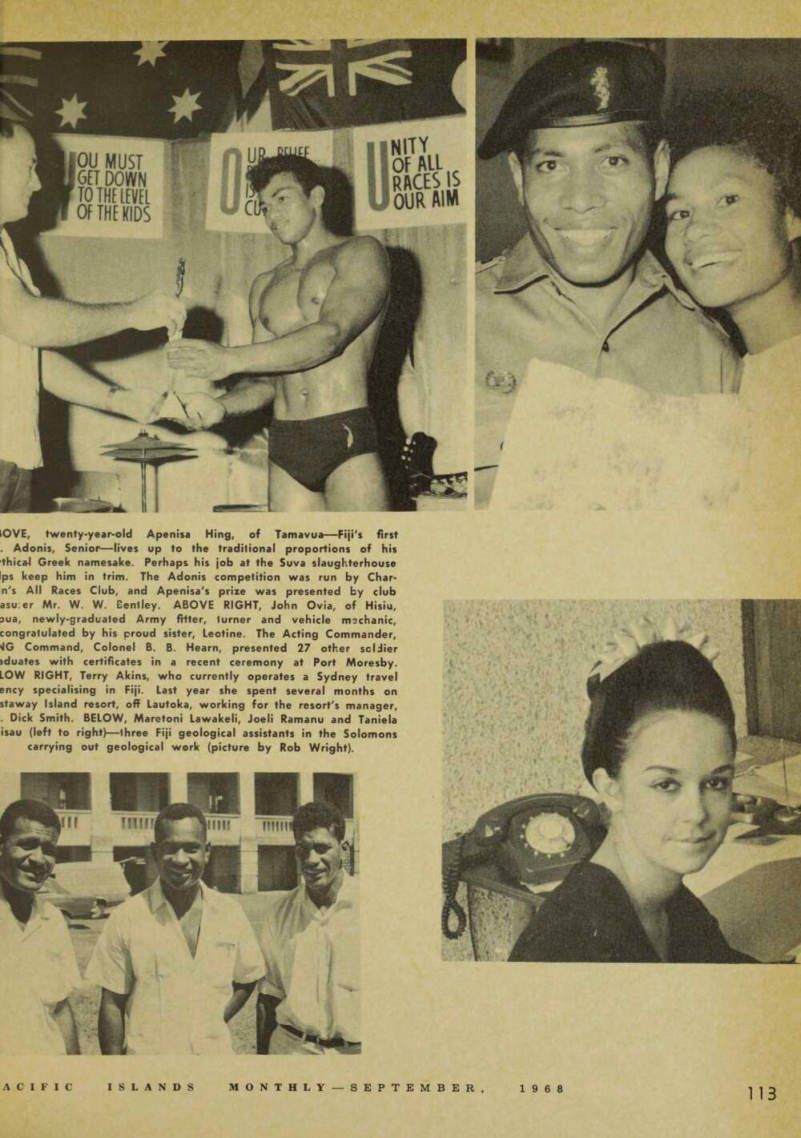 121
121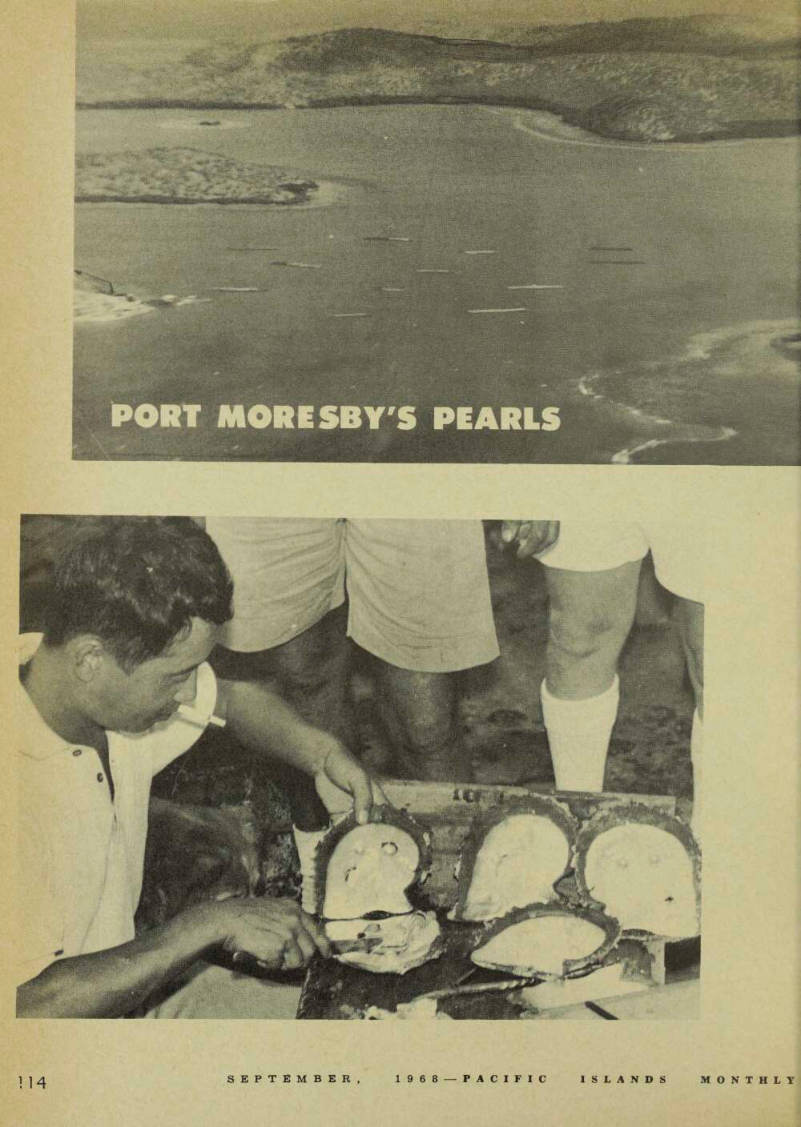 122
122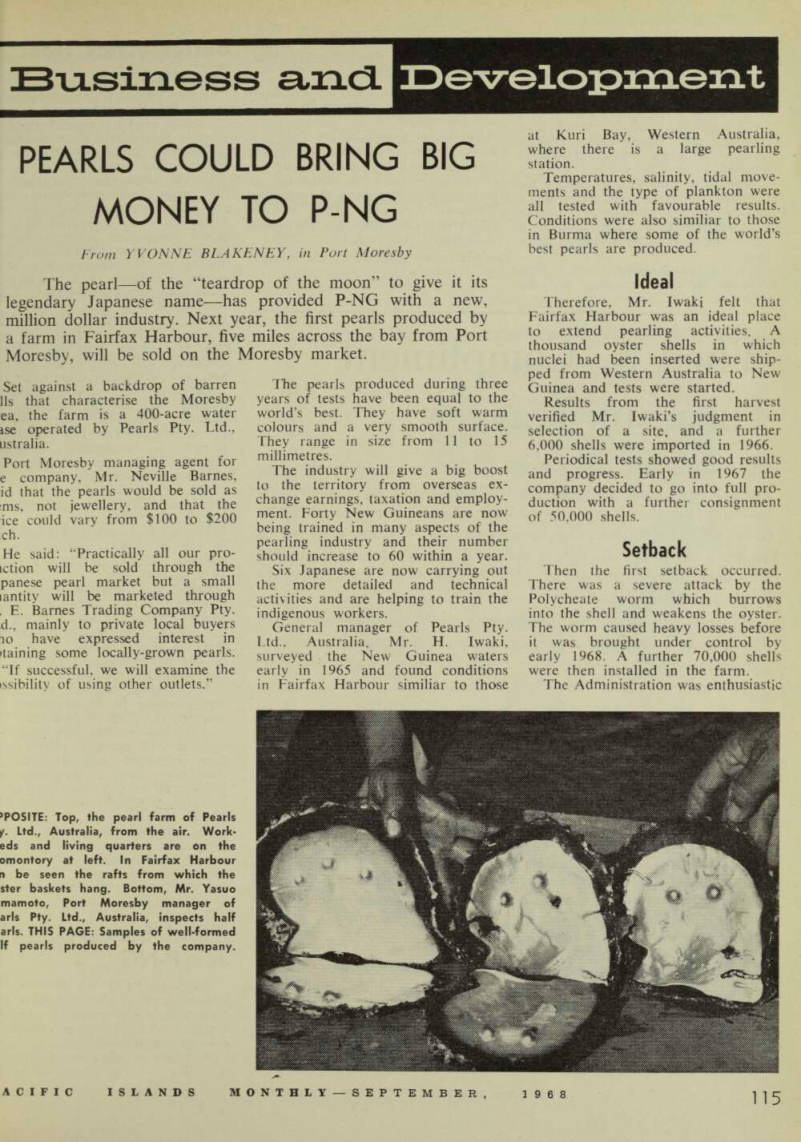 123
123 124
124 125
125 126
126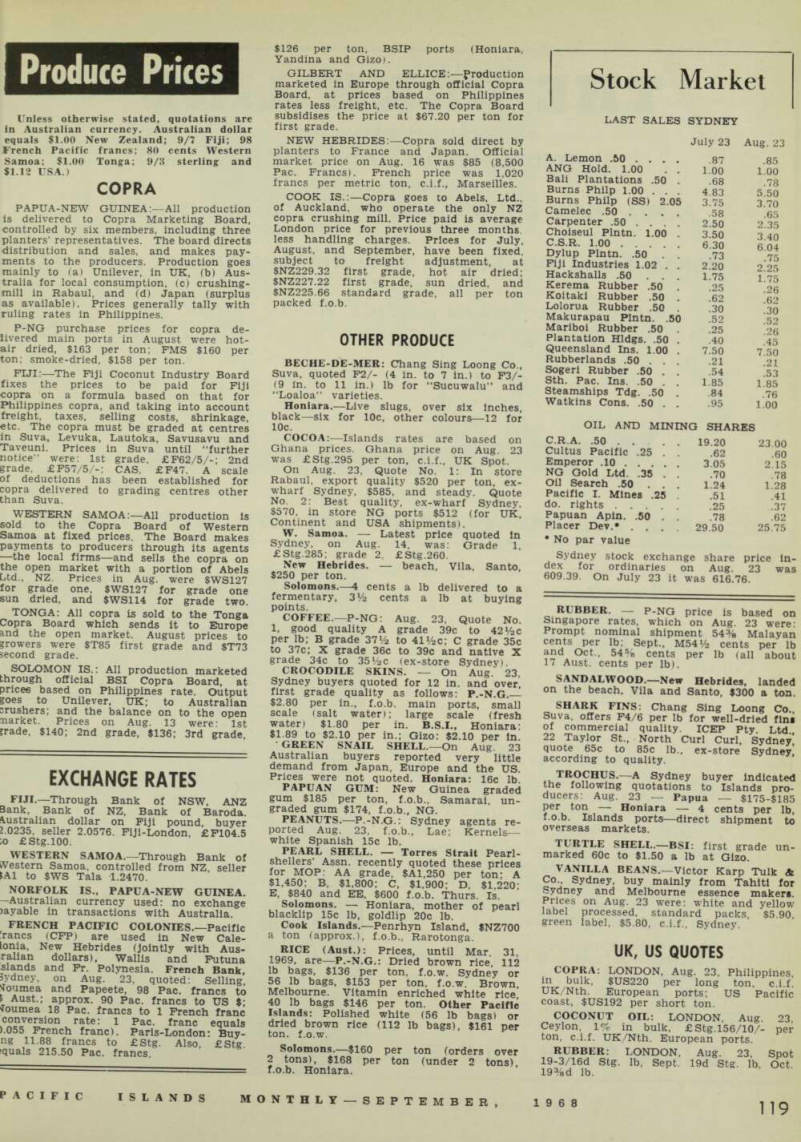 127
127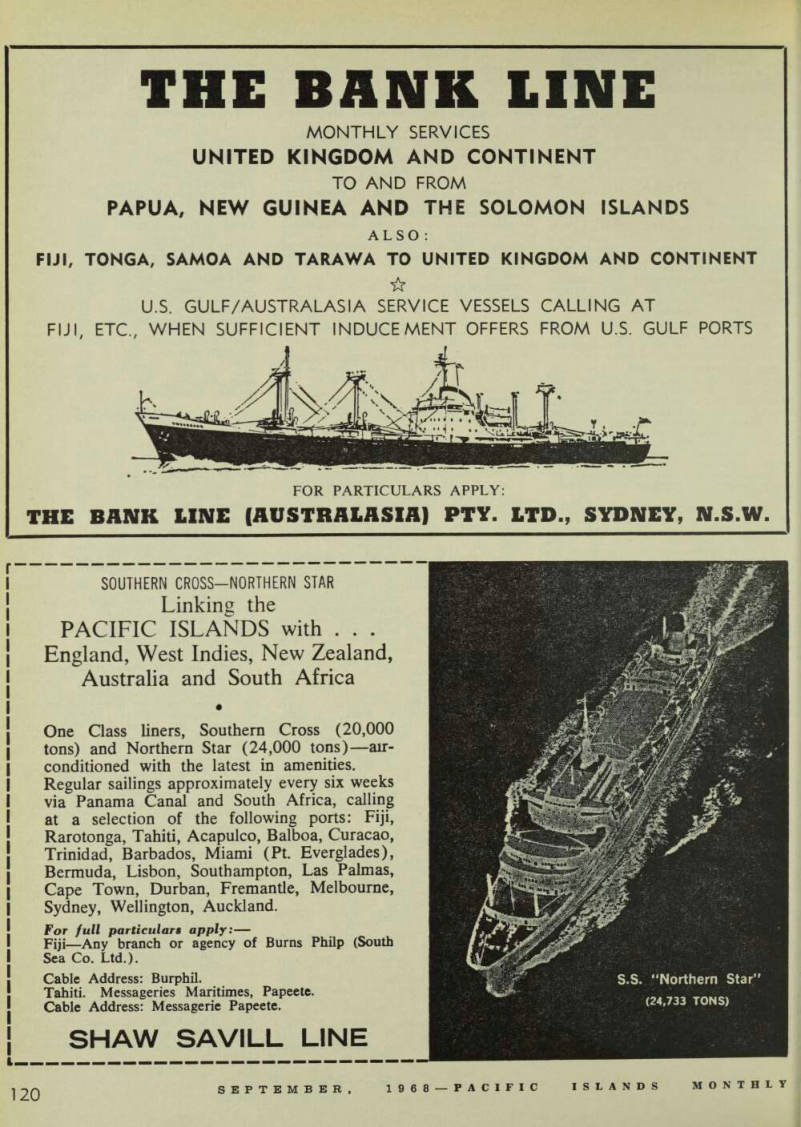 128
128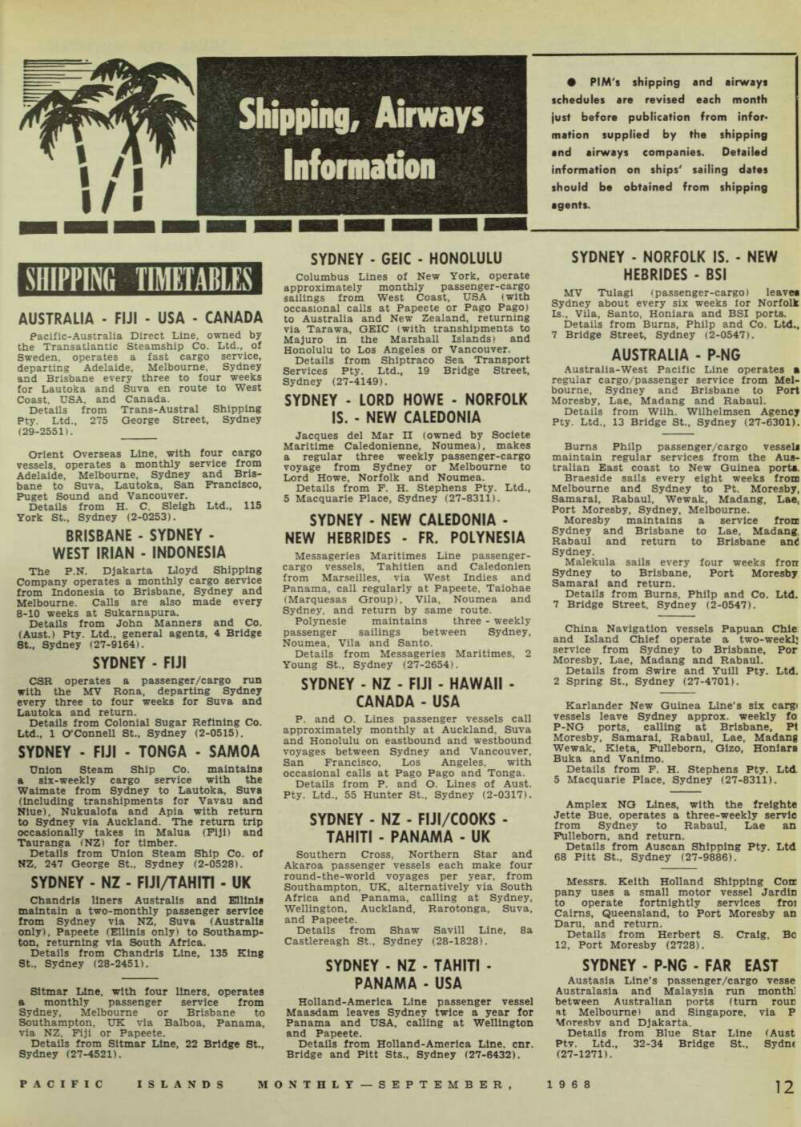 129
129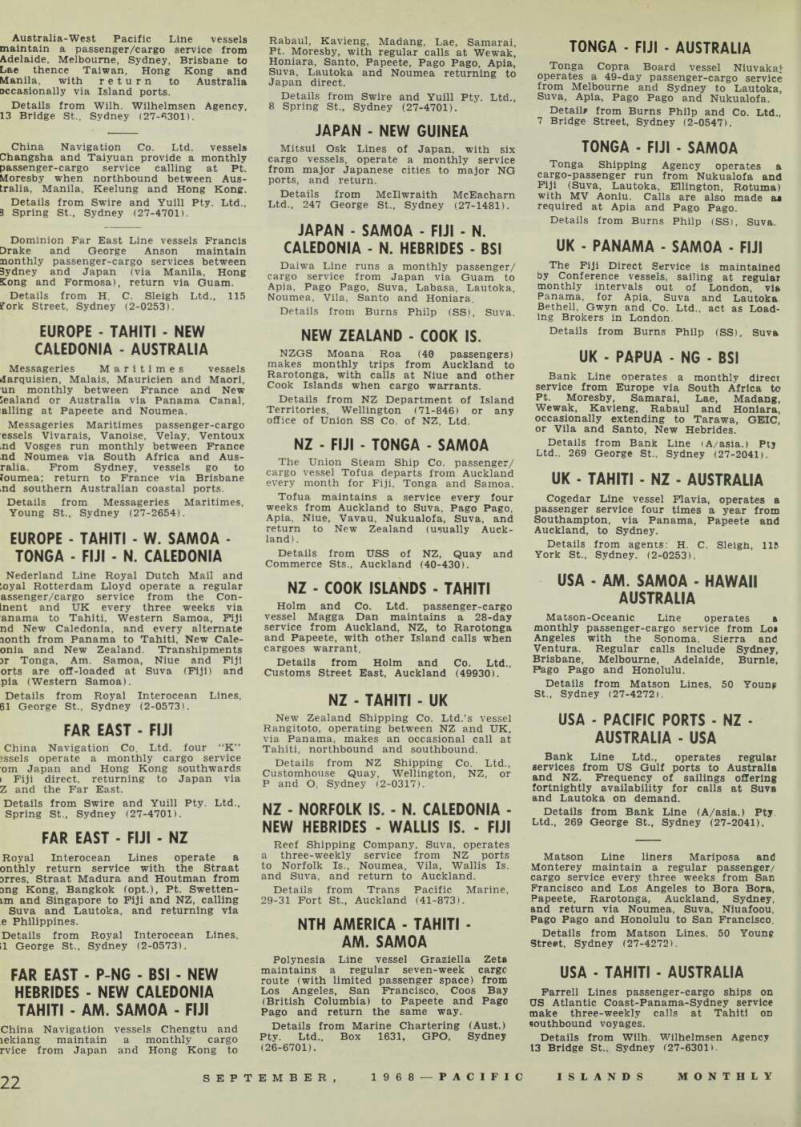 130
130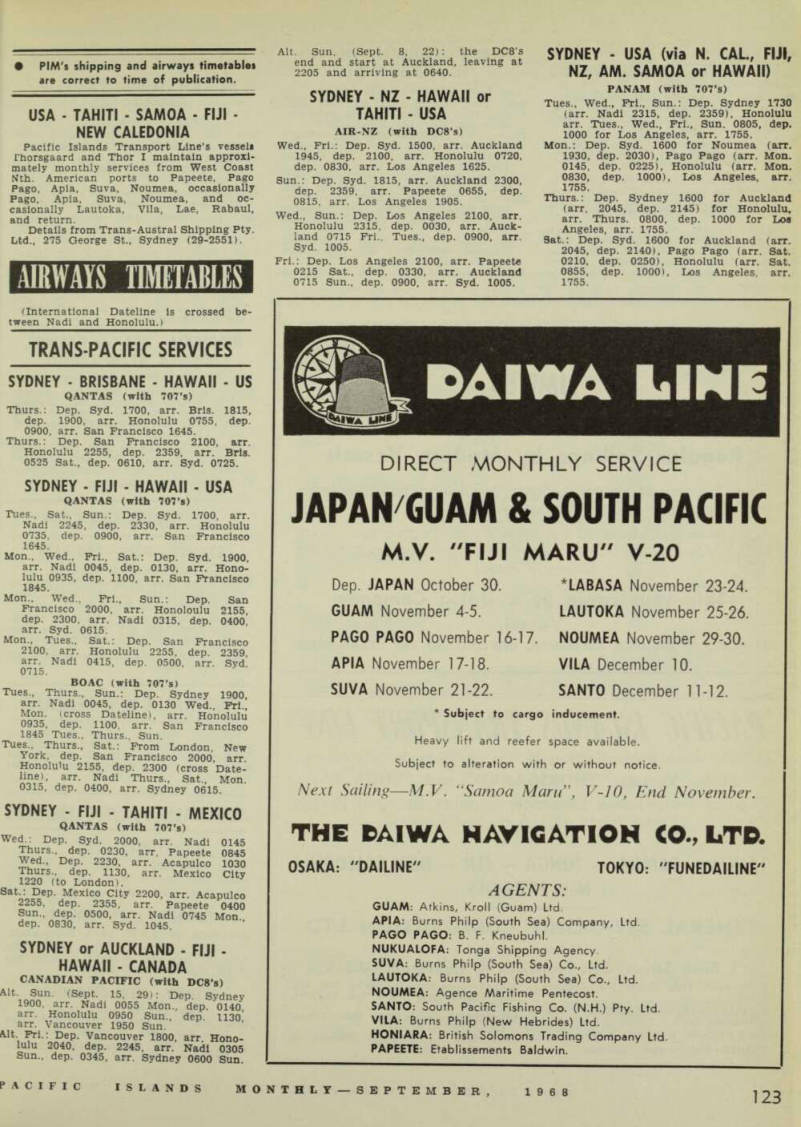 131
131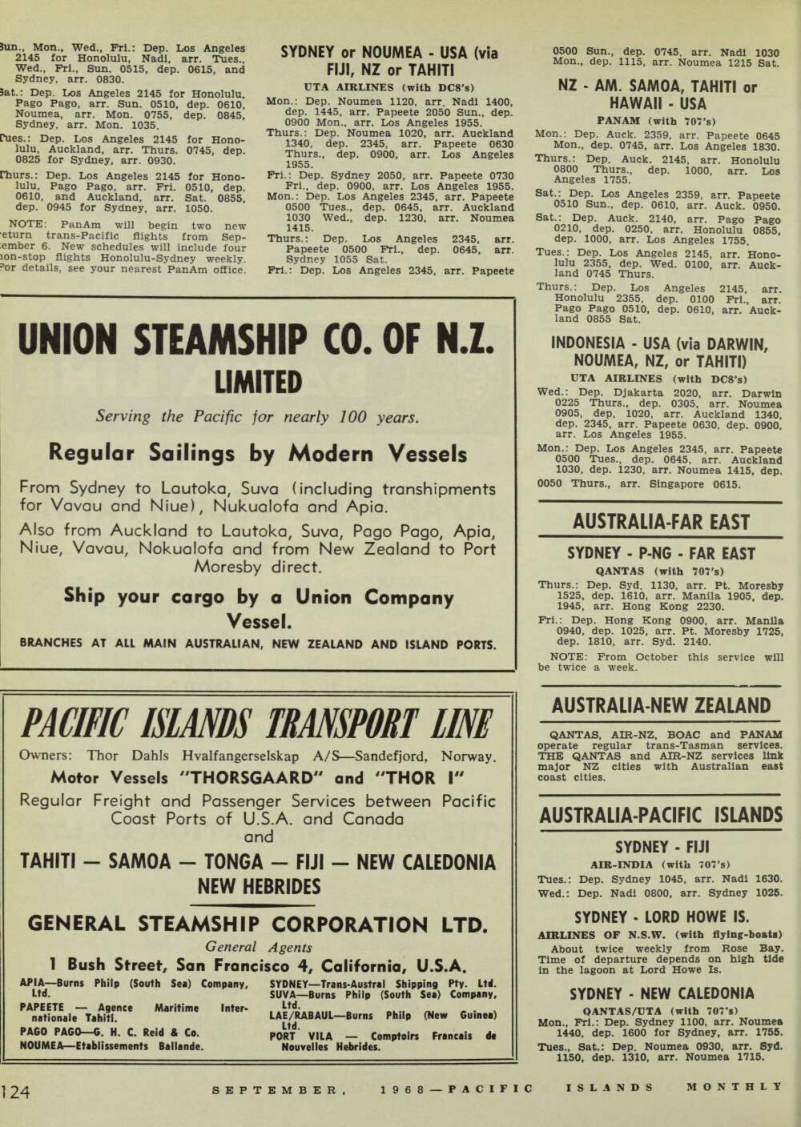 132
132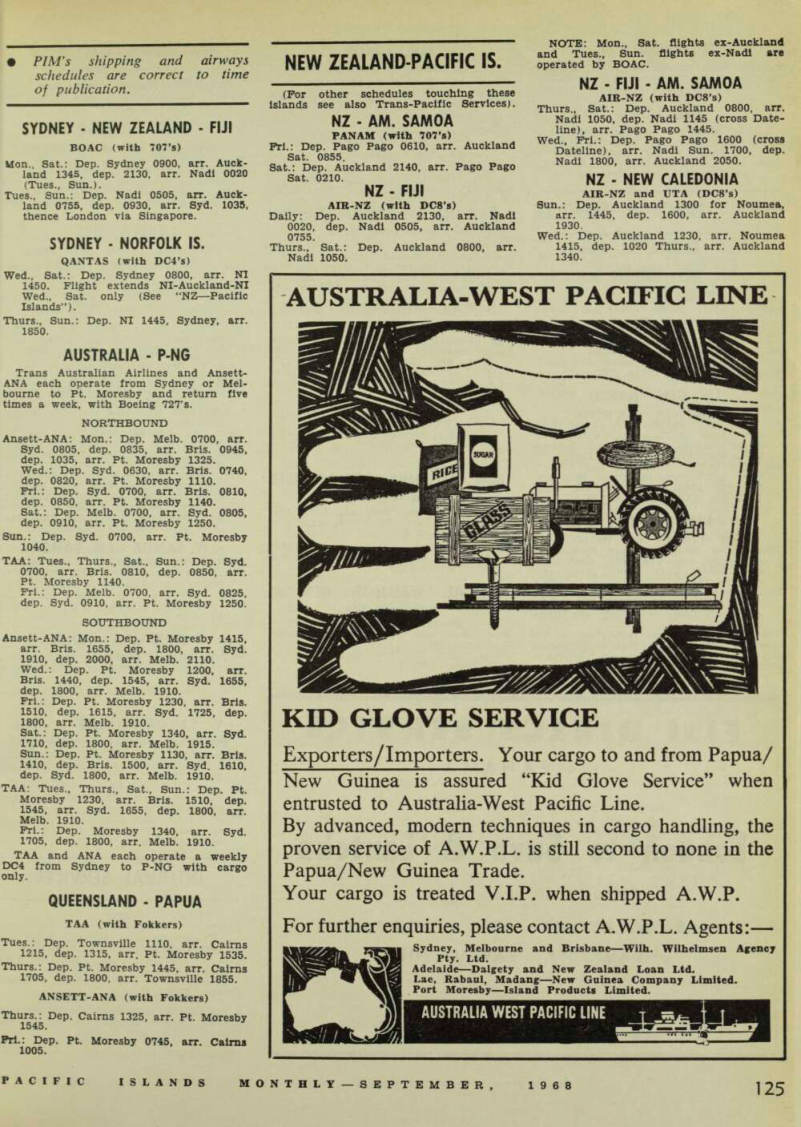 133
133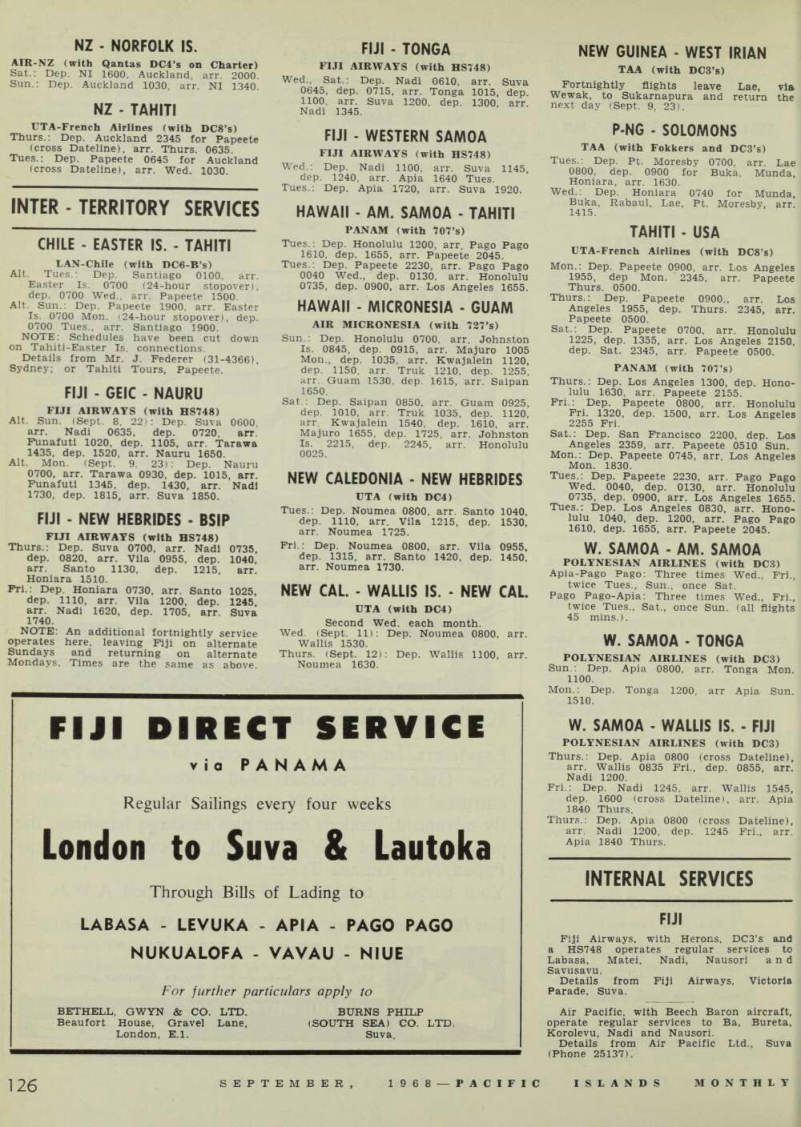 134
134 135
135 136
136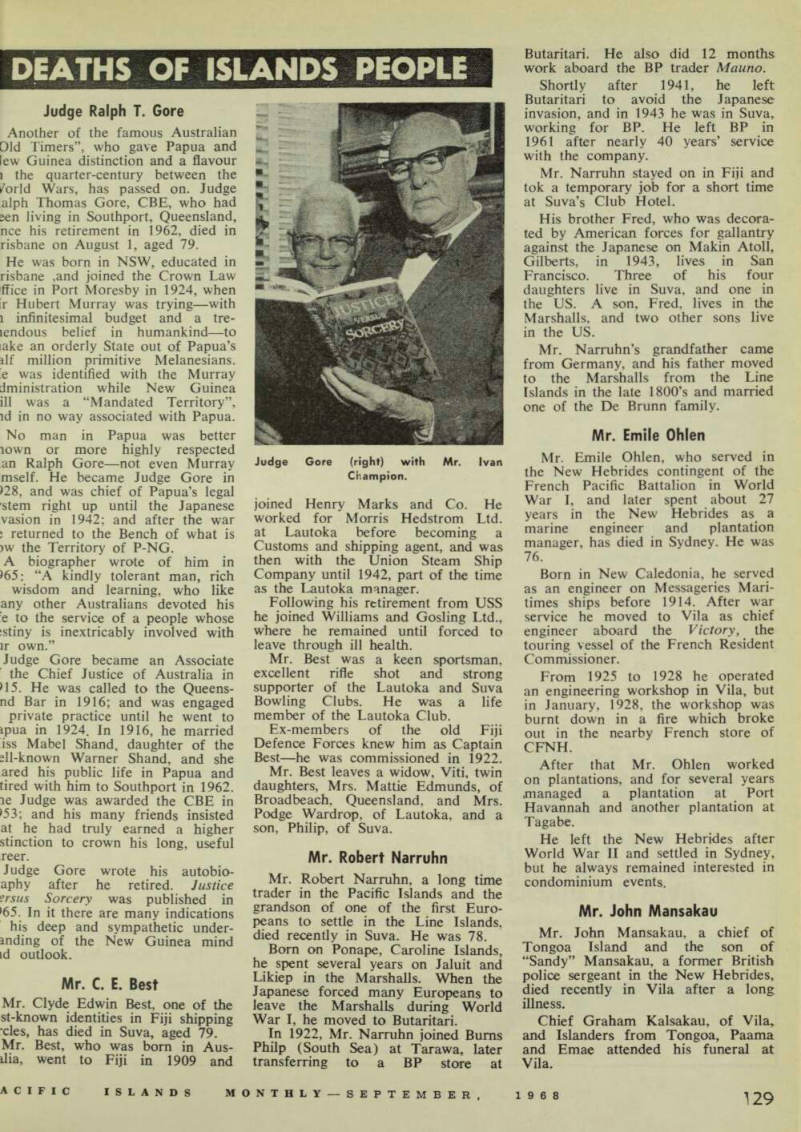 137
137 138
138 139
139 140
140 141
141 142
142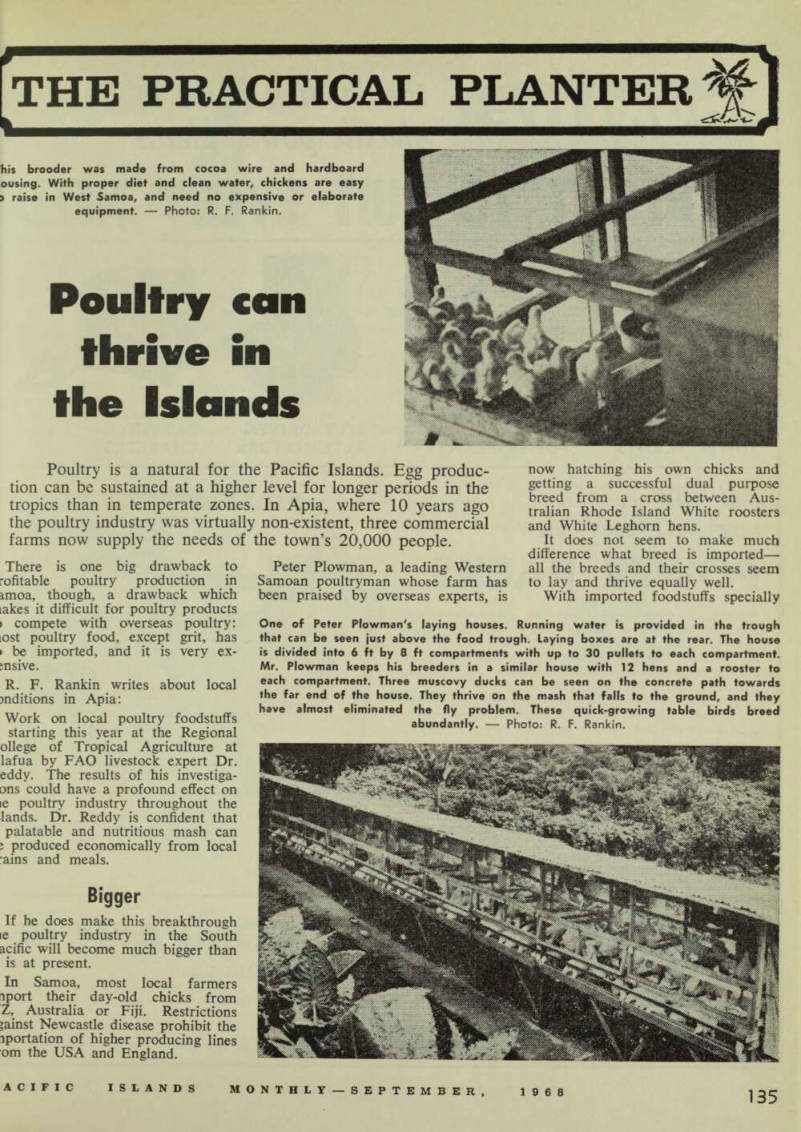 143
143 144
144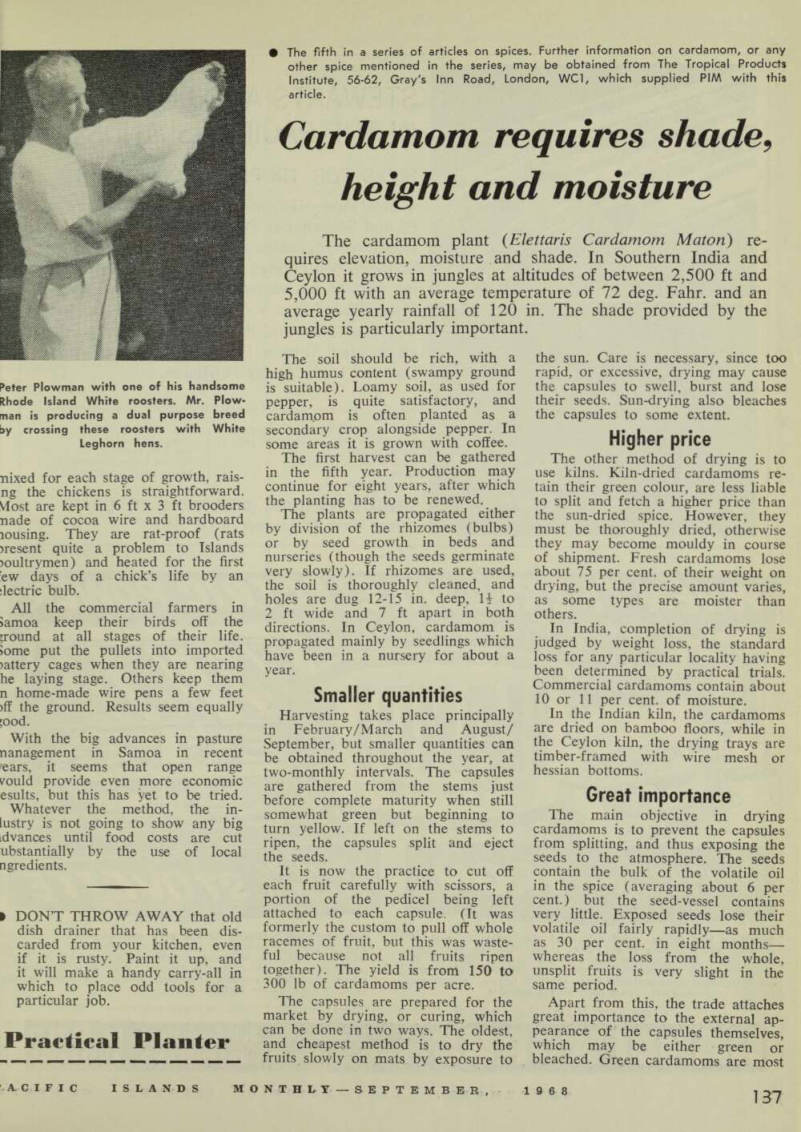 145
145 146
146 147
147 148
148 149
149 150
150 151
151 152
152 153
153 154
154 155
155 156
156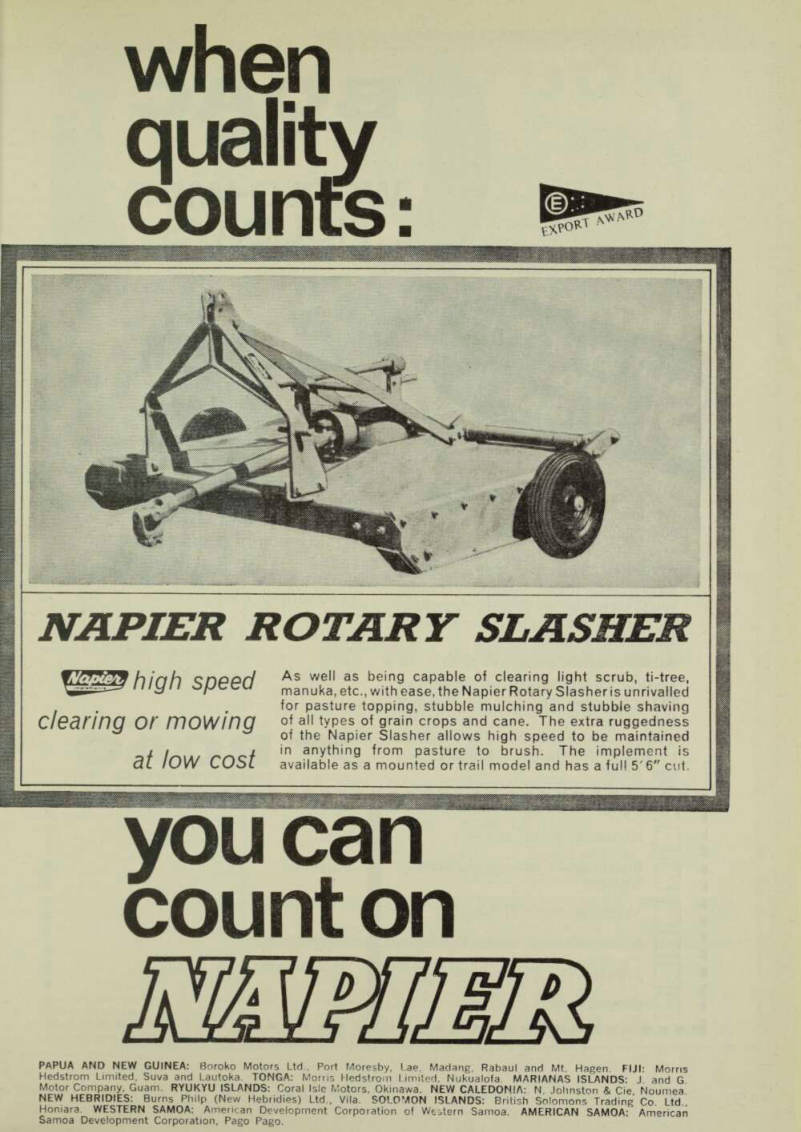 157
157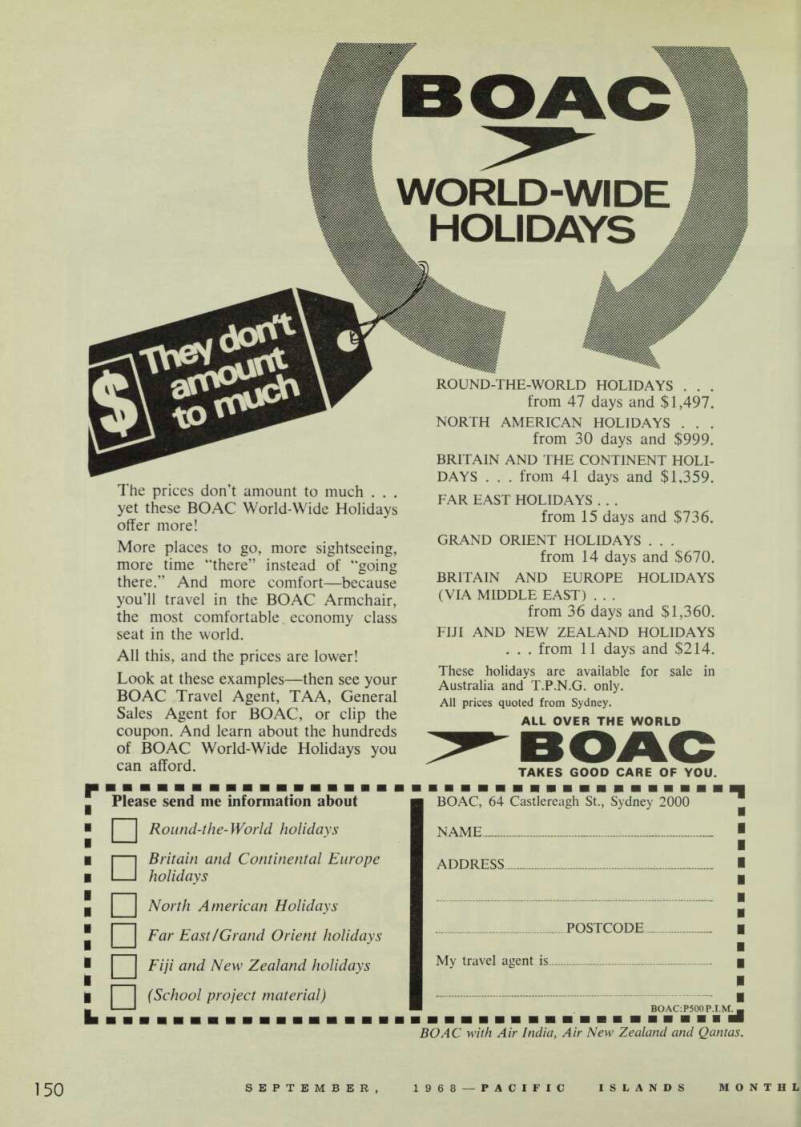 158
158 159
159 160
160 161
161 162
162