
Monthly
Pacific Islands Monthly
Registered at C.P.0., Sydney, for transmission by post as a newspaper.
August, 1968
News Magazine Of The South Pacific
i*ANDS T "5 5 L 'V< 0C r» " E V EA . IAND ' 45C FUI - 3/9 • f»ENCH PACIFIC ISLANDS, 55 FRCS. CFP. • U.S. PACIFIC TERRITORIES. 70c m P.M ft amh am
Our Cover
From time to time we are askea why we don’t use on our cover c “typical” Islands scene. When we ask what constitutes a typical Islands scene we usually find that the questioner means palm trees and surf Here are some palm trees and surf photographed in Fiji by Rob Wright Everybody happy?
Advertisements & other items, pp. 2-16 (11 items)
August, 1968-Pacific Islands Monthi
This is how we go!
M „ .£ : v : :•« , * MANUS is. • v - ...« —
I vS / ■ RABAUC« %
Ma/n routes only ”*''H V.
Ml HAGENS**
W^aj
\ V NA \ .X . ;
* PORT MORESBY:
tef\
/ \ \ TT r—*.~x
HONIARA*
This is where we go!
m
This is how we go!
In air-conditioned comfort. With twin prop-jet reliability.
And high wing aircraft with a perfect picture-window view from every seat. We want you to fly TAA and really enjoy seeing the Territory. Now improved internal schedules mean better services between all main Territory centres. Connecting at Port Moresby with TAA’s improved ‘Bird of Paradise’ T-Jet flights to and from Australia.
Take care to book TAA and we’ll take extra care of you. Contact your Travel Agent or TAA; Port Moresby 2101. Lae 2311. Madang 2478. Rabaul 2567. Goroka 8.
Mt. Hagen 4. Wewak 103.
Fly TAA the Friendly Way
m K
AIRLINES OF NEW GUINEA
BURNS PHILP (SOUTH SEA) CO. LTD.
GENERAL MERCHANTS AND SHIPOWNERS
SHIPPING, CUSTOMS AND FORWARDING AGENTS
Fiji:
SUVA
LEVUKA.
LAUTOKA.
LABASA.
SAVU SAVU,
BA.
SIGATOKA.
TAVUA.
TAVEUNI.
BRANCHES
Samoa:
APIA.
PAGO PAGO.
Tonga:
NUKUALOFA.
HAAPAI.
VAVUA.
NORFOLK ISLAND.
NIUE ISLAND.
AGENTS FOR:
QUEENSLAND INSURANCE CO. LTD.
BURNS PHILP TRUSTEE CO. LTD.
SHELL COMPANY (P. 1.) LTD.
SHIPPING
OVERSEAS AGENTS
BURNS, PHILP & CO. LTD., Sydney.
BURNS, PHILP & CO. LTD., London.
BURNS PHILP CO. OF SAN FRANCISCO.
AGENCIES
• The New Zealand Shipping Co. Ltd. • Shaw Savill & Albion Co. Ltd. • Port Line Ltd. • Bank Line Ltd. • General Steamship Corporation Ltd. • Blue Star Line • Cunard Line • Compagnle des Messageries Maritimes • British India Steam Navigation Co. Ltd. • Royal Inferocean Lines • Nederland Line Royal Dutch Mail/Royal Rotterdam Lloyd.
EXCLUSIVE DISTRIBUTORSHIPS INCLUDE
• AKAI TAPERECORDERS
• DUNLOP PRODUCTS
• EPIGLA3S PRODUCTS
• FERGUSON TRACTORS
• HELENA RUBENSTEIN
• HITACHI ELECTRONICS
• HOLDEN VEHICLES
• JOHNSON'S WAXES
• ROLEX WATCHES
• REVLON COSMETICS
• PENTAX CAMERAS
• SUNBEAM APPLIANCES
INTERNATIONAL AIR TRANSPORT ASSOCIATION REPRESENTATIVES for
QANTAS EMPIRE AIRWAYS LTD.
UNION DE TRANSPORTS AERIENS
ASSOCIATED COMPANIES
BURNS PHILP (NEW HEBRIDES) LTD.
AUTOMOTIVE SUPPLIES CO. LTD.
CORRIE & CO. LTD. • WROUGHT IRON AND STEEL
CONSTRUCTION CO. LTD. • BISH LTD.
AIR NEW ZEALAND
ALITALIA :: PAN AMERICAN AIRWAYS
SPECIALISED SERVICES
EXPERT ADVICE ON WORLD AND LOCAL TOURS I
TRAVEL SHIPPING FORWARDING CUSTOMS I
FORMALITIES INSURANCE.
REGISTERED OFFICE: SUVA, FIJI
Code Address: "BURNSOUTH"
m mm m i ***orr HlCf m * ?■ i Arnott’s Nice Biscuits Crisp and sugar-sprinkled Arnott’s Lemon Crisp Biscuits With tangy lemon centres
slice
range
o
C U ITS
BIS
S
wH eatmea
hbedded
Si* eultt Arnott’s Orange Slice Biscuits Tangy orange cream in biscuit sandwich Arnott’s Shredded Wheatmeal Biscuits Golden-grain goodness for morning tea.
it & Bisect
FOU^O
HAL?
Arnott’s MILK ARROWROOT Biscuits All-day energy for children a favourite with all the family.
Arnott’s SAO Biscuits Ideal for snacks, suppers or between meals.
fC o<S!h^
Arnott’s SCOTCH FINGER Biscuits Chunky and butter-rich, with the true shortbread flavour.
Arnott’s CHEESE JATZ Biscuits Crisp as could be with a fine cheese flavour - perfect for entertaining.
There is no Substitute for Quality
For workshop...
for industry
C G
Industrial Gases
COMWELD Gas Welding & Cutting Plants; Rods & Fluxes; Flame Cleaning, Flame Hardening & Flame Heating Equipment.
EMF
Electric Welding
Equipment
Arc Welding Machines; Automatic Welding Machines; Electrodes.
Arnold-DeVilbiss
Spray Painting
Equipment
including spray guns, air filters and compressors—to multi-purpose units with spray booths and a full range of automatic equipment.
GIG can meet all your requirements for welding, cutting, bending, shaping and spray painting with equipment and instructive literature that cannot be matched.
Available only from
CIG NEW GUINEA PTY. LTD. P.O. Box 93 Lae.
CIG’S LOCAL TECHNICAL SALES REPRESENTATIVE MR R L Steadson.
CIG New Guinea Pty. Ltd. P.O. Box 1636 Boroko T.P.N.G.
BOROKO MOTORS LTD. P.O. Box 72 Mt. Hagen.
MADANG SLIPWAYS LTD. P.O. Box 47 Madang.
N.G.G. TRADING CO. Milford Haven Road P.O. Box 459 1j»« BOROKO MOTORS LTD. P.O. Box 1259 Boroko.
J L CHIPPER & CO. Box 228 Rabaul.
MESSRS. COLLINS & LEAHY PTY. LTD. P.O. Box 57 Goroka.
TISCHLER ENTERPRISES PTY. LTD. P.O. Box 812 Honiara Guadalcanal.
INDUSTRIAL GASES FIJI LIMITED G.P.O. Box 687 Suva Fiji.
' ■ A ' S&fi P
tfgjl ; J
*a* *** 4.
Remember how mould
mess up your paint?
Then along came Dulux* with ‘Spring’ and ‘Super-Enamel’.
And suddenly mould didn’t seem nearly so keen about discolouring the finish.
Dulux ‘Spring’ is the flat plastic paint that doesn’t offer mould anything to grow on. ‘Super-Enamel’ is the one you use for cupboards and doors where steam and grease are about.
They both flow on smoothly. ‘Spring’ dries to a smart matt finish. ‘Super-Enamel’ contrasts wonderfully with a high, hard gloss.
If you spot a stain or a hint of mould, just wipe
used to
it off and nobody will know you haven’t just painted. We make our paints right here in New Guinea to be sure they’ll stand up to local conditions.
Dulux is a registered trade mark of BALM PAINTS LTD.
World
quality
■ € f* u s' o V* & Only the world’s finest Virginia tobaccos are blended to produce ...
PLAYER’S
GOLD
LEAF
one of the great cigarettes
0671-5/67
Perfect Tape Recorders
For Pleasure Any where
MODEL X-1800SD
• 8-track stereo cartridge recording and playback. • Transcriptions open reel to cartridge with only this X-1800SD • 4-track stereo/monaural recording and playback (open reel) • Wide frequency CROSS- FIELD HEAD (open reel) •ONE MICRON GAP HEAD (cartridge)® Magnificent oil finished wooden cabinet i I
MODEL M-9
• 4-track stereo/monaural recording and playback • All solid-state 40 watts music power • The wide frequency CROSS-FIELD HEAD • 4 speeds, 3 heads • Automatic shut-off • Automatic pinch wheel release • Automatic lever release • Magnificent oil finished wooden cabinet Pm X model x-v Portoblc Stßrco Tope Recorder • 4 track stereo/monaural recording and playback • 4 speeds (15/16, 1%, 3% and 7>£ips) •7" reels ®The Wide Cross-Field frequency response • New brushless micro motor •40 watt solid state amplifier • 16 hours maximum recording capacity • Perfect AC or DC (re chargeable) operation gx rc i r-i
(DAKAI
\KAI ELECTRIC CO., LTD.
■TIGASHIKOJIYACHO OHTA-KU TOKYO JAPAN
AUSTRALIA: Magneton) Australasia Pty., Ltd. 210 Clarence Street, Sydnee. N.S.W. HEW ZEALAND: G. Glausiuss Coy. 187-189 Hereford Street Chrislcgurch. FIJI ISLANDS; Burns Philp (South Sea) Co.. Ltd., Suya. Burns Philp (South Sea) Co., Ltd., Lautoka. SAMOA: Burns Philp (South Sea) Co., Ltd., Pago Pago, American Samoa. Burns Philip (South Sea) Co., Ltd., Apia Western Samoa. Norfork Island: Burns Philp (South Sea) Co.. Ltd., Norfolk Island South Pacific. NEW HEBRIDES: Burns Philp (New Hebrides) Ltd., Port Vila. Burns Philp (New Hebrides) Ltd Santo NEW CALEDONIE; Menard Frfires Rues Jean Jaurfs et du General Gallieni. Noumea. BRITISH SOLOMON ISLANDS: Mendana Enterprises (Solomon islands) Ltd.. P.O. Box 12, Honiara. 8.5.1. P. NAURU: Nauru Co operative Society. COOK ISLANDS: N.T. NAPA (AVARUA) Ltd. Rarotonga TAHITI - Ets Comimpex, P.O. Box 200. Papeete. PAPUA & NEW GUINEA; S.O. Svensson (N.G.) Ltd.. P.O. Box 508., Pori Moresby Papua S XG Diczbalis Pty. Ltd., P.O. Box 59, Madang, N.G. Pacific Indent Co.. P,O. Box 154. Rabaul, N.G. Tonga Burns Philp (South Sea) Co Ltd Nukualofa
I ! >* ■ft I m m I PH CI i n m Q < oc X> I*l >* VT ■;■,>.
I ■ ' m BM m ' ■■■:
Greenlites are the only matches
in the world that light when wet... they’re made for your part of the world Greenlites are tropical matches, waterproof. Ask for them.
Made in Australia by Bryant & May.
SStfft'-s!
Tender tasty Clix, the Brockhoff golden cracker. Eat them like peanuts or crisps. They’re delicious with dips. And so friendly with so many foods, with fruit, cheese, soup, savouries and sweets nothing could be tastier than Clix the tender, golden crackers that taste as if they are already buttered. m m m
There’s value, variety and quality in
BROCKHOFF BISCUITS
aTa
Good things like creamy smooth Tip Top ice cream. A whole range of flavours in take-home packs, in novelties, and in bulk. Tip Top another quality General Foods product.
Trade enquiries to General Foods Corporation (N.Z.) Ltd., P.O Box 722, Auckland, N.Z.
A 42
winning tape
That's the Rabone Chesterman Handyline. The neatest measuring tape you've ever seen, in a light plastic case that's extra strong, this white steel tape has clearest ever markings, and accurate hook-end for those single handed jobs. Super quick wind-in is a feature on every size, 33, 50, 66 and 100 feet. They really measure up to everything !
Available from Ironmongers and Tool Dealers. ▲▲▲
Rabone
Chesterman
Rabone Chesterman Ltd.
Birmingham 18 • England
* O 3T % A * &
capabiity
Teleradio GOA
THE LATEST
OF THE FAMOUS
TELERADIO FAMILY
A worthy successor to the famous Model 3BZ, which earned an enviable reputation in a multiplicity of applications during World War 11, including the famous Coast Watching Service.
With the introduction of transistors AWA was able to develop, in the Teleradio GOA, a unit that employs the most modern techniques for battery economy, increased transmitter output and reliability over a wide range of operating and environmental conditions.
The Teleradio GOA is small and lightweight and with available accessories it is ideally suitable for a wide variety of installation arrangements for both mobile and fixed stations. 60a Dio
Applying radio communication to the
Nation’s needs has been the
expressed mission of AWA for over
50 years.
Manufacturers of television and broadcasting equipment: communication transmitters and receivers: radio navigational aids; audio amplifying systems: electronic components; testing instruments; telephones: programme recording: television and broadcast receivers; data transmission systems; operation of space-tracking stations and training in radio technology.
Export Department
47 YORK STREET SYDNEY
GPO BOX 2516
N.S.W. AUSTRALIA
AMALGAMATED WIRELESS (AUSTRALASIA) LTD
GEORGE PAGE PTY. LIMITED
P.O. BOX 25, PORT MORESBY, PAPUA
AWA AVIATION SERVICE
P.O. BOX 13, LAE, NEW GUINEA
INTERNATIONAL AERADIO LIMITED
215 VICTORIA PDE., SUVA, FIJI
When the best beer is called for, New Zealand's favourite lager ..
STEIN LAGER
Gourmet
Foods
Imperial Smoked Vienna Sausages served Hot or Iced.
A scrumptious fun food for parties...or just plain family eating. ‘Trim’' Pork and Beef at its best...served with Gourmet Salads.Jried with eggs. Either way you get the BEST, with...
“Our Beechcraft Baron stops at landing
strips that no ordinary planes could touch lan Downs, Chairman Macair Charters Pty. Ltd. Goroka, T.P.N.G. as told to J. Benson, Beechcraft Australia How does the Baron stand up to
conditions in the Territory?
More than sturdy enough for the places we have to fly into.
And we can carry more than any other light twin . .. 5300 lbs. gross . a total of 63 cubic ft. space for supplies and equipment.
Are your Barons equipped with the twin 260 or 285 h.p. fuel injection engines?
The twin 2855. And at 240 mph, it’s one of the fastest light twins in the world. With that kind of power six big passengers can be carried over a range of 1,100 miles, in virtually any weather.
It’s good to know too that the Baron can clear runways in less than 600 ft., 50-ft. obstacles in 968 ft. both at full gross. And for those who prefer airline refinements, there are thickly upholstered seats, deep carpets and fresh air system as standard. Even if you’re not a charter operator, you can rely on the Baron’s power, speed and all-round performance when minutes count. There’s the Beechcraft Turbo Baron as well. It’s the fastest light business twin in the world . . . outcarries and outclimbs all others.
Beechcraft ... aircraft with an extra margin of quality .. . from turbo-prop pressurised corporate aircraft to single engine fixed undercarriage flyabouts.
Beechcraft Australia a division of Hawker de Havilland Australia Pty. Ltd.
Sole Beechcraft Distributors for Australia and New Guinea. For more information write Beechcraft Australia P.O. Box 90, Yagoona. Located at: Bankstown Aerodrome, N.S.W.
beechcraft
Australia
Member Hawker Siddeley Group Branches: Archerfield & Mt. Isa, Old./Bankstown, N.S.W./ Jandakot & Port Hedland, W.A./Parafield. S.A./Dealers: Civi Flying Services, Moorabbin, Vic./K.W.K. Transport, Derby, W.A./ Arnhem Air Charter, Darwin, N.T./Air Pacific Limited, Suva, Fiji/ Macair Charters Pty. Ltd.. Goroka, TPNG/British Solomon Airways Ltd., Honiara, BSIP/R.U. Paul, Tana Island, New Hebrides/ Hawker Siddeley International, Wellington & Auckland, N.Z.
H r
Bacardi rum:
K D
light
& s AK 1 h % *# Name a mixer. Any mixer.
Cola, Dry Ginger, Soda, Tonic, Bitter Lemon.
Light smooth Bacardi rum mixes perfectly with any of them. And for an encore, makes the base for the immortal Daiquiri and many another soul-stimulating cocktail and long drink experience.
EOT BACARDI =TM WOMB'S (MEAT MUM
"BACARDI*AND BAT DEVICE ARE REGISTERED TRADEMARKS
OF BACARDI A COMPANY LIMITED
BACARDI INTERNATIONAL LTD., HAMILTON. BERMUDA.
1
CIFIC ISLANDS MONTHLY AUGUST, 1968
2
AUGUST, 1 9 6 8 -PACIFIC ISLANDS MONTHL
3
ICIFIC ISLANDS MONTHLY AUGUST, 1968
4
AUGUST, 1968 PACIFIC ISLANDS MONTHLi
7
’ A C I F I C ISLANDS MONTHLY AUGUST, 1968
9
ACIFIC ISLANDS MONTHLY AUGUST, 1968
11
ACIFIC ISLANDS MONTHLY AUGUST, 1968
August. 1968 - Pacific Islands Monthlti
13
ACIFIC ISLANDS MONTHLY— AUGUST, 1968
Pacific Islands
Monthly
Established 1930: 38th Year of Publication.
Owned And Published By
Pacific Publications Pty. Ltd.,
29 Alberta St., Sydney, N.S.W., 2000.
Postal Address: G.P.O. BOX 3408, SYDNEY,
N.S.W., 2001.
Telegraphic Address: PACPUB, Sydney.
Telephones; 61-9197, 61-7101, 61-4369.
Chief Executives: Managing Director: R. W. Robson.
General Manager: Selwyn Hughes.
Book Publishing Division
Editor: Judy Tudor.
Pacific Islands Monthly
Editor: Stuart Inder.
Branch Offices
elbourne: Newspaper House, 247 Collins St., Victoria, 3000. Tel.: 63-7053. ii: Pacific Publications (Fiji) Ltd., Fiji Times jilding, 20 Gordon Street, SUVA. Tel.: 25601.
Fiji Times Office, Vidilo Street, LAUTOKA.
Tel.; 60-422. ipua-New Guinea: Pacific Publications (N.G.) y. Ltd. Representatives: Mrs. Joan Carter, 0. Box 16, PT. MORESBY (Tel.: 2741); The anager, P.O. Box 227, LAE; Mr. Steve mpson, P.O. Box 154, RABAUL (Tel.: 2547).
Representatives
jeensland: Advertising—Beale Media Services, i Wickham Terrace, Brisbane. Tel.: 2-3188. >w Zealand: General. —J. D. Whitcombe, C.P.O. ix 2229, Queen Street, Auckland. Tel.: 76056. ivertising.—John Bayldon, P.O. Box 366, Auckland. Tel.: 23-651. tited States: Mrs. A. L. Craib, 782 Neilson Street, Berkeley, California, 5273503. sited Kingdom: S. R. Warman, Park House, ! Park Street, Croydon, CR9 3NP. Tel.: 01-6884177.
A. Mackenzie, 4A Bloomsbury Square London, W.C.I. Tel.: Holborn 3779.
Agents
All main trading firms and stores in the Pacific Islands. icific Publications Pty. Ltd. is the Australian agent for THE FIJI TIMES.
Subscription Rates:
•acific Islands Monthly" is air-freighted to I subscribers and agents in the South Pacific; copies to other areas go by surface mail, istralia (incl. Lord Howe Is., and Thursday ,); $4.50 Aust.; Papua-New Guinea, Norfolk , Nauru, 8.5.1., G. & E. Group, Tonga and iw Hebrides: $4.00 Aust.; New Zealand: i. 25 NZ; Cook Is., Niue and Western Samoa: 1.00 (local currency); Fiji £2/5/- (local rrency); American Samoa and U.S Pacific rritories: $B.OO (local currency); French icific Territories —New Caledonia, Tahiti, etc.: >0 French Pacific francs; United States of nerica: $9.00 U.S.; United Kingdom and elsewhere: £2/15/- Stg. email postage to USA, UK and elsewhere is additional.
Up Front
with the editor
Somebody the other day remarked that because I move about the Pacific quite a bit I must have by now accrued a unique and valuable collection of native artifacts. In case any body else is as ignorant, let me say to you now what I told that chap, that my “collection” comprises a dozen bits and pieces the like of which could be purchased in the Islands to morrow by any tourist with a total of $2O to spare. The museums of the world won’t be fighting for any of my stuff when I’m gone!
This isn’t to say that I don’t get a lot of fun out of my humble common-or-garden Trobriands carved pigs, miniature Sepik masks and Solomons sharks. I enjoy them as art, and it doesn’t matter that there are thousands like them and that they were produced especially to sell to tourists like me.
I have several carved sharks. All of them come from New Georgia, in the Solomons, where there has been a shark cult —a veneration of sharks. They really know what their sharks look like.
My favourite is a miniature monster about 16 ins. long, carved from a piece of ebony with such skill that a natural stripe in the grain gives the startling effect of underwater speed. The creature’s evil eyes and teeth are of inlaid pearl shell, Solomons fashion. I bought this shark at Munda airstrip a few years ago for a couple of pounds, and have bought others since from the Chinese stores in Honiara.
Amusing carvings
The stylised pigs of the Trobriand Islanders may be bought in Port Moresby. I have bought them there and in the Trobriands—amusing carvings worth 50 or 60 cents each and carved fairly speedily. If you’ve seen one Trobriands pig you’ll be able to identify another one, and this is a big part of the pleasure of ownership. A Trobriands pig is clearly in a style of its own, a Sepik mask is clearly a Sepik mask, and if these things were hand-carved by the locals I can’t see that it matters why they carved them, so long as they are using local skills to produce
something artistic and that I like what they produce enough to want to own it.
Not long ago at a party in Sydney I described the New Georgia sharks to a fellow-guest who turned out to be a serious collector of native artifacts. He disapproved of my wasting my time in buying this sort of thing. He said that unless he could be satisfied that a piece had been created for a genuine utility or religious purpose, and not for financial consideration, he would not want to own it.
I don’t understand enough about the motives of the serious private collector to know whether this chap’s attitude is normal. He’s entitled to it, but I do think Islands travellers who pass up low-priced, easily obtainable but artistic items because they are not “genuine” are depriving them selves of later pleasures.
Thus I find some comfort in a paper written more than 40 years ago by the celebrated pre-war Papuan Government Anthropologist F. E. Williams, and which I happened to turn up the other day. It is Papuan Anthropological Report No. 3, published in 1923, and called “The Collection of Curios and the Preservation of Native Culture”. It’s rather a rare little report un fortunately, for it deserves wider distribution.
Williams talks of the different reasons for collecting—the “curio” interest, the art interest and scientific interest—and he has a short chapter on “a matter too frequently ignored” —the ethics of collecting.
He does not decry the rights of the “curio collector” looking for
something “rare, odd or antiquated”' or the art collector to whom the value is in the art of the item.
But he objects to curio collector: who claim that their collected item: have a scientific value (“although there is an undeniable value in 2 rarity or a curiosity”, he says, “thi: is not necessarily a scientific value”) Of the art collectors he says, “Here again, the art interest is its owr justification; and connoisseurs neec neither bolster up their claims noi be denied their right to collect”.
Discussing the ethics of casua. collecting, Williams continues: “Some care ought to be exercised in buying art objects, lest serious injury be done to the feelings of the owners, anc possibly also to the continuance ol their art. . . . No boast is commonei than that of the collector, gloating over his carved spatula—The like ol this is not seen nowadays’. Where that is true it is a pity.
“In conventional art—which lives by imitation—to destroy or remove highly prized ‘models’, may be tc strike a heavy blow at the art itself: Where there is a magico-religious value attached, the danger is greater for a discouraged people may not think it worthwhile to replace an original. In short, native art is ex posed to some danger whenever s free hand is given to the artistic bur unsympathetic curio-grabber.
“On the contrary it may be arguec that to give a good price for objects of art is to stimulate artistic activity l With the above reservation, this is no doubt true with regard to the natives.
“Where the native artist is con tinually creating, he cannot be better occupied; and probably cannot be more contented. To provide a market for his work—be it pottery, polish-i ing of shells, wood-carving or any other—is assuredly one of the besii turns we could do him. The thing is to keep his art going; not to collect his art-treasures on the assumption that the art will soon be lost.”
I shall continue to buy my casual tourist items with a clear conscience.
Stuart Inde[?]
Advertisements & other items, pp. 17-20 (4 items)
15
ACIFIC ISLANDS MONTHLY AUGUST, 1968
S. E. Tatham
m
& Co. Pty. Ltd.
MELBOURNE, AUSTRALIA
G.P.O. Box 8, Cables "SET”
Telephone 60-1125
SOME OF THE FIRMS
WE REPRESENT ARE
Sunshine Biscuits Sunrise (Confectionery) Flamenco.(lnstant Coffee) Cremota (Quaker Oats, Jets) Marchants (Canned Soft Drinks) Hancock’s (Spaghetti, Cereals) Melbourne Canning (Jams, Bleach) Water Wheel (Flour, Sharps, Wheat) General Food Corporation (Twisties) Edward Zorn (Margarine, Cooking Fats) Macßobertson’s (Chocolates, Confectionery) Rodd (Cutlery) Palm (Mattresses) Esteel (Cookware) Vendolux (Cafe Bars) Warner-Drayton (Fans) Mitchell's (Abrasives) Regent (Swiss Watches) Gainsborough (Furniture) Austramax (Pressure Lamps) Preservene (Soap Products) Charles Tims (School Requisites) Ascow and Philadelphian (Shirts) Lawn Chair and Tubco (Garden Furniture) Sunrise Lustretone (S.S. Sinks, Plumbers’ Supplies) Electronic Industries (Electrical Household Appliances)
DIRECT ENQUIRIES WELCOMED
Associate Company
s. E. TATHAM (FIJI) LTD
Suva, G.P.O. Box 671.
Lautoka, P.O. Box 366
EXPORT AGENTS
PACIFIC ISLANDS
AGENTS
Australian buying and shipping agents for the Gilbert and Ellice Islands Colony Wholesale Society Va i 1
SINCE 1924
... watch
your money
mSSL
. V O 9 m w
EARN
P.A.
CURRENT RATE
... invest in the
Earlwood-Canterbury Permanent!
Here are six good reasons why: 1. Your money is safe. It is invested in “bricks and mortar security” and in addition, is guaranteed by the Permanent Building Societies Guarantee Fund up to $lO,OOO. 2. No fixed investment term. Your money is available for withdrawal at short notice, either in whole or part. 3. Earns 6% P.A. dividend. This is the current dividend paid to investors on July 3rd, January 3rd. • Net return on your money. You receive a full dividend, not one less deductions or market losses. 5. How much may be invested? From $1 up to $lO,OOO. 6. Your investment is “gilt-edged.” Your money is invested in literally hundreds of first quality homes. As a member of the Association of Permanent Building Societies of N.S.W. we operate to very strict standards of conduct and liquidity to give complete protection to you, the investor.
SAFETY
mu
EARLWOOD-CANTERBURY PERMANENT
BUILDING SOCIETY LIMITED
142 Beamish Street, Campsie, N.S.W. 2194, Australia Gentlemen, Forward me Application Form for investment in the Earlwood- Canterbury Permanent.
NAME •
ADDRESS
ECP4
Materials
on the
j0b...
I They all need protection.
And the best covering you can get is . . .
Mylex Vynaprufe
RVISO
The unique construction of Mylex ‘Vynaprufe’ RVISO makes it the best protection you can get a tough nylon mesh laminated between two layers of super-strong vinyl. Best outside because it remains unaffected by all weather conditions. Goods are carefully protected even if out in the open for months at a time. Best inside, because it’s lightweight, easier to handle, and has exceptional tear resistance. And in various colours including safety colour for night-driving yellow. Mylex ‘Vynaprufe’ won’t rot or mildew. Is impervious to oil, grease and fertilisers. Is waterproof a wet tarpaulin is never a problem. You just fold it and stow away. Mylex ‘Vynaprufe’ RVISO. Best protection a man can get!
See for yourself. Fill in this coupon. We’ll send you samples. Right away.
17
ACIFIC ISLANDS MONTHLY AUGUST, 1968
18
AUGUST, 1968 PACIFIC ISLANDS MONTHL
In This Issue
Eneral
elanesian art 15, 31 ogress on Third South Pacific Games 24 iree Pacific yachts missing 26 lip masters remember 33
isic English 55
ithdrawal of Holms' ship 55 >bber crab 59 sh toxicity conference 95 jptain Rusden hits at critics 99 ew cargo service for Islands 100 ight future seen for BP's 117
Merican Samoa
Aanua Tele" sunk 103 oking for jobs 109
Dok Islands
sset over French nuclear tests 23 ogress on jet airport 23 Jl dependence issue at polls 20
>urist developments 22, 41
ack rice 33 ‘hind the controls: Captain Ganley .. 41 ui Lau's" first voyage 47 ;i Airways seeks 7-year licence ... 47 siting Minister criticised 57 ik with the past 87
iva's shipbuilding future 95
adewinds: new general manager ... 110 iss Hibiscus: picture 11l >pra prices down 118
French Polynesia
Big boom at Mururoa 23 Political leader re-elected 23 Tahiti prepares for 1972 Games ... 25 New Tahiti hotel opens soon 47 New airstrip on Gamblers 47 Road through Tahiti's mountains 49 UTA boosts Moorea 49
Gilbert And Ellice Islands Colony
Trouble in the Wholesale Society 26 George Murdoch, colourful pioneer 79 Overseas training for seamen 100
Nauru
They may register their own ships 30 Radio Nauru opens 32 Late school children 109 Treasury appointment 110 Postal expert visits ... 110
New Caledonia
Mayor defended 55 Second bank 117
New Hebrides
Tanna, Malekula visited 38 Tourist developments 41 Boat renamed 97
Niue
Changes in the air 51 Any old clam shells? 109 Resident Commissioner leaves 110
Norfolk Island
Dairy farm 32 Tourist prospects 43
Papua-New Guinea
Progress on Third South Pacific Games 24 University's financial troubles 28 Wartime air crash uncovered 30 Charging the tourists 31 They work with the Kukukuku 32 "Poppy" Wall 33 Port Moresby personality 33 Tourist developments 41 Davara Motel expansion 47 A new name for P-NG 52 Memories of the goldfields 61 Tribute to Caroline Schmidt 67 "Kassa" Townsend's memoirs 91 Coastal shipowners association formed 101 Oil hopes 114, 117 Future of the Fly River 115 Desiccated coconut 117 Bitter taste of tea 118
Pitcairn Island
Captain Jones remembers 83
Solomon Islands
Melanesian art 15, 31 Hotel extensions 42
Tonga
Celebrations and economics 27 Vavauns defended 52 Hotel manager's new job 110
Us. Trust Territory
No hotels plea 41 A letter from Saipan 65
Western Samoa
Are they planning prohibition? 27 Independence celebrations 35,113 Tourist developments 41 Ban on meat imports 118
DEPARTMENTS: Up Front with the Editor, 15; Tropicalities, 31; Port Moresby Personality, 33; Travel, 39; To the Point with Percy Chatterton, 52; Letters, 55; Magazine Section, 79; Yesterday, 85; Book Reviews, 89; Shipping, 95; Cruising Yachts, 104; From the Islands Press, 109; People, 110; Commerce, 114; Shipping, Airways Schedules, 121; Deaths of Islands People, 129; Practical Planter, 137; Index to Advertisers, 128.
Fiji Opposition
Will Go To Polls
With Plan For
Independence
From a Suva correspondent
Seventeen men and one woman, all Indians, handed in nomination papers at three centres in Fiji—Suva, Lautoka and Labasa—on July 26 and set the wheels turning for Fiji’s Legis lative Council by-election for the nine seats vacated by the boycotting Federation Party.
Polling, for the Indian community alone, begins on August 31 and the last vote will be cast on September 7, with results coming in in the following 24 hours.
The Federation Party Opposition walked out of the council chamber on September 1 last year when the Alliance Government refused to accept a motion moved by Federa tion Party leader Mr. A. D. Patel calling for the scrapping of the con stitution, a new constitution and new elections on a common roll.
Two full meetings later, the nine truants were without seats—which is what they wanted.
“We’ll win all the seats back again in the by-election,” they said.
Some wiseacres think they are taking a risk. The loss of even one seat and the cutting of the majorities they had in the 1966 elections would boomerang. But they are confident they won’t lose a single seat, not even the seat which was held by lawyer Mr. M. T. Khan who resigned from the party because he thought Mr.
Patel was leading the Indian com munity along the wrong path.
He turned up again on Nomina tion Day at Lautoka as an Alliance candidate and will fight for the seat in his own backyard, Tavua, which is in the North-East Viti Levu con stituency. His opponent is Federation Party stalwart Mr. C. A. Shah.
Alliance supporters think they will be able to teach the Federation Party
a lesson by taking some of their seats.
They claim they are winning support in the rural areas. Judging by the appearance of new Alliance Com mittees among the Indian community, there may be a swing, but it will have to be a big one. If there is, Mr. Patel might be the one who started it.
In almost every (if not all) Indian house there are two coloured prints on the wall—the Queen and Prince Philip. They are genuinely proud of the link with the British Throne and they want it to continue.
Own Head of State
The Federation Party says it wants to continue the link, but Mr. Patel, for the first time in years has pro duced a spelled-out policy. One of the most important things in it is provision for a Head of State.
“This party’s aim is to work for immediate independence and to set up a democratic republic with a parliamentary government within the British Commonwealth,” said Mr.
Patel.
He also proposed: “In order to maintain a link with the past, a person who is ethnically a Fijian will be elected as the Head of State by a plebiscite based on adult suffrage at five-yearly intervals.”
His opponents were on to that right away. “He wants to cut the link with the Throne”, they accused.
Some Fijians took it that h planned to tear up the Deed c Cession. There were Indians wh were very perturbed about it. Bn the Federation Party supportei weren’t. They argued it meant notß ing of the kind.
What Mr. Patel wanted, they sai« was a status for Fiji similar t that enjoyed by other independei countries in the Commonwealtl India had a president but it sti recognised the Queen as Head of tt Commonwealth. A Fiji ruled by th Federation Party would have a Hea of State but it would recognise th British Sovereign as Head of th Commonwealth.
The other points offered by Ml Patel included free education for a children, old age pensions, unemplo:« ment benefits, free medical service a minimum basic living wage fo workers, cheaper food and o operative sugar and oil mills.
No one will quarrel with suo aims. They are in the carpet baj of every politician everywhere. TM only question to be asked so far Fiji is concerned is where will tK money come from to pay the bill?
Mr. Patel plans to soak the rio to benefit the poor.
He plans to nationalise the go*
More than 1,000 Fijians and Indian recently gathered at Rakiraki village, B [?] in a traditional ceremony to hear Fiji Chief Minister, Ratu K. K. T. Mara, spea [?] and answer questions. Here greeting are exchanged between Ratu Mara and Mr. Ramjash, treasurer of the Ellington Branch of the Indian Alliance Part Centre is Mr. K. S. Reddy, Assista [?] Minister for Social Services. Minister for Social Services, Mr. V. Vijay R. Singh, w [?] also present. -Photo: Rob Wright.
ines which operate with mainly ustralian capital: and prevent “un ttered exploitation”. That could use a flight of foreign capital out Fiji with a consequent departure high-salaried people and a drop the income from income tax.
If the Europeans with money got it, the future might be bleak for e merchants, the Gujeratis, who xild be the only milch cows left.
But Mr. Patel hasn’t done any itering down since. He is relying i his newly-declared policies finding vour among the poorer people.
Fijian recruits
Already, posters and leaflets are pearing in the towns and villages ling the poorer classes how much tter off they will be with the deration Party in the saddle.
One leaflet tells the people the rty will rid them of their chains d abolish their slavery. So far, ;re is no evidence that anyone s taken that one seriously.
But one move has gained the party me support among the Fijians, icy have recruited two Fijian chiefs, itu Julian Toganivalu (who has dared that he is ready to die for i country) and Ratu Mosese irasekete (who hasn’t gone that ■ yet).
They are earning their keep, or ue of it.
They have carried the Federation rty’s gospel into the Fijian villages d, as one Fijian said who didn’t ree with the transfer of allegiance, :y are chiefs and as such will be :ened to with courtesy and respect the Fijian people. They will gain ne converts but, as the by-elections : for Indian communal seats, how uable the two chiefly newcomers the party are will not be known til the general elections.
Dne thing is clear, however, with ; arrival of nomination day, and it is that all the rumours about deration Party members wanting break away from the party came m the lying jade. With one excep n.
The rumour current for many eks of Mr. M. T. Khan’s change heart turned out to be true. The
other eight ex-members of the Legislative Council have, however, remained loyal.
On the other hand, the Alliance wasn’t exactly overwhelmed with Indians clamouring to be Alliance candidates. There are plenty who would have liked to win a seat in Legislative Council and they would have liked to carry the Alliance banner, but most of them had the same trait—they didn’t want to risk being beaten.
But the Alliance got their nine candidates and for the race card here they are (along with their Federation Party opponents): Suva: P. K. Bhindi (Alliance), Mrs. Irene Narayan (Federation).
South-Central Viti Levu: A. G. Prasad (All.), Ujagar Singh (Fed.).
North-East Viti Levu: M. T. Khan (All.), C. A. Shah (Fed.).
West Viti Levu: Dr. Saukat All Sahib (All.), S. M. Koya (Fed.).
South-West Viti Levu: Manikam Filial (All.), A. D. Patel (Fed.).
Tailevu-Rewa: M. Y. Khan (All.), K, C.
Ramrakha (Fed.).
North-East Vanua Levu: Albert Jayant (AIL), James Madhavan (Fed.).
Northern and Eastern; R. D. Mlshra (All.), Ramjati Singh (Fed.).
North-West Viti Levu: Keshore Govlnd (All.), R. D. Patel (Fed.).
Eight of the 18 candidates are lawyers.
Legislative Council meets
Towards the end of the month the Legislative Council met for three days with the nine empty seats still muting the proceedings.
There were no wrangles and no long turgid speeches either. The members polished off 20 bills, most
of them amending measures, and the usual motions about finance.
For the first time the people of Fiji discovered that the British Gov ernment’s action in devaluing the currency cost Fiji £320,000 in invest ment losses.
Many people also discovered for the first time that there has been discrimination in Fiji against white people and Chinese.
New divorce law
One new bill, the Matrimonial Causes Bill, brought out a new charter for married couples and cut out a few anomalies.
One of the anomalies was with regard to divorce. Under the exist ing laws, Fijians, Indians and part- Fijians can obtain a divorce in a magistrate’s court.
Legco member Mr. Harold Gibson, who should know—he’s a lawyer— said the divorce cost thirty bob.
But Europeans and Chinese have to go to the Supreme Court for a divorce and that means to Suva or Lautoka, and the whole knot-cutting operation can cost as much as £lOO —again Mr. Gibson’s figures.
The new bill changed that so that, when it becomes law, anyone, what ever his race, can get a divorce in the magistrate’s court.
There was one small bill, a most innocuous one, but members, from Chief Minister Ratu K. K. T. Mara downwards used it to blast the Fiji Broadcasting Commission.
Members said it was asleep, it was lazy, unimaginative, failed the people
Fiji's Governor, Sir Derek Jakeway, and Lady Jakeway, are carried ashore in a punt by warriors of Natewa village, Vanua Levu, during a recent tour. The Governor leaves Fiji in November at the end of his term.
Natewa is the only village in Fiji where the turban of smoked masi is worn, and it apparently stems from ancient times. Also exclusive is the black and red body paint. -Photo: Bob Wright.
of Fiji and had not had one new idea in the 14 years it had been on the air.
A lot of people had thought those things for a long time, but Legislative Council members had suffered in silence until the other day.
What caused the blow-out?
It transpired that the government had prepared a series of releases, a sort of capsuled communique, on what the various ministries had achieved since the Governor, Sir Derek Jake way, outlined the govern ment’s policies earlier this year.
The FBC was asked to broadcast the releases and shocked the govern ment with its reply: “No, not while the by-election is in progress”.
Its view was that this was election propaganda, though ministers have said the releases would have been prepared by-election or no by-election because any government has to tell its people what it is doing.
Suffered in silence
So far, the commission has suffered the verbal battering in silence. To date there have been no resignations but at the next meeting of the Legislative Council members will debate a motion to appoint a Select Committee to go into the whole question of Radio Fiji.
It would have been much more interesting had the Opposition been in existence when the question came up because the Federation Party has repeatedly accused the FBC of being biased against it.
Which thought brings us back to that party.
What will it do after the by election when the Legislative Council sits again? Will the members again walk out?
The party, through its Press, has said it will if its demands for a new constitution and elections on a common roll are not met. They won’t be met, not in the lifetime of this government, so most people think.
Therefore, they will walk out again.
Then there will be another by-election and then another. Or will there?
It’s not beyond the bounds of possibility for the government to engineer a change in the constitution if such an absurd situation was reached.
With a change in the constitution, the government could bring in an election regulation banning an ex member of Legislative Council from standing as a candidate for a term of, say, five years, if he had forfeited his seat through refusal to attend the meetings of the council.
It’s an interesting thought!
Advertisements & other items, pp. 22-23 (2 items)
20
AUGUST, 1968 PACIFIC ISLANDS MONTHL
21
ICIFIC ISLANDS MONTHLY AUGUST, 1968
New developments in Fiji tourism
From a Suva correspondent There’s been much speculation in Suva these past few weeks over the joint activities of well-known business and hotel identity, Mr. Barry Philp, and a former US Consul in Fiji, Mr. Tom Hill. The two have been in such constant and close consultation that something interesting had to be going on—as indeed it was.
In company with prominent New York attorney, Mr. Barclay Wagner, who was a regional government administrator at Nausori and Lautoka some years ago, Mr. Philp and Mr.
Hill have formed a corporation with interests in almost every facet of Fiji tourism.
The initial investment, they told PIM, will be in the vicinity of
Sussoo,Ooo.
Their plans involve travel and hotels (Mr. Philp, builder of the now-famous Mocambo Hotel, is currently keeping things moving at Suva’s Trade Winds Hotel, built and run by his brother, Colin); as well as the development of a new and luxury-class island resort.
Roliof in fntnro DcllcT m TUTUie The resort will be promoted under the registered name, Island in the Sun. The company currently has an option to buy Mr. H. J. McHugh’s island, Toberua, off the mouth of the Rewa River.
Ripples of interest have also been felt in most of the well-established tourist organisations and several direct offers have been made in surprising quarters.
Mr. Philp, who intended to be here for a few weeks only, now
has no definite plans to return to his home and business interests ii Sydney. On July 28 Mr, Hill retumeo to Washington, where he is with tht State Department, but he expects t« be back in a month or so.
Barry Philp said he had helped form the company because his belie: in the future of Fiji is firmer that ever.
Anyone who remembers an addres; Mr. Philp delivered some sevei years ago as a guest speaker at thi Defence Club, Suva, will know tha his predictions can be astute.
He talked then of the possibilit; of declaring Suva a duty-free pon (it seems impossible now that it wai ever anything but that!), the necessit: for building up tourist interest ii Australia and New Zealand, the nee* to build new hotels and resorts i the colony ever hoped to attrao revenue from tourism. He also pu forward several other ideas whie: have since been adopted.
His new example—and that a.
Tom Hill and Barclay Wagner— wii no doubt encourage a number c: others who’ve been hestitating o( the brink of investment.
Toberua (meaning “two locks c: hair”), was bought by Sydnet company director, Mr. J, McHugH
(Continued on p. 93)
Mrs. Ben Jannif admires the Silver Wolf Scouting Award presented by the Governor of Fiji, Sir Derek Jakeway, to her husband during a recent ceremony at Government House, Suva. Mr. Jannif, MBE, is Scout Com missioner for Fiji.
Photo: Rob Wright.
i 1963 for £F4,500 from Mrs. G. lalley.
The island is four acres of sand nd coconut trees six miles off Kaba oint, south-east coast of Viti Levu.
Meanwhile, in three separate loves in July, Qantas took bigger iterests in Fiji and New Hebrides irways and announced its intention > study the hotel potential of the [)uth Pacific with two major hotel lotel chains. These developments *e: • With its three partners in Fiji irways, it has increased its invest ed in the airline by £F62,500, and hen the other partners—Air New jaland, BOAG and the Fiji Govem ent—contribute equal amounts, the lid-up capital of this airline will ; doubled—from £F240,000 to "490,000. The capital increase here directly for the purchase of Fiji irways’ second prop-jet HS74B air aft, due in Fiji in December. • Qantas has bought a controlling 1 per cent, interest for an un sclosed price of New Hebrides irways Ltd., by buying the entire areholdings of Italian-born Noumea uild i n g contractor, Mr. A. rdimanni (49 per cent.), and a lall holding from Mr. R. Paul, HA’s founder (two per cent.), ivners of New Hebrides Airways >w are Qantas, 51 per cent., Mr. ml, about 25 per cent., Mrs. Paul irton, about 18 per cent, and New ; bride an s and others, about four r cent.
New Hebrides Airways currently erates the condominium’s internal * services in association with sbridair a French-owned company th a minor shareholding held by ; French airline, UTA.
Qantas bought shareholdings imarily to stop French interests ring a controlling hand in the joint eration, called Air Melanesia, and intas has no immediate plans to slace NHA’s two Drovers with ier aircraft. BO AC is also soon pected to take up an interest in :w Hebrides Airways.
O Qantas, Western International )tels of the US and Traveledge istralia Ltd. have agreed to join in investigation of the potentialities hotel development in the “Aus lian region”, the chairman of mtas, Sir Roland Wilson, said on igust 1.
Sir Roland didn’t specify what he ;ant by “Australian region” but M understands this includes New tinea, the Solomons, New Hebrides d Fiji.
(and a small hang in the Cooks)
A Big Boom At Mururoa
The detonation by France of a nuclear device over Mururoa Atoll, 800 miles south-east of Tahiti, early in July has caused a strange, political bang in the Cook Islands where the editor of the Cook Islands News recently took a paid-for advertisement in his own newspaper protesting that a story of his about the French tests had been censored.
The editor, Walter H. Hambuechen, ho recently gave up his American ationality to become a New Zea nder, had prepared a story for the ews, stating that New Zealand had rongly protested against the French uclear tests and that the Cooks had ways supported New Zealand by mcelling the visits of dance teams ► Tahiti for the Bastille celebrations, e said in his story: “It now remains i be seen whether the Cook Islands overnment will again support New saland by similar action.”
Before the story had been printed member of the News staff, acting i government orders, had deleted e reference to the dance team.
Iso deleted was the poser . . . “it mains to be seen . . .” (The story, as printed, read: “NZ is strongly protested the test, and e Cook Islands’ Government has pported this protest.”) Mr. Hambuechen made inquiries >out the censorship and was told at the views expressed in his story sre “against government policy”, t the same time he learned that the igh Commissioner had been sending dios to Tahiti in an attempt to cure transport (presumably French ir Force) to send dance teams to ihiti for the Bastille celebrations.
Moral issue
So then he put in his paid adver lement to explain his stand. In s advertisement, Mr. Hambuechen ked: “Is this an economic issue, is this a moral issue?”
He pointed out that the dancers obably didn’t care whether the Dok Islands protested at the French its or not. Their interest was to rn money by dancing at the istille celebrations.
“But,” wrote Mr. Hambuechen, le moral issue goes far deeper than oney. Just a few days ago America, igland and the Soviet Union agreed . . to the matter of stopping the read of atmospheric nuclear test
ing. Some years ago, they had agreed to stop atmospheric testing them selves. New Zealand . . . was one of the first to support this agree ment. . .
He reminded his readers that French Polynesians had been vig orously protesting at the tests, both at home and in France, and he asked: “In joining the Bastille celebrations are we deluding ourselves that we support our Tahitian friends —or are we actually supporting the French —against whose bomb tests we supposedly protest?”
Although Mr. Hambuechen didn’t mention it, another reason for the Cook Islands reluctance to upset the French could be that the Cooks and Tahiti have recently em barked upon new trade relations. (In June, the Magga Dan shipped 1,008 boxes of Cooks tomatoes to Tahiti as a result of a trade mission, led by the Hon, William Estall).
'Negative step'
Meanwhile, in the wider world outside the Cooks, Western Samoa has officially protested over the tests in the Pacific, Prime Minister Fiame Mataafa describing them as “a negative step in the progress towards world peace and understanding”.
Western Samoa realised that it could expect little reaction from its protest, “but a thousand small voices together will make a loud outcry,” he said.
Japan has requested France to suspend the tests.
French experts insist that the tests present no danger to human life since they are being carried out far from populated areas. A release issued by the French Embassy in Can berra in July said that “. . . after the two previous series of tests (in 1966 and 1967) the most impartial inter national foreign authorities have agreed that the French nuclear tests represent no risk to the health of the populations in the Southern Hemisphere.”
Cooks Jet Set
Plans for Rarotonga’s new 7,000 ft, tourist-boosting jetport, an extension of the present landing strip, will not meet with opposition from the people whose land will have to go to make way for it. At a recent meeting of landowners, a pro posed system of compensation payments was received without complaint. Feeling was: “Let’s get on with the job!”
Tahiti's Radical
Political Leader
Re-Elected
Mr. Francis Sanford, who is strongly opposed to French nuclear tests in the Pacific and who favours internal self-government for French Polynesia, was re-elected to the French Chamber of Deputies on July 7 in a poll held in French Polynesia.
The poll was part of the general election held in France and most other French territories in June.
It took place a fortnight later than the first round elsewhere be cause it was impossible to get ballot boxes and papers to the outlying islands in time for a simultaneous poll.
The delay probably cost Mr.
Sanford some support, as French Polynesia’s electors already knew of General de Gaulle’s landslide victory when they cast their votes, and it would have been surprising if some swinging voters did not switch their allegiance from Mr. Sanford to his pro-Gaullist opponents, Mr. Nedo Salmon and Charles Taufa.
Voting figures
However, Mr. Sanford won com fortably with 58.3 per cent, of the valid votes cast. The voting figures were: Sanford, 14,901; Salmon, 8,129; Taufa, 3,349.
The results seem to indicate that Mr. Salmon has neither gained nor lost support since he was first elected to the Chamber of Deputies in 1967.
The Sanford-Teariki alliance pushed through a resolution condemn ing the nuclear tests in the local Territorial Assembly on July 11.
It was the latest of numerous anti bomb protests that they have made.
Advertisements & other items, p. 25 (1 item)
23
A C I F I C ISLANDS MONTHLY AUGUST, 1968
Games is bustling
Host town for South Pacific Games is bustling
From a Port Moresby correspondent With the Third South Pacific Games only 12 months away—they are to be held in Port Moresby from August 13-23, 1969—New Guinea’s official preparations for them are farther advanced than were the Noumea and Suva Games at the same stage.
I have just made a tour of the various sites, and spoken to most of the key men behind the preparations, and I’ve come away impressed by the enthusiasm, dedication and speed with which the great variety of tasks are being tackled.
One of the secrets of progress is clearly that most of the men involved represented New Guinea at Suva or Noumea, or both, and have a prac tical yardstick.
Early experience
Chairman of the organising com mittee, solicitor Mr. C. P.
McCubbery, and chairman of the P-NG South Pacific Games Associa tion, planter Mr. Don Barrett, were both officials at Suva and Noumea.
Their problems have obviously been reduced by the fact that the South Pacific Games Trust, which controls expenditure on the Games, early ap
pointed a fulltime executive officer, Air Commodore T. D. Beyer, to pull that side of the organisation together.
Fourteen Pacific territories will
send teams to Port Moresby. O those eligible only Niue, the US Trusi Territory of Micronesia and thu Tokelaus won’t be competing. On* of the smallest teams will be 12 from the GEIC; among the largest will b New Caledonia with 200, Fiji 188 and Guam 144.
Main area of activity and accomi modation will be in the Borok* region of Port Moresby, which ii about five miles from the port are; and two miles from the airport. Thii central area is the fastest developin, part of Port Moresby.
The main athletic field is beini developed on the harbour side, abou four miles from the Boroko ares Bulldozers have already there an Olympic standard runnim track, the first of its kind in thi territory, and a second field is nov
A party of P-NG high school students, at left, are shown the progress on the main Games arena alongside Port Moresby harbour. There is an aerial picture of the site on the opposite page. Above, right, two of the leading organisers of Port Moresby Games, Messrs. Kevin Atkinson and Don Barrett, inspect progress on a swimming pool at Murray Barracks, which will [?] available as a training pool for contestants.
Fine new halls like this one at Murray Barracks will be the scene of many of indoor sports for the 1969 Games.
sing laid out as an athletics warm p area and for some other events.
Work will soon start on a grand and at the water’s edge, seating bout 1,100; there will be permanent anked-earth open-air seating for tiother 8,000, and a temporary stand > seat 4,000. The arena will be 3od-lit.
Bulldozers working
Out at Taurama, not far from the oroko shopping centre, bulldozers •e now moving tons of soil for Port loresby’s first 20 metre swimming x>l, to be completed by March. It ill become the town’s public pool ; ter the Games. The new pool, reraging 8 ft deep, is adapted partly om the design of the successful bumea Games pool.
Lawn tennis competitions will be rid at Boroko on five existing courts id three new ones soon to be added, or practice there will be about 30 nnis courts around Port Moresby.
Netball, volley ball, Soccer and ugby will also be played at Boroko, though semi-finals may go to the ain arena.
Two fine army pools, one already use at Taurama and a second now ;ing built at Murray Barracks, at oroko, will be available for training.
All the sporting facilities of the my are being turned over for the ames, and this has cut down .penditure and provided the Games ith first class facilities. At Murray irracks there are a splendid new ssembly Hall and gymnasium which ill be used for competition judo, right lifting and table tennis. Ovals e also available there for athletic id football training.
Accommodation
Games contestants will be lartered in dormitories already built the Port Moresby Teacher Train g College, near Boroko, and at e P-NG Administrative College, aigani. Not far away, administra te headquarters and full Press cilities will be established in a w building being especially erected i the Murray highway.
Erection of the swimming pool id the main athletics arena are the o biggest projects being undertaken
for the Games, each costing some thing in the nature of $200,000. The territory has what it calls a shoe string budget of $825,000, but it is now raising funds by public subscrip tion, and attracting aid in kind from business organisations.
Nominations
These are the nominations for the Games: American Samoa: Athletics, basket ball, boxing, lawn tennis, softball, volleyball, weight lifting.
British Solomons: Soccer, athletics, basketball, golf, lawn tennis, netball, Rugby Union, swimming, table tennis, yachting, water polo.
Fiji: Athletics, swimming, water polo, Rugby Union, Soccer, basket ball, netball, softball, lawn tennis, table tennis, weight lifting, boxing, golf, yachting, judo.
French Polynesia: Soccer, athletics, basketball, judo, lawn tennis, swimming, table tennis, volleyball, weight lifting, yachting.
Gilbert and Ellice Islands: Soccer, athletics, basketball, lawn tennis, table tennis, volleyball.
(Continued on p. 127)
This aerial picture especially taken by a "PIM" staff man shows progress on the main Games arena on reclaimed land alongside the harbour. A second oval will shortly take shape at left of the one seen. Other Games activities will take place four miles from here, at far left, background.
Guam: Athletics, basketball, box ing, judo, lawn tennis, netball, soft ball, swimming, table volleyball, weight lifting.
Nauru: Soccer, athletics, basketball, boxing, lawn tennis, Rugby Union, swimming, table tennis.
New Caledonia: Soccer, athletics, basketball, boxing, judo, lawn tennis, swimming, table tennis, volleyball, weight lifting, yachting, Rugby Union.
New Hebrides: Soccer, athletics, basketball, golf, judo, lawn tennis, Rugby Union, yachting.
Papua - New Guinea: Volleyball, athletics, swimming, water polo, Rugby Union, Soccer, Basketball, netball, softball, lawn tennis, table tennis, weight lifting, boxing, golf, yachting, judo.
Tonga: Athletics, basketball, box ing, volleyball, weight lifting, yacht ing.
Wallis and Futuna: Soccer, athletics, boxing, volleyball, weight lifting.
Western Samoa: Athletics, boxing, golf, lawn tennis, table tennis, weight lifting, yachting.
Cook Islands: Athletics, lawn tennis, netball, boxing.
Advertisements & other items, p. 26 (1 item)
24
AUGUST, 1 9 6 8 PACIFIC ISLANDS MONTHL
Tahiti Prepares
For 1972 Games
Work has begun In earnest on a new stadium in Tahiti which will be the venue for the Fourth South Pacific Games in 1972.
The stadium will seat 10,000 people, including 2,300 under cover.
It is being built at Pirae, about a mile out of Papeete.
Incorporated in the project is an Olympic swimming pool and a "hall of youth" for the staging of indoor sports. The stadium proper will have a field for Rugby and soccer in its centre.
Because no private contractor sub mitted a tender within the figure fixed for the work, the task of build ing the stadium has been put in the hands of the Centre d-Experimenta tion du Pacifique. This is the organisation responsible for France's nuclear testing project at Mururoa Atoll.
Preliminary work on the building of the stadium began last November but was abandoned until recently because of continuous heavy rain in Tahiti,
Advertisements & other items, p. 27 (1 item)
25
ACIFIC ISLANDS MONTHLY AUGUST, 1968
In Business And Be
How To Succeed
Really Trying
From a Tarawa correspondent There is a somewhat bitter lesson in the record annual profit of more than $A200,000 just shown by the GEIC Wholesale Society on its diverse shipping, retailing and agency activities.
The profit represents about 15 per cent, on paid-up capital.
Largely responsible for this profit is Mr, W. J. Kirkby-Jones who was appointed general manager of the society in November, 1966. An Englishman who had been living in Australia for the previous 15 years, he arrived with a proven record of turning losses to profits through strong management. The society had never made a loss, but maximum profits up to that time were less than $60,000 annually.
Mr. Kirkby-Jones brought with him several new executives from Aus tralia, and the whole team—of six— set about making the society an efficient commercial enterprise.
The team soon found that the retailing side of the organisation had the biggest headaches of management and the least profit. The society un economically ordered goods from Australia in great variety but in small quantities merely so that expatriates could buy their pet brands of baby food and cornflakes.
Uneconomic
Also the society’s vessel, Moana Raoi, operated a haphazard, un economic schedule to the outer islands, ignoring some islands for weeks at a time and visiting others 100 frequently.
So the retailing side was tightened up and a new, bigger and faster Moana Raoi was bought and went into service early last year. She was placed on a schedule which utilised her almost 24 hours a day instead of about 10 hours, and for the first time the society’s flagship made a substantial profit.
The Moana Raoi began a new trade with the Marshall Islands, in US Micronesia, and this service has become one of the society’s biggest profit makers—earning a substantial profit last year and taking about $300,000 worth of Australian goods into the Marshalls.
All the society’s other activities, since the advent of Mr, Kirkby- Jones, have been redirected and
speeded up. A new payment scheme for copra was begun; a new service with the Moana Raoi direct from Tarawa to Sydney was approved after many months of negotiation by Mr.
Kirkby-Jones (it will arrive in Aus tralia on its first voyage in mid- August, and will carry 2,800 tons of GEIC copra to Australia each year).
Meanwhile the society’s two retail stores on Tarawa —at Betio and Bikenibeu have contributed less than two per cent, of the society’s total profits, but have accounted for more than 90 per cent, of the criticism levelled at the society by local residents (both expatriate and islander). If people haven’t been able to buy what they want at the stores they have complained. The new management’s policies of buying fewer varieties and of cutting down on credit have brought resentment, and Mr. Jones has not exactly been “Mr. Popular” in some quarters.
His trouble is that he is a business man, determined to put the society on a business footing, to tighten up on bad debts, to replace people whom he felt weren’t helping the society make money for the GEIC. He has concentrated on putting business on a profitable footing and that record $200,000 profit for this year has shown that perhaps he knows what he is at.
In fact, the new management team has reduced the general level of prices while improving the profits,
and it has put big emphasis oi improving the level of services, par ticularly to the outer islands, to satisfy the co-operative stores.
But the architect of all this, Mr Kirkby-Jones, is not with the GEIC any more.
One night in June, when tht 1967-68 accounts were being finalised the society’s retail stores were foum to have not the small profit expected but a loss of $24,000.
Mr. Kirkby-Jones himself madi inquiries, which later were the subjec of considerable criticism. The result he dismissed 20 Gilbertese employee from the stores. The loss, he found was due to goods having been taket by staff from the stores on credit.
Just where credit ended or thel began was an interesting distinctioi which nobody in authority wa apparently prepared to determine— certainly not the 11-man board c the society, comprising governmer officials and islanders, which set u a committee to inquire into the los?
The committee called for th resignation of the general manage and the society’s chief buyer, Mi Derek Lowe, who was on leave £ the time. No charges were mad against any of the dism i s s e Gilbertese.
'New look'
Mr. Kirkby-Jones felt he, a general manager, was responsible an complied with the committee’s reconi mendation. His resignation wa accepted.
The society’s chief accountan Mr. K. G. Ussher, who has bee a right-hand man for Mr. Kirkbj Jones in the “new look” societ: declined to renew his own contra* and went south in support of M!
Kirkby-Jones. The chief buyer, i late July, was still in Melbourne an nobody knows whether he will retun So the Wholesale Society has noi lost the men who, for the first timi put it on a business footing.
What was it all about? You coul* if you like, call it a clash not o personalities, but of cultures.
Mr. Kirkby-Jones is a businessma who made the mistake of trying t operate by normal business principle in a group of islands in mid-Pacifii He went too fast. He did not taJ into account that the islanders, an some of the expatriates, do n<i necessarily want to work to businei principles. It is easier to mal decisions for reasons of expedient than principle. Progress is a goo thing, so long as nobody is actual! inconvenienced by it.
When you follow this philosophr nobody wins, nobody loses. Not theory, anyway.
Three Yachts
Missing
Three cruising yachts, bound for the Pacific Islands out of New Zealand, were listed by marine authorities as missing in mid-July. They are; Fiddler’s Green, 35 ft trimaran, with American owner Richard Maddock, 57, and crew Charles Wells, 44, and Peter Law, 30, both of Britain and Alexander Wells, 26, of NZ, due at Raro tonga on May 28. She left Auck land on May 7.
Lady Lesa, 54 ft motor launch, with Roy Lidgard, 74, of Auck land, and his son and grandson and a crew member, due at Noumea in June. Lady Lesa left Kawau Island, NZ, on May 28 and was last seen passing the northern tip of NZ on June 1.
Telstar, trimaran, thought to have a young married couple on board, was due at Noumea in late May, She left Whangaroa, near Auckland, on May 6.
Advertisements & other items, p. 28 (1 item)
26
AUGUST, 1968 PACIFIC ISLANDS MONTHL
Prohibition?
Is West Samoa
Heading For
From R. F. Rankin, in Apia A lot of people in Apia are orried by the news that a bill aimed t complete prohibition of liquor under consideration by Prime (mister Mataafa as Minister of olice.
The obvious repercussions of such bill would be loss of government svenue, a damaging effect on the jurist industry, stimulation of home rewing.
Liquor does not pose much of roblem to village people, but it is >nceivable that despite their own rediliction for a daily spot, members P parliament could be swayed by ressures of religion and tradition > make the bill law.
Police are appalled at the prospect id envisage having to almost double le force to control the inevitable >me brewing and “sly-grogging” tat would ensue. But they agree that is time something was done about ie archaic liquor laws that are now pored by all.
As far as can be made out the imoa Act of 1921 still applies, nder this anyone manufacturing, nporting or selling liquor is liable > a fine of £2OO or one year’s aprisonment. Liquor is supposed to i completely prohibited for imoans. In practice, however, liquor freely available to the public in jmerous clubs scattered throughout ie country.
Word of the proposed bill caused lot of public indignation. Latest love by the Prime Minister has been > invite the heads of missions to a scussion on the subject.
Meanwhile, there is some dis ipointment in Apia that the Prime linister returned from his trip to ipan with nothing more than a gift f $5,000 for hurricane relief. Most jople expected the party to return ith promises of substantial financial id technical aid for development, at the Prime Minister insisted that ie trip had been purely one of lodwill aimed at paving the way for oser relationships in the future.
He said that a delegation would > to Japan before the end of the jar specifically seeking aid, but top fficials in Apia are not optimistic lout the chances of the delegation.
Tonga celebrates (and the bananas miss
bananas miss the boat)
Tonga celebrated King Taufa’ahau’s 50th birthday, and the first anniversary of his coronation, with a four day holiday in July.
It was a holiday in true Polynesian style. There were concerts and all night movie shows and official in spections and Rugby matches and yacht and canoe races and feasts and feasts.
And the king opened the new $T200,000 police training centre (90 per cent of which was paid for by Britain under the five-year develop ment plan). The centre, which con tains 20 buildings and stands in 25 acres, will cater for 50 recruits. It has a fleet of modern vehicles, fitted with two-way radios, and the nucleus of a department of scientific crime detection.
What the king said
In the words of the newly-appointed Minister of Police, the Hon.
Akau’ola, the new centre “is a sign of Tonga’s maturity in the modern world.”
The king told the Tongan people that they were in a much better position than other people to with stand lack of funds. He pointed out that the necessities of life existed in abundance in Tonga. But, he stressed, greater prosperity was needed to pro
vide better health and housing and a fuller family life.
The last point made by the king was welcomed by observers in Nukualofa. For while Tongans danced and ate their way through the four-day holiday, Tonga’s banana exports were slipping—and not for want of bananas.
A report issued recently by the Department of Agriculture showed that during the first six months of this year, Tongan banana exports to NZ stood at 293,000 cases, com pared with 333,000 cases for the same period last year. The drop was caused, not by a failure of the banana crop, but by the fact that not enough workers were willing to cut and pack bananas.
They were too busy organising the celebration of 100 years of education and progress in the king dom. So the bananas ripened on the palms.
• Above, the king at Thanksgiving Service in the Royal Chapel, Nukualofa, on July 4, his 50th birthday. To his left is Queen Mata'aho, and to his right is Prince Aho'eitu.
Advertisements & other items, p. 29 (1 item)
27
ACIFIC ISLANDS MONTHLY AUGUST, 1968
frets about its future
New Guinea University frets about its future
From a Port Moresby correspondent It’s dismaying that, three years after the Australian Govern ment accepted the need for a university for Papua-New Guinea, and gave the go-ahead for it to be established, it should still be necessary for anybody to justify the university’s existence. Still less that the university should have to justify its own existence.
But that is what the University of Papua-New Guinea has been doing in recent months, as a result of a running battle with the Australian Government over financial needs. The fact is that development of the lusty young infant, born with such hope only in 1965, may yet be retarded by malnutrition.
The University of Papua-New Guinea took its first students in February, 1966. Fifty eight of them went through a preliminary year— virtually a matriculation course designed to prepare them for the university’s first full degree courses, which began in March, 1967. Thirty five of that original preliminary year got through the sieve into first-year and were joined by 46 others who had studied elsewhere, mostly in Australia.
This year the university has 40 full time second-year students—the senior year—7o full time first-year students, and 110 doing the preliminary year
(plus 30 prelim, year Medical Col lege students). There is a total en rolment of 400, the extras being part time, or those undergoing post graduate courses for higher degrees, jnon Of IDODOy To the things it wants to do at this stage of its development, the university this year asked for $4.5 million, and was told it could have only $3.5 million. It protested that it had to have at least $3.85 million to be able to keep going, but this has been rejected. The best the university will be able to do is borrow another $200,000 for building, giving it a total of $3.7 million for the year, Although the wrangle over money bas been going on since the univer sity was started, this year the argument is out in the open. Reason for this apparently is that the univer sity is fed-up with the financial system which has been thrust on it,
against the wishes of the Currie Commission—whose detailed repor resulted in the university beinj established.
The new university depends for it allocation of funds on the Australiai Department of External Territories although the Currie Commission pro posed that the Australian Universitie: Commission be asked to act as ex perienced overseer. This was rejectee by the Commonwealth. As a result P-NG gets its funds allocated eacl year, although Australian universitie: are allocated funds three years aheac and some British universities fivi years ahead. The P-NG University finds it impossible to plan.
More serious
As a result of the cut-back in ex penditure this year the university haj abandoned plans for the introductioi of external studies and of three nev. departments.
Another, more serious, cut hao already been made before the yeaj started. Thirty five students, who 01 the basis of examinations would haw had a good chance of getting univen sity degrees, were turned away fron the preliminary year for 1968 s« as to keep the numbers down to round about 100. This was becausn the Department of Territories tolo the university that it must not exceeo a total of 575 students, includini preliminary year students, by 1970 because it could not expect to the money to house and teach any more than that number. The univen sity, which had been planning to have 825 students by 1970, had to apply the brakes at once.
Most of the activities of the Uni versity of Papua-New Guinea are still centred in this group of buildings, comprising the P-NG Administrative College. The col lege and the university occupy neighbouring sites at Waigani, an outlying area of Port Moresby not far from the airport. These buildings will also be used as accommodation for the Third South Pacific Games, in 1969.
It is tragic that students should be urned away in a territory which has , population of two million people nd only four university graduates— -11 from outside universities. No ountry in the world with a com iarable population could have such n academic record.
The P-NG University won’t pro uce its first graduates before 1971, nd then only 40, Even if the univer ity could graduate 200 students each ear from 1976 it would still owhere meet the territory’s needs 3r graduates this century.
The Currie Commission estimated ic territory will need 2,300 univer ity graduates by 1973, of whom ,000 would be needed by the Public ervice.
Crazy arithmetic?
Eh-. John Gunther, vice-chancellor f the university, points out that if ou replace a white man with a sgree by a graduate New Guinean ou save $4,000 a year in salary, save, fares, housing and other costs, f you could replace 2,000 graduate dikes tomorrow you yould save $8 lillion every year in salaries—yet le university would not cost $8 mil on a year to operate.
“It is not crazy arithmetic, but a Kind investment for Australia to rovide monies that will hasten an icrease in the localisation of the few Guinea Public Service,” Dr. iunther says. And he adds: “You can’t have happiness without Jucation. The village person is un appy because he is ignorant, and the
greatest demand in the House of Assembly has been for schools for the children.
“The under-secretary system in the last Assembly failed mainly because we expected too much from the under-secretaries. Not one of those men could, for instance, read the World Bank Report. One man told me it physically pained him in the head to read it; another took three months just to go through the index to see if he could find something he could read.
“The new Ministerial Members are better educated, but the university students we have here already have a better education than most of these people.” HI
So says the vice-chancellor. But why should he have to justify the university’s existence? The Currie Commission’s report has long since been accepted, and the university established. The university has ac cepted staff on the understanding that the Australian Government would develop the university and its courses to international standards.
The staff is already deeply con cerned about the future. The academic section of the university’s staff as sociation said in a resolution recently: “If money is not provided for development we believe that the students and the territory will suffer, and morale of the staff will deteriorate rapidly. Academics will seek appoint ments in institutions whose standards are not in jeopardy, and satisfactory staff will be extremely difficult to obtain”.
What the professors said
Ten professors at the university later elaborated on this in a letter to the Australian Press. The professors said the financial restrictions which had already led the university to turn away 35 students this year would result in the university turning away still greater numbers from the enlarged secondary school output available next year.
“Equally serious,” the professors’ letter said, “is the cumulative post ponement of our capital works pro gramme, which necessarily accounts for a large part of the budget of a new institution. The continued use of inadequate classroom and labora tory facilities will reduce the effec tiveness of teaching over a prolonged
The first buildings owned by the university itself begin to rise in the scrubby hills of Waigani. Main entrance to the complex will be from the double line of road, far left.
Cartoon by J. K. McCarthy.
P-NG Administrator Hay: "Personally, George, I think the vice-chancellor is overdoing this money business!"
period and sap staff and student morale.
“In short, there is already a considerable backlog of necessary development. An allocation of only $3.5 million for 1968/69 will not merely prevent reduction of this backlog but will jeopardise the standards of this university for many years to come. This is a disastrous policy.”
This is what they are saying already about a university which took its first degree students last year!
The university has only now begun its own building programme. In the first preliminary year of 1966 the students studied under difficult and uncomfortable conditions, living in workers’ barracks and going to classes held a couple of miles down the road in rough pavilions at the Port Moresby showground. For meals they went a mile further down the road to the matchbox-type houses in the suburb of Hohola.
Last year they lived in fine new dormitories, and were lectured in new classrooms, but these were the property of the P-NG Administrative College nearby, and not the univer sity.
Short of room
This year some of the full time students live in the university’s own dormitories, but many others still live in the Administrative College, which also provides all the class rooms, meals and the library service.
The university won’t have its own classrooms, dining room and library before next year. But with the present
allocation of funds, staff quarters will be short, and it is likely to be many years before the accommodation pressure will be off the university.
The questions arise as to whether the university is adding to its own growing pains by unwisely spending the money it has already been allocated.
Dr. Gunther defends expenditure, and produces these facts: • Staff: The present ratio of staff to students is 1 to 5, and it will be 1 to 4.8 by the end of this year. This is a very high proportion of teachers to students (the University of Sydney is 1 to 14). But he says all new universities start off with a high figure, which drops. Some new Aus tralian universities have a ratio of 1 to 8, which Dr. Gunther says will be New Guinea’s ratio by 1970. He also points out that the P-NG University employs a higher per centage of tutors (the lowest grade of academic staff) than Australian universities. ® Building costs: P-NG has kept the cost down to $l,BOO for 100 square feet, including the air con ditioning, library and science plumb ing. Dormitory cost is $1,500 per student bed and each student gets 55 square feet in his study bedroom and another 10 feet in the common room. In a recent tour of some African universities Dr. Gunther found that no student got less than 80 square feet for his study bed room.
He adds, “Unless we watch out, these men will feel they have been treated as second-rate”.
Advertisements & other items, p. 31 (1 item)
29
ACIFIC ISLANDS MONTHLY AUGUST, 1968
Lieut. Pilsbury goes home
On November 21, 1943, Lieutenant Charles Alfred Pilsbury, USN, lifted his Corsair fighter off the deck of one of “Bull” Halsey’s aircraft carriers near Torokina on Bougainville’s mid-west coast, and headed for the big Japanese base on Kangu Beach.
As he neared his objective, he put his fighter into a fast dive and began firing at the Japanese emplacements.
He’d been doing the same thing every day for the past week, but that day Lieutenant Pilsbury’s luck ran out.
Japanese anti-aircraft gunners perched on Kangu hill brought Pilsbury’s Corsair down within half a mile of the Japanese emplacements. That was the last anyone heard of Pilsbury for 25 years.
Recently, Roman Catholic missionary Father O’Sullivan came across the Corsair’s wreckage in dense jungle near Kangu Beach (pictured at right). He reported it, and Administration men came out to look at the Corsair. They found Pilsbury’s bones. These will be sent to US Navy medical officers in San Francisco.
A strange home-coming, so long afterwards and from so far away.
They’ll fly the Nauruan flag
Nauruan flag
Nauru is expected to approve legislation which will put the dn y republic well on the way to setting itself up as a world centre for the registration of foreign going tankers and freighters— if it wants it that way.
Many big shipping and oil corporations register their vessels in small foreign countries for tax-saving and crew-hiring pur poses, and Panama and Liberia have established a lucrative business.
Nauru s move to register ships follows an unsuccessful attempt to register the 6,000-ton inter island vessel currently under construction in Scotland for
f Jj e Government
?ept-, 1967, p. 112). British registration regula tions don’t allow the Nauruans to re gi s t er their ship in Britain because it is not British-owned.
Nauru’s acting minister for industry and Island Develop ment Mr j D Audoa , intro duced a bill into the Nauruan Parliament in July to provide for t / ie registration of ships at Nauru to over Come this problem.
He said t b e Nauruans would pre f er not to have their ship flying the flag of a foreign nation, such as Liberia, which was the alternative to British registration.
Tropicalities
Bruce Adams, a photographer friend of ours (the attractive colour photograph of Trobriand Island male dancers on our cover last month was his) was interested in our July travel article on the Trobriand Islands, particularly in the difficulty our writer had in photographing the attractive local girls.
You might remember that the girls turned away whenever he produced his camera, and he couldn’t decide whether they did this be cause they wanted to be paid for the photo graphs or because they were shy of the camera.
Our man was told during his visit tiat the girls believed the camera night capture their spirit.
Bruce Adams doesn’t go along with his spirit business. He says the first ime he visited Kiriwina he travelled cross the island to the village of Libola, unpacked his photographic ear, raised his camera —and virtually ad the whole village turn their eads and walk away. He was told y one of the village elders that he ad to pay 50 cents for each picture e took of the village people.
Adams left the village in disgust.
He tells us: “Fortunately for me, le day after this incident, Beverley yard, wife of Tim Ward, owner of ie hotel, accompanied me back to le village and explained to them diy I was there. That afternoon 1 ould shoot as much as I liked with o handouts needed.
“The following day when I passed irough the village on my own it 'as once again hands out for pay lent.”
Adams says the explanation he was iven was that several years ago a rench-Italian film company had anded out money freely to the illage people to take sequences for ie film which was eventually deased as Mondo Cane.
Beneath every palm
Adams, who has travelled fairly idely in the Pacific with his camera, a bit annoyed at having to make ayments for the privilege of taking ictures beneath every palm tree.
When he was in the New Hebrides 2 was told that the Pentecost Island impers (who leap from high towers ith a vine cord tied around one
A High Price On
Their Heads
ankle) have been charging $2.00 a head for spectators and an extra $2.00 if the spectator carries a camera.
He says this situation was created, by another film company.
Perhaps there is excuse for the Pentecost Islanders charging money for their uncommon and dangerous spectacle, as it takes a great deal of preparation. The practice has its roots in their early culture and probably would die out if an occasional film company didn’t pay well to stage it for the world’s movie and TV screens.
But we agree it is a pretty poor show when the traveller can’t point his camera any old where without being billed for it. And we are taking into account that there must be many instances when the islanders are fed up with having cameras pushed at them and are entiled to defend them selves.
Only the other day we were strolling through the markets at Mount Hagen, in New Guinea’s West ern Highlands, and stopped to take a crowd scene in which two gentle men equipped with a goodly collec tion of decorations happened to be part; only to have the taller of the two afterwards thrust a great big
palm under our nose and demand 20 c.
Unfortunately for us, in the other hand he was carrying a spear and looked as if he might use it; and discretion being the better part of valour, we paid up.
Once upon a time
it was grotesque
TEN years ago many Australians might have dismissed Melanesian art as “grotesque” and “obscene”.
But not today. Since it was opened in July, the gallery of Melanesian art at the Australian Museum, Syd ney, has met with a “very good response from the public”, according to David Moore, the museum’s Curator of Anthropology.
The gallery contains the largest display of Melanesian art outside Germany and the US, and a hand some display it is, too (representing, incidentally, only l/50th of the museum’s collection).
Mr. Moore (who, with exhibition designer David Rae, created the gallery) told us that the exhibits, which are sorted into groups re
Bruce Adams' camera took this picture of a pretty Trobriands girl—but he had to pay for it. Adams also took the fine colour picture of Trobriand male dancers on the cover of July PIM but the men posed for free.
presenting the different areas of Melanesia, were chosen for their aesthetic qualities, not for their scientific interest.
However, when the exhibits had been chosen, they were checked against the record books and it was found that, almost without exception, the pieces chosen were the oldest owned by the museum. This shows, said Mr, Moore, that there has been a decline in the quality of Melanesian art—a decline caused by the fact that in Melanesia today art is largely a commercial proposition, and not a religious duty, as in the old days.
Dr. F. H. Talbot, director of the museum, told us that the museum’s trustees had asked the NSW Govern ment for an increased grant this year to buy Melanesian art be cause Melanesian art of any quality is becoming dearer as it gets rarer.
Dr. Talbot said that in 10 years’ time, Melanesian art, if there is any out side the museums, will be “ridicu lously expensive”.
A beautifully produced catalogue is available for $1.25 —and worth every cent.
A little bit of
England on Norfolk
ENGLISHMAN Peter Custance and his Australian wife, Joyce, are running Norfolk Island’s first modern dairy farm. When the couple arrived on the island in 1967, they bought 90 acres of undulating farm land at Headstone. They imported a herd of 34 Holstein-Freisian cows (all of whom were in calf) and they bought a modern milking plant— which can milk eight cows at a time —from Australia, A husbandry officer from Victoria planned the layout of the milking shed and the dairy yard to suit con ditions on Norfolk. Another Vic torian, Bob Homfray, is in charge of the dairy.
The farm is run along strict hygienic lines, with milk being trans ferred to cooling rooms as soon as the cows have been milked.
The Custances plan to enlarge the farm. Peter Custance was recently in Australia where he took a course in artificial insemination of cattle at the Werribee State Research Station, Victoria. He intends to increase his herd by using artificial insemination.
They work with the
Kukukuku
THE turnover of Europeans in Papua-New Guinea, and the constant re-posting of government men, often upsets village people. Just
when they feel they know a Euro pean, he’s transferred.
The goldfields around Wau in New Guinea’s Morobe District, and the Kukukuku, Finschhafen (Migrated) and Upper Watut people living on them, have been a little luckier.
Picture shows “Scotty” Sutherland (left) who went to the territory in 1924, and to Edie Creek in 1926.
He’s still there, and has talked former Assistant District Officer at Wau, Mr.
Tony Heriot, into working the Edie Creek tributaries, too. “Scotty”
Sutherland and Tony Heriot are well known in an inhospitable area little known to Europeans.
“Scotty” employs large numbers of Kukukuku men, while Tony Heriot helped the Kukukukus (at Kaintiba, in the far north of the Gulf District in 1962) build one of their very few airstrips. More recently, Heriot was responsible for law and order and the well being of the Kukukukus in the Morobe District, as Assistant District Commissioner at Wau.
“Good morning, this
is Radio Nauru”
AT 7 a.m. on Monday, July 8, hundreds of Nauruans clustered round radio sets to hear the first programme in the first full day’s transmission of Radio Nauru. Not unnaturally, it was a breakfast show.
The first day’s transmission was a trial, and for the next six days the station continued to transmit trial broadcasts. An official opening of the station was expected later in July.
The programmes chosen for the trial run were well-balanced. There
were news programmes (some ol them in Nauruan), sports reports, musical shows, guess-the-tune con tests, children’s programmes, record request shows, and relays from Radio Australia.
Our man in Nauru writes: “The first local programmes were enthusiastically received, and stores were selling transistors like hot cakes.
The Nauru Co-operative Society was well prepared and sold hundreds.
“Early in the month (July), every where around the island, people of all ages could be seen listening to radios and the local content was obviously appreciated. . . . Several residents commented on how much more they felt related to the world through being able to listen easily tc world news. It seems likely that gradually this desirable effect may spread throughout the population.”
Investigations into the possibility of setting up Radio Nauru were begun 19 months ago by Mr. N. J. Medlin, an engineer with the Australian Broadcasting Control Board, who later installed the broadcasting equip ment.
The station was constructed by the Works Department, under the direc tion of Mr, P. R. C. Fox, and helped! by the BPC.
Nauru’s first Broadcasts Officer, Mr. Rantag Harris, was trained in: Tonga and Fiji, and the ABC ha& offered to train another officer, Mr..
David Agir. In addition to train ing Mr. Harris, the Fiji Broadcast ing Commission has made Radio; Nauru a gift of 200 records to startl a record library.
The Chief Secretary’s Department! hopes to encourage local talent, andi
"Scotty" Sutherland and Tony Heriot— goldminers.
las invited choral groups and instru nentalists to attend auditions.
The record request programmes Listeners’ Choice and Housewives’
Choice) during the seven-day trial ransmission were not entirely >rthodox. According to Naum’s bulletin, “You are invited to take r our record to the studio with a slip ff paper showing your name, address md the particular track you wish to lave played. Your record will be ivailable for collection from the tudio on the day following the election”.
she’s all for
ilack rice
HF you live in Fiji, you may soon L have the opportunity of eating lack rice.
Two years ago, Australian artist lary Edwell-Burke persuaded the iji Department of Agriculture to itroduce a small sample of black ice from Malaysia. From 2-oz of lis black grain rice, pulut hitam, rought into Fiji in December, 1965, :om the Department of Agriculture i Malaya, the Koronivia Research tation grew 2-lb of seed. Half of lis seed is now being cultivated for ommercial trial by an Indian farmer, nd the other half is being cultivated y the research station.
Black rice is widely used in lalaysia and Indonesia as a dessert.
L’s like the rice most of us know xcept that its grains are shiny and lack. When prepared as a dessert, is cooked in water with raw sugar nd served with coconut cream.
It has a nut-like flavour quite un ke white rice.
The chief research officer of the fepartment of Agriculture, Mr. A.
V. Allen says; “This black rice is rst-class with curry and has great otential as dry land rice”.
Who knows—Fiji may have here profitable new crop in the making?
Yho belongs to
Poppie’ Wall?
rHE recent death in Sydney of an old New Guinea personality, diss Iris “Poppie” Wall, has posed . problem for the New South Wales Yust Office.
Shortly after Miss Wall died quietly n the small ward of a Sydney hos >ital, Trust officers found that Poppie” had left a small estate in 4G and Australia.
To her NG friends, who well emembered “Poppie” moving from ob to job in Lae, Salamaua and labaul during her 30-odd years in
the territory, the fact that she had left any money at all was surprising.
The Trust Office’s problem how ever, is not that she left some money, but to whom it should go.
Miss Wall didn’t leave a clear will and had never mentioned her relatives. One NG old hand told PIM he believed she had a brother in Sydney, but neither the Trust Office nor “Poppie’s” friends could confirm this.
She was born in Fiji in the 1880’s or 1890’s, the daughter of a retired mariner called Captain Wall, who later ran a small maritime museum in Suva before World War I.
Her mother was reported to be a beautiful islander from Fiji’s Lau Group.
“Poppie” left Fiji for good before 1914, for Sydney, and she went on to NG in 1930. Her NG friends now would like to see “Poppie’s” next of-kin located so her estate does not sink into the bottomless depths of the NSW Treasury. Can any reader help?
Lure of the
Islands
HARBOUR pilots for Sydney’s Port Jackson Pilot’s Service and the Torres Strait and Queensland Coast Pilots’ Service, based in Bris bane and other major Queensland ports, are among the keenest readers of PlM’s Pacific Shipping Section each month. Most of them know the Islands well.
Men such as “Big Jim” Campbell —the former master of the ill-fated Machdui (bombed in Port Moresby during World War ip—have retired recently but they still keep an in terest in the South Seas. All have master’s tickets and previous experi ence over many years as captains and officers of Islands traders which called at ports like Port Moresby, Suva, Papeete, Nukualofa, Apia and Vila.
Those now in the port Jackson service include Captains Jim West, Brian Bruce and Malcolm Armstrong, all formerly of the Union Steam Ship Company; Frank Sadler, Ken Edwards and Mick Dunn, former BP men; Mike Dodds, formerly of W. R.
Carpenter; Herbert Bolles of the Austasia Line, Mike O’Keeffe, of China Navigation, and Bert Simpson of the Wanganella.
Those in Queensland and Torres Straits service are all former Bums Philp men; they include Captains Ted Clay, “Babe” Davis, Basil Helm, Gordon Howe, “Tommy” Thompson, Alan Aitken, Bill Colquhoun, Eric
McFadyen, Geoff Sadler, Peter Powell and Peter Sturt.
Some pilots take to the sea again after getting their fill of harbour work. Captain Charles MacDonald recently gave away his job as a senior pilot with the Port Jackson group to sail as master of a freighter to New Guinea and the Solomons; and Captain Clive Henderson left a similar job to do a month’s reliev ing work at Honiara.
Advertisements & other items, p. 33 (1 item)
31
ACIFIC ISLANDS MONTHLY AUGUST, 1968
Personality
Port Moresby
Miss Charity Queen for 1968 (the charity is Papua- New Guinea Division of the Red Cross Society) is Miss Raka Peter, of Pari village, near Port Moresby. She was also selected as Miss Port Moresby in the Miss Territory Quest. Educated at Kila Kila, she is now assistant physiotherapist at the Red Cross Handi capped Children’s Centre, Taurama. Raka is a Girl Guide captain with the Pari Guide company, and takes a great interest in music, dancing and sport. Her father is a pastor in Pari village and her uncle is Gala Oala Rarua, Assistant Ministerial Member for the Treasury. —Sibyl Lloyd.
Advertisements & other items, pp. 35-36 (2 items)
33
•ACIFIC ISLANDS MONTHLY AUGUST, 1968
Why not join the rising?
Everyone's up in armchairs...
Ever since the BOAC Armchair, flying has been a lot more fun!
That’s because the most comfortable economy class seat in the world has created the most interesting passenger list in the world.
The people up in Armchairs are the type who demand their rights to lots of legroom, and a seat that fits them, not the other way around. And that demanding type is . . . every type. Cover girls and
girls-next-door, playwrights and padres and
executives.
Sure, you can sleep blissfully all the way if you want ... the BOAC Armchair is a great place for stretching out and snuggling in. But if you’re wide awake, it’s a lot of fun up in the Armchairs now!
BOAC have 10 Armchair flights a week out of Australia to London and Europe. Seven a week West via India; three a week East via the U.S.A.
So why not see your BOAC Travel Agent, BOAC, or TAA, General Sales Agent for BOAC in T.P.N.G.
And join the Chair force. * sw»
ALL OVER THE WORLD
TAKES GOOD CARE OF YOU.
BOAC:P494PIM
BOAC with Air India, Air New Zealand and Qantas.
Something
to cheer
TN June, Western Samoa cele- A brated its sixth anniversary of independence. During the three day holiday there were plenty of activities to keep people amused —or absorbed. The crowd (above) was absorbed as their horses made for the home stretch in one of the races that were a highlight of the celebrations.
Absorbed, too, were the punters at left who were studying form. If they look serious that’s because they knew you can hardly lose your money and retain your inde pendence—no matter what you’re celebrating. Samoa’s indepen dence celebrations are an annual event, attracting more and more visitors to Apia.
Of course, an Islands celebra tion means colour and together ness. The kava ceremony is : central part of most Polynesia! festivities. In Samoa, the kava i mixed by a taupou(g irl) and thei taken, at the run, by a cup beare (top left) to the guest of honour Among important guests at thi year’s independence celebration! was Mrs. O. Aspinall, wife of th* Governor of American Samoa: She is seen above shaking handl with the Prime Minister o< Western Samoa, Fiame Mataafa: And together, at left, two young girls wait—perhaps a littl* anxiously—to place a bet on tht tote. In Western Samoa there iii no restriction on tote betting.
Canoe races, feasting, official in spections and, occasionally, over zealous merrymaking, are all part of a good festival. The three pictures to the left show: Western Samoa’s Head of State, Malietoa Tanumafili, inspecting a police guard of honour at the open ing of the independence celebrations; Samoans carrying a pig to one of the many feasts; and a jautasi , or long boat, practising for the boat races which were a major crowd-drawer during the holidays. Below . . . well, someone always has too much of a good thing. Andy Forsgren, of Apia, took this picture of police good naturedly assisting one (very) merry maker to a wagon. All the other pictures are by Rob Wright, of Fiji.
Advertisements & other items, pp. 37-39 (2 items)
35
CIFIC ISLANDS MONTHLY AUGUST, 1968
37
ICIFIC ISLANDS MONTHLY AUGUST, 1968
New Hebrides Afternoon
New Hebrides offers Tanna and Malekula in its drive for visitors
From a Vila correspondent Despite the news that a luxury resort will go up three miles out of Vila, the capital of the New Hebrides, tourists who take light-plane “safari” tours to two of the Condominium’s outer islands—Tanna and Malekula—will be rewarded by seeing much more of the volcanic, tropical colour and primitive, “real” island life this interesting group has to offer.
Most visitors to the New Hebrides, they on cruise ships or on short povers on aircraft, only see tnpses of Vila or maybe Santo, ich is perhaps a shame because re is lots more to this relatively discovered group of rich, volcanic mds. The Chamber of Commerce naking a strong bid to attract over s visitors. rhe local airline, Air Melanesia, ;rates five one-hour flights a week m Vila to Tanna, where the big at is to climb the volcano Yasur. sur hasn’t erupted since 1878, but is currently very active, with the nes at its mouth visible to ships ny miles off the island at night, fasur is a two-hour drive from ana’s airstrip through lush, prolific etation very characteristic of the v Hebrides, which has some of richest volcanic soils in the world, luge creepers climb hundreds of : in the air on top of massive trees agside big avenues of mango :S. it Yasur, the adventurous can ab the volcano and watch the boil lava from the crater’s edge—a it not equalled in too many other ;es in the world. Yasur’s activity es, and sometimes it is more in ic, with spectacular flames leaping ards the sky. Obviously, the dacle is double value at night, or visitors on “safari” tours, an might stay is arranged on Epaul ch, Tanna, by Coral-Tours of i. Accommodation is provided in e Melanesian-style bungalows for to six people. ive additional bungalows will be t later this year. o reach Malekula, the traditional iping ground of the Big Nambas, ors must take another Air Mel ;ia plane out of Vila and fly north, 'ere the hour’s flight, at low alti ‘S, includes sights of dozens of
tiny islands and the rugged mountain ridges of Malekula which still hide today some of the most inaccessible villages of the South Seas.
Malekula’s airstrip, Norsup, on the north-east coast of the chop shaped island, boasts a cluster of concrete buildings.
You march inland
To contact the Big Nambas and re turn to Norsup, visitors must make four-hour marches each day for the next four days (it’s all part of the organised tour).
Malekula’s road ends close to Norsup and visitors must then take a little path via a plantation and then enter the jungle through beaten paths.
Here, the jungle growth again is pro lific, with creepers, vines and flowers clinging to every tree.
First night stop is at the village of Ounmet, near the western coast.
Visitors sleep in the local school
house and eat food cooked at open air fires.
Next day, after a similar walk, the villages of the Big Nambas are reached. Visitors stay in a small bungalow near the Nambas’ dancing ground.
The primitive Nambas males wear nothing but a few coconut fibres and their wives a grass skirt and a large purple headdress (see PIM, Apr., p. 46), They were cannibals only a few years ago.
Namba houses are built behind stockades and the house roofs are thickly thatched for protection against enemy arrows. There are neither doors nor windows, just a tiny hole to crawl through.
Inside, the Nambas’ few possessions are kept—baskets of plaited leaves, tortoiseshell earrings and skulls of ancestors tucked away respectfully in separate baskets.
After their stay, visitors make the two-day return walk to Norsup and then fly back to Vila.
All in all, for tourists who want to see some of the real South Seas, and don’t mind if Hilton-style accom modation isn’t available, Tanna and Malekula in the New Hebrides are worth investigating.
travel
A Regular Rim Department
Reporting News Of South
Seas Tourism And Travel
From The Inside.
Opposite, Top:
White sands, blue sky and an afternoon stroll along a beach near Vila. Below, the attractive view from the spot where Vila's new Hotel du Lagon, is rising. It will have 90 rooms.
At right, an Air Melanesia Drover lands visitors on the ash plain at Tanna, with Yasur volcano in the background.
Photos: Claude Mit ride and Reece Dis combe.
Advertisements & other items, pp. 40-42 (4 items)
August, 1968 Pacific Islands Month!!
39
CIFIC ISLANDS MONTHLY AUGUST, 1968
40
AUGUST, 1968 PACIFIC ISLANDS MONTHL
“Airfare extraordinaire!”
If you’d be good enough to take your eyes away from our sari-clad hostess in the aisle for a moment, we can run through some appetising thoughts together.
Settled? Right! Let’s check the list of little things: A quiet cigarette before dinner? And an aperitif?
Sherry perhaps or a Manhattan cocktail?
We boast martinis as dry as the Sahara, and our vermouth is the one you never stir without. Danish beer? German beer?
Both served cool to cold.
C hampagne? Immediately!
Veuve Clicquot or Lanson Rose chilled to perfection. Your choice. Wines Impeccable! Our chairman
makes a special pilgrimmage
each year to Europe to personally taste and select vintages. Our water is gently iced and softly spiced. Need we say *' anything about the
liqueurs?
And to finish. Glace au fraises? (Glace is fleetingly frozen! Fraises garden fresh!) Gateau de voyage?
On to Europe aboard a gourmets paradise in the night sky heading for Rome. An International restaurant on wings that spread to thirty cities in twenty-five countries on five continents. No matter where you wish to go in the world, or which route you choose to take, be it Rome, Brussels, Geneva, Paris, London, New York Air India delights in wining and dining you.
Magnificently.
& % * w ♦ 5* mh % st Food is unquestionably French cuisine. Should you desire, we arc delighted to serve you a very special dish.
Cari de volaille a I'lndienne, which when translated into its true flavour means ‘‘Chicken curry, Indian style’.’
You see, India and France have a great deal in culinary common. To both, food is an art.
Lobster ala Parisienne. Caviar Malossol? Anchovies aux oeufs durs? Artichokes a la Grecque?Soup a la queue de boeuf aux xeres?
Filets de soles Princesse? Prime fillet of veal aux champignons? And yes, indeed you may have a tossed salad! Cool and crisp! Spicy fresh! We present : “Salade de saison!”
And fruit? May we introduce you to the apple from the famous Kulu Valley in the North of India? Or a succulent mango in a small green basket? A small bunch of pale golden grapes, perhaps, lightly dipped with silver tongs in a goblet of chilled champagne?
Right in front of your eyes! with BOAC and Qantas \nd the whisper of sari silk announces the return of the one girl in the world who believes you’re still not
completely content!
She’s easing the pillow behind your head, I adjusting the tilt to your armchair. She brings you a pair of soft downyin-flight slippers, and a gently scented towel to cool your forehead, soothe your face. Now she’s turning the light down low . Relax.
Sip that cognac slowly.
AIR INDIA FLIES BOEING JETS TO
ADEN. BAHRAIN, BEIRUT, BOMBAY.
BRUSSELS. CAIRO. CALCUTTA.
FRANKFURT. GENEVA, HONG KONG.
JAKARTA, KUALA LUMPUR. KUWAIT.
LONDON, MADRAS, MAURITIUS.
MOSCOW. NAIROBI. NANDI,
NEW DELHI, NEW YORK, PARIS.
PERTH. PRAGUE. ROME, SINGAPORE.
SYDNEY, TEHERAN. TOKYO, ZURICH.
your travel agent and make it easy.
AIR-INDIA
/£■■■ ... The airline that treats yon like a Maharajah ■ worldwide.
Suva Office: Victoria Parade, Suva. (Tel. 25 561 and 25 646) IMadi Office: Terminal Building, Nadi Airport. (Tel. 72 344 and 72 552)
Fiji, P-NG, W. Samoa may all benefit
in big hotel expansion scheme
Fiji will get a new hotel at Savusavu, Vanua Levu, and an enlarged hotel at Waiyevo, Taveuni, as a direct result of the recent agreement between Travelodge Australia Ltd., the Burns Philp group, Queensland Insurance Co. Ltd. and Trust Houses Ltd. of London ( PIM , July, p. 26).
The Burns Philp Hot Springs Hotel t Savusavu will be demolished and new hotel built nearby. The new otel will be on higher ground, giv ig visitors a better view of Savusavu arbour and nearby islands.
It will include up to 40 suites— big increase on the Hot Springs’ apacity of nine beds. Work is ex ected to start this year.
The Burns Philp 12-bed Garden >land Hotel on Taveuni will be lodernised and greatly enlarged. Here ork will start when the Savusavu reject is completed.
Both hotels will be managed and perated by Travelodge, and all arties to the agreement will take up luity capital in each. Plans include perating launch services between the vo hotels. There may also be a nallship service from the two hotels • the Travelodge Hotel, Suva, due ► be opened on October 15.
Total cost of the Suva hotel is ex acted to exceed £FI million, of hich BP (SS) Ltd. and Queensland isurance together will take up a le-third equity interest.
In late July, three weeks after the mouncement had been made to ustralian Stock Exchanges that BP id Queensland Insurance would join e hotel groups in a SA7 to SAB illion hotel-motel expansion, no Teements had been made on other )tels.
However, the consortium did ad it that there were other “pos )ilities.”
These include: • A new SAI million resort hotel i the site of the Casino Hotel, pia, Western Samoa. • A new 5A2.5 million 10-storey tel on the site of the Moresby >tel, Port Moresby (PIM, July, p. • A refurbished Papua Hotel, >rt Moresby, operated along inter tional-standard lines by Travelodge. • A smaller, Melanesian-style re rt hotel on Tanna, New Hebrides.
The hotel in Apia is currently very
much “in the air” because the Western Samoan Government, while not rejecting the Travelodge offer to build the hotel, is anxious to raise local capital to build a new hotel.
If the government cannot raise the money, the Travelodge proposal has a good chance of being accepted.
Each of these four projects is be ing considered separately by the con sortium and no decisions have yet been announced.
The Savusavu and Taveuni hotel construction details are currently in the late planning stages.
The consortium is quick to em phasise that every BP hotel in the Pacific Islands will not necessarily come under the new agreement.
However, many of them may— with the result that overseas visitors will stay at hotels, with a minority control from BP. operated exclusively along Travelodge lines.
Travelodge can bring international standards of service to the old BP hotels in NG and Fiji.
Controls
The Man
Behind The
During the last war a young lieutenant flew Seafire fighters off the deck of a Royal Navy aircraft carrier and probably kept his fingers crossed as he took off be cause the carrier was only 400 ft
long.
Now, with 12,000 flying hours logged in war and peace, the flier, Captain Neil McGregor Ganley of Suva, Fiji Airways’ chief pilot, has been awarded the Queen’s Com mendation for Valuable Service in the Air (in the Queen’s June Birth day Honours list).
The story of much of that service is the story of the growth of Fiji Airways from the modest creation of Harold Gatty, of the famous Wiley Post and Gatty team, to the present regional airline.
Captain Ganley, a New Zealander, joined Fiji Airways 13 years ago as one of a covey of six who operated with three Drovers and a D. H.
Rapide—the same Rapide which ended its life and those of its pas sengers and crew in New Caledonia about three years ago.
He was a replacement for the irre pressible Fred Ladd, recently in the Solomons where, only two months ago, he had a narrow shave when
Captain Neil Ganley, of Fiji Airways.
Photo: Stan Whippy.
his Beechcraft Baron came in for a pancake landing.
Al - .. . . r .. .
The other five were the chief Pilot Dorn McGook, now flying in the BSIP with Solomons Airways; Peter Frame, currently flying for Sudan Ainvays; Morne Morrissey, first officer with Air New Zealand; Gordon Shearer, who is Fiji Airways deputy chief pilot, and George Washington, late of Polynesian Air lines. Western Samoa, and now piloting Connellan Airways planes between Darwin and Alice Springs.
Before he flew in Fiji’s skies, Cap tain Ganley flew with the Royal Navy’s Fleet Airarm on photo re connaissance, and his cameras
recorded “happenings” in the Atlantic, Mediterranean and Indian Ocean.
He took pictures of the Italy landings, of Salerno, Anzio, and Sicily’s Messina, and had a grand stand view of the Marseilles opera tloib , . , He flew from the deck of a makeshift carrier which the Navy called a Woolworth carrier, but whjch was officially known as He renews acquaintance with her even these d when the Italian cruise ship caUs at Suva he goes down t 0 the wharf and takes a j o ok at her. She was the Attacker when the war was over, Captain Ganley was , ent to the Royal Aus . kalian Navy and he flew to war again; this time as chief pilot of 816 Squadron. He flew a Firefly, and instead of cameras he carried rockets for ground attacking.
That ended in 1953 and two year later he joined Fiji Airways. His firs official flight as a pilot reminded hie that flying in Fiji had its ups an downs. He was out looking fo Brian McCook who had come dow in an unscheduled landing some where in the almost inaccessibl Namosi Hills about 20 miles north west of Suva. It was New Year Eve, 1955.
Still together
He found McCook on New Year Day. He spotted him waving frant cally from the rara (village green of a Fijian village.
McCook had a hole in his cheel which went through to the inside < his mouth, and he was minus a fe fingers.
The six fliers were still togeth< when Harold Gatty died in Augu 1957, and they were still togethe when, in 1959, Qantas had bougl the airline, and the first Heron ai craft flew in.
There were two of them, FAL ar FAX. Almost immediately, Fiji Ai ways, into which BOAC and A New Zealand, then Teal, had bougl themselves, spread its wings outsic Fiji.
A regular weekly service to Ton* was started. Then, in March 196 flights to the New Hebrides bega Nine months later the service ' the Solomons was born.
October, 1961, saw the Herons Western Samoa, and after that it w: to the Equator that the Herons wer to Funafuti in the Ellice Group at on to Tarawa.
And that is the flight pattern the moment —but with a differenc The new twin-engined turbo pro HS 748 does the journey in half tl time.
Now Fiji Airways has four oper ting Herons, two DC 3s and tl HS 748 with another HS 748 e pected in Fiji in December. • Extensions worth $25,000 w 5 be completed to Blums HomeU Honiara, early next year. They ii elude six new rooms, a laundry, a dr cleaning service and a cafeteria. Pr prietor of the hometel, Mr. A.
Blum, said the extensions were beii made because of the increase visitors to Honiara.
Advertisements & other items, pp. 43-44 (4 items)
41
*CIFIC ISLANDS MONTHLY AUGUST, 1968
years—please’
‘No hotels for five
The Yap Islands Legislature has petitioned the High Commissioner, William M. Norwood, to delay the construction of any new hotel or other tourist facility in the Yap District for at least five years, and to give the Yapese people at least 50 per cent, control of any tourist accommodation erected after that.
Yap's Senator Petrus Tun said: "The Yapese people do not fear tourism itself but the consequences of tourism. The issue is not whether tourism should be discouraged, but how it should be controlled."
The Yap resolution is symbolic of the concern felt by many Micronesians who fear that if there is a large-scale infusion of private capital, they will, in the end, be working for foreigners.
42
AUGUST, 1 9 6 8 PACIFIC ISLANDS MONTHL
tj| "B* CB fk B -B. 11 w M
tvuniiny
it it 9 s better Rum you *re tvuniiny say iVs blended Overproof, underproof, in quarts, pints & 5 oz. flasks. ►k BLENDED AND BOTTLED BY JOHN WALKER AND SONS LTD.
BUS!
What a wonderful way to see
fascinating, friendly
FIJI?
At fabulous KOROLEVU BEACH HOTEL—the resort that made Fiji famous —at the air-conditioned CLUB HOTEL, SUVA, or at NANDI, LAUTOKA, TAVUA, BA and SIGATOKA, wherever you travel around Viti Levu, the main island in the Fiji Group, you'll find a warm welcome at a NORTHERN HOTELS Hotel. Discuss your tour with your travel agent, he will be happy to make all arrangements, or if you prefer, write to us direct.
NORTHERN HOTELS LTD.,
BOX 285, SUVA, FIJI
Australian agents; Shaul International, 7th Floor, 291 George St., Sydney, N.S.W, Telephone: 29-2701.
More tourists in the future
The ups and downs of Norfolk's tourism
More tourists in the future despite drop in NZ visitors?
A significant falloff in the numbers of New Zealanders visiting Norfolk Island in the first six months of this year created considerable alarm among all sectors of the island’s travel industry in July.
The island’s newspaper, The orfolk Islander , used all its front ge in July to detail monthly tourist ures compared with those for the st six months of 1967.
The tables showed that the total mber of tourists to Norfolk up to ; end of June this year have fallen 500. Australian visitors have in cased by 500 but New Zealand Jtors have fallen by 1,006.
Most travel people on Norfolk d in Australia agree that NZ’s rrent woes are behind the drop in ;w Zealand visitors. New Zea iders simply have less to spend and ? not travelling overseas as much in previous years.
Phis year, 1,440 New Zealanders ited Norfolk last year 2,466 ited the island in the same period.
Fhe NZ drop is presumablv a tem rary development, and an increase m Australia could make up for it. report produced recently on Nor k’s future tourist prospects was timistic at the long-term picture.
Phe report said Norfolk Island’s irism was expanding rapidly, and i number of tourists arriving per ir could increase to 13,000 by 1970, 1 60,000 by the turn of the century, d, provided there was no curb on tourist industry, nor any restric a on the immigration of people [uired to fill vacant jobs or want to establish legitimate business the island, and provided there is change in the tax laws, the resident mlation (at present about 1,500) ild be 4.000-6,000 by 1980, and 000 by the end of the century, fhese points are made in “The rfolk Island Planning Report, >8”, prepared by Mr. H. L. sterman and presented to Nor m’s Council recently, n the report, Mr. Westerman jsses that since Norfolk is only 28 acres, there is a need for the ctest economy in the use of land, h freehold and leasehold, fhe report sets out a broad long
i plan for Norfolk Island on these ciples: ► The establishment of a town. ► The setting up of nature re es. i The establishment of rural ;s for pastoral and agricultural luction and of historical zones the preservation of historic ts, i The establishment of tourist res outside the town area and a mi of roads catering for both tourist and resident population, he town would consist of two isively developed residential s, one at Middlegate and the t along Mission Road and the ;r section of Mt. Pitt Road, usiness centre of the town would it Burnt Pine, with a service in ry and trades area along New :ade Road. he main historical zone would in the whole of Kingston and adjoining hillsides. Smaller zones planned for Longridge, the don buildings and some ruins in r Cascade Road. argest area would be the rural : which would include land at :ade, Steels Point, Ball Bay, gridge, Headstone and Anson Within this zone residential ding should be discouraged—un required for farming purposes— ! should not be subdivided into lings of less than 5 acres, n area for the conservation of i and fauna is suggested within present Mt. Pitt Forestry Reserve, fr. Westerman recommends that entire foreshore to a minimum 200 ft from the cliff-tops be lually acquired and planted with folk pines. he report includes proposals for facilities, consisting of a break ;r and jetty at Ball Bay; sites for gh school and botanical gardens; 18 hole golf course of 120-140 s; landscape improvement; and establishment of distinct archi iral features in keeping with the ue character of the island, he possibility of a nuclear power a desalination plant, which might ilaced on Nepean Island, is men ;d briefly, 3 bring about these changes the rt recommends the establishment ordinance of a Development Trust a board of directors, consisting epresentatives of permanent re its nominated by the Council; esentatiyes (ex-officio) of the linistration and two or more >inted persons with development rience.
Advertisements & other items, pp. 45-48 (3 items)
43
LCIFIC ISLANDS MONTHLY AUGUST, 1968
Holidays in Sydney?
Planning a trip to Honiara, Solomon Islands?
CONTACT BLUMS HOMETEL
Self contained modern flats with private toilet, shower, refrigerator and all modern facilities in each room. Low daily, weekly and monthly rates.
Cable or write: Blum's, Honiara, for bookings. Tours arranged.
RAMBLER'S GUIDE TO
NORFOLK ISLAND
78c at bookstalls or from Pacific Publications Pty. Ltd., Box 3408, G.P.0., Sydney (plus 7c postage).
k
Sydney’s Most Luxurious
Motel Apartments
••▼ii
LO D G
34/44 New South Head Road, Edgecliff, Sydney, N.S.W., 2027, Australia.
Cables: "SAFSYD", Sydney Phone: 32-2215
MAGNIFICENT JAPANESE, FRENCH, TAHITIAN
APARTMENTS
Situated upon the foreshores of Sydney Harbour overlooking Rushcutter Park. Just a few minutes’ drive to Sydney Central and King’s Cross.
Panoramic water views.
Nowhere else in Australia can guests eat, sleep and entertain in the luxury of our INTERNATIONAL suites. Private shower/bath and toilet, kitchenette, phone, fridge, T.V., radio, etc.
PRESENT THIS ADVERTISEMENT FOR INTRODUCTORY 5% DISCOUNT
Holidays in Sydney?
Before you visit Sydney contact us about buying a near-new Holden. We’ll have the Holden you want ready when you arrive. When you leave we’ll BUY
BACK AT A PRE-
ARRANGED PRICE.
Why not write us now and get full details. You’ll find it’s cheaper than hiring
SUTTONS MOTORS —i HOMEBUSH
112 Parramatta Rood, Homebush, N.S.W. Phone: 76-0333
£ y m
SAIL IN A SOPHISTICATED
YACHT-LIKE SHIP
Delightful company all about you.
And thoughtful service. The offseason reduction applies to all fares and every cabin, First Class or Tourist, are ‘outside’ with your own private view of the sea. Glamour and no clamour . . intimate bars . . delightful dining-rooms and gorgeous food. Every inch of the ship is airconditioned. You can sun yourself on sports decks . . talk to new-found friends on the wide verandahs . . sparkle and splash in the swimming pool. And adventure gaily on shore.
Could be a wonderful leave, couldn’t it? Sign up now for fun!
Walk up the gangway on
Nov. 29th and save 25%
IN FARES
SAILING FROM RABAUL ON A
THREE-WEEK CRUISE TO
FORGET
•HONG
KONG
VIA
JAPAN and TAIWAN
AT OFF-SEASON FARES
the bumper-tobumper traffic and the hectic holiday crowds . . let a turquoise sea and an azure sky welcome you aboard an elegant white yacht, the well-known
TJILUWAH
In port, our fully air-conditioned ship is your hotel, saving holiday costs. So pack up and go! To enjoy the snow sport country in Japan . . the golden shrines . . the glittering Ginza . . and remember the Japanese hold exquisitely colourful festivals all the year round, at the drop of a cherry blossom. In Hong Kong everything’s in season except the prices; they’re lower, and currency devaluation makes them spectacularly small. You can come home like a walking Christmas-tree, laden with Eastern treasures from every port. For details of onward travel to Europe, or return to Rabaul, contact your Travel Agent. %
PORTS OF CALL
TJILUWAH departs Rabaul 29th November, calls at Yokkaichi, Nagoya, Tokyo, Yokohama, Kobe, Keelung (Taiwan), and fabulous
HONG KONG.
FARES:
One way Rabaul/Japan from $348 First Class, $194 Tourst Class.
One way Rabaul/Hong Kong from $392 First Class, $244 Tourist Class.
Other fares on application.
Sail the sophisticated way with
ROYAL INTEROCEAN LINES
Ask your Travel Agent for the fascinating details or Australian Head Office: ROYAL INTEROCEAN LINES, 261 George Street, Sydney, N.S.W. 2000
ENGLAND—U.S.A.—EUROPE—CANADA—SOUTH AMERICA
SOUTH AFRICA—JAPAN
Australian International TRAVELCENTRE Pty. Ltd. will arrange steamer and air reservations on all principal services for travel anywhere.
BOOK NOW FOR 1968 AND 1969
STEAMER AIR RAIL MOTOR COACH RESERVATIONS COMPLETED Individual itineraries —a speciality—prepared FREE.
Tour Planning, Maps and Brochures Supplied.
Book Now With
AUSTRALIAN INTERNATIONAL TRAVELCENTRE PTY. LTD.
Carlton Centre, 55-63 Elizabeth Street, Sydney, N.S.W. 2000.
Phone; 25-6875 (six lines) Cables; 'TRAVAUST'
OFFICIAL PASSENGER BOOKING AGENTS
KARLANDER
GUINEA LINE LTD
MILFORD HAVEN ROAD, LAE, N.G.
TELEPHONE 2381
Regular cargo vessels trading between
Australia, Papua, New Guinea and
Solomon Islands
SPECIALISING IN CONTAINER SERVICES
Agents' PORT MORESBY—STEAMSHIPS TRADING CO. LTD.
* SAMARAI—STEAMSHIPS TRADING CO. LTD.
RABAUL—RABAUL TRADING CO. LTD.
WEWAK—BRECKWOLDT & CO. (N.G.) PTY. LIMITED
KIETA— BRECKWOLDT & CO. (N.G.) PTY. LIMITED
MADANG—B. J. BACK PTY. LTD.
LAE—N.G.G. TRADING CO. LTD.
HONIARA—E. V. LAWSON LTD.
Managing Agents:
F. H. STEPHENS PTY. LTD.
5 Macquarie Place, Sydney, N.S.W., 2000, Australia. Telephone: 27-8311.
MELBOURNE—F. H. Stephens (Vic.) Pty, Ltd., off 544 Flinders St., Melbourne, 3000, Australia BRISBANE—F. H. Stephens Pty. Ltd., 30 Albert St., Brisbane, 4000, Australia
When w nen youre < to London to see
LU JLAJiIUUii IU i
your married sister again after seventeen years, it’s nice to go with someone you know. is someone you know
BQS
.46.81
NEDLLOYD LINES
MANAGERS
NEDERLAND LINE - ROYAL DUTCH MAIL - AMSTERDAM
ROYAL ROTTERDAM LLOYD ROTTERDAM
REGULAR SAILINGS BY FAST, MODERN, CARGO VESSELS
from CONTINENTAL PORTS via PANAMA to
PAPEETE, APIA, NUKUALOFA, SUVA and NOUMEA
from CONTINENTAL PORTS and U.K. via SUEZ to PORT MORESBY, HONIARA, RABAUL, LAE and MADANG other ports called at subject to sufficient inducement
heavy-lift facilities—refrigerated space—cargo deeptanks
excellent passenger accommodation
For further particulars apply to agents
Ets. Donald Tahiti, Papeete.
W. R. Carpenter & Co.
Suva.
Nelson & Co. Ltd., Apia.
Wm. Breckwoldt & Co. (8.5.1. P.) Burns Philp (New Guinea) Ltd.
Pty. Limited. Port Moresby & Lae.
Burns Philp (South Sea) Co. Ltd., Agence Maritime Pentecost, Nukualofa. Noumea.
New Guinea Company Ltd.
Rabaul & Madano.
travel
45
CIFIC ISLANDS MONTHLY AUGUST, 1968
help for outer
Tui Lau' means help for outer Fiji Islands. . .
Tui Lau, Fiji’s biggest inter and passenger and cargo ssel, left Suva in mid-July on r first, six-day voyage to the
iu Group.
Pipped to give the colony’s tourist ustry to the outer islands a big >st, the 800-ton, refurbished rwegian coastal vessel can carry to 170 passengers. >he is owned by a group of Fiji evinces, the Maritime Co-operative >ociation, who paid £F75,000 for ship and its alterations, r ui Lau arrived in Suva in late ie after a long delivery voyage m Harstad, an Arctic Circle port.
Vhen she berthed at Suva Wharf, nen from Lau staged the rare jmony of Cere, which is per ned to welcome important ships.
Lau’s crew raced ashore, with prize of a tabua (whale’s tooth) the first man to reach the waiting nen.
'he vessel’s master, Captain Don idt, collected the tabua. i a ceremony two weeks later, rtly before she left Suva, the livalu of Bau, Ratu George obau, commissioned the Tui Lau i a tanoa of yaqona. litial plans are to run the ship regular six-day runs from Suva the Laus, and six-day runs to uka, Savusavu, Taveuni, Mbutha , Rabi Island, Natewa Bay and rn, along the same route, efore 1969, it is also hoped Tui will be making calls at isolated ima. ui Lau includes accommodation 32 first-class passengers, 25 nd-class passengers and 47 engers in aircraft seating. Seats i BOAC 707 jets have been inin the ship (this airline ntly replaced its Boeing seats with more-popular seats from its fleet )ClO aircraft). lere will be a cafeteria on board. [E Hotel Taharaa, the multi storey, 200-room hotel being by the Intercontinental Hotel »oration at “One-Tree Hill” it three miles out of Papeete, open for business on December le new hotel will be Tnter nental’s second in the Pacific ds and its ninth in the Pacific i area.
LATEST addition to Port Moresby’s growing selection of better class accommodation is the Davara Motel, Ela Beach, formerly Davara House, which has just been extended by the addition of new wings, and a swim ming pool.
The new extensions, in concrete block, three stories high, give the motel 55 rooms, all fitted with refrigerators and with their own toilets and showers.
Bed and breakfast is 59.50 single, 7.50 double. Smorgasbord lunch is $1.50, and an average dinner from $2.00 to $2.50, giving an inclusive tariff of $13.50 a day, plus laundry.
The motel is operated by a private company owned and managed by Mr. and Mrs. Jack Woodward, formerly of Queensland They own the Davara Motel at Southport.
Shortly they plan to introduce a fleet of rent-a-car Holdens ,at $4.00 a day pFs 8c a mile. They will pro vide a 15-seater bus to meet aircraft, and for free tours of local sights.
A ft cnriser, with twin 60 hp Gardner diesels is also on order from Hotw Kong.
“"Hiere will be no charge for either,” said Mr. Woodward ,n P'W ?n June. “We plan th ~’* f " ins e benefits to nush up the occunancv and keep visitors here.”
The "Tui Lau" comes into the wharf at Suva at the end of her long delivery voyage. She's Fiji's biggest local ship, and she'll make an impact on the tourist
industry.
outer Polynesia
. . . and airstrip means help for outer Polynesia
A 7,200 ft airstrip in the re
mote Gambier (or Mangareva)
Archipelago of French Polynesia
was completed recently by
members of the French Foreign
Legion.
The legionnaires began work on the airstrip last September (FIM, Dec., p. 80).
The opening of the strip means that the Gambiers are now only five hours’ travel from Tahiti, whereas previously they could only be reached by schooner in a tedious trip of at least a week.
The Gambier Archipelago is about 900 miles south-east of Tahiti and about 125 miles south-east of France’s nuclear testing base at Mururoa Atoll.
French Polynesia’s Governor, Mr.
Jean Sicurani, paid an official visit to the Gambiers from March 23 to 25. He travelled there by DC-6 air craft, via Mururoa, and returned direct to Tahiti.
The new airstrip has been built for use in France’s current nuclear testing programme.
Pearlshell fisheries
However, it may later be used to open up the Gambiers to tourists.
The group, once noted for its pearlshell fisheries, consists of four large volcanic islands and several smaller ones, within a reef about 20 miles wide.
The largest island, Mangareva, is the place where, in 1834, French Roman Catholic priests first estab ished themselves in the Pacific.
In Rikitea, the main settlement on Mangareva, the priests built a mas sive church of coral rock which is still the largest in French Polynesia.
Pearlshell was used to give the church’s interior an unusual and striking appearance.
The remains of a number of maraes and other Polynesian build ings of pre-Christian times are also to be found on Mangareva and the other islands. • Fiji Airways is seeking a seven year licence from August 7 to con tinue its return service between Suva and Apia, Western Samoa. The air v?® has operated this service from 1961 currently it operates the ser vice weekly.
Advertisements & other items, pp. 49-50 (3 items)
47
3IFIC ISLANDS MONTHLY AUGUST. 1968
August. 1968 Pacific Islands Month
by the tail.
Take the world
9IK 9 mm r Take an off-beat island. Take a way-out city. Take a far-flung continent.
Call a Pan Am* Travel Agent and take off on the world’s most experienced airline.
Pan Am makes the going great.
NADI: NAD. AIRPORT. TEL. 72-100. SUVA: 38 THOMSON STREET. TEL. 25657.
Tahiti's rugged interior
They'll build a road through Tahiti's rugged interior
From a Papeete correspondent
Fwo Sikorsky H 34 helicopters
>vided by the French Army
re considerably eased the
iblem of surveying a route for first road through Tahiti’s
midably rugged and moun
ious interior.
Tie building of the road will be of the most difficult engineering s ever undertaken in the Pacific nds. resident de Gaulle, who an nced the road-building plan ing a visit to Tahiti in September, 6, said it would “commemorate ever” the nuclear testing project Mururoa Atoll (PIM, Oct., 1966, 11).
Three base camps
he present proposal is to link the ey of the Papenoo River, which i north and south, with the aruu River, which runs east and :. The total length of road needed this route is about 35 miles, he terrain in the two river valleys so difficult that survey teams king on the ground had covered ’7i miles between last December, n work began, and the beginning June, when the Sikorsky heli ers went into action, he helicopters enabled a further Miles of route to be surveyed in next two weeks. he survey work is being carried from three base camps in the
mountains. Each base is headed by an engineer from Societe Ingeroute, who is assisted by a dozen or so soldiers and several civilians from Tahiti’s Public Works Department.
An example of the difficulty of their work was given recently by a Papeete newspaper when it described how at one stage it was necessary to survey more than li miles of route to advance the road 500 yards.
Only half of the route—the outer ends—will be surveyed this year, leaving the most difficult parts still to be done.
After the survey has been com pleted, the choice of route will be checked in Paris by computer, then checked again on the ground before the actual work begins.
Tahiti’s trans-island road therefore seems unlikely to be completed before the early 1970’5. But when it is, it will open up some spectacular vistas to motorists that only a few hardy souls have hitherto seen from the ground.
Among the mountains skirted by the route are two of the highest in Tahiti—7,32l ft Mt. Orohena and 6,773 ft Mt. Aorai.
Orohena, which is less than nine miles from Papeete as the crow flies, was not climbed until the early 1950’5. It is the highest mountain in the South Seas outside New Guinea.
Tahiti's trans-island road will pass through rugged scenery like this.
Australians
Uta Wants More
To Go To Moorea
UTA French Airlines hopes to increase the percentage of Aus tralian visitors to the Club Medi terranee, on Moorea, near Tahiti, by five or six times.
At present, American visitors make up about 90 per cent, of package deal visitors to the recently opened village resort. UTA would be happier if Australians made up 30 per cent, of the visitors, since this would give the airline an improved passenger loading for its flights out of Sydney.
To boost the number of Aus tralians visiting Moorea, UTA has carried out big promotion campaigns in Australia this year. It has also bought a half share in the club.
UTA’s Moorea package deals offer all-inclusive prices. All meals are included in a Moorea holiday, and the only currency used in the village is a “token” which can be exchanged for drinks.
No meals
Many visitors to Fiji—French Polynesia’s biggest tourist rival— would welcome a package deal along the UTA-Moorea lines. Very few package tours to the colony include meals, as Fiji hotels operate on an “a la carte” basis—visitors pay as they eat.
Although the air fare to Tahiti from Sydney is reduced by taking package deals to Moorea (which, incidentally, can only be booked with UTA), the cost of a Moorea holiday is still high for most Australians.
UTA is offering the following tours to Moorea, including return air fare by DCS “stretch” jet and full accommodation: Sydney-Moorea, 16 days, 5A579; 23 days, SA6SB; Auckland-Moorea, 14 days, SNZ4B9; Los Angeles-Moorea, 14 days, SUSS99, 21 days, SUS 679.
With two more Mediterranee Clubs to be opened in the next 12 months in New Caledonia and French Polynesia, UTA is anxious to make the Moorea venture a success from the word go. If it is. the airline could take up interests in the future resorts.
Advertisements & other items, pp. 51-52 (3 items)
travel
49
CIFIC ISLANDS MONTHLY AUGUST, 1968
50
AUGUST, 1968-PACIFIC ISLANDS MONTH L.
Introducing totally new AC twin steer
INTERNATIONAL
TRUCKS
m V -
GREATER PAYLOAD PAYOFF
THROUGH TWO FRONT AXLES!
PURPOSEFUL! This is the truck for ‘go’ and ‘do’.
Factory-designed, engineered and manufactured wholly in Australia. Brute strength and unequalled ride go hand-in-hand with the ability to handle larger payloads.
PROFITABLE! That extra axle up front doubles frontload capacity, means bigger payload (up to 60,000 lb.
GCW) with maximum profit return from every load you haul. AH four front wheels turn at the same time; the steering system has been engineered to ensure correct tracking, no tyre scuffing. This truck suits a variety of uses with the body of your choice. Everything about it is on your side.
POWERFUL! New light-weight high-speed Cummins Vale V-8 185 b.h.p. diesel is matched to five-speed main and three-speed auxiliary transmissions. And when the going gets rough, you get great gripping power by means of the tandem-drive rear axles’ power divider lock.
PLEASING! It looks a tough one. It is! It looks like a maximum loader. It is! Yet, for the driver, a new easy cab entry forward of the front wheels, a new air ventilating system, deep padded seat (same for passenger) and an instrument panel with see-in-aflash fully calibrated individual instruments. Your ride for profit is comfortable.
AGGRESSIVE! Assurance of ability to ‘work’ . . . ligher standards of comfort . . . highly competitive arices ... a look ahead . . . that’s INTERNATIONAL FRUCKS that’s your new INTERNATIONAL ACCO
IQFn TWIN STFFR!
INTERNATIONAL BUILD A TRUCK
TO DO A J 08...
CHANGE IT ONLY TO DO IT BETTER ■ H TAHITI: Hintze & Company, Papeete.
PAPUA: Steamships Trading Co. Ltd., Port Moresby, SOLOMON ISLANDS: Solomon Motors Ltd., Honiara.
NEW HEBRIDES: Kerr Bros. Pty. Ltd., Sydney.
FIJI: Niranjan's Auto Port, Suva and Lautoka.
NEW CALEDONIA: Agence Automobile. Noumea.
NEW GUINEA: N.G.G. Trading Co., Lae.
Steamships Trading Co. Ltd., Rabaul.
New Guinea Goldfields Ltd., Wau.
Auto Repairs, Banz.
Wewak Engineers, Wewak.
H2253/EA
They're Getting
Hip Now On
Niue
From a Niue correspondent Life is changing on Niue. In themselves, many are little things, hardly worth a com ment anywhdre else—but it is the little things that make one conscious of the overall change.
As, for instance, the occasion when I was driving home early one evening and I passed a couple of bicycle riders, returning from the bush laden with food. I was momentarily startled by the loud music which emanated from them as we passed.
It was some moments before I :alised they were carrying a portable idio and that they were listening ► the evening programme from 2ZN iue.
Evening broadcasts are new, and has suddenly become a common ing for people to walk the roads, itening to their portable radios as iey go. As I say, this may not be lusual in many places, but it is le of the changes that has come • Niue’s 5,000 people, isolated on )0 square miles, 300 miles north ist of Tonga.
Another change was underlined ith the announcement made early le Friday evening over the radio ation that a dance that was to be dd in the Araura Hall that night id been cancelled, “due to major ults in the instruments”.
Incongruous
The instruments turned out to be e amplifiers for the electric guitars, hich all apparently broke down inultaneously. Without modern ectronic amplification no music was >ssible.
Today all the bands that play at e many dances on Niue—bands ith names like the Beaneaters, The jach Kids, the Vampires, and the
Coconut Crabs—are electronic, and here, surely, is one change which is rather incongruous for the South Seas, spiritual home of the guitar.
Since Niue has, as yet, no airstrip there are some things which, because they don’t change, serve to remind us that this is the South Seas. We have recently gone through our regu lar mid-year period of complete isolation while the Tofua, the only regular caller from the outside world, went off the run for her survey in New Zealand.
No flour, no butter
Among the goods that were impossible to buy during this period were sugar, flour, butter and cigarettes. If you hadn’t laid in extra provisions then you went with out.
As the shortages were beginning
to be felt the whisper went around that there was butter for sale at Liku village. Liku is 10 miles from Alofi, the main town, and the butter cost 44 cents a pound, but it was quickly bought.
In Alofi, when you can buy it, it is 40 cents a pound, and if you buy it in quantity on boat day you can get it for 37 cents a pound. Some people with deep freezers import their own supplies direct from NZ at 34.5 cents a pound.
I have just been reading a London newspaper report dealing with a survey of living costs in Britain, and see that NZ butter retails in London at 33 cents a pound, compared with that 44 cents for the same butter here on Niue.
There is an extraordinarily great difference in miles between Britain and New Zealand and Niue and New Zealand, so what the economic lesson is—or the moral—l’m not sure. But this is the South Seas, where the changes obviously are not always for the best!
• Niue artist, Mrs. Nolarae Keown, sent us this illustration of one of the recent changes in local life.
Cheers for the Territory of Niugini,
where the coconuts stand
Even before the result of the South Pacific Post's “Find a Name for New Guinea” contest was announced, some of my friends had remonstrated with me for spelling “New Guinea” as “Nugini”. “New”, they said, should be spelt “Niu”, and of course they are right. The fact is that I was overawed by the authority of Neo-Melanesian’s oracle, Fr. Mihalic, who spells it “Nu”, perhaps because as an American he pronounces it “Noo”. But he has been followed by most writers of Pidgin; and even the South Pacific Post, which now says that “Niu is a Pidgin form of new”, calls its pidgin newspaper “Nu Gini Tok Tok”. Who was I to say that they were wrong?
However, a 10-year-old Papuan girl, Ada Ole Anna Arisa, who is either more courageous than I am, or, more probably, has never heard of Fr. Mihalic, has now won the “Find a Name” contest with “Niugini”.
I hail “Niugini” with enthusiasm, for two reasons. First, “niu” is the “right” way to spell “new”, whatever Fr. Mihalic may say. And second, as Ada very properly points out, it means something to the Papuans whom we are asking to give up the name with which they have been familiar from childhood.
As a matter of fact, though Ada probably doesn’t know this, “Niu Gini” has a very respectable history going right back to W. G. Lawes.
Entertaining
In the 1880’s, while Britain and Australia were arguing about what should be done with the place, Lawes was producing school texts in Motu for use in his mission schools. I remember seeing a much thumbed copy of one of them during my early years in Hanuabada. It declared itself to be a Siogarapi Buka, and, in addition to introducing a number of ingenious and entertain ing spellings for names of the world’s countries, continents, seas and oceans, it told its young readers quite categorically that the name of their country was Niu Gini.
And this made good sense; be cause, as Ada has reminded us, “niu” in Motu means “coconut” and “gini” means “stand”, and the young students of siogarapi had only to look up from their books to see coconut trees standing around all over the place.
As a result, a whole generation of young Motuans grew up believing that the proper name of their country was Niu Gini, and that it was just natural perversity which led Euro peans to spell it in the crazy way they did.
* “A” schools are those in which an Australian (actually NSW) curriculum is followed. “T” schools follow a special Territory curriculum, which includes the teaching of English as a foreign language.
To The Point
With
Percy
Chattertos
So congratulations to Ada Ole Anna Arisa, and loud cheers for Niugini, Mind you, I still hanker after “Island of Gold”, especially as I have been told that, as in English “island”, the “s” in Portuguese “isla” is silent.
“Ila del Oro”—a lovely name! How ever, it’s too late now.
It becomes tempting to suggest the coconut tree as a national emblem.
To placate the Highlanders and win over the die-hard Paradesians, we could depict a bird of paradise perch ing on one of the fronds.
From there we might go on to adopt the song “Papua” as our national anthem, changing “Papua” to “Niugini”, and providing alter native words in Pidgin and English for those who don’t want to sing it in Motu. 1 FORGET whether among the muses there was a Muse of Irony. If there was, she must have been working overtime during the weekend following the ceremonial opening of the second House of Assembly. A Papua v. New Guinea Rugby match touched off a brawl among the spectators which developed into a riot all over town —a riot in which noses were bloodied, women’s clothes torn off them, and weekend shoppers’ groceries snatched from their hands.
Great credit is due to our riot police, who handled the situation with more restraint and greater effective ness than some of their opposite numbers overseas have been exhibit ing of late.
The irony is fourfold. First, the fracas was touched off in the field of sport, the Great Unifier; and I don’t think that it’s a sufficient answer to say that it arose among the spectators not among the players, because this particular form of sport has been promoted as a spectator sport.
Second, it was all touched off, I understand, by a crack from a chit of a Papuan girl to the effect that New Guineans couldn’t be expected to play good football on a diet of sweet potatoes.
Third, it occurred at the end of a week in which more speeches had been made in praise of national unity than in any previous week in the history of the territory.
And lastly, it provided the sorry spectacle of Papuans and New Guineans bashing one another up over a “Papua v. New Guinea” match in which a majority of the players were neither Papuans nor New Guineans. Indeed, it has been queried whether some of them could properly be regarded as bona-fide residents of either territory.
Anyway, here’s a suggestion for the Rugby League. Why not make next year’s big match Expatriates v.
Niuginians, Only palefaces with not less than five years’ residence in Niugini to their credit to count as Niuginians. And no more cracks about kaukau, please!* Will this incident have any effect on the current campaign for “one name, one flag, one anthem”? I don’t * Kaukau is the pidgin name for sweet potato.
think so; though I did hear of one indignant Papuan lass who ex claimed: “Papua is the name given to my country by Australia; it is still Australian territory; I want it to stay that way”. A die-hard seventh stater, apparently.
On the other hand, it may well bring home to many the urgent need for abolishing an artificial distinction by the adoption of a common name.
The trouble is, of course, that the emotions aroused by an incident of this kind are not easily forgotten.
They lie dormant, ready to explode into violence again when touched off by some completely trivial in cident.
I am all for a common name, but the mere adoption of one will not end deep-seated animosities over night. It will just be one small step in the right direction.
In a paper which I wrote recently for the second Waigani Seminar. I pointed out that villages in Papua had often become Protestant or Catholic, as the case might be, for seasons which had nothing whatever to do with the rights or wrongs of the Reformation.
What happened was that dissensions within the Christian Church were seized upon as an outlet for ancient animosities which the imposition of the Pax Britannica had made more difficult of expression in traditional ways. Rapprochement between the churches may stop one vent; the adoption of a common name may stop another. But new vents will be found. At least, I hope so, because a volcano with all its vents blocked is liable to blow up. Perhaps one of the new vents will be politics.
The current emotional reaction against political parties in Niugini seems to be based on the assumption that if we don’t have parties we shall be able to march bravely forward down the broad highway of economic and social development with our arms entwined lovingly round one another’s necks, and none of us will be tempted to explore alternative routes.
This concept of unity is a mirage, and a dangerous one at that. The only sort of unity worth having is that which combines agreement as to our goal with tolerance of honest differences of opinion as to how to get there.
THE event of the month has been the publication of the UN Mission’s report, which has confirmed the impression created by the mission during its visit that it was one of the sanest and best balanced missions
ever sent by the UN to take a look at us.
Once again the people of Papua have legitimate cause for complaint that the mission took no more than a token look at Papua, and gave no opportunity at all for its people to put their views before it, in spite of the fact that such of its recom mendations as may be adopted by the Australian Government will affect their lives quite as much as those of their compatriots in New Guinea.
Two points in the report I find particularly pleasing. One is its recognition of the fact that there is a need for intermediate organs of government between the local gov ernment council level and the national level.
Reform
Whether its suggestion that the answer is to reform the district advisory council system is sound or not may be an open question. But the recognition that there is a gap to be filled fortifies me in my belief that I am not nuts on this subject, though of course those who abhor the Trusteeship Council and all its works may claim that it proves that I am.
The second point I welcome is the suggestion that to secure the bring ing into production of unused land there are other possibilities than the wholesale conversion of communal to individual tenure, and that these possibilities should be looked at.
The mission’s idea of “occupation
licences” is one that is perhaps par ticularly worth looking into.
Staunch opponent though I am of any sort of discrimination, I cannot altogether go along with the mission’s recommendation that separate “A” schools should be abolished.* From the teacher’s point of view, the problem of educating, in English, children (whatever their skin colour) who come from English-speaking homes is completely different from that of educating, in English, children who come from homes where English is not habitually spoken, and the approach has to be quite different in the two cases.
If pupils from these two groups were taught in a comprehensive school, they would still have to be separated, for educational efficiency, into “A” and “T” classes, and whether separate classes in one school would be better than separate schools is a very moot point.
EVERY mission leaves behind it its crop of funny stories, some factual, some embroidered, some perhaps apocryphal. The best one I have heard about the recent mission relates to a visit made to one of our institutions of tertiary education.
After a number of questions had been asked and points of view ex pressed, the leader of the mission pointed out that, although there were a number of women students present, all the speakers so far had been men.
The mission, he stated, would not hear any more male speakers until a woman had taken the floor.
The response was gratifyingly prompt. “Why was it”, asked the girl student who rose to the occasion, “that the mission was composed entirely of men?” * * ♦ I suppose that the inventors of slogans must always take the risk of a recoil. The other day, returning home from Konedobu, I found myself on the steep gradient of Lawes Road behind a petrol tanker which, judging by the nauseous cloud of black smoke belching from its exhaust, was not in perfect running order. Anyway, it was making very heavy weather of the steep slope, and, with a double yellow line on my right, there was nothing I could do but crawl along behind it in bottom gear.
This gave me plenty of time before we reached the top of the hill to study and commit to memory the slogan painted on the tanker’s rear.
It read: “Go well. Go Shell”.
Ada Ole Anna Arisa. She won the "Find a Name" contest with "Niugini".
Photo: "South Pacific Post".
Advertisements & other items, p. 56 (1 item)
Heavy Duty Diesel Electric Sets
■ . ... : ■■ - ’MN , % m
RED
if * *
RYING
POWERED BY "BRAYBON"
HEAVY DUTY DIESEL ELECTRIC SETS
• SELF REGULATING
• SELF EXCITING
• COMPACT
• FLANGE MOUNTED
• TROPIC PROOFED
• ECONOMICAL
• GUARANTEED
The illustrated Braybon/Rustoh air cooled fan ventilated diesel plants are manufactured for application where reliable economical power is required for plantations, properties, etc., to operate electric motors, lighting, heating, power tools, pumps, transceivers, domestic appliances and such equipment. These plants have been engineered to give lasting reliable power with absolute minimum of maintenance. Each component is liberally rated for operation in high ambient temperatures, and Alternators are guaranteed for a period of 12 months. Braybon power plants are installed and operating also in the Antarctic Region for the Australian Government as well as throughout the Pacific Islands. Plants can be supplied for off standard voltages and frequency. We manufacture both petrol and diesel sets A. C. and D. C. from ] to 100 KVA capacity.
MANUFACTURED BT BRAYBON BROS. LTD
27-33 WASHINGTON STREET, SYDNEY - PHONE; 61 6853 (4 LINES) TELEGRAMS: "BRAYBONIAN," SYDNEY.
The Editors' Mailbag
Mayor Laroque
Sir, —I refer to the report headed A \i/i n frw- Anfnnomkts in NftW
, . . . .. ... developments in linguistics .Th e other is that a colleague of mine recently bought a scientific
e political upheavals and discontent at preceded independence hindered y satisfactory and continuing ex riment.
Having at last come to the Pacific, have so far been unable to learn lether there was any all-out at npt made to introduce Basic iglish as a lingua franca in the icific, and if so, why it was andoned—if it has been in all eas. Can anyone enlinghten me, d others who may be interested?
My curiosity has been deepened two facts. One is that the Rev. . G. Camden, of Santo, has recently and it necessary, as an immediate d practical means of communica >n, to translate into Bislama (New jbridean pidgin) the Gospel of St. ark, under the title “Gud Nyus long Jisas Krais, Mak I Raiteni”— job which he has done most ectively with the aid of the newest
t 0 operate a service to Norfolk island and New Caledonia on a regular basis and at the same time asked for government assistance in getting the service operating correctly.
Initially we asked for a guaranteed freight to be paid on a service operating every six weeks and for the guarantee to be available for the next three years. The department, however, was only prepared to assist the service for 12 months, when they would again review the position, After the first 12 months, the department was not satisfied with the progress made, and against our protests they reduced the guarantee payable and decreased the sailings to every eight weeks. Their thinking in this matter was that the same amount of cargo would be offering in the given period, but with the lesser sailings the guarantee would, of course, be less and thus the
d have a lesser pay believed the depart a tactical error in it-back in the fre »s and advised them s elementary, in our believe we are by all merchants and lat when endeavour > a trade a regular ial to gain the cen ters and buyers, and nent’s view that the :ut-back was hamper mt. d until about the year when we put •osal to government extend our service, and faster vessel, dedonia (which was t terminal) to take i and the Solomon ;r words our service ;rated on a 35 day [over the following sland, Noumea, Port abaul, Honiara, Vila, ck to New Zealand, •n was, we thought, I received by the
Minister of Overseas Trade, the Right Hon. J. R. Marshall, and he advised us to get the support of the ex porters in forming this development service.
We accordingly arranged the necessary meetings and from these came the South Pacific Export Action Committee who were then charged with substantiating our earlier pro posals to government that such a service was warranted in view of the increasing demand for New Zealand exports to the suggested areas.
SPEAC submitted proposals which supported our own proposals and detailed evidence of the need for such a service was sent to the department and the Minister in October, 1967, where it has been under consideration ever since by the department’s experts.
Quite understandably our plans
>uld not be kept confidential, with ie result that some months ago hers made approaches to the gov nment to enter the trade, and they e: the German Columbus Lines, hich intends to trade from New •aland to New Guinea; Messagerie aritimes, which is also intending to ade from New Zealand, but only far as Noumea; and the Reef avigation Co., which is intending trade between New Zealand and oumea and other Pacific Islands.
We have never asked for a subsidy be payable to us for this service, it merely a guaranteed freight that >uld, in effect, be a loan, and we L ve offered to repay the money yable to us in the form of a aranteed freight once the service is operating profitably. Because of b lack of support we have received :>m the government and also be use of the announced intention of i numerous other companies to ter the trade, we could not continue run the service at a loss as we d in the past, and therefore our •ectors were reluctantly compelled cut their losses and withdraw from ; trade.
I personally was extremely sorry having to announce the decision withdraw as a great deal of effort our staff, both ashore and on ard our vessels, had gone into this nture. I might add that our cision in no way affects the service Tahiti presently operated by igga Dan.
I. A. Mckay
General Manager, Holm and Company Limited ickland, NZ
"Unjust And Uncalled For"
Sir, —May I, as a subscriber of ur journal, be allowed to comment Tun Sambanthan’s speech re rted by your Suva correspondent IM, April, p. 18).
I was somewhat suprised to read ; views expressed by him. Mr. mbanthan and his colleagues were Fiji on a goodwill visit, and as :h, were entertained on behalf of the communities in the colony, s remarks regarding Indians were fortunate and tantamount to inter ing in the domestic affairs of a endly country.
I am quite certain what he said is not the official policy of the ilaysian government. Regarding his narks about Mahatma Gandhi, I i sure Gandhi would have made
remarks for the benefit of the whoh community and would have pleadec for better understanding.
It is a well established conventioi that any Commonwealth delegatioi visiting a Commonwealth or colonial territory ought to confine itself learm ing about country’s affairs rather thai making rash statements.
I believe his statement wa unjust and uncalled for, and tha it did not help to solve anything Since the colony is passing througl great changes, which in the long rui will affect the general standard o living and political stability, lb country needs more than anything, ; firm leadership.
By allowing an outsider to interferi in the internal affairs, the Govern© and the government failed in thei constitutional duties, and, in fad established a bad precedent. (Tb classic example is de Gaulle’s inter ference in Canadian politics).
I have great pleasure of knowin, many Malaysians in London, am practically everyone of them con demned fhe behaviour of Tun Sam banthan. My friends pointed out tha Tun Sambanthan, as a member o the minority community in Malaysb enjoys all the rights and privilege in pari passu with the homogeneou communities.
For him to utter such remark about a particular community in Fij: when on a friendly visit, was in comprehensible.
R. S. Naiker
London, SW7.
New Guinea Civilisation
Sir.—To many the oppositioi thrown up by some of the Bougair ville natives to the operations c Conzinc Riotinto is considere: foolish. However, I can see thei point. It means the end of an ers and though an era sometimes fraugh with troubles and strife, one in whic they could handle their own troubles After all the traveller on the bulloc dray was quite as happy, and a 1c less prone to mental disorders thai the traveller on the jets of today.
Also it ends an era in this country the end of the old time prospector This to me is a sad parting of th ways in history. To men like Ms Crowe, Sharkeye Park and th Leahy brothers, the driving fore was not only the lure of a fortuu overnight, but the flaunting of dange and hardship to see what was rourr the next bend.
Today, the men who will dra\ most of the profits are the me sitting in plush-lined apartmeni
watching a televised show of a prospecting lease carried out by helicopter. Individuality has been :omputerised, like entertainment.
Where once he enjoyed old time dances, he can now sit and watch pictures of Hollywood seductions and European hoodlums fighting with guns.
There are many who say, “Look what we are giving to the natives— roads, education, refrigeration and all mod cons”. But what are we ;aking away? A life of contentment, with plenty of food to go round (this :ountry is not India), a perfect sex ife conforming to the laws of nature, a belief in spirits which helped keep lown crime, and no lust to get all and in their own hands so they can make their neighbours slave for hem.
When they love their neighbours and hate their enemies, the process s simple. Instead of the complicated process of supplying both sides with mough arms to keep fighting, they fither feed them or eat them. Is the :ivilised process so far advanced? wonder how many of the potentates >f civilisation would swap places vith a leader of a tribe in the middle )f New Guinea?
The poor, unfortunate, civilised aative now has to work eight hours i day to get himself a pair of boots hat he wouldn’t need in his own mvironment. The only essentials a aative needs to live, feed and house limself and a family are a scrub mife and a tomahawk.
Outside the larger cities I can nostly be found with a pair of shorts ind a pair of sandals, quite often vithout the sandals. I feel very sorry or the poor Royal P-NG Consta mlary lugging those great clodhop >ers around sandy streets.
Lance H. Wilkinson.
tfilne Bay, J apua.
What Sort Of A Thief
Is The Robber Crab?
Sir, —The robber or coconut crab Birgus latro ) is well known, by iame at least, to most residents in he South Sea Islands. Despite this, me important point about its life listory has so far eluded us—that is, whether it can or cannot open un njured coconuts with its powerful laws.
Interest in this particular activity las been maintained ever since
Darwin dealt with the habits of this crab during his visit in 1836 to the Cocos-Keeling Atoll.
Contrary to popular belief, Darwin at no time claimed to have witnessed the crab breaking coconuts, but merely reported that a certain Mr.
Liesk had often seen the crab do this to fallen nuts. He claimed that nuts were not attacked on the palm.
The closest that anyone seems to have come to observing the feeding of the crab was on Malaupaina Island (one of the Three Sisters) in the Solomons about 80 years ago.
A Royal Navy surgeon, Dr. H. B.
Guppy, of HMS Lark, disturbed a robber crab with a freshly-opened coconut on this uninhabited island.
Captive crabs kept on board the Lark could feed only after coconuts had first been broken.
A Dutch scientist, A. Reyne, in 1938 confirmed that in Indonesia there is no convincing evidence that the crab can open uninjured nuts.
Finally, the late Dr. C. A. Gibson- Hill, as a result of observations on Christmas Island and Cocos-Keeling Atoll, agreed in 1948 that the crab is unable to break undamaged nuts and certainly does not climb palms in search of them.
It seems most likely that readers of PIM are in a very good position to clear up this vexing point about the feeding habits of the robber crab.
Anyone who has observed it feed ing on uninjured nuts would be doing a great service if they could provide details of time and place. Un tunately the crustacean is nocturnal as a general rule which makes clear observation very difficult.
R. A. Lever
Surrey, England.
Leatherbacks In Ng
Sir, —In answer to your request for further information on Leather back turtles ( PIM, June, p. 57), these turtles are quite common along the coast of the Aitape Sub-district of NG’s West Sepik.
I recently saw one which had been caught by plantation workers at Tapir Plantation, just west of Aitape.
It took 10 men to turn it on its back and a tractor was used to pull it up from the beach.
It was just over 8 ft long and must have weighed half a ton.
Unfortunately it was not so lucky as the one caught in Fiji {PIM, March, p. 115), and ended up in the
cooking pot.
John H. Allen.
Yalingi Primary “T” School, via Aitape, NG.
Advertisements & other items, pp. 57-62 (5 items)
55
ACIFIC ISLANDS MONTHLY AUGUST, 1968
Address wanted
Mr. H. S. Faddy, of the Pearce Home, Butt Street, Suva, an old PIM subscriber, is searching for the address of Mr.
R. I. C. McGriggor, who at one time was in the Fiji Agricultural "'id whom he thinks i Scotland. Does Mr. McGriggor’s s?
MORRIS
HEDSTROM
LIMITED
HEAD OFFICE: SUVA, FIJI
LONDON OFFICE
Morris Hedstrom Limited Candlewick House, 116/126 Cannon St.,
LONDON, E.C.4.
AUSTRALIAN REPRESENTATIVE
W. R. Carpenter & Co. Ltd. (Merchandise Division) the A.&N.Z. Building 68 Pitt Street, Sydney 2000
REGISTERED CABLE ADDRESS:
DEUBA—SUVA, MORRISHED—LEVUKA, CAMOHE-
SYDNEY, SUVAAAARK—LONDON, MORRISCO
NUKUALOFA, DEUBA—APIA, CODES: ALL
For Friendly Service and complete satisfaction it's Morris Hedstrom Ltd. in General Merchants
Produce Buyers
Importers and Exporters
Plantation Owners Commission and Insurance Agents
AGENTS & DISTRIBUTORS FOR:
Adhesive Tapes, Ltd.
Bush Radios, Ltd.
Bowater—Scott Corporation, Ltd.
China Navigation Co.
John Dewar Gr Sons, Ltd.
Electrolux Limited.
Evinrude Outboard Motors.
Ford Motor Co.
General Electric Co. Ltd.
Goodyear Tyre Gr Rubber Co.
Guinness Exports, Ltd.
Medley, Thomas Gr Co. Ltd.
Imperial Chemical Industries, Ltd.
Matson Navigation Company.
Mobil Oil Australia Pty. Ltd.
Max Factor Gr Co. Inc.
Napier Bros. Ltd.
Parker Pen Company Ransomes, Simms Gr Jefferies, Ltd.
Rootes, Ltd.
Smiths English Clocks, Ltd.
Tanqueray Gordon Gr Co. Ltd.
Taubmans, Ltd.
Yorkshire Imperial Metals Ltd.
Morris Hedstrom Limited are
LLOYD'S AGENTS
in Fiji and Samoa
FIJI - SAMOA - TONGA
An investment
in Australian
guaranteed mortgages
offers you...
□ A 100% Secure Investment, guaranteed by the World’s Largest Mortgage Insurance Company. □ A Full 9% with Regular payments every Month, Quarter or Year. □ Reinvestment of Principal, if Desired, to Yield 9% on original investment. □ Cash at any time on Short Notice and at Full Value less Only Transfer Costs. □ A Complete Mortgage Banking Service to Protect You and Act as Your Agent.
Mortgage Underwriters of Australia
(New Guinea) Pty. Ltd.
P.O. Box 606 , Rabaul. Telephone 2125
MUI/l 2AR
PEACOCK
maw W
c ONDENSED
Milk
f 0t P
CREAM
SWEE
A
©nation
V^PRODUCT
Now you can enjoy Peacock Full Cream Sweetened Condensed Milk... a top quality condensed milk made by the producers of Carnation Evaporated Milk. It’s on sale at your local store at a value-for-money price.
'X < When you buy chocolate always say ‘I want Cadbury’s’
Nothing else has got that Cadbury’s taste because there is a glass-and-a-half of pure, fresh, full-cream milk in every half-pound of Cadbury’s Dairy Milk Chocolate.
Look for the famous purple and gold wrapper.
CADBURY'S
DAIRY MILK CHOCOLATE
the biggest selling block chocolate in Australia
MDR/16/7
m & & § % ii
INGAfOm
m yj- M *%**& ■■% 1 ■0 ■ v; ■ *6 • • •: ...
' m
Steel sheets & coils from Australia
If you use steel sheet or coils consult Lysaght . . . one of the world's largest producers of zinc coated steel sheet and coil, supplying over fifty different countries.
The Lysaght range includes; Galvanized steel sheet and coil. Uncoated and electrical steel sheet and coil. Long length roof and walling shapes. Corrugated galvanized steel sheet up to 30 ft. in length. Structural floor decking systems. Marviplate. plastic (vinyl) film laminated to metal sheets. Prefabricated galvanized steel silos up to 100 tons capacity. Grain Augers. Water Tanks to 10,000 gals, capacity. Rural buildings.
JOHN LYSAGHT (AUSTRALIA) LIMITED Head Office: 50 Young Street, Sydney.
Export Department: Cnr. Hunter and Pitt Streets, Sydney Postal Address: Box 196 G.P.O. Sydney 2001. Cables; Galvanized. Sydney
LYSAGHT
STEEL
56
AUGUST, 1968 PACIFIC ISLANDS MONTHL
Letters
57
% C I F I C ISLANDS MONTHLY AUGUST, 1968
Letters
59
ACIFIC ISLANDS MONTHLY AUGUST, 1968
Memories of the goldfields
Sir, —I was most interested in the photograph {PIM, May, p. 85) of a group of pioneer miners outside the old Salamaua Hotel, because I am the young fellow in the second row, door way, carrying a white topee in his right hand.
Others in the group whom I recognise are Tom Prince, Bill Came ron, Ross Soden and Clem Hendry, and while I know for a fact that the latter is now dead the others could also be, as they were in a much older age group than the one to which I belong. I would set down the year as being 1928, as I was 26 at the time and am now 66.
In those days most of us were still walking into Edie Creek with our carriers and Clem Hendry was making good money as a Miner’s Agent—looking after the carriers when they returned to the coast in charge of a boss boy, and then send ing them back to Edie Creek with another load of stores.
The photograph revived many memories of the old Salamaua Hotel.
Outstanding amongst these was a Champagne Cork Derby. The more successful of the miners having a spell in Salamaua usually shouted a few rounds of millionaire’s shandy (Champagne and Stout) and Bill Cameron, who was the barman at that time, once got the bright idea of recording the “shout” by having the bar “monkey” climb up into the roof of the bar and stick the corks
from the champagne bottles on the points of the roofing nails protruding through the battens.
Each of the “shouters” had the champagne cork from his shout nailed to a batten carrying his name and it then became a race among the more affluent ones to see who could fill his batten first. This was good business for the bar and cheap drinking for those of us who were still in the red at BP’s, although after a week of it we were glad to get back on the road to Edie.
The winner of the Champagne Cork Derby was Harry Darby, the Barnardo boy who made a fortune on Edie Creek but met a tragic early end in Colombo on his way back to NG from a world trip. If my memory serves me right the runner up was a chap called Hector Wales, and while I can still see him in my mind’s eye looking up and counting corks, all I can recall con cerning him is that he was a miner from Queensland.
Another event which I well re member was the funeral of an old hand who most of us knew only as “Simmo”. He died of blackwater
Two readers this month discuss this old photograph taken on the NG goldfields.
ever and since he was a regular irinker at the pub it was decided to tart his funeral from there. The hearse” was a hand-cart pushed by wo boys. Two of the mourners who tad started Simmo’s Wake the night ►efore, and who were no longer apable of walking, rode on the cart dth the corpse.
The marker for Simmo’s grave was simple wooden cross made from a ondensed milk case, and whether by esign or accident, the bar of the ross was made from the section of le case which carried the words Stow away from boilers”.
The sequel is that a week after immo was buried the waves from violent storm washed out his grave, r hich was on the beach just above ormal high water mark and broke p the coffin. When the storm sub ded all that could be seen of Simmo as one of his hands protruding from le sand. While I cannot vouch for lis, the story goes that his chief lourner put an empty glass in the and and filled it with “Simmo’s” ivourite tipple.
I have not been back to New uinea since I left it in 1934 and ave been told that little or nothing mains of Salamaua to mark its dstence. I still have many fond emories of it however, since I was arried there and my son and lughter were born there.
A. C. (“Sep”) Underwood.
ladesville, fdney.
Sir, —I was greatly interested in the lotograph in “Yesterday’s” page of e PIM of the group taken outside e Salamaua Hotel in the late enties; Errol Flynn and I stood and itched whilst Assistant District ficer Harry Downing did the mera work.
As a matter of interest I can ;ntify many of those present, and rhaps some other “befores” can in the blanks.
On the extreme left is Bert Warren, barber from Casino; wearing a lite hat is goldminer Otto >ssiter; then comes barman and liard-room keeper Bill Cameron, ■Tivoli juggler; beside him with ute-edged hat is R. Newman, a :ruiter; next, wearing a Digger hat, “Budge” Beckett, a Londoner who ne to Lae as a pilot for Jerry ntland but after one trip to Wau a Moth he gave it away as being ) dangerous and reverted to doing d jobs.
In dark trousers is Ross Soden,
member of a Sydney Jewish family; directly behind him stands Toby Miller, who later married “Tiger LiT.
Covered by the billiard cue is Keith Alderson, of Guinea Airways, and the gent with hat and tie is Clem Hendry, manager of a general miners’ agency on the beach.
Against the wall is Paul Saliha, a “cranny” (Malay), who was a Burns Philp grocery counter hand.
As you say, many of these chaps are dead. Some did not long survive after the photo was taken—black water fever, hard living and anno domini all took their toll.
Bert E. Weston.
Short St., Heathcote,
Nsw.
Vavauns—Another View
Sir, —In reply to Mrs. Matheson’s letter whitewashing the Vavauns {PIM, June, p. 59), I wish to con gratulate her on her exceptional good fortune.
To my experience and knowledge, nothing is safe in Tonga unless pro perly safeguarded.
“Papalangi”
Suva.
'Name and address supplied).
Eric Feldt
Sir, —I wish to thank you very nuch for the excellent article on the leath of my brother Eric Feldt [PIM, April, p. 22), and also for the ine composition by Malcolm Wright [PIM, May, p. 77).
It is very comforting to know that le was so very highly regarded and )opular for himself—and not for the )osition he held before being retired.
We, his sisters, are so proud of lim and also of the fine example our mrents installed in us when they idopted this country as their own.
Mrs. Lucy Spencer.
Brisbane, Qld.
Advertisements & other items, pp. 64-66 (2 items)
Anchor
50
ove* %»uste p
f *. most J* |N tM
y£A^
USTT°.
THE ■
Clf' C
L *
(jilleApie
ANC
HOR
ANCHOR
FLOUR
MAINTOP HIGH PROTEIN
BISCUIT FLOURS AND WHEATMEALS
Gillespie flours are milled from selected high quality Australian wheats and are entoleted for purity. Their consistent high quality has made them the best-known, most asked-for, brands of flour in the Islands. (Entoletion is a special purification process which reduces the risk of insect infection.)
GILLESPIE BROS. PTY. LTD
52
HEAD OFFICE:
Union St., Pyrmont, Sydney. N.S.W. (G.P.O. Box 2001).
CABLE ADDRESS;
"GILLESPIE",
Sydney and Brisbane
BRISBANE OFFICE;
Albion, Brisbane, Queensland. (P.O. Box 8, Albion, Brisbane, 4010).
Phone; 6-1121
Advertisement-
Keep your home safe
Fkon’t let innocent appearing clothes moths destroy XJ fabrics in your home. Clothes moths can in fact cause inestimable damage to your clothing, knitwear, blankets, pillows, carpets, curtains and soft furnishings for although the moths themselves are harmless, the eggs which they have previously laid hatch out into harmful larvae somewhere else in the home.
The most frustrating thing about this insect pest is the impossibility as a rule to detect the presence of the voracious larvae until the damage is already done.
The greedy little grubs will feed on hair, wool, feathers and fur in the form of clothing, fabrics or woollens.
Sometimes, however, they don’t mind living on the pelts of your household pets and, if necessary, they will even devour the felts in your piano.
In grandmother’s day, cloves were used, rather ineffectively to keep moths away from the doors of wardrobes. Today both moths and larvae can be destroyed instantly with a high-potency liquid aerosol spray that kills all insects in many respects on a pattern analogous to fumigation.
The wide “umbrella-spreading” action of the Pea- Beu aerosol fine-mist spray penetrates into cracks and crevices, reaches into all the out-of-the-way spots in wardrobes, airing cupboards, chests, trunks and drawers to seek out and kill even invisible infestations of moths and larvae. Pleasantly perfumed and non-staining, it can be used freely throughout the home. For year-long moth-proofing, dust interiors with a layer of Pea-Beu powder, which will retain its high killing-power indefinitely. Pea-Beu in aerosol and powder form is equally effective against carpet moths and silverfish.
destructive moths
N Cluster Pattern
Specify
Q\MM,
for
Sun Control
Decorative
Building Re facing
Octalinear Grille, manufactured by Wunderlich Limited, is a highly versatile medium designed primarily for use as solar and decorative screens.
Octalinear Grilles are architecturally acclaimed and accepted for functional requirements involved in the refacing of old buildings. Fabricated from sheet and extruded aluminium in three patterns
—OCTAGON. PHOENIX and CLUSTER—avail-
able in anodised finishes such as rich bronzes, golds, architectural greys and blacks.
Architects, Builders and Engineers are invited to consult with our Technical Representatives in the early stages of their design projects.
Horizontal Phoenix Pattern 393 Cleveland St, Redfern Sydney, N.S.W.. 2016, Australia Phone 69-0366
WG.47.FP.78E
Letters
63
\CIFIC ISLANDS MONTHLY AUGUST, 1968
Micronesia has a South
A Letter From Saipan
Micronesia has a South Seas spiri t, too
Sir.—My husband and I have enjoyed reading PIM (intro duced to us by an Australian friend working here) so much during the past year that we have decided to subscribe to it.
Your features are interesting, and the tidbits of information I’ve personally gleaned from the magazine about the rest of the Pacific make me a little humble. All of this area spelled “exotica” to us when we came to Micronesia three years ago, and I hope someday we’ll get to see the rest of what we’ve been reading about. There’s still so much to learn!
I’ve said “rest of” twice, but with a certain purpose. Things are hap pening in our part of the Pacific, too, all contributing to the future of a unique people who’ve been in flux for quite a while. With four rulers (Spanish, German, Japanese, we Americans) making up their history since the 1600’s, “change” isn’t a particularly traumatic concept for them.
Nevertheless, there are many Micronesians who feel that any more changes will bring negative results.
I’m an American and have my own views, but those are not the purpose of this letter. Here are three relatively new developments in Micronesia you might be interested in.
The article by Dr. Ron Crocombe (he was here in December, incident ally, and we enjoyed meeting him) about PCVs in Samoa, in your April issue, called to mind our own Peace Corps Volunteers. November, 1966, brought in the first two groups, which had been trained in Miami, Florida, and Molokai, respectively.
They’ve been effective and industrious, teachers comprising the largest per centage, but willing to fit in where ver they are most needed and in whatever way. (In Koror, Palau, last year, where we were living then, this sense of
community “spirit” was quite evident.
We had just been ravaged by a severe—it was so unexpected and no one was prepared—typhoon, and afterwards, a large number of PCVs in education and other fields were transferred to the “Community Development” department, which at the time, was almost exclusively con cerned with rehabilitation).
Fun to be a volunteer
They are scattered throughout the six Trust Territory districts, in pro portion to need and native popula tion. Most of them live in “their” villages—close enough to school or other job situation so they can walk, A few own bicycles; larger vehicles, privately owned, are against Peace Corps policy. Palau seemed to have a unique housing plan for its volunteers compared to the other districts.
It would have been fun to be single and to be a volunteer there, where one could live right in with a Palau family, and learn a great deal more about the culture, than by simply living in a rented local house, albeit surrounded completely by other local houses, local families, no Americans.
In a couple of instances we knew the volunteer had become so much a part of his or her family that he was treated as a relative—with all the privileges and nuisances in volved! One friend’s “parents” even insisted on supervising her dating habits—the boy-girl aspect is another fascinating story I won’t even go into here. Married couples, of course, lived in a separate house, as I imagine they do in the other dis tricts.
Language mastery was bound to suffer a little in such a close situation, with the younger generation of
(Continued on p. 135)
US Trust Territory Headquarters on Sai pan. See letter above.
lauans attempting to speak (or t-speak) a newly-memorised Eng i word for every Palauan word a lunter tried out. There are now wards of 750 volunteers, and staff, all of these districts, 70 in Saipan >ne. The trend, as Dr. Crocombe *gests re Samoa, will be an in :ase, and to quote his final para iph, “. . . being for them or against :m is of little relevance ... the portance is in getting the most ue from their presence”. \nother item which might help to ce us on the map out here (sure, ’re on the map. But the majority Americans have never heard of :ronesia; though places like Samoa, liti, Fiji, roll off the tongue horitatively, largely because there’s re fiction on the market about m) has been the building and npletion of Saipan’s newest—and only “modern-style”, on such a >e scale—hotel, the “Royal Taga”.
"his is, by anyone’s standard, a ury place, and derives its cyc ling name from history. Belief ghosts, either ancestor spirits, or i spirits, still goes on here, though Chamorro people are reluctant show it to Americans. One of these itaomonas” was the famous Taga Tinian (another Marianas island ;e to Saipan), a Giant gifted with erhuman abilities.
Air conditioned!
Tie “Taga” is where we go for an aing of glamour, for a rendezvous i Stateside standards (which we *t wish for, most of the time), food is good, but more important i that is atmosphere. Quite a trast to be sitting in an air-con med, candle-lit dining room i broiled lobster (one of a iber of good selections) in front you, gazing out at a swimming 1 decorated by night-lights . . . drive by, a few minutes later, :ack of tin and wood waiting to put to use for someone’s make t home. (We’ve been through (her typhoon recently—this one :h worse, and with more notice : damage). he hotel is full most of the time, mese tourists and other organisa s are the most frequent visitors. hotel was built by a private, tin-based firm, but has been an iration for ground plans in every
district. Continental Airlines will be the controlling force for future tourism.
This brings me to item three.
Continental Airlines, of California, has at last introduced us to the Jet age. On a sunny (as most mornings are here) Thursday morning, May 16, the first tell-tale streaks of jet power could be seen in the sky, a good distance away.
When the streamlined beauty, a 727 with “Air Micronesia” proudly emblazoned on its sides, had landed and its loud (extra-loud to our sensitive ears, used for so long to the muted grumbles of our DC4’s) engines had ceased fire, all those who had gathered at the airport here were given an inspection tour. Those plush bluish seats, four together!
Air-conditioning! Meals and snacks and magazines and pillows!
But it seems as if some sort of eulogy should be due . . . and none was made. The two DC4’s which served the Trust Territory for twenty some years won’t be forgotten easily.
They could be compared to old friends who, when nothing else is going on, are always good for a few laughs.
I feel safe in a homey sort of plane like the DC4. Jets are known for their crashes. Don’t think I’m some sort of crank. Progress is im portant, but so is reminiscing. The DC4’s have been put to pasture now; they will be sold in the United States to the highest bidders.
We enjoy living out here where the weather is always balmy, and where there’s a certain day-to-day excitement just in living here, at this point in history.
We’re watching the interior work ings of that vague word “Progress”, watching a small area exert itself to catch up to what the rest of the world had been doing more leisurely. Exert itself almost greedily, too.
Well, I’ve written this letter, not knowing anything about your pub lishing policy. Perhaps other issues we’ve missed have noted some of TTs developments. We could add a personal word or two about the four typhoons we’ve lived through, “eye witness”, as it were. All were in little more than a year, and three took place here on Saipan—since last November, 1967.
Thank you for a wonderful little magazine, and with continued interest.
Daphne (Mrs. James A.)
Stanton.
Saipan, Mariana Islands.
Advertisements & other items, pp. 67-68 (2 items)
65
ACIFIC ISLANDS MONTHLY-AUGUST, 1968
Philips
for a really
comfortable
home
For modern comfort in the home, turn to Philips.
Philips home comfort appliances are easy to operate and perfectly safe.
HZ4895. Wonderful Philips „swivel-top” vacuum cleaner. Unique three-in-one nozzle. Dust capacity: 6 litres.
HSIO4O. Automatic iron.
Central position of flex for right and lefthand use, sole plate bevelled for easy ironing around buttons.
PHILIPS
PHILIPS
Mini-fridge. This compact 2.3 cu. ft. (65 Itr.) refrigerator will match almost any interior.
HZ5170. Two-speed personal fan. Small dimensions. Can be used everywhere.
Displaces 210 cu. ft. of air per minute.
for lasting value
Caroline Schmidt Is Dead,
But Her Memory Lives On
By Romola McSwain
Officially, she was known as Caroline Schmidt, but the natives ind the old-timers of the district ailed her Carlina. She died in
Tadang on May 25, 1968, and
he flowers massed on her coffin is it lay in the Catholic Church
—exotic hibiscus, frangipani and
trchids in a riot of colour — eemed to symbolise her own umultuous career in New juinea.
Of the six pall bearers, one was Australian, one German, three of fixed blood and one Chinese.
The dainty little children who stood n either side of the coffin during Lequiem Mass displayed as much thnic variation again, and the con regation represented one of the -uest cross-sections of territory aciety ever likely to be seen.
The people who stood in the rizzling rain, watching as the in mse young men of her family sent le coronous rattling into the narrow rave, were there out of genuine ffection for that tiny old lady. New iuineans, Dutch, German, Australian, Chinese, English—they all knew that lis was the closing of a flamboyant ra that began with the German ccupation of the territory.
Just as there are various reports f Caroline’s age, ranging from 80 a 90, so there are many stories of er life, embellished with the years, onfused by the upheavals of two 'ars, and distorted by the faulty lemories of old-timers.
This is the story she herself told le in her house on Modillon Road, ear Matupit, Madang, early this ear. It is as much a story of the arly days of the territory—and of )ueen Emma—as of Caroline herself.
She was born near Rabaul, of a lavieng mother and a German father, lax Thiele, who worked with the amous Hernsheim Company.
When she was a small girl, her ather went to Batavia, leaving her t school in Singapore on his way. .ater, she returned to New Britain a be brought up at Ralum by Mrs.
Parkinson, sister of the famous Samoan-American, Queen Emma.
She remembered being sent by Queen Emma, in an open canoe with eight other children, and three natives, to Nuguria Island where Queen Emma’s brother, John Coe, was killed by natives, to find his head and bring it back.
When they reached the beach cemetery, they found that it was the custom simply to sit the dead bodies up under the trees.
“Some were fresh and still had the pipe between their lips and didn’t stink,” Caroline recalled. “Some were rotten.”
Retrieved his head
The children screamed and ran away, but eventually retrieved a head, put it in a box and returned it in a company boat to Queen Emma. She buried it and erected a tall statue above it in memory of her brother.
Much of Caroline’s childhood was spent running wild on an island in the Fead (Nuguria) group in the company of some of Queen Emma’s other half-caste proteges. “We were very happy then—Emma loved us children.”
At 13, Caroline married a German called Schmidt, a man much older than herself, who had been among a group of settlers brought out by the Administrator, Dr. Hahl, and given a piece of land at Baining to develop.
Caroline disliked the idea of the marriage, but Mrs. Parkinson, for whom she seems to have had little affection, told her; “An old man will look after you well.”
Divorced
Two children, a boy and a girl, were born to Schmidt and Caroline.
Later the family went to Madang, where Schmidt divorced his wife who was then only 19.
Heinrich Rudolph Wahlen, the trader, who bought much of Queen Emma’s property in the islands, looked after Caroline.
Meanwhile, Schmidt had put the children in the Catholic Mission in Alexishafen, but Caroline did not like this arrangement and, with the help of the District Officer, sent them to
Hard, pioneer days
their father, now working on Yap,, in the Carolines.
He accepted the children andl offered to remarry Caroline, but that spirited lady could not forgive him his treatment of her and refused. In stead, she went to work on a planta tion at Serang, where, she claimed,, she did some of the planting.
At Serang, Caroline met Karli Moeder and they planned to marry.
But before they could do so, he died! of blackwater fever at the age of 21„ leaving Caroline with a baby son, Moeder was buried in the old Madang cemetery where his tomb stone can be seen today.
'Stole' her away
Deeply grieved, Caroline returned to Serang to work. While she was there a planter named Schwarz came and “stole” her away. She went with him to Karkar Island, off the Madang coast, early in 1915, and lived on Marangis plantation, which Schwarz planted with the help of another German, Eidelback.
Paul Schmidt, better known as “Karkar” Schmidt, lived on the neighbouring plantation of Kulkul. (For “Karkar’s” story, see PIM, Feb.. 1958.) The planters had bought theii properties with the profits from bird of-paradise hunting in the Highlands.
Before long Schwarz and Eidelback had an argument over land at Marangis, and Schwarz bought out his partner’s share. At this time Caroline began to take over much of the work, getting up at five each morning to milk cows, lining the labour and following them on horse back to the coconut lines to check their work, and even disciplining therm herself when necessary. Schwarz spent much time in Madang andl made frequent visits to the Sepik re cruiting labour.
During one of these absences, neighbour “Karkar” Schmidt was at tacked and severely injured by the people of Kurumlang village. The result was a punitive expedition from Madang, in September, 1915, in which a number of natives were killed.
Caroline recalls that the Karkars were rather war-like when she wenti there, but neither Schwarz, Eidelback nor she herself ever had trouble with them. Against Schwarz’s wishes, she; would go into the villages to make; friends with them, and today some; old Karkars still remember her with affection.
During this time Caroline bore; three sons, including twins. These
ins later married women from New ritain and New Ireland.
In the 1920’5, confiscated German •operties on Karkar were finally •Id to Australians. Schwarz (who, wording to Caroline, never really dieved he would lose his land) ■ought her and the children to the invent in Alexishafen, and later left e territory.
Independent spirit
But Caroline’s independent spirit belled at the convent restrictions id she went to live on Sek Island, here the people gave her some land, le caught fish with both line and r namite to keep her children “in :gs and butter”.
In the late 30’s, no longer young, id living alone on Sek, she was fered a home and companionship r the late Bill Tupling. “You’ve jrked too hard for other people all •ur life,” he told her. “Now you n rest.”
They went to the Western Islands, Ninigo, but her happiness was ort-lived. War broke out and she .d to return to Madang. Tupling i a splendid job as a coastwatcher i Ninigo but was shot by pro panese natives at Arawe. “The icst man I have known,” com snted Caroline.
She continued to live on Sek with r son Franz, and his wife and ildren, until the Japanese took sm off the island to Dugumor, be nd Bogia, where they lived with lives. By the time of the Japanese treat from the area, the food short e was acute and they were suffering ite severely.
There was tremendous excitement xen Bill Macgregor sent them in sir first supplies. It brought forth is response from Caroline: “Now ; are safe to go back! He is our m kiap!” Macgregor sent them rice, lly beef, biscuits and sausages.
Ian!” exclaimed Caroline, “We ate erything and ate all night. Man! dn’t we enjoy it! We sang!”
They were brought out, Caroline a stretcher, to Madang. Soon she is cooking for American officers— -3 was famous throughout the dis ci for her superb cooking. Perhaps was in gratitude for this, that the nericans and Australians helped r rebuild her bombed house on Sek.
The war ended and Caroline set out gathering her scattered family, e went to Rabaul to get her ungest son’s two daughters. Fritz d been killed while dynamiting h. and his wife had died in child -Ih. Caroline reared the two girls her house in Modillon Road, and v them happily married, and )thers themselves. This house,
Gay, indomitable
built on land given her by the people of Mis village, was a haven for many a child over the years.
Now her heart was set on finding her two eldest children, the offspring of Schmidt. She discovered that Schmidt had left Yap many years before, when it had been handed over to the Japanese after the Treaty of Versailles, and had returned to Dusseldorf.
In a convent She wrote to Catholic missions, and to the Red Cross, and eventually she traced her daughter to a convent in America and her son to a uni versity in America.
She corresponded with her daughter, “She wanted to come out to see me, but I told her not to. My son doesn’t write to me. He’s a big professional man—a doctor in philosophy. He wrote to his sister saying, ‘Write to her and if she wants anything, she can ask me for it.’ ” Caroline’s eyes flashed in anger at the thought of this message. “I got mad! I said: Tell him 1 want a taxi!’ ”
Caroline told me she was 89. Once a buxom figure, she was now fragile and stooped. She bitterly resented her failing eyesight, but she was still spry and her memory and her tongue were sharp.
She knew all the old identities in the Madang District —people like Roy Macgregor, Bill Macgregor (both re cently dead); Jock McKay, Mo John son.
She showed me a large picture sent from Dusseldorf of her husband, Schmidt, lying in state in his coffin, a small picture of her daughter, the nun, in America —whom she loved dearly—and pictures of her many grandchildren.
Caroline’s English was good and her pidgin can only be described as wonderful! But it was in German that she excelled. Until her death she gathered about her German residents of Madang, so that she could indulge her great love of this language. Germans have told me she spoke it perfectly and remained excellent company to the end.
Australians talked about her flair for cooking and her gay indomitable spirit in the face of many hardships; the people of Kauris village (near Madang) said: “Carlina was a good woman. She always helped us villagers.”
She stood on her doorstep as I left, a fragile link with the heyday of German colonial life and the flamboyance of Queen Emma’s em pire. “Aufwiedersehen!” she said.
Advertisements & other items, pp. 69-71 (4 items)
67
* A C I F I C ISLANDS MONTHLY AUGUST. 1962
peeking
the real
£cuth
£eaJ ?
If so, then you will want to read Judy Tudor's best seller
MANY A
GREEN ISLE
Judy Tudor presents a different kind of survey of the colourful South Seas. Diverting, light-hearted, packed with incident and embellished with cynical humour and dry insight.
This is the authentic South Seas.
Illustrated. 256 pages, cloth bound.
Price: Australia and P.-N.G., 53.50 Aust., plus 17c posted; Pacific Islands and overseas countries, $3,50 Aust., plus 49c posted; USA, $4.75 U S. posted.
Available from: Pacific Publications
Pty. Ltd.
29 Alberta St., Sydney, N.S.W. 2000. (Postal Address: Box 3408. G.P.0., Sydney, N.S.W., 2001)
ifaehf&ri
THE PACIFIC'S FINEST
ICE CREAM
BULK ICE CREAM
■,■- • - , In assorted flavours and fruited
HOME PACKS
In pints, quarts and 3 pints.
Assorted flavours and fruited.
STICK LINES
Chocolate coated. In assorted flavours
STROLLAWAY SUNDAES
Assorted flavours in large round cartons
CHILLYCHUNKS
Assorted Ice lollies, Milk Ices and Fruit Juices
JOLLI LOLLIES
Assorted flavours: Iced lollies in Polythene Bags
ORDERS THROUGH
YOUR NORMAL AGENTS
DISTRIBUTORS: R. & W. HELLABY LTD
CABLES ‘HELLABYS’ P.O. BOX 2193 AUCKLAND.
■Advertisement- This nourishing beauty oil that can be used as a truly superb foundation beneath make-up represents a perfectly balanced supply of those elements that closely approximate nature’s skin food. Harsh weather, unintentional neglect and sometimes the stealthy erosions of Old Father Time rob the skin of its vital emollients and fluids, but modern science now makes it possible to overcome most of the hazards that can beset a beautiful complexion.
In some countries of the world this beautifying moist oil is known as oil of Olay and in Britain it is known as oil of Ulan, and complexions of every type benefit from its beautifying influence, rapidly begin to recapture the smooth radiance of youth and the soft bloom of true loveliness.
New Beauty
for your
Complexion
fpoday even a drastically devitalised complexion can be brought back to exceptional life and loveliness through the scientific discovery of a tropical moist oil which is unprecedented in its ability to restore natural, beautifying oil and moisture to the skin cells. Simply by smoothing this remarkable beauty fluid over the face and neck it is possible to encourage the skin to function as primarily intended, constantly maintaining its petal-soft smoothness and dewy perfection.
The moist oil is isotonically balanced, exerting a sufficiency of pressure to merge easily with the skin’s own fluids rather than ride inconsequentially on the surface, and its rich values are able also to influence the replenishment of the plasma colloids (water carriers of the skin). It has hygroscopic properties which attract and draw moisture to the skin from the atmosphere, and the complexion is therefore able to resist falling prey to wrinkle-dryness.
Beauty Skin-care
Consultants
Recommend
For sheer loveliness in complexion beauty, consultants are now recommending that a film of moist tropical oil of Ulan should always be smoothed over the face and neck before applying make-up. This will nourish and beautify the skin as well as protect it against the drying effects of wind and weather. ♦ * ♦ Keep your complexion constantly beautiful by anointing the skin every day with a film of tropical moist oil. This unique beauty fluid is important to every type of complexion because it assists nature in the maintenance of a natural oil and moisture balance on the skin surface. Stroke the moist oil of Ulan in an upward direction from the neck until the entire complexion is covered with a lovely, dew-like film. Used as a powder-base, you will find that oil of Ulan not only beautifies and protects the skin against drying, wrinkle-making effects of the weather but ensures that your make-up smooths on evenly and has a remakably finer finish.
68
AUGUST, 1968 PACIFIC ISLANDS MONTH! Hi
69
ACIFIC ISLANDS MONTHLY AUGUST, 1968
Lively
Brett Milder Profile
Lady
Of New
Britain
Sister Mary Editha is a lively lady of the Gazelle Peninsula, New Britain. She was born at Glenquarry, NSW, in 1890, and is one of the 10 children of Mr. and Mrs. Farquhar Macßae.
After attending the Glenquarry State School, Editha became a boarder at the convent school at Bowral. At the age of 15 she entered the convent of Our Lady of the Sacred Heart at Kensington, Sydney, and in 1907 made her religious vows.
During the next 20 years Sister Editha was a teacher at various primary schools in NSW and Queensland, and then spent 10 years at Thursday Island.
In 1938 Sister Editha arrived in Rabaul and was put in charge of the Yang Ching Chinese school.
She was there when the Japanese occupied the territory.
When the allied bombing be came serious, the nuns were forced to take shelter at the Ramale Camp near Kokopo, where all the missionaries were interned under terrible conditions for the next three years.
At the end of the war Sister Editha ran a school for natives and mixed-race children at Kokopo for six months with the help of Sisters M. Immaculate and M. Columba. She then went on leave in Australia, after which she returned to teach in Rabaul.
Sister Editha first resumed work with the Chinese school, and later taught at St. Joseph’s Malay School.
After nine years in Rabaul she was sent to Vunavavar where she spent the next 12 years at St.
Anthony’s Primary “T” School.
Here she took an interest in athletics, and her pupils won several territory championships.
Three of them were sent to repre sent New Guinea at the South Pacific Games at Noumea.
Sister Editha celebrated her silver jubilee as a nun at Thursday Island, and her golden jubilee at Kensington with two of her colleagues, Sisters Adrian and Benedict.
Her diamond jubilee, at Vunavavar in 1967, was attended by friends of all nationalities.
She then went to Australia for a whistle-stop, tour of NSW and Queensland to visit her countless friends and relatives. Her stops included Bowral, Canberra, Goulburn, Mayfield, Singleton, Tamworth and Ballina. She was interviewed by the Press and radio stations all the way home.
Her return luggage included a drum, a melodica, two guitars and 18 flutes, all gifts from admirers in Australia to enable her to start a school band at the Primary “T” at Napapar, near
Rabaul.
Brett Hilder.
Advertisements & other items, pp. 73-80 (2 items)
i
1 Paris, Rome, Tokyo— wherever the jet routes meet, Peter Stuyvesant is there, A wide new world of taste.
Rich choice tobaccos.
Miracle Filter — so much more to enjoy!
SAH t
m o o 4 1591
CE tOEA cCOS
tUCU SIXE
S 0: . 0 •• 0 z £ 0 snt 1 The International Passport to Smoking Pleasure,
WORLD COPYRIGHT.
NOW*.
Providing a fast, reliable, unitised service
between Australia and New Guinea.
A concept nroved with “Papuan Chief” and
now imnroved with “Island Chief.”
lit •It •If •!• • If B m m
TJ I 9S I 8» \ Ul— * £3 H & w <-a *rr * f if r a . <- l - -l ' / / ft -V ft £» f * n y HIP’S AGENT is always available i advise shippers on the finer Dints of unitisation. His per- )nalised service will solve your articular problems.
SHIP’S OFFICERS. Qualified men experienced in the techniques of unitisation arrange the best possible stowage for your cargo— free from movement, moisture and contamination.
STEVEDORES experienced in the use of handling our various units now ensure your cargo is given the care it deserves.
CONTACT STEAMSHIPS TRADING CO. LTD.
he Agents for
NEW GUINEA AUSTRALIA LINE
IF THE CHINA NAVIGATION COMPANY LIMITED, , WIRE & YU ILL PTY. LTD., 8 Spring Street, Sydney GENTS: Papua & New Guinea, Steamships Trading Co. Ltd. risbane, Wills, Gilchrist & Sanderson Pty. Ltd.
The New DATSUN Pickup saves money makes money
nally a dramatic departure pickups! The new, improved \TSUN is a marvel of econo- / with all the ruggedness of ton truck! Whatever the cur- Dcy, whatever the job, you :kup savings with DATSUN! it anything anywhere anytime! werhouse Performance...
OOcc! High Torque! 67HP! ;et delivery deadlines at 78 )h! gh Payload... jgest in its class!!! Loads up one full ton!
Available at:
JOROKO MOTORS LTD.
/It. Hagen.
i.D. PENTECOST
Joumea.
Special Suspension... to carry even delicate cargo securely!
Spacious Cab... completely redesigned for extra comfort, space and safety!
Easy to Drive—Easy to Use... fully synchromeshed 4 speeds!
Loads/unloads in a jiffy!
Amazing Economy... carefully built for year after year of highly dependable use!
Economical to run! Economical to maintain!
Give your business a pickup by DATSUN soon!
NISSAN MOTOR CO., LTD.
i A f. 1
■ a m ms m • mmt
Qtkeets
THE GREAT TASTE
IN ICE CREAM!
" ■ - TTeART: Delicious, choc-coated I SWISS DAIRY ROLL: one of Streets best-loved ice cream desserts!
Streets ice cream -it couldn't I Rich, creamy ice cream rolled up in fluffy sponge cake, spread with be creamier! Try one today! raspberry. Delicious!
Look for Streets—The Great Taste
in all kinds of delicious ice treats!
SVI /04
vegemite, Tomato and honest-to-goodness kraft Cheddar Cheese
The sandwich
you could live on
%/ The bread and butter supply energy and Vitamin A. The tomato adds Vitamin C, the vegemite* yeast extract supplies the precious B group Vitamins for healthy vitality, and the kraft Cheddar Cheese is packed with strengthening protein and calcium, kraft Cheddar has the fresh taste the whole family goes forand they thrive on it!
After all, it takes 8 pints of fresh, creamy milk to make every pound of kraft Cheddar Cheese-that’s why you can rely on its purity and nourishment.
You couldn’t eat better or enjoy lunch more!
KRAFT
80Z.NET
PROCESSED
CHEDDAR CHEESE
*** for good food and good food ideas REGD. trade mark
Sticking safety features on a car while it's being made isn't the way to make a safe car. At least Toyota doesn't think so.
Take the new Toyota Crown, for example. Before a pen was put to paper her designers knew safety was to be a key point. They began with safety in mind. And they built a new perimeter frame to surround you, giving you more room, more safety.
They designed bigger brakes, dual headlights, big tail lights, too. They made sure the engine has power enough to get you out of tight spots,that you would have plenty of acceleration when you want it.
Inside, they did away with all rough edges. Dials and door handles are recessed. All knobs are made of especially safe material. The dashboard is impact absorbing and glare-proof.
Even the ash trays and rear view mirror are designed to get out of harms way.
It’s this conscientious new look at the questions of safety, design, style and completeness that has so quickly put Toyota among the 10 top automobile manufacturers in the world.
Exporting to over 1 00 countries. With a sales and service organization ready to serve you anywhere. Toyota!
(H)'TOYOTA MOTOR
MOT QR
DISTRIBUTORS: NEW GUINEA & PAPUA: THE PORT MORESBY FREEZING CO., LTD., MARY ST., PORT MORESBY, PAPUA / FIJI ISLAND: AUTOMOTIVE SUPPLIES CO., LTD., P.O. BOX 143 LAUTOKA / AMERICAN SAMOA: BURNS PHILP (SOUTH SEA) CO., LTD., PAGO PAGO WESTERN SAMOA: BURNS PHILP (SOUTH SEA) CO., LTD., APIA / GUAM: RICKY'S AUTO CO., P.O. BOX
1458, AGANA
’ A C I F I C Islands Monthly August, 1968
George Murdoch, Colourful
Pacific Islands Monthly
Magazine Section
Pioneer Of The Gilberts
By Ken Mcgregor
Early in 1882, the small trading schooner Sunbeam limped into the wide lagoon of Abe mama, Gilbert Islands. She had been badly damaged by storms off Majuro, in the Marshall Islands to the north, a few days before. Aboard the Sunbeam, a 20-year-old Scots adventurer named George Murdoch watched as several large canoes pulled out from shore and approached at a fast clip. Prominent in the largest canoe was a massive Gilbertese with a long mane of coal black hair, who a few minutes later clambered aboard the Sunbeam.
This was the first meeting between reorge Murdoch and Tembinoka, sspotic king of Abemama and earby Aranuka and Kuria. It was portentious meeting for both men.
The Gilbert Islands’ most powerful, lost feared chief, was to create his wn commercial empire with the hites—trading, running his own ups with European crews and cap ins. The young George Murdoch as to help him do it and then carve is own colourful niche in mid acific history as a renowned and spected trader and administrator.
There are men alive today who can ill fill in many of the details of lurdoch’s career at first hand. But ic full story of Murdoch has yet ) be documented and it would be story worth telling.
Tembinoka, that day aboard the mbeam, got right down to business, ie needed a ship and he offered a jge quantity of accumulated copra >r the Sunbeam.
To the ship’s master, Captain enty, and to Murdoch and another aman, Charles Turk, he offered bs as mariners and supercargoes )oard his trading fleet.
How he got there
All offers were accepted on the iot. The copra load was too good 1 miss, and the Sunbeam’s New ;aland owners had paid only £4O r their now-damaged vessel.
For a few months after meeting jmbinoka, Murdoch lived on bemama close to the king. When ;mbinoka played cards in the enings, Murdoch played also, though he rarely won a game be use Tembinoka insisted always on e choice of the two hands.
Murdoch was soon put in charge of the copra plantation on the king’s three islands, and also on nearby islands such as Nonouti. Trade in turtles, which abounded on Kuria, was also under his direction.
Atoll life, which is a fairly amphibious business, suited Murdoch, who had always hankered after the sea. Born in the small Scottish town of Dalbeattie in 1861, he had left home at 16 as an apprentice seaman on the barque Loch Urr, which made a return trip from London to Auck-
land. It was during a storm on this voyage that he had his right knee damaged. For the rest of his life he had a slight limp.
In 1879 he left Britain for New Zealand in the vessel Wigtonshire.
He was never to return to the land of his birth. In New Zealand, he had joined the Sunbeam which was bound for Majuro.
He prospered
Murdoch prospered from the time he landed in the Gilberts, but two of his former shipmates were not so lucky. Sometime in 1883, the year after the Sunbeam reached the Gilberts, Tembinoka sent Murdoch and Charlie Turk from Kuria to Abemama to help get a stricken vessel off the Abemama reef. They salvaged this vessel, Rose of Fiji, and brought her back to Tembinoka, who purchased her.
The king then sent Turk and 30 natives, male and female, to Aranuka to load Rose of Fiji with copra. Near Aranuka she was hit by a storm and the vessel drifted. After several weeks at sea she grounded on the reef at Nonouti. Billy Lowther, an old mariner who had been on Sunbeam, died from hunger on board, and Charlie Turk and the natives were found in a bad way. Due to privations suffered at this time, Turk died of dysentry at Nonouti.
Not long afterwards Murdoch himself escaped disaster when one of Tembinoka’s vessels, Coronet, piled up on the Astrolabe Reef, Fiji, while delivering copra to Levuka for sale.
The ship’s master, Captain Hay ward, and crew managed to get off in the ship’s boat, and in Levuka
The wrecked schooner, "White Rose", as she lay on the reef at Abemama.
with Robert Louis Stevenson
they chartered a small schooner to get them back to Abemama, where they found Tembinoka furious at the loss of his vessel, Murdoch and Captain Hayward set off for New Zealand, where they chartered the schooner Louie for Tembinoka and brought her back.
Murdoch now decided he had time enough to do things for himself.
Although his friendship and respect for Tembinoka continued until Tembinoka’s death in the mid-1890’s, Murdoch now began to carve out his own career.
He set up as a trader on Abemama in partnership with a young German, Paul Hoeflich, who had formally been at Jaluit in the Marshall Islands.
Both learned the local languages and engrossed themselves in Gilbertese history and custom. Murdoch made a special study of the religious wars on Tabiteuea in the early 1870’s.
Took a wife
Murdoch moved to Nea, Tarawa, about 1884, and took a wife—an attractive Gilbertese girl named Nei Takeiti. They had a daughter, Agnes, in 1885 and a son, Charles, in 1890.
Most traders in the Gilberts of those days married or lived with local girls. One of Murdoch’s closest friends, a venerable trader on Nonouti, was said to have fathered at least half the children on that island.
This man traded regularly with Murdoch and died at a great age several years later. Other friends of the time included Captain C.
Doughty, Messrs. H. N. Newton and G. E. L. Westbrook.
R. L Stevenson
It is not certain if Murdoch ever met Robert Louis Stevenson during the latter’s stay in the Gilberts, but Paul Hoeflich certainly did.
Hoeflich met Stevenson in 1889 at Abemama, and he later travelled in the old schooner Equator to Apia, Western Samoa. Except for a brief return visit in 1891, to liquidate his Gilbertese trading interests, Hoeflich didn’t see Murdoch again, although they corresponded for many years. (Hoeflich died in May, 1942, after about 50 years in Apia.) Among Murdoch’s trader-friends were the famous “Jimmie” E. Smith and Andrew Turner of Nikunau,
E. Myers of Tarawa, Jim Myrne of Marakei, Frank Valero and Charlie Lowe of Bern, Jim Gleeson of Nonouti, Charlie Jones and Max Brechtefeld of Abemama, Alfred Restieaux, who left numerous progeny in the Ellice Islands, Jerry Flowers of Funafuti and Mike Shee of Maiana.
In those days there was room for individualists. Big trading groups like Burns Philp, the On Chong company and later W, R. Carpenter (who eventually took over On Chong) came on the scene at a much later period and, of course, since 1942 these too have disappeared from the colony.
One of the most bizarre characters Murdoch knew was Patrick Hird, a supercargo for Henderson McFarlane.
of Auckland, who died at Funafut in 1900.
Hird had a huge beard and smokec a smelly pipe. From his mouth h( would often trail a length of tubing which was concealed beneath hii beard, went under his singlet anc ended in the seat of his trousers When Hird smoked he breathed fin out of his backside—a feat whicl gained him a special reputation.
Early Battle of Tarawa
Murdoch was on Tarawa during the battle between north and soutl Tarawa in 1884. This bitter fight, ii which many Gilbertese lost theii lives, later became known as th« “Battle of Nea”.
More inter-tribal fighting or Tarawa about 1886 made it i dangerous place to live so Murdocl moved to Maiana. At Maiana h( took charge of a Hernsheim and Co trading station—he had in fact traded intermittently for this Germai company after he made a voyage tc Jaluit in 1883.
In 1892 Murdoch joined the steam ship Montserrat, which was recruiting labour in the Pacific Islands foi Guatemala, Central America. No on< could speak Gilbertese better thai Murdoch and he proved invaluabh to the shipowners during their opera tions in the Gilberts.
Then with 400 labourers, ant together with shipmates Jim Gleeson
Tern Tekenaiti and his sister (children of Agnes Murdoch) stand beside the tomb of Tembinoka, king of Abemama. This picture was taken in 1944 by Rob Wright.
George Murdoch's native-built house on the beach at Abemama. The figure in white is Murdoch.
*eter Garrick and Charley Komaka ai as overseers, he sailed for Guate aala on the vessel. With him went is seven-year-old daughter, Agnes, a be educated in San Francisco.
Murdoch remained four years in outh America. By the time he eturned to his wife and son on Lbemama, he found that Captain '. H. N. Davies, of HMS Royalist, ad proclaimed Abemama a British rotectorate.
The first Resident Commissioner, Ir. C. R. Swayne, had arrived and r hen Swayne offered Murdoch a job s District Officer, in 1897, at $2OO year, Murdoch decided to take it.
District officer now
His main duty was to set up and laintain a system of native lagistrates on the widely scattered lands —the task of the magistrates ;ing to handle purely native dis jtes.
As the infant government had no ;ssel of its own, Murdoch travelled )out on regular trading ships, in uding the early Burns Philp steamers itus and Ysabel, the company’s tartered schooner Louise J. Kenny, ie On Chong and Company vessel runner, or the German schooner timer.
In early 1902 he took time off to avel to Sydney with his wife to illect Agnes, who had now gone to ustralia after completing her educa >n in the United States.
The intelligent civilised Agnes, a ;autiful part-European 17-year-old, und Tarawa very strange after her e in San Francisco. She had plenty poise and spoke with an American cent. Her position must have been uilar to that of Emma Coe (later ew Guinea’s Queen Emma) who turned to Apia, Western Samoa, in •69 after her American education.
Mortelmans case
Murdoch’s daughter spent a great al of her time with Sarah and annah, the daughters of a trader Tabiteua, Alfred Kicking, but itable prospective husbands were irder to come by than girl friends d, shortly after her mother— urdoch’s wife—died in 1908 at the e of 37, Agnes, the beautiful girl th the San Francisco education, arried the then Head Chief of semama, an illiterate despot. But at’s another story.
One of the most interesting of urdoch’s experiences during his ng period as District Officer was e Mortelmans case.
In January, 1908, Captain Isaac Handley, master of the auxiliary schooner Louise J. Kenny, captured at Tarawa a notorious pirate, Joseph Mortelmans, and his offsider, a young man called Skerritt.
Mortelmans had previously murdered the captain and mate of the Peruvian vessel Nuevo Tigre, from Callao, Peru. With the frightened youth Skerritt, he had then changed the vessel’s name to White Rose and had sailed west across the Pacific to Abemama, but there the vessel had grounded on a reef.
Captain Handley took his two captives to headquarters at Betio, Tarawa, where the then Resident Commissioner, Mr. W. Telfer Camp bell, and Murdoch took charge of them. The government chartered the Louise J. Kenny from Burns Philp and Murdoch then had the task of taking Mortelmans and Skerritt to Suva for trial. Both the captives were dangerous and Tarawa’s small prison was inadequate.
After a lengthy trial, Mortelmans was sentenced to life imprisonment, which he served in New South Wales.
Released in 1927, he was deported to his native Belgium.
As an administrator, Murdoch helped introduce a plan to train native orderlies at the small Betio hospital at Tarawa. He also started his own system of encouraging islanders to build all new houses
about three feet above the ground,, because on the low-lying atolls, rubbish was frequently washed into native houses, spreading disease.
George Murdoch was the only government representative many Islanders ever knew. He spoke their language and they trusted him to handle disputes when local magistrates failed. When he wasn’t travelling he lived in a comfortable native house on Abemama.
Retired
About 1917, when 57, ill-health forced Murdoch to give up his job as District Officer, and he settled down to growing copra on the four mile long atoll of Kuria. He also owned a small trade store, but he closed the store in 1932 when the government began actively encourag ing native trading societies.
Murdoch married again on his retirement from government service —to Mamie Randolf, daughter of an Abaiang trader, and they had eight more children before Murdoch died quietly on Kuria on September 19, 1936. He was 76.
George Murdoch’s descendants are living today in the GEIC, Fiji and the Solomons. His second wife is still alive at the age of 85. The beautiful Agnes died about 1950, aged 65.
The present-day Murdochs include: Mrs. Dolores Fay, of Honiara; high chief Tekinaiti Tokatake, of Choiseul Island, BSIP; Jack Murdoch, David Murdoch, Sam Murdoch. Alec Murdoch and Mrs. Grace Murdoch, all of Tarawa; George Murdoch, Jr., of Kuria, GEIC; and Mrs. Ellen Milne, of Brewster Road, Suva,
Joseph Mortelmans, one of the last of the South Seas pirates, who was captured in January, 1908.
Agnes Murdoch and her two sons. This picture was taken in 1941.
Advertisements & other items, pp. 81-83 (2 items)
79
ACIFIC ISLANDS MONTHLY AUGUST, 1968
81
ACIFIC ISLANDS MONTHLY AUGUST, 1968
'Wishing Will Make It So
Life On The Big Pond
Said Mrs. Edmunds
One of a series by Bill Dame
Mrs. Edmunds was in her sixties and was a recently re tired fourth grade teacher from Nebraska. She was a small, intense woman who had about her a “no nonsense” aura that most teachers seem to develop early in their career—and her retirement hadn’t included the relinquishing of that authoritative mantle.
Accustomed to having her way in the classroom for over 40 years, she boarded the ship in Los Angeles fully expecting to see a whale before reaching Sydney three weeks later.
The budding tragedy lay in the facts that whales had never had to cope with Mrs. Edmunds’ wishes before and that whales are where you find them.
Everyone aboard soon knew of Mrs. Edmunds’ quest and by the third day at sea her frustration was obvious. It was generally assumed that this was the first time in her life that she was out of control of the situation.
Up before dawn
Mrs. Edmunds would be up before dawn and would spend the day look ing for whales. She had breakfast and lunch on deck and stayed well aft where she could scan the sea on both sides of the ship. She used binoculars frequently to study distant whitecaps and kept her camera ready for quick action.
During the heat of the day she sat under an umbrella and knitted, her eyes moving methodically from flashing needles to port, then to starboard, and then back again.
“There are whales out here and I’m going to see one of them,” she said whenever anyone stopped to visit with her. “I read a ton of books about the sea and whales before I left Nebraska and I believe in positive thinking. There’s an old song that explains it well. It’s called Wishing Will Make It So. It goes like this: ‘lf you wish long enough, wish strong enough, it will come true. Wishing will make it so’.”
The captain and his inspection party stopped to chat with Mrs.
Edmunds one morning when the voyage was well into its second week and the captain said, “Mrs. Edmunds, I have officers on the bridge at all times. Whenever a whale or anything of interest is sighted, the information is announced on the loud speaker.
Why don’t you relax? Perhaps you’d like to see the movie this afternoon!”
Mrs. Edmunds replied that she could see movies in Nebraska, but not whales.
Two days before we reached Sydney, a Tasman storm made Mrs.
Edmunds seek shelter in the Promenade Deck foyer. Those few people who spoke to her reported that her usual alertness was beginning to fade a little and that her deter mined face was beginning to show traces of disappointment.
The next morning the sea was still rough, but as the day progressed the storm was left behind and clear skies and no wind made the afternoon sparkle with a freshness and beauty that cheered the spirit. By late after noon the ship was cutting across a pane of brilliant blue glass unmarred by ripples ahead.
Taunts
About an hour before sunset the small doubter stopped near Mrs.
Edmunds and taunted, “There ain’t no whales, there ain’t no whales. . .
Mrs. Edmunds was quick to answer. “If you were in my class I’d have you write the correct sentence on the blackboard fifty times. You don’t say ‘ain’t no’, you say ‘aren’t any’. There aren’t any whales!”
But she took a lingering look at the sea and walked slowly to a deck chair where she sat down heavily, removed her hearing aid and went soundly to sleep.
And then, of course, it happened The loud speaker cracked alive “Ladies and gentlemen, we’d like tc call your attention to a pod of whale: just ahead. They’ll be on our star board side in a few minutes”.
Asleep
The rails were quickly lined witl excited passengers, but Mrs. Edmund continued to sleep.
The engines were cut and the shij coasted along with the slow forwan progress of the whales, their massiv< forms showing plainly in the glassy sea, their high spouting a never-to-be forgotten experience.
“Where is Mrs. Edmunds? When is she?” Everyone on deck asked th same question. When she was found she was spoken to loudly; still sb slept. She was yelled at; then ; savage shaking of her by anothe lady roused her and the lady pointei seaward and shouted, “Whales!”
The crowd that had gathere instinctively parted so that Mr; Edmunds could see the water goliaths which were now directly i front of her and very close to th ship. They were practically wavin their flukes and dorsal fins an grinning as hundreds of camera clicked.
“Give her her camera!” someon ordered excitedly, and Mrs. Edmund knitting bag was thrust into he nervous hands. She fumbled for th camera, and the fumbling sent he ball of yarn rolling across the decl She finally raised the camera, bi it was hopelessly ensnared in he knitting. She pulled frantically at th yam to free the camera and in he haste dropped her knitting overboarc The ship’s photographer suddenl appeared and with deft movement quickly freed the camera and place it in her hands.
She raised it and clicked. She too pictures until her roll was finishe and the ship had begun to pick u speed. She posed regally against th rail as the photographer captured he and her whale ballet forever i deathless Kodachrome.
She stayed on deck victorious, lo: in her own thoughts while watchin the whales disappear in the shipi wake, until dusk hid the horizon.
Advertisements & other items, p. 84 (1 item)
82
AUGUST, 1968 PACIFIC ISLANDS MONTHL
Memories of Pitcairn
Pitcairn
LTHOUGH Captain A. C. Jones L hasn’t seen Pitcairn Island for e years now—and it is extremely ilikely he will ever do so again, retired mariner treasures some irm memories of the island and 5 Pitcairners from his small cottage Kent, England, some 15,000 miles ray.
He made more than 100 calls at tcairn over a period of 43-odd ars in British freighters and liners, iking his last call as master of ; Shaw Savill vessel Corinthic on ly 29, 1963.
On this occasion, because of a }uest from the Pitcairn Island Hindi, Captain Jones spent a too ief six hours ashore farewelling ; Islanders.
PIM got in touch with him recently d he mentioned he would be glad hear from Pitcairners (his address “Glenisla”, Seaton Ave., Hythe, ;nt).
He remembered his first visit in 19, when he was an apprentice oard the Ellerman and Bucknall amer Katuna en route to Sydney >m New York, via Panama.
“We were passing Pitcairn about ;ht miles southwards, when a boat is sighted from our bridge, viously trying to intercept us and attract attention,” he said. “It sntually pulled alongside and we Lind that the 20 or so men aboard d fruit and curios for sale.
“They also had mail for posting, iptain McLelland, not being sure quarantine regulations about dated Pacific Islands, and having übts about the wisdom of permit £ such a large crowd on board, fused permission for them to board, it brisk business was done, mostly the barter system—with fruit— :>st welcome—and curios.
“I traded a second-hand dungaree :ket and a box of three bars of nlight soap for two large baskets fruit, a painted coconut and a ;ce of coral from Oeno Island (an inhabited island, 65 miles from tcairn)”.
Captain Jones, as an apprentice or officer, kept calling at Pitcairn jreafter in Shaw Savill ships such the Arawa in the 1920’5, the old I caroa in the 1930’s and 1940’s and ally as master of the Corinthic. is calls in the Corinthic were spread er 12 years and totalled 56.
And of course today it is regular utine for the Pitcairners to board ssing ships for mail and the sale curios.
Advertisements & other items, pp. 85-86 (2 items)
83
ACIFIC ISLANDS MONTHLY AUGUST, 1968
High-fashion seating
is now budget-shaped
(Comfort shaped too, of course)
We asked our designer, Charles Furey, to tackle a difficult people-seating problem.
A high-fashion stacking chair at a price to please budget-conscious quantity buyers.
How did he solve it? With designer's ingenuity—and polypropylene, one of the strongest and most flexible plastics yet invented. We call this new chair The Furey.
Polypropylene seat and a sturdy metal frame. It's so light you can pick it up with two fingers, so strong you can't break it with two feet. Perfect for all installations where highly fashionable appearance, comfort, durability and low-cost are all important.
Don't buy anything else until you've seen it.
Phone or write Harry Sebel, Chair man, for the full facts.
THF PFOPI F SEATING PEOPLE I
Furey chair Sebels (Aust.) Limited, 96 Canterbury Road, Bankstown 2200. Phone 70.0771 I 18434
SEBI.B2S
Motoring is only great when you
have a great road car!
Mustang-bred Falcon! Sleekest and toughest package of success on the road. Up to 210 horsepower... Wide-track... long wheelbase... road-hugging centre-of-gravity... and a massive “Torque-box” chassis!
Outright winner of Australia’s most gruelling event—the Bathurst 500-miler! Drive one and you’ll understand why!
B*^ £ m
FALCON
Enquiries: Morris Hedstrom Ltd. Fiji, Tonga and Western Samoa. Boroko Motors Ltd. Territory of Papua and New Guinea.
R. L. Holloway Norfolk Island Burns Philp Ltd. New Hebrides N. Johnston and Co. New Caledonia.
Yesterday
The undetermined fate of the beautiful little island of Samarai, off the eastern tip of Papua, was one of the many items of news in PIM 20 years ago. Was it to continue as commercial and administrative centre for the Milne Bay district or was it too small? Nobody had decided. The result was very little rebuilding had taken place and while the “Big Firms” had recommenced trading in temporary buildings, Samarai hadn’t regained its pre-war importance. Today, 20 years later, Samarai is still there, and so are the Big Firms, but there are moves directed towards a mainland headquarters. Chances are that Samarai will be undisturbed for many years yet.
OTHER items in PIM for August, 1948, included: “VTO comment” was the word ll from Canberra on riots on Nauru by 1,500 Chinese phos phate workers in June. Due for repatriation after completing their two-year indenture contracts on the island the Chinese had rioted when a ship arrived to take them home. Four Chinese were killed in clashes with white residents and a state of emergency was declared by the then Admini strator, Mr. M. Ridgeway.
AFTER an absence of nine years, mostly on war duties around the Middle East, Africa and England, Burns Philp’s steamer Bulolo was scheduled to reappear on her Australia-New Guinea run. She was to leave Sydney on August 17 for major NG ports.
MR. Hubert Charles Reed, an old-time resident of Western Samoa, died in Apia on July 20, aged 65, An Englishman, Mr.
Reed had had an adventurous career before he settled in Apia shortly after 1914. He was known overseas as an expert on tropical agriculture and an authority on the various ruins on the Caroline Islands.
THE Isle of Pines was to be promoted as a tourist resort.
New Caledonia’s French Admini stration had agreed to subsidise a vessel Mollie Pas 111 to take visitors on the 30-mile trip to the island from Noumea. A venerable mariner, Captain Pons, owned the vessel.
Proposals were being examined in Canberra for the erection of a big copra crushing mill in New Guinea (it wasn’t set up until five years later, in 1953, at Rabaul). All NG copra had to
be shipped to Australia or Europe for crushing and many planters were anxious to have their products treated at their source.
IN 1948 there was an acute shortage of hotel accommodation in Suva. Fiji hosts were hard put to find beds for visiting hockey and football teams from overseas. One sidelight was that many Suva beds were taken up by “tenacious permanents” in the town’s hotels who could not get other accommodation.
ANEW Guinean mental patient was at large in Port Moresby and night life in the town was “continuing rather nervously”, PIM said. All houseboys lost their appetite for nocturnal “walkabouts” and many white residents were staying indoors.
WITH cocoa and copra production well up on the previous year’s figures, the Western Samoan economy was
booming. Export values, for the first time in Samoan history, ex ceeded the million pound mark in 1947 and two new export in dustries, desiccated coconut and dried bananas, had helped con siderably.
AMERICAN millionaires were reported to be paying up to $5,000 each for berths on the luxury yacht Corsair, which was to make a cruise of the South Seas out of Los Angeles later in the year. A brochure published on behalf of the cruise painted the Islands pretty much as they were in the days of Captain Cook, with semi-dressed girls peering out behind waving palms.
MR. and Mrs. Charles Bentley celebrated their golden wedding anniversary in Suva on July 17. Mr. Bentley’s father arrived in Fiji during the “cotton boom” of the late 1860’s and settled with his family under primitive conditions on the upper Rewa River. rE new Samoan flag was hoisted beside the New Zealand ensign at Mulinuu, near Apia, on June 1 to mark the granting of partial self-government for Western Samoa. Soon after a new Legislative Assembly opened with official and elected Europeans and Samoan members.
The Venerable Archdeacon A. E. Teall, of the Melanesian Mission, and Captain Brett Hilder were walking along the shore of Aneityum, New Hebrides, one day when they came upon an iron pot. Well, it had to happen. The Archdeacon hopped in and Captain Hilder took this picture —which appeared in our August, 1948, issue.
Advertisements & other items, pp. 87-88 (2 items)
85
tCIFIC ISLANDS MONTHLY AUGUST, 1968
Fresh
<3l
IST
Flour that's
wmm rj *w «? T
MILLED
FRESH
•’*« a»n?
t.WNCO
when called for by
your shipping agent
waty Ik •» +’ % S 4 Milled fresh—when called for—then packed in clean, strong sacks or drums. That’s the reason why Mungo Scott's have the largest output of any mill in Australia.
Mungo Scott’s skilled laboratory staff put to practice, every modern method to ensure you receive the finest quality entoleted flour.
Since 1894 . . . Mungo Scott “a good firm to do business with."
We pride ourselves on documentation.
Bakers Flour Sharps Meals Cake Flour Biscuit Flour Sponge Flour
MUNGO SCOTT PTY. LTD.
anaa
Summer Hill, NS.W., Australia Cable & Telegraphic SUPERB Sydney
RBA94J
Descendants
In Fiji, A Link With
The Romantic Past
She Has 128
Descendants
- And
Royal Blood
In his book, Tahiti—lsland of Love, Robert Langdon gives us an intimate glimpse of the very early life of Queen Pomare IV, of Tahiti. She was a 14-year-old hoyden, Aimata, when her brother died in an influenza epidemic, and she assumed the royal title. This was about 1826.
lays Langdon: “The new Queen 5 just at the age when Polynesian s go wild. . . Abandoning the 'eminent to the chiefs, she spent days and nights having fun with r s and girls of her own age”.
According to Langdon, it was arently about 1830-32 that isionary George Pritchard became uential in Tahiti and “the Queen > induced to give up her dissolute fs and take an interest in govern it”.
Romantic story
'his ties in with a romantic story nd in the memories of Mrs. Vai omoli Corrie, 86, of Suva, ording to data given by Mrs. rie to a PIM correspondent, Mrs. rie is a direct descendant of an gular union between Queen lare and a king of Tonga.
Irs. Corrie has all the genealogical tils. (ueen Pomare, while very young, pursuing pleasure rather than srnmental duties, visited Nukua . She then was about 17 years and she had a romantic affair i a Tongan noble, whom she Tibes as “Inoke Fotu, who later ime King of Tonga”.
Aimata Pomare bore Inoke a son, just before she was obliged to return home and begin her long, unhappy reign as Queen of Tahiti; and her son was brought up by relations at Holonga, in Tonga. Later, Inoke be came king of Tonga.
According to Mrs. Corrie, the
king on one occasion visited Holonga, and was introduced to his illegitimate son, and made a fuss over him.
The son’s name was Semisemilolo Oehau, and he married Akesa, who was half Tongan, half Rotuman.
They had six children, all born in Tonga.
One of their girls was named Analea, and she married, in Tonga, Charlie Knowle, who was the son of an Englishman and his Tongan wife.
The Knowles had four children, and the youngest of these, born in Tonga, in 1882, was Vai Lolomoli.
She married, first, in Fiji, a member of the Emberson family, of Fiji, and they had one son. She later married Alexander Corrie, and they had seven children.
Mrs. Vai Lolomoli Corrie’s descendants now number 128 (seven children, 35 grand-children, 84 great grand-children, and two great-great grand-children).
If the old lady]s memories are correct —and she is quite definite about her claim, and it has never been challenged—all of them can claim that they carry the blood of two royal families—namely, those of Tonga and Tahiti. The Tahitian royal family was pushed into discard by the French long ago, but the Pomare strain still is very much alive.
Mrs. Vai Lolomoli Corrie, 86, of Suva, and her grand-daughter, Mrs. Meta Hussain.
Old Japanese Base
Found Near Rabaul
Yet another reminder of the Japanese occupation of the New Guinea Islands has been unearthed on New Britain—the headquarters of the Japanese operations against the Allies in 1942-43.
Members of the Rabaul Lions Club discovered an extensive underground operational base recently at Malma luan, five miles outside Rabaul.
The base, a few feet under the earth, had lain undisturbed since 1945. It included several tunnels and rooms—one of which appeared to have been a radar room.
Rabaul Lions hope to clean the base up and promote it as a tourist attrac tion.
Advertisements & other items, pp. 89-90 (3 items)
87
CIFIC ISLANDS MONTHLY AUGUST, 1968
88
AUGUST, 1968 PACIFIC ISLANDS MONTH
that clings
Heinz Baked Beans has the sauce that clings to keep the flavour in That’s what makes Heinz Baked Beans so good. First, Heinz select the best beans. Cook them 'til they’re tender all the way through.
And, that’s when the sauce comes in... rich and tasty. It clings to every bean to keep the flavour in. Try some, hot or cold, they’re delicious. You’ll find them at your local food store . . .
Heinz Baked Beans
Book Reviews
Behind The October
Revolution
On the face of it September 30, 1965, was an ordinary day in Djakarta. It was hot and steamy and the sun shone with unflattering force on statues and slums. The few buses running (there was a shortage of spare parts) were crammed full as they shuddered and groaned from stop to stop. At the American Embassy, the new Ambassador, Marshall Green, was preparing for a diplomatic function, and in the offices of the Communist Party newspaper, Harian Rakjat, newsmen were typing their daily dose for the paper tigers.
Jightfall, as ever, brought some sf from the heat and ugliness of day. In the moonlight, Djakarta k on a tropical beauty. Flood ts played upon the statues and presidential palace, from which ti after dusk President Sukarno left, amid a commotion of yslers and motor bikes, for a tical rally. In the cafes the :ens sipped Java tea and talked smoked. ut at Halim airbase, just outside city, things were far from nal. Troops from all parts of mesia were gathering. Barked jrs could be heard above the gear iging of troop trucks, and head ts picked out groups of soldiers. he troops were under the control Lieutenant-Colonel Untung, and
;adier-General Supardjo.
t 1.30 a.m., on October 1, con i began to pull out of Halim, ir aim: to capture, dead or alive, n leading (anti-Communist) army :rals, and to take over key in ations in Djakarta. Their reason: prevent a possible take-over of mesia by right-wing army lents, allegedly sponsored by the , which would divert the country i the Leftist course set by Sukarno.
Six killed
y 4 a.m. squads were stationed ide the homes of the seven rals. Six of the generals were d —three at the time of capture, three later at Lubang Buaja, miles from Halim. The most )rtant general, Abdul Haris ition, Minister of Defence, ped.
Other troops in the city took key installations. At Halim news of the initial success was received with optimism. It looked as though the coup was going to succeed.
But the coup leaders had over looked General Suharto, who had spent the day before the coup in specting troops at the Djakarta suburb of Senajan. It was General Suharto who led the resistance to the coup, and within two days had smashed it in Djakarta.
Thus the feeling of optimism at Halim airbase was to turn to one of fear some 24 hours later.
But for two days it had been touch and go in Djakarta. The confidence felt by the plotters was reflected in the Communist Party newspaper, Marian Rakjat, which appeared on the streets on October 2 with a front
page story supporting the coup and its aim—even though by that time General Suharto had smashed the coup. This showed clearly the political colour of the coup, and dis credited the Indonesian Communist Party (which was to be banned in 1966).
In the mopping up operations and
purge which followed, the com munists and their sympathisers (almost to Their third-cousins re moved) were killed by the thousands.
Sukarno, the nation’s leader since independence, the man who, by an tagonising the west and leaning to wards Red China, had cut his country off from valuable aid and brought it to the verge of bankruptcy, was discredited. Although he was not directly implicated in the plot, there were some critics who later sug gested that he may have known what was going on at Halim airbase on the night of September 30-October 1, 1965.
Sukarno clung to office for another 18 months. After that Suharto took over.
With the failure of the coup, the costly confrontation with Malaysia was to end, and many people in non- Communist Asia heaved sighs of re lief. Indonesia no longer merited banner headlines in Australian news papers; it was Vietnam’s turn.
All that, of course, is history.
Sukarno and confrontation, like Eden and Suez before them, have passed through the political looking glass and they are now of interest only to historians, political scientists and the many earnest Alices who like to sit around a flagon and talk politics.
As an earnest Alice, I welcomed John Hughes’ The End of Sukarno.
Hughes’, as one would expect from a Pulitzer Prize winner (he picked his up in 1967), has written a racy, readable book.
It’s in the best documentary tradition (Hughes, bom in England, has adopted the American method of depth reporting as well as Ameri can nationality).
It presents the story behind the coup and the events which followed without demanding a great deal of intellectual effort on the part of the reader: a sure guarantee of success.
Attractive
The portrait Hughes paints of Sukarno is fascinating (equally fascin ating is his portrait of Suharto), and it confirms a feeling of mine about Sukarno—that though the man was a vain despot there was some thing attractive about him.
He had a grand sense of politics.
He hammed it up so much that I can’t help feeling that, at times, he
was laughing at himself and at tl buffoonery of politics. He had i impish sense of mischief. He w; an expert at playing on a worry For instance, before the coup, tl state of Sukarno’s kidneys had be< causing concern among foreij diplomats. If Sukarno’s kidneys wer what then would happen to Ind nesia? Which way would the count jump?
Hughes writes: “Sukarno himse undoubtedly aware of the stir 1 health was causing, did little dampen the speculation. On sevei occasions, while addressing lar rallies, he paused and ostentatious slipped off his shoes because, as ' confided to the crowds, his feet we hurting. The observers scuttled off the medical reference books, there discover that one of the symptom’s a kidney disease is swollen feet. . .
But then Sukarno had a pencha for taking off his shoes, Hughes te us. Once he took off his shoes at diplomatic dinner party and told t startled guests that he did so “to the electricity out of my body.”
At the time of going to press, I End of Sukarno is high on the be seller lists in Sydney—and deservec so. Anybody who cares for polit will cars for this book. —SR.
(The End Op Sukarno. Angus 2
Robertson Ltd. $4.95.)
A Mini-Priced
New Zealand
In 1963 the New Zealand publishers, A. H. & A. W. Reed Pty. Ltd., produced one of those coffee-table sized pictorial books called “New Zealand".
The colour and black-and-white illustrations had come from K. & J. Bigwood and the text was by M. H. Holcroft, a NZ journalist and author. The retail cost of that book was £5 (or $10).
The same text and less elab orate illustrations by the same photographers have now been made into a modest, normal sized book which will sell at $1.75. It is printed in Japan, which is almost a foregone decision these days for any book with a great many illustrations.
It is not a propaganda book.
The author has an easy style and manages to strike a good balance when discussing the pros and cons of New Zealand life and the foibles and strengths of the New Zealand national character. — JT. (NEW ZEALAND. A. H. & A. W.
Reed. $1.75).
Advertisements & other items, pp. 91-92 (3 items)
89
DIFIC ISLANDS MONTHLY AUGUST, 1968
90
AUGUST. 1 9 6 8 PACIFIC ISLANDS MONTHI
johnnvCash MAIL ORDER THE BEST OF
155 \
ajunetarter (guNTRY & WESTERN HITS
fa Many more Country and Western records available.
fa Latest pamphlets dispatched free at
your request. service and safe arrival tonight carmen Marty Robbins RP 903436 Stereo SBP-233436. Mono BP-233436
FROM SEA TO SHINING SEA
Johhny Cash The Whirl and the Suck / Call Daddy from the Mine / Frozen Four-Hundred-Pounds / Fair to Middlin' / Cotton Picker / Walls of a Prison / etc. BP-SBP-233492. $5.25.
WHAT GOD HAS DONE
Marty Robbins An Evening Prayer / A Little Spot of Heaven / There is Power in the Lord / With His Hand On My Shoulder / Will the Circle be Unbroken. BP-SBP- -233313. $5.25.
FOLK SONGS AND BALLADS OF AUSTRALIA
Stereo
OUT OF THE LONE PRAIRIE
Reg Lindsay From Forty to Sixty-Five / Hearts & Flowers / I'm Nobody s Child / Jimmy the Kid / My Baby Doll / Mansion on the Hill / The Carribean / Rest Your Little Head / etc. BP- -233486. $5.25.
ORANGE BLOSSOM SPECIAL
Johhny Cash Long Black Veil / It Ain't Me Babe / Don't Think Twice it's Allright / You Been On My Mind / When It's Springtime in Alaska / etc. BP-SBP-233201. $5.25.
Gary Sh^arston r
«* l&W Mono BP-233433.
Prompt
guaranteed.
Most records available in MONO or STEREO. Please state when ordering.
Postage charge up to 3 lb is 80c.
Put a Light in Everybody's Window / Reedy River / Lachlan Tigers / Humping old Bluey / Old Palmer Song / Brisbane Ladies / J°ss / The Bush Girl / Kelly Was Their Captain. BP-SBP-233094. $5.25.
1437-9 George St., Sydney, N.S.W. 2000
Please forward Name Address
Townsend’S
Kassa’
Ng Memoirs
In September Pacific Publica 3ns will publish a book of New uinea memoirs by G. W. L.
Dwnsend, who was something
a legend in his own time in e territory. It’s called District
dicer (“From untamed New
uinea to Lake Success. 1921- ?”) and that just about sums ) its contents.
After the author had served 25 ars in the territory, he went to ; UN Secretariat in New York for more and although this is touched ly briefly it throws an unexpected d interesting light on Townsend’s aracter.
Tragically he died just as he had ished this manuscript, and it is e to the efforts of his widow, Mrs.
L. Townsend, of Queensland, that was preserved and will now, with : assistance of the Commonwealth erary Fund, be published.
There is a foreword by Judy dor, who knew Townsend and td in the Sepik during his last m there.
During his years in New Guinea, W. L. Townsend was known as ssa and fought three wars—the t two more prolonged than the rd and last, which was against the )anese.
Df the prolonged wars one was iinst head-hunters. “If you go ding and take heads”, he told his )jects on the Sepik River, “I will it you down and Government will ig you”.
Yhen the young men ignored his rning and took the heads that, for remembered time, had been their isport into adult society, Townsend what he had promised. He hunted m down, sent them to Rabaul trial and when he got them :k as convicted murderers, erected lows where their crimes had been nmitted and saw them hanged.
His second war was against Rabaul bureaucracy office-bound men of the territory’s then capital, who could not see his vision of New Guinea for a forest of account-books; who harassed him over balancing his postage-stamps when he was trying, almost single-handed, to bring law to 16,000 square miles of primitive country.
His occasional exchanges with his departmental heads in Rabaul, sometimes waspish, sometimes whimsical, usually rebellious, he regarded as legitimate out-station sport, not to be taken too seriously.
But in 1941, when he was refused permission to enlist but was offered a certificate instead, he was incensed.
Convinced that neither the Australian Government nor the New Guinea Administration was doing anything to protect the territory in the event of enemy attack, he resigned to return to the Army.
Although Kassa Townsend served in every district of New Guinea, his favourite district was the Sepik, particularly the mighty River itself and the unpredictable people who lived along its banks.
District Officer is a personal story but it also is the story of the Australian administration of New Guinea in its first 20 years, when the Mandated Territory was expected to pay its own way, and did, without any help from Australia. It is written with honesty, without whitewashing and without hindsight. It is often moving and sometimes hilarious.
District Officer will be illustrated and sell for about $4.50 (272 pages).
Practical aid for Barrier Beef sailors
Most cruising yachtsmen who sail through the Pacific Islands hope to explore part or all of Queensland’s massive Great Barrier Reef, which stretches for 1,500 miles and as much as 60 miles out to sea off Queensland. In all, some 80,000 square miles of reef waters and nearly 600 islands await enthusiastic sailors.
A book on this area for yachtsmen is overdue, and now cruising yachtsman Alan Lucas, of the 31 ft masthead ketch Rendezvous has filled the gap with the illustrated easy-to-read, layman’s 182-page, Cruising the Coral Coast.
Lucas, who incidentally has appeared in PlM’s Cruising Yacht columns with his attractive wife, Nina, has obviously put a lot of research into his book, which includes Spring tides charts, detailed maps of anchorage points on many of the major islands, such as Lindeman, Brampton and Hayman, and the bigger ports, such as Mackay, Cook town and Cairns. Thursday Island is also covered.
In addition we get some unexpected information, such as descriptions of the deadly stone-fish, how to skin a crocodile, catch a goat, fix trailing fishing gear. He has also thrown in some history and a couple of yarns, but the main purpose of the book is to make available some practical information for yachtsmen or mere tourists. A general index unfortunately is missing, but at 5i.25 (from Horwitz Publications) this is a handy paperback.— KMcG.
Woodcarvers
are people
, ... view ° Primitive art as y ? us ? rt ’ submerged in a total ’ has been as come more ? wa . re °f personalities are i es f, mdhied to overrate the £, er °H tle P rimitl Y e community.
J here wl J l . ? ome / tl ™\ say * Pr °~ . A t d r, ian , A \ u Ge £ ran i 5 ' m . " hen the West has an understanding of the motive forces of P ri ” utlve art s ° ! hat lt . mll dlscard ™ c/l term \ as African, American or m ° c .9. arse J or . . 1 L f. acl ™ c " as r < r en,ral A nca - South-west and perhaps even sm f e a single village. . Professor Gerbrands supports his views by presenting, in Wow-ipits (which means woodcarvers in the f° ca l language) the work of eight woodcarvers from one village in the Asmat region of south-west Indo nes!an r W est Irian.
Professor Gerbrands is a clear, r.^. a<^a^ e narrator, able to bring to lte t ” e Personalities of his wood carvers, whom he selected because tneir skillis recognised by their own P5°P* e - There are first-rate illustra !L OI ? s °* , (nen, their methods and their results in this handsome book, which is as suited to the general reader as the specialist,—EW. (WOW-IPITS. Published by Mouton and Co., The Hague, our copy from Paul Flesch and Co., Melbourne. $9.50.)
D
Advertisements & other items, pp. 93-98 (5 items)
91
1 C I F I C ISLANDS MONTHLY-AUGUST, 1968
92
AUGUST. 1968 PACIFIC ISLANDS MONTHL!
College
The only book telling the
vivid history of Tahiti
from its discovery to
the present day
Robert Langdoris
TAHITI: ISLAND OF LOVE
PRICE: SOFT COVER; Australia and P.-N.G., $1.95 Aust., plus 25c posted; Pacific Islands and overseas countries, $1.95 Aust., plus 33c posted; U.S.A. $2.75 U.S. posted.
HARD COVER; Australia and P.-N.G., $3.30 Aust., plus 25c posted; Pacific Islands and overseas countries, $3.30 Aust., plus 35c posted; U.S.A. $4.15 U.S. posted.
Available from:
Pacific Publications Pty. Ltd.
29 Alberta St., Sydney, N.S.W. 2000, Australia. (Box 3408, G.P.0., Sydney, N.S.W., 2001)
no on
ZEISS
Fight Glare Strain
and Eye Strain
with ZEISS UMBRAL
ZEISS SUNGLASSES
"ZEISS UMBRAL" sunglasses absorb irritating rays (infrared and ultraviolet).
They protect and soothe the eyes in conditions of extreme glare strain.
Their sherry-like lens tint goes particularly well with sun tan. They do not distort colour values. They increase the visual sharpness of the eyes in glare conditions. Latest style Ladies' and Gents' Frames.
Ask for “ZEISS UMBRAL”
Suncastle Brand □mt) Distributing Agents for CARL ZEISS PTY. LTD., Sydney.
BRECKWOLDT & CO. PTY. LIMITED
RABAUL • SYDNEY • KIETA • WEWAK • ruRT MORESBY
• LAE • MADANG • HONIARA
PROUDS (FIJI) LIMITED
The Triangle, Suva, Fiji
ST. BEDE'S
COLLEGE
CHRISTCHURCH, N.Z.
BOARDING SCHOOL
FOR BOYS
FORM 3 TO FORM U 6
All Buildings Centrally Healed For Prospectus Apply: Rev. Fr, Rector, St. BEDE'S COLLEGE, Christchurch, N.Z.
10th EDITION
Pacific Islands Year Book
and Who's Who World's standard reference book on the Pacific Islands Price: Australia and P.-N.G., $7.80, plus 50c posted; Pacific Islands and overseas countries, $7.80 Aust., plus 90c posted; USA, $lO.OO U.S. posted.
Available from: Pacific Publications Pty. Ltd.
29 Alberta Street, Sydney, N.S.W. 2000. (Postal Address: Box 3408, G.P.0., Sydney, N.S.W., 2001)
SCHOLARSHIPS OFFERED
FOR
SYDNEY CHURCH OF ENGLAND
GIRLS' GRAMMAR SCHOOL
MOSS VALE, N.S.W. 2577
Boarding and Day School for Girls from Kindergarten to
Higher School Certificate-Matriculation.
W n /y
DOES THIS SCHOOL OFFER YOUR DAUGHTER
A BALANCED EDUCATION?
S.C.E.G.G.S., Moss Vale, the well-known country school situated on its own 500-acre property of farmland and gardens, aims to provide a balanced education through the outstanding quality of . . . * School Staff * Guidance given to every individual pupil in small classes * Courses, activities and experiences * Buildings * Teaching facilities and equipment. * Provision for boarders (the majority of the pupils) including modern centrallyheated accommodation. * The variety of opportunities for sport (including horse-riding and swimming), recreation and artistic, creative activities in a district which is close enough to Sydney and Canberra to benefit from many additional cultural advantages.
ANNUAL SCHOLARSHIP EXAMINATION, 1968
The Council of the School offers a variety of Scholarships ranging from those which cover full tuition fees and part boarding fees (worth up to $6,000 for a girl of outstanding ability) to Scholarships covering part tuition fees. Applicants must be under 13 years of age on December 31st, 1968. These Scholarships will be awarded on the results of an examination in English and Arithmetic to be held on September 28th, 1968.
Scholarships are also available for entry into Fifth Form.
Particulars for T.P.N.G. applicants—application forms and further information —may be obtained from the Headmistress: MISS VALERIE HORNIMAN, 8.A., M.Ed. Phone Moss Vale 222
MANY Of THE WORLD S TOP BOATS - 1 Ml m:*- \
jzmms
m m* f &
KELVIN
POWER RANGE
10 s.h.p. to 320 s.h.p.
Illustrated:
Top: "WINDHOEK" of Walvis Bay, S. Africa; powered by 180 s.h.p. model T 6.
Below: "FAIR ISLE" of Leith, Scotland; speed 10£ knots with her T 8 240 s.h.p. Kelvin.
THE BERGUS-KELVIN
ARE POWERED RY
DSHILWDKI diesel
A policy of continuous research and development keeps Kelvin Diesel in the fo front, based on a real appreciation of what the fishing industry requires and t experience of supplying engines to every part of the world. Kelvins are basica robust, compact and absolutely dependable units; the larger models incorporate series of proved developments such as multiple gear-driven ancillary drives f low or high speed, some clutch operated, some constant running, suitable i power steering, constant running pumps, generators, compressors or for a hydrau power block. The Kelvin hydraulic reverse/reduction gear gives tailshaft speeds low as 300 r.p.m.
CO. LTD., Dobbies Loan, Glasgow, Scotland
Agents and Distributors:
PACIFIC INDENT COMPANY,
P.O. BOX NO. 154,
RABAUL,
NEW GUINEA
RICHARD & AHIQUIST PTY. LTD.,
MARINE & GENERAL ENGINEERS,
P.O. BOX 176,
RABAUL, NEW GUINEA
ERROL W. G. HASSAL, ESQ.,
MANAGER, N.G.G. TRADING CO.,
P.O. BOX 459, LAE,
TERRITORY OF PAPUA & NEW GUINEA
M. D. FORSYTH, ESQ., MANAGER,
FISH PACKERS (PAPUA) PTY. LTD.,
PORT MORESBY,
TERRITORY OF PAPUA & NEW GUIN
The only book telling the vivid history of Tahiti from its discovery to the present day
Robert Langdon's
Tahiti.' planet ctf
Tahiti is the most famous island in the South Seas. Everyone has heard of its lovely brownskinned Polynesian girls (nobody ever seems to bother about the men), who are supposed to dance the hula-hula on the edge of sleepy, palm-girt lagoons, in a climate that is mild and languorous. Thanks largely to novels, magazines and films, Tahiti has become everyone's idea of paradise.
But although Tahiti is far-famed, which of us really knows anything about the island and its varied and colourful story? Robert Langdon tells it in full in "Tahiti: Island of Love", a newly revised edition of the book first published in 1959 and which has already sold 40,000 copies. Here is the real and fascinating story of Tahiti from its discovery to the present day. » "Tahiti: Island of Love" is illustrated with photographs and includes an extensive bibliography and index.
USE THE FORM OVERLEAF WHEN ORDERING
r
ORDER FORM
"TAHITI: ISLAND OF LOVE"
PRICE: SOFT COVER; Australia and P-N.G., $1.95 Aust., plus 25c posted; Pacific Islands and overseas countries, $1.95 Aust., plus 33c posted; U.S.A. $2.75 U.S. posted.
HARD COVER; Australia and P-N.G., $3.30 Aust., plus 25c posted; Pacific Islands and overseas countries, $3.30 Aust., plus 35c posted; U.S.A. $4.15 U.S. posted.
Please send copy(ies) of “ TAHITI: ISLAND OF LOVE” (hard cover ); (soft cover ) to: (Please indicate with an "X" what edtion you require.)
NAME
ADDRESS
I
(BLOCK LETTERS PLEASE)
for which payment of is enclosed.
When
Pacific Publications Pty. Ltd.
29 Alberta Street, Sydney, N.S.W. 2000 (Postal address: Box 3408, G.P.O., Sydney, N.S.W. 2001) ordering ask for our Pacific book catalogue
Fiji Developments
93
ICIFIC ISLANDS MONTHLY AUGUST, 1968
(from p. 22)
94
AUGUST, 1968-PACIFIC ISLANDS MONTHL
Cruising Yachts
Pacific Shipping And Cruising Yachts
They are dreaming of Suva as Islands shipbuilding centre
From JOHN CARTER, in Suva “Pacific Islands governments, and others, have your ships milt in the Fiji Government’s shipyard and save money.”
0 far this advertisement has not n placed, and it may never be, but e are people in the Fiji Govern it who are dreaming of the day ;n Suva will be the shipbuilding tre of the Islands. he is already the repair centre the Asian fishing fleets based in 10a, Tonga and Fiji, he idea of Suva as a shipbuilding re crystallized in a few minds on j 15 when the Fiji Marine lartment’s latest ship, the steel ■ton m.v. Rogovoka, glided down launchway in the government’s yard at Walu Bay, Suva, follow her christening by Lady Jake , the wife of Governor Sir Derek ;way. in Fiji, and built by 1 labour, she is a vessel anyone Id be proud of. She is the second est to be built by the govern t’s Public Works Department, biggest being the landing craft yabaki which is 110 ft long nst the Rogovoka's 78 ft.
Dwered by two turbo-charged, ylinder Rolls Royce diesel nes, each developing 252 horse jr, the Rogovoka has a service 1 of more than 12 knots. le was designed by the govern t’s naval architect, Mr. N. L. kenzie, and the bill for her will ibout £F32,ooo—for labour and :rials only—which is cheaper Fiji could have bought her seas, was the last launching under ic Works Department auspices, n August 1 the shipyard’s acti ? will be controlled by the ine Department under the Direc of Marine, Captain A. J. New who is likely to be one of the ng protagonists of the plan to a national shipyard, le next launching is likely to
be a twin affair—two 36 ft, wooden hulled launches which will be fitted out for general medical duties.
Why in wood? It’s the depart ment’s policy, Captain Newport ex plained, that anything below about 40 ft in length will be in local timber, and, above 40 ft, in steel.
Ready for more
For one thing, building wooden hulls will help to preserve the craft of ship building.
Already in the yard, on one of the launchways, there is the keel of the next steel ship to go down to the sea, the Seniua (Seaspray), a 58 ft, high-speed vessel to be used for pilotage and port operations in Nadi waters. She will also be fitted for hydrographic surveys, search and rescue, mercy missions and general duties in western waters.
Another keel will be laid in about two months, the Vuniwai 111, a
stretched version of the Rogovoka , which will be 89 ft long.
Next year work will start on a sister ship to the Rogovoka. She will be the same as the Rogovoka in every detail and will replace an auxiliary ketch, Fairwind, now work ing in western waters.
There are also blueprints ready for another landing craft which will enable the government to get rid of the expensive and inefficient tugs and barges which at present carry gov ernment cargo and equipment to the various centres and outer islands.
Work on the landing craft will begin in 1969.
Here Fiji will break new ground.
The landing craft will have a design unique in Fiji and many other parts of the world. She will have the ramp at the stern instead of the bows. The bows will be the normal shape, and the craft will beach stern first.
From scratch
And that is as far as the Marine Department ship-building plans go.
Wfnt will haopsn after 1969?
Will government shipbuilding activities stop and the yard’s labour strength be cM Torn <‘ts lBO to about 20 or 30? Or will the gov ernment seek jobs *rom overseas?
Fill’s first Director of Marine, English-born Captain Alan Newnort has built up the Marine Department
ost from scratch. Before it came being, it was merely an adjunct he Customs Department, aptain Newport worked for a irtment comprising three divisions, ible of undertaking government ine responsibility in all its cts. i January, 1967, the Port and hours division was created to look - all port operations, pilotage, o-handling, ship safety surveys the examination of masters and JS.
Kactly a year later, came the division which now operates government’s 35 ships, both cargo passenger, a job previously done the PWD, and also sees to the itenance and expansion of marine gational aids —there are 42 lights more looming—machinery sur and engineers’ examinations, ic shipyard division comes into g on August 1, and that’s the ion for which most of the ing will have to be done to make to a money spinner for Fiji, icre will be opposition from those le government, and outside, who all for private enterprise, and oppose any nationalisation, any will argue that it doesn’t er who builds the ships so long ley are built in Fiji, but at the lent, outside the government, are three shipbuilding and r yards—Bish Ltd., Millers Ltd.
Charles Whippy and Co. Millers i the Carpenter orbit and Bish is a section of Burns Philp th Sea) Ltd., and only Whippy local firm. □fits from shipbuilding should be in Fiji if the industry grows, ; those in favour of the govern shipbuilding yard carrying out ;eas orders.
Overseas orders?
far as government-approved are concerned, the shipyard vork for about a year, but Cap- Newport is one who is hoping government will decide to seek s from overseas, ver the years, and with financial ance from the British Govern , this shipyard has developed to the needs of the marine :e,” he said. ere are two covered launchways hich ships of up to 150 ft length 300 tons launching weight can uilt. In addition, smaller craft 3e constructed on areas around aunchway. would be most discouraging if shipyard and its labour force allowed to run down for lack >portunity and initiative.”
He is fully convinced Fiji is the natural centre for shipbuilding and repair work in the Islands. Fiji is called the ’’Hub of the Pacific” so far as tourism and travel are con cerned. She is also the natural hub for just about everything marine.
What about the cost? Captain Newport believes that Fiji can do as good a job as anyone in Australia or New Zealand—and at a lower price.
For labour and materials alone, the cost of the vessels built or to be built by the Fiji Government run out at about £F45,000 for the landing craft (110 ft); £F32,000 for the Rogovoka (78 ft), the Vuniwai 111 (89 ft) and the replacement for the
Fairwind (78 ft); £F34,000 for the Seniua (58 ft) and £F5,000 each for the two wooden launches (36 ft).
And that’s good value in anybody’s language!
N. Hebrides Boat
Renamed
Lakeleo, the touring vessel for the French Residency in the New Hebrides, was re-christened Narcisse Cugola in a short ceremony in Vila recently.
The new name will perpetuate the captain’s name of the French vessel.
La Condorde, Narcisse Cugola’s skipper is Captain Roger Garrido.
Ptain Rusden Hits
His Critics
Mew Hebrides shipowner Athol sden told PIM in July that the scks of three of his vessels—the valu, the Wallisien and the Matipo re due to a “consistent run of bad k”. [£e denied rumours in shipping zles that lately he has made more mey in insurance claim cheques his lost vessels than his shipping ight activities.
Captain Rusden said that his pping troubles had been caused, part, by the fact that he has been ;rating from Auckland and has ; been able to keep as close an ociation with his captains as he »ht. de is planning to return to Vila, w Hebrides, in late July aboard his )-ton trader Paulmarkson and run srations personally from Vila or Captain Rusden said he had re ved much adverse criticism in the w Zealand and Fiji Press concern the wrecks of the three ships. ‘One NZ report had me on board captain of the Tuvalu when she s completely lost on rocks near llington, NZ, in January, 1967,” said. “In 21 years of sailing Tything from yachts to freighters ►und the Pacific Islands I have r er personally wrecked a vessel. ‘lt’s true I was on board the ■ona del Mar when she was burnt Santo, New Hebrides, in 1964, she didn’t hit anything—her rol drums caught alight while ding and she was burnt to the ter line.”
Captain Rusden has received only ) insurance cheques—one for 8,000 for the loss of the Tuvalu I another for $A 15.000 for the s of the Sorona del Mar.
“In both cases these ships were worth far more to me than these sums because I had spent consider able sums on improvements to them,” he told PIM.
“To say that I deliberately wreck my ships is preposterous the captains of these three ships would all have to be involved with me, as I was on board none of them when they were wrecked.”
He said he was “greatly disturbed” at the delays in the findings of the Fiji inquiry into the grounding of the Matipo in May, 1967. “I feel the delays are unjustified. They have also caused me a great deal of in convenience”.
Captain Rusden said the inquiries
had already cost him over SNZS,OOO in legal fees, although no final decision had been reached.
He had not received “a penny” of the £5tg.26,000 insurance on the Wallisien with London brokers. The Wallisien had cost him £5tg.26,500, he said. The inquiry into the loss of the Wallisien was to reopen in Suva in August.
In July attempts to refloat the stranded freighter Matipo off a reef near Noumea were abandoned and the freighter was offered for sale in New Caledonia and Fiji on a “as is, where is” basis. The Matipo was insured with London brokers for her cost $NZ60,500. Captain Rusden
Captain Athol Rusden.
said he had spent at least SNZ6,OOO more on her in improvements.
Captain Rusden said his fleet of island traders had been reduced with the recent sale of two of his vessels.
He has sold his half share in the 1,200-ton trader Colorado del Mar to an Auckland business associate, Mr. Leo Moriarty, In July the Colorado del Mar was in Brisbane, and Mr. Moriarty was seeking further w He has also sold his small trader Tui Caku to a Vila businessman, Mr. John Taplin, who is now operating the vessel in the New Hebrides.
Captain Rusden told PIM of the movements of two more of his ships.
Paulmarkson, in drydock in Launceston, Tasmania, in July after completing 22-months work for an American firm, International Geo physical, was scheduled to return to Vila in late July and start a cargo service between the New Hebrides and Fiji, as well as operating inter island services in the New Hebrides. n uu , . . £7 J&L a NZ firm for crayfishing operations in the Chatham Islands - Captain Rusden said his future plans included a regular run out of NZ to the New Hebrides, New Caledonia and Norfolk Island, with occasional calls at Fiji.
Karlander Introduces
Sixth Cargo Vessel
Karlander New Guinea Line Ltd will introduce its sixth cargo vessel —Slidre Timur —onto its Australia New Guinea and Solomons runs ir early August.
Slidre Timur will leave Sydney or August 10 and call at Brisbane, La* and Madang before returning tc Sydney. The service will be operatec monthly.
Another Karlander vessel— Slidrt —will begin trading in the Solomon; and New Britain in late August calling at Honiara, Kieta and Rabau on a five-weekly basis. Slidre ha; limited refrigeration space.
New Cargo Service
Out Of Auckland
A new cargo service with a 914 ton coastal freighter Jean Philippi began in early July from Aucklam to Norfolk Island, Noumea, Vila Wallis Island, Suva, and return.
The new service is an attempt b] the freighter’s owners, Reef Shippinj Co. Ltd., of Suva, to win the trad< worked by the Holm and Compam Ltd. vessel Holmburn on a simila route, excluding Fiji and Wall!
Island, Holmburn was withdrawn fron service in mid-June following th< announcement that Columbus Lin< was to run a service from NZ t< Melanesia. Holm was not granted ; NZ government subsidy to extend it service to NG (PIM, July, pp. 31, 9' and this issue, p. 55).
Mr. C. N. Fawcett, of the Jem Philippe’s NZ agents, told PIM thi ship would run a five weeks’ service He said he hoped by early 196< Jean Philippe would be fitted witl refrigerated space. Currently, she hat only space for dry cargo, Jean Philippe, formerly callec Onehunga when she plied the Auck land-South Island of NZ run fo] Fletcher Trust and Investment Ltd. was built in 1948 and is capable o: over 10 knots.
She is to be manned by Europear officers, Fiji officer cadets and crew
Geic Seamen Get
Overseas Training
A group of 16 Gilbert and Ellice Islands seamen returned to Tarawt in late June after two months over seas working on the Columbus Lint vessel Cap Frio, which regularly trades between North America anc Australia.
The seamen did the trips as par of the GEIC’s marine training scheme.
They left Tarawa on April 8 anc
lew to Vancouver, Canada, where hey boarded the Cap Frio.
On return to Tarawa, the seamen said that they had enjoyed working 3n an overseas vessel. “Our one complaint would be about the danger jf being frozen in United States and Canadian ports”, a spokesman, Te [oaniman Roreti, said.
Shipping Lines Up Freight
*Ates By 25 Per Cent.
Freight rates for Karlander New Guinea Line vessels and the Societe Maritime Caledonienne vessel Jacques del Mar II increased by up ;o 25 per cent, from July 1 for Australian cargoes for Norfolk Island md Honiara, BSIP.
New rates are SA3O per ton of JO cubic ft or 20 cwt Sydney/ Brisbane to Norfolk Island, and 5A3 2 per ton of 40 cubic ft or 20 cwt Sydney/Brisbane to Honiara.
Old rates were SA24 per ton to Norfolk and 5A28.50 per ton to Honiara.
F. H. Stephens Pty, Ltd., Aus ralian agents for the two firms, said he change in rates was due to “in creased costs and stevedoring in creases”. It had been “some con siderable time” since freight adjust nents were made to these two areas, he company said.
Yg Coastal Shipowners'
Association Formed
The Territory Coastal Shipowners’
Association, representing eight coastal shipowners from Port Moresby, R.abaul, Lae and Madang, was urmed in late June in Lae.
This followed earlier talks in among representatives of 20 shipping companies in NG (P/M, May, p. 101). Although less than lalf the original participants in the alks have joined the association, the eight members represent the main lorts of NG.
Mr. M. W. Fishwick of Rabaul las been appointed secretary-manager 3f the association.
Among the main objects of the
association: • Safeguarding the rights and interests of its members. • Providing a forum for dis
cussion of problems associated with coastal shipping. • Opposing any unlawful com petition or unlawful practices in the trade.
Mr. Fishwick told reporters in NG that the association was not formed to increase coastal freight rates.
However, he admitted there could “be an increase in these rates at a later date”.
The association’s first project would be to study coastal vessel operations to rationalise services. The administration would also be asked to license overseas vessels trading in NG, he said.
Next association meeting would be held in September.
The "Cap Frio", which took a GEIC crew, is a regular caller at Tarawa.
Ley Have Sunk
Ie 'Manua Tele 7
Despite a bid of 5U573.60 for r from a group of San Francisco loolchildren, the American Samoan er-island trader and passenger >sel Manua Tele was sunk by gov iment coastguards 10 miles out of go Pago in early July.
It was a sad end to an even Ider tale of the trader’s many mis tunes in American Samoan waters ir the past 20 years.
Manua Tele first appeared at Pago go in 1948. She was then owned the people of Manua. A re bished 124 ft minesweeper, she s to operate an inter-island service ong the three main Manua islands 1 a return service to Pago Pago.
Managerial difficulties forced the r ernment to take her on as charter 1951. n 1956 she was handed back to Manuans who operated her until 15. They kept her operating with 'eminent loans, and made only ill profits.
Tom 1965 until the time of her dng she lay rusting in Pago Pago hour. The Manuans simply could afford the repairs she so perately needed.
H Maopa 7 Starts Weekly
*Go Service Out Of Suva
'he 56 ft island trader Adi Maopa, led after the mother of the late u Sir Lala Sukuna, recently began jgular weekly cargo and passenger dee out of Suva to three islands the Lau Group—Moala, Matuka Totoya. l familiar sight in Fiji waters for years, the trader spent 22 years government service. Her current iers, Ono-i-Lau Shipping Com y, have removed one of her two its and installed a 76 hp diesel ine. /ith a crew of nine, and master nas Kevu, she carries up to 600 « of copra and 25 passengers— ning an important link with the my’s outer islands.
V Wharf At Lorengau,
Nus Island, Ng
will begin this year on a ’ wharf at Lorengau, Manus nd, NG. 4 present Lorengau, Administra headquarters for Manus district, 5 not have a wharf capable of dling overseas-going ships. he only overseas vessel calling, Burns Philp passenger-cargo el Malekula, offloads its cargo lighters. . few miles east of Lorengau is a
large Royal Australian Navy wharf at Lombrum, Although the Malekula is allowed to tie up there, she is permitted only to offload or load cargo for Lombrum. The Malekula has, there fore, to make a separate call at Lorengau.
The decision to build a wharf for Lorengau will complement navy plans to spend $3.5 million to restore part of the huge maritime defence complex on Manus, announced early last year ( PIM , May, 1967, p. 105).
'Arasjo 7 Hits Reef
On Maiden Voyage
In her maiden voyage around New Guinea coastal ports in early July,
the 1,100-ton trader Arasjo was grounded for about 24 hours on a reef near Cape Vogel, Milne Bay.
Operated by the Pacific Islands Shipping Co. Pty, Ltd., Arasjo will complement the work of the com pany’s other vessel, Frisia.
Hydrographic Mission
The French hydrographic vessel La Boussole arrived in Papeete at the end of June for a period of work in French Polynesia.
Built near Rouen in 1962, La Boussole is a sister ship of L’Astro labe. The two vessels were named after the ill-fated ships of the French navigator La Perouse.
Conference on fish toxicity
fish toxicity
An SPC conference at Rangi roa Atoll, Tuamotus, French Polynesia, on fish toxicity from August 19 to 23 will be attended by marine research workers from the Pacific Islands, Japan and the US.
In 1966, over 3,000 people— or eight per cent, of the popula tion—suffered from fish poisoning on the island of Tahiti, and fish poisoning is a general problem in the South Pacific.
In The News This Month
Ariadne Adi Maopa Ataruka Arasjo Blue Water Cap Frio Colorado del Mar Darnley Dear Dear Louise Discovery Driver Duiyabaki Erava Fairwind Highlight Holmburn Jaques del Mar II Jean Philippe La Mouette La Boussole Lei Lei Lassen Manua Tele Malekula Matipo Mundeamo Nexus Oleana Onehunga
Paulmarkson Rebel Renee Tighe Rendezvous Roiaata Rogovoka Roulette Seniua Seraphin Siatukimoana Slidre Slidre Timur Solo Sorano del Mar Swanhilde Sylvia Tarmin Thekla Christine Treasure Tui Caku Tuvalu Vaquero Vela Vula Vuniwai 111 Waka Toru Wallisien Whisper
Advertisements & other items, pp. 99-107 (7 items)
95
3IFIC ISLANDS MONTHLY AUGUST, 1968
August, 1968 Pacific Islands Month
Millers Limited
MARINE & GENERAL ENGINEERS
BOILERMAKERS FOUNDRYMEN
BOAT-BUILDERS SHIP-REPAIRERS
VESSELS UP TO 500 TONS GROSS CAN BE OVERHAULED AND FITTED OUT AT OUR WHARF. SLIPPING FACILITIES FOR VESSELS UP 1,000 TONS GROSS CAN BE HANDLED AT THE GOVERNMENT SLIPWAY, WHICH IS AVAILABLE TO US.
Modern Machinery Largest Work Shops in Colony Providing Efficient Service
MILLERS LIMITED
P.o. BOX 296, SUVA, FIJI
M. R. HORNIBROOK
(PTY.) LIMITED
SHIPBUILDERS
NEWSTEAD, BRISBANE 4006, QLD.
Ski v... 700 ft. beach landing craft “Villa”, designed and built for the Marine Department, British Solomon Islands Protectorate.
Enquiries invited for Small Steel Ships and Barges. Dry Dock; Machine, Electrical and Woodworking Shops available.
PHONE: 51-1831
TELEX: 40358
IN GOOD COMPANY-
Motor Vessel
SEEKER'
u 55.
Owner:
P. Settree,
Huskisson,
N.S.W.
me me \ s*.
wmms jd.
nfi
non scorn In company with continuous working craft throughout the world, 'SEEKER" operates under reliable
GarAtc^
DIESEL POWER
The excellently equipped and competent "SEEKER" is powered by a Gardner 6L38 Marine Diesel Engine with 2:1 reduction gear, set to develop 150 B.H.P. at 1,000 R.P.M. (This is a continuous rating). 6L38 Gardner Marine Diesel engines are designed for closed circuit fresh water cooling.
Generations of operators and owners throughout the world have, and still do, place their faith in Gardner diesel engine design performance and trouble-free economy.
MODELS
FOR
VESSELS
OF ALL
TYPES
Gardner offers a range of engines virtually custom built for every type of craft —new or old. Full specifications are available from: Sole Agents for N.S.W., Papua, New Guinea and South West Pacific Islands.
FERRIER & DICKINSON
PTY. LTD.
Telegrams: "FERREOUS", Sydney.
SALES SERVICE SPARE PARTS:
Herbert Street, Artarmon, N.S.W., 2064, Australia Telephone: 43-1215
POSTAL ADDRESS;
P.O. Box 21, Artarmon, N.S.W., 2064, Australia
LANDING BARGES
For SALE, HIRE or CHARTER
for Oil, Mining, Pastoral, Fishing, Constructional and Coastal Survey work. s * Shallow draught barges of any size built to specification in compliance with Commonwealth survey standards.
Powered by G.M. marine diesels or motors to order.
MARINE CONTRACTORS PTY. LTD.
Phone: 2822; or P.O. Box 1034, Darwin, N.T., Australia.
Experienced Barge Operators, Shipbuilders, Contractors and Marine Engineers.
CAPTAIN W. L KENNEDY PTY. LIMITED
(Established 1931)
SHIPBROKERS, BUSINESS Cr REAL ESTATE
32-34 Bridge Street, Sydney, 2000
’Phone: 27 3797. Cables: “CAPKEN”, Sydney.
CARGO VESSEL, diesel, about 1.000 tons dwt., 2 large hatches/ holds, self swinging cargo gear, suitable timber. Very good Class position. $70,000.
CARGO VESSEL, 600 tons dwt., Lloyds Class, machinery aft, 2 hatches, good cargo gear. Best offer.
PASSENGER CARGO VESSEL, diesel, about 270 tons, 10 first class passengers, 25 second. $llO,OOO.
LICENSED PASSENGER FERRY, 104 ft, carry 250 passengers, twin diesel in survey. $50,000.
CARGO VESSEL, carry 80 tons, diesel, one hatch/hold, good accommodation. $26,000.
CARGO VESSEL, 66 x 18, wood copper sheathed, 260 h.p. diesel, excellent condition. $36,000.
TRAWLER, 50 x 15, built 1964, 140 h.p. Rolls-Royce diesel fully equipped and in survey. $21,000.
WORKBOAT, 28 x 10, flush deck, wheelhouse forward, winch, 56 h.p, diesel 2/1 reduct. $5,000.
We shall be pleased to obtain independent surveys of any craft we offer and subsequently arrange delivery either on ship’s deck or sea as desired.
INTEROCEAN STEAMSHIP
H
GENERAL AGENTS
680 Beach Street, San Francisco, California 94109.
Telephone: 415-771-6400 ITT 910-372-7388 RCA 27-337 Cables: "INTERCO'
POLYNESIA LINE LTD.
MOTOR VESSEL "GRAZ I ELLA ZETA"
Regular Freight and Passenger Service between Pacific coast Ports of U.S.A. —Canada and Tahiti—Samoa (other ports on inducement)
MARINE CHARTERING AUSTRALIA PTY. LTD.
Box 1631, G.P.0., Sydney, N.S.W. 2001, Australia Telephone: 26-6701 *
PORT AGENTS
PAPEETE: Maison Morgan—Vernex, Cables—"Morex".
PAGO PAGO: B. F. Kneubuhl, Cables—"Kneubuhling' Cables: "EXPLORER—Sydney'
FOR FIRE, MARINE
ACCIDENT INSURANCE
Queensland
Insurance
Company Limited
(INCORPORATED 1886 IN AUSTRALIA)
HEAD OFFICE: 82 Pitt Street, Sydney FIJI —Branch Office, Suva, Manager for Fiji: K. Galloway LAUTOKA, BA, LEVUKA, LABASA—Burns Philp (South Sea) Co.
Limited. Resident Officer at Lautoka: U. Singh PAPUA & NEW GUlNEA—Branch Office, Port Moresby: Manager for Papua & New Guinea: D. J. Granter
PORT MORESBY, SAMARAI, LAE, MADANG, RABAUL,
KAVIENG—Burns Philp (New Guinea) Limited. Resident Officer at Rabaul: A. Leong Resident Officer at Lae: J. D. Maclean HONIARA (8.5.1. P.) —Breckwoldt & Company (S.L) Pty. Limited NOUMEA—W. Johnston VlLA—Burns Philp (New Herbrides) Limited SANTO—Bums Philp (New Herbrides) Limited NORFOLK ISLAND—Burns Philp (South Sea) Co. Limited OTHER SOUTH SEA ISLANDS—Burns Philp (South Sea) Co.
Limited Assets exceed $A50,000,000 1
D A O o v E R S E A S
NEW
Universal
DRYER
Latest addition to our wide range
of Cocoa Dryers
THE A.S.P. GRAIN DRYER
Ideal for any grain
perfect for cocoa
□ Fully automatic □ Can be serviced by semiskilled people □ Automatic temperature control □ Blast Gate operated air volume control
FOR COPRA DRYING
A.S.P. FULLY AUTOMATIC COPRA DRYERS
m Dryers for up to 6 tons dry copra per batch guarantee an increase in return to the planter of up to 25% . . . Capital outlay for these dryers is fully recovered after only 6 to 9 months operation.
A.S.P. ALSO DESIGN, SUPPLY AND INSTALL
COMPLETE COCOA AND COPRA FACTORIES.
Write for full details to:
N.R.M.A. HOUSE
26 RIDGE ST., NORTH SYDNEY, N.S.W. 2060 Telephone: 92-0271 Cables: “CHATSPA" Sydney
RABAUL, T.P.N.G.
BOX 166, P.O. RABAUL.
Telephone: 2370 Cables: "CHATSPA" Rabaul A5P3242/68
MjA I
Turn grass into lawn easier with a ’6B
SCTA
Obtainable from: SUVA MOTORS LTD., Suva, Lautoka.
ISLAND PRODUCTS LTD., Port Moresby.
NEW GUINEA CO. LTD., Rabaul, Madang, Lae, Mt. Hagen, Mlnj, Goroka.
97
’ I F I C ISLANDS MONTHLY AUGUST, 1968
98
AUGUST, 1968 PACIFIC ISLANDS MONTH!
99
ICIFIC ISLANDS MONTHLY AUGUST, 1968
103
THLY AUGUST, 1968
CIFIC ISLANDS MON
Cruising Yachts
• MUNDEAMO, 38 ft ketch, with Phil and Virginia Dutcher, was to leave Papeete in August with plans to arrive in NZ by mid-November.
Mundeamo returned to Papeete on June 28 after cruising the Society Islands for two months ( PIM, June, p. HD • REBEL, 35 ft US trimaran with Marvin and Ann Glenn, was cruising the NSW coast in July with plans to reach Lord Howe Island in September and NZ in October.
Rebel had been based in Sydney for several months after a cruise through the Pacific Islands last year. • ROULETTE, 35 ft ketch, with Messrs. J, Aitchison, L. Burroughs, A. Meech, and C. Campbell, all of NZ, reached Rarotonga in early July from Waitangi, NZ, via Raoul Island, Kermadecs.
During the stormy seven-week voyage, Roulette was listed as missing for a few days in July. Originally bound for Papeete, she was forced to shelter at Raoul Island from rough weather. • WAKA TORU, ketch-rigged trimaran, was to leave Sydney in mid-August for Noumea, Suva and NZ with her owner-skipper Mr. W.
Shute, 45, his wife and three children Joanne. 16, Rosamund, 12, and Richard, seven. Mr. Shute hoped to recruit four “non-smoking girls” as crew in Sydney before setting out.
• Thekla Christine, 60 Ft
steel cutter, with skipper and owner Ernst Gunther Eggers and crew W.
Eggers, G. Gnats and R. von Harder, reached Rarotonga on June 28 from Nukualofa (PIM, July, p. 112). After a week’s stay in Rarotonga, Thekla Christine was to sail for Aitutaki, Tahiti, the Tuamotus, Hawaii and Mexico, before returning to Sydney. • SWANHILDE, NZ concrete hulled ketch, left Rarotonga on June 1 for Tahiti with skipper-owner Bernard L. Skinner, his wife and two children, and two friends, Roy Dickson and his wife. They are on a world cruise, with scheduled stops at Hawaii, the west coast of the US, Mexico, Panama, the Caribbean and Europe.
Mr. Dickson and his wife intend to fly from Tahiti to Germany, where Mr. Dickson is entered in an
international yacht race on the NZ yacht Rainbow, already shipped to Germany. • ROIAATA, 32 ft cutter, with skipper Neil Gillard and crew Alan Bell, Bryan O’Donnell and Owen Cotterell, was to leave Nukualofa in late June for Suva and to receive repairs before proceeding to Noumea, Brisbane and Sydney. Roiaata had a rough 14-day passage from Auck land to Nukualofa. Her top sides, rails, boom mast and dingy were extensively damaged. • ATARUKA, 32 ft cutter with Rollie and Judy McManus and friend Dick Seabroke, was to leave Brisbane in July for the Great Barrier Reef. • BLUE WATER, 42 ft American ketch, arrived in Bora Bora early in July from NZ and Rarotonga.
Adverse winds on the last leg made easting hard to come by and slowed the trip to nine days. Skipper and wife, Dick and Sylvia Card, had high praise for the beauty of Rarotonga, and for the new internal self-govern ment. They add it is still possible to get a three-course meal in a hotel for SNZI.OO.
Plans are to remain in Tahiti during August before departure to the Marquesas. From there it will be either South America via Pitcairn, Easter, and Juan Fernandez, or return to Honolulu. • SERAPHIN, 46 ft American trimaran, with skipper-owner Fred Zurbuchen, his wife and two children.
reached Rarotonga on June 17 fronr Aitutaki, Seraphin was badly dam aged last December by the hurricane that swept the Cooks. Mr. Ber Mycroft of Aitutaki helped to repai] her.
The Zurbuchens plan to call a Bora Bora or Tahiti before sailing home to San Francisco. Last yeai they made stops at Hawaii, the Lin< Islands, Rose Island, Samoa an< Suwarrow. © VAQUERO’S owner, America]
Luxury Canadian 62 ft ketch "Driver" recently paid calls to Apia and Pago Page [?] Aboard the "Driver" on her current extensive cruise of the Pacific Islands are Ph [?] Graham, his wife, Joan, and their four sons Phil, 17, Chris, 15, Bruce, 11, and Laurence, eight. Stops since then have included Rarotonga and future calls will be made at Tonga, Fiji and Noumea. — Photo by Andy Forsgren.
ichtsman Charles “Chuck” enahan, 49, who was found dead 1 the 32 ft cutter at Pittwater, fdney, in January {PIM, May, p. [0), died from “overwhelming coholic poisoning” the Sydney City □roner, Mr. J. J. Loomes, found July. Police gave evidence that r. Kenahan, who was unmarried, id previously been a cowboy in the nited States. He had had no known latives. “Chuck” was popular with uising yachtsman and appeared in ese columns several times. • NEXUS, 30 ft fibreglass sloop, th Charles “Chuck” Harris and irry Ross, reached Lyttelton, NZ, in ;e June after a 27-day passage from irotonga.
In a note to PIM “Chuck” said ?xus received a great welcome on r arrival at Lyttelton by the Press, ievision and radio. He said that and Barry intend to travel around Z before sailing into the Pacific ain. • SYLVIA, 47 ft motorsailer am San Diego, California, which rived in Papeete in early May after 2 3-day passage from Acapulco to jkuhiva. was to spend several weeks iising the Societies before heading rth for Hawaii. Aboard were Bob d Sally Welles and their three sons, ib Jr., Bill and Scott. • VELA, 41 ft yacht, with Ed d Marilyn Pollack and their three ildren, Jodi, Roy and Paul, was return to Hawaii from Papeete August. Vela reached Papeete on ne 2 after a 24-day passage from iwaii. • OLE AN A, 36 ft trimaran with 1 and Nancy Dawes, was to leave peete in August after a cruise of : Society Islands. Oleana reached ikuhiva on June 8 after a 27-day p from Mazatlan, Mexico.
• Dear Dear Louise, 28 Ft
naran, reached Bora Bora in late le, en route to Rarotonga. • ERAVA, 30 ft cutter, with ;d and “Mike” Sibthorpe, was to ve Papeete in mid-July for Hawaii, rlier this year Erava was damaged a rough three-day trip from lahine to Papeete. On June 28 ' returned to Papeete after ather, more successful, cruise—a D-month tour of the outer Society ands {PIM, June, p. 111). • DISCOVERY, 33 ft ketch with b and Carol Hogan and their two Idren Sharri and Robbie, reached tuhiva, Marquesas, on July 1, en
route to Hawaii from Papeete.
Discovery made a cruise of the outer Society Islands earlier this year ( PIM, June, p. 111). • RENEE TIG HE, 30 ft ketch, with owner Earl Koepke and Carl Lewis, left Bora Bora in mid-May for NZ or Australia, via the Cooks.
She was in Avatiu, Rarotonga, on May 28.
The ketch made a cruise of the outer Society Islands earlier this year {PIM, May, p. 110). • LEI LEI LASSEN, 26 ft fibre glass sloop with singlehander Johann Trauner, left Papeete in mid-May for the Cook Islands and Suva. • TARMIN, 25 ft sloop with
singlehander John Sowden, left Papeete in mid-May for a cruise to NZ via several Pacific Islands.
Tar min began cruising from the Balearic Islands, off Spain, in Novem ber, 1966. • RENDEZVOUS, 31 ft plywood ketch with Alan and Nina Lucas, was at Mourilyan, Queensland, ia early May en route for Africa, via New Guinea. • LA MOUETTE, ketch, with Lennie and Carol Foxcroft, was at Thursday Island early this year. The Foxcrofts have been living aboard La Mouette off the island for several months.
ARIADNE, 70 ft NZ motor ti, owned and skippered by an kland businessman, Mr. Tom land, spent a couple of hours und inside Naqoro Reef, Kadavu, in early July before she was ated, Ariadne was reported in £an waters in June.
SOLO, 57 ft Sydney yawl, with s-bom skipper Vic Meyer, 62, his female crew, Mary Peitsch, and Alison Holster, 33, was to t San Francisco in early August a month’s stay for further Sc cruising. Solo made a trans- Sc crossing earlier this year out ydney. She reached Suva in April d, May, p. 112).
WHISPER, 37 ft American 5 with Hal and Margaret Roth, at Hososhima, Japan, in April a 1,529-mile direct trip from m which took the Roths 17 days, J per was last reported at Ponape, -rn Carolines, in February ( PIM, , p. 109). le Roths advised cruising yachts to miss stops at Guam, ually Guam is not an island”, said, “it is a huge aircraft carrier 3y a very hostile US Navy. There
is no public transport. Prices of all goods have been so inflated by local merchants that you feel like taking a hammer to their heads.
“Identical Japanese ship biscuits cost less in the Caroline Islands than in Guam, and small ships are definitely not welcome in Guam’s Apra harbour or at Agana where the 20-ft wide entrance channel has an unmarked S-curve inside the barrier reef and the leading marks put you right on the coral—nice!”
• Highlight , 35 Ft Nz
trimaran, with David and John Glennie and crew, recently returned
to Picton, NZ, after a three-year cruise of the Pacific Islands which included stops at Rarotonga, Papeete, Suwarrow, Huahine, Moorea, Pago Pago, Apia, Fiji, Aneityum (New Hebrides), Noumea, Brisbane, Surfers Paradise (Queensland), Norfolk Island and Lord Howe Island. 9 TREASURE, 45 ft cutter from England with John and Maureen Guzzwell and their two children, was to leave the Bay of Islands, NZ, later this year for further cruising of the Pacific Islands. The Guzzwells arrived in NZ in January, 1967 ( PIM , May, 1967, p. 109).
Harry Gilbert's 36 ft gaff-rigged cutter [?]asa" (above) was last reported in [?]alofa, with plans to push on to Fiji, New Hebrides and Port Moresby by member. Mr. Gilbert's fiancee, Miss [?]thea Mackellar, is accompanying him.
Tongan Society
To The Rescue
The Tongan Society of Auck land has come to the aid of four Tongan yachtsmen left in NZ after their 54 ft yacht Siatukimoana was wrecked off Ocean Beach, NZ’s North Island, in mid-June ( PIM , July, p. 112).
The Society opened a fund for the men when they were granted a month’s stay in NZ by the NZ Immigration Department. Nearly SIOO was raised by July, The Tongans—Malakai Tapea lavi, Viliami Havilili, Tevita Pomale and Alfred Vaitulala— intended to obtain jobs and pay their return fare to Nukualofa.
Their ketch was abandoned in late June after several unsuccess ful salvage attempts.
Advertisements & other items, pp. 108-112 (6 items)
104
AUGUST, 1968 PACIFIC ISLANDS MONTHLT
105
‘CIFIC ISLANDS MONTHLY AUGUST, 1968
Hellaby’S
€ & m
CANNED MEATS
" CROWN ”
PACIFIC
tf Wo
ARROW
m i IE
HELLAS
m*.
CORRtD
$l2“
5,200 G.RH.
CENTRIFUGAL PUMP
A real scoop! Direct purchase and top quality. inlet, 1” outlet, corrosion proof (salt water proof), all metal centrifugal pumps. Capacity up to 5,200 g.p.h., pressure up to 45 P.S.I.
Heavy duty bearings gives pomp smoother running and long life.
Handles heaviest loads and highest speeds designed to pass solids such as sand, silt, dirt, etc., without damage. Heads to 90ft., suction lift to 25ft. A bargain never before offered in Australia. Spare parts always available. Full 90-day guarantee/ Foot valve for 3” pipe $1.55, for $1.85 (Post if separate 20c)
PACK, POST $l.
Freight rates quoted are for anyhere in the South Pacific.
TREMENDOUS SAVINGS WITH THE WORLD’S MOST FAMOUS NAMES IN PUMP MOTORS AND GENERATORS. QUALITY GUARANTEED at DIRECT DISPOSAL
6£LOWHP*JC£/
SAVE sfOf
%A HAWK
BHMD Net/
*£) 2.5 h.p.
OUTBOARD
MOTOR
120 days or 12.000 milM
fun GUARANTEE
whichever comet fret* Amazing performance—pushes an 11 ft boat with three men at 6-7 m.p.h. Low fuel consumption —1 pint per hour. Sturdy construction. A quality outboard selling at $lO4 below the nearest competitor. Write for full information. Suits boats to 16 in, transom. Freight $4.50.
TRADING COMPANY
MAIL ORDERS: DIRECT DISPOSALS
36 HELEN ST., VALLEY, BRISBANE,
QLD. 4006 (3 SHOPS BRISBANE. PH. 5 4833)
Amazing offer!
fl) $39.90 1 h.p. Petrol Motor
& PUMP UNITS
Freight $3. Huge purchase allows this terrific offer. Unit comprises 1 h.p. TAS brand 2-stroke petrol motor, belt-driving an American 2,400 g.p.h. all-metal centrifugal pump. A precision-engineered motor with main bearings, heavy duty ball bearings; long life, nickel-chromed cylinder; precision forged steel con rod; magneto ignition; governed speed. This motor is unrivalled for long trouble-free service. Pump has 1” inlet, outlet and is salt-water proof (will not rust or corrode).
Whole unit is mounted on steel base and will pump to over 50ft. head. Supplied with instruction book, parts list and set of tools.
★ Full 3 MONTHS GUARANTEE
★ COMPLETELY PORTABLE
★ SPARE PARTS ALWAYS IN
STOCK
200 amp Pc
1
C .dr generators
■n S 70-00 200 amps. DC (plus 10% 22 amps.), low speed 2,500 rprr for full output. Burns all si? rods from No. 6 to No. 1C Built for continuous duty. Far cooled, spun glass and mica heal insulated wiring. Can be direc coupled (through flexible couf ling, $9.50), to any motor.
Write now for full informatic sheet. Govt, cost $450.
Shipping cost $15.00.
Famous American 'MAGNESYN
REMOTE READING
MARINE COMPASSES $33
(Pack, despatch and freigh 15/-). Comprises sealed com pass transmitter, fully com pensated; repeater indicator fully luminous; 3 dial witl course setting pointer; 24v power unit. Unit complet with alt plugs. New, com pletely checked and calibrate! by top instrument maker Compass transmitter can b< positioned anywhere on boa away from magnetic interfer ence with remote indicate near wheel.
With 12v. power unit $4O.
Pack, post $2.60.
• PERFORATED ALUMINIU
SHEETING FOR
PERMANENT COCOA
DRYER BEDS
• COMALCO DOUBLE-RIE
ALUMINIUM ROOF &
WALL SHEETING
• A.S.P. 20 FOOT SPAN
PREFABRICATED STEEL
MULTI-PURPOSE
BUILDINGS TO ANY
LENGTHS
A.S.P. (N.G.) PTY. LTD.
P.O. Box T 66, Rabaul, T.N.G.
Phone: Rabaul 2611.
Cables: "CHATSPA", Rabaul
FOR SALE OR CHARTER
STEEL TRADING VESSEL
Currently operating New Guinea waters. As new, lavishly appointed, under full survey, 35 ton capacity, wet or dry and insulated hold.
Accommodation: Master and four pasengers forward, crew of four aft. Speed: 10 knots cruising. Built 1966.
Price: $60,000.
Full details from:
STEEL BOAT BUILDING CO. OF AUSTRALIA
No. 3 South Wharf, South Melbourne, Victoria, 3205, Australia.
CRUISING YACHTSMEN . . .
need the special section on islands port facilities to be found in the 10th edition of the PACIFIC ISLANDS YEAR BOOK It's especially compiled for them.
The Year Book is available for $A7.80 at main islands ports or from the publishers of PIM.
D apua new guinea printing co. pty. ltd.
All Types Commercial Job Printing and Paper Ruling Stationery Requirements Mail Orders Invited Rubber Stamp Suppliers P.O. Box 633, Port Moresby Cables & Telegrams: Printer Port Moresby
**SS
WIGS
DIRECT FROM HONG KONG!
At prices never before offered in the Pacific Islands!
The mail order house of D. Chellaram, Hong Kong, distributors of the world's finest wigs are now offering their complete range in the South Pacific. These beautiful wigs, guaranteed 100% human hair, come in 28 different and natural colours. Truly outstanding prices range from only SAIB for a full hairpiece and $A7.65 for switches, top-knots and pony tails.
MAIL ORDER WITH A DIFFERENCE!
Call in and inspect before you buy!
D. CHELLARAM, P.O. Box 340, Hong Kong
PHONE; 23-4362.
Of all electric power plants
WHAT IS SO DIFFERENT
ABOUT DUNLITE ?
The Dunlite organisation with a backing of over 30 years of intensive research, development and continuous field testing have produced special features that are now included as STANDARD equipment on all Dunlite power plants— Engine Hour Meter indicates when to carry out maintenance and oil changes. "Single Unit" design (with the alternator flange mounted to the engine) means longer plant life and safer operation. Oil pressure safety shut down prevents costly breakdowns. Automotive type starter eliminates decompressor solenoids, linkages, etc. Simplified control panels for easy installation. NO D.C. windings banishes commutator and brush gear problems. Static voltage control maintains voltage within close limits under all load conditions. 0.8 Power factor alternator eliminates costly power factor correction condensers.
And even further proof of Dunlite superiority: the Dunlite 'Brushless' Alternator for engine and
What is so different about Dunlite?
Just this: RELIABILITY, PERFORMANCE, ECONOMY,
SAFETY ... and EASE OF MAINTENANCE
DUNLITE
DUNLITE ELECTRICAL CO. Pty. Ltd.
21-27 Frome Street, Adelaide, 5000. Telephone: 23-1668.
Cables/Telegrams: "DUNLITECO" Adelaide.
Distributors .' • Rural Services Pty. Ltd., 65 Ipswich Road, Woolloongabba, Brisbane. • N.G.G. Trading Company Ltd., Lae. • New Britain Electrical Co., Rabaul. • Colyer Watson (N.G.) Ltd., Goroka. wind driven plants—the first designed and manu factored in Australia—provides maintenance free power by eliminating all wearing electrica surfaces.
Ask your nearest distributor why one of the Dunlite range of 200 models is the plant for yoi to buy—he knows.
106
AUGUST, 1968 PACIFIC ISLANDS MONTHL
107
CIFIC ISLANDS MONTHLY AUGUST, 1968
108
AUGUST, 1968 PACIFIC ISLANDS MONTH
From the Islands Press
THE reaction in seafaring circles to the suggestion at a Fiji Visitors Bureau meeting . . . that seamen are the principal factor in the spread of venereal disease in Fiji has been prompt and emphatic.
To talk of “crews of ships and people of that sort”, as the bureau’s managing director did, was unnecessarily offensive, and quite properly brought a strong reaction from the Suva Port Chaplain and the Harbourmaster.
Like the “single men in barracks” of whom Kipling wrote, men who are long at sea do not necessarily “grow into plaster saints”, but to try to load on them the main blame for the alarming increase in prostitution in Fiji is unjustified and unreal.
Ships were coming to the colony long before existing trends became evident.
The members of the Visitors Bureau would do well to lift their heads and open their eyes, and stand outside some of the more notorious of Suva’s hotel bars when there is an influx of tourists, to learn the truth of what is happening.
It does no credit to the reputa tion of the bureau as a responsible body, and no real good to Fiji, to pretend that the undoubted benefits which tourism brings to the colony have no counter balancing factors, and that visitors, individually and collectively, cannot possibly do wrong.— Editorial in “The Fiji Times”, Suva.
VILLAGES in the Mussau Emira Islands, off the north coast of New Ireland, have developed their own self-help schemes.
A patrol officer back in Kavieng from the islands, said some of the villages have set up benevolent funds and building societies.
The patrol officer, Mr. W.
Parsons, said monthly village collections of 20 cents were being made to help the elderly, sick or jobless.
Village committees, which decided how the money should be spent, put it to such uses as paying school fees for children whose parents were out of work.
Mr. Parsons said that some villages had also started building societies to help those who wanted to build or repair houses.
The monthly contribution to these societies was 50 cents. — News item in the “South Pacific Post”, Port Moresby.
THIS is the time to go job hunting for June graduates, and there’s nothing more impor tant in looking for a job than your appearance. The people who do the hiring are going to look you over carefully, make votes on your manner and appearance.
Making a good impression, a business-like impression, this is, begins at the top, with hair.
Long, stringy hair generally doesn’t fit in with the ideas of an employer who is looking for someone to work around an office or to represent the firm.
Hair should be attractive and styled in a coif that is suitable for working in an office.— Editorial in the “News Bulletin”, Pago Pago.
Before the thoughts of Queen’s Birthday have cooled too much in our minds I should like to suggest a way in which subsequent ones could be improved.
The event is held on a public holiday but if you attend the parade and stay for the merry making you stand a good chance of spending the next day in bed suffering from heat exhaustion.. . .
If the parade formed part of the climax of the day at about seven in the evening, life would be easier for everyone— participants and spectators alike.
If this change were adopted, the day would become a real holiday and the parade would be worth travelling 22 miles to watch. We men could even wear suits without looking as if we were tailors’ dummies which have somehow been put in the wrong window. Letter from John Watson, Bikenibeu, “Colony In formation Notes”, Tarawa.
AT a recent meeting of the Mul Local Government Council in the Western Highlands, a “weapons carrying rule” was passed.
The rule states that no one is allowed to take part in any meet ing, discussion or conference while in the possession of a weapon of any kind. . . .
This rule is intended to avoid “heat of the moment” attacks with axes or other weapons at these gatherings where tempers are liable to flare suddenly.— News item in the “Times Courier”, Lae.
Coconut trees, with
Tourism Coming? Too
right! Not everybody will “get rich quick” from tourism, and Rarotonga is getting more people every day. Pigs and chickens have to be fed, drinking nuts are needed at pictures and dances, and thousands of coconuts a week go into tai akari and tai monomono.
Coconut trees make the island more beautiful for visitors.
Plant Them Now! News
item in the “Cook Islands News”, Rarotonga.
Have you any old CLAMSHELLS? If you have any small to medium sized clam shells {gege) lying around your house, would you please bring a few to the Community Develop ment Office. We need 25 to 30 for our South Pacific Commission visitors to use as ashtrays.— Official announcement in “Tolu Tala Niue”, Niue Island.
IT is the responsibility of parents to make sure that children are not late for school.
Many students, especially from the secondary school, arrive at school up to an hour late. Latecomers seriously disrupt the school. They miss the morning assembly and the first lesson of the day. Once children miss lessons it is difficult for them to catch up. So parents, help your children by sending them to school on time.— Announcement in “The Bulletin”, Nauru.
Advertisements & other items, p. 113 (1 item)
109
:iFIC ISLANDS MONTHLY AUGUST. 1968
picture opposite in the Sydm
People
• Mr. M. T. Khan, Assistant Registrar-General, in the Fiji Crown Law Office, has been promoted to Registrar of Titles, and Mr. G, Mishra, crown counsel, has been ap pointed legal draftsman. Mr. Ron Richmond, who earned a Bachelor of Science Degree in geology and a Master’s degree in geophysics at Hawaii, has become the second local geologist to join the Geological Surveys Department. In the Chief Secretary’s Office, Mr. V. D. Prasad has been appointed Establishment Officer—the first local appointment to the post. And the Fiji Government now has its first female Administra tive Officer, Akanisi Serukalou, a BA from Auckland, the daugher of Jekope and Ulita Serukalou of Viwa Island. • The Resident Commissioner of Niue, Mr. L. A. Shanks, left Niue in late June to take up a new post as chief executive officer for administra tion with the NZ Health Department, Wellington. He and Mrs. Shanks were given a long series of farewells by the islanders, who paid tribute to the progress made on Niue in his time there, by having put particular emphasis on development projects such as the building of the island’s first airstrip and a coconut develop ment scheme. The Deputy Resident Commissioner, Mr. B. T. Good, will act as Resident Commissioner until a permanent appointee is decided on. • Mr. G. Cox, Deputy Director of Public Works, Fiji, since 1965, left Fiji in July on pre-retirement leave. He is returning to Britain.
Mr. Cox served for 10 years in the Solomons before going to Fiji. Dr.
H. E. Knowles also left Fiji in July.
Formerly consultant radiologist at the CWM Hospital, Suva, Dr.
Knowles was to take up an appoint ment in Perth, WA. He joined the British colonial service in 1947 and arrived in Fiji about 18 years ago. © Mr. K. Farnell, the assistant controller international of the Aus tralian Postmaster-General’s depart ment arrived in Nauru recently to advise the Republic on international postal matters. He was scheduled to stay in Nauru for four weeks. Mean while, Mr. Doug Cavenett, his wife and three children, have arrived in Nauru. Mr. Cavenett, the new sub accountant with the Treasury Depart ment, will concentrate on aspects of international postal administration.
His arrival complete’s the team of overseas appointees to the Treasury Department since independence.
Others are Mr. D. Ferrier, secretary, Mr. I. Constable, accountant, and Mr.
L. Lozanic, sub-accountant. • Mr. Ken Phillips, who headed Conzinc Riotinto explorations for copper on Bougainville from 1964 to 1966 ( PIM, July, p. 83), was recently appointed chief geologist for a joint minerals exploration venture in all the Pacific Islands by two major American corporations— Dillingham and Signal Oil. He has been a popular figure in NG and the Solomons, checking out several mineral “prospects” in these areas.
Islanders are likely to see him back on the job in coming months. © Mr. Robert Packham, 19, of Auki, Malaita, recently won the Solomons open golf championship, played over 36 holes at the Honiara Golf Club’s course, Guadalcanal.
His win was quite a triumph for Malaita’s dedicated band of golfers (PIM, Jan., p. 30), who play on a
home course referred to by Honk golfers as “a chip and putt” cour Honiara boasts a bigger course, 1 obviously not better golfers. © Mr. Guy Chausy has taken his appointment as assistant genei manager of UTA French Airlines f Australia, based in Sydney. He h worked for UTA for the last 11 yej in Paris and Sierra Leone. © Mr. Kim Mahnkopf, of Tonga’s Dateline Hotel since opening in September, 1966, will ta up a new job in September—as ge eral manager of the Tradewinds Hot Suva. Mrs. Coral Clipstone, forme] of the Intercontinental Hotel, Auc land, will be the Tradewinds assi ant manager, • Joseph Prokop, a handsoj young Tahitian electrician, won 1 title of Tahiti Tane (Mr. Tahiti) a contest at Paea, Tahiti, in m June. © Mr. A. M. Holland, secrets of Coconut Products Limited, a 1 R. Carpenter NG subsidiary, t been appointed to the board of CF which is currently responsible for t group’s Ulaveo desiccated cocor plant near Rabaul. © Mr. Brian Walker, a W.
Carpenter employee for 15 yea has been appointed assistant ms ager of the group’s new desiccat coconut plant at Ulaveo, Raba New Britain. The plant’s forrr assistant manager, Mr. C. W. Jot: son, has transferred to Carpenter M headquarters at Port Moresby whe among other things, he will be i sponsible for the group’s executi cadet training scheme. The plan manager remains Mr. Hans Rothkirch. © Airan Hyland, of Tarawa, v recently married to Miss Hilda Lae of Auki, Malaita, at Auki. Ain who had just completed a two-ye course at the Auki Boat Buildi School, returned to Tarawa so after the wedding and Hilda v> expected to join him in Tarawa late July.
e Fiji's Miss Hibiscus, pret
Annette Lepper, has been vis mg Australia, doing her bit promote Fiji tourism. A PI photographer took the attract!
picture opposite in the Sydm
office of the Fiji Travel Servic where Annette worked briefly a travel consultant. Her hon town is Savusavu.
ENGAGED-MARRIED. Miss Janet Hapworth and Mr. Brian Wood (top) at their en gagement party in Port Moresby recently, and (below) Miss Callie Tennant and Mr.
Noel Witcombe following their recent marriage in Port Moresby.
Photos: Larry Chin.
Above, P-NG's new Ministerial Members and Assistant Ministerial Members and members of the Administrator's Executive Council of the House of Assembly outside Government House, Port Moresby. Front row, left to right; Toua Kapena (Labour), Sinake Giregire (Posts and Telegraphs), F. C. Henderson (Assistant Administrator, Economic Affairs and senior official member), the Administrator, Mr. D. O. Hay, Matthais Toliman (Education), Tei Abal (Agriculture), L. W. Johnson (Assistant Administrator, Services). Middle, left to right: Tore Lokoloko (Health), Lepani Watson (Assistant Ministerial Member for Co-operatives), Kiabelt Diria (AMM, Local Govern ment), Siwi Kurondo (AMM, Forests), Joseph Langro (AMM, Information and Extension Services), Roy Ashton (Public Works), Joseph Lue (AMM, Technical Education and Training), Meek Singiliong (AMM, Rural Development). Back row, left to right: T. Ellis (official member), Angmai Bilas (Trade and Industry), Tom Leahy (additional elected member on Executive Council), Gala Gala Rarua (AMM, Treasury), Andrew Wabiria (AMM, Lands).
Fiji solicitor Mr. M. T. Khan, one of the nine members of Fiji's Federation Party which comprised the Opposition in the Fiji Legislative Council until they walked out last year in protest against the Fiji Constitution. Mr. Khan has since resigned from the party. Bi-elections for the nine seats will begin on August 31.
This Polynesian Airlines DC4 had just arrived at Faleolo Airport, Western Samoa, from Fiji—and it was the end of a day's work for these cheerful Samoan air hostesses. Picture by Rob Wright.
Who Are
They?
Question-time for old-timers. At right is the NG Treasury staff, Rabaul, in 1921. The then Treasurer, Mr. W. R. Bailey, now living in NSW, is seated second from left. Mr. W. Sinclair (seated left of Mr. Bailey) and Mr. Benson (extreme right, back) have also been identified, but who are the others? P-NG's present Treasurer, Mr. A. P. J. Newman, would be grateful if some old-timer could name some of them so the picture can hang at headquarters, Port Moresby.
Below, Western Samoa's Head of State, Malietoa Tanumafili, with Mrs. Fiame Mataafa, wife of the Prime Minister, at the independence celebrations in June.
Pioneer Catholic missionary, Rev, W. A. Ross, SVD, was in Port Moresby from Mt. Hagen recently to present a paper to the Waigani seminar, on the history of the Mt. Hagen mission. He first walked into Mt. Hagen from the Madang coast in 1934.
Advertisements & other items, pp. 114-117 (4 items)
110
AUGUST, 1968- PACIFIC ISLANDS MONTHL
111
ACIFIC ISLANDS MONTHLY AUGUST, 1968
112
AUGUST, 1968 PACIFIC ISLANDS MONTHLI
113
ACIFIC ISLANDS MONTHLY AUGUST, 1968
depressed West
Oil hopes for Papua's depressed West
WEST PNG, from the Gulf of Papua to the borders of West Irian, is a land of contrasts. The world’s most up-to-date oil prospecting equipment is being used in the Gulf. And a few hundred miles away men are eating one another. At left, the Philips Australian Oil Co. rig, Glomar Conception (circled), was photo graphed from 6,000 ft by a staffman as it drilled its Maiva No. 1 well early in June. It was just 10 miles off the cloud-covered coast. To the right of the rig can be seen spoil from the drill. A few days after this picture was taken the well was plugged—without any traces of oil or gas being found—and the rig was moved four miles north to drill another well, lokea No. 1.
Oil may yet make the depressed West rich. Below, two warriors from the far reaches of the Fly. Both of them come from warring cannibalistic tribes and from areas where even rubber growing (which some people consider the only economic chance for the Fly River people; see opposite) is not possible. The warrior being given a shot against yaws is from the Gubusi tribe; the other, with the bone-pierced nose, is from the Biami tribe.
Advertisements & other items, p. 118 (1 item)
114
AUGUST, 1968 PACIFIC ISLANDS MONTHLI
Business and Development
What Does
The Future
Hold For The
Fly River?
What hope is there for the people who live by the Papua- West Irian border on the muddy, mosquito-ridden banks of the Fly River? The UN World Bank Economic Mission to P-NG in 1963 virtually wiped off the Western District as a worthwhile cash cropping area.
Coffee or cattle at one time looked ike being possibilities, but Austra lia’s quarantine regulations now srevent the growing of coffee or the raising of cattle within 20 miles >f the West Irian border.
P-NG’s senior agricultural officers lad a nerve-wracking experience vith coffee rust near Port Moresby ;wo years ago, and they don’t want mother outbreak entering through West Irian.
And if stock diseases crossed the P-NG/West Irian border there would 3e a risk of the diseases being trans lated to Australia’s 80 million :attle.
New Guineans along the border ippear to be left with rubber as the >nly reasonable cash crop at this stage.
By European living standards, •übber is barely worth growing. It wrings only 15 or 16 Australian cents i pound delivered to Australia, even vith the subsidy. Production costs sractically negate the effort of grow ng it.
But in P-NG the Administration relieves rubber at 15 or 16 cents a >ound is still worthwhile for village
people who can keep their produc tion costs down by communal effort.
District Agricultural Officer for Western Papua, Mr. lan Pendergast, says rubber seems the only pos sibility now to raise the standard of living of the local people.
First rubber
The first rubber in Western Papua was planted at Madiri Plantation in the lower reaches of the Fly River about 1909, but it wasn’t until two years ago that the Administration began “pushing” rubber among village people.
The Western District now has 500 acres under rubber in village projects, and it may reach 1,200 acres by early next year.
New plantations are being opened up alongside the waterway linking the Fly River with Suki Lagoon, at Kawok Village south-west of Kiunga, and at other villages north of Kiunga.
Papua’s Regional Agricultural Officer Mr. Fred Kleckham, says some of the rubber trees near Kiunga have grown more rapidly than any other trees in Papua.
But it’s a battle convincing village Papuans that they should get on with the job of planting rubber. In the Kiunga area, they’ve had only 31 years of European contact, and life hasn't changed much in that time— except that today there is more law and order.
The villagers live largely by sub sistence gardening, and any govern ment scheme without very rapid and substantial profit leaves them fairly cold.
“They may not like being told what to do now, but their children may, in a few years,” he says.
There are plenty of irksome psychological problems, too, in trying to get rubber planted on a big scale.
One of the latest is a report filtering across to Kiunga from Mindiptanah in West Irian that the villagers at Mindiptanah are going to get much more money per pound for their rubber than villagers in Papua, The Dutch planted rubber at Mindiptanah after the war, and it seems the Indonesian authorities are trying to rejuvenate the scheme.
Somebody from Mindiptanah
A man with a business interest in the Fly is Warren Dutton, manager of the Lake Murray Buyers' Society, who was recently elected MHA for North Fly.
wandered into Papua, telling the Kiunga people they’d never make much money out of rubber on the money the Australians would be paying for it.
The upshot now is something of a government anti-propaganda cam paign around Kiunga to make sure Papuans go on growing rubber despite their doubts about the price they’ll get.
There are 60,000 Papuans in 40,000 square miles in the Western District.
The World Bank Mission virtally recommended that the Administration give the district up as a bad job, because of nature’s utter economic depression of the area.
The soil is leeched continually by rainfall up to 250 in. a year in some areas.
The Western District must be the most inhospitable 40,000 square miles of land anywhere in P-NG but Australia cannot ignore the districts 60,000 people.
Crocodile Industry
1 The Lake Murray crocodile industry makes the 3,500 Lake Murray villagers the richest m the district, with an estimated $300,000
going into their pockets this year.
But the Australian Administration cannot prevent the wholesale slaughter of young crocodiles The industry at Lake Murray is be oo^l^mint U f! I sLmOn<^!n d wifh rubber
Is I backstop
a?™™,? 1 jeu Ulirrciv Manager of the Lake ® o 7 e \he S °North “V” Mr tor the North Ply M r. warre
(Continued on p. 146)
Although business—in the form of rubber plantations—may get going along the Fly, the river is still of more interest to the botanist than the businessman.
Recently Mrs. Andree Millar, a P-NG Forestry Technical Officer made a trip up the Fly with Papua's Regional Agri cultural Officer, Mr. F. Kleckham, and the Western District Agricultural Officer, Mr, I. Pendergast ("PIM", July, p. 61).
Picture shows Mrs. Millar and party col lecting botanical specimens on the Fly.
Dutton, says the crocodile indust: is on the way out.
As a precaution against collaps the society has just bought 45,(X rubber seedlings, many of them fro Malaysia.
Australia is fighting an uph battle in Western Papua. The 60,(X village people in the district w probably always be farmers, but District Agricultural Officer Ii Pendergast puts it, “you’ve got have a stout heart to be a farmer this area”.
No promises
In Port Moresby, one of 1 superiors summed up: “Looking the whole thing dispassionately, t Western District has little or i future. We cannot promise t people anything really worthwhile . and I suspect that quite a few them know just how tough their liv are going to be, when the rest the territory is on a good ca: income.
“And I think, too, that a lot the Western District village peop realise that we, the Europeans, a trying to force them into a ca economic system that we, the Eur peans, spend most of our time tryii to get out of. A pretty cynical sui mary, but pretty close to the truth For 15,000 or 16,000 of tl Papuans in the Western Distrii there’s very little immediate chan of any cash income—those aroui Ningerum on the Western Irii border, the estimated 5,000 aroui Olsobip in the foothills of t Hindenburg Range and the St Mountains, and the estimated 5,(> Biami, Supei, Kubor and Komil people in the Nomad Subdistrict.
Unless there are dramatic develo ments over the next few years, t Ningerum, Olsobip and Nom people are going to continue livii much as they do now—almost they were living 1,000 years ago.
Nomad might have a slight a vantage—on the surface. The stati< has a house of permanent materh for an agricultural officer, but Pc Moresby says it knows nothing abo the house, and has never planned send an agricultural officer Nomad.
Director of Agriculture Mr. W. I Conroy, says that Nomad has h: only a preliminary agricultui survey—“and the area is impossible “There’s no plan for anything Nomad. We may be able to he them with their subsistence fo< crops—nothing else I’m afraid.”
Advertisements & other items, pp. 119-120 (2 items)
115
* A C I F I C ISLANDS MONTHLY AUGUST, 1968
'Nothing
m m 'V A \ . ...
MURRAY S
mssm at
'Nothing
can tempt you away... once you
experience
the unique
flavour and distinctive aroma of
ERINMORE
g&FINE
M TOBACCOS
SINCE 1810
MURRAYS OF BELFAST
NORTHERN IRELAND
Commercial notes
Bright future seen for Burns Philp
A rise in dividend for 1967-68 from 10 per cent, to 12J per cent, coupled with a detailed analysis of its invest ment holdings and growth prospects by a Sydney firm of stockbrokers put the Islands merchant and investor Burns Philp and Co. Ltd. in the news in July.
Not surprisingly the company’s $1 shares on Australian Stock Exchanges did their best for several years in luly, with highest sales recorded at 54.95—51.70 above prices recorded earlier this year.
BP directors announced a final lividend for 1967-68 of 7i per cent., sayable on August 30. This restored he 12i per cent, payout for the first ime since 1952.
The directors said that of the idded 2i per cent., li per cent, was 0 be regarded as a bonus because >f the unusual character of the inancial year just ended, when ibnormal dividends were received rom certain subsidiaries due to hanges in balancing dates.
They hoped that circumstances yould permit the company to pay 968-69 dividends on the basis of 6i •er cent, interim and 6i per cent, inal, indicating a steady 12i payout a future years.
A few days before the announce ment was made, Hattersley and iaxwell, stockbrokers, released a 4-page rundown on the big firm for ieir clients. The report recom mended BP as a “blue chip stock avourable to any serious investor”. •P’s diversification and prospects for rowing profits provided a “sound ase” for continued income growth nd capital gain, the report said.
It listed seven factors to support s recommendation: • The expansion of the markets 1 which BP operates. Economic rowth in Australia should average round five per cent, annually and •lands economies between seven and I per cent, a year. • A continued widening of :tivities and increased penetration of listing markets. • Tax benefits coming from the lange of place of incorporation of le New Guinea subsidiaries from ustralia to NG. • Shipping losses to be sub antially reduced by 1968-69. • BP’s policy not to expand its vestment portfolio but to invest ore money in trading activities and turn a higher income. • A more aggresive attitude to wnmercial opportunities and the iplementation of up-to-date manage ent investments.
® The end of the drought in New South Wales—expected to increase sales in BP NSW country stores.
The report’s most impressive pages were the two last ones, which listed BP’s holdings in companies quoted on Australian Stock Exchanges.
Worth some $5O million (not counting unidentified listed shares, securities and loans worth another $lO million), the portfolio is com posed of mainly banking and in surance holdings (45 per cent, of portfolio), retailing (24 per cent.), mining and oil (11 per cent.) and breweries (three per cent.).
Among the more interesting hold ings are:
Second bank for
N. Caledonia
New Caledonia is to get its second bank—the Bank National of Paris, a bank representing two French banking institutions. The new bank is expected to give strong competition to the Rothschild-associated Bank of Indo-China, which until recently issued the currency of New Cale donia.
'PIM' backs
the winners
In the Business and Development section of PlM’s February issue, PIM strongly recommended investors to buy shares in Islands companies because of the unusually low prices of the shares at the time and the bumper prices ruling for copra and cocoa.
Five months later—in mid-July— readers who may have bought 100 shares in each of the five New Guinea plantation firms and the four Islands traders named by PIM would see a capital appreciation of over 25 per cent, on their original invest ment.
Without taking into account
brokerage charges, the February cost of the shares on Australian Stock Exchanges would have been less than $ A 1,400.
These shares were worth nearly $ A 1,800 in mid-July. Of the nine public companies all have shown gains. The two biggest. Bums Philp and Co. Ltd. and W. R. Carpenter, have made significant gains, especially BP.
Commercial notes
around the Islands
• Oil Search and Esso Explora tion’s first well on Ini Island, in the Gulf of Papua, was spudded in on July 25, and drilling was pro ceeding at 1,050 ft. The well was on schedule with plans announced earlier this year and was the first land well sunk in Papua for over two years (Phillips have been con ducting extensive off-shore drilling since early this year in the gulf). • In its first move into the New Guinea truck-carrying business, F.
H. Stephens Pty. Ltd. a major Aus tralian carrier better known in NG as the managing agents for the Karlander NG Shipping Line, re cently bought the assets and goodwill of Abco, a major Lae-based trans port company.
F. H. Stephens paid the share holders of Abco, a private company, an undisclosed amount of cash and 30,000 of its own 50 cent shares (currently selling at well over three times par on Australian Stock Ex changes).
F. H. Stephens’ directors described
Shares Company Value 220,000 Bank of NSW $1.6 m. 229,880 Bankers and Traders (with Queensland Insurance, nearly 40 per 173,640 cent, of this company) $0.9 m.
Bhp
$3.9 m. 248,000 Carpenter, W. R. $0.5 m. 10,058,400 Coles (8.5 per cent, of this company) $12.5 m. 58,012
Csr
$0.3 m. 335,000 Commercial Banking Company $1.2 m. 302,500 National Bank $0.9 m. 130,098 North Broken Hill $1.2 m. 2,944,000 Queensland Insurance (49 per cent, of this 185,638 company) $18.8 m.
Tooth (brewers) $1.3 m. 37,600 Steamships Trading $25,568
Lae as “the most rapidly developing NG centre”.
O A “principal anomolous zone of copper extending over one square mile” has been discovered north of the Cultus Pacific NL—Pacific Island Mines Ltd. gold workings at Mt. Sisa on Misima Island, Papua.
Cultus reported this in July and said the first stage of a programme of geological mapping and sampling of stream sediments on a 22-square mile lease on the island had been completed. The second stage, which includes shallow rotary drilling, was to start in late July. • Two Australian mineral and oil prospecting companies—Exoil NL and Transoil NL —have applied for a 800-square mile prospecting area over the Manus District of New Guinea to search for bauxite, copper, iron, gold and silver.
Exoil will have a 70 per cent, interest in the venture, if approved, and Transoil 30 per cent. Surveys several years ago showed slight in dications of bauxite in the area. • Concrete Industries (NG) Ltd., a subsidiary of the Australian firm of the same name, is now manu facturing three new products in New Guinea —concrete agricultural pipes, fibreglass septic tanks and fibreglass well liners.
The company has been operating in NG for 10 years and is making the new products at its Lae and Port Moresby factories.
Copra market
'extremely sensitive'
“Following the serious drop in copra prices over the last few weeks, it is not at all surprising to find the present world market extremely sensitive and nervous,” Mr. lan McDonald, chairman of the P-NG Copra Marketing Board, said in Port Moresby on July 24, He added: “At the beginning of the month prices were fairly steady at around SUSI9S, but suddenly went to SUS2I4 as a result of US buyers purchasing what would normally be considered a modest tonnage.
“However, the market dropped off in a day or so to SUS2OO and has remained at that level over the last week or so. It seems likely that Philippine copra will average very close to SUS2OO for this month.
“Considerable quantities of sun flower oil and fish oil have become available recently for European consumption. In addition, as a result
of good farm fodder crops and seasonal conditions, butter supplies have shown a large increase. Con sequently there has been a marked decline in the crushing of highly priced copra and palm kernels and although there does not appear to be any possibility of improved prices for some time, laurics still hold a very good place in the food sector, and particularly in the manufacture of detergents.
“For these reasons it is unlikely that prices will fall much lower than around the SUSI9S level.”
Fiji copra down,
down, down . . .
Some Fiji copra producers wonder ed recently whether the sudden fall in world copra prices had finally knocked the bottom out of the Fiji market.
In late June and July, the Fiji Coconut Board adjusted Fiji prices for copra downwards no less than five separate times, slashing top grade prices by over one-third and lower grade prices by nearly half.
Prices dropped from £F97/10/-, £92/10/- and £Bl/15/- on June 23 to £59/2/6, £54/5/- and £44 on July 22.
On June 16 the board decided to “freeze” prices at their-then levels despite big falls in London prices of over SA4O per ton. On June 19 the Fiji Coconut Advisory Council sup ported the board’s action despite a further fall meanwhile of about SAIO per ton on world markets.
But a week later the “freeze” was off in Fiji.
June 24 saw the first drop in Fiji’s prices, with about a £F6 fall an nounced by the board for all three copra grades; July 1 saw another change, a fall of £8 announced for all grades; July 8 saw another drop of £4; July 15 saw the fourth and biggest whack of the lot—a £l3 fall all round, July 22 saw another £7 drop announced.
On July 22 the board announced that prices were effective “until further notice”, which, on past performances apparently meant that further changes were likely.
The bitter taste
of tea
There was more than a little iropy in the recent news that a Burns Philp and Co. Ltd. subsidiary, BNG Trading Co. Ltd., had won a con tract to supply the New Guinea Administration with some $30,000
worth of low-grade tea from Com munist China.
The contract was awarded despite objections from two territory tea producers Okka Industries and Kurumul Plantations who sub mitted unsuccessful tenders of NG Highlands tea for the same contract.
“Buy local tea and support local products” the two companies pro tested.
The Administration apparently takes the view that NG tea drinkers aren’t conoisseurs—they drink mostly low-grade teas like most Australians.
Whereas the thinking behind the young but ambitious NG tea-growing projects is to sell high-grade tea on world markets (in the early 1970’5).
The industry hopes it will fetch prices of 4/- or 5/- on the London markets.
The irony is that NG’s biggest investor in tea is BP’s competitor in the territory—the W. R. Carpenter Group—which is spending some $2 million on the planting and processing of tea. But, BP has not spent a cent on trying to grow tea in NG and does not have any plans to get involved.
W. Samoa bans
Fiji meat now
Fiji exporters of canned meat to Western Samoa received a slap in the face in July when imports of Fiji canned meat were banned by the Western Samoan Government.
Although this was a blow to Fiji’s small meat-canning industry, it did not unduly trouble the average Samoan. Our correspondent in Apia reported late in July that the loss of Fiji canned meat had been accepted without much complaint.
Fiji is the second country whose meat has been banned in Western Samoa. The first was New Zealand, whose corned beef was banned last year.
There was talk in Apia in July of extending the ban on New Zealand meat to cover mutton flaps. However, this seems unlikely. At 15 cents a pound, New Zealand mutton is still one of the cheapest meats available to Samoans.
The high price of imported food was the official reason for the ban on Fiji meat and the continued ban on New Zealand meat. However, where New Zealand is concerned, the reasons probably go deeper.
The Western Samoan Government has not forgotten New Zealand’s action following devaluation, when some prices for Western Samoa remained unchanged, although Samoa itself did not devalue.
Ng D/Coconut
First Exports Of
First minor shipments of New Guinea desiccated coconut have reached major confectionery buyers in Europe and Australia. Many of the buyers are reported to be impressed with the product, the first NG desiccated coconut in 20 years, and orders are shortly expected to follow through five selling agents in Australia and London.
The desiccated coconut is produced at a W. R. Carpenter plant on Ulaveo Plantation, outside Rabaul, New Britain, and while commercial pro duction is running at least six months behind schedule, the desiccated coconut is expected to be a good seller overseas and a new addition to NG’s restricted list of exports.
Advertisements & other items, p. 121 (1 item)
117
ACIFIC ISLANDS MONTHLY AUGUST, 1968
Produce Prices
Unless otherwise stated, quotations are in Australian currency. Australian dollar squals $l.OO New Zealand; 9/7 Fiji; 98 French Pacific francs; $1.23 Western Samoa; $l.OO Tonga; 9/3 sterling and
51.12 Usa.)
Copra
PAPUA-NEW GUINEA:—AII production s delivered to Copra Marketing Board, iontrolled by six members, including three danters’ representatives. The board directs listribution and sales, and makes pay nents to the producers. Production goes nainly to (a) Unilever, in UK, (b) Aus ralia for local consumption, (c) crushing aill in Rabaul, and (d) Japan (surplus ,s available). Prices generally tally with uling rates in Philippines.
P-NG purchase prices for copra de vered main ports in August were hot ir dried, $163 per ton; FMS $l6O per an; smoke-dried, $l5B per ton.
FIJI: —The Fiji Coconut Industry Board ixes the prices to be paid for Fiji opra on a formula based on that for •hilippines copra, and taking into account reight, taxes, selling costs, shrinkage, tc. The copra must be graded at centres i Suva, Levuka, Lautoka, Savusavu and ‘aveuni. Prices in Suva until “further otice” were: Ist grade, £FS9/2/6; 2nd rade, £FS4/5/-; CAS, £F44. A scale f deductions has been established for Dpra delivered to grading centres other lan Suva.
WESTERN SAMOA:—AII production is aid to the Copra Board of Western amoa at fixed prices. The Board makes ayments to producers through its agents -the local firms—and sells the copra on ae open market with a portion of Abels td. NZ. Prices in July were SWSI27 )r grade one, SWSI27 for grade one in dried, and SWSII4 for grade two.
TONGA: All copra is sold to the Tonga opra Board which sends It to Europe id the open market. July prices to •owers were STBS first grade and ST73 fcond grade.
SOLOMON IS.: All production marketed irough official BSI Copra Board, at •ices based on Philippines rate. Output >es to Unilever, UK; to Australian ushers; and the balance on to the open arket. Prices on July 22 were: Ist ade, $140; 2nd grade, $136; 3rd grade,
Exchange Rates
FlJl.— Through Bank of NSW, ANZ ink, Bank of NZ, Bank of Baroda. astralian dollar on Fiji pound, buyer 0235, seller 2.0576. Fiji-London. £F104.5 £Stg.loo.
WESTERN SAMOA.—Through Bank of estern Samoa, controlled from NZ seller il to SWS Tala 1.2470.
Norfolk Is., Papua-New Guinea.
Australian currency used: no exchange yable in transactions with Australia,
French Pacific Colonies.—Pacific
ancs (CFP) are used in New Cale nia, New Hebrides (jointly with Aus ilian dollars), Wallis and Futuna lands and Fr. Polynesia. French Bank, dney, on July 25, quoted: Selling jumea and Papeete, 98 Pac. francs to Aust.; approx. 90 Pac. francs to US $; »umea 18 Pac. francs to 1 French franc onversion rate: 1 Pac. franc equals )55 French franc). Paris-London: Buy g 11.9 francs to £Stg. Also, £Stg. uals 215.50 Pac. francs
$126 per ton, BSIP ports (Honiara, Yandina and Gizo).
GILBERT AND ELLlCE:—Production marketed in Europe through official Copra Board, at prices based on Philippines rates less freight, etc. The Copra Board subsidises the price at $67.20 per ton for first grade.
NEW HEBRIDES: —Copra sold direct by planters to France and Venezuela. Official market. Price on July 16 was $75 (7,500 Pac. Francs). French price was 951 francs per metric ton, c.i.f., Marseilles.
COOK IS.; —Copra goes to Abels, Ltd., of Auckland, who operate the only NZ copra crushing mill. Price paid is average London price for previous three months, less handling charges. Prices for July, August, and September, have been fixed, subject to freight adjustment, at $NZ229.32 first grade, hot air dried; $NZ227.22 first grade, sun dried, and $NZ225.66 standard grade, all per ton packed f.o.b.
Other Produce
BECHE-DE-MER: Chang Sing Loong Co., Suva, quoted F 2- (4 in. to 7 in.) to F3/- (9 in. to 11 in.) lb for “Sucuwalu” and “Loaloa” varieties.
Honiara.—Live slugs, over six inches, black—six for 10c, other colours—l2 for 10c.
COCOA:—lslands prices are usually based on the rates for Ghana cocoa.
On July 22 they were £ Stg.2B3/9/- per ton, c.i.f., UK Spot.
On July 25, Quote No. 1: in store Rabaul, export quality $490 per ton ex wharf Sydney, $555, and steady. Quote No. 2: Best quality, ex-wharf Sydney, $555, in store NG ports $493 (for UK, Continent and USA shipments).
W. Samoa. Latest price quoted in Sydney, on July 25. was: Grade 1. £ Stg.2B2/10/-; grade 2, £Stg.2so.
New Hebrides. beach, Vila, Santo, $250 per ton.
Solomons.—4 cents a lb delivered to a fermentary, 3V 2 cents a lb at buying points.
COFFEE.—P-NG: July 25, Quote No. 1, good quality A grade 39c to 42V 2 c per lb; B grade 37V 2 to 4iy 2 c; C grade 35c to 37c; X grade 36c to 39c and native X grade 34y 2 c to 35y 2 c (ex-store Sydney).
Crocodile Skins. On July 25
Sydney buyers quoted for 12 in. and over first grade quality as follows: P.-N.G.— $2.80 per in., f.o.b. main ports, small scale (salt water); large scale (fresh water) $l.BO per in. 8.5.1., Honiara: $1.89 to $2.10 per in.; Gizo: $2.10 per In GREEN SNAIL SHELL.—In late July Australian buyers reported very little demand from Japan, Europe and the US Prices were not quoted. Honiara: 16c lb!
PAPUAN GUM: New Guinea graded gum $lB5 per ton, f.0.b., Samarai, un graded gum $174, f.0.b., NG.
PEANUTS. —P.-N.G.: Sydney agents re ported July 25, f.0.b., Lae; Kernels— white Spanish 15c lb.
PEARL SHELL. Torres Strait Pearl shellers’ Assn, recently quoted these prices for MOP: AA grade, $A1,250 per ton; A $1,450; B, $1,800; C, $1,900; D, $1 220- E, $B4O and EE, $6OO f.o.b. Thurs. Is.
Solomons. Honiara, mother of pearl blacklip 15c lb, goldlip 20c lb.
Cook Islands.—Penrhyn Island, SNZ7OO (approx.), f.0.b., Rarotonga.
RICE (Aust.): Prices, until Mar. 31. 1969, are—P.-N.G.: Dried brown rice, 112 lb bags, $136 per ton, f.o.w. Sydney or 56 lb bags, $153 per ton. f.o.w. Brown, Melbourne. Vitamin enriched white rice, 40 lb bags $146 per ton. Other Pacific Islands: Polished white (56 lb bags) or dried brown rice (112 lb bags). $l6l per ton, f.o.w.
Solomons.—sl6o per ton (orders over 2 tons), $l6B per ton (under 2 tons), f.o.b. Honiara.
RUBBER. P-NG price is based on Singapore rates, which on July 19 were- Prompt nominal shipment 55 Malayan e ”, tS o Pe 5 lb: Aug - M54V 2 cents per lb ?7 d An 6 f Pt ” S V /a cents per lb (all about 17 Aust. cents per lb).
SANDALWOOD.—New Hebrides, landed on the beach, Vila and Santo, $3OO a ton. «5.,v? AR 4 t Chang Sing Loong Co., Suva, offers P4/6 per lb for well-dried fin* So commercial quality. ICEP Pty. Ltd 22 J ay l° r St - North Curl Curl, Sydney, quote 65c to 85c lb., ex-store Sydney according to quality. y ’ fv, TR f°n HUS '~ A Sydne y buyer indicated the following quotations to Islands pro ducers: July 25 Papua $175-$lB5 per ton Honiara 4 cents per lb, f.o.b. Islands ports—direct shipment to overseas markets.
TURTLE SHELL—BSI: first grade un marked 60c to $1.50 a lb at Gizo.
VANILLA BEANS.—Victor Karp Tulk <fe Co Sydney, buy mainly from Tahiti for Sydney and Melbourne essence makers Prices on July 25 were: white and yellow label processed, standard packs, $5 55 green label, $5.45, c.i.f., Sydney.
Uk, Us Quotes
C 9. P^ A: LONDON, July 23, Philippines, SUSI9S P er long ton, c.i.f!
UK/Nth. European ports; US Pacific coast, $U5182.50 per short ton.
Coconut Oil: London, July 23
Ceylon, 1% in bulk, £Stg.ls6 per ton, c.i.f. UK/Nth. European ports.
Rubber: London, July 19, Spot
19Vad Stg. lb; Sept. 54%d Stg. lb.
Stock Market
Last Sales Sydney
Oil And Mining Shares
Sydney stock exchange share price in *or ordinaries on July 23 was 616.76. On June 24 it was 599.76.
June 24 July 23 A. Lemon .50 . . . .78 .87 1.00 ANG Hold. 1.00 .78 Bali Plantations .50 .60 Burns Philp 1.00 . .
Burns Philp (SS) 2.05 4.30 3.60 .68 4.83 3.75 Camelec .50 . . . .56 2.25 Carpenter .50 . . . .58 2.50 3.50 6.30 .73 2.20 1.75 .25 .62 .30 .52 .25 .40 7.50 .21 .54 1.85 .84 Choiseul Plntn. 1.00
C.S.R. 1.00 . . .
Dylup Plntn. .50 3.20 6.05 .73 FIJI Industries 1.02 . 2.30 Hackshalls .50 . 1.78 Kerema Rubber .50 .21 Koitakl Rubber .50 .66 Lolorua Rubber .50 .30 Makurapau Plntn. .50 .50 Maribol Rubber .50 .25 Plantation Hldgs. .50 .45 Queensland Ins. 1.00 6.20 Rubberlands .50 .20 Sogerl Rubber .50 . .53 Sth. Pac. Ins. .50 . 1.85 Steamships Tdg. .50 .83 Watkins Cons. .50 . .96 .95
C.R.A. -50 20.00 19.20
Cultus Pacific .25 . . ,75 62 Emperor .10 2.77 a’ns NO Gold Ltd. .35 . : .82 ?o Oil Search .50 . . . i 45 1,4 Pacific I. Mines .25 . 50 do. rights 48 35
Papuan Apin. .50 . . ‘78
Placer Dev.- ... 26.50 29.50 • No par value
Advertisements & other items, pp. 123-124 (2 items)
119
ACIFIC ISLANDS MONTHLY AUGUST, 1968
The Bank Line
MONTHLY SERVICES
UNITED KINGDOM AND CONTINENT
TO AND FROM
PAPUA, NEW GUINEA AND THE SOLOMON ISLANDS
ALSO :
FIJI, TONGA, SAMOA AND TARAWA TO UNITED KINGDOM AND CONTINENT ☆
U.S. GULF/AUSTRALASIA SERVICE VESSELS CALLING AT
FIJI, ETC,, WHEN SUFFICIENT INDUCEMENT OFFERS FROM U.S. GULF PORTS /
FOR PARTICULARS APPLY:
THE BANK LINE (AUSTRALASIA) PTY. LTD., SYDNEY, N.S.W.
SOUTHERN CROSS-NORTHERN STAR
Linking the
PACIFIC ISLANDS with . . .
England, West Indies, New Zealand,
Australia and South Africa
• One Class liners, Southern Cross (20,000 tons) and Northern Star (24,000 tons) —airconditioned with the latest in amenities.
Regular sailings approximately every six weeks via Panama Canal and South Africa, calling at a selection of the following ports: Fiji, Rarotonga, Tahiti, Acapulco, Balboa, Curacao, Trinidad, Barbados, Miami (Pt. Everglades), Bermuda, Lisbon, Southampton, Las Palmas, Cape Town, Durban, Fremantle, Melbourne, Sydney, Wellington, Auckland.
For full particulars apply: — Fiji—Any branch or agency of Burns Philp (South Sea Co. Ltd.).
Cable Address: Burphil.
Tahiti. Messageries Maritimes, Papeete.
Cable Address: Messagerie Papeete.
SHAW SAVILL LINE
m
Shipping, Airways
Information
Shipping Timetables
• PIM's shipping and airways schedules are revised each month just before publication from infor mation supplied by the shipping and airways companies. Detailed information on ships' sailing dates should be obtained from shipping agents.
AUSTRALIA - FIJI - USA • CANADA Pacific-Australia Direct Line, owned by ;he Transatlantic Steamship Co. Ltd., of Sweden, operates a fast cargo service, leparting Adelaide, Melbourne, Sydney ind Brisbane every three to four weeks !or Lautoka and Suva en route to West 3oast, USA, and Canada.
Details from Trans-Austral Shipping >ty. Ltd., 275 George Street, Sydney 29-2551).
Orient Overseas Line, with four cargo essels, operates a monthly service from Adelaide, Melbourne, Sydney and Brls »ane to Suva, Lautoka, San Francisco, *uget Sound and Vancouver.
Details from H. C. Sleigh Ltd., 115 fork St., Sydney (2-0253).
Brisbane - Sydney -
West Irian - Indonesia
The P.N. Djakarta Lloyd Shipping Company operates a monthly cargo service rom Indonesia to Brisbane, Sydney and Melbourne. Calls are also made every -10 weeks at Sukarnapura.
Details from John Manners and Co.
Aust.) Pty. Ltd., general agents, 4 Bridge It.. Sydney (27-9164).
Sydney - Fiji
CSR operates a passenger/cargo run zlth the MV Rona, departing Sydney very three to four weeks for Suva and lautoka and return.
Details from Colonial Sugar Refining Co. .td„ 1 O’Connell St., Sydney (2-0515).
SYDNEY - FIJI - TONGA - SAMOA Union Steam Ship Co. maintains i six-weekly cargo service with the Palmate from Sydney to Lautoka, Suva Including transhipments for Vavau and Hue), Nukualofa and Apia with return o Sydney via Auckland. The return trip ccaslonally takes in Malua (Fiji) and ’auranga (NZ) for timber.
Details from Union Steam Ship Co. of IZ, 247 George St., Sydney (2-0528).
SYDNEY - NZ - FIJI/TAHITI - UK Chandrls liners Australis and Elllnls nalntain a two-monthly passenger service rom Sydney via NZ, Suva (Australis nly), Papeete (Elllnls only) to Southamp on, returning via South Africa.
Details from Chandrls Line, 135 King It., Sydney (28-2451).
Sltmar Line, with four liners, operates monthly passenger service from Sydney, Melbourne or Brisbane to Balboa, ■anama, via NZ, FIJI or Papeete.
Details from Sltmar Line, 22 Bridge St. tydney (27-4521).
Sydney - Geic - Honolulu
Columbus Lines of New York, operate approximately monthly passenger-cargo sailings from West Coast, USA (with occasional calls at Papeete or Pago Pago) to Australia and New Zealand, returning via Tarawa, GEIC (with transhipments to Majuro in the Marshall Islands) and Honolulu to Los Angeles or Vancouver.
Details from Shlptraco Sea Transport Services Pty. Ltd., 19 Bridge Street, Sydney (27-4149).
Sydney - Lord Howe - Norfolk
Is. • New Caledonia
Jacques del Mar II (owned by Soclete Maritime Caledonienne, Noumea), makes a regular three weekly passenger-cargo voyage from Sydney or Melbourne to Lord Howe, Norfolk and Noumea.
Details from P. H. Stephens Pty. Ltd., 5 Macquarie Place, Sydney (27-8311).
Sydney - New Caledonia -
New Hebrides - Fr. Polynesia
Messageries Maritimes Line passenger cargo vessels, Tahitien and Caledonlen from Marseilles, via West Indies and Panama, call regularly at Papeete, Talohae (Marquesas Group), Vila, Noumea and Sydney, and return by same route.
Polynesie maintains three - weekly passenger sailings between Sydney, Noumea, Vila and Santo.
Details from Messageries Maritimes, 2 Young St.. Sydney (27-2654).
SYDNEY - NZ - FIJI - HAWAII -
Canada - Usa
P. and O. Lines passenger vessels call approximately monthly at Auckland. Suva and Honolulu on eastbound and westbound voyages between Sydney and Vancouver, San Francisco. Los Angeles. with occasional calls at Pago Pago and Tonga.
Details from P. and O. Lines of Aust.
Pty. Ltd., 55 Hunter St., Sydney (2-0317).
Sydney - Nz - Fiji/Cooks -
Tahiti - Panama - Uk
Southern Cross, Northern Star and Akaroa passenger vessels each make four round-the-world voyages per year, from Southampton, UK, alternatively via South Africa and Panama, calling at Sydney.
Wellington, Auckland, Rarotonga, Suva and Papeete.
Details from Shaw Savlll Line, 8a Castlereagh St., Sydney (28-1828).
Sydney - Nz - Tahiti -
Panama - Usa
Holland-Amerlca Line passenger vessel Maasdam leaves Sydney twice a year for Panama and USA, calling at Wellington and Papeete.
Details from Holland-America Line, cnr.
Bridge and Pitt Sts., Sydney (27-6432).
Sydney - Norfolk Is. - New
Hebrides - Bsi
MV Tulagi (passenger-cargo) leave* Sydney about every six weeks for Norfolk Is., Vila, Santo, Honiara and BSI ports.
Details from Burns, Phllp and Co. LUL, 7 Bridge Street, Sydney (2-0547).
Australia - P-Ng
Australia-West Pacific Line operates * regular cargo/passenger service from Mel bourne, Sydney and Brisbane to Port Moresby, Lae, Madang and Rabaul.
Details from Wllh. Wllhelmsen Agency Pty. Ltd., 13 Bridge St., Sydney (27-6301).
Burns Phllp passenger/cargo vessel* maintain regular services from the Aus tralian East coast to New Guinea port*.
Braeslde sails every eight weeks from Melbourne and Sydney to Pt. Moresby Samaral, Rabaul. Wewak, Madang, Lae.
Port Moresby, Sydney, Melbourne.
Malekula maintains a seven-weekly service from Sydney and Brisbane to Lae, Manus, Kavleng. Rabaul, Bougainville ports and return.
Moresby maintains a service from Sydney and Brisbane to Lae, Madang Rabaul and return to Brisbane and Sydney.
Montoro sails every four weeks from Sydney to Brisbane, Port Moresby.
Samaral and return.
Details from Burns, Phllp and Co. Ltd.. 7 Bridge Street, Sydney (2-0547).
China Navigation vessels Papuan Chief and Island Chief operate a two-weekly service from Sydney to Brisbane. Port Moresby, Lae, Madang and Rabaul.
Details from Swire and Yulll Pty. Ltd 2 Spring St., Sydney (27-4701).
Karlander New Guinea Line’s six cargo vessels leave Sydney approx, weekly for P-NQ ports, calling at Brisbane, Pt.
Moresby. Samaral, Rabaul, Lae, Madang.
Wewak, Kleta, Pulleborn, Glzo, Honiara.
Buka and Vanimo.
Details from P. H. Stephens Pty. Ltd.. 5 Macquarie Place, Sydney (27-8311).
Amplex NG Lines, with the freighter Jette Bue, operates a three-weekly service from Sydney to Rabaul. Lae and Pulleborn. and return.
Details from Auscan Shipping Pty. Ltd 68 Pitt St., Sydney (27-9886).
Messrs. Keith Holland Shipping Com pany uses a small motor vessel Jardlne to operate fortnightly services from Cairns, Queensland, to Port Moresby and Daru, and return.
Details from Herbert S. Craig Box 12, Port Moresby (2728).
Sydney - P-Ng - Far East
Austasia Line’s passenger/cargo vessel* Australasia and Malaysia run monthly between Australian ports (turn round
at Melbourne) and Singapore, via Pt.
Moresby and Djakarta.
Details from Blue Star Line (Aust.) Pty. Ltd., 32-34 Bridge St., Sydney (27-1271).
Australia-West Pacific Line vessels maintain a passenger/cargo service from Adelaide, Melbourne, Sydney, Brisbane to Lae thence Taiwan, Hong Kong and Manila. with return to Australia occasionally via Island ports.
Details from Wilh. Wilhelmsen Agency. 13 Bridge St.. Sydney (27-^301).
China Navigation Co. Ltd. vessels Changsha and Taiyuan provide a monthly passenger-cargo service calling at Pt.
Moresby when northbound between Aus tralia, Manila, Keelung and Hong Kong.
Details from Swire and Yuill Pty. Ltd., 8 Spring St., Sydney (27-4701).
Dominion Far East Line vessels Francis Drake and George Anson maintain monthly passenger-cargo services between Sydney and Japan (via Manila. Hong Kong and Formosa), return via Guam.
Details from H. C. Sleigh Ltd., 115 York Street, Sydney (2-0253).
Europe - Tahiti - New
Caledonia - Australia
Messageries Ma r 111 me s vessels Marquisien, Malais, Mauricien and Maori, run monthly between France and New Zealand or Australia via Panama Canal, calling at Papeete and Noumea.
Messageries Maritimes passenger-cargo vessels Vivarais, Vanoise, Velay, Ventoux and Vosges run monthly between France and Noumea via South Africa and Aus tralia. From Sydney, vessels go to Noumea: return to France via Brisbane and southern Australian coastal ports.
Details from Messageries Maritimes, 2 Young St., Sydney (27-2654).
EUROPE - TAHITI - W. SAMOA -
Tonga - Fiji - N. Caledonia
Nederland Line Royal Dutch Mail and Royal Rotterdam Lloyd operate a regular passenger/cargo service from the Con tinent and UK every three weeks via Panama to Tahiti, Western Samoa, Fiji and New Caledonia, and every alternate month from Panama to Tahiti, New Cale donia and New Zealand. Transhipments for Tonga, Am. Samoa, Niue and Fiji ports are off-loaded at Suva (Fiji) and Apia (Western Samoa).
Details from Royal Interocean Lines, 261 George St., Sydney (2-0573).
Far East - Fiji
China Navigation Co. Ltd. vessels Kwangsi, Kweilin and Kwangtung operate a monthly cargo service from Japan and Hong Kong southwards to Fiji direct, returning to Japan via NZ and the Far East.
Details from Swire and Yuill Pty. Ltd., 8 Spring St., Sydney (27-4701).
Far East - Fiji - Nz
Royal Interocean Lines operate a monthly return service with the Straat Torres, Straat Madura and Houtman from Hong Kong, Bangkok (opt.), Pt. Swetten ham and Singapore to Fiji and NZ, calling at Suva and Lautoka, and returning via the Philippines.
Details from Royal Interocean Lines, 261 George St., Sydney (2-0573).
FAR EAST - P-NG - BSI - NEW
Hebrides - New Caledonia
Tahiti - Am. Samoa ■ Fiji
China Navigation vessels Chungking, Chengtu and Chekiang maintain a monthly cargo service from Japan and Hong Kong to Rabaul, Kavieng, Madang, Lae, Samarai, Pt. Moresby, with regular calls at Wewak, Honiara, Santo, Papeete, Pago Pago, Apia, Suva, Lautoka and Noumea returning to Japan direct.
Details from Swire and Yuill Pty. Ltd., 8 Spring St., Sydney (27-4701).
Japan - New Guinea
Mitsui Osk Lines of Japan, with six cargo vessels, operate a monthly service from major Japanese cities to major NG ports, and return.
Details from Mcllwraith McEacharn Ltd.. 247 George St., Sydney (27-1481).
JAPAN - SAMOA - FIJI - N.
Caledonia - N. Hebrides - Bsi
Daiwa Line runs a monthly passenger/ cargo service from Japan via Guam to Apia, Pago Pago, Suva, Labasa, Lautoka, Noumea, Vila, Santo and Honiara.
Details from Burns Philp (SS), Suva.
New Zealand - Cook Is.
NZGS Moana Roa (40 passengers) makes monthly trips from Auckland to Rarotonga, with calls at Niue and other Cook Islands when cargo warrants.
Details from NZ Department of Island Territories, Wellington (71-846) or any office of Union SS Co. of NZ, Ltd.
NZ - FIJI - TONGA - SAMOA Union Steam Ship Co. passenger/cargo vessels Tofua and Matua depart from Auckland alternately every two weeks for Fiji, Tonga and Samoa.
Tofua maintains a service every four weeks from Auckland to Suva, Pago Pago, Apia, Niue, Vavau, Nukualofa, Suva, and return to New Zealand (usually Auck land).
Matua maintains a service every four weeks from Auckland to Lautoka, Apia, Nukualofa, Suva, and return to New Zealand (usually Auckland).
Details from USS of NZ. Quay and Commerce Sts., Auckland (40-430).
Nz - Cook Islands - Tahiti
Holm and Co. Ltd. passenger-cargo vessel Magga Dan maintains a 28-day service from Auckland, NZ, to Rarotonga and Papeete, with other Island calls when cargoes warrant.
Details from Holm and Co. Ltd., Customs Street East, Auckland (49930).
Nz - Cook Islands - Tahiti
New Zealand Shipping Co. Ltd. vessels Ruahine. Rangitoto and Rangitane, operating between NZ and UK, via Panama, make a call every two months at Tahiti, northbound and southbound.
Details from NZ Shipping Co. Ltd., Customhouse Quay, Wellington, NZ.
NZ - NORFOLK IS. - N. CALEDONIA - NEW HEBRIDES • WALLIS IS. - FIJI Reef Shipping Company, Suva, operates a three-weekly service from NZ ports to Norfolk Is., Noumea, Vila, Wallis Is. and Suva, and return to Auckland.
Details from Trans Pacific Marine, 29-31 Fort St., Auckland (41-873).
Nth America - Tahiti -
Am. Samoa
Polynesia Line vessel Graziella Zeta maintains a regular seven-week cargo route (with limited passenger space) from Los Angeles, San Francisco, Coos Bay (British Columbia) to Papeete and Pago Pago and return the same way.
Details from Marine Chartering (Aust.) Pty. Ltd., Box 1631, GPO, Sydney (26-6701).
Tonga - Fiji - Australia
The Tonga Copra Board vessel Niuvakai operates a seven-weekly passenger-cargo service from Melbourne and Sydney to Lautoka, Suva, Apia, Pago Pago and Nukualofa.
Detailr from Burns Philp and Co. Ltd.. 7 Bridge Street, Sydney (2-0547).
Tonga - Fiji - Samoa
Tonga Shipping Agency operates a cargo-passenger run from Nukualofa and Fiji (Suva, Lautoka, Ellington, Rotuma) with MV Aoniu. Calls are also made a* required at Apia and Pago Pago.
Details from Burns Philp (SS), Suva.
UK - PANAMA - SAMOA - FIJI The Fiji Direct Service is maintained by Conference vessels, sailing at regular monthly intervals out of London, via Panama, for Apia, Suva and Lautoka Bethell, Gwyn and Co. Ltd., act as Load ing Brokers in London Details from Burns Philp (SS), Suva UK - PAPUA ■ NG - BSI Bank Line operates a monthly direct service from Europe via South Africa to Pt. Moresby, Samarai, Lae, Madang, Wewak, Kavieng, Rabaul and Honiara, occasionally extending to Tarawa, GEIC, or Vila and Santo, New Hebrides.
Details from Bank Line iA/asia.i Pty Ltd.. 269 George St., Sydney (27-2041).
UK - TAHITI ■ NZ - AUSTRALIA Cogedar Line vessel Plavia, operates a passenger service four times a year from Southampton, via Panama, Papeete and Auckland, to Sydney.
Details from agents; H. C. Sleigh, lIS York St., Sydney. (2-0253).
Usa - Am. Samoa - Hawaii
Australia
Matson-Oceanic Line operates a monthly passenger-cargo service from Lo» Angeles with the Sonoma. Sierra and Ventura. Regular calls include Sydney, Brisbane, Melbourne, Adelaide, Burnie, Pago Pago and Honolulu.
Details from Matson Lines, 50 Young St., Sydney (27-4272).
USA - PACIFIC PORTS - NZ -
Australia - Usa
Bank Line Ltd., operates regular services from US Gulf ports to Australia and NZ. Frequency of sailings offering fortnightly availability for calls at Suva and Lautoka on demand.
Details from Bank Line (A/asia.) Pty.
Ltd., 269 George St., Sydney (27-2041).
Matson Line liners Mariposa and Monterey maintain a regular passenger/ cargo service every three weeks from San Francisco and Los Angeles to Bora Bora,
Papeete, Rarotonga, Auckland, Sydney, and return via Noumea, Suva, Niuafoou, Pago Pago and Honolulu to San Francisco.
Details from Matson Lines, 50 Young Street, Sydney (27-4272).
Usa - Tahiti - Australia
Farrell Lines passenger-cargo ships on US Atlantic Coast-Panama-Sydney service make three-weekly calls at Tahiti on louthbound voyages.
Details from Wilh. Wilhelmsen Agency. 13 Bridge St.. Sydney (27-6301).
USA - TAHITI - SAMOA - FIJI -
New Caledonia
Pacific Islands Transport Line’s vessel* Fhorsgaard and Thor I maintain approxi mately monthly services from West Coast Nth. American ports to Papeete, Pago Pago, Apia, Suva, Noumea, occasionally Pago, Apia, Suva, Noumea, and oc ;asionally Lautoka, Vila, Lae, Rabaul, md return.
Details from Trans-Austral Shipping Pty.
Ltd., 275 George St., Sydney (29-2551).
Advertisements & other items, p. 125 (1 item)
121
* A C I F 1 C ISLANDS MONTHLY AUGUST, 1968
Airways Timetables
(International Dateline is crossed be tween Nadi and Honolulu.)
Trans Pacific Services
SYDNEY - BRISBANE ■ HAWAII - US QANTAS (with 707’s) rhurs.; Dep. Syd. 1700, arr. Brls. 1815, dep. 1900, arr. Honolulu 0755, dep. 0900, arr. San Francisco 1645. rhurs.; Dep. San Francisco 2100, arr.
Honolulu 2255, dep. 2359, arr. Bris. 0525 Sat., dep. 0610, arr. Syd. 0725.
SYDNEY - FIJI - HAWAII - USA QANTAS (with 707’s) rues., Sat., Sun.: Dep. Syd. 1700, arr.
Nadi 2245, dep. 2330, arr. Honolulu 0735, dep. 0900, arr. San Francisco 1645. lion., Wed., Fri., Sat.: Dep. Syd. 1900, arr. Nadi 0045, dep. 0130, arr. Hono lulu 0935, dep. 1100, arr. San Francisco 1845. tfon., Wed., Fri., Sun.: Dep, San Francisco 2000, arr. Honoloulu 2155, dep. 2300, arr. Nadi 0315, dep. 0400, arr. Syd. 0615. don., Tues., Sat.: Dep. San Francisco 2100, arr. Honolulu 2255, dep. 2359, arr. Nadi 0415, dep. 0500, arr. Syd. 0715.
BOAC (with 707’s) rues., Thurs., Sun.; Dep. Sydney 1900, arr. Nadi 0045, dep. 0130 Wed., Fri., Mon. (cross Dateline), arr. Honolulu 0935, dep. 1100, arr. San Francisco 1845 Tues., Thurs., Sun. rues., Thurs., Sat.: Prom London, New York, dep. San Francisco 2000, arr, Honolulu 2155, dep. 2300 (cross Date line), arr. Nadi Thurs., Sat., Mon, 0315, dep. 0400, arr. Sydney 0615.
SYDNEY - FIJI - TAHITI - MEXICO QANTAS (with 707’s) Ved.: Dep. Syd. 2000. arr. Nadi 0145 Thurs., dep, 0230, arr. Papeete 0845 Wed., Dep. 2230. arr. Acapulco 1030 Thurs., dep. 1130, arr. Mexico City 1220 (to London). 3at.: Dep. Mexico City 2200, arr. Acapulco 2255, dep. 2355, arr. Papeete 0400 Sun., dep. 0500, arr. Nadi 0745 Mon. dep. 0830, arr. Syd. 1045.
Sydney Or Auckland - Fiji -
Hawaii - Canada
Canadian Pacific (With Dos’S)
Alt. Sun. (Aug. 18, Sept. 1): Dep. Sydney 1900, arr. Nadi 0055 Mon., dep. 0140, arr. Honolulu 0950 Sun., dep. 1130, arr. Vancouver 1950 Sun.
Alt. Fri.: Dep. Vancouver 1800, arr. Hono lulu 2040, dep. 2245, arr. Nadi 0305 Sun., dep. 0345, arr. Sydney 0600 Sun.
Alt. Sun. (Aug. 11, 25): the DOS’s end and start at Auckland, leaving at 2205 and arriving at 0640.
Sydney - Nz - Hawaii Or
Tahiti - Usa
AIR-NZ (with DOS’s) Wed., Fri.: Dep. Syd. 1500, arr. Auckland 1945, dep. 2100, arr. Honolulu 0720, dep. 0830, arr. Los Angeles 1625.
Sun.: Dep. Syd. 1815, arr. Auckland 2300, dep. 2359, arr. Papeete 0655, dep.
0815, arr. Los Angeles 1905.
Wed., Sun.: Dep. Los Angeles 2100, arr.
Honolulu 2315, dep. 0030, arr. Auck land 0715 Fri.. Tues., dep. 0900, arr.
Syd. 1005.
Frl.: Dep. Los Angeles 2100, arr. Papeete 0215 Sat., dep. 0330, arr. Auckland 0715 Sun., dep. 0900, arr. Syd. 1005.
SYDNEY - USA (via N. CAL, FIJI,
Nz, Am. Samoa Or Hawaii)
PANAM (with 707’s) Tues., Wed., Fri., Sun.: Dep. Sydney 1730 (arr. Nadi 2315, dep. 2359), Honolulu arr. Tues., Wed., Fri., Sun. 0805, dep. 1000 for Los Angeles, arr. 1755.
Mon.: Dep. Syd. 1600 for Noumea (arr. 1930, dep, 2030), Pago Pago (arr. Mon. 0145, dep, 0225), Honolulu (arr. Mon.
0830, dep. 1000), Los Angeles, arr. 1755, Thurs.; Dep. Sydney 1600 for Auckland (arr. 2045, dep. 2145) for Honolulu, arr. Thurs. 0800, dep. 1000 for Los Angeles, arr. 1755.
Bat.: Dep. Syd. 1600 for Auckland (arr. 2045, dep. 2140), Pago Pago (arr. Sat. 0210, dep. 0250), Honolulu (arr. Sat. 0855, dep. 1000), Los Angeles, arr. 1755.
Sun., Mon., Wed., Frl.; Dep. Los Angeles 2145 for Honolulu, Nadi, arr. Tues., Wed., Frl., Sun. 0515, dep. 0615, and Sydney, arr. 0830.
Sat.: Dep. Los Angeles 2145 for Honolulu, Pago Pago, arr. Sun. 0510, dep. 0610, Noumea, arr. Mon. 0755, dep. 0845, Sydney, arr. Mon. 1035.
Tues.: Dep. Los Angeles 2145 for Hono lulu, Auckland, arr. Thurs. 0745, dep. 0825 for Sydney, arr. 0930.
Thurs.; Dep. Los Angeles 2145 for Hono lulu, Pago Pago. arr. Pri. 0510, dep. 0610, and Auckland, arr. Sat. 0855, dep. 0945 for Sydney, arr. 1050.
Sydney Or Noumea - Usa (Via
Fiji, Nz Or Tahiti
Uta Airlines (With Dos’S)
Mon.: Dep. Noumea 1120, arr. Nadi 1400, dep, 1445, arr. Papeete 2050 Sun., dep. 0900 Mon., arr. Los Angeles 1955.
Thurs.; Dep. Noumea 1020, arr. Auckland 1340, dep. 2345, arr. Papeete 0630 Thurs., dep. 0900, arr. Los Angeles 1955.
Pri.; Dep. Sydney 2050, arr. Papeete 0730 Pri., dep. 0900. arr. Los Angeles 1955.
Mon.: Dep. Los Angeles 2345, arr. Papeete 0500 Tues., dep. 0645, arr. Auckland 1030 Wed., dep. 1230, arr. Noumea 1415.
Thurs.: Dep. Los Angeles 2345, arr.
Papeete 0500 Pri., dep. 0645. arr Sydney 1055 Sat.
Pri.; Dep. Los Angeles 2345. arr. Papeete 0500 Sun., dep, 0745, arr. Nadi 1030 Mon., dep. 1115, arr. Noumea 1215 Sat-
Nz - Am. Samoa, Tahiti Or
Hawaii - Usa
PANAM (with 707’s) Mon.: Dep. Auck. 2359, arr. Papeete 0645 Mon., dep. 0745, arr, Los Angeles 1830.
Thurs.; Dep. Auck. 2145, arr. Honolulu 0800 Thurs., dep. 1000, arr. Los Angeles 1755.
Sat.: Dep. Los Angeles 2359, arr. Papeete 0510 Sun., dep. 0610, arr. Auck. 0950.
Sat.: Dep. Auck. 2140, arr. Pago Pago 0210, dep, 0250, arr. Honolulu 0855, dep. 1000, arr. Los Angeles 1755.
Tues.; Dep, Los Angeles 2145, arr. Hono lulu 2355, dep. Wed. 0100, arr. Auck land 0745 Thurs.
Thurs.: Dep. Los Angeles 2145, arr.
Honolulu 2355, dep. 0100 Pri., arr Pago Pago 0510, dep. 0610, arr. Auck land 0855 Sat.
Indonesia - Usa (Via Darwin,
Noumea, Nz, Or Tahiti)
Uta Airlines (With Dcs’S)
Wed.: Dep. Djakarta 2020, arr. Darwin 0225 Thurs., dep. 0305, arr. Noumea 0905, dep. 1020, arr. Auckland 1340, dep. 2345, arr. Papeete 0630, dep. 0900, arr. Los Angeles 1955.
Mon.: Dep. Los Angeles 2345, arr. Papeete 0500 Tues., dep. 0645. arr. Auckland 1030, dep. 1230, arr. Noumea 1415, dep. 0050 Thurs., arr, Singapore 0615.
Australia-Far East
Sydney - P-Ng - Far East
QANTAS (with 707’s) Thurs.: Dep. Syd. 1130, arr. Pt. Moresby 1525, dep. 1610, arr. Manila 1905, dep. 1945, arr. Hong Kong 2230.
Frl.: Dep. Hong Kong 0900, arr. Manila 0940, dep. 1025, arr. Pt. Moresby 1725, dep. 1810, arr, Syd. 2140.
Australia-New Zealand
Qantas, Air-Nz, Boac And Panam
operate regular trans-Tasman services.
THE QANTAS and AIR-NZ services link major NZ cities with Australian east coast cities.
Australia-Pacific Islands
Sydney - Fiji
AIR-INDIA (with 707’s) Tues.: Dep. Sydney 1045, arr, Nadi 1630, Wed.: Dep. Nadi 0800, arr. Sydney 1025
Sydney - Lord Howe Is.
AIRLINES OF N.S.W. (with flying-boats) About twice weekly from Rose Bay.
Time of departure depends on high tide in the lagoon at Lord Howe Is.
Sydney - New Caledonia
QANTAS/UTA (with 707’s) Mon., Pri.: Dep. Sydney 1100, arr. Noumea 1440, dep. 1600 for Sydney, arr. 1755, Tues., Sat.: Dep. Noumea 0930, arr. Sy<L 1150, dep. 1310, arr. Noumea 1715.
• PlM’s shipping and airways schedules are correct to time
of publication.
Sydney - New Zealand - Fiji
BOAC (with ”07’s) Mon., Sat.: Dep. Sydney 0900, arr. Auck land 1345, dep. 2130, arr. Nadi 0020 (Tues., Sun.).
Cues., Sun.; Dep. Nadi 0505, an*. Auck land 0755, dep. 0930, arr. Syd. 1035, thence London via Singapore.
Sydney - Norfolk Is.
QANTAS (with DC4’s) Ved., Sat.: Dep. Sydney 0800, arr. N 1 1450. Flight extends NI-Auckland-NI Wed., Sat. only (See “NZ —Pacific Islands”). rhurs., Sun.: Dep. NI 1445, Sydney, arr. 1850.
Australia - P-Ng
Trans Australian Airlines and Ansett- LNA each operate from Sydney or Mel bourne to Pt. Moresby and return five imes a week, with Boeing 727’5.
Northbound
Lnsett-ANA: Mon.: Dep. Melb. 0700, arr.
Syd. 0805, dep. 0835, arr, Bris. 0945, dep. 1035, arr. Pt. Moresby 1325.
Wed.: Dep. Syd. 0630, arr. Bris. 0740, dep. 0820, arr. Pt. Moresby 1110.
Frl.: Dep. Syd. 0700, arr. Bris. 0810, dep. 0850, arr. Pt. Moresby 1140.
Sat.: Dep. Melb. 0700, arr. Syd. 0805, dep. 0910, arr. Pt. Moresby 1250, lun.: Dep. Syd. 0700, arr. Pt. Moresby 1040. ’AA: Tues., Thurs., Sat., Sun.: Dep. Syd. 0700, arr. Bris. 0810, dep. 0850, arr.
Pt. Moresby 1140.
Fri.; Dep. Melb. 0700, arr. Syd. 0825, dep. Syd. 0910, arr. Pt. Moresby 1250.
Southbound
Lnsett-ANA: Mon.: Dep. Pt. Moresby 1415, arr. Bris. 1655, dep. 1800, arr. Syd. 1910, dep. 2000, arr. Melb. 2110.
Wed.: Dep. Pt. Moresby 1200, arr.
Bris. 1440, dep. 1545, arr. Syd. 1655, dep. 1800, arr. Melb. 1910.
Fri.: Dep. Pt. Moresby 1230, arr. Bris. 1510, dep. 1615, arr. Syd. 1725, dep. 1800, arr. Melb. 1910.
Sat.: Dep. Pt. Moresby 1340, arr. Syd. 1710, dep. 1800. arr. Melb. 1915.
Sun.: Dep. Pt. Moresby 1130, arr. Bris. 1410, dep. Bris. 1500, arr. Syd. 1610, dep. Syd. 1800, arr. Melb. 1910.
'AA: Tues., Thurs., Sat., Sun,: Dep. Pt.
Moresby 1230, arr. Bris. 1510, dep. 1545, arr. Syd. 1655, dep. 1800, arr.
Melb. 1910.
Fri.: Dep. Moresby 1340, arr. Syd. 1705, dep. 1800, arr. Melb. 1910.
TAA and ANA each operate a weekly >C4 from Sydney to P-NG with cargo nly.
Queensland - Papua
TAA (with Fokkers) 'ues.: Dep. Townsville 1110, arr. Cairns 1215, dep. 1315, arr. Pt. Moresby 1535.
Tiurs.: Dep. Pt. Moresby 1445, arr. Cairns 1705, dep. 1800, arr. Townsville 1855.
ANSETT-ANA (with Fokkers) 'hurs.: Dep. Cairns 1325, arr. Pt. Moresby 1545.
W.: Dep. Pt. Moresby 0745, arr. Calms 1005.
New Zealand-Pacific Is.
(For other schedules touching these Islands see also Trans-Pacific Services).
Nz - Am. Samoa
PANAM (with 707’s) Prl.: Dep. Pago Pago 0610, arr. Auckland Sat. 0855.
Sat.: Dep. Auckland 2140, arr. Pago Pago Sat. 0210.
Nz - Fiji
AIR-NZ (with DOS’s) Daily: Dep. Auckland 2130, arr. Nadi 0020, dep. Nadi 0505, arr. Auckland 0755.
Thurs., Sat.; Dep, Auckland 0800, arr.
Nadi 1050.
Sat.: Dep. Auckland 2230, arr. Nadi 0120.
NOTE. Mon., Sat. flights ex-Auckland and Tues., Sun. flights ex-Nadi are operated by BOAC.
Nz - Fiji - Am. Samoa
AIR-NZ (with DOS’s) Thurs., Sat.: Dep. Auckland 0800, arr.
Nadi 1050, dep. Nadi 1145 (cross Date line), arr. Pago Pago 1445.
Wed., Prl.: Dep. Pago Pago 1600 (cross Dateline), arr. Nadi Sun. 1700, dep.
Nadi 1800, arr. Auckland 2050.
Nz - New Caledonia
Air-Nz And Uta (Dos’S)
Sun.: Dep. Auckland 1300 for Noumea, arr. 1445, dep. 1600, arr. Auckland 1930.
Wed.; Dep. Auckland 1230, arr. Noumea 1415, dep. 1020 Thurs., arr. Auckland 1340.
Nz - Norfolk Is.
AIR-NZ (with Qantas DC4’s on Charter) Sat.: Dep. NI 1600, Auckland, arr. 1945.
Sun.: Dep. Auckland 1030, arr. NI 1330.
Nz - Tahiti
UTA-French Airlines (with DCB’s) Thurs.: Dep. Auckland 2345 for Papeete (cross Dateline), arr. Thurs. 0635.
Tues.; Dep. Papeete 0645 for Auckland (cross Dateline), arr. Wed. 1030.
Inter - Territory Services
Chile - Easter Is. ■ Tahiti
LAN-Chile (with DC6-B’s) Alt. Tues. (Aug. 27, Sept. 17, 28): Dep.
Santiago 0100, arr. Easter Is. 0700 (24-hour stopover), dep. 0700 Wed., arr. Papeete 1500.
Alt. Sun. (Sept. 1, 22): Dep. Papeete 1900, arr. Easter Is. 0700 Mon. (24hour stopover), dep. 0700 Tues., arr.
Santiago 1900.
Details from Mr. J. Federer (31-4366), Sydney: or Tahiti Tours, Papeete.
Fiji - Geic - Nauru
Fiji Airways (With Hs74B)
Alt. Sun. (Aug. 11, 25): Dep. Suva 0600, arr. Nadi 0635, dep. 0720, arr.
Funafuti 1020, dep. 1105. arr. Tarawa 1435, dep. 1520, arr. Nauru 1650 Alt. Mon. (Aug. 12, 26): Dep. Nauru 0700, arr. Tarawa 0930, dep. 1015, arr.
Funafuti 1345, dep. 1430, arr. Nadi 1730, dep. 1815, arr. Suva 1850.
Fiji • New Hebrides - Bsip
Fiji Airways (With Hs74B)
Thurs.: Dep. Suva 0700, arr. Nadi 0735, dep. 0820, arr. Vila 0955, dep. 1040. arr. Santo 1130, dep. 1215, arr.
Honiara 1510.
Prl.: Dep. Honiara 0730, arr. Santo 1025, dep. 1110, arr. Vila 1200. dep. 1245, arr. Nadi 1620, dep. 1705, arr. Suva 1740.
NOTE: An additional fortnightly service operates here, leaving Fiji on alternate Sundays and returning on alternate
Mondays (Aug. 18, 19). Times are the same as above.
Fiji ■ Tonga
Fiji Airways (With Hs74B)
Wed., Sat.: Dep. Nadi 0610, arr. Suva 0645, dep. 0715, arr. Tonga 1015, dep. 1100, arr. Suva 1200, dep. 1300, arr.
Nadi 1345.
Fiji - Western Samoa
Fiji Airways (With Hs74B)
Wed.: Dep. Nadi 1100, arr. Suva 1145, dep. 1240, arr. Apia 1640 Tues.
Tues.: Dep. Apia 1720, arr. Suva 1920.
Hawaii - Am. Samoa - Tahiti
PANAM (with 707’s) Tues.: Dep. Honolulu 1200, arr. Pago Pago 1610, dep. 1655, arr. Papeete 2045.
Tues.: Dep. Papeete 2230, arr. Pago Pago 0040 Wed., dep. 0130, arr. Honolulu 0735, dep. 0900, arr. Los Angeles 1655.
Hawaii - Micronesia - Guam
Air Micronesia (With 727’5)
Sun.: Dep. Honolulu 0700, arr. Johnston Is. 0845, dep. 0915, arr. Majuro 1005 Mon., dep. 1035, arr. Kwajalein 1120, dep. 1150, arr. Truk 1210, dep. 1255, arr. Guam 1530, dep. 1615, arr. Saipan 1650.
Sat.: Dep. Saipan 0850, arr. Guam 0925, dep. 1010, arr. Truk 1035, dep. 1120, arr. Kwajalein 1540, dep. 1610, arr.
Majuro 1655, dep. 1725, arr. Johnston Is. 2215, dep. 2245, arr. Honolulu 0025.
New Caledonia - New Hebrides
UTA (with DC4) Tues.: Dep. Noumea 0800, arr. Santo 1040, dep. 1110, arr. Vila 1215, dep. 1530, arr. Noumea 1725.
Fri.: Dep. Noumea 0800, arr. Vila 0955, dep. 1315, arr. Santo 1420, dep. 1450, arr. Noumea 1730.
NEW CAL - WALLIS IS. - NEW CAL.
UTA (with DC4) Second Wed. each month.
Wed. (Aug. 14): Dep. Noumea 0800, arr, Wallis 1530.
Thurs. (Aug. 15): Dep. Wallis 1100, arr.
Noumea 1630.
New Guinea - West Irian
TAA (with DOS’s) Fortnightly flights leave Lae, via Wewak, to Sukarnapura and return the next day (Aug. 12, 26).
P-Ng ■ Solomons
TAA (with Fokkers and DOS’s) Tues.: Dep. Ft. Moresby 0700, arr. Lae 0800, dep. 0900 for Buka, Munda Honiara, arr. 1630.
Wed.: Dep. Honiara 0740 for Munda, Buka, Rabaul, Lae, Pt. Moresby, arr 1415.
Tahiti - Usa
UTA-French Airlines (with DOS’s) Mon.: Dep. Papeete 0900, arr. Los Angeles 1955, dep Mon. 2345, arr. Papeete Thurs. 0500.
Thurs.: Dep. Papeete 0900,, arr. Los Angeles 1955, dep, Thurs. 2345, arr.
Papeete 0500.
Sat.: Dep. Papeete 0700, arr. Honolulu 1225, dep. 1355, arr. Los Angeles 2150, dep. Sat. 2345, arr. Papeete 0500.
PANAM (with 707’s) Thurs.: Dep. Los Angeles 1300, dep. Hono lulu 1630, arr. Papeete 2155.
Fri.: Dep. Papeete 0800, arr. Honolulu Fri. 1320, dep. 1500, arr. Los Angeles 2255 Fri.
Sat.: Dep. San Francisco 2200, dep, Los Angeles 2359, arr. Papeete 0510 Sun.
Mon.; Dep. Papeete 0745, arr. Los Angeles Mon. 1830.
Tues.: Dep. Papeete 2230, arr. Pago Pago Wed. 0040, dep. 0130, arr. Honolulu 0735, dep. 0900, arr. Los Angeles 1655.
Tues.: Dep. Los Angeles 0830, arr. Hono lulu 1040, dep. 1200, arr. Pago Page 1610, dep. 1655, arr. Papeete 2045.
W. Samoa - Am. Samoa
Polynesian Airlines (With Dcs, Dc4)
Daily: Dep. Apia 1415, arr. Pago 1500 dep. Pago 1545, arr. Apia 1630.
Sat.: Dep. Apia 1800, arr. Pago Pago 1845, dep. Sun. 0645, arr. Apia 0730.
W. Samoa . Tonga
Polynesian Airlines (With Dc4)
Sun., Wed.: Dep. Apia 0800, arr. Tonga Mon., Thurs. 1025.
Mon., Thurs.: Dep. Tonga 1115, arr. Apia Sun., Wed. 1345.
W. SAMOA - WALLIS IS. - FIJI
Polynesian Airlines (With Dcs, Dc4)
Thurs.: Dep. Apia 0800 (cross Dateline), arr. Wallis 0835 Fri., dep. 0855, arr.
Nadi 1200.
Sat.: Dep. Nadi 0600, arr. Wallis 0910, dep. 0930 (cross Dateline), arr. Apia 1210 Fri.
Sat.: Dep. Apia 0800 (cross Dateline), arr. Nadi 1020, dep. 1120 Sun., arr.
Apia 1600 Sat.
Internal Services
Fiji
Fiji Airways, with Herons, DC3’s and a HS74B operates regular services to Labasa, Matei, Nadi, Nausori and Savusavu.
Details from Fiji Airways, Victoria Parade, Suva.
Air Pacific, with Beech Baron aircraft, jperate regular services to Ba, Bureta, Sorolevu, Nadi and Nausori.
Details from Air Pacific Ltd., Suva [Phone 25137).
French Polynesia
RAI, with DC4’s and a Bermuda flylng >oat, operates regular services to Bora Jora, Huahine, Papeete, Raiatea and langiroa.
Details from RAI, Qual Bir Hakelm. *apeete. or any UTA office.
Guam - Us Trust Territory
Air Micronesia, with 727’5, DC6’s and Irumman SA-16 flying-boats, operates egular services to Guam, Koror, :wajalein, Majuro, Ponape, Rota, Saipan nd Yap.
Details from Continental Airlines, Inter ational Airport, Los Angeles, California.
Papua - New Guinea
TAA. with Fokker Friendships, DC3’s, win Otters and Aztecs, operates regular ;rvices to Baimuru, Baiyer R., Balimo, anz, Buin, Bulolo. Buka, Cape Gloucester, ape Hoskins, Chlmbu, Daru, Finschhafen, araina, Goroka, Gurney (Samaral), icquinot Bay, Kandrian, Kavleng, erema, Kleta, Lae, Madang, Malalaua, [anus, Minj, Misima, Mt. Hagen, Munda, issan Is., Popondetta, Pt. Moresby, abaul, Talasea, Wabag, Wakunal, Wau, r apenamanda and Wewak.
Ansett-MAL, with Fokker Friendships, C3’s and Piaggios, operates regular srvlces to Altape, Ambunti, Angoram,
Banz, Bulolo, Erave, Goroka, Hayfieltt lalibu, Kainantu, Kagua, Kavleng.
Kundiawa, Lae, Lumi, Madang, Mendl, Mlnj, Mt. Hagen, Momote, Nuku, Px.
Moresby, Rabaul, Tarl, Telefomin, Vanlmo, Wabag, Wapenamanda, Wau, Wewak and Yangoru.
Papuan Airlines Pty. Ltd., with DC3’s and Piaggios, operates regular services tc Aroa, Balimo, Bereina, Cape Rodney.
Daru. Gurney. Kairuku, Kokoda, Losula, Mt. Hagen, Paili, Popondetta, Pt. Moresby, Rorona, Tapini, Vivigani, Wanlgela and Woitape.
New Caledonia
Air Caledonie, with Twin Otters, Herons and Aztecs operates regular services to Hienghene, Houailou, Isle of Pines, Isle Ouen, Kone, Kouaoua, Koumac, Lifou, Mare, Noumea, Ouvea, Poindimie, Touho, Voh.
Details from Air Caledonie, Noumea.
New Hebrides
Air Melanesia, with Drovers, operates regular services to Aneityum, Epl, Erromanga, Lamap, Longana, Norsup.
Santo, Tanna, Tongoa and Vila.
Details from Air Melanesia, Vila.
Solomon Islands
Solomons Islands Airways, with Dove and Beech Baron aircraft, operates regu lar services to Auki, Avu Avu, Barakoma, Honiara, Kira Kira, Marau, Mono, Munda, Sege and Yandina.
Details from Solomon Islands Airways Ltd., Box C 25, Honiara, BSIP.
Advertisements & other items, pp. 127-131 (2 items)
Oaiwa Line
Mr & NT
DIRECT MONTHLY SERVICE
JAPAN GUAM & SOUTH PACIFIC
M.V. "SAMOA MARU" V-9
Dep. JAPAN Sept. 30.
GUAM October 5.
PAGO PAGO October 15.
APIA October 15-16.
SUVA October 18-19. * Subject to *LABASA October 19-20.
LAUTOKA October 21-22.
NOUMEA October 24-25.
VILA November 5.
SANTO November 6-7. inducement. cargo Heavy lift and reefer space available.
Subject to alteration with or without notice.
Next Sailing — M.V. “Fiji Mam”, V-20, End October.
THE DAIWA NAVIGATION (0., LTD.
OSAKA: "DAILINE" TOKYO: "FUNEDAILINE"
AGENTS:
GUAM: Atkins, Kroll (Guam) Ltd.
APIA: Burns Phi Ip (South Sea) Company, Ltd.
PAGO PAGO: B. F. Kneubuhl.
NUKUALOFA: Tonga Shipping Agency.
SUVA: Burns Philp (South Sea) Co., Ltd.
LAUTOKA: Burns Philp (South Sea) Co., Ltd.
NOUMEA: Agence Maritime Pentecost.
SANTO: South Pacific Fishing Co. (N.H.) Pty. Ltd.
VILA: Burns Philp (New Hebrides) Ltd.
HONIARA: British Solomons Trading Company Ltd.
PAPEETE: Etablissements Baldwin.
UNION STEAMSHIP CO. OF N.Z.
LIMITED
Serving the Pacific for nearly 100 years.
Regular Sailings by Modern Vessels
From Sydney to Lautoka, Suva (including transhipments for Vavau and Niue), Nukualofa and Apia.
Also from Auckland to Lautoka, Suva, Pago Pago, Apia, Niue, Vavau, Nokualofa and from New Zealand to Port Moresby direct.
Ship your cargo by a Union Company Vessel.
BRANCHES AT ALL MAIN AUSTRALIAN, NEW ZEALAND AND ISLAND PORTS.
PACIFIC ISLANDS TRANSPORT LINE
Owners: Thor Dahls Hvalfangerselskap A/S—Sandefjord, Norway.
Motor Vessels "THORSGAARD" and "THOR I"
Regular Freight and Passenger Services between Pacific
Coast Ports of U.S.A. and Canada
and
TAHITI - SAMOA - TONGA - FIJI - NEW CALEDONIA
NEW HEBRIDES
GENERAL STEAMSHIP CORPORATION LTD.
General Agents 1 Bush Street, San Francisco 4, California, U.S.A.
APIA-—Burns Philp (South Sea) Company, Ltd.
PAPEETE Agence Maritime Internationale Tahiti.
PAGO PAGO—G. H. C. Reid & Co.
NOUMEA—Etablissements Ballande SYDNEY—Trans-Austral Shipping Pty. Ltd.
SUVA—Burns Philp (South Sea) Company, Ltd.
LAE/RABAUL—Burns Philp (New Guinea) Ltd.
PORT VILA Comptoirs Francais dc Nouveltes Hebrides.
AUSTRALIA-WEST PACIFIC LINE
y
KID GLOVE SERVICE
Exporters/Importers. Your cargo to and from Papua/ New Guinea is assured “Kid Glove Service” when entrusted to Australia-West Pacific Line.
By advanced, modern techniques in cargo handling, the proven service of A.W.P.L. is still second to none in the Papua/New Guinea Trade.
Your cargo is treated V.I.P. when shipped A.W.P.
For further enquiries, please contact A.W.P.L. Agents:— Sydney, Melbourne and Brisbane—Wllh. Wilhelmsen Agency Pty. Ltd.
Adelaide—Dalgety and New Zealand Loan Ltd.
Lae, Rabaul, Madang—New Guinea Company Limited.
Port Moresby—lsland Products Limited.
AUSTRALIA WEST PACIFIC LINE
FIJI DIRECT SERVICE
via PANAMA Regular Sailings every four weeks
London to Suva & Lautoka
Through Bills of Lading to LABASA - LEVUKA - APIA - PAGO PAGO
NUKUALOFA - VAVAU - NIUE
For further particulars apply to BETHELL, GWYN & CO. LTD. BURNS PHILP Beaufort House, Gravel Lane, (SOUTH SEA) CO. LTD.
London, E.l. Suva.
SMALL & SHAITELL PTY. LID.
are pleased to announce their appointment as the Sole Pacific Distributors for the full range of the famous Japanese "Nakai" range of mixing machines. Included in this range is a 20 quart planetary mixer with two stainless steel bowls and three different beaters. Complete, f.o.b.
Melbourne $350.00. w 'f V * i
FOR FURTHER INFORMATION CONTACT:
SMALL 6l SHAITELL PTY. LTD.
41-49 Johnston Street, Fitzroy, 3065, Vic., Australia
Games Progress
127
(Continued from p. 25)
ACIFIC ISLANDS MONTHLY AUGUST, 1968
Index to Advertisers
Adams Industries . 63, 69, 145, 147 Air India International .. 40 Akai Electric Co. Ltd. ... 7 Amalgamated Wireless (Australasia) Ltd 11 Angliss, Wm. & Co. (Aust.) Pty. Ltd 12 Arnott, Wm. Pty. Ltd. . 2, 3 A. Overseas Pty.
Ltd 102, 106, 129 Australian International Travel Centre 45 Bacardi International Ltd. .. 14 Baker, W. Jno. Pty. Ltd. ..130 BALM Paints Ltd 5 Bank Line (Australasia) Pty.
Ltd., The 120 Beechcraft Australia .. .. 13 Bergius-Kelvin Co. Ltd, .. 94 Bethel I, Gwyn & Co. Ltd. .. 126 Blum, A. J. & G 43 B. 34 Braybon Bros. Pty. Ltd. .. 54 Breckwoldt & Co. Wm. .. 144 British Tobacco Co. (Aust.) Ltd 6 Brittenden & Co 12 Brockhoff Biscuits Pty. Ltd. 9 Brownbuilt Ltd 136 Brunton & Co 141 Bryant & May 8 B.P. .. 1, 103, 141, cov. Hi Cadbury-Fry-Pascall Pty. Ltd. 59 Carnation Company Pty. Ltd. 58 Carpenter, W. R, & Co. Ltd. 131, cov. iv Chellaram, D 107
Classified 130 Coe, Peter Distributors Pty.
Ltd 138 Commonwealth Industrial Gases Ltd 4 Crammond Radio Co 140 Cystex 147 Daiwa Shipping Line .. .. 123 Direct Disposals Trading Co. 106 Dunlite Electrical Co. Ltd. . 108 Earlwood & Canterbury Per manent Building Society Pty. Ltd 17 Ferrier & Dickinson Pty.
Ltd 98 Fiberglass (A/asia.) Pty. Ltd. 135 Filmo Depot Ltd 146 Ford Sales Co 84 Fordigraph Pty. Ltd 142 Frigate Rum 42 General Foods Corporation N.Z. Ltd 10 Gillespie Bros. Pty. Ltd. .. 62 Grove, W. H. & Sons Ltd. 143 Hand! Works Pty. Ltd. ..138 Harris, Keith & Co. Ltd. .. 148 Heinz, H. J. & Co. (Aust.) Ltd 88 Hellaby, R. & W., Ltd. 68, 105 Hornibrook, M. R. (Pty.) Ltd 97 Hutchinson, Robert Ltd. .. 132 International Harvester Co. . 50 Johnston, J. Stanley .. .. 90
Karlander New Guinea Line 45 Kennedy, Captain W. L. .. 100 Kerr Bros. Pty. Ltd 141 Kraft Foods Limited .. .. 77 Latham, W. & Co. Pty. Ltd. 128 Lingard Investments Pty.
Ltd 142 Lysaght, John (Aust.) Ltd. .. 60 Marine Contractors Pty. Ltd. 99 Massey-Ferguson (Aust.) Ltd. 134 Mendaco 146 Mick Simmons 147 Millers Ltd 96 Morris Hedstrom Ltd. .. .. 56 Mortgage Underwriters of Australia 57 Motel Lodge 44 43 Mungo Scott Pty. Ltd. 86 Murray, Sons & Co. Pty.
Ltd 116 Nederland Line & Royal Rotterdam Lloyd .. .. 46 N.G. Aust. Line .. .. 72, 73 Nissan Motor Co. Ltd. . 74, 75 Nixoderm 146 Northern Hotels Ltd, .. .. 42 Nylex Corporation Ltd. .. 18
P.A.A 48
Pacific Islands Transport Line 124 Pacific Publications Pty.
Ltd 67, 92 Papua-New Guinea Printing Co. Pty. Ltd 107 Philips, N.V 66 Polynesia Line Ltd. .. .. 100 Qantas .. 46 Qld. Insurance Co. Ltd. .. 101 Rabone Chesterman Ltd. .. 10
Rothmans of Pall Mall (Aust.) Ltd 71 Royal Interocean Lines .. 44 Sebels (Aust.) Ltd. ',. .. 83 Shaw Savill & Albion Co.
Ltd 120 Small & Shattell Pty. Ltd. ..127 Southern Pacific Insurance Co. Ltd 145 Stapleton, J. T„ Pty. Ltd. . 144 St. Bede's College 92 Stewarts & Lloyds (Dist.) Pty. Ltd 140 Steel Boat Building Co. of Australia 106 Sullivan (Export) Ltd. . .. 148 Suttons Motors 43 Sydney Church of England Girl's Grammar School .. 93 T.A.A cov. il Tait, W. S. & Co. P/L ..133 Tatham, S. E., & Co. P/L 16 Temmah Products Aust. Pty.
Ltd 146 Tooth & Co. Ltd 143 Toyota Motor Sales Co, Ltd 78 Turners Supply Co. Ltd. .. 147 Unilever Australia Pty. Ltd. 76 Union Steam Ship Co. of N.Z. Ltd 124 Victa Mowers 145 Vi-stim . .. 145 Weymark Pty. Ltd 146 Whites Aviation .. .. .. 146 Wilhelmsen, W., Agency P/L 125 Wunderlich Ltd 64 Yorkshire Insurance Co. Ltd. 147 Zeiss, Carl, Pty. Ltd 92
Advertisements & other items, p. 132 (1 item)
-Purpose
LATHAM
XEY'
MULTI
COMPLETE -, v
WORKSHOP * 1
6
MACHINES
IN a & Sole Australasian and South West Pacific Factory Agents
W. LATHAM & CO. PTY. LTD.
(ENGINEERS AND MERCHANTS)
Wells Street, Annandale, N.S.W. 2038, Australia.
Phone: Sydney 684661 Cables: LATHAMCO
-PURPOSE
METAL WORKING
MACHINE TOOL
I ABRIDGED SPECIFICATION
LATHE:
134 in. swing x 40 in. between centres alternatively. ♦ 134 in. swing x 28 In. between centres ■*o cuts Whitworth—SAE—Metric Threads,
fij MILL;
20 in. x 6 in. table working surface- -11 12 in, traverse.
9 DRILL:
1 in. capacity—No. 3 Morse taper.
POWER SAW: 12 in.
DOUBLE ENDED GRINDER: 7 in.
AIR COMPRESSOR: 9.9 CFM—IIS P.S.I.
CLIP OUT AND AIRMAIL TO
W. LATHAM & CO. PTY. LTD.,
Wells Street, Annandale, N.S.W., 2038, Australia Please forward further information on 'XEY' multipurpose metal working machine tool.
NAME
FULL ADDRESS
COUNTRY
If for School Project tick here □ PIMI
Deaths Of Islands People
Mr. Gordon Russell Mr. Gordon Foulis Russell, one ime mariner, writer, shark fisher nan and weather expert in the Cook slands, died in Wellington Hospital, 4Z, on July 8. He was 64.
Born in NZ, and educated in NZ md the UK, Mr. Russell served as . deck officer in the merchant service rom 1920 to 1928 For the next 10 ears he worked in NZ as a farmer nd advertising consultant. Then he /ent to Fiji where he fished for harks and did coastal work for the merchant navy In 1944-45 he owned and skippered he schooner Cimba, and did a spell •f oceanographical work. In 1952 e moved to the Cooks for the NZ Meteorological Service and he re lained there until 1961, when he aok up a job as a marine metero- Dgical officer in Wellington.
Mr. Russell wrote for various news apers and magazines—including *lM —on Pacific and maritime sub sets.
He was a quiet man who easily lade friends and had many through ut the South Seas. He leaves a ddow, Mary, and two children.
Mrs. Kati Whitcombe Mrs. Kati Esther Whitcombe, who pent many years in the Islands, died t her home in Auckland, NZ, in uly.
She married John Douglas Whit ombe in 1911, and from 1915 to 917 the couple lived in Fiji, where Ir. Whitcombe worked for the Customs Department. In 1917 they loved to Tonga, where, after work ig as a produce inspector, Mr. /hitcombe became a teacher.
In 1929, the couple returned to IZ, and since 1958 Mr. Whitcombe as been PI M’s representative there.
Mrs. Whitcombe leaves a husband, x children (four daughters and two ms), 18 grand-children and four reat-grand-children.
Mr. Wallace Warden, MBE The death occurred in Sydney in ane of Wallace Wynter Warden, who ved on Taveuni, Fiji, for 30 years ntil 1954. He was 77. During his sriod in Fiji, from 1924 to 1954, s managed a number of plantations >r Coubrough Estates. Through ise management he kept the labour )rce intact through the copra de ression.
He had served in France in World far I as a lieutenant, being severely ounded and being Mentioned in
Despatches. He was invested with the MBE by the Queen in 1953 for his services to the community. After his retirement he lived at Molly mook, near Ulladulla, NSW, until his death.
He leaves a widow, Dorothy, two sons and a daughter..
Mrs. Olivia Jones Mrs. Olivia Jones, better known to her many friends in the New Hebrides as Mrs. “Billy” Jones, died recently at her home in Springwood, near Sydney.
She first arrived in Vila in 1932 with her husand, Stan, who worked for the next two years as an account ant for Bums Philp (New Hebrides) Ltd. In 1938 the couple returned to Vila and for the next 20 years Mr.
Jones worked in Vila as manager for BP.
With most of the women in the New Hebrides, Mrs. Jones was sent to Sydney in 1941 when Japanese invasion looked close.
She returned to Vila in 1945 and became popular as a hostess and bridge player, and she was a familiar sight at the many tennis parties held in Vila in the 1950’5.
Her husband, who “retired” in 1958, began working again in 1962 and is currently manager for D. A.
Gubbay Pty. Ltd., which has New Caledonian and New Hebrides in terests. She is survived by her hus band and a daughter.
Mr. Norman Akehurst Mr. Norman Akehurst, who arrived at Rabaul, New Britain, in 1953 and for the past 12 years had worked as a buyer of scrap metals for over seas companies, died recently in Rabaul. He was 54.
Mr, Akehurst is survived by his wife and two children.
Rev. George Nakaora The Rev. George Nakaora, presi dent of the Methodist Conference in Fiji, died in Suva, on June 30, aged 57.
He had been installed as president only a year ago, succeeding the Rev.
Setareki Tuilovoni.
The Rev. Nakaora was bom in Rotuma, and trained as a school teacher. He was ordained in 1943.
He held a number of posts in the Methodist Church in Fiji and Rotuma.
The Rev. Nakaora leaves a widow and 13 children, 12 of them from a previous marriage.
Mrs. Emily Channer Mrs. Emily Mary Charmer, one of Norfolk Island’s oldest residents, died in Norfolk Island Hospital in late June, aged 81.
She was a suffragette in England before 1914, and an active Red Cross worker during World War I.
Her old home opposite Queen Elizabeth Avenue in Taylor’s Road became known as Channer’s Comer.
For the past few years she was a cheery and talkative patient of the island’s hospital.
Mrs. Betty Lovell Mrs. Betty Therese Lovell, wife of Mr. Max Lovell, former Fiji policeman and hotelier, died in Mel bourne on June 24, aged 42, She and her husband were well known throughout Viti Levu, where Mr. Lovell managed several hotels in the Northern Hotels chain. She is survived by her husband, three daughters and three sons.
Mr. Edward Wilson Mr. Edward Wilson, a popular resident of New Guinea for over 20 years—mostly as a senior clerk with the Department of Civil Aviation at Madang, died recently in Madang.
Mr. Wilson was in his fifties.
He leaves a widow and children in Australia.
Chief Mariwota Chief Mariwota, a long-time chief of Nguna Island, north of Efate, New Hebrides, has died on Nguna, aged 84.
Mariwota’s father was ruler of Nguna when the Reverend Peter Milne arrived in 1870 and bought some land known as Taloa for the Presbyterian Mission. Mariwota is survived by his daughter, Dulcie, wife of Mr. J. Tavituele, and his son, John Taripu, Nguna’s current chief.
Pastor Zurecnuoc Pastor Zurecnouc, a venerable Lutheran leader in the Morobe District of P-NG, died recently at Sattelberg, near Finschhafen. He was in his eighties.
He was one of the first New Guinea pastors appointed by Lutheran missionaries in German pre- World War I days and did much to help European missionaries under stand New Guineans.
He was a good speaker and composed numerous hymns. Pastor Zurecnuoc married twice and had 14 children, one of whom is Zure Zurecnuoc, a member of the House of Assembly, 1964-68.
Advertisements & other items, pp. 133-140 (5 items)
129
ACIFIC ISLANDS MONTHLY AUGUST, 1968
Copra Dryers
Classified Advertisements
Per line, 75c Aust.; Minimum rate. 4 lines.
TRADE ENQUIRIES
MAIL ORDER. Whatever you might warn from Hong Kong (Photographic and Cine Equipment, Transistor Radios. Household Appliances, Chinese Brocades, Plastic Flowers, Cultured Pearls, etc.) we can supply you. Right prices and personal care assured. Please write us for quotations. Filtno Depot Ltd., 313 Marina House, Hong Kong. Established in Hong Kong since 1936.
EXPORT Perlon fish net. Please submit nylon size, mesh eye, depth, length, right price supply. Other requirements welcome.
The Mercantile Trading Co., Box 131, Hong Kong.
BOOKS, MAGAZINES, ETC.
ALL BOOKS AND JOURNALS ON AUS-
TRALASIA AND THE PACIFIC BOUGHT
AND SOLD. Catalogues issued and sent free on application. Correspondence invited. Berkelouw, 114 King St., Sydney. 2000. Telephone: 28-7874.
LARGE TWO COLOUR ILLUSTRATED
CATALOGUE of Modern Adult Novels, Art Books and Magazines, send International Reply Coupon value 1/-, fast and reliable mail order service. Jasmit Publications (Dept. PIM), 42 Station Road, Padiham, Lancashire, England.
STAMPS & COINS
TOP PRICES PAID FOR ISLAND
STAMPS. Current issues, old accumulations (used or unused), covers, collections Seven Seas Stamps Pty. Ltd., Sterling Street, Dubbo, N.S.W., 2830, Aust.
STAMP COLLECTORS. Send 5c stamp for postage and receive free bargain bulletin of exciting stamo offers. Interpbil (QTd), 513 Queen St., Brisbane, QTd. 4000.
POSITIONS WANTED
COMMERCIAL PILOT seeks flying position anywhere. 320 hours, C grade instructor rating, endorsed PA.2B, PA.24, DHC-1, C. 150, C. 172, C. 182. Contact: M. Anderson, 26 Stuart St., Collaroy, Sydney, Aust., 2097.
NORTH AMERICAN, 31, storeman, married (wife Samoan) desires employment islands as storeman, caretaker, hotel work, manager of boy quarters. Can pay own fare. Please write: B. Jones, 49 Barwon Park Road, St. Peters, N.S.W., 2044.
EDUCATION
THE MOORE SCHOOL specialises in preparing foreign students for U.S. universities. Co-ed. Some scholarships. Write: Registrar, 700 Peninsula Ave., Burlingame, California, U.S.A.
WANTED
VICTORIAN CROWN PIGEONS. Private
party would like to purchase two sets Victorian Crown Pigeons (2 male, 2 females). Send price and information; Eric Schiff, 2735 via Oleadas, Palos Verdes Est, California, 90274, U.S.A.
The first name you
think of in
COCOA AND
COPRA DRYERS
Write for full details & specifications: N.R.M.A. House, 26 Ridge Street, North Sydney 2060.
Cables: "CHATSPA", Sydney. Telephone: 92-0271 Sole Agents T.P.&N.G.:
A.S.P. (N.G.) PTY. LTD.,
Box 166, P. 0., Rabaul, T.N.G.
Cables: "CHATSPA”, Rabaul. Tel.: 2370.
FOR SALE
MOTEL, Highway, Bermagui, N.S.W. 14 units, brick, built 4 years, adjacent beach, bowls, golf, equipped throughout with T.V., radio, refrig., heaters, no opposition.
Ideal proposition for retirement. Full particulars from: Mitchell & Steuart, 7 Park Rd„ Huskisson, N.S.W., 2540.
BODEN’S BOAT DESIGNS. The well
known Naval Architect, Cecil E. Boden, has compiled two excellent Boatbuilding Books for the amateur builder. One is a manual on Boatbuilding, the other a Design Book describing and pricing over one hundred boats to build. These books can be yours for $3.30 including surface mail postage. 695 George Street, Sydney, N.S.W., 2000, Australia.
FLEETS. 60 ft trawler, professionally built 1964, machinery aft, hold space amidships, in survey, $30,500. 49 ft, general purpose boat, profess, built 1965, 6LX Gardner, in survey, hold aft, big deck space, $28,000. Fleets, Rowe’s Building, 235 Edward St., Brisbane, Qld., Aust.
TIMBER WORK BOATS, designed and built. Let us quote for your requirements.
Bindley & Roberts, Menai, Sydney, 2232, Aust.
CONCRETE BLOCK MACHINE. Makes
blocks, flags, edgings, screen-blocks, garden stools —up to 8 at once and 96 an hour.
SAB3 c.i.f. main ports. Send for leaflets.
Forest Farm Research, Londonderry,
N.S.W., 2753.
-SAMOAN SONGS OF LOVE AND
DANCING”. 33-1/3 LP record containing 14 of the most melodic Samoan songs— recorded in Apia. £2/10/- Samoan currency, post paid. Samoa Records, P.O.
Box 139, Apia, Western Samoa.
COTTAGES for sale and rent beautiful seaside resort. Enquiries to: B. Steuart, 6 Park Rd„ Huskisson, N.S.W., 2540.
ACCOMMODATION
SEN. SURF, HOLIDAY. New 8 storey luxury home units. Ocean front, one block from shops, large pool, full service optional. covered car park. elevator, realistic tariffs Sahara Court, Surfers Paradise. Q’ld., 4217.
SURFERS ACCOMMODATION CENTRE
Main Place, Broadbeach.
Phone: 9-4633. P.O. Box 158, Surfers Paradise.
Specialising in all types of accommodation on Queensland's famous Gold Coast. Enquiries promptly attended to.
• LETTING SPECIALISTS « PROPERTY
MANAGEMENT • REAL ESTATE AGENTS
• INSURANCE AGENTS • TRAVEL BOOKINGS.
A. J. D. McARTHUR (Manager).
For an up-to-date coverage of new and currerv plantation equipment. 1967-68 Edition
"POWER FARMING TECHNICAL ANNUAL'
Price: $2.75 post free.
Available from; "POWER FARMING", Box 1813 G.P.0., Sydney, N.S.W., 2001, Aust.
JNO. BAKER
For Veterinary Instilments
BAKERS 4-BLADE STATION-KNIFE
Sheffield made. 4 in. stag haft. $4.45, postage extra.
HODGE PATTERN CALF DEHORNER
Suitable for calves up to 12 months' old. $28.50 postage or freight extra.
KEYSTONE CATTLE DEHORNER
(Not illustrated). For grown cattle, very strong. $31.75, postage or freight extra.
W. JNO. BAKER PTY. LTD.
26 Pitt Street, Sydney, N.S.W. 2000, Aust.
Phone: 27-7584
THE ELECTROLUX C.BO uses no ice or electricity, operates anywhere by Kerosene, YES ANYWHERE economically
and with high efficiency.
Kerosene
Conserves frozen foods for weeks. ’opacity up to 100-lb.
'an also be used for fresh meat, fish, vegetables, butter, etc. 3ols beer, minerals and soft inks quickly and cheaply, jpacity up to 80 bottles, allowg DAILY service of up to 300 )ttles of really cold drinks!
P i For better EARNINGS and a NEW way of LIFE
ELECTROLUX CBO KEROSENE FREEZER
DISTRIBUTED BY
THROUGH
EW GUINEA CO. LTD., Rabaul, Madang, Lae, Mt. Hagen. COMPTOIR FRANCAIS DES NOUVELLES HEBRIDES, Santo, Vila.
LAND PRODUCTS LTD., Port Moresby. BURNS PHILP LTD., Vila, Santo, Norfolk Island.
ORRIS HEDSTROM LTD., Fiji, Western Samoa, Tonga. E. V. LAWSON PTY. LTD., Honiara.
v’X -SVSV*
i;:. , ;;>%:x:x.
Robert Hutchinson has a name for making the very best flours, sharps and meals Robert Hutchinson has many years of know-how in producing quality flours, sharps and meals.
These products are brought to you in jute, calico and hessian sacks, flour and meal also being available in drums. An important feature of Hutchinson flours and sharps is that they are entoleted, a process ensuring outstanding keeping qualities even under the most adverse conditions.
Write Robert Hutchinson for full details: ■ Baker’s Flour ■ Wheaten Sharps ■ Wheaten Meal ■ Biscuit Flour ■ Cake Flour ■ Hutmill Stock & Poultry Food.
Robert Hutchinson Limited
Hartington Street, Glenroy, Victoria, Australia. Telephone 306-7261. Telegraph “Hutmill”
WE ARE BUYING AGENTS
Since 1890 N. S. TAIT & Co. Pty. Ltd.
31 Macquarie Place, Sydney, N.S.W., 2000
POSTAL ADDRESS: Box 5315, G.P.0., Sydney 2001.
TELEGRAPHIC ADDRESS: "Success", Sydney.
OR PROMPT, CAREFUL AND
XPERT ATTENTION TO
EQUIREMENTS OF
AERCHANTS IN
HE PACIFIC
& llrliXLll'i L'J
in the
Pacific of:
A.
''FULDA'' Tyres r '"AAYNOR" Cordials "ROWCO" Scrubcutters "SEBEL" Steel Furniture "RIVIERA" Casual Shoes
"MISS MUFFET" Jams
"NOBEL" Intercom Phones "HOADLEYS" Confectionery "FAIRWAY" Fibreglass, Lifebuoys, Rafts, etc.
PLASTEVIC" Vinyl Antifouling Paint
AND
EGARDLESS OF THE
RODUCT, OR THE
RIGIN, WE
AN SUPPLY
OUR
EEDS.
7
CANNED FISH
BISCUITS
GROCERIES
DRIED PRAWNS
STOVES
TORCHES
TOOLS
EDIBLE OILS
STAINLESS STEEL SINKS
KEROSENE IRONS
KEROSENE REFRIGERATORS
OREGON TIMBER
TOYS
TEXTILES
BLANKETS
SACKS
PAPER PRODUCTS CIGARETTES
WE SELL ON WORLD MARKETS
Coffee • Cocoa • Shell • Copra, etc.
SPECIALISTS IN ALL FAR EAST GOODS
IV. S T. (Sales) Pt\j.
21 Macquarie Place, Sydney, N.S.W. 2000 POSTAL ADDRESS: Box 5315, G.P.0., Sydney 2001.
TELEGRAPHIC ADDRESS: "Taitco", Sydney.
WE ARE SELLING AGENTS
The right toolbar for the job:
■ Ti m
the right tractor for the toolbar
(MFS6O toolbar and MFI3S tractor) The MFS6O is strong and versatile. It’s a fullymounted toolbar that’s easy to build-up for any job. Aerating, weeding and general cultivating.
Choose the straight bar from 5' 6" to 12' or the arched bar for rowcrop work from 5' 6" to 7' 6".
The MFI3S is the world’s top selling tractor because it’s best in value and performance. It’s got power in the forties and full Ferguson System Hydraulics for greater lift and precise implement control. It’s economical to run and comfortable to drive. And it has automatic weight transfer for more traction with 3 point mounted implements.
And you can have Multi-Power transmission for 12 forward speeds and change-on-the-move.
Put the MFS6O and the MFI3S together and you’ve got a great job-matched team.
MASSEY-FERGUSON
See your Massey-Ferguson Distributor now New Hebrides Condominium; Pentecost Pacific S.A., Santo and Vila.
Fiji, Tonga, Western Samoa and other South Pacific territories: Burns Philp (South Sea) Co. Ltd.
New Caledonia: Pacific Motors S.A., Noumea.
Tahiti: Ets. Donald, Papeete.
Papua and New Guinea: Burns Philp (New Guinea) Ltd.
British Solomon Islands: R. C. Symes Pty. Ltd., Honiara, Guadalcanal.
MF549/B
AUTHORISED
j ,
MOST
EXPERIENCED
FIBERGLASS
FIRM IN THE
SOUTHERN
HEMISPHERE !
We have everything in Fiberglass—and the know how!
Write for FREE pamphlets on
Fiberglass sheathing and
"ARMOURGLASS"!
We are at present appointing local agents in the South Pacific and would welcome enquiries.
THOUSANDS OF SATISFIED
CUSTOMERS
(A/asia.) Pty. Ltd., Willoughby, N.S.W., Australia Fiberglass is here for GOOD!
BROWNBUILT
ROOFING WAS
USED FOR THESE
COMMONWEALTH
DEPARTMENT OF
WORKS
PROJECTS:
New Guinea Housing for Papuan Infantry Regiment.
Taurama Army Barracks.
Commonwealth Banks.
Reserve Bank, Honiara, Port Moresby.
Lae Army Barracks.
P.M.G. Station, Rabaul.
Australian Capital Territory Orroral Valley Tracking Station. 2CA Canberra.
Tidbinbilla Tracking Station.
Bureau of Mineral Resources.
The Secretariat Building.
Royal Military College —Duntroon.
Dept, of Navy— H.M.A.S. Harman Barracks.
Northern Territory Darwin Hospital.
Reserve Bank.
Commonwealth Education Dept.
R.A.A.F. Hangars.
New South Wales Holsworthy Army Camp.
R.A.A.F. Base, Richmond.
Kapooka Army Camp.
D.C.A. Buildings, Mascot.
Atomic Energy Commission. . . . and similar projects in other States.
Fiji
Derrick Technical Institute, Suva.
Suva Post Office.
Why many
Government
architects and engineers
specify Brownbuilt
roofing
Brownbuilt’s unique button-punching process.
Positive concealed fixing. No nail holes, no need to puncture sheeting. Proven button-punching process for sheet interconnection results in a completely secure, weather-proof and maintenance-free roof . . . withstands winds of cyclone force . . . unaffected by heat expansion.
Deep rib profile gives greatest span strength—permits economical roof frame structure designs.
Most versatile—adaptable to all roof designs . . . flat, ski 1 lion, steep pitch, up-and-over and radial pitch.
Wide selection of materials—galvanised steel, copper, aluminium, stainless steel, pre-coated “COLORARMOR.”
Unmatched service—qualified technical representation coupled with smooth-running shipping facilities through our Export Division.
Brownbuilt
LIMITED!
METAL SECTION DIVISION
499 Princes Highway, Kirrawee, Sydney, 2232. Cable: AAetform.
Local Distributors Morobe Constructions Pty. Ltd., Saraga Street, 6 Mile, Port Moresby.
D. C. Watkins Ltd., Angau Drive, Boroko, Port Moresby.
John Stubbs & Sons (Papua) Ltd., Lawes Road, Port Moresby.
Madang Building Supplies, Madang.
Lae Plumbing Ltd., Lae.
Reddy Constructions, Suva, Fiji.
BB:P19
131
ACIFIC ISLANDS MONTHLY AUGUST 1968
133
LCIFIC ISLANDS MONTHLY AUGUST, 1968
Letters
135
CIFIC ISLANDS MONTHLY AUGUST, 1968
(Continued from p. 65)
Vanilla, The Orchid Spice
The Practical Planter
How To Plant And Market
Vanilla is no newcomer to the Pacific Islands. For many years it has been grown on Tahiti, nd now Tonga—where the spice has been cultivated experimentally for several years—hopes to produce vanilla on a commercial scale. This article on vanilla, the fourth in a series on spices, is >ased on information supplied by the British Government's Tropical Products Institute.
he principal commercial varieties Manilla are Vanilla planifolia, the ce of the Mexican, Bourbon and l vanillas, and V. tahitensis, the ce of Tahiti vanilla. In the West es, chiefly the French Colonies, lompons is cultivated, but yields nferior form of vanilla, he plant, a climbing orchid, lires a moist tropical climate, and ers a light, friable soil, rich in ius. It is grown in partial shade, where trees cannot be used for tort, posts or trellises must be ted for the purpose.
Ithough vanilla can be grown i seed, cuttings are almost in ably used. They are taken from thy, vigorous plants, and vary ngth from 1 ft to 12 ft according ocal custom. Those raised from cuttings, planted at the beginning he rainy season, come into bear in one or two years, while those i short cuttings take three or years. he ground at the foot of the •ort is heavily dressed with vege j mulch and levelled; several ;s of the cutting are laid on it covered with soil or leaf manure, he remainder of the cutting, con ng at least two nodes, is tied in ral places to the support—any end being turned back and tied n similarly. le plant begins to grow within a weeks. The supports are usually id 9 ft apart, one vanilla plant g grown on each support, ice established the plants have s trained to grow to a convenient ht, and new growths must be in. The soil, especially over the i of the plant, must be kept red with a mulch, and nine or months before the flowering m the growing tip of the vine
is cut off—to encourage the produc tion of flowering shoots.
Essential
Daily attention is essential when the plants are in flower, since, except in Mexico (the natural habitat of the plant), the flowers are not visited by bees, and it is therefore necessary to fertilise them by hand. To produce long pods, which fetch the highest prices, the number of flowers to be fertilised is usually reduced by hand picking a certain proportion from each plant.
After harvesting, the vines must be pruned of the old flowering stems.
Constant watch for pests and diseases is necessary throughout the season,
and support trees, where these are used, also require attention.
The curing and drying of the pods of vanilla are of much practical importance, since they have a great effect on the value of the final product.
If left to ripen on the plant, the pod, which is at first green, gradually turns yellow (beginning at the lower end) and splits open. It continues to darken, changing through brown to black, and takes about a month to ripen fully. The characteristic vanilla odour, which is not present in the freshly ripened pod, develops as the pods darken. If left to them selves the pods dry up and become brittle and odourless.
Mexican vanilla: Sun curing is the
These trees are used to shade and support vanilla cuttings in a Tahiti plantation.
linary method of curing adopted Mexico. The pods are picked when y are just beginning to turn yellow the end; if allowed to remain on plant beyond this stage there is isk that they may split. The pods then spread out in single layers shelves (“Camillas”) in a clean ze which is well ventilated and tected from rain. They are left 24 hours during which time they ; moisture and shrivel. During stage they are sorted according heir degrees of ripeness. The pods ch show a tendency to blacken are lared thinly with castor oil.
Spread in the sun
he next day the pods are spread on tables in the sun, preferably igside a whitened wall facing th. The tables are covered with dng on which are placed woollen ikets of a dark colour (to con re the heat), and on these the s are spread out, singly, with r thick ends towards the sun. tefore sunset, the pods, which are ' very hot, are placed in boxes ch have stood all day in the sun. boxes are lined with blanket erial that has also been exposed the sun. The pods are piled in boxes with their thick ends in centre of the box, and the blanket ig is folded over the top of the In this condition, with every :aution to conserve the heat, the
pods undergo the process known as “sweating”.
After 16-22 hours they have usually acquired a dark brown colour and are removed from the boxes.
Any pods that have remained green are set aside and treated in ovens (see below).
The pods are then allowed to dry for a period which may last from 20 to 30 days, according to the weather. During this period they are placed on the “Camillas”. On fine days pods are exposed to the sun for one or two hours at the hottest part of the day. They are also subjected again during this period to the sweating process some four or five times; this number should not be exceeded or the pods may become soft and discoloured.
If the weather is unfavourable for sun curing, oven curing is used. The oven process requires close attention and skill in order to avoid loss of material through faulty curing.
Tied up
The pods are tied up in bundles, of flat rather than cylindrical shape, each consisting of from 100 to 400 pods. Each bundle is wrapped in a woollen covering, then enclosed in sacking, and tied up with cord. The bundles are then placed in an oven.
The oven has been previously
heated, and the fire removed. The temperature at which the treatment commences is between 89 deg. Cent, and 125 deg. Cent., according to the number of bundles to be treated (the larger the number the higher the temperature).
An average number of bundles to be treated at a time is from 16 to 20, for which the commencing tem perature would be 111 deg. Cent, to 115 deg. Cent. The oven should first be heated to a higher tempera ture than that at which it is to be used, and then allowed to cool to the required temperature.
When the oven is at the correct temperature, the bundles are placed in it by means of a rod with a hook at the end, and the oven is closed.
Depends on weather
After 16-22 hours the pods have generally acquired the proper colour, though it is a common practice after about 12 to 14 hours to remove and examine one bundle in order to dis cover how much more treatment is necessary. Should the temperature have become too low, the bundles are temporarily removed and the oven is re-heated.
When the bundles are finally re moved from the oven they are wrapped in blankets in order that they may cool very slowly. The
Healthy specimen of a vanilla plant in Pueu, Tahiti.
A —Parts of the vanilla flower. The anther, rostellum and stigma are of chief interest in hand pollination. At B (2), the end of the column is shown with the rostellum down. In hand pollination this rostellum (or flap) must be lifted, as at B (3), in order that the male organ (anther) can be pressed against the female organ (stigma).
A side view of the column is shown at B (1).
tt day they are exposed in the i or on the “Camillas”, according the weather.
For the next 20 to 30 days the Is are dried in the same way as ; sun-cured pods, and are “sweated” ir or five times.
During the drying process the pods carefully inspected, and any that mis-shapen or unripe, or that re split open, or show mould or lormal crystallisation, are separa and placed in different classes ording to their particular defects, finally the pods are graded ac ding to colour, firmness and gth. They are made up into :kets of 50, and packed in tin [es, each box containing 60 packets of the same grade, Methods used in other countries'.
Madagascar and Reunion a pro s that is commonly employed is itment with hot water. This is iwn as the “boiling water” process ause when it was introduced water r boiling point was used. Today jmperature of 60 deg. Cent, to 65 . Cent, is regarded as more satis ;ory.
'he pods are placed in baskets ording to grades, and the baskets dipped into a cauldron of hot er for two to three minutes ac ting to the grade—the larger pods longer the treatment. Alter vely the pods can be exposed to m. With this method the pods placed on a perforated shelf over er near boiling point.
Tter treatment the pods are dried a few moments, and, while still are transferred to “sweating” es. They are then exposed in the for six to eight days until they :h the proper condition, and are lly allowed to dry slowly in the ie in a well ventilated drying se.
Less elaborate
ess elaborate methods are used >ther countries. Thus in Peru the s are immersed in boiling water hung up to dry in the open air. ;r drying for some 20 days they smeared with castor oil and tied in bundles. tell prepared vanilla pods should long, fleshy, supple, very dark vn to black in colour, somewhat in appearance, strongly aromatic free from scars and blemishes. r quality beans are usually hard, thin and brown or reddish-brown colour. Split beans should be keted separately and are regarded
as somewhat inferior to whole bea] of the same grade. The moisture co tent may be as high as 45 per cei in the top grades and as low as ' per cent, in the poorest grades.
Commercial supplies of vanilla a graded primarily on a geographic basis as follows: • Tahiti vanilla. Tahiti vanilla prepared similarly to the Mexia vanilla. The Tahitian plantations we developed from stock obtained fro Mexico, and this stock, in its ne environment, has gradually develop* a flavour reminiscent of coumari Tahiti vanilla is characterised by en ties only, and it is marketed in s grades. The first four grades consi of sound unsplit beans of varyii lengths, the fifth grade includes bea: of all lengths, and split or scam beans, and the sixth (and most i ferior) grade consists of damag* beans.
Mexico its home
• Mexican vanilla. Mexico w the original source of vanilla and st produces the finest quality, althouj the quantity is relatively small relation to total supplies. Mexicj beans are marketed in seven grade ranging from beans of exception quality to the most inferior. Moistu content of Mexican vanilla vari from about 40 per cent, down about 20 per cent. Whole pods a sold either in bulk or in neat bundl of 50 to 90 each. • Bourbon vanilla. This vanil includes all the beans grown Madagascar, the Comoros, Reunio the Seychelles and Uganda. Mad gascar is by far the largest produc of vanilla. Bourbon vanilla from R union, Madagascar and the Comor is usually produced in five qualiti —extra, first, second, third ai fourth. Split beans are market* separately in corresponding qualitie The beans are tied only in tl middle. The bundles are packed tins lined with grease-proof pape containing 16 to 22 lb each. • Java vanilla. Java produc vanilla of the Bourbon type, b current production is much reduce owing to the destruction of mar of the plantations during World W, II and the subsequent political di turbances. In the US, Java vanil is used for extraction purposes, as is said to give higher yields thj other forms of vanilla; in Franc however, Bourbon vanilla is pr ferred. Java vanilla is classified in
“prime”, both whole and split, “re also whole and split, and “secc quality”. ® Other varieties. A number other countries prod u c e sm quantities of vanilla, but the oi ones of any commercial importai are Dominica and Guadeloupe.
Dominica (and in St. Lucia and Vincent), in the British West Indi V. planifolia is cultivated, while French West Indian territori Guadeloupe and Martinique, prodi an inferior form of vanilla kno as “vanillons”, derived from pompons. The methods of prepa tion used in these West Indian Islai generally resemble the Mexican.
Advertisements & other items, pp. 141-148 (8 items)
137
DIFIC ISLANDS MONTHLY AUGUST, 1968
138
AUGUST, 1968 PACIFIC ISLANDS MONTHL
Hand!
"COBUILT"
MACHINERY FOR THE BAKER AND PASTRYCOOK
Peter Coe produce a complete range of quality machinery for the Baker and Pastrycook. Also distribute machinery on behalf of other world-known manufacturers. Our equipment includes: • CUSTOM BUILT OVENS (reel, swing tray, tunnel) • PROVERS • COOLERS • CONVEYORS • HIGH SPEED MIXERS Second-hand equipment also available We also specialise in the supply of second-hand equipment. All units completely reconditioned and guaranteed to be in first-class order.
For an independent quote on all classes of bakery and pastrycook equipment please contact:
PETER COE DISTRIBUTORS PTY. LTD.
80 The Boulevarde, Caringbah, N.S.W., 2229, Australia.
He'd do better with a
HAND!
KERO-PET
Stormproof
LANTERN ■
Twice as bright as electric light!
Don't put up with dim, eye-straining light get a HAND! Pressure Lantern for brilliant 300 candle-power lighting in your home, caravan for fishing, boating ANYWHERE! gives you approximately 12 hours of brilliant lighting.
The HANOI is completely stormproof, easy, safe to use and one filling Beautifully finished, rustproofed. You can pay a lot more for a lantern, but you can't buy better.
Other HANOI quality products include: The HANOI Portable Twin- Burner Stovette and the HANOI Pumpless Petrol Iron. Ask for HANOI!
AVAILABLE IN KEROSENE AND PETROL MODELS
Compo Rd., Salisbury North, Ph. 47 2121
rfyMa. BRISBANE, QUEENSLAND, AUSTRALIA
Increased POWER Greater RELIABILITY and PERFORMANCE
Lem CRAMMOND —CTR 66 TRANSCEIVER
m • For all Marine and Land based services where reliable long distance communication is essential. • Size 13 in. x 17 in. x 8 in. Weight 30 lbs. 12 or 24 Volts DC.
• P.M.G. APPROVAL.
ITS all NEW! and features
★ Fibreglass printed circuit boards for reliability Silicon Transistors.
SILICON Transistors, the latest advance in solid state circuitry providing GREATER RUGGEDNESS . . . GREATER
RELIABILITY.
. . . You'll like the New Styling, too
2-TONE BAKED ENAMEL FINISH
Transmitter input power 70 watts —50 watts Aerial Power. Tuni meter, plus tuning light for ease of transmitter tuning, transmitter channels—Receiver tunable 2-10 Megacycles a Broadcast Band with crystal locking provision on 5 channels. Fi 3 Watt Receiver Audio Power.
Automatic Noise Limiter. Full reverse polarity protection. L( battery drain. Gimbal Mounting Bracket. Fibreglass Whip Aerii and bases. Model CTR 66 L for services restricted to 25 Wa Aerial Power.
CRAMMOND RADIO Mnfg. Co. Pty. Ltd.
463 VULTURE STREET, EAST BRISBANE.
QUEENSLAND, AUSTRALIA.
ALL ENQUIRIES DIRECT OR SEE YOUR LOCAL CRAMMOND AGENT
a
STEWARTS AND LLOYDS
IN THE PACIFIC ISLANDS
PIPES FOR TROPICAL CONDITIONS
• Steel Pipe—Galvanised, Ungalvanised, Screwed and Socketed or Plain End for pressure and structural applications • Steel and Malleable Screwed Pipe Fittings • Linepipe and Buttwelding Fittings for welded pipeline installations • Steel Piling Tubes • Cast Iron Pipes • Electric Conduit—Steel and P.V.C. • Light-Gauge Precision Steel Tube • Plastic Pipes—P.V.C. and Low and High-Density Polythene.
For enquiries and supplies contact the following merchants: — 0. F. Nelson & Co. Ltd.
Steamship Trading Co.
Island Products Ltd.
The New Guinea Company Ltd.
Rabaul Metal Industries ltd.
Burns Philp (New Guinea) Company Ltd.
Burns Philp (South Sea) Company Ltd.
Morris Hedstrom Ltd.
W. R. Carpenter (Suva) Ltd.
Millers Ltd.
I. H. Carruthers Ltd.
STEWARTS AND LLOYDS (DISTRIBUTORS) PTY. LIMITED
Herbert Street, St. Leonards, N.S.W. 2065.
S&LS6IOA
KINKELDER Spraying Equipment
Produced by Leading European Specialists in Plant Protection There is a model for
PLANTATION,
EVERY crop,
BUDGET and Most makes of Tractors With the "KINKELDER" LOW VOLUME mist blowing system you can SAVE UP TO 40% on your Spraying Costs— Write for free brochure describing this system to: Sole Distributors for Pacific Islands —
KERR BROTHERS PTY. LIMITED
4 O'Connell Street, Sydney 2000.
P.O. Box 3838, G.P.0., Sydney 2001. Cable Address: "Carefulness'
BURNS PHILP (New Hebrides) LTD.
REGISTERED Office: VILA, NEW HEBRIDES
Branch office at SANTO
Exporters, Importers and General Merchants
Commission, Shipping and Custom Agents
Representatives for BURNS PHILP TRUSTEE CO. LTD., QUEENS- LAND INSURANCE CO. LTD. AND LLOYD’S OF LONDON, Agents for SOCIETE DES PETROLES SHELL DES ILES FRANCAISES DU PACIFIQUE, and numerous overseas manufacturers of all classes of merchandise.
Sydney Agents; BURNS, PHILP & CO. LTD., 7 Bridge St.
San Francisco Agents: BURNS-PHILP CO. OP SAN FRANCISCO INC., 311 California St.
London Agents: BURNS, PHILP & CO. LTD., 35 Crutched Friars, E.C.3.
PLAIN AND
SELf RAISING
FLOUR
ftrft ■£&/
ESTABLISHED 1868
Agents for Fiji, Tonga and Samoa: C. SULLIVAN (PACIFIC ISLANDS) LTD., Suva, Fiji.
For tens hundreds of scores or circulars office forms lists price minutes
mlti-colour drawings
specifications, etc. memos Simply type, write or draw in up to seven colours on ONE Fordigraph paper master.
Put it in here. and get second copy per for less than Vac!
Automatic Consul inkless (spirit) duplicator produces up to 500 copies in up to seven colours simultaneously from one original. Clean and simple to use. No inks or costly stencils, no involved preparation. Also low-cost electric Consul De Luxe model and lower-priced handfed Consul.
PHONE 25 2821 NOW OR WRITE OR CALL FOR DEMONSTRATION FORDIGRAPH (N.S.W.) PTY. LTD., 428 GEORGE ST., SYDNEY.
Fifth Edition
HANDBOOK OF P-N.G.
Completely revised and enlarged.
It is a reference book for businessmen, travellers, schools, universities and libraries. Government departments, tourists and territory residents. The latest edition contains full details of the structure of the administration including the names of officials, and, of special importance, a summary of the major political developments in the territory.
Price: $2.00 Aust., plus postage, 20c British Commonwealth, 35c Foreign, $2.75 U.S. posted.
PACIFIC PUBLICATIONS PTY. LTD.,
29 Alberta Street, Sydney (G.P.O. Box 3408).
EXPERIMENT KITS
SCIENCE, COMPUTERS, MATHS,
GAMES FOR THINKERS, SPACE AGE,
LIBRARY OF KNOWLEDGE, SCALE MODELS,
ARTS AND CRAFTS, ETC.
SEND 5c to Dept. P. I.
MODERN SCIENCE SUPPLIES
BOX 3702, G.P.O. Sydney 2001 Visit our shop at 141 York St.
GROVE
Witiota&s m
W. H. GROVE
& SONS LTD.
Established 1896
P.O. BOX 490, AUCKLAND,
NEW ZEALAND.
ISLAND
MERCHANTS
REPRESENTING
MANUFACTURERS
THROUGHOUT THE
PACIFIC ISLANDS
In Fiji as
W. H. GROVE & SONS
(FIJI) LTD.
fresh ...
sparkling .
cooling
RESCH’S
SPECIAL EXPORT
PILSENER
Specially brewed for tropical climates . . . never affected by even the hottest temperatures , . . refreshing . , . cooling . , . invigorating.
RESCUS
SPECIAL EXKW
PILSENER
EP.4 3I9.HPA
EXPORTERS
to the Pacific Islands!
BRECKWOLDT & CO.
PTY. LTD.
324 Rift Street, Sydney 2000 Box 5027, G.P.0., Sydney. Cable Address: "BREWO", Sydney.
Pacific-Islands ;
P.O. Box 222, RABAUL/New Guinea
P.O. Box 409, PORT MORESBY/T.P.N.G.
P.O. Box 185, MADANG/T.N.G.
P.O. Box 1, LAE/T.N.G.
P.O. BOX, KIETA/BOUGAINVILLE
P.O. Box 178, WEWAK.
P.O. BOX 47, APIA/Western Samoa
BRECKWOLDT & CO. (5.1.) PTY. LTD.,
P.O. Box C 5, HONIARA, 8.5.1. P.
Head Office:
BRECKWOLDT & CO., HAMBURG/GERMANY.
Offices at: Milan, London, Antwerp, Kuala Lumpur, Bangkok, Hong Kong.
Enquiries from Australian Manufacturers invited.
WM. BRECKWOLDT & CO.
(N.G.) PTY. LTD.
i •a 4
YOUR NEXT LEAVE
Modern up to the minute homes at Palm Beach, Avalon, Newport, Church Point, Mona Vale, etc., available to Island Residents for Holidays. Write for information to:—
J. T. STAPLETON PTY. LTD.
ESTATE AGENTS,
133 PITT STREET, SYDNEY, 2000. 25-5305, 25-1737 or any of the Branch Offices located at Mona Vale. Newport, Avalon, Palm Beach.
139
C I F I C ISLANDS MONTHLY AUGUST, 1968
Practical Planter
140
AUGUST, 1968 PACIFIC ISLANDS MONTHL’
Practical Planter
141
CIFIC ISLANDS MONTHLY AUGUST, 1968
142
Practical Planter
AUGUST, 1968 PACIFIC ISLANDS MONTHL
Cific Islands Monthly August, 1968
Research helps
timber industry
As a result of research into timl preservation by the CSIRO, m sawmillers in P-NG today sell p served timber which is an econor and reliable material for all norn building work.
The research was begun in 19 at the request of the Administrate because of the high cost of import] building materials (such as ste fibro and concrete) which coi withstand the tropical conditions.
The CSIRO recommended a sim] dip diffusion treatment (where sawn timber was complete immersed in a preservative) wh: could be used under the m primitive conditions and with i skilled labour.
As well as recommending the ( diffusion treatment, the CSII devised and patented a preservat which protected timber against 1 common hazards encountered in i tropics.
In addition, to cater for situatic where timber has to be used ground contact (e.g., in poles posts), several vacuum pressi impregnation plants have been esh lished in the territory. These pla; can supply timber treated w “Tanalith” which is so highly fiii in the timber that it can be us even for boat building.
Over recent years, timber preset tion has become so important the territory that a new compai Hickson’s Timber Preservation (N( Pty. Ltd. has established a manuft turing plant in Lae. This compa supplies wood preservatives and te( nical advice to the timber indusl of P-NG and adjacent territories.
Advertisements & other items, pp. 148-154 (7 items)
144
Practical Plantci
AUGUST, 1968 PACIFIC ISLANDS MONTHL
145
1 C I F I C ISLANDS MONTHLY AUGUST, 1968
Vfqounreheweo
Advertisement-
Check Forehead
f|\) keep your forehead satin- A smooth, you must check any signs of wrinkle-dryness immediately. Wrinkles indicate a lack of the natural protective oils in your skin and the need for urgent nourishment. Nightly, before retiring, smooth a generous film of nourishing Ulan night cream over your forehead. Coax the nourishment into the skin, using the fingertips in outward and upward movements. Regular vitalizing night creaming in this way will keep your forehead smooth and beautiful always. r an up-to-date coverage of new and current plantation equipment.
OWER FARMING TECHNICAL ANNUAL"
Price: $2.75 post free, ailable from: "POWER FARMING", Box 1813, G.P.0., Sydney, N.S.W., 2001, Aust. 1967-68 Edition
Turn grass into lawn easier with a ’6B
SCTA
Obtainable from: SUVA MOTORS LTD., Suva, Lautoka.
ISLAND PRODUCTS LTD., Port Moresby.
NEW GUINEA CO. LTD., Rabaul, Madang, Lae, Mt. Hagen, Mlnj, Goroka.
fUBNIRIkIR
VfQOUnREHEWEO
WITHOUT OPERATION
II you feel old before your time or suffer from nerves, brain end physical weakness. 70a win find new happiness and health la an American medical discovery which restores youthful rim and vlgoar quicker than eland operation. It Is a simple home treatment In tablet form, discovered by an American doctor. Absolutely harmless and easy to take, but the newest and most powerful Invlgorator known to science. It acts directly on your glands, nerves and rltal organs, builds new, Ke blood, and works so fasn t you can see and feel now body power and rigour In 34 to 4t hours. Because of Its natural action on glands and nerves, your power and memory often improve amazingly And this amazing and vigour restorer, es Btlm. has been tested m proved by thousands In America, and Is now available at afl chemists here. Get VI-B tin from your chemist to-day. Put ft to the test. See the Mg improvement In 34 hours. Taks Che full bottle under the guarantee that It must make you faß at vtm, vigour and energy, and feel Id to 30 years younger, or tew gland
tanedri-
Vi-S times’-?
Specialising in Pacific Islands
Insurances
FIRE • MOTOR VEHICLE • MARINE • HULLS AND CARGO
• EMPLOYERS LIABILITY.
Bonds—in accordance with Administration Ordinances—COPßA insured from drier to buyer—and all other classes arranged at lowest current rates.
Established Agencies throughout the Territory of Papua and New Guinea.
RABAUL, T.N.G. —Managing Agents: New Guinea Co., Ltd. Island Representative: J. V. Harten, Rabaul Branch.
SUVA, FlJl —Colony of Fiji Branch Office: McGowan's Building, Margaret Street, Suva. Branch Manager: L. M. Rolls.
SOUTHERN PACIFIC INSURANCE CO., LTD.
Head Office: The Wales House, 66 Pitt Street, Sydney 2000.
LA'S
9B % as?
MfIUM
SlfflMS
If you cough, wheeze, can’t breathe or sleep well due to Asthma, Catarrh or Bronchitis attacks, get MENDACO from Tour chemist or store today.
MENDACO works through the blood and bronchial tubes to dissolve and remove offending phlegm congestion. Then your cough Is curbed, you can breathe freely. sleep like a baby, and regain natural energy.
Satisfaction or money back Is guaranteed. Save this notice.
Introducing
CORRASCOPE FILMS
in Beautiful Colour!
50 ft. (8 mm.) 100 ft. (16 mm.)
200 DIFERENT SUBJECTS
Japan Hong Kong Philippines Vietnam Bangkok Singapore —• fiorneo Ceylon India Teheran Greece France Italy Spain Switzerland Netherlands England U.S.A. Panama PeT) Bolivia Honolulu Taniti Fiji, Etc.
Catalogues Upon Request
FILMO DEPOT
818 Marina House, Hong Kong
AIRVIEWS OF
NEW ZEALAND
Photographs of every district . , . also pictorial ground scenes. Representative views of South Pacific Islands.
Pictures supplied for use in books or feature articles —send for price list.
WHITES AVIATION LTD.
C.P.O. Box 2040, Auckland, New Zealand.
PLANTERS!
Now available: 1967-68 Edition
"POWER FARMING
TECHNICAL ANNUAL"
PRICE: $2.75 post free.
Available from: "POWER FARMING", Box 1813, G.P.0., Sydney, Australia.
2SS 7/k ,r H A
GUARANTEED
QUALITY
Wholesalers and Resellers Wanted
TEMMAH PRODUCTS
AUST. PTY. LTD.
339 Pacific Highway, Artarmon,
N.S.W. 2064.
Phones: 43-3325, 86-3904.
Cables: "TEMMAH", Sydney.
Mczema
tot ugly, disfiguring nmpies Kesema, Acne, Ringftm, Psoriasis, Blackheads or Jfcefcdng. Cracking, Peeling, Burn- Ins Skin Troubles make life Miserable and spoil your fun.
Don't be embarrassed and feol Inferior because of a bad skin.
Jtow erery chemist has a new American Hospital Dlseorerj Called Nixoderm that stops the Deb In T minutes, kills germs and fungus and in 24 hours begins to heal the skin cl£-r. soft end smooth. No matter how long Chare suffered or what yon e tried, get Nixoderm from tout chemist to-day under poelttre guarantee to return your money if not entirely satisfied
Advertisement-
Beauty For
Your Eyes
The delicate tissue around your eyes can be kept velvety soft and smooth and completely free from wrinkle-dryness, enhancing the true beauty of your eyes.
When giving your complexion its nightly nourishing cream with Ulan vitalizing night cream, gently fingerprint on a little extra round the eyes and leave it to become absorbed naturally by the warmth of your skin. This nightly massaging will soon erase tiny lines and crow’s-feet.
MICK SIMMONS
The Home of Sport’
Sydney's Leading Sports Store
Everything for the Sportsman . . . • Surfing and Spearfishing • Golfing Requirements Equipment • Guns and Accessories • Baseball • Body Building • Boxing Apparel • Football (all codes) • Hockey • Ski Wear • Judo • Squash • Tennis • Cricket Headquarters: 720 George St., Haymarket, N.S.W. (P.O. Box 18, Haymarket, Sydney, N.S.W. 2000.)
he Pacific Islands Society
Box 2434, G.P.0., Sydney, 2001.
Phone: 56-3926 (Hon. Secretary).
L social and cultural centre for those erested in the Pacific Islands. tegular meetings and social gatherings, h lectures, are held at the Feminist b Rooms, 7th Floor, 77 King St., Iney, on the last Thursday of each ath at 8 p.m.
TURNERS & GROWERS LTD.
AUCTIONEERS FRUIT & PRODUCE MERCHANTS
AUCKLAND, NEW ZEALAND
WE SPECIALISE IN THE EXPORT TO THE TROPICS
OF NEW ZEALAND PRODUCE. POTATOES, ONIONS,
APPLES AND FRUITS IN SEASON
All Inquiries to our Export Organisation;
Turners Supply Company Limited
Box, 1370 Cables Auckland, N.Z. “Tusco”, Auckland
RidlGdnevsof
Poisons&Adds
If you auller from Rhsumatlim, Sleepless Nights, Leg Pain*.
Backache, Lumbago, Nenrouaneee, Headache* and Cold*, Dlsxiness, Circle* Under Byes, Swollen Ankles, Loss of Appetite or Energy, you should know that ▼our system Is being poisoned because germs are Impairing the ▼ltal process of your kidney*.
Ordinary medicines can’t help much, because you must klu the germs which cause these troubles, and blood can’t be pure till kidneys function normally.
Stop troubles by attacking cause with Cystex—the new scientific discovery which starts benefit In 1 hours. Cystex must prove entirely satisfactory and be exactly the medicine you need or money back Is guaranteed. Get Cystex from your chemist or store today.
THE
YORKSHIRE INSURANCE
CO. LTD.
(Incorporated in England)
Australian Control Office: 20 Queen St. f Melbourne, 3000. Manager for Australia: H. N. Crawley
ALL CLASSES OF INSURANCE
Including FIRE • ACCIDENT • GUARANTEE • MOTOR • WORKERS • MARINE PAPUA AND NEW GUINEA BRANCH: James Arcade, Cuthbertson Street, Port Moresby.
Manager, J. L. Walters.
„_ „ . CHIEF ISLAND REPRESENTATIVES
Port Moresby James Services Pty Ltd.; Rabaul, A.S.P. (N.G.) Ltd.; Lae, New Guinea Industries Ply. Ltd • Madang, C. Sidaway; Manus, Edgell & Whiteley Ltd.; Honiara, 8.5.1. P., E. V. Lawson, Ltd.; Suva, Williams & Gosling Ltd.; Noumea, R. Laubreaux; Norfolk Island, Martin's Agencies; Apia, E. A. Coxon & Co.
★ SULLIVAN EXPORT SERVICE *
C. SULLIVAN (EXPORT) PTY. LTD.
4th Floor, Kembla Building,
60 MARGARET STREET, SYDNEY, 2000, N.S.W.
Telephone: 29-8T44 (6 lines). Telegrams and Cables: CHASULL, Sydney.
C. SULLIVAN (Q'LAND) PTY. LTD.
Empire House, cnr. Queen & Wharf Sts., Brisbane. 4000 (G.P.0., Box 1697 V, Brisbane, 4001.) Telephone: 24958. Cables and Telegrams: CHASULL, Brisbane.
C. SULLIVAN (N.Z.) LTD.
Windsor House, Queen Street, Auckland Telephone: 43-307. Telegrams and Cables: CHASULL, Auckland.
Offices at: LONDON, SAN FRANCISCO,
AND AT SUVA AND LAUTOKA, FIJI;
RABAUL AND LAE, NEW GUINEA.
• To Islands Cordial-makers . . . Pastrycooks
FOLLOW THE EXAMPLE OF
. . Confectioners . . .Canners . .
AUSTRALIA'S LEADING FOOD PROCESSORS
WHO FOR 30 YEARS HAVE CONSISTENTLY USED
GOLD BADGE
FINE QUALITY
ESSENCES and EDIBLE COLOURS
BRAND m
[1
AND
CO
LTD.
Samples are available for manufacturers We are Flavouring Specialists producing highly concentrated soluble essences for the foot industries and invite your enquiries, either direct or through your usual buying channels.
KEITH HARRIS & CO. LTD
Sefton Road, Thornleigh, N.S.W.
Cables: Kehar, Sydney 1015 Ann Street, Valley N.l, Qld Cables: Keharbris, Brisbane
Head Office: PORT MORESBY/PAPUACabIe:BU RPHIL
agents for Burns Philp Trust Co. Ltd.
Queensland Insurance Co. Ltd.
Lloyds of London Stewarts & Lloyds Distributors Pty. Ltd.
Shell Company (Pacific Islands) Ltd. overseas agents Burns Philp & Co., all Australian States Burns Philp & Co. Ltd., London Burns Philp Co. of San Francisco Inc.
TRADE INQUIRIES INVITED
shipping agents for Austasia Line Bank Line Ltd.
Burns Philp & Co. Ltd.
Cogedar Line Campagnie Des Messageries Maritimes Chandris Line Cunard Steamships Co. Ltd.
Nederland Line Royal Dutch Mail P.&O. Orient Line Royal Rotterdam Lloyd The Indo-China Steam Navigation Co. Ltd Union Steamship Co. of N.Z. Ltd. air line agents for Ansett-A.N.A.
Trans-Australia Airlines Qantas Empire Airways International Air Transport Representatives travel department Consult our experienced personnel for planning world wide travel HI distributorships include Beresford Pumps Briggs & Stratton Engines British Paints Buckingham and Carnatic Textiles Citizen Watches “Cecoco” Machinery Conditionaire Air Curtain Doors Hardie’s Building Products International Majora Paints “John” Valves Joseph Lucas Electrical & C.A.V. Equipment Land Rovers & Rover Cars Massey-Ferguson Tractors and Equipment Mikimoto Pearls National Radios & Appliances Noritake Chinaware Rover Power Mowers Sunbeam Appliances Tempair Air Conditioners Vauxhall Cars & Bedford Trucks exporters of Coffee & Cocoa Beans, Peanuts, Rubber & Trochus Shell branches and shopping centres PAPUA: Port Moresby, Boroko, Samarai, Popondetta and Daru NEW GUINEA: Rabaul, Kokopo, Kavieng, Lae, Wewak, Madang, Goroka, Wau, Bulolo, Kainantu and Mt. Hagen
Dp BURNSPHILP (l\lew Guinea) LTD.
1 Head Office Port Moresby Telex PM 116 Telegrams all centres Burphil
W.R.GARPENTER B CO.LTD
9 AUG 1968
00 O l/J M * V A. x. -fc V
GENERAL MERCHANTS
For more than 50 years the W. R. Carpenter Group has brought progress and service to the Pacific Islands—as wholesalers and retailers; as buyers of island produce such as copra, coffee and cocoa beans; and by creating industries and facilities which have contributed to the economic development of the area.
The Group is a buyer of merchandise from world markets, and holds many valuable agencies. These include • ELECTROLUX • NISSAN/DATSUN • DEWARS WHISKY • FORD • GORDON'S GIN • VICTA MOWERS
• EVINRUDE OUTBOARD MOTORS • CHRYSLER
Associated companies of the Group in the Pacific Islands include:
PAPUA/NEW GUINEA
Island Products Limited New Guinea Company Limited Coconut Products Limited Boroko Motors Limited
FIJI
Carpenters Fiji Ltd.
Morris Hedstrom Limited Island Industries Limited Suva Motors Limited
W. R. CARPENTER & CO. LTD.
HEAD OFFICE: 68 PITT STREET, SYDNEY, N.S.W., AUSTRALIA
CABLE ADDRESS:
"CAMOHE"
TELEPHONE:
25-5421.
U.K. OFFICE:
22 PARK ST., CROYDON, CR9 3NP.
Fly Rivers future
146
Fly Rivers future (Continued from p. 116)
AUGUST, 1 968 PACIFIC ISLANDS MONTHL
147
CIFIC ISLANDS MONTHLY AUGUST, 1968
Published by PACIFIC PUBLICATIONS PTY. LTD., 29 Alberta Street, Sydney, 2000. (Telephone; 61-9197). Wholly set up ana
printed in Australia by The Sydney and Melbourne Publishing Co. Pty. Ltd., 29 Alberta Street, Sydney, 2000.
Acific Islands Monthly August, 1968
Page scans (154)
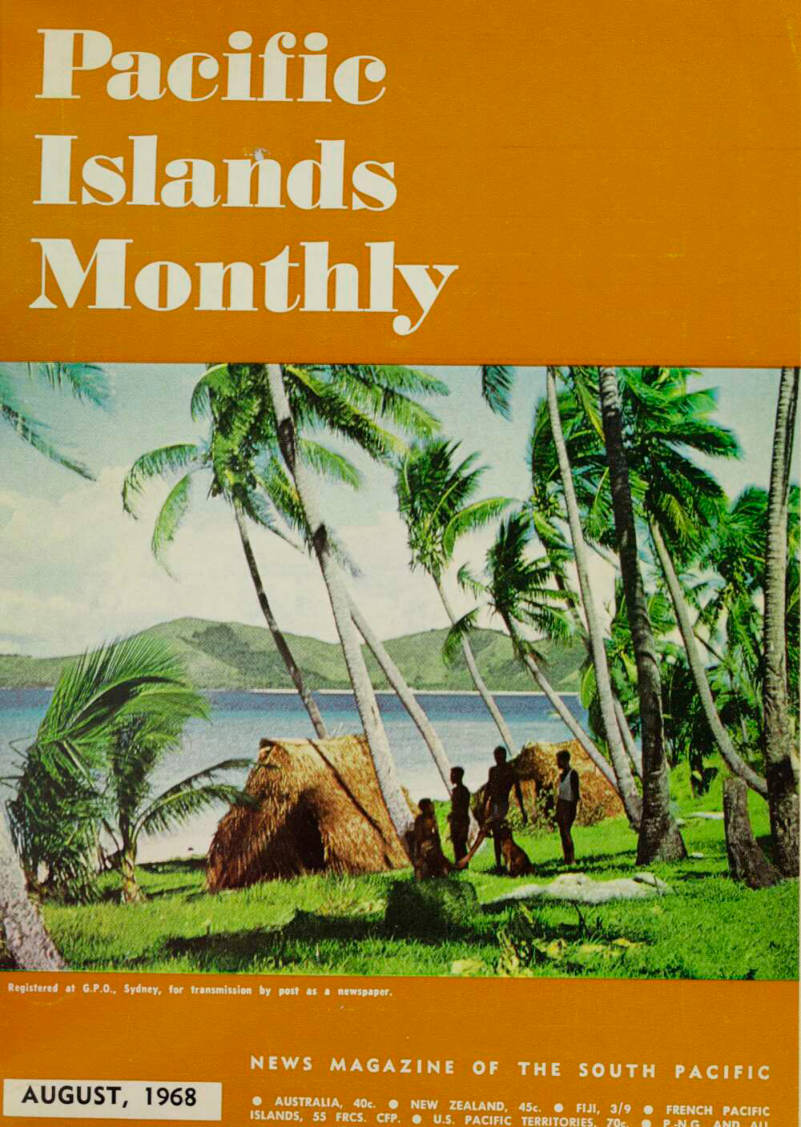 1
1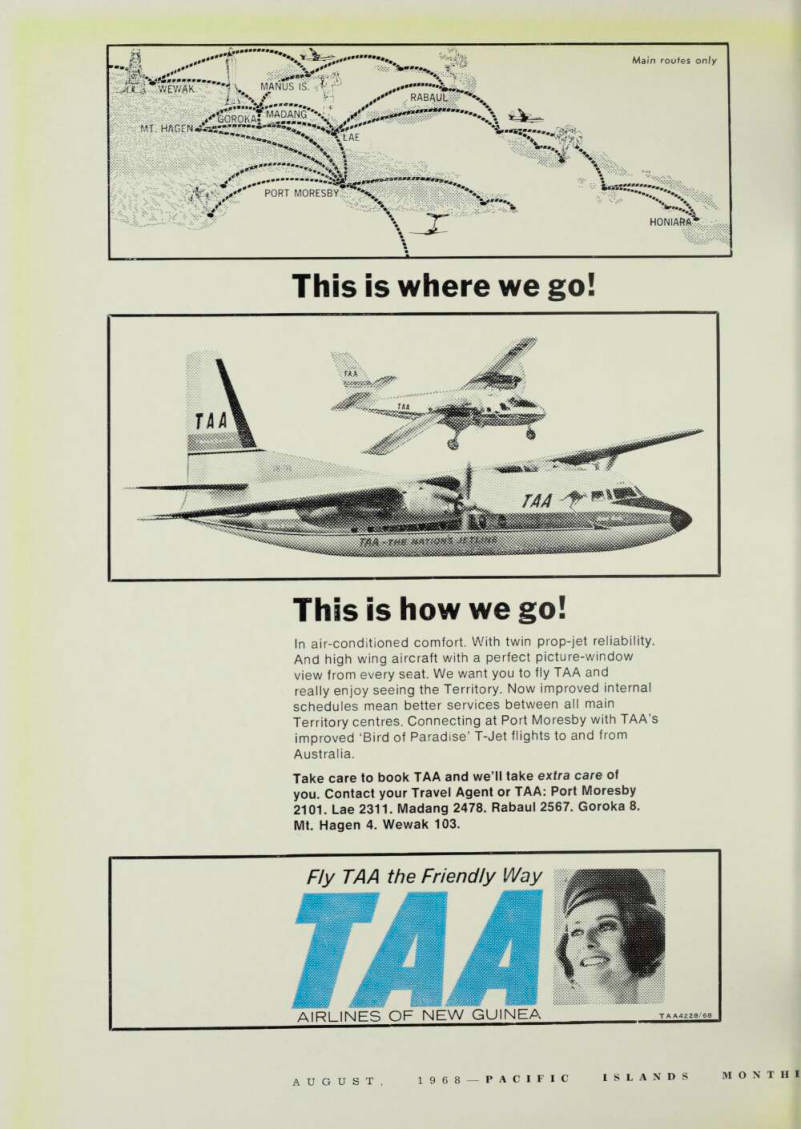 2
2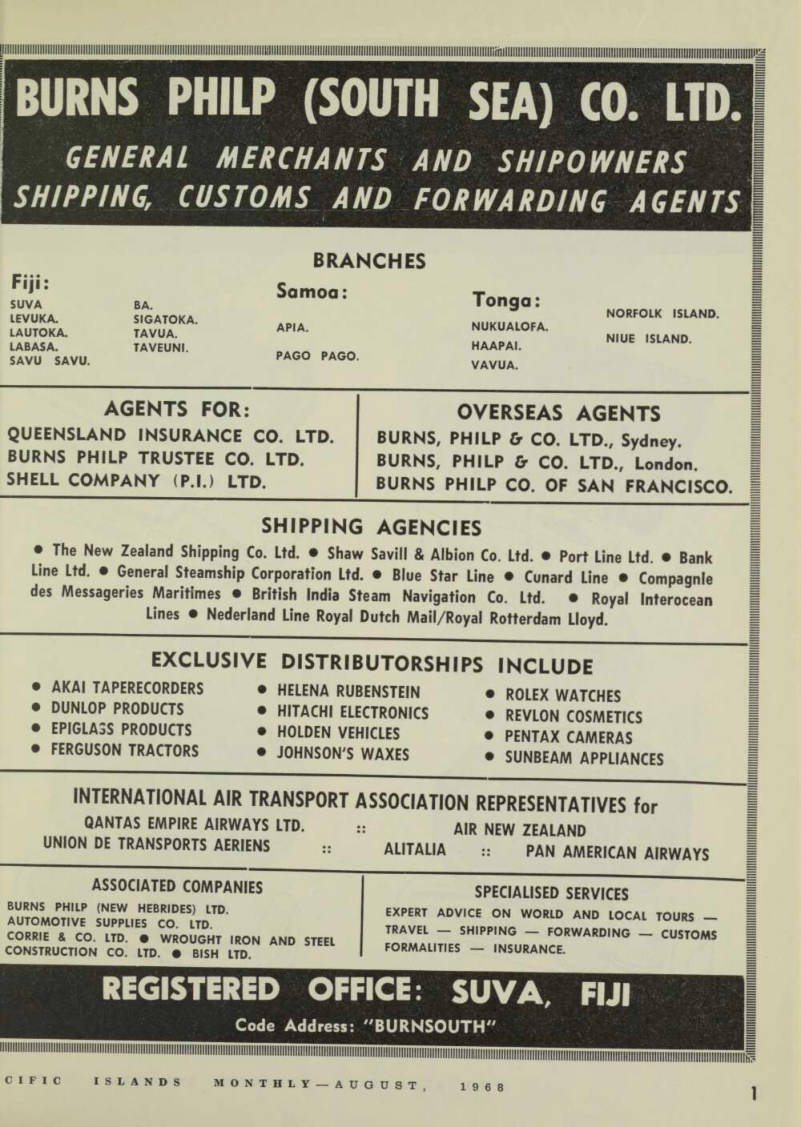 3
3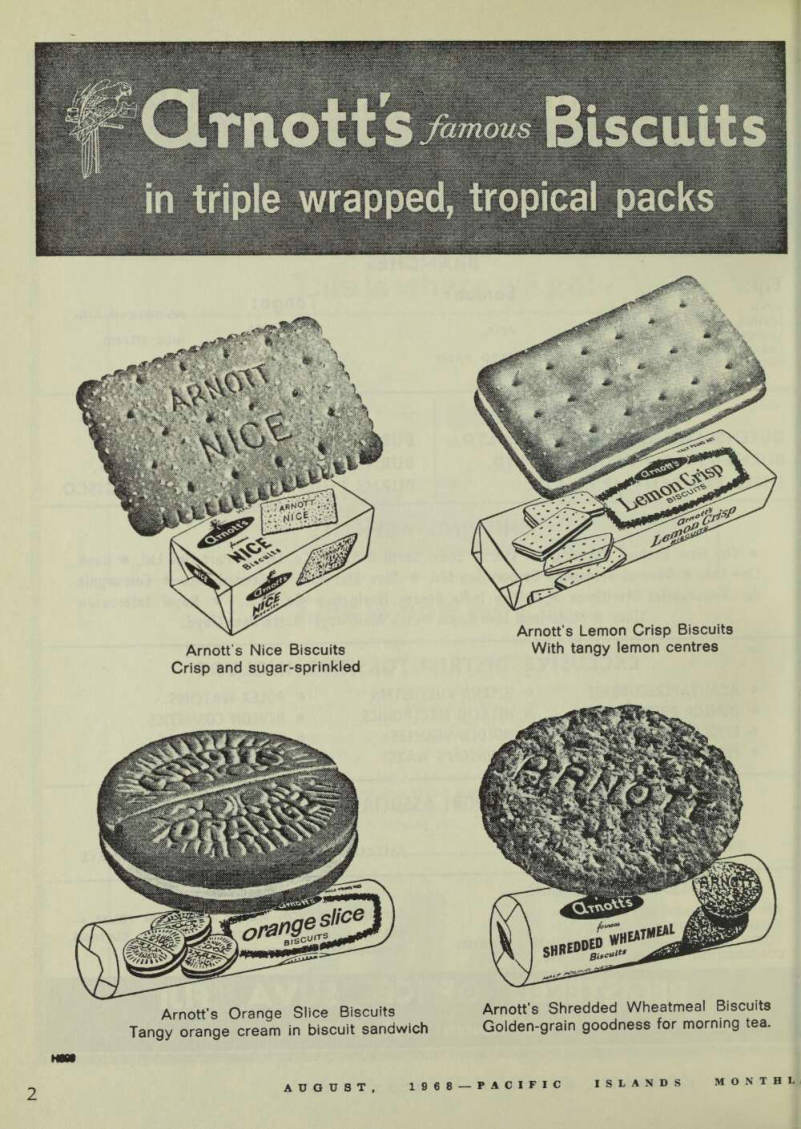 4
4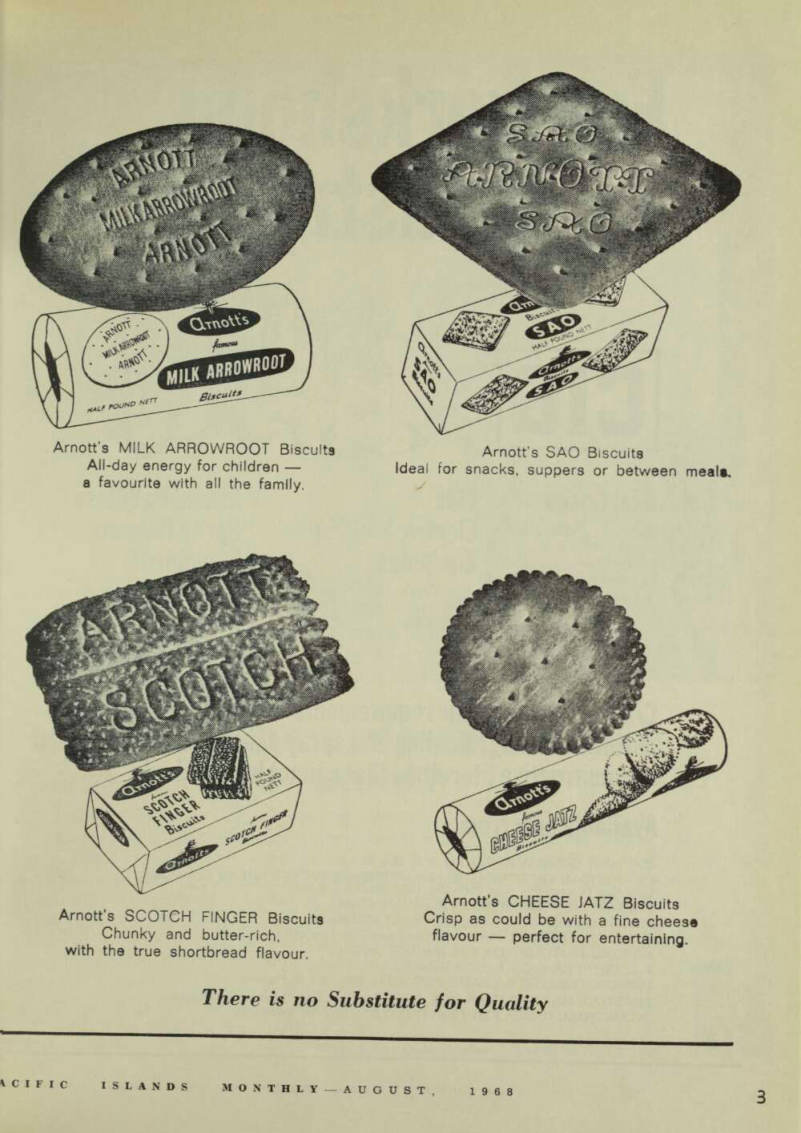 5
5 6
6 7
7 8
8 9
9 10
10 11
11 12
12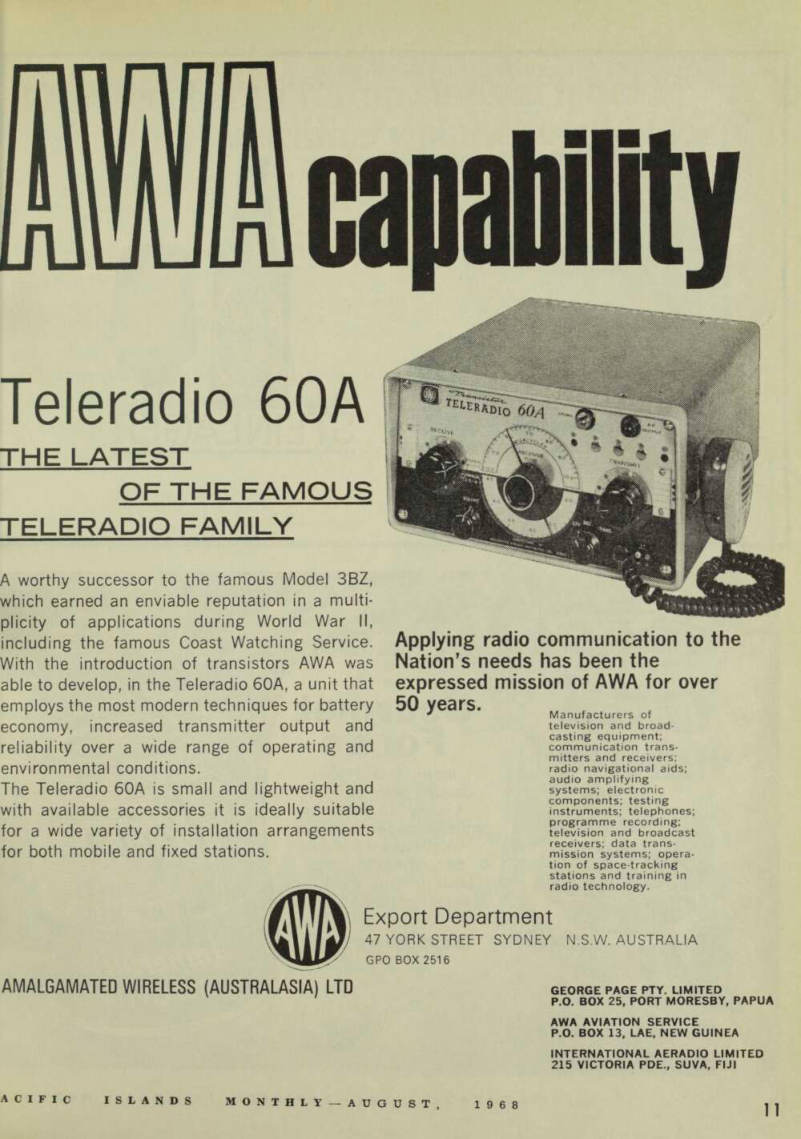 13
13 14
14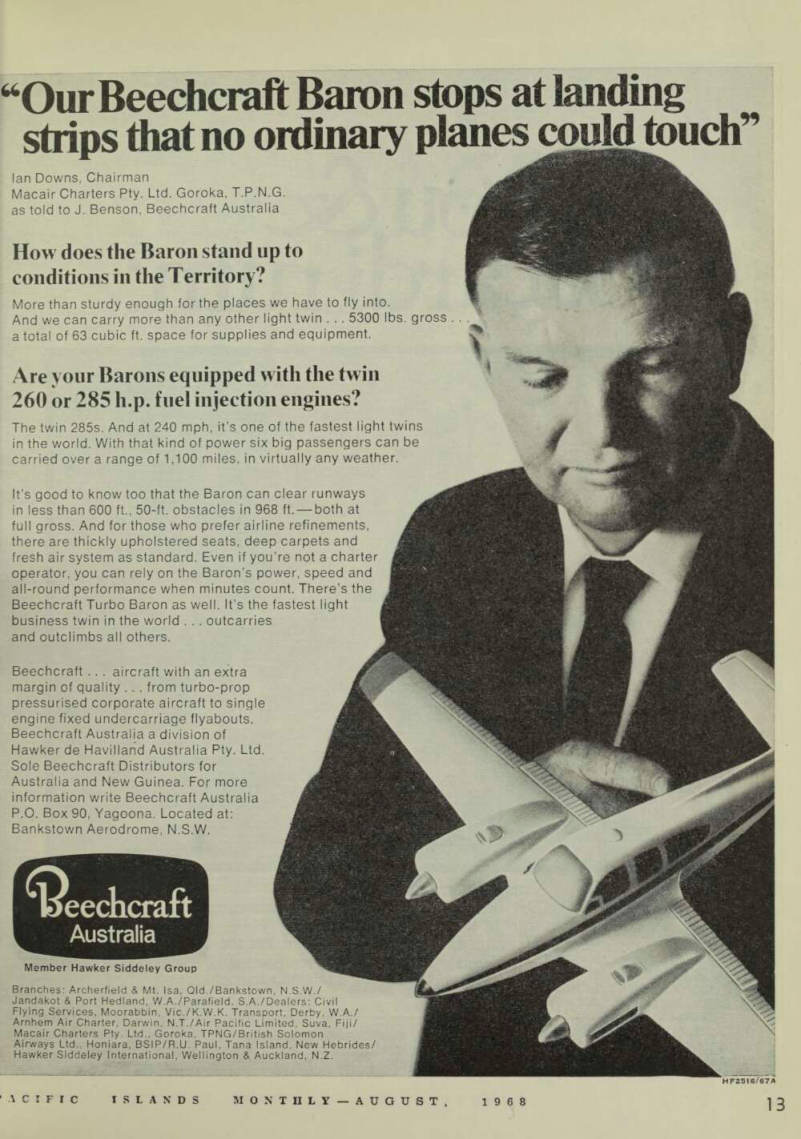 15
15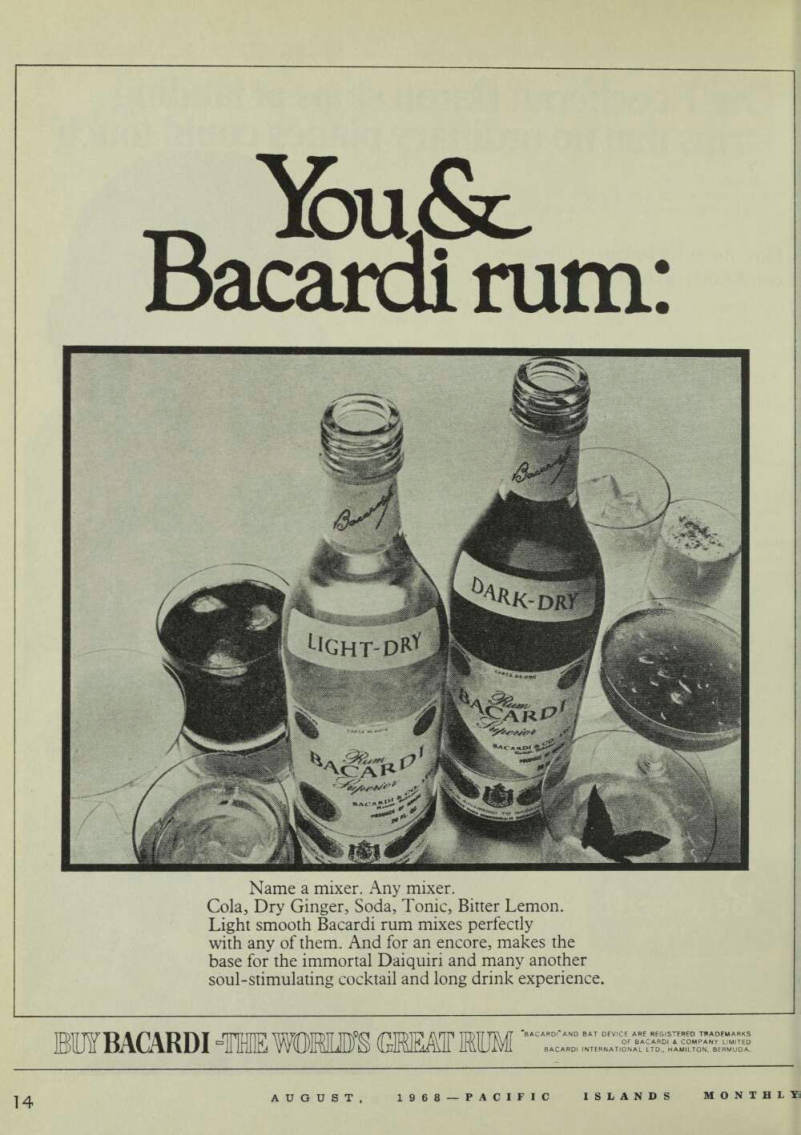 16
16 17
17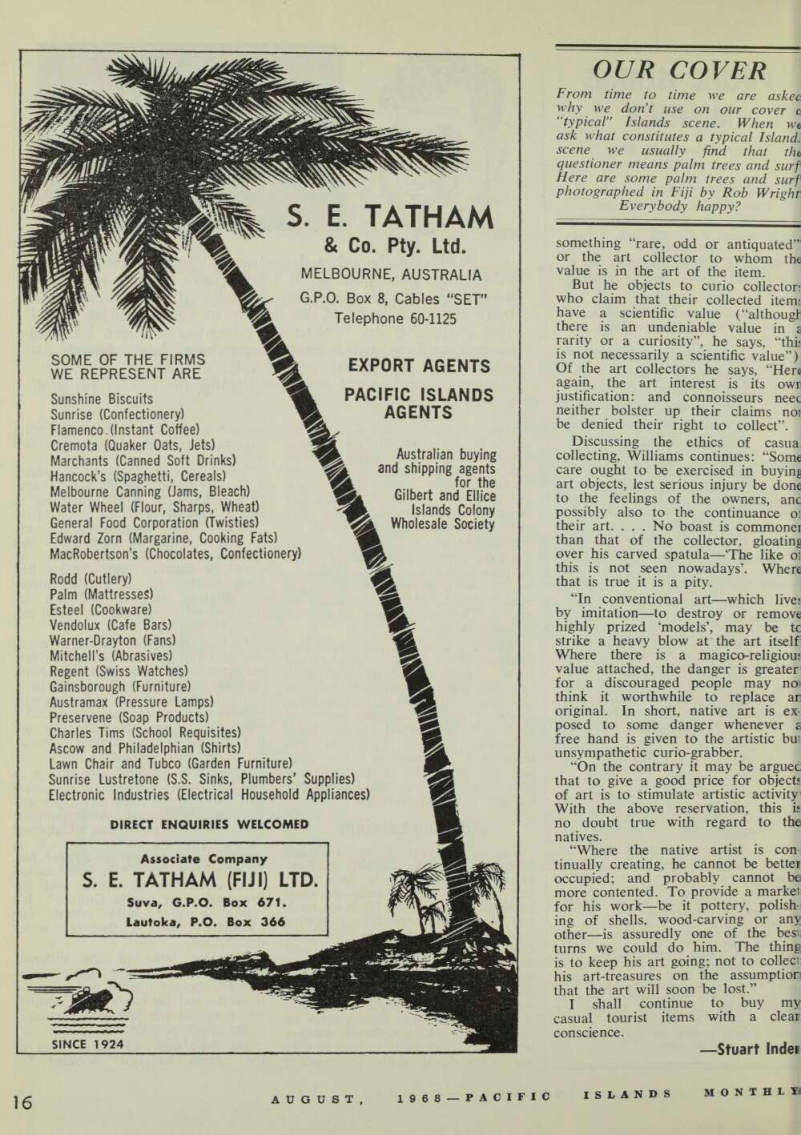 18
18 19
19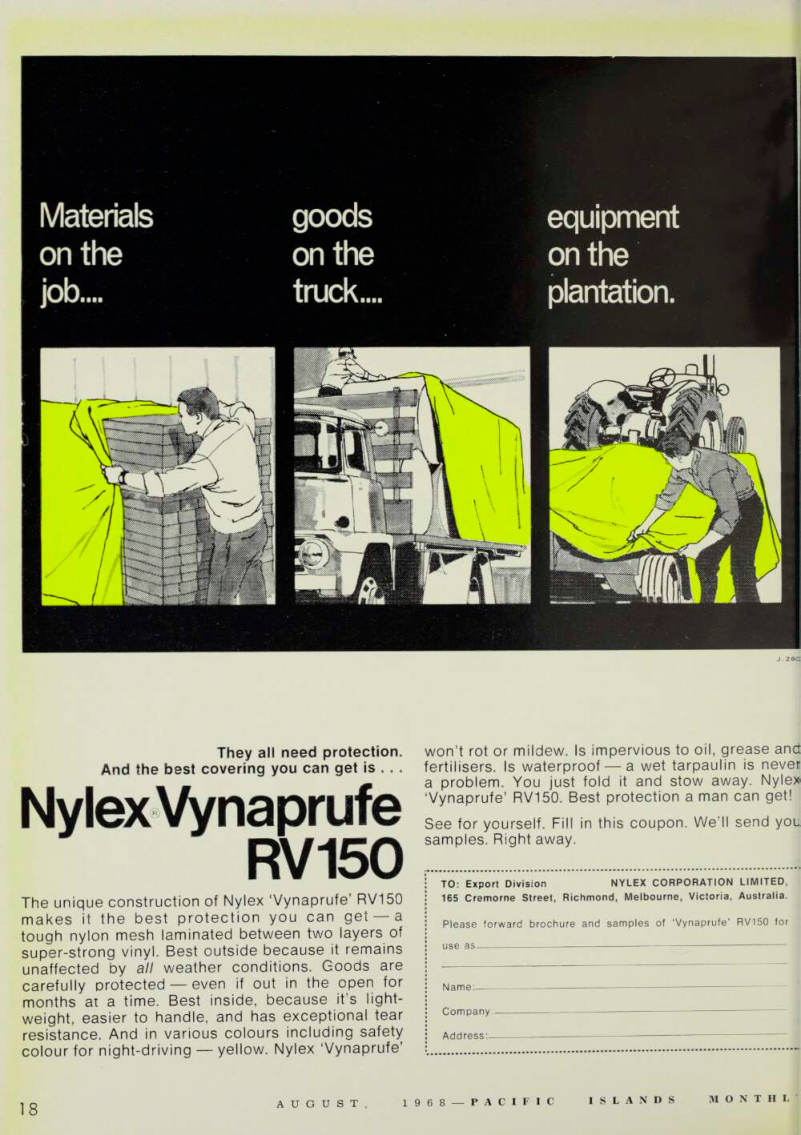 20
20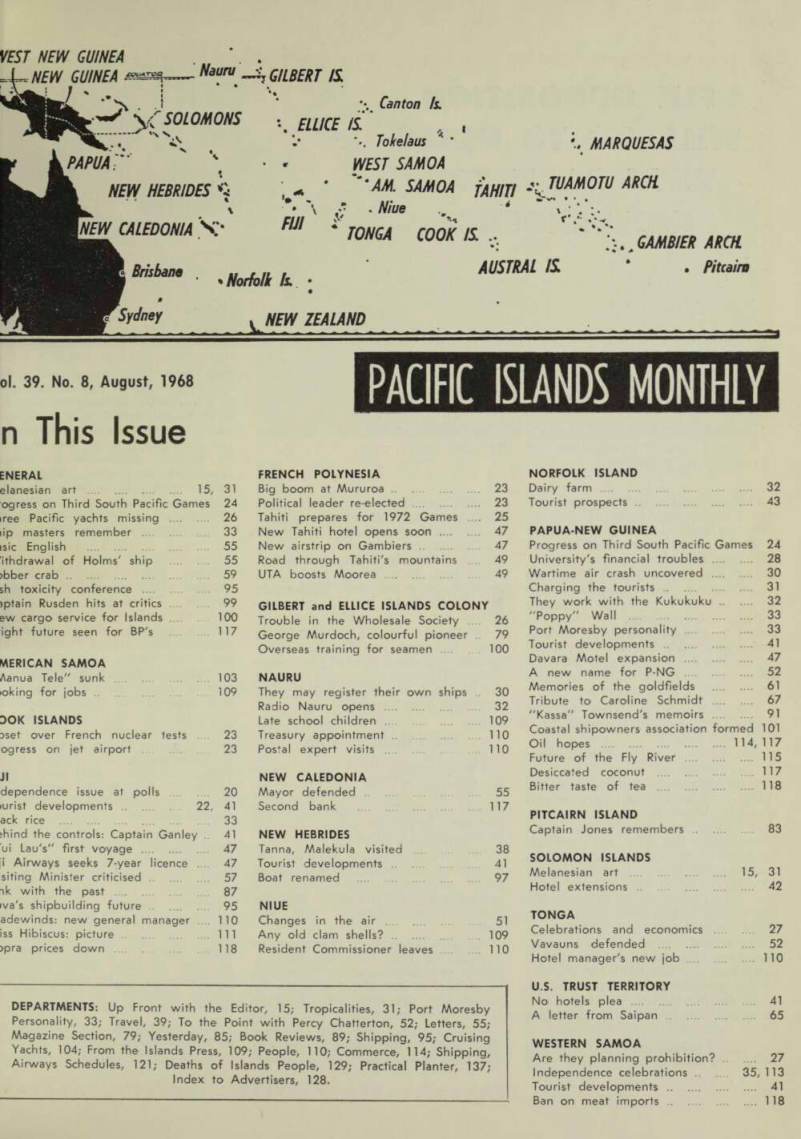 21
21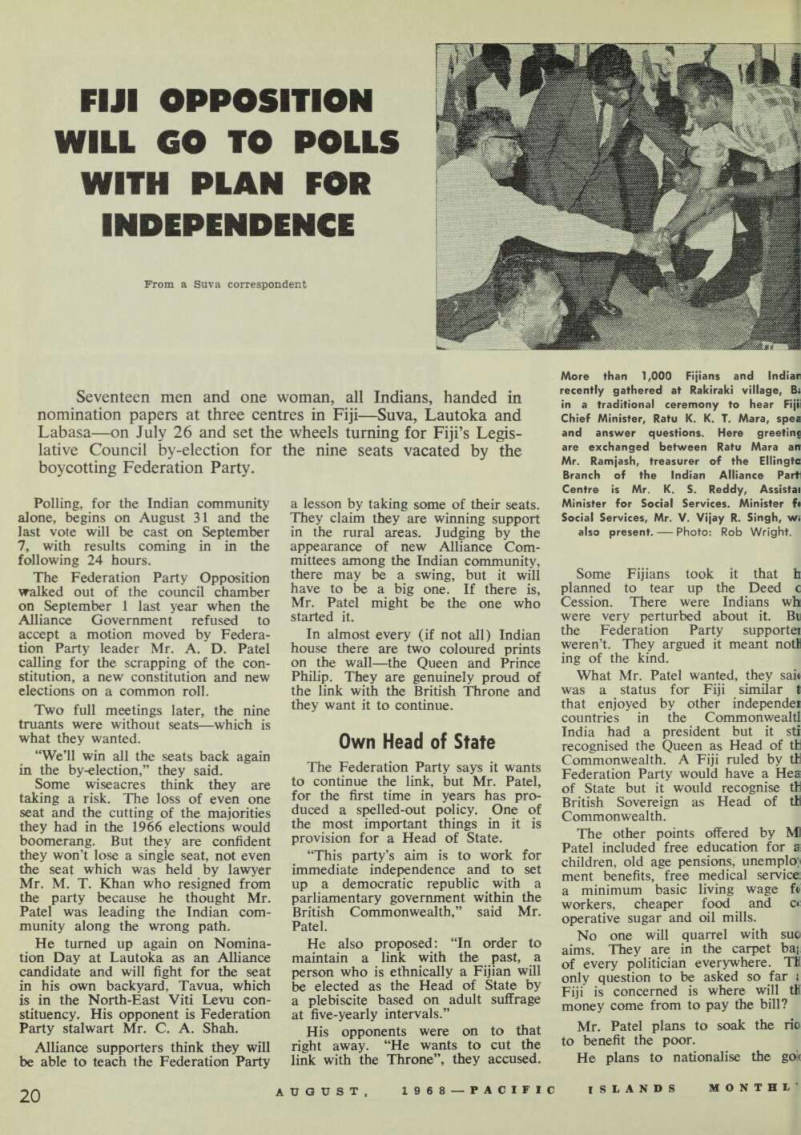 22
22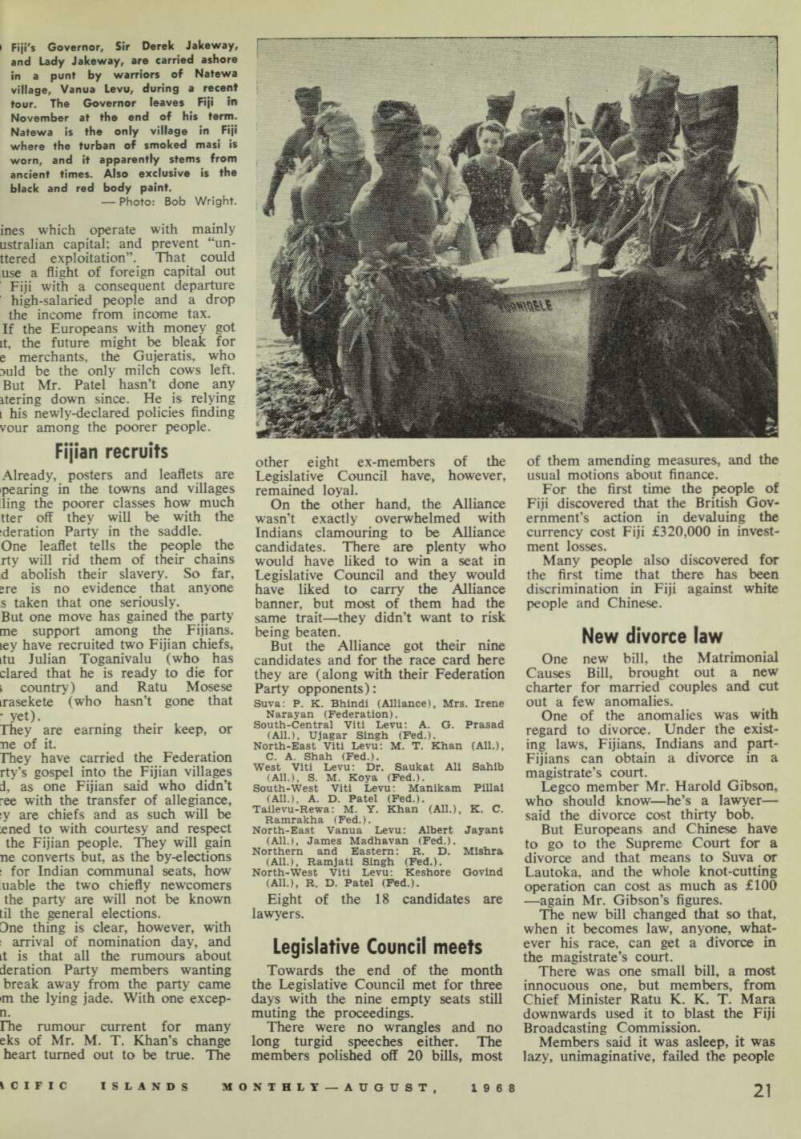 23
23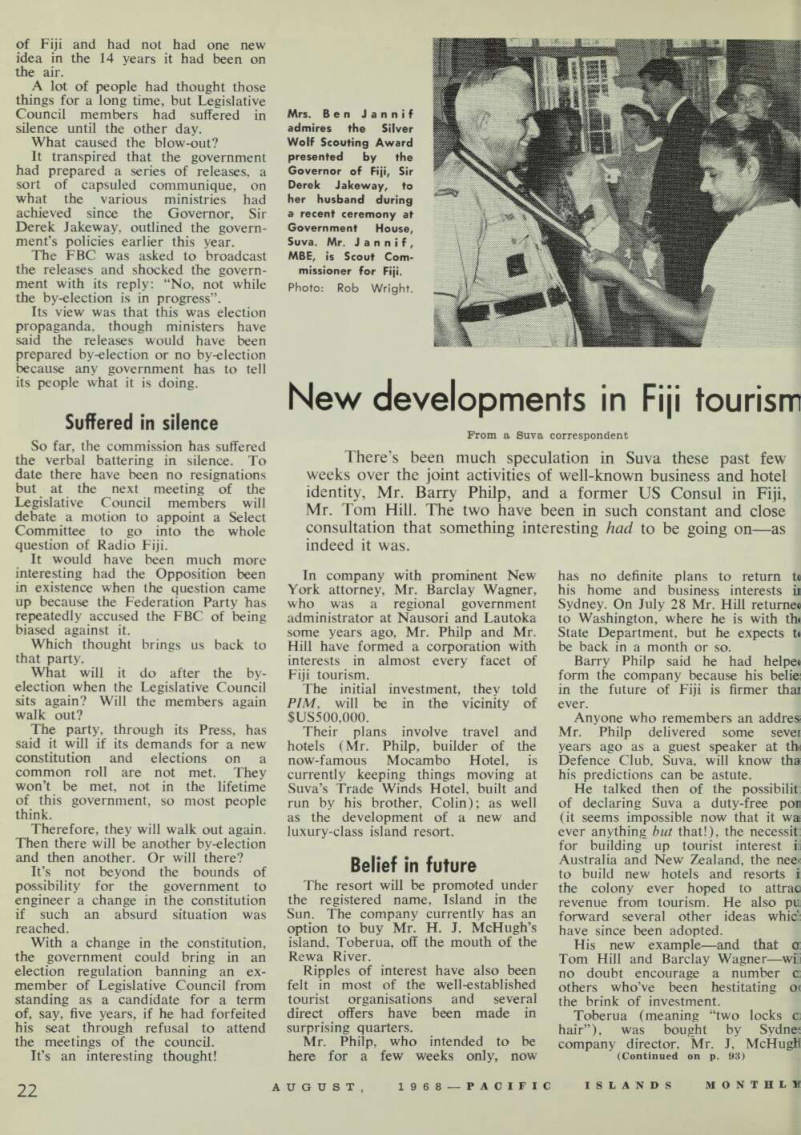 24
24 25
25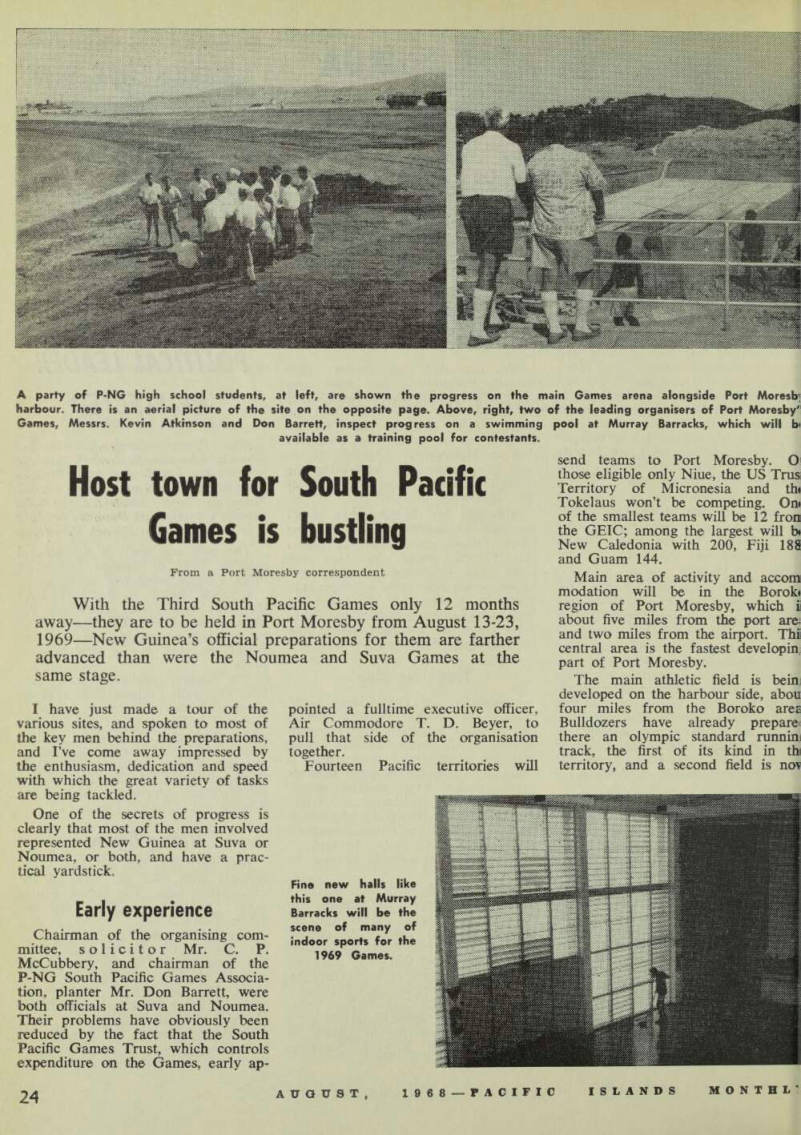 26
26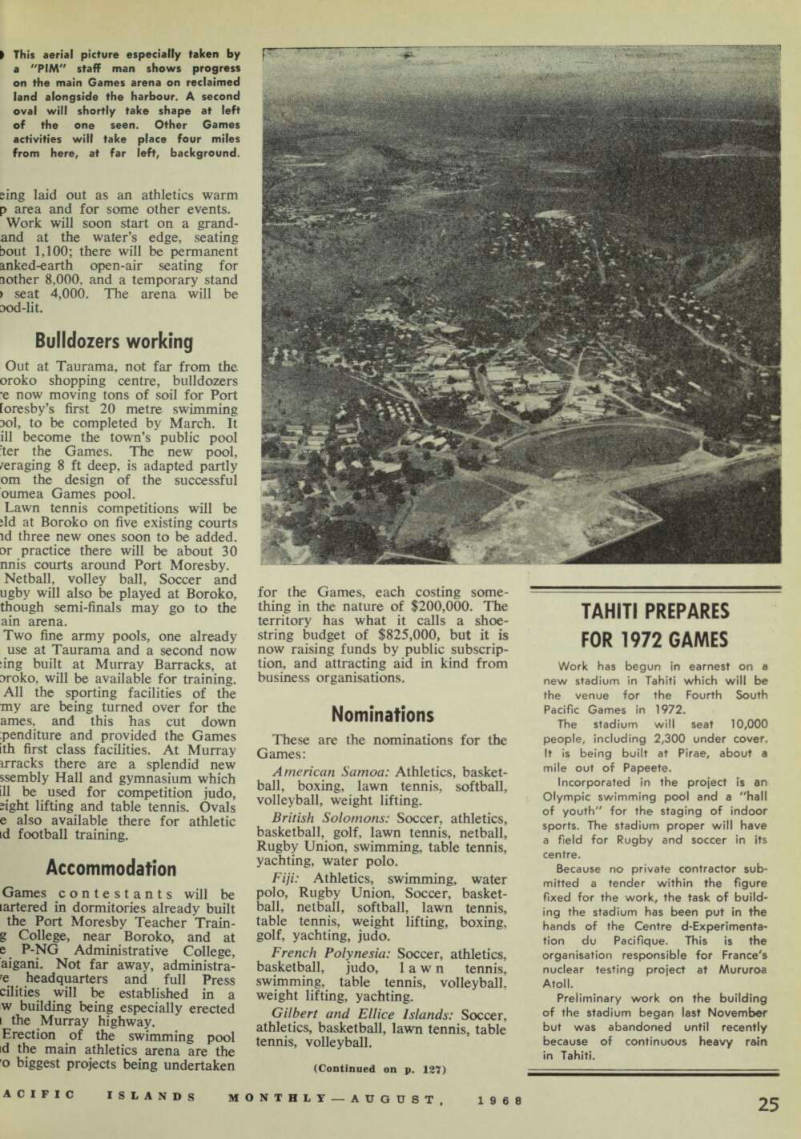 27
27 28
28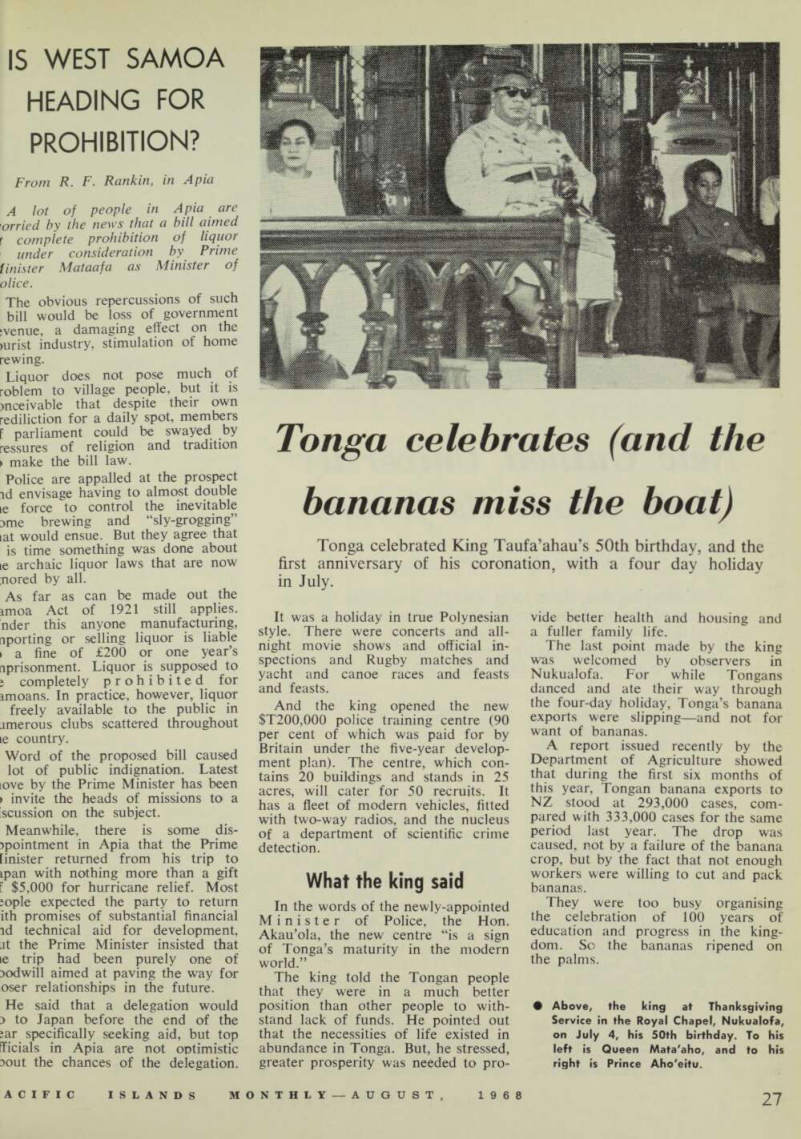 29
29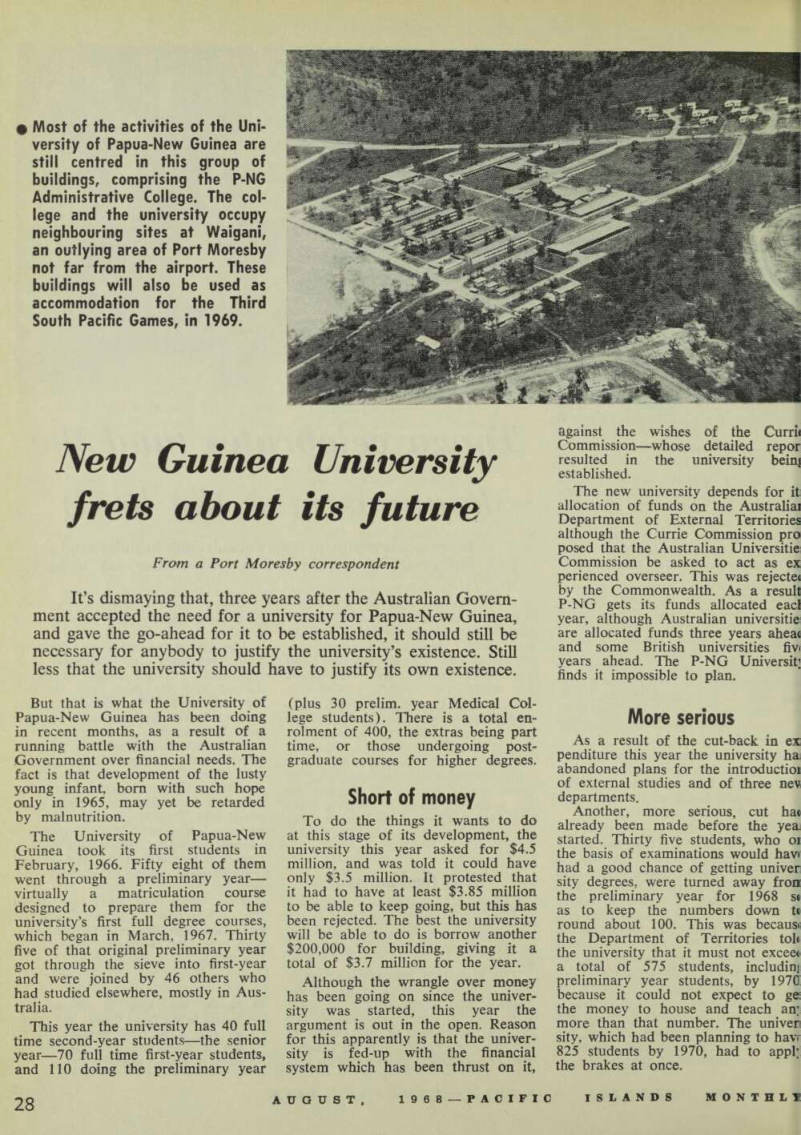 30
30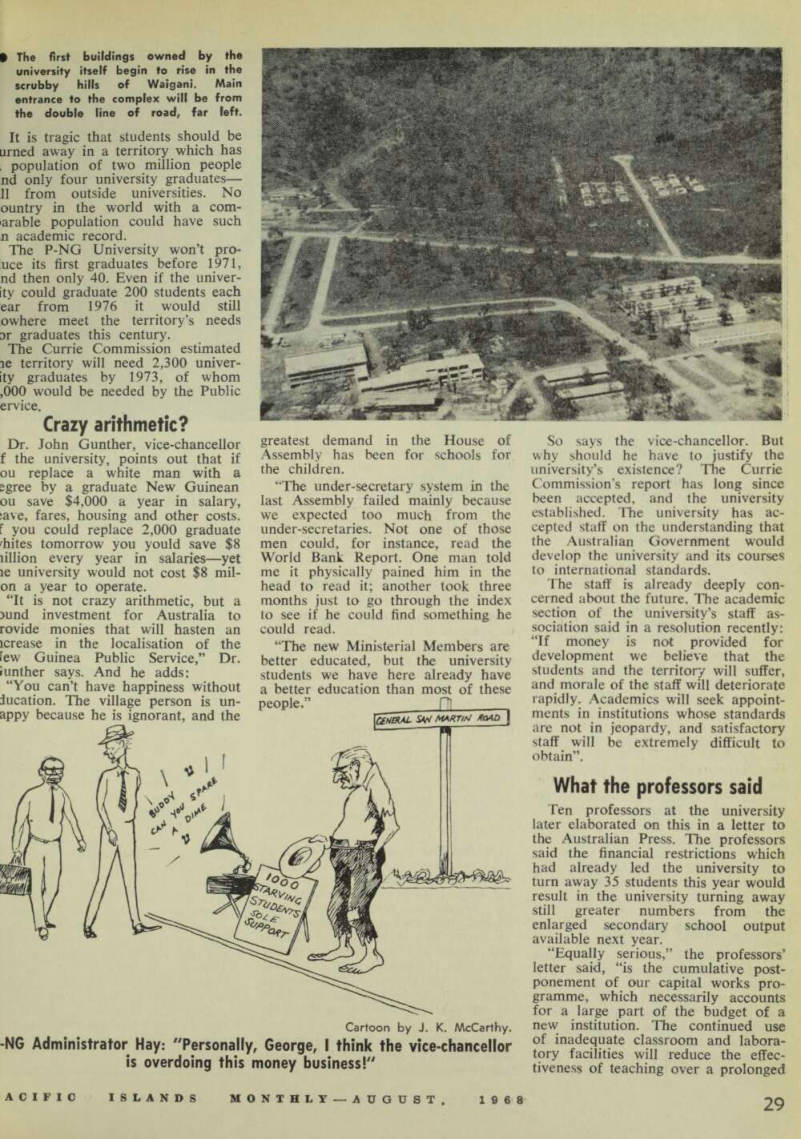 31
31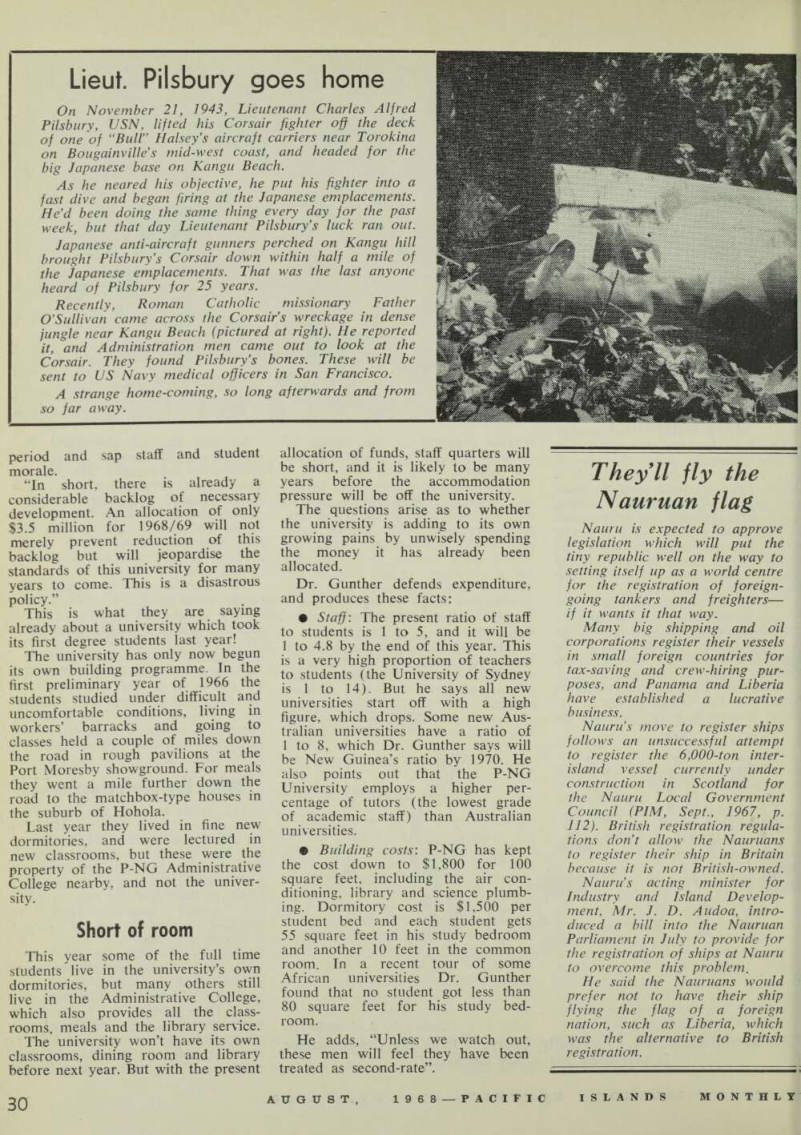 32
32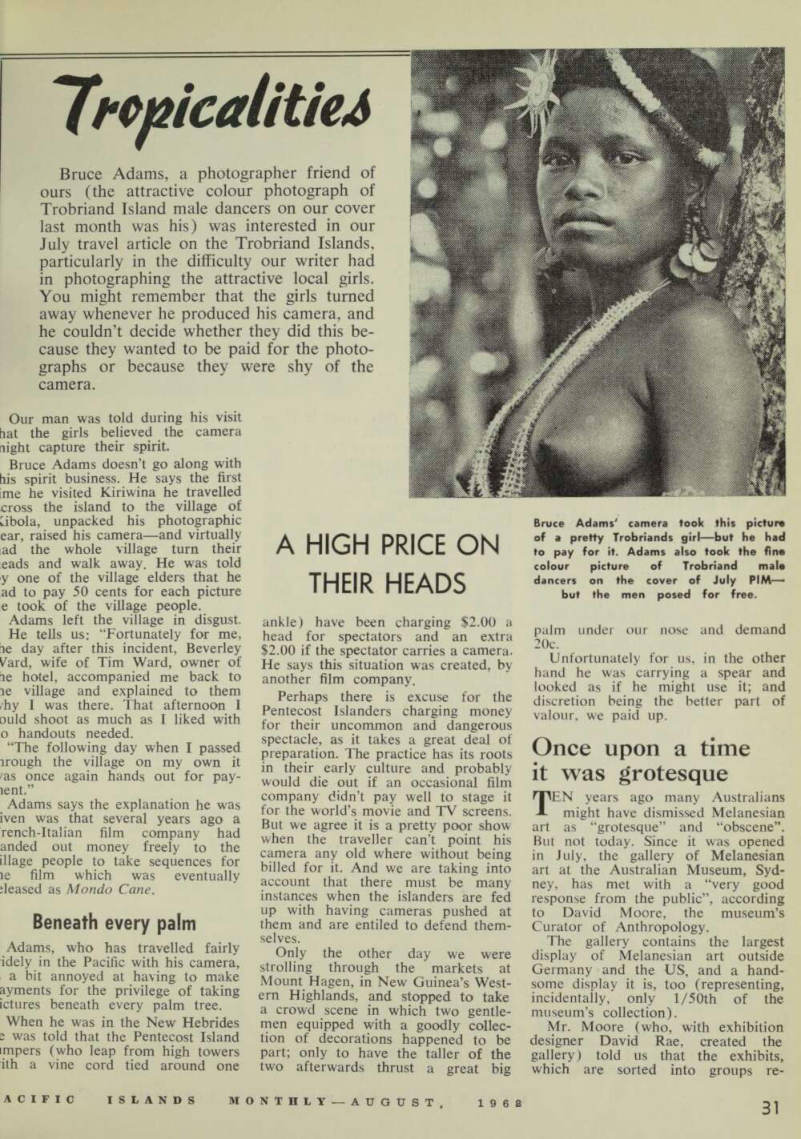 33
33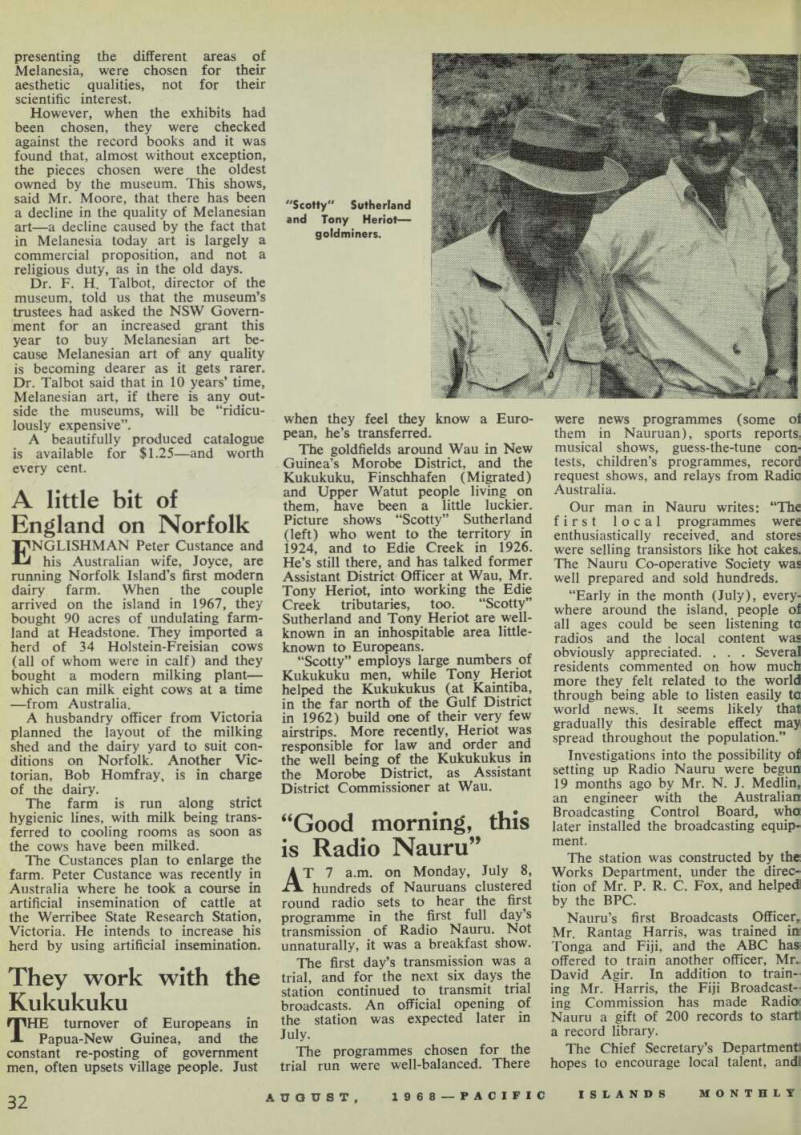 34
34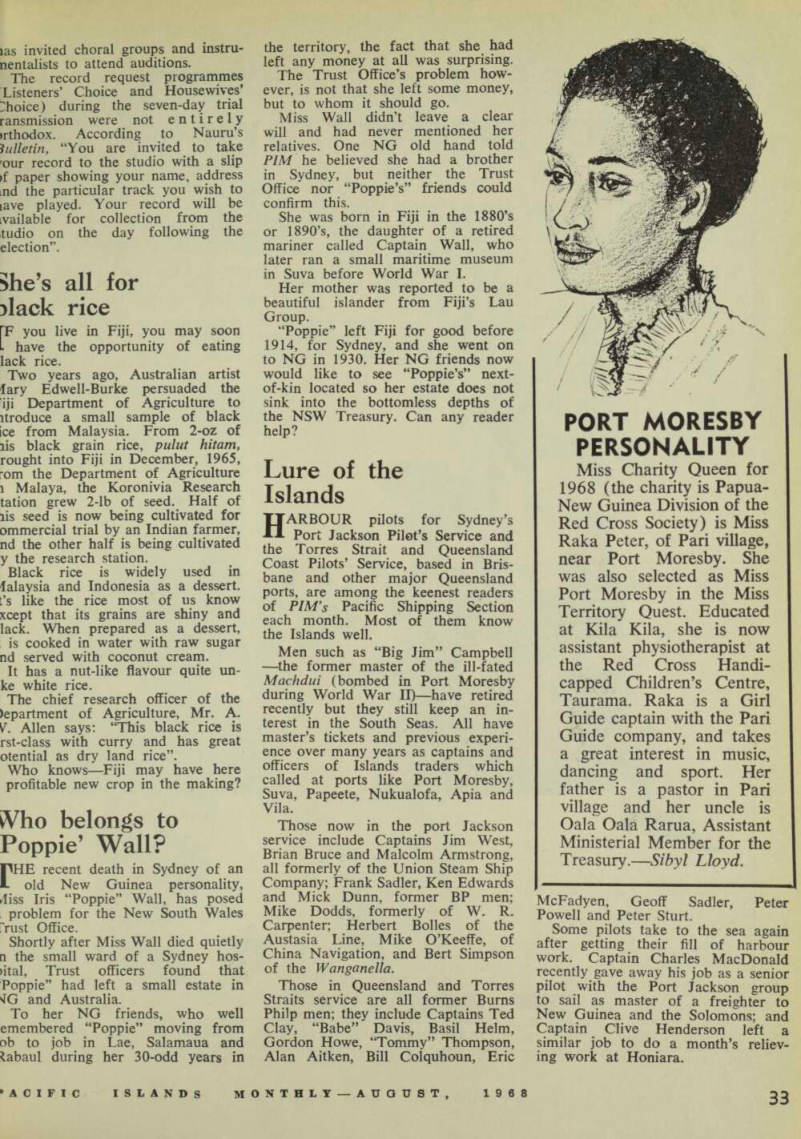 35
35 36
36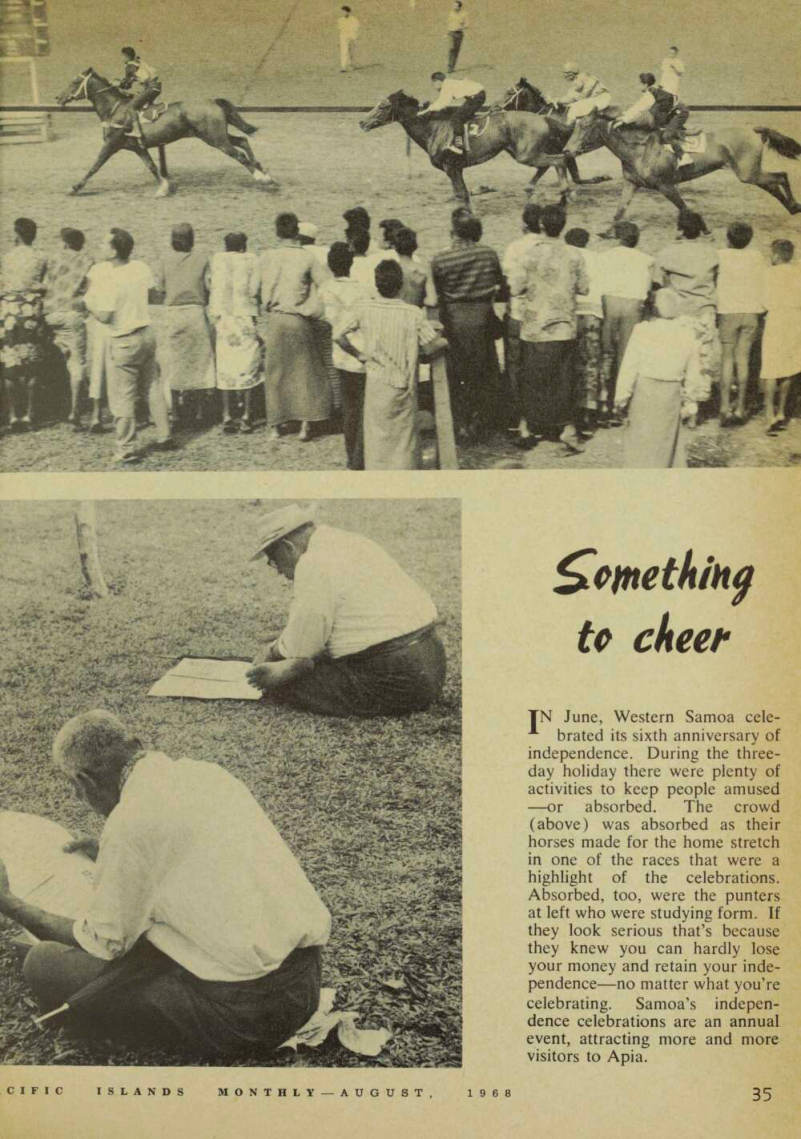 37
37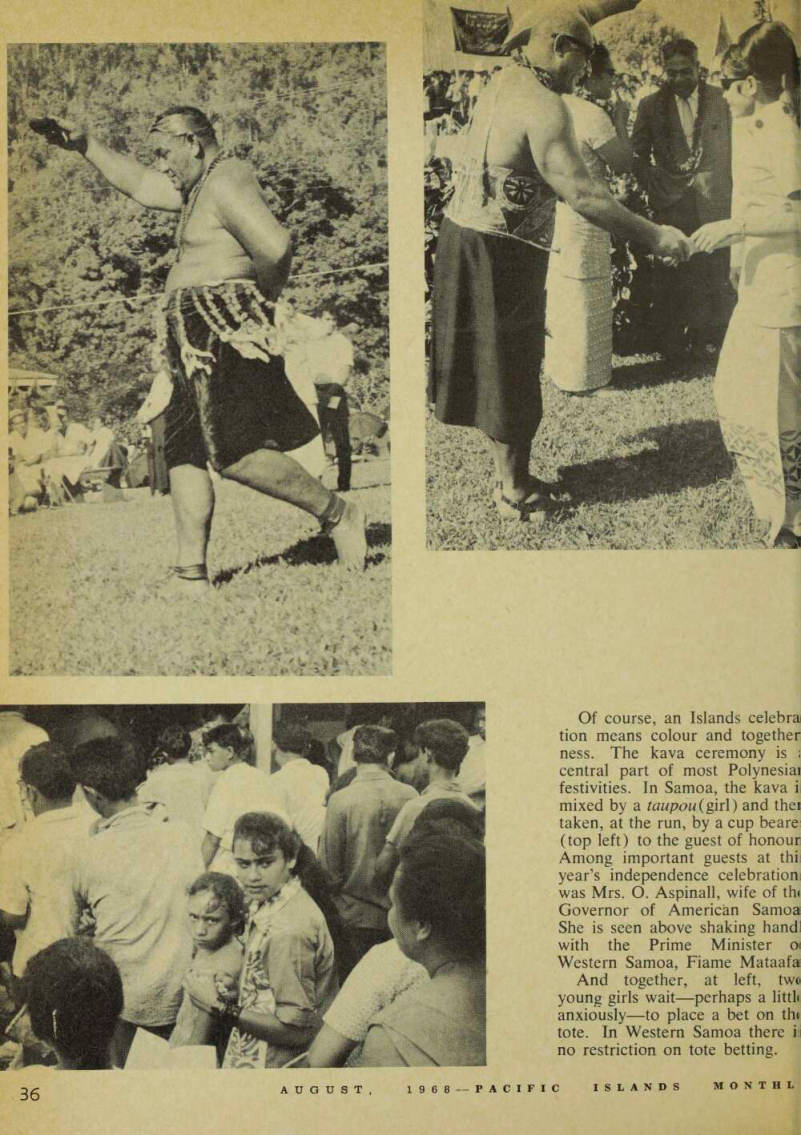 38
38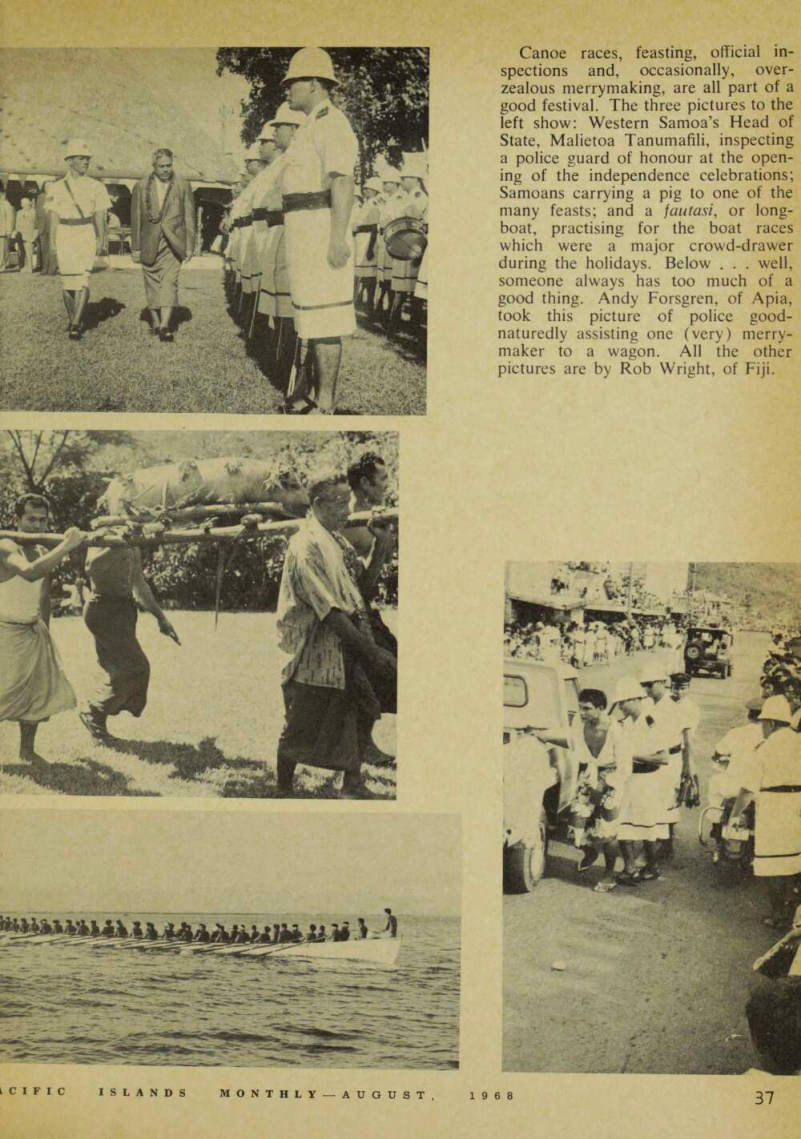 39
39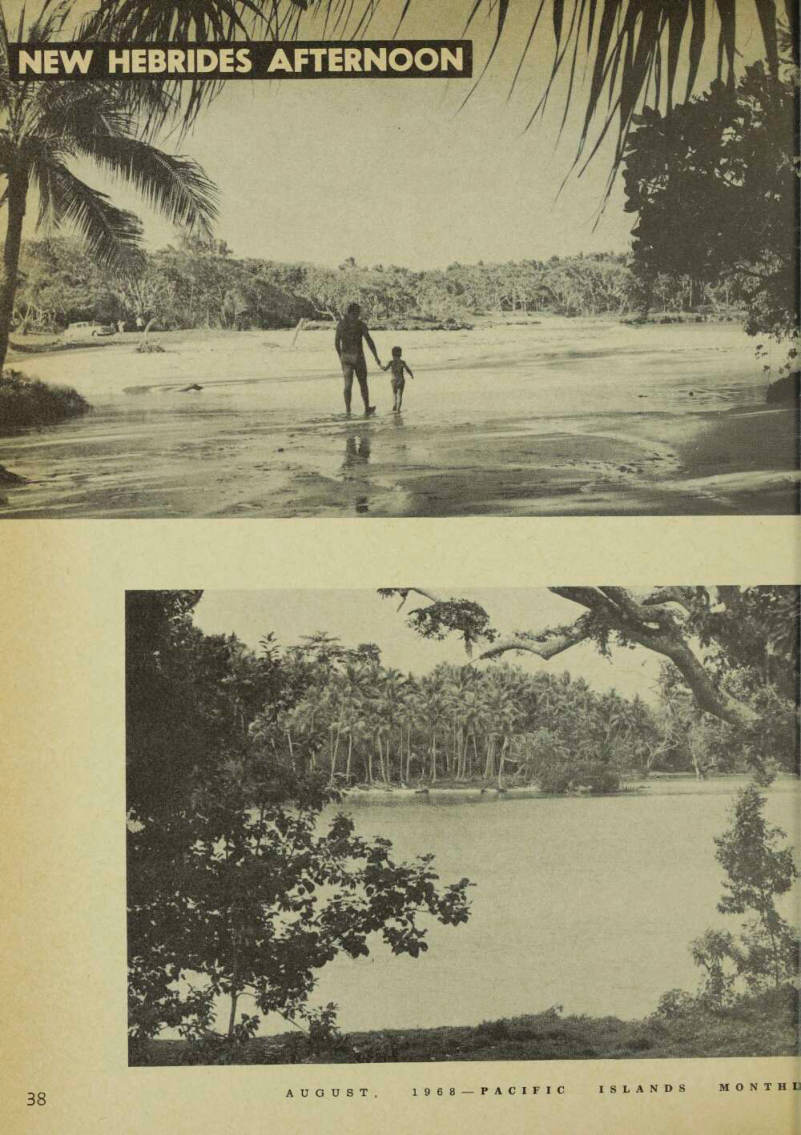 40
40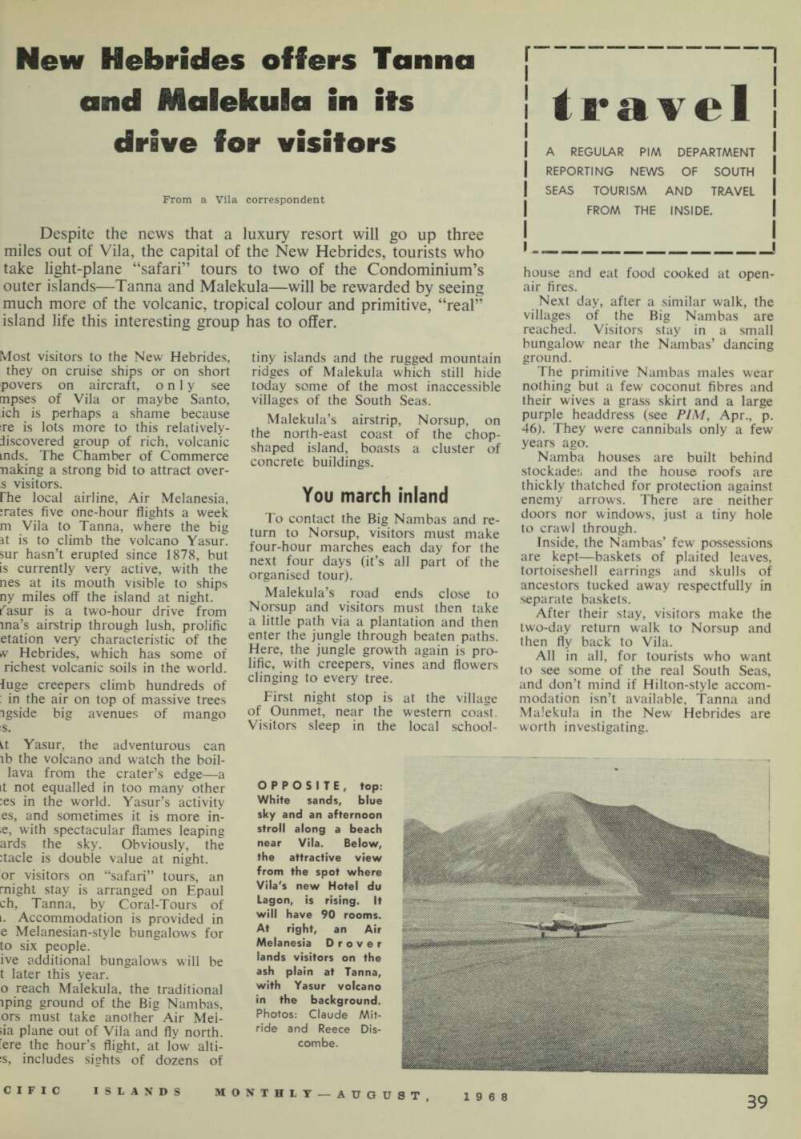 41
41 42
42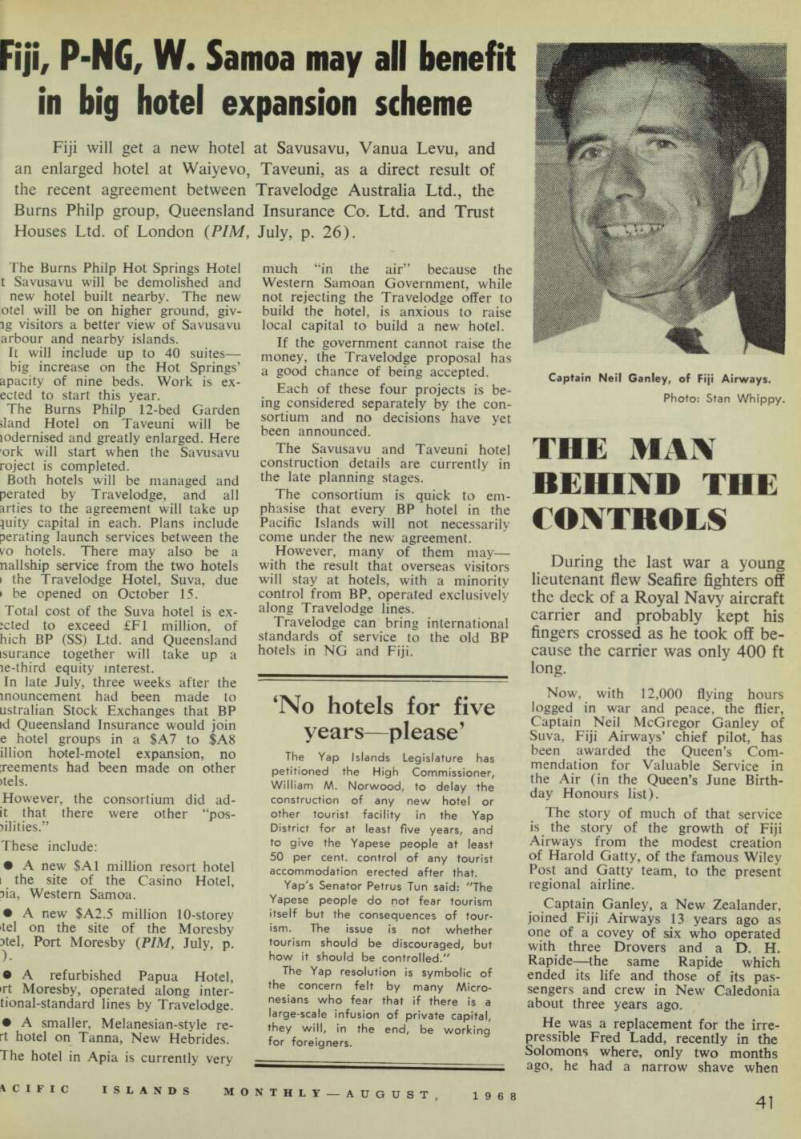 43
43 44
44 45
45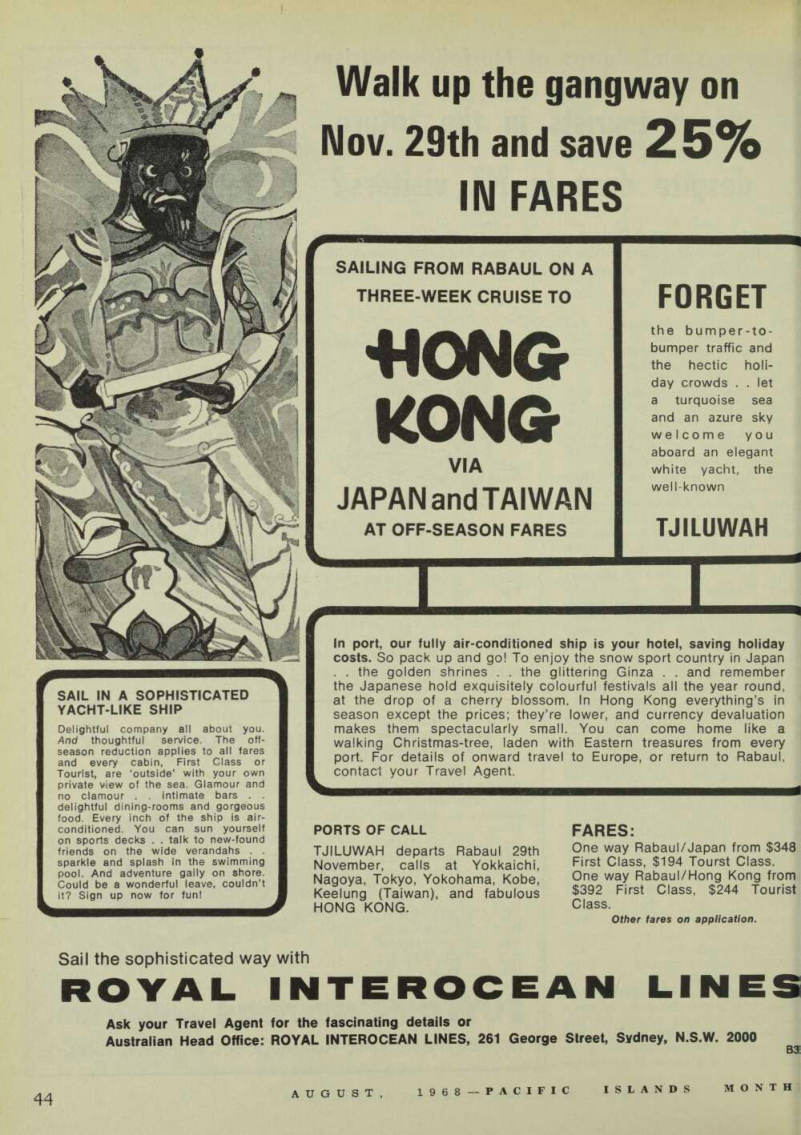 46
46 47
47 48
48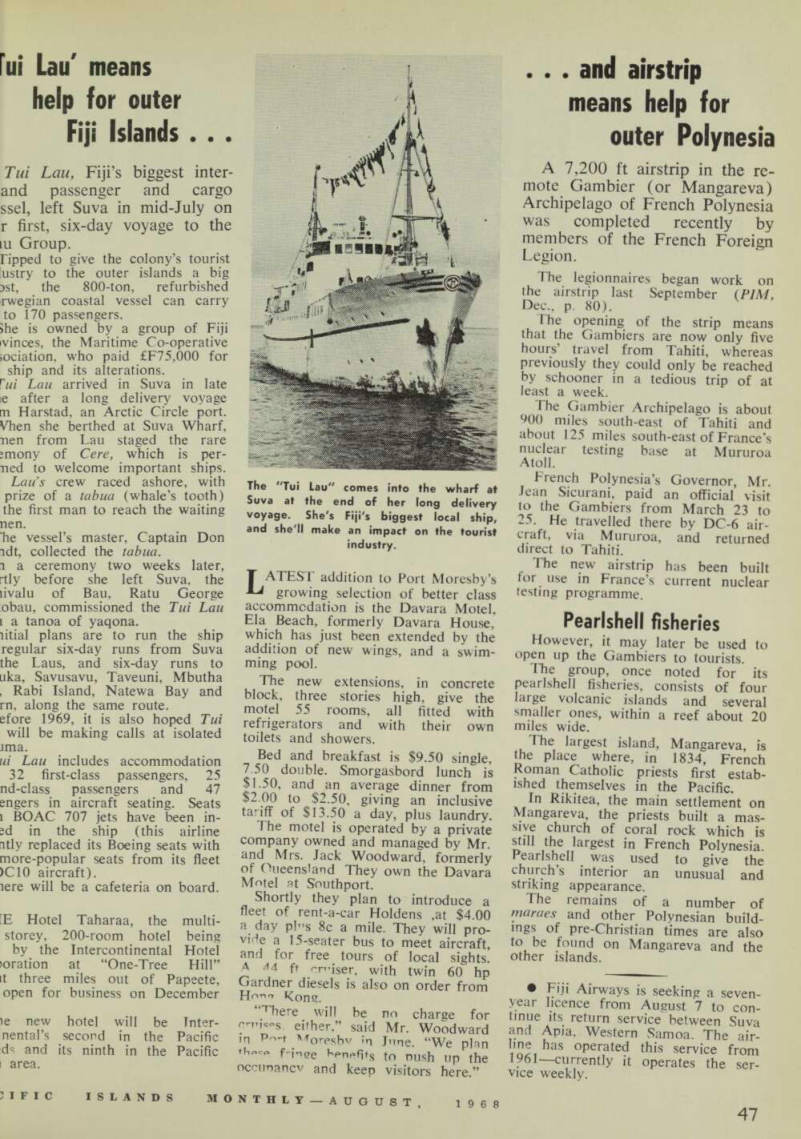 49
49 50
50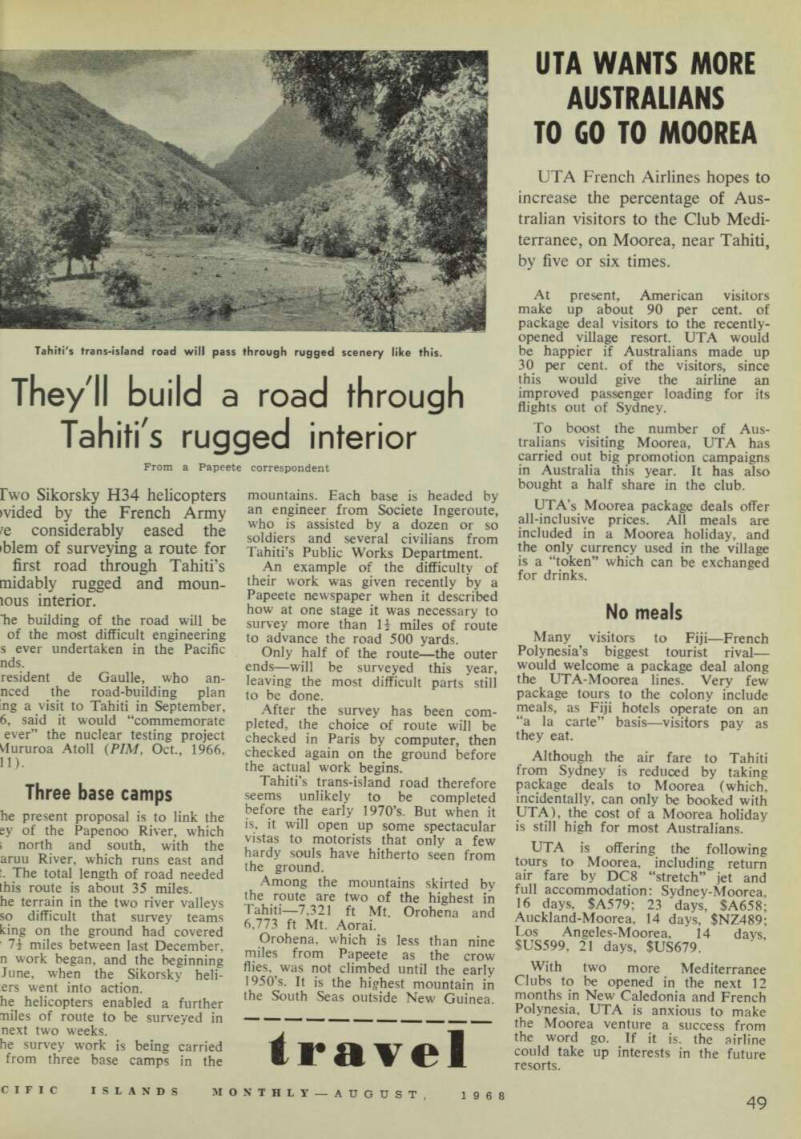 51
51 52
52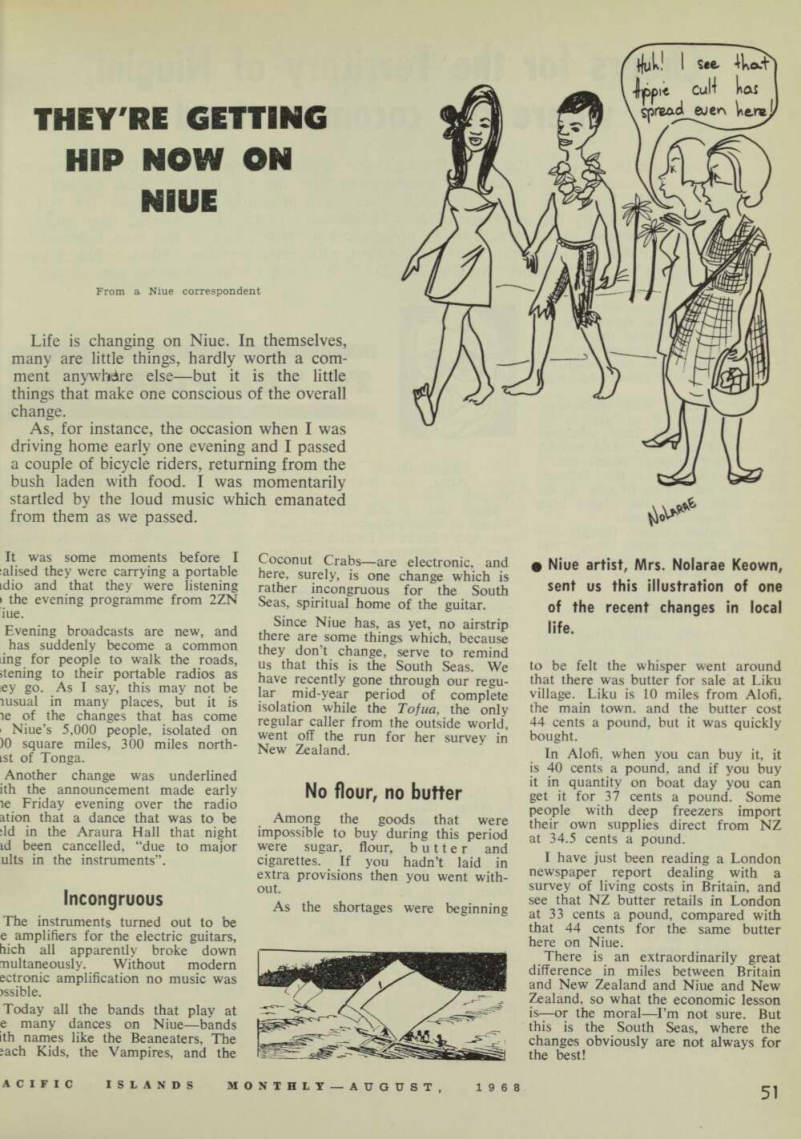 53
53 54
54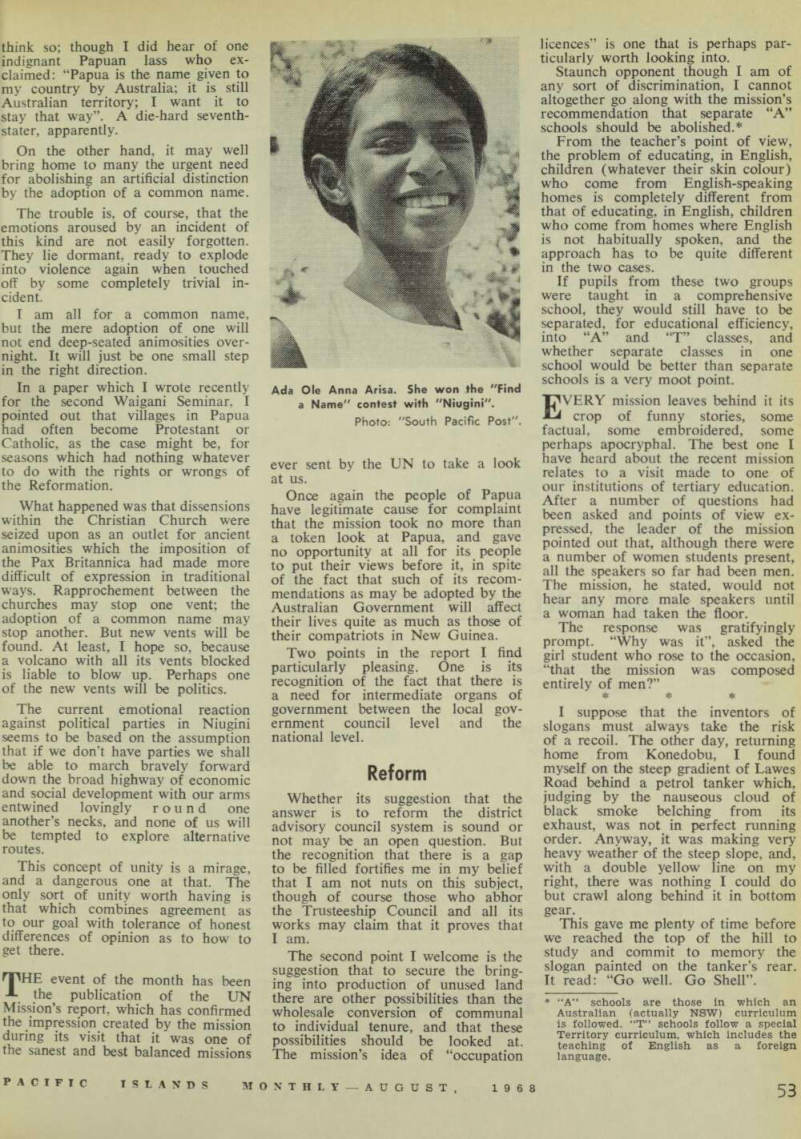 55
55 56
56 57
57 58
58 59
59 60
60 61
61 62
62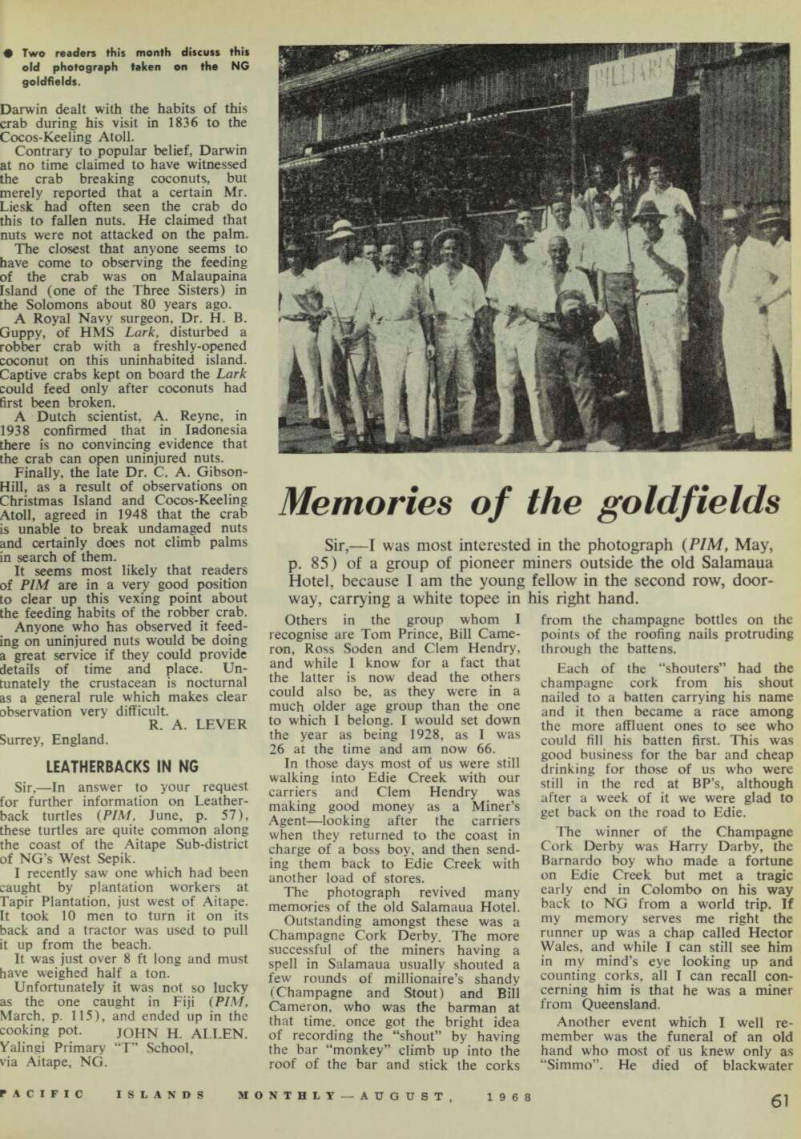 63
63 64
64 65
65 66
66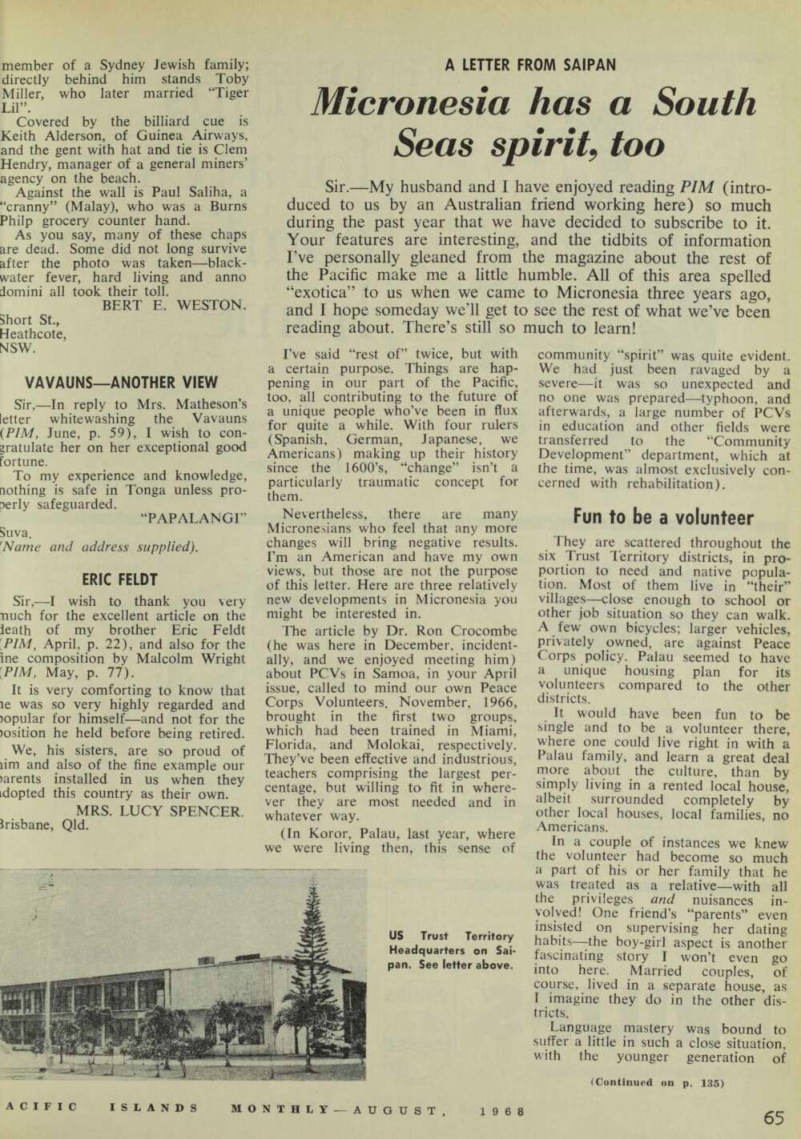 67
67 68
68 69
69 70
70 71
71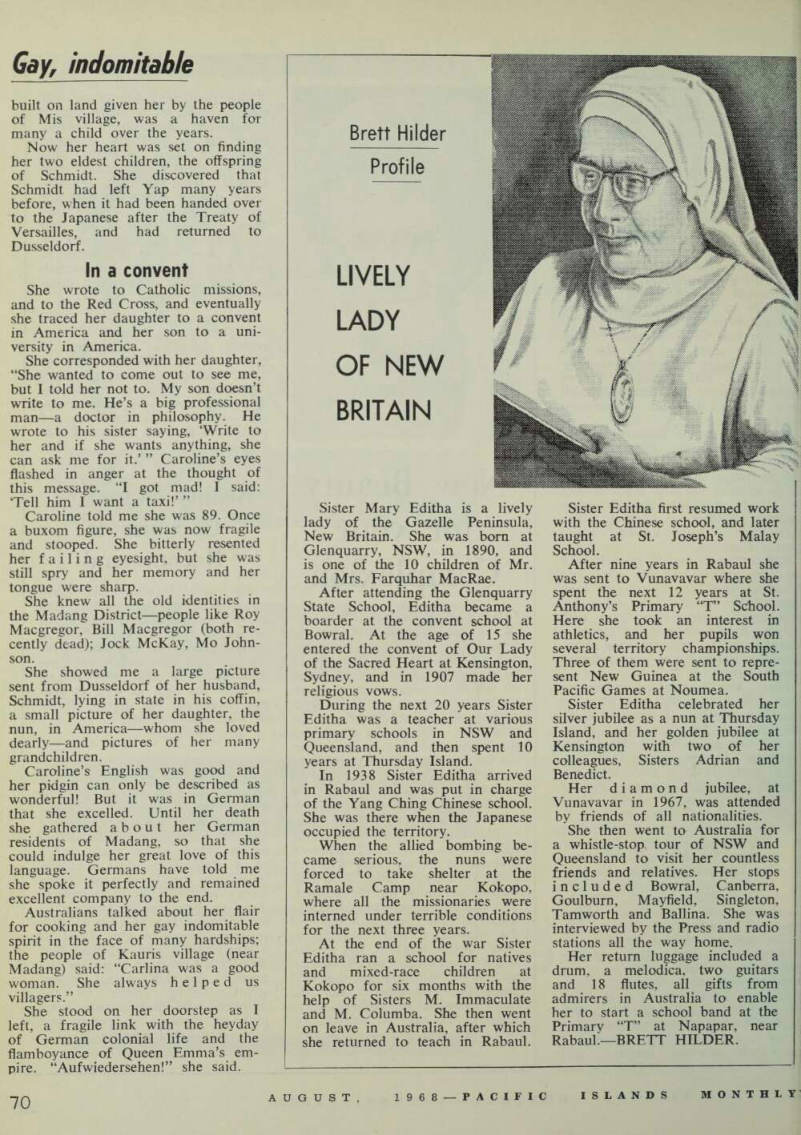 72
72 73
73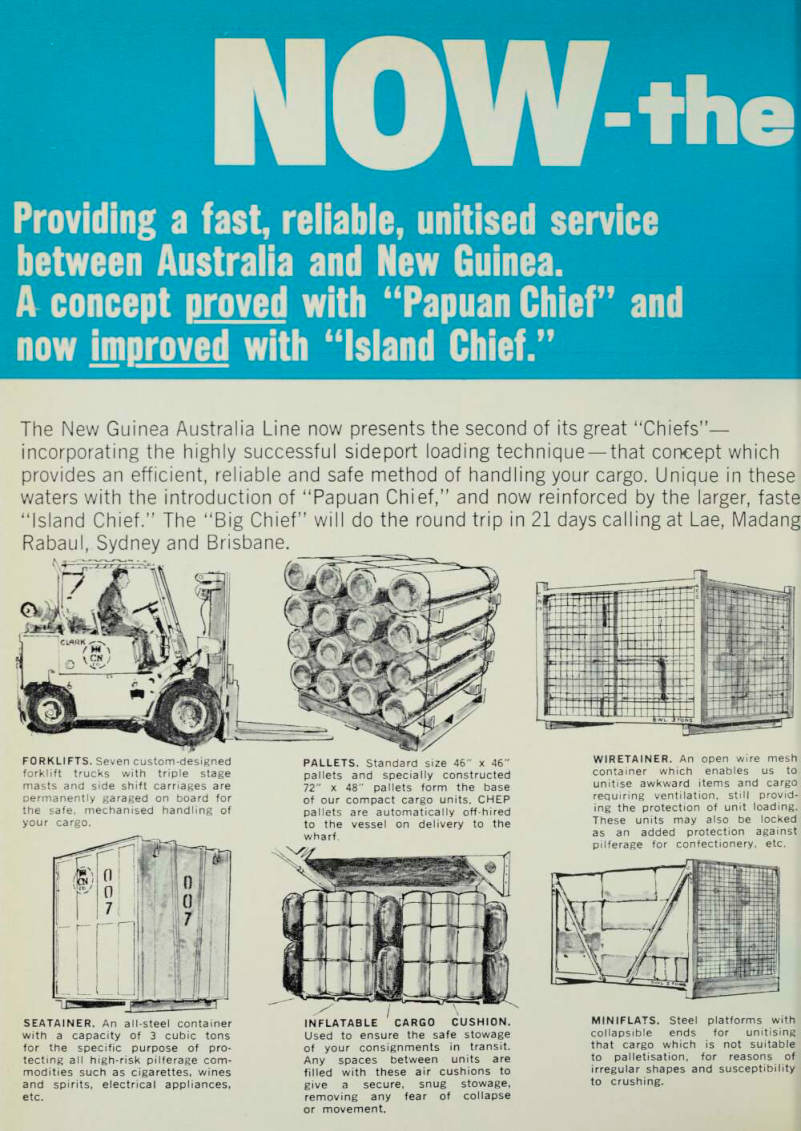 74
74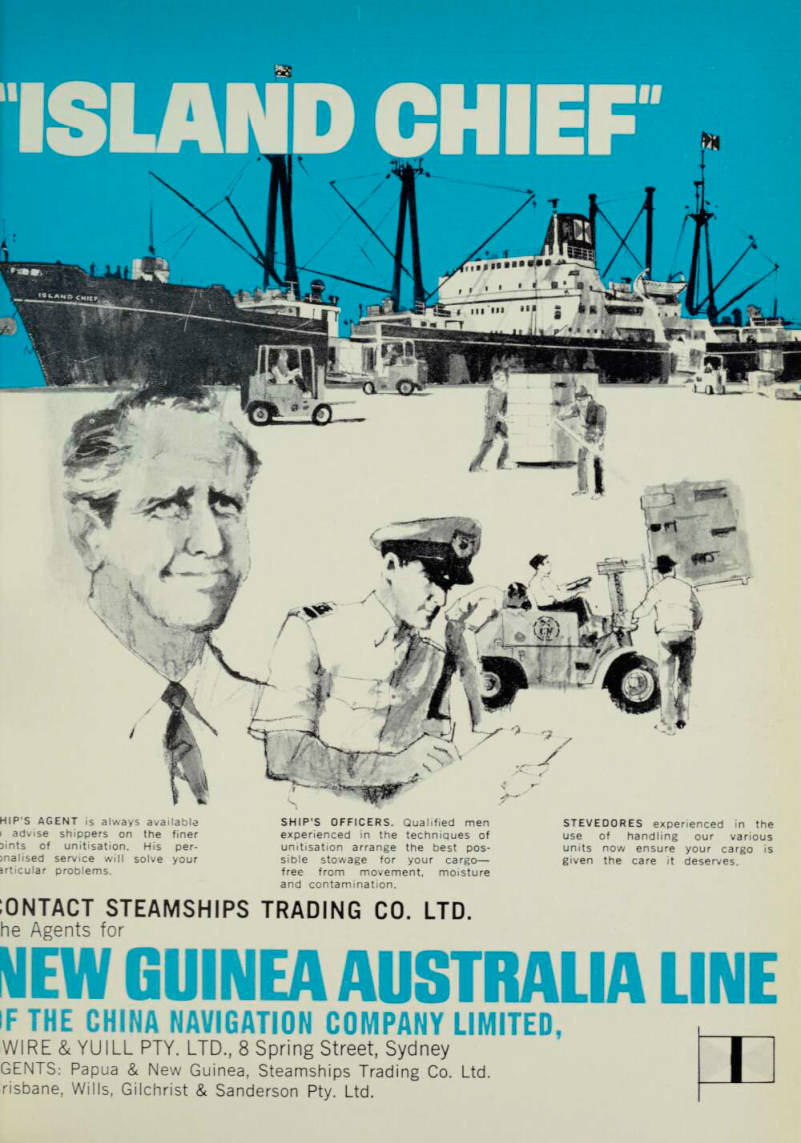 75
75 76
76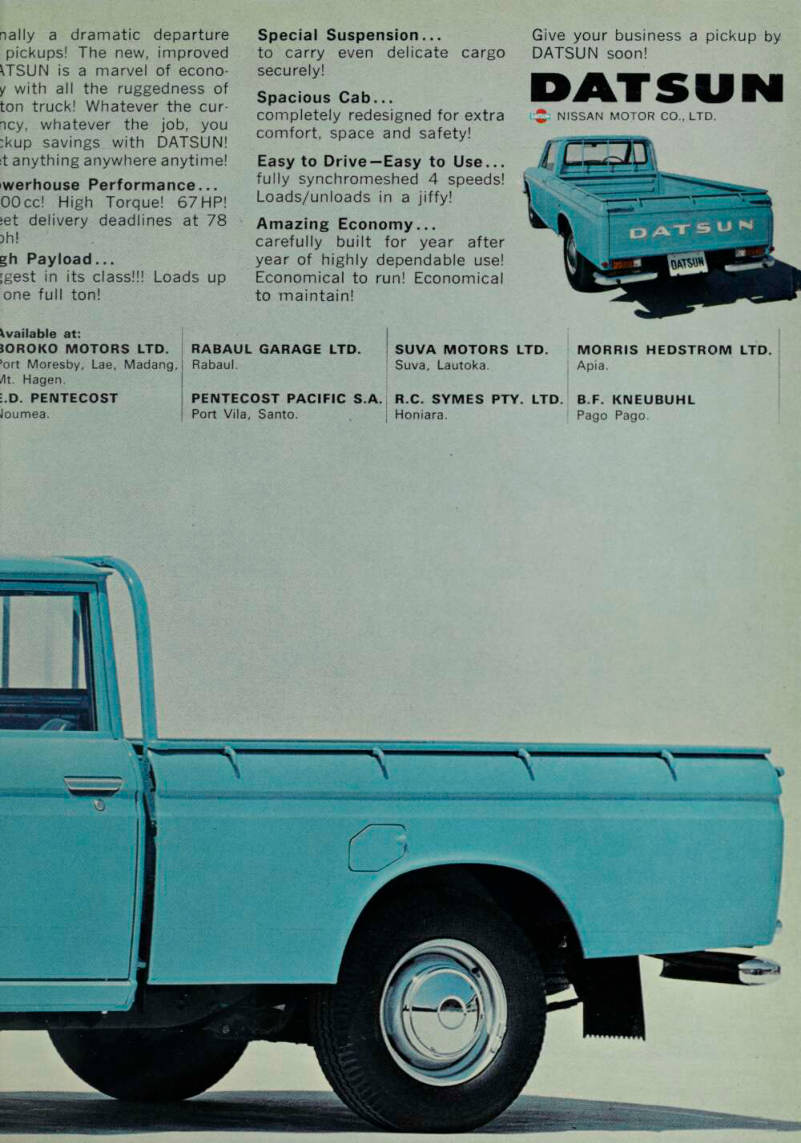 77
77 78
78 79
79 80
80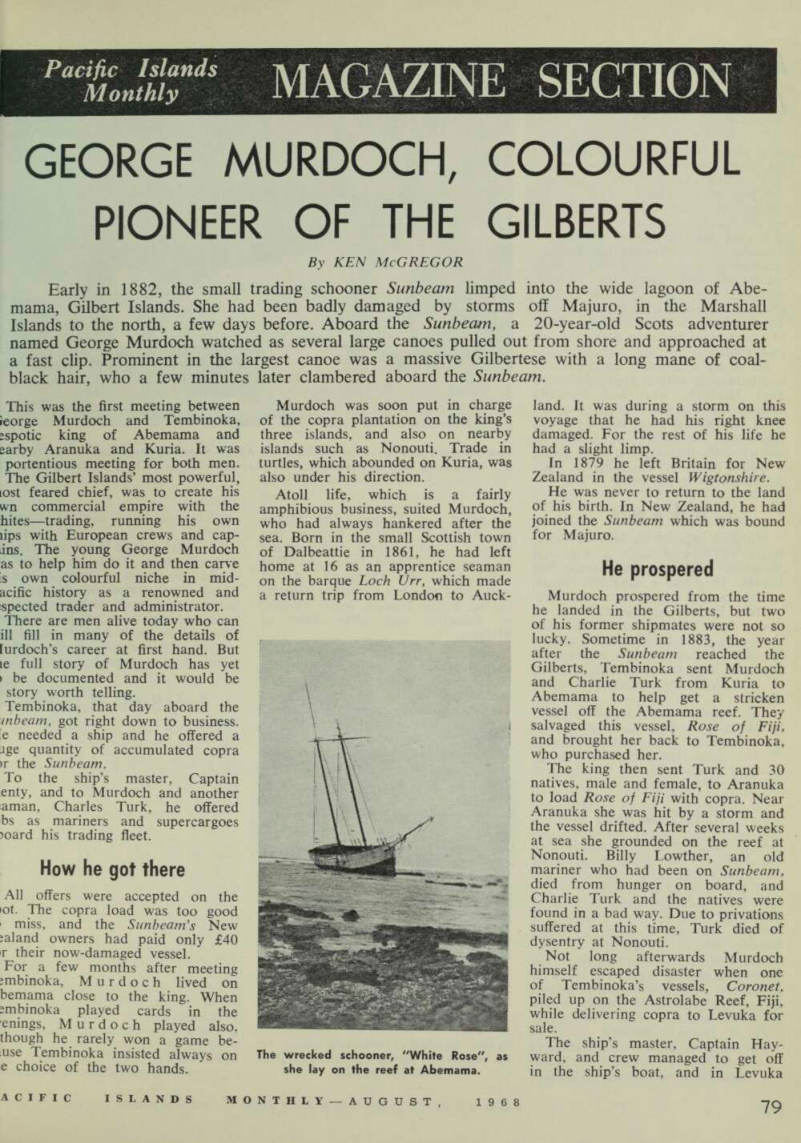 81
81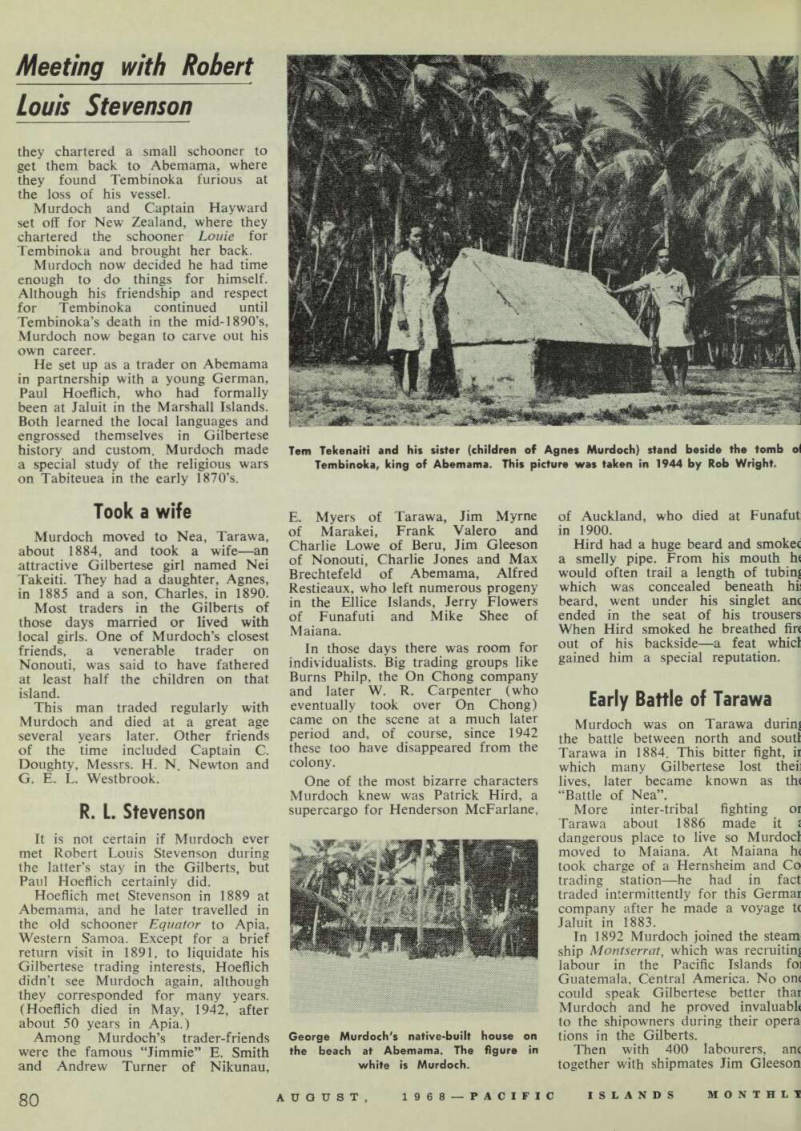 82
82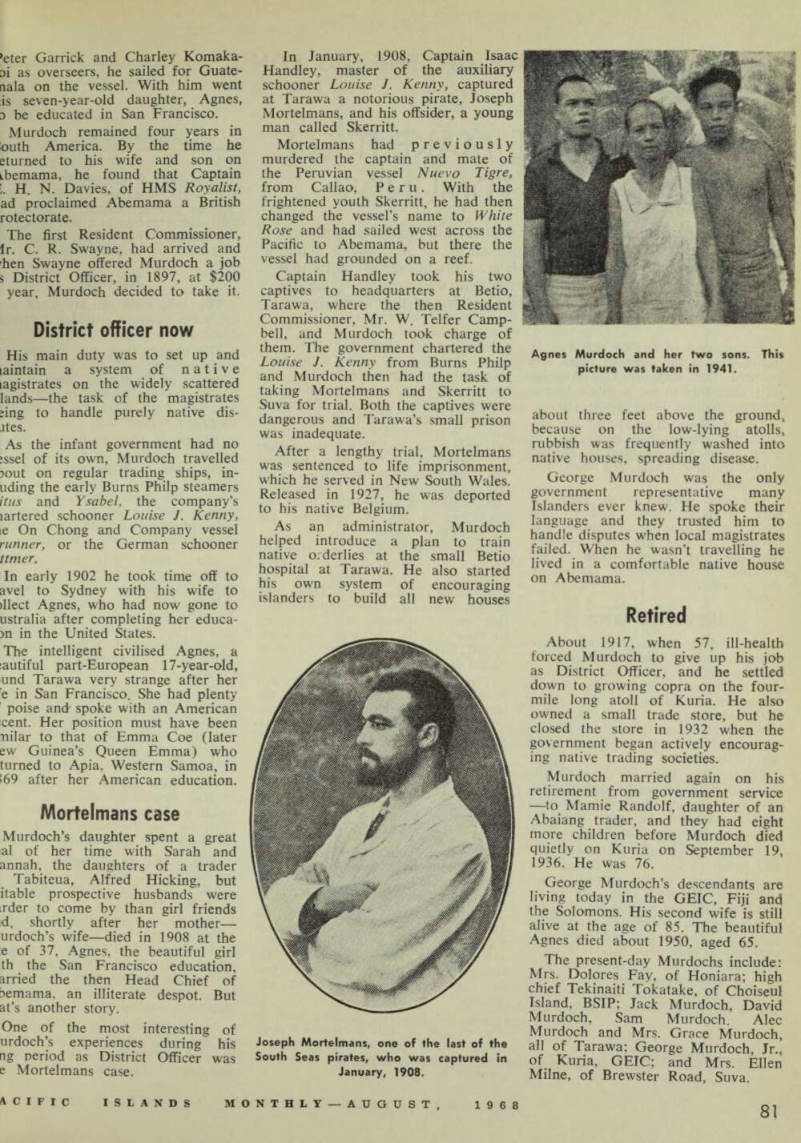 83
83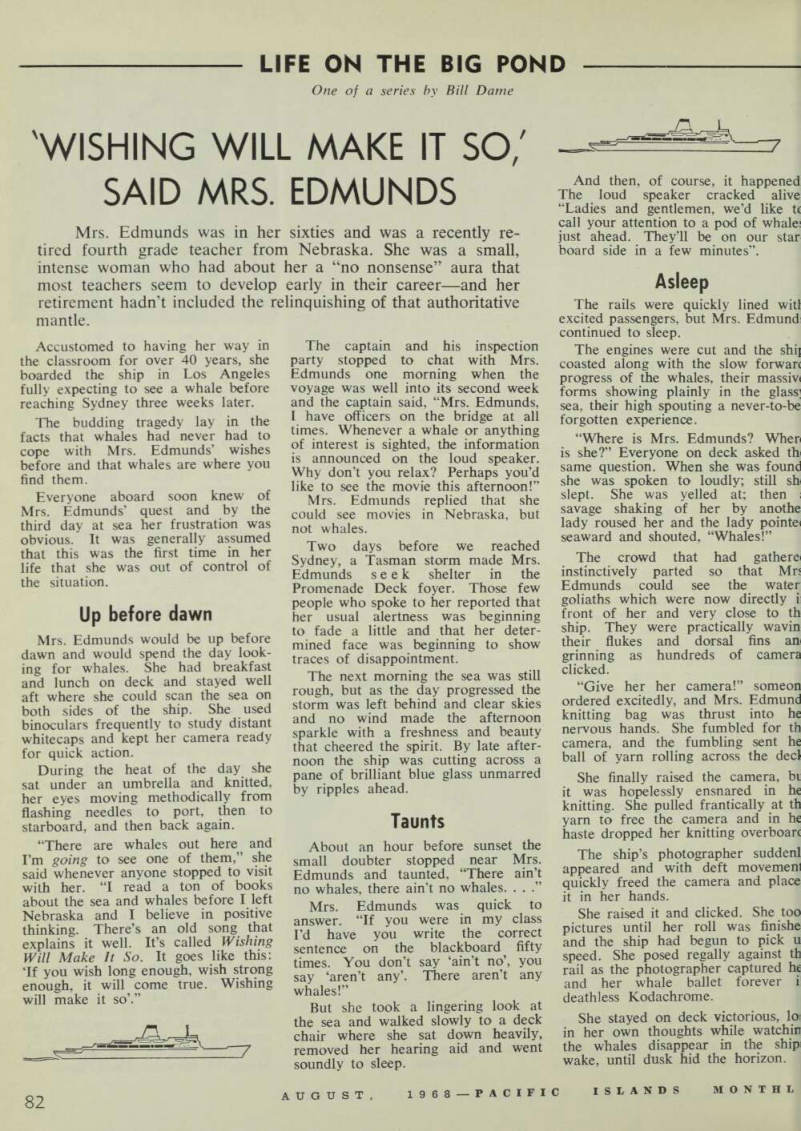 84
84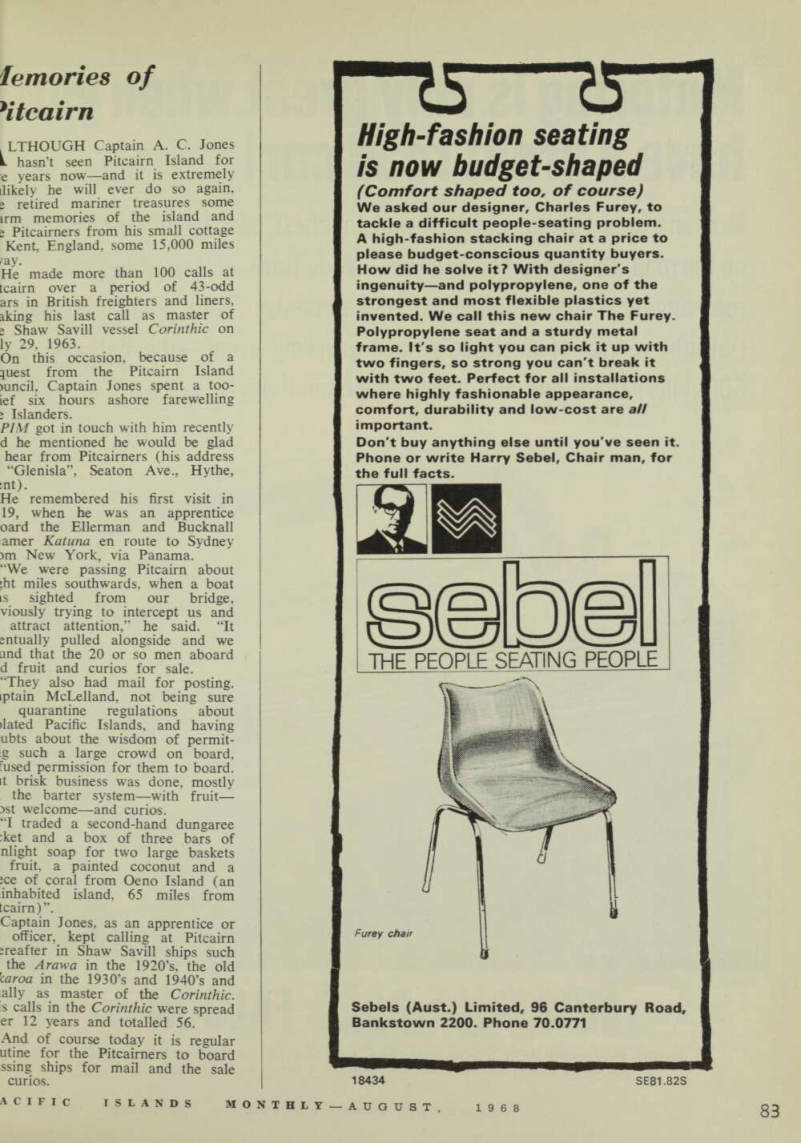 85
85 86
86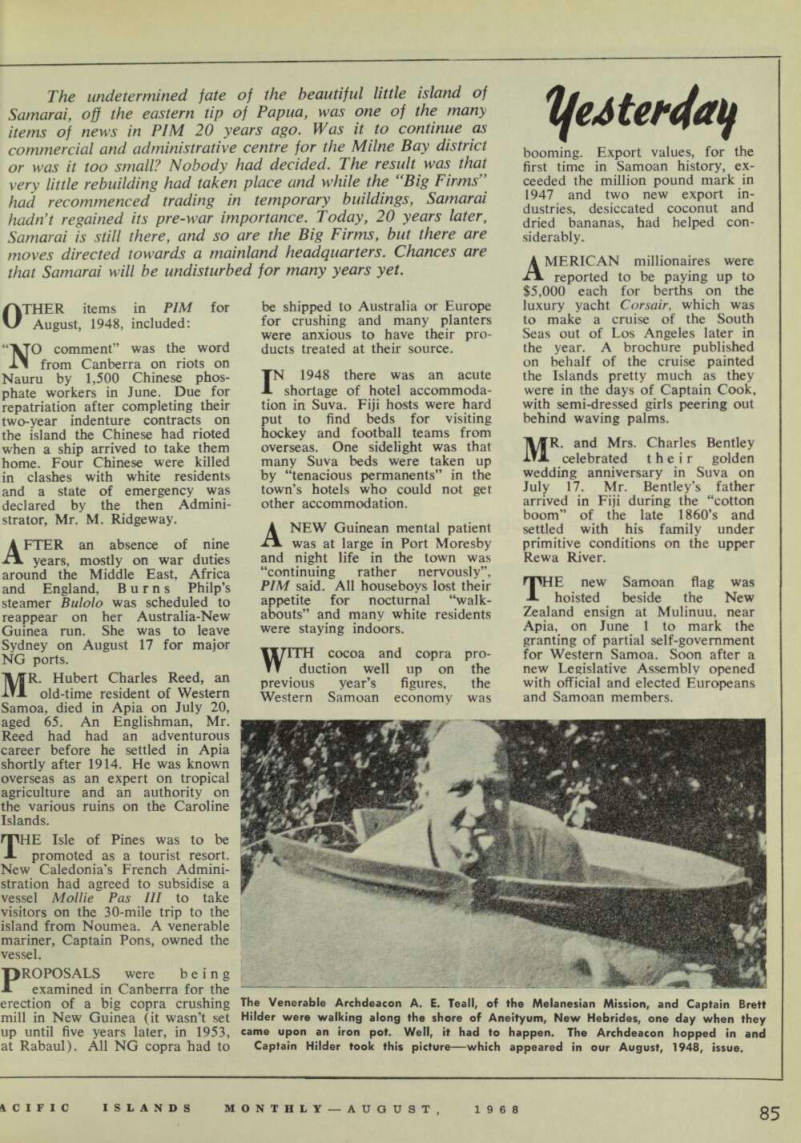 87
87 88
88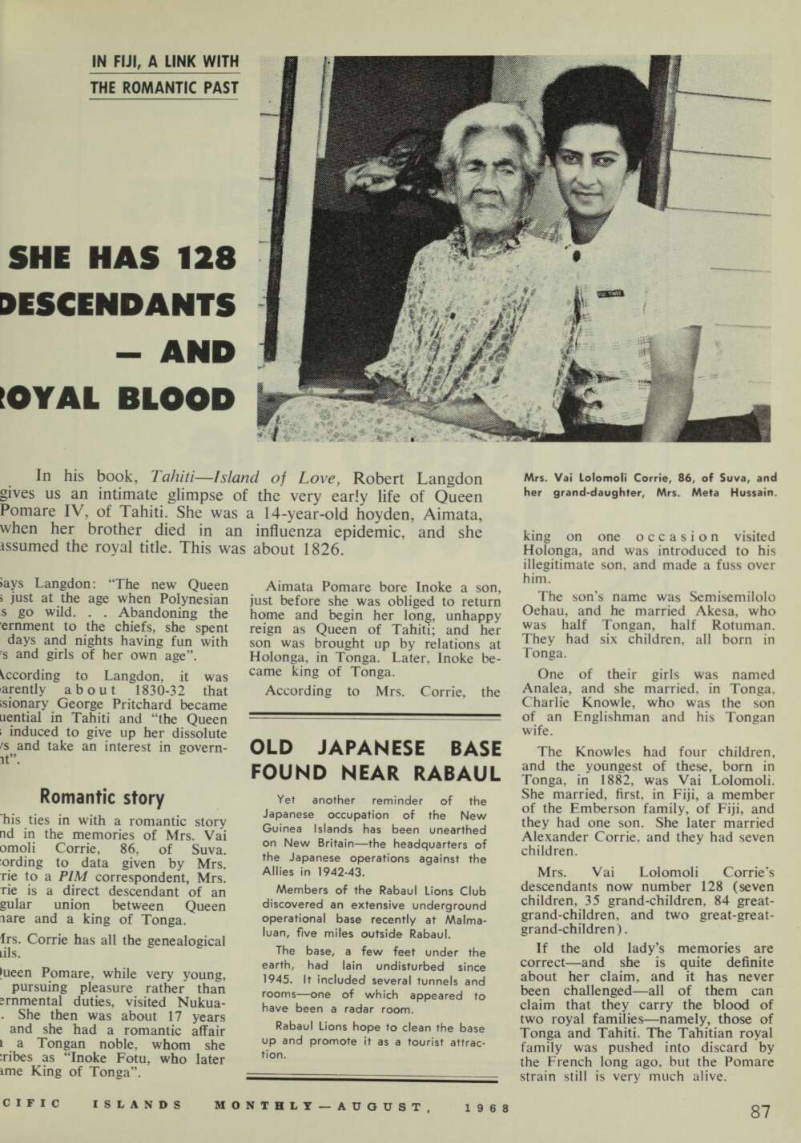 89
89 90
90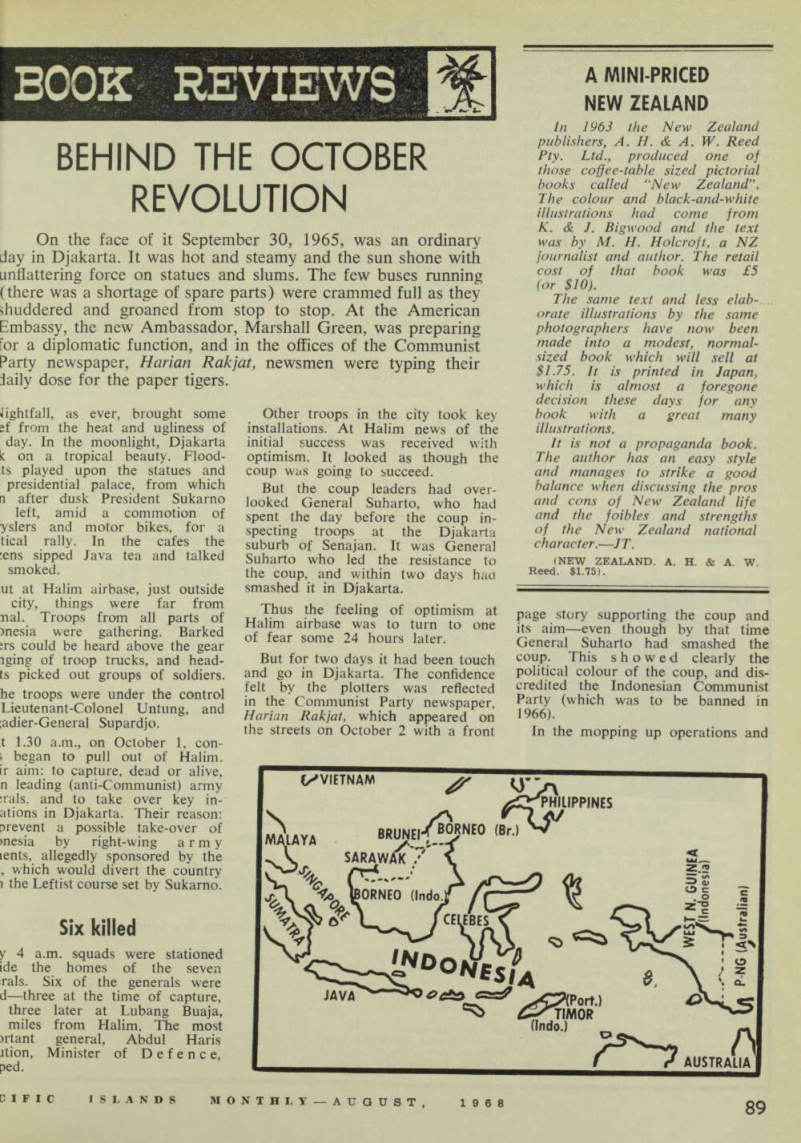 91
91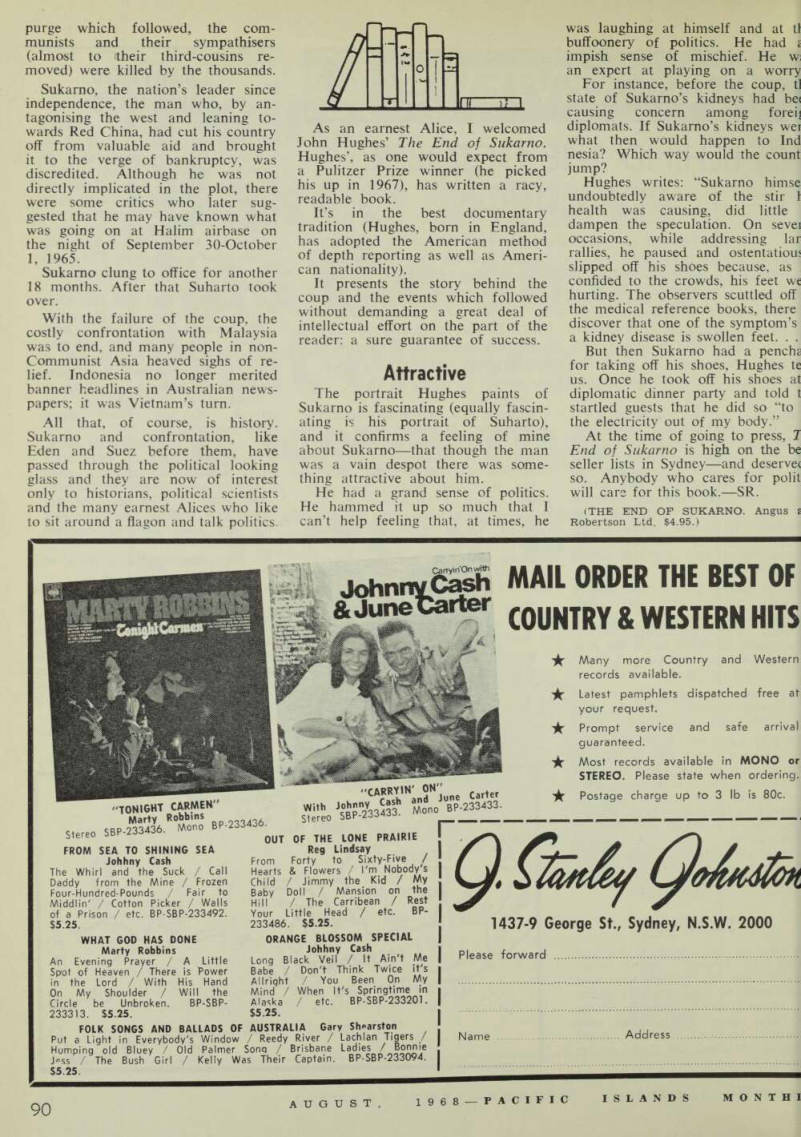 92
92 93
93 94
94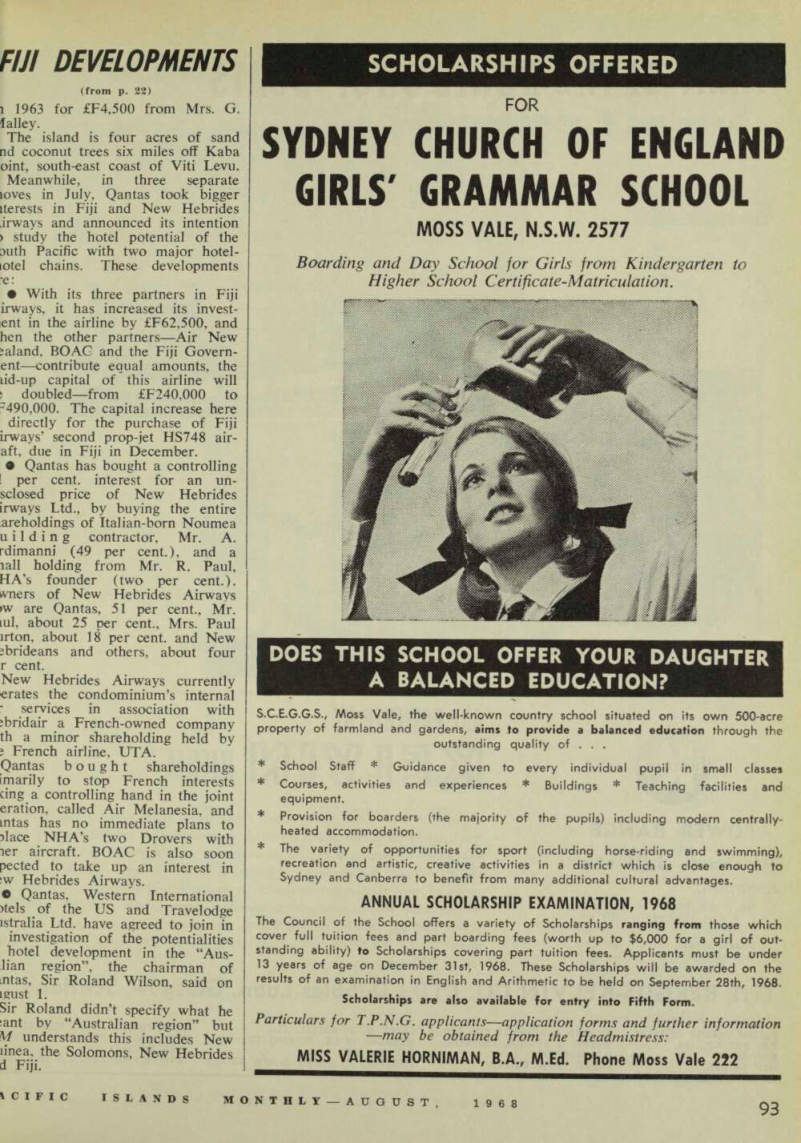 95
95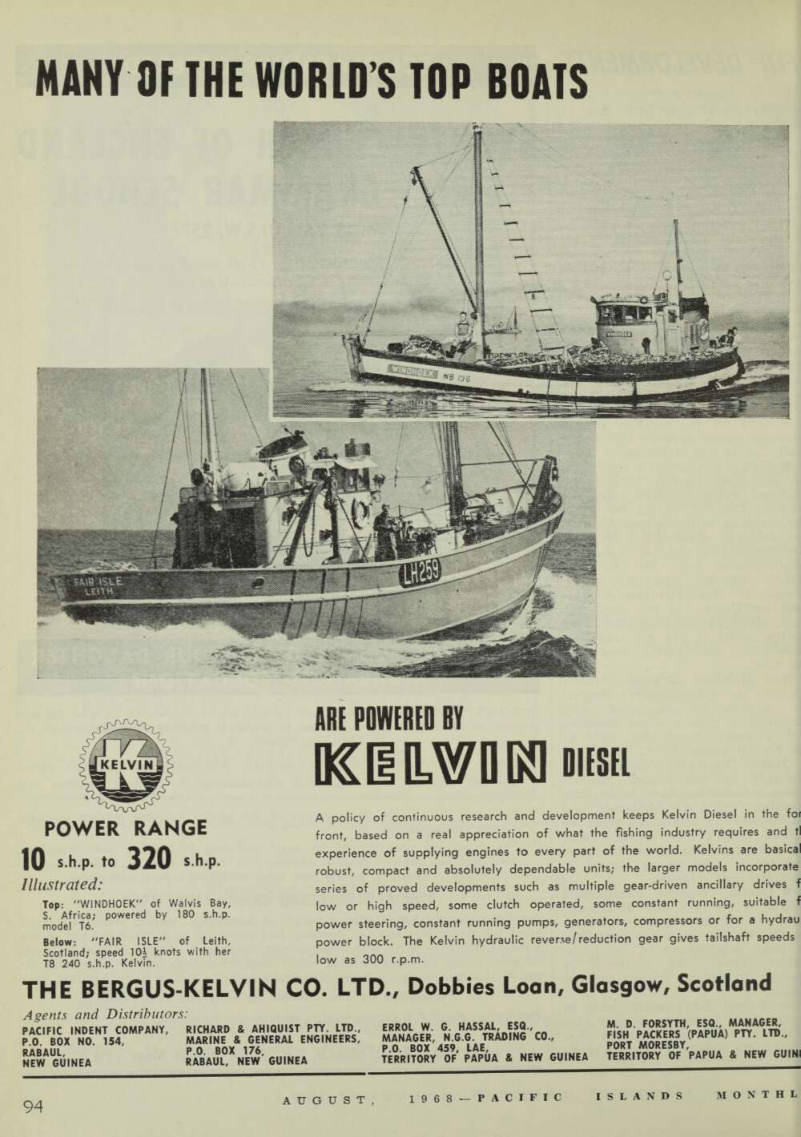 96
96 97
97 98
98 99
99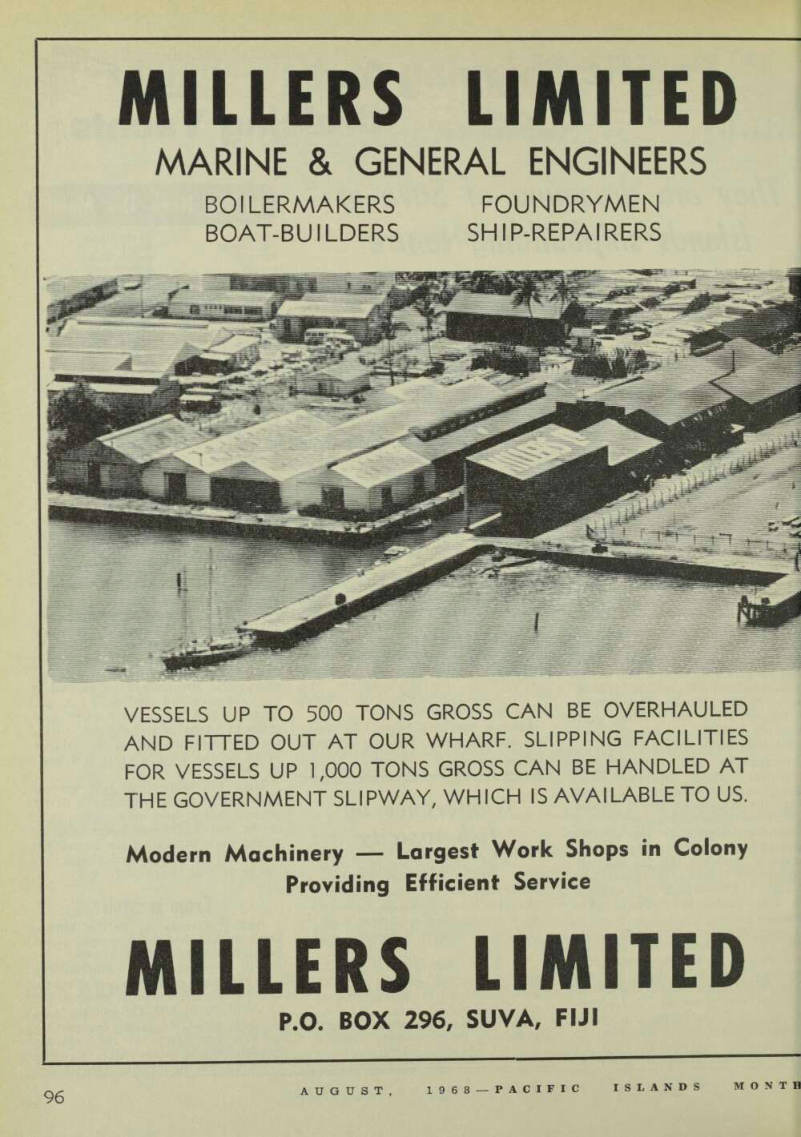 100
100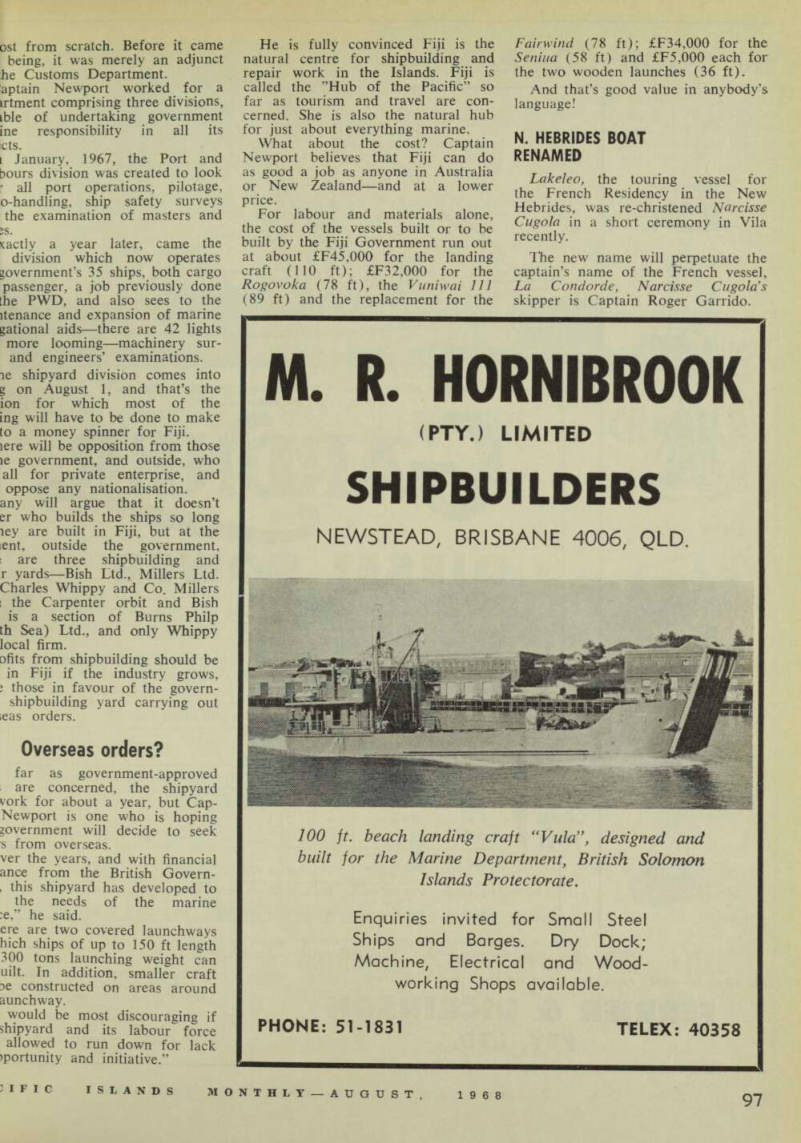 101
101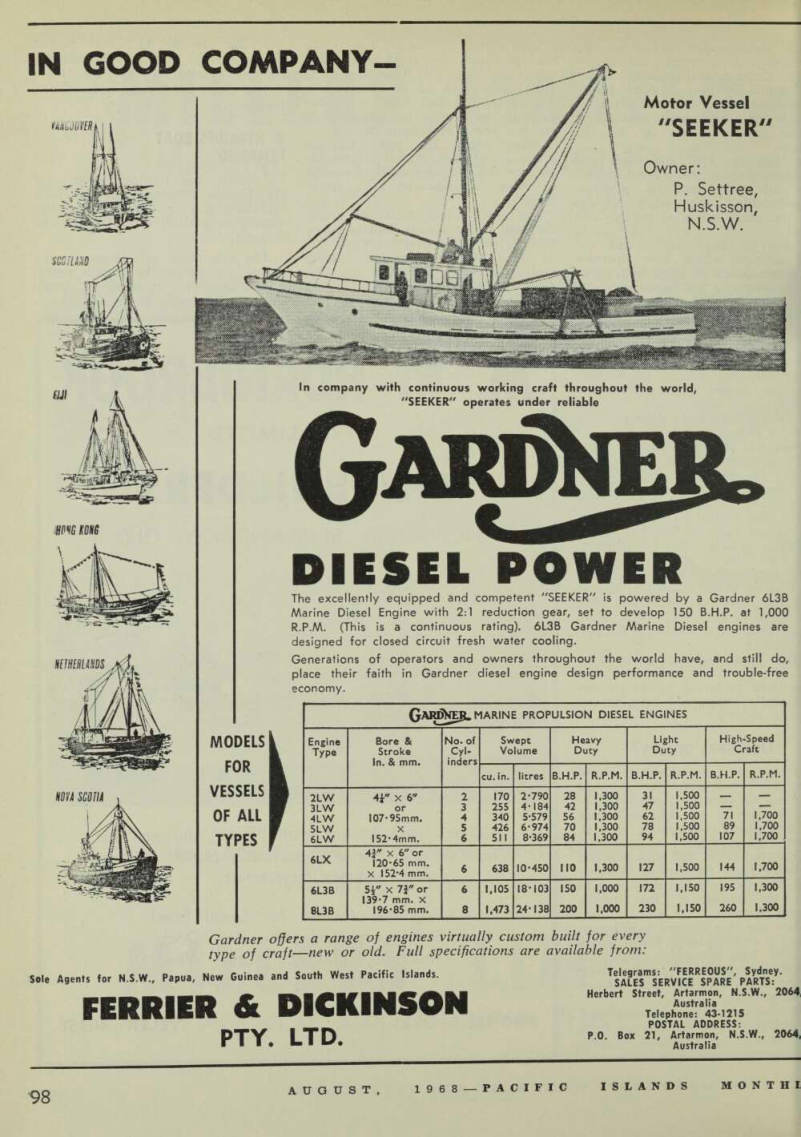 102
102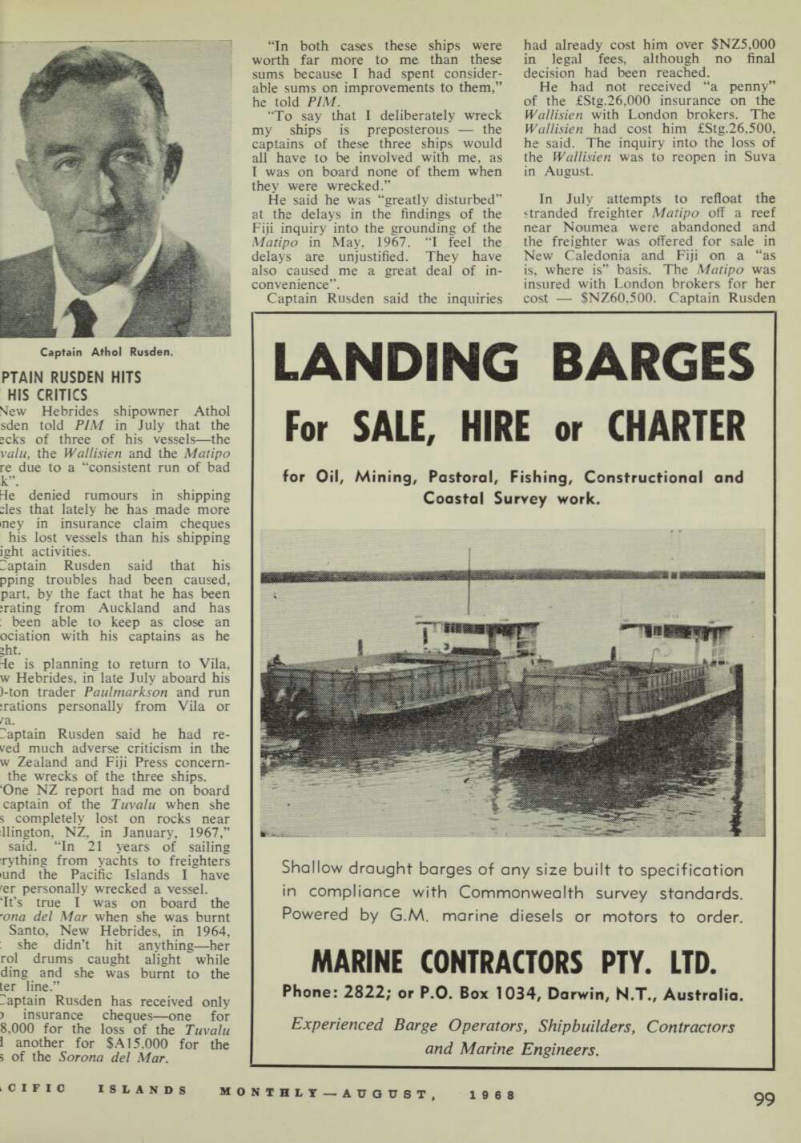 103
103 104
104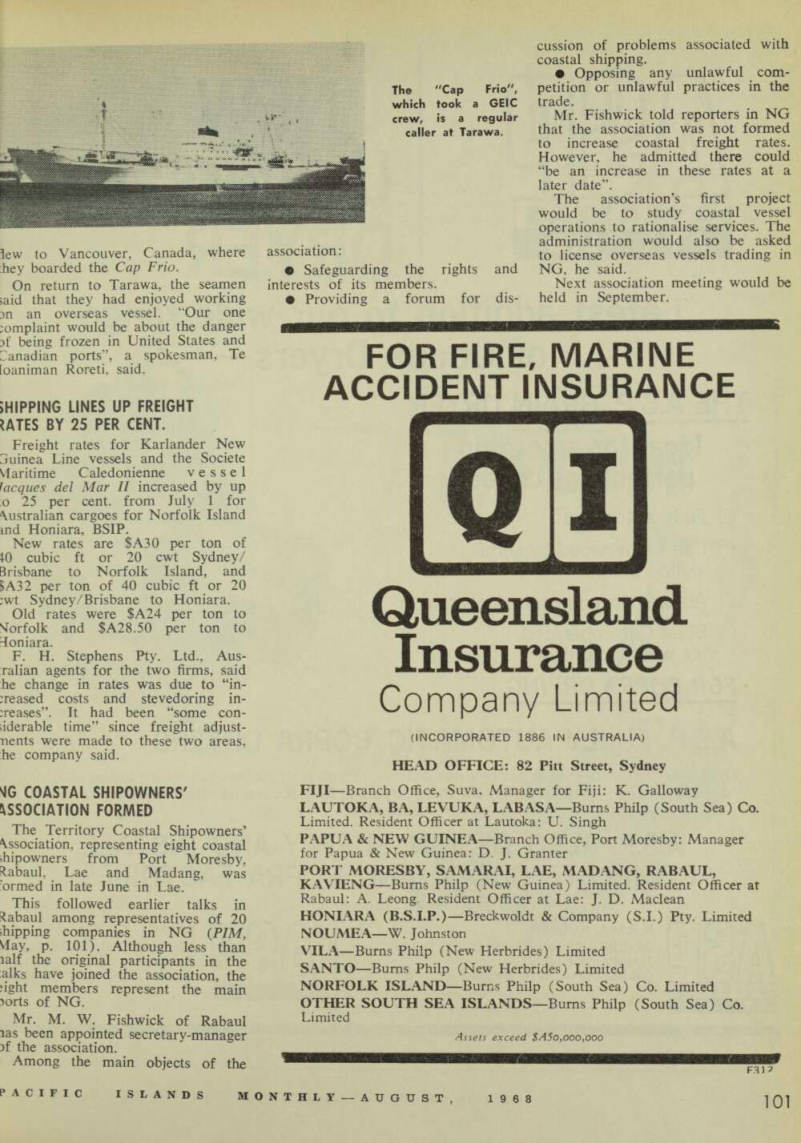 105
105 106
106 107
107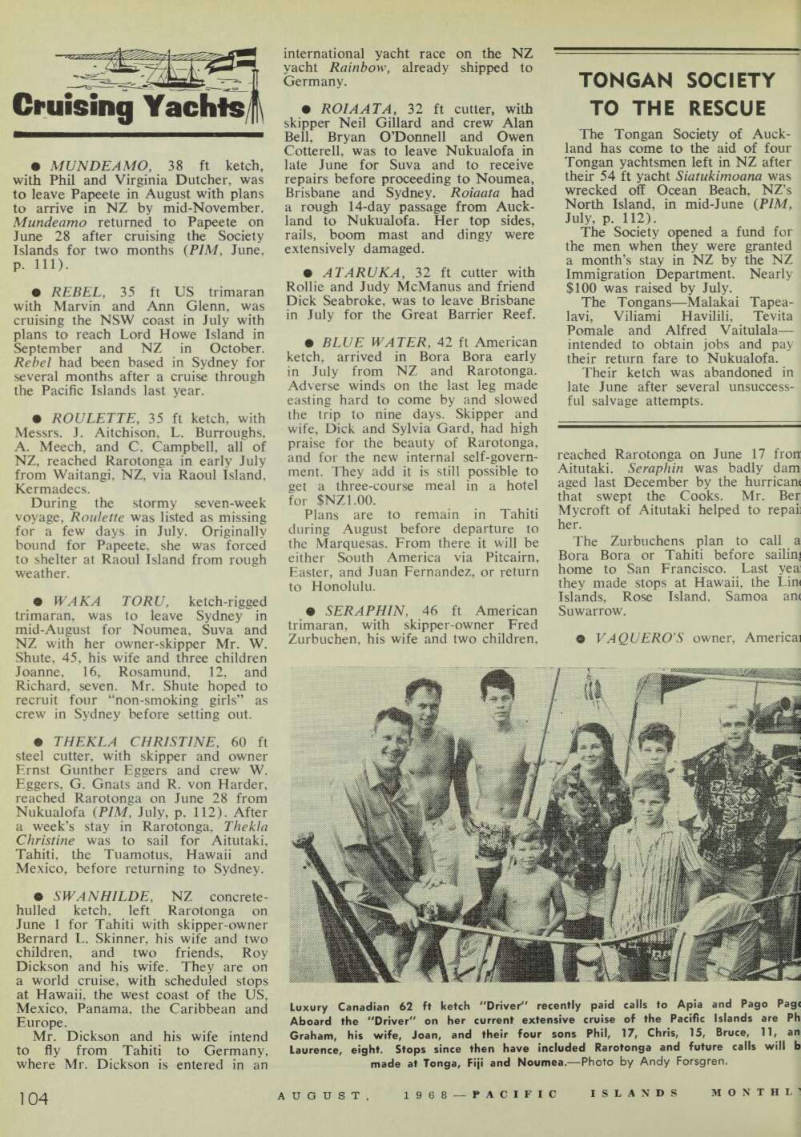 108
108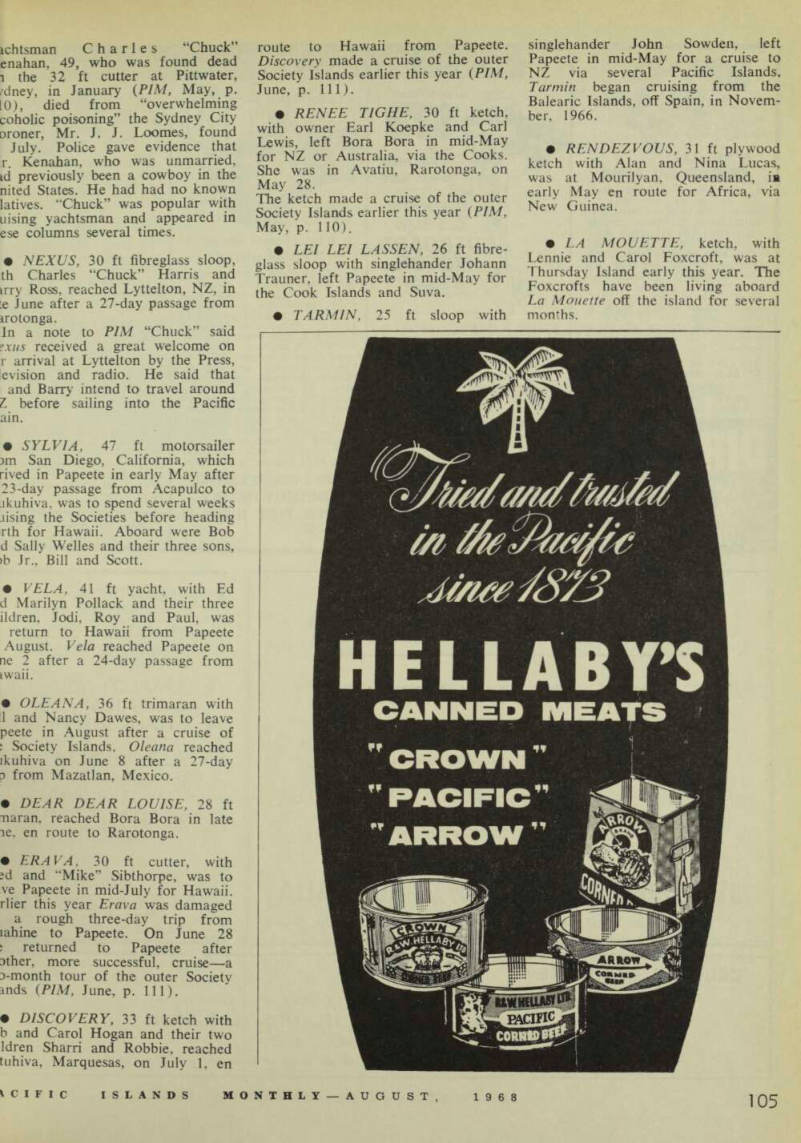 109
109 110
110 111
111 112
112 113
113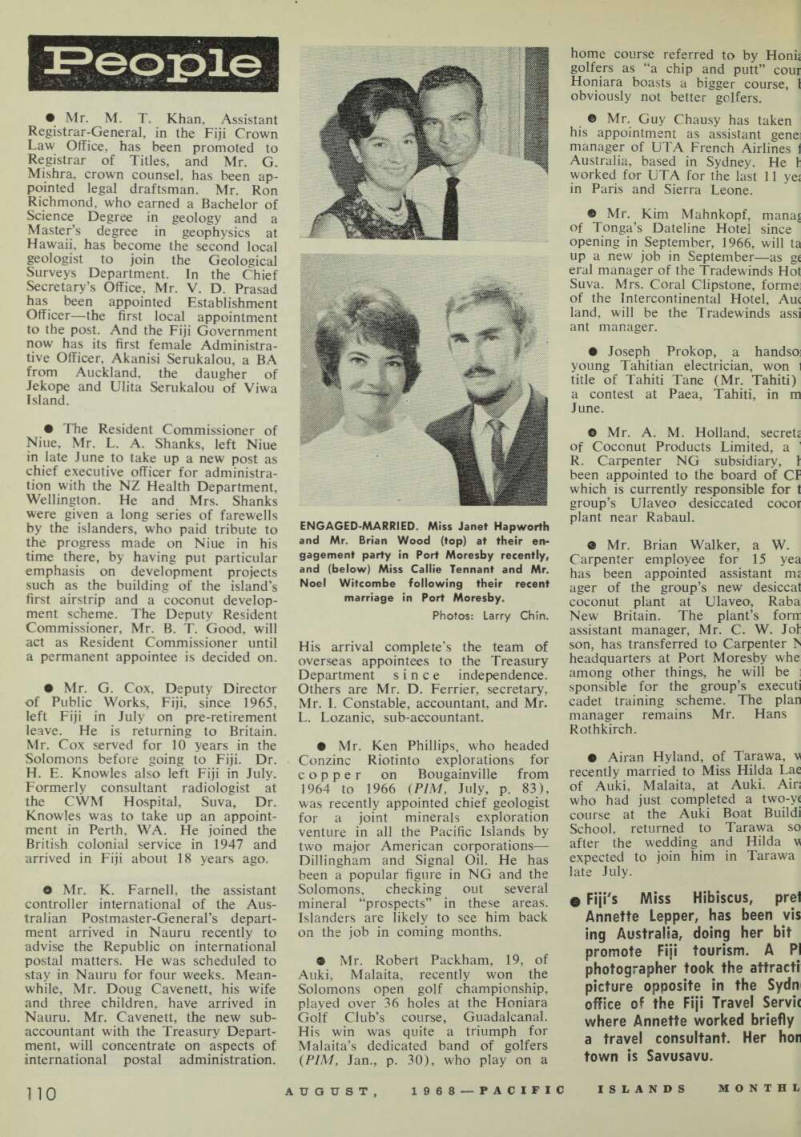 114
114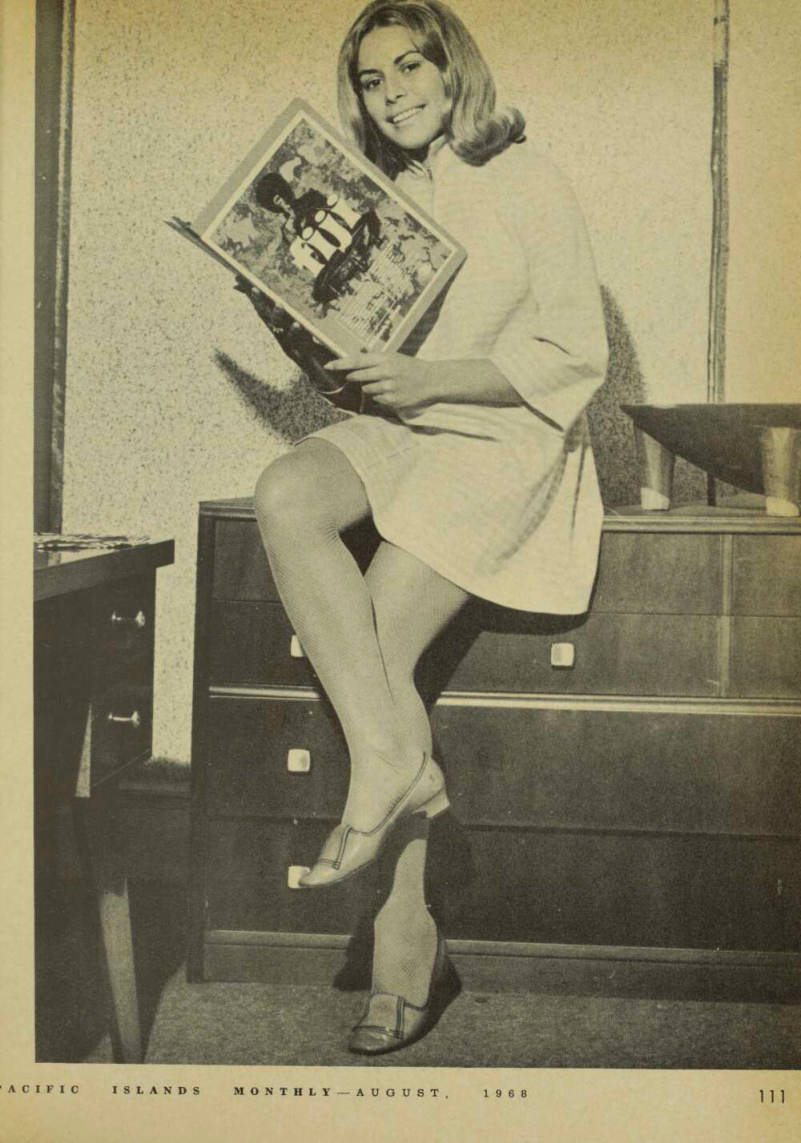 115
115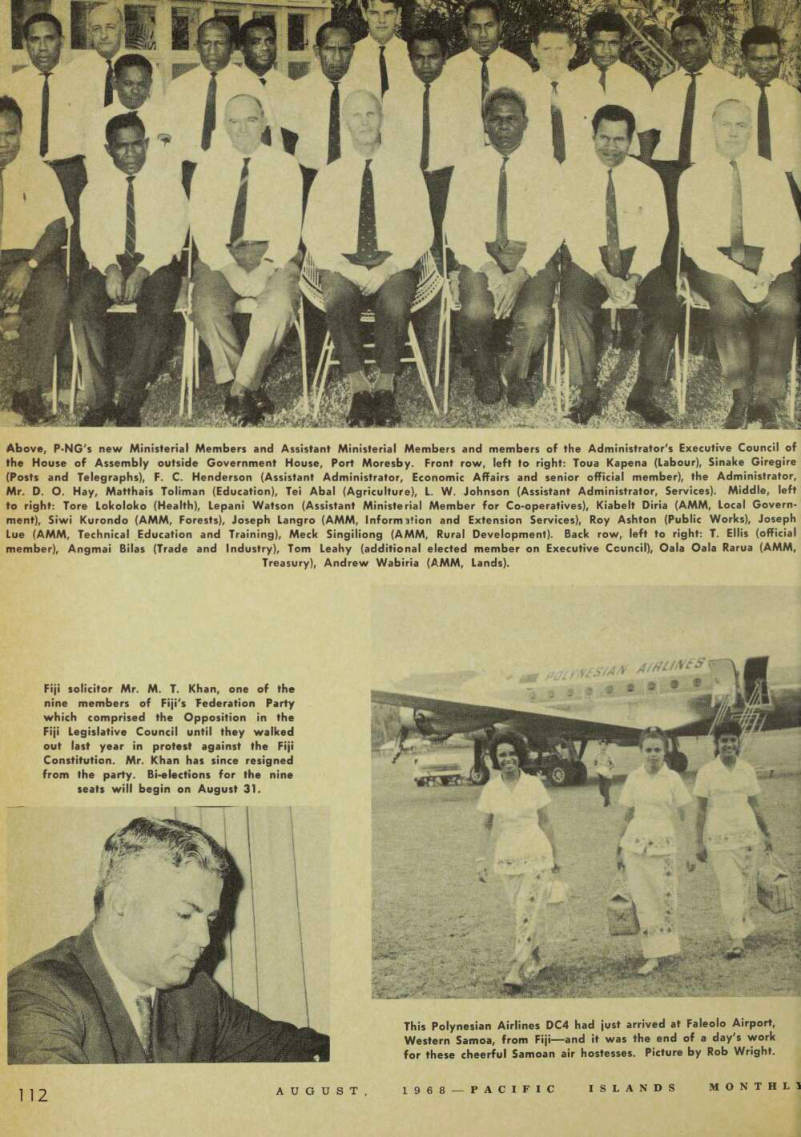 116
116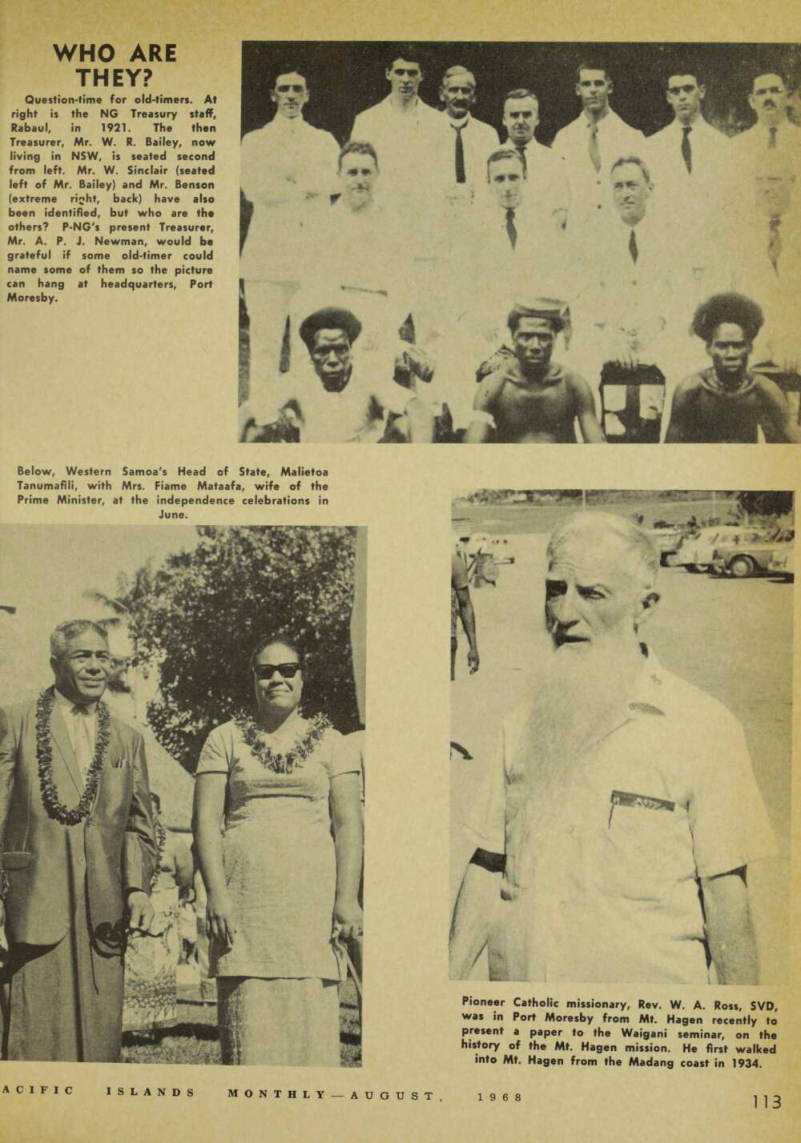 117
117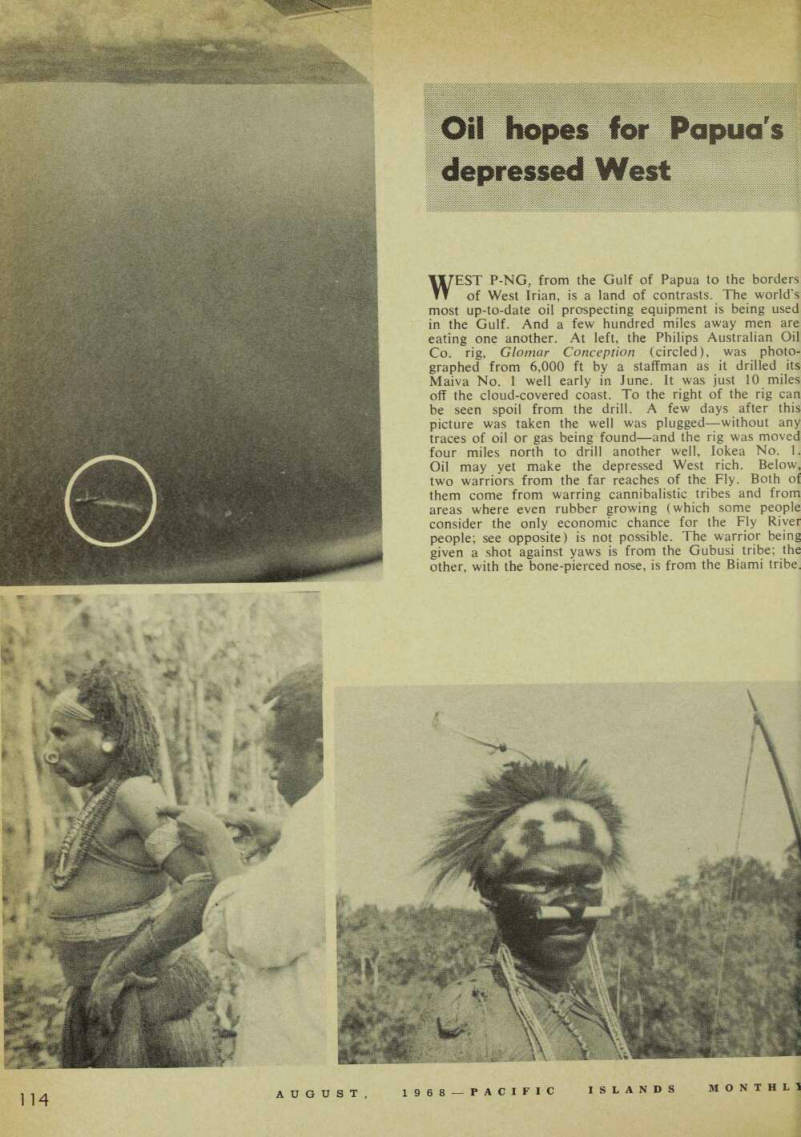 118
118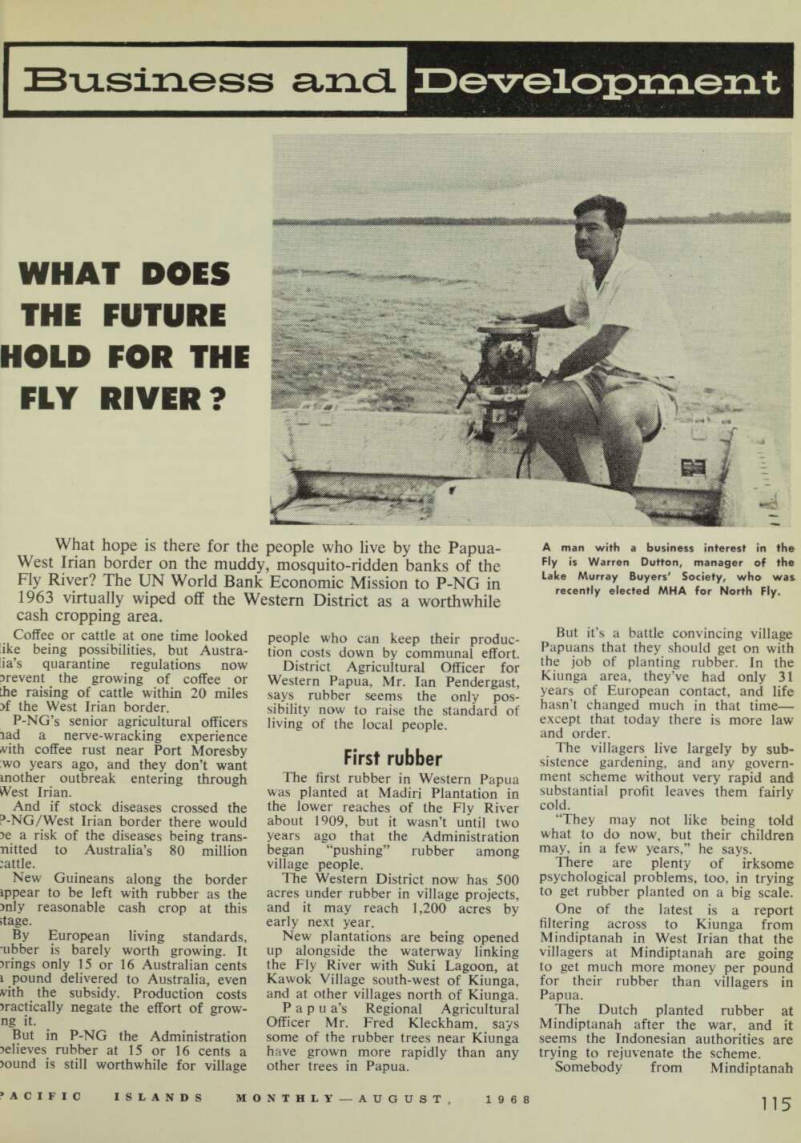 119
119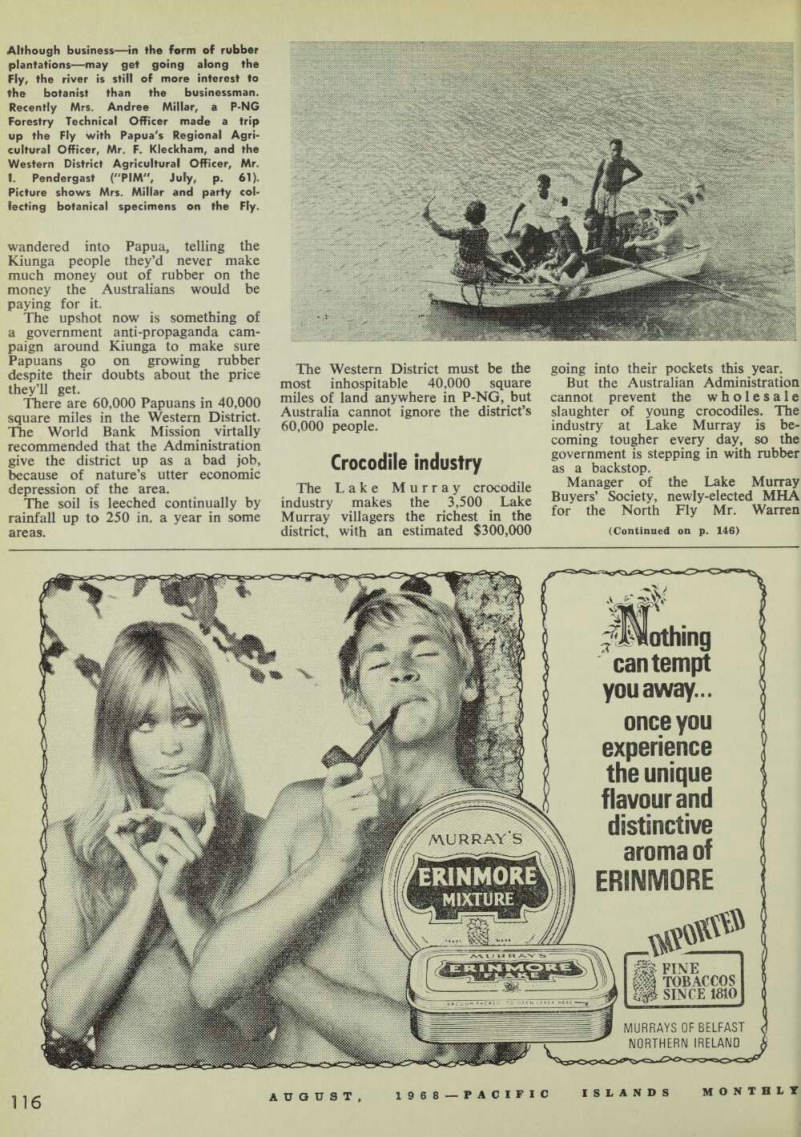 120
120 121
121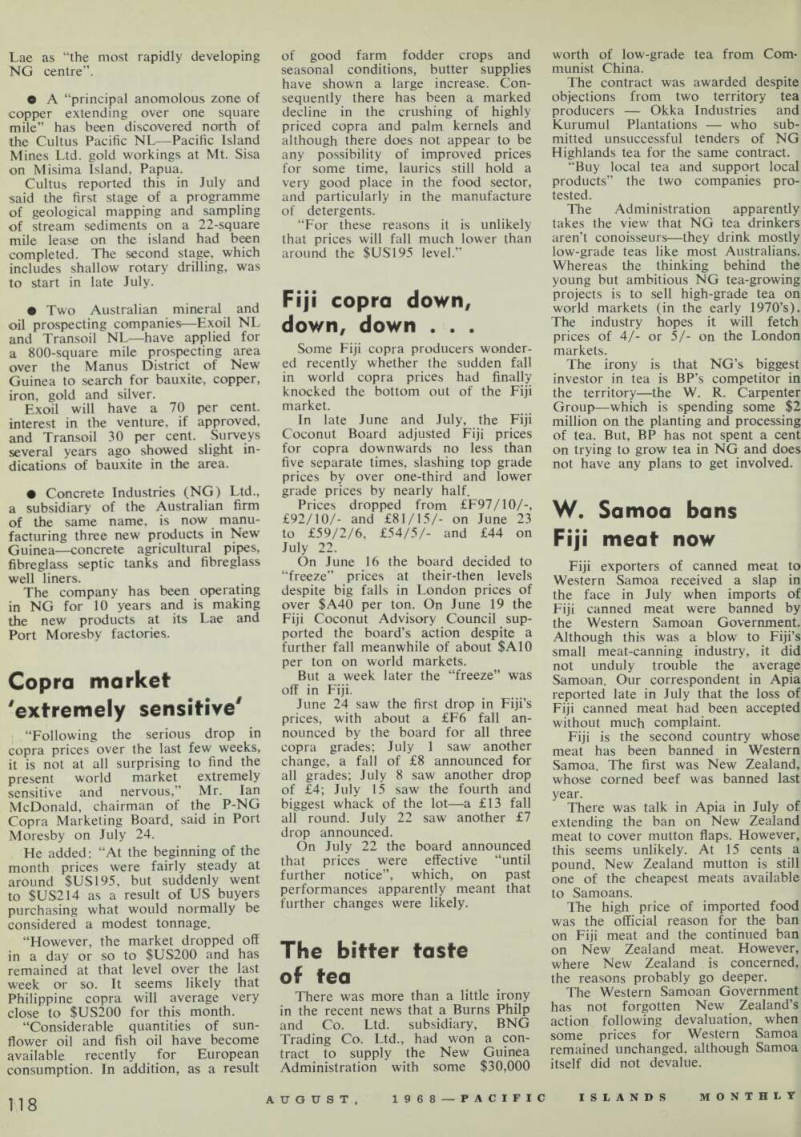 122
122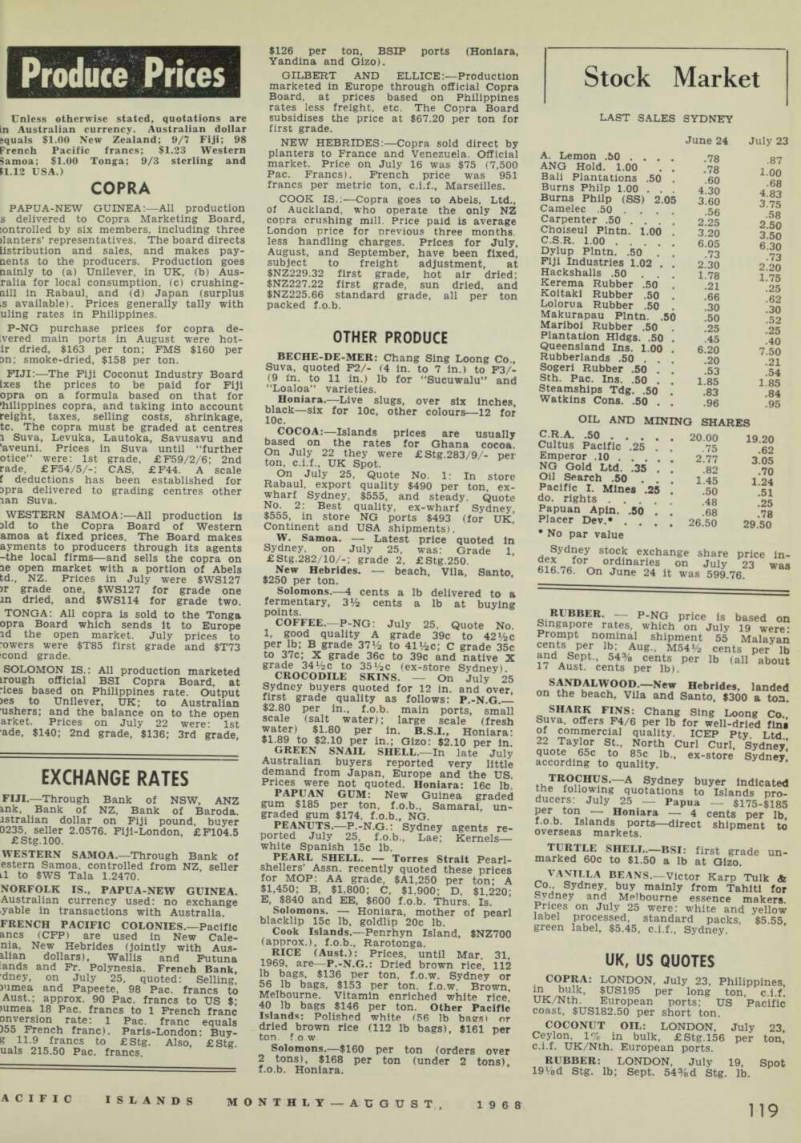 123
123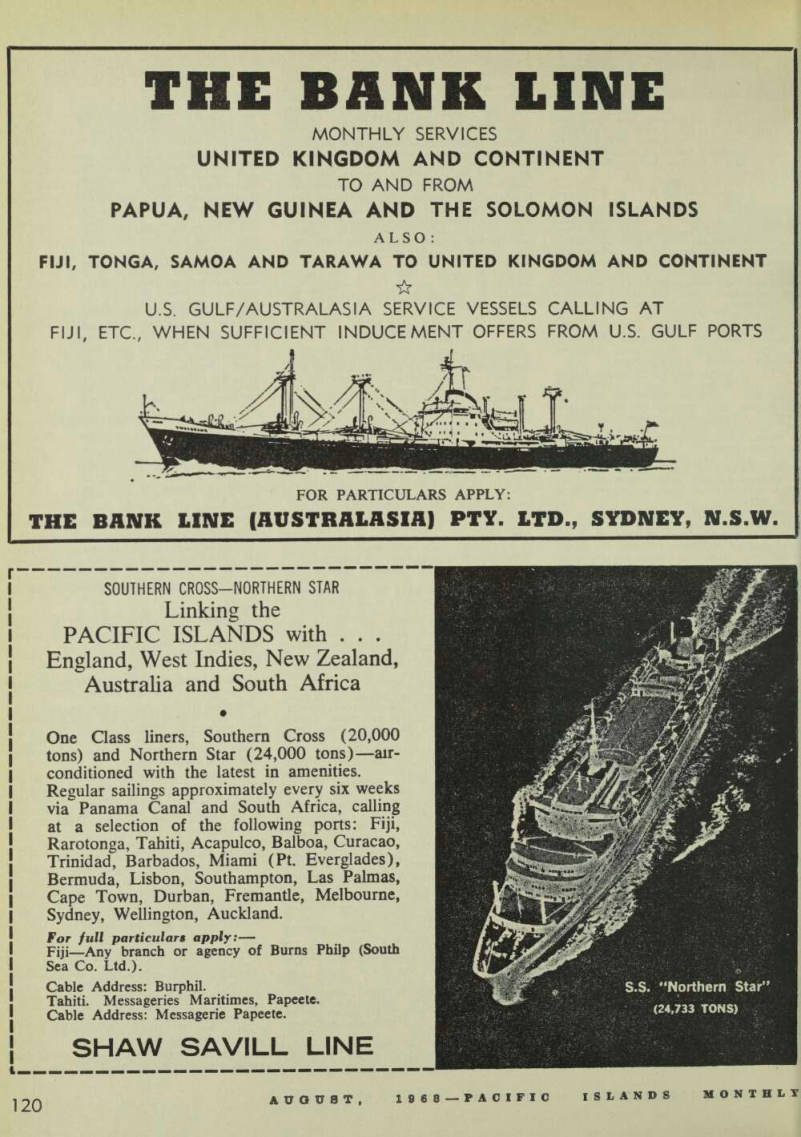 124
124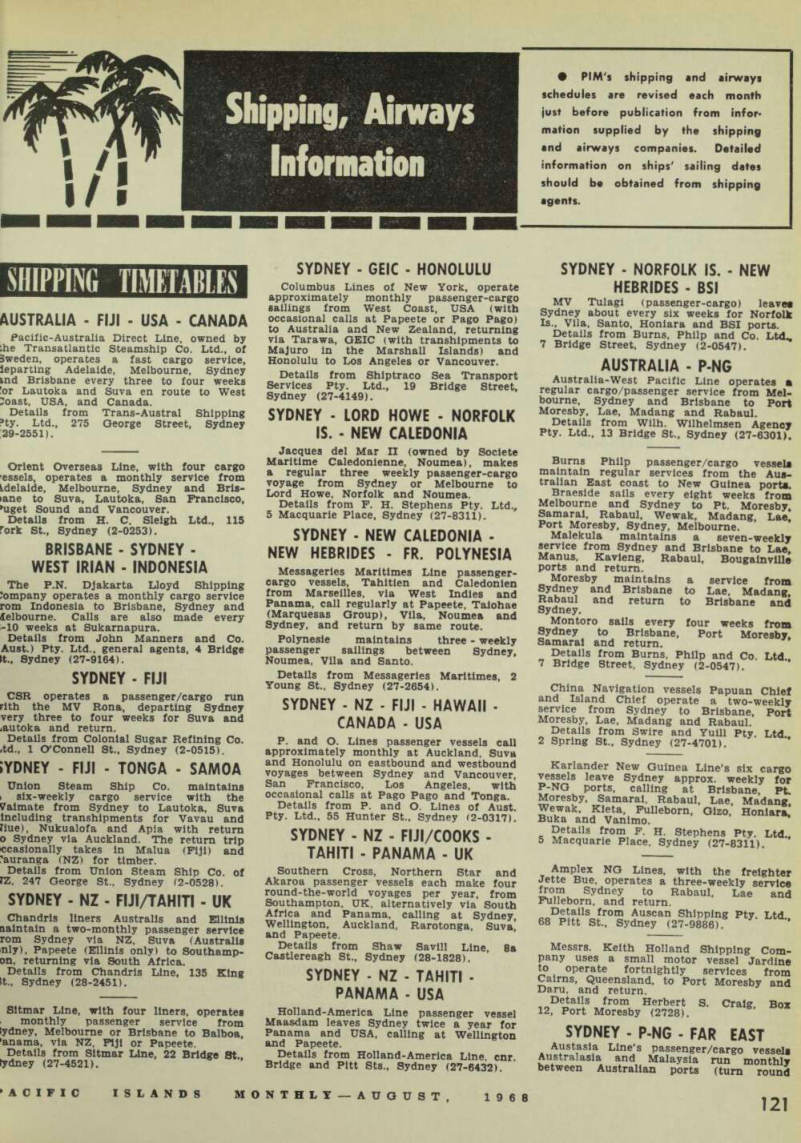 125
125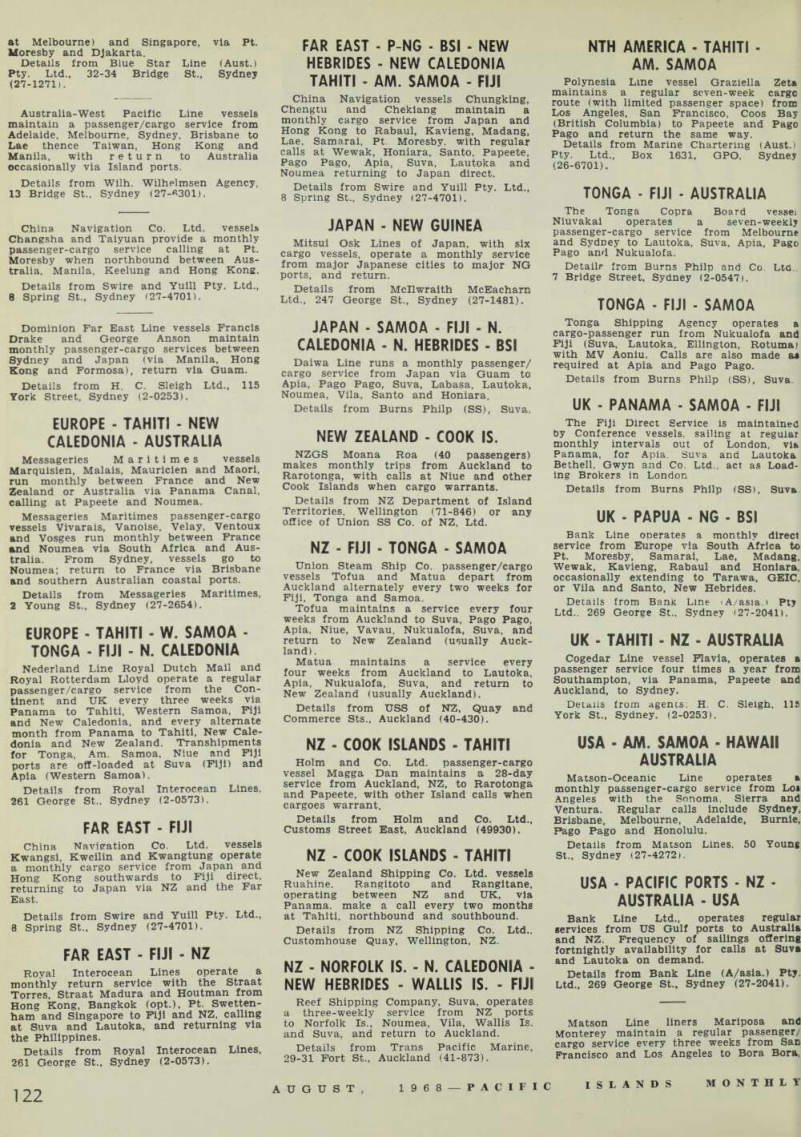 126
126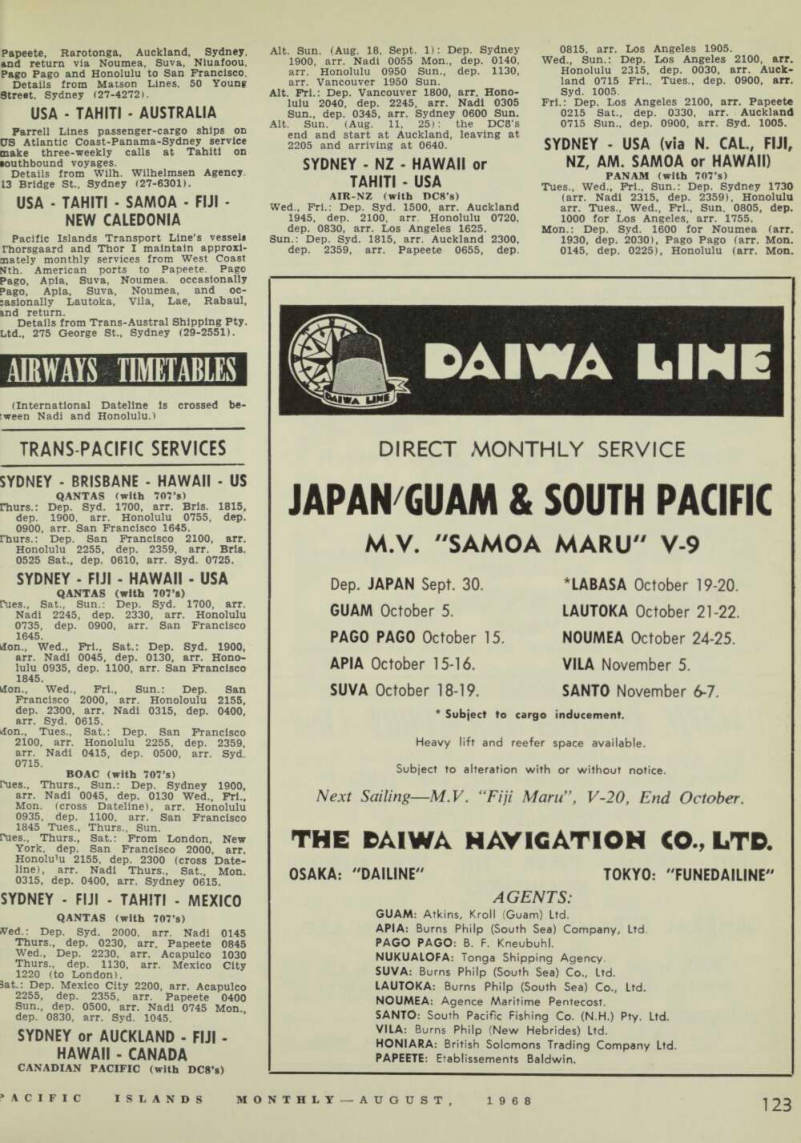 127
127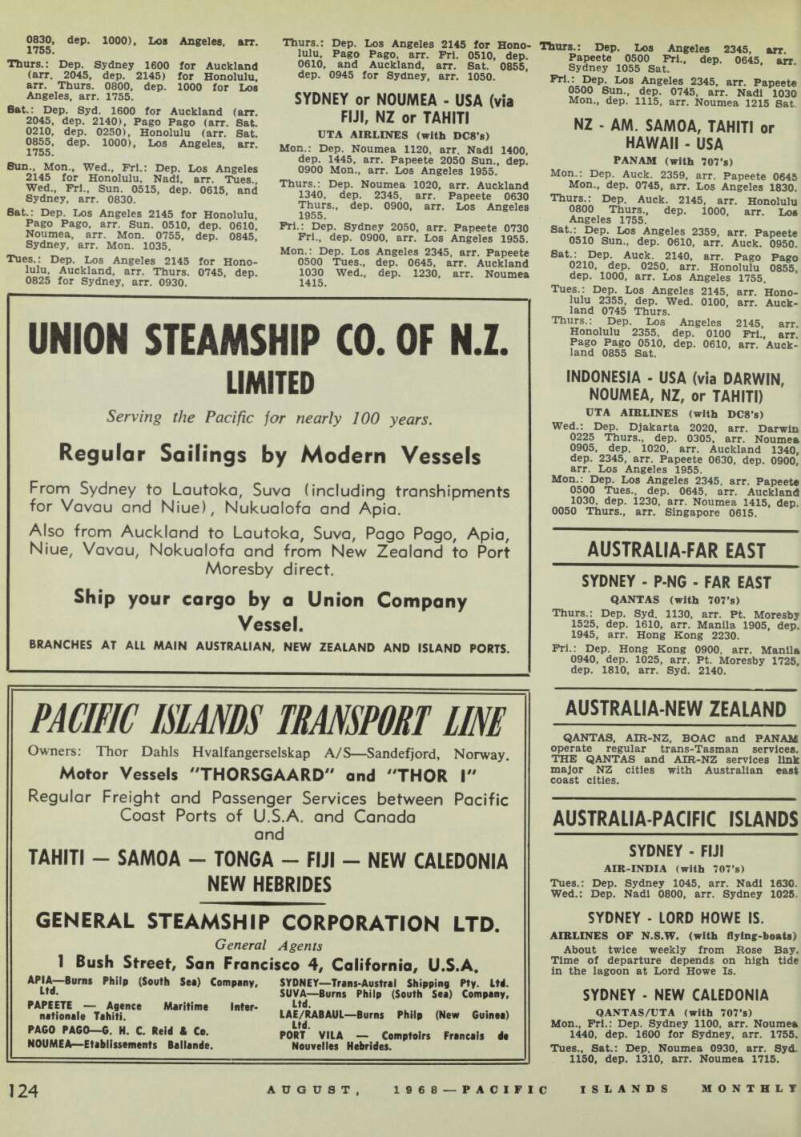 128
128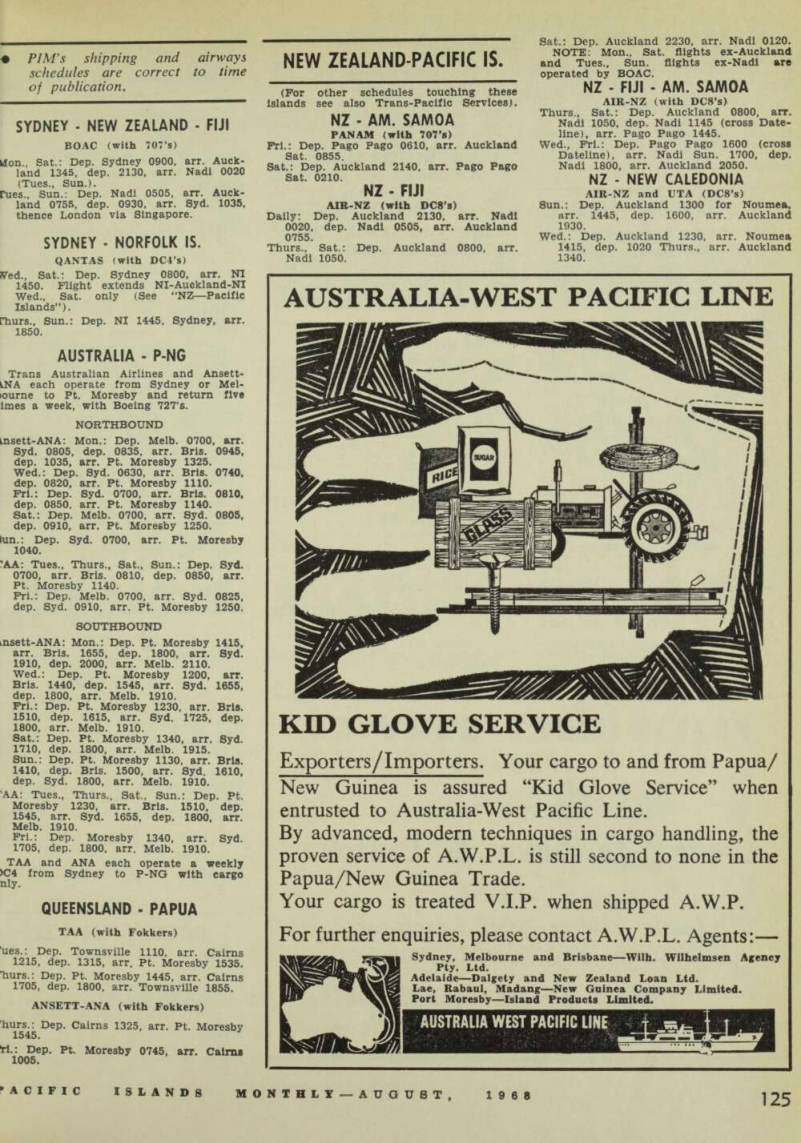 129
129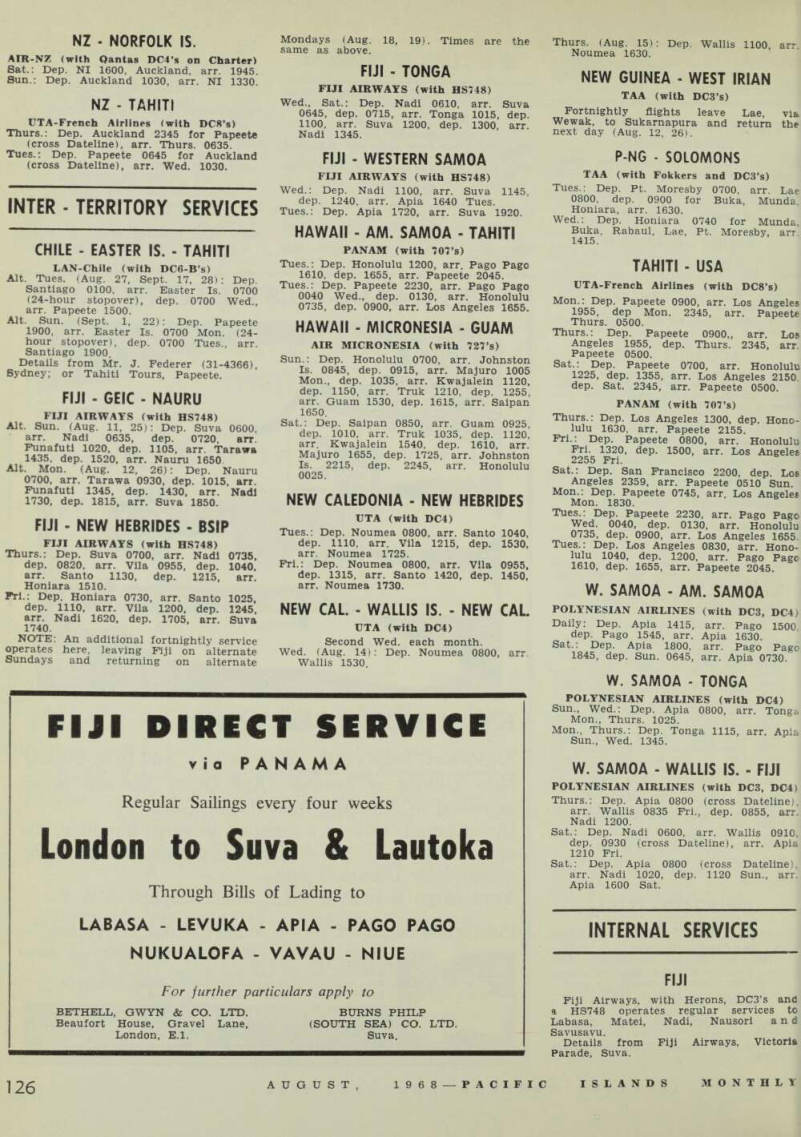 130
130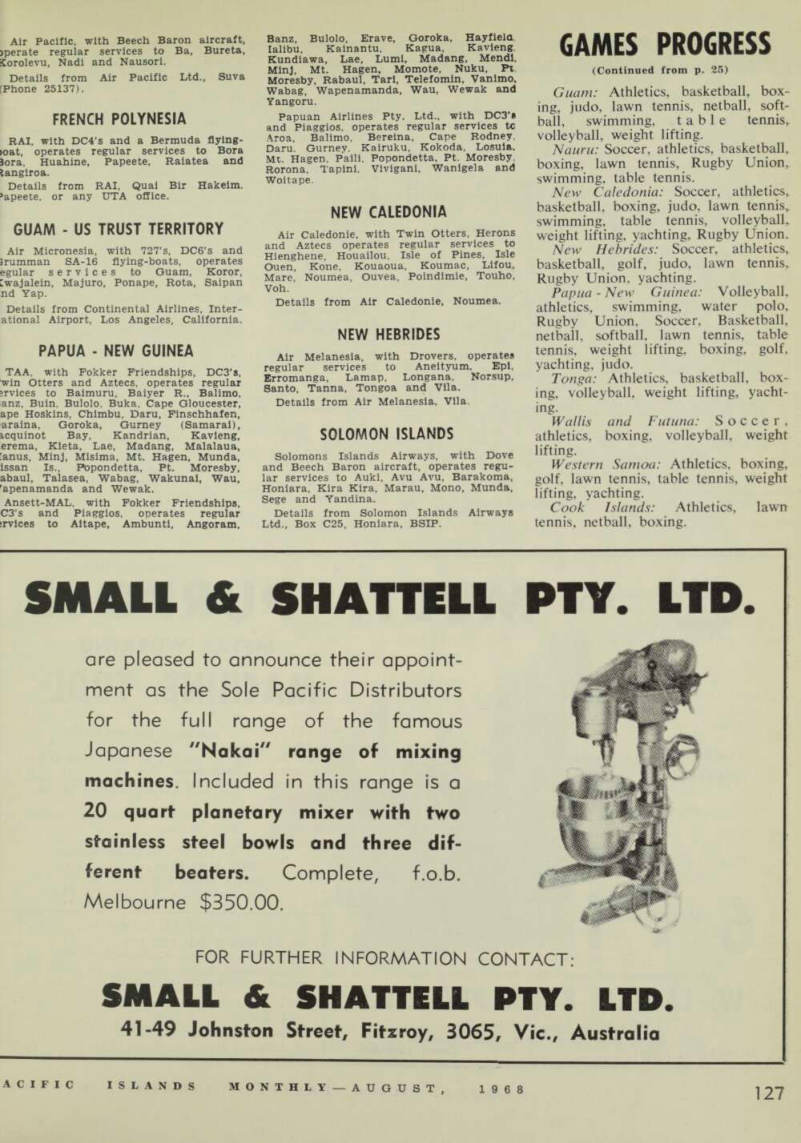 131
131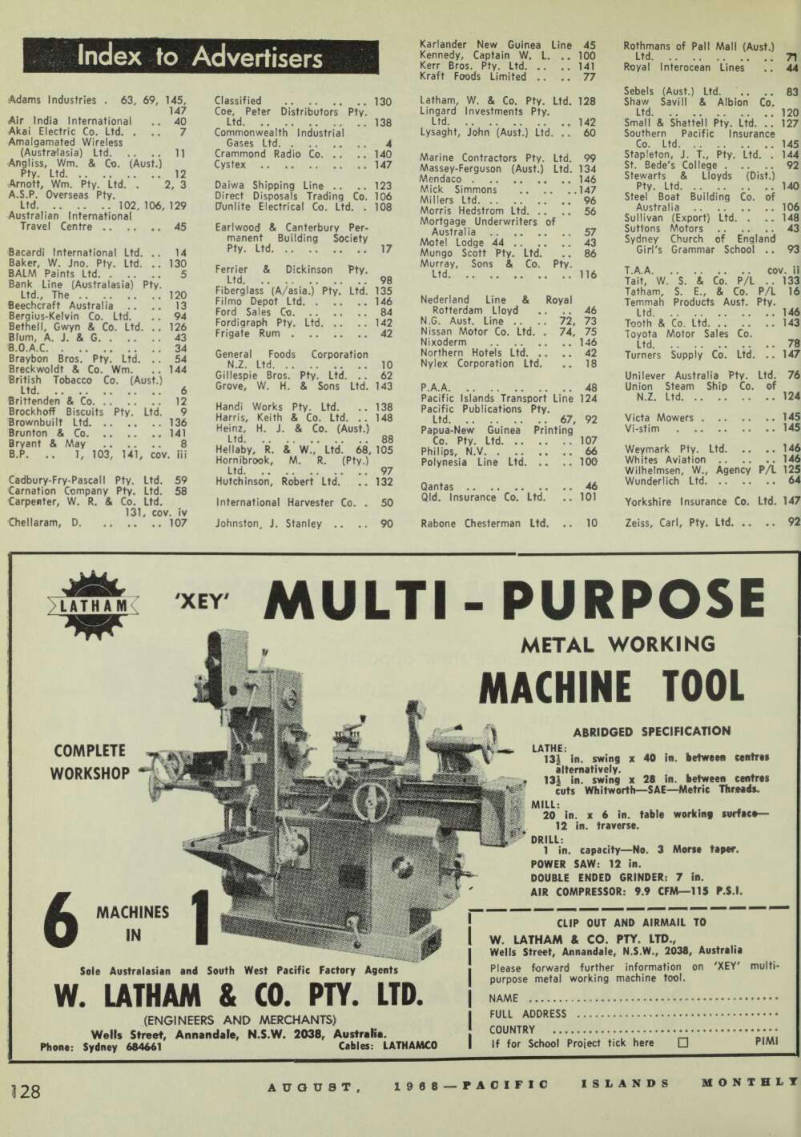 132
132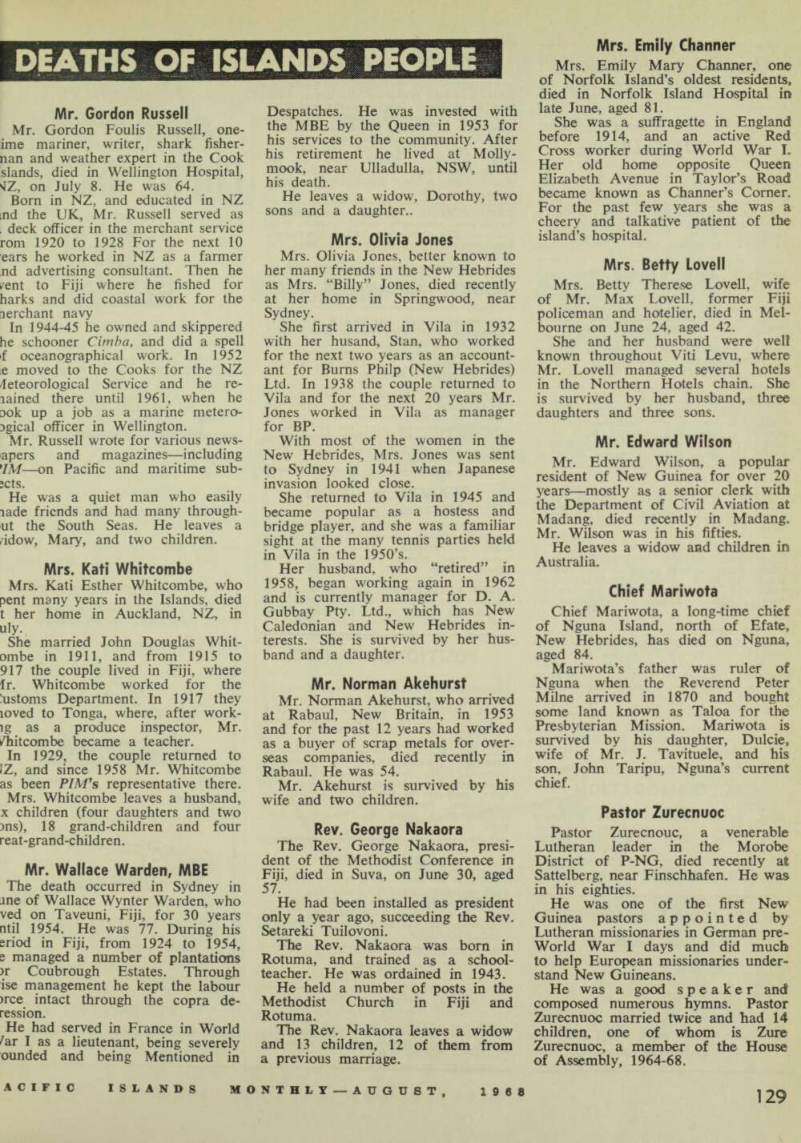 133
133 134
134 135
135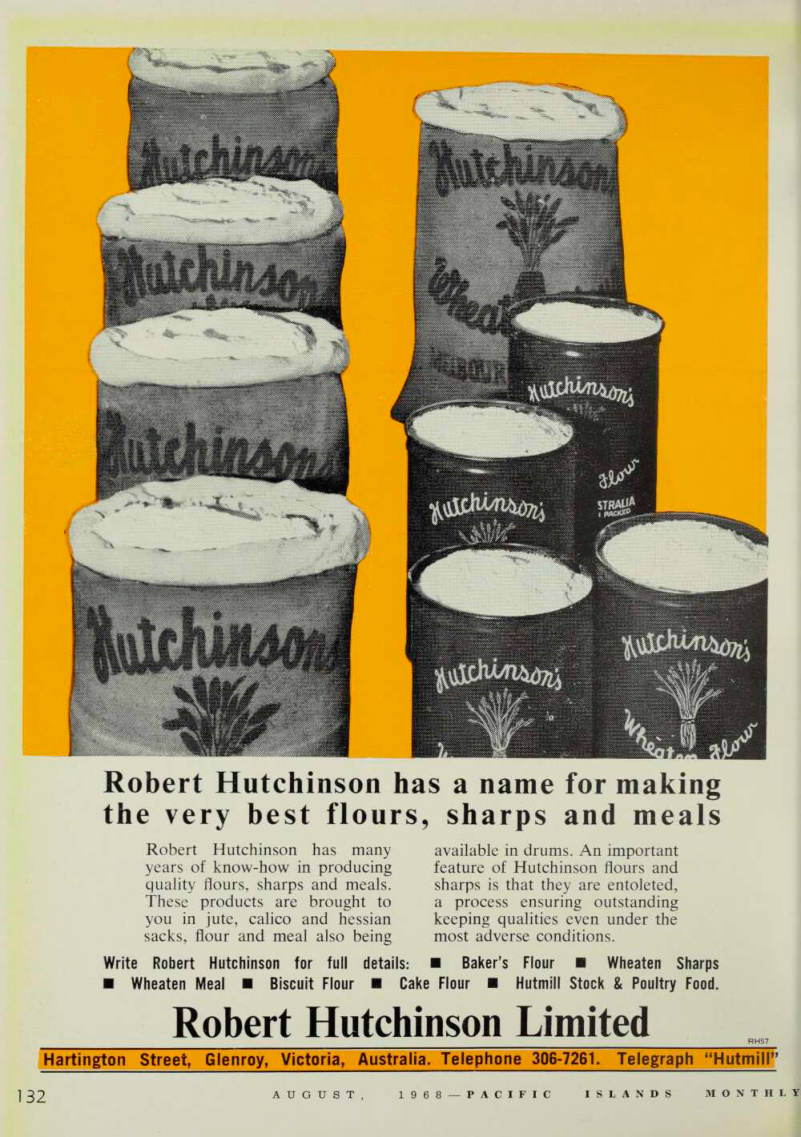 136
136 137
137 138
138 139
139 140
140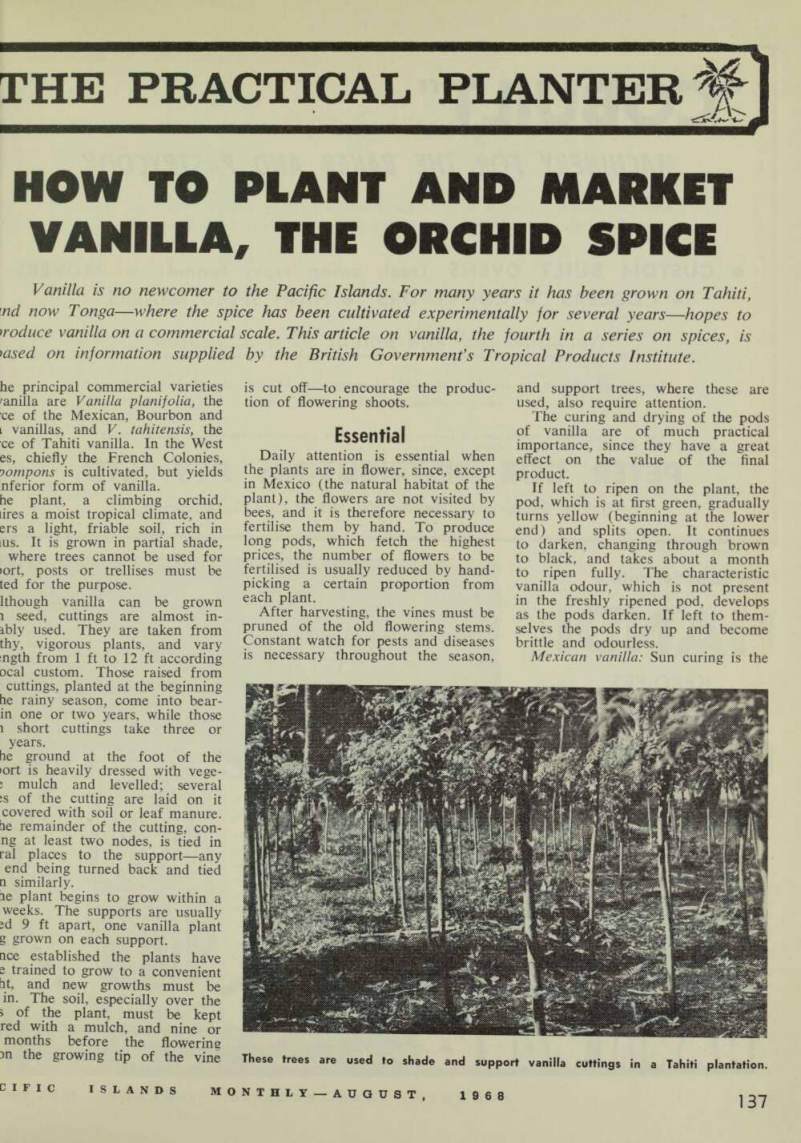 141
141 142
142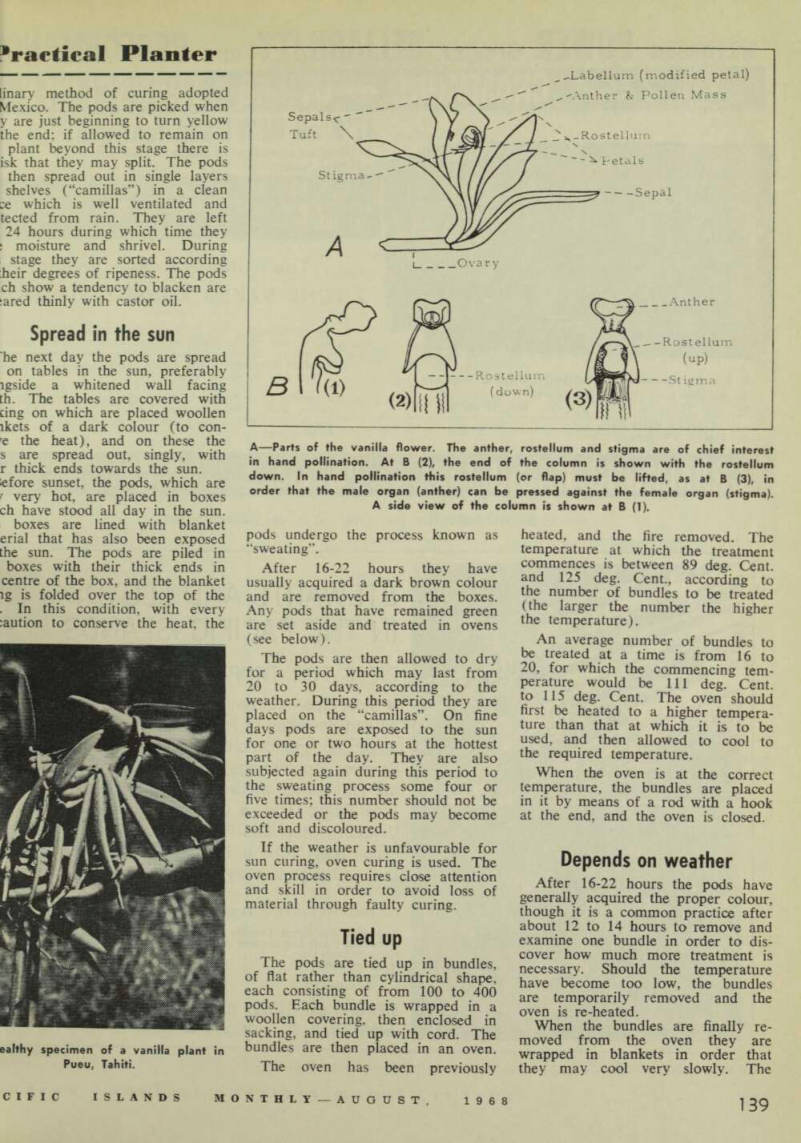 143
143 144
144 145
145 146
146 147
147 148
148 149
149 150
150 151
151 152
152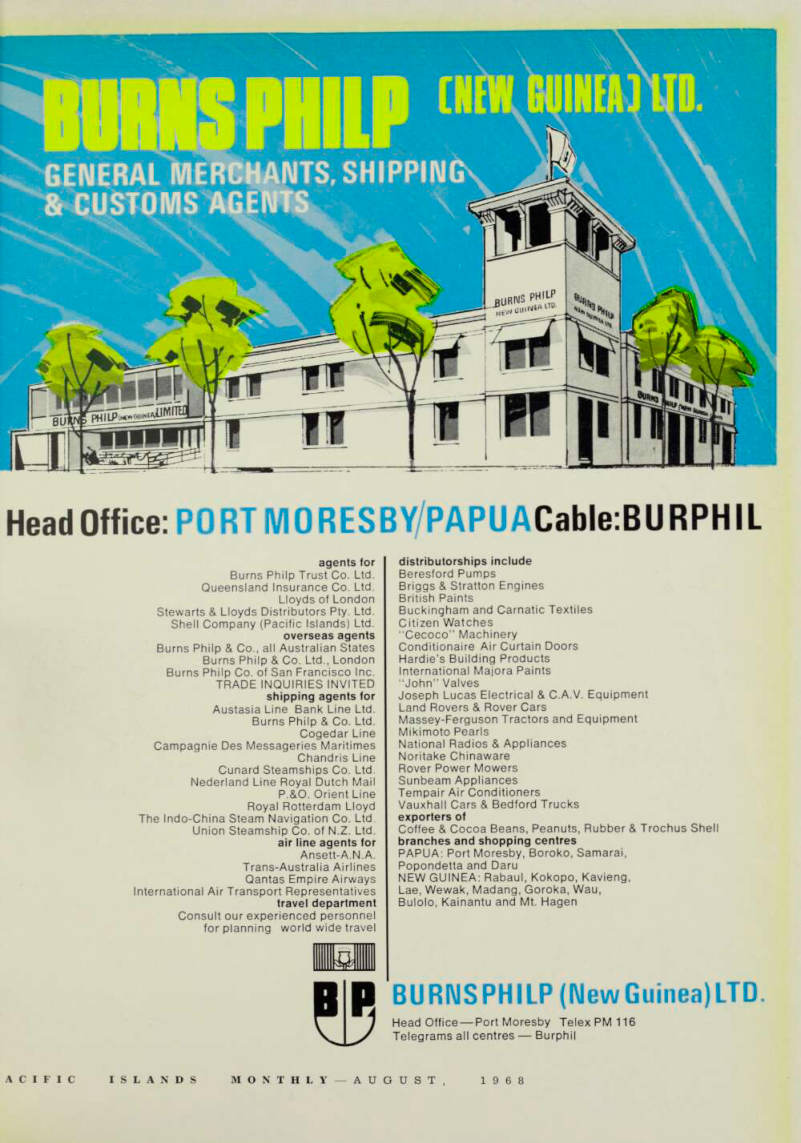 153
153 154
154