Monthly
Pacific Islands Monthly
egistered at G.P.0., Sydney, for transmission by post as a newspaper.
July, 1968
News Magazine Of The South Pacific
m R :
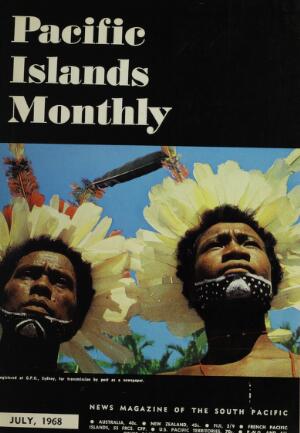
The Cover
Men of the Trobriand Islands wear colourful cockatoo feather head-dresses for their tribal dances. The Trobriands are now attracting tourists, and for what they may expect to find when they get there see our story in the Travel section.
Advertisements & other items, pp. 2-16 (14 items)
July, 1968 Pacific Islands Mon T H H
This is how we go!
-J f 'if:
..■r- ;V ?'"AK r.-ANUs’s. 1 ‘
l.*\s Ms Main roofes only RAB/\um X y.
MT. \ V ! x —^4l ,V
.-■’- ,■ y* PORT MORESBY X
; W<L •i N VX V'"*. 4 -'••4
HONIAffA*
This is where we go!
TAA
,&i - - J *
This is how we go!
In air-conditioned comfort. With twin prop-jet reliability.
And high wing aircraft with a perfect picture-window view from every seat. We want you to fly TAA and really enjoy seeing the Territory. Now improved internal schedules mean better services between all main Territory centres. Connecting at Port Moresby with TAA’s improved ‘Bird of Paradise’ T-Jet flights to and from Australia.
Take care to book TAA and we’ll take extra care of you. Contact your Travel Agent or TAA: Port Moresby 2101. Lae 2311. Madang 2478. Rabaul 2567. Goroka 8.
Mt. Hagen 4. Wewak 103.
Fly TAA the Friendly Way
AIRLINES OF NEW GUINEA
TAA422B/68
pillllllllllllllllllllllllllllllllllllllllllllllllllllllllllllllllllllllllllllllllllllllllllllllllllUllllllllllllllllllllllllllllllllllllllllW^
BURNS PHILP (SOUTH SEA) CO. LTD.
GENERAL MERCHANTS AND SHIPOWNERS
SHIPPING, CUSTOMS AND FORWARDING AGENTS
Fiji:
SUVA
LEVUKA.
LAUTOKA.
LABASA.
SAVU SAVU.
BA.
SIGATOKA.
TAVUA.
TAVEUNI.
BRANCHES
Samoa:
APIA.
PAGO PAGO.
Tonga:
NUKUALOFA.
HAAPAI.
VAVUA.
NORFOLK ISLAND.
NIUE ISLAND.
AGENTS FOR:
QUEENSLAND INSURANCE CO. LTD.
BURNS PHILP TRUSTEE CO. LTD.
SHELL COMPANY (P. 1.) LTD.
OVERSEAS AGENTS
BURNS, PHILP Cr CO. LTD., Sydney.
BURNS, PHILP & CO. LTD., London.
BURNS PHILP CO. OF SAN FRANCISCO.
SHIPPING AGENCIES
• The New Zealand Shipping Co. Ltd. . Shaw Savill & Albion Co. Ltd. . Port Line Ltd. . Bank Line Ltd. . General Steamship Corporation Ltd. • Blue Star Line • Cunard Line • Compagnie des Messageries Maritime* • British India Steam Navigation Co. Ltd. • Royal Interocean Lines • Nederland Line Royal Dutch Mail/Royal Rotterdam Lloyd.
EXCLUSIVE DISTRIBUTORSHIPS INCLUDE
• AKAI TAPERECORDERS • HELENA RUBENSTEIN • ROLEX WATCHES • DUNLOP PRODUCTS • HITACHI ELECTRONICS • REVLON COSMETICS • EPIGLASS PRODUCTS • HOLDEN VEHICLES • PENTAX CAMERAS • FERGUSON TRACTORS • JOHNSON'S WAXES • SUNBEAM APPLIANCES
INTERNATIONAL AIR TRANSPORT ASSOCIATION REPRESENTATIVES for
QANTAS EMPIRE AIRWAYS LTD. ;; AIR NEW ZEALAND UNION DE TRANSPORTS AERIENS :: ALITALIA :: PAN AMERICAN AIRWAYS
ASSOCIATED COMPANIES
BURNS PHILP (NEW HEBRIDES) LTD.
AUTOMOTIVE SUPPLIES CO. LTD.
CORRIE & CO. LTD. • WROUGHT IRON AND STEEL
CONSTRUCTION CO. LTD. • BISH LTD.
SPECIALISED SERVICES
EXPERT ADVICE ON WORLD AND LOCAL TOURS
TRAVEL SHIPPING FORWARDING CUSTOMS
FORMALITIES INSURANCE.
REGISTERED OFFICE: SUVA, FIJI
Code Address: "BURNSOUTH in Hi in miiiiniiiiiiSiS^
GENERAL
FOODS
...bring you the good things in life!
Potato
Good things like Bluebird Potato Chips. American processed, salted, greaseless. The: crisp, crunchie potato chips. Bluebird another quality General Foods product,.
Trade enquiries to General Foods Corporation (N.Z.) Ltd., P.O Box 722, Auckland, N.Z.
y right
. . . for architects, surveyors, builders and engineers, the Fibron and Silverline measuring tapes are made to afford the highest degree of accuracy.
Easy to read, with a hook-end for single handed measuring. A heavy, flush fitting handle provides good leverage when winding in.
Fibron is a fibre glass tape which does not stretch or deteriorate even when wet.
Supplied in aluminium, leather or blue plastic coated steel case in a variety of lengths.
Silverline is manufactured from the finest quality steel and will not crack or peel.
Supplied in a stainless and plated steel case in a variety of lengths.
Rabone ES
Chesterman
FIBRON &
SILVERLINE
measuring tapes
Available from your usual
P* supplier
RABONE CHESTERMAN LTD. BIRMINGHAM 18. ENGLAND
MM I *V* vf Wi ■r. .. a % •vj
Should people who like a
new interior colour scheme
every year use Dulux 'Super-Satin’?
Vhy not?
Jure it’ll last for years nore than that if you find ou'ye fallen in love with it.
Jut if you're determined o paint every year, ou couldn’t have a better urface for it than Dulux* Super-Satin’. It's hard, /ith a semi-gloss finish, o mould has a hard time ietting a hold on it.
If mould does show up, you just wipe it and it’s gone.
When painting time comes around you won’t need any difficult surface preparation at all. ‘Super-Satin’ goes on over the old surface and dries to a satin sheen that humidity can’t harm.
By the way, if you insist on repainting every year, it’ll take you hundreds of years to work your way through the ‘Super-Satin’ colour range.
We make them all right here in New Guinea.
DOIUX
SUPER
SATIN
♦Dulux is a registered trade mark of BALM PAINTS LTD.
The four
exclusive new
soups:
(four more for the Heinz Gourmet range) &
Soup
ourmet
CONDINtIO
Sou
Gourmet
COLONIAL
OLD
Sou
Gourmet
TOCK
POT
BUTTON
SLICED
CONDKNBKD
mushroo
Soup
Gourmet
MW mm
BUTTERED
VEGETABL
cninn
MILD
choice
CURRY
DUTCH
tend* M, Sliced Button Mushroom Tiny delicate button mushrooms. Nobody but Heinz uses this kind of mushroom in soup.
Cooked tender, but still firm enough to bite into.
Rich cream stock.
Buttered Vegetable
Fresh, crisp vegetables, cut in big pieces. Sauted carefully in butter. Simmered until tender in creamy stock.
Mild Dutch Curry A gentle curry. Tender beef, long-grain rice, garden vegetables. Mildly spiced, rich and hearty.
Old Colonial Stockpot A full-bodied soup that lives up to its name.
Tender lamb, young vegetables, barley and rice.
Exclusive recipe; big oldfashioned flavour.
Heinz Gourmet soups: consumer tested and approved.
Gourmet Soupl fGourmet Soup
a *lf N * ' I CStAM o»
SPLIT PEA CHICKEN
Soup
Soup
Gourmet
Gourmet Soup
Gourmet
TURKEY
BEEF
CHICKEN
HZ94I
A 9 * / m L m
Australian
butter & cheese
... help children grow faster
... give children more energy
3m the rich pastures of Australia come the finest dairy products including the finest cheese, butter, 'e and canned or powdered milks. I Unsurpassed flavour, Australian butter gives you full Vitamin A 1 D content. Australian cheese gives you excellent icentrated food value full of protein and rich calcium. ■ For energy, goodness and flavour )ose Australian dairy products.
AUSTRALI
Always look for the word 'Australia' on the label Trade Enquiries to: Your resident Australian Trade Commissioner or— Australian Dairy Produce Board,
G.P.O. Box 1657 N,
Melbourne. Victoria, Australia. 3001.
The versatile meal
Imperial Corned Beef really is a versatile meal, because it goes with everything. From salads to cooked vegetables, or serve it fried with chips. And of course it’s delicious in sandwiches. Whichever way you choose, Imperial Corned Beef is always easy to prepare, and adds succulent, spicy flavour to any meal.
Try it soon, and these other fine Imperial products: Camp Pie, Trim, Vienna Sausages, Lambs’ Tongues and Beef Sausages. All perfect because they’re all —Imperial.
W. Angliss & Company Pty. Ltd., Agents for Tongala Milk Products and Berri Fruit Juices 255 George St., Sydney, N.S.W. 2000 mr Wa mm Mi' mi itm P nmu IB
(MSI
AY
FLAKE OR
MIXTURE TOBACCO
IN VACUUM TINS
V.
such gdod rich flavour
-distinctive aroma
-there's more of both in ERINMORI
Erinmore makes friends in any company. Smokers welcome good rich flavour. Others, womenfolk especially, enjoy its distinctive aroma. This comes from the
century-old blending process, secret
to the makers of Erinmore.
No other tobacco can give you so cool and sweet a smoke.
ERINMORE
Made in Northern Ireland by Murray, Sons & Company Limited, Belfast Manufacturers of fine tobacws
Everything Remploy
nakes has one thing
n common-quality
Luxurious Divan Sets and Spring Interior Mattresses. Deep, durable comfort. nploy also make a wide range
ndustrial protective clothing,
I such commercial and housed products as Domestic Furni- School Satchels, Brief Cases,
)pping Bags, Ironing Tables.
iploy are represented in the th Pacific by
EMKA PTY. LTD
I House, 2-12 Carrington Street, ey. New South Wales, Australia Ml I. mm The spacious Gladstone Bag. One of many fine Remploy Travel Bags.
Easy armchair— one item in our range of Metal Furniture.
IC. m Hf m m
HIGHSPEED
ooM)S &
top of
the tree
U9K *
ICI
am »rt . . . that’s ICI Sporting Ammunition.
Tops for accuracy tops for reliability tops for hard hitting power and all round peak performance.
There’s an ICI cartridge for every shooter, whether it be ICI shotgun cartridges for dense, even patterns and economy, ICI rimfires for hard hitting accuracy and reliability, ICI centrefire for heavier game, or ICI slugs and pellets for lots of fun at low cost.
Get with the top shooters load up with the top ammo
SPORTING
AMMUNITION
Remember today
in pictures:
m
WSO:
* ■m m
SSSSIB4
m, E 3
►Vith a Kodak Instamatic
camera—still or movie.
A Kodak Instamatic camera, still or movie, is a wonderful way to remember today and all the good times you’ll have tomorrow forever. And in color, the way memories happen.
Kodak Instamatic cameras make memory collecting easy. You open the camera, drop in a film cartridge, and shoot. Use Kodachrome film for color slides or movies. Kodacolor film for color prints.
There’s a whole range of Instamatic cameras to choose from. Beginning with the low-cost Instamatic 25, or the Instamatic 104 flashcube mode! (illustrated), right up to the new palm-size Instamatic
Ml 2 movie camera (illustrated).
They're all available now from Kodak dealers throughout the islands.
Remember today in pictures or movies with a Kodak Instamatic camera.
Kodak (Australasia) Pty. Ltd. 379-381 George Street, Sydney
Kodak
K 1744
If one buys a watch of quality il is taken for granted that il is SWISS and one will not settle for less
WALTHAM
TIMING THE WORLD SINCE 1850.
America's and japan's
best selling SWISS Watch
Australia’s most popular watch
Waltham, Chicago, has signed a regular (lOOatm.) Automatic Calendar. 25 Hplivprv contract with bases of the US. Jewels. sVir, cov * rs a,mo! ' ,he who "
su zs ssr w, ‘
% Sole Distributors for N.S.W.; Freestone & Kennedy, Durban Court, Princes Highway, Sutherland, 2232.
Fiji; Trans-Oceanic Agencies 74 Gumming Street,Suva. New Zealand: Arthur Martin Ltd., 57 Boston Road. Auckland 3
Ref. 2360 CALENDAR
100% Waterproof Controlled to 90 ft.
Glass provided with tension ring, crown with "0 " ring.
Retail Price (in Australia): All Steel Rolled-Gold 20 Microns ...
Chrome Stainless Steel Back . $48.00 $48.00 $44.00 and Wholesalers interested in the distntion of Waltham Watches should contact jction Importing Co. Pty. Ltd., 375 George ■eet, Sydney 2000. Sole Agents for Waljm Watches for Australasia and the South cific Islands.
KRAFT
KRA
m Kraft m
These fine Kraft
foods from Australia
bring you health
and flavour!
KRAFT]
Delicious Raspberry Conserve for hot scones, vegemue* to add flavour and nourishment to your breakfast toast.
Tasty Cream Cheese Spread for snacks and savouries. The pick of rich cheese.
Kraft makes all these and more to help build stronq, healthy bodies.
Always look for nourishing Kraft foods from Australia. They’re nature’s finest. for good food and good food ideas •Trade Mark KR5738
MOBILE FOOD VANS
FOR SALE
**4 m B m % U n ii %wii»niuL
$2,750 F. 0.8. SYDNEY
Type: MORRIS COMMERCIAL LD5 —3 TONS—Metal Frame.
Equipment: 1 Large Soft Serve Ice Cream Machine. 1 Stainless Steel Refrigerated Holding Cabinet —Deep Freeze and high temp. 4' 9" x 4' 3" x 1' 9".
Ixlo KVA Generator powered by Morris Elite Motor.
Stainless Steel Sink —lighting—Hot and Cold water, etc.
These vans, which are in good condition, and originally cost $12,000, have been used as Mobile Soft Serve Vans for a period of 2 to 3 years, and in addition to selling soft and hard ice cream, can be adapted to sell —Pies, Hot Chips, Soup, Coffee and other hot and frozen foods.
For Enquiries: Manager, Dairy Frost, 13 South Street, Rydalmere, N.S.W., 2116. Australia.
Bacardi rum
SV- DA
UGHT
D^‘
ASSh
/ AkP 1
"’VAIIBI
I Name a mixer. Any mixer.
Cola, Dry Ginger, Soda, Tonic, Bitter Lemon.
Light smooth Bacardi rum mixes perfectly with any of them. And for an encore, makes the base for the immortal Daiquiri and many another soul-stimulating cocktail and long drink experience.
MJfBACARDI “ME WOW (MEAT MUM
’BACARDI"AND BAT DEVICE ARE REGISTERED TRADEMARKS
OF BACARDI & COMPANY LIMITED
BACARDI INTERNATIONAL LTD., HAMILTON. BERMUDA.
Triple-wrapped packets
Qrnotts
FAMOUS
Biscuits
a% SS’m X X * \ x» Or o <C O & o <c v 5T
. . for extra energy
There is no Substitute for Quality
1
CIFIC ISLANDS MONTHLY JULY, 1968
July, 1968 Pacific Islands Month 1
T C I F I C Islands Monthly July, 1968
4
JULY. 1968 PACIFIC ISLANDS MONTH
5
DIF I C ISLANDS MONTHLY JULY. 1968
July, 1968 Pacific Islands Monthe
9
1F I C ISLANDS MONTHLY JULY, 1968
10
JULY, 1968 PACIFIC ISLANDS MON.
Cific Islands Monthly July, 1968
12
JULY. 1 9 6 8 PACIFIC ISLANDS MONTH
13
4 C I F I C ISLANDS MONTHLY JULY, 1968
July, 1968 Pacific Islands Monthl
Pacific Islands
Monthly
Established 1930: 38th Year of Publication.
Owned And Published By
Pacific Publications Pty. Ltd..
29 Alberta St., Sydney, N.S.W., 2000.
Postal Address: G.P.O. BOX 3408, SYDNEY,
N.S.W., 2001.
Telegraphic Address: PACPUB, Sydney.
Telephones: 61-9197, 61-7101, 61-4369.
Chief Executives: Managing Director: R. W. Robson.
General Manager: Selwyn Hughes.
Book Publishing Division
Editor: Judy Tudor.
Pacific Islands Monthly
Editor: Stuart Inder.
Branch Offices
Melbourne: Newspaper House, 247 Collins St., Victoria, 3000. Tel.: 63-7053.
Fiji; Pacific Publications (Fiji) Ltd., Fiji Times Building, 20 Gordon Street, SUVA. Tel.: 25601.
Fiji Times Office, Vidilo Street, LAUTOKA.
Tel.: 60-422.
Papua-New Guinea: Pacific Publications (N.G.) Pty. Ltd. Representatives: Mrs. Joan Carter, P.O. Box 16, PT. MORESBY (Tel.: 2741); The Manager, P.O. Box 227, LAE; Mr. Steve Simpson, P.O. Box 154, RABAUL (Tel.: 2547).
Representatives
New Zealand: J. D. Whitcombe, C.P.O. Box 2229, Queen Street, Auckland. Tel.: 76056.
United States: Mrs. A. L. Craib, 782 Neilson Street, Berkeley, California, 5273503.
United Kingdom: S. R. Warman, Park House, 22 Park Street, Croydon, CR9 3NP. Tel,: 01-6884177.
H. A. Mackenzie, 4A Bloomsbury Square, London, W.C.I. Tel.: Holborn 3779.
Agents
All main trading firms and stores in the Pacific Islands.
Pacific Publications Pty. Ltd. is the Australian agent for THE FIJI TIMES.
Subscription Rates:
Pacific Islands Monthly” is air-freighted to ail subscribers and agents in the South Pacific; copies to other areas go by surface mail.
Australia (incl. Lord Howe Is., and Thursday Is.): $4.50 Aust.; Papua-New Guinea, Norfolk Is, Nauru, 8.5.1., G. & E, Group, Tonga and New Hebrides: $4.00 Aust.; New Zealand: $5.25 NZ; Cook Is., Niue and Western Samoa: $4.00 (local currency); Fiji £2/5/- (local currency); American Samoa and U.S Pacific Territories: $B.OO (local currency); French Pacific Territories —New Caledonia, Tahiti, etc.: 660 French Pacific francs; United States of America: $9.00 U.S.; United Kingdom and elsewhere: £2/15/- Stg.
Airmail postage to USA, UK and elsewhere Is additional.
Up Front
with the editor
Paulus Arek, a 39-year-old New Guinea schoolteacher, took his seat in the new P-NG House of Assembly in June fresh from a visit to Australia, and what he saw of the treatment of New Guinea news in the Australian newspapers while he was down didn’t impress him much.
AT one of the preliminary get organised meetings of Assembly members held in Port Moresby just before the top-hatted Governor- General vied for sartorial honours with a be-plumed Mr. Speaker at the official opening, Paulus told his colleagues that the Australian Press was inclined to paint an incorrect picture of New Guinea happenings.
I sought him out later to discuss the finer points of this. An articulate, straight-forward fellow, Paulus ex plained that he had attended the Duke of Edinburgh’s Third Commonwealth Study Conference in Australia, and felt that the points of that particular conference which the newspapers had chosen to report didn’t result in a complete picture being presented of what happened there.
Wrong interpretation
The same thing occurred with New Guinea news in the newspapers. He could not easily find anything that was actually inaccurate, but unless readers had a good background on New Guinea —and few did—they ended with the wrong interpretation of the reports. He had found this in many conversations and it dis turbed him.
I think Paulus Arek makes a good point. It is not so easy to over come this lack of interpretative re porting in day-to-day newspaper reports. Space is not available for the backgrounding that is required if the story is to be fully compre hensible to every reader —even assuming that every reader cares to be informed on what is taking plao> in New Guinea.
The interpretative feature writers in the newspapers and magazines have a better opportunity to do the job. But the trouble here is that
sometimes they fall down on it be cause they are specialists, and as specialists they tend to assume wrongly that the reader is as in terested in the subject as they them selves are, and neglect to put the sugar-coating on the pill.
Bad habits
PIM can and does fall into the same bad habits. We sometimes concentrate on what we know to be the most significant development in a territory for the month, to the exclusion of the overall picture. This month, for instance, we carry some weighty pieces on the New Guinea political scene—the opening of the Assembly, the build-up of party politics, the appointment of the first native Speaker, and the details of the McEwen report to the UN.
It’s all necessary, and it’s all happening at this moment as I sit in my room in Port Moresby typing this budget of thoughts. In the House down the street they are politicking in great earnestness, and not even the Kennedy shooting means anything to them. The new comer to Port Moresby could be for given for believing that the New Guineans are interested in their own political future to the exclusion of everything else.
But this is nonsense. For one
thing, there is no real interest ini national politics. Most members ofi the House don’t understand national! issues, as Mr. McEwen has indicated..
What we have in the House is a few' score men from all points of the; territory, sufficiently involved in the; problems of their own immediate: locality to get themselves elected to< a forum which they think might help! bring some of the problems to gov eminent attention. Some of these; men are simply there for the money..
Not interested
At a Port Moresby news conference; a couple of days ago, the Minister for External Territories, Mr. Barnes, said he couldn’t understand why newsmen kept on at him on political issues— that these weren’t the issues which people spoke to him about when he went round the traps in the territory.
The people spoke to him about the need for roads and bridges, not self government. Even in Australia, said the Minister, the citizen wasn’t in terested in politics.
I agree with the Minister that politics can be and is being over stressed in New Guinea reportage.
It is over-stressed, as Paulus ArekJ implies, because we are hearing about New Guinea politics to the exclusion of other developments.
When you thumb through this issue of PIM you would oblige me by making allowances for our own shortcomings.
Stuart Inde[?]
Mr. C. E. Barnes, Australian Minister for External Territories ... in P-NG the people speak about the need for roads and bridges, not self government.
Advertisements & other items, pp. 18-22 (5 items)
(Volumes 1-15)
If you’re interested in the history of the Pacific Islands, then you won’t be able to do without the . . .
CUMULATIVE INDEX
to the
PACIFIC ISLANDS
MONTHLY
(Volumes 1-15)
The index covers the 15 vital years from August, 1930, to July, 1945, when many of the events which shaped the Pacific of today took place. But PIM in those years (as is the case today) did not only concern itself with current affairs. It abounded also in articles on every aspect of Islands life both past and present —from agriculture, anthropology and aviation to shipping, tourism, vulcanology and the weather. Islands history was (as it still is) a PIM specialty.
Now, with the aid of the new cumulative index, you can find in a few seconds everything PIM ever published from 1930 to 1945 on any subject, whether it was a two-line snippet or a major article.
The index is one of the most detailed productions of its kind ever published. It is divided into nine sections—aircraft, authors of articles, biographical entries, book reviews, companies, letters to the editor, poems and short stories, ships, and territories. Nearly 10,000 people are fisted in the biographical section, and there are some 200,000 entries relating to them.
The territories section, which deals with Islands groups such as the Cook Islands, Fiji, French Oceania, Papua, etc., is equally minutely indexed and cross-indexed under a wide range of headings.
The index contains 228 closely-printed, but easy-to-read pages measuring 11 by 8i inches. It is cloth-bound and printed on tough, long-lasting paper. At $25 Aust. per copy (plus 60c packed and posted to anywhere), the index is one of the best bargains in Pacific books for many years. Get your copy from the publishers now, while the limited edition lasts! (And if you’re not currently subscribing to PIM, why not take out a subscription at the same time?)
Jtfa PACIFIC PUBLICATIONS PTY. LTD.,
yV Box 3408, G.P.0.,
/_ Sydney, N.S.W., 2001.
BY APPOINTMENT TO
HER MAJESTY THE QUEEN
SUPPLIERS OF SMOKERS REQUISITES
ALFRED DUNHILL LIMITED
mr : > nH pu nun h* 11 . , n Fe^Ltd.^’ iS hi ,l A lfred u 20 The House of Dunhill, the most distinguished tobacco house in the world
takes pride in presenting
Dunhill King Size
Filter Cigarettes.
unni
LONDON PARIS NEW YORK
The most distinguished tobacco house in the world.
. . . watch
your money
P m O o 9:
EARN
P.A.
CURRENT RATE
... invest in the
Earlwood-Canterbury Permanent!
Here are six good reasons why: 1. Your money is safe. It is invested in “bricks and mortar security” and in addition, is guaranteed by the Permanent Building Societies Guarantee Fund up to $lO,OOO. 2. No fixed investment term. Your money is available for withdrawal at short notice, either in whole or part. 3. Earns 6% P.A. dividend. This is the current dividend paid to investors on July 3rd, January 3rd. 4. Net return on your money. You receive a full dividend, not one less deductions or market losses. 5. How much may be invested? From $1 up to $lO,OOO. 6. Your investment is “gilt-edged.” Your money is invested in literally hundreds of first quality homes As a member of the Association of Permanent Building Societies of N.S.W. we operate to very strict standards of conduct and liquidity to give complete protection to you, the investor.
Sm '^o TY
EARLWOOD-CANTERBURY PERMANENT
BUILDING SOCIETY LIMITED
142 Beamish Street, Campsie, N.S.W. 2194, Australia Gentlemen , . , .
Forward me Application Form for investment in the Earlwood- Canterbury Permanent.
NAME
ADDRESS
ECP4
s I
I ; US 32 23
*0 ■J& - *" u. s -fr* * g \ -«.&
*»*nr S r-
" r%r
Flour that's
’*?? c w- STvot
MILLED
FRESH
«-- « j. -r J e 4 sivS ■ ~:&5 a&
MHDO
mr mm** 1
mk . i jm '< rr ***&£?*** y
when called for by
your shipping agent
fShj
ml ii
m «wn / y #r m V I * Milled fresh—when called for—then packed in clean, strong sacks or drums. That’s the reason why Mungo Scott’s have the largest output of any mill in Australia.
Mungo Scott’s skilled laboratory staff put to practice, every modern method to ensure you receive the finest quality entoleted flour.
Since 1894 . . . Mungo Scott “a good firm to do business with."
We pride ourselves on documentation.
MUNGO SCOTT PTY. LTD.
Bakers Flour Sharps Meals Cake Flour Biscuit Flour Sponge Flour
HWiHrlil
Summer Hill, NS.W., Australia Cable & Telegraphic SUPERB Sydney
RBAC4P
The lively
Australians
are setting
the world
1* 1 A. a I II I A generation ago, Australia . 1 1 M Ik was sheep, kangaroos and cricketers. Today, our lively designers have changed all that. They’ve given the world challenging new ideas like the Leonora home lighting series. A range of more than 300 different fittings each a fresh concept executed with taste and imagination.
All as functional as they are trend-setting. Some are in natural colours. Some in plain opals. Others in decorative patterns and gleaming crystal. Pendants, flush fittings, wall mounts ... every type of fitting for every lighting need.
See potential for Leonora in your Market? We’d be glad to help with complete information, catalogues, price lists. Simply write to Mr. B. McMahon, Leonora Glass Pty. Ltd., Douglas Street, Wallsend, Newcastle, N.S.W., Australia.
Si Leonora
Fiji Agent: Philips Electrical (Fiji) Ltd., G.P.O. Box 1362 Suva.
Papua and New Guinea Agent: Electrical Engineering Supplies Pty. Ltd.
17
ICIFIC ISLANDS MONTHLY— JULY, 1968
July, 1968 Pacific Islands Monthii
19
IC IFIC ISLANDS MONTHLY JULY, 1968
20
JULY, 1968 PACIFIC ISLANDS MONTH II
[?]n This Issue
Eneral
* hotel interests 26 irate expert 57 : e on the Big Pond 65 ' film South Pacific 71 st Islanders in Sydney 91 ur new cargo runs 97 Oriental Queen" as floating uni ... 99 tair buys Stol 118 ►pes for sugar agreement 119 ijibi Holdings profits up ... 120
African Samoa
w tug named 105
•Ok Islands
pulation explosion fears 33 w hotel 47 I ; state of the nation, 1968 26 >tball results 28 ikemba" loss 29 'a Civic Centre project 27 lind the hotel figures .. . 49 iry Gibson, karate expert 57 f a, city of cars 64 terete tug 101 ean fishing ship on reef ... 105
i interests H 9
French Polynesia
H tests: biggest if not best 34 Chile-Tahiti air service 51 Gauguin Museum 117
Gilbert And Ellice Islands Colony
New air service connections 29 Funafuti girl marries in Nauru 117
Nauru
New air service 29
Island-style wedding 117
New Caledonia
Win for autonomists 32 Grand old lady 35 Complaints about Australian Press ... 67 Prison warder sentenced 68 "Nickel II" grounded ... 101 Trying to refloat the "Matipo" 103
New Hebrides
Holm Line withdraws service 31 New shipping service .. 97 Good year for copra H 9
Norfolk Island
New Administrator 28 Football pools development 28 Stories the tombstones tell 85 Stamp honours "Morinda" .. 105
Papua-New Guinea
Party politics at last 22 New Ministerial Members 24 How they elected the Speaker 25
Port Moresby personality 29
UN Mission report 32 Plans for new hotel 43 Trobriands: Best tourist value 41 Unity for P-NG? 52 Fly River journey .. 61 Bougainville's copper boom 81 Book: "Asmat of New Guinea" 95 New "Thorsgaard" run 101 "Deanel" sinks 105 Marine complex planned 105 New chairman for Tourist Board ... 117 Patair buys Stol .. ng New Carpenter chief executive 119 Kinjibi Holdings profits up 120
Solomon Islands
Extra grant from Britain 119
Tonga
Hopes for jetport 30 Closer to independence 30 Shipping changes possible .. 99 Seaman lost .. 1q 1
Us Trust Territory
Air service to Nauru? 29 Air Micronesia starts 49
Western Samoa
Optimistic about the future 31 PanAm plans services 50 Visit by NZ surgical team 117
DEPARTMENT S : Up Front with the Editor, 15; Topicalities, 33; Travel 37- To h e : ti r , W t , 7 FTOm ,He ' sla " ds 72; Magazine W Peodl il ? r , day ' Reviews, 91; Shipping, 97; Cruising Yachts, Irl'f f P ,no ? ,c ! ures ' 114 '- Pe oP'e, H 7; Commerce, 118; Shipping, Airways chedules, 123; Index to Advertisers, 129; Deaths of Islands People, 131; The Practical Planter, 137.
Apprehension as P-NG launches active
new strain of party politics
By STUART INDER, who was in Port Moresby for the inaugural meeting of the House of Assembly.
After a half-dozen false starts in the last dozen years, party politics at last appear to have arrived in Papua-New Guinea. That, I believe, is the most significant development to come from the opening session in June of the 94-member House of Assembly. Pangu (for Papua-New Guinea Union) was the name on everybody’s lips, and the fact that the new party received more curses than praises should help guarantee its life.
The advent of the Pangu Pati put stiffening and direction into an inaugural meeting which might other wise have spent a fortnight deliver ing self-conscious maiden speeches to itself on the need for roads and bridges.
The Government had purposely refrained from introducing con troversial legislation, to allow members a shake-down period; among the more exciting of the bills passed were the Laws of the Terri tory (Proof and Printing) Ordinance, the Statistics Ordinance and the Ordinances Interpretation Ordinance.
A number of proposals made from the floor of the House had more elements of controversy, but debate on these invariably came to sudden, unmourned ends.
We don't understand
There were echoes of the previous, 64-member House in the plea of Ebia Olewale (South Fly Open) that he could understand very little of the legislation he was apparently helping to pass, and the complaint by Traimya Kambipi (Kompian Baiyer Open) that he wasn’t impressed by a House where all the good speakers got up and put their ideas, then left the chamber.
But these were merely echoes. This House was not the same as the last, anymore than the last House was the same as the previous Council.
The new members were younger, better educated and certainly more aware. Most of the few old hands left in the chamber (23 out of 84 elected members) commented on this; the awareness in the new House was the strongest impression I gained from watching the members feel their way into their new surroundings.
There are a number of reasons /or this new attitude, but one of the strongest, I suspect, is the fact that local government councils in recent years have followed the same
election procedures as those adopted for electing the Assembly, and the council elections have also been supervised by the P-NG electoral office; thus big new sections of the country have become experienced electors.
No firm judgments
Because of the paucity of con troversial legislation, it is too early for any firm judgments to be made on the political acumen of the new members, but there was some en couraging sniffing at the air follow ing the first behind-the-scenes manoeuvres of the Pangu men.
It was obvious that Pangu were to be the stirrers at this meeting.
After their controversial launching as a party last year, and their victory at the polls, all eyes were on them, and they were conscious of it.
A few days before the House was
opened they used their weight to he; get John Guise the Speakership (s»< “How They Elected the Speaker”, 25), and with that possible thre; to party unity out of the way th«j spent the next day or two in some thing of a frenzy of preparation fi their parliamentary debut.
“If you want to know our plans said Toni Voutas to all outsii questioners, “I suggest you listen the House over the first three dat and you’ll get it all.”
The more mysterious the Pam men became, the more apprehensi became the rest of the House, that by the time the Governo General delivered his opening spec: nobody would have been surpris if Pangu had interrupted it w; a demand for Lord Casey’s recall.
Suspicion of Pangu
Much of the general suspicion Pangu’s motives built up at t: time, and during the party’s carefull prepared pronouncements in t House in the first few days, did i dissipate.
The meeting finished a fortnij later with the House divided ir three unequal, uneasy parts — Government, Pangu and The R> Pangu was very much the minor having started its parliamentary ! with 13 supporters and lost a possibly two, en route. The Gove ment started with 10 and took ui itself another 16 ministerial s assistant ministerial members.
Pangu’s unpopularity with Rest brought predictions that it T finished, that it could last no loir than another two meetings.
Pangu leaders Michael Somare, T Voutas, Paul Lapun and Cecil A appeared confident at the end 1 the party could prove its hoi intentions during the heat of : controversy over Government polii and gradually win for itself' significant following from The Re Thus their decision to shoot f:
Mr. Michael Somare, parliamentary leader of the Pangu Pati. The party put some controversy into the inaugural meeting of the Assembly.
jolt in the first week, stating firmly vhere they stood, may have been the ight one, for if they stick to the )arty platform they have the next bur years to gain the confidence of heir parliamentary colleagues, and he general electorate such as it is.
The party’s aims were summed up ly Voutas (Morobe Regional) as mmediate home rule, followed by aternal self-government and finally
Home rule
Under home rule, the Assembly r ould decide the territory’s budget nd make general decisions on terri fy affairs, but the Australian Gov "nment would keep the power of ;to. Under home rule, the biggest irty in the Assembly should fill all e ministerial positions.
In the next step, internal self wernment, Australia would no nger have power of veto but would ►ntrol external affairs and defence. ie territory would bargain about e amount of aid to come from ustralia.
P-NG would need plenty of ex rience with home rule before self vernment came, said Mr. Voutas. mgu believe that P-NG should be der the one UN agreement (Papua not under a UN agreement) and ; territory should have one name.
one flag and one national song.
Earlier, Somare (East Sepik Regional) had announced that he was parliamentary leader of Pangu, that Lapun (South Bougainville Open) was deputy leader and Pita Lus (Maprik Open) was party whip.
Somare said that initially no member of Pangu would accept a ministerial appointment because in the early stages of the party’s development the loss of men would weaken it.
Ministerial members, bound by the oath of secrecy, would not be able to obtain a party ruling.
Pangu’s attitude, he told an atten tive House, did not lessen the respect for the ministerial system; nor would Pangu oppose Government measures automatically, but only when the party felt they were contrary to national interests.
Pangu would offer constructive criticism and alternate courses of action, and regarded its role in the House as “a loyal opposition”. It would carry out this “difficult task” despite the fact that the Minister for Territories did not recognise the desirability of fostering a two-party system of government.
Cecil Abel (Milne Bay Regional) put forward the party’s economic platform, which was, in short, to double the territory’s national income in two years with more money from taxes and loans—a commendable policy, most people thought, if only it could be achieved.
Attacks on Pangu
Slings and arrows were hurled at Pangu from all parts of the House in the ensuing fortnight, although it was not always clear why some of the assaults were launched.
Possibly it was because Pangu had the only positive programme, and in the absence of any vexatious Government legislation, Pangu was the only windmill that could be tilted at. And members were suspicious of the party’s intellectual background, particularly of the uni versity people they believed to be behind Abel. The Highlanders con sidered it to be a coastal party, and thus not in their best interests.
Many members attacked Pangu for not having accepted ministerial posts, one of the strongest criticisms coming from Gala Gala Rama (Central Regional), one time president of Pangu, who was eased out following some statements he made in Aus tralia.
Gala made it clear that he was an independent member and that his policy was “straight-out
• The big event in Port Moresby in June, as seen by the artist's brush of former P-NG Director of District Administration, Mr. J. K.
McCarthy, who this time wasn't himself a member of the cast of characters.
While the Assembly was meeting at one end of Port Moresby in June, these ember of the police riot squad were putting on a display of strength at the [?]her end after breaking up series of brawls which developed from an inter [?]rritory fooball match. Pepuans and New Guineans took sides, proving that while P-NG may have a national parliament it is still in search of a national identity.
nationalism”, although in partnership with Europeans. Since Pangu had advocated early ministerial govern ment for the territory it should have participated, said Oala.
Jim McKinnon (Middle Ramu Open) shot off a few rounds in Pangu’s direction when announcing to the House that his own party—the All People’s Party—had decided to rename itself the All People’s Group, as “most New Guineans had no idea of party politics”.
Even before Mr. McKinnon’s announcement it had become obvious that as a party All People’s was in tatters, and somebody had suggested to the wordy, always beaming McKinnon (who is widely liked in his Madang area as a warm-hearted and generous trader) that he rename it the One Person’s Party. Neither the All People’s Group or McKinnon is likely to have political impact.
Pangu and All Peoples were the only parties to gain seats.
Few personalities
Few personalities stood out. It is too early yet, and many members be came restless fairly early in the pro ceedings, for they had already gone through a lengthy “schooling” in Port Moresby before the actual Assembly began.
The appointment to the Govern ment benches of old kiaps such as Mick Foley (District Commissioner elect of the Western Highlands) brought some fire from Pangu, re turned in kind by Foley himself, who thus added some colour to what otherwise was an inoffensive Govern ment team. It still misses such per sonalities as Dr. John Gunther and J. K. McCarthy.
Among the elected members, the gaps left by lan Downs, John Stuntz and Don Barrett were wide ones, and in the early stages of the meeting old hand Ron Neville (Southern High lands Regional) made the mistake of trying to fill them all himself, and frequently harangued the House like a short-tempered kiap. Like a short tempered kiap this resulted only in him getting some backs up, but he saw the error of his ways in time and quietened down to his more reasonable self, and will survive to fight another day with weapons better suited to his personality.
The Budget session at the end of the year will give the House its first opportunity to try its political steel, and also be the first testing ground for the new Ministerial Members.
Thanks to Pangu, that Budget session should quickly get away to a serious start.
Advertisements & other items, pp. 24-25 (2 items)
22
JULY, 1968 PACIFIC ISLANDS MONTH
Cific Islands Monthly July. 1968
They've Got A
Ministerial
System Now
Ministerial government in P-NG took its first hesitant steps in June with the appointment of seven elected members of the House of Assembly as “minis terial members”. They share re
sponsibility with departmental
heads for policies of the depart ments and may initiate proposals.
In addition, eight assistant minis terial members have been ap
pointed.
The 15 were selected by a com mittee of the House, which compro mised “only a little bit” with the Ad ministrator (to quote a committee member) before the final selections were announced. General feeling in the territory is that the selections were a good choice. Some have no formal education, but the Administration plans to issue them with tape re corders to allow these men to put their views to departmental heads.
The selection of the members was based roughly on a regional distribu tion, although Papua ended with a slight edge on the others. Five come from the Highlands (which has 30 seats in the House), three from the New Guinea islands (17 seats), three from the mainland (24 seats), and four from Papua (13 seats). Average age of the members is 38.
The Ministerial Members all be; come members of the Administrator’' Executive Council, together with ai, additional elected member who is ncc a Ministerial member—Tom Leahy 39, planter (Markham Open)—ano three official members, Messrs. F. C Henderson, L. W. Johnson, and 1 W. Ellis.
The Ministerial Members are ex pected to spend at least three week of every month in Port Moresby. I there is any disagreement betwee; them and their departmental heao the Administrator may adjudicate.
The list of Ministerial Members is Trade and Industry: Angmai Eilat 30 (Mabuso Open). Public Work) Roy Ashton, 47 (East and West Ne; Britain Regional), Education: Ma thias Toliman, 43 (Gazelle Opem Posts and Telegraphs: Sinake Giregin 31 (Daulo Open). Agriculture, Stoo and Fisheries: Tei Abal, 36 (Wabs Open). Labour: Toua Kapena, t (Hiri Open). Public Health: Toe Lokoloko (Kerema Open).
Assistant Ministerial members an Lands Surveys and Mines: Andre Andagari Wabiria, 30 (Koro< Open). Technical Education a: Training: Joseph Lue, 35 (Bougai ville Regional). Local Governmer Kaibelt Diria, 48 (Wahgi Open Co-operatives: Lepani Watson, (Kula Open). Rural Developme: Mek Singiliong, 34 (Finschhafl Open). Treasury: Oala Oala Ran 33 (Central Regional). Informath and Extension Services: Joe Pi Langro, 29 (West Sepik Regional Forests: Siwi Kurondo, 48 (Kerow.' Open).
Siwi Kurondo is a former Pan Pati member who resigned in Junt
Toua Kapena —Labour.
Roy Ashton —Works.
Advertisements & other items, p. 26 (1 item)
24
JULY. 1 9 6 8 PACIFIC ISLANDS MONTHD
Mr Speaker
How they elected Mr Speaker
The election of John Guise as Speaker of the Papua-New Guinea House of Assembly removes from the active arena a man who has long been an enigma of New Guinea politics.
Guise, 53, born in a village near Dogura, Papua, a part-European ivho has chosen in recent years to call himself a Papuan, became P-NG’s first full-time politician in 1961 when he was elected to the Legislative Council and has held his seat since with big majorities. A : ather of eight, he lives in a village n the Marshall Lagoon area of Papua, and his usual dress is a pair )f old trousers and a singlet, shoes )ut no socks.
He is a former sergeant-major of >olice (where he was noted for his mart turn-out), an active layman of he Anglican Church, chairman of the mportant Constitutional Committee n the last House (on which he did xcellent work), and Leader of the elected Members in the same House mtil the title was abolished by his olleagues as a means of getting rid f him (for he was not entirelv rusted).
Fence-sitter
Guise, politically, is a fence-sitter; mixed-up personality with an mbition to be successful but not sure f the direction he should travel, nd thus which signposts he must )ok for in order to get there. His lection to the high post of Speaker anking in protocol after the Admini rator and Chief Justice) has solved is dilemma for him.
His nomination for the position ime late, and after much cogitation, amantu coffee planter Mick Casey ad nominated, and wanted the nsition. But he was a new member, ad old hands Roy Ashton, a New ritam planter, and Percy Chatterton tired Papua missionary, allowed ieir names to go in so as to give e Assembly a choice. Ashton had eferred to hope for one of the inisterial positions and wasn’t an ithusiastic starter.
At this point John Guise nomina □. Chatterton then withdrew; as European in a Papuan electorate * dld n ot want to contest the icakership against a Papuan. The embers cast their votes in a secret illot, using symbols for their choice the three men. Guise won easily.
Why did he stand and where did
his support come from?
The explanation is to be found in his support of the Pangu Pati. He had joined the party late, after fence sitting to see how it would go, and he was not at ease there, nor was the party at ease with him. Guise realised he could not hope to control the party, which was in the hands of younger men.
Pangu's position
Pangu now took the line that its members should not accept ministerial positions in the new House. When it became obvious that this view would be accepted as policy by the party, Guise had to decide on his future.
He knew the Administration would offer him a Ministerial post ($5,000 a year, with a car and the use of a house). If he remained with Pangu he would be a backbencher (on $3,000), with every prospect of being overshadowed in the next four years by the younger, more radical men.
He could be sending himself into the political wilderness. He decided to try for the Speakership ($5,000, plus allowances and great prestige).
Once nominated he was appre hensive about his chances. If Chatter ton had remained in the ballot Guise might have been justified in his fears, for Chatterton almost certainly threw away the Speakership by withdrawing.
But Guise’s nomination got the support of Pangu, which wanted to avoid a public showdown over the ministerial issue. The Highlands bloc also supported Guise, believing that he would be more useful as Speaker than in shaking things up on the benches.
What he wore
Only the Administration was un happy. It still saw Guise as good ministerial material and preferred to see Ashton as Speaker. (In the end result, Ashton became Ministerial Member for Works—the only Euro pean to get a ministerial post).
John Guise displayed his propensity for being all things to all men when, on the day he was installed as Speaker, he wore ceremonial robes
of tapa cloth from the northern district of Papua, plus a large kina shell and a white bow-tie around his neck, two bird of paradise plumes on his chest, traditional Westminster wig and black gown, and the usual shoes without socks.
This colourful outfit was evolved to meet the objections of New Guinea members who had heard he planned to wear merely the Papuan tapa, which, they felt, did not sufficiently identify New Guinea. Fortunately, Mr. Speaker’s outfit is for ceremonial occasions only; his everyday dress when in the Speaker’s chair is merely wig and gown.
At his inaugural address, Mr.
Speaker spoke at length on his humble village origins, and said he and his wife would continue to be what they were, “simple village people, with no false trimmings in our official lives”. He would main tain impartiality despite any affilia tions he had and “will not rubbish any member of the House”.
“Friends,” he added, “mine will be a lonely and exacting life, and I ask you all to pray that God will guide and assist both myself and my dear wife and family.”
John Guise’s election was a tidy solution for everybody, and not the least for Guise himself. With his knowledge of the House, his length of parliamentary service, the popular support he has from his electorate, and his ability, he deserves the honour. And his handling of the House during the inaugural session indicated that besides being P-NG’s first Papuan Speaker, he might also turn out to be its best.
Advertisements & other items, p. 27 (1 item)
25
ACIFIC ISLANDS MONTHLY JULY, 1968
Fiji, 1968: Confrontation Of
Past And Future
By Judy Tudor
What has been happening along the 10 miles sweep around the foreshores of Suva Harbour, from Bay of Islands to Suva Point, has changed the seaward face of Fiji’s capital city. Similar spec tacular development has taken place around Nadi Airport and in the 25 miles of Viti Levu coast from Yanuca to Korolevu. All of it is a significant indication of the faith both local and overseas investors have in the future of Fiji. How far is this justified?
Fiji has not had a favourable visible balance of trade since 1963—and hadn’t had one for some time before that. In 1964 the deficit was over £1,500,000 and it has risen steadily ever since—£7,800,000 in 1965, £5,835,000 in 1966 and the tentative figures for 1967 show a deficit of nearly £7,500,000. The pattern has continued into 1968.
The gap is filled by overseas in vestment, loan money, overseas grants and, increasingly, by the tourist industry. According to the Fiji Visitors Bureau, tourism was worth £5,400,000 to Fiji in 1967. It is going to have to do even better in the future if it is to fill the gap. Some of Fiji’s traditional industries now appear moribund. Or, anyway, static.
Since 1960, Fiji has increased the tonnage of sugar exported from 217,833 tons (valued at £8,706,000) to 318,142 tons in 1967 (valued at £11,356,000). This increase has been made possible by the suspension of world quotas when Cuba withdrew in 1961 and also by the development of a modest market in the United States. Sugar, however, is an over produced world commodity.
Of other primary exports, Fiji pro duced 17,985 tons of coconut oil in 1960; 14,160 tons last year; 2,499 tons of copra in 1960; 1,756 tons last year. Production of bananas in 1960 was 13,512,000 lb; last year 3,478,000 lb.
In the late 1950’s and early 1960’5, when trade deficits seemed to be getting out of hand, there was almost panic insistence that Fiji should pro duce more at home to get her trade into better balance.
Since then, Fiji has attracted at least a score of local industries that did not exist a decade ago—cement manufacture, a brewery, new paint factories, a plastics works, two cig arette factories, two factories for corrugating steel sheets, two canners of fruit juice and pulp, factories for locally made nails and building com ponents —to name just a few of them.
Tourism is "cure-all 7
In addition, there has been a big increase in the production of local eggs and poultry and an increased production of local meat, in the fresh state and also in the form of small goods and, more recently, preserved in cans.
Nonetheless, the deficit has not got less —to the contrary. One reason for this is that the population has grown also; another that the tourist industry has boosted imports.
But where is that panic of yester day? Sunk in the present and grow ing expectation that tourism, that universal cure-all for under-developed countries, will continue to take care of most of it. The view once was that this industry could supply the jam; now there are a great many people who believe that, in the long term, tourism is capable of supplying Fiji’s bread and butter as well.
In theory, the money brought into Fiji by tourists seeps down through the whole community. In practice it seeps a great deal more freely through some quarters than others.
A better standard of living, a grow ing sophistication and awareness of the good things of life, are apparent around Suva and, to a lesser extent, around the Nadi-Lautoka area. The further you travel from these places the less change is apparent and, in purely Fijian areas, it looks to be absent altogether.
Along the Yanuca-Korotogo tourist coast, the Fijian villages have not changed, except to become more tumble-down, probably because the power of the chiefs who once organ ised these things, has been curtailed.
The village on the Suva side of Sigatoka has, in the last couple of years, built a barn-like church but still has its acre of dwarf-sized, individual privies on the other side of the road, each sitting up on top of a mound, presumably because the ground is too stony or the villagers too tired to dig deep holes.
Sigatoka, the only town in the area, changes slowly and certainly not for the tourist. The small shops cater for the local trade; the Big Stores stock the same tried-and-true merch andise, last year, this year, and seem ingly, forever.
Labour problems
The market, which shows real animation on Saturday, when it seethes with people selling black shell-fish and taro to each other, for the rest of the working week sinks into apathy, offering a dribble of over-ripe bananas, soft tomatoes and tired looking beans to a few local customers.
The rich produce of the Sigatoka Valley is packed into large trucks and taken off to Suva.
A few of the local people work in the hotels but this can be a mixed blessing for the hotels. Come a big local occasion, like a fish-drive, the local staff will not turn up for work; family weddings and funerals also call them away. It becomes common sense therefore to employ Indians, or Fijians from far away places.
Where a village has cane-lands rented out and controlled by the Native Land Trust Board, it is assured of some income but cane-land is patchy along this coast and does not exist at all east of Korotogo.
The men get some seasonal work during the cane-crushing season; they do a little road work; they sell dry coconuts to the local Indian or Chinese store; they do some work in their gardens. The women stand half the day, up to their waists in the lagoon, fishing; the teenagers gather shell-fish from the reef.
As long as they have enough to eat, enough yaqona to drink, three bob for the football match on Satur day and the price of a pint or two after it, their immediate needs are satisfied.
But around the grog bowl at night they talk, and some of the things they have been talking about are party-politics and the magical busi ness of voting. Having voted-in their very own candidate to the Legislative Council in 1966—t0 say nothing of three other candidates from the cross voting electorates—they had expected more results.
Electors unhappy
Now they are browned-off, accord ing to my spy in one of these villages.
They are fed up with seeing the chiefs and cabinet miniiisters still with government jobs and parlia mentary salaries, “driving around in cars” and obviously enjoying life “while the villagers have got noth ing.”
Next time, goes the talk, they will probably vote for the Opposition.
I am horrified and say: “But what about the Chief Min ister, Ratu Mara? Surely they think he’s doing a good job?”
After some hesitation: “Ratu Mara is a little bit good. But he is a Lauan; what he does is for Lau not for Nadroga-Navosa.”
So, although it is over 90 years since Cession, Fijians are still not Fijians—but Lauans, or Bauans, or Rewas or Seruas or Nadrogans or a dozen other varieties!
(Continued on p. 28)
[lt is interesting to note, in this connection, that the latest Trusteeship mission to New Guinea took the Australian Government to task for not doing more to inspire nationalism among the New Guineans. It suggested that, towards this end, a national flag, a national anthem and a corporate name for the two terri tories be invented.
Papua-New Guinea is about 26 times larger in area than Fiji, its population is four times greater and it has about 700 language groups, not a dozen.
The Fijians have a flag and they all can sing Isa Lei which, while it might not be an anthem, must be a step in that direction. It seems, then, that P-NG has quite a way to go towards national togetherness although the newly elected Speaker of the House of Assembly, John Guise, did his best in the way of universal symbolism by making his first appearance in a Westminster wig, and a tapa cloak decorated with a corsage of bird-of-paradise plumes.
A polished pearl-shell hung round his neck. What he did must have pleased the pundits of the Trustee ship Council although some observers were cruel enough to think it made him look like a witch-doctor.]
Progress, but no benefits
It is not likely that when the next Fiji election comes around the Nadroga people will vote for the Federation; nor can they be re garded as typical of Fijians in gen eral —they have a reputation for be ing “difficult people.”
Nonetheless, it is interesting to see how some people think when they have the trappings of progress and none of the benefits.
The one new industry that could revolutionise their lives —tourism— has so far had little effect. These people could, if they wished, get into some kind of tourist business of their own, as some Fijians have around Suva. But they apparently have not the imagination, the initiative nor the drive.
In many ways, anyway, mass tourism is a Mother Monster that eats its own young. In its worst forms it is something that you wouldn’t wish on your worst enemies, much less on unsuspecting Fijians.
Recently I spent a few days in Nassau, New Providence Island, Bahamas, which is the most ghastly tourist trap I’ve ever had the mis fortune to visit. I spent most of my time there asking myself, in
(Continued on p. 132)
Norfolk Island's New
Administrator
Norfolk Island's new Administrator is Air Commodore Robert Nixon Dalkin, a 54-year-old Australian with over 28 years service in the Royal Australian Air Force.
He was expected to arrive on Norfolk on July 6 to replace Mr. Reg Marsh, who previously expected to be staying on as Administrator until October. A pre-World War II resident of New Guinea for four years, Air Commodore Dalkin has in recent years served in several senior positions with the RAAF and Department of Air at Canberra and Williamstown. He is married, with a daughter aged 23, and a son. 21.
anguish, could this ever happen to
Fiji? .
This tiny, flat, scrub-covered island has no natural beauty, except the sea that surrounds it and a few stretches of sandy beach. Its only natural assets are a warm winter climate when the North American continent is freezing or snow-bound; and proximity to the United States— about 20-30 minutes by jet from Miami.
Between 80,000-90,000 people, about half the population of the whole Bahamas group, live in New Providence. There is a small Euro pean community but most of the people are descendants of African slayes. The economy is now almost entirely artificial—the Bahamans live by selling chunks of real estate to expatriates; by providing income-tax free subsidiaries for British and American corporations; and, most of all, by catering for one million tourists a year.
For the most part these are accom modated in huge hotels, each about the dimensions, and with the same
amount of noisy activity, as the new San Francisco air-terminal. To feed them > vast quantities of food and other necessities are imported, mostly from the United States, Customs tariff on these imports providing most of the government’s revenue. Water is pumped from bores or distilled from sea-water.
Because of all these high-cost consumer commodities and activities, the cost of living is astronomical on South Pacific standards and the local people, it seems to me, are rolled out flat and completely demoralised by the vastness of the flood of visitors.
Although their bread-and-butter comes from it, they consequently are the surliest, rudest most uncooperative people who have ever had anything to do with a tourist industry.
M INOT anOlnGr INaSSaU The Bahamas are still nominally British, although it is hard to see signs of it. The Queen’s head still appears on coins and postage stamps; and vehicles still keep to the lefthand side of the road. [Cars, nonetheless, all have the steering-wheel on the left-hand side and if you ask why, you’ll be told
that it’s because Americans wouldn’t know what to do with their right hands if confronted with a right hand-drive car. I don’t know why Americans should be regarded as dumber than the rest of us who usually manage to be ambidextrous in this matter], I suppose there is good economic reasoning behind artificial excresences like Nassau and, no doubt, the per manent residents are what is generally described as “enjoying a higher standard of living” because of it.
Nonetheless, I find it hard not to see it as a prime example of mid-20th century madness, A tourist industry has its uses; in a large, developed country it takes its rightful place and is unnoticed; in a small, underdeveloped country it can be overwhelming, Perhaps Fiji is too large to be overwhelmed; too fertile. Perhaps tourism will never be more than number-two among money-earning industries. But one Nassau and I’m inclined to agree, for once, with Albert Henry of the Cook Islands and the Western Samoans who used to say (they don’t say it any longer) that tourism is all right—in small doses.
Advertisements & other items, p. 28 (1 item)
BP’s join world
hotel group
Travelodge Australia Ltd. has taken the Burns Philp group and Queensland Insurance Co. Ltd. as partners in the $7 million to $8 million hotel-motel expansion program in Fiji, Australia and the Pacific Islands. BP and Queensland will jointly hold a one-third interest in the program along with Travelodge and Trust Houses Ltd., of London. The first venture of the project will be Suva’s Travelodge Hotel, due to open in October. Each group will take up a 33% per cent, interest in this hotel before it opens. The companies also plan a new hotel for Savusavu.
The Changing Face Of Suva
SUVA’S mini-opera house is Suva City Council’s most ambitious project. It is seen in the foreground in this shot of the Suva waterfront.
The building is not really an opera house but the second stage of the Suva City Centre and will eventu ally face a boulevarde running right along the foreshore. Formation of the road is almost complete up to this point but more reclamation will be necessary before the road can proceed beyond the new town hall—the city baths is in the way, among other things.
This second section of the City Centre project (the first, mainly executive offices, was completed several years ago) will cost approxi mately £400,000 and is expected to be opened in August. It consists of meeting rooms, foyer and a small hall to seat 500 on the ground floor; a reception hall, cloak room, etc., on the first floor. From there, there will be an entrance to an air-con ditioned, licensed restaurant, which will be leased to private operators, and staircases to the main hall, seat-
ing 750, which takes up the whole of the top floor. The large hall will have a full-scale stage and be able to accommodate a small opera com pany. When finished, the building will be equipped with bars and a sitting-out terrace as well as an air conditioned restaurant.
Further along the Suva waterfront, and not in the picture, is the Travel lodge, Fiji’s newest and probably biggest, hotel now rapidly taking shape on a large block next to the Grand Pacific Hotel. It will have 137 double rooms in two wings, each air-conditioned and with private bath, balcony, view and refrigerator.
The centre block has dining-room, lounge, cocktail-bar, coffee shop, re ception, shop and hairdressing salon.
In the courtyard, facing the harbour, is the biggest swimming pool in Fiji.
The hotel building and furnishing should be complete by September; the owners expect to open in October after a dry-run of a few weeks to get staff trained and to iron out some of the usual troubles. The hotel will cost £1 million and is owned jointly by Trust Houses of the United Kingdom, Travelodge Australia and the Burns Philp group (see panel).
The picture (left) shows the newly completed Honson’s Building on the extreme left; the new post-office build ing next to it; and, extreme right, the CML Building. Further along, facing Victoria Parade, the six-storey Development Bank building, costing £600,000, is taking shape. Pictures by A. G. Shearer and Stinson’s.
bring slm. to Norfolk,
Fiji wiped in the 'match of century'
In the first NZ representative game in Fiji in 55 years, those magnificent men of New Zealand’s Rugby machine, the All Blacks, in June walloped the colony by 33 points to six before the biggest crowd ever assembled for a sporting event in Fiji. Over 20,000 had walked, swam rivers, bicycled or travelled by car, bus or ship to jampack Buckhurst Park, Suva, for the big match.
Department stores, shops, offices and schools closed down to allow those who wanted to, to see what many tabbed “Fiji’s match of the century”. The city was dead.
The match? Well, local opinion was that, while the home side was well beaten, Fiji was not disgraced.
New Zealanders said that with more international experience, Fiji could be among the top Rugby countries m the world.
Football pools could
bring slm. to Norfolk,
promoter claims
Mr. George Pearce, the man.
spearheading current moves to i set up a football pools centre on Norfolk Island, told PIM in June that if his company received per mission to go-ahead with his
pool’s plan up to $500,000
would be spent on Norfolk Island. He said final expenditure could be nearer $1 million.
Six overseas experts on football] pools would be brought to Norfolk; to teach “selected personnel” to< supervise operations. These experts? would have to live on Norfolk for several months and be phased out] over two or three years as the: “selected personnel” took control of] operations, Mr. Pearce said.
He said the company formed toe run the operations—Sloop (pools? spelt backwards) Ltd.—had a paid up capital of $29,000, which was subscribed wholly from Sydney and NSW investors. There were less than 20 shareholders.
Littlewoods not connected
Mr. Pearce said Sloop was not connected with the English football pools operator, Littlewoods, in any way. Additional capital needed foi the project could be found within Australia.
A former Liberal Party politician!
Mr. Pearce said he had spent several years in England and he had studieo the English football pools system.
No directors or chairman of Sloop had yet been appointed, but Mn Pearce said he was “Australian cor respondent” and spokesman for thi company.
He denied allegations made in th».
Norfolk Island Council meeting ii May that some Norfolk Islanders ha« not known that they had signed ii Sloop’s initial listing.
Islanders who signed the listim are D. Neagle, R. Ombler, O. G Ombler, J. I. Adams, F. G. A Adams, J. A. Davidson and K. M Neagle.
Mr. Pearce said he felt mos Islanders thought well of his pool: plan which had been approved b: the island Chamber of Commerce He said he was awaiting approval b: the island’s council and the Austrs lian Government (PIM, May, B 26).
Advertisements & other items, p. 30 (1 item)
28
JULY, 19 6 8 -PACIFIC ISLANDS MONTHL
Pacific Air
Link Planned
Via Nauru
Following a visit to Nauru of Mr. Carlton Skinner, chairman of Air Micronesia, President Deßoburt announced to the Nauru Parliament on June 5 that
negotiations were continuing with
the airline for a fortnightly air service between Majuro, in the Marshalls, and Nauru.
Air Micronesia is a consortium of Continental Airlines of the USA Aloha Airlines of Hawaii and several business interests in the US Trust Territory. It already operates a net work through the Marshall and Caro line Islands, linking them with Okinawa and Hawaii. The company uses a Boeing 727 for its main routes, but would commence the Nauru ser vice with a DC6.
A team of Air Micronesia en gineers is expected to visit Nauru shortly to examine the island’s air strip, and if technical arrangements :an be completed in time, both sides hope the service will begin within three months from the announce nent. The Nauru Government has inder construction a block of eight
flats intended for staff accommoda tion, which it will make available temporarily for tourists, pending in dications of the hotel needs of future travellers.
It is proposed that the Air Micro
nesia flight should terminate at Nauru during the alternate week to the pre sent Fiji Airways service via Tarawa and Funafuti. Tourists travelling in either direction would have a week’s stay in Nauru before con tinuing on the other airline.
It will thus be possible to make a round trip of the Central Pacific region without having to retrace steps.
Mr. Skinner said in Nauru that this would be of particular interest to American tourists.
Air Micronesia hopes to make the Nauru service a paying proposition on a fare rate of 10 cents per mile (about $5O single fare Nauru-Majuro).
No subsidy is being provided by Nauru, but the government is anxi ous to encourage the company to establish its service. Nauru is hoping that a regular through service, Fiji to the Marshalls, would mean more passengers and thus cheaper air fares in and out of Nauru, At present these fares are high. • By-elections are expected in Fiji in September to fill the nine Legislative Council seats vacated by the walk-out of the Opposition Fed eration Party. A party split occurred in June with the resignation of one of its former parliamentarians—Mr.
M. T. Khan; nevertheless, the party is expected to win back eight and possibly all nine of its seats.
Port Moresby
Personality
As headmistress of Ela Beach Primary School, Port Moresby, for the last nine years, Jo Keating has led a busy and interesting life.
She has lived in the territory for 18 years—teaching at Wau, Rabaul, Lae, Madang.
At one stage of her career, in her home town Perth, Western Australia, Jo tried routine office work, but gravitated back to her natural love of teaching.
In 1966 she created a film ‘Time for the Bell” as a school project.
It has been shown at P-NG theatres and in Australia.
In 1964 Jo went to the US as guest of her uncle, who was post master of New York State. Among the leading personalities she met was the late Robert Kennedy.
Jo Keating finds that most of her time is occupied with school work. Her outside interests are reading and the theatre.
'Negligence' caused 'Lakemba' loss
ti. , tbe H OO - ton ’ million passenger-cargo vessel Lakemba off Vatulele, Fiji, last October, was caused by the “default “ d of . * e shi f’ s third officer ’ Mr - A - D - McEwen. This U |j findl u B of J be i ud 8 e at a Marine Court of Inquiry into the loss, held in Hong Kong in June.
The judge said Mr. McEwen had not only failed to obev the master s instructions to wake him before changing the ship’s course but d t a S( J B ° ne t 0 S ee ? ° n watch - He order ed that Mr. McEwen’s Z n l^l tQ 7 com Petence be suspended for nine months. The judge said to ?£ mt ° ac f. ount tilat McEwen had been unemployed for a period ?he e inq h uirf OUndm8 ’ alS ° had resigned a j° b in Australia to attend !°^ mer mast er of the Lakemba, Captain John Ward, was fully exonerated from any blame, the judge said • Mr. McEwen was ready to accept full’responsibility for the ground ing of the Lakemba, Mr. R. H. Hindmarsh (for McEwen) told the an^ Ul i7‘ He u Mr. McEwen was a competent and responsible officer and it was unfortunate that he had gone to sleep while on watch Earlier, m evidence, Mr. McEwen said he was very tired that vemng He had dozed off and had failed to change the ship’s course When h £ woke about 11 p.m. he saw the reef on radar and the vessd was then about two miles northeast of it. Trying to steer the ship out of danger, he took the wheel but it was too late P L Kim> C r P 7 ed r Jadge M - Morley-John, President, Captain . King and Captain A. J. Wagg, master mariners.
Advertisements & other items, p. 31 (1 item)
Acific Islands Monthly J U L Y . 1968
Airport
Tonga Hopes For
A 10,000 Ft Jet
With its STI million Queen Salote Memorial Wharf open
only a matter of months, Tonga
now hopes to jump into the jet age with a 10,000 ft interna
tional-standard jet airport on
Tongatapu.
This was spelled out in mid-June by King Taufa’ahau, in his opening address to the Legislative Assembly at Nukualofa.
Over half the address was devoted to the subject of a jet airstrip for Tonga.
“I am sure that no angel is going to come down from heaven and give us millions of paangas with which to build a jet strip. But we can do it ourselves if we have the desire, he said.
King Taufa’ahau said the aero dromes of the world could be divided into three main categories. The first —consisting of grass strips and unevenly surfaced strips included Tonga’s Fuaamotu strip.
The second type consisted of sealed runways of up to 4,500 ft, such as Fiji’s Nausori strip.
Modern jet strips, such as Nadi, Pago, Canton Island, Tahiti and New Caledonia in the South Pacific, represented the third category. / Big revenue increase 7 “Now is the time for us to start work on an airstrip capable of coping with large jet aircraft, he said. “Firstly, by building and seal ing a runway of 5,000 ft to handle the type of aircraft which are at the present time operating, and then by extending a further 5,000 ft.
“I am sure that in a very short time following the completion of a jet-port, the kingdom’s revenue earn ings would be increased two-fold, three-fold or even more.”
The king didn’t give any idea of what the jet strip would cost Tonga, or where the money to build it would come from —a point which made observers in Nukualofa ponder whether their head of state was being too optimistic.
Meanwhile, Tonga in July expected to begin operating its first internal air service, using Air Pacific, of Fiji.
Tonga Closer To Independence
King Tafa’ahau of Tonga will visit Britain at the end of the year to open negotiations for the complete transfer of power from Britain to Tonga. This transfer is guaranteed m the new Treaty of Friendship which was signed m Nukualofa on May 30.
The treaty was signed by British Commissioner and Consul, Mr- A. C.
Reid, on behalf of Britain, and Premier Prince Tu’ipelehake, on be half of Tonga.
On the same day that the treaty was signed the Honorary Order of Knight Commander of the Most Distinguished Order of St. Michael and St. George (KCMG) was con ferred upon King Taufa ahau.
Until the arrangement for the com plete transfer of power is made, Britain is responsible for Tonga’s foreign affairs. However, British controls on Tonga’s internal policy were reduced with the signing of the new treaty (F/M, March, p. IB).
Under the new treaty, each nation may cancel the sections in the old Treaty of Friendship referring to British controls.
This will have the effect of draw ing the teeth from the old treaty and leaving a simple Treaty of Friendship which states that “there shall be per petual peace and friendship between Her Britannic Majesty and His Majesty, the King of Tonga”.
The original Treaty of Friendship was drawn up in May, 1900, when some of the big powers of the day were attempting to gain a foothold
in the Pacific. Britain had takei Tonga under her protection becaus* Tonga was not in a position to safe guard her own interests.
When Tonga gains full indepen dence she will be free to apply fo membership of the United Nation (and other world councils) and fu membership of the British Commor wealth.
Tonga has appealed to NZ an Australia to support her in her appl cation for full membership of tt Commonwealth when this matu comes up at the next meeting of tt Commonwealth Prime Ministers.
In a message to Tonga to mark tl signing of the new treaty, Quee Elizabeth said: “Although great di tance separates our two countrie they have for long been close each other in spirit, and it is n sincere wish that the new treaty w continue to foster the same friend relations as have in the past be< enjoyed between us.”
Before the signing ceremony held in the Cabinet Room of t Premier’s office—Mr. Reid, accoi panied by Commander D. J.
Chapman and Lieutenant P. Frankl both of the British destroyer HIV Carysfort, paid an official call King Taufa’ahau, at the Palace.
At the signing of the Treaty of Friendship in Nukualofa, the British Consul, Mr.
A. C. Reid, hands his copy to Tonga's Premier Prince Tu'ipelehake.
Advertisements & other items, p. 32 (1 item)
30
JULY, 19 6 8 —PACIFIC ISLANDS MONTHL
Western Samoa optimistic
about the future
From R. F. Rankin, in Apia Western Samoa’s sixth anniversary of independence, in the first week of June, drew near record crowds to Apia.
Thousands of people fined the waterfront for the longboat and canoe races which were followed by a parade of floats carrying competitors in a Queen Carnival. The ceremonial opening of Parliament and raising of the flag at Mulinuu by Prime Minister Mataafa attracted a large crowd.
Bolstering the festive air of the adversary was a spirit of optimism lout the future—optimism based on ore solid grounds than at any time the past.
Things are starting to look so good at the Minister of Finance, G. F. D. itham, has stated that the country oks to be on the verge of an conomic breakthrough”.
There are plenty of facts and ures to support this belief. Agri- Itural production and export cam 's are showing a spectacular im >vement; export earnings are well and imports down; and a number new and projected enterprises hold t exciting prospects for the >nomic welfare of the country, rhe copra exports of 5,499 tons, rth $929,599, in the first five mths of 1968 have already ex ded the value of the whole of t year’s production of 7,405 tons ich earned $927,966.
Mr. Betham has said that if the sent favourable prices continue it possible that copra earnings this r could exceed $2 million—the best since 1959. -ocoa has been adversely affected the hurricane and lower prices ke it uncertain whether figures will
eed last year’s ($1,461,636).
Increase
)n the other hand the outlook for anas is bright and with many ' areas expected to come into pro tion over the next few months ort figures will show a big in ise from now until the end of the r, lp to the end of May exports lied 36,492 cases, worth $103,465, ipared with 29,498 cases, worth ,124, for the same period last derail exports for the January f Period improved $485,053 to
$1,553,329 on last year, while imports of $1,953,344 were down by $162,048 giving an imbalance of trade of $400,015 compared with $1,047,116 for the first five months of last year.
Agriculture is not the only area in which improvements are becoming evident.
The development of the tourist industry, the timber industry, and many others requiring capital in jection, are likely to provide the scope for greater economic attain ment and security.
Tourist figures of North American visitors are over 100 per cent, up on last year, and Potlatch Forest Inc. is expected to start its $5 million timber project on Savaii later this year.
Some improvement in the credit situation will come about as a result of an increase, announced late in
May, of the share capital in the Bank of Western Samoa.
The Bank of Western Samoa, owned 45 per cent, by the Govern ment of Western Samoa and 55 per cent by the Bank of New Zealand, almost doubled its capital from $280,000 to $500,000. To assist Samoa take up its additional capital, the Bank of New Zealand lent the government $99,000.
Finance Minister Betham said that the primary purpose of this increase was to make additional funds avail able for development purposes.
A project evaluation team from the Asian Development Bank arrived on a one month visit to Apia just two months after Samoa made ap plication to the Bank for assistance.
Nobody is officially mentioning any figure, but it is rumoured that loan money well in excess of $1 mil lion is being contemplated.
It is generally expected that money for projects approved will be made available before the end of this year.
Meanwhile, Prime Minister Mataafa left for Japan early in June on a 10-day goodwill visit at the invitation of the Japanese govern ment.
In Apia, officials were at pains to point out that the visit was strictly goodwill, but nobody doubted that Samoa would like to get a share of the generous Japanese aid to develop ing countries.
Japanese embassy officials from Wellington paid a short inspection trip to Samoa recently during which they were taken round both islands, and the general opinion after their departure was that Japan would view any request for aid sympathetically particularly in the field of heavy
roadmaking equipment.
Prime Minister Mataafa
Advertisements & other items, p. 33 (2 items)
31
CIFIC ISLANDS MONTHLY JULY, 1968
Islands Shipping
SERVICE STOPS
Holm and Company Ltd. withdrew its freighter “Holmburn” from its regular 21-day service from NZ to New Caledonia, the New Hebrides and Norfolk Island in mid-June.
The company’s general manager, Mr. I. A. McKay, said Holm had lost “a considerable sum of money” on this run over the past three years, and “as others will enter into competition with us we cannot see the possibility of ever being able to ply economically”.
This was a reference to the Colombus Line’s proposed new service out of NZ to Melanesia (see p. 97).
Constructive
Proposals From
Un Mission
From a Canberra correspondent As some people predicted, so it happened the United Nations’ McEwen Mission to New Guinea earlier this year turned out to be more critical in its report than most New Guinea
people had expected.
But the report is not likely to have any real impact on the Australian Government’s policies in Papua-New Guinea, for the criticism was reason able, constructive and couched in such terms that will allow Australia to pigeon-hole the report with an easy conscience.
The debate in the Trusteeship Council, held in early June, was the tamest for many years. With the usual exception of the Soviet, members of the council congratulated Australia on its development in the territory, gave their support to the recommendations of the mission and asked that Aus tralia put them into operation.
Russia interpreted the report as indicating that New Guinea was in a chaotic state of misery, exploitation and military control—a deduction which got Australian representative K. H. Rogers on his feet to ask whether his Soviet colleague was dis cussing the same country as the rest of the council.
Leader of the UN mission, Mr. J.
M. McEwen, NZ Secretary for Maori and Island Affairs, is an old Islands hand, and his knowledge of South Pacific conditions is clearly reflected in the constructive nature of the re port. Other members were Mr. P.
H. Gaschignard, counsellor with the French Mission to the UN; Mr. A. F.
Caine, of the Liberian State Depart ment, and Mr. Ward Allen, of the US State Department. The mission visited P-NG from February 24 to April 6,
Recommendations
These are the main recommenda tions of the mission: 9 P-NG is lacking a sense of nationhood and Australia should do more to develop it. The country needs one flag, one name and an anthem. ® The Assembly should be in volved without delay in real financial
responsibilities, and local government councils given more autonomy. • Because of inadequate delega tion of authority between Canberra and Port Moresby and Port Moresby and the rest of the territory, the central administration and the dis tricts do not have scope to exercise initiative and discretion. There must be greater flexibility and decentralisa tion. • The new Ministerial Member system is the right step, but the Assembly should not hesitate to ask for full ministerial responsibility in two years or less. ® New Guineans made it “un mistakeably clear” to the mission that they were not ready for self government or independence now.
Nevertheless the people were con fused as to the meaning of self government and suspected it meant withdrawal of Australian aid; they should be assured that this is not so. • New Guineans should be given a political education to prepare them for self-determination, and their pre sent conservative attitude should not be used as an excuse to delay pro gress towards self-determination.
Every effort must be made to asso ciate the people more closely with the exercise of power, for it is better to meet events than to be overtaken by them.
Salaries
• Difference in salaries between local and overseas officers is causing widespread dissatisfaction, and one scale (with special allowances for overseas officers) should be intro duced quickly. Permanent territory residents, or their wives, joining the Public Service should be given the same conditions as local officers. • A speeding-up of Papuanisation of the Public Service should be achieved by fixing a date when no officer below a designated grade may be appointed. This cut-off point should be raised regularly. • The “A” and “T” system of primary schools should be scrapped in place of one integrated school system.
The New Guinea newspapers have seen as a major point the mission’s criticism of Canberra controls. But when the Department of External Territories issued from Canberra a news release giving a summary of the mission’s main recommendations it did not include this point as being among them.
There are, of course, none so blind as those who will not see.
Autonomists In
A Win For The
New Caledonia
From FRED DUNN, in Noumea New Caledonia’s Union Ca donienne Party, which is seeki autonomy for the territory wij in the French Republic, retain its seat in the French Chamb of Deputies by a close, but o cisive, vote in New Caledonia June 23.
The party’s candidate and sitt; deputy, Mr. Rock Pidjot, with stro Melanesian backing, beat his p Gaullist rival, Noumea Mayor Roi Laroque, by 13,930 votes to 11,6 i A third candidate, Mr. All Bernut, a journalist, polled ab 1,500 votes.
About 30 per cent, of the te; tory’s eligible voters did not thi it worthwhile going to the polls.
Those voting for Laroque did because of the haunting fear autonomy. Laroque’s platform y anti-autonomy and anti-communisi Many Europeans were taken especially in Noumea which not c voted overwhelmingly for the Gaul candidate, but set something of record in having only about 20 cent abstaining from voting.
However Pidjot, with the m force of the native population beh him, was unbeatable.
One can hardly say that the ei tion campaign has done much endear the Europeans to Melanesians, and the latter will all out to keep the local autonc project in the fire.
There is little hope of such a tf coming to pass while de Gaulle hi the reins in France, but Melanesians hope that some there will be change.
During the campaign, Laroq party hired planes to fly t Noumea and drop leaflets.
Ironically the town which wa: a filthy mess on the day prece< the elections with gutters and f paths littered with papers of parties, had to be cleaned up Laroque forces as Laroque is Mj of Noumea.
Candidate Laroque put up the show seen for many years in opposition to the Union C donienne.
Advertisements & other items, p. 34 (1 item)
32
JULY. 1968-PACIFIC ISLANDS MONTH!
Tropicalities
With half of the population of the Cook Islands inder the age of 15, there was a likelihood of a copulation explosion in the territory.
This was part of an unpretty pic ure the Director of Health in the ?ooks, Dr. A. Guinea, painted in i paper called “Health and the Com tiunity” which he presented to a eminar on the “Social and Economic )evelopment in the Cooks” in Raro anga in late May.
Dr. Guinea said the birth rate in he Cooks was about 42 per 1,000 f population, with one in every five mmen in the reproductive age roups pregnant.
Currently there were indications hat more young people were remain ig in the Cooks instead of moving > NZ. Dr. Guinea said that until jcently the territory’s population ad been limited by emigration to \Z.
Dr. Guinea said the Cooks’ coming Mirism boom would aggravate the opulation problem, encouraging lore Cook Islanders to stay rather lan move to NZ.
Social stress was being caused by besity, consumption of alcohol, at tudes to work and increasing thefts.
Dr. Guinea made the following rggestions to counter some of the urrent problems in the Cooks. • Re-assess the housing policy jgarding loans. • Set up work incentives and put ages on a more equitable basis with ore prices. • Introduce family planning and ;duce or ban imports of tinned >od.
ihe’s his right
land man
VHEN vivacious Christine Stewart, 23, of Sydney, and intense nthony Constantine Voutas, 25, of ew Guinea (no fixed abode) decided • marry, they were faced with an un cpected problem—how to go about . At the time of Toni Voutas’ pro )sal the pair were two days’ walk Jt of Sialum, on New Guinea’s uon Peninsula, with a couple of eeks of intensive patrolling ahead f them and no copy of the P-NG [arriage Ordinance in the next dozen
Population problem in the Cooks
valleys. What were the legal require ments for marriage in P-NG?
We heard the rest of the story in Port Moresby in June from Christine, who accompanied husband Toni to the House of Assembly meeting to take his seat as Member for Morobe Regional. She’s Toni’s right-hand man, and unpaid factotum/secretary to the parliamentary wing of the Pangu Pati, which Toni helped launch and certainly helps direct.
Toni and Christine met in Sydney as university students (both are Arts graduates, Christine having majored in Indonesian and Malayan Studies and Toni in Indonesian and Political Science), but they lost touch when Toni went to New Guinea and Christine to Indonesia for further language study.
Languages run in Christine’s family.
Her father, a former Sydney barrister who decided on a change of vocation, is lecturer in modern languages at the Sydney Teachers’ College.
Last January, Christine and Toni decided to re-activate their interest in each other. So Christine flew from Sydney to Lae, on to Pindiu and stayed there a couple of days until Toni turned up from some intensive electioneering in the Morobe district. Carrying rucksacks and sleeping in villages they set off for some more electioneering among the natives of the rugged Huon.
“Somewhere on the track out of Pindiu we decided to get married,” says Christine. “We had no radio to ask anybody about procedures for this momentous decision, but we were hopeful we could find the Marriage Ordinance somewhere. Toni’s elec tioneering brought us to Wasu, but
we knew there was no ordinance there. We went on to Kalalo, climbed 2,000 ft to Patrol Officer Gary Scarlett’s post, and read a copy there. It told us we had to fill in and witness a declaration of intent, after which we could marry in seven days.
“As we plodded up and down mountains for the next couple of days, Toni electioneering all the while, we discussed our next move at great length. Toni naturally didn’t want to be accused of turning it into a publicity stunt—and some people would accuse him of it.
“We finally arrived at Kabwum, where ADC John Absalom had authority to witness our declaration.
He wasn’t there, and Toni went on patrol for three days while I waited for John to return.
“I had sent mother a radio from Kalalo, announcing that we were ‘still patrolling, deliriously happy’, but the wedding date I gave her turned out to be wrong, because it was several more days before I could get a plane from Kabwum to Lae to lodge the declaration. My wedding ring, sent from Australia by Toni’s mother, is dated February 12 but we married on the 16th.”
While Toni remained in the Huon, the bride-to-be waited out the seven days at Mumeng, 55 miles out of Lae, and hiked a lift on a passing vehicle to get her to her wedding on time. Morobe District Commissioner Bill Seale married them in the District Office, the couple making up their own vows, which they memorised and repeated to each other. Christine won’t say what they were, “because they were very private and special to us and may sound ridiculous to anybody else”. (Over)
Christine and Toni Voutas, briefly in Port Moresby.
The ordinance merely lays down minimum requirements for vows.
Eight magnums of champagne were a feature of the wedding feast, celebrated with a small group of friends in Lae, and the honeymoon was a whole weekend at a grass house at Mumeng. Then back to patrolling for Toni.
What sort of a man is Toni Voutas to his wife?
“He’s an idealist,” she says. “We live in a grass house because Toni doesn’t want to live any better than his constituents. Toni sees himself as a stopgap politician—the people will run their own political affairs, and he’s merely here to help.
“Toni believes in the Pangu Pati because last term in the House he saw for himself the frustration of individual politics.”
Christine Voutas is not alarmed at the thought of the next four years of constant patrolling with Toni in his big New Guinea electorate. They intend always to be on the move, spending eight months of the year in the villages (and much of the rest of the time in the Assembly meetings in Port Moresby). The intelligent, friendly bride from Sydney has had an early introduction to the roving life.
Bigger bomb,
smaller boom
THE hydrogen bomb that France plans to explode at Mururoa Atoll during the current nuclear test ing season is reported to be umpteen times bigger than the Hiroshima bomb and all the bombs that the French have let off before.
But the shopkeepers, restaurateurs and bar owners of Tahiti could well remember it as a bomb with a con siderably smaller boom than any of its predecessors exploded in the French Pacific.
The fact is that the sailors and assorted bomb-watching personnel who arrived in Tahiti on May 18 in the French task force Alpha, headed by the 22,000-ton aircraft carrier Clemenceau, left far less wealth behind them than their counterparts of previous years.
It was not that the men of 1968 were stingier. They just had less to spend—possibly because they had emptied their pockets of much of their money during a call at Noumea early in May (P/M, May, p. 19).
Papeete businessmen interviewed by one of the local newspapers early in June on the impact of the Alpha force on their businesses estimated that turnover had increased by only
10 to 15 per cent, compared with as much as 50 per cent, in 1966.
However, some of them were optimistic that things might be better when the Alpha force (which sailed for the Tuamotus on June 11) returned to Tahiti about October.
“Only then,” one of them said, “will we really be able to judge the force’s economic impact on the terri tory.”
Old Bev Varradel
had a farm
VERY few people could claim a greater run of misfortune than Unevangelised Fields Mission farmer Mr. Bev Varradel, at Lake Murray in Western Papua.
A year ago, the P-NG Admin istration granted him 600 acres on Baboa Island in Lake Murray, so he could try to set up an agricultural training school for Papuans drop ping out of primary schools.
Mr. Varradel brought in two billy goats from Brisbane and half a-dozen nanny goats, a bull and a cow from various parts of Papua.
Then—disaster!
The cow died of snakebite.
This made the bull a bit edgy.
He became more aggressive and damaged various items around the farmyard, Mr. Varradel decided to cool him off with a short spell on a nearby island, so he set off to swim the bull to the island, alongside a dugout canoe with an outboard.
The bull got in thick reeds near the island. And drowned.
The two billy goats had been
brought up in the backyard of Brisbane home, and seemed to pre: their own company.
So Mr. Varradel sent the t billy goats and selected nanny got to a small island, hoping to increi their numbers. One billy goat died he was trapped upside down in i fork of a fallen tree.
Then disease killed several of nanny goats.
At latest report the remaim billy goat was not showing mi] interest in the nanny goats.
To put the seal on his fantas run of bad luck, Mr. Varradel tB found that most of the young m who’d been interested in the ag cultural training school a year s are now married, and have otl interests.
Unlike the billy goats.
Mr. Varradel, from Brisbane, mains undeterred.
“I’ll bring in more stock as sc as I can raise the money. At moment I’m catching barramundi Lake Murray, and flying them ii the Highlands.
“It may take some time, but I going to keep it up—l’ve got to ra the money somehow, and this is that’s offering.”
To the top of the
ladder in Hong Kor
r’S just 3O years ago tl Paul Tsui, a young scho teacher from Hong Kong left N Guinea to return home after period of teaching for the Catho Mission at Rabaul.
Today the former schoolteac:
GRAND OLD LADY OF THE SOUTH PACIFIC. Madame Celestine Lhuillier nee Trancha[?] 97, is the second oldest European woman born in New Caledonia. The oldest Madame Mage, 100, of Switzerland. Picture, by Fred Dunn, shows Madame Lhuillier with her son, daughter and daughter-in-law.
I the Hon, Paul K. C. Tsui, OBE, j>, one of the top men in the Hong ong Administration.
A distinguished career in wartime id in civil administration has filled e years since Mr. Tsui left Rabaul, it he still keeps a circle of pjaintances in New Guinea and Iks over old times with New uinea friends visiting Hong Kong.
Mr. Tsui is Acting Secretary for hinese Affairs in Hong Kong, a isition soon to be redesignated ome Secretary.
He is an ex officio member of the ong Kong Executive Council and : the Legislative Council.
He was invested with the OBE this ar for his services to Hong Kong.
Mr. Tsui went to Rabaul in the irties after completing his teacher lining, and to make a contribution missionary teaching in Chinese immunities.
He left Rabaul in 1937 soon after e big eruptions, and spent the next w years at university studies in igland. He then served with the itish Army in the Far East.
His career with the Hong Kong ril service began immediately after e war.
Mr. Tsui has eleven children, one whom is studying at a university Canada.
He told Mr. and Mrs. Chin H. een, of Port Moresby and formerly Rabaul, who recently visited Hong mg, that he planned to revisit ;w Guinea one day.
[?]i the peak at Hong Kong, Mr. and Mrs. [?]l Tsui, third from left. To the right Mr. Tsui are Mr. and Mrs. Chin H. [?]en, of Port Moresby. Other Port [?]resby people in the picture are Mr. [?]d Mrs. Y. Lam at extreme right and extreme left.
Advertisements & other items, pp. 35-36 (2 items)
33
ACIFIC ISLANDS MONTHLY JULY, 1968
34
JULY, 1968 PACIFIC ISLANDS MONTHU
in tramp
A Brett Hilder Profile Went to sea
steamers
Captain Stanley Branson Brown, MBE, ERGS, of Fiji, owner and master of the beautiful ketch Maroro. Previously the Tongan lky? 1 yacht Kifofua was bom m England on October 9, 1914- He was educated there and served an apprenticeship m marine engineering, which has stood him in good stead since.
In 1936 he went to sea in tramp steamers until April 1941 when he joined the Fiji Royal Naval Volunteer Reserve. His war service in the Pacific included m° m n S , anc; . if 16 p llbert and Ellice Islands. After the war he became Master of the Tungaru
in the Gilberts for seven years,, before settling in Fiji in 1954.
He was marine superintendent for Carpenters for three years, sta tioned at Suva, where he did such good work with the Naval Re serve that he was promoted to Acting Commander and awarded the M.B.E. before the Reserve ceased active training in 1959.
By this time he had purchased the Hifofua which he renamed Maroro. This lovely ketch has been very, very useful for charter work of various kinds in the Paci fic, carrying parties of tourists at times, blasting reef passages in Fiji and carrying a scientific expedition to the Solomons.
He also undertakes salvage work and is now associated with a large marine consul tant organisation in Australia. He has now practically given up tourist charters for his more ser ious work.
Stan Brown is essentially a rugged and practical man in his work and recreations. He does quite a lot of historical and navi gational research, particularly on Pacific subjects, and occasionally writes on these topics.
He is a keen member of the Royal Suva Yacht Club, and lives at Lami, just out of the town. His wife was Miss Jean Dods, and he has two sons and four daughters, two from a previous marriage,
the last bom in 1967,-
Brett
Hilder.
travel
A Regular Rim Department
Reporting News Of South
Seas Tourism And Travel
From The Inside
[?]ious of the camera, a [?]g Trobriand Islands girl [?]es a sprouting coconut [?]5 to her village on her head, local fashion.
The Trobriand Islanders, who inhabit group of islands off the east coast of Papua, are famous as woodcarvers, and have learned to produce what they think visitors want, such as decorated trays and bowls like these. Sandpapering is usually done with the rough tail of a stingray.
The islander at top is offering his wares to visitors who entered his village by truck during one of the regular weekend air charters from Port Moresby. The charters, at a reduced cost, have become very popular.
[?]isitors to Kiriwina on the regular weekend charter clamber [?]board the trucks at the start of their visit, which includes a [?]anoe trip and detailed inspections of Trobriands villages, where the yam storage houses (below) can be clothed and [?]ecorated more spectacularly than the islanders themselves (right).
Nothing is know the history of the ancient stones [?] Kiriwina, but wo is being carried o on them, Surroundin undergrowth w[?] especially cleared f[?] this photograph be taken. At left an interior photo graph of part an extensive ca[?] system on the isfan[?] in which skeleto[?] have been found
Advertisements & other items, pp. 37-42 (7 items)
35
ACIFIC ISLANDS MONTHLY JULY, 1968
36
JULY, 1 9 6 8 PACIFIC ISLANDS MONTH
WeVe got something to do wM
the nearness of y<
m m.
You could say we’ve shrunk the South Pacific. So of.
Now Samoa’s just a short hop from Fiji. Fren New Caledonia just an heure or two from Ne Zealand. Australia just a loud holler frc New Zealand. And so on.
The same goes for the Orient, Tahiti, Haw and U.S.A. All are linked by AIR NE
ZEALAND DC-8.
So the bigger we get, the smaller t South Pacific gets. With more fligh More destinations. More servic More of the good things of travel.
More often.
air hew mm
with QANTAS and BO
ANZ6725
37
CIFIC ISLANDS MONTHLY JULY, 1968
July, 1 9 6 8 Pacific Islands Month
39
ACIFIC ISLANDS MONTHLY JULY, 1968
40
JULY, 1 968 PACIFIC ISLANDS MONTH L.
The Trobriands: Where Your
Dollar Goes Furthest
By a staff writer
It is not so long since bare-breasted maidens were a feature of the Port Moresby scene.
Smiling, good-looking Hanuabadan belles with grass skirts and flowers in their hair strolled up Musgrave Street, offering village wares to passers-by. Today, 10 years later, the same girls—or per haps their sisters—wear mini-skirts, but not of grass as they hurry to their office jobs. If they should now appear bare-breasted presumably they would risk being thrown into the lock-up.
I don’t know why the bare-breasted ok went out in Port Moresby when did, but I know that before the 5t of the girls were swallowed up their village they were demanding - from the tourist before they >uld be photographed—and were ;11 in g it. They had, in fact, lie partners in the background 10 appeared to be there for no ter reason than to see they got It’s possible that the development a business enterprise out of an 1 custom resulted in a quicker tnise for the custom than other se. I don’t know, but I was Te nded of the disappearing Port 3resby belles recently when I was e of a party which made a week d flight from Port Moresby to i Trobriand Islands—where the rts are mini but still made of iss, and where bosoms are still ashamedly high fashion.
For how long will they remain so? many of the local girls hurried the opposite direction immediately visitor’s camera was pointed their y. Was this Port Moresby again? ;re they becoming conscious of ir nudity? Were they wanting pay nt foi a photograph? kVhy were even tiny children run g from the cameras? How long uld the bare-breasted look remain hionable in the Trobriands?
An explanation
asked an informed islander— le—for an explanation. Yes, it 5, he said, Port Moresby all over tin. As islanders went off to ►resby to work they returned with news that photographs were rth money, and that girls shouldn’t photographed unless they were d. rhis explanation didn’t account the fact that I was never asked pay for a photograph. Men could photographed with impunity. Nor
did it account for the fact that mere children, girls, were anxious to avoid the camera.
Tim Ward, licensee of the Trobriands Hotel, had another ex planation.
“This business of girls not being photographed dates from only a couple of years back,” he said, “when an American arrived with a Land camera—the kind that gives you in stant pictures. This one took coloured pictures. One day he lined up one of the girls, photographed her, peeled off the print and presented it to her.
"Remarkable people"
“As it happened, she wasn’t de lighted. He had captured this young girl’s spirit, and there it was in front of her. She was horrified, and so was one of the chiefs, who brought that print to me and expressed his concern. It hasn’t anything to do with money at all. They still have
their superstitions here, despite the work of the missions.
“These are remarkable people.
There is still a paramount chief and once they had their own form of government, exercised to a high degree. The people show a Poly nesian strain.”
I make no judgments on the two accounts. The matter of photo graphs is merely one of the many interesting facets of current life in the Trobriands. For travellers look ing for something different, and, as yet, off the beaten track, a visit to the Trobriands should be high on their schedule.
Dollar for dollar, the Trobriands are the best tourist value in the South Pacific if you make use of a week end package-deal air charter from Port Moresby.
The Trobriands are a group of 22 islands off eastern Papua, with a total population of 14,000, 12,500
Tim and Beverley Ward, outside some of the new native huts being added to the hotel. They will surround the present central building
f whom are on the main island of kiriwina. Kiriwina is flat, shaped ke a pork chop, about 20 miles >ng and 14 miles wide at its widest oint, but narrowing down in parts ) a few hundred yards wide. The landers live in villages scattered bout the coast and interior, and i the centre is an all-weather airstrip ft over from World War 11.
It is this airstrip which has brought regular air service to Kiriwina in icent years, but the service did not art bringing visitors in numbers itil about three years ago when im and Beverley Ward married on ie island and started the hotel.
Tim, now only 30, had been with e Forestry Department, but saw the ading opportunities. The islanders ere friendly and unspoiled, the imate balmy most of the time, e fishing and croc shooting ex llent.
Friendly hotel
The Trobriands Hotel on Kiriwina no Hilton. It is a friendly, no ills Islands hotel with that leisurely larm still to be found in Islands ick-blocks. It is being extended all e time, and currently it has 22 oms, most of them served by com unal bathrooms. But several sep ate, and air-conditioned units with owers and toilets are almost lished. And individual native hut pe accommodation is also being lilt. There is a swimming pool, and bar with a 24-hour licence.
The tariff is one of those rarities ■all inclusive. SAB a day, or $9 for e air-conditioned rooms when avail le, with excellent meals (plenty of :al seafood) and your laundry. At e weekends, with the charter in, »u will be asked to share, but dur g the week guests have their own oms.
At $8 a day that’s value, but the ards do even better than that, as I und on my charter trip.
Ciriwina is served by a regular air rvice as well as a charter. Papuan ir Transport provides both services, iriwina is a 1 hr. 50 min. flight r DC3 from Port Moresby. Patair ns a scheduled service once a week iving Port Moresby every Thursday tout 7 a.m. and returning the same iy. Cost is 550.80 single, $101.60 turn. If you take this flight you ill thus need to remain at least week, for a total fare of $101.60 id a week’s tariff of $56.
The charter trip is operated by
Patair in the same DC3. This leaves Port Moresby at 8 a.m. on three Saturdays out of every four, return ing to Port Moreby at 3.30 p.m. on Sunday. The aircraft remains at Kiriwina. Cost is $4O return, in clusive of hotel accommodation. No extras! It’s a package deal dreamed up by Patair and the Wards.
Charter details
It’s possible for the visitor to arrive by the regular service and get out on the charter, providing he books
ahead and there is a seat on the charter. Or he can come in on the charter and go out on a regular flight.
If he makes use of the charter at all, either way, he must still pay the full s4o—but a little mathe matical comparison will reveal that it will pay to use the charter, especially as the fare includes a day’s full tariff at the hotel.
The Patair charter that I took had an average load—about 30 passengers.
We had been warned by the airline
Plans for new Moresby hotels
There was great interest in Port Moresby in June in the application by Steamships Trading Company for a liquor licence for a new 12-storey, 135-room hotel it plans to build opposite its present store, overlooking Port Moresby harbour. The site (top picture ) is at present occupied by Arisen’s and a wharf storage shed. Burns Philp objected to the licence being granted on the grounds that it plans to demolish the old Moresby Hotel on a nearby corner (lower picture ) and erect a 10-storey hotel there, and there is not room for two large hotels in the area. The Licensing Court granted Steamships the licence, Burns Philp will appeal.
lo take no more than 10 lb weight 3f luggage each—a restriction whose purpose became obvious on our re turn when our aircraft lumbered nanfully off from Kiriwina, weighted lown with our individual purchases )f ebony walking sticks and carved )igs. Passengers mostly were Port Moresby people—husbands and wives, md groups of office girls making i gang of it, but there was a sprinkling >f visitors from Australia. )ccasional Americans find their way n on the charter.
The flight to Kiriwina takes you icross the spine of Papua, the Owen Jtanley Ranges, within sight of the ild wartime names of Buna and Gona nd out across the Coral Sea.
Kiriwina is flat and scrubby from he air—and not very tropical— here is in fact only one decent-sized lill on the island.
At the airstrip, the plane is met y Tim and Beverley Ward, and two ttractive friends of Mrs. Ward’s, 'oral Hurlock and Dianne Morgan, dio are up from Dalby, Queensland, 3 help out in the hotel for a few lonths. You load yourselves into ic back of a couple of Nissan trucks 'ith seats added, and head along ne of the old wartime roads for ic coast, and the hotel.
Free transport is a feature of the weekend charter. After lunch on the aturday the visitors climb back on le trucks and set off on what turns ut to be a 50-mile trip around the illages—the highlight being a swim t one of the white-sand Trobriand caches. Tim Ward has his eye on nother hotel site there.
Local carvings
The village trip gives the visitors le chance to buy some of the local irvings, which are now the major )urce of income for the islanders, hey have always been carvers; their moe prows and ceremonial yam auses are still a colourful fascinat ig feature of the island. Even the lildren carve today.
Skill varies as much as the prices, Jt a good piece is still cheap in ie Trobriands by general standards, he villages seem to specialise—some iing more expert at carving pigs t all shapes and sizes (including xible-enders!), others at carving alking sticks into fantastic shapes, hollowing out bowls and trays, ne village makes collapsible tables; lother is good at decorating gourds.
Buying is a matter of barter, hich, after a half-dozen villages, m get exhausting and at the end
I the afternoon most of the visitors ■c ready to head back to the hotel w a drink!
Saturday night is dance night— ith the dancing supplied by the en of a nearby village outside the )tel. Our cover picture this month spiels the kind of colourful head esses seen in the Trobriands.
On Sunday morning a couple of i made an early start for an un heduled trip, a 20-minute drive to e mysterious “Stonehenge” in the ntre of the island. Transport and guide were provided free by the ards as part of the remarkable $4O ckage deal.
Ancient stones
These stones have been known r many years, but nobody knows ;ir history. PIM, in February, 36, ran a report on how Mr. A. J. >gan had examined them in 1932 d estimated them to be 2,000 years 1. The Papuan Government an opologist, Mr. F. E. Wiliams, ex lined them in 1936 and said it was ely they were tomb temples, or :red burial places. In Williams’ time ; stones formed a rough oblong, aut 60 ft long and about 15 ft )ad.
Williams recommended that the site preserved and examined, and the ing Lieutenant-Governor of Papua the time, Mr. H. W. Champion 10 is still living in Sydney) was •orted in PIM of June, 1936, as ing that steps would be taken to ry out Mr. Williams’ recommenda is.
What steps, if any, were taken, I I’t know, but the stones have not ;n preserved. Some of them have ;n moved to the villages, and dur the war, when there was an lerican force on Kiriwina, many the stones were knocked down I parts of them used as reinforc for concrete.
Back to civilisation
found them overgrown and it » impossible to see any pattern their arrangement. Nevertheless le scientific investigations are now ig carried out on the stones. Next Qth PIM will publish an article on it is known about them so far.
Uso on Kiriwina are limestone lerground caves, quite extensive, difficult to enter except in dry ither. Archaeological work is also ig carried out on these, as they tain skeletons
The charter visitors head off again after breakfast on Sunday, but this time in two groups. One group takes to the trucks as usual and makes a five mile tour into new villages, end ing on the coast, where they clamber into several ocean-going canoes. The other group sets off from the hotel in canoes and comes back by road.
The canoes for the most part take you down a mangrove-lined river where there is always a good chance of spotting a crocodile on the bank, thus assuring the charter visitors of a final thrill before lunch—and the flight back to Port Moresby. After a weekend in the Trobriands, New Guinea’s capital appears to be less civilised.
Tourist Hotel For
Rarotonga
Construction of Rarotonga’s first tourist hotel will start early next year, the same time work begins on the island’s international airport.
The hotel—with 140 beds and partly built in Polynesian village fashion—will be built by Rarotonga Village Hotel Co. Ltd., which is owned by Cook Island and New Zealand shareholders and is an as sociate firm of Cook Islands Develop ment Co. Ltd.
Cook Islands Development has a seven-acre block of land two miles from the airfield.
Advertisements & other items, pp. 43-50 (9 items)
41
kCIFIC ISLANDS MONTHLY JULY, 1968
42
JULY, 1968 PACIFIC ISLANDS MONTHL
South
India
Palm-fringed tropical beaches, quiet waterways, luxury hotels. i i 0 w W imuui i 1 Smiles as wide as all India 2 Tropical Exotica! Beach at Kovalam 3 Awe-inspiring temple art and architecture 4 Main street in a southern village 5 Canal at Cochin the Venice of India It doesn't happen quickly.
You discover South India piece by precious piece. Your gateway is the great city of MADRAS with its bustling bazaars and fascinating beach temples at mahabalipuram. From here you cross South India to TRIVANDRUM, a tropical city of infinite charm. Relax on palm-fringed beaches at KOVALAM lapped by the warm waters of the Arabian Sea. Live in a Maharajah s beach palace.
From TRIVANDRUM a side trip to the famous PERIYAR GAME SANCTUARY, or a short car ride to the breathtaking beauty of the three ocean coastline at CAPE COMORIN, India's southernmost point. At COCHIN on the west coast, board a powered canoe and explore the labyrinth of canals that weave and wind between tree-lined villages. For COCHIN is the Venice of India.
Then a plane-hop via COIMBATORE for a scenic drive high into the hills to OOTY. A spectacular climb through lush forests to this hill station resort nestled 7,000 feet above the prolific green of India's garden southland. Inland to BANGALORE, commercial heart of the South. Thriving. Wealthy.
Exquisitely beautiful.
And then a decision. Whether to head North to the romantic Lake Palace at Udaipur and the majestic Taj Mahal at Agra, to press on to Europe, or to head back home rich in knowledge and ladaa with treasures. Or whether to dwell forever in the bosom of India. The incredible South.
Fly there soon. See your travel agent and make it easy.
AIR-INDIA
vith BOAC and Qantas The airline that treats you like a Maharajah - worldwide.
Suva Office : Victoria Parade, Suva. (Tel. 25 561 and 25 646) Nadi Office : Terminal Building. Nadi Airport. (Tel. 72 344 and 72 552) Cochin Trtvamirxi Kovalam
f
SAIL IN A SOPHISTICATED
YACHT-LIKE SHIP
Delightful company all about you.
And thoughtful service. The offseason reduction applies to all fares and every cabin, First Class or Tourist, are ‘outside’ with your own private view of the sea. Glamour and no clamour . . intimate bars . . delightful dining-rooms and gorgeous food. Every inch of the ship is airconditioned. You can sun yourself on sports decks . . talk to new-found friends on the wide verandahs . . sparkle and splash in the swimming pool. And adventure gaily on shore.
Could be a wonderful leave, couldn’t it? Sign up now for fun!
Walk up the gangway on
Nov. 29th and save 25%
IN FARES
In port, our fully air-conditioned ship is your hotel, saving holiday costs. So pack up and go! To enjoy the snow sport country in Japan . . the golden shrines . . the glittering Ginza . . and remember the Japanese hold exquisitely colourful festivals all the year round, at the drop of a cherry blossom. In Hong Kong everything’s in season except the prices; they’re lower, and currency devaluation makes them spectacularly small. You can come home like a walking Christmas-tree, laden with Eastern treasures from every port. For details of onward travel to Europe, or return to Rabaul, contact your Travel Agent.
PORTS OF CALL
TJILUWAH departs Rabaul 29th November, calls at Yokkaichi, Nagoya, Tokyo, Yokohama, Kobe, Keelung (Taiwan), and fabulous
HONG KONG.
FARES:
One way Rabaul/Japan from $348 First Class, $194 Tourst Class.
One way Rabaul/Hong Kong from $392 First Class, $244 Tourist Class.
Other fares on application.
Sail the sophisticated way with
ROYAL INTEROCEAN LINES
Ask your Travel Agent for the fascinating details or Australian Head Office: ROYAL INTEROCEAN LINES, 261 George Street, Svdney, N.S.W. 2000
i
Sydney’s Most Luxurious
Motel Apartments
ttOTEL
UO D G E
34/44 New South Head Road, EdgeclifF, Sydney, N.S.W., 2027, Australia.
Cables: "SAFSYD", Sydney Phone: 32-2215
MAGNIFICENT JAPANESE, FRENCH, TAHITIAN
APARTMENTS
Situated upon the foreshores of Sydney Harbour overlooking Rushcutter Park. Just a few minutes’ drive to Sydney Central and King’s Cross.
Panoramic water views.
Nowhere else in Australia can guests eat, sleep and entertain in the luxury of our INTERNATIONAL suites. Private shower/bath and toilet, kitchenette, phone, fridge, T.V., radio, etc.
PRESENT THIS ADVERTISEMENT FOR INTRODUCTORY 5% DISCOUNT
Surfers Paradise
the right climate for investment For advice consult
COUZINS REAL ESTATE PTY. LTD.
Cnr.Gold Coast Highway and Elkhorn Ave., Surfers Paradise Qld. Phone: 9 4322
eszaz;
i 7 it
better
Hum
you 9 re
u'uutiuy
say
ft it’s blended Overproof, underproof, in quarts, pints & 5 oz. flasks.
BLENDED AND BOTTLED BY JOHN WALKER AND SONS LTD. raoiM EOs
I * sr s % QANTAS, with AIR INDIA , AIR NEW ZEALAND. BOAC and S I flying off to the other side of the world for > the very first time it’s nice to go with someone you know. is someone you know 8Q1.46.48
Planning a trip to Honiara, Solomon Islands?
CONTACT BLUMS HOMETEL
Self contained modern flats with private toilet, shower, refrigerator ano all modern facilities in each room. Low daily, weekly and monthly rates.
Cable or write: Blum's, Honiara, foi bookings. Tours arranged.
YOUR NEXT LEAVE
Modern up to the minute homes at Palm Beach, Avalon, Newport, Church Point, Mona Vale, etc., available to Island Residents for Holidays. Write for information to:
J. T. STAPLETON PTY. LTD.
ESTATE AGENTS,
133 PITT STREET, SYDNEY, 2000. 25-5305, 25-1737 or any of the Branch Offices located at Mona Vale. Newport, Avalon, Palm Beach.
Rambler's
Guide to
Norfolk Island
A visitor's guide to historic Norfolk Island by an island resident, Mrs.
Merval Hoare, who takes the reader with maps and charts on a stimulating tour of every point of interest on this second-oldest British settlement In the South Seas. Price $l.OO Aust., plus 15c postage, or $1.40 U.S. posted.
Available from:
Pacific Publications Pty. Ltd.
29 Alberta Street (G.P.O. Box 3408), Sydney.
m
What a wonderful way to see
fascinating, friendly
FIJI?
At fabulous KOROLEVU BEACH HOTEL—the resort that made Fiji famous—at the air-conditioned CLUB HOTEL, SUVA, or at NANDI, LAUTOKA, TAVUA, BA and SIGATOKA, wherever you travel around Viti Levu, the main island in the Fiji Group, you'll find a warm welcome at a NORTHERN HOTELS Hotel. Discuss your tour with your travel agent, he will be happy to mane an arrangements, or if you prefer, write to us direct.
NORTHERN HOTELS LTD.,
BOX 285, SUVA, FIJI
Australian agents: Shaul International, 7th Floor, 291 George St., Sydney, N.S.W. Telephone: 29-2701.
no 00
ZEISS
Fight Glare Strain
and Eye Strain
with ZEISS UMBRAL
ZEISS SUNGLASSES
"ZEISS UMBRAL" sunglasses absorb irritating rays (infrared and ultraviolet).
They protect and soothe the eyes in conditions of extreme glare strain.
Their sherry-like lens tint goes particularly well with sun tan. They do not distort colour values. They increase the visual sharpness of the eyes in glare conditions. Latest style Ladies' and Gents' Frames.
Ask for “ZEISS UMBRAL "
Suncastle Brand
□nHj
Distributing Agents for CARL ZEISS PTY. LTD., Sydney.
BRECKWOLDT & CO. PTY. LIMITED
RABAUL • SYDNEY • KIETA • WEWAK • MORESBY
• LAE • MADANG • HONIARA
PROUDS (FIJI) LIMITED
The Triangle, Suva, Fiji
Our Beechcraft Baron stops at landing
strips that no ordinary planes could touch lan Downs, Chairman Macair Charters Pty. Ltd. Goroka, T.P.N.G as told to J. Benson, Beechcraft Australia How does the Baron stand up to
conditions in the Territory?
More than sturdy enough for the places we have to fly into.
And we can carry more than any other light twin . . . 5300 lbs. gross a total of 63 cubic ft. space for supplies and equipment.
Are your Barons equipped with the twin 260 or 285 h.p. fuel injection engines?
The twin 2855. And at 240 mph, it’s one of the fastest light twins in the world. With that kind of power six big passengers can be carried over a range of 1,100 miles, in virtually any weather.
It's good to know too that the Baron can clear runways in less than 600 ft., 50-ft. obstacles in 968 ft. both at full gross. And for those who prefer airline refinements, there are thickly upholstered seats, deep carpets and fresh air system as standard. Even if you’re not a charter operator, you can rely on the Baron’s power, speed and all-round performance when minutes count. There’s the Beechcraft Turbo Baron as well. It’s the fastest light business twin in the world . . . outcarries and outclimbs all others.
Beechcraft .. . aircraft with an extra margin of quality . . . from turbo-prop pressurised corporate aircraft to single engine fixed undercarriage flyabouts.
Beechcraft Australia a division of Hawker de Haviliand Australia Pty. Ltd.
Sole Beechcraft Distributors for Australia and New Guinea. For more information write Beechcraft Australia P.O. Box 90, Yagoona. Located at: Bankstown Aerodrome, N.S.W.
beechcraft
Australia
Member Hawker Siddeley Group Branches: Archerfield & Mt. Isa, Old./Bankstown, N.S.W./ Jandakot & Port Hedland, W.A./Parafield, S.A./Dealers; Civil Flying Services, Moorabbin, Vic./K.W.K. Transport, Derby, W.A./ Arnhem Air Charter, Darwin, N.T./Air Pacific Limited, Suva, Fiji/ Macair Charters Pty. Ltd., Goroka, TPNG/British Solomon Airways Ltd., Honiara, BSIP/R.U. Paul, Tana Island, New Hebrides/ Hawker Siddeley International, Wellington & Auckland, N.Z. % *9
travel
43
ACIFIC ISLANDS MONTHLY JULY, 1968
July, 1968 Pacific Islands Monthl.
travel
ACIFIC ISLANDS MONTHLY JULY, 1968
46
JULY, 1968 PACIFIC ISLANDS MONTH
travel
47
CIFIC ISLANDS MONTHLY— JULY, 1968
48
JULY, 1968 PACIFIC ISLANDS MONTHI
[?]Et Going
[?]Icronesian Jets
3E US Trust Territory started its new internal air service in mid y, with direct jet links to Hawaii, im and Okinawa, dr Micronesia—owned by two erican airlines—Continental and ha—and the Saipan-based United ronesian Development Association i running the service with one ing 727 jet, a DC6-B four-engine raft and two Grumman SA-16 igboats. l daily passenger service is pro id between Guam and the Trust ritory’s capital, Saipan, and Saipan connected weekly with Koror, i, Truk, Ponape, Kwajalein and uro. /eekly flights by 727 connect the st Territory and Guam with nawa to the west and Honolulu be east. (See Airways timetables).
These girls could take a lot of the tension out of flying. They are wear ing the newly-designed (by Cali fornian Don Loper) costumes of Air Micronesia's hostesses. They are zipper-fronted, drip-dry dresses with stand-up collars, in a choice of pink, blue or yellow.
Fiji hotel figures
Deep down behind those Fiji hotel figures
By a staff writer
PI M’s article in April suggesting that Fiji’s hotel occu pancy figures leave something to be desired has caused a con troversy in Fiji. Opinion among hotel operators in May was divided as to whether PlM’s original April assessment of the occupancy figures was right or whether Mr. David Ragg’s May reassessment —that there was nothing to worry about—was nearer the mark.
The one hotel owner who showed us his figures had a room occupancy rate that averaged out over the whole of last year at 60 per cent; and a bed occupancy rate at 40 per cent.
This might be nearer the colony average than some other hotels will admit but what everyone was really trying to calculate from the figures was whether Fiji has too many hotels.
The short answer is that it probably has enough at the moment but may be straining at the seams again in three years when the pro jected number of tourists staying 24 hours or more is 105,000. (Projected 1968 figure, 69,000).
Hotels take up to two years to build and the whole thing therefore becomes a what-comes-first, chicken or-egg exercise. Those with doubts about the soundness of hotel invest ment in the colony should, perhaps, take heart from the current Trust Houses-Motels of Australia invest ment of £FI million in a Suva hotel.
This company says it has every faith that Fiji will have a great tourist future.
The problems
In 1967, Fiji had 13,000 more visitors than in 1966. Most months showed some increases but the greatest proportion of these 13,000 extra people came in Fiji’s traditional flush months, June-September in clusive and Christmas-January.
The result of this pattern is that hotels are over-busy in some months and tend to become hollow shells during others—including April and May this year, which were bad all over Fiji. This is the rub for all concerned.
The hotel owner’s viewpoint is obvious. It is hard to decide which is more disconcerting for the customer—to have to fight for service, one among hundreds of other guests; or to have to rattle around in the hush of a nearly empty hotel, among disconsolate reception clerks and wilting waiters.
One exception to the normal pattern of visitor arrivals in Fiji was the November 1967-end of March 1968 increase of from 50 per cent, to 70 per cent. It is thought in the travel trade in Fiji that this might be artificial and largely due to the threatened US tax on travel later in 1968.
Permanent exceptions to all Fiji hotel occupancy figures are what are called the transit hotels at Nadi air port. They can be full at any time.
With planes leaving and arriving at all hours of the day and night, and with passengers snatching a few hours sleep where they can, rooms in these hotels could have a 300 per cent, daily occupancy.
Some hotel owners in Fiji feel that the Nadi occupancy figures throw the Fiji Visitors Bureau statistics out and that they don’t, therefore, show the true position.
Overseas countries with an on and-off tourist season have tackled the same problems and Fiji might learn something from them. One way is to have high-season and low-season tariffs. Another is to really make hay in the season and then shut down for a few months. Half the hotels along the Mediterranean shut in the winter, the profits on the high season carrying them over this blank period.
Fewer hotels
This is counter to Fiji’s traditional way of running hotels but some modification of the idea might be possible.
Another idea, when looking into the future, might be to build fewer but bigger hotels. In Tahiti, a couple of years ago, the tourist authority calculated that no tourist hotel could be a viable proposition until it had 150-200 rooms to support it. This may be an exaggeration but, on international standards, some of Fiji’s hotel’s are woefully under roomed.
In 1968, 361 new hotel rooms will
be added to the number Fiji already has. They are in six establishments — four of them new hotels.
Of the new hotels, Suva’s Travelodge is the biggest. It will have 140 double rooms, each capable of becoming a family-room with ac commodation for one child in ad dition. The rooms will be luxuriously appointed air-conditioned, fully carpeted, private balcony and view.
The bathrooms have a bath as well as shower. Rooms are equipped with small refrigerators.
A very large swimming-pool is under construction.
The public rooms will include cocktail bar, lounge, dining-room, coffee shop, hairdressing and gift store. There will be a small area for dancing—according to the manager, the emphasis will not be on enter tainment but on good service and food. The quality and quantity of the up-to-date labour-saving equipment in the kitchen and two imported cater ing experts should go a long way to ensuring that.
Travelodge is owned by a partner ship of Trust Houses of UK and Motels of Australia. If the Suva hotel is half as good as the Trust House
resort hotels in Spain and Portuji it will be very good indeed.
Tradewinds Hotel, at Bay Islands, five or six miles out of Sun has been open for guests for thix months. It has 70 air-condition double rooms with private showv and toilets Nearly all of the roox have balconies and views over t water.
This hotel has a number of speo; features, not the least of whichi the aquatic nature of the enterpn The hotel—or a subsidiary—hi out boats of all descriptions and stretch of water along which hotel is built, with its small turesque off shore islands, is also favourite haunt of local lx enthusiasts.
Tradewinds also seems to be tempting what is almost round-t clock eating. People can wanden off the street and get a meal tici at midnight or later—which certainly unusual for Suva, Geneir it is snack-bar kind of food, w specials for lunch and dinner, it is popular with local people. T will probably see more local peo
Js hotel training Fiji's greatest need?
here in any one evening than in all he rest of Suva hotels put together.
This hotel started out with a mblic bar, but it was found that ifter this closed at 9 p.m. patrons nvaded the rest of the hotel in a loisy swarm and it therefore was ilosed.
The Isa Lei Hotel, at Lami, about our miles out of the city, has also ipened although work is still con inuing on the grounds. This hotel las only 46 rooms at present, in a letached semi-circular block. The lost spectacular part of the hotel is tie public rooms that are located in huge building shaped like a turtle.
The swimming pool is also turtle haped. Some local people refer to bis hotel as The Turtle, and not the sa Lei).
Night-club acts
The management intends to direct lot of its effort towards large üblic functions and also to snare verseas artists, especially those oing to or coming from night-club ngagements in Australia. It already as had success in this.
The other new hotel, to be opened bout August this year, will be The rateway, which literally is at the atrance to the Nadi airport gates. ; will have 58 rooms.
In addition, at Nadi, the Mocambo adding 28 new, first class rooms nd the Tanoa has already com leted 21 additional rooms.
Fiji, at the moment then, is well ipplied with good hotels —the best f them equal to most resort hotels broad. In addition, Fiji tariffs are ill low, the people despite what Dlitical pessimists might feel, look appy and are friendly; the climate good for most of the year; and e scenery is beautiful and real, not r nthetic and contrived.
One of Fiji’s disadvantages is its stance for potential sources of istomers, particularly Americans ilthough in the end this might turn at to be a godsend). The biggest itry on the debit side however, is adoubtedly in the matter of staff.
As more hotels come into opera- Dn trained staff is spread just that uch thinner. This situation is now It right down through every branch ; the hotel business but in no spartment more than in the tchen.
With occasional exceptions, the andard of hotel food in Fiji is >or—and no one realises it or has ven more time to trying to do mething about it than hotel owners managers themselves.
The basic trouble is probably that those who are cooking and serving it have no conception of what it should be like, A waiter on the Continent will know more about food than his customer; if his customer complains he will be understood.
If the customer complains in Fiji that the meat is tough and tasteless, the waiter is merely dumbfounded.
If he is a Fijian, he probably thinks that all meat comes that way; if he is Indian he may not eat that sort of meat, anyway.
Import chefs?
If the customer says that the sauce is curdled, the gravy lumpy, the grapefruit warm, the soup cold, the toast like a board or the lettuce wilted then sadness drips out of dark brown eyes but there is no comprehension.
Suggestions for improvement have included importing leading chefs from Europe, but this has its drawbacks temperamental Con tinentals could find it difficult to cope with and work with subordinate local staff.
A more practical idea might be to get somewhat less rarified chefs from Australia or New Zealand. Even a
good shearers’ cook would be better than some of the chefs now employed in Fiji hotels. Shearers are, in fact, fussy about their food.
Another idea would be to let out hotel restaurants to an overseas team. Years ago, one of the largest hotels in Johannesburg, S.A. did this with great success, hiring a team of Italians from chefs down to assistant waiters. A similar plan in Fiji would, however, come up against immigra tion restrictions.
In the end this particular problem will possibly have to be solved by the establishment of the long-delayed hotel school. Some time back the Fiji Government asked the UK Over seas Development Ministry to send an expert to advise on what should be done. The expert was Mr. Joseph Koscher who runs a hotel school in Strasbourg.
His report is now being awaited but rumour has it that what he re commends will cost far more than the government will be happy to pay.
Advertisements & other items, p. 51 (1 item)
49
CIFIC ISLANDS MONTHLY—JULY, 1968
Panam Wants
West Samoa
Pan American World Airw Pacific manager W. Mullahey diJ ped a bombshell into local tom when he announced in Apia at end of May that Pan Ameri’ planned to start a twice daily sen between the two Samoas in I tember using 40-seater turbo-jet E aircraft (Fokker Friendships, m under licence in the US).
“This is the biggest thing to K happened to Western Samoa s independence. The country will i another 300-500 hotel rooms by l end of the year,” he said.
Coinciding with the Samoan sen PanAm intends increasing its fli through Pago from the present © to a possible 16.
The service to Apia would conn with Polynesian Airlines of Wes: Samoa. The move met with spoken opposition from Polyn© Airlines’ shareholders and the Sck Times. The local public may taij different view on the move, w> offers greatly improved service has tremendous implications fon growth of the tourist industry.
Polynesian Airline officials confident that the service wouldf eventuate by September, if at all “There is just not enough busa for two airlines,” one said.
Advertisements & other items, p. 52 (2 items)
travel
JULY, 1 9 6 8 -PACIFIC ISLANDS M O N T HE
Travel
d
LET US BOOK YOU
ANYWHERE
ANY WAY
ANY TIME
FOR ALL TRAVEL ARRANGEMENTS
Contact Mr. Walker or Miss Pope
NELSON & ROBERTSON TRAVEL SERVICE
197 CLARENCE STREET,
SYDNEY, N.S.W. 2000
Phone; 29-2871. Cables: "IVAN", Sydney New Guinea Representatives:
RABAUL TRADING CO. PTY. LIMITED
MADANG, LAE, RABAUL.
should start in September
Chile-Tahiti air service should start in September
A DIRECT', jet air service—non stop—from Santiago, Chile, to Tahiti, is expected to start in early September.
LAN-Chile Airlines, with 144-pas senger Boeing 707’s, will operate the 10-hour run initially once a month.
The new service will supplement the airline’s current fortnightly service from Santiago to Tahiti, via Easter Island with 44-passenger DC6B air craft.
From September, LAN-Chile hopes to have two services out of Papeete monthly—one via Easter Island, with a 24-hour stopover for tourists, and the other direct to Chile.
LAN-Chile’s Australian represent ative, Mr. J. F. Federer, told PIM the airline expected to have its second 707 iet delivered in late August so the Papeete jet service could begin in September. LAN-Chile had a fleet of one 707, four Ill's, four Cara velles and two DC6B’s, he said.
Its long-term plans included jet
services across the Pacific to Japan and Australia, from Chile, Accommodation on Easter Island for overnight passengers consisted of comfortable tents which make up the island’s only hotel, managed by Honsa, a major Chilean hotel chain.
No visas were required by travellers to the island because it was part of Chilean territory, he said.
During their stay on Easter Island travellers could made tours to archaeological sites and examine old temples and the world-famous statues.
Easter Island had no stores, but artifacts and carvings were sold by the islanders.
Mr. John Borg, a travel consultant for Royal Interocean Lines, told PIM that his company had booked many people for the Tahiti-Santiago route in Sydney. Mr. Borg said people of Spanish descent were taking advantage of the route, which was the only direct air route to South America from Australia.
Advertisements & other items, p. 53 (1 item)
51
ACIFIC ISLANDS M O N T H L Y J U L Y . 1968
or Newpap? or Panegu?
Well, is it Papua? or New Guinea? or Newpap? or Panegu?
As far as is known, the first European to propose a name for our island was Don Jorge de Meneses, a Portuguese mariner, who called it Papua. This was in 1526. Nineteen years later, in 1545, a Spaniard, Ynigo Ortis de Retez, named it New Guinea. What a pother those two started!
One further attempt at island-nam ing was made in the sixteenth century —Alvaro de Saavedra’s romanic fancy “Isla del Oro” (Island of Gold”). I have always felt that it was a pity that this name didn’t stick; it might have saved us from the Papua v. New Guinea controversy. And “Oroans” would have been a pleasant sounding name for its people.
However, an attempt to revive this name now might serve to remind the Oroans that in the meantime the white men have got away with most of the oro.
The search for a common name for the emerging nation which will (we hope) comprise the Australian Territory' of Papua and the Trust Territory of New Guinea has been vigorously revived after being (to gether with the search for a flag and an anthem) largely in abeyance since it was raised by the Guise Com mittee two or three years ago.
Now it has been re-activated by
To The Point
With
Percy
Chatterton
the Governor-General, the Roman Catholic Arch bishop of Port Moresby anc i ot^er sma n e r guns, and a prize been o ff erec j f or the best sug gested name. r)U U nrrnr This offer opens up long vistas of horror, with Paguinea, Panegu and Newpap in the vanguard, hotly pur sued by Paradesia and other luxuri ant fancies.
To some, of course, there is no problem. You simply call the place New Guinea, and if the Papuans
don’t like it that’s just too bad foe them. They’re in a minority, aren’j they?
For myself, I don’t object to “Nev Guinea”, though I think that “Nev Guineans” is a clumsy, ugly narm for its people. “Groans” would haw been much more euphonious.
The Dutch solved the problem ii what used to be their half of thr island by calling the land “Ney Guinea” and the people “Papuans”
For home consumption I think ths this would be a very happy solution but it is asking rather much of thr rest of the world to expect it to re member that “Papuan” means “in habitant of New Guinea.”
A possible solution, and one whic; rather attracts me, would be thr adoption of the Pidgin spelling Nl Gini, or perhaps better still, to tele scope it into a single word —Nuginr I still don’t like “Nuginian”, but suppose I should get used to it. Any way, to give it a trial flutter I pro pose for the rest of this article tr use “Nugini” for Papua and Ney Guinea, and “Nuginians” for Papuan and New Guineans.
“One Name, One Flag, On Emblem and One Anthem” has bee declared to be one of the planks o Pangu Pati’s platform. Let’s thin next about the flag and the emblem i A national flag for Nugini at thr juncture must be one which can W used while this country is still dependency of Australia, but whio won’t need too much alteration wh© independence comes.
This calls for a quartering repn senting Australia. It could be tH British Union Jack, as in the preset Australian flag, or the Australis coat-of-arms (or some other suitabc symbol of Australia), or perhaps tH latter superimposed on the former.
In the last-named case, all thr would be needed on independent!
These New Guineans (from Mt. Hagen) probably wouldn't like it much if you told them that they were natives of "Newpap", but sooner or later a common name for P-NG will have to be found. Percy Chatterton suggests "Nugini".
yould be the replacement of the Aus ralian symbol by a Nuginian one. rhis assumes, of course, that by the ime independence day comes there dll still be a British Commonwealth, nd that Nugini will want to stay i it.
How national can you get?
The quest for an emblem should oncentrate on something which ould be used apparently as an mblem and could also be featured n the flag. And here we run into ifficulties, as Speaker John Guise iscovered when he wanted to wear “national” emblem for the cere lonial opening of the new House f Assembly. He finished up with ve!
What shall it be? A bird of para ise? Loud cries from the New ruinea Islands: “We have no birds E paradise here.”
A coconut tree? Tumult from the [ighlands: “We don’t have coconut ees.” And so on.
It seems just about impossible to nd any animal, bird, tree, flower or [ant (except perhaps the übiquitous veet potato) which is common to all ugini’s varied regions.
Perhaps the best solution would be >me stylised design which would raw on the art-forms of various >gions without identifying itself >ecifically with any.
What about an anthem? Papuans can’t avoid using the word here) ave a first-rate “national” song hich is very popular. Its tune, in a and adaptation, is used by the ABC ► open its early morning sessions, ut its words are in Motu, so that’s at. A number of attempts have ;en made to write a national song i English. Quite frankly, the ones have read seemed pretty wet.
Poets needed
Can the pidgineers find an answer >r us? And if so, can we take the sk of adopting it? Right now idgin is a very lively, expressive id acceptable means of communica on, as anyone who sits in the public dlery of the House of Assembly )on realises. But will it survive? nd what might be the attitude of le next generation but one to a ational anthem in Pidgin?
Perhaps we need a poet of the dibre of James McAuley to solve lis problem for us, and to save us om the banalities and sloppy senti icntalities of the rhymesters.
The call for these things—name, ag, emblem, anthem—are part of a all for national unity. True, they re among the trappings of unity.
They can stimulate its growth. But they cannot in themselves create it.
Paulus Arek, new MHA and exteacher, had some sensible things to say about unity in his maiden speech in the House. You can’t get unity, he said, by having lessons on unity in school. Unity is achieved when people from different tribal groups and cultural backgrounds work together to achieve a common purpose.
I am paraphrasing him from memory; he spoke in Pidgin and I “tion e ot hls he spe"u. fttak that this was the gist of it.
Experience of adult education in Nugini suggests that English language classes for adults with no previous knowledge of the language generally produce poor results, even when the students are quite pathetically anxious to learn it. The use of language laboratories and programmed leaming may change this situation, but I doubt it; and anyway, only the larger centres can aspire to these expensive luxuries.
A better approach seems to be to organise classes which aim primarily at teaching specific sought-after skills, and which, in the process, teach English incidentally.
Perhaps the same is true of national unity. We shall not get unity by
holding seminars on unity. But we stand a good chance of getting it as a by-product when people from dif ferent parts of Nugini with a common interest in some particular branch of knowledge or some particular form of skill come together to acquire that knowledge or practise that skill. That is why regional and national con ferences of representatives of local government, co-operatives and such like interests are so valuable, defenCe ° f re g' onal ' Sm This idea could well be extended to people with all sorts of other in terests, and the money spent in bring ing them together would be money well spent. The churches, in their own range of interests, are already doing this sort of thing on a con siderable scale, I have used the phrase “regional and national.” I am obdurate in my belief that a controlled measure of regionalism would be as beneficial in the sphere of government as it has already been in the sphere of admin istration, and would not endanger national unity; and I am not shaken when distinguished people for whose opinions I generally have a high re gard tell me I’m nuts, Nowadays, Nigeria is trotted out
Some Papuans (this family is from the far reaches of Papua, the Fly River area), have a popular song which, were it not in Motu, could make a national anthem for P-NG. So far attempts to write a P-NG national anthem in English have been weak. Perhaps it's time someone gave Pidgin a go.
A difference in attitudes
out as a dreadful example of the dire results of regionalism, but I do not think that the comparison is valid. In Nigeria and other parts of Africa regions tend to be uni-tribal areas, or at any rate areas in which one language group is overwhelm ingly predominant, and inter-regional clashes are in effect inter-tribal clashes. This situation could not arise in Nugini.
Each of the four regions into which the country naturally falls comprises many tribes and many language groups, some small, but no one of them overwhelmingly predominant.
Among the obstacles to unity is the mental aftermath of the different rinds of relationship which existed between the governors and th« gov ;raed in the two territories when they were administered separately.
In 1942, after ANGAU had taken sver from the pre-war civil adminis trations, ex-New Guinea officers ?egan to take up duty on the Papuan iidc of the border, and during the lext few years I had plenty of jpportunity of observing the differ ;nce between their attitude to the lative people and that of the ex- Papua men.
The ex-Papua officer would arrive it a village and settle down in the [lest House. Villagers would drift dong with their dilly bags contain ng the makings for a smoke or a :hew hanging from their shoulders, md squat down in an untidy group in : ront of the Rest House, from the
Paulus Arek—unify means people.
Thinking influenced by colonial days
steps of which, or from behind j collapsible table set up at their foot the former ARM, now styled ADCX would talk to them and transact tho business which had brought hinr there. The proceedings were inr formal and generally, unless thti villagers had blotted their copy bool quite badly, friendly.
How different was the approach 01 the ex-New Guinea man.
“Tell your people to line,” h<j would command briskly.
I could hardly believe my eyes thi first time I saw the whole populatioi of a village falling-in.
Don’t misunderstand me. Thesi were able, hard-working and com scientious men, doing their job ii the way in which they had learneo to do it.
If they sometimes seemed over conscious of being officers in a work populated almost entirely by othe; ranks, that was perhaps a result cw the system. If they sometime: seemed less inclined to adopt « friendly attitude towards missionarie: than the Murray men had been, per haps that too was a consequence O' earlier experiences in a different em vironment.
I am not concerned here with the question of whether their way or the Murray way was the better. I merely make the point that they were dif ferent ways, and that these differ ences affected the mental attitude of the people over whom they ruledl Then there is Nugini’s “thirc world”—the Highlands—where the colonial impact has been briefer ir duration and different in quality’
Again the mental attitudes of the people have been affected by the at titudes of those who have ruled therm A recent article in New Guine* on current student attitudes in the University of Papua and New Guinea on social and political problems seems to indicate that, even though these young people were themselves borr in an administratively united terri tory, their thinking on some quite im portant issues has been influenced by the varying colonial experiences ol their forebears.
It looks as if a lot of hard argu ing and tossing around of ideas among the emerging intelligentsia of Nugini has got to go on before these diverse mental attitudes, inherited from colonial history, will be sublimated, and our feet firmly set on the path to national unity.
Advertisements & other items, pp. 54-58 (4 items)
52
JULY, 1968 PACIFIC ISLANDS MONTHL
53
ACIFIC ISLANDS MONTHLY JULY, 1968
54
JULY, 1968 PACIFIC ISLANDS MONTHL
Steel sheets & coils from Australia
and walling shapes. Corrugated galvanized steel sheet up to 30 ft. in length. Structural floor decking systems. Marviplate, plastic (vinyl) film laminated to metal sheets. Prefabricated galvanized steel silos up to 100 tons capacity. Grain Augers. Water Tanks to 10,000 gals, capacity. Rural buildings.
JOHN LYSAGHT (AUSTRALIA) LIMITED Head Office: 50 Young Street, Sydney.
Export Department: Cnr. Hunter and Pitt Streets, Sydney Postal Address: Box 196 G.P.O. Sydney 2001. Cables: Galvanized. Sydney
LYSAGHT,
ORB
STEEL
SEHVIGf}
If you use steel sheet or coils consult Lysaght . . . one of the world’s largest producers of zinc coated steel sheet and coil, supplying over fifty different countries.
The Lysaght range includes: Galvanized steel sheet and coil. Uncoated and electrical steel sheet and coil. Long length roof 85.331
Advertisement £ t
Keep your home and pets
safe from fleas
At least five kinds of fleas are commonly found in your home, and one or more of them could be a possible carrier of such dread diseases as typhus fever and bubonic plague. It is essential to keep the entire household safe from fleas because humans, cats, dogs, rats, mice and even poultry all serve as hosts to this noxious little insect. A human bitten by a flea will soon become aware of it once the insect’s poisonous saliva has caused a characteristic itch and swelling to develop on the skin.
Female fleas lay their eggs amongst carpets or rugs, under linoleum, in dirty crevices in floors and along skirting boards, and in corners where there is an accumulation of debris or dust. Under average circumstances they will live for more than 500 days and will endure over 4 months of starvation without visible inconvenience.
Today you can easily keep your home and family safe from fleas. Destroy infestations in your home by spraying the floors and other possible breeding places with a modem high-potency liquid insecticide spray. It is important that you use a fine spray that instantly kills every type of insect in many respects on a pattern analogous to fumigation. This fine-mist Pea-Beu spray also enables you to wipe out the fleas that trouble and lower the vitality of your household pets. A few short bursts of the powerful Pea-Beu aerosol will destroy fleas harbouring in dog baskets, kennels and outhouses, and its unique “umbrellaspreading” action penetrates deep down into the cracks and crevices in walls and woodwork. Pea-Beu is pleasantly perfumed and is ideal and safe for use in the home for the elimination of flies, mosquitoes, cockroaches, bugs, ants, moths and fleas.
WATER DOUBTFUL?
GIVE IT
RCltreatment
PC!
The models in the BK series are the most effective and modern units available and are quickly installed by a plumber in the supply line or over a bench. Models available for filtering and sterilising, fluoride removal, cloth filter (as used for photographic and X-ray washing), straining models, taste improving filters (removes stale, foul and chloronous tastes). Mail coupon below for free fully descriptive literature.
PCI
N
PATERSON CANDY
INTERNATIONAL (N.Z.) LTD
WATER AND FLUID TREATMENT SPECIALISTS
3-5 Eden Street, Newmarket. P.O. Box 9065, Auckland, 1
Telephone 50-173. Telegrams: Patcandy, Auckland.
PATERSON CANDY INTERNATIONAL (NZ) LTD.,
P.O. Box 9065, AUCKLAND 1.
Please send me leaflet CMF267 Name Address
CPI/Q/68
They call
him "The Master"
Work has no place in the life of Henry Gibson, karate expert. He says: "Work . . . will distract me.
You see, I am trying to develop my mind. The mind is the greatest dynamo in the universe."
From MATT WILSON, in Suva Odd Job, lan Fleming’s muscle-bound Korean karate ex pert, who hurls a steel-rimmed bowler at people he doesn’t like, would never find a place among the ranks of Henry Gibson’s disciples.
Odd Job is too much of a brute.
He isn’t gentle enough and obviously doesn’t spend enough time thinking about the spiritual side of karate.
“The trouble these days,” says 25year-old Mr, Gibson, of Vesi Street, Suva, “is that when karate is men tioned people think only of chopping with the hand and kicking.
“I can smash a board with my foot or break a brick with my fist, but the physical side of the art, as far as I am concerned, is not as important as the spiritual.”
A spiritual look
Mr. Gibson has a spiritual look about him, which is perhaps one of the reasons why at least 60 young people in Suva regard him as “The Master” and call themselves his dis ciples.
He is a powerfully built Rotuman, with large, luminous brown eyes, an aquiline nose and hands that have been deformed through karate prac tice. Girls think he is handsome.
Mr, Gibson is a black belt 4th dan in karate—which means that he is very, very proficient in the art.
“I have devoted my life to karate and I am interested in very little else,” says Mr. Gibson.
He is transferring some of this
dedication to karate to a group of young people who have formed the South Sea Oriental Club of Fiji.
“I am ‘The Master’ and they are my disciples,” says Mr. Gibson.
On three evenings a week the club members gather at Albert Park to practise karate.
At weekends they make a pilgrim age to Mt. Korobaba at Lami, Be fore starting on the trek up the forested slopes they change into their white, baggy uniforms, known as Karate-gi, After climbing for about an hour they reach a grassy clearing by a waterfall. Here they sit in silent medi tation and perform exercises.
Meditate
“This is a serene place which helps us to meditate,” Mr. Gibson says.
“We stay there for the day without having anything to eat. It is better if you do not eat because of the nature of some of the exercises. You can strain yourself.
“We think of the peaceful surround ings and meditate on our creed.”
The creed reads: Self-discipline and honour are my virtues;
Loyalty for justice is what I vow to uphold; Should unjustness be forced upon me that I may defend Myself, my principles, or my honour, should it be a matter of life and death; Then let the unjust ones beware of my weapons; The dynamic unity of mind and body.
Mr. Gibson’s hands are large. Hard lumps have formed on his knuckles and ridges have developed along the sides. He explains that the deformi ties have been caused by exercises— such as press-ups, using the fists in stead of the hands, on a concrete floor.
He says that this is the way to de velop natural weapons.
He s never used it
So far Mr. Gibson has had no cause to unleash the terrible forces of his body in self defence—and he hopes that he never will.
Work has no place in his way of life.
“I do not have a job. I don’t want
Henry Gibson in karate pose. "I can smash a board with my foot . . . but the physical side of the art ... is not as important as the spiritual."
Peace in a painting
a job, I could work but I do not want to. Work, I feel, will distract me. You see I am trying to develop my mind. The mind is the greatest dynamo in the universe.”
He has no yearning for wealth and finds little use for money.
Doesn't seek wealth
“Money means nothing to me.
There is a lot more to life than earning money.”
The little money he does have usually comes from members of his club, who make voluntary donations towards his upkeep.
One of Mr. Gibson’s ambitions is to go to Okinawa to continue his studies with his own Master, Tahara Choel, also a black belt 4th dan.
The two met in Fiji when Mr.
Choel was a fisherman based at Levuka.
It is fascinating to watch Mr. Gib son perform his art.
On the green lawns by the Fiji Museum Mr. Gibson and his 30-year old brother, Mani, a black belt Ist dan, regularly perform routine exer cises.
Mr. Gibson will assume the “snake” stance and move with tightly con trolled grace—the exercise is designed to emphasise the grace of the body.
His brother will adopt the “dragon” stance and go through a series of exer cises illustrating the body’s strength.
Reverence
Petite brunette Emma Smith, 17, is one of the girl members of the South Sea Oriental Club.
A look of reverence comes to her pretty face as she talks about Mr.
Gibson.
“Yes, we call Henry The Master’ and we are his disciples. I think he is a very good teacher and a fine per son.”
Another way in which Mr. Gibson attempts to find spiritual peace is through painting. He is a talented and imaginative painter in the modern style.
Some people might brand Henry Gibson as a “non-productive” mem ber of society; a parasite without a shred of social responsibility.
They would be wrong. The mem bers of his club are acquiring quali ties of spiritual goodness and self discipline that have an important place in Fiji’s multi-racial society.
So perhaps Mr. Gibson is playing a more important role in Fiji’s de velopment than most people.
Advertisements & other items, pp. 59-62 (4 items)
57
PACIFIC ISLANDS M O N T H L Y J U L Y , 1968
58
JULY, 1968 PACIFIC ISLANDS MONTH LI!
Perfect Tape Recorders
For Pleasure Anywhere
* -c m I § a
MODEL X-1800SD
• 8-track stereo cartridge recording and playback. • Transcriptions open reel to cartridge with only this X-1800SD • 4-track stereo/monaural recording and playback (open reel) • Wide frequency CROSS- FIELD HEAD (open reel) • ONE MICRON GAP HEAD (cartridge)# Magnificent oil finished wooden cabinet
MODEL M-9
• 4-track stereo/monaural recording and playback • AH solid-state 40 watts music power • The wide frequency CROSS-FIELD HEAD • 4 speeds, 3 heads • Automatic shut-off • Automatic pinch wheel release • Automatic lever release • Magnificent oil finished wooden cabinet V 'M.
model x-v Portable Stereo Tape Recorder
• 4 track stereo/monaural recording and playback • 4 speeds (15/16, V/ 8t 3 % and 7>£ips) •7" reels •The Wide Cross-Field frequency response • New brushless micro motor #4O watt solid state amplifier • 16 hours maximum recording capacity • Perfect AC or DC (re chargeable) operation ||S
tiUKAI
AUSTRALIA: Magnecord Australasia Pty.. ltd. 210 Clarence Street. Sydnee. NSW NEW ZEALAND: G Clausius Coy. 187-189 Hereford Streeli Chfistcgurch FIJI ISLANDS: Philp (South S«) Co. ■ LM-. I Sea) Co . Ltd.. Pago Pago, American Samoa. Burns Philip (South Sea) Co.. Ltd., Apia Western Samoa. Norfork : Island: Burns Philp (South Seri C.! ltd. Sooth NEW HEBRIDES: Bunuraift. (N.« Hebnd«) LW ..Put. gmn, Lht S«t. NEI
AKAI ELECTRIC CO.. LTD.
HIGASHIKOJIYACHO OHTA-KU TOKYO JAPAN
CALEDONIE- Menard Pitres Rues Jean-jauris et du General Gallieni. Noumea. BRITISH SOLOMON ISLANDS: Mendana Enterprises (Solomon Island!!
Ltd PO Box 12 Honiara. 8.5.1. P. NAURU: Nauru Co-operative Society. COOK ISLANDS: N.I. NAPA (AVARUA) Ltd.. Rarotonga. TAHITI: EbS Comimpex P 0 Box 200 Papeete. PAPUA & NEW GUINEA: SO. Svensson (N.G.) Ltd.. P.O. Box 508., Port Moresby, Papua. S. SG. DiczbaJj Pty. Ltd.,' P.O. Box 59. Madang, N.G. Pacific Indent Co.. P,O. Box 154. Rabaul, N.G. Tonga Burns Philp (South Sea) Co., Ltd. Nukualofa
1 / Stormheht Model BR49A 300 candle power lamp fitted with unique self-priming Kerosene (paraffin) lighter for simple, convenient pre-heating. Also available Stormlight X 2468 a completely denendable storm and weatherproof lantern giving > brilliant all-round A Ik illumination. A o BRITISH SOLOMON ISLANDS PROTECTORATE: W.S.T. (Sales) Pty. Ltd., 22 Jamison Street, Sydney, Australia.
NEW GUINEA/PAPUA: W.S.T. (Sales) Pty. Ltd., 22 Jamison Street, Sydney, Australia.
NEW CALEDONIA: W.S.T. (Sales) Pty. Ltd., 22 Jamison Street, Sydney, Australia.
NEW HEBRIDES: W.S.T. (Sales) Pty. Ltd., 22 Jamison Street, Sydney, Australia, TAHITI: W.S.T. (Sales) Pty. Ltd., 22 Jamison Street, Sydney, Australia, FIJI ISLANDS: K. Witherington, P.O. Box 293, McGowan Building, Suva, Fiji.
TONGA: K. Witherington, P.O. Box 293, McGowan Building, Suva, Fiji.
M4*M/C7I
60
JULY, 1908 PACIFIC ISLANDS MONTHLTS
Up The Fly In
The Wake
Of D'albertis
From a Port Moresby correspondent Forestry Technical Officer Mrs. Andree Millar has just achieved an ambition—a voyage dong Papua-New Guinea’s mighty Fly River, in the wake of Italian explorer and naturalist, Luigi D’Albertis.
Bearded romanticist Luigi Maria D’Albertis made three voyages along he Fly River—raucously singing his irias, firing rockets of magnesium, gunpowder and phosphorous, put ing down mutinies, and losing most )f his Chinese crew to the head lunters and cannibals of the middle ind upper Fly.
D’Albertis stole native skeletons rom spirit houses, and came home rom one Fly voyage with a pickled mman head.
D’Albertis became notorious in a lotoriously dangerous area for white nen.
But he did keep a scientific journal »f his voyages, and he’s perpetuated n botanical science for his work in he Arfak Mountains of West Irian nd for his botanical collecting along he Fly.
The brilliantly red D’Albertis >eeper abounds in the Fly River ungles, D’Albertis’ name also bounds—D’Albertis Junction where he Ok Tedi or Alice River joins he Fly, and among others, D’Albertis Dome in the far south >f the West Sepik District.
Luigi D’Albertis voyaged nearly r OO miles up the Fly River, and vas probably the first European into vhat’s almost the geographical centre )f the great New Guinea island.
He was almost certainly the first laturalist along the Fly and while lis methods of collecting might have
been barbaric, his results and scientific observations are valuable.
AU this was 92 years aBa
New collectors
S'? 1 recently Mrs. Andree Millar, °f t * ie Papua-New Guinea Division of Botany at Lae, took time off to study the D’Albertis records and to go up the Fly to check the accuracy
of the D’Albertis observations, and to collect the specimens he described.
Papua’s Regional Agricultural Officer, Mr. Fred Kleckham, and Western District Agricultural Officer, Mr. lan Pendergast, went along too aboard the government trawler Anzana.
It was the first recorded botanical expedition right along the Fly, since D’Albertis in 1877.
Hundreds of botanical specimens— D’Albertis Creeper, dozens of orchids and plants and flowers —were collected and flown out to Lae so the government herbarium will be able to fill another gap in its botanical knowledge of P-NG.
Some of the specimens will be sent to Canberra, Melbourne, Sydney, Kew Gardens in England, Edinburgh and California.
As Mrs. Millar puts it, the govern ment wants to know what is growing where.
Triumph
“We want to know where to send visiting scientists so they’ll have a good chance of getting what they want. B> building up a wide know ledge of the territory’s botany, weUl know what areas will support certain plants. This knowledge could help, too, in the planning of food crops.”
Mrs. Millar has covered a lot of botanical ground in more than 20
• In 1876, D’Albertis voyaged along the Fly, singing arias and firing rockets. Recently a P-NG Forestry Technical Officer made the same voyage—but rather more quietly.
Mrs. Andree Millar on the Fly expedition.
The P-NG government trawler "Anzana" is in the top picture.
Precious orchids
years in the territory, but one of her greatest triumphs was the discovery on this trip of the common Queens land Onion Orchid near the water way which links the Fly River and Suki Lagoon, 250 miles up the Fly from Dam.
It’s the first time officially that botanists have found the Queensland Onion Orchid in he Territory.
According to Mrs. Millar and her companions, the discovery lends some weight to the old theory that there was once a land bridge between Papua and Australia’s Cape York Peninsula.
There was a moment of excitement when the Papuan cook aboard the Anzana threw out what he thought was an unused carton. It contained the three precious Onion orchids, and it floated downstream on a three or four-knot current, with Kleckham preparing to go overboard to retrieve it.
Quick action!
With the cook in a panic and Mrs.
Millar imploring quick action to save her specimens, the master of the Anzana , Frank Narua, put his ship into a quick turnabout. A chase of half a mile, and the Queensland Onion Orchids were safely aboard.
The Anzana voyage covered 820 miles from Dam to Kiunga, includ ing 200 miles up the Strickland and Herbert Rivers into Lake Murray.
If she can overcome the quarantine problems of shipping Papuan soil to Rome, Mrs. Millar will be sending two small jars of earth to be placed on Lugi D’Albertis’ grave.
The first jar is from Ellengowan Island in the middle Fly, where D’Albertis landed in 1875 from the Reverend Samuel McFarlane’s mission ship, the Ellengowan.
Died in Rome
The second jar of soil is from D’Albertis Junction, a few miles south-west of Kiunga.
D’Albertis died in Rome in 1901, aged 60, after building himself a Papuan-style house in the Pontine Marshes.
Papuans along the Fly River re member the name D’Albertis, handed down from father to son. Unless Papua-New Guinea’s Place Names Committee deems otherwise, D’Albertis will be on the map for ever.
Advertisements & other items, pp. 64-65 (1 item)
Pdngrass
FIBREGLASS BOATS-for
BEST BOATING BENEFITS
• A 1 value. • Superbly designed by Marine architects. • Highest quality—built by experienced craftsmen. • Exclusive M.F.S. construction of Moulded Fibreglass Stringers. ® No dry rot, no joints in the hull or on deck to leak. • Cannot warp. • Top performance. • Maximum SAFETY and strength. • Durability and lifelong easy maintenance. • Smooth boating, easily handled. • Wide range of deck colours.
THE
NEW
PONGRASS
FLEET
ROVER
18 ft Cruisette for outboard and inboard/ outboard motors. ■mm £=P AGENTS AND DISTRIBUTORS—Pongrass Marine agencies are available in certain areas in the South Pacific.
Write for full information to:
PONGRASS BROS. (MARINE) PTY. LTD.
36 LULAND STREET, BOTANY, N.S.W. AUSTRALIA 2019.
Cables: ‘Pongras’ Botany.
PI 984/68
Mortgage
Underwriters
of Australia
(New Guinea)
Pty. Ltd.
A wholly owned subsidiary of Mortgage Underwriters of Australia Limited
ANNOUNCES
South Pacific Offices Palms House —Mango Avenue
P.O. Box 606, RABAUL, T.P.N.G.
Telephone 2125 ti:
MUt/IOA
Suva, City Of Cars, Cars, Cars...
From a Suva correspondent In a comparatively few years, Fiji (population half a million) has been getting many of the amenities and benefits to be found in more developed, and ambitious, countries. There are now modern hotels, up-to-date homes, some thriving industries, busy docks, a widening telephone net work, increasing use of air conditioning. And motor cars . . . and motor cars, and motor cars.
In Greater Suva (population about 88,000) there are approximately 7,250 motor vehicles—or about one vehicle to every 12 people.
That’s a lot of vehicles for a city that was not designed for heavy traffic.
For some years now, Suva has suf fered from traffic jams and congestion, and for some years the people’s nerves have been shattered by honking horns and yelling motorists. Parking has become an acute problem.
This year the traffic problem had become so great that the Government decided to introduce new traffic regulations.
Overnight Suva became a town dotted with new driving and parking signs.
New routes had been marked out, diverting traffic through thorough fares seldom used before.
In some places traffic lights, which could be operated by the public, had replaced the blinking orange lights alongside the pedestrian crossings.
Inevitably, there was confusion at first about the new regulations. People were not sure where and where not
they could drive, and where and where not they could park.
Some people even forgot—or didn’t know—about the new regulations and calmly parked in their old (illegal) spots and drove along the old, familiar (illegal) routes. Many of them received court summonses—which they might have avoided had they read their newspaper.
Criticisms
And some people, of course, criticised the new traffic measures.
They described them as “useless” and “unimaginative”. The fact that these people were personally inconvenienced may have had something to do with their reaction.
Most people, however, were tolerant and took the give-it-a-chance attitude, reasoning that things would improve.
But parking is still acute.
Suva’s taxi drivers—who are not allowed to cruise for fares—had a beef, too They complained that the new regulations prevented them from parking, even for a moment, in cer
tain main thoroughfares. This, the; said, meant that in those areas the; couldn’t pick up a fare who hai phoned from an office or shop.
The cabbies claimed that this wae unfair to them since their client would be forced to walk to a ram in order to get a ride. Naturally people are reluctant to walk for cab.
The Fiji Times championed thl cruising taxi cause in a leading article pointing out that cruising taxis wen a familiar sight in overseas cities am could, in Suva at least, serve useful purpose.
The recent regulations are likell to be followed soon by more traffii regulations, say observers in Suva.
So great has become the problem of drunken driving, for instance, thas moves are under way to introduce the breathyliser.
Many people would welcome sucl; a move.
Meanwhile in Suva, any evening as the day’s work ends and the “rust; hour” sends thousands homewards there is a stream of bumper-toc bumper traffic in the centre of townr a stream which fine work by traffic! police keeps moving at a good pacee
mt still a stream which will inevit ibly grow as more and more vehicles snter the colony.
Moresby, too
Port Moresby has a growing traffic iroblem, too. Staff and students of he P-NG University, the police and Commonwealth Departments have co >perated in a traffic and parking urvey of Port Moresby.
About 80 preliminary year students fom the university are engaged in he work as part of their orientation r ear exercises.
The survey examined parking n the Port Moresby town area and Conedobu, and traffic at congested ntersections.
The survey was organised by Professor P. C. Ryall, Head of the Civil Engineering Department, In titute of Higher Technical Educa ion. He has had considerable ex perience of traffic engineering in the Jnited Kingdom and elsewhere.
[?]uva's New Government building and cars.
Advertisements & other items, p. 66 (1 item)
64
JULY, 1968 PACIFIC ISLANDS MONTHLTS
Case of the Limburger cheese
Life On The Big Pond
One of a series, by BILL DAME Case of the Limburger cheese
Tit for tat or “getting even”—call it what you may—has a well-entrenched position in any society, and a trans-Pacific passenger ship is no exception.
There was once a photographer on our ship who got bored with routine quiet easily, and fre quently livened up the monotony by playing pranks on his innocent friends.
His darkroom was forever pro ducing laughs: a crewman’s head on the body of a waitress or vice versa, a sleeping officer on one of the mahogany rails, a cook in a frying pan, and once a flying albatross absconding with one of the lifeboats filled with Boat Drill participants. His pranks never hurt anyone and always created mirth, but no one, it seems, was ever able to pull any kind of re taliation on him. Until . . .
The captain’s champagne party was scheduled for a particular late afternoon and the photo grapher sent his formal suit to the tailor to be pressed. The suit was returned to his room and left hanging on a hook on the wall and the photographer, slightly be hind schedule, showered and shaved in a hurry and started to dress.
He fell
One leg went through the trousers as it should, but the other side was securely sewed at the cuff, which made the photographer lose his balance and fall into an undignified position.
His next door neighbour heard the commotion and came over to investigate. He had his camera with him, complete with flash, and took a picture of the funny sight.
This made the photographer im mediately blame him for the sewn cuff.
The neighbour emphatically denied any knowledge of the suc cessful plot but rejoiced that Old Funny Pants had finally become victim to a joke.
The photographer warned him, good naturedly, to be on guard.
Several days after the pants episode, the photographer went to the pantry and made a re
quest. He returned to his room with a small foil-wrapped pack age, which he unwrapped as he quietly went next door. To his surprise, his neighbour was sprawled out on top of his bunk reading, so the photographer stuttered a bit and finally said, “I didn’t think you were in or I’d have knocked. May I borrow your razor cord?”
“Sure. Help yourself.”
He took the cord and started for the door, hiding his left hand as he walked. Before he closed the door he asked, “What time are you going to dinner?”
“Same time as usual. What’s the matter with you anyway?
You’re acting a little strained.”
“Nothing. Wake me when you leave, will you? I’m going to take a little nap.”
The photographer left and the neighbour frowned and sniffed, then resumed his reading for another hour. He shifted his posi tion as the setting sun shone directly through the porthole.
At dinner time he left for the Special Mess, knocking loudly on the photographer’s door and entering, as usual, without wait ing for an invitation. He took one step inside, coughed violently and backed into the passageway where he took a deep breath.
“What is that dead smell in your room?” the neighbour asked in alarm as the photographer took deep breaths of air.
“That, you schedule-changing fink ... is the sun-melted Lim burger cheese that I meant to spread all over your walls! And I’ll bet it’s ruined the pillow on the empty bunk. I ... I guess it’s no use asking you to keen quiet about this?”
“Not a chance,” the neigh bour said. “It serves you right.
Just wait until I get to the dining room and spill this!”
To this day the photographer is called Limburger in memory of his downfall.
Advertisements & other items, pp. 67-68 (4 items)
65
A C I F I C ISLANDS MONTHLY JUNE, 1968
Suva's Traffic
THE GROWTH OF
There were 239 buses in Suva in 1964. Today there are nearly 300. Private cars four years ago numbered 2,860. There are now over 3,860. In 1964 there were no rental cars. Now there are 86. The number of goods haulage vehicles has risen from 1,352 in 1964 to 1,707 today.
66
JULY. 1968-PACIFIC ISLANDS MONTH II
for industry
For workshop
f
Industrial Gases
COMWELD Gas Welding & Cutting Plants; Rods & Fluxes; Flame Cleaning, Flame Hardening & Flame Heating Equipment.
EMF
Electric Welding
Equipment
Arc Welding Machines; Automatic Welding Machines; Electrodes.
Arnold-DeVilbiss
Spray Painting
Equipment
including spray guns, air filters and compressors— to multi-purpose units with spray booths and a full range of automatic equipment.
CIG can meet all your requirements for welding, cutting, bending, shaping and spray painting with equipment and instructive literature that cannot be matched.
Available only from
CIG NEW GUINEA PTY. LTD. P.O. Box 93 Lae.
CIG’S LOCAL TECHNICAL SALES REPRESENTATIVE MR. R. L. Steadson.
CIG New Guinea Pty. Ltd. P.O. Box 1636 Boroko T.P.N.G.
BOROKO MOTORS LTD. P.O. Box 72 Mt. Hagen.
MADANG SLIPWAYS LTD. P.O. Box 47 Madang.
N.G.G. TRADING CO. Milford Haven Road P.O. Box 459 Lae.
BOROKO MOTORS LTD. P.O. Box 1259 Boroko.
J. L. CHIPPER & CO. Box 228 Rabaul.
MESSRS. COLLINS & LEAHY PTY. LTD. P.O. Box 57 Goroka.
TISCHLER ENTERPRISES PTY. LTD. P.O. Box 812 Honiara Guadalcanal.
INDUSTRIAL GASES FIJI LIMITED G.P.O. Box 687 Suva Fiji ■2804/C7
Hurts Noumeans'
Australian Press
Feelings
From a Noumea correspondent Noumean newspapers are in lignant over what one newspaper iere has described as “a cam »aign of tendacious news being
mblished by Sydney newspapers
nd certain Sydney radio
rations.”
According to the local Press, the ulmination of the “campaign” was n article in a Sydney newspaper tating that Noumeans had boycotted le military parade held on Victory )ay (May 8).
It was said in the newspaper that, blowing this news item, the Austri an Consul in Noumea thought it his uty to apologise to the High Com missioner for the newspapers’ and idio stations’ distortion of the facts.
The newspapers also disliked the iggestion in the Australian Press mat paratroopers were brought in > New Caledonia ( PIM, Mar. p. 18) ipecially to deal with possible poli cal trouble.
The facts behind the Victory Day pset are these: This year Victory Day was not a iblic holiday, and the military irade was held at 8.30 a.m.
Possibly certain circumstances ade this time necessary, but most ;ople regretted that it was not at idday. Few people here are free 8.30 a.m. on a working day.
It is a great pity that they could >t attend as the parade, held at nse Vata, was worth seeing.
Disturbing aspect
The parade did have one disturb g aspect, however. A reliable local jwspaper reported that a class of hoolchildren, headed by their acher, had remained seated during e playing of the French national ithem.
It has been suggested that the Aus alian Press is being fed stories un vourable to New Caledonia by a :wsagency in Noumea.
This is hardly likely since the only iws agency operating here is gence France Presse. It seems uch more likely that tales from urists are responsible for the >ries appearing in the Australian iwspapers.
Advertisements & other items, pp. 69-70 (2 items)
Acific Islands Monthl Y July, 1968
Complexion
•Advertisementwill provide the complexion with all the oil and moisture required to keep the skin young and beautiful.
It is to the skin virtually what water is to a flower, reviving and keeping it exquisitely fresh and flourishing. Endowed with hygroscopic qualities that attract and draw moisture from the atmosphere, the moist oil helps overcome dehydration of the epidermal (top) layer and ensures the retention of a dewy bloom on the skin all through the day.
Called oil of Ulay in England and oil of Olay in other parts of the world, this unique moist oil is known as oil of Ulan in the Pacific Islands and is available from chemises. Complexions cannot help but thrive and blossom when well-tended with this beautifying fluid.
Make your
Complexion
Youthfully
Beautiful
Today you can cherish your complexion beauty as never before, keeping your skin wonderfully young and lovely. The discovery of a tropical moist oil with a remarkable, nourishing influence on the skin makes it possible for women all over the world to enjoy unprecedented complexion loveliness that is virtually evergreen.
Now, when nature starts slowing down in early adulthood and supplies less and less of the skinbeautifying essentials to the complexion surface, this unique moist oil comes wonderfully to the rescue. Because it is isotonically pressurised to balance with the skin’s own fluids the replenishing moist oil amalgamates easily with dwindling fluids within the cells and stimulates the cellular functions of the skin so that youthful loveliness is restored and sustained. An invisible film of moist oil applied to the face and neck each night, and used as a powder-base by day.
Beauty Skin-care
Consultants
Recommend
For sheer loveliness in complexion beauty, consultants are now recommending that a film of moist tropical oil of Ulan should always be smoothed over the face and neck before applying make-up. This will nourish and beautify the skin as well as protect it against the drying effects of wind and weather.
When your complexion seems to be showing signs of keratinization (skin coarsening), brace and clarify the skin by vigorous toning. After cleansing, pat your skin briskly with a cotton pad soaked with lemon Delph skin freshener to clear away blemishinducing impurities and invisible flakes that cause blackheads and a muddy appearance to the skin.
Your complexion will soon regain a smoother texture and radiant youthful appearance.
The tissue-thin skin area surrounding your eyes needs the gentlest and tenderest of care.
Finger-pat moist oil of Ulan around the eyes before you apply make-up, working from the nose and over the upper eyelid, then down and round the eyes towards the nose again. The special isotonic properties of the tropical beauty fluid makes it invaluable
for keeping wrinkle-dryness at
bay and protecting the youthful appearance of pretty eyes.
B“|
Here’s a tough one!
(It's a money-saver too) • . . we've created a chair which represents a new approach to seating—using new material, new technology. We took polypropylene, one of the strongest plastics yet invented. We blow-moulded it, and finished up with the toughest, most comfortable low-cost stacking chair we have ever made. We call it The Tempo. It's actually a whole range of chairs, each with tough metal frame, and blow-moulded seat and back. You should look at the new Tempo range—it provides new solutions to a great number of people-seating problems.
You'll receive the full story on the Tempo range if you contact Harry Sebel, the Chair man.
LJ
THE PEOPLE SEATING PEOPLE
Tempo De-Luxe chair Sebels (Aust.) Limited, 96 Canterbury Road, Bankstown 2200. Phone 70.0771 18686 5E83.82S
Noumea Prison
Despot Chs
20 Years
From FRED DUNN, in Noumea Late in May, one of the mos. sensational trials in New Cale donia’s history ended. Hem Pommelet ( ex ) head warder a Camp Est Prison was sentencei to 20 years’ hard labour fa
savagely beating three prisoners
one of whom later died. The si: Melanesian warders who helpei him assault the prisoners wer
awarded sentences ranging fror
five to 12 years hard labour.
The men had been charged witl beating three prisoners who hai escaped from the prison on Christma Eve, 1966, and had been capture* six days later. The prisoners wer Max Arsapin, 25, Brizou and Olliviei The latter two were serving prisoi sentences and Arsapin was in pre ventive custody waiting to appea in court.
Arsapin died on a plane that wa flying him to Sydney for medical at tendon.
During the opening days of thi trial the public gallery was packed but interest lagged as the trial prc ceeded. Only a few spectators wer there to hear the verdict.
The details of the beatings, give: at the trial, were gruesome.
One of the victims showed trace of 70 blows when examined by doctor. Rubber truncheons had bee; used, and it was alleged that Pom melet gave orders that strict atter tion be paid to the genital organs., The victims of the beating wer not given immediate medical atter tion. Pommelet did not present th injured men to the doctor when h did his round of the prison. Evidenc suggested that had the men bee presented for treatment Arsapii would not have died.
Pommelet’s evidence at the tris was inconsistent. At one stage h said that he was drunk at the tim of the assaults, and that he re membered little or nothing.
Later he tried to put the blame o< his Melanesian subordinates, sug gesting that he had been draw into the “corrections” by these mer and that he remembered little ths had occurred.
The six Melanesian warders dt fended themselves by saying ths
they “had to obey the orders of the chief.”
The court heeded the Procurer Gen eral’s suggestion that some clemency be shown to the six natives —but only to the extent of knocking a year or two off the sentences asked for.
Often in tears, the six men were almost as much to be pitied as their victims.
The evidence showed a state of affairs existing at the Camp Est Prison that was hardly credible.
Pommelet was the absolute master of the prison and brooked no in tereference. His order was law even to his European colleagues.
Pommelet had once threatened a warder with his revolver, it was alleged.
Investigations into brutal incidents alleged to have taken place at camp Est Prison have been ordered by the Procurer General.
The young New Caledonian lawyer, Reuter, defended Pommelet.
At one point he asked for an ad journment, saying that he wished to have Pommelet’s chromosomes counted.
Press attacked
He submitted to the court an article from a French newspaper stating that a man born with two “Y” chromo somes could commit acts of violence for which he could not be held re sponsible.
Reuter told the court that he had shown the article to a local doctor who had said that if Pommelet was found to have two “Y” chromosomes then extenuating circumstances could be applied to his crime.
A charge against Pommelet’s son, who had been present during the assaults, was dismissed at the trial.
The local Press came under fire from the defending lawyers for hav ing given the Camp Est affair an exaggerated importance.
Local newspapers, even the staid daily France Australe bitterly de fended themselves.
Asked the Voix du Cagou: “What were we to do with the story, bury it as so many scandals have been buried before?”
In late May damages of $5,000 each were awarded to the two sur viving victims of the assaults.
Arsapin’s father received $3,000.
The seven convicted men have lodged appeals against their sentences to the Court of Cassation, which can order a new trial if it finds any fault in the conduct of the earlier trial, but cannot alter the sentences.
Advertisements & other items, pp. 70-72 (2 items)
68
JULY, 1968 PACIFIC ISLANDS MONTHL
S. E. Tatham
& Co. Pty. Ltd.
MELBOURNE, AUSTRALIA
G.P.O. Box 8, Cables "SET”
Telephone 60-1125
SOME OF THE FIRMS
WE REPRESENT ARE
EXPORT AGENTS
Sunshine Biscuits Sunrise (Confectionery) Flamenco. (Instant Coffee) Cremota (Quaker Oats, Jets) Merchants (Canned Soft Drinks) Hancock’s (Spaghetti, Cereals) Melbourne Canning (Jams, Bleach) Water Wheel (Flour, Sharps, Wheat) General Food Corporation (Twisties) Edward Zorn (Margarine, Cooking Fats) Macßobertson’s (Chocolates, Confectionery) Rodd (Cutlery) Palm (Mattresses) Esteel (Cookware) Vendolux (Cafe Bars) Warner-Drayton (Fans) Mitchell’s (Abrasives) Regent (Swiss Watches) Gainsborough (Furniture) Austramax (Pressure Lamps) Preservene (Soap Products) Charles Tims (School Requisites) Ascow and Philadelphian (Shirts) Lawn Chair and Tubco (Garden Furniture) Sunrise Lustretone (S.S. Sinks, Plumbers' Supplies) Electronic Industries (Electrical Household Appliances)
DIRECT ENQUIRIES WELCOMED
Associate Company
S. E. TATHAM (FIJI) LTD.
Suva, G.P.O. Box 67t.
Lautoka, P.O. Box 366
PACIFIC ISLANDS
AGENTS
Australian buying and shipping agents for the Gilbert and Ellice Islands Colony Wholesale Society 52 \ 3 E 1 1 H
SINCE 1924
MORRIS
HEDSTROM
LIMITED
HEAD OFFICE: SUVA, FIJI
LONDON OFFICE
Morris Hedstrom Limited Candlewick House, 116/126 Cannon St.,
LONDON, E.C.4.
AUSTRALIAN REPRESENTATIVE
W. R. Carpenter & Co. Ltd. (Merchandise Division) the A.&N.Z. Building 68 Pitt Street, Sydney 2000
REGISTERED CABLE ADDRESS:
DEUBA—SUVA, MORRISHED—LEVUKA, CAMOHE-
SYDNEY, SUVAMARK—LONDON, MORRISCO
NUKUALOFA, DEUBA—APIA, CODES: ALL
For Friendly Service and complete satisfaction it's Morris Hedstrom Ltd. in
General Merchants
Produce Buyers
Importers and Exporters
Plantation Owners Commission and Insurance Agents
AGENTS & DISTRIBUTORS FOR:
Adhesive Tapes, Ltd.
Bush Radios, Ltd.
Bowater—Scott Corporation, Ltd.
China Navigation Co.
John Dewar Cr Sons, Ltd.
Electrolux Limited.
Evinrude Outboard Motors.
Ford Motor Co.
General Electric Co. Ltd.
Goodyear Tyre Cr Rubber Co.
Guinness Exports, Ltd.
Medley, Thomas Cr Co. Ltd.
Imperial Chemical Industries, Ltd.
Matson Navigation Company.
Mobil Oil Australia Pty. Ltd.
Max Factor & Co. Inc.
Napier Bros. Ltd.
Parker Pen Company Ransomes, Simms Cr Jefferies, Ltd.
Rootes, Ltd.
Smiths English Clocks, Ltd.
Tanqueray Gordon Cr Co. Ltd.
Taubmans, Ltd.
Yorkshire Imperial Metals Ltd.
Morris Hedstrom Limited are
LLOYD'S AGENTS
in Fiji and Samoa
V9NOI - VOWVS - inJ
American Movie
Star To Film
South Pacific
A 48-minute film —“South Pacific Adventures” —will be the result of a seven-weeks cruise on the Matson liner Monterey by movie and television actor Victor Jory in May and June.
The film will include shots by Mr.
Jory of Bora Bora, Tahiti, Moorea, Rarotonga, Noumea, Suva, Tonga tapu and Pago Pago, taken on stop overs by the Monterey on her regular trans-Pacific run.
It will be shown in the United States and on Sydney television stations in early 1969, a product of Victor Jory Productions, of Los Angeles, California.
Mr. Jory said he was a good friend of television actor Raymond Burr, who has owned Naitaubu Island in Fiji’s northern Lau Group for nearly three years. He had hoped to meet Mr. Burr in Suva, but he understood Mr. Burr would be busy at Naitaubu in June.
40 years an actor
Mr. Jory, who in about 40 years as an actor has taken part in nearly 400 films and television series, told PIM in Sydney he had first arrived in the Pacific Islands in the mid-1930’5, when he made a brief trip to Fiji and Samoa.
He said most Americans who visited the South Pacific did so on pre-arranged tours. They stayed at only the best and most modern re sorts in Fiji and Tahiti and were reluctant to venture to not-so-well known areas as the New Hebrides or the Solomons.
“I think it’s a great shame more of the Americans who come to the Islands don’t do it on their own and see the real South Seas,” he said. “They may have to rough it a little, but this is what it is really like in many places.”
Mr. Jory said a tour of the South Seas was relatively expensive to Americans, compared to holidays to Europe and the West Indies, mainly because of high air fares.
And what did the versatile actor think of the South Seas today?
“Absolutely fabulous,” he told PIM.
However, he had his reservations about Papeete which he described as “like any other miserable port in the world”.
Advertisements & other items, p. 73 (1 item)
sa/atit Cad6u/ufA
wmt CadimifA
&i4/a4<t CadSa/ufJL
o It’s worth saying over and over again because there’s a glass-and-a-half of pure, fresh, full-cream milk in every half-pound of Cadbury’s Dairy Milk Chocolate. No other chocolate can possibly give you that creamy, creamy Cadbury taste. Look for the famous purple and gold wrapper.
CADBURY'S
DAIRY MILK CHOCOLATE
the biggest selling block chocolate in Australia M 07/16/7
From the Islands Press
WE have a problem which is getting worse. This is juvenile delinquency . . . which is all out of proportion to our small islet population.
Young children roam about the streets of Betio at night, smoking cigarettes, hanging about the clubs and getting into all kinds of mischief. They steal food, smash empty bottles, write all over the walls of empty houses, sneak into the movies without paying and generally make a nuisance of themselves.
Although we have a small population in what can be described as a Pacific Island paradise, we in fact have the problems of a smoky industrial city of several hundreds of thousands as regards our young people.
The delinquency problems spawned through an environment of grimy buildings, sooty walls and row upon row of gloomy tenement housing cannot be used as an excuse. The scene here is that of sandy beaches, waving palm trees, not smoggy streets where the sun hardly shines through.— Letter from Phillip Wilder, in the “Colony Information Notes”, Tarawa.
MISSING: Would the person(s) who borrowed Frank Lui’s Japanese-made Ukulele from his home at Hamula please kindly return the same to its rightful owner. The Ukulele is all brown and was only a day old when it went missing two weeks ago. Owners name on it.— Notice in “Johi Tala Niue”, Niue.
NOT only is nobody claiming four pickled human heads waiting on the Brisbane wharf, but nobody seems to know how they got there.
Early reports indicate the heads arrived in Brisbane from NG on the Karlander-NG Line’s ship, Sletfjord.
It is believed the heads, wrap ped in newspaper, were among a consignment of personal effects addressed simply, “Quincey, Bris bane”.
Officers on the Sletfjord, who first heard the news when they read it in the Australian Press, said they had no record of any
consignment of personal effects for “Quincey”.
Police officials in Lae this week had not heard the report, but said it would take “some time” before they would be notified. They were not yet making any investigations.
The main concern over the heads seems to be from Customs officials—human heads are a prohibited export.— News Item in the “Times Courier”, Lae.
CRIES for the preservation of Fiji’s natural beauty are made from time to time by the Fiji Visitors Bureau.
It also frequently expresses dismay that Fijians nowadays tend to roof their bures with iron instead of grass.
On the subject of beauty, thatch and shacks, the Bureau might take a look at the thatched information office it maintains on Suva Wharf.
The tatty . . . state of the thatching is one of the first un favourable things that arriving tourists must note as they gaze down from the decks of berthing liners.— Columnist in “The Fiji Times”, Suva.
IT is all very well to enumerate the benefits that tourism will bring in the way of new jobs and sales of handicrafts, but the fact remains that those who put the most money into the business also get the lion’s share of the profits.
If the government (Western Samoa) intends to get more for the people out of tourism than a few extra jobs and an increased demand for handicrafts it had better start thinking more closely about how they intend to control the industry “in the interest” of the people.
So far it has come up with nothing better than a brochure for travel agents throughout the world extolling the beauties of Samoa illustrated with a picture showing a Solomon Islands canoe and hut.— Editorial in the “Apia Advertiser”, Apia.
MY name is Silas. I come from New Ireland. I was in the Coastwatchers on Nissan Island
in World War II from 1942 to 1945.
Many people fought in World War 11. I presume they still re member those days of fighting when they were often hungry and did not get much rest and con ditions were very bad and very different from our country today.
I am unhappy about the young men of today. Many of these young men are not capable of going on further at school.
These young men have the ability to do something useful for their country instead of sit ting around their villages doing nothing. I think these people who are doing no work can make trouble for other people, and I think it would be a good idea to make a PNGVR (Papua-New Guinea Volunteer Rifles) unit in Kavieng. This unit would give these young men something to do,— Letter from Silas, in “Our News”, Port Moresby, SMOOTH seas about the island (Pitcairn) early in the month allowed Tony Hermans to launch his small outboard runa bout, ship aboard his water skis and a couple of odd-bods to run the boat and give the community a look at a new water sport for Pitcairn.
With Steve at the helm, Tony made a number of passes across the front of the island and never once suffered the indignity of a ducking.
After more practise, a harden ing of the right muscles and the right weather, he hopes to make a circuit of the island in the near future.
It is understood that others tried to emulate Tony, but our reporter was unable to confirm results.— News Item in the Pit cairn Miscellany”.
Advertisements & other items, pp. 75-82 (1 item)
Robert Hutchinson Limited
Robert Hutchinson has a name for making the very best flours, sharps and meals Robert Hutchinson has many years of know-how in producing quality flours, sharps and meals.
These products are brought to you in jute, calico and hessian sacks, flour and meal also being available in drums. An important feature of Hutchinson flours and sharps is that they are entoleted, a process ensuring outstanding keeping qualities even under the most adverse conditions.
Write Robert Hutchinson for full details*. ■ Baker’s Flour e Wheaten Sharps ■ Wheaten Meal ■ Biscuit Flour ■ Cake Flour ■ Hutmill Stock & Poultry Food.
Robert Hutchinson Limited
RHS7
Hartington Street, Glenroy, Victoria, Australia. Telephone 306-7261. Telegraph “Hutmill”
NOW**,
Providing a fast, reliable, unitised service
between Australia and New Guinea.
A concept proved with “Papuan Chief” and
now improved with “Island Chief.”
The New Guinea Australia Line now presents the second of its great “Chiefs” incorporating the highly successful sideport loading technique —that concept which provides an efficient, reliable and safe method of handling your cargo. Unique in these waters with the introduction of “Papuan Chief,” and now reinforced by the larger, faste “Island Chief.” The “Big Chief” will do the round trip in 21 days calling at Lae Madane
Rabaul, Sydney and Brisbane.
* P) / fv Cv * r
CLARK
n 3, * FORKLIFTS. Seven custom-designed forklift trucks with triple stage masts and side shift carriages are permanently garaged on board for the safe, mechanised handling of your cargo. y 1 0 7 PALLETS. Standard size 46” x 46” pallets and specially constructed 72” x 48” pallets form the base of our compact cargo units. CHER pallets are automatically off-hired to the vessel on delivery to the wharf.
SEATAINER. An all-steel container with a capacity of 3 cubic tons for the specific purpose of protecting all high-risk pilferage commodities such as cigarettes, wines and spirits, electrical appliances, etc.
INFLATABLE CARGO CUSHION.
Used to ensure the safe stowage of your consignments in transit.
Any spaces between units are filled with these air cushions to give a secure, snug stowage, removing any fear of collapse or movement.
WIRETAINER. An open wire mesh container which enables us to unitise awkward items and cargo requiring ventilation, still providing the protection of unit loading.
These units may also be locked as an added protection against pilferage for confectionery, etc.
MINIFLATS. Steel platforms with collapsible ends for unitising that cargo which is not suitable to palletisation, for reasons of irregular shapes and susceptibility to crushing.
p m i T . , . ...» 1 «*.
SfcaJ
i ! fc* . . i 4 ill /■ w 0 /—ft ' m ■'l •fi C-
fICT
* V J u J / / \ w J •s f c. \ SHIP'S AGENT is always available to advise shippers on the finer points of unitisation. His personalised service will solve your particular problems.
SHIP’S OFFICERS. Qualified men experienced in the techniques of unitisation arrange the best possible stowage for your cargo— free from movement, moisture and contamination.
STEVEDORES experienced in the use of handling our various units now ensure your cargo is given the care it deserves.
CONTACT STEAMSHIPS TRADING CO. LTD.
The Agents for
NEW GUINEA AUSTRALIA LINE
OF THE CHINA NAVIGATION COMPANY LIMITED,
SWIRE & YUILL PTY, LTD., 8 Spring Street, Sydney AGENTS: Papua & New Guinea, Steamships Trading Co. Ltd.
Brisbane, Wills, Gilchrist & Sanderson Pty. Ltd.
I
Pick a DATSUN for Ruggedness
I Whatever the size of your business Nissan jas the right size truck to suit it. . . and bring n new profits. f We can do it with the light-size Datsun 1000 3 ick-Up, which will zip around all day and every ■jay on little maintenance and little gas bills; Medium-size carriers for fast deliveries anywhere; or with large, sturdy trucks which can fackle most any kind of cargo over long or short hauls and still bring in savings.
Chassis and suspension systems are built for 30th the rough and the smooth, engines are sensibly designed for maximum power and minimum trouble.
Before you invest in a new vehicle inspect these models, or write for full particulars.
Datsun 1000 Pick-Up. Compact and extremely naneuverable. 62HP engine for a top speed of 84mph. fakes over 10 cu. meters of cargo. Very economical.
Nissan Caball. Neatly takes 2-ton payload. Fast and strong worker with 99HP under-cab engine.
Hard-wearing material used throughout.
Nissan Junior. Another 2-tonner. Extra tough frame ignores big loads and rough use. 99HP front-mounted engine.
Nissan 3.5-ton Truck. Outstanding value in economy and performance, this rugged truck is ideal for medium and long distance hauling. Tremendous work load.
Nissan Patroi. Forthe roughest roads and the toughest work, the Patrol offers 4-wheel drive and a powerpacked 145 HP, 4,000 cc engine! Through streams, jungle and up and over hills, the Patrol virtually makes its own roads!
The back of a Nissan truck is the best place in the world for your cargo.
DATSUN
NISSAN MOTOR CO., LTD.
Xvailable at: SOROKO MOTORS LTD. SUVA MOTORS LTD. RABAUL GARAGE LTD. MORRIS HEDSTROM LTD. >ort Moresby, Lae, Madang, Suva, Lautoka. Rabaul. Apia. \At. Hagen. r» £ -*C 0i ■ r
/ I ESCO dragline buckets are engineered for faster loading Request catalogue 188.
ESCO shovel dippers custom engineered to meet your digging requirements. See catalogue 189.
ESCO's exclusive conical mating of point and adaptor gives full digging strength. Catalogue 187. m r % r-
ftf
v\ Greater closing power of ESCO clamshell buckets bites off bigger loads. Get catalogue 199.
ESCO heavy duty fast hoe dippers dig faster last longer. Get catalogue 1918.
ESCO cutting edges wear longer won’t to catalogue 212 and end bits break! Refer EQUIPMENT DESIGNED TO GIVE YOU A COST-CUTTING EDGE You get a big edge over competition when you have ESCO equipment working for you. Every ESCO product—whether it’s a bucket, two-piece tooth, or cutting edge—is the result of ESCO’s constant development of new and more efficient designs for higher production and lower operating costs.
ESCO equipment is job-engineered to meet your particular requirements by experienced engineers who know and understand the field conditions under which your equipment must operate. And they make sure you benefit from ESCO’s special shock- and abrasion-resistant alloys which give longer wear life.
VIC.:
further particulars and supplies contact the following ESCO dealers: MARINE & INDUSTRIAL POWER PTY. LTD 149-155 Milton St. ASHFIELD, N.S.W., 2131. Tel.: 71-0711. NEWCASTI E,
Tel.: 68-4298; WAGGA WAGGA, Tel.: 2386.
TAS.
NT.
BRYCE WATSON PTY. LTD.
TAS., 7000. Tel.: 34-2544 35-1230. 303 Elizabeth St.. HOBART,
34-2545. SOMERSET, Tel.:
MARINE & INDUSTRIAL POWER PTY
Lonsdale St., MELBOURNE, VIC. 3000 67-2247.
LTD.. 572-574
Tel.: 67-7753,
S. AUST.:
OLD.:
W. AUST.:
HUNSBURY MACHINERY (AUSTRALIA) PTY. LTD., Stuart
Highway. DARWIN, NT.. 5790. Tel.: 44-364.
N.G.: BLACKWOOD HODGE PTY. LTD., LAE, Territory Papua, New Guinea. Tel.: LAE 2692.
MALAYSIA:
J. WHYTE (Malaya) SDN. BHD.
P.O. Box 79, Petaling Jaya. Selangor. MALAYSIA.
Branch Offices: Singapore, Penang, Jesselton.
Manufactured under licence in Australia by
EQUIPMENT DISTRIBUTORS PTY. LTD.
22 O’RIORDAN STREET, ALEXANDRIA, N.S.W., 2015.
Telephone: 69 7031. 69 7032. Telegrams: "EQUIPSID” SYDNEY Industry’s most complete line of buckets . . . two-piece teetn, ripper teeth and shanks, cutting edges, end bits, router bits—and jaw crusher wearing parts. ce-4 68 A^^9?r|-r- E £. SON LTD " 246 Port Rd " HINDMARSH,
ADELAIDE, S.A.. 5000. Tel.: 46-4022, 46-4024.
UNDERHILL DAY & CO. PTY. LTD., 23 Lang Parade.
AUCHENFLOWER, BRISBANE, OLD., 4066. Tel.: 70-214 l!
HODGSON & CRANSTON PTY. LTD., 274 Hay St East PERTH. SNA.. 6000. Tel.: 23-2388. Also Boulder Rd.’ uu /m.ct tV 5 Jg oor,ie ’ WA - 6430 - TeL: 15 115 and 723.
W. AUST.; MARINE & INDUSTRIAL POWER PTY. LTD 198 Wellington St., PERTH, SNA.. 6000. Tel.; 21-5651
CLEAN modern SAFETY
is YOURS with LP. GAS
Electrolux
REFRIGERATORS
DISTRIBUTED BY
W. R. CARPENTER
NOW not only do you get ELECTROLUX'S economical new cooling unit and the most modern storage providing an abundance of clean, fresh food, and a steady supply of ice cubes and cool drinks.
YOU get safety. YES the
ELECTROLUX L.P. Gas re-
frigerator has incorporated in the burner equipment a proven safety cut-off device which prevents gas escaping if the burner is accidentally extinguished.
Only ELECTROLUX
is Good Enough for You
& CO. LTD.
and their agents NEW GUINEA CO. LTD., Rabaul, Madang, Lae, Mt. Hagen. COMPTOIR FRANCAIS DES NOUVELLES HEBRIDES, Santo, Vila.
ISLAND PRODUCTS LTD., Port Moresby. BURNS PHILP LTD., Vila, Santo, Norfolk Island.
MORRIS HEDSTROM LTD., Fiji, Western Samoa, Tonga. E. V. LAWSON PTY. LTD., Honiara.
MEMO
TO ,
FROM L •
HYSTER AUSTRALIA PTY. LTD
PIONEER EQUIPMENT SbUTOR°S PTY. LTD.
Trucks, Compaction as dealers for Hy*« . d Tcrritory of Papua
Equipment and Bougainville. -
and New Guinea and Binding experts m PIONEER, staffed y tion equipment fie , the industrial and rld . renowne d now distribute the ® ntl * e a * dli ng a nd construction “?'S« >» «• the equipment tha all the time.
PIONEER
equipment distributors
PTY. LTD.
MOROBE ave.. EAE
N EW GUINEA
HYSTER Australia pty. Ltd HA133.84
Bougainville's
Pacific Islands Monthly
Magazine Section
Bougainville's boom and the men behind it
Bougainville is on the brink of a copper boom. CRA has been con ducting mineral surveys in the island's Crown Prince Ranges for several years, and it is now estimated that there are 230 million tons of copper-bearing ore in "them than hills". Here staff writer KEN McGREGOR tells for the first time the story behind Bougainville's present fortunes.
The huge carpet of dark moss ranging over the creekbed looked pretty uninteresting to the two tired prospectors. The moss was long and scraggy, and it looked as if it had been growing in the spot undisturbed since time immemorial. Never theless, Jack Comb and Captain Bob Palmer elected to give it another try.
So far their daylong panning ex jdition up the twisting Bougainville eek had revealed only small traces ; gold flakes—hardly the rich ore cals had talked of, a few days jfore, in nearby Kieta.
Both men climbed onto the slip ;ry bank and started chipping the loss from the rock. Their picks and lovels easily ripped off long sheets f moss to expose the naked rock.
“We had cleared a big patch when e saw it,” Mr. Comb said many sars later. “Long, shiny streaks of aid-bearing lode running along iterspersed with darker, greenish gns of copper.
“The copper wasn’t as shiny as re gold, but it was there all right.”
By turning over that moss way ack in 1929, the two prospectors lade the first real find of gold on ougainville and so started the land’s small Kupei goldmines which ourished through the 1930’5.
Nearly $60,000 in gold was taken ut of Kupei and nearby spots in le rugged, Crown Prince Ranges f Bougainville, before production etered out in the 1950’5.
Today, with the gold-producing ays largely forgotten, the Crown •rince Range area is poised on the
threshhold of huge copper operations which could make Bougainville the site of one of the world’s biggest copper mines.
Overshadowed
If plans go ahead to set up a copper mine, every enterprise in NG in the 1970’s and probably also the 1980’s will be overshadowed by Bougainville’s mineral exports.
But back to the beginning. . . .
After uncovering the moss, the jubilant Mr. Comb and Captain Palmer, both veterans of the Edie Creek goldrush three years before, marked the spot and quickly packed their gear.
They retraced their steps 3,500 feet down the Crown Prince Ranges to the creek mouth and Iwi Planta tion, then run by the popular Jimmy Joyes. They told him of their find.
Mr. Joyes had hired Mr. Comb and Captain Palmer through the Bougainville Syndicate which he had formed with a group of Adelaide businessmen early in 1929 to look for gold behind his plantation. He had met the two men during the Edie Creek goldrush.
Now that he knew there was gold
in the area, Mr. Joyes wasted no time in relaying the news to his Aus tralian partners. A mining consultant and metallurgist, Mr. E. G. Banks, was dispatched to Kupei to evaluate the find.
Mr. Banks and an assistant made tests on extracted concentrates of gold-bearing ore and yields indicated a commercial find.
Kupei gold was proclaimed in May, 1930. Word was soon out and pro spectors quickly drifted in to try their luck.
Miners like J. H. Ellis, P. A.
Logan, C. W. M. Evans and W. R.
Sergeyeff arrived. Mr. E. P. Holmes, Secretary for Lands in Rabaul for the mandated territory, arrived to take ore samples.
Major problem
Two mining experts from the Aus tralian steel maker. Broken Hill Pty.
Ltd., Messrs. F. R. Hockey and K. C.
Church, inspected Kupei sites in 1931. They found too little had been done by that stage to warrant further BHP interest.
Meanwhile, Mr. Comb and Cap tain Palmer, working for the Bougainville Syndicate, got busy.
Jack Comb, one of Bougainville's pioneers.
This picture was taken not long after he and Captain Bob Palmer had discovered gold and copper in the Crown Prince Ranges in 1929,
Two other gold deposits are found
Mr. Comb sunk several small adits to test more ore. He found one major problem—it was difficult to extract the gold from its less profitable neighbour, copper.
Perhaps the best summary of Bougainville’s gold came from the famous “Sharkeye” Park, who wasn’t slow to show his face at Kupei.
Park had a good look around, and left, saying: “There’s gold there, but there’s too much bloody Bougain ville in it.”
Mr. Comb wasn’t discouraged, however, and he travelled to Sydney to build a two-head battery to work the Kupei diggings. He returned to Kupei and won over $2,000 of gold with the tiny battery.
About 1933 the Bougainville Syn dicate pulled out its interest in the small goldmine and sold its hold ings to Mr. Comb and Captain Palmer, who decided to work the mine in partnership.
Six months after the partnership began, Captain Palmer, an ex perienced Islands skipper, died sud denly on a visit to Rabaul.
Mr. Comb, who now lives in re tirement in Sydney, worked on alone for a short period and then sold out, for $12,000, to a second Bougainville Syndicate.
Before leaving, he installed a larger five-head battery for the mine’s new owners, who stepped up operations.
Two other deposits
By 1934, two other nearby gold deposits had been located at Moroni, south of Kupei, and at Panguna, east of Moroni. Both were high up in the Crown Prince Ranges and were discovered separately by two miners, Mr. C. W. M. Evans and Mr. G. A.
Myers.
Mr. Joyes, as interested as ever in ore, took out a prospect at Pan guna in 1935, A geologist for the NG Adminis tration, Mr. N. H. Fisher, made a report on the three areas in 1935, and said Kupei had lower-grade ore but cheaper mining costs than the two later discoveries.
No figures are available for gold production before 1935, but it is likely about $lO,OOO in gold was won up to this period. Production rose five fold in 1937 to 598 ounces, but in 1938 it was 100 ounces less.
Between 1930 and 1940, about $50,000 in gold was found. After World War 11, production didn’t start again until 1948, and then only lasted about three years.
A syndicate including Mr. R, Wat son and Mr. R. Doyle won some alluvial gold near Atamo, and two prospectors, Hetherinton ana Glee son, made small finds between 1949 and 1954.
Small finds were also made at Atamo and Karato to the north-west of Kupei, along the Kavarong River and in other spots in the ranges.
But by 1960 mining in Bougain ville seemed over. During that year a startled traveller reported that he had seen a large colony of bats in one of the dormant mine adits.
Then in 1961 a report on the Panguna gold-copper prospect was released by the Australian Bureau of Mineral Resources. It was com piled by Mr. J. E. Thompson, then a geologist working out of Port Moresby.
“The difficulties of access to the mineralised areas of the Crown Prince Range could possibly be borne by a large-scale copper-gold mining operation, but for small operators, interested only in gold, the area is not attractive,” Mr.
Thompson said in his report.
“From a regional aspect, t Kupei-Panguna-Moroni area is province of copper-gold mineralii tion which warrants reconnaissan investigation,” he said.
“The area of particular inten for copper mineralisation is t northern fall of the Crown Prin Range from Atamo to the foothii behind Kieta.”
Huge mine
Mr. Thompson’s report on Kupe copper possibilities came out at; time when the big, British-owm mining company, Conzinc Riotinr was searching eastern Australia t low-grade deposits of copper.
A company geologist, Mr.
Phillips, 32, took a trip to the Phill pines in May, 1963, and inspected huge copper mine in operation Cebu Island.
To Mr. Phillips’ thinking the were many geological differences I tween Cebu and the type of count CRA was looking at in Australia 1 copper.
He suggested it would be better look in the New Guinea Islands, the Solomons. A few months later was sent to have a look at a mine; prospect in the NG Highlands.
Nothing came of this trip but CE was still interested in two copper o currences in NG—at Kupei, Bougaj ville, and Bundi, south of Madang.
CRA re-read the Thompson rep»
CRA's exploration headquarters at Panguna, deep in the rugged Crown Prince Rang behind Kieta, Bougainville. This camp is now accessible by road from Kieta.
d promptly applied for prospecting hts over 130 square miles behind eta —a request which was granted December, 1963.
Advice
In January, 1964, as a senior geo rist for CRA Exploration Ltd., a tolly-owned subsidiary of CRA, Mr. illips went to Kieta for a few days obtain advice from Administration icers regarding contact with Bou inville Islanders.
Two months later he was back with geo-chemist, Edgar Muceniekas, , two field assistants, Rex Brooks, , and lan Wilkie, 18, and a rep ientative of the NG Department of ines, Port Moresby, Neville Robin 3, 35.
Guides and carriers
The party stayed in Kieta only to y supplies and then wasted little le hiring a small boat which took ;m around to Arawa Plantation.
With a few Bougainville guides d carriers they walked up into the own Prince Ranges and reached the s of the old Kupei goldmine.
Heavy undergrowth, bushes and ig vines covered up any exposures outcrops of minerals.
The party operated from Kupei til April, examining sediment nples from nearby creeks and ers. Then headquarters were anged to Moroni Village, four miles ray on the western slopes of the own Prince Ranges.
Mr. Muceniekas was able to ana >e most sediment samples on the ot, but urgent specimens were shed to Kieta by runners. CRA ickly set up an improvised labora ry at Kieta.
Meanwhile, the explorations ex nded to nearby Panguna.
Mr. Phillips was convinced after eliminary investigations that the ea contained big copper deposits. In s reports to top CRA executives in eir Melbourne headquarters he gued that the terrain closely re mbled areas of Cebu Island.
Sediment samples held very strong >sitive copper responses, scattered
over a large area of several square miles. Results were deemed “en couraging”, and CRA decided that findings warranted diamond drilling.
CRA’s chief geologist, Mr. Clem Knight, arrived at Kupei in mid-1964 and called for a small one-ton rig, capable of drilling to 100 feet, to be brought in from Kieta, The trouble CRA experienced get ting the rig into Kupei, part by part, by small boat and Bougainville carrier, convinced the company that helicopters were the only answer for getting heavy and bulky equipment in to the area, and CRA began air lifting all its heavy equipment.
When the Kieta-Panguna road was completed early in 1967, helicopters were gradually phased out. The last copter airlift was completed early this year.
The first rig was too small, and it was quickly followed by two bigger rigs, both capable of drilling to 600 feet.
Operations started to build up fast during 1965. Extra field assistants and geologists arrived, and hundreds of local people found part-time or full time work, first under Mr. Phillips, who remained in charge of operations until September, 1966, and then under Mr. Colin Bishop who took over.
In May, 1965, CRA announced its “interesting copper prospect” near Kupei.
During the next three years this report was followed by others which estimated the copper-bearing ore at 90 million tons, 100 million tons and 200 million tons. The latest report, in March this year, put the copper bearing ore at 230 million tons.
Low-cost copper
And in May this year Mr. Val Duncan, chairman and chief execu tives of Rio Tinto-Zinc Corporation, told the company’s shareholders: .. We believe that Bougainville .. . will prove to be one of the low-cost copper producers when the final evaluation has been completed, and will moreover be a substantial gold producer. We hope to bring it into production by 1972”.
With an agreement for royalties signed with the NG Administration, a wealthy one-third partner in New Broken Hill, and overall exploration costs expected to top $l5 million, there seems little doubt, at this stage, of CRA getting US, European or even Japanese financial backing to go ahead at Panguna.
Reports early this year say that as Japan will be one of the biggest buyers of the copper, it is probable Japanese funds will be used to finance the mining. Seven big Japanese smelters have already formed a con sortium committee to begin negotia tions with CRA.
A final decision to go ahead at Panguna will be made by mid-1969.
Until early this year, CRA used heli copters to airlift mining gear from Kieta to the company's exploration headquarters deep in the Crown Prince Ranges. Our picture shows one of the choppers preparing for a hard day's work.
Ken Phillips, who did much of the early exploratory work for CRA on its copper prospects in the Crown Prince Ranges of Bougainville.
Advertisements & other items, pp. 83-86 (5 items)
81
ACIFIC ISLANDS MONTHLY JULY, 1968
82
JULY, 1968 PACIFIC ISLANDS MONTH L.
83
ACIFIC ISLANDS MONTHLY JULY, 1968
84
JULY, 1968 PACIFIC ISLANDS MONTHL
refrigerated fibreglass
m s y 11 ■ 'I Fop illustration shows a refrigerated container for Meats Ltd. being loaded at Lyttelton for despatch.
Middle and lower illustrations show bus panels of a type supplied to P. A. Lai and Co. Ltd., Suva, Fiji.
Ideal for tropical
conditions . ..
George and Ashton
refrigerated fibreglass
truck units
George and Ashton
fibreglass
bus and coach panels
George and Ashton refrigerated truck units are fully approved oy the N.Z. Departments of Health and Agriculture. They can be designed for use with any type of vehicle, from pick-ups to semi-trailers >r they can be used as static store houses using their own refrigerating units.
All models can be supplied complete with refrigerated units >r the purchaser can arrange for a freezer unit to be installed locally.
They are made from moulded fibreglass tough, hygienic and colourful so there are no joints to harbour vermin and cleaning is quick, easy and efficient.
George & Ashton refrigerated fibreglass truck units are just what you need for your Inter-Island trade.
George and Ashton fibreglass bus, ambulance and coach panels like the refrigerated truck units are ideal for tropical conditions n that they are impervious to rust, rot and fatigue cracking. Complex ana pleasing designs can be incorporated economically in passenger vehicle bodies. Even the largest sections are light enough for two men to handle easily. Enquiries are welcomed.
TECHNICAL SPECIFICATIONS
George and Ashton refrigerated units use pre-polymer polyurethane foam with excellent structural and insulative qualities and good dimensional stability. It is applied in pre-froth form to eliminate the buckling associated with cavity filling. This foam has a K factor of 0.16-0.20 with little loss after several years of service.
GEORGE & ASHTON LTD.
P.0.80x 2056, Dunedin
New Zealand Phone:42-779
Stories the tombstones tell
By MERVAL HOARE, on Norfolk Island.
Kingston cemetery at Norfolk Island has been in use since the earliest days of the settle ment. Severe weathering has reduced the inscriptions on some headstones to illegibility while a number of headstones are partly covered with sand.
In the seaward section of the cemetery where those who died be fore 1856 are buried many persons who would have scorned each other’s company in life lie together in death.
For here sleep officers and privates; murderers and their victims; free men and prisoners. And scattered among them are the graves of women, children and tiny babies.
Quite large areas of the cemetery are without headstones today but this is no doubt due to the practice in Commandant Maconochie’s time of marking many graves with wooden tablets which have long since dis appeared. Other commandants may also have favoured the use of wooden tablets as monuments.
The headstones and tombs with their brief, quaint or touching in scriptions, are all the story that re mains of many of those buried in the cemetery. But information con cerning the lives or the deaths of some is available—a few facts from official records or details to be found in old books or manuscripts. Such information is of value at present, when much of the island’s history
still has to be fully explored.
On the morning of January 15, 1834, one of the most serious re volts in the island’s penal history took place. At Kingston the prisoners rioted in a body; some rushed their guards, others who had reported sick escaped and over powered their attendants, and con victs in irons at the sawpits freed each other and then attacked the soldiers. Meanwhile prisoners at Longridge revolted and hurried down to Kingston to join their confed erates.
Revolt put down
But the ill-equipped and dis organised convicts were no match for the soldiers and within a short time the outbreak was over. A few prisoners who escaped to the bush were eventually rounded up.
Of the 55 prisoners tried for the uprising, 13 were executed; some on September 22 and the rest the next day.
Today the headstones remain of only seven of the 13 who, in the
words of a contemporary writer, “underwent the sentence of the law.”
These were all men in their twenties and their names are Michael Ander son, John Butler, William McCullogh, Walter Burke, Pet Glenny, H. Drum mond and Henry Knowles.
Near them is the grave of Thomas York, a private of the 4th or King’s Own Regiment, who was killed dur ing mopping-up operations following the mutiny. His headstone records that he was accidentally shot by a brother soldier on the night of 17th January, 1834, “while in pursuit of mutineers engaged with others in a disgraceful attempt against the peace of the settlement on the morning of the 15th of the same month.”
Triple drowning
A triple drowning occurred on February 15, 1840, when a party of sportsmen was returning from a shoot ing trip to nearby Philip Island and their boat overturned “crossing the bar” at Kingston.
The victims were Captain the Honourable John Charles Best and
Kingston Cemetery, Norfolk Island. Here the officers and privates, murderers and their victims, freemen and prisoners . . .
'Hell of the Pacific'
Corporal J. McLoughlin, both of the oth or Queen’s Own Regiment, nd John McLean, the Superintendent if Agriculture.
The dead Captain Best, who was 0, has been described as a giant of i man; popular and hospitable; a :een sportsman and dog-fancier. But he Superintendent of Agriculture, iged 47, was evidently one of those larsh officials who helped earn Nor blk its title of “Hell of the Pacific.
The convict, J. F. Mortlock, in re erring to the tragedy, said “No jrospect of indulgence could induce he prisoners to endeavour to save a certain official, justly detested for his infeeling severity, whom they saw struggling in the boiling surf, but hey gallantly rescued his companion, he Honourable Captain Best, although ;oo late to prevent his shortly giving jp the ghost.”
Both Captain Best and Superin tendent McLean have massive built up tombs erected to their memory but poor Corporal McLoughlin lies under a plain headstone, now so weathered that his age is indecipherable.
Another man who lost his life through a boat accident was Alfred Essex Baldock, who was drowned on April 12, 1848, aged 27. Baldock was the island’s Chief Constable, but he had once been a convict. Like many another prisoner who was given authority, Baldock became a bully, and presumably no tears were shed by Norfolk prisoners at the news of his sudden death.
The tomb of George Hales, com mander of the General Boyd, who died on August 18, 1801, at the age of 47, is a reminder that whalers
called at Norfolk in the early days, for water and supplies.
The General Boyd was a whaling ship of 300 tons which carried 24 men and four guns. She left Sydney with a cargo of oil on July 25, 1801, and probably arrived at the island a week or so later. It was her com mander’s last voyage.
Captain Hales’ tomb is one of a group of built-up tombs situated in a far corner of the cemetery. It is ornately carved with angels’ faces and scrolls and features a Masonic symbol.
Susanna, the first wife of the Honourable William Pery, died on August 22, 1841, 15 days after giv ing birth to a daughter. She was 30.
Her inscription reads “Gifted with every good quality which could adorn life she was in their relative positions
the gentle and devoted wife, mother and friend. Distinguished for piety she bore her sufferings with the most Christian resignation, leaving this world in perfect love and confidence in our Lord and Saviour of redemp tion thro’ Him.” The baby, Susanna Emily, died six months later.
Susanna’s husband, the Honourable William Pery, was for several years the island’s Superintendent of Agri culture. He married again the follow ing year and became the second Earl of Limerick in 1844.
Young daughter
Elizabeth White Robertson, who died on Norfolk on January 11, 1847, at the age of 24, was the daughter of yet another Superintendent of
Agriculture—Gilbert Robertson.
A former editor of a Hobart paper.
The Colonist, Gilbert Robertson arrived on Norfolk with his family in 1844, and during his term there he was often in serious trouble with the commandant, John Price. On one occasion, Price accused Mrs. Robert son of giving tea and eggs to a prisoner. The convict, J. F. Mort lock, who acted as tutor to Robert son’s son, called daughter Elizabeth “the guardian angle of the family in a season of sharp distress.*' These persons then, among hundreds of others, rest in the old Kingston cemetery. There rest the whaler whose last port of call was Sydney Bay; the gentle mother and her child; the devoted daughter and the harsh officials; the redcoats who once marched down Quality Row, and the 13 desperate prisoners of the Crown —young men who revolted against Norfolk’s cruel penal system and paid for their temerity with their lives.
Quality Row, Norfolk Island. The old military barracks are to the left.
A fascinating head stone in Kingston Cemetery. The in scription reads: ". . .
Thos. Saulsbury Wright, native of Frodringham, York shire, who died Feb. 7, 1843, aged 105 years."
Advertisements & other items, pp. 88-90 (1 item)
Brockhoff Biscuits
, a d 3 X a a a X' r
aOl' fC^ C
K^ P SV • ■ tH e vEB It’s gone into the language as the name for crackers SALADA.
Whatever your favourite spread or topping it tastes so much nicer on crisp, golden Salada Crackers. Now available in the new blue and white packet for added protection and freshness.
There’s value, variety and quality in
BROCKHOfF BISCUITS
Motoring is only great when you
have a great road car!
Mustang-bred Falcon! Sleekest and toughest package of success on the road. Up to 210 horsepower... Wide-track... long wheelbase... road-hugging centre-of-gravity... and a massive “Torque-box” chassis!
Outright winner of Australia's most gruelling event-the Bathurst 500-miler! Drive one and you'll understand why! ipT m m Wm i
ED FALCON
Enquiries: Morris Hedstrom Ltd. Fiji, Tonga and Western Samoa. Boroko Motors Ltd. Territory of Papua and New Guinea.
R. L. Holloway Norfolk Island. Burns Philp Ltd. New Hebrides. N. Johnston and Co. New Caledonia.
Yesterday
This month 20 years ago the territory of P-NG was in the making, A Bill to approve the administrative union of Papua and New Guinea had passed its first reading in the Australian Parliament. However, the Trusteeship Council of the United Nations had yet to grant its approval of the union.
And in July, 1948, at least four members of the UN —the US, Russia, China and Mexico —were critical of Australia's plan.
Nevertheless, Papua and New Guinea were soon (March, 1949 ) under one administration. This was one of the news items in PIM for July, 1948. Among others:
WITH swinging England only 18 years away, a group of British seamen did a bit of swing ing—and swaying—in Tahiti. It all happened when the British steamer Nesmiskan Park put into Papeete for water and provisions.
Not only did the sailors from this ship indulge in what Our Own Correspondent described as “an orgy of wine, women and song,” they were also caught red-handed smuggling cigarettes and food ashore. (They were fined 13,000 francs, about £A80).
The British sailors decided to put things right by hurling phos phate, wood and garbage at locals who happened to be passing the ship. The police were called and there was an ugly scene. The following day the British Consul, Mr. Henderson, spoke to the sailors, who demanded another night ashore and a pay advance of £1 each. Amazingly this was agreed to. Result: more fights.
THREEPENNY bits were re introduced in Fiji. Fifteen years before they had been abolished because someone thought it might make people more careful with their pennies.
Pennies had been produced with holes in them with the idea that people “would string them to gether”. Fiji pennies still have holes in them, but Fijians keep them in their pants pockets or purses, like everyone else.
Ferro-concrete chapels
were springing up all over Tonga, and the various denomina tions were buying trucks, lighting equipment, sedan cars and motor vessels. Reason for all this spending: the churches were sharing in the prosperity caused by the high price for copra. Ac cording to our man in Nukualofa, some devout Tongans had been giving cash gifts of up to £2OO to their church.
WHEN a cricket match was held between a team from the Port Moresby Cricket Club and a team of villagers from Hanuabada, the Administrator, Col. J. K. Murray made a special point of attend ing. And that was the start of some bad feeling in the ter ritory. Apparently the European cricketers either behaved in a surly manner in the Administrator’s presence, or ignored him altogether. The villagers, on the other hand, stood smartly to attention for the Administrator and at all times treated him with great respect. Information reach ing PIM from Moresby revealed that this demonstration of bad manners was not directed at Col.
Murray personally, and was not organised; it was merely an indication of the resentment felt by public servants at the way their pay claims had been handled in Australia. Nonetheless the incident was ugly enough to cause the president of the Port Moresby Cricket Club, Mr. Tom Flower, to resign.
PEOPLE in Honiara had a shoe problem, thanks to the stern eye of British bureaucracy.
Because the Protectorate’s laws precluded the immigration of a Chinese shoemaker, Honiara people had to post their shoes to Suva or Australia for repair. But unless they filled in a form in triplicate they ran the risk of not being able to get them back.
GIANT snails were still causing concern in New Britain, New Ireland and New Guinea. They had been released by the Japanese during World War ll—pre sumably as a food, though no
one has been able to prove that the Japanese ever ate them. The snails multiplied and, in 1948, were a big problem. No means had been found of controlling them in the jungles, and PIM suggested that the snails would remain a permanent curse. (They have —though a diminishing one.) SOUTH Sea gourmets may have forgotten themselves for a moment and licked their lips.
According to a PIM report, Sydney rock oysters and the Stewart Island (NZ) oysters were thriving at the Borron Plantation on Mago, Lau Islands, Fiji.
WHEN the Union Steam Ship Co. vessel, the Matua, ar rived in Apia, the strict polio quarantine restrictions then in force in Western Samoa led to “another difficult situation”. The man who found the situation difficult was Mr. W. O. Fry, manager of the Union Steam Ship Co. in Apia, who had, in the customary fashion, gone on board the Matua for dinner. It seems that this was a breach of the quarantine regulations, and Mr.
Fry was arrested and placed in quarantine for two days.
Sub-Lieut. A. M. Andresen, RANVR, was in the news this month 20 years ago. He had been awarded the US Medal of Freedom for "meritorious service which has aided the prosecu tion of the war against Japan in the South-west Pacific Area".
Advertisements & other items, pp. 91-92 (3 items)
89
ACIFIC ISLANDS MONTHLY JULY, 1968
90
JULY, 1968 PACIFIC ISLANDS MONTHL
Avon
From your
AVON world of
fragrant beauty
m '~*Ki Sir me 3
AVN4-6450 E-3
... Cream Sachets, exquisite perfume in cream form, and Perfumed Talcs echoing the fragrant enchantment that is AVON... fragrant AVON.
Match the perfume of your after-bath Talc with the perfume of your AVON Cream Sachet to emphasise the fragrance which is yours. ... So many captivating Cream Sachets and Talcs to choose from to set the heart beating fasterin your world of natural beauty which is AVON.
AS NEW AS TOMORROW
Be remembered always with 'unforgettable’
Cream Sachet and Perfumed Talc AVON’S newest... most haunting fragrance ever.
Ask for the
‘ UNFORGETTABLE'
range at your AVON Store
Avon
your world of natural beauty AVON COSMETICS • NEW YORK • LONDON • PARIS
Book Reviews
Fascinating Islands material in early Sydney newspaper
Keen readers of literature on the Islands, whether early or current, have learned to keep an eye on the lists published by Australian booksellers under the general heading of “Aus traliana”. Australiana, both new and second hand, frequently includes material of special reference to the Islands, particularly accounts of the early days of the Australian colonies, when ships touched the Islands en route to Port Jackson.
What has developed into a useful >urce of Islands material is the jries of facsimile editions of the ydney Gazette, Australia’s first newsp aper, which began appearing in ydney town on March 5, 1803.
Original copies of this paper, are, f course, rare, so the publication in 963 of the first facsimile—volume of the Gazette from March, 1803, > February, 1804—was a significant yent for Australiana collectors who ould otherwise not have access to le paper.
Volumes two and three appeared iter and now volumes four and five, the period from March, 806, to August, 1807, have been deased in the one volume. The in :ntion is to publish facsimiles of 11 issues, and prices so far have been ithin easy reach of even the casually iterested reader.
The reason for the double-header itest release is that the fifth volume f the Gazette was in fact a frag lent of 42 pages with almost a two ionths’ gap in the middle and a >mplete breakdown at the end, leav ig another gap of eight months.
Early printing problems
In the meantime, Governor Bligh ad been overthrown by the rum jbellion, but the cessation of the aper was not due to political tur loil but to lack of sufficient paper i the infant colony. Before the final reakdown in supplies the newspaper as being printed on all types and aes of paper—some on very coarse rownish substances, thick, pulpy and dt-like, and some on a similar urplish paper, said to be wrapping aper.
The old, worn type and equipment sed by printer George Howe added > production problems, and have aiso
added to the problems of the Trustees of the Public Library of New South Wales, who are publishing the facsimile editions in association with Angus and Robertson Ltd.
The reproduction is being carried out by modern photographic and off set printing processes from the best surviving copies of the original news papers, but not even the best technical experts can restore ink impressions which were not there.
Better than originals
The publishers have been painstak ing in ridding the facsimiles of ex traneous marks in the paper or due to age, but they have been equally careful not to improve on the work of the originals. Nevertheless, the facsimiles are better than some originals, for we are getting the best
versions of those originals which are still available; and as an invaluable bonus we are getting something that was never in the original—a detailed index. Nothing is missed, every single reference is there, and there are ex cellent cross references.
This index makes a research tool out of what otherwise might have been a mere collector’s item. In this new issue, for instance, we can see
The Tongans, whose arrival was noted in the "Sydney Gazette" of June 15, 1806, would have been confronted by people dressed something like this.
A Spanish artist drew this picture in the 1790's.
Sydney looked like this to readers of the "Sydney Gazette". Our picture is taken from the original in the Mitchell Library.
hey did like 'the flesh of swine
tantly that there are two refers les to Tongans and one to ngatapu, a dozen or so references Tahiti and to the Tatitians, two erences to Fiji, 15 references to irfolk Island, one reference to New inea, and two references to Pacific mders generally. The following racts indicate the kind of material be found in the Sydney Gazette : Fhe first is from the issue of June 1806. ‘Last Monday the sloop Hawkes ry t of 18 tons, out 5 months, ived from Otaheite in 8 weeks, /ing touched at Norfolk Island, her return from whence she sailed ortnight since. From Mr. Edwards, master, we learned that the island Otaheite is perfectly tranquil and it the missionaries settled there : in good health, Mr. Jefferson :epted, that gentleman having oured under a dangerous illness some time past. Mr. Edwards suc ided in procuring at Matavai about ic tons of pork, the salting down which he inspected himself and said to be better preserved than r before received from thence.
Pork scarce
‘Pork was rather scarce at Matavai ing to a festival that had shortly ’ore taken place, as on such :asions the natives voraciously de ared the flesh of swine in quantities it must very soon demolish their ole stock, unless prevented by an erdiction of the king against the j of it. At Ulitea it was supposed be more plentiful. ‘Mr. Edwards, entering inquisitively o the manners and prejudices of ; people, describes them as partial the customs of the English as they 5 represented to be, though to their igious persuasions they still con ue as obstinately attached as ever.”
Tongans meet Governor
From the issue of Sunday, June 15, 06: “Two natives of Tongataboo, a de and female, are brought hither the Criterion and last week pre ited themselves before His Excel icy [Governor King]. The woman rather a diminutive figure, her itures good, and her hair which is jetty black is frizzed all over so to give her little head the quaint pearance of a prodigious ball.
“The man, on the contrary, is of tall stature, well proportioned, his
countenance open, his complexion a very faint olive and features more nearly resembling those of a European than of the other inhabitants of the Southern Hemisphere hitherto intro duced by circumnavigation to our acquaintance. In fact, nature has bestowed a degree of expression upon this stranger’s countenance which would have given a high opinion of the friendly indications of his country men had not too many fatal instances proved the reverse —but at all events obtain a prepossession in his favour.
Inhospitable shore
“We must ever remember with aversion the dreadful murder of Captain Pendleton of the American ship Union and of Mr. Boston on their inhospitable shore, together with the inhuman massacre of the unfor tunate Captain Mellon of the ship Portland with that of his whole crew as narrated by Mrs. Morey, in our paper of the 4th of November, 1804, who accompanied Captain Mellon and was happily rescued from these barbarians by the Union after a three years’ residence among them.”—Sl.
(The Sydney Gazette. Volumes 4
and 5 in one volume. Angus and Robert son. $10.00).
Advertisements & other items, pp. 93-94 (3 items)
91
ACIFIC ISLANDS MONTHLY JULY, 1968
92
JULY, 1968 PACIFIC ISLANDS MONTHLT
Mail Order The Best Of
m m.
BEST OF JIM REEVES
Mono LPM-2890—55.50 Stereo LSP-2890—55.50
EODV PRDQID
TURN THE WORLD ROUND EDDY
ARNOLD. Mono LPM-3869
$5.50. Stereo LSP-3869
SONGS OF TRAGEDY
Hank Snow LPM/LSP-2901 Prisoners of song / Color song / Answer to little Blossom / There is a Star Spangled Banner Wawing somewhere / etc. $5.50.
WHEN THE SNOW IS
ON THE ROSES
Ed Ames Season of love / Mary in the Morning / I'll get by (As long as I have you) / My Love is Gone From Me / Timeless Love / etc. LPM-LSP-3913. $5.50.
COUNTRY HITS PARADE
H. Snow, Roger Miller, E. Arnold, H. Locklin, etc.
I've Been Everywhere / Hey Little Star / What's He Doing in my World / Once a day / Detroit City / etc. LPM-LSP- -3452. $5.50.
GREAT COUNTRY SONGS
Don Gibson I'd Just Be Fool Enough / Lost Highway / Just Out Of Reach / Born a Loser / Thought I Heard You Calling My Name / etc. LPM-LSP-3680. $5.50.
HAND IN HAND WITH JESUS
Skeeter Davis It's Different Now / [To You Know My Jesus / No Tears In Heaven / I'll Meet You in The Morning / Child Of The King / etc. LPM-LSP-3763. $5.50.
MAIL ORDER THE BEST OF
COUNTRY AND WESTERN from
‘The House for Better Music ’
• Many other Country and Western Records available. • Latest Pamphlets dispatched free at your request. • Prompt service and safe arrival guaranteed. • Most Records available in MONO or STEREO. Please state your preference when ordering. • Postage charge up to 3 lb is 80c.
POST NOW TO: J. Stanley Johnston Pty. Ltd.
437-9 George St., Sydney, N.S.W. 2000.
Please forward C.O.D Name Address
Perfect Reception shortwave or broadcast
w ' fS*
SOLE AUSTRALIAN AGENTS
Cr PTY. LTD.
608 COLLINS ST., MELBOURNE, VIC. 3000.
64 ALFRED ST., MILSON’S FT., N.S.W. 2061.
CABLES: “CUNNIG” MELBOURNE.
The Battery operated Eddystone transistorised Receiver ECIO, made in England, is a professional standard set ideally suited to Islands weather and reception conditions.
ECIO is compact (12 1 /2" x 8" x 6%"), light (14 lbs. with its 6 U 2 cells), rugged (steel cabinet, printed circuits), powerful (12 transistors) —and it is expertly “tropic-proofed”.
All wavs band receiver. All broadcast frequencies, plus continuous s/w tuning to 30 MH2.
Accurate, smooth tuning, plus auxiliary logging scale for future reference.
Order Now
$A.150 ex Bond f.o.b.
A.C. mains power pack available as an extra at only $A.15.90.
With A Bonus
P Ng Geography
Dr. Diana Rowlett’s A Geography of Papua and New Guinea is a handy little book in paper-back form, probably intended for high-school students.
However, the study of “geography” is obviously a very different business now to what it used to be.
Only one chapter deals with the physical environment mountain, rivers, climate, rain fall and the rest of it. The remainder of the book is devoted to history, indigenous and non indigenous economy, people, population and contemporary social conditions.
Dr. Rowlett has spent two periods doing field-work in New Guinea and more recently has been lecturer in geography at the University of Sydney.—lT.
(Geography Op Papua & New
GUINEA. Published by Thomas Nelson (Australia) Ltd. Price not given.)
Society?
What is The Folio Society?
Almost twenty years ago, The Folio Society was founded to publish for its members finely-produced editions of important books in the literature and history of the Western World. Since then it has gained an international reputation for its pub lications, ranging from the established classics to revivals of minor master pieces which deserve to be better known.
Each book issued by the Society is individually designed—format, type and paper being carefully chosen to suit the text. The majority of the Society’s editions are illustrated— either with original work by the lead ing artists of the day or (in the case of non-fiction) by careful reproduc tion of relevant contemporary material. Varied and colourful bind ings are a feature of Folio Society books, yet these beautiful editions cost on average only $3.50 each. And in order to become a member, you need only order four books from a varied list of some eighty titles.
As a member you will receive, free of charge, the special presentation volume a new collection of Canaletto’s paintings.
If you appreciate great literature and would like to build up a library of beautiful books at very modest cost, there is no more rewarding or economical way to do it than through membership of The Folio Society.
Post the coupon today for the Society’s free prospectus containing full details and illustrations of books that can give you a lifetime’s pleasure.
Advertisements & other items, p. 95 (2 items)
93
ACIFIC ISLANDS MONTHLY JULY, 1968
To: The Membership Secretary
THE FOLIO SOCIETY LTD., 104
Bathurst Street, Sydney.
Please send me free, and without obligation, your 1968 prospectus.
NAME
ADDRESS
Coffee-Table Size
New Guinea Asmat Is
Whether you regard it as a memorial to young Michael Rockefeller; a memorial to an ancient culture; or an example of what modem publishers can do on an unlimited budget, The Asmat of New Guinea is a fantastic book.
It comes in coffee-table size, weighs about 10 pounds and, like the price, is big in all directions.
About half the volume is devoted to a pictorial record of the first of Rockefeller’s two visits to the Asmat people of West New Guinea (the photographs taken during the second and longer expedition were lost with him). Most of the rest of the book is a pictorial catalogue of the carv ings and ceremonial objects which he collected during the two visits and which now make up the Michael C.
Rockefeller Collection of Asmat Art in the Museum of Primitive Art in New York.
Both sections are magnificiently produced and of intense interest to the layman and, I should imagine, great importance to the academic.
The book has been edited by Professor Adrian A. Gerbrands, of the University of Leiden, who spent about a year among the Asmat studying the methods and meanings of their art and who was Michael Rockefeller’s mentor during his first visit to this area.
Professor Gerbrands also supplies an introduction to the book, which is as valuable as, and complements, the pictorial sections. In this he gives a first-class account of the Asmat, their background, their culture and the 10,000 square miles of mud, sluggish rivers, swamps and man groves that make up most of their country.
The Asmat occupy a rough triangle on the mid-southern coast of West New Guinea and, about the time the Dutch left, it was estimated that there were just over 30,000 of these people occupying about 75 villages of various sizes.
'Mud is everywhere'
Their land, records Dr. Gerbrands, is little but a gigantic mud plain, covered by a tropical rain forest that has adapted to the brackish conditions.
Countless rivers and streams cut through the plain but apart from a couple of patches of firm sand, “mud is everywhere . . . even the rivers are grey with it. . . . This part of New Guinea is without distinct coastline.
At low tide, miles of muddy shore appear, though it is always uncertain where the sea turns into mud. Only at high tide, when the trees mark the high water line, do the muddy margins disappear so that the land really becomes land. But even then the distinction is not clear, for the sea-water seeps between the roots of the mangroves and the other trees native to these tropical, alluvial shores.”
The Asmat were thus protected by the sea and by their swamps, on one hand, and by the high, snow-capped Central Range on the other. They lived in jungle villages, in houses raised high above the mud. In each village there was at least one ceremonial house around which the whole cultural life of the people revolved.
Their land was devoid of stone of any sort and such stone-axes as there were had been traded down mysterious trade-routes from the interior; there was no clay suitable for pottery and no land suitable for gardens. Their basic foods were sago, made from the palms that grow in the brackish swamps; and fish.
Headhunting
Nonetheless, in spite of this poverty in their environment, or perhaps because of it, the Asmat developed a fairly complicated cultural life in which symbolism played a large part.
Symbolism included headhunting, as a form of fertility rite, and the
carving of ceremonial object:;! shields, drums, paddles, spears, cas prows, ancestor figures and pa bowls, etc.
Some of these objects had a pi tical use as well; some, such as ancestor poles, or bis, after ce; monial use were frequently thro away to decay in the forest so t their supernatural power might p mote the growth of the sago palm It is through their carvings 1 the Asmat are best know to the t side world. Although most of 1 carving—for example, on shields bowls—is in low relief, the op work designs seen on drums, particularly on the ancestor-poc or bis, are better known and are garded as characteristic.
The ancestor poles are made fn fully-grown mangrove trees, one the heavy “plank” roots being ] attached to the trunk. This becon the pennant, carved in open-wi\ and is the most striking feature: a bis which can be anything upc 20 feet high.
Although every Asmat appears? be able to knock out a few wook pieces for every-day use, the 1
The Asmat ancestor pole or "bis"
rvings of the ceremonial objects ; the work of experts. These ex rts exercise a certain amount of iginality but Asmat carvings are vays based on a set form of mbols.
The Asmat themselves, remarks ■. Gerbrands, have no trouble erpreting the symbols because they ve become signs, with fixed mean 's. “The forms are more than just saningless and ornamental decora ns,” he goes on, “we might very ill call them ideograms, and one ts the impression that they are . . . the verge of becoming a written iguage. . . . Their meaning is the ne all over the Asmat territory.”
Real interest
Although a few carvings had found fir way into Dutch museums fore the Pacific war, real interest these artifacts and of the Asmat mmed from about 1954 when the itch re-established a patrol-post it had been set up for a brief time fore the war.
In March, 1961, when he was less m a year out of university, ichael Rockefeller went to West sw Guinea as photographer and jnd-technician with the Harvard abody Expedition which was study ' a group of people in the Hintainous Baliem Valley.
In June and July, 1961, he took Pew weeks off with a college friend make a private expedition to the ast with the intention of buying rvings from the Asmat people. It this trip that is covered by his otographs, the narrative that ac mpanies these coming from notes at he made at the time and from ivate letters to friends and family.
After the Harvard-Peabody Ex dition had gone back to the US, )ckefeller, in September 1961, turned to the Asmat country and th Rene S. Wassing, a Dutch thropologist, spent two months ing from village to village along s seacoast and rivers, collecting aterial for the Museum of Primitive •t, of which he was a trustee.
On November 18, while crossing e mouth of the Eilanden River, sir catamaran overturned. Wassing lyed with the craft and was
eventually rescued. Rockefeller ap parently attempted to swim ashore and was never seen again.
During his short life, Michael Rockefeller appears to have been an unassuming and quiet young man who chose to spend his time, in considerable discomfort, thousands of miles away from what we call civilisation, finding out how other men lived, and recording it—with the results we see in this book.
Chartered jet
However, his death was another matter. His father, Governor Nelson Rockefeller of New York, chartered a 707 Boeing jet which landed him at Biak; from there a smaller plane took Rockefeller Sr., and Michael’s twin sister, to Merauke, which was still 250 miles from where the young man disappeared.
In their wake went newspapermen, TV crews and radio commentators until 50 of them overflowed the small town and jammed the local radio station with their messages to the world.
The Dutch turned on everything they had in search equipment; Aus tralia sent a RAAF Hercules, two Army helicopters, 26 men and -a Dakota plus a TAA Catalina from Port Moresby; the US offered an aircraft-carrier from the Seventh Fleet.
While it lasted the Asmat. and Agats, the village from which Michael Rockefeller set out on his last journey, got more publicity than they are likely to get again. Less than a year later, the Dutch got out of New Guinea and left it to the Indonesians;
what has happened to the Asmat since is anyone’s guess, But thanks to Michael Rockefeller, the photographs he took and the art objects he collected; and thanks also to the people who compiled this book, the Asmat and their culture, as they were in 1961, have been preserved, The Asmat Q f New Guinea is pub lished by the New Y ork Graphic Society. Apart from the valuable text , there are 90 photographs in colour, 510 in black-and-white—all magnificient—and a fold-out map.—
JT.
The Asmat in their canoes. These pictures were taken during the search for Michael Rockefeller in late 1961.
The Asmat helped scour the area around Agats for the missing man.
Advertisements & other items, pp. 96-98 (4 items)
94
JULY, 1 9 6 8 —PACIFIC ISLANDS M O N T H B
95
ACIFIC ISLANDS M O N T H L Y J U L Y . 1968
St. Bede's
(THE ASMAT OF NEW GUINEA. Distri-
buted in Australia by Paul Flesch & Co.
Pty. Ltd., Melbourne. $32.50.)
ST. BEDE'S
COLLEGE
CHRISTCHURCH, N.Z.
BOARDING SCHOOL
FOR BOYS
FORM 3 TO FORM U 6
All Buildings Centrally Heated For Prospectus Apply: Rev. Fr. Rector, St. BEDE'S COLLEGE, Christchurch, NJ.
MILLERS LIMITED
MARINE & GENERAL ENGINEERS
BOILERMAKERS
BOAT-BUILDERS
FOUNDRYMEN
SHIP-REPAIRERS
A VESSELS UP TO 500 TONS GROSS CAN BE OVERHAULED AND FITTED OUT AT OUR WHARF. SLIPPING FACILITIES FOR VESSELS UP 1,000 TONS GROSS CAN BE HANDLED AT THE GOVERNMENT SLIPWAY, WHICH IS AVAILABLE TO US.
Modern Machinery Largest Work Shops in Colony Providing Efficient Service
MILLERS LIMITED
P.O. BOX 296, SUVA, FIJI
96
JULY, 1 9 6 8 PACIFIC ISLANDS M O N T H II
Cruising Yachts
Pacific Shipping And Cruising Yachts
Four new cargo runs highlight changes in Islands shipping
Four carriers will start four new cargo runs in the South Pacific in July and August. Our shipping correspondent says that this is a clear indication of the extensive changes going on among inter-territory shipping operations in the Islands.
Fhree of the new runs will be ;ed out of Australia and New dand. They will be operated by althy European and Asian shipping porations, already well-established the Pacific Islands.
Fhese are the German-financed 1 New York-based Columbus Line; French-government subsidised :ssageries Maritimes Line and the tish and Hong Kong-controlled ina Navigation Company, fhe fourth new run will be opera by the only major government itrolled company in the GEIC, Wholesale Society, fhe new runs will be: • Messageries Maritimes. A 50j service from August out of ckland to Melbourne, Sydney, umea, Vila, Santo, Suva and Deete, and return. • Columbus Lines. A 28-day vice from late August out of ckland to Noumea, Port Moresby, i and Rabaul, and return. i China Navigation. A 21-day vice from August 3 out of Sydney
to Brisbane, Lae, Madang and Rabaul, and return. • GEIC Wholesale Society. A 49-day service from July 29 out of Tarawa to Sydney, and return.
Delayed
Messageries Maritimes will use an 18-year-old, 4,000-ton cargo vessel Imerina on its new run. Imerina will be taken off the company’s Madagascar run, where it has been working for several years.
In late June, a company spokes man told PIM that Imerina’s first sailing date out of Auckland could be delayed up to mid-September. He said strikes in France had delayed refurbishings to the vessel. Some late changes could also be made to the vessel’s Pacific Islands itinerary.
The company hoped to include passenger room for up to 12 people.
Columbus Line will operate its New Zealand to Melanesia run through two NZ associate companies, NZ Export Line and Maritime Services Ltd.
Two 884-tons gross ships, Caroline Horn and Harald Horn, will be used and the first one to leave Auck land on the run will be renamed New Zealand Exporter.
These ships will be registered initially in NZ, and carry NZ crews.
Both are eight years old.
They will carry refrigerated and general cargo and are expected to lead to a much greater NZ export attack on the huge SAI3O million NG and New Caledonian markets.
When the announcement of this
Messageries Maritimes' passenger-cargo vessel "Imerina", scheduled to begin a new Pacific Islands service out of Auckland in August, to the three major French associated territories — New Caledonia, the New Hebrides and French Polynesia—and Fiji. Late reports said the start of the service could be delayed because of a minor recession in France following the nationwide strikes in May.
n was made in NZ in early June, received harsh criticism from iptain J. F. Holm, managing rector of Holm Shipping Company, lich maintains regular cargo rvices out of NZ to New Cale •nia, the New Hebrides, Norfolk and, the Cooks and Tahiti.
The Holm Company had re ested a SNZISO,OOO subsidy from i NZ government to extend its rvices to NG and the Solomons any months before the Columbus ne had begun negotiating for the rvice in January this year at the quest of the South Pacific Export ;tion Committee.
Captain Holm claimed Columbus sight rates would be 40 per cent, ove his company’s proposed rates NG.
“It appears that a NZ company hting for its life has been sold wn the drain by a government un epared to arrive at a decision and parently willing to encourage a reign-owned concern,” he said.
"Sour grapes"
Mr. H. W. Rilk, Australian man er for Columbus Lines, later told M that Captain Holm’s protests sre “sour grapes”. Mr. Rilk said len he had been in NZ early this ar he had asked Captain Holm help run the services jointly with )lumbus Lines. Captain Holm had fused, Mr. Rilk said.
“Sour grapes” or not the fact mains that Holm Line has had its ibitious shipping plans set back r a bigger rival. If Holm Line does er go ahead with a Melanesian ute it is almost certain that it ill have to do so without a NZ overnment subsidy.
A NZ Government Minister has >inted out that it’s a 100 to one lance a subsidy for a service will ! granted now that a non-subsidised rvice is about to begin.
Sideport loading
China Navigation will use a 6,400ns deadweight freighter Island hief, on its NG return run. Island hief will be almost fully unitised, ith sideport loading. Vehicles and frigerated and preslung cargo will so be carried.
Island Chief, which the company’s Mney representatives are already bbing “Big Chief’, will travel up • speeds of 17 knots and complement e work of her sister ship, Papuan hief, which restricts her NG calls • Port Moresby.
Steamships Trading Company Ltd., ill act as agents for the Island hief in NG.
The new ship will completely re-
place China Navigation’s three “W” ships Woosung, Wenchow and Wanliu —which have been running a Sydney-NG-Far East run. The “W’s” will make their last NG calls in mid-July.
Introduction of the new unit loader coincides with the end of 25 years’ service to NG ports by China Navigation. One of the company’s first vessels, the Anshun, was sunk in the Milne Bay area in 1942-43.
Long-awaited
When the Wholesale Society’s vessel Moana Raoi leaves Tarawa for Sydney on July 29, it will be the start of the long-awaited GEIC direct link, with the colony’s own ship, to Australia.
Overnight, the GEIC will become the second Pacific Islands territory with its own overseas shipping con nections (Tonga was the first).
It is expected that Moana Raoi will carry about 400 tons of copra for Australia on each southbound trip and return with general goods, most of which are imported from Australia anyway (by Columbus Lines).
It is hoped that over 2,000 tons of copra can be exported to Australia each year—at the expense, in cidentally, of NG producers—on this route.
Two other benefits of the new service are the saving of foreign currency by carrying a large pro portion of the GEIC’s cargo in its own vessel and continued job oppor tunities for Gilbertese and Ellice seaman aboard the Moana Raoi.
She will be replaced on inter island and Suva runs by the Aisokula and Komaiwai, both chartered from Fiji.
While the Wholesale Society’s shipping operations are doing quite well, thank you (especially in its
transhipment business to the US Trust Territory), trading and retail ing remain still its big money earner.
Big Changes In
Tongan Shipping?
Big changes in Tongan shipping operations could be the result of a four-week study tour of the king dom’s shipping operations in May and June by Mr. D. Koludrovic, a regional advisor for the UN’s Eco nomic Commission for Asia and the Far East.
Mr. Koludrovic arrived in Tonga in mid-May. He studied all activities of the Tonga Shipping Agency and examined the chances of the king dom’s two traders, Aoniu and Niuvakai, expanding their overseas services to include new ports of call.
He also looked at internal shipping services among the Vavau, Haapai and Tongatapu Groups and suggested the types of ships Tonga may need for her future requirements.
"Oriental Queen" Becomes
Floating University
The 12,000-ton cruise liner Oriental Queen will be used as a floating Pacific University, travelling from Japan to Hawaii and the US West Coast.
Oriental Queen left the South Pacific early last year after making many cruises through the Pacific Islands, visiting Tonga, Fiji and New Caledonia ( PIM, Feb., 1967, p. 105).
Toyo Yusen Line, of Japan, put her in dry-dock in January, 1967.
Early this year she was reported in service around Indonesia.
Now, a team of Japanese scholars and industrialists has organised educational cruises for the ship. The first cruise was to leave Japan on June 30 on a five-week trip to Los Angeles and Honolulu.
Each cruise will take 400 tertiary
"Harald Horn", one of two 884-tons gross freighters of the Columbus Line, which will start servicing Melanesia from New Zealand in August. This pro posed new service has caused a great controversy in NZ because a NZ-based shipper line, Holm Line, has been forced out of this run to make way for the new service.
\ secondary students from Japan, ath Korea, Thailand, India and ylon.
Ickel Ii" Grounded On
Ef Near Noumea
Lhe 15,000-ton nickel ore carrier ckel II spent four days grounded a reef near Anse Vata Beach, iumea, in late May. She was floated the reef after nearly 1,000 tons nickel ore were offloaded into rges.
French navy divers inspected the 11 of the carrier and found little mage.
No reason for the grounding of i Societe le Nickel vessel has been en. She hit the reef at 9 p.m. in m weather on May 27.
The strangest things happen to i Societe le Nickel vessels,” PlM’s ►umea correspondent said. “A few irs ago one of them tried to climb : Cook pines on Porcupine Island ar where Nickel II hit the reef. ‘Noumea’s daily newspaper, which owned by the Societe le Nickel, d this time that Nickel II ap rently ‘deviated slightly’ from its urse. That surely must be the derstatement of the year.”
Ingan Seaman
St Overboard
Akuila Latu, 23, a seaman from tapai, Tonga, was lost overboard in avy seas 500 miles north-east of dney off the Tongan Government ssel Niuvakai on May 28.
Niuvakai was steaming from dney to Lautoka when the accident curred. Latu was securing drums deck when two huge waves swept n overboard.
Crew members saw him surface mediately, but he was unable to ach lifebelts thrown to within 20 rds of him.
Niuvakai’s master, Captain C. H. finer, turned the vessel around and ent four hours searching for Latu.
!Ment Co. Builds
)Ncrete Tug
Fiji Industries Ltd., cement manu cturers, have built a concrete tug, e Nuitaki (Trusted), which cost >out £B,OOO.
The tug was built at the mpany’s cement works at Lami, id taken by trailer to the sea.
Advantages of a concrete tug are w maintenance costs, particularly tropical waters, and relatively low eight.
About 10 tons of concrete were >ed to build the Nuitaki.
According to the company the way ► build a concrete ship is to first
construct a framework of steel pipe frames.
The framework is reinforced with high tensile steel rods, and covered with many layers of wire mesh.
The framework is then plastered with concrete, smoothed off with trowels and then steam cured.
The Nuitaki has been fitted with a variable pitch propeller, which will enable her to go forward or reverse.
The Nuitaki will be used to tow raw material such as coral sand and silica to the cement works.
Her specifications are: 19 tons, 38 ft long, and 12 ft 2 in. beam.
"Thorsgaard" Starts
Ng Run In August
The Pacific Islands Transport Line, which announced plans recently to extend its Pacific Islands calls to Lae and Rabaul, NG, with its 7,850-ton deadweight freighter Thor I, will put a second ship, the 8,000-ton Thors gaard, into NG in August.
Thorsgaard is scheduled to reach Rabaul on August 13-15 and Lae on August 16-17. She will pick up big consignments of coffee and cocoa which have been ordered by US importers.
A spokesman for the company’s
ydney agents told PIM that the [lips would make regular calls at JG during the coffee season. He aid that the NG service was a faster ink with the big US markets ecause it eliminated trans-shipment tirough Hong Kong and Japan ports PIM, June, p. 99).
Mergency Call At
Ucairn By "Corinthic"
The Shaw Savill vessel Corinthic nade an emeregncy call at Pitcairn sland on May 13 to give urgent icdical attention to Mr. Albert foung, aged 68.
Corinthic steamed 250 miles off ier path to help Mr. Young, who had alien from a visiting ship. Cap 'illano, a few days before. Corinthic’s loctor, Dr. Gwenda Hutchison, went ishore and made Mr. Young as omfortable as possible, giving nstructions to Pitcairn’s resident lurse on how to look after him.
It was judged impracticable to ake Mr. Young to Panama. :rayfish galore
N "Bodmer's" Freezer
Inter-island trader, the 278-ton 3odmer recently arrived in Raro onga with quite a load of Islands )roduce from the northern Cooks. In ;ix weeks Bodmer visited Manihiki, Rakahanga, Penrhyn, Palmerston, Nassau and Pukapuka.
Bodmer, skippered by Captain Lumbers, collected 170 tons of copra, a freezer full of fish and crayfish and 65 deck and cabin passengers.
The day after her arrival in Raro tonga crowds rushed to the ship to buy up the quarter-ton of crayfish of all shapes and sizes, caught at Palmerston.
By 10.30 a.m. most of the crays were sold to people “who seemed to materialise from nowhere”, as a
local report put it. Captain Lumbers had his hands full weighing the crays in buckets and passing them out to eager customers.
The four-ton catch of frozen fish took a couple of days to sell.
Record Number Of
Visits To Rotuma
The isolated island of Rotuma, about 240 miles north of the main Fiji group, which normally sees only two Fiji government vessels a year, will have received a record number of visits by 1969.
From June to December this year four government vessels are scheduled
to make nine trips to Rotuma.
They will take cattle and building materials, a medical team for a special survey, and government personnel who will do preparatory work connected with Fiji’s change over to decimal currency in 1969.
Ini Island Should Have
New Harbour Soon
Ini Island, in Deception Bay, Gulf of Papua, should have a new harbour by September. Dredging work was to start in late June and take about two months.
One of the reasons for building a new harbour is that a well will be
ink on the island by Esso Explora an-Oil Search Ltd. in late July or j\y August. Esso is currently piling structure on the island for their g to drill on, because very high les sometimes submerge the small land.
, Samoa's Tug To
I Called "Tatoso"
American Samoa’s 85 ft seagoing g ( PIM, June, p. 105) will be tiled Tatoso —a name made up of e first letters of the territory’s five apulated islands —Tutuila, Aunuu, au, Ofu, Swains and Olosega. itoso will reach Pago Pago from ew Orleans in August.
Drfolk Stamp
Dnours "Morinda"
The popular old Burns Philp earner Morinda was featured on a ;w $1 stamp issued by Norfolk land on June 18. This stamp will mind many oldtimers in NG, the ew Hebrides, the Solomons and orfolk and Lord Howe Islands of 'orindas long and varied service.
Morinda first headed for Papua late 1913, but hit a rock near aoktown, Queensland, and had to turn to Sydney for repairs.
She plied the Sydney-NG routes itil 1931, after which she spent ght years on the Sydney-Lord owe-Norfolk Island-New Hebrides in.
From 1939 to 1941 her run was :tended to the Solomons, and this in was continued after World War . In 1952 she was laid up—after !1 completed voyages.
Drean Fishing Ship
Its Suva Reef
A Korean fishing ship, the Nam ae 261, went on the reef at the ft of the main passage to Suva arbour on June 2.
She was pulled off at high tide ;xt morning by a Japanese fishing >at, the Fuji Maru No. 2.
The tow rope snapped while she as being pulled off, and wrapped telf round the Nam Hae’s propeller.
The Nam Hae was towed to King’s harf, where divers freed the opeller and examined the hull for image.
)Rmosan Ship Drifts
I The Koro Sea
The Hsin Hung Wu, a Formosan thing ship, based at Pago Pago, nped into Levuka late in May after iving drifted in the Koro Sea hen the engine broke down.
During her drift the Hsin Hung
Wu went close to Makogai, but the crew managed to make temporary repairs to the engine, and she was able to sail to Levuka.
After repairs at Levuka the Hsin Hung Wu was to go to Pago Pago.
"Deanel" Sinks On
Second Major Voyage
Deanel, a 120-ton, 94 ft coastal trader, capsized and sank off Lae Wharf, NG, in late May.
Loading operations were under way when Deanel slowly went down, set tling in 30 ft of water. No one was reported injured.
Owned and skippered by Madang businessman, Mr. John Licciadro,
Deanel was built in Japan and was on her second major voyage.
Soon after the sinking, the P-NG Harbours Board tabbed the ship a “wreck”.
Marine Complex Planned
For Moresby Harbour
A $250,000 marine and accom modation complex, including a 400 ft jetty, may be built off Konedobu, Port Moresby, by Kone Boat Ser vices Pty. Ltd.
If a decision is made to go ahead, the complex should be completed in time for the South Pacific Games, to be held in Port Moresby in August, 1969.
In The News This Month
Aisokula Aoniu Amania Anshun Astrocyte Bachelor’s Wife Bodmer Camira Cap Villano Caroline Horn Carousin’ II Corinthic Deanal Dove Eryx II Fuji Maru No. 2 Harald Horn Hsin Hung Wu Imerina Island Chief Island Waters Janus Lee Kelasa Kismet Komaiwai Kotoku Kyrenia Maclaren-King II Matipo
Mistra’ TI Moana Raoi Morinda Nam Hae 261 Neophyte Too NZ Exporter Nickel II Nirvana Niuvakai Niutaki Opty Oriental Queen Papuan Chief Pavana Pongrass Santa Maria Sarabande Shearwaters Siatukimoana Solo Tatoso Thekla Christine Thor I Thorsgaard Vadura Wanliu Wenchow Woosung Yeti
Advertisements & other items, pp. 99-104 (6 items)
97
kCIFIC ISLANDS MONTHLY JULY, 1968
98
JULY, 1968 PACIFIC ISLANDS MONTHI
Powef
IN GOOD COMPANY
Motor Vessel
"GIPSY'
Owner:
N. Buckland, Eden, N.S.W.
mmm sconm iM Ml *»■ mm mmm m sm In company with continuous working craft throughout the world, ''GIPSY'
operates under reliable
Gipsy is fitted with the heavy duty Gardner 6LX Marine Diesel Engine, set to develop 110 B.H.P. at 1300 R.P.M. (this is a continuous rating). The 6LX is designed for fresh water-cooling with an engine-mounted header tank. Remote control arrangements for reverse gear and engine speed are available including hydraulic single lever controls.
DIESEL
POWEF
Gardner 6LX marine diesel engines with alternative settings up to 144 B.H.P. can be supplied, depending on application.
Other engines in the Gardner range offer ratings from 28 to 260 B.H.P.— all with the same world wide record of reliability and long service.
Generations of operators have, and still do, place their faith in Gardner diesel engine design, performance and trouble-free economy.
Prompt Service and Spare Parts Gardner offers a range of engines virtually custom built for every type of craft —new or old. Full specifications are available from: Sole Agents for N.S.W., Papua, New Guinea and South West Pacific Islands
& DICKINSON
PTY. LTD.
Telegrams: "FERREOUS", Sydney
SALES SERVICE SPARE PARTS:
Herbert Street, Artarmon, N.S.W., Australi Telephone: 43-1215
POSTAL ADDRESS:
P.O. Box 21, Artarmon, N.S.W., 2064, Austrr
CUMMINS Service the Seaboard
h »
OUT WITH THE OLD
t\ v; a «.S
IN WITH THE NEW
CUMMINS
DIESEL
No matter WHAT the trouble may be or WHEN it occurs, we expect our customers to call us whenever they need service. We The Cummins NH-220-M 165 b.h.p. Inline marine have built our reputation on giving prompt, expert assistance diesel engine illustrated here will repower this the kind that keeps your CUMMINS Marine Diesel operating profitably. Remember ANY TIME is the right time to call us fishing boat. 687
LANDING BARGES
For SALE, HIRE or CHARTER
for Oil/ Mining, Pastoral, Fishing, Constructional and Coastal Survey work. »~fi9 Shallow draught barges of any size built to specification in compliance with Commonwealth survey standards.
Powered by G.M. marine diesels or motors to order.
MARINE CONTRACTORS PTY. LTD.
Phone: 2822; or P.O. Box 1034, Darwin, N.T., Australia.
Experienced Barge Operators, Shipbuilders, Contractors and Marine Engineers.
When the best beer is called for, New Zealand’s favourite lager...
STEINLAGER
Increased POWER Greater RELIABILITY and PERFORMANCi
CRAMMOND CTR 66 TRANSCEIVER
a ® For all Marine and Land based services where reliable long distance communication is essential. • Size 13 in. x 17 in. x 8 in. Weight 30 lbs. 12 or 24 Volts DC.
• P.M.G. APPROVAL.
CRAMMOND
IT’S all NEW! and features
★ Fibreglass printed circuit boards for reliability. ★ Silicon Transistors.
SILICON Transistors, the latest advance in solid state circuitry providing GREATER RUGGEDNESS . . . GREATER
RELIABILITY.
. . . You'll like the New Styling, to*
2-TONE BAKED ENAMEL FINISH
Transmitter input power 70 watts —50 watts Aerial Power, Tunn meter, plus tuning light for ease of transmitter tuning, transmitter channels—Receiver tunable 2-10 Megacycles * Broadcast Band with crystal locking provision on 5 channels. H 3 Watt Receiver Audio Power.
Automatic Noise Limiter. Full reverse polarity protection. LJ battery drain. Gimbal Mounting Bracket. Fibreglass Whip Aerie and bases. Model CTR 66 L for services restricted to 25 Was Aerial Power.
Mnfg. Co. Pty. Ltd.
463 VULTURE STREET, EAST BRISBANE
QUEENSLAND. AUSTRALIA.
ALL ENQUIRIES DIRECT OR SEE YOUR LOCAL CRAMMOND AGENT
99
ACIFIC ISLANDS MONTHLY JULY, 1968
100
IC ISLANDS MONTHL
JULY, 1968 PACIF
101
ACIFIC ISLANDS MONTHLY JULY, 1968
They're Still Trying To
Refloat The "Matipo"
Intensive efforts were con tinuing in June to refloat the 397-ton island trader Matipo, aground on a reef 30 miles off Noumea since May 7.
Workmen were using barges to offload as much of her cargo as possible before a seagoing tug from New Zealand arrived to try to refloat the Matipo during a period of high tides in late June.
Matipo was reported little damaged, except for a slight leak.
Advertisements & other items, pp. 105-108 (3 items)
M. R. Hornibrook
(PTY.) LIMITED
SHIPBUILDERS
NEWSTEAD, BRISBANE, QLD.
If Ihok jRQQjLiL oasci " n Tug “Bulimba”, 48 ft. in length, powered by Gardner 6L38 engines.
Enquiries invited for Small Steel Ships and Barges. Dry Dock; Machine, Electrical and Woodworking Shops available.
PHONE: 51-1831
TELEX: 40358
©ft mxp
D 0 Q O o o ■ ■ v. , ■ ■ ■■■ i ' I "- • v r * I <r ■ I «
BMfew!
I p. f Hi H
International Paints can take it
For homes and buildings there is a complete range of Majora Paints.
For surfaces needing a matt P.V.A. finish use Majora “FRESH.” Inside or outside use Majora “BRITE” all purpose full gloss enamelwhy buy 2 when 1 will do?
REGISTERED
X
TRADE MARK
... because “International” have the skills to make paints for tough going. The new “Ninsa II,” has been given the “International” treatment for island service. For every type of vessel, from the largest to the smallest, “International” have developed the best primers, topside finishes, varnishes, and the world’s strongest anti-fouling—whatever the coating, “International” can supply it.
“Ninsa //” was constructed by the Ballina Slipway and Engineering Company, Ballina, N.S.W.
INTERNATIONAL MAJORA PAINTS PTY. LTD.
HEAD OFFICE and FACTORY: PHILLIPS STREET, CONCORD, N.S.W. 73 1201 ALSO AT • MELBOURNE 30 4831 • BRISBANE 56 4565 • ADELAIDE 4 3435 • FREMANTLE 5 3291 • NEWCASTLE 2 5669 mm-ii-fp <EG>
KARLANDER NEW
GUINEA LINE LID.
MILFORD HAVEN ROAD, LAE, N.G. TELEPHONE 2381
Regular cargo vessels trading between
Australia, Papua, New Guinea and
Solomon Islands
SPECIALISING IN CONTAINER SERVICES
Agents:
PORT MORESBY—STEAMSHIPS TRADING CO, LTD.
SAMARAI—STEAMSHIPS TRADING CO. LTD.
RABAUL—RABAUL TRADING CO. LTD.
WEWAK—BRECKWOLDT & CO. (N.G.) PTY. LIMITED
KIETA—BRECKWOLDT & CO. (N.G.) PTY. LIMITED
MADANG—B. J. BACK PTY. LTD.
LAE—N.G.G. TRADING CO. LTD.
HONIARA—E. V. LAWSON LTD.
Managing Agents:
F. H. STEPHENS PTY. LTD.
5 Macquarie Place, Sydney, N.S.W. 2000, Australia. Telephone: 27-8311.
MELBOURNE—F. H. Stephens (Vic.) Pty. Ltd., off 544 Flinders St., Melbourne, 3000, Australia BRISBANE—F. H. Stephens Pty. Ltd., 30 Albert St., Brisbane, 4000, Australia
m
Jk. Lm
m
NEDLLOYD LINES
MANAGERS
NEDERLAND LINE - ROYAL DUTCH MAIL - AMSTERDAM
ROYAL ROTTERDAM LLOYD ROTTERDAM
REGULAR SAILINGS BY FAST, MODERN, CARGO VESSELS
from CONTINENTAL PORTS via PANAMA to
PAPEETE, APIA, NUKUALOFA, SUVA and NOUMEA
from CONTINENTAL PORTS and U.K. via SUEZ to PORT MORESBY, HONIARA, RABAUL, LAE and MADANG other ports called at subject to sufficient inducement
heavy-lift facilities—refrigerated space—cargo deeptanks
excellent passenger accommodation
For further particulars apply to agents
Ets. Donald Tahiti, Nelson & Co. Ltd., Papeete. Apia.
W. R. Carpenter & Co., Wm. Breckwoldt & Co. (8.5.1. P.) Burns Philp (New Guinea) Ltd., New Guinea Company Ltd.
Suva - Pty. Limited. Port Moresby & Lae. Rabaul & Madang.
Burns Philp (South Sea) Co. Ltd., Agence Maritime Pentecost,, Nuku'alofa. Noumea.
POWERFUL ACTION!
S jt ,thth£
A ■ ■am H
VR 60 TM
When immediate action and adequate: power is essential the Weston VR6OTM is the most powerful and efficient twoc way radio telephone . . . for Ship to.
Ship and Ship to Shore also for Coastal Radio, Weather ano Navigation Reports, Island and Project: Communication, Outpost Radio, Broadt cast Programmes, etc.
The powerful transmitter has 60 watts; input to the anode of the power ampli-i fier and an RF output of at least 40 watts. The receiver is fully transistor! ised, resulting in minimum battery con r sumption, has tuning coverage of the broadcast and shortwave bands also provision for receive channel crystal* locking (up to 10 channels). Steel: cabinet in double-depth baked enamel: over heavy cadmium plating protects*; against tropical atmospheres. • For Sales, Service and further information, contact your local Two-way Radio Dealer.
Weator^^lectroni
Write for FREE literature to:
WESTON ELECTRONICS PTY. LTD.,
376 Eastern Valley Way, Roseville, N.S.W. 2069, Australia.
NAME
ADDRESS
105
ACIFIC ISLANDS MONTHLY JULY, 1968
106
JULY. 1 9 6 8 PACIFIC ISLANDS MONTHL'
Cruising Yachts
• DOVE, Lee Graham’s 24 ft reglass sloop, was in Gordon’s y, 25 miles from Capetown, South fica, in mid-May.
After leaving Durban on March 8 IM, May, p. 110) for the West lies, Lee made stops at Port izabeth and East London, South rica, before reaching Gordon s ■y.
While in South Africa, Lee made inland trip to Johannesburg lere he met a girl he had pre >usly known in Los Angeles, ipetown reports said the couple arried soon after and Lee was ac mpanied by his wife at Gordon’s iy. • KYRENIA, 25 ft yacht, left iva early in June for the New sbrides, with Frenchman Yves arioud, who plans to sail home.
The 22-year-old Garioud bought e yacht in Papeete and sailed in r to Fiji, via the Cooks and Tonga, th her former owner, Alaister of NZ (PIM, June, p. ►7).
Robertson left the yacht at Suva go home. • SHEARWATERS, Brisbane cut r, was to leave Rabaul in late June r Madang and then Timor with d and Barbara Nettleton and their X “Fred”. To date they have spent ro months cruising NG waters.
The Nettletons made a cruise to e Pacific Islands six years ago and e well known to Lord Howe landers because of the many stops icy have made there. • JANUS LEE, Tahiti ketch from lelbourne, was to leave Rabaul in te June for Japan, via the Phillip ines and Taiwan, Last year Janus Lee made a call ; Kirakira, eastern Solomons, with tipper Ken Mortimer (PIM, Oct., 967, p. 116). • P AVAN A, 52 ft staysail 'hooner, with skipper-owner Bill rown and a crew of two, was in .abaul in June after a cruise out of ort Moresby. On this cruise Pavana r as struck by lightning and her radio erial destroyed.
Last year the Sydney schooner won the Port Moresby to Kerema yacht race ( PIM, May 1967, p. 101). • CAMIR A, 41 ft yawl, with four Italian migrants to Australia—Bruno Yalta, Nino Yugovaz, Luciana de Gastani and Luigi Romolo —arrived at Nukualofa on June 13 after a five day trip from Suva.
After an extensive cruise of the Pacific Islands, Camira, which left Sydney on April 7, will head for Italy ( PIM, May, p. 110). • NIRVANA, 50 ft ketch, left
Sydney in early June for two small Melanesian atolls, Ontong Java and Nukumanu, via Noumea and Honiara.
On board were skipper and owner George Balkanyi, freelance journalist, John Heweston, 26, judo instructor and photographer, Alain Le Troidec, 26, and Jacques Sapir, 32, an engineer.
George’s attractive wife, Eliane, flew from Sydney to Noumea to collect her two dogs, Amber and Jade. She plans to join Nirvana m Noumea.
Nirvana’s yachtsmen hope to spend
out three months in the two atolls, idying the Islanders’ way of life, ley hope to produce a film about eir experiences and George will ite articles for Italian newspapers.
About September, Nirvana will turn to Noumea before setting off r Singapore, via Torres Strait and >rt Moresby. Nirvana reached dney in February {PIM, Mar., p. 9). • SARABANDE, Sydney-register -36 ft ketch, with skipper Basil ethelm, was to leave Vila in June r Bali and Singapore, via Port oresby, Thursday Island and irwin.
Sarabande left NZ in late April d sailed to Noumea and then ade a stop at Lifou in the Loyalty roup before reaching Vila.
In a note to PIM from Vila in ne, Mr. Diethelm said: “I have no t plan to sail around the world, it just ‘around’. I hope to make ture ports in one piece”. • KOTOKU, NZ trimaran, was ecked on Hen Island, off the North and of NZ, in late May, after ily four days out of Auckland on world cruise.
Her crew of six, including an li ar-old girl, Norma Hamilton, spent ven days marooned on the island itil they were rescued by local •lice. They had made tents from ils and slept in caves.
A spokesman for the crew said ;er another attempt would be made a later date to sail around the )rld. • ERYX 11, 100-ton, 83 ft French hooner, with skipper John de 3gue and a crew of four French sn and one Englishman, left Pago igo in late May for the New Solomons and then the ir East.
Eryx 11, built in Southampton, igland, and currently owned by
a small French company, paid calls at the Galapagos Islands, the Marquesas and Tahiti before reach ing Pago Pago in mid-May.
The schooner is named after the Greek goddess of the sea. ® KISMET, 34 ft ketch with Turks, Sadun Boro, 38, and his wife, Oda, arrived home in early June after a circumnavigation out of Turkey, begun in August, 1965.
Crowds cheered, sirens sounded and an official party greeted the Boros.
In her travels through the Pacific
Islands, Kismet called at the Gala pagos Islands, Marquesas, Tahiti, Vavau (Tonga), Fiji, the New Hebrides and NG. She was in Port Moresby late last year ( PIM, Nov.,. 1967, p. 107). • VADJJRA, 93 ft ketch, with skipper Dr. Christian Jonville, was to leave Suva on June 20 for Papeete.
Vadura left France in February, 1967. After leaving Port Moresby in April this year she made calls in the Solomons and Fiji before reaching Vila recently.
In a note to PIM from Vila, Dr.
Jonville said the owner of Vadura,
. Gerard Leclery, and a Urugayan nter, Carlos Paez Vilaro, were king a 35 mm film of the Pacific mds for the Dahlia Film Com iy. dr. Vilaro painted a mural of liti’s new Faaa airport in 1964.
» Bachelor’S Wife, 25-Ton
Iney ketch, with Mr. and Mrs. iham Hume, of England, left haul for Durban in June after a / of six months. They will sail via t Moresby and Darwin. [he ketch was last reported at niara ( PIM, Oct., 1967, p. 116). » YETI, 35 ft NZ masthead sloop, h Bob Bokhorst and Fred Libeau, 5 to leave Suva in mid-May for a, via Lautoka and the Yasawas 3up. After Vila, Yeti will sail for umea. fhe sloop arrived in Suva in early ,y from Auckland. Mr. Bokhorst It her in threc-and-a-half years in xiend’s shipyard.
• Island Waters, 82 Ft
ury motor yacht, left Suva in mid le for both Samoas and Tahiti, e yacht’s skipper, Captain Albert ss, and a crew of 10 Seychelle and i Islanders are crewing the yacht her owners, Mr. and Mrs. Gurnne inn, of Palm Beach, Florida.
I2alls before Fiji included Port >resby and Thursday Island. • NEOPHYTE TOO, 48 ft cutter, h American yachtsman Lee Quinn, .ched Sydney in early June after
a trans-Pacific crossing which included a stop at Bora Bora last November (PIM, Dec., 1967, p. 117).
Mr. Quinn, who has gained world fame for using all-girl crews, promptly bought another yacht in Brisbane after his arrival in Aus tralia.
He then announced plans to take a group of girls on motorcycles across Asia and Africa, starting in Singapore and ending at Capetown.
Mr. Quinn, whose calling card lists his occupation as “Adventurer”, receives a high income from an ex tensive chain of engineering firms.
• ASTROCYTE, 50 ft sloop, out of Vancouver, British Columbia, with Dr. Charles and Ruth Gould, left Sydney for New Guinea and other northern waters in late May.
In 1966 and 1967 Astrocyte made an extensive cruise of the Pacific Islands.
Stops included: Taiohae, Mar quesas; Raiatea, Tahaa, Bora Bora, Tahiti and Maupiti, Societies; Suva, Ovalau, Makogai, Taveuni, Naitauba (owned by television actor Raymond Burr), Avea and Lomaloma, Fiji; Tongatapu, Vavau, Haapai and Niua foou (Tin Can Island), Tonga;
The "Vadura"
Tarma eh££New
and Noumea and the Isle of Pines New Caledonia. ’
Astrocyte was last mentioned in these columns when in Suva (PIM, Nov., 1967, p. 111). * kftaca r. a . cnttpr with h* Saff-ngged Mr HarTv Vtlhp f dia s‘ d^ Ug fi tSman Miss H DorotlSa b mJvpII hIS NukuaSfa on ff r ’ r^ ed tnnfmm Wh/ - 2 M7 er a 26 ' day Fn t 61 ’ .lU En route to Tonga, Mr. Gilbert found what he believes to be an uncharted reef, about 150 miles south-east of Nukualofa. He sent his findings to the British Admiralty.
Next stops for the Kelasa will be Fiji, the New Hebrides and Port Moresby about November. In PlM’s May issue Kelasa was inadvertently called the Victoria —our Cruising Yachts Department’s apologies, Mr. ° llDert - • AMANIA . 31 ft trimaran with skipper Keith Jones, his wife, Poko, and Rarotongan crew Paul Rapana,’ i r nd Ma I?T Kavana ’ r 25 h dav N tHn from '5, 7 mld ' June after a Zi day trip from NZ.
A mama had a rough tnp from NZ and was to remain in Nukualofa for about four weeks so repairs could be
uSS“ *"
P ’ 1 d
• Thekla Christine, 60 Ft
steel cutter and a sister ship’ to the known Solo, was to leave Nukualofa on June 18 for Rarotonga.
Aboard the luxury cutter of 37 tons were owner-skipper Ernst Gunther £ ggers and crew Wolf B an g Eggers, VOn Harder and Gerlad Gnahs. 7116 J c 0 ut j er recently made Suva after an 18 ' day tri P from Sydney and reached Nukualofa after a four-day trip from Suva. . D „ V K° USIN ’ H. 40 ft trimaran, Feached Port Moresby in early June ,9 m Bnst >ane with her American skipper and owner Mike Kane and an Australian and NZ crew of four.
Mike’s crew left the trimaran in Port Moresby and he hoped to sign on a new crew for his next hop to Darwin.
The trimaran was last mentioned here when she left Papeete in Dec ember (PIM, Feb., p. 114).
• Siatukimoana, 45 Ft
Tongan yacht en route from Aucknd Nukualofa capsized off Ocean Beach, on NZ’s North Island, in mid-June, The four Tongans aboard—Malakai Tapealavi, skipper, Viliami Havilili,
’*** P ? h mal % and Alfred Vatad —swam through a pounding surf F^ ety ashore - Local NZ fanr helped the Tongans beach the ba( damaged yacht. • OPTY, 31 ft yawl, with s yachtsman and Polish writer Leo Teliga, was to leave Suva in ea July for further Pacific Isla: cruising. Stops already have inclu( the Galapagos Islands and Tuamotus, Marquesas and Soci Islands of French Polynesia (PI Mar., p. 109) • MISTRALL 11, 46-year-i staysail schooner, with nine yoi Australian men, left Sydney on Ji 23 for an around-the-world crui First call was to be Lord Ho Island, and then the schooner was start “island-hopping” to Hawaii a the west coast of the US.
Her crew includes Arthur Barn 24, Tony Henderson, 23, Ken W( 23, Peter Richlin, 23, Rich* Turner, 24, Tony Logan, 24, K Srrddl ’ 20, and Ron Moylin, 25. o SOLO, 57 ft Sydney yawl w Swiss-born skipper Vic Veyer, « and crew Mary Peitsch 30 a Alison Holster 33 was to lea Hilo, Hawaii in mid-June for S Francisco
Advertisements & other items, pp. 109-110 (3 items)
107
ACIFIC ISLANDS M O N T H L T J U L Y , 1968
Hellaby’S
€ © C ///
jmeeSSZB
CANNED MEATS
CROWN
PACIFIC
ARROW
ff W RS HtLl Agy I.
'■ll-t S 3?
CORBID^
ii : RO f
Rol
Royce
also
makes
the best
diesels.
The superlative engineering skill that produces the best car in the world is the inherent quality behind every diesel engine bearing the famous Rolls-Royce name.
IN AUTOMOTIVE, INDUSTRIAL AND
MARINE APPLICATIONS whatever your need for diesel power, Rolls-Royce assures you of continuous high performance, reliability, and most profitable service.
ROLLS
ROYCE
ROLLS-ROYCE DIESELS
ROLLS-ROYCE OF AUSTRALIA PTY. LIMITED
38-70 Marigold St., Revesby, N.S.W., 2212. Ph. 77-0641 74 Fletcher Street, Essendon, Vic., 3040. Ph. 37-8116 Box H 617, G.P.0., Perth, W.A., 6001. <%>
THE QUEEN S AWARD
1967 AND 1968
Old Evans Deakin & Co Pty. Ltd.
S.A. Motors Limited.
W.A. Winterbottom Holdings Ltd.
Tas. C. H. Smith & Co. Pty. Ltd.
N.G. Mainland: Steamships Trading Co. Ltd.
Off Shore Islands: Theo. Thomas & Co. Pty Ltd. 8.5.1. P. Quan Hong Pty. Ltd. RR3I37M
108
JULY, 1968 PACIFIC ISLANDS MONTHL
The "Pongrass" Is?
Anyone Know Where
Mr. S. Steer, c/- Government Treasury, Honiara, BSIP, is try ing to find the whereabouts of the cruising yacht Pongrass.
Mr. Steer thinks Pongrass may possibly have been cruising in the south-west Pacific area recently.
Will anyone who can help, contact Mr. Steer, or PI M’s Cruising Yachts Department?
Advertisements & other items, pp. 111-114 (5 items)
109
A C I F I C ISLANDS MONTHLY JULY, 1968
Millers
R-E-L-A-X
in Big City Comfort
( Wherever you are in the Pacific)
IN INVITING FOAM-RUBBER UPHOLSTERED
LOUNGE CHAIRS FROM
MILLERS LIMITED
From their headquarters in Suva Millers are constantly shipping to islands in the Pacific, items of furniture ranging from expertly - sewn cushions to luxurious lounge suites. Convertible divans, cupboard units . . . whatever you require can be made to order by Millers' experienced craftsmen. And don't forget MILLERS stock a delightful range of Fijian raintree in tables, trays, bowls and novelties.
MILLERS
SUVA c lautoka G.P.O. Box 296, Suva.
ANZ BANK CHEQUE ACCOUNTS
SAVINGS ACCOUNTS
AUSTRALIA
AHD NEW ZEALAND BANK LIMITED AUSTRALIA AND NEW ZEALAND SAVINGS BANK LIMITED ' \ VJ V ■ w
A COMPREHENSIVE AND PROGRESSIVE SERVICE
THROUGHOUT THE SOUTH WEST PACIFIC
IS PROVIDED AT THE FOLLOWING A.N.Z. BANK BRANCHES PORT MORESBY, A.N.G. House, Hunter and Douglas Streets. BOROKO (Sub-branch), Hubert Murray Highway Port Moresby. LAE, Cnr. Coronation Drive and 7th Street. BANZ (Agency), Highland Farmers' and Settlers' * s n Clubrooms. MADANG, Kasagten Road. MOUNT HAGEN, Main Street. RABAUL, Mango Avenue.
LAUTOKA, Naviti Street. NADI (Agency), Queen's Road, Nadi. SUVA, Victoria Parade. HONIARA, British Solomon Islands Protectorate. ANZ 975
GENERAL AGENTS
680 Beach Street, San Francisco, California 94109.
Telephone: 415-771-6400 in 910-372-7388 RCA 27-337 Cables: "INTERCO"
POLYNESIA LINE LTD.
MOTOR VESSEL "GRAZ I ELLA ZETA"
Regular Freight and Passenger Service between Pacific coast Ports of U.S.A.—Canada and Tahiti—Samoa (other ports on inducement)
MARINE CHARTERING AUSTRALIA PTY. LTD.
Box 1631, G.P.0., Sydney, N.S.W. 2001, Australia Telephone: 26-6701 Cables: "EXPLORER—Sydney'
PORT AGENTS
PAPEETE: Maison Morgan—Vernex, Cables—"Morex".
PAGO PAGO: B, F. Kneubuhl, Cables —"Kneubuhling", The only book telling the vivid history of Tahiti from its discovery to
the present day
Robert Langdon’s
TAHITI; ISLAND OF LOVE
PRICE: SOFT COVER; Australia and P.-N.G., $1.95 Aust., plus 25c posted; Pacific Islands and overseas countries, $1.95 Aust., plus 33c posted; U.S.A, $2.75 U.S. posted.
HARD COVER; Australia and P.-N.G., $3.30 Aust., plus 25c posted; Pacific Islands and overseas countries, $3.30 Aust., plus 35c posted; U.S.A. $4.15 U.S. posted.
Available from:
Pacific Publications Pty. Ltd.
29 Alberta St., Sydney, N.S.W. 2000, Australia. (Box 3408, G.P.0., Sydney, N.S.W., 2001)
FOR SALE OR CHARTER
STEEL TRADING VESSEL
Currently operating New Guinea waters. As new, lavishly appointed, under full survey, 35 ton capacity, wet or dry and insulated hold.
Accommodation: Master and four pasengers forward, crew of four aft. Speed: 10 knots cruising. Built 1966.
Price: $6,000.
Full details from:
STEEL BOAT BUILDING (0. OF AUSTRALIA
No. 3 South Wharf, South Melbourne, Victoria, 3205, Australia.
MICK SIMMONS
“The Home of Sport"
Sydney's Leading Sports Store
Everything for the Sportsman . . . • Surfing and Spearfishing Equipment • Guns and Accessories • Baseball • Body Building • Boxing Apparel • Football (all codes) • Golfing Requirements • Hockey • Ski Wear • Judo • Squash e Tennis • Cricket Headquarters: 720 George St., Haymarket, N.S.W. (P.O. Box 18, Haymarket, Sydney, N.S.W. 2000.)
CARMEN"—A.SS (42 ft.
FOR SALE
"WINDHAVEN"
(pictured)
(70 ft. x 15 ft. x 7 ft. 6 in.) Ketch Rigged Motor Sailer Designed and built by Colin Wild, this ketch rigged motor sailer is being offered for sale as the owner has built a motor yacht.
Commissioned by the present owner this magnificent craft was launched in 1949 and has been faithfully and splendidly maintained. She is powered by a 160 h.p. Glenifer diesel which gives a comfortable cruising speed of 9 knots with a range of 3,000 miles. The hull, which is copper sheathed, is selected Kauri with the decks, deckhouses and staterooms in Teak specially imported in 30 in. flitches.
Reasonably priced, immediate delivery Auckland.
Sloop)
Designed by R. L. Stewart and built by Carter, Auckland, in 1965 this craft represents the most perfect combination of a racing and cruising yacht.
Specially strengthened for ocean racing and tuned to perfection this yacht is a delight to handle and difficult to surpass.
She is first in her class and is virtually unbeaten by her many successors. Second only to the 61 ft, "Fidelis" in the recent Noumea race she also gained last year's yacht squadron points prize.
If you are a family man and yet wish to race with distinction, this outstanding yacht is the complete answer.
Realistically priced for immediate delivery.
TRANS PACIFIC MARINE LTD.
P.O. Box 3269, Auckland, 1. N.Z. Cables: "PACMARINE", Auckland.
110
JULY, 1968—-PACIFIC ISLANDS MONTHL
111
CIFIC ISLANDS MONTHLY JULY, 1968
112
JULY, 1968 PACIFIC ISLANDS MONTHLI
Three Men of New guinea
The three men responsible for the administration of Papua-New Guinea since World War II came together in Port Moresby in June, and this historic photograph is the result. Before the war Papua and New Guinea had separate administrators but there was administrative union at the end of the war and the first Administrator of the combined territories was Colonel J. K. Murray (left), who was in authority from June, 1946 to June, 1952. He handed over to Brigadier (now Sir Donald) Cleland (right), who was Administrator until December, 1966, when the present Administrator, Mr. David Hay (centre) was appointed. The photograph was taken by Tony Reid, of the P-NG Department of Information, at a reception at Government House for members of the new P-NG House of Assembly.
A page of contrasts. In the top picture, the Governor of Fiji, Sir Derek Jakeway, dressed in plumed hat, inspects a guard of honour during the Queen's Birthday celebrations in Suva. In the picture below the Governor-General of Aus tralia, Lord Casey, dressed a little less colour fully in a top hat and tails, inspects a guard of honour at the opening of P-NG's House of Assembly, and, at right, serious faces in the House reflect the interest in the opening. To the left in this picture is Speaker John Guise in feathers and bow-tie; to the right is Mr. Barnes, Minister for External Territories. Standing behind Lord Casey is Sir Murray Tyrrell, his secretary.
The girls? Two contestants in P-NG's Miss Ter ritory—Miss Charity Quest. Top, Judith Great head, of Goroka; below, Margaret Huxley, of Madang. Miss Greathead won the Miss Territory crown.
Pacific People
in pictures
A study in concentration. A shot of the public gallery at the opening of P-NG's House of Assembly.
Alex Wendt, public relations and cruise manager of Hunts Travel Service, Fiji, was married in Sydney in May to Sue Jordan, formerly a writer on "The Australian", Sydney.
In Port Moresby in June, leading P-NG businessman, Mr. H. H. Stubbs, chats with the Governor-General after Lord Casey had decorated him with the order of Officer of the British Empire. Below, at the same function, the P-NG administrator, Mr. David Hay (right), and Lady Casey, after presentations of the Police Valour Medal to Sub inspector G. Sutton, and Sub-inspector A. Fyfe, of the Royal P-NG Constabulary.
They are accompanied by their wives.
People
1/fRS. Marie-Terese Danielsson, ri wife of the Swedish author lengt ( Gauguin in the South Seas ) )anielsson, is to act as curator of he Gauguin Museum at Papeari, ['ahiti, for eight months from the nd of June. She will relieve the per nanent curator, Mr. Gilles Artur, yho is to visit Europe.
Although the museum has no iriginal Gauguin paintings, it is a •opular calling place for tourists naking a trip round Tahiti.
Since it was opened in June, 1965, t has had nearly 70,000 visitors. This rear’s figure is expected to reach 15,000.
The only original Gauguin that has o far been exhibited in the museum 5 a canvas called “Vairumati”, which vas shown there for two weeks in during the Bougainville bi-cente lary celebrations. “Vairumati” was >n loan from the Musee du Louvre n Paris, and was obtained through he intervention of French Poly nesia’s Governor, Mr. Jean Sicurani. • Mr. Art Van-eijk, 27, and his ittractive Cook Islands wife, Vaine, 9, were to return to Rarotonga in uly after 18 months in Holland, fhey plan to live with Vaine’s father, vlr. Puta Tekiri, at Rarotonga.
Dutch-born, Mr. Van-eijk arrived n Rarotonga in 1962 as a costing derk for the Cook Islands Trading Company. In partnership with Mr. iohn Meers he later became well mown as a photographer.
Soon after he returned to Holland n 1966 Vaine flew to join him and he couple were married in 1967. • Mr. and Mrs. Allen Innes «lebrated their Golden Wedding an liversary on June 1 with several parties in Sydney with their many •datives and friends.
The couple, who originally met in Fiji in 1914, spent 22 years in New 3uinea before the Japanese invasion in 1942. Mr. Innes worked for Burns § Vivacious Bernadette Stevens was one of several Fiji girls at a recent social night of the Islanders Association of Sydney.
Bernadette, formerly Miss Em
berson from Fiji's "burning
north-west" township of Lau toka, is now settled in the Sydney suburb of Balmain.
Photo; Jim Fairburn.
Philp for several years and later operated several companies out of Salamaua, including the Hotel Sala maua.
Mrs. Innes told PIM that recently her husband had regained his sight after a successful cataract-glaucoma operation. • That great reservoir of good will in NZ towards Samoa has again been tapped. This time to the tune of $20,000 raised there by the NZ Red Cross through public subscrip tion to finance a visit to Apia of a surgical team to treat a number of Samoan crippled children.
The team arrived on its 10-day visit in mid-June. It comprised surgeon Mr. A. W. Beasley, anethethist Dr.
R. Wright, sister Mrs. H. Mannion, physiotherapist Miss Gilbert and Red Cross official L. S. Poole.
Mr. Beasley made a survey in Samoa last year and examined 154 crippled children throughout Upolu and Savaii. He found 34 who could be helped by surgical treatment and these are the ones being operated on during the team’s visit. • Mr. L. J. Waka, 24, who comes from Bola village in the Talasea Sub-District of New Britain, has gone to Geneva to attend the 52nd ses sion of the International Labour Conference. Mr. Waka will act as an advisor to the Australian delegation attending the conference. • The marriage of Miss Tutasi Pasefika, of Funafuti, GEIC, and Mr. Keith McDonald took place at Nauru on June 1. Keith hails from Victoria, and is employed in Nauru by the British Phosphate Commis sioners.
The wedding was a happy blend of Australian and Islands style, begin ning with the church service where all was Australian, and ending with a sumptuous party, at which Ellice Island traditions prevailed.
Mrs. F. Pasefika, mother of the bride, who is one of the two women who are members of Island Councils in the GEIC, spoke warmly of the couple, and Mr. T. Lauti, as master of ceremonies, hailed the marriage as a strengthening of inter-racial harmony. • Mr. D. N. Harvey has been ap pointed chairman of the P-NG Tourist Board. Mr. Harvey replaces Mr. D. G. Cannon who resigned the chairmanship on leaving the territory.
Mr. Harvey, who was deputy chairman to Mr. Cannon, is an employee of Steamships Trading Company where he is responsible for supervision of the company’s hotel interests.
• An American exchange student from Detroit, 17-year-old, Miss Christine Piethe arrived in Port Moresby in June, on her first visit to P-NG. While in Port Moresby, Christine will stay with Mr. and Mrs.
Warden and their daughter Elizabeth.
Miss Piethe will be enrolled in form five at the Port Moresby High School for eight weeks and will be a class mate of Miss Warden. • Dr. Mary Elizabeth Shutler, an American archaeologist from the Bishop Museum in Honolulu, returned to the New Hebrides recently for a period of field work in the southern islands. She is the wife of Dr.
Richard Shutler, also an archaeo logist. The couple have been working in the New Hebrides off and on for the past three or four years. • A cultural agreement between Australia and Indonesia was signed in Djakarta on June 14 by the Indo nesian Foreign Minister, Mr. Adam Malik and the Australian Ambas sador to Indonesia Mr. H. M.
Loveday, MBE. The agreement emphasised “the need for widening the mutual understanding and respect of the diverse peoples and nations of the Asian and Pacific regions”.
Ivan Chow cuts the birthday cake at his seventh birthday as his mother, Mrs. M.
Chow, and brother Gary look on. They live in Boroko, Port Moresby.
Photo: Chin H. Meen.
Papua's fast-growing
Business and
Decelopment
Papua's fast-growing Patair buys Stol
Papuan Air Transport, started in Port Moresby in 1952 with a capital of $5,000 and one ancient single-engined Waco biplane, in June acquired the assets of a Papuan air charter firm, Stol Air Services— and thus brought its fleet to 19 aircraft and its group turnover to more than $2.5 million a year.
It will have two more aircraft at the end of September, and the group’s managing director, Mr. Cliff Jackson, believes the sky’s the limit.
Cliff Jackson is one of the found ing partners of Papuan Air Trans port, which as a result of the Stol acquisition is now to be known as the Patair Group of companies.
Cliff Jackson arrived in New Guinea in 1946, as engineer for Guinea Air Traders and Gibbes Sepik Airways. He broke off in 1952 to go into equal partnership with Frank Goossens, then a pilot with Gibbes, in flying a charter aircraft in the Popondetta area. Goossens did the flying, Cliff somehow kept the Waco in the air (it was built in 1936) and Cliff’s wife, Thelma, did the bookwork. Profits were meagre and the future was very iffy.
Two years later, in 1954, a limited company was formed, which took in another pilot, Hank van Santen, as a shareholder and a director, and in 1955 there was a further enlarge ment of the shareholding, when a number of local planters, particularly the Kienzles, of the Mamba planta tions in the Yodda Valley, Kokoda, took an interest. Frank Goossens later left (he is now flying on the Barrier Reef).
Big step forward
The ancient Waco kept flying until only a few years ago—a picture of it now takes pride of place in Cliff Jackson’s office—and other aircraft were added slowly, an Anson, a Fox Moth, another Anson.
The big step forward came in January, 1962, when the airline got its licence to run scheduled services (in P-NG there are several types of airline licences). Cessnas, DC3’s,
Piaggios were added, and the com pany took an interest in Short Skyvans. It began paying a regular 10 per cent, dividend.
At the end of 1965 there came the beginning of the construction of The Gateway hotel, right at Jackson’s Airport—designed as the territory’s first luxury hotel. Patair formed Tourist Developments Pty.
Ltd. as the operating company. This, its first subsidiary, was financed from money entirely raised in the terri tory and Patair owns all the shares.
The hotel was an immediate success, and room occupancy figures vary these days between 87 and 99 per cent., with most months being in the nineties.
The launching of the hotel brought Patair into other interests, such as a liquor importing agency (Gateway Importers), a real estate company (Patair Investments) and the Patair Travel Bureau.
The purchase of Stol has added other interests and the full list of the Patair Group of companies now is; Papuan Airlines Pty. Ltd., Tourist Developments Pty. Ltd., Patair In vestments, Gateway Importers, Patair Travel Bureau, Patair Rent-a-Car, Stol Commutors Pty. Ltd.
Patair Rent-a-Car was one of Stol’s assets, under the name of Dekenai Rent-a-Car, but Patair has changed the name.
Stol itself was called Stol Air
Services but Cliff Jackson says th( new name gives a better idea o its work. Stol has three Piper Aztec and seven Cessnas—a 336 C, a 311 and five 185’s. Sixty per cent, o its work in the past has come fron Administration charters, and Patai has no plans to change its direction Stol has some real estate, includini a hangar at Dam, in Papua’s Westen district, and a staff of 50, There an six Holdens in its car renting busi ness.
The present Papuan Airlines’ flee comprises two DC3’s, two Piaggios two Piper Navajos, two Polatu; Porters, a 180 Cessna, and two Shor Skyvans to arrive at the end o September.
Total assets of the company whicl started in 1952 with $5,000 are nov conservatively worth more than million.
Decline in
copra prices
Chairman of the P-NG Copn Marketing Board, Mr. lan McDonald gave the following report on the world copra market in Port Moresby on June 21: The average Philippine price foi copra during May, expressed in Australian currency, was $A255.76,
Cliff Jackson, of the Patair Group.
luring May copra rose from 5A244 > $A262.40 later in the month, but nished at 5A259.35.
Since the end of May there has ;en quite a heavy decline in copra rices and it is understood that as at le date of writing this report, the rice has dropped to something in the icinity of 5A225. There is every idication that prices might go lower.
It is extremely difficult to offer ly explanation for this sudden drop l the market price of copra, hilippine copra exports have con nued to decline although exports of iconut oil have increased. Overall, le combined total over the period muary-April was considerably less lan for the same period last year, aim kernel oil exports have also sen declining, although there was a ight improvement in April.
On the whole, it looks as though wisumers have reached the stage here they can no longer continue uying Laurie oils at highly inflated rices, and have therefore been weed into accepting substitutes.
Also, in the world markets there as recently been a general weak ess in the whole of the liquid oil jetor. There have been sharp price eclines in soyabean oil, and also roundnut oil, and as a result of eavy near supplies, fish oil has Iso come under pressure.
However, sunflower oil has been le steadiest commodity over the ist few weeks.
By far the heaviest price decline as been in Laurie oils in the last lonth or so. It appears that the oom is finally over with the decline i supplies to the larger consuming reas having been stopped—consump on is apparently reacting to the scent high prices, Mr. McDonald dded.
With world copra prices recently t very high levels, all Pacific Island writories are currently benefiting, op grade Fiji copra is fetching best ver prices of nearly £FIOO a ton nd similiar Cook Islands copra 'as recently worth SNZ229 a ton.
But no territory has done better lan the New Hebrides, which last ear produced a best-ever 40,673 ictric tons of copra.
In 1967 the Condominium ex erted a total of 42,407 tons of copra which included stocks held over rom 1966), worth $A5,698,023.
Just why, apart from good prices, id the Condominium do so well in 967? PIM asked Mr. J. C. Stegler, lurns Philp (New Hebrides) Ltd. aanager at Vila, who gave five easons for the high copra produc ion.
These were: intensive New Hebridean planting since 1945; cleaner, weedless plantations; New Hebridean co-operatives fully exploit ing copra-growing areas; more fre quent inter-island ships calling at new ports and ideal weather con ditions.
Hopes for world
sugar agreement
The adjournment of the Inter national Sugar Conference in Geneva on June 1 is not a serious setback for Fiji, as was first thought, writes our finance roundsman.
Certainly no agreements on tonnages or sugar prices were made by the 80-odd countries represented at the talks, but further talks among a limited number of major pro ducers and importers of sugar are to be held in July, and it is possible that major talks will be resumed in September.
If the July talks go well, there is every chance that some agreement will be reached.
And any new agreement, particu larly on prices, should be beneficial to Fiji. World minimum sugar prices on the free market have been at low levels for several years, fluctuating only slightly.
Hopes are that price levels will
go up, and that prices will fluctuate at slightly higher prices per ton.
Fiji’s Chief Minister, Ratu K. K.
Mara, told PIM in Sydney in early June he didn’t regard the Geneva talks as a failure, even though they had been adjourned. His view was that the talks among the major pro ducers in July were “likely” to lead to sugar agreements.
More progress had been made at the May talks than at the corres ponding talks in 1965, he said.
The Colonial Sugar Refining Com pany Ltd. is, unofficially at least, cautiously optimistic.
The company was hardly surprised that the May talks didn’t come to any agreements although it had hoped for more concrete results.
It feels that with 80 different countries present, using a dozen or more different languages, it would have been almost an Amazon task for the agreements to come out of the seven-week talks.
With the July talks about to start, CSR feels that there is still a good chance new world-wide agreements will be in force from January 1 next year.
BSIP gets extra
grant from Britain
The Solomons have been provided with an extra grant from Britain to make up for the loss of British aid to the protectorate in the wake of devaluation of the British pound late last year. A draft development plan for 1968 and 1969 provides for an expenditure of SABi million.
Mr. L. M. Davies, the Acting High Commissioner of the BSIP, said this
Mr. Kenneth James Wrighton, of Beau maris, Victoria, has been appointed resident chief executive of the W. R.
Carpenter Group in New Guinea. He will take up the position in September.
Mr. Wrighton succeeds Mr. C. B. Bailey, who will relinquish his post at the end of the year. Mr. Wrighton, 51, was deputy chairman and managing director of Ball and Welch Ltd., Melbourne re tailers.
in his opening address to the Legislalive Council’s ninth session, which started on June 5.
He said the government would continue to attract and encourage private enterprise, co-operatives, overseas capital and the Solomon Islanders themselves to further develop the Solomons economy.
Because of the efforts of those engaged in the timber and copra industries, exports were the highestever in 1967—nearly $5 million.
Imports, however, were about $8,200,000, he said.
Mr. Davies commented on other features of the Solomons economy.
These included: • Copra and cocoa. Of the total copra production of 23,520 tons in 1967, Solomon Islanders produced over half. Cocoa production was 60 tons, compared with 95 tons in 1966.
O Timber. Exports doubled over the previous year and were worth over $1 million—“a splendid and encouraging result”, • Chillies. Hopes were that corn mercial planting would start. The West Kwaraae Co-operative Associa tion had produced 12 cwt. of dried chillies worth $250. • Tourism. Mr. Davies said that although some Solomon Islanders
had said that tourism would n necessarily be a blessing, it “mu not be stopped”. The Solomons cou not “afford to sidestep” benefits frc tourism. He added that it w, “likely” additional air services to ai from NG would be started. • Rice. Mr. Davies applaud! the recent rice harvest on Guad; canal Plains ( PIM, June, p. 33), ai said if forecasts were true, the BSI would be self-sufficient in rice mid-1969, and also exp ortir sorghum by this time. • Oil Palm. A decision would made by 1969 whether a large « palm scheme was an econoir proposition in the Solomons.
Big profit increase
for Kinjibi Holdings
Kinjibi Holdings Ltd., NG Hig lands coffee producer, has report a net profit of $20,159 for the ye ended December 31, 1967, a pro more than double that for t previous year despite a significa fall in coffee prices.
The 520 shareholders of the coi pany, mostly residents of New Sou Wales, will not receive a dividen however.
With a paid-up capital of just ov $280,000, Kinjibi owns and operat two coffee plantations—Kinjibi, ne: Banz, and Norikori, near Kainantu In 1967 both plantations increas* their output of coffee; Kinjibi pr duced 99.54 tons and Norikori pr duced 36.6 tons. However, avera,. prices realised for the coffee ha shown a steady decline, from 38 cents a lb in 1965 to 33 cents a last year, for the Kinjibi coffee.
The company’s chairman, Mr, I E. Corben, in his address to shar holders on June 26, said an out-c court settlement of $15,550 worn be made to Messrs. Ferguson an Mathew. This would finally end s action Ferguson and Mathew hs taken against Kinjibi in 1959. (The settlement represented clain Messrs. Ferguson and Mathew mao against Kinjibi on share transff activities in the late 1950’5.) Mr. Corben said that because < the settlement no dividend could 1 paid for 1967.
Kinjibi’s store at Madang had bee sold for $30,000, resulting in a loc of $10,363, he said.
Mr. Corben said the Noriko: Plantation had been advertised fo sale so the company could full develop its other plantation. How ever, no offer had been received thii directors considered worthwhile.
Advertisements & other items, pp. 121-122 (3 items)
119
ACIFIC ISLANDS MONTHLY JULY, 1968
Bsip Rice Bowl
INTERESTS FIJI
Fiji, which has conducted experiments to grow rice commercially for many years with only mixed results, is taking more than a passing interest in the successful harvesting of over 2,000 tons of polished rice on Guadalcanal, one of the bigger Solomon Islands (PIM, June, p. 33).
With ambitious plans to replace its major food imports — including rice—Fiji feels it may well learn something from the Solomons rice project, and in late June Fiji was making unofficial inquiries as to why the BSIP apparently has triumphed while Fiji has failed.
The Big Company
With the
Personal Touch
Your intelligence tells you that Estate management and planning need the expertise and training of a big Trustee Company—yet sentiment urges you to choose a trusted family friend as Executor. Think about it deeply; the honour you do your friend may also impose a burden on him which could cause him much distress —and your family, loss of security.
A brief chat with a senior Trust Executive of Burns Philp Trustee will convince you of the personal touch this Company gives its clients. And this is the ideal situation; sympathetic understanding coupled with the wise guidance of experts in a complicated, sophisticated field.
Ask for the Company's free, 20-page brochure at any B.P. Branch.
Executive Officers at Head Office handle the business affairs of all Islands clients. A senior Executive of Burns Philp Trustee visits Papua-New Guinea every few months. Should you need urgent advice, write to the Head Office at once. You will not place yourself under any obligation.
BURNS PHILP TRUSTEE COMPANY LIMITED
Executor: Administrator: Trustee: Attorney: Agent Directors: J. D. O. Burns. P. T. W. Black. E. P. Lee. L. N. Stanford.
Manager: A. H. E. Furze.
Secretary: J. H. L. Bathgate, F.E.T.I.
Head Office: 7 Bridge Street, SYDNEY. Box 543, G.P.O. 2001.
Telegrams: “BURNSTRUST”, Sydney. Also Registered Offices at Melbourne, Brisbane. Port Moresby (Papua) and Vila (New Hebrides).
Canberra Agent: BURNS PHILP TRUSTEE COMPANY (CANBERRA) LIMITED.
Landtrust Building. East Row, CANBERRA CITY, A.C.T. 2601. 9.589
120
JULY, 1968 PACIFIC ISLANDS MONTHL
Produce Prices
Unless otherwise stated, quotations are in Australian currency. Australian dollar equals $l.OO New Zealand; 9/7 Fiji; 98 French Pacific francs; $1.23 Western Samoa; $l.OO Tonga; 9/3 sterling and
$1.12 Usa.)
Copra
PAPUA-NEW GUINEA;—AII production is delivered to Copra Marketing Board, controlled by six members, including three planters’ representatives. The board directs distribution and sales, and makes pay ments to the producers. Production goes mainly to (a) Unilever, in UK, (b) Aus tralia for local consumption, (c) crushing mill in Rabaul, and (d) Japan (surplus as available). Prices generally tally with ruling rates in Philippines.
P-NG purchase prices for copra de livered main ports in July were hot air dried, $163 per ton; PMS $l6O per ton; smoke-dried, $l5B per ton.
Fiji:—The Fiji Coconut Industry Board fixes the prices to be paid for Fiji copra on a formula based on that for Philippines copra, and taking into account freight, taxes, selling costs, shrinkage, etc. The copra must be graded at centres In Suva, Levuka, Lautoka, Savusavu and Taveuni. Prices in Suva until “further notice” were: Ist grade, £F9I/15/-; 2nd grade, £FB6/17/6; CAS, £F76/10/-. A scale of deductions has been established for copra delivered to grading centres other than Suva.
WESTERN SAMOA: —All production is sold to the Copra Board of Western Samoa at fixed prices. The Board makes payments to producers through its agents —the local firms —and sells the copra on the open market with a portion of Abels Ltd., NZ. Prices in June were SWSI27 for grade one, SWSI27 for grade one sun dried, and SWSII4 for grade two.
TONGA: All copra is sold to the Tonga Copra Board which sends it to Europe and the open market. June prices to growers were STI44 first grade and STI32 second grade.
SOLOMON IS.; All production marketed through official BSI Copra Board, at prices based on Philippines rate. Output goes to Unilever, UK; to Australian crushers; and the balance on to the open market. Prices on June 14 were: Ist grade, $140; 2nd grade, $136; 3rd grade,
Exchange Rates
FlJl.—Through Bank of NSW, ANZ Bank, Bank of NZ, Bank of Baroda.
Australian dollar on Fiji pound, buyer 2.0235, seller 2.0576. Fiji-London, £F104.5 to £Stg.loo.
WESTERN SAMOA.—Through Bank of Western Samoa, controlled from NZ, seller SAI to SWS Tala 1.2470.
Norfolk Is., Papua-New Guinea.
—Australian currency used: no exchange payable in transactions with Australia.
French Pacific Colonies.—Pacific
francs (CFP) are used in New Cale donia, New Hebrides (jointly with Aus tralian dollars), Wallis and Futuna Islands and Fr. Polynesia. French Bank, Sydney, on June 25, quoted; Selling, Noumea and Papeete, 98 Pac. francs to $ Aust.; approx. 90 Pac. francs to US $; Noumea 18 Pac. francs to 1 French franc (conversion rate: 1 Pac. franc equals 0.055 French franc). Paris-London; Buy ing 11.86 francs to £Stg. Also, £Stg. equals 215.50 Pac. francs.
$126 per ton, BSIP ports (Honiara, Yandina and Gizo).
GILBERT AND ELLICE: —Production marketed in Europe through official Copra Board, at prices based on Philippines rates less freight, etc. The Copra Board subsidises the price at $67.20 per ton for first grade.
NEW HEBRIDES: —Copra sold direct by planters to France and Venezuela. Official market. Price on June 21 was $95 (9,500 Pac. Francs). French price was 1,337 francs per metric ton, c.i.f., Marseilles.
COOK IS.: —Copra goes to Abels, Ltd., of Auckland, who operate the only NZ copra crushing mill. Price paid is average London price for previous three months, less handling charges. Prices for July, August, and September, have been fixed, subject to freight adjustment, at $NZ229.32 first grade, hot air dried; $NZ227.22 first grade, sun dried, and $NZ225.66 standard grade, all per ton packed f.o.b.
Other Produce
BECHE-DE-MER: Chang Sing Loong Co., Suva, quoted F 2- (4 in. to 7 in.) to F3/- (9 in. to 11 in.) lb for “Sucuwalu” and “Loaloa” varieties.
Honiara. —Live slugs, over six inches, black —six for 10c, other colours —12 for 10c.
COCOA: —Islands prices are usually based on the rates for Ghana cocoa.
On June 24 they were £Stg.2B3/5/- per ton, c.i.f., UK Spot.
On June 25, Quote No. 1: In store Rabaul, export quality $470 per ton, ex wharf Sydney, $535, and steady. Quote No. 2: Best quality, ex-wharf Sydney, $530, in store NG ports $474 (for UK, Continent and USA shipments).
W. Samoa. Latest price quoted in Sydney, on June 23, was; Grade 1, £ Stg.2Bs; grade 2, £Stg.2s7/10/-.
New Hebrides. beach, Vila, Santo, $250 per ton.
Solomons. —4 cents a lb delivered to a fermentary, SVSz cents a lb at buying points.
COFFEE.—P-NG; June 25, Quote No. 1, good quality A grade 39c to 42Vic per lb; B grade 37Vi to 41 Vic; C grade 35c to 37c; X grade 36c to 39c and native X grade 33Vic to 34Vic (ex-store Sydney).
Crocodile Skins. On June 23
Sydney buyers quoted for 12 in. and over, first grade quality as follows: P.-N.G.— $2.80 per in., f.o.b. main ports, small scale (salt water); large scale (fresh water) $l.BO per in. 8.5.1., Honiara; $1.89 to $2.10 per in.; Gizo: $2.10 per in.
GREEN SNAIL SHELL.—In late June Australian buyers reported very little demand from Japan, Europe and the US.
Prices were not quoted. Honiara: 16c lb.
PAPUAN GUM; New Guinea graded gum $lB5 per ton, f.0.b., Samarai, un graded gum $174, f.0.b., NG.
PEANUTS.—P.-N.G.; Sydney agents re ported June 24, f.0.b., Lae; Kernels— white Spanish 15c lb.
PEARL SHELL. Torres Strait Pearl shellers’ Assn, recently quoted these prices for MOP: AA grade, $A1,250 per ton; A $1,450; B, $1,800; C, $1,900; D, $1,220; E, $B4O and EE, $6OO f.o.b. Thurs. Is.
Solomons. Honiara, mother of pearl blacklip 15c lb, goldlip 20c lb.
Cook Islands. —Penrhyn Island, SNZ7OO (approx.), f.0.b., Rarotonga.
RICE (Aust.): Prices, until Mar. 31, 1969, are—P.-N.G.: Dried brown rice, 112 lb bags, $136 per ton, f.o.w. Sydney or 56 lb bags, $153 per ton, f.o.w. Brown, Melbourne. Vitamin enriched white rice, 40 lb bags $146 per ton. Other Pacific Islands; Polished white (56 lb baes) dried brown rice (112 lb bags), $l6l per ton. f.o.w.
Solomons. —$160 per ton (orders over 2 tons), $l6B per ton (under 2 tons), f.o.b. Honiara.
RUBBER. P-NG price is based on Singapore rates, which on June 24 were: Prompt nominal shipment 53% Malayan cents per lb; July, M 53% cents per lb and Aug. M 53% cents per lb (all about 17 Aust. cents per lb).
SANDALWOOD.—New Hebrides, landed on the beach, Vila and Santo, $3OO a ton.
SHARK FINS; Chang Sing Loong Co., Suva, offers P4/6 per lb for well-dried fin* of commercial quality. ICEP Pty. Ltd., 22 Taylor St., North Curl Curl, Sydney, quote 65c to 85c lb., ex-store Sydney according to quality.
TROCHUS.—A Sydney buyer indicated the following quotations to Islands ducers: June 24 Papua $175-$lB5 per ton Honiara 4 cents per lb, f.o.b. Islands ports—direct shipment to overseas markets.
TURTLE SHELL.—BSI: first grade un marked 60c to $1.50 a lb at Glzo.
VANILLA BEANS.—Victor Karo Tulk ff Co.. Sydney, buy mainly from Tahiti for Sydney and Melbourne essence makers Prices on June 25 were: white and yellow label processed, standard packs, $5.30, green label, $5.20, c.i.f., Sydney.
Uk, Us Quotes
COPRA: LONDON, June 24, Philippines, in bulk, SUS 234 per long ton, c.i.f.
UK/Nth. European ports; US Pacific coast, SUS2OS per short ton.
Coconut Oil: London, June 20
Ceylon, 1% in bulk, £Stg.l62 per ton c.i.f, UK/Nth. European ports. June 2£ —unquoted, market unsettled.
Rubber: London, June 24, Spot
19d Stg. lb; July 19-l/16d Stg. lb; Sept 19% Stg. lb.
Stock Market
Last Sales Sydney
Oil And Mining Shares
May 23 June 24 A. Lemon .50 . . . .73 .78 ANG Hold. 1.00 .90 .78 Bali Plantations .50 .55 .60 Burns Philp 1.00 . . 4.12 4.30 Burns Philp (SS) 2.05 3.25 3.60 Camelec .50 . . . .53 .56 Carpenter .50 . . . 2.02 2.25 Choiseul Plntn. 1.00 3.35 3.20
C.S.R. 1.00 ...
5.56 6.05 Dylup Plntn. .50 . .67 .73 Fiji Industries 1.02 . 2.28 2.30 Hackshalls .50 . . 1.80 1.78 Kerema Rubber .50 .17 .21 Koitaki Rubber .50 .56 .66 Lolorua Rubber .50 .30 .30 Makurapau Plntn. .50 .52 .50 Maribol Rubber .50 .30 .25 Plantation Hldgs. .50 .39 .45 Queensland Ins. 1.00 6.00 6.20 Rubberlands .50 . . .18 .20 Sogeri Rubber .50 . .51 .53 Sth. Pac. Ins. .50 . 1.60 1.85 Steamships Tdg. .50 .71 .83 Watkins Cons. .50 . .85 .96
C.R.A. .50
16.50 19.20 Cultus Pacific .25 . .48 .62 Emperor .10 . . . . . 3.85 3.05 NG Gold Ltd. .35 . .88 .70 Oil Search .50 . . 1.02 1.24 Pacific I. Mines .25 .68 .51 do. rights ... — .25 Papuan Apln. ,50 . .46 .78 Placer Dev.* . , . 29.50 • No par value Sydney stock exchange share price index for ordinaries on June 24 was 599.76. On May 23 it was 560.76.
Advertisements & other items, p. 124 (1 item)
The Bank Line
MONTHLY SERVICES
UNITED KINGDOM AND CONTINENT
TO AND FROM
PAPUA, NEW GUINEA AND THE SOLOMON ISLANDS
ALSO ;
FIJI, TONGA, SAMOA AND TARAWA TO UNITED KINGDOM AND CONTINENT ☆
U.S. GULF/AUSTRALASIA SERVICE VESSELS CALLING AT
FIJI, ETC., WHEN SUFFICIENT INDUCEMENT OFFERS FROM U.S. GULF PORTS E '
FOR PARTICULARS APPLY:
THE BANK LINE (AUSTRALASIA) PTY. LTD., SYDNEY, N.S.W.
SOUTHERN CROSS-NORTHERN STAR
Linking the
PACIFIC ISLANDS with . . .
England, West Indies, New Zealand,
Australia and South Africa • One Class liners, Southern Cross (20,000 tons) and Northern Star (24,000 tons) —airconditioned with the latest in amenities.
Regular sailings approximately every six weeks via Panama Canal and South Africa, calling at a selection of the following ports: Fiji, Rarotonga, Tahiti, Acapulco, Balboa, Curacao, Trinidad, Barbados, Miami (Pt. Everglades), Bermuda, Lisbon, Southampton, Las Palmas, Cape Town, Durban, Fremantle, Melbourne, Sydney, Wellington, Auckland.
For full particulars apply: — Fiji—Any branch or agency of Burns Philp (South Sea Co. Ltd.).
Cable Address: Burphil.
Tahiti. Messageries Maritimes, Papeete.
Cable Address: Messagerie Papeete.
SHAW SAVILL LINE
Shipping, Airways
Information
• PIM's shipping and airways schedules are revised each month just before publication from infor mation supplied by the shipping and airways companies. Detailed information on ships' sailing dates should be obtained from shipping agents.
Shipping Timetables
AUSTRALIA - FIJI - USA - CANADA Pacific-Australia Direct Line, owned by the Transatlantic Steamship Cos. Ltd., of Sweden, operates a fast cargo service, departing Adelaide, Melbourne, Sydney and Brisbane every three to four weeks for Lautoka and Suva en route to West Coast, USA, and Canada.
Details from Trans-Austral Shipping Pty. Ltd., 275 George Street, Sydney (29-2551).
Orient Overseas Line, with four cargo vessels, operates a monthly service from Adelaide, Melbourne, Sydney and Bris bane to Suva, Lautoka, San Francisco, Puget Sound and Vancouver.
Details from H. C. Sleigh Ltd., 115 York St., Sydney (2-0253).
Brisbane - Sydney -
West Irian - Indonesia
The P.N. Djakarta Lloyd Shipping Company operates a monthly cargo service from Indonesia to Brisbane, Sydney and Melbourne. Calls are also made every 8-10 weeks at Sukarnapura.
Details from John Manners and Cos. (Aust.) Pty. Ltd., general agents, 4 Bridge St.. Sydney (27-9164).
Sydney - Fiji
CSR operates a passenger/cargo run with the MV Rona, departing Sydney every three to four weeks for Suva and Lautoka and return.
Details from Colonial Sugar Refining Cos.
Ltd., 1 O’Connell St., Sydney (2-0515).
SYDNEY - FIJI - TONGA - SAMOA Union Steam Ship Cos. maintains a six-weekly cargo service with the Waimate from Sydney to Lautoka, Suva (including transhipments for Vavau and Niue), Nukualofa and Apia with return to Sydney via Auckland. The return trip occasionally takes in Malua (Fiji) and Tauranga FNZ) for timber.
Details from Union Steam Ship Cos. of NZ, 247 George St., Sydney (2-0528).
SYDNEY ■ NZ ■ FIJI/TAHITI - UK Chandris liners Australis and Elllnls maintain a two-monthly passenger service from Sydney via NZ, Suva (Australis only), Papeete (Ellinis only) to Southamp ton, returning via South Africa.
Details from Chandris Line, 135 King St., Sydney (28-2451).
Sitmar Line, with four liners, operates a monthly passenger service from Sydney, Melbourne or Brisbane to Balboa, Panama, via NZ, Fiji or Papeete.
Details from Sitmar Line, 22 Bridge St., Sydney (27-4521).
Sydney - Geic - Honolulu
Columbus Lines of New York, operate approximately monthly passenger-cargo sailings from West Coast, USA (with occasional calls at Papeete or Pago Pago) to Australia and New Zealand, returning via Tarawa, GEIC (with transhipments to Majuro in the Marshall Islands) and Honolulu to Los Angeles or Vancouver.
Details from Shiptraco Sea Transport Services Pty. Ltd., 19 Bridge Street, Sydney (27-4149).
Sydney - Lord Howe - Norfolk
Is. - New Caledonia
Jacques del Mar II (owned by Societe Maritime Caledonienne, Noumea), makes a regular three weekly passenger-cargo voyage from Sydney or Melbourne to Lord Howe, Norfolk and Noumea.
Details from F. H. Stephens Pty. Ltd., 5 Macquarie Place, Sydney (27-8311).
Sydney - New Caledonia -
New Hebrides - Fr. Polynesia
Messageries Maritimes Line passenger cargo vessels, Tahitien and Caledonien from Marseilles, via West Indies and Panama, call regularly at Papeete, Taiohae (Marquesas Group), Vila, Noumea and Sydney, and return by same route.
Polynesie maintains three - weekly passenger sailings between Sydney, Noumea, Vila and Santo.
Details from Messageries Maritimes, 2 Young St., Sydney (27-2654).
SYDNEY ■ NZ - FIJI - HAWAII •
Canada - Usa
P. and O. Lines passenger vessels call approximately monthly at Auckland, Suva and Honolulu on eastbound and westbound voyages between Sydney and Vancouver, San Francisco, Los Angeles, with occasional calls at Pago Pago and Tonga.
Details from P. and O. Lines of Aust.
Pty. Ltd., 55 Hunter St., Sydney (2-0317).
Sydney - Nz - Fiji/Cooks -
Tahiti - Panama - Uk
Southern Cross, Northern Star and Akaroa passenger vessels each make four round-the-world voyages per year, from Southampton, UK, alternatively via South Africa and Panama, calling at Sydney, Wellington, Auckland, Rarotonga, Suva, and Papeete.
Details from Shaw Savill Line, 8a Castlereagh St., Sydney (28-1828).
Sydney - Nz - Tahiti -
Panama - Usa
Holland-America Line passenger vessel Maasdam leaves Sydney twice a year for Panama and USA, calling at Wellington and Papeete.
Details from Holland-America Line, cnr.
Bridge and Pitt Sts., Sydney (27-6432).
Sydney - Norfolk Is. - New
Hebrides - Bsi
MV Tulagi (passenger-cargo) leaves Sydney about every six weeks for Norfolk Is., Vila, Santo, Honiara and BSI ports.
Details from Burns, Philp and Cos. Ltd., 7 Bridge Street, Sydney (2-0547).
Australia - P-Ng
Australia-West Pacific Line operates a regular cargo/passenger service from Mel bourne, Sydney and Brisbane to Port Moresby, Lae, Madang and Rabaul.
Details from Wilh. Wilhelmsen Agency Pty. Ltd., 13 Bridge St., Sydney (27-6301).
Burns Philp passenger/cargo vessels maintain regular services from the Aus tralian East coast to New Guinea ports.
Braeside sails every eight weeks from Melbourne and Sydney to Pt. Moresby, Samarai, Rabaul, Wewak, Madang, Lae, Port Moresby, Sydney, Melbourne.
Malekula maintains a seven-weekly service from Sydney and Brisbane to Lae, Manus, Kavieng, Rabaul, Bougainville ports and return.
Moresby maintains a service from Sydney and Brisbane to Lae, Madang, Rabaul and return to Brisbane and Sydney.
Montoro sails every four weeks from Sydney to Brisbane, Port Moresby, Samara! and return.
Details from Burns, Philp and Cos. Ltd., 7 Bridge Street, Sydney (2-0547).
China Navigation vessel Papuan Chief leaves Sydney every two weeks for Bris bane and Port Moresby.
Details from Swire and Yuill Pty. Ltd., 2 Spring St., Sydney (27-4701).
Karlander New Guinea Line’s five cargo vessels leave Sydney approx, weekly for P-NG ports, calling at Brisbane, Pt.
Moresby, Samarai, Rabaul, Lae, Madang, Wewak, Kieta, Fulleborn, Gizo, Honiara, Buka and Vanimo.
Details from F. H. Stephens Pty. Ltd., 5 Macquarie Place, Sydney (27-8311).
Amplex NG Lines, with the freighter Jette Bue, operates a three-weekly service from Sydney to Lae, Rabaul and Fulleborn. and return.
Details from Auscan Shipping Pty. Ltd., 68 Pitt St., Sydney (28-0721).
Messrs. Keith Holland Shipping Com pany uses a small motor vessel Jardine to operate fortnightly services from Cairns, Queensland, to Port Moresby and Dam, and return.
Details from Herbert S. Craig, Box 12, Port Moresby (2728).
Sydney - P-Ng - Far East
Austasia Line’s passenger/cargo vessels Australasia and Malaysia run monthly between Australian ports (turn round
at Melbourne) and Singapore, via Pt.
Moresby and Djakarta.
Details from Blue Star Line (Aust.) Pty. Ltd., 32-34 Bridge St., Sydney (27-1271).
Australia-West Pacific Line vessels maintain a passenger/cargo service from Adelaide, Melbourne, Sydney, Brisbane to Lae thence Taiwan, Hong Kong and Manila, with return to Australia occasionally via Island ports.
Details from Wilh. Wilhelmsen Agency. 13 Bridge St., Sydney (27-6301).
China Navigation Cos. Ltd. vessels Changsha and Taiyuan provide a monthly passenger-cargo service calling at Pt.
Moresby when northbound between Aus tralia, Manila, Keelung and Hong Kong.
Details from Swire and Yuill Pty. Ltd., 8 Spring St., Sydney (27-4701).
Dominion Far East Line vessels Francis Drake and George Anson maintain monthly passenger-cargo services between Sydney and Japan (via Manila, Hong Kong and Formosa), return via Guam.
Details from H. C. Sleigh Ltd., 115 York Street, Sydney (2-0253).
Europe - Tahiti - New
Caledonia - Australia
Messageries Maritimes vessels Marquisien, Malais, Mauricien and Maori, run monthly between France and New Zealand or Australia via Panama Canal, calling at Papeete and Noumea.
Messageries Maritimes passenger-cargo vessels Vivarais, Vanoise, Velay, Ventoux and Vosges run monthly between France and Noumea via South Africa and Aus tralia. From Sydney, vessels go to Noumea: return to France via Brisbane and southern Australian coastal ports.
Details from Messageries Maritimes, 2 Young St., Sydney (27-2654).
EUROPE - TAHITI - W. SAMOA -
Tonga - Fiji - N. Caledonia
Nederland Line Royal Dutch Mail and Royal Rotterdam Lloyd operate a regular passenger/cargo service from the Con tinent and UK every three weeks via Panama to Tahiti, Western Samoa, Fiji and New Caledonia, and every alternate month from Panama to Tahiti, New Cale donia and New Zealand. Transhipments for Tonga, Am. Samoa, Niue and Fiji ports are off-loaded at Suva (Fiji) and Apia (Western Samoa).
Details from Royal Interocean Lines, 261 George St., Sydney (2-0573).
Far East - Fiji
China Navigation Cos. Ltd. vessels Kwangsi, Kweilin and Kwangtung operate a monthly passenger/cargo service from Japan and Hong Kong southwards to Fiji direct, returning to Japan via NZ and the Far East.
Details from Swire and Yuill Pty. Ltd., 8 Spring St.. Sydney (27-4701).
Far East - Fiji - Nz
Royal Interocean Lines operate a monthly return service with the Straat Torres, Straat Madura and Houtman from Hong Kong, Bangkok (opt.), Pt. Swetten ham and Singapore to Fiji and NZ, calling at Suva and Lautoka, and returning via the Philippines.
Details from Royal Interocean Lines, 261 George St., Sydney (2-0573).
FAR EAST - P-NG - BSI - NEW
Hebrides - New Caledonia
Tahiti - Am. Samoa - Fiji
China Navigation vessels Chungking, Chengtu and Chekiang maintain a monthly cargo service from Japan and Hong Kong to Rabaul, Kavieng, Madang, Lae, Samarai, Pt. Moresby, with regular calls at Wewak, Honiara, Santo, Papeete, Pago Pago, Apia, Suva, Lautoka and Noumea returning to Japan direct.
Details from Swire and Yuill Pty. Ltd., 8 Spring St., Sydney (27-4701).
Japan - New Guinea
Mitsui Osk Lines of Japan, with six cargo vessels, operate a monthly service from major Japanese cities to major NG ports, and return.
Details from Mcllwraith McEacharn Ltd., 247 George St., Sydney (27-1481).
JAPAN - SAMOA - FIJI - N.
Caledonia - N. Hebrides - Bsi
Daiwa Line runs a monthly passenger/ cargo service from Japan via Guam to Apia, Pago Pago, Suva, Labasa, Lautoka, Noumea, Vila, Santo and Honiara.
Details from Burns Philp (SS), Suva.
New Zealand - Cook Is.
NZGS Moana Roa (40 passengers) makes monthly trips from Auckland to Rarotonga, with calls at Niue and other Cook Islands when cargo warrants.
Details from NZ Department of Island Territories, Wellington (71-846) or any office of Union SS Cos. of NZ, Ltd.
NZ - FIJI - TONGA - SAMOA Union Steam Ship Cos. passenger/cargo vessels Tofua and Matua depart from Auckland alternately every two weeks for Fiji, Tonga and Samoa.
Tofua maintains a service every four weeks from Auckland to Suva, Pago Pago, Apia, Niue, Vavau, Nukualofa, Suva, and return to New Zealand (usually Auck land).
Matua maintains a service every four weeks from Auckland to Lautoka, Apia, Nukualofa, Suva, and return to New Zealand (usually Auckland).
Details from USS of NZ, Quay and Commerce Sts., Auckland (40-430).
Nz - Cook Islands - Tahiti
Holm and Cos. Ltd. passenger-cargo vessel Magga Dan maintains a 28-day service from Auckland, NZ, to Rarotonga and Papeete, with other Island calls when cargoes warrant.
Details from Holm and Cos. Ltd., Customs Street East, Auckland (49930).
Nz - Cook Islands - Tahiti
New Zealand Shipping Cos. Ltd. vessels Ruahine, Rangitoto and Rangitane, operating between NZ and UK, via Panama, make a call every two months at Tahiti, northbound and southbound.
Details from NZ Shipping Cos. Ltd..
Customhouse Quay, Wellington, NZ.
Nth America - Tahiti -
Am. Samoa
Polynesia Line vessel Graziella Zeta maintains a regular seven-week cargo route (with limited passenger space) from Los Angeles, San Francisco, Coos Bay (British Columbia) to Papeete and Pago Pago and return the same way.
Details from Marine Chartering (Aust.) Pty. Ltd., Box 1631, GPO, Sydney (27-8505).
Tonga - Fiji • Australia
The Tonga Copra Board vessel Niuvakai operates a seven-weekly passenger-cargo service from Melbourne and Sydney to Lautoka, Suva, Apia. Pago Pago and Nukualofa.
DetailP from Burns Philp and Co. Ltd 7 Bridge Street, Sydney (2-0547).
Tonga - Fiji - Samoa
Tonga Shipping Agency operates a cargo-passenger run from Nukualofa and Fiji (Suva, Lautoka, Ellington, Rotuma) with MV Aoniu. Calls are also made a* required at Apia and Pago Pago.
Details from Burns Philp (SS), Suva.
UK - PANAMA - SAMOA - FIJI The Fiji Direct Service is maintained by Conference vessels, sailing at regular monthly intervals out of London, via Panama, for Apia. Suva and Lautoka.
Bethell, Gwyn and Co. Ltd., act as Load ing Brokers in London.
Details from Burns Philp (SS), Suva.
UK - PAPUA - NG - BSI Bank Line operates a monthly direct service from Europe via South Africa to Pt. Moresby, Samarai, Lae, Madang, Wewak, Kavieng, Rabaul and Honiara, occasionally extending to Tarawa, GEIC, or Vila and Santo, New Hebrides.
Details from Bank Line (A/asia.) Pty Ltd., 269 George St.. Sydney (27-2041).
UK - TAHITI - NZ - AUSTRALIA Cogedar Line vessel Flavia, operates a passenger service four times a year from Southampton, via Panama, Papeete and Auckland, to Sydney.
Details from agents: H. C. Sleigh, 113 York St., Sydney. (2-0253).
Usa - Am. Samoa - Hawaii
Australia
Matson-Oceanic Line operates a monthly passenger-cargo service from Lo» Angeles with the Sonoma. Sierra and Ventura. Regular calls include Sydney, Brisbane, Melbourne, Adelaide, Burnie, Pago Pago and Honolulu.
Details from Matson Lines. 50 Young St., Sydney (27-4272).
USA - PACIFIC PORTS - NZ -
Australia - Usa
Bank Line Ltd., operates regular services from US Gulf ports to Australia and NZ. Frequency of sailings offering fortnightly availability for calls at Suva and Lautoka on demand.
Details from Bank Line (A/asia.) Pty.
Ltd., 269 George St., Sydney (27-2041).
Matson Line liners Mariposa and Monterey maintain a regular passenger/ cargo service every three weeks from San Francisco and Los Angeles to Bora Bora, Papeete, Rarotonga, Auckland, Sydney, and return via Noumea, Suva, Niuafoou, Pago Pago and Honolulu to San Francisco.
Details from Matson Lines. 50 Young Street, Sydney (27-4272).
Usa - Tahiti - Australia
Farrell Lines passenger-cargo ships on US Atlantic Coast-Panama-Sydney service make three-weekly calls at Tahiti on southbound voyages.
Details from Wilh. Wilhelmsen Agency 13 Bridge St.. Sydney (27-6301).
USA - TAHITI - SAMOA - FIJI -
New Caledonia
Pacific Islands Transport Line’s vessels Thorsgaard and Thor I maintain approxi mately monthly services from West Coast Nth. American ports to Papeete, Pago Pago, Apia, Suva, Noumea, occasionally Pago, Apia, Suva, Noumea, and oc casionally Lautoka, Vila, Lae, Rabaul, and return.
Details from Trans-Austral Shipping Pty.
Ltd., 275 George St., Sydney (29-2551).
Airways Timetables
(International Dateline is crossed be tween Nadi and Honolulu.)
Trans Pacific Services
SYDNEY - BRISBANE - HAWAII ■ US QANTAS (with 707’s) rhurs.: Dep. Syd, 1700, arr. Bris. 1815, dep. 1900, arr. Honolulu 0755, dep. 0900, arr. San Francisco 1645. rhurs.: Dep. San Francisco 2100, arr.
Honolulu 2255, dep. 2359, arr. Bris. 0525 Sat., dep, 0610, arr. Syd. 0725.
SYDNEY - FIJI - HAWAII - USA QANTAS (with 707’s) rues., Sat., Sun.: Dep. Syd. 1700, arr.
Nadi 2245, dep. 2330, arr. Honolulu 0735, dep. 0900, arr. San Francisco 1645.
Hon., Wed., Fri., Sat.; Dep. Syd. 1900, arr. Nadi 0045, dep. 0130, arr. Hono lulu 0935, dep. 1100, arr. San Francisco 1845.
Hon., Wed., Fri., Sun.: Dep. San Francisco 2000, arr. Honoloulu 2155, dep. 2300, arr. Nadi 0315, dep. 0400, arr. Syd. 0615.
Hon., Tues., Sat.: Dep. San Francisco 2100, arr. Honolulu 2255, dep. 2359, arr. Nadi 0415, dep. 0500, arr. Syd. 0715.
BOAC (with 707’s) Dues., Thurs., Sun.; Dep. Sydney 1900, arr. Nadi 0045, dep. 0130 Wed., Fri., Mon. (cross Dateline), arr. Honolulu 0935, dep. 1100, arr. San Francisco 1845 Tues., Thurs., Sun. rues., Thurs., Sat.: Prom London, New York, dep. San Francisco 2000, arr.
Honolulu 2155, dep. 2300 (cross Date line), arr. Nadi Thurs., Sat., Mon. 0315, dep. 0400, arr. Sydney 0615.
SYDNEY - FIJI - TAHITI ■ MEXICO QANTAS (with 707’s) iVed.: Dep. Syd. 2000, arr. Nadi 0145 Thurs., dep. 0230, arr. Papeete 0845 Wed., Dep. 2230, arr. Acapulco 1030 Thurs., dep. 1130, arr. Mexico City 1220 (to London). 3at.: Dep. Mexico City 2200, arr. Acapulco 2255, dep. 2355, arr. Papeete 0400 Sun., dep. 0500, arr. Nadi 0745 Mon., dep. 0830, arr. Syd. 1045.
Sydney Or Auckland - Fiji -
Hawaii - Canada
Canadian Pacific (With Dcb’S)
Mt. Sun. (July 7, 21); Dep. Sydney 1900, arr. Nadi 0055 Mon., dep. 0140, arr.
Honolulu 0950 Sun., dep. 1130, arr.
Vancouver 1950 Sun.
Alt. Fri.: Dep. Vancouver 1800, arr. Hono lulu 2040, dep. 2245, arr. Nadi 0305 Sun., dep. 0345, arr. Sydney 0600 Sun.
Alt. Sun. (July 14, 28): the DCB’s end and start at Auckland, leaving at 2205 and arriving at 0640.
Sydney - Nz - Hawaii Or
Tahiti - Usa
AIR-NZ (with DOS’s) Wed., Fri.: Dep. Syd. 1500, arr. Auckland 1945, dep. 2100, arr. Honolulu 0720, dep. 0830, arr. Los Angeles 1625.
Sun.: Dep. Syd. 1815, arr. Auckland 2300, dep. 2359, arr. Papeete 0655, dep. 0815, arr. Los Angeles 1905.
Wed., Sun.: Dep. Los Angeles 2100, arr.
Honolulu 2315, dep. 0030, arr. Auck land 0715 Fri., Tues., dep. 0900, arr.
Syd. 1005.
Fri.: Dep. Los Angeles 2100, arr. Papeete 0215 Sat., dep. 0330, arr. Auckland 0715 Sun., dep. 0900, arr. Syd. 1005.
SYDNEY - USA (via N. CAL., FIJI,
Nz, Am. Samoa Or Hawaii)
PANAM (with 707's) Tues., Wed., Pri., Sun.; Dep. Sydney 1730 (arr. Nadi 2315, dep. 2359), Honolulu arr. Tues., Wed., Fri., Sun. 0805, dep. 1000 for Los Angeles, arr. 1755.
Mon.: Dep. Syd. 1600 for Noumea (arr. 1930, dep. 2030), Pago Pago (arr. Mon. 0145, dep. 0225), Honolulu (arr. Mon, 0830, dep. 1000), Los Angeles, arr. 1755.
Thurs.: Dep. Sydney 1600 for Auckland (arr. 2045, dep. 2145) for Honolulu, arr. Thurs. 0800, dep. 1000 for Los Angeles, arr. 1755.
Sat.: Dep. Syd. 1600 for Auckland (arr.
2045, dep. 2140), Pago Pago (arr. Sat. 0210, dep. 0250), Honolulu (arr. Sat. 0855, dep. 1000), Los Angeles, arr. 1755.
Sun., Mon., Wed., Pri.: Dep. Los Angeles 2145 for Honolulu, Nadi, arr. Tues., Wed., Pri., Sun. 0515, dep. 0615, and Sydney, arr. 0830.
Sat.: Dep. Los Angeles 2145 for Honolulu, Pago Pago, arr. Sun. 0510, dep. 0610, Noumea, arr. Mon. 0755, dep. 0845, Sydney, arr. Mon. 1035.
Tues.: Dep. Los Angeles 2145 for Hono lulu, Auckland, arr. Thurs. 0745, dep. 0825 for Sydney, arr. 0930.
Thurs.: Dep. Los Angeles 2145 for Hono lulu, Pago Pago, arr. Pri. 0510, dep. 0610, and Auckland, arr. Sat. 0855, dep. 0945 for Sydney, arr. 1050.
Sydney Or Noumea - Usa (Via
Fiji, Nz Or Tahiti
Uta Airlines (With Dcb’S)
Mon.: Dep. Noumea 1120, arr. Nadi 1400, dep. 1445, arr. Papeete 2050 Sun., dep. 0900 Mon., arr. Los Angeles 1955.
Thurs.: Dep. Noumea 1020, arr. Auckland 1340, dep. 2345, arr. Papeete 0630 Thurs., dep. 0900, arr. Los Angeles 1955.
Pri.; Dep. Sydney 2050, arr. Papeete 0730 Pri., dep. 0900, arr. Los Angeles 1955.
Mon.: Dep. Los Angeles 2345, arr. Papeete 0500 Tues., dep. 0645, arr. Auckland 1030 Wed., dep. 1230, arr. Noumea 1415.
Thurs.: Dep. Los Angeles 2345, arr.
Papeete 0500 Pri., dep. 0645, arr.
Sydney 1055 Sat.
Pri.: Dep. Los Angeles 2345, arr. Papeete 0500 Sun., dep. 0745, arr. Nadi 1030 Mon., dep. 1115, arr. Noumea 1215 Sat.
Nz - Am. Samoa, Tahiti Or
Hawaii - Usa
PANAM (with 707’s) Mon.: Dep. Auck. 2359, arr. Papeete 0645 Mon., dep. 0745, arr. Los Angeles 1830.
Thurs.: Dep. Auck. 2145, arr. Honolulu 0800 Thurs., dep. 1000, arr. Los Angeles 1755.
Sat.; Dep. Los Angeles 2359, arr. Papeete 0510 Sun., dep. 0610, arr. Auck. 0950.
Sat.: Dep. Auck. 2140, arr. Pago Pago
0210, dep. 0250, arr. Honolulu 0855, dep. 1000, arr. Los Angeles 1755.
Tues.; Dep. Los Angeles 2145, arr. Hono lulu 2355, dep. Wed. 0100, arr. Auck land 0745 Thurs.
Thurs.; Dep. Los Angeles 2145, arr.
Honolulu 2355, dep. 0100 Pri., arr.
Pago Pago 0510, dep. 0610, arr. Auck land 0855 Sat.
Indonesia - Usa (Via Darwin,
Noumea, Nz, Or Tahiti)
Uta Airlines (With Dcb’S)
Wed.: Dep. Djakarta 2020, arr. Darwin 0225 Thurs., dep. 0305, arr. Noumea 0905, dep. 1020, arr. Auckland 1340, dep. 2345, arr. Papeete 0630, dep. 0900, arr. Los Angeles 1955.
Mon.: Dep. Los Angeles 2345, arr. Papeete 0500 Tues., dep. 0645, arr. Auckland 1030. dep. 1230, arr. Noumea 1415, dep. 0050 Thurs., arr. Singapore 0615.
Australia-Far East
Sydney - P-Ng - Far East
QANTAS (with 707’s) Thurs.; Dep. Syd. 1130, arr. Pt. Moresby 1525, dep. 1610, arr. Manila 1905, dep. 1945, arr. Hong Kong 2230.
Pri.: Dep. Hong Kong 0900, arr. Manila 0940, dep. 1025, arr. Pt. Moresby 1725, dep. 1810, arr. Syd. 2140.
Australia-New Zealand
Qantas, Air-Nz, Boac And Panam
operate regular trans-Tasman services.
THE QANTAS and AIR-NZ services link major NZ cities with Australian east coast cities.
Australia-Pacific Islands
Sydney - Fiji
AIR-INDIA (with 707’s) Tues.: Dep. Sydney 1045, arr. Nadi 1630.
Wed.; Dep. Nadi 0800, arr. Sydney 1025.
• PlM’s shipping and airways schedules are correct to time of publication.
Sydney - Lord Howe Is.
AIRLINES OF N.S.W. (with flying-boats) About twice weekly from Rose Bay.
Time of departure depends on high tide in the lagoon at Lord Howe Is.
Sydney - New Caledonia
QANTAS/UTA (with 707’s) Mon., Pri.: Dep. Sydney 1100, arr. Noumea 1440, dep. 1600 for Sydney, arr. 1755.
Tues., Sat.: Dep. Noumea 0930, arr. Syd. 1150, dep. 1310, arr. Noumea 1715.
Sydney - New Zealand - Fiji
BOAC (with 707’s) Mon., Sat.; Dep. Sydney 0900, arr. Auck land 1345, dep. 2130, arr. Nadi 0020 (Tues., Sun.).
Tues., Sun.: Dep. Nadi 0505, arr. Auck land 0755, dep. 0930, arr. Syd. 1035, thence London via Singapore.
Sydney - Norfolk Is.
QANTAS (with DC4’s) Wed., Sat.: Dep. Sydney 0800, arr. NI 1450. Flight extends NI-Auckland-NI Wed., Sat. only (See “NZ—Pacific Islands”).
Thurs., Sun.: Dep. NI 1445, Sydney, arr. 1850.
Australia - P-Ng
Trans Australian Airlines and Ansett- ANA each operate from Sydney or Mel bourne to Pt. Moresby and return fivei times a week, with Boeing 727’5.
Northbound
Ansett-ANA: Mon.: Dep. Melb. 0700, arr., Syd. 0805, dep. 0835, arr. Bris. 0945, dep. 1035, arr. Pt. Moresby 1325.
Wed.; Dep. Syd. 0630, arr. Bris. 0740, dep. 0820, arr. Pt. Moresby 1110.
Pri.; Dep. Syd. 0700, arr. Bris. 0810, dep. 0850, arr. Pt. Moresby 1140.
Sat.: Dep. Melb. 0700, arr. Syd. 0805, dep. 0910, arr. Pt. Moresby 1250.
Sun.: Dep. Syd. 0700, arr. Pt. Moresby 1040.
TAA: Tues., Thurs., Sat., Sun.: Dep. Syd. 0700, arr. Bris. 0810, dep. 0850, arr.
Pt. Moresby 1140. (Sun. 10 mins, later).
Pri.: Dep. Melb. 0700, arr. Syd. 0825, dep. Syd. 0910, arr. Pt. Moresby 1250.
Southbound
Ansett-ANA: Mon.: Dep. Pt. Moresby 1415, arr. Bris. 1655, dep. 1800, arr. Syd. 1910, dep. 2000, arr. Melb. 2110.
Wed.: Dep. Pt. Moresby 1200, arr Bris. 1440, dep. 1545, arr. Syd. 1655) dep. 1800, arr. Melb. 1910.
Pri.: Dep. Pt. Moresby 1230, arr. Brisi 1510, dep. 1615, arr. Syd. 1725, depi 1800, arr. Melb. 1910.
Sat.; Dep. Pt. Moresby 1340, arr. SydJ 1710, dep. 1800, arr. Melb. 1915.
Sun.: Dep. Pt. Moresby 1130, arr. Brisi 1410, dep. Bris. 1500, arr. Syd. 16101 dep. Syd. 1800, arr. Melb. 1910.
TAA; Tues., Thurs., Sat.: Dep. PtJ Moresby 1230, arr. Bris. 1510, dept 1545, arr. Syd. 1655, dep. 1800, arr Melb. 1910.
Pri.: Dep. Moresby 1340, arr. Sydi 1705, dep. 1800, arr. Melb. 1910.
Sun.: Dep. Pt. Moresby 1240, arr. Sydf 1605, dep. 1800, arr. Melb. 1910.
TAA and ANA each operate a weekly DC4 from Sydney to P-NG with cargt; only.
Queensland - Papua
TAA (with Friendships) Won.: Dep. Townsville 1210, arr. Cairns 1340, dep. 1440, arr. Pt. Moresby 1700.
Ved.: Dep. Pt. Moresby 1445, arr. Cairns 1705, dep. 1800, arr. Townsville 1855.
ANSETT-ANA (with Viscounts) Phurs.: Dep. Cairns 1340, arr. Pt. Moresby 1600.
IW.: Dep. Pt. Moresby 0745, arr. Calms 1005.
New Zealand-Pacific Is.
(For other schedules touching these slands see also Trans-Pacific Services).
Nz - Am. Samoa
PANAM (with 707’s) Ti.: Dep. Pago Pago 0610, arr. Auckland Sat. 0855. at.: Dep. Auckland 2140, arr, Pago Pago Sat. 0210.
Nz ■ Fiji
AIR-NZ (with DCS’s) •aily: Dep. Auckland 2130, arr. Nadi 0020, dep. Nadi 0505, arr. Auckland 0755.
'hurs., Sat.: Dep. Auckland 0800, arr.
Nadi 1050.
NOTE: Mon., Sat. flights ex-Auckland nd Tues., Sun. flights ex-Nadi are perated by BOAC.
Nz - Fiji - Am. Samoa
AIR-NZ (with DCS) hurs., Sat.: Dep. Auckland 0800, arr.
Nadi 1050, dep. Nadi 1145 (cross Date line), arr. Pago Pago 1445. r ed., Fri.: Dep. Pago Pago 1600 (cross Dateline), arr. Nadi Sun. 1700, dep.
Nadi 1800, arr. Auckland 2050.
Nz - New Caledonia
Air-Nz And Uta (Dcs’S)
in.; Dep. Auckland 1300 for Noumea, arr. 1445, dep. 1600, arr. Auckland 1930. ed.: Dep. Auckland 1230, arr. Noumea 1415, dep. 1020 Thurs., arr. Auckland 1340.
Nz - Norfolk Is.
IR-NZ (with Qantas DC4’s on Charter) ed., Sat.: Dep. NI 1600, Auckland, arr. 1945. lies., Thurs., Sun.; Dep. Auckland 1030, arr. NI 1330.
Nz - Tahiti
UTA-French Airlines (with DCS’s) aurs.: Dep. Auckland 2345 for Papeete (cross Dateline), arr. Thurs. 0635, ies.: Dep. Papeete 0645 for Auckland (cross Dateline), arr. Wed. 1030.
Inter ■ Territory Services
Chile - Easter Is. - Tahiti
LAN-Chile (with DC6-B’s) Alt. Tues. (July 16, Aug. 1): Dep. Santiago 0100, arr. Easter Is. 0700 (24-hour stopover), dep. 0700 Wed., arr. Papeete 1500.
Alt. Sun. (July 21): Dep. Papeete 1900, arr. Easter Is. 0700 Mon. (24-hour stopover), dep. 0700 Tues., arr.
Santiago 1900.
Details from Mr. J. Federer (31-4366), Sydney; or Tahiti Tours, Papeete.
Fiji - Geic - Nauru
Fiji Airways (With Hs74B)
Alt. Sun. (July 14, 28): Dep. Suva 0600, arr. Nadi 0635, dep. 0720, arr.
Funafuti 1020, dep. 1105, arr. Tarawa 1435, dep. 1520, arr. Nauru 1650.
Alt. Mon. (July 15, 29): Dep. Nauru 0700, arr. Tarawa 0930, dep. 1015, arr.
Funafuti 1345, dep. 1430, arr. Nadi 1730, dep. 1815, arr. Suva 1850.
Fiji - New Hebrides - Bsip
Fiji Airways (With Hs74B)
Thurs.; Dep, Suva 0700, arr. Nadi 0735, dep. 0820, arr. Vila 0955, dep. 1040,
arr. Santo 1130, dep. 1215, arr.
Honiara 1510.
Fri.: Dep. Honiara 0730, arr. Santo 1025, dep. 1110, arr. Vila 1200, dep. 1245, arr. Nadi 1620, dep. 1705, arr. Suva 1740.
NOTE: Prom July 7 an additional fortnightly service will start here, leaving Fiji on alternate Sundays and returning on alternate Mondays (July 7, 21, July 8, 22). Times are the same as above.
Fiji - Tonga
Fiji Airways (With Hs74B)
Wed., Sat.: Dep. Nadi 0610, arr. Suva 0645, dep. 0715, arr. Tonga 1015, dep. 1100, arr. Suva 1200, dep. 1300, arr.
Nadi 1345.
Fiji - Western Samoa
Fiji Airways (With Hs74B)
Wed.: Dep. Nadi 1100, arr. Suva 1145, dep. 1240, arr. Apia 1640.
Tues.; Dep. Apia 1720, arr. Suva 1920.
Hawaii - Am. Samoa - Tahiti
PANAM (with 707’s) Tues.: Dep. Honolulu 1200, arr. Pago Pago 1610, dep. 1655, arr. Papeete 2045.
Tues.: Dep. Papeete 2230, arr. Pago Pago 0040 Wed., dep. 0130, arr. Honolulu 0735, dep. 0900, arr. Los Angeles 1655.
Hawaii - Micronesia - Guam
Air Micronesia (With 727’5)
Sun.: Dep. Honolulu 0700, arr. Johnston
• PlM's shipping and airways timetables are correct to time of publication.
Is. 0845, dep. 0915, arr. Majuro 1005 Mon., dep. 1035, arr. Kwajalein 1120, dep. 1150, arr. Truk 1310, dep. 1355, arr. Guam 1530, dep. 1615, arr. Saipan 1550.
Sat.: Dep. Saipan 0750, arr. Guam 0925, dep. 1010, arr. Truk 1135, dep. 1220, arr. Kwajalein 1540, dep. 1610, arr.
Majuro 1655, dep. 1725, arr. Johnston Is. 2215, dep. 2245, arr. Honolulu 0025.
New Caledonia - New Hebrides
UTA (with DC4) Tues.: Dep. Noumea 0800, arr. Santo 1040, dep. 1110, arr. Vila 1215, dep. 1530, arr. Noumea 1725.
Pri.: Dep. Noumea 0800, arr. Vila 0955, dep. 1315, arr. Santo 1420, dep. 1450, arr. Noumea 1730.
NEW CAL - WALLIS IS. - NEW CAL UTA (with DC4) Second Wed. each month.
Wed. (July 10); Dep. Noumea 0800, arr.
Wallis 1530.
Thurs. (July 11); Dep. Wallis 1100, arr.
Noumea 1630.
New Guinea - West Irian
TAA (with DOS’s) Fortnightly flights leave Lae, via Wewak, to Sukarnapura and return the next day (July 17, 29).
P-Ng - Solomons
TAA (with Fokkers and DOS’s) Tues.: Dep. Pt. Moresby 0700, arr. Lae, 0800, dep. 0840 for Buka, Munda, Yandina, Honiara, arr. 1630.
Wed.: Dep. Honiara 0730 for Yandina, Munda, Buka, Rabaul, Lae, Pt. Moresby arr. 1415.
The Fokker calls at Yandina on alternate Tuesdays (July 6, 20).
Tahiti - Usa
UTA-French Airlines (with DOS’s) Mon.: Dep. Papeete 0900, arr. Los Angeles 1955, dep Mon. 2345, arr. Papeete Thurs. 0500.
Thurs.: Dep. Papeete 0900,, arr. Los Angeles 1955, dep. Thurs. 2345, arr.
Papeete 0500.
Sat.: Dep. Papeete 0700, arr. Honolulu 1225, dep. 1355, arr. Los Angeles 2150, dep. Sat. 2345, arr. Papeete 0500.
PANAM (with 707’s) Thurs.; Dep. Los Angeles 1300, dep. Hono lulu 1630, arr. Papeete 2155.
Fri.: Dep. Papeete 0800, arr. Honolulu Fri. 1320, dep. 1500, arr. Los Angeles 2255 Fri.
Sat.: Dep. San Francisco 2200, dep. Los Angeles 2359, arr. Papeete 0510 Sun.
Mon.: Dep. Papeete 0745, arr. Los Angeles Mon. 1830.
Tues.: Dep. Papeete 2230, arr. Pago Pago Wed. 0040, dep. 0130, arr. Honolulu 0735, dep. 0900, arr. Los Angeles 1655.
Tues.; Dep. Los Angeles 0830, arr. Hono lulu 1040, dep. 1200, arr. Pago Pago 1610, dep. 1655, arr. Papeete 2045.
W. Samoa - Am. Samoa
Polynesian Airlines (With Dcs)
Daily: Dep. Apia 1600, arr. Pago 1645, dep. Pago 1715, arr. Apia 1800.
Mon., Tues., Wed., Thurs., Fri., Sat.: Dep.
Apia 0800, arr Pago 0845, dep. Pago 0915, arr. Apia 1000.
Sun.; Dep. Apia 0445, arr. Pago 0530, dep. 0600, arr. Apia 0645.
W. Samoa - Tonga
Polynesian Airlines (With Dc4)
3un.: Dep. Apia 0800, arr. Tonga Mon. 1025.
Wed.: Dep. Apia 1015, arr. Tonga Thurs. 1330. rhurs.: Dep. Tonga 1415, arr. Apia Wed. 1730. !tfon.: Dep. Tonga 1200, arr. Apia Sun. 1435.
W. SAMOA - WALLIS IS. - FIJI
Polynesian Airlines (With Dcs, Dc4)
rhurs.: Dep. Apia 0830 (cross Dateline), arr. Wallis 0915 Fri., dep. 0945, arr.
Nadi 1245. 3at.: Dep. Nadi 0600, arr. Wallis 0900, dep. 0930 (cross Dateline), arr. Apia 1215 Fri. 3at.: Dep. Apia 0830 (cross Dateline), arr. Nadi 1045, dep. 1145, arr. Apia 1610 Sat.
Internal Services
Fiji
Fiji Airways, with Herons, DC3’s and a, HS74B operates regular services to Labasa, Matei, Nadi, Nausori and Bavusavu.
Details from Fiji Airways, Victoria Parade. Suva.
Air Pacific, with Beech Baron aircraft, operate regular services to Ba, Bureta, Korolevu, Nadi and Nausori.
Details from Air Pacific Ltd., Suva (Phone 25137).
French Polynesia
RAI, with DC4’s and a Bermuda flying boat, operates regular services to Bora Bora, Huahine, Papeete, Raiatea and Ranglroa.
Details from RAI. Quai Bir Hakeim, Papeete, or any UTA office.
Guam - Us Trust Territory
Air Micronesia, with 727’5, DC6’s and Grumman SA-16 flying-boats, operates regular services to Guam, Koror, Kwajalein, Majuro, Ponape, Rota, Saipan and Yap.
Details from Continental Airlines, Inter national Airport, Los Angeles, California.
Papua - New Guinea
TAA, with Pokker Friendships, DC3’s, Twin Otters and Aztecs, operates regular services to Baimuru, Baiyer R., Balimo, Banz, Buin, Bulolo, Buka, Cape Gloucester, Cape Hoskins, Chimbu, Daru, Finschhafen, Garaina, Goroka, Gurney (Samarai), Jacquinot Bay, Kandrian, Kavieng, Kerema, Kieta, Lae, Madang, Malalaua, Manus, Minj, Misima, Mt. Hagen, Munda, Nissan Is., Popondetta, Pt. Moresby.
Rabaul, Talasea, Wabag, Wakunal, Wau, Wapenamanda and Wewak.
Ansett-MAL, with Fokker Friendships, DC3’s and Piaggios, operates regular services to Aitape, Ambunti, Angoram,
Banz, Bulolo, Brave, Goroka, Hayfield, lalibu, Kainantu, Kagua, Kavieng, Kundiawa, Lae, Lumi, Madang, Mendl.
MinJ, Mt. Hagen, Momote, Nuku, Pi.
Moresby, Rabaul, Tari, Telefomin, Vanimo.
Wabag, Wapenamanda, Wau, Wewak and Yangoru.
Papuan Airlines Pty. Ltd., with DC3’s and Piaggios, operates regular services tc Aroa, Balimo, Bereina, Cape Rodney, Daru. Gurney, Kairuku, Kokoda, Losula.
Ml. Hagen, Palli, Popondetta, Pt. Moresby, Rorona. Tapini, Viviganl. Wanlgela and Woitape.
New Caledonia
Air Caledonie, with Twin Otters, Herons and Aztecs operates regular services to Hienghene, Houailou, Isle of Pines, Isle Ouen, Kone, Kouaoua, Koumac, Lifou, Mare, Noumea, Ouvea, Poindimie, Touho, Voh.
Details from Air Caledonie, Noumea.
New Hebrides
Air Melanesia, with Drovers, operates regular services to Aneityum, Epl.
Erromanga, Lamap, Longana, Norsup, Santo, Tanna, Tongoa and Vila.
Details from Air Melanesia, Vila.
Solomon Islands
Solomons Islands Airways, with Dove and Beech Baron aircraft, operates regu lar services to Auki, Avu Avu, Barakoma, Honiara, Kira Kira. Marau, Mono, Munda, Sege and Yandina.
Details from Solomon Islands Airway* Ltd., Box C 25, Honiara. BSIP.
Advertisements & other items, pp. 127-130 (3 items)
125
NTHLY JULY, 1968
ACIFIC ISLANDS MO
Daiwa Line
DIRECT MONTHLY SERVICE
JAPAN'GUAM & SOUTH PACIFIC
M.V. "TOKAI
Dep. JAPAN August 30.
GUAM September 4.
PAGO PAGO September 14.
APIA September 14-15.
SUVA September 17-18.
MARU" V-7
*LABASA September 18-19.
LAUTOKA September 20-21.
NOUMEA September 23-24 VILA October 4.
SANTO October 5-6. * Subject to cargo inducement.
Heavy lift available.
Subject to alteration with or without notice.
Next Sailing — M.V. “Samoa Maru”, V-9, End September.
THE DAIWA NAVIGATION CO., LTD.
OSAKA: "DAILINE" TOKYO: "FUNEDAILINE"
AGENTS:
GUAM; Atkins, Kroll (Guam) Ltd.
APIA: Burns Philp (South Sea) Company, Ltd.
PAGO PAGO: B. F. Kneubuhl.
NUKUALOFA: Tonga Shipping Agency.
SUVA: Burns Philp (South Sea) Co., Ltd.
LAUTOKA: Burns Philp (South Sea) Co., Ltd.
NOUMEA: Agence Maritime Pentecost.
SANTO: South Pacific Fishing Co. (N.H.) Pty. Ltd.
VILA: Burns Philp (New Hebrides) Ltd.
HONIARA: British Solomons Trading Company Ltd.
PAPEETE; Etablissements Baldwin.
UNION STEAMSHIP CO. OF N.Z.
UNITED
Serving the Pacific for nearly 100 years.
Regular Sailings by Modern Vessels
From Sydney to Lautoka, Suva (including transhipments for Vavau and Niue), Nukualofa and Apia.
Also from Auckland to Lautoka, Suva, Pago Pago, Apia, Niue, Vavau, Nokualofa and from New Zealand to Port Moresby direct.
Ship your cargo by a Union Company Vessel.
BRANCHES AT ALL MAIN AUSTRALIAN, NEW ZEALAND AND ISLAND PORTS.
PACIFIC MMDS TRANSPORT LINE
Owners: Thor Dahls Hvalfangerselskap A/S—Sandefjord, Norway.
Motor Vessels "THORSGAARD" and "THOR I"
Regular Freight and Passenger Services between Pacific
Coast Ports of U.S.A. and Canada
and
TAHITI - SAMOA - TONGA - FIJI - NEW CALEDONIA
NEW HEBRIDES
GENERAL STEAMSHIP CORPORATION LTD,
General Agents
1 Bush Street San Francisco 4, California, U.S.A.
APlA—Burns Philp (South Sea) Company, SYDNEY—Trans-Austral Shipping Pty. Ltd.
Ltd.
PAPEETE Agence Maritime Inter- LAE/RABAUL—Burns Philp (New Guinea) Ltd.
SUVA—Burns Philp (South Sea) Company, Ltd. nationale Tahiti.
PAGO PAGO—G. H, C. Reid & Co.
NOUMEA—Etablissements Ballande.
PORT VILA Comptoirs Francais de Nouveltes Hebrides.
FIJI DIRECT SERVICE
via PANAMA Regular Sailings every four weeks
London to Suva & Lautoka
Through Bills of Lading to LABASA - LEVUKA - APIA - PAGO PAGO
NUKUALOFA - VAVAU - NIUE
For further particulars apply to BETHELL, GWYN & CO. LTD. BURNS PHILP Beaufort House, Gravel Lane, (SOUTH SEA) CO. LTD.
London, E.l. Suva,
AUSTRALIA-WEST PACIFIC LINE
-"S s r£:
KID GLOVE SERVICE
Exporters/Importers. Your cargo to and from Papua/ New Guinea is assured “Kid Glove Service” when entrusted to Australia-West Pacific Line.
By advanced, modern techniques in cargo handling, the proven service of A.W.P.L. is still second to none in the Papua/New Guinea Trade.
Your cargo is treated V.I.P. when shipped A.W.P.
For further enquiries, please contact A.W.P.L. Agents: — Sydney, Melbourne and Brisbane —Wilh. Wilhelmsen Agency Pty. Ltd.
Adelaide—Dalgety and New Zealand Loan Ltd.
Lae, Rabaul, Madang—New Guinea Company Limited.
Port Moresby—lsland Products Limited.
AUSTRALIA WEST PACIFIC LINE
1 1
127
ACIFIC ISLANDS MONTHLY JULY, 1968
Index to Advertisers
Adams Industries . 55, 67, 148 Air India International .. 42 Akai Electric Co. Ltd. . .. 58 Angliss, Wm. & Co. (Aust.) Pty. Ltd 6 Arnott, Wm. Pty. Ltd. . .. 60 A. Overseas Pty. Ltd. .. 146 Australia & New Zealand Bank Ltd 110 Australian Dairy Produce Board 5 Avon Cosmetics Ltd 84 Bacardi International Ltd. .. 13 BALM Paints Ltd 3 Bank Line (Australasia) Pty.
Ltd., The 122 Beechcraft Australia .. .. 48 Bethel I, Gwyn & Co. Ltd. 127 Blum, A. J. & G 46 Breckwoldt, Wm. & Co. (NG) Pty. Ltd 144 British Solomons Trading Co.
Ltd 151 Brittenden & Co 102 Brockhoff's Biscuits Ltd. .. 86 Brunton & Co 148 B. .. 1, 120, 148, cov. iii Cadbury-Fry-Pascall Pty. Ltd. 71 Carnation Co. Pty. Ltd. .. 136 Carpenter, W. R. & Co. Ltd. 79, cov. iv C. Ltd 66 Classified Advertisements .. 130 Couzins Real Estate Pty. Ltd. 45 Crammond Radio Co 102 Cummins Diesel Sales & Service (Aust.) Pty. Ltd. . 100 Cunningham, R. H., Pty. Ltd. 92 Cystex 146
Dairy Frost Pty. Ltd 12 Daiwa Shipping Line .. .. 125 Dunlite Electrical Co. Ltd. .. 138 Earlwood & Canterbury Per manent Building Society Ltd 18 Election Importing Co. . .. 10 Equipment Distributors Pty.
Ltd 78 Ferrier & Dickinson Pty.
Ltd 65 Filmo Depot Ltd 148 Folio Society Ltd., The .. 93 Ford Sales Co 88 Frigate Rum 45 General Foods Corp. (N.Z.) Ltd 2 George & Ashton Ltd. . .. 84 Gillespie Bros. Pty. Ltd. .. 134 Grove, W. H. & Sons Ltd. 144 Handi Works Pty. Ltd. .. 151 Heinz, H. J. & Co. Aust. Ltd. 4 Hellaby, R. &W„ Ltd. .. 107 Hornibrook, M. R. (Pty.) Ltd. 103 Hutchinson, Robert Ltd. .. 73 Hyster (Aust.) Pty. Ltd. . . 80 I. Ltd 8 International Majora Paints Ltd 104 J. Stanley Johnston .. 92 Karlander New Guinea Line Ltd 105 Kerr Bros. Pty. Ltd 146 Kodak (A/asia.) Pty. Ltd. .. 9
Kraft Foods Limited .. .. 11 Lysaght, John (Australia) Ltd 54 Marine Contractors Pty.
Ltd 101 Massey-Ferguson Aust. Ltd. . 140 Mendaco 147 Mick Simmons HI Millers Ltd 96, 109 Mineral Investment Portfolios Pty. Ltd. . .. 130 Moorhouse The Machinery Man Pty. Ltd 142 Morris Hedstrom Ltd 70 Mortgage Underwriters of Australia 63 Motel Lodge 44 45 Mungo Scott Pty. Ltd. .. 19 Murray, Sons & Co. Pty.
Ltd 6 Nederland Line & Royal Rotterdam Lloyd .. ..106 Nelson & Robertson Pty. Ltd. 50 N.G. Aust. Line . . . . 74, 75 Nissan Motor Co. Ltd. . 76, 77 Nixoderm 147 Northern Hotels Ltd 46 Pacific Islands Society, The 146 Pacific Islands Transport Line 127 Pacific Publications Pty. Ltd. 16, 147 Paterson Candy International (N.Z.) Ltd 56 Philips N.V 20,135 Phoenix Biscuits 60 Polynesia Line Ltd 110 Pongrass Bros. (Marine) Pty.
Ltd 62 Qantas 46 Qld. Insurance Co. Ltd. .. 147 Rabone Chesterman Ltd. .. 2 Remploy Ltd 7 Rolls-Royce of Aust. Ltd. .. 108
Rothmans of Pall Mall (Aust.) Ltd 17 Royal Interocean Lines . 44 Shaw Savill & Abion Co.
Ltd 122 Sebels (Aust.) Ltd 68 Small & Shattell Pty. Ltd. . 149 Southern Pacific Insurance Co. Ltd 146 St. Bede's College 95 Stapleton, J. T., Pty. Ltd. . 46 Steel Boat Building Co. of Australia 11l Stewarts & Lloyds (Dist.) Pty. Ltd 152 Sullivan (Export) Ltd. . ..152 T.A.A cov. ii Tait, W. S. & Co. P/L ..145 Tatham, S. E„ & Co. P/L 69 Temmah Products Aust. Pty.
Ltd 150 Tilley, The, Lamp Co. Ltd. .. 59 Tooth & Co. Ltd 149 Toyota Motors Sales Co.
Ltd 133 Trans Pacific Marine Ltd. .. 112 Tulloch Ltd 142 Turners Supply Co. Ltd. .. 146 Union Steam Ship Co. of N.Z. Ltd 126 Victa Mowers 150 Vi-stim 150 Weston Electronics Pty. Ltd. 106 Weymark Pty. Ltd 148 Whites Aviation 148 Wilhelmsen, W., Agency P/L 128 Wise Bros. Pty. Ltd 147 Yorkshire Insurance Co. Ltd. 150 Zeiss, Carl, Pty. Ltd 47
Advertisements & other items, p. 132 (1 item)
Have You Got Your Shareq
Classified Advertisements
Per line, 75c Aust.; Minimum rate. 4 lines.
TRADE ENQUIRIES
MAIL ORDER. Whatever you might want from Hong Kong (Photographic and Cine Equipment, Transistor Radios, Household Appliances, Chinese Brocades, Plastic Flowers, Cultured Pearls, etc.) we can supply you. Right prices and personal care assured. Please write us for quotations. Filmo Depot Ltd., 313 Marina House, Hong Kong. Established in Hong Kong since 1936.
EXPORT garments, footwear, cloth, radios, rainwear, watches, wood/cane furniture, brilliantine. Import fungus, birdnest, sharkfin, shell. Johnson Young Co., Box 423, Hong Kong.
ACCOMMODATION
SUN, SURF, HOLIDAY. New 8 storey luxury home units. Ocean front, one block from shops, large pool, full service optional, covered car park, elevator, realistic tariffs. Sahara Court, Surfers Paradise, Q’ld., 4217.
FLAT to let. Australia, Sydney (Bondi- Waverley). Self contained flat suit small Family. Rental $25.00 weekly inch linen, gas, electricity. Write: Mrs. Kenny, Box 667, P. 0., Griffith, 2680, N.S.W., Aust.
SURFERS ACCOMMODATION CENTRE
Main Place, Broadbeach.
Phone: 9-4633. P.O. Box 158, Surfers Paradise.
Specialising in all types of accommodation on Queensland's famous Gold Coast. Enquiries promptly attended to.
• LETTING SPECIALISTS • PROPERTY
MANAGEMENT • REAL ESTATE AGENTS
• INSURANCE AGENTS ♦ TRAVEL BOOKINGS.
A. J. D. McARTHUR (Manager).
BOOKS, MAGAZINES, ETC.
ALL BOOKS AND JOURNALS ON AUS-
TRALASIA AND THE PACIFIC BOUGHT
AND sold. Catalogues issued and sent free on application. Correspondence invited. Berkelouw, 114 King St., Sydney. 2000. Telephone: 28-7874.
LARGE TWO COLOUR ILLUSTRATED
CATALOGUE of Modern Adult Novels, Art Books and Magazines, send International Reply Coupon value 1/-, fast and reliable mail order service. Jasmit Publications (Dept. PIM), 42 Station Road, Padiham, Lancashire, England.
STAMPS & COINS
TOP PRICES PAID FOR ISLAND
STAMPS. Current issues, old accumulations i used or unused), covers, collections.
Seven Seas Stamps Pty. Ltd.. Sterling Street, Dubbo, N.S.W., 2830, Aust.
STAMPS, wanted, mint or used, British Solomon Is., Christmas Is., Cook Is., Fiji, Nauru, Norfolk Is., N.Z., Papua-N.G., Pitcairn Is.. Tonga. St. George Stamps and Coins, Box 27, P. 0., Beverley Hills, N.S.W., 2209, Aust.
WANTED TO BUY
SEASHELLS. K. Mijts, Agronomy Department, University of New England, Armidale, N.S.W., 2351, Aust.
WANTED BUTTERFLIES
From All Islands in the Pacific, Common or Rare and the larger Moths from any Island in New Guinea Borneo Indonesia Malaysia India Philippines —or anywhere in the world. Collectors who can supply good quality—prefect Butterflies, please write. Will pay for all samples, plus postage.
Use strong box for mailing, Free Instruction —
BUTTERFLY CO.,
291 East 98th St., Brooklyn, 12,
N.Y., U.S.A.
FOR SALE
BODEN’S BOAT DESIGNS. The well
known Naval Architect, Cecil E. Boden, has compiled two excellent Boatbuilding Books for the amateur builder. One is a manual on Boatbuilding, the other a Design Book describing and pricing over one hundred boats to build. These books can be yours for $3.30 including surface mail postage. 695 George Street, Sydney, N.S.W., 2000, Australia.
FLEETS. 60 ft trawler, professionally built 1964, machinery aft, hold space amidships, in survey, $30,500. 49 ft, general purpose boat, profess, built 1965, 6LX Gardner, in survey, hold aft, big deck space, $28,000. Fleets, Rowe’s Building, 235 Edward St., Brisbane, Qld., Aust.
TIMBER WORK BOATS, designed and built. Let us quote for your requirements.
Bindley & Roberts, Menai, Sydney, 2232, Aust.
CONCRETE BLOCK MACHINE. Makes
blocks, flags, edgings, screen-blocks, garden stools—up to 8 at once and 96 an hour.
SAB3 c.i.f. main ports. Send for leaflets.
Forest Farm Research, Londonderry,
N.S.W., 2753.
"SAMOAN SONGS OF LOVE AND
DANCING”. 33-1/3 LP record containing 14 of the most melodic Samoan songs— recorded in Apia. £2/10/- Samoan currency, post paid. Samoa Records, P.O.
Box 139, Apia, Western Samoa.
HAVE YOU GOT YOUR SHAREQ
OF THE MINERAL FUTURE;
Australia is on the threshold of a spectacular mineral future.
You have the opportunity now of sharing in this wealth. But which shares?
M.I.P. provides its clients with investment information on the mineral and oil share markets and makes timely recommendations for share purchases.
Applications for subscriptions may be made by posting the attached form with non-negotiable cheques made payable to MINERAL
INVESTMENTS PORTFOLIOS PTY. LTD.
Dr/Mr/Mrs/Miss Service required: I I Special Exclusive Service, Portfolio Analysis I I Regular Investors Service MINER A L IN VESTMENT PORTFOLIOS PTY. LTD. 474 ST. KILDA ROAD, MELBOURNE, 3004, VIC. $50.00 $25.00
WANTED
NATIVE ARTIFACTS
Primitive and ceremonial items, canoes, paintings, jewellery, spears, masks, stone items,- especially old items, also new.
As I am a dealer and collector I must have all I can locate.
JON N. KEEN,
3740 Kepa, Honolulu, Hawaii.
Deaths Of Islands People
Rev. Martin Helbig The Rev. Martin Helbig, a pastor in the Finschhafen area of New Guinea since 1933 and an authority on local Kotte language, died in Lae recently. He was 57.
Mr. Helbig was born in Finsch hafen in 1911, the son a pioneer mis sionary in New Guinea, the Rev.
Paul Helbig. In 1933 he became the first Australian Lutheran to be sent to NG as an ordained pastor.
Two of his three children are now serving with the Lutheran Mission.
Mr. B. W. Taylor Mr. Ben William Taylor, who held a number of headmasterships in Fijian schools, died recently in Auckland, age 77.
He was in Fiji from 1928 to 1942, and left because of ill-health.
His first position was as assistant master at Suva Grammar School, and later he was successively headmaster of the Provincial School, at Bucalevu, Taveuni, the Provincial School at Namaka, near Nadi, and the Pro vincial School at Sawani.
Mr. Z. Hussain Mr. Zamin Hussain, an indentured labourer from India who joined the Fiji Police Force on his arrival in the Colony in 1908, died recently at Valalevu, Ba, aged 90.
In his career as a policemen, Mr.
Hussain served at Lautoka, Labasa, Ba, Nadroga and Naduruloulou. He retired in 1938.
He leaves a wife, nine sons, three daughters, 70 grandchildren and 26 great-grandchildren.
Mrs. Gladys Perriman Mrs. Gladys Perriman, wife of Mr.
B. B. Perriman, a director of W.R.
Carpenter Holdings Ltd., died in Sydney on May 25. She spent nearly 20 years in the Rabaul-Kokopo area of New Guinea, mostly before World War 11.
Born in Neutral Bay, Sydney, she married Mr. Perriman on September 3, 1921. Shortly afterwards the couple moved to Rabaul where Mr. Perri man became regional manager for the Carpenter group.
The Perrimans remained in Rabaul until 1938 when they moved to Syd ney. Both spent the World War II years in Fiji and Canada.
In 1945 Mr. Perriman returned to Rabaul to restart Carpenter opera tions there and in 1949 his wife joined him. They finally left Rabaul
in 1951 and have since been living in Sydney.
Mrs. Perriman is still well remem bered in Rabaul as a popular hostess and good golfer. She leaves a son, Robert, and three grandsons.
Mrs. Nell Lees Mrs. Nel Lees, who spent nearly 40 years before and after World War II living on New Britain copra plantations as the wife of Mr. Max Lees, died in Sydney in late May.
With Mr. Lees, she went to Kurudi Plantation, near Kokopo, in 1923.
Two years later Mr. Lees became manager of nearby Kulon Planta tion, and in 1925 the couple moved to Ulaveo Plantation, today the site of W.R. Carpenter’s desiccated coco nut plant. For a short period in the 1930’s Mr. Lees owned Lanernewei Plantation, New Ireland.
They stayed at Ulaveo until 1940, when they returned to Australia so Mr. Lees could join the Royal Aus tralian Air Force.
The Lees returned to New Britain in 1945 to manage Ulaveo for Carpenters. In 1954 they transferred to Tokua Plantation where they spent the next 11 years.
They retired to Potts Point, Syd ney, in 1965.
Mrs. Lees is survived by Mr. Lees, now 73, and their two daughters— Mrs. Tom Garrett, of Varzin Plan tation, Kokopo, and Mrs. Gordon Monroe of New South Wales. She was a great friend of Mrs. Perriman, who also died recently (story this page).
Mr. G. S. Chisholm Mr. Gordon Scott Chisholm, a mayor of Levuka, Fiji, when the town was a municipality, died in Sydney on June 2. He was in his 70’s.
Mr. Chisholm went to Apia in 1922 to join the staff of Smyth and Carruthers.
He transferred to Morris Hed strom’s in Apia in 1927 as deputy manager, and the same year he went to Levuka, also for Morris Hedstrom’s.
Mr. Chisholm became Levuka manager for his firm in 1931, and two years later he went back to Apia as manager.
He held that post till he retired in 1956 and went to live at Pymble, Sydney.
Mr. Chisholm married Emmie, daughter of Mr. A. G. Smyth, who was a prominent figure in Samoa.
Captain W. M. Reade Captain W. M. Reade, chief marine superintendent in Sydney for the Bank Line, died in Sydney on June 16, aged 56.
Born in Kilkenny, Ireland, Captain Reade spent several years on Bank Line ships before he was appointed assistant marine superintendent in 1949. In the next 19 years he travelled to all major New Guinea ports, the Solomons, Fiji, Tonga and Western Samoa.
In January, 1966, he was promoted to his last position. Captain Reade is survived by his wife, Margaret, and their daughter, Elizabeth.
Captain E. J. Ray will head the Bank Line’s marine department until Captain O. L. Owens returns from holidays in the UK to take over as chief marine superintendent, in September.
Pita Tamindei Pita Tamindei, Member for Maprik Open in the 1964/8 P-NG House of Assembly, died in early June, aged about 50. Tributes to his work were given in the inaugural meeting of the second Assembly in June.
Mr. Tamindei was the first presi dent of the Maprik Local Govern ment Council, and an early promoter of rice growing in the Sepik. He was a planter and trade store owner.
Miss Iris Ethel Wall Miss Iris Ethel Wall, better known to her many New Guinea friends as “Poppie”, died recently in Balmain Hospital, Sydney. Born in Fiji before 1900, she spent over 33 years in New Guinea.
Miss Wall left Fiji before 1914 for Sydney, to receive treatment at various Sydney hospitals for TB.
About 1930 she went to NG, and took up a job as assistant manageress at the Salamaua Hotel, then run by Mr. and Mrs. Allen Innes.
Miss Wall left this job soon after and spent the next 30-odd years working in various jobs in Lae and Rabaul. Her jobs included clerical positions with the NG Administra tion and the “big firms”.
Her contemporaries knew her as a strikingly-attractive woman and a very good bridge player.
Her death came after a long illness in Sydney.
At her Sydney funeral were many ex-New Guinea-ites. They included Mesdames A. Green, Allen Innes, N.
Laws, Les Clark, N. H. Foxcroft, George Washington and John Clark, and Misses I. Hanlon and “Taffy”
Jones.
Advertisements & other items, pp. 134-138 (2 items)
Fill Development
132
JULY, 1968 PACIFIC ISLANDS MONTHLY
(from p. 28)
Screen Triumphs Inl6™
1
Keep pace with, the
Entertainment U/oM!
MG MS LATESTS GREATEST
SCREEN TRIUMPHS inl6™
IONTACT our agents listed below and hear the whole exciting story! Current triumphs 1 in the entertainment centres of the world are now available to YOU!
PAPUA & NEW GUINEA
Mr. Geo. Page, Territory Film Distributors, P.O. Fox 25,
PORT MORESBY.
Tel. 2258, 5086
FIJI
Stinsons Limited, G.P.O. Box 240,
SUVA.
Tel.: 22841
TONGA
Mr. R. Vea, P.O. Box 41,
NUKUALOFA.
Tel. 457
WESTERN SAMOA
Mr. R. H. Carruthers, P.O. Box 578,
APIA.
Tel. 88 Our Agents are continually supplied with the latest releases. If it is not convenient to call, write to your nearest agent for the latest MGM catalogue.
Sticking safety features on a car while it's being made isn’t the way to make a safe car. At least Toyota doesn't think so.
Take the new Toyota Crown, for example. Before a pen was put to paper her designers knew safety was to be a key point. They began with safety in mind. And they built a new perimeter frame to surround you, giving you more room, more safety.
They designed bigger brakes, dual headlights, big tail lights, too. They made sure the engine has power enough to get you out of tight spots; that you would have plenty of acceleration when you want it.
Inside, they did away with all rough edges. Dials and door handles are recessed. All knobs are made of especially safe material. The dashboard is impact absorbing and glare-proof.
Even the ash trays and rear view mirror are designed to get out of harms way.
It's this conscientious new look at the questions of safety, design, style and completeness that has so quickly put Toyota among the 10 top automobile manufacturers in the world.
Exporting to over 1 00 countries. With a sales and service organization ready toserve you anywhere. Toyota!
§TOYOTA MOTOR
MO TO HI
DISTRIBUTORS: NEW GUINEA & PAPUA: THE PORT MORESBY FREEZING CO., LTD., MARY ST. PORT MORESBY, PAPUA / FIJI ISLAND: AUTOMOTIVE SUPPLIES CO., LTD., P.O. BOX 143 LAUTOKA / AMERICAN SAMOA: BURNS PHILP (SOUTH SEA) CO., LTD., PAGO PAGO WESTERN SAMOA: BURNS PHILP (SOUTH SEA) CO., LTD., APIA GUAM: RICKY’S AUTO CO., P.O. BOX
1458, AGANA
50 nR OV* R rRUST EP , e
fO L «OS>. ' a t«f
yfA^
USTEP.
THE »
flOH R
CIFl £
rA** d
■ ISL
*hds-
(jilleApie J
HOR
ANCHOR
FLOUR
MAINTOP HIGH PROTEIN
BISCUIT FLOURS AND WHEATMEALS
Gillespie flours are milled from selected high quality Australian wheats and are entoleted for purity. Their consistent high quality has made them the best-known, most asked-for, brands of flour in the Islands. (Entoletion is a special purification process which reduces the risk of insect infection.)
GILLESPIE BROS. PTY. LTD
HEAD OFFICE:
52 Union St., Pyrmont, Sydney N.S.W (G.P.O. Box 2518, Sydney, 2001).
Phone: 68-4931
CABLE ADDRESS
"GILLESPIE”,
Sydney and Brisbane
BRISBANE OFFICE;
Albion, Brisbane, Queensland. (P.O. Box 8, Albion, Brisbane, 4010).
Phone: 6-1121
fa m EL3587. All transistor, battery operated reel to reel tape recorder.
Light-weight.
Maximum playing time: 3 hours.
Easy to operate.
EL3302. All-transistor, battery-operated, highly versatile cassette recorder.
Output 500 mW, sufficient for external speaker enclosure to provide excellent sound quality. Sockets for radio/amplifler, mains supply, headphone, microphone. Max. playing time per cassette: 2 hours.
PHILIPS
Philips
for pleasant
entertainment
Whether you prefer Bach or the Beatles, there is a Philips gramophone just right for you. Take your choice from Philips’ extensive range of mono and stereo, battery and mains, portable and table gramophones. All have powerful, crystal-clear sound, and are fully tropicalized.
ISM
GA23O Hi-Fi transcription unit, built for a life-time. Precisionbalanced tone arm and turntable (2’/* lbs). Adjustable side-thrust compensation. MD pick-up system.
Hydraulic pu lift.
GH9I9 Hi-Fi/Stereo amplifier, 2x2OW undistorted stabilized power output. Solid state circuitry for maximum reliability.
GF227 Four-speed all-transistor battery operated gramophone.
Powerful undistorted 1.5 W output.
Large highly efficient loudspeaker for excellent sound reproduction.
PHILIPS
for lasting value
Someone’s
favourite cook
uses
Carnation Milk
for all her
cooking!
\ is t ♦ Ml®
mmmm
It's good, sound housekeeping sense to keep Carnation Evaporated Milk in the cupboard ready to use at any time.
So will you, once you've discovered that Carnation Milk is the most convenient milk to cook with.
This wise housewife knows that Carnation Evaporated Milk is the most versatile milk for cooking. The handiest, too. For, unopened. Carnation keeps fresh without refrigeration ready to use at any time.
She uses it in all recipes calling for milk. Just mixes concentrated liquid Carnation Milk with an equal quantity of water and she has dairy fresh milk ready for cooking.
Be a wise housewife. Cook with Carnation Milk. Always keep some cans in your cupboard—ready to use at any time.
(arnation
EVAPORATED \
MILK
(Jrnation
NUT
LDAf
BANANA
Look for the series of picture-recipes on labels Carnation ... the milk from contented cows
brings hope to dry areas
The Practical Planter
SPC's solar still research brings hope to dry areas
Solar stills—devices which use the sun to convert salt water into drinking water —could bring relief to the tens of thousands of Islanders who live in areas where the shortage of drinking water is a serious problem. Governments in the South Pacific are showing an increasing interest in these stills—interest that has been roused by years of research by the South Pacific Commission.
[t all started in 1957 when stills re mentioned at a meeting of the C’s Research Council. At the Comssion’s 24th session in 1962 solar Is were again mentioned. This ic, however, the SPC decided to >sidise research into stills and mted an initial £stg.soo.
Between 1962 and 1967 the SPC, rking with such bodies as the iversity of Wisconsin, the Univerj of California and the CSIRO, up experimental stills m French lynesia, Fiji, the Gilbert and T C p l Kr ndS ’ thC US TrUSt Temtory u Jne of the first experiments was iducted on Rangiroa in February, 53, by Professor Farrington mels, of the University of sconsin, who installed four plastic ar stills in the yard of the
Institut de Recherches pour les Hidles et Oleagineaux (IRHO).
Each still had an area of 24 sq ft and was capable of producing 1 gal. of fresh water on a sunny day. The cost of the stills was SUSIO each.
In the same year another experiment was conducted on Rangiroa by Professor Everett D. Howe of the University of California, who installed three stills: • An inclined-tray still, supplied by the University of California, with a sheet copper tray and a glass cover. It had an area of 18 sq ft and was capable of producing 2 gal. of water per day. The cost of the materials was about SUS2S. • A circular still, also supplied by the University of California, with a black polyethylene basin, and a clear plastic cover. It was 9 ft in diameter
and was capable of producing about 5 gal. of water a day. The cost of the materials was about SUS2S. • A greenhouse-type still, donated by the CSIRO, with asbestos cement basin and glass cover. It had an area of 20 sq ft and was capable of pro ducing 2 gal. of water a day. The cost of the materials was SUS 34, but with packaging and freight the total cost was SUSB3. kppn intprpcf
Imgicst
During 1963 news of the solar still experiments had spread through out the Islands. By October of that year the Solomon Islands, the Gilbert and Ellice Islands and the US Trust Territory were showing a keen interest in the exepriments. In that year also the SPC voted a sub
solar still, at Coober Pedy, South Australia, distills up to 3,000 gallons of fresh water a day at a cost of $4 per 1,000 gallons The still is covered with glass panels.
ly of £stg.3oo towards solar still periments.
In August, 1964, the solar still periments were extended by Profes ■ Howe to Fiji. A circular still, ailar to the one in use in Rangiroa, is installed in the grounds of the blic Works Department, Lautoka. iring the same period Professor >we erected two more stills at ingiroa.
At the 26th session of the SPC, October, 1964, £stg.soo was voted continue with the experiments.
The following year, Professor >we, now working with Mr, G. L. tan, Public Health Engineer with ; SPC, installed a still at Lautoka, i. It covered 300 sq ft and was >able of producing 30 gal. of water.
By the time the sixth Conference the SPC was held (in Lae, in ly, 1965) many territories were >wing a keen interest in the stills :n operating in the Islands. At this nference £stg. 1,000 was granted • the continuation of experiments.
Family-size
In 1966, based upon the findings a report by Mr. Chan on the utoka still, Professor Howe, and r. B. W. Tleimat, of the Sea Water inversion Laboratory, University of lifornia, designed a glass-covered, nily-size still, measuring 6 ft by ft and capable of producing :ween 4 and 5 gal. of fresh water.
In October, 1966, Professor Howe
and Mr. Chan went to the Gilbert and Ellice Islands to install family size stills. In the same month the SPC granted a subsidy of $A2,500 towards experiments.
Later in 1966, Professor Howe installed a still on Fisherman’s Island, a coral island off Port Moresby.
In December that year, Professor Howe and Mr, Chan extended the solar experiments to the US Trust Territory.
Work on solar stills continued through 1967. In November of that year, the Fiji Government landed a 50 ft solar still on the tiny island of Viwa ( PIM, Feb., p. 65).
Work continues today, and high hopes are held for solar stills. How ever, they are not without their draw backs.
In a report on solar still ex periments in the Pacific Islands, Professor Howe and Mr. Chan wrote: “The use of solar stills to produce water for drinking purposes is by no means cheap. Where the Ghyben- Herzberg freshwater lens exists, it would be more satisfactory to tap this source of supply.
Only answer
“Also where the rain is regular, it would be more economical to col lect the rain. . . . But where the groundwater is objectionably brackish, or the drought period continues beyond four or five months, the solar still is the only answer to the solution of the water problem in low coral islands.
“The chief disadvantage of the solar still is the initial cost which is particularly high because of the exhorbitant price of sheet glass in these islands. . . . Unfortunately, most of the components have to be im ported from developed countries and, because of the transport difficulties, they cost twice or thrice as much.
“The only way to reduce cost is to mass produce the still, but the demand should be important enough.
The SPC is hoping to achieve this through demonstration.
“Considering that over 100,000 people live on the low islands of the South Pacific, this can become a very worthwhile project.”
[?]ss-section of inclined-tray solar still. The central element is the water tray made of copper sheet and formed in a series of steps by a rolling process.
Plastic-covered circular solar still. Built on the ground, the circular shape is outlined by precast reinforced concrete segments which contain a drip-trough for the condensate.
The cover is supported by a central pedestal and a number of radiating strings.
Advertisements & other items, pp. 139-142 (4 items)
137
LCIFIO ISLANDS MONTHLY JULY, 1968
138
JULY, 1968 PACIFIC ISLANDS MONTH
Dependability
comes
first
Especially in electric power plants.
And most especially with Dunlite power plants.
For over 30 years Dunlite leadership in design and development, coupled with field testing under all conditions, has produced features that guarantee accurate regulation, long operating, trouble-free life with extreme ease of maintenance.
Dunlite plants give precision performance on long periods of continuous running . . . which is why major users such as P.M.G., Fighting Forces, Antarctic Expeditions, Radio Stations choose Dunlite "single unit" plants . . . the finest, safest, and most economical-to-run power plants available.
Cables/Telegrams: "DUNLITECO" Adelaide.
DUNLITE ELECTRICAL CO. PTY. LTD.
21-27 FROME STREET, ADELAIDE,
SOUTH AUSTRALIA 5000.
Distributors: Rural Services Pty. Ltd., 65 Ipswich Road, Woolloongabba, Brisbane. N.G.G. Trading Company Ltd., Lae. New Britain Electrical Co., Rabaul. Colyer Watson (N.G.) Ltd., Goroka.
The right trailer for the job:
» I
the right tractor for the trailer
(MFI7 tipping trailer and MFI6S tractor)
The MFI7 is a two-wheeled trailer with a 3 ton capacity. The more you load, the better the traction. When capacity-loaded it carries two-thirds of the weight over the rear wheels and transfers one-third to the tractor’s rear wheels for better traction, especially in difficult conditions. Draw load is also considerably reduced.
This balance, plus Ferguson System weight transfer lets the MFI7 work where others fail. On hillsides and in soft conditions. Fast two-stage hydraulic ram lifts the trailer through 54° for clean tipping. Low loading height and easy handling make it the right trailer for orchards, citrus groves and market gardens.
The right tractor for the MFI7 is the new MFI6S.
Power has been increased to tackle tough jobs in tough conditions. Multi-Power gives you the right gear for the job (12 change-on-the-move forward gears and 4 reverse). Flip up the switch for a 30% increase in speed. Flip it down for a 25% increase in pulling power. Without changing gear.
And the 165’s Ferguson System gives complete hydraulic control, implement control and automatic weight transfer with mounted and semimounted equipment.
The MFI7 tipping trailer and the MFI6S tractor make a great combination.
MASSEY-FERGUSOIf TpOr
See your Massey-Ferguson Distributor now New Hebrides Condominium: Pentecost Pacific S.A., Santo and Vila.
Fiji, Tonga, Western Samoa and other South Pacific territories: Burns Philp (South Sea) Co. Ltd.
New Caledonia: Pacific Motors S.A., Noumea.
Tahiti: Ets. Donald, Papeete.
Papua and New Guinea: Burns Philp (New Guinea) Ltd.
British Solomon Islands: R. C. Symes Pty. Ltd., Honiara, Guadalcanal.
Practical Planter
prepare chillies
How to grow and prepare chillies
• The third in a series of articles on spices based on information supplied by the British Government's Tropical Products Institute.
Since chillies require a tropical or sub-tropical climate with moderate rainfall, they can be grown in various parts of the South Pacific. Chillies have been planted experimentally in the Solomons, and earlier this year a trial shipment of 18 bags was sent from Honiara to London.
Chillies are the fruits of varieties of Capsicum frutescens, C. mini mum and C. annuum. These species and their varieties yield fruits which yary considerably in shape and size — C. minimum, sometimes known as the “bird’s eye” chilli, has the smallest fruit of all. The larger green fruits are often eaten as a vegetable and the ripe fruits, either dried or pickled, are used as spice.
The plants are herbaceous, usually growing from Ik to 2 ft high, and require a tropical or sub-tropical dimate. Only a moderate rainfall is needed; if it rains heavily during the time the fruits are developing they are liable to become very sus :eptible to attack by fungi.
Chillies require a well-drained soil, and succeed best on a light friable soil. In Ceylon a rich lime stone loam is favoured, while in Malaya cultivators usually select a day soil and give it extensive till age. If the soil is poor, well rotted :attle manure, or green leaves and plant ashes, should be applied dur ing the preparation of the soil.
However, excessive quantities of organic manure should not be applied to the growing plants, since t is considered to favour develop ment of foliage at the expense of fruit. Instead, superphosphate, ammonium sulphate or sodium litrate, may be used profitably at his stage. The soil should be worked to a depth of from 4 to 6 n.
The plants are usualy raised from >eed; only the largest and well >haped pods of a particular variety are selected. The pods are dried horoughly, and, wherever practic able, the seeds should be left in he pod until required for planting.
Ihe seeds are stated to be viable for four years.
Seed is sometimes sown broad est in the field, but a better
method is to raise the plants in well-prepared nursery beds where they can receive more attention.
About 1 to H lb of seed per acre is usually required.
The nursery beds should be sandy and, if possible, should be given a generous application of manure about two months before sowing.
The seeds are usually sown in drills about i in, deep and four inches apart; after sowing, the drills should be covered with a fine layer of sandy soil and lightly watered.
In some areas the beds are cov ered with a protective layer of straw or plaited leaves until germ ination occurs, as this prevents excessive evaporation and drying out of the soil. The first pair of seed leaves appear in seven to eight days, when the protective covering is gradually removed.
Watered
After germination the plants are watered when necessary, and in Ceylon and the US it is usual for the seedlings to be sprayed weekly with a standard fungicide to pre vent diseases such as leaf-spot developing.
When the seedlings are from 4 to 6 in. high, about six weeks after planting, they are ready for trans planting. It is usual to withhold water from the seedlings about a week prior to transplanting.
The day before transplanting it is a good idea to give the nursery beds a thorough watering as this helps the removal of the seedlings without undue damage to the roots.
Chillies may also be propagated
Practical Planter
from cuttings. These should be taken off young shoots and should be at least 3 to 4 in. long. They should be planted in sandy or light soil, in nursery beds wherever pos sible and, when established, trans planted into the permanent posi tions.
Spacing
The usual spacing of chillies appears to be in rows of 2 to 4 ft apart and the plants set out at inter vals from 11 to 2 feet.
About two to three seedlings may be planted in one hole and the prac tice of turning a small dressing of manure into the soil at the base of each plant at intervals of two or three weeks is often recommended.
Alternatively, the seedlings may receive an application of Nicifos or a similar nitrogen phosphate fer tiliser at the rate of k oz per plant about three weeks after transplant ing. This fertiliser should be applied around the base of each plant and care should be taken to avoid sprinkling any on the leaves.
Wherever possible a second applica tion two or three weeks later should be given.
Stems are cut Since the percentage of fruit set is stated to be influenced by the moisture content of the soil it is usual in the US that the plants are irrigated when the rainfall is suffi cient. Cultivation should be fre quent and shallow throughout the growing period.
Chillies may be grown as annuals, re-sowing each year, or as peren nials, in which case the stems are
cut down to within 9 in. of the soil after harvesting is completed.
Perennial plants are considered to produce small and less pungent fruits than the annual plants.
Flowering usually commences about a month after planting out, and picking from three-and-a-half to four months after sowing the seed.
In the first two flowering periods picking of green chillies should be carried out if practicable, even when the crop is grown primarily as a dry chilli. This encourages fruiting and with vigorous growth fruit may be picked every three or four days for green chilli, and from seven to 10 days for dry chilli. About six to 10 pickings may be taken during the season.
Picking often sets up an irritation in the hands of the pickers, who particularly dislike the smaller pod varieties for this reason. One per son can pick an average of 80 lb of chillies per day.
The drying of the fruits is very important, as the colour of the final product (on which the value is largely based) depends upon the thoroughness of the drying. It is essential that only ripe fruit should be dried in order to avoid discol ouration, which develops if imma ture pods are dried.
The pods are first sorted and any damaged or diseased ones rejected.
They are next left in heaps for two to three days to develop a uniform colour, after which they are spread out on a drying floor in the sun.
Dry thoroughly
The pods should be periodically turned over, and protected in the evening from heavy dew or rain.
On the third day, before the skins of the pods have become too brittle, the pods are usually flattened and then left to dry thoroughly. In favourable weather drying may be complete in 10 days.
Chillies usually dry down to one third or one-quarter of their fresh weight. Insufficiently dried chillies lose their bright colour, and are liable to attack by moulds.
If the climatic conditions are un favourable for sun drying, the pods may be dried in a tobacco curing barn (or a similar drying chamber) provided care is taken to ensure a low and even temperature, there is no risk of scorching.
Advertisements & other items, pp. 143-144 (2 items)
141
ACIFIC ISLANDS MONTHLY JULY, 1968
High Quality Cocoa
FROM NEW HEBRIDES
High quality cocoa is currently being produced at Malo Island, south of Santo, in the New Hebrides.
Three New Hebridean cooperative societies on Malo all have their own cocoa processing units and in the last six months of 1967 nearly 20 tons of cocoa was produced. All was sold to Japan.
New Hebrides cocoa production in 1967 was 706 tons, and cocoa exports were worth $A318,147. Latest price, per ton, for New Hebrides cocoa is
SA2SO.
MOORHOUSE GYRO POWER ARM
ADVISE TRACTOR MAKE
WHEN ORDERING
LOADER ATTACHMENT
yd. capacity or £ yd. capacity Lifts to 7' 6"
Reinforced cutting edge A i m
BASIC
Post Hole Digger Attachment
Safety Clutch
12" Diam. Holes 39' Deeo
POWER
ARM
SILAGE FORK
ATTACHMENT
MAKES
FIVE
5 solid steel tynes 36" wide Lifts to 7' 6"
ORANGE
NATIONAL
FIELD
DAYS
WINNER
LABOUR SAVING IMPLEMENTS
A simple 2 pin change converts implements and interchanges between makes of tractors too.
DRAIN
CLEANER
ATTACHMENT
48" wide, 8"-6" Reach Serrated cutting edge
IMPLEMENT AWARD
MOORHOUSE THE MACHINERY MAN PTY. LTD.
BOX 78. P.O. NOWRA, N.S.W. 2540. AUSTRALIA
TRADE ENQUIRIES WELCOMED
WHAT KIND OP BUILDING
DO YOU NEED
Trading Stora, Hospital Building, Staff Quarters and Barracks, General Purpose Buildings, Cottages . . . whatever your need the TULLOCH Kingstrand flexible modular system, with its adaptability to a wide variety of buildings, will, no doubt, be able to solve your problem ... economically, too.
The simple stressed-skin construction of TULLOCH Kingstrand buildings makes them an economical proposition with minimum material requirements for such a strong construction; the ease of erection, by local labour using simple tools supplied; and, the fact that limited maintenance is necessary because of their resistance to fire, corrosion and insect attack.
AND WHERE
o »» No matter where you need your building, getting it there is easy if if is a TULLOCH Kingstrand unit . . . tha light weight and simple disassembly and re-erection make it a reasonable proposition to move buildings from place to place, TULLOCH Kingstrand buildings can be flown to remote sites and up to five complete cottages can be carried by a five-ton truck ... an advantage in areas where unmade roads are encountered.
Tk« strength o# TULLOCH Kingstrand bulldlngs—and the economy—ls doe to the deeply troughed sheets used te form walls, roofs and beams, which s«rv« as structural members and cladding all In one . . e no special, front is required, and alterations and additions can be simply made. •i £ Write us for FKEC comprehensive lilerotnrn and technical Information.
building products division
Concord Road, Rhodes, N.S.W. 73-0477.
SPECIALISTS IN METAL BUILDING MATERIALS.
Engine Problems
Answers To Those
What are your problems with marine engines, power pumps, generators or other engine gear? Send us your questions and our technical expert will answer them through the columns of Practical Planter.
Corroding Exhaust Pipes
We are having trouble with cor roding exhaust pipes on our diesel launch. The original copper exhaust pipe (with discharge water going out astern) quickly corroded and a gal vanised iron pipe rusted, though not so quickly as copper. We do not want a hot dry exhaust or overhead pipe. What should we use?
A. It is now customary with wet exhausts to use a special rubber pipe.
Rubber is not affected by sulphurous diesel exhaust and salt water. The piping is made up to specific lengths by Australian rubber companies, and has moulded soft ends for fitting to the engine end to the outlet fitting on the transom. Provided these pipes are always operated in a wet state they will last for many years.
Pump For Irrigation
I intend to irrigate a section of my plantation property. 1 am told that bore water is available at a depth of about 35-40 ft below ground level.
Could you suggest a suitable and re liable pumping unit? I have no electric power for this operation.
A. You do not state the area you intend to irrigate or the amount of water required. As an example you can obtain a diesel-driven tur bine pumping set which will produce about 25,000 gph. With this you could use an air or water-cooled engine of about 40 hp. Price would depend on the make of the unit. If you send me the necessary details, I will arrange for suppliers to submit quotations to you.
Trouble With Diesel Engine
I have a diesel generating set on the estate and it is located on a very substantial bed. It is a smooth running set except for variations when I change power loading. I find this irritating. Also noise transmis sion and drumming are very notice able on the bed. Is it necessary to alter this bed or to enclose the set?
A. As a first step towards over coming the conditions you describe, I would suggest that you obtain some flexible mounting blocks which have insulating properties. It is not diffi cult to mount the set on the blocks, which, incidentally, are readily obtainable in Sydney. If you let me know the weight of the generating set and whether it is a single or a multi-cylinder power unit, I will pass your problem to the principal sup pliers who will quote you for the correct size.
Propeller In Poor Condition
We still use an ex-Army 40 ft workboat which has a well-used diesel engine rated, we understand, at 40 hp with rpm at 1,200, and a 2-1 reduction gear. Our propeller is in poor condition and we want to re place it. What type and size do you recommend?
A. We suggest trying a three-blade propeller of normal area approxi mately 27 in. diameter by about 23 in. pitch. This is assuming your engine is quite efficient, but should you feel that the power is down on the original rating reduce the pro peller diameter by \ in.
• Questions for this department should be addressed to: The Editor, Practical Planter section, Pacific Islands Monthly, GPO Box 3408, Sydney, NSW, 2001.
Advertisements & other items, pp. 146-156 (5 items)
W. H. Grove & Sons Ltd.
Established 1896
Islond Merchants
16-18 FANSHAWE STREET, AUCKLAND
Telegraphic and Cable Address; “Grove”, Auckland. P.O. Box 490. Auckland, New Zealand Entrust your requirements to the firm with more than 70 years' practical experience in the Island trade.
REPRESENTING MANUFACTURERS
THROUGHOUT FIJI, SAMOA, TONGA, NEW HEBRIDES, NEW CALEDONIA, SOLOMON ISLANDS, SOCIETY ISLANDS, COOK ISLANDS, NIUE, PAPUA,
NEW GUINEA, ETC.
SHIPPERS OF ALL CLASSES OF NEW ZEALAND MANUFACTURES AND PRODUCE SPECIALLY PREPARED FOR THE ISLAND TRADE IN FIJI as: W. H. GROVE & SONS (FIJI) LIMITED
Felling, cutting,
parting, carpentering
DOLMAR
solves your problems
Distributors:
Wm. BRECKWOLDT & CO.
Rabaul Madang Port Moresby Lae Kieta Wewak Honiara Apia Sydney P.O. Box 222 P.O. Box 185 P.O. Box 409 P.O. Box 557 P.O. Box P.O. Box 178 P.O. Box C 5 P.O. Box 47 i.P.O. Box 5027, 2001
Hamburg/Germany
Guide Bar Saw Type CL Ripping Saw Type S 150/200 C For big trunks of tropical hard wood with diameter up to 80"
WE ARE BUYING AGENTS
Since
1890
W. S. TAIT & Co. Pty.
31 Macquarie Place, Sydney, N.S.W.,
POSTAL ADDRESS: Box 5315, G.P.0., Sydney 2001.
TELEGRAPHIC ADDRESS: "'Success", Sydney.
FOR PROMPT, CAREFUL AND
EXPERT ATTENTION TO
REQUIREMENTS OF
MERCHANTS IN
THE PACIFIC
A rs
in the
Pacific of:
& A
FISH
REGARDLESS OF THE
PRODUCT, OR THE
ORIGIN, WE
CAN SUPPLY
YOUR
NEEDS.
CANNED
BISCUITS
GROCERIES
DRIED PRAWNS
STOVES
TORCHES
TOOLS
EDIBLE OILS
PAPER PRODUCTS
"FULDA" Tyres "MYNOR" Cordials r "ROWCO" Scrubcutters "SEBEL" Steel Furniture "RIVIERA" Casual Shoes
"MISS MUFFET" Jams
"NOBEL" Intercom Phones "HOADLEYS" Confectionery "FAIRWAY" Fibreglass, Lifebuoys, Rafts, etc.
PLASTEVIC" Vinyl Antifouling Paint
AND
STAINLESS STEEL SINKS
KEROSENE IRONS
KEROSENE REFRIGERATORS
OREGON TIMBER
TOYS
TEXTILES
BLANKETS
SACKS
CIGARETTES
WE SELL ON WORLD MARKETS
Coffee • Cocoa • Shell • Copra, etc.
SPECIALISTS IN ALL FAR EAST GOODS
W. < S. T. i^ales)Pty. Htc).
21 Macquarie Place, Sydney, N.S.W. 2000 POSTAL ADDRESS: Box 5315, G.P.0., Sydney 2001.
TELEGRAPHIC ADDRESS: "Taitco", Sydney.
WE ARE SELLING AGENTS
TURNERS & GROWERS LTD
AUCTIONEERS FRUIT & PRODUCE MERCHANTS
AUCKLAND, NEW ZEALAND
WE SPECIALISE IN THE EXPORT TO THE TROPICS
OF NEW ZEALAND PRODUCE, POTATOES, ONIONS.
APPLES AND FRUITS IN SEASON
All Inquiries to our Export Organisation;
Turners Supply Company Limited
Box, 1370 Cables Auckland, N.Z. “Tusco”, Auckland
The first name you
think of in
COCOA AND
COPRA DRYERS
O Write for full details & specifications: N.R.M.A. House, 26 Ridge Street, North Sydney 2060.
Cables: “CHATSPA", Sydney. Telephone: 920271 Sole Agents T.P.&N.G.;
A.S.P. (N.G.) PTY. LTD.,
Box 166, P. 0., Rabaul, T.N.G.
Cables: “CHATSPA". Tel.: 2370.
KINKELDER Spraying Equipment
Produced by Leading European Specialists in Plant Protection There is a mode! for
EVERY
PLANTATION,
CROP,
BUDGET and Most makes of Tractors With the "KINKELDER" LOW VOLUME mist blowing system you can SAVE UP TO 40% on your Spraying Costs— Write for free brochure describing this system to: Sole Distributors for Pacific Islands —
KERR BROTHERS PTY. LIMITED
4 O'Connell Street, Sydney 2000.
PO. Box 3838, G.P.0., Sydney 2001. Cable Address: "Carefulness".
The Pacific Islands Society
Box 2434, G.P.0., Sydney, 2001.
Phone: 56-3926 (Hon. Secretary).
A social and cultural centre for those interested in the Pacific Islands.
Regular meetings and social gatherings, with lectures, are held at the Feminist Club Rooms, 7th Floor, 77 King St., Sydney, on the last Thursday of each month at 8 p.m.
Rid Kidneys of
PDisonsiAdds
If you suffer from Rheumatism.
Sleepless Nights, Leg Pains, Backache. Lumbago, Nerrousness, Headaches and Colds, Dizziness, Circles Under Eyes, Swollen Ankles, Loss of Appetite or Energy, you should know that your system Is being poisoned because germs are Impairing the vital process of your kidneys.
Ordinary medicines can’t help much, because vou must kill the germs which cause these troubles, and blood can’t be pure till kldnevs function normally.
Stop troubles bv attacking cause with Cystex—the new scientific discovery which starts benefit In 2 hours.' Cvstex must prove entirely satisfactory and be exactly the medicine you need or money back Is guaranteed. Get Cystex from your chemist or store today.
Specialising in Pacific Islands
Insurances
FIRE • MOTOR VEHICLE • MARINE • HULLS AND CARGO
• EMPLOYER'S LIABILITY.
Bonds—in accordance with Administration Ordinances —COPRA insured from drier to buyer—and all other classes arranged at lowest current rates.
Established Agencies throughout the Territory of Papua and New Guinea.
RABAUL, T.N.G. —Managing Agents: New Guinea Co., Ltd. Island Representative: J. V. Marten, Rabaul Branch.
SUVA, FlJl —Colony of Fiji Branch Office: McGowan's Building, Margaret Street, Suva. Branch Manager: L. M. Rolls.
SOUTHERN PACIFIC INSURANCE CO., LTD.
Head Office: The Wales House, 66 Pitt Street, Sydney 2000.
MONO
Bread Slicer and
Heat Sealer Machine
“Slice and Wrap Bread
for Increased Profits ”
f 7
Favorit Bread Roll & Bun
Divider Rounder Machine
30 pieces per operation.
ALSO AVAILABLE:
MONO 6 in. Table Dough Moulder.
MONO Half-Sack or One-Sack High Speed Dough Mixer.
MONO Pasty and Turnover Machine.
*ROS. Pry -
WISE BROS. PTY. LTD.
20 BRIDGE STREET, SYDNEY, 2000, AUSTRALIA
CABLES: "PURITY SYDNEY". PHONE; 27-3335.
Fiji enquiries: PARAMOUNT AGENCY, SUVA, FIJI.
For freshly milled bakers' flour, sharps, biscuit flour, wheatmeal.
150 IBS. WHEN PACKED
PYRAMID FLOUR
AND TURTLE SHARPS
QUEENSLAND INSURANCE CO. LTD.
(Incorporated 1886 in Australia) Assets Exceed $40,000,000.
Head Office: QUEENSLAND INSURANCE BUILDING, 80-82 PITT STREET, SYDNEY.
Specialists in South Sea Fire, ’
Apply FlJl—Branch Office, Suva: R. Quartermaine, Manager and at
LAUTOKA, BA, LEVUKA, LABASA—Burns
Philp (South Seas) Co. Limited. Resident Officer at Lautoka: S. D. Shanna.
NOUMEA —W. Johnston.
VlLA—Burns Philp (New Hebrides) Limited.
SANTO —Burns Philp (New Hebrides) Limited.
PAPUA & NEW GUINEA, PORT
MORESBY—D. J. Granter, Manager for Papua & New Guinea.
Marine & Accident Insurance to:—
PORT MORESBY, SAMARAI, LAE,
MADANG, RABAUL, KAVIENG—Burns
Philp (New Guinea) Limited. Resident Officer at Rabaul; A. Leong. Resident Officer at Lae: J. D. Maclean.
HONIARA (8.5.1. P.): Breckwoldt & Company (8.5.1. P.) Pty. Limited.
PAGO PAGO: Burns Philp (South Sea) Co. Ltd.
OTHER SOUTH SEA ISLANDS: Burns
Philp (South Sea) Co. Ltd.
Also at any of the Company’s Offices In Australia or N.Z.
Fiery Eczema
pimples, Bcsema/’ Acne. Rlngttrm, Psoriasis, Blackhead* or Itching, Cracking, Peeling, Burning skin Troubles make Ilf* miserable and spoil your fun.
Don’t be embarrassed and fe«l Inferior because of a bad skin.
How every chemist has a new American Hospital Discovery •idled Nixoderm that stops the Itch In T minutes, kills germs and fungus and in 24 hours begins to heal the skin clCir, soft and smooth. No matter how long Cu have suffered or what you ve tried, get Nixoderm from your chemist to-day under positive guarantee to return your money If not entirely satisfied.
Fifth Edition
HANDBOOK OF P-N.G.
Completely revised and enlarged.
It is a reference book for businessmen, travellers, schools, universities and libraries, Government departments, tourists and fernfory residents. The latest edition contains full details of the structure of the administration including the names of officials, and, of special importance, a summary of the major political developments in the territory.
Price: $2.00 Aust,, plus postage, 20c British Commonwealth, 35c Foreign, $2.75 U.S. posted.
From your bookseller or
PACIFIC PUBLICATIONS PTY. LTD.,
29 Alberta Street, Sydney (G.P.O. Box 3408).
Mm
JffllKUM
If you cough, wheeze, can’t breathe or sleep well due to Asthma, Catarrh or Bronchitis attacks, get MENDACO from your chemist or store today.
MENDACO works through the blood and bronchial tubes to dissolve and remove offending phlegm congestion. Then your cough is curbed, you can breathe freely. sleep like a baby, and regain natural energy.
Satisfaction or money back Is guaranteed. Save this notice.
Advertisement
Keep A Firm
Chinline
End wrinkle-dryness and sagging muscles caused by a lack of natural protective oils and diminished muscle tone by treating your "chinline to a regular massage with vitalizing cream. Before retiring massage Ulan vitalizing night cream well into your chinline, moving from the cleft in the chin along the jawline to the ears. This tissue toning and massaging will keep your chinline youthfully firm, smooth and supple.
AIRVIEWS OF
NEW ZEALAND
Photographs of every district . . . also pictorial ground scenes. Representative views of South Pacific Islands.
Pictures supplied for use in books or feature articles —send for price list.
WHITES AVIATION LTD.
C.P.O. Box 2040, Auckland, New Zealand. ‘llllllllllllllllllillllllllllllllllllllllllllllllllllllllllllllllllllllllllllllllllll
Introducing
CORRASCOPE FILMS
in Beautiful Colour!
50 ft. (8 mm.) 100 ft. (16 mm.)
200 DIFERENT SUBJECTS
Japan Hong Kong Philippines Vietnam Bangkok Singapore Borneo Ceylon India Teheran Greece France Italy Spain Switzerland Netherlands England U.S.A. Panama PeTj Bolivia Honolulu Taniti Fiji, Etc.
Catalogues Upon Request
FILMO DEPOT
313 Marina House,
Hong Kong
iiiiiiiniiiiiiiiiiiiiiiiiiiiiiiiiiiiiiiiiiiiiiiiiiiiiiiiiiiiiiiiiiiiiiiiiiiiiiiiiiiiiiiiiiiin
Cable Address:
WEYSEAS, SYDNEY”
Place yourselves in the hands of Specialists for your requirements in
FRESH FRUIT & VEGETABLES
POTATOES & ONIONS
★ We invite your enquiries
WEYMARK & SON (Overseas) Pty. Ltd.
14-18 STEAMMILL STREET, SYDNEY, N.S.W. 2000
Established 1870
BURNS PHILP (New Hebrides) LTD.
REGISTERED Office: VILA, NEW HEBRIDES
Branch office at SANTO
Exporters, Importers and General Merchants
Commission, Shipping and Custom Agents
Representatives for BURNS PHILP TRUSTEE CO. LTD., QUEENS- LAND INSURANCE CO. LTD. AND LLOYD S OF LONDON, Agents J? T r T SES5 ES PETR °LES SHELL DES ILES FRANCAISES DU PACIFIQUE, and numerous overseas manufacturers of all classes of merchandise.
Sydney Agents: BURNS, PHILP & CO. LTD., 7 Bridge St.
San Francisco Agents: BURNS-PHILP CO. OF SAN FRANCISCO INC 311 California St.
London Agents: BURNS. PHILP & CO. LTD., 35 Crutched Friars, E.C.3.
PLAIN AND
SELF RAISING
FLOUR
CUk fob i#/
ESTABLISHED 1868
Agents for Fiji, Tonga and Samoa: C. SULLIVAN (PACIFIC ISLANDS) LTD., Suva, Fiji.
1 m u /
FLOUR ELEVATOR
AND SIFTER
(All Steel) Sieves and Elevates 150 lbs. of Flours in 90 Seconds.
Direct driven through Worm Box, Gears running in oil.
Motor specially protected against flour entering bearings.
Sieves and Brushes easily cleaned.
Very Compact and Efficient.
FLOOR SPACE: 3 ft. by 2 ft. HEIGHT: 6 ft. 6 ins.
SMALL & SHATTELL
PTY. LTD.
Bakery Engineers 41-49 Johnston Street, Fitzroy, Melbourne, Victoria 3065, Australia. Phone: 41-2167.
fresh ... sparkling ... cooling
RESCH’S
SPECIAL EXPORT
PILSENER
Specially brewed for tropical climates . . . never affected by even the hottest temperatures . . . refreshing . , . cooling . . . invigorating.
7**4 7j f '»i /
GUARANTEED
QUALITY
Wholesalers and
Resellers Wanted
TEMMAH PRODUCT*
AUST. PTY. LTD.
339 Pacific Highway, Artarmon,
N.S.W. 2064.
Phones: 43-3325, 86-3904.
Cables: "TEMMAH", Sydney.
Turn grass into lawn easier with a ’6B
SCTA
m Obtainable from: SUVA MOTORS LTD., Suva, Lautoka.
ISLAND PRODUCTS LTD., Port Moresby.
NEW GUINEA CO. LTD., Rabaul, Madang, Lae, Mt. Hagen, Mini, Goroka.
taislMn
tan Renewed
WITHOUT OPERATION
If you feel old before your tine or suffer from nerves, brain mi physical weakness, you win Bad new happiness ana health hi an American nedleal discovery which restores youthful rim and vigour oulcker than aland operation. It is a simple home treatment in tablet form, discovered by an American doctor. Absolutely harmless and easy to take, hut the newest and most powerful known to science. It acts directly oa your glands, nerves and vital organs, builds new, Eire blood, and works ss fast at ysu can see and fscl now body power and rigour iu 34 ts a hours. Because of Its natural action oa glands and nerves, your power and memory often Improve amaalngly.
And tills amazing now gland and rigour restorer, saßod Tl- SUm, has bees tooted and proved by thousands In America, and ts now available at as ohewilsts hers. Oet from year chemist to-da It ts the test. Bee tL improvement In 34 hours. Taka fee full bottle under the guarantee that it nut make you Ml of rim. rigour fool It to I* ay. rm the Mg
Vi-Stim^sS 7
THE
YORKSHIRE INSURANCE
CO. LTD.
(Incorporated in England)
Australian Control Office: 20 Queen St., Melbourne, 3000. Manager for Australia: H. N. Crawley.
ALL CLASSES OF INSURANCE
Including FIRE • ACCIDENT • GUARANTEE 9 MOTOR 9 WORKERS • MARINE PAPUA AND NEW GUINEA BRANCH: James Arcade, Cuthbertson Street, Port Moresby.
Manager, J. L. Walters.
CHIEF ISLAND REPRESENTATIVES
Port Moresby, James Services Pty. Ltd.; Rabaul, A.S.P. (N.G.) Ltd.; Lae, New Guinea Industries Pty. Ltd.; Madang, C, Sidaway; Manus, Edged & Whiteley Ltd.; Honiara, 8.5.1. P., E. V. Lawson, Ltd.; Suva, Williams & Gosling Ltd.; Noumea, R. Laubreaux; Norfolk Island, Martin's Agencies; Apia, E. A. Coxon & Co.
WHOLESALE
BRITISH SOLOMONS TRADING CO. LTD.
P O. BOX 94, HONIARA, CABLES: "TRADE"
GUADALCANAL.
GIZO,
WESTERN SOLOMONS
and RETAIL MERCHANTS SHIPOWNERS, TRAVEL AGENTS, INSURANCE AGENTS, IMPORTERS and EXPORTERS, SHIPPING AGENTS, etc.
AUSTRALIA:
D. A. Gubbay Pty. Ltd., 149 Castlereagh Street,
SYDNEY 2000.
Overhead
JAPAN:
Mitsui & Co., P.O. Box 822,
TOKYO.
U.S.A.:
Burns Philp Company, 311 California Street,
SAN FRANCISCO.
UNITED KINGDOM:
Morris Hedstrom, Candlewick House, Cannon Street, LONDON.
For travel around the
Guadalcanal Service
World. Tours of Guadalcanal and outer Islands
INTERNATIONAL AIR TRANSPORT ASSOCIATION REPRESENTATIVES.
of the Solomons.
MEMBERS: P.A.T.A.
SUPPLIERS TO THE 8.5.1. P. GOVERNMENT.
Bank Line Ltd.
China Navigation Co. Ltd.
Daiwa Line Karlander Line (Gizo) Lloyds Triestino Messageries Maritimes Pacific Islands Transport Line P. & 0. Orient Line Royal Interocean Lines Shaw Savill & Alibion Co. Ltd.
Sitmar Line A.M.P. Life Assurance Lloyd's of London Yorkshire Insurance (Sub-Agents) A.N.Z. Bank (Gizo)
AGENTS FOR THE FOLLOWING
British Motor Corporation Honda Scooters & Motor Cycles Fordson Tractors McCulloch Chain Saws Johnson Outboard Motors Shell Co. (P. 1.) Ltd.
Hawker De Havilland Little Ships Boat Finishes Selleys Products Black & Decker Pty. Ltd.
Coseley Prefab. Buildings C.S.R. Building Materials Cyclone Products Klinkii Plywood Taft Industries Beefeaters Gin Dewars Whisky Gordons Gin Heinekins Beer Martell Brandy San Miguel Beer Tooheys Brewery Long Life Milk Noritake China Willow Ware Mikimoto Pearls Fitwear Knitwear Taubman's Paints Canon Cameras
EMAIL Ltd.
Hoover Ltd.
Longines Watches Rolex Watches Seiko Watches MMM (Aust.) Pty. Ltd.
Philips Electrical Co.
Toshiba Radios, etc.
Weston Electronics 8.5.1. P. Copra Board British Phosphate Commission Burns Philp & Co. Ltd.
Alfred Grant (Real Estate)
r ✓ ✓ i m i
HANOI
(JW&bT pMductr~
0 tralia's best selling non-electric Iron! For reliability, ease of dling, and excellence of quality at a low price, you can't beat HAND!. It's simplicity itself to operate—NO PUMPING IS JUIRED. IT'S IMPOSSIBLE TO OVERFILL THE FUEL TANK and filling does approximately 2 hours effortless ironing. Attractively shed in nickel plate. Spare parts always available.
THE PORTABLE OUTDOORS COOKER at a sensible price!
Twin independent burners for fast cooking. Twin tanks for double capacity. Steel case, when opened, acts as triple-wind shield. Rustproof. Noisy or silent burners as required. Small or large porcelain enamel ovens also available separately. HANOl—the lowest priced QUALITY Twin Burner Portable!
Better buy HAN DU Available at leading stores or direct from manufacturers: — Compo Rd., Salisbury North, Ph. 47 2121
?fy,Ua. BRISBANE, QUEENSLAND, AUSTRALIA
★ SULLIVAN EXPORT SERVICE ★
C. SULLIVAN (EXPORT) PTY. LTD.
4th Floor, Kemblo Building,
60 MARGARET STREET, SYDNEY, 2000, N.S.W.
Telephone: 29-8T44 (6 lines). Telegrams and Cables: CHASULI, Sydney.
C. SULLIVAN (Q'LAND) PTY. LTD.
Empire House, cnr. Queen & Wharf Sts., Brisbane. 4000 (G.P.0., Box 1697 V, Brisbane, 4001.) Telephone: 24958. Cables and Telegrams: CHASULL, Brisbane.
C. SULLIVAN (N.Z.) LTD.
Windsor House, Queen Street, Auckland Telephone; 43-307. Telegrams and Cables; CHASULL, Auckland.
Offices of: LONDON, SAN FRANCISCO,
AND AT SUVA AND LAUTOKA, FIJI;
RABAUL AND LAE, NEW GUINEA.
m m
STEWARTS AND LLOYDS
IN THE PACIFIC ISLANDS
PIPES FOR TROPICAL CONDITIONS
• Steel Pipe—Galvanised, Ungalvanised, Screwed and Socketed or Plain End for pressure and structural applications • Steel and Malleable Screwed Pipe Fittings • Linepipe and Buttwelding Fittings for welded pipeline installations • Steel Piling Tubes • Cast Iron Pipes • Electric Conduit—Steel and P.V.C. • Light-Gauge Precision Steel Tube • Plastic Pipes—P.V.C. and Low and High-Density Polythene.
For enquiries and supplies contact the following merchants: — Burns Philp (New Guinea) Company Ltd.
Burns Philp (South Sea) Company Ltd.
Morris Hedstrom Ltd.
W. R. Carpenter (Suva) Ltd.
Millers Ltd.
I. H. Carruthers Ltd.
STEWARTS AND LLOYDS (DISTRIBUTORS) PTY. LIMITED
Herbert Street, St. Leonards, N.S.W. 2065.
O. F. Nelson & Co. Ltd.
Steamship Trading Co.
Island Products Ltd.
The New Guinea Company Ltd.
Rabaul Metal Industries Ltd.
S&LS6IOA
I I I ' I ' \ v\
sis
iiSP
I
JIM
pfIILP(NtwGUIWj BU □ r c
Head Office:POßT MORESBY/PAPUACabIe.BURPHIL
agents for Burns Philp Trust Co. Ltd.
Queensland Insurance Co. Ltd, Lloyds of London Stewarts & Lloyds Distributors Pty. Ltd.
Shell Company (Pacific Islands) Ltd. overseas agents Burns Philp & Co., all Australian States Burns Philp & Co. Ltd., London Burns Philp Co. of San Francisco Inc.
TRADE INQUIRIES INVITED
chinninn anpnts for AustasiaLine Bank Line Ltd, Burns Philp & Co. Ltd.
Cogedar Line Campagnie Des Messageries Maritimes Chandris Line Cunard Steamships Co. Ltd.
Nederland Line Royal Dutch Mail P.&O. Orient Line Royal Rotterdam Lloyd The Indo-China Steam Navigation Co. Ltd Union Steamship Co. of N.Z. Ltd. air line agents for Ansett-A.N.A.
Trans-Australia Airlines Qantas Empire Airways International Air Transport Representatives travel department Consult our experienced personnel for planning world wide travel W distributorships include Beresford Pumps Briggs & Stratton Engines British Paints Buckingham and Carnatic Textiles Canon Cameras •■Cococo" Machinery Conditional Air Curtain Doors Hardie’s Building Products International Majora Paints •John” Valves . Joseph Lucas Electrical & C.A.V. Equipment Land Rovers & Rover Cars Massey-Ferguson Tractors and Equipment Mikimoto Pearls National Radios & Appliances Noritake Chinaware Rover Power Mowers Sunbeam Appliances Tempair Air Conditioners Vauxhall Cars & Bedford Trucks Coffee & Cocoa Beans, Peanuts, Rubber & Trochus Shell branches and shopping centres PAPUA; Port Moresby, Boroko, Samarai.
Popondetta and Daru NEW GUINEA; Rabaul, Kokopo, Kavieng, Lae, Wewak, Madang, Goroka, Wau, Bulolo. Kainantu and Mt. Hagen
BURNS PHILP (IMew Guinea) LTD.
Head Office-Port Moresby Telex PM 116 Telegrams all centres Burphil
WR.CARPEHfTEHHGO.ITII
OF
MjQ
> X u wH 4- V * 4* * V
GENERAL MERCHANTS
For more than 50 years the W. R. Carpenter Group has brought progress and service to the Pacific lslands-as wholesalers and retailers; as buyers of island produce such as copra, coffee and cocoa beans,- and by creating industries and facilities which have contributed to the economic development of the area.
The Group is a buyer of merchandise from world markets, and holds many valuable agencies. These include • ELECTROLUX • NISSAN/DATSUN • DEWARS WHISKY • FORD • GORDON'S GIN • VICTA MOWERS
• EVINRUDE OUTBOARD MOTORS • CHRYSLER
Associated companies of thei Group in the Pacific Islands; include;
PAPUA/NEW GUINEA
Island Products Limited New Guinea Company Limited Coconut Products Limited Boroko Motors Limited
FIJI
W. R. Carpenter & Co. (Fiji) Ltd.
Morris Hedstrom Limited Island Industries Limited Suva Motors Limited
W. R. CARPENTER & CO. LTD
HEAD OFFICE: 68 PITT STREET, SYDNEY, N.S.W., AUSTRALIA
CABLE ADDRESS:
"CAMOHE"
TELEPHONE:
25-5421.
LONDON OFFICE:
116-126 CANNON STREET, E.C.4.
149
ACIFIC ISLANDS MONTHLY JULY, 1968
150
JULY, 1968 PACIFIC ISLANDS MONTHII
151
CIFIC ISLANDS MONTHLY JULY, 1968
Published by PACIFIC PUBLICATIONS PTY. LTD., 29 Alberta Street, Sydney, 2000. (Telephone: 61-9197). Wholly set up andt
printed in Australia by The Sydney and Melbourne Publishing Co. Pty. Ltd., 29 Alberta Street, Sydney, 2000.
Page scans (156)
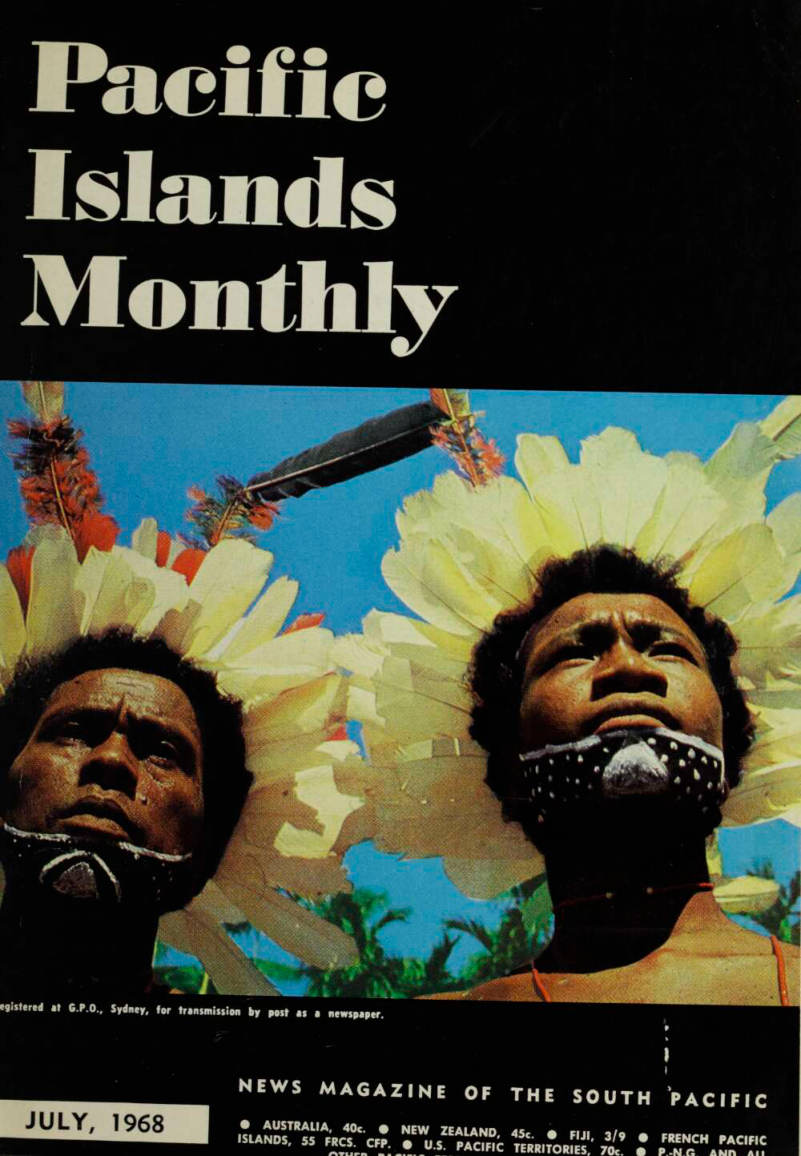 1
1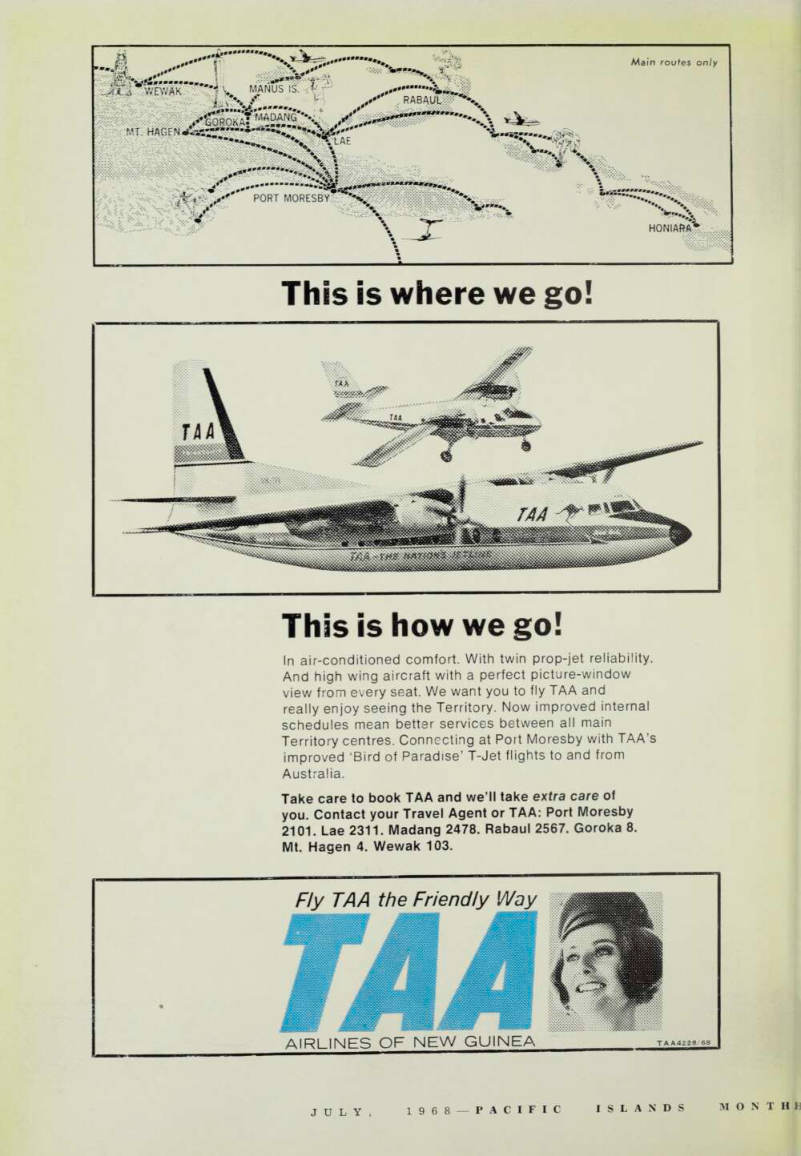 2
2 3
3 4
4 5
5 6
6 7
7 8
8 9
9 10
10 11
11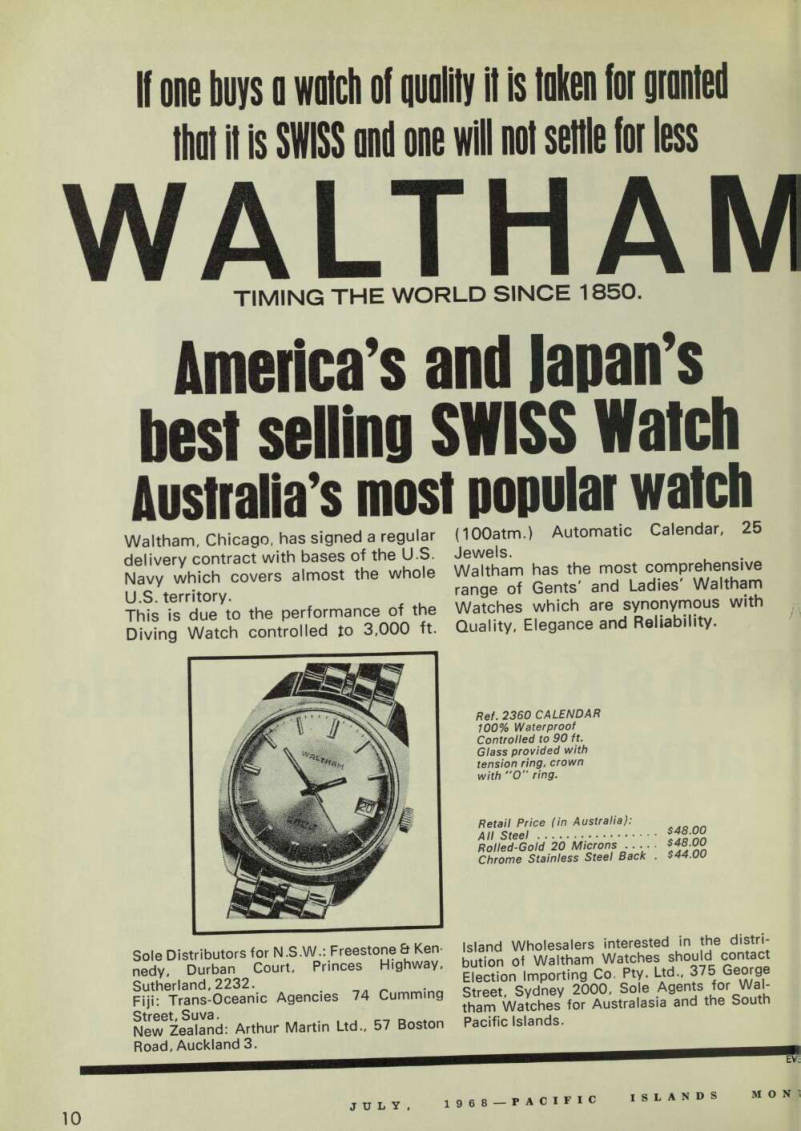 12
12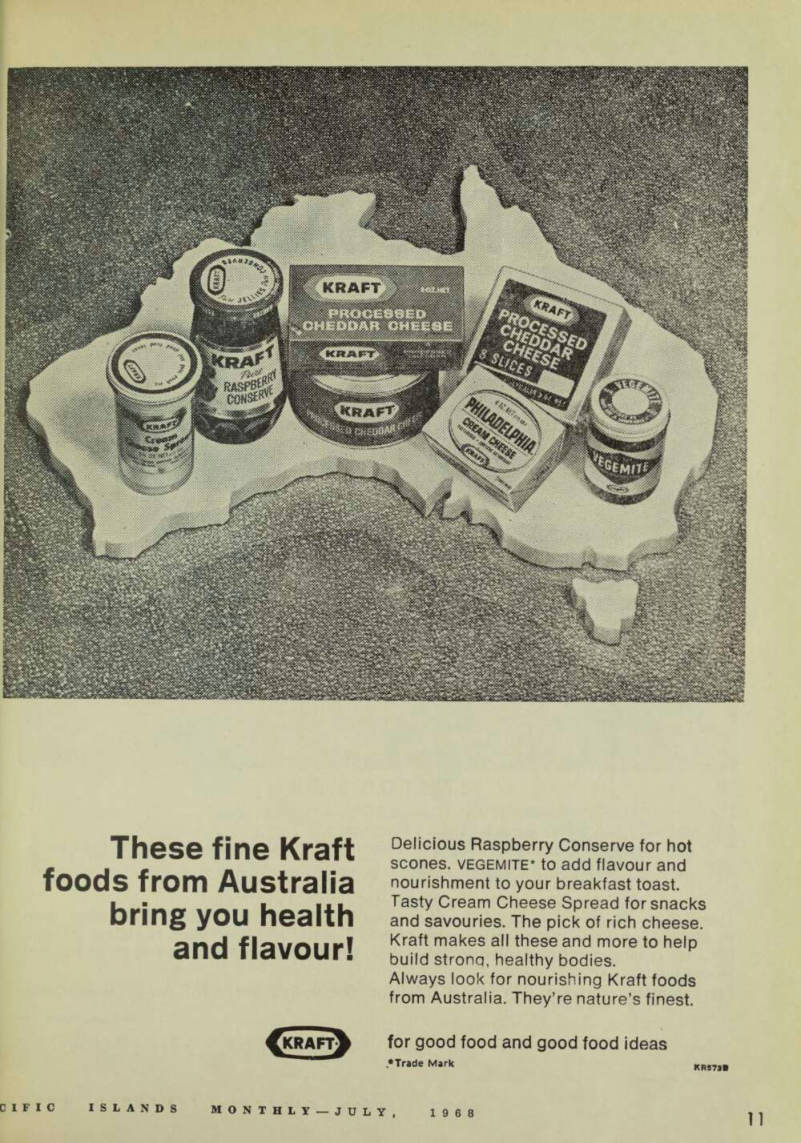 13
13 14
14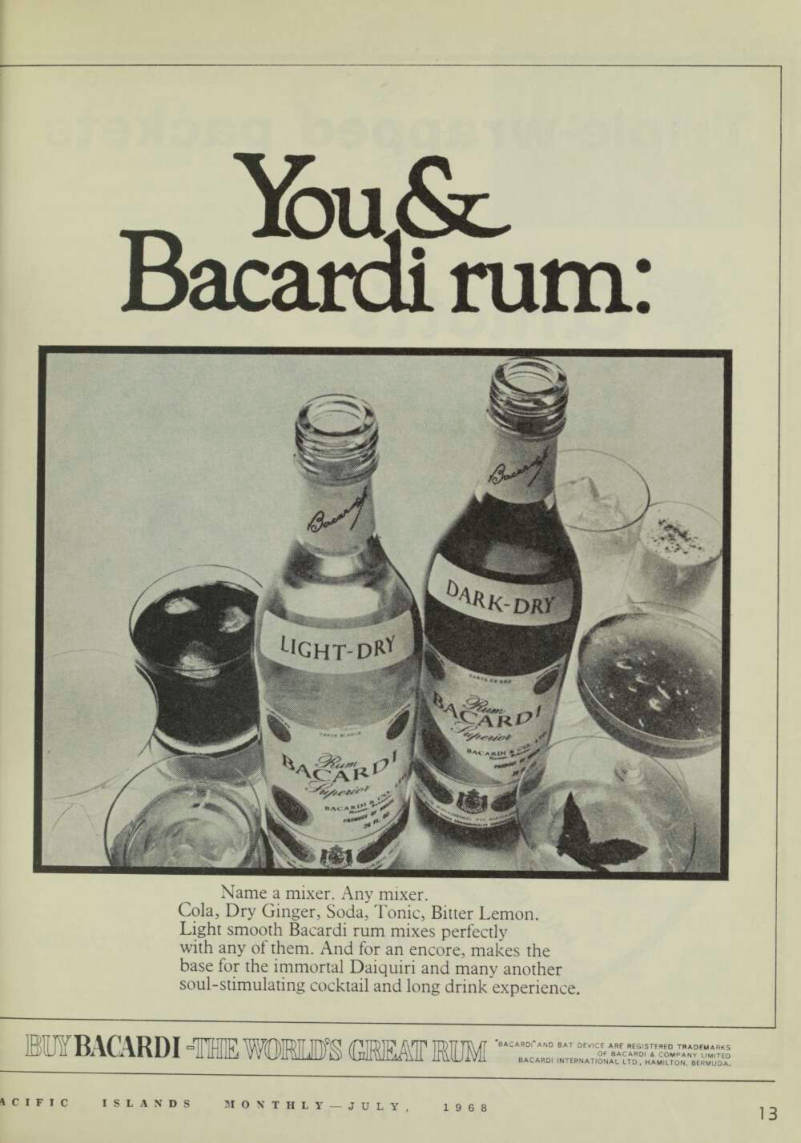 15
15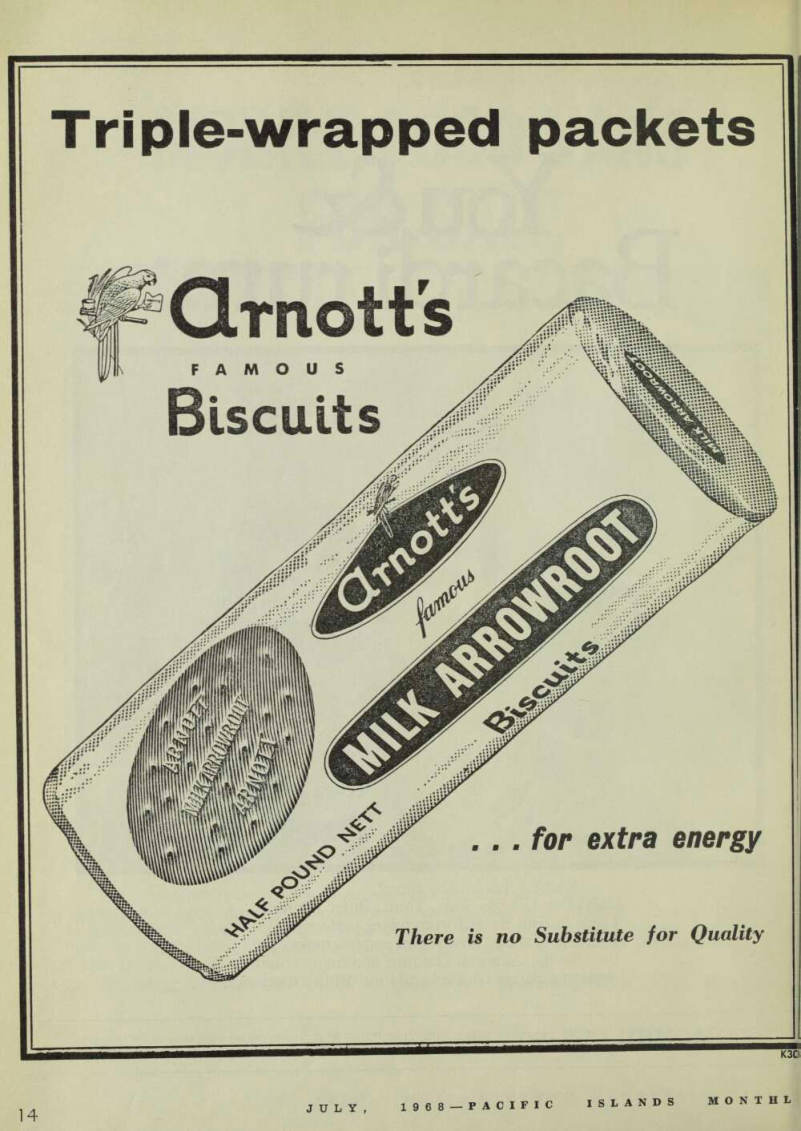 16
16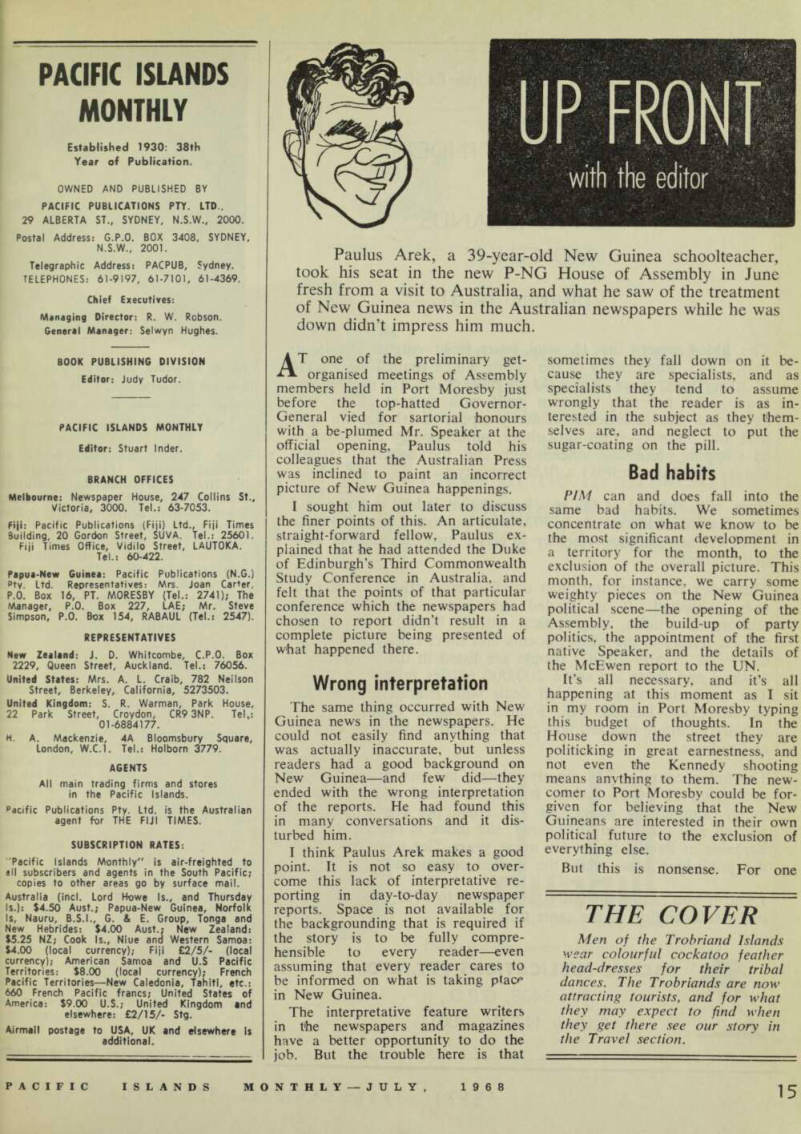 17
17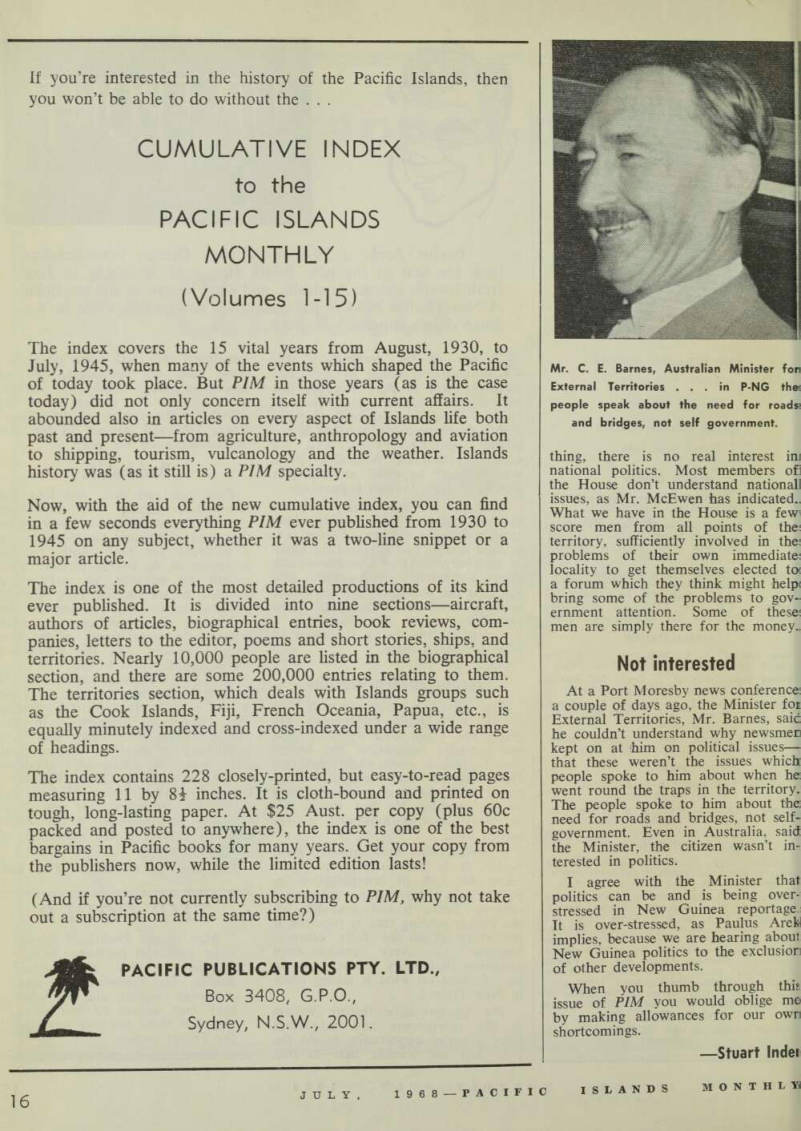 18
18 19
19 20
20 21
21 22
22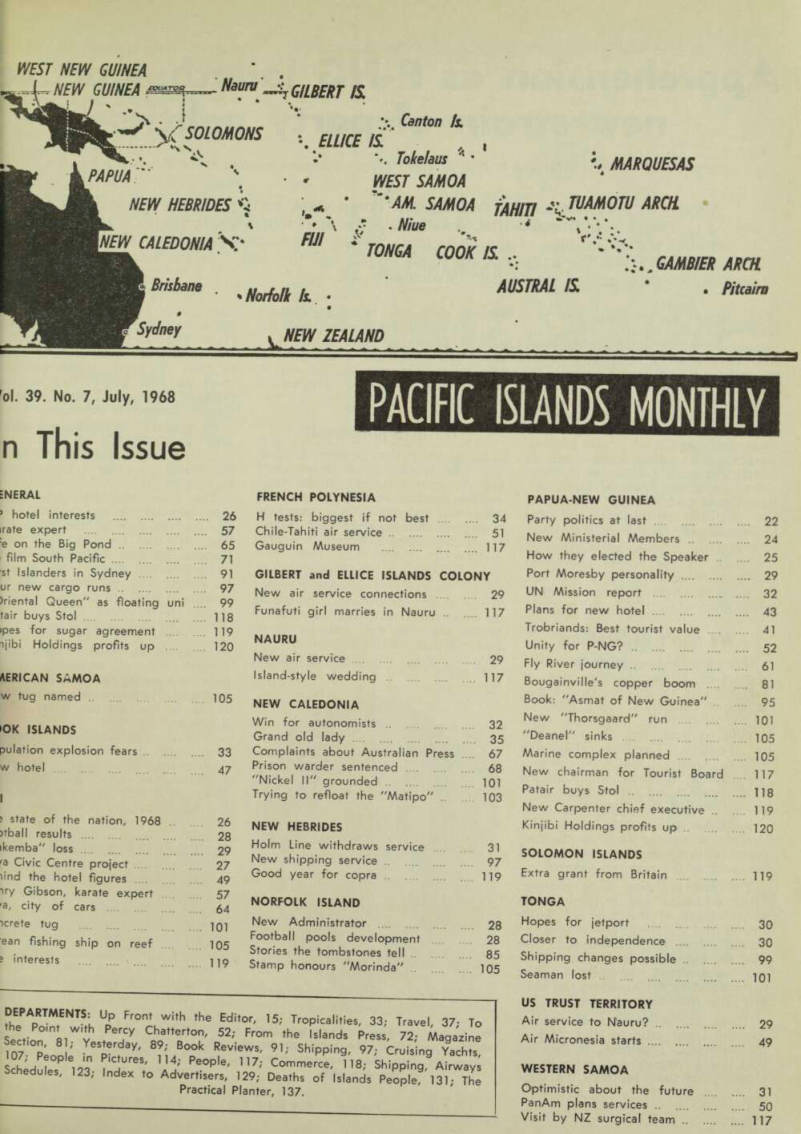 23
23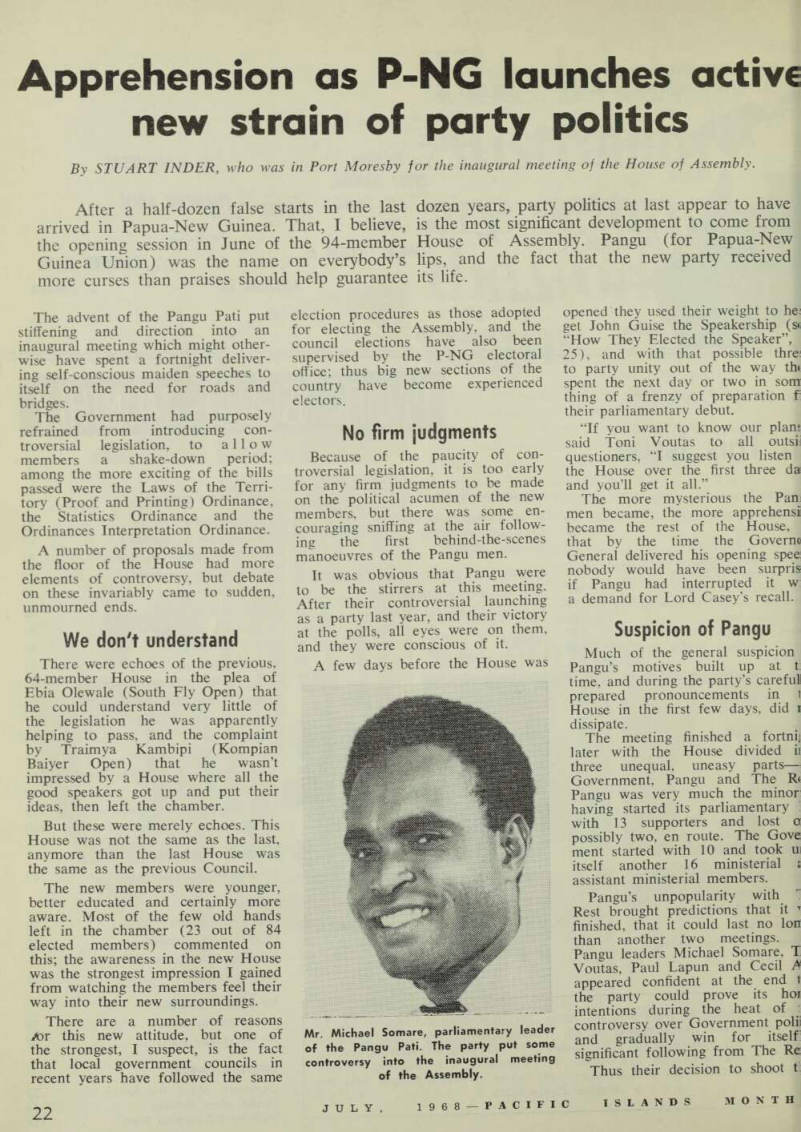 24
24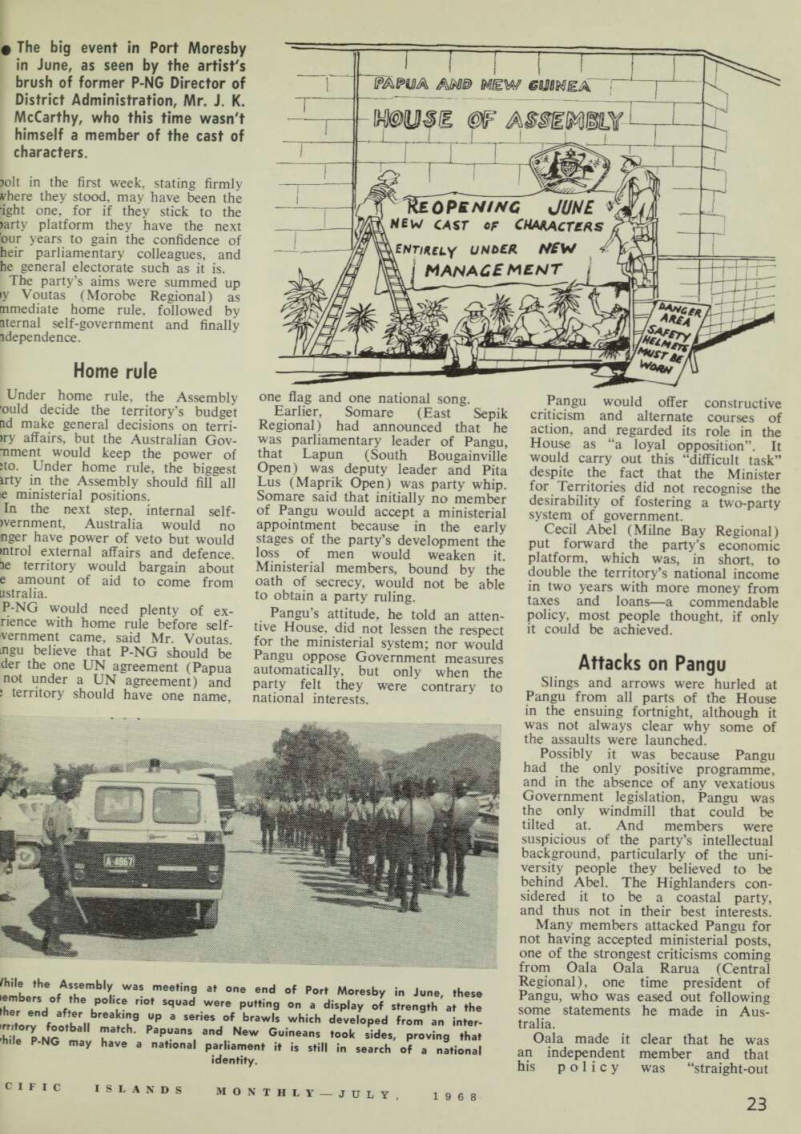 25
25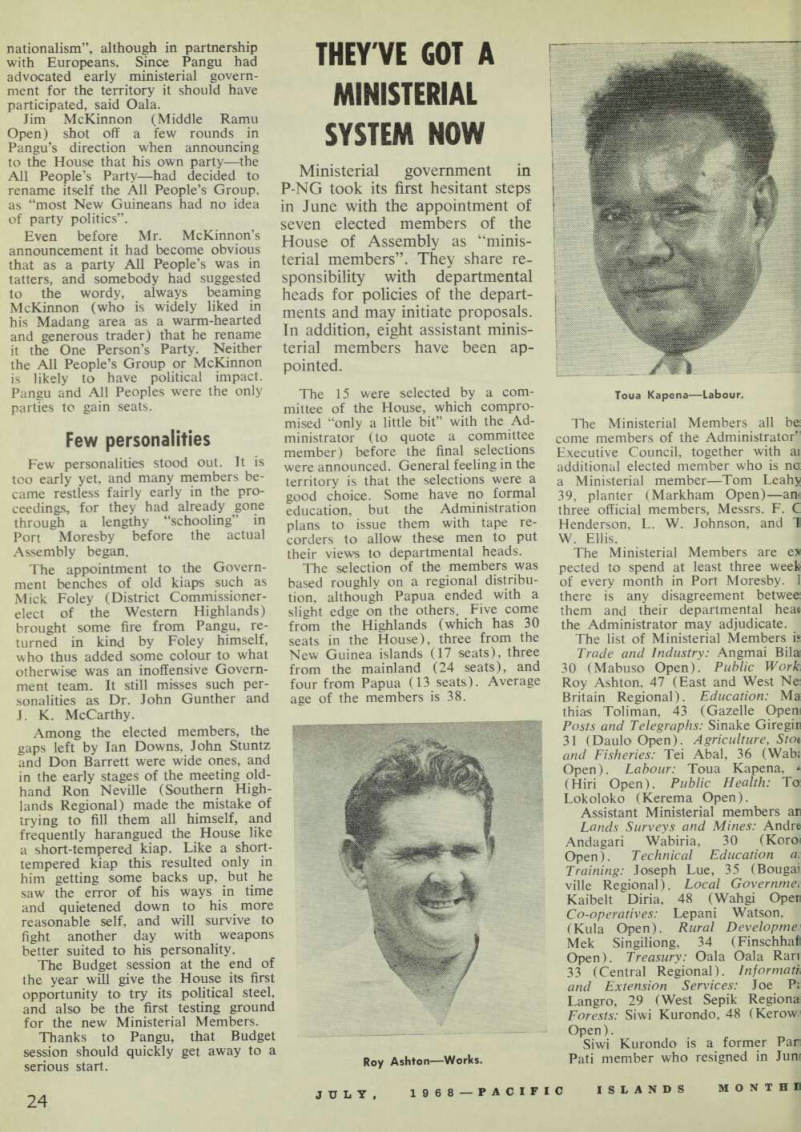 26
26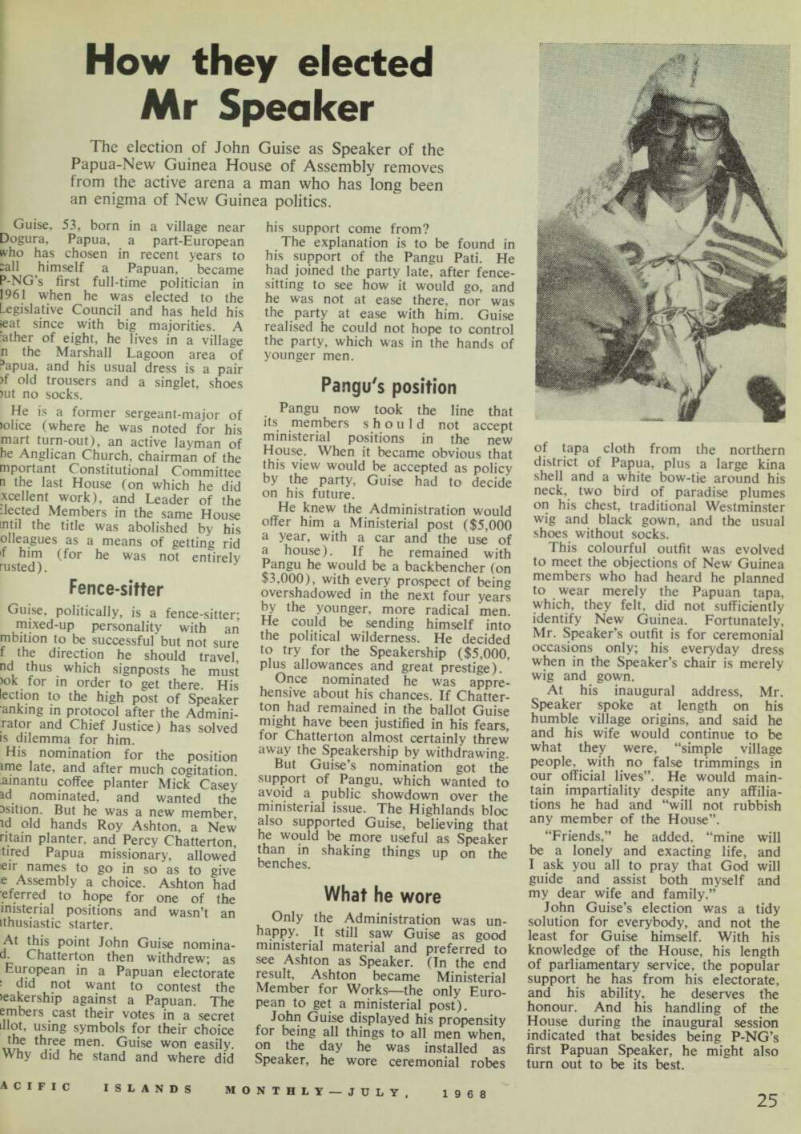 27
27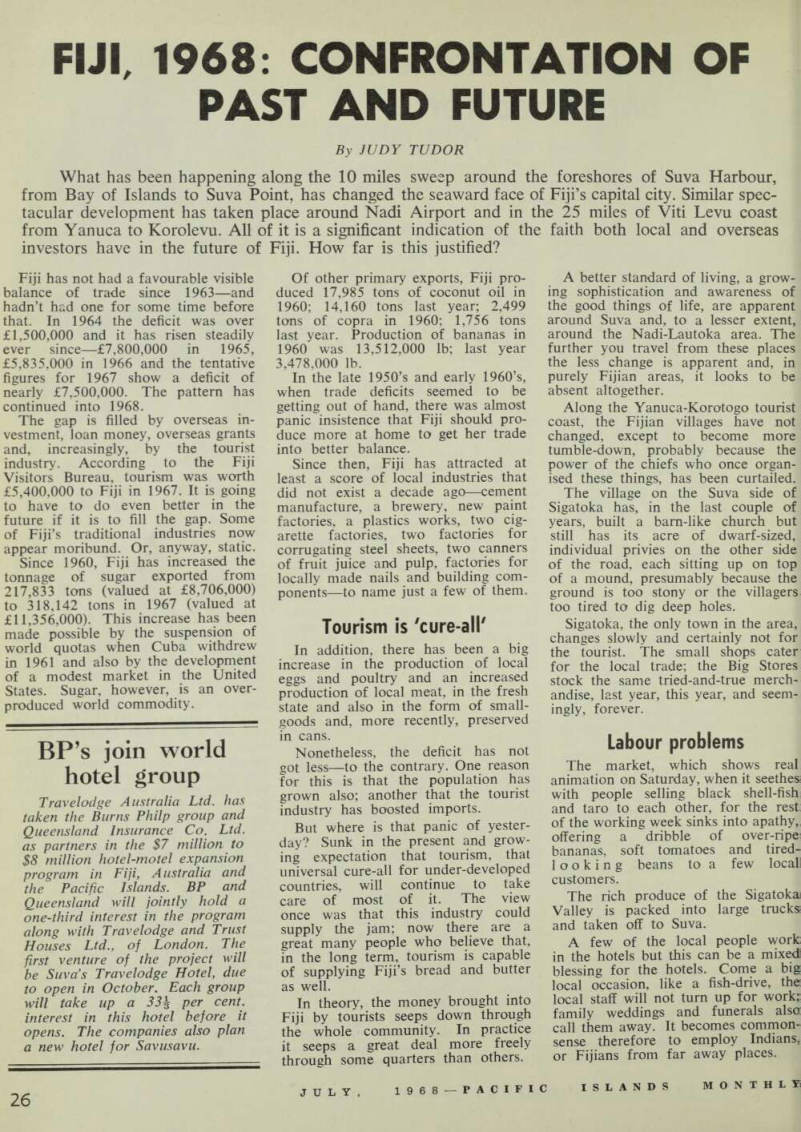 28
28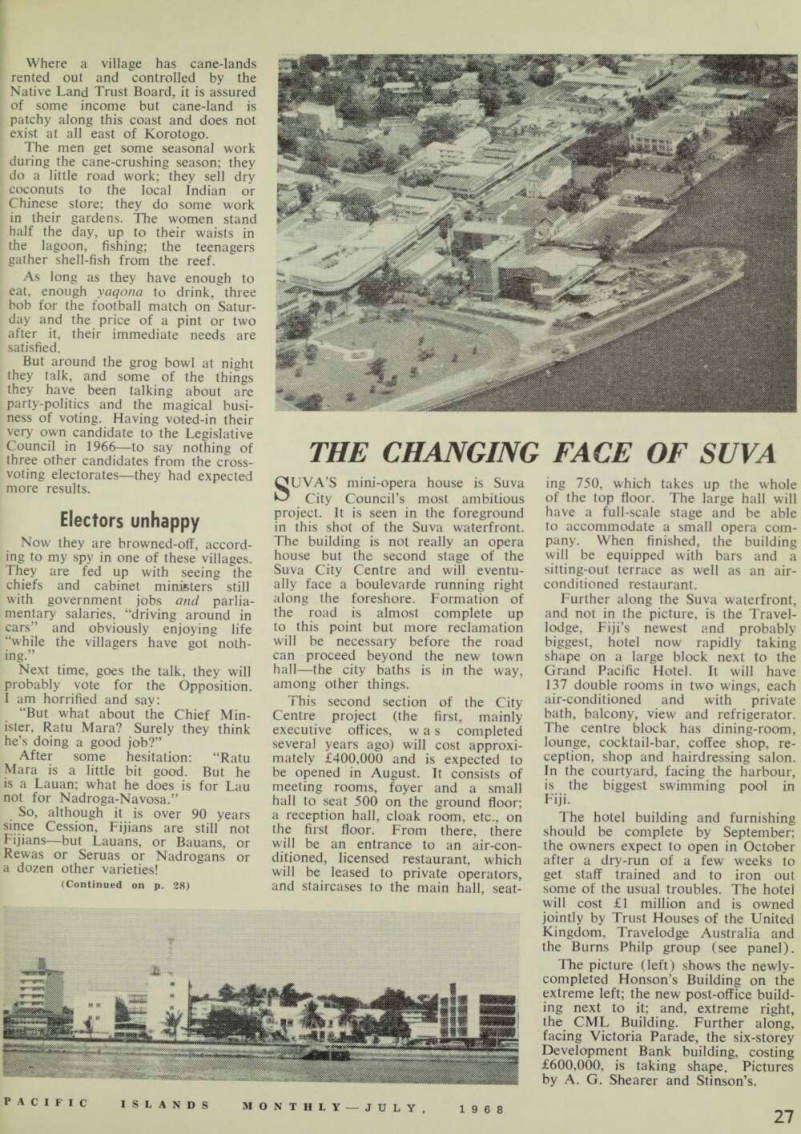 29
29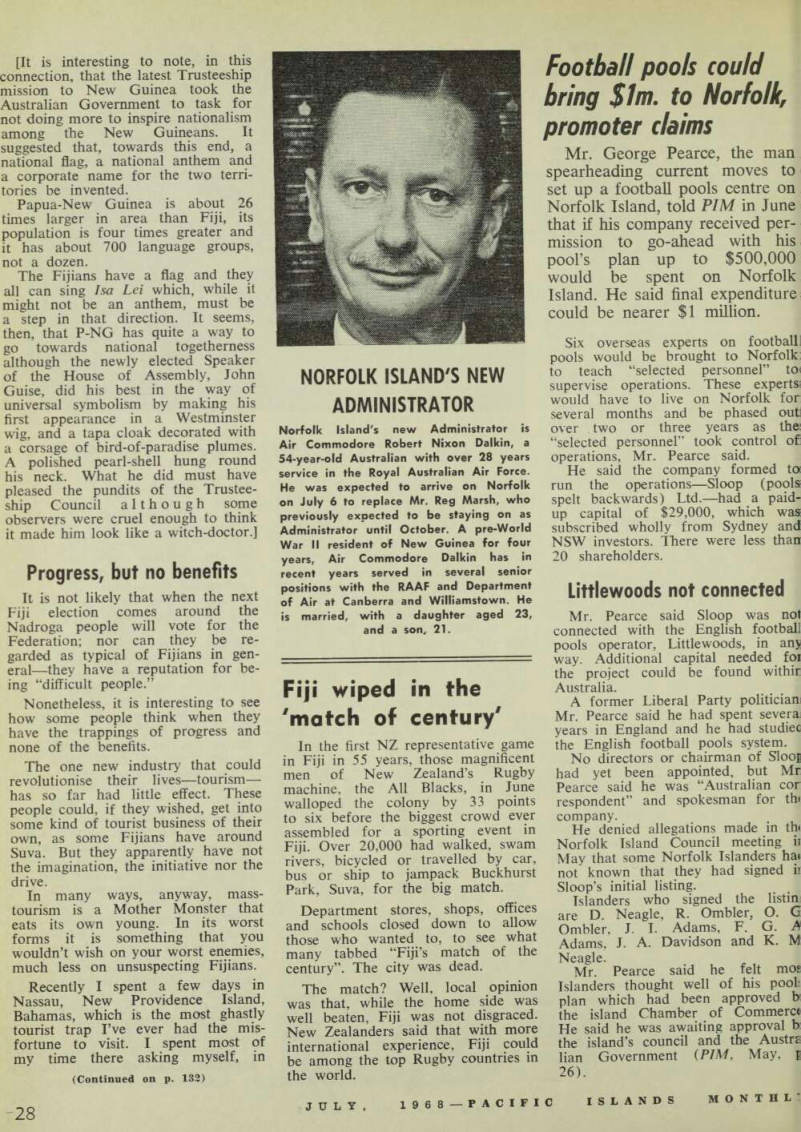 30
30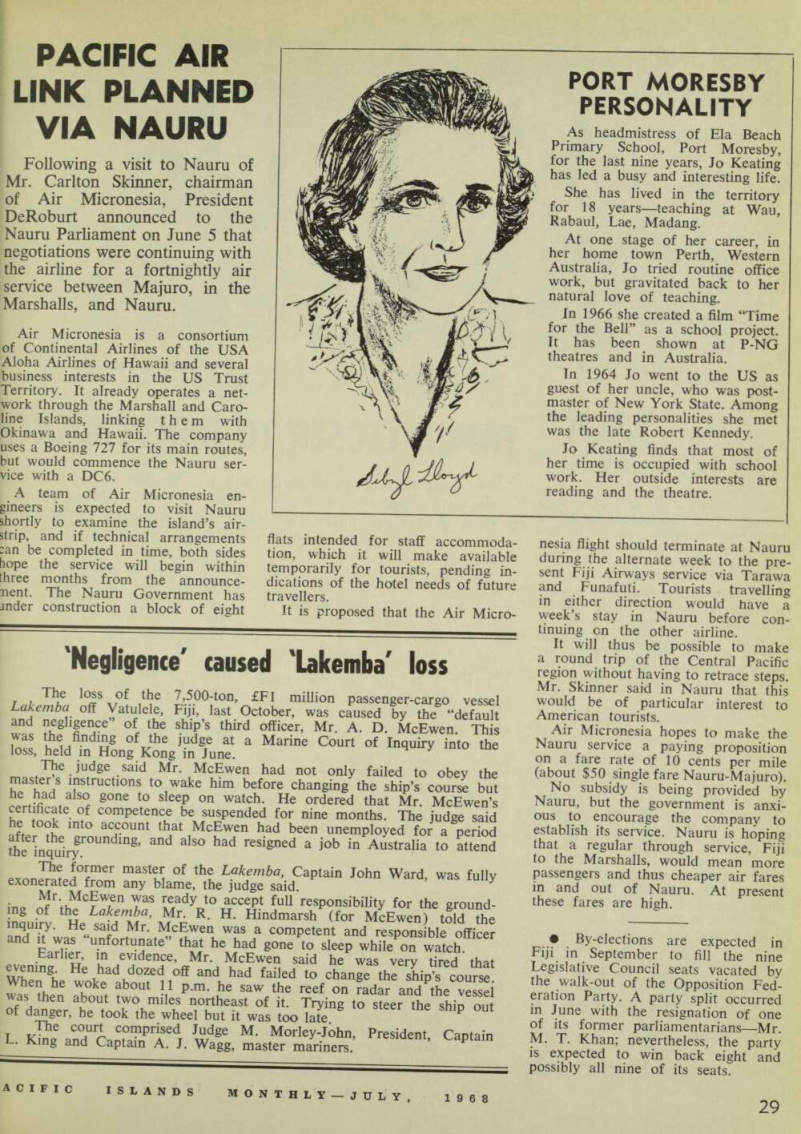 31
31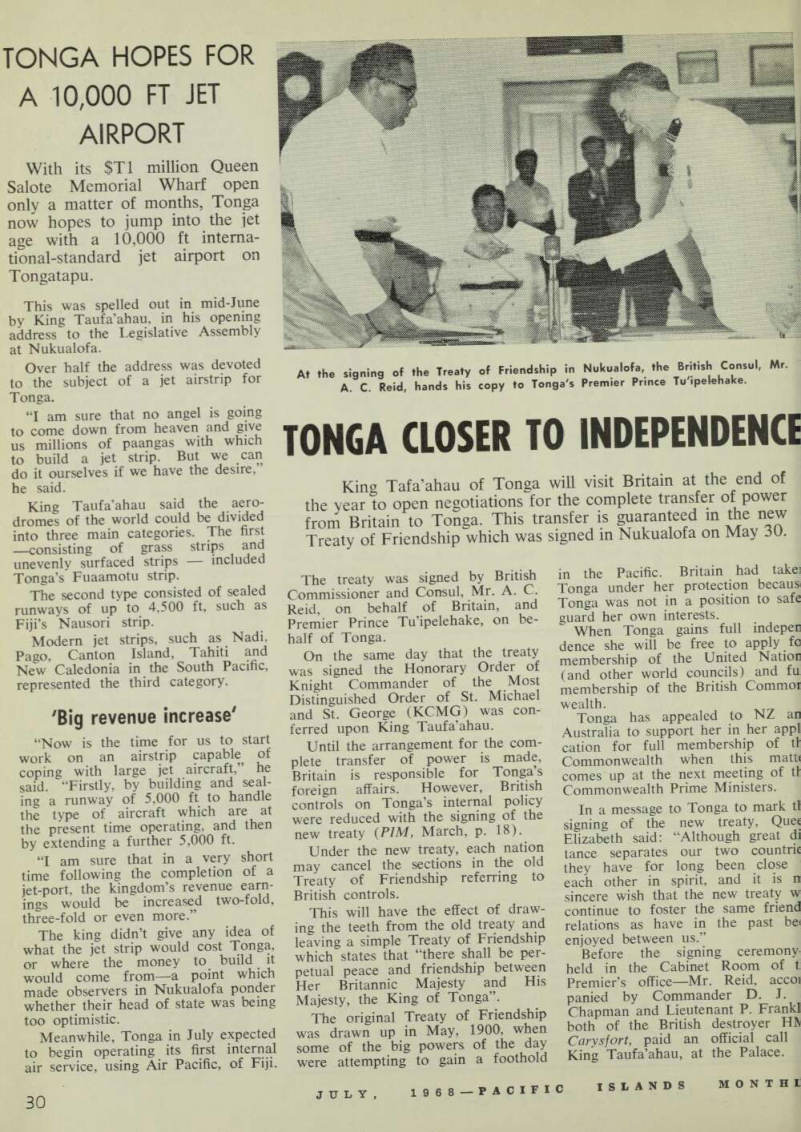 32
32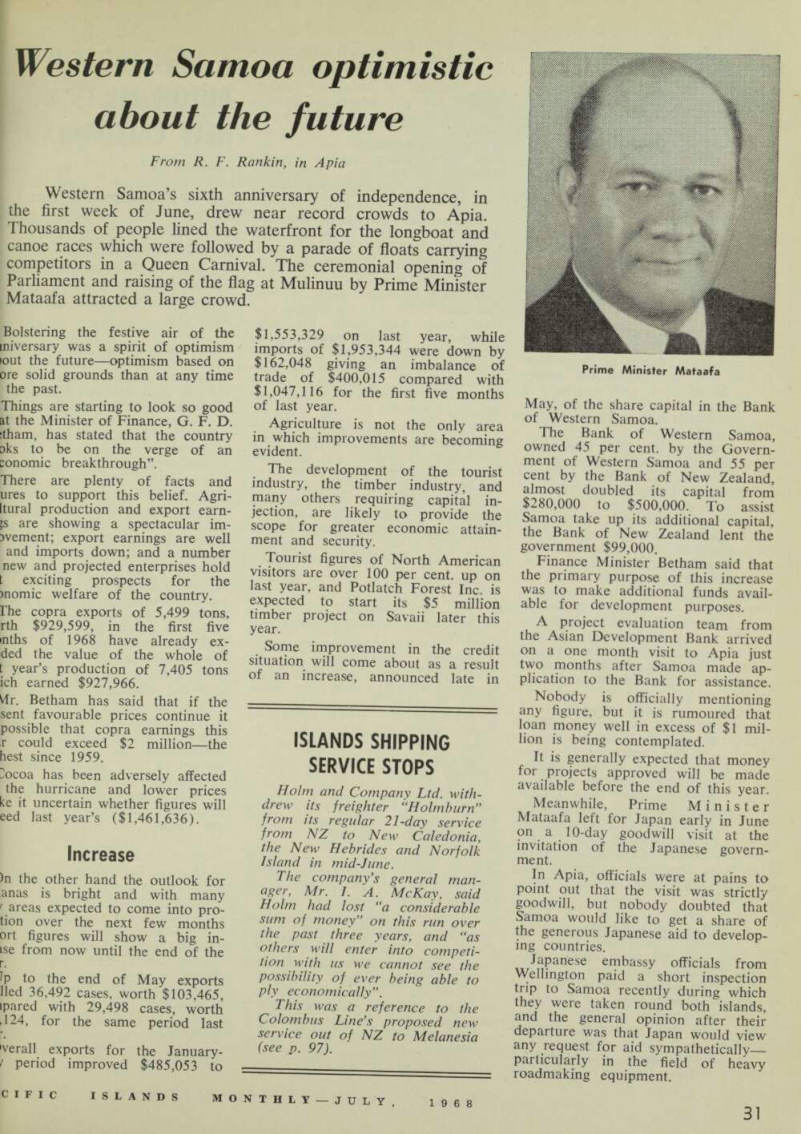 33
33 34
34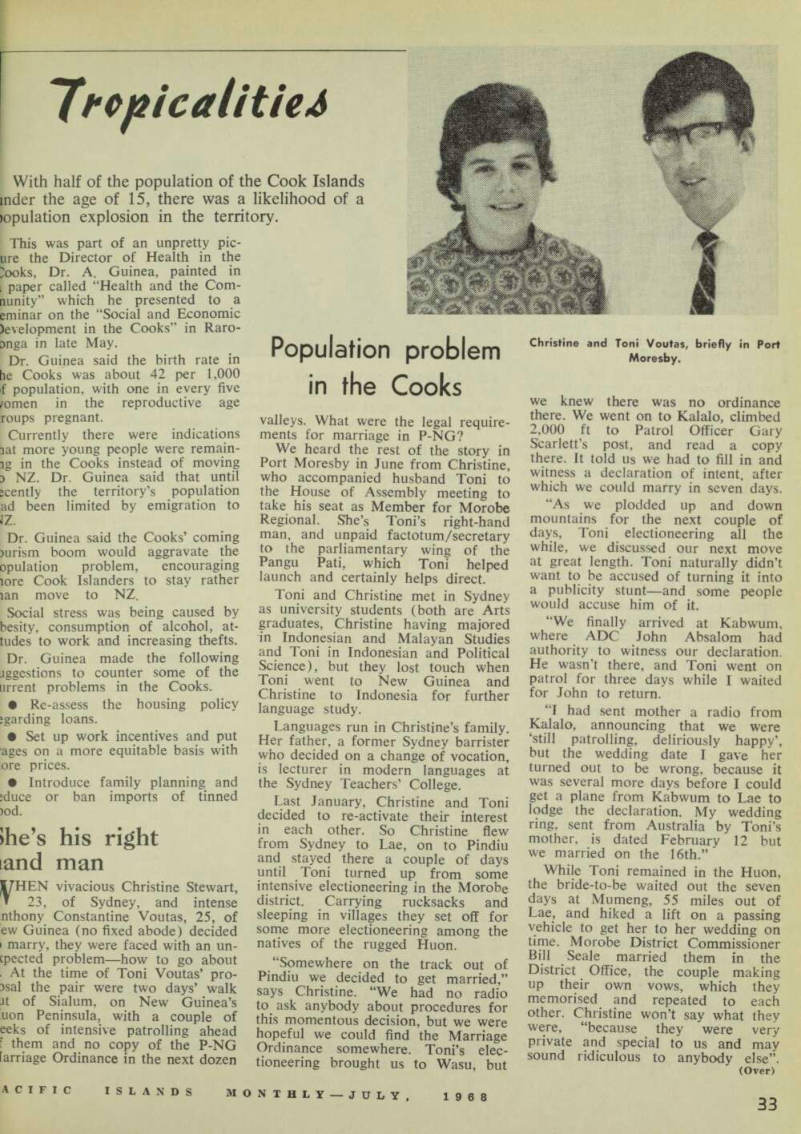 35
35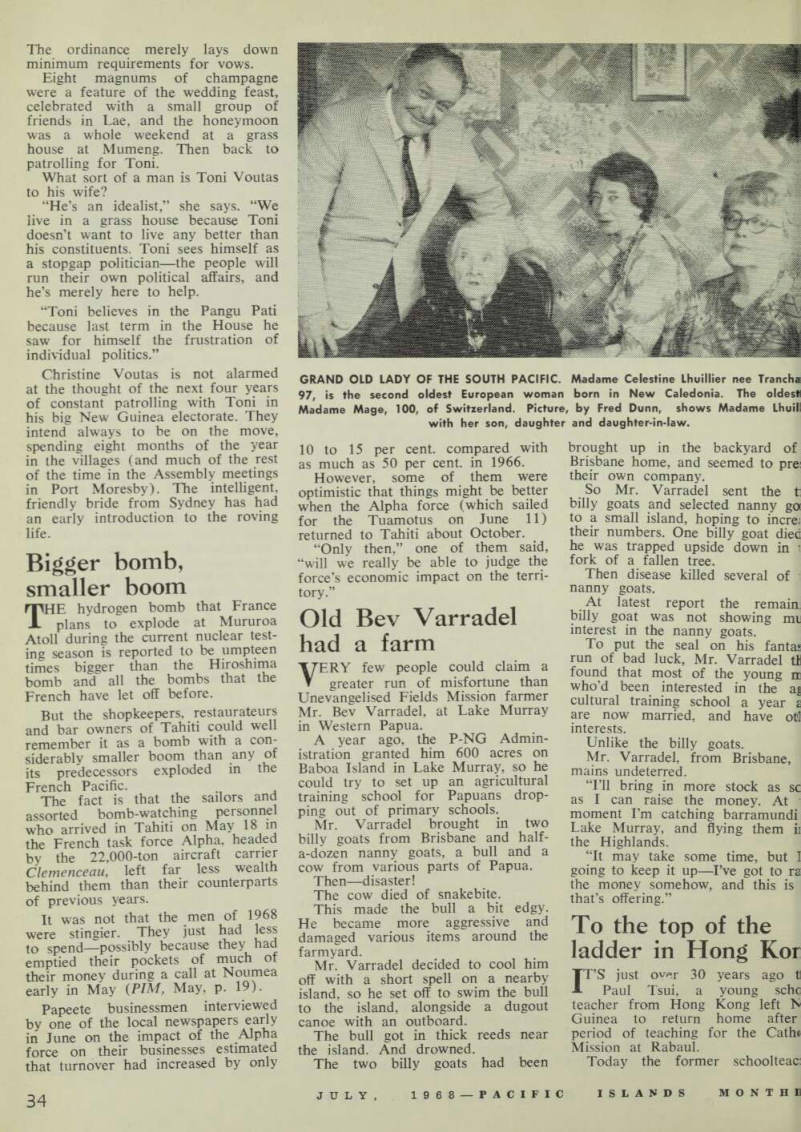 36
36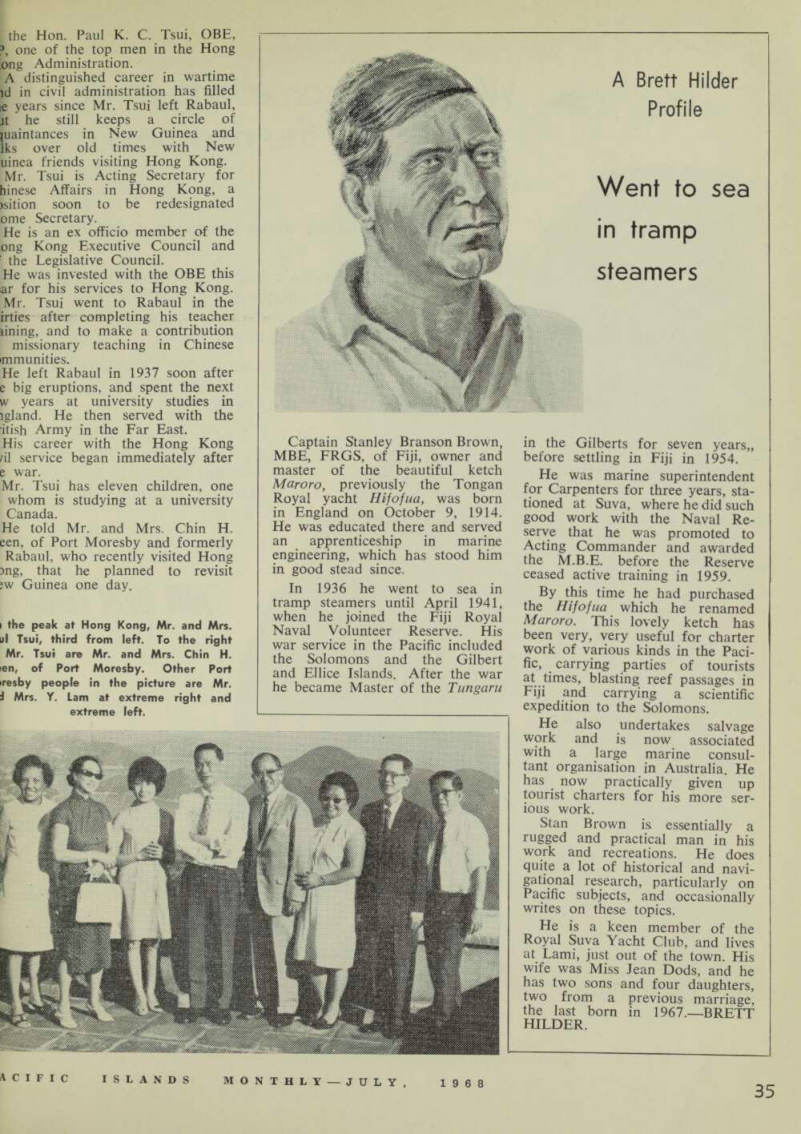 37
37 38
38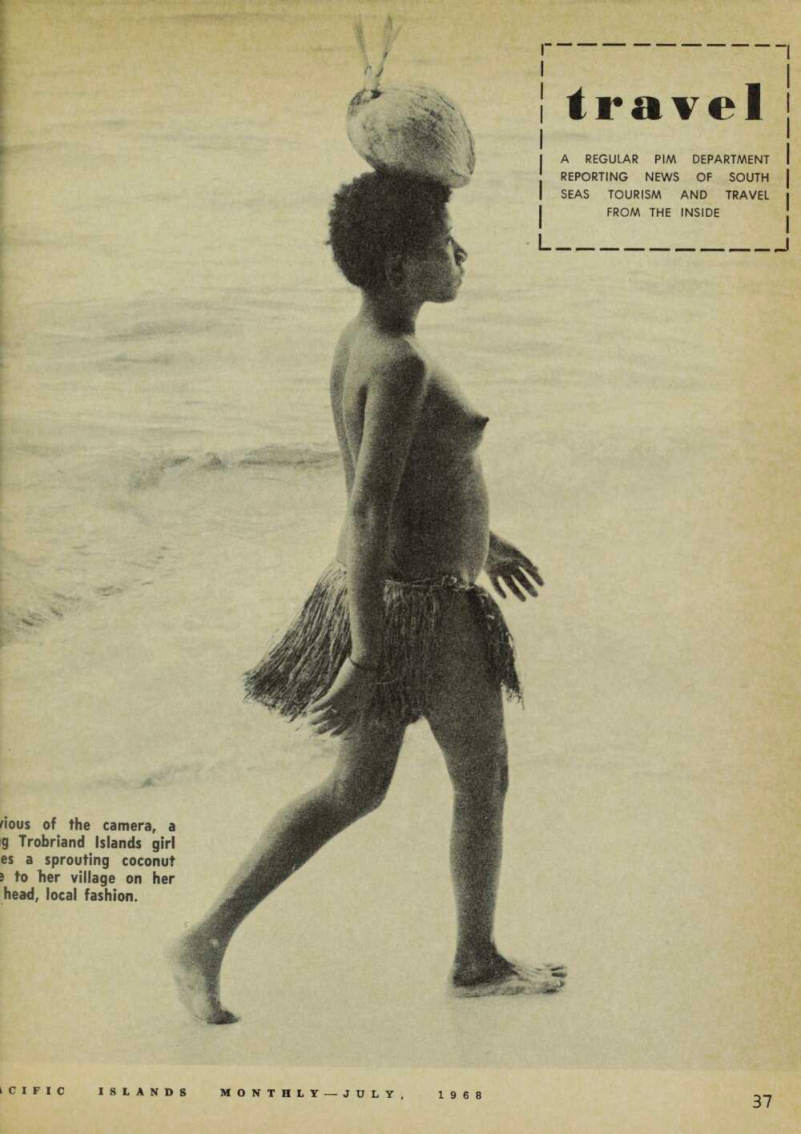 39
39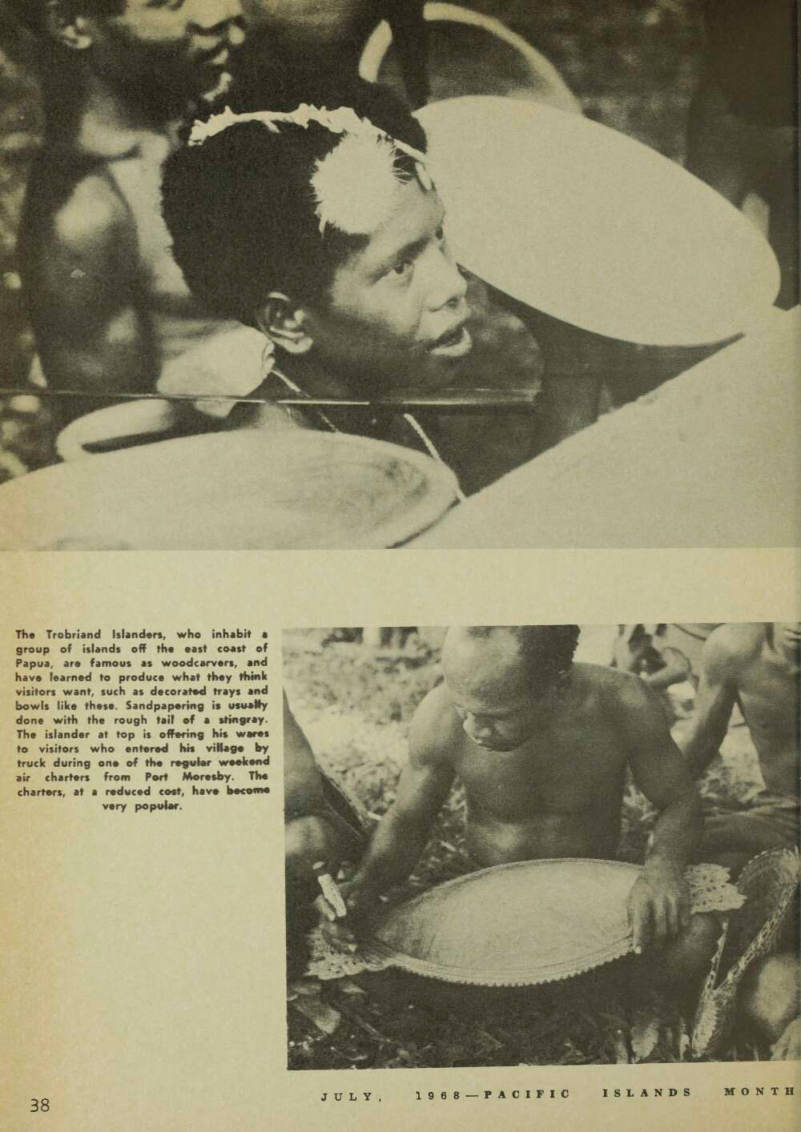 40
40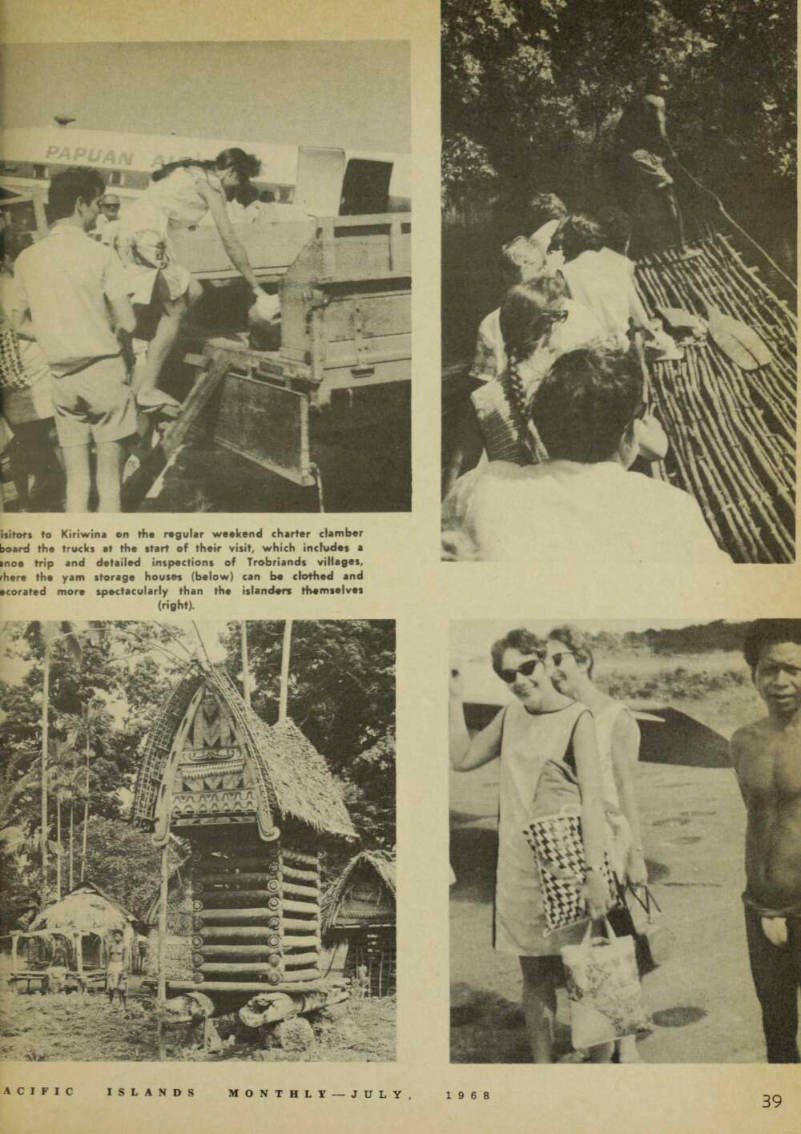 41
41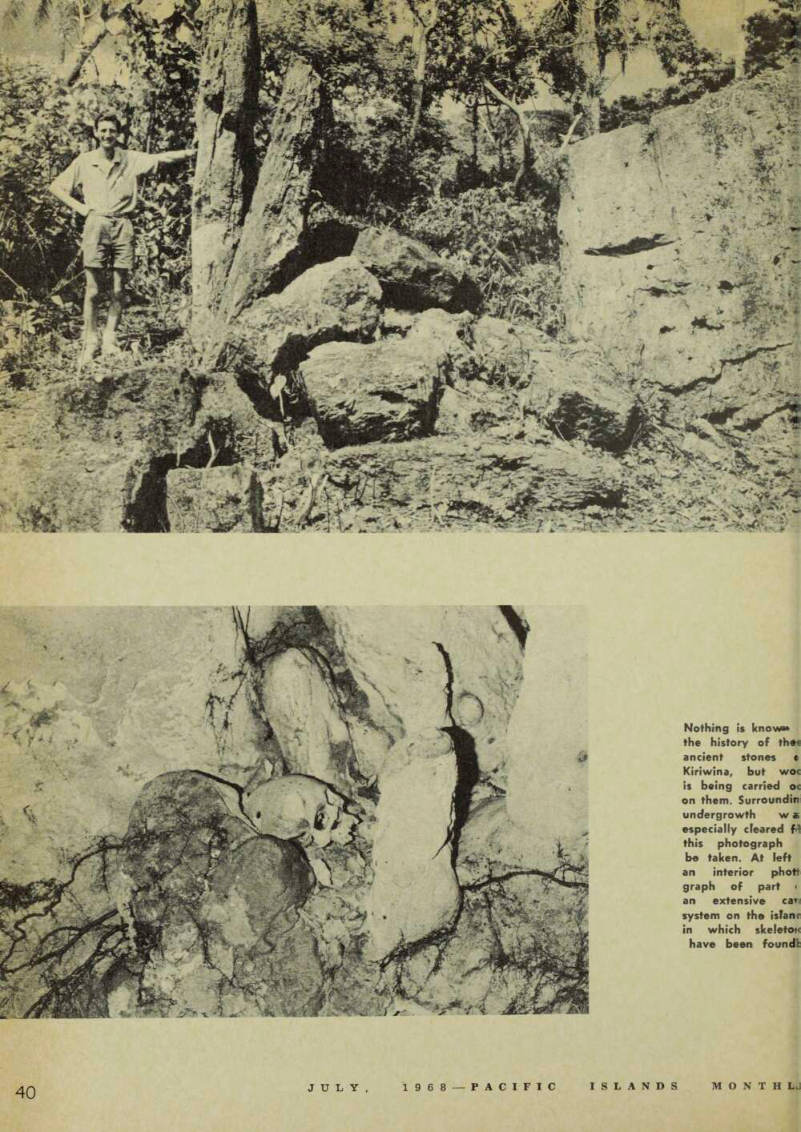 42
42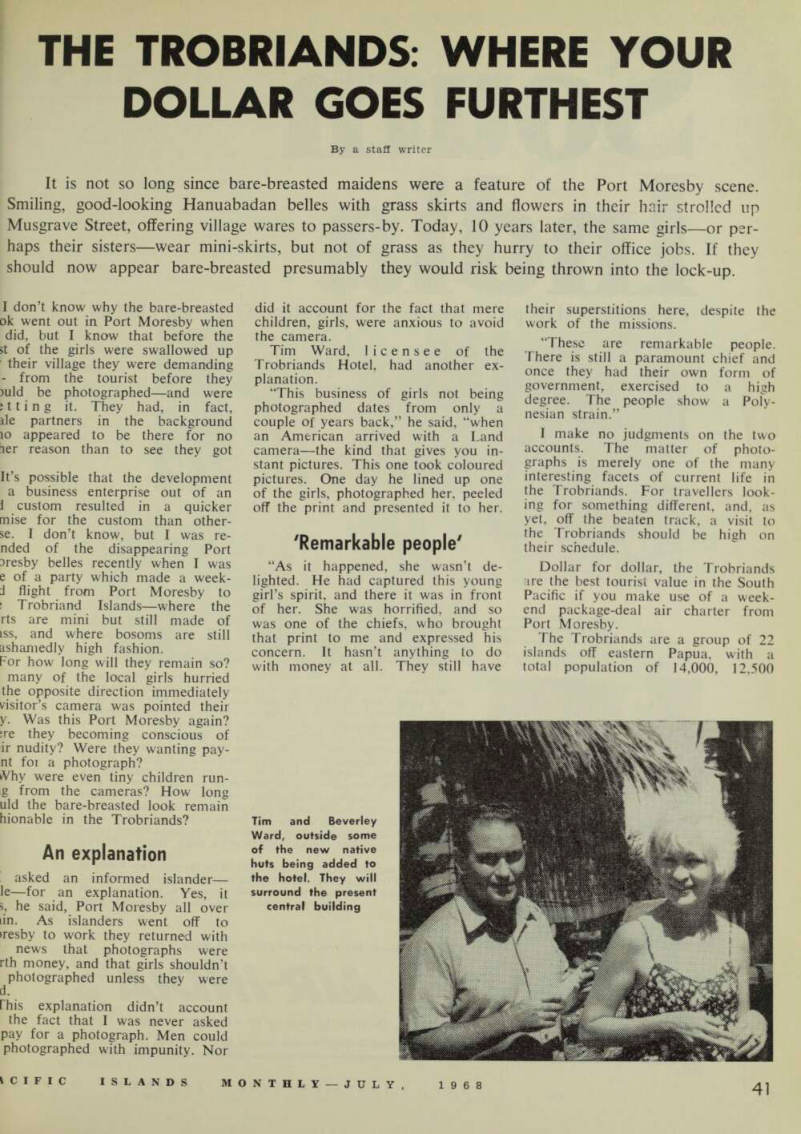 43
43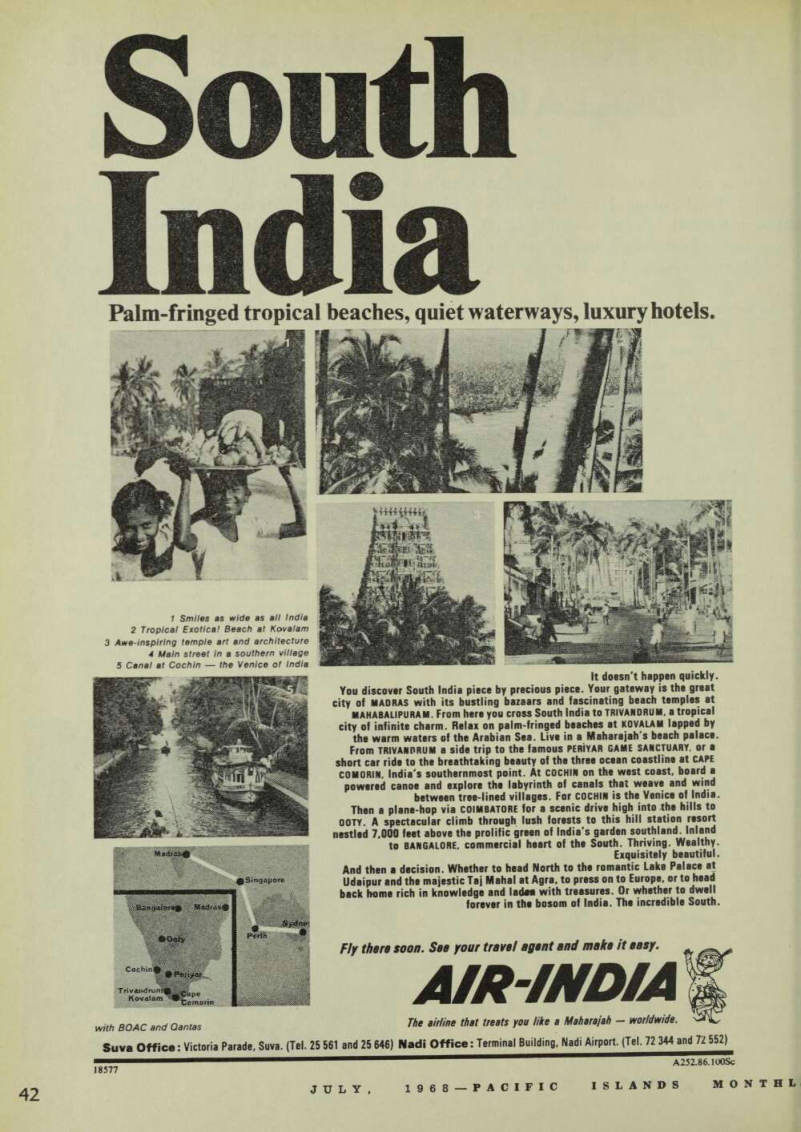 44
44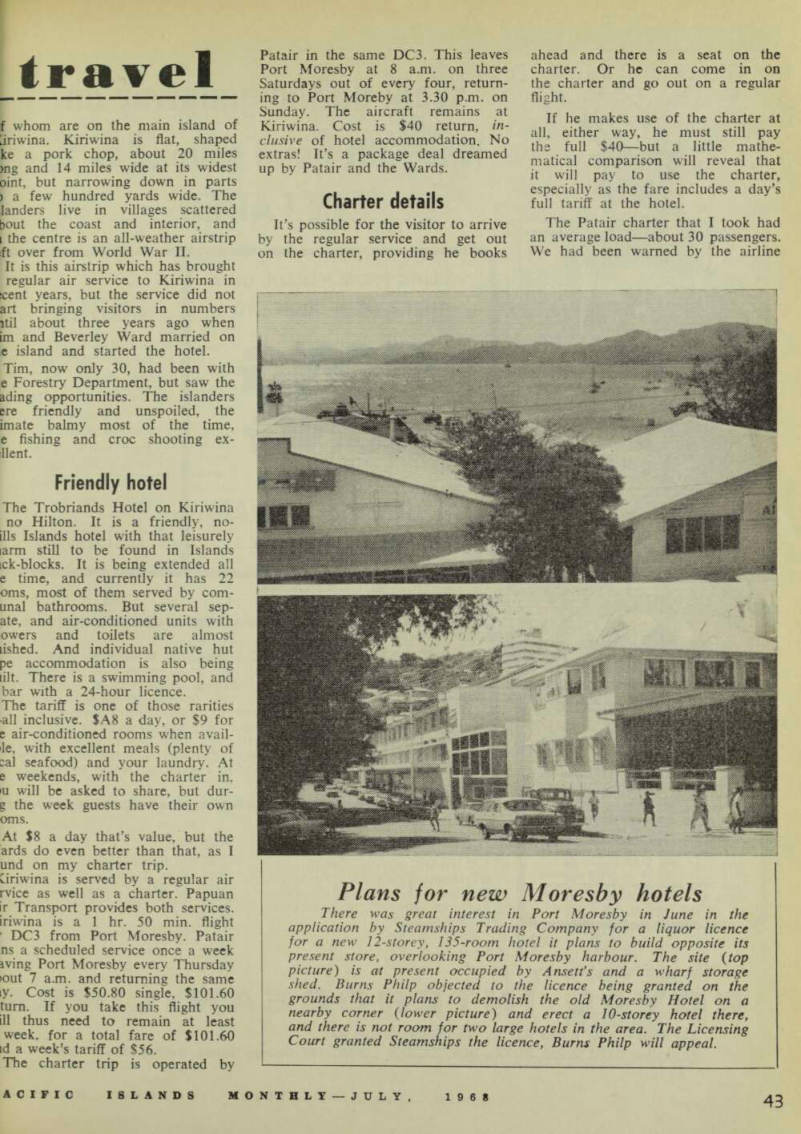 45
45 46
46 47
47 48
48 49
49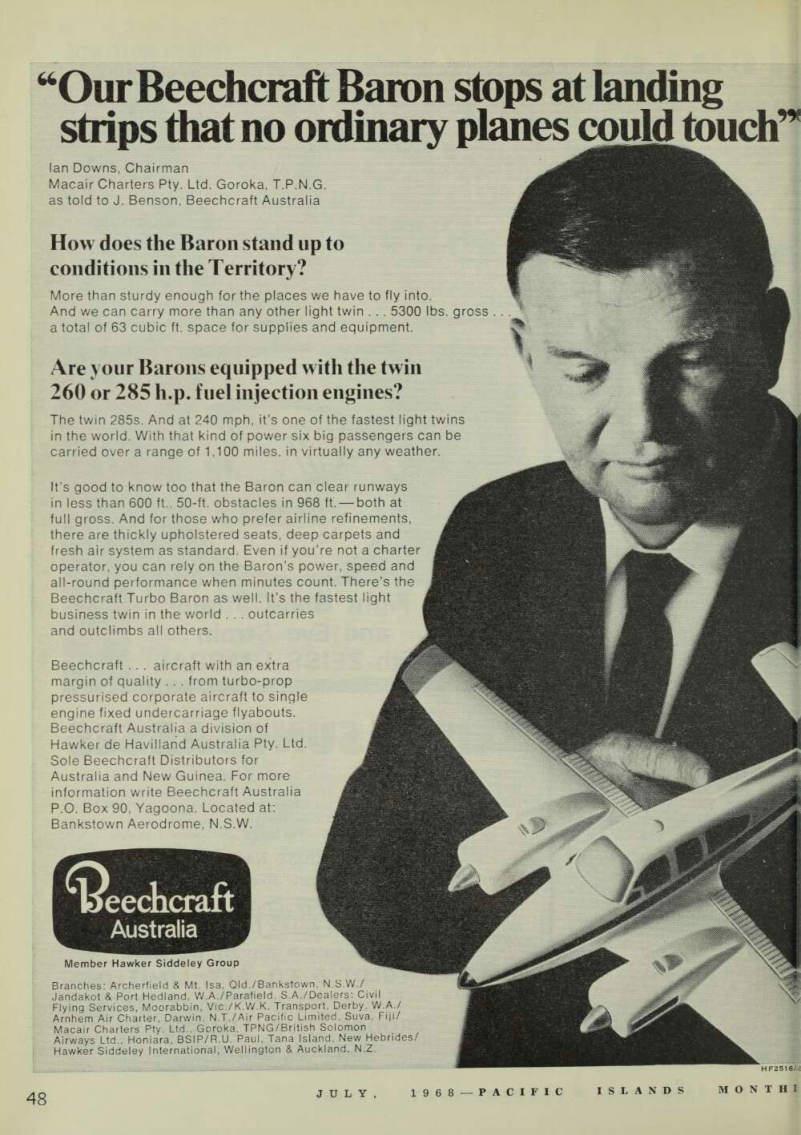 50
50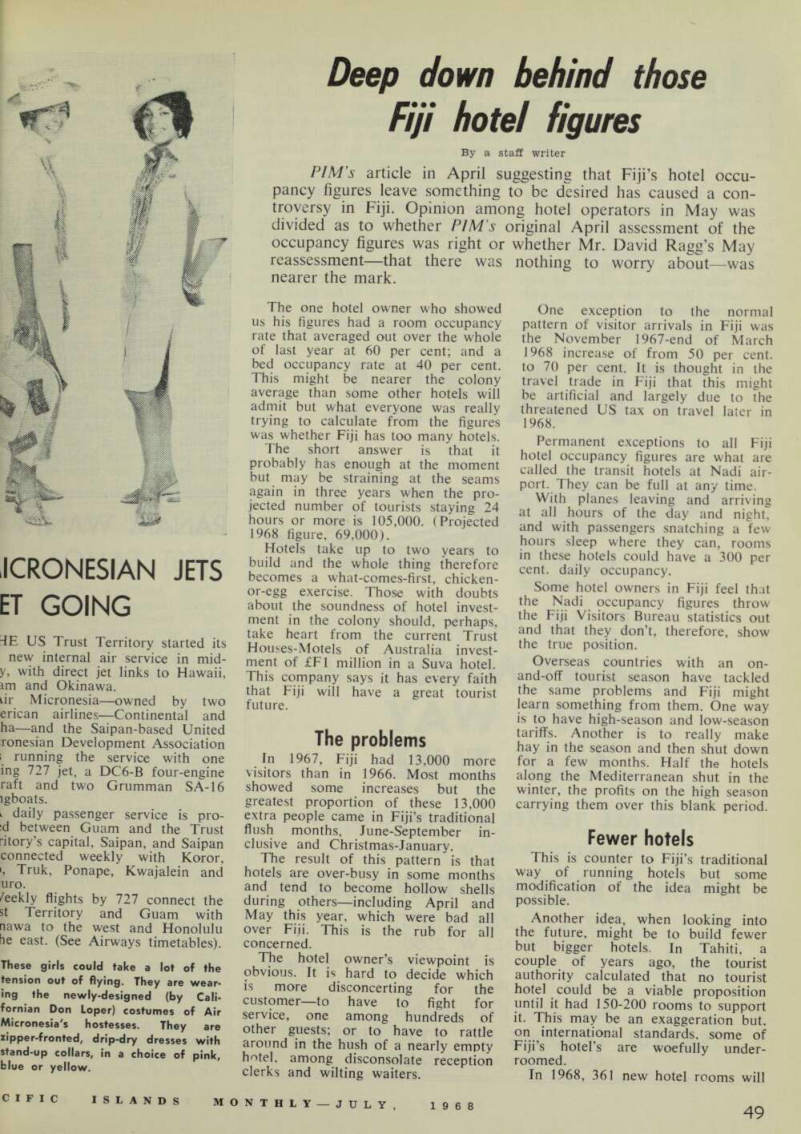 51
51 52
52 53
53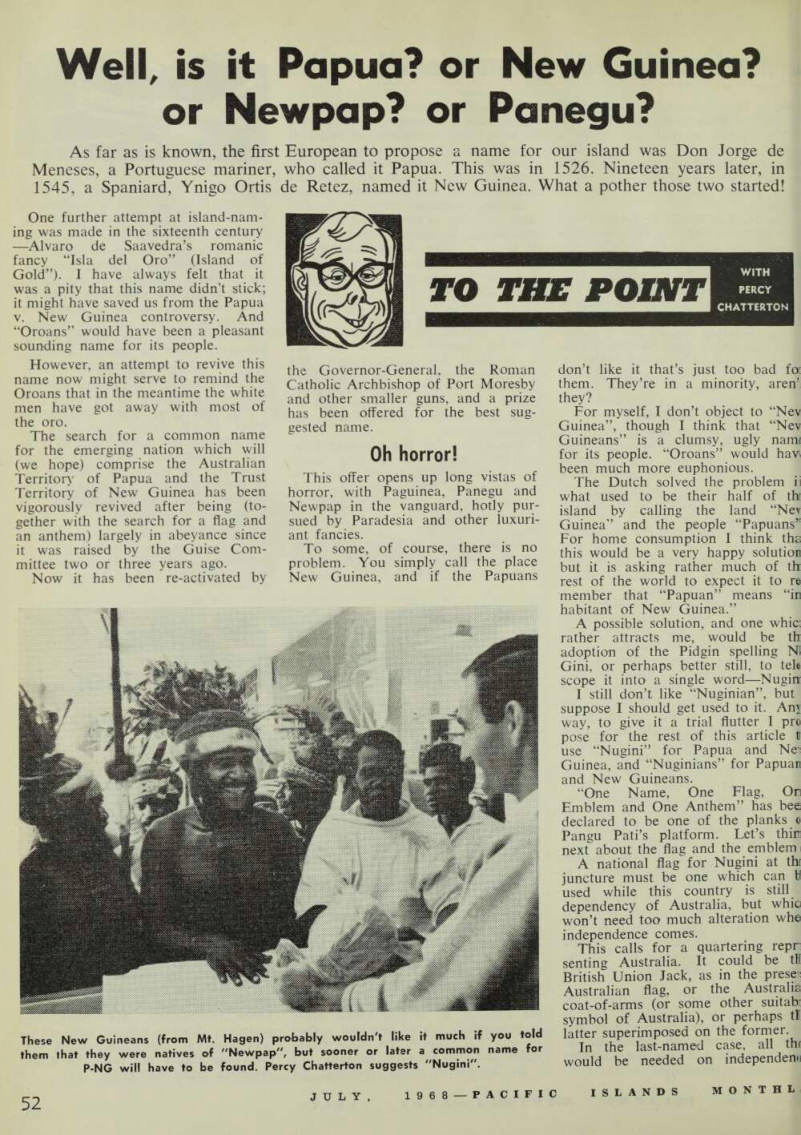 54
54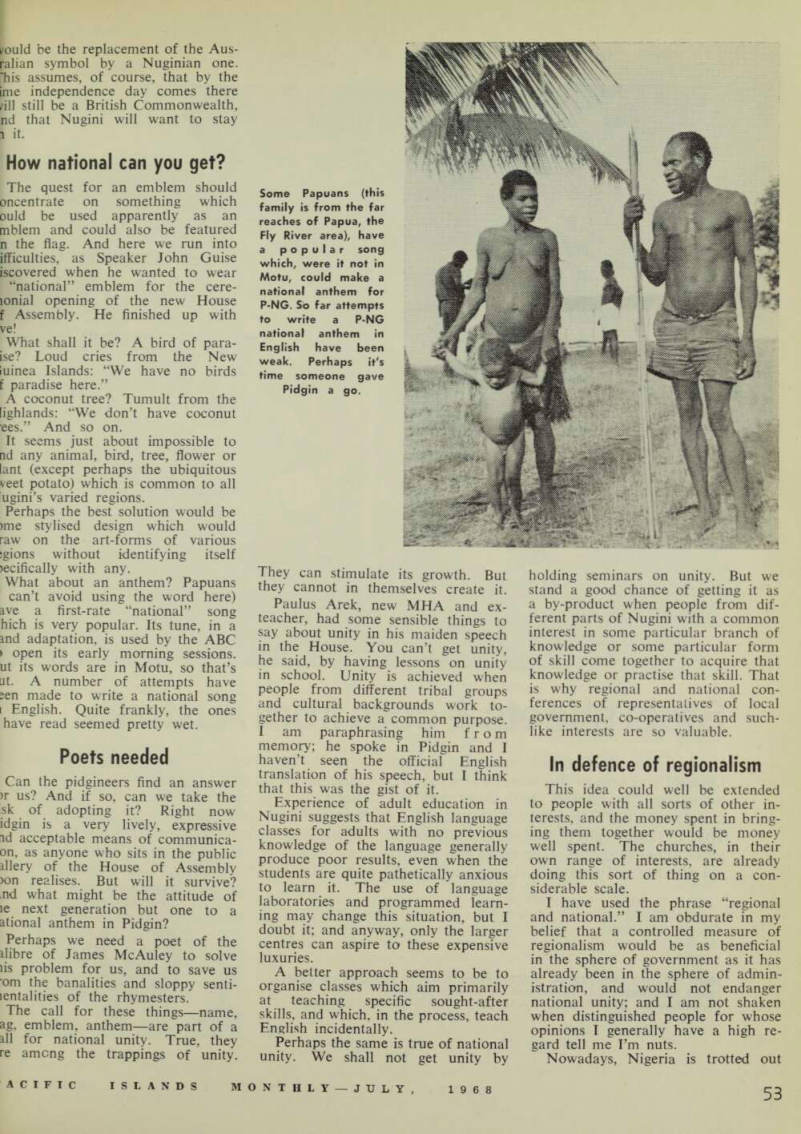 55
55 56
56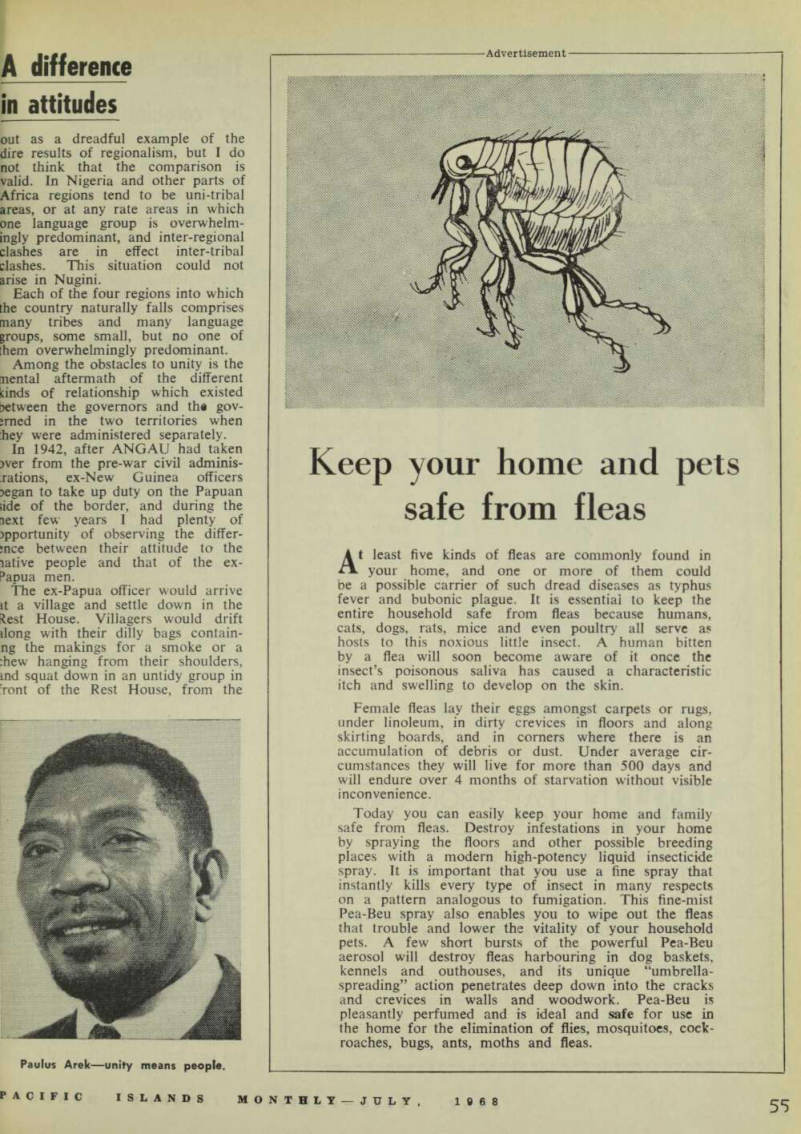 57
57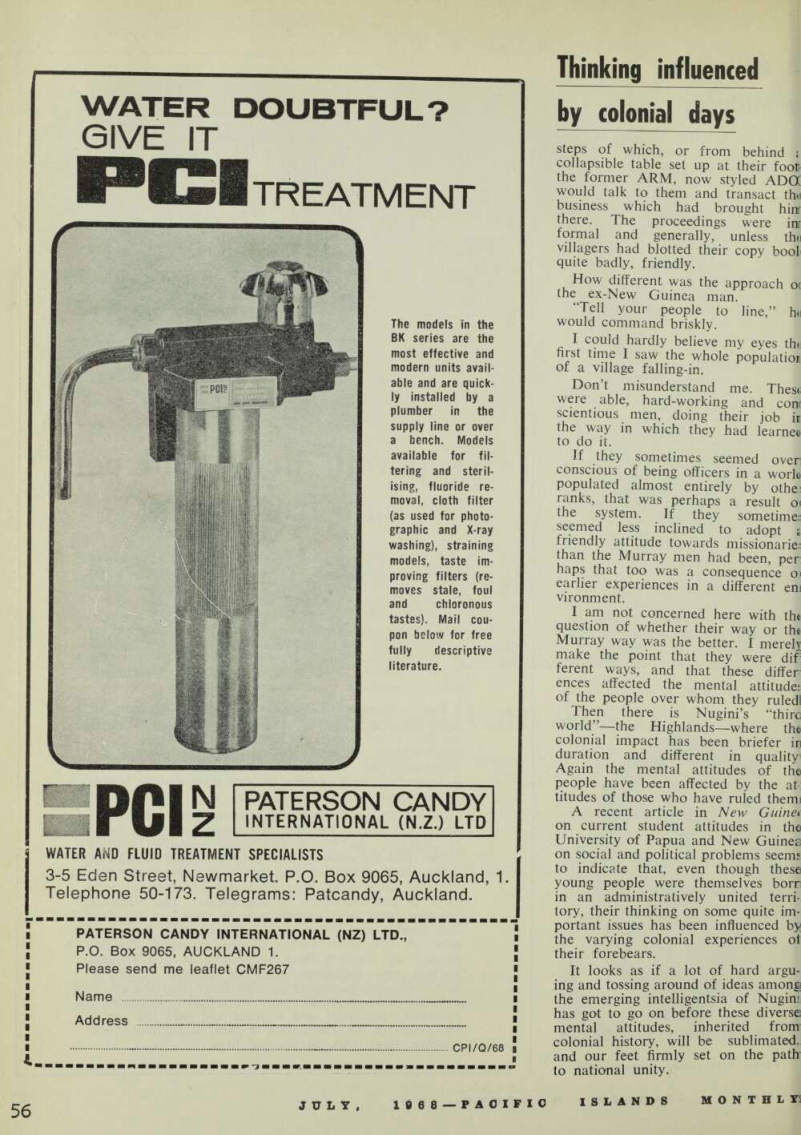 58
58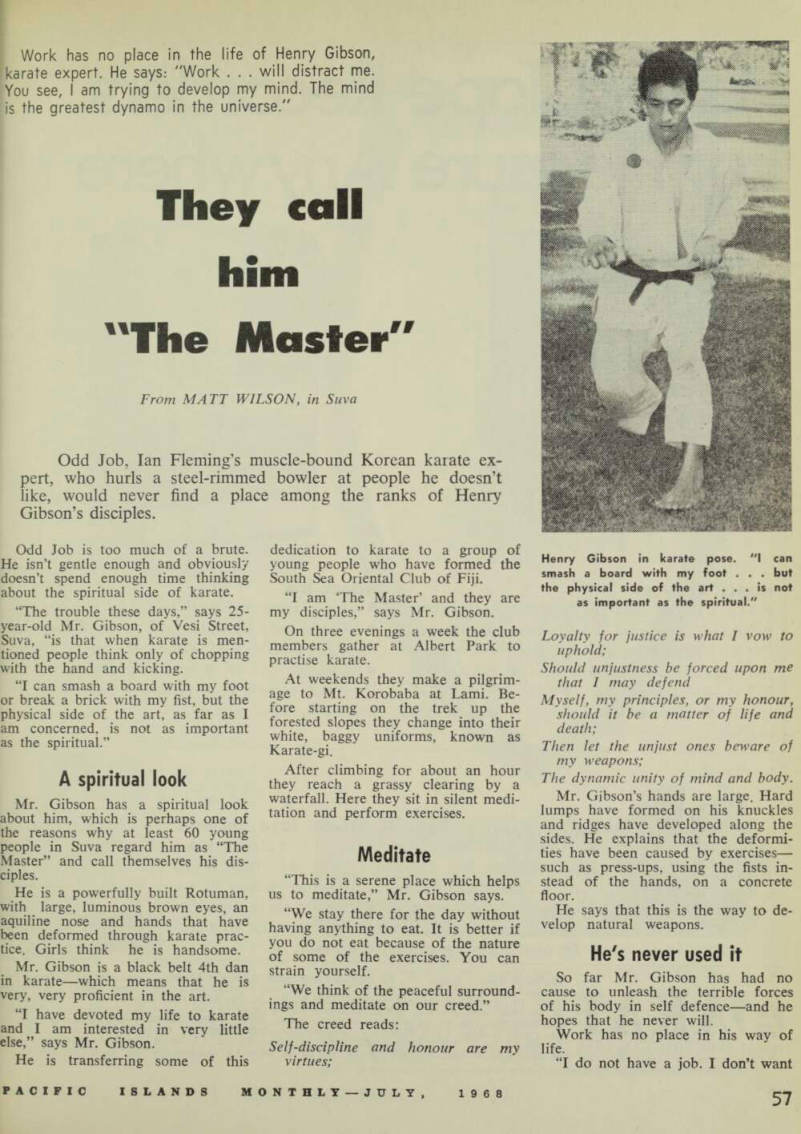 59
59 60
60 61
61 62
62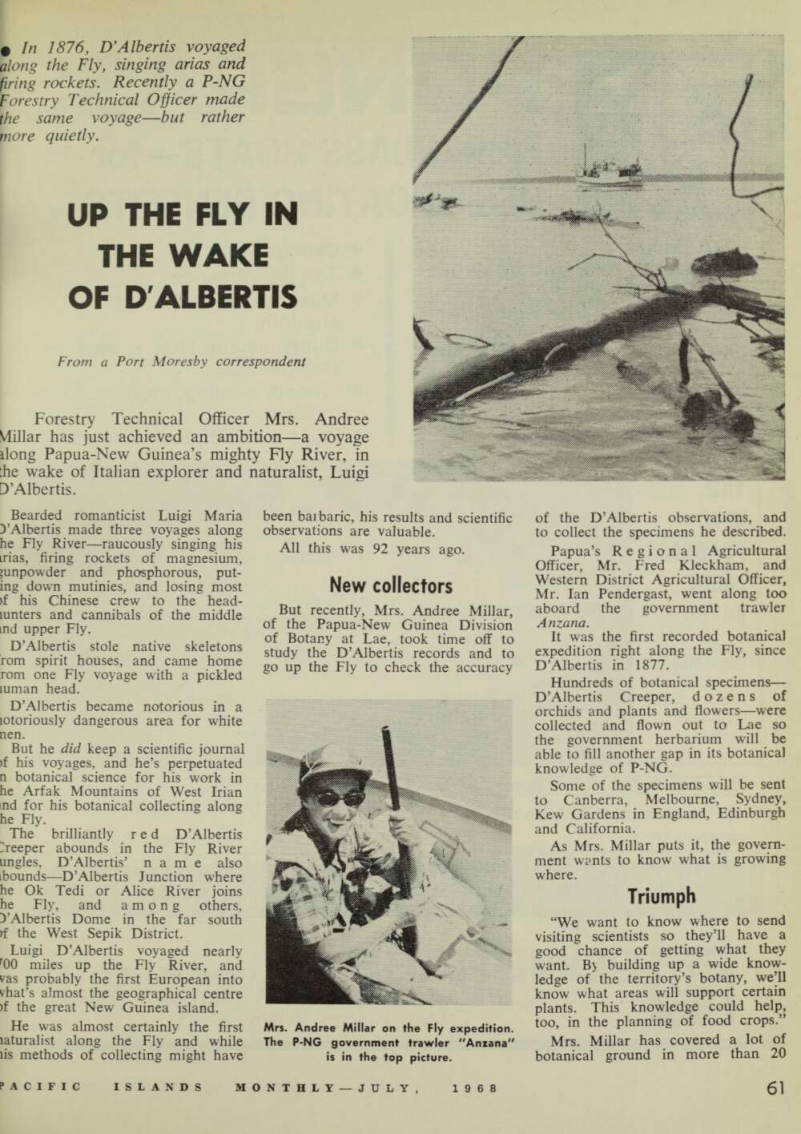 63
63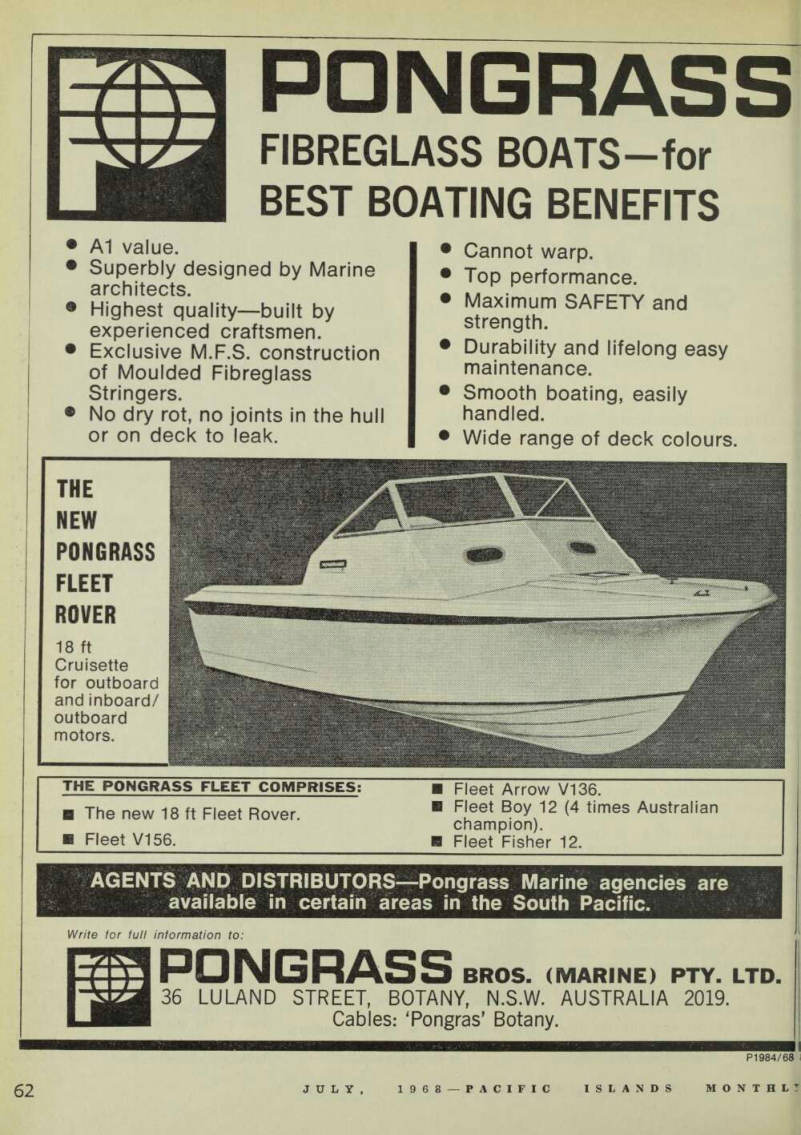 64
64 65
65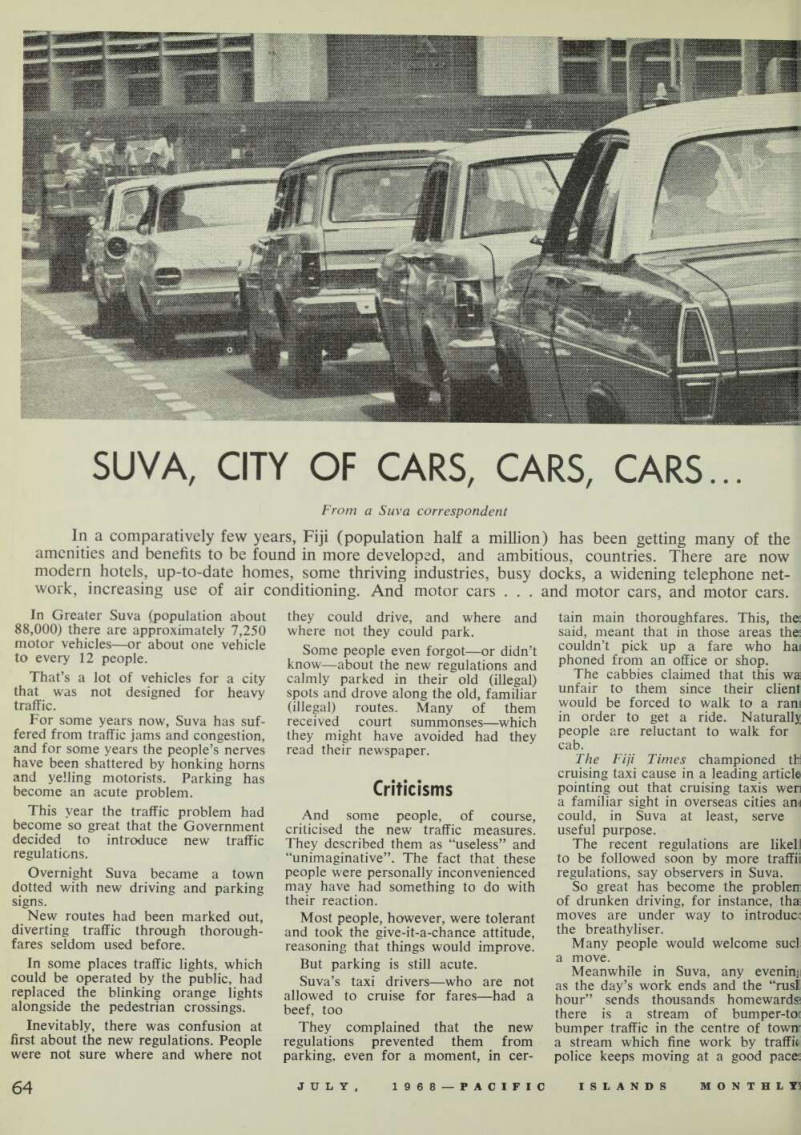 66
66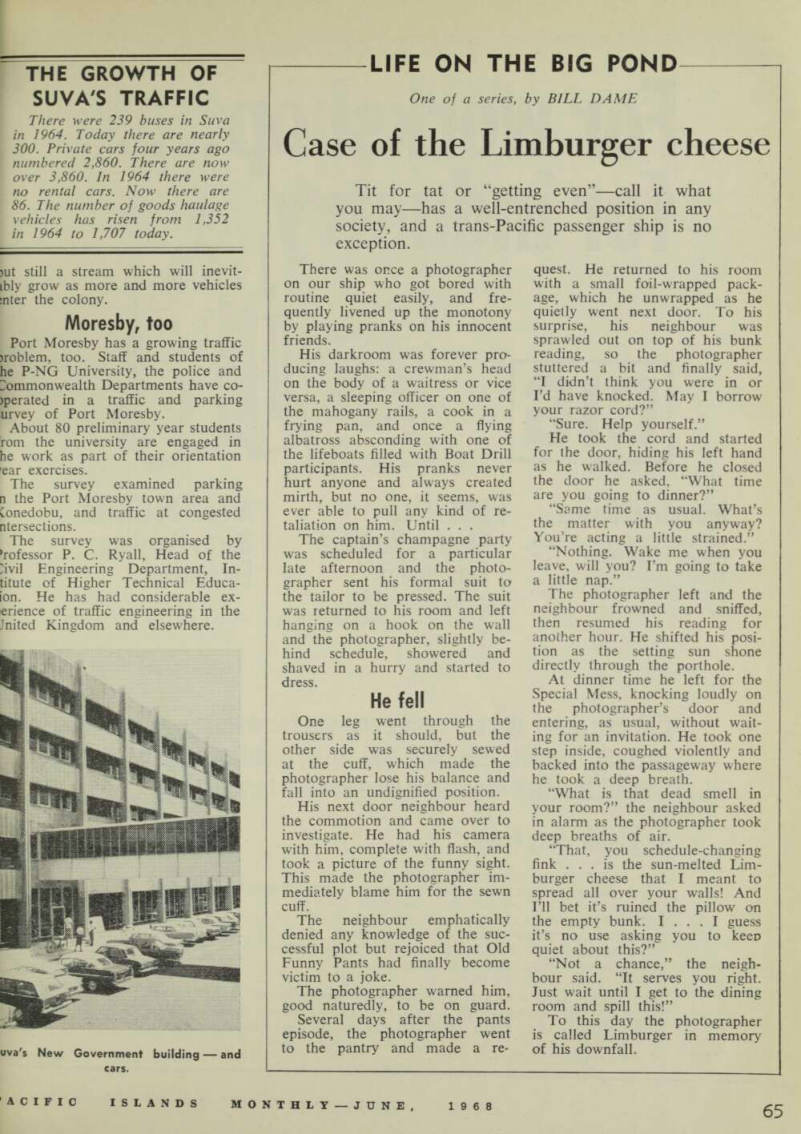 67
67 68
68 69
69 70
70 71
71 72
72 73
73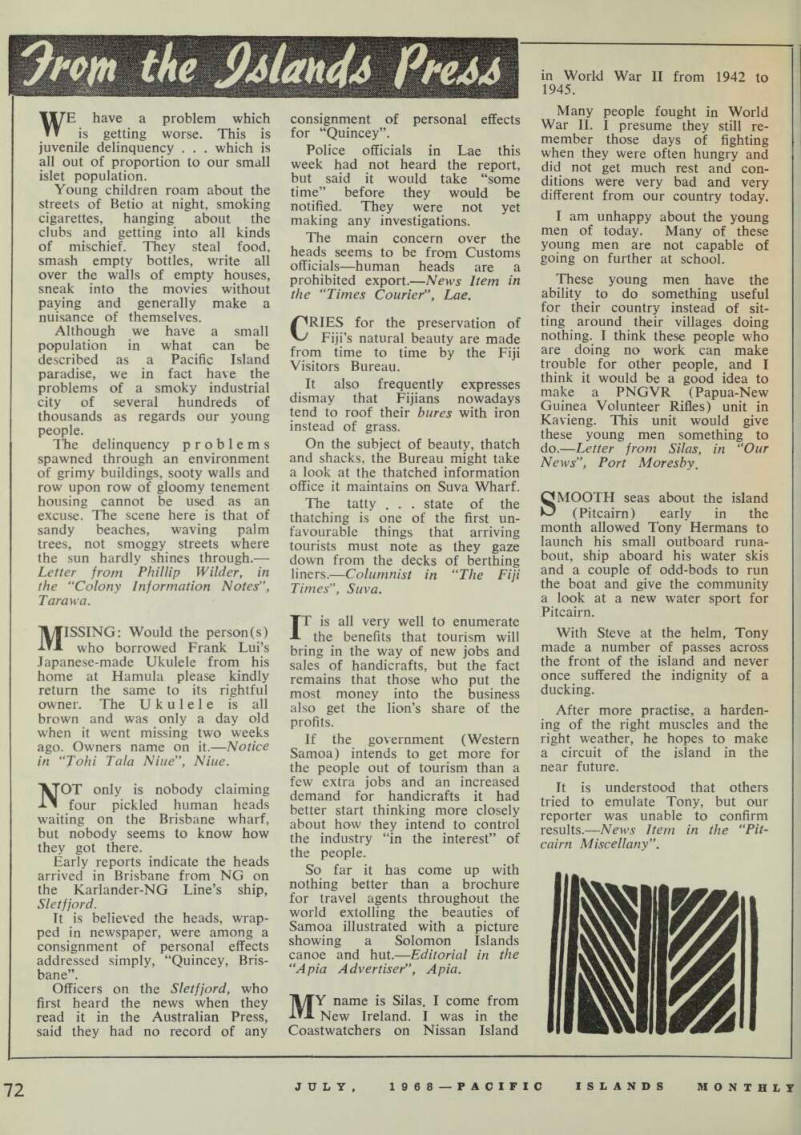 74
74 75
75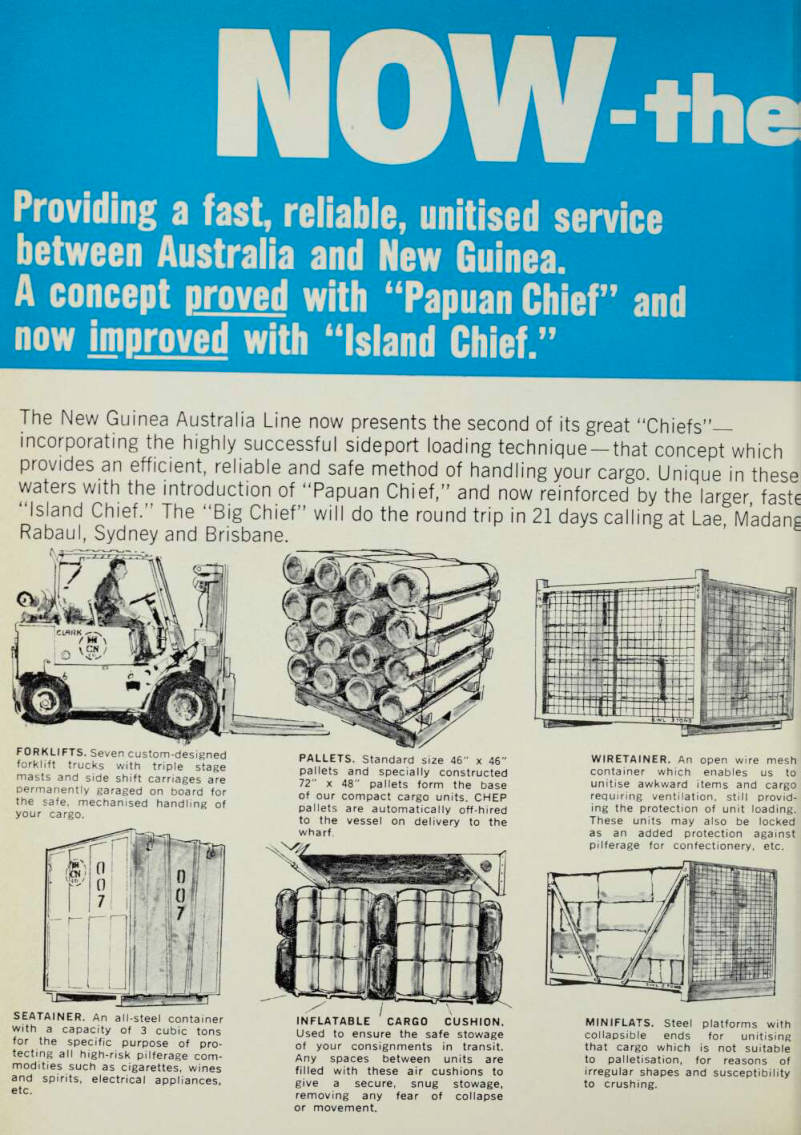 76
76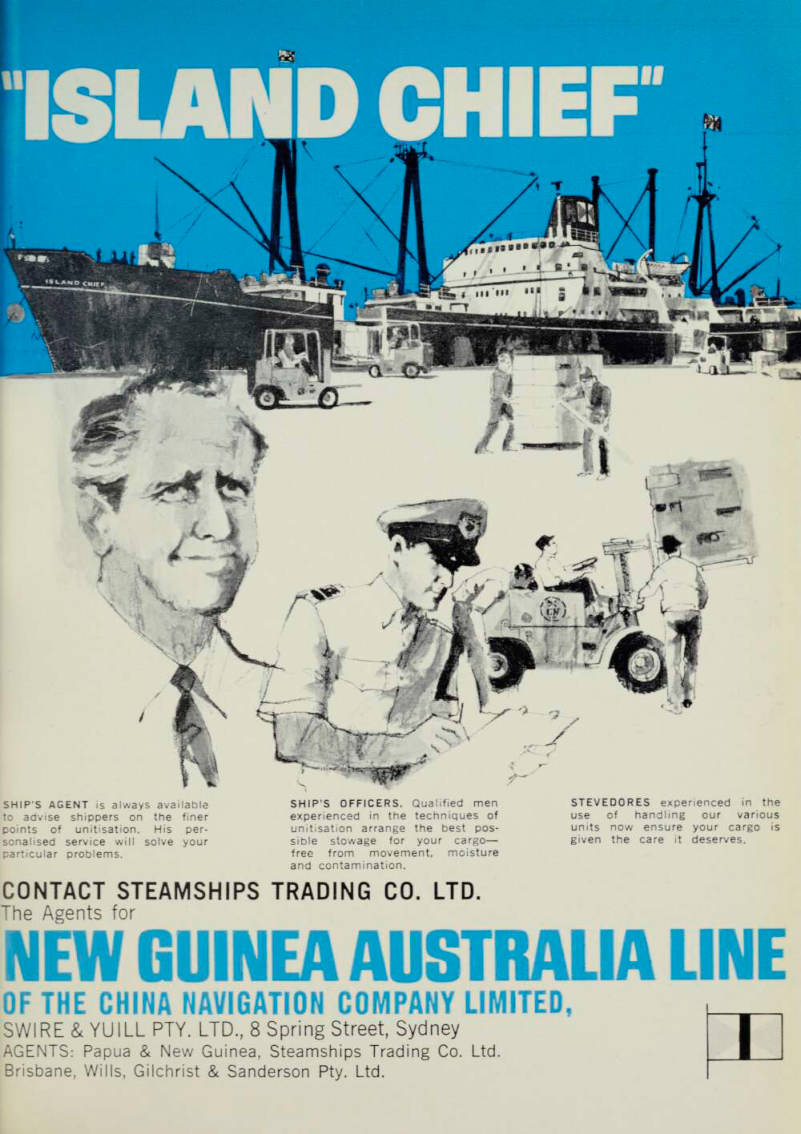 77
77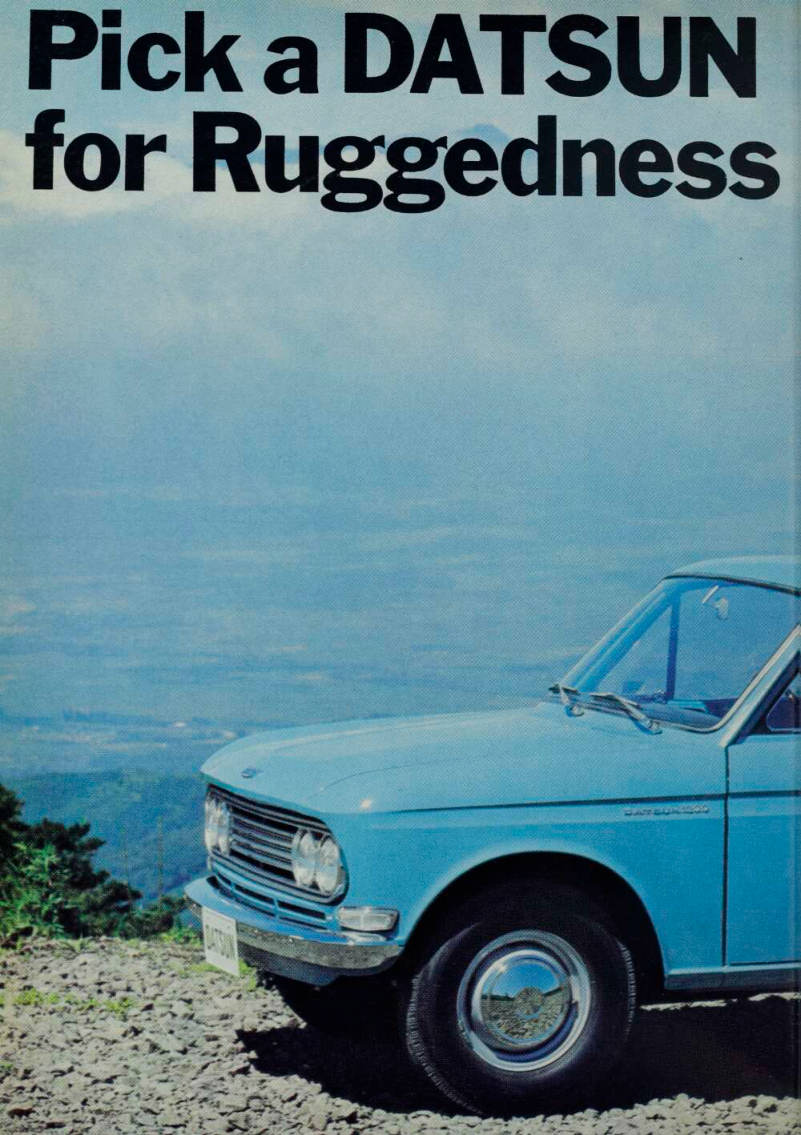 78
78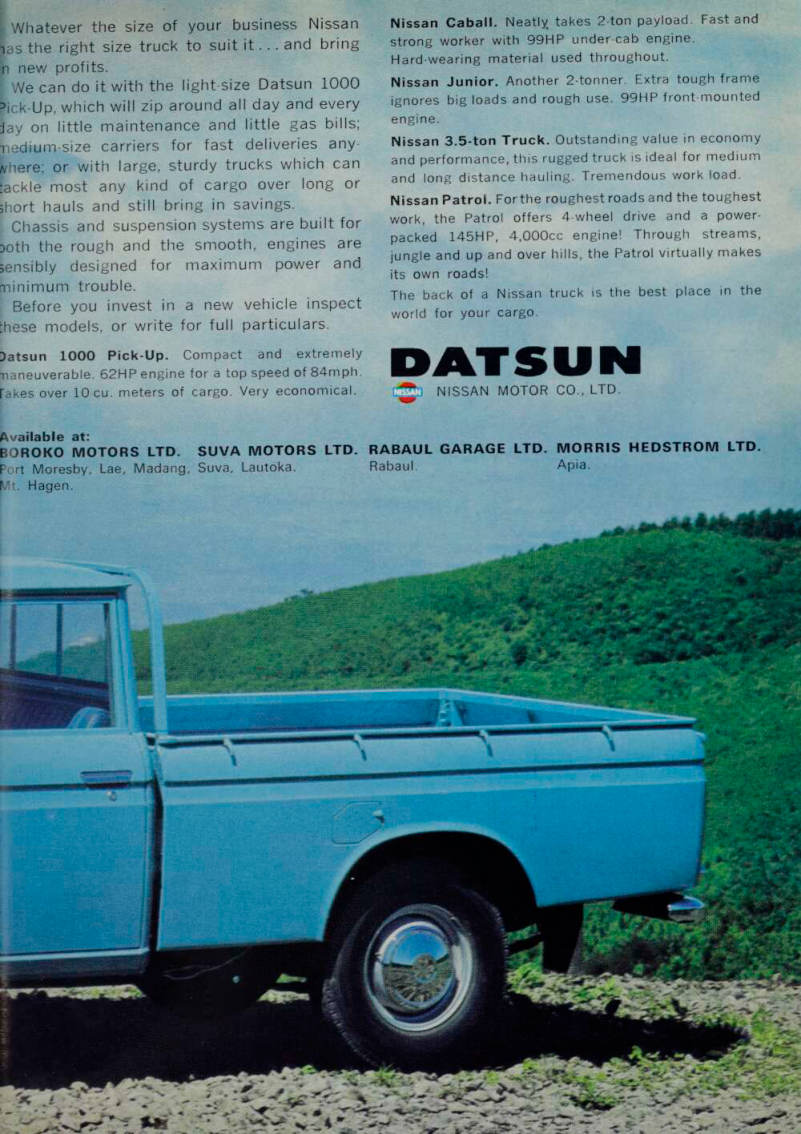 79
79 80
80 81
81 82
82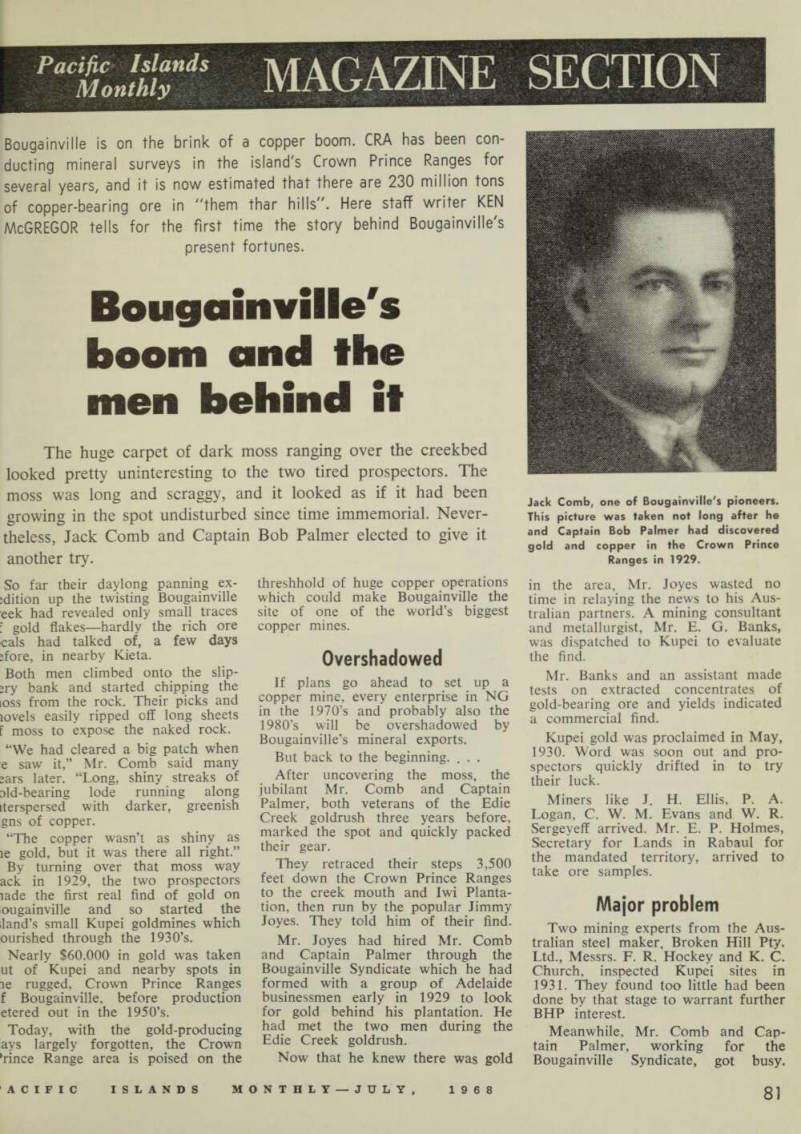 83
83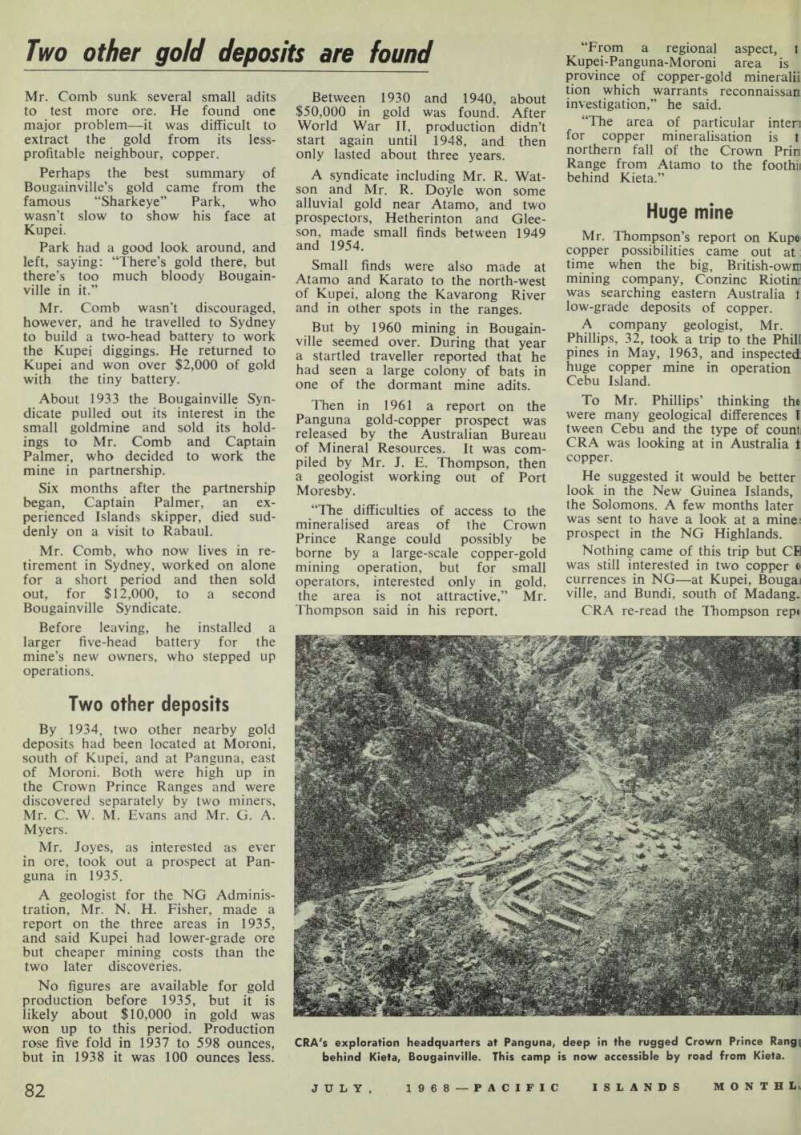 84
84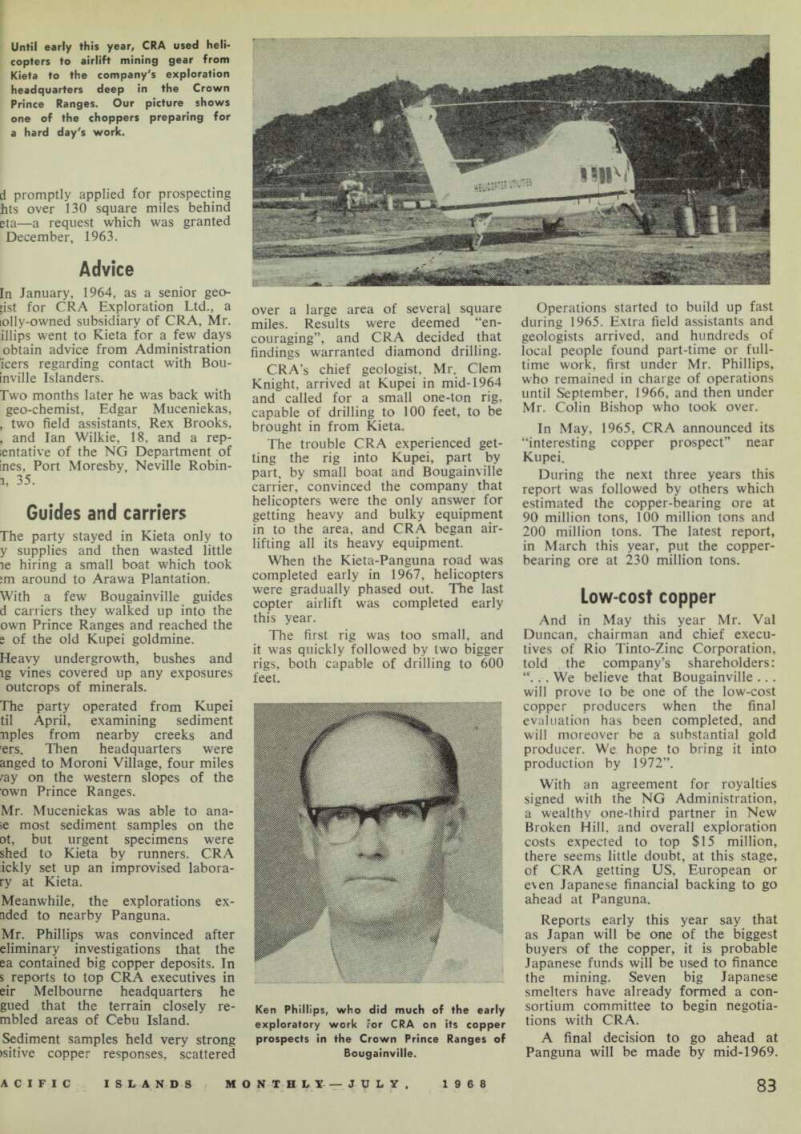 85
85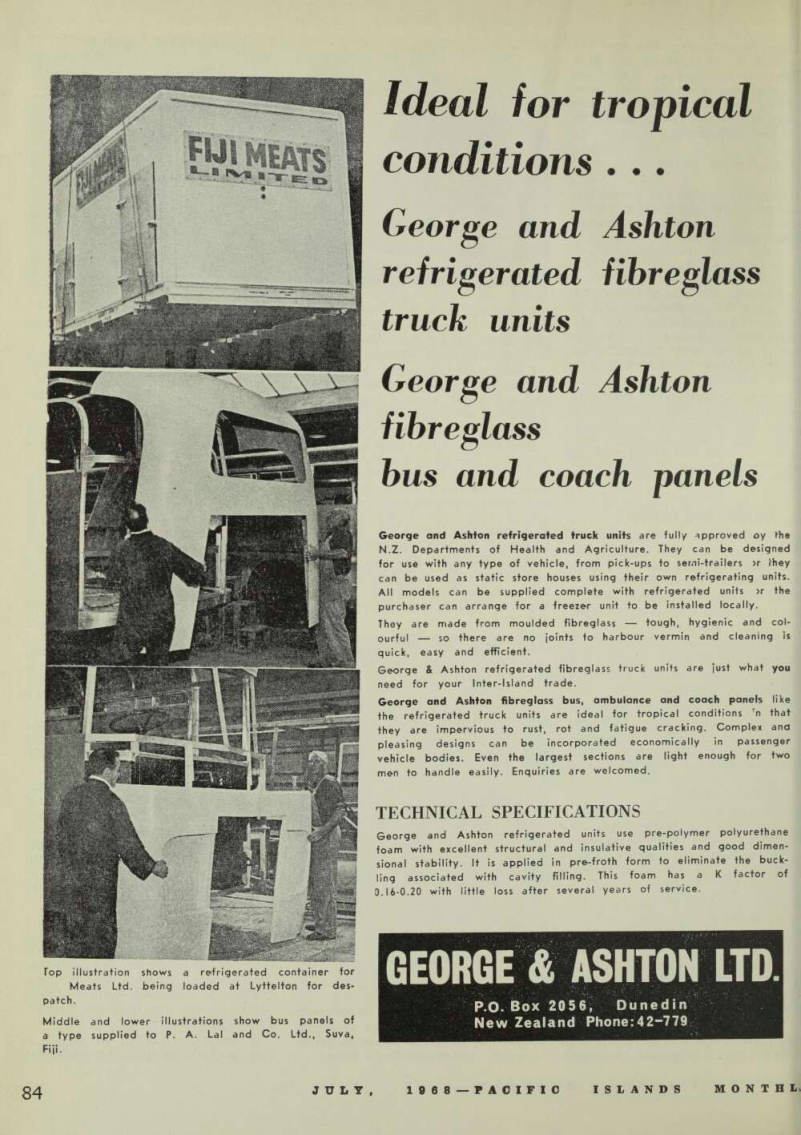 86
86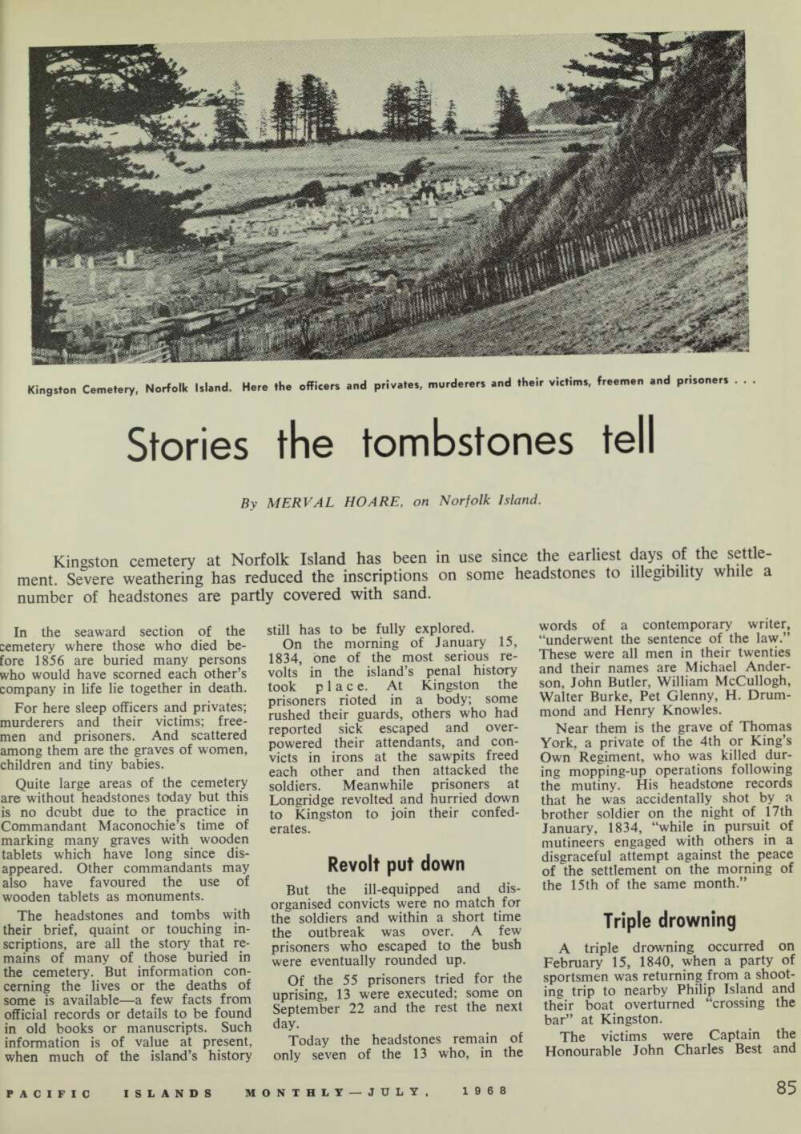 87
87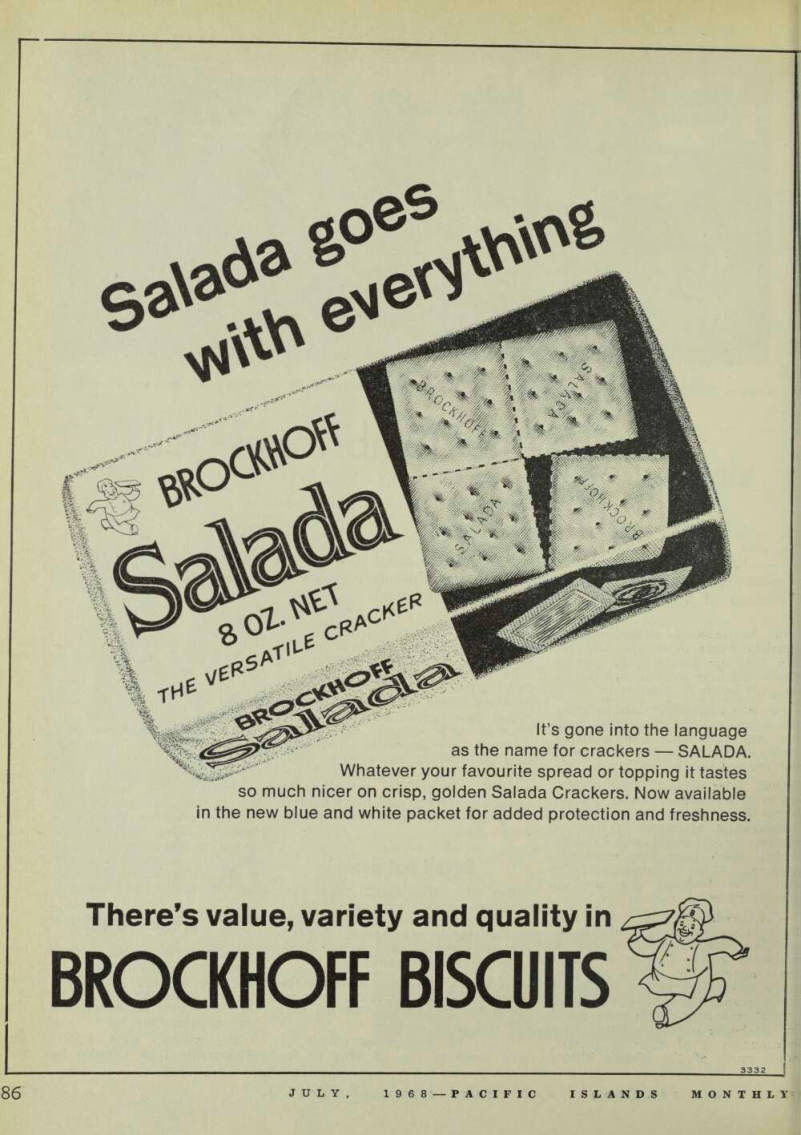 88
88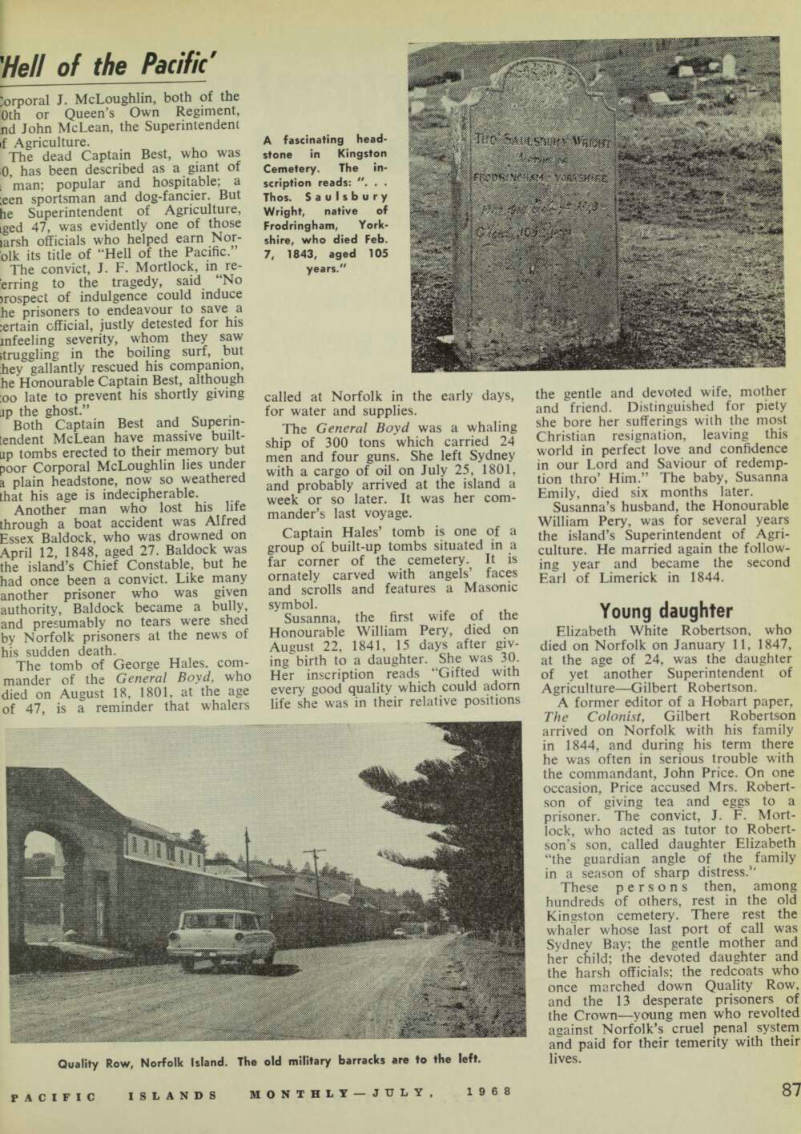 89
89 90
90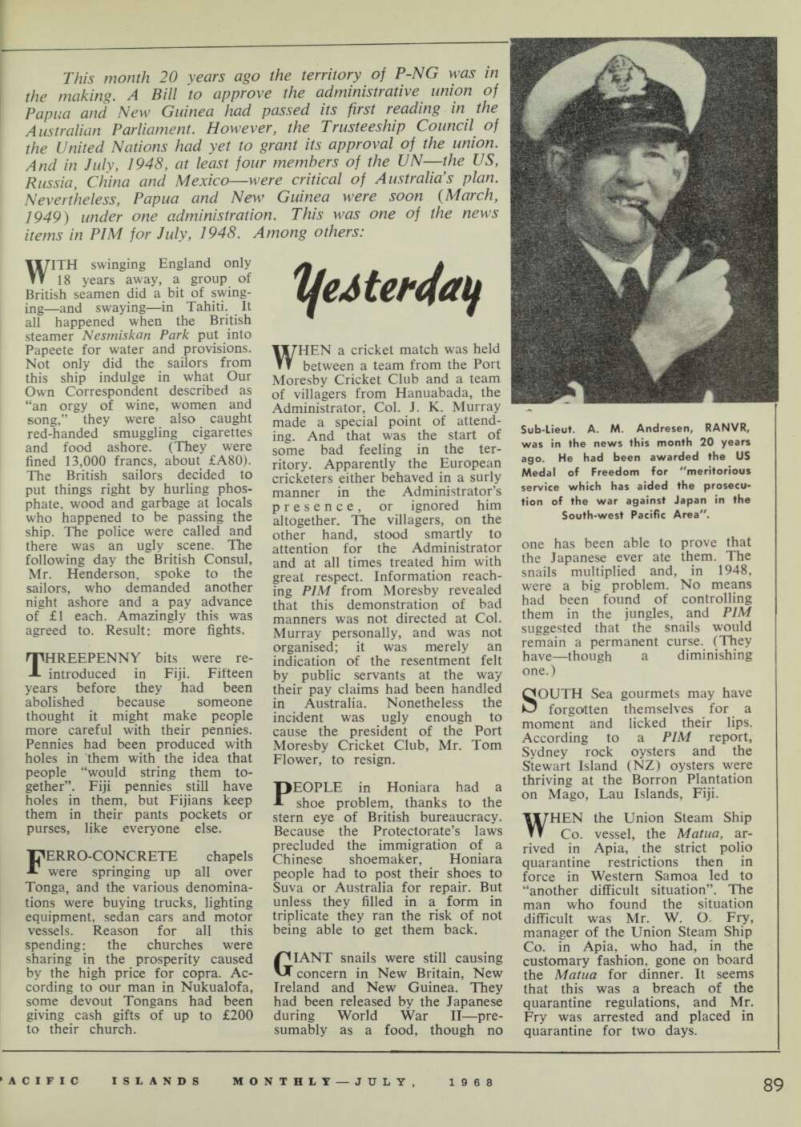 91
91 92
92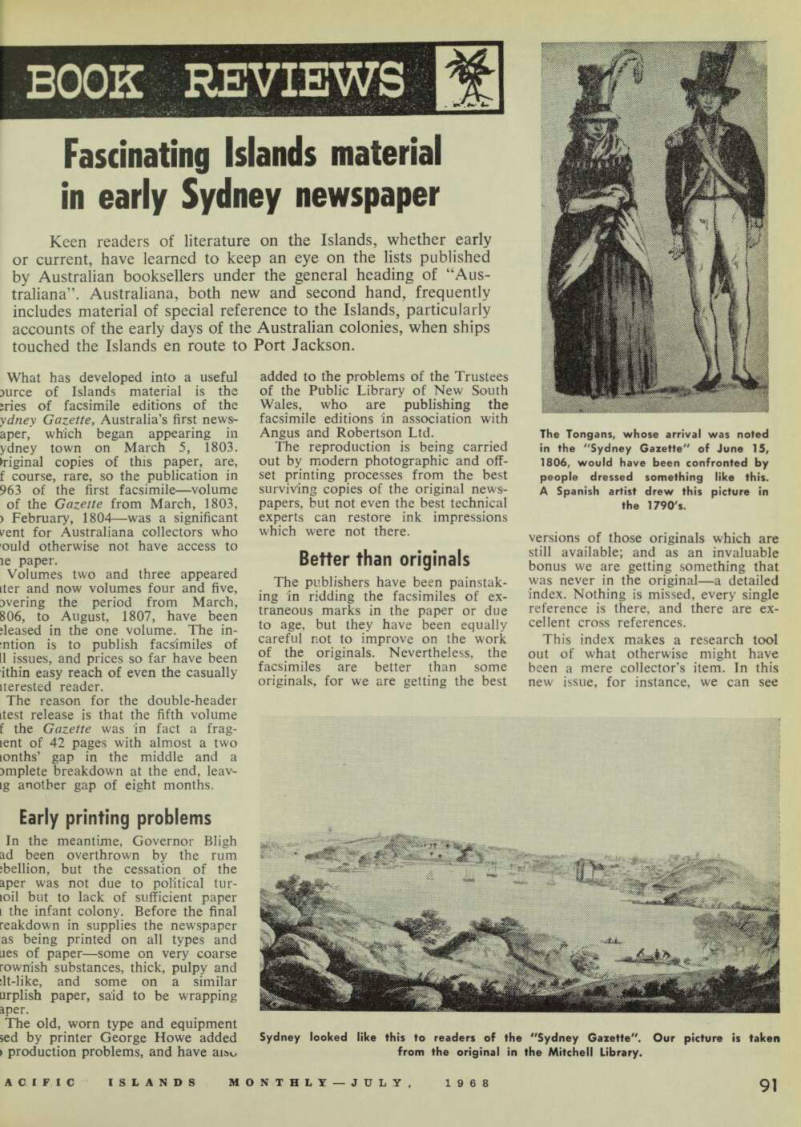 93
93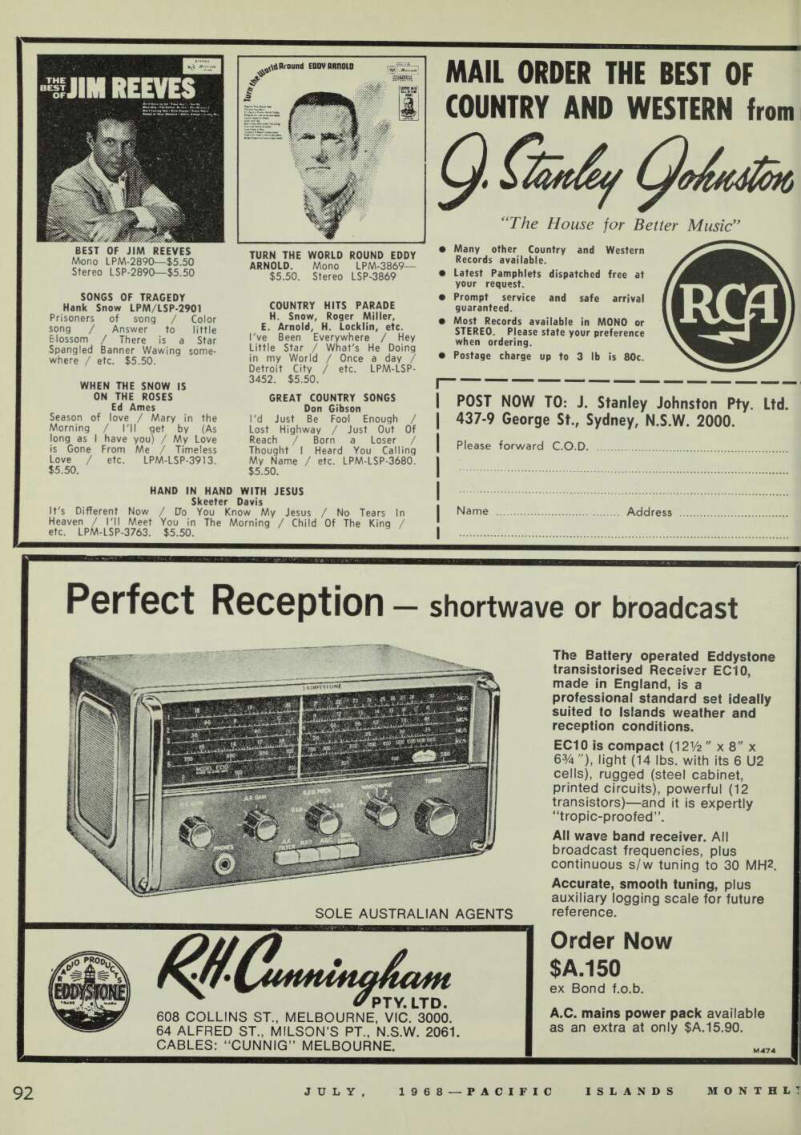 94
94 95
95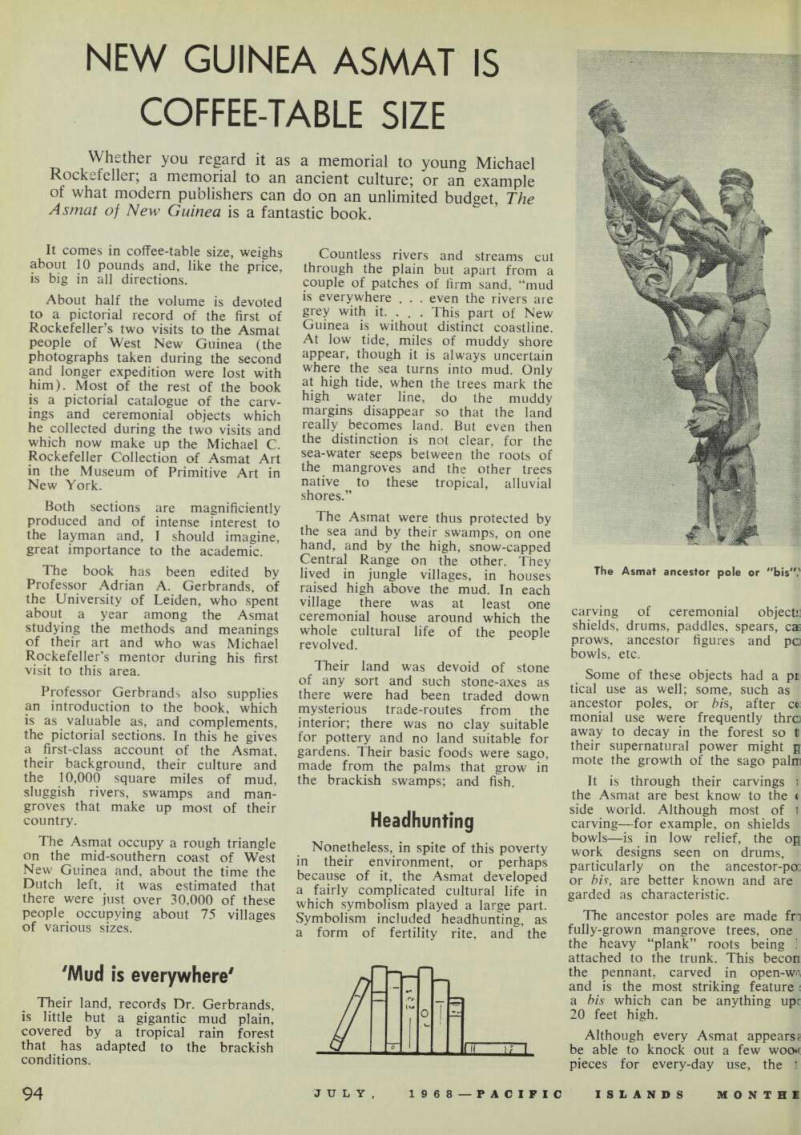 96
96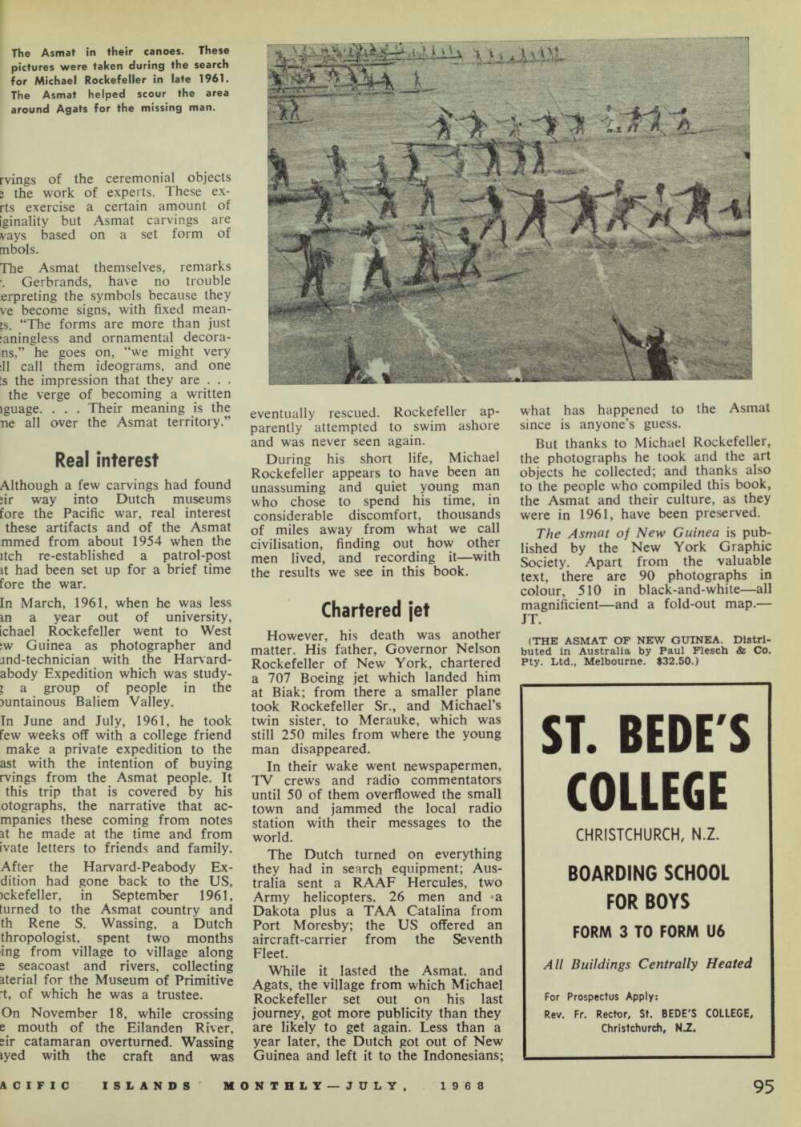 97
97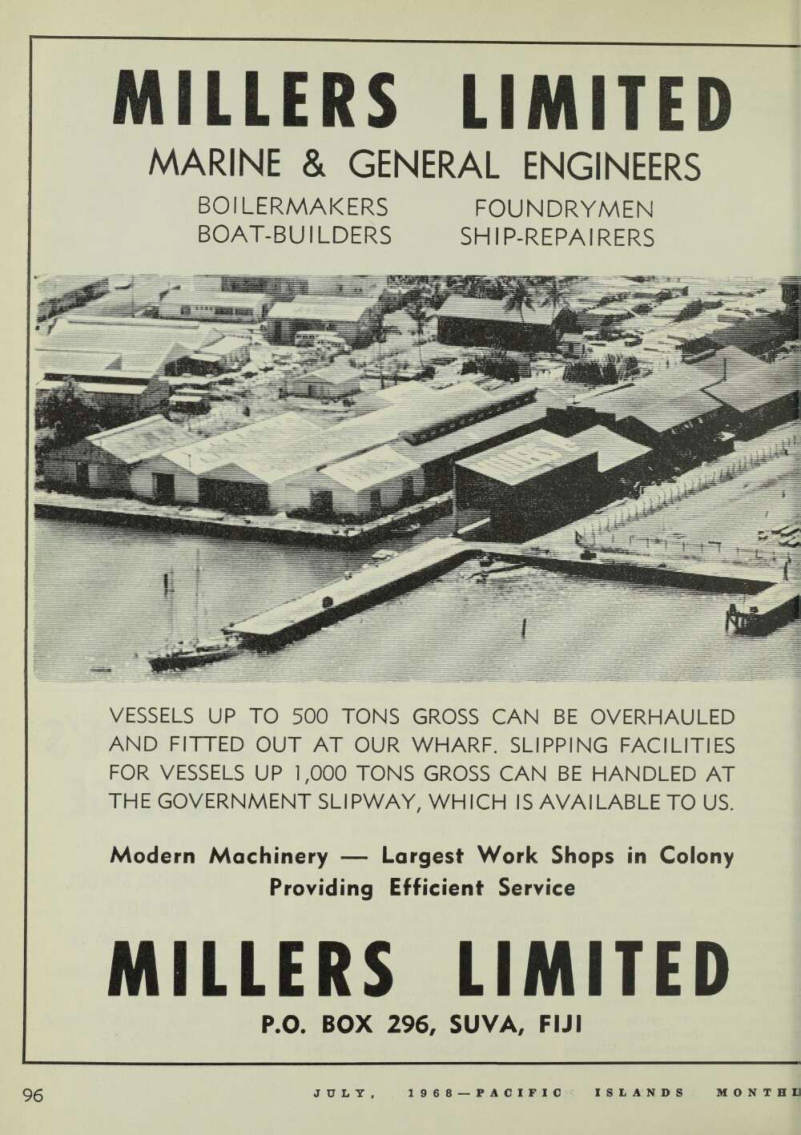 98
98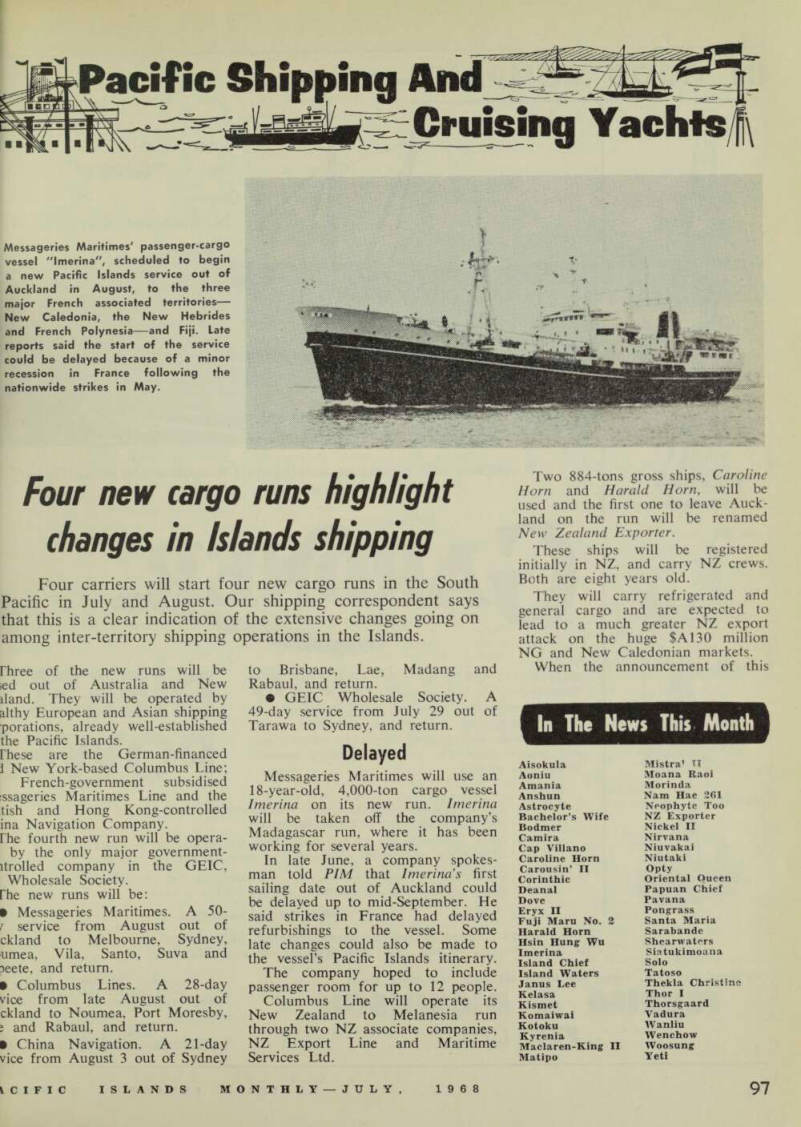 99
99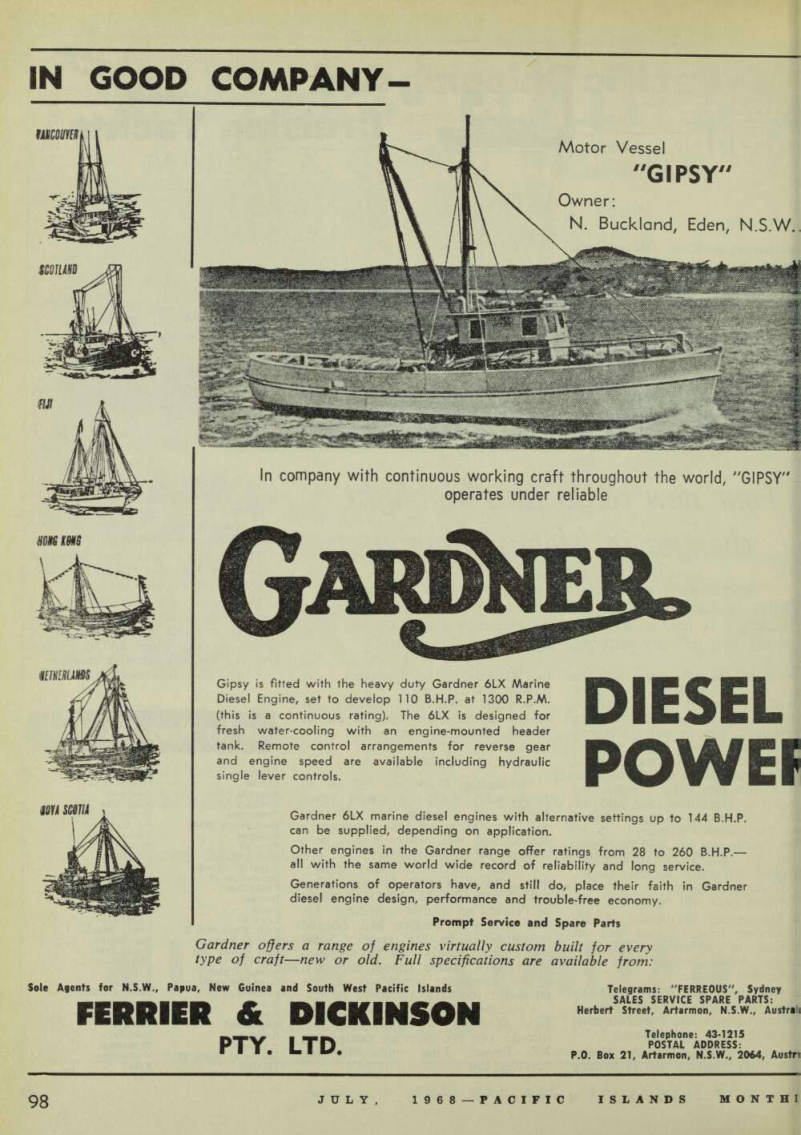 100
100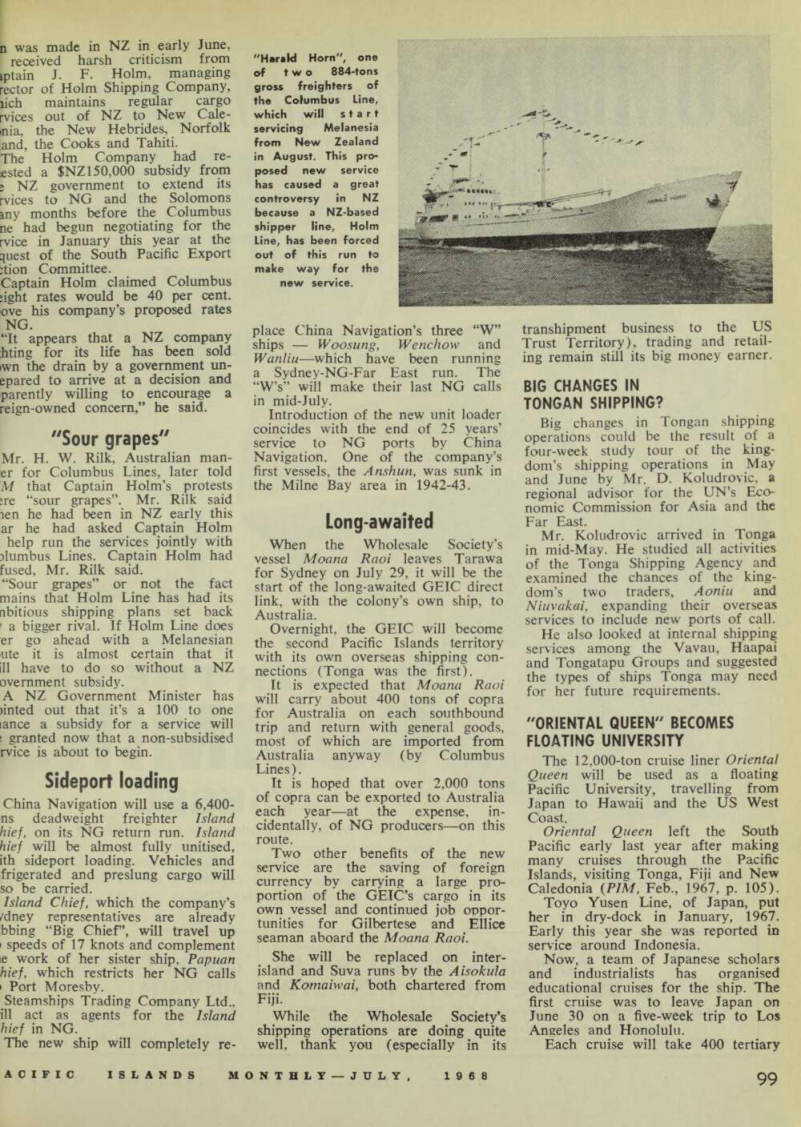 101
101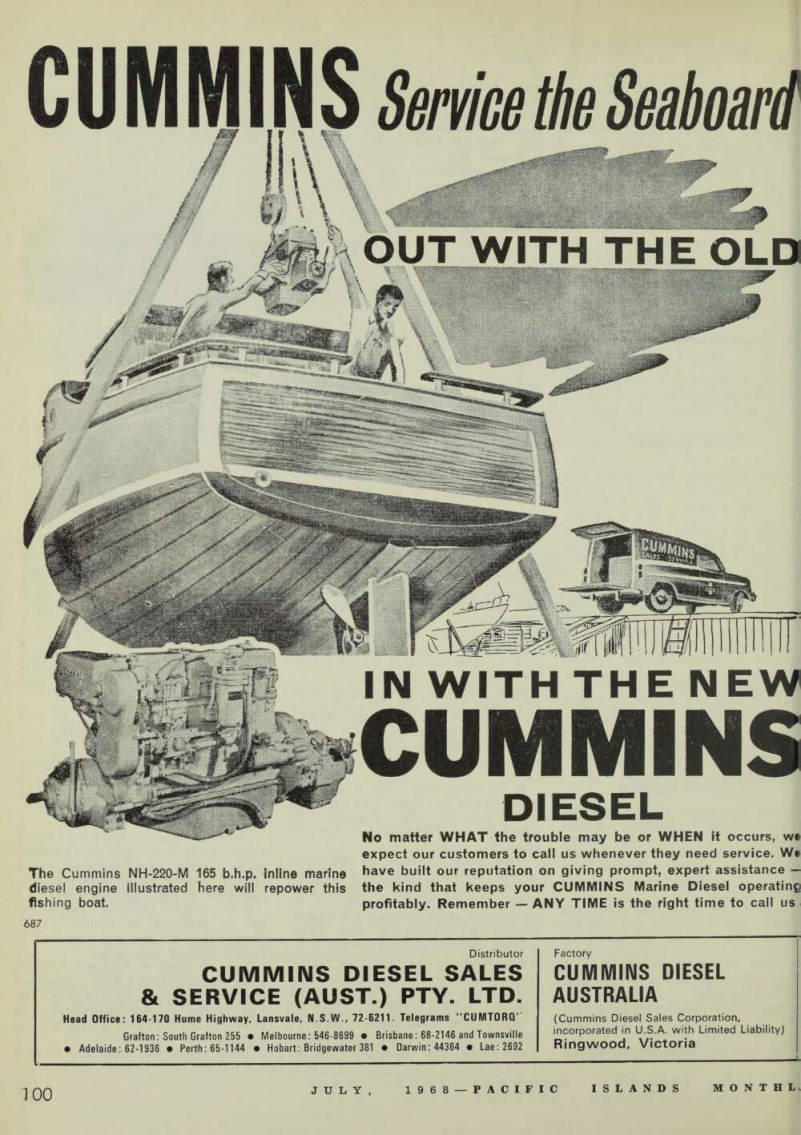 102
102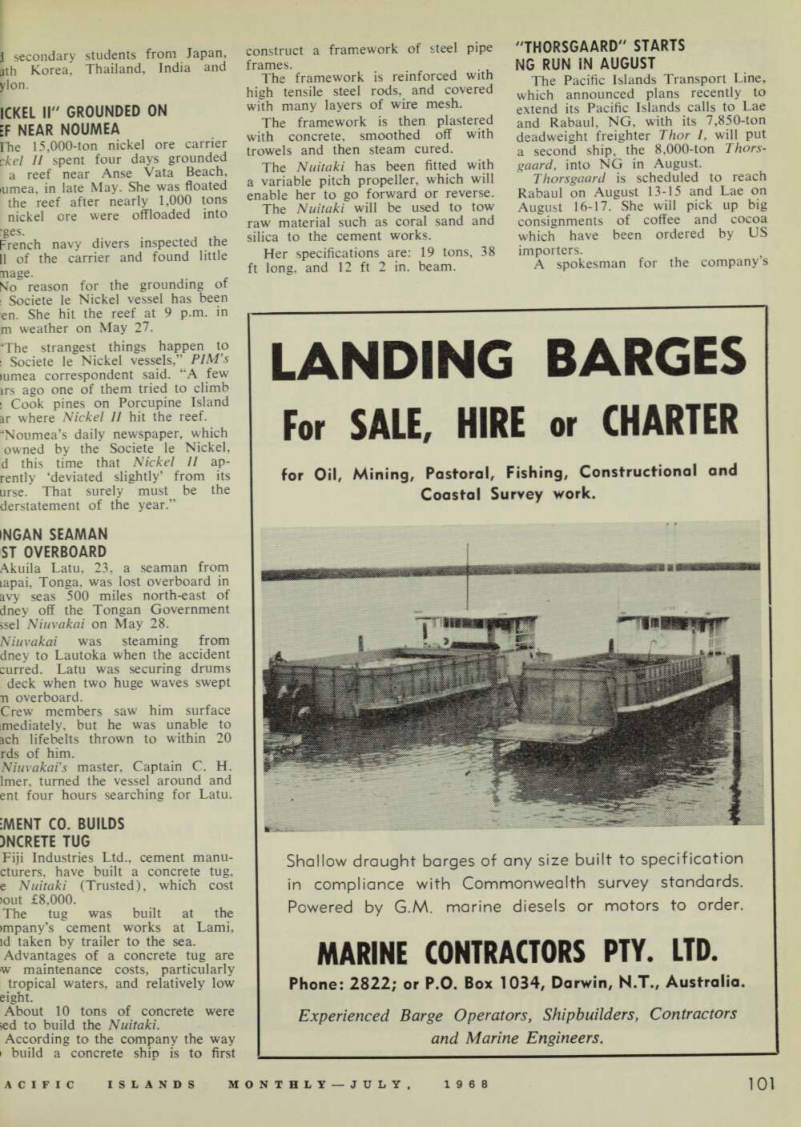 103
103 104
104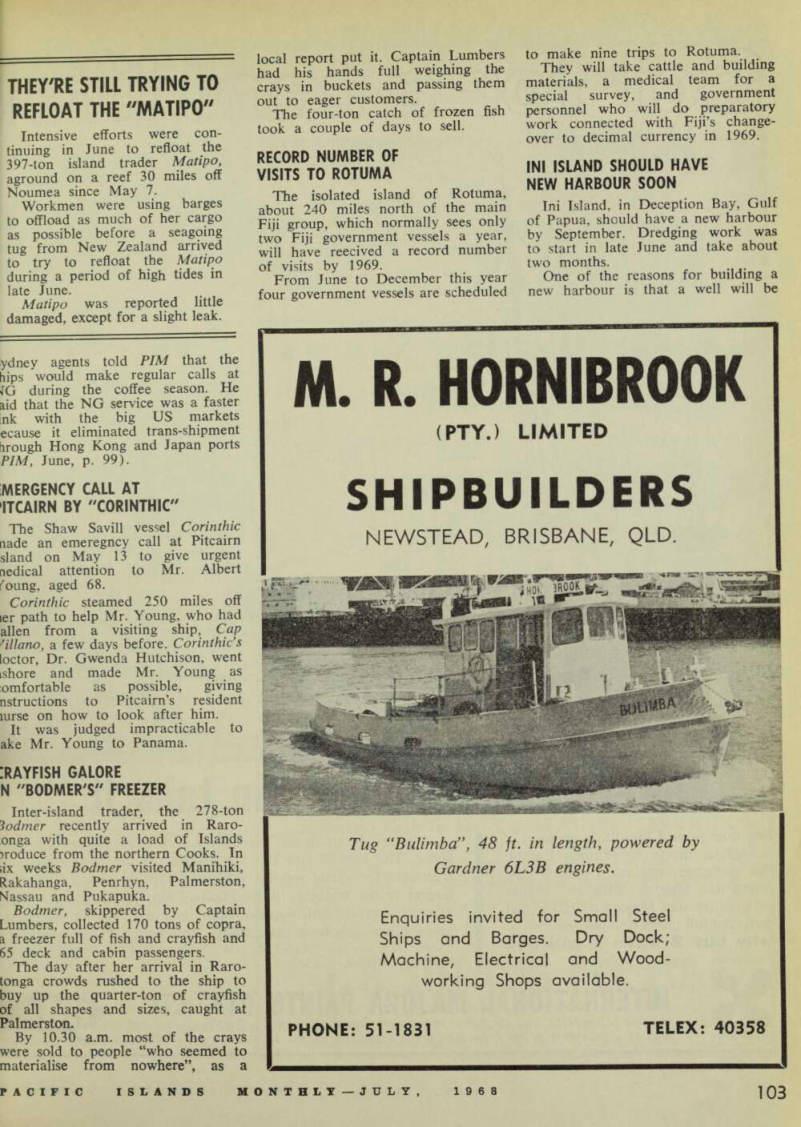 105
105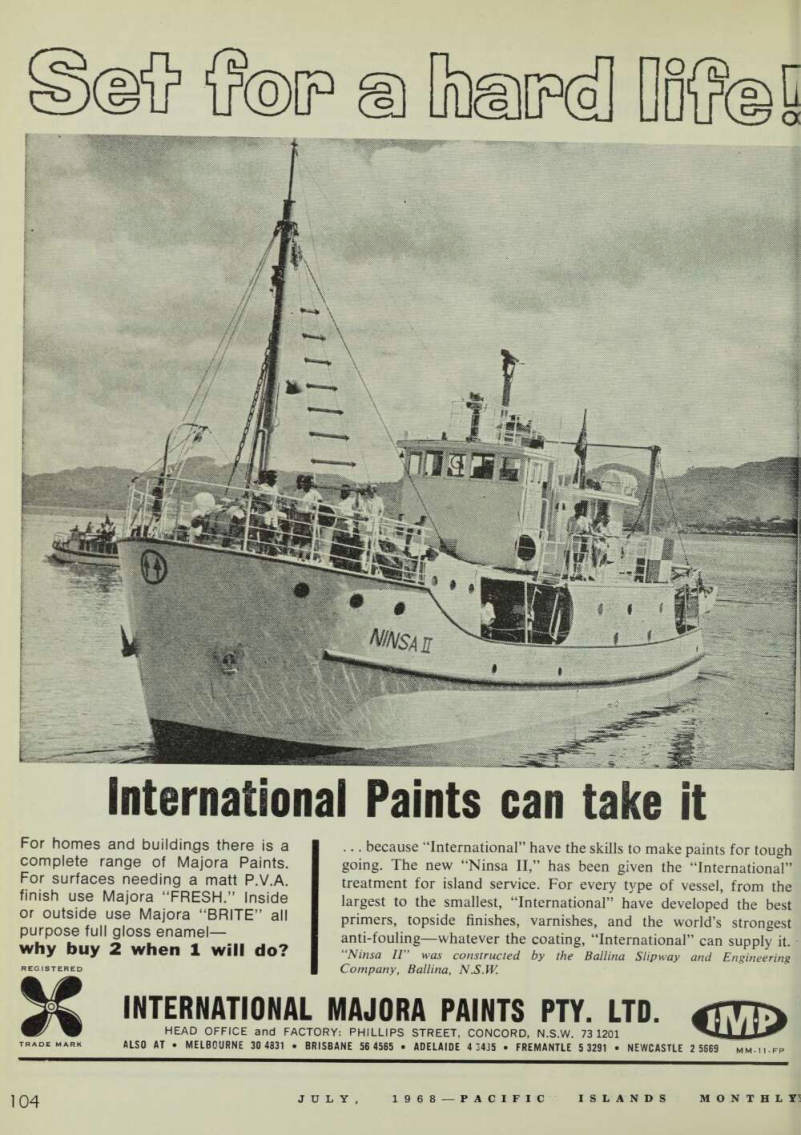 106
106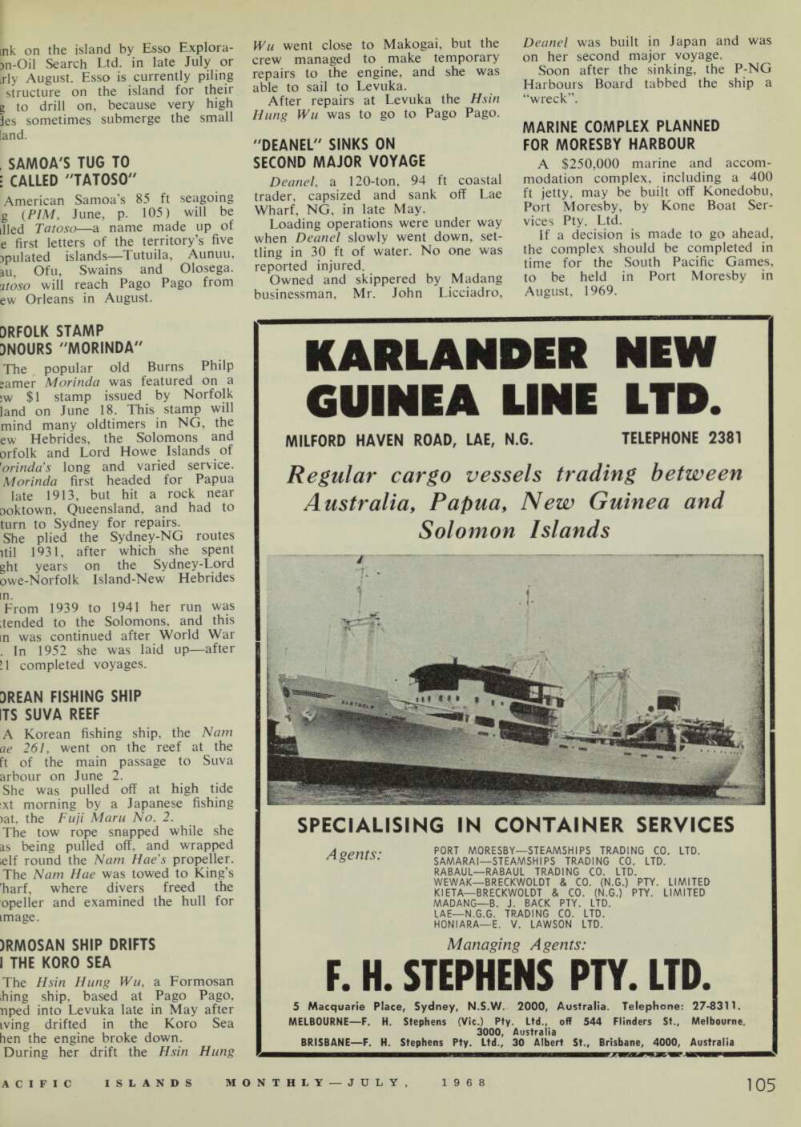 107
107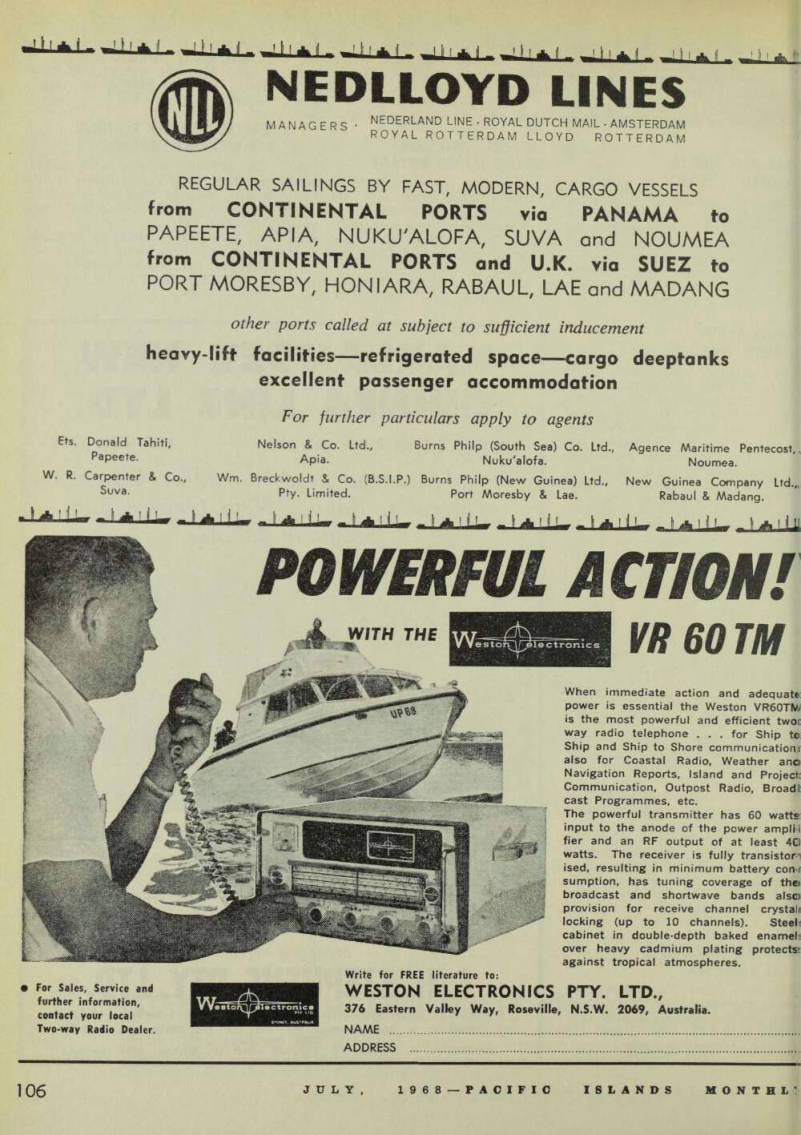 108
108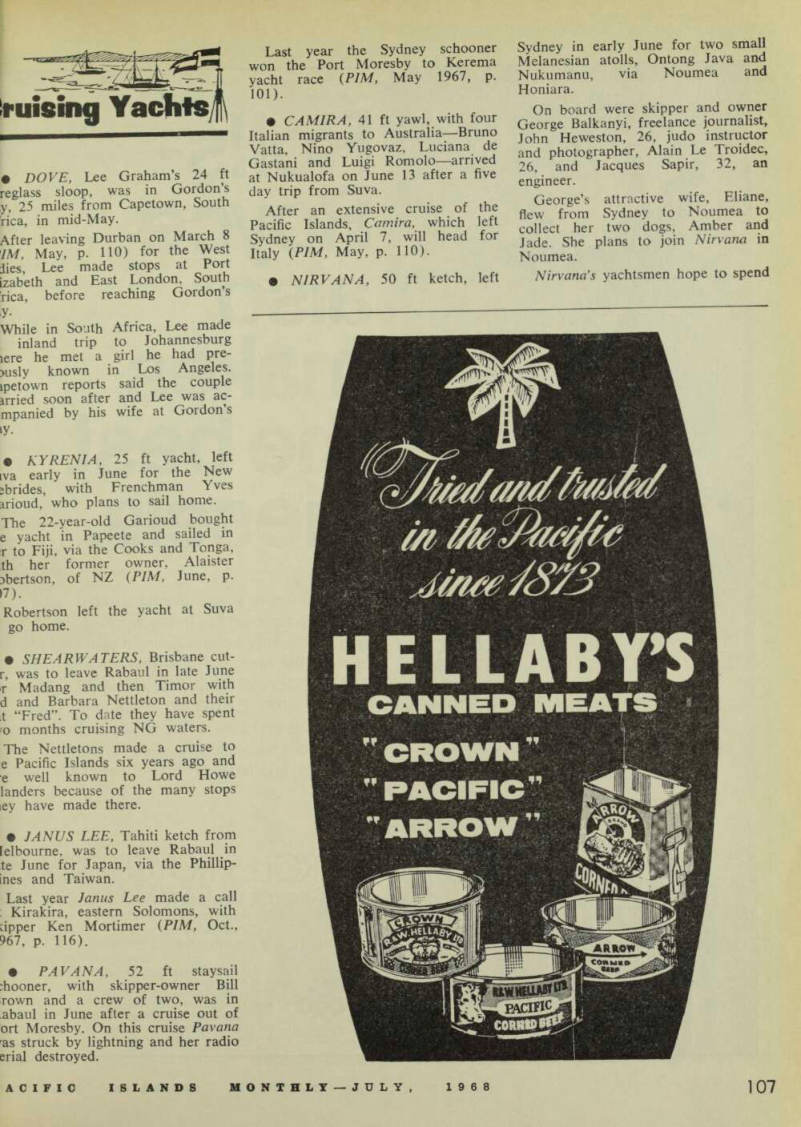 109
109 110
110 111
111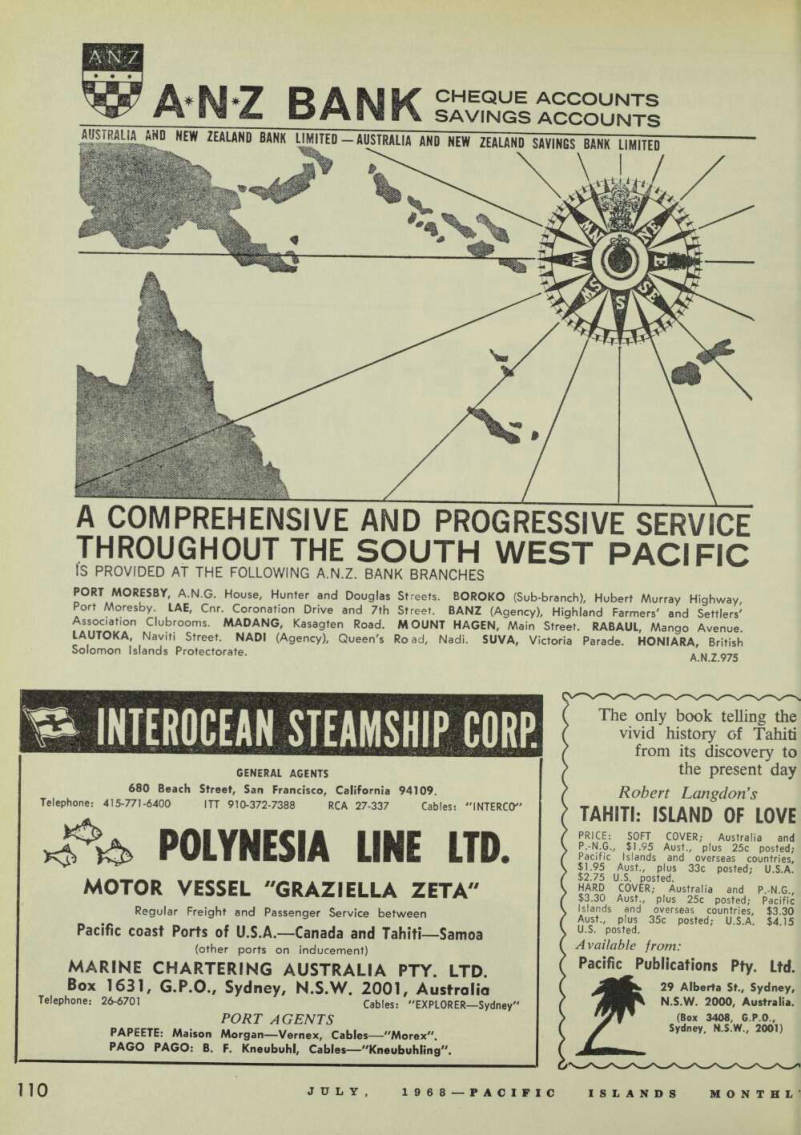 112
112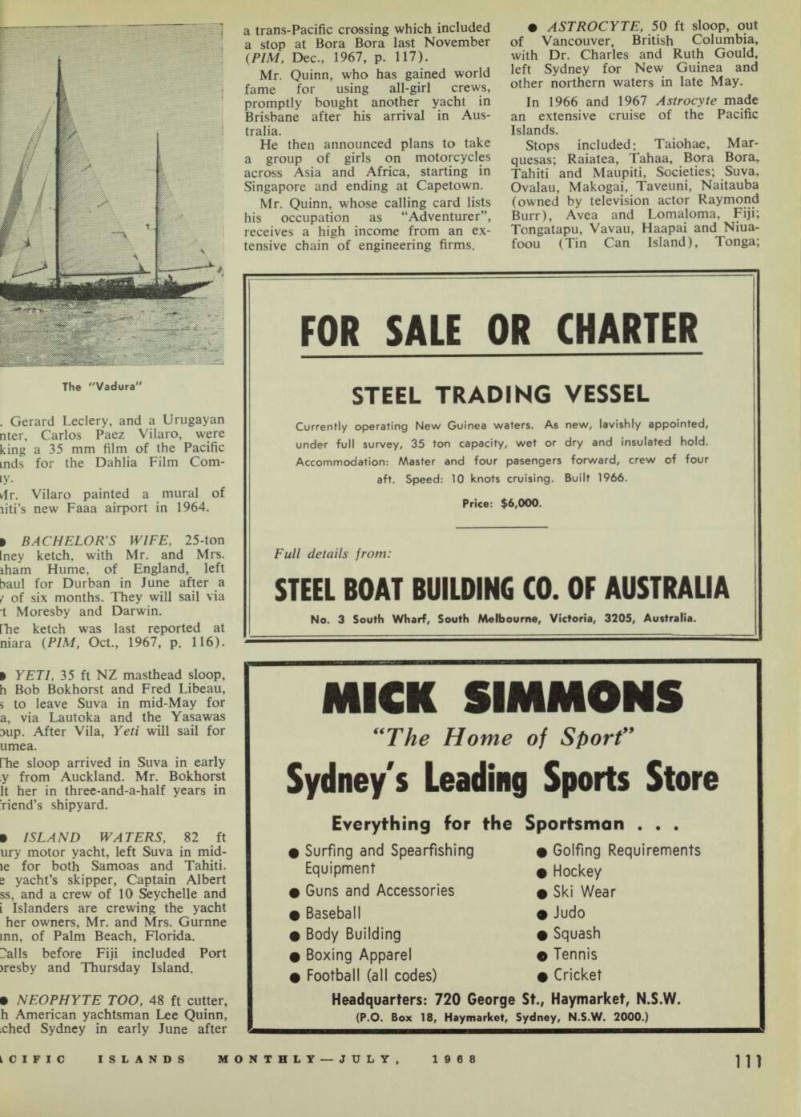 113
113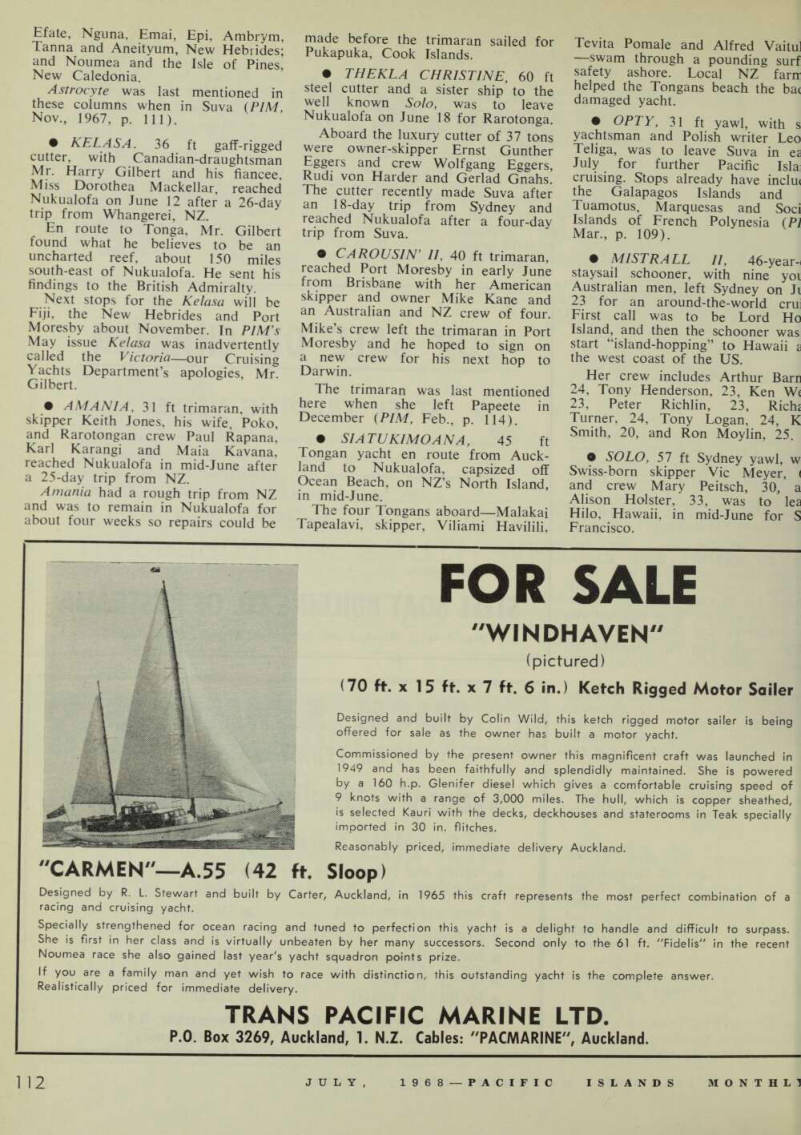 114
114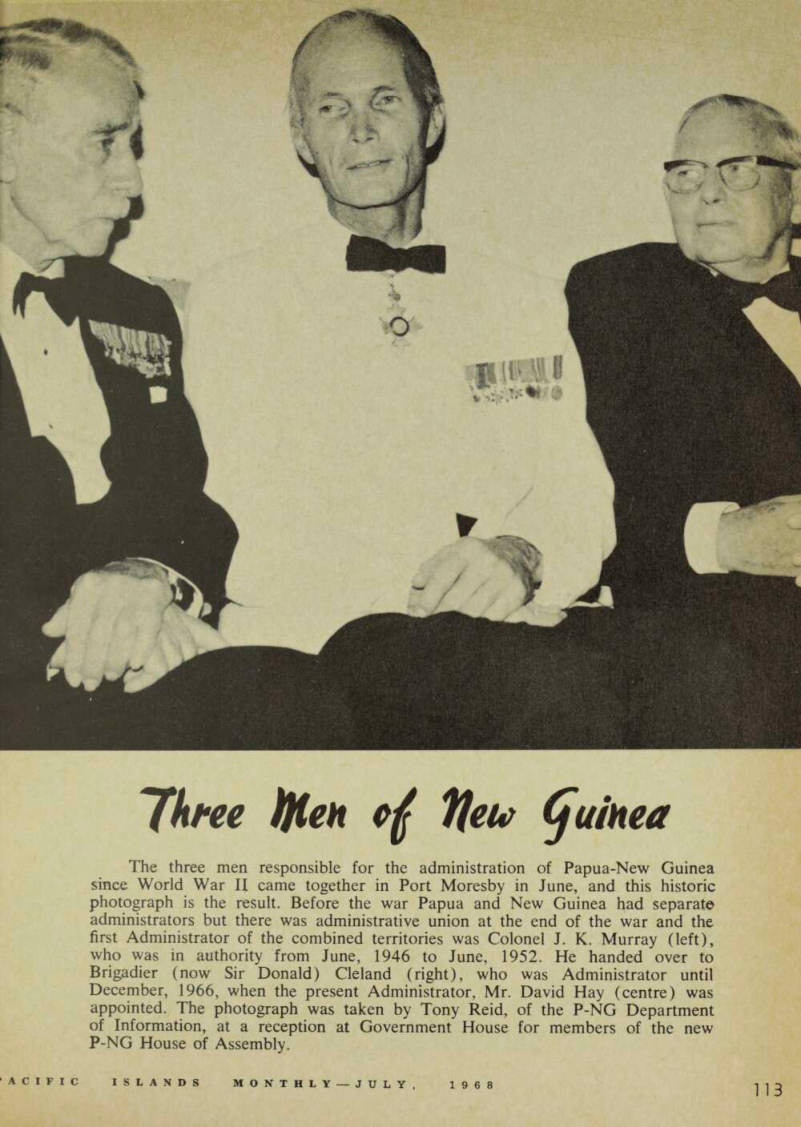 115
115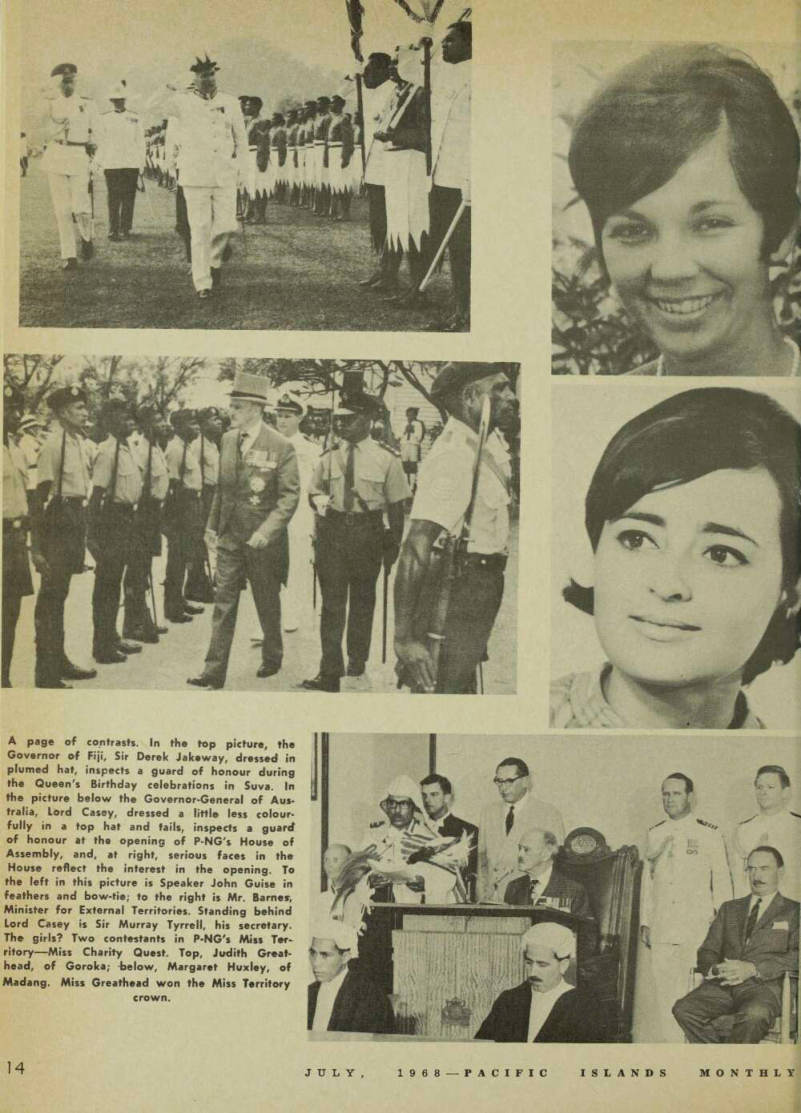 116
116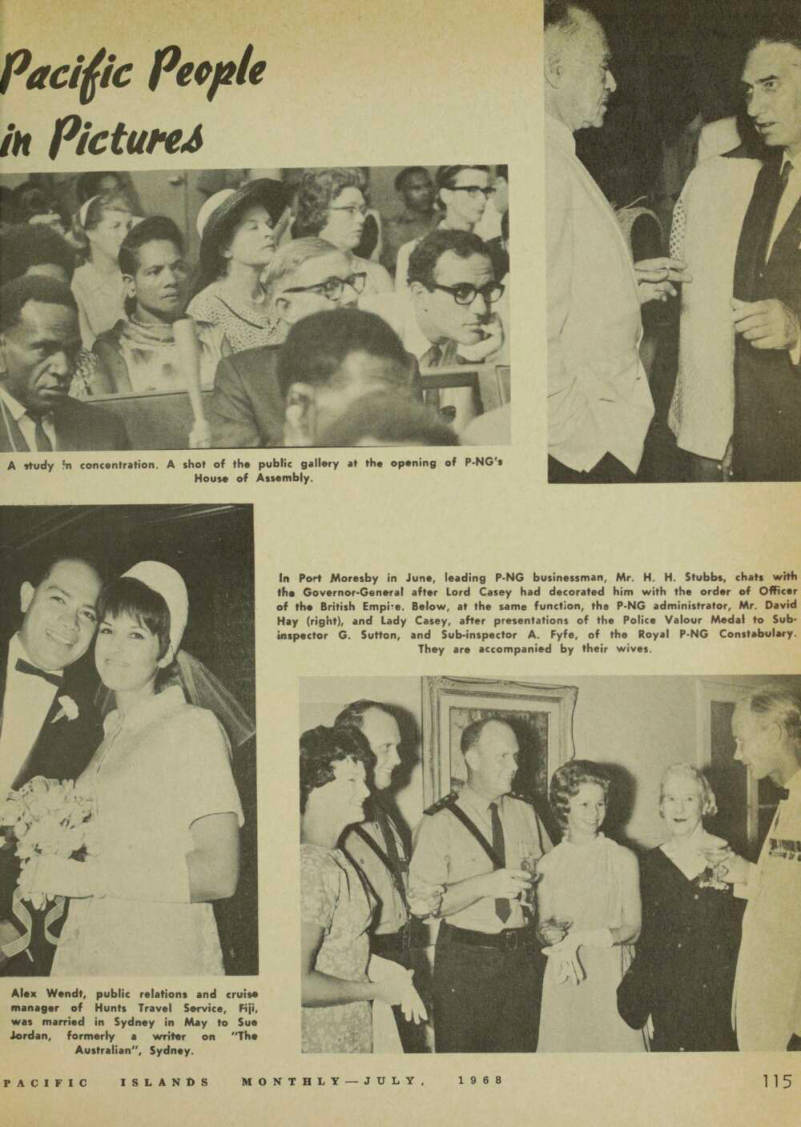 117
117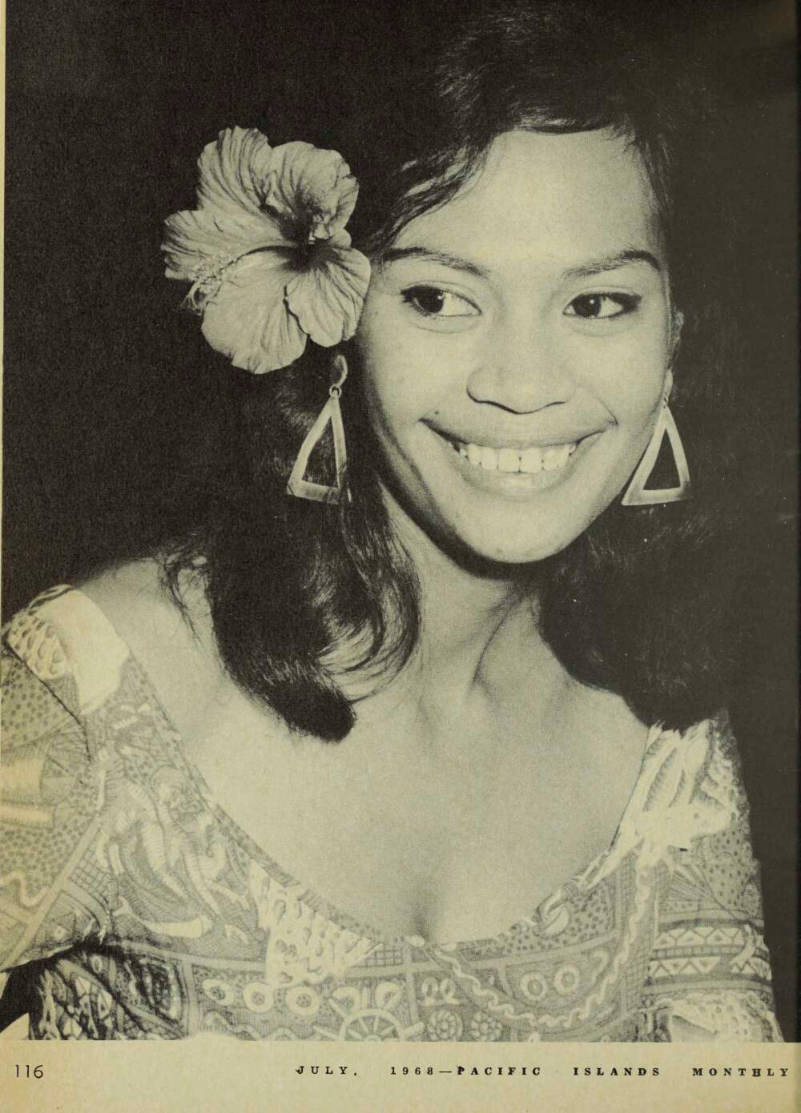 118
118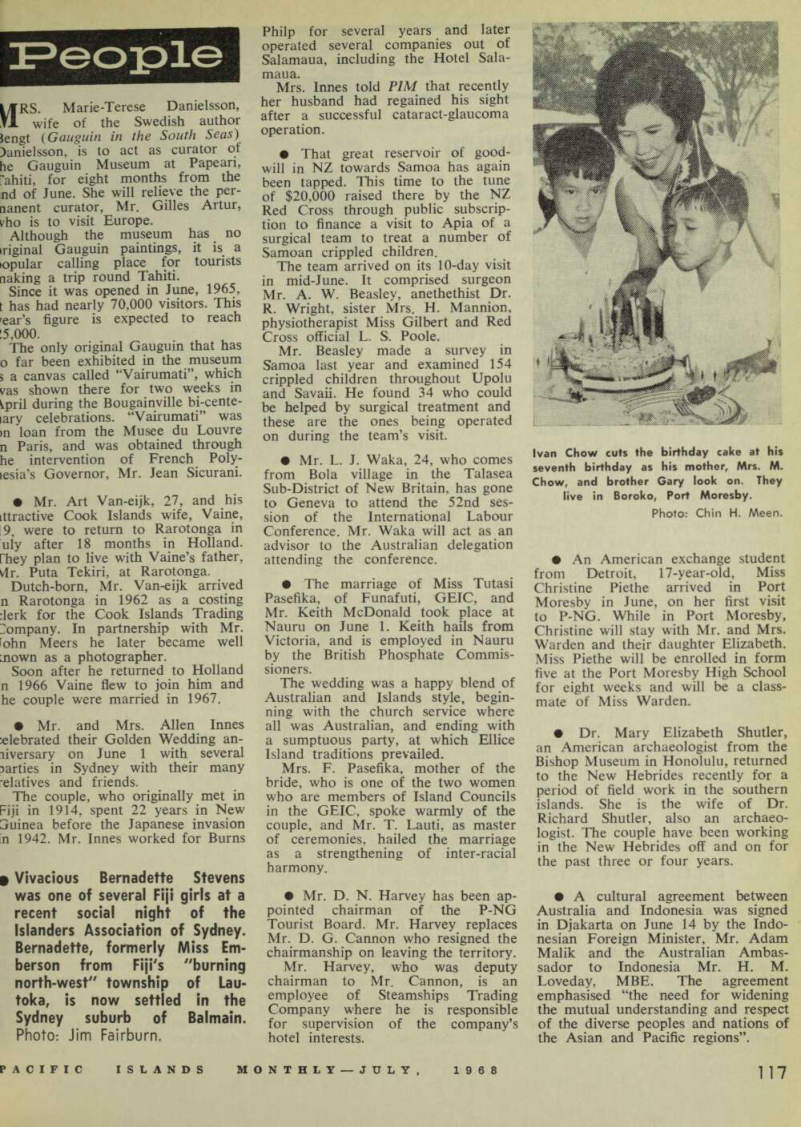 119
119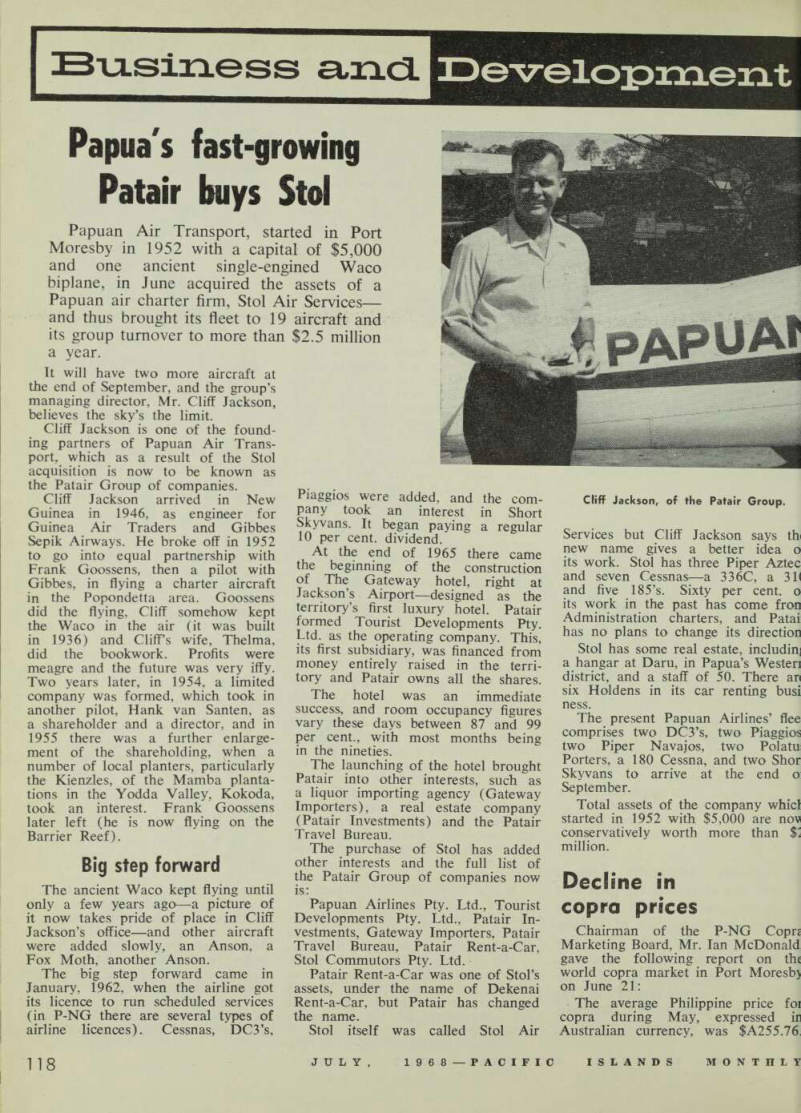 120
120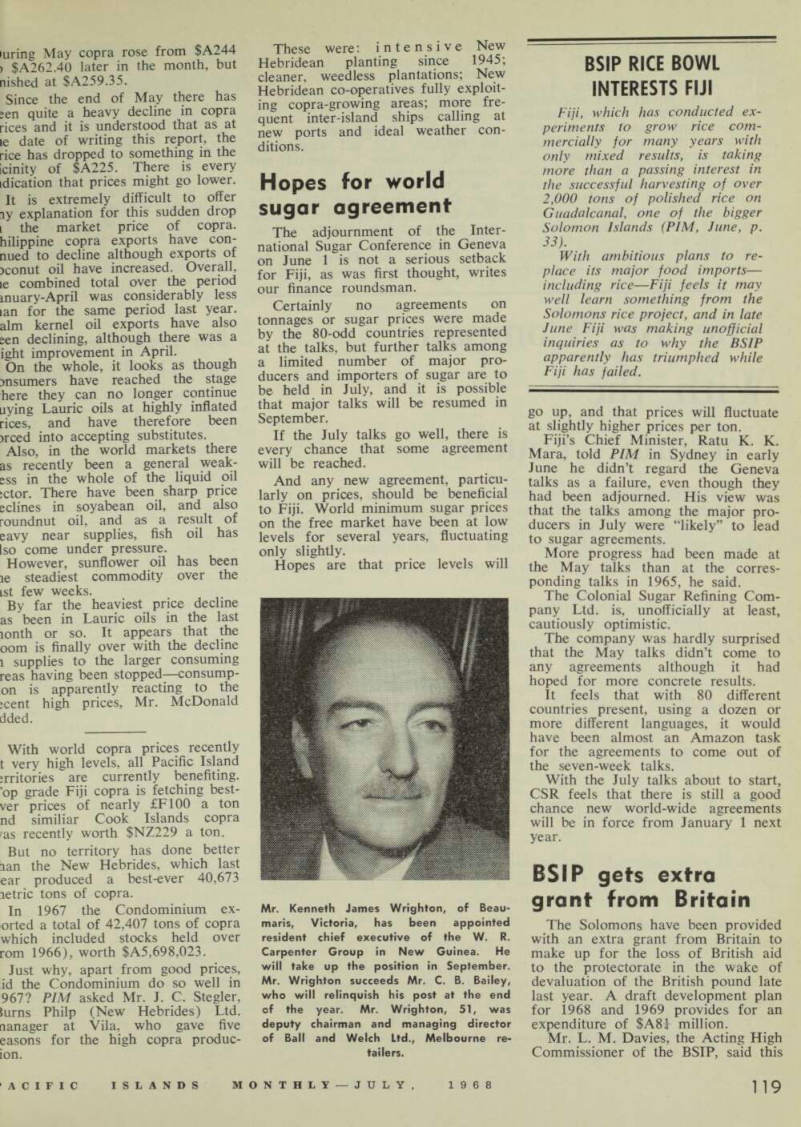 121
121 122
122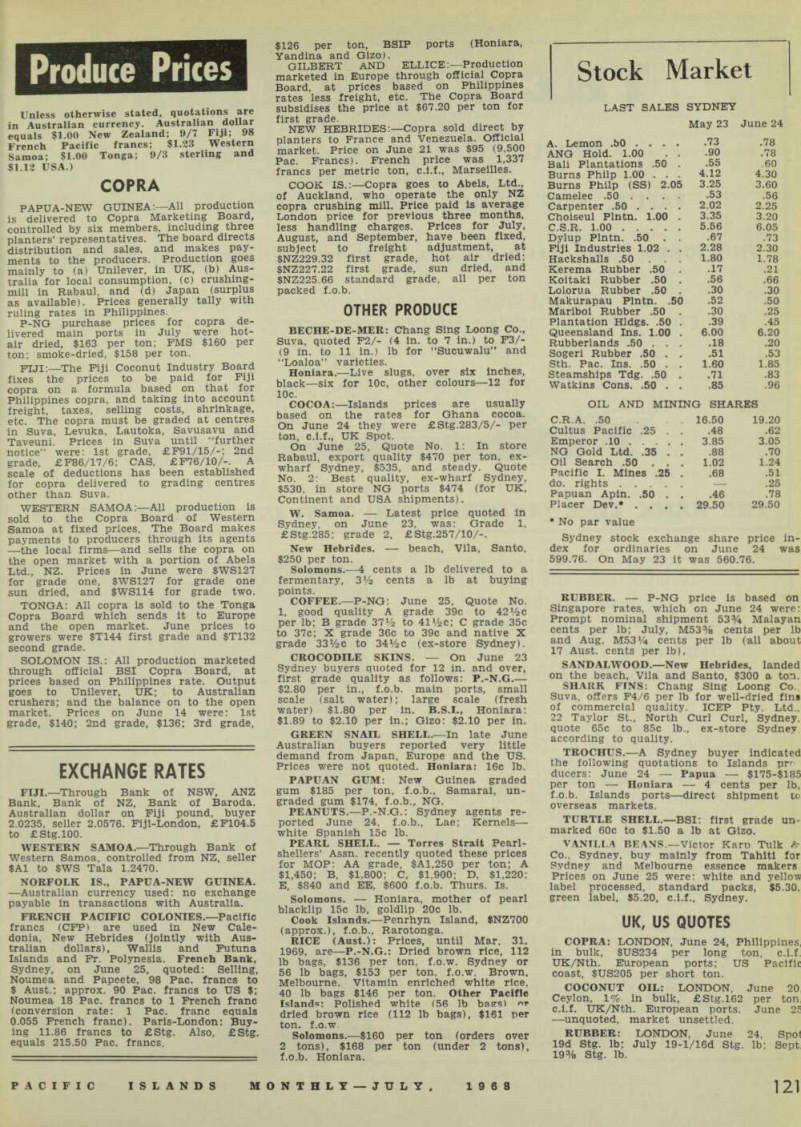 123
123 124
124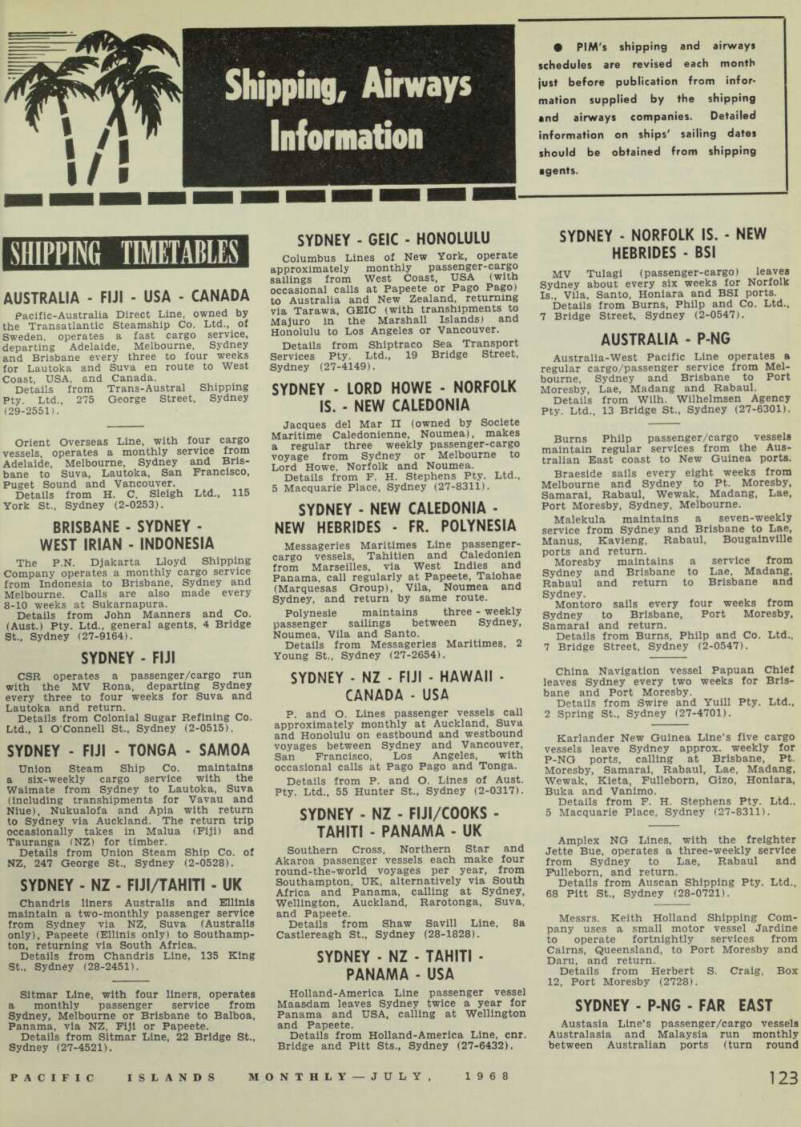 125
125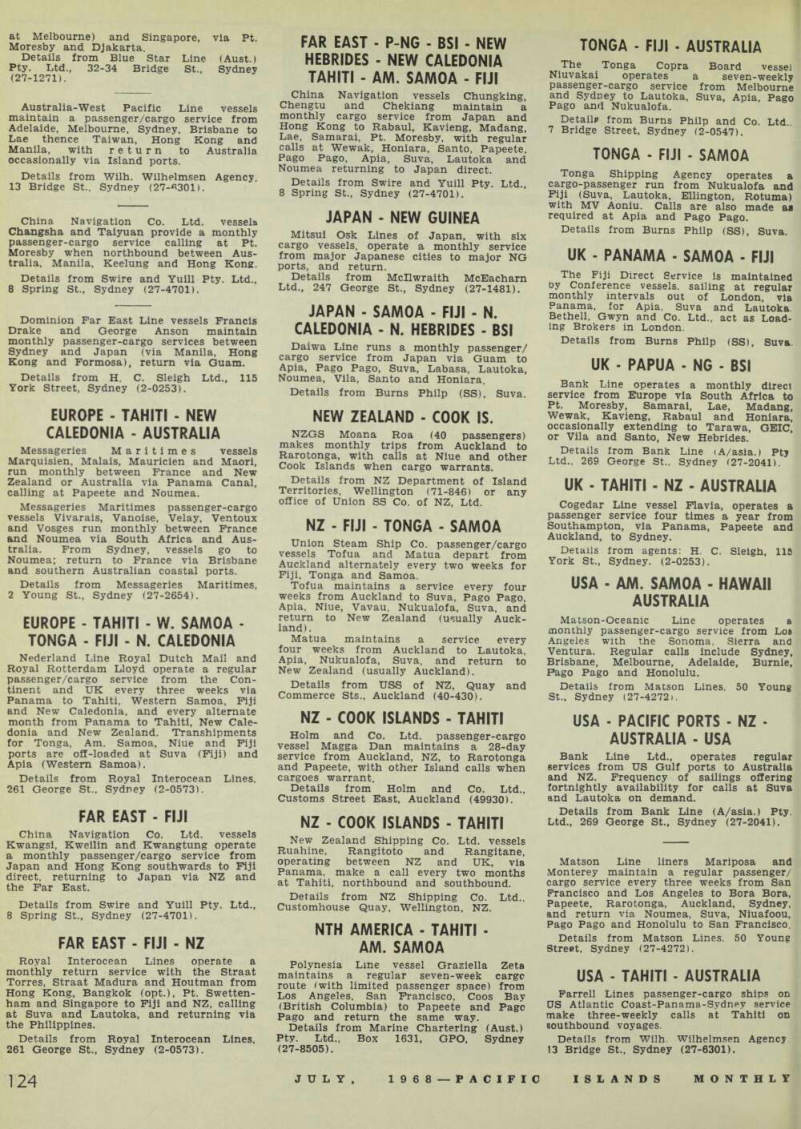 126
126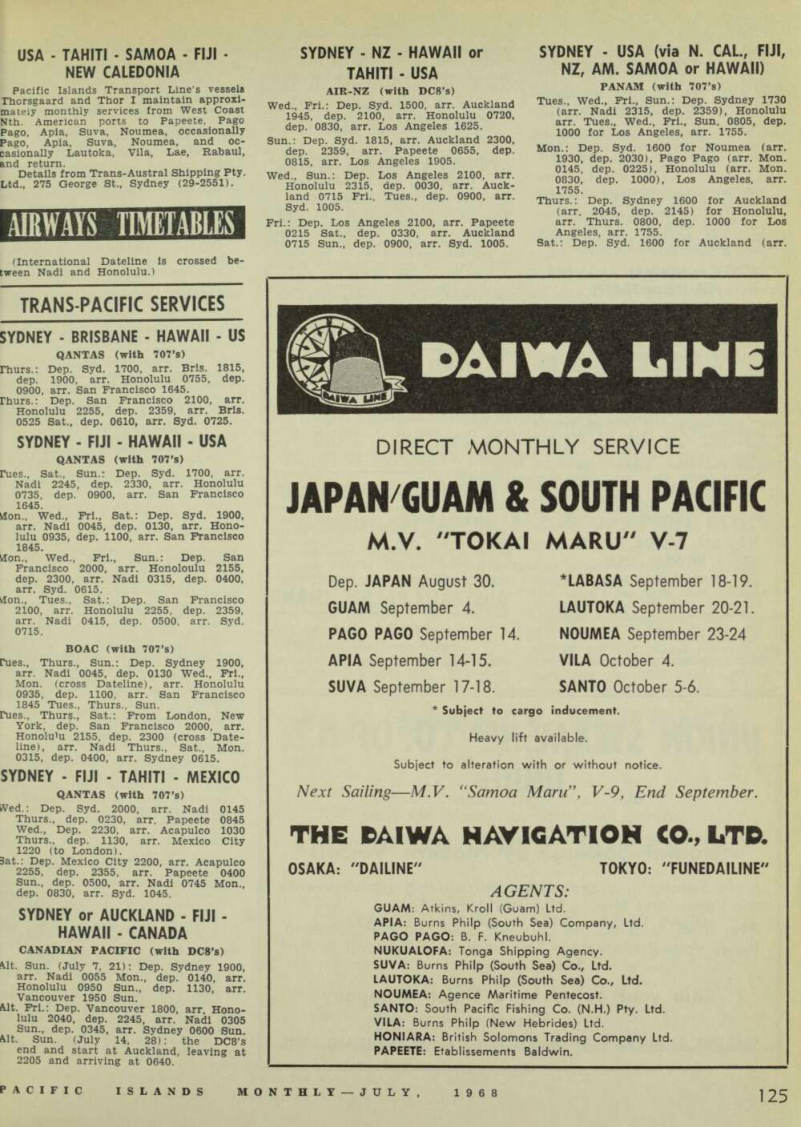 127
127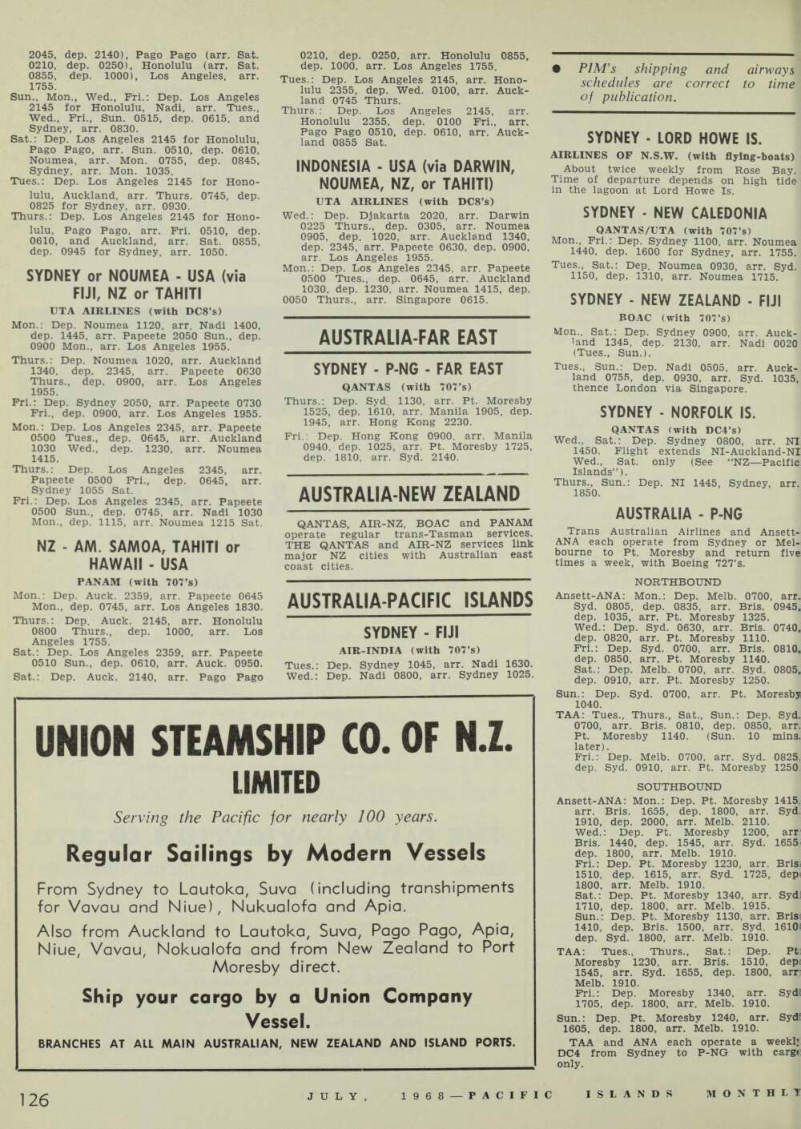 128
128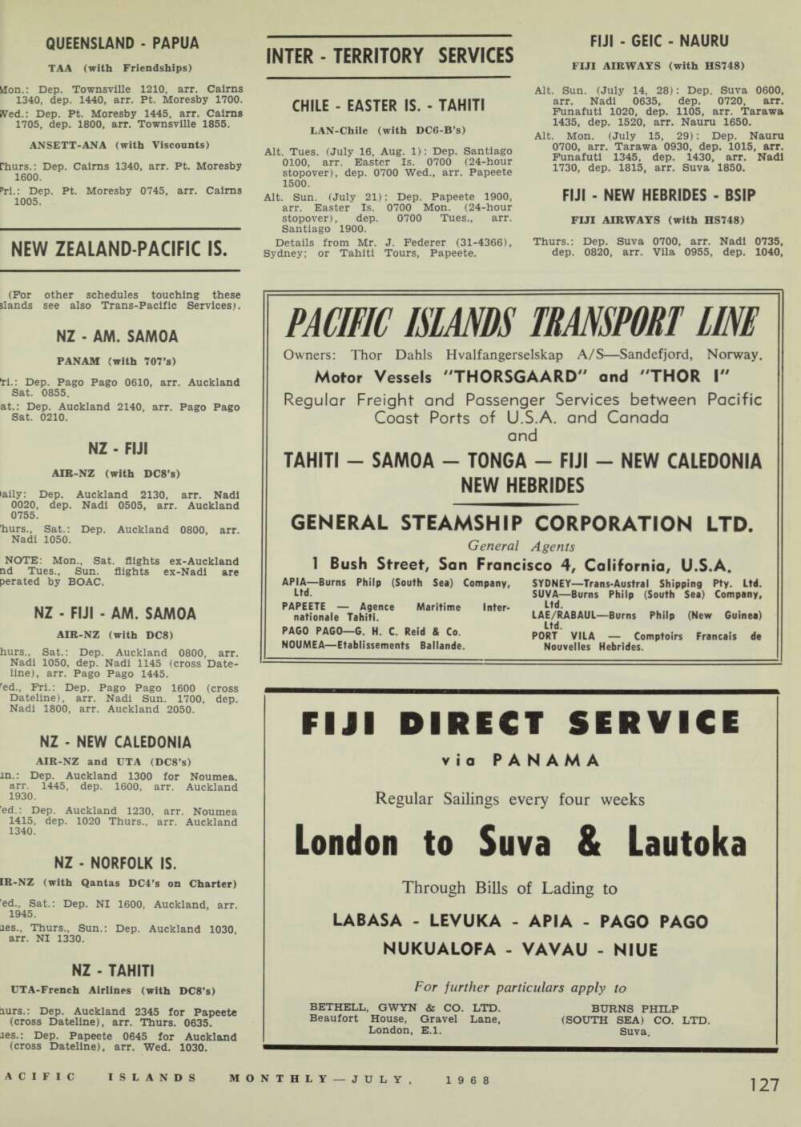 129
129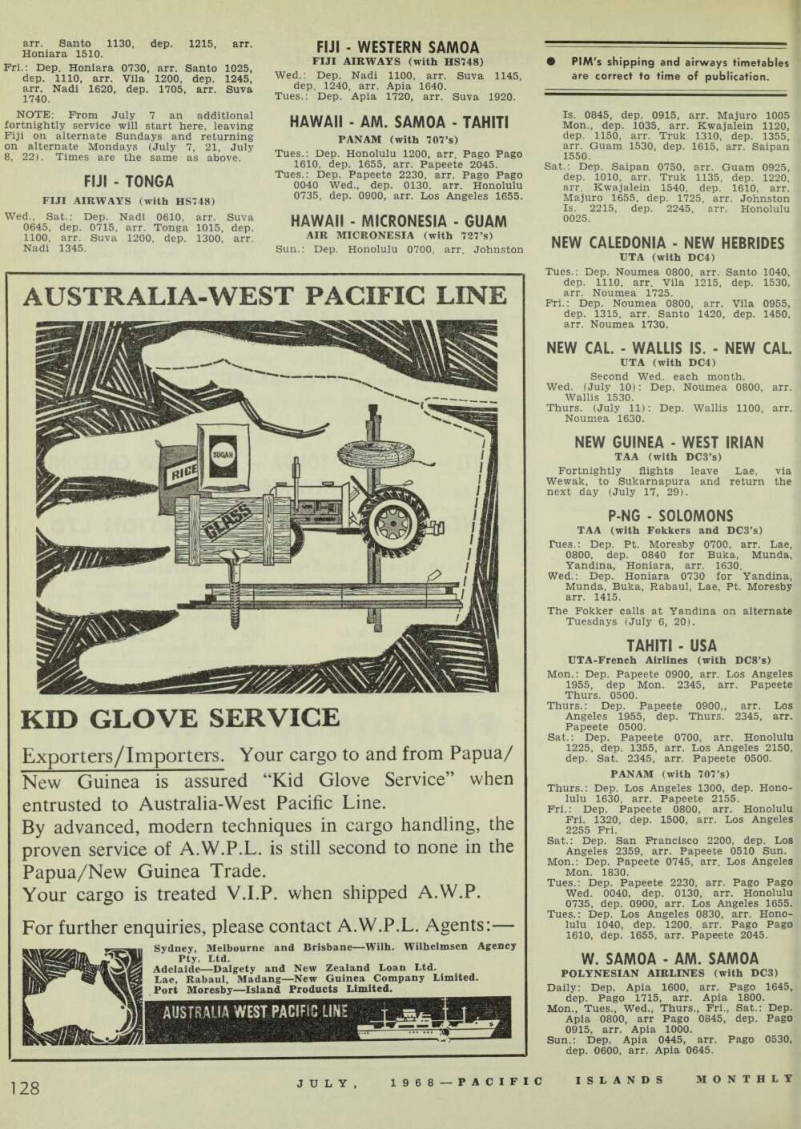 130
130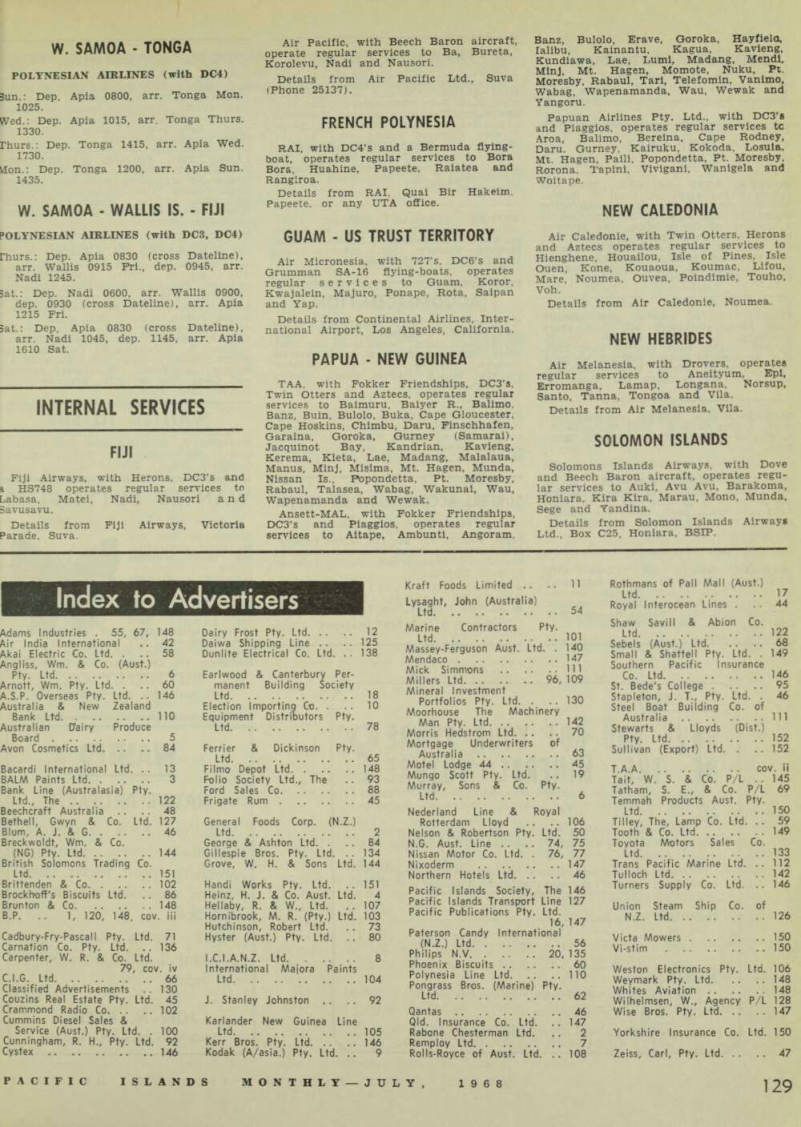 131
131 132
132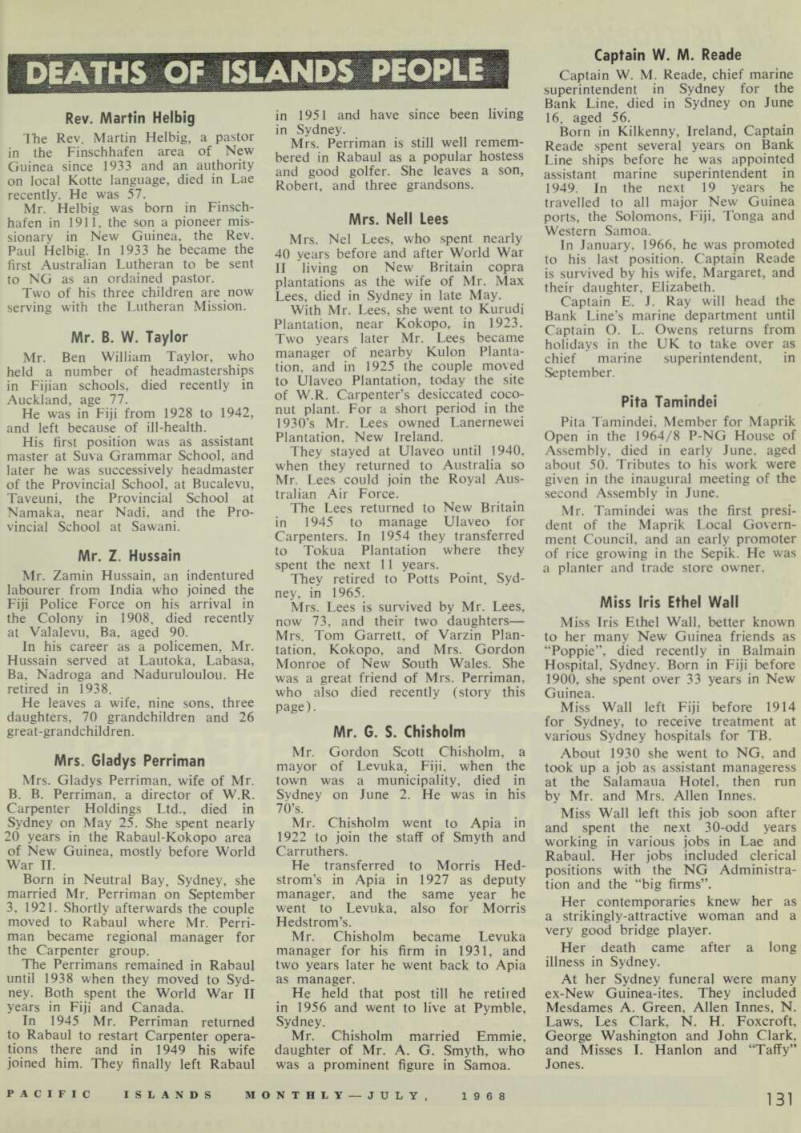 133
133 134
134 135
135 136
136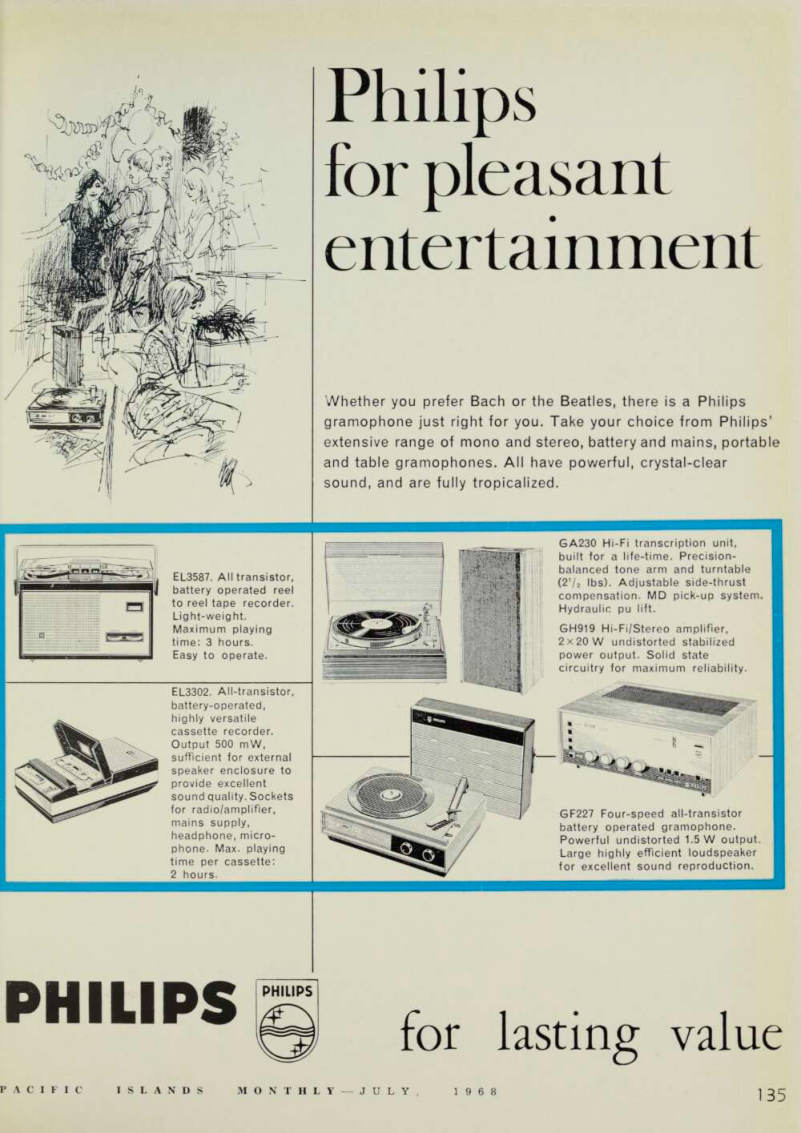 137
137 138
138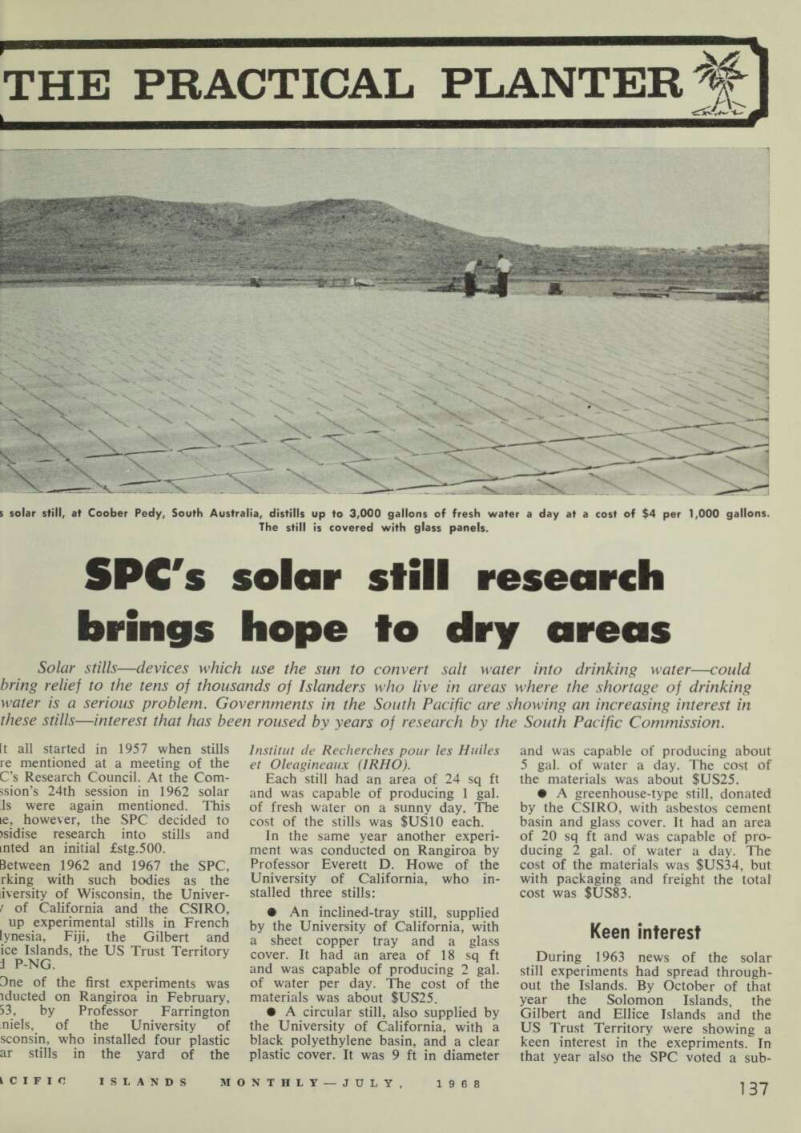 139
139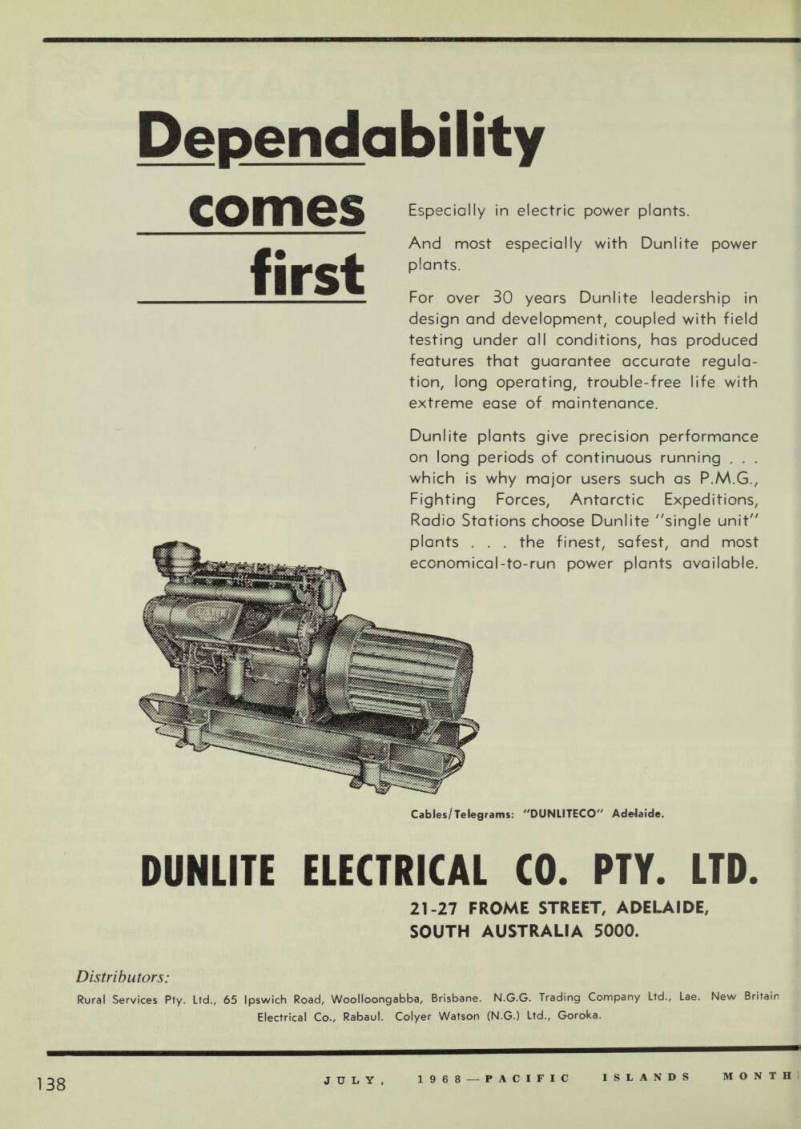 140
140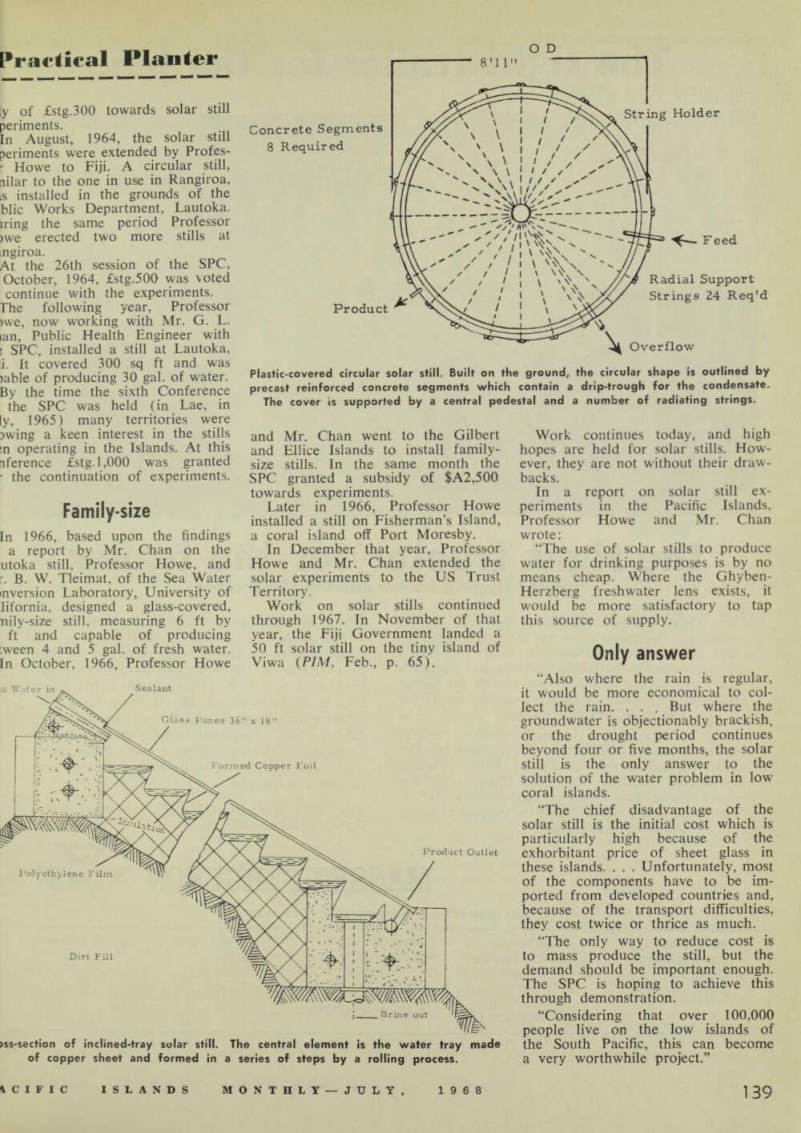 141
141 142
142 143
143 144
144 145
145 146
146 147
147 148
148 149
149 150
150 151
151 152
152 153
153 154
154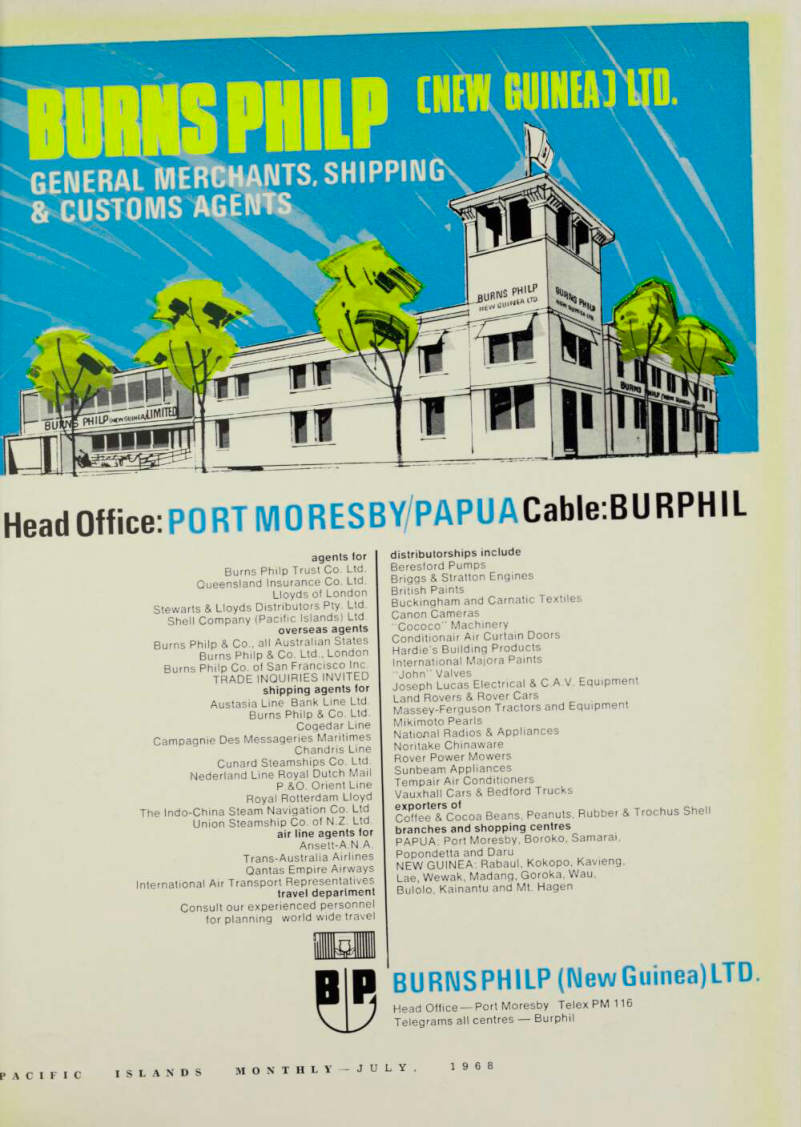 155
155 156
156