Monthly
Pacific Islands Monthly
Ivs Magazine
Of The
Uth Pacific
Australia, 40C. • New
And, 45C. • Fiji, 3/9. •
Ich Rac. Islands, 55 Frcs.
• U.S. Rac. Territories,
• P-N.G. And All Other
Territories, 35C. Local
Currency.
June, 1968
stered at G.P.0., Sydney, for
The Cover
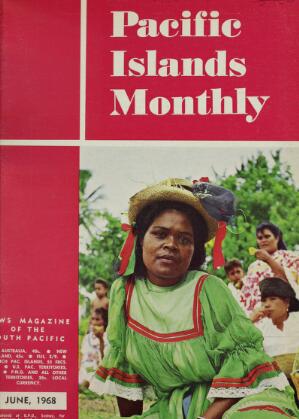
Who is she? She is a Melane sian cricketer, that's who. She is a member of one of the many women's cricket teams in New Caledonia, where there are keen competitive matches every Sat urday. Bruce Adams took the picture one weekend. As this issue of PIM is an export/import issue it's worth pointing out that cricket was imported into that French territory by the early missionaries. Who knows, but one day they may export a team to play Australia.
Advertisements & other items, pp. 2-16 (12 items)
This is where we go!
J —f —••• Ml. HAGfN^.-iC
“SS^iS/'S
■** . RABAUt **<■
Main routes only *x v AE \ • *X\i . V’
. AV. S PORT MORESBY
■.v y \ V \ *r
HONIAfMV^
This is where we go!
A » tk. r.4/i (*■»
This is how we go!
In air-conditioned comfort. With twin prop-jet reliability.
And high wing aircraft with a perfect picture-window view from every seat. We want you to fly TAA and really enjoy seeing the Territory. Now improved internal schedules mean better services between all main Territory centres. Connecting at Port Moresby with TAA’s improved ‘Bird of Paradise’ T-Jet flights to and from Australia.
Take care to book TAA and we’ll take extra care of you. Contact your Travel Agent or TAA: Port Moresby 2101. Lae 2311. Madang 2478. Rabaul 2567. Goroka 8.
Mt. Hagen 4. Wewak 103.
Fly TAA the Friendly Way
i
AIRLINES OF NEW GUINEA
TAA4228/68
Australian
butter & cheese
... help children grow faster
... give children more energy
a* / f w m h , ■ i /
AUSTRAL!
*jj ■om the rich pastures of Australia come the finest dairy products including the finest cheese, butter, ice and canned or powdered milks. ■ Unsurpassed r flavour, Australian butter gives you full Vitamin A id D content. Australian cheese gives you excellent mcentrated food value full of protein and rich calcium. ■ For energy, goodness and flavour loose Australian dairy products.
Always look for the word 'Australia' on the label Trade Enquiries to: Your resident Australian Trade Commissioner or— Australian Dairy Produce Board,
G.P.O. Box 1657 N,
Melbourne, Victoria, Australia. 3001. ,
m m W: i is
urn
■j..r i-A- Quick easy construction of a Pyneboard built-in unit
for built-ins
shelving
furniture
partitions
Pyneboard saves money and labour. Pyneboard is easy to use and it cuts to any shape without loss of strength. Panels quickly glue and screw together to make strong, rigid units. Off-cuts can be butt-glued and used. The smooth surface of Standard Pyneboard is a splendid base for paint or plastic laminates. Sheet sizes in Standard Pyneboard up to 16' x 6'.
Timber Veneered Pyneboard is veneered with actual timber to give you genuine timber grains on a strong, stable, panel product. A decorator effect for furniture and built-ins that can only be achieved with natural wood. Choose Walnut, Maple, Black Bean, Coachwood and many others.
Also paint grade veneer for easy painting. Panel sizes up to 8' x 4' in 5/8", 11/16", 3/4", 13/16" thicknesses.
PYNEBOARD
MATERIALS
Made in Australia. Marketed by
CSR BUILDING MATERIALS SALES PTY. LTD.
AVAILABLE FROM—New Guinea & Papua: Burns Philp (N.G.) Ltd. Island Products Pty. Ltd., Pt. Moresby. The New Guinea Company Ltd. Steamships Trading Company Ltd. Fiji, Tonga, Samoa: Burns Philp (S.S.) Co. Ltd. W. R. Carpenter (Fiji) Ltd. Morris Hedstrom Ltd. Solomon Islands: Tischler Constructions. New Hebrides: Burns Philp (N.H.) Ltd., C.F.N.H., Santo & Vila. Norfolk Island: Irvine’s Building Supplies.
World
quality
m rff***’ si K* Only the world’s finest Virginia tobaccos are blended to produce ...
PLAYER’S
GOLD
LEAF
ne of the great cigarettes
0671-5/67
For workshop...
for industry
C G
Industrial Gases
COMWELD Gas Welding & Cutting Plants; Rods & Fluxes; Flame Cleaning, Flame Hardening & Flame Heating Equipment.
EMF
Electric Welding
Equipment
Arc Welding Machines; Automatic Welding Machines; Electrodes.
Arnold-DeVilbiss
Spray Painting
Equipment
including spray guns, air filters and compressors—to multi-purpose units with spray booths and a full range of automatic equipment.
CIG can meet all your requirements for welding, cutting, bending, shaping and spray painting with equipment and instructive literature that cannot be matched.
Available only from
CIG NEW GUINEA PTY. LTD. P.O. Box 93 Lae.
CIG’S LOCAL TECHNICAL SALES REPRESENTATIVE MR. R. L, Steadson.
CIG New Guinea Pty. Ltd. P.O. Box 1636 Boroko T.P.N.G.
BOROKO MOTORS LTD. P.O. Box 72 Mt. Hagen.
MADANG SLIPWAYS LTD. P.O. Box 47 Madang.
N.G.G. TRADING CO. Milford Haven Road P.O. Box 459 Lae.
BOROKO MOTORS LTD. P.O. Box 1259 Boroko.
J. L. CHIPPER & CO. Box 228 Rabaul.
MESSRS. COLLINS & LEAHY PTY. LTD. P.O. Box 57 Goroka.
TISCHLER ENTERPRISES PTY. LTD. P.O. Box 812 Honiara Guadalcanal.
INDUSTRIAL GASES FIJI LIMITED G.P.O. Box 687 Suva Fiji. 82804/87
Bacardi ram:
Nk DR
LIGHT
1
VARP
1 *1 •v I Name a mixer. Any mixer.
Cola, Dry Ginger, Soda, Tonic, Bitter Lemon.
Light smooth Bacardi rum mixes perfectly with any of them. And for an encore, makes the base for the immortal Daiquiri and many another soul-stimulating cocktail and long drink experience.
BOTBACARDI -TMEWOIW (MEAT MUM
'bacardi'and bat device are registered trademark
„ OF BACARDI & COMPANY LIMITS
BACARDI INTERNATIONAL LTD., HAMILTON. BERMUD/
FIJI
- I ■ ! ■ Fop illustration shows a refrigerated container for Meats Ltd. being loaded at Lyttelton for despatch.
Middle and lower illustrations show bus panels of a type supplied to P. A. Lai and Co. Ltd., Suva, Fiji.
Ideal for tropical
conditions . ..
George and Ashton
refrigerated fibreglass
truck units
George and Ashton
fibreglass
bus and coach panels
George and Ashton refrigerated truck units are fully approved oy the N. Departments of Health and Agriculture. They can be designed for use with any type of vehicle, from pick-ups to semi-trailers >r they can be used as static store houses using their own refrigerating units.
All models can be supplied complete with refrigerated units )r the purchaser can arrange for a freezer unit to be installed locally.
They are made from moulded fibreglass tough, hygienic and colourful so there are no joints to harbour vermin and cleaning is quick, easy and efficient.
George & Ashton refrigerated fibreglass truck units are just what you need for your Inter-Island trade.
George and Ashton fibreglass bus, ambulance and coach panels like the refrigerated truck units are ideal for tropical conditions : n that they are impervious to rust, rot and fatigue cracking. Complex ana pleasing designs can be incorporated economically in passenger vehicle bodies. Even the largest sections are light enough for two men to handle easily. Enquiries are welcomed.
TECHNICAL SPECIFICATIONS
George and Ashton refrigerated units use p.e-polymer polyurethane foam with excellent structural and insulative qualities and good dimensional stability. It is applied in pre-froth form to eliminate the buckling associated with cavity filling. This foam has a K factor of O. with little loss after several years of service.
GEORGE & ASHTON LTD.
P.o. Box 2056, Dunedin
New Zealand Phone:42-779
T 4* N *. % > € % * % PH * a 5^
rofessional Portable Record/
layback Stereo For Use
ijwbere Anytime
In the comfort of your home or when enjoying yourself outdoors, this portable 4-TRACK STEREO tape recorder is just the one for you. A 7" REEL can be used, as well as smaller sizes. Also, it can be operated with either AC or DC current.
This SOLID-STATE X V has the same capacity as the large home models. It includes among its features the noiseless operation due to the long-life BRUSHLESS MICRO MOTOR and patented CROSS-FIELD HEAD. While you are shopping, look for this wonderful stereo.
her Well Known Members
tin*
1710W - SW- 120A
• >• « 3 «»»'"$
X-150D- AA-5000 SW-130
tDJ 1800SD M-9
3 AKAI
:ai electric co., ltd.
CSHIKOJIYACHO OHTA-KU TOKYO JAPAN
Mmuwd Australasia tty Ltd. 210 Clarence Street. Sydnee. N.S.W. NEW ZEALAND; G. Glausiuss Coy. 187-189 Hereford Street Christcgurch FIJI ISLANDS. Burns Philp (South Sea) Co. Ltd., Suya. Burns Philp (South Sea) Co., Ltd., Lautoka. SAMOA: Burns Philp (South Sea) Co.. Ltd., Pago Pago, American Samoa. Burns Philip (South Sea) Co., Ltd., Apia Western Samoa. NorforK Island - Burns Philo (South Sea' r*irnnuir 0l iL 0 - k s J a r nd S °n th P f ClflC- N - W HEBR ! DES: Bufns Phl| P < New Hebrides) Ltd., Port Vila. Burns Philp (New Hebrides) Ltd P $anto NEW CALEDONIE: Menard Freres Rues Jean Jaures et du General Gallieni. Noumea. BRITISH SOLOMON ISLANDS: Mendana Enterprises (Solomon is'anrisl Ltd., P.O.Box 12. Honiara B.S.I.P NAURU: Nauru Co-operative Society. COOK ISLANDS; N.T. NAPA (AVARUA) Ltd. TAHITI Ets L 0m '^ eX D P o' D Box C n°» Pap8et f- ' *APUA & NEW GUINEA: S.O. Svensson (N.G.) Ltd., P.O. Box 508., Port Moresby Papua S S G Dicrbals Pty. Ltd., P.O. Box 59, Madang. N.G. Pacific Indent Co., P.O. Box 154. Rabaul. N.G.
fiiiTim
r\ toilet cleanser J? & Sa fe with septic tanks
1 LB.B OZ.NET
ECONOMY SIZE
THE
PERFUMED
TOILET
CLEANSER
gives you o
cleon snorkling
toilet
KILLS GERMS
SAFEGUARDS YOUR FAMILY
SAFE WITH SEPTIC TANKS
A RECKITT & COLMAN PRODUCT
For trade enquiries: Reckitt & Colman Pty. Ltd., Wharf Road, West Ryde, N.S.W., Australia.
Cables; Reckitts, Sydney.
Harpic
iitei
TOILET CLEANSER
4/ with septic tanks
1 LB. NET
FAMILY SIZE
8C56
BURNS PHILP (SOUTH SEA) CO. LTD.
GENERAL MERCHANTS AND SHIPOWNERS
SHIPPING, r CUSTOMS AND FORWARDING AGENTS
Fiji:
SUVA
IEVUKA.
LAUTOKA.
LABASA.
SAVU SAVU.
BA.
SIGATOKA.
TAVUA.
TAVEUNI.
BRANCHES
Samoa:
APIA.
PAGO PAGO.
Tonga:
NUKUALOFA.
HAAPAI.
VAVUA.
NORFOLK ISLAND.
NIUE ISLAND.
AGENTS FOR:
QUEENSLAND INSURANCE CO. LTD.
BURNS PHILP TRUSTEE CO. LTD.
SHELL COMPANY (P.l.) LTD.
OVERSEAS AGENTS
BURNS, PHILP & CO. LTD., Sydney.
BURNS, PHILP & CO. LTD., London.
BURNS PHILP CO. OF SAN FRANCISCO.
SHIPPING AGENCIES
• The New Zealand Shipping Co. Ltd. • Shaw Savill & Albion Co. Ltd. • Port Line Ltd. • Bank Line Ltd. • General Steamship Corporation Ltd. • Blue Star Line • Cunard Line • Compagnie des Messageries Maritimes • British India Steam Navigation Co. Ltd. • Royal Interocean Lines • Nederland Line Royal Dutch Mail/Royal Rotterdam Lloyd.
EXCLUSIVE DISTRIBUTORSHIPS INCLUDE
• AKAI TAPERECORDERS
• DUNLOP PRODUCTS
• EPIGLA3S PRODUCTS
• FERGUSON TRACTORS
• HELENA RUBENSTEIN
• HITACHI ELECTRONICS
• HOLDEN VEHICLES
• JOHNSON'S WAXES
ROLEX WATCHES
REVLON COSMETICS
PENTAX CAMERAS
SUNBEAM APPLIANCES
INTERNATIONAL AIR TRANSPORT
QANTAS EMPIRE AIRWAYS LTD.
UNION DE TRANSPORTS AERIENS ::
ASSOCIATION REPRESENTATIVES for
" AIR NEW ZEALAND
ALITALIA :: PAN AMERICAN AIRWAYS
ASSOCIATED COMPANIES
BURNS PHILP (NEW HEBRIDES) LTD.
AUTOMOTIVE SUPPLIES CO. LTD.
CORRIE & CO. LTD. • WROUGHT IRON AND STEEL
CONSTRUCTION CO. LTD. • BISH LTD.
SPECIALISED SERVICES
EXPERT ADVICE ON WORLD AND LOCAL TOURS I TRAVEL — SHIPPING — FORWARDING — CUSTOMS I
FORMALITIES — INSURANCE.
REGISTERED OFFICE: SUVA, FIJI
Code Address: "BURNSOUTH"
When the best beer is called for, New Zealand’s favourite lager ..
STEIN LAGER
GENERAL
FOODS
.bring you the good things in life
Steak
fiejp: i * 7 mm
aTa
Irvines Pastry, Irvines Cakes, Irvines Cookies, Irvines Frozen Pies . . . more qualit; General Foods products. They’re made in the most modern factory of its type ii the Southern Hemisphere.
Trade enquiries to General Foods Corporation (N.Z.) Ltd., P.O Box 722, Auckland, N.Z.
Zinc;
the advantages of buying from a major Australian manufacturer.
T ‘Union Carbide’’ zinc strip is manufactured at the “Union Carbide’ zinc strip rolling mill, the largest in the Southern Hemisphere.
In Sydney, Australia, Union Carbide Australia Limited manufactures a range of zinc products for the fabrication of dry cell batteries and for many other uses.
Zinc strip is available for export in coil form in lengths up to 300 feet, in a range of gauges and widths.
Dimensions can be tailor-made to meet your requirements.
Individual pieces of zinc strip in sizes to manufacture battery cans can be supplied to your order, eliminating the need to cut up larger zinc sheets.
Zinc calots are also supplied in a range of sizes suitable for the production of dry cell battery cans.
Backed by world-wide Union Carbide technology and manufactured under laboratory supervision, these zinc products are produced with excellent size tolerances and rigidly controlled chemical composition. We will be happy to provide you with complete product specifications and prices. Enquiries from any country are welcome. Write to: The Manager, Export Sales, Union Carbide Australia Limited, 167 Kent Street, Sydney, N.S.W. 2000, Australia.
Other products available for export from Union Carbide Australia Limited are: “ Eveready” dry cell batteries “Glad” Plastic Wrap and Bags for household food wrapping Polyethylene Resins and Films Phenolic Moulding Powders and Resins Agricultural Chemicals —2, 4-D; 2,4, 5-T and derivatives Mining Chemicals - Cresylic Acids and Xanthates Chemicals for manufacturing purposes Rigid Urethane Foam Systems "Union Carbide,” “ Glad ” and “ Eveready” are registered trade marks.
Union Carbide Australia Limited
The four
exclusive new
soups:
(four more for the Heinz Gourmet range)
Soup
ourmet
CONDINSIO
f Gourmet Souj
I SLICED BUTTON J
MUSHROO
COKDIN
SO
OLD COLONIAL
TOCK POT
Sou
Gourmet
CONDINSIO
Soup
Gourmet
BUTTERED
tieXfty meat staple**
VEGETAB
(Him tllcid
MILD
chelct
CURRY
DUTCH
Sliced Button Mushroom Tiny delicate button mushrooms. Nobody but Heinz uses this kind of mushroom in soup.
Cooked tender, but still firm enough to bite into.
Rich cream stock.
Buttered Vegetable
Fresh, crisp vegetables, cut in big pieces. Sauted carefully in butter. Simmered until tender in creamy stock.
Mild Dutch Curry A gentle curry. Tender beef, long-grain rice, garden vegetables. Mildly spiced, rich and hearty.
Old Colonial Stockpot A full-bodied soup that lives up to its name.
Tender lamb, young vegetables, barley and rice.
Exclusive recipe; big oldfashioned flavour.
Heinz Gourmet soups: consumer tested and approved.
Gounnet
CHICKEN
Soup
Soup
Gourmet Soup
Gourmet
Gourmet Soup
Gourmet split
PEA
TURKEY
BEEF
CHICKEN
HZ94I
ik My boy friend gave me the dinkiest lighter you ever saw.
So dinky, I can’t get flints small enough to fit it.
Another boy friend gave me a lighter he got on the Continent.
When it’s empty, you throw it away.
I can’t remember which I finished with first. Him or it.
I’ve got eighty-three books of matches.
But I like to keep them as souvenirs.
Somebody
please give me
a Ronson
One of these will do very nicely Milady gas lighter Comet gas lighter Adonis slim gas lighter Empress gas table lighter, in onyx Ion B thf D°f R n nsol ? 8 as c n g hters - A filling lasts for S h t ß w fu fl e ,mg lasts s , seconds - The lighter —with RONSOIN its adjustable flame—could easily last forever. '
Qrnotts
famous
iscuits
•S;
TR RLE
Sk ■4
WRAPPED
PACKS
% h % &
Serve simply
with
• • • There is no Substitute for Quality
1
& C I F I C ISLANDS MONTHLY JUNE, 1968
3
ACIFIC ISLANDS MONTHLY JUNE, 1968
4
JUNE, 1968 PACIFIC ISLANDS MONTHL
1 C I F I C Islands Monthly June, 1968
6
JUNE, 1968 PACIFIC ISLANDS MONTHL
% C I F I C Islands Monthly June, 1968
9
3 1 F I C ISLANDS MONTHLY JUNE, 1968
10
JUNE, 1 9 6 8 PACIFIC ISLANDS MONTHL
Cific Islands Monthly June, 1968
12
JUNE, 1968 PACIFIC ISLANDS MONTHL
13
CIFIC ISLANDS MONTHLY JUNE, 1968
Pacific Islands
Monthly
Established 1930: 38»h Year of Publication.
Owned And Published By
Pacific Publications Pty. Ltd.,
29 Alberta St., Sydney, N.S.W., 2000.
Postal Address: G.P.O. BOX 3408, SYDNEY,
N.S.W., 2001.
Telegraphic Address: PACPUB, Sydney.
Telephones: 61-9197, 61-7101, 61-4369.
Chief Executives: Managing Director: R. W. Robson.
General Manager: Selwyn Hughes.
Book Publishing Division
Editor: Judy Tudor.
Pacific Islands Monthly
Editor: Stuart Inder.
Branch Offices
lelbourne: Newspaper House, 247 Collins St., Victoria, 3000. Tel.s 63-7053.
Iji: Pacific Publications (Fiji) Ltd., Fiji Times uilding, 20 Gordon Street, SUVA. Tel.: 25601.
Fiji Times Office, Vidilo Street, LAUTOKA.
Tel.: 60-422. apua-New Guinea: Pacific Publications (N.G.) ly. Ltd. Representatives: Mrs. Joan Carter, 0. Box 16, PT. MORESBY (Tel.: 2741); The Manager, P.O. Box 227, LAE; Mr. Steve impson, P.O. Box 154, RABAUL (Tel.: 2547).
Representatives
ew Zealand: J. D. Whitcombe, C.P.O. Box 2229, Queen Street, Auckland. Tel.: 76056. nited States: Mrs. A. L. Craib, 782 Neilson Street, Berkeley, California, 5273503. iiited Kingdom: S. R. Warman, Candlewick juse, 116-126 Cannon Street, London, E.C.4.
Tel.: Mansion 3674/7.
A. Mackenzie, 4A Bloomsbury Square, London, W.C.I. Tel.: Holborn 3779.
Agents
All main trading firms and stores in the Pacific Islands. icific Publications Pty. Ltd. is the Australian agent for THE FIJI TIMES.
Subscription Rates;
’acific Islands Monthly" is air-freighted to I subscribers and agents in the South Pacific; copies to other areas go by surface mail, jstralia (incl. Lord Howe Is., and Thursday .); $4.50 Aust.; Papua-New Guinea, Norfolk , Nauru, 8.5.1., G. & E. Group, Tonga and :w Hebrides: $4.00 Aust.; New Zealand: >.25 NZ; Cook Is., Niue and Western Samoa: 1.00 (local currency); Fiji £2/5/- (local rrency); American Samoa and U.S Pacific rritories: $B.OO (local currency); French icific Territories—New Caledonia, Tahiti, etc.; >0 French Pacific francs; United States of nerica: $9.00 U.S.; United Kingdom and elsewhere: £2/15/- Stg. rmall postage to USA, UK and elsewhere Is additional.
Up Front
with the editor
Green shoots from a seed planted last October by Aus tralian businessman Richard Gall are about to push themselves far enough above ground level to be seen. The seed is that of the South Pacific Business Co-operation Committee, which should help the South Pacific Islands get a greater share of Australian and New Zealand markets, and which should help Australia and New Zealand understand better the problems of the Islands.
RICHARD GALL is the manag ing director of an Adelaide electrical manufacturing firm which has minor interests in Suva. He is a past president of the Electrical Manufacturers’ Association of Aus tralia.
His idea got its start in Sydney last year following a casual conver sation with a couple of us on PIM.
He had looked us up to chat about matters of common interest in the Islands, and over a drink the talk ranged far and wide. It got round to Islands trade difficulties with Australia. One of the big problems, we all agreed, was that the Islands grow the same tropical products that Australia produces.
The "have nets"
Gall felt that as the Islanders were the “have nots”, it was up to the “haves” to help them build up their economies, and he thought one of the needs was for a forum where the Islands could put their points of view.
As an example of what could be done with organised co-operation, he talked of some of his experiences with the Australia-Japan Business Co-operation Committee, of which he is a member. This committee was started in 1963 and annual meetings are held alternatively in Japan and Australia. (The sixth meeting was held in May in Can berra.) It was formed to allow business men of both countries to bring to the attention of the two govern ments those matters which needed official help for solution. Matters which could be adjusted between
the businessmen themselves could be discussed and settled round the table.
The meetings have been remark ably successful, and the scheme has since been copied in some other countries. They have turned out to be an exchange mart of ideas and principles; an opportunity for a closer examination of the other bloke’s problems. Not surprisingly they have also led to such develop ments as student and technician ex change schemes, cultural exchanges, and joint ventures of all kinds.
The value of such a committee depends on the calibre and the standing of its members, and thus the support they get from their coun tries. Members of the Australia- Japan Committee include, for in stance, leading bankers, agricultur ists and industrialists. There are government members on the com mittee too, but because the com mittee is not a government body, discussions are never on a formal government level, and thus solu tions come more easily.
Pacific plan
To get back to Richard Gall. At my invitation he outlined the work of the Australia-Japan committee in a special article for PIM and in it he put forward the first tentative proposal for a South Pacific organisa tion of the same kind, embracing all interested territories. We published it last October.
Having then talked about it in business circles to get something going he produced a provisional covenant, which lists as the Pacific committee’s objectives “the expansion
of trade on a multi-lateral basis, the development of new industries, the rationalisation of industry, the ex change of industrial technologies, the promotion of tourism and the pro motion of educational, cultural and scientific exchange.”
The covenant suggests that each member country should have a regional committee from whom the committee representatives should be appointed. The preamble of this pro visional covenant says, “We, the rep resentatives of the various industrial and commercial organisations, asso ciations and institutions of Australia, New Zealand, Fiji, Western Samoa, etc., etc., realising the need for co operation between private and gov ernment interests in the South Pacific for the advancement of the peoples’ livelihood therein, have organised a South Pacific Co-operation Commit tee to facilitate and strengthen their economic ties to their individual and mutual advantage.
In my own travels around the Pacific in recent months I have talked at every opportunity about Mr. Gall’s idea and found that it has been received with warm interest.
Prime Minister Mata’afa, of West ern Samoa, and Ratu Mara, Fiji’s Chief Minister, have offered, en thusiastically, to nominate members to the committee from their territor ies.
Fiji, for one, has been doing this kind of pioneer liaison work on its own through its own representative in Sydney, and even in a short time the colony has made real headway in getting its point of view across in Australia.
Prime Minister John Gorton, of Australia, has now shown interest and there should soon emerge the shape of an organisation which will enable Richard Gall’s carefully nur tured plant to grow towards the sun.
Stuart Inder
Advertisements & other items, pp. 17-22 (4 items)
15
ACIFIC ISLANDS MONTHLY JUNE, 1968
Cumulative Index
If you’re interested in the history of the Pacific Islands, then you won’t be able to do without the . . .
to the
PACIFIC ISLANDS
MONTHLY
(Volumes 1-15)
The index covers the 15 vital years from August, 1930, to July, 1945, when many of the events which shaped the Pacific of today took place. But PIM in those years (as is the case today) did not only concern itself with current affairs. It abounded also in articles on every aspect of Islands life both past and present—from agriculture, anthropology and aviation to shipping, tourism, vulcanology and the weather. Islands history was (as it still is) a PIM specialty.
Now, with the aid of the new cumulative index, you can find in a few seconds everything PIM ever published from 1930 to 1945 on any subject, whether it was a two-line snippet or a major article.
The index is one of the most detailed productions of its kind ever published. It is divided into nine sections—aircraft, authors of articles, biographical entries, book reviews, companies, letters to the editor, poems and short stories, ships, and territories. Nearly 10,000 people are listed in the biographical section, and there are some 200,000 entries relating to them.
The territories section, which deals with Islands groups such as the Cook Islands, Fiji, French Oceania, Papua, etc., is equally minutely indexed and cross-indexed under a wide range of headings.
The index contains 228 closely-printed, but easy-to-read pages measuring 11 by 8i inches. It is cloth-bound and printed on tough, long-lasting paper. At $25 Aust. per copy (plus 60c packed and posted to anywhere), the index is one of the best bargains in Pacific books for many years. Get your copy from the publishers now, while the limited edition lasts! (And if you’re not currently subscribing to PIM, why not take out a subscription at the same time?)
.4Mb PACIFIC PUBLICATIONS PTY. LTD.,
'W' Box 3408, G.P.0., /_ Sydney, N.S.W., 2001.
THE GREATEST
NAME 111
CIGARETTES
All over the world, on six continents, in 160 countries, on 100 airlines and 150 shipping lines, the swing is to Rothmans, the world’s largest-selling King Size Virginia. Rothmans choice mild tobaccos and finer filter are known throughout the world for the cooler, smoother, more satisfying taste they give. Try them now and you’ll agree, Rothmans King Size.really satisfies.
WORLD’S LARGEST SELLING KING SIZE VIRGINIA
' I I 4 , m : ■■ n 1 m is£ Robert Hutchinson has a name for making the very best flours, sharps and meals Robert Hutchinson has many years of know-how in producing quality flours, sharps and meals.
These products are brought to you in jute, calico and hessian sacks, flour and meal also being available in drums. An important feature of Hutchinson flours and sharps is that they are entoleted, a process ensuring outstanding keeping qualities even under the most adverse conditions.
Write Robert Hutchinson for full details: a Baker’s Flour B Wheaten Sharps ■ Wheaten Meal 0 Biscuit Flour ■ Cake Flour ■ Hutmill Stock & Poultry Food.
Robert Hutchinson Limited
Hartington Street, Glenroy, Victoria, Australia. Telephone 308-7261. Telegraph “Hutmiir
Materials
on the
j0b...
equipment
on the
plantation.
I
ICK..
They ail need protection.
And the best covering you can get is . . ,
Ny lex Vynaprufe
RVISO
fhe unique construction of Mylex ‘Vynaprufe’ RVISO nakes it the best protection you can get a ough nylon mesh laminated between two layers of super-strong vinyl. Best outside because it remains jnaffected by all weather conditions. Goods are carefully protected even if out in the open for nonths at a time. Best inside, because it’s lightweight, easier to handle, and has exceptional tear esistance. And in various colours including safety colour for night-driving yellow. Mylex ‘Vynaprufe’ won’t rot or mildew. Is impervious to oil, grease and fertilisers. Is waterproof a wet tarpaulin is never a problem. You just fold it and stow away. Mylex ‘Vynaprufe’ RVISO. Best protection a man can get!
See for yourself. Fill in this coupon. We’ll send you samples. Right away.
TO: Export Division NYLEX CORPORATION LIMITED, 165 Cremorne Street, Richmond, Melbourne, Victoria, Australia.
Please forward brochure and samples of ‘Vynaprufe’ RVISO for use as .
Name Company: Address;
Nice ancle,
X.
dinner
MM Ml e v r nh w 1
Imperial
home sty>J?
Imperial “Home Style”
Casserole, brimming with the goodness of chunky cut Vegetables and Rich Tender Meat, is a Complete Meal, Ready to Serve in Minutes.
This is just one of our Famous Range of Imperial “Home Style” Meals . . .
Try them. All Perfect ...
They’re aII—“IMPERIAL”.
18
JUNE, 1968 PACIFIC ISLANDS MONTHL
19
ACIFIC ISLANDS MONTHLY JUNE, 1968
In This Issue
Eneral
:port/import special feature 28 ustralia's indifference to Islands ... 28 ouble with Australian exporters ... 29 nail hope for reduced air fares ... 47 ;lp needed on shells 57 arming the Sea" 93 loestring Shipping Line 94 tother Rusden ship comes to grief .. 97 eight rates up on "Moana Roa" ... 106 K s first interim report 119
Werican Samoa
ady Elizabeth" refloated 105 tug ... 105 iw hotel manager 117
)Ok Islands
;ction roundup 24 here the old Fords go 33 rotonga: no planes for two years .. 51 noe voyage planned ... 103 >t much work for local shipping 104 imps for hurricane relief 113 II nabans at UN 23 rline plans 26 d trade documentation 31 eap Dutch butter 32 . Churchward's work 56 ng-swimming turtle 57 Ara query settled ... 60 •ons 61
Marine regulations 69 Vishnu Deo dies 72 A contemporary history 95 "Se-ni-Ua" for Lautoka 104 New barge 105
French Polynesia
Tahiti by-elections 25 Moorea/Tahiti tunnel 50 Post-war politics in Tahiti 81 New athletic record 117
Gilbert And Ellice Islands Colony
Banabans at UN 23 Two new vessels en route 101 First women police 117
Lord Howe Island
Murder charge dismissed 25 Airstrip nearer 49
Nauru
President elected 23 Visitor requirements 50
New Caledonia
Japanese spy radio ... 57 "Matipo" hits reef 97 Miss Noumea 115
New Hebrides
New stamp issue H 3 Medical officer retires 117
Niue
Hawaii television seen 117
Norfolk Island
Prince Philip's visit 27 "Progress" 56 Administrator remains 117
Papua-New Guinea
Politicians prepare for Assembly ... 22 Barefoot patrol officer 27 Sepik: the restless river ... ... 52 Houseboat on the Sepik 53 Pasquarelli's plans 55 Church unity 64 "Thor I" to call at Rabaul 99 Three die in Rabaul blaze 101 Ship service from Cairns 105 Madang's new wharf 105 Promotion for patrol officer 117 Oil palm industry 118
Pitcairn Island
New cargo service 99 Stamp issue 113
Solomon Islands
Objection to high freight rates 32 Guadalcanal may be rice bowl .. ... 33 Church unity 64 War canoes 64 Mr. Dalrymple-Hay's plans 117
Tonga
Balance of trade 30 Adventures in Mariner's cave 41 In defence of Vavau 59 Warning of population explosion ... 72 The king in New Zealand ... 115
U.S. Trust Territory
"Pacific Islander" aground 104 "James M, Cook" in service 106
Western Samoa
Coconut buttons 30 Badly needs exports 31 Close ties with Japan 32 Botanist arrives 117
D U n™ N Z S: Up Fr ° nt With the Bditor ' 15; Tropicalities, 26; To the Point, with Percy Chatterton, 34; Port Moresby Personality, 36; Travel, 37; Letters, 56; From the Islands Press, 69; Magazine Section, 81; Book Reviews, 93; Shipping, 97; Cru'smg Yachts, 107; People in Pictures, 114; People, 117; Commerce, 118; Produce Prices, 121; Shipping, Airways Schedules, 123; Index to Advertisers, 129; Deaths of Islands People, 131; The Practical Planter, 137
Everybody's In Town As
P-Ng Launches It's Larger
Than-Life-Size Assembly
From a Port Moresby correspondent Papua-New Guinea’s brand new, larger-than-life-size, 94 man (and no women) House of Assembly gets going on June 4, and the big event —to be launched by Australia’s Governor- General, Lord Casey—is being preceded by a general flurry of political and academic activity in the territory’s capital.
There is surely not a spare bed to be found in Port Moresby as the 22 old hands and 62 “new boys” in the House assemble the week previous to the opening session for something which has been ominously described as a “briefing”.
Overlapping the “briefing”, as well as the first meeting of the House, there is a big seminar—the Second Waigani Seminar—on the history of Melanesia. This seminar, organised by the P-NG University, the Aus tralian National University, the P-NG Administrative College and the Council on New Guinea Affairs, has assembled a galaxy of talent.
Distinguished
Two former Administrators, as well as academics, missionaries, public servants and politicians, will be among the 36 speakers and presenters of papers.
One might have hoped that such a distinguished consortium of learned bodies would have been able to avoid choosing a time when so many of those who would have liked to learn more about the history of their country will be engaged in making it. But so be it.
As far as the pre-Assembly “briefing” is concerned, some of the old hands are wondering if “briefing” is a polite term for brain-washing, and would have preferred something more on the lines of the pre-session seminar of 1964, which was con ducted by the head of the New Guinea Research Unit of the Aus tralian National University.
In 1968, with our own university in being, it should have been even easier than it was in 1964 to arrange a seminar run by a well-clued out sider with no axes to grind. How ever, members will now have to make the most they can of the fare pro vided.
The “briefings” will take place in
the House itself, but the members will be housed at the Administrative College, and perhaps the informal discussions which take place there in the evenings will be more fruitful than the formal sessions during the day. It will be there, almost certainly, that the vexed question of the Speakership will be thrashed out.
Rehearsed
Four years ago it was at the pre- Assembly briefings that the Speaker ship was decided. But now the obvious choices are not available.
Until the new members begin to swap opinions there is no tipping how the cat will jump. Mr. Noel Casey is reported to be very in terested. Roy Ashton and Percy Chatterton might be reluctant starters if they were pressed hard enough.
The “brief’ will reach its climax on June 3, when the members will be rehearsed in the required rituals for the formal opening by the Governor-General, Lord Casey, which will take place on the following day.
On the morning of that day the House will meet for the election of the Speaker (whose actual selection should have been accomplished dur ing the previous week), and at 2.30 in the afternoon Lord Casey will formally open the First Session of the Second House of Assembly.
As in 1964, authority has not
considered this a sufficiently impor tant day in the life of the territory to be declared a public holiday. Anc perhaps authority is right, since t( some observers here the recentb enacted amendments to the Papuj and New Guinea Act take a hesitat ing step forward towards self government followed by two smar paces backward.
The step forward is the provisioi for the appointment of “ministeria members”, who will also be member of the Administrator’s Executive Council, and “assistant ministeria members”, who will not be notice ably different from the last House’ under-secretaries. And it may fairb be described as hesitating, since th< functions and powers of these gentle men are not, as one would hav< hoped, spelled out in the Act. The] are to be as determined from tinn to time by the Minister, who wil thus be able to bring the occupant of these offices to heel if they shov too much initiative.
The two paces backward are th< vesting in the Governor-General o the power of partial as well as tota veto of ordinances enacted by th< House, and the vesting in the Admini strator of the power to tell th( Speaker of the House what the orde of priorities is to be in the trans action of its business.
These two retrograde steps sugges that even the establishment of i phony ministry has caused Canbern to panic.
The Minister explained to th< House of Representatives that th< first of these two provision “simplifies the situation”. Experience< members of the House of Assembh are already asking, “Simplifies it fo: whom?”
New Speaker. On May 3(
members of P-NG’s House of As sembly agreed to support John Guis< as Speaker.
John Guise.
Tonga Treaty Signing
A revised Treaty of Friend ship between Britain and Tonga is expected to be signed in Nukualofa on May 30. Under it, Tonga—at a date to be decided on—will become fully independent. She will seek to join the Commonwealth and the UN (“ PIM”, Mar., p. 18).
Advertisements & other items, p. 24 (1 item)
22
JUNE, 1968 PACIFIC ISLANDS MONTHL
A President
Nauru Has
Prom a special correspondent Hammer Deßoburt is first resident of the Republic of auru. He was elected at a >ecial sitting of the island’s
gislature on May 17.
President Deßoburt, who was auru’s Head Chief when Nauru as a Trust territory administered by ustralia, has been chairman of the re man Council of State since the ly that Nauru became independent i January 31.
Both the Council of State and auru’s Constitutional Convention ive now been dissolved.
The convention met for its second ries of talks on April 23 and con med until May 17. Structure of e executive was the chief matter scussed. The convention agreed sically with the draft constitution lich proposed a President and binet system to replace the Council State and voted to alter the con tution (which had been promulga -1 on January 31) to bring this out.
Parliament of Nauru
As the convention dissolved on ay 17 there was a meeting of the luruan Assembly, which will hence •th be known as the Parliament the Republic of Naum. Nomina ns were called for the position of esident of Nauru.
Hammer Deßoburt was immedi ly proposed, but, surprisingly, minations were also received by ; Speaker on behalf of Buraro tudamo and Austin Bemicke.
Deßoburt accepted nomination, t Detudamo and Bemicke each in n declined.
President Deßoburt, who also ries the responsibility, although the title, of Nauruan Chief nister, then announced that the mer members of the Council of te would take the cabinet posts, said as the reorganisation of the blic Service was not yet complete could not fully confirm the distri ion of portfolios, but that it was dy these would be: MINISTER
R Health And Education,
stin Bemicke; MINISTER FOR
Finance, Ategan Bop; Minister
FOR WORKS, Buraro Detudamo;
Minister For Justice, Joseph
Detsimea.
Cabinet ministers, and other members of parliament, all take the title of MP.
President Deßoburt and Mrs.
Deßoburt have been occupying Gov ernment House since shortly after independence and they will remain there.
The final meeting of the con stitutional convention was a busy one. There was considerable dis cussion on the new powers of the executive, with some straight talking.
The fact that Hammer Deßoburt was not, in the end, the sole nomination for the Presidency was probably due to feeling among some Nauruans that it might not be a good thing to give wide powers to one man as both President and virtual Prime Minister.
It was Nauru’s way of warning the new President—whose election was never seriously in doubt —that Naum is conscious of the great responsibility it has now given him.
Phosphate problem
Now that the main political problems have been settled it is to be hoped that Nauru will get on to the serious job of arranging future control of the phosphate industry.
As PIM reported in March, “Nauruan independence without an efficient phosphate industry would be nothing but a sham”.
The BPC have made it clear they will give the Nauruans every co operation during the changeover and have offered most of the existing staff and organisation, but the Nauruans haven’t progressed very far with the problem. Nauru will need to do something quickly if it is to safe guard its economy before there is a loss of confidence, and a loss of BPC personnel.
President DeRoburt.
Banabans
start a civil war!
From a Suva correspondent Coveting the remarkable suc cess of Nauru in achieving inde pendence, the Banabans—the Nauruans’ one time neighbours —now want their independence.
Although they now live on Rabi Island, Fiji (see p. 37) they are willing to return to Ocean Island.
In May they asked the Committee of 24 to help support their case be fore the UN for an independent Ocean Island. The Banabans still own Ocean Island, which is being worked for phosphate.
The Banabans’ naive request is hardly likely to be accepted. In the meantime they have won for them selves the violent opposition of their friends in the Gilbert and Ellice Islands Colony, of which Ocean Island is a part.
The GEIC people have never been noted for an interest in politics but the Banaban request has really got their political backs up. In a cable to UN Secretary-General U. Thant, the Chief Elected Member in the GEIC House of Representatives, Reuben Uatoia, said the GEIC did not recognise the right of anyone, “including absentee landlords” to claim independence for Ocean Island or any other part of the GEIC. The GEIC people would oppose any application by the Banabans, who wanted “to secure undue wealth to the detriment of the rest of the terri tory”.
Path to independence
Uatoia’s cable said the GEIC was “on the certain path to independence” and did not wish to be thwarted by being deprived, through fragmenta tion, of the economic resources of any part of the colony.
The Banabans’ request to the UN was prepared by Mr. A. D. Patel, former leader of the Opposition in the Fiji Legislative Council until he and his colleagues boycotted the council last year. By-elections for their seats are yet to be held.
Advertisements & other items, p. 25 (1 item)
23
CIFIC ISLANDS MONTHLY— JUNE, 1968
Cooks with a bang
Albert Henry hack in the Cooks with a bang
From PIM correspondents on Rarotonga Decisive is the only way to describe Mr. Albert Henry’s victory in the Cook Islands general elections on May 1. In spite of determined electioneering by the new opposition—the United Cook Islanders Party—Mr. Henry’s Cook Islands Party won in no uncertain fashion. The CIP took 16 out of 22 seats in the Legislative Assembly, leaving only six seats to the UCl— all in the outer islands.
Not one UCI candidate in the key constituencies of Rarotonga, the main island of the Cooks, was elected. A feature of the election was the defeat of all the UCI leaders, including Mr. Mana Strickland and Dr. Manea Tamarua, who were both former cabinet ministers in the government of Mr. Henry, Premier and leader of the Cook Islands Party.
Dr. Tamarua had resigned in 1966 and Mr. Strickland, who was Minister of Education, resigned just before the elections after having delivered a stinging attack on Mr.
Henry’s policies {PIM, Apr., p. 57, May, p. 54).
No independent candidates were successful at this election. A leading independent, Mr. D. C. Brown, who was former Leader of Government Business, withdrew.
Rarotonga goes to CIP
The Cook Islands Party gained all nine seats in Rarotonga, three new seats in Aitutaki (which in the 1965 elections voted against them), won unopposed each a seat in Mauke and in Mitiaro, and returned the CIP candidate for the atoll of Manihiki. A new CIP member was elected for Pukapuka.
The UCI won over the two inde pendent candidates for Mangaia, who were then returned by a large majority, and gained two seats in Atiu. Penrhyn and Rakahanga atolls returned their formerly independent candidates on the UCI ticket.
Rarotonga (10,000 pop.) voted 70 per cent. Cook Islands Party at the end of the preliminary count, 89 per cent, in Aitutaki, the second most populous island, and 65 per cent, of the total vote in the Cook Islands.
Independent candidates in Aitutaki took a few votes, and the balance went to the UCI.
Mr. Albert Henry achieved the
highest number of votes with a total of 1,669. Next highest votes were received by CIP candidates T.
Kamana, 1,554; T. Roi, 1,458; and K. Nangaiti 1, 411. All four can didates belonged to the most densely populated electorate of Rarotonga, Te-au-o-Tonga, which for voting purposes also includes the 134 voters of Palmerston Island.
The three seats in the Takitumu electorate on Rarotonga went to T, Numanga, S. Samuela, and A.P.
Short; and the two seats in the Puaikura electorate were won by T. P. Maurangi and T. Moana.
In Aitutaki, CIP members W.
Estall, Dr. J. Williams and N. Upu won easily with four times the number of votes obtained by their independent competitors.
In the constituency of Pukapuka-
Nassau, the single seat was won b] CIP member I. Akaruru, and Mani hiki’s single vacancy went to CII man N. Temu.
UCI victories
The UCI victories were, Mangaia two seats to P. Aberahama and N Matepi; Atiu, where V. R. T, Pot« and T. Simiona beat their CII rivals; Penrhyn, where T. Tangaro; was returned again, and Rakahangi where Dr. P. Robati was voted in.
The seat at Mauke went to Tepu A. Henry, CIP, and that at Mitian to R. Pokoati, CIP. Both these seat were unopposed.
Campaigning by both partie; during April was vigorous. Meeting at which the leaders brought ou points of policy—and not infre quently attacked personalities in th< rival party—were held almost ever] night of the week, and fund-raisinj campaign dances drew large crowds The Premier, Mr. Henry, acting as CIP leader, organised a well directed campaign with the assistant of his son and Minister for Interna Affairs, Mr. T. A. Henry, and variou! other key CIP personalities.
Soon after the outset of the cam paigning it was clear that the majority of the public sympathiser with the CIP. Meetings drew crowds initially in the hundreds—later or in the campaign over the 1,300 marl in Rarotonga.
The best attended UCI meeting was estimated to have drawn a crowd of some 500—but manj listeners were CIP. Their average meeting attendances were less than 100.
The Cook Islands Party’s victory was relatively simple to explain: The
Albert Henry—who triumphed.
Interest in opposition
CIP had, in its three years as govern ment, done enough for the average Cook Islander to win his loyalty and support. Housing, electric power, water systems, roads, agricultural machinery, improved shipping serv ices—these are the things in which the CIP Government was able to assist the majority over the past three years. The average voter was ap parently enough satisfied with things accomplished in the islands to re ject the government which had led the islands into self-government.
Albert Henry, minutes after the HP victory was announced over he radio, made a short speech of hanks to the crowd outside the allyroom and a huge crowd spilled >ver to his home, where he and his candidates were deluged with lower ’eis, handshakes, and messages >f goodwill.
Orderly poll
As during the previous general lections in April, 1965, the evening >f polling day on Rarotonga was a ret one, and a crowd gathered in be rain to watch the results chalked p on the big result boards placed efore the old Administration build igs in Avarua. At every CIP victory 'omen shrieked and danced with lee. The polling had been orderly nd there were no fights or other icidents.
Mr. Henry in his address to the 'owd, thanked them “for giving le party another chance”.
He said the CIP honestly believed could do what it promised it would 0 during the campaign—if not Liickly then eventually. To the jople standing in pouring rain he ided, “I think if I keep on speaking may cry. The feelings are too rong in me”.
The crowd gave him three cheers.
Immediately after the elections e main interest was in which of e six members of the Opposition ould be elected leader now that 1 the leading UCI candidates have :en defeated.
The Opposition consists of jpuke Robati, Vaine Rere, Tangata miona, Tangaroa Tangaroa, Nga puna Matepi and Pokino Abera ima.
Integrated Public
Service For Tahiti
The last stage in a long strug gle by French Polynesia’s local fonctionnaires (public servants) to be placed on the same footing as those sent out from metro politan France was announced in the Journal Officiel de la Polynesie Francaise on May 9.
The Journal Officiel (the equivalent of the Government Gazette in British countries) pub lished a table from which the local public servants can see at a glance how they will be clas sified if they choose to join a proposed integrated public service for the territory.
The public servants have four months from May 9 to choose whether they will join the integrated service or remain in the local service.
Murder charge
dismissed
A charge against Leonard
Staples, 45, Lord Howe Island
guesthouse proprietor, of having
murdered his 13-weeks-old daughter, Teremoana Tehani Staples, on March 5, was dis missed in Sydney’s Central Court on May 14.
This followed evidence by Dr.
Edward La’Brooy, NSW Govern ment Medical Officer, that the child had died of acute pneumonitis, a lung infection which the baby had probably caught only a day or so before she died.
The doctor said there was nothing to indicate that the child died of suffocation.
Det.-Sgt. C. R. Edwards, told the court that Staples, in interviews with police shortly after the baby’s death on the island, said that he had an argument with his wife shortly before the baby’s death.
“Staples said that the baby was crying. He picked her up and hugged her tightly to his chest to try to stop her crying,” Sgt. Edwards said.
“Staples said he then tried to stop the crying by ‘pacifying her’, ‘Poly nesian fashion’.”
Sgt. Edwards said Staples explained that ‘Polynesian fashion’ meant pres sing and patting his three fingers together over the baby’s mouth and nose.
Following Dr. La’Brooy’s medical evidence, Mr. A. J. Bellanto QC (for Staples) submitted there was no case to answer.
Upholding this, the magistrate, Mr.
I. Forest, said; “It is a necessary in gredient of the charge of murder or the alternative charge of man slaughter that the death of the deceased must be attributable to some act or omission on the part of the defendant.
“It is conceded by Mr. Bellanto, who appears for the defendant, that the defendant was arrested in circumstances reasonably causing his arrest, but not only does it appear from the evidence before me—l am referring now in particular to the oral and documentary evidence of Dr. La’Brooy—that the death of the child is not attributable to the defen dant; “it emerges plainly that the baby died from acute pneumonitis and the death was not attributable to any act of his.”
Autonomists have
dean sweep in Tahiti election
Five members of French
Polynesia’s two strongest poli
tical parties had a clean sweep in a by-election for the Papeete Municipal Council on May 12.
Their victory is seen as an endorsement of the policies of Messrs. Francis Sanford and John Teariki, whose parties, with the support of one independent, control 17 of the 30 seats in French Poly nesia’s Territorial Assembly (parlia ment).
In the Assembly on May 17 the parties made it quite clear that this was their interpretation, by pushing through the Assembly, 16 to 4, a resolution asking for internal self government for Tahiti. Mr. Sanford said the bi-election showed the capital was unequivocally in favour of self government.
The Sanford-Teariki parties have campaigned vigorously in recent months for internal self-government for French Polynesia ( PIM, May, p. 18).
They have also been vehemently critical of the French nuclear testing programme at Mururoa Atoll, and have sought the release of the radical political leader, Pouvanaa a Oopa, who is serving a term of exile in France (see p. 81).
Normally, there would have been little interest in the by-election. But feeling has been running high in Tahiti’s political circles since last September when the Sanford-Teariki alliance gained control of the Terri torial Assembly (PIM, Oct., 1967, p. 25), and the by-election was re garded as a referendum on their policies.
The five successful candidates in the by-election were Messrs. Jean Juv entin. Yen Howan, Tetuaura Oputu, Robert Salvanayagam and Raymond Pietri. They stood in a “list” repre senting the Sanford-Teariki alliance, and gained 60 per cent, of the valid votes cast.
Advertisements & other items, p. 27 (1 item)
25
ACIFIC ISLANDS MONTHLY- JUNE, 1968
Tropicalities
If Fiji doesn’t end up with an international-sized tourist industry it won’t be for want of trying. In 1968 over 360 additional first-class hotel rooms will be available, which is more than is currently necessary. But plans are also in hand for getting people to Fiji to fill these—and more.
It is proposed to add another 4,000 feet to the main runway at Nadi International Airport bringing it up to 14,000 feet. This length is considered adequate for the largest jumbo-jet now due in less than three years, even taking into consideration the fact that Nadi is in the tropics and has some mountains in the back ground. The added length can be achieved with little trouble, having been provided for by good planning when Nadi was reconstructed for jets in 1958-59.
Large-scale modifications to the existing passenger terminal are also proposed. These will provide for aircraft parking stands into which planes come nose-first and passengers board from first-floor level directly through the front entrance of the aircraft.
This is already standard practice in many new overseas terminals and does away with passengers having to trudge across the tarmac in all sorts of weather, or having to be herded into buses to be taken out to waiting aircraft.
Standard practice
The new design for Nadi is, how ever, reasonably compact although planned to service several giant jets at once, so it shouldn’t be necessary, in the forseeable future, for pas sengers to have to walk literally half a mile or more along tiled corridors to get to the loading zone for their particular plane.
The worst examples of this sort of thing overesas are at Los Angeles and Orly in Paris where the loading bays are strung out across such vast distances that the use of motorised bath-chairs, roller-skates or moving footpaths seem logical if customers are not to drop dead from exhaustion while trying to get to their aircraft.
The new set-up at Nadi will pro vide for quicker and increased pas senger handling and as the planes will be loaded direct from first floor level, will get over the ridiculous
Fiji Prepares
For The
Jumbo Jets
architectural mistake made with the present terminal, where all arriving passengers have to climb to first level for health and migration and then climb down again for Customs inspection.
The cost of the new modifications at Nadi will cost approximately £F4 million, which is the sum that was spent in 1958-59 in building the existing terminal and facilities and bringing the main runway to jet standard. The cost will be borne by the South Pacific Air Transport Council (United Kingdom, Aus tralia. New Zealand and Fiji), which has the job of promoting civil avia tion in the South Pacific.
It is expected that the modified Nadi will be ready when the jumbo jets start flying the Pacific around September-October, 1971.
More operators
By then, of course, not only will the aircraft have about three times the capacity of present international jets, but it is likely that there will be many more operators. Most Ame rican visitors to Fiji today come from Pacific Coast airports. The allocation of Pacific routes to ad ditional United States operators earlier this year provides new re servoirs of possible customers be cause these services will originate in inland cities of the United States.
Eastern Airlines, for example, has been given several services from in land States which include either Papeete or Nadi (see p. 47).
Most aviation predictions sound like science-fiction, at the time they are made. But at the rate develop-
merits are taking place in this field, the three years that SPATC has allowed for making-over Nadi is going to be none too long.
The air battle
for Tonga
THERE is another important de velopment in Pacific aviation in the offing. Much to the chagrin of the British Government, Tonga looks like starting its first internal air ser vice on July 4, using the small, Fiji based air service. Air Pacific Ltd.
In late May, it was an odds-on bet that Air Pacific would get the final go-ahead from the Tongan Govern ment to make the first scheduled flight from Tongatapu to Vavau, probably with a Beechcraft, Running Tonga’s internal air ser vices could in the long term be a fat prize for the young Fiji firm, because King Taufa’ahau may insist on overseas air rights for the king dom’s airline after Tonga becomes fully independent soon. Thus over night a new international airline could be created.
Britain, of course, can see the danger to the already-established Government airlines in the area.
Despite a decision in April by Tonga’s
Aviation has come a long way since 1928 when Sir Charles Kingsford Smith's "Southern Cross" put down at Albert Park, Suva, during the first Pacific air crossing. This commemorative stone cairn and plaque is in one corner of Albert Park, seen in the background. The new jumbo jets will need 14,000 ft to land on!
Cabinet to accept in principle Air Pacific’s proposal to run its internal nr services, Britain, acting through "iji Airways, and Qantas made tough, >ehind-lhe-scenes moves in May to lave the decision revoked. Britain vants Fiji Airways to run the ser vice and so keep a hand on Tongan iviation and prevent anyone else noving in. But the British moves ippear to have annoyed the Tongans, vho covet their independence.
It’s an interesting battle.
Leading light behind Air Pacific s Fiji planter J. L. P. (for Pat) rlacassey, who has the support of number of leading Fiji business len, including Sir Maurice Scott, 'here was a change in the sharehold ng in May, and in came Hawker de lavilland (Aust.) Pty Ltd., with a linority shareholding. They are istributors of Beechcraft light air raft. De Havilland can see the ommercial opportunities for them f Pacific airline development, and Iready have a minority shareholding i Macair Charters Pty. Ltd., of New juinea. This company has just ought Megapode Airways, in the lolomons, and renamed it British olomon Airways Ltd.
Barefoot on the
VG trail
3Apua-New Guinea Has A
L barefoot patrol officer. At least, hat was the position at last report.
He is Cadet Patrol Officer |arry Arnold, 20, one of the ix young Australian Government fficers running the Kiunga Sub istrict 8,000 square miles con fining 20,000 native people—in re Western District of Papua.
CPO Arnold, the son of a Qantas ilot, says he discovered in his first -w weeks in the territory that boots nd socks are a refuge for leeches, d he got rid of his footwear.
He says he finds it easier now to :ay upright on greasy jungle paths, nd on the treacherous single-log ridges in the Kiunga area.
However, Arnold went home to Brisbane on leave recently and West rn District Commissioner Allen ensted has since said he has rdered him to wear boots or shoes t all times in future.
Government attitude is that Arnold lould protect his feet with boots, nd for the sake of the prestige of le service, must NOT appear on uty at the Kiunga Subdistrict ffice, without shoes or boots.
It seems that DC Bensted sent ut his order to CPO Arnold on the 'Cond day of the annual District commissioner’s conference in Port Moresby. The report is that the
other District Commissioners gave Mr. Bensted a hard time, with unmerciful “ragging”, so the order went out, a s keen no comment from Arnold, who is no doubt enjoying ms leave.
T'v i . i i
UUKe notes me bad
nnrl thf* hpcnififnl
tilt. ucdULUUI NORFOLK Island’s Cascade Bay clifftop road and the island’s shopping centre both were the subject of the Duke of Edinburgh’s notorious wit during his two brief stopovers on Norfolk in May, en route between Australia and New Zealand.
Despite the sudden torrential rain the night before—which many Islanders feared might cancel the call altogether—Prince Philip landed an Andover of the Queen’s flight on Norfolk’s airstrip in sparkling, sunny weather on May 20 (he likes to take the controls as often as he can).
After being personally greeted by a dozen or so Islanders, the Duke, accompanied by the Administrator, Mr. Reg Marsh, was whisked by car to .~^ ed P° ad > ° n a site right at the cliff edge overlooking Cascade Bay.
There, the Duke was asked to unveil a solid stone structure. Pointmg to it, he said: I don’t know what’s under here, but I know it will serve a useful purpose. If someone comes around
the corner too fast it will save him going into the sea. Perhaps we will have to increase the wall around here a little bit to stop them going over.”
The Duke then pulled away a flag to expose a large plaque inscribed “Prince Philip Drive”, which is now part of an area of the island con trolled by Norfolk’s Flora and Fauna Society.
Later, at a reception elsewhere on the island Prince Philip said; “And what, have you done since I was here las iT , . , 4 , Then ’ gesturing at Burnt Pines ever-growing numbers of gaudily coloured shops and stores just up the road ’ he added: “This sort of thing!”
Diplomatically, the Duke didn’t elucidate. His point, which has been continually made over the past 18 months by Islanders and visitors, who complain of the growing ugliness of the island’s commercial centre, had surely gone home,
A first for
1 1 Aui A
is in the process of estab lishing its first botanical garden.
It is of six acres not far from the Dateline Hotel on the Nukualofa waterfront. Mr. J. Clarke, a retired parks supervisor and horticulturist from New Zealand, has been engaged by the government to carry out the project, and already he has trans formed this once vacant area.
At the clifftop over looking Cascade Bay, members of Norfolk Island's Flora and Fauna Society strike an informal pose — considering that they are in the presence of a real royal Duke.
Prince Philip listens attentively to Mrs.
Ted Ralston, presi dent of the society.
Many Norfolk Is landers will treasure memories of Prince Philip's visit. The fact that he wore red shoelaces, for in stance, will linger long in many minds.
Advertisements & other items, p. 29 (1 item)
27
ACIFIC ISLANDS MONTHLY JUNE, 1968
Remarkable Indifference
Shown By Australian
Businessmen To Islands
By W. R. CARNEY, Australian Trade Commissioner for the Pacific Islands.
Although Australian trade with the Pacific Islands is grow ing at a phenomenal rate, there is a remarkable indifference in Australia towards the Islands.
Most Australians are totally un aware of Islands’ problems and they tend to get confused over the owner ship and political status of a political group even when they succeed in actually identifying it on the map.
Australian businessmen cannot afford the luxury of this ignorance.
Plenty of information on the Islands is available, and now that air trans port has made them accessible, the sensible thing is for businessmen to visit them, and make on-the-spot studies. The Commonwealth Govern ment, through ta x concessions, positively encourages these visits.
Fares are “doubly deductible”.
And yet, despite this indifference, Australian trade with the Pacific Islands is growing at a phenomenal rate. In 1966-67, Australia sold 5126 million worth of goods to the Islands—more than twice as much as she sold to Canada. And tiny Nauru now buys more from Aus tralia than does Ireland, Austria or Switzerland.
The buyers
Who are the buyers in the South Pacific? What are the obstacles to trade with the Islands. And what are the regulations governing trade?
The buyers : Firms which buy through their Australian head offices are Burns Philp, with stores in P-NG, New Hebrides, Fiji, Tonga, Western Samoa, American Samoa and Norfolk Island, and W, R. Carpenter & Co. whose group includes the New Guinea Co., Morris Hedstrom, Coral Island Traders and Millers Ltd., Fiji.
Carpenters is in P-NG, Fiji, Tonga and Western Samoa. The Steamships Trading Co., a purely Papua-New Guinea concern, buys in Australia through Nelson & Robertson, Sydney.
Firms which buy through Aus tralian island agents are the British
Solomon Islands Trading Co., Honiara, the Gilbert and Ellice Islands Wholesale Society, Tarawa, Chinese and other traders in Papua- New Guinea, British Solomons, Fiji and American Samoa, and French merchant houses in New Caledonia and Tahiti.
Resident commission agents in the Islands sell Australian goods mostly to the smaller stores, the larger buyers dealing either through their Australian offices or through the island agents. However, in P-NG locally-based manufacturers’ repre sentatives promote sales to the prin cipal stores.
Problems
Some merchant stores have their own indenting subsidiaries which do agency work for other merchants Thus in Papua-New Guinea Burns Philp control BNG Traders; Steamships Trading control S. O, Svensson & Co. The agency concern Corrie & Co., Suva, is a Burns Philp subsidiary.
Problems : Because of the distances involved, the shipping services are always expensive and generally too infrequent from the importer’s view point. However, P-NG, New Cale donia and Fiji are well served.
Australia has less than 3 per cent, of the trade in French Polynesia, mainly because of the infrequent shipping service.
Refrigerated goods for Tarawa must go by deck locker because the US quarantine authorities will not allow Australian meat ships to dis charge in the US if the holds have been opened in Tarawa.
Flour, dried fruits and cake mixes sent to Honiara must be turned over quickly because of the rapid insect at tack, but the shipping intervals have
made it necessary to hold stocks be yond the optimum period. Soft fruil and vegetables destined for New Caledonia sometimes get a bad time if there is any hitch in handling al the port or airport.
The shipping companies have theii problems, too. Some at least have been losing money on Islands traffic The solution doubtless lies in speci ally designed ships wuh side-loading facilities, palletised cargo and im proved port facilities in Sydney.
Another problem is packaging Strong external packaging is always necessary in export trade but fai too often Australian exporters send goods to the Islands in the same lightweight cartons that are used ir the local Australian trade. This causes unnecessary waste. I have seer our goods in a sad state at Islands ports, and have received vociferous complaints.
For textiles, cosmetics, etc., use wood (not used cases, please, with marks such as “made in U.S.A.” or them for tariff preference); for fresh fruit, cartons —not bulge cases; foi biscuits and cakes, double cartons; for bottled goods, corrugated sep arators. In the case of heavj machinery the slinging instructions must be plainly shown.
Too many forms
Documentation is a problem, too.
The main problem here is to gel documents to the importer on time.
Almost as importan' is careful pre paration of Customs invoices. The in voice is the key document and there is still a lot of confusion about it.
Almost every Collector of Customs
W. R. Carney . . . "businessmen can afford the luxury of ignorance".
What with the Japanese on the commercial hard-sell, determined to make a co prosperity sphere out of the South Seas, and with the Islanders themselves determined to cut down on their imports and produce what they can for themselves, the South Pacific is a growing challenge, and perhaps a growing headache, for Australian businessmen. Well, serve them right, say a number of PIM correspondents whom we asked to comment on Australia’s export image in the Islands. There are, they say, a number of things Australian exporters ought to fix if they want to hold their own in what is a most competitive market. We publish their reports in a constructive mood—together with the comments on this page by a couple of Aus tralians who seem to agree that Australian businessmen really should pull up their socks in some matters.
the Islands has complained to me jout Australian invoicing. I dis ivered that one source of the trouble y in the variety of invoices being inted. I have no less than nine parate Customs invoices in my fice, all printed by the same com ercial stationer, which purport to : invoices for the Pacific Islands.
Now this is nonsense. Prescribed jstoms invoices were originally de nned for British tariff preference id only apply in certain areas.
French and American territories d New Hebrides do not require em; for these areas you use an ord ary commercial invoice. Fiji and mga use one form showing c.i.f. lue —as that is the way they value r Customs purposes—and the rest the islands (P-NG, British lomons, Gilbert and Ellice Islands d Western Samoa) use another. ius, at the most, only two forms ; required for the Islands, one for ii and Tonga (Smith and Lane rm 8), and one for the rest (Smith d Lane Form 27).
Import Licensing ; Import licensing plies principally in the French ritories, New Caledonia and Poly da, but exchange control, which a form of import licensing, applies Tonga, Western Samoa and the ok Islands. In the French terri ies the quantitative control of ma rts serves a protective purpose, stering the tariff which already es preference to Common Market )ds. Manufactured goods are hit st, but certain foodstuffs—for mple, flour, rice, wine, corned f—are also affected. There is not y discrimination in favour of ince and the Common Market but > in favour of the US, Canada, gapore and Hong Kong (for tor cars, textiles, etc.).
"he French meet Australian pro s about the validity of their nsing restrictions by pointing to favourable balance of trade Aus ia enjoys in France, New Cale ia and Polynesia. In Australian 5 that has nothing to do with principle involved.
• Last year, Australian exports to the Pacific Islands rose. Good news for Australia? Not especially. In this article, Alan Harper, editor of "Australia International", says that it is likely that Australia's share of the market has diminished. Trouble could be that . . .
...They don't know a good thing when they see it
“ Yes, well we sell a bit of stuff in the Pacific Islands and New Guinea you know, but we aren't really in the export business”
A startling statement, but one that is frequently repeated in more or less the same words in the offices of Australian manufacturing compan ies as I move around the traps in the business of export promotion.
For better or for worse, the simple fact is that a number of Aus tralian companies simply do not con sider the Pacific Islands a real export market, but rather as an extension of their Australian trade.
In a lot of cases, the sales are made by the Australian sales man ager who makes a periodic trip to the Islands, or depend upon the orders which come in from the trad ing companies who are, in fact, Aus tralian customers of the companies concerned.
Share down
There is no doubt that the Pacific Islands is an important market for Australia—we sold SAI26 million worth there in the last financial year.
However, although this represented a rise in sales, it is very likely that when the figures are taken out it will be seen that our percentage share of the market has diminished. There is no room for complacency.
Unfortunately a lot of Australian goods which are sold in the Pacific Islands, and in Papua-New Guinea
specifically, are not otherwise offered on the export market, and so the basic rules followed by keen export companies are unknown and un heeded by the suppliers.
Fill the gap
Often, the export sales depend upon the search of the Islands trading com pany for a suitable product to fill the gap in supply for its local stores or customers. The initiative is left to the trading company, which buys in Australia, and does the entire ex port job. Thus the so-called “ex port” sale is simply a local sale.
Documentation, shipping, deliv ery, and most importantly, promotion at the point of sale, are left to the trading company.
The Australian Department of Trade and Industry is naturally con cerned at the inroads which Japan is making into Australia’s traditional markets in the Pacific Islands.
Japan's progress
Residents of the Islands are fully aware of the advertising space taken in consumer publications by the Japanese, probably through the export agency, JETRO.
This promotion is having its effect, and the Japanese products are mak ing steady progress. This is probably not at the expense of established sales of Australian goods, but rather, more subtly, at the expense of expan
sion of Australian sales in tune with the expansion of the Pacific Basin’s economy.
The point at which the Australian attitude falls down most is that of promotion. The trading company will market the goods only, it will not create the market, and this is where a further effort by the manufacturer is necessary.
Export managers of established international trading companies in Australia have said that their job on a Pacific Islands tour differs from that in other parts of the world. In other areas they contact their agents, offer new products, clear up mis understandings and perhaps make new agency arrangements. In the Pacific their distribution is estab lished through one of the few main lanes, and their task is to create cus tomer demand for the new product.
Above all, service
Advertising plays an important part in this, as instanced by the Japanese successes, but of great im portance also are personal visits by the manufacturer’s representative and, above all, service.
Once the trading company has an inquiry for an Australian product, there is no doubt that it will try it out, and the way to a successful sales record is established.
There are two categories of Aus tralian companies, then, which trade with the Pacific Islands: those who look at them as part of an overall export market and those who do no other international trading but see the opportunities of extended markets via the export merchants.
A quickening of interest in the Islands as a market is evident among the serious exporters. The area’s active Trade Commissioner, W. R.
Carney, is quick to hammer home the importance of the market to ex porters at every opportunity, and there is a definite sign of response to his enthusiasm.
Lamentably, in the South Pacific the markets are so diverse and scat tered, and the individual volumes so small, that concerted effort towards better shipping services is difficult to organise.
Although many Australian busi nessmen are aware of the import ance of the Islands as a market, many of them could do more, much more, in the Pacific than they are doing, and overall Australia could bring her sales in line with the pace of the total growth of the market.
The present situation is no cause for satisfaction among Australian ex porters.
Advertisements & other items, p. 31 (1 item)
29
CIFIC ISLANDS MON T H L -Jc N E , 1968
Slow Cargo To Tonga
-And No Variety
Quality at the right price—that’s what Tonga importers demand. Goods from Japan, Hong Kong, Australia, New Zea land and from all parts of Europe can be found in the kingdom.
And yet, because the importers concentrate on the basic re quirements of the people, there is a grave lack of variety.
BETTY SANFT, in Nukualofa, writes:
Like other Pacific Islands, Tonga imports everything from pins to bull dozers, from flour to caviar. But here there are import restrictions on motor vehicles (including cycles), textiles, beer and spirits, fresh vege tables (potatoes and onions) and tinned fish.
Vegetables and fish can be supplied locally, though the big firms of Burns Philp and Morris Hedstrom would like to import more fish, which they could sell easily. Their chief grouch is the restriction on textiles, which is not apparent to the con sumer, except perhaps in the limited variety. Inquiries brought the ex planation that restrictions were imposed to safeguard a prospective manufacturer whose business did not eventuate, but this part of the code has remained.
Low prices
Individual traders rely on the services of overseas agents —firms and individuals who over a number of years have accumulated a specialised knowledge of the require ments and purchasing power of Islands people.
These agents play an important part in a trader’s imports and fre quently will secure a line without consulting him. I have seen cotton prints from Russia and curry from Hong Kong, selling at ridiculously low prices, at one store, and, in another, a line of quality coffee sets from East Germany.
The small traders cater mainly for the indigenous population, wisely leaving the supply of luxury lines to their larger competitors.
This policy of concentrating mainly on importing the basic re quirements of the people results in a grave lack of variety, so that the comparatively few people who desire the little extras in foodstuffs pounce on them when they are available.
Quality at the right price being the main consideration, goods from all parts of Europe, Japan, Hong Kong and (because of the con
venience of shipping) Australia and NZ are found in Tonga. NZ supplies Tonga with primary produce, buttei and fresh meat because she is the only country to run refrigerated ships to Tonga.
Canned beef from NZ, which has become almost a legend, is beinj ousted by the cheaper, inferioi product from Australia. Should frige rated cargo from Australia be available, traders would welcome competition and added variety.
Interviews with Tongan importers reveal that: • Small traders find trans shipping charges in Fiji excessive anc out of proportion to labour supply. • The Australian approach tc business is more aggressive and go ahead than the NZ approach. N 2 would lose trade were it not for the regular shipping service between N 2 and Tonga. • Both Australia and NZ fail tc let Tongan importers know wher they cannot supply goods. • Dispatch from Australia anc NZ is slow, probably due to poo: office routine.
They Don't Speak The
Same Language
A Western Samoan business man wrote to a machinery manufacturer in Italy seeking a machine for making buttons out of coconut shell.
“We regret we do not make machines for coconut buttons.
We do not think you can make buttons from coconuts,” said the reply.
Nothing daunted, the business man wrote to another firm in Italy. He received in the return mail complete specifications for a veneer slicing mill.
He is still looking for a machine to make coconut but tons!
Advertisements & other items, p. 32 (1 item)
30
JUNE, 1968 PACIFIC ISLANDS MONTHLI
annoys Fiji
Bad documentation annoys Fiji
Poor documentation, the effects of devaluation, the pros pects of Fiji-based food industries, the method of tariff assess ment . . . these were among the points raised by Fijian importers who spoke to PlM’s man in Suva, JOHN CARTER. He writes:
To a country like Fiji which exarted nearly £7,000,000 worth of aods in the first quarter of this year -about £l4 a head of the populaon—ships and cargo-carrying air- •aft are the country’s life-blood, ad if anything produces a thromosis in the arteries there’s hardship >r the people.
Of course, Fiji importers, like aporters everywhere have their umbles, and their main grumble poor documentation on the part of ainland exporters.
“The average manufacturer in New ealand has no knowledge whatever : documentation,” said one Fiji imarter. “Documentation is one of le major problems in Fiji. t4 — T 7-” . • The Fiji Goverrment is partialrly strict on documentation and me and again we find ourselves amstrung through bad documentaon ' “Most Australian companies are lirly well-skilled in this, and a lot f their companies tend to use export
houses that are fully experienced in documentation. The New Zealand manufacturers have a habit of deal ing direct with importers.”
A spokesman for Morris Hed strom’s was less kind to Australia.
“There are a lot of firms overseas whose documentation leaves nothing to be desired,” he said, “but there are an awful lot whose documentation is shocking, and that applies to both Australia and New Zealand.
“One fault with Australian export ers is that, in many cases, the goods arrive and the papers don’t. There’s absolutely no excuse for this. It holds up delivery ... and the result is a lot of inconvenience and unnecessary expense.”
Both spokesmen thought exporters dealt with orders fairly promptly, but Morris Hedstrom’s spokesman thought there was congestion on Aus tralian wharves which was lengthen ing the delivery period, “This means,” he said, “that if you have to maintain continuity of stocks
(Continued on p. 132)
SLOW CARGO TO NOUMEA. A new trade link between NZ and New Caledonia as been set back following the grounding of the island trader "Matipo" in New [?]aledonia (for details, see p. 97). This picture of her high and almost dry was taken in May by Mercier, ''Journal Caledonien".
you have to carry bigger stocks, which is what we don’t want to do.”
Devaluation has meant a set-back for Australian exports, and New Zea land and the United Kingdom appear to have reaped the benefit, but im porters warn New Zealand that they are in danger of losing their advan
ta£f- ,
J hey are simply not geared to in crease their exports to any great extent, said one importer. “Too many of Fiji s orders are being left on the wharves because cargo space hasn t increased with the trade.”
Almost all Fiji’s requirements in food and smallgoods are met by the Union Steam Ship Company’s ships which are refrigerated, and any dis advantage through the lack of re frigerated shipping from Australia lies with the Australian primary pro ducers and not the Fiji consumers, As Morris Hedstrom’s spokesman pointed out, there is often a glut of fruit in Australia, much of which would find a ready market in Fiji— except for bananas of course but there are no refrigerated ships to bring it.
But Fiji’s reliance on overseas sup pliers is lessening and the time is coming when she will be self-support
ing in many lines of goods. Already she is almost self-sufficient in beef and pork, and local manufacturers are setting up meat processing plants and turning out smallgoods which compare favourably with those from overseas and at lower prices.
One big grumble among importers, particularly those who still feel patiotic towards Great Britain, is the Fiji Customs’ method of assessing tariffs on the c.i.f. system, instead of f.o.b.
One of the patriotic types described the system as “traitorous sabotaging of the trade with the United King dom since 1949, giving the Australian manufacturers a long start in the race for trade.”
Fiji’s market is mainly for cheap products and the Australian manu facturers, he says, are equipped for this trade. Duties are preference duties at 25 per cent, plus 5 per cent, port and service tax and wharfage charges on the cost, insurance and freight charges, giving Australia all the start in the world.
In trouble
“Take motor vehicles, for exam ple,” he said. “The duty on freight alone on an Australian estate car is from £l2 to £l4. The duty on a similar vehicle from Britain for freight alone is £50.”
He hit at Australian manufactur ers. “In a lot of instances,” he said, “the Australian manufacturer has an agent to start with and before long the factory is taking orders for all and sundry. Then the manufac turer drops his agent who has built up the trade, but that is when he finds himself in trouble.
“There is a greater lack of integ rity among Australian manufacturers than anywhere else in the world so so far as his commitments are con cerned, and this lessens the chance of his getting a firm footing in an expanding market.”
Packaging is another sphere in which New Zealand falls down, say Fiji importers. Australia’s packaging is far superior to that of New Zea land, especially of goods which deter iorate under tropical conditions.
There are signs that Australian ex porters are becoming worried over prices and the news that New Zea land’s exports to Fiji rose in the first quarter of this year bv 45 per cent, will have come as a shock to them.
Some tentative feelers have already gone out from Australian exporters about prices, and Fiji importers will be getting word of adjustments, par ticularly where competition with New Zealand is keenest.
iod before planting helps the ►rough preparation of the soil re- Ted for the crop. However, a dry son is not essential.
Because a high temperature is :ded for the optimum growth of plant, cultivation is most success in tropical and sub-tropical ions. It need not be restricted to h regions, however. If the heat 1 sunshine are sufficient during greater part of the year, a cold iter does not matter because by time winter arrives the rhizomes 1 have been dug from the ground, 1 the bulk of them will have been pared for the market. (The re inder will have been stored for nting the following season). These iditions exist in Canton and in ts of Queensland where ginger is wn.
Main types
Dried ginger can be grown at ious altitudes. For instance, in ia it is grown in the low country 1 at heights of up to 4,000 to 30 ft in the Himalayas, exhaustive crop, ginger should grown in soil that is rich in plant d. However, if such soil is not sent, manures should be used. The nt will not succeed in land liable become water-logged, or in soil a gravelly or very sandy nature. ; land must be well-drained, for water collects the rhizome is •le to rot.
'hese are the main types of dried »er: . Jamaican ginger. Because of its cate odour and flavour, Jamaican ?er is considered to be better than
any other variety. It is clean peeled and is marketed in three grades— bold, medium (or No. 2) and small (or No. 3). Bold ginger consists of large, firm unwrinkled “hands” of a pale, uniform colour, and free from mildew. This high-grade ginger is in good demand from the grocery trade for sale unground; it is also used for distillation.
More pungent
2. Sierra Leone ginger. This is coated (unpeeled) and cannot be used for the grocery trade. Its flavour is somewhat camphoraceous, but it is more pungent and contains more essential oil than other types, and for this reason is much in demand for the extraction of oleoresin (gingerine) and for distillation. 3. Nigerian ginger. This resembles Jamaican ginger, but is of lower quality. Although it is peeled, it is not peeled as cleanly as Jamaican ginger; the producers often prefer to break the “hands” as this simplifies the process of peeling. This grade is known as “splits” and is of much lower market value than the Jamaican ginger, 4. Indian ginger. There are two types—Cochin and Calicut. It is sometimes coated, but more often rough peeled or scraped on the flattened sides of the rhizomes— there is no clean peeling in India.
Indian ginger is much used for blend
ing; it has a distinct lemon-like odour and flavour, more pronounced in the Calicut spice, and is preferred by manufacturers of ginger beer.
Planting. The land must be thoroughly hoed (or ploughed) and harrowed in order to produce a fine tilth. In planting large fields it would appear preferable to open up drills about 4 in. deep and 2 ft apart, much as is done in planting potatoes on a large scale. Artificial manure, such as superphosphate and bone meal, can then be placed at the bottom of the drill before planting.
In some parts of India it is usual to plant the crop in beds about 10 to 12 ft long and 3 to 4 ft wide in which sets are placed about 9 in.
The field is then covered with leaves or other green manure to keep the soil moist, and over the leaves organic manure is spread to a depth of about i in. At the end of the rainy season it is necessary to irrigate. During the first three months of the dry season the field is weeded about three times.
Ready for digging
Because the crop takes up such large quantities of plant food, a system of rotation should be adopted if possible. This is done in some parts of Jamaica, where much of the ginger is grown in small quantities as a garden plant, in association with bananas, chillies, etc.
Ratoon ginger matures early, and in Jamaica is harvested from March to December; but plant ginger is not ready for digging until December or January, the rhizomes being gathered
Ginger plant as harvested, showing rhizomes and leaves (left). Close-up of rhizomes (right).
s they mature from that time until larch.
The rhizomes are ready for dig ing when the stalks wither, which appens shortly after the disap earance of the flowers. In Jamaica le plant flowers during September.
The rhizomes are twisted out of le ground with a fork or a hoe. his must be done with great care nee any injury inflicted on the lizome depreciates the market value, onsiderable experience is needed > lift ginger rhizomes properly.
Preserved Ginger
The ginger from Canton—which made into preserved ginger—is lanted differently. Low-lying ground usually selected for the crop and le cuttings are set at intervals of in. in ridges about 1 ft high and ft apart. Water is kept continuously jtween the ridges. After the shoots ave reached a height of from 6 in. ► 1 ft, the Canton plants are [anured at frequent intervals with •ine or nightsoil mixed with water.
Curing dried ginger. Dried ginger comparatively simple to prepare, it a certain amount of skill is died for during peeling. The first aeration is to remove loosely ad ding earth from the freshly-dug dzomes and to soak them in water rernight. The cleaned “hands” are en carefully scraped or peeled with special knife—an operation both duous and time-consuming. It is aimed that a good worker can ean and peel no more than 10 to I lb of rhizomes per day.
Dried in the sun
In an attempt to find an alternative hand peeling, certain commercial idertakings have tried using achines fitted with abrasive rollers, ch as are used for peeling potatoes, owever, they don’t seem to have et with much success. Ginger lands” are an awkward shape for a achine to deal with—and only a in layer of outer skin has to be moved.
Rough or clumsy peeling lowers e value of ginger appreciably cause most of the oil-bearing cells e located close to the surface, just neath a thin, corky outer layer.
After peeling, the “hands” are ain washed in clean water and lowed to soak overnight. The more oroughly the “hands” are washed, z whiter the finished product.
The “hands” are then dried in the
(Continued on p. 143)
iun on a clean surface and are requently turned (to prevent the growth of moulds on the moist mderparts). Sun drying takes six to light days.
If, at this juncture, the ginger is lot considered white enough, it may >e bleached by further washing and Irying in the sun.
Dried ginger is usually packed in ute sacks, ranging in weight from he 112 lb African sack to the 200 b Jamaican sack.
Mould
Because dried ginger is susceptible 0 mould, the sacks of ginger should >e stored in a well-ventilated shed, f it has to be stored for a long time, he bags should be emptied occas onally, the ginger exposed to the sun or a short time, and then repacked.
Preparing preserved ginger. Ac :ording to one authority, the process n Hong Kong for preserving ginger s as follows: clean, peeled ginger s boiled in water for a few minutes md, when cool, is removed and )ricked with a fork so that sugar nay enter the ginger during the sub equent boiling in syrup (boiling asts for 45 minutes).
Packed in syrup
The syrup in which the ginger is >oiled is prepared by adding eight •arts by weight of sugar to 10 parts >f ginger and sufficient water to ;over. It is left in the syrup to soak or two days or more and is then eboiled, after which it is packed in resh syrup.
To prepare crystallised ginger, the irocess of boiling in syrup is taken 1 stage further—in stronger syrup, kfter soaking in this heavy syrup, he sugar-saturated product is re noved, drained, dried, mixed with ugar and finally packed in heavily oldered tins.
badly wants
W. Samoa badly wants exports
R. F. RANKIN, in Apia, reports:
Like other developing countries, Western Samoa wants to cut down imports and increase exports.
A dozen or more enterprises have been established around Apia since the passing by Parliament of the Enterprises Incentives Act two years ago. New industries approved under the Act have a five-year taxation exemption and they are allowed duty-free imports of raw materials.
Some of these industries are actively seeking export outlets for their products. These include tropical canned food products, men’s shirts, and ladies’ dresses all of which can be supplied at very competitive prices and are quality products, often pe culiar to the island.
Sales efforts to date on the whole have not got particularly good results.
“All I seem to do is provide over seas buyers with free samples and that’s the last I hear of them,” said one disgruntled garment manufac turer. “I could easily produce 10 times what I am producing at present but the local market is far too small. We have to find an ex port market somewhere.”
However, our exports of native handicrafts are showing quite specta cular increases. With sales stimulated by the Handicrafts Corporation, Samoan basketware, table mats, and carvings are going to New Zealand, Australia and the US in ever increas ing quantities. TTie Handicrafts Cor poration last year exported more than $30,000 of handicrafts.
World's worst
Apia business men have some harsh things to say about exporters in other countries—particularly New Zealand which they claim is the world’s worst country for delays, non-confirmation, non-arrival of ship ping papers and just general in efficiency.
Some English firms are said to be as bad; the US, importers claim, is not a paragon of efficiency, and Aus tralia and Japan are generally satis factory although shipping from Australia inhibits the expansion of trade with this country.
Advertisements & other items, p. 33 (1 item)
31
ACIFIC ISLANDS MONTHLY JUNE, 1968
high freight rates
The Solomons object to high freight rates
From a Honiara correspondent Australia can count herself lucky that she does such good business with the Solomon Islands. Because of the high freight rates between Australia and the Solomons—it costs more to freight goods from Australia than it does from Europe—many Solomons importers buy European whenever possible. The reason why Australia remains the Solomon’s main supplier is that she is handy, and on a regular shipping route.
Solomons importers tend to blame the high freight rates on Australian unions who will not allow ships trading with the Islands to be manned wholly by Islands crews.
The high freight rates are not the only grumble among Solomons im porters. The quality of Australian meat has come in for some strong criticism. Importers warn that when the Solomons start buying NZ meat (which will arrive on Holm Line vessels), nobody will buy fresh meat from Australia unless Aus tralian exporters buck up and pro vide better quality meat.
However, most importers are quick to point out that they are quite satisfied with the quality of Australian goods other than meat.
Although Australia is the Solo
mons’ main supplier, she provides only a small percentage of motor vehicles. Reason: Japanese, Eng lish and Italian vehicles are cheaper and smaller and they cost less to import.
Other countries which do trade with the Solomons are Japan, Singa pore and the UK. Here is a break down of the current trading situa tion between those countries and the Solomons:
Captured by Japan
Japan comes into the import pic ture as far as motor vehicles and motor cycles are concerned. About half the market has been captured by Japan. Other items from Japan don’t do as well in the Solomons.
The reason is that Japanese firms require such large orders that im porters in the Solomons cannot pur chase the quantities required.
Singapore supplies most—if not all—the piece goods, ready-made clothing, etc. Until about a year ago a good deal of this stuff (manu factured in Japan) was being bought by the Chinese from Hong Kong.
Service from Singapore is better than from any other source out side Australia.
The UK loses terrific opportuni ties in the Solomons because of the long delays in suppying orders. If it were not for this it is very pro bable that there would be a further swing away from Australia.
Exports
Copra remains the main export, but timber is now being sent out in increasing quantities. Logging companies are experiencing some difficulty in establishing Solomon Island timber in overseas markets because some of the species are new to overseas buyers and the
quality (for work such as joinery) is not very good.
Hopes are held here that the Solomons will soon be more than self-supporting with rice, and that within the next year or two there will be a surplus available for ex port, possibly to the New Hebrides, but here again only time will show whether these hopes are justified.
Solomons businessmen are watch ing the rice scheme closely. The tonnage handled by the Ports Authority dropped last year, and if the rice scheme is successful there will be a further drop in the ton nage handled by the Authority.
Shell is still being exported but it fetches such poor prices that it hardly pays the natives to collect it. The cocoa scheme can only be regarded as a failure. The gov ernment will not accept this, and blames the Solomon Islanders for laziness. But many businessmen feel the government is culpable.
Mata'afa envisages
closer Japan ties
Prime Minister of Western Samoa, Fiame Mata’afa, gave an indication of the growing trade links between Japan and the Pacific Islands when he spoke recently of his forthcoming visit to Japan (scheduled for June 17 to June 22). He said: “Trade between Western Samoa and Japan has been increasing over recent years and the healthy interest that Japanese investors have been taking in the country encourages me to think that the relationship will be come stronger in time. ‘The important part which Japan is playing in the world today and its realistic and generous approach to the problems of the developing countries make it equally important for us to get to know Japan better.”
Unofficial reports in Apia suggest that the Prime Minister’s visit to Japan might lead to aid—particularly in the field of heavy equipment
Butter Business
In Dutch
On to Fiji wharves early in May thumped more than 13 tons of Dutch butter landed at a price lower than that quoted for the same butter on the London market 13,000 miles away.
It soon got into Fiji shop shelves at Fsd a pound cheaper than the local product, cheaper even than the local producers, the Rewa Co-operative Dairy Company, claim they can pro duce it.
In Fiji there is some measure of protection for the local in dustry, a general tariff of Id on a pound of butter from countries outside the preferential area. But even with this, and a five per cent, port and service tax and other odds and ends to swell freight charges, the landed cost of the Dutch commodity was still believed to be only 2/7 a pound.
The shipment has brought cries of dismay from the local producer, who has for some time found competition from Australian and New Zealand suppliers sufficient to keep the local plant below its full pro duction capacity.
Dutch butter couldn't go un challenged, of course. In a late move, Fiji banned the import of butter without licence from all countries except Australia and NZ to stop the dumping of Dutch butter.
Guadalcanal may be rice
bowl of South Pacific
By Ken Mcgregor
The Guadalcanal plains of the Solomons may be the rice >owl of the South Pacific in the 1970’5. Solomons businessman Cen Dalrymple-Hay firmly believes this—and in support he joints to the facts and figures behind the harvesting of the first ver large-scale commercial rice crop in the South Pacific, which
5 currently proceeding in the Solomons.
Ir. Hay is chairman of directors Guadalcanal Plains Ltd., the imons firm which has now proved commercial rice growing can be ;essful. ie said that if future harvesting t according to plans, the com y would be able to supply all rice required by the Solomons next year at a lower price to imon Islanders than current js for imported Australian rice. his would save the BSIP, which mporting about 3,600 tons of from Australia a year, an annual Drt bill of over $A500,000. uadalcanal Plains also has plans :xport its surplus rice to neigh ing territories, particularly the r Hebrides, New Caledonia and arvesting is currently being com ;d of some 2,300 acres of dry at Tetere, east of Honiara, on dalcanal, one of the bigger Solo- Islands. irectors of the company told in mid-May that they estimated i harvesting was finished in mid about 2,200 tons of polished would be produced. r. Hay said he had “no doubt” mon Islanders would buy and the rice, which had a shorter i and was easier to mix than previously grown.
10 tons a day
r. Hay said a rice mill, capable ■ocessing 10 tons of polished rice ay, was expected to arrive in iara from Japan in late May. idations for the mill had already laid. i said that two 270 ft long sheds, capable of holding 1,000 tons ice, were under completion at re and when the sheds and the were in operation, the corn hoped to cater for the Solo
mons’ rice supply at the rate of 300 tons a month.
Three young Australians, Mr.
Geoffrey Mitchell, 26, and Mr.
James McPherson, 26, both of NSW, and Mr. James Stirton, 21, of Queensland, supervised the rice seed ing for the current harvest, which began last December.
The men, assisted by up to 50 Solomon Islanders, worked 24 hours a day for periods in December to get the rice sown in time. Other Solomon Islands women have been employed to help harvest.
Attempts to grow rice in the Solo mons began in 1937, when a gov ernment agricultural officer, Mr.
Robert Johns, distributed hill rice seeds to village headmen on the island.
Few of the seeds grew and the project was a total failure.
In 1946-47, the BSIP Government
took over the American vegetable farm at Ilu, and experimented with rice. Machinery was imported from Australia, but the rice again failed on account of planting the wrong types for the tropics.
Three years later, Marist Brothers missionaries at Tenaru experimented with some rice seeds from the NG Sepik area. The rice grew, but in sects destroyed most of the small crop.
Mr. Hay, who “sat out” much of the Pacific War in the hills over looking Guadalcanal Plains as a coastwatcher, had always felt rice could be grown on the plains.
About 1953 he brought Mr. A.
Poggendorf, a rice expert from the NSW Agriculture Department, in conjunction with Mr. Peter Farley of an Australian company, Asso ciated Rural Industries, to Guadal
(Continued on p. 129)
Rice grown by Guadalcanal Plains Ltd. being sprayed. Observers believe that the BSIP dry rice project is the largest of its kind in the world.
canal to look at rice prospects.
“I cannot tell you officially,” Mr.
Poggendorf told Mr. Hay, “because I have no time to make tests. But if you have ideas to grow rice, go ahead with it.”
Mr. Hay “went ahead with it”. In 1954 he bought the 600-acre Ilu farm, and with Dr. A. Ballantyne, an agriculture officer of the BSIP Gov
ernment, he planted half an acre of NG rice seed and irrigated it.
The rice gave a “terrific yield”.
Further experiments followed with different types of rice.
An expert from the Government Agricultural Department, BSIP, on an overseas trip, sent back seed from Dutch Guiana (now Surinam) in north-east South America, and Mr.
Hay later deveoped this variety as
Sml 40.
Experiments
For the next 11 years Mr. Hay experimented with no less than 147 varieties of rice at Ilu Farm. He re ceived a great deal of help from the International Rice Institute, Manila, in the Philippines, which is financed by the American institutes.
Ford and Rockefeller.
The institute helped develop an other variety, called IR 8, which has proved suitable on Guadalcanal.
Of the current crop, two-thirds of the rice is of the IR 8 variety, and one-third, the SML 40 variety.
In late May several Sydney rice exporters said orders for rice had been cancelled or lowered by im porting agencies in the Solomons who said they were buying cheaper rice locally.
old Fords go
So that's where old Fords go
Cynics in Australia and New Zealand who think that Japanese cars and trucks have swamped the Islands can take heart.
On a recent call at Rarotonga, Cook Islands, the “Moana Roa” brought several spanking-new trucks, cars and tractors —and a 1929 Ford! After 40 years’ use on New Zealand roads, the car was still good enough for one islander.
Advertisements & other items, p. 35 (1 item)
33
IFIC ISLANDS MONTHLY JUNE, 1968
pack at a handy price
New Guinea bargain is a handy pack at a handy price
A discreet cough, that universal Papuan substitute for a door knock, distracted my attention from a tricky bit of translation, and I went out on to the verandah. At the foot of the steps stood a small boy with a scrawny village fowl tucked under his arm.
He was not, at the moment, my favourite pupil. Only the previous day he had failed to endear himself Ym to me by replying “Okay baby” when 111 HIHHHH I had told him to go get me some chalk. He had explained that he had roj heard an American soldier say this M MX to his sister so had thought it must ■>*£9 H I said, “What do you want?”
“I want to sell you this kokoroku,” he replied.
“Is it yours?”, I asked suspiciously.
Gesturing skyward with his free hand he called on God to witness that it was. Irreverently perhaps, I said that 1 would like to have the evidence of his earthly father on the point.
He departed with a pained expression, and ten minutes later reappeared with dad, who said, “Yes, it’s really his fowl. He can sell it if he wants to.”
At this point the fowl made a determined effort to withdraw from
To The Point
With
Percy
Chatterto
the conference, and its youthful owner’s laplap fell off. He grabbed the bird with both hands and deftly retrived the laplap with the toes of one foot.
When decorum had been restored, I asked him what he wanted for his fowl. “Skwemit”, he replied suc cinctly.
Seeing my puzzled expression, he repeated his answer with the air of one who suffers fools though not gladly. “Square meat”, he articulated.
This I understood. In the old days, as now, canned meat came in
tins of two shapes—square (or, you want to be pedantic, taper oblong) and round. And in tho simpler days the shape of the t gave a clue to the contents.
Square tins contained honest-t goodness bully beef—Hellaby’s « Fray Bentos maybe, while round ti harboured products variously knov as luncheon beef, meat loaf, can pie, or what have you.
My young Papuan friend did n want to be fobbed off with one < these; he wanted genuine corn* beef.
“Why not eat the fowl yourself?
I asked.
“Don’t want to,” he replied, ' want skwemit.”
I fetched a tin of bully, and tl bargain was concluded to our mutui satisfaction. I have tasted tender birds, but it was a welcome chanj from canned stuff.
Not that I despise bully beef; i fact, I have a very real affection fc it. On one occasion during the wa I set out on a patrol of the missio district of which I was then i charge. Its population had bee about doubled by war-time evacuee from the Port Moresby area, an the trip took me a full month, wit an overnight stop at each village an evacuee camp I came to.
Nothing but chooks
Although I had my own tucke box, the folk I was visiting too pleasure in providing me with a least one meal during my stop-ovei Generally a chook provided the prc tein intake.
They came evening after evenin —big fowls, small fowls, toug] fowls, tender fowls, fat fowls, leai fowls, boiled fowls, roast fowls. An< for twenty-nine evenings I dog gedly consumed a sufficient portioi
Percy Chatterton Is unhappy about the changes in "square meat" styles. Corned beef comes in round tins, and square tins can contain many things besides corned beef.
This corned beef (in round tins) is being produced by Continental Meats, Fiji, but the company says Fiji retailers aren't sufficiently supporting the product.
4/iter 29 days of chicken came jrried corned beef
poultry, tough or tender, to ensure at my kindly hosts’ feelings would >t be hurt. , . r On the 30th and last night of the p, the pastor’s wife came to me th an expression which suggested at she was the bearer of bad news.
“Misi,” she said, “we are very hamed. The soldiers have bought I our fowls, and we have nothing cook for you but a tin of corned ef ”
I assured her that I actually liked e stuff, and she went away looking ther more cheerful. It came at nset—curried, and with lashings coconut cream poured over it. A avenly meal! And never since that y have I been known to say an ikind word about bully beef.
Gone, alas, are the days when the stomer could rely on the shape of e tin as a clue to the contents, ren camp pic, that last unlovely sort of the indigent, comes to us asquarading in a square tin. Now ily the price is a clue.
Innocent days
Genuine corned beef, which we *re once able to buy for 1/- a tin, »w costs us round about 50 cents, aything at less than 40 cents will most certainly turn out to be a brication which has started out iwn the slippery slope that ends in mp pie.
I appeal to the canners of meat let us get back to those innocent, istful days when square meat was uare meat!
Most of our canned meat comes 3m Australia. I did recently see a i of Chinese corned beef on the elves of one of our self-service )res, but the price was not com titive. Nor is that of Fray Bentos, mch I have always associated in y mind with South America, but lich now comes to us from mzania.
It is quite otherwise with fish. One >nders why we should need to get ir fish from the far places of the rth anyway. There are fish galore the seas around Papua and New uinea, and one would have sup >sed that there might be potential r the establishment of a fish-can ng industry here.
However, our economic developers em to be too busy investigating e possibilities of pepper culture id the lip-stick plant to give it a ought. So we buy fish canned in
Japan, Canada, America, Norway, West Germany and other distant places.
For New Guineans looking for a cheap buy the formerly übiquitous herring has been displaced in popu larity by a creature described as a “mackerel pike”. I have often wondered whether such a fish really exists, or whether, together with the lively picture on the label, it is a piscatorial joke perpetrated by the ingenious Japanese who can it. But they must be making a lot of money out of it.
In 15 oz tins at 20 cents and 5 oz tins at 10 cents, it is cheap and by no means unpalatable, and is the prin ciple source of protein for most town dwellers. Neither Australia, Europe nor America seem to be able to produce anything to challenge its supremacy.
On the shelves of our self-service stores there are abundant stocks of canned salmon, so presumably some one buys it. Few Papuans could afford to do so, and if they could they might not like it.
Salmon or snake?
On one occasion during the war, a Papuan woman brought me a tin of best quality red salmon. She ex plained that an American soldier had given them some tins. They had opened one and decided from the appearance of its contents that it must be snake, so had fed it to their pig.
I happened to have on hand at the time some Australian army issue “salmon” (widely though perhaps quite unjustly suspected of
being shark). So I traded two tins of Aussie salmon for her one tin of American sockeye, and assured her that I would take any more that she could get on the same terms. She was pleased. So was I.
A recent newcomer to the shelves of our stores is canned cuttle-fish, Seeing that most Papuans do eat cuttle-fish, one would expect this line to be popular, but it doesn’t seem to have taken on very much, Food canners nowadays devote a lot of ingenuity to devising eye catching labels for their products. and I am one of the mugs who fall for a pretty label,
CuiUliny llttl© fish
Just a few days ago scan ning the shelves of a self-service store I fre qUenl, I spotted a tin whose label depicted a lot of tiny white fish swimming round tin against a , d and % reen background. My eye ® ht the B word “whitebait”, and the ‘in went into my basket. only when l gO , home did t notjce that what the label actually said was “Whitebait style tiny white fish”.
Actually, made into fritters they were quite good; but it was those cunning little fish swimming round the tin that caught me.
I doubt whether many Papuans are influenced in this way. On the contrary, they are conservative shop pers, sticking in the main to the products, brands and labels they have grown up with. Any manufac turer hoping to boost his sales by putting an old product into a bright new pack may well find his in genuity recoil on him. (Over)
In P-NG there are a number of self service stores such as the one in this picture —large, airy well laid out places.
But many New Guineans still prefer the old-style "trade store" where they can shop without being disturbed by "hurrying pale faces".
Locals go for the small packs
“Hellaby” never became a com mon noun in Papua to quite the same extent as appears to have hap pened in Polynesia, but in the reverse direction “King Size” is widely used among Papuans for one particular brand of cigarette which happened to be first in the field in this class to go on sale here. And so faithful to it are some that I not infrequently have a Papuan caller politely decline my preferred packet and take out his own pack of “king size”.
The shopping habits of Papuans and New Guineans are largely deter ky their living conditions, and these condition them to preferring small packs to large ones.
Hand to mouth
Most are on low rates of pay, and towards the end of a pay period are living pretty much from hand to mouth. Of those who live in the towns, the majority have no fridges and have only limited storage space for food or anything else.
Then again, many are unmarried or have left their families in their home villages, and live in barrack type quarters from which they are absent all day. They have trouble in ensuring the safety of any posses sions and particularly of food, so
on their way home from work they buy just enough for an evening and a morning meal. This accounts for the popularity of “mackerel pike” in its Sandy 5 oz tins at an even 10 cents.
For people like these more small packs would be a boon—4, 5 or 6 oz tins of meat and fish and 1 lb (or thereabouts) packs of flour, sugar and rice, the latter pre ferable in cellulose bags, the necks of which can be secured by clips to keep out ants and other insects.
Cents, not pounds
I wrote “or thereabouts” because in fact Papuans are less interested in avoirdupois than in price. They are more interested in a pack which costs an exact multiple of 10 cents than in one which holds an exact number of ounces or pounds. They like to be able to slap down their 10 cent and 20 cent pieces on the counter and not have to worry with odd amounts.
Last but not least, the inventor of a small and really moisture-proof pack for salt will call down on his head the blessings of all territorians, New Guinean and expatriate alike.
Another aspect of Papuan shop ping habits is that of the kind of stores they like to shop in. In Port Moresby we now have a number of excellent self-service stores—large, airy, well laid out places. But as far as I have been able to observe they are not much patronised by indigenes, except by a few of the more highly sophisticated ones.
Hurrying pale-faces
Just as Papuans like the old, familliar brands, so they like the old style “trade stores”, where they can rely on not being jostled by im perious pale-faces in a hurry, where they can find people they know on both sides of the counter, where they can spread out their money in front of them and make their purchases article by article, ponder ing over what they have left after each purchase in order that they may lay out their precious cents and dollars to the best advantage.
These stores, particularly the smaller ones, have all the charm and homeliness of the old-time English village shop. Long may they flourish.
Perhaps when I retire from politics and find time banging heavy on my hands I’ll open a trade store.
The old time trade store.
Advertisements & other items, pp. 36-37 (2 items)
34
JUNE, 1968 PACIFIC ISLANDS MONTHL
35
ACIFIC ISLANDS MONTHLY JUNE. 1968
Personality
Port Moresby
Christine Kaputin tutors in English at the P-NG University and runs a cur rent affairs programme on the ABC. Chris came to the territory 10 years ago from Perth, WA, where she had worked as a primary school teacher and had done some modelling.
When she arrived in the territory she taught in a primary school at Keravat near Rabaul. After two years she settled in Port Moresby with her husband, John. At present John Kaputin is on a scholarship in Hawaii, studying for a degree in business adminis tration. She is interested in ballet and studied it for about eight years. She en joys sailing and is keen on basketball. Christine Kapu tin has three children—a girl of six and two boys aged four and three—and often entertains them by playing on her guitar.
The dancers of Kioa
Kioa and Rabi
travel
A Regular Piaa Department
Reporting News Of South
Seas Tourism And Travel
From The Inside
Geographically the islands of Kioa and Rabi are part of the Fiji Group—you’ll find them on your map just off he east coast of Vanua Levu. But Fijian they are not Ihe islanders are from the Gilbert and Ellice Islands Colony, to Fiji’s north, and they retain their distinctive customs and dances, such as those being performed by the attractive Kioa girls above. The Rabi and Kioa people are not simply blown-away islanders who found themselves somewhere else one day; their movement to their new island homes was quite deliberate and is fairly recent. They own their new islands, although politically they are part of the
British Crown Colony of Fiji and the islanders accept Fiji’s laws and pay Fiji’s taxes. Rabi is the much bigger island of the two neighbours, and the Rabi islanders came from Ocean Island at the end of the war because their home island was being worked for phosphate. They are called Banabans, after the local name of Ocean Island. They had bought Rabi before the war, know ing that one day they would need a new home. The people of Kioa have a similar history. The islanders came from Vaitupu, in the Ellice Islands, just after the war because the people had out grown the island’s ability to support them. In many ways, of course, Fiji is having its own impact on the two island groups but GEIC cultures remain strong, and the people still retain their love of the sea (they have many outrigger canoes like the ones from Kioa below), with the paddlers, as likely as not, ready to sing a song of welcome to important visitors while beating a rhythm with their paddles. When it comes to chanting out the beat for traditional dances the Beatles would have nothing on these Banaban music makers, using as
their “drum” a wooden box about eight feet long. The drum tempo will increase towards the end of the dance. The pretty Banaban girl on this page is performing a traditional Gilbert and Ellice dance, where the arm movements are
everything. Dancing and concerts
are popular. The Rabi group (left) is returning from a concert given for a visiting VIP. All the islanders will turn up for a big dance, and the festivities will often continue into the early hours of the morning, the young children drowsing on the floor as the dancing continues around them. During the day, out side of school, the young fry find plenty to do—such as “refereeing”, with some apprehension, a little
horseplay engaged in by big
brother and his pal. All the pic tures on these pages were taken by
Rob Wright.
Advertisements & other items, pp. 39-42 (4 items)
37
CIFIC ISLANDS MONTHLY JUNE, 1968
38
JUNE, 1968 PACIFIC ISLANDS M ON T H L Y
Acific Islands Monthly June, 1968
Inside Mariner's Cave
travel
Mariner's Cave: Challenge
To The Adventurous
i Beautiful Vavau, Tonga, is shortly to get its first air service. Visitors with an adventurous spirit who fly there might like to emulate the Glenns and enter Mariner's Cave via its famous underwater tunnel.
By Ann Glenn, of the cruising trimaran “Rebel”
“Tell us about Mariner’s Cave,” we demanded of our guests, as we sat in Rebels cabin at Vavau, talking in the soft lantern light. And their story led us to a fascinating experience.
There are many caves among the mestone islands of Vavau, Tonga. /& had already had the delightful irprise of “discovering” Swallow’s ave as we entered Vavau’s fiord ke harbour for the first time.
We were ghosting toward Nieafu -my husband Marvin and I—when Tongan sailing vessel we were in mt upon intercepting suddenly dis ppeared through the drizzle. One linute it was there, the next minute was gone. As we sailed close along ic cliff face, the towering gap )peared, and nestling inside the ivern, sails still set, was the 20-ft itter we had seen “swallowed”; its xupants had merely ducked inside i get out of the rain.
But new we wanted to know more )OUt Tonga’s famous underwater ive —Mariner’s. As we sipped our )ffee, Lua Mataele and Samisoni ifita told us the legend of the cave, ley told of the abduction of the lief’s daughter and the secret cave at no one but the fisherman knew.
The story
The entrance to the cave was ways underwater, even at the lowest tides, and everything that the girl eded the fisherman brought to the ve. Her father was wild with ger. He suspected the fisherman, it he could not find the girl to ove his case.
One day, however, the fisherman’s ig stood on the cliff above the cave d barked and barked at the spot lere his master had disappeared, ic chiefs men watched and waited til the man swam out of the cave, len they caught him and took him the chief.
“It is not a good story, though, cause it does not have a happy ding,” Samisoni concluded. “TTie ief was so angry that he had both s lovers killed as an example to young people who would deceive ;ir elders.”*
travel
In answer to our eager questions, both men said that they had been into the cave. This was luck, for though there is no secret about it today, few people other than those who live on the island of Nuapapu know its exact location.
We were pleased when Lua said that he could guide us to the cave if we wanted to go. We set a day in the next week when the tide would be low in mid-afternoon.
Samisoni was disappointed that he couldn’t go along because he had to teach that day, so he grumbled that he wasn’t sure that Lua knew the way to the cave.
No confidence!
Finally, Lua convinced his friend, as he had convinced us, and Samisoni’s good humour returned as he began to question us. “Are you both good swimmers? Will SHE go in?” in dicating me with a nod of his head.
I tried to demonstrate a confidence that I did not entirely feel.
“You do not have tanks; how long
• Mariner himself, when first reporting the world the existence of the cave, told different, happier story. See next page.
Right: The entrance to Swallow's Cave towers above "Dixie", the Glenn's small dinghy. Far larger craft can shelter in side the cave, as they had seen on their first glimpse of Swallow's Cave.
Opposite Page: In side Mariner's Cave, "the altar" is mist shrouded, due to the change in pressure.
A few seconds later, the scene was crystal clear.
A plastic bag fitted with flash bulbs float ing at her waist, Ann Glenn retreats from Mariner's Cave. Swim ming out towards the sunlight was so much easier than venturing in!
in you hold your breath?” he teased.
Then he turned seriously to Lua.
Vhat you must do is use a rope. aa must go in first with a rope,” 5 told us When he is inside, he n hold his end fast and you can /im along the rope until it is safe come up. He laughed aloud.
“The best way is to make Lua use s feet. He must swim in first, then ng by his hands in the entrance th his feet sticking out. Then the Jit on the white soles of his feet 11 shine like two spotlights. You n’t miss it then!”
With that pronouncement, our ests said their goodnights and left, 11 laughing.
When the day for the excursion me, our party had swelled to six le Reverend Justin Gooderham, ad of the Free Wesleyan Church Vavau, his wife Nance, and their ‘ant son Dion had been in Vavau * a number of months, but had t yet visited Mariner’s Cave. They re just as eager to see it as we re. 01 . , Because of the poor anchorage at lapapu, we had no intention of ' n g Rebel, but we were obviously ) many for Dixie, our small dinghy, the end, we piled all the gear and
ourselves into Lua’s skiff, clamped Rebels 18 hp outboard on the stern and set off at a good clip, It took about an hour to cross the choppy lagoon and reach the lee of Nuapapu. Here we powered slowly along the base of the cliff until Lua suddenly said, “Okay. Stop here.”
Wg arrive I * . He threw out the anchor—a heavy i ron ring about a foot in diameter — and we watched it settle neatly over a coral head on the reef below.
Looking around, it was easy to see why a guide was necessary. Even now, we didn’t spot the entrance to cave until Lua pointed out the dar i c spo i a ° out five feet below the su u rtace r of the water. I carefully noted * ew landmarks I could find: Puim • • • tae second pandanus from th® dragon-headed rock ... we might want to come back on our ow T n one day ”.
Lua swam mto the cave while uie rest of us, except Nance, who would remain in the skiff with Dion,
adjusted our masks and admired the reefscape below us. Then Lua re appeared to guide Marvin and Justin in.
I elected to remain outside until Marv had had a chance to go in and scout for me. I was frankly nervous about swimming into that hole, not knowing just how far I had to go before I could surface for air. Marv knew my capabilities pretty well; he would tell me whether I could make it.
While they were gone, I made a practice dive down. “Not too far down ... if only it isn’t too long a tunnel.”
Then Marvin was back, “It’s not too hard,” he said. “And it’s beautiful inside!”
He explained that the distance underwater seemed to be only about 10 or 12 ft, certainly less than 20 ft. He suggested that I swim on my back, looking up at the rock tunnel; that way I could see the way up as soon as it was safe, and I wouldn’t bump my head. I agreed to try.
First effort
We each took a deep breath, and dived, side by side. Down, into the entrance, then Marvin was ahead of me.
Unexpectedly, the surge of a wave pinned me against the rock tunnel, and I panicked. Without consciously thinking about it, I turned around and swam for the sunlight!
At the surface I felt both shaky and shamed.
After what seemed a terribly long time, while I worried that perhaps he had been trapped, Marvin came out to find me. I explained what had happened.
If he had laughed at me then, perhaps I would never have seen the inside of Mariner’s Cave, but he was solicitous.
“Are you sure you want to go in? Are you game to try once more?”
I was. So, after a few minutes’ rest
Ann and Marvin Glenn.
on the surface, we both dived again. [ was determined to make it this time.
As Marvin entered the blackness, iis body took on a bluish tone from he water. I swam as hard as I lossibly could. I had a frantic feei ng that if I lost sight of those blue : eet ahead of me, I would never find ny way to air again.
The blue feet stopped kicking, and caught up with them. Then I could ee Marvin pointing up at the silvery heet of water. We broke the mirror urface together, gasping for the wel ome air, treading water in the entre of a cavern the size and shape if an extraordinarily tall house.
At first it was too dark to see /ell inside Mariner’s Cave, but our yes soon adjusted to the soft blue ight filtering through the clear water, nd we could see the features of he walls, the lofty ceiling, and 30 r 40 ft submerged, the bottom.
We swam to the back and, tim ig our efforts to coincide with the uite considerable surge inside, we lambered out of the water and on 3 the sleep wall. We climbed and xplored, cataloguing a “frozen water”
“needle” and a “gorge”, and one whiter than the rest, which r e dubbed “the altar”.
Natural phenomenon
Balanced on sharp ledges, we sat i relative comfort and discussed natural phenomenon which we had ;ad about in every account of farmer's Cave and were now ex sriencing for ourselves.
Every three or four seconds, as a ave hit the entrance to the cave, le pressure inside would increase, Jr ears would pop, and the very ear air would appear to mist until te whole interior of the cave was irouded in a San Francisco fog.
Then, three or four seconds later, e mist would vanish, leaving the r “clearer than clear” by contrast.
When we tired of this, we began remember one of our chief goals making this venture. We had a ;w underwater camera and flash unit, night in American Samoa and still linitiated.
I had never seen any photos of ariner’s Cave and was quite excited the prospect of taking them. Still, was grateful when Lua volunteered go back for the camera. I had e uncomfortable feeling that once was out in the comforting sunlight, might not want to come back in ie—even for pictures!
While Lua was away on his errand, we agreed privately that the cave certainly seemed to us no place to hide a bride. The poor girl would have to spend the entire time on one of the rocky ledges where we now perched, and sleeping must have presented a real challenge!
No batteries
We tried several pictures with the new camera, but were bitterly disappointed when the complicated flash unit didn’t work. Puzzling over the problem, I figured out the embarrassmg reason. It was a new unit, bought straight from the shelf; of course, it included no batteries... now was a fine time to think of that!
Everyone laughed at my chagrin, and we all swam out of the cave, feeling much braver than when we swam in.
Back in the skiff, Nance had a vacuum flask of hot tea waiting,
While we sipped the welcome warmth and told her our sad tale of the batteryless camera, she told us another, and funnier story, T , , . , , ua ,r ad ,* aken the underwater 9 am ®^ a f. r( ? m er ’ ai ?d, carefully hold ak°ve bls head to keep it dry, he had swum with it to the mouth of the cave. “At that pcant ’, Nance rented, a funny look c rosse d his face. Then he gingerly !° W n Fed l he c ¥ ner 2 1 mt °j took a deep breath and dlved!
Having once dared the unknown, it was far easier to swim again into Mariner’s Cave when we did go back, It was comforting to know from experience that there was a supply of pure fresh air inside, but there still was that moment of apprehension as we faced the inky void that is the entrance to Mariner’s Cave. We entered and got our pictures this time.
Advertisements & other items, pp. 43-44 (2 items)
41
ACIFIC ISLANDS MONTHLY JUNE, 1968
We’ve got something to do with
the nearness of you
You could say we’ve shrunk the South Pacific. Sort of.
Now Samoa’s just a short hop from Fiji. French New Caledonia just an heure or two from New Zealand. Australia just a loud holler from New Zealand. And so on.
The same goes for the Orient, Tahiti, Hawaii and U.S.A. All are linked by AIR NEW
ZEALAND DC-8.
So the bigger we get, the smaller the South Pacific gets. With more flights.
More destinations. More service .
More of the good things of jet travel.
More often.
AIR R[WUOIAIIB
with QANTAS and BOAC
ANZ6725
The legend of Mariner's cave
Young William Mariner, the cabin boy who was befriended by a Tongan chief after the British privateer Port au Prince was attacked and most of her crew murdered by the Tongans in 1806, first told the story of what became known as Mariner’s Cave in his book The Tonga Islands, published in 1817. He tells in this exciting book how he was taken into the cave by Tongan friends, who drank kava, and there told the legend of the cave.
The legend was that a tyrannical governor of Vavau had con demned a chief and his entire family to death, but one of the beautiful daughters had been rescued by a young chief, who hid her in the cave, which the chief had discovered whilst turtle hunting. Eventually he got the chance to escape to the Fiji Islands with a party of friends and their wives in a large canoe.
The young chief announced that “he should probably find a wife for himself on the way”, which was regarded as a good joke until the canoe approached the shores of the island with the secret cave and he dived into the water and disappeared.
Reports Mariner, in his book: “Everybody on board was exceedingly surprised at his strange conduct and began to think him insane: and after a little lapse of time, not seeing him come up, they were greatly alarmed for his safety, imagining a shark must have seized him. Whilst they were all in the utmost concern, debating what was best to be done . . . their wonder was increased beyond all power of expression on seeing him rise to the surface of the water, and come into the canoe with a beautiful female.”
According to the legend told to Mariner, “They arrived safe at one of the Fiji Islands, and resided with a certain chief during two years; at the end of which time, hearing of the death of the tyrant of Vavau’ the young chief returned with his wife and lived long in peace and happiness”.
Advertisements & other items, pp. 45-48 (4 items)
R/ M Tr W “ J
43
ICIFIC ISLANDS MONTHLY JUNE, 1968
a w m* IT 1
R/ M tR W “ J
Kong
I*
SAIL IN A SOPHISTICATED
YACHT-LIKE SHIP
Delightful company all about you.
And thoughtful service. The offseason reduction applies to all fares and every cabin, First Class or Tourist, are ‘outside’ with your own private view of the sea. Glamour and no clamour . . intimate bars delightful dining-rooms and gorgeous food. Every inch of the ship is airconditioned. You can sun yourself on sports decks . . talk to new-found friends on the wide verandahs sparkle and splash in the swimming pool. And adventure gaily on shore.
Could be a wonderful leave, couldn’t it? Sign up now for fun!
Walk up the gangway on
Nov. 29th and save 25%
IN FARES
SAILING FROM RABAUL ON A
THREE-WEEK CRUISE TO FORGET
+4QNG
KONG
VIA
JAPAN and TAIWAN
the bumper-tobumper traffic and the hectic holiday crowds . . let a turquoise sea and an azure sky welcome you aboard an elegant white yacht, the well-known
AT OFF-SEASON FARES
TJILUWAH
In port, our fully air-conditioned ship is your hotel, saving holiday costs. So pack up and go! To enjoy the snow sport country in Japan . . the golden shrines . . the glittering Ginza . . and remember the Japanese hold exquisitely colourful festivals all the year round, at the drop of a cherry blossom. In Hong Kong everything’s in season except the prices; they’re lower, and currency devaluation makes them spectacularly small. You can come home like a walking Christmas-tree, laden with Eastern treasures from every port. For details of onward travel to Europe, or return to Rabaul, contact your Travel Agent.
PORTS OF CALL
TJILUWAH departs Rabaul 29th November, calls at Yokkaichi, Nagoya, Tokyo, Yokohama, Kobe, Keelung (Taiwan), and fabulous
HONG KONG.
FARES:
One way Rabaul/Japan from $348 First Class, $194 Tourst Class.
One way Rabaul/Hong Kong from $392 First Class, $244 Tourist Class.
Other fares on application.
Sail the sophisticated way with
ROYAL. INTEROCEAN LINES
Ask your Travel Agent for the fascinating details or Australian Head Office: ROYAL INTEROCEAN LINES, 261 George Street, Sydney, N.S.W. 2000 83298
2332203
j if it 9
1 better
Rum
you 9 re
wanting
say
it’s blended Overproof, underproof, in quarts, pints & 5 oz. flasks BLENDED AND BOTTLED BY JOHN WALKER AND SONS LTD
Planning a trip to Honiara, Solomon Islands?
CONTACT BLUMS HOMETEL
Self contained modern flats with private toilet, shower, refrigerator and all modern facilities in each room. Low daily, weekly and monthly rates.
Cable or write: Blum's, Honiara, for bookings. Tours arranged.
GOMIS
RENT-A-CAR & TOURS
See the picturesque Highlands of Papua- New Guinea. Numerous interesting local tours available or maybe you would care to join us in an unforgettable trip from Lae through Kainantu, Goroka, Chimbu.
BOX 113, MOUNT HAGEN.
Surfers Paradise
the right climate for investment For advice consult
COUZINS
REAL ESTATE PTY.LTD.
Cnr.Gold Coast Highway and Elkhorn Ave.,Surfers Paradise Old. Phone: 9 4322 A
1 'J.
A
INFORMATION IS NOT LIKE OIL
Searching for oil is sometimes chancy— you may strike it, or you may not.
Information is not like oil, however. It is there, waiting for you.
You can get the information you require about Australia through the Commonwealth Trading Bank of Australia.
With a network of over 1,000 branches covering every part of Australia, the Commonwealth Trading Bank can provide up-to-the-minute, accurate information on Australia’s economic structure, its markets, raw materials, primary and secondary industries, trade and investment opportunities.
To tap this wealth of information write to the Chief Manager, International Division, Commonwealth Trading Bank, Box 2719, G.P.0., Sydney, N.S.W., Australia, 2001.
COMMONWEALTH TRADING BANK
of Australia
& QANTAS, with AIR INDIA. AIR NEW ZEALAND. BOAC c i When you’re " flying off to the other side of the world for the very first time it’s nice to go with someone you know.
ANTfI
is someone you know 8Q1.46.48
travel
ACIFIC ISLANDS M O N T H L Y J u N E , 1968
46
JUNE, 1968 PACIFIC ISLANDS MONTHL
Reduced Pacific
Little Hope Of
Air Fares
By a staff reporter
There is very little chance of itandard trans-Pacific air fares >eing reduced when the Intema
ional Air Transport Association
eviews these fares at its annual neeting, to be held at Cannes,
7 rance, in mid-September.
Five of the six operators on trans acific runs—Qantas, PanAm, UTA, .ir New Zealand and BOAC—will isily overrule efforts by the sixth perator—Canadian Pacific—to cut ir fares by up to 25 per cent.
Canadian Pacific’s vigorous efforts » cut standard air fares were quashed / the “big five” at the association’s eeting at Honolulu in October, )66 (PIM, Nov., 1966, p. 127).
The chances of big cuts in trans acific air fares were much in the ;ws in May, following statements j the probable second American rline on the South Pacific—Eastern irlines {PIM, May, p. 41).
Statements reported to have been ade by Eastern’s Australian director, r Howard Beale, that Eastern □uld start flying the South Pacific ith fares at only 75 per cent, of e current charges, were later snied by the airline’s Sydney man ;er, Mr. Peter Boxall.
'Misquoted'
Mr. Boxall told PIM Sir Howard id been “misquoted” by reporters i his arrival at Sydney airport after tending negotiations in the US be een Eastern and the US Civil ;ronautics Board.
He said Sir Howard had stated that s company had submitted to the S board that it could reduce fares 25 per cent, and provide a new nth service at two-thirds of the onomy fare. It was understood at this would require lATA agree ;nt.
Sir Howard had also emphasised at the board’s recommendation for istern Airlines to fly the South icific bad yet to be approved by esident Johnson and the Australian avernment. But Sir Howard was onfident” this would be done.
Whether or not Sir Howard was
nisquoted, there was certainly some harp reaction to his statement.
Jantas and UTA described it as purely propaganda”, BOAC tabbed : “premature” and Air New Zealand Did PIM that if any fare reductions fere on the way they would not be n standard fares, but an expansion f excursion fare rates at specified mes.
All argued that general costs in the viation industry were currently very igh.
Another airline with similar think ig to Canadian Pacific on air fares ill be welcome in the South Seas, svertheless. There will be more ressure on the airlines to reduce fares id competition will be stepped up.
Advertisements & other items, pp. 49-50 (3 items)
47
ACIFIC ISLANDS MONTHLY JUNE, 1968
Nikon
Nothing quite compares with a
Your personal NIKON (or NIKONOS, NIKKOREX, NIKKORMAT) carried so casually, immediately identifies you to those who know cameras as a person who can afford the finest and will not settle for less.
As sole P-NG distributors for Nippon Kogaku K.K. we can offer you these fabulous 35mm system cameras at savings up to $lOO.OO compared with prices in Australia.
Why settle for less choose NIKON!
CUSTOM DEVELOPING - PRINTING: Dissatisfied with the "sausagemachine"? Send your films to us for hand-processing by skilled European staff.
RABAUL PHOTOGRAPHIC
“The Territory’s Premier Camera Store ”
Box 164, Mango Ave., Rabaul, New Guinea. Tel. 2677
MICK SIMMONS
“The Home of Sport”
Sydney's Leading Sports Store
Everything for the Sportsman . , . • Surfing and Spearfishing Equipment • Guns and Accessories • Baseball • Body Building • Boxing Apparel • Football (all codes) Headquarters: 720 George St., Haymarket, N.S.W. (P.O. Box 18, Haymarket, Sydney, N.S.W. 2000.) • Golfing Requirements • Hockey • Ski Wear • Judo e Squash O Tennis e Cricket
YOUR NEXT LEAVE
Modern up to the minute homes at Palm Beach, Avalon, Newport, Church Point, Mona Vale, etc., available to Island Residents for Holidays. Write for information to:
J. T. STAPLETON PTY. LTD.
ESTATE AGENTS,
133 PITT STREET, SYDNEY, 2000. 25-5305, 25-1737 or any of the Branch Offices located at Mona Vale. Newport, Avalon, Palm Beach
“Who’s sari now?”
(sorry!)
If enough passengers would stop raving about our sari-clad hostesses and start talking about the things they do, we’d be able to stop raving about saris too, and start talking about the airline!
We get a lot of questions asked about saris. Like these: “How do you get into one?” “Isn’t it gorgeous!” “What’s it made of?” “Is it cool?” “Light?” “From Saks?”
However we’ve been pleasing passengers for thirty-six years now, and we know what they really want to know about.
Her.
So this gives us a chance to rave a little! To start with it’s a very big thing for a girl to be chosen to represent our country worldwide in thirty cities in twenty-five countries on five continents. To travel to Rome, Zurich, Geneva, London, New York anywhere. Many intelligent and beautiful women apply each year to join us. Basic requirements are so exacting and selection standards so high that frankly, we wonder how we have any girls at all to fill these marvellous saris!
She must speak two languages, be charming, warm, kind, gentle. She must possess a radiant smile, gorgeous eyes and have completed a university graduate course. And outside all this, she must know how to wear and look glamorous in her sari! How to soften the pillow behind your head, gently adjust the tilt of your comfortable armchair. When to bring a softly scented towel to soothe your face, when to turn your light down low. The difference between cold and ice-cold. A martini, a dry martini and a good martini. How to soothe a tired businessman, a nervous poet, a distraught lover, a fretting child.
But she comes of course from a country cherished through the ages for its traditional courtesy, warm hospitality. So it’s very natural to her. This gracious angel of beauty. The girl of yours in a soft silk sari.
AjRJNDIA FLIES BOEING JETS TO ADEN, BAHRAIN, BEIRUT, BOMBAY. BRUSSELS, CAIRO, CALCUTTA, FRANKFURT, GENEVA, HONG KONG, JAKARTA, KUALA LUMPUR, KUWAIT, LONDON, MADRAS, MAURITIUS, MOSCOW. NAIROBI, NANDI, NEW DELHI, NEW YORK. PARIS, PERTH, PRAGUE, ROME, SINGAPORE, SYDNEY, TEHERAN, TOKYO. ZURICH. with BO AC and Qantai s/f See your travel agent and make it easy.
AIR-INDIA
The airline that treats you like a Maharajah worldwide Suva Office; Victoria Parade, Suva. (Tel. 25 561 and 25 646 ) Nadi Office: Terminal Building, Nadi Airport. (Tel. 72 344 and 72 552)
48
JUNE, 1968 PACIFIC ISLANDS MONTHL
Lord Howe Airstrip
Nearer
Engineers from the New South 'ales Government and the Austra m Department of Civil Aviation ill survey Lord Howe Island for a te suitable for a 4,000 ft airstrip, ut it may be another 12 months y .fore the team actually arrives on e island, which is 436 miles trth-east of Sydney.
The island lives on tourism, and e decision on whether or not to uld an airstrip, and if so how big, is been a major issue for the island s. At present travellers arrive by mdringham flying-boat, which puts •wn in the beautiful lagoon, but ese aircraft will be phased out in 70.
The decision to make the new sur y follows a meeting in Sydney on ay 9 attended by members of the and Board, and officials of State d Federal Governments and Air es of NSW, which runs the flying •at service. The company is a bsidiary of Ansett-ANA.
Projected cost of the airstrip will about $1 million (compared with million for an earlier scheme) d when completed the strip would able to take aircraft of the Fokker iendship class.
This strip would be much shorter m one already proposed and it ►uld jut only partly into the lagoon d thus not spoil it. The favoured p is between Blinky’s Beach and indy Point.
The islanders now appear to four an airstrip.
Advertisements & other items, p. 51 (2 items)
travel
49
CIFIC ISLANDS MONTHLY JUNE, 1968
& Polynesia Line Ltd.
GENERAL AGENTS
680 Beach Street, San Francisco, California 94109.
Telephone: 415-771-6400 in 910-372-7388 RCA 27-337 Cables: "INTERCO"
& POLYNESIA LINE LTD.
MOTOR VESSEL "GRAZ I ELLA ZETA"
Regular Freight and Passenger Service between Pacific coast Ports of U.S.A.—Canada and Tahiti—Samoa (other ports on inducement)
MARINE CHARTERING AUSTRALIA PTY. LTD.
Box 1631, G.P.0., Sydney, N.S.W. 2001, Australia Telephone: 26-6701 Cables: "EXPLORER—Sydney'
PORT AGENTS
PAPEETE: Maison Morgan—Vernex, Cables—"Morex".
PAGO PAGO: B. F. Kneubuhl, Cables —"Kneubuhling".
Sydney’s Most Luxurious
Motel Apartments
• OTEIt
1.0 D C 34/44 New South Head Road, Edgecliff, Sydney, N.S.W., 2027, Australia.
Cables: "SAFSYD", Sydney Phone: 32-2215
MAGNIFICENT JAPANESE, FRENCH, TAHITIAN
APARTMENTS
Part te l U ? on f he for . eshor f s of Sydney Harbour overlooking Rushcutter Park. Just a few minutes drive to Sydney Central and King’s Cross.
Panoramic water views.
Nowhere else in Australia can guests eat, sleep and entertain in the of,^Kt f in OUr . INT v ERN^ TIONAL suites - Private shower/bath and toilet, kitchenette, phone, fridge, T.V., radio, etc.
PRESENT THIS ADVERTISEMENT FOR INTRODUCTORY 5% DISCOUNT
What a wonderful way to see
fascinating, friendly
FIJI?
At f a bulous KOROLEVU BEACH HOTEL-the resort that F| i' th e air-conditioned CLUB HOTEL.
SUVA, or at NANDI, LAUTOKA, TAVUA, BA and SIGATOKA wherever you trave| around Viti Levu, the main island NORT h HFßM l|l Hft™c' U V °* U I n" d 9 W£Jrm Welc ° m e at 3 NORTHERN HOTELS Hotel Discuss your tour with your travel agent, he wil be happy to make all arrangements. or .. you prefer, write to us direct.
NORTHERN HOTELS LTD.,
BOX 285, SUVA, FIJI
Australian agents: Shaul International, 7th Floor 291 George St., Sydney, N.S.W. Telephone: 29-2701
by undersea road
To the peaks of Moorea by undersea road
From a Papeete correspondent A proposed tunnel under the sea to link two of the most famous islands in the South Seas —Tahiti and Moorea —would cut the time it takes to travel between the two islands from the present hour to about 15 minutes. Tahiti and Moorea at the nearest points are about 10 miles apart. PIM briefly reported on the plan in May (p. 23). Here are some more facts.
Le Journal de Tahiti reports that an American company, the Swinger Tunnel Co., of Austin, Texas, had begun drawing up preliminary plans for the tunnel about six months ago.
“For some time,” the newspaper said, “the file on the tunnel was pigeonholed and the project appeared to be forgotten. But suddenly, at the same time that the Minister for Overseas Territories, General Bil lotte, assured French Polynesia about its future, the promoters regained confidence and began going on with the project.”
According to the report, the tunnel will be open to traffic about Christ mas, 1975, if everything goes accord ing to plan.
Toll proposed
A toll will be payable on each vehicle using the tunnel. The amount of the toll will be fixed so that the cost of building the tunnel can be amortised in 60 years.
The plans drawn up by the Swinger Tunnel Co. provide for cars to enter the tunnel on the Tahiti side by a road descending spirally.
On the Moorea side, the cars would be taken to the surface by a
lift capable of carrying four vehicles at a time.
The idea of linking Tahiti and Moorea by submarine tunnel was first proposed by Governor Rene Petibon, who, as French Polynesia’s chief executive from 1950 to 1954, was responsible for several major civil engineering projects in Tahiti.
In an era when copra and Makatea phosphate were still French Polyne sia’s chief money-earners, Governor Petibon foresaw that a tunnel be tween Tahiti and Moorea could be a valuable asset if Tahiti became an important centre for tourists.
Stol Air Services, One Of Ng’S
biggest charter airways, was ad vertised for sale in mid-May by its sole owner, Mr. Ron Firns, of Port Moresby, a former Department of Civil Aviation official in the terri tory.
Stol, started by Mr. Firns in 1960 with one single-engined Cessna, currently has nine aircraft, including five twin-engined aircraft. Mr. Fims said the annual turnover of the com pany was $400,000.
Moorea, photographed from the closest point on Tahiti.
If You’Re
Thinking Of
Nauru
The Republic of Naum ir
May announced landing re
quirements for visitors intending
to take advantage of the island’s new fortnightly air service with the outside world, which was in
augurated on April 21.
The main requirements are thal applications to enter the republic must be made “well in advance” ol arrival date, and visitors must be sponsored by a resident of Nauru, because there are no hotels.
The new air service is by Fiji Air ways, operating from Fiji via the GEIC (see airways timetables, thh issue). The only other way of enter ing Nauru is by BPC phosphate ship from Melbourne.
Must have a sponsor
Sponsors on Nauru will be en tirely responsible for visitors’ accom modation. The sponsor first has to ap ply to the Nauru Immigration Office] for permission to bring in a visitor and if approved a visa can be issuer to the visitor at the Australiar Government’s office, Hong Kong; the Nauru Office, Melbourne; or direc by cable or letter from Nauru. Visa: will be available in NZ when negoti ations are completed.
Other requirements: • Your passport must be valid fo: six months beyond the point of youi departure date from Nauru. • Visitors’ visas are valid fo three months, and can only be ex tended “in very exceptional circum stances”. • Children over 16 must have j visa; children under 16 do not requin one unless they are travelling with out their parents. If travelling witl their parents their details must b shown on the visa application form • If you arrive by air you mus have a smallpox vaccination certifi cate. • You must have a return ai ticket, or else deposit the amount o the return air fare with the Govern ment of Nauru. • Visas are 80 cents each.
Advertisements & other items, p. 52 (1 item)
travel
JUNE, 1 9 6 8 PACIFIC ISLANDS MONTHL
[?]Completely Off The
Rarotonga Will Be
Air' For Two Years
Prom a Rarotonga correspondent Initial work on the SNZ
3 million-plus international air-
Dort for the Cook Islands will not >egin until early next year, and vhen work does start, Raro onga, the airstrip’s site and also
he group’s administrative centre,
vill be without any direct air icrvices for two years.
Visitors to the Cooks during the wo years will fly to Aitutaki the ilternative site for an international irport favoured by the Cook Islands Government—and then travel to larotonga by sea.
These are two main points to come tut of a meeting in Rarotonga in ilay following the April announce ment that the NZ Government would mild a 7,000 ft international stan iard airport on Rarotonga by 1971 PIM, May, p. 37).
At the meeting were the NZ Minister for Works, Mr. P. B. Allen, he Premier of the Cooks, Mr. Albert lenry, other NZ Government offi ials and, significantly, several rep esentatives of big NZ construction ompanies.
Importance of the airport to the }ooks was best emphasised by the ay on which the meeting was held, t was a Sunday, a most unusual day or a meeting other than a religious ne to be held in the Cooks.
Contractors interested
And the impact of the airport for VL industry was best emphasised by le presence of the construction com any representatives, who had flown rom NZ. With a fat SNZ6 million ontract on the cards, almost certain o go to a NZ company, all six big onstruction companies in NZ are xpected to apply when the NZ Gov rnment calls for tenders within the ext few months.
Other points to arise at the meet ig, which discussed basic problems r hich will come up with the airport onstruction, included; • Specifications and related mtters regarding the rebuilding of ie existing Rarotonga airstrip will ot be available to the Cl Govern lent before November. • Current Cl Government policy ivoured giving NZ business interests rst priority to set up tourist facili
ties, particularly hotels, in the Cooks, • Attempts will be made by NZ construction companies not to upset local wage structures. Cook Islands labour would be paid at current wage rates. • Sufficient numbers of islanders, estimated at about 200, would be available to fulfil contractor’s needs without disrupting the local labour force. • A village of family-type houses would have to be built in Rarotonga to accommodate key personnel and their families from NZ.
Not discussed at the talks was the
question of an American airline fly ing through the Cooks, as well as Air New Zealand, which will use its DCS jets on the strip on weekly service from NZ to North America.
Under air landing agreements be tween the NZ and US Governments, an American air carrier has rights to fly in and out of the Cooks, provid ing it only brings into Rarotonga its own passengers and takes only these passengers outwards, PanAm and Eastern Airlines would both welcome the chance to put Boeing 707’s or “stretch” DCS’s into Rarotonga; it would give each an attractive new stopover.
Advertisements & other items, p. 53 (2 items)
51
ACIFIC ISLANDS MONTHLY JUNE, 1968
Zeiss Sunglasses
DO
ZEISS
Fight Glare Strain
and Eye Strain
with ZEISS UMBRAL
ZEISS SUNGLASSES
"ZEISS UMBRAL" sunglasses absorb irritating rays (infrared and ultraviolet).
They protect and soothe the eyes in conditions of extreme glare strain.
Their sherry-like lens tint goes particularly well with sun tan. They do not distort colour values. They increase the visual sharpness of the eyes in glare conditions. Latest style Ladies' and Gents' Frames.
Ask for “ZEISS UMBRAL”
Suncastle Brand
CARL
ZEISS
Distributing Agents for CARL ZEISS PTY. LTD., Sydney.
BRECKWOLDT & CO. PTY. LIMITED
RABAUL
SYDNEY
• LAE
KIETA • WEWAK • MORESBY
MADANG • HONIARA
PROUDS (FIJI) LIMITED
The Triangle, Suva, Fiji
The Restless River: Where Has
All The Business Gone?
By a special correspondent in the Sepik
Whether it is the slums on the outskirts of Hohola, Port Moresby, or the waterlogged villages of the far Sepik River, economic depression breeds political unrest. It is almost as if the national planners want it that way, as they proceed with their plans for the territory to progress as quickly as possible only in those areas where a minimum capital expenditure is needed.
There was a time, not long ago, when the Sepik looked like escaping the main dangers of this policy be cause of its strategic geographical position during the West Irian crisis.
The Australian military planners an nounced all kinds of ideas for air bases which would have meant an injection of capital and badly needed stimulation for the whole area.
But with the changes in Indonesia in the last year or two, and the possibilities of another communist coup becoming more remote, all these development plans have been shelved and the money which would have been spent in this depressed area is being directed towards status symbols and higher salaries in the main towns.
Dormant still
Thus the Sepik still lies dormant, with an expensive new string of un economic patrol posts along the West Irian border, a newly created army ghost town at Wewak, road and agriculture schemes held up for lack of money and equipment, its shipping anchored beyond the surf at Wewak for lack of berth and discharging facilities, the New Guinean and European inhabitants of the terri tory’s largest river area condemned to a life of frustration.
The river, meandering for 700 miles, dominates the Sepik district.
As with most areas of New Guinea land is always a problem, whether there is a shortage or not, and some effective form of land rationalisation must be introduced for effective cash cropping to be carried out. Land shortages and a lack of planning plague the river areas of the Sepik, its land lying for six months of the year under water, its 60,000 or so inhabitants eking out a living trad ing their fish and basketware for sago, meat and vegetables from in land tribes.
The coming of the European affected little the villager’s traditional way of life, except for his head hunting practices, until after World War 11, when the crocodile industry boomed.
From a $500,000 industry a few years ago on the Sepik, a shortage of crocodile skins today has brought the industry to near collapse.
The present unhappy, unprofitable situation is leading many European middlemen in Angoram to move out with the capital they have accumula ted in the “boom” years. Following them are the sawmillers.
Crocodiles finished
This state of affairs, brought about by a general shortage of quality skins and shortage of Administration timber purchase contracts, affects the European businessman little, as he can move at any time to more comfortable climes in Australia. But with this exodus goes the skills which operate the only effective means of transportation on the river—the out board motor.
There are over a thousand motors on the river and its tributaries—most of these native-owned, individually and communally. The simplest out
board motor to operate and repair is the 12 hp Archimedes motor of Swedish manufacture. Though most native operators can strip this motor down completely they are not usually able to comprehend enough of the delicate workings of the electrical system and relatively simple gearbox to enable repairs and re-assembly to be effective. Thus it falls on the European who has the workshop, skills and spare parts to repair these motors.
At the moment there are only two companies on the river able to repair Archimedes and these firms are usually only able to repair their own motor and motors of natives with whom they have favoured business dealings because the shortage of crocodile skins has meant that few natives can afford repairs.
Two years ago it was different.
Credit then was quite acceptable, but now there is no credit, few skins and thus fewer powered canoes plying the rivers.
These fishermen on the Sepik have an outboard on their canoe, but often now there is neither money nor skill available to repair the motors when they break down.
Photo: James Anderson.
Almost a cargo cult
A glance at the Administration’s vorkshop at Angoram will serve to ndicate what poor maintenance does 0 transportation and the patrol >fficer’s budget, A breakdown of :ommunication between village and illage, village and trader through ack of spare parts, money and skills yill bring serious trouble. Already latives in some areas realise the fall »ff in skins is causing a series short ge of money and “business mastas” re being offered all sorts of in entives to set up businesses within he village—schemes so impracticable hat they are almost cargo cult.
With this growing state of ecession, there will be a proportion te increase in dissatisfaction with le Administration, European busi ess and the missions, all of which ave the “cargo” and facilities, and rill exchange them only for cash, dns or because there is a political mergency on the border.
This situation could be improved the Administration realised that le European is not in the country ) exploit. When, as so often happens 1 these times, the machinations of )me Administration officers cause le Administation to pit the tax ayers’ money against the efforts of niggling private enterprise, only arm results.
Feuding
There are, for instance, the activities F government-sponsored buyers’ übs which, originally created to give ation personnel access to consumer aods, have in some areas threatened ith total collapse private companies tempting to provide better services, nee Administration vessels carry eight free of charge and use risoners to handle non-Administra on cargo, then private enterprise iay as well give up. The recent uding over these clubs has already msed deep rifts.
It is too readily forgotten in bush eas where patrol officers believe icy are still master that the Public jrvice is a community service, and, ; in most countries, is expected to ■ovide services which cannot be ■ovided effectively by other means.
The one star on the horizon is ic potential of the tourist industry, ut for the Sepik River tourism re iires direction by those with an tpert knowledge of local culture id people. There is management Dtential on the river, but dwindling
profits have led to a lethargy which airlines and other outside tourist organisations are finding it difficult ' t ...
Politics are busy!
Politically, it can hardly be said that there is a lack of development on the Sepik. Every area of the middle and lower Sepik has, or is about to have, a local government council. Three councils have been planning amalgamation at Angoram, which will enable better planning with greater finances. The most likely project of the new council would be construction of a road into the fertile Marienberg Hills, and on to Wewak if need be. This would enable new farming and resettlement areas to be opened up.
If we are to look at the practical solution of the economic problems of the Sepik River, first and foremost there must be efficient transportation —for the villagers and business.
Lately there has been much
sans ■a
c^nTfor 11 suppts n,i " 1 Present transport problem of the Mapnk area could largely be
(Continued on p. 55)
solved by putting in an all-weather road to Pagwi on the river, thus avoiding the long road haul for locally produced rice and coffee to the inadequate port facilities at Wewak. With such reading facilities, and an easily constructed wharf at Pagwi, the movement of cargo to and from Madang could be greatly accelerated and so costly “backtrack ing” to Wewak would be avoided.
Certainly it would be cheaper in the meantime to open up Pagwi than :ontinue with the Wewak-Maprik Road.
In the House of Assembly last criticism was levelled at the Administration for the lack of overall planning in land resettlement schemes. Nowhere could a better jxample of Administration confusion n land resettlement be seen than hat at Gavien, four miles from \ngoram.
Unless there is a more positive ipproach by the Administration in ts efforts to assist and promote jrivate investment and local services, md unless the Sepik is sitting on a mineral fortune or can attract ourists, there are no ready-made ;olutions to the Sepik problem while msiness continues to deteriorate.
If the snake is allowed to continue o coil and recoil over 700 muddy niles, there is bound to be a whip ash effect somewhere.
Down The Sepik
He'll Take Them
In A Houseboat
A 200-MILE houseboat tour down the Sepik River is Papua-New Guinea’s latest tourist bait, The tour is the idea of a 24-year old Patrol Officer turned river trader, Wayne Heathcote.
He has converted a floating trade store, built on a double canoe, into a houseboat which will cover the 200 miles—from Ambunti to Angoram— in three days.
He held a trial run recently for representatives of tourist agencies.
The 200 miles trip includes some of the territory’s more primitive regions.
The m H dd y Sepik, in places more , , an a Wlde ’ meanders through channel-studded swamps, +u Vl llages dat the drier portions of the route - Most of the village women § At 6 famous Senik as a £sf Posters now appearing in overseas travel agencies urging visitors to come to New Guinea and “travel 10 000 years through time”.
There is a continuous Sepik trade in native artifacts, which find a ready sale overseas.
There are now artifact "factories" in the Sepik. The men in the picture, inspecting shields, are Graham Gilmore and Martin Kerr.— Photo by James Anderson.
Advertisements & other items, pp. 55-56 (2 items)
53
ACIFIC ISLANDS MONTHLY JUNE, 1968
Tra9O6 Man Rack
0 rnmm 7M A r- * mmmm i V tf * ■
ffi
i a* i
like him
you can depend
on the
00800 /SO UAH CAL /
TRA9O6 MAN RACK
Already sold to 30 countries, "Squadcal" was designed specifically for operation by unskilled personnel to meet world-wide military and civil requirements for a lowcost, high efficiency H.F. SSB packset. o SSB, A.M.&C.W. • LIGHTWEIGHT (18 LBS) • LOW COST
FIELD-PROVEN OPERATION: DESERT JUNGLE POLAR
WATERPROOF • 29 CHANNELS:2-7MHz ; SWATTSP.E.P./C.W.
CONTACT:
RACAL ELECTRONICS PTY. LTD.
47 VICTORIA ROAD, NORTH RYDE, 2113, N.S.W., AUSTRALIA.
Sepik too
Depressed Sepik too much for him
Prom a Wewak correspondent John Pasquarelli, colourful Sepik trader and former Mem ber of the House of Assembly (he did not nominate for the re cent elections) is in Brisbane, gone finish from the territory.
“I have become disillusioned,” said Mr. Pasquarelli, “with the con tinued depression and non-develop ment of the Sepik.”
Born the son of a medical prac titioner in 1937, Mr. Pasquarelli was educated at Ballarat Grammar and studied law for three years at Bris bane University,
Crocodile shooter
After a year on the opal fields at Goober Pedy, he went to the territory in 1961 as a cadet patrol officer. A year later he resigned and set up business in Angoram as
a collector of artifacts and as a crocodile shooter. He entered politics in 1964 and became one of six European members to be elected in an Open Electorate to the House of Assembly, Mr. Pasquarelli’s fiery brand of politics berated the Administration for lack of action and criticised the missions for their “militancy” in the Sepik District. He firmly expounded the theory that the church should be taxed for its business operations.
An articulate and active debater m the House, an inveterate and often humorous interjector, he was also a rowdy drinker in the bar with his friends and parliamentary colleagues.
Mr. Pasquarelli’s life eventually became highlighted by constant pressures against him by missions and some officers of the Administration.
Conservative
A right wing conservative by inclination Mr. Pasquarelli is an acknowledged admirer of the Smith Regime in Rhodesia, but at the same time believes in the gradual develop ment of majority rule in Papua-New Guinea. He believes that the territory has much to learn from Africa, but that up to now not rnuch notice has been taken of such events.
His views on political parties bears this point out and accounts for his general aloofness of them.
“Despite the pushing by academit groups, political parties are far too premature at this stage of the terri tory’s development,” Mr. Pasquarelli says. He therefore believes that political development should be directed along geographic lines, a federal form of government being the eventual outcome.
Extrovert
Despite Mr. Pasquarelli’s often extrovert and aggressively conserva tive views he has a genuine sympathy for the New Guineans and regards the disappearance of traditional native art and culture as bad. A sub stantial donor of artifacts to the P-NG Museum, Mr. Pasquarelli was instrumental in introducing firmer regulations governing the export of territory artifacts, and the setting up of national monuments.
A gourmet cook and connoisseur of wines Mr. Pasquarelli may eventually set up a restaurant in Australia, and has been looking at possibilities in both Brisbane and Sydney. With his departure, P-NG is probably losing a controversial figure too soon.
John Pasquarelli chats with a customer at his Ambunti trade store. Sepik prospects are not so good and he has his eye on the mainland restaurant business. -Photo: James Anderson.
Advertisements & other items, p. 57 (1 item)
55
ACIFIC ISLANDS MONTHLY JUNE, 1968
The Editors' Mailbag
A Name For It
Sir, —Outside at this moment it is blowing like a mad woman accusing her drunken husband of infidelity.
The palms rock, the wind screams through all seams of the donga, the curtains flap in a devil’s dance, and I remain calm reading the latest delivery of the Pacific Islands Monthly.
Percy Chatterton’s column 1 always read avidly, as I like old Percy and his column contains most ly the element of truth. His discus sion on the derivation of names (March issue) leads me to contribute one.
George Scarlett was a lay pastor or brother for the Methodist Mission in this area. His job was mostly keep ing the small boats running. A maternity case on an outstation where few facilities existed was put on board George’s twenty-five footer to be rushed to Samarai. A native nurse was aboard. The child was born on the way.
Things were a little grim as the nurse called for hot water, as no facilities existed aboard for this, but most resourcefully, George held a pannikin under the cooling system of the engine and obtained the hot water, A native had to hang on to George’s feet as the act was per formed and George was rather a spent man by the time the signal of “all’s well” had been given. It was a boy.
I said to George, “What did they name it—George, after you?” He said, “No. His name is THORNY CROFT, after the engine!” What better name?
Lance H. Wilkinson.
Samarai, Papua.
Work Of Dr. Churchward
Sir, —In PIM, April, there is an obituary for Dr. C. M. Churchward.
At the time of his death in Suva Dr.
Churchward was working on the translation of the Old Testament into Rotuman, not Tongan as stated.
Dr. Churchward was doing this task on behalf of the Methodist Church in the area. However, the British and Foreign Bible Society had a real interest in his work owing to the fact that the society had been subsidising the work since Dr.
Churchward returned to Rotuma in
January, 1966. He continued to work on Rotuma until May, 1967, at which time he returned to Fiji and continued the work from there. During the two years he had translated the books of Genesis, Exodus, Ruth, Psalms, Isaiah, Daniel, Jonah and Proverbs.
You might also like to know the following additional information con cerning translation work done by Dr.
Churchward. In 1930 the British and Foreign Bible Society published a re vision of the New Testament in Rotuman prepared by him. During 1959-61 he did a revision of the New Testament in Tongan. Work is at present being done on both the Tongan Old and New Testament, but other translators are engaged on this work.
(Mrs.) Helen B. Parsons,
For the Translation Department, British and Foreign Bible Society.
Canberra
Land Tenure Conversion
Sir, —Percy Chatterton (“To the Point”, PIM , March) is peddling “palpable nonsense” himself in im pliedly accusing the Administration of having “the obsession that you can’t have economic development without first converting communal land titles into individual ones”.
In recent years there has been a lot of native economic development.
Almost all of it, outside the land settlement schemes, has occurred on land held under customary title.
Obviously, you can have economic de velopment with any system of land tenure.
What has been said, and it is palpably true, is that the cultivation of permanent tree crops (the most common form of economic develop ment in P-NG) by natives on land held under customary tenure inhibits the emergence of the efficient in dividual farmer, makes for progressive fragmentation as the population in creases and individualism increases, and sets the stage for the appearance of the virtually landless class that Percy darkly suggests is the under lying policy motive of those advocat ing tenure conversion.
The current situation in any of the territory’s more advanced tribal areas forcibly brings home the fact that customary land tenure systems, evolved to meet the needs of primitive subsistence gardeners in an era when the population remained fairly static,
are fundamentally incompatible with sound commercial farming.
By sound commercial farming, I mean systems of agriculture that, subject to the usual hazards afflicting primary production, may be expected to give the farmer security of tenure, individual ownership of his equip ment and produce, access to credit, and a reasonable income.
These days, the virtues of com munal land ownership are not so apparent to the young Tolai who finds that his share of the extended family’s real estate equates to eight coconut palms and seven cocoa trees whose ownership is disputed by 27 kinsmen.
It is remarkable how ancients like Percy have managed to involve them selves in civilising the locals for 40odd years without ever considering the implications of the process. I suggest he could have filled his column more usefully by asking just what the Land Titles Commission, for all its Demarcation Committees, etc., has thus far achieved. How many individual titles have resulted from its expansive efforts?
“Kiap”
(name supplied) Port Moresby, Papua
That Smug Feeling
Sir, —I am enclosing a recent clip ping from the editorial page of the Wall Street Journal on the indepen dence of Nauru. Since you have covered this news item in several issues, we felt a bit “smug” to think we already knew something the Wall Street Journal didn’t.
We enjoy your publication thoroughly, and since on our last trip to the Pacific we sailed with Captain Stan Brown on the Maroro, it was particularly interesting to read the account of his underwater blast ing operations as described in the November issue.
(Mrs.) W. D. Edgerton.
Lombard Court, Davenport, lowa, USA.
Norfolk Island's "Progress"
Sir, —Criticism of Norfolk Island, by Mrs. Nancy Deans (PIM, Feb., p 36), has prompted me to endorse her remarks generally rearding conditions on that island, with emphasis on the method of garbage disposal.
Several weeks ago, I spent a fort night on Norfolk Island. I was im pressed by the tranquility and natural beauty of that unique little country and displeased by the efforts being made by the inhabitants to despoil it.
The prevailing method of garbage disposal, which I deplore, astonished me. The rubbish discarded by the
ommunity is dumped over the cliff t Headstone Point (described to me s one of the beauty spots of the iland, which I agree it was, prior to ie advent of the rubbish tip) with le result that a great variety of ebris is deposited on the rocks below, nd into the sea. The immediate Icinity is littered with it, some of it oats over the adjacent area of ocean, nd, presumably, some of it is ulti lately deposited, by the tide, along ie coast from Rocky Point to Anson ay (to my mind, the best surfing sach on the island). No great nount of imagination is required ► visualise the resulting defacement f natural beauty if this extraordinary "actice is continued for an indefinite jriod. I noticed garbage littering ie attractive beach at Anson Bay, id it was not difficult to guess the iurce from which it arrived there.
Are Norfolk Islanders insensitive the obvious implications of this reat to the future aspect of the estem coastline of their homeland 'hich is the first impression of the land gained by visitors from Aus alia, as they pass over it at a low titude prior to landing)? Or do they nply not care about it? Possibly, ey are too pre-occupied with com ercial activity to be bothered about lything lacking a commercial flavour, hatever the reason, the effect does (thing to enhance the natural beauty this region of Norfolk Island, or eserve that beauty for posterity.
Surely the construction of an in icrator, for the disposal of com istible materials discarded by the blic, would not be beyond the re arces of the local economy? Further- Dre, it would appear practicable to I a pit for the disposal of non mbustible articles, which, when ed years later, could be covered th the earth removed from the pit.
To convey their garbage to a more nventional, and less disfiguring, ice of disposal, in lieu of the pre it arrangement, should not impose due hardship on the residents of diminutive country, which is eady abundantly equipped with )tor vehicles, and which, I fear, is grave danger of being further in fed with them, unless restrictions ; placed on their importation. 1 gained the impression that the linous shadow of “progress”, in ' form of the rat race, com- Tcialism, motor cars, motor cycles, ty-free stores and haphazard com rcial development, together with
the mushrooming growth of build ings of questionable architectural de sign and civic value, hangs heavily over beautiful little Norfolk Island, which, if the current trend of de velopment continues for long enough, the visitor of the future may not find too beautiful. Also, the conspicuous absence of wild life (which, I gathered, has coincided with the present era of “progress”), except for birds, which survive in limited numbers in the region between Ball Bay and Cascade Bay, was an obvious feature of the Norfolk Island landscape. Bird life is probably more profuse on adjacent, uninhabited Phillip Island and Nepean Island, which I did not visit, but I saw little evidence of it on Norfolk Island, which I explored thoroughly, except in the sparsely inhabited east coast area. Apparently the birds have not yet found this area uninhabitable. . 1 respectfully suggest, as an ignorant outsider who has ventured to mention some superficial im
pressions gained during a brief visit of two weeks’ duration, that Norfolk Islanders take effective steps to ensure the preservation of what remains of their unique heritage, the equivalent of which does not exist elsewhere, before it is ruthlessly obliterated by the steamroller of “progress” and irretrievably lost to posterity.
Little enough remains of what is beautiful and historical in the harsh, materialistic speed-obsessed world of today. It is to be hoped that beautiful Norfolk Island may survive as an oasis of peace and beauty.
This probably unwelcome criticism, which is humbly intended as con structive, and which, it is hoped, will not be considered presumptuous or in questionable taste, should not be interpreted as the opinion of one solitary, unrealistic, conservative eccentric. Conversations with a num ber of persons revealed that the abovementioned opinions are not peculiar to myself.
Incidentally, I greatly enjoyed my visit to Norfolk Island, which I hope to revisit some day. I appreciated the friendliness and hospitality of every one with whom I came in contact.
W. S. Hall.
North Sydney, NSW.
That Long-Swimming Turtle
Sir, —Although not an expert, the Leatherback turtle mentioned in PIM, March Tropicalities, and pictured on p. 115, appears to me to be very similar to a Luth (Dermochelys coriacea), which are not uncommon in the waters off the east coast of Bougainville; somewhat closer to Fiji than the waters of Malaysia or Bor neo.
These waters are not exactly teem ing with them, of course, but I know of three taken by plantation labour for food and have personally seen another two since the war.
N. C. Sandford.
Numa Numa Plantation, Bougainville. • PlM’s March story suggested that the Leatherback found (and re leased) on Fiji’s Vanua Leva pro bably swam from Malaysia. In view of Mr. Sandford’s comment, has any body else exact information?
Information Needed
On Shells
Sir, —Dr. Endean, of the University of Queensland, has suggested I con tact PIM in the hope that you may be able to assist this Department in one of its research programmes.
At present research is being con ducted on the crown-of-thorns star
ish, also called the spiny starfish, cientific name Acanthaster planci. A topulation explosion of this star sh has occurred recently on certain arts of the Great Barrier Reef. Since : feeds almost exclusively on living sef building corals this starfish has evastated coral growths on a few ;efs where it is in plague proportions.
Its only known predator is the ’umpet or triton shell, Charonia itonis. It is considered that the ;moval of trumpet shells by shell Electors may be responsible for the lormous increase in numbers of the ■own-of-thorns starfish. Both trumpet lells and crown-of-thorns starfish :cur on coral reefs throughout the idian and West Pacific Oceans. To Jtermine if a definite relationship dsts between the two it is neces iry that information be obtained om other areas apart from the reat Barrier Reef.
Therefore I would like to place in >ur journal a request for informa -3n on these two animals. I am irticularly interested in obtaining formation on their present abund ice and also on the numbers of umpet shells collected over the ist 10 to 20 years.
G. G. T. Harrison,
Chief Inspector of Fisheries, spartment of Harbours d Marine, Iward St., ■isbane, Queensland. • Can anyone help?
In Defence Of The Vavauns
Sir, —As a papalangi who has lived Vavau for almost 20 years, I nnot let the derogatory remarks of a ck Dolphin's Oliver Peak (PIM, >ril, p. 14), pass without comment, seems to me both unfair and un ntlemanly of him to brand the ivau people as thieving nuisances ;rely because he encountered a few the less desirable sort. It has been ' observation that Tongans—in rnmon with the rest of mankind— hibit the full range of vice and tue. Some are good, and some ' bad, as people are everywhere.
Like Mr. Peak, I am an American d a Californian. Honesty compels however, to point out that when lived in California I would never ve thought of going out without -king up securely. When I was ing to be away for any length of ie, I called the police and asked :m to patrol my house during my sence to ward off housebreakers (a
practice which is still followed by members of my family and friends who live in California).
Here, my home is on the shores of Vavau’s harbour and it is reason ably full of “blankets, books, pillows and ashtrays”—items which Mr Peak accuses his Tongan visitors ol trying to pilfer. I have never lost any of them—and that, in spite ol the fact that my door is rarely locked and the nearest policeman is over a mile away, across the harbour. Cer tainly that says something for the general level of honesty of the Vavau people.
It has also been my observatior that yachtsmen come in all the standard variations of human be haviour. Over the years, I’ve mel many interesting ones and made some valued friends, but there were others I couldn’t help wishing had nevei come to Vavau.
All too many of them regard all Pacific Islanders as happy childrer who like nothing better than taking free offerings of fruit and flowers tc visiting yachtsmen. They graciously beckon them on board, take the fruil and the flowers—and whatever else in the way of local crafts they car get for nothing. And then, wher those same natives look with curiosity at something on the yachl or ask if they have an old shirt tc spare, accuse them of being beggars and nuisances.
Most yachtsmen and other visitors to Vavau have found the people, as I have, full of charm and of high personal integrity. I did not meet Mr, Peak when he was here, but 1 can’t help wondering what sort of man he is and what the Vavau people who visited Black Dolphin though of him.
Patricia Matheson.
Vavau, Tonga.
Viwa Query Settled
Sir, —I wish to clear up the dis cussion on the height above sea-level of Viwa (Fiji) begun in PIM in April (p. 49).
The Department of Lands, Mines and Surveys carried out a survey of this island in 1961, resulting in a con toured tracing being prepared at a scale of 1: 12, 672. This indicates a small area on the central eastern side to be above 50 ft in height (highest point not shown). Approximately a third of the island is above 25 ft.
Viwa is actually a group of islands, and until recently its location and de tails have been somewhat of a mystery. The latitude and longitude given by the Admiralty matches the position of Nanuyanuya Island and
the reference to six feet above sea level” would probably apply to most of the group except Viwa itself.
Viwa’s shape is certainly not circular, being miles long (NE-SW) and about mile wide. Its area is 1,148 acres. I have seen the aerial photo graphs covering the island to verify the above information.
Ross F. Duberal.
geological Surveys, Suva, Fiji.
College Wants Books
Sir, —Students at the Pacific Theo logical College, Suva, study the his tory, sociology and anthropology of the Pacific area, and soon will be Joing so to Stage 111. The college is jnly two years old, but is built with an eye to future development and :ollaboration with the University of he South Pacific. Its library is air :onditioned, and so will preserve aooks for a posterity that willl re gard it as an important depository >f books, not only on theology, but dso on Pacific studies.
There may be small but valuable ibraries in the homes of older people n the Islands that are in danger of >eing broken up when their owners etire or die. It might give such •eople great satisfaction if they were o will their collections to this new entral library, located as it is in a own where future scholars will con ;regate, knowing that their books rill be esteemed, cared for, and used or many years to come.
George A. F. Knight,
Principal ’acific Theological College, Suva
Fiji Unions
Sir, —Your Suva correspondent, iscussing the Transport Workers’
Inion (April, p. 19), says the “union ; operating under aegis of Fiji’s ead i n g trade unionist, Mr. fohammed Ramzan, secretary of the 'rade Union Congress”. I wish to oint out that the union is not operat ig under the aegis of Mr. Ramzam r anybody else other than the nion’s own officials—although no oubt the union is affiliated to the ongress of which Mr. Ramzan is le secretary.
Atyendra Pratap Sharma.
reneral president, ransport Workers’ Union of Fiji, iadi. J ’
After 26 Years
Japanese Signal
Brings An Echo
That story we published in October last year (p. 33) about a Japanese wartime spy radio being found in a cave at Hienghene, New Caledonia, has stirred the memory of Mr. Otto V. Petr, a PIM reader of Cicero, Illinois, USA.
Mr. Petr tells us that he served as a radio man in the American forces in New Caledonia during the war.
While stationed at Touho, a village just down the coast from Hienghene, he and two other radio men picked up a very loud radio signal, which they assumed must have come from somewhere nearby.
"It had a strange code and signing off ending," Mr. Petr says. "So we knew some sort of spy radio must be located in the vicinity, and we noti fied our headquarters about it.
"However, as we were due to leave New Caledonia for Guadalcanal soon afterwards, probably nothing was done about it.
"But after all these years (26), I think your story might answer my wonderment about that mysterious radio message."
Mr. Petr says he greatly enjoys reading all the news we publish about New Caledonia, Guadalcanal, Bougainville, New Guinea and Fiji, as he served in them all between 1942 and 1944.
Advertisements & other items, pp. 59-65 (4 items)
Letters
% c I F I C ISLANDS MONTHLY JUNE, 1968
Morris
HEDSTROM
LIMITED
HEAD OFFICE: SUVA, FIJI
LONDON OFFICE
Morris Hedstrom Limited Candlewick House, 116/126 Cannon St.,
LONDON, E.C.4.
AUSTRALIAN REPRESENTATIVE
W. R. Carpenter & Co. Ltd. (Merchandise Division) the A.&N.Z. Building 68 Pitt Street, Sydney 2000
REGISTERED CABLE ADDRESS:
DEUBA—SUVA, MORRISHED—LEVUKA, CAMOHE-
SYDNEY, SUVAMARK—LONDON, MORRISCO
NUKUALOFA, DEUBA—APIA, CODES: ALL
For Friendly Service and complete satisfaction it's Morris Hedstrom Ltd. in
General Merchants
Produce Buyers
Importers and Exporters
Plantation Owners Commission and Insurance Agents
AGENTS & DISTRIBUTORS FOR;
Adhesive Tapes, Ltd.
Bush Radios, Ltd.
Bowater—Scott Corporation, Ltd.
China Navigation Co.
John Dewar Gr Sons, Ltd.
Electrolux Limited.
Evinrude Outboard Motors.
Ford Motor Co.
General Electric Co. Ltd.
Goodyear Tyre Gr Rubber Co.
Guinness Exports, Ltd.
Medley, Thomas Gr Co. Ltd.
Imperial Chemical Industries, Ltd.
Matson Navigation Company.
Mobil Oil Australia Pty. Ltd.
Max Factor Gr Co. Inc.
Napier Bros. Ltd.
Parker Pen Company Ransomes, Simms Gr Jefferies, Ltd.
Rootes, Ltd.
Smiths English Clocks, Ltd.
Tanqueray Gordon Gr Co. Ltd.
Taubmans, Ltd.
Yorkshire Imperial Metals Ltd.
Morris Hedstrom Limited are
LLOYD S AGENTS
in Fiji and Samoa
FIJI - SAMOA - TONGA
Qo/u&o&cC
OFFERS YOU
n N 0.2258 Padlock No. 234 Padlock n N0.210/211 Streamlatch u NO. 245 Padlock No. 201 Nightlatch NO. 203 Deadbolt No. 570 Series Cylinder Mortice Locks & Latches No. 400 Door Closer No. 402 Door Closer No. 137 Locking Lever Handle No. 590 Short Back Set Cylinder Mortice Deadlocks S No. 270 Coin Machine or Cabinet Lock
a full range
of hardware
INCLUDING
locks for
every purpose
No. 2258 Padlock Safe, inexpensive 5-disc tumbler padlock. Solid die-cast case.
Brass shackle. 900 key changes.
No. 211 Streamlatch Solid brass cylinder and bolt.
Over 78,000 different key patterns.
Many popular durable finishes.
No. 234 Padlock 5-pin tumbler mechanism. 78,000 key changes. Solid extruded brass case, steel shackle.
No. 245 Padlock For heavy duty, top security. 5 pick-proof tumblers. 78,000 key changes. Solid extruded brass case. Shackle locks both sides.
No. 570 Series Cylinder Mortice Locks and Latches All moving parts are of solid brass, precisely machined and finished to give a lifetime of service.
No. 201 Nightlatch Solid brass bolt works on a double spring action. 78,000 key changes.
No. 400 Door Closer Pneumatic action. Specially designed for use on medium internal doors up to 70 lbs. weight.
“Hold-open” checking device holds door open at any desired angle.
No. 402 Door Closer Fast, positive pneumatic action.
Powerful internal spring. Easy to regulate closing speed. Exclusive "hold-open" feature.
No. 203 Deadbolt Ideal for back doors. 78,000 key changes.
No. 590 Short Back Set Cylinder Mortice Deadlocks For hinged or sliding metal or wooden doors.
No. 137 Locking Lever Handle 5-disc tumbler mechanism. Locks or unlocks with a 90° turn of key.
Actuating mechanism also engages or disengages with a 90° turn of lever handle when the assembly • is unlocked by the key.
No. 270 Coin Machine or Cabinet Lock 5-disc tumbler mechanism. 960 key changes. Adaptable to a wide variety of applications and functions.
Manufactured 4 n Australia by
Ogden industries
PTY. LIMITED
Edward Street. Huntmgdale
Victoria, Australia
High-fashion seating
is now budget-shaped
(Comfort shaped too, of course)
We asked our designer, Charles Furey, to tackle a difficult people-seating problem.
A high-fashion stacking chair at a price to please budget-conscious quantity buyers.
How did he solve it? With designer's ingenuity—and polypropylene, one of the strongest and most flexible plastics yet invented. We call this new chair The Furey Polypropylene seat and a sturdy metal frame. It's so light you can pick it up with two fingers, so strong you can't break it with two feet. Perfect for all installations where highly fashionable appearance, comfort, durability and low-cost are all important.
Don't buy anything else until you've seen it.
Phone or write Harry Sebel, Chair man, for the full facts. m
THE PEOPLE SEATING PEOPLE
Furey chan Sebels (Aust.) Limited, 96 Canterbury Road, Bankstown 2200. Phone 70.0771 18434
SEBI.B2S
... • ..V” •••' : : ’
No other
you||at
••2 creah^.C^dbur3i^^^K ;
SS ,Ry
Milk
5* . . . because only Cadbury’s Dairy Milk Chocolate has a glass-and-a-half of pure, fresh, full-cream milk in every half-pound. It’s so smooth . . . so creamy. A good reason for always saying C I want Cadbury’s’.
CADBURY’S
DAIRY MILK CHOCOLATE
the biggest selling block chocolate in Australia MD9/16/7
HE CARS
YOU SEE
HERE
HAVE BEEN
THE INNOCENT CAR BUYER
CHANGED
The Toyota Corona Deluxe. It eliminates all those impossible alternatives you have had to face when you go to buy a car.
It will last longer than most others, with a style that will last longer, too.
Its cruising speed is 120 km/h
TO PROTECI
THE INNOCENT
(75 mph), its gas mileage is remarkable.
It comes furnished with the little things you’ve always payed extra for.
A radio with magnetic antenna, clock, full carpeting, and tinted glass. All at a reasonable price.
A change that takes more of the danger out of buying a car. The Toyota - » Corona Deluxe. m *
Hi Si mm m. m Tv-T , #: .
TOYOTA
HE INNOCENT DRIVER
ie Toyota Crown Deluxe. It was made with your safety mind.
Around the outside is a new, stronger perimeter frame, iger brakes, dual headlights, big tail lights, too.
Inside, Toyota has done away with all rough edges. ]ls and door handles are recessed. All knobs made of )ecially safe material.
The dashboard is impact absorbing and glare-proof. *n the ash trays and rear view mirror are designed to !■ out of harms way.
Mew strength, new styling. A sensible answer to the sstion of safety. The Toyota Crown Deluxe.
You’ll find all Toyota cars a pleasant change. Offering new, fresh solutions to auto problems. Toyota is among the top 10 automobile manufacturers in the world, exporting to over .100 countries. With a sales and service organization ready to serve you everywhere. Toyota!
|)TOYOTA MOTOR
TRIBUTORS: NEW GUINEA & PAPUA: THE PORT MORESBY FREEZING CO., LTD., MARY ST., PORT MORESBY, UA I FIJI ISLAND: AUTOMOTIVE SUPPLIES CO., LTD., P.O. BOX 143 LAUTOKA /AMERICAN SAMOA. BURNS ■P SEA) CO., LTD., PAGO PAGO / WESTERN SAMOA; BURNS PHILP (SOUTH SEA) CO LTD APIA / AM; RICKY’S AUTO CO., P.O. BOX 1 458, AGANA
Letters
59
ACIFIC ISLANDS MONTHLY JUNE, 1968
Letters
61
A cific ISLANDS MONTHLY JUNE, 1968
despite old loyalties
Advances in Church unity despite old loyalties
Prom a Port Moresby correspondent There is a great deal of talk all over the world these days about Christian unity, and in many places an impressive number of different churches manage to work happily together within the increasingly powerful ecumenical movement. But compara tively few Christian communities anywhere have so far demon strated a complete committment to the ideal by merging into one church.
At the beginning of this year three South Pacific churches became one of that small band of dedicated pioneers—the Methodist Church in Melanesia, the Papua Ekalesia and the United Church of Port Moresby joined forces to become the United Church of Papua-New Guinea and the Solomon Islands.
Their gesture represents only a small effort, even in the South Pacific ecumenical scheme of things, but it is a significant advance, none theless.
How is this young church getting on in Papua-New Guinea after its first few months of union?
The people appear to be slipping easily enough into their new identity, and general opinion is that such changes as are being effected are so slight as to be relatively painless.
Dissension
There is some dissension, though -—chiefly among Europeans. One occasionally hears murmurings that, “We are being taken over by the Methodists,” or “Why should we have this way of doing things foisted on us?”
Also, as one church leader pointed out, there are some members (again, mostly Europeans with their more deeply rooted denominational dif ferences) who have been “agin it all from the beginning”, and are still grumbling a good deal.
Strangely, there has been no notice able outcry against what might reason ably have been regarded as a major cause of contention: the introduction of bishops, which none of the unit ing churches has had in the terri tory before.
These bishops will not be bishops in the full sense that Anglicans and Roman Catholics think of them; but they are a big step in that direction; and the calm acceptance of them is remarkable, since there are still plenty of Christians around who display a
startling readiness to fling furniture about at the mere mention of the episcopacy.
This move reflects a world-wide trend towards reinstating the office of bishop among denominations which for centuries have rejected it; and it was this trend which formed one of the main influences on United Church leaders in their decision to have bishops.
Progress
If the prevailing charity and co operation of its members is anything to go by, then the young church would seem to have before it a prospect of steady progress in an atmosphere of goodwill.
All this has been, and is being, made possible by the cordial relation ships which exist between territory churches generally. What progress
owards unity is being made here?
A good example of the spirit was o be found in the joint services held n Port Moresby during March and Vpril. In these, Christians from all >ver the town came together to vorship and to hear a series of iddresses given by Anglican, Baptist, Catholic, Lutheran, Salvation Army, fongan Methodist and United Church speakers.
And shortly afterwards, for the first ime in Port Moresby, the Roman Catholics put a member of another lenomination in one of their pulpits, nviting Canon lan Stuart, Anglican ector of the town, to preach in St.
Gary’s cathedral.
Another example: the Anglican nd United Churches hope jointly to taff a primary school at an out tation which, under the comity f missions arrangement, is close to le Anglican and former Methodist order in the Milne Bay District.
Good work is done, too, by the felanesian Council of Churches, r hich rather gingerly maintains a ightly tense but nevertheless suc :ssful working relationship between le smaller, more fiercely Protestant lurches and those of the other de ominations.
The Roman Catholic Church is in •easingly taking part in ecumenical /ents, and (as in so many other laces) the barrier between Catholic id Protestant is the last really seri js obstacle which remains to be ■oken down by territory Christians.
At the time of writing, the latest icouraging development along these les was a conference of Pacific eologians in Lae attended by both rotestant and Roman representatives, ut this new-found entente proved o weak to include the Roman atholic Church in a pan-evangelical ission to be held in the territory ter this year.
Few open clashes
If therefore, the churches in Papua ew Guinea still have some way to • in their quest for unity, at least ere are now few open clashes and sputes. When disagreements do cur they are usually settled quietly id amicably between superiors of the sputing churches.
The only religious organisations nch come in for sustained enmity
(at least from any of the major churches) are the Jehovah’s Witnesses; and the Seventh-day Adventists.
It is often argued that the Witnesses; cannot be described as a Christian church, since they deny most of the fundamental Christian doctrines and consider that “religion is against God.” Accordingly, they and their work are often attacked by territory churchmen with a virulence which can be almost totally lacking in charity.
The Seventh-day Adventists are quite another matter. They are some times referred to as heretical; mostly, one understands, because of their Old Testament emphasis. But it would probably be nearer the mark to say that other churches resent them be cause they are given to poaching their members and to proselytising in areas which other denominations claim as their preserves.
Greater things to come
Whatever the rights and wrongs of these situations, the SDA’s produce some of the finest men and women in the territory.
These attitudes towards the Witnesses and SDA’s are lapses in an otherwise good contemporary record —a record giving hope for what one Catholic priest has called “greater things to come.”
But there is no cause for com placency or self-congratulation; after all, the churches have no business tc be divided in the first place.
And important as Christian unity may be, it is even more important that the territory churches should not become so absorbed in promoting cos> relationships between themselves that they forget the true object of theii existence.
Mr. Grabbled comment
Meanwhile, the future of the Church in the Islands has been commentec upon in Sydney by the Rev. C. F Gribble, general secretary of the Methodist Church’s Department oi Overseas Missions, when he presentee the 1968 report to the Board oj Missions.
Referring to the changes in P-NG Mr. Gribble said the Church hac been ready to learn a hard lesson foi Europeans—that Europeans had nc monopoly on talents. It might bt that new structures within the churches should be worked out b} the local people, too. He added: “Have we done right in transplant ing throughout the Pacific our AuS' tralian denominational procedures'
the people these must always seem iplex, foreign and unmanageable. ? of the big jobs for the church is develop its own pattern of organ ion related to its own culture and 1 of doing things.
One of our missionaries says, sre are few Australian missionaries ) can keep abreast of all the ips and committees of the church the demand for double-entry k-keeping. Yet this is the pattern are asking the people here to pt.’
Consider independence
[t would seem that the time is t for the autonomous conferences he Pacific and the United Church *apua and New Guina to consider lusly the nature of their inde lence and their place within the r ersal Church. There seems no reason why these churches should find the kind of autonomy which Id make them completely free to e their own decisions unhampered the machinery which binds them in the General Conference.
Ye know the strong loyalty and ition that has linked the Pacific ches with the Australian church ititutionally. The fellowship need be weakened with us and cer !y would be widened with others ; these churches to be in dent churches within the World ncil of Churches.
Ve would not press this, but we Id hope that in their own think they will be led to take some > that would be compatible with ter responsibility and adulthood, i steps have been taken by other ches in the Pacific and in many > of the world without any nution of needed missionary or icial assistance.”
Rev. C. F. Gribble
Raiders From The West
That Roviana war canoe, “New Life” {above), which won the race for war canoes at the first Festival of the Solomon Seas held in Honiara in April (PIM, May, p. 27) is not really a war canoe, but a “gopu”. But next year it is expected there will be some genuine war canoes entered.
What is a “gopu”? Ifs a type of canoe used on special occasions. The main difference between it and a war canoe is size. A war canoe carries twice as many men as a “gopu”.
The style and decorations, however, are the same. The high stern and prow with inlaid shell and decorative feather work are features of the Roviana war canoes. A few inches above the water line at the bow, the traditional canoe god, Nuzunuzu, gazes into the water to watch for coral reefs and to bring a successful conclu sion to the raiding party. He can just be seen in the photo above.
This carved head has a very characteristic long uptilted nose and pouting lips.
It is hoped that by next year, a full-sized war canoe, or “tomoko”, will descend on Honiara from the west for the second Festival of the Solomon Seas.
As with this year’s festivities the men will all be dressed as if for a villlage raid, and their paddles will be traditional Roviana pattern.
Advertisements & other items, pp. 67-70 (3 items)
Acific Islands Monthly June, 1968
S. E. Tatham
aw & Co.
Pty.
Ltd.
a % % i
S. E. TATHAM
MELBOURNE, AUSTRALIA
G.P.O. Box 8, Cables “SET”
Telephone 60-1125
SOME OF THE FIRMS
WE REPRESENT ARE
EXPORT AGENTS
Sunshine Biscuits Sunrise (Confectionery) Flamenco. (Instant Coffee) Cremota (Quaker Oats, Jets) Marchants (Canned Soft Drinks) Hancock’s (Spaghetti, Cereals) Melbourne Canning (Jams, Bleach) Water Wheel (Flour, Sharps, Wheat) General Food Corporation (Twisties) Edward Zorn (Margarine, Cooking Fats) Macßobertson’s (Chocolates, Confectionery) Rodd (Cutlery) Palm (Mattresses) Esteel (Cookware) Vendolux (Cafe Bars) Warner-Drayton (Fans) Mitchell's (Abrasives) Regent (Swiss Watches) Gainsborough (Furniture) Austramax (Pressure Lamps) Preservene (Soap Products) Charles Tims (School Requisites) Ascow and Philadelphian (Shirts) Lawn Chair and Tubco (Garden Furniture) Sunrise Lustretone (S.S. Sinks, Plumbers’ Supplies) Electronic Industries (Electrical Household Appliances)
PACIFIC ISLANDS
AGENTS
Australian buying and shipping agents for the Gilbert and Ellice Islands Colony Wholesale Society H 1 1
DIRECT ENQUIRIES WELCOMED
Associate Company
TATHAM (FIJI) LTD
S.
Suva, G.P.O. Box 671.
Lautoka, P.O. Box 366
SINCE 1924
-Advertisement- -05
Keeping a home safe
from Bed-Bugs
IT is essential for your home to be safe against the entry of bugs, for they are the most objectionable and troublesome insects imaginable. They will obtain their meal of blood from almost any host, and this means that members of the household or any warmblooded animal that is conveniently at hand will soon experience the intense irritation caused by these gregarious little creatures.
The bug enjoys its feeding mainly at night and the victim feels the effects not so much from the skin puncture as from the insect’s salivary secretion, a strong anticoagulant. By daylight, bugs retreat into mattresses, the joints of wooden bedsteads, window and door frames or any of a dozen other hide-outs where their flat bodies can wedge comfortably into the tiniest crevice.
It takes only one female bug to gain access before the whole house quickly becomes infested. Once established, they breed and spread at an alarming rate.
Their characteristic and extremely pungent odour is a certain “give away” of their presence, and this alone can be a source of acute embarrassment to the householder.
Fortunately, the bug menace can be brought completely under control, largely due to the development of a powerful insecticide aerosol spray called Pea-Beu that instantly kills every type of insect on a pattern analogous to fumigation. Having a wide, “umbrellaspreading” action that quickly penetrates into cracks and crevices to destroy even invisible and often unsuspected insect pests, this fine-mist spray is ideal for seeking out and killing bugs.
Pea-Beu mist spray can be used freely and with safety even while its deadly effects are ridding the entire home and any outbuildings of flies, mosquitoes, cockroaches, fleas, ants and moths.
PEACOCK
*AOS MAW q
condensed
M i-K I p ui L teN£ p cream
SWEE
(arnation
V^PRODUCT
Now you can enjoy Peacock Full Cream Sweetened Condensed Milk... a top quality condensed milk made by the producers of Carnation Evaporated Milk. It’s on sale at your local store at a value-for-money price.
Everyone's up in armchairs
Why not join the rising?
Ever since the BOAC Armchair, flying has been a lot more fun!
That’s because the most comfortable economy class seat in the world has created the most interesting passenger list in the world.
The people up in Armchairs are the type who demand their rights to lots of legroom, and a seat that fits them, not the other way around. And that demanding type is . . . every type. Cover girls and
girls-next-door, playwrights and padres and
executives.
Sure, you can sleep blissfully all the way if you want . . . the BOAC Armchair is a great place for stretching out and snuggling in. But if you’re wide awake, it’s a lot of fun up in the Armchairs now!
BOAC have 10 Armchair flights a week out of Australia to London and Europe. Seven a week West via India; three a week East via the U.S.A.
So why not see your BOAC Travel Agent, BOAC, or TAA, General Sales Agent for BOAC in T.P.N.G.
And join the Chair force.
I m an
ALL OVER THE WORLD
TAKES GOOD CARE OF YOU.
B0AC:P494PIM
BOAC with Air India, Air New Zealand and Qantas.
Cific Islands M O N T H L Y _ J U N E . 1968
CIFIC ISLANDS M O N T H L Y J U N E . 1968
From the Islands Press
YAP HIGH SCHOOL students recently attended an assembly where the following question was asked: “If you were required to leave Yap today and board a giant rocket which would take you to Mars, and if you knew that you would never return, what ONE strictly Yapese thing, person, quality or custom would you take with you?”
Here are (some of) the answers they wrote: “I’ll take the custom of using my hands when I eat. I mean I’m not going to use a spoon or a fork. I can eat with a spoon or a fork, but sometimes I really want to use my hands. . .
“I want to take stone money.
Whenever I think of stone money, tears come down from my eyes “We are Yapese. Yapese want to chew betelnut while they are working, talking or just resting.
If we go to Mars we will have a lot of work to do. All of us will want to chew betelnut while we are working.”— ltem in “Moge thin”, Yap, Micronesia.
IT has always been a strange prerogative of yachtsmen that they zealously guard the right to hazard their own lives in their love of the sea.
Certainly our heritage would be the poorer without the peculiar British obsession of venturing out in great waters in small craft even as did, so recently, a very old and very brave and a very stubborn gentleman, who, for his incredible endurance, won the plaudits of the world and the accolade of knighthood.
It is now some three-and-a-half years since the recommendations were published of the Commission that was set up following the Kadavulevu disaster (89 lives were lost when the vessel sank in Fiji).
It is almost two-and-a-half years since the Governor, in his address to the Legislative Coun cil, said, “Next year the Depart ment of Marine, recommended by the Safety at Sea Commission, will be established. Once a Director of Marine has been appointed it will be possible to carry out the long overdue revision of our marine legislation and to imple ment many of the recommenda
tions made by the Safety at Sea Commission.”
I wonder how many of the people who travel by sea, or who find their livelihood upon our seas, realise, so far as our local ships are concerned: • That Fiji’s marine legisla tion is now among the most back ward in the Pacific. • That there is no legal re quirement for any ship, large or small, to carry radio, radar, or any other but the barest of naviga tional equipment.
By all means let us tighten up on marine safety. But let us put the emphasis where it is most urgently needed.
Until then, it may be melan choly reflection for those that go down to the sea in ships that there exists not one damned piece of new leglislation that would pre vent another 89 souls drowning to night in a second Kadavulevu. — Letter from C. D, Aidney in “The Fiji Times”, Suva.
MOST tourists who go fishing at Lord Howe Island return home to the mainland with a story to tell but none with the story that Mr. Ron Miller re turned to Sydney with. Ron went to Ball’s Pyramid on a fishing trip in the boat Centauri ... and Ron thought it was great catch ing kingfish and trevally up to 15 lb in weight a whole 44-gallon drum of them.
But when one of the boatmen threw over a line baited with half of one of the catch and minutes later hauled up a 70 lb kingfish, Ron reckoned that that was the kind of fishing for him. But time had flown and within minutes Centauri was on the way home.
Next morning when Centauri headed again for the fishing ground Ron was first on board— and when they commenced fishing he baited his line with half a fish and over she went. Ten minutes later he landed a 50 lb kingfish!
His mouth watered on the hook went a whole small fish over she went and up came a black cod that weighed 153 lb, the heaviest fish weighed at Lord Howe in the last 20 years!— News item in the “Signal”, Lord Howe Island.
AT almost any of our weekend dances the pleasure of those attending is nearly always marred by fights. It is about time that the owners of some of the clubs in Apia realised that it is their duty to their guests to protect them from this sort of annoyance and to control their barmen when it comes to serving liquor to people who are obviously losing control of themselves.
Visitors to our country fre quently visit these clubs and spend a great deal of money in them.
It is a pity if they carry away an impression of our country that is spoilt by some pack of louts who show their courage by pick ing on some poor unfortunate who is so far gone that he is in capable of defending himself against even one of them.— Letter in “The Samoa Times”, Apia.
NUMEROUS comments have been heard on the excellence of the travel conditions on Moana Roa. True, she has a bit of a motion in rough seas, but the meals are delicious and varied, the service from the friendly (over)
• That visitor to Lord Howe Island wasn't really lucky. The locals do it all the time! Here's one with a 74 Ib kingfish.
officers, stewards, and crew is “just like home”.
The easy, informal approach aboard is decidedly pleasant after the regimen of the huge tourist ships, with the exception, per haps, of the luxury Matson vessels Mariposa and Monterey which rate very high in popularity with those who can afford to sail in them.
We once wrote about the Moana Roa as a “family ship”. Provided there’s a good crowd of passen gers aboard she makes “first choice” with most old island hands. —News item in the “Cook Islands News”, Rarotonga.
HOW comes it that so resplen dent a personage as the Dis trict Commissioner Northern is not illuminated by electricity after dark inside his Labasa resi dence?
It is thought to be sufficient for him, and for his adjacent officials, to enjoy the enchant ment of candles and moonlight while they deliberate upon the destiny of thousands. It is not very often the case that the Com missioner Northern is a caveman.
No offence, therefore, need be feared if plans are fulfilled for the exotic darkness to be pierced by a cautious shaft of civilisation.
It might be muttered that in tricate issues such as these are really rather better reserved for
Labasa residents alone; that it is not very plainly the province of hermits dotted about the bush to be poking their nose into conun drums of this kind. From such an opinion I would beg leave to deviate mildly.
There is not one inhabitant of the Northern District, where the Commissioner’s sway extends, who has not the right, if not to demand, to whisper at any rate, a desire for an exceedingly swift end to this absurdity. Letter from M. E. Basden in “The Fiji Times”.
American Samoa’s kvzk TV has an occasional pro gramme entitled “People” in which interesting people are inter viewed. ... A Samoan Marine sergeant with 22 years’ army ser vice was interviewed on his re turn from Vietnam. Highlight of the interview was his account of how he used a bush knife to de capitate a Viet Cong officer.
Columnist in the “Apia Adver tiser”, WHAT a disappointing and dis graceful sight is our newly created university.
It is an extension of discrim inatory practices which our uni versity professionals claim is only practised by a minority.
What utter nonsense! ...
They claim that they come up here to teach, to learn and to mix
with the indigenes. But as I see it, it is teach, plus enormous salary, then back home ...
There they are at Waigani, liv ing at least a mile from the local students and employees, creating a “little Australia” for them selves Surprisingly there is not even a union to get the whole univer sity together.
However it is not really sur prising. I remember one of the higher officials saying that these people (Papuans and New Guin eans) should not be given much responsibilities or chances because they would not use it responsibly —that is, according to the Euro pean standards I wonder if their graduates will be given greater chances. —Letter from G. Sino in the “South Pacific Post”, Port Moresby.
IT is my opinion that we should have both university graduates and tradesmen. At the present time there are very few natives qualified as tradesmen.
A university graduate is quite capable of performing his own job, be he a lawyer, doctor or what else. But is he capable of performing the job of electrician or a refrigerator mechanic?
At the present time the territory definitely needs skilled tradesmen more than university graduates.— Letter from “Spokesman” in the “South Pacific Post”, Port Moresby.
Advertisements & other items, pp. 72-73 (2 items)
70
JUNE, 1968 PACIFIC ISLANDS MONTHLY
FROM THE ISLANDS PRESS (contd.)
Comet Performance Data
ADVERTISEMENT ———
The duties listed are for an annual mean hourly wind velocity of 5.6 m.p.h. which may be expressed as 130 miles of wind in each 24 hours over a short period of high velocity winds, long periods of minimal winds, or a combination of both. If the duties shown are required in lower winds, a windwheel larger than shown on the table is specified.
m ; ... .
mJZSPS. :
He made his
Death Of Vishnu Deo
He made his mark on Fiji
Mr. Vishnu Deo, veteran Fiji politician, who earned wide
respect throughout the colony,
died at Suva on May 7. He was 68.
Born at Navua, Fiji, and educated in Suva, Mr. Vishnu Deo was one of the first Indians elected to the Legislative Council when the Indian community was given the franchise in 1929.
He remained in the council till 1959, when failing health and eye sight led to his retirement.
In his younger days he was a rebel, but as time wore on he mellowed.
One of his first acts when he be came a member of the Legislative Council was to move for a common franchise. When his motion was de feated, he walked out and put in his resignation. He was re-elected at the subsequent election, and in his long years of valuable service in the coun cil eventually earned the title of “Father of the House”.
Continuous efforts
An example of the constant way he hammered on the official door to get his views accepted was his con tinued effort to have the marriageable age for Indians brought more into line with Indian religious beliefs.
The government brought down a bill in support of his representations in Mr. Vishnu Deo’s last term in the Legislative Council.
Outside politics, Mr. Vishnu Deo was an active leader of several Indian organisations and associations. He was a foundation member of the Indian Association of Fiji; he was also a founder of an Indian business concern, Vishal Bharteeya Co., and was associated with a move by Indian cane farmers to establish a mill in the Rewa region after the CSR Co. closed the Nausori mill in 1959.
In 1953, with Ratu George Cakobau and Mr. (now Sir) Maurice Scott, he represented Fiji at the coronation of Queen Elizabeth.
Two years later he was awarded the OBE for public service.
After he retired from politics his advice was still sought and accepted.
Mr. Vishnu Deo was a citizen of Fiji whose name will have an assured
place in the colony’s history.-
Hnb.
Where will the Tongans go?
From a Nukualofa correspondent Tonga’s population problem is more and more being brought to attention these days. The present population of 77,000 in the kingdom is expected to double in the next 24 years, and there is apprehension about what this will mean in terms of unemployment.
Latest warning was given by Mr. M.
I. Challons, Secretary to the Govern ment of Tonga, in a radio interview shortly before he left the kingdom to become Programme Administra tion Officer with the South Pacific Commission in Noumea.
Mr. Challons, who was being ques tioned about Tonga’s S 4 million, five-year development plan, said that outlets would have to be found for Tongan migrants in order to combat the population explosion.
Resources running out
He said: “We can see that local resources are running out. I am con cerned for these islands which are not rich in resources—the land is good, but there are no minerals.”
However, he struck a happier note when he said that there were some grounds for optimism in the fact that the Tongan Government had accepted the challenge to plan ahead and to allocate its limited resources in the right direction.
He said that the Tongan people were virile, intelligent and 100 per cent, literate. They also spoke English, he said, which gave them
access to world literature and know ledge. Many of them had travelled abroad.
“With this in mind there should be optimism,” he said. “If human resources are used something should be achieved.”
Other points made by Mr. Chal lons: • The government’s new policy of encouraging investment by private enterprise from overseas had created a new spirit of collaboration in gov ernment—particularly in the field of education, • The government should work more closely with the churches, who had made a major contribution to education, instead of duplicating church work. Often it was wiser for the government to help establish a church school than for the govern ment to build a school on its own, • More thought should be given to the land problem. Too much land was lying idle and too much was covered in guava and weeds. • Increased taxation seemed in evitable. However, increasing bene fits from agricultural and coconut development might generate enough income to keep taxation stable.
Mr. and Mrs. M. Challons with their daughters (from left to right) Siulolovao, Karina and Sinaitakala.
Advertisements & other items, pp. 75-82 (2 items)
grow!
i H
EARN
P.A
CURRENT RATE
... watch
your money
grow!
... invest in the
Earlwood-Canterbury Permanent!
Here are six good reasons why: 1. Your money is safe. It is invested in “bricks and mortar security” and in addition, is guaranteed by the Permanent Building Societies Guarantee Fund up to $lO,OOO. 2. No fixed investment term. Your money is available for withdrawal at short notice, either in whole or part. 3. Earns 6% P.A. dividend. This is the current dividend paid to investors on July 3rd, January 3rd. losses 61 r6tUrn ° n y ° Ur money • You receive a fuM dividend, not one less deductions or market 5. How much may be invested? From $1 up to $lO,OOO.
OUr A inVoStmen u 15 * gi l lt edged -” Your money is invested in literally hundreds of first quality homes. As a member of the Association of Permanent Building Societies of N.S.W. we operate to very strict standards of conduct and liquidity to give complete protection to you, the investor.
EARLWOOD-CANTERBURY PERMANENT '
BUILDING SOCIETY LIMITED
142 Beamish Street, Campsie, N.S.W. 2194, Australia Gentlemen , Forward me Application Form for investment in the Earlwood- Canterbury Permanent.
TY
NAME
ADDRESS
L
When this piano gets toTort c7Mor€sby
it won’t
change its tune
B flat will still sound like B flat, and the showroom polish will still be there.
Pianos, produce, consignments big
and small, we’ve been shipping goods around the Pacific Islands for years. So naturally, we know how to take special care of cargo.
And our Pacific fleet of 15 ships
makes sure you get it quicker
For further details see your local CHINA NAVIGATION CO. AGENT. We have them at the following ports: • Papua and New Guinea: Steamships Trading Co.
Ltd., Port Moresby, Samarai, Lae, Madang, Rabaul. • Wewak: Burns Philp (New Guinea) Ltd. • Kavieng: Burns Philp (New Guinea) Ltd. • New Caledonia: Etablissements Ballande, Noumea. 8.5.1. P.: British Solomons Trading Co. Ltd., Honiara. • New Hebrides: Les Comptoirs Francais des Nouvelles-Hebrides, Vila and Santo. • Fiji: Morris Hedstrom Ltd., Suva, Lautoka, etc.
O Western Samoa: Morris Hedstrom Ltd., Apia. • Tonga: Morris Hedstrom Ltd., Nukualofa and Vava’u. • Tahiti: Etablissements Donald, Papeete. • Japan: Butterfield & Swire (Japan) Ltd., Tokyo, Yokohama, Osaka, Kobe and Nagoya. • Eastern Managers: Butterfield & Swire, 9 Connaught Rd., Central, Hong Kong.
CN CO
SWIRE & YUILL PTY. LTD.
8 Spring Street, Sydney. Phone 27-4701.
Agents for:
THE CHINA NAVIGATION CO. LTD.
r i 11 SI? s:i 32 22 •TV 1 f *Ve
?. ■rf-? «*5. f"**"
■-r^r
Flour that's
MILLED
sue s*f? irf^
4 £&§
«*3NCO
FRESH
3-^5 swrcc
when called for by
your shipping agent
£ m B»'; % y Oo ?* \ •V l > i Milled fresh—when called for—then packed in clean, strong sacks or drums. That’s the reason why Mungo Scott’s have the largest output of any mill in Australia.
Mungo Scott’s skilled laboratory staff put to practice, every modern method to ensure you receive the finest quality entoleted flour.
Since 1894 . . . Mungo Scott "a good firm to do business with."
We pride ourselves on documentation.
MUNGO SCOTT PTY. LTD.
Bakers Flour Sharps Meals Cake Flour Biscuit Flour Sponge Flour
BMP!
Summer Hill, NS.W., Australia Cable & Telegraphic SUPERB Sydney R8A948
2 Doors?
4 Doors?
1 Tonner?
2 Tonner?
If you have a
4-wheeled need,
NISSAN
has the answer!
And who doesn't need some kind of a vehicle these days, what with so much going on in our lives. That's why NISSAN has built its line of vehicles around a flexible choice, to bring you maximum performance, maximum economies— to suit your need and suit your pocketbook. Whether it's a passenger or pickup, large or small, there's NISSAN vehicle to give you exactly what you want! DATSUN
m m NISSAN MOTOR CO.. LTD.
Available at!
BOROKO MOTORS LTD. RABAUL GARAGE LTD. SUVA MOTORS LTD.
Port Moresby, Lae, Madang, Rabaul. Suva, Lautoka.
Mt. Hagen. k m NISSAN's Newest!
The DATSUN 1600 Luxury Sedan.
Latest in the family of rally-winning DATSUN cars that have won friends in 90 countries. New independent rear suspension in the 5-passenger 1600 cc sedan assures remarkable stability and balance. Powerful 96 hp OHC engine with top speed of 100 mph. New wide-angle curved windows: no front corner vents.
Standard safety features such as impact absorbing body panels, interior crash padding, safety belt anchorages, etc.
The DATSUN 1000-
Compact Comfort!
Economical to piaintain, the DATSUN 1000 is an ideal light family car.
Its rugged 1000 cc 62 hp engine and short turning radius (13.1 feet) give it superb handling characteristics in congested city driving. Top speed of 84 mph. Generous storage space and 5-passenger riding room.
Wrap-around windshield, fully synchromeshed 4-speed transmission.
Unitary body construction.
TSUN Pickup-
Versatility Phial
An economical hauler, this utility pickup pulls 2,205 pounds efficiently through city traffic and over the steepest hills. All steel corrugated platform, spacious cab, independent front suspension, safety belt anchorages plus a sturdy 67 hp 1300 cc overhead valve engine add up to superior hauling performance.
NISSAN JUNIOR -
2 Tenner Hauler!
Longer truck life for rapid turnaround and quick, easy loading.
The durable, economical 1900 cc 92hp engine gives unsurpassed climbing and acceleration. Independent front suspension, all-steel platform, roomy 3-passenger cab with sofa-soft cushioning. Wide vision windshield and windows. Long wheelbase, low center of gravity give outstanding road holding, loaded or unloaded.
PLUG IN YOUR NEW ELECTROLUX
- AND ENJOY A BETTER LIFE!
Think of it —cold drinks and fresh food whenever you want it.
Plenty of ice cubes from the large freezing compartment, and lots of meat and vegetables in the slim, modern cabinet. You open the door to a new way of enjoying life when you open your new Electrolux electric refrigerator.
The new all-electric refrigerators from Electrolux are built for tropical climate, and will work day and night with all the trouble-free performance that you have come to expect from an Electrolux product.
There is a size just right for your home. Call on us and see the complete range.
HI
Electrolux
Modern, slim-line design at a price you i afford.
Quality built into every detail.
Large capacity for ice-making.
All-electric operation—very low running cost
DISTRIBUTED BY
W. R. CARPENTER & CO. LTD
NEW GUINEA CO. LTD.,
ISLANDS PRODUCTS LTD
and their agents Rabaul, Madang, Lae, Mt. Hagen. COMPTOIR FRANCAIS DES NOUVELLES HEBRIDES, Santo, Vila.
BURNS PHILP LTD., Vila, Santo, Norfolk Is.
Port Moresby.
MORRIS HEDSTROM LTD., Fiji, Western Samoa, Tonga.
E. V. LAWSON PTY. LTD., Honiara.
n auu n
Philips
for complete
personal care
Philips do not only make appliances for the home but also for you. Philips personal care appliances help you to look well-groomed at any moment. There’s a large range of products for everyone in the family.
SCBI3O. The new Philishave 3. Shaving with this philishave is a real sensation.
The results even exceed expectations.
PHILISHAVE
HP1203. Battery shaver. Cordless, runs on 1.5 V penlite cells. Rotary action shaving heads.
I P™ KL7500. Infraphil. ' Infra-red radiation for your muscle-problems and colds. (t HP4107. Light-weight hand hairdryer.
Adjustable air flow.
Available with hood and stand in a luxe carrying case.
PHILIPS
PHILIPS
for lasting value
F°* u .
THE *
flO« R
qVE*
years
most
Cfl
IH*
CIFiC
(jilleApie J
m
HOR
ANCHOR
FLOUR
MAINTOP HIGH PROTEIN
BISCUIT FLOURS AND WHEATMEALS
Gillespie flours are milled from selected high quality Australian wheats and are entoleted for purity. Their consistent high quality has made them the best-known, most asked-for, brands of flour in the Islands. (Entoletion is infection.) special purification process which reduces the risk of insect
GILLESPIE BROS. PTY. LTD
HEAD OFFICE:
52 Union St., Pyrmont, Sydney NS W G.P 0 Box 2518, Sydney, 2001).
Phone 68-4931
CABLE ADDRESS
"GILLESPIE",
Sydney and Brisbane
BRISBANE OFFICE:
Albion, Brisbane, Queensland. (P.O. Box 8, Albion, Brisbane, 4010 Phone: 6-1121
75
ACIFIC ISLANDS MONTHLY JUNE, 1968
Magazine Section
Pacific Islands Monthly
Tahiti: Island of love and politics
Since elections were held for French Polynesia's Territorial Assembly last September, the question of internal self-government for that territory has been a burning political topic in Tahiti. The demand for self government, however, is by no means of recent growth—as Robert Langdon explains in the following article, which outlines for the first time the extraordinary political events that have taken place in Tahiti since World War 11. The article is condensed from a new chapter which he has written for the third edition of his book, "Tahiti: Island of Love", just published by Pacific Publications Pty, Ltd.
Langdon, formerly assistant editor of PIM, has recently taken up a new post in the Department of Pacific History at the Australian National University, Canberra.
By Robert Langdon
which h ? cce P t . mst s u^ tlons fr* o ” l legitimate and constitutional government of Marshall Petain
le happenings in Europe was somemes vague and confused, the choice ill to Governor Chastenet de Gery. overnor de Gery, who had been in lice for a little over three years id who was described at the time i one of the best governors Tahiti ny e t V o r S .icT W with d p e ett„ d * WaS hiS Rut o 1 n ‘ . ,
me 25, he made™ dear'thlt, °n
s view, the people of Tahiti and e rest of French Oceania were still war as all.es of Great Britain,
was in keeping with the of the neonle 8 Rut acceptance ? of ’ the pjtai c ° ntradlctor y
wS and !L 8 T
tions pmanfr S re f ula ‘
Petain fnrT
the Tahitians f J ’
P * " e lt r s there was a strong response to Gen
fo?* toTght
on. e\erywnere to tight On July 13 1940 three dav« after Petain
£ e £ u ? llc ’ Ta . hltians went to the British consulate in Papeete and volunteered to fight with the Aus forces’ Eight da y s later > the Vl , ch y government ordered the con ™late . to be closed-for the first time since its establishment in 1837 - and ,he to a
• With a couple of gendarmes to keep an eye on him, Pouvanaa, with French medals, awaits trial in Papeete on the
charges that finally brought about his
banishment from Tahiti.
They wanted de Gaulle
country district 20 miles out of town and placed under house arrest.
Incidents of this kind led to the formation in Tahiti of a Committee of Free France which forced the government to hold a plebiscite to determine the people’s views.
The poll took place in mid-August.
The result was remarkable. Only 18 people voted to remain under the Petain government, while 5,564 cast their votes for de Gaulle. In the cir cumstances, Governor de Gery had no option but to resign, and he left for Europe soon afterwards.
The government was then taken over by four prominent local people —Edouard Ahnne, Georges Lagarde, Emile Martin and George Bambridge —until Commandant Edmond Man sard, an old comrade of General de Gaulle, was appointed governor.
However, ill-health soon forced Man sard to resign in favour of a 32year-old French doctor, Emile de Curton, who had been in the terri tory for several years.
Dr. de Curton immediately got to work on the territory’s two most pressing problems defence and economic affairs. Within a few months, a contingent of 300 volun teers had been raised and trained to join the Free French Forces fighting overseas. They sailed from Papeete in April, 1941, and later fought with distinction in the Battle of Bir Hakeim (Libya), in Italy and in France.
With the promise of help from the British, Australian and New Zea land Governments, Dr. de Curton did what he could to reorganise the territory’s economic life, which, before the war, had been almost en tirely dependent on France, both for transportation and the sale of its products.
"Brunot revolution"
Dr. de Curton was managing Tahiti’s affairs to the complete sat isfaction of the local people when a strange top-level envoy from General de Gaulle arrived on the scene.
Within a few days, Tahiti was in turmoil again. The Gaullist envoy was Commandant Richard Brunot, a former French Commissioner in the Cameroons, who had been appointed French Governor-General in the Pacific.
He reached Papeete on June 6, 1941, and was received with full military honours by Governor de Curton. However, the Governor’s
welcome was apparently not as pro fuse as Brunot expected; and Brunot seems to have concluded from this that the Governor and his staff were plotting against him in some way.
The result was that 10 days after his arrival, Brunot announced —to the amazement of everyone in the colony —that he had assumed the governor ship of French Oceania and had signed a decree authorising the arrest of Dr. de Curton, his aide, two senior administrators, and the local troops commander.
A second decree ordered the intern ment of more than a dozen other senior officials for the duration of the war, and a third dissolved the Papeete municipal council and appointed an 11-man commission to run the town’s affairs.
The extraordinary Brunot revolu tion came to an end after three months following the arrival in Papeete of an almost equally strange Gau 11 is t envoy, Rear-Admiral Georges Thierry d’Argenlieu.
The admiral, who had been a Carmelite monk between the wars, and who had been serving as a French naval commander when the Germans invaded France, had joined de Gaulle in London after a daring escape from a German prison camp in Cherbourg. After serving de Gaulle in various capacities, he was sent to the Pacific as de Gaulle’s personal representative with the title of High Commissioner for Free France.
He arrived in Papeete on Septem ber 23, 1941, apparently with the express purpose of taking control of the Brunot revolution. He wasted
no time. Immediately after his arrival he suspended the Brunot administra tion, released the arrested and in terned officials on parole, ani appointed a commission to invest! gate the plot that Brunot claimed h had uncovered.
Within a few days, d’Argenlieu ar nounced that the commission ha found nothing in the nature of a pic and that the measures taken b Brunot were “unjustified”. Th admiral added that anyone who cor sidered that he had suffered materij loss as a result of Brunot’s actio could file a claim for reparations.
Similar palace revolution
The Brunot revolution having thi been ended, Admiral d’Argenlie
appointed Lieutenant-Colon
Georges Orselli to the governorsh; and departed in a warship for Ne Caledonia. (In New Caledonia, almost unb lievably, he staged exactly the san kind of palace revolution as Brun had done in Tahiti. He arrested ar deported New Caledonia’s high popular Governor Henri Sautot. T 1 American military commander hi to intervene to avoid civil war, ai de Gaulle had to recall his monki envoy to London.) As for his successor in Tahi Lieutenant-Colonel Orselli, he i mained in the governorship for ti rest of the war. There were no mo palace revolutions or coups d’eU Tahiti, in fact, was peaceful any island can be in times of ws It was even mildly prosperous, f a large force of Americans w
The building of the international airport was a turning point in Tahiti's development.
It meant the end of an era, the beginning of a new and busier one.
eventually stationed on neighbouring Bora Bora, and these men were eager buyers of every artifact and curios ity that Tahiti’s souvenir industry could turn out.
Trade unions formed
But the Americans at Bora Bora did not only bring dollars to French Oceania. They also brought new ideas, and these ideas allied with others picked up by Tahiti’s contin gent of soldiers overseas, began to manifest themselves soon after the war was over.
Trade unionism, for example, a notion unthought of in Tahiti before the war, spread through the island like the proverbial wild fire.
Each profession machinists, stenographers, school teachers, stevedores, etc. organised a “syndicate”, and by mid-1947 there were no less than 26 of them. There was also talk of nationalism.
One of the most active figures in this new, more aggressive Tahiti was a Huahine-born man, Marcel Pouvanaa a Oopa, whose blue eyes and fair complexion were an inheri tance from a Danish grandfather.
The fall of France in 1940 and the subsequent uncertainties in the gov ernment of Tahiti had diminished the prestige of France in his eyes and had caused him to become a Pahitian nationalist.
Being a persuasive orator, with a lair for Biblical allusions, his ideas soon won a band of followers, and n February, 1947, a Comite Pou vanaa was formed. Three months ater, the committee began pub ishing a regular journal, Te ira’tai, to air and disseminate its views. The committee’s aim, the irst issue of the journal said, was o “conduct Tahiti and its archi >elagos towards more political, ;conomic, administrative and cul ural freedom”. Articles in the iaper were strongly anti-colonialist nd anti-capitalist, and in favour, mong other things, of the “Tahi ianisation ’ of the public service.
Mass demonstration
On the morning of June 22, 1947, ie Pouvanaa committee showed that had already won wide support men it led a huge crowd of demon gators to the Papeete waterfront 5 oppose the landing of three new rench officials, who had arrived ;°m Marseilles in the liner Ville ’Amiens.
Many of the demonstrators were and so large were
Pouvanaa earns a martyr's crown
their numbers that the local police and troops were powerless to inter vene. For two days, they prevented the new officials from landing; and finally, the Governor (now Mr. J. C.
Haumant) ordered the Ville d’Amiens to anchor offshore for fear that things might take a nastier turn.
This move succeeded in taking some of the heat out of the situa tion; and after two more days, a couple of Navy launches were able to spirit the officials and their fami lies ashore in the early hours of the morning. Soon afterwards, the gov ernor proclaimed a state of emer gency, closed the office of the Pou vanaa committee, and arrested Pou vanaa and a dozen of his men.
Pouvanaa and company were held in custody for five months before being brought to trial on a series of charges involving a challenge to governmental authority. The trial aroused intense public interest, and it was clear from the outset that the people’s sympathy was with the accused.
A priest, Father Calixte, who spoke on behalf of the prisoners, declared that it was evident from the medals of World Wars I and II that some of them (including Pouvanaa) wore on their chests that they were not anti-French. Later, when the fore man of the jury told the court that there was nothing to prove that the accused were anti-French, or that
they had planned to overthrow the government or foment disorder, the spectators cheered heartily. Need less to say, a verdict of “not guilty” was announced.
Pouvanaa’s long imprisonment be fore his trial, and then his acquittal, earned him a martyr’s crown, which made him more popular than ever.
Two years later, when elections were held for a deputy to represent French Oceania in the French Par liament, he won the seat hands down with 9,818 votes to 4,679 for his nearest opponent. He was re-elected by equally impressive margins in sub sequent elections in 1952 and 1956.
He leads a party
Meanwhile, the Comite Pouvanaa had blossomed into a fully-fledged politial party, the Rassemblement Democratique des Populations Tahi tiennes (RDPT), or Tahitian People’s Democratic Assembly.
The RDPT put forward candidates m elections for the Territorial Assembly (local parliament) in 1953 and 1957, and won a majority of seats on both occasions. Pouvanaa did not stand for election in 1953.
But in 1957 he did so and gained a seat.
Pouvanna’s entry into the Terri torial Assembly followed hard on the heels of a law passed by the French Parliament which intro duced sweeping reforms in France’s possessions around the world.
These reforms represented an effort by the tottery French Government of the day to silence the growing cries of nationalism that were then being heard, particularly in Africa.
Under the new law, French Oceania was reconstituted as French Polynesia from August 10, 1957; the membership of its Terri torial Assembly was increased from 25 to 30; and the Assembly’s powers to make laws were consid erably extended. In addition, a council of government (cabinet) was created, with local people holding ministerial posts. The gov ernor of the territory was ex-officio president. Pouvanaa was named vice-president, and was thus its effective head.
The creation of the council of government represented Tahiti’s big gest political advance in nearly 80 years as a French colony. But it was not destined to last for long, for a series of events soon occurred which caused the governor to sus-
Admiral d'Argenlieu.
Protests against income tax
pend its operation indefinitely “in the interests of public order”.
The first event was an announce ment by Pouvanaa in April, 1958, that his party (which controlled the Territorial Assembly by 17 votes to 13) intended to secede from France and form an independent Fahitian republic. Shortly after wards, Pouvanaa’s party, the RDPT, introduced an income tax law in he Assembly, designed particularly o raise revenue from the (mainly Chinese) merchants and traders.
Not surprisingly, both the seces sion proposal and the income tax dan were strongly opposed by the .3 members of the opposition Demo ratic Union, which had the support ►f the trading community. And it uraed out that when it came to a tiowdown, Tahiti’s moneyed class ould shout much louder than Pou anaa’s followers, many of whom /ere scattered through the outlying slands.
When a shopkeepers’ strike was organised on April 29, 1958, as a )rot<est against the proposed in ome tax, everyone in Papeete topped work and thousands of idle workers gathered before the Terri jrial Assembly building on the waterfront. Insults were shouted at le 17 RDPT members who were pstairs. Some demonstrators tried > force their way into the building, ut were repulsed by militia and mdarmes.
Sanctuary
Pouvanaa tried to placate the owd by loudspeaker from a indow of the building. But he only flamed the demonstrators more when ; said that the income tax law ould be repealed when Tahiti be ime independent.
The demonstration got out of md when three trucks, laden with ones, provided ammunition for the jmonstrators to bombard the Aiding. Assembly members and Ticials cowered inside as about 60 indows were broken. They finally caped with a heavy police escort hen the fire brigade, which had been tiled out, turned its hoses on the :monstrators.
About 4,000 people then marched the residence of the newly-arrived wernor, Dr. Henri Bailly, where e Assembly members had been ven sanctuary. They demanded the
repeal of the new income tax law, and an assurance that the RDPT dominated Assembly would not sever Tahiti’s connection with France.
Meanwhile, other demonstrators stoned the house of Pouvanaa a Oopa.
Next day, the shopkeepers’ strike continued. About 5,000 people gathered grimly outside the Gov ernor’s residence while the council of government met to consider the situation. Tension eased when Pou vanaa came out and announced that the income tax law would be abro gated, Later, the demonstrators sang the Marseillaise as the Assem bly met and hurriedly repealed the law.
On May 3, 1958, 31 leading Tahitians, including the Assembly’s 13 Democratic Union members, signed a declaration affirming that, for them, the idea of a Tahitian republic was “an aberration”. The document conceded the right of French territories in Africa to seek independence, but claimed it was nonsense for French Polynesia to do the same. “We have enough free dom and have no need for more,” the signatories agreed.
While business in Papeete returned to normal after Tahiti’s first serious political disturbances since the Ville d’Amiens affair, one of the RDPT leaders (who later broke away from the party) cabled President Coty in Paris that the RDPT was “indefect ably attached to France”. This, however, did not conform with the general view, and another member, Senator Florisson, was sent post haste to Paris to present the party’s real views.
Four weeks after this, General de Gaulle again became leader of France. On September 27, elections for his new Constitution were held.
These gave the 15 French colonies throughout the world the chance to obtain independence simply by vot ing for it.
In French Polynesia, the poll was indicative of the discord prevailing there. Only 64 per cent, of the people voted to remain in the French Union the smallest “yes” vote in any colony except French Guinea, which overwhelmingly voted “no”.
Pouvanaa arrested
Pouvanaa, who had a strong in fluence on the big “no” vote with a campaign of “Tahiti for the Tahitians, and the French into the sea”, found himself in trouble within a few days of the referendum. On October 11, he and a number of his followers were arrested on a variety of charges
including having thrown “Molotov cocktails” in the streets of Papeete, and of having plotted to burn the town down. Pouvanaa’s house, the government claimed, was found to be defended like a blockhouse and to contain a large stock of “Molotov cocktails” and other weapons.
Pouvanaa was held in gaol for just over a year before being brought to trial in Papeete on charges of attempted murder, arson and the illegal possession of arms.
His trial, which was delayed by com plicated legal disputations, lasted three days. On October 23, 1959, he was sentenced to eight years’ im prisonment and was banished from Papeete for 15. (This meant that he was banned from the Tahitian capi tal until he was 79, as he was 64 when the sentence was imposed.) Fifteen confederates of Pouvanaa were tried at the same time. His right-hand man got six years’ gaol and was banned from Papeete for 15 years; another leader got six years’ gaol and five years’ banish ment; and the others received prison sentences of up to six years.
Although the Tahitians took a lively interest in the trials, the ver dicts were received calmly. This, on the surface, seemed to suggest that the Tahitians believed that Pouvanaa and his confreres deserved the sen tences they got. This, however, was by no means the case, for it has since become clear that, in the eyes of many Tahitians, the entire case against Pouvanaa and his followers was a fabrication, engineered by
John Teariki.
"Bounty"brings riches
officialdom to get a set of trouble some politicians out of the way.
Certainly, the disappearance of Pouvanaa from Tahiti’s political scene brought a claim to Tahiti that it had not known since the war.
Debates in the Territorial Assem bly became more restrained and much less radical; and as the Gov ernor had suspended the council of government after Pouvanaa’s arrest, the Tahitians were again without exe cutive power in their own govern ment.
Meanwhile, two decisions of great moment had been made which were to have far-reaching repercussions on everyone in Tahiti. One was a decision by Metro-Goldwyn-Mayer to make a new film version of the Nordhoff and Hall classic, Mutiny on the Bounty, with Marlon Brando starring in the role of Fletcher Christ ian. The second was a decision by the French Government to build an international airport near Papeete so that a serious effort could be made to build up a tourist industry in Tahiti, and so provide employment for the increasing population.
Work on Tahiti’s airport got under way in mid-1959, and by October of the following year, it was ready for use. Three international airlines —TAI (French), TEAL (New Zea land) and South Pacific Airlines (American) immediately began using it, making four landings each week with plane loads of up to 66
passengers. Simultaneously, Metro-
Goldwyn-Mayer began flying in actors and technicians for the film ing of Mutiny on the Bounty. By mid-November, 1960, well over 100 MGM personnel were in Tahiti, and hundreds of Tahitians were on the MGM payroll as actors, extras, musicians, dancers, advisers, canoe makers and general assistants.
Prices sky-rocket
The increased influx of tourists as a result of the opening of the new airport and the arrival of the 100odd MGM personnel placed a heavy strain on Tahiti’s available accom modation and sent rents for houses,
flats and rooms sky-rocketing.
Wages spiralled at the same time, For MGM paid its employees on a scale previously unheard of in Tahiti.
MGM’s munificence knocked the bottom out of the local labour market, and one plantation owner :omplained, typically, at the time: “I used to be able to get my trees aluminium banded for five francs
apiece. Now I offer 10 francs and 20 francs and nobody’s interested.
They’re all working for MGM.”
Due to temperamental actors, disagreements over the direction, mismanagement, the weather, and a variety of other factors, the making of the Bounty film dragged on for oyer a year and brought wealth directly or indirectly to almost every Tahitian family.
One of the results was that the Tahitians discarded their old push bicycles and slow-moving ways, and took to riding motor-scooters, motorcycles and small cars at frightening speed.
Meanwhile, with tourism continuing to boom, land for hotels, shops, snack bars, etc., began to change hands at fabulous prices; and with fewer people working the land than previously, the prices of such commonplace products as coconuts, papaws, mangoes, bananas, taro, bread-fruit and avocados soared in
Un xT° n ‘ • •
Not surprisingly, many a tourist who went to Tahiti expecting to find it still more or less as it was in Can-
ss t c h^L d «
Sf perforce*, 0 were 3 *just ”as eager as anyone else to make a fast franc.
Mnrloar tacfmn rfuuear lesring Dase The Tahitians had scarcely had time to settle down to a more normal, less hectic mode of life following the departure of the MGM team when
the French Government leaked news that it planned to use one of the islands of French Polynesia as a nuclear testing base, It was rumoured at first that Man gareva, in the Gambiers, would be the site of the base. But in April, 1963, after eight months of specula tion, the government announced off dally that Mururoa Atoll, some 800 miles south-east of Tahiti in the Tuamotus, had been chosen as the Slte - Four other atolls - Anaa, Fteo, Fangataufa and Tureia—were to have roles in the testing project, an nouncement said, Governor Aime Grimald told a specially-convened meeting of the Territorial Assembly and the Papeete Municipal Council that Tahiti would play an important role in the project, as it would serve as a disembarkation point for men and supplies. The existing maritime traffic of 80,000 tons a year would increase by at least 50 per cent., he said, anc * to CO P e port of Papeete would be modernised at a cost of nearly SA6 million . , ,
i r r F° ho il
eCo "°' Tlle words were scarcely out of the Governor’s mouth when Tahiti began to swarm with officials and technicians concerned with the plan ning and execution of various aspects of the new P r °i ect - News that two battalions of For eign Legionnaires were to come to
(Continued on p. 95)
MGM's film version of the "Mutiny on the Bounty", made in Tahiti, brought wealth to almost every Tahitian family —and upset the labour market. MGM's
"Bounty" had plenty
of sail—plus two 500 hp engines.
the island as labourers brought a unanimous protest from the Terri torial Assembly. The Assembly complained in a resolution sent to President de Gaulle that “grave in conveniences” could follow the con tact of a peace-loving population with “elements noted for their vio lence”, The French President, how ever, ignored the Tahitians’ protests, as he did all other protests that emanated from their Assembly.
Indeed, when Pouvanaa’s party, the RDPT, and an off-shoot of it, the Pupu Tiama Maohi, circulated petitions in Tahiti in November, 1963, protesting against the invasion of the islands by French troops, President de Gaulle promptly out lawed both parties.
To do this, the President made use of a 27-year-old law which forbade “all associations or groups whose aim is to assault the integrity of the national territory”. The law also forbade such associations or groups to reconstitute themselves under different names. However, the in dividual members were allowed to retain their seats in the Territorial Assembly.
Organised political opposition to the nuclear testing project thus be came impossible on the part of the parties which were most closely identified with the Tahitian people, and the French plans rolled for ward more or less according to schedule.
Although at heart many Tahitians shared the views of the outlawed party members, they found the high wages paid to workmen on the nuclear testing project and its associated works programmes iOO enticing to resist.
The new port of Papeete, which had been created by reclaiming some 35 acres of coral reef, was officially opened at the end of Tune, 1966. Three days later, the first of a series of nuclear devices was exploded at Mururoa Atoll to the accompaniment of protests from all round the world. President de Gaulle, himself, visited Tahiti in September, 1966. en route to Muru roa to see one of the explosions.
While in Tahiti, he learned at first hand that there was still intense resentment against the nuclear pro ject. In a submission he received from John Teariki, the territory’s deputy in the French parliament, de Gaulle and his government were accused of deliberately exploiting the economic situation in the terri tory so that the Centre Experi mental du Pacifique (the organisa tion responsible for the nuclear tests) would become dominant.
Referring at length to Pouvanaa’s case, Mr. Teariki compared it with that of Maurice Lenormand, Pou vanaa’s counterpart in New Cale donia, who was stripped of his political posts in 1964 after being convicted of a charge involving sabotage. Teariki told de Gaulle: “The fate of our former deputy, Pouvanaa a Oopa ... still weighs heavily and bitterly in the hearts of Tahitians. Since his conviction, the events which have followed here— and elsewhere—have underlined the political character of the ‘affair’ which placed him in prison and exile. Pouvanaa a Oopa was no more an arsonist than Maurice Lenormand, deputy of New Cale donia, was a saboteur. Defenders of democratic freedom and territorial rights, both fell in the same way and in the same cause . . . .”
Mr. Teariki went on to say that most Polynesians did not wish to be separated from France, but they did wish that their relations with her might be “cleansed and regular ised’’ by a revision of the territory’s constitution. Article 73 of the Charter of the United Nations, he said, placed an obligation on France “to resnect the primacy of our in terests locally as well as our political aspirations in the progressive devel opment of our free institutions”.
Self-government platform
He added that he could not pre vent himself from telling President de Gaulle, in the name of the people of his territory, of the bitter ness and sadness they felt at see ing France fortress of the Rights of Man and home of Pasteur brought to disgrace by becoming a party to what Jean Rostand had called the “Atomic Gang”.
And further proof that the spirit and ideals of Pouvanaa a Oopa were still strong was revealed in elections for the Territorial Assem bly in September. 1967.
Tn these elections, two parties, led bv Messrs. Teariki and Francis Sanford, which had campaigned vig orously for internal celf-povernment, won a majority of the 30 seats.
Advertisements & other items, pp. 83-92 (7 items)
Acific Islands Monthly _ J U N E , 1968
ACIFIC ISLANDS MONTHLY J U N E , 1968
82
JUNE, 19 6 8 -PACIFIC ISLANDS MONTHL
83
ACIFIC ISLANDS MoNTHLY J u N E . 1968
Retiring?
Come to Bowral in the beautiful green Southern Highland of N.S.W.
About 80 miles from Sydney on the way to Melbourne. With a population of 5,000 the town is set among Native and English trees and is noted for its pleasant climate, typical Old World Scenery and beautiful gardens and homes.
Bowral is rural in atmosphere but being within easy reach of Sydney by fast train or road one may enjoy a full intellectual life apart from the local offerings. Also there are several splendid golf courses, bowling greens, livery stables and many other interests which all add up to a pleasant, relaxed way of life.
For those with education needs there is a comprehensive selection of day and boarding schools, both private and state, for boys and girls.
There are houses available for purchase in a full price range from $B,OOO to $50,000. Some have small easily-managed gardens while others stand in their own grounds and have pony paddocks.
All have modern services and are mostly within two miles of the shopping centre.
There are also highly productive farms in this rich volcanic country with its high average rainfall.
The popularity of Bowral among city, business and professional families is traditional. It is this factor coupled with climate which maintains sound property values.
Join those ex-lslanders already here!
Some holiday bookings are available for the Tulip Festival in September-October.
For particulars and photographs, write to:
HAROLD GIBBONS (REG.)
Real Estate, Stock and Station and Business Agent, Corner Bong Bong and Boolwey Streets, BOWRAL, N.S.W. 2576
Telephone Bowral 956.
Increased POWER Greater RELIABILITY and PERFORMANCE
For ail Marine and Land based services where reliable long distance communication is essential.
Size 13 in. x 17 in. x 8 in. Weight 30 lbs. 12 or 24 Volts DC.
P.M.G. APPROVAL
ITS all NEW! and features
★ Fibreglas* printed circuit boards for reliability. ★ Silicon Transistors.
SILICON Transistors, the latest advance in solid state circuitry providing GREATER RUGGEDNESS . . GREATER
RELIABILITY.
. . . You'll like the New Styling, too!
2-TONE BAKED ENAMEL FINISH
Transmitter input power 70 watts—so watts Aerial Power. Tunm? meter, plus tuning light for ease of transmitter tuning. transmitter channels —Receiver tunable 2-10 Megacycles anc Broadcast Band with crystal locking provision on 5 channels. Ful 3 Watt Receiver Audio Power.
Automatic Noise Limiter. Full reverse polarity protection Low battery drain. Gimbal Mounting Bracket. Fibreglass Whip Aerial! and bases. Model CTR 66 L for services restricted to 25 Watt!
Aerial Power.
CRAMMOND RADIO Mnfg. Co. Pty. Ltd.
463 VULTURE STREET, EAST BRISBANE.
QUEENSLAND. AUSTRALIA.
fill ENQUIRIES DIRECT OR SEE YOUR LOCAL CRAMMOND AGENT
YOU CAN AFFORD TO GET AMBITIOUS
ABOUT YOUR NEW BUILDING PLANS, THANKS
TO NACO STRUCTURAL STEELWORK!
Expanding to new premises? Replacing a warehouse, factory, office? Naco Structural Steelwork offers a swift, economical answer!
Naco Structural Steelwork is manufactured from super-grade steel, then critically prefabricated to specification—offering exceptional economies in the process.
Suitable for a variety of building construction, Naco Standard Portal frameworks are available to provide buildings with clear span up to 100'.
You pay no more for the bonuses of Nacc quality, swift delivery, product economy anc service. (Service that extends to the supply o' materials for the complete building, if required.] Write for complete details, costs, etc., to:
N. V. APPLETON PTY. LTD.,
Export Division, Box 715 K, G.P.0., Brisbane, Queensland, Australia
El Naco structural steelwork
* MP m m *
How to trick an iron roof
into thinking it’s
rustproof aluminium.
8MA.299* Might as well face it, iron roofs were never meant to hold up under tropical conditions.
But it’s a different story when you paint one with Dulux* Aluminium Roof Paint.
What you get is a protective coat of real aluminium between the weather and the iron.
Heat bounces off.
Rust can’t get started.
Water doesn’t get tainted or discoloured.
Your iron roof starts acting like an aluminium one.
But at a fraction of the cost.
A pretty neat trick.
And we make our Aluminium Roof Paint right here in New Guinea, so we know it’ll work in New Guinea. *Dulux is a registered trade mark of BALM PAINT LTD.
Introducing
NEW ACCO - 1840 T.S. TWIN-STEER
INTERNATIONAL TRUCKS
I
NOW!
POWERFUL! Choose your power. The regular engine is the powerful eight cylinder International V-392, 191 bhp petrol model. As an alternative there is the Perkins six cylinder diesel. Both are mated to five-speed main and three-speed auxiliary transmissions. And when the going gets rough, you get great gripping power by means of the tandemdrive rear axles’ power divider lock.
PROGRESSIVE! Assurance of ability to ‘work’ . . . higher standards of comfort... highly competitive prices ... a look ahead ... that’s INTERNATIONAL tpucKS that’s vour new INTERNATIONAL
ACCO-1840 TWIN STEER!
GREATER PAYLOAD PAYOFF
THROUGH TWO FRONT AXLES
PLEASING! It looks a tough one. It is! It looks like a maximum loader. It is! Yet, for the driver, a new air ventilating system, deep padded seat (same for passenger) and an instrument panel with see-in-a-flash fully calibrated individual instruments. Your ride for profit is comfortable!
PURPOSEFUL! This is the truck for ‘go’ and ‘do’.
The first twin-steer truck factory-designed, engineered and manufactured wholly in Australia.
Brute strength and unequalled ride go hand-inhand with the ability to handle larger payloads.
PROFITABLE! That extra axle up front doubles front-load capacity, means bigger payload (up to 56,000 lb GCW) with maximum profit return from every load you haul. All four front wheels turn at the same time; the steering system has been engineered to ensure correct tracking, no tyre scuffing. This truck suits a variety of uses with the body of your choice. Everything about it is on your side. Be a giant in business with this one
GET YOUR PROFIT INFORMATION FROM:
TAHITI: Hintze & Company, Papeete.
PAPUA: Steamships Trading Co. Ltd., Port Moresby.
SOLOMON ISLANDS; Solomon Motors Ltd., Honiara.
NEW HEBRIDES: Kerr Bros. Pty. Ltd., Sydney.
FIJI: Niranjan's Auto Port, Suva and Lautoka.
H2lBl/EX/FP
m NEW CALEDONIA: Agence Automobile, Noumea.
NEW GUINEA: N.G.G. Trading Co., Lae.
Steamships Trading Co, Ltd., Rabaul.
New Guinea Goldfields Ltd., Wau.
Auto Repairs, Banz.
Wewak Engineers, Wewak.
85
ACIFIC ISLANDS MONTHLY J U N E . 1968
86
JUNE. 1968 PACIFIC ISLANDS MONTH
87
ACIFIC ISLANDS MONTHLT J U N E , 1968
Yesterday
June, 1948, and PIM eyed gloomily a world trying desperately to recover from World War 11. Our leading article for that month branded as “cunning political propaganda” the charge by Mr. E. J. Ward, Australian Minister for External Territories, that there was “native exploitation and slavery” in New Guinea. The leading article went on to lament the “Brown Brother complex” which pervaded the socialist administrations in Canberra and Whitehall—a complex which, according to our leader writer, had run “like a vicious epidemic all over the colonial Empire of the socialist-controlled European nations”.
Happily, with the exception of the “Jock” Garden case, few of the items in PIM for June, 1948, were as gloomy as the leading article, and June was merrier than the month of May. Here are some of the items from that issue of 20 years ago J 5
St cLe” ,he whth° ri r
volvcd Mr. Ward, Minister for External Territories, and caused L P e ol aii a he' lore ciii the ends were tried up r„ r clud h ed n on 2 MT2 1 i S a'r r ’ "3 day trhd d of Garden 2 ' John Smith’
nLITr.L P , John - lth
timber merchants, had paid
(Garden,‘his 3 s
Valley. Garden alleged that his son was a dummy for the Minister and that Ward had received £5,000 as his share. Mr. Ward was exonerated in the Royal Commission which followed the court case, and the other three men mentioned were cleared in another court case. All the hearings were of unusual interest to NG people A N Indian schoolboy wrote to the Fiji Education Department to say that if the Department did not admit him to the Teachers’ Training College (which was full) he was left with the choice of suicide and farming!
This letter was quoted by the actmg Director of Education, Mr. F.
R. J. Davies, in an address to the annual conference of the Fiji teachers Unon. Earlier, the president of the union, Mr. Han Charan, had said that although
there were 14,000 Indian children at school, there were another 17,000 Indians of school age without schooling.
RUMOURS that New Zealander Sir Peter Buck was to become an American citizen were firmly denied. In a letter to PIM, Sir Peter, the part Maori who had been given the directorship of the Bernice P. Bishop Museum in Honolulu and a Chair at Yale, wrote; “1 had decided to remain a British subject before the knighthood was conferred upon me (in 1946), and I propose to remain a British subject until the end of the chapter ... In spite of the evil days before the British Empire, there is some thing about the flag that stirs up the memories of one’s youth and training, and gives one a thrill to belong to it.”
A N by New Zealand National Airways Corporation —in the form of a three-column ad in NZ newspapers—was being made to shivering New Zealanders to “plan a fascinating winter holiday to Samoa via Fiji and Tonga”. The cost: £6l/4/- re turn. PlM’s writer said that many more people from Australia and New Zealand would spend their holidays in the Pacific if only the Islands had first class hotels and transport.
Tl/f O VIE star Jean Simmons didn’t help tourism much
by thoroughly de-glamourising
the South Sea Islands after a sojourn in Fiji to make a film, Blue Lagoon”. Her verdict: no gay lavalavas only khaki
shorts and skirts; no brightly coloured birds only the parrot she had brought with her.
AN announcement in Batavia, NEI, indicated that oil pro duction would begin in Dutch New Guinea in 1949. Produc tion would be handled by the New Guinea Petroleum Com pany, a combined Dutch, British and American company formed in 1934, Production was to be gin in the extreme western tip of the Vogelkop Peninsula, Com mented PIM: “It is encouraging ... to know that oil has been discovered in the great island of New Guinea and there is a reasonable hope that it will even tually be discovered on the Australian side of the border.”
The Dutch oil finally petered out and P-NG is still hopefully awaiting its bonanza. p/Af printed these howlers from Polynesian schools: • Mr. Winston Churchill saved the British Empire be cause he smoked cigars and it made him think. • The Resident Agent is a good man because when we drink orange beer he puts us in gaol.
The "Maclaren King II" sailed a straight and narrow course when Canon M. A. Warren, of the Austra lian Board of Missions, skippered her on her maiden voyage to Papua from Brisbane. This photograph is from our issue of June, 1948.
Advertisements & other items, p. 91 (1 item)
89
ACIFIC ISLANDS MONTHLY JUNE, 1968
Conspiracy
Life On The Big Pond
One of a series, by BILL DAME
The Great Dateline
Conspiracy
There are two basic categories of ocean travellers; those who have travelled before and those who are making their first voyage. The first group has no difficulty under standing the time zones, but occasionally someone in the second group has to have “What time is it?” explained to them.
There’s usually no problem in volved, but when an innocent abroad fails to comprehend the necessity of time changes, how ... I mean how ... can they be made to understand the Inter national Dateline?
I’ll call her Mrs. Moore. She was 93 years old and had lived her entire life as the reigning matriarch on a large ranch in central California. Her 27 grand children contributed her round trip ticket on our trans-Pacific passenger ship for her birthday present and also sent her 78-year old maiden sister along as chaperone.
Sister's duty
They were interested in all the doings on the ship but were spectators rather than participants.
It was sister’s duty to make sure that no one took advantage of grandma, and sister would have been an asset to any Security Guard surrounding any VIP.
The fifth day out of Los Angeles they came into the gift shop.
Grandma wanted a new watch be cause her’s was losing a half hour each day. I checked it, found it running perfectly, and asked, “Are you retarding it each night according to the schedule in the daily paper?”
“What does retard mean?”
Grandma asked seriously.
I answered very cautiously. “It means . . . uh . . . that you have to turn your watch back. All the ship’s clocks are set back a half hour each night according to
schedule. This keeps us in the proper time zone.”
She looked at me strangely, then turned into the classic stereotype of a wise grandma correcting a silly child.
“What a foolish thing to do; you’re not supposed to turn your watch or clock this way and that.
How’ll you ever know the correct time? Does the captain know that someone meddles with the clocks?”
I became increasingly aware that I was in the midst of a delicate situation and tried to frame my answer accordingly.
“He does indeed, ma’am. The changes are absolutely necessary.
Tahiti is two hours earlier than Californa, and with Daylight Sav ing Time in effect, that makes Tahiti three hours earlier. That’s why we have to retard our clocks a half-hour each night for six nights.”
Sister, her eyes flashing hostility, interrupted: “We don’t believe in that Day light time, mister. On the ranch we keep the clocks the way they should be. And don’t you try to fool Grandma!”
Trying to help
“Dear ladies,” I replied, notic ing that all the other passengers in the shop were listening with more than casual interest, “I assure you that I’m trying to help. Here, I’ll show you with this globe.”
I reached into a display window and took the globe of the world, placed it on the counter and located Tahiti with one finger and California with another. I ex plained the time zones, I turned a flashlight on the globe, representing the beam as sunlight flooding one side while
darkness covered the other. Day and night the ladies understood, but they could not or would not accept the 24 time zones of the world.
The chief officer had come into the shop for his daily pack of cigars and waited quietly with a faint smile as I made my explana tion to the ladies. I glanced up at him and caught his friendly wink and glanced around the shop again, noticing with slight irrita tion that everyone present was enjoying the situation. I finished my discourse and asked, “Now do you understand?”
Grandma and sister were un convinced, and Grandma answered, “Not acceptable! If it’s 10 o’clock in California it’s 10 o’clock here, here . . . and everywhere!” She twirled the globe for emphasis.
Frozen smiles
There followed a horrible moment of tension so real I was sure it would produce sparks in the silent room. No one stirred; everyone seemed to be statues, each frozen with a different smile.
In my best doom-filled voice I slowly asked, “Ladies, if you won’t accept the time changes . . . what will you do next week when we cross the International Dateline?
You’ll go to bed Tuesday night and the next day will be Thurs day. Three weeks from now we’ll have two Tuesdays on our way home which will get us back on schedule. Have you checked your voyage calendar?”
As I spoke, Grandma’s eyes widened and her mouth dropped open. When she found her voice she became a babble of words; they literally gushed out.
“You’re one of them! When did you leave Washington? How many of you are on this boat?
Sister, go find the captain, he’s in danger; the whole boat’s in danger.”
She turned around and for the first time seemed to notice the other passengers and the chief officer and continued her tirade.
“This man must be one of the (over)
Calendar Changers from Washing ton. They aim to make the poor President change the week to six days, and you know what that means? It’ll make the blessed sabbath come on Monday one week, on Tuesday the next and so on.
“And when the sabbath’s de stroyed, that means Armageddon and the end of the world! These people are dangerous and we’ve got to fight them! You, sir!” She faced the chief officer. “You’ve got all that gold on you so you must be important. What are you going to do about this man?”
The chief officer, in as benevolent a voice as I ever heard from any pulpit, answered as slowly and as distinctly as he could.
“There’s nothing wrong with what he has told you, Mrs. Moore.
He’s not a Calendar Changer, neither am I, neither is the cap tain. It’s all very easy to under stand, so let’s go up to my office where we can sit down and discuss it. Will you come with me?”
"I don't trust him ..."
Sister was still hostile and whispered to Grandma in a voice loud enough to be heard by just about everyone in the shop, “I don’t trust him.”
Grandma quickly answered, “Be quiet, silly girl; act your age. I’ll listen to him and I’ll be able to tell if he’s one of them, too.
Let’s go.”
The chief officer smiled warmly and bowed slightly, indicating with a gentlemanly gesture that the ladies were to precede him through the door. As they left, Grandma was saying, “This calendar reform is the work of the Devil. Decent people should fight it!”
When they were safely gone, every person in the shop lost all control of composure and exploded with uncontrollable guffaws.
Everyone except me.
Advertisements & other items, pp. 93-94 (3 items)
91
ACIFIC ISLANDS MONTHLY— JUNE, 1968
Conspiracy
92
JUNE, 1968 PACIFIC ISLANDS MONTHL
GREAT DATELINE
CONSPIRACY
(From previous page)
Complexion
‘Advertisement 1
Improve the
Beauty
of Your
Complexion
Modern scientific achievement now gives every woman the opportunity to have and hold complexion loveliness with the discovery of a tropical fluid that has remarkable properties to preserve and fully revive the youthful splendour of the skin.
This tropical moist oil rapidly re-creates those ideal circumstances within your skin that caused your complexion to blossom so superbly in youth. Since a lovely skin vitally depends on a balanced supply of natural elements to the sub-surface cells, the isotonic action of this beautifying fluid is fully appreciated as it merges easily with the skin’s own fluids, its ideal osmotic pressure taking replenishment where it is most needed.
Women of all ages have found that by smoothing the moist oil over the face and neck each night, and using it as a powder-base by day, their complexions become progressively lovelier. Because of its hygroscopic qualities it assists nature in restoring moisture that stealthily evaporates from the outer dermic layer, attracting moisture from the surrounding atmosphere and drawing it into the skin so that the complexion always retains its dewy bloom and youthful vibrancy.
In many countries of the world this beautifying fluid is known as oil of Olay and in England and other parts it is known as oil of Ulay. In the Pacific Islands it is available as oil of Ulan and is one of the truly amazing discoveries of our time, bringing fulfilment at last to every woman who has ever wished that she could look noticeably younger and lovelier.
Beauty Skin-Care
Consultants
Recommend
Beauty-care consultants are now recommending that, to take full advantage of the benefits of this moist Ulan oil, it should be smoothed over the face and neck daily before applying make-up. In this way it helps the plasma colloids to check lines and gives the skin a youthful bloom. * * * Revive your skin at least once a day by lighty patting it with a pad soaked in lemon Delph freshener. Nothing is more rewarding in getting circulation moving and bringing fresh colour to the cheeks. Pat the skin in an upward direction from the base of the neck to chin and from cheeks to nose and hairline. Be gentle around eyes, but use a firm, slapping movement all along the jawline. Lemon Delph freshener has all the natural toning, cleansing and refining properties of special beauty lemons and gives the skin a lovely sparkle. * * * Test your skin for signs of roughness by gliding your fingertips lightly over your face and neck as you apply your daily base of moist oil. Any dry or rough patches which may be evident should be gently massaged with a little extra oil of Ulan to cherish and smooth the skin.
This will also ensure that your make-up will blend evenly to give your complexion an exquisite, youthful appearance.
Book Reviews
Getting The Most
From The Sea
Five hundred million people are at present on a starva tion diet. Many millions more will join them unless measures are taken to rid the earth of the scourge of starvation. Sterilisa tion and contraception have been offered as ways of keeping future populations down to proportions small enough to enable the world to be properly fed. But another way is to increase food production.
Farming the Sea , by Alexander McKee, examines the possibilities of underwater development of all kinds, including agriculture. McKee is a general writer and this well-illus trated book is written in terms that :an be understood by anybody.
He appears to have developed the ?ook from a personal scrapbook of lews stories and ideas about the sea, md he uses the word “farming” in he broadest sense—as the exploita tion of all undersea resources, from ish to minerals, and by all possible neans from depth stations to under leas vehicles.
Until recently many ideas of ex ecuting the sea were considered to >e science fiction. But science fiction las an uncanny knack of becoming cience fact, and now more and more >eople are taking seriously the irospect of development beneath the vaves.
There are vast areas to be farmed”. The earth is largely a altwater planet. Very nearly three uarters of it is ocean.
Seaweed as food
McKee describes farming the sea s ... any method of organising iirther the natural organisation Iready present so as to produce a gnificantly greater yield.”
Shellfish and Crustacea are farmed uite extensively; so too is seaweed.
IcKee says that some seaweeds are sed directly as food for human be igs and cattle, but generally it is ie substances which are obtained om them which are important.
One such substance is algin and has more than 100 different uses
in everything from ice cream to aspirin.
However, although much of the book deals with edible foodstuffs from the sea, many other salt-water subjects are discussed by the author.
Ownership of seabed
It is significant that governments have already come together to work out agreements as to the legal owner ship of the seabed down to 1,000 ft, in order to avoid a 20th century “scramble for Empire”.
However, these are early days. As the sub-title points out man is tak
ing the “first steps into inner space.”
McKee says that it would be un wise to forecast exactly to what depth the seas can be exploited. He writes: “Today, in effect, we are simply ex ploring and raiding on the fringe.
Conquest and permanent occupation will surely follow.”—Sß.
(Farming The Sea: First Steps
INTO INNER SPACE. Souvenir Press, re presented by the Hutchinson Publishing Group Ltd., $5.30).
Every day scientists learn more about the sea and how to exploit its resources. They use every technological means, including, as can be seen from this picture, television.
This shark was swimming about the ocean floor off Nauru at a depth of more than 1,000 ft when a TV camera lowered by an American surveying company "shot" him.
Talking To The
Animals
Making Friends With Animals, by Eric Worrell, Australian animal lover and zoo keeper, well-known in New Guinea, is a brief collection of warm, often fascinating stories, about Worrell’s experiences with animals. In the course of his narrative he passes on informa tion on how you may enjoy the presence of snakes, lizards, skmks, tortoises, dingoes, possums, emus, owls, etc., and even if you haven’t the slightest intention of getting within miles ° f a py * nimal less familiar than the famil y cat > Worrell’s book is entertaining reading. It would make an excellent gift for the in quiring child. The big pictures are excellent; and the volume is as much a picture book as any thing else. (Angus and Robert son at $3.95.)
Advertisements & other items, p. 95 (1 item)
93
ACIFIC ISLANDS MONTHLY JUNE, 1968
shipping line
Problems of a shoestring shipping line
Of all the Pacific Island terri tories, only one owns and runs her own overseas shipping ser vice. Tonga, with the Niuvakai and the Aoniu, operates to both Samoas, Fiji, Rotuma and Aus tralia.
All other territories depend on overseas-owned shipping lines, most of whom are members of the Con ference lines, for their export and im port trade livelihood.
New Zealand is in almost the same position as most Pacific Islands. Both the Union Steam Ship Company and the New Zealand Shipping Company
Ltd. are wholly-owned subsidiaries of Britain’s P and O group.
Holm and Company Ltd., with the Holmburn and the chartered Magga Dan, operate from Auckland to New Caledonia, the New Hebrides, Norfolk Island, Tahiti and the Cook Islands, and the NZ Department of Island Territories, with the Moana Roa, operate to the Cooks.
Captain Athol Rusden, with the Matipo, is currently running from NZ to the New Hebrides.
One New Zealander who believes NZ should have a bigger shipping line of its own, independent of over seas lines, is Captain Clough Blair, who has written a very-readable book, Shoestring Shipping Line, to put his case in print.
His book will revive the old debate which is always just below the water in shipping circles—are cargo con tracts with Conference line vessels a good or a bad thing for small countries like NZ, or the Pacific Islands?
Started his own
Captain Blair started his own ship ping concern—the Tasman Steam Ship Company—with a rehabilitation loan soon after World War 11. His tale, in the book, of the initial dif ficulties and problems he and his partners faced while plying all sorts of cargoes around NZ and to Aus tralia and the Islands is both enter taining and enlightening.
Two lively stories are his account of carrying 200 Tongans from Nukualofa to Niue in a company freighter, and the anecdote about Harry Duane, who claimed he made his fortune selling pink Celanese ladies’ bloomers on Niue.
Captain Blair speaks in a more serious vein when he attacks Con ference line companies for limiting
competition among themselves by setting uniform rates and charges.
Also he criticises them for com bining to meet outside competition by non-Conference vessels, such as Chandris Lines. He has an axe to grind here, for he was an agent for Chandris in Auckland. Some of his complimentary remarks about Chandris Lines can be put down to public relations; nevertheless his book is an interesting, personal account about what happens when you run a shipping line, with some well-based points on NZ’s shipping future thrown in.
Captain Blair, I understand, is currently writing a book about the well-known old South Seas skipper Captain Andy Thomson, A book about Captain Thomson’s experiences in the South Pacific over the past 70 years is well overdue. —K. McG.
(Shoestring Shipping Line. A. H.
and A. W. Reed, Wellington, Auckland and Sydney. $4.25.)
Library acquires
Firth Collection
THE Library of the University of Califoria, Santa Cruz, has acquired the Oceanic library of Dr. Raymond Firth, Professor of Anthropology at the University of London since 1944.
The collection will be of inestimable value to the university’s Institute for South Pacific Studies, and is a major step toward the university’s goal in building a Pacific research library.
Dr. Firth has done extensive re search in the British Solomon Islands, including one year on Tikopia, 1928- 29, and research in peasant econo mics and anthropology in Malaya, as Leverhulme Research Fellow, 1939- 40.
The collection contains over 4,000 books and pamphlets of anthropolo gical works on peoples of Australia, New Zealand, Melanesia, Polynesia, and general Pacific works, and greatly strengthens the library’s hold ings, particularly in the area of Pacific linguistics. Items include hard-to-find periodicals, reprints, proof copies, and Press clippings which help to make a research col lection and have values as exhibit material.
Groundwork for acquisition was initiated early in 1967 by Professor Roger Keesing. The university, with the help of friends of the library, successfully outbid other interested parties and arrangements for pur chase were made by the Librarian, Mr, Donald Clark.
the war
Some fun at the war
THE wartime Pacific is the setting for a pleasant bit of entertain ment by American writer Phillip Rock. The Extraordinary Seaman is a novel that begins somewhere off the Philippines and ends in Northern Australia, and in between we are treated to the misadventures of a small lost party of US Navy men who almost get back into the war again.
Their only officer, Lt. Morton Krim, has never been to sea before and has not the faintest idea about how to lead men. Lt, Krim only joined the Navy because the Navy needed cost accountants.
The fun increases when the Yanks come ashore on an island where they find a beached riverboat, The Curlew, and her captain, Commander Finchhaven, RN, a Colonel Blimp character who can’t stop singing Gibert and Sullivan songs and downing good Scotch.
Commander Finchhaven does his best to lead The Curlew into battle with a Japanese cruiser—with amus ing results.—K. McG.
(The Extraordinary Seaman
Hutchinson Publishing Group. $3.15).
Advertisements & other items, p. 96 (2 items)
94
JUNE, 1968 PACIFIC ISLANDS MONTHL
Facade Bookshop
PING'S ARCADE, RABAUL, T.N.G.
P.O. Box 542 Fiction, Penguins and Pelicans, technical and specialised texts, juvenalia, art books, magazine suDscriptions.
Write for our comprehensive catalogue.
Changing
Drama
Of Fiji
The publication of The Drama
of Fiji: A Contemporary History,
is another reminder of how
quickly developments move in
the Pacific these days.
Facts and figures on Fiji were banging as Dr. John Coulter was vriting his book, and there have >een more changes since its publica ion, and the period to review. Nine enths of the book was prepared be ore the London constitutional coh erence of 1965, and it was updated a a postscript which still does not ring the contemporary scene further ban the 1966 elections. The graphs nd statistics are much earlier.
In addition, some of Dr. Coulter’s assing comments seem outdated ow, because much of the body of ae work is based on three periods f field work—the first as early as 937 and the last one in 1960. He 'ould find, if he returned to Fiji now, lat many attitudes have changed.
Easy to read
The end result of all this is that he Drama of Fiji is not now any ling more than a rough guide to the sneral position in Fiji for those with passing interest in the colony. This ; a Pdy because in his general icture Dr. Coulter is fair, objective id easy to read, and it might have sen better if, like Burns, he had mcentrated more on the general arrative and less on statistics. The iok, well illustrated and produced here is an extraordinarily attractive nding) is broken up into sections i the Fijians, the Indians, govern ent, economic and social back *ound, and the future prospect.
For the future, he is guardedly ipeful that Fiji will overcome its ■oblems and settle down into a ippy multi-racial group. “There is st the beginnings of a sentiment id outlook which will gradually join e various ethnic groups and corn unities into a national unity,” he ys. “It is such a state of mind or ►-operation which has largely con ibuted to the welfare of Hawaii, here the author spent 13 years in e Department of Geography. It is e only long-time solution to the hnic problems of Fiji.”—EW. (The DRAMA OP FIJI. Published by lanes E. Tuttle Co. and distributed in istraha by Paul Plesch and Co. $3.80).
Advertisements & other items, pp. 97-98 (2 items)
The Tahiti story
95
ACIFIC ISLANDS MONTHLY— JUNE. 1968
The Tahiti story (Continued from p. 87)
Power
IN GOOD COMPANY-
mourn sconm Hi mum momids m scorn
Motor Vessel
"TURRAMA"
Owner:
A. McMaster, Tuncurry,
N.S.W.
Well equipped TURRAMA is fitted with the world famous Gardner
6LX Marine Diesel Engine.
In company with fishing craft in waters throughout the world, "TURRAMA" enjoys the economy, reliability and high power-to-weight, power-to-space design of Gardner Marine Diesel Engines. For over 60 years fishing vessels in all waters have been proving the superiority and outstanding performance of Gardner. Engines installed over 30 years age are still performing well in many instances. Models from 28 to 260 B.H.P. offer a range for every size and type of boat. Australia-wide Sales, Service and Technical assistance.
DIESEL
POWER
Gardner 6LX marine diesel engines with alternative settings up to 144 B.H.P. can be supplied, depending on application.
Other engines in the Gardner range offer ratings from 28 to 260 B.H.P. all with the same world-wide record of reliability and long service.
Gardner offers a range of engines virtually custom built for every type of craft —new or old. Full specifications are available from: Sole Agents for N.S.W., Papua, New Guinea and South West Pacific Islands.
& DICKINSON
PTY. LTD.
Telegrams: "FERREOUS", Sydney
SALES SERVICE SPARE PARTS:
Herbert Street, Artarmon, N.S.W., 2064, Australia Telephone: 43-1215
POSTAL ADDRESS:
P.0. Box 21, Artarmon, N.S.W., 2064, Australia
Cruising Yachts
Pacific Shipping And Cruising Yachts
Another Rusden Ship
Comes To Grief
News that Hebrides shipowner Athol Rusden’s latest pur chase the 397-ton island trader Matipo —had piled up on a reef 30 miles off Noumea on May 7, was a set-back for his recently established NZ-New Caledonia and New Hebrides shipping service. And it also continued his extraordinary run of bad luck.
It was only 12 months ago, to the lay, that Captain Rusden’s 530-ton notor vessel, Wallisien, hit a Fiji eef and became a total loss; and he Wallisien was merely one of everal other Rusden ships which lave been involved in mishaps. Not ill have been under his own cap aincy.
Matipo hit the reef, 27 miles from ie Amedee lighthouse, in very rough 2as, at 1.45 a.m. On board was 400 pns of cargo for Noumea from New Zealand, consisting mostly of pre dicated houses.
Helicopters
Helicopters attached to a big rench naval force on the way to rench Polynesia helped to locate ie ship. Her chief engineer, Mr. C.
Simpson, of Suva, said later: “She went on the reef so gently id slowly that it did not even wake e up.”
Some of the crew went ashore and hers stayed to supervise salvage of rgo, which included two bulls which jre giving trouble.
Matipo’s captain, Gordon Brown, Nelson, NZ, stayed on board with e remaining crewmen. A Noumea port said he had “mistaken” a llage lighthouse ashore on New dedonia for the Amedee Light »use, which is one of the world’s w lighthouses to have a fixed, and •t a flashing, light.
In late May the ship was still on 5 r^ e f ar| d a Sydney tug was re nted on its way to Noumea in an ort to refloat her.
A few days before Matipo left
Auckland in April for Noumea a fire broke out in the crew’s quarters.
It was confined to below decks but it caused severe damage to several cabins.
Matipo had only recently started a service from NZ to New Hebrides and New Caledonian ports, in com petition against another NZ line, Holm and Company, of Auckland.
Matipo made her first run to the New Hebrides in early February with general and refrigerated cargo (PIM, Mar., p. 105).
Captain Rusden has been sailing yachts and small freighters around the Pacific Islands for 21 years. Apart
from the Matipo and Wallisien, here are three other happenings to his vessels: • Sorona del Mar, 260-ton island £ ad f er ’ burnt to * he waterline off Santo ’ New Hebr,des > in July, 1964. . Nikau. island trade, burnt to
he waterline, on reefs south of fanna, New Hebrides, in late 1964. • Tuvalu, freighter, hull ripped ►pen on rocks, 35 miles north-east f Wellington, NZ, in January, 1967.
One ironic sidelight to the Matipo rounding concerned an Australian rtist, Mr. Alan Thornton, who has ow made two attempts to transport collection of his paintings to be xhibited in New Caledonia, and is Imost as unlucky as Captain Rus en.
Mr. Thornton loaded his paintings board the Matipo in NZ and in inded to travel with them to Nou ica. A few days before the Matipo ft NZ the fire below decks made it npossible for the ship to carry issengers.
So Mr. Thornton flew to Noumea, aving his paintings on board the r atipo.
The irony is that at the same me last year another collection of r. Thornton’s paintings was en •ute to Noumea, on board the 'allisien which ended on that Fiji ef! The whole collection was lost!
What Mr. Thornton thinks about all hasn’t yet been recorded.
Ew Service
) Pitcairn
A consortium of British shipping mpanies Shaw Savill, Port and ue Star Lines have agreed to ovide a cargo service to isolated tcairn Island with calls each eight nine weeks north and southbound and from New Zealand and nama.
Last year Shaw Savill decided to >p making periodic calls at Pit irn for the first time in over 50 ars (PIM, July, 1967, p. 109). The mpany’s ships Gothic and Ceramic 11 end their calls in June this year.
The first two ships to call at Pit rn under the new arrangements II be the Shaw Savill freighter nalric and the Blue Star vessel nterbury Star. Both are in the w Zealand-West Indies trade.
Neither ship will carry passengers.
Hor I" For New Guinea
Phe Pacific Islands Transport Line sel Thor I will extend her normal i from Noumea in early July and ke calls at Lae and Rabaul.
Sydney agents for the line told IT that maufacturers in the US 1 offered sufficient inducements to k up big shipments of coffee and :oa (1,000 tons at Lae, and 750 s at Rabaul). fhe new calls will set up a direct ight link for NG produce to the
US which previously had to go through Hong Kong. NG calls will be operated from July every six weeks if cargoes warrant, the agents said.
At present PI Transport Line, with Thor I and Thorsgaard, operate monthly sailings from West Coast US ports to Papeete, Pago Pago, Apia, Suva, and Noumea.
Suva Businessman
Buys "Fairwind"
Suva businessman Mr. I. C.
Rodger has bought the Fiji ketch Fairwind from the Fiji Government for £FB7B. Mr, Rodger, manager of
Ivon Watkins-Dow Ltd., will sail the Fairwind with the Royal Suva Yacht Club. Mr. Rodger was one of five tenderers for the well-known ketch.
Once the proud possession of the distinguished Fijian leader, the late Ratu Sir Lala Sukuna, Fairwind is a 28 ft craft of the well-known Herres choff design.
Fairwind was built by the colony’s Public Works Department in 1941 under the supervision of two of Fiji’s best boatbuilders, Alf Lee and Alec Bentley.
Fairwind was the first vessel in Fiji to have hollow spars and originally fitted with stainless steel rigging and carried in addition to
ain, jib and mizen, a spinnaker, asthead genoa and mizen stay il.
In her Alf Lee, her first owner, uised extensively in Fiji waters, e early voyage being around the iu group in which she logged 135 miles.
The ketch was sold to the late itu Sir Lala in 1955 for £1,250 d later sold to the Macuata Pro ice and then used by the police the area for patrol work.
Her latter days in government vice have seen her based at utoka where she was used by the Strict Administration to service ter islands in the area.
Fairwind is planked with Fiji iri and has a keel of fase loa loa. \ Government Minister and sen civil servants are among several >ple reported to have shown an Jrest in her.
Ree Dead In
Baul Blaze
fhree men died in a blaze which ted part of the inter-island trader, tia, as it lay alongisde Rabaul irf early in May.
'he men were: chief officer Geof i Clifford Bye, of Boolaroo, NSW, if engineer James Francis Con s, of Auburn, NSW, and crew nber Marogo Amai. The two Jtralians were flown to Australia burial. Amai was buried in >aul. it a coroner’s inquiry after the
tragedy, the master of the freighter, Captain Robert Pugh, told how he had tried to help the three men who had been trapped between decks in the accommodation section of the Frisia, but his help was in vain.
At the time of going to press the hearing had been adjourned to a date to be fixed.
The Frisia, which carries a crew of 17, caught fire at 3.30 a.m. on May 3. Police believed that the fire was caused by a mattress which had been smouldering since midnight. It had probably been set alight by a dropped cigarette.
Captain Pugh and nine other mem
bers on board at the time of the fire were taken to hospital. Doctors kept Captain Pugh in hospital under sedation but the others were allowed to leave.
The Frisia is a 440-ton freighter which went into service in the terri tory last year. She is operated by Pacific Islands Shipping Company.
She was built in Holland in 1950.
Two New Geic
Vessels En Route
Temauri, the second 85 ft touring vessel for the GEIC Government, should have reached Tarawa from Singapore by the time this sees print Her delivery voyage was to be under
The "Fairwind".
he command of Captain J. B, Wallace.
Temauri successfully underwent icceptance trials in March and was pven another name by popular equest. Her previous name was Tabuariki.
Ninikoria, the GEIC’s passenger hip, was to leave England for de ivery to the GEIC in mid-May.
Jnder the command of Captain E. V.
Yard, Ninikoria is expected at Tarawa i late June after calls at Panama and ate June after calls at Panama and Jonolulu.
Meanwhile, something described s “comfort boxes”, supplied by tie Red Cross, are being fitted to 11 GEIC Government vessels.
The boxes contain aids to travel ers who become seasick during long oyages among the scattered atolls f the GEIC. They contain pillows, lankets, milk, tea, food, a basin nd pieces of scrap material.
They are already fitted about the aders Nivanga and Tautunu and ill be fitted aboard the Temauri ad Ninikoria, when they arrive,
Jacques Del Mar" Will
Ontinue Lord Howe Service
The island trader Jacques del Mar, hich operates a regular weekly run om Sydney to Lord Howe Island, orfolk Island and Noumea, will not ase calling at Lord Howe Island.
Captain Emile Savoie, the trader’s aster and part-owner, was reported cently in the island’s newsletter, gnal, to have indicated the ship ould stop calling “in the near ture”.
Loading operations for the trader f Ned’s Beach, Lord Howe, will be iproved when a new barge, cur ntly under construction in Sydney, in operation, and the del Mar 11 continue her service.
I The Steps Of
Ie Early Polynesians
A New Zealand school teacher in arotonga plans a voyage from the >ciety Islands to NZ—a distance of 965 miles—late next year in a > ft Maori-type canoe with a crew up to 74 people.
He is Mr. Martin G. Wilson, head the English department at Tereora allege, Rarotonga, and he is seek ? NZ assistance in raising the ,000 he estimates the expedition ill cost.
The object of the expedition would to test the seaworthiness and pabilities of a single-hulled migra m-type canoe and its loading pacity. “This would throw light •on the recorded traditional Maori
history,” Mr. Wilson told reporters m^ Z - , The canoe would be built by the Rarotonga master canoe builder, To loapa Marsters, at Avatiu, and would be ready for testing by May, 1969.
On about November 28, 1969, the canoe would sail to Ra’iatea in the Society Islands, said to have been Mao" n g e toN? 8 P °' nt ° f The main trip would begin about December 3 when the canoe would sail from Ra’iatea to Rarotonga (600 nautical miles); from there the canoe would go to the Kermadecs (1,090 nautical miles) and then to Whakatane, NZ (580 nautical miles).
At the end of the trip—estimated to last about 17 days—the canoe would sail around NZ, visiting places traditionally associated with Maori migration marima rfimp RIIIIT
Makina Being Built
Near Port Moresby
R P %‘ . businessman Mr.
Pr i or building a marina cap boats at fin™™" 8 ! in R at fhnnt 8 JSS?’ f ff Bo °sj es^ k„ b T u 4 fr °? Port Moresby harbour. It is not far from the Port Moresb y airport, Up to May, Mr. Prior had built
two cabins, the foundations of a trade store, a kiosk, a workshop and a small jetty.
He has modified an access road to his site on the formations of an old railway line which was used 40 years ago to carry copper ore.
An old causeway which led to a 400 ft jetty, now long gone, will form the basis of Mr. Prior’s planned large jetty.
Not Much Work
For Cooks' Vessels
Normally, in the coming months, the citrus exports from the outer Cook Islands keep local shipping busy—if not well loaded.
But the recent hurricane has changed all this. Although citrus expectations in Rarotonga are now good, the citrus prospects from Aitu taki, Mauke, and even Atiu, present such a reduced picture that it is hardly foreseeable that the three ships — Tagua, Bodmer and Akatere will find much incoming cargo.
The Cook Islands News says it may be that these vessels —as the Bodmer is now doing—will have to look to New Zealand and Fiji for business to keep them going for the next months.
"Pacific Islander"
Aground At Saipan
Pacific Islander, 4,128-ton vessel, a familiar sight to Micronesians in the scattered islands of the US Trust Territory, was grounded on a reef in Tanapag Harbour, Saipan, by the typhoon Jean.
She had arrived at Saipan from Japan and 1,100 tons of her unloaded cargo had to be removed while she
was on the reef.
Two US Navy tugs, USS Grasp and YTB 777, combined to pull the Pacific Islander off the reef, and soon after the 321 ft vessel was re floated.
Pilot Vessel
For Lautoka
Se-ni-Ua, (meaning, roughly, “sea spray”), a pilot vessel to be based at Lautoka, Fiji, is under construction in Suva.
When she is operating, by next February, she will be the top craft of the Fiji Marine Department, with a speed of up to 20 knots.
In mid-May her keel was laid by
the Minister for Communications, Works and Tourism, Mr. C. Stinson.
Se-ni-Ua’s length will be 58i feet and displacement about 30 tons.
Death Of Captain
Askel Evensen
Norwegian-born Captain Askel Evensen, popular skipper in the NG Islands, has been buried at sea from Rabaul.
His body, wrapped in the Austra lian flag, was consigned to the deep of St. George’s Channel, between New Britain and New Ireland, from the Administration trawler Maravut, his last command.
Two other administration vessels,
\ndewa and Toa escorted Maravut.
Two weeks before the burial, ■aptain Evensen was found dead in is bunk on the Maravut.
Since 1945 he had skippered lany small ships in NG waters.
Captain Evensen gave distin iished service for the Allies in the acific War and was captured by e Japanese in Java.
)Rtnightly Service
Mrns-Png
For the first time in 20 years, a rect cargo service from Cairns, aeensland, to Port Moresby and aru, P-NG, has begun.
In late April a 90-ton motor vessel rdine arrived in Port Moresby with full freezer cargo. Jardine will amtain a fortnightly service to the ree ports. A North Queensland m is running the service, which [lows a tour of NG by a group of leensland businessmen,
Bang's New Wharf
Use Now
Pedro Miguel, a 560 ft long 7,892i Panamanian tanker, was the first Jsel to use Madang’s $U million w wharf recently.
Her cargo of bulk fuel was un ided in less than 36 hours and spite her unexpected early arrival morning instead of evening bourmaster Captain R. Davis took tanker—the biggest-ever to enter idang straight to her berth.
Iagga Dan" Continues
Tahiti
he 1,700-ton Magga Dan nered by the NZ shipping com y, Holm and Company Ltd., has imed her regular monthly run kl an d, NZ, to Rarotonga Tahiti.
Jr. I. A, McKay, the company’s eral manager, told PIM that
Magga Dan had been drydocked in Auckland in March. He said she had been re-chartered from a Danish company for a second 12-month period—until May, 1969.
Holm and Company had “some success” with Magga Dan last year, Mr. McKay said.
A Grounding In
American Samoa
Mr. Tony Steffany’s inter-island motor vessel Lady Elizabeth was re floated by villagers of the island of Ofu, American Samoa, after she was grounded on a reef in a small chan nel off northern Ofu in late April.
Ofuans tied sealed empty barrels to the side of Lady Elizabeth before high tide took her off the reef. She was driven to Pago Pago drydock with minor damage.
Because of the Lady Elizabeth’s incapacity for a week, the govern ment’s new inter-island passenger
vessel Manusina made a return trip to the three Manua Islands from Pago Pago in early May.
New Tug For
Am. Samoa
A new, 85 ft, $U5450,000 sea going tug for the Government of American Samoa is expected to arrive at Pago Pago in late July. The tug is being built by the builders of the American Samoan inter-island passenger vessel Manusina, Equity Equipment Company, New Orleans.
Manusina’s skipper, Captain John Calver, will sail the tug on her de livery voyage, with an eight-man Samoan crew,
Suva-Built Barge
Towed To Wallis
Fiji shipbuilders Bish Limited launched a 70-ton capacity barge in early May, on a special order for the French-owned Wallis and Futuna Islands. The barge immediately left Suva for Wallis, towed by the New Caledonia-registered ship Moana.
Bish took less than five weeks to build the barge, and used 25 tons of steel. The barge’s length is 60 ft and her width 20 ft.
Island Skipper
Honoured
Steamships Trading Company’s newest island trader, the 63 ft Peter Ikori, is named after a 72-year-old mariner of the same name, who was born on Bona-Rua Island, about 50 miles west of Samarai.
Mr. Ikori started work as a ship’s cook in 1914, and worked his way up to skipper of the island trader, Tiero, in 1924. He later commanded the
"Lemana", 965-ton motor vessel, started a regular cargo service from Port Moresby to Lae, Rabaul and Madang in April. Her owners are Southern Cross Shipping Pty.
Ltd. (see story "PIM", May, p. 101). Her master is NG skipper, Captain J. Hague, and her complement incudes four European officers and 12 NG crew. "Lemana" has been chartered for four years.
It was the first look at Sydney for these islanders from the remote Carteret and Mortlock Islands, Bougainville, when they arrived in May aboard the 6,500-ton Australia-West Pacific Line freighter "Delos", which trades between Australia and major NG ports.
AWPL recently re placed the Asian sea men of the "Delos" with 30 islanders from these two groups.
transport ship Bronze Wing (sunk: during the Japanese invasion ofl Milne Bay in 1942) and the trader Maclaren King (sunk on a reef near Kerema).
From 1945 to 1966 he skippered! several other Steamie ships and them took on a shore job at the company’se Samarai bulk store.
Peter Ikori went into service ini early April, trading out of Samarai north to Lae.
Trawler For Namatanai
Bakan, a 46 ft. administration trawler, will be based out of Nama tanai, on the east coast of New Island, NG. The Bakan was launched recently at the Toboi Shipbuilding Company shipyard, Rabaul, Loca, shipbuilders took seven months tc build her.
Fourth Patrol Boat
For New Guinea
The fourth Royal Australian Navj patrol boat to be based at Manus Island, NG, was launched at Mary borough, Queensland, on May 11 bj Mrs. Robert Tabua, wife of a formei member of the P-NG House o' Assembly.
Walkers Ltd., of Maryborough built the boat, called HMAS Ladava
Freight Rates Up
On "Moana Roa"
Increased freight rates —up fivt per cent. —on the 40-passenger Nev Zealand Government vessel Moam Roa, mean that cargo costs SNZIB.SC a ton Auckland-Rarotonga.
Moana Roa operates a monthb schedule from Auckland to Raro tonga, with occasional calls at Niue or other Cook Islands, when carg( warrants.
New Ship For
Micronesia
The motor vessel James M. Cook the US Trust Territory’s latest ship was commissioned by Acting Deput; High Commissioner Paul L. Winso at Saipan on May 11.
The ship was named in honour o the territory’s first Director of Trans portation, who died last October.
The 660-gross ton vessel wa acquired from the US Army Maj Service.
James M. Cook joins the fleet o 10 ships of the teritory. They ar Pacific Islander, Gunners Knot am Polau Islander, logistics vessels Militobi, Ran Annim, Kaselehlic Truk Islander, Yap Islander an Feioch, field trip ships, all owned b the Trust Territory Government; am MV Majuro, owned by the Unite* Tanker Corporation.
In The News This Month
Aireymouse Akatere Amalric, Apogee Awahnee Baken, Bodmer Blue Mist Blue Water Calypso Canterbury Star Ceramic, Clipper 1 Discovery Driver El Viajero Erava Fairwind Fortuna Freedom, Frisia Gitana, Gothic Hope James M. Cook Jacques del Mar Jardine Kiaroo, Kyrenia Ladava, HMAS Lady Elizabeth
Magga Dan Manusina Maravut, Matipo Mundeamo Nexus, Nikau Ninikorla Pacific Islander Peter Ikori Powindah Safari Too Schnoufi Seafari Se-ni-Ua. Solo Sorona del Mar Sundowner Tagua, Tatalagu Taurua. Temauri Thor I Thorsgaard Triventure Tuvalu, Tzu Hang Wallisien Whisper, Widgeon Willbea Vadura
Advertisements & other items, pp. 99-105 (8 items)
97
CIFIC ISLANDS MONTHLY JUNE, 1968
Captain W. L. Kennedy
(Established 1931)
SHIPBROKERS, BUSINESS & REAL ESTATE
32-34 Bridge Street, Sydney 2000
’Phone: 27 3797. Cables: “CAPKEN”, Sydney. ca A r??°gea V r E Be E sV oZs™ dWt ’ Ll ° ydS ClaSS ’ “ achiner y aft. 2 hatches, good CIaSS P ° Sition ’ WUh Ll ° ydS ’
STEEL CARGO 2 °° tOnS in full surve y- $65,000. hatch, e^wS^heT^f^^arve^y! 11 ?^),© B©©’ 8 ©©’ ar ° Und 200 tons - one hold > large ?onditiin VE 36 E OOO 66 “ X 18 W °° d C ° Pper sheathed - 260 h.p. diesel, excellent SSSS? && “ ° ardner diese1 ’ lar^e * winch and BL3 174 and SSI,OM. bmlt 1964 ’ 140 hp ' 150,13 R °y ce dic «l. equipped ““ *11 “ 6 ln - x 6 '*■ 90 h -P- «««*, Ideal work or tow on^yea^TabTand 8 'la*gi fookplt. V 6OO. 4 Cyl - d ‘ eSe1 ' all new ,e3s
subsequently SSS S £/ and
MANY OF THE WORLD’S NEWEST
AND MOST
EFFICIENT BOATS
S . m I 4 II
Illustrated are:
Top: 'EASTERN MAHIGIR', built in England for prawn fishing in the Bay of Bengal; powered by Kelvin Diesel TB, 240 s.h.p. with 2£:T reduction gear.
Below: 'KIARA', research boat at Lagos owned by The Nigerian Federal Fisheries Service; powered by two Kelvin Diesel 120 s.h.p. engines.
KELVIN
POWER
RANGE
10 s.h.p. to 320 s.h.p.
ARE POWERED BY
(KiIILWDKI DIESEL
Kelvin Diesel are the leading power units within their power range in new British fishing boats up to 80 ft. long—this confirmed over the last two years by the statistical account compiled by 'World Fishing'.
Despite the home demand 75% of Kelvin engines are exported to the world s markets and the pictures show two of the fine modern vessels in which they are installed.
Our close association with fishing interests ensures that every Kelvin engine is designed to meet fishing requirements and, in the larger engines of the T range, to provide many extra advantages such as multiple ancillary drives, hydraulic reverse/reduction gear, a special highly developed cooling system, all of this combined with extremely robust construction, ease of access, and compact size.
THE BERGUS-KELVIN CO. LTD., Dobbies Loan, Glasgow, Scotland gents and Distributors: ,CIFIC INDENT COMPANY, RICHARD & AHIQUIST PTY. LTO., 0. BOX NO, 154, MARINE & GENERA! ENGINEERS,
.RAUL P.O, BOX 176,
•W GUINEA RABAUL, NEW GUINEA
ERROL W. G. HASSAL. ESQ..
MANAGER, N.G.G. TRADING CO.,
P.O. BOX 459, LAE,
TERRITORY OF PAPUA & NEW GUINEA
M. D. FORSYTH, ESQ., MANAGER,
FISH PACKERS (PAPUA) PTY. LTD.,
PORT MORESBY,
TERRITORY OF PAPUA & NEW GUI
LANDING BARGES
For SALE, HIRE or CHARTER
for Oil, Mining, Pastoral, Fishing, Constructional and Coastal Survey work.
Shallow draught barges of any size built to specification in compliance with Commonwealth survey standards.
Powered by G.M. marine diesels or motors to order.
MARINE CONTRACTORS PTY. LTD.
Phone: 2822; or P.O. Box 1034, Darwin, NT., Australia.
Experienced Barge Operators, Shipbuilders, Contractors and Marine Engineers.
MILLERS LIMITED
MARINE & GENERAL ENGINEERS
BOILERMAKERS
BOAT-BUILDERS
FOUNDRYMEN
SHIP-REPAIRERS
Sit VESSELS UP TO 500 TONS GROSS CAN BE OVERHAULED AND FITTED OUT AT OUR WHARF. SLIPPING FACILITIES FOR VESSELS UP 1,000 TONS GROSS CAN BE HANDLED AT THE GOVERNMENT SLIPWAY, WHICH IS AVAILABLE TO US.
Modern Machinery Largest Work Shops in Colony Providing Efficient Service
MILLERS LIMITED
P.O. BOX 296, SUVA, FIJI
KARLANDER NEW
GUINEA LINE LTD.
MILFORD HAVEN ROAD, LAE, N.G. TELEPHONE 2381
Regular cargo vessels trading between
Australia, Papua , New Guinea and
Solomon Islands
• t
SPECIALISING IN CONTAINER SERVICES
Agents: trading co. ltd
SA^ARAI —STEAMSHIPS TRADING CO LTD
wfA«c^OL T D R T A T G CO C %.J T ) D >TY L,« I T EI , Sm-g^ttckVy o - i G) pTY ”
LAE—N.G.G. TRADING CO. ’LTD '
HONIARA—E. V. LAWSON LTD.
Managing Agents:
F. H. STEPHENS PTY. LTD.
MELBOURNE P „ Ce ' Sy „ dn6y ' NS W - 2000 ' Aus ' falia - Telephone: 27-8311.
“ , H s h p r' C Too" y Ae^i i e" ff 544 BRISBANE-F. H. Stephens Pfy. Ltd., 30 Albert St., Brisbane, 4000, Australia
WILD PRISMATIC COMPASS
9 Swiss precision made. • Lightweight with unbreak-
able glass.
9 Liquid sealed for quick reading. 9 Moderate cost. 9 Complete with leather case. 9 The needle capsule can be easily replaced in the field eliminating delays and costly repair bills.
MERIDIAN
The perfect boat compass
• Precision made in Switzerland.
Strong corrosion resistant anodized aluminium alloy.
Specially selected jewel and pivot ensure maximum accuracy.
Unbreakable glass cover.
'STT?
JiUS
Tf^ qjEOAIiLS
IE y
Ask for literature.
N.S.W.: 291-295 Sussex Street, Sydney. 26-6945.
VIC.: 65 Flemington Road, North Melbourne. 30-4451.
Interstate Agents: SA • E Treliving & Son Pty. Ltd., 76 Light Sq., W.A.: Henderson Inst. Co. Pty. Ltd., 309 Hay ‘Adelaide. ... . st -» Subiaco.
TAS.: J. Walch & Sons Pty. Ltd., 130 Macquarie NT , j R Roe & q, Ltd., Cavanagh St., Darwin.
QLD -' Watson Victor Ltd., 893 Stanley St., T.P.N.G.: Brian Bell & Co. Pty. Ltd., Musgrave East Brisbane. St., Port Moresby.
IwSAna rti-t J
TRANSISTORISED TRANSCEIVER
Renowned for clear
reliable, long range
communication
wuo
tsd!
U N»
VOW MB
B/M/AfO?
Manufactured & Distributed by
FERRIS BROS.
PTY. LIMITED
(A Division of Ferris Industries Limited) (with which is associated Transceiver Corp. of Australia),
BROOKVALE, N.S.W. 2100.
PHONE: 93-0221
-OP *l> * .
To Ferris Bros. Ply. ltd., 752 Piltwalcr . , . , I I Rd„ Brookvale, N.S.W., 2100.
Equipped with the most advanced printed rf Mafina Transceivers . circuitry, specially designed for marine, island and inland use. "Marina" models feature high NAME power, excellent range, economical power ADDRESS consumption and simplicity of operation. ■ P From 30 to 105 watts, 1.6 to 10.5 MHz. PHONE pj.M. 668
M. R. HORNIBROOK
(PTY.) LIMITED
SHIPBUILDERS
NEWSTEAD, BRISBANE 4006, QLD.
HI * m Barge “Tom Welsby” built for Islands Transport Pty. Ltd.
Enquiries invited for Small Steel Ships and Barges. Dry Dock; Machine, Electrical and Woodworking Shops available.
PHONE: 51-1831
TELEX: 40358
June, 19 6 8 -Pacific Islands Monthi
99
CIFIC ISLANDS MONTHLY J U N E , 1968
100
JUNE, 19 6 8 -PACIFIC ISLANDS MONTHL
101
CIFIC ISLANDS MONTHLY JUNE. 1968
102
JUNE, 196 8 PACIFIC ISLANDS MONTHL
103
acific islands MONTHLY - J U N E , 1968
Got To Grips With
Their Environment
Two tourists recently took an unscheduled and frightening —swim off Mada n g, New Guinea.
Fishing in a small tourist canoe, the two men hooked a huge shark. It dragged them and the canoe out to sea, badly lacerated their hands, and finally turned the canoe over.
The men managed to cut the line and the shark swam off.
They swam about for a couple of hours until their distress signals were seen and New Guineans took them to shore.
Madang’s waters are notorious for sharks.
Advertisements & other items, pp. 106-108 (3 items)
Constructions
IMPROVED
(N.S.W.) PTY, LTD.
Design, Supply and Fabricate
Structural Steelwork for:
• SPECIALISED PLANT AND EQUIPMENT
• BUILDINGS
® BRIDGES
e POWER STATIONS
Manufacturers of the "Davis" lightweight open web truss.
Depths from 10 in. to 24 in. Lengths up to 40 ft.
IMPROVED CONSTRUCTIONS
(N.S.W.) PTY. LTD.
Woodville Road, Villawood, N.S.W.
Telephone: 720 265 Telex: 21335
FOR ALL WHO DESIRE BETTER COATINGS
AND SURFACES
|ormmeiT
r r ■'K
ggILUANT
gloss
FORMINEX POLYURETHANE COATINGS:
Give a luxurious finish to all types of surface interiors, timber floors, furniture, kitchen cupboards, cement floors, etc.
FORMARINE; For boats, swimming pools, skis, homes, etc.
SPECIAL INDUSTRIAL COATINGS: For all industries. In clear and 20 attractive colours.
FORMINEX FORLINYL: For vinyl and lino floors—never needs polishing.
FORMINEX PAINT STRIPPER: 100% effective on any paint surface.
FORMINEX BRUSH KLEEN: Removes all paint from any brush.
FORMINEX DEWAXER: Floor cleanser and concentrated dewaxer.
FORMINEX THINNERS: Specially formulated and recommended for use with Forminex coatings.
FORMARINE VARNISH: In clear and timber shades.
Available throughout the South Pacific from:
BROWN & WOOD LTD., BURNS PHILP & CO. LTD., GILLMAN & CO. (AUST.) PTY. LTD., NELSON & ROBERSTON PTY. LTD., STEAMSHIPS TRADING CO.
LTD., W. R. CARPENTER & CO. LTD., ISLAND PRODUCTS PTY. LTD., NEW GUINEA CO. LTD., MORRIS HEDSTROM LTD., HOME DECORATORS PTY.
LTD., THEO. THOMAS & CO. PTY. LTD., W.S.T. (SALES) PTY, LTD.
105
CIFIC ISLANDS MONTHLY JUNE, 1968
106
JUNE, 1968 PACIFIC ISLANDS MONTHLI
Cruising Yachts
• DRIVER, 62 ft Canadian lux iry sloop, reached Rarotonga on l2 from the Society Islands, dth skipper, Vancouver businessman ( hil Graham, his wife Joan, and heir four sons, Phil, 17, Chris, 15, truce, 11, and Laurence, eight. Also n board are engineer and cook, Loger Grey, signed on in Papeete, nd John Heacock, tutor to the four rraham boys.
Driver has already made stops at an Francisco, Los Angeles, Hono ilu, Christmas and Fanning Is mds, Tahiti and Bora Bora. Future ops include Tonga, Fiji and Aus alia. • KYRENIA, 26 ft sloop, with zotsman Alastair Robertson and renchman Yves Garioud, reached arotonga on April 12 from Papeete FIM, May, p. 111).
In Papeete, Mr, Robertson sold is yacht to Mr. Garioud, but the yo plan to keep sailing together itil they reach Noumea, via Fiji, hen Mr. Robertson will fly to NZ \ join his family and Mr. Garioud ill sail on to France, Kyrenia has already made stops at )ain, the West Indies, the Gala igos Islands, and Huahine, Raiatea, ahiti and Bora Bora in French alynesia. • SEAFARI, 40 ft trimaran, with isband and wife team, Roy and Jtty Milford, reached Rarotonga on pril 23 from French Polynesia.
The Milfords have been cruising e Atlantic, Caribbean and South icific Oceans for the past three ars. PIM last mentioned them out Papeete (PIM, Apr., p. 116). ter Rarotonga, Seafari will sail to £ or Tonga. • HOPE, 30 ft Australian cutter, d SAFARI TOO, 34 ft Australian tch, recently met up again in Rio Janeiro, Brazil, after leaving irban, South Africa, early this ar.
Safari Too, with Kurt and Pat ost, and Harry Cain, left Australia July, 1966, on a world trip and >pe, with Graeme and Jutta •wnes, made a call at Thursday and in late 1966. • APOGEE, Alan Eddy’s 30 ft nerican yacht, reached Capetown, uth Africa in April after a short ? from Durban (PIM, May n 0). y * y
Alan’s pet cat, Christine, reached Capetown with a litter of four kittens, all bom within sight of Capetown point. Customs requirements will ensure Alan will leave with all five pets.
Apogee passed through the Pacific Islands in 1966-67. • CLIPPER I, 25 ft trimaran, was wrecked in heavy seas 150 miles off Capetown, South Africa, in late March.
Her skipper, singlehander Tom Corkill, was picked up by a passing Indian freighter Jalaganga, and later landed at Bombay, India. He had clung to the hull of Clipper I
for nearly 14 hours after she was capsized by an 18 ft wave.
Clipper I left Brisbane in early 1966, cruised the Barrier Reef, and made stops at Thursday Island, Darwin, Timor, Indonesia, Singa pore and Mauritius. • EL VIAJERO, 42 ft concrete hulled ketch, with English loner, John Cotton, 43, was to leave Apia in early May on a 6,000-mile 60-day leg to San Francisco, The ketch, missing from the New Hebrides last year, arrived off Savaii with a broken mainmast in October (PIM, Nov., p. 109). With help
Tom Messrs. K. Barnett, P. Bennett ind T, Mitchell of the Trades Train ng Institute, Vaivase, a new mast vas built and fitted. • SOLO, 57 ft Sydney yawl, with !wiss-born skipper Vic Meyer, 62, nd crew Mary Peitsch, 30, and Uison Holster, 33, was to leave Ipia in early May for Honolulu and lan Francisco.
Solo left Suva in late April after ;aving Sydney on March 23 ( PIM, ipr., p. 114, May, 112). • KIAROO, 50 ft steel-hulled etch, skippered by Ron Graham of ydney, reached Santo, New Heb des, in early April after a four eek trip from Honiara, BSIP, in uding stops at San Cristoval, Santa na, and Santa Cruz. • FORTUNA, 37 ft cutter, with :ipper Ken Furley, 45, and crew an Hodder, 24, and Warren Smith, 1, will leave Sydney in June for the ueensland Great Barrier Reef and arwin to start an around-the-world p, to take about four years.
Ken told PIM he would be pass g through the Islands about 1971 id would make calls at Tonga, Fiji, ew Hebrides and Lord Howe land.
He has appeared in these columns fore as skipper of the 34 ft cht Bounty in the early 1950’5. • TRIVENTURE, Australian maran, with John Nicholls, Mr. d Mrs. Ken Wise and Roslyn hite, left Sydney on May 19 on ; first leg of a round-the-world P • POWINDAH, Canadian yacht, .h John and Pat Manning, was in 10, Hawaii, recently after a cruise the Marquesas Islands late last ir. The Mannings stopped at ipatu Bay, Eiao, for three days 1 shot a wild pig to provide their ;st feed in weeks”. • TZU HANG, 46 ft ketch with les and Beryl Smeeton, was at isale. South Ireland, early this r after extensive cruising around Caribbean, the east coast of the , Canada, Iceland, the Norwegian st and the northern islands of tain. The Smeetons have made ny long voyages over the South ific in the past 16 years.
I WHISPER, 37 ft American >p, with Hal and Margaret Roth, at Ponape, Eastern Carolines in y February, en route to Japan.
Before reaching Ponape, Whisper called at Funafuti, GEIC {PIM, Feb., p. 115), and Onotoa, Abemama and Tarawa in the GEIC, and Kusaie, in the Carolines.
On Ponape, the Roths visited the ruins of Nan Matol, remnants of an ancient civilisation. • BLUE WATER, 42 ft American ketch, with Dick and Sylvia Card, was to leave Bay of Islands, NZ, in April for California.
Blue Water sailed through the Pacific Islands last year from Alaska and stops included Bora Bora. Hua hine and Tahaa in the Society
Islands, Aitukati in the Cooks, Niue and Tongatapu, Tonga. « TATALAGU, 35 ft trimaran with five Durban men, reached Recife, Brazil, in early March. Tata lagu is on a round-the-world trip.
She left Durban in early 1967 {PIM, Aug., 1967, p. 111). • A/REYMOUSE, 33 ft yawl, will leave Papeete in late June for cruis ing of the Society Islands before heading for Fiji before Christmas.
With Allan and Jean Batham th£ yawl reached Papeete on April 19 after a 14-day trip from Nukahiva, Marquesas. (over)
The Bathams, who have a home i the West Indies, were last men oned early last year {PIM, Mar., 967, p. 113). • BLUE MIST, American diooner, was up on the slips at llacott’s Boatyard, Tahiti, in late pril. Blue Mist was grounded off angiroa, Tuamotus, late last year, id in early April a Tahitian crew >ok four days to sail her the 150ile voyage to Tahiti. • CALYPSO, 30 ft Tahiti ketch, ith Ron and Florence Mitchell, and eir son, Ron, 17, all from Woom re, Queensland, reached Hilo, awaii, in mid-March after a five iy passage from Papeete.
Calypso stopped at one other icific Island on her way north from jeensland it was Raivavae, in s Australs {PIM, Dec., 1967, p. 9). • DISCOVERY, 33 ft ketch, left peete for the outer Society Islands early April, with the Hogan fam —Ben, 35, his wife, Carol, Robbie, , and Sharri, 10. The Hogans hope be in Taiohae Bay, Marquesas, on ly 14 for Bastille Day celebrations d then sail for Honolulu. • ERAVA, 30 ft cutter, with -d and “Mike” Sibthorpe, recently d a rough, three-day return trip im Huahine to Tahiti.
Battered by a gale all the way, Jke” caught a serious infection 1 was delirious, and her husband 1 his thumb broken against the npanionway hatch.
Mter several days in a Papeete ipital recovering, “Mike” was dy to accompany Fred on another • to Huahine in May. > FREEDOM, 42 ft yawl, ched Honolulu in early March, r owners, Peter and Joan Smith, Britain, sold her to a Frenchman 1 flew back to England. Freedom k 19 days to reach Honolulu n Papeete {PIM, Apr., 112). > GITANA, 30 ft Tahiti ketch, i to leave Papeete for Honolulu late April with Frank and Mar : Bennett and brother Hugh Ben . After Honolulu, Ghana will d for home at Seattle. Ghana done some cruising of the Society nds {PIM, Apr., p. 116). • MUNDEAMO, 38 ft ketch, i Phil and Virginia Dutcher, was eave Papeete on April 24 for a •month cruise of the Tuamotus Marquesas. fter the cruise, the Dutchers plan leave Tahiti in August for the r Society Islands, and then Raro ;a, Tonga and NZ.
Mundeamo, of San Diego, Cali fornia, has been in Tahiti since March, 1967. Recently she had a wind-vane steering device installed in Papeete. • NEXUS, 30 ft fibreglass sloop, with Californian Chuck Harris and crewman Barry Ross, was to leave Bora Bora, Society Islands, for Rarotonga on April 7. Chuck’s tar get, after the Cooks, is NZ {PIM, Apr., p. 114). • SCHNOUFI, 28 ft French ketch, with Jean Jourdain, his wife Janine, and their children Catherine, 17, and Philippe, nine, will leave Papeete in June for Diego, Madagas car, to arrive for the start of the
next school year, starting in Septem ber. Schnoufi has been in Papeete since last November ( PIM, Dec., 1967, p. 119). • TRITON, 35 ft Australian trimaran, with three gay bachelors, lan Eeles, Don Morma and Tony Spooner, left Taiohae Bay, Nuka hiva, Marquesas Islands, on March 25 for San Francisco, via Honolulu.
Triton left Papeete in February {PIM, Apr., p. 116). • TAURUA, Panamanian-regis tered schooner, reached Honolulu on March 6 after a 23-day passage from Papeete. Chris Christopher, owner of the Papeete-based trimaran Dawn, delivered Taurua to her owner, Stan
ley Miller. Crew for the trip were Scott Daniels and Jim Franken. • SUNDOWNER, 26-year-old ketch bought with the proceeds of crocodile hunting in NG by Tom Harrison, will attempt to round Cape Horn in December in an east-west direction out of Rio de Janeiro, Brazil.
Tom, )nst mentioned in the Falk land Islands ( PIM, Dec., 1967, p. 113), wants to repeat Captain Cook’s voyage around the Horn of December, 1768. • WILLBEA, 50 ft American cruiser, recently left Papeete Quay and moved around to Arue Lagoon, where skipper Tex Holloway will be closer to work. (He’s construc tion boss of the Taharaa Hotel, cur rently being built at “One Tree Hill”.) With his wife, Bea, Tex plans six months cruising in Willbea before returning to San Francisco early next year. • WIDGEON, 42 ft ketch, with Ted King, 60, his wife Ettie, and a crew of two, will leave Sydney in August for Valparaiso, Chile, via NZ.
Ted, with over 40 years at sea
behind him, appeared in these col umns in the late 1950’s when he cruised around the world in the 38 ft ketch, Sarong.
He first went to sea at 14, as a “boy” aboard Burns Philp steamers Morinda and Marsina, trading to NG. This was in 1922.
He left BP after two years and
joined ships for the Far East and then Canada. In 1927 he reached Gavutu, in the Solomons, aboard the cutter Veronica and worked in the Solomons as a manager and then a recruiter for firstly Levers and then the now-defunct Malaita Company.
Ted then spent the next 30 years travelling the world as a seaman.
He served in NG during World War 11.
In 1961 he rejoined BP as a Sydney foreman stevedore and left only recently after the “big firm” merged its Sydney stevedoring inter ests with two other companies.
Ted told us that whenever he used to reach London he always picked up PIM at Australia House. • VADURA, 93 ft ketch, with skipper Dr. Christian Bonville and a crew of five, was in Port Moresby in April with possible plans to sail to Papeete.
Mr. Gerard Leclery, a Paris busi nessman who is the ketch’s owner, was expected to join her in Port Moresby in late April. Last year Vadura was attacked by pirates in the Indian Ocean and Dr. Bonville and his crew imprisoned in the Mal dive Islands for a month. • AWAHNEE, 52 ft ferro-cement cutter, with Dr. Robert Griffith, his wife Nancy, and 12-year-old son Reid, will leave San Francisco, Cali fornia, about July for a South Pacific cruise. • WORLD CAT , 45 ft catamaran, with Germans Juergen Wagner and Holger Rahlff, reached Los Angeles in early May to be the second cata maran to circumnavigate the globe.
World Cat was 194 days at sea and averaged 200 miles a day over one 5,000-mile stretch —a record.
"Widgeon", 42 ft ketch, will leave Sydney for Valpa raise, Chile, in August with Ted King and his wife, Ettie. Mr. King has over 40 years at sea behind him, in cluding several years with well known island trad ers, Burns Philp.
Advertisements & other items, pp. 109-115 (8 items)
107
CIFIC ISLANDS MONTHLY JUNE, 1968
Proved
For tens, scores or hundreds of circulars, office forms, price lists,
minutes, multi-colour drawings,
memos, specifications, etc.
Simply type, write or draw in up to seven colours on ONE Fordigraph paper master Put it in here. pi and get second copy per for less than Vac!
Automatic Consul inkless (spirit) duplicator produces up to 500 copies in up to seven colours simultaneously from one original. Clean and simple to use. No inks or costly stencils, no involved preparation. Also low-cost electric Consul De Luxe model and lower-priced handfed Consul. / /
PROVED
BY PERFORMANCE,
AND BY SALES
cS?m E PD?D 2 u 82 / 1 M NOW 0R WRITE 0R CALL FOR demonstration FORDIGRAPH (N.S.W.) PTY. LTD., 428 GEORGE ST., SYDNEY.
FOR SALE
"WINDHAVEN"
(pictured)
(70 ft. x 15 ft. x 7 ft. 6 in.) Ketch Rigged Motor Sailer Designed and built by Colin Wild, this ketch rigged motor sailer is being offered for sale as the owner has built a motor yacht.
Commissioned by the present owner this magnificent craft was launched in 1949 and has been faithfully and splendidly maintained. She is powered by a 160 h.p. Glenifer diesel which gives a comfortable cruising speed of 9 knots with a range of 3,000 miles. The hull, which is copper sheathed, is selected Kauri with the decks, deckhouses and staterooms in Teak specially imported in 30 in. flitches.
Reasonably priced, immediate delivery Auckland.
"CARMEN"—A.SS (42 ft. Sloop)
Designed by R. L. Stewart and built by Carter, Auckland, in 1965 this craft represents the most perfect combination of a racing and cruising yacht.
Specially strengthened for ocean racing and tuned to perfection this yacht is a delight to handle and difficult to surpass.
She is first in her class and is virtually unbeaten by her many successors. Second only to the 61 ft. "Fidelis" in the recent Noumea race she also gained last year's yacht squadron points prize.
If you are a family man and yet wish to race with distinction, this outstanding yacht is the complete answer.
Realistically priced for immediate delivery.
TRANS PACIFIC MARINE LTD.
P.O. Box 3269, Auckland, 1. N.Z. Cables: "PACMARINE", Auckland.
Complete—on the spot—
printing and stationery service
• All Types Commercial Job Printing and Paper Ruling • Stationery Requirements • Rubber Stamp Suppliers • Mail Orders Invited.
P.O. Box 633, Port Moresby pua new guinea printing co. ply. ltd.
Cables & Telegrams: Printer Port Moresby
SHIPPING SPACE
TO NEW ZEALAND
It is expected that regular shipping space from New Guinea, Northern Australia and Fiji, to New Zealand, will shortly be available.
Interested parties contact:
"SHIPPER”,
Box 3422, G.P.0., Sydney, N.S.W. 2001, Australia.
An indispensable and comprehensive tourist guide
Jft RAMBLER'S GUIDE to NORFOLK ISLAND
Available front: SAI .00 plus 15c posted. .tfc. PACIFIC PUBLICATIONS PTY. LTD., 29 Alberta St., Sydney, N.S.W. 2000.
SCOTTS
DETERGENTS
Manufacturers of .. .
QUALITY DETERGENTS, DISINFECTANTS, INSECT
KILLERS AND CLEANING COMPOUNDS
i VfWfOfiUULA golden f
DETERGENT
SCOTTS DETERGENTS (A'ASIAi PTY. LTD.
Telephone: 666-9741 Sir Joseph Banks Street, Botany, N.S.W. 2019, Australia.
P.O. Box 22, Botany, N.S.W. 2019.
Telegraphic Address: "KWIT", Sydney.
In this can Is Dairy Frost mix.
It needs no storage refrigeration!
No mixing. [Fresh milk]
Pour the mix
into this
Dairy Frost
machine...
m
V.VoV
v*» *>»: » V* •>>> »>>> m *»■ av.v.w!: Famous M 100 Counter model.
then lift the lever
and dispense
extra thick Frosty Shakes
or soft serve cones
Simple. Moneymaking!
Thick shakes earn big money.
With this Dairy Frost combination, they’ve never been easier to make.
Everything’s done. The mix is super-pasteurised.
Rich and creamy. . .
No storage refrigeration needed! No mixing.
No preparation. Nothing to be added.
It’s packed in I gallon cans.
It stays pure and fresh until it’s needed.
The Dairy Frost dispenser is fully automatic.
It’s easy to clean, simple to operate and engineered for a long, trouble-free life. You can rely on that.
It’s made by the largest manufacturer and distributor of thick-shake and soft serve machines in the Southern Hemisphere.
It’s worthwhile getting the full facts about Dairy Frost mix and Dairy Frost dispensers.
Write to the Export Department.
They’ll tell you all you want to know.
Rental 53.00 per week in New Guinea and New Britain only. Elsewhere machines to be purchased for $1200.00.
Dairy Frost
13 South Street, Rydalmere, N.S.W. 2116 Phone 638.0401.
EXPORTERS
to the Pacific Islands
BRECKWOLDT & CO.
PTY. LTD.
324 Pitt Street, Sydney 2000
Box 5027, G.P.0., Sydney. Cable Address: "BREWO", Sydne
Pacific-Islands Branches:
P.o. Box 222, RABAUL/New Guinea
P-O. Box 409, PORT MORESBY/I.P.N.G.
P.O. Box 185, MADANG/T.N.G.
P.O. Box 1, LAE/T.N.G.
P.O. BOX, KIETA/BOUGAINVILLE
P.O. Box 178, WEWAK.
P.O. BOX 47, APIA/Western Samoa
BRECKWOLDT & CO. (5.1.) PTY. LTD.,
P.O. Box C 5, HONIARA, 8.5.1. P.
Head Office:
BRECKWOLDT Cr CO., HAMBURG/GERMANY.
Offices at: Milan, London, Antwerp, Kuala Lumpur, Bangkok, Hong Kong.
Enquiries from Australian Manufacturers invited.
WM. BRECKWOLDT & CO.
(N.G.) PTY. LTD.
r.v. i .V, % TRArt ku-ei: »t; •X
n.IAVId
BRAYBON
PORTABLE
PETROL
ELECTRIC
SETS
POWERED BY
fFOUR CYCLE INDUSTRIAL ENGINES
DOMESTIC APPLIANCES
T.V. AND POWER TOOLS
MODELS AVAILABLE;
1,000 WATT 240 VOLT $250.00
2,000 WATT 240 VOLT $350.00
4,000 WATT 240 VOLT $450.00
Plus Tax (if applicable) and freight Capital Cities.
Distributed by:
STEAMSHIPS TRADING CO. PTY. LTD.
Papua and New Guinea.
MANUFACTURERS ER^L^ RANGED
BRAYBON BROS. PTY. LTD.
27-33 Washington Street, Sydney. Phone: 61-6853.
PACIFIC STAMP ALBUM
I \ Stamps from Pitcairn Island, the New Hebrides, the Cook Islands and the South Pacific Commission. The four Pitcairn stamps, depicting the island’s handicrafts, will be issued on August 19. The three stamps from the New Hebrides (there are two sets one in English and one in French) were issued to mark the 200th anniversary of Bougainville’s voyage around the world. The Cook Islands, to assist victims of the recent hurricane, overprinted their stamps with surtax charges. Thus the 5 cent stamp below has a 2 cent surtax. And the South Pacific Commission printed its own “stamp” {in fact a promotional sticker ) to mark its 21st birthday this year. Only Western Samoa made the effort to bring out a commemorative stamp in support of the Commission.
I piTcairn isLanas Pitcairn istanas The minx basis o? wood cunbs & : '£ ■I m
HURRICANE
55 RELIEF
: : u
PLUS 2c
Gftuguln - St.fl jrf« Rowers
COOK ISLANDS
f ’V Jj-' \ < >•<• ; •. ., j < , t y , , I'-Vj SOUTH PACIfIC COMMISSION -COMMISSION OU FACfMOUC SUO
NEW HEBRIDES
CONDOMINIUM |£)
‘ ■aarw ’ w£ 4 C* X f J s Wimm llrif f » , % * ok WTebrioes I
cqndommwum^^*^
mm* WMWtlfS Y0YA6£ AfrOUttD I HI WOIHD?CO?ANNIVtgttgy ; : #a is a * W-i i i w
jfCibi HEW HEBRIDES 2J7?
CONDOMINIUM Oil
M PSP BOUGAINVILLE'S VOYAGE AROUND FflD
:■<? 1 v*l THE WORLD - 200™ ANNIVERSARY L ]\ •' /- V v m
108
JUNE, 1968 PACIFIC ISLANDS MONTHL
Cific Islands M O N T H L Y J U N E , 1968
110
JUNE, 1968 PACIFIC ISLANDS MONTHL
111
CIFIC ISLANDS MONTHLY JUNE, 1968
112
JUNE. 1 9 6 8 P A C I F I C ISLANDS MONTHLY
Acific Islands Monthly J U N E . 1968
The Islanders' Association of Sydney's social nights (now held once a
month) are swinging affairs as these pictures show. Above, you can't grin like that and not be having a whale of a time. From left to right (at the April social): Arthur Speers (association organiser), Mrs. F.
Bentley, her daughter Mrs. Ramona Marsden, and her son Wayne Bentley. Right (again at the April social), everybody's doing it . . . the "Fiji Congo Dance". How do you do it? Just follow the bod in front. Below, three Fiji lasses relaxing at the first social. From left to right: Miss Helena Reiher, Miss Louise Bentley and Mrs. Whitton, formerly Marlene Grant of Suva. —Photos: Jim Fairburn.
Pacific People in Pictures
Tonga and New Zealand meet. Left, King Taufa'ahau and Queen Mata'aho, were greeted by NZ's Defence Minister, Mr. D. S. Thomson, when they arrived in Auckland in May on a private visit to NZ. Obviously they were dressed for the cold. Above, Tongan church leader Dr. Zione Havea gives a copy of his translation of the New Testament into Maori to Air New Zealand flight hostess Gail Primrose on a
flight into Auckland recently.
Below, Mr. C. E. Barnes, Australian Minister for External Terri [?]ories, watching a student at Idubada Trade School, Port Moresby, when Mr. Barnes was in Port Moresby recently to open ANG House.—Photo: P-NG Dept. of Information.
Above, Naomi Mata'afa, daughter of the Prime Minister of Western Samoa, Fiame Mata'afa, leads the "siva" at the recent ceremonies to mark the opening of the Lepea Congregational Christian Church.
Photo: Andy Forsgren.
Advertisements & other items, pp. 116-117 (2 items)
June, 1968 Pacific Islands Monthl
Acific Islands Monthly June, 1968
People
Captain Brett Hilder,
J master of Burns Philp’s Braeside, ill move eastwards to a Tonga base r three months about September, hen he takes over command of the iuvakai. The Niuvakai master, iptain C. H. Filmer, will go on ive about the middle of June, and r about three months, Captain L. agner, chief officer of the Braeside, 11 be master of that ship.
When Captain Filmer returns >m leave he will act as marine perintendent of the Tonga Shipping ;ency during the absence on leave Captain J. C. Hozack.
While Captain Filmer is acting marine superintendent, Captain Ider will act as master of the uvakai. • Pago Pago’s Intercontinental tel has a new manager—Mr. Rudy hter, 41, of California, who has irly 15 years experience running els in Austria and California, succeeds Mr. Charles Klemes, who left Pago Pago in early May NZ and Australia. > One of Papua-New Guinea’s native patrol officers, Mr. and Kekedo, has just mounted ther rung on the Government ler. [e’s been asked to act as the As mt District Commissioner at nga, in charge of three Austra -5 at sub-district office and two rs at the new patrol posts, ?erum and Olsobip. ■ r - Kekedo, 24, is from the well vn family originally from Milne but now living at Kokoda in la’s Northern District, r. Kekedo was one of P-NG’s six Assistant Patrol Officers i the training of native field staff mderway in 1962. Now, he’s one e call her the 7/ Beautiful ain". Miss Noumea, alias
>nyse-Anne Gubbay, 19, loves
I the things that a pretty ung Islands lass is expected love. For instance, she loves 'imming and tennis and water iing. But she is also a keen ident of psychology and of
ucation —esoecially the edu
rton of children. She speaks glish and French and is learn- I Italian— Photo: UTA Airlines.
of the territory’s first 12 native As sistant District Officers, but the first to become Acting Assistant District Commissioner.
He takes over temporarily from Greek-born naturalised Australian, Mr. YarnisDarris-Wells, who’s been sent 70 miles north-east to try to help bring the Biami cannibals under control.
At Kiunga, he’ll be in charge of 20,000 native people in 8,000 square miles, much of it along the West Irian border.
There are reports that Director of District Administration Mr. Tom Ellis will be announcing further significant promotions shortly for fP m e of the 41 native officers among the 520 men he has in the field. • Dr. Melvin Bristol, of the University of Hawaii, has arrived in Western Samoa for a year of botanical research. He will gather information on the useful plants, both wild and cultivated, which are known to the Samoans. • Mr. Ken Dalrymple-Hay, managing director of Guadalcanal plains Ltd hopes to return to Honiara, BSIP, in mid-June for about two months. Mr. Dalrymple- Hay a resident of the Solomons for about 30 years, has been in Sydney since late last year convalescing at his Palm Beach home after several hospital operations. • Mr. Albert Sourdin, director ot Le Courrier Australien, a French newspaper published in Sydnev arrived m Tahiti in mid-May for a stay of three weeks. iu f!- D , r *Jsf.* H< Rees > Senior British Medical Officer in the New Hebrides was to leave the condominium on retirement on May 24. Dr. Rees has been in the South Pacific since 1953 J 9 ined the South Pacific Heaith Service in Fiji. He and his W 1? ®kanor head first for NZ and finally for Britain, • Ml - Harry Coleman has made news on Niue by picking up television signals from Hawaii. Sound is good but the pictures were blurred He used a television set loaned from the Stanford Research Institute, Cali fornia, which is interested in the study of the reception of very high radio signals over long distances. The phenomenon of the reception of TV transmission between Hawaai and Rarotonga has been under observa tion for several years and Niue’s participation is complementary.
• .Mrs. F. B. Wilson has been appointed additional Australian Trade Commissioner for the Pacific Islands of b^ se ? fi in Sydney, in the office Mr W P R Clfi £ Trade Commissioner, a^ist. W ‘ R ’ Carney ’ whom she will • r^ am f a Tiare > Popular columnist and reporter for the Cook Islands government daily newspaper, Cook - 1S C “ r f ently s P en ding six months in Tahiti with her husband and stepdaughter. nf ti r it R r e ? Marsh, Administrator of Norfolk Island, will serve an extra three months as Administrator until October this year. He had previously announced that he would retire in June. No successor has been named. • Prominent Suva businessman Mr. Shantilal Desai, of Desai’s Book —pP?** i? as been a PPointed a Justice of the Peace. • Mr. L. M. Davies, Chief Secre tary for the Western Pacific High Commission, is acting as High Com missioner in Honiara during the absence abroad of Sir Robert Foster. • The Gilbert and Ellice Islands Colony has two women constables the colony’s first—and presumably the first in the South Pacific Islands.
They are Nei Aribox Turutana and Nei Barutu Tabe. Their uniforms are white with blue stripes and blue epaulettes, and white ankle socks. • President of the New Guinea Women’s Club, Sydney, Mrs. A.
Green, said in May that the club was expecting a big roll up at its annual general meeting to be held at the Feminist Club, 77 King Street, on July 18, at 10.30 a.m.
it again!
Jean Bourne does it again!
The brilliant Tahitian athlete Jean Bourne came within a tenth of a second of the French record for 100 metres when he covered the distance in 10.3 seconds at an athletics meeting in Papeete on May 10.
Bourne’s time was three-tenths of a second better than the Pacific Games record of Ne ,\r Caledonia’s Polhin, established in Suva in 1963. /1/W in March > Bourne established a South Pacific record of 21.4 sec. for 200 metres (“ PIM”, May, p. 26).
Advertisements & other items, p. 119 (1 item)
Islands Monthly - J U N E , 1968
oil palm industry
Business and
Developnaent
They’re off to start NG's oil palm industry
From a Rabaul correspondent Native farmers in May started to fly to New Britain from various parts of the territory for their part in Papua-New Guinea’s most ambitious resettlement scheme —the big New Britain oil palm complex.
The Australian Government has just got to make a success of the oil palm resettlement schem e—there’s too much at stake in hard cash, along with the bitter memories of the partial failure of two other big land settle ment schemes (not oil palm) at Mori-Bamguina near Cape Rodney, in the Central District, and the soldier settlers’ cocoa project at Sangara, near Popondetta in the Northern Dis trict.
Facts and figures
The Administration and the British Harrisons and Crosfield (ANZ) Ltd., are putting up a basic total of at least $3,000,000 for the oil palm plantations at Kapore and Tamba, near Hoskins, on New Britain.
The facts and figures are: 228 native farmers from the East Sepik, Chimbu, Central, Morobe and
New Britain Districts have been granted government land in the two sub-divisions near Hoskins. About 100 farmers are already in New Britain, including Chimbu and Sepik people who were sent in last year to help clear the land, with the guarantee that they’d leceive very favourable con sideration when the first government blocks were allocated. 125 farmers will be flown to New Britain in May, from Wewak, Kun diawa, Lae and Port Moresby. 60 other blocks near Hoskins have just been advertised, and have brought 212 applicants. 213 of the first 228 farmers have each been granted loans of $1,870, by the territory’s new Development Bank.
The money will be paid out over the next four years, and repaid within 11 years. 520 wives and children of the 125
men being flown to New Britain ii May will join them near Hoskins ii July, following another airlift.
At the end of May, when all 221 men arrive, they’ll go into two-mai cubicles built inside seven double classrooms at Kapore and Tamba.
Big quantities of supplies—axes spades, knives, torches, blankets, mos quito nets—are being stockpiled a Kwalakessi by the government, to b handed out to the farmers so the; can erect their own houses of per manent materials supplied by the gov eminent (see below for more details' The government has built acces roads to the first 228 blocks, and ha erected an aid post on each sub division. Six acres of each bloc! averaging about 15 acres, has alread been cleared to give the farmers head start.
Planting in November
Planting of the oil palm seedling from Harrisons and Crosfield’s bi nursery should get under way wit the wet, in November, By the end of next year, 50 farmers should have been grante blocks near Hoskins, as the schem expands. By that time, they’ll hav been joined there by an estimate total of 1,500 wives and childrei making a total resettlement of at lea; 2,000 people. The seven double-clas; rooms being used next month as ten
• These oil palms in a nursery on New Britain will be planted in November —and P-NG's big new industry will then begin in earnest.
porary accommodation will then be full of students.
By 1971, the first palm oil pro cessed by the Harrisons and Crosfield factory to be built near Hoskins, should be piped out to tankers in Kimbe Bay, for the world markets.
After three or four years of produc tion, the average native farmer should be netting about $2,000 a year.
The P-NG Administration now owns at least a quarter of a million acres of land between Talasea and Lolobau Island, on the north coast of New Britain, and if the oil palm *oes as planned, it might be ex oanded dramatically over the next 10 or 15 years.
Oil palm trees per acre, produce rom six to eight times as much oil is coconuts. Harrisons and Crosfield, vith a successful history in Malaysia, iim to make the New Britain scheme i winner.
Now, it’s up to the new planters, Ithough some people feel it is also ssential that P-NG should set up a and settlement authority to help mooth out problems as they arise.
Permanent houses
The permanent houses to be used y the New Guinean planters will ast $350 each, and they are the re lit of Administration experiments ito cheap housing.
The Administration for some years as been experimenting with bush laterials and prefabrication mainly i the hope of finding a satisfactory iswer to the problem of housing ousands of New Guinean public rvants and people in private enter ise. But in the past couple of years iministration efforts switched to e housing problems of the New uineans who would be the hack ee of the oil palm project. The dministration realised that good msing would be a vital factor in eping the new planters happy.
Early experiments resulted in a •t-too-impressive mixture of bush d permanent materials, ranging in st from about $l,OOO up. These :re designed at Sabama, near Port oresby. The oil palm houses are a tie more workable and costs are per cent, cheaper.
They have special iron roofs cover l 400 square feet. Weatherboard ills enclose two sleeping areas, ailing 200 square feet. The remain \ 200 square feet take up a breeze y, used for cooking or relaxing.
The sleeping area is raised, on in :t proofed piers supplied by the Iministration. Each house will have own water tank, built on the spot Hoskins by a Rabaul company.
Increase in
copra prices
Chairman of the P-NG Copra Marketing Board, Mr. lan McDonald, gave the following report on the world copra market in Port Moresby on May 23: The Philippine FM price for copra, delivered weights UK/Con tment for April, averaged 5U5271.61 per ton. Since the start of May, prices have increased by SUSIO per ton, and it seems that this level will be maintained at least for the remainder of May.
Recent statistics show that sup plies of coconut, palm kernel and palm oil dropped by some 200,000 tons m 1967; all of this due to sharp declines in production, seasonal in the case of coconut and political (civil war m Nigeria) in the case ot palm oil and palm kernel.
There has also been a decline in certain other edible oils, olive oil being down 94,000 tons and cotton seed oil to 61,000. * s felt any price rises in edible oils will be limited, as world market supply of soyabean, rape- S r e l, and L butter is still m ore than slightly above 1967 levels.
But the Nigerian situation is still a long way from being straightened out and rarnfa!! , n the Philippines is still below normal. So laurics could remain firm.
First interim report
issued by BP
For the first time in its 72 years of life on Australian Stock Exchange limit*?”" 18 ,i Phi!p and Company Limited issued its first interim re port on April 29.
'Hus report follows the company’s first-ever preliminary report last November (PIM Dec., 1967, p. 126) (BP was formed on April 1 1883 with an issued capital of £A250,000 wi h a limited number of stock holders. It joined the Sydney Stock Exchange lists in 1895.) Its April 29 interim report was still not fully in accordance with u Stock Exchange regulations which put a March 30 deadline on these reports.
“Somewhat better net profits” were earned in the six months to De cember, directors said in the report.
T* 167 said the main factor behind the profit was “well maintained” sales in all sections of the group P a T r ent company, island subsidiaries <NG, Fiji, both Samoas, Tonga, Norfolk Island, New Hebrides, Fanning and Washington Islands) and retail stores in NSW and Queensland.
BP’s somewhat vague talk about profits is in marked contrast to exact profit figures by its big island com petitor, W. R. Carpenter, six weeks previously (. PIM , April, p. 124).
However, there seems little doubt now that the two companies, and Steamships Trading Company Ltd hi 1967-68 make Strong profit In an obvious reference in the report to the recent disposal of the P.assenge r-freighter Bulolo, BP directors commented on shipping activities. B ‘‘Shipping losses continue to prove a dram on other earnings, and will sftow no improvement during the they said. “However, remedial action which has been taken, and is still being taken, should bring about a marked reduction in losses next year.” ~c S P-Plantatipn properties operated satisfactorily with production of copra and cocoa being much the same as last year. .“With improved prices being re ceived for produce sales, profit is estimated to be a little higher than for the same period last year, and as prices for copra and cocoa con tinue to rule at higher levels than last year, this upward trend is ex pected to continue; however, costs generally have increased,” directors said.
No mention was made of the com pany’s big investment portfolio, last valued at $41.6 million, or expected devaluation losses. Shareholders did not receive copies of the report.
Prospects bright
for oil, minerals
Extensive copper deposits, bauxite reserves, traces of platinum, gold mining, explorations for more copper and commercial oilfields, spiralling share prices for South Seas mining companies. . . , These encouraging signs all made news in Fiji and New Guinea recently. Significant developments include: • Samples are currently being tested for indications of deposits of alluvial platinum in the Imonda area of the West Sepik, NG. The samples were located in an area covered by a prospecting authority held by the big British-controlled mining con sortium, Conzinc Riotinto. A NG government officer made the find. • Japan will be one of the biggest buyers of Bougainville’s copper de posits at Panguna, and it is probable Japanese funds will be used to fin ance the mining. Once Conzinc Rio
tinto makes a final decision to set up mining operations, over $2OO million will be needed for developmental works. CRA has already made over tures to wealthy American and European sources for financial back ing. Open hands are now turning to Japan following the formation in early May by seven leading smelting companies in Japan of a consortium committee to begin negotiations with
Cra.
• Banno Mining Company Ltd., Fiji-based, Japanese-run miner, has asked the Fiji Government for “fin ancial concessions’’ to mine and ex port copper concentrates from its
Udu copper deposits on north eastern Vanua Levu. Banno, financed by the Japanese Daiwa Bank, hopes to export its first ship ment of 500 tons of ore in June for markets in Japan. • Pacific Island Mines Ltd., cop per prospector near Mt. Sisa, Misima Island, Papua, and gold prospector at Mt. Mosquito, Queensland, has announced a share issue of one 25 cent share for every share held on June 4 at par. The company has also called a special meeting for May 30 in Sydney to approve that the nominal capital of PI Mines be increased from $1 million to s6i
million by the creation of an addi tional 21 million shares of 25 cents each. Recently, the company changed from gold prospecting to copper prospecting on Misima ( PIM, May, P- 25). • Prices for 10 cent shares in Emperor Mines Ltd., Fiji goldminer, have shot to astronomical levels on Australian Stock Exchanges this year. From a low point of 60 cents in January, they reached $4.65 in late May, by far the company’s high est level in its 30 years of listing.
Emperor has announced it will sell gold at premium prices, above the world price of SUS3S an ounce. Pre mium sales have already been made through Hong Kong buyers. How ever, it is uncertain how the com pany’s sales of gold on the “free” market will affect its subsidy from the Fiji Government. • A new company, with three Japanese shareholders Nippon Light Metal Company, Sumitomo Chemical Company and Showa Denko KK will soon be formed in Fiji to exploit bauxite reserves estimated at 6,000,000 tons near Wainunu, on south-west Vanua Levu. Development costs are esti mated at over £FI millon {PIM, Feb., p. 123). • Interstate Oil Ltd., an oil ex ploring subsidiary of Conzinc Rio tinto, will carry out seismic work and possibly drill a test well in the Fly, Wawoi and Turama Rivers area of the Gulf of Papua, under a farm out agreement with Oil Search Ltd.
Interstate will earn a 50 per cent, interest in these areas by completing these obligations and it will spend at least $500,000 on the seismic work which will start later this year. • The Phillips oil rig Glomar Conception spudded in a well on May 11, 55 miles south-east of the Valaila River, Gulf of Papua. Scheduled to 12,500 ft or prior basement, the well is about 100 miles north-west of Port Moresby and 10 miles offshore.
Glomar Conception has been drilling in the gulf since January. In Febru ary it recorded a huge gas flow {PIM, Mar., p. 22). • The boom in South Seas min ing and oil shares, reported earlier this year {PIM, Mar., p. 22), has in creased still further. Prices in late May on Australian Stock Exchanges included: Emperor, $4.65 (highest ever); NG Gold, 96 cents (best for 33 years); Oil Search, $1.05 (best in the 1960’5): PI Mines, 70 cents and CRA, $17.00 (highest-ever).
Advertisements & other items, pp. 120-122 (3 items)
118
JUNE, 1 9 6 8 -PACIFIC ISLANDS MONTHL
119
IC IFIC ISLANDS MONTHLY JUNE. 1968
Your Family’s
Future is no Job
for Amateurs
Your best friend may be most devoted and conscientious-but unless he’s a professional at the job, he’s not the man to manage your Estate.
Estate management and planning are highly sophisticated activities, requiring expertise and training. These qualities are at your service through Burns Philp Trustee Company Limited. It is, indeed, the surest safeguard of your family’s future.
Ask for the Company’s 20-page brochure at any B.P. Branch. It explains why this professional Executor should accept full responsibility for your assets and for those who will benefit from them. Executive Officers at Head Office handle the business affairs of every Islands client. A senior executive of Burns Philp Trustee Company Limited visits Papua-New Guinea every few months. Should you need urgent advice, write to the Head Office now. You will not place yourself under any obligation.
BURNS PHILP TRUSTEE COMPANY LIMITED
Executor: Administrator: Trustee: Attorney: Agent Directors: J. D. O. Burns. P. T. W. Black. E. P. Lee. L. N. Stanford.
ThT*' Manager: A. H. E. Furze.
Secretary: J. H. L. Bathgate, F.E.T.I.
Head Office: 7 Bridge Street, SYDNEY. Box 543, G.P.O. 2001.
Telegrams: “BURNSTRUST”, Sydney. Also Registered Offices at Melbourne, Brisbane, Port Moresby (Papua) and Vila (New Hebrides).
Canberra Agent: BURNS PHILP TRUSTEE COMPANY (CANBERRA) LIMITED, Landtrust Building, East Row, CANBERRA CITY, A.C.T. 2601. 9.574
Produce Prices
Inless otherwise stated, quotations are Australian currency. Australian dollar als $l.OO New Zealand; 9/7 Fiji; 98 nch Pacific francs: $1.23 Western noa; $l.OO Tonga; 9/3 sterling and
L 2 Usa.)
Copra
APUA-NEW GUINEA:—AII production delivered to Copra Marketing Board, trolled by six members, including three iters’ representatives. The board directs ribution and sales, and makes pay its to the producers. Production goes nly to (a) Unilever, in UK, (b) Aus ia for local consumption, (c) crushing in Rabaul, and (d) Japan (surplus available). Prices generally tally with ig rate in Philippines. ■NG purchase prices for copra de •ed main ports in May were hot dried, $156 per ton; FMS $153 per smoke-dried, $l5l per ton. fJl: —The Fiji Coconut Industry Board s the prices to be paid for Fiji a on a formula based on that for ippines copra, and taking into account ;ht, taxes, selling costs, shrinkage, The copra must be graded at centres Suva, Levuka, Lautoka, Savusavu and suni. Prices in Suva to June 16 : Ist grade, £F97/10/-; 2nd grade, 2/10/-; CAS, £FBI/15/-. A scale of ctions is set up for copra delivered rading centres except Suva.
EJSTERN SAMOA;—AII production is to the Copra Board of Western ja at fixed prices. The Board makes lents to producers through its agents j local firms—and sells the copra on open market with a portion to Abels NZ. Prices in May were SWSI22 grade one, SWSII7 for grade one dried, and SWSIO9 for grade two. ►NGA: All copra is sold to the Tonga a Board which sends it to Europe the open market. May prices to ;rs were $T136.80 first grade and 1.80 second grade.
LOMON IS.: All production marketed igh official BSI Copra Board, at s based on Philippines rate. Output to Unilever, UK; to Australian ers; and the balance on to the open et. Prices on May 17 were: Ist . $140; 2nd grade, $136; 3rd grade
$126 per ton, BSIP ports (Honiara, Yandina and Gizo).
GILBERT AND ELLICE —Production marketed in Europe through official Copra Board, at prices based on Philippines rates less freight, etc. The Copra Board subsidises the price at $67.20 per ton for first grade.
NEW HEBRIDES:—Copra sold direct by planters to France and Venezuela. Official market. Price on May 8 was $ll4 (11,000 Pac. Francs). French price was 1,337 francs per metric ton, c.i.f., Marseilles.
COOK IS.: —Copra goes to Abels, Ltd., of Auckland, who operate the only NZ copra crushing mill. Price paid is average London price for previous three months less handling charges. Prices for April’
May and June, have been fixed, subject to freight adjustment, at $NZ218.28 first grade, hot air dried: $NZ216.19 first grade, sun dried, and $NZ214.63 standard grade, all per ton packed f.o.b.
Other Produce
BECHE-DE-MER; Chang Sing Loong Co., Suva, quoted F 2- (4 in. to 7 in.) to P3/- (9 in. to 11 in.) lb for well processed commercial varieties.
Honiara.—Live slugs, over six inches, black—six for 10c, other colours—l2 for 10c.
COCOA:—lslands prices are usually based on the rates for Ghana cocoa.
On May 22 they were £Stg.2B2/10/- per ton, c.i.f., UK (Apr.-June).
On May 23, Quote No. 1; In store Rabaul, export quality $490 per ton ex wharf Sydney, $555, and steady. Quote No- 2: Best quality, ex-wharf Sydney, $545, in store NG ports $482 (for UK Continent and USA shipments).
W. Samoa. Latest price quoted in SWSS2S ° n May 23, WaS: Grade * ew H ® brides - beach, Vila, Santo, $250 per ton.
COFFEE.—P-NG: May 23, Quote No. 1, good quality A grade 38c to 42y 2 c L er *?S : . v grade 2 7c t 0 41c: c grade 35c 2 7c * * grade 36c t 0 39c and native X grade 33/fee to 34y 2 c (ex-store Sydney).
Crocodile Skins. —On May 23
Sydney buyers quoted for 12 in. and over grade Quality as follows: P.-N.G $2.80 Per in., f.o.b. P-NG ports, small scale (salt water); large scale (fresh M & B ,° n per , in - Honiara: $1.89 to $2.10 per in.; Gizo: $2.10 per in.
AiSSSJI. S k AIL SHELL —m late May bu r rs re P° rted very little demand from Japan, Europe and the US Prices were not quoted. Honiara: 16c lb. »riim AP GIJ M: New Guinea graded gum $lB5 per ton, f.0.b., Samarai, un graded gum $174, f.0.b., NG.
PEANUTS.— P.-N.G.: Sydney as:ents re
v,23 ’ fo b - Kerneiii
white Spanish 15c lb. . PE ARL SHELL. Torres Strait Pearl ,™Ass?i recen «y quoted these prices S AA grade, $1,250 per ton; A $1,450; B, $1,800; C, $1 900‘ D $1 220’
E, $BOO and EE, $6OO. ’ ’ s ’ °’
Solomons. Honiara, mother of pearl blacklip 15c lb, goldlip 20c lb. P Cook Islands.—Penrhyn Island, SNZ7OO
(approx.), f.0.b., Rarotonga.
, ® ICE (Aust.): Prices, until Mar. 31, ih 96 h a t^ re Ti^c N * G ' : Dried brown rice, 112 L* $l3^,Fo er ton> f -°- w - Sydney or b b gs ’ $153 per ton > f-o.w. Brown Meibourne. Vitamin enriched white rice u o i a i^c ba S , s i per ton - ° ther Pacific £SI2 d l Pollsl ?ed white (56 lb bags) or dried brown rice (112 lb bags). $l6l per ton. r.o.w.
2 S ton?J on ti7« sl6o p f ton (omen over Lo b Hinfara P " ( “ nder 2 tons) ’ si^ BBEE ‘ r P ' NG price ls based on Singapore rates, which on May 21 were nominal shipment 51V, Matayan and July' M4iav Une ’ . M 51 ‘ /a cents P er lb f? d A,,oi y ’ M ® l/8 cents per lb (all about 15 Aust. cents per lb) nn 8^^ 1 '! 000 - 1 New' Hebrides, landed on the beach, Vila and Santo, $3OO a ton.
SHARK FINS: Chang Sing Loong Co Suva, offers F4/6 per lb for well-dried fin* So commercial quality. ICEP Pty Ltd 3 ay l? r ® t - Nor th Curl Curl, Sydney quote 65c to 85c lb., ex-store Svdnev according to quality. t>yaney i-hJ R fnn HUS ‘ — A Sydne y buyer indicated Hn J.- Quotations to Islands pro
per° e ton -VoniaTa cTntf S/T
'» I £a S rke?r tS <llree * sblpment •»’ flrst un marked 60c to $1.50 a lb at Gizo. VA N!LLA BEANS.—Victor Karp Tulk & Co., Sydney, buy mainly from Tahiti for
Irlcefon^.v^ 0 "™ makers'
lahff 8 May J 24 were: white and yellow abel processed, standard packs $5 30 green label, $5.20, Sydney W ’
Uk, Us Quotes
*n ° bufk A: W N pe“ ay .on 7 g Coast, Philippines, $DS247i| per short
Coconut Oil: London, May 17
/SffißEEl
iByid /1 lt d g st ib. Ib: Spot 18d sts - lb: Ap s-
Exchange Rates
I.— Through Bank of NSW, ANZ Bank of NZ, Bank of Baroda. alian dollar on Fiji pound, buyer >, seller 2.0576. Fiji-London, £F104.5 Stg.loo.
STERN SAMOA.—Through Bank of rn Samoa, controlled from NZ. seller 0 SWS Tala 1.2470.
Eifolk Is., Papua-New Guinea,
tralian currency used: no exchange le in transactions with Australia. :nch PACIFIC COLONIES.—Pacific 1 (CFP) are used in New Cale- New Hebrides (jointly with Aus i dollars), Wallis and Futuna s and Ft. Polynesia. French Bank, 7, on May 23, quoted: Selling, sa and Papeete, 98 Pac. francs to t.; approx. 90 Pac. francs to US $• Ja 18 Pac. francs to 1 French franc irsion rate: 1 Pac. franc equals French franc). Paris-London; Buy
?iMna^ CS £Stg - Also «
215.50 Pac. francs.
Stock Market
S y dney stock exchange share price In dex for ordinaries on May 23 was 560.76. On Apr. 23 it was 515.08
Last Sales
Sydney
Apr. 22 May 23 A. Lemon .50 ... . .73 .73 ANG Hold. 1.00 . . .90 .90 Bali Plantations .50 .52 .55 Burns Philp 1.00 . 3.77 4.12 Burns Philp (SS) 2.05 3.30 3.25 Camelec .50 .55 .53 Carpenter .50 . 2.00 2.02 Choiseul Plntn. 1.00 2.90 3.35
C.S.R. 1.00 .
4.71 5.56 Dylup Plntn. .50 . . .68 .67 Fiji Industries 1.02 . . 2.34 2.28 Hackshalls .50 . 1.85 1.80 Kerema Rubber .50 .18 .17 Koitaki Rubber .50 .58 .56 Lolorua Rubber .50 .32 .30 Makurapau Plntn. .50 .51 .52 Maribol Rubber .50 .27 .30 Plantation Hldgs. .50 . .38 .39 Queensland Ins. 1.00 . 6.00 6.00 Rubberlands .50 . .18 .18 Sogeri Rubber .50 . ! .55 .51 Sth. Pac. Ins. .50 . . 1.50 1.60 Steamships Tdg. .50 .69 .71 Watkins Cons. ,50 . .73 .85
Oil And Mining Shares
C.R.A. .50 . .
Cultus Pacific .25 ' 14.70 16.50 .48 3.85 .88 Emperor .10 . . 1.65 NG Gold Ltd. .35 .’ .' .71 Oil Search .50 .84 l!02 .68 Pacific I. Mines ‘.25 .' .45 Papuan Apln. .50 . .39 !46 29.50 Placer Dev.* 32.00 • No par value
Advertisements & other items, pp. 123-124 (3 items)
121
IFIC ISLANDS MONTHLY - J u N E , 1 968
122
JUNE. 1 9 6 8 PACIFIC ISLANDS MONTHL
The Bank Line
MONTHLY SERVICES
UNITED KINGDOM AND CONTINENT
TO AND FROM
PAPUA, NEW GUINEA AND THE SOLOMON ISLANDS
ALSO :
FIJI, TONGA, SAMOA AND TARAWA TO UNITED KINGDOM AND CONTINENT ☆
U.S. GULF/AUSTRALASIA SERVICE VESSELS CALLING AT
FIJI, ETC., WHEN SUFFICIENT INDUCEMENT OFFERS FROM U.S. GULF PORTS &
FOR PARTICULARS APPLY:
THE BANK LINE (AUSTRALASIA) PTY. LTD., SYDNEY, N.S.W.
SOUTHERN CROSS-NORTHERN STAR
Linking the
PACIFIC ISLANDS with . . .
England, West Indies, New Zealand,
Australia and South Africa
• One Class liners, Southern Cross (20,000 tons) and Northern Star (24,000 tons) —airconditioned with the latest in amenities.
Regular sailings approximately every six weeks via Panama Canal and South Africa, calling at a selection of the following ports: Fiji, Rarotonga, Tahiti, Acapulco, Balboa, Curacao, Trinidad, Barbados, Miami (Pt. Everglades), Bermuda, Lisbon, Southampton, Las Palmas, Cape Town, Durban, Fremantle, Melbourne, Sydney, Wellington, Auckland.
For full particulars apply: — Fiji—Any branch or agency of Burns Philp (South Sea Co. Ltd.).
Cable Address: Burphil.
Tahiti. Messageries Maritimes, Papeete.
Cable Address: Messagerie Papeete.
SHAW SAVILL LINE
Shipping, Airways
Information
Shipping Timetables
AUSTRALIA - FIJI - USA - CANADA Pacific-Australia Direct Line, owned by ;he Transatlantic Steamship Co. Ltd., of Sweden, operates a fast cargo service, ieparting Adelaide, Melbourne, Sydney md Brisbane every three to four weeks ;or Lautoka and Suva en route to West :oast, USA, and Canada.
Details from Trans-Austral Shipping 9 ty. Ltd., 275 George Street, Sydney 29-2551).
Orient Overseas Line, with four cargo 'essels, operates a monthly service from Ldelaide, Melbourne, Sydney and Bris •ane to Suva, Lautoka, San Francisco, •uget Sound and Vancouver.
Details from H. C. Sleigh Ltd., 115 rork St., Sydney (2-0253).
Brisbane - Sydney •
West Irian - Indonesia
The P.N. Djakarta Lloyd Shipping Jompany operates a monthly cargo service rom Indonesia to Sukarnapura, Brisbane, lydney and Melbourne with three 12,000on freighters.
Details from John Manners and Co.
Aust.) Pty. Ltd., general agents, 4 Bridge it.. Sydney (27-9164).
Sydney - Fiji
CSR operates a passenger/cargo run r ith the MV Rona, departing Sydney very three to four weeks for Suva and autoka and return.
Details from Colonial Sugar Refining Co. td., 1 O’Connell St., Sydney (2-0515).
YDNEY - FIJI - TONGA - SAMOA Union Steam Ship Co. maintains six-weekly cargo service with the (aimate from Sydney to Lautoka, Suva ncluding transhipments for Vavau and iue), Nukualofa and Apia with return > Sydney via Auckland. The return trip icasionally takes in Malua (Fiji) and auranga (NZ) for timber.
Details from Union Steam Ship Co. of Z. 247 George St., Sydney (2-0528).
SYDNEY - NZ - FIJI/TAHITI - UK Chandris liners Australis and Ellinls aintain a two-monthly passenger service om Sydney via NZ. Suva (Australis ily), Papeete (Ellinis only) to Southamp n, returning via South Africa.
Details from Chandris Line, 135 Kine Sydney (28-2451).
Sitmar Line, with four liners, operates monthly passenger service from rdney, Melbourne or Brisbane to Balboa mama, via NZ. Fiji or Papeete.
Details from Sitmar Line, 22 Bridge St zdney (27-4521). B
Sydney - Geic - Honolulu
Columbus Lines of New York, operate approximately monthly passenger-cargo sailings from West Coast, USA (with occasional calls at Papeete or Pago Pago) to Australia and New Zealand, returning via Tarawa, GEIC (with transhipments to Majuro in the Marshall Islands) and Honolulu to Los Angeles or Vancouver.
Details from Shiptraco Sea Transport Services Pty. Ltd., 19 Bridge Street, Sydney (27-4149).
Sydney - Lord Howe - Norfolk
Is. • New Caledonia
Jacques del Mar II (owned by Societe Maritime Caledonienne, Noumea), makes a regular three weekly passenger-cargo voyage from Sydney or Melbourne to Lord Howe, Norfolk and Noumea.
Details from F. H. Stephens Pty. Ltd., 5 Macquarie Place, Sydney (27-8311).
Sydney - New Caledonia -
New Hebrides - Fr. Polynesia
Messageries Maritimes Line passenger cargo vessels, Tahitien and Caledonien from Marseilles, via West Indies and Panama, call regularly at Papeete, Talohae (Marquesas Group), Vila, Noumea and Sydney, and return by same route.
Polynesie maintains three - weekly passenger sailings between Sydney, Noumea, Vila and Santo.
Details from Messageries Maritimes 2 Young St.. Sydney (27-2654).
SYDNEY - NZ - FIJI - HAWAII -
Canada - Usa
P. and O. Lines passenger vessels call approximately monthly at Auckland, Suva and Honolulu on eastbound and westbound voyages between Sydney and Vancouver, San Francisco, Los Angeles, with occasional calls at Pago Pago and Tonga.
Details from P. and O. Lines of Aust.
Pty. Ltd., 55 Hunter St., Sydney (2-0317).
Sydney - Nz - Fiji/Cooks -
Tahiti - Panama - Uk
Southern Cross, Northern Star and Akaroa passenger vessels each make four round-the-world voyages per year, from Southampton, UK, alternatively via South Africa and Panama, calling at Sydney, Wellington, Auckland, Rarotonga, Suva and Papeete.
Details from Shaw Savill Line, 8a Castlereagh St., Sydney (28-1828).
Sydney ■ Nz - Tahiti -
Panama - Usa
Holland-America Line passenger vessel Maasdam leaves Sydney twice a year for Panama and USA, calling at Wellington and Papeete.
Details from Holland-America Line, cnr.
Bridge and Pitt Sts., Sydney (27-6432).
Sydney - Norfolk Is. - New
Hebrides - Bsi
MV Tulagl (passenger-cargo) leaves Sydney about every six weeks for Norfolk Is., Vila, Santo, Honiara and BSI ports.
Details from Burns, Philp and Co. Ltd. 7 Bridge Street, Sydney (2-0547).
Sydney - Papua - New Guinea
Australia-West Pacific Line operates a regular cargo/passenger service from Mel bourne, Sydney and Brisbane to Port Moresby, Lae, Madang and Rabaul.
Details from Wilh. Wilhelmsen Agency Pty. Ltd., 13 Bridge St., Sydney (27-6301).
Burns Philp passenger/cargo vessels maintain regular services from the Aus tralian East coast to New Guinea ports Braeside sails every eight weeks from Melbourne and Sydney to Pt. Moresby Samarai, Rabaul. Wewak, Madang Lae Port Moresby, Sydney, Melbourne. ’
Malekula maintains a seven-weekly service from Sydney and Brisbane to Lae, Manus, Kavleng, Rabaul, Bougainville ports and return.
Moresby maintains a service from Sydney and Brisbane to Lae, Madang, Rabaul and return to Brisbane and Sydney.
Montoro sails every four weeks from Sydney to Brisbane, Port Moresby.
Samarai and return.
Details from Burns, Philp and Co. Ltd 7 Bridge Street, Sydney (2-0547).
China Navigation vessel Papuan Chief leaves Sydney every two weeks for Bris bane and Port Moresby.
Details from Swire and Yuill Pty. Ltd 2 Spring St., Sydney (27-4701), Karlander New Guinea Line’s five cargo vessels leave Sydney approx, weekly for f; NG . p0 o ts ’ callin S at Brisbane, Pt.
Moresby, Samarai, Rabaul, Lae, Madang Wewak. Kleta, Pulleborn, Glzo, Honiara Buka and Vanlmo. ’ omara ’
Details from F. H. Stephens Pty. Ltd 5 Macquarie Place, Sydney (27-8311). r^ mi^ ex NG Lines > with the freighter Jette Bue, operates a three-weekly service fro™ Sydney to Lae, Rabaul and Pulleborn, and return. 68 D p!ff ilS Qt fr0 C £ Uscai ? ShI PP ln e Pty. Ltd.. 68 Pitt St., Sydney (28-0721).
Sydney - P-Ng - Far East
AualriSfift. L l” e „’ s Passenger/cargo vessels Australasia and Malaysia run monthly Aust f alian Ports (turn round »» Melbourne) and Singapore, via Pt Moresby and Djakarta. fr °£ o? lue Star Llne (Aust.) r2 t 7-1271) d ” 32 ‘ 3 BridgC St ” s y dne y
• PIM's shipping and airways schedules are revised each month just before publication from infor mation supplied by the shipping and airways companies. Detailed information on ships' sailing dates should be obtained from shipping agents.
Australia-West Pacific Line vessels maintain a passenger/cargo service from Adelaide, Melbourne, Sydney, Brisbane to Lae thence Taiwan, Hong Kong and Manila, with return to Australia occasionally via Island ports.
Details from Wilh. Wilhelmsen Agency, 13 Bridge St., Sydney (27-6301).
China Navigation Co. Ltd. cargo vessels Woosung, Wenchow and Wanliu call monthly at Rabaul, Lae and Madang on their way north from Melbourne, Sydney and Brisbane to Hong Kong, Okinawa and Japan.
China Navigation Co. Ltd. vessels Changsha and Taiyuan provide a monthly passenger-cargo service calling at Pt.
Moresby when northbound between Aus tralia, Manila, Keelung and Hong Kong.
Details from Swire and Yuill Pty. Ltd., 8 Spring St., Sydney (27-4701).
Dominion Par East Line vessels Francis Drake and George Anson maintain monthly passenger-cargo services between Sydney and Japan (via Manila, Hong Kong and Formosa), return via Guam.
Details from H. C. Sleigh Ltd., 115 York Street, Sydney (2-0253).
Europe - Tahiti - New
Caledonia - Australia
Messageries Maritimes vessels Marquisien, Malais, Mauricien and Maori, run monthly between France and New Zealand or Australia via Panama Canal, calling at Papeete and Noumea.
Messageries Maritimes passenger-cargo vessels Vivarais, Vanoise, Velay, Ventoux and Vosges run monthly between France and Noumea via South Africa and Aus tralia. From Sydney, vessels go to Noumea: return to France via Brisbane and southern Australian coastal ports.
Details from Messageries Maritimes, 2 Young St.. Sydney (27-2654).
EUROPE - TAHITI - W. SAMOA -
Tonga - Fiji - N. Caledonia
Nederland Line Royal Dutch Mail and Royal Rotterdam Lloyd operate a regular passenger/cargo service from the Con tinent and UK every three weeks via Panama to Tahiti, Western Samoa, Fiji and New Caledonia, and every alternate month from Panama to Tahiti, New Cale donia and New Zealand. Transhipments for Tonga, Am. Samoa, Niue and Fiji ports are off-loaded at Suva (Fiji) and Apia (Western Samoa).
Details from Royal Interocean Lines. 261 George St., Sydney (2-0573).
Far East - Fiji
China Navigation Co. Ltd. vessels Kwangsi, Kweilin and Kwangtung operate a monthly passenger/cargo service from Japan and Hong Kong southwards to Fiji direct, returning to Japan via NZ and the Far East.
Details from Swire and Yuill Pty. Ltd., 8 Spring St., Sydney (27-4701).
Far East - Fiji ■ Nz
Royal Interocean Lines operate a monthly return service with the Straat Torres, Straat Madura and Houtman from Hong Kong, Bangkok (opt.), Pt. Swetten ham and Singapore to Fiji and NZ, calling at Suva and Lautoka, and returning via the Philippines.
Details from Royal Interocean Lines, 261 George St., Sydney (2-0573).
Far East - P-Ng
China Navigation vessel Ninghai main tains a regular passenger/cargo service from Japan to Lae and Pt. Moresby, thence Tasmania, Melbourne and Fremantle.
Details from Swire and Yuill Pty. Ltd., 8 Spring St., Sydney (27-4701).
FAR EAST - P-NG - BSI - NEW
Hebrides ■ New Caledonia
China Navigation vessels Chungking, Chengtu and Chekiang maintain a monthly cargo service from Japan and Hong Kong to Rabaul, Kavieng, Madang, Lae, Samarai, Pt. Moresby, with regular calls at Wewak, Honiara, Santo and Noumea returning to Japan direct.
Details from Swire and Yuill Pty. Ltd., 8 Spring St., Sydney (27-4701).
Japan - New Guinea
Mitsui Osk Lines of Japan, with six cargo vessels, operate a monthly service from major Japanese cities to major NG ports, and return.
Details from Mcllwraith McEacharn Ltd., 247 George St.. Sydney (27-1481).
JAPAN - SAMOA - FIJI - N.
Caledonia - N. Hebrides - Bsi
Daiwa Navigation runs a monthly passenger/cargo service from Japan via Guam to Apia, Pago Pago, Suva, Labasa, Lautoka, Noumea, Vila, Santo and Honiara.
Details from Banno Oceania Ltd., Suva.
New Zealand - Cook Is.
NZGS Moana Roa (40 passengers) makes monthly trips from Auckland to Rarotonga, with calls at Niue and other Cook Islands when cargo warrants.
Details from NZ Department of Island Territories, Wellington (71-846) or any office of Union SS Co. of NZ, Ltd.
NZ - FIJI - TONGA - SAMOA Union Steam Ship Co. passenger/cargo vessels Tofua and Matua depart from Auckland alternately every two weeks for Fiji, Tonga and Samoa.
Tofua maintains a service every four weeks from Auckland to Suva, Pago Pago, Apia, Niue, Vavau, Nukualofa, Suva, and return to New Zealand (usually Auck land).
Matua maintains a service every four weeks from Auckland to Lautoka, Apia, Nukualofa, Suva, and return to New Zealand (usually Auckland).
Details from USS of NZ, Quay and Commerce Sts., Auckland (40-430).
NZ - NORFOLK - NEW CALEDONIA -
New Hebrides
Holm and Co. Ltd. vessel Holmburn provides a three-weekly service from Auckland to Norfolk Island and Noumea, and Vila every second voyage.
Details from Holm and Co. Ltd., Cus toms Street East, Auckland (49930).
Nz - Cook Islands - Tahiti
Holm and Co. Ltd. passenger-cargo vessel Magga Dan maintains a 28-day service from Auckland, NZ, to Rarotonga and Papeete, with other Island calls when cargoes warrant.
Details from Holm and Co. Ltd., Customs Street East. Auckland (49930).
Nz - Cook Islands - Tahiti
New Zealand Shipping Co. Ltd. vessels Ruahine, Rangitoto and Rangitane,
operating between NZ and UK, via- Panama, make a call every two months at Tahiti, northbound and southbound.
Details from NZ Shipping Co. Ltd., Customhouse Quay, Wellington, NZ.
Nth America - Tahiti -
Am. Samoa
Polynesia Line vessel Graziella Zeta maintains a regular seven-week cargo route (with limited passenger spacei from Los Angeles, San Francisco, Coos Bay (British Columbia) to Papeete and Page Pago and return the same way.
Details from Marine Chartering (Aust.) Pty. Ltd., Box 1631, GPO, Sydney (27-8505).
Tonga - Fiji • Australia
The Tonga Copra Board vessel Niuvakai operates a seven-weekly passenger-cargo service from Melbourne and Sydney to Lautoka, Suva, Apia, Pago Pago and Nukualofa.
Details from Burns Philp and Co. Ltd., 7 Bridge Street. Sydney (2-0547).
Tonga - Fiji - Samoa
Tonga Shipping Agency operates a cargo-passenger run from Nukualofa and Fiji (Suva, Lautoka, Ellington, Rotuma) with MV Aoniu. Calls are also made a« required at Apia and Pago Pago.
Details from Burns Philp (SS), Suva.
UK - PANAMA - SAMOA - FIJI The Fiji Direct Service Is maintained by Conference vessels, sailing at regular monthly intervals out of London, via Panama, for Apia, Suva and Lautoka Bethell, Gwyn and Co. Ltd., act as Load ln? Brokers in London Details from Burns Philp (SS), Suva UK - PAPUA - NG - BSI Bank Line onerates a monthlv direct service from Europe via South Africa to Pt. Moresby, Samarai, Lae, Madang, Wewak, Kavieng, Rabaul and Honiara, occasionally extending to Tarawa, GEIC, or Vila and Santo, New Hebrides.
Details trom Bank Line (A/asia.) Pty Ltd.. 269 George St.. Sydney (27-204 D UK - TAHITI - NZ - AUSTRALIA Cogedar Line vessel Flavia, operates a passenger service four times a year from Southampton, via Panama, Papeete and Auckland, to Sydney.
Details from agents H. C. Sleigh, 118 York St., Sydney. (2-0253).
Usa • Am. Samoa - Hawaii
Australia
Matson-Oceanic Line operates s monthly passenger-cargo service from Lo» Angeles with the Sonoma Sierra and Ventura. Regular calls include Sydney, Brisbane, Melbourne, Adelaide, Burnie, Pago Pago and Honolulu.
Details from Matson Lines, 50 Young St., Sydney (27-4272) USA - PACIFIC PORTS - NZ •
Australia - Usa
Bank Line Ltd., operates regular services from US Gulf ports to Australia and NZ. Frequency of sailings offering fortnightly availability for calls at Suva and Lautoka on demand.
Details from Bank Line (A/asia.) Pty.
Ltd., 269 George St., Sydney (27-2041).
Matson Line liners Mariposa and Monterey maintain a regular passenger/ cargo service every three weeks from San
PlM’s shipping and airways schedules are correct to time of publication.
Francisco and Los Angeles to Bora Bora, Papeete, Rarotonga, Auckland, Sydney, and return via Noumea, Suva, Niuafoou, Pago Pago and Honolulu to San Francisco.
Details from Matson Lines, 50 Young Street, Sydney (27-4272).
Usa - Tahiti - Australia
Farrell Lines passenger-cargo ships on US Atlantic Coast-Panama-Sydney service make three-weekly calls at Tahiti on southbound voyages.
Details from Wilh. Wilhelmsen Agency, 13 Bridge St., Sydney (27-6301).
USA - TAHITI - SAMOA - FIJI ■
New Caledonia
Pacific Islands Transport Line’s vessels Thorsgaard and Thor I maintain approxi mately monthly services from West Coast Nth. American ports to Papeete, Pago Pago, Apia, Suva, Noumea, occasionally Pago, Apia, Suva, Noumea, and oc casionally Lautoka, Vila, Lae, Rabaul, and return.
Details from Trans-Austral Shipping Pty.
Ltd., 275 George St., Sydney (29-2551).
Advertisements & other items, p. 125 (1 item)
123
ACIFIC ISLANDS MONTHLY JUNE, 1968
Airways Timetables
(International Dateline is crossed be tween Nadi and Honolulu.)
Trans Pacific Services
SYDNEY - BRISBANE - HAWAII - US QANTAS (with 707’s) Thurs.: Dep. Syd. 1700, arr. Bris. 1815, dep. 1900, arr. Honolulu 0755, dep. 0900, arr. San Francisco 1645.
Thurs.: Dep. San Francisco 2100, arr.
Honolulu 2255, dep. 2359, arr. Bris. 0525 Sat., dep. 0610, arr. Syd. 0725.
SYDNEY - FIJI - HAWAII - USA QANTAS (with tOTs) Tues., Fri., Sat., Sun.: Dep. Syd. 1700, arr. Nadi 2245, dep. 2330, arr. Hono lulu 0735, dep. 0900, arr. San Francisco 1645.
Mon., Wed., Fri., Sat.: Dep. Syd. 1900, arr. Nadi 0045, dep. 0130, arr. Hono lulu 0935, dep. 1100, arr. San Francisco 1845.
Mon., Wed., Fri., Sun.: Dep. San Francisco 2000, arr. Honoloulu 2155, dep. 2300, arr. Nadi 0315, dep. 0400. arr, Syd. 0615.
Mon.. Tues., Fri., Sat.: Dep. San Francisco 2100, arr. Honolulu 2255, dep. 2359, arr. Nadi 0415, dep. 0500 arr. Syd. 0715.
BOAC (with 707’s) rues., Thurs., Sun.: Dep. Sydney 1900, arr. Nadi 0045, dep. 0130 Wed., Fri., Mon. (cross Dateline), arr. San Fran cisco 1845. rues., Thurs., Sat.: Prom London. New York, dep. San Francisco 2000, arr Honolulu 2155, dep. 2300 (cross Date line), arr. Nadi Thurs., Sat., Mon 0315, dep. 0400, arr. Sydney 0615.
SYDNEY - FIJI - TAHITI - MEXICO QANTAS (with 707’s) De P- Syd. 2000, arr. Nadi 0145 Thurs., dep. 0230, arr. Papeete 0845
Wed., Dep. 2230, arr. Acapulco 1030 Thurs., dep. 1130, arr. Mexico City 1220 (to London).
Sat.: Dep. Mexico City 2200, arr. Acapulco 2255, dep. 2355, arr. Papeete 0400 Sun., dep. 0500, arr. Nadi 0745 Mon., dep. 0830, arr. Syd. 1045.
Sydney Or Auckland - Fiji -
Hawaii - Canada
Canadian Pacific (With Dos’S)
Alt. Sun. (June 9, 23); Dep. Sydney 1900, arr. Nadi 0055 Mon., dep. 0140, arr.
Honolulu 0950 Sun., dep. 1130, arr.
Vancouver 1950 Sun.
Alt. Fri.: Dep. Vancouver 1800, arr. Hono lulu 2040, dep. 2245, arr. Nadi 0305 Sun., dep. 0345, arr. Sydney 0600 Sun.
Alt. Sun. (June 16, 30): the DCB’s
end and start at Auckland, leaving at 2105 and arriving at 0640.
Sydney - Nz - Hawaii Or
Tahiti - Usa
AIR-NZ (with DOS’s) Wed., Frl.: Dep. Syd. 1500, arr. Auckland 1945, dep. 2100, arr. Honolulu 0720, dep. 0830, arr. Los Angeles 1625.
Sun.: Dep. Syd. 1815, arr. Auckland 2300, dep. 2359, arr. Papeete 0655, dep. 0800, arr. Los Angeles 1850.
Wed., Sun.: Dep. Los Angeles 2100, arr.
Honolulu 2315, dep. 0030, arr. Auck land 0715 Fri., Tues., dep. 0900, arr.
Syd. 1005.
Fri.: Dep. Los Angeles 2100, arr. Papeete 0215 Sat., dep. 0330, arr. Auckland 0715 Sun., dep. 0900, arr. Syd. 1005.
SYDNEY - USA (via N. CAL, FIJI,
Nz, Am. Samoa Or Hawaii)
PANAM (with 707’s) Tues., Wed., Fri., Sun.: Dep. Sydney 1730 (arr. Nadi 2315, dep. 2359), Honolulu arr. Tues., Wed., Fri., Sun. 0805, dep. 1000 for Los Angeles, arr. 1755.
Mon.: Dep. Syd. 1600 for Noumea (arr. 1930, dep, 2030), Pago Pago (arr. Mon. 0145, dep. 0225), Honolulu (arr. Mon. 0830, dep. 1000), Los Angeles, arr. 1755.
Thurs.: Dep. Sydney 1600 for Auckland (arr. 2045, dep. 2145) for Honolulu, arr. Thurs. 0800, dep. 1000 for Los Angeles, arr. 1755.
Sat.: Dep. Syd. 1600 for Auckland (arr. 2045, dep. 2140), Pago Pago (arr. Sat. 0210, dep. 0250), Honolulu (arr. Sat. 0855, dep. 1000), Los Angeles, arr. 1755.
Sun., Mon., Wed., Fri.: Dep. Los Angeles 2145 for Honolulu, Nadi, arr. Tues., Wed., Fri., Sun. 0515, dep. 0615, and Sydney, arr. 0830.
Sat.: Dep. Los Angeles 2145 for Honolulu, Pago Pago, arr. Sun. 0510, dep. 0610, Noumea, arr. Mon. 0755, dep. 0845, Sydney, arr. Mon. 1035.
Tues.: Dep. Los Angeles 2145 for Hono lulu. Auckland, arr. Thurs. 0745, dep. 0825 for Sydney, arr. 0930.
Thurs.: Dep. Los Angeles 2145 for Hono lulu, Pago Pago, arr. Fri. 0510, dep. 0610, and Auckland, arr. Sat. 0855, dep. 0945 for Sydney, arr. 1050.
Sydney Or Noumea - Usa (Via
Fiji, Nz Or Tahiti
Uta Airlines (With Dos’S)
Mon.; Dep. Noumea 1120. arr. Nadi 1400, dep. 1445, arr. Papeete 2050 Sun., dep. 0900 Mon., arr. Los Angeles 1955.
Thurs.: Dep. Noumea 1020, arr. Auckland 1340, dep. 2345, arr. Papeete 0630 Thurs., dep. 0900, arr. Los Angeles 1955.
Fri.: Dep. Sydney 2050, arr. Papeete 0730 Fri., dep. 0900, arr. Los Angeles 1955.
Mon.: Dep. Los Angeles 2345, arr. Papeete 0500 Tues., dep. 0645, arr. Auckland / 1030 Wed., dep. 1230, arr. Noumea 1415.
Thurs.; Dep. Los Angeles 2345, arr.
Papeete 0500 Fri., dep. 0645, arr.
Sydney 1055.
Fri.: Dep. Los Angeles 2345, arr. Papeete 0500 Sun., dep. 0745, arr. Nadi 1030 Mon., dep. 1115, arr. Noumea 1215.
Nz - Am. Samoa, Tahiti Or
Hawaii ■ Usa
PANAM (with 707’s) Mon.: Dep. Auck. 2355, arr. Papeete 0645 Mon., dep. 0745, arr. Los Angeles 1830.
Thurs.: Dep. Auck. 2145, arr. Honolulu 0800 Thurs., dep. 1000, arr. Los Angeles 1755.
Sat.: Dep. Los Angeles 2359, arr. Papeete 0510 Sun., dep. 0610, arr. Auck. 0950.
Sat.: Dep. Auck. 2140, arr. Pago Pago 0210, dep. 0250, arr. Honolulu 0855, dep. 1000, arr. Los Angeles 1755.
Tues.; Dep. Los Angeles 2145, arr. Hono lulu 2355, dep. Wed. 0100, arr. Auck land 0745 Thurs.
Thurs.: Dep. Los Angeles 2015, arr.
Honolulu 2355, dep. 0100 Fri., arr.
Pago Pago 0510, dep. 0610, arr. Auck land 0855 Sat.
Indonesia - Usa (Via Darwin,
Noumea, Nz, Or Tahiti)
Uta Airlines (With Dos’S)
Wed.: Dep. Djakarta 2020, arr. Darwin 0225 Thurs., dep. 0305, arr. Noumea 0905, dep. 1020, arr. Auckland 1340, dep. 2345, arr. Papeete 0630, dep. 0900, arr. Los Angeles 1955.
Mon.; Dep. Los Angeles 2345, arr. Papeete 0500 Tues., dep. 0645, arr. Auckland 1030, dep. 1230, arr. Noumea 1415, dep. 0050 Thurs., arr. Singapore 0615.
Australia-Far East
Sydney - P-Ng - Far East
QANTAS (with 707’s) Thurs.: Dep. Syd. 1130, arr. Pt. Moresby 1525, dep. 1625, arr. Manila 1920, dep. 2005, arr. Hong Kong 2250.
Fri.: Dep. Hong Kong 0900, arr. Manila 0940, dep. 1025, arr. Pt. Moresby 1725, dep. 1825, arr. Syd. 2155.
Australia-New Zealand
Qantas, Air-Nz, Boac And Panam
operate regular trans-Tasman services.
THE QANTAS and AIR-NZ services link major NZ cities with Australian east coast cities.
Australia-Pacific Islands
Sydney ■ Fiji
AIR-INDIA (with 707’s) Tues.; Dep. Sydney 1045, arr. Nadi 1630.
Wed.: Dep. Nadi 0800, arr. Sydney 1025.
Sydney • Lord Howe Is.
AIRLINES OF N.S.W. (with flying-boats) About twice weekly from Rose Bay. Time of departure depends on high tide in the lagoon at Lord Howe Is.
Sydney - New Caledonia
OANTAS/UTA (with 707’s) Mon., Fri.: Dep. Sydney 1100, arr. Noumea 1440, dep. 1600 for Sydney, arr. 1755.
Tues., Sat.: Dep. Noumea 0930, arr. Syd. 1150, dep. 1310, arr. Noumea 1715.
Sydney - New Zealand ■ Fiji
BOAC (with 707’s) Mon., Sat.: Dep. Sydney 0900, arr. Auck land 1345, dep. 2130, arr. Nadi 0020 (Tues., Sun.).
Tues., Sun.: Dep. Nadi 0505, arr. Auck land 0755, dep. 0930, arr. Syd. 1035, thence London via Singapore.
Sydney - Norfolk Is.
QANTAS (with DC4’s) Wed., Sat.; Dep. Sydney 0800, arr. NI 1445. Flight extends NI-Auckland-NI Wed., Sat. only (See “NZ—Pacific Islands”).
Thurs., Sun.: Dep. NI 1445, Sydney, arr. 1845.
Australia - P-Ng
Trans Australian Airlines and Ansett- ANA each operate from Sydney or Mel bourne to Pt. Moresby and return five times a week, with Boeing 727’5.
Northbound
Ansett-ANA: Mon.: Dep. Melb. 0700, arr.
Syd. 0805, dep. 0835, arr. Bris. 0945, dep. 1035, arr. Pt. Moresby 1325.
Wed.: Dep. Syd. 0630, arr. Bris. 0740, dep. 0820, arr. Pt. Moresby 1110.
Fri.: Dep. Syd. 0700, arr. Bris. 0810, dep. 0850, arr. Pt. Moresby 1140.
Sat.: Dep. Melb. 0700, arr. Syd. 0805, dep. 0910, arr. Pt. Moresby 1250.
Sun.: Dep. Syd. 0700, arr. Pt. Moresby 1040.
TAA: Tues., Thurs., Sat., Sun.: Dep. Syd. 0700, arr. Bris. 0810, dep. 0850, arr.
Pt. Moresby 1140. (Sun. 10 mins, later).
Fri.: Dep. Melb. 0700, arr. Syd. 0825, dep. Syd. 0910, arr. Pt. Moresby 1250.
Southbound
Ansett-ANA: Mon.: Dep. Pt. Moresby 1415, arr. Bris. 1655, dep. 1800, arr. Syd. 1910, dep. 2000, arr. Melb. 2110.
Wed.: Dep. Pt. Moresby 1200, arr.
Bris. 1440, dep. 1545, arr. Syd. 1655, dep. 1800, arr. Melb. 1910.
Fri.; Dep. Pt. Moresby 1230, arr. Bris. 1510, dep. 1615, arr. Syd. 1725, dep. 1800, arr. Melb. 1910.
Sat.: Dep. Pt. Moresby 1340, arr. Syd. 1710, dep. 1800, arr. Melb. 1915.
Sun.: Dep. Pt. Moresby 1130, arr. Bris. 1410, dep. Bris. 1500, arr. Syd. 1610, dep. Syd. 1800, arr. Melb. 1910.
PAA: Tues., Thurs., Sat.: Dep. Pt.
Moresby 1230, arr. Bris. 1510, dep. 1545, arr. Syd. 1655, dep. 1800, arr.
Melb. 1910.
Fri.: Dep. Moresby 1340, arr. Syd. 1705. dep. 1800, arr. Melb. 1910. lun.; Dep. Pt. Moresby 1240, arr. Syd. 1605, dep. 1800, arr. Melb. 1910.
TAA and ANA each operate a weekly )C4 from Sydney to P-NG with cargo nly.
Queensland - Papua
TAA (with Friendships) Ion.: Dep. Townsville 1210, arr. Cairns 1340, dep. 1440, arr. Pt. Moresby 1700. 7ed.: Dep. Pt. Moresby 1445, arr. Cairns 1705, dep. 1800, arr. Townsville 1855.
ANSETT-ANA (with Viscounts) ■hurs.: Dep. Cairns 1340, arr. Pt. Moresby 1600.
M.: Dep. Pt. Moresby 0745, arr. Cairns 1005,
New Zealand-Pacific Is.
(For other schedules touching these lands see also Trans-Pacific Services).
Nz - Am. Samoa
PANAM (with 707’s) ri.; Dep. Pago Pago 0610, arr. Auckland Sat. 0855. at.: Dep. Auckland 2140, arr, Pago Pago Sat. 0210.
Nz - Fiji
AIR-NZ (with DOS’s) ally: Dep. Auckland 2130, arr. Nadi 0020, dep. Nadi 0505, arr. Auckland 0755. hurs., Sat.: Dep. Auckland 0800, arr.
Nadi 1050.
NOTE: Mon., Sat. flights ex-Auckland Qd Tues., Sun. flights ex-Nadi are Derated by BOAC.
Nz - Fiji - Am. Samoa
AIR-NZ (with DCS) it., Dep. Auckland 0800, arr. Nadi 1050, dep. Nadi 1145 (cross Dateline), arr.
Pago Pago 1445 Fri. it.: Dep. Pago Pago 1600 (cross Date line), arr. Nadi Sun. 1700, dep. Nadi 1800, arr. Auckland 2050. burs.; Dep. Auckland 2130, arr. Nadi 0020, dep. 1020, arr. Pago Pago 0500 Thurs. burs.: Dep. Pago Pago 0615, arr. Nadi 0715, dep. Nadi 0830 Fri., arr. Auck land 1120.
Nz - New Caledonia
Air-Nz (Dos’S)
in.: Dep. Auckland 1300 for Noumea arr. 1445. in.: Dep. Noumea 1600 for Auckland arr. 1930.
Nz - Norfolk Is.
IR-NZ (with Qantas DC4’s on Charter) on., Wed., Sat.: Dep. NI 1600, Auckland arr. 1945. ues., Thurs., Sun.: Dep. Auckland 1030, arr. NI 1330.
Nz ■ Tahiti
UTA-French Airlines (with DOS’s) burs.: Dep. Auckland 2345 for Papeete (cross Dateline), arr. Thurs. 0635. ues.: Dep. Papeete 0645 for Auckland (cross Dateline), arr. Wed. 1030.
Inter - Territory Services
Chile - Easter Is. - Tahiti
LAN-Chile (with DC6-B’s) Monthly services operate from Santiago to Papeete, via Easter Island. Aircraft spend a four-day stopover in Tahiti before returning to Chile.
Details from LAN-Chile, Santiago.
Fiji - Geic - Nauru
Fiji Airways (With Hs74B)
Alt. Sun. (June 9, 23): Dep. Suva 0600, arr, Nadi 0635, dep. 0720, arr.
Funafuti 1020, dep. 1105, arr. Tarawa 1435, dep. 1520, arr. Nauru 1650.
Alt. Mon. (June 10, 24); Dep. Nauru 0700, arr. Tarawa 0930, dep, 1015, arr, Funafuti 1345, dep. 1430, arr. Nadi 1730, dep. 1815, arr. Suva 1850.
Fiji - New Hebrides - Bsip
Fiji Airways (With Hs74B)
Thurs.: Dep. Suva 0700, arr. Nadi 0735, dep. 0820, arr. Vila 0955, dep. 1040, arr. Santo 1130, dep. 1215, arr.
Honiara 1510.
Fri.: Dep. Honiara 0730, arr. Santo 1025, dep. 1110, arr. Vila 1200, dep. 1245, arr. Nadi 1620, dep. 1705, arr. Suva 1740.
Fiji - Tonga
Fiji Airways Ltd. (With Hs74B)
Wed., Sat.: Dep. Suva 1000, arr. Tonga 1300, dep. 1345, arr. Suva 1445.
Fiji - Western Samoa
Fiji Airways Ltd, (With Hs74B)
Tues.: Dep. Suva 0745 (cross Dateline), arr. Apia Mon. 1145.
Mon.: Dep. Apia 1230 (cross Dateline), arr. Suva Tues. 1430.
Hawaii - Am. Samoa - Tahiti
PANAM (with 707’s) Tues.; Dep. Honolulu 1200, arr. Pago Pago 1610, dep. 1655, arr. Papeete 2045.
Tues.: Dep. Papeete 2230, arr. Pago Pago 0040 Wed., dep, 0130, arr. Honolulu 0735, dep. 0900, arr. Los Angeles 1655,
New Caledonia - New Hebrides
UTA (with DC4) Tues.: Dep. Noumea 0800, arr. Santo 1040, dep. 1110, arr. Vila 1215, dep. 1530, arr. Noumea 1725.
Fri.: Dep. Noumea 0800, arr. Vila 0955, dep. 1315, arr. Santo 1420, dep. 1450 arr. Noumea 1730.
NEW CAL - WALLIS IS. - NEW CAL.
UTA (with DC4) Second Wed. each month.
Wed. (June 12, 26): Dep. Noumea 0800, arr. Wallis 1530.
Thurs. (June 13, 27): Dep. Wallis 1100, arr. Noumea 1630.
New Guinea - West Irian
TAA (with DCS’s) Fortnightly flights leave Lae, via Wewak, to Sukarnapura and return the next day (June 4, 18).
P Ng ■ Solomons
TAA (with Fokker Friendships) Tues.: Dep. Pt. Moresby 0700, arr. Lae,
• PlM's shipping and airways timetables are correct to time of publication.
0800, dep. 0840 for Buka, Munda, Yandina, Honiara, arr. 1630.
Wed.; Dep. Honiara 0730 for Yandina.
Munda, Buka, Rabaul, Lae, Pt. Moresby arr. 1415.
The Fokker calls at Yandina on alternate Tuesdays (June 11, 25).
Tahiti - Usa
UTA-French Airlines (with DOS’s) Mon.: Dep. Papeete 0900, arr. Los Angeles 1955, dep Mon, 2345, arr. Papeete Thurs. 0500.
Thurs.: Dep. Papeete 0900,, arr. Los Angeles 1955, dep. Thurs. 2345, arr.
Papeete 0500.
Sat.: Dep. Papeete 0700, arr. Honolulu 1225, dep. 1355, arr. Los Angeles 2150, dep. Sat. 2345, arr. Papeete 0500.
PANAM (with 707’s) Thurs.: Dep. Los Angeles 1300, dep, Hono lulu 1630, arr. Papeete 2155.
Fri.: Dep. Papeete 0800, arr. Honolulu Fri. 1320, dep. 1500, arr. Los Angeles 2255 Fri.
Sat.: Dep. San Francisco 2200, dep. Los Angeles 2359, arr. Papeete 0510 Sun.
Mon.: Dep. Papeete 0745, arr. Los Angeles Mon. 1830.
Tues.: Dep. Papeete 2230, arr. Pago Pago Wed. 0040, dep. 0130, arr. Honolulu 0735, dep. 0900, arr. Los Angeles 1655.
Tues.: Dep. Los Angeles 0830, arr. Hono lulu 1040, dep. 1200, arr. Pago Pago 1610, dep. 1655, arr. Papeete 2045.
W. Samoa - Am. Samoa
Polynesian Airlines (With Dcs)
Daily: Dep. Apia 1600, arr. Pago 1645, dep. Pago 1715, arr. Apia 1800.
Mon., Tues., Wed., Thurs., Fri., Sat.: Dep.
Apia 0800, arr Pago 0845, dep. Pago 0915, arr. Apia 1000.
Sun.: Dep. Apia 0445, arr. Pago 0530, dep. 0600, arr. Apia 0645.
W. Samoa - Tonga
Polynesian Airlines (With Dc4)
Sun.: Dep. Apia 0800, arr. Tonga Mon. 1025.
Mon.: Dep. Tonga 1200, arr. Apia Sun. 1435.
W. SAMOA - WALLIS IS. - FIJI
Polynesian Airlines (With Dcs, Dc4)
Thurs.: Dep. Apia 0830 (cross Dateline), arr. Wallis 0915 Fri., dep. 0945, arr.
Nadi 1245.
Sat.: Dep. Nadi 0600, arr. Wallis 0900, dep. 0930 (cross Dateline), arr. Apia 1215 Fri.
Sat.: Dep. Apia 0830 (cross Dateline), arr. Nadi 1045, dep. 1145, arr. Apia 1610 Sat.
Internal Services
Fiji
Fiji Airways, with Herons, DC3’s and a HS74B operates regular services to Labasa, Matei, Nadi, Suva and Savusavu.
Details from Fiji Airways, Victoria Parade, Suva.
French Polynesia
RAI, with DC4’s and a Bermuda flying boat, operates regular services to Bora Bora, Huahine, Papeete, Raiatea and Rangiroa.
Details from RAI, Quai Bir Hakeim, Papeete, or any UTA office.
Guam - Us Trust Territory
Air Micronesia, with Boeing 727 Jets, was to start a new service on May 16.
See details in PlM’s July Issue.
Papua - New Guinea
TAA, with Fokker Friendships, DC3’s, Twin Otters and Aztecs, operates regular services to Baimuru, Baiyer R., Balimo, Banz, Buin, Bulolo, Buka, Cape Gloucester.
Cape Hoskins, Chimbu, Dam, Finschhafen, Garaina, Goroka, Gurney (Samarai), Jacquinot Bay, Kandrian, Kavieng, Kerema, Kieta, Lae, Madang, Malalaua, Manus, Minj, Mlsima, Mt. Hagen, Munda, Nissan Is., Popondetta, Pt. Moresby, Rabaul, Talasea, Wabag, Wakunai, Wau, Wapenamanda and Wewak.
Ansett-MAL, with Fokker Friendships, DC3’s and Piaggios, operates regular services to Altape, Ambunti, Angoram, Banz, Bulolo, Erave, Goroka, Hayfield, lalibu, Kainantu, Kagua, Kavieng, Kundiawa, Lae, Lumi, Madang, Mendi, Minj, Mt. Hagen, Momote, Nuku, Pt.
Moresby, Rabaul, Tari, Telefomin, Vanimo, Wabag, Wapenamanda, Wau, Wewak and Yangoru.
Papuan Airlines Pty. Ltd., with DC3’s and Piaggios, operates regular services to Aroa, Balimo, Bereina, Cape Rodney, Dam. Gurney, Kalmku, Kokoda, Losula, Mt. Hagen, Palli, Popondetta, Pt. Moresby, Rorona, Tapini, Vivigani, Wanlgela and Woitape.
New Caledonia
Air Caledonie, with Herons and Aztecs operates regular services to Hienghene, Houailou, Isle of Pines, Kone, Kouaoua, Koumac, Lifou, Mare, Noumea, Ouvea, Poindimie, Thio, Tiga and Voh.
Details from Air Caledonie, Noumea.
New Hebrides
Air Melanesia, with Drovers, operates regular services to Aneityum, Epl, Erromanga, Lamap, Longana, Norsup, Santo, Tanna, Tongoa and Vila.
Details from Air Melanesia, Vila.
Solomon Islands
Solomons Islands Airways, with Beech craft aircraft, operates regular services to Auki, Aru Avu, Barakoma, Honiara, Kira Kir» Marau, Munda, Sege and Yandina.
Details from Solomon Islands Airways, Honiara, BSIP.
Advertisements & other items, pp. 127-130 (3 items)
125
ACIFIC ISLANDS MONTHLY JUNE, 1968
E>Aiwa Line
DIRECT MONTHLY SERVICE
JAPAN GUAM & SOUTH PACIFIC
M.V. "FIJI MARU" V-20
Dep. JAPAN July 30. ‘LABASA Aug. 22-23.
GUAM August 4-5. LAUTOKA Aug. 24-25.
PAGO PAGO August 16-17. NOUMEA Aug. 28-30.
APIA August 17-18. VILA September 5.
SUVA August 21-22. SANTO September 10-11. * Subject to cargo inducement.
Heavy lift, reefer space available.
Subject to alteration with or without notice.
Next Sailing — M.V. “Tokai Maru”, V-8, End August.
THE DAIWA NAVIGATION CO., LTD.
OSAKA: "DAILINE" TOKYO: "FUNEDAILINE"
AGENTS:
GUAM: Atkins, Kroll (Guam) Ltd.
APIA: Burns Philp (South Sea) Company, Ltd.
PAGO PAGO; B. F. Kneubuhl.
NUKUALOFA: Tonga Shipping Agency SUVA: Burns Philp (South Sea) Co., Ltd.
LAUTOKA: Burns Philp (South Sea) Co., Ltd.
NOUMEA: Agence Maritime Pentecost.
SANTO: South Pacific Fishing Co. (N.H.) Pty. Ltd.
VILA: Burns Philp (New Hebrides) Ltd.
HONIARA: British Solomons Trading Company Ltd.
PAPEETE: Etablissements Baldwin.
FIJI DIRECT SERVICE
via PANAMA Regular Sailings every four weeks
London to Suva & Lautoka
Through Bills of Lading to LABASA - LEVUKA - APIA - PAGO PAGO
NUKUALOFA - VAVAU - NIUE
For further particulars apply to BETHELL, GWYN & CO. LTD. BURNS PHILP Beaufort House, Gravel Lane, (SOUTH SEA) CO. LTD.
London, E.l. Suva.
PACIFIC ISLANDS TRANSPORT LINE
Owners: Thor Dahls Hvalfangerselskap A/S—Sandefjord, Norway.
Motor Vessels "THORSGAARD" and "THOR I"
Regular Freight and Passenger Services between Pacific Coast Ports of U.S.A. and Canada and TAHITI - SAMOA - TONGA - FIJI - NEW CALEDONIA
NEW HEBRIDES
GENERAL STEAMSHIP CORPORATION LTD.
General Agents 1 Bush Street, San Francisco 4, California, U.S.A.
APlA—Burns Philp (South Sea) Company, SYDNEY—Trans-Austral Shipping Pty. Ltd.
Ltd. SUVA —Burns Philp (South Sea) Company, PAPEETE Agence Maritime Inter- B ... ~. . r „. . nationale Tahiti. LAE/RABAUL—Burns Philp (New Guinea) PAGO PAGO—G. H. C. Reid & Co. PORT VILA Comptoirs Francais de NOUMEA— Etablissements Ballande. Nouvelles Hebrides.
UNION STEAMSHIP CO. OF N.Z.
LIMITED
Serving the Pacific for nearly 100 years.
Regular Sailings by Modern Vessels
From Sydney to Lautoka, Suva (including transhipments for Vavau and Niue), Nukualofa and Apia.
Also from Auckland to Lautoka, Suva, Pago Pago, Apia, Niue, Vavau, Nokualofa and from New Zealand to Port Moresby direct.
Ship your cargo by a Union Company Vessel.
BRANCHES AT ALL MAIN AUSTRALIAN, NEW ZEALAND AND ISLAND PORTS.
AUSTRALIA-WEST PACIFIC LINE
KID GLOVE SERVICE
Exporters/Importers. Your cargo to and from Papua/ New Guinea is assured “Kid Glove Service” when entrusted to Australia-West Pacific Line.
By advanced, modern techniques in cargo handling, the proven service of A.W.P.L. is still second to none in the Papua/New Guinea Trade.
Your cargo is treated V.I.P. when shipped A.W.P.
For further enquiries, please contact A.W.P.L. Agents:— s i Sydney, Melbourne and Brisbane—Wilh. Wilhelmsen Agency Pty. Ltd.
Adelaide—Dalgety and New Zealand Loan Ltd.
Lae, Rabaul, Madang—New Guinea Company Limited.
Port Moresby—lsland Products Limited.
AUSTRALIA WEST PACIFIC LINE
127
ACIFIC ISLANDS MONTHLY JUNE, 1968
Index to Advertisers
Adams Industries . 66, 92, 147 Air India International .. 48 Air New Zealand Ltd. . 42 Akai Electric Co. Ltd. ... 7 Angliss, Wm. & Co. (Aust.) Pty. Ltd 20 Appleton, N. V., Pty. Ltd. .. 86 Arnott, Wm. Pty. Ltd. . 14 Australian Dairy Produce Board 1 Bacardi International Ltd. .. 5 BALM Paints Ltd 88 Bank Line (Australasia) Pty.
Ltd., The 122 Bergius-Kelvin Co. Ltd. .. 98 Bethell, Gwyn & Co. Ltd. .. 126 Blum, A. J. & G 45 8.0.A.C 68 Braybon Bros. Pty. Ltd. .. 112 Breckwoldt & Co. Wm. .. 11l British Tobacco Co. (Aust.) Ltd .; 3 Brittenden & Co 10 Brownbuilt Ltd 138 Brunton & Co 148 B. .. 9, 120, 148, cov. iii Cadbury-Fry-Pascall Pty, Ltd. 61 Carnation Company Pty. Ltd. 67 Carpenter, W. R. & Co. Ltd. r. j 78, cov. iv
Classified 130
Commonwealth Industrial Gases Ltd 4 Commonwealth Trading Bank 46 -ouzins Real Estate Pty.
Ltd ..rammond Radio Co 84 C. Building Materials Sales Pty. Ltd. ... 2
: ystex ;; 150
Dairy Frost Pty. Ltd. . 110,135 Daiwa Shipping Line .. .. 125 Dunlite Electrical Co. Ltd. . 140 Earlwood & Canterbury Per manent Building Society Pty. Ltd 73 Facade Bookshop 94 Ferrier & Dickinson Pty.
Ltd 96 Ferris Bros. Pty. Ltd 102 Filmo Depot Ltd 148 Fordigraph Pty. Ltd 107 Forminex Pty. Ltd 106 Frigate Rum 45 General Foods Corporation N.Z. Ltd 10 George & Ashton Ltd 6 Gibbons, Harold 84 Gillespie Bros. Pty. Ltd. .. 80 Gomis Rent-a-Car 45 Grove, W. H. & Sons Ltd. 151 Handi Works Pty. Ltd. .. 152 H. J. Heinz Co. (Aust.) Ltd. 12 Hellaby, R. & W., Ltd. .. 150 Hickson's Timber & Impregna ,, tion Co. (Aust.) Pty. Ltd. 142 Hornibrook, M. R. (Pty.) Ltd 103 Hutchinson, Robert Ltd. .. 18 International Harvester Co. . 90 Improved Constructions (NSW) Pty. Ltd 104 Karlander New Guinea Line 101 Kennedy, Captain W. L. 97 Kerr Bros. Pty. Ltd 143 Kraft Foods Limited .. .. 136
Lingard Investments Pty.
Ltd 148 Marine Contractors Pty. Ltd. 99 Mendaco 148 Mick Simmons 47 Millers Ltd 100 Moorhouse The Machinery Man Pty. Ltd 142 Morris Hedstrom Ltd 58 Motel Lodge 44 49 Mungo Scott Pty. Ltd. .. 75 Murray, Sons & Co. Pty.
Ltd 145 Nestle Co. (Aust.) Ltd., The 133 N.G. Aust. Line 74 Nissan Motor Co. Ltd. . 76, 77 Nixoderm 147 Northern Hotels Ltd 49 Nylex Corporation Ltd. .. 19 Ogden Industries Pty. Ltd. , 59 Pacific Islands Transport Line 127 Pacific Publications Pty.
Ltd 16. 108, 147 Papua-New Guinea Printing Co. Pty. Ltd 108 Philips, N.V 79 Polynesia Line Ltd 49 Qantas 45 Qld. Insurance Co. Ltd. .. 146 Rabaul Photographic .. .. 47 Rabone Chesterman Ltd. .. 145 Racal Electronics Pty. Ltd. . 54 Reckitt & Colman Pty. Ltd. 8 Ronson Products Ltd. .. 13 Rothmans of Pall Mall (Aust.) Ltd 17 Royal Interocean Lines .. 44
Scott's Detergents (A/asia.) Pty. Ltd 109 Sebels (Aust.) Ltd 60 Shaw Savill & Albion Co.
Ltd 122 Shelley & Sons Cordial Factory Pty. Ltd 132 Small & Shattell Pty. Ltd. .. 149 Southern Pacific Insurance Co. Ltd 150 Stapleton, J. T., Pty, Ltd. . 47 Stewarts & Lloyds (Dist.) Pty. Ltd 152 Sullivan (Export) Ltd. . .. 149 T.A.A cov. ii Tait, W. S. & Co. P/L ..144 Tatham, S. E., & Co. P/L 65 Temmah Products Aust. Pty.
Ltd 150 Tooth & Co. Ltd 151 Toyota Motor Sales Co.
Ltd 62, 63 Trans Pacific Marine Ltd. .. 108 Turners Supply Co. Ltd. .. 146 Union Carbide Aust. Ltd. .. 11 Union Steam Ship Co. of N.Z. Ltd 127 Victa Mowers 147 Vi-stim 146 Weymark Pty. Ltd 146 Whites Aviation 146 Wild (Aust.) Pty. Ltd. . ..102 Wilhelmsen, W., Agency P/L 128 Williams, Sidney & Co. Pty.
Ltd 70, 71 Wills, W. D. & H. 0. (Aust.) Pty. Ltd 134 Yorkshire Insurance Co. Ltd. 147 Zeiss, Carl, Pty. Ltd 51
Advertisements & other items, pp. 131-132 (2 items)
BSIP may be South
129
PACIFIC ISLANDS MONTHLY JUNE, 1968
BSIP may be South Pacific rice bowl (Continued from p. 33)
Solved
TOP PRICES PAID FOR ISLAND
STAMPS. Current issues, old accumulations (used or unused), covers, collections.
Seven Seas Stamps Pty. Ltd., Sterling Street. Dubbo, N.S.W., 2830, Aust.
STAMPS, wanted, mint or used, British Solomon Is., Christmas Is., Cook Is., Fiji, Nauru, Norfolk Is., N.Z., Papua-N.G., Pitcairn Is., Tonga. St. George Stamps and Coins, Box 27, P. 0., Beverley Hills.
N.S.W., 2209, Aust.
SEND 100 used, undamaged, postage stamps from P.-N.G. and Pac. Isl. (except Fiji) or $l.OO (10/-) Mint. Receive 100 diff. used Aust. or U.S.A. post, stamps or 8 diff. unaddr. Aust. F.D.C’s. G. F.
Edelmann, P.O. Box 1088, Darwin, 5794, Aust.
TRADE ENQUIRIES
MAIL ORDER. Whatever you might want from Hong Kong (Photographic and Cine Equipment. Transistor Radios. Household Appliances. Chinese Brocades. Plastic Flowers. Cultured Pearls, etc.) we can supply you. Right prices and personal care assured. Please write us for quotations. Filmo Depot Ltd.. 313 Marina House. Hone Kong Established in Hone Kong since 1936 EXPORT, new surplus stock. Garments, shorts, trousers, footwear, cloth, radios, umbrellas. rainwear, watches, cane furniture, pomade, perfumes. Import: fungus, birdnest, sharkfin, shell. Johnson Young Co.. Box 423, Hong Kong.
AUSTRALIAN mail box No., available as your address, many uses. For details write: Department P. 15, Box 563, G.P.0., Melbourne, 3001, Australia.
FOR SALE
BODEN’S BOAT DESIGNS. The well
known Naval Architect, Cecil E. Boden, has compiled two excellent Boatbuilding Books for the amateur builder. One is a manual on Boatbuilding, the other a Design Book describing and pricing over one hundred boats to build. These books can be yours for $3.30 including surface mail postage. 695 George Street, Sydney, N.S.W., 2000, Australia.
FLEETS. 60 ft trawler, professionally built 1964, machinery aft, hold space amidships, in survey, $30,500. 49 ft, general purpose boat, profess, built 1965, 6LX Gardner, in survey, hold aft, big deck space, $28,000. Fleets, Rowe’s Building. 235 Edward St., Brisbane, Qld., Aust.
TIMBER WORK BOATS, designed and built. Let us quote for your requirements.
Bindley & Roberts, Menai, Sydney, 2232, Aust.
CONCRETE BLOCK MACHINE. Makes
blocks, flags, edgings, screen-blocks, garden stools —up to 8 at once and 96 an hour.
SAB3 c.i.f. main ports. Send for leaflets.
Forest Farm Research, Londonderry,
N.S.W., 2753.
SHIRTS made to order by mail or copy.
Yours for $A2.20 upwards. Latest fabric offered. Write for material samples and charts. See us when visiting Hong Kong for clothing and gift requirements.
Personal care assured. Other goods handled. Hon Kee RW Co., 20-B, Carnarvon Road, Ist. Floor, Kowloon, Hong Kong (K.P.O. Box 6111).
"SAMOAN SONGS OF LOVE AND
DANCING”. 33-1/3 LP record containing 14 of the most melodic Samoan songs— recorded in Apia. £2/10/- Samoan currency, post paid. Samoa Records, P.O.
Box 139, Apia, Western Samoa.
ACCOMMODATION
SUN, SURF, HOLIDAY. New 8 storey luxury home units. Ocean front, one block from shops, large pool, full service optional, covered car park, elevator, realistic tariffs. Sahara Court, Surfers Paradise, Q’ld., 4217.
BOOKS, MAGAZINES, ETC.
ALL BOOKS AND JOURNALS ON AUS-
TRALASIA AND THE PACIFIC BOUGHT
AND SOLD. Catalogues issued and sent free on application. Correspondence invited. Berkelouw, 114 King St., Sydney. 2000. Telephone: 28-7874.
LARGE TWO COLOUR ILLUSTRATED
CATALOGUE of Modern Adult Novels, Art Books and Magazines, send International Reply Coupon value 1/-, fast and reliable mail order service. Jasmit Publications (Dept. PIM), 42 Station Road, Padiham, Lancashire, England.
INEXPENSIVE (5 cent U.S. and onward $) books, booklets, manuals, papers, magazines, newspapers and recordings obtained. American, British, African and South American. No listings available.
Your written request of types secured.
Information available on U.S. Government surplus items. Nebulae Traversities Pacific International, P.O. Box 2337, New York
10001, U.S.A.
WANTED BUTTERFLIES
From All Islands in the Pacific, Common or Rare and the larger Moths from any Island in New Guinea Borneo Indonesia Malaysia India Philippines —or anywhere in the world. Collectors who can supply good quality—prefect Butterflies, please write. Will pay for all samples, plus postage.
Use strong box for mailing, Free Instruction-
BUTTERFLY CO.,
291 East 98th St., Brooklyn, 12,
N.Y., U.S.A.
POWER AND LIGHT PROBLEMS
SOLVED
GUARANTEED UNUSED MEADOWS DIESEL SETS
35 KVA at 415/3/50 AC, 24 volt Electric Start with Built In Battery Charging Panel. Self contained, radiator cooled. 2 7\ KVA Constant at 230/3/50 AC.
PRICE £760 sterling each Packed, Insured and Delivered to South Pacific Port.
Write for Stock List and photographs covering our complete range of Power Plant, Machine Tools, Woodworking Machinery and Electric Motors, etc., to
ELECTRO MOTION (EXPORT) LIMITED
161 Barkby Road, Leicester, England
Cables: Elmotion, Leicester.
WANTED
NATIVE ARTIFACTS
Primitive and ceremonial items, canoes, paintings, jewellery, spears, masks, stone items,* especially old items, also new.
As I am a dealer and collector I must have all I can locate.
JON N. KEEN,
3740 Kepa, Honolulu, Hawaii.
Deaths Of Islands People
Mrs. A. W. Bentley Mrs. Amy Winifred Bentley, a well-known resident of Levuka, Fiji, died late in April, aged 78. She was born at Levuka and lived in Fiji all her life.
She is survived by three daughters and a son. Another son was killed in World War 11.
Mrs. Beryl Williamson Mrs. Beryl Williamson, a former resident of Suva, was one of the 50 people who drowned when the inter island ferry Wahine sank in New Zealand on April 10.
Her husband had worked in the Fiji Public Works Department. In 1956, Mrs. Williamson instructed Suva telephonists.
They left Fiji to settle near Dun edin.
Mrs. E. R. Hawksley Mrs. Elian Rosa Hawksley, of the second generation of a pioneer Euro pean family in Fiji, died on May 3, aged 84. She was a daughter of Mr. and Mrs. G. R. B. Towson, who arrived in Fiji in 1866, and she was born on the family estate, Waibala bala, Savusavu, She leaves three sons and three daughters.
Mr. Theo Riaz Mr. Theo Riaz, possibly one of the best known figures in Suva, died on May 20 after a short illness, aged 89.
Mr. Riaz, completely blind for about six years, and almost blind for many years before, was a familiar figure in the city streets, as he went for his daily walk, count ing his steps, using verandah posts and kerb indentations as a guide.
He was born in New Zealand, fought in the Boer War and went to Fiji in 1906, working in a number of callings, from a labourer to an electrician.
He leaves two sons.
Mr. F. Woodhouse Mr. Frank Woodhouse, well known Fiji former mariner, died recently at Koro Island in the Lomaiviti group, aged 72.
In his younger days he was a boat builder, and in recent years he operated two cutters, the Margaret and the Wilma, out of Levuka.
He was the last master of the
Joyita before that ill-fated ship was beached at Levuka several years ago, after grazing the reef in Vatuvula Passage, of Makogai.
For the last seven or eight years he ran a cinema on Koro. He also owned a copra plantation.
Mr. Woodhouse leaves a son and two daughters.
Mr. Sue Compoy Mr. Sue Compoy, a leader of the Chinese community in Lautoka, Fiji, died recently after a short illness, aged 79.
He arrived in Fiji 63 years ago, and after working at Nausori for a period set up in business at Nadi as a storekeeper. Later he moved to Lautoka where he established a sound business.
Mr. D. R. Patel Mr. D. R. Patel, managing direc tor of R. D. Patel and Sons, Suva, died on May 12. He went to Fiji in 1930 during a period when a number of Gujeratis migrated to Fiji from Bombay and established a business at Sarava.
In 1944 he set up in Suva.
Mr. Patel took an active interest in Indian affairs in the colony, and played a prominent role in charitable affairs,
Madame Koringo
The death occurred in Tahiti in mid-May of Madame Koringo, wife of Pastor Koringo a Poo, one of the leading figures in the Protestant church of French Polynesia. Madame Koringo was 68.
Mr. Mohan Lai Singh Mr. Mohan Lai Singh, who arrived in Fiji in 1905 under the indenture system, died recently at his home at Korocirici, Nausori, aged 98. He served in the British Army in India in World War I. For the last 20 years he devoted his time to religious affairs.
He leaves five sons, 42 grand children and 86 great-grandchildren.
Ratu Apisal Veiseyaki
Ratu Apisai Veiseyaki, the Tui Vitogo, died recently at Lautoka after a long illness, aged 70. He was Tui Vitogo for 10 years, succeeding Ratu Jovesa Tana. Ratu Apisai was steward of the Vitogo Methodist circuit for 15 years before he became Tui Vitogo.
Mrs. Daphne Bollinger
Mrs. Daphne Bollinger, a resident of Misima Island, Papua, for many years, died in Sydney in May. She was 69. Mrs. Bollinger lived on Misima before and after World War 11.
She is survived by her husband, Mr. Tom Bollinger, who was a repre sentative of Gold Mines of Papua Ltd. until the early 50’s.
Mrs. Roberta Buscombe The sudden death in Port Moresby on April 27 of Mrs. Roberta Buscombe, Editor of Debates for the P-NG House of Assembly, came as a shock to her many friends. Mrs.
Buscombe had been in ill-health dur ing 1967, and went to Australia for medical treatment following the last meeting of the Assembly in November. But her death was un expected.
London-born, Mrs. Buscombe —as Miss Anstey—migrated to Australia with her mother and two brothers in 1948—her father, a policeman, hav ing been killed in the blitz.
She went to the territory as an Administration stenographer in 1958, and joined the Hansard staff, in what was then the Legislative Council, in 1960. She became supervisor and under her direction the Hansard staff was built into a highly competent organisation. She was appointed editor when the Assembly was inaugurated in 1964. She leaves a husband, Harley, whom she married in 1961.
Mrs. Josephine Buffett Mrs. Josephine Buffett, wife of Mervyn and daughter of Namoi and Benjamin Christian, died on Norfolk Island on May 23. She was 26.
An attractive young mother, Mrs.
Buffett was very popular with all Norfolk Islanders. She was buried at All Saints Church, Kingston, after a simple service conducted by the Reverend Roger Gregson.
Eric Feldt's Ashes
Scattered At Sea
The ashes of the late Eric Feldt, commander of Australia’s Coastwatchers in World War 11, were scattered at sea from the RAN patrol boat HMAS “Samarai” in May. The cere mony was held off the Coast watchers’ Memorial Light, Madang. Commander Feldt died in Brisbane on March 13.
Advertisements & other items, pp. 133-138 (3 items)
131
ACIFIC ISLANDS MONTHLY JUNE, 1968
Piji Tradf
132
JUNE, 1968 PACIFIC ISLANDS MONTHLY
' (Continued from p. si)
• F
m SH O Soda Water Tonic Water Dry Ginger Ale Bitter Lemon in non return bottles A full range of flavors in Gi & Shelleys cans.
SHELLEY & SONS CORDIAL FACTORY PTY. LTD.,
SYDNEY AUSTRALIA.
SUNSHINE FULL CREAM POWDERED MM
gives you fresh, full cream milk! for cooking! for cereals!
FULL
> wests \
Skr- It 1 v':r ' v I % s -; ' Pj w m - SM v"#« #■** ■ #1
;. . r "Sg
■■yj-l (H mms^s m /€, m When only the best will do., and isn't that all the time?
MOBILE FOOD VANS
FOR SALE
w. m m a M
$2,750 F. 0.8. SYDNEY
Type: MORRIS COMMERCIAL LD5—3 TONS—Metal Frame Equipment: 1 Large Soft Serve Ice Cream Machine. 1 Stainless Steel Refrigerated Holding Cabinet—Deep Freeze and high temp 4' 9 x4'3" x r 9". 1 x 10 KVA Generator powered by Morris Elite Motor.
Stainless Steel Sink—lighting—Hot and Cold water, etc. r,l ®, v f s - wMch are in good condition, and originally cost $12,000, have been used as Mobile Soft Serve Vans for a period of 2 to 3-years, and in addition to selling soft and hard ice cream, can be adapted to sell—Pies, Hot Chips, Soup, Coffee and other hot and trozen foods.
For Enquiries: Manager, Dairy Frost, 13 South Street, Rydalmere, N.S.W., 2116. Australia,
I I ■ vegemite, Tomato and honest-to-goodness kraft Cheddar Cheese
The sandwich
you could live on
The bread and butter supply energy and Vitamin A. The tomato adds Vitamin C, the vegemite* yeast extract supplies the precious B group Vitamins for healthy vitality, and the kraft Cheddar Cheese is packed with strengthening protein and calcium, kraft Cheddar has the fresh taste the whole family goes forand they thrive on it!
After all, it takes 8 pints of fresh, creamy milk to make every pound of kraft Cheddar Cheese-that’s why you can rely on its purity and nourishment.
You couldn’t eat better or enjoy lunch more!
KRAFT
* for good food and good food ideas
REGD. TRADE MARK
[?], how to plant it
The Practical Planter
linger: Where to grow [?], how to plant it [?]nd how to cure it
his is the second in a series of rticles on spices. Other spices to be Dvered include chilli, cinnamon, 3ssia, vanilla and cardamom, iformation in this article was jpplied by the South Pacific Com lission and the British Government's ropical Products Institute, ray's Inn Road, London, WCI.
Ginger has been so popular for so long that mentions of it can be found in ancient Indian and Chinese literature. However, it wasn't until comparatively recently that the best ginger was produced. The ginger produced today in Jamaica is considered to be the finest in the world. Other varieties are grown in India, Africa and China, and ginger is now being grown in the South Pacific.
deduction of ginger in Fiji has reased in recent years. In 1966, produced 806,225 lb of ginger a * 1,523. (Jt this, 669,363, \u US; SUU lb, valued at £F4,023, went Canada; 4 8,726 lb, valued at [,v/v, went to JNew Zealand; and q? UC F5 ’ WCnt t 0 . .. m .° a according to a recent issue of the )k Islands News , “ginger ... is wn on a semi-large scale in uke for commercial purposes, and Iso seen in quantity in Mangaia”. s also grown in Rarotonga. ringer is produced from the
:iZI Tosl ™ rhizomes
j i i , . t reafy“shootlabL; n 1"f a t IS hSS; usut,y S Sct ab ftl 2 th f e t se h 'S ™ from cuttings of the rhizome
proftagTted'entirety btvegeTate
means, fertile seed is rarely produced.
The cultivated plant consequently shows little variation in botanical characters, and the various forms G f ginger which appear on the market owe their differences almost entirely to the methods of cultivation and preparation practised in the regions of P roductio n There are two main forms of ginger—the hard, peeled (usually). dried product, with a lot of fibre and pungency, and the popular preserved ginger in syrup, prepared from young, tender, succulent rhizomes, of fibre and only mildly pun- The youn 8 and tender rhizomes qfc 3,150 qo << oinapr in
°but most of this Sally
Hornes the raw materia, for pre*
served ginger in syrup—after the salt has been removed by boiling in water; it is also used directly in the manufacture of sauces and pickles.
Another version of ginger is the familiar sweetmeat, crystallised ginger, the result of taking the gmger-in-syrup process a stage further.
Most from Jamaica
Most of the world s dried ginger comes from Jamaica, India, Sierra Leon 1 f an< ? Nl ena - Preserved ginger, ? n u °- tf r ha • ’ 18 grown mainl y }? rich, moist, alluvial flats of W °' M gin F °! ‘j“ e s , u “ e t ? s f ul r cul . t i vation . of §ingcr, the essential climHtic rcouire ,men,s are a ««*. -infall and high
falMs"xg'tn..'andhf the ginger-grow
"if Ze ’resting
• Picture shows a consignment of green Fijian ginger being inspected before shipment to Vancouver.
Advertisements & other items, pp. 140-142 (2 items)
Brownbullt
SPECIFIED FOR
THESE
COMMONWEALTH
DEPT. OF WORKS
PROJECTS:
New Guinea Housing for Papuan Infantry Regiment.
Taurama Army Barracks.
Commonwealth Banks.
Reserve Banks Honiara, Port Moresby.
Lae Army Barracks.
P.M.G. Station, Rabaul.
Australian Capital Territory Orroral Valley Tracking Station. 2CA Canberra.
Tidbinbi I la Tracking Station.
Bureau of Mineral Resources.
The Secretariat Building.
Royal Military College —Duntroon.
Dept, of Navy— H.M.A.S. Harman Barracks.
Northern Territory Darwin Hospital.
Reserve Bank.
Commonwealth Education Dept.
R.A.A.F. Hangars.
New South Wales Holsworthy Army Camp.
R.A.A.F. Base, Richmond.
Kapooka Army Camp.
D.C.A. Buildings, Mascot.
Atomic Energy Commission. ~. and similar projects in other States.
Fiji Derrick Technical Institute, Suva.
Suva Post Office.
Brownbullt
the strong roof!
Here’s proof
Brownbuilt’s unique button-punching process.
Tests supervised by the Department of Civil Engineering, University of Melbourne, proved the ability of the Brownbuilt decking system to withstand upward suction loads equivalent to winds of cyclonic force.
POSITIVE CONCEALED FIXING.
Brownbuilt’s great strength lies in its deep rib profile, concealed fixing method and exclusive, proven button-punching process for sheet interconnection. The combination of all three results in a completely secure, weatherproof, maintenance-free roof unaffected by heat expansion.
Note these other features: 1. Greatest span strength permits economical roof frame designs. 2. Most versatile—adaptable to all roof designs . . . flat ski 11 ion, steep pitch, up-and-over and radial pitch. 3. Wide selection of materials—galvanised steel, copper, aluminium, stainless steel, pre-coated “COLORARMOR.” 4. Unmatched service—qualified technical representation coupled with smooth-running shipping facilities through our Export Division.
Prompt and complete documentation—we take care of the details.
Brownbuilt
BIHBBHHBnnnMLIMITEDHB
METAL SECTIONS DIVISION
499 Princes Highway, Kirrawee, Sydney, 2232.
Cable: Metform.
Local Distributors Morobe Constructions Pty. Ltd., Saraga Street, 6 Mile, Port Moresby.
D. C. Watkins Ltd., Angau Drive, Boroko, Port Moresby.
John Stubbs & Sons (Papua) Ltd., Lawes Road, Port Moresby.
Madang Building Supplies, Madang.
Lae Plumbing Ltd., Lae.
Reddy Constructions, Suva, Fiji.
BB:P18
when electric power has to be . . .
All Dunlite power plants are conservatively rated and guarantee accurate voltage regulations under all load conditions.
ACCURATE
Continuous field testing has proved Dunlite are the most trouble free, economically operated power plants available.
ECONOMICAL
Extreme ease of service. Maintenance can be carried out by unskilled personnel.
EASILY MAINTAINED
and in a ready-to-run package unit
IT PAYS TO KNOW
DUNLITE
DUNLITE ELECTRICAL CO. PTY. LTD.
21-27 Frome St., Adelaide,
South Australia
Cables/Telegrams: "DUNLITECO", Adelaide
Distributed by:
Rural Services Pty. Ltd., 65 Ipswich Road, Woolloongabba, Brisbane.
N.G.G. Trading Company Ltd., Lae.
New Britain Electrical Co., Rabaul.
Colyer Watson (N.G.) Ltd., Goroka.
139
CIFIC ISLANDS MONTHLY JUNE, 1968
Practical Planter
Workboat
Maintenance
Engine Problems Solved
What are your problems with marine engines, power pumps, generators or other engine gear? This month PIM starts a question-answer service for planters. Send us your questions and our technical expert will answer them through the columns of Practical Planter. To get the ball rolling, our man answers
some representative problems.
Drop In Power
I have an air-cooled diesel engine in a general purpose work boat.
Lately I have noticed a drop in power and rpm, even though the fuel filters are kept clean and the engine oil is changed regularly. How can I remedy this?
A. There are several answers to this one. Worn piston rings and/or valve seats can cause loss of com pression. We suggest you grind in your valves before changing piston rings. Check your in jectors. A leaky injector, while apparently firing properly, can give poor combustion. Check also your exhaust line and silencer for back-pressure—a common fault often overlooked. If your pro peller is fouled it will lower your rpm.
Vibration In Engine
We have noticed a vibration in our popular and efficient diesel engine.
The vibration varies at different speeds. It is not noticeable in neutral and the engine is very satisfactory otherwise. What can we do about this?
A. Examine your propeller. A bent blade or pitch variation in the propeller—even a small one—will tend to unbalance your engine.
Check your tail-end bearing on the propeller shaft—a slack or worn bearing will create a knock with a vibration which can be transmitted back through to the engine. Check your propeller shaft in case it is bent.
Reverse Gear Worn
We have a good petrol engine in our small launch. It is not new but still very good and reliable. However, our reverse gear is very badly worn and we are told that the gear—a Joes—is out of production. Is this so?
A. I have checked with the original makers—production has ceased.
I suggest you fit a modern reverse gear, and I will give you the addresses of supplying companies.
What Type Of Jointing?
Would you please tell me what type of jointing I should use on my fuel pipe line? I find that red lead compound is not satisfactory. Also, can you recommend a control which will not rust up if left for a few days?
A. To your first question—with petrol, kerosene or distillate you should use a litharge-glycerine base jointing. There are several brands on the market. When using it on unions, flanges, etc., allow to dry for 12 hours if possible. In re gard to your second question, I can send you the names of con trol equipment available in Aus tralia. • Questions for this department should be addressed to: The
Editor, Practical Planter section,
Pacific Islands Monthly, GPO Box
3408, Sydney, NSW, 2001.
Advertisements & other items, pp. 143-145 (2 items)
141
CIFIC ISLANDS MONTHLY JUNE, 1968
Practical Planter
Build Permanent
MOORHOUSE GYRO POWER ARM
ADVISE TRACTOR MAKE
WHEN ORDERING
r
LOADER ATTACHMENT
j yd. capacity 1 £ yd. capacity Lifts to T 6"
Reinforced cutting edge
BASIC
Post Hole Digger Attachment Safety Clutch 12" Diam. Holes 39' Deeo
POWER
ARM
SILAGE FORK
ATTACHMENT
MAKES
FIVE
5 solid steel tynes 36" wide Lifts to 7' 6"
LABOUR SAVING IMPLEMENTS
A simple 2 pin change converts implements and interchanges between makes of tractors too.
DRAIN
CLEANER
ATTACHMENT
48" wide, 8"-6" Reach Serrated cutting edge ORANGE NATIONAL FIELD DAYS IMPLEMENT AWARD WINNER
MOORHOUSE THE MACHINERY MAN PTY. LTD.
BOX 78, P.O. NOWRA, N.S.W. 2540, AUSTRALIA
TRADE ENQUIRIES WELCOMED
Build PERMANENT
MARINE STRUCTURES
with
HICKSON'S
Preservative Impregnated
MARINE PILES and DECKING
Australian Hardwoods, preservative impregnated with
'TANALITH' or 'CREO-
SOTE' are protected from Marine Borers and Decay.
For further information on Prices and Specifications contact—
HICKSON'S TIMBER IMPREGNATION
CO. (AUST.) PTY. LTD.
HEAD OFFICE: 26 Mount Street, North Sydney, N.S.W., 2060.
BRANCHES: Lae, New Guinea and throughout Australia.
MARINE PILES AND JETTIES
BOATSHEDS AND SLIPWAYS
HAVING TROUBLE DECIDING
ON A BIRTHDAY GIFT?
May we suggest a 12 months subscription to P.I.M.
War on cocoa dieback
is now hotting up
By DON BARRETT, in Rabaul
Dieback is not yet beaten. Dieback is still killing New Guinea cocoa trees, particularly in Gazelle Peninsula. But re search continues in an effort to find a way of combating the disease—there are new developments in this field. Research also continues in an effort to find a strain of cocoa that will resist dieback.
That is the present situation in re lation to the most serious threat New Guinea’s cocoa industry has ever faced.
The biology and chemistry depart ments of the University of Papua and New Guinea, operating on funds con tributed by cocoa growers and cocoa buyers and users, are making a new approach to research into possible control measures.
While it is too early to make any forecasts regarding this new research it can be said that new minds on the matter are welcomed by producers who have become disenchanted with the Department of Agriculture’s “we are doing all we can.”
Is it weather?
The practical observations by planters of weather factors are being sought by the university researchers.
It has long been thought that weather conditions affect the incidence of die back, and the virulence of an out break; several observers now hold the opinion that dry conditions over an extended period are usually followed by an upsurge of the disease. No con crete conclusions have been arrived at.
A recent visiting scientist put forward the view that pruning tech niques might have some bearing on the disease incidence. He based his view on certain factors of similarity to a fungus disease which affects apple trees in New Zealand, where pruning had been discovered to be an influencing factor.
Shade important
Both pruned and unpruned trees die in the Gazelle. The Department of Agriculture has foresaken its stand regarding drastic pruning. Best advice on control now seems to be light and regular pruning of extremities—where dieback first strikes; collection and burning of excised material.
Shade control is important. Over
shading generally brings disease and insect pests, but too drastic thinning all at once can also lower the trees’ resistance. Care is needed in this.
Replacement of trees killed by die back is not now recommended. It is unlikely to be a very successful operation until proven disease resist ant strains are available to the com mercial grower.
A good deal of experimentation to find such strains is taking place at the Lowlands Agricultural Experiment Station at Keravat, near Rabaul.
Those engaged on this work do not forecast any early result. Many trials and years of patient work are needed.
Dieback is gravely affecting produc tion in New Britain. Because new plantings come into bearing and gen eral season conditions affect any one year’s crop it is difficult to accurately assess the overall conse quence.
But one has only to see dead trees and gaps in planted and bearing areas to realise that dieback must mean reduced output. It would not be an exaggeration to say that in in fected areas a drop in production of 25-30 per cent, is common.
Young trees
New plantings, that is plantings in areas not previously under cocoa, are coming into bearing. Some of these have not been infected and are bear ing well; others show dieback at an early age. Usually where dieback appears in very young trees these plantings are adjacent to old infected trees.
It is virtually impossible to save a tree under two years old which becomes infected—there is not suf ficient strength and resistance.
Some growers in Gazelle are looking to alternative crops while carrying out recommended control measures, and hoping—which is all they can do at present—their trees will develop a natural immunity, as some trees do.
Advertisements & other items, pp. 145-156 (9 items)
143
ACIFIC ISLANDS MONTHLY JUNE, 1968
Practical Planter
We Are Buying Agents
W. S. TAIT & Co. Pty. Ltd.
Since 1890
31 Macquarie Place, Sydney, N.S.W., 2000
POSTAL ADDRESS; Box 5315, G.P.0., Sydney 2001.
TELEGRAPHIC ADDRESS: "Success", Sydney.
FOR PROMPT, CAREFUL AND
EXPERT ATTENTION TO
REQUIREMENTS OF
MERCHANTS IN
THE PACIFIC
l oa
A
in the
Pacific of:
REGARDLESS OF THE
PRODUCT, OR THE
ORIGIN, WE
CAN SUPPLY
YOUR
NEEDS. A
"FULDA" Tyres '"MYNOR" Cordials "ROWCO" Scrubcutters "SEBEL" Steel Furniture "RIVIERA" Casual Shoes
"MISS MUFFET" Jams
"NOBEL" Intercom Phones "HOADLEYS" Confectionery "FAIRWAY" Fibreglass, Lifebuoys, Rafts, etc.
'PLASTEVIC" Vinyl Antifouling Paint
AND
CANNED FISH STAINLESS STEEL SINKS
BISCUITS KEROSENE IRONS
GROCERIES KEROSENE REFRIGERATORS
DRIED PRAWNS OREGON TIMBER
STOVES TOYS
TORCHES TEXTILES
TOOLS BLANKETS
EDIBLE OILS SACKS
PAPER PRODUCTS CIGARETTES
WE SELL ON WORLD MARKETS
Coffee • Cocoa • Shell • Copra, etc.
A/
SPECIALISTS IN ALL FAR EAST GOODS
w. £ 7. (&/*) %fa
21 Macquarie Place, Sydney, N.S.W. 2000 POSTAL ADDRESS: Box 5315, G.P.0., Sydney 2001.
TELEGRAPHIC ADDRESS: "Taitco", Sydney.
WE ARE SELUNG AGENTS
4‘ i !’
A
ERINMORE
MIXTURE
FLAKE OR
MIXTURE TOBACCO
IN VACUUM TINS
ai:
such good rich flavour
-distinctive aroma
-there's more of both in ERINMORE
Erinmore makes friends in any company. Smokers welcome its good rich flavour. Others, womenfolk especially, enjoy its distinctive aroma. This comes from the century-old blending process, secret to the makers of Erinmore.
No other tobacco can give you so cool and sweet a smoke.
ERINMORE
Made in Northern Ireland by Murray, Sons & Company Limited, Belfast. Manufacturers of fine tobacco since 1810.
you can bend
our rules
Rabone Chesterman Handiflex 304
-without breaking them
kki
Rabone
Chesterman
jbone Chesterman Limited, rmingham 18 England Rabone Chesterman Handiflex are made from very special, finely tempered steel that wraps round curves, fits into corners and slides through small gaps.
In six or ten foot lengths, the Handiflex is just one of a wonderful range of Rabone Chesterman pocket rules.
TURNERS & GROWERS LTD.
AUCTIONEERS FRUIT & PRODUCE MERCHANTS
AUCKLAND, NEW ZEALAND
WE SPECIALISE IN THE EXPORT TO THE TROPICS
OF NEW ZEALAND PRODUCE, POTATOES, ONIONS,
APPLES AND FRUITS IN SEASON
All Inquiries to our Export Organisation:
Turners Supply Company Limited
Box, 1370 Cables Auckland, N.Z. “Tusco”, Auckland
telMm
Vigour Renewei
WITHOUT OPERATION
If you feel old before your time or stiller from nerves, brain and physical weakness, yon will find new happiness and health tn an American medical discovery which restores youthful vim and vigour quicker than gland operation. It Is a simple home treatment In tablet form, discovered by an American doctor. Absolutely harmless and easv to take, but the newest and most powerful invlgorator known to science. It acts directly on your glands, nerves and vital organs, builds new Ere blood, and works so fast at you can see and feel new body power and vigour in 34 is 48 hours. Because of Its natural action on glands and nerves, your power and memory often Improve amaslngly And this amazing new gland and vigour restorer, called T l - - has been tested and proved by thousands In America and Is now available at ail chemists here. Get VI-8 f Ira from your chemist to-day. Put It to the test See the big Improvement In 34 hours. Take the full bottle under the guarantee that it must make you fnC of vim rigour and energy, and feel 18 to 30 years younger, mt money back. • jrw r>« . • To restore
Vi-Stim^r
Established Cable Address:
1870 “WEYSEAS, SYDNEY ”
Place yourselves in the hands of Specialists for your requirements in
FRESH FRUIT & VEGETABLES
POTATOES & ONIONS
★ We invite your enquiries WEYMARK & SON (Overseas) Pty. ltd.
14-18 STEAMMILL STREET, SYDNEY, N.S.W. 2000
AIRVIEWS OF
NEW ZEALAND
Photographs of every district . . . also pictorial ground scenes. Representative views of South Pacific Islands.
Pictures supplied for use in books or feature articles —send for price list.
WHITES AVIATION LTD.
CP.O. Box 2040, Auckland, New Zealand.
QUEENSLAND INSURANCE CO. LTD.
(Incorporated 1886 in Australia) Assets Exceed $40,000,000.
Head Office: QUEENSLAND INSURANCE BUILDING, 80-82 PITT STREET, SYDNEY.
Specialists in South Sea Fire, Marine & Accident Insurance Apply to:— FlJl—Branch Office, Suva: R. Quartermaine, Manager and at
LAUTOKA, BA, LEVUKA, LABASA—Burns
Philp (South Seas) Co. Limited. Resident Officer at Lautoka: S. D. Sharma.
NOUMEA —W. Johnston.
VILA —Burns Philp (New Hebrides) Limited.
SANTO —Burns Philp (New Hebrides) Limited.
PAPUA & NEW GUINEA, PORT
MORESBY—D. J. Granter, Manager for Papua & New Guinea.
PORT MORESBY, SAMARAI, LAE,
MADANG, RABAUL, KAVIENG—Burns
Philp (New Guinea) Limited. Resident Officer at Rabaul; A. Leong. Resident Officer at Lae: J. D. Maclean.
HONIARA (8.5.1. P.): Breckwoldt & Company (8.5.1. P.) Pty. Limited.
PAGO PAGO: Burns Philp (South Sea) Co. Ltd.
OTHER SOUTH SEA ISLANDS: Burns
Philp (South Sea) Co. Ltd.
Also at any of the Company’s Offices in Australia or N.Z.
The Pacific Islands Society
Box 2434, G.P.0., Sydney, 2001.
Phone: 56-3926 (Hon. Secretary).
A social and cultural centre for those interested in the Pacific Islands.
Regular meetings and social gatherings, with lectures, are held at the Feminist Club Rooms, 7th Floor, 77 King St., Sydney, on the last Thursday of each month at 8 p.m.
FieryEczena
OuicklyCurbed
Don't let ugly, disfiguring Pimples, Eczema, Acne, Ringworm, Psoriasis, Blackheads or Itching, Cracking, Peeling, Burning Skid Troubles make ills miserable and spoil your fun.
Don't be embarrassed and feel Inferior because of a bad skin How every chemist has a new American Hospital Discovery tailed Nizoderm that stops the Itch In T minutes, kills germs and fungus and in 24 hours begins to heal the skin cls»r, soft and smooth. No matter how long Cu have suffered or what you ve tried, get Nizoderm from C»ur chemist to-day under poetre guarantee to return your money If not entirely satisfied
Turn grass into lawn easier with a ’6B /cm to Obtainable from: SUVA MOTORS LTD., Suva, Lautoka.
ISLAND PRODUCTS LTD., Port Moresby.
NEW GUINEA CO. LTD., Rabaul, Madang, Lae, Mt. Hagen, Mini, Goroka.
Fifth Edition
HANDBOOK OF P-N.G.
Completely revised and enlarged.
It is a reference book for businessmen, travellers, schools, universities and libraries, Government departments, tourists and territory residents. The latest edition contains full details of the structure of the administration including the names of officials, and, of special importance, a summary of the major political developments in the territory.
Price: $2.00 Aust., plus postage, 20c British Commonwealth, 35c Foreign, $2.75 U.S. posted.
From your bookseller or
PACIFIC PUBLICATIONS PTY. LTD.,
29 Alberta Street, Sydney (G.P.O. Box 3408).
Advertisement
Nourish Your
Complexion
Youthful, line-free loveliness is restored to the complexion when it is generously nourished at night. After removing your make-up, massage gently with Ulan vitalizing night cream, paying particular attention to the crow’s-feet area where ageing lines and wrinkles first appear.
The vital blend of vitalizing elements and moist oils contained in the Ulan cream protects against wrinkle dryness and renders the skin wonderfully soft and velvety. This skin nourishment should be maintained during the day by smoothing in a film of oil of Ulan before making-up.
THE
YORKSHIRE INSURANCE
CO. LTD.
(Incorporated in England)
Australian Control Office: 20 Queen St., Melbourne, 3000. Manager for Australia: H. N. Crawley.
ALL CLASSES OF INSURANCE
Including FIRE • ACCIDENT • GUARANTEE • MOTOR • WORKERS • MARINE PAPUA AND NEW GUINEA BRANCH: James Arcade, Cuthbertson Street, Port Moresby.
Manager, J. L. Walters.
CHIEF ISLAND REPRESENTATIVES
Port Moresby, James Services Pty. Ltd.; Rabaul, A.S.P. (N.G.) Ltd.; Lae, New Guinea Industries Pty. Ltd.; Madang, C. Sidaway; Manus, Edgell & Whiteley Ltd.; Honiara, 8.5.1. P., E. V. Lawson, Ltd.; Suva, Williams & Gosling Ltd.; Noumea, R. Laubreaux; Norfolk Island, Martin's Agencies; Apia, E. A. Coxon & Co.
KINKELDER Spraying Equipment
EVERY
Produced by Leading European Specialists in Plant Protection There is a model for
PLANTATION,
CROP,
BUDGET and Most makes of Tractors With the "KINKELDER" LOW VOLUME mist blowing system you can SAVE UP TO 40% on your Spraying Costs— Write for free brochure describing this system to: Sole Distributors for Pacific Islands —
KERR BROTHERS PTY. LIMITED
4 O'Connell Street, Sydney 2000.
P.O. Box 3838, G.P.0., Sydney 2001. Cable Address: "Carefulness".
Introducing
CORRASCOPE FILM!
in Beautiful Colour!
50 ft. (8 mm.) 100 ft. (16 mm.)
200 DIFERENT SUBJECTS
Japan Hong Kong Philippines Vietnam Bangkok Singapore Borneo Ceylon India Tehera Greece France Italy Spai Switzerland Netherlands Englan U.S.A. Panama PeTJ Boliv' Honolulu Taniti Fiji, Etc.
Catalogues Upon Request
FILMO DEPOT
313 Marina House, Hong Kong
BURNS PHILP (New Hebrides) LTD.
REGISTERED Office: VILA, NEW HEBRIDES
Branch office at SANTO
Exporters, Importers and General Merchants
Commission, Shipping and Custom Agents
Representatives for BURNS PHILP TRUSTEE CO. LTD., QUEENS- LAND INSURANCE CO. LTD. AND LLOYD’S OF LONDON, Agents for SOCIETE DES PETROLES SHELL DES ILES FRANCAISES DU PACIFIQUE, and numerous overseas manufacturers of all classes of merchandise.
Sydney Agents: BURNS, PHILP & CO. LTD., 7 Bridge St.
San Francisco Agents: BURNS-PHILP CO. OP SAN FRANCISCO INC 311 California St.
London Agents: BURNS, PHILP & CO. LTD., 35 Crutched Friars, E.C.3,
EXPERIMENT KITS
SCIENCE, COMPUTERS, MATHS,
GAMES FOR THINKERS, SPACE AGE,
;library of knowledge, scale models,;
ARTS AND CRAFTS, ETC.
SEND 5c to Dept. P.I.
MODERN SCIENCE SUPPLIES
BOX 3702, G.P.O. Sydney 2001 Visit our shop ot 141 York St.
PLAIN AND
SELF RAISING
FLOUR
€Uk
ESTABLISHED 1868
Agents for Fiji, Tonga and Samoa: C. SULLIVAN (PACIFIC ISLANDS) LTD., Suva, Fiji
MlfllU
Hull
If you cough, wheeze, can’t breathe or sleep well due to Asthma, Catarrh or Bronchitis attacks, get MENDACO from your chemist or store today.
MENDACO works through the blood and bronchial tubes to dissolve and remove offending phlegm congestion. Then your cough Is curbed, you can breathe freely, sleep like a baby, and regain natural energy.
Satisfaction or money back Is guaranteed. Save this notice.
’ u
FLOUR ELEVATOR
AND SIFTER
(All Steel) Sieves and Elevates 150 lbs. of Flours in 90 Seconds.
Direct driven through Worm Box, Gears running in oil.
Motor specially protected against flour entering bearings.
Sieves and Brushes easily cleaned.
Very Compact and Efficient.
FLOOR SPACE; 3 ft. by 2 ft. HEIGHT: 6 ft. 6 ins.
SMALL & SHATTELL
PTY. LTD.
Bakery Engineers
41-49 Johnston Street, Fitzroy, Melbourne, Victoria 3065, Australia. Phone: 41-2167.
★ SULLIVAN EXPORT SERVICE ★
C. SULLIVAN (EXPORT) PTY. LTD.
4th Floor, Kemblo Building,
60 MARGARET STREET, SYDNEY, 2000, N.S.W.
Telephone: 29-8144 (6 lines). Telegrams and Cables: CHASULL, Sydney.
C. SULLIVAN (Q'LAND) PTY. LTD.
Empire House, cnr. Queen & Wharf Sts., Brisbane. 4000 (G.P.0., Box 1697 V, Brisbane, 4001.) Telephone: 24958. Cables and Telegrams; CHASULL, Brisbane.
C. SULLIVAN (N.Z.) LTD.
Windsor House, Queen Street, Auckland Telephone: 43-307. Telegrams and Cables: CHASULL, Auckland.
Offices of: LONDON, SAN FRANCISCO,
AND AT SUVA AND LAUTOKA, FIJI;
RABAUL AND LAE, NEW GUINEA,
€ (2* ///
HELLABY’S
CANNED MEATS
" CROWN "
PACIFIC
0
ARROW
1 C M fn Hi HElU^y m* I
m V/
GUARANTEED
QUALITY
Wholesalers and Resellers Wanted
TEMMAH PRODUCTS
AUST. PTY. LTD.
339 Pacific Highway, Artarmon,
N.S.W. 2064.
Phones: 43-3325, 86-3904.
Cables: "TEMMAH", Sydney.
For an up-to-date coverage of new and curre plantation equipment. 1967-68 Edition
"POWER FARMING TECHNICAL ANNUA
Price: $2.75 post free.
Available from; "POWER FARMING", Box 181 G.P.0., Sydney, N.S.W., 2001, Aust.
RidKidneysof
Poisons&Adds
If you suffer from Rheumatism.
Sleepless Nights, Leg Pains, Backache. Lumbago, Nervousness, Headaches and Colds, Dizziness. Circles Under Eyes.
Swollen Ankles, Loss of Appetite or Energy, you should know that your system Is being poisoned because germs are Impairing the vital process of your kidneys.
Ordinary medicines can’t help much, because you must kill the germs which cause these troubles, and blood can’t be pure till kidneys function normally.
Stop troubles by attacking cause with Cystex—the new scientific dlscovefv which starts benefit in 2 hours. Cvstex must prove entirely satisfactory and be exactly the medicine you need or money back Is guaranteed. Get Cystex '-om vour chemist or store today
Specialising in Pacific Islands
Insurances
FIRE • MOTOR VEHICLE • MARINE • HULLS AND CARGO
• EMPLOYERS LIABILITY.
Bonds —in accordance with Administration Ordinances—COPßA insured from drier to buyer—and all other classes arranged at lowest current rates.
Established Agencies throughout the Territory of Papua and New Guinea.
RABAUL, T.N.G. —Managing Agents: New Guinea Co., Ltd. Island Representative; J. V. Harten, Rabaul Branch.
SUVA, FlJl —Colony of Fiji Branch Office: McGowan's Building, Margaret Street, Suva. Branch Manager: L. M. Rolls.
SOUTHERN PACIFIC INSURANCE CO., LTD.
Head Office: The Wales House, 66 Pitt Street, Sydney 2000.
ROVE
WIIUHKM
W. H. GROVE
& SONS LTD.
Established 1896
P.O. BOX 490, AUCKLAND,
NEW ZEALAND.
ISLAND
MERCHANTS
REPRESENTING
MANUFACTURERS
THROUGHOUT THE
PACIFIC ISLANDS
In Fiji as
W. H. GROVE & SONS
(FIJI) LTD.
fresh ... sparkling ... cooling
RESCH’S
SPECIAL EXPORT
PILSENER
Specially brewed for tropical climates . . . never affected by even the hottest temperatures . . . refreshing , , , cooling . . . invigorating.
He'd do better with a
HANOI
KERO-PET
Stormproof
LANTERN !
Twice as bright as electric light!
Don't put up with dim, eye-straining light get a HANOI Pressure Lantern for brilliant 300 candle-power lighting in your home, caravan for fishing, boating ANYWHERE! gives you approximately 12 hours of brilliant lighting.
The HANOI is completely stormproof, easy, safe to use and one filling Beautifully finished, rustproofed. You can pay a lot more for a lantern, but you can't buy better.
Other HANOI quality products include: The HANOI Portable Twin- Burner Stovette and the HANOI Pumpless Petrol Iron. Ask for HANOI!
AVAILABLE IN KEROSENE AND PETROL MODELS
\ / 1 I I I \ / \ / s »» M!
STEWARTS AND LLOYDS
IN THE PACIFIC ISLANDS
PIPES FOR TROPICAL CONDITIONS
• Steel Pipe—Galvanised, Ungalvanised, Screwed and Socketed or Plain End for pressure and structural applications • Steel and Malleable Screwed Pipe Fittings • Linepipe and Buttwelding Fittings for welded pipeline installations • Steel Piling Tubes • Cast Iron Pipes • Electric Conduit —Steel and P.V.C. • Light-Gauge Precision Steel Tube • Plastic Pipes—P.V.C. and Low and High-Density Polythene.
For enquiries and supplies contact the following merchants: — Burns Philp (New Guinea) Company Ltd.
Burns Philp (South Sea) Company Ltd.
Morris Hedstrom Ltd.
W. R. Carpenter (Suva) Ltd.
Millers Ltd.
I, H. Carruthers Ltd. 0. F. Nelson & Co. Ltd.
Steamship Trading Co.
Island Products Ltd.
The New Guinea Company Ltd.
Rabaul Metal Industries Ltd.
STEWARTS AND LLOYDS (DISTRIBUTORS) PTY. LIMITED
Herbert Street, St. Leonards, N.S.W. 2065.
S&LS6IOA
lead Office: Port Moresby, Papua
Cable Address; BURPHIL.
AGENTS FOR: DISTRIBUTORSHIPS
Burns Philp Trustee Co. Ltd.
Queensland Insurance Co. Ltd.
Lloyds of London Stewarts & Lloyds Distributors Pty. Ltd.
Shell Company (Pacific islands) Ltd.
OVERSEAS AGENTS:
Burns Philp & Co. Ltd., all Australian States Burns Philp & Co. Ltd., London Burns-Philp Co. of San Francisco Inc.
TRADE INQUIRIES INVITED
SHIPPING AGENTS FOR:
Bank Line Ltd.
Burns Philp & Co. Ltd.
Cogedar Line Campagnie Des Messageries Maritimes Crusader Shipping Co. Ltd.
Cunard Steamships Co. Ltd.
Nederland Line Royal Dutch Mail P. & O. Orient Line Royal Rotterdam Lloyd The Indo-China Steam Navigation Co. Ltd.
INCLUDE:
Beresford Pumps Briggs & Stratton Engines British Paints Buckingham & Carnatic Textiles Canon Cameras "Cecoco" Machinery Conditionaire Air Curtain Doors International Majora Paints "John" Valves Joseph Lucas Electrical & C.A.V. Equipment Land Rovers & Rover Cars Massey-Ferguson Tractors and Equipment Mikimoto Pearls National Radios & Appliances Noritake Chinaware Pioneer Chain Saws Rover Power Mowers Sunbeam Appliances Tempair Air Conditioners Vauxhall Cars & Bedford Trucks
EXPORTERS OF:
Coffee & Cocoa Beans, Peanuts, Rubber & Trochus Shell.
AIR LINE AGENTS FOR:
Ansett-A.N.A.
Trans-Australia Airlines Qantas Empire Airways International Air Transport Representatives
BRANCHES ond SHOPPING
CENTRES:
PAPUA; Port Moresby, Boroko, Samarai, Popondetta and Daru.
TRAVEL DEPARTMENT:
Consult our experienced personnel for planning world wide travel.
NEW GUINEA: Rabaul, Kokopo, Kavieng, Lae, Wewak, Madang, Goroka, Wau, Bulolo, Kainantu and Mt. Hagen.
W.R CARPENTER & CQ.LTI
vjW»
GENER
VV¥ * \ * fr^Js t * For more than 50 years the W. R. has brought progress and service to the Pacific Islands—as wholesalers and retailers; as buyers of island produce such as copra, coffee and cocoa beans; and by creating industries and facilities which have contributed to the economic development of the area.
The Group is a buyer of merchandise from world markets, and holds many valuable agencies. These include • ELECTROLUX • NISSAN/DATSUN • DEWARS WHISKY • FORD • GORDON'S GIN • VICTA MOWERS
• EVINRUDE OUTBOARD MOTORS • CHRYSLER
Associated companies of Group in the Pacific l« include:
PAPUA/NEW GUINEA
Island Products Limited New Guinea Company Limited Coconut Products Limited Boroko Motors Limited
FIJI
W. R. Carpenter & Co. (Fiji) L Morris Hedstrom Limited Island Industries Limited Suva Motors Limited
W. R. CARPENTER & CO. LTD
HEAD OFFICE: 68 PITT STREET, SYDNEY, N.S.W., AUSTRALIA
CABLE ADDRESS:
"CAMOHE"
TELEPHONE;
25-5421.
LONDON OFFICE:
116-126 CANNON STREET, E.C.4.
Cific Islands Monthly June, 1968
147
ACIFIC ISLANDS MONTHLY JUNE, 1968
% C I F I C Islands Monthly June, 1968
150
JUNE, 1968 PACIFIC ISLANDS MONTHL
151
CIFIC ISLANDS MONTHLY JUNE, 1968
Published by PACIFIC PUBLICATIONS PTY. LTD., 29 Alberta Street, Sydney, 2000. (Telephone: 61-9197). Wholly set up and printed
printed in Australia by The Sydney and Melbourne Publishing Co. Pty. Ltd., 29 Alberta Street, Sydney, 2000.
Cific Islands Monthly— June, 1968
Page scans (156)
 1
1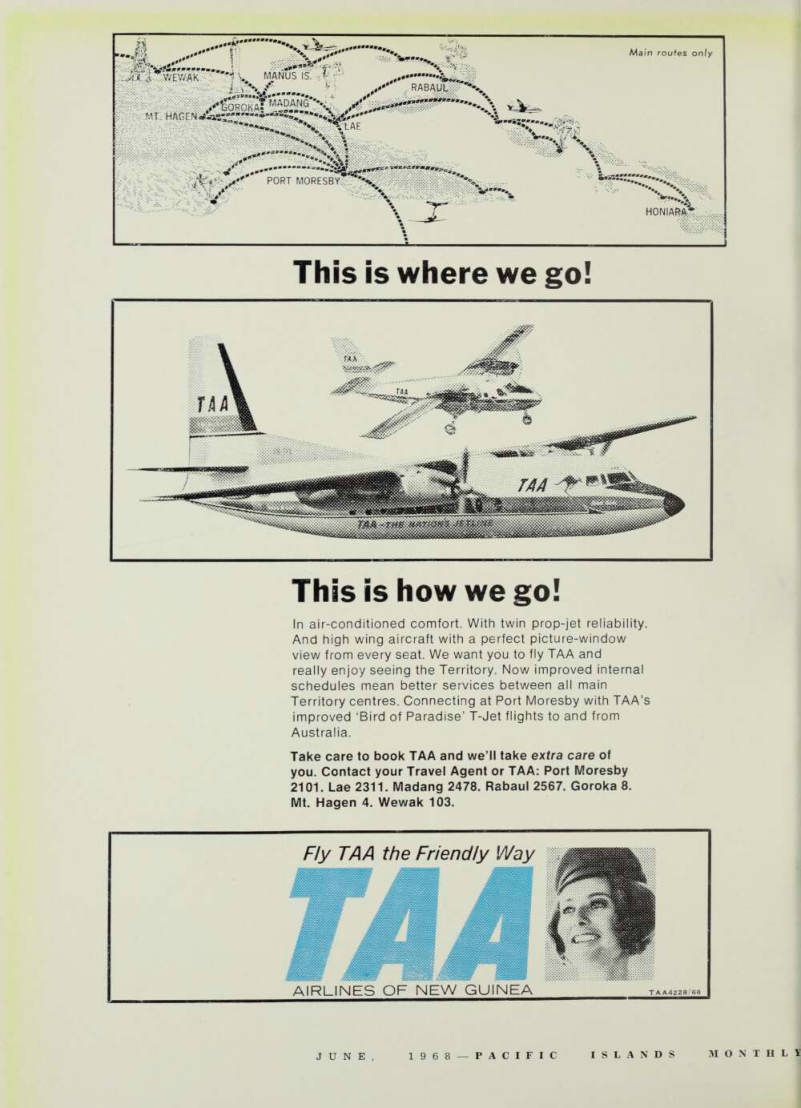 2
2 3
3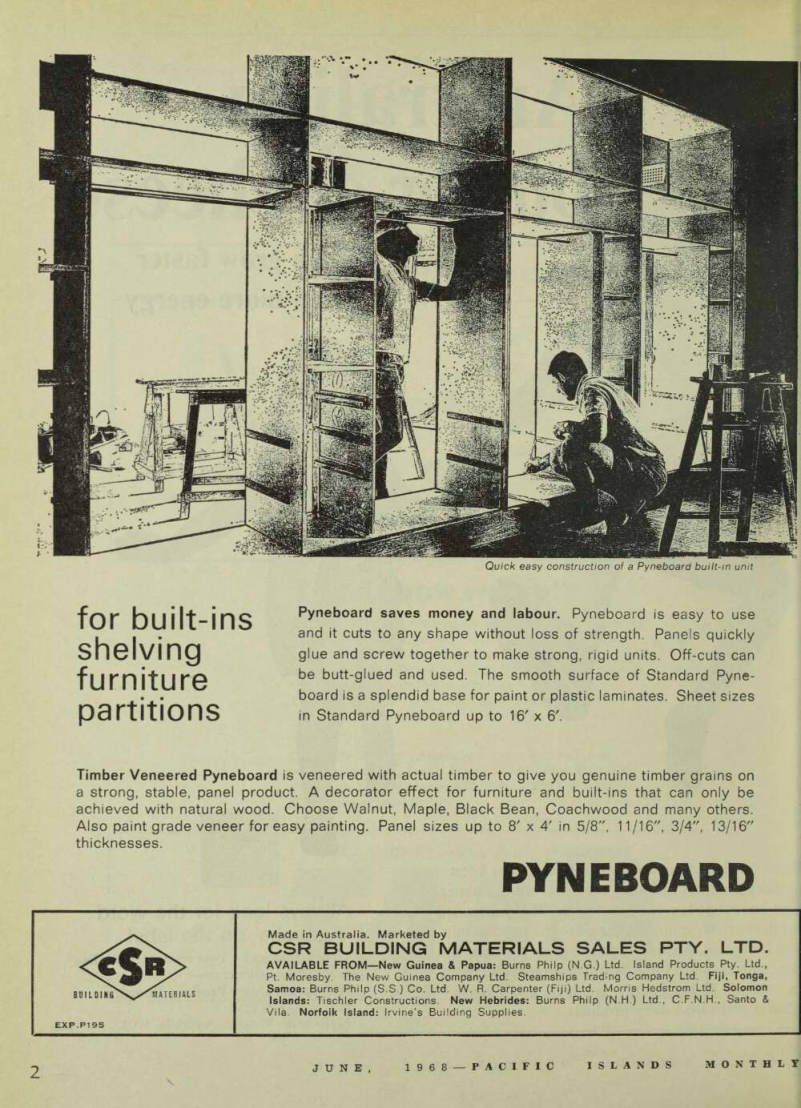 4
4 5
5 6
6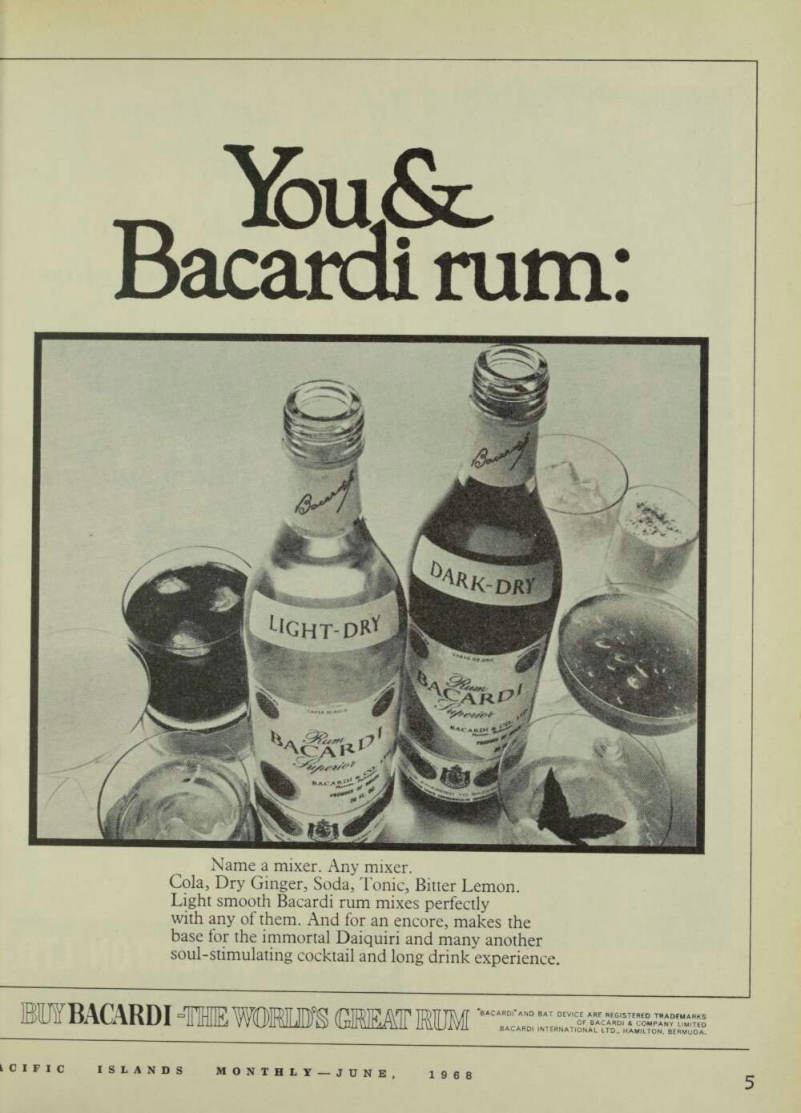 7
7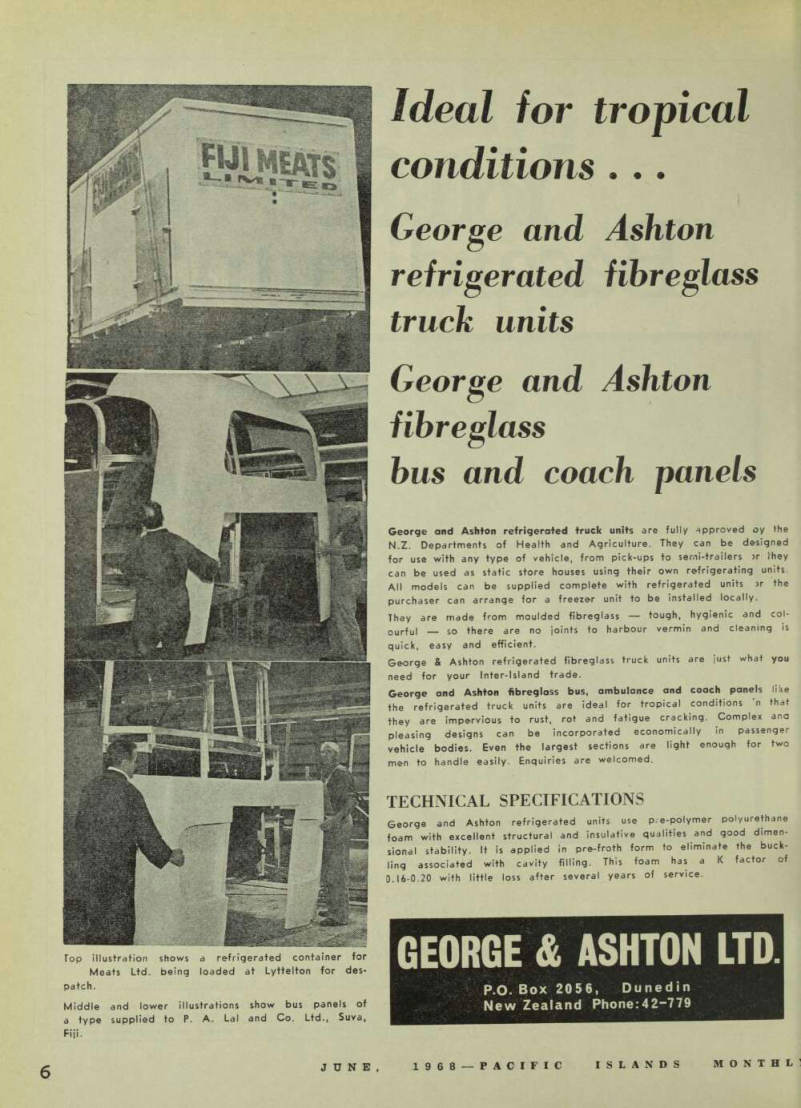 8
8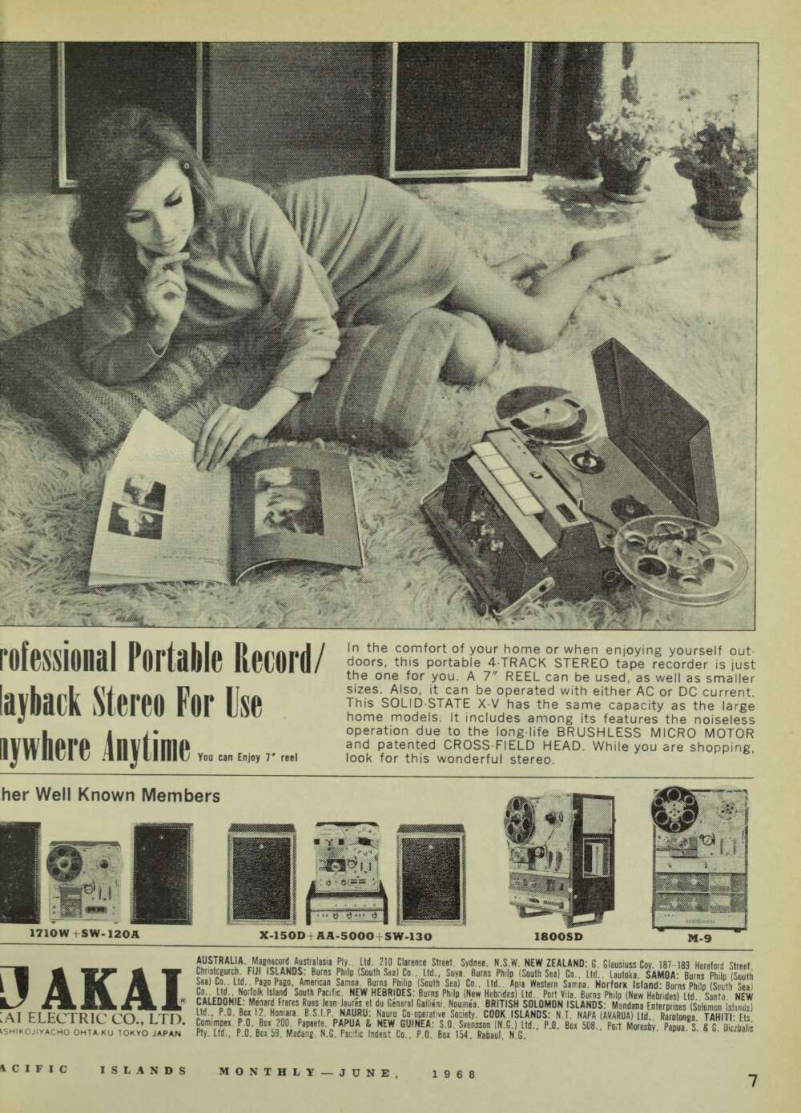 9
9 10
10 11
11 12
12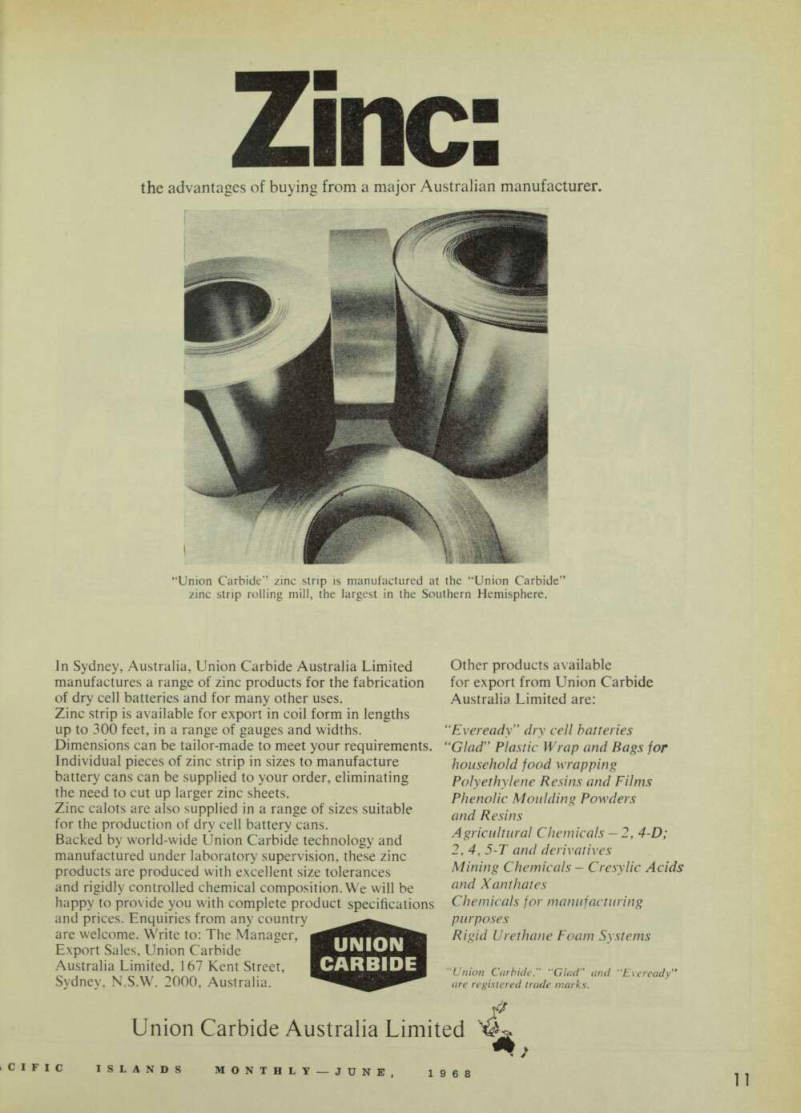 13
13 14
14 15
15 16
16 17
17 18
18 19
19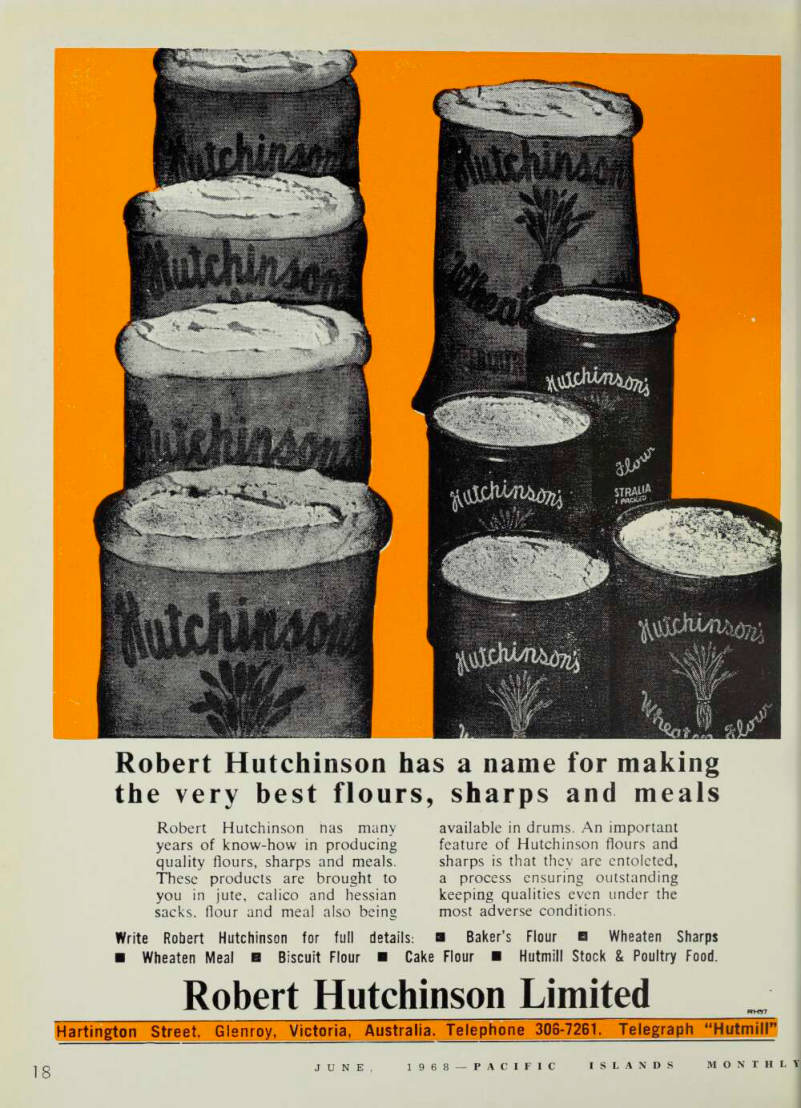 20
20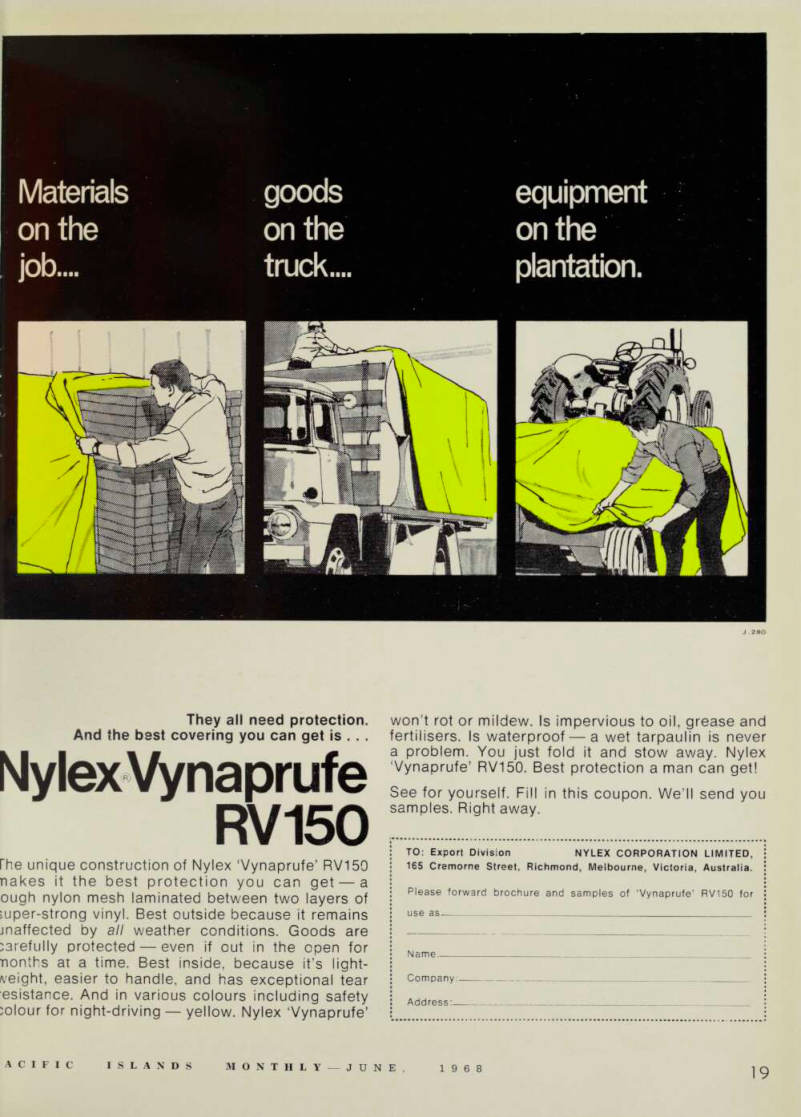 21
21 22
22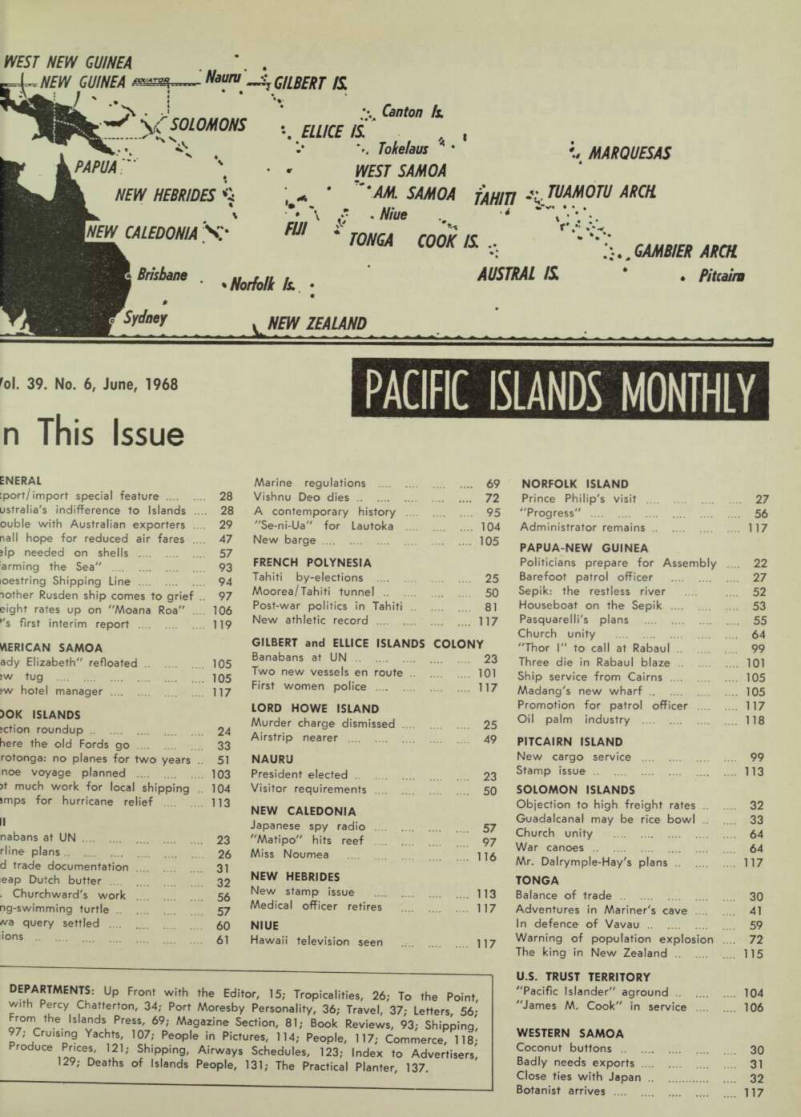 23
23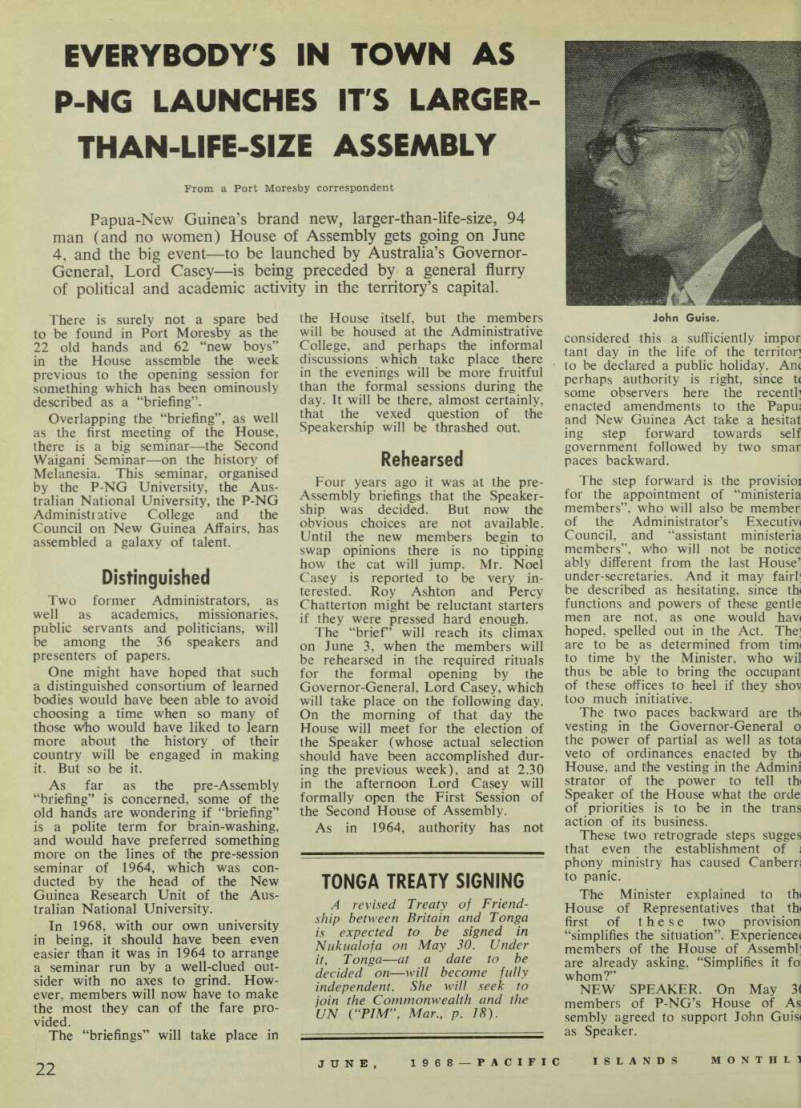 24
24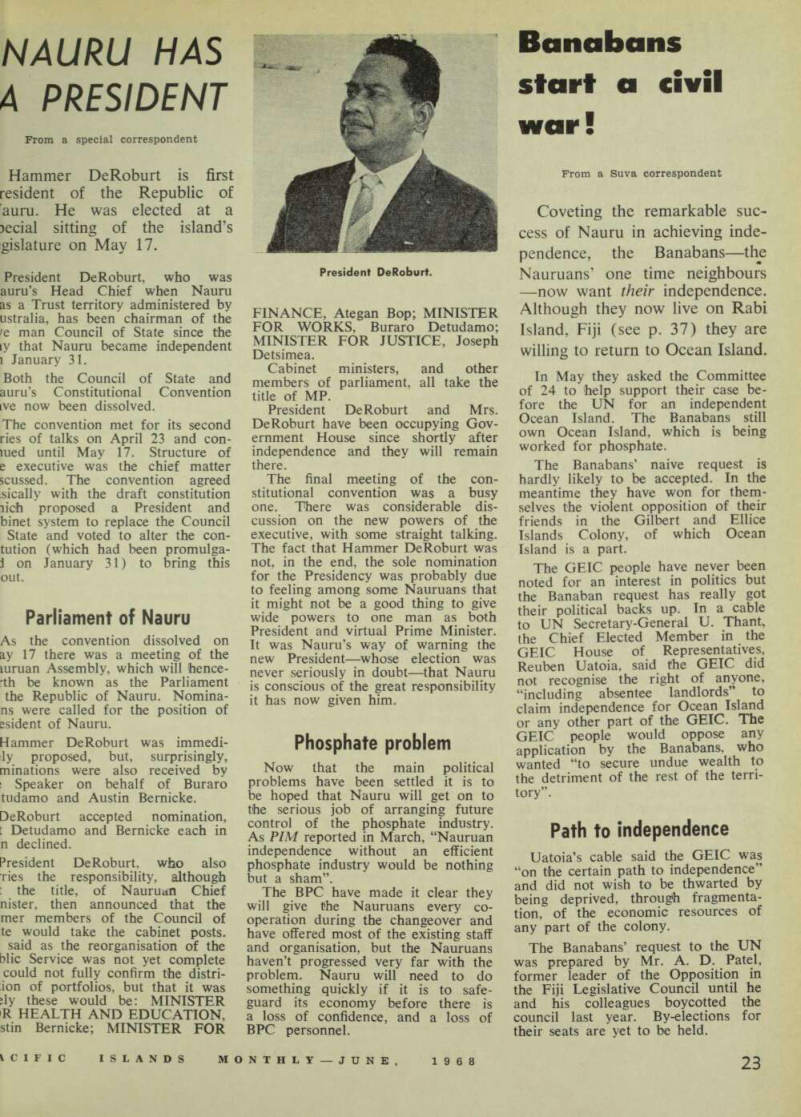 25
25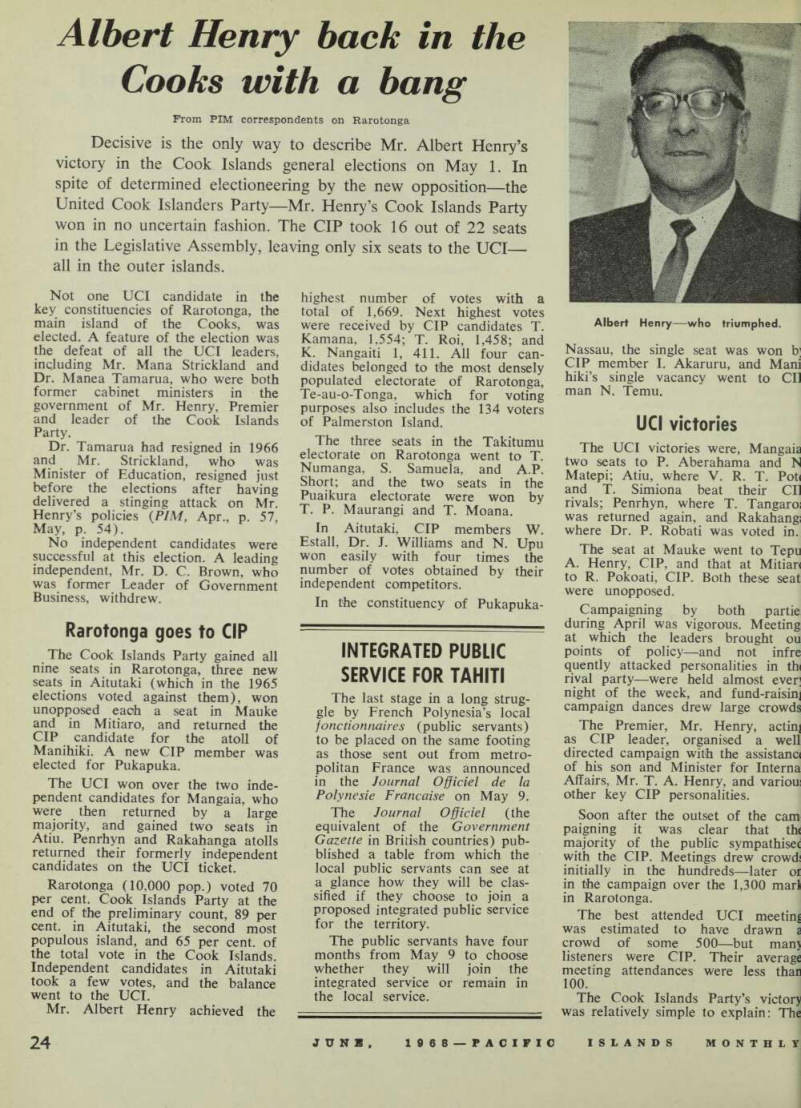 26
26 27
27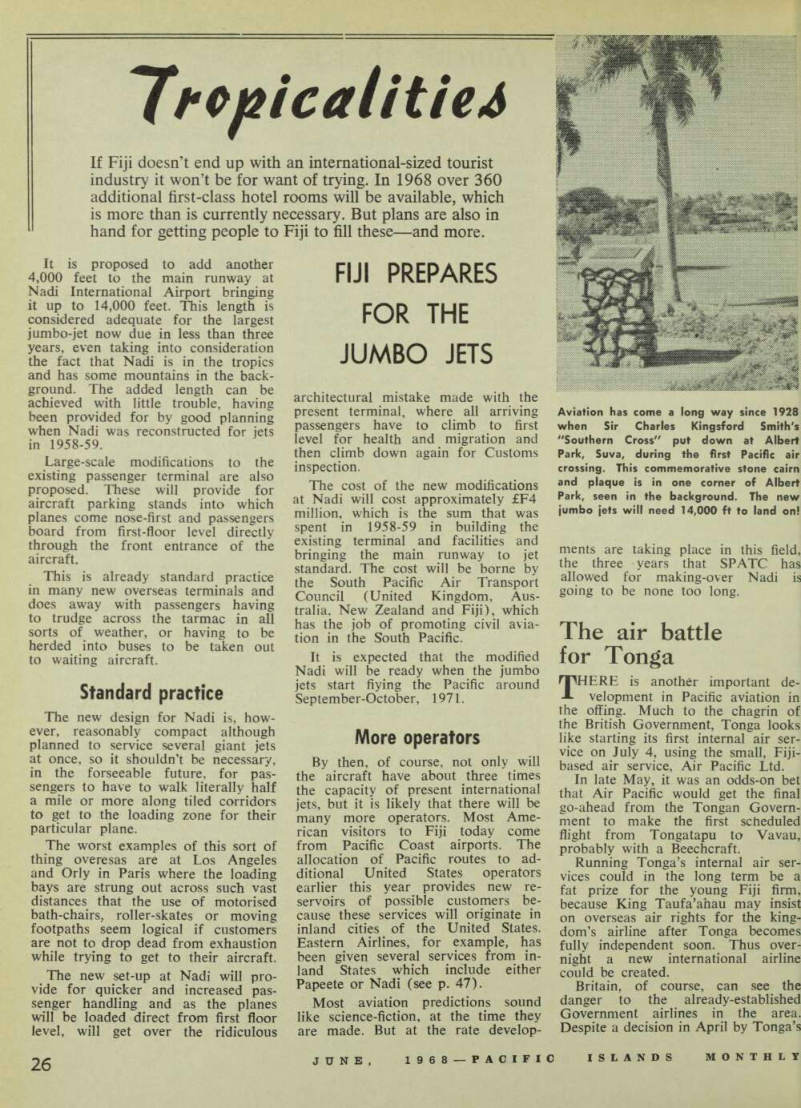 28
28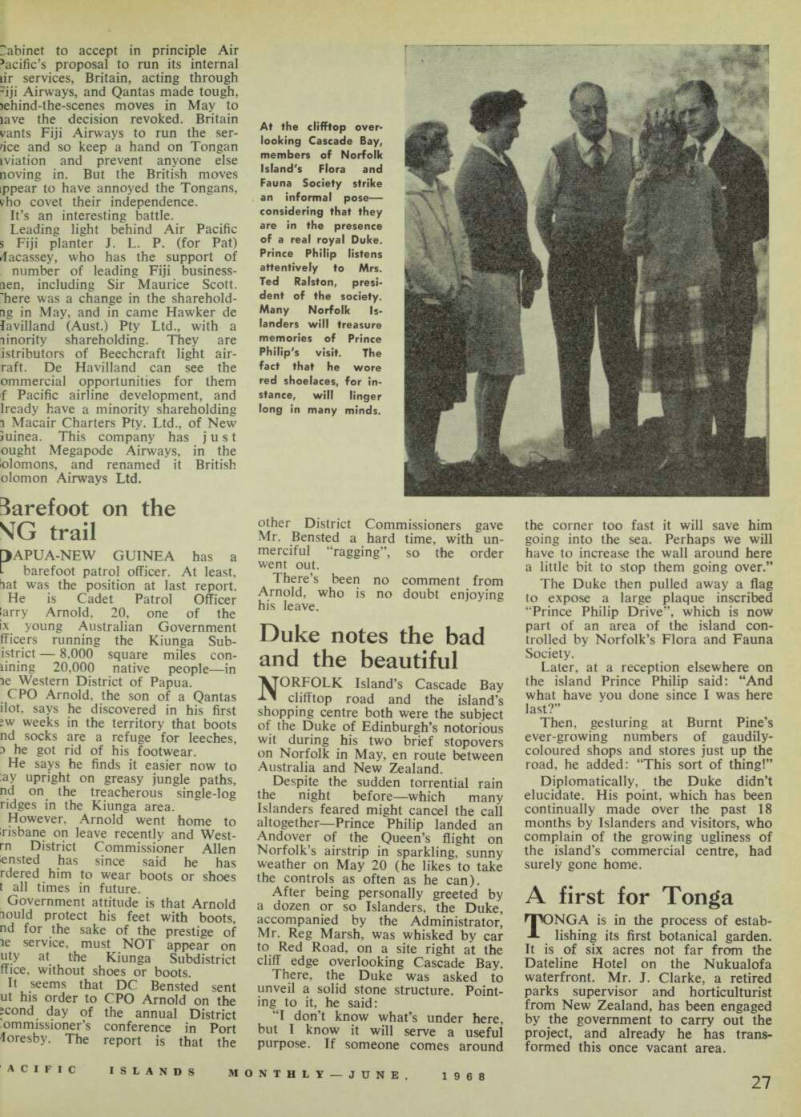 29
29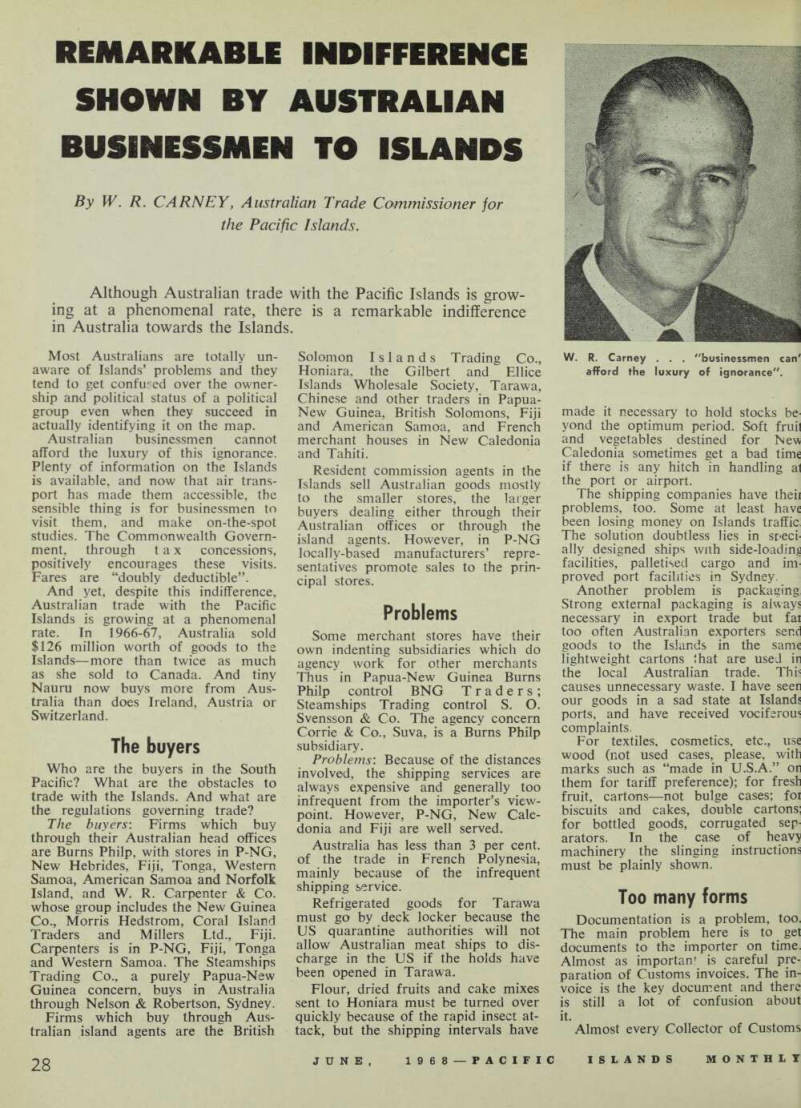 30
30 31
31 32
32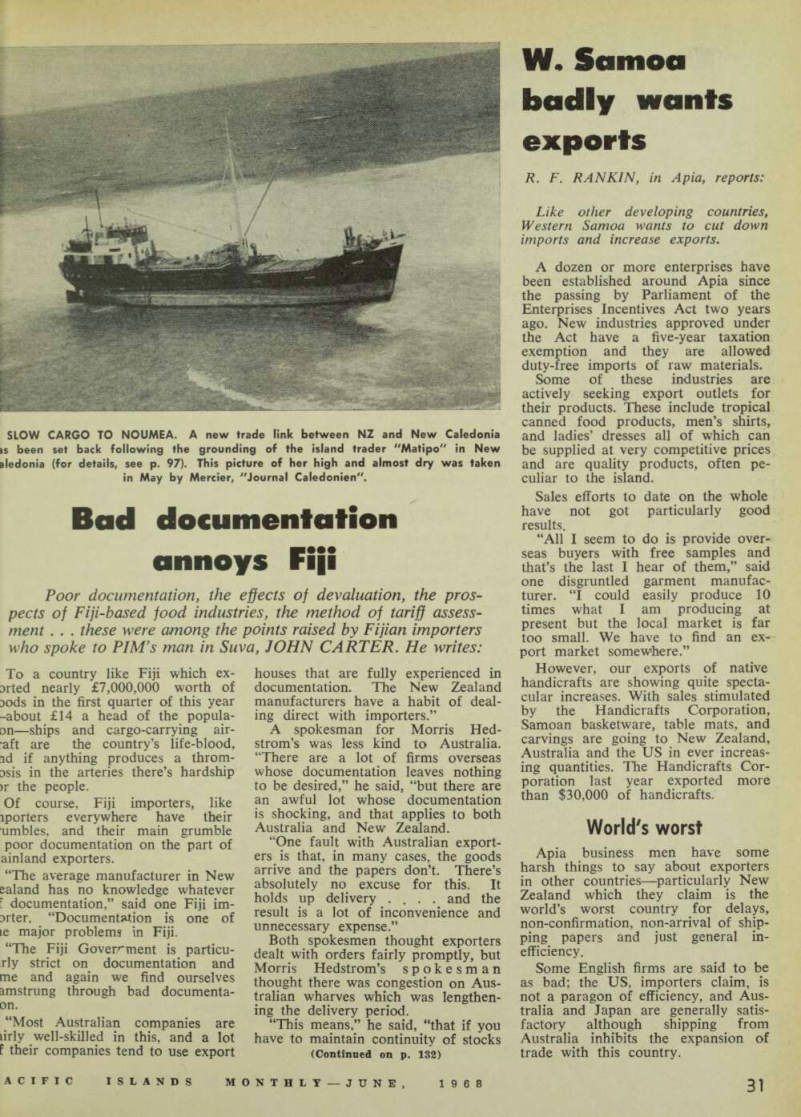 33
33 34
34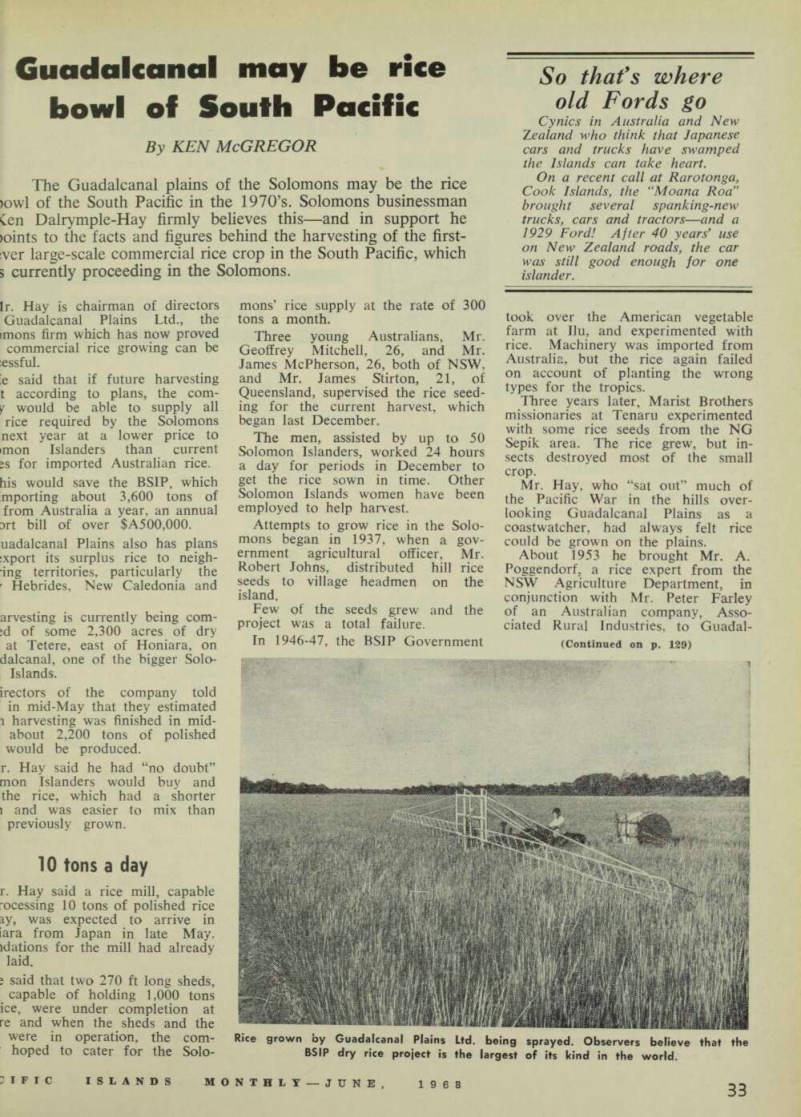 35
35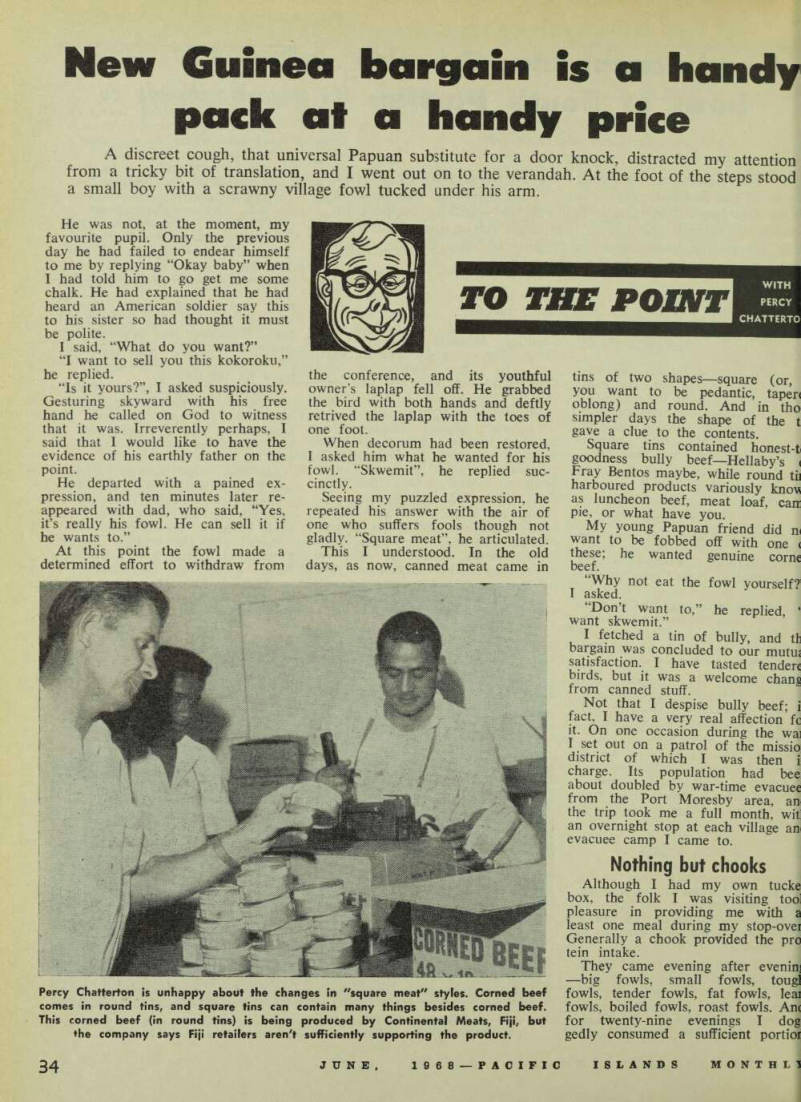 36
36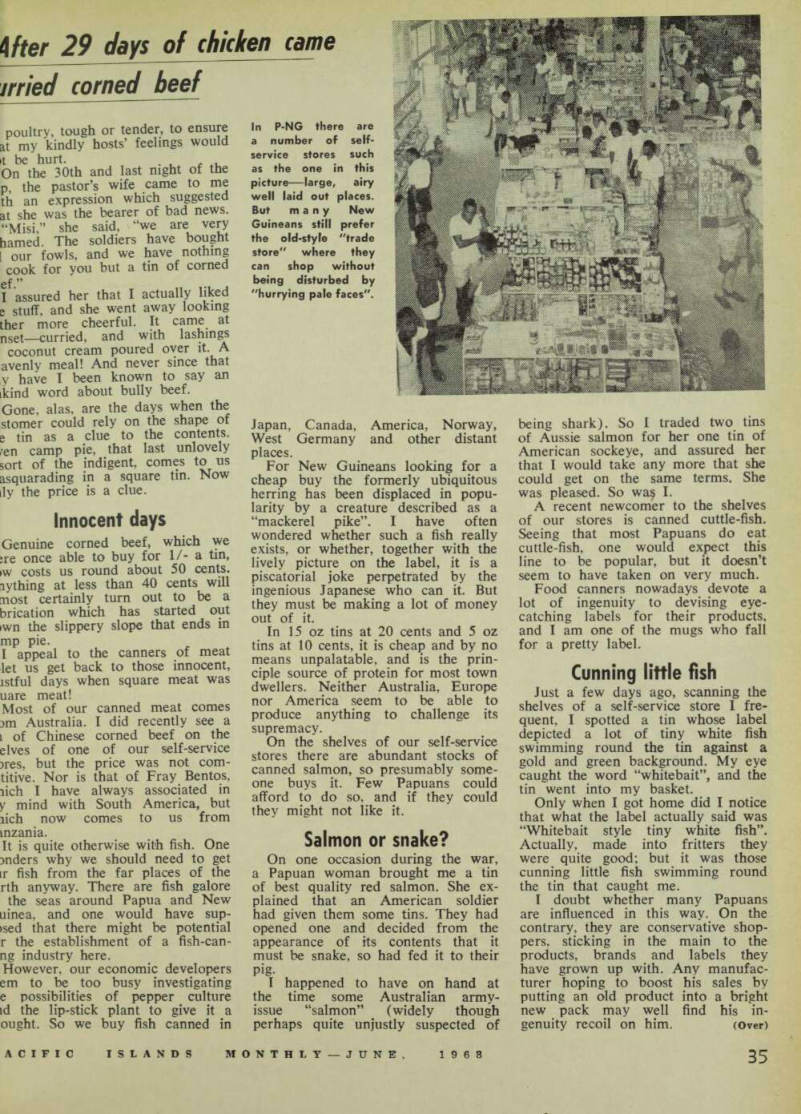 37
37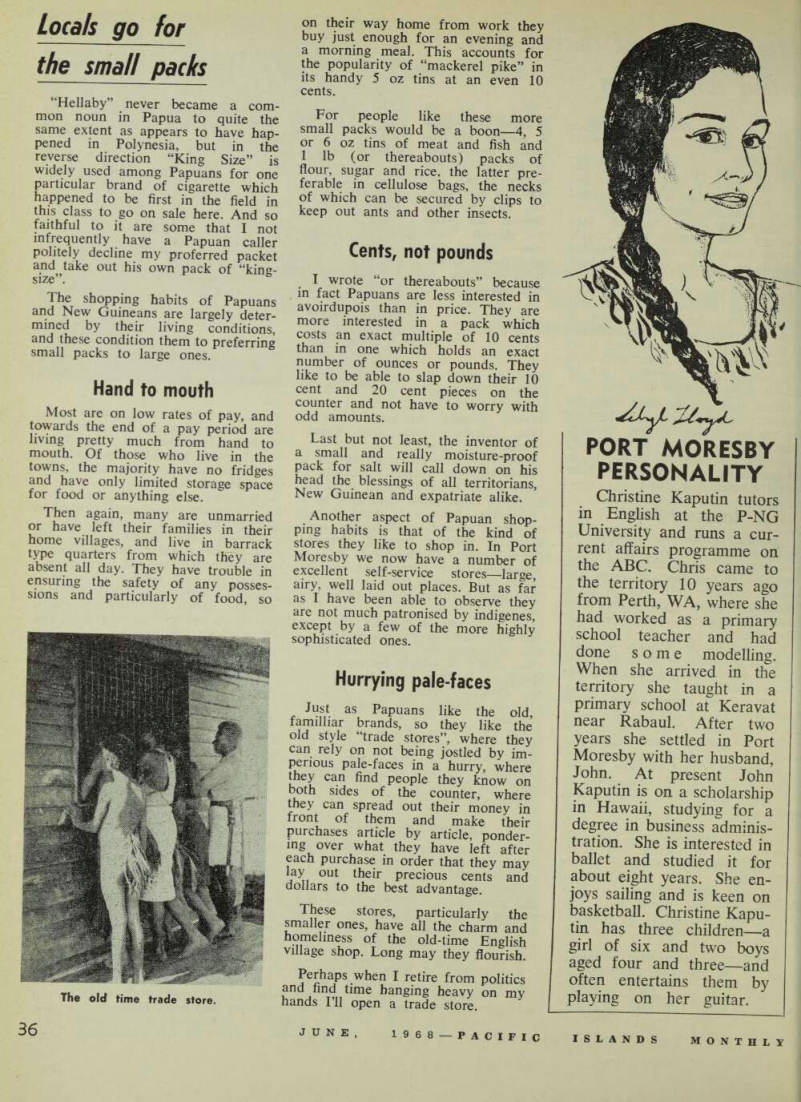 38
38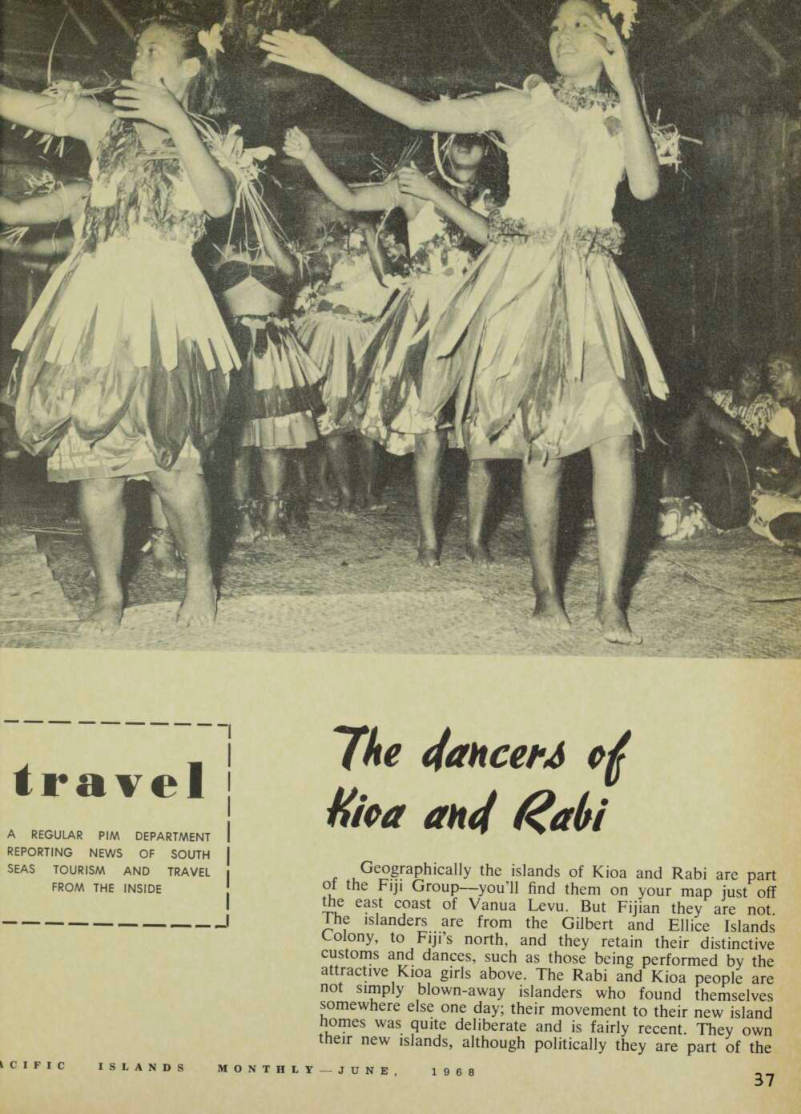 39
39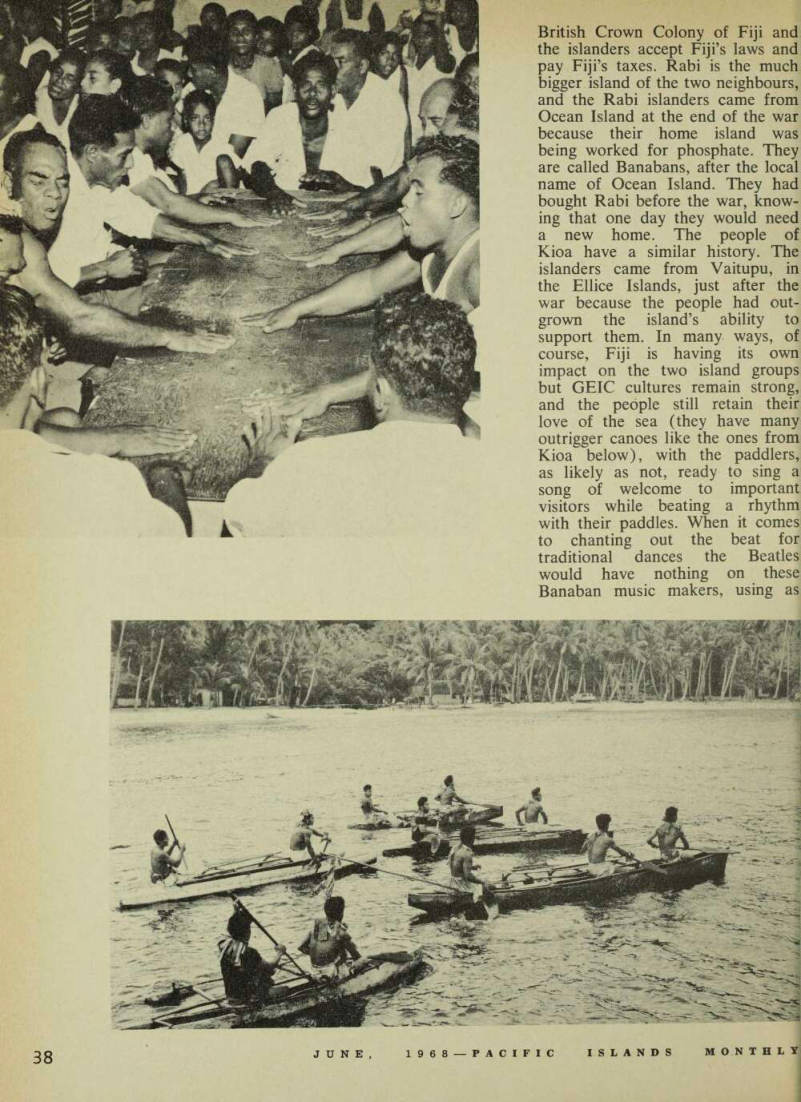 40
40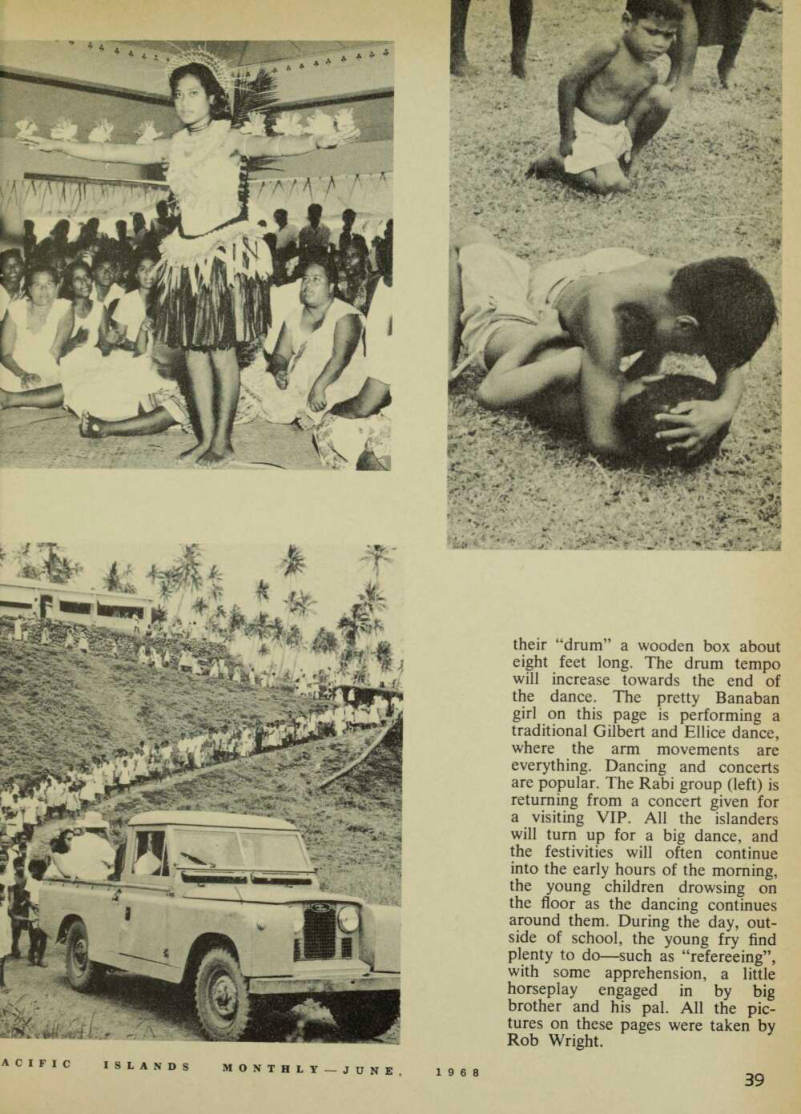 41
41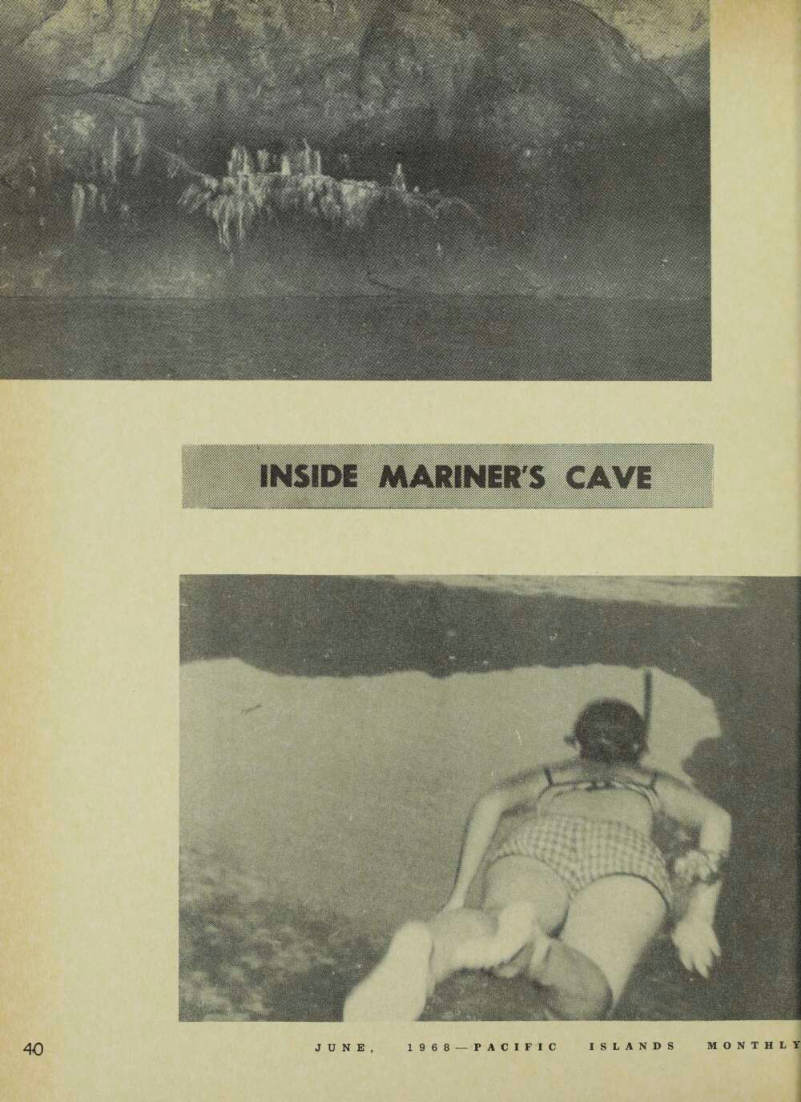 42
42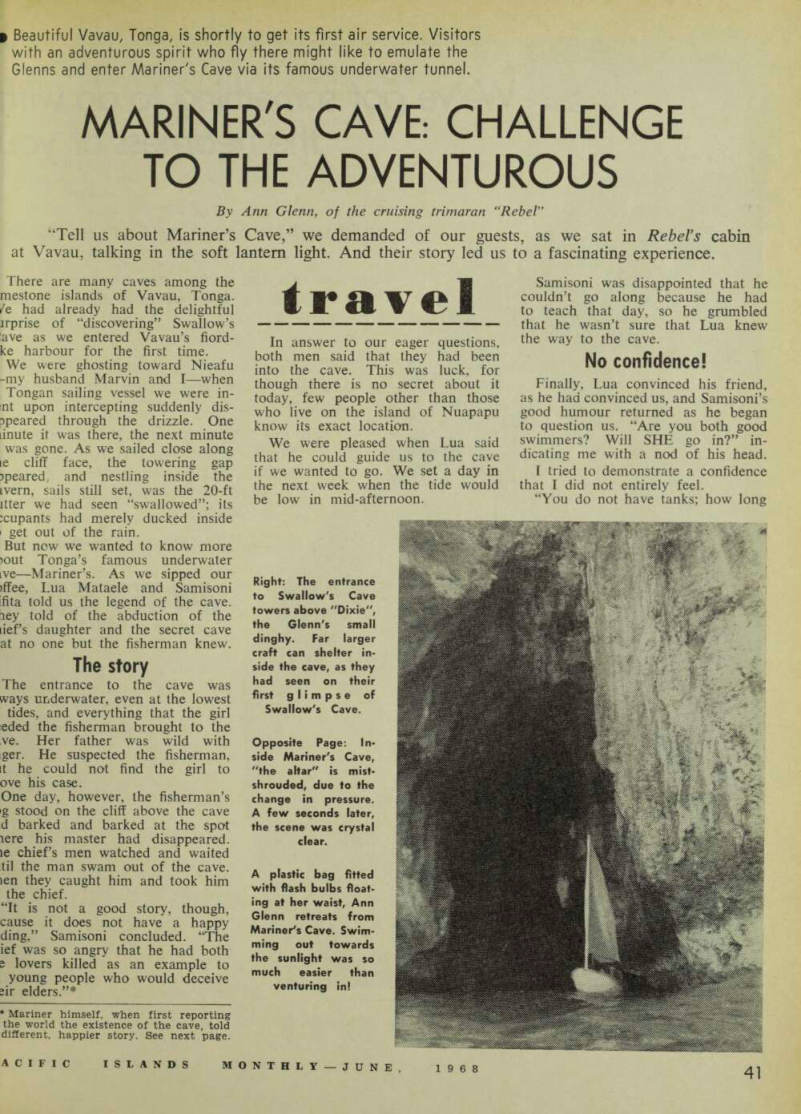 43
43 44
44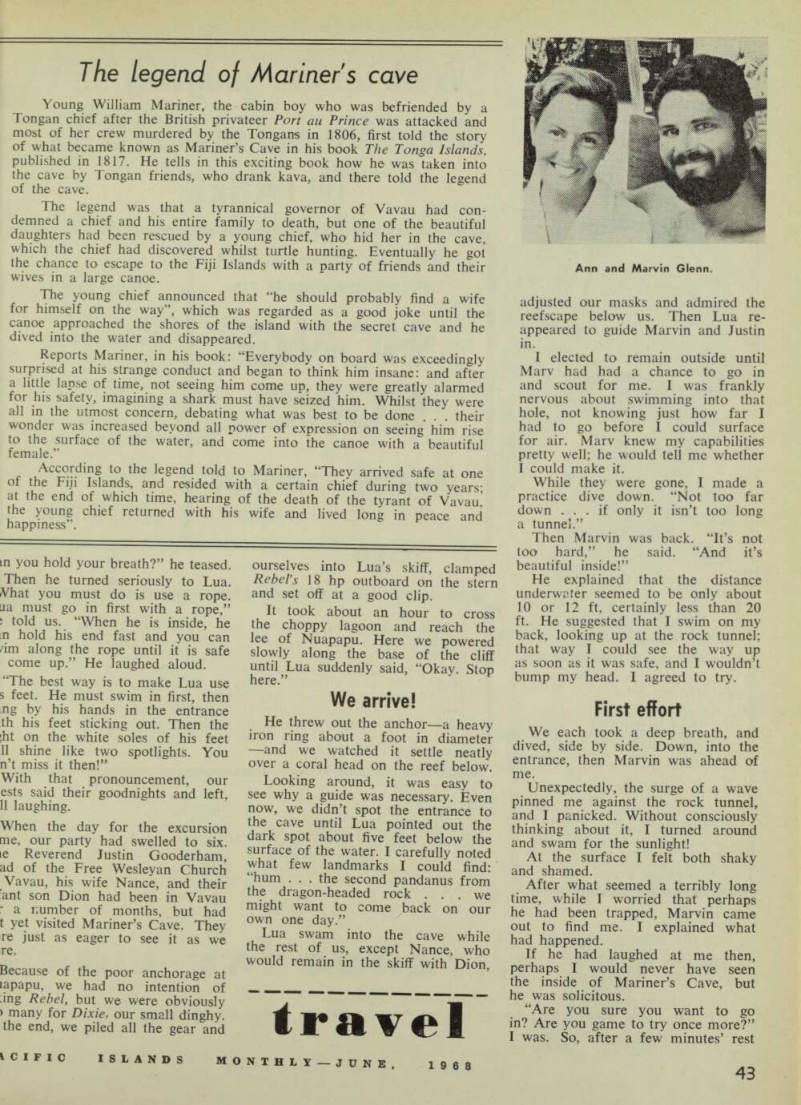 45
45 46
46 47
47 48
48 49
49 50
50 51
51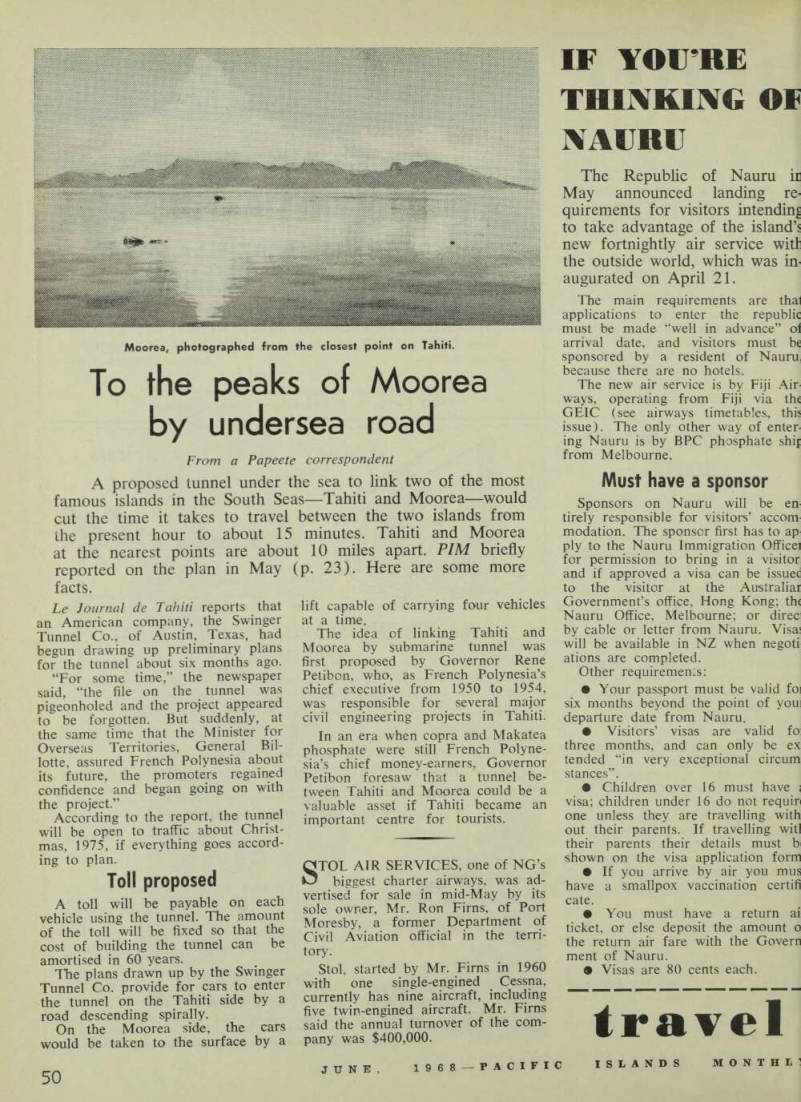 52
52 53
53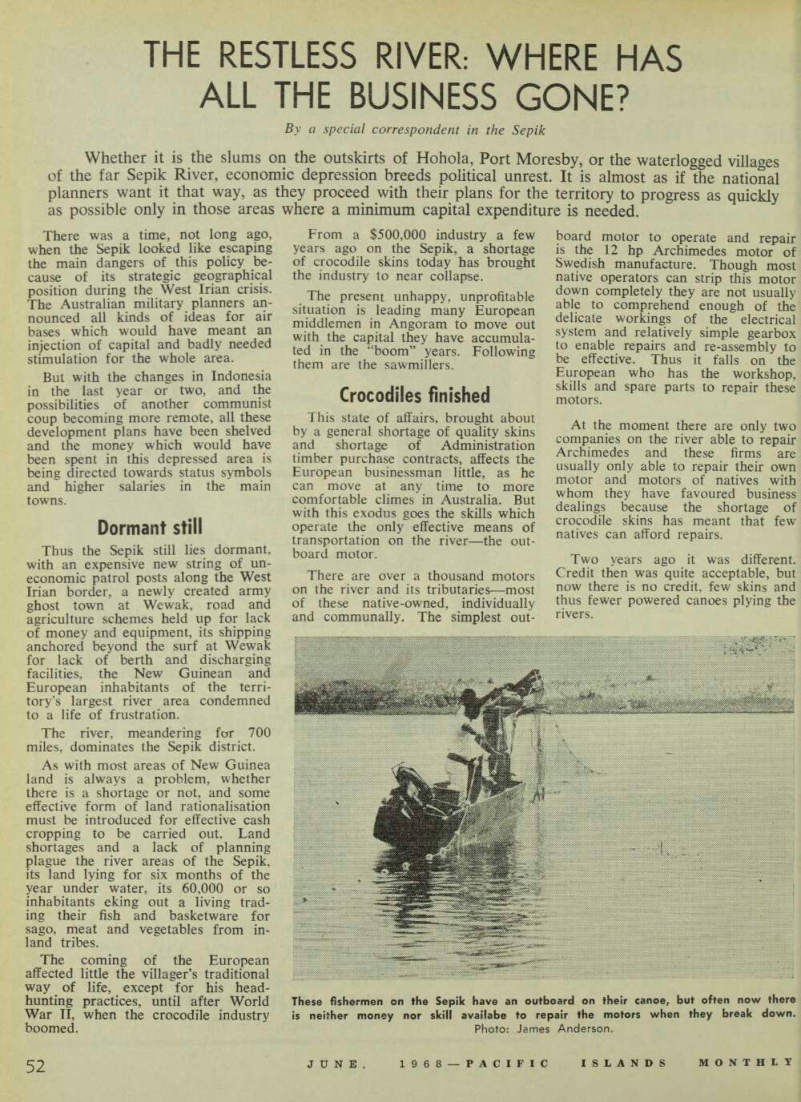 54
54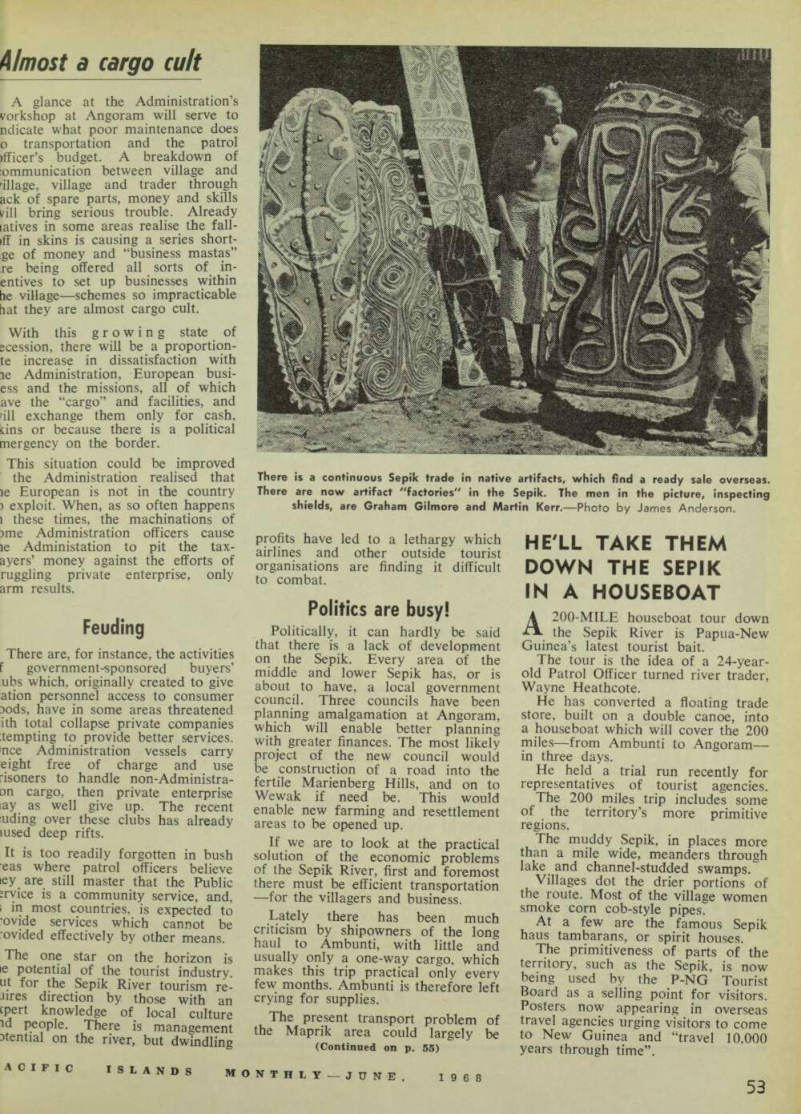 55
55 56
56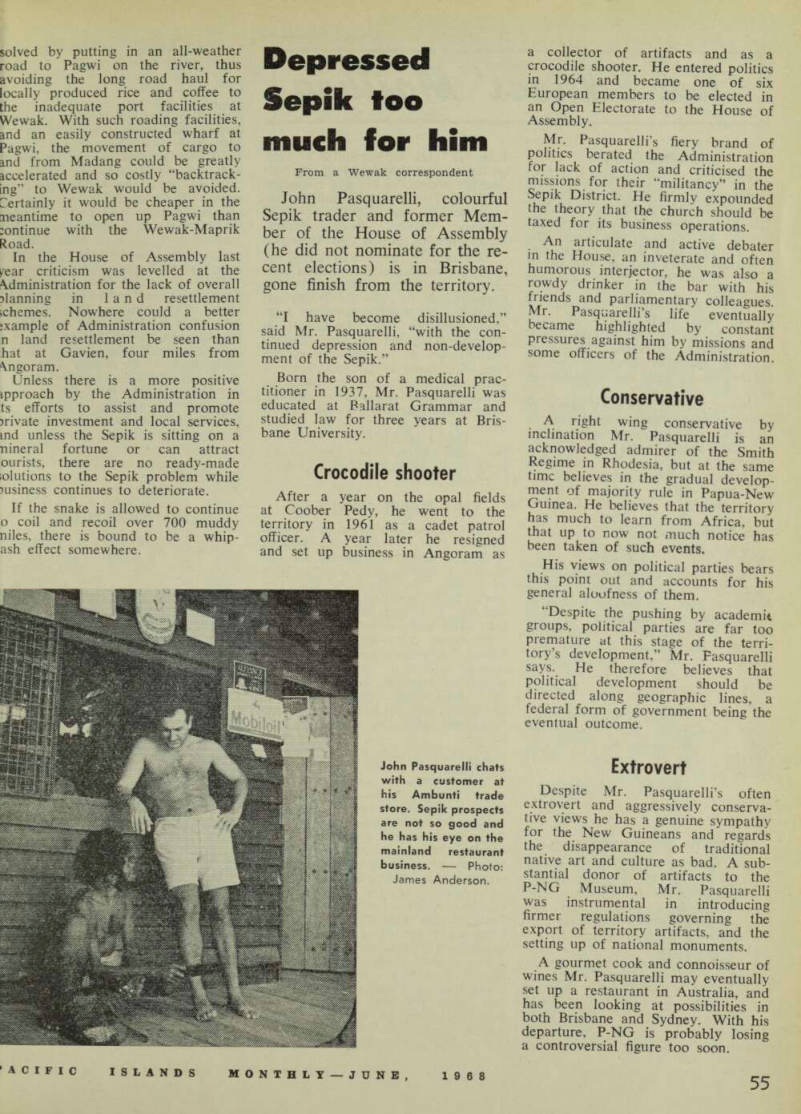 57
57 58
58 59
59 60
60 61
61 62
62 63
63 64
64 65
65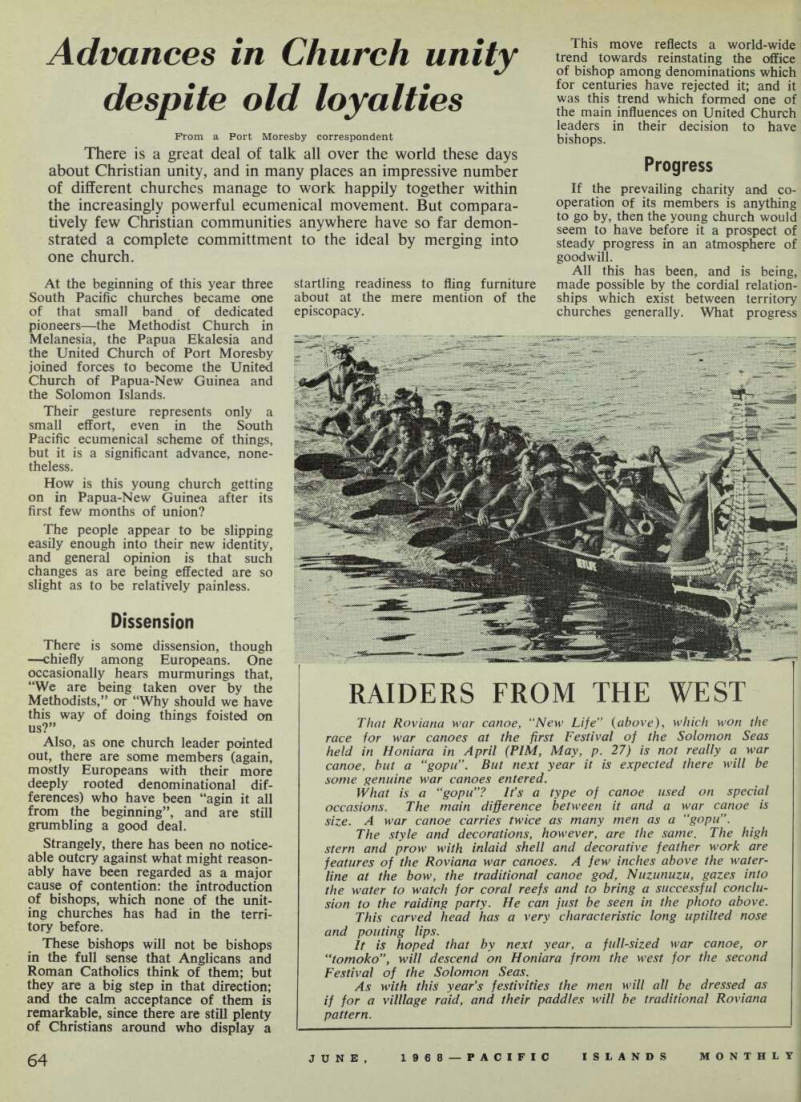 66
66 67
67 68
68 69
69 70
70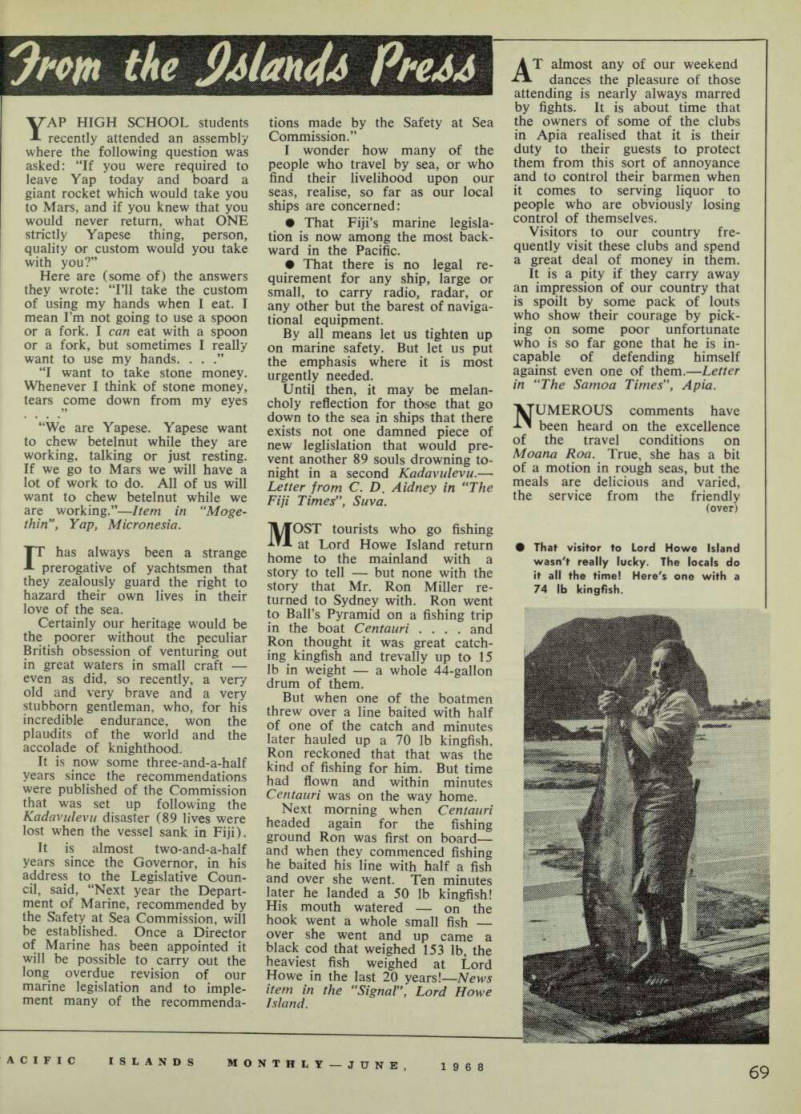 71
71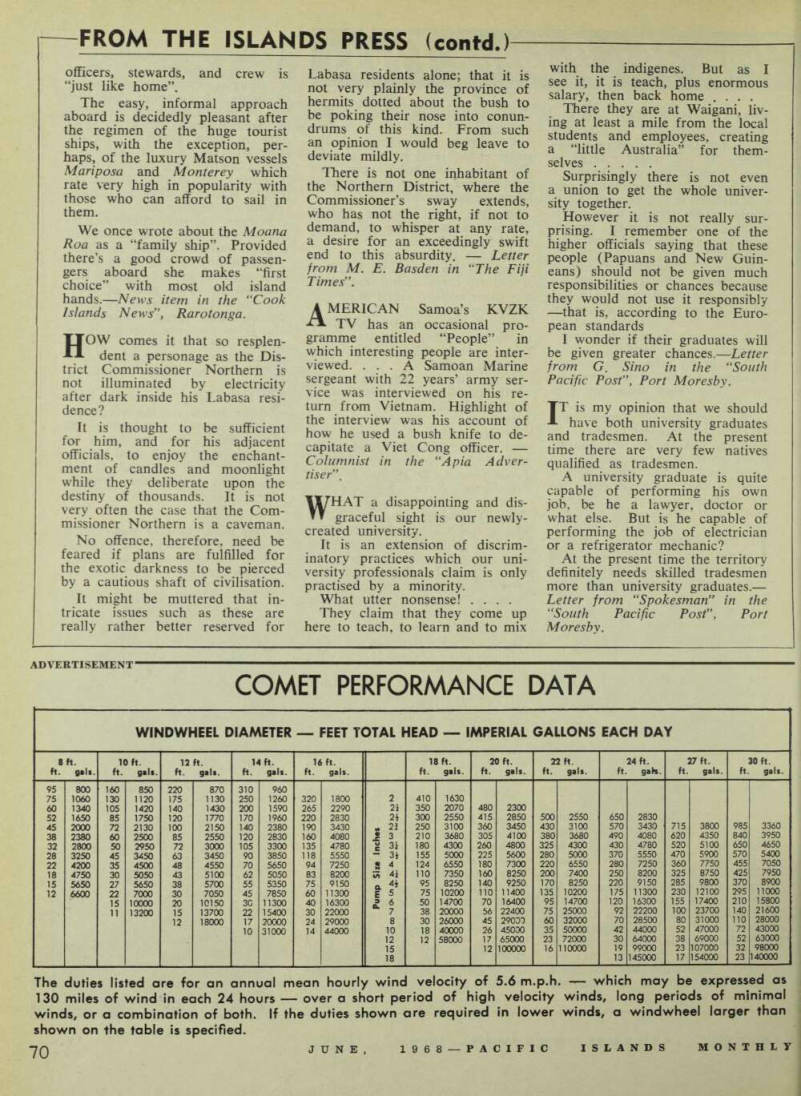 72
72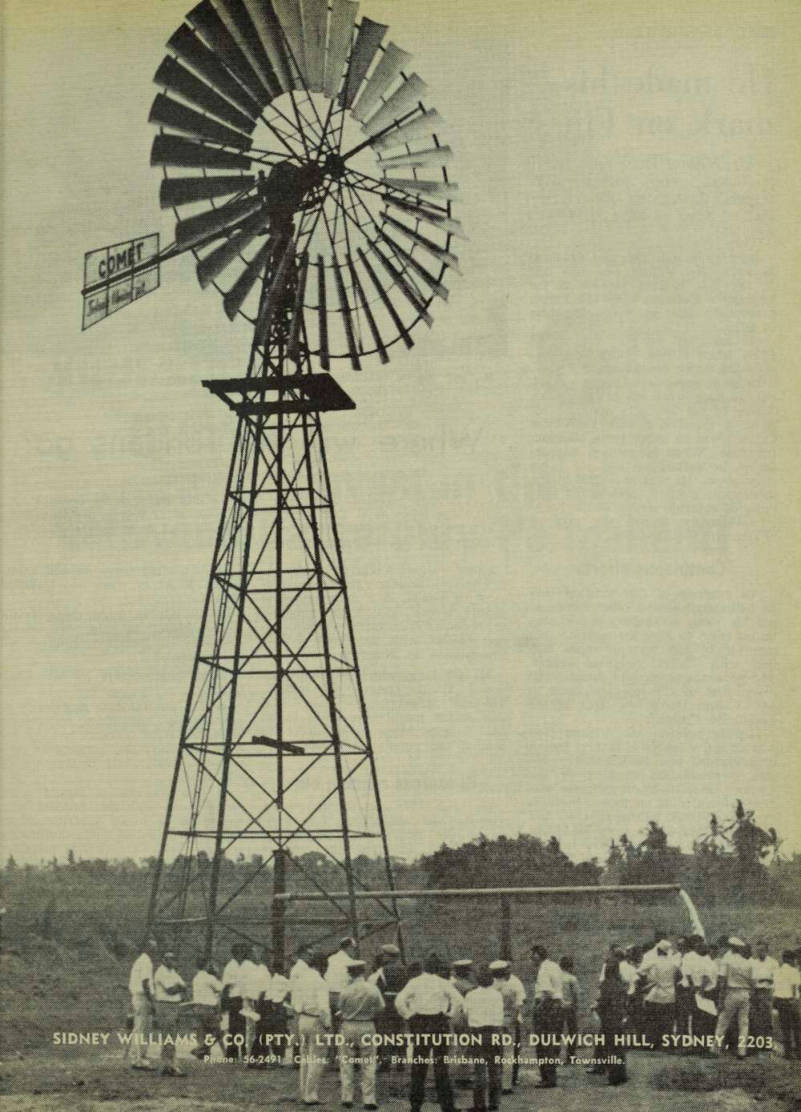 73
73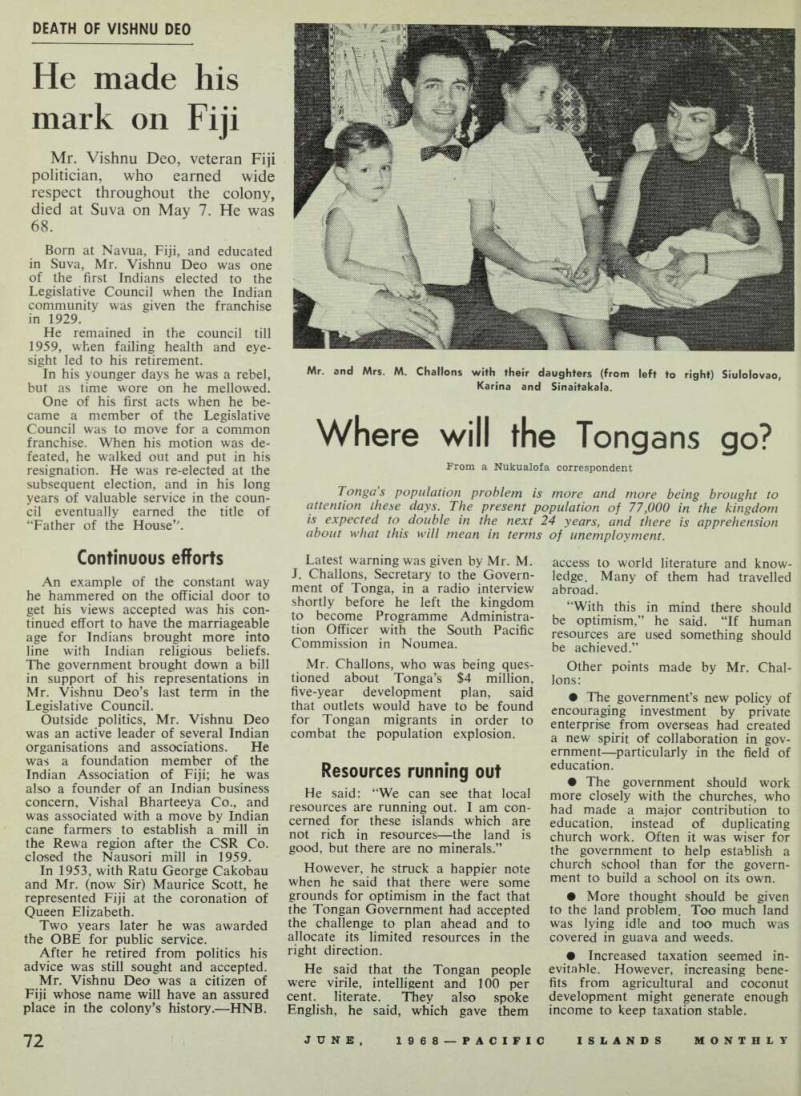 74
74 75
75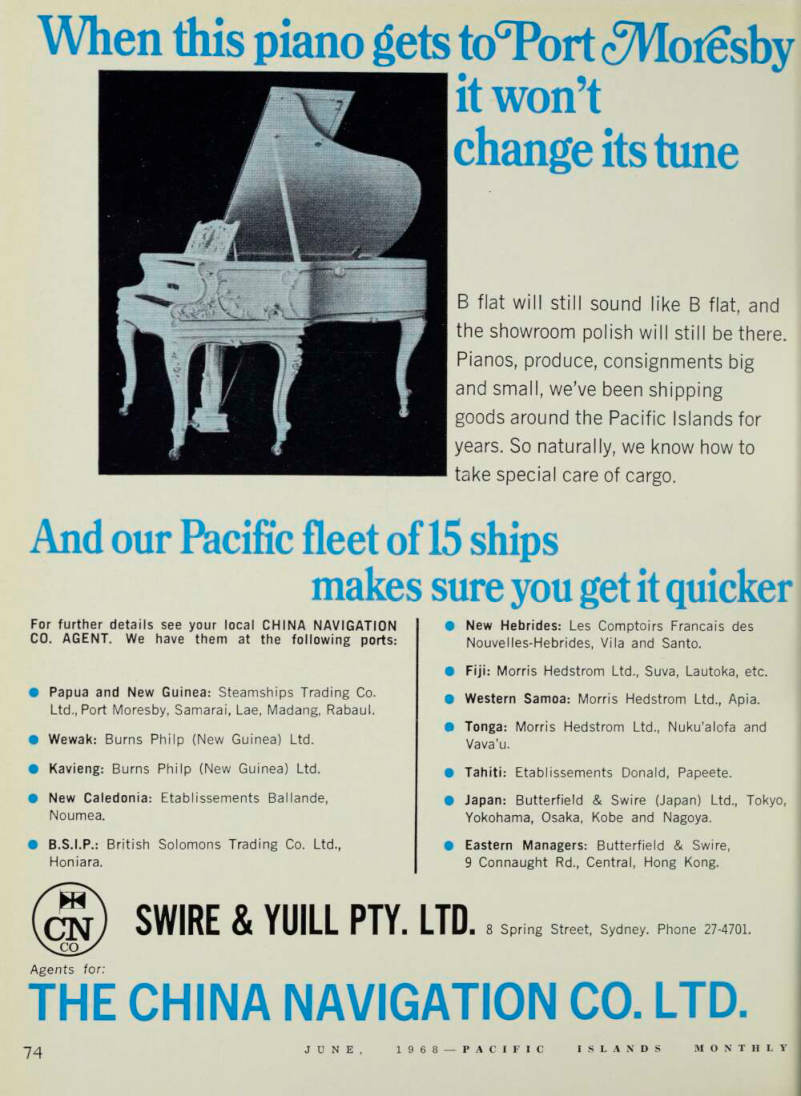 76
76 77
77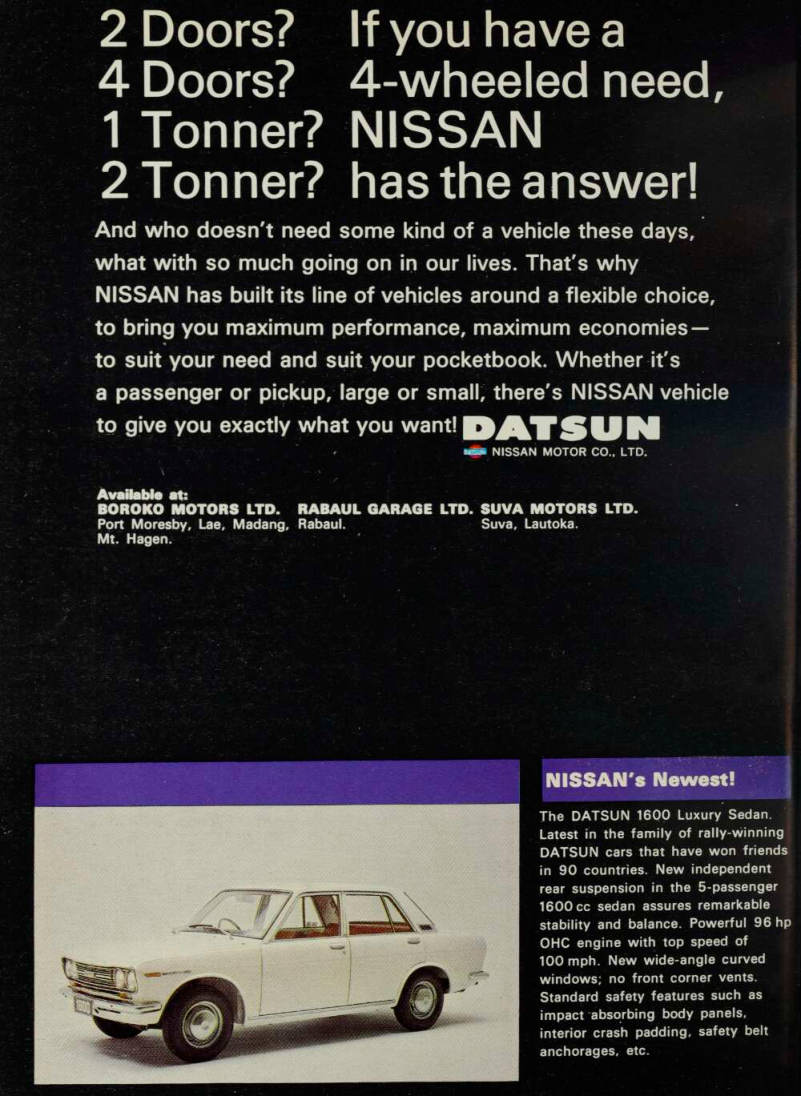 78
78 79
79 80
80 81
81 82
82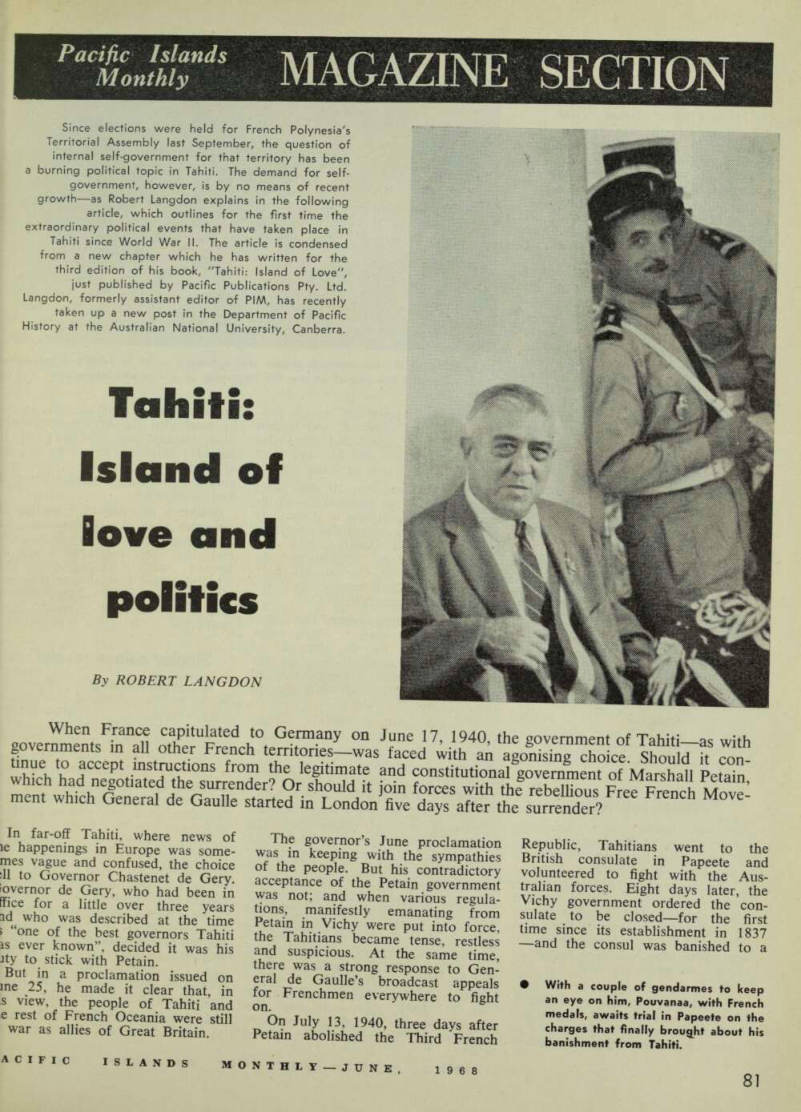 83
83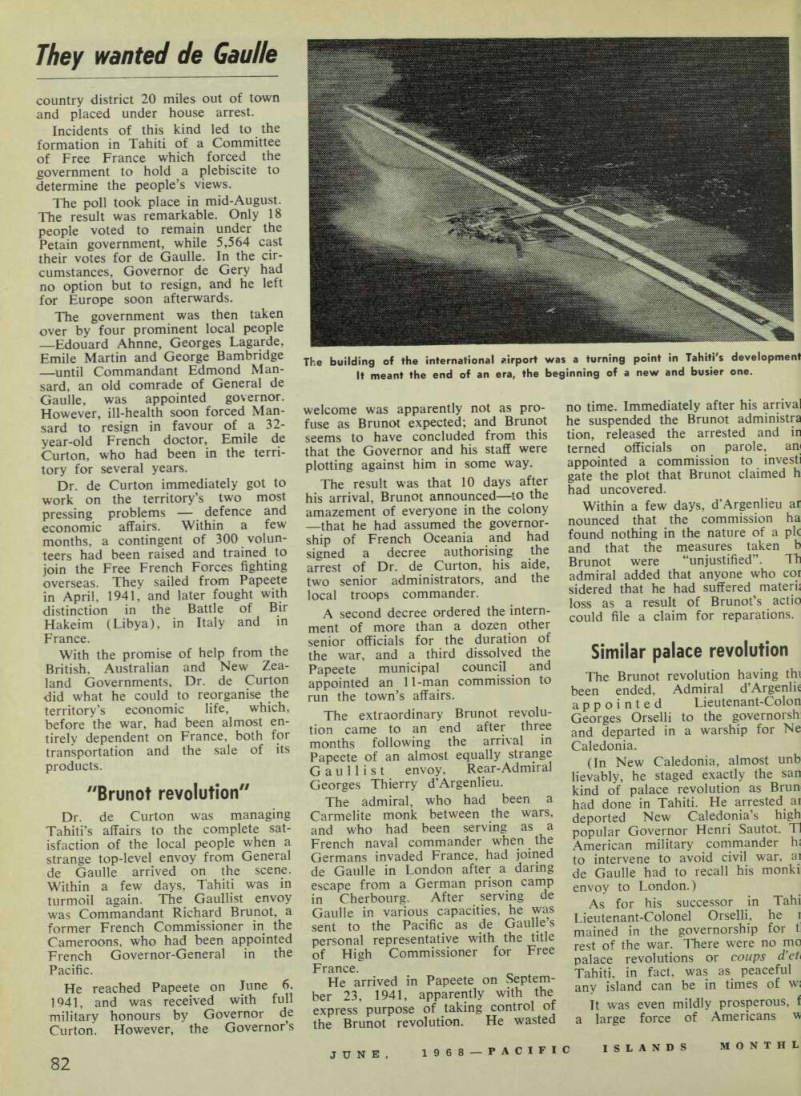 84
84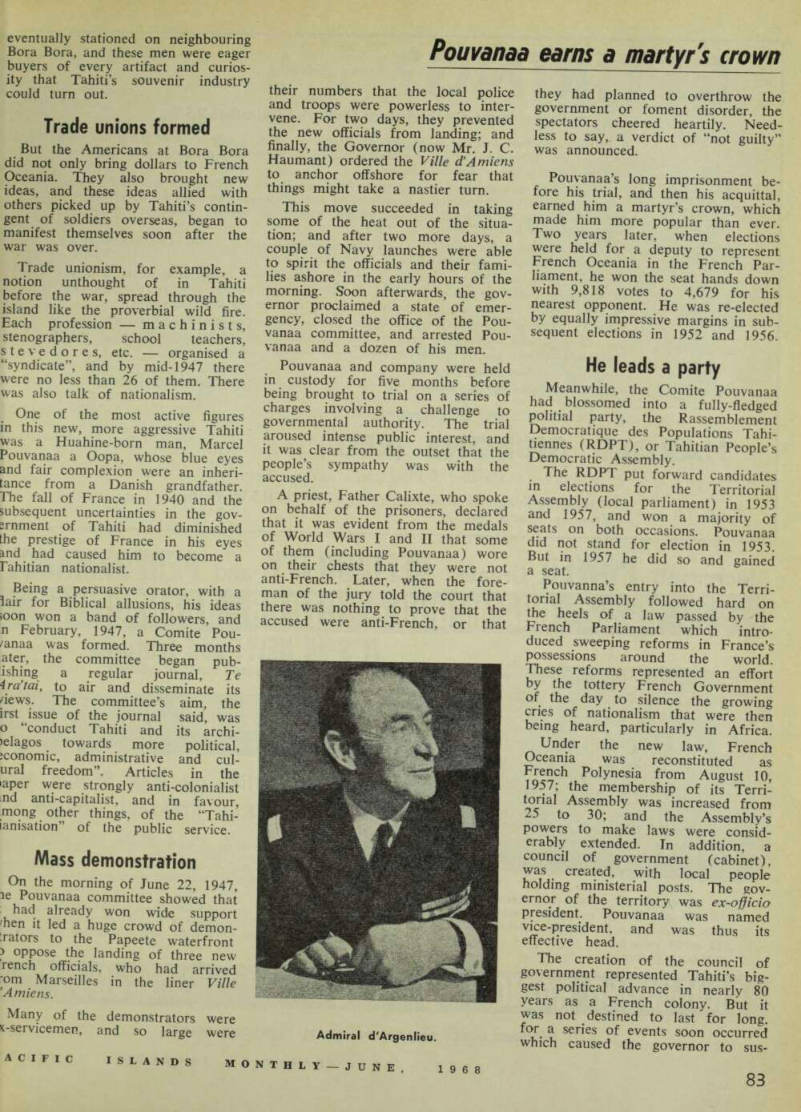 85
85 86
86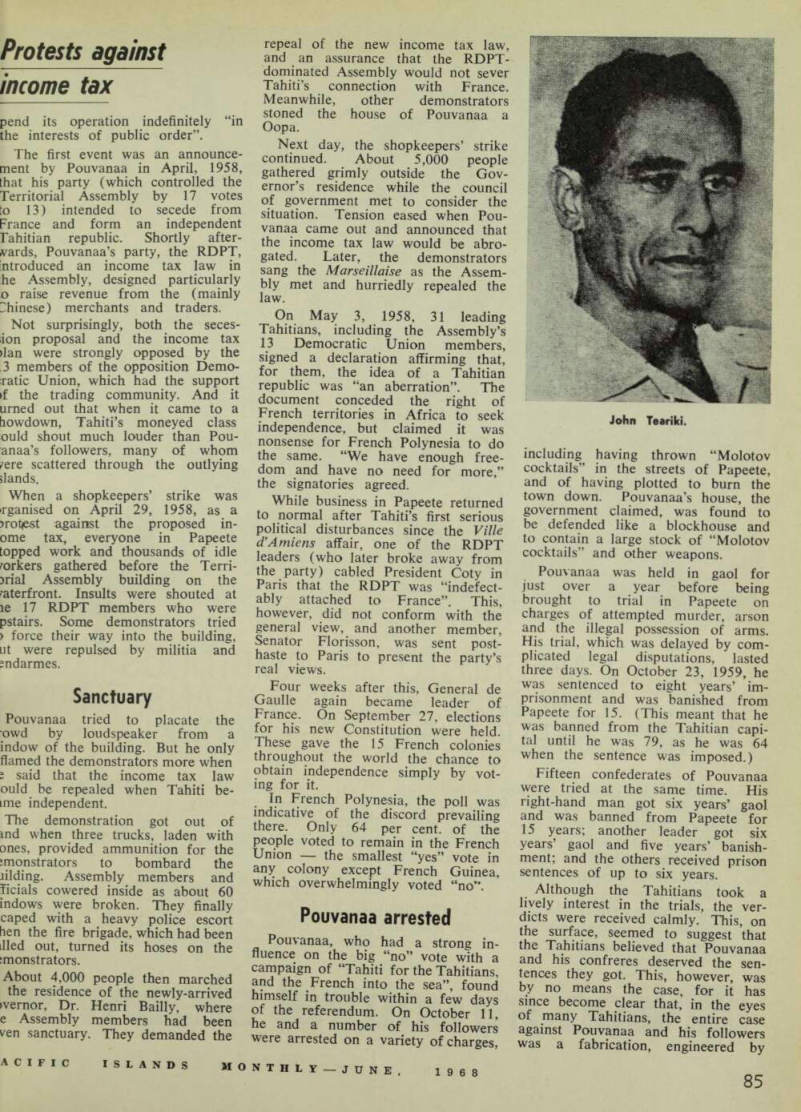 87
87 88
88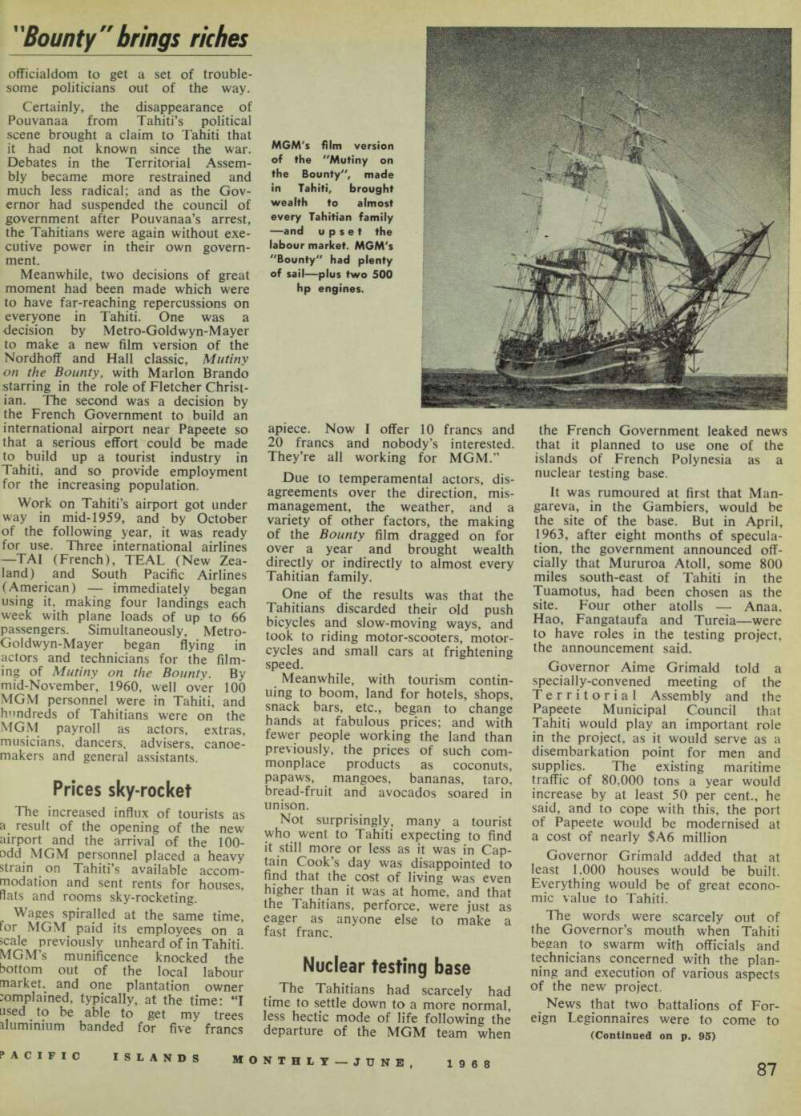 89
89 90
90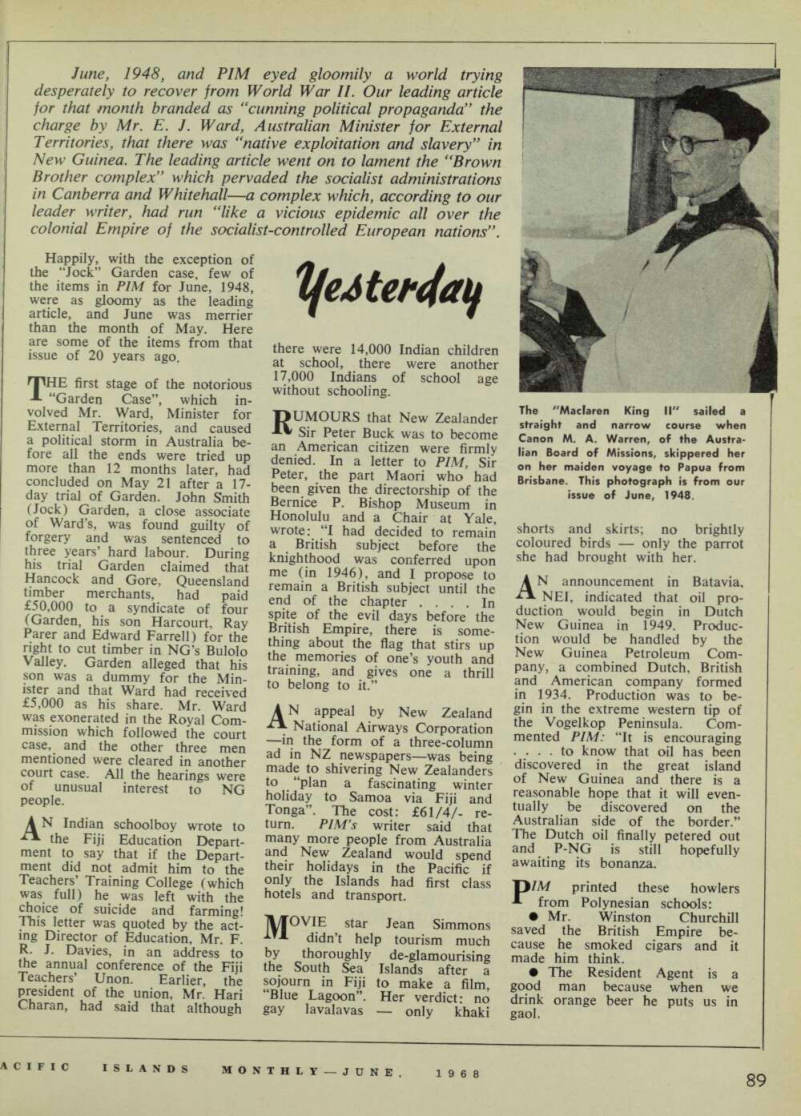 91
91 92
92 93
93 94
94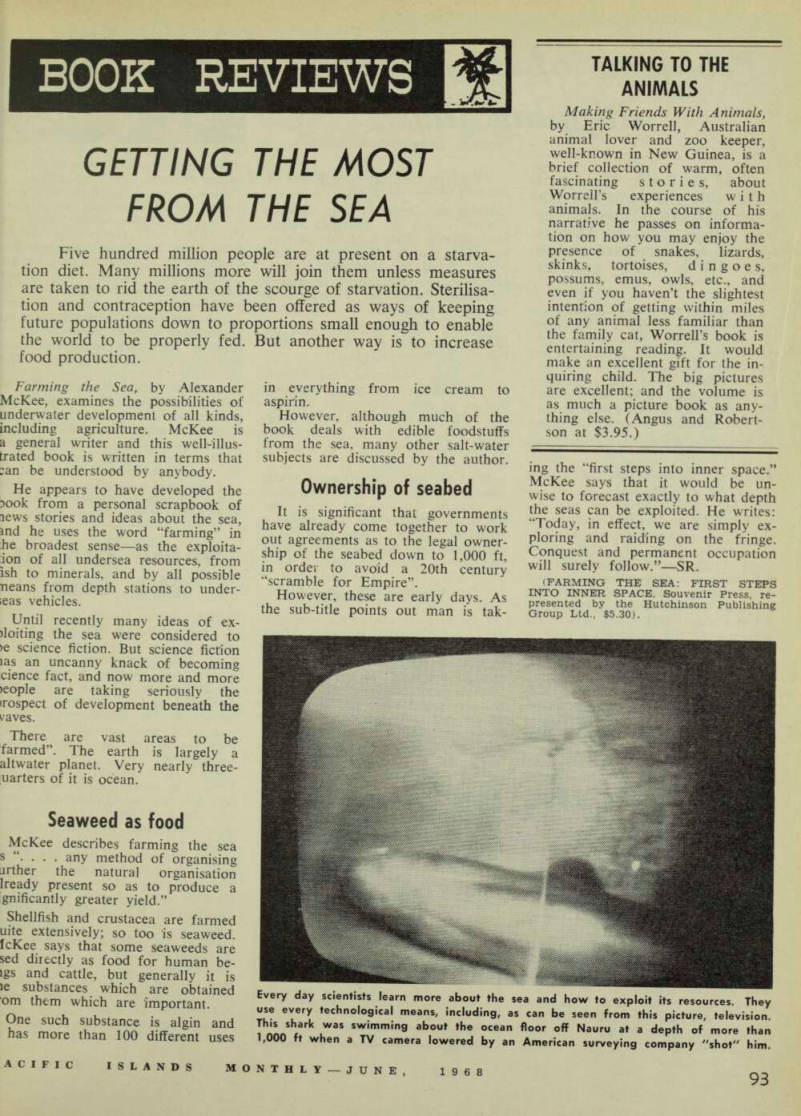 95
95 96
96 97
97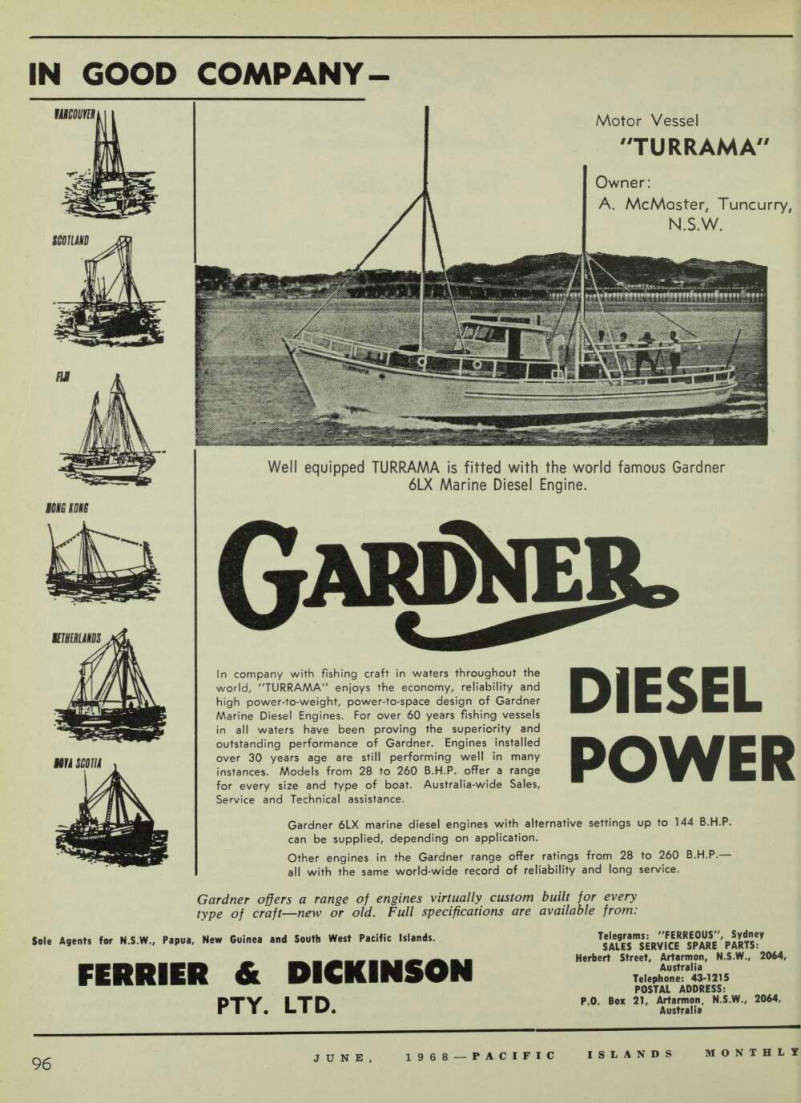 98
98 99
99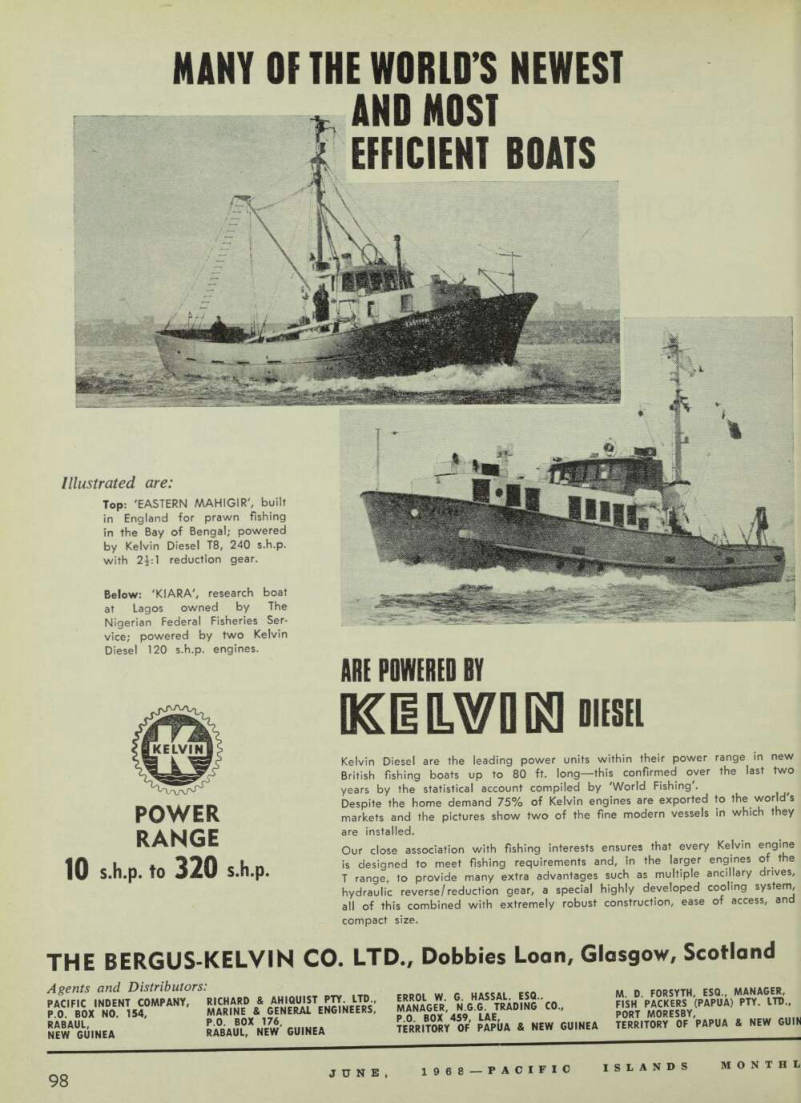 100
100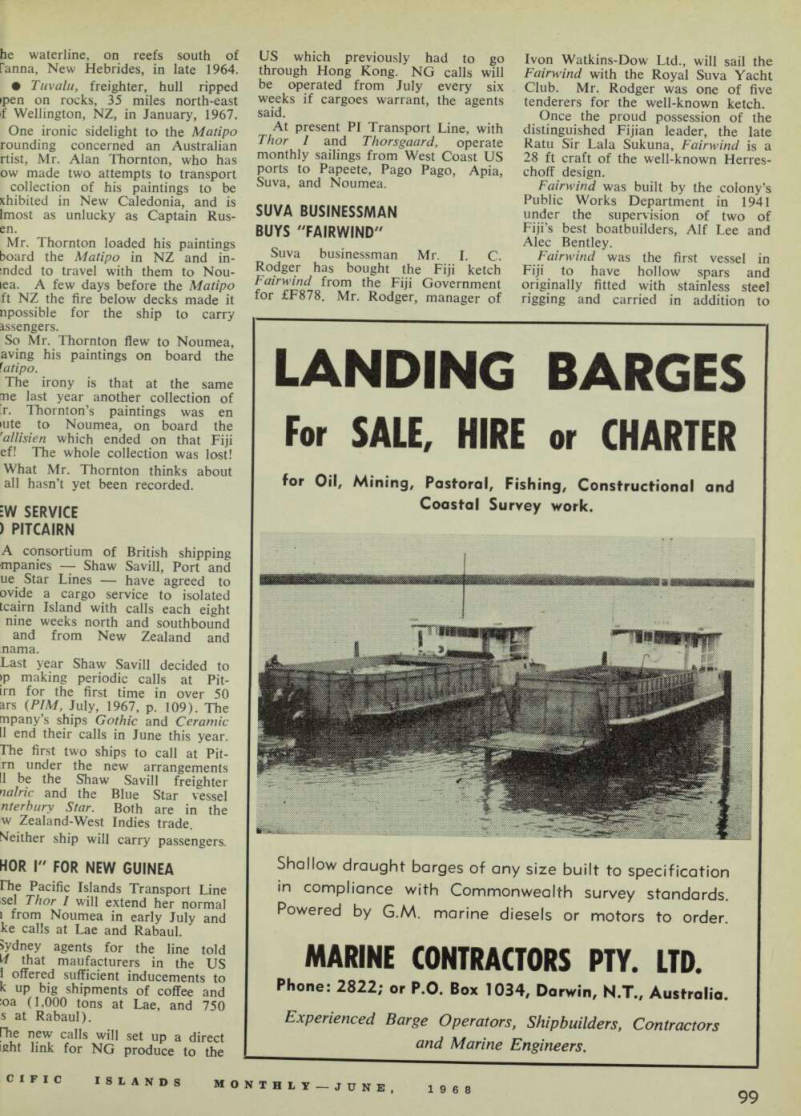 101
101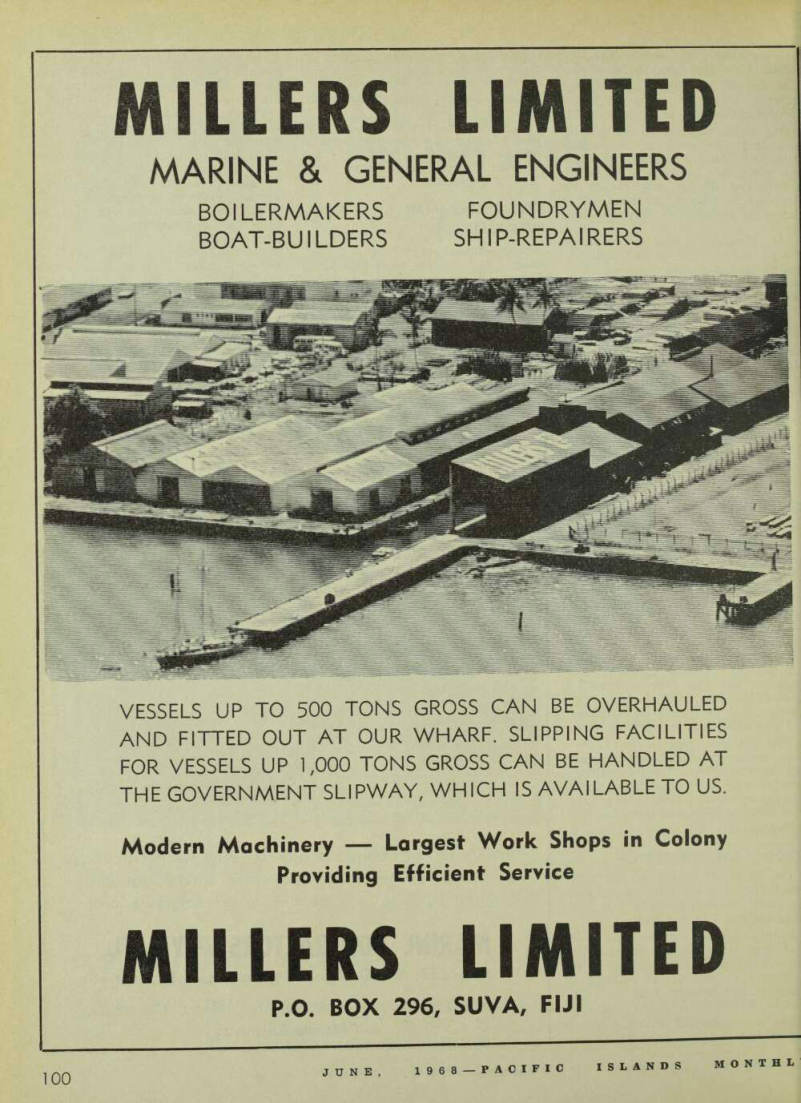 102
102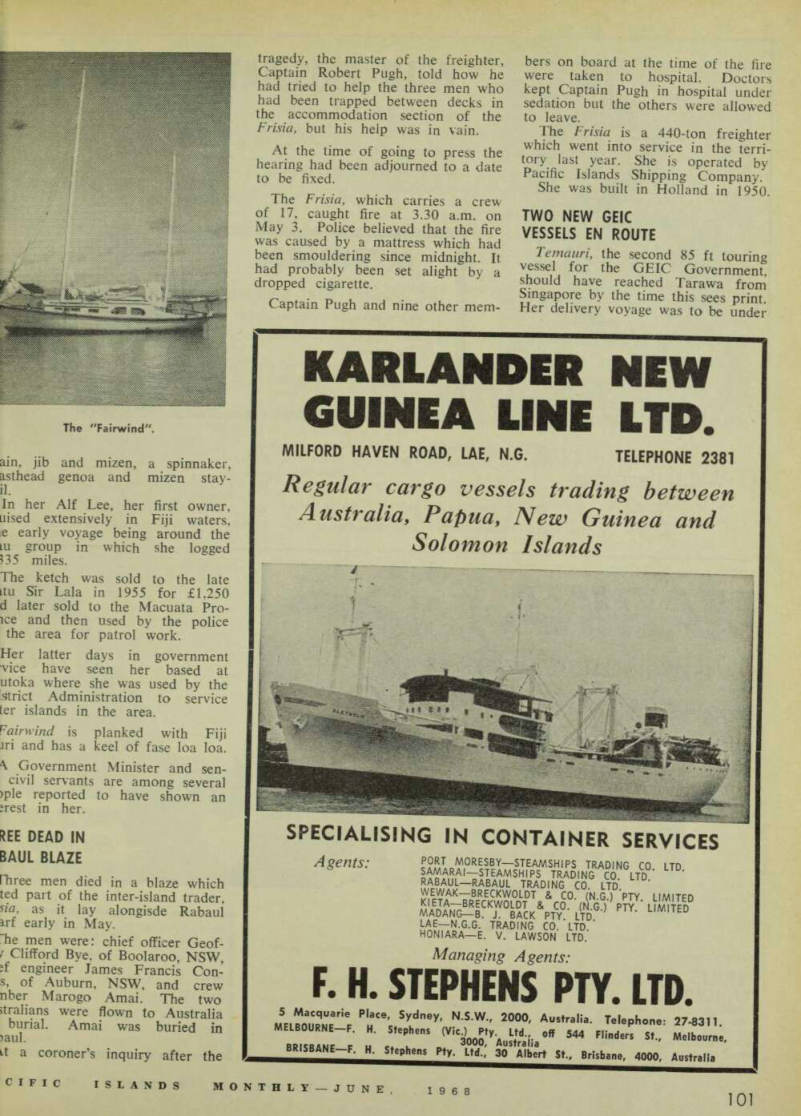 103
103 104
104 105
105 106
106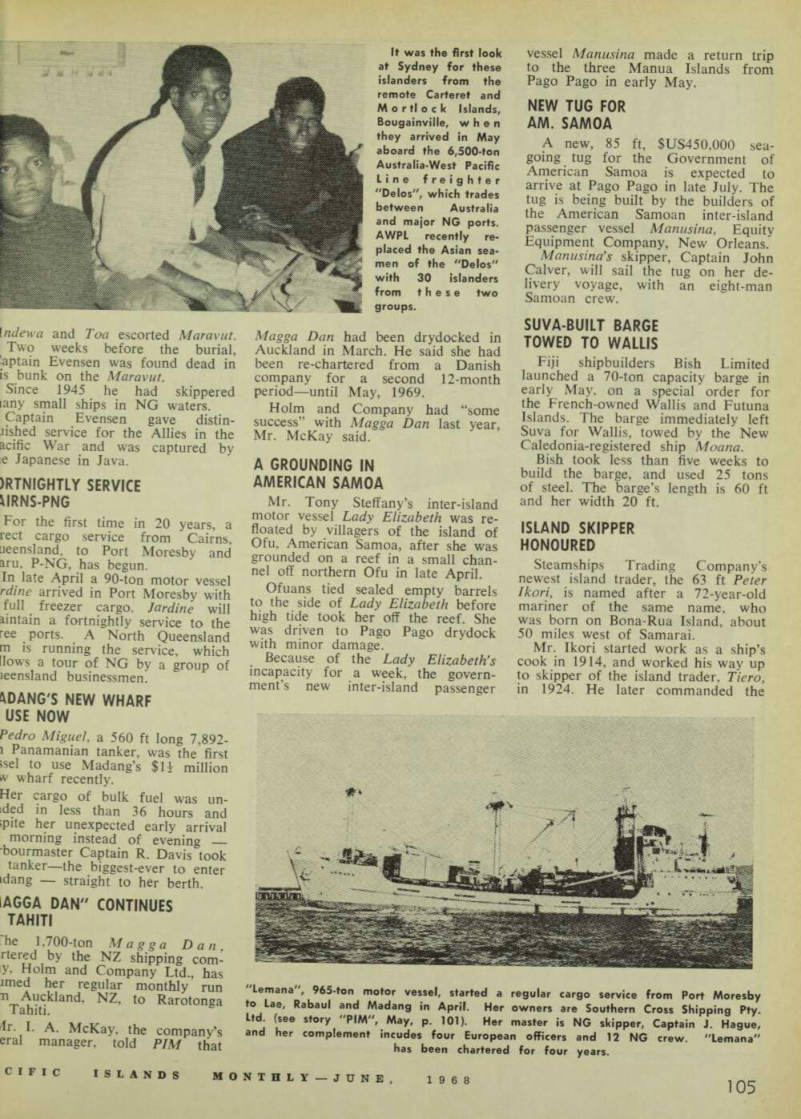 107
107 108
108 109
109 110
110 111
111 112
112 113
113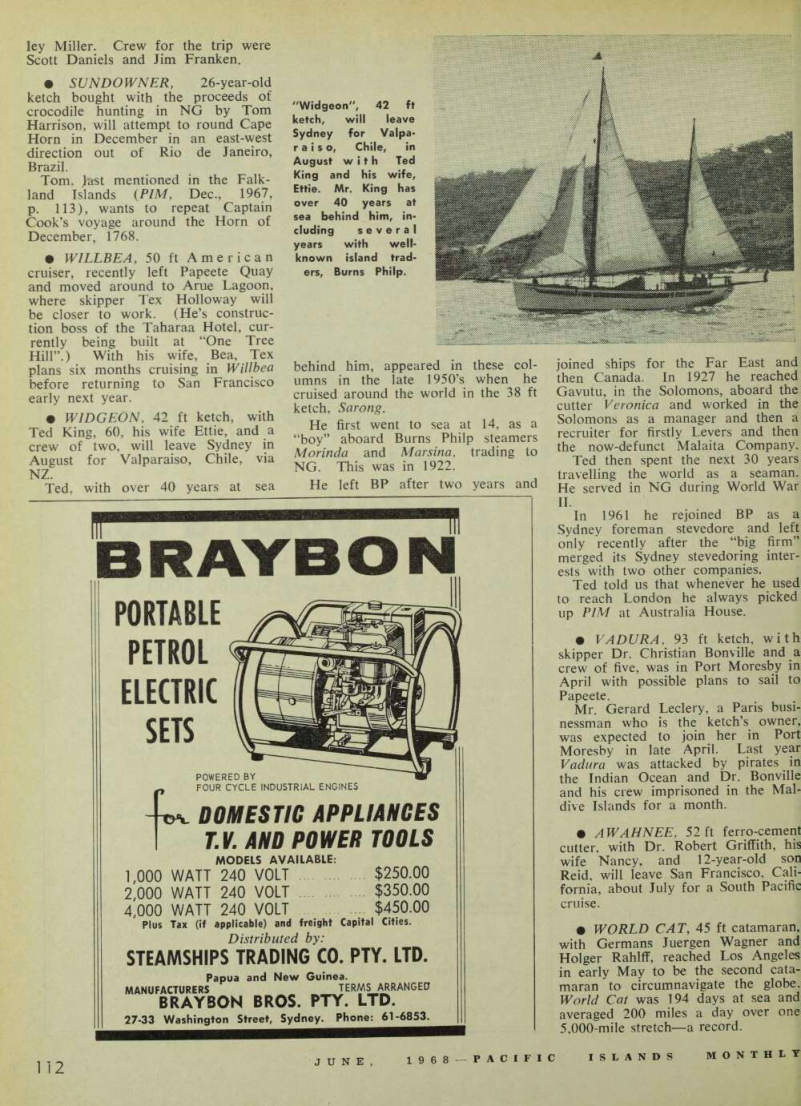 114
114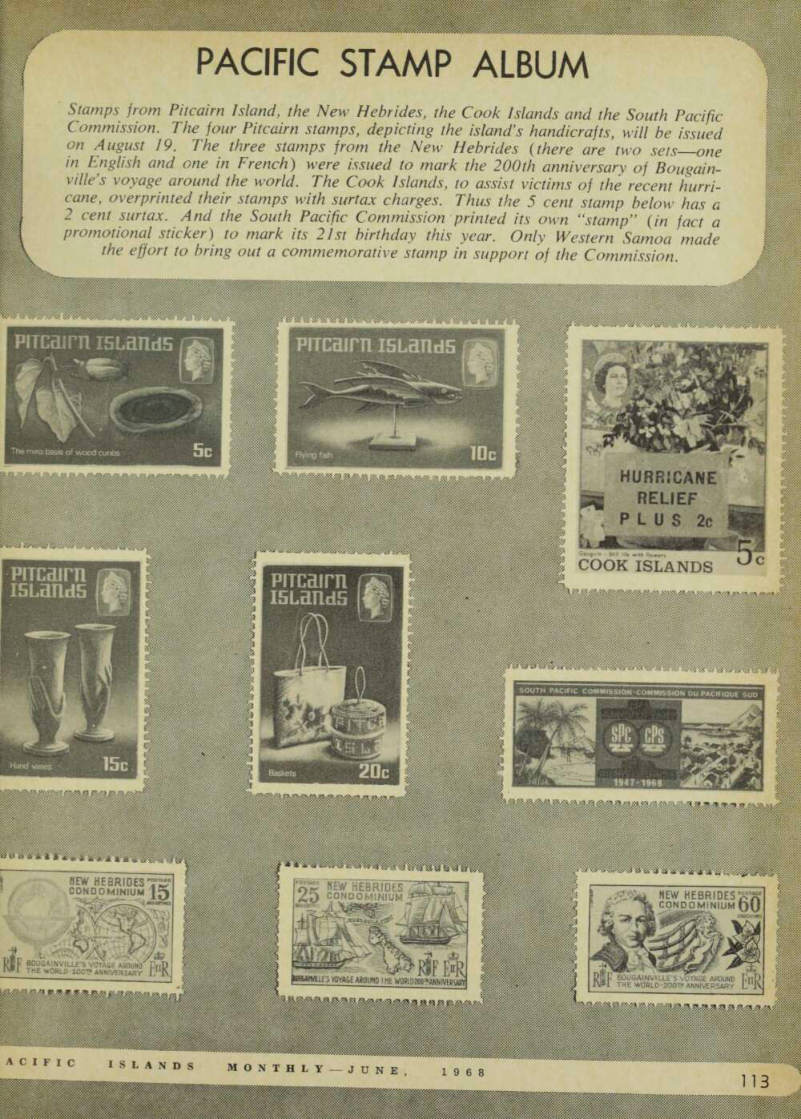 115
115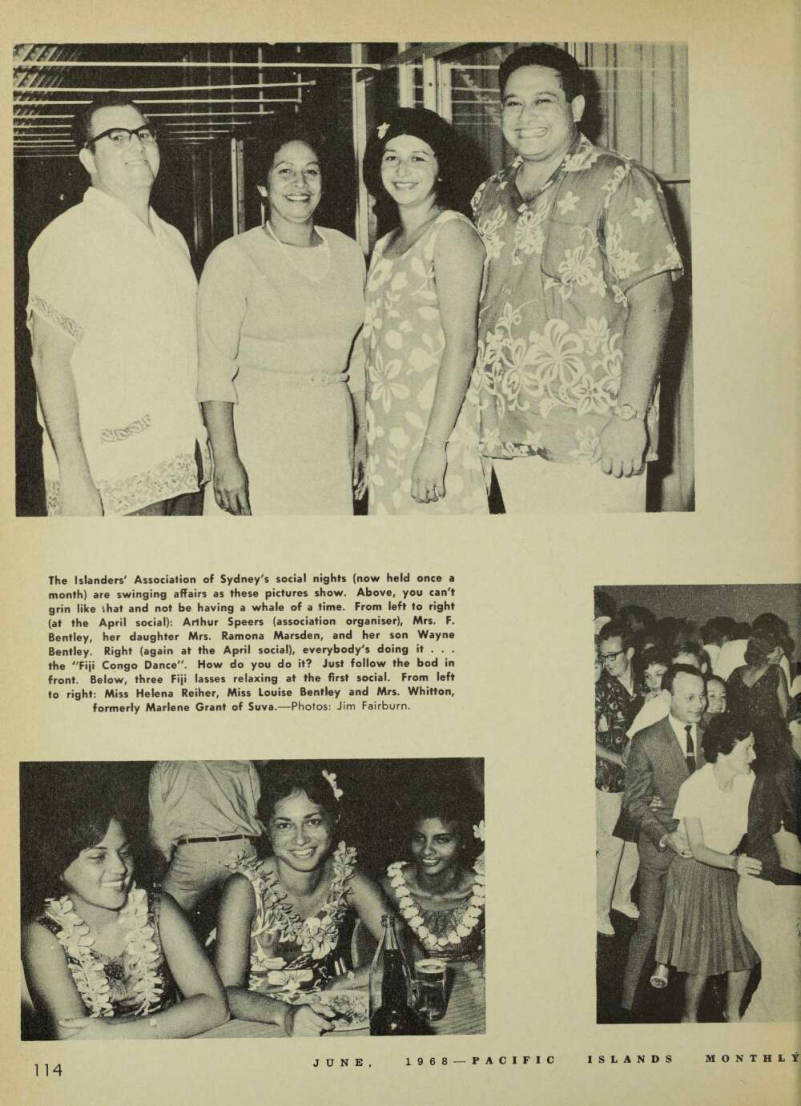 116
116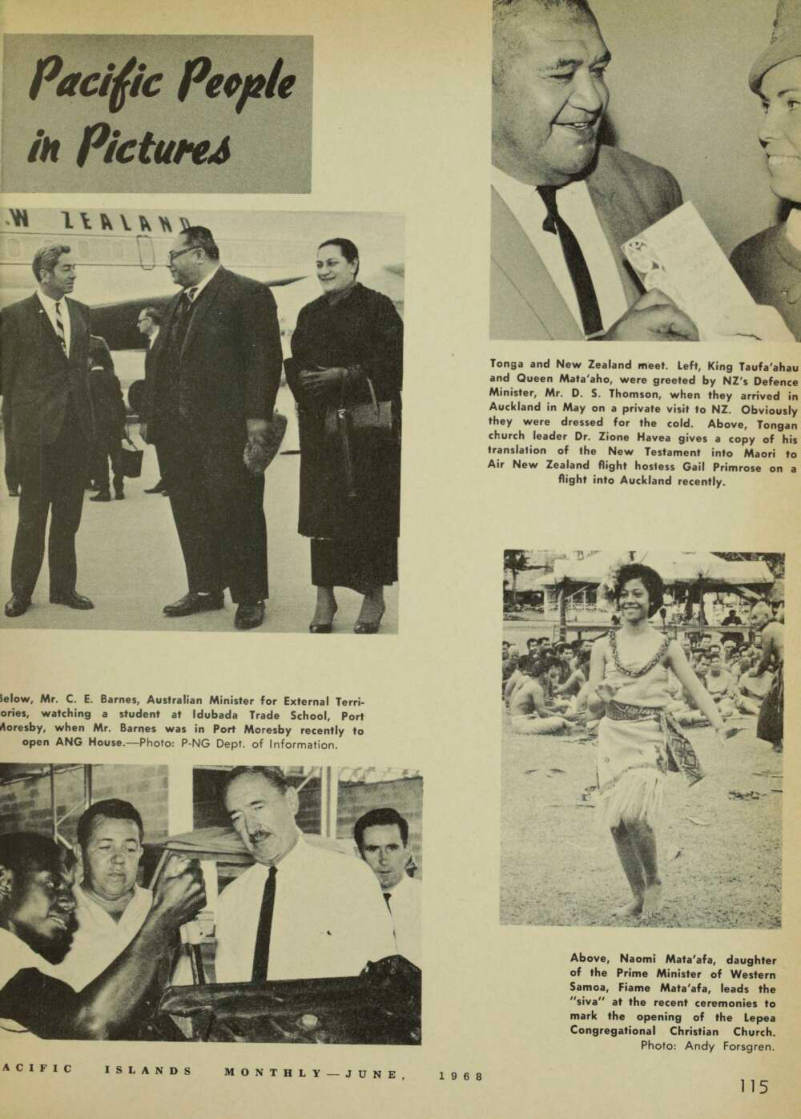 117
117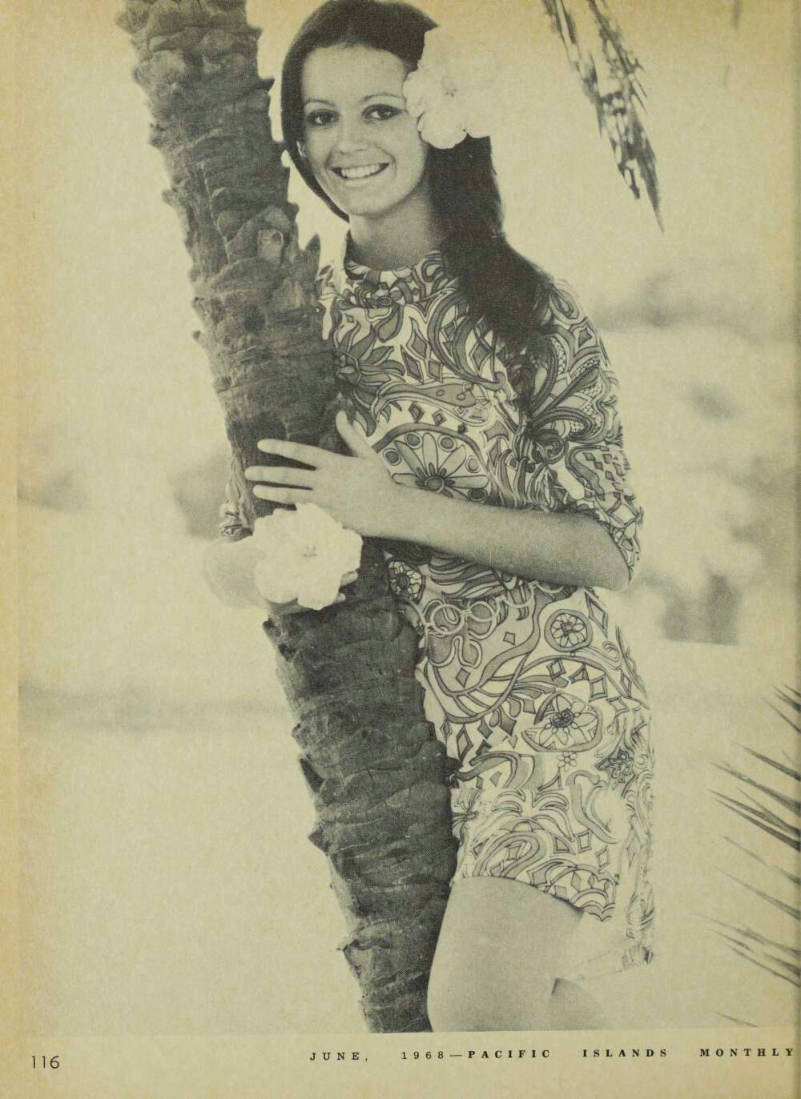 118
118 119
119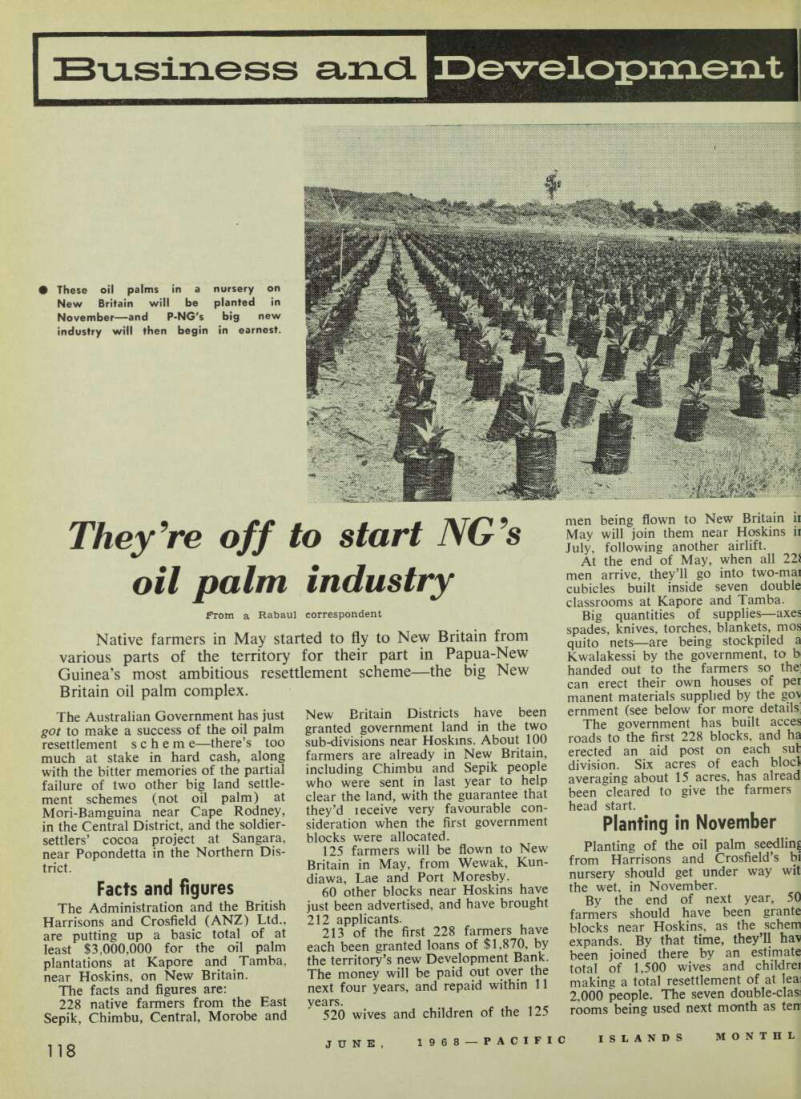 120
120 121
121 122
122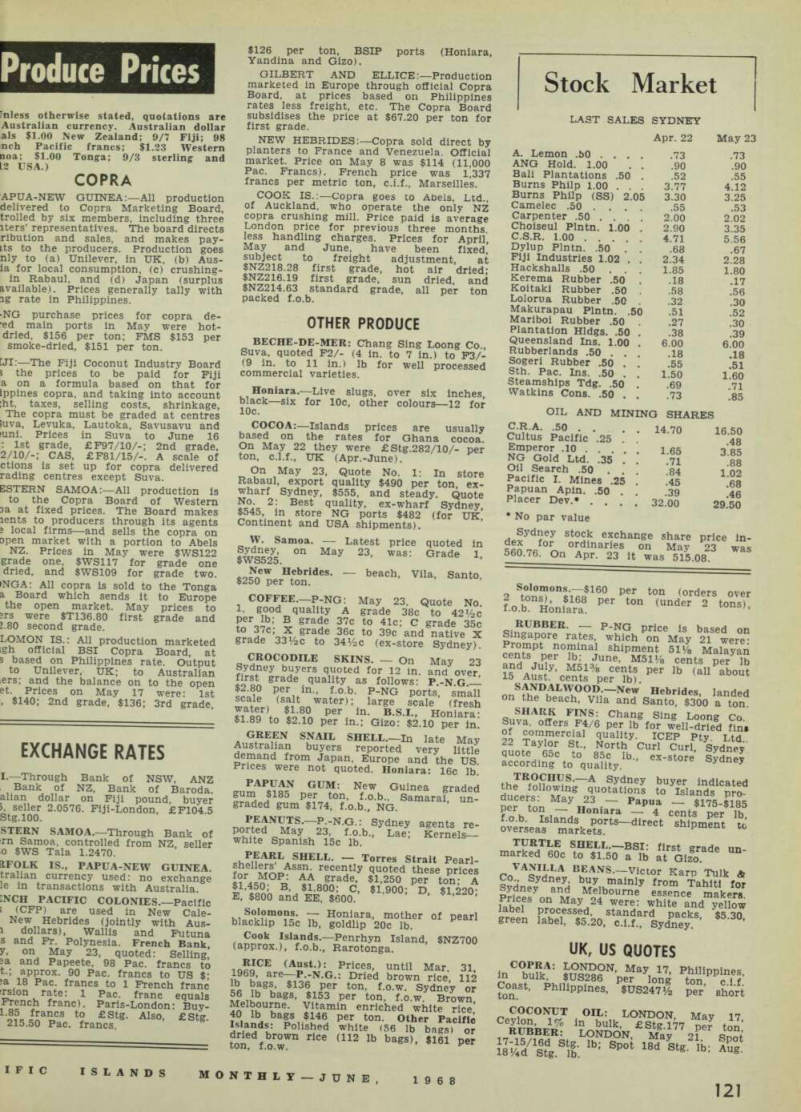 123
123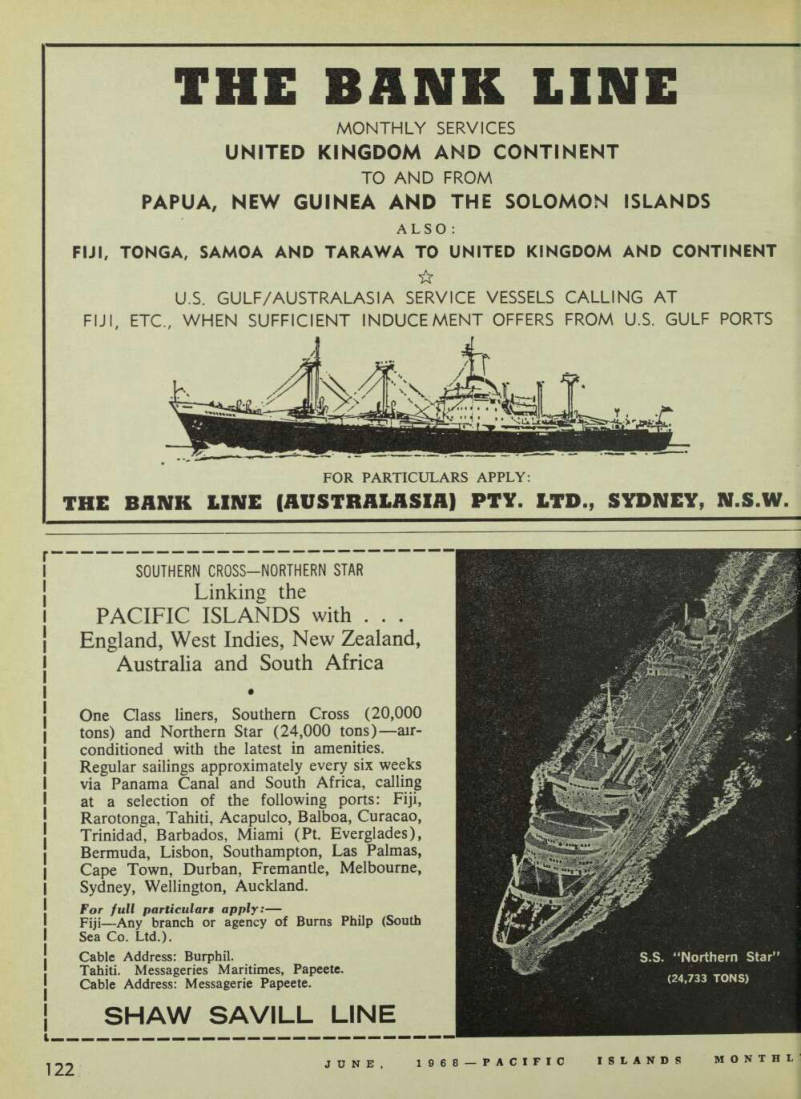 124
124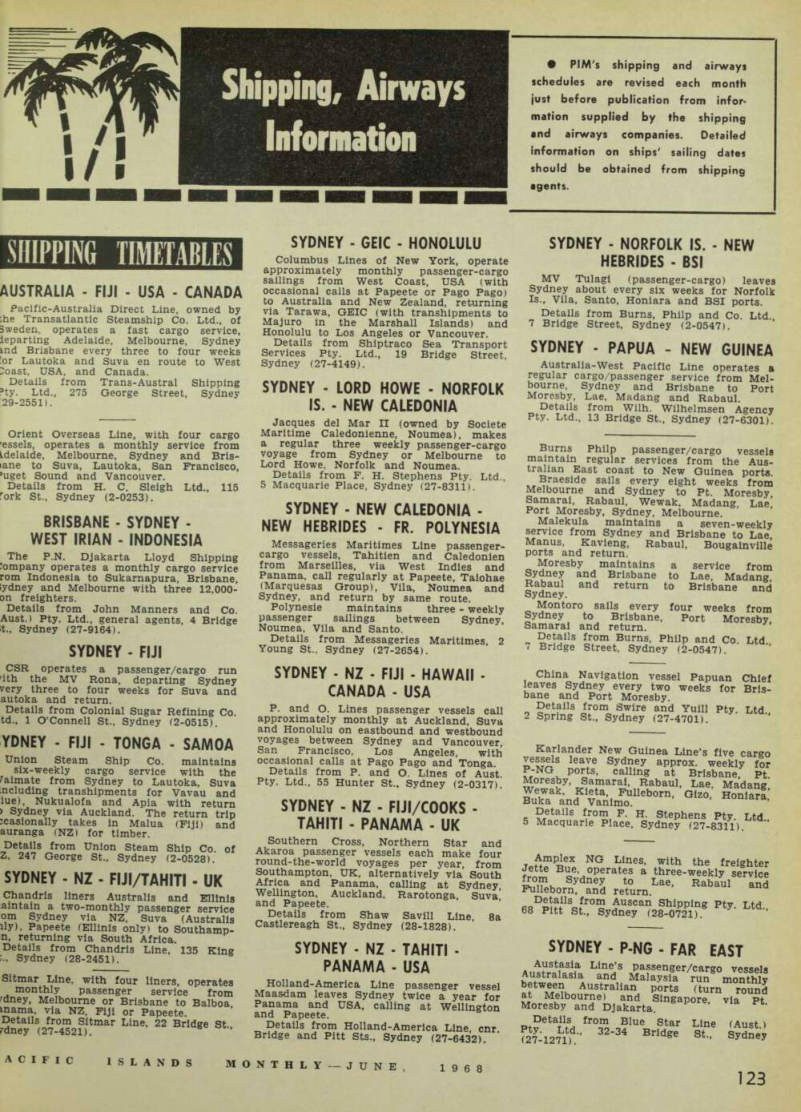 125
125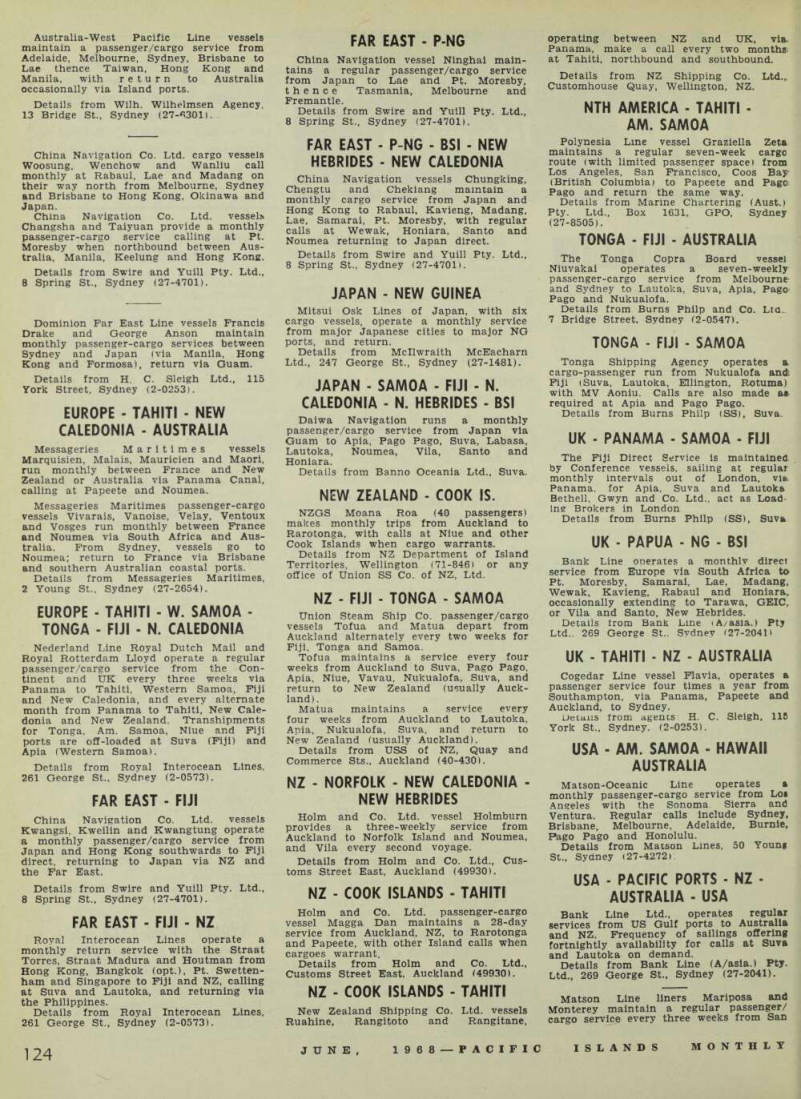 126
126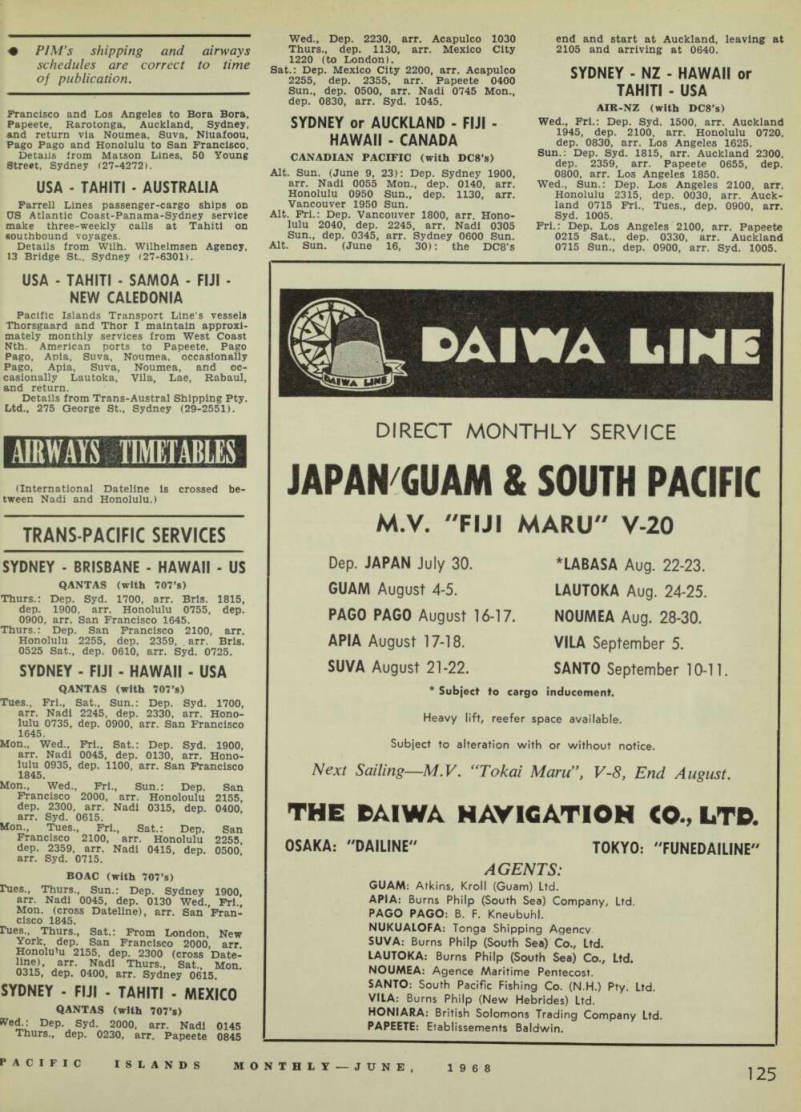 127
127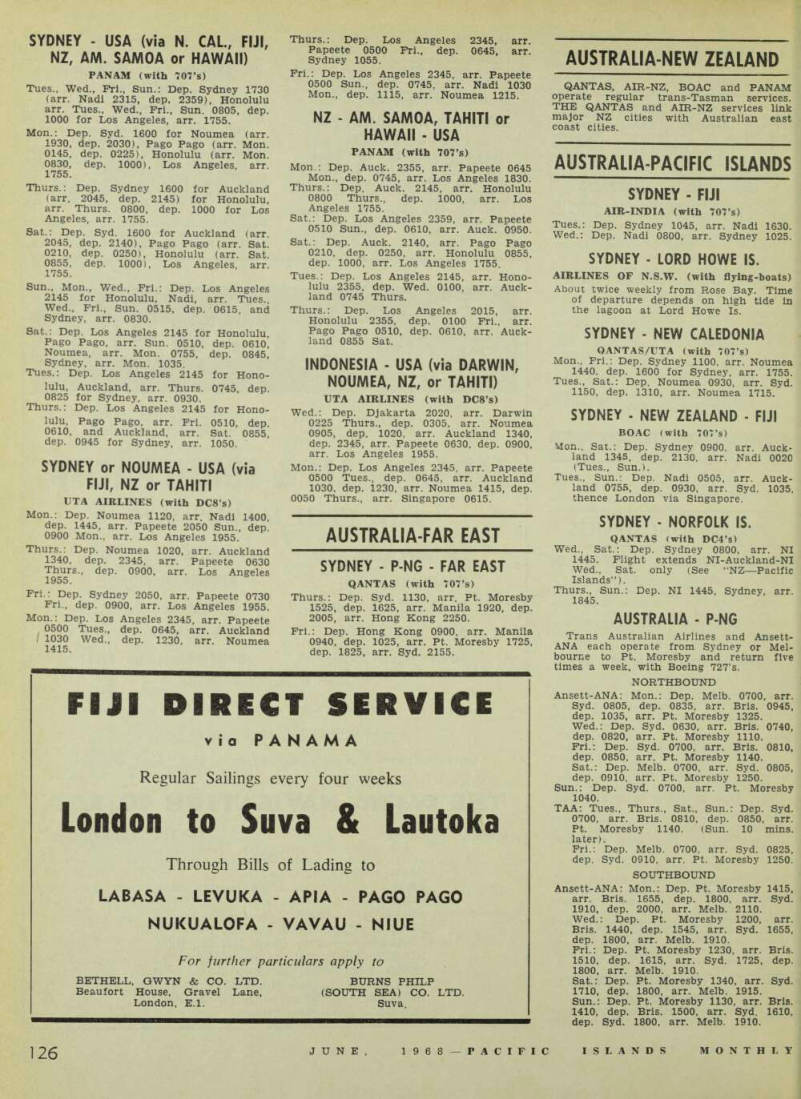 128
128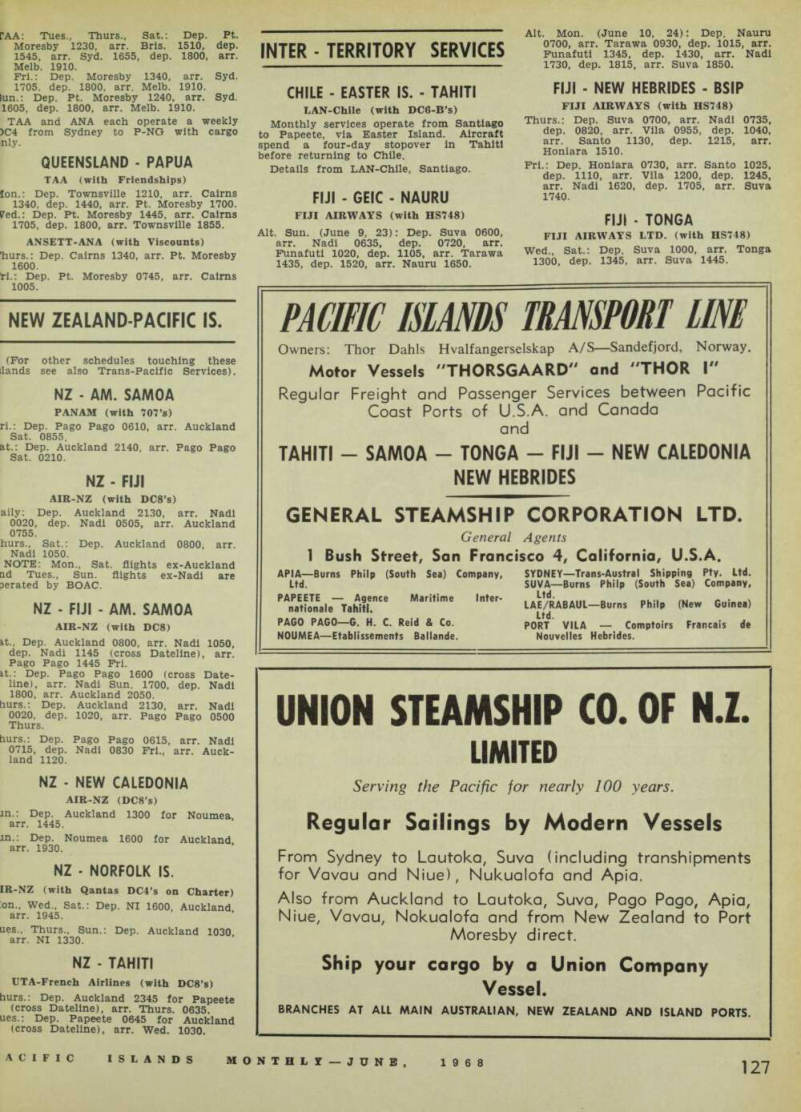 129
129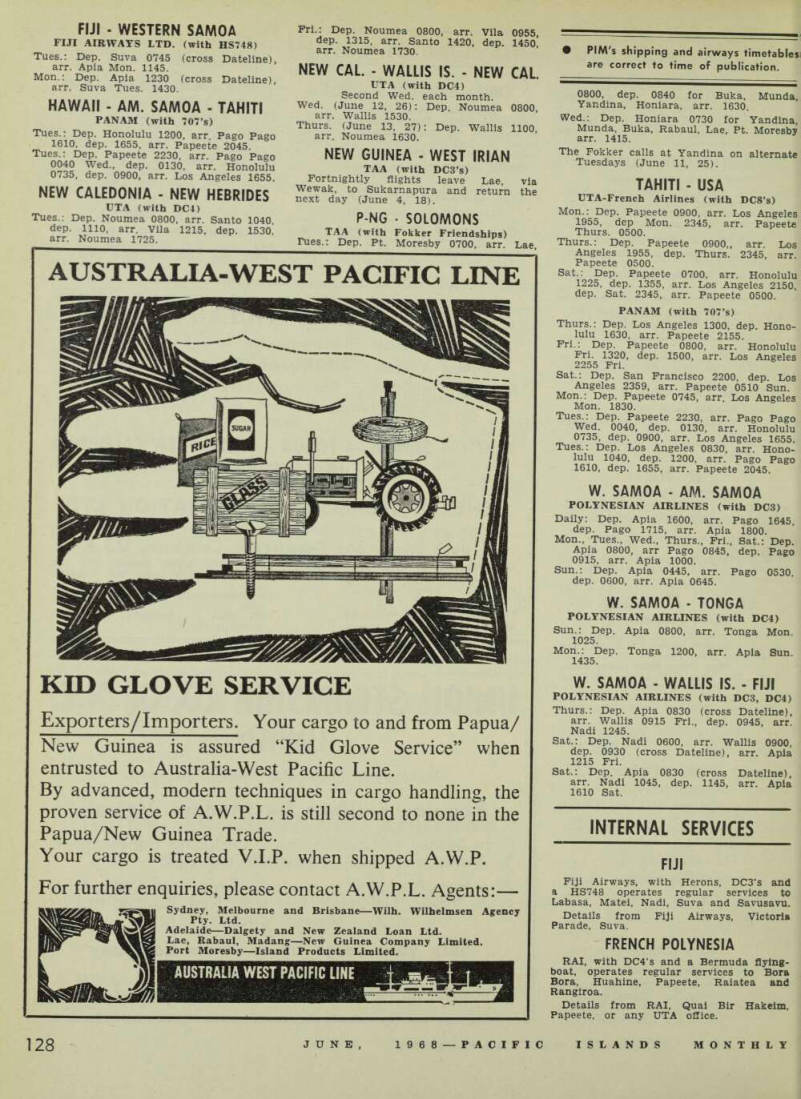 130
130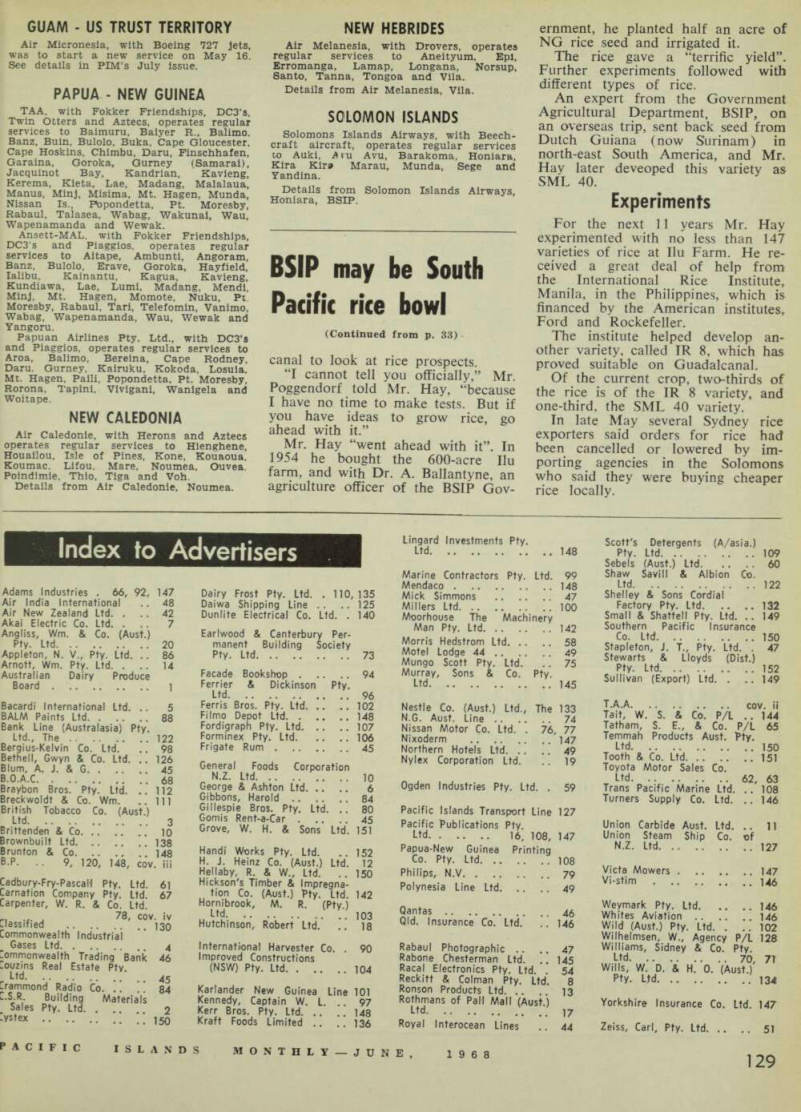 131
131 132
132 133
133 134
134 135
135 136
136 137
137 138
138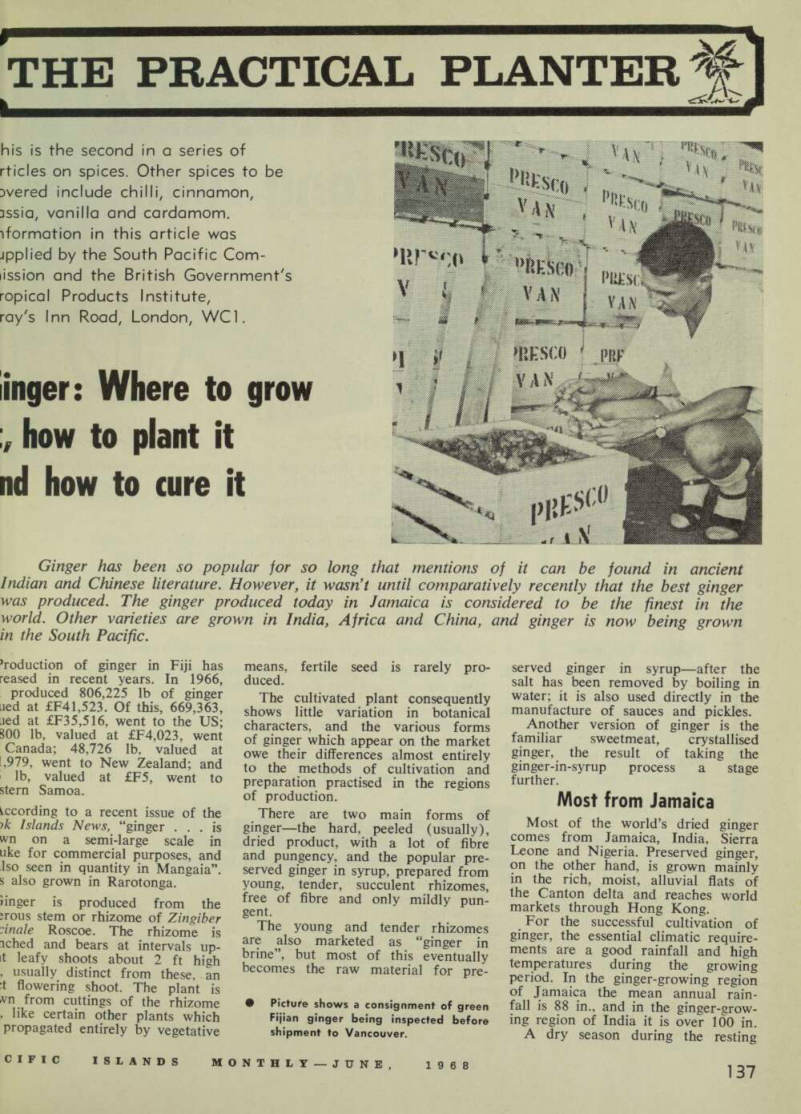 139
139 140
140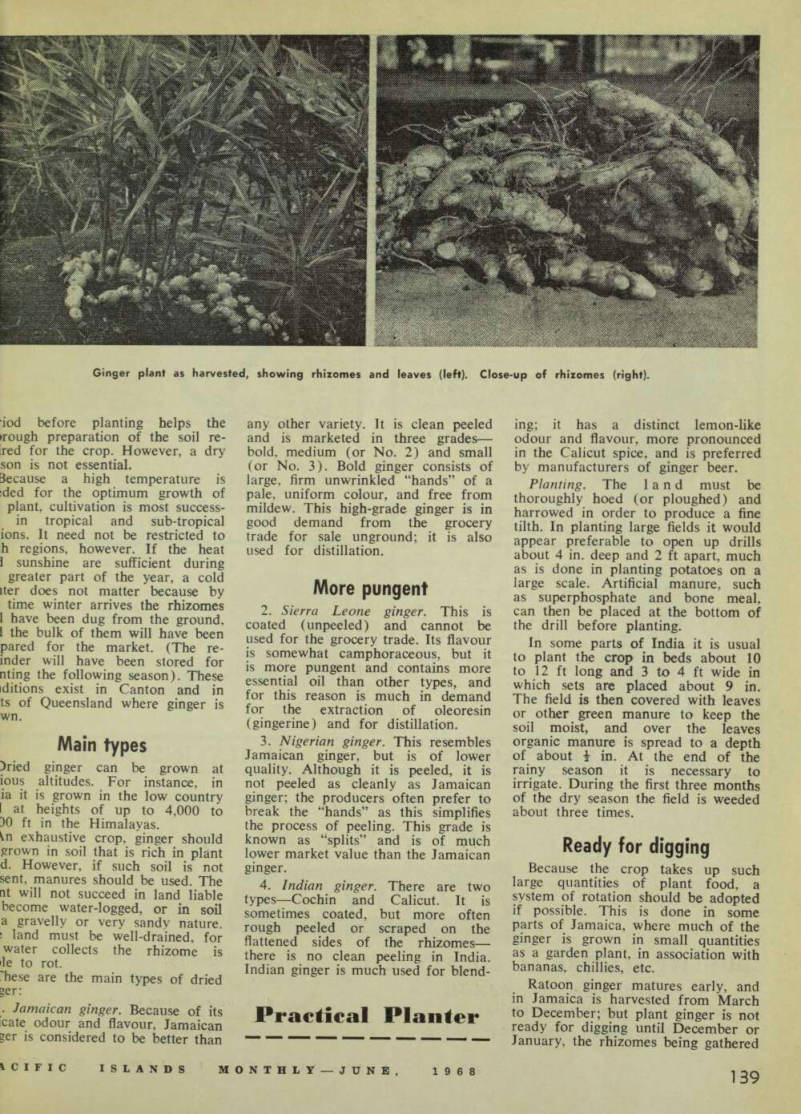 141
141 142
142 143
143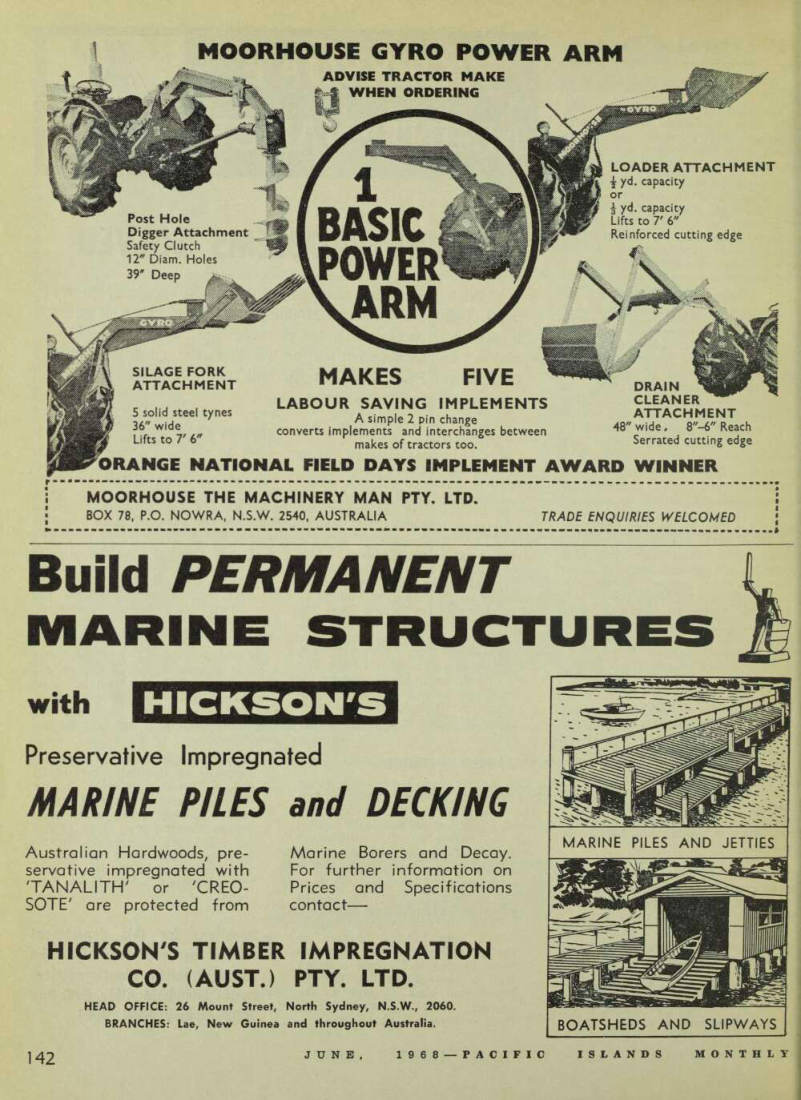 144
144 145
145 146
146 147
147 148
148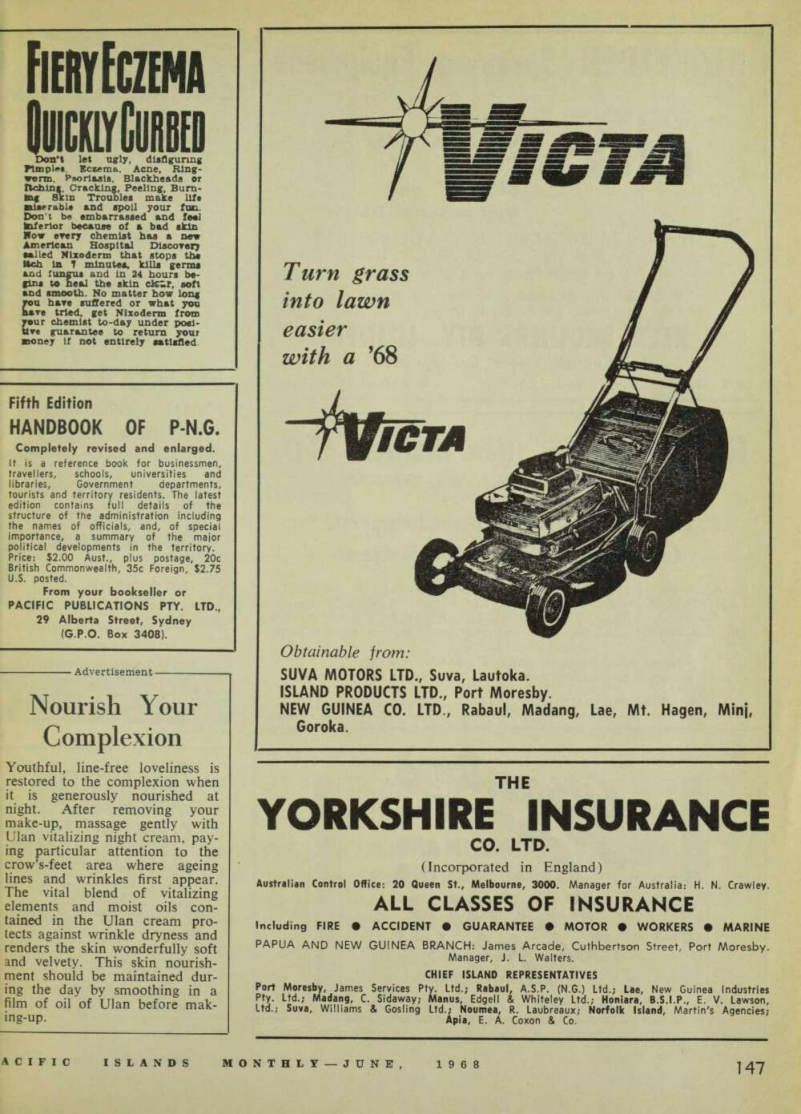 149
149 150
150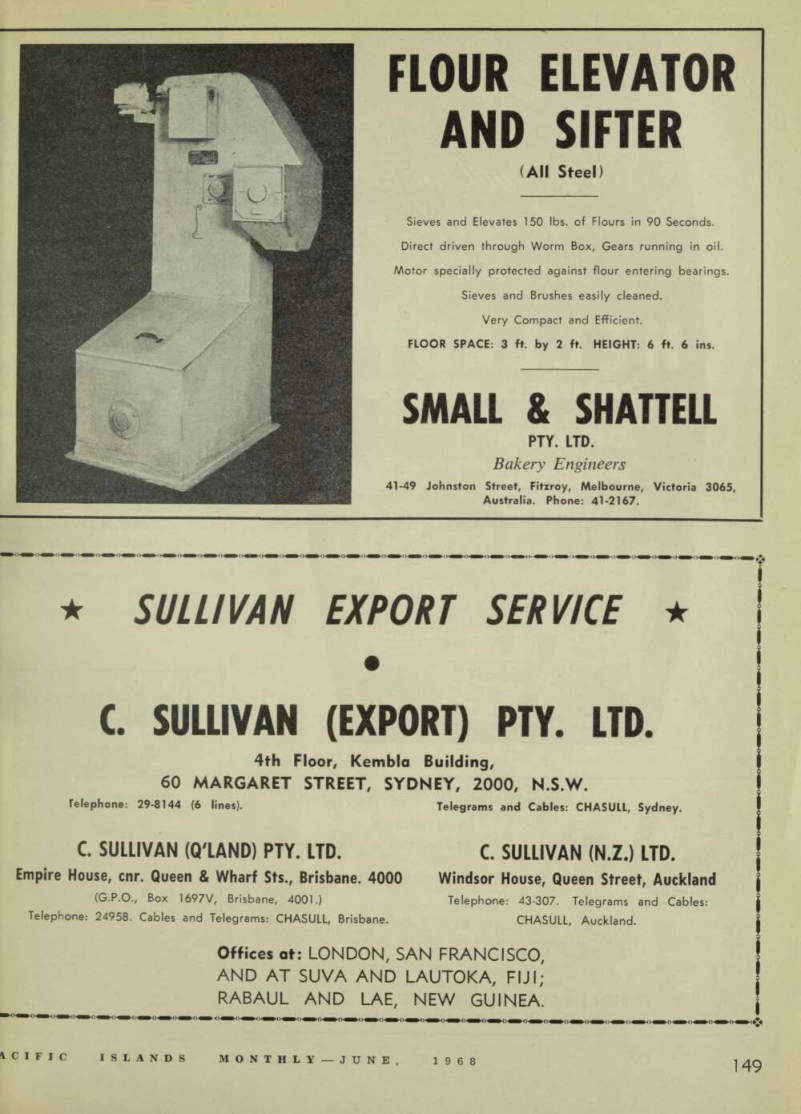 151
151 152
152 153
153 154
154 155
155 156
156