Monthly
Pacific Islands Monthly
>l^1 1 f\ c y
Eptember, 1967
red at G.P.0., Sydney, for ission by post as a newspaper.
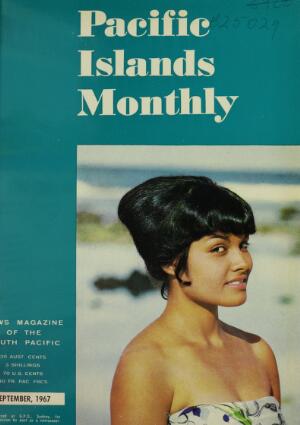
Our Cover
Girl
For Islands beauty of a pedal kind we have this nonth gone to Nauru. The lark-eyed lass with the wney skin is Miss Milka 3 hilip, 20, a Nauruan em ployed as receptionist at Nauru’s Administration iospital. Irene Sexton, a :een local amateur photo grapher, took the colour photograph of the attractive \Tilka against a background pf reef, surf and ocean, iiilka had her last four pears of school in Australia.
Advertisements & other items, pp. 2-15 (13 items)
September 1967 - Pacific Islands Monthl
flights non-stop
New TA A T-Jet
between Sydney
and Port Moresby
every Friday
TAA increases its Bird of Paradise T-Jet services between Port Moresby and Australia. Now you can jet non-stop to and from Sydney every Friday or go via Brisbane every Tuesday, Thursday, Saturday and alternate Sunday. New improved Friendship connections! Fly TAA’s improved internal Friendship services to and from Port Moresby.
Take care to book TAA and we ll take extra care of you.
Contact your nearest travel agent or TAA: Port Moresby 2101. Lae 2311. Madang 2478. Rabaul 2567.
Goroka 8. Mt. Hagen 4.Wewak 103.
fly TAA the Friendly Way
TAA
m
TAA3572/67
Marne
paints
me the
strain
m , KEEP YOUR BOAT CLEAN WITH INTERNATIONAL MARINE ;rnational’s world-wide marine experience has produced a range of paints that lly takes the strain . . . that withstands the ravages of sun, salt and spray. ;rnational marine paints have been proved to give better gloss retention, brighter jurs and longer protection to wood, steel or alloy craft. Choose from the following:
RLIIX MARINE UNDERCOAT
RLUX MARINE GLOSS, 15 COLOURS AND CLEAR
RLUX NON-SKID DECK PAINT (7 COLOURS)
RLUX SMOOTH DECK PAINT (7 COLOURS)
RLUX ENGINE ENAMEL (5 COLOURS)
INTERLUX MARINE SURFACER UNDERCOAT-
QUICK DRYING
INTERNATIONAL SUPERFINE YACHT VARNISH
INTERNATIONAL 707 CLEAR LIQUID PLASTIC
SILVEEN ALUMINIUM ENAMEL
mprehensive range of INTERNATIONAL PRIMERS, UNDERCOATS AND ANTI-FOULINGS is also available.
For application of these products refer to the International Boat Painter’s Manual
MAJORA PAINTS PTY.LTD.
HEAD OFFICE: PHILLIP ST., CONCORD, N.S.W. ’PHONE 731201 CHES:—. MELBOURNE 30 4831 . BRISBANE 56 4565 . ADELAIDE 4 3435 . FREMANTLE 5 3291 . NEWCASTLE 2 5669 irYjof the world's shipping is painted with International Marine Paints \oi
0-OHE
POLY
ONE
Rapine full gloss
15 COLOURS
AND CLEAR
#?■« m K - '*: ■ 'w r V" 1 & f' % i *s
NEW
McCORMICK
INTERNATIONAL
NEW IH SPEED AMPLIFIER GIVES 2 GROUND SPEEDS IN EVERY GEAR!
Lever upmore power* Lever downmore speed!
Simply move a lever up for more power (27% more). Or down for more speed (37% extra). Change on-the-move without shifting gears. Without declutching, without loss of engine or pto speed or power. The IH Speed Amplifier works as simply as that, giving you 16 forward speeds and 4 reverse speeds.
More safety, plus fast-working efficiency The 434 Speed Amplifier model gives safe engine braking in every gear (in both high and low range). Farming with 434 becomes more efficient, faster and safer.
New 434 gives more of everything else, too More steering ease . . . more engine pull from the powerful 4-cylinder diesel . more accessibility for daily maintenance . . . more ground clearance (IBV2 inches) . . . more constant hydraulic power (pump independent of clutch, transmission and pto —driven from engine).
TWO MODELS: Speed Amplifier model with 16 forward speeds and 4 reverse; Regular model with 8 forward speeds.
FOR FURTHER INFORMATION, CONTACT:
PAPUA: Steamships Trading Co. Ltd., Port Moresby.
SOLOMON ISLANDS: Solomon Motors Ltd., Honiara.
NEW GUINEA; N.G.G. Trading Co., Lae.
Steamships Trading Co. Ltd., Rabaul.
New Guinea Goldfields Ltd., Wau.
Hagen Autoport, Mt. Hagen.
Auto Repairs, Banz.
TAHITI: Hintze & Company, Papeete.
NEW CALEDONIA; Agence Automobile, Noumea.
NEW HEBRIDES: Kerr Bros. Pty. Ltd., Sydney.
FIJI: Niranjan's Service Station, Suva.
M . r
KRAFT
'' u Mr * :jl » - i% kraft i f m putter ch£ £
kraft
Just look at all the good things
KRAFT brings you from
Australia, the sunshine country!
Toasted cheese sandwiches. Strawberry Conserve on scones. Vegemite* on your breakfast toast. These are just some of the wonderful ideas you’ll enjoy when you buy fine Australian foods from Kraft. And these foods contain all of nature’s health-giving nourishment . . . help build strong and healthy bodies. Always look for Kraft, and know you’re buying the very best.
KRAFT
for good food and good food ideas Reg’d Trade Mark
KR39O/A
Men of tomorrow ne
(that goes for all the family, too) Every minute they’re awake, they’re on the go.
Where do they get the energy ? From the honest-to-goodness, natural foods they eat.
Foods like Weet-Bix at breakfast time. Every golden Weet-Bix flake is a whole wheat grain, mellowed by the sun and loaded with the energy that growing youngsters need.
Pour on icy cold milk. Top with fruit.
Breakfast’s ready a breakfast that helps to build men of tomorrow.
Weet-Bix
MALTED WHOLE WHEAT BISCUITS
*** ###■« W 2.6
Australia supplies and Australia buys
Paper to Papua, sunglasses to the Solomons, commercial vehicles to New Caledonia, fuel to Fiji. The variety of Australian products selling in the Islands is wide. So is the range of services Australia makes available : consulting engineers, ship repairs, hotel outfitting and many others. Australia is a major trading country, exporting to world markets.
Australia is also a big import market. It is a source of investment capital for Pacific territories. It seeks an exchange of trade and tourists with the Pacific Islands Australia's fifth largest market.
For information on Australian products, manufacturers and agents, contact the Australian Trade Commissioner for the Pacific Islands. His address is 12th Floor: A.N.Z. Bank Building, 68 Pitt Street, Sydney, N.S. W. 'Phone 20372.
Australian Department of Trade and Industry
318 A
We created this for the
world’s most experienced airline
We created this as a modern tribu to ancient Greece This one has a bit of both and a substantial
character of its own
The Day-date combines the rugged precision of the GMT- Master with the elegance of the King Midas from the Benvenuto Cellini collection (a limited edition of men’s watches... inspired by the works of Cellini... very expensive).
And the Day-date has distinctive features of its own. The Geneva-made Oyster case is hewn from a solid block of gold or platinum. The bracelet, also in solid gold or platinum, is designed specially forthe case. The movement has won the highest possible distinction for % % / TS& / '■ precision and quality a chronomete can normally obtain. A calende shows the date and the day of th weekspeltout in full.
The Day-date is available only i gold or platinum and is quite possibi the most brilliant timepiece in th world today. Wear it when you fly you jet to the conference at Brasilia, swir off your yacht in the Aegean, or addresi the United Nations.
With a Rolex on your wrist, you hav entire worlds in your hands. * When a man has a world in his hands, you expect to find a Rolex on his wrist ROLEX Rolex watches are available through Burns Philp (South Seas) Co. Ltd., Suva, Lautoka and branches throughout the Fiji Islands and the South Pacific. In New Guinea through Burns Philp (New Guinea) Ltd., Port Moresby and all branches in Papua/New Guinea.
capability
eleradio GOA
HE LATEST
OF THE FAMOUS
ELERADIO FAMILY
Drthy successor to the famous Model 3BZ, :h earned an enviable reputation in a multity of applications during World War 11, jding the famous Coast Watching Service, i the introduction of transistors AWA was to develop, in the Teleradio GOA, a unit that iloys the most modern techniques for battery lomy, increased transmitter output and ibility over a wide range of operating and ronmental conditions.
Teleradio GOA is small and lightweight and available accessories it is ideally suitable a wide variety of installation arrangements both mobile and fixed stations. 6oa , w • M ■d Applying radio communication to the Nation’s needs has been the expressed mission of AWA for over 50 years.
Manufacturers of television and broadcasting equipment; communication transmitters and receivers: radio navigational aids; audio amplifying systems; electronic components; testing instruments: telephones: programme recording; television and broadcast receivers: data transmission systems; operation of space-tracking stations and training in radio technology.
Export Department
47 YORK STREET SYDNEY
GPO BOX 2516
N.S.W. AUSTRALIA
ALGAMATED WIRELESS (AUSTRALASIA) LTD
GEORGE PAGE PTY. LIMITED
P.O. BOX 25, PORT MORESBY, PAPUA
AWA AVIATION SERVICE
P.O. BOX 13, LAE, NEW GUINEA
INTERNATIONAL AERADIO LIMITED
215 VICTORIA PDE., SUVA, FIJI
Two simple steps
to better movie making:
Step One:
Kodak Instamatic M 5
movie camera.
Lets you (or your wife) take quality zoom super 8 movies without fuss from 13mm wide angle to 28mm telephoto. Just drop in the film cartridge and shoot. Exposure control is fully automatic and sets the f/1.9 zoom lens for correct exposure by both daylight and indoor floodlighting. Reflex viewing through the lens lets you film what you see. Battery power drives the film through its full 50 feet (without a stop if you wish). Sharper, more colourful movies than ever before can be yours with the Kodak Instamatic M 5 movie camera.
Step Two:
Kodak Instamatic MBO-L
movie projector.
Projects your new super 8 footage, as well as your standard Bmm films.
And both films thread automatically.
You can run the projector at any of seven speeds from super-fast to slow motion in either direction.
Even “single frames”. It has a fast f/1.5 lens that gives you a brilliant projected image. It packs completely into a smart portable case.
It’s the perfect partner to the Kodak Instamatic M 5 movie camera.
Kodak Instamatic
movie cameras esc projectors
From Kodak dealers throughout the Islands KODAK (Australasia) PTY. LTD., 379 George Street, Sydney. •: * i
/ m v * X
In Australia - dairy cows
are treated like beauty queens-
that is why Australian Butter and Cheese are famous for goodness, energy and flavour Selective breeding and scientific feeding of Australia’s dairy herds, plus the golden sunshine and rich pastures of an ideal dairying climate make the big difference in the flavour and food value of Australian dairy foods. Australian Butter and Cheese are processed by modern, hygienic equipment and strict controls ensure perfect quality.
Australian butter is full of energy, flavour and vitamin A goodness. It is a health food that only Nature can provide. Australian cheese is a concentrated food—full of protein, rich in calcium.
It is available in many types, to suit every taste.
For energy, goodness and flavour, buy Australian Butter and Cheese, Trade enquiries to; Australian Dairy Produce Board, 406 Lonsdale Street, Melbourne, Victoria, Australia.
AUSTRALIA
PROTEIN
VITAMINS
ytm
BABY
FOODS
jS^^wimoVl vyvXyx::** (i) Other cooking methods lose vital nourishment (2) Heinz peak-nutrition process holds vitamins and protein (3) All Heinz Baby Foods are cooked by this eiclusive process
Heinz peak-nutrition Baby Foods
give your baby
more to grow on—
more vital nourishment!
♦ (AUSTRALIAN PATENT No. 210136)
IHEINX
f baby'*
I FOODS I
design and
build with
Fletchers ®
Fletchers are New Zealand’s biggest construction company and are one of the oldest and most experienced. They offer a complete service architectural and engineering design, and construction, and have already carried out contracts in Australia, Fiji and Samoa. If you are thinking of building in the Pacific Islands and would like outside help with designing and building, call on Fletchers.
You name it Fletchers can design and build it Motel, hotel, block of flats, office block, shopping centre.
You name it Fletchers can design and build it.
Fletchers are specialists in the design and construction of sawmills, large and small. They have designed and built in New Zealand and Fiji both small mills of simple layout and complex million dollar mills.
Incidentally, Fletchers are the manufacturers and suppliers of a wide range of building materials.
Further information from:- The Managing Director, Fletcher Group Services, Private Bag, Auckland, New Zealand 13798
FLETCHER
group services
o o
’iVS"”"".
BROCKHOff
tha occasion
Wh ‘ U :l L oMse you Ma UfnendswUht h biscuits from {roro the most varieties to choose from. ts Brockhoff I-—- Them’s a *** occas , on .
V OU, wh^ tochoo sefrom!
Here are a few to
©BROCKHOff
I Crisp nm UK
JA NT
TRUMPS
w B»DO^CT^_
RAIS
LUNCHEON
I«KED
CLIX
A tender golden cris\ cracker that tastes as if it is already buttered. The cracke you can eat by itself or with savouries or dips.
EDINBURGH
SHORTBREAD
Made in the true Scottish tradition with fresh eggs, sugar and rich dairy butter.
Jf brockhoff
Savoury Shapes
SAVOURY SHAPES
These delicious, one-bite ready-made save ies are ready to serve anywhere, in convenient tray pack.
iSsilciiclsi.
baked oven crisp by
<#BROCKHOFF
SALADA
A crisp, light, golden cracker to enjoy with all meals and snacks. The slight touch of salt brings out the full flavour of all spreads, toppings, & cheese.
Australia’s finest biscuits baked oven-crisp by Brockhoff.
Wrapped in MXXT/A, the most moistureproof ‘Cellophane’ in the world.
Look for the baker on the packet.
ARNOTT, BROCKHOFF, GUEST Pty. Ltd.
53-71 Huntingdale Rd., Burwood, E. 13, Victoria, Australia.
Cables ‘Brockbick’ Melbourne.
Telephone 28 2888
u
DISiN
OXFORP
PINEKp
TI SEPTIC
an m
How
PINE-O-CLEEN
protects your
family’s health
It’s a mighty germ killer!
A 2% solution of Pine-O-Cleen kills even typhoid germs in 2 minutes.
Always use Pine-O-Cleen in bathrooms, sinks, drains, garbage cans. It’s unequalled as a disinfectant.
And, you’ll enjoy the way its clean, fresh, pine-y fragrance lingers. You’ll see full instructions for the uses of Pine-O-Cleen on the bottle. Be safe!
Give your family the sure protection of Pine-O-Cleen.
Pine-O-Cleen best selling disinfectant in Australia.
For Trade Enquiries: Reckitt & Colman Pty. Limited, Wharf Road, West Ryde, N.S.W., Australia.
Cables: Reckitts Sydney.
A RECKITT & COLMAN PRODUCT
1
PIC ISLANDS MONTHLY SEPTEMBER. 1967
2
SEPTEMBER, 1967 PACIFIC ISLANDS MONTHL
3
CIFIC ISLANDS MONTHLY SEPTEMBER, 1967
4
SEPTEMBER, 1967 PACIFIC ISLANDS MONTHL
5
CIFIC ISLANDS MONTHLY SEPTEMBER, 1967
6
SEPTEMBER. 1967 PACIFIC ISLANDS MONTH B
8
SEPTEMBER, 1967 PACIFIC ISLANDS MONTHL
9
IFIC ISLANDS MONTHLY SEPTEMBER, 1967
September. 1967 Pacific Islands Month
11
IFIC ISLANDS MONTHLY SEPTEMBER, 1967
12
SEPTEMBER. 1967 PACIFIC ISLANDS MONTH
Pacific Islands
Monthly
Established 1930: 38th Year of Publication.
Owned And Published By
Pacific Publications Pty. Ltd.,
29 ALBERTA ST. (G.P.O. BOX 3408), SYDNEY
Telephones: 61-9197, 61-7101, 61-4369.
Telegraphic Address: PACPUB, Sydney.
Managing Director: R. W. Robson.
General Manager: Selwyn Hughes.
Book Publishing Division
Editor: Judy Tudor.
Pacific Islands Monthly
Editor: Stuart Inder.
Assistant Editor: Robert Langdon.
Branch Offices
Melbourne: Newspaper House, 247 Collins St.
Tel.: 63-7053.
Fiji; Pacific Publications (Fiji) Ltd., Fiji Times Building, 20 Gordon Street, SUVA. Tel.: 25601.
Fiji Times Office, Vidilo Street, LAUTOKA.
Tel.: 60-422.
Papua-New Guinea: Pacific Publications (N.G.) Pty. Ltd. Representatives: Mrs. Joan Carter, P.O. Box 16, PT. MORESBY (Tel.: 2504); The Manager, P.O. Box 227, LAE; Mr. Steve Simpson, P.O. Box 154, RABAUL (Tel.: 2547).
Representatives
New Zealand: J. D. Whitcombe, C.P.O. Box 2229, Queen Street, Auckland. Tel.: 76056.
Hawaii: C. C. Spencer, 203 Yap Bldg., 3465 Waialae Ave., Honolulu. Tel.; 775538.
United States: Mrs. A. L. Craib, 1631 80th Avenue, Oakland, California, 94621.
Tel.: LOckhaven 8-1201.
United Kingdom: S. R. Warman, Candlewick House, 116-126 Cannon Street, London, E.C.4.
Tel.: Mansion 3674/7.
H. A. Mackenzie, 4A Bloomsbury Square, London, W.C.I. Tel.: Holborn 3779.
Agents
All main trading firms and stores in the Pacific Islands.
Pacific Publications Pty. Ltd. is the Australian agent for THE FIJI TIMES.
Subscription Rates;
"Pacific Islands Monthly" is air-freighted to all subscribers and agents in the South Pacific; copies to other areas go by surface mail.
Australia: 30 cents Aust. ($3.60 Aust. for 12 months). New Zealand, all British Commonwealth South Pacific Territories, Tonga, New Hebrides and Western Samoa: 37local currency (36/- local currency per annum).
Elsewhere in the South Pacific: 50 French Pacific francs or 70 US cents (600 French Pacific francs or $B.OO US posted per annum).
Posted to USA, $B.OO US per annum. Posted to the UK and all other countries: £Stg.2.
Airmail postage to USA, UK and elsewhere is additional.
Up Fornt
with the editor
The crisis in leadership in Australia may prove to have been a crisis in the relationship between the generations. Events have moved too quickly for most of the old generation to absorb.”
SYDNEY writer Donald Horne {The Lucky Country ), says this in the text of Southern Exposure, a new, mainly pictorial look at Aus tralia he has produced with photo grapher David Beal, and which, in passing, I confidently recommend to anybody looking for an intelligent picture book (Collins, $5.50).
I extract this particular comment from it because it is relevant to the South Seas. At the moment there is no crisis of leadership in the Islands of the kind that Horne ap pears to see in Australia, but it is easy to underestimate, or to ignore altogether, the influence of youth on those changes now going on in the South Pacific.
It is youth more than anybody involved in the “tremendous revolu tion” which Dr. George Knight, principal of Suva’s Pacific Theological College, has recently talked of. As Dr. Knight puts it, the whole struc ture of Islands society is crumbling under the steamroller of Western in dustrialism.
Pop music now
Islands’ youth has absorbed the with-it world of today far more than its parents realise. There is a re flection of it to be seen in the pop music and dances that have captured South Seas youngsters in the last few years. Pop music envelops you from loudspeakers set up in the palm trees of Nauru; from transistors in the Solomons; from local bands in Fiji, New Caledonia, Tonga.
Not long ago I found myself up “The Road” on Buka, Bougainville, invited to the opening of a local women’s club, where we were courteously treated to afternoon tea
of sweet potato and arrowroot t cuits by the senior ladies. T was followed by a concert under 1 palms, which began with so] traditional dance items and whi shortly gave way to some hot guit playing and The Twist as the youi sters took complete charge.
The teenage idols at that enjoyal afternoon were clearly those me: bers of the Pacific Islands Regime the police, or the hospital nursi staffs who had most recently be to the metropolis of Rabaul a brought back the latest dance ste]
Youthful haunts
It can be no fluke that a curre issue of the P-NG School Paper f upper primary students, just arriv on my desk, tells the tale of he Papuan Yokomo, and his d Omokoy, took off on a space flig in their home-made rocket, ai finally splashed down in the sea, be rescued by The Beatles in th< yellow submarine. Naturally Yokon himself knew a Beatle song, o called “Help”, and thus he was bett able to draw attention to his pligl Youth meets together and cor pares notes in the Islands as anywhe else. There are, as anywhere eh favourite haunts where surprisin fascinating conversations go on.
Port Moresby correspondent in o last issue referred to the “Bohemh intellectuals” of the Kone Taver threatened with the possibility of tl lowly Pidgin speaker suddenly b coming their social equal.
“It would not be,” said the corre pondent, “the first time in histoi that a minority has decided a politic: issue on a minor tenet of a politic:
tform.” Nor a minority of the mg at that.
Tie Kone Tavern has, I believe, n changing its character since I ; in Port Moresby a few months —it is now being remodelled into 10 tel —but I have no doubt that er haunts are available where you take part in youthful discussions local politics, the place of America he world, girls, John Guise, Euro ns and football.
Ideas are there
slands youth has been born into ifferent world from their fathers’, ch is moving more quickly than r fathers’ world did. It is almost ; to say that, yet how many older pie in the Islands understand the h and significance of it I wonder?
New Guinea, for instance, how ly Europeans recognise that it is merely the so-called elite New neans, the high school and uni ;ity students, who are querying state of their world, but youth in sral? Take a look at the photo )h of the wage demonstrators in t Moresby we printed in July, note, if you can, the number of lies” you find there, jlands youth may not yet have know-how, but it has the ideas, crisis in leadership that will come he Islands may yet prove to be risis in the relationship between generations. Meanwhile, those > sell short the intelligence, acity and honesty of Islands’ youth making a sad mistake.
Stuart Inder
Advertisements & other items, pp. 16-18 (3 items)
14
SEPTEMBER, 1967 PACIFIC ISLANDS MONTHL
15
A e I F I c ISLANDS MONTHLY SEPTEMBER, 1967
Lynntly btijLJ,
Super silent Caroma cisterns, proven in over 150,000 homes carry the seal of approval of the Design Council of Australia. Approved by Authorities in every State.
Good
Design
v
Lynntly btijLJ,
( Qj i nrrrfootlij
for Ijo nub of Jibtinotion
fe'i
MATCHING TOILET SEATS
TOILET ROLL HOLDERS
SHOWER HEADS
oma
SAN ITARYWAR E
Trade Enquiries to:—
CAROMA SALES PTY. LTD.*
83 Sydenham Rd., Marrickville, Sydney, N.S.W. 51 1341
Qrnotts
famous
iscults
m -ft <S!
TRIPLE
c <er. *
WRAPPED
PACKS
A & m 1 % sr t *
Serve simply
with Sao...
There is no Substitute for Quality
This Issue
Eral
"Should Do More in Islands" ... 39 ds from the Air 41 Pearl's Book on Morrison 91 ping Freight Rates Rise 97 Japenese Ship for the Islands .. 107 a Market Report 125
Ik Islands
i on Rarotonga's Airstrip 49 osition Walk-out 19 sterial Government 20 is Have Head for Soccer 21 Island Conference 22 ike Rotan Writes 23 University 26 •logical College 31 isit to the Lau Group 45 il Workers' Training Scheme ... 49 il Manager Returns 50 i's Bumper Share of Sunshine 50 Airways to Change Schedules 53 itastic" Flowers 69 i's Harry Charman 75 es Cleared from Suva 101 iuva Yacht Race 11l ght Steel Plant 125 ir Profits, Output Down 127 k Starts on Copper Mill 127
Jch Polynesia
rea Ferry Wrecked 99 fain Darr to Reopen Plantations . 103
Gilbert And Ellice Islands Colony
Gilbertese for Australia 22 Tourism Report Stresses Air Link 53 Touring Vessel "Tautunu" Arrives ... 105 "John Williams VM's" New Master 105
Nauru
Independence 23
New 6,000-ton Ship Ordered 112
New Caledonia
Walpole Island's Mysterious Relics . 65 Objection Lodged to Election Results 75 US Research Ships Visit Noumea 97 Interest in Old Wrecks 107 Trade Meeting in Noumea 125
New Hebrides
Wall at Big Bay 37 Census Figures 39 Pentecost's Land Divers 86 Familiar Vila Hulk Sunk 101
Niue
Decimal Currency Changeover 31 Chief Medical Officer 53 Stricken Japanese Ship Abandoned . 99 Unusual Ship's Call 105
Norfolk Island
Disappearing Wildlife 55 Frank Clune's History 94 Fishing Boat Swept on Rocks 103
Papua-New Guinea
Biggest-ever Budget 18
25th Anniversary of War 25 Anglican Church Conference 25 University Opens 26 Mount Hagen Show 26 Rabaul Earth Tremors 28 Moresby's Political Upheavals 29 House of Assembly Elections 29 Australia's First Submarine 30 Schoolboy Rugby "Test" 32 Malaria at Moresby 38 Judges for Games Emblem 40 Air Services Rates Up 5 per cent. 51 Army Base Near Lae 59 Percy Chatterton on Unity 61 1937 Rabaul Earthquake 81 New Coastwatcher Book 95 South Korean Trade Possibility 101 Modern Freighter to Call in 1968 101 Test on Native Grasses 125 Lysaght Steel Plants 125 Bougainville Copper Deposits "Huge" 127 More Tea Land Available 128
Solomon Islands
US Marines Remember 24 Death of Alec Wickham 27
South Pacific Commission
"Mini" Conference 27 Meeting on Trade 125
Tonga
Census Figures 26 US Money in Bottle 30 King's Trilithon Theory 56 Another Crayfishing Venture 99 First Anglican Bishop 117 First Vanilla Exports 128
Western Samoa
Matai Racket 18 Women's Fashions 32 Brewery Possibilities 40 New Owner for Casino Hotel .. 49 NZ May Lose Cases Trade 128
DEPARTMENTS: Up Front with the Editor, 14; Tropicalities, 30; Port Moresby Personality, 31; Travel, 45; To the Point with Percy Chatterton, 61; From the Islands Press, 76; Magazine Section, 81; Yesterday, 89; Book Reviews, 91; Shipping, Cruising Yachts, 109; People in Pictures, 113; People, 117; Business and Development, 125; Produce Prices, 129; Shipping, Airways Schedules, 131; Deaths of . Islands People, 138; Practical Planter, 143.
(with $140 million to spend!)
'Economic development' is the 'in' phrase for New Guinea (with $140 million to spend!)
From a STAFF WRITER in Port Moresby The spectacular economic development of Papua-New Guinea over the past few years is to be pushed even harder in the next 12 months under the Budget brought down by the territory’s Treasurer, Mr. A. P. J. Newman, at the end of August. The Budget’s first overriding purpose, Mr. Newman told the House of Assembly in his Budget speech, was to “in tensify the impetus of economic development, with particular emphasis on the expansion of exports”. As a matter of policy, plans for development had been drawn up on the basis of the greatest possible participation by the native people.
MR. NEWMAN said that the total proportion of the Budget de voted to economic purposes was “rather higher than last year”. Much more money was to be spent on roads, bridges, ports, coastal shipping and posts and telegraphs.
The budget is not only a record but the 17 per cent, increase in its size over last year’s figure of $l2O million is the biggest in its history.
The total Budget figure of $140.6 million is made up of a Common wealth grant of $77.6 million ($7.6 million higher than last year), inter nal revenue of $55 million (up nearly $ll million), and loan raising of $8 million (up $1 million). In addition, the Commonwealth will spend a further $44 million on “various departmental and defence activities”.
Eight new revenue raising measures will hit the pockets of terri tory residents, particularly those in the larger centres. The most im portant of these is an increase to 22i per cent, in the rate of tax on private and public companies, which is esti mated to yield $500,000. (The pre sent differential between private and public companies will be abolished.) Stamp duties will be raised from three to five cents to produce an extra
$Loo,Ooo.
An additional $250,000 will be raised by increasing the excise on locally manufactured beer by 10 cents a gallon (five-eighths of a cent on a 10 ounce glass). An increase of $1 per gallon (16 to 20 cents per bottle) on the import duty on spirits will yield an extra $lOO,OOO.
Other new revenue will be raised
internally by charging a 20 cent treatment charge and an inpatient charge of $2 at the base hospitals of Port Moresby, Lae and Rabaul.
There will also be higher charges for sewerage, sanitation and water.
Items of particular interest in the Budget are proposals to: • Recruit a total of 2,664 officers for the Public Service, of whom four out of five will be indigenous, com pared with the present ratio of three out of four. • Spend $lOO,OOO on external publicity to promote trade with and investment in the territory. • Spend 13.5 per cent, more on education, most of which will go in increased pay to teachers, including 370 new ones.
• Set aside $158,000, compar with $2,814 last year for a hydi graphic survey. “This recognises tl there are still areas of territory wat( requiring detailed surveying for t future benefit of this country,” N Newman said. • Spend $3 million on accomm dation for local officers in the Pub Service, plus further large sums f the accommodation of local teache and police. • Spend $361,000 on the Dz River bridge, and other works that New Britain area associated wi the development of the new oil pal industry. • Begin work on cargo sheds Port Moresby and Lae to ease co gestion, and begin work on wharv at Wewak, Lorengau and Rabaul. • Purchase 286,000 acres of lai
Mr. A. P. J. Newman.
he most ambitious land purchase gramme ever attempted in the tory”—for economic and urban ilopment.
Provide $2.5 million in addi al capital for the Papua-New aea Development Bank to bring esources to almost $3.5 million.
Spend $2.9 million on the P-NG /ersity, an increase of 63 per . over the previous year.
Spend $l.l million on the Li te of Higher Technical Educa , an increase of $740,000. bout the only industry that the isurer spoke of as needing some help was the tourist industry. In ng that $50,000 had been set for the Tourist Board to “de p an industry which appears to ; good prospects,” Mr. Newman “it must be recognised by those ddual organisations involved in dties which will benefit from ism that their support of the d will also be expected.”
Tax details
fie increased company tax applies 967-68 earnings. Company un ibuted profits will not be taxed i 1967-68, thus enabling com es to plough profits back and ex -1 their businesses. But new lations will prevent profits being in “a manner which would evade ompany provisional tax is being inated under a new system of >sment, which will mean that i the end of 1968-69 (after a id of adjustment) companies will issessed for tax on the previous ’s income, and will pay this the •wing year, as in Australia.
Samoa clamps down on Matai racket
PARLIAMENTARY approval will shortly be sought in Western Samoa I to ensure that politicians will no longer be able to hold their seats by creating more voting holders to titles than their opponents.
Following the election in March, Prime Minister Mata’afa expressed regret at the abuse of custom that had resulted in a great many new matai being created in various electorates throughout the country. The worst example was in Vaisigano No. 1 in Savaii, where in a race between candidates 1,400 matai were registered in a district that five years previously had less than 200. Only matai have the right to vote in Samoan electorates.
New legislation has been drawn up by Cabinet, under which any one conferring a title will have to: • Advertise the fact 30 days beforehand. • Satisfy the Registrar of the Lands and Titles Court that the new matai will be given a residential site and plantation land under the title.
That should stop the matai races, Cabinet expects.
Advertisements & other items, p. 20 (1 item)
18
SEPTEMBER, 1967 PACIFIC ISLANDS MONTHL
Fiji Will Get Its
Loan In Uk
Fiji has given up hope of getting a loan from Australia 'o meet the gap in its five-year development plan and will urn to Britain instead. The Financial Secretary, Mr. H. P.
Ritchie, received approval from he Fiji Legislative Council in August to raise a UK loan of C .F2 million. Australia has lost i great public relations oppor unity.
Meanwhile, Australia’s aid o Fiji under the ASPTAP 'cheme this year will double o $A136,350 —which is better han nothing, but far short of he financial support the colony teeds.
Won't Co-Operate'
An D In Fiji The
Phrase Is, 'We
From a Suva correspondent Sunday, September 3.
The whole of Fiji’s Opposition walked out of the Legislative
Council on Friday. They say they
have no intention of co-operating with the colony’s new ministerial system.
FRIDAY was September 1, which is the day that Fiji’s new Cabinet system came into effect (for the de tails, see p. 20). Ministerial govern ment has been introduced as a result of the new constitution given to Fiji last year, under which the elections of last October were held.
The constitution was drawn up as a result of the constitutional con ference held in London in July, 1965, which was attended by the entire Legislative Council of that time, in cluding the present Leader of the Opposition, Mr. A. D. Patel.
Mr. Patel opposed the constitution at that time, and has continued to oppose it since becoming Opposition Leader.
Undemocratic
The present sitting of the Legisla tive Council opened on August 28.
On Friday, five days after the open ing, Mr. Patel moved a motion in the council condemning the constitu tion as “undemocratic, iniquitous and unjust”. In moving it, Mr. Patel said, “The time has come when in the interests of democratic freedom we must call for a halt”.
Fiji’s new Minister for Social Services, Mr. Vijay R. Singh, pro posed an amendment which was a complete reversal of Mr. Patel’s motion.
As Mr. Singh was proposing it, Mr. Patel rose and walked out of the chamber. He was followed by eight companions, all members of the Federation Party which Mr. Patel leads. These nine form the Oppo sition in the 40-man chamber, which includes 27 Government members and four officials.
The walkout appeared spontaneous, as several of the Opposition members appeared bewildered by this turn of events and hesitated before following Mr. Patel.
Nevertheless, that such a possi bility had been in the Opposition’s mind was indicated by one of the
Federation men, Mr. S. N. Koya, two days earlier. Angered by the Govern ment’s criticism of the Opposition’s tactics, he told the House, “We can leave if you don’t want an Oppo sition. You can have a one-party government. Is that what you want?”
As the Federation Party walked out, Government members called, “Shame on you! Shame! Cowards, cowards!”
Mr. Vijay Singh continued speak ing calmly on his amended motion, and said: “They are the great warriors who were absent in 1943 absent in war, absent in peace. I wonder where they propose to fight the constitutional battle? They are used to running away from the con ference table, these champions the Indians elected to go and fight their battle”.
Party's statement
After the walkout, the Federation Party issued a statement saying that the members had walked out in pro test at the existing constitution, and the introduction of the ministerial system under it. The statement said they proposed to resort to non-co operation.
Fiji’s new Chief Minister, Ratu K.
K. T. Mara, must have decided there is no crisis, as today he left Fiji by air (a day later than planned earlier) for a global trip in which he will examine conditions of newly inde pendent countries and have talks in America and Britain (details p. 20).
Should the Federation Party mem bers be absent from the Legislative Council for two consecutive meetings without permission they will be dis qualified as members, and by-elections will have to follow.
Mr. A. D. Patel.
Advertisements & other items, p. 21 (1 item)
19
CIFIC ISLANDS MONTHLY SEPTEMBER. 1967
for Fiji now
Ministerial Government for Fiji now
From a Suva correspondent Fiji gets Cabinet Government from September 1, with Ratu K. K. T. Mara shedding his present title of Leader of Govern ment Business to become Chief Minister of the British colony.
WITHIN a day of stepping into his new shoes he planned to take off on an extended world tour to see what was happening constitu tionally elsewhere.
The new changes ( PIM, Aug., p. 22) are another step in the progress towards self-government in Fiji, with its population of half a million, half of these being Indian, Most people in the colony do not want indepen dence from Britain, which keeps the colony going with extensive sub sidies, and there are no moves for independence.
Since the general elections of last October, which were held under a new constitution of communal and cross-voting, Fiji’s new Cabinet members have in fact carried the title of “Members”. They have had no executive authority over the Gov ernment departments, and their duties were limited to assisting with formulation of policy. As from September 1 they do have executive authority.
Right of veto
The Governor, Sir Derek Jakeway, still has the right of veto and retains control of external and internal affairs and defence, and has some financial control.
Ratu Mara, as Chief Minister, will also have the tasks of co-ordinating economic planning and operating Government information services.
His Ministers comprise:
• Ratu Edward Cakobau,
Member for Commerce, Industry and Tourism, will become Minister for Commerce, Industry and Labour.
Because of his added responsibilties for labour, he will relinquish his responsibilities for tourism. • Tourism will be taken over by MR. C. A. STINSON, Member for Communications and Works, who will become Minister for Com munications. Works and Tourism.
• Mr. Vijay R. Singh, Mem
ber for Social Services, will become Minister for Social Services. • MR. D. W. BROWN, Member for Natural Resources, will be Minister for Natural Resources.
• MR. J. N. FALVEY will be Minister without Portfolio.
• Rato Penaia Ganilau
will be the Minister for Fijian Affairs and Local Government. • The Financial Secretary, MR.
H. P. RITCHIE, will become the Minister for Finance.
Exec. Council ceases
The Chief Secretary, Mr. G. P.
Lloyd, and the Attorney-General, Mr.
Justin Lewis QC., will retain their present designations in accordance with the practice which has generally been adopted by other Common wealth countries when they have reached this stage of constitutional development.
From September 1, Executive Council will cease to exist and will be replaced by a Council of Ministers.
The Governor will be in the chair.
All these ministers, with the ex ception of Mr. Ritchie and Ratu Penaia, who were officials, are
members of the Alliance group whi won the majority of seats at the 1 elections.
The Federation group, led by ft A. D. Patel, is in Opposition in t Fiji Legislative Council. The C position would like to see indep< dence.
The Chief Minister was due leave Fiji by air on September 2 a return on October 9. He will be j companied by his wife, Adi La and his secretary, Mr. Rob Sanders.
An official statement says that
Latest aerial picture of Suva, capital of Fiji, showing the quickly extending industri[?] area. The main business area is in the far distance. The Royal Suva Yacht Cl[?] anchorage is in the foreground. There are more pictures on p. 41 Photo: Rob Wrigh
five weeks he will visit the ed States, Guyana, Trinidad, aica, Britain, India, Malaysia and apore, and attend the South fic conference in Noumea in )ber. statement says the chief pur of Ratu Mara’s visit to the ed States is to investigate the ibility of enlarging trade between and the US. Preliminary dis ions on this subject are being in Washington by the Member Natural Resources, Mr. Brown.
Iter a week of negotiation in the ed States, Ratu Mara will fly to West Indies, where he will spend days each in Guyana, Trinidad Jamaica.
In Britain
atu Mara commented; “I want isit these territories in particular, use they have gone through the ;s of constitutional development h we are now entering. I would to see how the ministerial m works in those countries with cular attention to the allocation ortfolios to the various ministers the responsibilities which the f Minister or Prime Minister s in those territories.” om Jamaica, Ratu Mara will to Britain where he hopes to further discussions with sh ministers on matters of im ance to Fiji other than the sugar stry (on which he has already talks in Britain) in the event of
Britain entering the European Corn mon Market.
He will also discuss with British ministers, various questions affecting expatriate civil servants in Fiji.
The next visit will be to New Delhi, where Ratu Mara hopes to call on the Prime Minister, Mrs.
Ghandi, and Mrs. Pandit, who visited Fiji last year. He will have talks there on various subjects, From India, he will fly to Kuala Lumpur, where he will spend three days studying the Malaysia Develop ment Organisation at its head quarters. He will also study Malaysia’s economic planning, H,s next call will be at Singapore where, during a two-day visit, he hopes to have discussions with the Prime Minister, Mr. Lee Kuan Yew, especially on aspects of multi-racial integration and co-ordination, From Singapore he will fly by way of Australia to Noumea to attend the South Pacific Conference which begins on October 2.
Ratu Mara made proposals at last year’s session of the South Pacific Commission for modifications of the constitution of the Commission so as to permit more participation by the Pacific territorial delegates. These proposals will be discussed at this year’s conference, Ratu Mara will not be making any calls in Australia, The duties of Chief Minister will be collectively undertaken by Ratu Edward Cakobau, Mr. Singh and Mr.
Falvey, in Ratu Mara’s absence.
is a multi-racial society, and Half the population has an Indian background, [?]e Indian girls, at Labasa, on Vanua Levu, performed an Indian festival dance for Duke and Duchess of Kent during their visit there in July. It was the first royal visit to Labasa. Photo: Rob Wright.
Fiji will fix
THAT road
Fiji’s major road link, between Suva and Lautoka, is to be shor tened, widened and sealed in a £FS million scheme, the Member for Communications and Works, Mr. C. A. Stinson, announced in Suva in August.
The road links with Nadi air port. Tourists will be able to travel comfortably to Suva with about two hours cut off the pre sent five hour journey, which is winding, narrow and dusty.
Mr. Stinson said that the pre liminary realignment survey is expected to take twelve months.
The Government would call ten ders towards the end of next year.
Advertisements & other items, p. 22 (1 item)
20
SEPTEMBER, 1967 PACIFIC ISLANDS MONTHL
Fijians, Too,
Have A Head
For Soccer
From L. J. Wilkinson,
in Lautoka For many years Indian sports men in Fiji have dominated the soccer pitches of the colony,
Fijians preferring their rugger
and cricket, and rarely turning
out to kick a conventional foot ball.
BUT in the past two seasons, April- August, more and more Fijians have been taking part in the game, many commanding top honours in representative matches. This culmi nated in seven Fijians being included in a district team that won Fiji soccer’s top trophy, the Lloyd- Farebrother Cup, at Lautoka in August at the Indian-dominated Fiji Football Association’s 30th annual inter-district tournament.
Sixteen teams battled for honours in a cup-tie atmosphere before record crowds. Over 12,000 crammed into the stadium for the final between Ba and Lautoka.
Ba, with seven Fijians in the side, won the trophy by one goal to nil.
A Fijian set up the winning shot for a fellow Fijian to crash past the opposing goalkeeper. That goal keeper was another Fijian, and the star of the series. It was the only goal he had allowed in the series.
None of this should really be any surprise.
Soccer is nothing new to the Fijians, the game being a regular feature of their recreation in the late 1800’s and early 1900’s. Hectic tournaments were staged in the colony’s old capital of Levuka.
Rugby took over
Then rugby was introduced to the colony, the Fijian taking to the game like youngsters to ice cream, probably because his war-like nature could be put to useful effect in the ruck and scrums and the tackle, a licence heavily penalised in the other sport.
The introduction of indentured Indian labour helped to accelerate the almost complete disappearance of the bushy-haired sportsmen from the soccer field. The game was domi nated by the Indian sporting asso ciations, the first national soccer body
being called the Fiji Indian Football Association, a title amended only in recent years.
Some of the colony’s district soccer associations have appeared reluctant to encourage too many Fijian players in representative play.
Not so Ba; they won the premier trophy last year and were all out to retain it, and if there had been an Eskimo worthy of a place in the side he would have been included.
Two Australian teams are expected to tour Fiji during the 1968 season, and soccer fans expect that a national team to oppose them will include Fijians.
Advertisements & other items, p. 23 (1 item)
21
CIFIC ISLANDS MONTHLY SEPTEMBER, 1967
for Australia?
And why not Gilbertese for Australia?
A plea in PIM that Australia should take Gilbert and Ellice Island immigrants has been supported by Australian author Keith Willey, writing in the Sydney newspaper, The Sun (circulation over 300,000).
IN a prominent feature article pub lished on August 29, Willey says it is about time Australia faced up to her responsibilities in the Pacific.
Willey is the author of a number of best-selling books on Australia.
For 12 months he was a staff cor respondent in New Guinea for an Australian newspaper chain, and one of his books is Assignment New Guinea.
In his article, Willey quoted extracts from the proposal made by a special Australian correspondent in PIM in August (p. 20) that Aus tralia allow immigration of a few thousand Gilbert and Ellice Islanders a year, to save them from a des parate economic position.
The correspondent said: “While such a solution may involve giving these people a preferred position in immigration, which may lead to protests from other racial groups, surely Australia should face up to that! But Australia cannot contem plate standing idly by while these fine people sink into poverty.”
In his Sun article, Willey pointed out that New Zealand had accepted large numbers of Polynesian migrants over the years.
“This has been one of the several factors giving New Zealand an influence in South Pacific affairs which rivals—and in some areas ex ceeds—Australia’s own,” he said.
Willey said overpopulation and the boredom of a closed, settled society had created a pressure for emigra tion on many Pacific atolls. The Nauruans, who refused the idea of a new home in Australia, were not opposed to settling their young people in Australia, if they would be sure of a welcome, Willey said James Bop, a Nauruan councillor, told him this last year, “In Tonga—where the people’s intelligence and education far out weigh the opportunities open to them at home—l gained the impres sion that many young folk would migrate if they could,” Willey said.
Tongan men and women educated in Australia often asked if they could return to Australia.
“At such times the White Australia Policy seems a churlish affront to a charming, generous people,” he said, and added:
Face responsibilities
“New Guinea must be considered in any discussion of Pacific im migration.
“A limited number of Polynesian settlers present a very different pro blem from the flood of New Guinean immigrants who could be expected to flock south if the gates were opened.
“Alarmists fear such a move could lead to ghettos of Melanesians living on the lowest wages, or social services—a situation as explosive, potentially, as that of the Negro in America.
“Nethertheless, it is about time Australia faced up to her respon sibility as a dominant power in Pacific affairs.
“An agreement confined to the Gilbert and Ellice Colony, under which a limited number of islanders could enter as migrants, might be a good way to start.”
• The Nauruans, the Ocean Islan and the Gilbert and Ellice Islanders v all in the news in August. The Naun were in Canberra putting the flnisl touches to an agreement which shi give them independence by January (see p. 23). The GEIC people rece support for a suggestion that they sh< be allowed to migrate to Australia this page). And the Ocean Islanders, 1 are called Banabans and who now on Rabi Island, in the Fiji Group, v preparing for an important confereno Wellington, NZ, in an effort to get n money from Ocean Island phosphate, the developments were connected.
Rabi People
Say They Ar
Still Angry
The GEIC people are urn severe economic pressure a they depend on tax from 1 Ocean Island phosphate. Th large slice has irritated the Ri
people (see Tebuke Rota
article on p. 23).
ROTAN, manager of the R; Island Council, together w councillors Kabure Kaibati a Karawa I. Eri, visited Melbour Canberra and Sydney in Aug gathering advice on what stand tl should take in Wellington in Septe ber, when they discuss phosphate pj ments with the BPC partners, Brita Australia and New Zealand.
In Melbourne they talked to t Nauruans, led by Head Chief Ha mer Deßoburt; in Canberra tl spoke to Dr. Helen Hughes, P fessor J. W. Davidson and Mr. Ha Maude. In Sydney they talked w economic advisers Philip Shrapi and Co. Also taking part in the Sj ney talks was the leader of the Opp sition in the Fiji Legislative Count Mr. A. D. Patel, a barrister, whc the Rabi Council has retained as lep adviser for the Wellington talks.
Tebuke Rotan said in Sydney tl the council’s regular adviser, Mr. I J. C. Saunders, of the Suva firm William Scott and Co., had resigned “Rabi wanted to retain both ft Saunders and Mr. Patel, but ft
iders said it wouldn’t work out two lawyers,” said Tebuke. irlier this year, as a result of a to London, the Banabans were i a special UK grant of £BO,OOO s used on development on Rabi. sh advisers are now preparing scheme.
Sydney the Rabi delegation said this handout was “a lolly”, and main complaint, that they were getting their rightful share of the phate as landowners, still had to ealt with. ley wanted two-thirds of what was able, and the present distribution 0/ld for the GEIC and 7/- for Rabi landowners was unfair.
Got advice
ieir main anger was that the dis tion of monies over the years been made without negotiation them. iring their Australian visit the bans received specific advice on »oints of relevance between their and the Nauruans’ case. Particu they have learned of the impor : of obtaining the world price 3cean Island phosphate, and it ;ely they will press for this. implications are brought about tie GEIC Government’s interest e phosphate monies and the fact the Banabans will be part of the ih delegation in Wellington, and not have the same independence :tion that the Nauruans success insisted upon in their own talks.
Tebuke Rotan.
Advertisements & other items, p. 24 (1 item)
22
SEPTEMBER, 1967 PACIFIC ISLANDS MONTHL
FIJIANS TAKE TO SOCCER
(from previous page)
Nauru Independence
Talks Near End
A Nauru Local Government Council deputation, headed by Head Chief Hammer Deßoburt, was completing final negotiations in Canberra in late August and early September for indepen dence for Nauru on January 31 next.
The Nauruans have been pro mised independence, but the talks have been on whether Nauru should be linked with Australia by a Treaty of Friendship be fore independence is granted; and with the Nauruan Consti tution. Under the treaty, respon sibility for Nauruan foreign affairs and defence would de volve on Australia.
In charge of talks for the part ner governments in Canberra has been the Attorney-General Mr. N. H. Bowen, QC.
The Nauruans were confidently expecting the independence celebrations to be held on time in January.
Rabi Islanders 'pay half
of the GEIC revenue'
By TEBUKE ROTAN, manager of the Rabi Island Council
Throughout the world people are confronted with prob lems, and some problems create gloom for everyone. India is one country which has some serious economic problems, but whoever heard of the Indian Government attempting to impose taxes of 80 per cent, on exports?
FIJI needs more money to develop her islands and to safeguard the future of her rapidly growing popula tion, but I never heard that the Fiji Government ever thought of imposing as much as 80 per cent, taxation on goods leaving the islands.
The fact is that both India and Fiji are working very hard to find ways of increasing government revenue in proper, reasonable and fair ways.
Yet now we have Pastor Amara Makaea, leader of the unofficial mem bers of the Gilbert and Ellice Islands Colony Advisory Council, telling us in an article in PIM (July p. 31), that he supports the British Govern
ment’s decision that the Rabi Island landowners should receive 7/- a ton royalty for the Ocean Island phos phate, which is theirs, and that the GEIC government should receive 35/Id as a phosphate tax. Further more he believes it right that the GEIC should receive another 57in “normal” taxation from the phos phate.
With fairness
In other words, Ocean Island phos phate is bought for 47/Id per ton, but before the helpless owners re ceive the 47/Id the GEIC imposes more than 80 per cent, taxation on it for the purposes of its own revenue.
And Pastor Makaea says the GEIC has the right to do this and is doing it with fairness.
Poor blind Pastor Makaea! The current level of taxation means that the Banaban people, now living on Rabi, are providing more than 50 per cent, of the GEIC’s total revenue.
Every government in the world has the right to impose whatever scale of taxation it sees fit. But fortunately those in power are human beings, who have consciences, and their con science reminds them that this is 1967 AD, not BC; and that the jungle law of the “big eat the small and the powerful eat the weak” is no longer in existence.
People—black, brown, red, white— are all equal, for they are the children of God. Only justice can maintain peace and goodwill among all people.
The Banabans are the only people under the sun who are still suffering from the cruelty of the jungle law.
If the British Government, with the support of the GEIC, continues to treat us unfairly, then the Rabi Island Council is prepared to take further steps which would embarrass the British Government.
Advertisements & other items, p. 25 (1 item)
23
' I F I C ISLANDS MONTHLY SEPTEMBER, 1967
The U.S. Marines
Remember
From a Honiara correspondent The Battle for Guadalcanal—2s years after—was com memorated here on August 7, and the US Marines didn’t forget.
Ten hand-picked Marine veterans of Guadalcanal flew into Henderson Field in a special Navy aircraft from Marine head quarters on Hawaii.
THEY were joined by exservicemen from Australia and New Zea land, and many of the 1,200 pas sengers from P & O’s Orcades on a cruise.
Prominent during the occasion, and specially honoured by the Ame ricans, was Sgt.-Major Vouza, once of the Constabulary, whose wartime exploits contributed to the success of the campaign. He is now 73.
It was at dawn on August 7, 1942, that the first assault on Guadalcanal was made by United States Marines and Allied servicemen.
By dusk, hundreds of men were already dead and the toll began to mount in the days that followed as the bitter fighting continued.
Bitter price
When the Japanese resistance ended in defeat in February 1943, an estimated 600 Japanese planes had been shot down. Their ship losses were heavy, and 14,000 were posted as killed or missing while another 9,000 had died of disease.
The Allied forces lost nearly 2,000 men in enemy action and almost 5,000 were wounded.
It was a bitter price to pay, but this battle halted the Japanese drive
south and spelt the death of Japanese might in the Pacific.
So on August 7, in the blistering heat in the small, tree lined town of Honiara—a town far different from the malaria ridden, settlement near where they fought 25 years ago— the war veterans of Guadalcanal stood in silence as they listened to special messages from U.S. President, Lyndon Johnson, and from the Foreign Minister of Japan, Takeo Miki.
“We have not forgotten the Battle of Guadalcanal and the brave efforts of the men who participated in this first American land offensive in the Pacific during World War II,” said Mr. Johnson’s message.
“Times change, and our former enemy is now a staunch ally. I am happy to learn that the growth of Honiara has all but eliminated the scars of that fiercely fought conflict.
But the memory of Guadalcanal reminds us all of the price that free men must be willing to pay in order to preserve their precious freedom.”
Takeo Miki in his message said: “It is the determination of the entire people of Japan to live in peace hereafter without going into another war with any other country.
“It is the sincere hope that the
people of the Solomon Islands > understand this position of Jaj because we wish for nothing bel than the creation of friendship w the United States, and the t countries will maintain their frien relations for ages to come.”
Tortured
The veterans, wearing ribbons a medals, stood stiffly at attention a bronze commemorative plaque v unveiled at Honiara’s cenotaph Sgt.-Major Vouza. It was Vouz day in many respects.
During the Guadalcanal campai Vouza was captured by the Japam and tortured while tied to a tr for refusing to reveal the position the American troops.
Left for dead, he escaped a staggered back to the American lin where he made a full report to 1 Marines. His information enabl the Marines to cut off and destr a sizeable enemy force.
For his bravery he was award the George Medal and the Americ Silver Star in 1943.
Letter from Marines
Vouza spent 12 days in a fie hospital after his ordeal, and return to the Marines. He stayed to condi numerous patrols and gathered ; valuable information for the Air ricans about the enemy.
Some of the Marines who made a se[?] mental visit to Guadalcanal in August photographed with the command[?] general of the Fleet Marine Force in Pacific, Lieut.-Gen. V. H. Krulak, in Ha[?] before departure. Front row, from Col. S. N. McLeod, Gen. Krulak, Ma Gunnery Sgt. Charles Houts. Back r[?] W. O. Charles A. Hanke, Sgt.-Major J[?] Lossie, Master Gunnery Sgt. Charles F[?] Master Sgt. Charles Price and First [?] Roy Radakovitch.
Advertisements & other items, p. 26 (1 item)
24
SEPTEMBER, 1967 PACIFIC ISLANDS MONTH L
[?]t-Major Vouza
[?]nour for [?]t-Major Vouza
srgeant Major Vouza, now an arary sub-inspector of police and iman of a village, nearly 25 miles i Honiara, was presented with a rette lighter which tingles The ■ines’ Hymn, and a Marine belt cap Vouzas’ face, still showing mese bayonet scars, broke into es as he received the gifts. It more serious when he was Jed a personal letter from itenant General Victor Krulak, manding the Marine Corps in Pacific, which read; Tear Sergeant Major Vouza; In ine Corps history, the word .dalcanal has become a symbol courage, sacrifice and determina- Your name and your actions ng the Guadalcanal campaign important parts of that history, fou are well-remembered by the ers and men who fought for the ■ation of the Solomon Islands. ;never and wherever Guadalcanal rans meet, the conversation itually focuses on Sergeant Major za and his invaluable assistance ng those historic days on Guadal il. four friends in the Marine ps, some of whom you have :r met, include veteran cam ners and young Marines who w of you only through the tales by the men who fought on dalcanal or from the official ac its of your valor. 3n this anniversary of the land on Guadalcanal, I have asked roup of Guadalcanal veterans to esent the more than 130,000 ines now in the Pacific who ember with respect and reverence sacrifices of the brave men who ;ht there. The tokens they bear from all of us as simple tributes /our personal valor and untiring rts in behalf of the First Marine ision (Reinforced) a quarter of mtury ago.
Lhe respect and admiration you from all Marines in 1942 is as ng now as is our enduring ap :iation of your assistance and lance in defeating the enemy es on Guadalcanal.”
Brought their own
he plaque unveiled by Vouza on cenotaph was designed by Mr.
Lewis, of the Geological Survey artment, and commemorates “the ration of the Solomon Islands,
Remembers
New Guinea Also
which began with the landing of the US forces in August, 1942”, The returning Marine veterans then unveiled a plaque on a cement base which they had brought with them from Hawaii, and which read: “On this spot on August 7, 1967, a wreath was laid by representatives of the US Marine Corps in reverent memory of the sacrifice of the heroic men of all the nations, arms and services who took part in the battle for Guadalcanal and the liberation of the Solomons a quarter of a century earlier”.
The Marine party was led by Colonel Stanley N. McLeod, C.O. of the Marine Barracks, Pearl Harbour. He and the others all served on Guadalcanal—one of them, Sgt.-Major John Lossie, being only 17 at the time. Since World War II most of the men have also seen action in Korea, and some in Viet nam.
They were given a very warm welcome during their sentimental journey. Their aircraft also carried a crew of 10 and two photographers.
They were accommodated at the Hotel Mendana, Blum’s Hometel and in private homes. Twenty three Solomon Islander exservicemen turn ed on some hospitality arranged by Solomon Dakei, who these days is an X-ray technician in Honiara.
The Navy aircraft left Henderson at 9.15 a.m. on August 8, circling Honiara before heading into the clouds for Hawaii. The Marines had remembered.
The Papua-New Guinea Department of Posts and Telegraphs didn't forget the 25th anniversary of the war in P-NG, either. In August it issued a set of four stamps to commemorate some aspects of the fighting there. The denominations of 2c, 5c, 20c and 50c feature the battles of Milne Bay, the Kokoda Trail, the Coastwatchers and the Coral Sea.
Anglican Church
New Landmark
For New Guinea
From a Port Moresby correspondent The first diocesan conference of the Anglican Church in Papua-New Guinea was being held at Dogura, Papua, at the end of August. It was expected to last a fortnight.
THE conference coincides with the 25th anniversary of the deaths of Anglican martyrs at the hands of the Japanese in Papua and a special service will be held during the pro ceedings to mark the event.
The conference has been set up by the new diocesan interim con stitution, which was approved by general synod of the Anglican Church in Sydney last year and which came into force in the territory at the beginning of this year.
It represents an important step forward in the progress of the church in the territory.
Until now, though he has made a habit of extensive consultations, the Bishop of New Guinea, the Rt. Rev.
David Hand, has been solely respon sible for what goes on in his diocese.
Under the new constitution and at the Diocesan conference, clergy and laity will have a much bigger hand in planning and decisions. It is ex pected that the New Guinea delegates in particular will be vocal about what they want the Church to do and how it is to develop.
Church in politics
Since this is an interim constitu tion, the Bishop still has the last word, and is still ultimately respon sible for what happens and in theory at any rate could veto any decision made by the conference. But this is not seen as likely.
With a general election due next year, one of the most important subjects at the conference is sure to be the Church’s role in politics as well as in economic development, social welfare, education and medical work.
Important discussions will also be held on the Church’s attitude to various native customs.
If this and the next few con ferences function smoothly it is pos sible that Church authorities could produce proposals for a permanent and even more democratic constitu tion as early as 1970, for approval by general synod then.
Advertisements & other items, p. 27 (1 item)
25
CIFIC ISLANDS MONTHLY SEPTEMBER, 1967
Big increase in Tonga's population
From a Nukualofa correspondent A preliminary report on Tonga’s census of last November (the first tor 10 years) shows Tonga’s population is 77,429—an increase of 20 591 since 1956. ’
By far the greatest increase has been on Tongatapu, whose population has jumped from 31,261 in 1956 to 47,920 now. The island supports well over half the kingdom s people.
Increases in the outer groups have been marginal Vavau’s populat'cn has men from 12,477 in 1956 to 13,533, and Haapai from 9,918 to 10,591 now.
Of the towns, Nukualofa has shown the biggest jump with a populaUon of 15,545 people, Neiafu, on Vavau, is second largest with 3,393, and Mua, on Tongatapu, third with 3,502.
Apart from Tongatapu’s big increase, an interesting statistic from the census is the very big proportion of children now in the under-10 age gr0up—27,955, or just under 30 per cent, of the overall population
All The Fun Of The Fair
From a Mt. Hagen correspondent Eighty thousand visitors—more than 2,000 of them from overseas—who attended the fourth Mt. Hagen Show in August helped to turn those common old Hollywood-type of spectacu lars to a whiter shade of pale.
IT’S hardly believable, but this show (the first was in 1961) really was bigger than ever. And the most in teresting feature was that although the overseas visitors came, as usual, to see stone age primitives performing age-old rituals, this was a show which more than any other blended old and new into a fascinating package.
It was summed up in the picture of the splendid Highlands warrior trying not to get his purchase of fairy floss tangled with his nose-bone!
The natives were housed in the traditional “long houses” (such as the mile-long building bearing the sign “Instant Hilton”!) Europeans who were wise enough to book accommoda tion 18 months ahead slept in the hotel, motel or hostel. But hundreds happily unrolled their swag in schools, offices and other large buildings.
The old-new theme was stressed throughout the exhibits, with agricul tural machinery being dominant.
While New Guineans were more in terested in two Australian agricul tural officers sweating on the shearing board at one stand, the tourists were fascinated by the Highlands men wearing a few leaves and some feathers who were industriously weav ing. The avidity with which the visitors bought up the hand-woven blankets indicates that the Highlands
weavers need have no worries about their market.
Just over the way from the wool weaving exhibit a mission group was showing temperance films. Nearby, ladies from the women’s clubs were demonstrating to their less enlightened sisters the advantages of a gas cooker.
An enterprising young businessman was doing a roaring trade with his boxing booth, while warriors in plumes and tanget-leaf bustles careered crazily around the show ring in a bicycle race, only to be beaten by a more sophisticated competitor in shorts and shirt.
Show fever
Bush babies bawled in their billums; gnarled village elders got ice cream in their beards, and hill-billy music competed with the skirl of pipes and traditional sing sings.
It would have been natural for ‘‘show fever” to spark off a few tribal incidents, particularly as only re cently the favourite sport of these people was archery against moving human targets. Yet, there was merely some unpleasant incidents on the Hagen-Kagamuga road, when mem bers of one tribal group speared and stoned cars travelling to the grounds.
Anyway, at what other show in the world can you get such realism?
University
Pacific's Second
Gets Going
As Papua-New Guinea’s n university in Port Moresby v
officially opened on August ]
in Suva plans were well z vanced for the new University the South Seas to be establish there. An interim council for t Suva university will meet for t first time in September. rpHE University of Papua-N Guinea has been functioning a going concern since March, a the opening was a formality by Ai tra 1 i a’s Governor-General, Lc Casey. The university has an acaden staff of 49, and basic faculties of Ai Science and Law are currently givi degree courses to 223 students, ma of whom had already completed a f preliminary year at the university.
Latest academic appointment, £ nounced in August, is that of Mr.
D. Rowley to the foundation Chair Political Studies. Mr. Rowley, 61, a former principal of the Australi School of Pacific Administration. 1 will take up his appointment in 19(
Suva plans
In Suva, Sir Norman Alexand* who was appointed in July as vie chairman of the interim council the new University of the Sou Seas, has been busily preparing su missions to be put before the cou cil’s inaugural meeting.
The council will elect a chairma and arrange appointment of a vie chancellor and staff, but Sir Norm; will administer university affairs ai organise the planning until it formally established as an entity in own right.
He hopes that some prelimina classes will get under way by ne March, but details have yet to 1 worked out. Sir Norman says tl university will need 10 or 15 studer a year in any subject before a cla can be economic.
The interim council will have : members, including three appoint* by the High Commissioner for tl Western Pacific, two from Weste; Samoa and one each from Ton] and the Cook Islands. The vie chancellor designate and the F Director of Education will be < officio members.
The two universities are the fir in the South Seas.
Advertisements & other items, p. 28 (1 item)
26
SEPTEMBER. 1967 PACIFIC ISLANDS MONTHL
Australian crawl
Alec Wickham: He gave the world the Australian crawl
lee Wickham, the Solomon Islander who ved the world a new way to swim, died in nara on August 10, aged 79. He had taken wo weeks previously at his home on Munda, / Georgia, and was brought to Central Hospi- Honiara, where he died.
■ was the last of the Wickham brothers, famous in their day. ’s older brother, Harry, died in ber, 1962, at his copra plantation [obopeka, Munda, at the age of irry and Alec Wickham were ons of Frank Wickham, a Somer lan who arrived in the Solomons 875 and became a planter and ;r. He had as his headquarters apeka Island, which is close by ana Lagoon. irry’s mother was a woman from district of Bougainville and ’s mother was a woman of da. The youngsters did all their iming in the Roviana Lagoon, e the outside world was still aging with breastroke and dog le, the Wickham youngsters r nothing else but the unique arm action swum by the natives.
Roviana crawl
hen Harry Wickham was six fold his father took him to □1 in Sydney. When Harry swam, warn the Roviana crawl. It was irst time the crawl had been de strated outside its home waters— it was Alec who was the means laking the crawl better known, ec arrived in Sydney about 1897 898 and attended the old Fort t School, and the development le crawl began. It was not until that he returned permanently ic Solomons. Harry had returned 302.
Sydney, Alec Wickham was i free use of the Domain Baths, Arthur Cavill and his younger ier, Dick, intently studied Wick ’s actions. Dick Cavill later stag -1 the swimming world when he me the first swimmer to cover
100 yards in under a minute, and went on to win so many sprints that swimmers were forced to adopt the style.
Another swimmer successfully com bined the old style with the Wickham method, firmly laying the foundation of the modern Australian crawl.
Dick Cavill meanwhile took Alec in hand and saw him win the Aus tralian 100 yards title. Alec became a popular trick diver and swimmer at carnivals throughout Australia.
He would jump into the water feet first from incredible heights—a com mon Roviana feat—and once at Syd ney’s Manly Baths he swam under water over 50 yards against a swim mer on the surface, and beat him. At Sydney’s Rose Bay Baths in 1910, Alec
set a new world record for 50 yards.
Alec could take a standard ship’s life buoy or a four gallon kerosene tin down 25 feet and sit on it.
Alec’s greatest feat was in March, 1918, when at a swimming carnival at the Deep Rock Swimming Club, in Melbourne, he agreed to do a spectacular dive from the cliffs above the pool into the Yarra. The world record dive at that time was held by G. W. Clarke, 165 ft from a bridge in Chicago.
"Prince Wickyama"
Alec was billed as “Prince Wicky yama from the Solomons”—which he objected to—but nevertheless 70,000 people thronged the Yarra Banks to see the dive. Alec’s dive was 205 ft 9 in.—a record which still stands.
He recalled a few years ago that part of his costume was ripped from his body and that for three weeks afterwards he suffered internal pain.
Alec Wickham was buried in Honiara.
The Wickham brothers, Alec (left) and Harry. This was the last photograph of the brothers together, taken in 1962 by former Australian Coastwatcher Reg Evans, not long before Harry died. Evans, the man who was responsible for the wartime rescue of President Kennedy, stayed with the Wickhams on one occasion during the war, when the brothers re mained in the Solomons and assisted the Coastwatchers, acting as scouts. The Wickhams never demanded recognition for their help in developing a new swim ming style, although Harry, before his death, commented that "it would be nice to get a nod our way occasionally".
‘mini ' meeting
South Pacific ‘mini ' meeting
The 7th South Pacific Con ference will be held at South Pacific Commission headquarters in Noumea from October 2 to 7.
It is the first of the “short” conferences and it is expected that 18 South Pacific territories will send only one major dele gate, instead of several as at earlier conferences. They will discuss the SPC works pro grammes for 1968 in the fields of economic, social and health development. A proposal for a South Pacific Arts Festival will be among the discussion points.
Guam is expected to be the venue for the Bth “large” South Pacific Conference in 1968.
Advertisements & other items, p. 29 (1 item)
27
C 1 F I C ISLANDS MONTHLY SEPTEMBER. 1967
Unperturbed Rabaul gets a shake-up
Prom a Rabaul correspondent Earth tremors are frequently felt in the Gazelle Peninsula area of New Britain and are generally accepted as part of every day life, but in August the whole area was rocked by a series of earthquakes which caused damage of more than $200,000.
Worst hit were the Catholic Mission’s Kabaleo Teachers’ Col lege, near Kokopo, where about $55,000 worth of damage was done and the Vunapau Catholic Mission church, which was damaged beyond repair.
were first felt at 3 a.m.
A on August 14 and continued throughout the early morning. The quake was strength six on the Richter scale—which made it very severe.
The disturbance was not of volcanic origin. It was the result of movements deep in the earth’s crust, and was quite different from that associated with volcanic activity. According to Mr. A. Renwick, senior resident geologist in Papua-New Guinea, many earthquakes occur in areas where there is no volcanic activity at all.
Widespread damage
Damage from the earthquake was widespread. Although the Roman Catholic Mission was the main suf ferer, Administration-owned property
was damaged, villages throughout the area lost buildings and many water tanks, and extensive damage was reported from various plantations.
The walls of buildings on the northern top of New Britain bulged as though they were pushed from within as the area was wracked by the tremors.
The busy highway between Rabaul and Kokopo, on the opposite side of Simpson Harbour to Rabaul, was cut in five places by landslides over a one and a half mile area. The road was closed for three days.
Many of the buildings at the Kabaleo Training College were knocked from their concrete founda tions, and roofs were left at crazy angles.
Inside the college’s kitchen huge iron stoves were wrenched from their
foundations. Every piece of crocke] the college owned was broken.
In the classrooms blackboard were hurled to the floor, bench overturned and the floor was sea tered with broken glass and book
Statues smashed
In the school chapel every bene was overturned and every stati smashed. In the dormitories, woode beds were thrown across the root and wardrobes tumbled to the floo Concrete flooring in the batl rooms opened up to reveal fissun and sinks were pulled from the mountings and dashed to the floo Students fled from the dormitorh at the college as the buildings co lapsed around them.
Later, the ground in front of th wrecked buildings was covered wit bags, suitcases, cardboard carton and woven baskets, which held th belongings of the 81 mission teache trainees. The young students in groups under umbrellas whid shaded them from the sun. The were later moved to Vunapope.
The earthquake struck the day afte the first anniversary of the openin;
This is some of the damage caused by the earthquake in the Rab area m August. At left, inside a house on Rainau Plantation, occupi[?] by Mr. and Mrs. Binnie, an interior wall has collapsed and concre[?] has crumbled. The house was so badly damaged it might have to rebuilt. Above, this is what happened to Burns Philp's old store Kokopo, now owned by the Vunapope Mission.
Photographs: Rabaul Photograph
the college, which will now have be demolished and completely milt.
The Roman Catholic Archbishop Rabaul, Archbishop Hoehne, who scribed the tremors as the most rere he had experienced during a igthy term in New Britain, has ced the Administration to grant llar-for-dollar assistance to repair ildings. Rebuilding would take )re than a year.
Only a few minor injuries sustained ring the quake were reported.
During the disturbance—l 7 tremors :re counted—the community in neral went about its normal tivities without undue disruption.
The District Commissioner for East ;w Britain, Mr. Harrv West, after imating the extent of the damage 5200.000 said he could see no rtification for declaring Kokopo a >aster area.
In individual cases of hardship ase involved could apply to the Iministration for assistance.
See "Rabaul's fearsome night of the exploding volcanoes' 7 , p. 81.
Advice From
The Past
As far back as 1917 Rabaul was worrying about its frequent jarth tremors. Rabaul was then occupied by Australian troops who had captured it from the Germans, and the Army news paper, The Rabaul Record, re ported that year that it had had nany queries from soldiers ‘wondering what place they had peen sent to”.
One man who sought advice pn “the quickest way to get out pf Rabaul” was advised by the Record: “The quickest way would of course be by motor :ar. The Kokopo Road, the pnly one leading out of Rabaul, would in all probality be sub nerged by a tidal wave and nake a continuation of motor ;ervices impacticable. Most likely i good many would miss the pus.
“If time allows those left pehind may escape via Nama lula, the North Daughter and ilong the ridge leading to Rataval pass. But most likely here would be no time, for which reason the Record offers :he following advice: ‘Do like he gallant Roman soldier who, st the destruction of Pompeii, Jied in his sentry box. Remain at your post’.”
earthquake in Moresby
Meanwhile, there was another earthquake in Moresby
From ROBERT LANGDON, in Port Moresby One of Papua-New Guinea’s newest political parties, the Pangu Pati, which was formed with much publicity several months ago, was showing signs of coming apart at the seams at the end of August.
THE party’s primary aim is to work for the territory’s eventual inde pendence. Originally it had four co chairmen. Now it has only three. Co chairman number four was expelled from the party on August 26 in a move that seemed like a cross be tween comic opera and deadly in trigue in the Kremlin.
Co-chairman number four was Port Moresby trade union leader Oala Oala Rama, who visited Aus tralia in July to deliver the Evatt Memorial Lecture at Sydney Univer sity. Oala apparently embarrassed his fellow Panguinians over something he said in Sydney, but it is not cer tain what.
But Why?
A Press statement on his expulsion issued by two other Pangu co chairmen, M. Somare and J. K.
Nombri, simply said that Oala had been expelled for, first, making public statements contrary to party policy; second, failing to rectify or correct his statements, and, third, failing to attend meetings of the party’s central executive following the statements he had made.
Oala himself, in a statement issued after his expulsion, was more explicit.
He seemed to think he had put his foot in it for claiming that indepen dence for the territory could be as close as 1970, and for stating that the present assembly was weak, be cause there was no understanding of the Westminster type system.
Oala said he had expected to be disciplined after his return from Syd ney for some of the things he had said, but as “no one was willing to call a meeting” of the party’s execu tive he concluded that no one wanted him in the party. Excuses given for not holding an executive meeting, Oala said, were that the three European members, Barry Holloway, Toni Voutas and Cecil Abel were away and a meeting could not be held without them.
Oala said he had lost faith in the party anyway, and had sent in his resignation the day before his expul
sion. He claimed that despite its pre tensions, Pangu was a white man’s party, and that real control remained with Holloway, Voutas and Abel, although they made out they had no ambitions for control of the leader ship.
Oala said, “While I accept the ex pulsion I cannot help feeling that the meeting at which the decision was taken was not a proper one, having two of its co-chairmen (myself and Vin Tobaining) absent, as well as the organising secretary, Albert Mauri Kiki, and Thomas Tobunbun”.
Mauri Kiki claimed in a Press in terview that Oala had made no effort to seek or attend the executive meet ing. He added that incidents such as the Oala affair were only to be ex pected when people were seeking power (an obsessional word with Kiki) so perhaps Pangu’s three co chairmen will be reduced to two, then one in time.
Anyway, who ever heard of a poli tical party with three co-chairmen that got anywhere?
Dates for P-NG
elections
Polling for the greatly-enlarged Papua-New Guinea House of Assembly will begin on February 17, 1968, according to a tentative schedule of dates re leased in Port Moresby in August.
Polling will be conducted in the main territory centres on that date, but the last polls will not be taken until March 16, and return writs must be lodged by April 26.
The rolls will close and nominations for candidature will open on November 27 this year, and nominations will close on January 5. Firm dates will be gazetted later this year.
The new Assembly will be en larged from 64 to 94 members.
Advertisements & other items, p. 31 (1 item)
29
ACIFIC ISLANDS MONTHLY SEPTEMBER, 1967
Tropicalities
When Australia’s newest submarine arrived in Sydney on delivery August there was a chord struck in our memory. Wasn’t there an Islands mystery surrounding Aus tralia’s first submarine, the AEI? There was. We looked up the facts and found that September is the 53rd anniversary of her mysterious disappearance off Rabaul, New Guinea.
AND perhaps—who knows?—the mystery could yet be solved. In 50 years there have been spectacular advances in underwater equipment, and the bones of the AEI may still be off Rabaul, awaiting discovery by adventurous skin divers.
The AEI, and her sister submarine the AE2, were delivered to Australia from Britain just before the opening of World War I. (Australia’s latest, HMAS Oxley, her first submarine for 36 years, was also delivered from the UK).
The AEI and the AE2 of 800 tons, each had Royal Navy commanders and their crews were half-and-half Britons and Australians.
They made a rendezvous with the Australian fleet off Rossel Island, Papua, on September 9, 1914. The fleet, and the troopship Berrima, was headed for Rabaul to take German New Guinea for Australia.
Last picture
The picture reproduced here, taken at Rossel on September 9, was the last of the AEI and her crew, for only five days later she had disap peared As history records, the landing at Rabaul was successful, with little loss of life, and Australia took over the islands which she still administers.
After the landing the AEI left Blanche Bay, Rabaul, at 7 a.m. on September 14 to patrol off the Gazelle Peninsula with the Parra matta.
At 3.30 that afternoon the sub marine was seen southwest of the Duke of Yorks, near Rabaul, and ap parently on her way back into har bour. This is exactly where she should have been at that time.
But at 8 p.m. the submarine had not returned, and a search was be gun with flares and searchlights.
When nothing turned up, the coasts were searched for 30 miles or more, with the aid of every available vessel.
But there was no sign of her, and
there has been no clue to her disap pearance to this day.
Rumour went mad at the time, of course.
As Australia’s official World War I naval historian put it: “It is un necessary to state in detail the various stories—usually ascribed to a “bluejacket on leave” with which readers of the Press were regaled.
But they all agreed in ascribing the loss to German treachery, and the ascription is contradicted by all the evidence.
Historian's view
“Out of the many hypotheses the least improbable is that the AEI dived for practice in the ordinary course when nearing the mouth of Blanche Bay, and came up so close to the coastal reef—which there forms a precipitous, if not overhang ing, edge to the deep entrance chan nel—that her thin steel plates were cut through by the coral rock.
“The objection to this hypothesis is that no traces of oil were found; whether that objection is insuperable must be left to technical experts”.
Three officers and 32 men disar peared with the AEI that day o Rabaul. The Captain, Lt.-Cdr. T. I Besant, from Liverpool, was one c the most alert submarine officers c his day.
And what of the AE2?
The war in the Pacific subse quently moved at a pace in whic' Australia’s one surviving submarin was not required, so in Decembei 1914, the RAN offered her service in the European theatre. The follow ing April the AE2 was sunk by th Turks in the Marmora Sea, her cap tain and crew taken prisoner, afte some extraordinarily dramatic am heroic episodes. But that’s anothe story.
Australia's first submarine the "AEI", photographed off Rossel Island, Papua, on[?] September 9, 1914, a few days before her mysterious loss off Rabaul. She is with the Australia", with the "Yarra" in the background. The photo was taken from the bridge of the "Encounter", and is one of the Australian War Memorial collection.
[ow to make money
ithout really trying
LJRING preparations for the changeover to decimal currency Niue recently, the radio station iadcast special programmes to icate the public. fhese programmes, according to • correspondent, did do some good, t there was still some confusion, fhe Postmaster, for example, had put a notice in the daily news et denying local rumours that if Post Office Savings Bank pass )k holder failed to convert his ance from pounds, shillings and ice to dollars and cents on change ;r day, he would lose his money. \nother instance of the confusion llustrated by the story of the local der who converted his prices from [ to decimals by using the formula, claimed on the conversion chart, it one cent equals one penny, ereas it is actually worth 1-1/5 £ a result, a customer who wanted buy a 4/4 (52d) tin of meat md himself being asked to pay cents (5/3) for it. .
According to Niue’s newssheet, the logue at the store went like this: ‘Please may I have a tin of meat?” ‘Yes. Here you are. That will cost n 52 cents.” ‘Thank you. But last week the ce was only 4/4.” ‘Yes, that is so. We have now averted the price to cents. One it, according to the chart, is one iiiy. The old price was 52 pence, ;refore the new price is 52 cents, herwise, the store would be losing >ney.”
inding a word
)r it
»HE Pacific Theological College at Suva, which at present has idents from 10 Islands’ territories d can expect incomers from many jre, has to scale a Tower of Babel get its Christian teaching across.
The problem of expressing the iths of Christianity, with all the irsbreadth divisions of theology, in s language of the Islanders has en pinpointed by the principal of 2 college, the Rev. Dr. George light, in one of his chatty news ters.
“Words such as grace, justification, conciliation, conscience, devil, urch, covenant, Lord, stewardship, inity, crucify, gospel, comforter, aven, sin, ransom, redeem and any others simply don’t exist in any Islands’ languages,” Dr. Knight
points out. “The Ellice language, on the other hand, has several hundred words for palm-tree!
“Those with even a slight know ledge of anthropology will realise how far out the New Hebridean congregation is when it solemnly sings ‘Tapu, tapu, tapu’ for our hymn Holy, Holy, Holy. The same lan guage, again, has no verb for ‘to
believe’. The local church has to make do with the verb ‘to swallow’.
“In Samoan the word ‘world’ has an evil connotation.
“In another language ‘Trinity’ can only be ‘three ones’. Often you see the English, or Latin, or even Greek word just transcribed in a local language: ekalesia, gratsia, paraka lesis, gospel. But what content do these words have for their readers?
“ ‘Spirit’ gives trouble everywhere.
In Tongan it means ‘mood’. Fancy invoking the Holy Mood! ‘Lord’, of course, is usually translated by the word for chief, with all its connota tions in the local social system.
“ ‘Covenant’ may be translated by ‘served with a bowl of kava’. Before a fight there is a kava (yaqona) party. At it, one warrior calls out, I will kill the first enemy’. The chief then hands him the bowl to drink, and solemnly claims him as the first killer.
“What can you do then with the content of the words: ‘This cup is the new covenant in My blood?’
“Do you see the problem we have to face in helping our students to put the Gospel into their own lan guage?
“ ‘God’, in Tongan, is any object of fear, such as a shark, ‘Congrega tion’, in Samoan, means ‘Council of Elders and Chiefs’. The ordinary people seem to have slipped out of sight here, “The Tongan language has two words for ‘he’, one for an ordinary man, one honorific for an aristocrat.
Which pronoun then should you use in the phrase ‘He ascended into heaven? Was He still the carpenter of Nazareth, or was He now one with God?
“How a theology class laughed when Fr. Jones asked them to think how they would say ‘Of one sub stance with the Father’ in their own language, or how they could express the idea of the Trinity.
“How much easier it was for the early missionaries to slip into mere moralism, and to preach on such topics as ‘Thou shalt not eat people’, or even ‘Thou shalt not smoke’!”
Just 820 sq. miles
where you can’t go
RESTRICTED areas in Papua- New Guinea—those areas where visitors can’t go without permission because of possible danger from natives—have been reduced from 820 square miles to 670 square miles, it was announced in Port Moresby in August.
Areas still restricted are 480 square miles in the north-west of the West-
ern Highlands and 190 square miles in the south-west of the Sepik District. The Sepik area concerned lies between the headwaters of the Sepik River and the Fiak-Aki divide.
About 1,500 people, who are admin istered from Telefomin, live in the area.
The Administration first placed restrictions on uncontrolled or partially controlled areas in 1951.
The areas were in the Sepik, West ern Highlands, Eastern Highlands, Morobe and Southern Highlands.
They covered 25,974 square miles of the territory's total of 183,540 square miles.
Schoolboy “Test”
for New Guinea
AN international “Test” will be the highlight of a six-match tour of Papua-New Guinea being under taken by a team of New South Wales schoolboy Rugby League foot ballers. The team, comprising 20 players, a manager and a coach, flew to Port Moresby from Sydney on August 25.
The NSW team is making its second tour of the territory and hopes to do better this time than two years ago, when local teams beat it in most centres. Last season Papua- New Guinea visited NSW and was successful in two of the three “Tests” played.
NSW on the current tour were scheduled to meet Papua in Port Moresby, Northern District at Popon detta, Morobe District at Lae, New Britain District at Rabaul, Eastern Highlands District at Goroka and Papua-New Guinea at Port Moresby.
A shield and individual trophies, donated by Brownbuilt, for the best and fairest player from either team, will provide a special incentive for
these participating in the “Test” on September 9. The Brownbuilt Trophy will be competed for annually.
The touring NSW team represents the combined high schools through out the State and was selected after a series of trial matches. The boys vary in ages from about 13 to 17.
All were required to meet an 8-stone weight limit.
Western Samoa is
fashion conscious
AN Apia correspondent is enth siastic at the chances of Ap becoming the Paris of the Sou Seas, fashion-wise. Interest was ge crated in locally designed fashio following a fashion show put on the recent Heart of Polynesia Visit Conference, and already Air Ne Zealand has arranged to sponsor show of Samoan fashions (wi Samoan models) in New Zealand ai Australia later this year. There is ta of similar shows being planned 1 other airlines in Hawaii and the I mainland.
Those involved in the conferen fashion show, which was organis< by Mrs. J. Gerakas, were Mi Freida Paul, of Carol ’n Mark. Mi Tommy Burr of Tommy Fashior and Mrs. Sophia Rankin, of Islar Styles.
Another fashion show was put c in Apia during August organised I Mrs. Aggie Plowman. Some 3( ladies turned up to Apia’s Casir Hotel to see fashions by Island Styl< and newcomer Miss Leone Bethar of Leone Fashions.
The production of local women fashions has emerged as an industi only over the past year, with th establishment under the Enterpris( Incentives Act of Island Styles, an now employing 10 women sewing i its Vaoala factory.
Members of the Australian schoolboy team which toured New Guinea in August/September. They are holding the Brownbuilt Trophy. At left is coach Norman Marks, and at right manager Mick Burns.
An $(18)64 question
On August 5, a fisherman fro Tongatapu, Tonga’s main island, d covered a sealed bottle containing message and a SUSSOO bill in I fshtrap. He hurried ashore with I new-found wealth, only to find th the money was issued by the Co federate States of America and daU February 17, 1864 (during the Cu War). Asked about the messa t which might have given a clue the bill’s origin, he said he could n read it and threw it away with ti bottle, which was covered with wet and barnacles.
However, as the $5OO bill patched with cellulose tape, it thought that it was not launched j the bottle until 20 years or so ag < The fisherman who found th bottle is Sione Vili Sunia, of Ha’ataj village.
Personality
Port Moresby
Melbourne - born Jean McCarthy has lived in Papua-New Guinea since 1937 and in Port Moresby since 1955. She leaves Port Moresby in September for a house in Mt. Eliza, out side Melbourne, when her husband, Mr. J. K. Mc- Carthy, retires as Director of District Administration.
But Jean and Keith McCarthy may be back, for the territory is in their blood. A week after arriv ing in Rabaul in 1937 as a bride, Jean was involved in the great Rabaul eruption.
It was the start of many ad ventures. In pre-war days Jean would sometimes travel with her husband into areas where no white woman had been. —Sibyl Lloyd.
Advertisements & other items, p. 33 (1 item)
31
ACIFIC ISLANDS MONTHLY SEPTEMBER, 1967
Readers And Advertisers: Please Note
The following appeared in "New Zealand Mercantile Gazette" of August 23, 1967, among "Company Registration?": "Pacific Publications (NZ) Ltd.—Private co. July 26, c/o P. W. Saunders, West Block, Mayfair Chambers, The Terrace, W'n. Capital: $4,000.
Subscribers and directors: Auckland, J. O. Saunders, 3,900. Wellington: P. W. Saunders, 100. Objects: Proprietors and publishers of journals and other literary works and incid."
Pacific Publications Pty. Ltd., the publishers of "Pacific Islands Monthly", was registered in Sydney on May 14, 1931. Since then (36 years) Pacific Publications Pty Ltd. has traded extensively in Australia and the Pacific Islands, and many other countries. The periodicals and books published by us, and by this company's two wholly-owned subsidiaries (Sydney & Melbourne Publishing Co. Pty. Ltd., and Fiji Times & Herald Ltd.) have been sold regularly over many years, and in large numbers, in New Zealand. Many NZ people are subscribers to our journals, and many NZ business firms and corporations advertise in our publications.
We therefore desire it to be known that the persons named in the above registration are completely unknown to us, and we did not authorise the use of our name in this way.
We ask our NZ readers and advertisers to note that "Pacific Publications (NZ) Ltd." does not represent us in any way and that any payments made on our account to that concern or on account of Fiji Times & Herald Ltd. or Sydney & Melbourne Publishing Co. Pty. Ltd., cannot be acknowledged.
Pacific Publications Pty. Ltd.
Advertisements & other items, pp. 34-38 (4 items)
32
SEPTEMBER, 1967 PACIFIC ISLANDS MONTHL
33
ACIFIC ISLANDS MONTHLY— SEPTEMBER. 1967
Pcss«Inf 63
No other spread
at any price
has more goodness
for your family than
ETA Table Margarine.
Here’s why
Energy; No other spread at any food value satisfies appetites too. ingredients and is foil wrapped to price is a better source of energy Vitamins: ETA is a good source of preserve its goodness. Blends than ETA. vitamins A and D. smoothly for cooking, too.
NutritiomNo other spread has more Quality: ETA is a wholesome food When you change to ETA you nutritive value than ETA —audits made from carefully processed keep the change.
Zn G 3 C
PCsS«INf 63
Margarine s I ■ .'V* m X m m •»: m h * % » * m sv A 27.278
f » I ■V i sa 33 as S 3 3S *9
Flour that's
MILLED
. — mp?
-i* si
6**«o
FRESH
Mil
f— »W«Ci! SCO?*
when called for by
your shipping agent
Ms » K
x'V'N
Milled fresh—when called for—then packed in clean, strong sacks or drums. That’s the reason why Mungo Scott’s have the largest output of any mill in Australia.
Mungo Scott's skilled laboratory staff put to practice, every modern method to ensure you receive the finest quality entoleted flour.
Since 1894 . . . Mungo Scott “a good firm to do business with.”
We pride ourselves on documentation.
MUNGO SCOTT PTY. LTD
Bakers Flour Sharps Meals Cake Flour Biscuit Flour Sponge Flour
BQ2SQ
Summer Hill, NS.W., Australia Cable & Telegraphic SUPERB Sydney
RBA94P
H
New! Easy-to-open can
Now the Carnation can has a raised rim.
It’s easy to open with any can opener.
Double your coffee enjoyment...
Add Carnation Evaporated Milk. Creamy Carnation makes every cup of coffee richer, tastier.
Thai’s because Carnation Evaporated Milk is twice as rich as ordinary milk. Try Carnation next time you have coffee.
It’s so simple to use. Just punch and pour, stir and enjoy.
Carnation . . . the milk ‘front contented cows'. 2) ...
... /n
ER STUYVESANI
Paris, Rome, Tokyo-
wherever the jet routes meet, Peter Stuyvesant is there.
A wide new world of taste.
Rich choice tobaccos, Miracle Filter— so much more to enjoy!
U\\v' : 20 Li 4 \672 1591 ' V
IUCH
s r , vm f. M.
S V) •• , I $ The International Passport to Smoking Pleasure.
WORLD COPYRIGHT.
35
“ A C 1 F 1 c ISLANDS MONTHLY SEPTEMBER 1967
They're still talking about
"The Thing in the Bush"
From JUDY TUDOR, in Vila Whether “The Thing in the Bush” at Big Bay, Santo, is a wall built by Spaniards over 300 years ago or just the remains of a pig-pen or a trade-store, or any of a dozen other more recent relics, it has given the New Hebrides something to talk about in recent months.
OCALLY, in Vila, they refer to it 4 as “Langdon’s Wall”, and even e most rabid sceptics freely knowledge the tremendous amount research PlM’s Robert Langdon is done on the subject of Quiros’ tivities in the early 17th century id on those of planters, missionaries, tid-seekers and others in the mid to te 19th century.
A secondary result of the contro rsy is that Big Bay has had more fitors in the last few months than generally has in a decade. One of e latest was Mr. Reece Discombe Vila who, in 1962, pin-pointed the
wreck of the Boussole, the second ship of La Perouse’s expedition, which was lost at Vanikoro, Solomon Islands, in 1788.
Reece, an engineer here, is one of the New Hebrides best - known characters and drives a fearsome jeep that is almost as antique as the famous wall.
He first saw the wall in 1950 when he was trading up that way and went fishing in the river near by.
At that time, he says, he had no interest in local history and dismissed the stone-work as part of an old house. He forgot about it until the story first appeared in PIM in March (p. 12) but then took the first oppor tunity to visit the site again.
This was in mid-July, when he went up from Vila in a New Zealand yacht and with a party inspected the ruins. He came away convinced they are the remnants of a building about 22 ft square and not a Spanish wall.
His reasons
Here are some of his reasons: When he first saw the area in 1950 it was covered by bush and only the wall was visible. But some months before this last visit, a local New Hebridean had cleared about an acre of ground for a garden. This has the stone wall in the middle of it and, with the trees down, but not cleared away, it is now possible to see other pieces of masonry as well as the standing wall.
The wall itself is four feet high and 22 ft long. About 22 ft away, on the beach side, and running parallel to the wall, is a set of four steps, built of the same masonry as the wall and with the top step four
feet from the ground—that is, level with the top of the wall.
To the left and the right of the steps and the wall, and at right angles to them, are other slabs of masonry that Discombe says look as though they could be part of side walls that have now partly disappeared. Other pieces of stone and cement masonry are lying about inside what once apparently were four walls, in Dis combe’s view.
To the left of the steps, when facing the wall, and near the remnant of the left side, is a square riveted steel tank that has been demaged by an old tree that has fallen across it. (This is the “rusted drums” referred to in PlM’s July article.) To the right of the steps is a large tree, with a blaze on it. and what appears to be these marks cut into it: 990 H
Inian
04VI About 90 ft beyond the existing “Quiros” wall and back into the scrub, are the ruins of a bush baker’s oven, of which there are reputedly dozens, if not hundreds, scattered over the New Hebrides and New Caledonia. The oven is domed, the outside made of stones and cement (like the wall) and the inside lined
• Sketch plan (not to scale) of the site of the wall and other masonry.
Drawn from Reece Discombe's descrip tion.
Among the people who have visited Big Bay in recent months to have a look at "Langdon's Wall" was an American archaeologist, Dr. Richard Shutler, who dug this hole at its base, but found nothing to indicate that the wall was of Spanish origin. He reported that the wall was "strongly built with mortar, and coursed stone and coral blocks".
Photo: Reece Discombe.
They'd all like it to be Spanish
with Mont Dore bricks. (These bricks according to Reece Discombe were first made by a Yugoslav who arrived in Noumea about 1850 and started a brick and tile works.) These ovens were heated by lighting a wood fire inside them, the coals being scraped out before the bread was put in.
Made of cement
In his opinion, the wall and all the other pieces of masonry, are made of cement and not the kind of mortar that the Spaniards are likely to have used; nor, he thinks, are they likely to have faced both sides of the stones, as they are faced, if they were doing a rush job of putting up fortifications.
His guess is that the Big Bay ruins constitute the remains of the base ment of a small house or a trade store that was built either in the late 1890’s or at the turn of the century, by the Compagnie Cale donienne (John Higginson) or by the Societe Francais des Nouvelles Hebrides which took Higginson over in 1894. The land still belongs to
SFNH and possibly some clue to the whole mystery is hidden somewhere in their early records.
Nor does Discombe agree with Robert Langdon’s theory that the people who built the bread ovens (or “small ruin” as it is called in July PIM ) could have been unaware of the wall and the rest of the masonry. Anyone who arrives at the site, then or now, must do so via the beach and it would be impossible to get from the oven to the beach with out passing the wall, the steps and the other bits and pieces. * * * Probably no where but in the Condominium of the New Hebrides could this sort of argument persist.
This place, with its two names, three of most other things but no constitu tion and 76,000 natives who have no national status, could, it seems to me, be harbouring the original remains of the Ark, much less a Spanish wall a mere 300-odd years old.
It would be incredible, in any other place, that the existence, or non-existence, of this wall 70 years
ago could not be proved today. Bu sitting here in Vila, it is easy tc believe that the New Hebrides wai a no-man’s-land far later than that In Sydney, Robert Langdon ha: made a good case for the existence of the Spanish wall. In Vila, Reece Discombe, whom I left only a couple of hours ago, is equally adamant am convincing that it is the remains o 1 a building less than 100 years old In the last few days I have beer forced into discussing the wal whether I liked it or not, and gener ally I have not liked it because ] have not seen it myself and there seems to me to be still too man} ends to be tied up, whichever wa\ you look at it.
But of one thing I am sure— everyone here would like to have £ genuine Quiros relic. Although the New Hebrides doesn’t need this to pul it in a class by itself—it is in a class already in many ways that aren’i Spanish—it would be a piece ol South Pacific one-upmanship pleasing to all residents, French, British and otherwise.
Editor’s note: With Robert Lang don sticking to his guns, but suggest ing an honourable compromise (see picture), can we please let this matter rest until someone has some positive evidence one way or another?
Advertisements & other items, p. 39 (1 item)
37
*CIFIC ISLANDS MONTHLY SEPTEMBER, 1967
More Spaniards In The Works
IN the light of the new evidence reported by Judy Tudor in the accompanying article, it now seems evident that “my” wall did form part of the trading station that SFNH had in the south-east corner of Big Bay. But unless, originally, it was the “rampart with its embrasures” built by the Spaniards, the Spanish rampart must still be lurking up there in the Big Bay bush. What I believe happened is that the SFNH people used the Spanish rampart as part of the base of their trading station, just as the Spaniards used the old Inca walls (above) as the bases for their buildings in Cuzco, Peru.—ROBERT
Langdon.
in Moresby
Malaria danger in Moresby
The Papua-New Guinea Administration is taking emerge ncy action to counter an un usually severe occurrence of malaria in the Port Moresby area, following evidence supplied by the diagnostic unit of the malaria service attached to the Port Moresby General Hospital.
During routine tests in June the unit’s figures showed that 44.5 per cent, or 408 positive cases, were revealed out of a total of 895 outpatients given malaria tests. Figures increased a little in July.
Port Moresby is not popularly regarded as a malarial area, but the P-NG Health Department has warned i ntending visitors and residents to safeguard them selves by taking regular doses of suppressives.
'to the South Seas vision'
New Zealand needs to return 'to the South Seas vision'
A strong call to New Zealand to take a more realistic policy in the South Seas—to re-establish the early vision of New Zealand as the heart and centre of Polynesia—was made by Sir Guy Powles, a former High Commissioner of Western Samoa, in Auckland in August.
UR GUY said New Zealand had to ) re-assess its priorities over the hole field of foreign aid, but parti ilarly the extent to which it should ve aid to Asia at the expense of e Pacific Islands. Asia aid was eded, certainly.
But New Zealand was not part of >uth-East Asia. While closer as eiation with any Asian country auld naturally be welcomed, this ight not to be achieved at the ex use of New Zealand’s more im ediate destiny in the South-West icific.
Sir Guy’s statements were made in major address to the triennial con rence of the New Zealand Federa >n of University Women on August Since 1962, Sir Guy has been sw Zealand’s official Ombudsman, it was speaking in his private pacity. He was in charge in West n Samoa from 1949-60, and NZ gh Commissioner to India from 60-62.
In his address, which was on New aland’s role in the world, he rveyed New Zealand’s external airs. He said New Zealand and istralia had three similar anxieties the future of their relations with ia, the extent to which they should d could rely on the United States, d their capacity to survive as ible economies with relatively high ndards of living.
Dependent
Any instability of Australia’s sition could communicate itself to ;w Zealand. But there was a sharp ntrast between Australia’s present f-reliance and New Zealand’s Inerability. The majority of Aus lia’s exports now went to the cific area. For Australia Japan had :ome the new Britain of Pacific de.
No doubt New Zealand hoped to low Australia’s footsteps, but ile the prospect of Britain’s entry o the Common Market was only itating to Australia it was
“positively frightening” to New Zea land.
“There is no effective substitute anywhere in the world today for our lamb and butter market in Britain,”
Sir Guy said, “and if we lose this we are lost indeed.”
New Zealanders were now face to face with the fact that the country was in economic difficulties, and had to put its house in order. But the cleaning had to be of its external policies too, and those policies that were no longer of any use had to be thrown away.
New Zealand had to give more aid to those people who needed her aid, and one of her roles was to act as a bridge towards the long distance goal of world racial harmony. The country might well establish some thing like an External Aid Board to co-ordinate and plan.
On New Zealand’s role in the South Seas Sir Guy said (and the following quotes are verbatim);
South Seas aid
The Maori people share the characteristics of intelligence, courage and good humour with the rest of the Polynesian race, who live among our island screen to the north and east. Here New Zealand suffers from a curious blindness. The average New Zealander, and most of the media of public information, pay little attention to our immediate area of interest and concern—the Pacific Islands.
Our papers are full of the riots in America, the Vietnam war, the Middle East crisis, the perennial British problem over the EEC, but the Pacific Islands are almost never mentioned, and when they are many reports are bedevilled by inaccuracies which betray a lack of knowledge and understanding.
I suggest that we have a clear role of guidance and assistance to those territories with which we have parti cular association—namely Western Samoa, the Cook Islands, Niue and
the Tokelau Islands, and to this group should be added Tonga— making a predominantly Polynesian area, peopled by our own race. Then we should also include Fiji— not Polynesian in race, but intimately associated in history and interest with ourselves and with the Island groups I have just mentioned.
Our grandfathers had the vision— of New Zealand as the heart and centre of all Polynesia. The vision has faded.
It was only partly an imperialist vision—it was mainly idealistic.
There was a strong Christian con tent —and there still is. The links the Christian churches of all denomi nations provide today between us and these islands are invaluable.
Of course, it is to our advantage to have the Islanders friendly to us —we would not look very well in the eyes of the world if they, or some of them, became our enemies, or subject to hostile interests.
Indeed much of the respect we gained in the United Nations and in the emerging Commonwealth was because of what were thought to be our enlightened policies towards our island territories, but we cannot ride that particular wave indefinitely.
NZ representation wanted
Then there are the British, Austra lian, and French territories—the Solo mons, New Guinea, New Hebrides, New Caledonia, and Tahiti, and the sweep of the French Islands. In none of these, nor in Fiji, do we have any diplomatic representations. Apart from some very real church contacts, we know nothing of them.
We ought therefore to re-examine
New Zealand’s role in the Pacific Islands and see how it ought to be changed.
Governmental aid to the Cook Islands, Niue, and the Tokelaus con stitutes the largest single item of New Zealand aid overseas—about one quarter to one-third of the total.
It exceeds aid given to the whole of South and South-East Asia under the Colombo Plan, SEATO, and the Government contribution to VSA.
Actually it should not be counted as external aid at all—these islands are New Zealand territory and their inhabitants are New Zealanders, just as for the Chatham Islands.
A recent research writer compared Government aid to Niue at £63/15/per person, and to the Cook Islands at £45/18/- per head in 1965, with the per capita figure of less than £1 in the case of India, which was receiving about a fifth of all the aid given by Western countries in 1964.
NZ forgets history
The average aid per person in the remaining British colonies at that time evidently was under £5. Other South Pacific aid figures quoted for the same year were Fiji (£3/11/6) Papua-New Guinea (£l2/19/-) and Western Samoa (£1). Commenting on the low level of aid to Western Samoa, the writer observed: “This might have been considered the price of independence, as only Tonga, the other independent country of the South Pacific, received less”.
Whether or not this is a valid comment, the level of New Zealand aid to Western Samoa is surely quite unjustifiably low.
We forget history. By our own act we captured Western Samoa from the Germans by force of arms; we actively secured for ourselves the League of Nations mandate over Samoa; and then the United Nations Trusteeship.
We deliberately injected ourselves into Samoan history, without the con sent of the Samoans, and by doing so we took on our shoulders a per petual responsibility for their well being; a responsibility which is not released by their independence, any more than the responsibility for the well-being of the Cook Islanders is released by their self-government.
Furthermore, it is sad that this historic partnership as it used to be called, which has had so many re warding features for both New Zea land and Samoa, seems to be losing vitality.
Our Pacific role must change there fore to a more balanced and realistic one. We should do much more for Samoa, and more for Tonga and Fiji. A recent far-seeing speech of the Minister of Island Territories, Hon. Mr, Hanan, has given a valuable lead here.
We need a re-assessment of prio rities, needs, and duties, over the whole field of our foreign aid, parti cularly the extent to which we should give to Asia at the expense of our Pacific Islands. Which has the greater claim to our attention— malnutrition in Vietnam or malnu trition in Samoa?
We should not forget that in our neighbouring Pacific Islands our aid could be crucial and have a profound effect, altering the course of history in our favour, and for their benefit,
whereas, in the large and distressfu scene of Asia, our aid, comparatively small as it must be, may be lost.
Further, a really thrusting suppor by New Zealand of the internationa organisation which belongs to th« South Pacific, the South Pacific Com mission, would have great influence but in ECAFE we have to take < minor role. These are difficul matters, where an External Aid Boan would be most useful.
Warm hearts needed
In addition to aid, is there anythin* else we should do? Can we offei these islands really sympathetn advice in their problems?
These people, too, have beei rushed into the 20th century as ou: Maori people have. For them, too we can talk of “social revolution’ and “explosive population growth”.
Over the whole of the islands are< we are talking about, 47 per cent, o the population are under 15—mud the same as for the Maoris. Thei; cultures have not been suffocated by that of a white majority, as had th< Maori culture, but their educationa
(continued on p. 120)
facilities are well below those of th Maori—there are children today i Samoa who do not go to school £ all, and never will go to school; an for those who do go to school, thei parents have to pay fees.
No matter what we are able t do, a warm-hearted approach goe a long way. But to be able to offe this we must at least know, and tr to understand.
This means official representation particularly in Fiji, which is a urgent necessity, certainly in Noumei the headquarters of French Oceank and also in Tonga.
The last conference of th National Party passed a remit: “Th£ the Government be urged to tak the initiative in extending New Ze£ land’s influence in the Islands of th South Pacific”. This indeed is wh£ we should do—take the initiative and the passing of the remit by th Conference is in itself a most er couraging initiative.
The old answer will be that w can’t afford this—l suggest that i the long run we can’t afford not t do it, and in any case the cost, fo us, would be minimal. We coul begin straightaway by giving ou representative in Samoa wider func tions.
Work with Australia
In carrying out this role, Ne\ Zealand would be doing somethin pre-eminently her own. No othe country in the world can do this Others can aid the Asians, suppor the United Nations, send troop away to foreign lands, but only Ne\ Zealand can play this Polynesia! role.
In pursuing our Asia-Pacifi regionalism, we ought and must dea with the Asian side along with Aus tralia —closely aligned with her, an< steadily more so as time goes on In this large region we cannot stan< alone.
But the Pacific Islands area i where we must look to our own duO —our moral responsibility—and Nev Zealand may, perhaps, in doing some thing she ought to do, for the sak< of others, not for herself, at las find maturity as a nation. This shouk be her constant endeavour, and no her changing role. • The Papua-New Guinea tele phone directory has been increasec in size by 17 pages, these beinj needed to contain the entries foi more than 1,000 new subscribers.
76,500 People In
New Hebrides
Provisional figures from the census taken in the New Hebrides at the end of May give a total figure of 76,500 inhabitants in the condo minium.
The figures for the four admin istrative districts are; Northern, 22,700 (with 2,600 in the Santo town area); Central No. 2, 24,200; Central No. 1, 17,600 (with 3,100 in Vila and 5,000 in the surrounding area from the Teouma River to Klems Hill) and Southern, 12,000.
The census was the first ever taken in the New Hebrides.
West Samoa wants to brew its own
From an Apia correspondent WITH the proliferation of beer halls, euphemistically termed clubs, around Apia, and even further afield in Upolu and Savaii, the consumption of beer in Western Samoa last year totalled 152,821 gallons, valued at £48,861. All of it was imported.
This has led a few sharp-eyed businessmen to the conclusion that a brewery could profitably turn Samoan water to good brown ale. In late July the Enterprises Incentives Board announced that it has turned down two applications for incentives to set up breweries, because the law prohibits the manufacture in Samoa of intoxicating liquor.
Nevertheless, with increasing public pressure for Samoa’s own brewery there is not much doubt that the law will eventually be changed.
If Prime Minister Mata’afa has any say, however, the brewery will be State-owned.
“We don’t want private investors coming in here to set up a brewery and then take out all the profits. The profits should go to the people,” he said in August. ‘The establishment of a brewery is a ticklish political problem but if any brewery is established it must be controlled by the Government.”
Judges for 1969
Games emblem
Judges of the design com petition for an emblem for the 1969 South Pacific Games in Port Moresby, have been named by the organisers. The com petition closes on September 30. (See PIM, August, p. 32), for full details.
The judges are Lady A. H.
Mann (Member of the P-NG Stamp Advisory Board), Mr. R.
A. Miller (chief of the Philatelic Section of the P-NG Posts and Telegraphs Department), Mr. I.
Macdonald (chairman of the P-NG Copra Marketing Board and chairman of the 1969 South Pacific Games Organising Com mittee), Mr. M. Rarua Rarua (secretary of the Federation of Native Associations) and Mr.
D. A. Alde r t o n (principal architect of the Commonwealth Department of Works).
The competition is arousing considerable interest. Designs should be sent to the P-NG South Pacific Games Associa tion, P.O. Box 367, Port Moresby.
Advertisements & other items, p. 42 (1 item)
40
SEPTEMBER, 1967 PACIFIC ISLANDS MONTHL
travel
Islands From
The Air
A Regular Pim Department
Reporting News Of South
Seas Tourism And Travel
From The Inside
pMJI’S famed Rewa River delta, A not far from Suva, lays itself out below Air Pacific Ltd.’s new twin-engined Beechcraft in this air-to-air shot. Air Pacific is an air charter service which recently began operations in Fiji. The Beechcraft takes five passengers.
At left, a Beechcraft-eye view of Suva’s main business section, with overseas wharf at left foreground. Area at right foreground is being reclaimed, and there are plans for a harbour drive. In the background is Laucala Bay. Over
Top picture on p. 42 was aken on the opposite side of the lain island of Viti Levu, and hows the Mocambo Hotel on a noil, surrounded by a pattern f canefields. The aircraft from diich Rob Wright took this boto (he also took the others n pages 41-43) was about to md at nearby Nadi international irport. Lower aerial picture on ». 42 shows the new Fijian Hotel, t Yanuca Island, which will be pened in September. The island ; reached by a causeway to the lainland, out of the picture at tie top. The hotel’s reception rea and dining rooms are in the The Fijian is owned y the Mocambo interests.
Latest aerial pictures of the kingdom of Tonga show, at ight, Nukualofa’s main street, nd below, the Dateline Hotel, ot far from the palace. Rob bright took these during the oronation in July. The dotted ne down the centre of the main treet comprises flower - pots rected as part of the coronation ecorations.
The Dateline Hotel, which is nly a stone’s throw from the each, is a well-managed luxury
hotel, owned by the Tongan Government and opened for busi ness only at the end of last year.
The airport, with services con necting Fiji and Samoa, is several miles out of town, and the new overseas wharf is about a mile from the hotel.
Point Cruz, the main wharf area of Honiara, capital of the British Solomon Islands, is in the aerial photograph by Ted Mar riott on this page. The town is spread widely around the wharf, with most private houses erected in the hills behind the town for coolness. The Solomons are making a bid for tourists, and will shortly be connected with Suva by fast small jet, operated by Fiji Airways. There is al ready a fast air connection through New Guinea to Aus
tralia by TAA. Honiara has two hotels the recently - extended Hotel Mendana, and Blum’s Hometel.
The photograph below was taken recently from a helicopter pad on 11,600 ft Mt. Otto, near
Goroka, in New Guinea’s Eastern Highlands, and shows part of the rugged Ramu Valley.
A VHF installation to link Lae with Madang is being erected on Mt. Otto by the P-NG Posts and Telegraph Department.
Advertisements & other items, p. 45 (1 item)
43
ACIFIC ISLANDS MONTHLY SEPTEMBER, 1967
travel
Fiji's Lau group: where things are different
By Kathleen Hancock
A trip on a trading vessel has always been the best way to see island life—and as far as Fiji’s Lau group is concerned it’s not just the best way—it’s the only one.
RAVELLERS can board the Lau Provincial Council’s spanking v cargo ship, the 220-ton Uluila >a, at Suva, and set off for a bliss week or two pottering round these ely islands in air-conditioned nfort.
Dr, alternatively, independent types an exploring mind can organise party and charter Captain Stan >wn’s ketch, Maroro, at a sur singly reasonable cost per head, 1 plan their own itinerary with a pper whose knowledge of Pacific ters and Pacific history is almost endary.
Polynesia and Melanesia merge in Lau group, which is a scattera -9 of small islands lying midway ween Fiji and Tonga.
First raids, then settlement by ngans, led to mingling of blood ich has resulted in a people who i be counted among the hand nest in the Pacific.
Trading headquarters
rhe seafaring Tongans made Lau ir base for operations in Fiji about middle of last century, and lafu, cousin of Tonga’s King orge I, became the virtual ruler of northern islands of the group.
Under his protection, the German
travel
More News And Features On
South Seas Tourism And
Travel From The Inside
Tennings brothers made their trading headquarters at Lomaloma on Vanua Balavu, and business was brisk enough to outstrip that of the pros perous merchants of Levuka.
In those days, the village of Lomaloma was a port of entry into Fiji, and one of the busiest settle-
• One way of travelling to the Lau Group is in Captain Stan Brown's ketch "Maroro" (top left). Once there, visitors will find a strong Tongan influence—as in the house of con crete block (top right) which is in the village of Dakuiloa, Oneata.
Tapa, with tasteful designs imprinted with home-made dyes, is a popular souvenir of the Lau islands.
nts in the whole of the Fiji Group, w Lomaloma sleeps in the sun h its memories.
Vlany of the thatched bures are It Tongan style—oblong, with mded ends. Half the village is ian, half Tongan.
Jttle canals, bordered with orna ntal cassava bushes, divide groups houses. Along the beach wild fig is carpet the paths with blossom. lach of the two races has left its rk on the handcrafts at which the >ple of Lau excel.
Fhere are mats finely woven in Tongan manner, as well as the ian. Thin, red-patterned Tongan as contrast with the red and black igns of the thicker Fijian type, is the most central island I the largest in the group, with square miles to Vanua Bulavu’s it was one of the earliest ports call for Europeans in Fiji, and its h and fertile coasts make it the iest island in Lau. fhe recent death in Lakeba of Tui /ita Uluilakeba, paramount chief Lau, marked the passing of the t of the old-time chiefly rulers, ose authority over their people was ;olute and unquestioned.
Privately owned
some of the islands in Lau, such Munia, are privately owned by nters; others, scarcely larger, sup *t several villages.
Fhe villages need no excuse to ertain strangers who come ashore a few hours. [ remember a meke organised by people of Susui for the dozen isengers aboard the Maroro. The ging was glorious—the dancing gnificent.
After the performance there was party till the small hours, and it s clear that Tongan gaiety had led a little something extra to the eable Fijian character.
Fhe big-eyed children of Lau are mdly and curious. Little brown gers stroke your arms, touch ar clothes. They are quite likely to : a European woman for the skirt 5 is wearing and dissolve into help s giggles if she says she really can’t without it at the moment.
Protocol demands that a courtesy 1 be made on the chief of each md port of call, and visitors will d themselves sitting on the floor the chiefs house in a solemn semi cle listening to their captain’s ;ech of greeting.
These islands were once the centre for building the great double-hulled canoes in which the Fijians sailed to war against their enemies.
Craftsmen from Tonga and Samoa were attracted to them by the magnificent stands of yesi, a hardwood second to none in the Pacific.
Today the lali (hollow log drums) and kava bowls they carve are prized in Fiji.
This out-of-the-way part of the South Pacific is little known and it has kept its innocence.
ol d songs.
An island-hopping cruise among t h e a tolls an d high islands of this lovely group will perhaps give the traveller a hint of what the islanders mean when they say “We are dif ferent at Lau”.
The Lau islands are scattered over 44,000 square miles of ocean, but the aggregate land area is only 178 square miles. The southern islands of the group are nearer to Tonga than to Suva.
Advertisements & other items, pp. 47-50 (4 items)
45
ACIFIC ISLANDS MONTHLY SEPTEMBER. 1967
you the India I love
I would so much like to show
The India I love is an India of beautiful places, true. Places like the Taj Mahal, like Jaipur, the pink city, or Udaipur with its palace hotel on a lake. But even more than its varied beauty its long and romantic history, it is the people of India who make India so wonderful to visit.
Our beautiful dark-eyed women, who wear the sari draped differently in every district of India —our craftsmen, skilful in silver and brass and wood, ivory, silk and precious stones.
And there is one quality we all have in common —we are courteous and friendly folk.
These are the qualities we value, as people must who have such a diversity of race and customs as we have among the many peoples of our land.
You'll see what we mean when you get in touch with your Travel Agent or with us at Air India. Our greatest pleasure is to help you.
The India 1 love begins with Air India.
Let me show you!
K i A V '•> A I U i i 11 with BO AC & Qantas
A/R-/ND/A
the airline that treats you like a maharajah worldwide A21087.1005C.
STILL .. . the Territory's
premier store!
JUST ARRIVED: The sensational new OKI range of mono/stereo taperecorders —handbuilt by Japan's largest maker of quality telecommunications equipment. Alltransistorised, all solid-state, all QUALITY. Write for details.
CUSTOM DEVELOPING - PRINTING: Dissatisfied with the "sausagemachine"? Send your films to us for hand-processing by skilled European staff.
RABAUL PHOTOGRAPHIC
Box 164, Mango Ave., Rabaul, Papua-New Guinea Tel. 2677
How to save on
Sydney holiday transport
Get a Holden on the Norman G.
Booth purchase/resell plan.
It works this simply: You select from a big range of Holden sedans or station wagons and buy the car outright.
At that time Booths will give you a guaranteed re-purchase price.
So you drive anywhere you like for as long as you like and, when you’re through, you simply call back at Booths and collect your re-purchase money. All your holiday car has cost you is the difference between your price and the Booths re-purchase price. Much less than rent-a-car charges.
Write now for full particulars, or call us from your hotel when you arrive in Sydney.
Norman G. Booth
Military Road, Mosman. Phone 96-3015.
pacific
cean W-3 (starting
SOON
East and the Orient ... bewitching, bargain-packed, best "first base" for your home-run to the U.K. and Europe. Or West to Los Angeles, springboard to the States. Either way. East or West or 'most anywhere in between, if it's 'round the Pacific pick up your AIR NEW ZEALAND ticket and jetaway! Anyplace - Hong Kong, New Caledonia, Australia, New Zealand, Norfolk Island, Fiji, Samoa SSHT’J'wh? An ?eles any playground in the Pacific, jet there with AIR NEW ZEALAND swiftly, smoothly by luxurious DC-8 Five Star jetliner. And after the Pacific. The rest of the world's awaiting and so are we, for we'll gladly arrange your onward travel to anywhere in the world. See your local travel agent or nearest AIR NEW ZEALAND office.
and
m
Vst
*4 mt m
•Hr New Zealand
the whole
Pacific
air new mm
★★★THE FIVE STAR JETUNE
with QANTAS and BOAC
travel
48
SEPTEMBER, 1967 PACIFIC ISLANDS MONTHL
travel
[?]Ew Company
Akes Over Apia's
Asino Hotel
The Western Samoa Hotel
tompany Ltd., which was
irmed recently to develop hotel
icilities under the auspices of te Department of Economic De- Hopment (PIM, Feb., p. 125) as taken control of Apia’s asino Hotel.
HHE hotel was built in the German 1- times before World War I. A onument to J. C. Godeffroy in the ounds of the hotel indicates that 1885 it became the site of the •st branch office in the South Seas : the famous German firm of Jon esar Godeffroy und Sohn, of Ham irg.
After German properties in Astern Samoa were expropriated / the New Zealand Government ter World War I, the Casino Hotel as taken over by New Zealand eparation Estates, whose assets were night in 1957 by the Western Samoa rust Estates Corporation, It has 26 >oms at present, and has been run i recent times by Mrs. Mary roudace, sister of Mrs, Aggie Grey, hose well-known hotel is at the her end of town.
Legal formalities enabling the Astern Samoa Hotel Co. to take
travel
control of the hotel were signed early in August.
The directors of the new company are Tauopepe Tame, MP (chairman), the Financial Secretary, Mr. J. Wendt, the Attorney-General, Mr. J. R.
Lockie, and the Director of Economic Development, Mr. A. Gerakas. on mnm mnmc OU more rooms The Western Samoan Government holds 20,000 shares, and there are eight other shareholders with two shares each.
The Government will eventually hold 80,000 tala (WS$) shares, and f n f™S U cL i l^ldfnJ’ rePared iDVit ' mg public shareho ng.
Apia reports say that some 30 additional rooms are to be added to the main building as part of an immediate upgrading and expansion l an 6 * p ’ , , Commenting on the take-over by the new company, the Samoa Times said in an editorial: “If private investment is to be attracted, it will need either some changes in the board of directors or a definite indication that expert services will be hired for the venture . . .
“Hotel management, direction and promotion is a highly specialised and competitive business, and four heads of Government departments are not going to be able to run a modern hotel as a part-time hobby.
“In the past the Government has steadily resisted accepting the fact that a project must be costed out in minute detail if it is to be successful as a business-like, money-making proposition.”
A TRAINING scheme for hotel workers is to be introduced in Fiji to meet the needs of the colony’s fast-growing tourist industry.
The hotel industry and the govern ment have reached general agreement on how the training should be done.
The United Nations Technical Assistance Board is to send an expert to Fiji and a Hotel Training Officer is to be appointed at the Derrick Technical Institute in Suva.
Hotel workers will be trained at the institute and on the job.
Since January last year, about £F3 million has been invested in hotel projects in Fiji. They require about 800 staff.
A TEAM of five New Zealand Ministry of Works engineers was due to leave for the Cook Islands on August 25 to make preliminary investigations into the proposed
Mrs. Croudace
The Casino Hotel at the Mulinu'u end of Apia has been a feature of the town since the German times. This picture was taken in the 1930's.
lengthening of the airstrip on Ran tonga.
If test bores on the coral ato reveal suitable sub-surface strata, th Government plans to build a 7,000 : sealed runway to take either Electn or pure jets for a direct air servic to the islands.
The existing 5,000 ft coral-surface strip will support only DC3s an similar aircraft.
A FORMER manager of the famou old Mocambo Hotel, at Fiji Nadi airport, is returning to th colony to take up the managemer of a new hotel—the Tradewinds, £ the Bay of Islands, near Suva.
He is Mr, W. J. Koster, wh managed the Mocambo from 195 until 1960, when the hotel was virtu ally a transit lounge for trans-Pacifi air travellers. The new Mocamb is on another site.
For the past seven years he has hel senior posts in the Hawaii hotel ir dustry. His first appointment wa manager of the Coconut Grove hote and he later became an executiv assistant manager of the Sherato: Hotel Corporation’s activities i: Hawaii. He was for some tim manager of the Waikiki Biltmor Hotel.
In August he visited Fiji brief!; to see progress on the Tradewinds which will take bookings in Januar or February.
Constructed and operated by th Bay of Islands Hotel Compan; Limited, the hotel renews ties be tween Mr. Koster and Australia’
Philp family, pioneers in hotel de velopment in Fiji.
Managing director of the compan; is Mr. Colin Philp, brother of Mr Stuart Barry Philp, who was pro prietor of the old Mocambo, forme owner of the Deuba Beachcombe and builder of the Mocambo hote that replaced the old structure.
Mr. Koster, accompanied by hi wife Beryl and two young sons, wil return to Fiji to take up active dut} in mid-September.
IF it’s Pacific sunshine they want Nadi, Fiji, is the place for the tourist to head for.
Statistics supplied to the Lautok£ Chamber of Commerce by the Nad meteorological office, covering many Pacific centres, show that on the average the sun shines longer al Nadi than at any other centre on the
There is an average of 2,617 urs a year, a short-head in front Honolulu, with an average of >OO hours.
The weather men considered that utoka would have a similar srage to Nadi, being only 16 miles ay.
Other centres listed, and their irly averages are: Noumea, 2,555; peete, 2,546; Apia, 2,530; Sydney d Auckland, 2,470; Bora Bora, 195.
The Lautoka Chamber of Com :rce will use its new information step up publicity for the Nadi utoka area, referred to scathingly Suva-ites as “The Burning West”, va’s average, of 1,894 hours, would rdly tan a tourist’s knee, according unimpressed Lautoka-ites. ►RICE increases of five per cent. on air fares and freight, which gan from August 14 on air services tween Australia and Papua-New linea and throughout territory, ve been sharply criticised by terri ians.
TAA, Ansett-ANA and MAL reduced the increases on all their is. Now the single economy fare >m Sydney to Port Moresby is $94 rise of $4.50) and the same first tss fare $106.50 ($5.10 rise).
The “through” single economy fare Lae from Sydney (by 727 and kker) is $133 ($6.40 rise) and the ne first class fare $120.50 ($5.80 e).
Mr. B. E. Fairfax-Ross, president the Planters’ Association of Papua, d he had been surprised to hear the increases.
“Airline operation is rationalised d protected against open compe ion, and as far as territory opera ns is concerned we do not know any inquiry having been held to itify the new rates,” he told the iw Guinea newspapers.
He said air fares and charters were important element in labour and oduce transport costs, adding, “as r as the association knows, air erations within the territory are ccessful financially and we are at loss to understand why local :reases have been made,”
It appeared the price increases had en “tagged on” to blanket increases Australia, Mr. Fairfax-Ross said.
Mr. I. L. Chipper, vice-president of e Rabaul Chamber of Commerce, id: “We were promised when we ►t these new fast aeroplanes that res would go down. It is to be )ped that with increased air freight larges we might get improved ser ce too.”
Advertisements & other items, pp. 51-54 (4 items)
49
ACIFIC ISLANDS MONTHLY SEPTEMBER 1967
Drambuie
What a wonderful way to see
fascinating, friendly
FIJI!
At fabulous KOROLEVU BEACH HOTEL—the resort that made Fiji famous—at the air-conditioned CLUB HOTEL, SUVA, or at NANDI, LAUTOKA, TAVUA, BA and SIGATOKA, wherever you travel around Viti Levu, the main island in the Fiji Group, you'll find a warm welcome at a NORTHERN HOTELS Hotel. Discuss your tour with your travel agent, he will be happy to make all arrangements, or if you prefer, write to us direct—
NORTHERN HOTELS LTD.,
BOX 285, SUVA, FIJI.
Australian agents: Hewlett Keeling & Associates Ltd., 82 Mount Street, North Sydney, 2060.
RAMBLER'S GUIDE TO
NORFOLK ISLAND
78c at bookstalls or from Pacific Publications Pty. Ltd., Box 3408, G.P.0., Sydney (plus 7c postage).
Planning a trip to Honiara, Solomon Islands?
CONTACT BLUMS HOMETEL
Self contained modern flats with private toilet, shower, refrigerator and all modern facilities in each room. Low daily, weekly and monthly rates.
Cable or write: Blum's, Honiara, for bookings. Tours arranged.
Drambuie
PRINCE CHARLES EDWARD’S LIQUEUR
More and more people are asking for the historic liqueur from Scotland.
The ancient recipe for Drambuie includes old Scotch whisky, heather honey and delicate i
DRAMBUJfi
■i
ENGLAND—U.S.A.—EUROPE—CANADA—SOUTH AMERICA
SOUTH AFRICA—JAPAN
Australian International TRAVELCENTRE Pty. Ltd. will arrange steamer and air reservations on all principal services for travel anywhere.
BOOK NOW FOR 1967 AND 1968
STEAMER AIR RAIL MOTOR COACH RESERVATIONS COMPLETED Individual itineraries —a speciality—prepared FREE.
Tour Planning, Maps and Brochures Supplied.
Book Now With
AUSTRALIAN INTERNATIONAL TRAVELCENTRE PTY. LTD.
Carlton Centre, 55-63 Elizabeth Street, Sydney, N.S.W. 2000.
Phone: 25-6875 (six lines) Cables: 'TRAVAUST'
OFFICIAL PASSENGER BOOKING AGENTS
TRAVEL
J
LET US BOOK YOU
ANYWHERE
ANY WAY
ANY TIME
FOR ALL TRAVEL ARRANGEMENTS
Contact Mr. Walker or Miss Pope
NELSON & ROBERTSON TRAVEL SERVICE
197 CLARENCE STREET,
SYDNEY, N.S.W. 2000
Phone: 29-2871. Cables; "IVAN", Sydney. • New Guinea Representatives:
RABAUL TRADING CO. PTY. LIMITED
MADANG, LAE, RABAUL.
YOUR NEXT LEAVE
Modem up to the minute homes at Palm Beach, Avalon, Newport, Church Point, Mona Vale, etc., available to Island Residents for Holidays. Write for information to: —
J. T. STAPLETON PTY. LTD.
ESTATE AGENTS,
133 PITT STREET, SYDNEY, 2000. 25-5305, 25-1737 or any of the Branch Offices located at Mona Vale, Newport, Avalon, Palm Beach.
You haven't heard
the half of what’s
going on in Hong Kong
and Manila
You’ll find so much in Hong Kong to surprise you. The awesome Chinese Opera.
Fabulous Peking Duck. Moonlight sampan rides through the twinkling harbour.
And on the way, take in vital, vibrant Manila. It’ll really open your eyes.
Enjoy both cities for no extra airfare before flying on to Tokyo. This is the route that Qantas flies so often. 46 years of flying people have taught us when, where and how you like to fly. Go abroad with Qantas. And get the whole story. Ask your local Travel Agent or Qantas for details.
AUSTRALIA'S WAY TO THE WORLD: AMERICA, ASIA, EUROPE AND AFRICA.
QANTAS. with AIR INDIA. AIR NtW Z tzALAND. BOaC and S.A.A. 7 Q/
I
INTEROCEAN STEAMSHIP
GENERAL AGENTS
680 Beach Street, San Francisco, California 94109.
Telephone: 415-771-6400 ITT 910-372-7388 RCA 27-337 Cables: "INTERCO'
*r>6 POLYNESIA LINE LTD.
MOTOR VESSEL "GRAZIELLA ZETA
Regular Freight and Passenger Service between
n Pacific coast Ports of U.S.A. —Canada and Tahiti—Samoa (other ports on inducement)
ERIK MURER,
Box 1631, G.P.0., Sydney, N.S.W. 2001, Australia.
Telephone: 27-8505 Cables: "EXPLORER—Sydney".
PORT AGENTS
PAPEETE: Maison Morgan—Vernex, Cables—"Morex".
PAGO PAGO: B. F. Kneubuhl, Cables—"Kneubuhling".
51
ACIFIC ISLANDS MONTHLY SEPTEMBER. 1967
52
SEPTEMBER. 1967 PACIFIC ISLANDS MONTHLI
Major changes soon
in Fiji Airways schedules
Fiji Airways will make big
hedule changes on three of its ur inter-territory routes when
i new Hawker-Siddeley 748
rcraft goes into service in early ztober.
IHE 40-seater 748 will replace small-capacity Heron and DC3 ■craft on flights to the Solomons, i the New Hebrides, to the GEIC d to Tonga, but flight frequencies 11 be halved on two of these runs d decreased on the other.
No date has been set to put the 8 into Western Samoa because, i airline says, work on the runway Apia airport has not been com ;ted.
The airline’s twice-weekly (Mon y, Thursday) Heron services to the lomons will be replaced by a ekly 748 service on Thursdays.
The first 748 flight to Honiara will ive Suva on October 5. Fifty nutes will be cut off the Nadi-Vila ; and a further 50 minutes off the nto-Honiara leg.
The aircraft will return to Fiji the Kt day.
Weekly Heron services from Fiji the GEIC will be replaced by •tnightly 748 flights. The first will ive Suva on October 22, cutting the idi-Funafuti hop by 55 minutes to ee hours and the Funafuti-Tarawa p by 70 minutes to 3i hours.
The north-bound flight will be on ernate Sundays; the return flights the following Mondays.
The present service of three weekly ;hts to Tonga by DC3 on Tuesdays, ursdays and Saturdays will gradu y be replaced by a 748 service on jdnesdays and Saturdays.
The first 748 flight will be on jdnesday, November 8. The first turday flight will be on November The time gain here will be one ur each way. • A Pacific cruise in a “banana at” last year has led to Dr. C. H. omson, of Hastings, New Zealand, :ing up an appointment as chief sdical officer at Niue. Dr. Thom i and his wife heard there was a :ancy for a doctor when they ited Niue during their cruise, and er Dr. Thomson applied for it.
G.E.I.C. Tourism
Majuro Link Seen
As "Must" For
A modern, 32-bed hotel at
Tarawa costing $400,000 and
three “atoll camps” costing
$20,000 are needed if the Gil bert and Ellice Islands Colony is to start a tourist industry, ac cording to a recent survey of the
colony’s tourist potential.
BUT the survey says it would be “unwise” to start any hotel project before it is known when there will be a regular air link between Tarawa and Majuro Atoll in the Marshall Islands of the United States Trust Territory.
Bairiki site
At present, the colony is at the end of the line—on the way to no where. Its only air link with the out side world is Fiji Airways’ weekly service by Heron from Suva via Funafuti in the Ellice Group, although Fiji Airways will begin flights with a new Hawker Siddeley 748 turbo-prop jets on October 22.
There is no internal air service, although the government hopes a commercial operator will start one before 1969.
The report on the colony’s tourism potential was made by a British firm. Hallway Hotels (Overseas) Ltd.
It recommends a 2i-acre site on Bairiki Islet, South Tarawa, for the proposed 32-bed hotel—the site being close to existing population centres and central to both Betio and Bike nibeu.
The estimated cost of $400,000 includes land, 20 rooms with private bathrooms, equipment, furnishings, a fishing boat, development and work ing capital expenditure, a bar, staff quarters, a VIP house, water storage tanks, and a swimming pool (the colony’s first).
The report says that when the Wholesale Society’s immediate development programme is ended, the society will be well able to build the hotel.
After an initial operating loss, it should make a cash surplus in its second year and break even in profit and loss accounts in its third year.
Atoll camps
By the third year, a tourist industry in the GEIC could be established and a bed occupancy of 50 per cent, achieved.
The three proposed “atoll camps” —on Abaokoro, North Tarawa; an islet at Abemama; and on Funafala, Funafuti—is described as “a new concept with unknown potential”.
“The camps must therefore be regarded as being an experiment to probe this potential,” the report says.
Rates would be kept down to S 3 a day (bed only) to make them the cheapest tourist tariffs in the South Pacific. The camps could provide an important variation in a package-deal atoll holiday.
In contrast with the Tarawa hotel, the camps would be as simple as possible and made mostly of local building materials in traditional ways.
Each would have six beds in three double-thatched huts or “sleep-outs”, with raised cement floors. The huts would have a double bedroom and a small veranda—the latter protected by a thatched roof.
In addition, there would be a small thatched maneaba (meeting house) serving as lounge, dining-room or bar, and thatched quarters for a care taker and his wife.
Furniture and equipment would be minimised and tourists would use communal toilet facilities.
Advertisements & other items, pp. 55-56 (3 items)
travel
53
ACIFIC ISLANDS MONTHLY SEPTEMBER. 1967
54
SEPTEMBER, 1967 PACIFIC ISLANDS MONTHL
The anywhere airline.
You name it. We’ll get you , the easy way.
These days a Pan Ani Jet can take you just about anywhere in a matter of hours. And we do go just about anywhere. To 121 cities in 84 countries on six continents. It all started more than 30 years ago, when we were the first to fly across the Pacific, and then the Atlantic. Today we carry more international travellers than anyone else, by far. Join us, won’t you. Call a Pan Am Travel Agent, or call us direct. Wherever we take you, you’ll enjoy the good feeling that conies from flying the best there is. A nice thought, anywhere.
World's most experienced airline
First on the Atlantic First on the Pacific First in Latin America First’Round the World
Disappearing wild
life causes concern on Norfolk
By a staff writer
Expressions of concern over te disappearing wild life in the Duth Seas are becoming increas igly familiar in the Islands these lys as populations grow and ian makes inroads into pre ously uninhabited or little fre aented areas.
VNE territory where voices of pro t test have been raised recently is orfolk Island, which has “gone lead” rapidly in the last few years icause of its popularity as a tourist ntre.
It was the island’s roneoed news iper, the Norfolk Islander, which arted the recent protests.
Lamenting the destruction of some acadamia trees in the Burnt Pine opping area, the Norfolk Islander id that the island was ill-equipped, gaily to control the “sudden rush ; speculative ventures that are taking ace at present”.
“We all know that there is no way enforce building regulations,” the iper said, “but surely there are me emergency regulations that mid be enforced immediately, pecially when the natural beauty : the island is being threatened.”
Pines may be lost
The first reaction to this editorial as a letter from a ‘Nature Lover’ iggesting that the Administration iculd be asked to set aside part of ie island’s Crown Land as a reserve • sanctuary.
“It may not be generally known,” ature Lover said, “but for its size orfolk Island has an unusually high rmber of birds and plants which are mnd nowhere else in the world.
“Unfortunately, some of these are ready extinct, as for example, the ird of Providence, and several 3wers and grasses; but it is not too te to save the rest.
“It is quite conceivable that in the 3t very distant future even the orfolk Pine may disappear as more ■eas are opened up for building, ;c. Already, hundreds of trees hich have been exposed to the eather because of the removal of ieir natural shelter, are covered with mt moss which is the first sign of ecay and eventual death.”
Nature Lover’s letter brought im mediate support from other Norfolk Islanders—but not only because they thought that the island’s natural beauty should be preserved for its own sake.
One islander pointed out that on an island as small as Norfolk, trees were the natural means of preventing evaporation and of conserving water.
He thought it would be interesting to compare the present rate of flow of the various creeks and the water level of wells with figures for, say, 10 years ago, before the island had be come seriously de-afforested.
mo ment, with unusually high rainfall, the water outlook is good,” he said, “but if we have a f ew dry seasons, it is the under ground water reserves that will be needed.
“This heavy rainfall has also shown up the damage which can be done on steep hillsides denuded of their natural cover, which normally would help to hold the soil from being washed away.”
Advertisements & other items, p. 57 (2 items)
travel
55
ACIFIC ISLANDS MONTHLY SEPTEMBER, 1967
Irouds
Prouds. Suva, Offers Duty Free
Shopping by Mail
Single Stone Diamond Engagement Ring. 6 Diamond Eternity Ring Omega Seamastei Automatic Watch At Prouds, Suva, you will see the finest collection of watches and jewellery in the Pacific. At Duty Free and low duty prices.
Famous Swiss watches including Patek Philippe, Omega, Tissot and Prouds own Envoy at almost half mainland prices. Fine jewellery including Diamond Engagement, Eternity Rings and Opals. A beautiful Mikimoto Cultured Pearl collection at reduced duty prices. Binoculars from Zeiss and Spectator. Also Opera Glasses. French Perfumes from Christian Dior, Lanvin, Caron, Balenciaga and Le Galeon at reduced duty prices.
Safe delivery guaranteed, write for further information.
Irouds
The Triangle , Suva , Fiji. Telephone 2-2619 V T O. Box 180, Suva
Its a calendar,
Tonga’s mystery arch Its a calendar, the king says
By Robert Langdon
One of Tonga’s most famous and interesting tourist attrac tions—the mysterious Ha’amonga-’a-Maui trilithon in the north eastern corner of the main island of Tongatapu—is sporting a couple of brand-new signboards these days.
ONE of the signboards says that during coronation year, Tonga’s King Taufa’ahau Tupou IV advanced a theory that the Ha’amonga must have served a greater purpose than the more obvious function of gateway, and that investigations have shown that it was used to determine the seasons in ancient times.
The king’s investigations, the signboard says, revealed a “secret mark” (it is actually a V-shaped notch) on the cross-piece of the trilithon, and that the king was present for the thrilling moment on June 21, 1967 (the shortest day of the year) “when the sun rose at the exact point mdicated by his interpretation of the lines etched on the great stone”.
The signboard does not say—as
the king himself told newsmen in Nukualofa recently—that further sightings will be taken on December 21 to confirm whether the other angle of the V-notch points to the position of the sun as it rises on the longest day.
However, all the sightings and in vestigations so far made indicate that this will prove to be the case, as it has been found that one angle of the V-notch points to the Tropic of Cancer and the other to the Tropic of Capricorn, Tonga’s king therefore appears to have done his bit in providing a solu tion to one of the Pacific’s most en during mysteries. But in doing so, he has also emphasised an even more baffling one.
Why is it—l, for one, would nov like to know —that of all the far flung Polynesian peoples, only the ancient Tongans built a trilithon tc determine the start of the various seasons?
Why was there no trilithon ir Tahiti, Samoa, Rarotonga or Hawaii' Why no trilithon even on Eastei Island, where the building of massive stone statues was once a national pastime?
There is also, of course, a supple mentary mystery.
How did they know?
Where did the ancient Tongans obtain their astronomical knowledge?
Did they bring it with them from somewhere in the east, north or west? Did someone bring it to them?
Or did they work out such things as equinoxes and summer solstices all for themselves?
Tongan traditions concerning the trilithon are so confused and un certain as to be of little apparent value in helping to solve these mysteries.
The full name of the trilithon, Ha’amonga-’a-Maui (meaning “burden of Maui”), is apparently derived from a Tongan tradition concerning the semi-mythical Polynesian god Maui.
Maui, who is said to have fished
More and more people are paying visits to the Ha'amonga these days as Tonga's tourist industry gets into its stride. The number of visitors arriving in the country in the first six months of this year was considerably greater than in the same period in previous years—964 by air and 6,105 in cruise ships, Photo: Rob Wright.
King Taufa'ahau
Tongan islands from the waters discovered them), is also dited with similar feats in other rts of Polynesia, notably Hawaii, ere one of the largest islands is med after him.
According to the Tongan tradition icerning him and the trilithon, mi brought the Ha’amonga from ea (Wallis Group) on his mlders.
Even allowing for a less spec ular means of carrying the rocks in bearing them pick-a-back, it is rd to swallow the Maui tradition :ause (a) Uvea is basically vol lic in formation while the trili m’s rocks are of coral limestone, i (b) the limestone used in the ithon is identical with that found the neighbourhood of the trilithon ;lf, although investigation has led to reveal the quarry that the ;ks were cut from.
Stone tombs
Another tradition concerning the llding of the trilithon—and this is :epted by whoever was responsible ■ the new signboards—is that it is ; work of the 11th Tui Tonga, ’itatui, who ruled over Tonga out 1200 AD.
Tu’itatui, who lived at Heketa, ar the present village of Niutoua the extreme east of Tongatapu, is o said to have built two pyramidal me tombs that are still to be seen ;re, the Langi Teketa and the Langi o’ugalafa.
A third tradition states that I’itatui did not build the Ha’amonga nself, but that he suggested that ► sons, Talatama and Talaiha’apepe, ould do it; that each son under lie the building of one of the up lit stones; and that they afterwards ited in putting the cross-piece in.
There are several other variants the Tu’itatui tradition, so that out the only thing certain about j Ha’amonga is that its origin is certain.
In our present state of knowledge, is possible to go back some 1,700 ars before the 11th Tui Tonga to ,d a possible builder of the I’amonga, as radio carbon tests of iterials excavated on Tongatapu a uple of years ago indicate that ople were living on that island as r back as the sth century BC.
Little is known about these people art from what can be deduced am their artifacts. But it appears at they were eventually conquered a stronger people who apparently iginated in Samoa, For some years, the people of inga were subject to the Tui anu’a, the king of Manu’a, in what
is now American Samoa. However, about 950 AD a Tongan chief, ’Aho’eitu, made Tonga independent of Samoa and took the title of Tu’i Tonga.
Apart from their names, nothing is known of the kings who succeeded ’Aho’eitu until Momo, the 10th Tui Tonga, is reached; and Memo’s chief claim to fame appears to be that he fathered Tu’itatui, the reputed builder of the Ha’amonga.
How it was built
Although there appears to be nothing in the Tongan traditions to suggest how the ancient Tongans ac quired the knowledge needed to build the trilithon, and to put it to astro nomical use, an archaeologist, W. C.
McKern, who studied the Ha’amonga in the 1920’5, was able to gather plenty of information from Tongans of that time on how it was built.
He was told that all the common men of Heketa and many men from other districts on Tongatapu were assembled for the construction job.
The three stones were cut from a cliff face on the coast, just north of where the trilithon now stands, and they were dragged from the coast by means of wooden skis and heavy ropes.
After pits to take the two shafts were dug, an earthen incline was built nearby with a retaining wall of trees and brush.
The two shafts were then dragged to the edge of the mound, balanced
on it, and carefully guided by ropes to fall endwise into the pits.
The same method was employed to get the lintel into place, after which the earthen incline was removed.
McKern found that the trilithon was positioned in accordance with the cardinal points of the compass— that the archway faces north and south, with the cross-piece, which is morticed into the upright rocks, ex tending almost due east and west.
The uprights were 12i ft apart.
McKern made excavations at several places around the bases of the uprights, and found they ex tended at least two feet into the ground. He did not dig any deeper for fear that the structure might collapse.
However, McKern found an un published account of excavations by a Mr. Ames, the first Wesleyan missionary in the district, who dug down far enough to find that the base of each upright stone was morticed into limestone bedrock, and packed with small limestone chips.
"Used in game"
Prince Tungi, the father of Tonga’s present king, told McKern that the Ha’amonga was erected for playing a game called kopai kolo. However, McKern was inclined to disbelieve this, saying that although the struc ture may have been used for this purpose, it was “hard to conceive of the laborious construction of such
The new signposts near the Ha'amonga.
i amazing piece of work to accom odate the playtime fancy of chil •en”.
McKern was unable to learn ally ing else of consequence about the a’amonga; and the idea that the ructure may have been used for itronomical purposes seems not to ive occurred to him, despite his dis >very that it faced north and south.
Thor Heyerdahl, the leader of the on-Tiki expedition, who wrote 30ut the Ha’amonga in his book merican Indians in the Pacific, also /erlooked the possible astronomical urpose, although he was aware that was “astronomically oriented”.
However, in his search for evidence ipporting his theory that the Poly ssians originated in the Americas, [eyerdahl did not overlook the [a’amonga’s obvious resemblance > the so-called Gateway of the Sun, : Tiahuanaco, in the high Andes of olivia, and he has suggested that le two structures could have been uilt by the same people.
The Tiahuanaco structure is the nly other prehistoric stone archway i the entire Pacific basin area, but differs from the Ha’amonga in that is made from a single rock, rather mn three, and has low relief designs n its lintel.
These facts do not worry Heyer ahl, for he says in his book: Practical considerations would make seem almost impossible, or, at ;ast, extremely difficult to make a ateway like that at Tongatapu from ne coherent piece of stone . . . while] ... the coarse structure f the limestone slabs used in the ongan gateway would permit no fine urface carving.”
Heyerdahl’s theory is certainly ;ss far-fetched than some other heories that have been advanced bout the Ha’amonga from time to ime—for example, that it has some onnection with the massive ruins t Stonehenge.
Advertisements & other items, pp. 59-60 (2 items)
57
ACIFIC ISLANDS MONTHLY— SEPTEMBER, 1967
Morris
HEDSTROM
LIMITED
HEAD OFFICE: SUVA, FIJI
LONDON OFFICE
Morris Hedstrom Limited Candlewick House, 116/126 Cannon St.,
LONDON, E.C.4.
AUSTRALIAN REPRESENTATIVE
W. R. Carpenter & Co. Ltd. (Merchandise Division) the A.&N.Z. Building 68 Pitt Street, Sydney
REGISTERED CABLE ADDRESS:
DEUMBA—SUVA, MORRISHED—LEVUKA, CAMOHE
SYDNEY, SUVAMARK—LONDON, MORRISCO
NUKUALOFA, DEUBA—APIA, CODES: ALL
For Friendly Service and complete satisfaction it's Morris Hedstrom Ltd. in
General Merchants
Produce Buyers
Importers and Exporters
Ship Owners
Plantation Owners Commission and Insurance Agents
AGENTS & DISTRIBUTORS FOR:
Adhesive Tapes, Ltd.
Bush Radios, Ltd.
Bowater—Scott Corporation, Ltd.
China Navigation Co.
John Dewar Cr Sons, Ltd.
Electrolux Limited.
Evinrude Outboard Motors.
Ford Motor Co.
General Electric Co. Ltd.
Goodyear Tyre Cr Rubber Co.
Guinness Exports, Ltd.
Medley, Thomas Gr Co. Ltd.
Imperial Chemical Industries, Ltd.
Matson Navigation Company.
Mobil Oil Australia Pty. Ltd.
Max Factor & Co. Inc.
Napier Bros. Ltd.
Parker Pen Company.
Ransomes, Simms Gr Jefferies, Ltd.
Rootes, Ltd.
Smiths English Clocks, Ltd.
Tanqueray Gordon Gr Co. Ltd.
Taubmans, Ltd.
Yorkshire Imperial Metals Ltd.
Morris Hedstrom Limited are
LLOYD'S AGENTS
in Fiji and Samoa
FIJI - SAMOA - TONGA
Origin Of Theory
Speaking about the Ha'amonga at a Press conference in Nukualofa in July, King Taufa'ahau said that in the old times Tongans would not have laboured on the Ha'amonga for fun. On giving it some thought, he had concluded that it could have been erected for some reason that was vital to life, such as to indicate seasons, and he then deliberately looked for marks on it.
If his theory turned out to be correct, the Ha'amonga would be come twice as valuable to Tonga because it contained a message from ages past.
Big army expansion in P-NG
The population of the Lae area of Papua-New Guinea will increase by something like 3,000 next year following the completion of a great new Australian Army establishment at Igan, seven miles from Lae, between the Busu and Bumbu rivers.
THE army area which covers 700 acres and will cost an estimated SBi million will have its own sewerage system and sealed roads throughout. The establishment will provide living, working and recreation space for about 3,000 people, ineluding wives and families of men serving in the Pacific Islands Regiment who will be the occupants.
There will be 53 major camp buildings, 51 houses for European personnel and 215 houses for local enlisted personnel, as well as six barrack blocks for unmarried soldiers, The establishment will have its own swimming pool and recreation grounds as well as full educational facilities for soldiers’ children.
A work force of 90 Europeans and 650 natives, including 141 trades men, are at present building the camp.
Stage one, amounting to about half the area, should be completed by January, and stage two about May next year. The first of the build ings should be ready about November when some army personnel are ex pected to move in. [gan w iH become the third major army camp in the territory, the others being at Taurama, in Port Moresby, and at Moem, about seven miles from Wewak. The regiment also has camps at Vanimo, west of Wewak, and at Goldie River, a training establish ment near Port Moresby.
The Gateway of the Sun at Tiahuanaco, Bolivia, is near the shores of the world's highest navigable lake, Lake Titicaca. It is about 13,000 ft above sea level. Thor Heyerdahl believes that the Tiahuanacans were driven from their homeland to the Pacific coast, and from there into the Pacific.
Advertisements & other items, pp. 61-62 (2 items)
59
ACIFIC ISLANDS MONTHLY SEPTEMBER, 1967
Burns Philp (South Sea) Co. Ltd.
nun
GENERAL MERCHANTS AND SHIPOWNERS
SHIPPING, CUSTOMS AND FORWARDING AGENTS
I Fiji
SUVA.
LEVUKA.
LAUTOKA.
lABASA.
SAVU SAVU.
BA.
SIGATOKA.
TAVUA.
ROTUMA ISLAND.
TAVEUNI.
BRANCHES
Samoa:
Tonga:
APIA.
PAGO PAGO
NUKUALOFA.
HAAPAI.
VAVAU.
NORFOLK ISLAND.
NIUE ISLAND.
AGENTS FOR:
QUEENSLAND INSURANCE CO. LTD.
BURNS PHILP TRUST CO. LTD.
SHELL COMPANY (P. 1.) LTD.
OVERSEAS AGENTS
BURNS, PHILP & CO. LTD., Sydney.
BURNS, PHILP & CO. LTD., London.
BURNS PHILP CO. OF SAN FRANCISCO
SHIPPING AGENCIES
• The New Zealand Shipping Co. Ltd. • Shaw Savill & Albion Co. Ltd. • Port Line Ltd. • Bank Line Ltd. • General Steamship Corporation Ltd. • Blue Star Line • Cunard Line • Compagnle des Messageries Maritimes • British India Steam Navigation Co. Ltd. • Royal Interocean Lines • Nederland Line Royal Dutch Mail/Royal Rotterdam Lloyd.
EXCLUSIVE DISTRIBUTORSHIPS INCLUDE
• AKAI TAPERECORDERS
• DUNLOP PRODUCTS
• EPIGLASS PRODUCTS
• FERGUSON TRACTORS
• HELENA RUBENSTEIN
• HITACHI ELECTRONICS
• HOLDEN VEHICLES
• JOHNSON'S WAXES
• ROLEX WATCHES
• REVLON COSMETICS
• PENTAX CAMERAS
• SUNBEAM APPLIANCES
INTERNATIONAL AIR TRANSPORT ASSOCIATION REPRESENTATIVES for
QANTAS EMPIRE AIRWAYS LTD. AIR NEW ZEALAND UNION DE TRANSPORTS AERIENS ALITALIA PAN AMERICAN AIRWAYS
ASSOCIATED COMPANIES
BURNS PHILP (NEW HEBRIDES) LTD.
AUTOMOTIVE SUPPLIES CO. LTD.
CORRIE & CO. LTD. • NARAIN FURNITURE CO. LTD.
SPECIALISED SERVICES
EXPERT ADVICE ON WORLD AND LOCAL TOURS
TRAVEL SHIPPING FORWARDING CUSTOMS
FORMALITIES INSURANCE.
REGISTERED OFFICE: SUVA. FIJI
Code Address: "BURNSOUTH
To The Point
With
Percy
Chatterton
In my young days there was a popular song known as the Froth-blowers’ Anthem, which were repeated over and over again the words “the more we are together the happier we’ll be”. Even with alcohol’s artful aid this optimistic sentiment is not always borne out by facts.
DURING the last few years there has been much talk in P-NG bout national unity. Most of it has ome from our politicians and our elf-styled “elite”. And most of it, /ell-intentioned as it may have been, las been little more than froth lowing—amiable sentiments about iow nice it is to be united, and a athetic belief that “one name, one lag, one anthem” will solve all the roblems. A similar slogan in Indo [esia doesn’t seem to have solved aany of their problems.
Don’t get me wrong. I am not gainst national unity. Far from it. 4or do I underestimate the very con iderable achievement of our students, /ho come from so many different ribal backgrounds, in living together i amity.
But more than frothy slogans, and lore than the ability to live together micably in the sheltered world of ae college campus, will be needed a build a national unity which will tand up to the stresses and strains f unequal educational opportunity, nequal economic development, and, Doner or later, independence. What
Achieving P-NG unity is easier said than done
has happened in Nigeria could happen in New Guinea.
Incidentally, as we break down the old tribal barriers, we seem to be in some danger of creating a new set of tribes —the elite tribe, the army tribe, the public service tribe, and so on— with tribal loyalties and prejudices just as strong as the old ones.
The plain fact is that the territory of Papua and New Guinea is, like so many of the newly emerging “nations”, a mere accident of colonial history.
Mutual suspicion and jealousy be tween Britain and Germany in the game of colonial grab split apart the natural unity of Papua and mainland New Guinea. The adoption of dif ferent linguae francae widened the breach, and the gratuitous perversity of Australia in renaming British New Guinea “Papua” instead of simply substituting “Australian” for “British” deepened it.
Patron saint
This cleavage makes no sense at all either geographically or culturally, but it has been there for 80 years, and to suppose that it can be healed by the shouting of slogans and the waving of flags seems to me to be wishful thinking.
On the other hand, the so-called “New Guinea Islands” are only part of New Guinea because Ger many included them in her grab.
If the people of New Britain and New Ireland chose to say, “Our islands are not a part of New Guinea and we are not New Guineans”, it would be difficult to gainsay them; and if the people of Bougainville de clared “We are Solomon Islanders”, it would be impossible to contradict them.
There was a time when Paul Lapun seemed to be saying something like this, but I suppose that he has recanted now that he has joined Pangu Pati.
As for little Manus Island, all it needs is a supply of phosphate to enable it to establish itself as an independent State, with Paliau Maloat as its first president and Margaret Mead as its patron saint.
The problems of national unity affect not only the “new” nations, but older ones too —for example, Canada. And the United Kingdom itself has not had complete success in solving them. There are still a few Scottish Nationalists around de manding home rule for Scotland.
Wales has recently succeeded in hav ing its place-talk officially recognised.
And a large part of Britain’s largest off-shore island has seceded from it altogether. (over)
aliau Maloat, first President of the inde [?]endent State of Manus Island . . . ?
And Margaret Mead, patron saint?
If New Ireland decided to follow the example of old Ireland, we Britishers could hardly afford to look down our noses at her.
Experience has shown that waving flags and singing anthems does not guarantee national unity. In fact, it may work the other way round.
The flag of “Free Papua” rallies West Irianese who are opposed to national unity with Indonesia, And if our Papua should ever produce a secessionist movement, what a wonderful gift the song “Papua”, with its swinging rhythm and Motu words, would be to it. 0 Papua, waken your children, Teach them and make them strong, Then in the days to come With wisdom gained they will say: Our Land, our Land, We will strengthen our Land, Now, now, let us arise, Now, now, let us raise her up.
A good song, with Motu words written by a Papuan for Papuans.
One of these days, perhaps, the Special Branch of the Paradesian Police will be arresting people for
singing it.
1 believe it is true that outside the ranks of the students, who seem to think that calling one another brothers and sisters solves all the problems, many Papuans are worried about the prospect of their absorption into an independent New Guinea. Of course, there isn’t really a viable alternative for them. And in the main
Leave Language problem to solve itself
they are worrying about the wrong things.
Some are worrying about their status as “Australian citizens”. They would do well to recognise that in practice this alleged “citizenship” gives them few, if any, privileges that are not equally enjoyed by New Guineans as “Australian protected persons”.
Status
In fact, in this matter of status the boot is on the other foot. When a United Nations Mission visits the territory, New Guineans can make representations to it. Papuans cannot.
It is true that the last UN Mission to visit us did meet a group of repre sentative Papuans in Port Moresby.
But the Mission’s chairman opened the proceedings by explaining that they were purely informal, and that the Mission could not take cognizance officially of anything said to them by Papuans.
Yet any recommendations emanat ing from these missions which are subsequently implemented by the Administration affect the lives of Papuans quite as much as they do those of New Guineans.
Then again some Papuans seem to be worried that they may have to talk Pidgin. The best thing that both Papuans and New Guineans can do with the language problem is to leave it to solve itself.
If we do that, our various languages
—English, Pidgin, Motu and the in numerable place-talks—will find their own levels of use or disuse. This will happen quite naturally if we let it.
On the other hand, the best way to make a language hated, and the people who impose it hated with it, is to force people to use it. This has proved to be so again and again in every part of the world.
However, there are some things that Papuans may well be excused for worrying about. They may well worry over the fact that most of them live in areas which have very limited economic potential, and that they are therefore liable to be pushed aside in the economic rat race. They may well worry that they will be pushed aside even in those fields where they might make a bit of progress.
Worrying matters
For most of my years in Papua I have lived among people who in habit an area where poor soil and in adequate rainfall make it hard for them to sustain themselves by sub sistence agriculture. Cash crops, except perhaps for a bit of market gardening, are “out”.
But they do have good clay, and their women-folk are expert pot makers. So I rejoiced for my Papuan friends when I heard that the ILO was sending an expert to look into the economic possibilities of pottery
This pot is from the Chambri Lakes district of New Guinea. New Guinea potters are to get technical advice from headquarters in Madang. But what about the Papuan potters?
Port Moresby is the centre of government for Papua-New Guinea. But hasn't the time come for decentralisation? Percy Chatterton this month outlines a scheme which he thinks has advantages.
nd ceramics in the territory. Here, thought, is something that these eople may be able to develop.
Then I heard that the expert was oing to set up his headquarters at ladang, and I recalled the Biblical tory of the rich owner of many ocks and herds who, faced with the roblem of entertaining an un xpected guest, went out and killed is poor neighbour’s one ewe lamb, I don’t doubt that the pot-makers £ New Guinea are every bit as good s those of Papua. But surely rich, srtile New Guinea could have spared 'apua this small crumb of comfort.
Numerical weakness
I think that Papuans may not nreasonably worry about their umerical weakness against New juinea in general and the Highlands i particular. In a national parlia lent their representatives will always e a very small minority group. Will tiis matter? Will they get a fair go?
At the moment three political arties have emerged here. One ppears to be devoted to the preser ation of kiaps and other ancient lonuments.
Of the other two, one wants us 11 to talk Pidgin, and the other /ants to move the capital to Lae.
Whatever their several merits, none >f these projects can be expected o start Papuans cheering madly.
Recently a young Papuan miss /rote to the South Pacific Post voic ng the concern felt by some of her ompatriots about their future. Her stter touched off one of those out ►ursts of epistolary fury which must Madden the hearts of those who have he job of filling the columns of icwspapers.
As one of the participants said, here was a lot of huffing and puffing.
Regional councils
But what worried me most about the vhole thing was that several of those vho disagreed with the views ex >ressed by the original letter-writer laid in effect: “We don’t agree with vhat you say; you shouldn’t have said t.”
From this it is a short and easily ;aken step to: “We don’t agree with vhat you say; you must not say it”.
Exit free speech.
When you add to this the widely jxpressed view that a one-party »ystem is the one best suited to our xmdition, the future begins to look a bit grim for minority groups.
What to do? In my view the best guarantee against regionalism break ing loose after independence would
be to introduce a limited and controlled measure of regionalism before independence.
By this I don’t mean that we should establish regional parliaments on the lines of the State parliaments in Australia. Even if this were desirable, which it almost certainly isn’t, it would be far too expensive.
A i j u c n But we already have four wellestablished regions which are being used more and more by Administration departments as a means of decentralising their organisation. We also have regional conferences of delegates from local government councils. These conferences could easily, and at comparatively little expense, be developed into regional councils, which could then be given power within defined limits to make regional by-laws.
Diametrically opposed
7 rr These by-laws would have to be vetted, of course, just as council bylaws have to be vetted, but perhaps in this case by a standing committee of the House of Assembly.
In some instances, perhaps, the House of Assembly might delegate
authority, by ordinance, to regional councils to legislate for their regions on some specific matter. This would bave ' seen a ver y 8 9 wa V problem raised e Tabua s Crocodile Bill a coup e years ago, when it was found tbe Vle ws of Western apua a those of the Sepik District diametrically opposed to each other. 0 Some such scheme would seem me to bave advantages. It would reduce, even if only margin tbe H9 use Assembly s burden °* law-making.
It would give the common people a greater sense of participation in the government of their country, And, while leaving such intricate matters as company law and economic development to be dealt with in the rarefied atmosphere of the Westminster model, it would en able us to evolve some simple, down to-earth laws to regulate the simple. down-to-earth lives of the people of t h e villages.
Finally, it might bring some measure of reassurance to minority groups who feel that at the national level their voices may be unheeded or even silenced.
The territory is de centralising on educa tion. Although the new university is in Port Moresby, the territory's first train ing college offering a three-year course for secondary school teachers is in Goroka, in the Eastern High lands. This aerial
photograph was
taken for the official opening of the col lege on June 21.
Goroka was selected because of the big
Highlands popula
tion. Lae is to get the territory's major technical training in stitute.
P-NG Official photo.
Advertisements & other items, pp. 66-67 (1 item)
coupe
Smart Fast Safe
Comfortable
52 HP engine with 9.3 to 1 compression ratio. Safety features include reinforced body shell. Disc brakes on front wheels, self-centring drum brakes at rear. Excellent road holding. Non-reflecting covering on dashboard. Sealed-circuit cooling system assures comfortable use of this car under the most extreme climatic conditions. r. m
FIAT MOTORS OF AUSTRALIA PTY. LTD.
AMERICAN SAMOA
Silver Star Transport Inc.,
P.O. Box CB-4,
PAGO PAGO.
Motibhai & Co. Ltd., P.O. Box 40, BA.
NAURU ISLAND
Nauru Co-operative Society,
NAURU ISLAND.
NEW CALEDONIA
Agence Automobile, P.O. Box 579,
NOUMEA.
NEW GUINEA
Andersons (Pacific) Trading Co. Ltd., P.O. Box 415,
LAE.
Ottley Bros. Pty. Ltd., P.O. Box 4,
MOUNT HAGEN.
Andersons (Pacific) Trading Co. Ltd., P.O. Box 223,
RABAUL
NEW HEBRIDES
Societe Bourgeois & Cie., P.O. Box 28,
PORT VILA.
NEW ZEALAND
Torino Motors Pty. Ltd., P.O. Box 6240,
AUCKLAND.
NORFOLK ISLAND
Red Rental Car Co. Ltd., P.O. Box 147,
NORFOLK ISLAND.
PAPUA
John Buchan Motors Pty. Ltd., P.O. Box 102,
PORT MORESBY.
SOLOMON ISLANDS
Chan Wing Motors Ltd., P.O. Box 820,
HONIARA.
TAHITI
Agence Tahiti Poroi, P.O. Box 83,
PAPEETE.
WESTERN SAMOA
E. A. Coxon & Co. Ltd., P.O. Box 38,
APIA.
Polynesian visitors?
Another Pacific mystery Who were Walpole Island's Polynesian visitors?
From FRED DUNN in Noumea An expedition in late June and early July to uninhabited Walpole Island, an outlier of upraised coral rock some 80 miles east of New Caledonia’s Isle of Pines, has resulted in the dis covery of some intriguing relics of Melanesian and Polynesian visitors of former times.
A PARTY of French soldiers, sailors and scientists visited Wal pole in the French naval vessel L’Orientaise. They included the curator of the Noumea Museum, Mr.
Luc Chevalier, Their objectives were to survey the state and extent of the island’s guano deposits; its vegetation; and to investigate a theory that survivors of the La Perouse expedition of 180 years ago had ended their days on the island.
Walpole Island is a little over li miles long and 650 yards wide at the widest part. It is nearly 300 feet high, with almost vertical cliffs honeycombed with caves.
Landing can only be accomplished at certain tides and in calm weather, but even then it is a hazardous under taking.
The island’s known history goes back only to the year 1794 when it
was discovered by Captain Butler of the British ship Walpole.
In 1888, a party of guano prospec tors landed on the island and took samples for testing; and in the follow ing year a Mr. Desmazures obtained a lease to exploit the guano deposits for a rental of 250 francs a year.
In 1908, this lease was transferred to the Austral Guano Company, of Melbourne.
This company exploited the de posits at intervals for about 20 years until 1936, occasionally shipping out as much as 20,000 tons of guano a year, mainly to New Zealand. The operation was then taken over by a consortium of Noumea businessmen, which abandoned the island in 1940 because of lack of shipping. The personnel, mainly Javanese labourers, were evacuated to Noumea, and a stock of about 6,000 tons of treated guano was left on the island.
Four banished
In May of the following year, Walpole Island sprang sensationally into the (censored) news in Noumea after four citizens, who had played prominent parts when New Caledonia rallied to the flag of General de Gaulle, were banished to the island.
The four citizens were Pierre Berges, Elie Sober, Emile Mouledous and Raymond Pognon. They were arrested in secret for having opposed the disastrous policies of Admiral Thierry d’Argenlieu, the French High Commissioner in the Pacific and General de Gaulle’s right hand man.
Admiral d’Argenlieu, a monk turned-naval officer, who became a monk again after the war, had been placed in charge of New Caledonia over the head of the popular Gover nor, Henri Sautot.
D’Argenlieu had Messrs. Berges, Sober, Mouledous and Pognon spirited out of Noumea in the Free
Admiral d'Argenlieu.
Bones, buttons
French vessel Chevreuil and left on Walpole Island—the Chevreuil con tinuing to New Zealand with Gover nor Sautot, who had also been arrested and exiled.
The admiral’s act triggered off one of the ugliest public reactions ever witnessed in New Caledonia; and it was only after General Patch, the American commander in the country, had intervened that the public calmed down and d’Argenlieu agreed to bring the four exiled New Caledonians back to Noumea. They were on Wal pole Island for 11 days.
One of the exiles, Mr. Pognon, subsequently became receiver in the bankruptcy of the Walpole Island guano company, and in 1955, he wrote to the then Governor of New Caledonia about various tales that had circulated on the island during the days that the guano had been exploited.
According to these tales, native labourers exploring some of the caves on the island had found human re mains, with bits of clothing and brass buttons, which suggested that they were the bones of European naval officers.
Complete skeleton
One of the labourers, who subse quently went to work for Mr. Willy Johnston, the recently retired British consul in Noumea, told Mr, Johnston that he had seen a complete skeleton, around which were a number of loose bones and pieces of wood which seemed to have once been part of a boat.
Mr. Johnston, himself, stated that
an Australian named Mac Kay had also seen the skeleton.
It was claimed that the remains might be those of survivors of La Perouse’s ships Astrolabe and Boussole, which were wrecked at Vanikoro, several hundred miles north of Walpole, in 1788.
These survivors are said to have built another boat for themselves at Vanikoro in which they sailed away, never to be seen again.
In his letter to the Governor, Mr.
Pognon suggested that an expedition should go to Walpole to investigate the La Perouse theory.
Nothing, however, was done about his suggestion until this June, when L’Orientaise was dispatched to the island.
Bad weather
The naval vessel arrived at the island on June 26. The idea was to get material ashore to establish a shore base, but this proved im possible because of the difficulty in landing, even for the most agile members of the expedition.
As the Austral Guano Company’s loading facilities no longer existed, crew members of L’Orientaise had to jump from a dinghy on to a rock shelf as the waves receded and then climb up the sheer rock face.
A number of caves in the cliffs were investigated on June 26 and 27, without anything of interest being dis covered.
The ship then returned to Noumea because of bad weather, but she re turned again in the first days of July,
when some positive discoveries were made.
A dangerous climb down one cliff face brought members of the expe dition to three caves, which yielded a harvest of human remains, trochus shell bracelets, fish and bird bones, and tools of wood, shell and stone.
Except for half a skull of a child of about 13, which was apparently not of a Melanesian, all the human remains were without skulls.
The absence of skulls appeared to suggest some connection with Mela nesia, as it is the practice among the native people of New Caledonia to detach the head of a dead person from his body and place it in a separate and secluded place.
Another interesting discovery was a heavy wooden hammer, of a type generally used for beating fibres for the manufacture of cloth. It was made from a kind of timber not found on Walpole.
Even more intriguing was a wood working tool of balsaltic stone. This
Peu, formerly the headquarters of the Kauri Timber Company at Vanikoro, is the spot where survivors of La Perouse's ships "Boussole" and "Astrolabe" are said to have built a two-masted vessel nearly 180 years ago in which to escape from the island.
Numerous relics of La Perouse's men have been found in the vicinity of Peu in the last 30 years. Photo; Reece Discombe.
Theories on relics
was unquestionably of Polynesian origin, and was the first Polynesian relic of its kind ever found in or near New Caledonia.
The scientists hope that a detailed analysis of this tool will enable them to establish exactly where the stone came from; and they expect that charcoal found in the same layer of debris will establish the date of its arrival on Walpole.
Mr. Chevalier believes that the tool could have been brought to Wal pole by a canoe travelling between Polynesia and New Zealand, as Wal pole is not a great distance from the Polynesia-New Zealand route .
Asked whether it might not have come from Futuna (in the Wallis Group) when some Futunans migrated to Ouvea Atoll (Loyalty Group) in the fairly recent past, Mr.
Chevalier said he had thought along those lines, but he knew of no such tools at Ouvea. He said he had been to Ouvea and had carefully studied the site where the Futunans had landed, but although he had found bones and remains of canoes, there was no trace of tools of any kind.
The Melanesian relics may possibly have come from Mare Island in the Loyalties or from the Isle of Pines, south of the New Caledonian main land, as the natives of both islands have traditions about visits to Wal pole Island.
Canoes blown away
In the case of the Isle of Pines, there is an authenticated case of a fleet of fishing canoes being carried to Walpole in bad weather in 1868 and of returning to their home island several months later when the winds permitted.
Mr. Chevalier said that the fact that the L’Orientaise expedition had found no European remains on Wal pole did not mean that such remains did not exist.
The expedition’s time on the island was limited and not all the caves could be examined.
However, Mr. Chevalier said it was regrettable that the New Caledonian authorities had not followed up Mr.
Pognon’s suggestion in 1955 for an investigation then, as witnesses were still alive at that time who could have guided an expedition to the caves where European remains had been found.
He hoped that another expedition could be sent to Walpole in the near future to make a further search for the European remains.
Advertisements & other items, p. 68 (1 item)
Look at a Ronson and you’ll see sophistication
Light it and you'll see more
We spend seven weeks building every Ronson to stand out in the crowd. The deep gloss finish (we put on a thicker coating of chrome than is really necessary), the smooth, precision action. They show at once.
There’s sophistication, too, in the way a Ronson lights first time. Every time. And in its adjustable flame height. For cigarettes, cigars and pipes. Just twist the Varaflame wheel.
You’ll find 3,000 lights per filling (5second filling) a welcome improvement over your old lighter, too. Look at the Ronson range soon.
Recognised round the world for lighters and electrical products of quality.
Birds’ egg search
led to theory on La Perouse
The theory that some members of the La Perouse expedition may have ended their days on Walpole Island dates back at least 35 years .
An English writer, R. R.
Bellamy, who spent four years in the Pacific in the late twenties and early thirties, mentioned it in a book called “The Real South Seas”, published in London in 1933.
Bellamy said that an old New Caledonian friend of his, Mr.
Alfred Caporn, who had worked as a storekeeper and analyst on Walpole Island, had told him how some Loyalty Islanders had found some mouldering human skulls and bones and some but tons in one of the island’s caves while looking for birds’ eggs during his term on the island.
Mr. Caporn had wanted to get the islanders to take him to the caves so that he could examine the skeletons, but before he could do so a steamer arrived with orders that the whole of the work force at the guano deposits was to be evacuated.
“Those skeletons could easily belong to the luckless remnants of La Perouse’s ill-fated expe dition,” Bellamy added.
Advertisements & other items, p. 70 (1 item)
Edbub
reliable communications
in the field
SqUADCAL I
transistorised HF SSB packset
□ SlMPLE—
anyone can operate it.
□ LIGHTWEIGHT
—weighs less than 20 lb. including batteries,
□ LOW COST—
sells for less than $l,OOO.
□ 29 CHANNELS.
□ WATERPROOF
and ROBUST.
□ SSB/AM/CW.
Now available for early
delivery, the Racal ‘Squad-
cal' TRA 906 Packset has been developed for use throughout the world wherever there is a need for mobile communications. Already tested and proven under all environmental and climatic conditions, the unit is lightweight yet strong enough to take the roughest treatment. In addition it will survive complete immersion in water. Range of up to 200 miles can be achieved and the unit can be maintained by relatively untrained personnel. Built to the same high standards for which RACAL is renowned. *Exclusive of any applicable Duty and Sales Tax.
A NAME TO COMMUNICATE
EDBUB
RACAL ELECTRONICS PTY. LTD .
HEAD OFFICE: 75-77 Chandos Street, Crows Nest, N.S.W. Telephone 43 0664.
BRANCH OFFICE: Suite 22, 533 St. Kilda Rd., Melbourne, VIC. Tel. 51 5726.
Fiji's Flowers
Really Are
Fantastic
By Jane Gregor
“Fantastic” is a word often used by visitors to Fiji when they first encounter the riot of colour provided by the islands’ richly varied flora. But I doubt if they know just how right they are!
THE initial impact made by the vivid colour is one thing; what really impresses the flower-lover who stays longer and has time to delve more deeply among the riches offered, is the quality of strangeness possessed by some of the plants . . . strange to the point of fantasy.
To many of us it is already enough that instead of walls or fences, gardens are divided by great, bounc ing hedges of yellow allamanda with its custard-yellow, non-stop show of flegant, trumpet-shaped flowers and its glossy, dark leaves.
And that these are apt to be backed by, or interspersed with, flumps of ti plant in shot-silk min cings of pink, purple, red green and yellow; or by sturdy copper-plant rushes. The less attractive name for these striking, glowing plants, is beefsteak plant.
Beefsteak pledge
It must be admitted though, that the leaves could be pared from a rich, red steak, so far as colouring goes. They grow as high as 10 ft tall, belong to the Acalypha family and are specially lovely seen in the evening sun.
In direct contrast to the sturdy masculinity of the beefsteak hedge, s the Brunfelsia. This is more com monly known by its apt if clumsy name of the yesterday-today-and tomorrow plant and is covered with
delicate, slightly scented flowers of three separate colours . . . purple, lavender and cream; a quick glance makes you think of a bunch of pansies indiscriminately scattered on some alien shrub.
In other cases, too, the everyday name of a plant gives an apt de scription of its appearance and some that come instantly to mind are the scrambled egg plant, actually a cassia, with its almost perpetual bloom of rich, golden splodges among a delicate leaf formation.
Paper flowers
And shrimp plant, another every day inhabitant of Fiji gardens , . . and chenille plant whose furry red tails you would swear were man-made from that good old fabric beloved of the Victorians for curtains and table-cloths, antimacassars and foot stools.
Then there are the wood roses, which are just that; on first seeing them it is impossible to believe that they, too, were not turned out by nimble-fingered girls in back-rooms.
Actually, it is a first cousin to the morning-glory and the “rose” is in fact the dried seed pod of a species of this familiar flower.
About three months are required for the blossom to appear and the seed pod to ripen to the point where it may be cut; after that, so far a*
I can tell, it is a true everlasting unless insects attack it.
Slipper flowers, crucifix orchids, cat’s claw climber, golden shower, coral shower, pink and white shower, butterfly tree, tulip tree . . . well, these may all be unfamiliar to the newcomer to the Pacific area but he’d soon recognise them, so true are they to their descriptive names.
And who dare say which is more fantastic in its beauty, wealth of blossom or strangeness of form?
Before I go on to what I consider are the real characters among Fiji plants and flowers, I suppose it ought to be said that even the familiar hibiscus is, if one can so far stand back from its übiquity as to really see with a fresh eye its glories of form and colour, a marvel of design.
As, of course, are the different species of orchids which one so quickly takes for granted, forgetting that in colder climates a single one of the lavish blooms which most of us grow without even trying to, would command the price of a square meal for a simple man in these parts.
Tortured
For some of us, too, the hitherto almost fabled flower of the poin settia becomes just another spl««h of colour in a garden. We forget that not so long ago we thought it was a figment of the imagination of
Fiji's night-blooming Cereus flowers in the backyard of Mrs. Ann Hopkinson (right) of Suva. Also in the picture is Mrs. Ruth Bayfield. Photo: Stan Whippy.
those artists who create American Christmas cards.
To go back a bit . . . the plants of Fiji which excercise a somewhat macabre fascination over me are those which I strongly suspect of possessing qualities rather stronger than those of a mere plant.
I refer to, for instance, the Hala or screwpine. Did you ever see such tortured leaves? I suspect it is truly someone’s miserable mother-in-law, thin, gnarled, unkempt of hair and forever wringing her hands in an orgy of woe and self-pity, and a nice piece of spell-casting finally trans formed her into that sad species which is so thickly strewn around the bush.
And that bush of angel’s trumpet at the foot of my drive? You don’t really think that’s a mere flower, do you? I’m utterly convinced that one fine day, when, let’s say, men finally stop hating each other, or a politician tells the truth . . . those glorious, great, white trumpets are going to lift their lovely heads and peal out a fanfare that must be pure mother of-pearl in tone.
It’s unbearably mundane to learn that its true name is Datura candid and that it is a member of the useful tomato family.
There’s another plant in my garden I keep an eye on for possible
Hibiscus, drawn by Ann Linton.
eventualities, too . . . but it’s a wary eye that I cast on this . . . the heli conia or lobster claw. I shouldn’t be at all surprised if, some quiet dusk, as I was bending near it to weed a patch of the border, it bent oyer and gave me a quick nip! A wide berth is the safest bet.
And who’s to say that the virile club ginger won’t up and cudgel the unsuspecting gardener some day when the thermometer’s high in the eighties and tempers wax a little un certain?
Florists' joy
As for the anthurium . . . that waxy, florists’ joy . . . with its moulded red, scarlet, white or sal mon pink dignity . . . and it’s pro truding spike, which in fact carries the true flowers, what we normally take to be the flower being, botanic ally speaking, a modified leaf . . .
It is known in polite circles as the flamingo flower ... but Fiji calls it the little boy plant. And I can quite see what people mean . . . it’s exactly like a little boy poking his tongue out at a scolding aunt. Or, is that what people mean? I wonder!
I’ve more than a suspicion too, that the timid bleeding heart has suffered an onslaught from the beak of that haughty dowager who masquerades in the shape of the strelitzia, or bird of paradise flower.
Well, maybe some of the fantasy I see in Fiji’s flowers stems more from my own imagination than from nature, although you must admit that nature really doesn’t need much help.
Take, for example, that lovely water lily which I have only ever seen in Fiji ... the one which smothers ponds with a rich profusion of flowers which are pink and blue, all at the same time, so that looking at a mass of them floating upon the water . . . covering it, in fact ... is like looking at a rainbow come to earth.
And as if their lavish colouring were not enough, they even have a delicious fragrance. Isn’t a stretch of them pure fantasy?
If you want a final argument to prove to you just how fantastic Fiji’s flowers really are, let me tell you the story of my favourite garden denizen.
On arrival in Suva, I discovered in my garden a poor, ragged, half dead cactus. I don’t like cactuses .. . not even if you call them cacti ... I started to throw it on the rubbish bean. But something stopped me.
“Oh give the poor thing a chance,”
I said to myself, so just to prove I wasn’t utterly callous I dug it in,
rmed the earth round it and forgot Some weeks later I noticed it had iken root and had some little red ish protuberances along its spiky :ems. So what?
About this time I heard tell of a abled night-blooming flower and lade arrangements to go and view a week or two later. And also bout this time I picked up a book i a shop, riffled through its illustra ons and recognised my ungainly actus. What’s more, it was labelled s being a treasure . . . and none ther than the stunning plant I hoped ) see shortly.
And I had it in my own garden! actually owned a night-blooming ereus!
If you’ve ever seen one in bloom, needn’t explain anything to you.
But to see, for the first time ever, lis awkward, stiff, plant give birth d the miracle flower which only looms at night, is pure magic.
If you can experience it, do any ling to take the chance. You’ll never arget it.
The large white bloom opens so apidly that you can watch it move ;s petals and spread its delicate Duntain of quivering stamens to the ight. On a moonlight night even the tiff spears of the stems which bear le flowers take on a sculptural uality and the flowers themselves re an ethereal glory.
With the light of day they die. lut while they live they truly fulfil ly dictionary’s definition of fantasy . . by being of “fanciful design”.
Not to put too fine a point on the latter, they are, to me, quite the lost beautiful and wonderful pheno lenon of the flower world which I ver hope to see.
Alamanda, drawn by Ann Linton.
Advertisements & other items, pp. 72-76 (2 items)
Help Nature to
— —Advertisement—* .
Make You Lovelier
Margaret Me nil Beauty Skin Care Consultant Retain a flawless, petal-soft complexion throughout your life by observing simple basic Beauty-care. Nature always appreciates a helping hand and will readily co-operate in making you look more beautiful, irrespective of the years. Here are some suggestions that will assist in the attainment of that dearly prized perfect complexion.
Beautify Your Complexion
For sheer loveliness in complexion beauty there is one simple but important rule to follow. Every day, before making up, smooth a film of tropical moist oil over the face and neck to beautify the skin at depth and ease away all trace of wrinkle dryness and ageing lines. Besides beautifying and protecting your skin, oil of Ulan will give your make-up a perfect matt finish and a lovely line-free complexion.
End Dry Skin rpest your skin for signs of roughness by gliding your fingertips A lightly over your face and neck as you apply your daily base of moist oil. Any dry or rough patches which may be evident should be gently massaged with a little extra oil of Ulan to cherish and smooth the skin. This will also ensure that your make-up will blend evenly to give your complexion an exquisite, youthful appearance.
A Smooth Beautiful Neck A beautiful face deserves a beautiful neck . . . routine toning is of immense value for it prevents the neck and throat from becoming slack and lined. Soak a pad of cotton wool in lemon Delph freshener and briskly pat both neck and throat in an upward and outward direction, whipping up the circulation so that sluggish skin cells are re-activated, and any tendency to sallowness is corrected.
Follow this with a smoothing of moist oil of Ulan to give the neck clear, smooth beauty.
Tender Care for Eyes rphe tissue-thin skin area surrounding your eyes needs the gentlest A and tenderest of care. Finger-pat moist oil of Ulan around the eyes before you apply make-up, working from the nose and over the upper eyelid, then down and round the eyes towards the nose again. The special isotonic properties of the tropical beauty fluid make it invaluable for keeping wrinkle-dryness at bay and protecting the youthful appearance of pretty eyes.
& Co
Pty
Ltd. %
S. E. TATHAM
MELBOURNE, AUSTRALIA
G.P.O. Box 8, Cables "SET”
Telephone 60-1125
SOME OF THE FIRMS
WE REPRESENT ARE
Sunshine Biscuits Sunrise (Confectionery) Flamenco, (Instant Coffee) Cremota (Quaker Oats, Jets) Merchants (Canned Soft Drinks) Hancock’s (Spaghetti, Cereals) Melbourne Canning (Jams, Bleach) Water Wheel (Flour, Sharps, Wheat) General Food Corporation (Twisties) Edward Zorn (Margarine, Cooking Fats) Macßobertson's (Chocolates, Confectionery) Rodd (Cutlery) Palm (Mattresses) Esteel (Cookware) Vendolux (Cafe Bars) Warner-Drayton (Fans) Mitchell's (Abrasives) Regent (Swiss Watches) Gainsborough (Furniture) Austramax (Pressure Lamps) Preservene (Soap Products) Charles Tims (School Requisites) Ascow and Philadelphian (Shirts) Lawn Chair and Tubco (Garden Furniture) Sunrise Lustretone (S.S. Sinks, Plumbers’ Supplies) Electronic Industries (Electrical Household Appliances)
DIRECT ENQUIRIES WELCOMED
Associate Company
s. E. TATHAM (FIJI) LTD.
Suva, G.P.O. Box 671.
Lautoka, P.O. Box 366
EXPORT AGENTS
PACIFIC ISLANDS
AGENTS
Australian buying and shipping agents for the Gilbert and Ellice Islands Colony Wholesale Society 1 1 1
SINCE 1924
m
Qiffl®HSiL!
HIGHSPEED
top of
the tree
. . . that’s ICI Sporting Ammunition.
Tops for accuracy tops for reliability tops for hard hitting power and all round peak performance.
There’s an ICI cartridge for every shooter, whether it be ICI shotgun cartridges for dense, even patterns and economy, ICI rimfires for hard hitting accuracy and reliability, ICI centrefire for heavier game, or ICI slugs and pellets for lots of fun at low cost.
Get with the top shooters load up with the top ammo
SPORTING
AMMUNITION
AM STB
smmt CaMmifA
&dSmefA
s'mmt OkdSmMi
Swant Cad6u/ufJi
It’s worth saying over and over again because there’s a glass-and-a-half of pure, fresh, full-cream milk in every half-pound of Cadbury’s Dairy Milk Chocolate. No other chocolate can possibly give you that creamy, creamy Cadbury taste. Look for the famous purple and gold wrapper.
CADBURY’S
DAIRY MILK CHOCOLATE
the biggest selling block chocolate in Australia M 07/16/7
Fast efficient
rp
u lb
on all WILD INSTRUMENTS
m ■ ■ mm
WILD
HEERBRUGG
WILD (AUSTRALIA) PTY. LTD.
N.S.W.: 291-295 Sussex St., Sydney. 26 6945.
VIC.: 65 Remington Rd., North Melbourne. 30-4451 Interstate Agents: S.A.; E. Treliving & Son Pty. Ltd., 76 Light Sq,, ADELAIDE.
TAS.: J. Walch & Sons Pty. Ltd., 130 Macquarie St., HOBART, QLD.: Watson Victor Ltd , 893 Stanley St.. EAST BRISBANE.
W.A.: Henderson Inst. Co. Pty. Ltd., 309 Hay St.. SUBIACO.
N.T.: J. R. Roe & Co. Ltd., Cavanagh St., DARWIN. i Servicing WILD precision instruments is a job for experts. That is why our Sydney and Melbourne Service Divisions are staffed only by Wild
factory-trained specialists.
This ensures that your Wild instruments are restored to top accuracy in a minimum of time.
73
ACIFIC ISLANDS MONTHLY SEPTEMBER, 1967
to bar bells
From Bow Bells to bar bells
From a special correspondent in Suva.
For thousands of Suva youngsters there is only one place to go—“ Harry’s”. “Harry’s” is Char man’s All Races Sports & Social Club, under the leadership and guidance of Mr. Harry Charman, M.8.E., Cockney, and accomplished wrestler, athlete, keep-fit expert, compere, singer, actor and comedian extraordinaire.
WITH his remarkable combination of talents, Harry instructs “his boys” in the basic essentials of healthy recreation and phyical fitness, and also plays a part in fashioning their characters and ideals.
Back in 1953, while Harry was a corporal attached to the Royal New Zealand Air Force stationed at Suva, he began the foundation of the club by teaching boxing and judo to a group of 20 youngsters.
Interest and enthusiasm resulted, and the group’s numbers steadily increased.
The problem of a home was solved when the Church of England offered their parish hall, and the Fiji Gov ernment later provided Harry with a grant, enabling him to devote his full time to the leadership of the club.
Today, with over 3,300 members,
Charman’s All Races has established seven branches, and plans are in hand for still more to supply the growing demand. Among prominent mem bers are the Archbishop of Canter bury, the Right Rev. Dr. Michael Ramsey; British MP Dame Joan Vickers; and Australia’s High Com missioner to Malta, Mr. Hubert Opperman.
It is almost impossible to gauge the club’s benefit to the community.
Fiji, with its shortage of entertain-
ment for teenagers and its unemploy ment problem, is fortunate that Harry’s clubs exist, as they provide an outlet for thousands of otherwise idle youths.
In addition, newly-recruited prison officers are trained daily by Harry in physical fitness and self-defence, and on Thursday nights he conducts the popular ladies’ classes.
Social evenings are arranged fre quently, when the club’s supporters are invited to watch displays of mem bers’ prowess and skill. Two popular participants who captured my heart when I was there recently were one small Chinese boy and one small Indian, aptly named Chop Suey and Madras Curry! Boxing, judo and wrestling were demon strated, followed by a comedy sketch or clowning by Harry and his boys to the rhythm of the band’s guitars.
On the evening I attended “Romeo and Juliet” was re-enacted, Cockney version. As Harry says, “If Bill Shakespeare ’ad been bom a Cockney, ’is plays ’d be better orf tiday.”
Harry, 52, born, of course, in Lon don, is deeply admired by his youthful followers. And it is a tre mendous job that Harry undertakes.
He does not seek praise, nor re muneration. As a matter of fact, the Government grant is only £7OO a year and Harry himself has delved into his pockets to the extent of over £3,000 to help meet the club’s require ments.
Harry Charman entertains in Suva.
How To Ruin A High Chief's Poll
ONE of the most extraordinary objections to an election result heard in the South Seas for a long time came to light in New Caledonia recently following country-wide local council polls.
The objection was lodged by Mr. Rock Pidjot, New Caledonia's representative in the French parliament, who said, apologetically, that in more advanced communities the objection might seem ridiculous, but in the present circumstances in New Caledonia, it smacked of intimidation of voters wishing to exercise their civil rights.
Here are the facts. In a poll in a tribal area in the mountains of Hienghene, on New Caledonia’s east coast, High Chief Goa Alphonse was running on the ticket of the Union Caledonienne (Mr. Pidjofs party).
He was rated as hot a favourite as anyone can be in a political race.
But to the surprise of many, he was well beaten. This obviously meant that there had been quite a defection within his own tribe.
When a discreet investigation was held, it was found that during the night before the election a fortune teller had been sent to the High Chiefs territory from the opposite coast and had there spread the prophecy, “If you vote for the High Chief, he will die”. At least 100 of the High Chiefs subjects took the message to heart and voted against him.
Mr. Pidjofs objection to the election result was not accepted legally.
From the Islands Press
THE longer I remain in Samoa the more I come to the con clusion that the Samoans would be much better off today if they had eaten the missionaries and first settlers who came to these islands instead of welcoming them.
The first palagis and all those who have followed them came to these islands warped by the un natural restrictions, the bitter prudery and prejudice of our “civilised” society, and had the gall to enforce this unfortunate way of living on the Samoans.
And the palagi in his wisdom pointed out that if the Samoan was a good worker and worked very hard for a long time then he might some day take a holiday and enjoy the freedom of the sun, beaches and palm trees.
They took a people who lived simply, happily and innocently in a beautiful culture evolved over hundreds of years and taught them how to complicate their lives, how to be ashamed and how to distrust their own feelings . . .
Without the palagi the Samoan would never have known it was not natural that they spend most of their lives enjoying themselves in the freedom of the sun, beaches and the palm trees; that it was far better to close themselves up in offices and factories and work so that they could earn the money to buy the food they could have taken off the trees in the first place and the clothes which they did not really need.
The tragic thing about it is that once started it could not be stopped and today we are com mitted to continue the destruction of the Samoan way of life,— Letter in the American Samoan section of the ‘‘Samoa Timesf’, A via.
SUVA is experiencing a building boom bigger than anything the city has previously experienced.
Planners and architects are handling, at a rough guess, about £4 million-worth of new building —hotels, a bank, a 13-storey block of flats, a new restaurant, a new fire station—and there are more buildings in the offing.
The last few years have seen big changes. The CML Building was something Suva had never seen before.
Such a boom augers well. It shows as nothing else can the faith which investors have in the future of the city and Fiji, and faith in the continuing political and financial stability of the country.
But enthusiasm for change, for new buildings, should not be allowed to get out of hand . . .
Unless there is careful planning, central Suva could emerge as just another city of concrete canyons; an asphalt jungle differing neither in character nor in appearance from any other capital city any where in the world.— Editorial in ‘‘Fiji Times”, Suva.
WHEN a little girl on Emau grows up she will always remember on what day the New Hebrides’ first census was taken.
When the enumerators called for the household schedules they found a baby girl had been born on May 28. She was named “Cenite”, which means Census Day and her name was added to the household schedule.— News item in the ‘‘British Newsletter”, Vila.
THE new minimum wage rates in American Samoa are enough to give most Apia busi nessmen heart failure on the spot.
Fish cannery workers in Pago now get a minimum of $1.05 per hour, rising to $l.lO next June.
Stevedores get 55 cents an hour, carpenters 70 cents rising to 80 next June, and shop assistants 80 cents an hour rising to 85 next June.
It takes the average American Samoan less than two days to earn what the Western Samoan gets in a week!— Columnist’s item in the ‘‘Apia Advertiser”, Western Samoa.
IN the Cook Islands the rhinoceros beetle is not a problem and we hope that it never does become such. Let’s stop to consider, though, just why this is so. Fumigation is strictly en forced, quarantine practised, an educational programme is under taken. and legislation provides penalties for infringement of strict controlling laws. Consequently there is no problem.
It has been stated also that lung cancer is no problem in the Cook Islands. Does that mean that we should wait until it does become the dreadful curse that we know it is in such countries as Great Britain, the United States and many others? Certainly we hope not! Surely we should learn from the experience of others. In these fair islands it never need become a problem. Wise people will do their best to prevent a disease entering if they know the facts and are also shown a way to pre vent smoking which is the major cause of lung cancer.— Letter from K. J. Gray in the “Cook Islands News”, Rarotonga.
THERE are indications that local youngster Stephen (Bing) Simpson has started a new sport, boomerang throwing, on the is land. Last Saturday afternoon no less than five persons were enjoy ing themselves in “Thompson’s” paddock engaged in this unique skill.
Often over the years boys at the island school have attempted to fashion boomerangs from wood and to learn to throw them.
“Bing”, however, carried on his interest and finally wrote to the mainland and secured a properly made boomerang.— News item in the “Signal”, Lord Howe Island.
IF any doubt exists that the legendary Sadie Thompson lived in one of the wettest areas on earth, a rainfall report from the Department of Public Works for fiscal year 1965 should dispel all questions.
From June, 1964, through June, 1965, a total of 235.65 inches of rain fell in Pago Pago.
The report also confirmed that rainfall widely varies in American Samoa. For instance, Faga’alu Reservoir recorded 215.09 inches for the same fiscal year; Faga’alu Stream, 144.39 inches and Aoa Heiehts, 97 inches.
The most rain in any one month of the fiscal year fell at Faga’alu Reservoir, in December, 1964—a total of 36.67 inches.
In the event somebody is think ing in terms of records, the heaviest rainfall for one year in an area occurred in Cherrannunji, India, where 1,041 inches fell.— News item in the ‘‘News Bulletin”, Pago Pago.
Advertisements & other items, pp. 79-82 (1 item)
ZM SHI Ngfji gjj
STEAMSHIPS TRADING COMPANY
LTD
Sft
/ m J / Mi Cg y *4 /
Mil;
i n m
TRADING COMPANY LTD.
Department Stores Wholesale & Retail Merchants Motor Vehicle Distributors Automotive & Engineering Supplies Builders’ Hardware Office Supplies & Equipment Shipowners Shipping Agents Stevedores Customs & Forwarding Agents Insurance Agents Travel Agents Slipway Proprietors Marine Engineers General Engineers Refrigeration Engineers Sheet Metal Fabricators Industrial Gas Manufacturers Cold Stores Cartage Contractors Quarry Masters Rubber Planters Coffee Planters Copra Planters Cocoa Planters Coffee Processors Sawmillers Timber Merchants Dowelling Manufacturers Aerated Water Manufacturers Hotel Proprietors
REPRESENTING
\bel Exptrs. & Imptrs. Pty. Ltd.
Welding Equip.) lean D’Albret/Orlane (Cosmetics). 1 V. Appleton Pty. Ltd.
Naco Louvres).
VR.C. Engineering Pty. Ltd. (Mesh) \ustralian Hardboard Export Co. 3 ty. Ltd. 3alm Paints Limited.
B.A.S.F. (Fertilizers).
Beaufort (Air Sea) Equipment Ltd.
Bonds-Wear Pty. Ltd.
Braemar Engineering Co. (O'ld.) Pty. Ltd James Buchanan & Co. Ltd.
Butterick & Vogue Patterns.
Center Products Ltd. (Door Equip.) Chivas Brothers Ltd. (Chivas Regal).
Cottees Ltd.
Cyclax (Australia) Pty. Ltd.
Cyclone K-M Products Pty. Ltd.
Dexion (Australia) Pty. Ltd.
Dinmore Pottery Pty. Ltd.
Email Ltd. (Electrical Appliances).
Eterna S.A. (Swiss Watches).
Fesq & Co. Pty. Ltd. ("Red Mill" Rum).
Hanimex Pty. Ltd. (Photographic).
Thomas Hardy & Sons Ltd. (Wines).
Hawker De Havilland Marine.
Honda Motor Co. Ltd.
John Lysaght (Aust.) Ltd.
National Art Metal Co. Pty. Ltd.
Oliver Sportsgoods Ltd.
Outboard Marine (Australia) Pty. Ltd.
Peters Arctic Delicacy Pty. Ltd.
Petersville (Export) Pty. Ltd.
Phoenix Biscuit Co. Pty. Ltd.
Pioneer Chemical Pty. Ltd.
Prince Motors.
Ramset Fasteners (Aust.) Pty. Ltd.
Revel Industrial Products Ltd. (Furniture) R. J. Reynolds Tobacco Co. (U.S.A.).
Rolls Royce of Australia Pty. Ltd.
Rootes Motors Overseas Ltd.
Ruston & Hornsby (Aust.) Pty. Ltd.
Sher Power Tools Pty. Ltd.
S. Smith & Sons (Australia) Pty. Ltd.
Spartan Paints Pty. Ltd.
Tecalemit (Australasia) Pty. Ltd.
Victa (Export Division) Pty. Ltd.
Villiers (Aust.) Pty. Ltd.
Sidney Williams & Co. (Pty.) Ltd.
Wormald Bros. (Aust.) Pty. Ltd.
Wunderlich Limited.
HEAD OFFICE: PORT MORESBY, PAPUA
CABLE “STEAMSHIPS" ALL PORTS
TELEX 115 PORT MORESBY, P.O. BOX 74
BRANCHES IN :
TRADE ENQUIRIES:
MADANG'POPONDETTA* LAE*RABAUL»SAMARAI*GOROKA*MOUNT HAGI
AUSTRALIA GREAT BRITAIN
STEAMSHIPS TRADING COMPANY LTD
A.S.L. HOUSE 171-175 CLARENCE STREET, SYDNEY PORTMAN WHOLESALE & OVERSEAS) LTD.
TELEPHONE 29-6166 40 DUKE STREET, LONDON W 1
CABLE “STE AMIES” SYDNEY TELEX 20076
m ■
For connoisseurs onIy...DATSUN SEDAN!
We don’t need to tell you she’s beautiful. It’s obvious.
Just look again. Clean, contemporary, infinitely well-bred.
Yet behind the crisp contours, as every DATSUN driver knows, we’ve also assembled an incomparable wealth of motoring excellence. A rally proven-I.SOOcc engine whose 67HP packs a GT punch.
Utterly dependable, too.
Outback trail or city highway.
Makes no difference. Also 5 passenger comfort, road-hugging suspension and feather-light handling. The proud result of that connoisseur craftsmanship and sophisticated engineering which are so distinctly DATSUN 1
DATSUN
NISSAN MOTOR CO., LTD,
Available at;
BOROKO MOTORS LTD.
Port Moresby, Lae, Madang, Mt. Hagen.
RABAUL GARAGE LTD. Rabaui
SUVA MOTORS LTD. Suva, Lautoka.
WM a n
I Hi
mm
n , 'mJU m s w’. sr fc a' <■;. .
IPHii
►H CN
THE CHINA NAVIGATION CO LTD
OF LONDON
m • • < it# -wm, m s “CHANGSHA” arriving Hong Kong.
PROVIDES A COMPREHENSIVE
PACIFIC ISLANDS SERVICE
® Regular service from Japan DIRECT to Lae and Port Moresby by “Kweilin" and “Ninghai.” • Monthly service from Japan and Hong Kong to New Guinea and Papuan ports, Noumea and Honiara by “Chefoo,” “Chengtu" and “Chekiang, with regular calls at Santo and Vila, returning to Japan direct. • Monthly service from Japan and Hong Kong to Fiji DIRECT by "Kwangtung,” “Kwangsi,”
“Norman" and “Nanchang,” returning to Japan via New Zealand, Manila, Hong Kong and Shanghai. • Regular service from Sydney, Brisbane to Port Moresby and Samarai by “Papuan Chief.” • Monthly service from Melbourne, Sydney and Brisbane DIRECT to Port Moresby, then Manila, Keelung and Hong Kong by “Changsha 4 ” and “Taiyuan.” • Monthly service from main Australian ports to Rabaul, Lae and Madang DIRECT, then Hong Kong, Okinawa, Japan by “Woosung,” “Wenchow” and “Wanliu.” 9 Passages available on “Changsha,” “Taiyuan” and “Nanchang.”
PAPUA and NEW GUINEA: Steamships Trading Co. Ltd., Port Moresby, Samarai, Lae, Madang, Rabaul.
VVEWAK: Burns Philp (New Guinea) Ltd.
KAVIENG; Burns Philp (New Guinea) Ltd.
NEW CALEDONIA: Etablissements Ballande, Rue de L’Alma Boite Postale 18, Noumea. 8.5.1. P.: British Solomons Trading Co. Ltd., Honiara.
NEW HEBRIDES: Les Comptoirs Francais des Nouvelles-Hebrides, Vila and Santo.
FIJI: Morris Hedstrom Ltd., Suva. Lautoka, etc.
WESTERN SAMOA: Morris Hedstrom Ltd., Apia.
TONGA: Morris Hedstrom Ltd., Nukualofa and Vava’u.
TAHITI: Etablissements Donald, Papeete.
JAPAN: Butterfield & Swire (Japan) Ltd., Tokyo, Yokohama. Osaka, Kobe and Nagoya.
EASTERN MANAGERS: Butterfield & Swire, 9Connaught Rd.,Central, Hong Kong.
General Agents in Australia
SWIRE & YUILL PTY. LTD.,
8 Spring Street, Sydney. 27-4701. 982
Rabaul's Fearsome Night Of
Pacific Islands Monthly
Magazine Section
The sea rose, buildings were demolished on...
Rabaul's Fearsome Night Of
The Exploding Volcanoes
• The series of severe earthquakes that rolled through the Rabaul area of New Britain in mid-August, causing extensive damage to houses and property, inevitably led many Rabaul people to wonder whether there might be a repetition of the notorious volcanic eruptions of mid-1937. On that occasion, a new crater, belching fire and brimstone, formed at what was then Vulcan Island in Blanche Bay, and the old Matupi Island crater exploded. Rabaul, which was then the capital of the Mandated Territory of New Guinea, and the neigh bouring countryside were smothered under a heavy pall of ashes and dust; and Rabaul's population, after spending a night of terror in the town, was removed to Kokopo. Many women and children were subsequently evacuated to Australia.
What was it like for the people who lived through it all? The following article, written by the late GORDON THOMAS ("Tolala" of RIM from 1946 until his death last year), tells the story. Gordon Thomas was editor and publisher of the "Rabaul Times" at the time of the eruption. His description of what occurred appeared in an emergency issue of his paper on June 4, 1937, and subsequent issues. The paper was roneoed on a machine at the Catholic Mission at Vunapope because part of the roof of the "Rabaul Times" office had fallen in under the weight of pumice stone, damaging machinery.
After a succession of severe earth tremors, which commenced on Friday, May 28 (1937), residents )f Rabaul were first aware of any untoward circumstances when word came through that the home of Vlr. and Mrs. Furter, at Keravia, had been demolished and Mrs. Furter had a narrow escape from )eing pinned beneath a falling wardrobe.
rHE Keravia district has always been noted for the severity of arth tremors ostensibly due to a ;eological fault which runs across llanche Bay to the Matupi crater.
It is in the area that Vulcan Island 5 situated—that island which “came p in a night” [in 1878] and was most ppropriately named.
Saturday morning brought no ces ation of ’quakes; they were still eing registered unofficially at the ate of about one every two minutes; ome of them with a duration of alf a minute to a minute and a alf. On the island of Matupi, it is ecorded that numerous cracks in lie earth had occurred across the lain roadway.
It was reported that two small ilands had made their appearance i close proximity to Vulcan Island nd curious residents during Saturday fternoon visited the site.
One narty consisting of Mr. and Irs. Chinnery [the Director of
Native Affairs and his wife] and Mr. G. H. Murray [Director of Agriculture] actually cruised close to these newly-formed islands when, during their inspection, they noticed the gradual rising out of the water of huge boulders. Hardly had this occurred when the whole area of water became agitated and their launch hit the bottom and shortly afterwards a column of smoke and rocks was precipitated upwards.
Hurried escape
The party made a hurried escape towards the shore and were fortunate in missing this first outburst from Vulcan.
Rabaul residents were first aware of the eruption at approximately 4.25 p.m. on Saturday. Nearly every one rushed to the waterfront and beheld there a spectacle so colossal that it left the spectators spellbound.
From Vulcan Island there arose
a huge column of white clouds, rol ling skywards in undulating folds, impregnated with rocks and pumice.
At frequent intervals loud explosions were heard, followed immediately by dark brown volumes of smoke.
The wind was from the south-east, but fortunately very moderate, with the result that the cloud reached up wards and drifted but slowly to the north-west.
The waters of the harbour were disturbed, rising and receding, but at this time with no suggestion of a tidal wave.
As the outbreak continued with renewed intensity, residents became apprehensive for their safety.
There was the immediate danger of the town being enveloped in a suffocating cloud of smoke and the possibility of a tidal wave.
Motor cars were put into com mission without delay, suitcases hastily packed with a few urgent necessities, and residents departed
for Namanula and the North Coast district, most of them with the idea that it was perhaps a matter of only vacating the town for a day or so.
The first “black cloud” swept over the town about 5 p.m. depositing a fine pumice ash. This was accom panied by an ever-recurring series of explosions, loud peals of thunder, and vivid flashes of forked lightning.
Branches of trees becoming weight ed down with the pumice crashed to the ground, affecting light and telephone connections.
The sun went down on a scene of desolation in a town sheeted beneath a panoply of grey dust. The night grew fearsome with deafening detona tions as each fresh explosion oc curred; thunder pealed continuously; forked lightning lit the sky for a second or two, enabling spectators to visualise the huge smoke column rising ever upwards; ball lightning pricked the blackness for a few seconds, like intermittent northern lights in colder climes.
Long streams of natives made up the Rataval Hill for the security of the North Coast.
Here must be recorded the valuable work of Pug Noble, who remained constantly at the telephone exchange and kept the operators at their posts. It was not his task, but lie did a job of work which made for
the preservation of more confidence and the line to Namanula was kept open throughout the night.
At approximately 8 p.m.—approxi
mately because in the reign of terror watches were forgotten—a tidal wave occurred which wrought damage along the water front.
Small craft were lifted high and dry; buildings demolished and wharves swept away. It is reported that the rise was 9 ft above the normal.
Rabaul at night presented a town lying beneath a cover of snow— pumice snow. Streets were blocked with fallen tree branches; where traffic could pass, deep wheel tracks of cars furrowed the highways.
Homes deserted
Here and there the street lights pierced the darkness and great credit is due to Jack Barrie for his untiring efforts in maintaining the service especially the Namanula circuit.
The bars of the hotels were closed down; every residence was in dark ness. Homes were deserted; the floors thick with pumice ash, furniture covered with the same grey coating.
Tea tables, with cups and saucers, appeared Pompeiian, left in the hurried departure for safety.
Namanula Hospital was the Mecca of half the refugees, and here the work done by the hospital staff and their able and willing volunteers will never be forgotten by the 200-odd people who were cared for during Saturday night and Sunday morning.
Tea and refreshments were always available throughout the night; in quiries for missing relatives given the promptest attention. Nothing was left undone which could have been done by Matron McKinnon and her helpers.
Fortunately, no serious accidents occurred to residents; many sufferers from dirt-infested eyes were treated and sedatives administered to those suffering from shock and nervous prostration.
But, on the whole, Rabaul behaved itself admirably and accept ed the nerve-racking ordeal with a stoicism worthy of mention.
Sunday morning brought no ces sation in the volcanoes’ activities.
They were more intense, if anything, and early in the morning a meeting was convened by Judge Phillips [who had taken charge of the Administra tion in the absence of the Admin istrator and his deputy] at the Police Station, when principal business men combined with officials in reviewing the situation, and deciding on what action should be taken for the safety of the residents.
Evacuation plan
It was agreed that residents should be advised to evacuate the town, and arrangements were made for all available ships to assemble off Nodup where embarkation would take place.
Namanula was cleared of all re fugees and the Nodup waterfront be came filled with Europeans, Asiatics and native employees. Here they waited for the arrival of sea trans port.
The US vessel Golden Bear was the first on the scene [followed by] the Induna Star, the Muruk, Kwong Chow and the Nereus —the latter under the captaincy of Mr. Jackson making a very fine dash past the dense smoke clouds of the volcano for the open seas.
The business of embarking was slow; fortunately the wind was favourable and Nodup was not affected from the smoke clouds, and the assorted assembly proved most patient.
Discipline among the ranks of the natives was most marked. There was not the slightest indication of panic at any time.
The majority of the European women boarded the Induna Star and the Golden Bear and those vessels
Hemmed in by five volcanoes —North Daughter, the Mother, South Daughter, Matupi and Vulcan—Rabaul is well situated to be the scene of seismic disturbances. Before the 1937 eruption, Vulcan was an island. It is now joined to the mainland.
had orders to disembark their pas sengers at Kokopo.
At approximately 1.30 p.m., after the European women and patients from the Namanula Hospital had embarked, a loud explosion, followed by dense clouds of black smoke, ising from behind the Mount Mother, icralded the fact that another volcano lad broken out in the vicinity of the Matupi crater.
First meal
This made the situation more ;erious as the dust from the clouds vould fall more directly on the ownship. It was at this juncture that he Montoro hove in sight and the ;ood old ship was most welcome as ;he came along at full speed, with ifeboats over the side. The master Captain Mitchie) is to be con gratulated for the prompt manner n which he quickly got into action ind took on board the remaining Europeans and over 5,000 natives— nen, women and children, to say lothing of dogs, baskets or a couple )f cockatoos!
The original number of natives lad been greatly increased by the ate afternoon owing to Matupi latives evacuating their island after he crater eruption.
By sundown the last boatload was m board, and the Montoro steamed tut for Kokopo. It was on this essel that many had the first meal or the day, and the ship’s staff
worked with a will which was greatly appreciated by the tired, nerve-racked refugees.
On Sunday evening, the Golden Bear and the fleet of schooners arrived off Kokopo where every preparation was made by the Catholic Mission to receive the refugees and the patients from Namanula.
The Montoro arrived during the evening and stood off until the morning when the work of disem barking was commenced.
Shortly after the arrival of the Montoro, a meeting was held on board, convened by District Officer Waugh and official arrangements made for quartering, rations and the general supervision of details.
All local stores were com mandeered; officials deputed to their various duties and some organisation brought to bear on the situation, which was a serious one.
Administrator arrives
At 12.30 p.m. a Guinea Airways aircraft flew over the town, with Pilot Turner, bringing His Honour the Administrator, Brig.- General W. R. McNicoll, and Mr.
C. R. Feld (Director of Public Works) from Lae . . . After circling the town once, a perfect landing was made on the new ’drome at Taliligap.
On his arrival His Honour decided immediately to proceed to Rabaul by the Induna Star which left at 2.20 p.m.
The task of billeting and rationing the evacuated people was no light one, and too much credit cannot be given to the Catholic Mission of Vunapope where the majority of the refugees were given shelter and cared for with every comfort.
The organisation of the Mission was marvellous, and will long be remembered. The work of allocating European, Asiatic and native refugees to their various areas was carried on through the day; all neighbouring plantations became homes of refuge and the willing spirit with which everyone worked was one of the out standing features of the situation.
Clouds of steam
Throughout the day and night small groups stood on the beach or wharves watching the huge clouds of steam, smoke and dust being hurled upwards to 10,000 feet.
Rumours became general from time to time; Mount Mother had broke out; Toma had followed suit; Rabaul was a mass of buried build ings and the North Coast a sham bles . . .
On June 1, His Honour the Admin istrator issued a circular dispatch in which it was stated that Rabaul would be untenable for many weeks, that the water supply had become polluted and no sanitation arrange ments were at present tenable.
“The present bad situation,” con tinued the dispatch, “will be in-
These pictures were taken in late May, 1937, when two volcanoes, Matupi and Vulcan, were erupting at Rabaul.
They show (upper left) a New Guinean hur riedly escaping across the bay from his garden near Matupi, in back ground. Lower left: A dense cloud of steam and ashes pouring from Vulcan soon after the first eruption. Right: Vulcan at close quarters, a few minutes after it blew up.
nsified when rain comes, as the ofs of all houses are thickly •vered with volcanic dust which ill become thick mud directly it comes wet.
“Under the circumstances, it is cessary to restrict the number of rsons that may be permitted to Jit Rabaul. Only those officials on ity and others with urgent business attend to will be permitted to oceed from Kokopo and land at xlup. It is essential that written thority be first obtained . . .
“In every way we will hasten the >rk of clearing the debris, but, of urse, some little time must elapse, is extremely desirable that at the ry first opportunity as many ►men and children as possible Dceed to Australia.
Patrol system
‘A complete patrol system of haul has been organised by the perintendent of Police and every deavour is being made to protect uses and their contents. ‘A cursory examination of resi des shows that they are affected ly by the dust covering. The con its of houses are in no way affected i any anxiety in this respect may allayed...”
Shortly after the Administrator led his dispatch, Gordon Thomas isited Rabaul and reported that tropical beauty of the town had m wiped out in a single night. He nt on ... down on Chinatown from Namanula Road is to gaze on a /n of grey be-daubed houses with k brown roofs; lifeless, with rib is of muddy roads dividing the nes. fhe most impressive feature of the m is its appalling ugliness and its form drabness; the sight of a bit colour brings joyous relief, saw a twisted black mass of
twigs and stems of a hibiscus bush and underneath—half hidden—the welcome colour of a red flower, It said: All is not dead. In some parts, the übiquitous kunai grass has already forced its way through the mantle of grey mud.
Namanula street is a long, dark grey road with two lighter-coloured narrow wheel tracks made by the busy lorries carrying rations from the stores to the Nodup beach for trans shipment to the evacuation camp at Kokopo. Nearly every street and avenue was blocked by fallen branches of trees; in many places long detours had to be made by cars because of one or two branches across the road ...
The roofs are covered with about an inch of grey mud—the volcanic ash hardened by the rain; in some places it is already peeling off under the sun’s heat.
The buildings of the town are intact, with the exception of one or two, including the old picture theatre portion of the Times Building, where the roof has collapsed.
The harbour from the old wharf was a beautiful expanse of water, with a brown strip of pumice near the Beehives, and then beyond towards Vulcan Island there was nothing but a pall of smoke and steam and falling dust...
Better and better
Jt was several weeks before Gordon Thomas was again able to print his newspaper on his own premises, but Rabaul returned to normal much faster than was at first expected. In an emergency issue of his paper on June 18, 1937, he reported that...
Every day and in every way, Rabaul is becoming better and better.
Nature is determined that the mud and dust shall be overcome.
Helpful rain at irregular intervals has cleaned up the surrounding hills
and the trees in the town are send ing out green shoots through the layers of dust and mud.
The work of clearing away the tons of dirt is being carried on unremit tingly and will occupy several weeks.
Much of this dirt is being dumped along the foreshore and will form part of a reclamation system, so the volcanic dust and mud, which tem porarily destroyed the beauty of our town, will be put to a useful purpose...
As the days pass and the work of clearing the town progresses under the systematic team of energetic workers, it becomes apparent that the fears which assailed some of the residents immediately following the eruption, and which prompted them to bring forward suggestions that the capital of the territory should be removed, are now groundless, and no substantial or logical reason can be advanced for any change in the location of the capital...
Footnote ; Gordon Thomas’ view on Rabaul’s continued suitability as the capital of the Mandated Ter ritory was not the one finally taken by officialdom, which, in 1939, decided to transfer the capital to the rapidly-growing goldfields port of Lae. The transfer had begun when the Japanese invaded Rabaul in January, 1942. After the war, despite official opposition at first, Admin istrative headquarters for the East New Britain District were established at Rabaul, but the Administration set up an expert vulcanological service to keep an eye on the volcanoes.
• Rabaul residents of 1937 wait on the beach at Nodup to be evacuated to Kokopo aboard the "Montoro," seen at left. The late Gordon Thomas, who wrote the accompanying article, is second from the left in the right hand picture.
Advertisements & other items, pp. 86-88 (2 items)
Nchor
fresh ... sparkling ... cooling
RESCH’S
SPECIAL EXPORT
PILSENER
Specially brewed for tropical climates ... never affected by even the hottest temperatures . . . refreshing . . cooling ... invigorating.
\ BO tk* 50 TR
for
GILLESPIES
Gillespie’s Anchor Flour is milled from selected high quality Australian wheats and is entoleted for purity. Its consistent high quality has made it the best-known, most asked-for brand of flour in the Islands. (Entoletion is a special purifying process which reduces the risk of insect infection.)
NCHOR
FLOUR
GILLESPIE BROS. PTY. LTD., ANCHOR FLOUR MILLS, SYDNEY. Cable Address: Gillespie, Sydney.
GILLESPIE BROS. (Q'LD.) PTY. LTD., Albion, Brisbane.
LOCK UP WITH
Qo/u&o&cC
a Of/W-
-for top security..
Don’t take risks when your valuable and often irreplaceable possessions are at stake. Invest in a first class padlock—
a Lockwood—for “top security”.
Up to 78,000 different key combinations
ensures that only your key will open your padlock. The shackles are of casehardened steel or all brass, and are available in various lengths. Most
Lockwood pin-tumbler padlocks can be
“master-keyed”.
night latches.
Sturdy, reliable mcchanunr Avajable with or without »nib. Noa. iw 201 and 206 illustrated.
STREAM LATCHES.
Many popular hmsh-a.
No. 21 > ihustralcd. No. 200 Nnrrostile’* also available.
"•».H..CrUNO EBMORT(c
-f ii I LOCKS. depen, abihty, security Moving pans Joli brass Over 30 t p Plications in Available «, ( master-key* system
OOOR TOUCI
latch.
Just Push door « °P«n. puli it to close f**y to install and features strong snib no*. 300 300/10l CATc Attract- LATCH 1 .*• Can be •tubbed from i n . 300/101
{**» exterior
■ever handles.
PNEUMATIC CLOSER NO.
401. For all doors up to 40 lbs. weight.
NO’s 4*3. 404 HYDRAULIC
CLOSERS.
For all doors. Brackets and arms for every install, Jon
OGDEN INDUSTRIES PTY. LIMITED
Edward Street, Huntingdale, Victoria.
Largest manufacturers of cylinder locks in the Southern Hemiushar*.
85
CIFIC ISLANDS MONTHLY— SEPTEMBER, 1967
Fantastic
Pentecost’S
Land Divers
Put On
Another
Show
After a lapse of quite a years, the land divers of Pente cost, New Hebrides, turned oi on Saturday, July 15, and put o
their hair-raising performance
for the benefit of an Italian filr unit and others.
The divers jump head first froi platforms erected at various heighi on a tower some 80 ft high. Stronj supple vines slightly shorter than th distance between their platforms an the ground are attached to the: ankles, and these arrest their descei within inches of the ground an without injury to the divers.
Pentecost is the only island in th New Hebrides—or in the South Ses for that matter—where land divin is to be seen.
Various legends
The ceremony apparently date back into the mists of time, as ther are various legends about its origii However, it was not until 1 when the British and French Resider Commissioners were invited to vie l it, that the ceremony was witnesse by Europeans.
One legend about the origin of th ceremony, described in David Attei borough’s book Quest in Paradis < tells of an unfaithful wife wh climbed up a palm tree when pursue by her husband, called him a weal ling and a coward, and dared him t jump from the tree.
When the husband said this was mpossible, she said that she could [o it, and he agreed to jump with ier.
They jumped. The man, of course, /as killed; but the woman, who had aken the precaution of tying the nd of a palm leaf to her ankles, ame to no harm.
This humiliated the men of the illage, so they built a tower many imes higher than a palm tree and tarted the jumping ceremony to rove to the women that they, after 11, were the superior sex.
These days, participation in the sremony is still a matter of manly restige.
The exhibition on July 15 took lace on a plateau near Singwiei r illage, about half an hour’s walk •om Nabraniut anchorage on the orth-west coast. It was the first time, xording to the local people, that md-diving had been held in the □rth of the island—the southern lost part being the usual venue for
Some dived twice
Eighteen men from the south rurneyed to Singwiei at the end of me to build the tower, which took /o weeks to construct. There were 1 diving platforms.
The task of making the platforms id attaching them to the tower was itrusted to one old man. It is an aportant task, as they must be strong lough to support a man’s weight Tore he dives, yet weak enough to eak and so serve as another “shock isorber” when the vines attached to e diver’s ankles are stretched to ieir full extent.
Sixteen men, including two from orth Pentecost, jumped in the remony. A few of them dived twice.
The participants included a num :r of middle-aged and even elderly en, who had taken part in previ is exhibitions.
As they stood poised on the end the diving platforms, they raised eir hands above their heads and oked in the direction of Ambrym land, in whose volcanoes the spirits their ancestors were previously lieved to dwell.
Several hundred people from all er Pentecost, and from Vila, alekula, and elsewhere watched e performance. The visitors had pay an entrance fee, plus a photo apher’s fee if they wished to take lotographs.
The Pentecostians have been highly nscious of the money value of eir ceremony since an Italian film mpany paid them a large sum to ige one in the early 1950’5.
This picture of a Pentecost land-diver about to take off from the highest platform of the tower was taken at a performance in 1958.
Advertisements & other items, pp. 88-90 (3 items)
86
SEPTEMBER, 1967 PACIFIC ISLANDS MONTHL
87
ACIFIC ISLANDS MONTHLY— SEPTEMBER, 1967
/tx£ea4e.
PAL
PALM” and “SALISBURY
CANNED MEATS ARE SPECIALLY PACKED FOR THE PACIFIC ISLANDS
CORNED BEEF
CORNED MUTTON
MEATREAT
SHEEP AND LAMB TONGUES
BRAISED STEAK
PAT DRIPPING
PAT LARD
SANDWICH PASTES
LAMB & GREEN PEAS
STEAK & KIDNEY PUDDING
Also KEGGED MEATS
FROZEN MEATS
SMALLGOODS
BULK DRIPPING AND LARD
Price Lists: We will be pleased to forward price lists on application
WESTFIELD FREEZING CO. LTD.
Postal Address: Private Bag, C.P.0., Auckland, New Zealand. Cables; "FILALORA", Auckland
yesterday
Countless millions of snails, some up to seven inches long, were destroying vegetables and threatening food sup plies on New Britain and New Ireland, PIM reported 20 years ago. Introduced by the Japanese during their occupa tion, the snails had run wild and had multiplied, eating every plant in their path. European planters claimed that after a shower, there were three snails for every square foot of roadway on New Britain, and that the points of the snails’ shells were sharp and hard enough to puncture jeep tyres.
OTHER items in PIM for Sep tember, 1947, included: rO British ships, each of 10,000 tons, had been bought by the W. R. Carpenter group of companies and were to be refitted in Canada before starting trans pacific services. The ships. Spurn Point and Dungeness, brought the total number of Carpenter ships to eight. Most were running in the Pacific. r ELVE men had been arrested in Papeete following a dis order on the waterfront when the French liner Ville d’Amiens ar rived on June 22. Young French- Tahitians, mostly returned soldiers, were protesting because the liner had brought three high officials from France for service under the Governor of Tahiti. They felt that such posts could be capably filled from the local population.
FOR the first time in 15 years a plane carrying the French Tricolor visited the New Hebrides.
It was a Catalina of the Trapas Company, which was to start an air service linking Noumea with Vila and Santo, New Hebrides.
TTIGH prices for copra and XX cocoa were causing a boom in Western Samoa. The Adminis trator’s annual report for 1946 showed that imports were £478,695 and exports £719,050 — a record.
The population at March 31, 1947, was 71,460.
A CONSIGNMENT of Plaesius javanus beetles had been rushed from Fiji to Guam, via Honolulu, to cope with an out break of weevil-borer in Guam’s newly-established banana planta tions.
THHE rarely heard-of Tokelau X Group, consisting of three small atolls and 1,000 natives, was
to issue its own postage stamps— and PIM described the plan as a racket. “The quiet Polynesians of the Tokelaus do not use a stamp per person per annum,” it said.
A BANANA dehydrating plant had started in Suva. The bananas were dehydrated whole instead of being split into three in the Samoan way. They were wrapped in transparent paper with distinctive Fijian labels.
THE new Governor of French Oceania, Mr. Maestracci, had arrived in Papeete to replace Mr, J. C. Haumant.
MARCHING Rule movements, under which the natives set up illegal courts, refused to recog nise government courts, and de fied the district officers, were re ported on north Malaita, BSIP.
The acting Governor of Fiji and High Commissioner for the Western Pacific, Mr. J. F. Nicol, had left Suva for the Solomons to investigate. rE six Norwegian Kon-Tiki raft scientists, led by Thor Heyerdahl, reached Papeete on August 28, 1947, from Raroia in the Tuamotus. They made the trip in a French Government ship,
Tamara, which also towed their damaged raft. They had left Callao, Peru, on April 29 and had drifted 4,360 miles to Raroia to prove that pre-Inca inhabitants could have peopled Polynesia.
PlM’s cover picture, captioned “Sons of New Guinea”, showed three small Rabaul boys— Bruce Kensett, son of Mr. S. Ken sett, John Biffen, son of Mr. R.
H. Biffen, and Joe Bartlett, son of Mr. J. Bartlett. The boys would now be in their mid-twenties.
Where are they now?
THE Weekly Guardian, a news paper for Fiji, made its first appearance in Suva on August 29.
It had eight pages and was edited by a New Zealander who had lived in Fiji for several years, Mr.
George A, Furby.
Mr. F. T. Goedicke-Van
ASTEN, of Ha’apai, Tonga, said in an article: “When I arrived in Ha’apai, in 1885, there were over 100 Europeans in the Ha’apai Group. Today, Ha’apai can count only five in Lifuka, besides one father and two sisters of the Catholic Mission. On all the other islands of the Ha’apai Group, only one other European is still alive—your humble servant and correspondent.”
• One of the illustrations in PlM's magazine sec tion for September, 1947, was this photo graph by August Hettig of two Tongans with a 7 ft yam grown in Ha'apai. The average length for yams of this variety is two to three feet.
Advertisements & other items, pp. 91-92 (3 items)
89
'CIFIC ISLANDS MONTHLY SEPTEMBER, 1967
90
SEPTEMBER, 1967 PACIFIC ISLANDS MONTHL
“Collier’s is the best all-round Encyclopedia available’
It’s an opinion shared by many authorities.
The Telegraph, Sydney, says that “Collier’s is a first class encyclopedia, accurate, practical, with a fresh and modern approach”.
The Los Angeles Times calls Collier’s the “preeminent reference set for home, schools and colleges”.
The Advertiser, Honolulu, says “Collier’s is up-todate”.
And the students themselves? Your best answers will come from teachers and librarians in your own community. Ask them. See if they don’t tell you what the librarians of Otago Boys’ High School have told us.
“A good set is really a library in itself—Collier’s . . . is an excellent publication ... it does not present a solely British or American viewpoint . . . above all, the freshness —almost informality at times —places this encyclopedia above others”.
The Teacher-Librarian, New South Wales, Australia, says “this encyclopedia is widely recommended . . . it be given first consideration”.
Then open a volume and see why. The writing is contemporary and alive, the scholarship pointed and authoritative. “Beautifully produced”, says The Times, Waikato, New Zealand, “in fact it is brilliant pictorially ... a magnificent encyclopedia”.
When a major reference work is up-to-date and highly readable, it makes learning a pleasure. And smooth the path to higher grades.
We are living in an age where admission to college demands the very best effort from the student.
So it makes sense to see that your children get hel] from what the Journal of Higher Education describe as “the best all-round encyclopedia available”.
In Pacific Islands Monthly, Assistant Editor Robei Langdon says “I personally own a set of Collier’
Encyclopedia ... a remarkably comprehensive and up to-date summary of human knowledge ... I have hai no reason to regret my choice”.
For full information about how you may obtain the se direct from the distributors on convenient budget term —write to—Mr. Hillary, P. F. Collier, Inc., 411 Kent Street, SYDNEY 2000.
COLLIER’S ENCYCLOPEDIA
Book Reviews
Vivid Life Of "Chinese"
Morrison, Venturesome
Australian Journalist
Papuan spears ended his South Seas career
In the museum of the medical school at Edinburgh Uni versity, Scotland, there is a tapering fragment of wood about three inches long which has an unusual medical history.
IHE piece of wood, which is the point of a Papuan spear, was Tacted from the abdomen of adventurous Australian, George nest Morrison, after it had lain ;re for nearly nine months.
Morrison “collected” the spear tip Papua in 1883 when he led an sedition into the wilds of that terri ■y as a correspondent for the Mel urne Age. This was at the time icn people in Australia were eagerly sporting the action of Thursday and police magistrate, Henry tester, in annexing eastern New linea for Great Britain—an act that d been repudiated by the British wernment.
The spear tip was one of the least ■eeable items that Morrison ac ired in a notable career as a col tor of things (particularly books) d as a newspaper correspondent in : H. M. Stanley tradition.
Much of Morrison’s career was :nt in China as correspondent for e Times, of London, and he was pularly known as “Chinese” Morri i. But he did many other things sides.
Mass of material
Indeed, his life was so adventurous, usual and colourful that a bio tphy of him would no doubt have in written long ago if it had not in for the huge mass of source terial that he left behind him.
Morrison’s passion for collecting ngs (or of never throwing anything ay once he had acquired it), plus lifetime diligence in keeping ries, resulted in no less than 255 ices, volumes and packets of letters, igrams, cuttings, cards, photo iphs, hotel bills and even pawn cets being given to Sydney’s
Mitchell Library after his death in 1920.
Such a formidably rich lode of material is enough to scare off most would-be biographers. But Morrison has now found a Boswell in noted Australian journalist and author Cyril Pearl, who, besides sifting through the mass of Mitchell Library material, also carried out research in China, Japan and England.
His biography, Morrison of Peking, is an eminently readable account of Morrison’s life, despite its somewhat forbidding bulk (431 large size pages) and long quotations from Morrison’s own writings.
Born in Melbourne
The first 50 pages or so are of particular interest to those with a taste for Pacific history, as Morrison, in the early part of his career, made a foray into the New Hebrides to investigate the blackbirding trade in addition to his ill-starred expedition to Papua.
Morrison, the son of a Scottish schoolmaster, was born in Melbourne in 1862. He went to his father’s school, Geelong College, until he was 18.
The last two years of his school days are well documented, for at 16 he began the practice of keeping a diary which he kept up with few interruptions for the rest of his life.
At 17, Morrison compiled a book about Australian exploration which he dedicated to “Henry Moreland
Stanley , . . the greatest traveller of this or any other age; the most extra ordinary man and the man for whom before all others in this world I admire the most . .
With the example of Stanley to inspire him, Morrison decided that the life of a special correspondent was the life for him. But meanwhile, he began studying medicine at Mel bourne University with the idea of going on to Edinburgh.
In between times, he embarked on a series of adventures.
In the first 46 days of 1880, he walked the 752 miles around the coast from Melbourne to Adelaide.
This gave him material for his first excursion into journalism—the Mel bourne Leader paying him seven guineas for his diary of the journey, With this money and £lO earned by preparing a Latin vocabulary, he bought a 14 ft canoe, which he called The Stanley. In this, he sailed 1,555 miles down the River Murray from Wodonga, Victoria, to Goolwa, South Australia, and then on to a place called Cockatoo Wells in the arm of the sea known as the Coorong. He returned to Geelong on foot—a distance of 347 miles.
An account of this journey in the Leader more than recouped his ex penses.
New Hebrides voyage
After failing his second-year exami nation in medicine at Melbourne University, Morrison became more than ever determined to be a journalist; and as the kanaka traffic between the New Hebrides and the Queensland sugar plantations was
Morrison at 19, at about the time of his New Hebrides adventure.
Labour recruits beaten, terrorised
then a controversial topic, he pro posed to the Melbourne Age that he should ship as a seaman on a black birding vessel and write a report about it.
The Age welcomed the idea, and Morrison sailed from Mackay to the New Hebrides in June, 1882, aboard the 119-ton brigantine Lavinia.
The Lavinia cruised through the New Hebrides from Vanua Lava in the north to Futuna in the south, collected 76 recruits, and returned to Mackay in 100 days, where the re cruits fetched £l6 a head.
Six articles, entitled “A Cruise in a Queensland Slaver, by a Medical Student” subsequently appeared in the Leader.
They were written, according to Morrison’s biographer, in a “banter ing, would-be humorous style”, which softened much of the author’s criticism of the labour traffic.
However, Morrison later wrote a 2,700-word letter to the Melbourne Age in which he forcefully denounced the traffic, saying that most of the recruits were obtained by false pre tences, that they were shot if they attempted to escape, and that in Queensland some of them were kicked, beaten and terrorised with stockwhips.
Inquiry
Morrison’s charges led to the Colonial Secretary asking the Queens land Governor to hold an inquiry.
This was entrusted to Queensland’s Inspector of Pacific Islanders and the Police Magistrate at Mackay (which was rather like present-day instances of asking the police to investigate charges of police brutality).
Morrison was not asked to give evidence, and the only witnesses were the men involved. Not sur prisingly, the Governor was eventu ally able to tell the Colonial Secretary that “no facts were elicited corrobo rating in the slightest degree the serious allegations of Mr. Morrison”.
Meanwhile, Morrison had gone off on other adventures.
Ten days after arriving back in Mackay from the New Hebrides, he took a steerage passage in the steamer Ranelagh for Cooktown, but the voyage terminated abruptly when the ship was wrecked at Bowen.
From there, he worked his way north via Cooktown to Port Moresby, where he went on a bird-shooting expedition with the naturalist Andrew Goldie.
Returning to Queensland, Morrison prepared to make a journey he had long contemplated— to walk across Australia from Normanton to Mel bourne, a distance of more than 2,000 miles.
His plan, roughly, was to follow the route of the disastrous Burke and Wills expedition of 1860-61, in which seven men, equipped with 25 camels, 23 horses, a number of wagons and 21 tons of equipment, lost their lives. leaving Normanton on December 19, 1882, with no more than he could carry on his own back, Morrison slogged southwards in violent winds, torrential rain, fearful heat and enervating humidity; he marched through bogs, rivers, “wretched country of clay pans and sand ridges . . . uninteresting scrub . . . vast flats of salt-bush, and occasional stretches of barren hills”.
Much of it seemed “the very in carnation of dreary desolation”, and for 1,700 miles he did not see a single kangaroo. He reached Mel bourne on April 21, 1883, in what he described as “perfect condition”, and earned a humble £4/10/- from the Age for a 6,000-word account of his journey.
Morrison’s return to Melbourne co incided with the start of something of a furore over the British Govern ment’s repudiation of Henry Chester’s act —carried out at the instigation of the Queensland Premier—in taking formal possession in Port Moresby of “all that portion of New Guinea . . . lying between the 141st and 155th meridians of east latitude, in the name of and on behalf of Her Gracious Majesty Queen Victoria, her heirs and successors”.
Australia's security
There was general indignation at Britain’s action, the Australian view being that British rule in New Guinea was essential to Australia’s security, Morrison saw in the New Guinea question another opportunity to play the part of a special correspondent, and he told the Age that he was pre pared to lead an expedition into the wilds of that territory.
Pearl’s book does not make it clear what Morrison hoped to accomplish, but whatever it was—assuming that Morrison knew himself—the Age agreed to it, and gave him the grandiloquent title of “Special Com missioner of the Melbourne Age", without pay.
A rival paper, the Argus, soo learned of Morrison’s plans and hi fore long it, too, was equipping a expedition to New Guinea under th leadership of Captain William Armi whom it described as “a Fellow of th London Linnean Society ... a forme officer of the Queensland Nativ Police, an accomplished writer, an a gentleman specially qualified fc such an hazardous enterprise”.
"Drunken scamp"
Morrison, on the other ham described Armit as “a drunke scamp” and a “bullying, boastfu lying, man of 35, with no mor claims to the title of Captain than have to General”.
Morrison left Melbourne for Poi Moresby on June 6, 1883, and ai rived there a month later, having er gaged two white men, a Hebridean and a Malay in Cool town to join his expedition. He als had a large collection of trade good for the conciliation and civilisatio of the natives, the Age having wire him “not (to) study economy in me; or equipment” as the Sydney Mornin Herald was sharing expenses.
Morrison beat “Captain” Armit t Port Morseby by three days; cava lierly took possession of 15 horse that were running wild at the LM; mission station of the Revs. W. G Lawes and James Chalmers; am wrote to his mother that by this acl he had “simply euchred” Armit.
Leaving Port Moresby with th horses on July 11, 1883, Morrisoi
planned to cross the Owen Stanleys to Dyke Acland Bay on the north coast, a distance of about 100 miles.
By the beginning of October, they were in densely populated country, and native pilferers were so trouble some that Morrison decided to fire on one of them—at a distance so as not to do serious injury—to show that he would no longer submit to their thievery.
It was a foolish action. Next day, as the expedition was preparing to move off from its camp, warriors with heavy bundles of spears gathered in crowds, and the long grass “fairly bristled with spears”.
As Morrison moved off through the grass, leading his horse, he was struck violently by two spears. One penetrated his stomach just under the chest; the other entered the hollow of his right eye and struck the bottom of the bridge of his nose.
Qualified as doctor
Morrison pulled the two spears out —the one in the abdomen coming iway more readily than that in the J ace; fired his gun in the direction hey had come from; and collapsed n a torrent of blood.
One of Morrison’s white com >anions then took command of the :xpedition; and with Morrison worry ng about what the Age would say ibout his failure, he rushed him, in treat pain, back to Port Moresby.
Morrison lost nearly four stone in weight as a result of his wounds: md back in Australia, even the ountry’s leading surgeon could not emove all the pieces of spear that tad remained in his body after the hafts had been pulled out.
The surgeon, however, recom nended that Morrison be put in the sands of the celebrated John Chiene, 'rofessor of Surgery at the Uni ersity of Edinburgh.
Lame and suffering severely, Morri on arrived in England in May, 1884, nd six weeks later, Chiene and an ther distinguished surgeon, Joseph fell, removed another three inches f spear from Morrison’s abdomen— nth 16 other surgeons looking on.
The successful removal of this -agment brought an end to Morri s’s South Seas career; but this was sally only the beginning of his Ktremely eventful career.
Following his operation, he re amed his medical studies at Edin urgh; graduated in August, 1887; d a wandering life in Europe and anerica for the next nine months r so; and then became assistant irgeon to the Rio Tinto mines in pain.
Then followed another period of wandering, which included a long journey through China to Burma dressed as a Chinaman. This gave Morrison material for a book, which was published in London in 1895 as An Australian in China.
This led to The Times inviting Morrison to go out to Peking as correspondent for the paper; and Morrison accepted on condition that he could first go to Indo-China and Siam, which he thought were more
interesting.
Magnificent library
Morrison spent 17 years in the service of The Times, and became, in the words of the editor, one of the paper’s “greatest ornaments”. His reports had considerable sway at the Foreign Office and in British financial circles, and his advice was sought after by both Chinese and Westerners.
When Morrison left The Times to become political adviser to Yuan Shih-k’ai, the first president of the Chinese republic, The Times treated him with what he described ironically
as “characteristic generosity”, paying him only £73 for his passage back to London from Peking.
During his years in China, Morri son visited every province and assembled a magnificent library of Chinese works, many of them rare.
Morrison’s passion for book collecting frequently left him short of funds. But when he sold it, to a Japanese baron towards the end of his life, it fetched £40,000.
It was Morrison’s wish that the library should remain intact for all time; but his biographer reports that the books have now been distributed through the library of the Tokyo Institute of Oriental Studies and can be identified “only by the sad and reproachful kangaroo that looks out from the bookplate”.
This, certainly, is not much of a remembrancer for an Australian who became one of the foremost figures in the Far East of his time. But Cyril Pearl has now rehabilitated his memory in fine fashion with his
fascinating biography.-
RL.
(Morrison Of Peking. Angus And
Robertson. $6.95.) • Macmillans, the publishers of Nancy Phelan’s amusing novel Serpents in Paradise, inadvertently gave us the wrong price in sending us the copy reviewed in our July issue (p. 99). The correct price is $3.15, not $3.75. The novel concerns life in the mythical Peaceful Islands Colony, which our reviewer described as a “cross between Rarotonga and the Gilbert and Ellice Islands”.
Advertisements & other items, p. 93 (1 item)
91
CIFIC ISLANDS MONTHLY SEPTEMBER, 1967
Improve your
tennis
Whatever the level of tennis you play, you’ll get both help and entertainment from Ad vanced Tennis, a new paperback by Australian Paul Metzler (Angus and Robertson, Sydney, $1.85).
All the shots are discussed, all the possible types of tennis; prac tical strategy for singles and doubles; how to adjust your game in a strong wind or with the sun in your eyes; how to assess your opponent.
Drawings and photographs make it all the more useful, and Lew Hoad speaks the truth when he says in a foreword, “It’s a wonderfully instructive and entertaining book.”
Advertisements & other items, pp. 94-96 (3 items)
92
SEPTEMBER, 1967 PACIFIC ISLANDS MONTHL
93
ACIFIC ISLANDS MONTHLY SEPTEMBER, 1967
Townsville
GRAMMAR
A non-denominational hoarding school for bovs dav school for bovs and eirls Small classes. Permanent and experienced staff Excellent sporting facilities including Olympic length pool Two Cadet units.
Modern, airy dormitories Healthy coastal climate
L. S. DANIELS. B.Sc., B.Ed.. M.A.C.E.
SCHOOL
ESTABLISHED 1888
Headmaster
Veto authoritative
handbook on
Pacific AhelU
Walter O. Cernohorsky has had a shell-collecting field-trip lasting virtually 15 years—ever since he went to Fiji to live permanently.
His new book, Marine Shells of the Pacific condenses that experience into a handbook of 248 pages designed for the amateur who has passed beyond the stage of picking dead shells up from the beach and who now wishes to take his hobby seriously. It is also of great interest to professionals who, except for occasional field trips, work far away from the areas where Pacific shells are found.
Ceraohorsky’s interest in shells was first aroused when exploring Queensland’s Great Barrier Reef in 1951 and his scientific interest was fostered by Dr. F, A. Schilder, professor of zoology at Halle University. Dr. Alison Kay of the University of Hawaii and other zoologists and curators of museums subsequently encouraged him to work on the little-known molluscan fauna of Fiji and the Pacific.
The author has contributed articles to the learned journals of malacological and conchological societies all over the world and is honorary conchologist of the Fiji Museum. His contacts with other collectors in the Pacific have provided him with an unrivalled knowledge of his subject.
440 SHELLS DESCRIBED
Although the greater part of Marine Shells of the Pacific is devoted to descriptions and plates of 440 shells there are chapters on the evolution of gastropods, the classification of mollusca, notes on the animal within the shell, including its feeding mechanism, and for advanced students of conchology there are instructions for the removal of the radulae or lingual ribbon.
SHELL PHOTOGRAPHY
Notes on collecting techniques and the arrangement and preservation of a shell collection are followed by a chapter on shell photography, a subject usually neglected in a book of this sort.
A glossary of scientific and unusual terms will help the new collector over this particular hurdle and there is a detailed index.
MARINE SHELLS OF THE PACIFIC—SeIIs
for $A6.50, plus postage, 25c British Commonwealth, 45c elsewhere, SUSB.OO posted.
Order from the publishers, or direct from Islands or Australian booksellers.
Pacific Publications Pty. Ltd.
/I 29 Alberta Street, Sydney, 2000. / (Box 3408, G.P.0., Sydney, 2001).
History Of
A Popular
Norfolk Island
Sydney writer Frank Clune,
with 59 books to his credit, has chosen to tell the story of Nor folk Island for his 60th—and he hasn’t made a bad fist of it, either.
NOT this time the literary rambler down by-ways and dead-ends; not this time the irritating padder of chapters and incidents; not even (not much anyhow) the outrageous name dropper of yore, continually re minding his readers that all doors were opened to him and that he is thus giving them the real stuff.
The Norfolk Island Story, unlike his previous work, Journey to Pit cairn, which is a companion volume, sticks to the job in hand, within reason, and thus we get 300 pages of the discovery and subsequent history of this Australian island territory 900 miles north-east of Sydney.
He’s done a lot of work, much delving into archives and published literature, and given us a detailed account of Norfolk as the second British settlement in the South Seas (it was occupied in 1788); Norfolk as a convict prison with a reputation of horror; Norfolk as a home for the Pitcairners (who arrived in 1856).
There are occasions in this his torical narrative when other historians will beg to differ, for he is inclined to make assumptions on the facts, or accept other people’s opinions when a little more research might have thrown a different light on the point,
Readable
But he sources his material, and as usual his bibliography is good, and those who want to debate may do so.
The general reader will find it all very readable, if perhaps a little too long and detailed in sections.
On modern Norfolk, which covers only a chapter or two, Clune’s facts are not so hot, mainly because the visit he made to the island to bring himself up to date was in 1964.
Gordon Williams is not now Govern ment Secretary; Roger Nott is nol now Administrator; the cable now by passes Norfolk; Air New Zealand, nol
Qantas, flies to Auckland, etc.-
SI
(The Norfolk Island Story
Angus and Robertson. $5.50.)
Coastwatcher
Story of a New Ireland Coastwatcher
What a surprising thing it is that true stories of the Pacific war are still being published. And, more to the point, that they are still of popular interest.
R Junted: A Coastwatcher’S
1 STORY, which tells of the ex loits of New Ireland planter Harry lurray in New Guinea and the olomons, was published in Adelaide i August, at the same time that a arty of US marines was making a mtimental journey to the Solomons, 5 years after that campaign.
The book, by Murray’s wife Mary, a sequel to Escape: A Thousand Wes to Freedom, which she wrote i 1965, and which told of Harry lurray’s escape from Kavieng with 5 other civilians. After that escape i 1942 Murray was used by the Aus alian Coastwatching organisation, id made sorties back to New eland, via Guadalcanal. Hunted is le narrative of his exploits.
Adventure
It is a pity that it loses something i the telling. Mrs. Murray has losen to write the story in the third jrson. She is not a good writer: id her material is full of trite irases and cliches, and opportunities issed. In the circumstances it would ive been better to let Murray tell e story himself, with some editing, furray’s exploits are full of adven ire and interest, and in more skilled mds Hunted might have been one : the great personal war stories.
Having said that, let me add that itter Hunted in its present form than i book at all. It is a useful addition i the war records, and as a yarn, •r those who expect to enjoy their ading, it is certainly not dull. New uinea people with personal know dge of those times will find it of •ecial interest.
Harry Murray was an officer in War I. which makes his Pacific r ar exploits the more extraordinary, e outfought many a younger man, id used his particular local know ege to real effect.
Murray started with Z Special unit, hich was part of the Allied Intelli :nce Bureau, and soon became first imp commandant at M Special unit’s aining camp at Tabragalba, Queens nd. Besides training parties for the
Islands the camp also acted as a rest camp for incoming parties.
Among its first recruits were 360 New Guineans selected by J. K.
McCarthy in New Guinea, who arrived “miserable, dejected and dressed only in their lap-laps”. Cold weather was something new to them.
Some of these men, like some of the planters, shipmasters and Administra tion officers who also passed through that camp, made their names before the Japanese were pushed out of New Guinea. A number of them did not survive.
Ashore by submarine
Murray’s own chance at glory came when somebody with New Ireland experience was needed to lead a party there to cover a proposed American landing on Bougainville.
The party was put ashore on the east coast of New Ireland from the US submarine Scamp, and this particu lar exploit is a fascinating section of the book.
They were helped by a local chief named Boski, who later was executed by the Japs. In this area, as in many others in New Guinea, there were pro-Japanese groups of natives, as much feared by their own people as by coastwatching parties or crashed airmen.
After being recovered (by PT boat) from the New Ireland main land, Murray made a second landing, this time on the islands off the east coast, but not before he had an argu ment with the American command on just how the landing party should be controlled and equipped. The incident gives interesting insight into the difference of approach of the two forces.
The American plan was to land a number of American technical men, with Murray as guide but not in command, to make a survey of likely landing and airfield sites and then get out. Murray protested that the men selected had never worked as a team; they would be given no time to train; they were not experienced with weapons and were being equipped with insufficient fire-power anyhow; and they were not under the control of anybody with local knowledge.
Suicidal
Murray had not been given the details of the task, although he was supposed to be the guide. The thing was suicidal.
There was uproar when Murray announced that he would be “a non starter” under the scheme proposed.
But he took the argument to the Admiral and won his point. Events justified his stand.
Hunted is filled with names and places, but those who want them will need to do their own hunting, for regrettably the book has no index, and only a sketchy, ineffective biblio
graphy.-
SI.
(HUNTED. Rigby Ltd. $3.95.)
Handy Volume On
New Guinea
Although it Is primarily designed as a geographical text book for use in Australian secondary schools, "New Guinea: The Territory and its People" (Oxford University Press, $3.75) is a handy volume of 116 pages for anyone wanting a few quick lessons on what the territory is all about.
It might even serve as a gift book for territorians to send to friends overseas, as it contains numerous excellent photographic illustrations, besides maps and diagrams.
The authors are D. A. M. Lea, Lecturer in Geography at Melbourne's Monash University, and P. G. Irwin, Lecturer in Geography at Newcastle University. They say in an introduc tion: "The emphasis throughout is on the relationship between the people of the territory and their environment. The book does not simply deal with the 'traditonal' society under conditions which no longer exist, for attention is paid to the changing evaluation of the New Guinea environment as a result of European contact and the introduc tion of new technologies."
Advertisements & other items, pp. 97-100 (2 items)
95
ACIFIC ISLANDS MONTHLY— SEPTEMBER, 1967
Diesel
IN GOOD COMPANY-
mmm smm w mm mmm n m scorn
Motor Vessel
"TURRAMA"
Owner;
A. McMaster, Tuncurry,
N.S.W.
K Well equipped TURRAMA is fitted with the world famous Gardner
6LX Marine Diesel Engine.
In company with fishing craft in waters throughout the world, "TURRAMA" enjoys the economy, reliability and high power-to-weight, power-to-space design of Gardner Marine Diesel Engines. For over 60 years fishing vessels in all waters have been proving the superiority and outstanding performance of Gardner. Engines installed over 30 years age are still performing well in many instances. Models from 28 to 260 B.H.P. offer a range for every size and type of boat. Australia-wide Sales, Service and Technical assistance.
DIESEL
POWER
Gardner 6LX marine diesel engines with alternative settings up to 144 B.H.P. can be supplied, depending on application.
Other engines in the Gardner range offer ratings from 28 to 260 B.H.P. — all with the same world-wide record of reliability and long service.
Gardner offers a range of engines virtually custom built for every type of craft —new or old. Full specifications are available from: Sole Agents for N.S.W., Papua, New Guinea and South West Pacific Islands.
£ DICKINSON
PTY. LTD.
Telegrams: "FERREOUS", Sydney
SALES SERVICE SPARE PARTS:
Herbert Street, Artarmon, N.S.W., 2064, Australia Telephone: 43-1215
POSTAL ADDRESS:
P.O. Box 21, Artarmon. N.S.W., 2064, Australia
NEW GUINEA
AND AUSTRALIA. THE PACIFIC AND SOUTH-EAST ASIA
A magazine of fact and ideas!
New Guinea is the first magazine devoted to New Guinea’s economic, social and political problems in development.
Included among contributors are top Australian writers on South-East Asia and the Pacific, politicians and New Guinea leaders.
Published quarterly by the Council on New Guinea Affairs, New Guinea covers the vast and complex problems of Papua-New Guinea in a lively but responsible way, not only placing this territory in an Australian context, but in a Pacific and South-East Asian perspective.
Keep informed on New Guinea—wherever you may live.
USE THE FORM OVERLEAF TO BECOME A SUBSCRIBER.
■■■ SUBSCRIPTION FORM
ANNUAL SUBSCRIPTION (4 ISSUES): Australia, New Guinea and New Zealand — $2.00 Aust. post free. Elsewhere—s2.2o Aust. post free.
Please enrol me as a subscriber to “New Guinea Quarterly”.
Attached find payment of for years
subscription.
(CAPITAL LETTERS)
NAME
ADDRESS
COUNTRY
NEW GUINEA QUARTERLY
Box 1813, G.P.0., Sydney, N.S.W., Australia. (29 Alberta Street, Sydney.) I I I I
D SEPTEMBER, 1967—PACIFIC ISLANDS MONTHLY
Cruising Yachts
Pacific Shipping And
Freight rates up on Islands routes
Freight rates between Australia and some Pacific Islands ports have been raised, or will be raised in the next few weeks.
The USS Co. started the round of increases with a general rise of 15 per cent.
THE USS Co. services Fiji, Western Samoa and Tonga with the Waimate from Sydney. Its new rates applied from August 1.
New rates to Fiji in the CSR Co’s Rona will be 10 per cent, higher for general cargo from September 1, but the rates for flour and sharps will remain unchanged.
The Tonga Copra Board, which operates the Niuvakai between Aus tralia and Fiji, Samoa and Tonga, will charge 10 per cent, higher rates from September 1.
Freight rates in the Mariposa and Monterey for Fiji will rise by 10 per cent, on September 1, and for Pago Pago by a similar amount on October 15.
The American Trading and Ship ping Co. which runs the Lakemba between Australia and Vancouver, via the Pacific Islands, will also introduce new rates soon.
These will probably be fixed before the Lakemba leaves Sydney on her next northbound trip late in October or early in November.
Trans-Austral Shipping, Australian agents for the Swedish line, Trans- Atlantic Shipping, will lift their rates by 10 per cent, from September 1 for all cargo, except flour and sharps, carried in their ships between Syd ney and Suva and Lautoka.
The line operates six ships, the Parrakoola, Goonawarra, Cumulus, Cirrus, Nimbus and Stratus, between
Sydney and the American west coast, with calls at Fiji on two out of every three trips from Sydney.
The USS Cos. announced that the higher rates stemmed directly from sharply increased costs generally, including compulsory levies which affected stevedoring and overall shipping operating expenses since the last alteration in June, 1965.
The company announced that the step had been taken with reluctance and as a means of meeting substantial trading losses experienced in the Pacific Islands services.
The company had absorbed a large share of the rising expenditure and hoped to offset the higher charges by further improvements in cargo handling wherever that was possible.
U.S. Research Ships
In Big Survey
Two United States research ships, Horizon and Argo, visited Noumea in early August.
The Horizon and Argo are making a survey of central and the south west Pacific in an effort to find answers to questions about the origin of island and land masses, and pos sible continental drift.
The ships are the Horizon and the Argo, operating under the auspices
The US research ship "Argo" at Noumea in August.
of the Nova expedition of the Scripps Institution of Oceanography, of the University of California.
The area to be covered in the survey is a five million square mile region stretching from Australia to the seven-mile-deep Tonga-Kermadec Trench and the New Zealand structural line, to Tonga and Samoa, and east again to Fiji, New Caledonia and the Gulf of Papua.
Scientists from Britain, Australia, New Zealand, New Caledonia, France and Japan are co-operating with several United States universities in the survey.
The Horizon and Argo are sister ships.
The Horizon, which called at Suva recently, en route to Lau and later Rotuma, is a converted Navy sea going tug.
Japanese Ship Likely
To Be Write-Off
The Japanese fishing vessel Yashio Maru No. 1 seems likely to remain stuck on Uani reef, a remote spot between Hakupu and Luku villages on Niue Island, according to PlM’s
Niue correspondent.
The vessel was wrecked on the reef on July 8, and abandoned, her
holds full of fish ( PIM, Aug., p. 25).
The crew of 20 reached shore safely and slept on the beach.
Another unit of the Japanese fleet fishing out of Pago Pago, American Samoa, where the vessel was based, reached the wreck on July 11 and picked up her crew.
The same ship also collected some equipment from the wreck, which Niue Administration employees had salvaged in a short period of calm weather immediately after the wreck.
“Usually the south-east coast where the wrecked ship lies is pounded by seas driven by the South-East Trades and salvage of the hull is unlikely,”
PlM’s correspondent says.
Castaways To Be Crew
In Crayfish Venture
Mr. Peter Warner, the Australian owner of the vessel Just David, which rescued six Tongan castaways on un inhabited Ata Island, 90 miles south of Tongatapu last September, re visited Tonga early in August to engage the castaways as the crew of a new fishing vessel under construc tion in Sydney.
The ship, 70 ft long and powered by a 200 hp Gardner engine, is de signed for processing and freezing crayfish tails for the American market.
She will operate in Tongan waters
and will be called Ata after the island.
The Tongan crew was due to fly to Sydney in late August for train ing while the vessel is being fitted.
On her maiden voyage next January, the Ata will call at the island of Ata where Mr, Warner hopes to collect a bottle of rum he left there last year.
He has the utmost faith in the castaways, who, in 13 months on the lonely island, proved they could live and work together in harmony.
The Ata will work around the Ha’apai Group, where crayfish are plentiful and there are many ex perienced fishermen.
She will carry 12 to 14 tons of crayfish. The tails will be packed aboard and will go to Suva where they will be transhipped on Matson liners to the United States.
South Korean Interest
In P Ng Fishing
South Korea is interested in setting up joint fishing and timber ventures with Papua-New Guinea.
The South Korean Ambassador to Australia, Mr. Dong Whan Lee, said this in Port Moresby on August 8, according to a report in the local Press.
Mr. Lee said he hoped South Korea could import New Guinea :imber and take part in territory ishing projects.
He said discussions with Adminis ration officers about the possibility af Korean ships fishing in territory vaters had reached “the point where here were now only legal aspects to complete”.
: Amiliar Vila Hulk
30Es On Last Voyage
The copra storage hulk Mombah, i familiar sight to shipping in Vila Tarbour for 20 years, was towed iway to Mele Bay and sunk in about >OO ft of water by Condominium > ublic Works Department staff in :arly July.
The Mombah had been leaking for ome time and her general condition vas so bad she could have sunk at ier moorings and been a hazard to hipping in the area where the new /ila wharf will be built.
Mombah was built in Sydney in 923 for coal bunkering. She was >nce used by the Royal Australian 4avy.
Based in Sydney, she never had neans of propulsion and was towed o wherever she was required.
The French Government bought ier after World War 11. She reached /fla in 1947, Until July she was
moored between Fila Island and Iririki as a store for copra waiting for export.
To sink her, workers blew her up with dynamite. She went down with about 200 tons of rotten copra, some rats and cockroaches.
More Anchorage Space
In Suva
Old telegraph cables, some of them laid more than 60 years ago, have been lifted from the sea bed in Suva harbour by the cable ship Retriever.
The removal of the cables will provide more anchorage space.
The cables, part of the Suva- Fanning Island section of the trans-
Pacific cable laid in 1902, have not been needed since the Compac cable was opened three or four years ago.
The recovered cables were dumped at sea in 500 fathoms of water so that they would not represent a hazard to shipping.
The Retriever also picked up a couple of rifles, and a quantity of wire, part of the boom defences of the harbour during World War 11, as her grapples dragged the seabed.
New Ship May Call
At New Guinea
Anew s3i million passenger-cargo vessel, MV Milos, made her first direct Australia to Japan voyage in
August for the Australia-West Pacific Line.
Her master, Captain G. Paulsson, told PIM in Sydney he hoped the 6,787-ton Milos would be calling at New Guinea ports by February to pick up timber for the Australian market.
He said the Milos was the last of three ships the Hillerstrom group of companies of Helsingborg, Sweden, ordered in 1965 from a Gothenburg shipyard to replace ships on their Australia-Far East shipping runs.
She is equipped with remote controlled cranes and cargo space to accommodate 150 ISO containers (8 ft x 8 ft x 20 ft). There are air conditioned cabins for 12 passengers in four double and four single rooms,
New Venture For
Captain Darr
American master mariner Captain Omer Darr, who has been knocking around French Polynesia for the past 20 years as skipper of Nordlys, Te Vega and Wanderer, and as a property owner at Moorea, is to start a new venture soon.
Captain Darr is to reopen the coco nut plantations on Flint, Caroline and Vostok Islands which he has leased from the British Government.
The three islands, which come under the jurisdiction of the High Commissioner for the Western Pacific, are 600 miles or so north west of Tahiti. They were formerly leased to Mr. M. P. A. Bambridge, of Tahiti, but they have not been worked for some years.
Captain Darr has acquired the Topaz, a 30-year-old Danish sailing ship, to transport copra from the islands to Tahiti.
The Topaz was built at Ring Andersen’s Shipyard, at Svendborg, Denmark. Captain Darr was in Svendborg in July to take delivery of her.
In a note to PIM from Svendborg,
Captain Darr said the local people were particularly interested in details of the Topaz’s new career.
He also sent us a clipping from the local paper, Svendborg Avis, about his plans.
As far as we can make out from this —our Danish not being too good —some 80,000 coconut palms have been planted on Flint and Caroline Islands, and Captain Dan* expects an annual copra production from them of 800 tons.
We also understand from the clip ping that Captain Darr plans to call at the Gilbert Islands on his way back to Tahiti from Denmark to hire about 60 labourers for work at Flint, Caroline and Vostok.
Norfolk Fishing Boat
Swept On Rocks
The fishing boat Maitai, owned by Norfolk Island Processes Ltd., was swept from the Cascade Pier on the night of August 10 and was found on the adjacent rocks next morning.
She was lifted back on to the pier
• The new passenger-cargo ship "Milos".
by crane and towed to the fish factory at Cockpit.
Maitai’s aluminium hull was exten sively damaged though her engine was still intact. A terrific sea must have risen during the night, for on the preceding and following days the water at Cascade was relatively calm.
Unusual Visitors
For Niue
There have been unusual ships visiting Niue lately.
The first was the Nationalist Chinese Republic boat Yu Sheng No , 1, which had a sick man aboard and called to get him medical treatment.
Attached to the Taiwanese fleet fish ing out of Pago Pago, she had been at sea for 45 days, fishing off New Zealand.
The Yu Sheng stayed at Niue a week while the man was treated. She was anchored off Alofi, and enter tained the locals with Oriental music played very loudly over a powerful public address system.
When the sick man had recovered and was put back aboard the ship, the Yu Sheng sailed along the reef until she was under the cliffs below the hospital. There the seamen per formed flag dances on the deck to loud music and the fishing boat steamed in circles, to show thanks to the hospital.
Another brief visitor was the 55ton Korean fishing boat Nam Hae No. 265, which put into Niue with engine trouble and stayed a day for repairs.
The lights of such fishing boats are often seen at night fishing close in, sometimes inside the three-mile limit too, but none has ever called before.
New Touring Vessel
Reaches Tarawa
The RCS Tautunu, one of the two new 85 ft touring vessels built in Singapore for the Gilbert and Ellice Islands Colony Administration, arrived at Tarawa on August 9 with her delivery crew of 13 under the :ommand of Captain J. B. Wallace.
Phe ship called at Darwin, Honiara and Ocean Island en route to Tarawa.
The other new touring vessel, Tabuariki, is expected to arrive in he colony towards the end of Dctober or early November.
'Jew Master Of
'John Williams Vii"
Captain Richard Beadon, 29, has aken up a three-year appointment is master of the missionary vessel *ohn Williams VII. With his wife Denise, Captain Beadon was due to
arrive in the vessel in Tarawa from Suva on August 20.
Captain Beadon, a Yorkshireman, served his apprenticeship in Burma Oil Company tankers and in 1963 passed the examination for his master’s foreign-going certificate. He has also passed the first part of the examination for his extra-master’s certificate.
The main task of his new ship— his first command—is to carry pastors, missionaries and school children in the Gilbert and Ellice Islands. She also carries church sup plies.
The ship is owned by the Con gregational Council for World Mis sion, formerly the London Missionary Society.
Japanese Ship
On Fiji Reef
Fifty tons of fish were transferred from the Japanese ship Fuji Maru No. 28 to refrigerated stores at Levuka after the ship ran aground an a reef off Kaba Village, Fiji, on luly 28.
The Fuji Maru No. 28 was on her way to her Levuka base from the fishing grounds when the mishap accurred.
The people of Kaba took the crew )f 20 ashore in punts the next norning.
Captain Stan Brown, of Suva, and Vlr. T’akeo Kaneta, of the South Pacific Co-op. Fishing Association, ater inspected the ship, and Mr. kaneta announced that an attempt vould be made to refloat her on the ipring tide on August 20.
Nterest In Old
'Jew Caledonian Wrecks
The French naval vessel L’Orient use was due to make a visit at the :nd of August to Poya, on the north vest coast of New Caledonia, to nvestigate the remains of an armed laval transport ship, La Cher, which vas wrecked there in 1885.
Two officers from Noumea naval >ase and Mr. Luc Chevalier, curator )f the Noumea Museum, visited J oya early in August to reconnoitre he wreck.
La Cher, which was powered by team and sail, was running under ail only when she ran aground on in uncharted spur of reef near lslet off Poya Bay on anuary 10, 1885. There was no loss )f life.
Various attempts have been made >ver the years to salvage material rom the wreck, but these were rustrated by heavy seas.
Mr. Chevalier is said to be parti cularly interested in retrieving several cannon from the wreck.
He is also interested in another wreck a mysterious one which trochus divers are reported to have found on the reef at Poya.
The wreck is believed to be that of a ship called Undine, as the trochus divers are said to have read this name on the hull.
Research by Mr. Chevalier in old Noumea port records shows that a British naval vessel by the name of Undine made visits to New Caledonia and the New Hebrides from Sydney in the 1880’s.
However, research in Sydney by PlM’s assistant editor, Robert Lang don, has revealed no evidence that HMS Undine came to grief in New Caledonian waters.
On the other hand, the Australian Encyclopedia, in its list of ship wrecks associated with Australia, records that an 800-ton clipper ship called Undine, which was built in England in 1867 for the China trade, sailed in ballast from Brisbane for Foochow, China, on May 15, 1873, and was never heard of again.
The date given in the Encyclopedia is apparently incorrect, as there is
no mention of the clipper Undine in the Brisbane Courier’s shipping columns for April, May and June, 1873, and the Undine was still listed in Lloyds Register of Shipping for 1874-5.
The L’Orientaise will investigate the Undine wreck if it can be located and if the expedition has time.
Japanese Company Buys
New Ship For Islands Run
Daiwa Navigation Co. Ltd., of Osaka, Japan, has bought a new 9,595-ton ship, which has been named Samoa Maru, for its monthly passenger-cargo run from Japan to the Pacific Islands.
Samoa Maru will begin her maiden voyage from Japan on September 1 and will make stops at Guam, Apia, Pago Pago, Suva, Labasa, Lautoka, Noumea, Vila and Santo before re turning to Japan about October 14.
The company plans to introduce another 9,000-ton vessel in Novem ber and at that time transfer its two other ships, Fiji Maru and Tahiti Maru, to its Japan-Hong Kong-West Irian line.
Both the Samoa Maru and the other new ship have 50-ton capacity heavy lift derricks and refrigerated cargo room.
In The News This Month
Alena Andros Argo Ata Carronade Clipper I Crewcut Cumulus Fiddler’s Green Fiji Maru Fiji Maru No. 28 Goonawarra Horizon John Williams VII Just David Kathena Korsar La Belle Sole La Cher Lakemba Lemnos L’Orientaise Maitai Milos Mombah Mariposa
Monterey Nam Hae No. 265 Narhval Neophyte Too Nexus Nimbus Niuvakai Parrakoola Retriever Rona Rotui Samoa Maru Stella Maris II Stratus Tabuariki Tahiti Maru Tautunu Toberua Tolukatea Topaz Trekka II Undine Waimate Yashio Maru No. 1 Youth Yu Sheng No. 1
Advertisements & other items, pp. 101-102 (3 items)
97
’ ACIFIC ISLANDS MONTHLY SEPTEMBER. 1967
98
SEPTEMBER, 1967 PACIFIC ISLANDS MONTHLI
Millers Limited
MARINE & GENERAL ENGINEERS
BOILERMAKERS FOUNDRYMEN
BOAT-BUILDERS SHIP-REPAIRERS
VESSELS UP TO 500 TONS GROSS CAN BE FITTED OUT AND OVERHAULED AT OUR WHARF AND
OUR SHIPWAY CAPABLE OF ACCOMMODATING
VESSELS UP TO 100 FT. IN LENGTH AND 70
TONS DEADWEIGHT.
Modern Machinery Largest Work Shops in Colony Providing Efficient Service
MILLERS LIMITED
P.O. BOX 296, SUVA, FIJI
Moorea ferry
wrecked
The inter-island vessel “Rotui”, which has ferried tens of thousands of passengers between Tahiti and Moorea, was wrecked on the reef near Moorea’s Bali Hai Hotel about 10.30 p.m. on Sunday, July 30.
The skipper apparently miss ed the pass through the reef because of extremely poor visi bility. No one was injured. The passengers and crew were taken ashore in the “Niumaru”.
Next morning a French naval vessel tried to refloat the “Rotui”, but she was stuck fast, holed in several places.
The “Rotui” belonged to Mr.
John Teariki, chief of Afareaitu district, Moorea, and a former deputy for French Polynesia in the French Parliament.
The ship was named after a mountain between Paopao and Papetoai Bays, Moorea.
In mid-August, Mr. Teariki set fire to the wreck so that it would not be a menace to navigation.
Advertisements & other items, pp. 103-110 (2 items)
M. R. Hornibrook
(PTY.) LIMITED
SHIPBUILDERS
NEWSTEAD, BRISBANE 4006, QLD.
er Barge “Tom Welsby” built for Islands Transport Pty. Ltd.
Enquiries invited for Small Steel Ships and Barges. Dry Dock; Machine, Electrical and Woodworking Shops available.
PHONE: 51-1831
TELEX: 40358
AUTHORISED
MOST
EXPERIENCED
FIBERGLASS
FIRM IN THE
SOUTHERN
HEMISPHERE!
We have everything in Fiberglass—and the know how!
Write for FREE pamphlets on Fiberglass sheathing and
"ARMOURGIASS"!
We are at present appointing local agents in the South Pacific and would welcome enquiries.
THOUSANDS OF SATISFIED
CUSTOMERS
(A/asia.) Pty. Ltd., Willoughby, N.S.W., Australia Fiberglass is here for GOOD!
From Ocean Liner to Outrigger Canoe:
Through Our World Contacts We Can Arrange the Sale or Purchase of Most Types of Vessels.
• SALVAGE CONTRACTORS
• SHIP AND CARGO SURVEYORS
• NAUTICAL ADVISORS, COMPASS ADJUSTERS
• ADMIRALTY CHART AGENTS
• SHIP, LAUNCH AND YACHT BROKERS
• NAVIGATION TUITION!
We Arrange Delivery of Vessels and Sell NAUTICAL BOOKS,
SEXTANTS, COMPASSES, md LIFESAVING EQUIPMENT.
“Anything to do with Ships and Shipping”
NAVIGATION FOR YACHTSMEN
This correspondence course by Captain G. W. Dunsford, M.I.N. (Master Mariner —Square Rigged) has been completely revised. It teaches Ocean and Coastal navigation. Quick, accurate and simple methods, an interesting course beautifully bound and complete with chart instruments, etc. Special Australian Supplement on local coastal navigation. ☆
TRANS PACIFIC MARINE LTD.
P.O. Box 3269, Auckland, C.l. N.Z.
Cables: "PACMARINE" Auckland.
A magazine of fact and ideas!
NEW GUINEA
and Australia, The Pacific and South-East Asia.
Published quarterly by the Council on New Guinea Affairs.
NEW GUINEA, is the first magazine devoted to New Guinea’s economic, social and political problems in development, in a
lively but responsible way.
SA2 A YEAR (50 CENTS PER COPY) at your bookstall, or from:
NEW GUINEA QUARTERLY
29 Alberta Street, Sydney (Box 1813, G.P.0.).
KARLANDER NEW
GUINEA LINE LTD.
Regular cargo vessels trading between
Australia, Papua, New Guinea and
Solomon Islands.
SPECIALISING IN CONTAINER SERVICES
. LIU.
WEWAK—KARLANDER NEW GUINEA LINE LTD.
MADANG—B. J. BACK PTY. LTD.
LAE—N.G.G. TRADING CO. LTD.
HONIARA—E. V. LAWSON LTD.
Managing Agents:
F. H. STEPHENS PTY. LTD.
5 MACQUARIE PLACE, SYDNEY, NEW SOUTH WALES,
AUSTRALIA. TELEPHONE 27-8311
MILFORD HAVEN ROAD, LAE, N.G.
TELEPHONE 2381
/ % > 1 Agents:
PORT MORESBY—STEAMSHIPS TRADING CO. LTD.
RABAUL—RABAUL TRADING CO. LTD.
BRITISH SOLOMONS TRADING CO. LTD.
P.O. BOX 94, HONIARA.
GUADALCANAL.
GIZO.
WESTERN SOLOMONS.
Wholesale and Retail Merchants, Shipowners, Airline,
Shipping, Customs and Insurance Agents. Importers and Exporters of all Island Commodities and Produce.
CABLES: "TRADE"
OVERSEAS AGENTS:
AUSTRALIA;
D. A. Gubbay Pty. Ltd., 149 Castlereagh Street,
SYDNEY 2000.
JAPAN:
Mitsui & Co., P.O. Box 822,
TOKYO.
U.S.A.:
Burns Philp Company,
311 California Street,
SAN FRANCISCO.
UNITED KINGDOM:
Morris Hedstrom, Candlewick House, Cannon Street, LONDON.
I.A.T.A. Representatives through the GUADALCANAL TRAVEL SERVICE for: Qantas T.A.A. Ansett-A.N.A. Fiji Airways U.T.A. 8.0.A.C. Alitalia Lufthansa
AGENTS FOR THE FOLLOWING:
Bank Line Ltd.
China Navigation Co. Ltd.
Cfaiwa Line Holland Australia Line Karlander Line (Gizo) Lloyds Triestino Messageries Maritimes Pacific Islands Transport Line P. 0. Orient Line Royal Interocean Lines Shaw Savill & Albion Co. Ltd.
Sitmar Line A.M.P. Life Assurance Lloyd's of London Yorkshire Insurance (Sub- Agents) Shortland Development Ltd, A.N.Z. Bank (Gizo) British Motor Corporation Honda Scooters & Motor Cycles Fordson Tractors McCulloch Chain Saws Johnson Outboard Motors Shell Oil Co.
Hawker De Havilland Little Ships Boat Finishes Selleys Products Black & Decker Pty. Ltd.
Coseley Prefab. Buildings C.S.R. Building Materials Cyclone Products Klinkii Plywood AAMM (Aust.) Pty. Ltd.
Harp Beer Beefeaters Gin Dewars Whisky Gordons Gin Heinekins Beer Martell Brandy San Miguel Beer Tooheys Brewery Long Life Milk Noritake China Willow Ware Mikimoto Pearls Fitwear Knitwear Time and Life Magazine Newsweek Magazine Taft Industries Canon Cameras
EMAIL Ltd.
E.M.I.
G.E.C. (U.K.)
Hoover Ltd.
Longines Watches Rolex Watches Seiko Watches Philips Electrical Co.
Toshiba Radios, etc.
Weston Electronics 8.5.1. P. Copra Board British Phosphate Commission Burns Philp & Co. Ltd.
Alfred Grant (Real Estate) Interflora
Increased POWER Greater RELIABILITY and PERFORMANCE
11
Lem CRAMMOND —CTR66 TRANSCEIVER
IT’S all NEW! and features
★ Fibreglass printed circuit boards for reliability. ★ Silicon Transistors.
SILICON Transistors, the latest advance in solid state circuitry providing GREATER RUGGEDNESS . . . GREATER
RELIABILITY.
. . . You'll like the New Styling, too!
2-TONE BAKED ENAMEL FINISH
Transmitter input power 70 watts —50 watts Aerial Power. Tuning meter, plus tuning light for ease of transmitter tuning. 5 transmitter channels —Receiver tunable 2-10 Megacycles and Broadcast Band with crystal locking provision on 5 channels. Full 3 Watt Receiver Audio Power.
Automatic Noise Limiter. Full reverse polarity protection. Low battery drain. Gimbal Mounting Bracket. Fibreglass Whip Aerials and bases. Model CTR 66 L for services restricted to 25 Watts Aerial Power. a
CRAMMOND
• For all Marine and Land based services where reliable long distance communication is essential. • Size 13 in. x 17 in. x 8 in. Weight 30 lbs. 12 or 24 Volts DC.
• P.M.G. APPROVAL.
CRAMMOND
Mnfg. Co. Pty. Ltd,
463 VULTURE STREET, EAST BRISBANE.
QUEENSLAND. AUSTRALIA.
ALL ENQUIRIES DIRECT OR SEE YOUR LOCAL CRAMMOND AGENT
aflf Fißsr
& ; m & ,>w' P S N fl rs.V tSv m. % - :
OVEN FRESH
*mw
QUALITY BAKED BY LEES TRADING COMPANY
25 NASOKI STREET, LAUTOKA FIJI
★ Marine Conversions
Manifolds, Thrusts, Pumps, Propellers, Skegs, Glands and All Marine Fittings.
★ Winches
All models from approximately 1 cwt to 2 ton to suit all boats, and special purposes.
★ Anchors
From 3 lbs to 35 lbs. The new "Mermaid" anchor with special grip horns and release ring. Also all sizes in "Reef Picks".
V-"' I 7: •t
Trailers
All models for Boats to 25 ft.
Box, Farm trailers, etc. Largest manufacturer of trailer; in Australia. Biggest range.
★ Jet Units
New Super A.M.E.C. Jet for boats 14 ft. to 20 ft Suitable to fit to most engines to 200 h.p. Speeds o up to 40 m.p.h. Will run in 4 in. of water.
I
Molco Marine Products
by MOLLOY ENGINEERING CO. PTY. LTD.
590 Forest Road, Penshurst, Sydney, Aust.
The Pacific Islands Society
Box 2434, G.P.0., Sydney.
Phone: 59-1778.
A social and cultural centre for those interested in the Pacific Islands.
Regular meetings and social gatherings, with lectures, are held at the Feminist Club Rooms, 7th Floor, 77 King St., Sydney, on the last Thursday of each month, at 8 p.m.
BABY NEEDS THIS HELP
TO KEEP HAPPY & WELL!
Unhappy babies can't tell you what makes them cry with pain and discomfort.
Even the most attentive mother sometimes is at a loss to know how to comfort her little one. So frequently it's teething trouble that causes crankiness, feverishness and other distressing symptoms. You can relieve these troublesome upsets by giving your baby Fisher's Teething Powders. Since 1876 mothers all over Australia have found Fisher's Teething Powders the most effective and soothing aid to baby's sore gums, digestive disturbances and intestinal upsets due to teething. The original Formula is further improved in accordance with the latest medical knowledge.
Another great virtue of Fisher's Teething Powders is their safety. They do not contain Calomel, Opiates, Bromides or any harmful substances. Even if the babe by mischance should eat several, they could do no harm.
By giving your baby a Fisher's Teething Powder as needed, you not only keep the little one happy and well, but save yourself dll those upsets and nervous tensions that beset a mother when her baby suffers distress. Be sure to get a supply of Fisher's Teething Powders from your chemist or store. Only 2/6 or 25c for 20. If you have any difficulty buying Fisher's Teething Powders, write direct to Fisher & Co. Manufacturing Chemists, 17 May Street, St. Peters, N.S.W., Australia.
HAVING TROUBLE DECIDING
ON A BIRTHDAY GIFT?
May we suggest a 12 months subscription to P.I.M.
VERSATILE ALL-PURPOSE POLYURETHANE
PAINT ON PLASTIC
|ormineir
MSB*
r -• v
gloss
£ m
FORMINEX POLYURETHANE COATING
Give a luxurious finish to all types of surface interiors, timber floors, furniture, kitchen cupboards, cement floors, etc.
FORMARINE: For boats, skis, homes, etc.
SPECIAL INDUSTRIAL COATINGS for all industries. In clear and 20 attractive colours. Also Forminex stainless steel pigmented coatings.
FORLINYL: For vinyl and lino floors—never needs polishing.
Other famous Forminex products include: Paint Stripper, Brush Kleen, Dewaxer, Thinners.
VARNISH: In clear and timber shades.
NEW FORMINEX ONE CAN; For timber floors and furniture.
Available throughout the South Pacific from: ROBERT GILLESPIE NEW GUINEA PTY, LTD., BROWN & WOOD LTD., BURNS PHILP & CO. LTD., GILLMAN & CO. (AUST.) PTY. LTD., NELSON & ROBERSTON PTY. LTD., STEAMSHIPS TRADING CO. LTD., W. R. CARPENTER & CO. LTD., ISLAND PRODUCTS PTY. LTD., NEW GUINEA CO. LTD., MORRIS HEDSTROM LTD., HOME DECORATORS PTY. LTD., THEO. THOMAS & CO.
PTY. LTD., W.S.T. (SALES) PTY. LTD.
exactly right.
r 111 1 w u . . . for architects, surveyors, builders and engineers, the Fibron and Silverline measuring tapes are made to afford the highest degree of accuracy.
Easy to read, with a hook-end for single handed measuring. A heavy, flush fitting handle provides good leverage when winding in.
Fibron is a fibre glass tape which does not stretch or deteriorate even when wet.
Supplied in aluminium, leather or blue plastic coated steel case in a variety of lengths.
Silverline is manufactured from the finest quality steel and will not crack or peel.
Supplied in a stainless and plated steel case in a variety of lengths.
Rabone HB
Chesterman
FIBRON &
SILVERLINE
measuring tapes
Available from your usual supplier
RABONE CHESTERMAN LTD. BIRMINGHAM 18. ENGLAND
W. H. GROVE & SONS LTD.
Established 1896
Islond Merchants
16-18 FANSHAWE STREET, AUCKLAND
Telegraphic and Cable Address: “Grove”, Auckland. P.O. Box 490, Auckland, New Zealand Entrust your requirements to the firm with more than 60 years' practical experience in the Island trade.
REPRESENTING MANUFACTURERS
THROUGHOUT FIJI, SAMOA, TONGA, NEW HEBRIDES, NEW CALEDONIA, SOLOMON ISLANDS, SOCIETY ISLANDS, COOK ISLANDS, NIUE, PAPUA,
NEW GUINEA, ETC.
SHIPPERS OF ALL CLASSES OF NEW ZEALAND MANUFACTURES AND PRODUCE SPECIALLY PREPARED FOR THE ISLAND TRADE WE HANDLE ALL KINDS OF ISLAND PRODUCE IN FIJI as: W. H. GROVE & SONS (FIJI) LIMITED
101
ACIFIC ISLANDS MONTHLY SEPTEMBER, 1967
New Ship Calls At Noumea
“Jacques del Mar II”, the new 1,950-ton French ship on the Sydney - Lord Howe Island-Norfolk Island-Noumea run, docked in Noumea in early August. She replaced a smaller passenger-cargo ship, “Jacques del Mar”, in late July (PIM, Aug. p. 101). It was the first glimpse New Caledonians had had of their new three-weekly link with Australia.
Her owner is the Societe Maritime Caledonienne, Noumea.
Advertisements & other items, pp. 111-112 (2 items)
107
* A C I F I r ISLANDS MONTHLY SEPTEMBER, 1967
Erinmore
MARINA a reliable series of tranceivers—
-30. 60. 65. 105 watts available
Manufactured by
FERRIS
(with which is associated Tranceiver Corporation of Australia.)
MODEL 105
MARINA 105
Powerful 105 watts "Big Signal" radiotelephone provides extended range with operating flexibility and reliability essential for marine service on higher power now P.AA.G. approved for all channels.
Transmission and reception interlocked for ease of operation.
Slide rule dial 10" in length, calibrated every 100 Khz.
Operation and installation instructions P.M.G. approved. Ideal for base or mobile operation. 12v (also available - MARINA 30 for small craft - $A.252.09 60 watts at same price) MARINA 60 Marine and island use 12v $A.343.75 24v $A.352.92 KINGFISHER 65 Marine, island and inland use. i2v $a.302.50 24v $a.3h.67 ALL PRICES F. 0.8. SYDNEY OR BRISBANE.
Marina 105, 12v $A.462.92 Marina 105, 24v $A.481.25
TRADE ENQUIRIES
ALSO WELCOME
Write Direct to T. W. Ferris, Ferris Bros.
Pty. Ltd., Box 36, P. 0., Broolcvale, N.S.W., 2100, Australia.
ERINMORE
. MIXTURE .
FLAKE OR
MIXTURE TOBACCO
IN VACUUM TINS
such good rich flavour
-distinctive aroma
there's more of both in ERINMORE
Erinmore makes friends in any company. Smokers welcome its good rich flavour. Others, womenfolk especially, enjoy its distinctive aroma. This comes from the century-old blending process, secret to the makers of Erinmore.
No other tobacco can give you so cool and sweet a smoke.
ERINMORE
in Northern Ireland by Murray, Sons & Company Limited, Belfast. Manufacturers of fine tobacco since 181
Cruising Yachts
• NEXUS, 30 ft fibreglass sloop, was to leave Long Beach, California, on August 13 for a cruise through the South Pacific to Sydney.
In a note to PIM, the sloop’s owner. Chuck Harris, said he hoped to make Nukahiva the first landfall about September 10. From Nukahiva, Nexus would visit the Society Islands, the Cooks, Tonga, Fiji and New Caledonia before Sydney.
The crew are Dick Burns and John Wyness, navigator. • KATHENA, 25 ft centre-board yacht with German singlehander Wilfred Ertmann, reached Port Moresby in early August after a 45day trip from Tahiti.
Mr. Ertmann, 26, bought Kathena in Spain last year and has been cruising since.
On a 55-day trip from Panama to Tahiti earlier this year {PIM, Aug., p. 112), he had to eat beans for most of the trip because the oil supply for his stove was lost over board soon after leaving Panama. • TREKKA 11, a Hedley-Nicol designed trimaran from Brisbane, was in Port Moresby in early August for minor repairs. Trekka 11, with a crew of three, is on a world cruise.
• La Belle Sole, 64 Ft
American luxury ketch, reached Lae in early August for a week’s stay before sailing on to Madang.
Aboard were Mr, Roger Franson, a Los Angeles engineer, his wife, Anne, their children, Keith, 10, and Karen, nine, and a crew of three— Teppy Angermeyer, of the Galapagos Islands, Forest Wilcox, an American college student, and Alan Hare, an Englishman.
La Belle Sole left Sydney on May 25 for the Barrier Reef {PIM, June, p. 115). She is on a round-the-world trip which began in Los Angeles in February, 1966.
After Madang, the Fransons hope to make stops at Bali, Djakarta, Singapore, Ethiopia, and various European ports, and then sail back to the United States. • YOUTH, 35 ft South Australian steel-hulled sloop, arrived in Apia in late July with skipper Allan Quigley and a crew of four.
The sloop was expected to remain
in Apia for about a week before con tinuing a cruise of the South Pacific which Mr. Quigley began in March last year. • CLIPPER I, 25 ft trimaran with an Australian, Tom Corkill, left Mauritius in late May for Durban after a 62-day trip from Singapore to Mauritius. Corkill reached Dur ban on June 17 after a voyage of 20 days.
Corkill left Brisbane in early 1966, cruised the Barrier Reef, and made stops at Thursday Island, Darwin, Timor and Indonesia before reaching Singapore on January 10 ( PIM, Feb., p. 115).
• NARHVAL, 35 ft gaff-rigged American cutter, with skipper David Erlenkotter, of Honolulu, Michael Bates, of Honolulu, and Peter Serine and Eric Williamson, both of Queens land, arrived at Thursday Island on July 20 after a four-day trip from Port Moresby.
Narvhal, which is on a world cruise that began in Honolulu about two years ago, left Gladstone, Queens land, on May 5 and cruised up the Great Barrier Reef before leaving Cooktown for Honiara, BSIP.
Stops included Gizo, Shortland Islands, Vella Lavella, Bougainville, Rabaul, Duke of York Islands, East
Cape (Papua) and Samarai before the cutter reached Port Moresby on July 14.
From Thursday Island, Narvhal will head for South Africa, with calls at Dili (Portuguese Timor), Bali, Christmas Island, Cocos - Keeling, Rodriguez, Mauritius and Reunion Island.
Mr. Erlenkotter expects to be in Durban about mid-November. • KORSAR, 38 ft sloop, with Keith Kibler, Felicia Frey and Gayle Chambers, was in Brisbane, Queens land, in early August.
Our last report on Korsar was from Suva ( PIM, July, p. 110).
Korsar has sailed about 40,000 miles since leaving England seven /ears ago. Her itinerary has included :he Caribbean, Central America, Cali fornia, Hawaii, French Polynesia and soth Samoas. • TOLUKATEA, 40 ft home made trimaran, was to leave Nuku alofa on August 16 for New Zealand vith Mr. Wayne Batten, his wife, *ae, his 11-year-old son Christopher, ind three friends, Julie Stevens, Phil Levy and Steve Wilson.
Mr, Batten has been Tonga’s jopular Director of Education for the >ast six years.
The trimaran was named by King f'aufa’ahau. The name means “three mlled canoe for carrying chiefs”.
She was built by Mr. Batten after hree years of hard and patient work.
It is his most ambitious project, hough not his first attempt at build ng seafaring craft, as he also built l 9 ft dinghy and a 16 ft launch luring his stay.
He had no particular reason for indertaking such a venture, although ic feels that in a small community me must have stimulating and reative hobbies.
When a near neighbour built a 0 ft trimaran and sailed it to Aus ralia via Noumea, Mr. Batten de ided to build one, also. Now, laving completed the task, he is letermined to sail her back to New Zealand.
The Tolukatea is 40 ft by 22 ft and weighs about four tons. The timber used is equatorial West African mahogany, mostly half-inch, and completely covered with fibre glass.
Mr. Batten has had no previous experience in long-distance sailing.
In fact, he has only sailed out of sight of land once. But he feels reasonably confident about his navigation and in the Tolukatea.
He expects to reach Auckland in mid-September.
• Fiddler’S Green, 35 Ft
New Zealand trimaran, was to leave
Apia about August 10 for Fiji, and then go on to New Caledonia, Bris bane, Japan and Hawaii.
Her skipper is an American ski instructor, Mr. R. J. Maddock. He has a crew of three—Murray McGregor, of Great Britain, Barry Hora, of Australia, and Elizabeth Saxton, of New Zealand.
Fiddler’s Green left Auckland on June 12 and visited Nukualofa, Vavau, and Pago Pago before reach ing Apia. • NEOPHYTE TOO, 48 ft cutter, with American yachtsman Lee Quinn
and a new all-girl crew of six, left San Francisco in early July for Honolulu.
Quinn, who is well-known in the Pacific for his preference for all-girl crews, bought his cutter in 1965 after his previous ketch, Neophyte, was cut in two by a freighter off Sydney Heads in June, 1965 ( PIM, July, 1965, p. 107).
He reached San Francisco on July 2 after a 38,000-mile voyage round the world during which 59 different women sailed with him. Only one girl from his previous crews re mained with him—Patricia Seedsman, 24, a secretary from Melbourne.
• Carronade, 32 Ft Aus
tralian cutter, which rounded Cape Horn in early April ( PIM, May, p. 113), reached Rio de Janeiro re cently after a stay in Buenos Aires.
Her three Australian sailors, Andrew Wall, Robert Nance and Desmond Kearns, left Sausalito, Cali fornia, last January and only stopped at Papeete before the Horn.
• Stella Maris 11, 56 Ft
American cutter, reached Sydney from Auckland, NZ, on July 26 with owner-skipper Mr. Thomas Bailey, 40, of Oregon, USA, and a crew of three.
Mr. Bailey was met in Sydney by his wife, who, with their three chil dren, flew to Sydney from NZ early this year.
PlM’s last report of Stella Maris II was from Nukualofa when she left for Suva late last year (PIM, Dec., 1966, p. 119).
Mr. Bailey, who is a printer, in tends to stay in Australia for about 12 months with his wife, Joyce, and children Judy, 18, Lyn, 17, and Scotty, 15. Mrs. Bailey is writing a book about family life on cruising yachts, which she hopes to get pub lished in the United States.
Stella Mavis’s crew for the trans- Tasman crossing were Ray Weldon, 25, formerly of Youth, Gordon Hooper, 29, a California journalist, and Raul Beaumont, 30, of South Africa, who has been on cruising yachts for eight years.
Mr. Weldon told PIM the most “natural” island he had visited in Youth was Mopelia in French Poly nesia. Only three men and their wives lived there because most of the islanders had gone to Tahiti for jobs.
“The six people were really away from civilisation and they were the most hospitable I met and I have visited most main islands of French Polynesia, Tonga and the Cook Is lands,” Mr. Weldon said.
Advertisements & other items, pp. 113-114 (2 items)
R-E-L-A-X
in Big City Comfort
( Wherever you are in the Pacific)
IN INVITING FOAM-RUBBER UPHOLSTERED
LOUNGE CHAIRS FROM
MILLERS LIMITED
From their headquarters in Suva Millers are constantly shipping to islands in the Pacific, items of furniture ranging from expertly - sewn cushions to luxurious lounge suites. Convertible divans, cupboard units . . . whatever you require can be made to order by Millers 7 experienced craftsmen. And don't forget MILLERS stock a delightful range of Fijian raintree in tables, trays, bowls and novelties.
G.P.O. Box 296, Suva.
"THE BEST OF
HANK SNOW"
Mono LPM-3478 Stereo LSP-3478
"MY HEART'S IN THE
COUNTRY"
Mono LPM-3667 Stereo LSP-3667 m ★ More Country and Western records available.
Latest pamphlets dispatched at your request. No charge.
Prompt service and safe arrival guaranteed.
Most records available in MONO or STEREO. Please state when ordering. ★ Postage charge up to 3 lb., is 80c.
RECORDS—ANOTHER GREAT
ROUNDUP OF COUNTRY AND
WESTERN FAVOURITES ON RCA
"BIG COUNTRY HITS" (Hank Snow): I Love You Because; Send Me the Pillow You Dream On; A Legend in My Time; etc. 1-101198 $5.25 "THE BEST OF DON GIBSON": I Can't Stop Loving You; Just One Time; God Walks These Hills With Me; etc.
LSP/LPM-3376 $5.25
"HANK SNOW SINGS YOUR FAVOURITE COUNTRY HITS": From a Jack to a King; She Wears My Ring; White Silver Sands; etc. LSP/LPM-3317 $5.25 "COUNTRY BARN DANCE" (Pee Wee King and his Band; Redd Stewart and the Trio; Golden West Cowboys)
CAS/CAL 876 $2.95
"HE'LL HAVE TO GO" (Jim Reeves): I Love You More; Wishful Thinking; Honey Won't You Please Come Home; etc. L-10905 $5.25 "I'VE BEEN EVERYWHERE" (Hank Snow): When It's Springtime in Alaska; On That Old Hawaiian Shore With You; etc. LPM-2675 $5.25
“The House for Better Music ’
437-439 GEORGE STREET, SYDNEY. 29-5252
GENERAL
FOODS
bring you the good things in life! film m ►isi m m d m .
Good things like Bluebird Potato Chips. American processed, salted, greaseless. The crisp, crunchie potato chips. Bluebird another quality General Foods product.
Trade enquiries to General Foods Corporation (N.Z.) Ltd., P.O Box 122, Auckland, N.Z.
110
SEPTEMBER, 1967 PACIFIC ISLANDS MONTHL
Nz-Suva Yacht
Race In 1969
The Royal Akarana Yacht Club, Auckland, plans to hold another New Zealand-Suva yacht race in 1969. The race will start from Auckland or Whangarei.
The last yacht races between New Zealand and Suva, both of which started from Auckland, were in 1956 and 1966.
Advertisements & other items, p. 115 (2 items)
111
ACIFIC ISLANDS MONTHLY SEPTEMBER, 1967
Breckwoldt & Co.
EXPORTERS
to the Pacific Islands!
PTY. LTD.
324 Pitt Street, Sydney 2000 Box 5027, G.P.0., Sydney. Cable Address, "BREWO", Sydney.
Pacific-Islands Branches:
P.O. Box 222, RABAUL/New Guinea
P.O. Box 409, PORT MORESBY/T.P.N.G.
P.O. Box 185, MADANG/T.N.G.
P.O. Box 1, LAE/T.N.G,
P.O. Box, KIETA/BOUGAINVILLE
P.O. Box C 5, HONIARA/8.5.1.P.
P.O. Box 47, APIA/Western Samoa Head Office:
BRECKWOLDT Cr CO., HAMBURG/GERMANY.
Offices at: Milan, London, Antwerp, Kuala Lumpur, Bangkok, Hong Kong.
Enquiries from Australian Manufacturers invited.
WM. BRECKWOLDT & CO.
SvN i i 4
for 6,000-ton ship
Nauruans place order for 6,000-ton ship
The Nauru Local Government Council has signed a contract with British shipbuilders for a 6,000-ton d.w. refrigerated inter-island vessel, to be delivered by Decem ber, 1968.
THE Nauruans also plan to order several bulk phosphate car riers, of from 25,000 to 30,000 tons, although no decision has yet been made on who will build them.
The order for the 6,000-ton ship was placed in July following a visit to Europe and the UK by a party led by Nauru’s Head Chief Hammer Deßoburt, and includ ing one of the council’s economic advisers, Mr. Ken Walker (PIM, July, p. 101).
The order was placed in Scot land with Henry Robb, of Leith, for an undisclosed price. The Nauruans and their advisers (who included Mr. Vin Browne, manager in Australia of the Nauruan shipping projects) had also visited West German yards.
The new ship will initiate a service between Australia and Nauru, and carry tourists as well as refrigerated cargo. Present plans are for her to operate every three weeks between Sydney, Papua-New Guinea, Honiara and Nauru. She would carry phos phate on the southbound run, direct to an Australian east coast port.
She will have European officers and probably a GEIC crew. The bulk carriers are a longer range plan. The Nauruans may order two or four of them, although the first order will be for one.
As from July 1, this year, the Nauru Local Government Council took over ownership of the rich Nauruan phosphate deposits from the British Phosphate Commis sioners. The Nauruans are pur chasing the assets of the BPC over the next three years, at a cost of about $2O million.
Current phosphate reserves on Nauru are 59,5 million tons, which means that at an annual extraction rate of two million tons (fixed in the agreement), the deposits will last another 30 years.
The Nauru Local Government Council is currently establishing its own Nauru Phosphate Corpora tion to operate the industry.
For the next few years the Nauruans plan to use the BPC’s existing phosphate ships for cart ing the phosphate, and also ships chartered by the BPC. They plan to buy their own bulk carriers so they can eventually phase out this arrangement, although no doubt much will depend on how things go in the next few years.
The 6,000-ton ship has little to do with the phosphate take over. The Nauruans have for years wanted a vessel of their own, as they feel there is much work for one in their area.
Without doubt the Gilbert and Ellice Islanders, who make ex cellent crews but who have a poor economy in their own islands, will appreciate the extra marine work that will be offering in nearby Nauru.
Head Chief DeRburt.
Pictures
NEWS in
In Auckland in August, where they [?]n a Rugby Union tour against New Zealand secondary schools, three members of the Fiji schools' team show a yaqona bowl to Auckland Rugby Union president Mr. R. G. Bush seated). From left they are captain Sam Matawalu (holding the team's mascot), co-manager Graham Eden and vice-captain llaisa Kaci. The Fijians were to play nine matches.
BELOW, Australia's Governor-General, [?]ord Casey, in Port Moresby in August on tour, takes an interest in classroom activities for youngsters it the Army's primary school at [?]aurama Barracks. Photos: Air NZ nad Army Public Relations.
Cauptain Joe Shepherd, the Pacific's best-known flying-boa captain, who now works with ICAO in Montreal, recently made a sentimental visit to his old TEAL (now Air NZ) flying boat, "Aranui", in an Auckland museum. Air NZ returns to Tahiti in November —by DC8.
[?]e Australian Army is carrying out civil projects in P-NG these days. Here West [?]pik District Commissioner Des Clancy (left) discusses plans at Vanimo with Major Bourke, of Sydney, and District Medical Officer Dr. Andrew Pauli. BELOW, the [?]ders of Government in Western Samoa and Fiji, Fiame Mata'afa and Ratu K. K. T. [?]ra, were engrossed in discussion in Nukualofa in July when Rob Wright took
this photograph.
Obviously enjoying life in Port Moresby is young Lotte Mele Vaimoana Latukefu, daughter of Sione and Ruth Latukefu, of the P-NG University. Sione Latukefu re cently won his PhD for a thesis on Tongan
history.
In Sydney, just after their marriage on August 2, are Jens Kroyer and Cynthia Hutton. Both until recently were with the South Pacific Commission in Noumea. They will live in Sydney.
Enjoying a New Zealand winter are these students from Raiatea, French Poly [?]esia, who, with 25 fellow students, have been spend [?]ng a vacation at Taita College, Wellington. From left they are Marita Mou, Sylvia Tuheiava, Vicky Page of Taita College), Marie Chalons, Alfred Chalons and Geffry Salmon.
Rotary, Apex and the Lions Club are all active in P-NG. At left, charter president Bob Lindsay, of the Madang Lions Club, receives his certificate of mem bership from Deputy District Governor Dick Trainer, while Harry Trinder, from Lae, looks on. BELOW LEFT, Rotary, Apex and Lions Club members got together at a dinner at the New Guinea Club, Rabaul, on August 1, arranged by the Rotarians.
From left, presidents Alan Handsley (Lions), John Mills (Apex) and Ron Storer (Rotary) with District Commissioner Harry West. Photos: J. C. Graham and C. H. Meen.
Visiting Port Moresby recently was New Guinea's pre-war Secretary for Lands, Mr. Pat Holmes (right), now of Sydney. He met one of his pre-war staff, Mr. L. Clouts, who is still with the department.
Photo: Chin H. Meen.
• These two Islands beauties are from Patio, Tahaa, a small island within the same reef as Raiatea, French Polynesia. The lass with the flower in her hair is a former Miss Tahiti contestant. The photograph was taken by James Anderson.
Advertisements & other items, p. 119 (1 item)
115
ACIFIC ISLANDS MONTHLY SEPTEMBER, 1967
People
>Ishop Fine Halapua, 57,
3 the first Tongan to be made a ishop of the Anglican Church, was ansecrated in Tonga on August 27. le became Suffragan Bishop of fukualofa and assistant to the bishop i the diocese of Polynesia. Bishop falanna, who was educated in Tonga ad Fiji, was ordained a priest in 956. Two of his sons are training >r the Anglican priesthood. • Mr. Michael Forster, who orked in the Solomons from 1939 > 1950 before he was transferred > Malaya, returned to the BSIP in arly August to take up a post as >cal government training officer in large of the protectorate’s first Local Government Training School, to be pened at Alegegeo, near Auki, on lalaita. • The Papua-New Guinea Com littee on Educational Research has warded a special grant to Dr. John leverly, of Monash University, Mel aurne, to coyer costs for a research rogramme into the teaching of >cial studies in territory Primary Schools. • An Australian industrialist, Sir obert Webster, visited Papua-New Guinea during August. He is chair lan of directors of the Bradford otton Mills Ltd., Felt and Textiles I Australia Ltd., chairman of the ustralian Manufacturing Industries dvisory Council, and other govern ent and privately operated industrial adies. Sir Robert surveyed the ter tory potential for manufacturers in ic weaving and garments trades. • Mr. W. Ramsay, MLC and lanager of the BSIP Ports Authority, ft Honiara on August 7 aboard the ner Orcades, on leave. Captain aul Frey is acting manager in Mr. amsay’s absence. • Mr. lan McDonald, chairman f the Papua-New Guinea Copra larketing Board, left Port Moresby n August 13 for two months’ leave i Australia. Mr. K. G. Oliver, eputy chairman of the board, is lairman in Mr. McDonald’s absence. • Dr. Gideon Zoleveke has been selected president of the Honiara -lub. Others elected include Mr.
Geoffrey Dennis, vice-president, Mr. rancis David, secretary, and Mr.
Peter Naturanga, treasurer. About $2,500 has been donated so far for a new clubhouse. • Mr. Abraham Siau, a senior executive officer with the BSIP Treasury, left Honiara in August for the UK to do a five months’ ac countancy course—sponsored by the British Council. • Mr. Max Daniels, the first Australian Aboriginal to be awarded a Churchill Fellowship, is on a tour which will take him to Papua-New Guinea, the New Hebrides, the Solomons, Fiji and New Zealand.
Mr, Daniels, 22, is the assistant superintendent of an Aboriginal sett lement and a director of the Snake Bay Co-operative Trading Society, near Darwin. • Mr. Leo A. Falcam has been appointed special assistant to the High Commissioner of the US Trust Ter ritory of the Pacific Islands.
Mr. Falcam, 31, was born at Ponape, Caroline Islands, and has been assistant district administrator in Ponape since February 1964. • A new Commissioner of Works has been appointed in the Gilbert and Ellice Islands Colony in place of Mr. W. F, Cox. He is Mr. D. S.
Short who has had previous Public Works Department service in Zambia and Zanzibar from 1952-1964, and has recently been employed by the West Australian Roads Department.
Mr. Short is expected to arrive with his wife at Tarawa on Sep tember 9. • A New Zealand farmer, Mr, B.
R. C. Townend, who paid a visit to Noumea recently, returned home to Cambridge at the beginning of August with some important, but elementary news for his compatriots.
New Zealand milk powder, he said, was not selling well in Noumea be cause the labels were printed in English and the people there spoke French.
“They like the quality, but the label puts them off,” he said. “If we want to do business, we must make provision for interpreters or print material in the language of the country we are selling to.” • The Cook Islands Premier, Mr.
Albert Henry, will visit Auckland and Wellington on his way to a con ference of the South Pacific Com mission in Noumea in early October.
Mr. Henry will arrive in Auckland in the liner Mariposa on September 25 accompanied by his wife.
• Mr. Peter Chignell has taken over from Mr. Wain Batten as Tonga’s Director of Education. Mr.
Batten left Nukualofa in mid-August to return to New Zealand in his yacht (see yachting section).
Mr. Chignell, who was born in England, has been teaching in New Zealand for the past five years. He has degrees from Durham and Cam bridge Universities. • Professor Norman Meller, Pro fessor of Political Science at the University of Hawaii, left Port Moresby in late August after a seven months tour of Papua-New Guinea under a Fulbright grant. Professor Meller has been making a com parative study of the P-NG House of Assembly and other Pacific legislatures. • Mr, George Bezar. advertising manager of the Fiji Broadcasting Commission, has decided to leave the broadcasting business. With his wife he departs Suva for New Zea land in mid-September. • Tito Tapungao, Tabea Riwata, Houati lakopo and Wilfred Muller, all deck officer cadets, left Tarawa for Hong Kong, via Ocean Island, in early August to serve their ap prenticeships on one of the China Navigation Company’s ships. They left on the Nivanga and were to join the Anshun at Ocean Island for Hong Kong. They are the first group of cadets to do their training with the CNC.
John-Charles Ratard, eldest son of Mr. and Mrs. J. P. Ratard of Acre, New Hebrides, has graduated in electronics engineering at the University of Sydney. He was born at the Paton Memorial Hospital, Vila. His younger brother, Michael, married Rhonda Eyers, of Sydney, earlier this year.
Advertisements & other items, pp. 121-128 (6 items)
117
ACIFIC ISLANDS MONTHLY SEPTEMBER, 1967
Deep
Electrolux
Kerosene
Electrolux kerosene-operated deep freezer conserves up to 100 lb. dry weight of pre-frozen packaged foods for many weeks in tropical ambient temperatures as high as 100 deg. Fahr. (38 deg. Cent.) or even higher, provided there is a drop at night. Even fresh foods (meat, game, fish, vegetables, butter, etc.) may be kept or several weeks or many times longer in C 80 than in an ordinary refrigerator Uses no ice or electricity. The Electrolux C 80 operates anywhere by kerosene, economically and with high efficiency.
Anywhere in the Tropics . t 3 k i i u 4 j Distributed by:
W. R. CARPENTER & (0. LTD.
NEW GUINEA CO. LTD., Rabaul, Madang, Lae, Mt. Hagen, Minj, Goroka.
ISLAND PRODUCTS LTD., Port Moresby.
MORRIS HEDSTROM LTD., Fiji, Western Samoa, Tonga.
BURNS PHILP (N.H.) LTD., Vila, Santo.
E. V. LAWSON LTD., Honiara.
Choose your
\ize from
he
Electrolux
line
a \ o \
iew economy
lEW COMPRESSOR REFRIGERATORS
ir homes with electricity. These elegant models are ted with extremely economical cooling units which impress electricity costs to the minimum. • Full range of models • Low priced • Economic to run • Luxuriously equipped • Efficient • Renowned for reliability
KEROSENE REFRIGERATORS
For perfect cooling in non-electrified areas. Electro lux kerosene refrigerators are completely silent and have no moving parts to wear out.
IE e new Electrolux economy line offers you a full range of refrigerators which caters for everybody—with both compressor model; at really economise on electricity and kerosene models. ere's a wide range of sizes, all beautifully equipped, with plenty of space for food and large bottles. You'll find exactly whal iu need—in the size that you want —in the Electrolux new economy line.
Distributed by:
W. R. CARPENTER & CO. LTD.
and their agents, NEW GUINEA CO. LTD. ISLAND PRODUCTS LTD. baul, Madang, Lae, Mt. Hagen, Minj, Goroka. MORRIS HEDSTROM LTD. Port Moresby.
JRNS PHILP (N.H.) LTD., Vila, Santo Fiji, Western Samoa, Tonga. E. V. LAWSON, Honiara
Advertisement
Pest Proof Your Home
The Safe Way
Pacific Island homes are annually confronted by the irritating menace of mosquitoes, cockroaches and flies. These annoying insect pests invade the home to present a dangerous threat to the family’s good health and clean living habits and it is in the interest of Public Health to ensure that all homes are safely and effectively proofed against cockroaches, mosquitoes, flies and all insect pests.
Fortunately, the discomforts of insect invasion can now be controlled and eliminated, thanks to the announcement made recently by A.N.I. Chemical Research of the development of a new powerful insecticide that destroys on contact all insect pests yet, as it does not contain any of the poisonous hydro-carbons such as D.D.T., BHC and Lindane, it is guaranteed safe to use in the home, in the presence of children and pets as it cannot harm the lungs and delicate nasal tissues.
The wide umbrella-spreading fume action of the Pea-Beu Insecticide penetrates deep into every corner of the room, searching out and killing all insect pests. No insect can survive its lethal killing action described by one observer “as if by an electric shock”. Yet, Pea-Beu is perfectly safe to spray around the home, near children, food and pets.
Pleasantly perfumed to leave a refreshing clean aroma in the home, powerful Pea-Beu aerosol insecticide is now available through leading stores and chemists and is the safe, positive way to ensure your home is pest free.
Vact
i"rc
PA/M
t
QUICKLY AND EFFECTIVELY
sprays any paint, varnish, lacquer, enamel, oil, bitumen, soap, polish, glue, insecticide, etc. —WITHOUT
BLOW-BACK OR MISTING.
Enquiries: i - J2l ft) M "i aw ;$ &,}& m, t, £ & W 5 #il * * & & A M ft.
VACTRIC ELECTRICAL APPLIANCES LTD.
BOX 526, G.P.0., SYDNEY.
ronGH .ions call fok
rOMiHEK TOYOTAS
Pick out the toughest job you have in sight. Then go and see hat Toyota can do about it. Chances are, it's plenty. Toyota jilds vehicles for every purpose. Tough, durable vehicles that it the work done . . . economically, dependably. That’s why Dyota is the third largest producer of commercial vehicles in e world. And the 9th largest automaker. You know you’re itting quality when you buy a Toyota.
TOYOTA LAND CRUISER PICKUP
A four-wheel drive, all purpose vehicle Outclimbs and outruns everything in its class. fT V A -
mI E
i % 6b 00 DIESEL TRUCK An all-new diesel engine offers you extra economy and power J
IYOTA STOUT
four-cylinder, 85 HP engine develops amaz- ’ torque: 108 ft-lb at 2,600 rpm
JAPAN S LARGEST AUTO MAKER
Itoyqta motor
TOYOTA DYNA
A cab-over engine, double-tire truck with a long chassis fr NEW GUINEA & PAPUA: THE PORT MORESBY FREEZING CO., LTD., MARY ST.. PORT MORESBY, PAPUA FIJI ISLAND; AUTOMOTIVE P -°- BOX 143 ■ LAUTOKA AMERICAN SAMOA; BURNS PHILP (SOUTH SEA) CO.. LTD., PAGO PAGO WESTERN SAMOA' BURNS PHILP IUTH SEA' CO.. LTD., APIA GUAM; RICKY’S AUTO CO., P.O. BOX 1458. AGANA
* 1 : X.
llli
■ H m I? M ' ' ■" ' m wmm i W 1 ■ »v - : ■ ■ * ...
Robert Hutchinson has a name for making the very best flours, sharps and meals Robert Hutchinson nas many years of know-how in producing quality Hours, sharps and meals.
These products are brought to you in jute, calico and hessian sacks, Hour and meal also being Write Robert Hutchinson for full details: available in drums. An important feature of Hutchinson flours and sharps is that they are entoleted, a process ensuring outstanding keeping qualities even under the most adverse conditions.
Baker’s Flour Wheaten Sharps Wheaten Meal b Biscuit Flour e Cake Flour ■ Hutmill Stock & Poultry Food.
Robert Hutchinson Limited
Hartington Street, Glenroy, Victoria, Australia. Telephone 306-7261. Telegraph “Hutmiir
ONDA P 50 Simple as a bicycle operate. No gears to change, ep through styling. Tough stroke OHC engine. Curb light 99 lbs. The most carefree, i complicated transport there r*.
WDA 50 STEPTHROUGH
pendable 4-stroke engine. i tomatic centrifugal dutch. :k start. Most popular ttorcyde in the world. m
)NDA 90 STANDARD Sleek
ling. Overhead cam 4-stroke jine. Safe, easy to ride. 4-speed i r change. Feather-touch tch. Big brakes.
'NDA 90 SPORTS Dependable troke engine. Overhead Cam, h.p. Revolutionary T-Bone ne. Oil damped telescopic it fork. Swinging arm rear : pension. Feather-touch tch. Big Brakes. ■* ♦ ■ ■ * 51
ionda,.two-wheel .
nda brings a new meaning to freedom. And two new words! Economy and tun. That’s ht fun! Sure, a Honda saves you money. And it’s easy to park and handle. And j get so far on a gallon of gas the garage won’t remember you. But the fact remains ist people who ride a Honda do so because they find it fun. The self-satisfying kind, nda, the engineered motorcycle, the dependable fun way to get anywhere the wind iws. There’s something wonderfully carefree and casual about two wheels. Something :apist about the very idea. Above are four ways to get that Honda “two-wheel freedom”.
COPYRIGHT HONDA MOTOR CO. LTD..TOKYO, JAPAN
tish Solomon Islands: British Solomon Islands Trading Co. Ltd. • Fiji: Millers Ltd. • Gilbert & Ellice Islands: Schutz & Wilder • Nauru . Nauru Co-operative Society • Papua & New Guinea ; Steamships Trading Co. Ltd.
H 04549/67
TthUli
& is
ITlothjeM Choice,*
FLOUR
Here’s why Mother’s Choice
Self Raising Flour should
be your choice
* It contains a special raising ingredient perfected for the tropics. * It has been famous for its quality for over 60 years in Australia.
There is a delicious pictured recipe on every pack, which is changed regularly, as well as basic baking recipes.
Buy Mother’s Choice Self Raising Flour in 2 lb. packs and tins and 4 lb. polythene jars.
'JJpthety
Mi
eating Jellies ever!
made in minutes—
they're “fast dissolving!”
'lTUrtheW Choice,
Just watch the kids go for these fresh fruity flavours of Mother’s Choice jellies. You’ll love them too. Mother’s Choice Jellies are Superfine for fast dissolving. They mix in minutes - make a whole pint from every pack.
True fruit flavours . . . Raspberry, Strawberry, Lime, Lemon, Orange, Pineapple, Port and Tropical Fruit.
Which one would you like today?
Enjoy these wonderful Mother's Choice Jellies with all your desserts.
And be sure to try Mothers Choice Spanish Delight and Mother’s Choice Flummery too.
They’re delicious!
119
ACIFIC ISLANDS MONTHLY SEPTEMBER. 1967
Sir Guy Pow/es
120
SEPTEMBER, 1967 PACIFIC ISLANDS MONTHLY
Sir Guy Pow/es (from p. 40)
122
SEPTEMBER 1967 PACIFIC ISLANDS MONTHL
124
SEPTEMBER, 1967 PACIFIC ISLANDS MONTHL
Development
BuSiness and
Bubia plans [?]o circumvent [?]the cow
From AAP correspondent JOHN MANCY, in Lae Agricultural scientists near ere are carrying out a unique eries of experiments to isolate ure protein from native grasses nd tree leaves.
HHE researchers hope to develop a L cheap means of extracting -otein which could then be used to Dlster the nutritional value of the llage diet.
“Our experiments aim to circum ;nt the cow, and produce an easily isimilated form of protein which ould sell for as little as 10 cents lb“, Mr. John Hughes, manager Bubia Agricultural Experimental entre, near Lae, told a visiting am of journalists.
Mr. Hughes said research being irried out at Bubia was the only oject of its kind in the world at esent. Attempts to obtain com ercial quantities of protein from garcane leaves in Jamaica had oved unsuccessful, and only initial rveys of protein extraction prospects id been made in Ghana.
Other projects
The Bubia centre is also perfecting sans of extracting essential oils— ed for perfumes—from aromatic asses, flowers and seed heads.
Other pilot projects are being dertaken in the cultivation of pper, nutmeg, tumeric and vanilla.
TTie Bubia researchers ultimately pe to interest villagers in planting sir own small crops. But much search remains to be done before ciding which crops have the ightest commercial prospects in jw Guinea’s tropical environment.
Mr. Hughes told journalists in scting the protein extraction site it villagers had shown‘“a definite sd for protein”.
He had baked a quantity of bread )m pure protein extracted from isses and tropical legumes grown Bubia and given it to native
children. Despite the bread’s un attractive appearance and taste, they had eaten it with gusto.
A protein extraction unit invented by world famous British agricultural scientist, Dr. W. Pirie, was imported to New Guinea for the Bubia project.
Dr. Pirie visited New Guinea about three years ago.
Mr. Hughes said he envisaged villagers growing their crop of high protein content grasses and selling it to the centre, which would then extract the pure protein.
Mr. Hughes said there was a con siderable world demand for essential oils. Aromatic grasses imported from Brazil and other countries were being tested for their adaptability to New Guinea conditions. The grasses were a source of vitamin as well as oils used in the production of detergents, perfumes and synthetic methols. The aim at Bubia was to utilise all the by-products.
Lysaght plants for
New Guinea, Fiji
JOHN Lysaght (Australia) Ltd., with partners, will set up plants in New Guinea and Fiji to process high strength sheet steel cladding for the building industry.
The managing director of John Lysaght, Mr. H. J. Pearce, said in August that the Fiji plant would operate by the end of the year and two New Guinea plants by early next year.
In New Guinea, roll forming facil ities would be built at Lae and Port Moresby by a company with an authorised capital of $500,000, to be formed jointly by G.K.S. Pty. Ltd., a subsidiary of Sicklinger Holdings, and John Lysaght (Australia) Ltd.
Mr. Pearce said the new company, John Lysaght (New Guinea) Pty, Ltd., would produce high strength galvanized steel roofing and walling for all the territory’s needs. As the enterprise developed the manufacture of associated products might be in cluded in its activities.
The managing director of John Lysaght (New Guinea) Pty. Ltd. would be Mr. G. Sicklinger of G.K.S., while John Lysaght (Aus tralia) Ltd., would contribute tech nical know-how, training and pro duct development. Technical per sonnel would be made available to assist promotion.
In Fiji, roll forming facilities would
be set up at Suva by a company with an authorised capital of £F225,000, to be formed jointly by John Lysaght (Australia) Ltd., W. R. Carpenter Ltd., and Burns Philp (South Seas) Ltd.
Mr. Pearce said the new company, John Lysaght (South Pacific) Ltd., would produce sufficient high strength galvanized steel roofing and walling for Fiji’s needs and export markets.
The manufacture of other associ ated products might be included as the company developed.
Both countries would produce custom-cut steel of extremely high strength with a yield point of around 100,000 lbs. per sq. inch.
Copra market trends
for August
DEPUTY chairman of the P-NG Copra -Marketing Board, Mr.
K. G. Oliver reporting on world copra price trends in Port Moresby on August 21, said that continuation of fairly strong prices throughout July resulted in the monthly average copra price being set by the London Copra Association at £Stg.72/12/6 for shipments during August.
However, he said, during the last week of July there was a downward trend in the prices and this con tinued into the early days of August, so that indications were for a Sep
jmber shipment price of around Stg.7o/-/- c.i.f. UK/Continent.
Mr. Oliver added: “Reports from London indicate lat very little business is being onducted in the oils and oilseeds mrket, so that such prices as are uoted are only nominal and not a ue guide.
“On world markets, the present end in the US soya complex is •wards improving prices, and should lis occur the effect will be felt over fairly wide field, although most rongly in the US.
“Latest developments in the igerian civil war are also fairly :rtain to exert some firming pres ire, as are poorer crop prospects >r the sunflower-seed industry in astern Europe. In Nigeria the war is now carried over into the west, id there is a strong possibility that ipments of groundnuts oil and eal, as well as palm kernels, will ; jeopardised even more than pre ously expected.
“In the second half of the year e sharp decline in Nigerian and negalese shipments will only be irtially offset by larger supplies 3m South Africa, the Sudan, and issibly Brazil, so that prices should main relatively high.”
iloomy SPSM
Ligar report
20 per cent, drop in profits and a fall in production of sugar re the main points of a rather 3omy picture painted by South cific Sugar Mills Ltd., of Fiji, in report for the year ended March , 1967.
Net profit was £745,459 —cornred with £932,184 for the previous ir.
Dividend payments of 1\ per cent., ailing £693,750, were held at the ;vious year’s level but were barely /ered by profits.
Production of 303,800 tons of raw ?ar in 1966 was well down on the son’s target (350,000 tons) and well ow the capacity of the mills, ectors said.
Fhey blamed the drop in produc ti on abnormally dry weather ex ienced during the growth of the •p, despite it having been well tivated and tended. fhey said sugar prices on the world e market had dropped to a post r record low of £Stg.l2/5/- in luary, 1967, and remained low for eral months. The Middle East ir caused a rise to £Stg.32, but i was short lived ,and the price 3d recently at £Stg.lB/5/-. ‘ln view of the rising quantity of
Fiji sugar to be sold in future on the basis of the world price it is of special importance to Fiji that arrangements be made for the early negotiation of an effective Inter national Sugar Agreement which will provide for fair export quotas and a reasonably remunerative price on the world market,” the report said.
The directors forecast that because of similar crop circumstances and lack of full use of the company’s capacity and plant the prospects for the sugar industry in 1967-68 would be much the same as those for the past year.
Only firm increases in both produc tion and the world price would en able the company to achieve profits consistent with its investment in plant, buildings and equipment.
Bougainville copper
deposits huge
CONZINC RIOTINTO of Australia Limited has doubled its estimate of copper reserves on Bougainville.
In an interim report in August, directors said that the reserves proved so far totalled 200 million tons of ore carrying an average grade of 0.63 per cent, copper and 0.58 dwt of gold per ton.
This compared with “at least” 90 million tons of copper, stated by the chairman of CRA, Sir Maurice Mawby, in April ( PIM, May, p. 131).
The latest estimate could also be conservative because, the report says, “mineralisation is known to continue below 1,000 ft but the extent is unknown”.
A CRA spokesman told PIM in
August the latest estimate of ores meant the copper reserve’s monetary value doubled from S6OO million to $1,200 million.
He said the company hoped to begin open-cut mining by the end of 1968 if preparations went as planned and there were no “un foreseen difficulties”.
“The grade of the Bougainville copper is higher than that found at Mt. Isa in Queensland and compares with the huge African mines,” he said.
Work begins on
Fiji copper mill
WORK on a copper ore processing mill to produce 200 tons of crude copper ore a day commenced at the northern-most tip of Fiji’s Vanua Levu island in August.
The mill is being built for the Daiwa Mining Company Ltd., of Tokyo, which holds mining rights over extensive areas of the island, Fiji’s second largest.
Good deposits of copper ore have been discovered by the company in surveys over the past two years, the company already having stock-piled ore for processing in its new plant.
A Fiji construction firm is to be appointed to handle the mill con struction. When the mine is in full production it will employ up to 70 local men.
Copper concentrate from the mill will be shipped to Japan for pro cessing, in Japanese ships. An asso ciated company, the Daiwa Line, already operates a monthly cargo service from Japan to Fiji and the
South Pacific, usually back-loading with nickel ore from New Caledonia.
The shipping company has for some time been negotiating for an addition to its fleet, presumably to help handle the large shipments of copper ore expected from Fiji.
More P-NG tea
land available
THE Administration of Papua- New Guinea has invited public applications for a lease over 4,625 acres of land in the Southern High lands for tea cultivation.
The area for lease comprises four blocks ranging from 1,000 to 1,200
acres in the Pangia area, about 36 miles south of Mt. Hagen in the Western Highlands.
The blocks are Wiowei, Tengai, Pomba and Apenda. They are the first of the Pangia tealands to be offered for lease.
“This is another major move towards the development of a tea industry in the Southern Highlands,”
Mr. D. S. Grove, P-NG Director of Lands, said in August.
“We expect to offer more land in the future when purchases are finalised”
Mr. Grove said the Administration had promoted tea in high-altitude dis tricts of P-NG.
The four Pangia blocks were at
altitudes of 5,000 to 5,500 ft—; favourable height for high qualit; tea crops.
The blocks could economically sup port a factory with a capacity to pro cess one million pounds of made te a year within six years, and thre million pounds of made tea afte eight years.
Mr. Grove said tea cultivation wa doing well in the Western Highland —in the Eastern Highlands his de partment had started the initial stage of buying land suitable for growin tea.
NZ may lose
case business
WESTERN SAMOA’S growing ir dependence from New Zealan commercial ties bore its first bi dividend with the arrival in Apia z the end of July of 40,000 banan cases and 10,000 taro cases fror Portugal.
The cases have yet to be tried i the field but Director of Agriculture Mr. T. M. S. Cunliffe, expressed him self pleased with their appearance If they do prove satisfactory, all case in future, according to Minister c Agriculture Laufili Time, will b bought from Portugal.
This will mean a loss to New Ze* land of an annual market worth we over half a million dollars, bi Samoan growers and politiciar don’t hold much sympathy for Ne’
Zealand millers. Almost all cases ha\ in the past been imported from Ne Zealand, landing at 6/10 each. TE banana cases from Portugal land fc 4/8 and the taro cases for 3/K When the news broke in New Zei land that Samoa was considering bm ing Portuguese cases at a saving c over 30 per cent, the New Zealan suppliers stated they would try to mei the competition. They have no come down to a price fairly close t the Portuguese.
“That’s all very well,” commente Prime Minister Mata’afa, “But wh; about the past 10 years?”
First 1 Tongan
vanilla exports
THE first shipment of Tongs vanilla beans, 70 lb at a r ported price of $4.50 a lb, has bee exported to a Melbourne buyer.
A spokesman for the Departmei of Agriculture in Tonga said tl shipment would be followed soon I larger lots.
Early this year Australian buye sampled Tongan vanilla beans ar said they compared favourably wil beans from Madagascar and Tahi ( PIM , Aug., p. 127).
problems
Talks on trade problems
An important South Pacific Commission technical meeting on trading relations in the South Pacific is to be held in Noumea between November 20-30.
The draft agenda includes development of inter-territorial trade; the possibility of im proving shipping arrangements; Customs procedures; and inter change of trade information, including problems of marketing and development within the region.
Under inter-territorial trade development, the conference is expected to discuss the limita tions imposed in the South Pacific by the similarity of major export commodities.
Advertisements & other items, pp. 129-132 (5 items)
125
CIFIC ISLANDS MONTHLY— SEPTEMBER, 1967
126
SEPTEMBER, 1967 PACIFIC ISLANDS MONTHL
For Sale
MOBILE FOOD VANS
4.J m m % m. mm mm-
IS?S.
Approx. Resale Value Morris Commercial LDS Van—3-ton metal frame—l" coolite insulation (roof only) $1,400 1 large soft-serve ice cream machine 2,000 1 stainless steel refrigerated holding cabinet— -4' 9" x 4' 3" x V 9" deep. Dual temperature (deep freeze and high temp.) 240 1 x 10 KVA generator powered by a Morris Elite motor 1,200 $4,840 PLUS Stainless steel sink internal and external lighting—hot and cold water available—musical chimes and other accessories. With the electrical power available these vans can be fitted with hot pie urns, hot chip machines, instant soup and coffee equipment, etc.
The vehicles are between 2 and 3 years old.
Full price, $3,000, F. 0.8. Sydney. Original price, $12,000.
For enquiries please contact Export Manager, Dairy Frost Pty. Ltd., 13 South Street, Rydalmere, N.S.W„ Australia
R apua new guinea printing co. pty. ltd.
All Types Commercial Job Printing and Paper Ruling Stationery Requirements Mail Orders Invited Rubber Stamp Suppliers Papua New Guinea Printing Co. Pty. Ltd.
P.O. Box 633, Port Moresby Cables & Telegrams: Printer Port Moresby
Is Your Family
Protected
By Your Will?
TH AT
The If you have failed to make a Will, be sure to see your Solicitor this week. To protect your family—and your assets—you can’t afford to put off this vital duty any longer. Even if you have a Will, never neglect it; unless you examine it regularly, something of great future importance may be overlooked.
If you appointed a private Executor, lose no time in transferring this all-important responsibility to a professional Executor, such as Burns Philp Trustee. Ask for a free, 20-page brochure at any B.P. Branch.
Trust Officers at Head Office are responsible for the business affairs of Islands clients. Every few months a senior Trust Officer visits Papua-New Guinea. If you need urgent advice, write to Burns Philip Trustee.
No obligation at all.
BURNS PHILP TRUSTEE
COMPANY LIMITED
Executor • Administrator • Trustee Attorney • Agent.
Head Office: 7 Bridge Street, SYDNEY 2000 Telegrams: "BURNSTRUST”, SYDNEY.
Also Registered Offices at Melbourne, Brisbane, Port Moresby (Papua), and Vila (New Hebrides).
Canberra Agent: BURNS PHILP TRUSTEE COMPANY (CANBERRA) LIMITED, Suite 11, Landtrust Building, East Row, CANBERRA CITY, A.C.T. 2601. 9.527
Cific Islands Monthly September, 1967
128
SEPTEMBER, 1967 PACIFIC ISLANDS MONTHL
Produce Prices
(Unless otherwise stated, quotations are a Australian currency. New Zealand $1 quals 5A1.24, Western Samoa $1 equals A 1.24, 8/- Sterling equals SAI; 1 pa’anga Tonga) equals SAI; 5,381 rupees Ceylon quals SAI; 98 Pac. Frs. equals SAI and U 51.125 equal SAI.)
Copra
PAPUA-NEW GUINEA:—AII production i delivered to Copra Marketing Board, jntrolled by six members, including three lanters’ representatives. The board directs [stribution and sales, and makes pay lents to the producers. Production goes lainly to (a) Unilever, in UK, (b) Aus alia for local consumption, (c) crushing ill in Rabaul, and (d) Japan (surplus i available). Prices generally tally with ding rate in Philippines with premiums r hot-air dried.
P-NG Board’s purchase prices for copra slivered main ports in September were )t-air dried, $126 per ton; FMS, $123 per m; smoke-dried, $l2l per ton.
FIJI: —The Fiji Coconut Industry Board ices the prices to be paid for Fiji pra on a formula based on that for lilippines copra, and taking into account eight, taxes, selling costs, shrinkage, c. The copra must be graded at centres Suva. Levuka Lautoka, Savusavu and iveuni. Prices in Suva to Sept. 17 were: rade one, £F6O; grade two, £FSS/2/6 id grade three £F47/5/-. A scale of de letions has been established for copra livered to grading centres other than iva.
WESTERN SAMOA:—AII production is Id to the Copra Board of Western .moa at fixed prices. The Board makes .yments to producers through its agents the local firms—and sells the copra on e open market with a portion to Abels d. NZ. Last prices in August were fS96 for grade one, SWS9I for grade e sundried, and SWSB3 for grade two.
TONGA: All copra is sold to the Tonga pra Board which sends it to Europe d the open market.
The August prices to growers were ’104.50 first grade and STB9 second ade.
Exchange Rates
FlJl.—Through Bank of NSW. ANZ nk, Bank of NZ, Bank of Baroda. stralia on Fiji, basis £FI: buying 2.2225, selling $A2.26. Fiji-London, basis Stg. 100: b. £FII2, s. £FIIO/15/-. NZ ji, basis £FI: b. $NZ1.7923, s.
Z 1.8147. ' WESTERN SAMOA.—Through Bank of ;stern Samoa. Australia-W-Samoa, basis r SI: b. $A1.2363, s. $A1.2454. NZ-W. moa, basis SNZI; b. SWSI.OOSO, s. par. ii-W. Samoa, basis £FI: SWSI.BIB2, s. r SI.BOIB. W. Samoa-London, basis Stg.l: b. $W52.0200, s. SWS2.OIOO.
Norfolk Is. And Papua-New
JlNEA. —Australian currency used; no :hange payable in transactions with stralia
French Pacific Colonies.—Pacific
mes fCPF) are used in New Cale lia, New Hebrides (Jointly with Aus ■lian dollars), Wallis and Futuna ands and Fr. Polynesia. French Bank, dney, on Aug. 28, quoted; Selling, umea and Papeete, 98 Pac. francs to Aust.; 240 Pac. francs to £ Stg., prox. 90 Pac. francs to US $; Noumea Pac. francs to 1 French franc (con ■sion rate: 1 Pac. francs equals 0.055 mch franc). Paris-London: Buying 65 francs to £Stg.
SOLOMON IS.: All production marketed througn official BSI Copra Board, at prices based on Philippines rate. Output goes to Unilever, UK; to Australian crushers: and the balance on to the open market. Prices on Aug. 25 were: Ist grade, $120; 2nd grade, $116; 3rd grade, $lO6 per ton, BSIP ports (Honiara, Yandina and Gizo).
GILBERT AND ELLlCE:—Production marketed in Europe through official Copra Board, at prices based on Philippines rates less freight, etc. The Copra Board subsidises the price at $67.20 per ton for first grade.
NEW HEBRIDES:—Copra sold direct by planters to France and Venezuela. Official price on Aug. 26 was $6B (6,800 Pac.
Francs). French price then was 910 francs per metric ton, c.i.f., Marseilles.
COOK IS.: —Copra goes to Abels, Ltd., of Auckland, who operate the only NZ copra crushing mill. Price paid is average London price for previous three months, less handling charges. Prices for July, August and September, have been fixed, subject to freight adjustment, at SNZIIB first grade, hot air dried; $NZ116.04 first grade, sun dried and $NZ114.57 standard grade, all per ton packed f.o.b.
Other Produce
BECHE-DE-MER; Chang Sing Loong Co..
Suva, quote F 2- (4 in. to 7 in.) to F3/- (9 in. to 11 in.) lb for well processed commercial varieties.
COCOA:—lslands prices are usually based on the rates for Ghana cocoa.
On Aug. 25 these were approx. £ 5tg.235 per ton, c.i.f., London (Oct. to Mar. ship ment).
On Aug. 25, Quote No. 1: In store Rabaul, export quality $450 per ton, ex wharf Sydney, $5lO. Quote No. 2: Best quality, ex-wharf Sydney, $5OO, in store NG ports $470 (for UK, Continent and USA shipments).
W. Samoa.—Latest prices quoted in Sydney, on Aug. 16, were: Grade 1, £ Stg.24o, grade 2, £Stg.2l7/10/- per ton, f.0.b., Apia.
COFFEE.—P-NG: Aug. 25, Quote No. 1, good quality A grade 37c to 40c per lb; B grade 36c to 38c; C grade 35c to 36c; X grade 36c to 39c and native X grade 33.5 c to 34c.
Crocodile Skins. —On Aug. 28
Sydney buyers quoted for 12 in. and over, first grade quality as follows: P.-N.G.— *2.90 per in., f.o.b. P-NG ports, small scale (salt water); large scale (fresh water) $l.BO per in. 8.5.1., Honiara: $1.89 per in. Gizo; $2.10 per in.
GREEN SNAIL SHELL.—Sydney buver« quoted: Aug. 25, No. 1, Ist grade, $5OO, f.o.b. Islands ports, 2nd grade, nom. $240 on wharf, Sydney. Honiara: 16c lb!
PAPUAN GUM: New Guinea graded gum $lB5 per ton, f.0.b., Samarai, un graded gum $174, f.0.b,, NG.
PEANUTS.—P.-N.G.: Sydney agents re ported Aug. 28, f.0.b., Lae; Kernels— white Spanish 15c lb.
PEARL SHELL.—Fished by Japanese and Australian interests around Cape York and Broome, North Australia, for mainly cultured shell production. Shells were scarce in July. Two Sydney buyers, on Aug. 25 Quoted these prices: Sound $1,650 per ton, D grade $l,lBO, E grade $650, EE $470 (In store Sydney).
Solomons.—Honiara, mother of pearl blackllp 15c lb, goldlip 20c lb.
Cook Islands.—Penrhyn Island, SNZ7OO
(approx.), f.0.b., Rarotonga.
RICE (Aust.): Prices, until Mar. 31, 1968, are—P.-N.G.; Dried brown rice, 112 lb bags, $l2B per ton, f.o.w. Sydney or
JS jl S u ™ e * Vitamin enriched white rice, h sag5 agS ’ per ton - f - o w - Brown, 40 . * b , ba s 11 $ i 3 ® per ton - Other Pacific Islands; Polished white (56 lb bags) or dried brown nee (112 lb bags). $l5O per ton, i.o.w.
RUBBER.-p-ng price is based on Singapore rates, which on Aug, 25 were - Prom p t nominal shipment 49 y 2 Malayan ® en s p ®* lb ' ci f - (14.35 Aust. cents)fll4 64c) 9 /8C (Al4-46c) and Nov - MSOVaC SHARK FINS: Chang Sing Loong Co.
Suva, offers F4/6 per lb for well-dried fini oo ® om , merci al quality. ICEP Pty. Ltd f Tay i= r North Curl Curl, Sydney! quote 65c to 85c lb., ex-store Sydney according to quality.
TROCHUS.—Sydney buyers indicated the following quotations to Islands pro ducers: Aug. 28 Papua $175-$lB5 per ton; N.G., 8.5.1.—5150-$l6O per ton. f.o.b. Islands ports—direct shipment to overseas markets.
TURTLE SHELL.—BSI: first grade un marked 90c a lb at Gizo.
VANILLA BEANS.—Victor Karp Tulk & Co., Sydney, buy mainly from Tahiti for Sydney and Melbourne essence makers.
Prices on Aug. 25 were: white and yellow label processed, standard packs, $6.50 green label, $6.40 c.i.f, Sydney.
Uk, Us, Ceylon Quotes
COPRA: LONDON. Aug. 25, Philippines, in bulk, SUSI 93 per long ton, c.i.f., UK/Nth. European ports. Malayan 1% c.i.f. UK/Nth. European ports, UQ. US Pacific Coast, Philippines, SUSI7O per short ton. CEYLON: Spot, 1,025 Rupees per long ton.
Coconut Oil: London. Aug. 25
Ceylon, 1% in bulk, £Stg.loB per ton,’ c.i.f., UK/Nth. European ports.
RUBBER: LONDON, Aug. 25, spot 15- 7/16d. Stg. lb; Sept., 15V 4 d. Stg. lb; Nov. 15%d. Stg. lb.
Stock Market
Sydney stock exchange share price in dex for ordinaries on Aug. 25 was 399.35. On July 26 it was 381.46.
Last Sales
Sydney
A. Lemon .50 .
July 26 Aug. 25 .78 .70 ANG Hold. 1.00 1.00 1.00 Bali Plantations .50 .50 .49 Burns Philp 1.00 . 3.95 4.05 Burns Philp (SS) 2.25 4.00 4.10 Camelec .50 . .56 .58 Carpenter .50 . . . 2.09 2.12 Choiseul Plntn. 1.00 2.44 2.85
C.S.R. 1.00 . . .
3.78 3.86 Dylup Plntn. .50 .61 .59 Fiji Industries 1.12 . 2.27 2.30 Hackshalls .50 . 1.33 1.43 Kerema Rubber .50 .20 .20 Koitaki Rubber .50 1.10 1.07 Lolorua Rubber .50 .44 .42 Makurapau Plntn. .50 .45 .44 Mariboi Rubber .50 .35 .35 Plantation Hldgs. .50 .38 .39 Queensland Ins. 1.00 4.40 4.50 Rubberlands .50 . . .25 .23 Sogeri Rubber .50 . .58 .57 Sth. Pac. Ins. .50 . 1.50 1.35 Steamships Tdg. .50 .60 .62 do. rights ... .05 .09 .55 Watkins Cons. .50 . .46
Oil And Mining Shares
C.R.A. .50 ...
Emperor .10 . . 8.72 .61 8.18 .58 .60 .28 .49 .21 34.30 NG Gold Ltd. ,35 . .49 Oil Search .50 . .18 Pacific I. Mines .25 .52 Papuan Apin. .50 . .23 Placer Dev.* . 34.00 * No par value
Advertisements & other items, pp. 133-134 (2 items)
129
19 6 7
CIFIC ISLANDS MONTHLY SEPTEMBER,
Nedlloyd Lines
MANAfiFRc; • NEDERLAND LINE • ROYAL DUTCH MAIL - AMSTERDAM
ROYAL ROTTERDAM LLOYD ROTTERDAM
Jlijfc I
REGULAR SAILINGS BY FAST, MODERN, CARGO VESSELS
from CONTINENTAL PORTS vio PANAMA to
PAPEETE, APIA, NUKU'ALOFA, SUVA and NOUMEA
from CONTINENTAL PORTS and U.K. via SUEZ to PORT MORESBY, HONIARA, RABAUL, LAE and MADANG other ports called at subject to sufficient inducement
heavy-lift facilities—refrigerated space—cargo deeptanks
excellent passenger accommodation
For further particulars apply to agents
Ets. Donald Tahiti, Papeete.
W. R. Carpenter & Co., Suva.
Nelson & Co. Ltd., Apia.
Win. Breckwoldt & Co., Honiara.
Burns Philp (South Sea) Co. Ltd., Nukualofa.
Burns Philp (New Guinea) Ltd., Port Moresby & Lae.
Agence Maritime Pentecott, Noumea.
New Guinea Company Ltd., Rabaul & Madang.
SOUTHERN CROSS-NORTHERN STAR
Linking the
PACIFIC ISLANDS with . . .
England, West Indies, New Zealand,
Australia and South Africa • One Class liners, Southern Cross (20,000 tons) and Northern Star (24,000 tons) —airconditioned with the latest in amenities.
Regular sailings approximately every six weeks via Panama Canal and South Africa, calling at a selection of the following ports: Fiji, Rarotonga, Tahiti, Acapulco, Balboa, Curacao, Trinidad, Barbados, Miami (Pt. Everglades), Bermuda, Lisbon, Southampton, Las Palmas, Cape Town, Durban, Fremantle, Melbourne, Sydney, Wellington, Auckland.
For full particulars apply: — Fiji—Any branch or agency of Burns Philp (South Sea Co. Ltd.).
Cable Address: Burphil.
Tahiti. Messageries Maritimes, Papeete.
Cable Address: Messagerie Papeete.
SHAW SAVILL LINE
tm
Shipping, Airways
Information
Shipping Timetables
Brisbane - Sydney -
West Irian - Indonesia
The P.N. Djakarta Lloyd Shipping ompany operates a monthly cargo service om Indonesia to Sukarnapura, Brisbane, fdney and Melbourne with the Pilar egidor.
Details from John Manners and Co. lust.) Pty. Ltd., general agents, 4 Bridge ;., Sydney (27-9164).
Sydney - Fiji
The CSR Company operates a issenger/cargo service, usually with the V Rona, departing Sydney every three four weeks for Suva and Lautoka, Details from Colonial Sugar Refining Co. ;d., 1 O’Connell St., Sydney (2-0515).
TDNEY - FIJI - TONGA - SAMOA Union Steam Ship Co. maintains six-weekly cargo service with the aimate from Sydney to Lautoka, Suva acluding transhipments for Vavau and ue), Nukualofa and Apia with return Sydney via Auckland. The return trip casionally takes in Malua (Fiji) and luranga (NZ) for timber.
Details from Union Steam Ship Co. of 5, 247 George St., Sydney (2-0528).
Sydney - Fiji - Uk
Chandris Line vessel Australis main ins a two-monthly passenger service am Sydney via New Zealand and Fiji Southampton, and return via Suez to dney.
Details from Chandris Line, 135 King reet, Sydney (28-2451).
Sydney - Fiji - Vancouver
Pacific Shipowners Ltd., of Suva, rmally operate a passenger-cargo ser :e three times yearly with the Lakemba lling at Sydney, Melbourne, Suva, .utoka, Honolulu, Vancouver.
The Lakemba will occasionally call at lelaide on the southbound run if it rries timber or paper.
Details from American Trading and tipping Co. Pty. Ltd., 19 Bridge Street, dney (27-4147).
Sydney - Geic - Honolulu
Columbus Lines of New York, operate proximately monthly passenger-cargo ilings from West Coast, USA (with casional calls at Papeete or Pago Pago) Australia and New Zealand, returning i Tarawa, GEIC (with transhipments to ijuro in the Marshall Islands) and molulu to Los Angeles or Vancouver.
Details from American Trading and lipping Co. Pty. Ltd.. 19 Bridge Street dney (27-4149).
Sydney - Lord Howe - Norfolk
Is. - New Caledonia
Jacques del Mar II (owned by Societe Maritime Caledonienne, Noumea), makes a regular three weekly passenger-cargo voyage from Sydney or Melbourne to Lord Howe Is., Norfolk Is., New Cale donia (Noumea).
Details from F. H. Stephens Pty. Ltd., 5 Macquarie Place, Sydney (27-8311).
Sydney - New Caledonia -
New Hebrides - Fr. Polynesia
Messageries Maritimes Line passenger cargo vessels, Tahitien and Caledonien from Marseilles, via West Indies and Panama, call regularly at Papeete, Taiohae (Marquesas Group), Vila Noumea and Sydney, and return by same route.
Polynesie maintains three - weekly passenger sailings between Sydney, Noumea, Vila and Santo.
Details from Messageries Maritimes, 2 Young St., Sydney (27-2654).
SYDNEY - NZ - FIJI - HAWAII ■
Canada - Usa
P. and O. Lines passenger vessels call approximately monthly at Auckland, Suva and Honolulu on eastbound and westbound voyages between Sydney and Vancouver, San Francisco, Los Angeles, occasional calls are made at Pago Pago and Nukualofa.
Details from P. and O. Lines of Aust.
Pty. Ltd., 55 Hunter St., Sydney (2-0317).
SYDNEY - NZ - FIJI - TAHITI -
Panama - Uk
Southern Cross and Northern Star passenger vessels each make four round the-world voyages per year, from Southampton, UK, alternatively via South Africa and Panama, calling at Sydney, Wellington, Auckland, Rarotonga, Suva, and Papeete.
Details from Shaw Savill Line, 8a Castlereagh St., Sydney (28-1828).
Sydney - Nz - Tahiti -
Panama - Usa
Holland-America Line passenger vessel Maasdam leaves Sydney twice a year for Panama and USA, calling at Wellington and Papeete.
Details from Holland-America Line, cnr.
Bridge and Pitt Sts., Sydney (27-6432).
Sydney - Norfolk Is. - New
Hebrides - Bsi
MV Tulagi (passenger-cargo) leaves Sydney about every six weeks for Norfolk Is., Vila, Santo, Honiara and BSI ports.
Details from Burns. Philp and Co. Ltd. 7 Bridge Street, Sydney (2-0547).
Sydney - Papua - New Guinea
Australia-West Pacific Line operates a regular cargo/passenger service from Mel bourne, Sydney and Brisbane to Port Moresby, Rabaul, Madang and Lae.
Details from Wilh. Wilhelmsen Agency Pty. Ltd., 13 Bridge St., Sydney (27-6301).
Burns Philp passenger/cargo vessels maintain regular services from the Aus tralian East coast to New Guinea ports.
Bulolo maintains a six-weekly service from Sydney and Brisbane to Pt. Moresby, Samarai, Lae, Madang and Rabaul.
Braeside sails every eight weeks from Melbourne, Sydney and Brisbane to Pt.
Moresby, Samarai, Rabaul, Kavieng, Port Moresby, Sydney.
Malekula maintains a seven-weekly service from Sydney and Brisbane to Pt. Moresby, Lae, Madang, Lombrum, Lorengau, Rabaul and Bougainville ports.
Moresby maintains a seven-weekly service from Sydney and Brisbane to Pt.
Moresby, Samarai, Rabaul, Kavieng.
Lae, Madang, Wewak, Kavieng, Rabaul.
Montoro sails every eight weeks from Melbourne and Sydney to Pt. Moresby, Samarai, "Rabaul, Kavieng, Wewak, Alexishafen, Madang, Lae and Pt.
Moresby.
Details from Burns, Philp and Co. Ltd., 7 Bridge Street, Sydney (2-0547).
China Navigation Co. Ltd. vessel Papuan Chief leaves Sydney every two and a half weeks for Brisbane and Port Moresby. On alternate trips she makes a call at Samarai.
Details from Swire and Yulll Pty. Ltd., 8 Spring St., Sydney (27-4701).
Karlander New Guinea Line cargo vessels Sletfjord, Saidor, Sarang and Sletholm leaves Sydney approx, weekly for P-NG ports, calling at Brisbane, Pt.
Moresby, Rabaul, Lae, Madang, Wewak, Kleta, Fulleborn and occasionally Gizo, Honiara, Buka and Vanimo.
Details from F. H. Stephens Pty. Ltd.. 5 Macquarie Place, Sydney (27-8311).
Sydney - P-Ng - Far East
Austasia Line’s passenger/cargo vessels Australasia and Malaysia run monthly between Australian ports (turn round at Melbourne) and Singapore, via Pt Moresby and Djakarta.
Details from Blue Star Line (Aust.) Pty. Ltd., 32-34 Bridge St., Sydney (27-1271).
Australia-West Paciic Line vessels maintain a regular passenger-cargo service from Adelaide, Melbourne, Sydney, Brisbane to Lae then Taiwan, returning to Australia via Lae.
Details from Wilh. Wilhelmsen Agency 13 Bridge St.. Sydney (27-6301).
• PIM's shipping and airways schedules are revised each month just before publication from infor mation supplied by the shipping and airways companies. Detailed information on ships' sailing dates should be obtained from shipping agents.
China Navigation Co. Ltd. cargo vessels Woosung, Wenchow and Wanliu call monthly at Rabaul, Lae and Madang on their way north from Melbourne, Sydney and Brisbane to Hong Kong, Okinawa ana Japan.
China Navigation Co. Ltd. vessels Changsha and Taiyuan provide a monthlj passenger-cargo service calling at Pi.
Moresby when northbound between Aus tralia, Manila, Keelung and Hong Kong.
Details from Swire and Yuill Pty Ltd., 8 Spring St., Sydney (27-4701).
Dominion Far East Line vessels Francis Drake and George Anson maintain monthly passenger-cargo services between Sydney and Japan (via Manila, Hong Kong and Formosa), return via Guam and Rabaul.
Details from H. C. Sleigh Ltd.. 115 York Street, Sydney (2-0253).
Sydney - Tahiti - Uk
Chandris Line vessel Ellinis maintains a regular passenger service every two months from Sydney via New Zealand and Papeete to Southampton, and return via Suez to Sydney.
Details from Chandris Line, 135 King Street, Sydney (28-2451).
Europe - New Guinea - West
Irian - Bsip - Geic
Nederland Line Royal Dutch Mail and Royal Rotterdam Lloyd operate a service every six weeks from the Continent and London via Suez to Port Moresby, Honiara or Tarawa (alternating each voyage), Rabaul, Lae, Madang, Alexishafen, Wewak, Sukarnapura. Biak, Manokwarl and Sorong.
Details from Royal Interocean Lines, 261 George St., Sydney (2-0573).
Europe - Tahiti - New
Caledonia - Australia
Messageries Marltlmes vessels Marquisien, Malais, Mauricien and Maori, run monthly between France and New Zealand, via Panama Canal, calling at Papeete and Noumea.
Messageries Maritimes passenger-cargo vessels Vivarais, Vanoise, Velay, Ventoux and Vosges run monthly between France and Noumea via Suez Canal and Aus tralia. From Sydney, vessels go to Noumea: return to France via Brisbane and southern Australian coastal ports.
Details from Messageries Maritimes, 2 Young St., Sydney (27-2654).
EUROPE - TAHITI - W. SAMOA -
Tonga - Fiji - N. Caledonia
A regular passenger/cargo service every three weeks from the Continent and UK, via Panama, to Tahiti, Fiji and New Caledonia, calling at Western Samoa and Tonga every second voyage, is operated jointly by Nederland Line Royal Dutch Mail and Royal Rotterdam Lloyd.
Details from Royal Interocean Lines. 261 George St.. Sydney (2-0573).
Far East - Fiji
China Navigation Co. Ltd. vessels Kwangsi. Norman, Nanchang and Kwangtung operate a monthly passenger cargo service from Japan and Hong Kong southwards to Fiji direct, returning to Japan via New Zealand and Far Eastern ports Details from Swire and Yuill Pty. Ltd., 8 Spring St., Sydney (27-4701).
FAR EAST - FIJI - NZ - SYDNEY Royal Interocean Lines operate a momnly passenger-cargo service with the Tjimanuk, Tjitarum and Tjiliwong from Hong Kong and Singapore to Fiji ana NZ, caning at Suva and Lautoka, and returning via the Philippines.
Details from Royal Interocean Lines, 261 George St., Sydney (2-0573).
Far East - P-Ng
China Navigation Co. Ltd. vessels Kweilin and Ninghai maintain a regular monthly passenger/cargo service from Japan direct to Lae and Pt. Moresby, thence Tasmania, Melbourne and Fremantle.
FAR EAST - P-NG - BSI ■ NEW
Hebrides - New Caledonia
China Navigation Co., Ltd., vessels Chefoo, Chengtu and Chekiang maintain <x monthly cargo service from Japan and Hong Kong southwards to Rabaul, Kavieng, Madang, Lae, Samarai, Pt.
Moresby, with regular calls at Wewak, Honiara, Santo and Noumea returning to Japan direct.
Details from Swire and Yuill Pty. Ltd., 8 Spring St., Sydney (27-4701).
JAPAN - SAMOA - FIJI - N.
Caledonia - N. Hebrides - Bsi
The Daiwa Navigation Co. Ltd. runs a monthly passenger/cargo service from Japan via Guam to Apia, Pago Pago, Suva, Lautoka, Noumea, Vila, Santo and Honiara.
Details from Banno Oceania Ltd., Suva.
New Zealand - Cook Is.
NZGS Moana Roa (40 passengers) makes approximately monthly voyages from Auckland (NZ) to Rarotonga (Cook Islands), with calls at Niue and some other Cook Islands when cargo warrants.
Details from NZ Department of Island Territories, Wellington (71-846) or any office of Union SS Co. of NZ, Ltd.
NZ - FIJI - TONGA ■ SAMOA Union Steam Ship Co. passenger/cargo vessels Tofua and Matua depart from Auckland alternately every two weeks for Fiji, Tonga and Samoa.
Tofua maintains a service every four weeks from Auckland to Suva, Pago Pago, Apia, Niue, Vavau, Nukualofa, Suva, and return to New Zealand (usually Auckland).
Matua maintains a service every four weeks from Auckland to Lautoka, Apia, Nukualofa, Suva, and return to New Zealand (usually Auckland).
Details from Union Steam Ship Co. of NZ, Quay and Commerce Sts., Auck land. (49-430).
Nz - New Caledonia -
Norfolk Island
Holm and Co. Ltd., vessel Holmburn provides a two-monthly service from NZ to Noumea and Norfolk Island and return.
Details from Holm Shipping Co., Cus toms Street East, Auckland (49930).
New Zealand - Tahiti
New Zealand Shipping Co. Ltd. vessels Ruahine, Rangitoto and Rangitane, operating between NZ and UK. via Panama, make a call every two months at Tahiti, northbound and southbound.
Details from NZ Shipping Co. Ltd.
Customhouse Quay, Wellington, NZ.
Nz - Tahiti - Cook Islands
Holm and Company’s passenger-cargo vessel Magga Dan maintains a two monthly service from Auckland, NZ, to Papeete and Rarotonga, with calls at Lautoka, Suva, Apia and Nukualofa when cargoes warrant.
Details from Holm and Co. Ltd., Customs Street East, Auckland (49930).
Nth America - Tahiti -
Am. Samoa
Polynesia Line vessel Graziella Zeta maintains a regular seven-week cargo route (with limited passenger space) from Los Angeles, San Francisco, Coos Bay (British Columbia), Papeete and Page Pago and return the same way.
Details from Interocean Steamship Corp., Box 1631, GPO, Sydney (27-8505).
Tonga - Fiji - Australia
The Tonga Copra Board vessel Niuvakai operates a six-weekly passenger cargo service from Melbourne and Sydney to Lautoka, Suva, Apia and Nukualofa.
Details from Burns Philp and Co. Ltd., 7 Bridge Street, Sydney (2-0547).
Tonga - Fiji - Samoa
Tonga Shipping Agency operates a cargo and passenger service between Nukualofa and Fiji (Suva, Lautoka, Ellington, Rotuma) with MV Aoniu. Calls are also made as required at Apia (W.
Samoa) and Pago Pago (Am. Samoa).
Details from Morris Hedstrom Ltd., Suva.
UK - PANAMA - SAMOA - FIJI The Fiji Direct Service is maintained by Conference vessels, sailing at regular monthly intervals out of London, via Panama, for Apia. Suva and Lautoka.
Bethell, Gwyn and Co. Ltd., act as Load ing Brokers in London.
Details from Burns Philp (SS), Suva.
UK - TAHITI - NZ - AUSTRALIA Cogedar Line vessel Flavia, operates a passenger service regularly from Southampton, via Panama, Papeete and Auckland, to Sydney.
Details from agents: H. C. Sleigh. 115 York St., Sydney. (2-0253).
UK - PAPUA - NG - BSI Bank Line operates a monthly direct service from Europe to Pt. Moresby, Samarai, Lae, Madang. Wewak, Kavieng, Rabaul and Honiara, occasionally extend ing to Tarawa, GEIC, or Vila and Santo, New Hebrides.
Details from Bank Line (A/asia.) Pty Ltd., 269 George St., Sydney (27-2041).
USA - AMERICAN SAMOA - FIJI •
Australia
Matson-Oceanic Line operates a monthly passenger-cargo service from Los Angeles with the Sonoma, Sierra and Ventura. Terminal ports, in Australia, vary with cargoes offering. Vessels call at Sydney. Brisbane, Melbourne, Fiji.
Pago Pago, Papeete (occas.) and Hono lulu.
Details from Matson Lines. 50 Young St., Sydney (27-4272 1
Usa - Australia
Pacific Australia Direct Line’s vessels maintain a monthly service from West Coast Nth. American ports
0 Sydney, Melbourne and Adelaide, iccasionally calling at Honolulu, Suva ,nd Lautoka.
Details from Birt and Co. Pty. Ltd., 1 Castlereagh St., Sydney (2-0313).
USA - PACIFIC PORTS - NZ ■
Australia - Usa
Bank Line Ltd., operates regular ervices from US Gulf ports to Australia nd NZ. Frequency of sailings offering ortnightly availability for calls at Suva nd Lautoka on demand.
Details from Bank Line (A/asia.) Pty. ,td., 269 George St., Sydney (27-2041).
Matson Line liners Mariposa and fonterey maintain a regular passenger/ argo every three weeks from San rancisco and Los Angeles to Bora Bora, apeete, Rarotonga, Auckland, Sydney, nd return via Noumea, Suva, Niuafoou, ago Pago and Honolulu to San Francisco.
Details from Matson Lines, 50 Young treet, Sydney (27-4272).
Usa - Tahiti - Australia
Farrell Lines passenger-cargo ships on S Atlantic Coast-Panama-Sydney service ake three-weekly calls at Tahiti on mthbound voyages.
Details from Wilh. Wilhelmsen Agency, 3 Bridge St., Sydney (27-6301).
USA - TAHITI - SAMOA - FIJI -
New Caledonia
Pacific Islands Transport Line’s vessels horsgaard and Thor I maintain approxl ately monthly services from West Coast th. American ports to Papeete, Pago ago, Apia, Suva, Noumea, occasionally autoka, Vila and return.
Details from Trans-Austral Shipping Pty. td., 275 George St., Sydney (29-2551).
Advertisements & other items, p. 135 (1 item)
131
ACIFIC ISLANDS MONTHLY SEPTEMBER, 1967
Airways Timetables
(International Dateline is crossed he reon Nadi and Honolulu.)
Trans Pacific Services
YDNEY - BRISBANE - HAWAII - US QANTAS (with 707’s) aurs.; Dep. Syd. 0945, arr. Bris. 1100, dep. 1145, arr. Honolulu 0025, dep. 0130, arr. San Francisco 0915. aurs.: Dep. San Francisco 1100, arr.
Honolulu 1255, dep. 1400, arr. Nadi Fri. 1815, dep. 1850, arr. Bris. 2030, dep. 2115, arr. Syd. 2225.
SYDNEY - FIJI - HAWAII - USA QANTAS (with 707’s) ies., Fri., Sat., Sun.: Dep. Syd. 0945, arr. Nadi 1525, dep. 1610, arr. Hono lulu 0015, dep. 0130, arr. San Francisco 0915. on., Wed., Fri., Sat.: Dep. Sydney 1900, arr. Nadi 0040, dep. 0125, arr. Hono lulu 0930, dep. 1100, arr. San Francisco 1845 (to New York, London), on., Wed., Fri., Sun.: From New York, dep. San Francisco 2000, arr. Honolulu 2155, dep. 2300. arr. Nadi Wed., Fri.
• PlM's shipping and airways timetables are correct to time of publication.
Sun., Tues. 0315, dep. 0400, arr.
Sydney 0615.
Fri.: Dep. San Francisco 2100, arr.
Honolulu 2255 Sat., dep. 2359, arr. Nadi Sun. 0415, dep. 0500, arr.
Sydney 0715. (From Vancouver via San Francisco alt. weeks (Sept. 8, 22, Oct. 6, 20.) Tues., Thurs., Sat., Sun.: Dep. San Francisco 1100, arr. Honolulu 1255, dep. 1400, arr. Nadi Wed., Fri., Sun., Mon. 1815, dep. 1900, arr. Sydney 2115.
By BOAC (with 707’s) Tues., Thurs., Sun.: Dep. Sydney 1900, arr. Nadi 0040, dep. 0125 Wed., Prl., Mon. (cross Dateline) arr. Honolulu Tues., Thurs., Sun. 0930, dep. 1100 arr. San Francisco 1845.
Tues., Thurs., Sat.: Dep. San Francisco 2000, arr. Honolulu 2155, dep 2300 (cross Dateline) arr. Nadi Thurs., Sat., Mon. 0315, dep. 0400, arr. Sydney 0615.
SYDNEY - FIJI - TAHITI - MEXICO By QANTAS (with 707’s) Mon.; Dep. Syd. 1000, arr. Auckland 1445, dep. 1545, arr. Papeete* 2225 Sun. dep. 2325, arr. Acapulco 1130 Mon., dep. 1230, arr. Mexico City 1320.
Wed.: Dep. Syd. 2100, arr. Nadi 0240, dep 0340, arr. Papeete 0945 Wed., dep! 2230, arr. Acapulco 1035 Thurs., dep 1135, arr. Mexico City 1225 (to Nassau.
Bermuda, London).
Tues.: Dep. Mexico City 2200, arr. Aca pulco 2250, dep. 2350, arr. Papeete* 0400 Wed., dep. 0500, arr. Auckland 0845 Thurs., dep. 0945, arr. Syd. 1050.
Sat. (from London. Bermuda, Nassau): Dep. Mexico City 2200, arr. Acapulco 2250, dep. 2350, arr. Papeete 0400 Sun., dep. 0500, arr. Nadi 0740 Mon., dep. 0825, arr. Syd. 1040. (Asterisk indicates technical stop only.)
Sydney - Hawaii (Via N. Cal,
FIJI, NZ OR AM. SAMOA) - USA
By Pan American Airway?
(with 707’s) Tues., Wed., Fri., Sun.: Dep. Sydney 1730 (arr. Nadi 2310, dep. 2359), Honolulu arr. Tues., Wed., Fri., Sun. 0805, dep. 1000 for Los Angeles, arr. 1755.
Mon.: Dep. Syd. 1600 for Noumea (arr. 1935, dep. 2030), Pago Pago (arr. 0145, dep. 0225), Honolulu (arr. Mon. 0830, dep. 1000), Los Angeles, arr. 1755.
Thurs.: Dep. Sydney 1600 for Auckland (arr. 2045, dep. 2145) for Honolulu, arr. Thurs. 0815, dep. 1000 for Los Angeles, arr. 1755.
Sat.: Dep. Syd. 1600 for Auckland (arr. 2045, dep. 2145), Pago Pago (arr. 0200, dep. 0240), Honolulu (arr. Sat. 0845, dep. 1000), Los Angeles, arr. 1755.
Sun., Mon., Wed., Fri.: Dep. Los Angeles 2145 for Honolulu, Nadi, arr. Tues., Fri., Sun. 0515, dep. 0610, and Sydney, arr. 0830.
Sat.: Dep. Los Angeles 2145 for Honolulu, Pago Pago, arr. Sun. 0510, dep. 0610, Noumea, arr. Mon. 0755, dep. 0845 Sydney, arr. Mon. 0915.
Tues.: Dep. Los Angeles 2145 for Hono lulu, Auckland, arr. Thurs. 0745, dep. 0830 for Sydney, arr. 0935.
Thurs.: Dep. Los Angeles 2145 for Hono lulu. Pago Pago, arr. Fri. 0510, dep. 0610, and Auckland, arr. Sat. 0855, dep. 0945 for Sydney, arr. 1050.
SYDNEY - N. CALEDONIA - FIJI -
Tahiti - Usa
Uta-French Airlines (With Dos’S)
Wed.: Dep. Sydney 0950 for Noumea, arr. 1320, dep. 1435 for Nadi, arr. 1715, dep. 1800 for Papeete (cross Dateline) arr. 0005, dep. 0900 for Los Angeles, arr. 1955.
Fri.: Dep. Los Angeles 2359 for Papeete, arr. 0515, dep. Sun. 0800 for Nadi (cross Dateline) arr. Mon. 1045, dep. 1130 for Noumea, arr. 1230.
Fri.: Dep. Noumea 1435 for Nadi, arr. 1715, dep. 1800 for Papeete (cross Dateline) arr. 0005, dep. 0900 for Los Angeles, arr. 1955.
Wed.: Dep. Los Angeles 2359, arr. Papeete 0515 Thurs., dep. Fri. 0800 for Nadi, (cross Dateline) arr. Sat. 1045, dep. 1130 for Noumea, arr. 1230, dep. 1345 for Sydney, arr. 1545.
SYDNEY - NEW ZEALAND - FIJI -
Hawaii - Canada
By Canadian Pacific Airlines
(with DCS’s) Alt. Sun. (Sept. 17, Oct. 1): Dep.
Syd. 1800, arr. Nadi 2355, dep 0040 Mon. (cross Dateline) arr. Honolulu 0850 Sun. dep. 1010, arr. Vancouver 1835, dep. 2000, arr. Amsterdam 1315 Mon.
Alt. Fri.; Dep. Vancouver 1815, arr. Hono lulu 2100, dep. 2245 (cross Dateline) arr. Nadi 0305 Sun., dep. 0345, arr.
Syd. 0600.
Alt. Sun. (Sept. 10, 24): the DCS’s will end and start at Auckland, leaving at 2030 and arriving at 0640.
NOTE: Canadian Pacific operate a weekly Toronto-Honolulu service.
Fri.: Dep. Toronto 1750, arr. Honolulu 2125.
Sat.: Dep. Honolulu 1745, arr. Toronto 0825 Sun.
SYDNEY - NZ - HAWAII - USA AIR-NZ (with DCS’s) Wed., Fri.: Dep. Sydney 1500, arr. Auck land 1945, dep. Auckland 2100, arr.
Honolulu 0720, dep. 0900, arr. Los Angeles 1655.
Wed., Fri.: Dep. Los Angeles 2100, arr.
Honolulu 2315, dep. 0030, arr. Auck land 0713 Fri., Sun., dep. Auckland 0900, arr Sydney 1005.
New Zealand - Tahiti - Usa
By Pan American Airways
(with 707’s) Thurs. Dep. San Francisco 1400 for Honolulu, dep. 1700 for Papeete, arr 2225.
Fri.: Dep. Papeete 0130 for Honolulu, arr. 0650, dep. 0900 for Los Angeles, arr. Fri. 1655.
Sat.: Dep. San Francisco 2200, dep. Los Angeles 2359 for Papeete, arr. Sun. 0515, dep. 0600 for Auckland, arr, Mon. 0945.
Mon.; Pep. Auckland 2359 for Papeete arr. Mon. 0640, dep. 0745 for Los Angeles, arr. Mon. 1830 and San Francisco, arr. 2045.
Australia-Far East
Sydney - P-Ng - Philippines -
Hong Kong
QANTAS (with 707’s) Thurs.: Dep. Sydney 0900, arr. Ft. Moresby 1235, dep. 1335, arr. Manila 1625, dep. 1710, arr. Hong Kong 1955.
Fri.: Dep. Hong Kong 2200, arr. Manila 2240, dep. 2325, arr. Ft. Moresby 0625 Sat., dep. 0725, arr. Sydney 1055.
Australia-New Zealand
Brisbane - Auckland
Qantas/Air-Nz (With 707%
DCB’s and Electras) Three times weekly both ways.
Brisbane - Wellington
QANTAS (with Electras) One service weekly, both ways.
Melbourne - Auckland
QANTAS/AIR-NZ (with Electras) Three times weekly, both ways.
Melbourne - Christchurch
QANTAS/AIR-NZ (with Electras) Two times weekly, both ways.
Melbourne - Wellington
QANTAS/AIR-NZ (with Electras) Two times weekly, both ways.
Sydney - Auckland
QANTAS/AIR-NZ (with 707’s and DOS’s) Daily both ways.
BOAC (with 707’s) Twice weekly, both ways, PAN AMERICAN fwith 707’s) Two services weekly, both ways.
Sydney - Christchurch
QANTAS/AIR-NZ (with DOS’s and 707’«) Six times weekly, both ways.
Sydney - Wellington
QANTAS/AIR-NZ (with Electras) Daily both ways.
Australia-Pacific Islands
Sydney - Fiji
AIR-INDIA (with 707’s) Tues.: Dep. Sydney 1045, arr. Nadi 1630.
Wed.: Dep. Nadi 0800, arr. Sydney 1025.
Sydney - Lord Howe Is.
AIRLINES OF N.S.W. (with Sandringham Flying-boats) Once a week from Rose Bay. Time of departure depends on high tide at Lord Howe Is.
Sydney - New Caledonia
QANTAS/UTA (with 707’s) 'ri.; Dep. Sydney 1100 for Noumea (arr. 1430), dep. 1545 for Sydney, arr. 1735.
IYDNEY - N. CALEDONIA - FIJI - NZ
Uta-French Airlines (With
Caravelle) •ues.: Dep. Noumea 1200 for Sydney, arr. 1420, dep. 1600 for Noumea, arr. 1955. 7ed.: Dep. Noumea 0930 for Auckland, arr. 1320, dep. 1500 for Noumea, arr. 1705.
Sydney ■ New Zealand - Fiji
BOAC (with 707’s) [on., Sat.; Dep. Sydney 0900, arr. Auck land 1345, dep. 2130, arr. Nadi 0020 (Tues., Sat.), ues., Sun.: Dep. Nadi 0505, arr. Auck land 0755, dep. 0930, arr. Syd. 1035, thence London via Singapore.
Sydney - Norfolk Is.
QANTAS (with DC4’s) [on., Wed., Sat.; Dep. Sydney 0800, arr.
NI 1445, Flight extends NI-Auckland- NI Wed., Sat. only. (See “NZ —Pacific Islands”). hurs., Sun.: Dep. NI 1445, Sydney, arr. 1845.
Ydney - Papua - New Guinea
Trans Australian Airlines and Ansett- NA each operate from Sydney or Mel surne to Pt. Moresby and return four and half times a week, with Boeing 727’5.
Northbound
nsett-ANA: Mon., Wed.; Dep. Syd. 0630, arr. Bris. 0740, dep. 0820, arr. Pt.
Moresby 1110.
Fri.: Dep. Syd. 0700, arr. Bris. 0810, dep. 0850, arr. Pt. Moresby 1140.
Sat.: Dep. Melb. 0715, arr. Syd. 0820, dep. 0910, arr. Pt. Moresby 1250.
Alt. Sun. (Sept. 17, Oct. 1); Dep.
Syd. 0630. arr. Bris. 0740, dep. 0820, arr. Pt. Moresby 1110.
AA: Tues., Thurs.: Dep. Melb. 0730, arr.
Syd. 0835, dep. 0900, arr. Bris. 1010, dep. 1050, arr. Pt. Moresby 1335.
Fri.: Dep. Melb. 0700, arr. Syd. 0825, Dep. Syd. 0910, arr. Pt. Moresby 1250.
Sat., alt. Sun. (Sept. 10, 24): Dep. Syd. 0700, arr. Bris. 0810, dep. 0850, arr. Pt. Moresby 1140.
Southbound
isett-ANA: Mon., Wed.: Dep. Pt.
Moresby 1200, arr. Bris. 1440, dep. 1545, arr. Syd. 1655.
Fri.: Dep. Pt. Moresby 1230, arr. Bris. 1510, dep. 1615, arr. Syd. 1725.
Sat.: Dep. Pt. Moresby 1340, arr. Syd. 1710.
Alt. Sun. (Sept. 17, Oct. 1); Dep.
Pt. Moresby 1200, arr. Bris. 1240, dep. 1545, arr. Syd. 1655.
LA: Tues., Thurs.: Dep. Pt. Moresby 1445, arr. Bris. 1730, dep. 1810, arr.
Syd. 1920.
Fri.: Dep. Pt. Moresby 1340, arr. Syd. 1705, dep. 1800, arr. Melb. 1910.
Sat., alt. Sun. (Sept. 10, 24): Dep. Pt. Moresby 1230, arr. Bris. 1510, dep. 1545, arr. Syd. 1655, dep. 1800, arr. Melb. 1910.
NOTE; TAA and ANA each operate a jekly DC4 from Sydney to P-NG with rgo only. *A: Thurs., Dep. Syd. 1930, arr. Bris. 2205, dep. 2320, arr. Pt. Moresby 0610 Fri. ■t.: Dep. Pt. Moresby 0800, arr. Bris. 1440, dep. 1735, arr. Syd. 2015.
LA; Sat., Dep. Syd. 2000, arr. Bris. 2235. dep. 2300, arr. Pt. Moresby 0600 Sun., dep. 0735, arr. Lae 0900. an.: Dep. Lae 0600, arr. Pt. Moresby 0755, dep. 0845, arr. Bris. 1545, dep. 1805, arr. Syd. 1925.
Qld - Papua-New Guinea
TAA (with Viscounts) Mon.: Dep. Townsville 1215, arr. Cairns 1310, dep. 1415, arr. Pt. Moresby 1635.
Wed.: Dep. Pt. Moresby 1445, arr. Cairns 1705, dep. 1800, arr. Townsville 1855.
ANSETT-ANA (with Viscounts) Thurs.: Dep. Cairns 1615, arr. Pt. Moresby 1815.
Fri.: Dep. Pt. Moresby 0835, arr. Cairns 1035.
New Zealand-Pacific Is.
Nz - Am. Samoa
By Pan American Airways
(with 707’s) Fri.: Dep. Pago Pago 0610, arr. Auckland Sat. 0855.
Sat.: Dep. Auckland 2145, arr. Pago Pago Sat. 0200.
Nz - Fiji
AIR-NZ (with DOS’s and Electras) Sun., Thurs., Tues.: DCS dep. Auckland 2130, arr. Nadi 0020.
Sun.: Electra dep. Auckland 1000, arr.
Nadi 1355.
Wed., Fri., Sun.: Electra dep. Auckland 2300, arr. Nadi 0255.
Fri., Wed.: DCS dep. Nadi 0505, arr.
Auckland 0755.
Mon., Thurs., Sat.: Electra dep. Nadi 0505, Mon.: DCS dep. Nadi 0930, arr. Auck land 1220.
NOTE: Mon., Sat. flights ex-Auckland and Tues., Sun. flights ex-Nadi are opera ted by BOAC.
Sun.: Electra dep. Nadi 1500, arr. Auck land 1855.
Nz - Fiji - Am. Samoa
AIR-NZ (with DCS) Sun.: Dep. Auckland 2130, arr. Nadi 0020
Mon., dep. Nadi 0200 (cross Dateline), arr. Pago Pago 0500 Sun.
Sun.; Dep. Pago Pago 0715 (cross Date line), arr. Nadi Mon. 0815, dep. Nadi 0930, arr. Auckland 1220.
Nz - New Caledonia
AIR-NZ (with Electras) Fri.: Dep. Auckland 1315 for Noumea arr. 1540.
Fri.: Dep. Noumea 1645 for Auckland arr. 2105.
Nz - Norfolk Is.
AIR-NZ (by Qantas DC4’s on Charter) Wed., Sat.; Dep. NI 1600, Auckland, arr. 1945.
Thurs., Sun.: Dep. Auckland 1030, arr.
NI 1330.
Nz - Tahiti
Uta-French Airlines (With Dos’S)
Fri.: Dep. Auckland 2345 for Papeete (cross Dateline) arr. Fri. 0630.
Thurs.: Dep. Papeete 0700 for Auckland (cross Dateline) arr. Fri. 1030.
Inter - Territory Services
Chile - Easter Island
Lan-Chile, with DC6-B’s, operates fort nightly services from Santiago to Easter Island, with a three-day stopover on Easter Island before returning to Chile.
Details from LAN-Chile. Santiago.
Fiji - Gilbert & Ellice Islands
FIJI AIRWAYS LTD. (with Herons) Pri.; Dep. Suva 0745, arr. Nadi 0825, dep. 0910, Funafuti, arr. 1305. Sat., dep, Funafuti 0700, Tarawa, arr. 1140 Sun.: Dep. Tarawa 0630, Funafuti, arr. 1130, dep. 1230, Nadi, arr. 1625, dep. 1655, Suva, arr. 1735.
Fiji - New Hebrides - Bsi
FIJI AIRWAYS LTD. (with Herons) Mon., Thurs.: Dep. Suva 0900, Nadi, arr 0940, dep. 1025. Vila, arr. 1300. Next day (Tues. or Fri.) dep. Vila 0900, Santo, arr. 1015, dep. 1045, Honiara arr. 1440.
Wed., Sat.: Dep. Honiara 0630, Santo arr. 1025, dep. 1055, Vila, arr. 1205' dep. 1235, Nadi, arr. 1705, dep. 1735 Suva, arr. 1815.
Fiji • Tonga
Fiji Airways Ltd. (With Dos’S)
Tues., Thurs.: Dep. Nadi 0615, arr. Suva 0700, dep. 0800, arr. Nukualofa 1200, Dep. Nukualofa 1245, arr. Suva 1445 dep. 1600. arr. Nadi 1645.
Sat.: Dep. Nadi 0845, arr. Suva 0930 dep. 1000, arr. Nukualofa 1400. Dep Nukualofa 1445, arr. Suva 1645, dep 1730, arr. Nadi 1815.
Details from Fiji Airways Ltd., Victoria Parade, Suva.
NOTE: In Oct. and Nov. FAL’s flights to the GEIC, BSIP and Tonga will changt and frequencies will be decreased. Set story in Travel Section.
Fiji ■ Western Samoa
FIJI AIRWAYS LTD. (with Herons) Sat.: Dep. Nadi 0615, arr. Suva 0700, dep. 0750 (cross Dateline) arr. Apia Pri. 1300.
Fri.; Dep. Apia 1350 (cross Dateline) arr.
Suva Sat. 1700, dep. Sat. 1730, arr.
Nadi 1815.
Hawaii - Am. Samoa - Tahiti
By Pan American Airways
(with 707’s) Tues.: Dep. Honolulu 1230, arr. Pago Pago 1640, dep. 1730, arr. Papeete 2120.
Tues.: Dep. Papeete 2230, arr. Pago Pago Wed. 0040, dep. 0130. arr. Honolulu 0735, dep. 0900 for Los Angeles, arr. 1655.
New Caledonia - New Hebrides
Dta-French Airlines (With Dc4’S
and Herons) Tues.: Dep. Noumea 0800, arr. Vila 0955, dep. Vila 1035, arr. Santo 1150, dep. 1330, arr. Vila 1445, dep. 1515, arr.
Noumea 1710.
Sat.: Dep. Noumea 0800, arr. Santo 1040, dep. 1110, arr. Vila 1225, dep. 1400, arr. Noumea 1555.
New Caledonia - Wallis Island
Dta-French Airlines (With Dc4’S)
Monthly service (second Wednesday) Wed. (Sept. 20, Oct. 4); Dep. Noumea 0800, arr. Wallis 1530.
Monthly service (following Friday) Fri. (Sept. 22, Oct. 6); Dep. Wallis 1000, arr. Noumea 1530.
P-Ng - Solomons
TAA (with Fokker Friendships) Tues.: Dep. Pt. Moresby 0700, arr. Lae, 0800, dep. 0840 for Buka, Munda, Yandina, Honiara, arr. 1630.
Wed.: Dep. Honiara 0730 for Yandina, Munda, Buka, Rabaul, Lae, Pt. Moresby arr. 1415.
The Fokker calls at Yandina on alternate Tuesdays (Sept. 5, 19), and Wednesdays (Sept. 6, 20).
New Guinea - West Irian
TAA, using DC3’s, flies fortnightly from adang, via Wewak, to Sukarnapura and turns the next day (Sept. 23, Oct. 7).
Tahiti - Usa
Uta-French Airlines (With Dcs’S)
ed.: Dep. Papeete 0900, arr. Los Angeles 1955, dep. Wed. 2359, arr. Papeete Thurs. 0515. i.; Dep. Papeete 0900, arr. Los Angeles 1955, dep. Fri. 2359, arr. Papeete 0515 Sat. t.: Dep. Papeete 0715. arr. Honolulu 1240, dep. 1410, arr. Los Angeles 2205.
4N American Airways (With 707’S)
iurs.: Dep. San Francisco 1400, dep.
Honolulu 1700, arr. Papeete 2225. i.: Dep. Papeete 0130, arr. Honolulu Fri. 0650, dep. 0900, arr. Los Angeles 1655 Fri. t.: Dep. San Francisco 2200, dep. Los Angeles 2359, arr. Papeete 0515 Sun. >n.: Dep. Papeete 0745, arr. Los Angeles Mon. 1830, arr. San Francisco Mon. 2045.
W. Samoa - Am. Samoa
Polynesian Airlines Ltd.
(with DCS) ,ily: Dep. Apia 1600, arr. Pago 1640, dep. Pago 1705, arr. Apia 1745. in., Wed., Thurs., Fri,: Dep. Apia 0800, arr. Pago 0840, dep, Pago 0905, arr.
Apia 0945. n.: Dep. Apia 0445, 0545, arr. Pago 0525, 0625, dep. 0630, 0730, arr. Apia 0710, 0810.
W. Samoa - Tonga
Polynesian Airlines Ltd.
(with DCS) n.: Dep. Apia 0830, arr. Tonga Mon. 1130. m.: Dep. Tonga 1215, arr. Apia Sun. 1515.
W. SAMOA - WALLIS IS. - FIJI
Polynesian Airlines Ltd.
(with DCS) es., Dep. Apia 1330 (cross dateline), arr. Nadi 1630 Wed., dep. 0345 Thurs., arr. Wallis Is. 0630, dep. 0700 (cross dateline), arr. Apia 0940 Wed. .: Dep. Apia 0645 (cross dateline), arr.
Wallis Is. 0725 Sat., dep. 0745, arr.
Nadi 1045, dep. 1145 (cross dateline), arr. Apia 1700 Fri.
Internal Services
Fiji
p iji Airways, with Herons and DCS’s srates regular services to Labasa, Matei, di, Suva and Savusavu. details from Fiji Airways, Victoria :ade, Suva.
French Polynesia
lAI, with DC4’s and a Bermuda flying it, operates regular services to Bora ra, Huahine, Papeete, Raiatea and ngiroa.
Details from RAI, Quai Bir Hakeim, peete, or any UTA office. (Over)
Guam - Us Trust Territory
’an American Airways, under contract, h SAl6’s and DC4’s, operates regular vices to Guam, Koror, Kwajalein, juro, Ponape, Rota, Saipan, Truk and P- Details from any Pan-Am office.
Papua - New Guinea
TAA, with Fokker Friendships, DCS’s, Twin Otters and Aztecs, operates regular services to Baimuru, Baiyer R., Balimo, Banz, Buin, Bulolo, Buka, Cape Gloucester, Cape Hoskins, Daru, Finschhafen, Garaina, Goroka, Gurney (Samarai), Jacquinot Bay, Kandrian, Kavieng, Kerema, Kieta, Lae, Madang, Malalua, Manus, Minj, Misima, Mt. Hagen, Namatanai, Nissan Is., Popondetta, Pt. Moresby, Rabaul, Talasea, Wabag, Wakunai, Wau and Wewak.
Ansett-MAL, with Fokker Friendships, DC3’s and Piaggios, operates regular services to Aitape, Ambunti, Angoram, Banz, Bulolo, Erave, Goroka, Hayfield, lalibu, Kainantu, Kagua, Kavieng, Kundiawa, Lae, Lumi, Madang, Mendi, Minj, Mt. Hagen, Momote, Nuku, Pt.
Moresby, Rabaul, Tari, Telefomin, Vanimo, Wabag, Wapenamanda, Wau, Wewak and Yangoru.
Papuan Airlines Pty. Ltd., with DCS’s and Piaggios, operates regular services to Area, Balimo, Bereina, Cape Rodney, Daru. Gurney, Kairuku, Kokoda, Losuia, Mt. Hagen, Paili, Popondetta, Pt. Moresby.
Rorona, Tapini, Vivigani, Wanigela and Woitape.
New Caledonia
TRANSPAC, with Herons and Aztecs operates regular services to Hienghene, Houailou, Isle of Pines, Kone, Kouaoua, Koumac, Lifou, Mare, Noumea, Ouvea.
Poindimie, Thio, Tiga and Voh.
Details from TRANSPAC, Noumea.
New Hebrides
Air Melanesia, with Drovers, operates regular services to Aneityum, Epi, Erromanga, Lamap, Longana, Norsup, Santo, Tanna, Tongoa and Vila.
Details from Air Melanesia, Vila.
Solomon Islands
Megapode Airways, with Apache and Dove aircraft, operates regular services to Auki, Avu Avu, Barakoma, Honiara, Kira Kira, Munda, Sege and Yandina.
Details from Megapode Airways, PO Box 103, Honiara, BSIP.
Advertisements & other items, pp. 137-141 (3 items)
133
ACIFIC ISLANDS MONTHLY— SEPTEMBER, 1967
Baiwa Line
DIRECT MONTHLY SERVICE
JAPAN GUAM &
M.V. "TAHITI
Dep. JAPAN September 30.
GUAM October 5-6.
APIA October 17.
PAGO PAGO October 18-19.
SUVA October 22-24.
SOUTH PACIFIC
MARU" V-14
LABASA October 24-25.
LAUTOKA October 26-28.
NOUMEA October 31- November 2.
VILA November 6.
SANTO November 7-8.
Reefer space available.
Subject to alteration with or without notice.
Next Sailing — M.V. “Samoa Maru” V-2, end October.
THE DAIWA NAVIGATION CO., LTD.
OSAKA: "DAILINE" TOKYO: "FUNEDAILINE"
AGENTS:
GUAM: Atkins, Kroll (Guam) Ltd.
APIA: Burns Philp (South Sea) Company, Ltd.
PAGO PAGO; B. F. Kneubuhl.
NUKUALOFA: Tonga Shipping Agency.
SUVA: Banno Oceania Ltd.
LAUTOKA: Banno Oceania Ltd.
NOUMEA: Agence Maritime Pentecost.
SANTO: South Pacific Fishing Co. (N.H.) Pty. Ltd.
VILA: Burns Philp (New Hebrides) Ltd.
HONIARA: British Solomons Trading Company Ltd.
PAPEETE: Etablissements Baldwin.
PACIFIC ISLANDS TRANSPORT LINE
Owners: Thor Dahls Hvalfangerselskap A/S—Sandefjord, Norway.
Motor Vessels "THORSGAARD" and "THOR I"
Regular Freight and Passenger Services between Pacific
Coast Ports of U.S.A. and Canada
and
TAHITI - SAMOA - TONGA - FIJI - NEW CALEDONIA
NEW HEBRIDES
GENERAL STEAMSHIP CORPORATION LTD,
1 Bush Street, San Francisco 4, California, U.S.A.
APlA—Burns Philp (South Sea) Company, SYDNEY—Trans-Austral Shipping Pty. Ltd.
Ltd ciiua a..—- du:i. e„.i r
General Agents
Ltd.
PAPEETE Agence Maritime Inter- LAE/RABAUL —Burns Philp (New Guinea) Ltd.
SUVA—Burns Philp (South Sea) Company, Ltd. nationale Tahiti.
PAGO PAGO—G. H. C. Reid & Co.
NOUMEA—Etablissements Ballande.
PORT VILA Comptoirs Francais de Nouvelles Hebrides.
Comptoirs Francais de
FIJI DIRECT SERVICE
VIA PANAMA
Regular Sailings every four weeks
London to Suva & Lautoka
Through Bills of Lading to LABASA • LEV UK A - APIA • PAGO PAGO
NUKUALOFA - VAVAU • NIUE
For further particulars apply to BETHELL, GWYN & CO LTD. BURNS PHILP Beaufort House, Gravel Lane. (SOUTH SEA) CO. LTD.
London, E.l. Suva
UNION STEAM SHIP CO. OF N.Z.
LIMITED
Serving the Pacific for nearly 100 years.
Regular Sailings by Modern Vessels
From Sydney to Lautoka, Suva (including transhipments for Vavau and Niue), Nukualofa and Apia.
Also from Auckland to Lautoka, Suva, Pago Pago, Apia, Niue, Vavau, Nukualofa and from New Zealand to Port Moresby direct.
Ship your cargo by a Union Company Vessel.
BRANCHES AT ALL MAIN AUSTRALIAN, NEW ZEALAND AND ISLAND PORTS.
AUSTRALIA-WEST PACIFIC LINE
KID GLOVE SERVICE
Exporters/Importers. Your cargo to and from Papua/ New Guinea is assured “Kid Glove Service” when entrusted to Australia-West Pacific Line.
By advanced, modern techniques in cargo handling, the proven service of A.W.P.L. is still second to none in the Papua/New Guinea Trade.
Your cargo is treated V.I.P. when shipped A.W.P.
For further enquiries, please coniaci /v. 1 Sydney and Melbourne — Wilh. Wilhelmsen Agency Pty. Ltd.
Brisbane and Adelaide —Gibbs Bright & Co. Pty. Ltd.
Lae, Rabaul, Madang—New Guinea Company Limited.
Port Moresby—lsland Products Limited.
AUSTRALIA WEST PACIFIC LINE
far
limn
at
its
best
it’s blended Overproof, underproof, in quarts, pints & 5 oz. flasks.
BLENDED AND BOTTLED BY JOHN WALKER AND SONS LTdT ..-.11
P2OK
135
ACIFIC ISLANDS MONTHLY SEPTEMBER, 1967
Class Air Fares
South Pacific Economy
From
SYDNEY (Aust. doUars) Single Return $ $ Acapulco 526.80 1,001.00 Auckland 83.50 158.70 Christchurch 83.50 158.70 Honiara . . 195.80 391.60 Honolulu 382.40 726.60 Lae . . 120.50 241.00 Lord Howe Is. . 40.20 80.40 Nadi . . . 122.00 231.80 Norfolk Is.* 55.00 104.50 Noumea 81.30 154.50 Pago Pago 172.00 326.80 Papeete 272.50 517.80 Pt. Moresby 94.00 188.00 Rabaul 145.00 290.00 San Francisco . 473.70 900.10 Vancouver 473.70 900.10 Wellington 83.50 158.70
From
Suva
(Aust. dollars) Apia . 56.30 107.00 Honiara . . 196.20 372.80 Nadi . . . 11.50 21.90 Nukualofa . . . . 41.70 79.20 Santo . 111.20 211.30 Tarawa 212.00 402.70 Vila . . .. 90.40 172.60
From
Nadi
(Aust. dollars) Honolulu . 280.80 533.60 Noumea 55.00 104.60 Pago Pago 50.00 95.10 Papeete 159.00 300.00 FROM AUCKLAND (NZ dollars) Honolulu 279.50 531.10 Nadi . . . 62.00 117.80 Norfolk Is.* 41.50 78.90 Noumea 62.00 117.80 Pago Pago 99.20 188.50 Papeete 166.80 317.00 • First class seats available only.
Advertisements & other items, p. 141 (1 item)
137
\CIFIC ISLANDS MONTHLY SEPTEMBER, 19 67
Deaths Of Islands People
Mr. M. Wright Mr. Maitland Wright, former soldier and a well-known sportsman, died in Suva on August 14, aged 73.
Mr. Wright, or Maity as he was known to his legion of friends, was born in Fiji at Fort Carnarvon, Natuatuacoko, a station selected by his father in the early 1870’s during a punitive expedition against hill tribes in the area.
He was educated in Australia and on his return to Fiji joined the Government service as a produce in spector.
On the outbreak of World War I he and a brother, Edgar, joined the Ist AIF, and served in Palestine, where Edgar was killed.
Returning to Fiji he joined the staff of Burns Philp, and was stationed in Tonga and Rotuma.
He left Burns Philp to form a firm known as Suva Haulage, which en gaged chiefly in work on the water front.
Mr. Wright gave up active work about seven years ago, and lived quietly at his home at Nasese.
In the sporting field he was an accomplished member of the Im perials Rugby team, and as a cricketer was a left-hand bowler, with more than a little “bite” in his spin.
He played cricket till he was 64; at that age he confined his ap pearances to friendly Sunday matches as a member of the Garrick Hotel team.
He married Miss Nessier Boyer, of Tonga, who died in Suva in Decem ber, 1959.
He leaves two sons and a daughter.
Mr. Rob Wright, the Fiji Govern ment public relations photographer, is a brother. Another brother, Mr.
Oscar Wright, died earlier this year.
Mr. Justice Bignold A former Judge of the Supreme Court of Papua-New Guinea, Mr.
Justice Esme Baron Bignold, died in Sydney recently.
Mr. Justice Bignold was appointed Crown Law Officer of Papua in 1928.
After the war, he was acting Crown Law Officer with the Provisional Ad ministration until his elevation as a judge of the Supreme Court in 1948, He retired in 1962.
Judge Bignold, who was 67, was educated at the Sydney Church of England Grammar School and called to the Bar of NSW in 1923.
During World War II he served as an officer of the RAAF.
As a judge of the Supreme Court, Mr. Justice Bignold went on circuit at a period in the territory when facilities were austere and the rule of law not understood to the same degree as now. Although his duties were onerous, he was a conscientious and humanitarian judge.
He is survived by his widow and two daughters. His sister, Sister V.
Bignold, is well known in nursing circles in P-NG.
Pastor John Hartwig Pastor John Hartwig, a 26-year old Australian Lutheran Missionary, who had spent three years at Menya mya in the Kukukuku country of New Guinea, was drowned when at tempting to cross the Korlte River, near Menyamya, on August 13.
Pastor Hartwig was leading a patrol when he met his death. He walked ahead of the patrol to the river. He apparently slipped and was washed downstream before the rest of the patrol reached the river.
Pastor Hartwig’s widow is a teacher at the mission school at Menyamya.
Mr. Allan Timperley One of New Guinea’s best-known District Commissioners Allan Thomas Timperley died in Angau Hospital, Lae, on August 13, after a long illness. He was 51.
Mr. Timperley first went to the territory in 1934 and joined the Administration three years later.
It was the start of 30 years service to the Administration, which included posts as District Commissioner in the Eastern Highlands, the Sepik, Central and Milne Bay districts. He was Morobe District Commissioner when he died.
His exploits while serving with ANGAU during World War II won him many distinctions, including the MBE, an MID and a GOC’s Com mendation Card.
The territory’s Director of District Administration, Mr. J. K. McCarthy, said in August that Allan Timperley was one of those gallant men who never received appropriate recognition for their bravery.
Mr. McCarthy recalled when Mr.
Timperley made a 200-mile trip in a small launch from the Trobriand Islands to the south coast of New Britain to contact Australian troops who had escaped from Rabaul in 1942.
“God knows how he did it,” said
Mr. McCarthy. “Two hundred mile in a small boat across open seas wa dangerous enough, but the Japanes controlled the seaways—they wer everywhere.”
ADO Timperley reached the troop and radioed their location to For Moresby. Then the Laurabada, wit] Ivan Champion in charge, went t( the rescue.
He was awarded the MBE for hi work during a landing at Goodenoug] Island in 1942.
Mr. Timperley had a quiet, un obtrusive personality. He was a fin sportsman, who encouraged others and was a popular identity.
His funeral was one of the bigges ever at Lae.
He is survived by his wife, Kaye sons Robert, 17, and Rodney, 9, am daughter Rebecca, 16.
Ratu Jone Vuiyasawa Ratu Jone Tabaiwalu Vuiyasawa a young Fijian who undoubtedly had a bright career in law ahead of him died in Sydney on August 26 while playing squash. He was 28.
Although sudden, his death was nol altogether unexpected for a heart weakness became apparent about three months earlier when he was examined for life insurance, and re jected as a risk. Since then he had been under treatment.
Ratu Jone was a son of Ratu T.
W. T. (Tiale) Vuiyasawa, a former member of the Legislative Council and a few years ago a Suva City councillor.
He was a nephew of the late Ratu Sir Lala Sukuna, leader of the Fijian race for many years, and of Ratu J.
Mr. Allan Timperley
. R. (Tom) Dovi, who holds a high jst in the Fiji Medical Department.
Ratu lone was educated at Queen ictoria School, Matavatucou, where : matriculated, after which he en red Government service. Some ars later he made an overseas tour, id then decided he would like to How a legal career.
He received a Government scholar ip and entered Wesley College, Syd y University.
A year later the Methodist Mission ve him a scholarship which allowed m to continue his studies for an her year. After that he was on a *SM scholarship, Ratu Tone was in his final year of v and hoped to return to Fiji next ar to practise as a lawyer.
Although law was his first love he cepted that he would eventually ter politics, and to that end kept nself well abreast of modern poli al trends. He has written articles out Fiji politics for PIM.
He was one of very few Fijians to idy law, and had he lived to be me a lawyer in his own land he
would have been only the third of his race to currently engage in legal prac tice.
Mr. D. A. Shah Mr. Dildar Ali Shah, who arrived in Fiji 50 years ago from India to be come headmaster of the first Gov ernment school in the colony, Nata bua Primary School, died on August 20 after a long illness, aged 75.
Mr. Shah was in charge at Natabua for 29 years, later serving at the Rakiraki Sangam School and Andrew Government School, Nadi.
He retired in 1948 to become a farmer at Waimari, Rakiraki, where he was instrumental in establishing the Waimari Indian School.
He was married twice and is sur vived by his second wife and eight sons and eight daughters. One of his sons is Mr. C. A. Shah, MLC.
Mr. B. Shambhu Mr. B. Shambhu, a well-known farmer and businessman of Lawaqa, Sigatoka, died recently, aged 78.
He was born at Navua and started business at Kavanasagau, near Siga toka as a storekeeper.
Later he became a tailor at Siga toka and bought a cane farm at Lawaqa.
He leaves a widow, five sons and seven daughters.
Grand-daughter of James Paddon, dies
James Paddon, dies in Noumea
Miss Fernande Leriche, grand daughter of James Paddon, New Caledonia’s first colonist, died in Noumea in mid-August at the age of 83.
Paddon, an Englishman, established a sandalwooding station on Inyeuc Islet, off Aneityeum, New Hebrides, in the 1840’s, and set up a trading station on lie Nou, near the present town of Noumea, several years before France took pos session of New Caledonia in 1853.
Miss Leriche, who was a mine of information on the early days of New Caledonia, taught at Noumea’s Ecole Suzanne Russier for more than 40 years.
Index to Advertisers
ims Industries . 70, 120, 140, 150, 154 India International . . 46 New Zealand Ltd. . 48 ex Distributors 146 algamated Wireless Australasia) Ltd 7 ott, Brockhoff & Guest •ty. Ltd 12 ott, Wm. Pty. Ltd. 16 Tralian Dairy Produce loard 9 tralian Department of rade & Industry 5 ;t. International Travel ientre Pty. Ltd 50 er, W. Jno 154 hell, Gwyn & Co. Ltd. 135
M, A. J. & G 50
ybon Bros. Pty. Ltd. .. 156 ckwoldt & Co. Wm. .. 11l ish Solomons Trading Co. td 102 nton & Co 152 . .. 60, 128, 152, cov. iii bury-Fry-Pascall Pty. Ltd. 73 nation Company Pty. Ltd. 35 penter, W. R. & Co. Ltd. 118, 119, cov. iv ssified Advertisements .. 140 lier, P. F., Inc 90 mmond Radio Co 102 lex 152 ry Frost Pty. Ltd 126 wa Shipping Line .. .. 133 mbuie Liqueur Co. . 50 ilite Electrical Co. Ltd. .. 142
Ferrier & Dickinson Pty.
Ltd 96 Ferris Bros. Pty. Ltd 108 Fiat Motors of Australia Ltd 64, 65 Fiberglass (A/asia.) Pty. Ltd. 100 Filmo CTepot Ltd 155 Fisher & Co 104 Fletcher Group Services 11 Forminex Pty. Ltd 105 Frigate Rum 137 General Foods Corp. (N.Z.) Ltd no Gillespie Bros. Pty. Ltd. .. 84 Grove, W. H. & Sons Ltd. 106 Haig, John & Co. Pty. Ltd. 151 Hand! Works Pty. Ltd. . . 153 Heinz & Co. (Aust.) Ltd., H. J 10 Hellaby, R. &W„ Ltd. .. 155 Honda Motor Co 123 Hornibrook, M. R. (Pty.) Ltd. 99 Hutchinson, Robert Ltd. . . 122
1.C.1.A.N.Z. Ltd 72
Industrial Products Pty. Ltd. 15 International Harvester Co. . 2 International Majora Paints Pty. Ltd 1 Johnston, J. Stanley .. ..110 Karlander New Guinea Line Ltd 101 Kerr Bros. Pty. Ltd 154 Kodak (A/asia.) Pty. Ltd. . . 8 Kraft Foods Limited 3 Lane's Pty. Ltd 140 Lees Trading Co 103
Marrickville Holdings Ltd. 33,124 Massey-Ferguson (Aust.) Ltd. 148, 149 Mendaco 152 Millers Ltd 98, 109 Molco Engineering Co. Pty.
Ltd 104 Montres Rolex SA 6 Morris Hedstrom Ltd 58 Mungo Scott Pty. Ltd. . . 34 Murray, Sons & Co. Pty.
Ltd 108 Nederland Line & Royal Rotterdam Lloyd .. .. 130 Nelson & Robertson Pty. Ltd. 51 N.G. Aust. Line 80 Nissan Motor Co. Ltd. . 78, 79 Nixoderm 150 Norman G. Booth 47 Northern Hotels Ltd 50 Ogden Industries Pty. Ltd. 86
Paa 54
Pacific Islands Society, The 104 Pacific Islands Transport Line 134 Pacific Publications Pty.
Ltd 94, 152 Papua-New Guinea Printing Co. Pty. Ltd 127 Paterson Candy International (N.Z.) Ltd 144 Polynesia Line Ltd 52 Prouds (Fiji) Ltd 55 Qantas 52 Qld. Insurance Co. Ltd. .. 154 Rabaul Photographic 47 Rabone Chesterman Ltd. .. 106 Racal Electronics Pty. Ltd. .. 68 Reckitt & Colman Pty. Ltd. 13
Ronson Products Pty. Ltd. . . 66 Rothmans of Pall Mall (Aust.) Ltd 36 Rytime-Robilt Pty. Ltd. . . 150 Sanitarium Health Food Co. 4 Sear & Gunn Sales Pty. Ltd. 151 Shaw Savill & Albion Co.
Ltd 130 Small & Shattell Pty. Ltd. . . 153 Southern Pacific Insurance Co. Ltd 155 Stapleton, J. T., Pty. Ltd. . 51 Steamships Trading Co.
Ltd 77 Sullivan (Export) Ltd. . .. 156 T.A.A cov. ii Tait, W. S. & Co. P/L ..141 Tatham, S. E., & Co. P/L 71 Tooth & Co. Ltd 84 Townsville Grammar School . 93 Toyota Motor Sales Co. Ltd. 121 Trans Pacific Marine Ltd. .. 100 Turners Supply Co. Ltd. .. 154 Union Steam Ship Co. of N.Z. Ltd 135 Vactric Electrical Appliances Ltd 120 Victa Mowers 150 Vi-stim 155 Westfield Freezing Co. Ltd. 88 Weymark Pty. Ltd 152 Whites Aviation 151 Wi'd (Aust.) Pty. Ltd. . 74 Wilhelmsen, W., Agency P/L 136 Wisely, R. A 146 Yorkshire Insurance Co. Ltd. 150 Zeiss, Carl, Pty. Ltd 151
Advertisements & other items, pp. 143-146 (5 items)
139
\CIFIC ISLANDS MONTHLY SEPTEMBER, 1967
EATHS (continued)
140
SEPTEMBER, 1967 PACIFIC ISLANDS MONTHLI
Bugmaster—
POSITIONS WANTED
ENGINEER, married. Used to working with indigines, seeks senior position.
Experience covers earthmoving, transport and handling equipment, dredging, design and construction of small ships. Replies: “Engineer”, c/- Box 3408, G.P.0., Sydney, Australia.
MASTER MARINER foreign going ticket.
Requires position. Replies to: M. R. Tottle, 69 Middle St., Coopers Plains, Brisbane, Q’ld., 4108, Aust.
COMMERCIAL PILOT, 340 hours, endorsed Cl5O, C 172, ClB2, C2lO, PA2B, PA24, PA3O, PA23, C grade instructor rating, wants permanent position, instruct and/or charter. Contact: K. Woolcott, 62 Braeside St., Wahroonga, NSW, 2076, Aust.
BOOKS, MAGAZINES, ETC.
ALL BOOKS AND JOURNALS ON AUS-
TRALASIA AND THE PACIFIC BOUGHT
AND SOLD. Catalogues issued and sent free on application. Correspondence invited. Berkelouw, 114 King St., Sydney. 2000. Telephone: 28-7874.
EXPEDITIONS OF Q U I R O S AND MENDANA. For authentic information on their voyages to the South Pacific, read the publications of Celsus Kelly, OFM. (1) “Austrialia Franciscana”, 3 vols. of original Spanish texts, $11.20 each; (2) “Calendar of Documents” (in English), describing the preparations for the voyages, the actual voyages and their aftermaths in diary form for 50 years (1565-1615), 470 pp., $18.50; (3) “La Austrialia del Espiritu Santo”, English translations of 30 documents on the Quiros expedition, including the journal of Pray Martin de Munilla, 2 vols., $l2.
Order from: Austrialia Franciscana, Waverley, NSW, Aust.
Classified Advertisements
Per line, 50c Aust.; Minimum rate, 4 lines.
Make Bananas
Pay with a
Bugmaster—
Maneb spray
Bugmaster 80 cleans up insects, including scab moth and thrip, and prevents bunchy top by controlling aphids.
Maneb controls the leaf spotting diseases.
Regular applications of these chemicals, starting now, will protect your bananas and ensure your profit.
BUGMASTER
AND MANEB
from
NiIMMMnM SHBBKBBQfiI
P.O. Box 59, Bankstown, N.S.W., Aust.
P.O. Box 89 Suva, Fiji.
FOR SALE
BODEN’S BOAT DESIGNS. The well
known Naval Architect, Cecil E. Boden, has compiled two excellent Boatbuilding Books for the amateur builder. One is a manual on Boatbuilding, the other a Design Book describing and pricing over one hundred boats to build. These books can be yours for $A3.00 including postage. 3 Rawson Place, Sydney, N.S.W., 2000, Australia.
TIMBER WORK BOATS, designed and built. Let us quote for your requirements.
Bindley & Roberts, Menai, Sydney, 2232, Aust.
RADIO TELEPHONE, 1964 Mk. 11, pur-
chased AWA, NZ, 1965. 6 PRD crystals.
Original cost £Stg.l3o, as new. take £Stg.7s. Contact: Toberua Is. Ltd., Box 567, Suva, Fiji.
FLEETS. 36 ft wooden tug, new diesel, in survey, £7,800. 49 ft carvel, general purpose boat, built 1965, in survey, 6LX Gardner, 3:1 reduction, 2 way radio, sounder, cargo space available, £16,500. 150 ton diesel cargo ship, built 1956, £37,500. Fleets, Rowe’s Bldg., Edward St., Brisbane, 4000. Cable: “Fleets”, Brisbane.
CONCRETE BLOCK MACHINE. Blocks,
flags, edgings, screen-blocks, garden stools. Make them all with 4-at-once machine. Hundreds a day. Only SASI, others from SA2I. Send for leaflets. Forest Farm Research, Londonderry, N.S.W., 2753.
STAMPS Cr COINS
STAMPS purchased at highest prices; Lists available—Aust., N.Z., Fiji & Pacific, Papua-N.G., Australian States. Send 1/- Postal Note. P. Downie, 94 Elizabeth St., Melbourne, Vic., 3000.
STAMPS, wanted, mint or used, British Solomon Is., Christmas Is., Cook Is., Fiji, Nauru, Norfolk Is., N.Z., Papua-N.G., Pitcairn Is., Tonga. St. George Stamps and Coins, Box 27, P. 0., Beverley Hills, N.S.W., 2209, Aust.
TOP PRICES PAID FOR ISLAND
STAMPS. Current issues, old accumulations (used or unused), covers, collections.
Seven Seas Stamps Ptv. Ltd.. Sterling Street, Dubbo, N.S.W., 2830, Aust.
HIGHEST PRICES paid for Island stamps and all kinds of philatelic covers. P. Lee, P.O. Box 1000, Canberra City, A.C.T., 2601, Australia.
TRADE ENQUIRIES
MAIL ORDER. Whatever you might want from Hong Kong (Photographic and Cine Equipment, Transistor Radios, Household Appliances, Chinese Brocades, Plastic Flowers, Cultured Pearls, etc.) we can supply you. Right prices and personal care assured. Please write us for quotations. Filmo Depot Ltd., 313 Marina House, Hong Kong. Established in Hong Kong since 1936.
HAND MADE fish net. Please submit nylon size, mesh eye, depth, length. Right price supply. All enquiries welcome.
Mercantile Co., Box 131, Hong Kong.
Advertisement
Soften
Those Forehead
Lines
Cherish the smooth serenity of your forehead by firmly coaxing a film of vitalizing night cream into the skin from brow to hairline, using the fingers of both hands in upward movements.
Now, placing the hands on the centre of the forehead with fingers interlocked, pull the fingers apart, so that the Ulan vitalizing night cream is smoothed across the forehead to ease away any vertical lines.
WE ARE BUYING AGENTS
Since 1890 f V. S. TAIT & Co. Pty. Ltd.
31 Macquarie
Sydney, N.S.W.
POSTAL ADDRESS: Box 5315, G.P.0., Sydney.
TELEGRAPHIC ADDRESS: "Success", Sydney.
DR PROMPT, CAREFUL AND
(PERT ATTENTION TO
iQUIREMENTS OF
ERCHANTS IN
HE PACIFIC
li
in the
Pacific of:
GARDLESS OF THE
ODUCT, OR THE
IGIN, WE
N SUPPLY
"FULDA" Tyres ’"MYNOR" Cordials Y "ROWCO" Scrubcutters "SEBEL" Steel Furniture "RIVIERA" Casual Shoes
"MISS MUFFET" Jams
"NOBEL" Intercom Phones HOADLEYS" Confectionery 'FAIRWAY" Fibreglass, Lifebuoys, S* a:
CANNED FISH
BISCUITS
GROCERIES
DRIED PRAWNS
STOVES
TORCHES
TOOLS
EDIBLE OILS
PAPER PRODUCTS
Rafts, etc.
PLASTEVIC" Vinyl Antifouling Paint
AND
STAINLESS STEEL SINKS
KEROSENE IRONS
KEROSENE REFRIGERATORS
OREGON TIMBER
TOYS
TEXTILES
BLANKETS
SACKS
CIGARETTES
WE SELL ON
Coffee • Cocoa
WORLD MARKETS
• Shell • Copra, etc.
UR
EDS.
SPECIALISTS IN ALL FAR EAST GOODS
W. £ T. (£j«) Pfu. fa
31 Macquarie Place, Sydney, N.S.W.
POSTAL ADDRESS: Box 5315, G.P.0., Sydney.
TELEGRAPHIC ADDRESS: "Taitco", Sydney.
WE ARE SELLING AGENTS
From Australia's
leading designers and
manufacturers of
generation equipment—
Indisputably years
ahead in design
and performance
DUNLITE
BRUSHLESS ALTERNATOR
ELECTRIC POWER PLANTS
The Dunlite policy of maintaining leadership in the field of electric power supply—evident over 30 years of development—is typified by the revolutionary Brushless Alternator, the first designed and manufactured in Australia.
Here are the supporting facts: (1) Elimination of all wearing electrical surfaces provides maintenance free power (2) Simple design, rugged construction (3) Self-exciting (4) Self regulating (5) Self protecting (6) Completely self-contained—no separate control panels or switchboard necessary (7) Thoroughly load tested and completely run-in (8) Tropic proofed (9) Small size and weight ratio for power output (10) Special DIOTRAN control gives fast response to any load changes (11) A ready-to-run package unit (12) Capacities from 6 to 125
KVA.
No matter what your need in electric power it pays to choose the on-the-job-reliability of DUNLITE. Ask your nearest distributor—he knows.
Standard slip-ring models also available from 1 to 125 KVA.
DUNLITE ELECTRICAL CO. PTY. LTD.
21-27 FROME ST., ADELAIDE, 5000 Cables/Telegrams "DUNLITECO", Adelaide DISTRIBUTED BY: Rural Services Pty. Ltd., 65 Ipswich Road, Woolloongabba, Brisbane. N.G.G. Trading Company Ltd., Lae.
New Britain Electrical Co., Rabaul. Colyer Watson (N.G.) Ltd.., Goroka.
141
IFIC ISLANDS MONTHLY SEPTEMBER, 1967
142
SEPTEMBER, 1967 PACIFIC ISLANDS MONTHLIi
the great Indian tea collapse
The Practical Planter
There's a moral to the story of the great Indian tea collapse
Indian tea is now secure on world markets, but it wasn’t always. Not long after tea was first grown commercially in India there came a period of mania when everybody tried to jump on the bandwagon—with results that were near disaster. The story of the great Indian tea collapse is of special interest today, now that New Guinea has embarked on a tea industry and Fiji is consider ing a similar step.
' is told in frightening detail by Sir Percival Griffiths, in his new Jtory of the Indian Tea Industry, ich was published in London in gust by Weidenfeld and Nicolson 1 will be available in Australia in tober at $26.20.
Jir Percival’s 700-page volume is a ailed account of all the problems t by the Indian tea industry since inception, and Islands tea planters I find in it valuable background urination necessary for a proper lerstanding of the tea industry, Jp to about 1861, the infant ian tea industry had been de eped soundly by men as much Tested in its long-term prosperity in immediate results. The in try, although small, was growing prosperity. liese successes attracted people > knew nothing of the early iggles of the pioneers or of the ards of tea-growing, and official arts also tended to encourage an ealistic outlook.
Anybody as manager
tbout 1862-63, there began a wild i, a mad fever, when every man Light that to own a few tea bushes to realise wealth. Existing planta is were bought at eight to 10 times r value; new gardens were started impossible sites by men who didn’t w a tea plant from a cabbage, the commonest rules of agricul :. Highly paid boards were ned in Calcutta and London, with ley lavished in every way, and management rampant, eople who had failed in every g else were recruited as managers tea gardens. Planters at that od were a strange medley of re
tired or cashiered army or navy officers, medical men, engineers, veterinary surgeons, sea captains, chemists, shopkeepers and used up policemen and clerks.
Tea companies, with or without tea lands, sprang up overnight; shares rose to fantastic heights; lands were cleared without any consideration of their suitability, or the availability of labour, and highly placed civil servants threw up their posts to be come planters.
Fraudulent transactions were com mon in this atmosphere. Many people developed plantations so they could sell them and cash in on the boom, without having any intention of themselves manufacturing tea.
Government officials exaggerated the future profits of tea, thus encourag ing this kind of mania.
Despite the many bogus gardens, the production of tea began to rise rapidly as a result of the planting boom.
In 1853, for instance, the output of Indian tea was 366,700 lb, and the trend thereafter was as follows: 1859 1,205,689 1865 2,758,153 1866-67 .. .. 6,387,988 A madness comparable in intensity with that of the South Sea Bubble had seized men’s minds and normally level-headed financiers and specula tors were scrambling wildly for tea shares and tea lands. But now the bubble was about to burst.
Dramatic failure
The considerable increase in pro duction in 1866 might by itself have depressed prices and caused financial embarrassment, but the situation now altered with dramatic suddeness.
In 1865 many proprietors became dismayed by the realisation of their foolishness, and when they started to sell panic spread swiftly.
There was a wild rush to sell.
Companies and individuals sold their estates for whatever they would fetch and the word tea stank in the nostrils of the commercial world.
Many concerns collapsed completely.
The depression was intensified by the fact that many owners of tea shares in plantations which might have weathered the storm showed as much anxiety to get out of tea as they had been ready a few years previously to speculate.
Sir Percival Griffiths says that apart from the speculation which was primarily responsible for the crisis, there were five secondary causes: (a) the lack of restraint by the government in granting land and in advertising the potential of tea growing, (b) shortage of labour, (c) lack of experience in cultivation
and manufacture, (d) the insisted by many on quantity at the expen: of quality, and (e) a food shorta* making it necessary for planters 1 provide food for labourers at belo cost.
It was the decline in tea qualil which had a vital effect on the ii dustry. For tea prices fell, and tl reputation of Indian tea suffered. Tl crisis had demonstrated the need f< first-class management, and the con panics which survived now tightene up supervision of their estates. E 1872 tea officials were beginning 1 report a steady revival of confideno and an improvement in the qualil of manufactured tea also brought a improvement in prices. Thus slow] the infant industry began to recov< from its initial madness.
Sir Percival comments: “In retn spect, the last three decades of tl 19th century gave the appearance ( a period of almost continuous e: pansion, during which Indian te gradually ousted China from tl United Kingdom tea market. Tl men of the time, however, must ha\ been far more conscious of alte: nating prosperity and depression, an of profits which on the average far below the expectations of th first generation of tea planters.
“Some of the factors which a< counted for the fluctuating fortune of the industry operate equall powerfully today. Then, as nov good prices in one year frequentl led to coarse plucking in the follov ing year, with a constant fall i prices, which then provided the di: cipline necessary to ensure a retur to better standards.”
Tea Revives?
“Australia takes some 38 mil lion lb of tea from Ceylon, and is Ceylon’s fourth largest customer. In 1900 Australia claimed to be the greatest tea drinking country in the world, averaging over 7i lb per head a year, but she has lost ground since and now drinks some H lb per head less than in 1900.”
These are some of the facts to be found in the interesting and useful A Hundred Years of Ceylon Tea, 1867-1967, by D.
M. Forrest, just published by Chatto and Windus at $5.30.
Advertisements & other items, p. 147 (1 item)
143
CIFIC ISLANDS MONTHLY SEPTEMBER, 1967
old bushes
More tea from old bushes
“Ceylon in 1965 achieved a record tea production and number one position among the world's tea exporters. Most of its tea is grown on bushes planted before 1900, and now giving at least 50 per cent, more tea than they did in their youth. Average return over the whole of Ceylon today is about 900 lb per acre, but any well-found Ceylon estate will give well over 1,000 lb.
Current theory is that by using the right fertilisers, by careful cultivation and perhaps removal of shade, yields can be made to rise to as much as 2,000 lb per acre, even from old seedling tea”.
From “A Hundred Years of Ceylon Tea, 1867-1967.”
Advertisements & other items, p. 148 (2 items)
144
SEPTEMBER, 1967 PACIFIC ISLANDS MONTHL!
Water
I
IN THE
HOME
MAKES FOR
PLEASANT
LIVING
Fit a Paterson Candy Water Softener and enjoy these advantages k Save large quantities of soap and detergents. k Enjoy lovely hands, healthy skin and beautiful hair. k Eliminate scale from hot water jugs and water heater elements.
Paterson Candy International (N.Z.) Limited produce a range of ruggedly constructed, high performance water softeners for domestic and commercial use in homes, laundries, hair dressing and beauty salons, etc.
Write, phone or call for full details.
PCI
N Z
PATERSON CANDY
INTERNATIONAL (N.Z.) LTD
3-5 Eden Street, Newmarket. P.O. Box 9065, Auckland,!
Telephone 50-173. Telegrams: Patcandy, Auckland.
New Zealand Associates of: Paterson Candy International Ltd. Chlorination Equipment Ltd.
Bell Brothers (Manchester) Ltd. Metering Pumps Ltd.
Stella-Meta Filters Ltd. British Berkefeld Filters Ltd.
Tea growing and manufacture
is a science today
These are some of the other points made by Sir Percival Griffiths in his new book, “The History of the Indian Tea Industry”:
• The processes involved in the iltivation of the tea bush do not Iffer greatly from those applied in ther forms of agriculture and the chnical developments in the field ave, therefore, not been as spec icular as those in the factory, evertheless considerable changes of ractice have resulted from the of knowledge regarding /ery one of the stages of agriculture -site selection and clearance; pro jction of seed; the establishment E nurseries or the use of vegetative ropagation; weeding and hoeing; the 5e of shade; the application of fer lisers and manure; pruning; pluck ig; the treatment of blights and jsts. • The most conservative planters ill probably scoff at [some] new mgled methods, but it is probable lat scientific measurement will be >re long reinforce —or even super ;de—the skilled personal judgment f the planter. • Soil chemistry is one of the de artments of agriculture in which reat advances have been made in ic present century and those de slopments have been extensively pplied in tea.
Fertilisers
• One of the most spectacular de elopments in recent decades has een the introduction of artificial ntilisers. It might have been thought lat knowledge of general agricultural ractice would make all the early lanters believe in the application of rganic manure, but this was not pparently the case. • With the generous application f fertilisers now customary, the litial growth left on mature tea be 3re plucking is often seven or eight iches —a great deal more than pre war. Much importance is now ttached to a regular plucking round, nd at any rate in Assam a seven ay round is regarded as the norm. • At one time planters were in lined to believe that closer planting /ould necessarily result in higher ields, but though this is perhaps so n the early years, the modern
scientific view seems to be that a mere change in planting patterns will not produce a bigger yield from a given area beyond a certain limit. • There is no virtue in deep hoeing. The important thing in modern theory is to let the bush cover the soil and suppress weeds by shading. • In modern practice collar prun ing has been completely abandoned . . . There are however many views as to uses of medium pruning, light pruning, skiffing, or leaving tea un pruned and it need only be said that planters today would regard with horror any return to the old severe methods. In one other respect prun ing practice has changed. At one time it was common to prune each bush “on its merits”, and this neces sarily produced a very uneven pluck ing table. During the last two or three decades level or contour prun ing has become usual and an un broken plucking surface is character istic of tea gardens today.
Value of shade
• Modern authorities would per haps be less inclined to attribute the value of shade trees to any one cause, but the subject is still a matter of controversy. In general, most plan ters and scientists would accept the need for shade for tea in North-East India while recognising the need for a better understanding of its direct effects on the tea bush, its effects on the soil and on the atmosphere im mediately round the tea bush. It is possible that shade may lessen severity of attack by some pests, especially red spider, but more experi mental evidence on this must be awaited . . . During the past two decades pests and diseases of shade trees have become more serious, and planters have been heard to say it is now harder to get shade growing than to grow tea bushes. • There is, of course, no general answer to the question as to what is
Practical Planter
the life of the tea bush, and all that can be said is that many planters now reckon to replace about 2i per cent, of their tea bushes annually and that there may be some ground for thinking that when tea is re planted on some land which has pre viously borne tea, its life may be considerably less than that of the original bushes. The rehabilitation of old tea land before replanting, including the need for a rest period of one or more years under a leguminous green crop, is now being intensively studied by Tocklai [tea research station]. • The tea industry, indeed, may be said to have been very progressive in its post-war outlook. Work at Tocklai has been expanded consider ably, great progress has been made in the chemistry of made tea, and engineering developments have been remarkable. Steps have in fact been taken which may revolutionise the technique and economy of the in dustry, and it is a far cry from the days when old-fashioned Darjeeling planters used to say that a dirty fer menting floor encouraged bacteria and so gave a fine flavour to tea! • It is clear that after a long period during which tea machinery changed comparatively little, the last decade or so has been a period of restless inquiry and rapid change, the ultimate effect of which on costs and quality cannot yet be predicted.
Ctc Process
Is “In”
“The mere fact that India is going CTC on such a large scale (and is being imitated in Africa and elsewhere) may be good reason for Ceylon to stick to her present methods so long as there continues to be a brisk demand for orthodox leaf in many of the world’s markets. Orthodox manu facture itself is, of course, capable of improvement. In Assam the CTC process {cut, tear and curl) is producing enormous quantities of the small size leaf needed for the “quick brew” blends which are in fashion among the big London packets today. However such experiments as have been made have not confirmed the suitability of the process to Ceylon con ditions—at any rate in the up country”.—From “A Hundred Years of Ceylon Tea, 1867- 1967.”
Advertisements & other items, p. 150 (1 item)
Rawco Tractor Air Compressor
SE
LEX
\ BRAND /
WATERPROOF
Made to any size from:
MYLEX REINFORCED R.V.C.
★ ROTPROOF
★ WATERTIGHT
★ FULLY FLEXIBLE
Write for prices and samples to:
ALDEX DISTRIBUTORS
P.O. Box 43, Homebush, N.S.W., Aust.
PHONE: 760303 SYDNEY.
TEMPORARY' SHELTER
£ ®r= //v*-
TARPAULINS
COFFEE COVERS
FITS IN SECONDS TO
ANY TRACTOR P.T.O.
SHAFT
SPECIFICATIONS
BORE 1.75
STROKE 2.5
WEIGHT 12 LBS.
DELIVERY 2 CUB. FT.
PRESSURE-
-150 LBS. SQ. IN.
• Inflating Tyres
• Spray Painting
• Greasing
• Spraying
Insecticides
WE PAY FREIGHT
RAWCO TRACTOR AIR COMPRESSOR
UNCONDITIONALLY GUARANTEED 5 YEARS
IF YOU HAVE A TRACTOR THEN YOU SHOULD HAVE A RAWCO IN ITS TOOL BOX Buy direct from the Designer, Manufacturer and Distributor R. A. WISELY, 53 Kennealy St., Surrey Hills, Melbourne 3127 Cable: "WISELYCO", Melbourne
Workboat
Hints on diesel marine trouble shooting
Maintenance
In June the Practical Planter gave a trouble-shooting guide for petrol engines. Here is your guide for diesel marine engines. Keep it in your workshop for reference.
Ingine Won't Start
I. Starter Fails to Turn Engine; (a) Check all wiring and terminals. (b) Check battery voltage. (c) Examine solenoid controlled switch after removing sheet metal end cover on starter and clean contact faces. (d) Check that commutator and brushes are clean and that brushes slide freely in their guides. (e) Check spring load on brushes. !. Starter Rotates Engine but Engine will lot Fire: (a) Check that stopping lever is in "running" position and fuel pump priming levers are released from their latches. (b) If fitted, operate hand priming levers on each fuel pump and if fuel is not heard injecting, check fuel supply. (c) Make sure the cold start plunger is lifted, the fuel pump slider bar moves toward the flywheel or aft and beyond normal full power position. (d) If fitted, operate hand priming levers on the fuel injection pumps.
If the sprayers aren't heard or felt to vibrate, the sprayers require attention or exchanging. (e) Check engine compression by hand rotation of the crankshaft. If great resistance is not felt on each cylinder, the cylinders and pistons could have severe wear (ac
companied by excessive lubricating
oil consumption) or valves and valve seats require attention.
Ingine Misfires Or Appears Short
DF POWER (for diesels fitted with fuel lumps) Some fault or air lock in the fuel system is indicated. Firstly reprime the whole fuel system including the fuel injection pumps. If this fails, remove and inspect the diaphragm of the fuel lift pump or pumps and examine the suction and delivery valves. Re place faulty parts, if required, or fit service unit.
Keep this guide for easy reference
smoke from exhaust (a) Engine is in need of overhaul. (b) Sprayers require attention. (c) Valve or injection timing incorrect. (d) Air intake has become choked. (e) Interference with the normal full powered fuel setting.
Low Oil Pressure
This may be due to faulty gauges or to a damaged or faulty oil pipe leading to the gauge and it is desirable to check them against another gauge. If the gauge goes properly the following could be wrong: (a) Oil filter element choked or in need of replacement. (b) Severe dilution of the lubricating oil due to faulty sprayers or leaking fuel pipe connecting unions on sprayers. (c) High oil and/or water temperatures. (d) Interference with setting of pres sure regulating valve. (e) Leakage at oil pressure pipe unions. (f) Bearing failure. (g) Engine in need of overhaul after long service.
High Oil Temperature
Providing there is enough engine room ventilation, high oil temperature is only likely to be caused by some fault in the flow of water through the oil cooler. (a) Examine pipes and raw water filter for blockage. (b) Check that the water pump is operating correctly.
High Or Low Water Temperatures
Maximum temperature varies for dif ferent types of engines; if this maximum is exceeded look at the heat
exchanger, the cooling system and the circulating pump and check the fol lowing: (a) Slack driving belt on raw water circulating pump. (b) Blocked water passages and pipes. (c) Blocked filter on raw water pump circuit. (d) If the installation includes a keel cooler, check its pipes for damage.
Dynamo Not Charging
This could be because of a slack or loose drive arrangement. Check this and if it is working efficiently, inspect the electrical circuit as follows: (a) Check condition of battery. (b) Check all wiring and terminal con nections, including the spiral fibre insulation on commutator brush leads for signs of burning or charring indicating a short circuit. (c) See that commutator and brushes are clean and brushes slide freely in their guides and are bedding correctly on the commutator seg ments. (d) See that the insulation between commutator segments is undercut below the surface of the copper and that the grooves so formed are free from any deposits which may bridge the inter-segment in sulation. (e) Check cut-out for correct function, clean and adjust contact points if necessary.
If the electrical circuit is found to be working correctly the voltage regulator or dynamo windings may be suspect and should be subjected to a thorough bench test.
Handy Spark Plug
Cleaner
A SIMPLE yet effective device for ** cleaning spark plugs can be made from old or broken hacksaw blades. By grinding down one end of the blade to form a narrow section and sharpening it, you have a cleaner which will easily remove all carbon from the plugs.
MF135 with MF560 Toolbar
MF175 with MF65 Disc Plough
MF165 with MF35 Loader
Advertisements & other items, pp. 153-162 (7 items)
149
C I F I C ISLANDS MONTHLY SEPTEMBER, 1967
Today's most advanced
THE RUGGED NEW BREED
tractors.
One is ideal for you!
You can expect a lot from these Massey-Ferguson tractors.
They have a lot to give! Such as, over forty horsepower from the MFl3s’s 3-cylinder diesel engine horsepower in the high fifties from the MFl6s’s 4-cylinder diesel engine and over sixty horsepower from the big MFI7S. Plenty of lugging power here at rock-bottom operating costs. All have the increased capacity Ferguson System with its wider range hydraulic applications plus Pressure Control —now, you get selective weight transfer with semi-mounted and trailed implements for positive traction as well with mounted implements.
When you need more traction, weight is automatically transferred from the implement to the tractor’s rear wheels. Multi-Power 12 forward speed shift on-the-move transmission, spring-suspension comfort seat, diff. lock, power steering . . . everything you need is available for these tractors to suit your work. What’s more, they’re matched with the biggest range of equipment in the business.
So don’t settle for an ordinary tractor ... see your MF distributor and arrange for a test drive of the rugged new breed today’s most advanced tractors.
MASSEY-FERGUSON
World's Largest Manufacturer of Tractors
m 11 ■v‘ : m MFI6S with MFS Earth Scoop >• m m MFI3S with MFS2I Blade MFI3S with MFSI2 Transporter See your Massey-Ferguson Distributor New Hebrides Condominium Pentecost Pacific SA Santo and Vila Fiji, Tonga, Western Samoa and other Sth. Pacific territories Burns Philp (Sth. Sea) Co. Ltd.
New Caledonia Papua and New Guinea Pacific Motors SA Burns Philp Noumea (New Guinea) Ltd.
British Solomon Islands R. C. Symes Pty. Ltd.
Honiara, Guadalcanal Tahiti Ets. Donald, Papeete E 2754
Advertisement
Lemons
For Beauty
TO keep your skin clear and fair you need the natural cleansing and bleaching tonic of lemons. Ask your chemist for a bottle of lemon Delph, the latest type skin freshener used by beautiful women throughout the world. Lemon Delph makes the complexion, neck and shoulders fair and lovely as it melts out plugged pores, closes them to a beautifully fine texture. Lemon Delph freshener is excellent for a quick cleanse or to quell a greasy nose. A little brushed on the hair after your shampoo will give it the glamour of sparkling diamonds.
This is a luxury skin freshener, cleanser and tonic.
THE
YORKSHIRE INSURANCE
CO. LTD.
(Incorporated in England)
Australian Control Office: 20 Queen St., Melbourne. Manager for Australia: H. N. Crawley.
ALL CLASSES OF INSURANCE
Including FIRE • ACCIDENT • GUARANTEE • MOTOR • WORKERS • MARINE PAPUA AND NEW GUINEA BRANCH: James Arcade, Cuthbertson Street, Port Moresby Manager, J. L. Walters. p . u - , CHIEF ISLAND REPRESENTATIVES p?v S IT eS Pt £ Ltd ; A.S.P. (N.G.) Ltd.; Lae, New Guinea Industries Ltd'. Suva M wlrnlmc C, *. S r^ ?y; f^ nus L. Edge " & Wh.teley Ltd.; Honiara, 8.5.1. P., E. V. Lawson, Ltd., Suva, Williams & Gosling Ltd.; Noumea, R. Laubreaux; Norfolk Island, Martin's Agencies; Apia, E. A. Coxon & Co.
Turn grass into lawn easier with a ’67
ICTA
i Obtainable from: SUVA MOTORS LTD., Suva, Lautoka.
ISLAND PRODUCTS LTD., Port Moresby.
NEW GUINEA CO. LTD., Rabaul, Madang, Lae, Mt. Hagen, Minj, Goroka.
GEM MAKING
Turn rocks into gems with the Robilt Gem Maker, saws, grinds, polishes, facets.
For Free Pamphlet and Price List
RYTIME-ROBILT PTY. LTD.,
218 Bay Road, Sandringham, Victoria, Australia.
For an up-to-date coverage of new and current plantation equipment. 1966-67 Edition
"POWER FARMING TECHNICAL ANNUAL'
Price: $2.50 post free.
Available from: "POWER FARMING", Box 1813 G.P.0., Sydney, Aust.
Fiery Eczema
OuickiyCh
Don’t let ugly, disfiguring Flmples, Eczema, Acne, Ringworm, Psoriasis, Blackheads or Itching, Cracking, Peeling, Burning SKln Troubles make life miserable and spoil your fun.
Don’t be embarrassed and feel inferior because of a bad skin.
Now every chemist has a new American Hospital Discovery called Nixoderm that stops the Itch in 7 minutes, kills germs and fungus and in 24 hours begins to heal the skin soft and smooth. No matter how long you have suffered or what you nave tried, get Nixoderm from £our chemist to-day under posl- Ive guarantee to return your money if not entirely satisfied
don’t be vague
ask
(or
Haig
Scotch Haig Whisky Ho
N>t ,ARK * NCH
PINT
* Haig Scotch Whisky
an
ZEISS
Fight Glare Strain
and Eye Strain
with ZEISS UMBRAL
ZEISS SUNGLASSES
"ZEISS UMBRAL" sunglasses absorb irritating rays (infrared and ultraviolet).
They protect and soothe the eyes in conditions of extreme glare strain.
Their sherry-like lens tint goes particularly well with sun tan. They do not distort colour values. They increase the visual sharpness of the eyes in glare conditions. Latest style Ladies' and Gents' Frames.
Ask for “ZEISS UMBRAL’
Suncastle Brand
CARL
ZEISS
Distributing Agents for CARL ZEISS PTY. LTD., Sydney.
WM. BRECKWOLDT & CO.
RABAUL • PORT MORESBY • LAE • MADANG • HONIARA
PROUDS (FIJI) LIMITED
The Triangle, Suva, Fiji
SEAR & GUNN SALES PTY. LTD.
44 Hotham Parade, Artarmon, N.S.W., Australia
• Manufacturing specialists of builders' hardware and plumbers' brassware. • Pre-fabricated, pre-tested, bath and shower, shower and sink sets complete with cocks and spouts. • Full range of copper and brass sewerage fittings, low and high pressure brassware, etc. • Quotes quickly supplied for housing projects, motels, hotels and hospitals.
Free Brochures Supplied Upon Request
AIRVIEWS OF
NEW ZEALAND
Photographs of every district . . . also pictorial ground scenes. Representative views of South Pacific Islands.
Pictures supplied for use in books or feature articles —send for price list.
WHITES AVIATION LTD.
C.P.O. Box 2040, Auckland, New Zealand.
Established Cable Address:
1870 “WEYSEAS, SYDNEY "
Place yourselves in the hands of Specialists for your requirements in
FRESH FRUIT & VEGETABLES
POTATOES & ONIONS
★ We invite your inquiries WEYMARK & SON (Overseas) Pty. ltd.
14-18 STEAMMILL STREET, SYDNEY, N.S.W.
Mthiu
HEM
If you cough, wheeze, can’t breathe or sleep well due to Asthma, Catarrh or Bronchitis attacks, get MENDACO from your chemist or store today.
MENDACO works through the blood and bronchial tubes to dissolve and remove offending phlegm congestion. Then your cough is curbed, you can breathe freely, sleep like a baby, and regain natural energy.
Satisfaction or money back is guaranteed. Save this notice.
Fifth Edition
HANDBOOK OF P-N.G.
Completely revised and enlarged.
It is a reference book for businessmen, travellers, schools, universities and libraries, Government departments, tourists and territory residents. The latest edition contains full details of the structure of the administration including the names of officials, and, of special importance, a summary of the major political developments in the territory.
Price: $2.00 Aust., plus postage, 20c British Commonwealth, 35c Foreign, $2.75 U.S. posted.
From your bookseller or
PACIFIC PUBLICATIONS PTY. LTD.,
29 Alberta Street, Sydney (G.P.O. Box 3408).
BURNS PHILP (New Hebrides) LTD.
REGISTERED Office: VILA. NEW HEBRIDES
Branch office at SANTO
Exporters, Importers and General Merchants
Commission, Shipping and Custom Agents
Representatives for BURNS PHILP TRUST CO. LTD.. QUEENS LAND INSURANCE CO. LTD., and LLOYD S OF LONDON, Agents for SOCIETE DES PETROLES SHELL DES ILES FRANCAISES DU PACIFIQUE, and numerous overseas manufacturers of all classes of merchandise.
Sydney Agents: BURNS, PHILP & CO. LTD., 7 Bridge St.
San Francisco Agents: BURNS-PHILP CO. OF SAN FRANCISCO INC. 311 California St.
London Agents: BURNS. PHILP & CO. LTD., 35 Crutched Friars, E.C.3.
Rid Kidneys of
Poisons&Adds
If you suffer from Rheumatism, Sleepless Nights, Leg Pains, Backache, Lumbago, Nervousness, Headaches and Colds, Dizziness, Circles Under Eyes, Swollen Ankles, Loss of Appetite or Energy, you should know that your system Is being poisoned because germs are impairing the vital process of your kidneys.
Ordinary medicines can’t help much, because you must kill the germs which cause these troubles, and blood can’t be pure till kidneys function normally.
Stop troubles by attacking cause with Cystex—the new scientific discovery which starts benefit In 2 hours. Cystex must prove entirely satisfactory and be exactly the medicine you need or money back is guaranteed. Get Cystex from your chemist or store today.
RUIN AND
MLR RAISING
FLOUR.
Ci&A.
ESTABLISHED 1868
Agents for Fiji, Tonga and Samoa; C. SULLIVAN (PACIFIC ISLANDS) LTD., Suva, FIJI
No. 2 LIGHT-TYPE MIXER
This machine is invaluable for general mixing of Cakemix Doughs, Bread Doughs, Scone Doughs and any similar types of mixing.
A variable speed 3 h.p. motor is used.
"Z" Arm Beaters are standard equipment.
The machine incorporates a hand hydraulic tilting system.
CAPACITY:—26 gallons OVERALL SlZE—3ft. 9in. x Ift. 10 in. x 3ft. Sin. high WEIGHT (uncrated) —7 cwt. 3 qtrs.
SMALL & SHATTELL PTY. LTD., BAKERY ENGINEERS 41-49 JOHNSTON STREET, FITZROY, N. 6, VICTORIA, AUSTRALIA.
TELEPHONES: 41-2167, 41-2168.
n 7 S / ✓ m apyUE W Kc i w.
HAND
QuneMy' pMducT!r~
m 0
Pt/MPempe/n!
ustralia's best selling non-electric Iron! For reliability, ease of andling, and excellence of quality at a low price, you can't beat le HANOI. It's simplicity itself to operate—NO PUMPING IS EQUIRED. IT'S IMPOSSIBLE TO OVERFILL THE FUEL TANK and ie filling does approximately 2 hours effortless ironing. Attractively nished in nickel plate. Spare parts always available.
The PORTABLE OUTDOORS COOKER at a sensible price!
Twin independent burners for fast cooking. Twin tanks for double capacity. Steel case, when opened, acts as triple-wind shield. Rustproof. Noisy or silent burners as required. Small or large porcelain enamel ovens also available separately. HANOl—the lowest priced QUALITY Twin Burner Portable!
Better buy HAN DU Available at leading stores or direct from manufacturers:- . Compo Rd., Salisbury North, Ph. 47 2121
rfy.Ua, BRISBANE, QUEENSLAND, AUSTRALIA
-i Advertisement)
Beautify
Your Hair
Your hair will be alive with highlights and exquisite new beauty. It will look clearer and more youthful, free of all dulling film and glowing with rich deep-down tones and lustre when shampooed with the modern ‘Peek-In’ Glow shampoo by Delph.
TURNERS & GROWERS LTD.
AUCTIONEERS FRUIT & PRODUCE MERCHANTS
AUCKLAND, NEW ZEALAND
WE SPECIALISE IN THE EXPORT TO THE TROPICS
OF NEW ZEALAND PRODUCE, POTATOES, ONIONS,
APPLES AND FRUITS IN SEASON
All Inquiries to our Export Organisation;
Turners Supply Company Limited
Box, 1370 Cables Auckland, N.Z. “Tusco”, Auckland
QUEENSLAND INSURANCE (0. LTD.
(Incorporated 1886 in Australia) Assets Exceed $40,000,000.
Head Office: QUEENSLAND INSURANCE BUILDING, 80-82 PITT STREET, SYDNEY.
Specialists in South Sea Fire,
Apply FIJI —Branch Office, Suva: R. Quartermaine. Manager and at
LAUTOKA, BA, LEVUKA, LABASA—Bums
Philp (South Seas) Co. Limited. Resident Officer at Lautoka: S. D. Sharma.
NOUMEA—W. Johnston.
VILA Burns Philp (New Hebrides) Limited.
SANTO—Burns Philp (New Hebrides) Limited.
PAPUA & NEW GUINEA, PORT
MORESBY —D. J. Granter, Manager for Papua & New Guinea.
Marine & Accident Insurance
to:—
PORT MORESBY, SAMARAI, LAE,
MADANG, RABAUL, KAVIENG—Burns
Philp (New Guinea) Limited. Resident Officer at Rabaul: A. Leong. Resident Officer at Lae: J. D. Maclean.
HONIARA (8.5.1. P.): Wm. Breckwoldt & Company.
PAGO PAGO: Burns Philp (South Sea) Co. Ltd.
OTHER SOUTH SEA ISLANDS: Burns
Philp (South Sea) Co. Ltd, Also at any of the Company’s Offices in Australia or N.Z.
JNO. BAKER
For Veterinary Instilments
BAKERS 4-BLADE STATION-KNIFE
Sheffield made. 4 in. stag haft. $4.45, postage extra.
HODGE PATTERN CALF DEHORNER
Suitable for calves up to 12 months' old. $28.50 postage or freight extra.
KEYSTONE CATTLE DEHORNER
(Not illustrated). For grown cattle, very strong. $31.75, postage or freight extra.
W. JNO. BAKER PTY. LTD.
26 Pitt Street, Sydney, N.S.W., Aust.
Phone: 27-7584
KINKELDER Spraying Equipment
Produced by Leading European Specialists in Plant Protection There is a model for
EVERY
PLANTATION,
CROP,
BUDGET and Most makes of Tractors With the "KINKELDER" LOW VOLUME mist blowing system you can SAVE UP TO 40% on your Spraying Costs— Write for free brochure describing this system to: Sole Distributors for Pacific Islands —
KERR BROTHERS PTY. LIMITED
4 O'Connell Street, Sydney.
P.O. Box 3838, G.P.0., Sydney. Cable Address: "Carefulness".
Specialising in Pacific Islands
Insurances
FIRE • MOTOR VEHICLE • MARINE • HULLS AND CARGO
• EMPLOYER'S LIABILITY.
Bonds —in accordance with Administration Ordinance —COPRA insured from drier to buyer—and all other classes arranged at lowest current rates.
Established Agencies throughout the Territory of Papua and New Guinea RABAUL, T.N.G. —Managing Agents: New Guinea Co., Ltd. Island Representative; J. V. Harten, Rabaul Branch, SUVA, FIJI —Colony of Fiji Branch Office: McGowan's Building, Margaret Street, Suva. Branch Manager: L. M. Rolls.
SOUTHERN PACIFIC INSURANCE CO., LTD.
Head Office: The Wales House, 66 Pitt Street, Sydney.
Introducing
ORRASCOPE FILMS
t Beautiful Colour!
50 ft. (8 mm.) 100 ft. (16 mm.)
.00 DIFFERENT SUBJECTS
»an Hong Kong Philippines tnam Bangkok Singapore neo Ceylon India Teheran Greece France Italy Spain Switzerland Netherlands England U.S.A. Panama Peru Bolivia Honolulu Tahiti Fiji; Etc.
Catalogues Upon Reauest
: ILMO DEPOT
313 Marina House, Hong Kong.
€ t? m
ji/u%yS7J2
HELLABY’S
CANNED MEATS
" CROWN ”
"PACIFIC”
*Ro K VT
ARROW
tn HEUAfiy .•'I m, min ■ !l *'
tUNDSMADEYtIDNG
Vigour Renewed
WITHOUT OPERATION
If you feel old before your time or suffer from nerves, brain and physical weakness, tou win find new happiness and health In an American medical discovery which restores youthful rim and vigour quicker than eland operation. It is a simple home treatment In tablet form, discovered by an American doctor. Absolutely harmless and easy to take, but the newest and most powerful Invlgorator known to science. It acts directly on your glands, nerves and vital organs, builds new, pure blood, and works so fast that you can see and feel new body power and vigour In 34 to 41 hours. Because of its natural action on glands and nerves, your power and memory often improve amazingly.
And this amazing new gland and vigour restorer, called VI- Btlm, has been tested and proved by thousands In America, and is now available at all chemists here. Get Vl-Btlm from your chemist to-day. Put It to the test. See the Wf improvement in 34 hours. Take the full bottle under the guarantee that it must make you full of vtm, vigour and energy, and feel 10 to 30 years younger, or money back.
★ SULLIVAN EXPORT SERVICE *
C. SULLIVAN (EXPORT) PTY. LTD.
66 PITT STREET, SYDNEY
(Corner of O'Connell and Pitt Streets) Telephone: BL 5071 (6 lines) Telegrams and Cables: CHASULL, Sydney
C. SULLIVAN (Q'LAND) PTY. LTD.
318 Adelaide Street, Brisbane Telephone: 84958. Telegrams and Cables: CHASULL, Brisbane.
C. SULLIVAN (N.Z.) LTD.
Windsor House, Queen Street, Auckland Telephone: 43-307. Telegrams and Cables: CHASULL, Auckland.
Offices at: LONDON, SAN FRANCISCO,
AND AT SUVA AND LAUTOKA, FIJI;
RABAUL AND LAE, NEW GUINEA
r
DIESEL DRIVEN
ALTERNATING SETS
For prompt deliveries in capacities from 2K.V.A. to 25KM.A.
Larger sets quoted to specification
• MANUAL START .REMOTE START
• ELECTRIC START .FULLY AUTOMATIC
REPRESENTED IN ALL STATES & T.P.N.G.
MANUFACTURED BY
BRAYBON BROS.
PTY.
LTD.
27-33 WASHINGTON STREET, SYDNEY - PHONE: 61 6853 (4 LINES)
lead Office: Port Moresby, Papua
Cable Address: BURPMIL.
AGENTS FOR:
Burns Phitp Trust Co. Ltd.
Queensland insurance Co. Ltd.
Lloyds of London Stewarts & Lloyds Distributors Pty. Ltd.
Shell Company (Pacific Islands) Ltd.
OVERSEAS AGENTS:
Burns Philp & Co. Ltd., all Australian States Burns Philp & Co. Ltd., London Burns-Philp Co. of San Francisco Inc.
TRADE INQUIRIES INVITED
SHIPPING AGENTS FOR:
Bank Line Ltd.
Burns Phitp & Co. Ltd.
Cogedar Line Campagnie Des Messageries Maritime* Crusader Shipping Co. Ltd.
Cunard Steamships Co. Ltd.
Nederland Line Royal Dutch Mail P. & O. Orient Line Royal Rotterdam Lloyd The indo-China Steam Navigation Co. Ltd.
AIR LINE AGENTS FOR:
Ansett-A.N.A.
Trans-Australia Airlines Qantas Empire Airways International Air Transport Representatives
TRAVEL DEPARTMENT:
Consult our experienced personnel for planning world wide travel.
DISTRIBUTORSHIPS
INCLUDE:
Beresford Pumps Briggs & Stratton Engines British Paints Buckingham & Carnatic Textiles Canon Cameras "Cecoco" Machinery Conditionaire Air Curtain Doors international Majora Paints "John" Valves Joseph Lucas Electrical & C.A.V. Equipment Land Rovers & Rover Cars Massey-Ferguson Tractors and Equipment Mikimoto Pearls National Radios & Appliances Noritake Chinaware Pioneer Chain Saws Rover Power Mowers Sunbeam Appliances Tempair Air Conditioners Vauxhall Cars & Bedford Trucks
EXPORTERS OF;
Coffee & Cocoa Beans, Peanuts, Rubber & Trochus Shell.
BRANCHES ond SHOPPING
CENTRES:
PAPUA: Port Moresby, Boroko, Samarai, Popondetta and Daru NEW GUINEA: Rabaui, Kokopo, Kavieng, Lae, Wewak, Madang, Goroka, Wau, Buloio, Kainantu and Mt. Hagen. i m Shopping centre
WR.CABPENTEReCO.tTD
GENERAL MERCHANTS
For more than 50 years the W. brought progress and service to the salers and retailers; as buyers of copra, coffee and cocoa beans; and by" facilities which have contributed to the economic development of the area. k,preduce such as inalostries and The Group is a buyer of merchandise from world markets, and holds many valuable agencies. These include • ELECTROLUX • NISSAN/DATSUN • DEWARS WHISKY • FORD • GORDON'S GIN • VICTA MOWERS
• EVINRUDE OUTBOARD MOTORS • CHRYSLER
Associated companies of tl Group in the Pacific Islan include:
PAPUA/NEW GUINEA
Island Products Limited New Guinea Company Limited Coconut Products Limited Boroko Motors Limited
FIJI
W. R. Carpenter & Co. (Fiji) Ltc Morris Hedstrom Limited Island Industries Limited Suva Motors Limited
W. R. CARPENTER & CO. LTD
HEAD OFFICE: 68 PITT STREET, SYDNEY, N.S.W., AUSTRALIA
CABLE ADDRESS:
"CAMOHE"
TELEPHONE;
25-5421.
LONDON OFFICE;
116-126 CANNON STREET, E.C.4.
151
ACIFIC ISLANDS MONTHLY SEPTEMBER, 1967
154
SEPTEMBER, 1967 PACIFIC ISLANDS MONTHLI
155
CIFIC ISLANDS MONTHLY SEPTEMBER, 1967
Published by PACIFIC PUBLICATIONS PTY. LTD., 29 Alberta Street. Sydney. (Telephone: 61-9197). Wholly set up and printed
printed in Australia by the Sydney and Melbourne Publishing Co. Pty. Ltd., 29 Alberta Street, Sydney.
Ific Islands Monthly September 1967
Page scans (162)
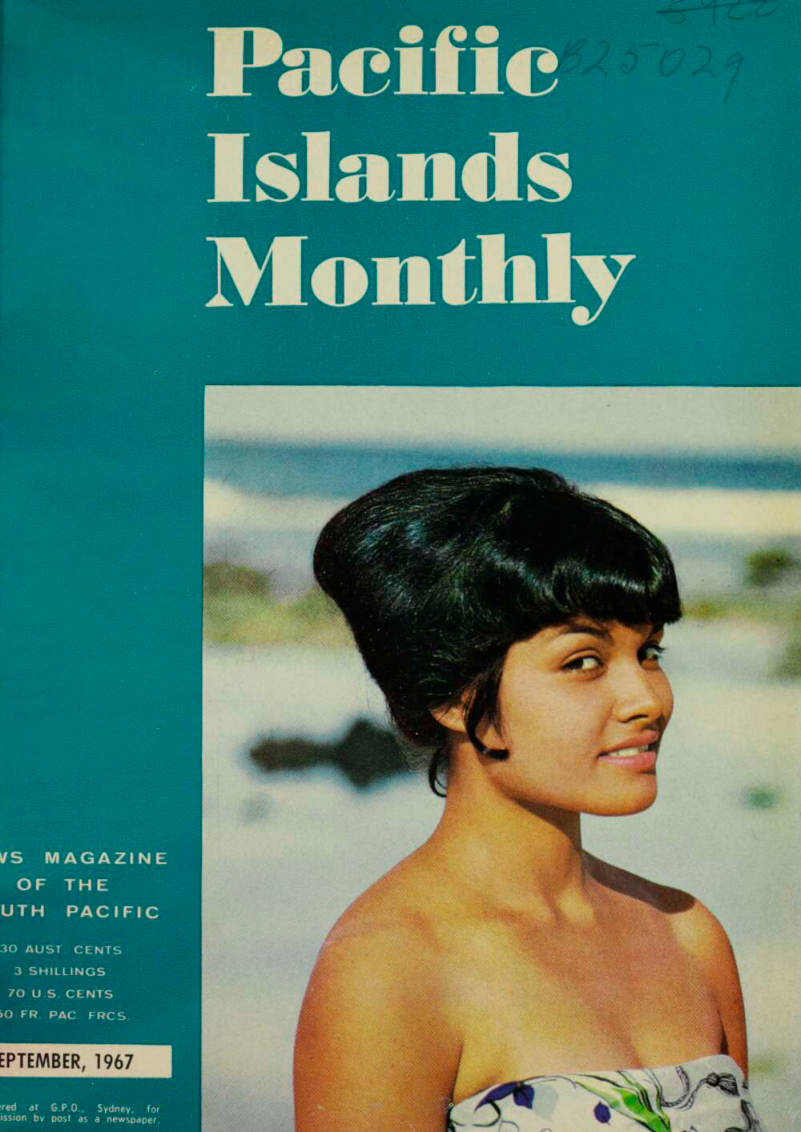 1
1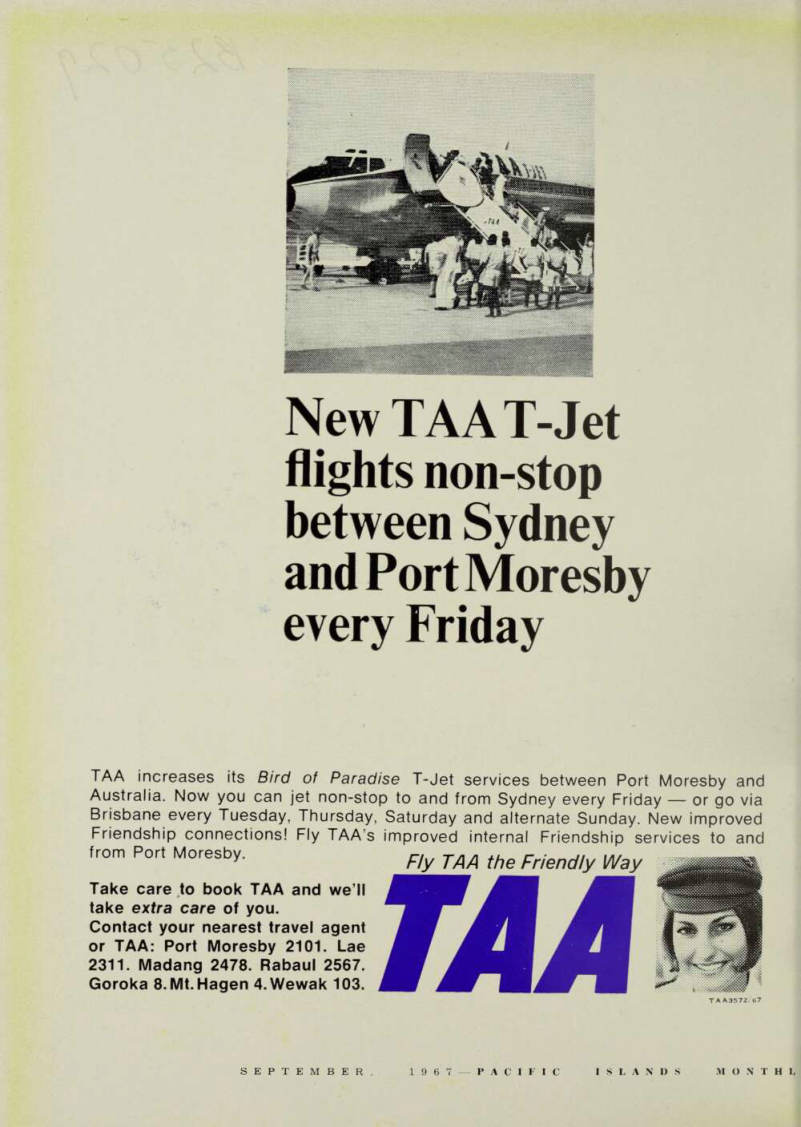 2
2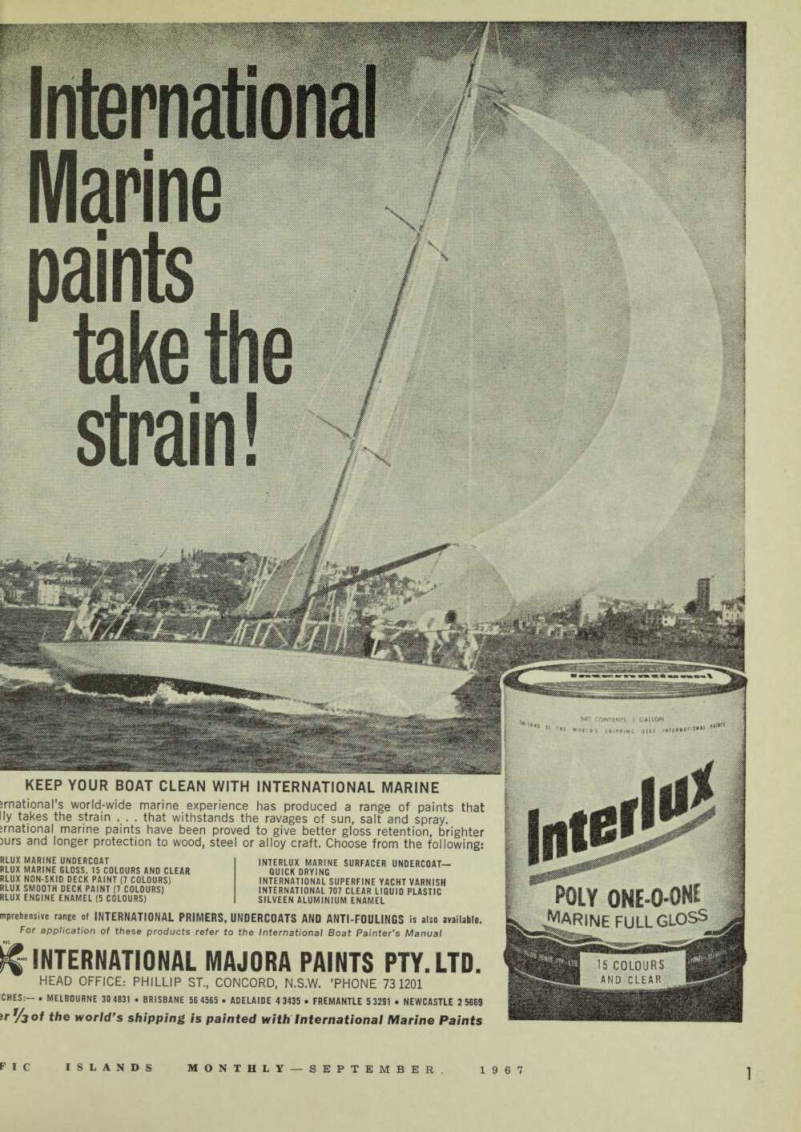 3
3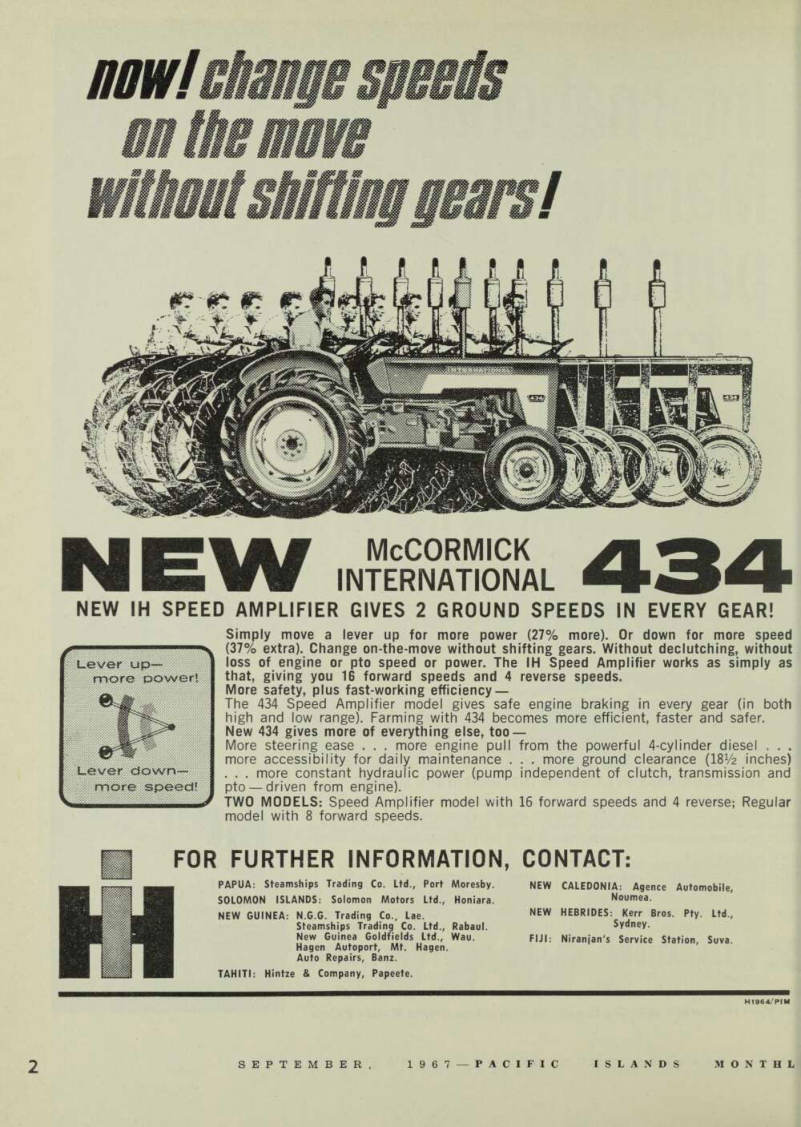 4
4 5
5 6
6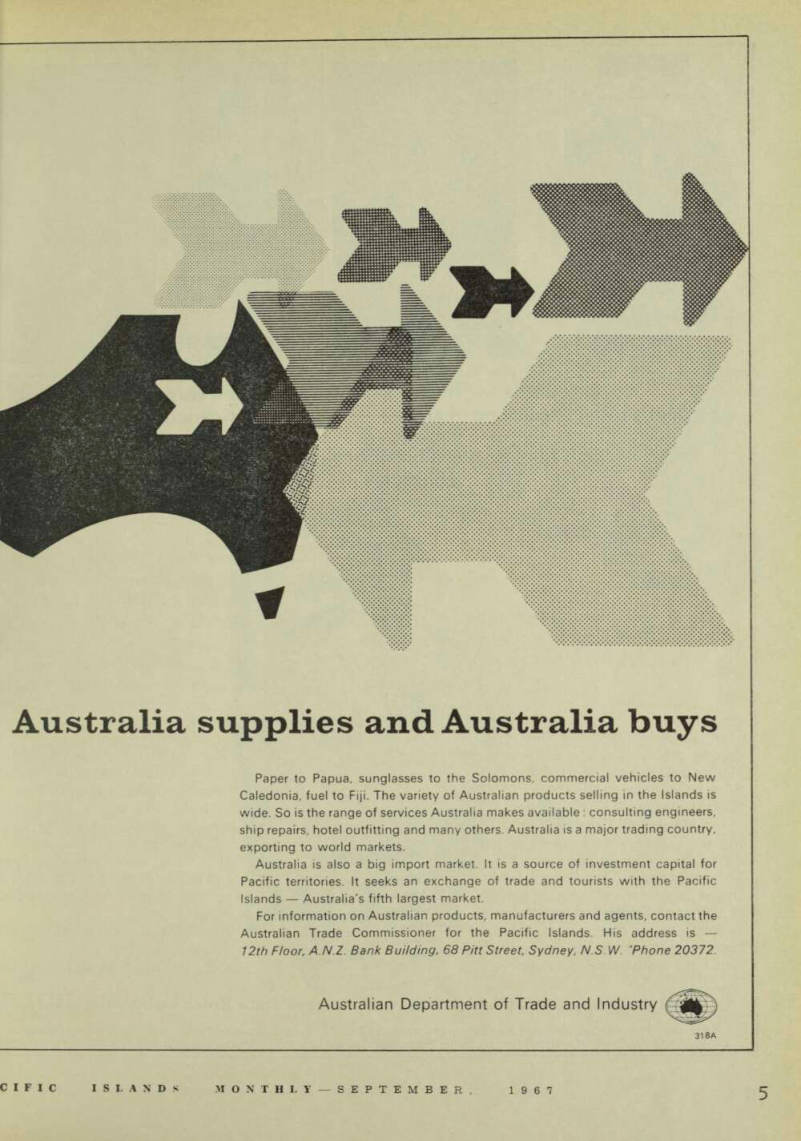 7
7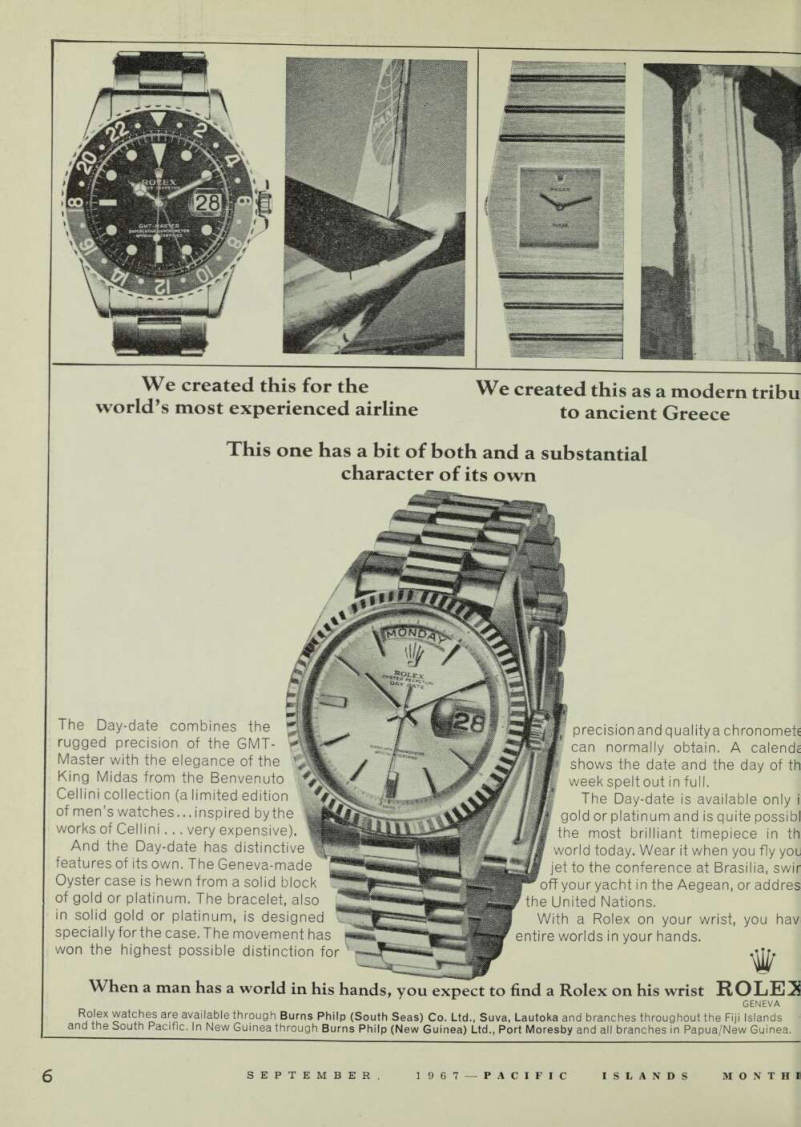 8
8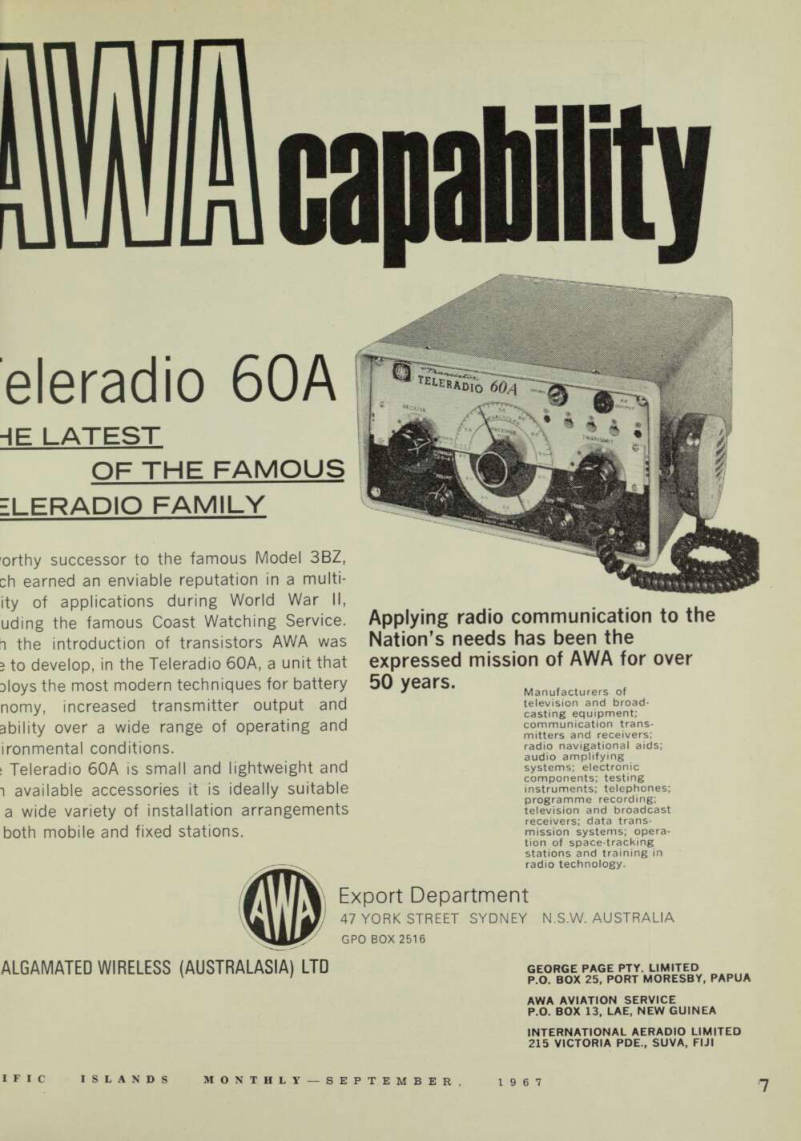 9
9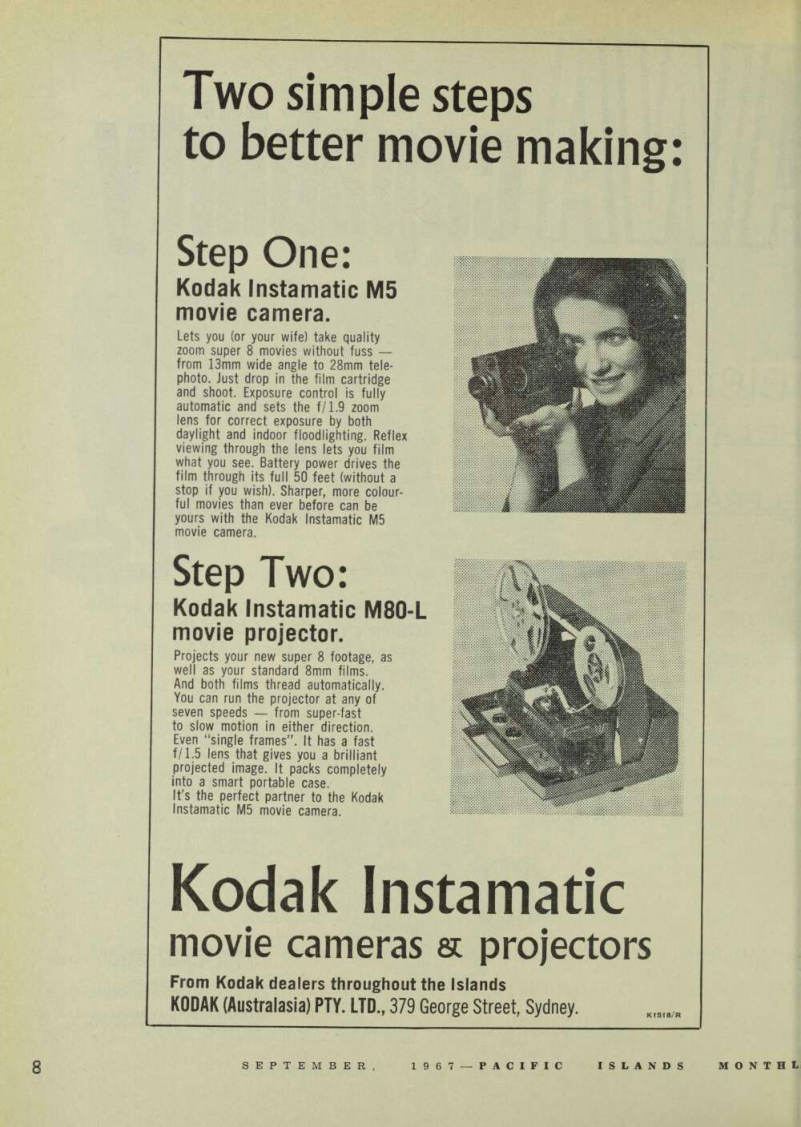 10
10 11
11 12
12 13
13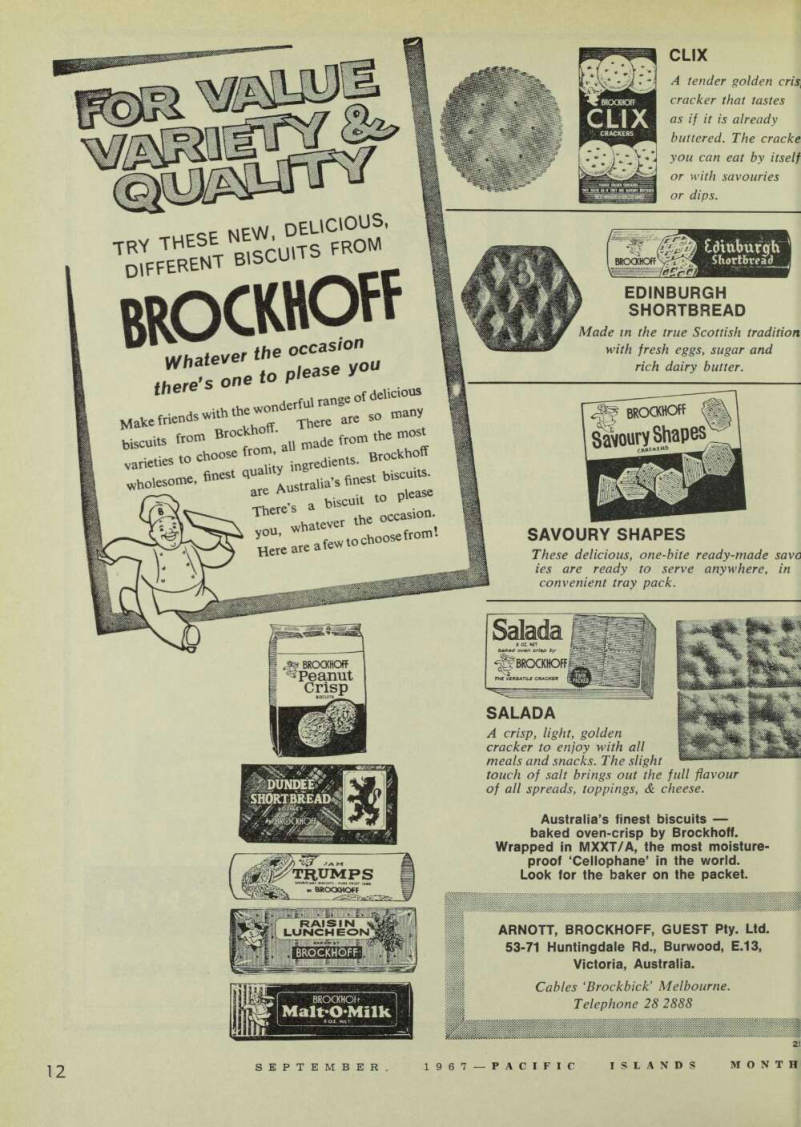 14
14 15
15 16
16 17
17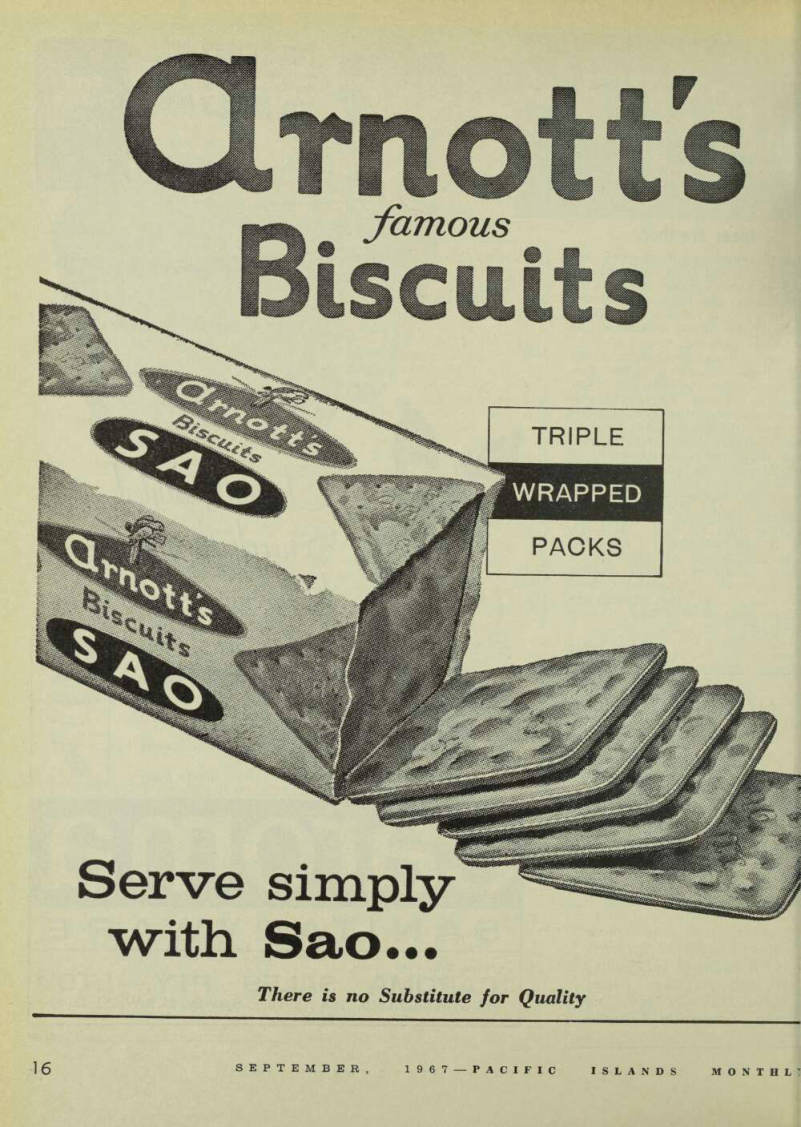 18
18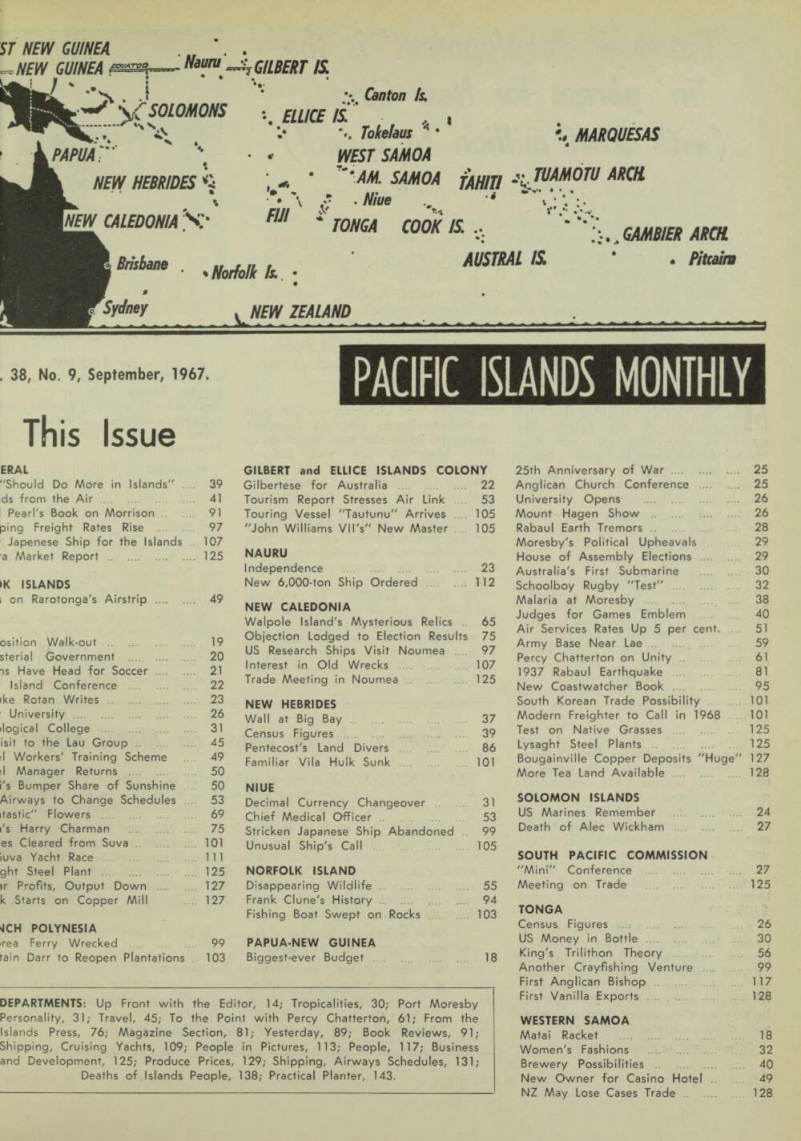 19
19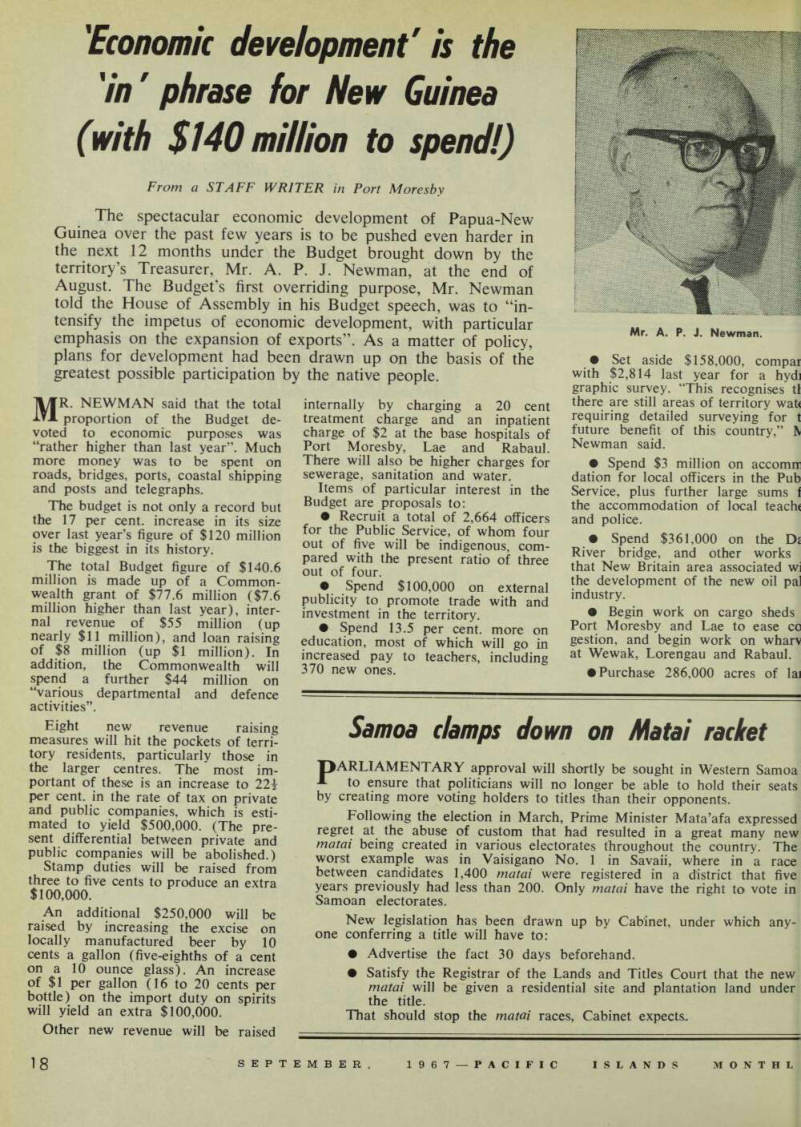 20
20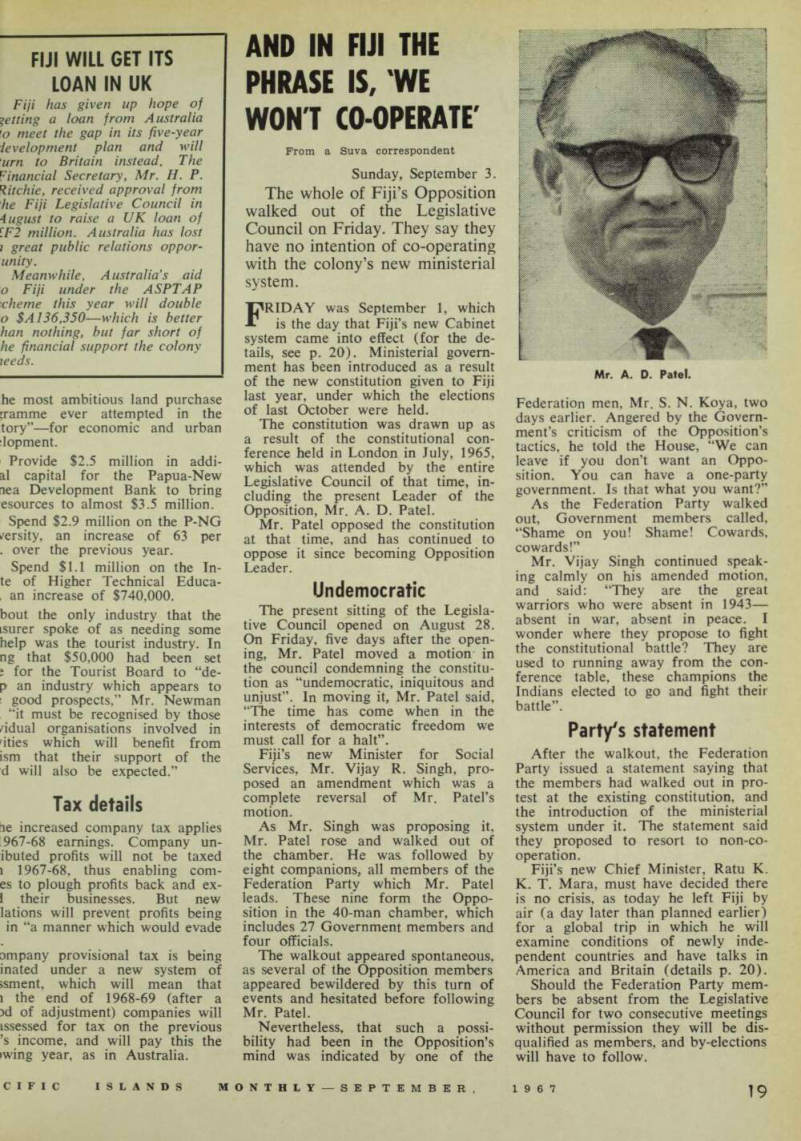 21
21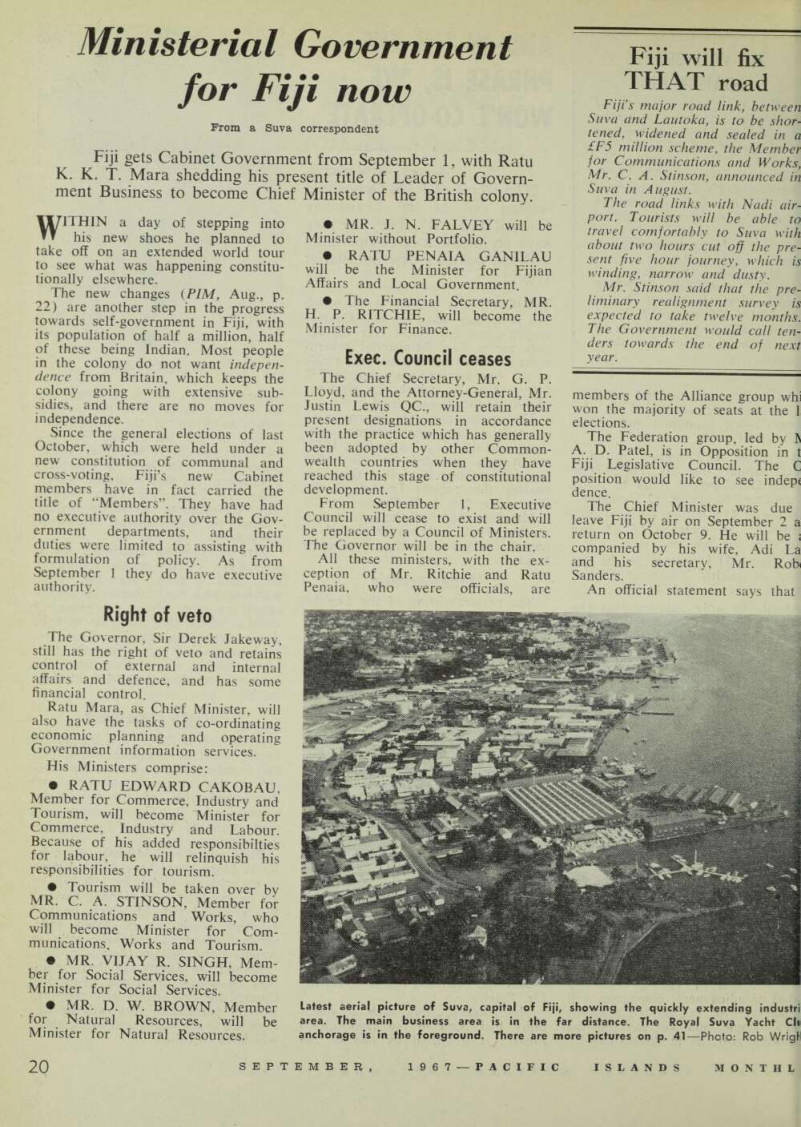 22
22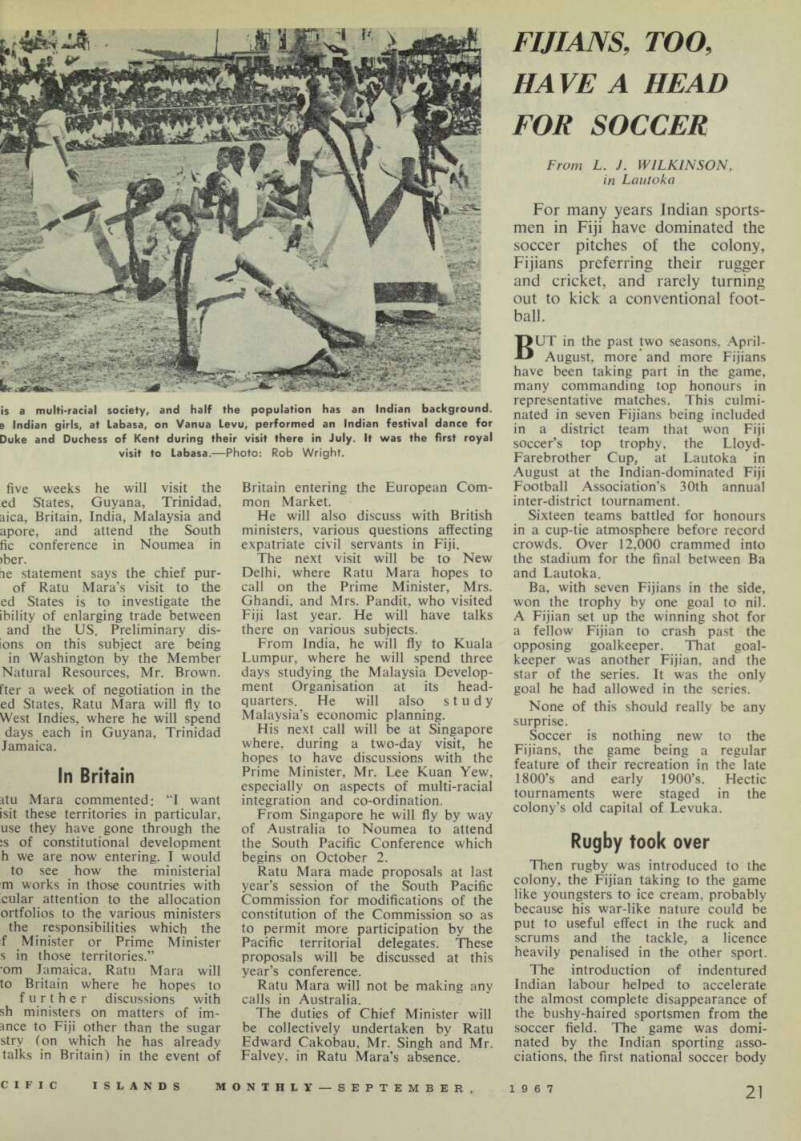 23
23 24
24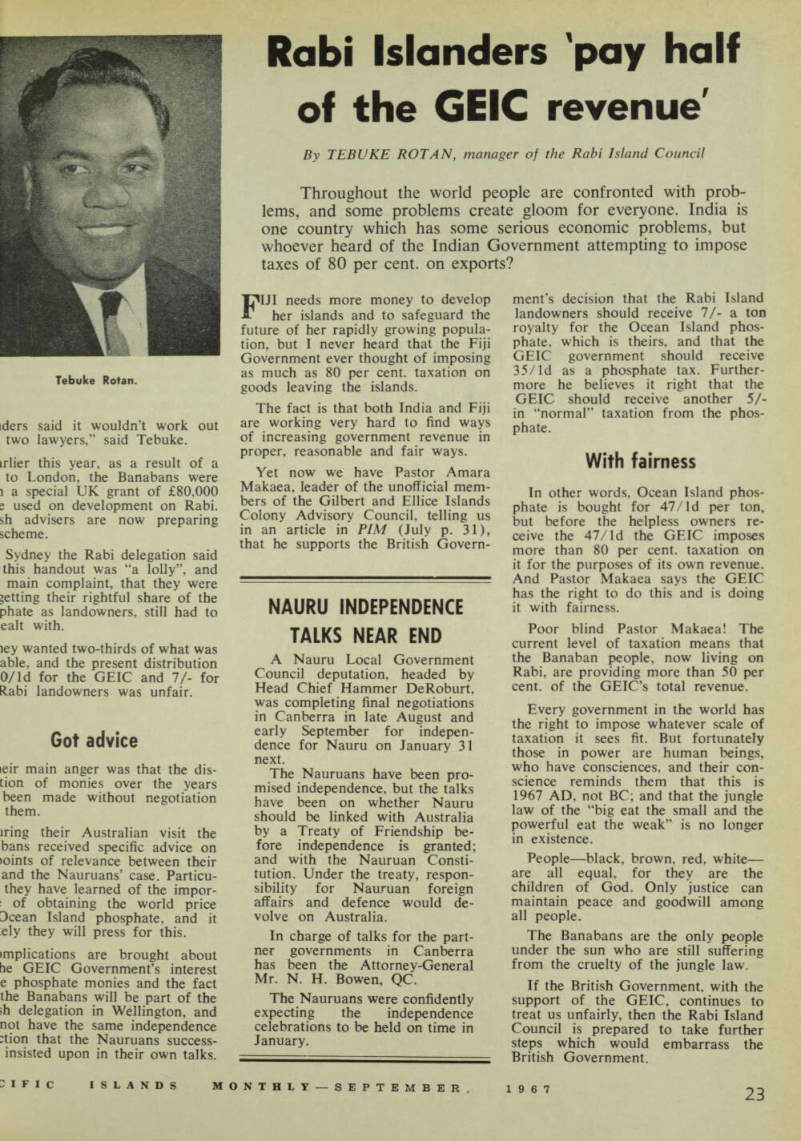 25
25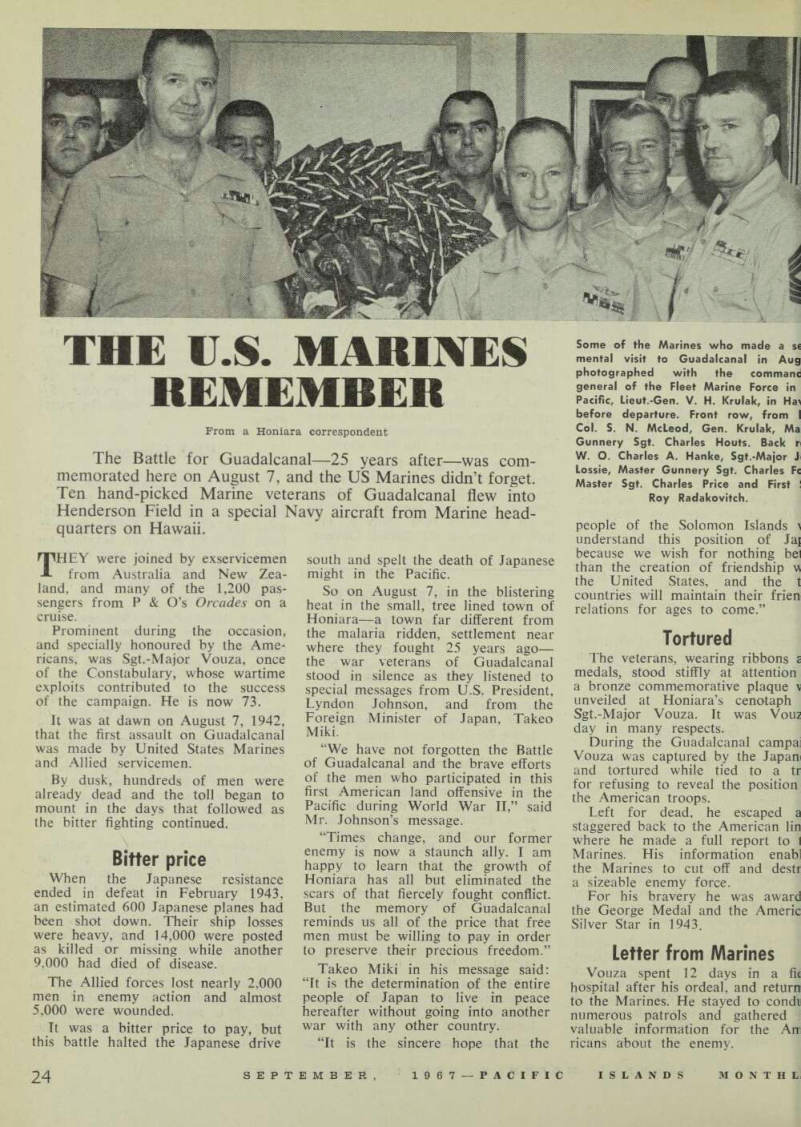 26
26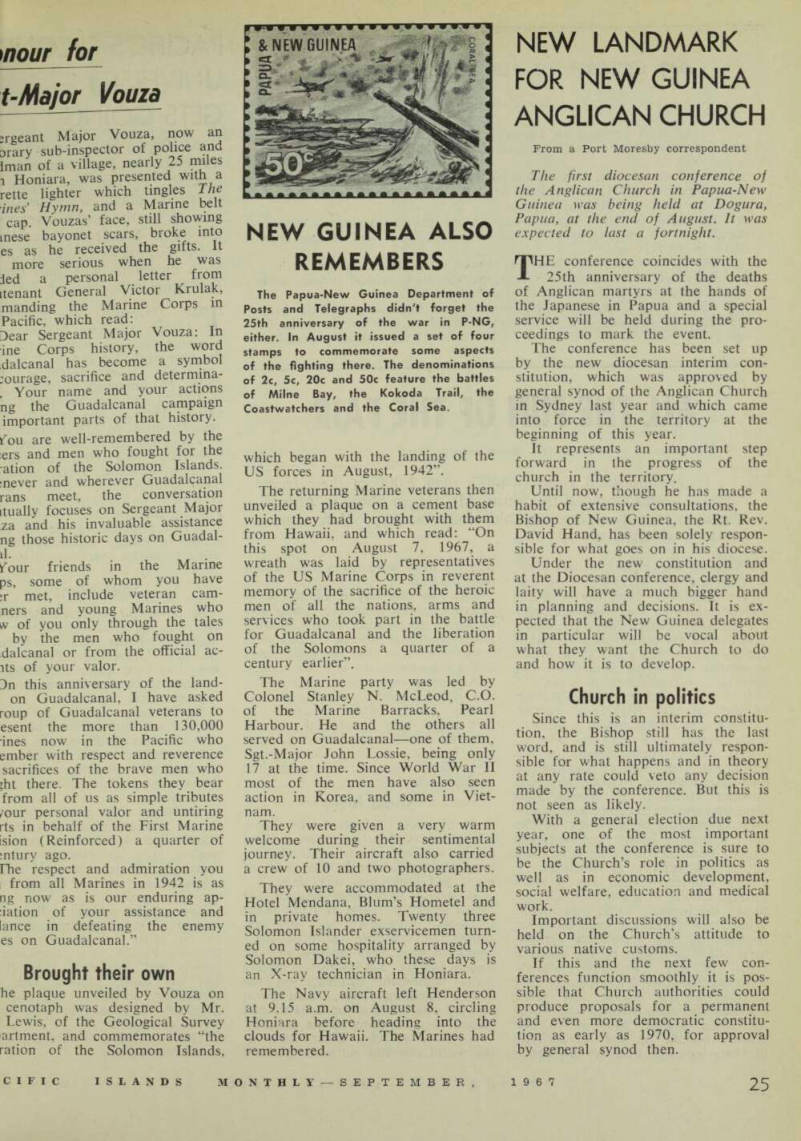 27
27 28
28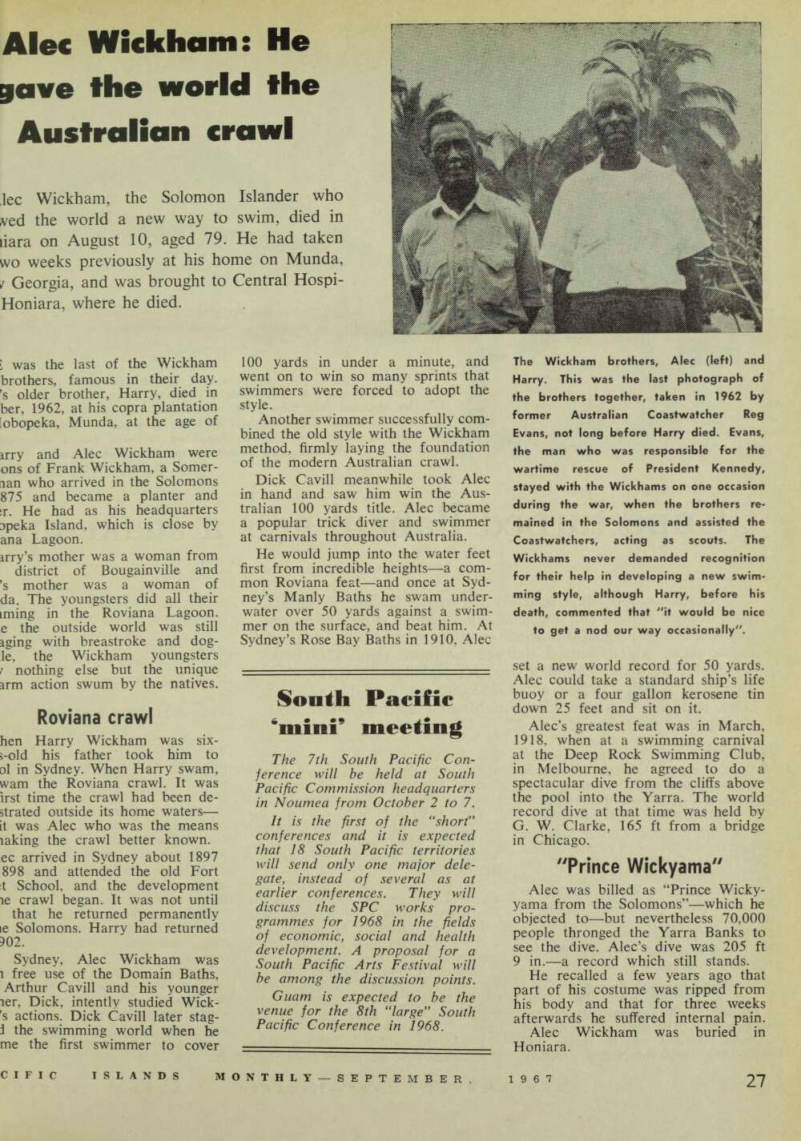 29
29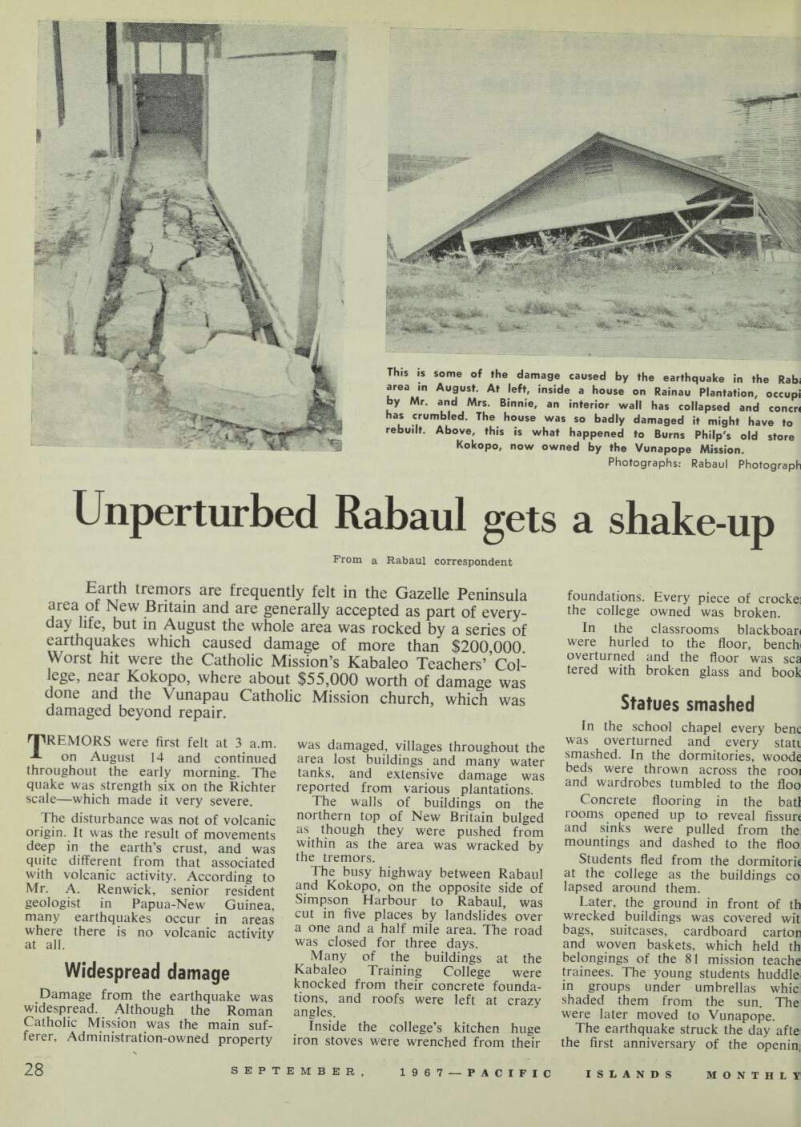 30
30 31
31 32
32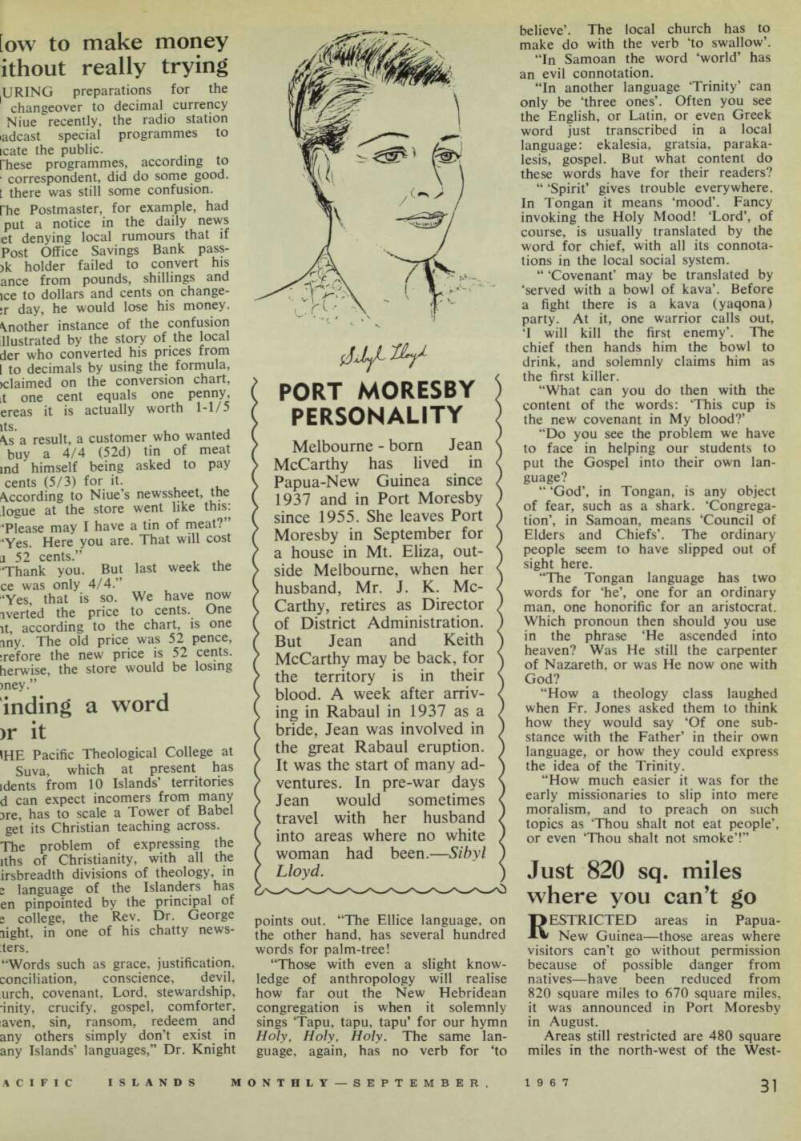 33
33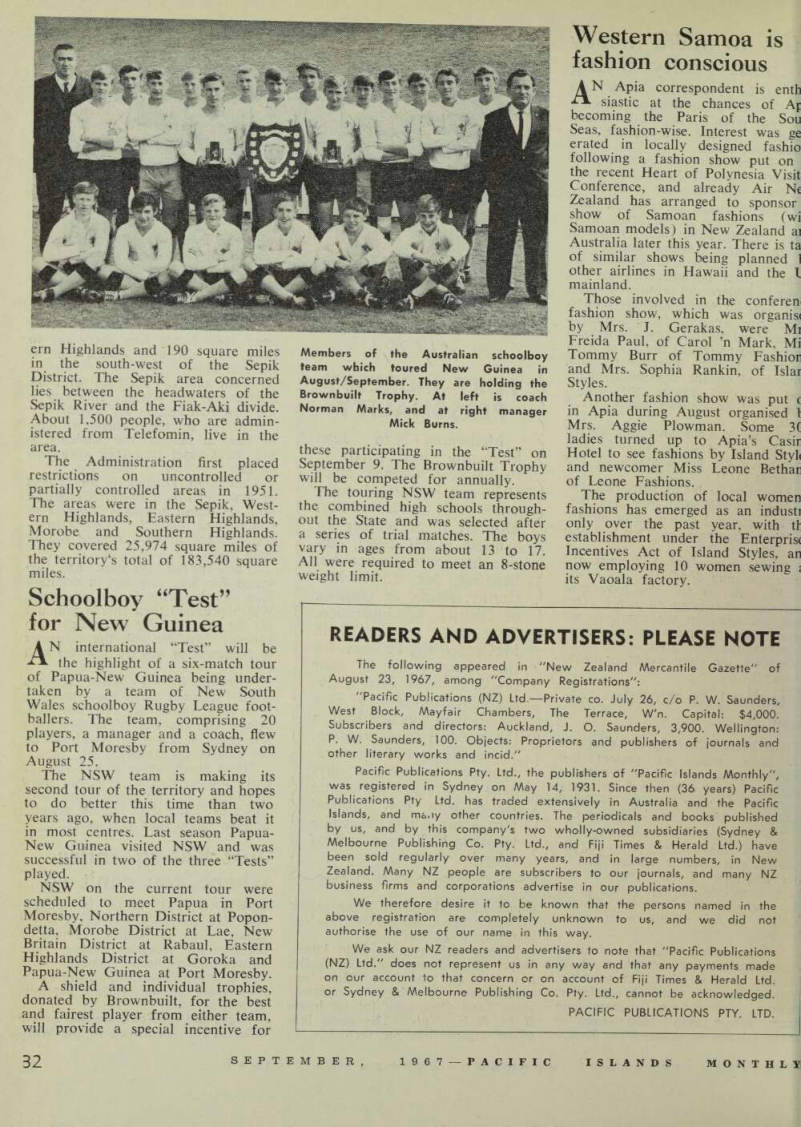 34
34 35
35 36
36 37
37 38
38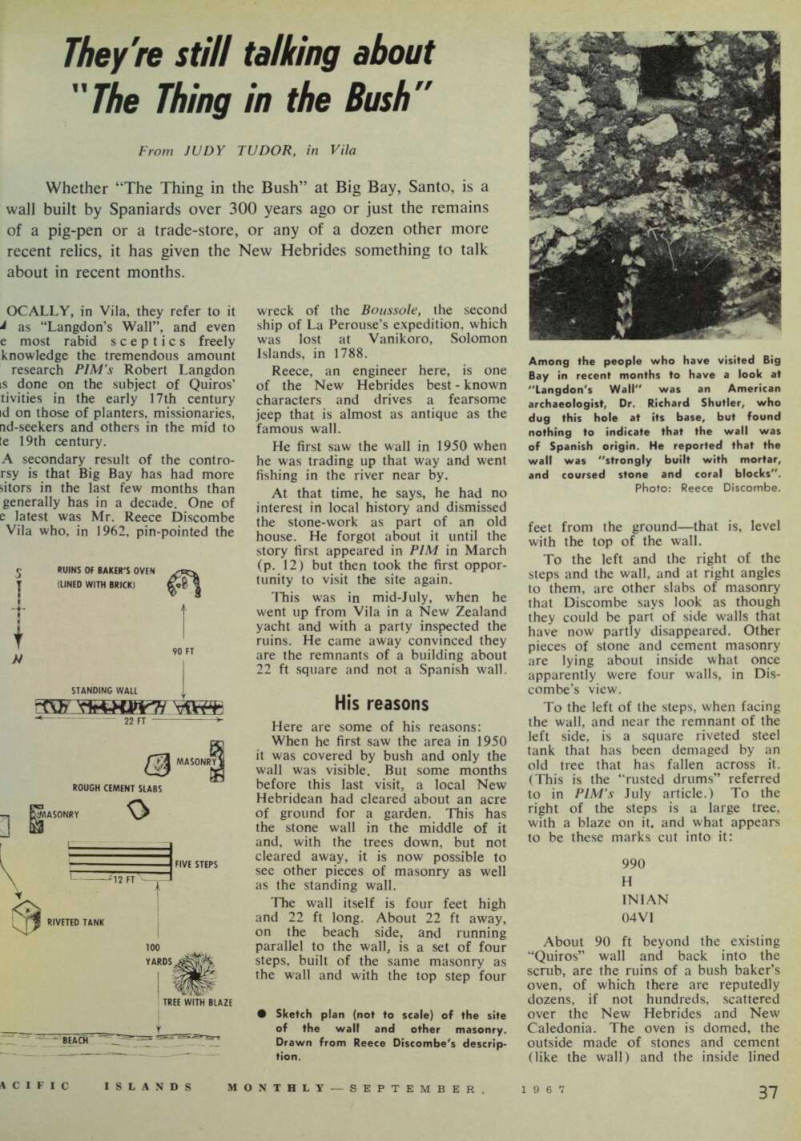 39
39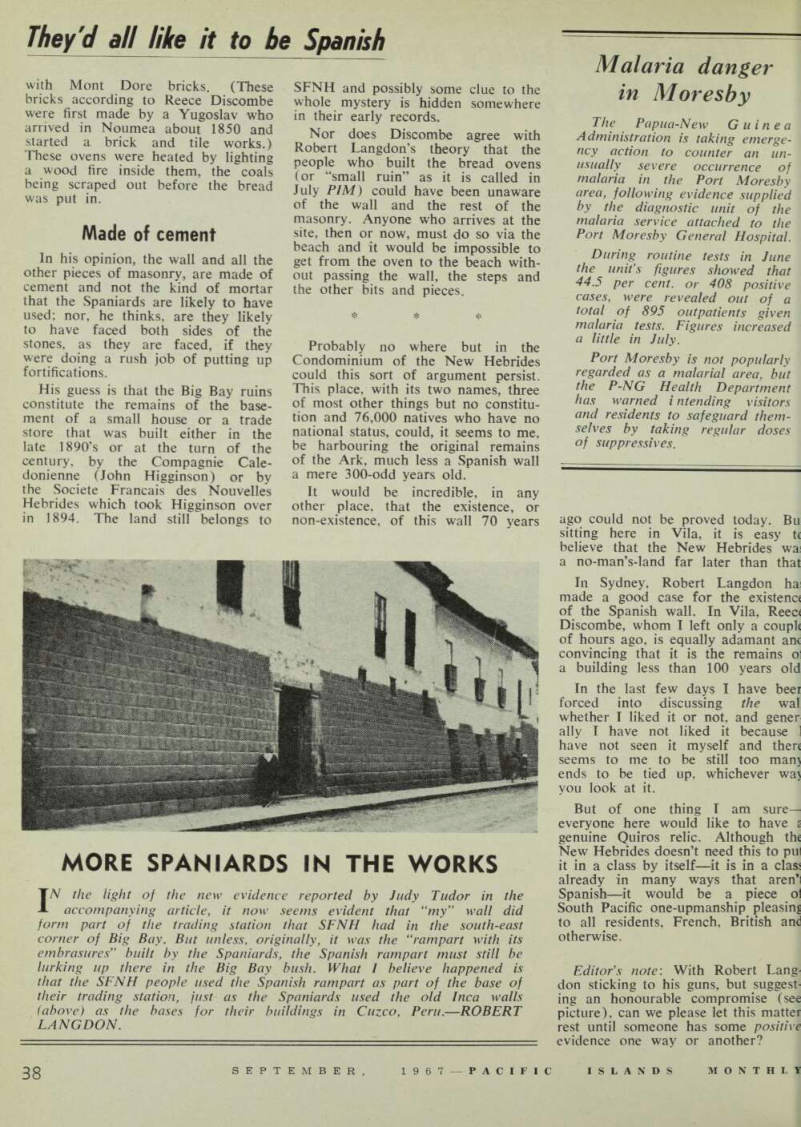 40
40 41
41 42
42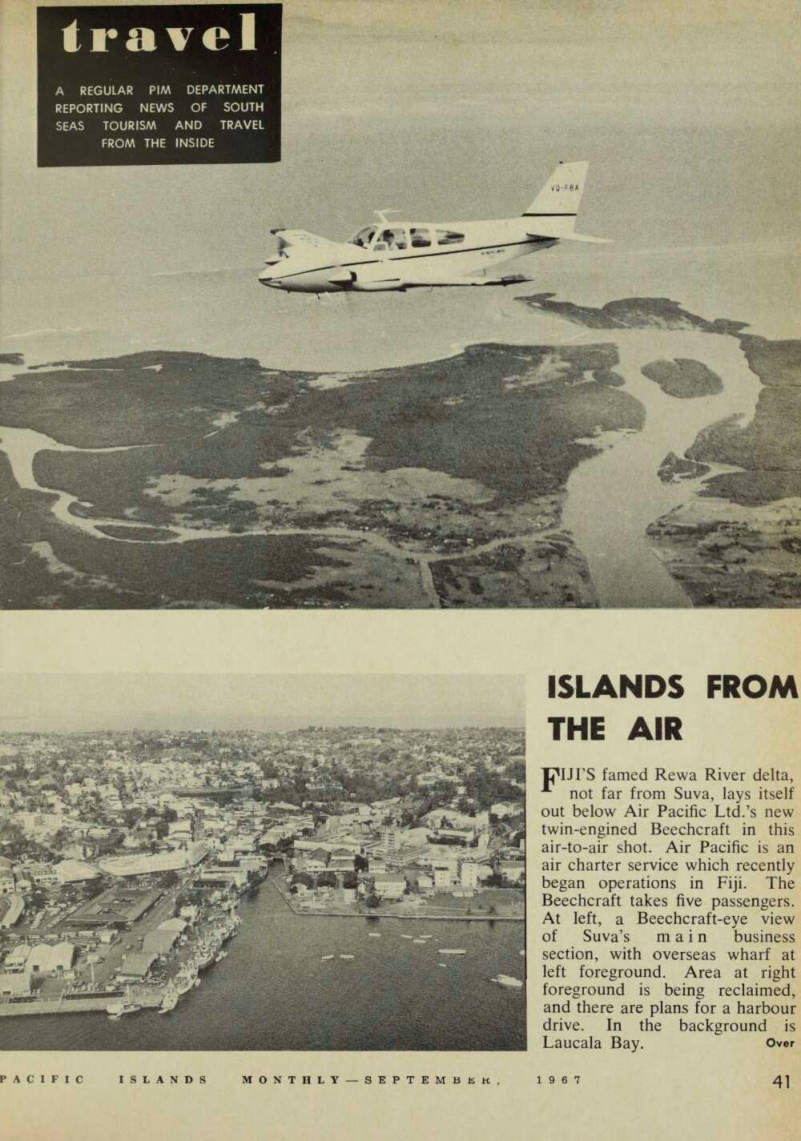 43
43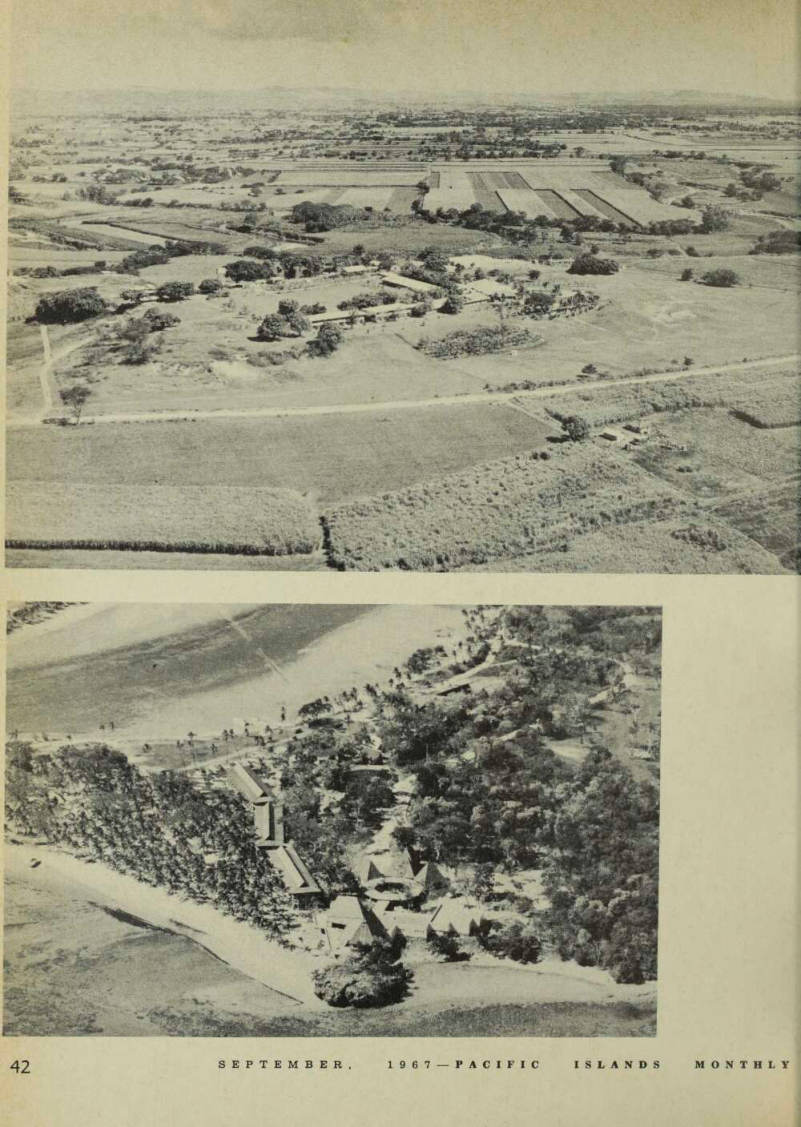 44
44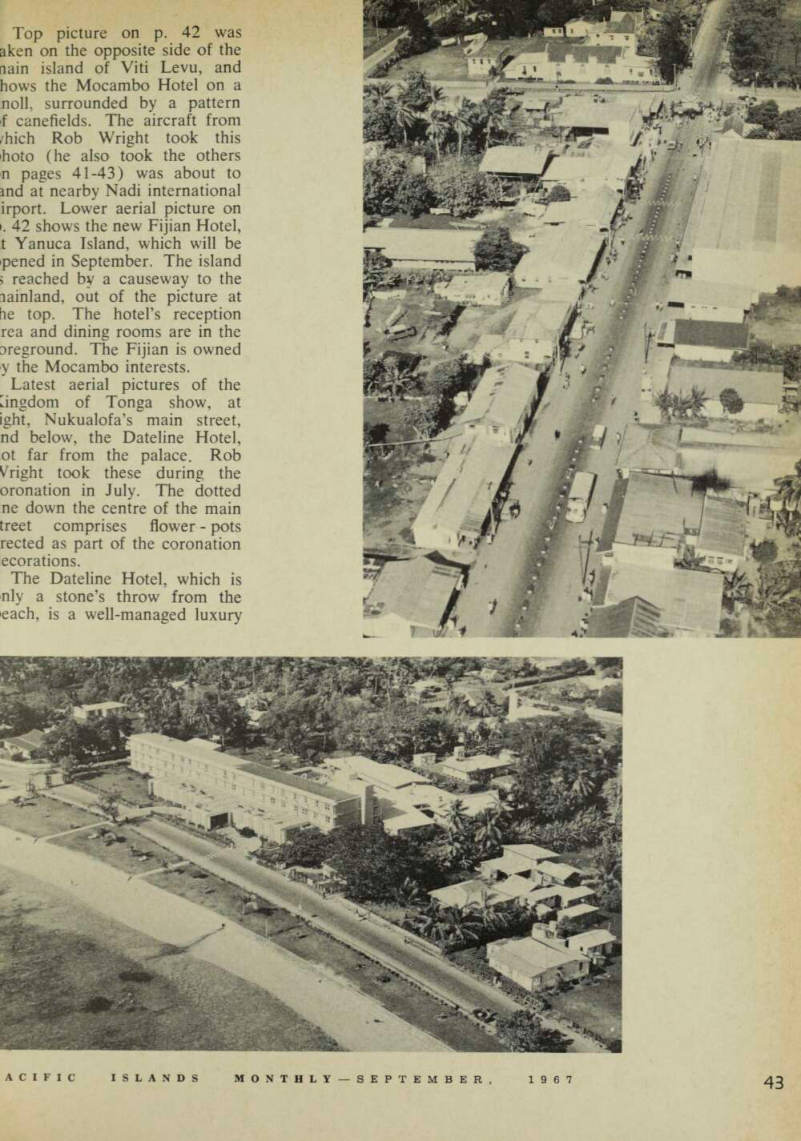 45
45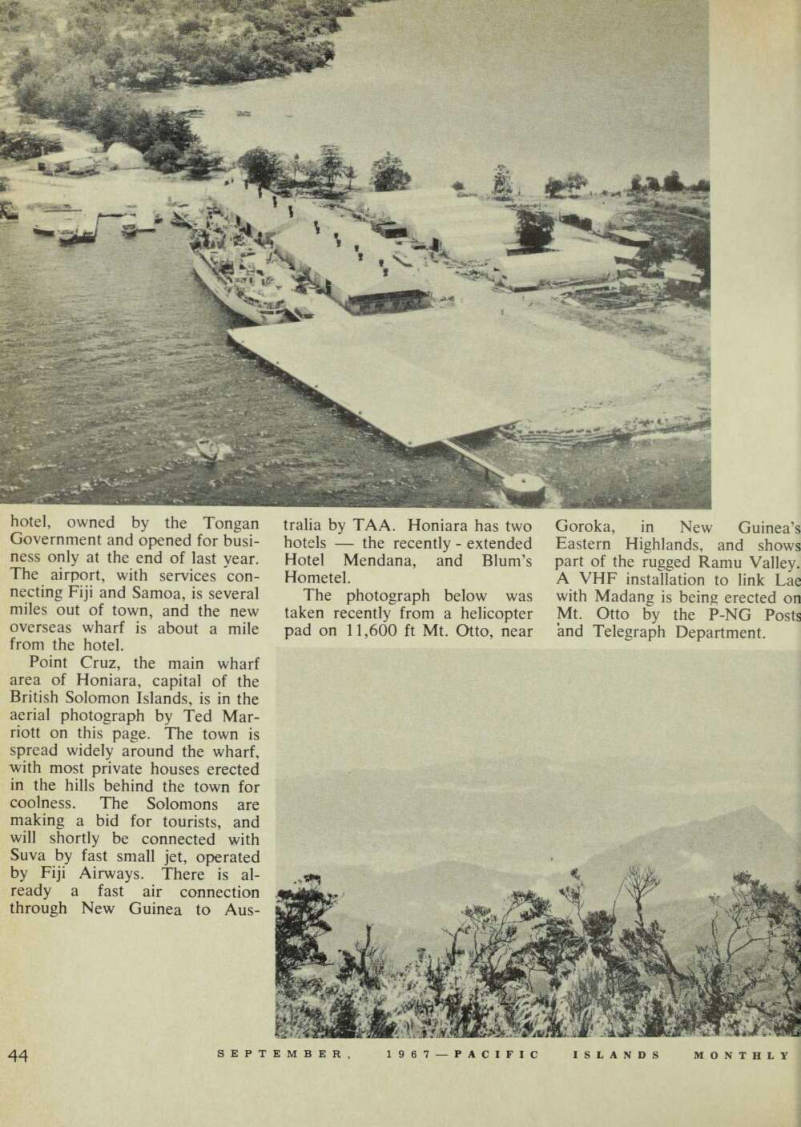 46
46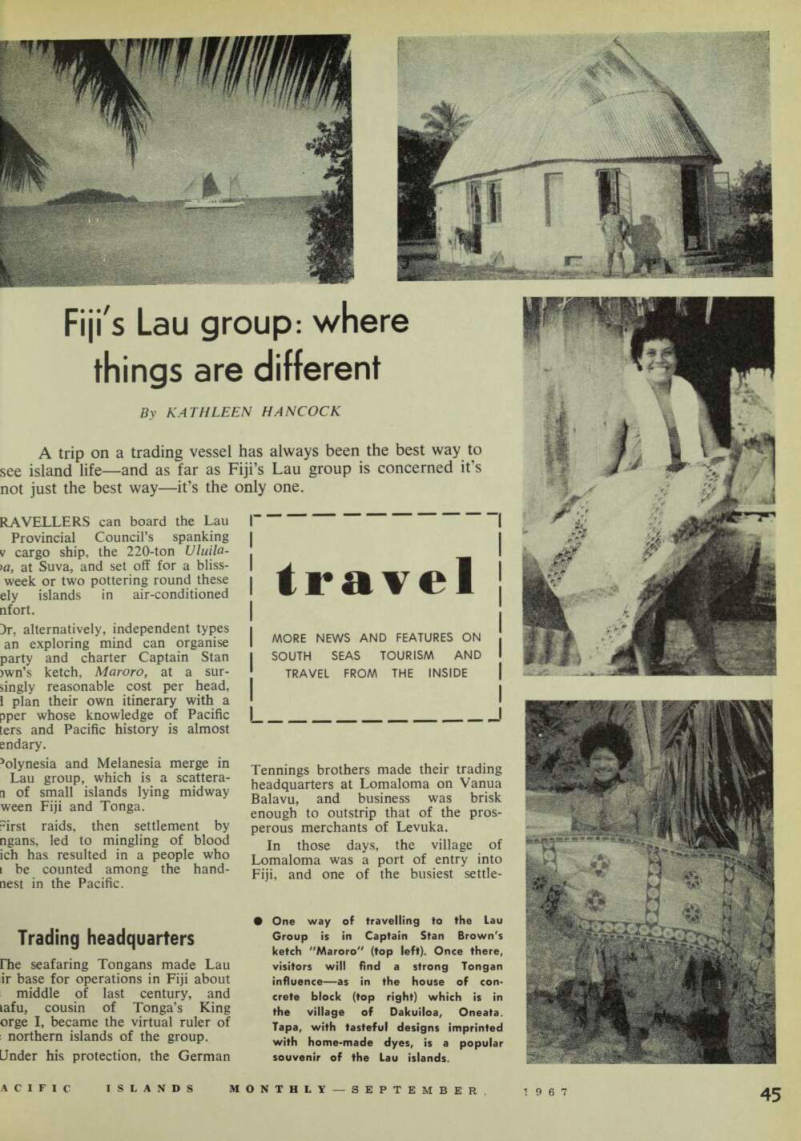 47
47 48
48 49
49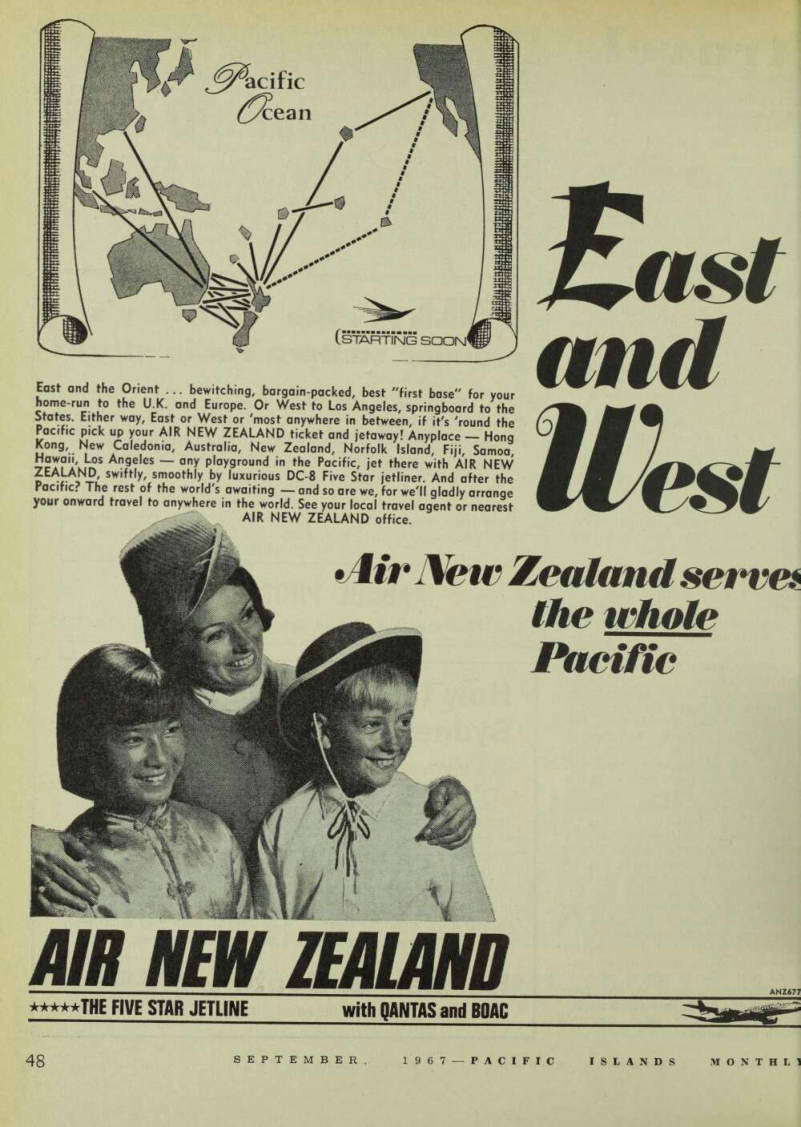 50
50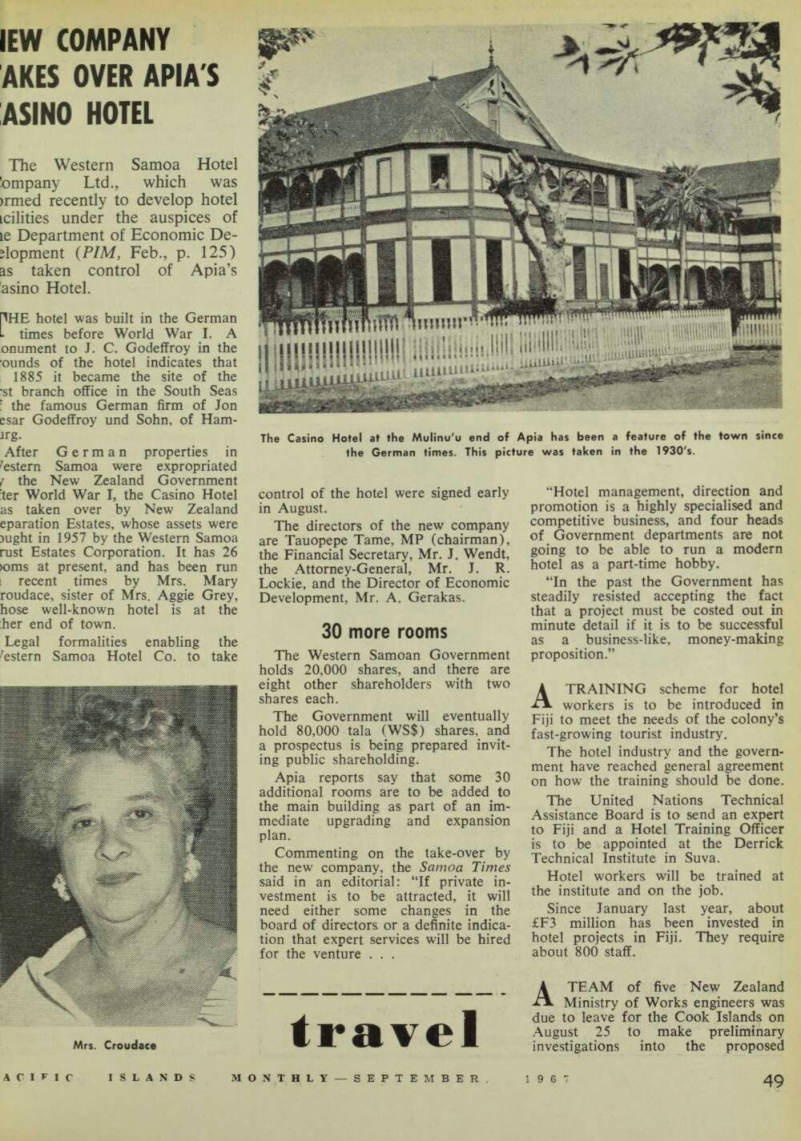 51
51 52
52 53
53 54
54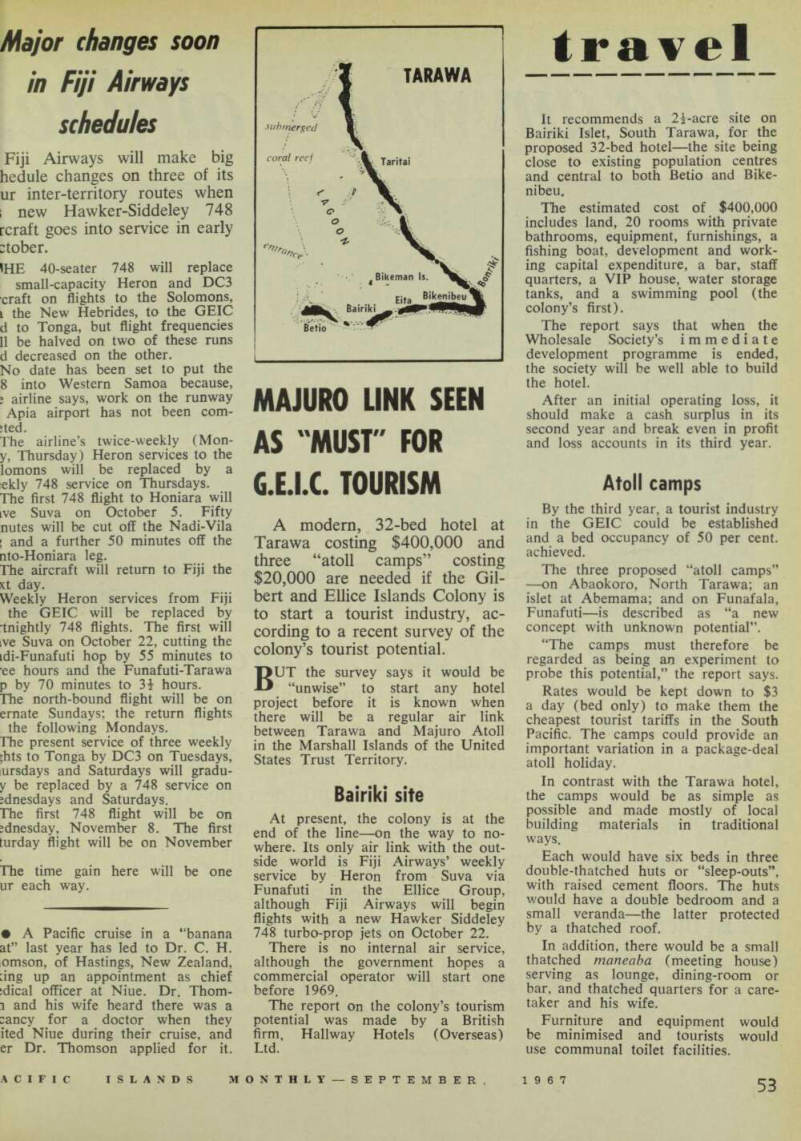 55
55 56
56 57
57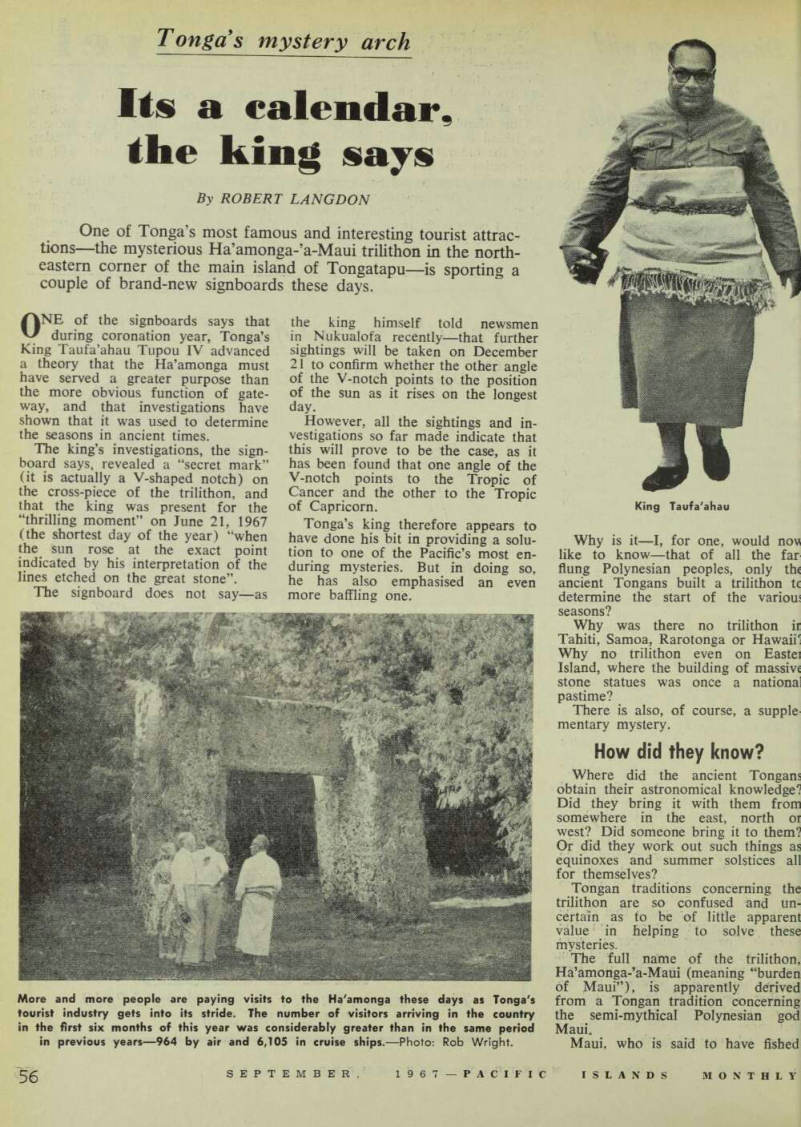 58
58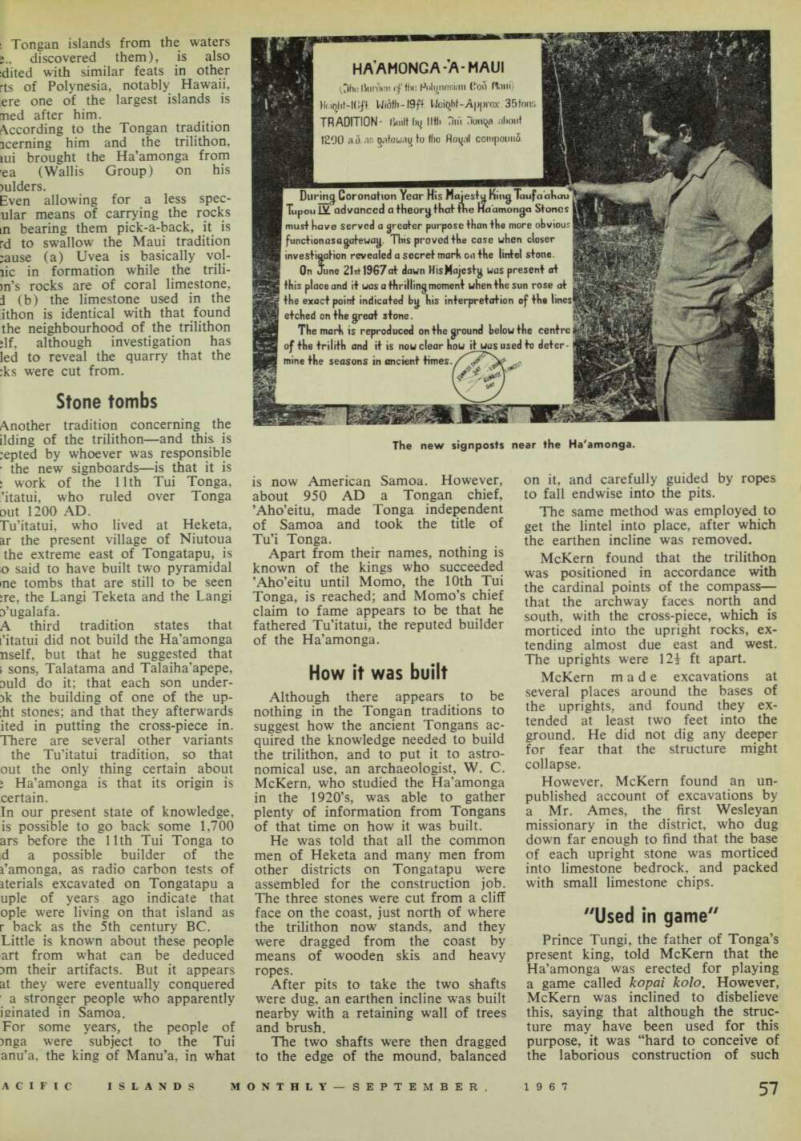 59
59 60
60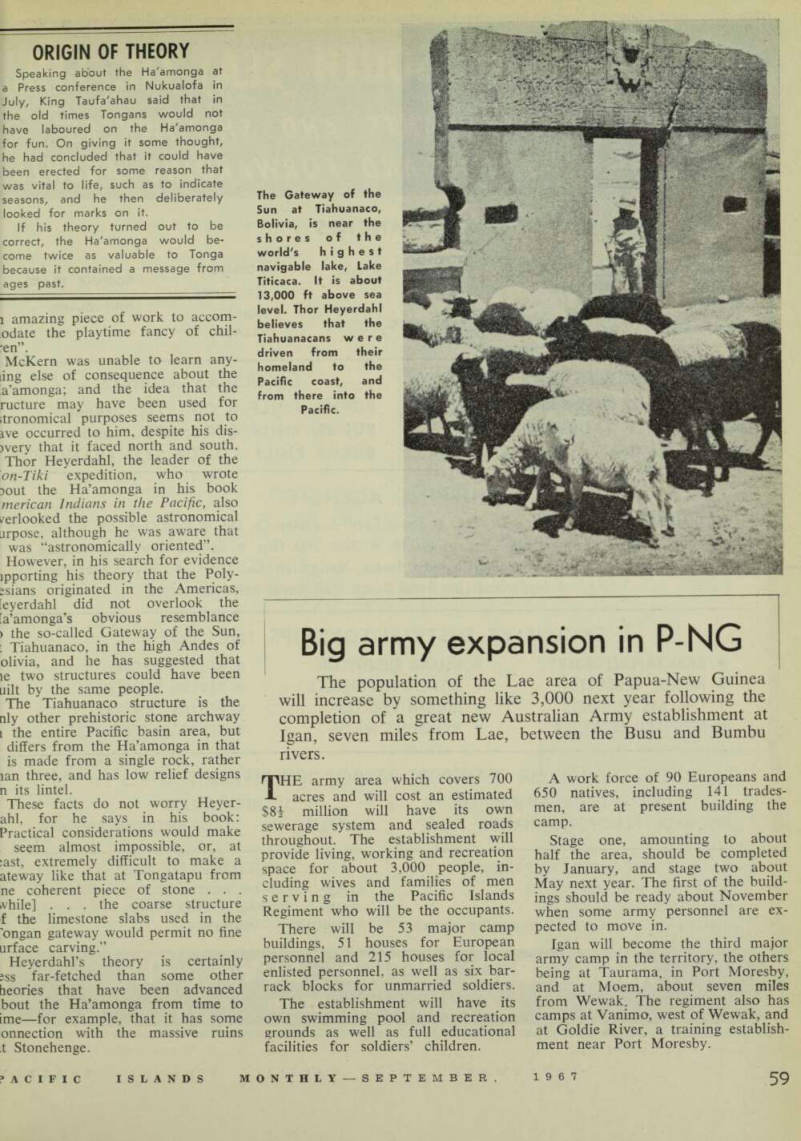 61
61 62
62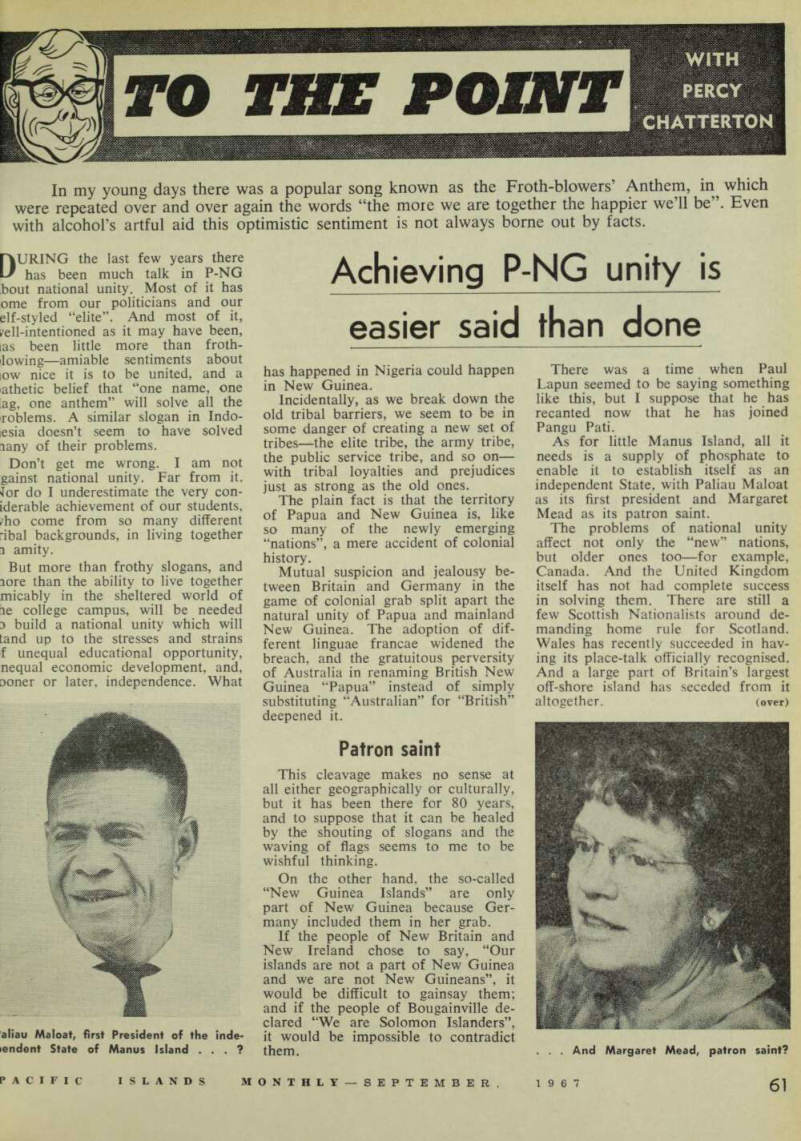 63
63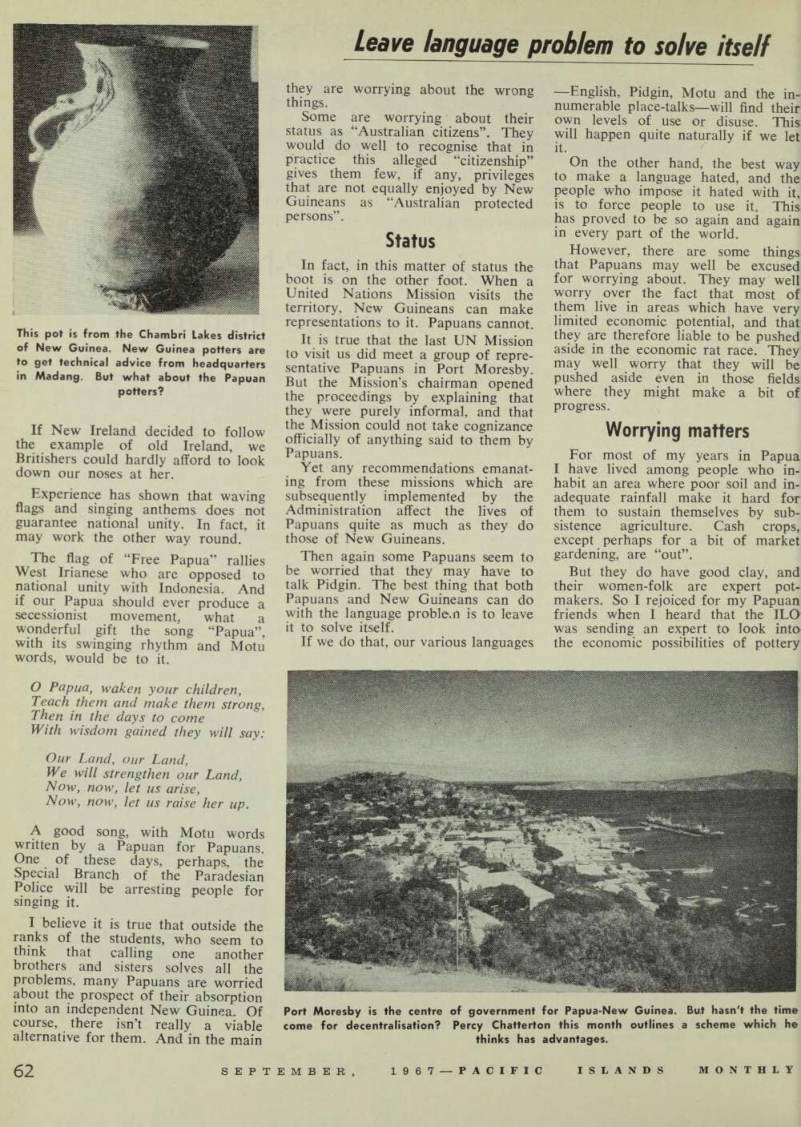 64
64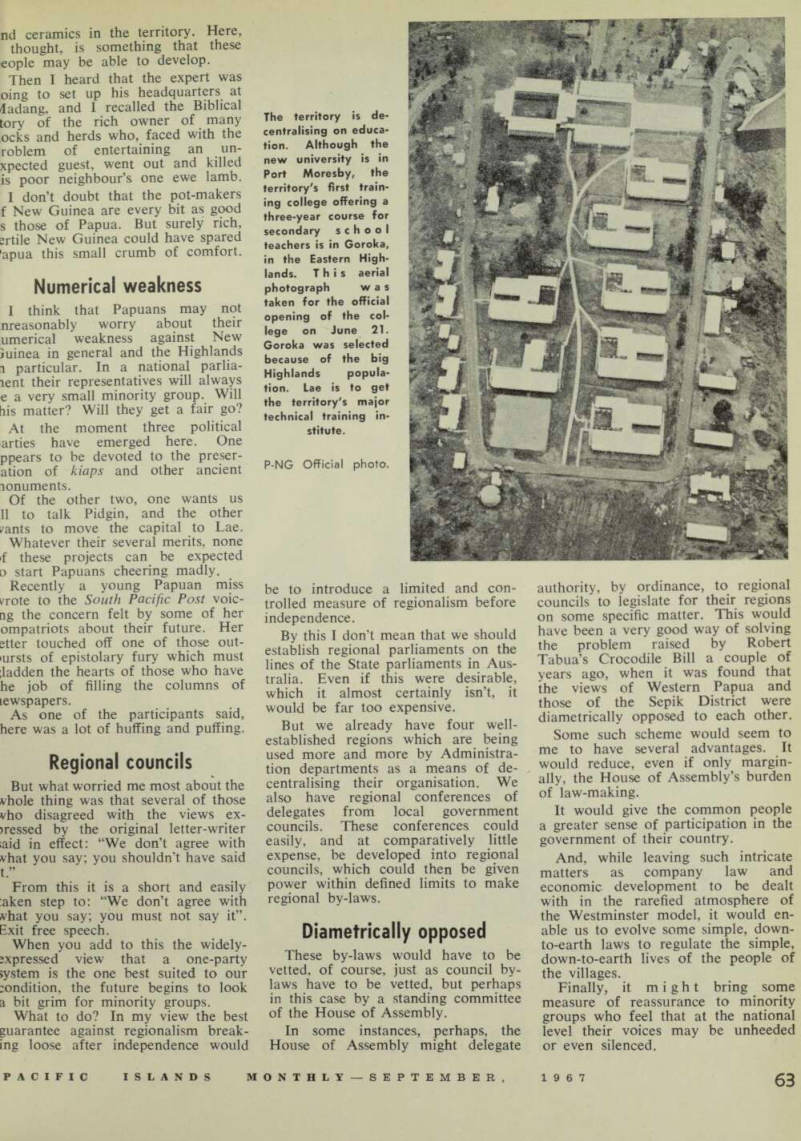 65
65 66
66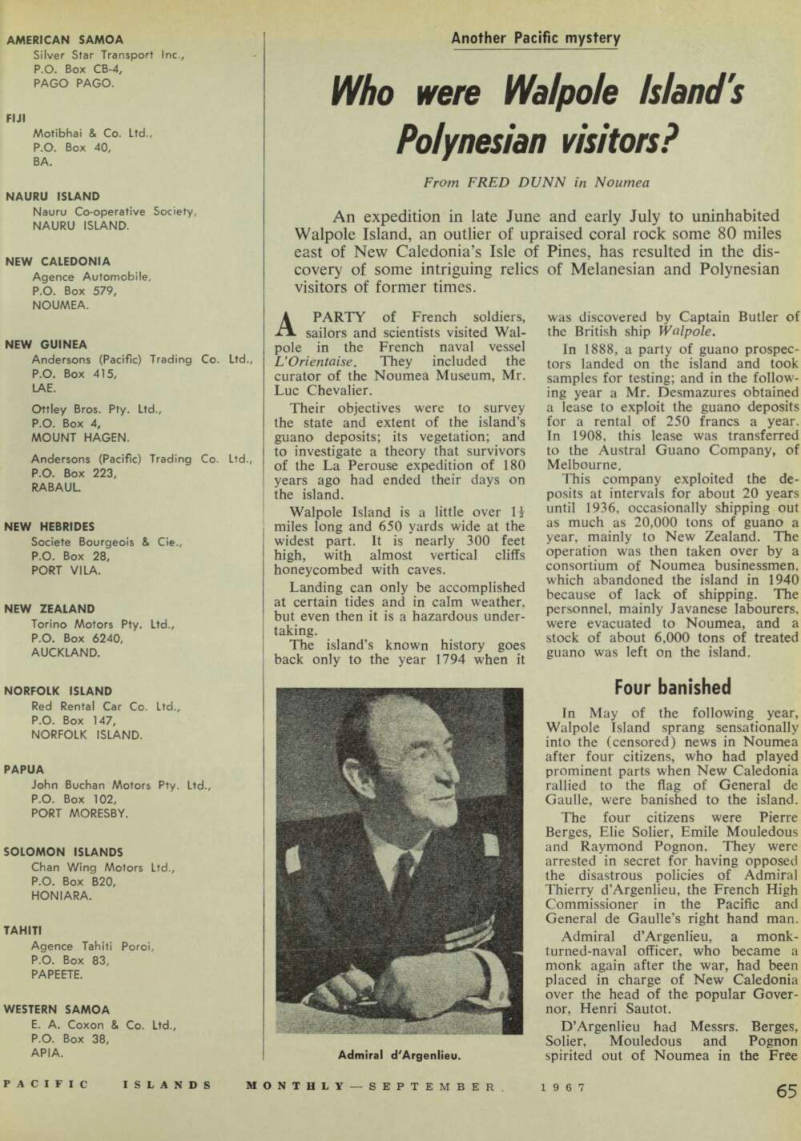 67
67 68
68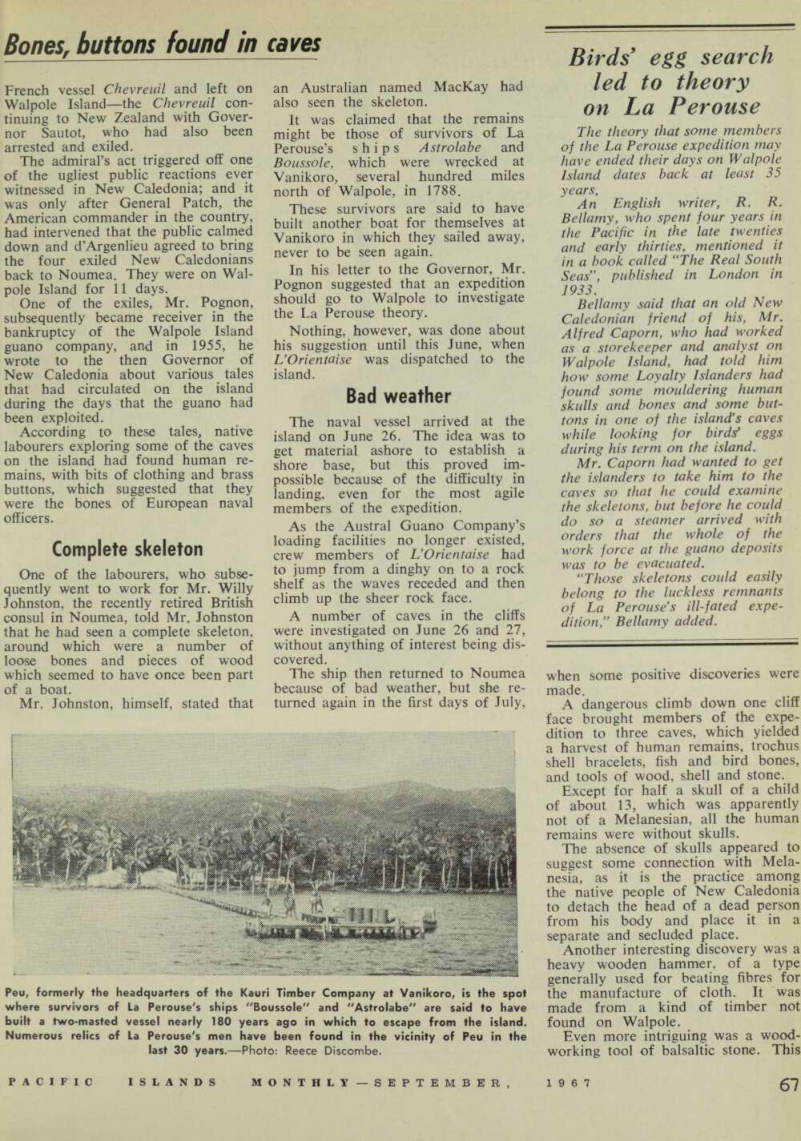 69
69 70
70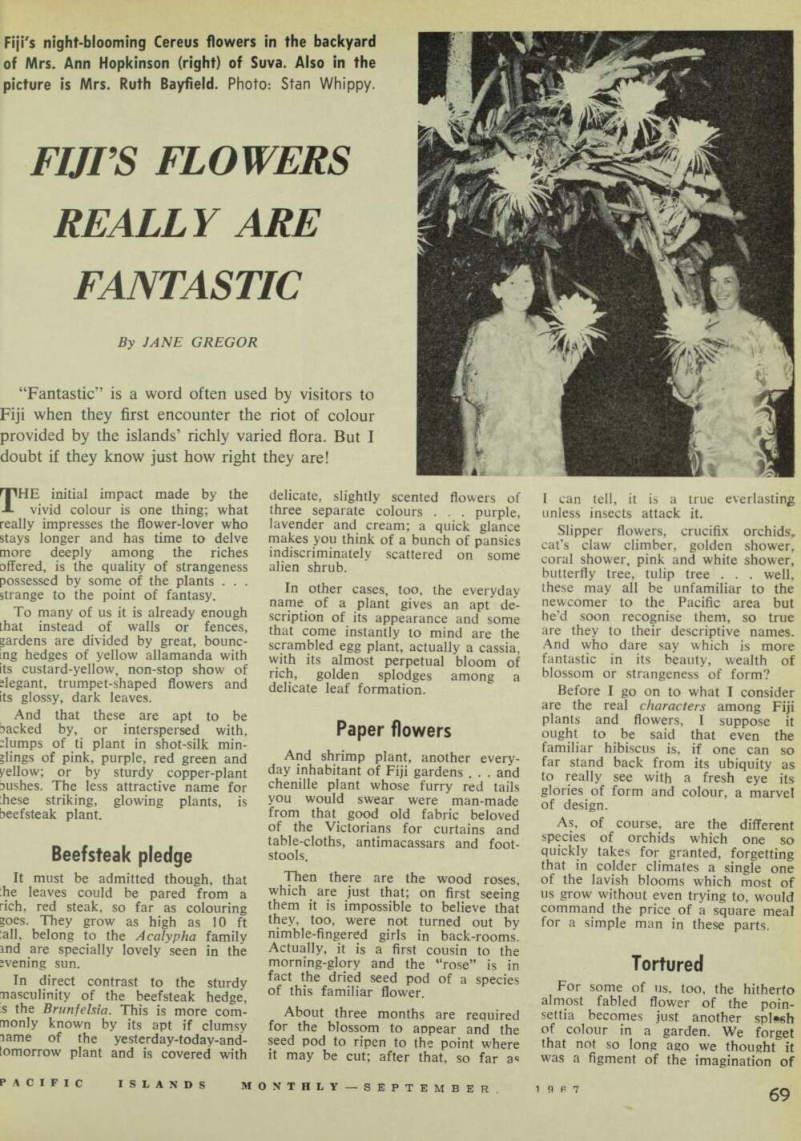 71
71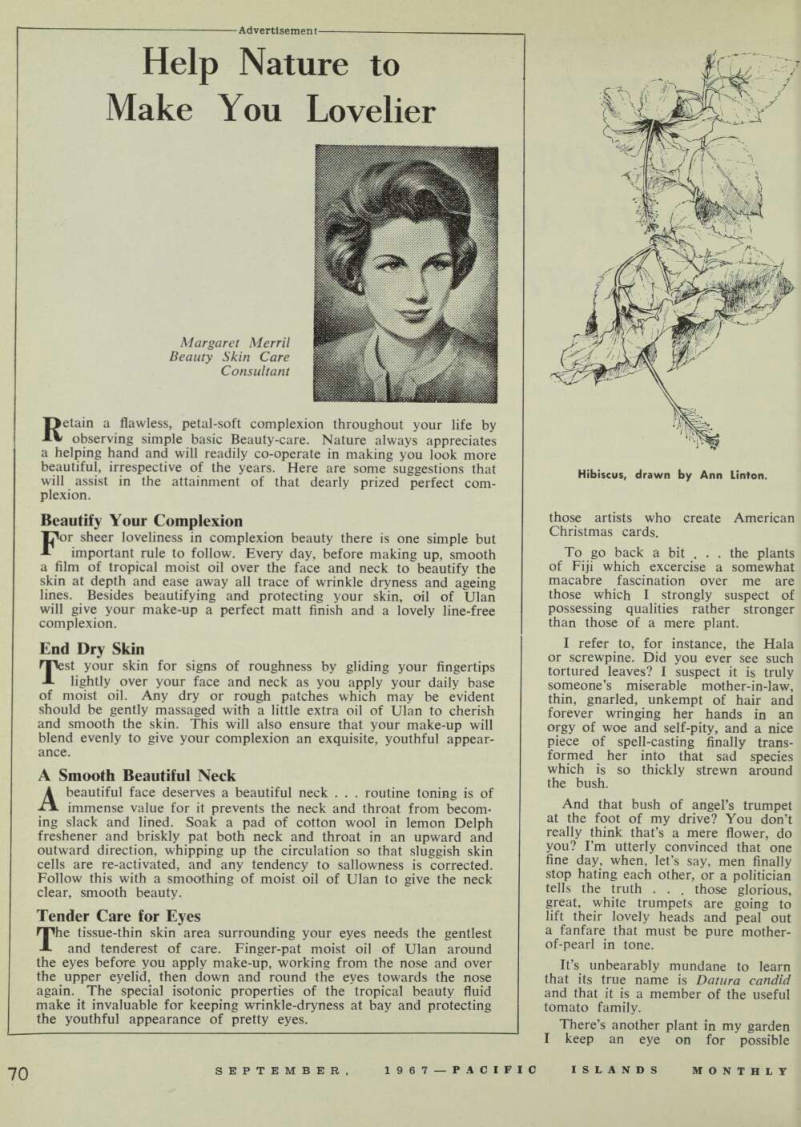 72
72 73
73 74
74 75
75 76
76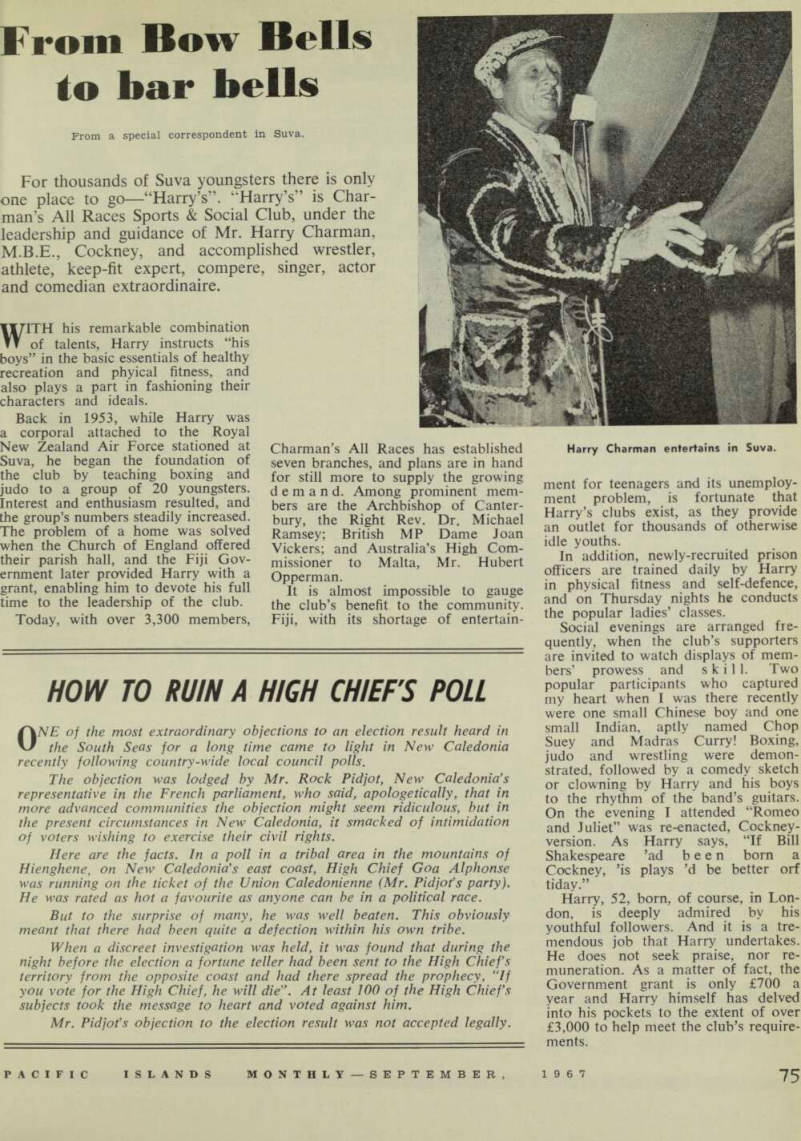 77
77 78
78 79
79 80
80 81
81 82
82 83
83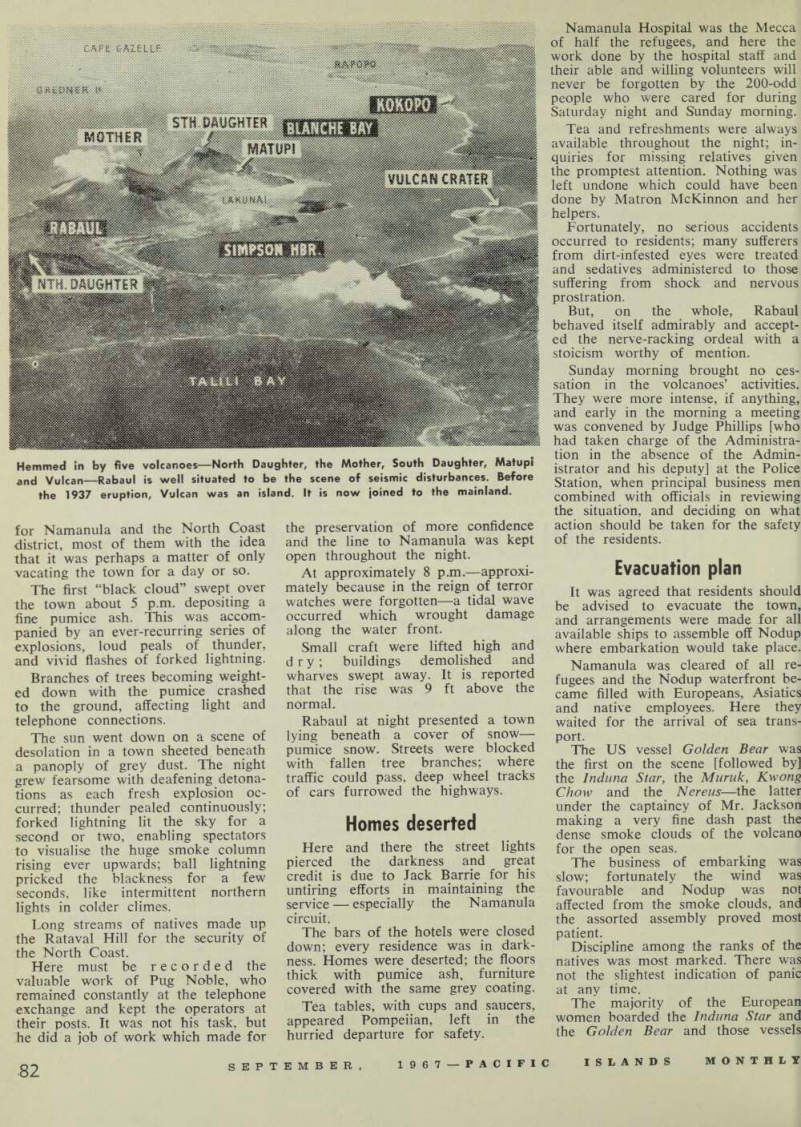 84
84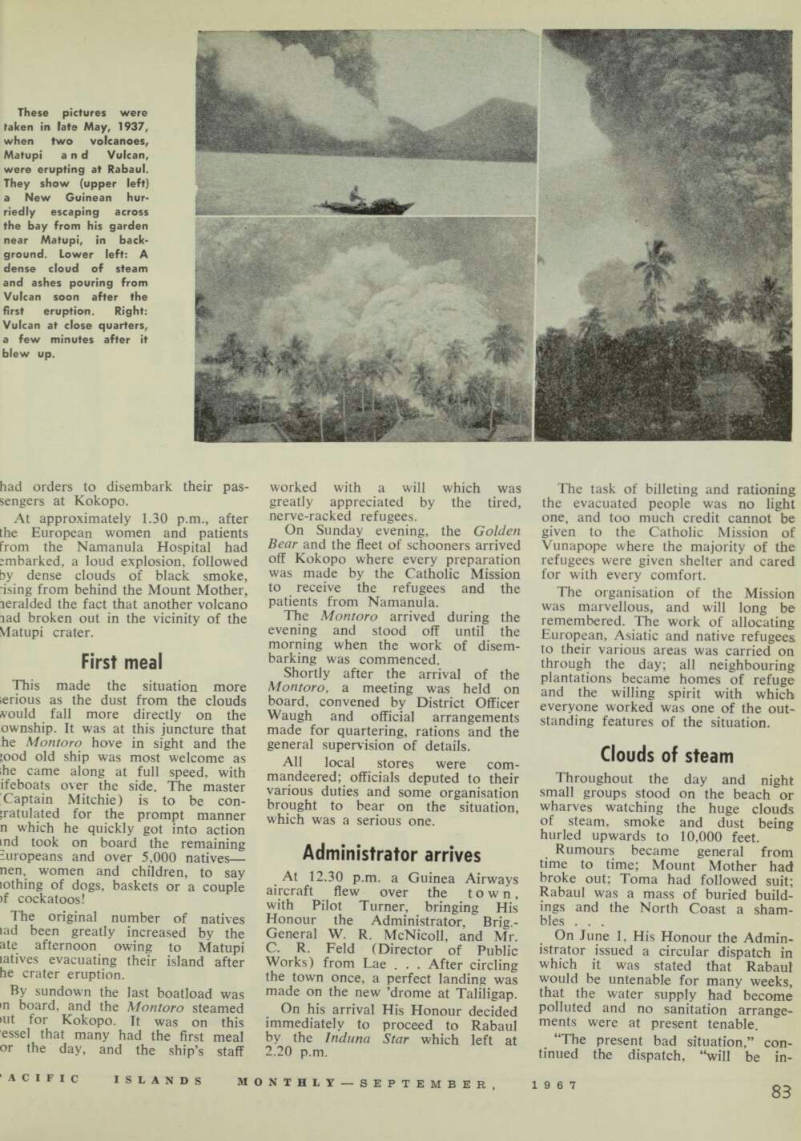 85
85 86
86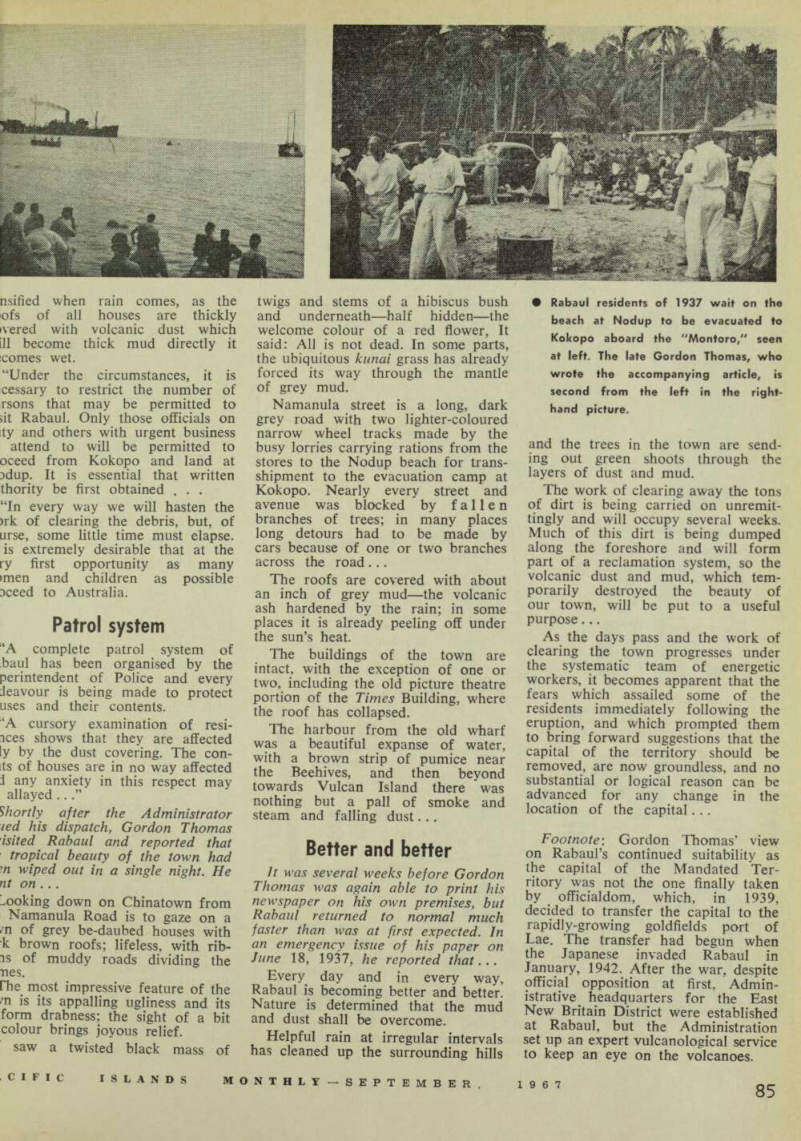 87
87 88
88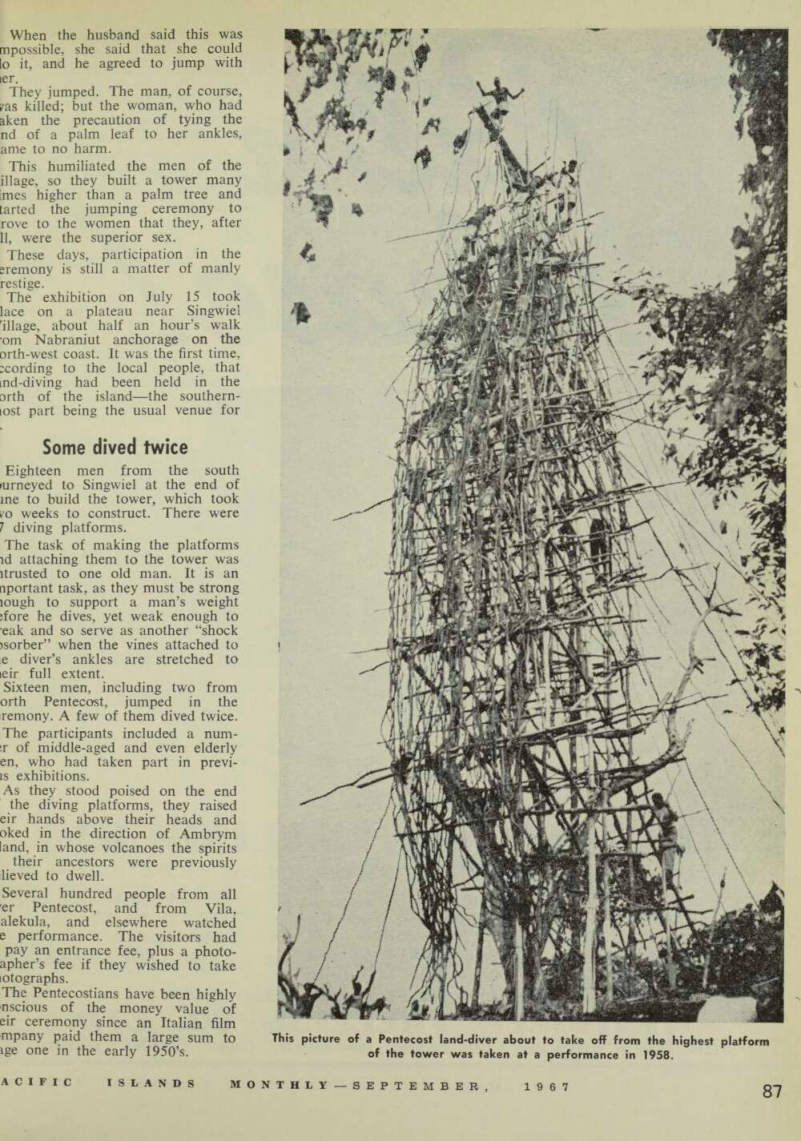 89
89 90
90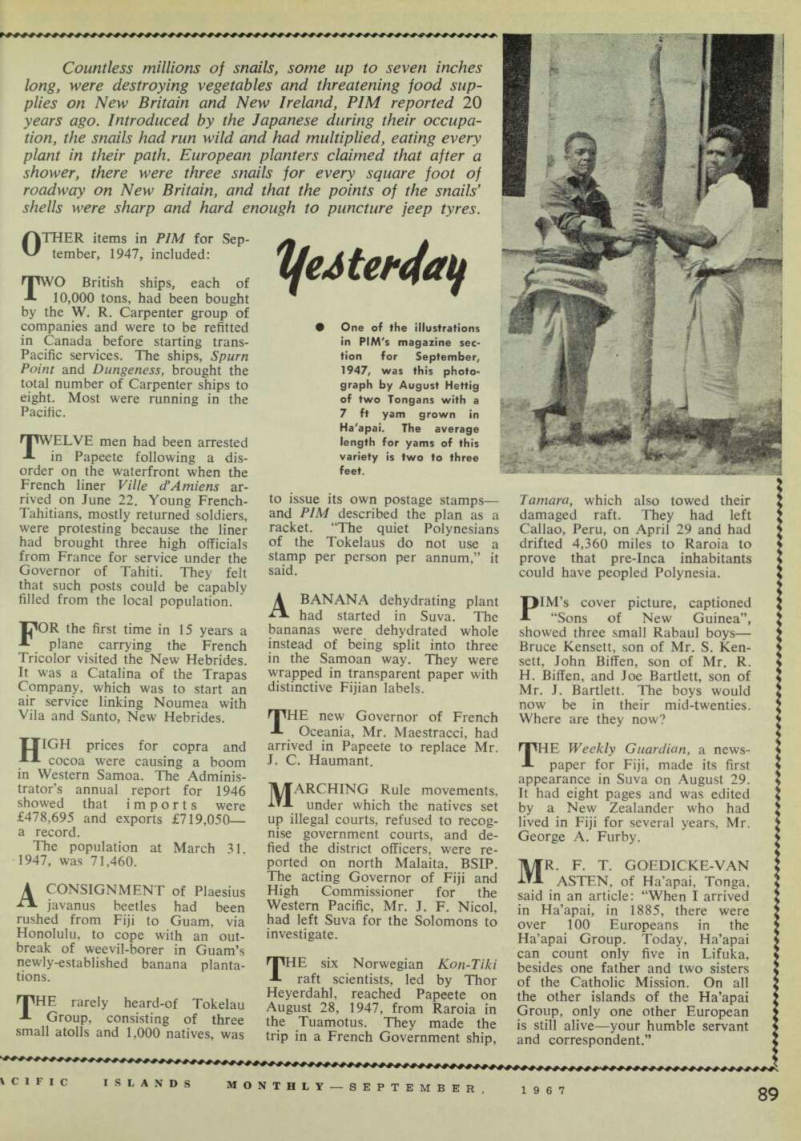 91
91 92
92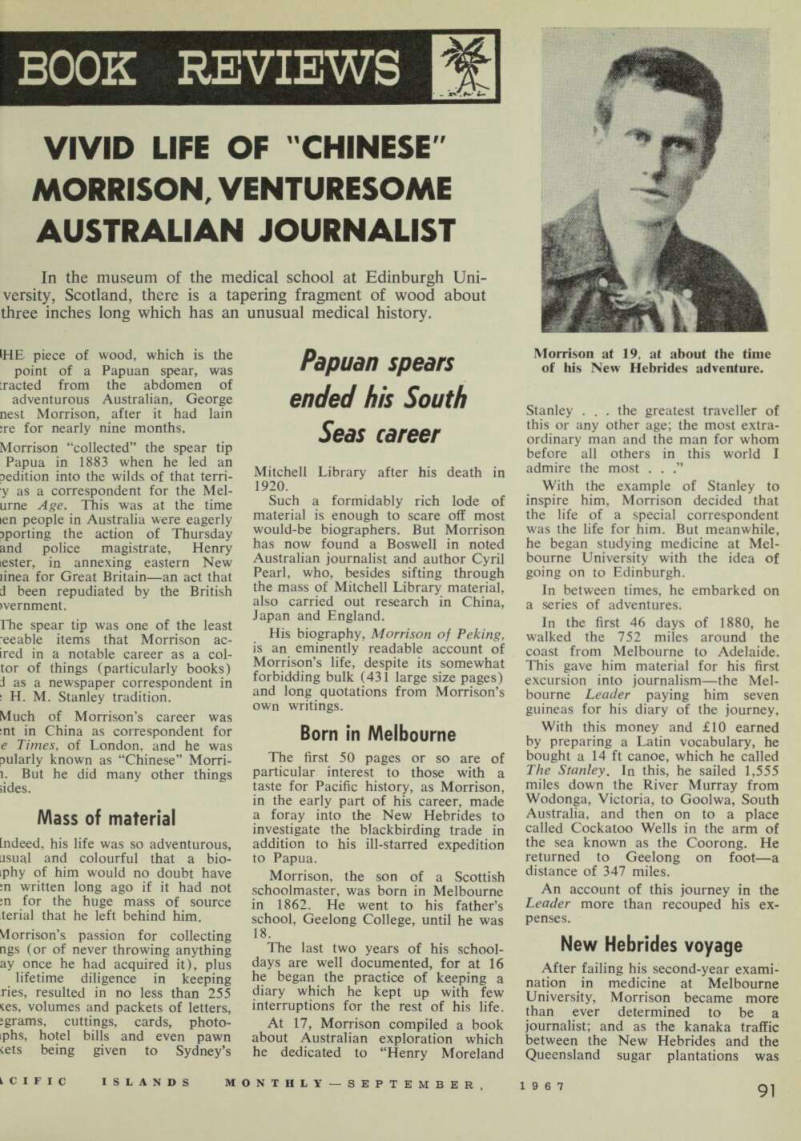 93
93 94
94 95
95 96
96 97
97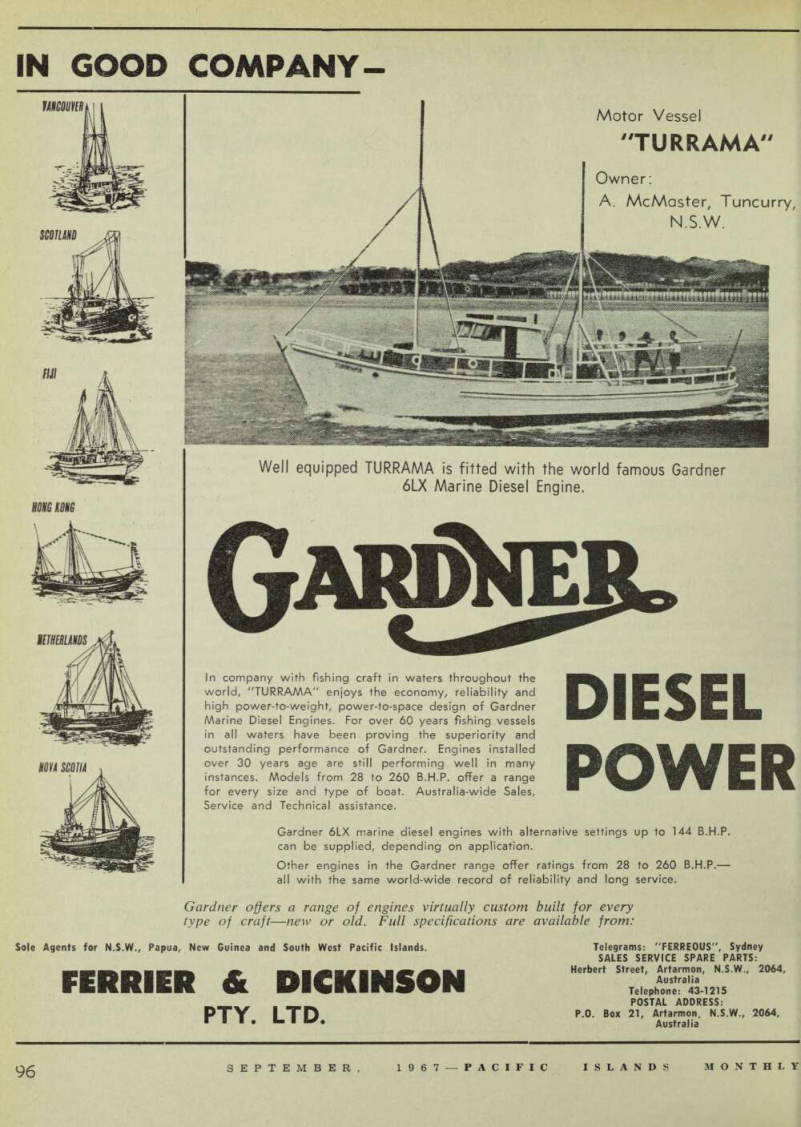 98
98 99
99 100
100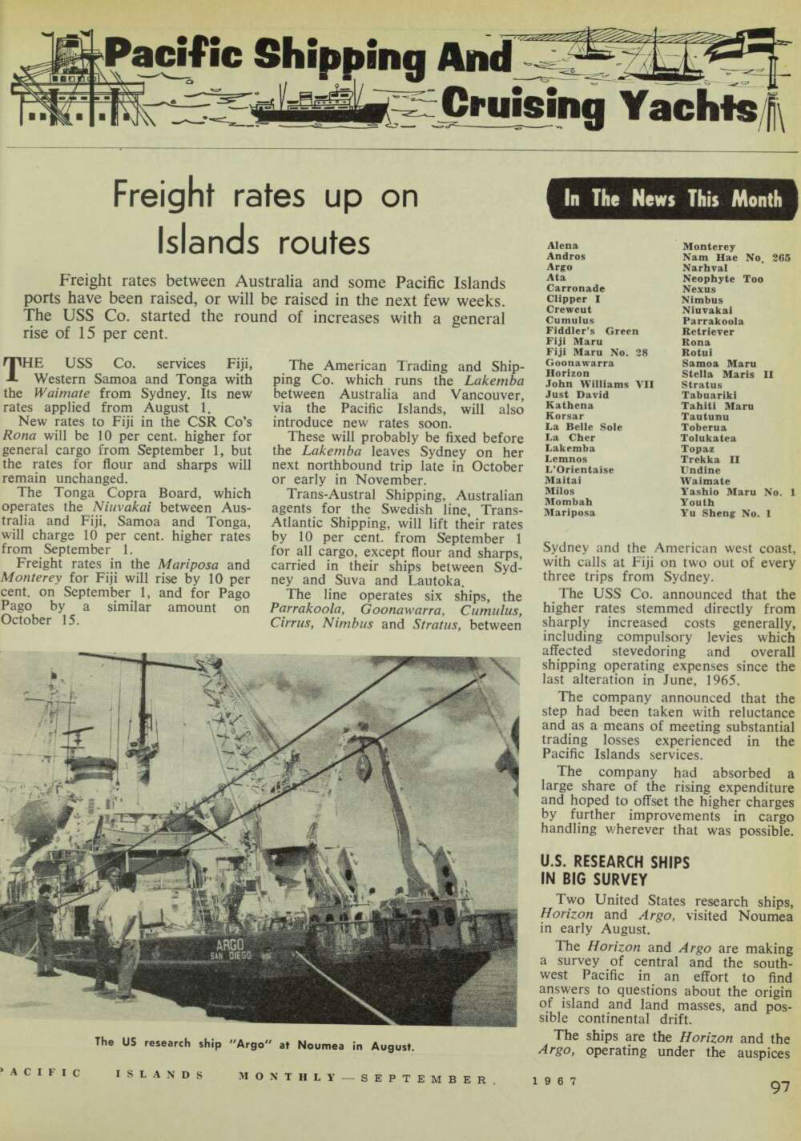 101
101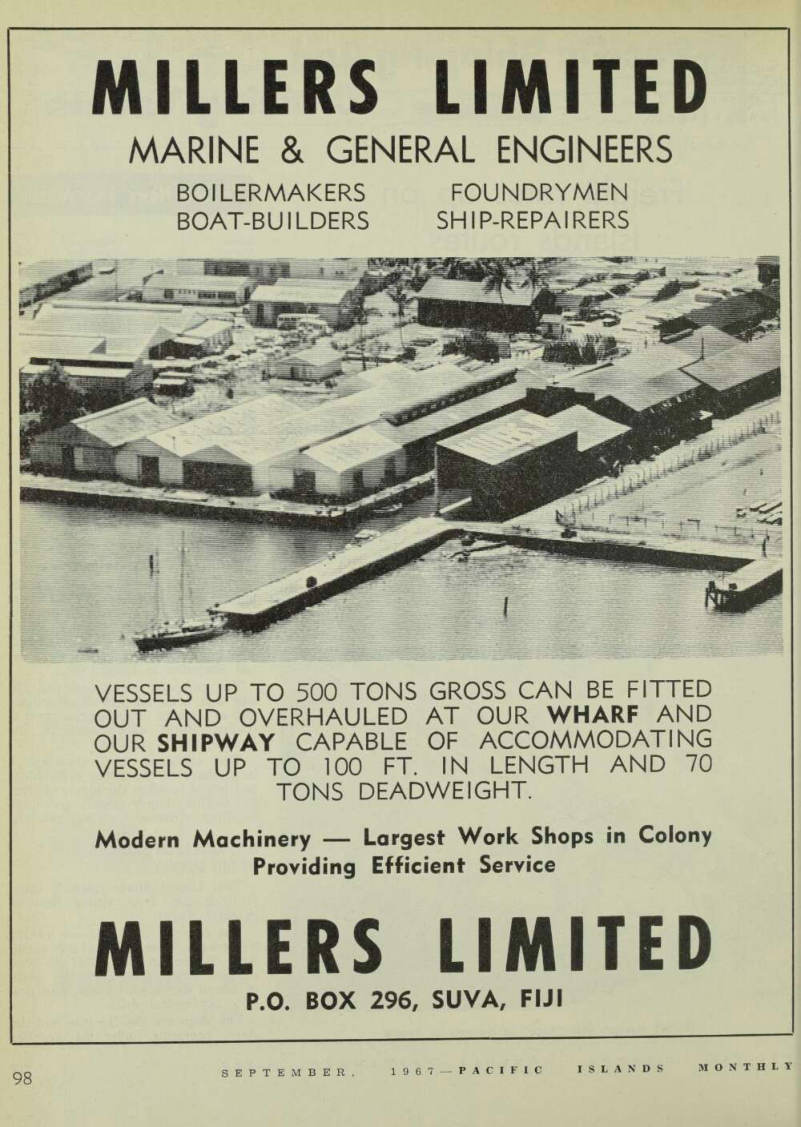 102
102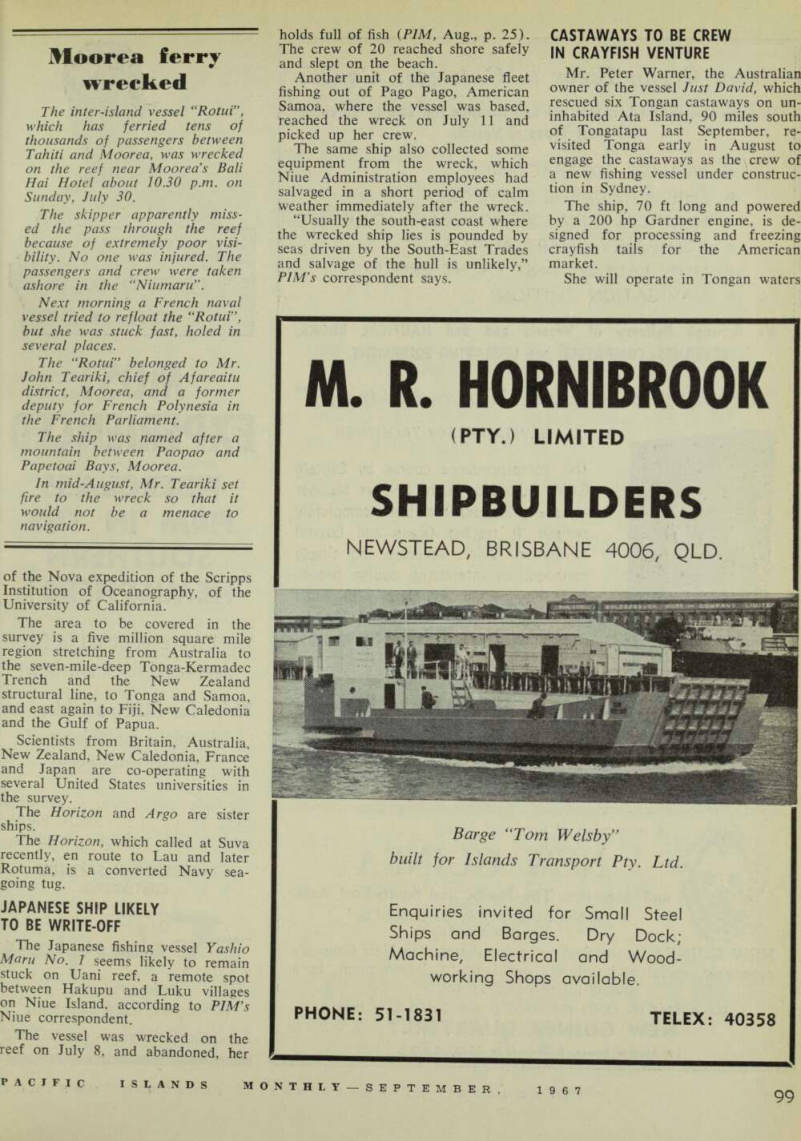 103
103 104
104 105
105 106
106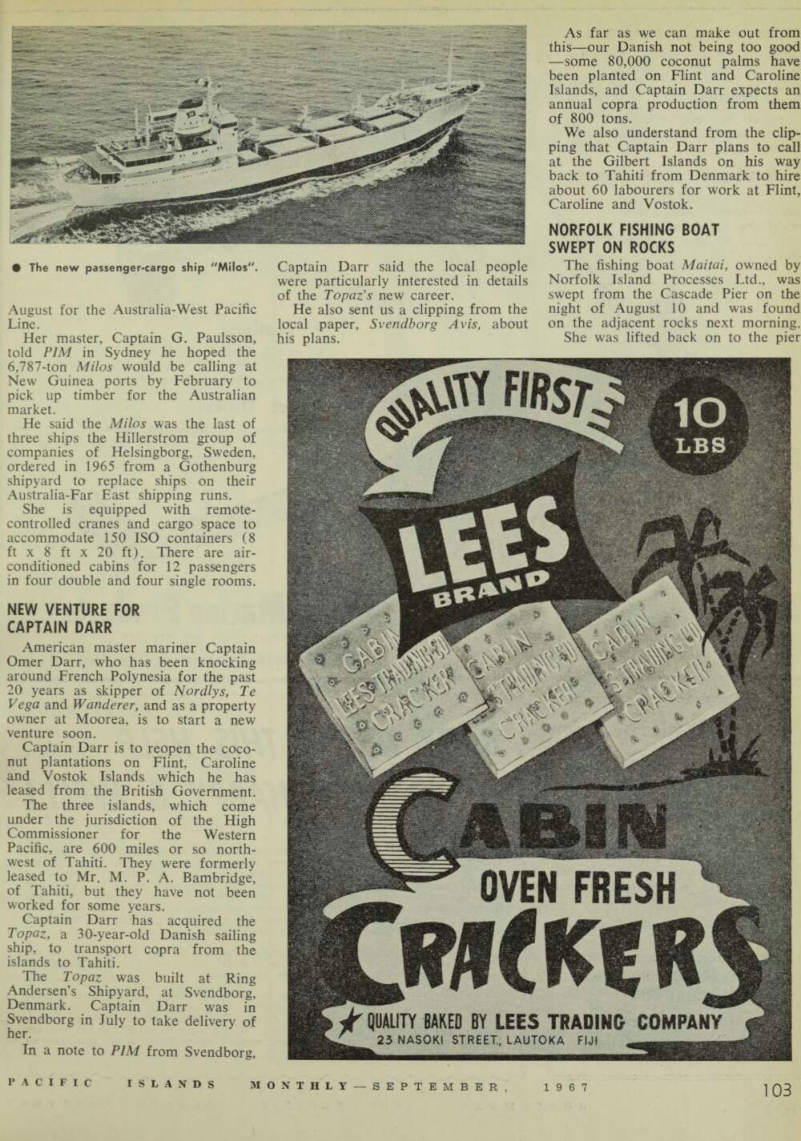 107
107 108
108 109
109 110
110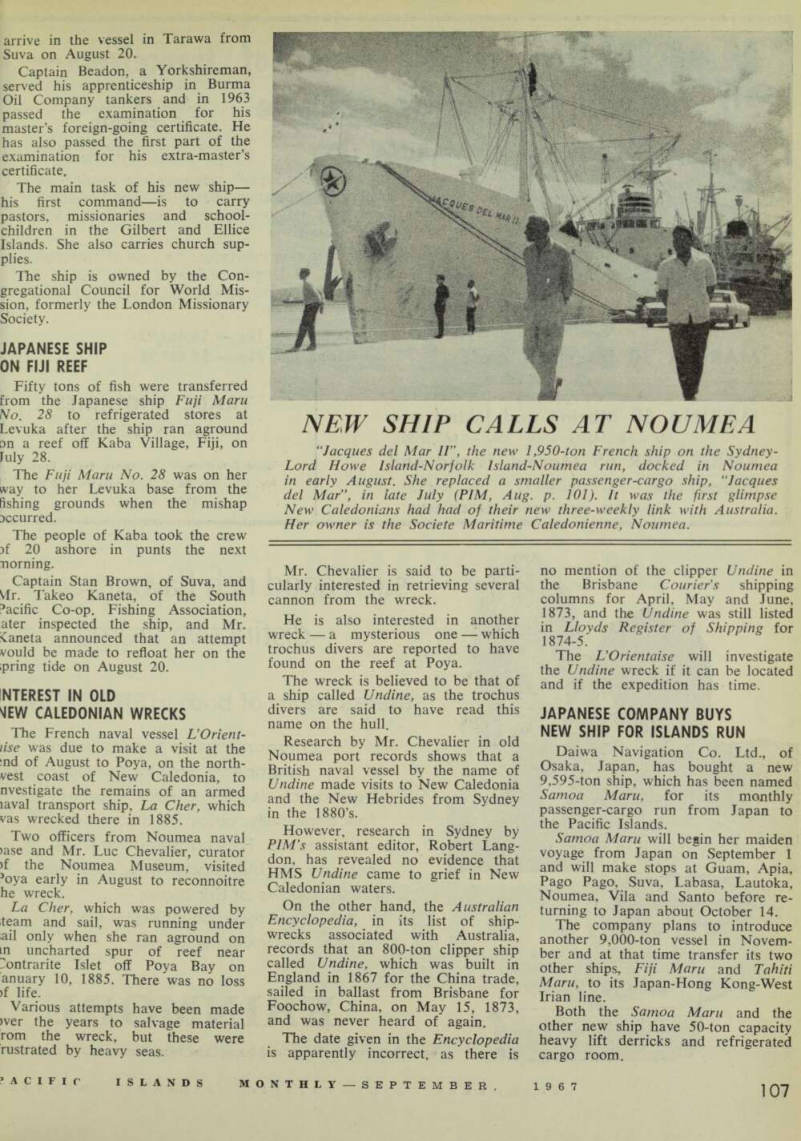 111
111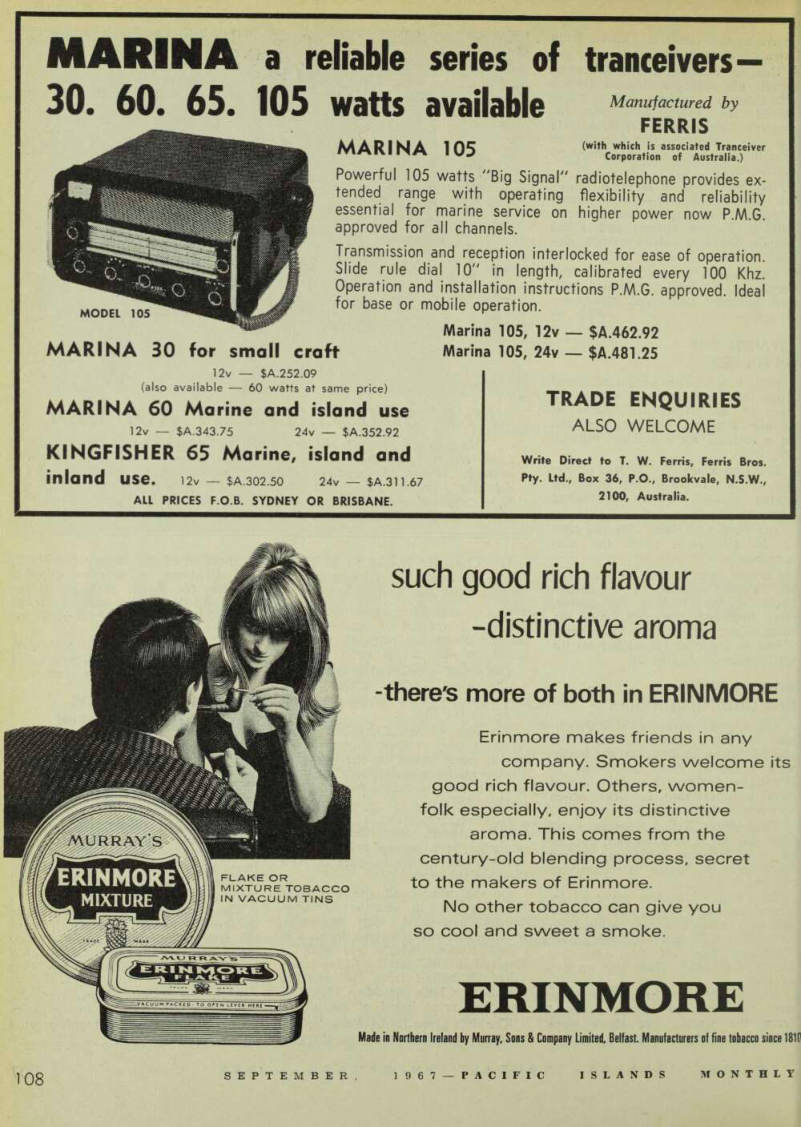 112
112 113
113 114
114 115
115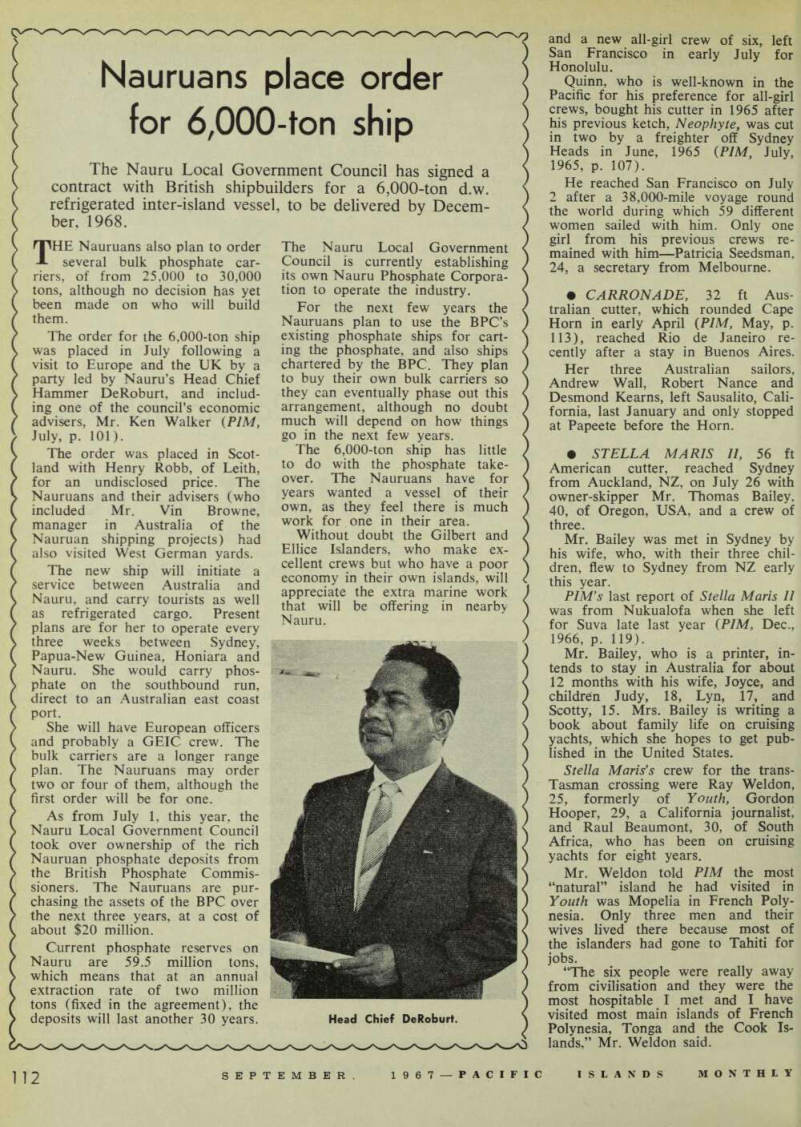 116
116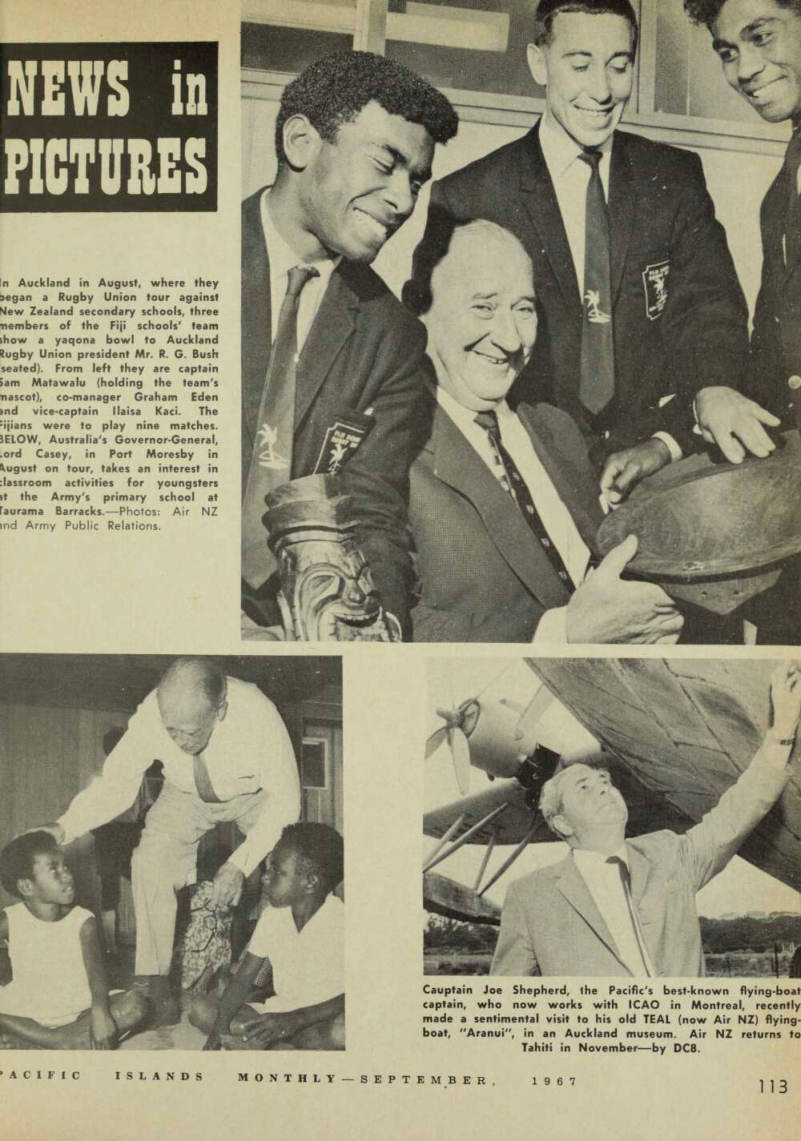 117
117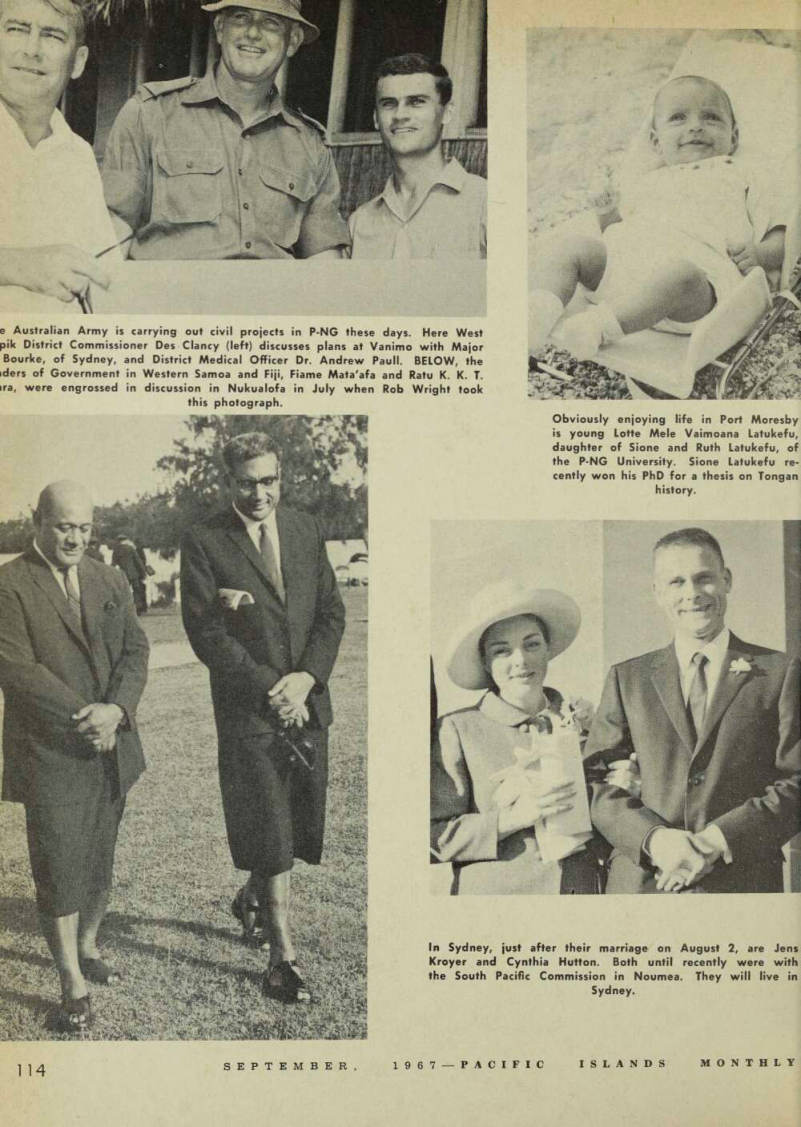 118
118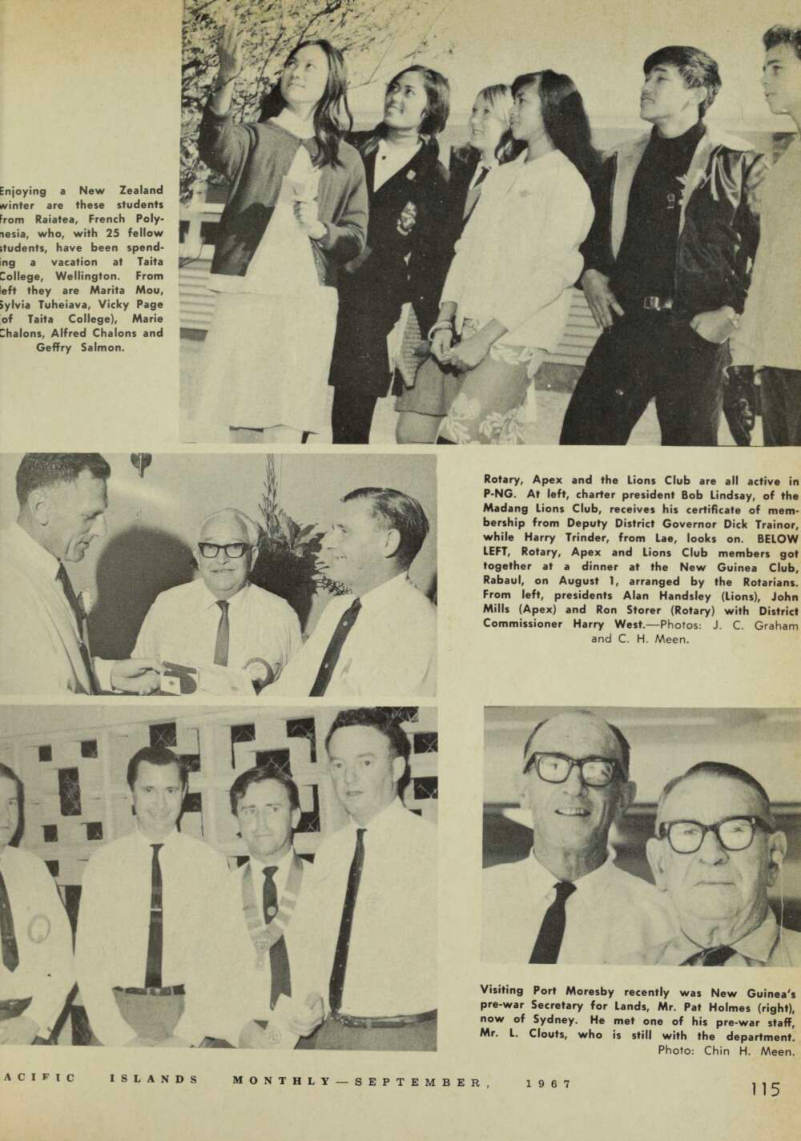 119
119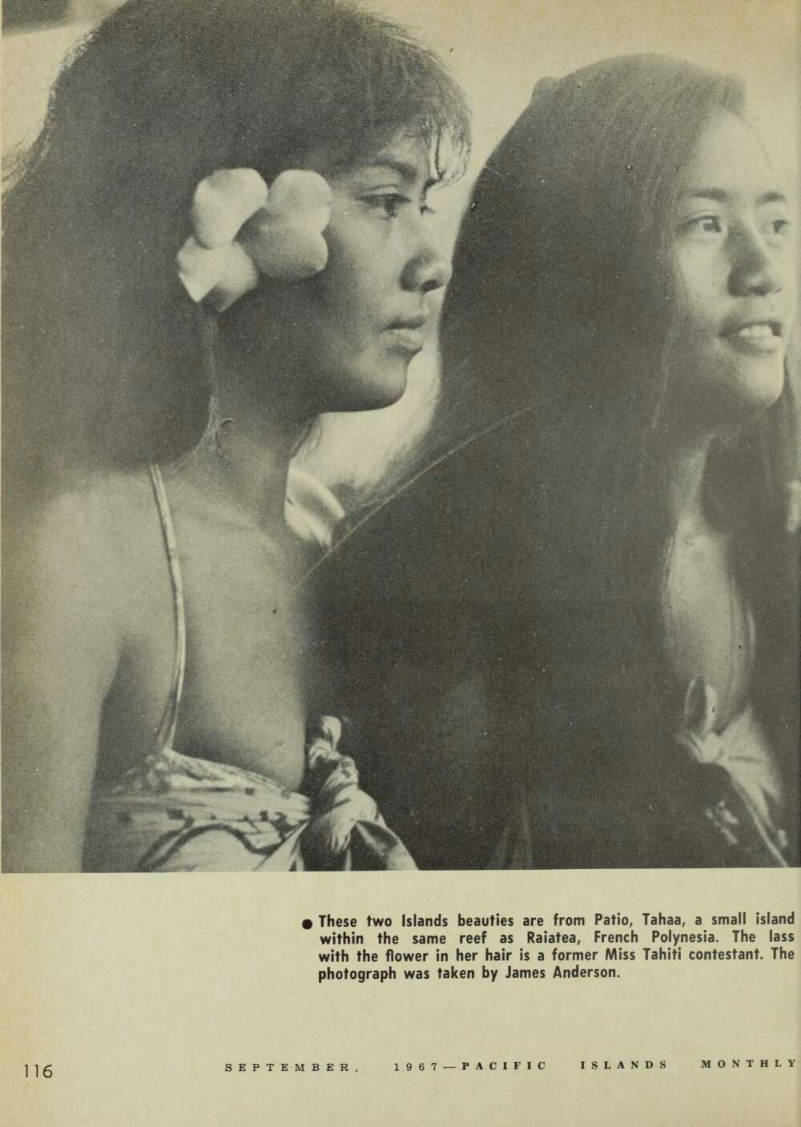 120
120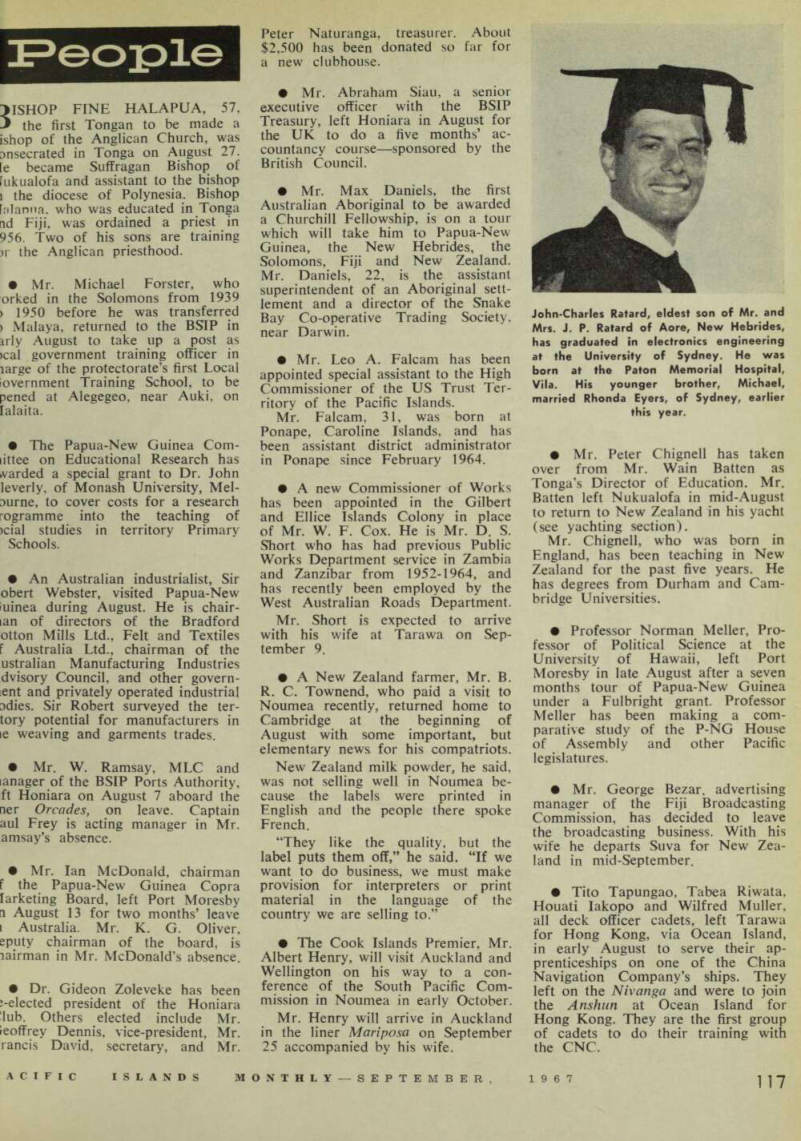 121
121 122
122 123
123 124
124 125
125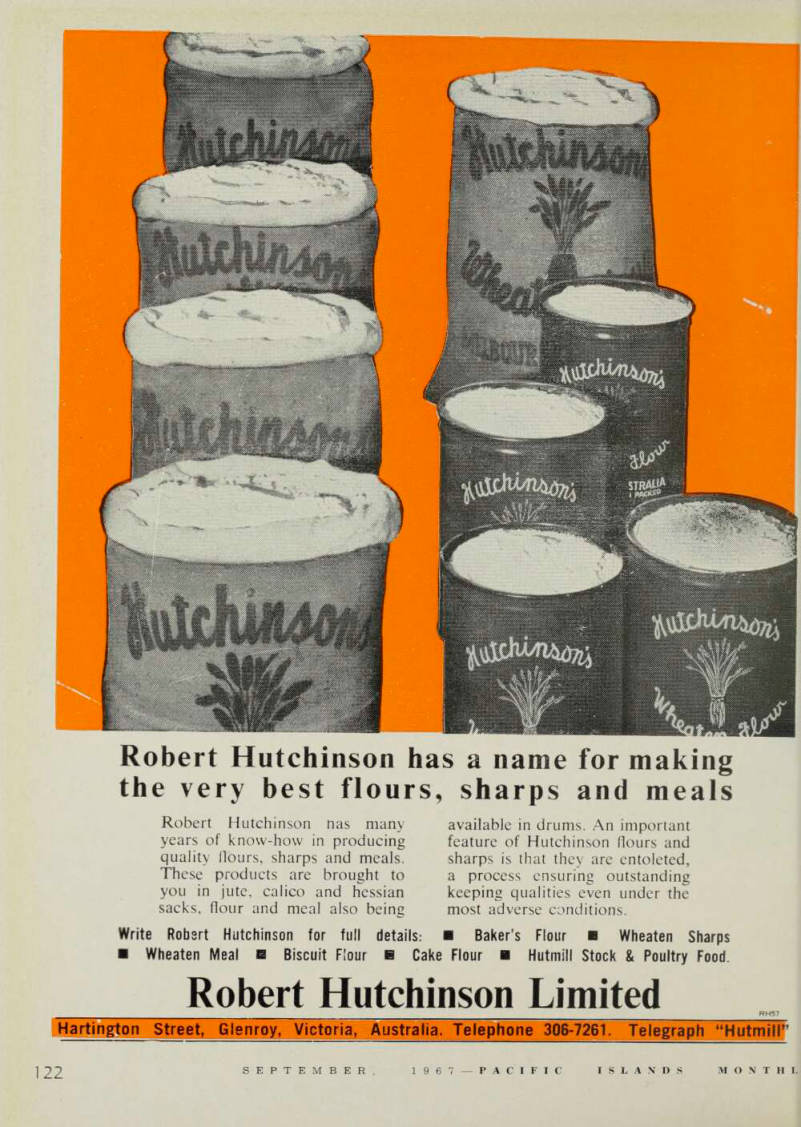 126
126 127
127 128
128 129
129 130
130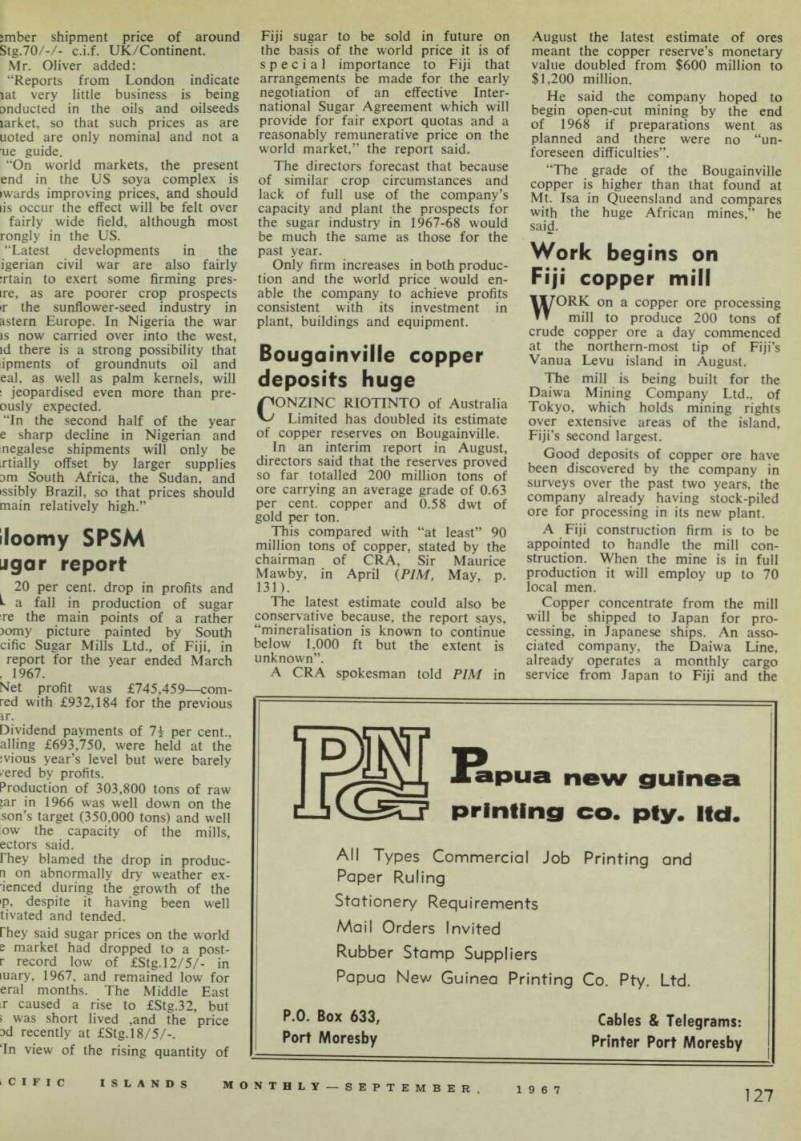 131
131 132
132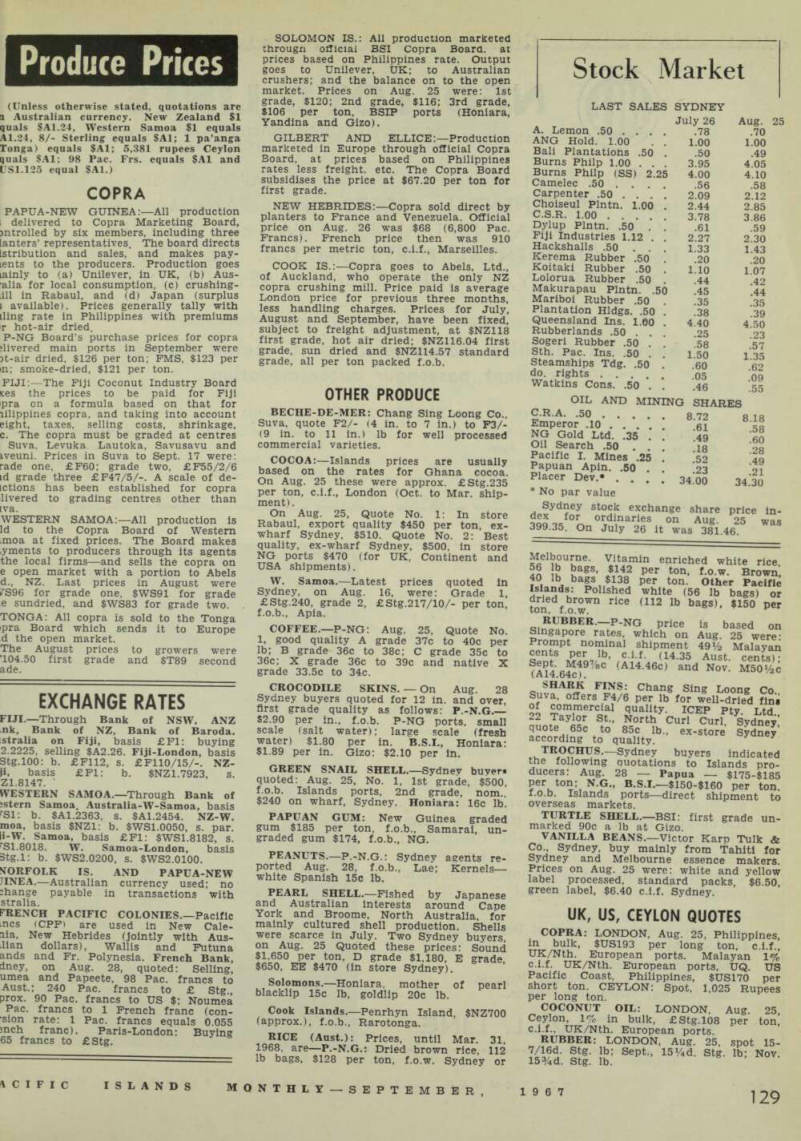 133
133 134
134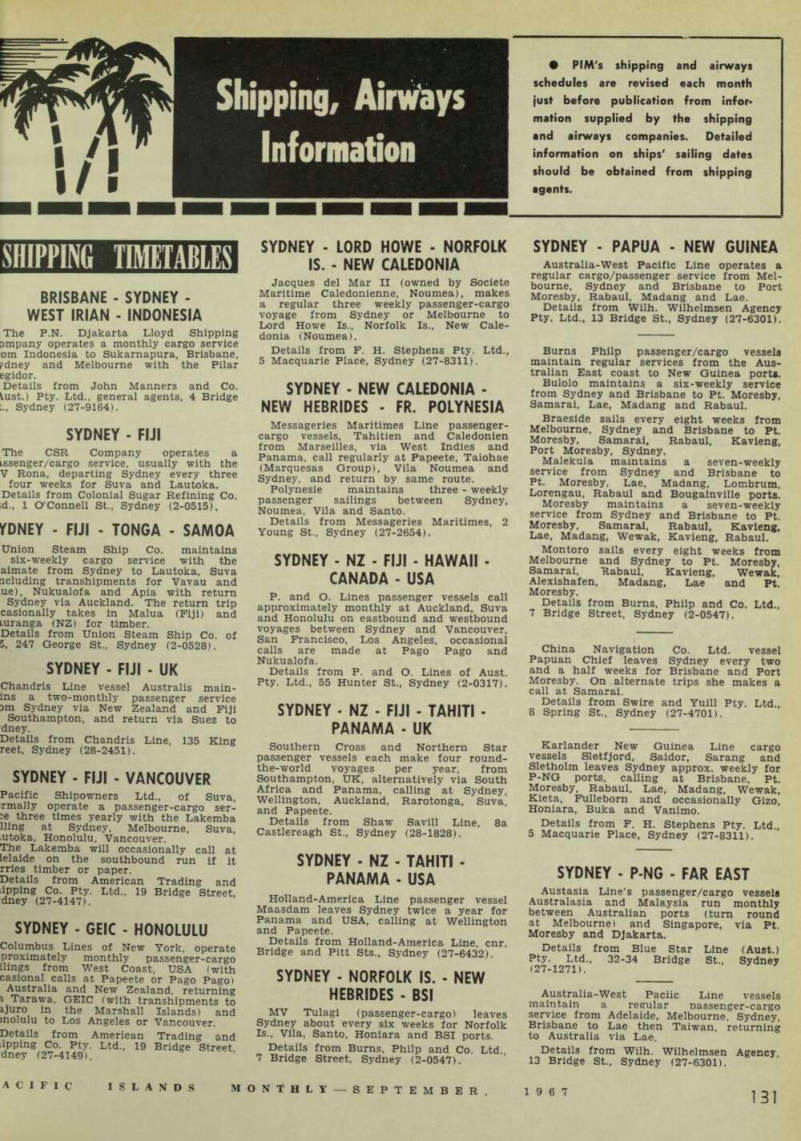 135
135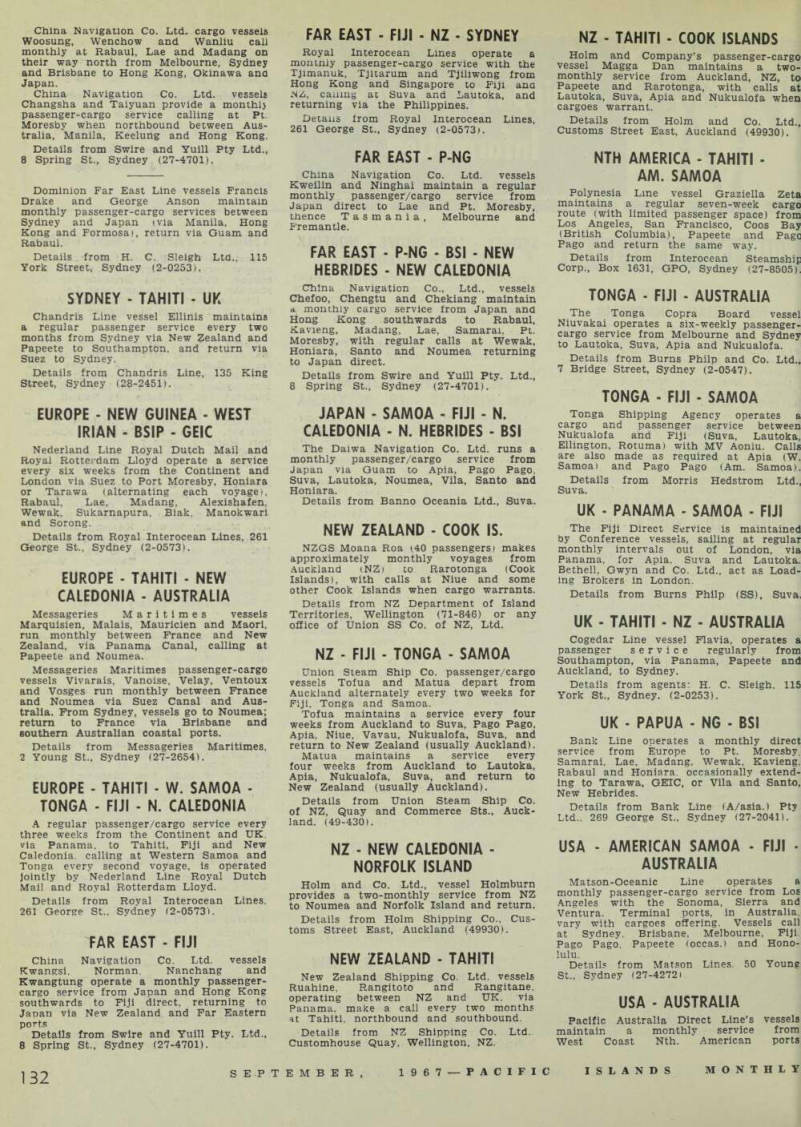 136
136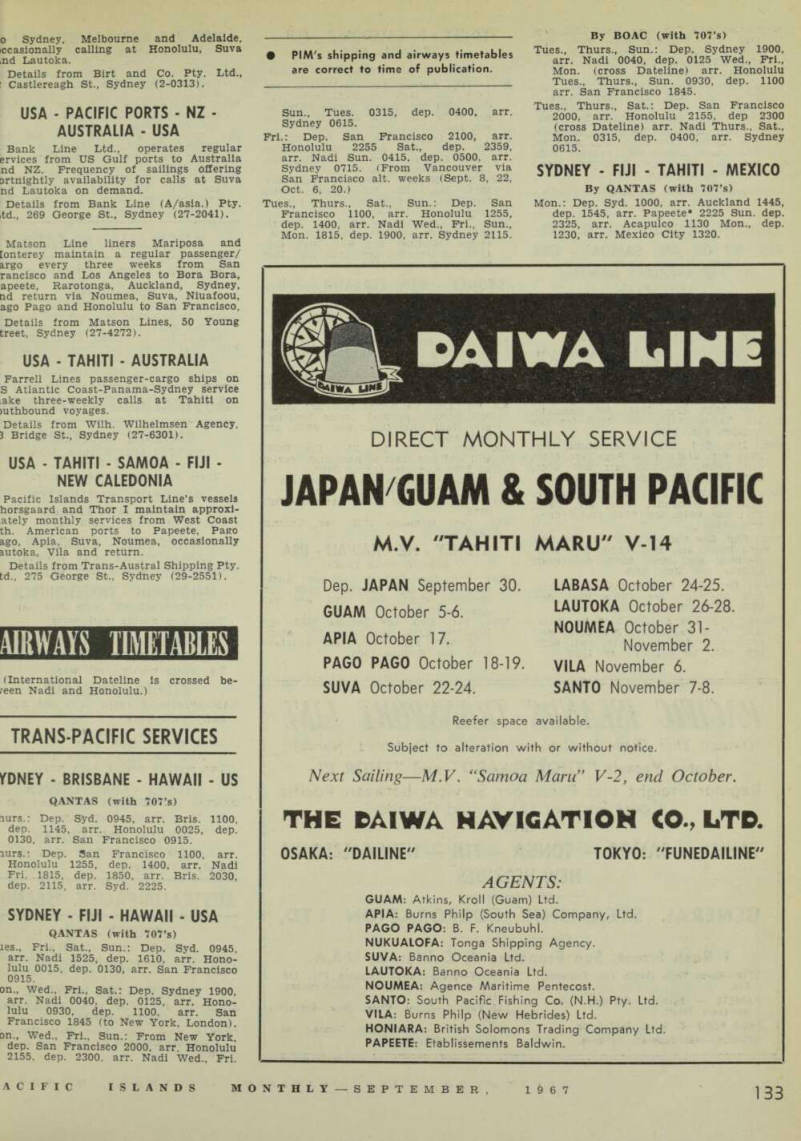 137
137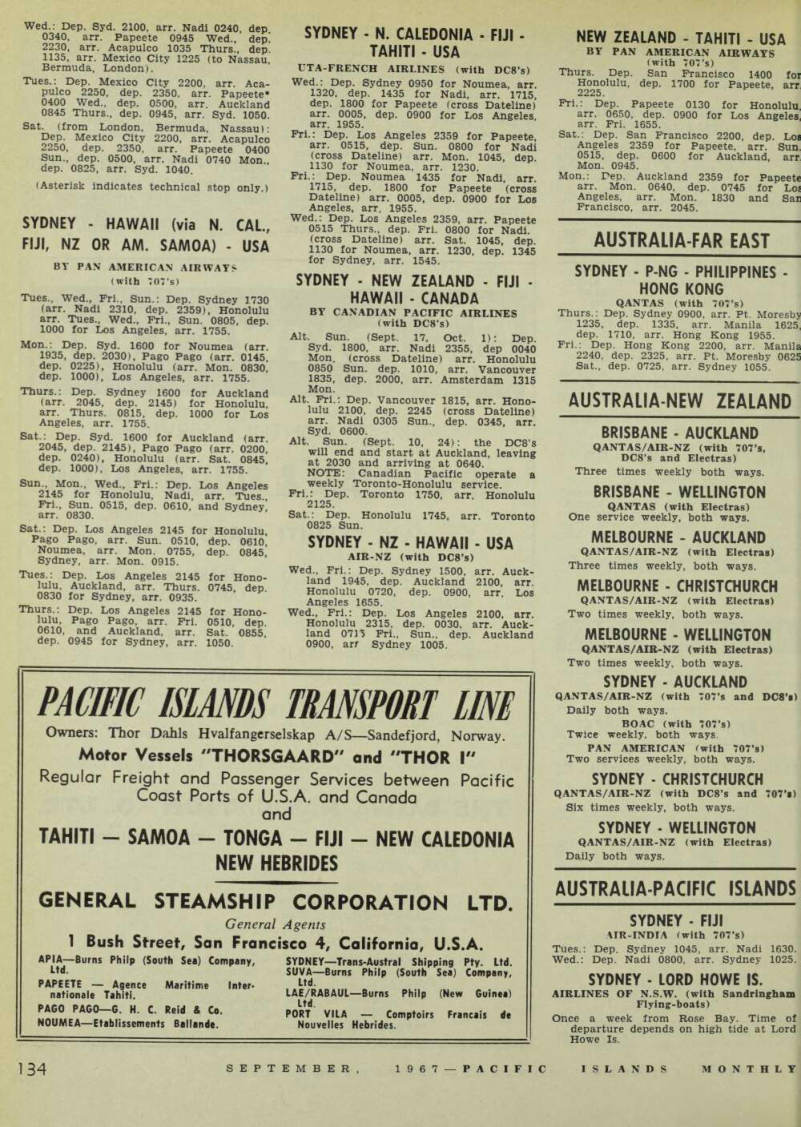 138
138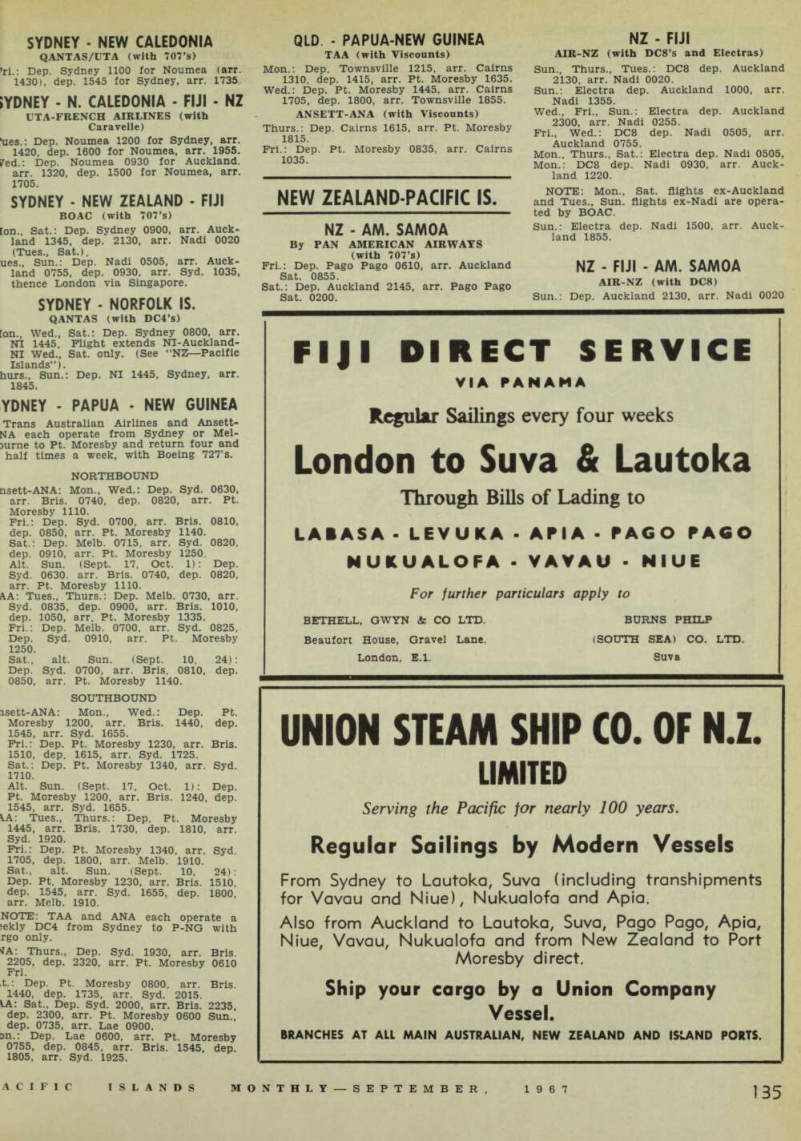 139
139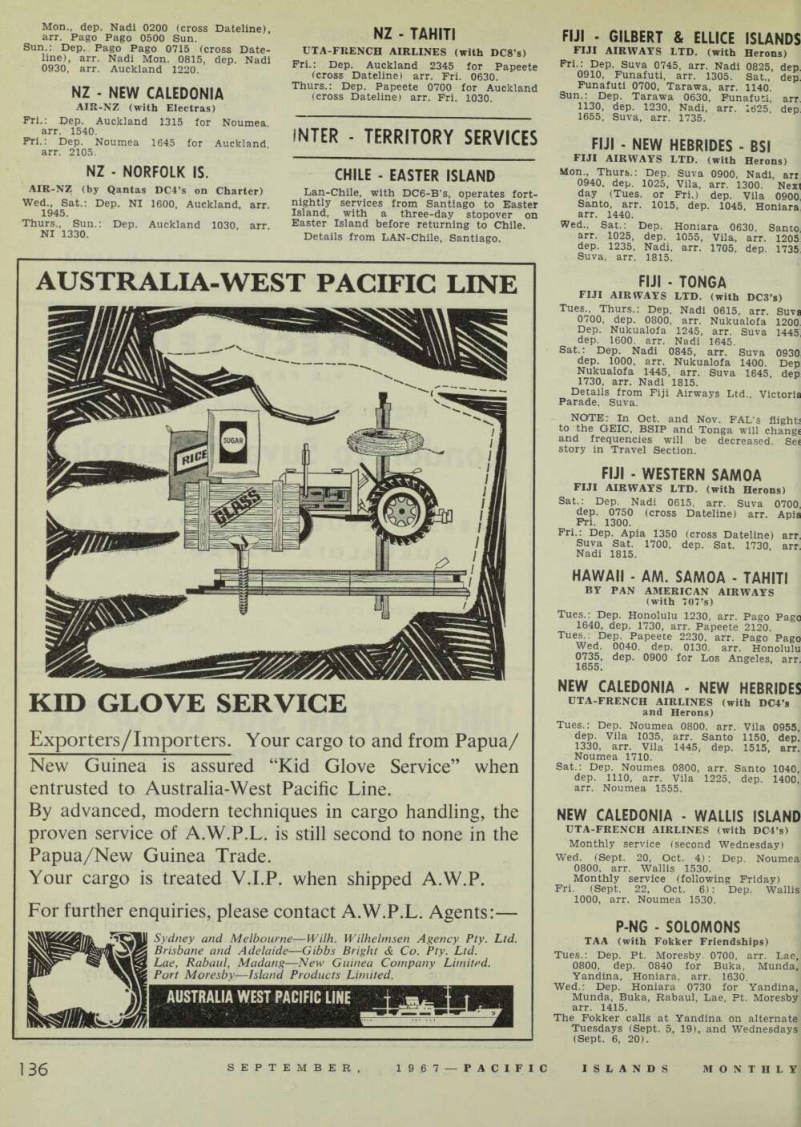 140
140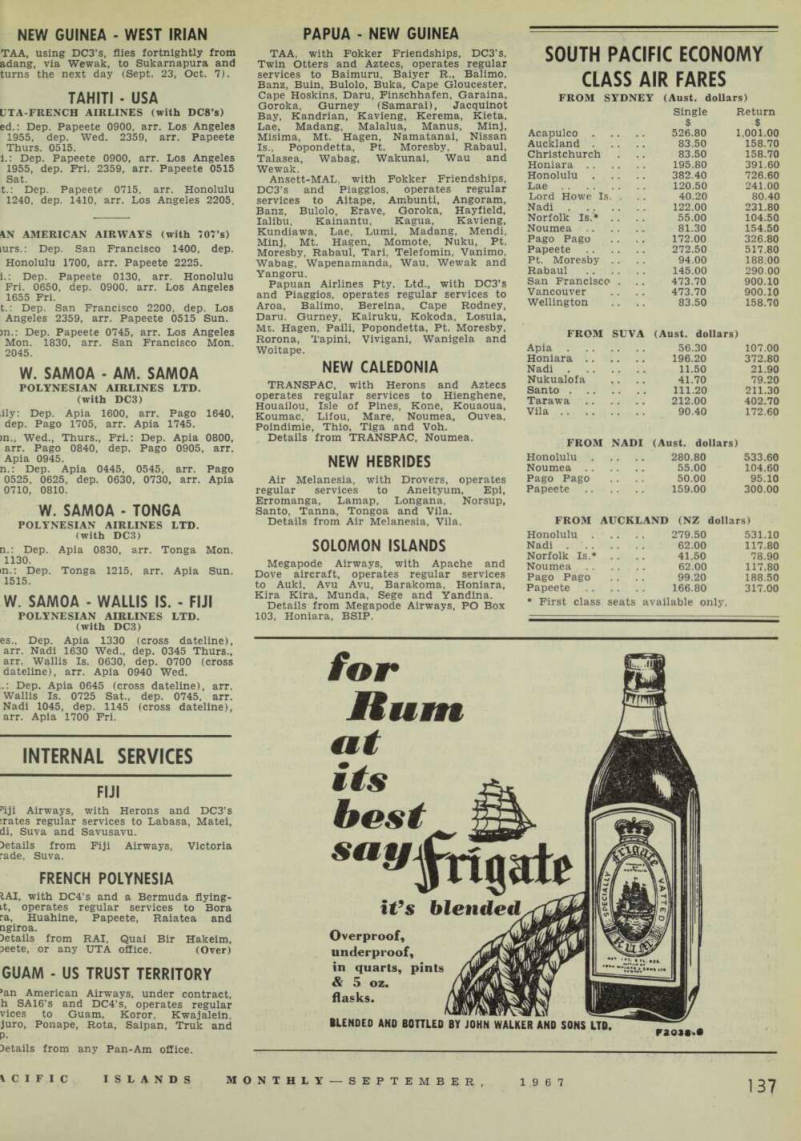 141
141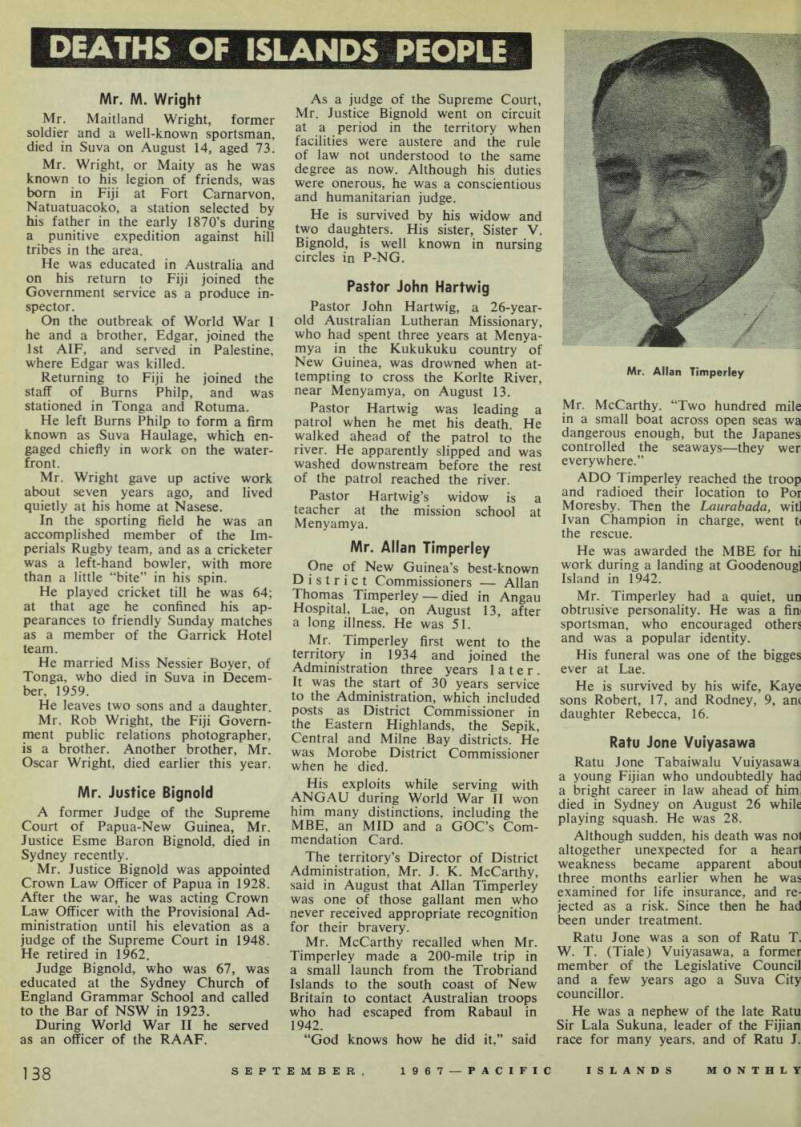 142
142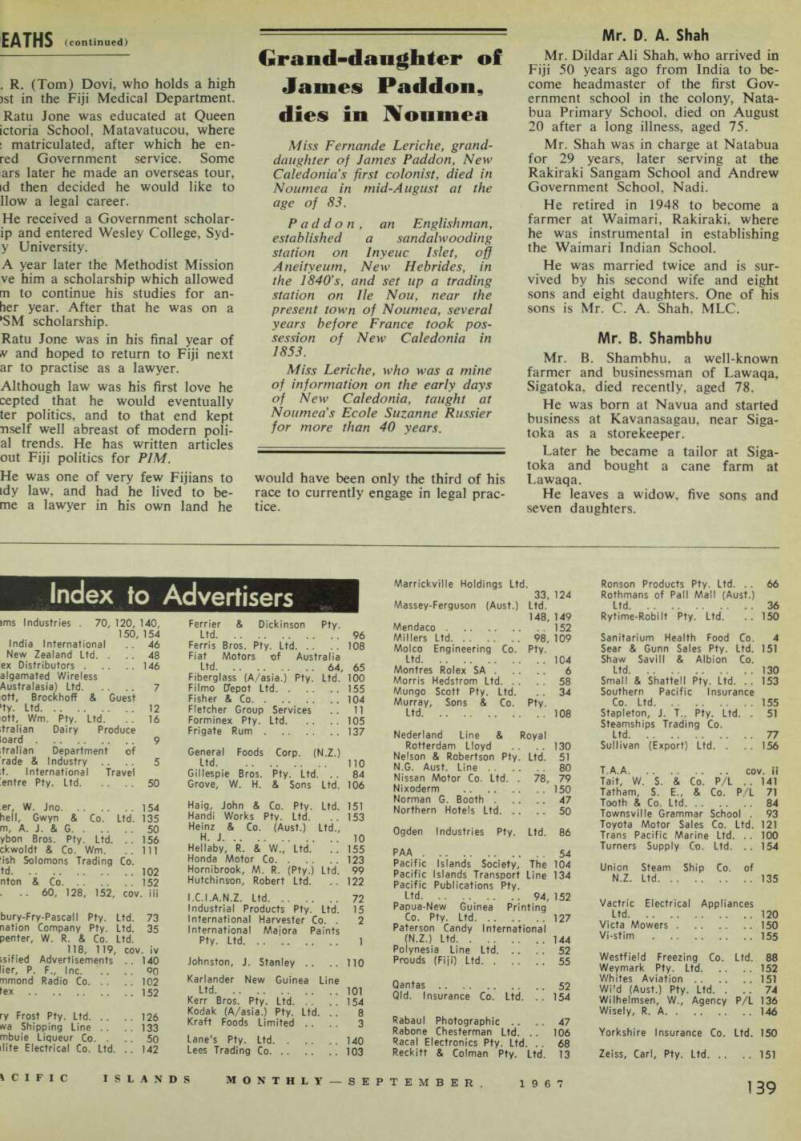 143
143 144
144 145
145 146
146 147
147 148
148 149
149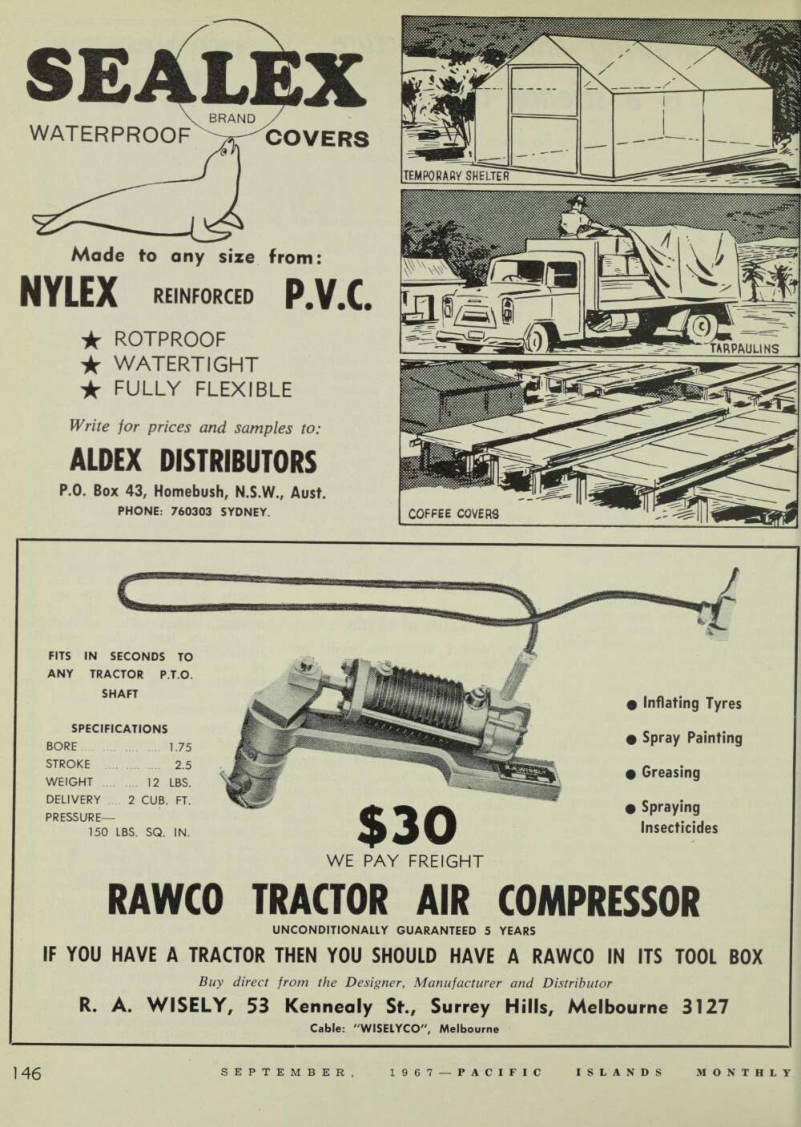 150
150 151
151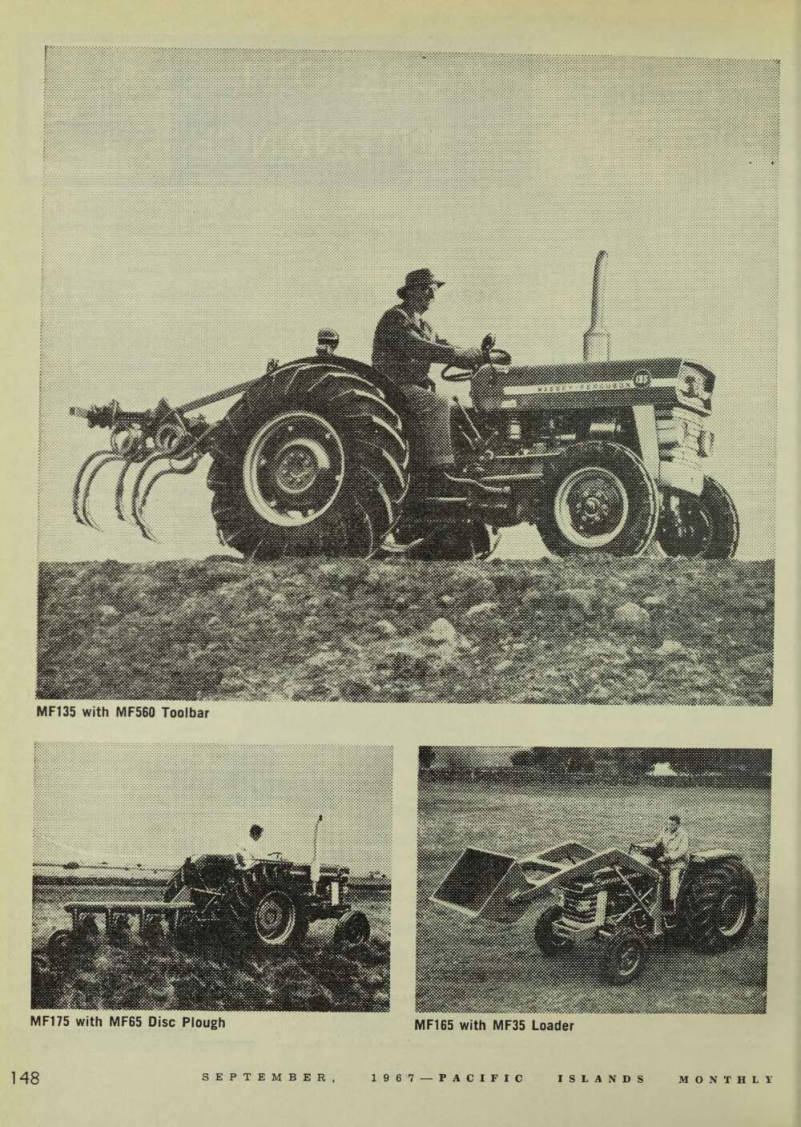 152
152 153
153 154
154 155
155 156
156 157
157 158
158 159
159 160
160 161
161 162
162