Monthly
Pacific Islands Monthly
istered at G.P.0., Sydney, for transmission by post as a newspaper.
August, 1967
News Magazine, Of The South Pacific
30 AUST CENTS 3 SHILLINGS 70 U S. CENTS 50 FR. PAC. FRCS
The Cover
at is it about the Islands that longest in the memory of visi rom the big cities? The women? sweet, penetrating smell of ? The easy-going life? Or the brilliant sunsets like this one oumea? It’s a good question— ve’re offering no prize for the U, correct answer.
Photo: Courtesy of Qantas.
Advertisements & other items, pp. 2-13 (11 items)
August, 1967 Pacific Islands Month L.
Papua/New Guinea
> .V 5
NowTAA
727 T-Jets link
Papua/New Guinea
with Australia
TAA’s ‘#/Vd 0/ Paradise ’ goes jet age! Regular daylight services to and from Australia on Sat., Sun., Tues., and Thurs. Less than four hours flying time from Port Moresby to Sydney in luxurious jet-age comfort.
Fly high above the weather at over ten miles a minute. And be spoilt by TAA’s ‘Bird of Paradise * in-flight service. You’ll arrive rested, relaxed and ready to go.
Book now! Contact your nearest travel agent or call TAA: Port Moresby 2101 • Lae 2311 • Rabaul 2567 • Madang 78, 268 • Goroka 8 • Mt. Hagen 4 ® Wewak 103.
TMf,
the Friendly Way
* T A A 2945/67
The four
exclusive new
soups:
(four more for the Heinz Gourmet range) ■o
Soup
ourmet
Sou
Gourmet
Sou
Gourmet
OLD COLONIAL
TOCK POT
SLICED BUTTON
MUSHROO
Soup
Gourmet
BUTTERED
""V SMI tea*
VEGETAB
MILD
DUTCH
CURRY
Map* Sliced Button Mushroom Tiny delicate button mushrooms. Nobody but Heinz uses this kind of mushroom in soup.
Cooked tender, but still firm enough to bite into.
Rich cream stock.
Buttered Vegetable Fresh, crisp vegetables, cut in big pieces. Sauted carefully in butter. Simmered until tender in creamy stock.
Mild Dutch Curry A gentle curry. Tender beef, long-grain rice, garden vegetables. Mildly spiced, rich and hearty.
Old Colonial Stockpot A full-bodied soup that lives up to its name.
Tender lamb, young vegetables, barley and rice.
Exclusive recipe; big oldfashioned flavour.
Heinz Gourmet soups: consumer tested and approved.
Gounnet
Soup
Gourmet Soup
.Soup
Gourmet Gourmet Soupl fGourmet Soup I f O' r
SPLIT PEA CHICKEN
BEEF
CHICKEN
TURKEY
rju &
HZ94I
nraiifflilll m K-.r ■ i . & ■ II m v» & * *c
NICE
H * * i ♦ >* V sp
tep
Arnott’s Nice Biscuits Crisp and sugar-sprinkled Arnott’s Lemon Crisp Biscuits With tangy lemon centres
slice
rang*
o m
wheatmeal
HREDDED
Arnott’s Orange Slice Biscuits Tangy orange cream in biscuit sandwich Arnott’s Shredded Wheatmeal Biscuits Golden-grain goodness for morning tea.
H 699
r m fantoui Biscuit^ Arnott’s MILK ARROWROOT Biscuits All-day energy for children a favourite with all the family. <?>• m m Arnott’s SAO Biscuits Ideal for snacks, suppers or between meals.
CP r c* S c °'e> > zZ' Arnott's SCOTCH FINGER Biscuits Chunky and butter-rich, with the true shortbread flavour.
Arnott’s CHEESE JATZ Biscuits Crisp as could be with a fine cheese flavour perfect for entertaining.
There is no Substitute for Quality
r- j - 3 &ms i m
KRAFT
m jcmurr
Rutter
mk miMi 3i *« . 0t *5% Just look at all the good things
KRAFT brings you from
Australia, the sunshine country!
Toasted cheese sandwiches. Strawberry Conserve on scones. Vegemite* on your breakfast toast. These are just some of the wonderful ideas you’ll enjoy when you buy fine Australian foods from Kraft. And these foods contain all of nature’s health-giving nourishment . . . help build strong and healthy bodies. Always look for Kraft, and know you’re buying the very best.
"kraft) for good food and good food ideas Reg’d Trade Mark
KR39O/A
Here is the ideal vehicle for the toughest island operations ... TREKKA! Designed specifically for South Pacific conditions, TREKKA is a tough, versatile, low-cost, go-most-anywhere vehicle. TREKKA will do everything a utility wi11... and more .. .for far less money. TREKKA will tow equipment... carry loads (over 20 sq. ft. payload area and half ton payload)... or people (with optional extra upholstered rear seats up to 8 passengers). TREKKA cruises with car comfort on roads... or takes off over land, up slopes, through slush, over rough tracks or no tracks. New Zealand farmers who work on rugged terrain and in wet conditions have proved TREKKA will go virtually any place a four-wheel drive will.. .yet TREKKA is a two-wheel drive considerably less in first cost and much lower in ' maintenance and running costs. For example over 33 m.p.g! No wonder they say... TREKKA TER-
RIFIC!
The secret of TREKKA’s performance is the unique design: all wheels are independently sprung for ground grip .. .the rugged 47 BHP motor has dogged climbing power.. .the specially engineered “Balanced Traction” differential (optional extra) eliminates most wheel spin. For island conditions TREKKA’s all-welded body is a Zintec zinc coated steel for long life. TREKKA can be used as an open wagon, full canvas canopy, canvas cab or hard top. For further information contact the dealers below: a
EMUF 1C !
WESTERN
CAUDA F - Nelson & riii riimnniro Sox 236, Palmers OAIYIUA: Co. Ltd, Apia. MJI: Morris Hedstrom Ltd. ENQUIRIcS: North, New Zealand.
TRADE Motor Lines Ltd, P.O.
Box 236, Palmerston
f ' >' . ■ ■
flnti-Foulings
are good enough
foryourboat
I s*■ ■ m m KEEP YOUR BOAT CLEAN WITH INTERNATIONAL MARINE Keep your boat in the water longer with International Anti-Foulings. World-wide research has resulted in the development of the strongest anti-foulings and underwater primers for every boat under any marine conditions. You can choose the product to suit your boat from the following comprehensive range:
ANTI-FOULINGS
International "Tropex” (red) International Copper Bronze International Singapore Super Tropical (red and grey) International Yacht Racing (red, black and green) “Union Jack” Copper Paint (red)
MARINE PRIMERS
AND UNDERWATER UNDERCOATS
International Silver Primacon International Metallic Pink Primer International Chocolate Anti-Fouling Undercoat A Comprehensive range of INTERNATIONAL “ABOVE WATERLINE” FINISHES AND UNDERCOATS is also available.
For application of these products refer to the International Boat Painter's Manual
INTERNATIONAL MAJORA PAINTS PTY. LTD.
HEAD OFFICE: PHILLIP ST. f CONCORD, N.S.W. 'PHONE 731201 BRANCHES:—* MELBOURNE 30 4831 * BRISBANE 56 4565 • ADELAIDE 4 3435 • FREMANTLE 5 3291 • NEWCASTLE 2 5669 Over Vi of the world's shipping is painted with International Marine Paints
In Australia - dairy cows
are treated like beauty queens-
that is why Australian Butter and Cheese are famous for goodness, energy and flavour Selective breeding and scientific feeding of Australia’s dairy herds, plus the golden sunshine and rich pastures of an ideal dairying climate make the big difference in the flavour and food value of Australian dairy foods. Australian Butter and Cheese are processed by modern, hygienic equipment and strict controls ensure perfect quality.
Trade enquiries to: Australian Dairy Produce Board, 406 Lonsdale Street, Melbourne, Victoria, Australia.
Australian butter is full of energy, flavour and vitamin A goodness. It is a health food that only Nature can provide. Australian cheese is a concentrated food—full of protein, rich in calcium.
It is available in many types, to suit every taste.
For energy, goodness and flavour, buy Australian Butter and Cheese.
V
AUSTRALIA
m & >■ : % ■ • »'-C % v? *> ■ U "V ill > * 1 < i < i o s *► Cl gr^ ,o Q& r% h* o z ■ a < >* : |a ae I if m V s * I > v» o m •ft V ■ * I 1 ft' P 1 t » a . ■ a . iift ■
Greenlites are the only matches
in the world that light when wet... they’re made for your part of the world Greenlites are tropical matches, waterproof. Ask for them.
Made in Australia by Bryant & May.
“ m t ;■ I
Here are
six good reasons
for starting your
tour of India from
the South
r
BOMBAY
Periyar ''*■ ’ XO Reserve, Kerala Canals i Madras Brindavin Fishing Gardens, Hy to ndia via Madras in the tropica, south in a single day from Australia. Only Air mdia lets you to Madras on an easy daylight trip via Perth and Singapore. H f" d W f a * S P lendo “ rs there are m thai r «ch. green, tropica, land-a land of fantastically carved temples, teeming game sanctuaries cool waterways, long white beaches. And-for your comfortluxurious air-conditioned hotels.
Ahead of you, there's still North India. Agra with the Tai Mahal M Jaipur, the pink city, Udaipur with its Palace Hotel on the lake and high Kashmir. And all over India you'll find comfort and courtesy as well as beauty.
You'" find the courtesy as soon as you get in touch with your Air India office. We pride ourse.ves on the quality of our service.
You can find out everything you need to know to help you plan a tour of India—either by contacting your travel agent, or Air India.
AiR-IND/A
f nL a ‘^ ne tfßatS V ° U l,ke ama ha rajah — worldwide rtrr.pr T ... ove ' 3s Y ears experience .
OFFlCE—Terminal Building, Nad, Airport, (Tel.: 72344 also 72552 i SUVA fiFFirc \i , v New Zealand BO AC ana Qams. iUVA OFfICE-Victona Parade, Suva. (Tel.; 25561 also 25646).
A 210.87.1 OC
C/ark
above-ground family pools
now AUSTRALIAN-MADE!
Clark Rubber Stores Ltd., the company which pioneered the in u tr ° d u ct| on above-ground swimming pools in Australia, announces that its lybß Aqualine range is all-Australian! rtiirr>rteoe These pools are in sizes and designs to suit all families, all purposes and, most importantly, most budgets. Australian manufacture drops prices, brings back-garden swimming within reach of many more families.
Aqualine above-ground pools give prestige and privacy, can be stored away in off-season, give a ready centre for family fun, entertainment. a &
CLARK FILTERS
ppovf
KEEP WATER SPARKLING CLEAN
6800
FILTER
Corrosionresistant pump, metal impeller, 1 /4 h.p. motor, heavy steel cover.
ALL POOLS COMPLETE WITH FILTER,
FILTER AID, AUTOMATIC SKIMMER,
VACUUM AND FLOATING HOSE,
LADDER, TEST KIT & CHEMICALS!
AT PACKAGED DEAL PRICES!
Even the largest pool erects in one
day. Easy-to-follow instructions are
supplied. Erect the pool, fill it, start your filter and swim! And one fill of water lasts all summer long! 300
AQUALINE POOLS ARE EXCLUSIVE TO CLARK!
OTHER PACKAGED DEALS FROM $127
FILTERS
MAY BE
PURCHASED
SEPARATELY
DE LUXI
C-65
FILTER
Vz h.p. high speed motor, self-priming, air release, pressure gauge. Max. pool size 15,000 gals.
POOL OWNERSHIP NOW EASIER THAN EVER!
I A FRACTION
F THE COST OF
XCAVATED POOLS
30' LONG, 15' WIDE
4 FEET DEEP!
val pool with C-65 ter, filter aid, ladder, de decks, auto skimer, vacuum and floatg hose, chemicals.
IMPORTANT!
Because of the high efficiency of Clark filters and chemicals, one fill of water lasts all summer, your pool remains clean, clear, hygienic.
26' LONG, 15' WIDE
4 FEET DEEP!
jure 8 pool with 6800 er, filter aid, ladder, to skimmer, vacuum d floating hose, emicals. m m 4 0 ■ ES, WE EXPORT ANYWHERE SEND NOW FOR SPECIAL QUOTATION
RUBBER
•TORES LTD.
MELBOURNE: 285 Lt. Collins St. 63 7411 SYDNEY: 42 York Street. 29 8321 BRISBANE: 32 Adelaide Street. 2 1431 ADELAIDE: 15 Anzac Hwy., Keswick. 53 6133
OVER 30 STORES THROUGHOUT AUSTRALIA
Please send me your catalogue without obligation.
NAME
ADDRESS
1
IFIC ISLANDS MONTHLY AUGUST, 1967
2
AUGUST, 1967 PACIFIC ISLANDS MONTH
3
IFIC ISLANDS MONTHLY AUGUST, 1967
5
CIFIC ISLANDS MONTHLY AUGUST, 1967
6
AUGUST, 1967 PACIFIC ISLANDS MONTHII
7
IFIC ISLANDS MONTHLY— AUGUST, 1967
Islands Monthly- A U G U S T . 1 967
10
AUGUST, 1967 PACIFIC ISLANDS MONTE
11
IFJC ISLANDS MONTHLY-AUGUST, 1967
Pacific Islands
Monthly
Established 1930: 38th Year of Publication.
Owned And Published By
Pacific Publications Pty. Ltd.,
29 ALBERTA ST. (G.P.O. BOX 3408), SYDNEY
Telephones: 61-9197, 61-7101, 61-4369.
Telegraphic Adress: PACPUB, Sydney.
Chief Executives
Managing Director; R. W. Robson.
General Manager: Selwyn Hughes.
Book Publishing Division
Editor: Judy Tudor,
Pacific Islands Monthly
Editor: Stuart Inder.
Assistant Editor: Robert Langdon.
Branch Offices
Melbourne: Newspaper House, 247 Collins St.
Tel.: 63-7053.
Fiji: Pacific Publications (Fiji) Ltd., Fiji Times Building, 20 Gordon Street, SUVA. Tel.: 25601.
Fiji Times Office, Vidilo Street, LAUTOKA.
Tel.: 60-422.
Papua-New Guinea: Pacific Publications (N.G.) Pty. Ltd. Representatives: Mrs. Joan Carter, P.O. Box 16, PT. MORESBY (Tel.; 2504); Miss Pat Robertson, P.O. Box 227, LAE; Mr. Steve Simpson, P.O. Box 154, RABAUL (Tel.: 2547).
Representatives
New Zealand: J. D. Whitcombe, C.P.O. Box 2229, Queen Street, Auckland. Tel.: 76056.
Hawaii: C. C. Spencer, 203 Yap Bldg., 3465 Waialae Ave., Honolulu. Tel.: 775538.
United States: Mrs. A. L. Craib, 1631 80th Avenue, Oakland, California, 94621.
Tel.: LOckhaven 8-1201.
United Kingdom: S. R. Warman, Candlewick House, 116-126 Cannon Street, London, E.C.4.
Tel.: Mansion 3674/7.
H. A. Mackenzie, 4A Bloomsbury Square, London, W.C.l. Tel.: Holborn 3779.
Agents
All main trading firms and stores in the Pacific Islands.
Pacific Publications Pty. Ltd. is the Australian agent for THE FIJI TIMES.
Subscription Rates:
"Pacific Islands Monthly" is air-freighted to all subscribers and agents in the South Pacific; copies to other areas go by surface mail.
Australia: 30 cents Aust. ($3.60 Aust. for 12 months). New Zealand, all British Commonwealth South Pacific Territories, Tonga, New Hebrides and Western Samoa: 37local currency (36/- local currency per annum).
Elsewhere in the South Pacific; 50 French Pacific francs or 70 US cents (600 French Pacific francs or $8.00 US posted per annum).
Posted to USA, $8.00 US per annum. Posted to the UK and all other countries: £Stg.2.
Airmail postage to USA, UK and elsewhere is additional.
Up Front
with the editor
Outside appearances are not always the best yardstick for measuring the standard of service at a hotel.
YOU can remodel your old establish ment, or build yourself a new one with better bathtubs, but if your guests continually buy arguments with the drink waiter, get a surly reaction from the girl at the switchboard, and have to ask the front desk three times be fore a man arrives to take the bags, they begin to feel that their gold plated surroundings are mere dross.
The South Pacific hotel business is currently going through some growing pains of this kind.
In Fiji, where they are in the middle of a hotel building boom like Tahiti’s of a few years ago, hotels are rising at airport, bay and beach —superbly appointed and designed hotels which will make perfect props for the fashion models in those inter national glossy magazines.
Staff problems
But the problem is, where will the trained staff come from to make reality as satisfying as the expecta tions? Some managements are worried, and I rather think that it will get worse in Fiji before it gets better, for there will be some stealing of trained staff before shortages are over come.
In the meantime I hope that the hoteliers remember that while both efficiency and friendly goodwill from the staff are requirements for good hotels, goodwill will get them through while the efficiency is still being taught. If I can’t get both, I’d sooner stay at a friendly rather than efficient hotel any day.
As an example I give you the Kingdom of Tonga and its Inter national Dateline Hotel. The Dateline is owned by Tonga’s government, and it is the conception of King Taufa’ahau, who, when Premier, tried on many occasions to establish a hotel.
It opened at the end of last year after many vicissitudes, some of us
wondering out loud whether it woi be a successful business enterprise view of the fact that the then Prem was noted more for his enthusias than his business acumen. And wl standard of service could internatioi travellers expect from the easy-goi Tongans? we wondered.
As a business enterprise we s don’t know, because these are ea days yet, and Nukualofa’s overs wharf, with its tourist-pulling pr abilities, is not yet finished; yet il all very hopeful.
Five stars
But on service standards the D< line gets five stars in my private listi with a silver palm cluster for the \ people in it met the tidal wave coronation visitors in July. No So Seas hotel has had to deal with si an onslaught with such little exp ence, yet I can’t imagine how ; could have managed better.
Certainly, there are internatic hotels which could have done the more efficiently (but you won’t j them in this part of the world), the key to the Dateline’s success July is to be found in the words a small brochure put out just bei coronation week by the Dateli: manager, Kim Mahnkopf, and his tractive Australian wife and ri; hand, which said: “We trust your i at the Dateline will be comfort: and pleasant, and if our staff are so times slow to answer your summ and appear inefficient, we humbly your indulgence and hope you find that what they lack in efficic they more than make up for in t willingness to please.”
They wouldn’t put out such a nc from the Hotel Ritzes of this wc but would the staffs of the Ritzes J shown as much genuine eagernes help? Such as a drink waiter ■ went off to get change of a $lO i
returned an hour later (when hope been lost that he would ever be again) smiling apologetically so many Dateline tables had led to need him that he just dn’t fight his way back earlier.
Inch brings me to another ex le of my point—Mrs. Bella helmann’s Beach House, which is a hundred yards down the road i the new Dateline, but in design ndred years back in time, lis is the boarding house where of the Press corps for the corona were billeted. I hope Mrs. tielmann and Jean Robertson will se me, in the name of objectivity, say that my bed was lumpy, the ture spartan, the lighting im ble and the communal bathroom times awash. But there is no r table nor friendlier people in !outh Seas, and since the tariff is fed to the standard of the furni and not the food and friendliness, mstomers are decidedly on the ing side. e joys of living in the Reichel l establishment made amends for lustrations the Press suffered at ands of the coronation organisers e market place. And the Date vas the icing on the cake. is kind of welcome, it seems to s the secret weapon of the South hotel business. Governments are aually apprehensive of the im af tourism on their islands—they want to lose the good things ; e. The good things of Islands iclude a happy-go-lucky approach e world in general, and if this >e wedded to a reasonable, un sive competence in hotel man mt, the world’s tourists—who are bored by the same colour faceless efficiency you find in ; from Chicago to Geneva—will a path to their door, er all, if you can be made to in a lumpy bed and wait an for your change—and enjoy it n the South Seas has something buying.
Stuart Inder.
Advertisements & other items, pp. 14-18 (5 items)
12
AUGUST. 1 9 6 7 -PACIFIC ISLANDS MONTHI
13
I F I C ISLANDS MONTHLY AUGUST, 1967
mmnn
reliable communications
in the field
transistorised HF packset
□ SlMPLE—
anyone can operate it.
□ LIGHTWEIGHT
—weighs less than 20 lb. including batteries.
□ LOW COST—
sells for less than $l,OOO.
□ 29 CHANNELS.
□ WATERPROOF
and ROBUST.
□ SSB/AM/CW.
iiii Now available for early
delivery, the Racal ‘Squad-
cal’ TRA 906 Packset has been developed for use throughout the world wherever there is a need for mobile communications. Already tested and proven under all environmental and climatic conditions, the unit is lightweight yet strong enough to take the roughest treatment. In addition it will survive complete immersion in water. Range of up to 200 miles can be achieved and the unit can be maintained by relatively untrained personnel. Built to the same high standards for which RACAL is renowned. *Exclusive of any applicable Duty and Sales Tax.
A NAME TO COMMUNICATE
mmnn
RACAL ELECTRONICS PTY. LTD .
HEAD OFFICE: 75-77 Chandos Street, Crows Nest, N.S.W. Telephone 43 066 BRANCH OFFICE: Suite 22, 533 St. Kilda Rd., Melbourne, VIC. Tel. 515721
World
quality
iliiilk
W \ ■m 1 X*' x** r* Only the world’s finest Virginia tobaccos are blended to produce ...
PLAYER’S
GOLD
LEAF
one of the great cigarettes
Q671-5/67
MOBILE FOOD VANS
FOR SALE
0 m •■■■ Morris Commercial LDS Van—3-ton metal frame—l" coolite insulation (roof only) $1 400 1 large soft-serve ice cream machine 3 2 000 1 stainless steel refrigerated holding cabinet— f i?wa x deep • Dual tem P (deep freeze and high temp.) 240 1 x 10 KVA generator powered by a Morris Elite motor 1,200 PLUS — Stainless steel sink internal and external lighting—hot and cold water available—musical chimes and other accessories. With the electrical power available these vans can be fitted with hot pie urns, $4,84C hot chip machines, instant soup and coffee equipment, etc.
The vehicles are between 2 and 3 years old.
Full price, $3,000, F. 0.8. Sydney. Original price, $12,000.
For enquiries please contact Export Manager, Dairy Frost Pty. Ltd., 13 South Street, Rydalmere, N.S.W, Australia
J^acific
cean (starting
SOON
East and the Orient ... bewitching, bargain-packed, best "first base" for your home-run to the U.K. and Europe. Or West to Los Angeles, springboard to the States. Either way. East or West or 'most anywhere in between, if it's 'round the
ami
Pacific pick up your AIR NEW ZEALAND ticket and jetaway! Anyplace Hong Kong, New Caledonia, Australia, New Zealand, Norfolk Island, Fiji, Samoa, Hawaii, Los Angeles any playground in the Pacific, jet there with AIR NEW ZEALAND, swiftly, smoothly by luxurious DC-8 Five Star jetliner. And after the Pacific? The rest of the world's awaiting —and so are we, for we'll gladly arrange your onward travel to anywhere in the world. See your local travel agent or nearest AIR NEW ZEALAND office.
West
t iir New Zealand serve*
the whole
Pacific
AIR NEW OAUNR
***THE FIVE STAR JETLINE
with QANTAS and BOAC
14
AUGUST, 1967 PACIFIC ISLANDS MONTH
15
IFIC ISLANDS MONTHLY— AUGUST, 1967
This Issue
Eral
' Air Services 23 mty" Relics in NZ 37 .-NZ Customs Changes 60 ar White's Book 93 Cumulative Index 97 ey in Coral Sea 105 a Prices Rise 127
Rican Samoa
;rnor Lee Departs 18 Government Vessels 107
K Islands
I Visit 21 Neale Returns to Suwarrow ... 24 ye Doctors 31 .css for "Moana Roa" 101 hanga's New Causeway ... 103 net System 22 : Minister-Elect 22 s Tailoring Problems 30 ng with Pirate Shopkeepers 37 ig the Place by Motorcycle 50 ain Withers' New Boat 51 n Behind Latest Boat Venture 51 s New Hotel ... 57 (winds Hotel Open Soon 57 Plane Due 59 • led Artist's Success 67 ?a in a Tub 101 Ish Venture 103 3ur Master for Lautoka 105 jn Passages Opened, Lau Group 107
French Polynesia
Lively Election Likely 27
Bi-centenary of Discovery 27
The Best Places to Eat 53
Gilbert And Ellice Islands Colony
Overpopulation Problems 20 New Constitution 39 Islands Music Analysed 95 Fijian Sailors in Brawl 107
Lord Howe Island
Bigger Freighter to Call 99
Nauru
Story of Ernest Stephen 87
New Caledonia
British Consul Retires 31 Territorial Assembly Poll 32 Mysterious Stones 39 Isle of Pines at Tourist Centre 49 Chateau Royal's New Owners 59 New Freighter to Call 99 Second Nickel Company 128
New Hebrides
Vila's Bauer Field 37
Norfolk Island
New Freighter to Call 99
Papua-New Guinea
Pangu Pati 23
Nondugl Bird Sanctuary 26
New Site for Hagen Show 26 Hallstrom Trust ... 28
Emblem for Games 32 Lae Hotel Nearly Ready 59 Boeing Air Schedules 59 Extensions to Moresby Air Terminal . 59 Career of Ray Parer 72 New Fishing Company at Lae 101 New Wharf for Rabaul 103 Jap. Freighter Aground 103 New Shipbuilding Contracts 103 Pt. Moresby's New Jetty, Ramp 105 Patrol Boat for Manus Island 105 Development Bank Opened 125 PI Mines Reach 1967 Peak 127 Contract for Copper Project 128 Kenaf Seeds Flourish Overseas 128 Search for Oil 136
Pitcairn Island
Stamp Oddities 93
Solomon Islands
Daughter Born in the Air 31 Legco Election 37 Guadalcanal, 1942 81 Timber Plans for Kolombangara ... 125 Poor Agricultural Results 126
Tonga
King Still at Helm 40 Picture Record of the Coronation 41 -44 Coronation Report 45 Book by Kenneth Bain 95 Seven Yachts at Nukualofa 99 Deepwater Wharf Nearly Ready 105 The Informal Monarch 120 Vanilla Beans Exportable 127
United States Trust Territory
Japanese Exploitation 37
Western Samoa
Duty-free Plan 19 Polynesian Airlines Expands 50 Progress at Asau Savaii 99 Bank Policy Criticised 125 Fruit Cases Arrive 128
EPARTMENTS: Up Front with the Editor, 13; Topicalities, 30; Port Moresby 1; F Letter l t0 the Ed ‘ tors ' 37; Travel ' 49; To The Point with Percy natterton, 61; From the Islands Press, 76; Magazine Section, 81; Yesterday, 91; ople TlT S 'Business'Td 9 'n 99; , CrUiSin9 X in Pk,ures ' "•» P ' J 7 ' , B V Sness and Development, 125; Produce Prices, 129; Shipping, rways Schedules, 130; Deaths of Islands People, 137, Practical Planter, 143.
American Samoa's dramatic
Lee era ends; new man plans new deal for chiefs
After a record term in office of more than six years, Governor H. Rex Lee, American Samoa’s 44th governor, bade an emotional farewell to the territory in the early hours of July 18.
SHOWING signs of strain following
an impressive farewell party for him and his wife less than 48 hours earlier, and a last hectic week of clearing his desk, Governor Lee’s eyes were moist with tears as he boarded a plane for the US at Pago Pago International Airport. , , , , 0 , Several hundred Samoans and American government employees orsook an unbroken night s rest to be at the airport to see him off and his head was weighed down with numerous shell necklaces that they hung around his neck as parting gifts.
Governor Lee’s departure brought an end to a revolutionary period in American Samoa, during which more changes were wrought than at any time in the territory’s 67 years under the American flag.
His first job in Samoa being to tidy the place up and to provide accommodation for delegates to the Fifth South Pacific Conference in Pago Pago in mid-1962, Governor Lee went on to initiate and carry through a whole series of impressive projects which will ensure that he is not soon forgotten in American Samoa. Before his arrival, American Samoa was a slum, many of its people demoralised by the long neglect of Washington.
New roads, new harbour facilities, many new houses, a new hospital, the massive Lee Auditorium, electric light and sewerage schemes, fine schools, the Intercontinental Hotel in Pago Pago, the attractive terminal build ings at the airport, and, above all, educational TV, with its transmission towers perched impressively atop 1,700 f( Mt lava , these thin F gs and man y more came into being thanks , Q , he inspiration , tremendous drive and acit for work of Governor ee
New jobs, D6W Wealth
They created many new jobs and mU ch new wealth.
They also created social problems — as Samoans, from living under a primitive communal tribal system with a subsistence economy as they had done for centuries, were pitched into the individualistic, money-consci ous, material world of tne 20th century.
As with the Hawaiians under the impact of American traders, missionaries and settlers in the early part of the 19th century, Governor Lee’s new order penetrated every aspect of Samoan life and completely disorganised the old social system— to the dismay of some.
Only a couple of weeks befc Governor Lee’s departure, one of t Samoan leaders, Senate President P, Lauvao Lolo, told an audien at the Leone High School: “We are now engaged in a bat for survival of ourselves as a peop for the survival of the things that z dear to us, and for the preservati of the way of life that has sustain us well since the beginning of o history.
“Our matai system which for ma generations provided for the aged, t homeless, the sick, the hungry a even the delinquents—the syst( that prevented the poor and destiti from walking our streets as in otl countries, a system of control a guidance unequalled elsewhere in t South Pacific —is now being challeng by a new and strong individualis attitude.
“Our land tenure system that 1 for hundreds of years guaranteed every Samoan a plot of land for house and a piece of ground for garden is now gradually crumbli under the new vigorous drive 1 personal gain and ownership..
American Samoa's new Governor Owen Aspinali and a Samoan chief. "In t[?] past," Governor Aspinali says, "there [?] been a tendency to take power aw[?] from the chiefs. Now we want to give it back."
A highlight of Gover nor Lee's term in American Samoa was the inauguration of TV education in October, 1964. Gov ernor Lee, watched by his wife, is here seen starting the first transmission.
Advertisements & other items, p. 20 (1 item)
18
AUGUST, 1967 PACIFIC ISLANDS MONTHL
We are being swept off our feet... "
“The pressure of the new needs i the new desires, and the influx an alien way of life are creating number of new problems. And my of us, I am sure, are not pre ed, either by training or tempera nt, to face these new problems. ‘We are being swept off our feet,. . e pity of it is that many of us do ; fully realise what is happening. ..”
Lolo said he thought that the tai system, more than anything ich could be devised, could do the t job in holding the Samoans to iler. ‘The matai system could stop de juency, which is growing,” he said, believe that the increase in crime resulted from the weakening of matai system in the villages. In old days, the chiefs made laws ich kept the people in line because people had respect for the chiefs. i Government must capitalise on matai system.” mlo’s sentiments were voiced by er leading Samoans on many asions during Governor Lee’s n, but it was only towards the end his six years that the governor ned to take full heed of the effect numerous innovations had had the Samoans.
"Don't abandon culture"
n a number of speeches made is last few weeks as chief executive, /ernor Lee repeatedly urged the loans to hold fast to their own litions. d the Heart of Polynesia tourism ference in Apia in May, for ex ile, he urged that the islands aid not sacrifice their dignity and tage for the sake of tourism.
There are some types of tourism would pervert and downgrade people,” he said. “No industry enterprise is worth this price.” ack in American Samoa he said •h the same sort of thing, right he moment when he boarded his ic for home.
The Governor’s parting words to islands echoed dozens of speeches had made,” the territory’s official vs Bulletin reported on July 17. sentially, he pleaded with the mans not to abandon their ancient tage and time-honoured culture.” is probably too late now for Samoans to fully repair the dam to their social system and culture has accompanied their dramatic erial advances of the past six - s. ut the indications are that Gov
ernor Lee’s successor and former deputy, Mr. Owen S. Aspinall, will concentrate far more on the social side of things than Governor Lee did in his time. Now that the material things are there he can, of course, afford to.
Governor Aspinall, who was sworn in in Washington on August 1, is married to the daughter of a Samoan chief. He outlined his policy in an interview with the Samoa Times early in July.
“In the past,” he said, “there has been a tendency to take power away from the chiefs. Now we want to give it back. We want to strengthen village government by giving it con trol of things which are a village
problem. Only a Samoan born and raised can really understand many of these problems. ‘The Government also cannot forever pick up the bill for water and sewerage systems for villages.
This has to do with village affairs, so what we want to do is put these matters under village control; show the chiefs how it is done, and then give them authority to contract and do the work.”
Governor Aspinall said the broad goals facing American Samoa were still essentially the same as they were when Governor Lee arrived— economic development to the point where the territory was as self-suf ficient as possible and social develop ment to the point where the best of American and Samoan cultures were
(Continued on p. 139)
retained “and perhaps the worst dis solved.”
“It is hard to say whether American Samoa will ever become independent economically,” the new governor said. “This will depend on what can be done with tourism.
“Many tourists complain to me that there is nothing for them to do here except sit under a palm tree.
Obviously, facilities will have to be provided.
“Tourism can be a problem and a heavy influx of visitors could dam age Islands life. But I think that if we maintain our immigration pro cedures, and even strengthen them, we can weather that storm.
“We cannot hope to retain the culture of Samoa intact throughout the development ahead, but I do feel that the Samoan culture offers some aspects, such as the communal family relationship and the ability to pull together when in trouble, which we can maintain.
“The struggle to maintain these things will be hard, but it can be done.”
perhaps no tipping, either)
W. Samoa to go duty-free (and perhaps no tipping, either)
Faced with low export income as a result of an un expectedly slow recovery in agriculture following last year’s hurricane, the Western Samoan Cabinet is wasting no time in seeking economic relief from other sources. Only six short weeks after the Heart of Polynesia Visitor Conference in Apia, Minister of Finance and Economic Development G, F. D.
Betham announced that Cabinet had acted on a number of measures aimed at attracting more visitors to Western Samoa.
fJX)WARDS the end of July, Cabinet -I- agreed to proposals for duty free shopping on selected tourist items, and extending from four to 14 days the period for which visitors would require no visas.
Both these measures were expected to get parliamentary approval in August.
Items covered in the duty-free pro posals include cameras, watches, radios, tape recorders, binoculars and jewellery. Neighbouring American Samoa announced similar measures recently.
Mr. Betham said that Western Samoa would join the co-sponsors of the conference, American Samoa and Tonga, in a co-operative over seas promotional campaign advertis ing the attractions of the whole area.
He said that a Visitor Conduct Ordinance was also under study in Western Samoa. This is aimed at regulating the visitor industry “in the best interests of both the visitors and indigenous personnel”. It includes
such measures as the prohibition of tipping, and the encouragement of authenticity in entertainment and handicrafts.
Exports down
Meanwhile, Western Samoa’s ex port figures for the first six months of this year are well below average.
Copra production of 3,763 tons is less than half normal, and banana exports of 40,631 cases is only one fifth of pre-hurricane days.
“The recovery of crops following last year’s hurricane has been slower than expected,” said Mr. Betham, who hopes that new plantings and improved techniques will bring about a marked improvement early next year.
The fall in earnings was com pensated to some extent by the rise in price for cocoa, which resulted in exports this year of 1,287 tons earn ing £333,964 compared with exports of 1,327 tons earning £234,950 in the same period last year.
Advertisements & other items, p. 21 (1 item)
19
CIFIC ISLANDS MONTHLY AUGUST, 1967
immigrants—permanently?
Why shouldn't Australia take Gilbertese immigrants—permanently?
• The article in last month's PIAA (p. 31) by Gilbertese leader Amara Makaea about the "rather future" facing the people of the Gilbert and Ellice Islands Colony has evoked a response from a corr pondent who wants to know why Australia can't do more to help the colony out of its difficulties, goes further and suggests that Australia should accept Gilbert and Ellice Islanders as permanent imi grants. What the correspondent, an Australian, has to say is of special interest today.
So the Gilbert and Ellice Islands Colony needs help? It is facing a desperate economic position, as its atoll islands are too overcrowded? It certainly does and it certainly is, but what is Australia doing about it?
LETS take a proper look at this colony, which comprises 340 square miles of land in 37 atolls, yet the nominal area is two million square miles. The rest is sea.
Being scattered and remote from the ordinary pathways of trade and tourism, the Gilbert and Ellice Islanders have retained their native culture and their native economy.
They are a most attractive people, the Gilbertese being Micronesians and the Ellice Islanders, Polynesians,
Mission influence
The coral atolls on which they live, really submerged mountainous peaks, are only a few feet above sea level.
The soils are simply decomposed coral and sand mixed with organic matter built up over centuries from the vegetation. It is porous, holding neither water nor plant nutrients.
Coconuts however grow well; also pandanus, some breadfruit and babai (a kind of taro which takes three years to mature) which is grown in pits going down to the water level.
The traditional diet of the people is fish and coconuts with occasional babai and pandanus fruit. There are a few chickens and pigs.
The islanders are strong and healthy, the outdoor work involved in fishing and climbing coconut trees being important here. They live to day pretty much as they have always lived. Boys marry at 18, girls at 16, and they have large healthy families.
The British Government has paid little attention to the area until the last four or five years. Most of the business of social welfare and educa tion was left to the Roman Catholic mission and the Gilbert Islands Protestant Church (formerly London Missionary Society).
The mission schools have until re cently done practically all of their teaching in the native language,
which has resulted in the present situation that only about one in 20 of the local population speaks English, While one respects the motives for preserving the native language, the fact is that neither Gilbertese nor Ellice is a literary language. What can the people read?
Where can they go? In the French Pacific territories well over 90 per cent, of the native people speak French.
While the government is making some effort, the main burden of social welfare still falls on the missions. Most children of school age must still attend mission schools rather than government schools be cause there are simply not enough government schools.
The government is therefore sub sidising the missions by helping with the capital cost of new schoolrooms and with the salaries of the lay teachers. All schools are now teach ing English, which will help to facili tate migration (for example to the British Solomons) and also provide opportunities for Gilbertese to work outside their own island home.
Destitution the prospect
Thus there has been the realisation that something needs to be done for this part of the world. A critical economic situation will arise in the colony in 12 years time, when the deposits of phosphate are exhausted.
Ocean Island provides about half of the revenue (over SH million) in taxes for the GEIC Administration and employment for many Gilbertese.
The population will approach 80,000 in 1980 as against 52,000 now.
As the population grows the present reserve of coconuts will be required increasingly for home use, conse quently copra output, which now amounts to 8,000 tons a year, will be greatly reduced or eliminated.
Destitution is in prospect un something is done.
The British authorities have m funds available for the building schools and for developmental wc such as causeways. The commer centre at Betio is growing.
While the provision of airp< taxes land space in the islands, tl is a realisation that airports are only necessary for essential commi cation but also for the developrr of a tourist industry.
If a connecting service could established between Tarawa Majuro, in the Marshalls, a ro trip could be offered from Hono and from Japan, which could ] mote a good deal of tourist intei At present Tarawa is at the end the line.
The Columbus shipping line German line) has co-operated \ the government in providing a tr ing ship at Tarawa for the trail of ships’ crews. The Whole Society, a statutory corporation,
developing small-boat building
repair facilities at Betio where tl is now quite an attractive 1 harbour for lighters and small ci
Ocean-going ships cannot dock
Tarawa; they anchor in the lag and all goods are taken ashore
lighter.
Fishing
The fishing industry has not veloped commercially. Most of local fishing is done by individ taking out lines or nets into lagoon. There are, however, at dant resources of fish in these wal which is of course a potential toi attraction as well as an essei source of food.
Australia sells foodstuffs general stores to the Gilbert Elice Islands, the Columbus 1
isel calling there from Sydney :ry five weeks on the way to North lerica.
Because of US stubborness in not daring the Gilbert and Ellice mds a foot-and-mouth disease free a, in spite of the fact that there no cattle there, fresh foodstuffs mot be placed in freezer holds rying Australian meat to USA. stralian exporters must use aT ;zer locker on the deck, fhis is not satisfactory because re is no correct temperature adjust nts for different foods, e.g. fruit, at, butter, etc., and when goods all lumped in together they pick odours. Moreover the Wholesale iety is required to pay for 500 ic feet of locker space whether not it is all used. The Europeans, course, are very glad that there ome source of fresh foodstuffs, he services provided by the umbus Line are still fairly new. viously the service was mainly vided by British Phosphate Com sion vessels to Ocean Island, ads had to be transported from an Island to Tarawa atoll.
Causeways important
he Wholesale Society is virtually only importer in the Gilbert and ce Islands. It is a statutory cor ation with a board comprising or government officials and others, executive staff mainly comprises tralians who have shown con rable energy in developing the ral establishment at Betio, one of awa Atoll’s islets. he Wholesale Society has its own ping facilities, including a 500-ton el which communicates with the iches in outer islands, and even i Majuro, Most of the govern t people are located at Bairiki,
another of Tarawa’s islets. There is no causeway linking it with Betio.
In a small community such as this a causeway is of considerable social importance (such as preventing com mercial and government people from snapping at each other). This is a field where Australia could doubtless assist the government, by providing engineering or supervisory services, even if it could not provide the actual capital involved, which would be $500,000.
There are no commercial banking services in the Gilbert and Ellice Islands. An Australian bank would be welcomed. There is scope for a few million dollars worth of com mercial and savings bank business which may justify opening a branch.
Increasing poverty
Even under the most favourable circumstances the Gilbert and Ellice Islands, within 12 years, will face the prospect of increasing poverty and unemployment. They are poor al ready, but by then they will be poorer. Tourism will not save them.
What can Australia do to help?
The best way is to allow these people into Australia as permanent immigrants. Why not?
These people obviously cannot re main in their home islands once the islands become overpopulated. Some might indeed emigrate to the Solo mons, as that area is fairly empty, but it would not provide very much new opportunity, and may not be easy if the Melanesians in the Solo mons object, as some of them are.
The immigration of a few thousand a year would relieve the situation and their remittance would provide a source of income for relatives re maining in the islands. This is what happened with Cook Islanders living in New Zealand.
Gilbertese and Ellice Islanders are English-speaking Christians, hence their integration and work in Aus tralia would be facilitated.
Jobs here
In Australia the islanders could easily find jobs, the men on various skilled and unskilled tasks particu larly in the warmer northern areas; the women, properly trained, in various jobs including hotel work where there is a shortage of labour at present.
While such a solution may involve giving these people a preferred position in immigration, which may lead to protests from other racial groups, surely Australia should face up to that? But Australia cannot contemplate standing idly by while these fine island people sink into poverty.
It is true, of course, that the Gilbert and Ellice Islands Colony are at present Britain’s responsibility, in that Britain can and does support them.
But Britain can’t create living space, and in any case she has re cently suggested that we share the responsibility. Sooner or later these people must emigrate at a steady rate to avoid overpopulating their meagre islands.
If they would like to come to Australia we should be generous, and welcome them. At the moment the goodwill that Australia enjoys in the Gilberts and elsewhere is mostly derived from the good work of her missionaries.
It is time that the Australian Government woke up to the fact that Australia has very large economic and social interests in the islands and did something rather more positive than distribute a small amount of technical assistance.
•Lands
Reeting
When British [?][yalty visited the [?]ok Islands for the [?]st time in July, in [?]e form of the Duke [?]d Duchess of Kent, is was the scene at [?] e Rarotonga air [?] rt as the islanders [?] t on a mass danc [?] display. It was [?] jical of the festive during the two [?] y visit. See also tore p. 116. —Photo: Marie's otography.
Advertisements & other items, pp. 22-23 (2 items)
20
AUGUST, 1967 PACIFIC ISLANDS MONTH
21
CIFIC ISLANDS MONTHLY AUGUST, 1967
New Look Soon For
Fiji Government
By Stuart Inder
With Fiji on the threshold of a new political step which will give it a Chief Minister and a cabinet with executive authority over departmental heads, there appears to be a new harmony in the British colony.
RATU MARA, Leader of Govern ment Business since the success of his Alliance group in the elections of last October, has risen to the responsibilities of leadership in the way that Fiame Mata’afa did when he became Prime Minister of independent Western Samoa. Ratu Mara’s growing stature is a topic of conversation in Fiji.
Relations between him and Mr.
A. D. Patel, the Leader of the Opposi tion, are much better than one might expect considering their opposing political views. Mr. Patel wants a revision of the constitution, to give one-man one-vote. Ratu Mara be lieves that Fiji’s racial problems can be worked out harmoniously under the present system of racial and cross-voting.
It will work
Ratu Mara believes that if multi racialism won’t work in Fiji it won’t work anywhere—and he is confident that, with care and goodwill, it can be successful in Fiji.
Certainly there is a feeling in some quarters that the present harmony is on the surface. If it is true at all, it is only partly true. My observations tell me that things are better, and only the degree might be subject of debate. It is easy to exaggerate the effect of such imponderables as Mr.
Andrew Deoki’s plans to found a new party with a membership of Fiji born Indians.
This move in July was at a delicate stage and it was impossible then to say what affiliations any new party might have, or even whether a party might be formed at all, and until negotiations take some sort of form there is not much point in making predictions.
Meanwhile the ministerial system is occupying attention. No date has been announced for its advent, although September 1 is a popular choice. I think it likely the system will be introduced earlier.
Fiji’s embyro cabinet at present carry the title of “members”. When they become ministers there will probably be only minor changes in
their responsibilities. Although cabinet will have executive authority, power of veto will, of course, still be in the hands of the Governor, Sir Derek Jakeway.
International outlook
I expect Ratu Mara will take an even more international view when he assumes full leadership, and will continue at an accelerated rate his current activities in drawing the South Pacific territories together.
He has family connections with the leaders of Western Samoa and Tonga, and he is a strong believer in unity being strength.
He wants the strength so that he can more firmly put Fiji’s views to Australia and New Zealand. Ratu Mara has been frankly critical of Australia’s role in the area —he be lieves she does not do enough—and in this, and his internationalism, he certainly has the support of Mr. Patel.
Australia thus can expect more pressures on her following the new political changes.
There has been some talk in both Fiji and Australia of the possibility of establishing for the South Pacific a Business Co-operation Committee of the same type successfuly operat ing between Australia and Japan. This would allow the South Pacific terri tories to discuss their trade problems directly with Australia and NZ, and be extremely valuable, Ratu Mara would undoubtedly support such a move.
Nor is it likely that Ratu Mara will relax his campaign for a more efficient re-organisation of the South Pacific Commission, aimed at get ting the territory governments them selves to make the decisions rather than the metropolitan powers.
There are independent reports that his work is already bearing fruit. A revolutionary proposal (not Ratu Mara’s) is at present in the hands of some metropolitan governments that the SPC in its present form be replaced by an international aid body, operated by the United Nations, and designed as a kind of South Pacific Colombo plan.
he Fiji's first
The man who will he Fiji's first Chief Minister
Ratu K. K. T. Mara, who will Fiji’s first Chief Minister, is 47, son of Ratu Tevita Uluilakeba, Nayau, who died last year. B Mara is Tui Lau, the paramount c of Lau.
HE was educated in Fiji; Otago Oxford universities and London School of Economics, obtained his MA at Oxford an< diploma in economics in London, is an athletic blue, New Zealand Oxford universities, and cricket athletic blue, Otago University.
He entered the Legislative Cou in 1953 as a Fijian member and occupied various positions in the C ernment service.
The creation of the Alliance P owes much to his inspiration efforts and was obviously influer by his tour of Malaysia a few y ago.
The Alliance Party is similar every way, even to the name, to party which succeeded in uniting various races in Malaya and em ing as victors in the first elect: after independence.
Ratu Mara married Adi Lalabal in 1951 and they have three sons five daughters. He was made officer of the Order of the Bri Empire in 1961.
Ratu Mara
ms high
New Guinea [?]olitical party ms high
rom a Port Moresby correspondent Guinea’s new igu Pati hopes to sponsor didates in about 50 per cent. :he electorates in next year’s sral election in the territory, ause the new party hasn’t 'h finance the candidates I’t be fully endorsed after the ion in Australia.
EY will be expected to pay for much of their own costs, but will get help in general publicity advertising. Thus the party will i fairly loose knit organisation i it meets its first elections, vo of the party leaders who will inly stand for the elections are Oala Rama and Albert Maori Rama is one of the four presi ;, and Kiki is the secretary- Lirer. the meantime the party hopes rengthen itself by forming a par mtary wing. This will include members who have already cly announced their membership he party, together with some s who will reveal their interest e budget session in August.
'o of the parliamentary members )e Toni Voutas and Barry Hollo and although Voutas could ibly get himself elected to party rship in the House this position to doubt go to a New Guinean, outas doesn’t want to take on ob.
Fence-sitter?
iuld John Guise in the mean announce he is joining the party, - has indicated he might do, undoubtedly he could have the mentary leadership. t some members of the party uspicious of Guise as a fence who is not likely to make up ind about joining the party until -s how much support it is going t. So unless he decides soon he find leadership closed to him. raordinarily enough, one of latforms of the Pangu Pati has 1 controversy among some of ery people the party hopes to t. This is its demand for one age for New Guinea—Pidgin >h.
What one might call the New Guinea “Bohemian intellectuals”— and there are many to be found in the urban areas, particularly in Port Moresby—say disparagingly that Pidgin is a discriminatory language, and to return to it would mean to return to discrimination.
After all, they have gone to the trouble of learning English, of read ing its literature. Conversing in it has a certain snob appeal, and they are now to be threatened with the pos sibility of the lowly Pidgin speaker, a bush kanaka, suddenly becoming their social equal.
Anybody who considers there is no social snobbery among enlightened Melanesians ought to keep his ears open at Moresby’s Kone Tavern.
And it would not be the first time in history that a minority has de cided a political issue on a minor tenet of a political platform. It’s an interesting thought, anyhow.
Talk, talk, talk!
The Assembly budget session, which starts on August 28, should be in teresting in other ways. The terri tory can depend on getting a few hundred thousands words from its elected representatives on just where the country is headed—and this will make a nice change from the few hundred thousand words on the same subject we have been getting from just about everybody else these last few weeks.
In Australia it appears to be open season on territory troubles, Oala Oala Rama has been down there
lecturing; Albert Maori Kiki went down especially for a TV interview; Dr. John Gunther, Dr. Peter Lawrence, industrial advocate R. J.
Hawke, and Oala again, have all had something to say at a seminar in Melbourne.
The Minister for Territories, Mr.
Barnes, spoke at the same seminar.
Mr. John Guise, who was supposed to be there, went to Malaysia instead to look at land schemes for the Assembly.
It seems to have been lost on the Australian public that the reason for the hotting up of political interest here is due to the simple fact that a NG general election is in the offing.
Giving the Evatt Memorial Lecture in Sydney, Oala attacked Australia’s political policy in New Guinea as “vague”, and said the Assembly was “weak” because there was no under standing of the Westminster type system. Most of the members were dominated by the official minority, he said, and in a way the Assembly was a rubber stamp for the Admin istration. This sounded like a man who hadn’t studied the Assembly very closely.
He added that political develop ment was being hampered by some Australians who had no real interest in the territory, although there were many dedicated men here. The Pangu Pati believed independence should come through gradual changes, and the party’s plea for home rule was working towards this goal.
Independence, 1970
Independence could be as close as 1970, he said, but this depended on the development climate. Australia had a moral duty to promote early independence, and any talk of a with drawal of Australian grants was merely an excuse to keep the elite quiet, he added.
In a Sydney TV interview, Albert Maori Kiki visualised any power struggle in NG as a struggle by the black man against the black man, not as black against white.
In Melbourne, Dr. Gunther sug gested a committee of inqury to in vestigate the constitutional future of the territory, and another to investi gate the territory’s capacity to pay.
The constitutional inquiry should go further than the Assembly select com mittee’s report, and “act as a safety valve”, he said.
Mr. Barnes used the Melbourne seminar to get over some publicity about what Australia was doing to help the territory.
He had nothing new to say, which was fair enough, because neither did anybody else.
Islands!
Return To The
Qantas will return to New Guinea on September 14, and Air New Zealand will return to Tahiti on November 5, both after long absences.
Qantas will operate a weekly 707 service from Sydney to Port Moresby, Manila, Hong Kong and return, and Air New Zealand will begin a weekly DC 8 service from Sydney through Auckland and Papeete to Los Angeles. This will give Air New Zealand a second trans-Pacific route.
Qantas last operated a service through New Guinea in 1961.
Air New Zealand’s service to Tahiti was discontinued in January, 1964.
Advertisements & other items, p. 25 (1 item)
23
IFIC ISLANDS MONTHLY AUGUST, 1967
Suwarrow's hermit goes
back to his island
From WALTER H. HAMBUECHEN on Rarotonga
After an absence of 3i years, during which he published his book An Island to Oneself ( PIM, March, p. 97), New Zea lander Tom Neale has returned to the peaceful isolation of his beloved Suwarrow Atoll in the Northern Cook Group.
who is now 65, has lived on -i- Suwarrow off and on since Sep tember, 1952. Except when he has been on it, the atoll has usually been uninhabited.
Suwarrow is 513 miles NNW of Rarotonga. Tom returned there early in July in the inter-island trader Tagua with five pearl divers, headed by Tekake Williams, holder of the world’s unofficial record for a deep free dive.
The Cook Islands Government has given Tom the job of caretaker of the island, but he has undertaken to return to Rarotonga when diving operations cease.
I was among those who travelled in the Tagua to Suwarrow with Tom and the divers.
Many birds
Two days and three nights’ sailing brought the lonely atoll off the port bow at daylight. The first motu seen was Motu Varu —the most eastern islet on the reef.
As the Tagua approached, hun dreds of sea birds—frigates, terns f and gannets—flew a silent convoy.
Far across the lagoon to the west, the low, black line of Motu Tou lay beckoning. To the north and south, Anchorage Island and Entrance Island showed evidence of abundant vegetation.
The strange, lonely spell of Suwarrow fell over the little ship; conversation was at a minimum; all eyes were fastened on the rust-red reef and tiny green motus.
Fishing lines went over the stern, but there were no strikes until the ship began her approach run through the passage on the north-east. Then within minutes four big albacore were being hauled in and the excite ment broke the spell.
During the week we were to spend on the island scores of albacore, tuna, trevally or cavalla, known as titiara or ru’i according to species,
were caught. These were cleaned, filleted, and salted in tins for ship ment back to Rarotonga.
The divers were not unaware of their family needs back in fish-scarce Rarotonga; nor did they forget that tins of salt fish bring a good price— over SNZ6 a cabin bread tin full.
Lush vegetation
As the Tagua glided to rest in the still, clear lagoon waters off the re mains of the Anchorage Island wharf, the almost incredible lushness of the atoll vegetation immediately struck the eye.
The soft, sweet scent of ngangie— a tough little beach shrub which will grow on bare rock; Tournefortia, known as tauhunu or tai’inu; and pandanus flower pervaded the air.
It was pleasantly warm. Sprouting nuts by the thousands lined the beach. Hundreds of bearing coconut trees flourished in the bush—the scene almost resembled a jungle.
It was almost beyond belief that this island, only 25 years ago, was little more than a sand bar, devas tated by an appalling hurricane which left only a few trees standing. A dozen people, including the American writer Robert Dean Frisbie, his young family, and fisheries officer Ron
Powell, were on the atoll at tl time, and they survived by lashi themselves to five great tamanu tr< in the centre of Anchorage Isla while 10 ft high waves swept t atoll from end to end.
A few minutes after the Tag dropped anchor, the hatches w< opened and the divers’ and T( Neale’s cargo went over the si into four boats—Tekake Willian two of Tom’s, and the ship’s laum Tom was the first to set foot ba on the island.
Camp set up
Between boat loads, we went the side and began spear-fishing w the midday meal in mind. Hi groper, parrotfish, and trevally we bagged. They were easy to spe Tekake’s efficient men soon h fires going while some foraged i succulent, fat coconut crabs in 1 bush.
Sprouting nuts were husked a cooked, and by noon an envia feast lay ready for the hunj workers.
The divers set up camp in an < tent just behind the beach. Tt began clearing the overgrown in up to his house. The sight tl
Tom Neale.
Suwarrow Island
anda/s were there ' his absence
;eted him was not very encourag- Termites, raiding yachtsmen and ssibly other ships’ crews had, over : past three years, made free with : things Tom had left on the atoll.
His canoe was gone; and 50 glass >anese fishing floats stored in a :d—which was still in fair con ion—had been removed. Tom ated how he had read that some iting yachtsmen had sold dozens these floats for about £3 each in nolulu —claiming they had “found” m on Suwarrow, rhe cook house was disturbed, and m’s carefully-built brick fireplace i ruined. (Later we found a few the bricks in the lagoon waters the wharf.) fhe house was covered with “auto phs” and scrawlings from various tors.
U 1 the chickens left by Tom to m wild on the island were gone, ter unwelcome interference with n’s years of careful work were lent everywhere.
Trees cleared
lut the trees Tom had planted e flourishing. A thicket of fine (Hibiscus tiliaceus ) trees were wing behind the house. The many anu trees were showing the effects a plentiful rainfall; and a couple Barringtonia and Guettarda had wn to respectable size.
'rinum lillies showed through the mting nuts, and a big Hernandia ront of the house was doing well, the bananas, papaws, and bread t trees were in sad shape, heavily ■grown with vines and with the ading ’au branches, efore the first day was over, Tom cleared the trees sprouting around fowl yard, and we had repaired *oken fence and had released two ;ters and four hens that he ight from Rarotonga, is three cats—Mandy, McGinty, young “Tom”—were on to the within minutes, and had a feast, the rats were not abundant.
Illegal pearling
“kake and his four men—two are ; relatives—began diving on July wo days after we arrived. I ac panied them. It was soon evident shell was far from plentiful, average day’s take over the first c came to U sacks of shell— hly 100 legal size shell a day. / the end of the week it was also
evident that some illegal pearling had taken place at Suwarrow over the past 12 to 16 months.
Tekake found shell accidentally dropped on sandy places off the reefs where pearl shell doesn’t grow. Tom Neale found the rubbish pit behind his home full of rejects, and he assured us that no pearl shell had ever been in his rubbish pit when he was on the island during the last legal pearling season. rviHc f „ , , d i d / re^ ent y cl s an £ d rejects were also found around the tv, t i c . r . , The Tagua left for Mamhiki and and ka retZed n nn he ,hr e 7l nß ° f lU ' y 3 1* u d th 7th ’
While she was gone, we lived on fish, crayfish, coconut crabs, birds eggs, and sprouting nuts.
We ate turtle soup or stew almost every day.
Dozens of turtles were seen swimmmg as we dived. Several were caught. rresh drinking nuts and coconuts to make sauce, as well as the sweet, vhamTn r °C in w g em Ut : t f iCh T in reach from The tent hm * fCW P§ ’
Pravfk? StJ ** f . , £ ay A h Wltl ? coconu sau ee for coconut J rab and C y - dmn l r; o" 16 ! 618 prepared with onions brought m by the divers . . . Polynesians love to eat—
and know how to prepare the food they love!
When the Tagua sailed on Satur da y.’ the divers were busy salting fish and pearl oysters when not diving or cleaning shell.
Tom UDPdcks
Xt . V ,
° m r Nea .f’ Wltb mcredible ener By for 65 years of age, had cleaned up his yard, unpacked most °f his luggage and boxes, and had made repairs to his house, A pleasant, informal routine had established itself—Polynesian in its informality * Rarotonga merchant Mr. D. C.
Brown was said to have contracted with a Manihiki and Penrhyn group to go to Suwarrow with diving machines in the Bodmer, which left Rarotonga for the Northern Cooks on July 14.
The price for pearl shell this year is about SNZ 800 a ton, of which 22 cents a lb is paid to the divers. • FISH r.ATORFi xin« i,nn na c ? aS wrecked at Niue Island > east of Tonga, on July 8, and abandoned. lts holds full of fish. Nobody on Niue knew of the wreck until a radio message was received from Pearl Harbour the next day Then it was free fish for Niue.
Tom Neale and divers (top) unload cargo from the "Tagua". Below, Anchorage Island from the north.
Advertisements & other items, pp. 26-27 (2 items)
24
AUGUST, 1967 PACIFIC ISLANDS MONTH
25
CIFIC ISLANDS MONTHLY AUGUST. 1967
New Guinea s unique wild life
sanctuary to remain intact
From a Mount Hagen correspondent Thousands of visitors will be in Mt. Hagen on August 19 for the Fourth Hagen Show—a show which has developed as the world’s greatest spectacle of the primitive. Visitors will see among other fascinating things the famed birds of paradise, and some of them may get the chance to visit the Baiyer River, about 30 miles from Mt. Hagen, where they will be able to view these birds in a new wild life sanctuary.
rAT sanctuary involves a story.
Some months ago in the Western Highlands there was widespread dis may at the news of the imminent sale of the site of the famous bird sanctuary at Nondugl, established by Sir Edward Hallstrom after the war.
Sir Edward is a Sydney philanthropist and businessman, who for many years was chairman of Sydney’s Taronga Park Zoo. His sanctuary was established in association with the Hallstrom Livestock Trust.
The Nondugl sanctuary was always a big tourist attraction, particularly famed for its unique collection of birds of paradise. It was in charge of Mr. Fred Shaw-Mayer, recognised as a world authority on the birds.
He was and is something of an in stitution locally, as he organised the New Guineans in the not-inconsider able task of finding suitable foods for his large collection of birds and other fauna in the sanctuary.
Papaws, berries, grasshopper grubs and millions of ant eggs have always been in demand and bought by Mr.
Shaw-Mayer.
Would birds be sold?
The Western Highlands District did not want to lose either Mr.
Shaw-Mayer or the sanctuary, so not surprisingly there was some local opposition to the sale of the Nondugl site. There were rumours that the famed collection of birds would be dispersed throughout various world zoos.
And then, some months ago, it became apparent that Sir Edward Hallstrom had no intention of leav ing the Western Highlands without its famed bird sanctuary. The “Gloomy Joes” were wrong. Sir Edward wouldn’t let down his friends.
Nondugl has since been sold, but in the last few months there has been built up, on a 60-acre site on the
Baiyer River, a brand-new bird and animal sanctuary for the Western Highlands, called Hallstrom Park.
Birds and animals have been moved, and it is hoped locally that Sir Edward, as patron, will be able to perform the official opening on his 81st birthday in September. In Sydney, Sir Edward has been ill and has not seen recent developments.
Hallstrom Park has been built be cause of the considerable generosity of Sir Edward. But it also owes much to a great deal of hard work by Western Highlands residents and the Administration. The Administra tion also has put in money.
Active Tom Ellis
The new sanctuary has been built under the direction of the Hallstrom Park Development Committee, presi dent of which is active Western Highlands District Commissioner.
Mr. Tom Ellis. Local planters and businessmen are on the committee.
Sir Edward has supplied the cages for the birds and animals and has donated 150 birds from the old
Nondugl sanctuary. Sir Edwa contribution to the project will pi ably be in excess of $lOO,OOO.
The Administration has provi the land, fencing, and rest-house t accommodation for Mr. Shaw-Ms and his assistants.
All kinds of people helped in kinds of ways—some with cash dc tions (including a personal one fi the Minister for Territories, Mr. C Barnes) and others with mater and labour. New Guineans and Ei peans gave free time to make roi build fences and temporary ca Forestry officer, John Lowein, for stance, devoted a great deal of own time to beautification work the park.
Major attraction
In the near future, in its beaut Baiyer Valley surroundings, H strom Park should be a major tor attraction in New Guinea. As Edward has said, it will be one of most fascinating sanctuaries in world.
And since the sanctuary will h a section devoted to breeding scientific research, many Highla people who know the situation hope, with Sir Edward, that Hallsti Park can halt the threat of extinct of these wonderful birds.
• See "What the trust accomplished", p. 28.
New Site
Show On A
This year’s Hagen Show (th first was in 1961 and the last on in 1965) is on a new site. Th new showground is 10 miles fror Mount Hagen town, surrounded by hills at the southwest corne of the Kagamuga airstrip. Mour tains form a natural backdrop.
The new showground wo started earlier this year. Cham ing labourers and local tribesme built the exhibition halls wit local materials, thatching th roofs with kunai. The show ground itself has been designer to Olympic standards. Th grandstand is of permaner materials.
Patron of the show is Mr. L J. Leahy, who was with the fin party of Europeans to wal into this previously unknow, area of the Highlands in May 1933. He lives near Hager which has a population of 55 Europeans and 2,400 natives.
Advertisements & other items, p. 28 (1 item)
26
AUGUST, 1967 PACIFIC ISLANDS MONTHI
Tahiti Hotting
Self-government is key issue
Up For Lively
Assembly Poll
With elections for French lynesia’s new Territorial
isembly (parliament) due to
held on September 10, a new
)p of political parties has come
0 flower in Tahiti in recent eks.
HE No. 1 issue concerning them all is whether or not the terri- Y should have internal self-gov ment, or, at least, whether it uld be less tied to the dictates of is than it now is. r he outgoing Assembly held an in se debate on July 6 on a proposal t the territory’s statut (constitu i) should be immediately revised that: 1 French Polynesia would be an onomous territory within the nch community.
I The territory would have its own ernment, but with a represent e of the French State as Governor president of the Council of Gov ment. > The French flag would retain ; place on public and official build i, but the territory would also have own flag. \ The French language would re n the official language, but litian would be legally recognised French Polynesia. l large number of Assembly mem » spoke on the proposal, which submitted by Mr. J. B. Ceran isalemy, who is well known for radical views. The Assembly lly decided to transmit the pro al to the new Assembly for further sideration. /ithin a few days, two new parties ie into existence proclaiming them es opposed to self-government. !, the Mouvement Democratique /nesien (it also has a long Poly an name), wants to “maintain and solidate the French presence in territory.” he other, the la Ora O Polynesia, ch has as its emblem a stylised esentation of France circumscrib the island of Tahiti, believes internal self-government is a mera”. On the other hand, it sves that the locally-born and :r permanent residents of the terri
tory should have the privilege of man aging their own interests, and it advocates that they should be given priority over Metropolitan French men, where qualifications are equal, in government and private employ ment.
Meanwhile, French Polynesia’s deputy, Mr. Francis Sanford, has sug gested in the French Parliament that the elections on September 10 would be “a very opportune time” to hold a referendum to consult the people on internal self-government. Mr.
Sanford told the parliament that 80 per cent .of the territory’s voters favoured self-government.
Another development in July was the dispatch of a telegram to the
French Prime Minister by Mr.
Sanford and French Polynesia’s Senator Alfred Poroi asking him urgently to send an inspector to Tahiti to supervise the elections so that the “strict impartiality of the local government” would be assured.
This prompted some acid com ments from Mr. Charles T. Poroi, president of Te Oto I Te Nunaa, a political party pledged to fight for internal self-government.
All in all, Tahiti is hotting up nicely for a rumbustious election on September 10, with most of the elements that led to French Poly nesia nearly voting for independence in the de Gaulle referendum of 1958 again being strongly to the fore.
Ancient ceremony to mark bi-centenary
ALL Tahiti flocked to the recently-restored marae (ancient temple) of Arahurahu on June 18 to witness the mock “enthronement” of a Polynesian “king”.
The enthronement was one of several ceremonies staged in Tahiti in June to commemorate the 200th anniversay of the discovery of the island by Captain Samuel Wallis of HMS Dolphin. Wallis anchored at Matavai Bay on June 19, 1767 ( PIM , June, p. 85).
The enthronement was staged in torchlight by hundreds of Tahitians in traditional costumes of tapa and feathers. Ancient chants and dances were a feature of the performance, which lasted two hours.
Next day, a modern celebration took place at Point Venus, near Matavai Bay, where a stone was unveiled with a plaque reading: “To the memory of Captain Samuel Wallis, who discovered Tahiti, June 19 1767.”
Guest of honour was Mr. Archibald Read, the British Consul in the South Pacific, whose headquarters are in Tonga. French Polynesia’s highest officials were also present.
Agence Tiare Photo.
What we did at Nondugl
By Sir Edward Hallstrom
Soon after the end of World War 11, I found in my office one day a parcel of native spears and curios from New Guinea.
I did not know the sender but after I contacted him, I found he was Mr. Nep Blood, then District Officer in charge of Mount Hagen. He gave me a very warm invitation to visit New Guinea and see the people, and the birds of paradise and other fauna there.
IN due course I accepted Mr.
Blood’s invitation to Mount Hagen, and I was tremendously im pressed with the work he and his staff and the natives were doing at the station, which looked to me like a piece of paradise. There were gardens and flowers in profusion, well-cared for, and the whole place was pleasant and tremendously interesting.
It was not very long before we were chatting about the natives’ lack of warm clothing, and while I re mained there I became more and more interested in the Highlanders.
They were so very friendly and I had the feeling that I had to do some thing in the way of pioneering.
Shortly afterwards we decided that I would send up some sheep, dairy cattle, horses and bees. We decided on the bees because it was noticed that most of the introduced flowers were not setting their seed and some attempts to grow fruit trees had failed because of the lack of bees.
Fascinating fauna
The other great fascination for me in Mount Hagen was the fauna, par ticularly the birds of paradise and the tree-climbing kangaroos. When the native people found that I was interested in the fauna, they delighted in bringing live specimens to the station for me to see and, for the first time, I saw the bird of paradise in several large-sized aviaries at the station.
I was fascinated by the fact that these birds, freshly brought from the bush, had never been touched be fore by human hand, yet when allowed to stand on my forefinger, with my thumb holding the feet so the bird could not fly away, it would eat wild raspberries from my other hand. I found also that I could walk into the aviaries with a bunch of wild berries and the birds would fly to my hand and enjoy the fruit.
After an enjoyable two weeks in that primitive and interesting country, I returned to Sydney deter mined to carry out some work in
Mount Hagen district. It was de cided to send to New Guinea 25 head of sheep, six head of Jersey cows, some horses and two hives of bees.
On account of the distance from Sydney, the cattle had to be well chosen; a leading stock agent was consulted, and good quality stock obtained. This all arrived at Lae by ship and was walked inland.
The walk was not so successful.
Some of the cattle and horses were lost; half the sheep were left at Goroka and one hive of bees. The balance of the sheep and another hive of bees were taken to Mount Hagen, The shipment probably could be described as premature, as it was dif ficult country into which to take horses and stock and there was some tick infestation. Some of the cattle losses were due to tick. However, the bees did particularly well and we de cided to send another seven hives to Nondugl.
I returned to Mount Hagen later to look over the stock that did arrive safely. The sheep were in the care of one of the local farmers, who still
• Now that New Guinea famous Nondugl Trust site he been sold, PIM asked S Edward Hallstrom—a keen sul scriber for many years—for h story of how it was founded, h wrote us this article.
has this breed of sheep on his pr perty (about 20 generations later).
I then realised that I needed mo help, and that cattle, sheep and hors should be brought up in a much bigg way. In the meantime my goc friend, Mr. Blood, had been lookii for a suitable soil, and had recor mended Nondugl, a fine stretch i land. The native grasses were n looked upon favourably for grazii sheep, cattle or horses, so work cor menced on clearing.
In this district the natives we particularly friendly and co-operativ and were tremendously interested the sheep and cattle. The new planted grasses were soon coverii the land, and we decided to bring the sheep and some cattle.
A DC3 aircraft was measured i to see how many sheep could 1 carried in one trip. The first plai carried 70, but later 100 sheep we loaded. Each week for 17 weeks DC3 loaded with sheep left Sydm for Nondugl, and the animals d well after arrival.
Buildings were soon erected. Nati labour was taught to shear and b came expert at machine shearing, tl tallies being quite good. The shei and cattle both prospered and it w a wonderful sight to see nice her of sheep grazing in this newly plant pasture.
It was soon apparent that a nur ber of animals required expe handling. We decided to get a go< sheep man from Australia. I se for a relative, Mr. Ted Anderso to come and help with the sheep Mr. Blood continued the manap ment and Nondugl became famoi People were interested in the wo going on there. I took no money oi it all went back again. One gre feature about the place was how wi kept the stock and pastures were, ai great credit was due to the manag ment.
On the one hand I had the fascin tion of seeing the improving stoc and of shipping wool to Sydney. C the other hand, there was the beau of the place. There were flowe everywhere, for following Mr. Blooc example, the native people had e
Sir Edward Hallstrom.
ided the planting of flowers for !es around.
About this time, to help the pro t and the territory, I gave a sum money to the then Administrator, lonel J. K. Murray, to establish a rary in Sydney for the benefit of School of Pacific Administration, ich trains all young officers going d the service of our Australian ritories. Today this is a very fine r ary and is used extensively at the 001.
Back at Nondugl, I had secured )ther piece of land on which to Id aviaries, and soon large ones re being built, and I gave instruc is to build more. New all-steel aries eventually replaced the oden ones, and were filled with Is of paradise.
Nondugl had now become a adise to look at; the animals were ng well; the whole place in good ids. On November 1, 1949, I pre ted the whole of the station and contents to the Administrator in it to aid in agricultural and educa lal work for the people of the itories. he ordinance establishing the trust saled that at that time a sum of ,800, including the assets and live :k, together with an additional i of $20,000, being working capital the use of the trust, which was wn as the Hallstrom Livestock Fauna Trust, had been handed r by me.
After the formation of the trust, I provided some smaller amounts and in addition created the birds of paradise sanctuary at a cost of $38,000. My total balance sheet showed my contributions to the cost of maintaining the birds of paradise amounted to over $160,000. No profits were made from the sanctuary as this
was established solely for scientific and educational purposes.
Later, Colonel Murray left the terri tory, and the personnel of the station were changed. Worm and fluke had been introduced into Nondugl. The fluke was so bad that at a later stage it was recommended that work with sheep be discontinued.
For a number of years, each time I visited New Guinea I returned home ill, I was very reluctant to part with something I loved so much —Nondugl, with its beautiful trees and hand-made lakes, its lovely col lection of birds of paradise, the rare salvadori duck returning at meal times, and the native people that 1 knew so well. But the time had come for me to go.
What were the accomplishments of the Hallstrom Trust at Nondugl? • We established as a fact that cattle could be successfully grazed in the Highlands as well as other places in New Guinea. • We established that sheep could not successfully be handled in the wetter parts of the country where fluke may be expected to occur, as the intermediate host is already estab lished in some parts of New Guinea. • We firmly established bees in the Highlands. • We proved that lucerne can be grown in many places, particularly in well-drained land. • Our studies of the birds of paradise revealed they could be bred in aviaries; and that the immature male bird was capable of reproduc tion.
of the sheep at the Hallstrom Livestock Trust in the early days. They arrived by air.
Against the background of locals and cloud-capped mountains, the Hallstrom Livestock Trust meets at Nondugl in 1949—Sir Edward at right and Colonel J. K. Murray, then Administrator of P-NG, at left.
Advertisements & other items, pp. 30-31 (2 items)
28
AUGUST, 1967 PACIFIC ISLANDS MONTHL
29
C 1 F 1 c ISLANDS MONTHLY AUGUST, 1967
Tropicalities
Although the population is rising, and there are an increasing number of tourists, Suva’s famous Indian tailors are getting fewer. And those who are left are not exactly making easy fortunes. They are more than willing to defend themselves against Jane Gregor’s complaints in May PIM (p. 20) that they “blithely keep regular local customers dangling for weeks while they rush off orders for tourists,” and that it would be better business for them “to build up a nucleus of good, satisfied regular customers, because through them comes the best foundation for
profits.”
In Defence
Of Suva's
Tailors
SUVA’S tailors, all Indian, reply that if the tailoring business was as simple as that there would not have been the decline in their num bers. Many trained men have gone overseas, to the UK, America, or Canada, and others have discarded needle and thread for trade in transistor radios and cameras, where the turnover is better and the head aches considerably less. It takes three years to train a tailor.
The tailors admit visitors are often better to deal with. They pay promptly and require less after-sale attention. Locals often demand un reasonable attention.
Unfair accusations
Suva tailors do not ask for de posits from local people, but some clients will leave suits in the shop, unpaid for, for several months, and then expect alterations at no extra cost. Others take the suit away, pay for it, but then return it weeks later for alterations.
The tailors say that if the suit were incorrectly tailored in the first place then naturally alterations are free; but too often local clients blame the tailor instead of their expanding or decreasing waistline. Sometimes people will expect a suit to be altered free after returning from leave. They don’t even offer to pay dry-cleaning costs. Occasionally they want style changes “because their friends don’t like it.”
For the sake of customer-relations, reputable tailors put up with this
and also with unfair accusations that they are giving priority to tourists when in fact some of their tailors have been ill and they are merely be hind in their orders.
Most tailors arrange to phone local clients about suitable times for fit tings and thus there is no reason why clients should be inconvenienced. If they want urgent attention they only need say so, the tailors claim.
Reputable tailors say they refuse to make a suit for a tourist who is not prepared to give them adequate time.
According to Mr. R. B. Narotam, manager of Narotam and Co., Suva’s oldest tailors, a suit made in 24 hours for, say, £FI7, is “worse than ready made”.
A suit needs at least two fittings and will take three to four days if the time has been reserved in advance —otherwise five days. Average price for a decently tailored suit, he says (it depends on material) is about £F2I or £26/£27 for two pairs of trousers. Mr. Narotam advises any intending visitor to Suva to write ahead and book time with the tailor of his choice. If they don’t know one,
ask the Fiji Visitors Bureau, or local contact.
Narotam’s was started in 1912, a the principal now is Mr. B.
Narotam, Mr. Narotam’s father, w is president of the Merchant Tailo Association. They employ 12 ( perienced tailors in the shop whi has a famous clientele, includi most of Fiji’s governors and ma senior Government people.
Seventy-five per cent, of Narotan customers are local, and Narotam says that many of ] regular clients recommend him visitors.
It's an art
Tailors, more than anybody, c pend on recommendations and says therefore that any reputal tailor would concentrate on givi attention to local clients. It woi be bad business not to.
“People don’t understand t h tailoring is an art, and that it can* a lot of responsibility,” he says. are tailors because we believe in and I personally would like to s as many tailors as possible trainee “I deplore the decline in numb< in Suva. After all, Suva’s tailor! is one of its tourist attractions a the tailoring business helps to ma money for this colony.”
R. B. Narotam at work in his Victo Avenue shop.
Dff to a
lying start
f/fOST fathers have a feeling of »-■- walking on air when their first aby is born. But BSIP District fficer, Mr. Peter Jackson, was :tually in the air when his daughter •rived at 12.20 p.m. on June 26. nd so was his daughter—for she as born 3,000 feet above Sea Lark hannel, off the coast of Guadal mal, on board the Dove aircraft of [egapode Airways.
Captain Harold Hall had flown to ira Kira that morning to bring Mrs. ickson to the Central Hospital in oniara. Four seats were taken out : the aircraft to make room for her retcher.
On board when the aircraft left ira Kira just before lunchtime ire Doctor MacDonnell, Mr. Jack n, Mrs. June Wood of Megapode irways—and a nine-year-old girl th a fractured arm who was also >und for the hospital.
It soon became obvious that Mrs. ckson’s baby would arrive before e aircraft reached Kukum airfield, d she was delivered 15 minutes fore touch down—to whoops of y from the doctor and father.
And above the noise of the engines, iptain Hall heard the cry of the ungest passenger he has ever flown. : said afterwards; “I turned round d saw them holding the baby up the feet.
“If it hadn’t been for that little y I wouldn’t have known there is a baby being born at all. erything went very smoothly.”
At Kukum the aircraft was met an ambulance, and the mother d her new born baby were rushed the hospital, where the baby was :ighed. She was 7 lb 9 oz.
The baby has been named Susan— name well known in the Ellice Dup, where Mrs. Jackson, formerly iss Samoala Kofe, comes from.
The Jacksons were married at inafuti last year.
,ong-time consul
:rikes his flag
|NE of Britain’s longest-s e r v i n g “soldiers of the Queen” in the cific laid down his arms in Noumea :ently to go into retirement.
He is Mr. William A. Johnston, io for 33 years, served as Her itannic Majesty’s consul in New ledonia.
Mr. Johnston (Willie to the pro le) took up his post in January,
1934, following the death of his father in 1933.
Mr. Johnston, Sr., who was British consul from 1922 until his death, arrived in New Caledonia in 1883 and founded a commercial house which is still in the hands of his family.
Our Noumea correspondent, Fred Dunn, says the Johnston family is probably the most respected foreign family in the country.
Probably the most moving episode in Mr. Willie Johnston’s career as consul was just after the fall of France in June, 1940, when New
Caledonians refused to recognise the armistice with Germany.
A long line of Noumean citizens, headed by returned soldiers and members of the Conseil General marched into the British consulate to inform Mr. Johnston that New Caledonia had decided to continue the struggle at the side of Britain.
Mr. Johnston was asked to inform the British Government of this de cision. This was before New Cale donians had rallied to the banner of General de Gaulle.
Round about the same time the Vichy Government sent a telegram to the Conseil General ordering the arrest of Mr. Johnston.
Reporting Mr. Johnston’s retire ment, one of Noumea’s newspapers said: “His qualities earned for him the esteem and respect of all. He served his term as consul with de votion and affability like his father before him.
“He has gained the affection not only of British subjects in the country, but of New Caledonians without ex ception.
“He was particularly appreciated by the various governors of New Caledonia, who had to deal with him in international matters.”
No eye for an
eye with them
A COUPLE of Americans earned the deep gratitude of hundreds of Cook Islanders recently when they visited Rarotonga, Aitutaki and Mangaia with what fellow Americans might call their own private giveaway programme.
The Americans are Dr. H. A.
Iverson, an eye specialist of Eureka, California, and his wife.
Their programme was to examine the eyes of anyone with eye trouble, and to provide treatment and spectacles where necessary.
A total of 420 people were examined. Dr. Iverson performed surgery on 32 people in Rarotonga and seven in Aitutaki, and supplied many others with spectacles—all free.
Dr. and Mrs. Iverson, who spent six weeks in the Cooks, were on a working holiday that started early this year when they flew from Cali fornia to Madagascar. In Madagascar they gave their services free to a Lutheran Hospital, then travelled to New Zealand via Mauritius and Perth, Western Australia. They arrived at Rarotonga in the Moana Roa on April 19 and left for Tahiti by the Holmburn on June 7.
Advertisements & other items, p. 32 (1 item)
30
AUGUST. 1967 PACIFIC ISLANDS MONTHL
Port Moresby
Personality
Born of Russian parents in Australia, Alexandra Lloyd has lived in Port Moresby for four years.
A Bachelor of Science, she is employed in the Pathology Department of the Port Moresby General Hospital. She has done some modelling in Sydney and Port Moresby and her favourite pastimes are water-skiing, and cooking in a new home completed recently on a high hill overlooking Port Moresby Harbour. She is married to civil engineer “Mick”
Lloyd. —Sibyl Lloyd.
Advertisements & other items, p. 33 (1 item)
31
CIFIC ISLANDS MONTHLY AUGUST, 1967
Caledonian poll
"More say for us” call in New Caledonian poll
From Fred Dunn in Noumea At the end of one of the most anaemic election campaigns on record, New Caledonia’s nationalist Union Caledonienne had a sweeping victory in the poll for a new Territorial As
sembly on July 9.
A FEATURE of the election cam paign was that nearly every party came out strongly in favour of a greater degree of local autonomy, although all rejected any hint of in dependence.
This point of view is expected to be pushed with extreme vigour in the days to come.
In the poll, the Union Cale donienne won 22 seats (a gain of at least 10 per cent.) to 11 seats for the Entente UNR and three seats for independent candidates. The three independents are expected to vote with the Union Caledonienne.
Two of the independents, Messrs.
Alain Bernut and Gerald Rousseau, are editors of Noumea’s Journal Caledonien, an outspoken weekly with a record circulation of more than 7,000 copies. This journal has vigorously attacked the administra tion of the High Commissioner, Mr.
Jean Risterucci, and Mr. Risterucci has had to institute a “fireside” chat on Radio Noumea to try to defend it.
The Entente UNR is a fusion of local capitalists and the UNR, President de Gaulle’s ruling party in France.
However, the New Caledonian party adheres to few of the doctrines of France’s UNR, and even its leader, Mr. Georges Chatenay, has become a declared enemy of the powerful Rothschild complex behind Societe le Nickel, which runs the country’s nickel industry.
Mr, Chatenay has been particularly active over the past year in trying to get International Nickel, or any other foreign complex, into New Caledonia to compete with Societe le Nickel (see also p. 128).
Other members of the Union Cale donienne are New Caledonia’s biggest independent nickel miners, Senator Henri Lafleur and Mr. Edouard Pentecote.
Probably for the first time in history, Societe le Nickel now has no support in the Assembly.
Moresby Games
They want an emblem for the Moresby Games
From a Port Moresby correspondent A competition for the design of an emblem for the Third South Pacific Games, to be held in Port Moresby in 1969, was launched in Port Moresby on July 28 by the P-NG South Pacific Games Association. It closes on September 30.
WHY designers should be given only two months to come up with their ideas is inexplicable, especially as the organisers have an nounced that the competition is “on a world-wide basis, carrying high prize money”, and that it is “antici pated entries will be forthcoming from topline designers”.
The prize money isn’t really as high as all that, but the honour will certainly mean something. The de sign will probably be used on a special issue of P-NG stamps during the Games, and in any case, in the next two years the emblem will be come a trademark in the South Pacific as did the emblems for the first two Games, in Suva and Noumea.
Prize money
Designs will be judged by a panel of five, yet to be appointed. They will be selected from prominent design, sporting and business people in Port Moresby.
There will be $l5O as first prize; $2O for the best entry received from Papua-New Guinea; $2O for the best entry from a native New Guinean;
and $lO for the best entry for an body 16 years or younger. O presumes that if the main winn comes from New Guinea, he or s will also get the $2O for the b( local entry.
Designs will have to be submitt to a standard size, 10 in. by 8 i clearly labelled on the back with t entrant’s name and address, and a for those in the juvenile section. E signers may also attach a writt explanation of the design.
Designs can be in black and whi or up to four colours. Organise have advised entrants to post airma and to include heavy cardboard bac ing. The Games Association retai full copyright of the winning desigi which should be addressed to t Emblem Design Competition, P-1S Games Association, PO Box 367. Pc Moresby, New Guinea.
Get to it. Time’s short!
Work on Games reserve
Meanwhile trucks emptying loa of fill continue reclamation work extend the Sir Hubert Murr Memorial Reserve for the Garni and horticultural experts are pla ning beautification of the seven-ac area. This will be the main Gam arena.
The chairman of the landscapi committee set up to advise on beau fication of the area, Mr. Kevin Whi said that planting stock was bei brought to Port Moresby from ; parts of the territory for the proje Mr. White has called for he from public-spirited groups to he develop the area.
The president of the Port Moresl Horticultural Society, Mrs. W.
Suttie, said the society had decid to landscape and beautify a sectfi of the reserve to make a setting f a greenhouse where exotic tropic plants could be grown and displaye
The emblem which won the competition for the Second Games in Noumea.
This was the emblem for the First Games in Suva. It was designed by Mrs. Pamela Prescott, of Port Moresby. There were 107 entries from 12 countries for that first competition. First prize was £Stg.4o.
Advertisements & other items, pp. 34-38 (5 items)
32
AUGUST, 1967 PACIFIC ISLANDS MONTHL
Cif * C Islands Monthly August, 1967
has more goodness
No other spread
at any price
for your family than
ETA Table Margarine.
ere’s why
ergy: No other spread at any ce is a better source of energy in ETA. trition:No other spread has more iritive value than ETA —and its food value satisfies appetites too.
Vitamins: ETA is a good source of vitamins A and D.
Quality: ETA is a wholesome food made from carefully processed ingredients and is foil wrapped to preserve its goodness. Blends smoothly for cooking, too.
When you change to ETA you keep the change. 5* do
Scaring
u *n 4M SHAMS
A •A y. ■v* i H m % m m fS £ it m . m
IBK
1® B * X 27.278
For connoisseurs onIy...DATSUN SEDAN!
We don’t need to tell you she’s beautiful. It’s obvious.
Just look again. Clean, contemporary, infinitely well-bred.
Yet behind the crisp contours, as every DATSUN driver knows, we’ve also assembled an incomparable wealth of motoring excellence. A rally-proven-1,300cc engine whose 67HP packs a GT punch Utterly dependable, too.
Outback trail or city highway.
Makes no difference. Also 5-passenger comfort, road-hugging suspension and feather-light handling. The proud result of that connoisseur craftsmanship and sophisticated engineering which are so distinctly DATSUN!
PATSUN
NISSAN MOTOR CO., LTD
Available at:
BOROKO MOTORS LTD.
Port Moresby, Lae. Madang, Mt. Hagen.
RABAUL GARAGE LTD. Rabaul.
SUVA MOTORS LTD. Suva, Lautoka.
»•/ Pi ■ K Wm- “*** j 4 * y- V —a*. * raSas* .15 j.. f » ■
Wmßm '*
V -% * »: 4* i i ' a *
Paris, Rome, Tokyo—
erever the jet routes meet, Peter Stuyvesant is there.
A wide new world of taste.
Rich choice tobaccos.
Miracle Filter— so much more to enjoy! i o o * 1671 1591
rACCOS
rich
KINC
11 to •• If! z £ 0} 1 The International Passport to Smoking Pleasure.
WORLD COPYRIGHT.
34
AUGUST, 1967 PACIFIC ISLANDS MONTHL
35
I c I F I c ISLANDS MONTHLY AUGUST, 1967
The editas Maillay
Neither '"Apathy Nor Fever" At
Bsip Elections
Sir, —As a Honiara resident I was rcterested to read in PIM (July) that most people knew little or nothing” bout the recent general election here.
Whatever the reason for the poor oil in Honiara one wonders if it ould really have been that. Election meetings were held by all candidates i the capital; one of them, at the )cal cinema, was packed to over owing. For the first time a candidate sed a loudspeaker car to patrol the reels, and posters and exhortatory gns of all sorts were to be seen iroughout the town.
Perhaps the real reason for the iw poll in Honiara is one for the biologist, and it may or may not j coincidence that the place with ic smallest turnout is also the place ith the largest number of European sidents. However this may be, the 1.46 per cent, poll in Honiara was at reflected in the Protectorate as a hole. The average over all electoral stricts was 52.56 per cent., and in ►ur districts it was well over 60 :r cent.
PIM appears to suggest that •0,000 people were eligible to vote, it the official estimate of those igible to register was 64,033. Of ese 39,101 did.
These figures seem to indicate a ilance somewhere between the two tremes of “apathy” and “fever”, though it has been noted that the elanesian is disinclined to admire e latter characteristic of many iropean societies. As an elected with one of the larger ajorities put it, “We don’t want to Europeanised. We want to be dlised”!
David Tudor-Pole
lief Information Officer, aniara, BSIP. • Yes, but only 17,689 people ted.
Dealing With Pirates
Sir, — Jane Gregor’s story, “But 2 pirates are not all dead” {PIM, ay, p. 20) does indeed expose the re spot of housewives all over the irld, and most particularly touchy those housewives who must do sir daily shopping in free ports, have lived in two such places, nama City and Hong Kong, and thought the good ladies of Hong >ng in the early 1950’s came up th a stunning solution.
Sponsored by a church group that is actively concerned about the y in which visiting soldiers, sail > and tourists were being cheated, ' volunteer ladies made up a list those merchants whom they knew
through personal dealings to be emi nently fair.
The list was mimeographed and distributed through hotels, army and navy clubs, to shipping and airline offices and tourist bureaus, and it was, of course, the reliable merchants who soon began getting the lion’s share of the business.
The ladies’ group had set up its own Better Business Bureau with splendid ethical leadership which re vised the list bi-monthly, and bene fits were enjoyed by the local people and tourists both.
Perhaps someone has already sent Jane Gregor the Hong Kong solution (I’m afraid it takes PIM quite a while to reach me). Anyway, I, too, like to shop when I am in Fiji.
Barbara Kennedy
Atherton, California,
Usa.
"Bounty" Relics
Sir, —Among the good things in July PIM were the articles by F. B.
Holloway and Robert Langdon on the Bounty relics (pp. 88-89).
The pintle and rudder-gudgeon, referred to are in the Otago Museum, Dunedin, New Zealand.
I saw them there in 1961 and took a few notes about them at the time.
They are described on the exhibit card as “pintle and rudder-gudgeon of HMS Bounty ”. Underneath is the information that they were “secured by Mr. Parkins Christian” and pre sented to the museum. No dates are given. Near this exhibit is a fine model of the Bounty made by Mr. H.
Chennells.
Merval Hoare
Norfolk Island.
Bauer Field
Sir, —Welcome word has just been received that New Hebrides Condo minium officials have agreed to retain the name of Bauer Field at Vila, in stead of mis-calling it Bauerfield Airport.
I am indebted to Mr. Ken Hutton of Santo, member of the New Hebrides Advisory Council, for an extract from minutes of the Council’s 13th session.
In it, the French Resident Com missioner, presiding, exnlains lin guistic confusion over “field” and “airfield” and affirms that “its name will continue to be Bauer Field, just
as it has been in the past”. Proper names are important heritages of every country. Especially should names with historical values be re tained.
Bauer Field was named in 1942 for Major Harold W. “Indian Joe”
Bauer a US Marine Corps aviator who won his nation’s highest military honour (posthumously) for his role in defending the South Pacific.
In the spirit of its New Hebrides neighbour, it is hoped the British Solomon Islands will continue to honour the deeds of Marine Major Lofton R. Henderson, whose name has identified Guadalcanal’s airfield for 25 years.
Perhaps others can be inspired to revive the name of an Australian hero, Sir Charles Kingsford-Smith, when referring to Sydney’s inter national airport.
Robert C. Hayes
Lieut-Col., US Marines (retired).
Mercer Island.
Washington, USA.
U.S. Trust Territory
Sir, —I enjoyed Judy Tudor’s article on Saipan ( PIM , June, p. 26).
Between 1920 and 1945, the majority of immigrants were Koreans, Formosans and Okinawans whilst the officials were metropolitan Japanese.
Immigration by Japanese nationals was stepped up and would, if un interrupted by war, eventually have brought about complete Japanisation of the Marianas. Carolines and Mar shalls, as the following table shows:
Most of the commercial activities during the Japanese Mandate were in the hands of a few Japanese cor porations. Nanyo Takushoku Kaisha (South Seas Exploitation Company), with an initial capital of 20 million yen in 1936, was primarily interested in phosphate mining on Angaur and Fais, but also managed more than 30 affiliated or subsidiary companies engaged in bauxite mining, pineapple
Percentage of Japanese in total Year Micronesians Japanese population 1920 48,505 3,671 7.3 1930 49,695 19,835 28.5 1940 51,106 84,478 62.3 1945 52,000 147,314 74.9
using, pearl fishing and processing larine products.
The powerful Oriental Exploitation ompany held the controlling interest i the sugar industry on Saipan and i other enterprises throughout the landate. The sugar industry was itablished on marginal soils, un ified for production competitive ith other countries.
“Second class” Japanese nationals, ve Formosans and Okinawans, were ettled”, given blocks for subsistence rming and made to spend a good :al of their time growing cane and orking in the sugar factories, on inimal wages. The sugar was not ;ed for food or liquor but as in jstrial alcohol, to save Japan foreign :change.
Judy Tudor’s article is too brief to low mention of the tremendous gistic problems of the US Trust erritory, which consists of about >,OOO people on 64 island units in i ocean area of some three million luare miles, roughly the land area ! Australia.
Nor has she been able to mention at the US Government’s financial ipport per head of population is / far the highest of any administer g authority anywhere in the acific.
Harry Jackman
art Moresby, apua.
Advertisements & other items, pp. 39-40 (2 items)
37
CIFIC ISLANDS MONTHLY AUGUST, 1967
Mylex
Uve up the struggle with water-logged tarpaulir ivest now in the modern tarpaulin that resists water as well as w«
Reinforced
le strength of Wavelock m mBSBBB I 150 lies in its construction gi S m T|| . a layer of nylon mesh lam- B j||iS m 3ted between two tough layers Wk Wm
vinyl. NON-POROUS, ABSO-
JTELY NON-ABSORBENT it
the only tarpaulin with ail ese advantages. isiiy stored, wet or dry ater can’t penetrate the nonirous surface of Wavelock / 150 —or be absorbed into Unlike conventional tarpauis Wavelock RV 150 weighs actly the same wet or dry. lis means you don’t need to ait hours for your tarpaulin to y or struggle with its heavy aight while wet. Wavelock / 150 keeps its light dry sight, rolls up quickly and sily, even in pouring rain, it and dirt with their harmful irasive action cannot peneate into Wavelock RV 150 and m be easily hosed off the irface. on't mildew or rot )ng and exhaustive tests in \ I ] o
Viny
Nylex research laborah proved Wavelock RV 150 ' unaffected by salt water also highly resistant to m and rot, even after montl use and storage while dripping wet.
Lighter in weight —easier handle As well as being incre tough, Wavelock RV 150 is li in weight than convenl tarpaulins so you can have total weight load save and handling costs.
Exceptional tear-resistanc Punctures easily repaired the truck Wavelock RV 150 is excef ally durable under tough ditions. When puncture: occur they will not rip, and tarpaulin can be quickly easily repaired while sti the truck.
I
m|lex
NYLEX CORPORATION LIIV
For further information contact W. H. Grove and Sons (Fiji) Ltd., Suva. S. O. Svensson (N.G.) Ltd., Port Morseby or Export Division, Nylex Corporation Ltd., 165 Cremorne Street, Richmond, Victoria, Australia.
Volcanic
Mystery Of The
"Doughnuts"
From Fred Dunn in Noumea The study of certain stones found in New Caledonia over the past few years is to be taken up seriously. The stones are extremely hard, seemingly of volcanic material, in the form of a doughnut, but with the hole in the middle in the shape of a lozenge rather than round.
New Caledonians have been asked to try to find more of the stones so that they can be sent to Paris for study at the Musee de I’Homme.
The stones appear to be of considerable age, and the holes in their centres seem to have been made in them artificially.
Even with present-day tools, this would be a pretty difficult job. So the question is: How could prehistoric man have done it, if the stones are, in fact, of prehistoric origin?
G.E.I.C People
Bigger Voice For
In Own Affairs
A new constitution giving the people of the Gilbert and Ellice Islands Colony a much greater voice in their own affairs is to be introduced in the colony later this year. rpHE constitution provides for a A House of Representatives of up to 30 members, 23 of whom will be elected by the people.
The 23 elected members will choose from their own number five members of an 11-member Govern ing Council, which will have the power to make laws for the colony.
The House of Representatives will replace the existing Advisory Council, which was created in 1963, and whose 18 official and unofficial members are all appointed by the Resident Commissioner.
The Governing Council will replace the three-year-old Executive Council, whose eight members, both official and unofficial are also appointed.
The House of Representatives will be elected by universal adult suffrage in secret ballot.
There will be 18 electoral districts —those in the Gilbert Islands return ing 19 members, and those in the Ellice, four.
Electoral districts
The electoral districts are: Gilberts: Makin; Butaritari; Mara kei; Abaiang (two members); Urban Tarawa, also including Ocean Island (two); Rural Tarawa; Maiana; Abe mama; Aranuka and Kuria; Nonouti; Tabiteuea (two); Onotoa; Beru; Nikunau; Arorae; Tamana.
Ellice Islands: Nanumanga, Nanu mea, Niutao and Niu (two); Vaitupu, Nukufetau, Funafuti and Nukulaelae (two).
Besides the 23 elected members, the House of Representatives will have up to seven official members— the Assistant Resident Commissioner as ex-officio member, and not more than six public officers (to be known as appointed members) appointed by the Resident Commissioner.
The House of Representatives will act as a public forum for the airing of views on territory matters, and will advise the Governing Council on ordinances and other matters.
The elected members will also choose five of their number to sit on the Governing Council, and will have power to remove any one of them by a no-confidence motion.
One of the five members of the Governing Council (who must not be a civil servant) will be chosen as “Chief Elected Officer”. Of the four others, three must represent the Gilbert Islands, and one the Ellice Islands.
The Governing Council will also comprise the Assistant Resident Com missioner, ex-officio, and four public officers appointed by the Resident Commissioner. The Resident Com missioner will preside, and will have a casting vote.
Consideration of legislation will be in public.
Except in certain extreme circum stances, the Resident Commissioner must act in accordance with the Governing Council’s advice, and must not act without consulting it.
The High Commissioner for the Western Pacific will have power to make laws concerning international affairs, defence and public order.
But only the Queen, through a Secretary of State, will have power to disallow laws made for the colony.
Salaries
Members of the Governing Council will probably receive a salary, but members of the House of Representa tives will not.
The House of Representatives will be elected for two years.
An Order in Council promulgating the new constitution will incorporate provisions guaranteeing the funda mental rights and freedoms of the individual, based on the Universal Declaration of Human Rights.
The Order in Council will be signed in time for elections to the House of Representatives and a meeting of the House to be held in the last quarter of the year.
Footnote: Speaking of constitutional matters at the opening of the Ad visory Council on July 14, the Resident Commissioner, Mr. V. J.
Andersen, expressed regret that little enthusiasm had been shown for trying to find a new name for the Gilbert and Ellice Islands. The idea of a new name was put forward a year ago when the proposed constitutional changes in the colony were first mooted (PIM, July, 1966, p. 12).
The colony’s present name is con sidered to be “not entirely accurate, rather cumbersome and to emphasise dependency”.
Advertisements & other items, p. 41 (1 item)
39
ACIFIC ISLANDS MONTHLY-AUGUST, 1967
King Taufa’ahau
will keep his hand on the helm
By Stuart Inder
When King Taufa’ahau acceded to the throne on the death of Queen Salote in December, 1965, he lost a post which had given him undoubted control of the kingdom. As Prince Tungi, he had since 1949 been Premier, Minister of Foreign Affairs, Minister of Education, Minister of Agriculture, and Chairman of the Tonga Copra Board and the Produce Board.
ALTHOUGH certainly his high birth would have guaranteed him support for anything he wanted to do whatever his positions, his specific executive authority in all these departments enabled him to exert a powerful influence on Tonga’s progress.
Since he came to the throne there have been no great changes because of the long period of mourning and the preparations for the coronation.
The question most asked in this interval has been whether the new king would revert to the passive role of a constitutional monarch and leave future developments to Cabinet under the new Premier, his brother Tu’ipelehake, or continue the way he has always operated.
It was a question I was interested in getting an answer to in coronation week, but right up to the end of the week I could get nothing positive: for every person I spoke to who felt that King Taufa’ahau would continue to play the role of Prince Tungi, there were those who felt that the king would eventually pass over his responsibilities to his brother. Some felt that Queen Salote’s death had taken Tungi by surprise, that he had been too involved with the kingdom’s affairs to be able to hand over quickly, although that was his inten tion.
At the end of the week I received a final opinion which seemed at last to be an accurate pointer to
the king’s intentions: It came from the king himself.
At a general Press conference in the palace on July 7 I asked him whether, since he had had a reputa tion for taking a clear and practical hand in the kingdom’s affairs as Premier, he felt that his role as monarch would restrict him in this kind of activity.
His answer was, “No, I will be freed from details so I will be able to concentrate on things I want to do. I will be free to plan a better life for the people”.
He indicated he will have more to say in Parliament now that the coro nation is over. King Taufa’ahau left me in no doubt, after listening to him, that his hand would still be the hand on the helm.
Good conference
It was a good Press conference and during 30 minutes the king gave the 29 Press and film men (all who were left from a big corps who had covered the coronation) an idea of the problems he still felt needed plan ning for.
He said the priorities in meeting the problems were a matter for the government, and one of the facts of political life was that you gave priority to those problems which the local people pressed most.
To questions, he said he did not feel that Western influence on Tonga
was intensive enough to force an> changes on the country, and as far as political changes went the tradition in Tonga was that the royal house had always been ahead in political reforms.
Asked for his estimation of “the place of monarchies in the political world of the 19605”, King Taufa’ahau said it was very hard to say anything about monarchies in the abstract.
Monarchies varied and each country and each tradition was so different.
Some monarchies were ultra nationalistic and others had long traditions of liberalism behind them.
Both tourism and outside invest ment would continue to be en couraged, he said, although Tonga didn’t want tourism to be a flood.
Fortunately, Tonga’s airport was not likely to be developed into an inter national jet strip, and this fact would restrict the intake of tourists.
Tonga was hopeful of having an internal airline, although there were no specific plans. A site had been found for another hotel at Vavau, in the northern group.
The king said Tonga’s problems meanwhile were land and population.
The kingdom was disseminating birth control information. People were going to other territories, but people weren’t commodities—they had minds of their own—and many of them liked to stay at home.
King Taufa’ahau said that no plans had yet been made for his eldest son, the Crown Prince, who was now at Sandhurst. But he expected to make them by the end of the year. • Despite appearances in the photo above, taken at the news con ference, I was merely one of 29 newsmen in the room.
Newly crowned King Taufa'ahau Tupou IV and Queen Halaevalu Mata'aho receive the acclaim of their subjects from the palace steps immediately after their coronation on July 4. With them, at left, are their daughter Princess Pilolevu, young Princes Mailefihi, 'Alaivahamama'o and 'Aho'eitu, and at right in Sandhurst uniform Crown Prince Tupouto'a. Rob Wright, of Fiji, took this colour photograph.
There were two installations of King Taufa'ahau. The crowning in the chapel (the Rev. C. Gribbie is here placing the coronet on the head of the Queen, following the crowning of the King by the Rev. G. Harris) and the royal kava ceremony, which is the traditional Tongan installation.
Nobles and matapules formed the great kava ring, with the King at the head (right). He sat thus for 4½ hours.
te formal splendour of the chapel irvice contrasted with the wild ithusiasm of Tongan school lildren in the palace grounds tmediately after the crowning, le children enjoyed themselves, i the photo above, Queen ata'aho is seen with her two dies-in-waiting, and her daughter, incess Pilolevu, and the King's •other, Prince Tu'ipelehake. Photo •aph at right by Nitin Lai, others eluding those on the next page by Rob Wright.
Spectacular dances such as this one performed by 500 girls from the Queen Salote College were a feature of the entertainment pro vided for official guests after the coronation feast. Below, Nukualofa was filled with scenes like this during the coronation, when mats seemed to be everywhere.
American visitor Robert Hunter enjoys the coronation feast, Tongan style.
Advertisements & other items, pp. 43-46 (4 items)
41
ACIFIC ISLANDS MONTHLY-AUGUST, 1967
42
AUGUST, 1967 PACIFIC ISLANDS MONTHL
43
CIFIC ISLANDS MONTHLY-AUGUST, 1967
44
AUGUST, 1967 PACIFIC ISLANDS MONTHL
Tonga's Coronation Was All
Things To All Men
By STUART INDER, who was in Nukualofa for the coronation
Yes, but was Tonga’s coronation a success? And what was it really like in Nukualofa in coronation eek? Naturally everybody wants to know, but the coronation was one of those events which are all ings to all men, and the right answers don’t come pat.
start with, which ceremony do you mean? There were two. iere was a Westminster Abbey-type sctacle on the Tuesday, when they sssed in ermine, brocades, coronets, ;dals, three-cornered hats and ?pers, cutaways, and striped morn % suits of Victorian vintage.
Then there was the taumafakava, traditional installation, on the iursday, when the king and his bles and matapules —with mats Dund their middles—formed a great kava ring so the king aid hear them pay him allegiance Polynesian fashion.
For Tongans, both installations re a success. There was hardly a il of the 77,000 of them who was t involved in some way, whether cooking the pigs, waving a flag, ving a taxi or sitting for hours on ; malae listening to the oratory.
Whatever and whenever it was ppening they were all within reach their transistor radios, and on the nsistor the coronation coverage s very good indeed. Not a word of / of the major functions, from the ipel service to the football, could Tongans not pick up from on -spot broadcasts by ZCO, the ice of the Friendly Islands.
Move on, please
"or those of us who don’t speak ngan, the coronation was more : icult. At times it even became perate for us who, unfortunately, I’t look like Tongans and who s shone like naughty deeds in adise—the target of stone-faced ace guards, fat inspectors of ice and disciplined members of the ngan defence forces, all of them ?ued with the moving spirit, f for Tongans, even for stone ed palace guards, the coronation s undoubtedly a success, for me t ceremony leading up to the ipel, and the procession of the wned king and entourage back to palace next door, appeared to be nething of a mad hatter’s tea ty—at least, at my first look.
Squatting down in my roped-in enclosure, trying not to block the camera lens of my old friend Cec Lynch of the Australian magazine Woman’s Day, I found I was asking myself whether I ought to be taking the thing seriously. It was a sparkling South Seas day, with the surf on the reef, and what on earth were we all doing here?
Cec shook his head and gave a shrug, and apparently was having similar doubts. It was the shining, eager faces of the school children which gave me a twinge of conscience; it was obvious that for them, where else would anybody sensible be?
Press not invited
On reflection, they had the right attitude. Didn’t the Governor of Fiji still sometimes wear a plumed hat and sword, and the Speaker of the New Guinea Assembly a full bottomed wig and gown? And nobody made fun of them.
Christian Tonga held a Christian coronation, with its anointing, invest ing and enthroning, based on a Euro
pean pattern introduced last century for King George I. The kingdom has made the ceremony not an anachron ism but one of its own traditions, and when viewed this way the spectacle was fascinating.
The king hadn’t been keen to encourage too much publicity, I learned later, but it had sort of got away from him. His attitude was to his credit, in view of the mess the Press arrangements finally got into, and of some of the irreverent things the world’s newspapers had to say. (Wrote one reporter: “You can’t really report the coronation. It needs to be set to music”).
No reporter was allowed into the chapel, but they let one fellow put his nose against the window pane and peer in with the movie cameras which were also kept out. From every account of those who were there it was a successful, satisfying chapel service, run with un-Tongan precision.
The pomp and circumstance of the procession to the palace broke down when the king got to the door and turned to face the seated guests in the grounds. At this point
Tonga's Press liaison officer Jack Reichelmann (left), gives instructions to a section of the big group of overseas Press and film photographers who covered the coronation.
Fiji Government photographer Rob Wright, who has shot more modern Tongan history than anyone, had been invited to take some close-up colour photographs. But when the guests saw the newly-crowned king and queen merely standing there, they broke from their seats and banged away with amateur enthusiasm with their Instamatics and Brownies.
Open warfare
This angered the professionals, who had been told to keep to their roped enclosure, and they broke and ran too. After five minutes, when it looked like developing into open warfare, the palace guards entered the fray, unceremoniously clearing an open space to allow thousands of school children to wheel in through the gates in colourful, uniformed battalions, eyes sparkling with enthusiasm, to greet their king with flags and unbridled cheers.
For the next hour it was all a mad, gay scramble of peeling bells, saluting guns and wide smiles—as if they put on a coronation once a month for fun. This was the real Tonga, in all its sincerity.
The Big Week was now on, start ing with a garden party that very afternoon at Kauvai, “their Majesties’ country residence”, some miles out
of town, at which the Duke and Duchess of Kent met the guests over tea and orange drinks.
There were brass band com petitions, choir competitions, open air films, a harbour regatta, feasting, illumination of the seafront and islets in the harbour by flaming torches (tupakapakanava), traditional danc ing and fireworks.
All the fun of the fair
Tonga’s clubs opened their doors, nobody in the Dateline Hotel or anywhere else in Nukualofa went to bed that week. Tongans from throughout the kingdom erected makeshift camps on vacant pieces of land, and in the mornings the smoke of the cooking fires as the pigs were roasted blanketed the capital.
One great relief, everybody agreed, was that the P & O liner Canberra, with 1,400 passengers, had been delayed by the Middle East crisis and would not now arrive in Nukua lofa until the following week. That many extra people would have meant the capital being declared a disaster area.
The tupakapakanava ceremony, which was repeated for four nights, was a family affair. It was the youngsters who lit the flaming torches and who sat on the sea wall with
Mum and Dad, proudly adding thei lights to the masses, with spectacula effect. I expect never to see anythin] more fascinating than that might; spectacle of illumination.
It far outdid the fireworks display turned on by HMS Sirius and HMA!
Anzac, in typical naval rivalry. Th Royal Navy did the better job. Th Australian Navy’s explanation wa that their fireworks got wet.
For those who saw it, Thursday’ ancient royal kava installation of th king was the highlight of the week I am not sure that Tongan corona tions would not be just as satisfactor if they were built around nothing els< but the kava ceremony. The form an< order of Taufa’ahau’s chapel servio was designed especially for thi occasion—the work of the Roya Chaplain, the Rev. George Harris and a committee, although, as I havi said, it is based on British traditions The royal kava ceremony has it roots in Tongan history.
The royal kava ceremony
For most Tongans the kava cere mony is the real installation of the king. From all the outlying island! the chiefs had come to drink kavs with their monarch, and thus the ordinary man in Tonga was left in nc doubt of the authority of his chiefs They were the men who had sealed their office in the great kava ring.
There had been two rehearsals foi the chapel ceremony, both private and there was one for the royal kava installation, the previous week. This rehearsal was a vital one, for at it.
In this picture, taken in Nukualofa on July 4 by Tulua Bros., Tonga's royal family was together for the first time since Queen Salote's death in 1965. From left they are Princess Taone, Prince Tu'ipelehake, Crown Prince Tupouto'a, Princess Pilolevu, the King and Queen, Princess Siuilikutapu, Princess Melenaite, Prince 'Uluvalu, Princess Fusipala and Princess 'Ofeina. Kneeling, Princes Mailefihi, 'Aho'eitu and 'Alaivahamama'o.
i the absence of the king, the nobles id the matapules had argued out the rict order of seniority. But not be »re the participants had expressed ime views on the form of the cere ony itself, and it appeared there ere two schools of thought—the aditionalists, and those who felt ere had to be changes.
They sat and wondered
There was criticism expressed of e’ehala, Keeper of the Palace jcords and undoubted arbiter on ingan tradition. Ve’ehala was the an behind the royal kava arrange ents. It was hard to get at the facts, it I gather that Ve’ehala was gered by this schism, but he had support of the king.
The real event went off with eater harmony than some people d expected; starting a mere five urs’ late. Typically, nobody had ithered to tell the many would-be [lookers of the delay, or the reason r it—which was that traditionally e later in the day the ceremony ished the longer the monarch >uld reign.
Taufa’ahau should have no worries.
He got going at 4 p.m. and wearily climbed to his feet at 8.35 p.m.
By the time the climax was reached the light was too bad to allow the film people (harassed all day by policemen insisting they move from one spot to another) to film the first cup of kava. They appealed for permission to use lights, and were refused. They packed up in disgust and returned to the Dateline Hotel.
Back at the kava ceremony the lack of light soon became a problem;
the rows of coloured carnival lights draping the great pine trees as part of the general coronation festivities were hardly sufficient. So they drove in the king’s limousine, parking it across the mats with its headlights full on, and the ceremony droned to its close.
Thus, in the end, Tongan and Western influences shared the billing as usual, the Tongan way the more dominant.
Muddle
Official arrangements for VlP’s during coronation week always ap peared to be in a muddle. Seating was often missing, transport un reliable, invitations were frequently delivered to surprised sleepy-eyed VlP’s at two in the morning; instruc tions were contradicted, counter manded, forgotten.
The Press, particularly the film men, including the New Zealand National Film Unit which was at tempting to produce a full record of the coronation as a gift to Tonga, were either being hounded or ignored in long stretches, and could find nobody to discipline the Instamatic tourists who were making their task difficult.
The Press and some VlP’s were inclined to blame Tongan efficiency in general, and some officials in particular, for this state of affairs.
But it isn’t as simple as that.
When it came to handling VIP arrangements—such seemingly simple things as addressing and distributing up to 6,000 personal invitation cards and arranging transport—a small
(Continued on p. 120)
The Coronation Regatta on Nukualofa Harbour was a backdrop for this New Zealand National Film Unit team mak ing a colour film of the coronation.
Director Derek Wright, left, watches cameraman Kell Fowler film Rita and Ana Foliaki and Jim Panuve, with the yachts in the background.
[?]orting highlight of coronation week was the first Test between Fiji and Tonga rugby [?]ms. King Taufa'ahau was present to see his subjects whipped by the visitors [?]iped socks), 18-6. Fiji won the Test series with further scores of six-all and 9-6.
group of officials was faced with a huge job under heavy pressure. Like the South Pacific Games, spectacles like coronations need full time organisers, and large numbers of casual helpers.
To know what Tongans can do, when they have the numbers, one merely need point to the success of such Tongan responsibilities as the feasting and the torch illumination.
The provision of food for that mighty multitude would have done credit to the logistic experts on the Second Front.
No, what mainly was lacking in coronation week was co-ordination.
And proper recognition that visitors have traditions too, and they cannot be expected to understand Tongan ways overnight. Why should Tongan communal life, with its genuine respect for the chiefs, be instantly understood by a visitor from Sydney or San Francisco?
Many times I heard somebody comment: “If they are so sure every thing is so perfect in this country, why do they let any visitors in at all!”
It was a fair reaction. Tonga can’t live on its own. It can’t continue to afford to be insular and parochial.
It can’t continue the way that King Taufa’ahau himself realises it works, as he explans in the foreword of Kenneth Bain’s new book, The Friendly Islanders:
“Tonga is always trying to get the best of both worlds,” he writes, “or all worlds if there are more than two. All this tends to confuse strangers, but it is the normal Tongan way of life!”
Having said all that, was Tonga’s coronation successful?
It was, whether you look on it as an event purely for Tongans, or for visitors.
Nothing went wrong with the cere monies themselves. Despite the man gremlins in some of the other activ ties in coronation week, everythin went off a lot better than, say, som aspects of the Second South Pacifi Games in Noumea last year.
Tonga in coronation week put it best foot forward, bumble-footed a it is inclined to be at times. And i everything that mattered, and especi ally in the general welcome with it friendliness and sincerity, the Tongan let nobody down, except in that on instance, of publicity. They hav drawn some of the wrong publicit; as a result of officialdom’s failur there, but they hurt only themselves And another thing worth notin that was good.
A number of people who als< had visited Tonga before commentet particularly on Nukualofa’s lack o street pests and would-be confideno men who normally are the bane o visitors. Like me, they hope that th( last of them really has gone, an< that their absence was not merely j temporary respite for the coronation If Tonga is to build up a touris market following the great advantag the coronation publicity has given it it does not want to spread its earlie reputation. Tourists to the Soutl Seas don’t want to be pestered b] children begging for coins, and thei fathers asking for $2O “to buy sorm school books” for their children, or j shirt for church, or offering to “shij a case of bananas, but pay now”.
The people of Royal Tonga ar< bigger than that, as the kingdom’: extraordinary coronation showed.
Advertisements & other items, pp. 47-50 (2 items)
45
CIFIC ISLANDS MONTHLY AUGUST, 1967
The anywhere airline.
rvi * You name it. Well get you , easy way.
These days a Pan Anf Jet can take you just about anywhere in a matter of hours. And we do go just about anywhere. To 121 cities in 84 countries on six continents. It all started more than 30 years ago, when we were the first to fly across the Pacific, and then the Atlantic. Today we carry more international travellers than anyone else, by far. Join us, won’t you. Call a Pan Am Travel Agent, or call us direct. Wherever we take you, you’ll enjoy the good feeling that comes from flying the best there is. A nice thought, anywhere.
World's most experienced airline
First on the Atlantic First on the Pacific First in Latin America First’Round the World
Where grim history and the lotus life go together
lotus life go together
New Caledonia's Isle of Pines
By Kathleen Hancock
The Isle of Pines lying off the southern tip of New Cale donia was a French penal colony a century ago. Today its role as a holiday resort for the French of mainland New Caledonia and for sundry Australians and New Zealanders contrasts oddly with its grim past.
rHE island has a lot of surprises in store for the tourist. History nd hedonism rub shoulders on this wely spot, half an hour’s flight by Tanspac from Noumea.
At one end of the island, set on narrow neck of land bordered on ach side by sugar-white beaches, the aystack roof of an outsize thatched ut shelters the lounge, dining-room nd bar of the Relais de Kanumera.
Bungalows built by the islanders
cluster beneath one of the few big stands of sandalwood left in these islands. The musky scent of the great trees hangs in the warm air.
According to the direction of the wind, you can swim off one or other of the twin beaches, separated by a few yards of isthmus.
The inn and its surroundings are a lotus eater’s heaven.
The cuisine is under the sharp eye of the manager, Mr. Jean Roques, a formidable gourmet.
The local fish—and particularly a succulent crustacean known as a popinee —is delectable.
Snorkeling and spearfishing are fabulous. Even the feeblest swimmer can putter round in four feet of water and watch a rainbow parade of the most unlikely looking fish swimming among coral of every colour imaginable. And a “pedalo” (pedal propelled boat) will transport you across the lagoon to a dozen little offshore islands. Each has its whiskery growth of casuarina trees, punctuated by the tall spiky fingers
of Captain Cook pines, named after the great navigator who discovered the island in 1774.
At the tip of the isthmus, a stone’s throw from the hotel, the island broadens out into a spatula of rolling land. The gendarme occupies a graceful old colonial house which formerly housed the island’s gov ernor.
Former prison colony
During the 1870’s, this small dot on the map was a place of some importance. The first convoy of deportees arrested during the troubles of the Paris Commune arrived on the Isle of Pines in 1872. Hundreds of Arabs exiled at the end of the great Kabyle revolt in Algeria were shipped out to join the Communards.
Ultimately, the political prisoners on the island numbered thousands, and later they were joined by numbers of habitual criminals.
The island’s period of fame—or
One entrance to the grim, 19th century prison on the Isle of Pines is the small doorway at left. Within are the prisoners' cells, now in ruins (right). A guillotine once stood on the stone platform in the
prison yard (right, below).
infamy—as a prison colony finished at the end of the century, but ruins of great interest remain. The prison compounds in the bush still retain an atmosphere that send a chill down the spine.
Near the inn a rough track ends at towering stone walls. A creaking gate opens on an area some 30 yards square. The cells are within the walls themselves and a large stone platform in the middle of the compound once held the guillotine.
But where a hundred years ago prisoners sweated out their grim sentence, today hundreds of saplings sprout toward the light, and black pigs root among the coconuts in what is now an enormous pig-sty.
Limestone grottoes
Not far from the old prison, half hidden in rough scrub, you can explore the deportees’ graveyard. The elaborate crenellated brick water works, built by the Communards, still stands. But there are other, less grisly, attractions.
The hotel minibus makes a trip to one of the huge limestone grottoes that honeycomb the island. The islanders will tell you that some of their ancestors hid in terror from Cook’s men on a stone shelf in this very cave.
And the tumuli (burial mounds) on the central plateau will intrigue travellers of an ethnological turn of mind. Their origin remains a puzzle to scientists.
At the mission village of Vao, the century old white-washed buildings could have been uplifted from Mediterranean France. Gnarled, old man bougainvillea spill purple showers over wide verandahs.
On Sundays you can listen to glorious singing in the charming little church, whose gold cross is probably still askew at the top of the spire.
Captain Cook’s name for this en chanting island may be prosaic. But the ancient ruins, the languid casuarinas, the icing sugar beaches and the friendly islanders create an ambiance that’s alive with history and romance.
TOURIST travel in Fiji is usually confined to buses, cars, aircraft and the occasional inter-island ship, but 23-year-old Victorian farmer Ray Pearce would have none on his Fiji holiday.
Arriving in June he scorned the normal tourist tracks and set off on the open road with a compact array of camping gear strapped firmly to his 80 cc Japanese Suzuki motorcycle to bump and grind his way over the colony’s highway sys tem.
The dust and watermelon-size gravel was not what was expected.
A far cry from roads in Colac— his hometown—he soon fell off, shat tering his windscreen, both rear vision mirrors and injuring his arm.
Undeterred he started off again and planned to dodge his way over 1,000 miles of the colony’s tracks before concluding his holiday in July.
Ray found Fijian villagers admiring him with astonishment at attempting such a journey, and they invited him into their village homes to rest and tell them all about it. The night’s rest was frequently taken among the often large family stretch ed out on rush matting of the grass huts.
When a roof was not in the offing, Ray tied up a two-man pup tent to a handy coconut tree alongside a stream for the night.
He’s even reported one hitch hiker—a village chieftain flagging him down for a lift to a nearby village for a session of drinking of the native brew, yaqona.
Government, major airline
to be shareholders
Big New Plans
For Polynesian
Airlines
Western Samoa’s flourishing Polynesian Airlines is more than
doubling its share capital to buy
a larger plane and to expand its services.
THE chairman of the board of directors, Mr. E. F. Paul, an nounced in Apia at the end of June that the company would be registered as a public company. Shares increas ing the capital of the company from $WS80,000 to SWS200,000 would be offered to the general public.
He said that the Western Samoan Government had agreed to invest in the new company, and that one major airline, which he did not name, would also make a substantial investment.
Mr. Paul said that Polynesian Airlines had already applied to New Zealand for landing rights in the Cook Islands.
“We may also fly to Tahiti,” he said.
The airline already maintains regu lar services with two DC3’s between Western Samoa and American Samoa, Tonga, Wallis Island and Fiji.
New plane
A few days after announcing the increase in capital, Mr. Paul con firmed rumours that the company planned to buy a DC4. He said this plane would be fitted with more powerful engines than normal and would carry 60 passengers at 265 mph.
He said Polynesian’s operations manager, Captain R. D, Steel, would go to the United States in July to inspect the new plane.
Footnote: In late July, the New Zealand Press reported Mr. Paul as saying that Air New Zealand had bought 20,000 $2 shares in Polynesian Airlines to bring its total to 20 per cent, of the total. He added that the US companies, PanAm, Eastern Air Lines and Continental Air Lines, had all approached his company for a share in its expansion, but it had decided to link with lines based in the South Pacific.
The main bungalow at Relais de Kanu mera, the hotel on the Isle of Pines.
Fiji’s Captain
Withers is off
to sea again
When Captain T. S. Withers ;old out his interest in Fiji’s popular Blue Lagoon Cruise a ;ouple of years ago, his friends wished him the best of luck in a veil-earned retirement.
BEHIND him was pioneering of tourist cruises to outer islands )f the group, commenced in a winkle jarge type of craft left over from he USAF operations in war-time 7 iji, named by the enterprising iviator-cum-mariner Turaga Levu to ;ive it a Fijian flavour.
His friends expected him to sit luietly on the beach from there on, effecting on the profitable past and ooking proudly on the present-day jperation now carried out by two uxury Fairmile launches. These eave the port of Lautoka twice weekly, packed to the gunwales with ourists for the Yasawa group of elands and its golden beaches where Tevor and his customers first plant d their footprints in the cause of ourism 17 years ago.
Retire? Not on your Nelly! In uly the shore-based sailor plonked a the Lautoka harbour a sleek, 35oot express cruiser, agleam with hrome fittings and sparkling white nd blue enamel.
Can take six
Over a year in construction, at cost estimated in excess of FI 0,000, the craft was quietly ieced together in a back street of le town by Trevor and a team of Deal boat-builders led by Mr. George lorris, of Levuka, from a design y the well-known New Zealand boat uilder, Mr. Jim Young.
With comfortable accommodation ar six persons, and equipped with verything nautical that opens, shuts, cks or whistles, Captain Withers dll personally command her on ame fishing charters, for which he as set up base on an island in the asawas, where Fijians have con ducted for him one of the finest ures in the colony.
The craft, powered by a turbo fiarged Perkins diesel, with an out ut of 145 s.h.p., is built of New ealand heart of kauri, diagonally
double-planked, with the whole in terior and cockpit lined with sapele mahogany.
After trials she is to be equipped with outriggers, twin fighting chairs and a comprehensive assortment of the latest tackle for medium and big game fishing.
She carries electrical equipment believed to be the most comprehen sive installed in a Fiji-built craft.
Charter rates have not yet been set by Captain Withers, but they are not likely to be at economy levels.
Not that it matters, for a cruise with him through the lovely island group which is his home; the fund of reminiscences and anecdotes of a superb host; the off-shore waters of the group waiting to be seriously
fished for the first time—but already giving him marlin up to 562 lb.— are liable to make charges appear like charitable contributions.
WHEN good-looking 18-year-old Suva youth Keith Watkins, was asked by a visiting tourist not long ago to give him a trip about Suva Harbour in Keith’s runabout, it gave young Keith an idea. The idea came to fruition in Suva in July in the form of Ski-Dives Limited, Fiji’s latest tourist cruise venture, of which Keith is director.
The new company operates from the BP Marina at the bottom of Edinburgh Drive, and its fleet com prises two fibreglass power boats and an 18 ft 6 in. cabin cruiser.
An enthusiastic skin diver and water skier himself, Keith’s company also offers tourists skin diving, water skiing, snorkelling and catamaran sailing, as well as island trips around Suva Harbour and river trips up the Rewa and Waimanu.
His skin and scuba diving and water skiing amenities for tourists are new for Suva. For skin diving around the Namuka, Toberua and Suva reefs he charges visitors £F2 an hour per boat with 5/- extra for the hire of spear guns. Masks, flippers, slurp guns, fishing rods and lines are at no extra cost. Water skiing is £2/10/- per hour per boat, or 5/- per ski run, with skiis pro vided. Charges for sailing and scuba diving are £3 per half day or £5 a full day.
The young director told local travel agents in a note just before he started his new venture, “Starting up a new business means that I have no laurels to sit back on. Just as well. That way I shall have to try all the harder to make a success of it”.
Keith Watkins.
Captain Withers' new "Turaga Levu" shows her paces off Lautoka in July.
Advertisements & other items, pp. 51-54 (3 items)
travel
49
ACIFIC ISLANDS MONTHLY AUGUST, 1967
travel
51
ACIFIC ISLANDS MONTHLY-AUGUST, 1967
Haig
Famous author sails P & 0
World’s best way to travel
Famous author Nicholas Monsarrat recently travelled P & O and, in a log of his journey, wrote: “It’s the only way to travel. One should never think of a sea voyage simply as a way to get from A to B, but rather as a perfect way to spend part of your life (or your vacation).”
Take a voyage to adventure with P & O, for sea travel in its finest form. That part of your life - be it a few days or several weeks - will be perfect indeed, thanks to their vast experience, learned in more than a century of carrying travellers all over the world.
Nine big, fast, comfortable ships (all stabilized and fully air-conditioned) sail regularly from Australian ports to Europe, via Suez and Panama; to Canada and the United States; the Far East; on holiday cruises. In fact, with P & O, you can sail right round the world!
don’t be vague
ask
Sor
Haig
Scotch
Hai9
V Whisky & M Ark,NC
PINT
Haig Scotch Whisky
Rambler's Guide to
Norfolk Island
A stimulating tour of every point of interest on this second-oldest British settlement in the South Seas. Price 78c Aust., plus 7c postage (12c foreign) or $l.OO U.S., post free.
Available from: Pacific Publications Pty. Ltd. 29 Alberta Street (G.P.O. Box 3408), Sydney.
YOUR NEXT LEAVE
Modem up to the minute homes at Palm Beach, Avalon, Newport, Church Point, Mona Vale, etc., available to Island Residents for Holidays. Write for information to:—
J. T. STAPLETON PTY. LTD.
ESTATE AGENTS.
133 PITT STREET, SYDNEY. 25-5305, 25-1737
or any of the Branch Offices located at Mona Vale, Newport, Avalon, Palm Beach.
Changes, Yes-But Tahiti
And the French food's good if you know where to go
Is Still Tahitian
By Judy Tudor
If you think of Frenchmen as perpetually small, dark and argumentative, you are surprised at M. Gerard Gilloteaux, of the Tahiti Tourist Development Board, who is big, fair and can discuss even de Gaullism without either one-eyed fanaticism or enthusiastic vituperation.
TE is a bit of an Anglophile, too —possibly because he was once tached to a Scottish regiment as an terpreter and obviously enjoyed it, it his rapport with the British >esn’t extend as far as their food. 5 has some entertaining things to y about New Zealand cooking and have never dared ask what he ought about eating in even further it outposts of Empire.
He is, of course, an excellent guide where and what to eat in Tahiti and if you think that a guide ould not be necessary in a place “ size of Papeete, then obviously u haven’t been there for a long ne.
There are, in addition to the res trants in the big hotels, a score other good places, with French Chinese cooking; and whatever
else might be said of Tahiti in the era of the bomb, this fact alone places it in a different category to every other town in the South Pacific.
The visit before last he took us to the Royal Tahitian to try out some special kind of souffle. This time we had two excursions—to Papachou’s for lunch; and to La Chaumiere for dinner.
Papachou's place
Papachou came from France some years ago to be chef at Taaone Hotel —and because he used to hand out left-overs at the back door he got his nick-name (which hasn’t got any thing to do with cabbages but means “sugar-daddy”).
Now Papachou operates a res taurant of his own, in an old water front mansion on the Quai de
I’Uranie. In the best traditions of French family business, Madame Papachou sits at her raised desk in the restaurant and watches everything with eagle-eye; while Monsieur reigns supreme in the kitchen, emerging spotless in white apron and high hat only to receive your compliments on his food.
La Chaumiere is about four miles out of town. You take the Airport Road, pass the Hotel Tahiti, and about a mile from Faaa turn sharp left up the Pamatai Road into the hills. When I first discovered this road for myself in 1962, each bend revealed more breath-taking views, but all but the very lowest slopes were quite uninhabited. In 1964 when I went back again the houses had crept up a little further; but in 1967, thanks to the atomic tests and the tremendous impetous that building has got, new houses now decorate both sides of the road and march up the slopes.
Food is from France
About a mile from the turn-off, La Chaumiere restaurant occupies a saddle in the range, with a magnificient view from the front terrace of Faaa and the coast. It has been built of oiled timber and local stone and looks as though it has been plucked straight out of some Euro pean alpine resort and set down whole in this South Sea island.
The young restaurateur comes, like M. Gilloteaux, from Alsace-Lorraine (via West Africa) and has decided views as to what he wants to give
• Tahiti's La Chaumiere Res taurant, four miles out of Papeete, is a delightful, quiet spot serving good French food, and missed by most visitors to Tahiti.
Tahiti in the way of a restaurant. The raw materials for the food he serves are all imported from France and he seems to rely entirely on word of mouth to attract custom. Probably most tourists pass through, never knowing that the place is there and so miss this delightful, quiet spot with its good food and beautiful surround ings.
In spite of what that American secret-weapon, Mrs. Gertrude Baker, says ( PIM , June, p. 54) I like French food. Even more, I like the things that go with French food. The good service, the right appointments, the wine, and the French approach to the whole thing—which is a matter-of fact blending of commonsense and pleasure.
Hotel school successful
Nonetheless, I imagine that what appears to be calm and well-ordered out front is not achieved in Tahiti without its heart-burnings and frayed nerves out back, because although to the French the hotel or restaurant business is an honourable profession, worthy of total and lifetime devotion, to the Tahitian it is apt to be some thing to be indulged in only so long as it’s fun.
In this department, the Tahiti hotel
Papeete's Rush Hour Is Sheer Hell
school—or to give it its more impressive French title, Centre d’Apprentissage Hotelier is now paying dividends.
The school was established about four years ago and at present trains 30 students at a time but expects to treble this number when the new technical school is built. Students are taught how to prepare food, how to serve it and the wine that goes with it.
Generally they emerge from the course with flying-colours, carrying on thereafter with a certain amount of old Tahitian unexpectedness. The head girl at our hotel, for example, used to flop down into a spare chair at our table every morning. Her feet, she said, were killing her be cause she had danced all night; what was more, she had a bad cold (and proved it with loud sniffs). Only after she had unburdened herself of the assorted encounters of the last 24 hours could she be persuaded to go and get our coffee.
By contrast was the young waiter at Papachou’s, who was supposed to have come from the Tuamotus a year before and had, until then, never
seen the inside of a restaurant. He was a student at the hotel school, getting some practical experience dur ing the vacation, and under the sharp eye of Madame and the indulgent one of M. Gilloteaux—the school is very dear to his heart—performed like a veteran.
The new Tahiti
ELEGANT restaurants and Tuamotuans playing French waiter are not the usual ingredients for South Seas charm and probably both are regarded by the purists as part of the long list of things that have, in recent years, changed Tahiti, and not for the better.
Dr. Bengt Danielsson, acknowledged authority on French Polynesia, takes a dim view of what is going on there.
Possibly because of this he has let his house in Tahiti, doesn’t know when he’ll be back and has become curator of the anthropological museum in Stockholm. He thinks that de Gaulle and France will make a convenience of French Polynesia so long as it suits them, then pull out.
n the resulting confusion, American ourists interests will take over.
Whether the casual observer can gree or disagree with this dark licture or not, it is true that hysically Tahiti has virtually been lade-over in the last five years, Papeete has developed into an rban sprawl that takes in all the earer districts; and, right out as far s Papeari, what used to be small lantations seem to be in process of abdivision to make way for more ouses.
In five years, the motor traffic mst have increased four-fold so that le rush-hour, morning and night, is leer hell and extends 15 to 20 miles ut of Papeete, in a weaving single le of scooters, motorised-bikes and irs.
Inside the Papeete pass, French loney has built the fantastic new arbour that seems capable of berth ig most of the French Navy. The aterfront, too, has had a face-lift, it only in spots. From Quinn’s estward, with the exception of a w new buildings, including a new tablissements Donald emporium, it much the same; from Quinn’s east ard there has been a great deal of ;w building.
In the streets behind the water ont, new offices jostle old wooden (ops and the old cathedral clock ill stands at 10 to 10 one side. re another and 12 o’clock some here else.
Out in Pirae, with a four-lane julevard running down the centre it but ending abruptly in bush
at each end, the Centre d’Experi mentations du Pacifique has gouged out a mile-long strip and filled it with palatial offices, a hospital and hous ing development,
CEP is there to stay!
It may be as Dr. Danielsson has said—that France will dump French Polynesia when it no longer serves a useful purpose—but from the sheer
amount of construction that CEP has undertaken in connection with its nuclear experiments, it seems that it will be in Tahiti a long, long time after President de Gaulle’s influence is not.
If Tahiti today is vastly changed to what it was 10 or even five years ago, it probably would be a mistake to conclude that the Tahitian has changed to the same degree. Since the last war, and probably long before that, a certain class has never been precisely unpolitical; and if there are current rumblings and fulminations against the French metropolitan government, it is carry ing on a tradition.
Of the class whom politics does not touch very much, there seems little superficial change except that more people own motorised bicycles, and those who had bicycles probably now own scooters and former scooter owners now buy cars.
Tahiti, oddly enough, in spite of the CEP, tourism and everything else, still is Tahitian. The people are, as the spirit moves them, venal or generous, touch-me-not or approach able, friendly or oblivious. They are still masters of their environment and while this is so it is hard to see the charm of Tahiti disappearing com pletely.
Part of the new Papeete are these government offices in Rue Bruat, full of dappled sunlight at the right time of day. Many modern buildings have risen in Papeete in recent years, and in the last five years Tahiti has virtually been made over.
The Centre d'Experimentations du Pacifique has filled a mile-long strip near Papeete with palatial offices, a hospital and housing developments. This is the hospital. The CEP handles France's nuclear tests in the Pacific.
Advertisements & other items, pp. 55-58 (2 items)
travel
53
ACIFIC ISLANDS MONTHLY AUGUST, 1967
on Waikiki before
Should you touch up a tan
you get to San Francisco?
Why not? Topping up your sun tan comes easy in a Pacific paradise like Hawaii.
Imagine. Ginger-golden beaches, palm trees and sleepy, soft music. And more.
Exotic foods and night life on a whole fleet of islands. Enjoy Hawaii for no extra airfare before flying on to San Francisco. This is the route that Qantas flies so often. 46 years of flying people have taught us when, where and how you like to fly. Go abroad with Qantas. And follow the sun.
Ask your local Travel Agent or Qantas for details. § w a w . ’ m m a AUSTRALIA’S WAY TO THE WORLD: AMERICA, ASIA, EUROPE AND AFRICA QANTAS, with AIR INDIA, AIR NEW ZEALAND, BO AC and S./A./A. 7Q6
STILL... the Territory's
premier camera'rcadio store!
JUST ARRIVED: The sensational new OKI range of mono/stereo taperecorders—handbuilt by Japan's largest maker of quality telecommunications equipment. Alltransistorised, all solid-state, all QUALITY. Write for details.
CUSTOM DEVELOPING - PRINTING: Dissatisfied with the "sausagemachine"? Send your films to us for hand-processing by skilled European staff.
RABAUL PHOTOGRAPHIC
Box 164, Mango Ave., Rabaul, Papua-New Guinea Tel. 2677
PLAN YOUR
LEAVE
Let our experts show you how to include interesting stopovers on your next visit by air to U.K. — Westward via Hong Kong, Bangkok, Athens, Rome and Paris or eastward via Papeete, Acapulco, Mexico City, Nasau and Bermuda.
Our personalised services include: • Air & Sea reservations throughout the world. • Hotel bookings. • Compilation of itineraries. • Obtaining Visas. • Sightseeing tours. • Personal & baggage Insurance. • Hire or Rent-a-Car bookings. • Rail jnd bus reservations. • Supplies of brochures.
Write now to
AMTRACO
TRAVEL CENTRE
a division of American Trading and Shipping Co. Pty. Ltd.
17/19 BRIDGE STREET,
SYDNEY.
Travel Manager: D. B. JONES.
Telegraphic Address: "Amtraco", Sydney.
The Company with the world wide connections.
ENGLAND—U.S.A.—EUROPE—CANADA—SOUTH AMERICA
SOUTH AFRICA—JAPAN
Australian International TRAVELCENTRE Pty. Ltd. will arrange steamer and air reservations on all principal services for travel anywhere.
BOOK NOW FOR 1967 AND 1968
STEAMER AIR RAIL MOTOR COACH RESERVATIONS COMPLETED Individual itineraries —a speciality—prepared FREE.
Tour Planning, Maps and Brochures Supplied.
Book Now With
AUSTRALIAN INTERNATIONAL TRAVELCENTRE PTY. LTD.
Carlton Centre, 55-63 Elizabeth Street, Sydney, N.S.W.
Phone: 25-6875 (six lines) Cables: 'TRAVAUST
OFFICIAL PASSENGER BOOKING AGENTS
GOMIS
RENT-A-CAR & TOURS
See the picturesque Highlands of Papua- New Guinea. Numerous interesting local tours available or maybe you would care to join us in an unforgettable trip from Lae through Kainantu, Goroka, Chimbu.
BOX 113, MOUNT HAGEN.
How to save on Sydney holiday transport
Get a Holden on the Norman G.
Booth purchase/resell plan.
It works this simply: You select from a big range of Holden sedans or station wagons and buy the car outright.
At that time Booths will give you a guaranteed re-purchase price.
So you drive anywhere you like for as long as you like and,
when you're through, you simply call back at Booths and collect your re-purchase money. All your holiday car has cost you is the difference between your price and the Booths re-purchase price. Much less than rent-a-car charges.
Write now for full particulars, or call us from your hotel when you arrive in Sydney.
Planning a trip to Honiara, Solomon Islands?
CONTACT BLUMS HOMETEL
Self contained modern flats with private toilet, shower, refrigerator and all modern facilities in each room. Low daily, weekly and monthly rates.
Cable or write: Blum's, Honiara, for bookings. Tours arranged.
RAMBLER'S GUIDE TO
NORFOLK ISLAND
78c at bookstalls or from Pacific Publications Pty. Ltd., Box 3408, G.P.0., Sydney (plus 7c postage).
Norman G. Booth Military Road, Phone 9635
Economy rates
at Nadi's new Hotel Hibiscus
Single occupancy room barges of £F2 a day are being
iffered by the latest of Fiji’s
lotels to open for a share of the
olony’s booming tourist trade.
JINCE its opening on July 1 the J Hotel Hibiscus, near Nadi drport, has been inundated with jservations, confirming its owner’s elief that in the airport area there as room for an hotel offering icilities at economy rates in pposition to the higher rates of ther hotels in the area, all of which Ter single occupancy rates of over F 3 per day.
A double-storey structure, Hotel ibiscus has rooms on both floors, 1 self-contained, and convertible lites that cater for large families.
A large kidney-shape swimming >ol is located in the hotel’s inner mrtyard, flanked by lawns and shade its.
Dining facilities are offered in an terior dining room adjacent to a acious lounge or in a covered court ird area at the pool side.
Air-conditioned rooms are avail ile at an extra cost; power for the nditioning units being controlled Dm a panel in the reservation desk ea as a guest checks in, and cides whether he wants it. A 24-
hour service is offered and transportation to and from the airport’s terminal building is provided for guests free.
The hotel is under the management of Mr. John Gow, a New Zealander with a major holding in the operating company and wide experience in the hotel industry.
Plans for doubling the Hibiscus’ accommodation are already in hand.
Meals at present are served on a table d’hote basis, but a la carte menus are being planned.
A typical bedroom in the new Hotel Hibiscus, which offers accommodation at economy rates. Plastic tiles and mats re place carpet.— Photos: Tony Wilkinson.
Tradewinds,
Latest Resort
Hotel For Fiji
Progressing well, overlooking
a superb site at the Bay of Islands, only about four miles from the centre of Suva, is con struction of the Tradewinds Hotel. It’s different for Suva, be cause it is a resort-style luxury hotel, like the famous Korolevu, and the new Fijian soon to open at Yanuca.
A GROUP of Fiji businessmen has put up the capital for the Tradewinds, and the major share holder is architect Colin Philp, who has been working long hours super vising construction. The Tradewinds is to his own design.
Central theme is a huge open area for lounge, dining room and bars, built right on the water in the Bay of Islands, which is a popular yacht harbour.
Yachts will be encouraged to come right alongside and power hookups and slipping facilities are being provided. Mosquito Island and several others are nearby and the whole area is ideal for waterskiing, skin and scuba diving. The Trade
Part of Nadi's new Hotel Hibiscus. The rooms are grouped around the swimming pool.
inds will also have its own filtered 001.
Seventy air - conditioned rooms, ich with its own facilities, face le bay. The hotel is right on neen’s Road, which links Nadi and ava.
The hotel should be finished by ecember, but bookings are not be g taken until January. The owners •e confident there will be visitors lough to keep the resort hotel busy ► close to Suva, but in any case iey are conscious of the big Suva ipulation always looking for some here new to dine and dance. And rtainly the deepwater anchorage ill be a considerable attraction to iva’s big boating fraternity once ere is a 19th hole alongside it.
Tradewinds’ tariff will be £FS/10/- ;r night double; £F3/10/- single; ith £FI per night per extra bed in e room.
IHE new hotel at Lae, being built by Steamships Trading Company, 11 be completed by September. The :ond-last stage of the $850,000 oject is due to be opened by July . This will consist of three separate rs, a lobby, management rooms d a large convention room, avail le for hire.
The accommodation blocks, con ting of 47 suites holding 94 beds, 11 open in September if construc n goes according to plan.
Steamships also own the Hagen )tel, and opened a new block there months ago at a cost of $160,000. e Hagen now accommodates about people.
With a Sydney businessman, Bill lybury, who has a minor share- Iding, the company owns the pondetta Hotel, which has about rooms.
Mr. O. A. Todd, Steamship’s resi it director in Australia, told PIM ; company had not yet decided on lame for the Lae hotel, and hoped come up with one similiar name ■ its three hotels in the territory. ‘No matter what we call it, I nk the locals will always tag her : Lae Hotel,” he said. “We hope tybe something else might come •ng perhaps in the Hilton dition.” 4 the face of growing protests over the Boeing 727 airline icdules between Papua-New linea and Australia, TAA and isett-ANA, have revamped their letables with effect from August
The most important change is that the Boeings will generally leave Aus tralia earlier in the mornings and will arrive in Port Moresby before lunch.
Freight to be transhipped to Rabaul, Lae and Madang should thus arrive at those destinations the same day.
Under the new schedules, the Boeings will generally leave Sydney at 6.30 a.m. (instead of 9 a.m.) and will reach Port Moresby at 11.10 a.m. instead of 1.35 p.m.
A return trip on the same day will drop passengers in Sydney at 4.55 p.m.—instead of 7.20 p.m. now.
The southbound service to Sydney will connect with Canberra and Mel bourne.
Each airline will also run an extra Sydney - Moresby - Sydney flight on alternate Sundays, and one of their current weekly flights will omit the Brisbane stop.
The direct flight, 1,823 miles, will take three hours 40 minutes—a sav ing of one hour.
Meanwhile, work has begun on a $135,000 extension and rebuilding project at Port Moresby’s Jacksons Airport.
The present terminal building will be enlarged by about half and the existing car park at the airport will be improved and extended.
It is hoped the extensions and improvements will relieve much of the confusion and delay of freight
and passengers at the airport, pre cipitated by the start of the daylight Boeing 727 services.
The Department of Civil Aviation expects the work to be finished by February next year.
AT a recent general meeting of stock holders of the Chateau Royale Hotel, at Noumea’s Anse Vata Beach, it was decided to accept the offer of Union Touristique et Hoteliere, UTH (UTA and Chargeurs Reunies) for future operation of the hotel.
A new company will be formed by UTH in which the Chateau Royale company will receive 10,000 shares valued at 3,300 Pacific francs (total 5A330,000). UTH will take over the debts of Chateau Royale reckoned at some $A 108,000.
The new company will run the hotel and enlarge its capacity, which, PI M’s Noumea correspondent says, it will have to do to make the hotel pay.
FJI AIRWAYS new turboprop aircraft, the Hawker Siddeley 748, is expected to go into service in the Pacific in October.
The 748 will make a once-weekly flight between Fiji and Honiara. It will also fly to the GEIC, Tonga and Samoa.
A twin-engined turboprop airliner, the 748 is pressurised and air-cond
A section of the partly completed Tradewinds Hotel, near Suva, looking across the swimming pool towards the main lounge. The hotel is built right on the Bay of Islands, where small islands like the one in the background create a superb backdrop.
ditioned. It will carry 40 passengers but it can be modified to seat up h 62 people.
The 748 has two Rolls-Royce Dar turboprop engines and flies at 27( mph with a range of up to 1,50« miles. It is particularly suited fo operation in the Islands as it does no need highly developed airfields.
Over 140 of these planes hav been sold all over the world, particu larly in South America, where con ditions require an exceptional! versatile and tough aircraft.
AUSTRALIAN and New Zealan Customs officers have bee having talks in Wellington aboi ways of streamlining Customs foi malities between the two countriei Further talks are to be held.
Commenting in July, Australia Minister for Customs, Senator Ke Anderson, said that although ther was a special relationship betwee Australia and New Zealand, the Am tralian Customs Department had nc lost sight of the need to simplify prc cedures for passengers and carg arriving in Australia from ever country.
He drew attention to the fact ths recently air passengers arriving i Australia have not had to mak written Customs declarations, an he said similar arrangements woul be introduced for passengers arrivin by sea.
Under the new air arrangement: which certainly are a big improvt ment on the old, passengers ar issued on the aircraft with a ne^ type of baggage declaration forn but they do not have to fill this i unless they have more goods tha they are entitled to bring in at cor cession rates. The concessior allowed are printed plainly on th form.
Since most passengers carry gooc within their entitlement it means ths passengers are cleared after only few verbal questions.
Passengers into Australia are er titled to bring duty free persons articles, including jewellery, toile requisites, binoculars, cameras ani “articles of utilitarian nature”; on portable typewriter: one batten operated radio set for each persa 10 years of age and over; persons sporting equipment; 400 cigarette; or 1 lb of tobacco; three bottles c liquor; and souvenirs, gifts and othe goods up to a total value of slot so long as these goods do not includ radios, liquor, tobacco, taoe-recorder dictating machines or gramophone;
Advertisements & other items, pp. 59-64 (4 items)
(ravel
57
IC IFIC ISLANDS MONTHLY AUGUST, 1967
Hedstrom
MORRIS
LIMITED
HEAD OFFICE: SUVA, FIJI
LONDON OFFICE
Morris Hedstrom Limited Condlewick House, 116/126 Cannon St.,
LONDON, E.C.4.
AUSTRALIAN REPRESENTATIVE
W. R. Carpenter & Co. Ltd. (Merchandise Division) the A.&N.Z. Building 68 Pitt Street, Sydney
REGISTERED CABLE ADDRESS:
DEUAABA—SUVA, AAORRISHED—LEVUKA, CAAAOHE
SYDNEY, SUVAAAARK—LONDON, AAORRISCO
NUKUALOFA, DEUBA—APIA, CODES: ALL
For Friendly Service and complete satisfaction it's Morris Hedstrom Ltd. in
General Merchants
Produce Buyers
Importers and Exporters
Ship Owners
Plantation Owners Commission and Insurance Agents
AGENTS & DISTRIBUTORS FOR:
Adhesive Tapes, Ltd.
Bush Radios, Ltd.
Bowater—Scott Corporation, Ltd.
China Navigation Co.
John Dewar & Sons, Ltd.
Electrolux Limited.
Evinrude Outboard Motors.
Ford Motor Co.
General Electric Co. Ltd.
Goodyear Tyre & Rubber Co.
Guinness Exports, Ltd.
Medley, Thomas & Co. Ltd.
Imperial Chemical Industries, Ltd.
Matson Navigation Company.
Mobil Oil Australia Pty. Ltd.
Max Factor & Co. Inc.
Napier Bros. Ltd.
Parker Pen Company.
Ransomes, Simms £r Jefferies, Ltd.
Rootes, Ltd.
Smiths English Clocks, Ltd.
Tanqueray Gordon Gr Co. Ltd.
Taubmans, Ltd.
Yorkshire Imperial Metals Ltd.
Morris Hedstrom Limited are
LLOYD'S AGENTS
in Fiji and Samoa
FIJI - SAMOA - TONGA
60»us IHrSi
TOWNSVILLE
GRAMMAR
SCHOOL
ESTABLISHED 1888
A non-denomi national boarding school for bovs dav school for boys and eirls Small classes. Permanent and experienced staff Excellent sporting faciliMes including Olympic length pool Two Cadet units.
Modern airy dormitories Healthy 'naqtal -lirv.afp Headmaster
L. S. DANIELS. B.Sc., B.Ed., M.A.C.E.
Where to stay in fascinating Fiji
At fabulous KOROLEVU BEACH HOTEL —the resort that made Fiji famous— at the air-conditioned CLUB HOTEL, Suva, or at NANDI, LAUTOKA, TAVUA, BA and SIGATOKA, wherever you travel around Viti Levu, the main island in the Fiji Group, you’ll find a warm welcome at a NORTHERN HOTELS hotel.
Discuss your tour with your travel agent, he will be happy to make all arrangements, or if you prefer, write to us direct.
NORTHERN HOTELS LTD., BOX 285, SUVA, FIJI
Drambuie
PRINCE CHARLES EDWARD'S LIQUEUR
More and more people are asking for the historic liqueur from Scotland.
The ancient recipe for Drambuie includes old Scotch whisky, heather honey and delicate i Drambuie
.. - r-~ tf
from Pacific Publications Pty. Ltd
General
MANY A GREEN ISLE, by Judy Tudor Too many peregrinating writers on the South Seas provide pictures which are out of focus.
To them, palm fringed shores and smiling brown islanders conform to a pattern, and nothing emerges of the real Islands atmosphere. Now in “Many A Green Isle” experienced Pacific editor. Judy Tudor, presents a different survey—diverting, light-hearted, packed with incident embellished with dry humour and cynical insight, but. above all. different because it is authentic. Illustrated 256 pages cloth bound. Price: $3.50 Aust., plus postage 12 cents British Commonwealth, 34 cents Foreign, $4.50 U.S. posted.
QUEEN EMMA, by R. W. Robson
This is the romantic story of Emma Coe, daughter of an American father and a Samoan mother, who married an Englishman but who sailed away from Apia in the 1870’s with her Australian lover. In then unknown New Guinea, in the next 30 years, she founded a commercial empire; married a German officer before the turn of the century; and died tragically in Monte Carlo in 1913. This book is the result of 20 years of research by the author in New Guinea. Samoa, the United States, Europe and Australia. Illustrated: 240 pp., cloth binding. Price: $3.00 Aust., plus postage, 15 cents British Commonwealth 27 cents Foreign, $4.25 U.S. posted.
RIM'S PACIFIC
A collection of stories that have appeared in the “Pacific Islands Monthly” in the last 15 years, written by people intimately connected with the area. Their subjects range through history, adventure, personal experience, travel; and, because the authors are as interesting as their subjects, a feature has been made of short biographical and background introductions to each story. This is the Pacific from the INSIDE looking OUT! PlM’s kind of Pacific. Illustrated, 220 pages, cloth binding. Price; $2.75 Aust., plus postage, 15 cents British Commonwealth, 27 cents Foreign, $4.00 U.S. posted.
RAMBLER'S GUIDE TO NORFOLK ISLAND, by Merval Hoare A history and visitor’s guide to historic Norfolk Island, the result of years of research by an island resident, Mrs. Merval Hoare. With the aid of large-scale sectional maps this valuable and fascinating book takes today’s visitors to every point of interest on this tourist-conscious island —colonised in 1788 as the second British settlement in the South Seas. With six maps, a fold-out chart and attractive two-coloured cover. Price: 78 cents Aust., plus postage, 7 cents British Commonwealth, 12 cents Foreign, $l.OO U.S. posted.
A FAMILY IN FIJI, by Lema Low A delightful story of a family growing up on a copra plantation in Fiji, written by one of the family. A book that will please youngsters as well as adults. Price; $l.BB Aust., plus postage, 12 cents British Commonwealth, 22 cents Foreign, $2.50 U.S. posted.
YOU'LL FIND YOUR ORDER FORM ON P. 97
B AUGUST, 1967—PACIFIC ISLANDS AAONTHLY
travel
59
CIFIC ISLANDS MONTHLY AUGUST, 1967
travel
60
AUGUST, 1967 PACIFIC ISLANDS MONTHL
To The Point
With
Percy
Chatterton
To The Point
We have recently acquired some new Papuan neighbours. Their employer has had a house built for them on a block adjoining ours—not a very large house, but a well designed one for its size. The design includes a small kitchen with a conventional fuel stove. But most mornings, and quite often in the afternoon too, I can look across and see a little camp fire, with a kettle or a saucepan on it, burning briskly on the ground outside the kitchen.
rHERE are probably two reasons for this. One is that fire vood is getting harder and harder o come by in Port Moresby, and i camp fire uses less wood than a del stove. The other is that Papu ins coming to town from the villages end to re-create their accustomed vay of life in their new surroundings.
To many such people the idea of iving in a house is a new and strange >ne. In most Papuan villages people lon’t live in their houses—they leep in them, and take refuge from he rain in them.
But they live for most of the time jutside them, either on a verandah )uilt out in front of the house, or m the ground underneath, among he spindly piles which hold it up, )r on what the Motu people call a mtapata —a platform of bamboo or ight timber raised on posts two or hree feet off the ground. This may )e built in the shade of the house )r of a convenient tree nearby, or t may have a roughly thatched roof >ver it.
Ghoulies, ghosties
Here the daily business of living ;oes on. Here meals are eaten after >eing cooked on a camp fire on the 'round nearby. Here family con caves take place, and siestas are aken in the heat of the day. Here lad sits mending his fishing net, vhile mum, with her little daughter’s lead on her knee, searches the small nop of hair for insect life which, vhen found, she disposes of deftly.
Night falls. The fires die down, fhe family retires to the house to leep, securely shutting all the doors ind windows to keep out the ghoulies md ghosties and things that go bump
Building houses that Papuans like to live in
in the night, and incidentally the fresh air, too.
There is pathos in the sight of people like these trying to adapt themselves to life in a brick cell with holes (euphemistically known as breeze bricks) in the wall, instead of windows—holes which can only, with great difficulty, be made secure against the urban ghoulies and ghosties, often more terrifying than the rural ones.
There is pathos in the patapata built alongside it, with a few banana plants set around it to screen it from the public gaze, and from that of imperious officials who might order it to be demolished.
There is pathos in the sense of insecurity which comes from having as neighbours folk with whom one
has no ties of kinship or even of language.
These are the factors, quite as much as the physical shortage of low-cost housing, which cause so many of the immigres to gravitate to the shanty settlements. TTiere the insecurity of their squatter status is compensated for by the fact that they can settle among their own kith and kin, and, from materials they can buy or scrounge, build the kind of house they like to live in.
The result of their efforts is a shanty which externally is an eye sore to the fastidious European, but which inside is a good deal more roomy and comfortable than some of the Administration’s efforts.
What sort of houses do Papuans like to live in? Until recently it
• Even in the shanty settlements, the Papuan houses are usually bigger than his one, which has only one room and live-out area with an earth floor.
had not occurred to anyone in auth ority to ask this question. One gets the impression that most of the designs for low-cost housing have been prepared by architects commut ing by car between an air-conditioned drawing office and an SB,OOO bun galow in the predominantly Euro pean suburb of Boroko.
Now the situation has changed, and the Department of Public Works has established a Buildings Research Unit which, with some help from the CSIRO, is looking into two re lated questions: What sort of houses do Papuans like to live in, and how can local materials be used to give them these houses at prices or rentals which they can afford to pay?
This unit has already begun to pro duce some very promising results.
Attractive prototypes
At Sabama, a low-cost housing area in Port Moresby, it has built some very attractive and liveable-in prototype houses, far in advance of anything yet achieved by the use of more orthodox designs and materials.
Some of them are built of stabilised sarth bricks, others are timber frame buildings with walls of selo —strips af sago-leaf midrib plaited into sheets on simple looms. One, per haps the most promising of all, combines the use of these diverse materials.
The Indian architect in charge of this work has also introduced new ideas from Asia for simple and :heap, but hygienic toilets and stoves which don’t waste firewood.
All this experimental work is aimed at producing a larger house for less money by the use of uncon ventional methods. When I visited :he unit recently I saw plans and a model of a house of nearly five squares which it is hoped can be miilt, in Port Moresby, for $750.
This design includes a large, semi enclosed live-out area, something which should be regarded as an es sential part of any house intended for Papuans.
In other parts of Sabama there are “self-help” areas, where men who are earning a steady wage can get a block of land and a loan to enable them to build a house for themselves. One Papuan I know has built himself a first-rate five room house under this scheme.
Housing commission
But, on the whole, the scheme has not been a success, since most of the applicants were found not to have a sufficient assured income to qualify for a loan. As well, a man building his own house in town can not call in the help of a large circle of relatives in the way that his coun terpart in the village can.
Till now the problem of providing houses at all levels has been handled by a Housing Division of the Trea sury. But an ordinance recently passed by the House of Assembly has cleared the way for the estab lishment of an independent housing commission, on the same lines as the already existing Electricity Com mission.
The housing commission, when set up, will have no easy task. It will inherit some dreary rows of “little
boxes”, which it is perhaps not too unkind to say should never have been built. And in the new houses it builds it will have to be continually sensitive to changing needs.
I have used the phrase “the sort of house that Papuans like to live in”. But Papuan living patterns are no longer static; they are changing all the time.
The traditional Papuan house con sisted of one large all-purpose room, which at night became a bedroom by the simple process of spreading sleeping mats on the floor.
Where considerations of cost limit the size of the house, this is still the most advantageous way of using the available floor space, and many Papuans are still quite happy about this style of living.
But as they become more sophis ticated and adopt the use of furni ture—chairs, tables and beds—it becomes necessary to split the avail able space up into rooms. And as the children begin to grow up and go to high school, a place where they can do their homework becomes a desideratum. (Over)
• Many of Port Moresby's Europeans live in houses such as these at Boroko, They are worth $1O,OOO each and more.
• Three types of Papuan houses cur rently being built in Port Moresby.
At left, a frame house with walls of plaited "selo". Centre, the prototype of a small stabilised-brick house.
Right, a self-help house, built with the help of an Administration loan.
So living patterns change all the :ime, and sometimes the old overlaps the new, as, for example, when, though there may be one or more tiedrooms, some members of the family, or perhaps visitors from the lome village, bed down in the living room.
One type of house which the new :ommission might well consider building would consist of a live-out irea and one large room capable of ?eing divided up by light and easily erected partitions, which could be noved around to suit the needs of he occupants.
It must not be overlooked that a lew generation of “townees” is emerging in Papua and New Guinea.
Phese are young people who were >orn and have grown up in town, md have never known village life.
They have been educated in town ichools where the pupils are drawn rom a score or more of different ribes. They have intermarried across ribal frontiers. They have shed >ld customs and adopted new ones, fhey have shed old prejudices and naybe acquired some new ones, fhey are a new phenomenon, and, if may be allowed to plagiarise St. ohn, it doth not yet appear what hey shall be. But they, too, will lave to be housed.
Unorthodox approach
When the Housing Commission has lone its best and, within the limits f what is economically possible, has rovided Papuan and New Guinean Dwnsfolk with the kind of houses hey like to live in at the kind of ent they can afford to pay, or has iven them loans with which to build heir own houses, we shall still be 2ft with a hard core of shanty wellers who cannot afford either of liese alternatives.
These are the casually and irregu arly employed unskilled workers, /ho cannot rely on being able to eep up either regular rent payments r regular loan repayments.
The suggestion has been made that 3 meet this situation we need not nly low covenant areas but also o covenant areas. Here the land /ould be divided into small blocks nd minimal essential services— /ater stand-pipes, sanitary facilities nd garbage disposal—would be pro ided, A small all-in charge would e made to cover rent and services, nd the tenants would be left to ut up their own shanties according 3 their taste and means.
I understand that this rather un rthodox approach has been used /ith success in some other parts of tie Pacific.
Would this arrangement be any improvement on the present shanty settlements? I think that it would be in several respects. First, even the minimal essential services I have mentioned are at present lacking in most of the shanty settlements.
Second, the shanties would be ade quately spaced instead of in a tightly packed huddle. Third, with secure tenure the tenants would be more likely to improve their shanties bit by bit until they begin to look like real houses. There is no incentive
for them to do this so long as they are liable to be ejected at any mo ment.
I have heard it said that such an area would become a hotbed of crime. This is poppycock. I live in an area where there are several shanty settlements, and in my experi ence their inhabitants are among the quietest and most inoffensive of our citizenry. I feel pretty sure that the police are called to the local villages far more often than they are to the shanty settlements.
Curly case
Can the land be found on which to implement such a plan? In Port Moresby this is certainly not going to be easy. The people of the Motu and Koita villages, the original land owners, have already disposed of a substantial part of their tribal land, and are very conscious of the value of what is left.
They are even challenging the validity of the Administration’s title to some areas which have long been regarded as Crown land. One of these is “Newtown”, once the locale of Port Moresby’s golf course, and since the war the scene of quite a lot of commercial development.
Two Hanuabada groups, one Motu and one Koita, are now rival claim ants to its ownership, A nice curly case for the Land Titles Commis sion.
So it may not be too easy to find a site for Shangri-La, as the no covenant project has been nicknamed.
But it’s worth trying.
Papuan houses like these, built entirely of local materials, are rare today in Port Moresby or its vicinity. This picture was taken at Hanuabada, Port Moresby, before the war.
Advertisements & other items, pp. 65-68 (3 items)
61
ACIFIC ISLANDS MONTHLY AUGUST, 1967
Burns Philp (South Sea) Co. Ltd.
GENERAL MERCHANTS AND SHIPOWNERS
SHIPPING, CUSTOMS AND FORWARDING AGENTS
BRANCHES
Fiji:
SUVA.
LEVUKA.
LAUTOKA.
LABASA.
SAVU SAVU.
BA.
SIGATOKA.
TAVUA.
ROTUMA ISLAND.
TAVEUNI.
Samoa:
APIA.
PAGO PAGO.
Tonga:
NUKUALOFA.
HAAPAI.
VAVAU.
NORFOLK ISLAND.
NIUE ISLAND.
OVERSEAS AGENTS
BURNS, PHILP & CO. LTD., Sydney.
BURNS, PHILP & CO. LTD., London.
BURNS PHILP CO. OF SAN FRANCISCO
SHIPPING AGENCIES
• The New Zealand Shipping Co. Ltd. • Shaw Savill & Albion Co. Ltd. • Port Line Ltd. • Bank Line Ltd. • General Steamship Corporation Ltd. • Blue Star Line • Cunard Line • Compagnle des Messageries Maritimes • British India Steam Navigation Co. Ltd. • Royal Interocean Lines • Nederland Line Royal Dutch Mail/Royal Rotterdam Lloyd.
AGENTS FOR:
QUEENSLAND INSURANCE CO. LTD.
BURNS PHILP TRUST CO. LTD.
SHELL COMPANY (P. 1.) LTD.
EXCLUSIVE DISTRIBUTORSHIPS INCLUDE
• AKAi TAPERECORDERS
• DUNLOP PRODUCTS
• EPIGLASS PRODUCTS
• FERGUSON TRACTORS
• HELENA RUBENSTEIN
• HITACHI ELECTRONICS
• HOLDEN VEHICLES
• JOHNSON'S WAXES
• ROLEX WATCHES
• REVLON COSMETICS
• PENTAX CAMERAS
• SUNBEAM APPLIANCES
INTERNATIONAL AIR TRANSPORT ASSOCIATION REPRESENTATIVES for
QANTAS EMPIRE AIRWAYS LTD. AIR NEW ZEALAND UNION DE TRANSPORTS AERIENS :: ALITALIA PAN AMERICAN AIRWAYS
SPECIALISED SERVICES
EXPERT ADVICE ON WORLD AND LOCAL TOURS
TRAVEL SHIPPING FORWARDING CUSTOMS
FORMALITIES INSURANCE.
REGISTERED OFFICE; SUVA, FIJI
Code Addre..: "BURNSOUTH"
ASSOCIATED COMPANIES
BURNS PHILP (NEW HEBRIDES) LTD.
AUTOMOTIVE SUPPLIES CO. LTD.
CORRIE & CO. LTD. • NARAIN FURNITURE CO. LTD.
design and
build with
Fletchers ®
Fletchers are New Zealand’s biggest construction company and are one of the oldest and most experienced. They offer a complete service architectural and engineering design, and construction, and have already carried out contracts in Australia, Fiji and Samoa. If you are thinking of building in the Pacific Islands and would like outside help with designing and building, call on Fletchers.
You name it Fletchers can design and build it Motel, hotel, block of flats, office block, shopping centre.
You name it Fletchers can design and build it.
Fletchers are specialists in the design and construction of sawmills, large and small. They have designed and built in New Zealand and Fiji both small mills of simple layout and complex million dollar mills.
Incidentally, Fletchers are the manufacturers and suppliers of a wide range of building materials.
Further information from:- The Managing Director, Fletcher Group Services, Private Bag, Auckland, New Zealand 13798
FLETCHER
group services
63
ACIFIC ISLANDS MONTHLY AUGUST, 1967
"Close To The Answer"
The Australian Government was now close to solving the problem of adequate low cost housing for New Guinean public servants, the Minis ter for Territories, Mr. C. E. Barnes, said in Port Moresby early in July.
After visiting a number of low cost housing projects around Port Moresby, the Minister said: "I am very en couraged with what I have seen to day".
Asked by newsmen what he had meant several months ago when he had told the Australian Parliament of an impending "breakthrough" in the housing problem for indigenous pub lic servants, Mr. Barnes said he had been referring to the experiments in low cost housing which he had just seen.
However, the Government had fur ther planning to do before it could finally decide on the most suitable type of housing within the economic capacity of New Guinean public ser vants.
Advertisements & other items, pp. 69-70 (2 items)
65
ACIFIC ISLANDS MONTHLY AUGUST, 1967
Interocean Steamship
GENERAL AGENTS
680 Beach Street, San Francisco, California 94109.
Telephone: 415-771-6400 ITT 910-372-7388 RCA 27-337 Cables: "INTERCO'
POLYNESIA LINE LTD.
MOTOR VESSEL "GRAZIELLA ZETA
Regular Freight and Passenger Service between
Pacific coast Ports of U.S.A.—Canada and Tahiti—Samoa (other ports on inducement)
ERIK MURER,
Box 1631, G.P.0., Sydney, N.S.W., Australia.
Telephone: 27-8505 Cables: "EXPLORER—Sydney”.
PORT AGENTS
PAPEETE: Maison Morgan—Vernex, Cables—"Morex".
PAGO PAGO: B. F. Kneubuhl, Cables—"Kneubuhling".
SOUTHERN CROSS-NORTHERN STAR
Linking the
PACIFIC ISLANDS with . . .
England, West Indies, New Zealand,
Australia and South Africa • One Class liners, Southern Cross (20,000 tons) and Northern Star (24,000 tons) —airconditioned with the latest in amenities.
Regular sailings approximately every six weeks via Panama Canal and South Africa, calling at a selection of the following ports: Fiji, Rarotonga, Tahiti, Acapulco, Balboa, Curacao, Trinidad, Barbados, Miami (Pt. Everglades), Bermuda, Lisbon, Southampton, Las Palmas, Cape Town, Durban, Fremantle, Melbourne, Sydney, Wellington, Auckland.
For full particulars apply: — Fiji—Any branch or agency of Burns Philp (South Sea Co. Ltd.).
Cable Address; Burphil.
Tahiti. Messageries Maritimes, Papeete.
Cable Address: Messagerie Papeete.
SHAW SAVILL LINE
Paintings of Fiji’s ex-leper artist
fetch high sum at UK exhibition
From JANE GREGOR in London.
An exhibition in London recently of paintings by the Fijian artist Semisi Maya has raised the handsome figure of £Stg2,soo. Semisi, a leper for 14 years, has such terribly crippled hands that each of his paintings cost an enormous amount of painstaking care and skill (see p. 69).
-IHE exhibition of Semisi’s paint • ings, which lasted a fortnight, is held at the famous Bond Street allery in the heart of London’s est End.
Eighty paintings were on display, id 50 of them were sold for £5O ch —a price usually reserved for e work of artists with an established iropean reputation.
Novelist's part
One of the gallery’s owners, Sir anvers Osborne, told me he thought e paintings proved as popular as ey did because they were not the rtured, enigmatic, fevered products a sick mind, as so many currently /ith-it” paintings are, but a happy end of free imagination, sophisti ted colouring and harmony with ature.
The story of how Semisi, an in lid living in a rehabiliation home r lepers in the far-off Pacific, ould have an exhibition in Lon >n’s Mayfair reads rather like a >vel.
In fact, it was the noted British
novelist, Dennis Wheatley, who in spired it.
Early last year Mr. Wheatley and his wife were the guests in Suva of Fiji’s Governor, Sir Derek Jakeway.
While there, Lady Jake way took them to St. Elizabeth’s Home, where Semisi lives and works, to show them some of his remarkable work.
The writer immediately fell in love with the artist’s unique style, bought several of his paintings and, eventually, showed them to his life long friend, the gallery owner and art expert, Sir Danvers Osborne.
Smart, discreet
In his turn, Sir Danvers showed them to his partner, Mr. James Green, and the three men agreed that they were seeing the work of a rare artist and that the world should be given a chance to know his paint ings.
After a good deal of correspond ence and organisation, Semisi pro duced sufficient paintings for an exhibition; Sir Danvers had them framed, and the smart, discreet gal
lery, in one of the world’s most celebrated streets, opened its doors for art lovers to see the work of Fiji’s hitherto unknown genius.
I first heard the word “genius” used in reference to Semisi when chatting to Sir Danvers and Messrs.
Green and Wheatley at the end of the first week of the exhibition.
"Nothing short of genius"
These three wise, worldly gentle men were as excited as schoolboys before a feast.
Mr. Green said to me, “I’ve been dealing in paintings all my life . . . old masters more often than not , . . and I’m quite convinced that the man who painted these (and he waved his hand to Semisi’s paintings adorning the walls of the gallery) is nothing short of a genius.”
Mr. Wheatley interrupted eagerly.
“One thing proves it,” he said.
“That’s the way the paintings have sold, considering the good price we’ve charged for them.”
I asked Sir Danvers who was buy ing the paintings. (Over)
[?]is painting by Semisi, hich is owned by a M staff writer, is done only two colours— vid blue (for the sky, [?]lms and hut) and Town, sometimes mixed with blue (for the soil [?]d other vegetation), [?]e effect is most strik g-
“All sorts of people,” he said.
Mostly Londoners, but quite a few mtinental visitors and several mericans. One was bought by the esident of the British Leprosy Re f Association, Lord Boyd, to hang the society’s London head larters.”
And what type of painting did the lyers seem to prefer?
“Every kind,” Sir Danvers said, iffiether they are flower studies, a and landscapes, shell fantasies more abstract pictures, it just jms that Semisi turns in consistent good work, and that’s what people 10 know about painting go for.”
I suggested that Semisi’s unusual d well-nigh tragic story might per ps influence buyers.
Worth buying
‘Oh, no,” said Mr. Wheatley who, author of countless best-selling yds, is something of an expert on drawing powers of a good story. ‘People are interested, of course, I no doubt it adds to their plea e in possessing a fine painting to 3w that the artist overcame tre ndous handicaps and still could e to the world such beauty. But lovers buy only when they’re ivinced that a painting is worth dng, you know.”
Hien the famous author pointed a basket I’d hitherto overlooked, n it was some money with a all, discreet notice saying, “For ( Elizabeth’s Home.” ‘People who come in and have oyed looking at Semisi’s art,” he 1, “but who haven’t been able to )rd the fairly hefty figure which work commands, have been con futing their odd shillings and half (Over)
Semisi Maya
vns. And, do you know, already of such ‘widow’s mites’ we’ve scted more than £5O.
Fhat makes us all very happy, Sir Danvers and James s (Mr. Green) for they’ve put this exhibition and arranged the le thing without making one iota i it.
Hiat’s pretty rare for business with Bond Street rates to pay. 3ut this is no charity drive. Make mistake about that. This is one hose wonderful, rare times when 3od artist—a great artist, if you —finds recognition in his own ime.” or, it seems, is Semisi’s London bition a mere flash-in-the-pan. mpressed are the gallery owners he results of Semisi’s first show that they are already eager to n planning a repeat next year, negotiations are in hand to give gallery the exclusive right to He Semisi’s work. )r a man who has suffered so ly as Semisi, his present success be sweet indeed.
Advertisements & other items, p. 72 (2 items)
68
AUGUST, 1967 PACIFIC ISLANDS MONTHLI
I e_Le_f Le_x_
“Enjoying your stay in Paris, monsieur?”
“It’s beaut!’’
“You have visited the Louvre, Place de la Concorde, les Tuileries, the Bourse—non?”
Yes—and the Lido, Crazy Horse Saloon, Folies-Bergere. Beaut little town, Paris!’’
“You have seen Notre Dame, Place Vendome, Champs-Elysees, Rue de la Paix, non?”
“Yes— and Lapin Agile, Monseigneur, and the Moulin Rouge. A real beaut little town.
Paris.”
“You have visited the left bank, non?”
“No — l’m sticking with the right bank.”
“The right bank, monsieur?”
“Yes —the Commonwealth Trading Bank.”
“Ah yes—we know it well. As you say—a beaut bank.”
I e_Le_f Le_x_
MARINE CONTROLS
TO SUIT ALL CRAFT
STEERING
SINGLE LEVER THROTTLE AND
GEARSHIFT CONTROLS
THROTTLE AND CHOKE CONTROLS
FOR POWER BOATS AND YACHTS
REMOTE CONTROLS FOR ALL USES
INCLUDING DIESEL ENGINES
Available from
NELSON & ROBERTSON PTY. LTD.
197 Clarence Street, Sydney, N.S.W.
Telephone: 29-2871
AUSTRALIAN & PACIFIC ISLAND DISTRIBUTORS
TRADE INQUIRIES WELCOME
To
NELSON & ROBERTSON PTY. LTD.
197 Clarence Street, Sydney, Aust.
Please send me without obligation or cost full
particulars and details on:
(Indicate with X literature required)
TELEFLEX
□ STEERING FOR INBOARD APPLICATION.
□ STEERING FOR OUTBOARD APPLICATION.
□ STEERING FOR AQUAMATICS.
□ SINGLE-LEVER THROTTLE/GEAR SHIFT CONTROL
INBOARD.
□ SINGLE-LEVER THROTTLE/GEAR SHIFT CONTROL
OUTBOARD OR AQUAMATICS.
□ THROTTLE OR STOP CONTROL
□ DUAL STATION CONTROLS.
□ IF INTERESTED IN PACIFIC ISLAND DISTRIBUTION.
NAME
ADDRESS
Crippled Artist
Often Paints
With Brush
In Mouth
From BERYL CATES in Suva SEMISI MAYA, the Fijian artist, whose work has just been acclaimed in London, is an ex leper, who, although cured of the disease, is so crippled that he can scarcely hold a brush.
His fingers are so deformed that he is unable to do up a button, and if he drops a brush or a paper, he has to rely on someone to pick it up for him.
A tall, shy man of 50, Semisi comes from the chiefly island of Bau where he was educated at the district school. Later he worked with the other young men of his village, in the plantations, fishing or house-building until 1938 when it was discovered that he had leprosy.
For 14 years he lived at the leprosarium at Makogai Island, confined to the hospital ward with the old, the blind and the very ill. Other male patients, able to move about, lived in villages surrounding the hospital area, able to play sport, tend plantations, fish and enjoy all island forms of entertainment.
Semisi could do none of these things because his arms were already wasted from what some doctors say was an earlier, un diagnosed case of polio, and leprosy had the effect of contract ing his fingers towards the palms.
Undiagnosed polio
When Semisi left Makogai, his leprosy cured, he was so deformed that he had to fight continually against despondency.
Although, he returned to his village, he had to spend a great deal of time at St. Elizabeth’s Home for the rehabilitation of lepers on the outskirts of Suva.
The home is staffed by nuns of the Society of Mary.
Semisi now lives there per manently.
The nuns, with infinite care and
patience, gradually gave him the courage to start living again.
One of the nuns, who is in terested in art and who has had some art training, showed Semisi the rudiments of finger painting with the object, perhaps, of intro ducing him to an interest which would be, at the same time, occupational therapy.
The nun coached the crippled artist until now she says, “He has gone completely beyond me. The amazing style he has developed is entirely his own.
Different
“We now make his paints, using a starch base, and we apply fixatives after he has completed his paintings. Beyond that, all Semisi’s work is his own.”
Semisi’s style is decidely dif ferent from any other artist’s, and would defy a copyist. So also are the means he uses to achieve it.
He works with his fingers, with a brush held in his mouth, and with anything else that will help him get the effect he desires. He even uses the hairs on his arms at times.
His style is slightly abstract, but his rhythmic lines and beautiful colours show up clearly as land scapes and underwater scenes.
He has a strong liking for religious subjects and his Madonnas are always Fijians.
Semisi, however, is a Methodist who regularly attends the Methodist services held at St.
Elizabeth’s Home.
In the past, the nuns at the home believed in making Semisi’s works available to everyone despite their means, and his water colours were sold for £1 each.
Part of this sum went to the Home for Semisi’s upkeep; the rest went to Semisi, himself.
Hundreds of his early paintings are now in private homes and art collections all over the world. One painting was on display at the New York World Fair; and a number have been shown on tele vision.
Several times the nuns were advised to raise the price of the paintings on the ground that they were cheapening the artist’s work.
Now it looks as if the matter is out of their hands.
At least, examples of his work are not obtainable in Suva at present.
Advertisements & other items, pp. 73-74 (3 items)
69
CIFIC ISLANDS MONTHLY AUGUST, 1967
70
AUGUST, 1967 PACIFIC ISLANDS MONTHL
Rolls-Royce powered boats are
In Australia, in fact all over the world
bringing back more fish, more often.
MORE FISH, because Rolls-Royce diesels take up less space . . . that leaves more room for fish . . . more room for profit.
MORE OFTEN, because Rolls-Royce diesels get you to and from the grounds faster. That means more trips, more earning time.
AND Rolls-Royce dependability and lower maintenance will cut your operating costs. If you require a marine diesel engine in the 100-600 bhp range then specify Rolls-Royce.
For free literature and quotations write to ...
ROLLS
c r »
ROYCE
ROLLS-ROYCE OF AUSTRALIA PTY. LIMITED
68-70 MARIGOLD STREET, REVESBY, N.S.W.
74 FLETCHER STREET, ESSENDON, W. 5, VIC.
QUEENSLAND
EVANS DEAKIN & CO. PTY. LTD.,
Ryan House, Charlotte Street,
BRISBANE.
PAPUA/NEW GUINEA
STEAMSHIPS TRADING CO. LTD.,
Shipyard / 771 Port Moresby,
PAPUA, N.G.
8.5.1. P.
QUAN HONG PTY. LTD.
Box 8.15, P. 0.,
HONIARA.
is good enough
A genuine Semisi is good enough for the Duke!
The Duke and Duchess of Kent, during a Royal visit to Fiji in July, were presented with one of Semisi Maya's watercolours by Semisi him self. The artist made the pre sentation when the Royal :ouple visited St. Elizabeth Home, where Semisi now ives.
The watercolour was a sun jet scene, and both the Duke md Duchess accepted it with jenuine enthusiasm—admiring t for some time before leav ng the artist.
The last of Semisi's paint ngs for sale in Fiji was sold n Suva the same day—for !7/6, the old retail price. The etailers, Caines Limited, of /ictoria Parade, have been elling Semisi's work at this dw price for some years now, ut they do not know when hey will be able to get any lore.
Advertisements & other items, p. 75 (2 items)
Cific Islands Monthly— A U G U S T , 1967
Complexion Youthful
Advertisement
Keep Your
Margaret Merril Beauty Skin Care Consultant w :l - A lovely skin will keep its soft dewy bloom when pampered with regular complexion care. Time, weather and other drying conditions can often steal away the smooth youthful qualities of the skin so try these beauty suggestions to bring out the full radiance and beauty of your complexion.
Complexion Loveliness
TV) give your complexion a radiant loveliness, smooth a protective °f tropical moist oil over your face and neck to ease away roughness and tiny lines, and to beautify and guard the skin against the drying effects of winter weather. Oil of Ulan is recommended because of its special isotonic properties that help nature to maintain the natural oil and moisture balance of the skin. This unique beauty fluid is also ideal for use as a beautifying base beneath make-up ensuring that your complexion will look matt and flawless.
Eyes that Sparkle
fl\> revive tired eyes in just a few seconds, moisten two pads of cotton-wool in lemon Delph freshener and place them over your eyes while you relax with your feet up. Then, to ease away the fine fines that develop around and beneath the eyes, pat in tropical moist oil of Ulan. This moist oil is excellent for smoothing dry skin and easing away wrinkle-dryness.
Peach-like Powder Bloom ■pace powder should never be dusted straight on to the skin as it T is absorbent and will probably cause unwelcome enlargement of the pores. It is essential to apply a light film of moist oil of Ulan to the complexion, firstly to nourish and preserve the skin’s natural oils and moisture balance and, secondly, to ease away wrinkle dryness and provide a perfect base for your tinted foundation and A Youthful Neck A youthful neck will retain its smooth beauty if it is given constant care and protection with the same moist type of beauty oil you use on your face. Because the skin in this area is particularly dry to d f u vel °P “bracelet lines”, lavish double quantities of ness°* Uan ° n thC ne and throat t 0 P rotect their petal-soft loveli-
Extraordinary, Dies
A pioneer of the golden days of New Guinea aviation
Ray Parer, Adventurer
Quietly In Brisbane
By a staff writer
On the morning of March 31, 1927, hundreds of Rabaul’s townspeople gathered near a makeshift airstrip at the end of the local golf course to watch a tiny De Havilland 37 aircraft take off on a flight, via Lae, to the booming, newly-discovered goldfields at Wau.
TO cheers from the crowd, the plane taxied down the runway, rose, circled Rabaul, and disappeared out to sea.
Piloted by Ernest (“Pard”) Mustar, and owned by Guinea Gold NL (later Guinea Airways), the plane reached Lae safely and went on to Wau.
Mustar thus won the first leg of an exciting race to establish the first air service to the goldfields and also to usher in the era of commercial avia tion in New Guinea.
But Mustar’s victory was a narrow one, for among the crowd who had watched him take off at Rabaul was “Battling” Ray Parer, one of Aus tralia’s most determined aviators, who had missed being first into New Guinea’s air by a single perished plane tyre.
On next ship
With the idea of establishing the first service to the goldfields, Parer had formed his own company, Bulolo Goldfields Aeroplane Service, in Sydney a couple of months earlier, and had booked space on the Melusia for a small DH4 aircraft to be shipped to Rabaul.
But at the last moment, he had been unable to pay for the space, and Mustar, who had similar ideas to him self, eagerly bought it for his un assembled DH37.
Parer got his plane on the next ship to New Guinea a few weeks later, and landed it at Rabaul before an aerodrome had been built at Lae for Mustar to make his first flight.
He therefore thought he was still in the race to beat Mustar —until he discovered that one of his tyres had perished in the tropical heat.
As he had no replacement, he had to give up the idea of being first in the air.
Parer’s failure to beat Mustar was
of no real consequence, however, for within a week or two, he, too, had reached Lae, and as there was more than enough freight to keep two air craft busy between there and Wau, both he and Mustar were soon mak ing big money.
And they earned it!
Operating in a region of rugged, lofty mountains; deep gorges; dense, tropical vegetation; and huge, quick moving cloud masses—and at a time when unevenly surfaced aerodromes made every landing and take-off an exacting performance—their lives de pended on making the right decision in every crisis and emergency.
In the years that followed—as in the years before —Parer, who was only 5 ft 3 in. tall, was involved in some amazing scrapes. But, cat-like, he lived through them all, and on July 5, after taking ill in Brisbane where he lived in retirement, he died quietly in hospital from natural causes at the age of 73.
It was an ironical end for one of the outstanding figures in the rip roaring days of South Pacific aviation, and one of the last of them.
Eight-month flight
Parer, who hailed from Victoria, was the second eldest of seven boys in the large Parer family of King Island, Bass Strait. Several of his brothers also made names for them selves in various fields.
Born in 1894, Ray Parer was educated in Melbourne and Bathurst.
He wanted to be a flier from an early age.
To qualify, he studied engineering and began to experiment with pusher planes and gliders.
One trip in a glider from the upper storey of a barn at Mentone, Vic toria, ended in the glider being com-
pletely wrecked, but Parer escapee unscathed.
When World War I broke out, he joined the Australian Flying Corps as a sergeant mechanic, and gradu ated as a flight-lieutenant after onlj 5i hours of dual flying in a con traption called a Graham-White Bo?
Kite.
Commissioned, Parer left for Eng land in 1916 to join the Royal Fly ing Corps. He ferried planes for the Allies across the English Channel tc France.
When the war ended, Parer teamec up with John Mclntosh to fly in £ single-engined DH9 bomber in th« London-Melbourne air race sponsored by the Australian Government. They
Ray Parer, as pre-war territorians re[?] member him. The photograph was take[?] in 1934.
:>egan their journey when the winners lad already reached Cloncurry, and ;herefore had virtually no hope of :oming in first.
Their flight took nearly eight nonths, and was the first in a single sngined plane from England to Aus ralia.
It was one of the most amazing lights in aviation history because the >lane was held together by fencing yire, boot laces and string, and it rashed dozens of times in landing ,nd taking off from non-existent air ields.
On reaching Melbourne, Parer /rote his only book, Flight and idventure (now a hard-to-get col ;ctors’ item) before beginning a series f barnstorming flights around Aus ralia which kept him going financially or the next six years.
In 1926, he joined in the Wau-Edie "reek gold rush, saw the possibilities f commercial aviation and returned o Australia where he floated his com any, Bulolo Goldfields Aeroplane ervice.
Having acquired his small DH4, he fas back in New Guinea within a ;w months and in profitable com etition with Mustar on the Lae-Wau oute.
More aircraft
Their charges were 1/- a lb for reight and £25 for passengers on le forward trip and £lO for the re irn trip.
Within a short time Parer returned > Australia, acquired a DH9 aircraft nd an old Bristol fighter and re irned to New Guinea with another ilot, Charlie Pratt.
At Port Moresby, they landed at la Beach, as there was no airstrip.
On January 12, 1928, they flew :ross the Owen Stanleys from Port loresby to Lae—the first flights be veen Papua and the mandated terri )ry.
In 1929, Parer established a second ompany, Pacific Aerial Transport td., based at Lae, with a fleet of one
W 34 Junker, two Fokkers, a DH9 and a Moth. Within two more years, he had also founded Morlae Airlines, with headquarters in Port Moresby.
His planes by this time were running from Lae to Salamaua, Port Moresby, Wau and other places on the goldheI D Parer had plenty of lucky escapes.
In September, 1930, while flying from Salamaua to Port Moresby the petrol ran out in his Fokker aircraft and he made a forced landing on a beach at Hism, 60 miles from Moresby.
Cow incident
Not long afterwards, he got into strife while carrying a cow in his Fokker from Lae to Wau. The cow, the first to be transported by air in New Guinea, was in the rear cabin.
Half-way to Wau she panicked. „ /it . „ , , , , With no one on board to calm her, the cow wrecked the rear cabin and forced her way towards the cockpit, crashing her head through the thin, three-ply partition.
Fortunately she did no further
damage, but Parer had a very critical passenger for the rest of the trip.
Some time later, while flying one of his four-a-day trips from Salamaua to Wau in a Fokker, he escaped un hurt in a crash although his passengers were slightly injured, He preferred at that time to use a strip at Galley Reach, west of Port Moresby, for one of his bases be cause of its big salt pan.
By February, 1932, the air trails ft a ‘ M “ and oth f s <? ad -Jj ad a tri l cted se .y eral other “' 7 ’P‘ lme * l ° the , temtoiy New and , new pios arri Y ed con ' " and mdny new routes were OP f« io?S* p ♦ , - In 1934, Parer took time off from New Guinea for the Melbourne Cen tenary Air Race from England. New Guinea goldminers subscribed £4OO so he could fly a Fairey Fox in the race, Of the 22 competitors, only 11 finished and Parer, with co-pilot
• Ray Parer's Bristol plane on Ela Beach, Port Moresby, after a trip from the New Guinea goldfields.
Ray Parer, second from left, points to a gaping hole in one of his early planes after a mishap in New Guinea before the war.
Geoffrey Hemsworth, were the un lucky last after a series of crashes.
Parer went straight back to New Guinea to fly planes again and to work a small sluicing “show” which he had had on the Watut River since 1926.
He made plenty of money but never kept it for long. Money was for spending and he made several trips to Sydney to whoop it up or buy planes.
In August, 1935, he made the first aerial trip from Australia to Papua when he flew a Moth aircraft from Cape York to Port Moresby in six hours.
Later that year he led an expedi tion up the Sepik River with a plane and a 35 ft launch. The party penetrated 450 or 500 miles of virgin jungle before turning back,
Mining at Wewak
In 1937, W. R. Carpenter and Company, which had set up their own air service to transport cargo between Salamaua and Wau in 1933, bought out Parer’s PAT airline, which was then being run by his brother, Kevin, (This was the origin of Mandated Air lines Limited, now part of Ansett-
Mal).
That same year, PIM reported that Parer was on the Wewak goldfields scratching a living with about 200 other miners. He set up air services for the miners to Madang and brought in his own supplies by air.
A year later, while flying a Moth aircraft from Watut to Wau, darkness descended before he could land and his plane crashed at the end of the Wau airstrip. Parer and a passenger were admitted to hospital with slight injuries.
Later, he delivered a single-engined Junker aircraft for the Catholic Mission at Alexishafen from Adelaide to Madang.
In July, 1939, he flew a Boeing single-engined aircraft from Victoria to New Guinea to start a new service from the Morobe goldfields to Wau.
A month later he began another air service from Wau to Salamaua.
In between times, he mined with Dick Glasson on the Watut River, flying in his own supplies with a Fox Moth.
This life continued until the latter part of 1941 when, with the Japanese war imminent, Parer went to Sydney and tried to enlist in the fighting ser vices—preferably the RAAF.
When the Air Force rejected him as too old at 47, he joined the Aus tralian Merchant Navy. But before long he was in New Guinea again with the American forces, running the 65 ft schooner Melanesia and other small ships around the Papuan coast.
Attacked by Japs
While serving aboard the Melanesia, Parer survived a heavy attack by Japanese Zeros at Douglas Harbour (near Buna) when the schooner’s engine was riddled with machine gun bullets and part of the ship caught fire. It was while repairs were being made to the Melanesia that Parer had another close shave.
He was walking among mangrove swamps when he tripped over a tree root and a hidden Japanese officer jumped at him with a hook protrud ing from a knuckle-duster. The Jap forced Parer’s head under the water and was trying to drown him when Parer drew his Bowie knife and stabbed his attacker in the head. He later told a friend that it was the only time he really felt scared.
In September, 1943, Parer was in Sydney—running, of all things, a grocery shop at Edgecliff. But with in a few months he was at sea again in northern waters, as chief engineer on a military ship.
After the war Parer worked for the New Guinea Department of Public Works salvaging wrecked ships and picking up stranded Japs along the coasts.
At one time he was on a small boat up the Fly River when the stove and scrub turkey that was cooking on it caught alight.
When the fire spread, everyone Jived overboard, but Parer stayed put, threw both stove and turkey over board, and muffed the fire.
Then he pulled stove and turkey aut of the river with a wire line, dried both, recooked the turkey and ate it.
Prospecting again
Later, he prospected up the Sepik and again at Wau.
In the early 1950’s Parer was nearly aurnt alive when he was trapped under an exploding utility in Queensland.
He received shocking third degree auras to most parts of his body and spent nearly three years recovering.
In 1955, he ran a tourist launch Tom Heron Island to Gladstone, Queensland, and then tried trawling md pearl fishing in Torres Strait.
From time to time he was back n New Guinea in small ships. He left [or the last time in 1958, and settled an about five and a half acres of farmland near Brisbane.
He used to tell friends he was ‘growing rocks” when they asked him kvhat he hoped to farm there.
Parer was twice married. He is survived by his 19-year-old son Michael.
Advertisements & other items, pp. 78-79 (2 items)
Carnation
■ m
r*»AOC
?ONDENS BO
F UI L
t EHEP
c REAM
SWEB
NEW
CARNATION
PRODUCT!
Now you can enjoy Peacock Full Cream Sweetened Condensed Milk... a top quality condensed milk made by the producers of Carnation Evaporated Milk. It’s on sale at your local store at a value-for-money price.
LOCK UP WITH
otv mm
for top security
Don’t take risks when your valuable
and often irreplaceable possessions are
at stake. Invest in a first class padlock—
a Lockwood —for “top security”.
Up to 78,000 different key combinations
ensures that only your key will open your padlock. The shackles are of casehardened steel or all brass, and are
available in various lengths. Most
Lockwood pin-tumbler padlocks can be
“master-keyed”.
No 2*l ft 204 night latches.
Sturdy, reliable mechanum. Available with or without anib. Noe. w. 201 and 206 illustrated.
STREAM LATCHES.
Many popular durtble finjsjea.
No. 21) ihustratcd. No. 200 rostilo" also available.
**• J*i« CYLINDER Monrrc
*ni lock s. security Moving parta wJi( br .a** Over 30 * p Plications in AvaiUblo .. a maatcr-key* lyitwXL
“ LATCH.
Jujt push door U open, pull it to close!
Easy to install and features strong »nib.
JO’S 30 °. 300/101 LATCH
wi au
PNEUMATIC CLOSER NO.
401. For all doors op to 40 i lbs. weight.
NO's 403 , 404 HYDRAULIC
CLOSERS.
For all doors. Brackets and arms for every mstalL~ion.
OGDEN INDUSTRIES PTY. LIMITED
Edward Street, Huntingdale. Victoria.
Larger/ manufacturers of cylinder locks in the Southern Hemitv**-*
75
ACIFIC ISLANDS MONTHLY AUGUST, 1967
from the inlands press
BRITAIN’S continued contribu tions to advance Fiji’s economic and social welfare emphasise the apparent indifference of official Australia to the colony’s condi tion.
Britain is at the opposite side of the world, and the calls upon her for help—especially from present and former parts of her once widespread empire—are endless.
Australia is within four hours’ flying time of Fiji. The Austra lian investment in Fiji is huge.
In terms of defence, and of political conditions in the South Pacific, the future of Fiji is of immensely more importance to Australia (and New Zealand) than it is to Britain. . . .
Australia, by her size and wealth, and the spread of her trading operations—and whether she likes it or not—must accept a large measure of responsibility for the future welfare of the South Pacific countries.
The Government of Fiji is keenly aware of this situation.
It seeks closer relations with Australia, on a basis of mutual friendship and goodwill, in the fields of politics as well as eco nomics; but if apparent Aus tralian official indifference to wards the colony’s problems continues, it is not inconceivable that steps may be taken or con templated, which will hurt Aus tralian interests in the fields of commerce and finance,— Editorial in “The Fiji Times,” Suva.
Governor h. Rex Lee is leaving American Samoa on Monday, July 24, for the last time. It is to be hoped that in this moment of parting American Samoans recognise something of what they owe him.
Throughout his term as Gov ernor, Lee has been praised and admired throughout the rest of the Pacific and in America for his strength, vision and drive.
Most people within the territory also acknowledge these points.
It is certain he has made mis takes. . . . But he has also got results.
During his six years here, we have seen better air and ocean communication developed, better
roads have been built, much addi tional money has been poured into the territory to pay for new housing, sewerage and electrical schemes, a new hospital, a re built police force and judicial system, and probably the most important of all—an extensive and revolutionary form of edu cation by television.
Great political steps have been taken. The Samoan Legislature has been established and nurtured and guided; a modern constitution has been drawn up and much vital legislation has been spon sored and passed.
While this has been going on, new industry has been attracted and we have seen the beginnings of a local tourism industry which could possibly provide American Samoa with a truly viable eco nomy.
These measures and others have resulted in a surge of prosperity throughout the community result ing in an improvement in living standards and general awareness here that American Samoa is finally going some place.— Editorial in the “Samoa Times,”
Apia.
A YOUNG man is reported as missing from Makin in the Northern Gilberts. Aged about 16 years, he apparently got drunk and decided to run away to sea in a “borrowed” sailing canoe on lune 23. The Police and Marine Departments have been alerted, but so far the missing man has not yet been found.— News item in “Colony Information Notes Tarawa ALTHOUGH Samoa has gained its independence, the repre sentatives of the people still do not run the country. The country is still in the grip of certain in terests who wield tremendous and often hidden power.
One of the more powerful of these interests is the Bank of Western Samoa whose policy is still controlled by the Bank of New Zealand and dictated from Wellington, and which policy can, in certain instances, be shown as clearly inimical to the best inter ests of Western Samoa.
To a very large extent, the
manager of the Bank of Western Samoa has more influence on the economic well-being and rate of progress of this country than the Prime Minister.
The fault lies with Samoa’s poli ticians and leaders. They have had six years of independence to know the limitations of the bank; they have been told by United Nations economists that the bank was ignoring the real needs of the country.— Editorial in “Apia Advertiser ” Apia.
THE Minister for Territories, Mr. Barnes, could be wide of the mark when he talks of in dependence for Papua and New Guinea in 20 years.
It may be that the fervor and extent of moves for self-govern
ment—and independence—among
native people are being under estimated.
The strength of this fervor will only be known when the line-up of native Members is studied after the House of Assembly elections early next year. In any event it seems unwise for anyone to talk about precise dates for independ ence at this stage.
There seems no reason for the Government to switch from its stand that independence will be granted as soon as there is real evidence that the people as a whole are ready for it.
While no-one wants premature independence, it is to be hoped that everything possible will be done to encourage territory de velopment so that the people can achieve stable self-government and independence, or some other ne gotiated arrangement, without unreasonable delay.— Editorial in the “South Pacific Post Port Moresby.
ON Tuesday while at Cam’s waiting to be “hairdressed”, Monica Smith poked her head out from under a dryer to tell us how “browned off’ she is about the fact that the films for the Rawson Hall talkies have been offloaded on the last three planes.
Surely, films for entertainment of the people would not take up much room on an aeroplane?
We understand many viewers were turned away with disap pointment on Monday night after braving the wet to see “Peyton Place”, which didn’t turn up on the plane!— ltem in the “Norfolk Islander”
Advertisements & other items, pp. 81-84 (2 items)
Trading Company Ltd.
STEAMSHIPS TRADING COMPANY UD
n M /
tr I wm Is .! fm I t ' S ! : m fl hi i •epartment Stores Wholesale & Retail Merchants lotor Vehicle Distributors utomotive & Engineering Supplies uilders’ Hardware ffice Supplies & Equipment hipowners hipping Agents tevedores ustoms & Forwarding Agents tsurance Agents ravel Agents lipway Proprietors larine Engineers ■eneral Engineers efrigeration Engineers beet Metal Fabricators idustrial Gas Manufacturers old Stores artage Contractors uarry Masters übber Planters ofFee Planters opra Planters ocoa Planters oflfee Processors iwmillers imber Merchants owelling Manufacturers erated Water Manufacturers otel Proprietors
EPRESENTING
Pty jel Exptrs. &. Imptrs /elding Equip.) an D’Albret/Orlane (Cosmetics).
V. Appleton Pty. Ltd. aco Louvres).
R.C. Engineering Pty. Ltd. (Mesh), jstralian Hardboard Export Co. y. Ltd. ilm Paints Limited.
B.A.S.F. (Fertilizers).
Beaufort (Air Sea) Equipment Ltd.
Bonds-Wear Pty. Ltd.
Braemar Engineering Co. (O ld.) Pty. Ltd.
James Buchanan &. Co. Ltd.
Butterick &. Vogue Patterns.
Center Products Ltd. (Door Equip.) Chivas Brothers Ltd. (Chivas Regal).
Cottees Ltd.
Cyclax (Australia) Pty. Ltd.
Cyclone K-M Products Pty. Ltd Dexion (Australia) Pty. Ltd.
Dinmore Pottery Pty. Ltd.
Email Ltd. (Electrical Appliances).
Eterna S.A. (Swiss Watches).
Fesq & Co. Pty. Ltd. ("Red Mill" Rum).
Hanimex Pty. Ltd. (Photographic).
Thomas Hardy & Sons Ltd. (Wines).
Hawker De Havilland Marine.
Honda Motor Co. Ltd.
John Lysaght (Aust.) Ltd.
National Art Metal Co. Pty. Ltd.
Oliver Sportsgoods Ltd.
Outboard Marine (Australia) Pty. Ltd.
Peters Arctic Delicacy Pty. Ltd.
Petersville (Export) Pty. Ltd.
Phoenix Biscuit Co. Pty. Ltd.
Pioneer Chemical Pty. Ltd.
Prince Motors.
Ramset Fasteners (Aust.) Pty. Ltd.
Revel Industrial Products Ltd. (Furniture).
R. J. Reynolds Tobacco Co. (U S A.).
Rolls Royce of Australia Pty. Ltd.
Rootes Motors Overseas Ltd.
Ruston & Hornsby (Aust.) Pty. Ltd.
Sher Power Tools Pty. Ltd.
S. Smith & Sons (Australia) Pty. Ltd.
Spartan Paints Pty. Ltd.
Tecalemit (Australasia) Pty. Ltd.
Victa (Export Division) Pty. Ltd.
Villiers (Aust.) Pty. Ltd.
Sidney Williams & Co. (Pty.) Ltd.
Wonnald Bros. (Aust.) Pty. Ltd.
Wunderlich Limited.
HEAD OFFICE: PORT MORESBY, PAPUA
CABLE ‘STEAMSHIPS ALL PORTS
TELEX 115 PORT MORESBY. P.O, BOX 74
RANCHES IN
TRADE ENQUIRIES:
MADANG'POPONDETTA* LAE»RABAUL»SAMARAI*GOROKA»MOUNT HAGEf
AUSTRALIA GREAT BRITAIN
STEAMSHIPS TRADING COMPANY LTD
A.S.L. HOUSE 171-175 CLARENCE STREET. SYDNEY PORTMAN WHOLESALE & OVERSEAS) LTD TELEPHONE 29-6166 40 DUKE STREET, LONDON W.l
CABLE “STEAMIES” SYDNEY TELEX 20076
THE CHINA NAVIGATION 1
COMPANY* PROVIDES A
COMPREHENSIVE PACIFIC
ISLANDS SERVICE
• Regular service from Japan, DIRECT to Lae and Port Moresby, by “Kweilin” and “Chekiang.” • Monthly service from Japan and Hong Kong to New Guinea and Papuan ports, Noumea and Honiara by “Chefoo,” “Chengtu” and “Ninghai,” with regular calls at Santo and Vila, returning to Japan direct. • Monthly service from Japan and Hong Kong to Fiji DIRECT by “Kwangtung,” “Kwangsi,”
“Norman” and “Nanchang,” returning to Japan via New Zealand, Manila, Hong Kong and Shanghai. • Regular service from Sydney, Brisbane DIRECT to Port Moresby and Samarai by “Papuan Chief.” • Monthly service from Melbourne, Sydney and Brisbane DIRECT to Port Moresby, then Manila, Keelung and Hong Kong, by “Changsha” and “Taiyuan.” • Monthly service from main Australian ports to Rabaul, Lae and Madang DIRECT, then Hong Kong, Okinawa, Japan, by “Woosung,”
“Wenchow” and “Wanliu.” • Passages available on “Changsha,”
“Taiyuan” and “Nanchang.”
PAPUA AND NEW GUINEA: Steamships Trading Co. Ltd.. Port Moresby, Samarai. Lae, Madang, Rabaul.
WEWAK: Burns Philp (New Guinea) Ltd. KAVIENG: Burns Philo (New Guinea) Ltd.
NEW CALEDONIA: Etablissements Ballande, Rue de L’Alma. Boite Postale 18, Noumea. 8.5.1. P.: British Solomons Trading Co. Ltd., Honiara.' NEW HEBRIDES: Les Comptoirs Francais des Nouvelles-Hebrides, Vila and Santo.
FIJI: Morris Hedstrom Ltd.. Suva. Lautoka, etc.
WESTERN SAMOA: Morris Hedstrom Ltd., Apia.
TONGA: Morris Hedstrom Ltd., Nukualofa and Vava'u TAHITI: Etablissements Donald. Papeete.
JAPAN: Butterfield & Swire (Japan) Ltd., Tokyo, Yokohama. Osaka. Kobe and Nagoya.
EASTERN MANAGERS: Butterfield & Swire, 9 Connaught Rd., Central. Hong Kong.
General Agents in Australia
SWIRE & YUILL PTY. LTD.
8 Spring Street, Sydney. 27-4701 A British Company incorporated within the United Kingdom.
A 4
SERVICE ROUTES
KAVIENG
N t «
...HONIARA
• \ BABAUIi
:<V.
X % » v\W : V ••i :S. • • %•
VILA
% 1/
NOUMEA
\.v' V«*. /!••• •• • I • ••• • ••
SANTO
LAUTOXA JA
SUVA
AUCKLAND
HONDA P 50 Simple as a bicycle to operate. No gears to change.
Step through styling. Tough 4-stroke OHC engine. Curb weight 99 lbs. The most carefree, uncomplicated transport there is. o^'
HONDA 50 STEPTHROUGH
Dependable 4-stroke engine.
Automatic centrifugal clutch.
Kick start. Most popular motorcycle in the world.
HONDA 90 STANDARD Sleek
styling. Overhead cam 4-stroke engine. Safe, easy to ride. 4-speed gear change. Feather-touch dutch. Big brakes.
HONDA 90 SPORTS Dependable 4-stroke engine. Overhead Cam, 6.5 h.p. Revolutionary T-Bone frame. Oil damped telescopic front fork. Swinging arm rear suspension. Feather-touch dutch. Big Brakes. ... >% W f a/#* ■ A* ' j?** % ilia mmm 0 £
Honda..two-wheel freedom.
Honda brings a new meaning to freedom. And two new words! Economy and fun. That’s right fun! Sure, a Honda saves you money. And it’s easy to park and handle. And you get so far on a gallon of gas the garage won’t remember you. But the fact remains most people who ride a Honda do so because they find it fun. The self-satisfying kind.
Honda, the engineered motorcycle, the dependable fun way to get anywhere the wind blows. There’s something wonderfully carefree and casual about two wheels. Something escapist about the very idea. Above are four ways to get that Honda “two-wheel freedom’’.
HONDA
COPYRIGHT HONDA MOTOR CO. LTD .TOKYO. JAPAN British Solomon Islands: British Solomon Islands Trading Co. Ltd, • Fiji; Millers Ltd. • Gilbert & Ellice Islands; Schutz & Wilder • Nauru ; Nauru Co-operative Society • Papua & New Guinea ; Steamships Trading Co. Ltd H 04549/67
79
’ACIFIC ISLANDS MONTHLY AUGUST, 1967
Guadalcanal, 1942
Pacific Islands Monthly
Magazine Section
It’s now 25 years since...
Guadalcanal, 1942
A Time To
Remember
From a special correspondent
The Japanese engagement in World War II lasted for three years and eight months—eight months of brilliant success and breathtaking expansion, followed by three years of unremitting defeat and withdrawal that ended in Tokyo Bay. The turning point in Japanese fortunes came at Guadalcanal, where on August 7, 1942—25 years ago this month—the Ist Division of the US Marine Corps, commanded by General Vandergrift, landed to stem the thrust that threatened America’s vital line of communication with Australia (vital, because America needed Australia for her ultimate offensive against Japan).
rHUS began the six-month cam paign on the jungle-clad, fever idden island bearing the code name if Cactus. The name was apt in the ontext of the thorny problems of upply at that early stage of the war, Ithough to the Marines and the Gl’s /ho followed them the tangled under rowth of the jungle concealing an dversary renowned as a jungle fighter /as better described as “green hell”.
One US war correspondent de cribed it as “Passchendaele crossed dth the Gran Chaco”, and most if the Americans who fought there ame away with memories of mos (uitoes, ants and bugs of one sort md another. But it was the unceasing ain and wetness that apparently got hem down more than anything.
“It was always raining,” said Corporal John Conroy, USMC, who was evacuated with shell shock after six weeks on the ’canal. “We fought virtually afloat in our fox holes.
You’d get wet one day and stay wet for the next three.”
Untrained, untried
The conditions may have seemed worse than they really were, for the American troops were raw, untrained in tropical conditions and untried in battle.
But they held on until growing sea and air power enabled them to take the initiative and drive the Japanese from the strategically-placed island, beginning the long process of rolling back the Japanese.
In Honiara today—itself a creation of the war—it is hard to imagine the horrors and discomforts of the war.
Business and government are con ducted from air-conditioned offices, football and golf are played on the old battlefields, and malaria, the scourge which accounted for half the US casualties and about 9,000 Japanese deaths, is now largely elim-' inated from Guadalcanal, thanks to the WHO-BSIP malaria eradication campaign.
Who would guess that for two months the front line cut right through the present capital of the Solomons, extending from the present Hotel Mendana through Coronation Gardens to the power house and up Cruz Creek to Skyline Ridge?
Rather than suffer the heavy casualties that a frontal attack on the strong Japanese defences in that sector would have inflicted, General Patch held it with one division while with another division he swept the hinterland hills and hooked around to the coast at Kakambona, where he overran the Japanese 17th Army field headquarters.
But that offensive was right at the end of the campaign, when the Ameri-
• Dead Japanese lying half-buried in the sands of the beach after the Battle of Alligator Creek in which the lchiki force of over 900 WaS annihi lated.
Marines abandoned by carriers
m forces had wrested local com land of the sea and air from the ipanese, and had built up their -ound forces to a safe strength.
In the beginning the situation was tceedingly precarious, for the unching of the campaign was a ish job undertaken with a bare inimum of troops, ships and planes, id, as it happened, only half of the ansported supplies.
The Japanese had occupied Tulagi tie pre-war capital of the British jlomons) since May, 1942, and had ;arly completed a large airfield at mga Point on Guadalcanal when e American Marines landed on ugust 7. Tulagi and the adjacent lall islands with a seaplane base sre taken after two days of hard 'hting, but the landing on Tenaru ;ach, Guadalcanal, was virtually un >posed. The troops moved gingerly rward through what was described jungle (actually it was Lever’s mga Plantation, but admittedly un ushed for six months) and on the cond day captured the airfield that as shortly to be named Henderson eld. The name commemorates a arine Corps hero, Major Lofton enderson, who was killed in the ittle of Midway.
No large-scale ground fighting de
veloped until August 21, when a Japanese force of over 900 reinforce ments from Rabaul attacked the American perimeter at the mouth of Alligator Creek (also, but wrongly, called the Ilu River and the Tenaru River) and were annihilated. Their commander, Colonel Ichiki, com mitted suicide. History does not record whether the chosen weapon was a pistol or his Samurai sword.
CalamitOUS encounter
The first and most caiamitous with the Japanese Navy ed on the seco J night afle r Battle of Savo was one sjx major nava , battles rem'embered^'because 1 “ * MS Navy admitted that it was the ' v ? rst gating their ships had ever takf ; n at sea - but " orse ,. was *° fon . o " next . morning when the three US cove , r ' n 8 ‘he landing opera hpn (from the Coral Sea side of Guadalcanal) decided ‘hat the situa tlon was unhealthy and fled.
The commander’s excuse was that
his ships were running short of fuel.
But Morison, the official US naval historian of the Guadalcanal cam paign, wrote that the three aircraft carriers were unlikely to suffer any more serious consequences from stay ing on than severe sunburn. An analysis by the American defence authorities showed that the carriers were not short of fuel.
Anyway, the aircraft carriers abandoned the Ist Marine Division to its fate on Guadalcanal with only 30days’ supplies and half the cargo transports unloaded. It was not till the glorious Battle of Guadalcanal (November 13 to 15), and, ironically, after the loss of three US carriers in Solomons waters, that the US Navy redeemed its honour, and success in Guadalcanal became assured.
Keypoint
Henderson Field was the keypoint to the Guadalcanal campaign, but although Admiral King had listed it as a prime objective for the US in vasion force, its development as an offensive weapon was completely neglected in the early planning of the campaign. Thus it was that although the Americans held Henderson from August 8, for lack of ground instal lations at the airfield—ground crews, bomb hoists, refuelling, maintenance and repair facilities—they were un able to use aircraft to chase the Japanese garrison off the island and prevent reinforcement.
So they were committed to the miseries of a war of attrition. Mean
The mouth of the Mataniko River, Honiara, as it is today. The Americans held the far bank, where Chinatown now lies, and the near bank was no-man's land, where many battles and raids were held. In one battle, the Japanese attempted to cross the sand bar at the mouth of the river with 12 tanks, but all were knocked out. —Photo; Ted Marriott.
This Japanese AA gun in Lunga Plan tation still guards Henderson Field, which today is Honiara Airport. The airfield was the key point to the Guadalcanal campaign.—Photo: Ted Marriott.
while, the Japanese built up their original garrison of 430 and 1,700 labourers to 30,000 troops, and the Americans increased their strength from the original 10,000 who landed at Red Beach, Tenaru, to a peak of 50,000 in January, 1943 after painfully gaining local control of the sea and fighting desperately (with the invaluable aid of the coast watchers’ early warnings) to keep their few aircraft at Henderson operational.
Airfield objective
The recapture of Henderson Field was the Japanese objective, and they came very close to achieving it in the Battle of Bloody Ridge (September 12 and 13). Colonel Merritt Edson’s Ist Raider Battalion was only just dole to hold off a fanatical Japanest assault on the low, grassy ridge on the outskirts of the airfield.
“The Jap attack began just after dusk,” wrote Captain Harry Torger son, USMC, who was present. “First they threw over huge calcium flares, which turned night into day. Then mortar shells, machine-gun shells and rifle fire as an accompaniment. Then came the Japs themselves—chanting as they marched, ‘Banzai! Banzai’
They came on and on. They never stopped. The bodies piled up in heaps. When they broke through, bloody hand-to-hand battle ensued.
It was a night of slaughter.”
With one more breakthrough, the Japanese would have gained the en-
tire ridge, and the way would have then been open to the airfield. With the airfield lost, the Americans would have lost Guadalcanal, and the whole Pacific strategy would have had to be recast. But the Marines held, and the day was saved.
The Marines were inspired by the personal leadership of their CO, Colonel Edson, who stayed with his troops all through the action, was nicked several times by bullets, and was later awarded the US Medal of Honor.
The action was the most critical of the whole campaign, for although there was to be another battle at Bloody Ridge the following month (when Maruyama sent 6,000 men from Kakambona through the jungle south of Mt. Austen to attack Hender son Field), and the battles on Mt.
Austen, at Point Cruz and on the Galloping Horse Hills were all hard fights, success and failure were never so critically poised in the balance again.
Not only did the Japanese assault Henderson Field in two all-out ground offensives, but they pounded it un ceasingly from the sea, from the air and from a battery of 150-mm howitzers safely placed near Kakam bona, where they were out of reach
of the lighter US guns at Lunga Point. On the nightly raids of the “Tokyo Express”, as the Japanese warships sailing down “the slot” from Rabaul came to be known, Hender son would be subjected to a systematic bombardment with everything up to 14-in guns. Then, while the Tokyo Express sped away to safer waters before dawn, “Washing Machine Charlie” would drone overhead, drop ping the occasional flare or bomb— enough to keep the American troops in their mud-filled, mosquito-ridden slit trenches.
When daylight came, “Pistol Pete” at Kakambona would begin firing on Henderson every 15 minutes, and by mid-day the massed air raids from Rabaul would begin arriving. Hender son Field was eventually knocked out of action on October 14, but the adjoining Fighter I airstrip had by then been partly built and served until Henderson was made opera tional again by the resourceful Sea bees a week later.
Heavy bombardment
On the worst night Henderson was hit by 914 rounds of 14-in. high ex plosive that left the airfield a sea of flames. “Next morning,” remarked Sir David Trench, who was present, “the ground was littered with the purple-stained base plates that looked like giant tiddleywinks.”
Ordinance men, the scrap-metal merchants and souvenir hunters have removed many of the old war relics, but the hills behind Honiara are still littered with shrapnel, an occasional bomb explodes when someone is burning off in his garden, and only recently a skeleton was found sitting against a tree close to a crashed Bell Aircobra fighter plane on the out skirts of Honiara. One big bomb dis posal job remains at Hell’s Point ammunition dump at Lunga, where Australian Army Engineers worked for three years but left an estimated 15,000 tons of high explosive still buried and grown through with the roots of trees. Sappers from the Royal Engineers are beginning work again on a section of this clump to enable Henderson Field to be lengthened sufficiently for jet aircraft, but while plenty of first-class agricultural land is available on the north Guadal canal plains, no one is anxious to clear the main part of the dump.
Tenaru Beach, where the American forces landed on August 7, 1942.
Much of the action in the Battle of Guadalcanal took place in the vicinity of Honiara, which did not exist in those days. The Americans landed at Tenaru Beach (not seen [?]at left in picture) and captured Henderson Field and Lunga Point. After several battles in that area, the Japanese landed reinforcements near Kakambona (extreme right).
From there, they attacked the Americans at the Mataniko River and Kola Ridge (to the left of Point Cruz, foreground) and also marched inland, skirting the town site, to attack Bloody Ridge, the key to Henderson Field.
Advertisements & other items, pp. 86-88 (3 items)
82
AUGUST, 1967 PACIFIC ISLANDS MONTHLI
Douglas Quality Homes
THE
TAHITIAN
£AI 395 Kit Price m • Pre-Coloured Aluminium Weatherboards to all front elevations (7 glorious colours). • Big panoramic aluminium windows. • "Alclad" heat-resistant aluminium roof. • 1 5 degrees cooler in summer— -1 5 degrees warmer in winter. • Practically maintenance free. • Bushfire spark resistant. • All pre-prime-painted tempered linings. • All frame timber of selected Oregon.
Precision pre-fabricated ready to assemble.
Assemble like a "Meccano" set.
Simple "Do-it-yourself" Manual supplied.
Beautiful "Asbestolux" ceilings. » All-prime-painted linings. > We arrange shipping for you. w‘‘ " a..' „•— '..t'
THE “RIVIERA"
mm.
iif
A m Your Area Agents:
NORFOLK IS.
Sid Bartram, Crest Holdings, Norfolk Is.
DARWIN
Favaro Pty. Ltd., Box 1386, Darwin, NJ.
PAPUA
Douglas Homes, Box 1584, Port Moresby.
NEW GUINEA
Graham Morris, Box 483, Lae.
NEW BRITAIN & SOLOMON IS.
New Britain Electrics, Box 266, Rabaul.
THE “BERMUDA
£A1,795 Kit Price
AN ENTIRELY NEW CONCEPT
IN
EASY HOME OWNERSHIP
£A 1,095 i . Kit Price
nW.VkVW.V.V.V.V.V.V/AVAW.V.V.V.V.W.WW
THE "SIESTA”
Sole Agents For
DOUGLAS ALUMINIUM PTY. LIMITED
154 Castiereagh St., Sydney, 2000.
No other chocolate can
possibly give you that creamy,
creamy Cadbury taste...
S , . . because only Cadbury’s Dairy Milk Chocolate has a glass-and-a-half of pure, fresh, full-cream milk in every half-pound. It’s so smooth . . . so creamy. A good reason for always saying C I want Cadbury’s’.
CADBURY'S
DAIRY MILK CHOCOLATE
the biggest selling block chocolate in Australia MD9/16/7
83
ACIFIC ISLANDS MONTHLY AUGUST, 1967
They were there
There are still four well known people in the Solomons today who played important roles in the Guadalcanal cam paign.
They are Vouza, the headman of Roroni village, who won the George Medal and American Silver Star for great gravery and loyalty to the Allies in the face of severe torture when captured by the Japanese; William Arthur (Bill) Bennett, assistant broad casting officer with the Solomon Islands Broadcasting Service, who was an assistant to Coast Watcher D. G. Kennedy; Silas Sitai, a Solomon Islands admini strative officer, and Solomon Dakei, senior radiographer at the Honiara Central Hospital, who were both members of the BSIP Defence Force and had adventurous careers as guides and scouts for the American forces.
Advertisements & other items, pp. 89-90 (2 items)
85
ACIFIC ISLANDS MONTHLY AUGUST, 1967
For Value
VARIETY &
QUALITY
TRY THESE NEW, DELICIOUS,
DIFFERENT BISCUITS FROM
BROCKHOFF
Whatever the occasion there's one to please you Make friends with the wonderful range of delicious biscuits from Brockhoff. There are so many varieties to choose from, all made from the most wholesome, finest quality ingredients. Brockhoff are Australia's finest biscuits.
There's a biscuit to please you, whatever the occasion.
Here are a few to choose from!
CLIX
A tender golden crisp cracker that tastes as if it is already buttered. The cracker you can eat by itself, or with savouries or dips.
EDINBURGH
SHORTBREAD
Made in the true Scottish tradition with fresh eggs, sugar and rich dairy butter.
SAVOURY SHAPES
These delicious, one-bite ready-made savouries are ready to serve anywhere, in the convenient tray pack.
SALADA
A crisp, light, golden cracker to enjoy with all meals and snacks. The slight touch of salt brings out the full flavour of all spreads, toppings, & cheese.
Australia’s finest biscuits — baked oven-crisp by Brockhoff.
Wrapped in MXXT/A, the most moistureproof ‘Cellophane’ in the world.
Look for the baker on the packet.
ARNOTT, BROCKHOFF, GUEST Pty. Ltd.
53-71 Huntingdale Rd., Burwood, E.13, Victoria, Australia.
Cables ‘Brockbick’ Melbourne.
Telephone 28 2888
The Strange Story
Of Nauru's
Will Mariner
• One of the best known stories in the history of the South Pacific is that of Will Manner the young crew member of the British privateer "Port au Prince", who was stranded in Tonga for four years from 1806 to 1810 after the Tongans captured the "Port au Prince" and burned her to the waterline. Manner s story is well-known because a book was written about his adventures after he returned to London. Here is a story of a similar kind about which no book, or even an article, has previously been published . . .
By Robert Langdon
In mid-May, 1803, when the Royal Navy ship Buffalo was sailing from Sydney to Bengal, she put into New Caledonia for water and there discovered a beautiful harbour, near the present capital of Noumea, which her captain called St. Vincent’s Bay after the First Lord of the Admiralty.
Thirty-three years later, another HMS Buffalo sailed into St. Vincent’s Gulf, South Australia— another body of water honouring the same Sea Lord—and deposited on the gulf’s shores South Australia’s first Governor, Captain John Hindmarsh.
The coincidence of two ships called Buffalo sailing into two places called St. Vincent 33 years apart is, on the face of it, not particularly remark able.
But the recording of it is, in fact, probably as good a way as any to introduce the extraordinary story of Ernest Milner Hindmarsh Stephen, who was “dumped” on Nauru in the 1870’s at the tender age of 13, and who lived there for many years as a trader and government interpreter.
Ernest Milner Hindmarsh Stephen was a great-grandson of Captain (later Sir) John Hindmarsh, of the Buffalo, and the primary reason for his arrival in Nauru was that his father was manager of a nickel mine in New Caledonia, probably some where near the bay which the captain of the first Buffalo called St. Vincent.
Strong point
How E. M. H. Stephen’s father came to be managing this mine is not stated in the records that I have seen, but I do know that geology was a strong point in the Stephen family, and that more than one of its members earned his living by it at one time or another.
But the Stephen family made a name for themselves in other ways, too.
James Stephen, Jr., for example, was Permanent Under-Secretary at the Colonial Office about the turn of the 19th century, and his son John (1771-1833) was a judge.
John Stephen, who married a girl called Sibella Milner, migrated from England to Australia in 1824, and before long at least two of his sons had made their marks there.
One son, Alfred, became Crown Solicitor in Hobart; and another, George Milner Stephen (who in herited his mother’s maiden name) had a notable career as a public servant, legal practitioner, geologist and faith healer.
While working as a commissariat clerk in Hobart in 1838, George Milner Stephen was appointed Ad vocate-General and Crown Solicitor of South Australia by Governor Hindmarsh, of the Buffalo. And in 1840, he married the Governor’s daughter, Mary.
In 1841, this same Stephen, having returned to England, was elected a member of Cornwall’s Royal Geo logical Society, and a short time later, he went to Heligoland as secretary to his father-in-law, who, having beer recalled from South Australia, had
• Nauru from the air.
been appointed Governor of that island.
In 1846, G. M. Stephen returned to Australia, where he led such a full and variegated life that several columns are needed to describe it in the new Dictionary of Australian Biography.
Berth in ship
The DAB does not say how many children G. M. Stephen had, but one of them was Ernest Henry Hindmarsh Stephen, manager of the New Cale donian nickel mine mentioned above.
E. H. H. Stephen, a former lieutenant with the Royal Navy, was friendly with a Captain Champion, an American, who was skipper of the schooner Venus. The pair often met at one of Noumea’s hostelries.
At one of these meetings, Captain Champion suggested that his friend’s son, then aged 13, should accompany him on a voyage to the islands to gain experience of the world.
E. H. H. Stephen agreed to this proposal, and so young Ernest Milner Hindmarsh Stephen (whose second and third Christian names betokened his ancestry) was given a berth in the Venus.
Th Venus called at various islands picking up cargoes, and eventually reached Nauru. By the time Captain Champion had taken on another cargo there, he had a full ship, and it was impracticable for him to return to Noumea to deliver young Stephen to his father.
The skipper discussed his problem with various traders ashore, and one of them, named Michell, suggested that he should leave the boy with him, and that Captain Champion could pick him up and take him back to Noumea on his next trip.
Captain Champion, however, never returned to Nauru; nor did he go back to Noumea. So young Stephen was obliged to settle down on Nauru; and his father in Noumea was left wondering what had become of him.
Nauru in those days was well away from the tracks of most ships. Its vast phosphate deposits were still un discovered. And no European Power bad taken the slightest interest in it.
The few Europeans who lived on the island were ex-sailors who had lumped ship. Some of them, like
Michell, a Cornishman, had become traders. The rest were simply beachcombers.
As Michell was illiterate, young Stephen was useful to him in his store, although there was precious httle to sell m it.
All the stores were alike in this respect, for their owners were far more interested m obtaining spirits from passing ships than in the more essential commodities. Generally, their only trade goods consisted of tobacco, axes and any kind of gun the traders could get their hands on.
Some traders encouraged deadly feuds between the various Nauruan clans, and the Nauruans built up an enormous stock of arms. Life, otherwise, was monotonous.
Being on the Equator, the sun rose at 6 a.m. and set at 6 p.m., and as there were no lamps and plenty of mosquitoes, the evenings without a moon were very quiet affairs.
Coconuts and fish were the staple diet—most of the fish being eaten raw.
If a pig, dog or chicken was killed for a change of diet, the fire to cook it was lit by rubbing two sticks together.
The Nauruans did not wear clothes in those days except their own grass skirts, and they were always friendly towards the Europeans.
If any trouble did occur between the Nauruans and the Europeans, it was generally the white men’s fault.
Fatal affrays between the two races were almost non-existent. The only one that occurred in Stephen’s early years on the island involved his “protector”, Michell, who shot and wounded two Nauruans in a drunken quarrel over a woman, and was shot dead by the Nauruans. This occurred in 1883.
Stephen, by this time, was a strapping lad of 17, who had lived in Nauru for four years and had become thoroughly familiar with the Nauruan language.
Meanwhile, his father had been making inquiries about him all over Australia and the Pacific, but it was not until he had been on Nauru for eight years that Stephen Sr, learned from someone on the Islands trading vessel Archer that there was a young man on Nauru who might be his son.
Father, son reunited
Some time later, Stephen Sr. sailed to the island to investigate the story for himself, and he found on his arrival that his son had married and had three small children.
The elder Stephen therefore decided to settle on Nauru and give his son and family the benefit of his
• The Nauruans had little to wear but their own grass skirts when this pic ture was taken some time after the Germans annexed Nauru in 1888. Un til 1914 when it was captured by an Australian force, Nauru was adminis tered as part of Germany's Marshall
Islands Colony.
education. He died of a heart attack about four years later.
Meanwhile, Nauru had been annexed by Germany following an agreement in 1886 between the Foreign Ministers of Great Britain and Germany to divide the islands of the Western Pacific between them.
The German flag was hoisted on Nauru on October 2, 1888, by Com missioner Sonnenschein, representing the Imperial German Government, who arrived at the island in the gun boat Eber.
Young Stephen, who was then 22, •ecalled the Eber’s visit 30 years ater in an article he wrote for the R abaul Record of September 1, 1917.
“They (the Germans) were here hree days,” he said, “during which ime the natives were ordered to bring n all their guns, ammunition, etc., inder penalty of having their mncipal men deported for life, if my guns, etc., were held back.
“In every other way the natives vere treated very well, and none of he man-o’-warsmen were allowed to ake anything from a native without laying well for it.
“The commander punished a :ouple of sailors before the natives or doing so.
Interpreter
“As soon as Commissioner ionnenschein landed, he came to me md asked if I would interpret.
“I was only too willing to do so, md was well recompensed for it. And hough, during the years following, learly all the traders became laturalised Germans, I never thought if such a thing, but I think I was Iways thought well of by the Gov rnment officials both here and in he Marshalls, being invited to all heir German functions.”
Stephen worked as an interpreter or the Germans throughout the 25 ears that they were in control of be island. He also worked as an iterpreter and overseer for the 'acific Phosphate Company, which egan exploiting the island’s phos hate on May 20, 1906.
If it had not been for Stephen, le PPC would probably not have een able to establish itself on Nauru s easily as it did, for he was one f the few Europeans ever to speak lauruan with fluency.
Stephen was involved in the phos hate industry right from the start, Dr on May 28, 1900, when Albert His, the discoverer of phosphate on eighbouring Ocean Island, arrived at lauru on a prospecting visit, Stephen as called in to act as interpreter etween him (Ellis) and the German •istnct Officer, Herr Kaiser.
Ellis knew, even before he reached Nauru, that its geological formation was similar to Ocean Island’s, and he therefore suspected that it probably contained phosphate as Ocean Island did.
When he called at the German District Officer’s office to seek per mission to prospect in the interior, he found that Herr Kaiser could not speak English, but through Stephen, Kaiser told him that there was nothing in the way of phosphate or guano on the island.
German warships, Kaiser said, had called at the island regularly with scientists, and they would have known if any such deposits existed, Stephen, however, suggested on his
own initiative that there might possibly be some guano in the interior where there were many seabirds, and when Ellis expressed a desire to go there, no objection was raised.
After crossing 400 yards or so of flat sandy country, Ellis came to a geologically old formation in which evidence of phosphate was every where.
“One felt instinctively that the deposit existed over the whole of the elevated interior, and that it must constitute the largest deposit of high grade phosphate yet found,” Ellis wrote 35 years later.
Such a deposit, before being exploited, naturally needed a far more intensive examination than
Ellis was then able to make, so experts from his company paid several visits to the island between 1900 and 1906.
Among the first of these experts was the company’s chemist, Alfred Stephen, who went to Nauru with Ellis and a consulting engineer, E.
Danvers Power, in 1901.
Ellis and Co. hired a party of Nauruans to dig test holes and they engaged Ernest Stephen to act as interpreter.
On the second day, Alfred Stephen said to Ernest; “How do you spell your name?” When the latter told him, Alfred Stephen said: “You are my cousin. I was told by Uncle Evelyn Stephen that I might possibly meet you on Nauru”,
Fruity melodrama
Melodrama—the fruity melodrama so beloved of the Victorian novelists —was thus enacted among the phos phate deposits of Nauru. The pair presumably shook hands, Stanley and Livingstone fashion, and that night Ernest took his newly-found cousin home to show him all the albums and the family Bible which his father had brought from Sydney when he arrived in search of him.
The two cousins remained in con tact thereafter—Alfred taking care of Ernest’s daughter May when she was sent to Sydney for schooling.
It may have been through the urging of Alfred Stephen, who was keenly interested in historical matters, that Ernest Stephen wrote his article for the Rabaul Record in 1917.
Students of Nauru’s history, at any rate, are grateful for Ernest Stephen’s excursion into journalism, for his article deals with a number of matters concerning the island which few people apart from himself were ever in a position to know and describe.
He said in his article, for example, that the name “Nauru” was not really the name of the island at all, but a corruption of the correct name, “Nawero”, which the early traders could not pronounce.
“The Nauruan language,” he went on “is absolutely distinct from any other in the Pacific Ocean, being, I would say, derived from nearly all the surrounding groups, there being many words of Gilbert, Caroline, Marshall and Solomons origin, the former being the only one to retain its original meanings. Nearly all words of the other groups still keep the prounciation, but the meaning is different.
“It all goes to show that the in habitants are descended from natives of these different groups, who have accidently drifted here and inter-
married, so creating a perfectly distinct language.
“You can see a slightly different type of native on parts of the island, viz., to the south they have curly hair, but not woolly; on the western side their hair is very straight indeed, showing their Gilbert descent. On other parts they seem to be of more mixed blood.”
Stephen thought the Nauruans were a fine race of people. They had little disease and both the men and the women were of fine physique.
Many of the women were “really pretty”, with luxuriant hair and beautiful white, even teeth, of which they were very careful.
“You very seldom see a badly pro portioned man or woman,” he said, “and they always have a smile and greeting for everybody, that being the reason why the island is called Pleasant.”
"Entirely different"
A little further on, however, Stephen said that “too much inter course with white men and the missions” had made the Nauruans an entirely different type of people from that of their forefathers.
“All they think of is cheating the whites and getting all they can out of them,” he said. “By going to church three times on Sundays, they think all their sins are forgiven and they start their rascality again on Mondays. Their religion is only skin
deep and is cast aside whenever the occasion requires. . .
Stephen, however, did not seem to think that there would be anything improper, if, at the end of World War I, the Australian Government took over Nauru’s phosphate deposits (which he said were estimated to be worth £250 million) and worked them for themselves.
As it turned out, the Australian Government, in conjunction with the British and New Zealand Govern ments, did take over the deposits at the end of the war—after they bought out the Pacific Phosphate Company for £3,531,500, obtained a mandate over the island from the League of Nations, and established an organisa tion known as the British Phosphate Commissioners to work the deposits.
One of the officials who figured prominently in the negotiations lead ing to the new arrangement was the British Colonial Secretary, Lord Milner. He, in all probability, came from the same family as Sibella Mil ner, Ernest Stephen’s great-grand mother.
I have been unable to establish when Stephen died, but it appears to have been within a few years of the publication of his article in the Rabaul Record. A son-in-law, Mr. Jack Mullins, who married Stephen’s daughter May, still lives on Nauru.
Part of this article is based on material written by Mr. Mullins, which has been in PlM’s possession for some years.
For the leading lights in the Pacific Phosphate Company (for which Ernest Stephen worked as interpreter and overseer), life appears to have been sweet when this picture was taken in 1907. It shows (seated from left), Mr. A. H. Gaze, his wife, daughters Elsie and Ethel, and Captain Theet, master of the ss "Archer", which was chartered to carry phosphate to Australia. Mr. Gaze was the com pany's manager on Nauru.
Advertisements & other items, p. 93 (2 items)
89
ACIFIC ISLANDS MONTHLY AUGUST, 1967
Hellaby’S
m
Jmtv/573
CANNED MEATS
ff
CROWN ”
PACIFIC”
ARROW "
ff to HcLLAfiy m *5 iimi co
yes terday
Wallis Island, the tiny, isolated, seldom-heard-from outpost of France, 500 miles west of Samoa, was having a splurge of limelight 20 years ago this month. PIM reported that, following native unrest on the island, 11 Wallisians had been taken to Noumea by ship and imprisoned on He Nou, and the only British trader there, a Mr. Brabant, had been deported with his wife and two children. The king of Wallis had reportedly been deposed by the French for allegedly pro-British sentiments, and the French Resident had hastily returned to France.
OTHER items from PIM for August, 1947, were: AQANTAS Airways Dragon Rapide Aircraft had crashed into a large tree while on a trip between Lae and Bulolo. The two passengers were unhurt and the pilot slightly injured. All spent what was probably a pretty worried night in the tree before a land search party found them next day.
A SMALL motor vessel, the Rosalie, was to start a monthly shipping service from Auckland to Norfolk Island and New Cale donia.
She was to carry general cargo to the islands and return with timber and copra from New Cale donia and fruits and vegetables from Norfolk Island.
TONKINESE from French Indo china (now Vietnam) who had been brought to the New Hebrides by the French to work as labourers, were making themselves felt in the Condominium through a Tonkinese Commissioner, whose office in Vila’s main street boast ed a red flag and whose car car ried a smaller version of the flag on its bonnet. Most of the 8,000 Tonkinese wanted the French to send them home, but no ships were available.
WHOOPING cough and influ enza had caused several deaths on Rarotonga.
“Schools, churches, the cinema and all public gatherings have been closed for weeks,” said PlM’s correspondent. “Local shipping has been tied up, but official per mission has now been given for shipping and public meetings to resume.”
SUFFERING from beri-beri and tropical ulcers, Japanese soldiers were still turning up in
New Guinea. Three had been taken to Rabaul from Madang after hiding in the Bogadjim area since the war ended. One of them said he was a doctor and had built a large garden which grew root crops and fruits to feed himself and companions.
GIANT tree-climbing rats were in the news in New Guinea.
Of several rare specimens collect ed by an old territorian. “Nep”
Blood, one measured 34 inches.
This included a rough-scaled tail which acted as a “climbing iron.”
THE notorious New Caledonian bushranger, Gaston Dijou, was sentenced to five years’ gaol in Noumea for terrorising the west coast of the territory, killing cattle, stealing fowls and molest ing Asians. A charge against him of having attempted to kill a US military policeman was dropped.
THE New Hebrides were out of matches, A letter-writer to PIM said all matches for the territory were made in Melbourne, and these had missed the Burns Philp steamer which had arrived in Vila from Sydney. “I suppose the long-suffering population of these islands should be thankful that the New Hebrides are not included in the sphere of Tim buktu match manufacturers,” he said.
SIR Brian Freeston, Governor of the Leeward Islands, West Indies, had been appointed Governor of Fiji and British High Commissioner for the Western Pacific.
SAMOAN Area Airways, using chartered DC4’s, had begun an Hawaii-Pago Pago air service.
The company, owned and run by Samoan interests, planned to buy its own DC4 and a Catalina fly ing boat to pioneer new routes from Pago Pago to the “south and east.” Samoan hostesses added charm to the service and the com pany had refurbished Sadie Thompson’s Inn, at Pago Pago, for flying visitors. Sadie Thomp son’s, which is now part of Mr.
Max Haleck’s store, was the place where Somerset Maugham stayed in 1917 when he got the idea for his famous short story, Rain.
THE Kon Tiki raft, which left Callao, Peru, on April 29, 1947, had reached Raroia Atoll, in the Tuamotus, in early Aug ust, with six young Scandinavians.
Their 4,000 mile trip had shown what they set out to show—that the ancient Polynesians could have migrated to the Pacific by similar rafts from South America.
Before the American forces landed in the Solomons in August, 1942, for the Guadalcanal campaign (see p. 81), a number of people of the protectorate had some adventurous escapes from the Japanese. Among them were 11 men and women who escaped from Gizo in February, 1942, in this 19ton ketch, the "Fauro Chief", of the New Zealand Methodist Mission. Only one of the party had had previous sea experience, but the ketch safely covered the 1,100 miles to a Queens land port after an adventurous voy age. The picture was published in RIM for March, 1942.
Advertisements & other items, pp. 95-96 (3 items)
91
C I F I C ISLANDS MONTHLY— AUGUST, 1967
92
AUGUST. 1967 PACIFIC ISLANDS MONTHL
Beautify
& Co. Pty. Ltd
2 l i Y*
S. E. TATHAM
MELBOURNE, AUSTRALIA
G.P.O. Box 8. Cables “SET' Telephone 60-1125
SOME OF THE FIRMS
WE REPRESENT ARE
Sunshine Biscuits Sunrise (Confectionery) Flamenco. (Instant Coffee) Cremota (Quaker Oats, Jets) Marchants (Canned Soft Drinks) Hancock’s (Spaghetti, Cereals) Melbourne Canning (Jams, Bleach) Water Wheel (Flour, Sharps, Wheat) General Food Corporation (Twisties) Edward Zorn (Margarine, Cooking Fats) Macßobertson’s (Chocolates, Confectionery) Rodd (Cutlery) Palm (Mattresses) Esteel (Cookware) Vendolux (Cafe Bars) Warner-Drayton (Fans) Mitchell’s (Abrasives) Regent (Swiss Watches) Gainsborough (Furniture) Austramax (Pressure Lamps) Preservene (Soap Products) Charles Tims (School Requisites) Ascow and Philadelphian (Shirts) Lawn Chair and Tubco (Garden Furniture) Sunrise Lustretone (S.S. Sinks, Plumbers' Supplies) Electronic Industries (Electrical Household Appliances)
DIRECT ENQUIRIES WELCOMED
Associate Company
S. E. TATHAM (FIJI) LTD.
EXPORT AGENTS
PACIFIC ISLANDS
AGENTS
Australian buying and shipping agents for the Gilbert and Ellice Islands Colony Wholesale Society 1 1 Suva, G.P.O. Box 671.
Lautoka, P.O. Box 366
SINCE 1924
■ Advertisement
Soften
Those
Forehead
Lines
Cherish the smooth serenity of your forehead by firmly coaxing a film of vitalising night cream into the skin from brow to hairline, using the fingers of both hands in upward movements.
Now, placing the hands on the centre of the forehead with fingers interlocked, pull the fingers apart, so that the Ulan vitalising night cream is smoothed across the forehead to ease away any vertical lines.
Advertisement
Beautify
Your Hair
Your hair will be alive with highlights and exquisite new beauty. It will look clearer and more youthful, free of all dulling film and glowing with rich deep-down tones and lustre when shampooed with the modern ‘Peek-In’ Glow shampoo by Delph.
Book Reviews
Journalistic anecdotes of the islands
It’s taken him a long time to do it, but Melbourne writer Osmar White, whose journalistic stamping ground just after the war was in the islands north of Australia, has now given us some of his reminiscences of that time.
IE devotes half of a new book Time Now, Time Before, to ew Guinea, the Solomons and the ew Hebrides, and the other half South-east Asia, including Indo ;sia. The result is not incisive portage—nor is it meant to be— it a collection of stories that often e no more than colourful anec )tes selected from a mass of mate al.
Mr. White does recapture some the rough and ready atmosphere New Guinea in the late 1940’5, tien Ma Stewart ran a pub at Lae what had once been a barracks r army women, and when heaps scrap metal bordered rutted ads.
Although Mr. White changes imes, most Islands people will re gnise his characters. His Solo ons story deals entirely with an pedition he made to one of the itliers, and is in fact a character etch, and in the New Hebrides tells the story of the launching the Royal Harry by the British ;sident Commissioner, who wanted 3 own boat so as to match appear ces with the French Commission , who had the Marechal Foch. le Royal Harry comes to disaster, it not without a lot of fun.
Pandemonium
The story of the Royal Harry is ed to illustrate Mr, White’s intro ctory contention that the “British d French metropolitn governments, llowing the proclamation of the mdominium, saw to it that diamet ally opposed policies were for dated and followed in such matters native land alienation, labour laws d assistance to primary producers, icy consistently selected two dis ct types of administrators—men pronounced Anglo-Saxon tem rament and men of pronounced illic temperament—to preserve the
status and dignity of the partner powers with the backing of the machinery of the separate and joint authorities.”
Mr. White continues; “With the effluxion of time, British commercial influence in the area waned and the expatriate population became predo minantly French. This was all the more reason for the British to go to great lengths to assert their pre sence and to insist on exercising their legal and political rights. In the Pandemonium it was commonly acknowledged that an important part of the job of the British Resident Commissioner was to obstruct the French Resident Commissioner as far as possible, and that the job of the French Resident was to give tit for tat.
One-upmanship
“Under these circumstances, it is remarkable that the French and British communities nevertheless re mained on tolerably good terms with one another, even in times of severe stress, and the rival Residents com mitted to a never-ending trial of one-upmanship were often if not always on cordial personal terms.
“Generally speaking, the French Resident Commissioner in later years did not have to try as hard as his British counterpart, for French na tionals outnumbered British by five to one and controlled more than eighty per cent, of the economy.
The uneven situation was usually reflected in the type of officer chosen to keep the rival flags flying on poles of precisely equal height.
“This was certainly true in the period during which Gabriel Feron and Gilbert Lyttelton held office.
They were as different as chalk from cheese.”
And thus Mr. White goes into his anecdote of the Royal Harry.
This is a good example of his ap proach throughout the book, and
although it is all in good fun, most people, including Islands readers, will probably find more rewarding his stories on Indonesia and of Captain “Turk” Westerling, of brief notori ety.—ST.
(Time Now. Time Before. William
Heinemann. $4.75.)
Stamp oddities
In 1951, Pitcairn Island issued an eightpenny postage stamp showing its new school (lower picture ). But when, six years later, a new series was brought out, the stamp showed the schoolmaster’s house (centre ) instead of the school, as in tended. However, the error was easily corrected- by changing the caption (top).
The story of the Pitcairn stamp mix-up is one of hundreds told in cartoon form by Monty Wedd in a 64-page book called “Stamp Oddities” ($1). pub lished by Review Publications Pty. Ltd., Sterling Street, Dubbo, NSW , 2830. From the same publishers also comes a new edition of “The New Zealand Stamp Catalogue” (46 pages) to coincide with the NZ’s changeover to decimal currency.
This costs 75c.
Advertisements & other items, pp. 97-98 (3 items)
93
CIFIC ISLANDS MONTHLY AUGUST, 1967
94
AUGUST. 1967 PACIFIC ISLANDS MONTHLT
Wise Bros. Pty. Ltd.
MONO
Bread Slicer &
Heat Sealer
Machine
‘Slice and Wrap Bread for Increased Pro fits” ■
MONO
6 in. Table
Dough Moulder
“Cuts out hand Moulding”
Available with 12 in. extender machine as optional extra.
Favorit Bread Roll & Bun}
Divider Rounder Machine
30 pieces per operation.
For full information pamphlets and quotes to your port, write to Wise Bros. Pty. Ltd., Flour Millers.
MONO half sack or one
sack high speed Dough Mixer
Mixes and fully develops doughs in three minutes.
Suitable for plantations or large bakeries.
MONO Pasty & Turnover
Machine Up to 500 an hour perfectly uniform pasties or turnovers with unskilled labour. a ■ i 0 \ I %
150 IBS. WHEN PACKED
PYRAMID FLOUR
Many Pacific Islands bakers are using Wise Bros. Pyramid special flour. Write or telegram for quotes.
WISE BROS. PTY. LTD.
20 BRIDGE STREET, SYDNEY, 2000, AUSTRALIA
CABLES; "PURITY SYDNEY".
For freshly milled bakers' flour, sharps, biscuit flour, wheatmeal.
A Topical Look At Tonga
Books on Tonga are still so rare that it is good to welcome a new one. Kenneth Bain's “The Friendly Islanders” adds to the general picture at a time when there is special interest in the kingdom and its newly-crowned king.
f is a lightweight picture of the day-to-day social scene in Tonga seen by a New Zealander who s for a few years secretary to ! Government of Tonga.
This is a post to which colonial icers from Fiji have been tradi nally seconded, and Mr. Bain is t the first colonial officer to have itten a book about the Friendly mders. The late J. S. Neill, form- British consul, published his me tirs in 1955; and Basil Thomson’s versions of a Prime Minister, pub led in 1894, is still availabe oc ionally on the secondhand market.
Mr. Bain’s book is closer to Thom i’s entertaining work than to ill’s.
Perhaps because Mr. Bain is now charge of the South Pacific Office, /a (not to be confused with the ith Pacific Commission) and thus itinues to take an active part in onial administration, his book kes no political predictions, or susses any weighty economic prob is. liVe hear about Tongan picture atres, sport, whaling, Sunday ob vance, Tin Can Island, the usual rist sights and that ever-famous ndon ride in the rain by Queen ote. The most interesting chapter on Queen Salote’s death and ial.
Mr. Bain’s writing style occasion ally falls into the pedestrian, especially when he gives us long quotations of dialogue. But anybody looking for topical information on the Tongan way of doing things will find it an attractive investment, if one perhaps would like to have seen more explanation attempted as to why Tongans do certain things.
But there are some rewarding passages, such as: “It is said with some truth that the Polynesian way of life is bound up in the three fun damental elements of human exist ence—birth, marriage and death. The contemporary observer might perhaps add a fourth—the auction sale. Oc curring albeit spasmodically but, for the Friendly Islander, rather more frequently than the other three, the Tongan auction sale is Middle East ern in the fervour, if not in the bargaining skill, of the participants.
“The Tongan lives domestically and financially for the day. At an auction sale, he lives for the moment —the supreme moment when he dis gorges an outrageous sum for an unnecessary article and thus achieves that peerless but short-lived satis faction of having beaten a persistent rival.”
Most of the illustrations are Rob Wright’s photographs.—Sl.
(The Friendly Islanders. Pub
lished by Hodder and Stoughton. $4.60.)
• These women, of Funafuti Atoll, Ellice Islands, no doubt saw a good deal of Dr. Gerd Koch when he was tape recording indigenous music in their archi pelago between 1960 and 1963. The women are showing off some of their fine mats, fans, skirts and basketware.
Ellice Islands
German Study Of
Music Shows How
Reviewed by Sydney music critic
Curt Prerauer.
Die Musik der Ellice-Inseln (The Music of the Ellice
Islands), published by the
Museum fur Voelkerkunde, Ber lin, is among the most important ever to come under my notice.
It is strictly scientific.
ONE of its authors, Dr. Gerd Koch, spent some time between I960 and 1963 in the Gilbert-Ellice archi pelago and took on tape what he could find there of indigenous music.
After his return to Berlin, his co author, Dieter Christensen, subjected his 283 tapes to a musico-ethnological scrutiny.
As the most important cue which, we know, applies to the whole Pacific area — whether Australian, New Guinean, British, French, or Ameri can —Dr. Koch writes that, despite the fundamental changes which fol lowed the Islanders contact with Europeans, many examples of pre white musical styles were still trace able.
We are thus now faced with the ab surdity that a small Polynesian popula tion, the Ellice Islanders, have had their music analysed under just that type of ethnological scalpel for which the Australian aborigines are still waiting. Indigenous Australian music, if analysed by the same method (the only scientific one) would fill a whole library while Mr.
Christensen’s volume runs to 146 pages (plus one 45 rpm recording) for an area of 22 square miles.
As Dr. Koch writes correctly; “Presumably it was the last favour able opportunity ... for preserving irretrievable evidence for the future.”
I have often driven home the ne cessity for this type of research for Australia and shall continue to do so.
But Australia’s learned musicolo gists prefer playing around with Handel’s and Bach’s minor contem
poraries—or with learning the did geridoo (as if you just had to lean the piano to understand the “Ar of the Fugue”) and strumming al sorts of Elizabethan instruments— while every day more aborigines an dying out, taking their aborigine ethnological heritage with them int< their graves.
While, according to Dr. Koch, th first white man probably came t< the Ellice Islands in the 1560’5, actua christianisation only began then about 1865.
Koch-Christensen’s book, being no only scientific but also modern, ab stains from that ready trap fo mediocrity and ignorance, conjectur ing.
We read facts, nothing but fact —and they’re interesting enoug] never to be “dry”—and not only be cause the Pacific Islands are liberal! surrounded by water.
Koch-Christensen give the exac circumstances connected with a melod —not only where they heard it, br whom they heard singing it, how ol he or she was, and what the perso said about the sources of the song.
“Very old” or “traditional” is at solutely unacceptable to them.
Songs are cryptic
Dr. Koch found through questior ing that the songs deal with situs tions about which the words them selves give only a very cryptic ides The actual event is often omitted.
Example: “My beloved child, carried him on my back. We wer into the surf. What a woe for m child! No sound of his voice. Little little, little (he was)”. This is th song of a father whose child wa washed away by a wave.
Koch and Christensen give, o course, a comprehensive view o every ethnological aspect (subdivisio of songs into working, fishing, pla> ing songs, etc.), not to speak o a most thorough musical analysis including a listing of the manner i: which the singers sometimes wee “out of tune,” etc.
The “instrumental” accompanimer consists of hand-clapping or beatin on mats, or on slot-drums (with tW' sticks).
Summing up, I should like to sa that Die Musik der Ellice-lnsel ought to become THE standar reference work on how ethno-musicc logical research must be carried ou —and for the whole Pacific Island area, not only Polynesia—but espe dally for the Australian aborigine —before it is too late.
Advertisements & other items, pp. 99-102 (3 items)
95
CIFIG ISLANDS MONTHLY AUGUST, 1967
96
AUGUST, 1967 PACIFIC ISLANDS MONTHL
New Guinea
=ON SALE NOW! ===
Don’t Miss Reading . . .
★ Western Samoa: The troubled present . . . J. W. Davidson. ★ The ethics of colonialism . . . A. M.
Healy. ★ Integrating the Pacific Islands Regiment . . . Harry Bell.
ALL IN THE LATEST ISSUE OF
NEW GUINEA
and Australia, The Pacific and South-East Asia $2 A YEAR (50 CENTS PER COPY) At your bookstall, or from the distributing agents: THE SYDNEY & MELBOURNE PUBLISHING CO. PTY. LTD. 29 Alberta Street, Sydney (Box 1813, G.P.0.).
FACADE BOOKSHOP
PING'S ARCADE, RABAUL, T.N.G.
P.O. Box 542 Fiction, Penguins and Pelicans, technical and specialised texts, juvenalia, art dooks, magazine subscriptions.
Write for our comprehensive catalogue.
VISITING SYDNEY?
You can buy PIM at all big city bookshops and at railway bookstalls.
Price: 30c.
B
Fifth Edition
HANDBOOK of PAPUA
and
NEW GUINEA
Completely revised and enlarged.
It is a reference book for businessmen, travellers, schools, universities and libraries, Government departments, tourists and territory residents.
Each district of Papua and New Guinea is treated separately and in detail, showing main centres, industries, roads, commercial houses, etc. There are clear maps of each district.
Other sections deal thoroughly with the history, geography and people of the territory; commerce; trade and banking; law and justice; finance and taxation; primary and secondary industries; communications and transport; land and land policy.
Sells for $2.00 Aust., plus postage, 20c British Commonwealth, 35c elsewhere, $2.75 U.S. posted.
Order from the publishers or direct from Islands or Australian Booksellers.
Pacific Publications Pty. Ltd.
Technipress House, 29 Alberta Street, Sydney. (G.P.O. Box 3408.)
r Children
TIE CHIMBU, by Nancy Curtis
This Is the story of a small boy who lives in a round house at the bottom of a tall mountain on the big Island of New Guinea. He has a father called Big Chimbu and' a mother called Bigger Chimbu, and lots of little brothers and sisters. Nancy Curtis’ story and inimitable drawings in colour and black and white provide a new and different book for children and the first one to come out of the Territory. Price: $1.95 Aust., plus postage 8 cents British Commonwealth, 12 cents Foreign, $2.50 U.S. posted
ference
; HANDBOOK OF PAPUA AND NEW GUINEA The sth edition, completely revised and enlarged to 440 pages, is a reference book for businessmen, travellers, schools, universities and libraries, Government departments, tourists and territory residents. Details of structure of the administration and a summary of recent political developments. Other sections cover the Territory’s history, geography, commerce, trade and banking; law and justice; finance and taxation, etc., and there is a valuable list of names, addresses and occupations of more than 15,000 non-native residents Also an expanded tourist section with full range of maps. Price: $2.00 Aust., plus postage 20 cents British Commonwealth, 35 cents Foreign, $2.75 U.S. posted.
IDBOOK OF FIJI
Second edition published 1965—completely revised and up-to-date information on the Crown Colony of Fiji. 272 pages of data on history, structure of the administration, geography, finance, taxation, communications and social services. A full tourist guide. Price: $1.50 Aust,, plus postage, 15 cents British Commonwealth, 25 cents Foreign, $2.00 U.S. posted.
IFIC ISLANDS YEAR BOOK AND WHO'S WHO The world’s standard reference book on all Islands of the Pacific. The 9th edition contains 650 pages of information on commerce, tourism, geography and the political structure of each of the Islands groups In the Pacific. The Who’s Who section contains biographies of 1,500 people important in the Pacific. Price: $5.00 Aust., plus postage, 28 cents British Commonwealth, 50 cents Foreign, $7.00 U.S. posted. The 10th edition is now in preparation and should be available in mid-1967. The price for the 10th edition will not be less than $6.00 Aust.
UNE SHELLS OF THE PACIFIC, by Walter 0. Cernohorsky.
This authoritative handbook describing approximately 500 shells found in the Pacific area and how to find, arrange and photograph them, etc., is for the collector who takes his hobby seriously. Pine plates of all shells described; numerous diagrams; over 240 pages. Now in preparation. Price will not be less than $6.00 Aust.
Use the form overleaf for ordering
ORDER FORM
TO: PACIFIC PUBLICATIONS PTY. LTD.
Technipress House, 29 Alberta Street (G.P.O. Box 3408) Sydney, AUSTRALIA.
OR THE FOLLOWING AGENTS
• “Fiji Times” Office, Gordon Street, Suva • Desai Book Shop, Suva, and Lautoka • and at other booksellers and stores in the Colony • New Zealand Mr. J. D. Whitcombe, C.P.O. Box 2229, Queen Street, Auckland • United Kingdom S. R. Warman, Candlewick House, 116-126 Cannon Street, London, E.C.4 • United States Mrs. A. L. Craib, 1631 80th Avenue, Oakland, California, 94621 • Tri-Ocean Books, 44 Brannan St., San Francisco, 94107.
Booksellers in Australia. Or complete the order form below.
Please send copies of the following publications for which payment c
S is enclosed.
NAME
ADDRESS
PLEASE MARK BOOKS REQUIRED
□ MANY A GREEN ISLE
□ QUEEN EMMA
□ RIM'S PACIFIC
□ RAMBLER'S GUIDE TO NORFOLK ISLAND
□ A FAMILY IN FIJI
□ LITTLE CHIMBU
□ HANDBOOK OF PAPUA AND NE\
GUINEA
□ HANDBOOK OF FIJI
□ PACIFIC ISLANDS YEAR BOOK
□ MARINE SHELLS OF THE PACIFIC
D AUGUST, 1967—PACIFIC ISLANDS MONTHLY
From Numazu to Numbers;
Taxco to Taxidermy
In one of the books of the late Mdous Huxley, I think it was,
;here is a delightful chapter or
sssay entitled “From Med to Mum”. [N it, the author described how he went on a long journey some vhere and took with him the “Med o Mum” volume of a well-known mcyclopedia to read on the way.
Starting at the first page, the author vorked his way conscientiously hrough articles on Medals, Medan, Yledea, Medellin, Medford, Medici, Yledicine, etc., until, presumably, he cached journey’s end at Mummy and he Mumps.
One of the points he made about eading an encyclopedia in this way vas that you could pick up a vast tore of useful, and wonderfully ir elevant and unrelated knowledge, imply by turning the pages over, t was a good point.
Where else, other than in the pages ff an encyclopedia, can you so ilithely skip from a description of Numazu (completely useless know edge to me) to a dissertation on lumbers, Numerals and Systems of Numeration?
Where else can you get from Taxa ion to Taxidermy simply by passing hrough Taxco (a town in southern dexico)?
Magic carpet
The sheer magic carpetry of be ag able to move from one unrelated >ody of human knowledge to an ither (whether useful or not) is eally so marvellous that, for me, t represents one of the best reasons here is for owning an encyclopedia.
There are plenty of other reasons, if course.
But whatever your reason is—and veryone must surely have a reason - it is desirable to be sure that the ncyclopedia you own is as authori ative, broad in scope and up to late as you can get.
Who, after all, wants an encyclo iedia in which the article on Nu nazu (a city in Japan) is out of late or of only doubtful authenticity?
Vho wants an encyclopedia that has lothing to say about Taxco?
I, personally, own a set of Col ter’s Encyclopedia (first published in 951), together with the various up lating year books that Collier’s have ssued since I bought it.
I had three main reasons for hoosing Collier’s work ahead of all >ther encyclopedias on the market: • It was a brand-new publishing venture, which meant that all the irticles (including those on Taxco
Reviewed by ROBERT LANGDON
and Numazu) could be no older than the original edition. • The list of contributors, both in numbers and authority, was most impressive. • Every subject that I was fami liar with was completely accurate and up to date.
I have had no reason to regret my choice. In fact, I can honestly say that, although I use the encyclo pedia constantly and am probably a more critical reader of it than most people, I have never detected a single error of fact in it, nor even a literal error.
When, therefore, the Collier’s people sent PIM a review set of the latest edition with the news that they planned to start marketing their work in the Pacific Islands, I was more than willing to volunteer for the job of reviewing it.
Collier’s Encyclopedia, which is
revised annually, is now in 24 vol umes (mine is in 20) and each volume contains some 750 pages.
The whole work is a remarkably comprehensive and up-to-date sum mary of human knowledge, profuse ly illustrated and minutely indexed.
The last volume, which contains the index, also includes a valuable biblio graphic guide to further reading.
The publishers say that of the encyclopedia’s 18,000 pages, changes have been made in 4,450 of them since the last revision; that 136 new articles and 230 new illustrations have been added; that 161 articles have been completely rewritten; and that 1,701 articles have been reviewed and updated.
I would not dispute these figures, for when I compared two or three volumes of the current set with the equivalent volumes in mine, I found more differences than resemblances in many articles.
New material
The article on encyclopedias, for example, has been expanded from half a column in my set to 12 columns in the new. The articles on electronics (not my kind of reading) seem to be completely new.
And there is now a series of colour transparencies showing what an internal combustion automobile en gine looks like that did not exist before, etc., etc.
Some 250 departmental editors and advisers, aided by an electronic com puter, are employed in the never ending task of revising the encyclo pedia, which is the work of more than 4,400 specialist contributors.
The contributors include numerous well-known figures, among them the late President Kennedy.
Contributors who are especially familiar in the Pacific Islands are Margaret Mead, Alfred Metraux, Harry L. Shapiro, James Ramsey Ullman, and the late Dr. Felix M.
Keesing and his wife Marie.
The Keesings were the original authors of all the numerous articles on the Pacific Islands. But these have been thoroughly revised and brought up to date since the Kee sincs died.
So, too. I am glad to say, have those on Taxco and Numazu.
Cumulative Index To
Pim Ready Soon
Plans to publish a detailed cu mulative index to the first 15 volumes of the "Pacific Islands Monthly" (from August, 1930, to July, 1945) are now in hand. It is expected that the index will be available for sale about the end of the year.
The index, the result of nearly three years of part-time work, has been compiled by Mrs. Margaret Woodhouse, an experienced Sydney librarian. For writers, students, librarians and researchers, the index will be an invaluable and unique key to events in the South Pacific from the time of the Depression to the end of World War 11.
Persons or institutions interested in acquiring copies of the index are invited to lodge preliminary orders now with Pacific Publications Pty.
Ltd., Box 3408, GPO, Sydney, 2001.
It is hoped to make copies avail able at about $2O each, but the price will depend on the probable demand for the index when the volume goes to press.
An index to PIM for the period, August, 1945, to July, 1955, is now being compiled.
Advertisements & other items, pp. 103-104 (2 items)
97
ACIFIC ISLANDS MONTHLY AUGUST, 1967
©Disiils
SMALLWOOD
FIAMBOROUGH LIGHT
w
OCEAN CREST
D€H 07D N
©DiSiILS
MY CLAIRE LOUISE
are today's leading U.K. engines
in fishing boats up to 80 feet long
KELVIN
POWER RANGE;
10 s.h.p. to 320 s.h.p.
Some features of the Kelvin Model 'T' engines: Multiple ancillary drives for every fishing purpose which put a new potential in your hands.
Kelvin hydraulic reverse/reduction gear giving tailshaft speeds as low as 300 r.p.m.
Extremely robust construction, ease of access and compact size.
The highly developed cooling system suitable for Equatorial to Antarctic waters.
The simplicity of control and maintenance.
KELVIN DIESELS SERVE FISHERMEN ALL OVER THE WORLD—IN FACT 75% OF OUR PRODUCTION GOES OVERSEAS.
The illustrations show some of the 1965 Kelvin Diesel engined boats. -■ft*.
ROSEMARY
ANN
CONCORD
* 1965 and 1966 installation •and horse power figures for new British boats, compiled independently by 'World Fishing', prove Kelvin leadership over every other single make.
RADIANT WAY
THE BERGIUS-KELVIN CO. LTD., Dobbies Loan, Glasgow, Scotland Agents and Distributors: PACIFIC INDENT COMPANY, RICHARD & AHIQUIST PTY. LTD., ERROL W. G. HASSAL, ESQ., M. D. FORSYTH, ESQ., AAANAGER, P.O. BOX No. 154, MARINE & GENERAL ENGINEERS, MANAGER, N.G.G. TRADING CO.. FISH PACKERS (PAPUA) PTY. LTD., RABAUL, P.O. BOX 176, P.O. BOX 459, LAE, PORT MORESBY, NEW GUINEA. RABAUL, NEW GUINEA. TERRITORY OF PAPUA/NEW GUINEATERRITORY OF PAPUA/NEW GUINEA
Cruising Yachts
Pacific Shipping And Cruising Yachts
Work At Savaii "Going Well"
Following an inspection trip to Savaii early in July, Wes tern Samoa’s Director of Works, Mr. L. McQuitty, said that the clearing of the channel to the new Asau wharf was progressing “remarkably well”.
IE said that following the blasting of the channel by a New Zealand lavy demolition team earlier this sar, the dredge Palolo had cleared alf the width of a 1,200 ft channel > a depth of 35 ft and was now working on the other half.
Anew island is growing on the reef t Asau where the dredge is deposit ig sand and crushed coral from the iannel.
Mr. McQuitty said that a bulldoezr
would soon start working on this island to form a base for the Asau airstrip which will extend along the reef.
Mr. McQuitty said that a bulldozer scheme to be completed about this time next year.
Much depends upon the successful completion of this harbour. Apart from the need for a port from which to ship Savaii bananas, a provision of the Potlatch Forests Inc. agreement to develop the Savaii timber industry is that the wharf be completed.
Parliamentary approval to legisla tion allowing Potlatch to go ahead with its plans, involving the expendi ture of millions of dollars, was ex pected in July and a formal agree ment between Potlatch and the Samoan Government will be signed shortly afterwards.
Replacement For
"Jacques Del Mar"
The 1,379-ton passenger-cargo ship Jacques del Mar has been taken off the Sydney-Lord Howe Island-Norfolk Island-Noumea run and replaced by a bigger freighter.
The new freighter, Jacques del Mar 11, was formerly the Sletbay. She was bought by the Jacques del Mar’s owner, Societe Maritime Cale donienne, Noumea, from the Skibs- Karlander Line, Oslo, for a sum “well in excess of £Stg. 100,000”, according to Sydney agents.
The new Jacques is 1,950 tons deadweight and has a cargo capacity
Footnote: When the New Zealand Navy team blasted the channel at Asau, they set off the biggest ex plosion ever heard in Western Samoa.
The team set off 28 bombs, spaced at 35-ft intervals, each ignited with four sticks of dynamite and exploded simultaneously. Dead fish rose to the surface after the blast, and the Asau people saw to it that none was wasted.
The smallships harbour Nukualofa was a busy lace in July (see story, 3rd column).
more than 2,000 tons, including ezer and cooler space. Her equip nt includes two cranes and two s of conventional gear.
Jacques del Mar 11, under Captain lile Savoie, left Sydney on July on her first run to the Islands.
Fhe first Jacques del Mar, which 1 been on the run for 2i years, ; Sydney on the same day for rt Moresby, Lae and Madang. ter Madang her future was un tain as she has yet to be sold.
; Operating Loss
R "Moana R 0A #/
Fhe Moana Roa, the New Zealand vernment-owned ship plying be jen Auckland and the southern ok Islands showed an operating s of £NZ81,836 in the year ended trch 31. fhe operating loss has risen from L 335 in 1962-63. fhe Moana Roa, which is managed the Government by the Union am Ship Company, suffers from uncertainty at times of return goes and the limited extent of the vice, a report of NZ’s Controller I Auditor-General says.
The total loss in 1966-67, after allowing for insurance, depreciation, and interest on capital, was £177,138. t-u * „ „ .. . i The report says that it is hoped ° " b L l£ h , t° £25,000 as a result °f the freight and passenger rate increases levied from April, 1967.
New Fishing Company
TA ctadt IKI i ac
Iu Biaki Un Lat
Anew fishing company, which hopes to sell fish locally and also to export them to Australia and the United States, has been set up at Lae, New Guinea. The company has
a 50 ft $50,000 trawler, MV Luka nuki.
The company, Huon Fisheries, is owned by Mr. Keith Bradley. New G u j nea repo rts say his trawler will be launched in early August and will immediately fishing for tuna and crayfish arou y nd Lae Mr. g ra( ji e y has set up a SIO,OOO freezing works in Lae to handle the fish caught A •• , . , r Meanwhile, the joint Austrahan- Japanese fishing company, South Sea Fishing Company, began fishing in Huon Gulf in July as part of its extensive survey of territorial fishing waters.
The company’s mother ship,
ipuan Prince, which made a survey the Sepik and Ramu Rivers in ne (P/M, July, p. 107), was re •rted in the Gulf with four small iwlers.
About 47 men—l 6 Japanese, 25 jw Guineans and six Europeans— ;re crewing the boats.
Iw Trawler For
Tayfishing In Tonga
Anew company, Friendly Islands aders Limited, has been formed Fiji to use the 85 ft fishing trawler yromel to catch crayfish in Tongan iters.
The company has a nominal capital £F20,000 in 40,000 shares of 10/ch.
Coromel, which was bought by the mpany in June ( PIM , July, p. 106) is expected to arrive in Fiji from 2w Zealand in late July.
The company hopes to handle out 100 tons of crayfish tails a ar.
Suva will be Coromels base. From ere the tails, which will be snap 3zen on board, will be exported the United States.
Ipanese Ship Runs
Jround In Papua
Kiki Maru, a 2,842-ton Japanese rgo vessel, went aground on the istern Fields, a reef about 100 miles st of Port Moresby, in July.
The ship, owned by the Tokyo tipping Company, freed herself the me day and sailed to Port Moresby r an examination of her hull.
She was on her way from Brisbane, Queensland, to Dampier, Western Australia, with a cargo of ore trucks when the accident occurred.
Divers at Port Moresby found buckled plates below the waterline on the ship’s starboard side.
Big Job Finished
At Rakahanga
Islanders at Rakahanga (Cook Islands) have built anew causeway from the island’s boat passage to the village road.
It is the biggest project completed in the Northern Cooks on a voluntary basis.
The causeway is 200 yards long, three feet high and 20 feet wide, and contains about 400 tons of gravel and sand and 100 tons of cement. All material was carried by hand.
P Ng Shipbuilding
Contracts For $214,757
The Papua-New Guinea Admini stration has awarded contracts total ling $214,757 to four shipbuilders for the construction of four vessels for general purpose use in territory waters. This has been announced by the acting superintendent of marine, Captain W. J. Gibson. (Over)
'he shipbuilders are Toboi Ship ping Company Pty. Ltd., Rabaul; idaberg Slipway, Bundaberg, ;ensland; H. Morris, of Brisbane; 1 Capricorn Charters, of Mary ough, Queensland. The contracts er the building of two 46 ft and ► 58 ft vessels.
Captain Gibson said the vessels ild be used by Administration artments for surveys, patrols and eral transport. The Administra i fleet totalled 82. n Rabaul, in June ( PIM, July, p. ), the managing director of Toboi □building Company, Mr. Henry aw, complained that the letting of ;e of the contracts to Australian ipanies might lead to more enchments of his native em cees.
St Lautoka Harbour
Ster Appointed
'aptain John L. Harrison has been ointed to the new post of Harbour ster at Lautoka, Fiji. He is 39 went to Fiji in 1966. a the past the functions of hour master at Lautoka were in hands of the senior Customs :ial in the area.
'aptain Harrison had Royal and rchant Navy experience before he ed Fiji’s Marine Department, iefore the appointment to Lautoka, was responsible for the Marine aartment’s hydrographic work.
V Jetty And Ramp
I Port Moresby
i new Port Moresby Harbours ird jetty and ramp is expected to completed by February, 1968, at □st of $220,000.
Tie chairman of the board, Cap i G. A. Hawley, said this in early f.
Ie said the old Customs wharf a had to be reclaimed and possibly
a third transit shed would be built as well as the ramp and jetty.
The jetty would provide a landing point for tourist ships’ tenders, the Gemo Island and Napa ferries, and small pleasure craft.
Public shelters and a large car park would be built and an organised lighterage system would be started soon.
Well-Known Chandlers
Sell Retail Business
W. Kopsen and Co. Ltd., of Sydney, which has been selling small ship and yachts’ fittings and equip ment to the Pacific Islands for nearly 90 years, has sold its retail marine business.
The firm is to concentrate on the marketing and promotion of its marine equipment lines in Australia, New Zealand, the South Pacific and South-East Asia.
Kopsen will continue exporting boat and yacht fittings and marine engines to New Guinea, the Solomons, Fiji, New Hebrides, New Caledonia and both Samoas.
Wilhelm Gustav Kopsen, a Swede, founded the firm in 1878 in Fiji.
When his offices were burnt down a few years later he moved to Sydney.
One of the present directors is
William Kopsen, 27, a grandson of Wilhelm.
For Geological Survey
In Coral Sea
The Australian Navy’s research vessel Diamantina left Sydney on July 12 to begin a geological survey of the Coral Sea plateau.
Scientists from the Lamont Geological Observatory, New York, were to join the expedition in another research ship at Townsville and co operate with geophysics scientists from the universities of Sydney and New South Wales on board the Diamantina.
The Diamantina carries 30 tons of explosive which will be used to take readings on the layers of the ocean floors.
Now He Can Go
To Rotuma
Captain Don Wendt, of Suva, is the first local ship master to get an endorsement on his master’s ticket, enabling him to take a ship to Rotuma, which is regarded as a foreign port.
Captain Wendt is master of the inter-island trader, Uluilakeba.
His previous ticket, called an “un limited ticket”, entitled him to take a ship of any size anywhere in Fiji, but nowhere else.
The recent examination, leading to the endorsement, which he passed, included celestial navigation, radar and ship master’s business.
Patrol Boat Launched
For P-Ng Service
HMAS Aitape, the first of five 100 ft Royal Australian Naval patrol boats to be based at Manus Island with the Navy’s Papua-New Guinea division, was launched at Mary borough, Queensland, on July 6.
Mrs. Paliau Maloat, wife of the
miber for Manus in the P-NG >use of Assembly, performed the inching ceremony.
A. second patrol boat, HMAS sail, was to be launched at Bris le on July 14. 3f 20 patrol boats being built for : RAN, five have been assigned to : P-NG division. The Navy hopes train New Guineans to man the boats.
W Ships For
Ierican Samoa
Fwo new government vessels for lerican Samoa were expected to ive at Pago Pago by September Governor H. Rex Lee said at his t staff conference in July, fhey will replace the government sel YF 340, which is due for jor repairs. jovernor Lee said the new boats uld be a 98 ft vessel, capable of to 14 knots, to be used on the nua run, and a 59 ft vessel, cap e of 25 knots, for use largely und the island of Tutuila.
U Lagoons Now
En To Shipping
„agoon passages to villages at bara and Fulaga Islands in the ithern Lau Group of Fiji have n opened to shipping following sting by the Fiji Marine Depart nt in July.
Captain Stan Brown, working on itract for the department, used 30 ss of gelignite over a 10-day iod to clear the boat passages and ) remove five large coral heads, fhe clearing of the passages means largest ships on the Fiji Register I be able to enter the lagoons.
Lans In Drunken
Awl At Betio
Members of the crew of the Fijian sel Ai Sokula, which arrived at io, Tarawa, GEIC, on July 2 did get much of a press from Colony or mat ion Notes, the colony’s :kly roneoed newssheet.
The crew staged a drunken brawl the vicinity of the Betio Club on iday afternoon,” the newsletter 1. “They were guests of the Betio b until their behaviour got out hand and after leaving the club y fought among themselves. They e all Fijians.”
) Anchor Fished Up
lailors on the inter-island trader 7 Uluilakeba found an old anchor late June at Nabavatu, Lakeba, the Fiji Group. The anchor is ieved to have been lost by a sail ship about 70 years ago.
The anchor is more than seven feet high and weighs between eight and nine cwt.
British Warship
"Attacked" At Ugi
When the British warship HMS Sirius arrived at Ugi Island, Eastern Solomons, on July 19 at the start of a three-day visit to the Protectorate, she was greeted by Pawa schoolboys in war canoes, who made a mock attack on her. The crew of the Sirius
threw thunder flashes overboard and the boys dived into the sea signalling “defeat”.
Later the crew went ashore for a “peace” feast, sports programme, and an impressive display of traditional dancing in which spear-carrying schoolboys dressed as warriors daubed with mud and ochre “attacked” the visitors on two sides.
The Ugi visit ended with a night rocket display by the Sirius.
The Sirius arrived in Honiara next day for a two-day stay.
In The News This Month
bea i Sokula itape nzac, HMS riadne ssail strocyte eligou aprice arophyl tipper I oromel awn Breaker iamantina ilander iddlers Green icob Dan icques del Mar icques del Mar II ;ssle W athleen
Kiki Maru Kismet Lukamiki Mar Quesa Merrywing Moana Roa Narhval Palolo Papuan Prince Raili II Rebel Sirius, HMS Spirit of Barbary Ta’aroa Talalagu Trekka Caprice Trident IJluilakeba YF 340 Zarathrustra Zulane
Tonga Record
Seven Yachts Equal
Traditionally, Papeete, Tahiti, is the magnet which draws cruis ing yachts together in large numbers in July. This year the coronation of King Taufa’ahau Tupou IV of Tonga provided another strong attraction for boats within the South Pacific.
The seven yachts which filled the small boat harbour and anchored outside during the week of the festivities at Nukualofa equalled the record for the number in port at one time. The yachts were Mar Quesa, Ahea , Astrocyte, Ariadne, Tre k k a Caprice, Fiddlers Green and Rebel.
Further details about each yacht are given in these pages.
Advertisements & other items, pp. 105-106 (2 items)
99
ACIFIC ISLANDS MONTHLY AUGUST, 1967
but the Diesel hasn’t!
the man
who installed
this
CUMMINS
Diesel
44 years ago has
long since retired
n Around the Sydney coastline, this 44-year-old Cummins engine (Model 7y 2 h.p.) still performs perfectly in the fishing boat ‘Doreen ’ seen below.
but the Diesel hasn’t!
Cummins Marine Diesels are built for a lifetime of reliable, efficient performance. Whether you cruise for pleasure or profit, Cumminstrained marine diesel engineers are on call to keep your engine in peak operating condition. Any time, anywhere, call on us for advice, maintenance, parts—and, in the years to come, a complete overhaul or rebuild.
For work boats or cruisers choose from 18 Cummins models —72 to 825 h.p.
Factory: Cummins Diesel Australia, Maroondah Highway, Ringwood, Victoria
To Sea In
A Tub
Fiji residents in July chuckled at the antics of a sailor of the Australian destroyer “ Anzac", during the vessel's visit to Lautoka following the Tongan coronation.
Stranded on an outlying un inhabited island after a well patronised dance on its beaches he paddled home in an ice box.
The happy tar fell asleep while the festivities were in full swing, and was overlooked by the organisers in the early hours of the morning when they left for the mainland a mile distant.
They did however leave for later collection a large ice box.
Waves that night were choppy through a strong south-westerly and running to four or five feet; no place for a 6 ft x 2 ft 6 in. x 2 ft 6 in. ice box, but he made it with the aid of some Hotsam for a paddle.
Was his journey really necessary? Not really, as the destroyer’s captain, having ittended the shindig himself and knowing what sailors are, dispatched a launch from the ship to the island shortly before sailing time.
Advertisements & other items, pp. 107-108 (3 items)
101
CIFIC ISLANDS MONTHLY AUGUST, 1967
Coronet Boats
CAPTAIN W. L. KENNEDY
(Established 1931)
SHIPBROKERS, BUSINESS & REAL ESTATE
32-34 Bridge Street, Sydney
’Phone: 27 3797. Cables: “CAPKEN”, Sydney.
STEEL CARGO VESSEL. Unclassed, out-of-commission, 135 ft x 26 ft, 350 tons dwt, diesel aft, large hatch/hold, 1/10 ton, 1/5 ton, derrick. £lO,OOO.
DIESEL TANKER. 117 ft x 24 ft, about 200 tons dwt., in full survey. £32,500.
TRAWLER. Suit cargo, 66 ft x 18 ft, 250 h.p. Rolls-Royce diesel, in local survey. £12,500.
STEEL REFRIGERATED VESSEL. 58 ft x 16 ft 6 in., built 1961, new 6LX Gardner diesel just installed. A solidly constructed commercial craft. £21,000.
LICENSED PASSENGER FERRY. 72 ft x 17 ft, Gardner BL3 diesel. Carry 174 persons, in survey. £20,000.
TRAWLER. 42 ft x 15 ft, 160 h.p. Rolls-Royce diesel, 3/1 reduction. All new 1965, a good carrier. £8,500. 35 FT x 11 FT x 6 FT 6 IN. Fishing vessel, 90 h.p. diesel, ideal work or tow launch. £3,150.
NEAR NEW WORKBOAT. 27 ft x 9 ft 8 in., 4 cyl. diesel, all new, less than one year, cabin and large cockpit. £3,250.
We shall be pleased to obtain independent surveys of any craft we offer and subsequently arrange delivery either on ship’s deck or sea as desired.
CORONET BOATS
deliver power, performance, prestige and seaworthiness in superbly designed craft from 21 to 30 feet incorporating Volvo Renta i/o marine engines.
Fibreglass construction, teak interior, practical and comprehensive fittings.
Built in Denmark —priced from $5,500.
For commercial or official off-shore work Coronet supply pilot, patrol, rescue and inspection vessels to 30 feet with latest electronic equipment. Diesel or petrol power.
CORONET BOATS PTY. LTD.
31-33 Hume Street, Crows Nest, Sydney
Cables; ''SEAGOING", Sydney.
Sole Australian and Territory distributor.
THE
YORKSHIRE INSURANCE
CO. LTD.
(Incorporated in England)
Australian Control Office: 20 Queen St. r Melbourne. Manager for Australia; H N Crawley
ALL CLASSES OF INSURANCE
Including FIRE • ACCIDENT • GUARANTEE • MOTOR • WORKERS • MARINE PAPUA AND NEW GUINEA BRANCH: James Arcade, Cuthbertson Street, Port Moresby Manager, J. L. Walters. .__ . , CHIEF ISLAND REPRESENTATIVES P?. Moresby, James Services Pty Ltd.; Rabaul A.S.P. (N.G.) Ltd.; Lae. New Guinea Industries Pty. Ltd.; Madang, C. Sidaway; Manus, Edged & Whiteley Ltd.; Honiara, 8.5.1. P., E. V. Lawson Ltd.; Suva, Williams & Gosling Ltd.; Noumea, R. Laubreaux; Norfolk Island, Martin's Agencies; Apia, E. A. Coxon & Co.
k i
AUTHORISED
MOST
EXPERIENCED
FIBERGLASS
FIRM IN THE
SOUTHERN
HEMISPHERE!
We have everything in Fibei glass—and the know how!
Write for FREE pamphlets o Fiberglass sheathing and
"ARMOURGLASS"!
We are at present appointing local agents in the South Pacify and would welcome enquiries
THOUSANDS OF SATISFIED
CUSTOMERS
(A/asia.) Pty. Ltd., Willoughby, N.S.W., Australia Fiberglass is here for GOOD,
From Ocean Liner to Outrigger Canoe:
Through Our World Contacts We Can Arrange the Sale or Purchase of Most Types of Vessels.
• SALVAGE CONTRACTORS
• SHIP AND CARGO SURVEYORS
• NAUTICAL ADVISORS, COMPASS ADJUSTERS
• ADMIRALTY CHART AGENTS
• SHIP, LAUNCH AND YACHT BROKERS
• NAVIGATION TUITION!
We Arrange Delivery of Vessels and Sell NAUTICAL BOOKS,
SEXTANTS, COMPASSES, snd LIFESAVING EQUIPMENT.
“Anything to do with Ships and Shipping"
NAVIGATION FOR YACHTSMEN
This correspondence course by Captain G. W. Dunsford, M.I.N. (Master Mariner —Square Rigged) has been completely revised. It teaches Ocean and Coastal navigation. Quick, accurate and simple methods, an interesting course beautifully bound and complete with chart instruments, etc. Special Australian Supplement on local coastal navigation. ☆
TRANS PACIFIC MARINE LTD.
P.O. Box 3269, Auckland, C.l. N.Z.
Cables: "PACMARINE" Auckland.
102
AUGUST, 1967 PACIFIC ISLANDS MONTHL
Mew Wharf For
Rabaul
The Australian Common wealth Department of Works has called tenders for the first stage of a $1.7 million overseas ships’ wharf at Rabaul.
The department has called the tenders for the fabrication and supply of 1,000 steel piles estimated to cost $200,000.
An officer of the department said in July the piles would com prise some 35,000 ft of 8 in. mild steel tube.
Tenders for the construction of the wharf to be erected at Shell Beach, would be called later this year.
The wharf would be the third major wharf to be built in Rabaul.
Advertisements & other items, pp. 109-110 (3 items)
103
ACIFIC ISLANDS MONTHLY AUGUST, 1967
Bish Limited
(Established 1906 )
ENGINEERS
T V ' 11 i ■•4
ji«i
•» KW| ii Suva Slipways—ships slipped up to 1,000 tons.
SHIP REPAIRS, ALL FORMS OF MARINE AND
GENERAL ENGINEERING
Metalock Engineers, Services available for East and West Samoa, Tonga and Fiji Islands.
Steel Fabrication, Iron and Brass Founding by
BISH LIMITED
Manager: A. M. R. Bennett, 8.E.M., R.E.A., A. 1., MAR. E. (LON.).
Residence Phone 23117.
G.P.O. BOX 172, WALU BAY, SUVA
Cable Addresses: Metalock Engineering: General & Marine Engineering: "METLOK CAST",
"BISHLIMITED", SUVA. SUVA
MILLERS LIMITED
MARINE & GENERAL ENGINEERS
BOILERMAKERS FOUNDRYMEN
BOAT-BUILDERS SHIP-REPAIRERS
- VESSELS UP TO 500 TONS GROSS CAN BE FITTED OUT AND OVERHAULED AT OUR WHARF AND
OUR SHIPWAY CAPABLE OF ACCOMMODATING
VESSELS UP TO 100 FT. IN LENGTH AND 70
TONS DEADWEIGHT.
Modern Machinery Largest Work Shops in Colony Providing Efficient Service
MILLERS LIMITED
P.O. BOX 296, SUVA, FIJI
104
AUGUST, 1967 PACIFIC ISLANDS MONTHL
Nukualofa Wharf
Nearly Ready
Nukualofa’s new deepwater wharf at Ma’ufanga, now nearly completed, will be in use before the end of the year. It is costing STI million, half of it a loan from the British Government. The wharf will take the largest cruise liners. It is at the end of a long, two-lane road built across the reef. Installations include ex tensive cargo sheds. The wharf is well to the east of Nukualofa’s present main wharf, and cruise passengers will need to take a taxi ride into town.
Outriggers To Order
The first of a series of 21 ft Fijian outrigger canoes built by Tui Products at Korolevu, Viti Levu, was launched on July 16. The canoe has been sold to the Korolevu Beach Hotel.
Mr. Tui Smith, of Tui Products, said he had had an order for two similar canoes—one from Honolulu and one from Kansas City.
Advertisements & other items, pp. 111-114 (5 items)
105
C T F 1 C ISLANDS MONTHLY— AUGUST, 1967
106
AUGUST, 1967 PACIFIC ISLANDS MONTHL
Diesel
IN GOOD COMPANY-
Motor Vessel
"Gipsr
Owner:
N. Buckland, Eden, N.S.W.
mmm u mm n r— I mm mams m scorn In company with continuous working craft throughout the world, "GIPSY'
operates under reliable
Gipsy is fitted with the heavy duty Gardner 6LX Marine Diesel Engine, set to develop 110 B.H.P. at 1300 R.P.M. (this is a continuous rating). The 6LX is designed for fresh water-cooling with an engine-mounted header tank. Remote control arrangements for reverse gear and engine speed are available including hydraulic single lever controls.
DIESEL
POWER
Gardner 6LX marine diesel engines with alternative settings up to 144 B.H.P. can be supplied, depending on application.
Other engines in the Gardner range offer ratings from 28 to 260 B.H.P. — all with the same world wide record of reliability and long service.
Generations of operators have, and still do, place their faith in Gardner diesel engine design, performance and trouble-free economy.
Prompt Service and Spare Parts Gardner offers a range of engines virtually custom built for every type of craft —new or old. Full specifications are available from: Sole Agents for N.S.W., Papua, New Guinea and South West Pacific Islands
6l DICKINSON
PTY. LTD.
Telegrams: "FERREOUS", Sydney
SALES SERVICE SPARE PARTS:
Herbert Street, Artarmon, N.S.W,, Australia Telephone: 43-1215
POSTAL ADDRESS;
P.O. Box 21, Artarmon, N.S.W., Australia.
it it 9 s «
better
Rum
you 9 re
tvuutiuy
suy
322233 IVs blended Overproof, underproof, in quarts, pints & 5 oz. flasks.
BLENDED AND BOTTLED BY JOHN WALKER AND SONS LTD.
For over 80 years Australia’s leading supplier of
BILLIARDS & SNOOKER
n
TABLES &
EQUIPMENT
Heiron & Smith are suppliers of Billiards and Snooker Tables in various sizes and accessories t o Australia's leading clubs and private homes.
For further particulars write to:
HEIRON & SMITH
The Billiards People. 122-4 LIVERPOOL ST., SYDNEY, N.S.W.
TAIKOO DOCKYARD
HONG KONG
SHIP AND ENGINE BUILDERS AND REPAIRERS
ST'"* yC«.
LEFT:—
M.T. "PANGKOR"
BUILT FOR THE
KRIS SHIPPING CO.
OF MALAYSIA.
RIGHT:—
NI.S. "KAREPO"
ONE OF TWO CARGO
SHIPS BUILT FOR
UNION STEAM SHIP
COMPANY OF NEW
ZEALAND LTD.
,:SA • ■ 1 s 3R -a# m '' H !
AUSTRALIA:
SWIRE & YUILL PTY. LTD.
"Swire Housed 8 Spring St.,
SYDNEY
General Representatives:
NEW GUINEA
BURNS PHILP (NEW
GUINEA) LTD.
PORT MORESBY
NEW ZEALAND:
C W. F. HAMILTON & CO. LTD.
Lunns Road, Middleton,
CHRISTCHURCH
Enquiries welcome—either direct or through our representatives.
107
CIFIC ISLANDS MONTHLY AUGUST, 1967
108
AUGUST, 1967 PACIFIC ISLANDS MONTH
Craising Yachts
• SPIRIT OF BARB ARY, a 26 ft ack-hulled cutter from San Diego, alifornia, arrived at Rarotonga on me 28. On board were a young arried couple, Mr. James P. Gotten id Mrs. Gotten.
They had visited Huahine, Raiatea, )ra Bora, and Nukahiva (Mar lesas) before arriving at Rarotonga, ley intend to visit New Zealand id hope to spend several months sre. • JACOB DAN, 22 ft sloop built New Zealand, arrived in Port oresby in late June from Noumea, i the New Hebrides, with Dutch rn Harry Holthauson, 41, and two enchmen from Noumea.
Holthauson hopes to make a west out voyage round the world. • KISMET, 34 ft ketch from tanbul, Turkey, arrived in Port oresby in early June after a 13y trip from Vila, New Hebrides.
With owner-skipper Sadun Boro, , of Turkey, and his wife, Oda, smet left Turkey in August, 1965, sail round the world.
She sailed through the Mediter nean and the Atlantic, and made )ps in the Pacific at the Galapagos ands, Marquesas, Tahiti, Vavau, ji and the New Hebrides. • NARHVAL, 35 ft gaff-rigged tter, owned and sailed by a retired nerican naval officer, Mr, David lenkotter, with a crew of three, iched Rabaul in early July from adstone, Queensland {PIM, March, 115).
The crew are Mike Bates, an nerican, and Peter Serine and Eric illiamson, both Australians, who ned Narhval at Gladstone.
Narhval was built in Denmark for )rk in the North Sea and her name Danish for a species of whale.
Mr. Erlenkotter bought her several ars ago and in November, 1965, t Honolulu to sail around the )rld.
Narhval’s next calls will be Port oresby, Thursday Island, Timor, iristmas Island, Cocos and Durban. • RAILI 11, 30 ft fibreglass tri iran, with her Finnish owners vo and Raili Nokelainen, was at >ss Creek, Townsville, in June.
About September, Raili II was to
head north for New Guinea. The Nokelainens left Sydney on August 17 last year and planned to spend 18 months cruising the islands of the Barrier Reef and New Guinea. • TRIDENT, 42 ft Sydney-built racing sloop, which arrived at Raro tonga on June 2 was still there on July 13.
Trident was to have sailed to Mururoa atoll in the Tuamotu Archi pelago in protest against the French nuclear bomb tests being carried out in that area (PIM, July, p. 111).
However, one of the six young Aus tralians and New Zealanders on board was admitted to Rarotonga Hospital in late June, and this was the reason given for the yacht’s de layed departure. • ZARATHUSTRA, 20 ft sloop, with Mr. Walter Konig, of Hamburg, West Germany, reached Apia from the eastern Pacific in late June, The sloop is a “home made” boat and looks like an old tin. She achieves a maximum speed of barely three knots.
Konig wants to circumnavigate the world singlehanded. He left Hamburg on July 28, 1964, having never sailed before.
After a troublesome Atlantic cross ing, he broke his mast. Then in the Canal Zone, he was delayed by American officials, who declared his craft was not seaworthy and tried to refuse him a passage through the Panama Canal.
In the Pacific he got sick and had to return to Costa Rica.
It took him four months to drift
in the notorious calms from Cost Rica to Acapulco, Mexico, but onl 72 days from Acapulco to Tahiti.
Konig is collecting meteorologies data at sea for the German an American Hydrographic Offices.
He had an appendicitis operatio at Apia Hospital on July 7, an planned to set sail on August 1 fc Port Moresby. From there he wl go on to Darwin, Ceylon, Aden an Suez.
He hopes to be home in anothe two years. ® ZULANE, 36 ft South Africa trimaran, which left Durban i December, has safely reached th West Indies and is planning to spen the hurricane season there.
Frik Potgieter, her skipper, wrot from Barbados that the crew ha “made a fortune” at Ascensio Island, bringing up copper, gunmets and silver from an old wreck in 3 ft of water in the port of the islanc They sold their haul in London fo £5tg.2,250.
Zulane plans to visit Paname Hawaii, Tahiti, New Zealand, Aus tralia, Japan, Thailand and Malay before returning to South Africa vi the Seychelles. • EILANDER, 34 ft ketch fron Sydney, which has visited Lord How* Island, New Caledonia and the Ne\ Hebrides before New Guinea, was ii Port Moresby in early July.
The ketch’s captain, Mr. Grahan Pike, through a friend, advertised ii a Sydney newspaper for four younj people to join the ketch on her work cruise.
After only one day he had receive* 16 applications to fill the foil vacancies. • KATHLEEN, 48 ft ketch fron Rabaul, will be entered in this year’: Sydney to Hobart yacht race.
The ketch is owned by Rabau businessman, Mr. Reg Stephenson She will be navigated in the race fy Captain W. Gibson, acting superinten dent of marine in Port Moresby.
Mr. Stephenson bought the Kathleen three years ago and fittec her for crocodile shooters in Bougain ville. 9 MERRYWING, 40 ft ketch arrived in Sydney from Suva on Jul} 10 with Mr. John Heilman, 39, oi Pennsylvania, USA, and his foui sons, Albert, 17, John, 14, Mark, 11 and Lee, nine.
With his wife, who later left the ketch at Papeete, Mr, Heilman, £ chiropractor, left New Jersey aboui two years ago and made stops in the West Indies and South America before going through the Panama
anal and on to the Galapagos lands, Tuamotus, Tahiti, the Cooks, merican Samoa, Fiji and Sydney.
He planned to leave Sydney in late ly to return to California and sell e Merrywing.
Mr. Heilman told PIM he had ade the whole trip to educate his ns. “It’s pretty expensive and I’m oke now but I think it was worth tale because my children have arnt how to accept and get along th people”, he said. • CAROPHYL, 48 ft cutter, rived in Sydney on July 18 from irotonga with Captain Michael ichelin, of England, and crew, ian Fobert, of Canada, David irker and Terence O’Connor, both England.
Michelin told PIM they had sailed irophyl from the West Indies to astralia to sell her for her West dian owner in Sydney.
Carophyl left Colon, Panama, on nuary 9 and sailed through the mama Canal to the Galapagos ands where a month was spent siting Chatham, Floreana and In fatigable Islands. From there she sited the Marquesas, Tahiti, Bora )ra, Moorea and Rarotonga.
Brian Fobert said Makatea, the w-exhausted phosphate island in 5 Tuamotus, looked “like a ghost tvn” when the yacht arrived there st April.
“Everything was deserted—houses, :tories and shops,” he said.
“Only 55 people are living on the and now, growing coconuts and
trying to eat the enormous quantities of fruit and vegetables that have got out of hand now there is no one around to eat them.” • TA’AROA, 47 ft American ketch, was severely buffeted over a distance of about 100 miles off the south coast of Queensland during heavy weather late in June and had to be towed to Mooloolaba for repairs.
Ta’aroa is skippered and owned by Mr. Jack Sederlund, of California.
Ta’aroa, which crossed the Pacific
last year ( PIM, May, p. 109) was heading for the Great Barrier Reef, • TATALAGU, 35 ft trimaran, with five Durban men, left home recently to make a round-the-world trip. They will sail to St. Helena, Ascension Island, Recife (Brazil), the West Indies and Panama, and cross the Pacific to New Zealand and Aus tralia. They have set themselves no time limit for the trip. • AREA, 40 ft New Zealand ketch, built and sailed by “Blue”
"Merrywing".
Wells with a crew of two, arrived in Tonga for the coronation after a series of difficulties.
Ahea left New Zealand planning to go to Rarotonga, but met head winds and discovered a broken propeller shaft. Wells put into Tongatapu for repairs, then headed for Vavau to visit a friend . . . who had just left for Nukualofa for a funeral.
So Ahea sailed back to Nukualofa for the coronation. Future plans are somewhat indefinite, but, as Wells has been unable to repair his engine, he will probably return to NZ before setting out again, • MAR QUESA, 40 ft Newporter ketch from California, with owner skipper Harold Whilldin, his wife Pat, and one crewman, Jamie Lopez, arrived at Nukualofa about midnight on July 3, the last yacht to arrive for the coronation.
The Whilldins bought the yacht in California in 1963 and sailed to Hawaii in August of that year. They stayed in Hawaii for two years before setting out for the South Pacific.
Their route took them through the Marquesas, the Tuamotus, the Society Islands and the Cook Islands to Raro tonga. For this portion of the voyage/ their crewman was Jim Anderson] whose photos are occasionally seen in PIM. He is now in Sydney.
Since leaving Rarotonga, Mar Quesa has cruised to New Zealand and Fiji. She claims the distinction of being the first yacht to visit Naitauba (Perry Mason’s island) since a passage was blasted through the reef. From there she went to Western Samoa, American Samoa, and Vavau before hurrying to Nukua lofa for the coronation.
The yacht was to leave Tonga late in July, to arrive in Hawaii near the end of the year. The route will include stops at Suwarrow and Penrhyn Islands, In Hawaii, the Whilldins plan to sell Mar Quesa and perhaps return to the islands to settle and begin a small business. • Astrocyte. Dr. and Mrs.
Charles Gould’s 50 ft sloop from Vancouver, arrived in Nukualofa on July 2 from Apia, Western Samoa.
The Goulds had visited Nukualofa previously in December, 1965, then sailed to Suva for a stay of more than four months. That was followed by a leisurely cruise through the Fiji Islands, touching Levuka, Makogai, Koro, Taveuni, Naitauba, Avea, and Loma Loma. The passage from Loma Loma to Apia was a rough one, as Dr. Gould’s three cracked ribs will testify.
After a trip to Vavau, Astrocyte’s itinerary includes Suva, the New Hebrides, and New Caledonia, then Australia for Christmas. 9 ARIADNE, 70 ft New Zealand owned motor-sailer, arrived at Nukualofa for the coronation with an international crew of four.
Skipper Tom Newland is a New Zealander; “Hutch” Hutchison is Australian; Peter Krokel is German, and Jim McCormick is American.
The vessel was in New Caledonia for the South Pacific Games, then went to Auckland before going to Tonga.
Future plans include trips to the Ha’apai and Vavau groups. • TREKKA CAPRICE, sailed by Garth and Wendy Rogers, was the smallest yacht to put into Nukualofa for the coronation festivities. A 20 ft craft, she left Whangarei, NZ, and made a 12-day passage to Sunday Island (Kermadecs) for a five-day stay. The Rogers reported an over whelming welcome. Two weeks’ more sailing saw them in Tonga.
The yacht was more experienced than the Rogers when they purchased her. She was built to the design of John Guzzwell’s Trekka by Geoffrey Dekkor, who sailed her single-handed from Australia to New Zealand.
She changed owners several times before the Rogers bought her about a year ago. They spent three months working on the yacht in the yard, then three months learning to “get in and out of harbour” before start ing up the coast of NZ for Tonga.
The Rogers plan to remain in Tonga for as long as their visas permit. He is a geologist.
• Fiddlers Green, In
Nukualofa in July, was formerly Volante, a 35 ft racing trimaran, fairly well known in New Zealand.
Bought by an American, Dick Maddock, and converted to cruising, she now carries an international crew.
Her skipper, Murray McGregor, is an Englishman; Barry (“Hori”) Hora is Australian, and Elizabeth Ann Saxon is from NZ.
Fiddlers Green went directly from Russell to Tonga in a run of 10 days. She left Nukualofa on July 5 for Pago Pago, American Samoa, where the owner hoped to change the registration of the yacht.
After American Samoa, the plan is to reach Hawaii by the end of the year, where the boat may be put up for sale. • REBEL, 35 ft trimaran is on her way again after a seven-month stay in American Samoa, with
Marvin and Ann Glenn. The Glenn were a month in the Manu’a Island of American Samoa, and anothe month in Vavau before arriving ii Nukualofa for the coronation.
From Tonga, Rebel will cruise tb Fiji area and perhaps New Caledoni; before heading for Australia. • KATHENA, 24 ft yacht, wit German singlehander Wilfred Erl mann, has been in Tahiti recently. • JESSIE W, 35 ft trimaran, lei Sydney on July 22 for Fiji with a 80-year-old Australian clergyman, th Rev. Frederick Watts, who told th Sydney Press he hoped to use Jessi W as “a floating pulpit in the Poh nesian Islands”.
Also on board was Frank Hale and Bob Brown. • BELIGOU, a 35 ft cutter fror Ouistreham, France, arrived at Rare tonga on July 11 after encounterin bad weather two days previously.
The three Frenchmen on boar! were the brothers Guy and Claud Quiesse, and their friend Jean Claud Bazoin.
Rarotonga was not on thei itinerary but they decided to ca] in for fresh food supplies and a day’ rest.
The three men, assisted by a car penter, built the Beligou themselve before leaving France a year ago t voyage round the world.
In the Pacific, they visited th Galapagos Islands, the Marquesas Tuamotus and Tahiti. They ha< arrived at Rarotonga from Bor; Bora.
The cutter left Rarotonga bourn for Tonga, Fiji, Noumea, Ne\> Guinea and South Africa on th< voyage home to France which i expected to take one year.
9 Dawn Breaker, 40 F
American trimaran from Floridi (PIM, May, p. 115), called at Raro tonga in mid-June. The skipper i; Russell Garcia, a composer and con ductor from Universal Film Studios Hollywood. Also on board was hi; wife whose professional name is Gins Valentina. Mrs. Garcia is a nigh club entertainer. Others were Mr and Mrs. Ronald Schneider and thei] son Steve. Mrs. Schneider joiner the yacht at Tahiti.
Dawn Breaker had called at the Galapagos Islands, the Marquesas and the Tuamotus before her arriva at Rarotonga. The yacht is scheduled to call at the Gilbert and Ellice Islands, Fiji, Tonga, New Zealand and Australia before proceeding eastwards around the world.
Advertisements & other items, pp. 115-118 (4 items)
109
C I F I C ISLANDS MONTHLY AUGUST, 1967
Keep
Advertisement
Your Home
Free of
Insect Pests
To quickly clear the home of disease-carrying flies, mosquitoes, cockroaches and other insect pests, spray with Pea-Beu insecticide.
Survival of insect pests is not possible, because the powerful fume action of the Pea-Beu insecticide penetrates deep into remote corners and crevices killing all insect pests on contact —an action described by one observer “as if by an electric shock”. No insect is immune to its deadly action, yet Pea-Beu does not contain any poisonous active ingredient to harm the lungs or to irritate delicate nasal tissues, nor does it contain any of the poisonous hydrocarbons.
It is therefore perfectly safe to spray around the home near children, food, and pets.
The powerful, easy-to-use Pea- Beu aerosol insecticide is available at chemists and stores.
FOR SALE: 46' Luxuriously Converted Air-Sea Rescue Cruiser Powered by three Chrysler Royal marine engines, dual control, direction finder, 2-way radio, echo sounder, Verey pistol, fishing gear, fully equipped, frig., etc. 4 ft. draught, 13 ft. beam. Excellent condition and one of the best sea-going craft in Sydney.
Owner going overseas. Price for quick sale $15,000, or near cash offer.
Please reply: "FP", c/- Box 3408, G.P.0., Sydney, Australia
KARLANDER NEW
GUINEA LINE LTD.
MILFORD HAVEN ROAD, LAE, N.G. TELEPHONE 2381
Regular cargo vessels trading between
Australia , Papua , New Guinea and
Solomon Islands .
SPECIALISING IN CONTAINER SERVICES
Agents:
PORT MORESBY—STEAMSHIPS TRADING CO. LTD.
RABAUL—RABAUL TRADING CO. LTD
WEWAK—KARLANDER NEW GUINEA LINE LTD.
MADANG—B. J. BACK PTY. LTD.
LAE—N.G.G. TRADING CO. LTD.
HONIARA—E. V. LAWSON LTD.
Managing Agents:
F. H. STEPHENS PTY. LTD.
5 MACQUARIE PLACE, SYDNEY, NEW SOUTH WALES,
AUSTRALIA. TELEPHONE 27-8311
ISLAND AGENTS WANTED
Australian Export Representatives seek active agent for top quality products • FOODSTUFFS • WINES • SPORTING EQUIPMENT
& GENERAL MERCHANDISE
Contact:
KENT TRADERS PTY. LIMITED
299 Kent Street, Sydney, N.S.W.
Vactri
PAINTER
st,^ m p =* «>_ Q
QUICKLY AND EFFECTIVELY
sprays any paint, varnish, lacquer, enamel, oil, bitumen, soap, polish, glue, insecticide, etc. —WITHOUT
BLOW-BACK OR MISTING.
Enquiries: i - j|i
M i* W & W, >&
-Me t, n & frj 5 W il T- -X ft $ A M «l.
VACTRIC ELECTRICAL APPLIANCES LTD.
BOX 526, G.P.0., SYDNEY.
ELECTRO MOTION (Export) LIMITED
Suppliers of Rebuilt Reconditioned Power Plant at a Fraction of Original Cost 2.5 KW LISTER START-O-MATIC DIESEL SETS 230/1/50, AC Complete. Immaculate. Ready for immediate shipment.
PRICE: £lB5 each The price quoted includes packing, insurance and freight charges to your nearest Port.
Write for photographs and stock lists of our extensive stocks of diesel alternating sets, engines, machine tools, compressors, welders, electric motors, etc.
ELECTRO MOTION (EXPORT) LIMITED
BARKBY ROAD, LEICESTER, ENGLAND
Cables: "ELMOTION", Leicester, England.
111
CIFIC ISLANDS MONTHLY AUGUST, 1967
112
AUGUST, 1967 PACIFIC ISLANDS MONTHL
People In Pictures
Tonga's Royal Chaplain, the Re|. George Harris (right), with his wwife and the President-General of the Methodist Church of Australasia, the Rev.(ecil Gribble, and Mrs. Gribble, in the Royal Chapel, Nukualofa, on July 4, immediatlly after the crowning of King Taufa'ahau, at which the two church They were phgtograpbed for PIM by Nitan Lal.
Married at St. Joseph's Church, Boroko, Port Moresby, recently were Mr. James Scott Wilson and Miss Teresa Joan Woo.
Photograph is by Chin H. Meen.
Star Fijian athlete Ana Ramacake (right), is finding time from her new job as Fiji Visitor's Bureau receptionist at Nadi Air port to train for the 1969 South Pacific Games. Ana holds the Games 100 metre sprint record, and equal record for the long jump of 18 ft 1 in. She says she is now aiming for 22 ft.
Among the official visitors invited to King Taufa'ahau's coronation in July were Mr. J. E. Windrum and his wife Lois, now of Houston, Texas. Mr. Windrum was for 33 years with the British Colonial Service —from 1921 to 1949 ih Fiji, and from 1949 to 1954, when he retired, as British Consul in Tonga.
Photo: Rob Wright.
Also visiting Tonga for the coronation was John Hettig (above left), who has [?]ived in Auckland for 20 years. He stayed with his brother, Nukualofa trader and photographer August Hettig, 71 (centre), and a former auditor of the Tonga Copra Board, J. H. Young, 84 (right). Mr. Young arrived in Tonga in 1921 and retired there in 1959.
Pretty Tahitian dancers Muryel Fontaine and Lola Temaeva admire the hibiscus in Suva in July en route to Noumea, where they have a six months' contract with the Biarritz night club. In Suva the girls performed at Bastille Day celebrations arranged by UTA-Air France.
Advertisements & other items, p. 121 (1 item)
115
ACIFIC ISLANDS MONTHLY AUGUST, 1967
People
• Mr. H. J. Goodwin has been Director of Education on auru. Mr. Goodwin, a graduate [ Arts of the University of Sydney, is been employed by the New South 'ales Department of Education since )39. Since 1960 he has been Prin pal of the Henry Lawson High •hool, Grenfell.
He is on secondment from the SW Department of Education for i initial period of two years. • Mr. H. V. (Hugh) Clarke has :en appointed to the new position Director of Information and iblicity with the Department of ;rritories. Mr. Clarke has been with e department for the last ten years charge of its publications, films d exhibits programme. In his new isition, he will be responsible for blic information and publicity con rning Papua-New Guinea, Nauru, Northern Territory, Norfolk and, Christmas Island and Cocos and.
Mr. Clarke is the author of three oks with war-time themes. • Sir Norman Alexander, the ademic planner for the South cific University to be established in ji, arrived in Suva on July 7. He s accepted an invitation to be vice airman of the interim council for ; university, which will plan, build d establish the university. • The Bishop of Apia, the Most v. George Pearce, has be e n aointed Roman Catholic Archbishop Suva. He succeeds Archbishop :tor Foley, wo resigned earlier this ir because of ill-health. The new :hbishop, who is 46, was born in )st o n, Massachusetts. He was lained a priest in the Society of iry in 1947; became Vicar The most charming pin-up to be found anywhere in the South Pacific in July undoubtedly was Her Royal Highness, the Duchess of Kent, 34, seen here (with the Duke in the back ground) receiving a bouquet in Suva.
The Duke and Duchess represented Queen Elizabeth at Tonga's corona tion, and then made visits to the Cook Islands, Western Samoa and Fiji.
She made a great hit wherever she went because of her obvious sincerity, and her considerable personal charm.
Before her marriage in 1961 she taught school. — Photo: Rob Wright.
Apostolic in Samoa in 1956 with a titular bishopric; and was made a bishop last July. • A well-known Papuan, Rarua Tau, who worked with the P-NG Administration continuously for 32 years, retired in July.
Mr. Tau first joined the Administra tion in 1923 when he began work with the Government Printing Office.
He remained there for seven years before leaving to work as a teacher with the Rev. Percy Chatterton at Hanuabada. After five years teach ing he rejoined the Administration as a clerk and worked continuously with the Administration from then on. • Mr. Michael Leach, informa tion officer at the British Residency, Vila, New Hebrides, for the past two years, left Vila to return to England on June 28. The highlight of Mr.
Leach’s work in the New Hebrides was the commencement of broad casts over Radio Vila, which he started in conjunction with members of the French Residency’s informa tion service. Mr. Leach’s successor is Mr. M. L. A. Fitzgerald, who has seen service in the Middle East in the radio and public relations fields. He was seconded from the Central Office of Information, London. • Mrs. Ann Pellegreno, of Mich igan, completed a flight round the world in a 20-year-old plane in early July to mark the 30th anniversary of the ill-fated trip of Amelia Earhart, the US aviatrix, who dis appeared after leaving Lae, New Guinea, for Howland Island. Mrs.
Pellegreno’s flight, over a distance of about 28,000 miles, took 28 days. • Mr. Thomas G. Hatakeyama, 38, has been appointed to succeed Mr.
Charles Shiraishi as American Samoa’s Director of Agriculture. He is a graduate of the University of Hawaii and Cornell University, and was previ ously Assistant Director of Agricul ture. Mr. Shiraishi, who served as director for four years, has been appointed director of the Peace Corps training programme for the Pacific area in Honolulu. • A two-engine Piper Com manche, piloted by Mr. Jim Hazel ton, of Air Melanesia, began an aerial geophysical survey of the New Hebrides on June 28. The survey is being conducted by the Con dominium’s Geological Service in conjunction with the University of Hawaii. • Ronald and Jean MacGregor will retire from Soraken Plantation,
Buka Passage, Bougainville, in Sep tember, after almost a lifetime in the Islands. The MacGregors, Scots from Argyllshire, were married in Scotland in 1925 and went to Australia soon after. Mr. MacGregor was a Lever’s manager in the Solomons from 1928 until 1942, when they lost everything they owned following the arrival of the Japanese. Mr. MacGregor served with the BSI Corps from 1942 until 1946 and since 1949, after a short stay in Australia, he has managed Soraken. During their long period in Bougainville Mrs. MacGregor has been especially interested in the CWA, and in a district where her neighbours, mostly government, move about fairly constantly, she claims she finds herself “a bit of a curio”.
Mrs. MacGregor’s mother is still living in Scotland at the age of 87, and they have a married son there, but they plan to live in Sydney. • Regional Director of the Pacific area for the WHO, Dr. Francisco Dy, visited Tonga in July, and was enter tained by the Premier, at a reception at the Dateline Hotel. • The first concrete step towards the implementation of Peace Corps assistance to Western Samoa was taken early July with the arrival in Apia of the director of the Peace Corps project in Western Samoa, Mr.
David Zeigenhagen, and his wife.
Mr. Ziegenhagen was himself a Peace Corps volunteer in the Philip pines. For 18 months before going to Samoa he was assistant director in Washington of the Peace Corps programme in Thailand.
He said on his arrival in Apia that the call for volunteers for Peace Corps programmes in Western Samoa, Tonga and Fiji had resulted in over 2,000 applicants, mostly from university graduates. • The Henganofi by-election for the New Guinea House of Assembly has been won by Bono Azanifa, who is a vice-president of the Henganofi Local Government Council, a mem ber of the District Advisory Council and the Coffee Marketing Board, and an assistant magistrate. Mr. Azanifa won with 6,505 votes, on the pre ferences, defeating his nearest op ponent, Pupuno Aruno, by 528 votes. • Mr. Thomas Michael Crotty has been appointed Director of Public Works for Papua and New Guinea, on loan from the Common wealth Department of Works for three years. Mr. Crotty has been constructional manager for the Com monwealth Department of Works, Papua and New Guinea region, since 1965.
Advertisements & other items, pp. 124-125 (3 items)
118
AUGUST, 1967 PACIFIC ISLANDS MONTHL
Anywhere
jT I Electrolux kerosene-operated deep freezer conserves up to 100 lb. dry weight of pre-frozen packaged foods for many weeks in tropical ambient temperatures as high as 100 deg. Fahr. (38 deg. Cent.) or even higher, provided there is a drop at night. Even fresh foods (meat, game, fish, vegetables, butter, etc.) may be kept for several weeks or many times longer in C 80 than in an ordinary refrigerator.
Uses no ice or electricity. The Electrolux C 80 operates anywhere by kerosene, economically and with high efficiency.
in the
Tropics
I i A I M V Distributed by: NEW GUINEA CO. LTD., Rabaul, Madang, Lae, Mt. Hagen Minj, Goroka.
ISLAND PRODUCTS LTD., Port Moresby.
MORRIS HEDSTROM LTD., Fiji, Western Samoa, Tonga.
BURNS PHILP (N.H.) LTD., Vila, Santo.
E. V. LAWSON LTD., Honiara.
Choose your
nze from
Ihe
a \ o \
JEW COMPRESSOR REFRIGERATORS
}r homes with electricity. These elegant models are tted with extremely economical cooling units which jmpress electricity costs to the minimum. • Full range of models • Low priced • Economic to run
• Luxuriously equipped
• Efficient • Renowned for reliability
KEROSENE REFRIGERATORS
For perfect cooling in non-electrified areas. Electro lux kerosene refrigerators are completely silent and have no moving parts to wear out. ie new Electrolux economy line offers you a full range of refrigerators which caters for everybody—with both compressor models iat really economise on electricity and kerosene models. tere s a wide range of sizes, all beautifully equipped, with plenty of space for food and large bottles. You'll find exactly what 3u need—in the size that you want—in the Electrolux new economy line.
Distributed by:
NEW GUINEA CO. LTD.
ibaul, Madang, Lae, Mt. Hagen, Minj, Goroka.
URNS PHILP (N.H.) LTD., Vila, Santo and their agents,
MORRIS HEDSTROM LTD.
Fiji, Western Samoa, Tonga.
ISLAND PRODUCTS LTD.
Port Moresby.
E. V. LAWSON, Honiara
119
ACIFIC ISLANDS MONTHLY AUGUST. 1967
Man Behind
The King
Tonga’s best public relations man is King Taufa’ahau himself.
He proved that during the news conference he gave at the end of coronation week (p. 40).
This was the first meeting be tween the king and the big corps of overseas newsmen and women who flew to Tonga for the coro nation. Until the meeting he had appeared to most newsmen as a large, stolid figure without a sense of humour, who probably took himself too seriously.
At the conference he revealed himself as a man of intelligence, humour and wit, quite capable of relaxing. Said one reporter later: “If I had known he was human after all, 1 might have written my earlier stories from a different angle”.
The pity of it was that most newsmen had gone home by the end of the week and so missed the man behind the man. — Sl.
Advertisements & other items, pp. 126-130 (5 items)
Tonga's coron
120
ISLANDS MONTHLY
AUGUST, 1967 PACIFIC
Tonga's coron (from p. 47)
Baby Needs This Help
Advertisement
Lemons
For Beauty
TO keep your skin clear and fair you need the natural cleansing and bleaching tonic of lemons. Ask your chemist for a bottle of lemon Delph, the latest type skin freshener used by beautiful women throughout the world. Lemon Delph makes the complexion, neck and shoulders fair and lovely as it melts out plugged pores, closes them to a beautifully fine texture. Lemon Delph freshener is excellent for a quick cleanse or to quell a greasy nose. A little brushed on the hair after your shampoo will give it the glamour of sparkling diamonds.
This is a luxury skin freshener, cleanser and tonic.
BABY NEEDS THIS HELP
TO KEEP HAPPY & WELL!
Unhappy babies can't tell you what makes them cry with pain and discomfort.
Even the most attentive mother sometimes is at a loss to know how to comfort her little one. So frequently it's teething trouble that causes crankiness, feverishness and other distressing symptoms. You can relieve these troublesome upsets by giving your baby Fisher's Teething Powders. Since 1876 mothers all over Australia have found Fisher's Teething Powders the most effective and soothing aid to baby's sore gums, digestive disturbances and intestinal upsets due to teething. The original Formula is further improved in accordance with the latest medical knowledge.
Another great virtue of Fisher's Teething Powders is their safety. They do not contain Calomel, Opiates, Bromides or any harmful substances. Even if the babe by mischance should eat several, they could do no harm.
By giving your baby a Fisher's Teething Powder as needed, you not only keep the little one happy and well, but save yourself oil those upsets and nervous tensions that beset a mother when her baby suffers distress. Be sure to get a supply of Fisher's Teething Powders from your chemist or store. Only 2/6 or 25c for 20. If you have any difficulty buying Fisher's Teething Powders, write direct to Fisher & Co. Manufacturing Chemists, 17 May Street, St. Peters, N.S.W., Australia.
WHICH TOYOTA
HATCHES YOUR
’ERSOMALITY?
Whatever Toyota you choose, you’ll find it's right for ou not only in personality, but in performance and conomy as well. Apparently plenty of people agree, hat’s why Toyotas are appearing the world over . . . and fhy this fast-growing company is now ninth in world utomakers (first in Asia . With export sales in over 90 ountries.
“S
Sensible TOYOTA CORONA DELUXE
Roomy, sleek and sturdy with the kind of economy most people like Sophisticated TOYOTA SPORTS 800 A lively, economical 2-cylinder car with a top speed of 97 mph Fun-loving TOYOTA COROLLA 1100 A two-door sports compact built for family comfort and fun
SSHI
\ R 00 I /
v Pk
* oqJII 5 A Aristocratic TOYOTA CROWN DELUXE Luxurious, spacious, powerful but surprisingly economical
JAPAN’S LARGEST AUTO MAKER
TOYOTA MOTOR
3TRIBUTORS: NEW GUINEA & PAPUA; THE PORT MORESBY FREEZING CO., LTD.. MARY ST., PORT MORESBY. PAPUA FIJI ISLAND; AUTOMOTIVE SUPPLIES CO., D., P.O. BOX 143, LAUTOKA AMERICAN SAMOA; BURNS PHILP SOUTH SEA CO., LTD., PAGO PAGO WESTERN SAMOA; BURNS PHILP (SOUTH SEA' CO LTD IA GUAM; RICKY’S AUTO CO.. P.O. BOX 1458, AGANA
& % 2 3 nn S 3 33
Flour that's
MILLED
S^..
SJMNOD
£/?£Stf
when called for by
your shipping agent
% 1 > % > Milled fresh—when called for—then packed in clean, strong sacks or drums. That’s the reason why Mungo Scott’s have the largest output of any mill in Australia.
Mungo Scott’s skilled laboratory staff put to practice, every modern method to ensure you receive the finest quality entoleted flour.
Since 1894 . . . Mungo Scott "a good firm to do business with."
We pride ourselves on documentation.
Bakers Flour Sharps Meals Cake Flour Biscuit Flour Sponge Flour
MUNGO SCOTT PTY. LTD.
mm Summer Hill, NS.W., Australia Cable & Telegraphic SUPERB Sydney R8A948
fry crisp, fry clean, fry tasty-
Everything fries better with
HI-FRI — the solid oil
that melts like magic.
hi-fri
SOLID OIL
4* • m for richer taste, finer texture, bake it with MARVILLE—
the margarine specially
blended for cooking.
8 01 , * 1 % 4. % - & i!
TEA TIME
Enjoy the fresher, livelier flavour!
There’s nothing so refreshing as a cup of Kinkara Tea! Kinkara has a fresher, livelier flavour ... and you can enjoy it often because Kinkara gives you more cups to the pound. Kinkara has been preferred in Australia for over 60 years... try it and you’ll see why so many families "start the day well with Kinkara’
Now!
Also available in quarter lb. packs. ti. -*
the fresher, livelier tea
Robert Hutchinson has a name for making the very best flours, sharps and meals Robert Hutchinson nas many years of know-how in producing quality flours, sharps and meals.
These products are brought to you in jute, calico and hessian sacks, flour and meal also being available in drums. An important feature of Hutchinson flours and sharps is that they are entoleted, a process ensuring outstanding keeping qualities even under the most adverse conditions.
Write Robert Hutchinson for full details: ■ Baker’s Flour ■ Wheaten Sharps ■ Wheaten Meal ■ Biscuit Flour ■ Cake Flour ■ Hutmill Stock & Poultry Food.
Robert Hutchinson Limited
RHS7
Hartington Street, Glenroy, Victoria, Australia. Telephone 306-7261. Telegraph “Hutmill”
121
CIFIC ISLANDS MONTHLY AUGUST, 19G7
123
ACIFIC ISLANDS MONTHLY AUGUST. 1967
124
AUGUST, 1967 PACIFIC ISLANDS MONTHL
Business and Development
$1M. Timber Plan
For Solomon
Islands
Kolombangara, a large,
volcanic island in the Western Solomons, is to be the location
of a $1 million timber project
in the protectorate —subject to
certain arrangements with the
BSIP Government.
LEVER’S Pacific Timbers Limited, which is associated with the United Africa Company (Timber) Limited and with Unilever, plans a long-term, large-scale log extraction operation on the island.
Kolombangara is an almost cir ular extinct volcano rising to about 5,000 ft and covering an area of about 250 square miles.
Lever’s have been extracting hard wood logs from Gizo Island, eight miles away, since 1964 at the rate of about 500,000 cubic feet a year.
Their equipment will be moved to Kolombangara.
The undertaking on Kolombangara will be much bigger than the one on Gizo because Lever’s plans to step up annual production rates to about three million cubic feet of Calophyllum, Pometia and Dillenia.
A spokesman for the United Africa Company, which is lending timber eperts from Ghana to Lever’s for the project, said in July that equipment would be transferred by sea from Gizo to Kolombangara about June next year.
Extra equipment would be shipped about the same time, and a small harbour and accommodation for a laour force of 300 men would be built.
Bank of Western
Samoa under fire
AN unprecedented attack on the Bank of Western Samoa and its manager was made in Western Samoa’s parliament in July.
Afamasaga Maua, member for ana Alofa No. 3, who is now serving s second term, called for the set ig up of a new government bank assist development, and asked
parliament to demand the appoint ment of a new manager of the Bank of Western Samoa.
“It does not seem proper that we should call the present bank the Bank of Western Samoa, when the Bank of New Zealand has more say than our own government,” said Afama saga. (Fifty-one per cent, of the bank’s shares are owned by the Bank of New Zealand and 49 per cent, by the Samoan Governrpent. Control of the bank is centred in Wellington.) Afamasaga said: “We all know that the people who are getting benefits are those who have property, but the majority who cannot supply property for security cannot get any loans.”
He said that the only way to rectify the position was to set up “our own government bank so that the people will be able to benefit from the de velopment of their plantations and other facilities that they need”.
Afamasaga said that as the only source of credit in the country, the Bank of Western Samoa’s monopo listic position was most unsatisfactory.
He compared it with a single store in a village.
“Those people will have to buy what the store has,” he said. “In the same way we have only one bank and we can go nowhere else to seek satisfaction of our needs.”
Afamasaga asked the House to de mand the appointment of a new manager of the Bank of Western Samoa because, he claimed, the pre sent manager was unable to satisfy the people’s needs.
In an interview after his speech, Afamasaga claimed that two-thirds or more of the members supported his criticism of the bank and favoured the setting up of a new bank. They were in favour of inviting other banks to set up business in Samoa.
New bank opened
in P-NG
ANEW bank, the Development Bank of Papua and New Guinea, opened for business in modest offices in Port Moresby on July 6, It has an allocation of $1 million from the Australian Govern ment and a policy of stimulating private enterprise in P-NG with loans to small producers and business men.
Australia’s Minister for Territories,
Mr. C. E. Barnes, officially launched the bank in temporary offices in the British New Guinea Building in Musgrave Street.
The managing director of the bank, Mr. L. K. Cameron, his deputy, Mr. K. Whatson, and the bank staff of about 12 will later move to a new location in ANG House.
Opening the bank, Mr. Barnes said that two years ago the Australian Government had accepted a World Bank Mission recommendation to set up the bank.
The P-NG House of Assembly had approved the project in November, 1965, but it had taken time and de tailed work to establish it.
The new bank would do much to fill gaps in the territory’s present credit facilities.
The existing banks did an impor tant job in mobilising savings and providing essential banking services, but they had developed in a different economic setting.
The new bank would cater for some of the special needs and con ditions of the territory.
Its main task was to stimulate de velopment of private enterprises in the territory—farms, businesses and others.
Small producers—New Guineans as well as expatriates—would especi ally benefit from its operations.
Mr. Barnes said New Guineans were taking a fast-growing part in the rural cash economy. They produced almost one-third of the territory’s
Mr. Barnes.
copra, two-thirds of its coffee and owned all the pyrethrum plantings.
Also, they were taking a keen in terest in production of tea and palm oil.
When people asked for loans from the Development Bank, bank officers would be guided more by the pros pects of a successful operation than by the security offered.
But the borrower would have to convince the bank he was a good proposal, and that he was hard work ing and honest and would repay the loan.
Mr. Barnes said he hoped that be fore long the bank would develop as one of the territory’s key financial institutions.
The bank’s board of directors has two New Guinean members, Mr. M.
Tibu, of New Britain, and Mr. M. R.
Rarua, of Port Moresby.
P.l. Mines shares
at 1967 peak
SHARES in Pacific Islands Mines Ltd., which with Cultus Explora tion Ltd., of Canada, is looking for gold and other minerals on Misima Island, Papua, reached a 1967 top peak of 58 cents in mid-July.
This contrasted with their drop to 27 cents in June {PIM, July, p. 132) when Cultus announced it was ex
periericmg a shortage of funds. Tl par value is 25 cents.
The apparent reason for their ri in July was that a top executive ( Cultus paid a whistle-stop visit Australia early in the month to r assure directors of Pacific Islan< Mines that plenty of capital w; available to continue exploration c Misima.
PI Mines’ chairman, Mr. G. \ Noe, told PIM that the rise in tl shares, if for reasons other than tl visit of the Cultus executive fro: Canada, was “purely speculative”.
“We believe our prospects c Misima are as good as ever,” he sai “We and Cultus are both sendii men to Misima in early August i pick up assays and bring them ba< to Sydney for examination.
“I expect the results of the: examinations will not be known uni early September so until then ar change in the value of our shares speculative.”
The shares levelled off to 50 cen in early August when it was learne that the British mining giant, Conzii Riotinto, had applied for minir leases on Misima that PI Mines di not hold.
Ups and downs
in the BSIP
rE growth of investment t private enterprise and the poc showing of agricultural productic were features of the economy in tl British Solomon Islands Protectorai last year.
Stir Robert Foster, High Con missioner for the Western Pacifi said this in opening the eighth sessio of the BSIP Legislative Council i July.
Sir Robert said production of th main export crop, copra, was on! 23,300 tons—the lowest since 196( Cocoa production was only 9 tons, a mere 23 tons more than i 1965.
Referring to copra, Sir Robe] said: “The experts tell me that th specific reasons for the decline elud them, but being a simple soul, I woul imagine that had all the nuts whic were on the ground been collecte we should have done rather bette than we did”.
He said a hybrid nut, capable c a 30 per cent, increase over eithe of its parents, was already in prc duction.
Log exports had exceeded on million cubic feet for the first time Exports of sawn timber were value at $400,000.
The sawn timber production o
bout 180,000 cubic feet was also a jcord.
Four timber companies were in reduction and this industry was rowing in confidence, knowledge, tperience and capacity.
Trials on oil palms by the Com lonwealth Corporation would pro ved; and a trial shipment of four >ns of dried chillies would be sent > Britain.
Recently an additional 4,500 acres ad been allocated to Guadalcanal lains Limited for further mech lised agricultural development, and i 1968 the company planned to ex and production substantially of both ce and soya beans.
Sir Robert said air travel had lurled forward” in 1966. Passen ;rs carried internally totalled 5,200 -a 45 per cent, increase over 1965.
Also, the number of people arriv g from overseas had reached 2,500 year.
uture seen for
'ongan vanilla
i USTRALIAN vanilla buyers are a- agreed that samples of Tongan milla beans, grown by planters at avau, are up to world standards, id that if the kingdom can produce milla in quantity, it will sell on a impetitive basis on world markets.
Although vanilla was introduced to Tonga as long ago as the early ?00’s by French missionaries, it jver got going until 1953 when ing Taufa’ahau (then Prince Tungi) introduced it as a cash crop to avau.
It has taken 14 years of experi icntation to produce beans of world andard.
Australian importers, Bush, Boake, Hen (Aust.) Ltd,, early this year iceived samples of the beans from ic Tongan Government.
A director of the company, Mr. N. roadbent, told PIM in July that the jans had been thoroughly tested, id that they compared well with milla beans from Madagascar, hich were regarded as the world’s jst. and from Tahiti.
“The Tongan beans have a laracter of their own,” he said, “If lything, they are possibly nearer the ladagascar variety than the Tahiti ;ans.
“If Tonga can export the beans my impany will be in the market for lem.”
Other buyers said they would pay 1.50 for the beans landed in Aus alia. Allowing for freight and ustoms charges in Australia, this as expected to return $2 per lb to ongan growers.
Prices for Tahiti vanilla beans were $6.50 and $6.60 in late July.
So if Tonga can export beans at the prices acceptable to Australian buyers they stand an excellent chance of making inroads in the Australian market. New Zealand buyers would be equally interested.
Both countries buy from Madagascar and Tahiti at present. ~r,, t . , .
King Taufaahau, told reporters m Nukualofa in July that Tonga had high hopes of a lucrative export business in vanilla and planned to build it up.
“Exports have already started,” he said.
r nnrA c r ® m ° rKeT IS
yn slightly
r 3 * IV/fR- McDONALD, chairman LtJ. of the P-NG Copra Marketing Board, said in Port Moresby on July 21 that the average price fixed by London Copra Association in June for Philippine FM Copra was £Stg.72/5/- per ton, quite a sharp rise from the average of $ 6 5/17/6 fixed f or tfi e previous month. His re port continued “ Prices drop ped back early in July to ar ound £7O/10/-, but have since reacted upwards and indications are that the average for July will turn
out to be somewhere around £72.
“Developments in the oils and fats market have again been diverse, with prices for copra and coconut oil ris ing because of short nearby supply brought about by the closing of the Suez Canal, combined with the Nigerian situation, which has seri ously affected palm kernel supplies.
"But there are indications of in creasing supply pressures in copra and coconut oil, mainly from the Philippines, where production is re covering. Consequently further price rises can hardly be expected, par ticularly when one considers that there are also fairly good supply prospects ahead this year as far as most other edible oil seeds and oils are concerned.”
Big job in P-NG
copper project
DILLINGHAM Corporation of New Guinea Pty. Ltd. has won a $500,000 contract to drill an exploratory 3,000 ft deep sampling tunnel for Conzinc Riotinto of Aus tralia on the Bougainville copper project, 22 miles north of Kieta.
Work is to begin in late August and will take 18 months.
It is the third major job Dilling ham has undertaken since it began in the territory in late 1965.
The company is due to complete a $3.2 million road from Goroka to Kainantu in the Eastern Highlands by September.
In July, it was awarded a $527,000 contract by the Administration to build a section of the Lae-Madang road from Gusap to Dumpu.
A few weeks later, the company won another contract worth $573,690 to build 26 miles of road in the Ramu Valley area.
W. Samoa fries
new cases THE first shipment of Portuguese cases for Western Samoa’s fruit export trade arrived at the end of July. The shipment consisted of 40,000 banana cases and 10,000 taro cases.
Minister of Agriculture Laufili Time said that if the cases prove satisfactory all future supplies will be bought from Portugal.
Previous to this, apart from some locally made cases, all cases were imported from New Zealand.
Portuguese banana cases land at Apia at 4/8 each compared with the New Zealand price of 6/10. Normal Banana exports average about 600,000 -cases annually.
The industry
thut AV>ii* tmuineu
euuld ttuve hud
There are plenty of indications that some of the kenaf seeds that were planted in Papua in the 1950’s are now metaphorically springing up all the way from Iran to Korea; and that one of Australia’s hidden handouts to Asia might turn out to be a fibre in dustry.
BETWEEN 1948 and 1954 when the excessive price of Indian and Pakistani jute used in the manufac ture of woolpacks, wheat sacks, burlap, etc., threw a heavy burden on Australian primary producers, planting and business interests in Papua were encouraged to establish a kenaf industry.
Seeds were obtained from abroad, a number of experimental plantings were made and from the long straight stems of the shrub—a relation of the hibiscus—burlap and woolpacks, as good as if not superior to similar articles made of jute, were manu tured.
Assuming that they still had the backing of the Commonwealth Gov ernment, one group, in 1954, prepared to set up kenaf-growing and milling on a large commercial scale. The Commonwealth Government, how ever, refused to give the infant in dustry protection and nothing has been heard of kenaf in Papua—or New Guinea—since.
It has always been assumed that Australia was forced into a trade deal with Pakistan and India over Papua kenaf and that part of the deal was to kill off the local industry. One official view was that kenaf had achieved its purpose in that it had brought the price of jute tumbling down.
As a result of the no-support-for kenaf policy, Papua-New Guinea still imports its copra sacks and Australia still brings in the material for its wool-packs and wheat sacks although some of this material may no longer be jute, but kenaf.
Since Papua showed how it was done, an interest in kenaf-growing has sprung up all over Asia and is now outstripping jute in popularity.
In East Pakistan, where kenaf was banned for years, it is now being grown in increasing amounts.
But perhaps the most extraordinary results have come from Thailand which produced 4,000 tons of fibre in 1957 and is now producing
600,000 metric tons of kenaf fibre per annum—the country’s seconc largest export.
This result has been repeated although to a smaller extent, in Indo nesia, Burma, Cambodia, Vietnam Taiwan and even Iran. In the lasi few years, the United States agenc} that provides aid to agriculture ir under-developed countries had beer instrumental in the rehabilitation 01 construction of 18 textile mills in 1] countries—all but three of them tc deal with kenaf.
New nickel company
for New Caledonia
A CONSORTIUM of French com -Cl- panics and at least two foreigi companies is being formed to exploi New Caledonia’s vast low-grad< nickel ore deposits.
The French High Commissioner ii the Pacific, Mr. Jean Risterucci, sai( this in Noumea in July on his retun from a conference in Paris of head: of France’s overseas territories.
At present, New Caledonia’s nicke industry is solely controlled by th< Rothschild-owned Societe le Nickel.
The establishment of a seconc company has been a hot politica issue for some time, but it was no until last December that the Frencl Minister for Overseas Territories General Billotte, announced ii Noumea that a second company would be allowed into the territory ( PIM , Jan., p. 142).
Mr. Risterucci said that the crea tion of the new company had beet delayed because of “long discussion: and negotiations with French capital ists”.
If the present negotiations came tc fruition, the new complex would star operating “very soon”. It would be “essentially French and open to Nev Caledonian participation”, with £ capital of “around SAIOO million”
Newspapers in Noumea stated thai the world’s biggest nickel producer International Nickel, was included ir the new complex.
This company was one of several which applied to the French Govern ment last year to join the complex (PIM, June, 1967, p. 129).
In June an experimental shipment of 240 tons of low-grade nickel ore was shipped to International Nickel in Canada by Mr. Edouard Pente cote, of New Caledonia.
Meanwhile, a correspondent in London of the Australian Financial Review has reported that Societe le Nickel has contracted to mine nickel in Venezuela.
The correspondent said that the
(Continued on p. 136)
Societe was interested in mining i Venezuela because its work in Ne’
Caledonia was “to be limited” by th arrival of the second company.
Pechiney and Ugine on the Frenc side, and Inco, Amax, Denison c Canada, and Hanna of the Unite States, on the foreign side, wei named by the Review as negotiatin with France to form the consortiun It added that Japan had alread agreed to a 15 per cent, increase i nickel ore prices under an agreemer to import about 1.8 million ton from New Caledonia in the year t March, 1968.
s6m. P-NG oil plot
ESSO Exploration and Productioi Australia Inc. have joined Oi Search Limited in a “farm-out agreement to explore 3,900 squan miles of Oil Search’s concession area in Papua.
Esso will spend up to $6 millioi on exploration around the mouth o: the Turama River and Deceptior Bay, in the Gulf of Papua, to gair a 50 per cent, interest in any oil oi gas finds in the area.
The new partner will carry ou seismic work to define prospective structures for test drilling and ther drill four exploratory wells to locate gas or oil accumulation.
The first work is due to start ir early August with a seismic survey around the Paibuna River, north ol the Turama.
News of this agreement and speculation that Oil Search had in terested British Petroleum in a similar oil survey agreement in one of its extensive concession areas in Papua sent the company’s 50 cent shares on Sydney and Melbourne stock exchanges to 18 cents in earlv August, nearly the highest for 1967.
Advertisements & other items, pp. 131-134 (5 items)
125
ACIFIC ISLANDS MONTHLY AUGUST. 1967
126
AUGUST, 1967 PACIFIC ISLANDS MONTHL
Fresh Fruit & Vegetables
D apua new guinea printing co. ply. ltd.
All Types Commercial Job Printing and Paper Ruling Stationery Requirements Mail Orders Invited Rubber Stamp Suppliers Papua New Guinea Printing Co. Pty. Ltd.
P.O. Box 633, Cables & Telegrams: Port Moresby Printer Port Moresby
Established Cable Address:
1870 “ WEYSEAS, SYDNEY "
Place yourselves in the hands of Specialists for your requirements in
FRESH FRUIT & VEGETABLES
POTATOES & ONIONS
★ We invite your inquiries WEYMARK & SON (Overseas) Pty. Ltd.
14-18 STEAMMILL STREET, SYDNEY, N.S.W.
Remember the day
You made a
Will?
THAT-
The
You recall the whole thing perfectly. You read through the Will very carefully, signed it, then watched your Solicitor lock it away. But how long ago was this? How often have you re-read this document since that day?
Regular revision alone can prevent a Will from becoming out-dated. Do you realise that the sale of a specific legacy, unless suitably recorded, must deprive someone (or some charity) of their share in your Estate?
If you appointed a private Executor years ago, he may well be living in retirement. Here’s the best way to let your Will catch up with 1967. Read it through very carefully, ask your Solicitor to make any necessary changes, and transfer all responsibility to Burns Philp Trustee, a professional Executor. Ask for a free, 20-page brochure at any B.P. Branch.
Trust Officers at Head Office are responsible for the business affairs of Islands clients. Every few months a senior Trust Officer visits Papua-New Guinea. If you need urgent advice, write to Burns Philp Trustee. No obligation at all.
BURNS PHILP TRUSTEE
COMPANY LIMITED
Executor • Administrator • Trustee Attorney • Agent.
Head Office: 7 Bridge Street, SYDNEY.
Telegrams: “BURNSTRUST”, SYDNEY.
Also Registered Offices at Melbourne, Brisbane, Port Moresby (Papua and Vila (New Hebrides).
Canberra Agent: BURNS PHILP TRUSTEE COMPANY (CANBERRA) LIMITED Suite 11, Landtrust Building, East Row, CANBERRA CITY, A.C.T
127
ACIFIC ISLANDS MONTHLY AUGUST, 1967
128
AUGUST, 1967 PACIFIC ISLANDS MONTHL
Produce Prices
(Unless otherwise stated, quotations are Australian currency. New Zealand $1 uals 5A1.24, Western Samoa $1 equals 11.24, 8/- Sterling equals SAI; 1 pa’anga 'onga) equals SAI; 5,381 rupees Ceylon uals SAI; 98 Pac. Frs. equals SAI and rsi.l2s equal SAI.)
Copra
PAPUA-NEW GUINEA;—AII production delivered to Copra Marketing Board, ntrolled by six members, including three inters’ representatives. The board directs stribution and sales, and makes pay ;nts to the producers. Production goes linly to (a) Unilever, in UK, (b) Aus ilia for local consumption, (c) crushing -11 in Rabaul, and (d) Japan (surplus available). Prices generally tally with ling rate in Philippines with premiums r hot-air dried.
P-NG Board’s purchase prices for copra livered main ports in July were hot-air Led, $l2O per ton; FMS, $ll7 per ton; loke-dried, $ll5 per ton.
FIJI:—The Fiji Coconut Industry Board ;es the prices to be paid for Fiji pra on a formula based on that for ilippines copra, and taking into account ■ight, taxes, selling costs, shrinkage, The copra must be graded at centres Suva, Levuka. Lautoka. Savusavu and veuni. Prices in Suva to Aug. 20 were: ade one, £FS9/15/-; grade two, F54/17/6 and grade three, £F47. A lie of deductions has been established • copra delivered to grading centres ier than Suva.
WESTERN SAMOA: —All production is d to the Copra Board of Western moa at fixed prices. The Board makes yments to producers through its agents the local firms—and sells the copra on 2 open market with a portion to Abels d., NZ. Last prices in June were SWS96 • grade one and SWSB3 for grade two. rONGA: All copra is sold to the Tonga pra Board which sends it to Europe d the open market.
The July prices to growers were STIOI st grade and STB9 second grade.
Exchange Rates
FlJl. —Through Bank of NSW, ANZ ,nk, Bank of NZ, Bank of Baroda. istralia on Fiji, basis £FI; buying 2.2225, selling $A2.26. Fiji-London, basis Stg.loo: b. £FII2, s. £FIIO/15/-. NZ ji, basis £FI: b. $NZ1.7923, s.
Z 1.8147.
WESTERN SAMOA.—Through Bank of estern Samoa Australia-W-Samoa, basis
/Si: B. $A1.2363, S. $A1.2454. Nz-W.
moa, basis SNZI: b. SWSI.OOSO, s. par. ji-W. Samoa, basis £FI: SWSI.BIB2, s. /SI. 8018. W. Samoa-London, basis Stg.l: b. $W52.0200, s. SWS2.OIOO.
Norfolk Is. And Papua-New
JINEA. —Australian currency used; no change payable in transactions with istralia.
French Pacific Colonies.—Pacific
mcs (CPFi are used in New Cale nia, New Hebrides (jointly with Aus ilian dollars), Wallis and Futuna lands and Fr. Polynesia. FRENCH BANK, dney, on July 27, quoted: Selling, tumea and Papeete, 98 Pac. francs to Aust.; 240 Pac. francs to £ Stg., prox. 90 Pac. francs to US $; Noumea Pac. francs to 1 French franc (con rsion rate: 1 Pac. francs equals 0.055 ench franc). Paris-London; Buying .65 francs to £Stg.
SOLOMON IS.: All production marketed througn official BSI Copra Board, at prices based on Philippines rate. Output goes to Unilever, UK; to Australian crushers; and the balance on to the open market. Prices on July 21 were: Ist grade, $120; 2nd grade, $116; 3rd grade, $lO6 per ton, BSIP ports (Honiara, Yandina and Gizo).
GILBERT AND ELLICE: —Production marketed in Europe through official Copra Board, at prices based on Philippines rates less freight, etc. The Copra Board subsidises the price at $67.20 per ton for first grade.
NEW HEBRIDES: —Copra sold direct by planters to Prance and Venezuela. Official price on July 24 was $72 (7,200 Pac.
Francs). French price then was 977% francs per metric ton, c.i.f., Marseilles.
COOK IS.:—Copra goes to Abels. Ltd., of Auckland, who operate the only NZ copra crushing mill. Price paid is average London price for previous three months, less handling charges. Prices for July, August and September, have been fixed, subject to freight adjustment, at SNZIIB first grade, hot air dried; $NZ116.04 first grade, sun dried and $NZ114.57 standard grade, all per ton packed f.o.b.
Other Produce
BECHE-DE-MER: Chang Sing Loong Co.
Suva, quote F 2- (4 in. to 7 in.) to F3/- (9 in. to 11 in.) lb for well processed commercial varieties.
COCOA:—lslands prices are usually based on the rates for Ghana cocoa.
On July 26 these were approx. £ 5tg.225 per ton, c.i.f., London (Oct. to Mar. ship ment).
On July 26, Quote No. 1: In store Rabaul. export quality $450 per ton, ex wharf Sydney, $5OO. Quote No. 2: Best quality, ex-wharf Sydney, $485, in store NG ports $428 (for UK, Continent and USA shipments).
W. Samoa.—Latest prices quoted in Sydney, on July 19, were; Grade 1, £ 5tg.252/2/6, grade 2, £ Stg.23o per ton, f.0.b., Apia.
COFFEE.—P.-N.G.: July 17, Quote No. 1, good quality A grade 37c to 40c per lb; B grade 36c to 38c; C grade 35c to 36c; X grade 36c to 39c and native X grade 33.5 c to 34c.
Crocodile Skins. On July 26
Sydney buyers quoted for 12 in. and over first grade quality as follows: P.-N.G.— $2.90 per in., f.o.b. P-NG ports, small scale (salt water); large scale (fresh water) $l.BO per in. 8.5.1., Honiara: $1.89 per in. Gizo: $2.10 per In.
GREEN SNAIL SHELL.—Sydnev buver* quoted: July 26, No. 1, Ist grade, $5OO, f.o.b. Islands ports, 2nd grade, nom.. $240 on wharf, Sydney. Honiara: 16c lb.
PAPUAN GUM: New Guinea graded gum $lB5 per ton, f.0.b., Samarai, un graded gum $174, f.0.b., NG.
PEANUTS.—P.-N.G.: Sydney aeents re ported July 26, f.0.b., Lae; Kernels— white Spanish 15c lb.
PEARL SHELL.—Fished by Japanese and Australian interests around Cape York and Broome, North Australia, for mainly cultured shell production. Shells were scarce in July. Two Sydney buyers, on July 27, quoted these prices: Sound $1,650 per ton, D grade $l,lBO, E grade, $650, EE $470 (in store Sydney).
Solomons.—Honiara, mother of pearl blacklip 15c lb, goldlip 20c lb.
Cook Islands.—Penrhyn Island, SNZ7OO (approx.), f.0.b., Rarotonga.
RICE (Aust.): Prices, until Mar. 31, 1968, are—P.-N.G.: Dried brown rice, 112 lb bags, $l2B per ton, f.o.w. Sydney or
Melbourne. Vitamin enriched white rice, Tl? a S s - $142 per ton, f.o.w. Brown, 40 lb bags $l3B per ton. Other Pacific Islands: Polished white (56 lb bags) or dried brown rice (112 lb bags), $l5O per ton, f.o.w.
RUBBER.—P.-N.G. price is based on Singapore rates, which on July 27 were: Prompt nominal shipment 55 V 4 Malayan cents per lb. c.i.f. (16.02 c Aust.); Aug. shipment 55 l A Malayan cents per lb (16.02 c Aust.); Sept. shipment 57 y 8 Malayan cents per lb (16.78 c Aust.).
SHARK FINS: Chang Sing Loong Co.
Suva, offers F4/6 per lb for well-dried fln« of commercial quality. ICEP Pty. Ltd 22 Taylor St., North Curl Curl. Sydney! quote 65c to 85c lb., ex-store Sydney’ according to quality. iI TR ,°£ HUS Sydney buyers indicated the following quotations to Islands pro ducers: July 26 Papua $l6O-$lBO per ton; N.G., 8.5.1.—5150-$l6O per ton, f.o.b. Islands ports.
VANILLA BEANS.—Victor Karp Tulk & Co., Sydney, buy mainly from Tahiti for Sydney and Melbourne essence makers.
Prices on July 23 were: white and yellow label processed, standard packs, $6.60, green label, $6.50, c.i.f., Sydney.
London and US Quotations
COPRA: LONDON, July 21, Philippines, in bulk, SUS2O7 per long ton, c.i.f., UK/Nth. European ports. Malayan 1% c.i.f. UK/Nth. European ports, UQ. US Pacific Coast, Philippines, SUSI7S per short ton. CEYLON: Spot, 995 Rupees per long ton.
Coconut Oil: London, July 21
Ceylon, 1% in bulk, £Stg.ll3 per ton! c.i.f., UK/Nth. European ports.
Rubber; London, July 27, Spot,
buyer 17d Stg. lb; Aug. 16-11/16d; Nov. 17 %d.
Stock Market
Sydney stock exchange share price in dex for ordinaries on July 26 was 381.46. On June 26 it was 358.96.
Last Sales
Sydney
June 26 July 26 A. Lemon .50 ... . .80 .78 Ansett .50 .66 .63 Bali Plantations .50 . .52 .50 Burns Philp 1.00 . . . 4.03 3.95 Burns Philp (SS) 2.25 4.40 4.00 Camelec .50 ... . .52 .56 Carpenter .50 ... . 2.06 2.09 Choiseul Plntn. 1.00 . 2.60 2.44
C.S.R. 1.00
3.45 3.78 Dylup Plntn. .50 . . .54 .61 Fiji Industries 1.12 . . 2.28 2.27 Hackshalls .50 . . . 1.30 1.33 Kerema Rubber .50 . .21 .20 Koitaki Rubber .50 . 1.10 1.10 Lolorua Rubber .50 .43 .44 Makurapau Plntn. .50 .42 .45 Mariboi Rubber .50 .33 .35 Plantation Hldgs. .50 . ,34 .38 Queensland Ins. 1.00 . 4.00 4.40 Rubberlands .50 . . . .26 .25 Sogeri Rubber .50 . . .58 .58 Sth. Pac. Ins. .50 . . 1.50 1.50 Steamships Tdg. .50 . .58 .60 do. rights .06 .05 Watkins Cons. .50 . . .43 .46
Oil And Mining Shares
C.R.A. .50
8.00 8.72 Emperor .10 .48 .61 NG Gold Ltd. .35 . . .48 .49 Oil Search .50 ... .14 .18 Pacific I. Mines .25 . .29 .52 Papuan Apln, .50 . . .23 .23 Placer Dev.« ... • No par value 32.30 34.00
Advertisements & other items, p. 135 (1 item)
129
ACIFIC ISLANDS MONTHLY AUGUST, 1967
Shipping, AirWays
Information
Shipping Timetables
• PlM's shipping and airways schedules are revised each month just before publication from infor mation supplied by the shipping and airways companies. Detailed information on ships' sailing dates should be obtained from shipping agents.
Brisbane - Sydney -
West Irian - Indonesia
The P.N. Djakarta Lloyd Shipping Company operates a monthly cargo service between Indonesia (with an occasional call at West Irian) and Brisbane, Sydney and Melbourne with the Pilar Regidor.
Details from John Manners and Co. (Aust.) Pty. Ltd., general agents, 4 Bridge St., Sydney (27-9164).
Sydney - Fiji
The CSR Company operates a passenger/cargo service, usually with the MV Rona, departing Sydney every three to four weeks for Suva and Lautoka.
Details from Colonial Sugar Refining Co.
Ltd., 1 O’Connell St., Sydney (2-0515).
SYDNEY - FIJI - TONGA - SAMOA Union Steam Ship Co. maintains a six-weekly cargo service with the Waimate from Sydney to Lautoka, Suva (including transhipments for Vavau and Niue), Nukualofa and Apia with return to Sydney via Auckland. The return trip occasionally takes in Malua (Fiji) and Tauranga (NZ) for timber.
Details from Union Steam Ship Co. of NZ, 247 George St., Sydney (2-0528).
Sydney - Fiji - Uk
Chandris Line vessel Australis main tains a two-monthly passenger service from Sydney via New Zealand and Fiji to Southampton, and return via Suez to Sydney.
Details from Chandris Line, 135 King Street, Sydney (28-2451).
Sydney - Fiji - Vancouver
Pacific Shipowners Ltd., of Suva, normally operate a passenger-cargo ser vice three times yearly with the Lakemba calling at Sydney, Melbourne, Suva, Lautoka, Honolulu, Vancouver.
The Lakemba will occasionally call at Adelaide on the southbound run if it carries timber or paper.
Details from American Trading and Shipping Co. Pty. Ltd., 19 Bridge Street, Sydney (27-4147).
Sydney - Geic - Honolulu
Columbus Lines of New York, operate approximately monthly passenger-cargo sailings from West Coast, USA (with occasional calls at Papeete or Pago Pago) to Australia and New Zealand, returning via Tarawa, GEIC (with transhinments to Majuro in the Marshall Islands) and Honolulu to Los Angeles or Vancouver.
Details from American Trading and Shipping Co. Pty. Ltd., 19 Bridge Street, Sydney (27-4149),
Sydney - Lord Howe - Norfolk
Is. - New Caledonia
Jacques del Mar II (owned by Societe Marmme Caleaonienae, Noumea;, make.s a regular three weekly passenger-cargo voyage from Sydney or Melbourne to Lord Howe Is., Norfolk Is., New Cale donia (Noumea).
Details from F. H. Stephens Pty. Ltd., 5 Macquarie Place, Sydney (27-8311).
Sydney - New Caledonia -
New Hebrides - Fr. Polynesia
Messageries Maritimes Line passenger cargo vessels, Tahitien and Caledonien from Marseilles, via West Indies and Panama, call regularly at Papeete, Taiohae (Marquesas Group), Vila Noumea and Sydney, and return by same route.
Polynesie maintains three - weekly passenger sailings between Sydney.
Noumea, Vila and Santo.
Details from Messageries Maritimes, 2 Young St., Sydney (27-2654).
SYDNEY - NZ - FIJI - HAWAII -
Canada - Usa
P. and O. Lines passenger vessels call approximately monthly at Auckland, Suva and Honolulu on eastbound and westbound voyages between Sydney and Vancouver, San Francisco. Los Angeles, occasional calls are made at Pago Pago and Nukualofa.
Details from P. and O. Lines of Aust.
Pty. Ltd., 55 Hunter St., Sydney (2-0317).
SYDNEY - NZ - FIJI - TAHITI •
Panama - Uk
Southern Cross and Northern Star passenger vessels each make four round tha-world vovaees nar vear. from Southampton, UK, alternatively via South Africa and Panama, calling at Sydney, Wellington, Auckland, Rarotonga, Suva, and Papeete.
Details from Shaw Savill Line, 8a Castlereagh St., Sydney (28-1828).
Sydney - Nz - Tahiti -
Panama - Usa
Holland-America Line passenger vessel Maasdam leaves Sydnev twice a year for Panama and USA. calling at Wellington and Paneete.
Details from Holland-America Line. cnr.
Bridge and Pitt Sts., Sydney (27-6432).
Sydney - Norfolk Is. - New
Hebrides - Bsi
MV Tulagi (passenger-cargo) leaves Sydney about every six weeks for Norfolk Is., Vila, Santo, Honiara and BSI ports.
Details from Burns. Philp and Co. Ltd., 7 Bridge Street, Sydney (2-0547).
Sydney - Papua - New Guinea
Australia-West Pacific Line operates i regular monthly service from Melbourne Sydney and Brisbane to Port Moresbj Rabaul, Madang and Lae.
Details from Wilh. Wilhelmsen Agenc' Pty. Ltd., 13 Bridge St., Sydney (27-6301) Burns Philp passenger/cargo vessel maintain regular services from the Aus tralian East coast to New Guinea ports Bulolo maintains a six-weekly servici from Sydney and Brisbane to Pt. Moresby Samarai, Lae, Madang and Rabaul, Braeside sails every eight weeks fron Melbourne, Sydney and Brisbane to Pt Moresby. Samarai, Rabaul, Kavieng Port Moresby, Sydney.
Malekula maintains a seven-weekh service from Sydney and Brisbane ti Pt. Moresby, Lae, Madang, Lombrum Lorengau, Rabaul and Bougainville ports Moresby maintains a seven-weekh service from Sydney and Brisbane to Pt Moresby. Samarai, Rabaul, Kavieng Lae, Madang, Wewak, Kavieng, Rabaul.
Montoro sails every eight weeks fron Melbourne and Sydney to Pt. Moresby Samarai, Rabaul, Kavieng, Wewak Alexishafen, Madang, Lae and Pt Moresby.
Details from Burns, Philp and Co. Ltd 7 Bridge Street, Sydney (2-0547).
China Navigation Co. Ltd. vesse Papuan Chief leaves Sydney every tw< and a half weeks for Brisbane and Por Moresby. On alternate trips she makes s call at Samarai.
Details from Swire and Yuill Pty. Ltd 8 Spring St., Sydney (27-4701).
Karlander New Guinea Line carg( vessels Sletfjord, Saidor, Sarang ant Sletholm leaves Sydney approx, weekly foi P-NG ports, calling at Brisbane, Pt Moresby, Rabaul, Lae, Madang, Wewak Kieta, Fulleborn and occasionally Gizo Honiara, Buka and Vanimo.
Details from F. H. Stephens Pty. Ltd. 5 Macquarie Place, Sydney (27-8311).
Sydney - P-Ng - Far East
Austasia Line’s passenger/cargo vessel* Australasia and Malaysia run monthly between Australian ports (turn round at Melbourne) and Singapore, via Pt Moresby and Djakarta.
Details from Blue Star Line (Aust.) Pty. Ltd., 32-34 Bridge St., Sydney (27-1271).
Australia-West Pacific Line vessels maintain a regular passenger/cargo service to Port Moresby, Lae. Madang.
Rabaul, thence to Taiwan, Hong Kong and Manila: returning to Australia via Madang.
Rabaul and Lae.
Details from Wilh. Wilhelmsen Agency, 13 Bridge St., Sydney (27-6301).
China Navigation Co. Ltd. Cafga vessfeia RFoosung, Wenchow and Wanliu call monthly at Rabaul, Lae and Madang on their way north from Melbourne, Sydney ind Brisbane to Hong Kong, Okinawa and Japan.
China Navigation Co. Ltd. vessels Dhangsha and Taiyuan provide a monthly ?assenger-cargo service calling at Pt.
Moresby when northbound between Aus iralia, Manila, Keelung and Hong Kong.
Details from Swire and Yuill Pty Ltd., I Spring St., Sydney (27-4701).
Dominion Far East Line vessels Francis Drake and George Anson maintain uonthly passenger-cargo services between Sydney and Japan ivia Manila, Hong long and Formosa), return via Guam and labaul.
NOTE: From August 23 these ships will ly-pass Rabaul, Details irom H. C. Sleigh Ltd., 115 Fork Street, Sydney (2-0253).
Sydney - Tahiti - Uk
Chandris Line vessel Ellinis maintains , regular passenger service every two aonths from Sydney via New Zealand and 'apeete to Southampton, and return via luez to Sydney.
Details from Chandris Line, 135 King Itreet, Sydney (28-2451).
Europe - New Guinea - West
Irian - Bsip - Geic
Nederland Line Royal Dutch Mail and toyal Rotterdam Lloyd operate a service very six weeks from the Continent and ,ondon via Suez to Port Moresby, Honiara r Tarawa (alternating each voyage), Rabaul, Lae, Madang, Alexishafen, (Fewak, Sukarnapura, Biak, Manokwarl nd Sorong.
Details from Royal Interocean Lines, 261 leorge St., Sydney (2-0573).
Europe - Tahiti - New
Caledonia - Australia
Messageries Maritimes vessels [arquisien, Malais, Mauricien and Maori, an monthly between France and New ealand, via Panama Canal, calling at apeete and Noumea.
Messageries Maritimes passenger-cargo essels Vivarais, Vanoise, Velay, Ventoux nd Vosges run monthly between France nd Noumea via Suez Canal and Aus ralla. From Sydney, vessels go to Noumea; Jturn to France via Brisbane and juthern Australian coastal ports.
Details from Messageries Maritimes, Young St., Sydney (27-2654).
EUROPE - TAHITI - W. SAMOA -
Tonga - Fiji - N. Caledonia
A regular passenger/cargo service every iree weeks from the Continent and UK, La Panama, to Tahiti, Fiji and New aledonia, calling at Western Samoa and bnga every second voyage, is operated iintly by Nederland Line Royal Dutch [ail and Royal Rotterdam Lloyd.
Details from Royal Interocean Lines, 61 George St., Sydney (2-0573).
Far East - Fiji
China Navigation Co. Ltd. vessels Lwangsi, Norman, Nanchang and iwangtung operate a monthly passenger argo service from Japan and Hong Kong juthwards to Fiji direct, returning to apan via New Zealand and Far Eastern orts.
Details from Swire and Yuill Pty. Ltd., Spring St., Sydney (27-4701).
FAR EAST - FIJI - NZ - SYDNEY Royal Interocean Lines operate a monthly passenger-cargo service with the Tjimanuk, Tjitarum and Tjiliwong from Hong Kong and Singapore to Fiji and NZ, calling at Suva and Lautoka, and returning via the Philippines.
Details from Royal Interocean Lines, 261 George St.. Sydney (2-0573).
Far East - P-Ng
China Navigation Co. Ltd. vessels Kweilin and Ninghai maintain a regular monthly passenger/cargo service from Japan direct to Lae and Pt. Moresby, thence Tasmania, Melbourne and Fremantle.
FAR EAST ■ P-NG - BSI - NEW
Hebrides - New Caledonia
China Navigation Co., Ltd., vessels Chefoo, Chengtu and Chekiang maintain a monthly cargo service from Japan and Hong Kong southwards to Rabaul, Kavieng, Madang, Lae. Samarai. Pt.
Moresby, with regular calls at Wewak.
Honiara, Santo and Noumea returning to Japan direct.
Details from Swire and Yuill Pty. Ltd., 8 Spring St., Sydney (27-4701).
JAPAN - SAMOA - FIJI - N.
Caledonia - N. Hebrides - Bsi
The Daiwa Navigation Co. Ltd. runs a monthly passenger/cargo service from Japan via Guam to Apia, Pago Pago.
Suva, Lautoka, Noumea, Vila, Santo and Honiara.
Details from Banno Oceania Ltd., Suva.
New Zealand ■ Cook Is.
NZGS Moana Roa (40 passengers) makes approximately monthly voyages from Auckland (NZ) to Rarotonga (Cook Islands), with calls at Niue and some other Cook Islands when cargo warrants.
Details from NZ Department of Island Territories, Wellington (71-846) or any office of Union SS Co. of NZ, Ltd.
NZ - FIJI - TONGA - SAMOA Union Steam Ship Co. passenger/cargo vessels Tofua and Matua depart from Auckland alternately every two weeks for Fiji, Tonga and Samoa.
Tofua maintains a service every four weeks from Auckland to Suva, Pago Pago, Apia, Niue, Vavau, Nukualofa, Suva, and return to New Zealand (usually Auckland).
Matua maintains a service every four weeks from Auckland to Lautoka, Apia, Nukualofa, Suva, and return to New Zealand (usually Auckland).
Details from Union Steam Ship Co. of NZ, Quay and Commerce Sts., Auck land. (49-430).
Nz - New Caledonia -
Norfolk Island
Holm and Co. Ltd., vessel Holmburn provides a two-monthly service from NZ to Noumea and Norfolk Island and return.
Details from Holm Shipping Co., Queen Street, Auckland.
New Zealand - Tahiti
New Zealand Shipping Co. Ltd. vessels Ruahine, Rangitoto and Rangitane, operating between NZ and UK, via Panama, make a call every two months at Tahiti, northbound and southbound.
Details from NZ Shipping Co. Ltd., Customhouse Quay, Wellington, NZ.
Nz - Tahiti - Cook Islands
ilolm and Company’s passenger-cargo vessel Magga Dan maintains a two monthly service from Auckland, NZ, to Papeete and Rarotonga, with calls at Lautoka, Suva, Apia and Nukualofa when cargoes warrant.
Details from Holm and Co. Ltd., Customs Street East, Auckland (49930).
Nth America - Tahiti -
Am. Samoa
Polynesia Line vessel Graziella Zeta maintains a regular seven-week cargo route (with limited passenger space) from Los Angeles, San Francisco, Coos Bay (British Columbia), Papeete and Pago Pago and return the same way.
Details from Interocean Steamship Corp., Box 1631, GPO, Sydney (27-8505).
Tonga - Fiji - Australia
The Tonga Copra Board vessel Niuvakai operates a six-weekly passenger cargo service from Melbourne and Sydney to Lautoka, Suva, Apia and Nukualofa.
Details from Burns Philp and Co. Ltd., 7 Bridge Street, Sydney (2-0547).
Tonga - Fiji - Samoa
Tonga Shipping Agency operates a cargo and passenger service between Nukualofa and Fiji (Suva, Lautoka, Ellington, Rotuma) with MV Aoniu. Calls are also made as required at Apia (W.
Samoa i and Pago Pago (Am. Samoa).
Details from Morris Hedstrom Ltd., Suva.
UK - PANAMA - SAMOA - FIJI The Fiji Direct Service is maintained by Conference vessels, sailing at regular monthly intervals out of London, via Panama, for Apia, Suva and Lautoka.
Bethell, Gwyn and Co. Ltd., act as Load ing Brokers in London.
Details from Burns Philp (SS), Suva.
UK - TAHITI - NZ - AUSTRALIA Cogedar Line vessel Flavia, operates a passenger service regularly from Southampton, via Panama, Papeete and Auckland, to Sydney.
Details from agents: H. C. Sleigh, 115 York St., Sydney. (2-0253).
UK - PAPUA - NG - BSI Bank Line operates a monthly direct service from Europe to Pt. Moresby.
Samarai, Lae, Madang, Wewak, Kavieng, Rabaul and Honiara, occasionally extend ing to Tarawa, GEIC, or Vila and Santo, New Hebrides.
Details from Bank Line (A/asia.) Pty.
Ltd., 269 George St., Sydney (27-2041).
USA - AMERICAN SAMOA - FIJI •
Australia
Matson-Oceanic Line operates a monthly passenger-cargo service from Los Angeles with the Sonoma, Sierra and Ventura. Terminal ports, in Australia, vary with cargoes offering. Vessels call at Sydney, Brisbane, Melbourne, Fiji, Pago Pago, Papeete (occas.) and Hono lulu.
Details from Matson Lines, 50 Young St., Sydney (27-4272).
Usa - Australia
Pacific Australia Direct Line’s vessels maintain a monthly service from West Coast Nth. American ports
to Sydney, Melbourne and Adelaide, occasionally calling at Honolulu, Suva and Lautoka.
Details from Birt and Co. Pty. Ltd., 2 Castlereagh St., Sydney (2-0313).
USA • PACIFIC PORTS - NZ •
Australia - Usa
Bank Line Ltd., operates regular services from US Gulf ports to Australia and NZ. Frequency of sailings offering fortnightly availability for calls at Suva and Lautoka on demand.
Details from Bank Line (A/asia.) Pty.
Ltd., 269 George St., Sydney (27-2041).
Matson Line liners Mariposa and Monterey maintain a regular passenger/ cargo every three weeks from San Francisco and Los Angeles to Bora Bora, Papeete, Rarotonga, Auckland, Sydney, and return via Noumea, Suva, Niuafoou, Pago Pago and Honolulu to San Francisco.
Details from Matson Lines, 50 Young Street, Sydney (27-4272),
Usa - Tahiti - Australia
Farrell Lines passenger-cargo ships on US Atlantic Coast-Panama-Sydney service make three-weekly calls at Tahiti on southbound voyages.
Details from Wilh. Wilhelmsen Agency, 13 Bridge St., Sydney (27-6301).
USA - TAHITI - SAMOA - FIJI -
New Caledonia
Pacific Islands Transport Line’s vessels Thorsgaard and Thor I maintain approxi mately monthly services from West Coast Nth. American ports to Papeete. Paeo Pago, Apia, Suva, Noumea, occasionally Lautoka, Vila and return.
Details from Trans-Austral Shipping Pty.
Ltd., 275 George St., Sydney (29-2551).
Advertisements & other items, pp. 136-137 (2 items)
130
AUGUST. 1967 —-PACIFIC ISLANDS MONTHL
131
ACIFIC ISLANDS MONTHLY AUGUST, 1967
Airways Timetables
(International Dateline is crossed be tween Nadi and Honolulu.)
Trans Pacific Services
SYDNEY - BRISBANE - HAWAII - US QANTAS (with 707’s) Thurs.: Dep. Syd. 0945, an. Bris. 1100, dep. 1145, an. Honolulu 0025, dep. 0130, an. San Francisco 0915.
Thurs.: Dep. San Francisco 1100, arr.
Honolulu 1255, dep. 1400, arr. Nadi 1815, dep. 1850, an. Bris. 2030, dep. 2115, an. Syd. 2225.
SYDNEY - FIJI - HAWAII - USA QANTAS (with 707’s) Tues., Fri., Sat., Sun.; Dep. Syd. 0945, an. Nadi 1525, dep. 1610, arr. Hono lulu 0015, dep. 0130, an. San Francisco 0915.
Mon., Wed., Fri., Sat.: Dep. Sydney 1900, arr. Nadi 0040, dep. 0125, an. Hono lulu 0930, dep. 1100, an. San Francisco 1845 (to New York, London).
Mon., Wed., Fri., Sun.: From New York, dep. San Francisco 2000, an. Honolulu 2155, dep. 2300, arr. Nadi Wed., Fri.
Sun., Tues. 0315, dep. 0400. an Sydney 0615.
Pri.: Dep. San Francisco 2100, an.
Honolulu 2255 Sat., dep. 2359 arr. Nadi Sun. 0415, dep. 0500, an.’
Sydney 0715. (From Vancouver via San Francisco alt. weeks (Aug. 11 25 Sept. 8, 22, etc.).
Tues., Thurs., Sat., Sun.: Dep. San Francisco 1100, arr. Honolulu 1255 dep. 1400, an. Nadi Wed., Fri., Sun., Mon. 1815, dep. 1900, arr. Sydney 21is!
By BOAC (with 707’s) Tues., Thurs., Sun.: Dep. Sydney 1900 an. Nadi 0040, dep. 0125 Wed., Fri.’
Mon. (cross Dateline) an. Honolulu Tues., Thurs., Sun. 0930, dep. 1100 an. San Francisco 1845.
Tues., Thurs., Sat.: Dep. San Francisco 2000, an. Honolulu 2155, dep 2300 (cross Dateline) arr. Nadi Thurs., Sat., Mon. 0315, dep. 0400, an. Sydney 0615.
® PlM's shipping and airways timetables are correct to time of publication.
SYDNEY - FIJI - TAHITI - MEXICO By QANTAS (with 707’s) Mon.; Dep. Syd. 1000, an. Auckland 1445, dep. 1545, arr. Papeete* 2225 Sun. dep. 2325, arr. Acapulco 1130 Mon., dep. 1230, arr. Mexico City 1320.
Wed.; Dep. Syd. 2100, an. Nadi 0240, dep 0340, an. Papeete 0945 Wed., dep. 2230, an. Acapulco 1035 Thurs., dep. 1135, arr. Mexico City 1225 (to Nassau, Bermuda, London). .Tues.: Dep. Mexico City 2200, an. Aca pulco 2250, dep. 2350, arr. Papeete* 0400 Wed., dep. 0500, an. Auckland 0845 Thurs., dep. 0945, an. Syd. 1050.
Sat. (from London, Bermuda, Nassau): Dep. Mexico City 2200, an. Acapulco 2250, dep. 2350, an. Papeete 0400 Sun., dep. 0500, arr. Nadi 0740 Mon., dep. 0825, an. Syd. 1040. (Asterisk indicates technical stop only.)
Sydney - Hawaii (Via N. Cal,
FIJI, NZ OR AM. SAMOA) - USA
By Pan American Airways
(with T()7’s) Tues., Wed., Fri., Sun.; Dep. Sydney 1730 (an. Nadi 2310, dep. 2359), Honolulu an. Tues., Wed., Fri., Sun. 0805, dep. 1000 for Los Angeles, arr. 1755.
Mon.: Dep. Syd. 1600 for Noumea (arr. 1935, dep. 2030), Pago Pago (arr. 0145, dep. 0225), Honolulu (arr. Mon. 0830, dep. 1000), Los Angeles, arr. 1755.
Thurs.; Dep. Sydney 1600 for Auckland (an. 2045, dep. 2145) for Honolulu, an. Thurs. 0815, dep. 1000 for Los Angeles, arr. 1755.
Sat.: Dep. Syd. 1600 for Auckland (an. 2045, dep. 2145), Pago Pago (arr. 0200, dep. 0240), Honolulu (arr. Sat. 0845, dep. 1000), Los Angeles, an. 1755.
Sun., Mon., Wed., Fri.; Dep. Los Angeles 2145 for Honolulu, Nadi, arr. Tues., Fri., Sun. 0515, dep. 0610, and Sydney, arr. 0830.
Sat.: Dep. Los Angeles 2145 for Honolulu, Pago Pago, an. Sun. 0510, dep. 0610, Noumea, arr. Mon. 0755, dep. 0845, Sydney, arr. Mon. 0915.
Tues.: Dep. Los Angeles 2145 for Hono lulu, Auckland, arr. Thurs. 0745, dep. 0830 for Sydney, an. 0935.
Thurs.: Dep. Los Angeles 2145 for Hono lulu, Pago Pago, arr. Fri. 0510, dep. 0610, and Auckland, arr. Sat. 0855, dep. 0945 for Sydney, arr. 1050.
SYDNEY - N. CALEDONIA - FIJI -
Tahiti - Usa
Uta-French Airlines (With Dcs’S)
We< ?W„P ep ; s y dne y 0950 for Noumea, an 1320, dep. 1435 for Nadi, arr. 171 f dep. 1800 for Papeete (cross Dateline arr. 0005, dep. 0900 for Los Angeles arr. 1955.
Pri.: Dep. Los Angeles 2359 for Papeeto arr. 0515, dep. Sun. 0800 for Nac (cross Dateline) arr. Mon. 1045, det 1130 for Noumea, arr. 1230 Fn : Dep. Noumea 1435 for Nadi, an 1715, dep. 1800 for Papeete (cros Dateline) arr. 0005, dep. 0900 for Lo Angeles, arr. 1955.
Wed : Dep. Los Angeles 2359, arr. Papeet 0515 Thurs., dep. Fri. 0800 for Nadi, (cross Dateline) arr. Sat. 1045, det 1130 for Noumea, arr. 1230. dep. 134 for Sydney, arr. 1545.
SYDNEY - NEW ZEALAND ■ FIJI .
Hawaii ■ Canada
By Canadian Pacific Airlines
(with DCS’s) Alt. Sun. (Aug. 20, Sept. 3): Dep Syd. 1800, arr. Nadi 2355, dep 004( Mon. (cross Dateline) arr. Honoluli 0850 Sun. dep. 1010. arr. Vancouve 1835, dep. 2000, arr. Amsterdam 1311 Mon.
Alt. Pri.: Dep. Vancouver 1815, arr. Hono lulu 2100, dep. 2245 (cross Dateline arr. Nadi 0305 Sun., dep. 0345 an Syd. 0600.
Alt. Sun. (Aug. 13, 27, Sept. 10) the DCB’ will end and start at Auckland, leavini at 2030 and arriving at 0640.
NOTE: Canadian Pacific operate i weekly Toronto-Honolulu service Fri 2l2s >6P ’ Toronto 1750, arr - Honoluli Sat.: Dep. Honolulu 1745, arr. Toronto 0825 Sun.
SYDNEY - NZ - HAWAII - USA AIR-NZ (with DCS’s) Wed., Fri.: Dep. Sydney 1500, arr. Auck land 1945, dep. Auckland 2100, arr Honolulu 0720, dep. 0900, an Lo; Angeles 1655.
Wed., Fri.: Dep. Los Angeles 2100, arr Honolulu 2315, dep. 0030, an. Auck land 0715 Fri., Sun., dep. Aucklanc 0900, arr Sydney 1005.
New Zealand - Tahiti - Usa
By Pan American Airways
(with 707’s) Thurs. Dep. San Francisco 1400 foT Honolulu, dep. 1700 for Papeete, an 2225.
Pri.: Dep. Papeete 0130 for Honolulu, an. 0650, dep. 0900 for Los Angeles, an. Fri. 1655.
Sat.: Dep. San Francisco 2200, dep. Los Angeles 2359 for Papeete, an. Sun. 0515, dep. 0600 for Auckland, arr, Mon. 0945.
Mon.; Pep. Auckland 2359 for Papeete arr. Mon. 0640, dep. 0745 for Los Angeles, arr. Mon. 1830 and San Francisco, arr. 2045.
Australia-New Zealand
Melbourne - Christchurch
QANTAS/AIR-NZ (with Electras) Two times weekly, both ways.
Melbourne - Wellington
QANTAS/AIR-NZ (with Electras) Two times weekly, both ways.
Sydney - Auckland
ANTAS/AIR-NZ (with 707’s and DOS’s) Daily both ways.
BOAC (with 707’s) Twice weekly, both ways.
PAN AMERICAN (with 707’s) Two services weekly, both ways.
Sydney - Christchurch
4NTAS/AIR-NZ (with DCB’s and 707’s) Six times weekly, both ways.
Sydney - Wellington
QANTAS/AIR-NZ (with Electras) Daily both ways.
Iustralia-Pacific Islands
Sydney - Fiji
AIR-INDIA (with 707’s) xes.: Dep. Sydney 1000, arr. Nadi 1545. ed.: Dep. Nadi 0730, arr. Sydney 0955.
Sydney - Lord Howe Is.
RLINES OF N.S.W. (with Sandringham Flying-boats) ice a week from Rose Bay Base.
Departure time depends on time of high tide at Lord Howe Is.
Sydney - New Caledonia
QANTAS/UTA (with 707’s) i.: Dep. Sydney 1100 for Noumea (arr. 14301. dep. 1545 for Sydney, arr. 1735 fDNEY - N. CALEDONIA - FIJI - NZ
Uta-French Airlines (With
Caravelle) ies.: Dep. Noumea 1200 for Sydney, arr. 1420, dep. 1600 for Noumea, arr. 1955. ed.: Dep. Noumea 0930 for Auckland, arr. 1320, dep. 1500 for Noumea, arr. 1705.
Sydney - New Zealand - Fiji
BOAC (with 707’s) on., Sat.: Dep. Sydney 0900, arr. Auck land 1345, dep. 2130, arr. Nadi 0020 (Tues., Sat.), ies., Sun.; Dep. Nadi 0505, arr. Auck land 0755, dep. 0930, arr. Syd. 1035, thence London via Singapore.
Sydney - Norfolk Is.
QANTAS (with DC4’s) on.. Wed., Sat.: Dep. Sydney 0800, arr.
NI 1445. Flight extends NI-Auckland- NI Wed., Sat. only. (See “NZ—Pacific Islands’’). iurs., Sun.: Dep. NI 1445, Sydney, arr. 1845. on.: Dep. NI 1600, Sydney, arr. 2000.
Ydney - Papua - New Guinea
Trans Australian Airlines and Ansett 'JA each operate from Sydney or Mel mrne to Pt. Moresby and return four and half times a week, with Boeing 727’5.
Northbound
Tues., Thurs.; Dep. Melb. 0730, arr.
Syd. 0835, dep. 0900, arr. Bris. 1010, dep. 1050, arr. Pt. Moresby 1335.
Sat., Sun.: Dep. Syd., 0700, arr. Bris. 0810, dep. 0850, arr. Pt. Moresby 1135. isett-ANA: Mon.: Dep. Melb. 0640, arr.
Syd. 0745, dep. 0815, arr. Bris. 0925, dep. 1015, arr. Pt. Moresby 1300.
Wed., Sat.: Dep. Melb. 0715, arr. Syd. 0820, dep. 0850, arr. Bris. 1000, dep. 1050, arr. Pt. Moresby 1335.
Pri.; Dep. Syd. 0645, arr. Bris., 0755, dep. 0845, arr. Pt. Moresby 1130.
Southbound
TAA: Tues., Thurs.: Dep. Pt. Moresby 1445 arr. Bris. 1730, dep 1810, arr.
Syd.’ 1920, dep 2000, arr. Melb. 2110.
Sat., Sun.: Dep. Pt. Moresby 1245, arr.
Bris. 1530, dep. 1600, arr. Syd. 1720, dep. 1800, arr. Melb. 1910. v. , Ansett-ANA: Mon.: Dep. Pt. Moresby 1345, arr. Bris. 1630, dep. 1730, arr. Syd., !840, dep. 1900, arr Melb. 2010 Wed., Sat : Dep. Pt. Moresby !425, arr.
Bns - 1 10 0, dep 'w fP’oiYn' Syd ’ 1925, dep. 2000, arr. Melb. 2110. ™ D Xn P ißin or !S y 4vd°’l?2o den 1800 arr 7 °’ P ' 1800, arr. Mem. luiu.
NOTE: From August 18 both airlines will operate on these new timetables:
Northbound
Ansett-ANA; Mon., Wed.: Dep. Syd. 0630, arr. Bris. 0740, dep. 0850, arr. Pt.
Moresby 1110.
Fri.: Dep. Syd. 0700, arr. Bris. 0810, dep. 0850, arr. Pt. Moresby 1140.
Sat.: Dep. Syd. 0910, arr. Pt. Moresby 1250.
Alt. Sun. (Aug. 20. Sept. 3, etc.): Dep.
Syd. 0630, arr. Bris. 0740, dep. 0850, arr. Pt. Moresby 1110.
TAA: Tues., Thurs.: Dep. Melb. 0730, arr.
Syd. 0835, dep. 0900, arr. Bris. 1010, dep. 1050, arr. Pt. Moresby 1335.
Fri.: Dep. Syd. 0910, arr. Pt. Moresby 1250 .
Sat.,'alt. Sun. (Aug. 27, Sept. 10. etc.): Dep. gyd 0 700. arr Bris 0 810, dep 0850, arr - pt - Moresby 1140.
Southbound
Ansett-ANA: Mon., Wed.: Dep. Pt.
Moresby 1200, arr. Bris. 1440, dep. 1545, arr gyd 1655 Fri.: Dep. Pt. Moresby 1230, arr. Bris. 1510, dep. 1615, arr. Syd. 1725.
Sat.: Dep. Pt. Moresby 1340, arr. Syd 1710.
Alt. Sun. (Aug. 20, Sept. 3, etc.): Dep Pt. Moresby 1200, arr. Bris. 1240 dep 1545, arr. Syd. 1655.
TAA -, T ue s-, Thurs.: Dep. Pt. Moresby 1445, arr. Bris. 1730, dep. 1810, arr.
Syd. 1920. 1705 Dep ' Moresb y 1340, arr. Syd.
Sat., alt. Sun. (Aug. 27, Sept. 10, etc.): pep. Pt. Moresby 1230, arr. Bris. 1510 dep. 1545, arr. Syd. 1655.
NOTE: TAA and ANA each operate a weekly DC4 from Sydney to P-NG with cargo only.
ANA: Thurs.. Dep. Syd. 1930, arr. Bris. 2205, dep ' 2320, arr. Pt. Moresby 0610 Sat ; : o^? ep J Pt Mor esby 0600, arr, Bris. ir* 1 24 £’ t dep - 1735 > arr - s y d - 2015.
TAA. Sat., Dep. Syd. 2000, arr. Bris. 2235, dep. 2300, arr. Pt. Moresby 0600 Sun dep. 0735, arr. Lae 0900.
Mon.: Dep. Lae 0600, arr. Pt. Moresby 9 78 - dep - 0845 > arr - Bris. 1545, dep. 1805, arr. Syd. 1925.
Old. - Papua-New Guinea
TAA (with Viscounts) Tues.: Dep. Townsville 1215, arr. Cairns „ T 131I 310 ’ dep - 1415 - arr - Pt - Moresby 1635.
Wed.: Dep. Pt. Moresby 1445, arr. Cairns 1705, dep. 1800, arr. Townsville 1855.
ANSETT-ANA (with Viscounts) Thurs.; Dep. Cairns 1250, arr. Pt. Moresby 1450, dep. 1530, arr. Lae 1625 Fri vir,-P ep ; Lae 070 °- arr - Pt - Moresby 0755, dep. 0835, arr. Cairns 1035.
New Zealand-Pacific Is.
Nz - Am. Samoa
By Pan American Airways
(with 707’s) Fri.; Dep. Pago Pago 0610, arr. Auckland Sat. 0855.
Sat.: Dep. Auckland 2145, arr. Pago Pago Sat. 0200.
Nz - Fiji
AIR-NZ (with DCB’s and Electras) Tues.; DCS dep. Auckland 2130, arr. Nadi 0020.
• PI M’s shipping and airways schedules are correct to time of publication.
Sat., Sun.: Electra dep. Auckland 1000, arr. Nadi 1355.
Wed., Thurs., Sun.: Electra dep. Auckland 2030, arr. Nadi 0025. 308 dep- Nadi ° 505, arr ’ Auckland Thurs., Fri., Sat.: Electra dep. Nadi 0505, arr. Auckland 0900.
Mon.: Electra dep. Nadi 1000, arr. Auck land 1355, NOTE: Mon., Sat. flights ex-Auckland and Tues., Sun. flights ex-Nadi are opera ted by BOAC.
Sat., Sun.; Electra dep. Nadi 1500, arr.
Auckland 1855.
Nz - Fiji - Am. Samoa
AIR-NZ (with Electras) Sun.: Dep. Auckland 2030, arr. Nadi 0025 Mon., dep. Nadi 0200 (cross Dateline), arr. Pago Pago 0540 Sun.
Sun.: Dep. Pago Pago 0715 (cross Date line), arr. Nadi Mon. 0855, dep Nadi 1000, arr. Auckland 1355.
Nz - New Caledonia
AIR-NZ (with Electras) Fri.: Dep. Auckland 1315 for Noumea, arr. 1540.
Fri.: Dep. Noumea 1645 for Auckland arr. 2105.
Nz - Norfolk Is.
AIR-NZ (by Qantas DC4’s on Charter) Wed., Sat.: Dep. NI 1600, Auckland, arr. 1945.
Thurs., Sun.; Dep. Auckland 1030, arr.
NX 1330.
Nz - Tahiti
Uta-French Airlines (With Dcb’S)
Fri.: Dep. Auckland 2345 for Papeete (cross Dateline) arr. Pri. 0630.
Thurs.: Dep. Papeete 0700 for Auckland (cross Dateline) arr. Fri. 1030.
Inter ■ Territory Services
Chile - Easter Island
.with DC6-B’s, operates fort* nightly services from Santiago to Easter Island, with a three-day stopover on Easter Island before returning to Chile Details from LAN-Chile, Santiago.
Fiji - Gilbert & Ellice Islands
FIJI AIRWAYS LTD. (with Herons) Pri.: Dep. Suva 0745, arr. Nadi 0825, dep, 0910, Funafuti, arr. 1305. Sat., dep.
Funafuti 0700. Tarawa, arr. 1140 Sun.: Dep. Tarawa 0630, Funafuti, arr. 1130, dep. 1230, Nadi, arr. 1625, dep. 1655, Suva, arr. 1735.
Fiji - New Hebrides - Bsi
FIJI AIRWAYS LTD. (with Herons) Mon., Thurs.: Dep. Suva 0900, Nadi, arr. 0940, dep. 1025, Vila, arr. 1300. Next day (Tues. or Fri.) dep. Vila 0900, Santo, arr. 1015, dep. 1045, Honiara arr. 1440.
Wed., Sat.: Dep. Honiara 0630, Santo, arr. 1025, dep. 1055, Vila, arr. 1205, dep. 1235, Nadi, arr. 1705, dep. 1735.
Suva, arr. 1815.
Fiji - Tonga
Fiji Airways Ltd. (With Dos’S)
Tues., Thurs.: Dep. Nadi 0615, arr. Suva 0700, dep. 0800, arr. Nukualofa 1200.
Dep. Nukualofa 1245, arr. Suva 1445, dep. 1600. arr. Nadi 1645.
Sat.; Dep. Nadi 0845, arr. Suva 0930, dep. 1000. arr. Nukualofa 1400. Dep.
Nukualofa 1445, arr. Suva 1645, dep. 1730, arr. Nadi 1815.
Details from Fiji Airways Ltd., Victoria Parade, Suva.
Fiji - Western Samoa
FIJI AIRWAYS LTD. (with Herons) Sat.: Dep. Nadi 0615, arr. Suva 0700, dep. 0750 (cross Dateline) arr. Apia Pri. 1300.
Pri.: Dep. Apia 1350 (cross Dateline) arr.
Suva Sat. 1700, dep. Sat. 1730, arr.
Nadi 1815.
Hawaii - Am. Samoa - Tahiti
By Pan American Airways
(with 707’s) Tues.: Dep. Honolulu 1230, arr. Pago Pago 1640, dep. 1730, arr. Papeete 2120.
Tues.; Dep. Papeete 2230, arr. Pago Pago Wed. 0040, dep. 0130. arr. Honolulu 0735, dep. 0900 for Los Angeles, arr. 1655.
New Caledonia - New Hebrides
Uta-French Airlines (With Dc4’S
and Herons) Tues.: Dep. Noumea 0800, arr. Vila 0955, dep. Vila 1035, arr. Santo 1150, dep. 1330, arr. Vila 1445, dep. 1515, arr.
Noumea 1710.
Sat.: Dep. Noumea 0800, arr. Santo 1040, dep. 1110, arr. Vila 1225, dep. 1400, arr. Noumea 1555.
New Caledonia - Wallis Island
Uta-French Airlines (With Dc4’S)
Monthly service (second Wednesday) Wed. (Aug. 9, 23, Sept. 6): Dep. Noumea 0800, arr. Wallis 1530.
Monthly service (following Friday) Fri. (Aug. 11, 25, Sept. 8): Dep. Wallis 1000, arr. Noumea 1530.
P-Ng - Solomons
TAA (with Fokker Friendships) Wed.: Dep. Lae 0900 for Rabaul, Buka, Munda, Yandina, Honiara, arr. 1630.
Thurs.: Dep. Honiara 0630 for Munda.
Buka, Rabaul, Lae, arr. 1205.
The plane calls at Yandina on alternate Wednesday (Aug. 9, 23, Sept. 6) and ’hursdays (Aug. 10, 24, Sept. 7).
New Guinea - West Irian
TAA, using DOS’s, flies fortnightly from ladang, via Wewak, to Sukarnapura and eturns the next day (Aug. 19, Sept. 9).
Tahiti - Usa
Uta-French Airlines (With Dcb’S)
Ved.: Dep. Papeete 0900, arr. Los Angeles 1955, dep. Wed. 2359, arr. Papeete Thurs. 0515. ■ri.: Dep. Papeete 0900, arr. Los Angeles 1955, dep. Fri. 2359, arr. Papeete 0515 Sat. lat.: Dep. Papeete 0715, arr. Honolulu 1240, dep. 1410, arr. Los Angeles 2205.
Pan American Airways (With 707’S)
’hurs.: Dep. San Francisco 1400, dep.
Honolulu 1700, arr. Papeete 2225, 'ri.: Dep. Papeete 0130, arr. Honolulu Fri. 0650, dep. 0900, arr. Los Angeles 1655 Fri. •at.: Dep. San Francisco 2200, dep. Los Angeles 2359, arr. Papeete 0515 Sun, Ion.: Dep. Papeete 0745, arr. Los Angeles Mon. 1830, arr. San Francisco Mon. 2045.
W. Samoa - Am. Samoa
Polynesian Airlines Ltd.
(with DCS) )aily: Dep. Apia 1600, arr. Pago 1640, dep. Pago 1705, arr. Apia 1745. lon., Wed., Thurs., Fri.; Dep. Apia 0800, arr. Pago 0840, dep. Pago 0905, arr.
Apia 0945.
Jun.: Dep. Apia 0445, 0545, arr. Pago 0525, 0625, dep. 0630, 0730, arr. Apia 0710, 0810.
W. Samoa - Tonga
Polynesian Airlines Ltd.
(with DCS) Sun.: Dep. Apia 0830, arr. Tonga Mon. 1130.
Mon.: Dep. Tonga 1215, arr. Apia Sun. 1515.
W. SAMOA - WALLIS IS. - FIJI
Polynesian Airlines Ltd.
(with DCS) Tues., Dep. Apia 1330 (cross dateline), arr. Nadi 1630 Wed., dep. 0345 Thurs., arr. Wallis Is. 0630, dep. 0700 (cross dateline), arr. Apia 0940 Wed.
Fri.: Dep, Apia 0645 (cross dateline), arr.
Wallis Is. 0725 Sat., dep. 0745, arr.
Nadi 1045, dep. 1145 (cross dateline), arr. Apia 1700 Fri.
Internal Services
Fiji
Fiji Airways, with Herons and DC3’s operates regular services to Labasa, Matei, Nadi, Suva and Savusavu.
Details from Fiji Airways, Victoria Parade, Suva.
French Polynesia
RAI, with DC4’s and a Bermuda flying boat, operates regular services to Bora Bora, Huahine, Papeete, Raiatea and Rangiroa.
Details from RAI, Quai Bir Hakeim, Papeete, or any UTA office. (Over)
Guam - Us Trust Territory
Pan American Airways, under contract, with SAl6’s and DC4’s, operates regular services to Guam, Koror. Kwajalein, Majuro, Ponape, Rota, Saipan, Truk and Yap.
Detail from any Pan-Am ofliaa.
Papua - New Guinea
TAA, with Fokker Friendships, DC3’s, Twin Otters and Aztecs, operates regular services to Baimuru, Baiyer R., Balimo Banz, Buin, Bulolo, Buka, Cape Gloucester!
Cape Hoskins, Dam, Finschhafen, Garaina, Goroka, Gurney fSamarai), Jacquinot Bay, Kandrian, Kavieng, Kerema, Kieta, Lae. Madang, Malalua, Manus, Minj, Misima, Mt. Hagen, Namatanai, Nissan
Is., Popondetta, Pt. Moresby, Rabaul, WowaS’ Wabag ’ Wakunai, Wau and . ..
Ansett-MAE, with Fokker Friendships, uc . and Piaggios, operates regular services to Aitape, Ambunti, Angoram
Ss&, £%£• Ss
Kundiawa, Lae, Lumi, Madang Mendi Minj Mt. Hagen ’ Momote, Nuku, Pt!
Moresby, Rabaul, Tari, Telefomin, Vanimo, Wabag, Wapenamanda, Wau and Wewak. „ Papuan Airlines Pty. Ltd., with DOS’s and Piaggios, operates regular services to Aroa, Balimo, Bereina, Cape Rodney Dam, Gurney, Kairuku, Kokoda, Losuia!
Mt. Hagen, Paili, Popondetta, Pt Moresby' Rorona, Tapini, Vivigani, Wanigela and Woitape.
New Caledonia
TRANSPAC, with Herons and Azte operates regular services to Hienghen Houailou, Isle of Pines, Kone, Kouaou Koumac, Lifou, Mare, Noumea, Ouve Pomdimie, Thio, Tiga and Voh Details from TRANSPAC, Noumea.
New Hebrides
Air Melanesia, with Drovers, operat regular services to Aneityum. Ej Erromanga, Lamap, Longana, Norsu Santo, Tanna, Tongoa and Vila.
Details from Air Melanesia, Vila.
Solomon Islands
Megapode Airways, with Apache ar Dove aircraft, operates regular servici to Auki, Avu Avu, Barakoma, Honiar Kira Kira, Munda, Sege and Yandina.
Details from Megapode Airways, PO Be 103, Honiara, BSIP.
Advertisements & other items, pp. 138-140 (2 items)
Brisbane - Auckland
QANTAS/AIR-NZ (with To7’s, DCB’s and Electras) Three times weekly both ways.
BRISBANE - WELLINGTON
AIR-NZ (with Electras) One service weekly, both ways.
MELBOURNE - AUCKLAND
QANTAS/AIR-NZ (with Electras) Three times weekly, both ways.
FIJI DIRECT SERVICE
VIA PANAMA
Regular Sailings every four weeks
London to Suva & Lautoka
Through Bills of Lading to LABASA • LEV U KA - APIA • PAGO PAGO
NUKUALOFA - VAVAU • NIUE
For further particulars apply to BETHELL, GWYN & CO LTD. BURNS PHILP Beaufort House, Gravel Lane. (SOUTH SEA) CO. LTD.
London, E.l. Suva
UNION STEAM SHIP CO. OF N.Z.
LIMITED
Serving the Pacific for nearly 100 years.
Regular Sailings by Modern Vessels
From Sydney to Lautoka, Suva (including transhipments for Vavau and Niue), Nukualofa and Apia.
Also from Auckland to Lautoka, Suva, Pago Pago, Apia, Niue, Vavau, Nukualofa and from New Zealand to Port Moresby direct.
Ship your cargo by a Union Company Vessel.
BRANCHES AT ALL MAIN AUSTRALIAN, NEW ZEALAND AND ISLAND PORTS.
PACIFIC ISimS TRANSPORT TINE
Owners: Thor Dahls Hvalfangerselskap A/S —Sandefjord, Norway.
Motor Vessels "THORSGAARD" and 'THOR I"
Regular Freight and Passenger Services between Pacific
Coast Ports of U.S.A. and Canada
and
TAHITI - SAMOA - TONGA - FIJI - NEW CALEDONIA
NEW HEBRIDES
GENERAL STEAMSHIP CORPORATION LTD.
General Agents 1 Bush Street, San Francisco 4, California, U.S.A.
APlA—Burns Philp (South Sea) Company, Ltd.
PAPEETE Agence Maritime Internationale Tahiti.
PAGO PAGO—G. H. C. Reid & Co.
NOUMEA—Etablissements Ballande.
SYDNEY—Trans-Austral Shipping Pty. Ltd.
SUVA—Burns Philp (South Sea) Company, Ltd* LAE/RABAUL—Burns Philp (New Guinea) Ltd.
PORT VILA Comptoirs Francais de Nouvelles Hebrides.
133
ACIFIC ISLANDS MONTHLY AUGUST, 1967
Class Air Fares
South Pacific Economy
From Sydney
(Aust. dollars) Single Return $ $ capulco . 526.80 1,001.00 uckland . 83.50 158.70 hristchurch 83.50 158.70 oniara .. 180.40 372.80 onolulu 382.40 726.60 ae .. 114.70 229.40 ord Howe Is.* 38.20 76.40 adl . .. 122.00 231.80 orfolk Is.* 55.00 104.50 oumea . . 81.30 154.50 ago Pago . . 172.00 326.80 apeete 272.50 517.80 t. Moresby 89.50 179.00 abaul 138.00 276.00 an Francisco 473.70 900.10 ancouver 473.70 900.10 Wellington ., .. 83.50 158.70
From
Suva
(Aust. dollars) pia . 56.30 107.00 [oniara .. 196.20 372.80 adi . .. 11.50 21.90 ’ukualofa 41.70 79.20 anto . .. 111.20 211.30 arawa . . 212.00 402.70 ila . . .. 90.40 172.60
From
Nadi
(Aust. dollars) ionolulu . . . 280.80 533.60 dumea . . 55.00 104.60 ago Pago . . 50.00 95.10 apeete 159.00 300.00 FROM AUCKLAND (NZ dollars) tonolulu . . . 279.50 531.10 fadi . .. 62.00 117.80 forfolk Is.* 41.50 78.90 Idumea 62.00 117.80 ago Pago 99.20 188.50 apeete 166.80 317.00 First class seats available only.
Advertisements & other items, pp. 141-142 (3 items)
135
ACIFIC ISLANDS MONTHLY AUGUST, 1967
Baiwa Line
m *rr fennel
DIRECT MONTHLY SERVICE
JAPAN /SOUTH PACIFIC
M.V. "USA MARU" V-2
Dep, JAPAN August 31.
GUAM September 5-6.
ARIA September 16.
PAGO PAGO September 17-18.
SUVA September 21-22.
LABASA September 22-23.
LAUTOKA September 24-25.
NOUMEA September 28-29.
VILA October 2.
SANTO October 3-5.
Heavy lift, reefer space available.
Subject to alteration with or without notice.
Next Sailing—M.V. “Tahiti Maru” V-13 , end of September, 1967.
THE BAIWA NAVIGATION CO., LTD.
OSAKA: "DAILINE" TOKYO: "FUNEDAILINE"
AGENTS:
GUAM: Atkins, Kroll (Guam) Ltd.
APIA: Burns Philp (South Sea) Company, Ltd.
PAGO PAGO: B. F. Kneubuhl.
NUKUALOFA: Tonga Shipping Agency.
SUVA: Banno Oceania Ltd.
LAUTOKA; Banno Oceania Ltd.
NOUMEA: Agence Maritime Pentecost.
SANTO: South Pacific Fishing Co. (N.H.) Pty. Ltd.
VILA: Burns Philp (New Hebrides) Ltd.
HONIARA: British Solomons Trading Company Ltd.
PAPEETE: Etablissements Baldwin.
AUSTRALIA-WEST PACIFIC LINE
a\C
KID GLOVE SERVICE
Exporters/Importers. Your cargo to and from Papua/ New Guinea is assured “Kid Glove Service” when entrusted to Australia-West Pacific Line.
By advanced, modern techniques in cargo handling, the proven service of A.W.P.L. is still second to none in the Papua/New Guinea Trade.
Your cargo is treated V.I.P. when shipped A.W.P.
For further enquiries, please contact A.W.P.L. Agents:— 1 «5 W--/.
Sydney and Melbourne — Wilh. Wilhelmsen Agency Pty. Ltd.
Brisbane and Adelaide —Gibbs Bright & Co. Pty. Ltd.
Lae, Rabaul, Madang—New Guinea Company Limited.
Port Moresby—lsland Products Limited.
AUSTRALIA WEST PACIFIC LINE
Nickel company
136
Nickel company (Continued from p. 128)
AUGUST, 1967 PACIFIC ISLANDS MONTHL
Deaths Of Islands People
Pastor G. Stewart Pastor George Graham Stewart, ne of the first Seventh-day Adventist ussionaries in Tonga, died in Syd ey on July 5, aged 91.
He was born in Victoria in 1875, nd went to Tonga with his wife, velyn, in 1911 as superintendent f the SDA church.
While in Tonga he adopted an ight-year-old Nukualofa boy, John 'amea, and took him to New Zea ind and then Australia. Kamea is ow a teacher in Fiji.
Pastor Stewart left Tonga in 1914 nd spent his life working for his in New Zealand and Australia, le retired in 1959.
He was the brother of Pastor „. G. Stewart, who is well known i the South Pacific for his pioneering ork for the Adventists.
The late Pastor Stewart is survived y his wife and six of his eight lildren.
Professor A. J. Marshall Professor Alan John (“Jock”) larshall, an Australian naturalist ho extensively explored and wrote vo books about the New Hebrides nd New Guinea, died in hospital in lelbourne in late July. He was 56.
Professor Marshall was world mowned as an authority on bird life nd as an advocate of the conserva on of wildlife, particularly in Aus alia.
Born in Sydney in 1911, he lost his ft arm at 16 when a shotgun ex loded accidentally, but managed to 0 very well without it.
After studying at Sydney Uni ersity, he gained a place in an Oxford University expedition to the few Hebrides, which spent 12 lonths in 1933-34 studying the ondominium’s birds, animals, rep les and people. Marshall then wrote he Black Musketeers, one of the few jcent books on the territory.
In 1936, Professor Marshall 'alked over extensive areas of north ast New Guinea, and crossed into >utch New Guinea. This gave him laterial for another book, The Men nd Birds of Paradise.
Other pre-war activities included trip to the Arctic with an Aus ian scientific expedition, study at ►xford, and further study at Sydney fniversity, where he gained a degree 1 zoology and physiology.
Rejected by the Australian Army t the outbreak of World War 11, rofessor Marshall joined the Army Education Service and subsequently
became Australia’s only one-armed infantryman.
After the war, he went to England and the United States to study and work at Oxford and London Univer sities, Yale, and the University of California.
He returned to Australia in 1959 to become foundation professor of zoology and comparative physiology at Monash University, Melbourne.
In 1962, in collaboration with the artist Russell Drysdale, Professor Marshall wrote Journey Among Men, about the Australian outback {PIM, Dec., 1962, p. 93). It is probably his best-known book, Ratu Timoci Vosailagi Ratu Timoci Vosailagi, the Na Ka Levu, Tui Nadroga (The Great, and King of Nadroga), died on July 14, at the Government Station, Lawaqa, Sigatoka, Fiji, aged 83. He had been ill for about a year.
He became a farmer in his own province of Nadroga, and tilled his lands for more than 50 years. Cane was his chief crop.
Occasionally he served in an active capacity in the Fijian Administration.
Ratu Timoci, who was awarded the MBE for outstanding public ser vice, was an influential member of the Council of Chiefs.
One of his sons, Ratu Imanueli Louvatu Vosailagi, graduated as a dentist at Otago University, NZ, and became Government Dental Surgeon in Fiji.
Another son, Ratu Aisea Wakani molikula, is a director of South Pacific Sugar Mills Ltd., one is a farmer, and a fourth is a Govern ment official.
Ratu Timoci also leaves a widow, and a daughter.
Mr. W. J. Clapham Mr. W. J. Clapham who served two terms in Fiji for the Bank of New Zealand, died at Whangarei, North Auckland, on July 8, aged 68.
He entered the bank’s service in 1914, and was posted to Suva as accountant in 1932, staying there for eight years.
His second posting to Fiji was in 1955, when he went to Lautoka as branch manager. He left Lautoka in 1959 to retire.
Ratu P. E. Seniloli Ratu Popi Epeli Seniloli, great grandson of Ratu Cakobau who ceded Fiji to Great Britain, died at Suva on July 1, aged 55. He was para mount chief of Naitasiri Province and
held the title of qaranivalu (leader or great chief of the people of Naita siri).
Ratu Popi was a teacher for some years before joining the Fijian Pro vincial Administration.
In World War II he was a recruit ing officer in Naitasiri before being commissioned in the Ist Battalion, Fiji Labour Corps.
When he rejoined the Fijian Ad ministration he worked with the late Ratu Sir Lala Sukuna in the difficult task of amalgamating provinces and tribes under the one roko (adminis trative head).
He left a widow.
Mr. Frank Ryan Mr. Frank Ryan, who died in Suva on July 6, aged 68, was one of Fiji’s best-known and best-liked “characters”.
A journalist by profession, he seemed to know everybody in Suva; everybody seemed to know him.
Frank was born in New Zealand and started his journalistic career there with the Timaru Herald , and later with the Auckland Sun.
When the Auckland Sun ceased publication in the early 1930’5, Frank went to Suva to work for The Fiji Times, then known as The Fiji Times and Herald. He married Miss Molly Barker (now Mrs. R. Cell), who was the daughter of Sir Alport Barker, then owner of The Fiji Times.
Although a good general reporter, his first loves were Rugby football (he was a South Canterbury represent ative in NZ) and music, and he wrote with authority on these subjects. He also knew much about boxing.
Frank gave up journalism late in the 1930’s to become secretary of the Fiji Tourist Bureau. Later he was secretary of the Fiji Golf Club and Defence Club. In World War II he played a prominent part in the civil defence organisation in Fiji, and for his services he was awarded the MBE.
In 1951, Frank returned to New Zealand to work for the Dominion in Wellington, but he soon found that, after 20 years in the tropics, the NZ winters were too severe for him.
So he went back to Fiji and took up part-time duties with The Fiji Times. He also engaged in feature writing for overseas publications, in cluding PIM, drawing on his vast knowledge of the colony to get his message across.
Frank Ryan could have achieved much more if it had not been for what The Fiji Times, in a warm editorial tribute following his death, described as “personal failings which made him in some ways his own enemy.” (Over)
But that was the life he made, and it is a significant comment on the man that he had no other enemies.
In the heat of a Fiji summer even ing Frank would go for a stroll along the main streets of Suva, often tak ing time off to rest on a seat under a huge ivi tree in the Triangle.
There he would chat happily to Fijian or Indian friends, and nod to passing motorists.
Another favourite haunt was the “big bowl”, a yaqona bowl in a junk yard near the main gates of Suva wharf, open to all and sundry.
Round this bowl Frank kept in touch with what was happening “on the beach”, and was often in a posi tion to forecast weeks beforehand matters which were “deadly secret”.
Frank was the original “Man on the Beach” in The Fiji Times, the forerunner of the paper’s present column, “Flotsam and Jetsam, with the Beachcombers”.
Right up till his death, pungent items from his pen appeared in the column, and to the trained eye it was fairly easy to pick out those he wrote, for he had his own style and his own way of getting his point across.
Frank’s memory will live on for many years.—HNß.
Mr. M. M. Narsey Mr. Maganlal Motiram Narsey, a prominent Suva businessman, died at Suva on June 15, aged 51, after a long illness.
He was managing director of Narseys Ltd., Narhari Electrical Co., Narhari Footwear Distributing Co. and Hazrat Trading Co.
Mr. Narsey was a member of the Suva Rotary Club and had served on the board of the Fiji Visitors Bureau. He was once president of the Suva Indian Chamber of Com merce, and was a member of the Labour Advisory Board.
He leaves a widow, three sons and two daughters.
Mr. M. S. Buksh Mr. Mirza Salim Buksh, a former Fiji MLC and civil servant, died at Lautoka on July 27, aged 83. He was born in Madras and went to Fiji in 1910 as a clerk and interpreter.
He served in many parts of Fiji in the Supreme Court and as a revenue officer, clerk of the court, and repatriation officer.
He retired in 1939, but was re employed by the Government during the war. He was a nominated MLC from 1947 to 1949.
Mr. Buksh left a widow, three sons and three daughters.
Prince Eric Salmon The death occurred at his home at Paea, Tahiti, on July 17 of Prince Eric Taaroa Temanaha Salmon, a direct descendant of the royal Pomare family of Tahiti and of King Tamatoa, of Raiatea. He was 56.
The late prince left a widow. Mat a Tauatito, and two children, Princ Tua Teoariiterai and Princess Moe< wife of a French industrialist, M: Francis Bardon de Perpessac, of Pari: Mr. Robert Johnson Mr. Robert (Bob) Johnson, popular photographer and artist o Rarotonga for the past six years, die suddenly at his home at Tupapa o July 15. He was 50.
Mr. Johnson’s work appeared man times in PIM, the Cook Islands Nen and Cook Islands Review, and moi of it will be seen in the Natiom Geographic Magazine.
In early July, he made a cine fill of the visit of the Duke and Duches of Kent to Rarotonga for the Coo Islands Government.
Mr. Johnson was born in Shanghi of British parents and was educate at Shanghai University. He learne to speak French and Chinese fluently He joined the Indian Army as private, became a member of Ir telligence, and rose to the rank c lieutenant-colonel during World Wa 11.
After 15 years’ service, he wa demobilised in London and emigrate to Canada.
When the Korean War broke ou] he was pressured into joining th Canadian Army as a captain in In telligence because of his knowledg of Chinese.
During his civilian career, Mi Johnson was at various times ii Canada and the US working as ; builder and contractor, a large-seal pheasant farmer, a magazine editoi and an advertising manager.
He went to Rarotonga six year ago and became a professional photo grapher. As a sideline he painte< portraits and, for relaxation, he col lected shells, went skin-diving an< played chess.
Mr. Johnson left a widow, Margot and a son by a previous marriage.
Mr. William C. Groves Mr. William C. Groves, a forme: Director of Education in Papua-Nev Guinea, and Nauru, died in Londoi on July 11. He was 68.
Mr. Groves, who had been on i visit to Europe with his wife since March, collapsed at the end of June and was in hospital for two week: before he died.
Born in Ballarat, Victoria, he en listed in the Australian Infantry Forces in World War I when he was 16 and became the youngest sergeant ever to serve in those forces. He saw action in France, was taken prisonei
Villecourt, and was only 21 when got back to Australia.
Mr. Groves then joined the Vic ian Education Department and ob ned a Bachelor of Arts degree in jart-time course at Melbourne Uni 'sity.
He was seconded for educational rk in New Guinea in 1922-26, er which he was a lecturer on the ff of the Melbourne Teachers’ liege; and lecturer on Pacific fairs at the Melbourne University tension Board, In 1931, after a course in social tropology at Sydney University, returned to New Guinea to carry special anthropological work Jer a Research Fellowship of the stralian National Research Coun and remained there until 1934. was back in the territory on an icr fellowship in 1936. [n 1937, Mr. Groves was ap nted Director of Education at uru; and at the end of a two-year m, he carried out a survey of ication for the British Govern nt in the Solomon Islands.
During the war, he served with the my Education Unit in New Guinea, 1 immediately afterwards was ap nted Director of Education in the ritory. He held that post until his irement in 1958.
From then on he was engaged in earch for the Australian National
University and in lecturing for the Victorian Education Department.
The P-NG Administrator, Mr.
David Hay, said in July that Mr.
Groves contributed much to the territory. He was a member of the P-NG Legislative Council from its inception in 1951 to his retirement.
Mr. Groves assisted in the forma tion of the South Pacific Commission and later became a member of the Commission’s Research Council. An enthusiastic worker for scouts he helped re-establish the movement in the territory after World War 11.
When Mr. Groves first went to the territory in the 1920’s he taught at schools in Kokopo and Malaguna, New Britain. Later he did research in anthropology in New Ireland and Finschhafen.
Mr, Groves left a widow, two daughters and a son. The son is Dr. Murray Groves, at present Pro fessor of Sociology at the University of Singapore, who is well known in New Guinea for his anthropological studies.
Vice-Admiral C. A. Lockwood Vice-Admiral Charles A, Lockwood, who commanded his first submarine at the age of 24 and who directed US submarine operations in the Pacific in World War 11, died in Cali fornia in June aged 77,
Advertisements & other items, p. 143 (1 item)
137
ACIFIC ISLANDS MONTHLY AUGUST, 1967
Mcgowan Brothers
Die Within Eight Days
Of Each Other
Two members of a well-known pioneering family in Fiji died within eight days of each other in early July. They were the brothers Gordon Goodenough McGowan, who was 94, and Arthur Quentin McGowan, who was 88.
Mr. G. G. McGowan, who was born in 1873, the year before Fiji was ceded to Great Britain, died in Suva on July 4.
He was educated at Levuka, and later operated a sailmaker's business there.
Later he bought Laucala Island, off the eastern tip of Taveuni, and he and his wife lived there till about 15 years ago, when they sold out to Morris Hedstrom Ltd.
Mr, and Mrs. McGowan then went to live in Suva.
He was in ill-health for about 12 months before he died, Mr. A. Q. McGowan died in Suva on July 12.
Like his brother, he was educated at Levuka. On leaving school, he be came an apprentice with Jimmy Morgan and Sons Shipping Co.
After some years at sea he went to Suva as managing partner in the family concern of McGowan Bros.
Mr. McGowan also worked for Henry Marks. In 1920, he founded his own firm, A. Q. McGowan and Co., traders in trochus shell and other Islands produce, and in a wide variety of other goods.
In 1956 he built a new building in Suva, which carried his name, with frontages to Gumming, Margaret and Marks Streets.
He leaves two daughters and a son.
Advertisements & other items, p. 144 (1 item)
138
AUGUST, 1967 PACIFIC ISLANDS MONTHL
Index to Advertisers
ms Industries . 66, 71, 109, 120 India International .. 9 New Zealand Ltd. . .. 16 bx Distributors 146 fraco Travel Centre .. 56 ott, Brockhoff & Guest ty. Ltd 92 ott, Wm. Pty. Ltd. .. 2, 3 tralian Dairy Produce oard 7 t. International Travel entre Pty. Ltd 56 gius-Kelvin Co. Ltd. .. 98 hell, Gwyn & Co. Ltd. 137 i Ltd 103
M, A. J. & G 56
t for Sale 109 ybon Bros. Pty. Ltd. .. 146 ckwoldt & Co. Wm. . . 156 ish Tobacco Co. (Aust.) td 14 nton & Co 155 ant & May 8 . .. 64, 127, 155, cov. Hi bury-Fry-Pascall Pty. Ltd. 84 nation Company Pty. Ltd. 74 penter, W. R. & Co. Ltd. 118, 119, cov. iv rk Rubber Stores .. 10, 11 ssified Advertisements .. 144 imonwealth Bank . . .. 68 onet Boats 99 mmond Radio Co 156 nmins Diesels Sales & lervice (Aust.) Pty. Ltd. . 100 tex 150
Dairy Frost Pty. Ltd 15 Daiwa Shipping Line .. .. 135 Douglas Aluminium Pty. Ltd. 62 Drambuie Liqueur Co. Ltd. 60 Dunlite Electrical Co. Ltd. .. 144 Electro Motion (Export) Ltd. 11l Facade Bookshop 96 Ferrier & Dickinson Pty.
Ltd 106 Fiberglass (Aust.) Pty. Ltd. 102 Filmo Cfepot Ltd 154 Fisher & Co 109 Fletcher Group Services Ltd., The 82 Frigate Rum 107 General Foods Corp. (N.Z.) Ltd 151 Gillespie Bros. Pty. Ltd. .. 151 Gomis Rent-a-Car 56 Grove, W. H. & Sons Ltd. 148 Haig, John & Co. Ltd. . . . 52 Halvorsen, Lars & Sons .. 98 Hand! Works Pty. Ltd. . . 152 Harris, Keith & Co. Ltd. .. 148 H. J. Heinz Co. (Aust.) Ltd. 1 Heiron & Smith 107 Hellaby, R. &W„ Ltd. .. 95 Honda Motor Co 80 Hutchinson, Robert Ltd. .. 124 International Harvester Co. . 142 International Majora Paints Pty. Ltd 66
Karlander New Guinea Line Ltd 110 Kennedy, Captain W. L. . . 99 Kent Traders Pty. Ltd. .. 110 Kerr Bros. Pty. Ltd 150 Kraft Foods Limited .. 4 Lane's Pty. Ltd 144 Marrickville Holdings Ltd. 33,123 Mendaco 150 Millers Ltd 104 Morris Hedstrom Ltd 58 Motor Lines Ltd 5 Mungo Scott Pty. Ltd. .. 122 Nederland Line & Royal Rotterdam Lloyd .. .. 86 Nelson & Robertson Pty. Ltd. 68 N.G. Aust. Line .. .. 78, 79 Nissan Motor Co. Ltd. 34, 35 Nixoderm 154 Norman G. Booth 56 Northern Hotels Ltd 60 Nylex Corporation Ltd. .. 38 Ogden Industries Pty. Ltd. . 75
P.A.A 48
P. & O-Orient Lines of Aust.
Pty. Ltd 52 Pacific Islands Society, The 154 Pacific Islands Transport Line 134 Pacific Publications Rty.
Ltd 96 Papua.New Guinea Printing Co. Pty. Ltd 126 Polynesia Line Ltd ???
Qantas 54 Qld. Insurance Co. Ltd. .. 154
Rabaul Photographic .. 56 Racal Electronics Pty. Ltd. . 13 Rolls-Royce of Aust. Ltd. . . 70 Rothmans of Pall Mall (Aust.) Ltd 36 Ry-time Robilt Pty. Ltd. .. 155 Shaw Savill & Albion Co.
Ltd 86 Small & Shattell Pty. Ltd. ..152 Southern Pacific Insurance Co. Ltd 150 Stapleton, J. T., Pty. Ltd. . 52 Steamships Trading Co.
Ltd 77 Stewarts & Lloyds (Dist.) Pty. Ltd 155 Sullivan (Export) Ltd. . ..153 T.A.A cov. ii Taikoo Dockyard 108 Tait, W. S. & Co. P/L .. 141 Tatham, S. E., & Co. P/L 66 Tooth & Co. Ltd 153 Toyota Motor Sales Co. Ltd. 121 Trans Pacific Marine Ltd. .. 102 Turners Supply Co. Ltd. .. 150 Union Steam Ship Co. of N.Z. Ltd 133 Vactric Electrical Appliances Pty. Ltd 11l Victa-Mowers 154 Vi-stim 155 Watkins-Dow, Ivon Ltd. .. 98 Weymark Pty. Ltd 126 Whites Aviation 155 Wilhelmsen, W., Agency P/L 136 Wise Bros. Pty. Ltd 60 Yorkshire Insurance Co. Ltd. 102
Advertisements & other items, pp. 145-148 (3 items)
Gov. Lee's
139
CIFIC ISLANDS MONTHLY AUGUST, 1967
Gov. Lee's (from p. 19)
Weeds
Classified Advertisements
Per line, 50c Aust.; Minimum rate, 4 lines.
FOR SALE
BODEN’S BOAT DESIGNS. The well
known Naval Architect, Cecil E. Boden, has compiled two excellent Boatbuilding Books for the amateur builder. One is a manual on Boatbuilding, the other a Design Book describing and pricing over one hundred boats to build. These books can be yours for $A3.00 Including postage. 3 Rawson Place, Sydney, N.S.W., Australia.
GREAT BARRIER REEF, on large block with view of islands. Food store with new 10 ft freezer. Also coffee shop with new coffee machine and cane furniture. Shops adjacent seaside resort. W.1.W.0. $B,OOO.
Write: “Resort”, P.O. Box 200, Bowen, North Queensland. Aust.
FLEETS. 36 ft wooden tug, new diesel, in survey, £7,800. 49 ft carvel, general purpose boat, built 1965, in survey, 6LX Gardner, 3:1 reduction, 2 way radio, sounder, cargo space available, £16,500. 150 ton diesel cargo ship, built 1956, £37,500. Fleets, Rowe’s Bldg., Edward St.. Brisbane. Cable: “Fleets”. Brisbane.
SHIPBROKERS (AUCKLAND) LIMITED,
Sale & Purchase Brokers for Island Passenger and Trading Craft, Tugs, Lighters, and Pleasure Craft. Cables: “Shipsales”, Box 1679, Auckland.
CONCRETE BLOCK MACHINE. Blocks,
flags, edgings, screen-blocks, garden stools. Make them all with 4-at-once machine. Hundreds a day. Only SASI others from SA2I. Send for leaflets. Forest Farm Research, Londonderry, N.S.W.
"SAMOAN SONGS OF LOVE AND
DANCING”. 33-1/3 LP record containing 14 of the most melodic Samoan songs— recorded in Apia. £2/10/- Samoan currency, post paid. Samoa Records. P.O.
Box 139, Apia, Western Samoa.
STAMPS & COINS
STAMPS purchased at highest prices; Lists available—Aust., N.Z., Fiji & Pacific, Papua-N.G., Australian States. Send 1/- Postal Note. P. Downie, 94 Elizabeth St., Melbourne, Vic.
STAMPS, wanted, mint or used, British Solomon Is., Christmas Is., Cook Is., Fiji, Nauru. Norfolk Is., N.Z., Papua-N.G..
Pitcairn Is., Tonga. St. George Stamps and Coins, Box 27, P. 0., Beverley Hills, N.S.W., Aust.
TOP PRICES PAID FOR ISLAND
STAMPS. Current issues, old accumulations (used or unused), covers, collections.
Seven Seas Stamps Pty. Ltd., Sterling Street. Dubbo. N.S.W.. Aust.
HIGHEST PRICES paid for Island stamps and all kinds of philatelic covers. P. Lee, P.O. Box 1000. Canberra City, A.C.T., Australia.
ACCOMMODATION
SUN, SURF, HOLIDAY, New 8 storey luxury home units. Ocean front, one block from shops, large pool, full service optional, covered car park, elevator, realistic tariffs. Sahara Court, Surfers Paradise, QTd.
TRADE ENQUIRIES
MAIL ORDER. Whatever you might want from Hong Kong (Photographic and Cine Equipment, Transistor Radios, Household Appliances, Chinese Brocades, Plastic Flowers, Cultured Pearls, etc.) we can supply you. Right prices and personal care assured. Please write us for quotations. Filmo Depot Ltd., 313 Marina House, Hong Kong. Established in Hong Kong since 1936.
EXPORT, new surplus stock. Garments, shorts, trousers, footwear, cloth, radios, umbrellas, rainwear, watches, cane furniture, pomade, perfumes. Import: fungus, birdnest, sharkfin, shell. Johnson Young Co., Box 423, Hong Kong.
BOOKS, MAGAZINES, ETC.
ALL BOOKS AND JOURNALS ON AUS-
TRALASIA AND THE PACIFIC BOUGHT
AND SOLD. Catalogues issued and sent free on application. Correspondence invited. Berkelouw, 114 King St., Sydney.
Telephone: 28-7874.
EXPEDITIONS OF QUI R O S AND MENDANA. For authentic information on their voyages to the South Pacific, read the publications of Celsus Kelly, OFM. (1) “Austrialia Franciscana”, 3 vols. of original Spanish texts, $11.20 each; (2) “Calendar of Documents” (in English), describing the preparations for the voyages, the actual voyages and their aftermaths in diary form for 50 years (1565-1615), 470 pp., $18.50; (3) “La Austrialia del Espiritu Santo”, English translations of 30 documents on the Quiros expedition, including the journal of Fray Martin de Munilla, 2 vols., $l2.
Order from: Austrialia Franciscana, Waverley, NSW, Aust.
POSITIONS WANTED
DIESEL. PETROL MECHANIC, 39,
married. 25 years in trade; works anything from Cat D 9 to lawnmower including generators, compressors, washing machines; any mechanical repair and overhaul work; arc and oxy all positions, also lathe and some marine experience.
Seeks position in his trade or as foreman, manager, contractor; eventual business take-over. First class references. Go anywhere. Accommodadtion would be appreciated. Please reply: P.O. Box 12, Talbingo, N.S.W., Aust.
RADIO MECHANIC, 38, married. HF and VHF; tape recorders, any type of electrical appliance including washing machines, etc. Own repair equipment. Seeks change of position. Go anywhere. Accommodation if possible. Please reply: P.O. Box 12, Talbingo. N.S.W., Aust.
PEN FRIENDS
Our organisation offers to you friends throughout the world. Why not share the interests and confidence of others, at home and in foreign countries, by joining our association? Write today for full details to:
INTERNATIONAL PEN FRIENDS,
Box 340, 24 Eden Quay, Dublin 1, Ireland.
Don't let weeds
and drought
steal your
Copra profit !
KILL
WEEDS
NOW
WITH
NOCWEED
BRUSHKILLER
Kills sensitive plant (cogadrogadro), mile-a-minute, devil's fig, mint weed, blue rat's tail, tobacco weed, lantana.
Treat now and more than treble your coconut harvest.
NOCWEED
BRUSHKILLER
from P.O. Box 89, P.O. Box 59, Suva, Bankstown, Fiji. N.S.W., Aust.
WE ARE BUYING AGENTS
V. S. TAIT & Co. Pty. Ltd.
Since 1890
31 Macquarie Place, Sydney, N.S.W.
POSTAL ADDRESS: Box 5315, G.P.0., Sydney.
TELEGRAPHIC ADDRESS: "Success", Sydney.
DR PROMPT, CAREFUL AND
XPERT ATTENTION TO
EQUIREMENTS OF
\ERCHANTS IN
HE PACIFIC
in the
Pacific of:
EGARDLESS OF THE
RODUCT, OR THE
RIGIN, WE
\U SUPPLY
)UR
EEDS. A
SPE '
A. 7 "FULDA" Tyres '"MYNOR" Cordials "ROWCO" Scrubcutters "SEBEL" Steel Furniture "RIVIERA" Casual Shoes
"MISS MUFFET" Jams
"NOBEL" Intercom Phones "HOADLEYS" Confectionery "FAIRWAY" Fibreglass, Lifebuoys, Rafts, etc.
'PLASTEVIC" Vinyl Antifouling Paint
AND
CANNED FISH
BISCUITS
GROCERIES
DRIED PRAWNS
STOVES
TORCHES
TOOLS
EDIBLE OILS
STAINLESS STEEL SINKS
KEROSENE IRONS
KEROSENE REFRIGERATORS
OREGON TIMBER
TOYS
TEXTILES
BLANKETS
SACKS
PAPER PRODUCTS CIGARETTES
WE SELL ON WORLD MARKETS
Coffee • Cocoa • Shell • Copra, etc.
SPECIALISTS IN ALL FAR EAST GOODS
W. £ 7. (Sales) % £Q.
31 Macquarie Place, Sydney, N.S.W.
POSTAL ADDRESS: Box 5315, G.P.0., Sydney.
TELEGRAPHIC ADDRESS: "Taitco", Sydney.
WE ARE SELLING AGENTS
ns 12 Z 12.
IN COMFORT
WITH SCOUT
ON OR OFF THE ROAD
Smart, comfortable International Scout is the good-looking, goanywhere four-wheel-drive vehicle for all roads (or no roads), for all weather, for ail uses. Scout features superior fuel economy; IH 12/12 Warranty; optional hard or soft top canopy; modern good looks no other 4x4 can boast.
Contact your local IH Distributor for full details . . . you’ll be convinced . . . Scout is for you!
NEW SERIES Ji
INTERNATIONAL
m
DISTRIBUTED BY
PAPUA: Steamships Trading Co. Ltd.,
PORT MORESBY.
SOLOMON ISLANDS: Solomon Motors Ltd., HONIARA.
NEW GUINEA: N.G.G. Trading Co., LAE.
New Guinea Goldfields Ltd., WAU.
Steamships Trading Co. Ltd., RABAUL.
Hagen Auto Port, MT. HAGEN.
Goroka Motors Pty. Ltd., GOROKA.
B & G Motors, WEWAK.
TAHITI: Hintze & Company, PAPEETE.
FIJI: Niranjan's Service Station, SUVA.
NEW HEBRIDES: Kerr Bros. Pty. Ltd.,
SYDNEY.
NEW CALEDONIA: Agence Automobile,
NOUMEA.
HI749EPIM
141
CIFIC ISLANDS MONTHLY— AUGUST, 1967
tea-growing industry
The Practical Planter
Some overseas practices in the tea-growing industry
Handy Hints
For Tea
Planters
From a special correspondent Dozens of different varieties of tea leafs are grown by the big tea-producing nations of Ceylon, India, Indonesia, Russia and Kenya, but only two kinds of plant form the basis of all tea grown. These two, which differ markedly, are the delicate Assam type and the hardy China variety.
f is essentially Assam tea which is being grown today in the High ids of New Guinea, where several I Australian plantations and numer s smaller ones run by natives should producing some 4,000 tons of pre ssed tea a year by the mid-1970’5.
The New Guinea tea industry, which is first envisaged in 1939, did not ally get going until 1962 when the NG Administration gave a firm :ommendation on tea production.
' far, only a few small quantities high grade tea have been sold on s London market.
Much of the Assam tea grown in e territory was originally brought in the form of seed plants from aeensland experimental tea gardens.
There are five different types of >sam tea plants, the light-leaved ssam, the dark-leaved Assam, the anipuri. the Burma and the Lushai.
C. R. Harler, in a book Tea Grow g published by Oxford University ess in 1966 ( $4.65). says the life of e single-stemmed Assam plant is
much shorter than that of the China bush, which can grow up to nearly 100 years. An average of one per cent, of the Assam stand in north east India may die each year over the first 50 years and in this region, where yields of up to 2,000 lb tea acre occur, the life period is only 30-40 years, Mr. Harler’s book does not deal with tea-growing in New Guinea, but much of what he says can be applied to that territory.
He says plants should be selected from a two-year-old nursery put with well-known, proven seed. A know ledge of the age of the trees and local weather conditions is vital when look ing at the leaves.
It is a good idea to have the seed gardens in isolated areas, and so avoid cross-pollination with other nearby tea plants.
In Java, Indonesia, tea planters have their seed gardens at least 1,100 yards away from all other tea, and outside the Assam Valley, seed bearers
grow at least two miles from other areas of flowering tea.
Seeds grow over all the surface of the seed bearer, and when you come to spacing your trees you should keep this in mind. A general guide for Assam plants would be 134-194 trees in a 16-18 ft square or triangular.
Care should be taken when manur ing the seed gardens during their early years and for young tea in plucking.
After the fifth year the make-up of the mixture should be changed.
Increased dosage
In the early years the mixture should be spread around the young trees, ranging from 10 oz to 20 oz per tree, as the spread ranges from one ft to five ft. When the spread increases and the trees start to approach one another, the mixture should be scattered and the dose increased.
For a young seed garden, green cropping is necessary to protect the soil from the sun and also to re duce weeding costs. Make sure your gardens are well drained, otherwise your trees may catch Violet root rot.
Cu’tivation must be shallow.
On the testing and grading of tea
[?]hen the P-NG Department of Agriculture [?]rted an experimental tea plantation at [?]raina in the Waria Valley, near Lae, veral years ago, there was a lot of conjecture about whether the local women [?]uld be trained as tea pluckers. But [?]en they were tried, they soon showed it they had a lot of aptitude for that work.
and, Mr. Harler advises growers to lect the seed daily from the ground er it falls —not to pick it from the e.
You can grade it by using a sieve rotary-type sifter, usually of per iled aluminium. The size of the and varies with the age of trees and : weather.
LJse a mesh of a half an inch in ! sieve and throw away the seed »sing through. Manipuri seed is lerally graded over a ins in. mesh.
Floaters, sinkers
Large seed will usually germinate icker than small seed, and the mts at first have an advantage in e, though this advantage may be t in later growth.
Small seeds carry the risk that they iy produce plants with some of the ina strain in them.
After you have sifted the seed, ice the seed in a large bin of water i leave it for half an hour.
Most seeds will sink, some will
float, and others will float some distance down.
Remove the half-floaters and floaters and put them in another bin or in a cool shed and leave them for a few days. Then repeat the floating test, and many of the floaters or half floaters will become sinkers.
Put the sinker seed wet on a tar paulin and pick them over to remove cracked and split seed.
Such seed may come good if you put it immediately into a nursery.
Flat-sided or twin seeds are perfectly good.
For transporting the seed, pack your picked seed. Use wooden boxes, lined with strong brown paper, and pack the seed in layers with a mixture of damp sand, ashes or charcoal. The mixture may contain up to 15 per cent, moisture but there is no set figure.
Selection of plants
A good test to see if there is enough moisture is to grip a handful of the mixture. If the impression of your fingers just remains when you release the mixture, then it is OK.
If you intend selling your seed, before you pack it, it must be tested.
To do this crack 100 seeds with nut crackers and examine the half-seed for cheesiness, seed that has been punctured by the tea seed bug, or otherwise damaged seed.
If your percentage of sound seed falls below the guaranteed figure, dis card the lot because most estates carry out the same test on their purchases.
It is best to plant the seed as soon as you can after it falls from the tree because the percentage of seed that germinates drops rapidly as time
goes by. Seed kept for a month may show only 25 per cent, germination, after two months 10 per cent., and after three months, six or seven per cent.
Assam seed is planted in a nursery with the seed spaced 10 inches square.
After two years, select the plants first for leaf appearance, then for size of stem, general spread and sturdiness.
In north-east India, growers take into account the covering of soft down on the leaves and stems of the plants when selecting plants.
To do this, hold the first leaf of a shoot with its back to the sunlight.
If the hairs cover the back of the midrib only, the plant has a value of one.
If the hairs extend about halfway across the back of the leaf, their value is two, and if they extend to the serrations of the edge of the leaf, three is given.
A leaf with heavy down, reaching to the stalk, is given a value of four.
To determine these values on a stand of nursery plants or a stand of tea seed trees, these tests should be made on 20 typical plants and aver aged out. Your plants should have roughly the same value.
A good seed garden of the Betjan type (with downy leaves of the dark leaved variety), should give an aver age figure of not less than 2.6, while an average of carefully-selected Mani puri plants may be I£, and Burma plants, 0.75.
The selection of leaves with soft down is worthwhile because about 75 per cent, of plants with downy leaves give teas with marked quality, while only 25 per cent, of plants with hair less, bald leaves may give the same quality. (Over)
[?] employee at a tea nursery near Mt. [?] gen inspects a tea plant for planting out.
Part of a tea nursery established by the P-NG Administration at Nondugl, in the Western Highlands.
Tea can be propagated from leaf ttings, and every tea-producing untry is looking closely into studies selection and propagation. All ttings from one bush, whether of ; first or subsequent generations, £ called a clone.
Clonal selection
D. M. Forrest, in his book A undred Years Of Ceylon Tea 'hatto and Windus, Lond., 1967, .30), says the Tea Research In tute of Ceylon became extremely tive after World War II in experi snting with clones, or, as the pre ss is otherwise called, vegetative opagation.
Mr. Forrest says the whole essence clonal selection is based on find g suitable clones for all the varied imatic and soil conditions yof tea >untry.
He says hundreds of Ceylon tea tates have experimental plots where e planters test their own, or their fighbours’, or the institute’s cut igs.
“The influence of re-planting with gh-yield clones is something to be ckoned with during the next quarter mtury or so, not at this moment,” i says, “There may be a progressive estate ;re and there whose output graph is already been given a steeper curve trough clonal tea coming into bear ig, but the fact that the total area of ich tea yielding leaf by the end of J 55 was not more than 5,000 acres me per cent, of all Ceylon’s tea land), ats the matter in perspective,” Mr. orrest says.
Sir Percival Griffiths, in his book, The History of the Indian Tea In dustry (Weidenfeld and Nicolson, Lond., 1967, $26.20. Available in Australia in October) says that vegetative propagation was first tried in Japan at the end of the last century.
Thirty years passed before similar experiments were tried in India and the process did not become the sub ject of serious study until between the World Wars.
“Production of high-quality bushes by this process is a lengthy affair, but it is already beginning to show results in India in high yields and improved quality,” Sir Percival says.
He says Indian tea institutes and some tea companies have evolved highly efficient ways to select parent bushes for making clones, and for reliable tests of yield and quality.
“Polyclonal seed obtained by allow ing two or more clones to pollinate one another offers a means of com bining the merits of specially selected clones and so of getting populations of tea bushes with some variation but of high value, and also of retaining the advantages of propagating by seed,” Sir Percival adds.
Downy, top growth
Mr. Harler’s book, Tea Growing, gives an outline of the method of selecting Assam tea plants as a source of leaf cuttings or clones. This timing and statistics refer to plains’ condi tions in north-east India.
From a high-yielding area giving good quality tea, bushes of 10-20 years of age are selected.
About 4,000 bushes are selected in
September and examined for the downy appearance of their leaves.
These are then pruned and selected for frame, reducing the original num ber to perhaps 500.
The following May another selec tion for downy and top growth is carried out, and the numbers may be reduced to about 200.
Leaf cuttings are then taken and planted out, and by September the best rooters are taken. The number of selected plants, by then, is probably reduced to 50.
The following March, the leaf from each selected bush is manufactured and the teas tasted.
Five or six of the 50 bushes may give above-average teas, and one may be outstanding.
Vegetative propagation
After your clone has been selected and the nucleus bushes set up under Assam conditions, cut off the shoots in the spring, leaving half an inch of new wood.
Take the pruned stems to the pro pagating area or nursery, but don’t expose them to the sun.
Don’t use young tender leaves for good cuttings. Discard the top most three or four leaves of the stem, or the two top leaves of a banjhi (dormant) shoot, whatever the case may be. Also, the hard and
Resettlement areas in the Wahgi Valley New Guinea are being prepared for [?]me 20,000 New Guineans who are [?]entually expected to take part in the [?]verelopment of the Western Highlands industry. The P-NG Department of agriculture is establishing nurseries to [?]wide tea plants for the plantations and [?] seedlings for building and firewood [?] Some 3,200 acres at Kinding, [?]ndepina and Nondugl have been bought the Administration for settlers to plant on blocks ranging from eight to 22 yes.
Photo shows farmers preparing the [?]und for kau kau planting as a means improving the soil before tea planting.
ody portion at the lower end of the m should not be used.
Dnly leaves which are hard and re dormant connecting buds are eptable. items of each cutting should be U long, the top of the cut immedi ly above the connecting bud and lines of the cut and basal cuts the same plane as the leaf. fhe callus growth at the lower end the cutting should start two to four jks after planting, rootlets should •ear in six to eight weeks and root nation should begin in 10 to 14 ;ks.
Ihoot formation and leaf growth uld start in 14 to 18 weeks.
'ou must plant your cuttings as n as possible after you get them. ;n an average of 80 per cent, uld strike. ndian, Ceylon and African re •chers have experimented with it hormones to improve tea leaf ings without encouraging results.
Seed or clonal planting?
he complex problems of clonal ction and the still more difficult lal seed production have yet to be ed. Currently, if the Assam type of it is grown, as in the New Guinea ilands, it would pay to use good [mercial seed, if this is readily liable. iter years of study and experi it, scientists from Tocklai Experi ital Station, Assam, have selected ics and released them to estates. he first batch of three became lable in 1949, the second batch of in 1959, and the third batch of in 1963. he clones haven’t succeeded on age estates in Assam, one of the Id’s most prolific tea-producing ,s. ne large combine there has worked the problem for 20 years, during ;h over 500,000 plants have been nined and 30,000 of them given ity trials. f this enormous total, a scant 10 ts satisfied the criteria for crop quality.
There are many other aspects of Wanting besides those outlined . In future issues, PlM’s Practical ter section will deal with such sets as bush formation and prun the art of good plucking, soil ice, fertilisers and shade.
Advertisements & other items, pp. 150-154 (3 items)
Accuracy
in voltage regulation
EFFICIENCY
of output
DEPENDABILITY
in running
SAFETY
in operation
ECONOMY
of maintainance i & Dunlite 9 KVA A.C. plant powered by 15 h.p. air cooled diesel.
That s why Dunlite single-unit" design electric power plants offer such economical trouble-free power supply.
Over 30 years of intensive research and development coupled with continuous field service have produced features that are now included as standard equipment on Dunlite electric power plants . . . features such as Engine Hour Meter to indicate maintenance oil change, Oil Pressure Safety Shut Down, Automatic Type Starter eliminating decompressor solenoids, Simplified Control Panel, Static Voltage Control, 0.8 Power Factor Alternator.
All Dunlite plants are conservatively rated, thoroughly run-in and tropic proofed and are complete ready-to-use package units with no special installation requirements.
RELIABLE ELECTRIC POWER BEGINS AND ENDS WITH
DUNLITE WHY MOST BUYERS CHOOSE FROM
AUSTRALIA'S LARGEST RANGE OF POWER PLANTS
It's the logical choice, proven by precision performance on long periods of precision running! Dunlite power plants feature prominently with the Fighting Forces, the P.M.G., Fleavy Industry, Antarctic Expeditions, Country Lighting Authorities—and are used as automatic mains failure plants for hospitals, radio stations, telephone exchanges. With over 200 models, A.C. and D.C., single and 3-phase, there is a plant just right to supply all your plantation power needs. Ask your nearest distributor to advise— he knows.
DUNLITE ELECTRICAL CO. PTY. LTD.
21-27 Frome Street, Adelaide, S.A. Cables/Telegrams: "Dunliteco" Adelaide Distrihutpd hv * Rural Services Pty. Ltd., 65 Ipswich Road, Woolloongabba, Brisbane. uininouiea oy. N.G.G. Trading Company Ltd., Lae.
Colyer Watson (N.G.) Ltd., Goroka.
New Britain Electrical Co., Rabaul.
SE
LEX
BRAND
WATERPROOF'^'i^COVERS
Made to any size from:
NYLEX REINFORCED P.V.C.
★ ROTPROOF
★ WATERTIGHT
★ FULLY FLEXIBLE
Write for prices and samples to:
ALDEX DISTRIBUTORS
PHONE. 76-0303, SYDNEY.
P.O. Box 43, Homebush, N.S.W., Aust.
BRAYBON
DIESEL DRIVEN
ALTERNATING SETS
For prompt deliveries in capacities from 2K.V.A. to 25K.V.A.
Larger sets quoted to specification
•MANUAL START • REMOTE START
•ELECTRIC START • FULLY AUTOMATIC
TEMPORARY SHELTER
is. 1 a 0
TARPAULINS
COFFEE COVERS
7-5 K.V.A. UNIT
ILLUSTRATED
REPRESENTED IN ALL STATES & T.P.N.G.
MANUFACTURED BY
BRAYBON BROS. 52:
27-33 WASHINGTON STREET, SYDNEY - PHONE: 61 6853 (4 LINES) -0 n
• To Islands Cordial-makers .
FOLLOW THE EXAMPLE OF
AUSTRALIA'S LEADING FOOD PROCESSORS
WHO FOR 30 YEARS HAVE CONSISTENTLY USED . Pastryooks . . , Confectioners . . . Canners
GOLD BADGE
CO
BADGE
n BRAND r
ANO
CO LTp.
FINE QUALITY
ESSENCES and EDIBLE COLOURS Samples are available for manufacturers
KEITH HARRIS & CO. LTD.
Sefton Rood Thornlei 9 h, N.S.W 10]5 Ann Street Vo „ N , Q|d Cobles Kehor, Sydney Cobles: Kehorbris, Brisbane
W. H. GROVE
& SONS LTD.
Established 1896
P.O. BOX 490, AUCKLAND,
NEW ZEALAND.
ISLAND
MERCHANTS
REPRESENTING
MANUFACTURERS
THROUGHOUT THE
PACIFIC ISLANDS
In Fiji as
W. H. GROVE & SONS
(FIJI) LTD.
145
ACIFIC ISLANDS MONTHLY AUGUST, 1967
Practical Planter
147
ACIFIC ISLANDS MONTHLY AUGUST. 1967
Practical Planter
Maintenance
Workboat
How to avoid freeze trouble in your outboard
Nothing is more dangerous than having your outboard remote controls freeze up just when you need to control the speed or direction of thrust of your motor. r avoid this possibility it’s good advice to check your remote control box and cables.
Start with the control box along side your seat. Unscrew the box to expose the levers and cable end fittings. Using the recommended grease (OMC Type A is ideal) smear grease on everything that moves, slides or pivots! Traces of grease ought to be there to guide you, and don’t be miserly.
A half-inch paint brush is an excellent applicator. The grease comes in a tube but the brush can be used to work it into awkward places.
Re-assemble the box then move to the motor end of the cables. Dis connect them from the motor and remove the end fittings from the cables by loosening the two opposed
screws which clamp the inner wire cable into the end fitting.
To grease the inner wire cables, disconnect both ends, remove the solid inner wire, polish off any rust spots, coat it with grease then replace inside the outer casing.
Grease the brass ferrule that slides inside the plastic fitting, and grease too the threads of the adjustment section, moving the knurled nut along the thread to ease it.
Replace the end fittings, making sure the wire passes through the hole in the brass peg into which the opposing screws fit. Tighten the screws sufficiently to crimp the cable only very slightly.
Too much pressure and the screws will shear the cable. Attach the cable to the motor but don’t attach it to the gearshift lever or throttle arm.
Put the gearshift lever on the engine into “neutral”, then put the remote control cockpit gearshift lever into the neutral position. Adjust the knurled nut on the cable end until the cable fitting comes abreast of the hole in the gearshift lever, then con nect the cable to the lever.
Put the cockpit lever into “forward” then detach the cable from the motor to ensure that the gearshift lever on the motor has gone fully forward and that the propeller is engaged in forward gear.
Replace the cable and repeat this procedure for “reverse”. If all is OK, the adjustment is right.
On the throttle side use the same technique to determine whether the cockpit throttle lever actually moves the throttle arm on the motor from right against the idling stop to the full throttle position. If it doesn’t, adjust the knurled knob until it does.
Many complaints of poor engine performance have been traced to in correct throttle adjustment.
Propeller Trouble
When your neighbour with the same boat and motor consistently leaves you for dead, don't imagine the worst! Most probably your out board motor is fitted with the wrong propeller, or it could be that your throttle control is out of adjustment.
If it is out of adjustment you can put it right in a couple of minutes.
However, you need to know whether the propeller is the correct pitch for the load normally carried.
Pitch can be described as the angle or degree of "bite" of the propeller blades and is measured as the theoretical distance the propeller would advance through the water in one revolution. Actually a propeller "slips" a little but the theoretical distance in inches is the "pitch" of the propeller. Coarse pitch pro pellers are generally used on light boats for speed work, and fine pitch props are the "work" propellers.
Advertisements & other items, pp. 155-164 (9 items)
149
CIFIC ISLANDS MONTHLY AUGUST, 1967
Practical Planter
150
AUGUST. 1967 PACIFIC ISLANDS M O N T H L
StopAsthha
TURNERS & GROWERS LTD.
AUCTIONEERS FRUIT & PRODUCE MERCHANTS
AUCKLAND, NEW ZEALAND
WE SPECIALISE IN THE EXPORT TO THE TROPICS
OF NEW ZEALAND PRODUCE, POTATOES, ONIONS,
APPLES AND FRUITS IN SEASON
All Inquiries to our Export Organisation;
Turners Supply Company Limited
a !. 37 xt Cables Auckland, N.Z. “Tusco”, Auckland
StopAsthha
MmM
If you cough, wheeze, can’t breathe or sleep well due to Asthma, Catarrh or Bronchitis attacks, get MENDACO from your chemist or store today MENDACO works through the blood and bronchial tubes to dissolve and remove offending phlegm congestion. Then your cough is curbed, you can breathe freely, sleep like a baby, and regain natural energy.
Satisfaction or money back is guaranteed. Save this notice.
Fifth Edition
HANDBOOK OF P-N.G.
Completely revised and enlarged.
It is a reference book for businessmen, travellers, schools, universities and libraries. Government departments, tourists and territory residents. The latest edition contains full details of the structure of the administration including the names of officials, and, of special importance, a summary of the major political developments in the territory.
Price; $2.00 Aust., plus postage, 20c British Commonwealth, 35c Foreign, $2.75 U.S. posted.
From your bookseller or
PACIFIC PUBLICATIONS PTY. LTD.,
29 Alberta Street, Sydney (G.P.O, Box 3408).
Specialising in Pacific Islands
Insurances
FIRE • MOTOR VEHICLE • MARINE • HULLS AND CARGO
• EMPLOYER'S LIABILITY.
Bonds—in accordance with Administration Ordinance —COPRA insured from drier to buyer—and all other classes arranged at lowest current rates.
Established Agencies throughout the Territory of Papua and New Guinea.
RABAUL, T.N.G. —Managing Agents: New Guinea Co., Ltd. Island Representative: J. V. Marten, Rabaul Branch.
SUVA, FlJl —Colony of Fiji Branch Office: McGowan's Building, Margaret Street, Suva. Branch Manager: L. M. Rolls.
SOUTHERN PACIFIC INSURANCE CO., LTD.
Head Office: The Wales House, 66 Pitt Street, Sydney. -
KINKELDER Spraying Equipment
Produced by Leading European Specialists in Plant Protection There is a model for
PLANTATION,
CROP,
BUDGET and Most makes of Tractors
EVERY
With the "KINKELDER" LOW VOLUME mist blowing system you can SAVE UP TO 40% on your Spraying Costs— Write for free brochure describing this system to: Sole Distributors for Pacific Islands —
KERR BROTHERS PTY. LIMITED
4 O'Connell Street, Sydney.
P.O. Box 3838, G.P.0., Sydney. Cable Address: "Carefulness'
RidKidneysof
PoisonsiAdds
If you suffer from Rheumatism.
Sleepless Nights. Leg Pains.
Backache, Lumbago, Nervousness, Headaches and Colds.
Dizziness, Circles Under Eves, Swollen Ankles. Loss of Appetite or Energy, you should know that your system Is being poisoned because germs are impairing the vital process of your kidneys.
Ordinary medicines can’t help much, because you must kill the germs which cause these troubles, and blood can’t be pure till kidnevs function normally.
Stop troubles bv attacking cause with Cystex—the new scientific discovery which starts benefit In 2 hours. Cystex must prove entirely satisfactory and be exactly the medicine you need or money back is guaranteed. Get Cystex from your chemist or store today.
GENERAL
FOODS
..bring you the good things in life! mhM
PPM«
W WM m t ▲ Good things like Bluebird Potato Chips. American processed, salted, greaseless. The crisp, crunchie potato chips. Bluebird another quality General Foods product.
Trade enquiries to General Foods Corporation (N.Z.) Ltd., P.O Box 722, Auckland, N.Z.
A 4216
50 \
fIOUR
pacific
brand
thb
ISLANDS-
GILLESPIE'S
Gillespie’s Anchor Flour is milled from selected high quality Australian wheats and is entoleted for purity. Its consistent high quality has made it the best-known, most asked-for brand of flour in the Islands. (Entoletion is a special purifying process which reduces the risk of insect infection, i
NCHOR
FLOUR
GILLESPIE BROS. FTY. LTD., ANCHOR FLOUR MILLS, SYDNEY. Cable Address: Gillespie, Sydney GILLESPIE BROS. (OLD.) PTY. LTD., Albion, Brisbane.
No. 2 LIGHT-TYPE MIXER
This machine is invaluable for general mixing of Cakemix Doughs, Bread Doughs, Scone Doughs and any similar types of mixing.
A variable speed 3 h.p. motor is used.
"Z" Arm Beaters are standard equipment.
The machine incorporates a hand hydraulic tilting system.
CAPACITY:—26 gallons OVERALL SIZE—3ft. 9in. x 1ft. 10 in. x 3ft. Sin. high.
WEIGHT (uncrated) —7 cwt. 3 qtrs.
SMALL & SHATTELL PTY. LTD., BAKERY ENGINEERS 41-49 JOHNSTON STREET, FITZROY, N.6, VICTORIA, AUSTRALIA.
TELEPHONES: 41-2167, 41-2168.
He'd do better with a
HANOI
KERO-PET
Stormproof
LANTERN !
Twice as bright as electric light!
Don't put up with dim, eye-straining light get a HANOI Pressure Lantern for brilliant 300 candle-power lighting in your home, caravaf for fishing, boating ANYWHERE! gives you approximately 12 hours of brilliant lighting.
The HANOI is completely stormproof, easy, safe to use and one filling Beautifully finished, rustproofed. You can pay a lot more for a lantern, but you can't buy better.
AVAILABLE IN KEROSENE AND PETROL MODELS
Other HANOI quality products include: The HANOI Portable Twin- Burner Stovette and the HANOI Pumpless Petrol Iron. Ask for HANDII
HANOI WORKS
! i \ / \ \ / I I I \ / V / Compo Road, Rocklea, Phone 47 212
BRISBANE QUEENSLAND AUSTRALIA
fresh ... sparkling ... cooling
RESCH’S
SPECIAL EXPORT
PILSENER
Specially brewed for tropical climates ... never affected by even the hottest temperatures . . . refreshing . . • cooling . . . invigorating.
★ SULLIVAN EXPORT SERVICE *
C. SULLIVAN (EXPORT) PTY. LTD.
66 PITT STREET, SYDNEY
(Corner of O'Connell and Pitt Streets) Telephone: BL 5071 (6 lines). Telegrams and Cables; CHASULL, Sydney.
C. SULLIVAN (Q'LAND) PTY. LTD.
318 Adelaide Street, Brisbane Telephone: 84958. Telegrams and Cables: CHASULL, Brisbane.
C. SULLIVAN (N.Z.) LTD.
Windsor House, Queen Street, Auckland Telephone: 43-307. Telegrams and Cables: CHASULL, Auckland.
Offices at: LONDON, SAN FRANCISCO,
AND AT SUVA AND LAUTOKA, FIJI;
RABAUL AND LAE, NEW GUINEA.
FieryEczena
OuicklyCurbed
Don’t let ugly, disfiguring Pimples, Eczema, Acne, Ringworm, Psoriasis, Blackheads or Itching. Cracking, Peeling, Burning SKln Troubles make life miserable and spoil your fun.
Don’t be embarrassed and feel inferior because of a bad skin.
Now every chemist has a new American Hospital Discovery called Nixoderm that stops the itch in 7 minutes, kills germs and fungus and in 24 hours begins to heal the skin soft and smooth. No matter how long you have suffered or what you have tried, get Nixoderm from tout chemist to-day under positive guarantee to return your money If not entirely satisfied
QUEENSLAND INSURANCE CO. LTD.
Head (incorporated 1886 in Australia) Assets Exceed $40 ,000,000.
Office: QUEENSLAND INSURANCE BUILDING, 80-82 PITT STREET. SYDNE Specialists in South Sea Fire, Marine & Accident Insurance Apply FlJl—Branch Office, Suva; R. Quartermaine, Manager and at
LAUTOKA, BA, LEVUKA, LABASA—Burns
Philp (South Seas) Co. Limited. Resident Officer at Lautoka: S. D. Sharma NOUMEA-w. Johnston.
VILA —Burns Philp (New Hebrides) Limited.
SANTO—Burns Philp (New Hebrides) Limited.
PAPUA & NEW GUINEA, PORT
MORESBY—D. J. Granter, Manager for Papua & New Guinea. to:—
PORT MORESBY, SAMARAI, LA
MADANG, RABAUL, KAVIENG—Bur
Philp (New Guinea) Limited. Reside Officer at Rabaul: A. Leong. Reside Officer at Lae: J. D. Maclean.
HONIARA (8.5.1. P.): Wm. Breckwoldt Company. rauu r.iuu .Duma rnup (aoum S 6 Bur Co. Ltd.
OTHER SOUTH SEA ISLANDS:
Philp (South Sea) Co. Ltd.
Also at any of the Company’s Offices Australia or N.Z.
cm Turn grass into lawn easier with a 9 67
WTA
Obtainable jrom: SUVA MOTORS LTD., Suva, Lautoka.
ISLAND PRODUCTS LTD., Port Moresby.
NEW GUINEA CO. LTD., Rabaul, Madang, Lae, Mt. Hagen, Minj, Goroka.
The Pacific Islands Society
Box 2434, G.P.0., Sydney.
Phone: 59-1778.
A social and cultural centre for those Interested in the Pacific Islands.
Regular meetings and social gatherings, with lectures, are held at the Feminist Club Rooms. 7th Floor, 77 King St., Sydney, on the last Thursday of each month, at 8 p.m.
Prices are cheapest
in Hong Kong
New! BELL & HOWELL
SUPER 8 CINE and STILL CAMERAS.
8 and 16 MM SILENT and SOUND
PROJECTORS, SLIDE PROJECTORS,
SCREENS, etc.
POLAROID Land CAMERAS. Colour pictures in 60 seconds, black and white in 15 seconds!
CASTLE—B and 16 MM HOME
MOVIE FILMS.
Please write for catalogue and prices.
Sole Agents
FILMO DEPOT
313 Marina House, Hong Kong.
GEM MAKING
Turn rocks into gems with the Robilt Gem Maker, saws, grinds, polishes, facets.
For Free Pamphlet and Price List
RYTIME-ROBILT PTY. LTD.,
218 Bay Road. Sandringham, Victoria, Australia.
BURNS PHILP (New Hebrides) LTD.
REGISTERED Office: VILA, NEW HEBRIDES
Branch office at SANTO
Exporters, Importers and General Merchants
Commission, Shipping and Custom Agents
Representatives for BURNS PHILP TRUST CO. LTD.. QUEENS LAND INSURANCE CO. LTD., and LLOYD S OF LONDON, Agents for SOCIETE DES PETROLES SHELL DES ILES FRANCAISES DU PACIFIQUE, and numerous overseas manufacturers of all classes of merchandise.
Sydney Agents: BURNS, PHILP & CO. LTD., 7 Bridge St.
San Francisco Agents: BURNS-PHILP CO. OP SAN FRANCISCO INC.. 311 California St.
London Agents: BURNS, PHILP & CO. LTD., 35 Crutched Friars, E.C.3.
For an up-to-date coverage of new and current plantation equipment. 1966-67 Edition
"POWER FARMING TECHNICAL ANNUAL'
Price: $2.50 p-ost free.
Available from: "POWER FARMING", Box 1813 G.P.0., Sydney, Aust.
AIRVIEWS OF
HEW ZEALAND
Photographs of every district . . . also pictorial ground scenes. Representative views of South Pacific Islands.
Pictures supplied for use in bopks or feature articles —send for price list.
WHITES AVIATION LTD.
C.P.O. Box 2040, Auckland, New Zealand.
THE STEEL TUBE AGE
Steel tube Is, almost without exception, the best way to convey things Oil, gas, chemicals, wires, voices and water —all can be carried equally well Steel tube is, also, a most versatile structural medium, especially suited to humid climates with its resistance to corrosion when ends are properly sealed.
Stewarts and Lloyds are also distributors tor galvanised Iron, electrodes and welding equipment—John Valves and Saunders Diaphragm Valves.
STEWARTS AND LLOYDS
fDISTRIBUTORS) PTY. LIMITED
For enquiries and supplies, contact any of the following merchants: New Guinea: Burns Philp, Steamships Trading, Island Products Ltd., New Guinea Co., Rabaul Metal Industries.
Fiji Agent: Burns Philp (S.S.) Co. Ltd., Suva.
OIANDSMADEYbBKQ
Vigour Renewed
WITHOUT OPERATION
If you feel old oefore your time or suffer from nerve*, brain and physical weakness, you will find new happiness and health In an American medical discovery which restores youthful vim and vigour quicker than eland operation It Is a simple home treatment In tablet form, discovered by an American doctor. Absolutely harmless and easy to take, but the newest and most powerful Invlgorator known to science. It acts directly on your glands, nerves and vital organs, builds new pure blood, and works so fast that you can see and feel new body power and vigour In 24 to 48 hours. Because of Its natural action on glands and nerves, your power and memory often Improve amazingly.
And this amazing new gland and vigour restorer, called VI- -Btlm, has been tested and proved by thousands In America and is now available at all chemists here. Get Vl-Stlrn from your chemist to-day Put It to the test See the big Improvement In 24 hours Taks the full bottle under the guarantee that it must make you fun of vim, vigour and energy and feel 10 to 20 years younger sr money back f y* /"'I • • To restore
Vi-Stim’KLs 4
PLAIN AND
SELF RAISING
FLOUR.
CitUc
ESTABLISHED 1868
Agents for Fiji, Tonga and Samoa: C. SULLIVAN (PACIFIC ISLANDS) LTD., Suva, Fiji
Felling, cutting,
parting, carpentering
DOLMAR
solves your problems
Guide Bar Saw Type CL Ripping Saw Type S 150/200 C Distributors:
Wm. BRECKWOLDT & CO.
Rabaul Madang Port Moresby Lae Kieta Honiara Apia Sydney P.O. Box 222 P.O. Box 185 P.O. Box 409 P.O. Box 1 P.O. Box P.O. Box C 5 P.O. Box 47 G.P.O. Box 5027
DOLMAR
Hamburg/Germany
For big trunks of tropical hard wood with diameter up to 80"
Increased POWER Greater RELIABILITY and PERFORMANCE
(I*
Urn CRAIVIIVgONP CTR 66 TRANSCEIVER
TR • For all Marine and Land based services where reliable long distance communication is essential. • Size 13 in. x 17 in. x 8 in. Weight 30 lbs. 12 or 24 Volts DC.
• P.M.G. APPROVAL.
IT'S all NEW! and features
★ Fibreglass printed circuit boards for reliability. ★ Silicon Transistors.
SILICON Transistors, the latest advance in solid state circuitry providing GREATER RUGGEDNESS . :. GREATER
RELIABILITY.
. . . You'll like the New Styling, too
2-TONE BAKED ENAMEL FINISH
Transmitter input power 70 watts —50 watts Aerial Power. Tuning meter, plus tuning light for ease of transmitter tuning, 5 transmitter channels —Receiver tunable 2-10 Megacycles and Broadcast Band with crystal locking provision on 5 channels. Full 3 Watt Receiver Audio Power.
Automatic Noise Limiter. Full reverse polarity protection. Low battery drain. Gimbal Mounting Bracket. Fibreglass Whip Aerials and bases. Model CTR 66 L for services restricted to 25 Watts Aerial Power.
CRAMMOND RADIO Mnfg. Co. Pty. Ltd
463 VULTURE STREET, EAST BRISBANE.
QUEENSLAND, AUSTRALIA.
ALL ENQUIRIES DIRECT OR SEE YOUR LOCAL CRAMMOND AGENT
lead Office: Port Moresby, Papua
Cable Address; BURRHIL.
AGENTS FOR: DISTRIBUTORSHIPS
Burns Philp Trust Co. Ltd.
Queensland Insurance Co. Ltd.
Lloyds of London Stewarts & Lloyds Distributors Pty. Ltd.
Shell Company (Pacific islands) Ltd.
OVERSEAS AGENTS:
Burns Philp & Co. Ltd., all Australian States Burns Philp & Co. Ltd., London Burns-Philp Co. of San Francisco Inc.
TRADE INQUIRIES INVITED
SHIPPING AGENTS FOR:
Bank Line Ltd.
Burns Philp & Co. Ltd.
Cogedar Line Campagnie Des Messageries Maritimes Crusader Shipping Co. Ltd.
Cunard Steamships Co. Ltd.
Nederland Line Royal Dutch Mail P. & O. Orient Line Royal Rotterdam Lloyd The Indo-China Steam Navigation Co. Ltd.
AIR LINE AGENTS FOR:
Ansett-A.N.A.
Trans-Australia Airlines Qantas Empire Airways International Air Transport Representatives
TRAVEL DEPARTMENT:
Consult our experienced personnel for planning world wide travel.
INCLUDE:
Beresford Pumps Briggs & Stratton Engines British Paints Buckingham & Carnatic Textiles Canon Cameras "Cecoco" Machinery Conditionaire Air Curtain Doors International Majora Paints "John" Valves Joseph Lucas Electrical & C.A.V. Equipment Land Rovers & Rover Cars Massey-Ferguson Tractors and Equipment Mikimoto Pearls National Radios & Appliances Noritake Chinaware Pioneer Chain Saws Rover Power Mowers
Sunbeam Appliances
Tempair Air Conditioners Vauxhall Cars & Bedford Trucks
EXPORTERS OF:
Coffee & Cocoa Beans, Peanuts, Rubber & Trochus Shell.
BRANCHES ond SHOPPING
CENTRES:
PAPUA: Port Moresby, Boroko, Samara!, Popondetta and Daru NEW GUINEA: Rabaul, Kokopo, Kavieng, Lae, Wewak, Madang, Goroka, Wau, Bulolo, Kainantu and Mt. Hagen.
Shopping centre
WR.CARPENTER & GO.LTD
V u x. 1 —
GENERAL
For more than 50 years the W. R. brought progress and service to the salers and retailers,- as buyers of islan-^--copra, coffee and cocoa beans,- and by creating industries and facilities which have contributed to the economic development of the area.
The Group is a buyer of merchandise from world markets, and holds many valuable agencies. These include • ELECTROLUX • NISSAN/DATSUN • DEWARS WHISKY • FORD • GORDON'S GIN • VICTA MOWERS
• EVINRUDE OUTBOARD MOTORS • CHRYSLER
ANTS
Associated companies of tf Group in the Pacific Islam include:
PAPUA/NEW GUINEA
Island Products Limited New Guinea Company Limited Coconut Products Limited Boroko Motors Limited
FIJI
W. R. Carpenter & Co. (Fiji) Ltd Morris Hedstrom Limited Island Industries Limited Suva Motors Limited
W. R. CARPENTER & CO. LTD
HEAD OFFICE: 68 PITT STREET, SYDNEY, N.S.W., AUSTRALIA
CABLE ADDRESS:
"CAMOHE"
TELEPHONE;
25-5421.
LONDON OFFICE:
116-126 CANNON STREET, E.C.4.
151
CIFIC ISLANDS MONTHLY AUGUST, 1967
153
CIFIC ISLANDS MONTHLY AUGUST, 1967
154
AUGUST, 1967 PACIFIC ISLANDS MONTHL
155
CIFIC ISLANDS MONTHLY AUGUST. 196 7
Published by PACIFIC PUBLICATIONS PTY. LTD., 29 Alberta Street, Sydney. Telephone: 61-9197. Wholly set up and printed
printed in Australia by The Sydney and Melbourne Publishing Co. Pty. Ltd., 29 Alberta Street, Sydney.
Ific Islands Monthly August. 1967
Page scans (164)
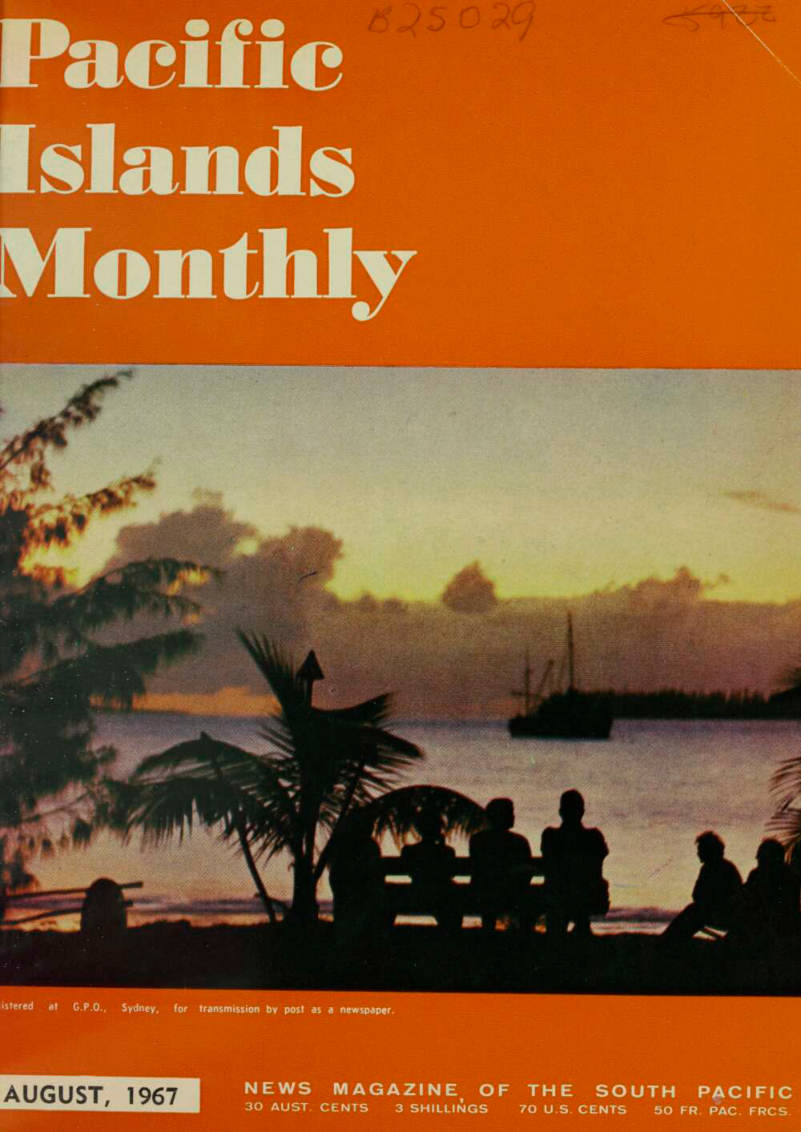 1
1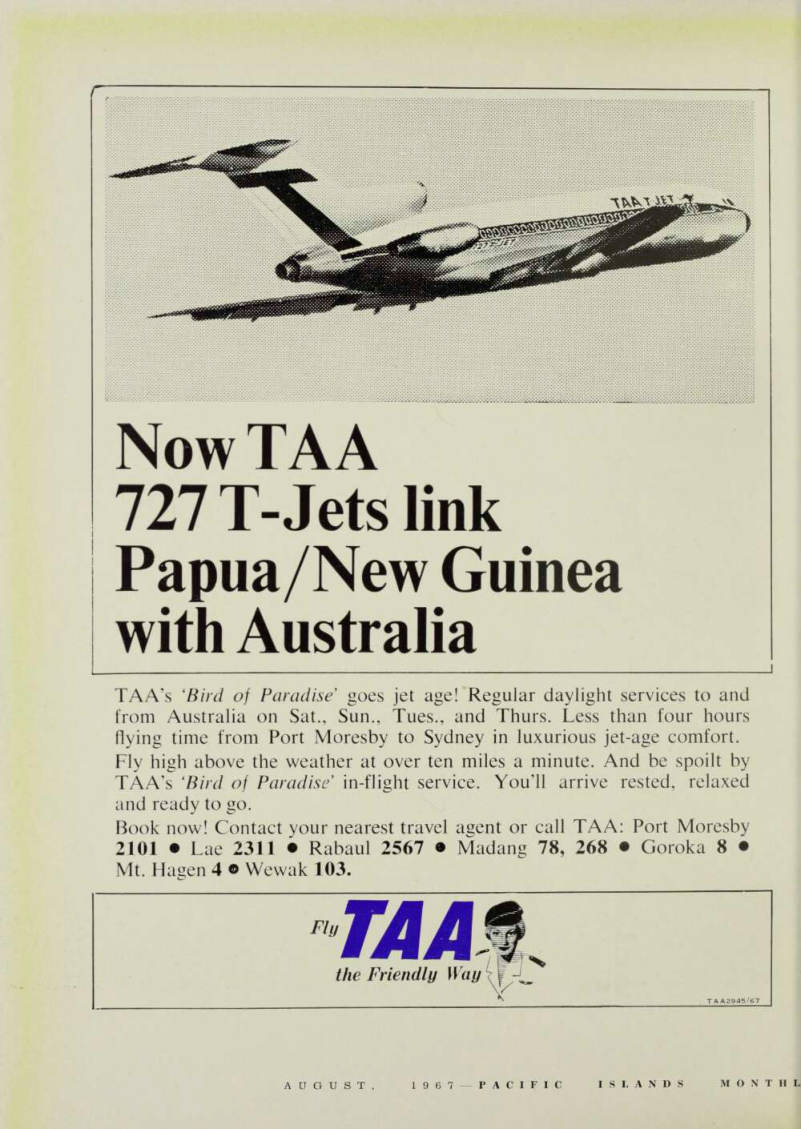 2
2 3
3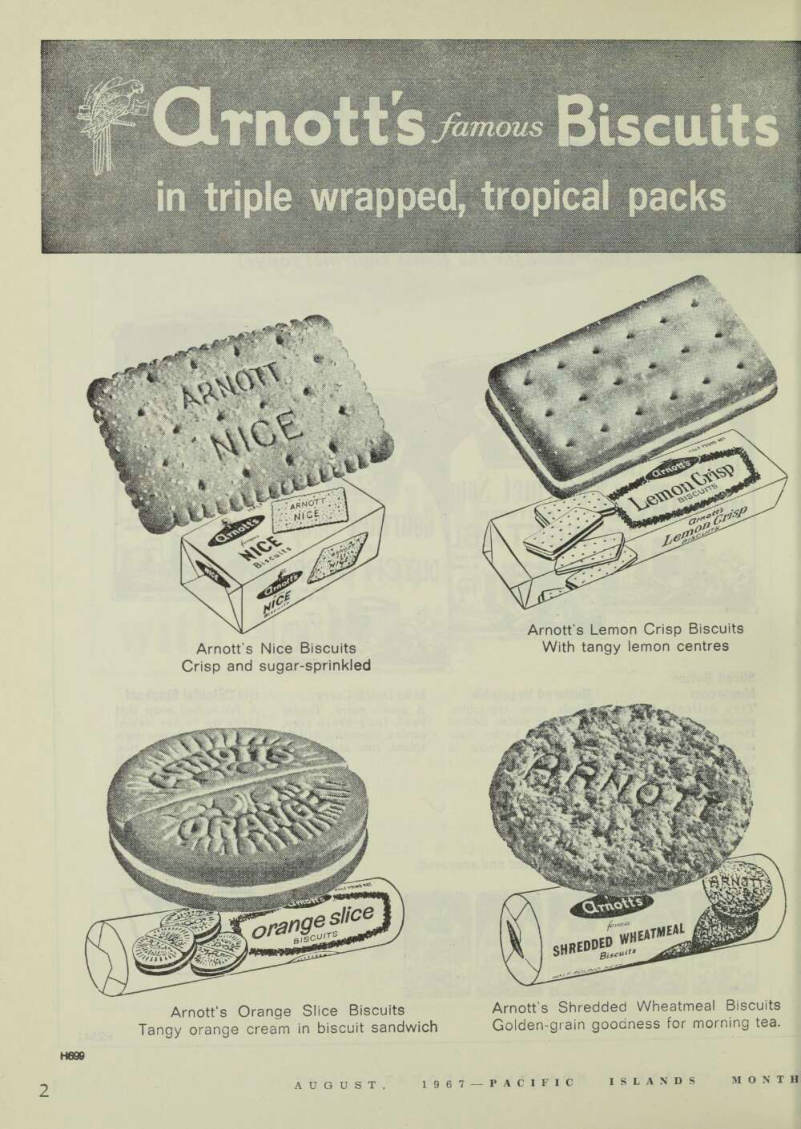 4
4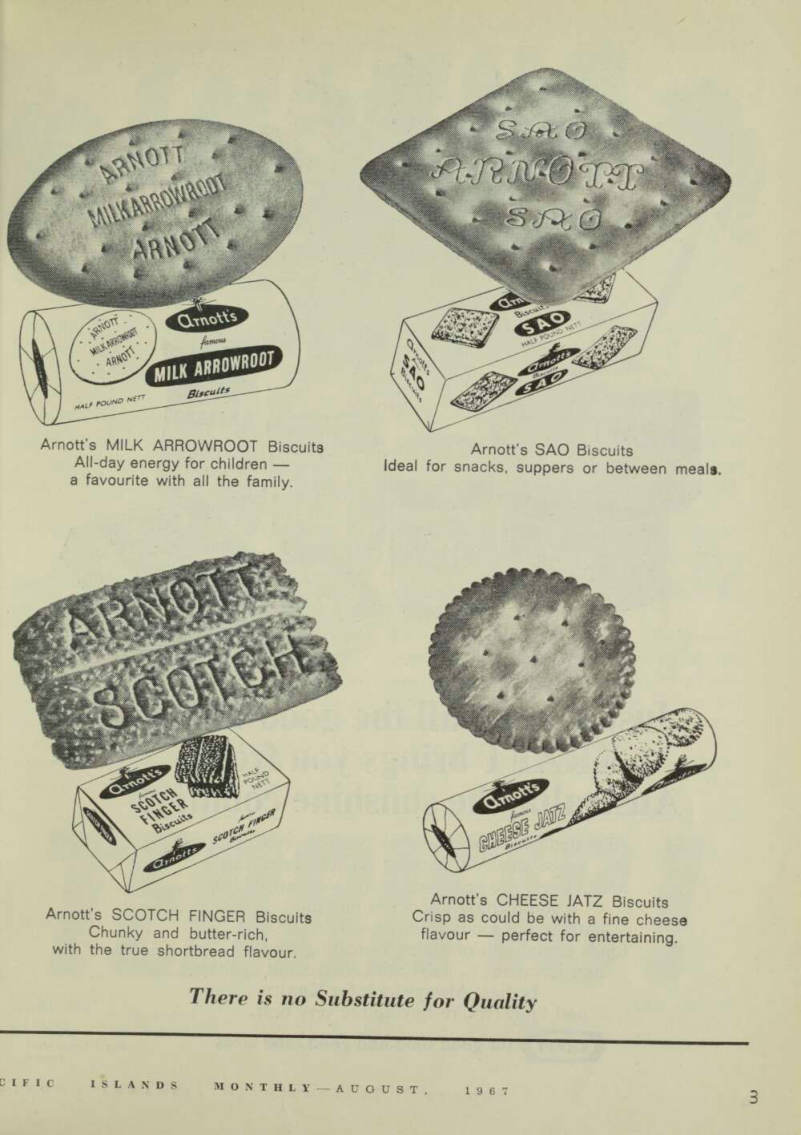 5
5 6
6 7
7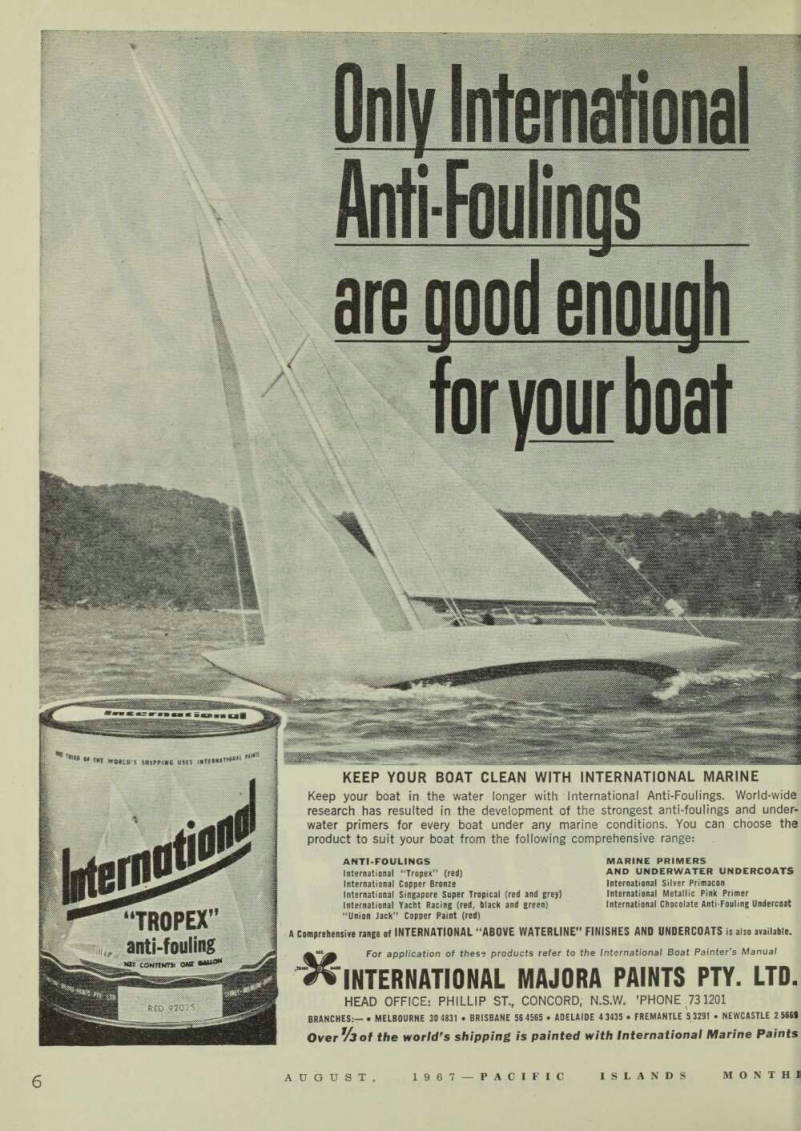 8
8 9
9 10
10 11
11 12
12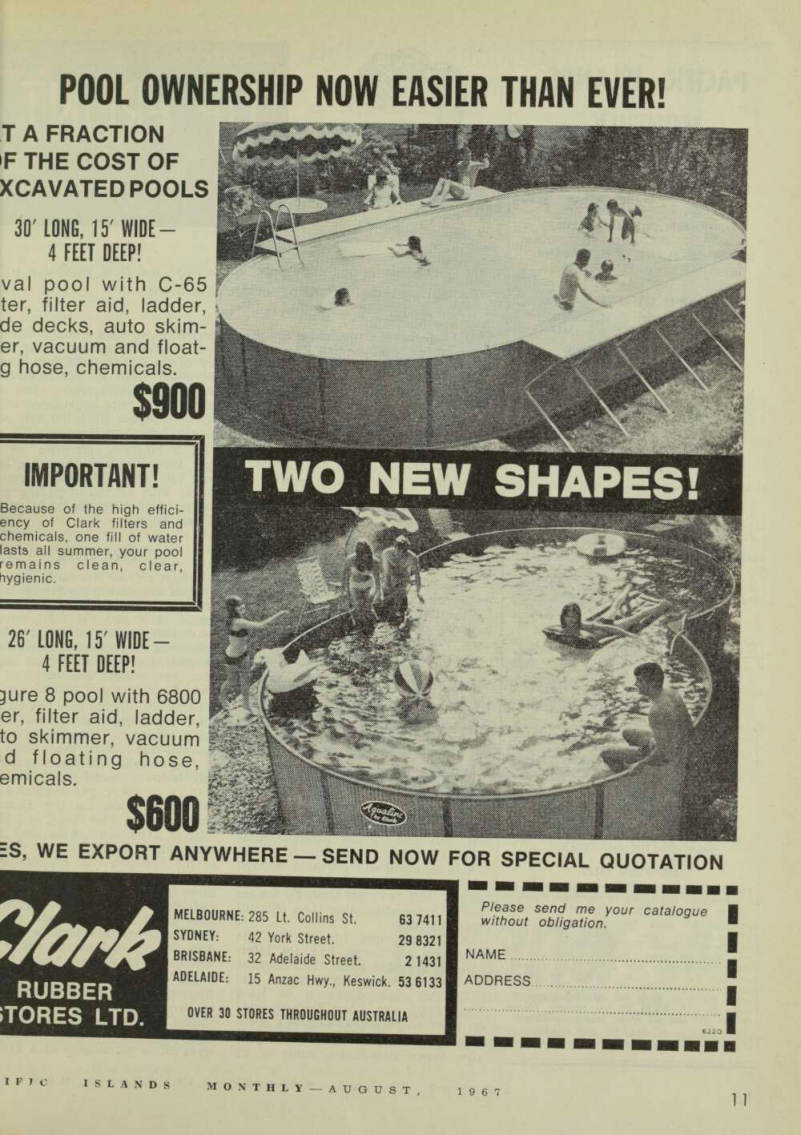 13
13 14
14 15
15 16
16 17
17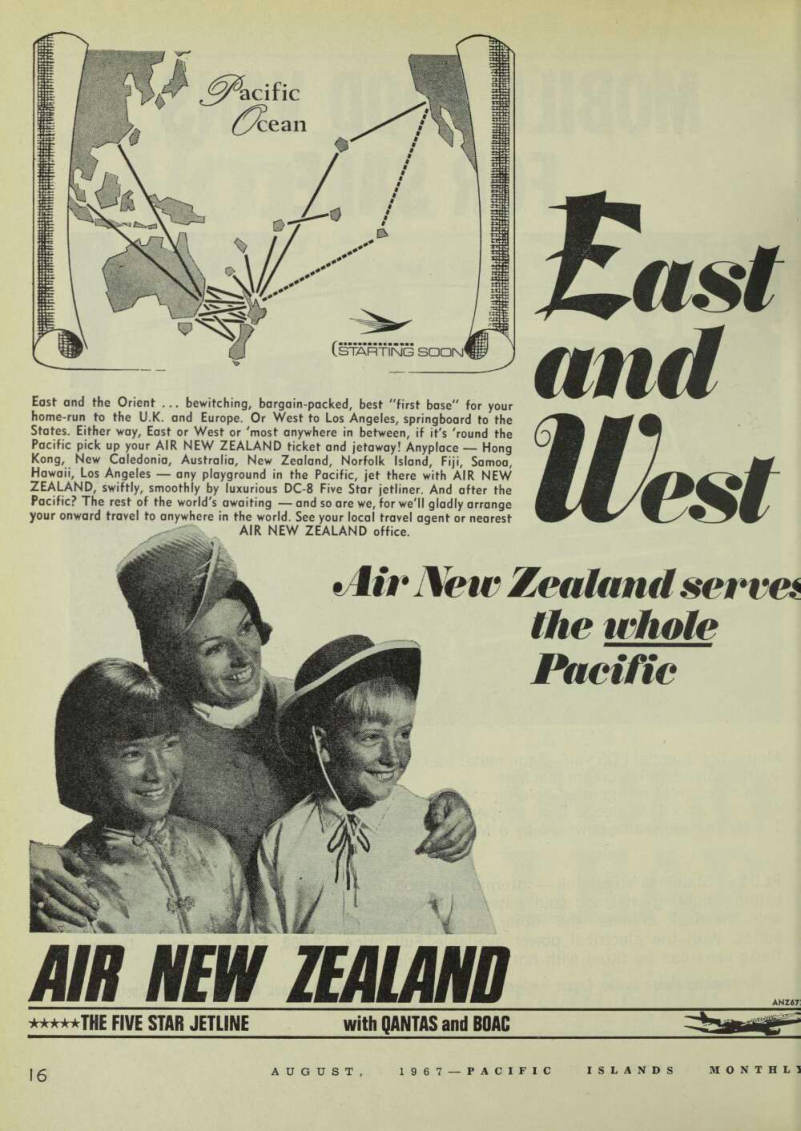 18
18 19
19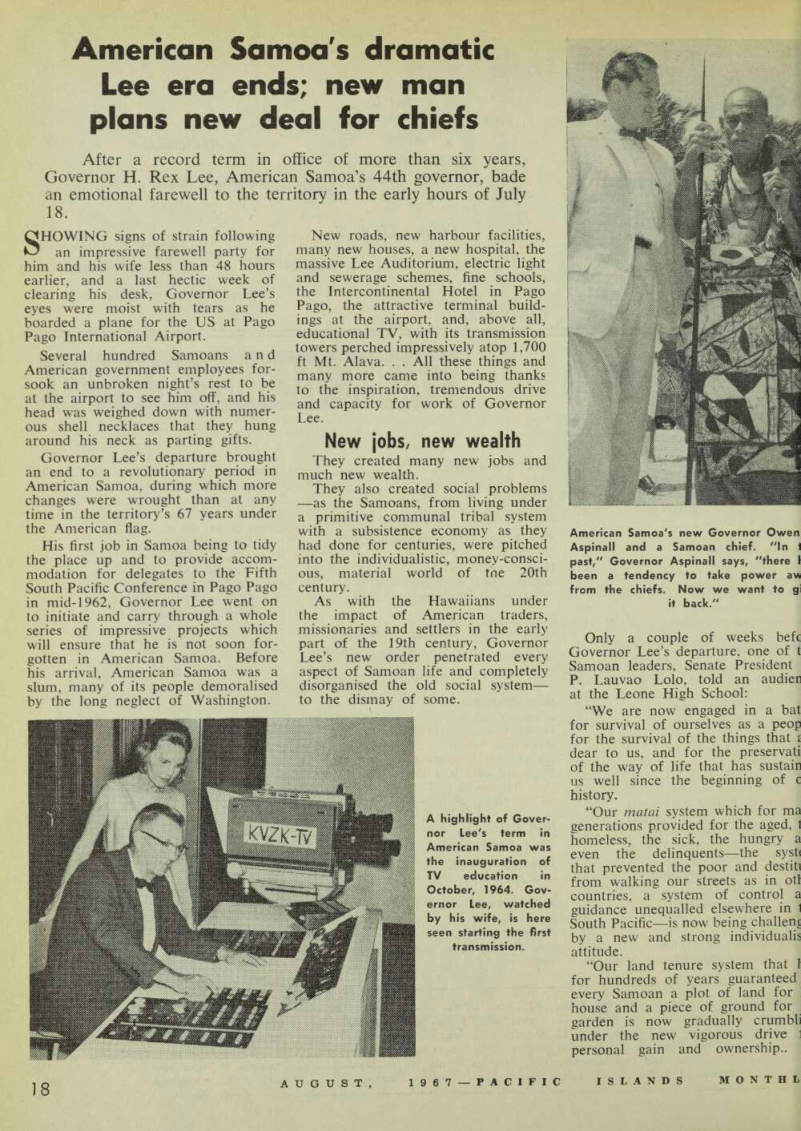 20
20 21
21 22
22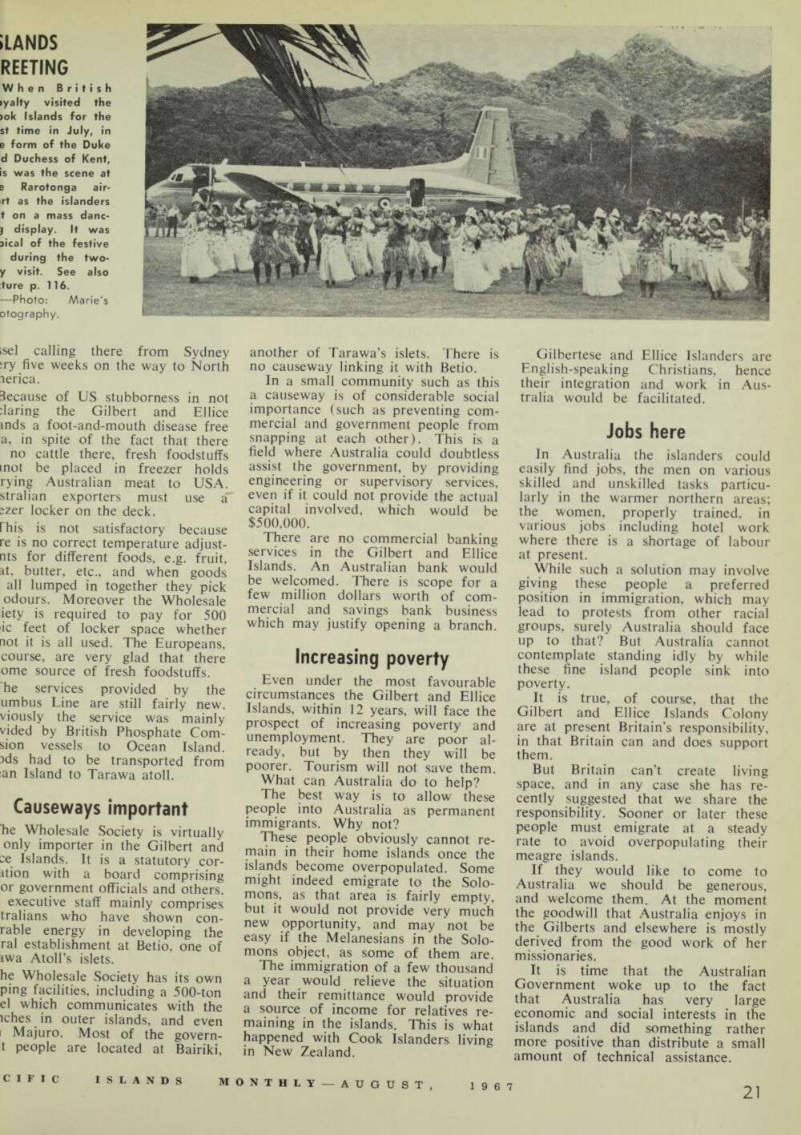 23
23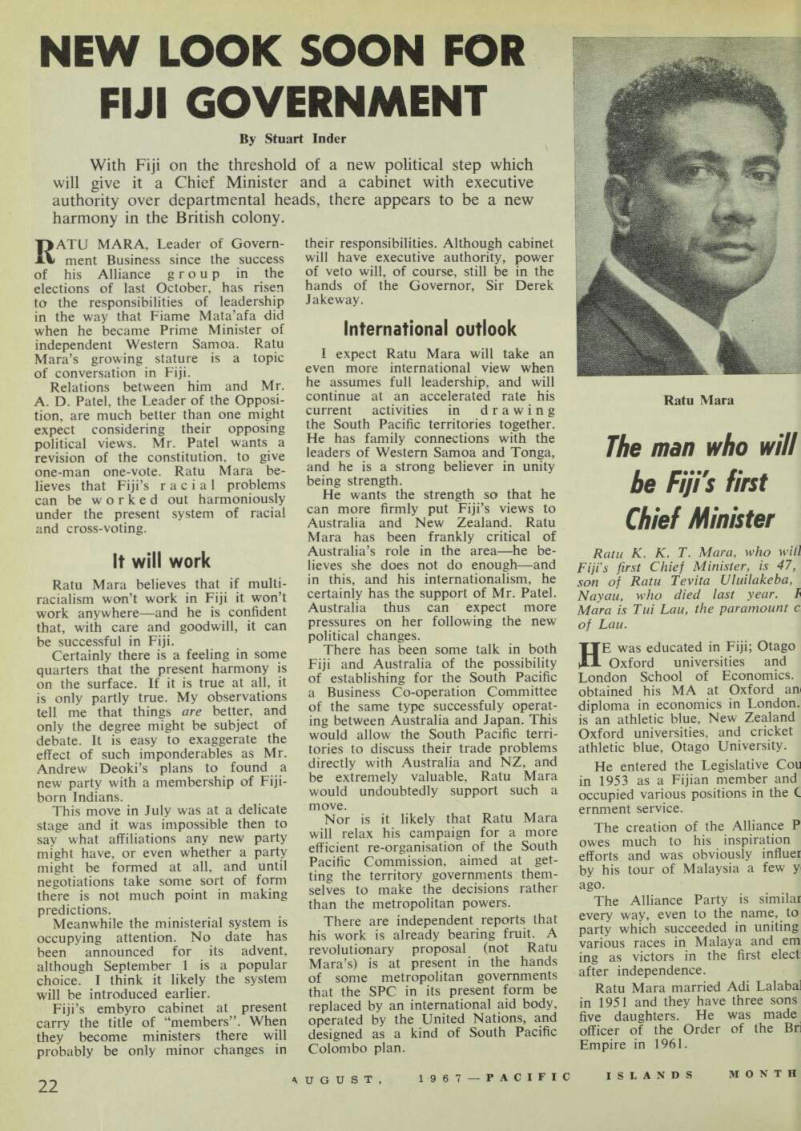 24
24 25
25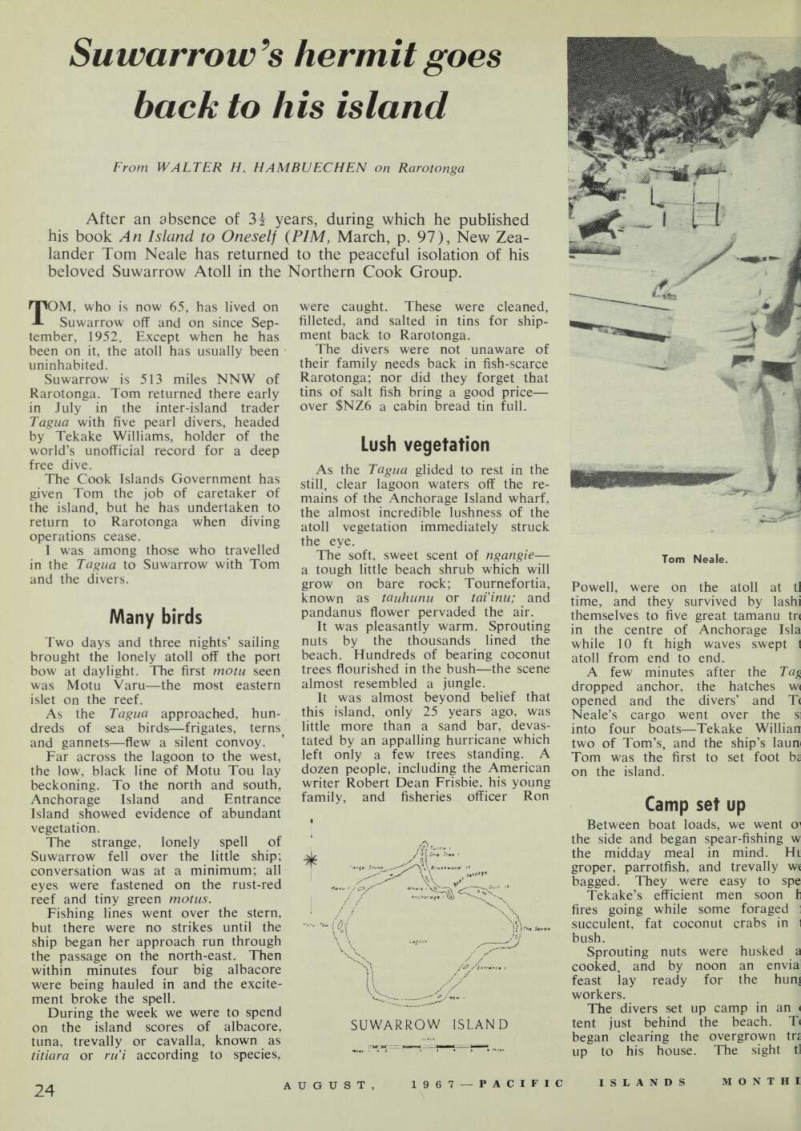 26
26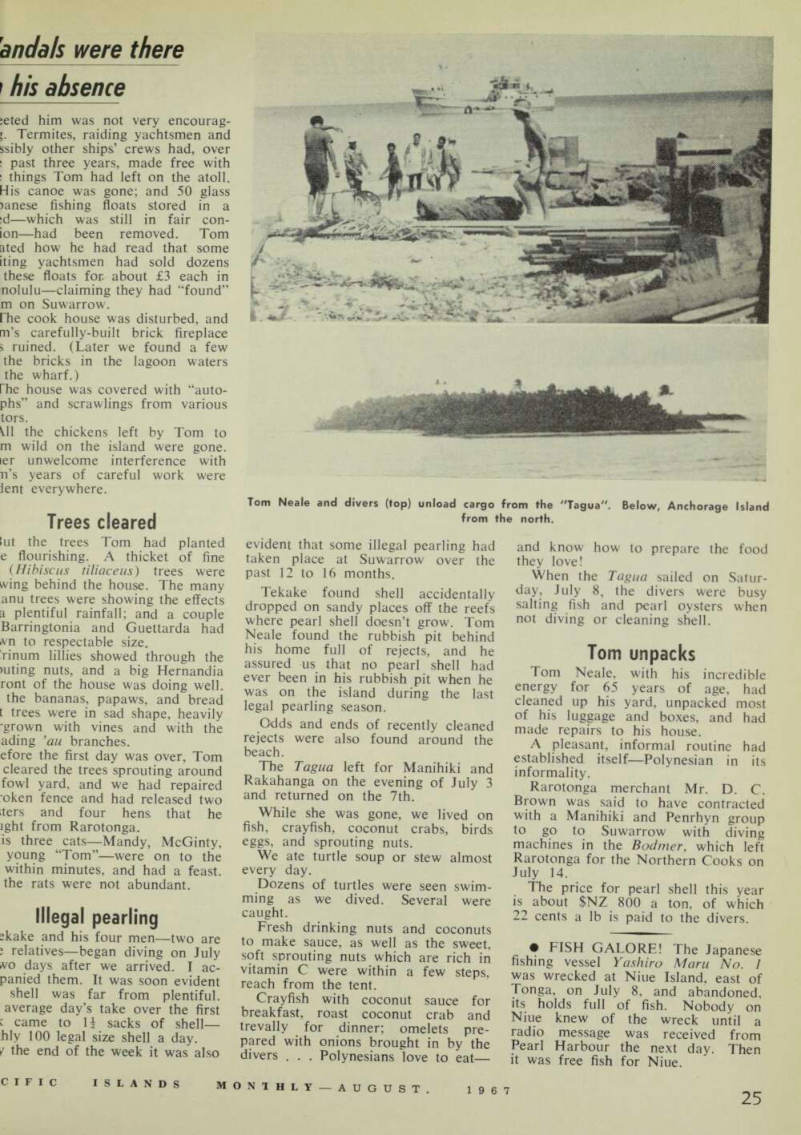 27
27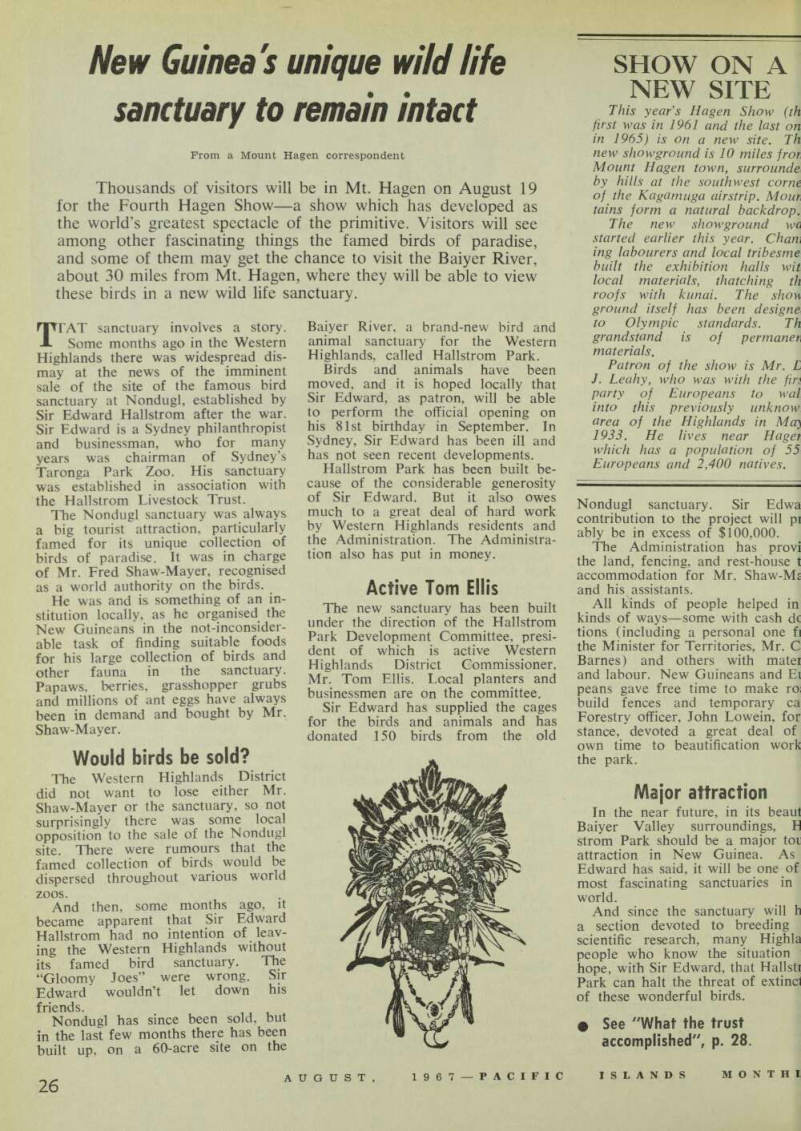 28
28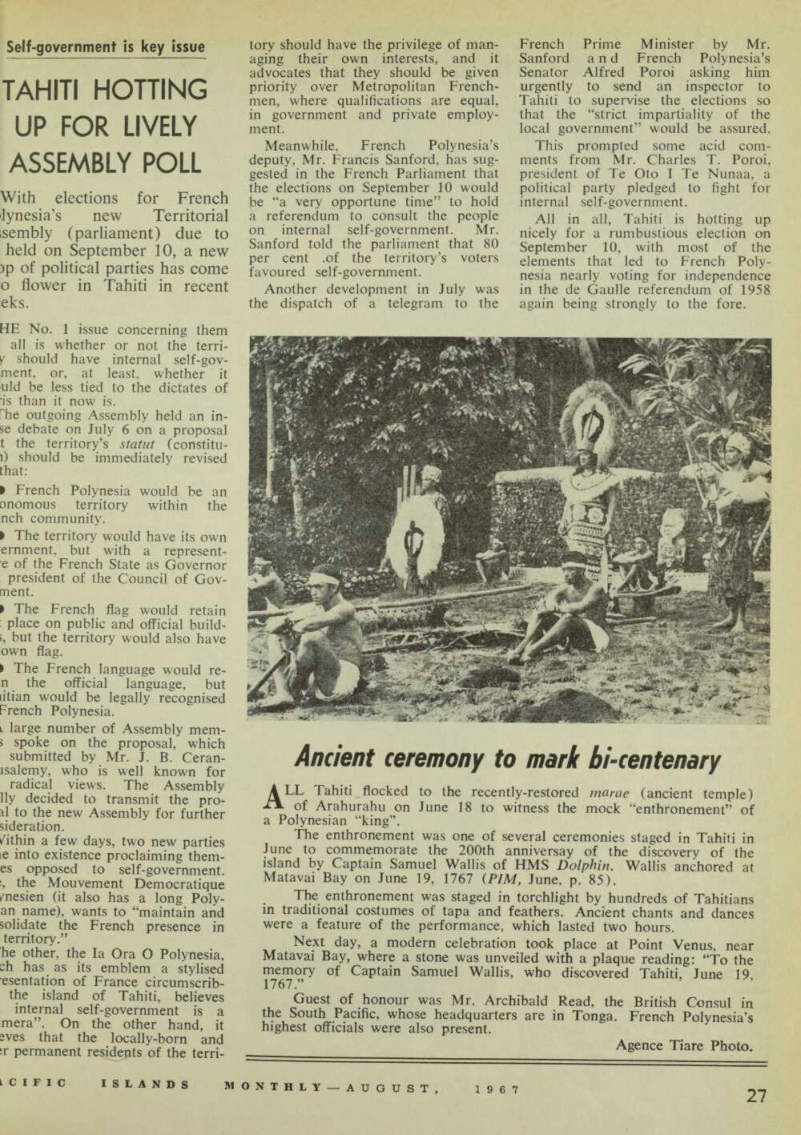 29
29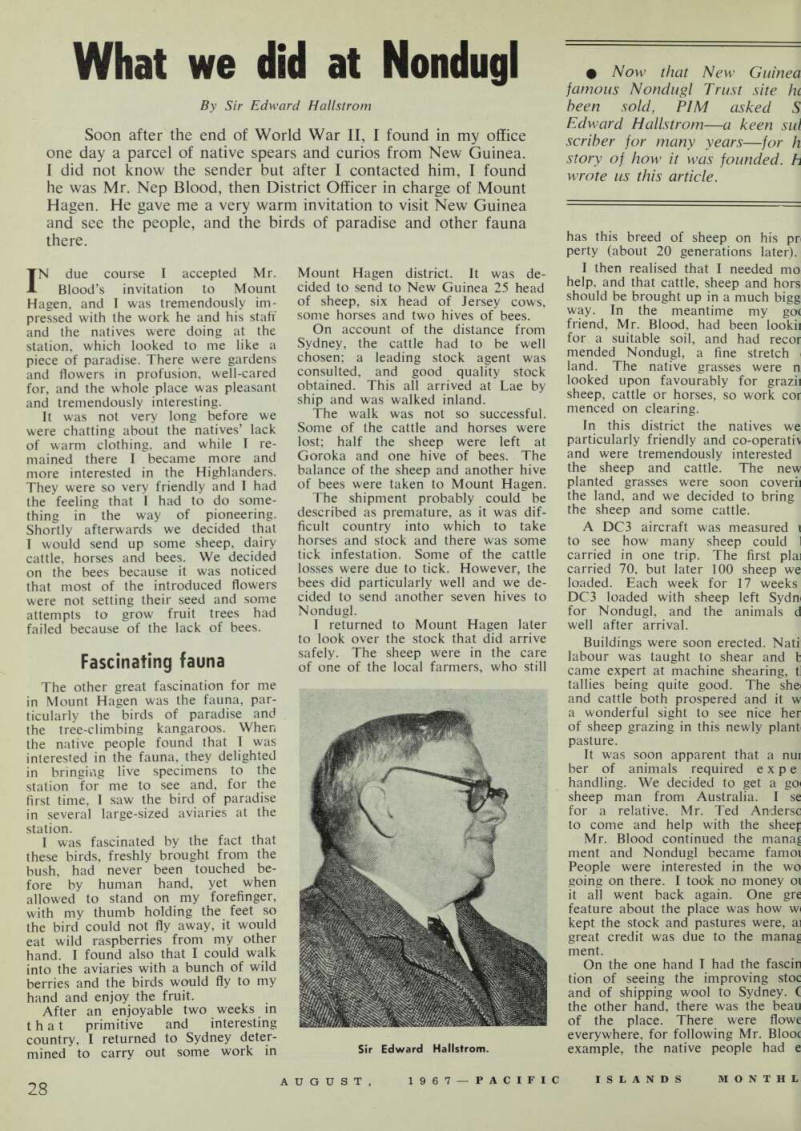 30
30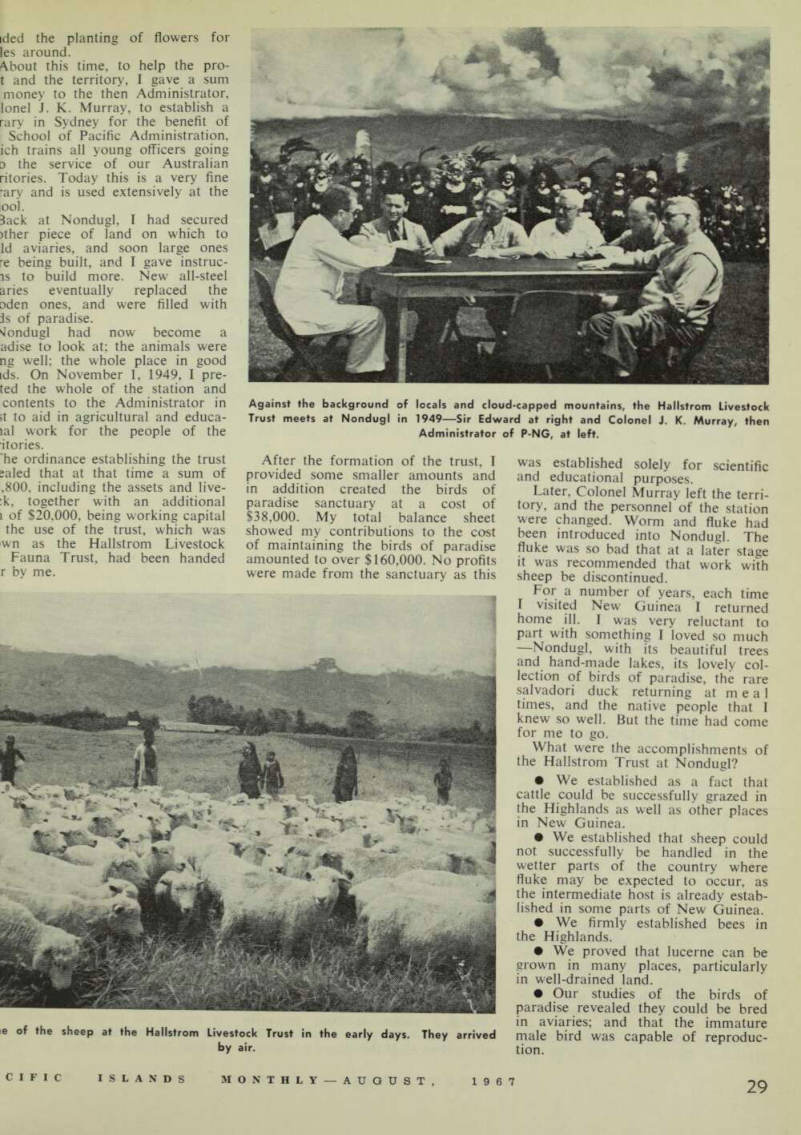 31
31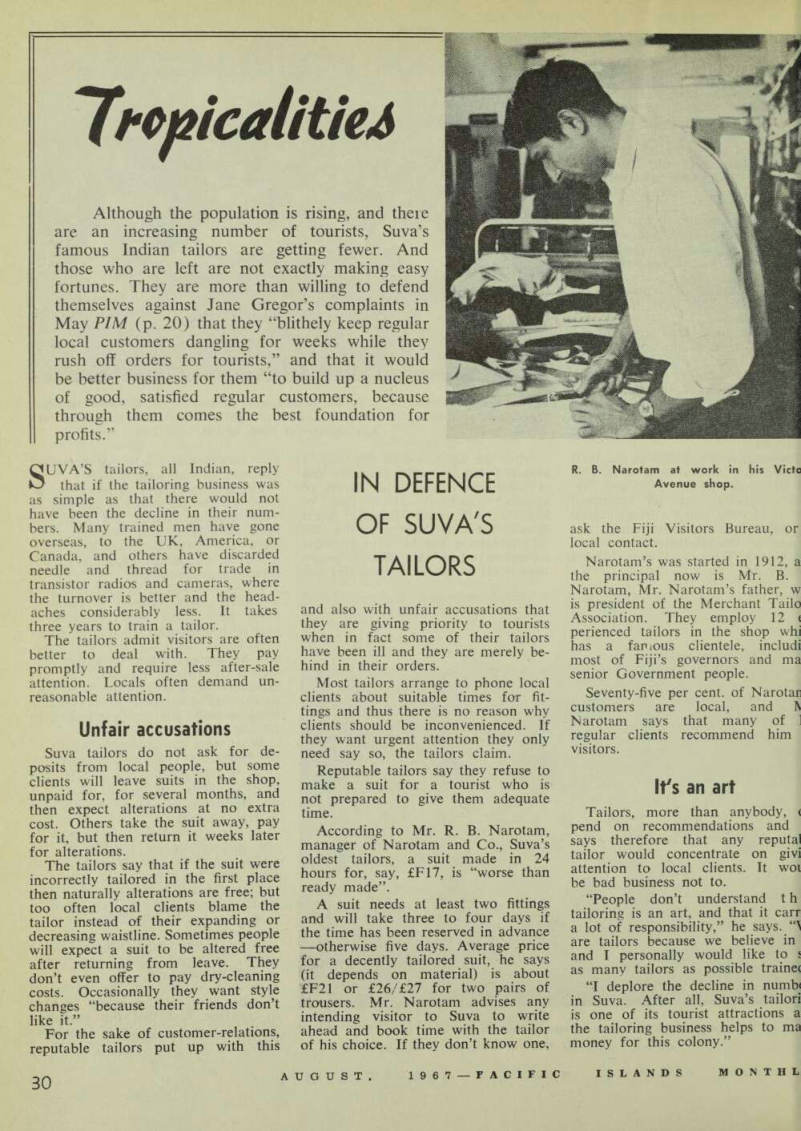 32
32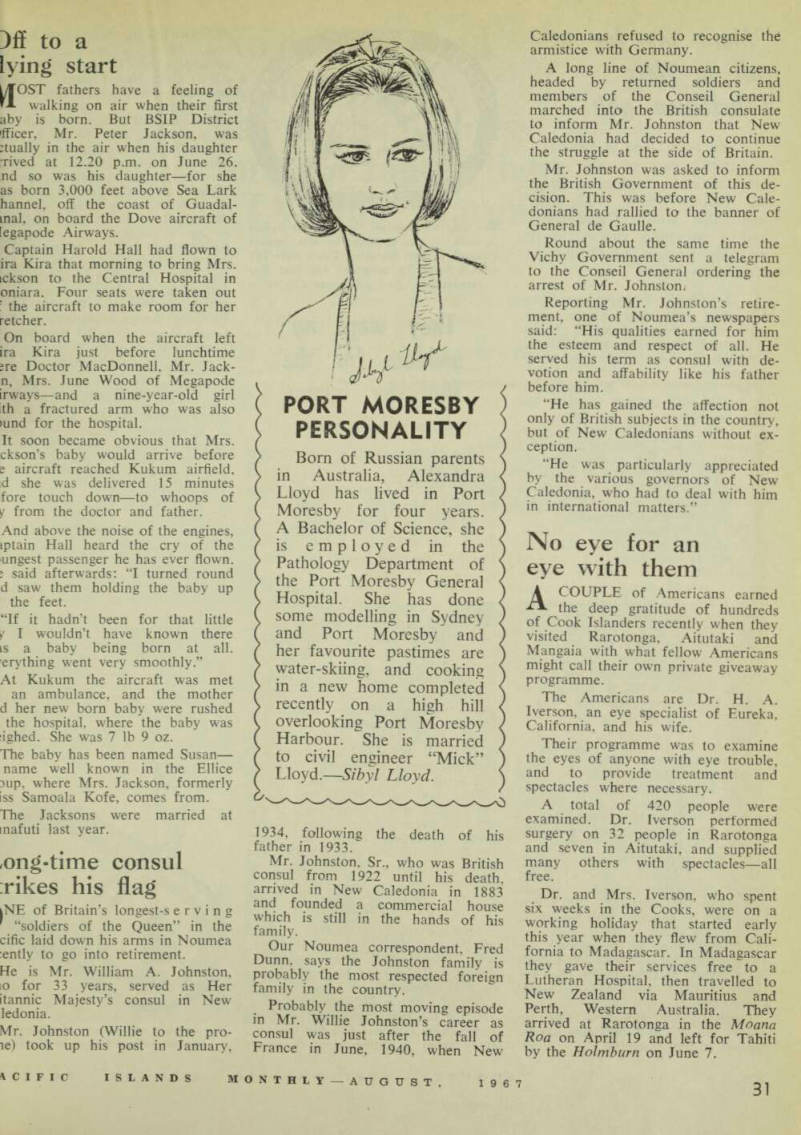 33
33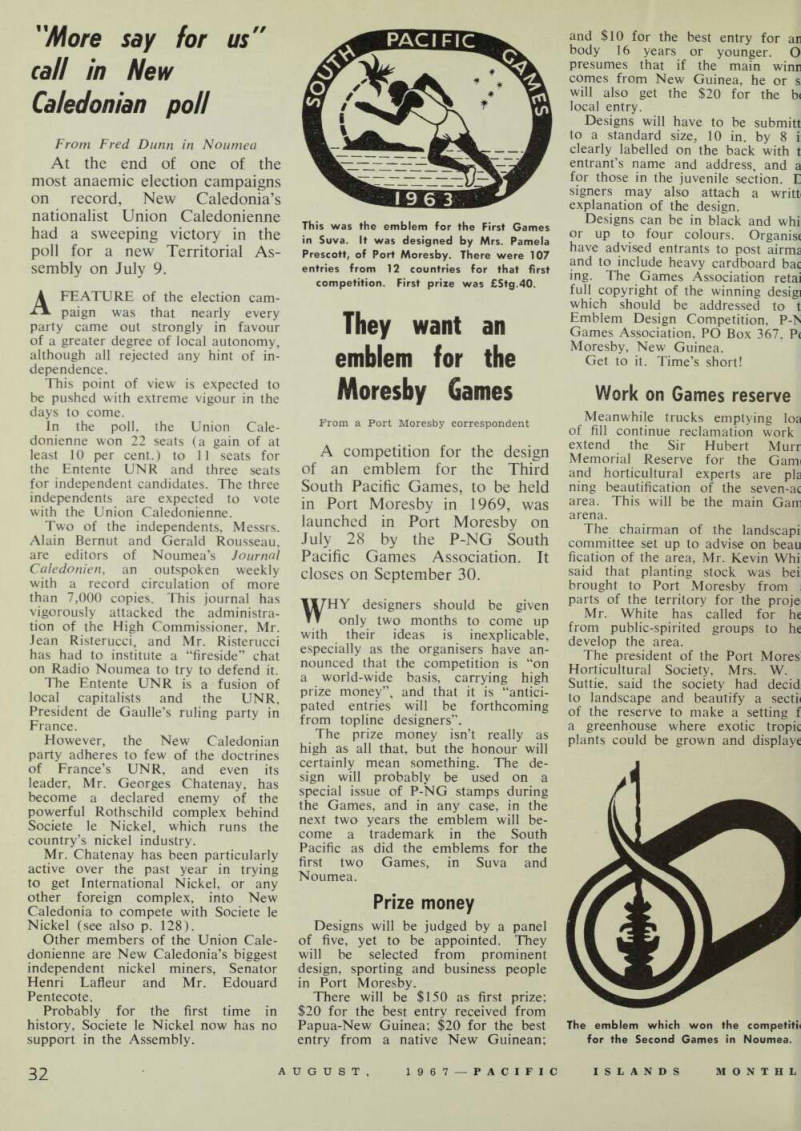 34
34 35
35 36
36 37
37 38
38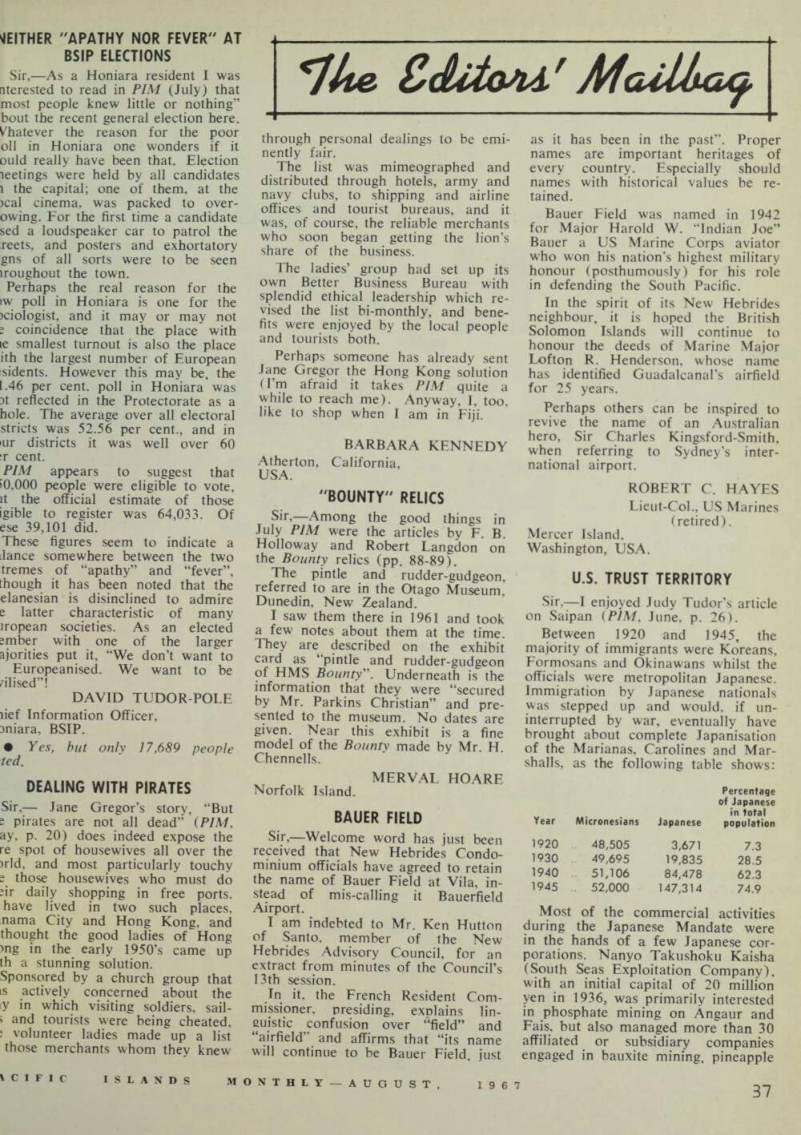 39
39 40
40 41
41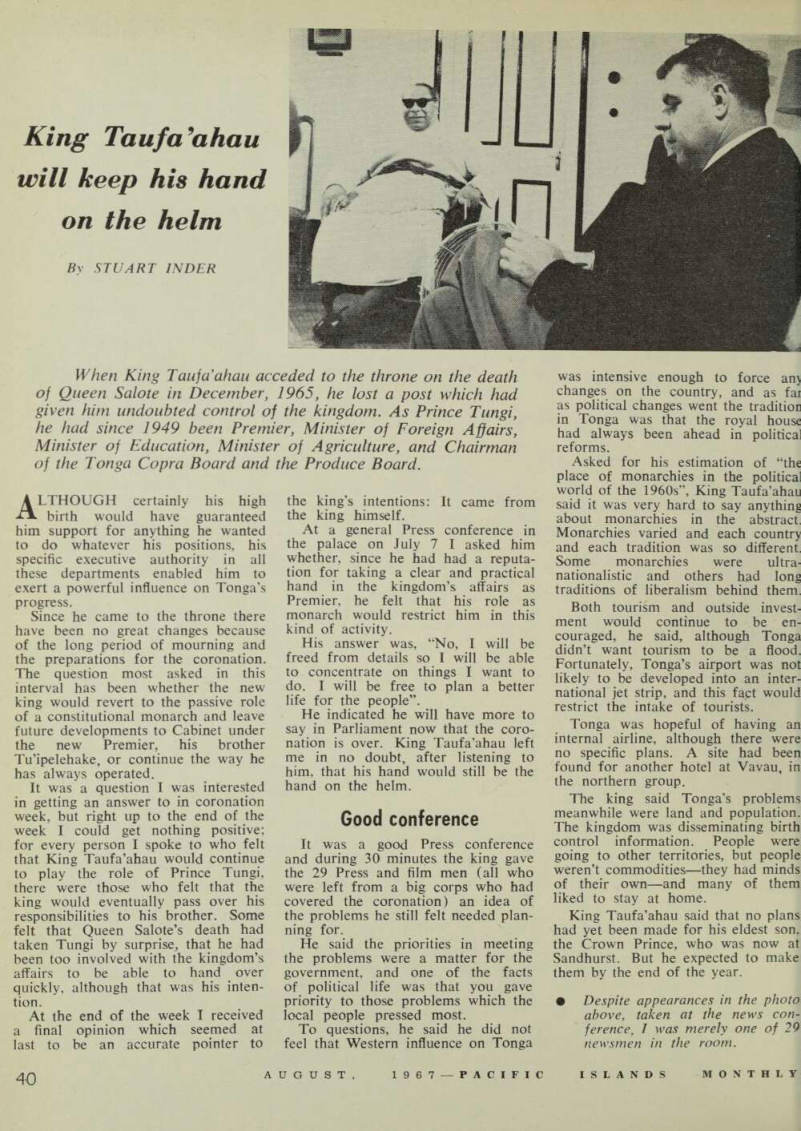 42
42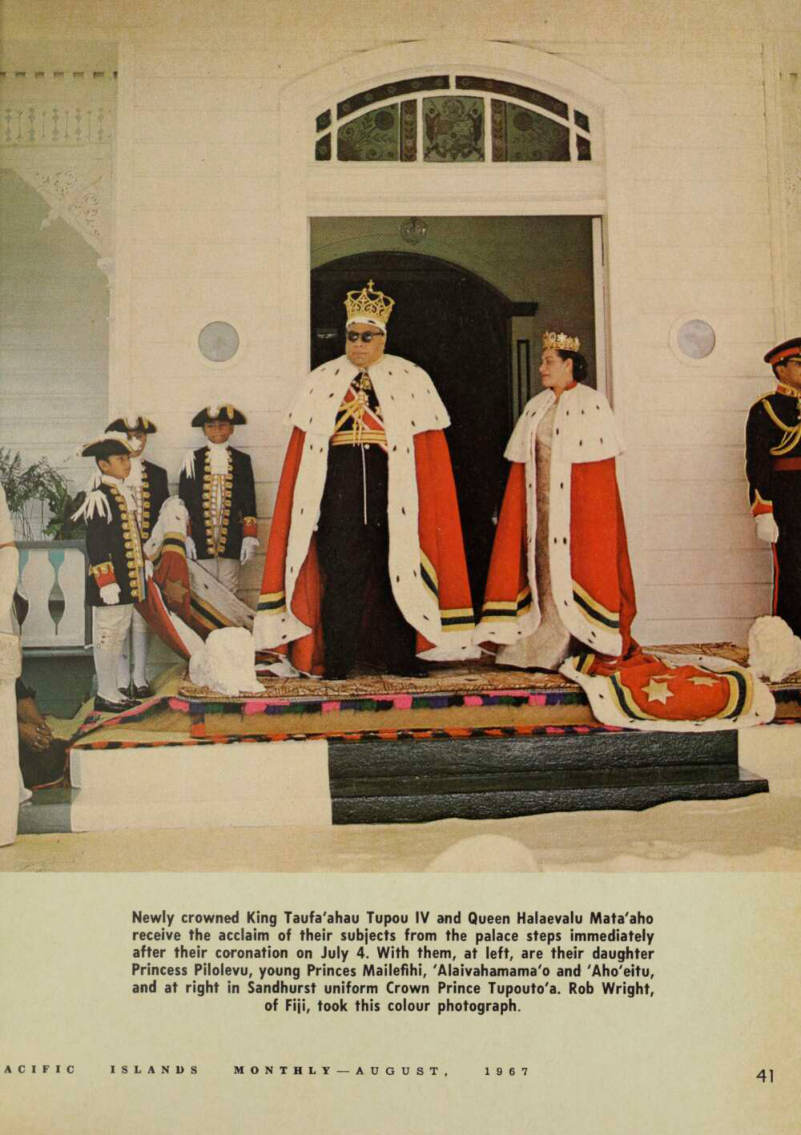 43
43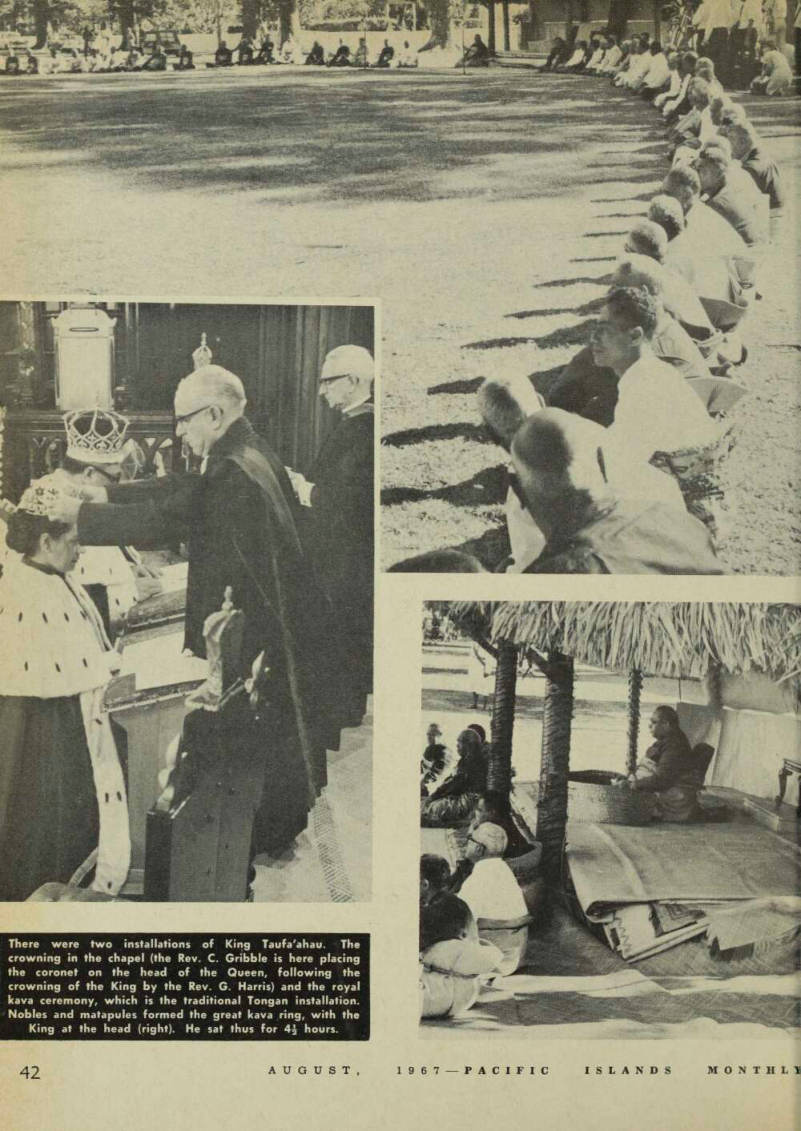 44
44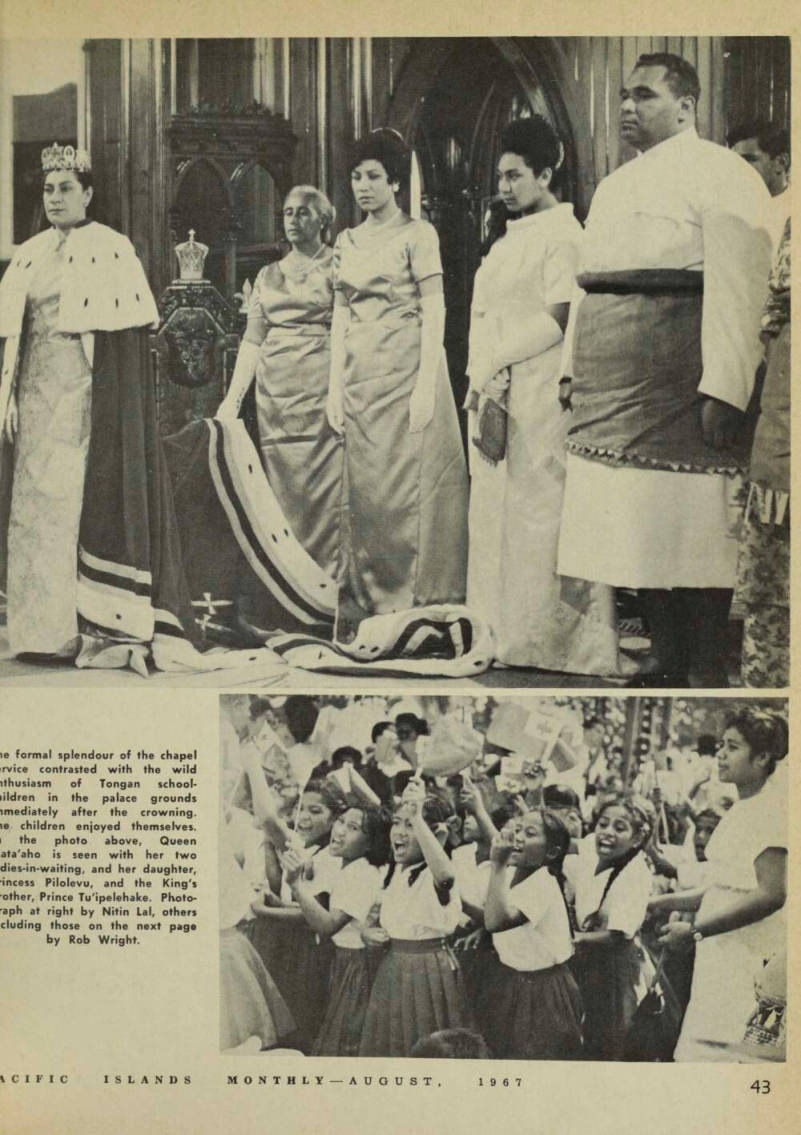 45
45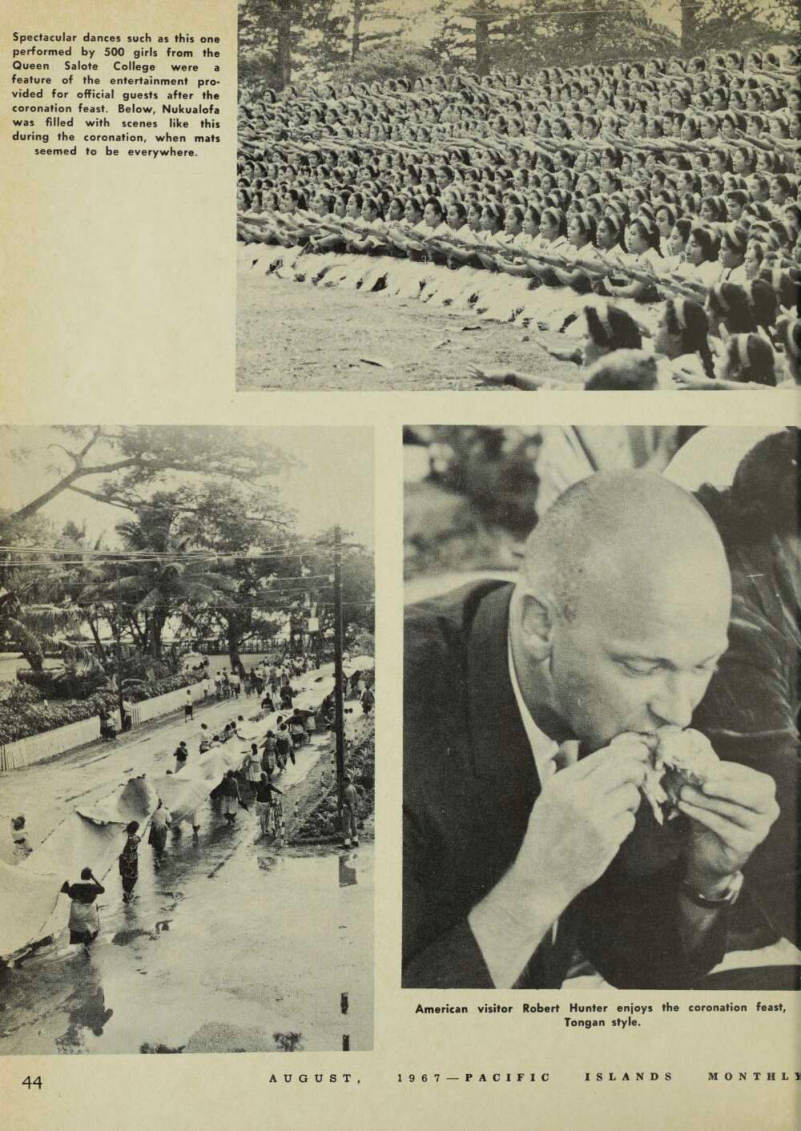 46
46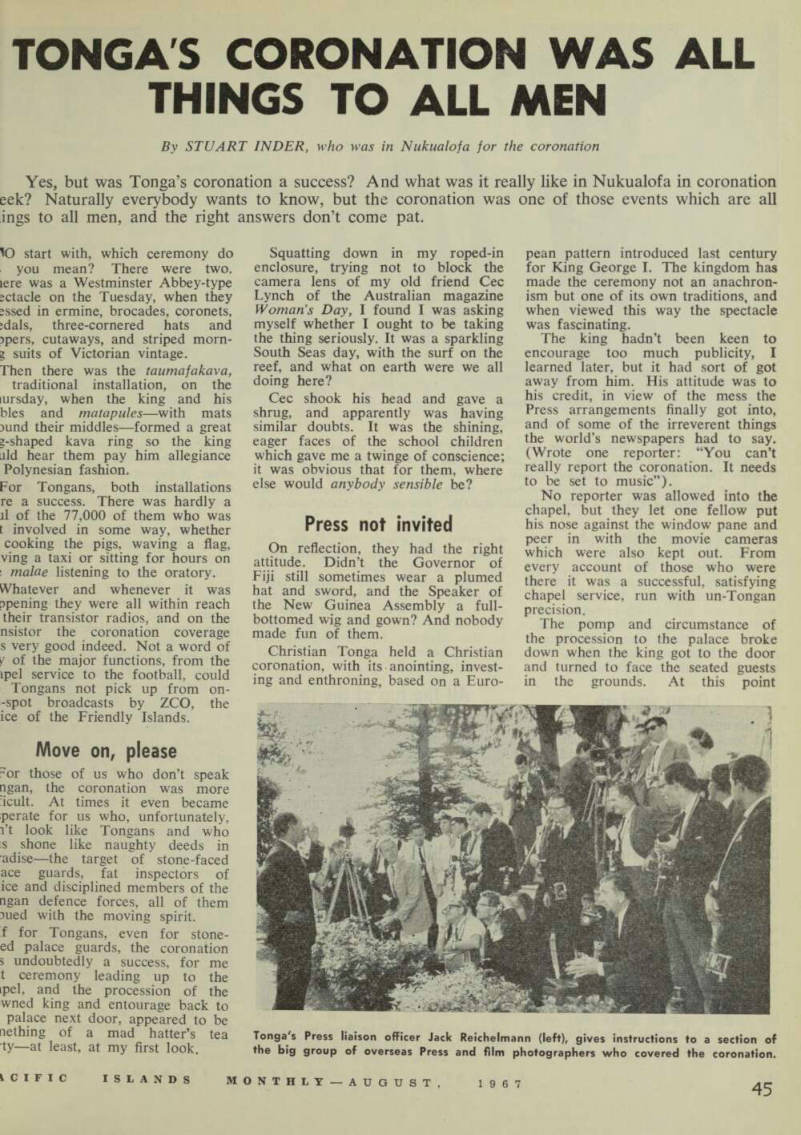 47
47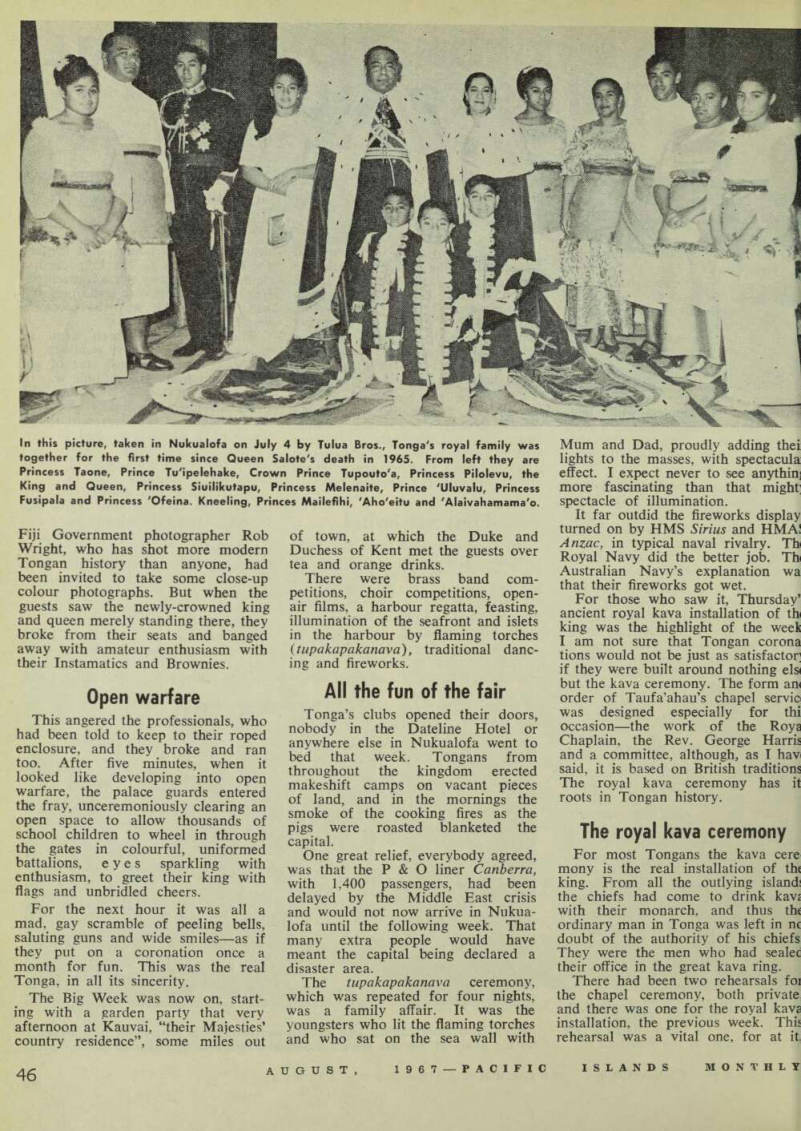 48
48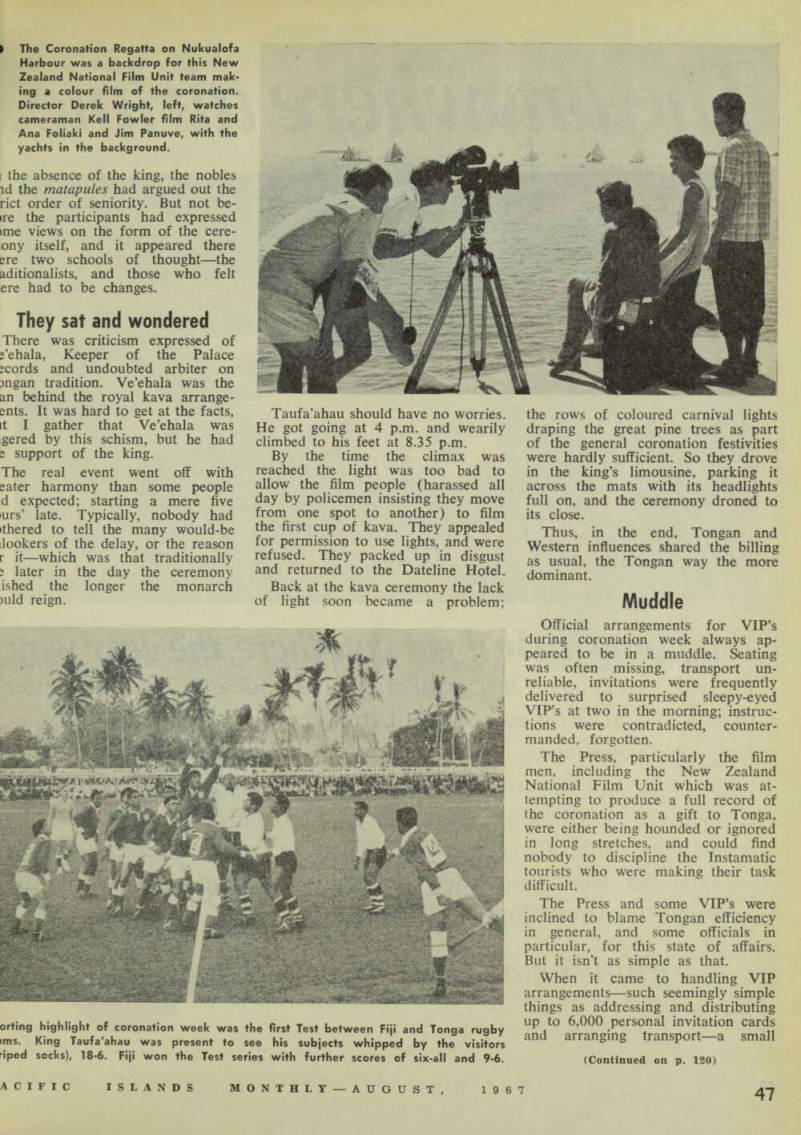 49
49 50
50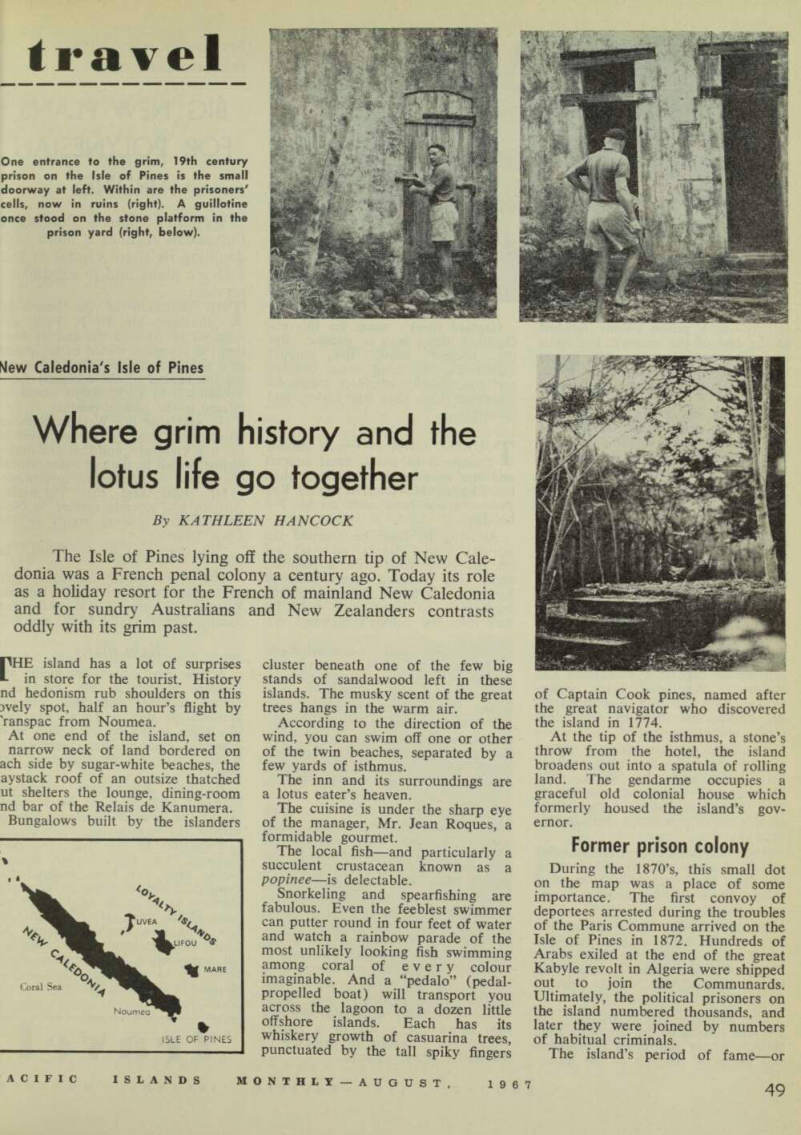 51
51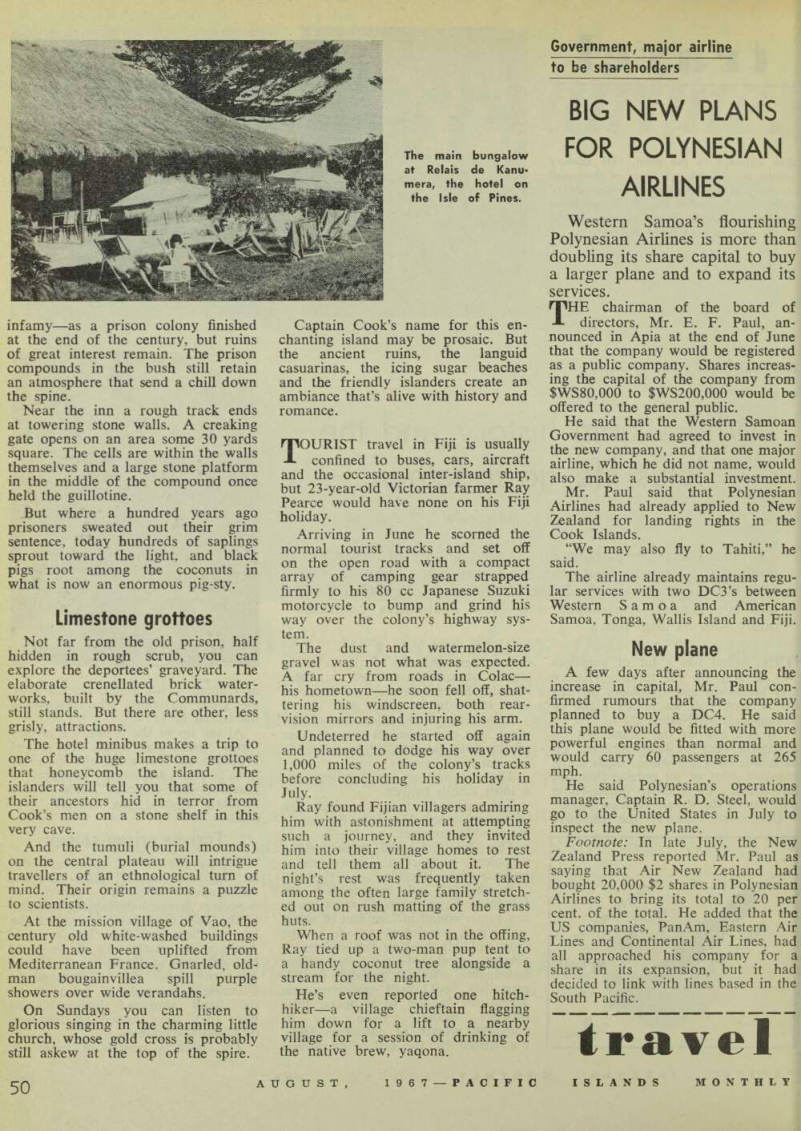 52
52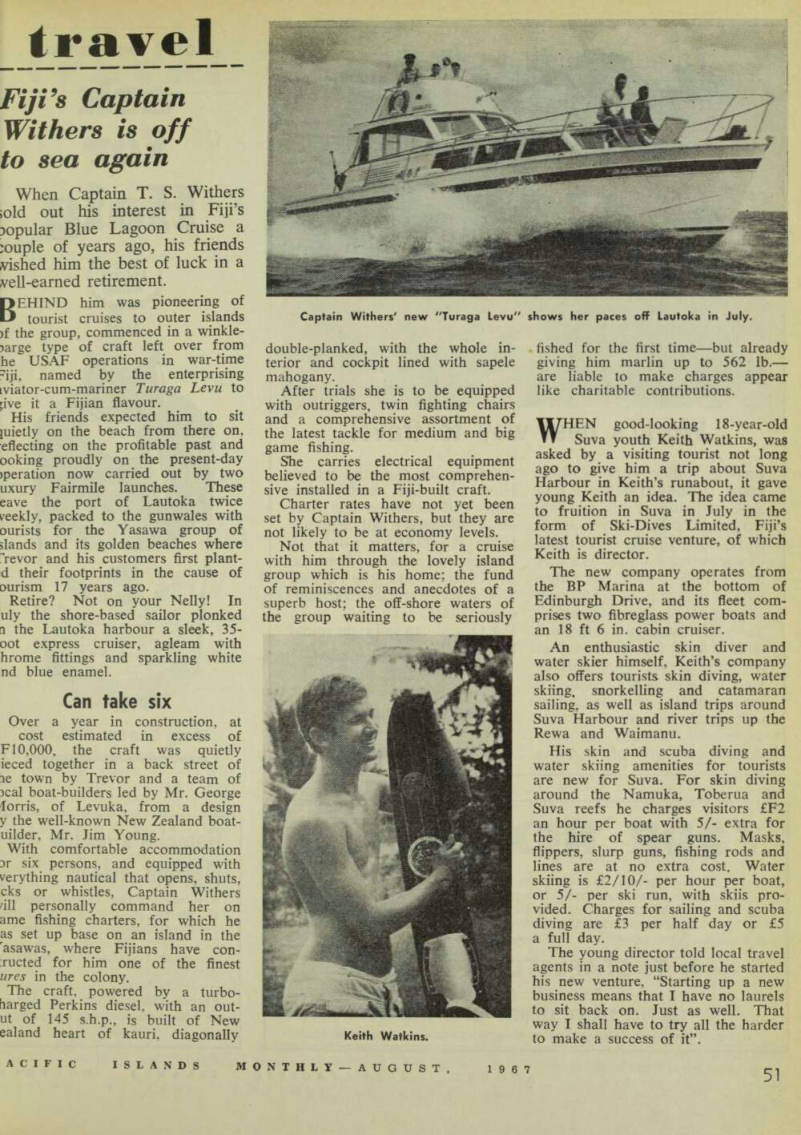 53
53 54
54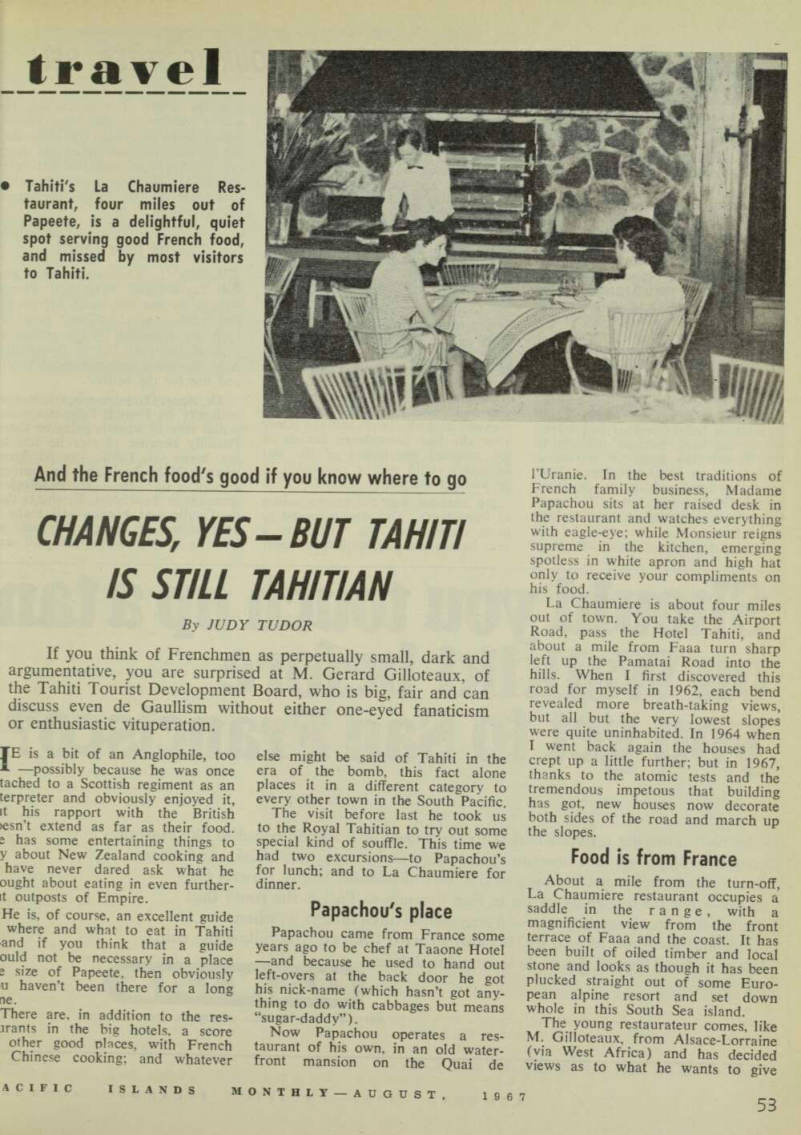 55
55 56
56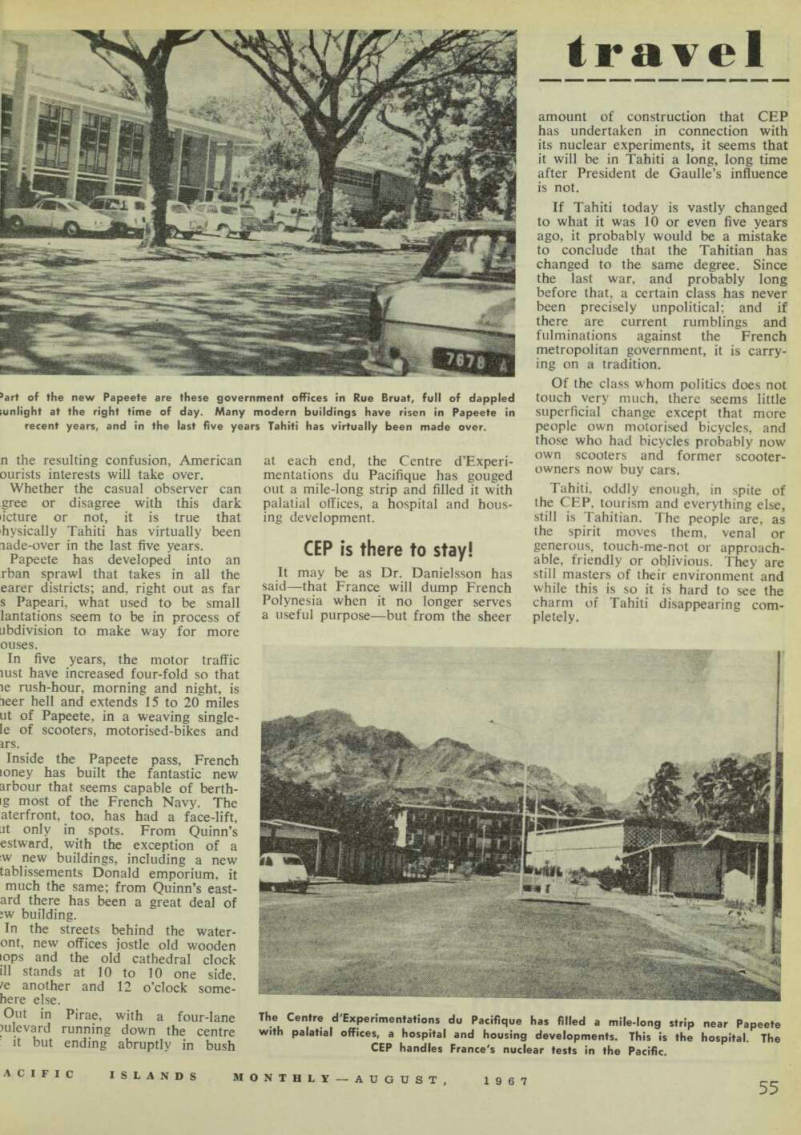 57
57 58
58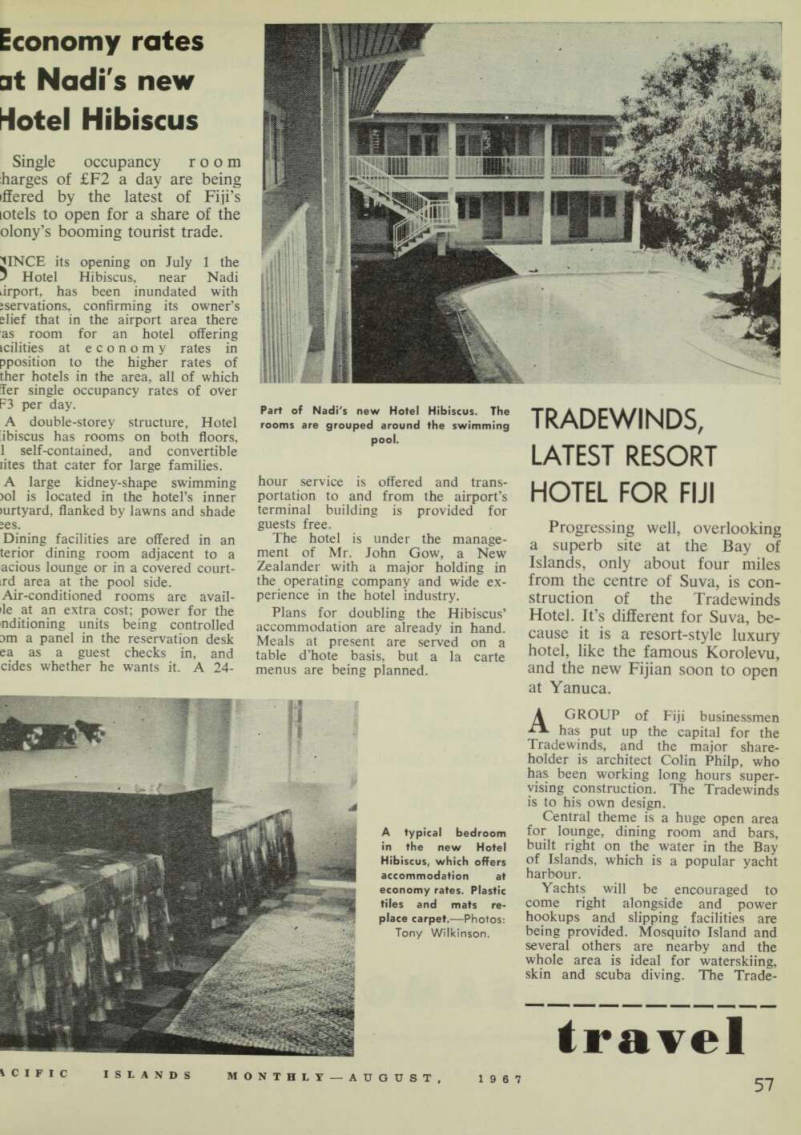 59
59 60
60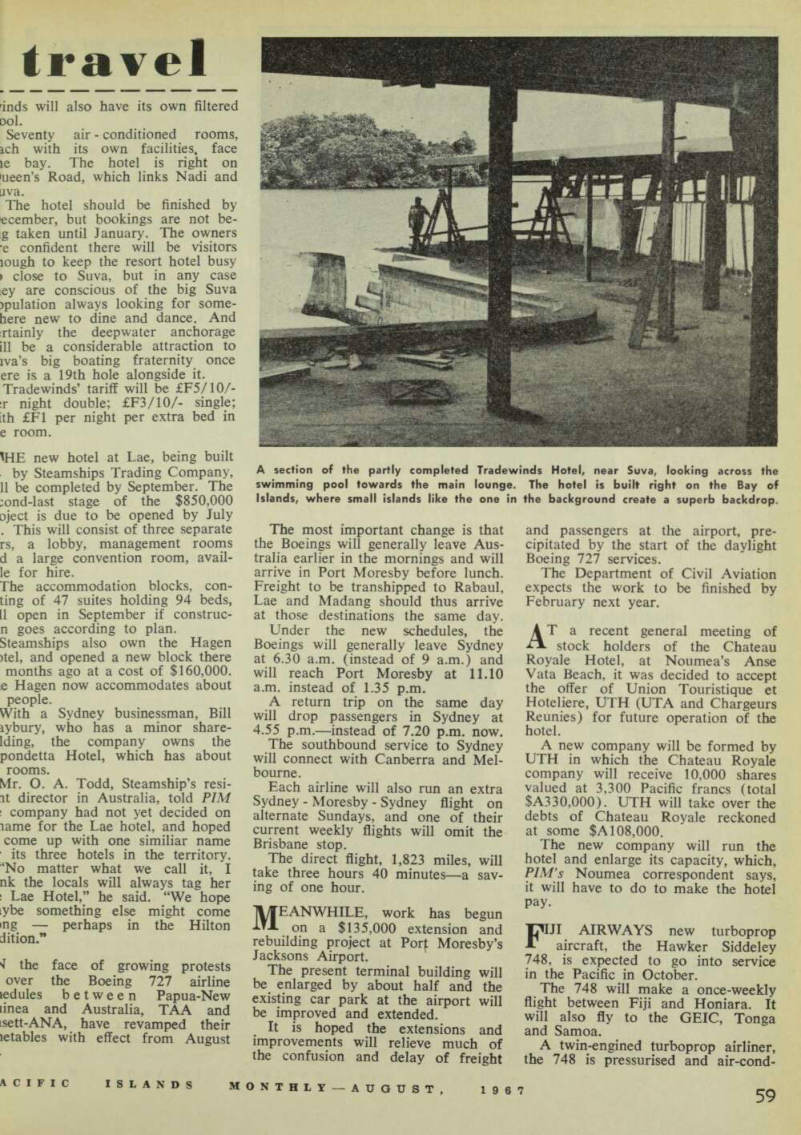 61
61 62
62 63
63 64
64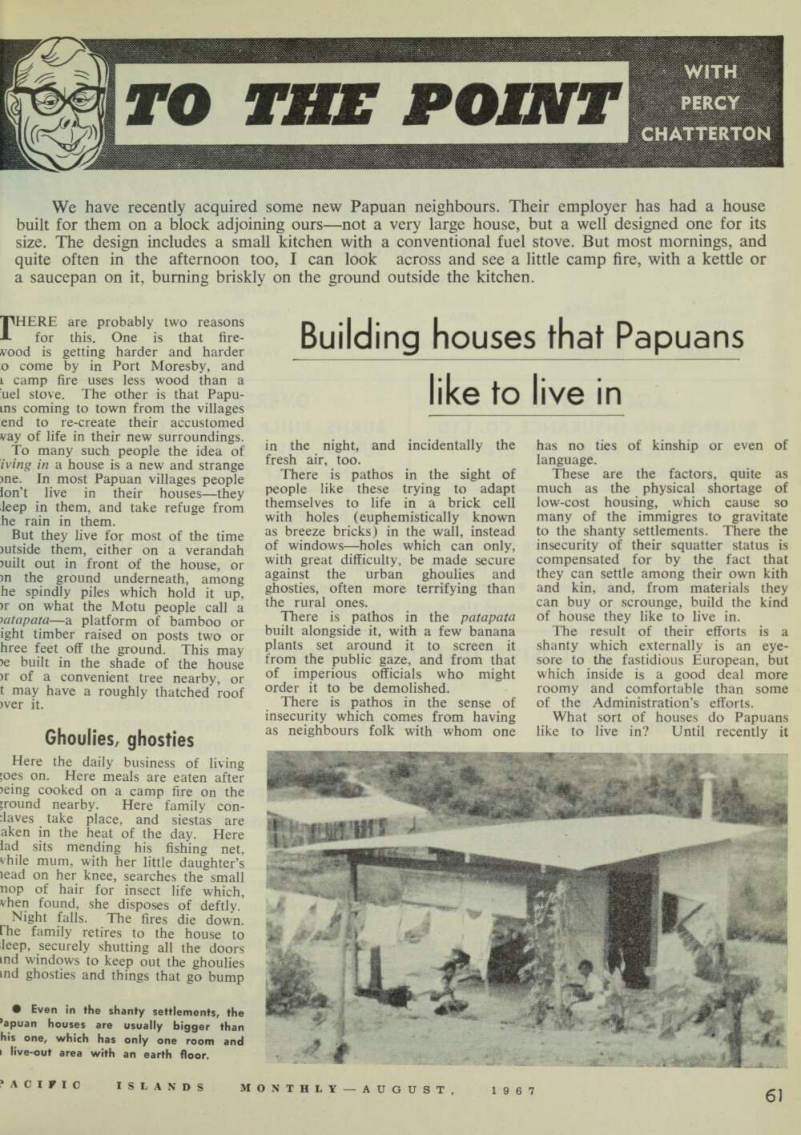 65
65 66
66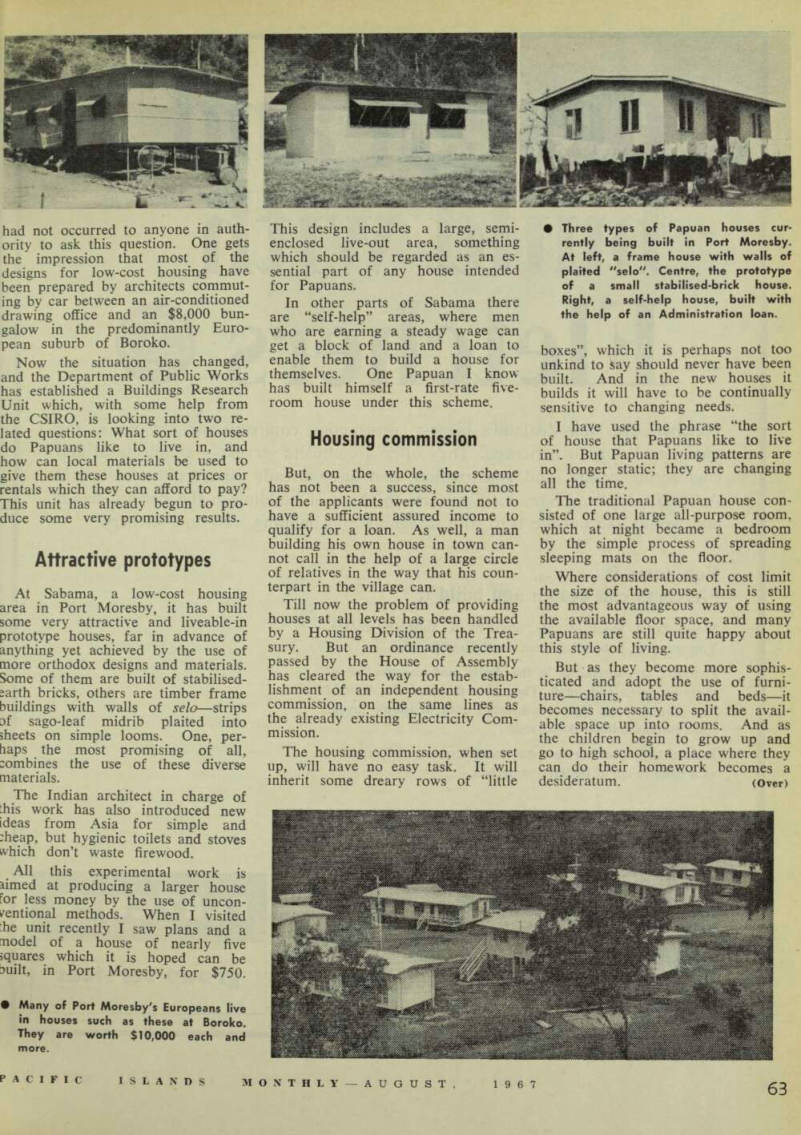 67
67 68
68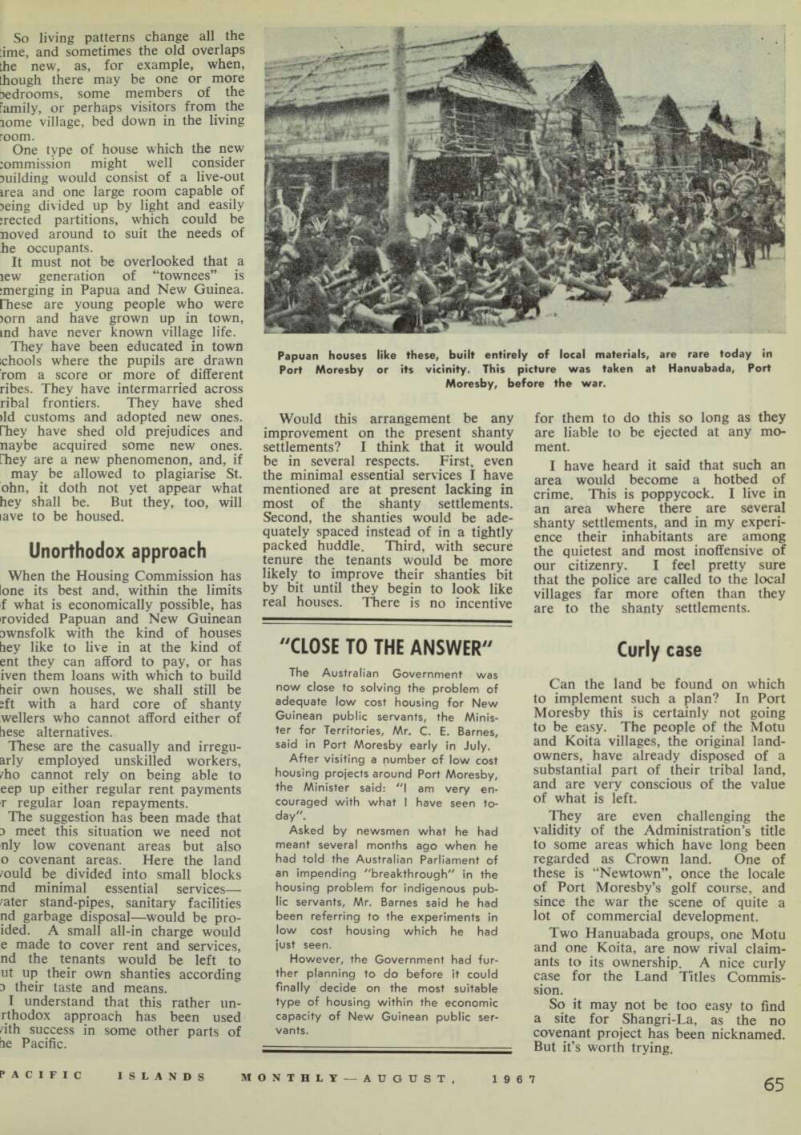 69
69 70
70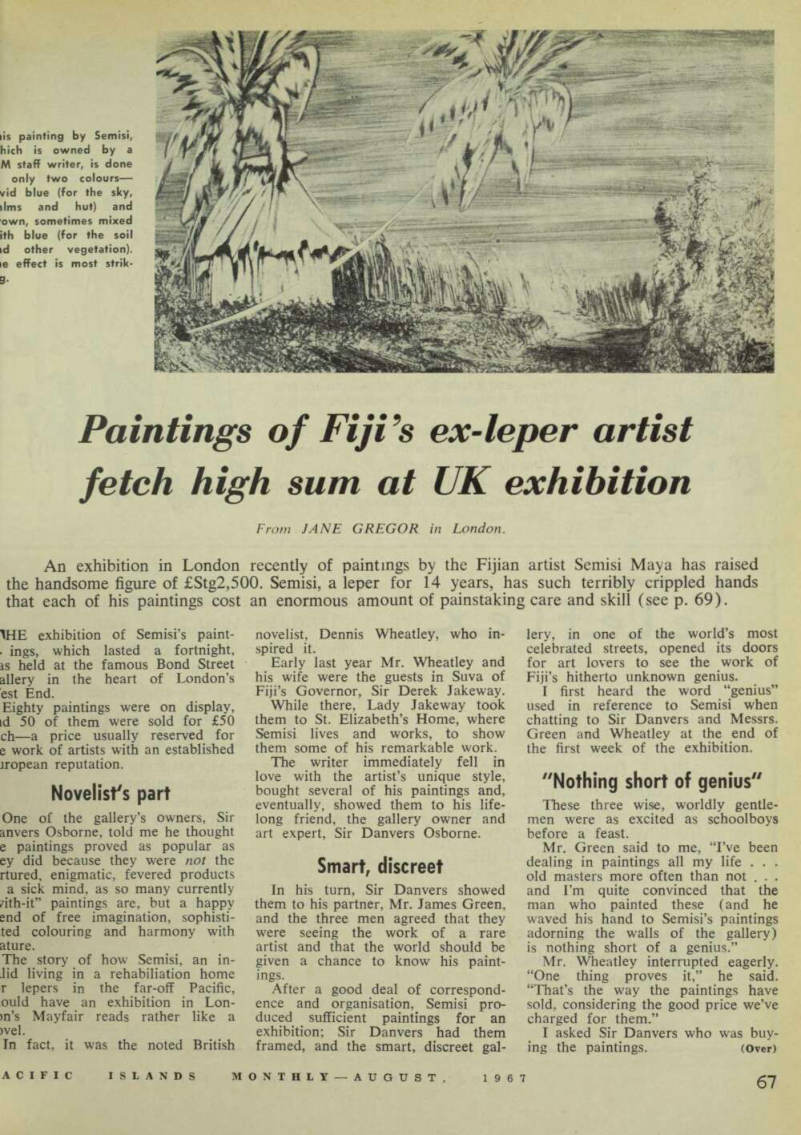 71
71 72
72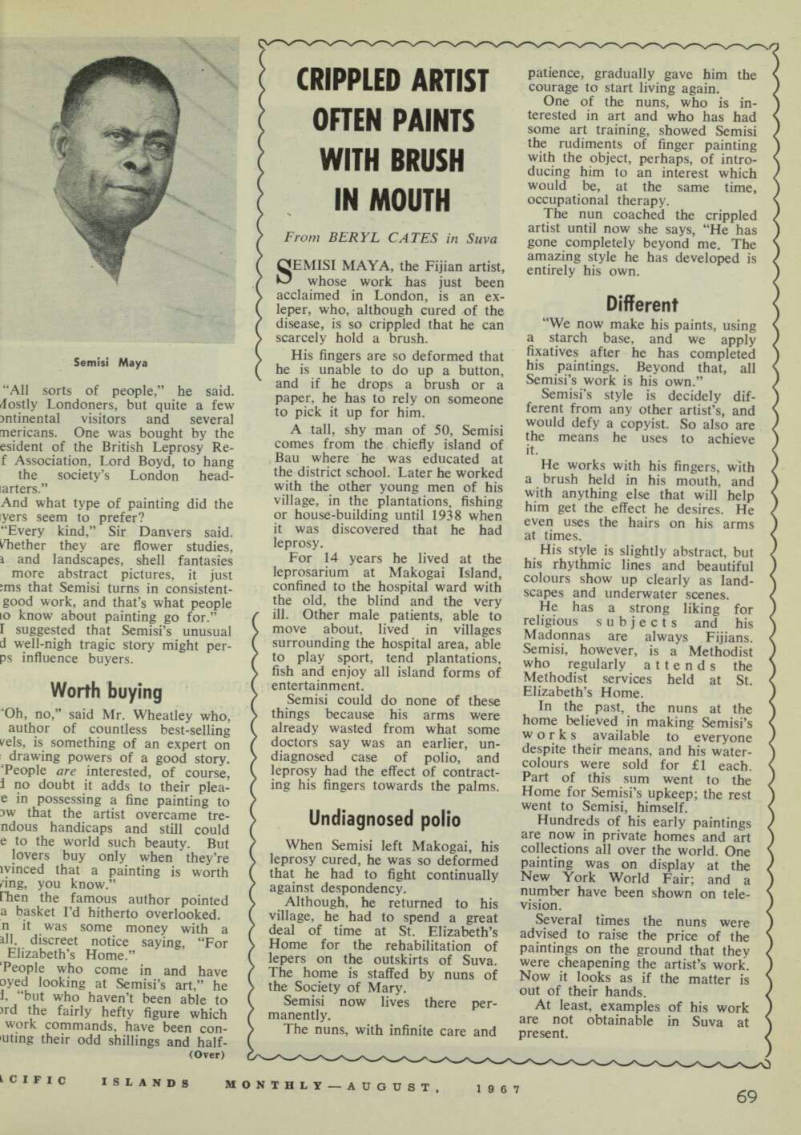 73
73 74
74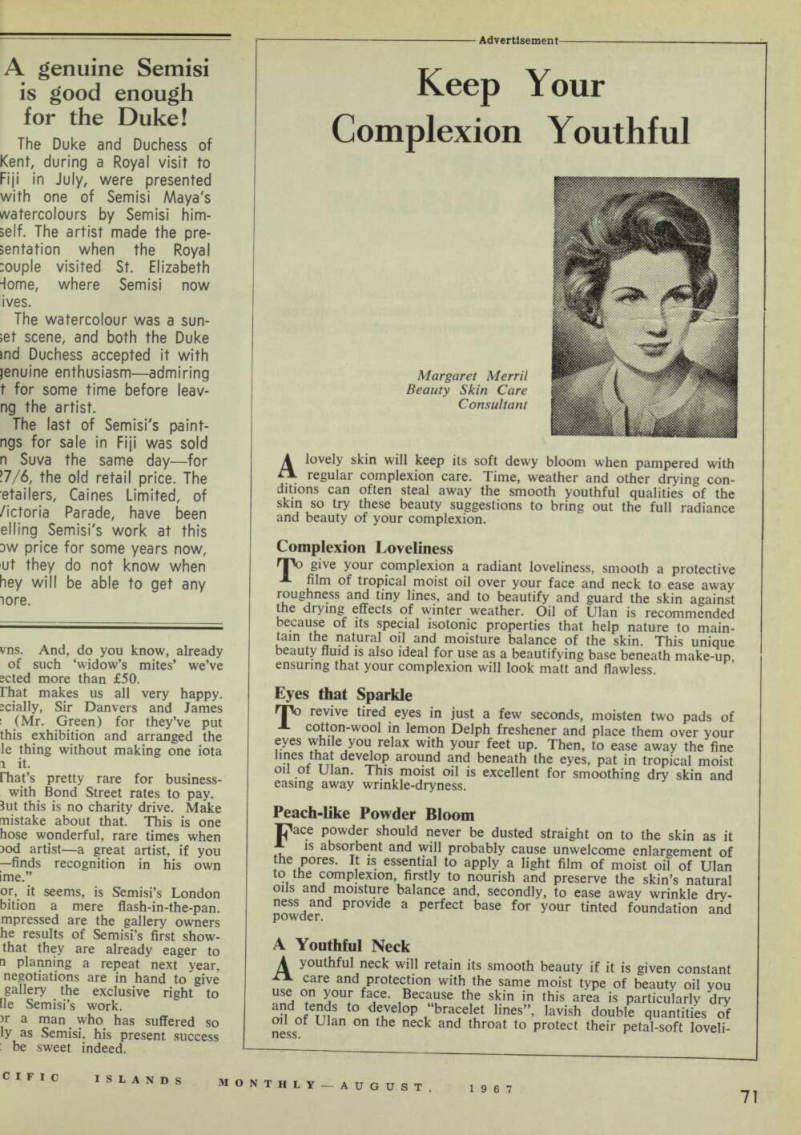 75
75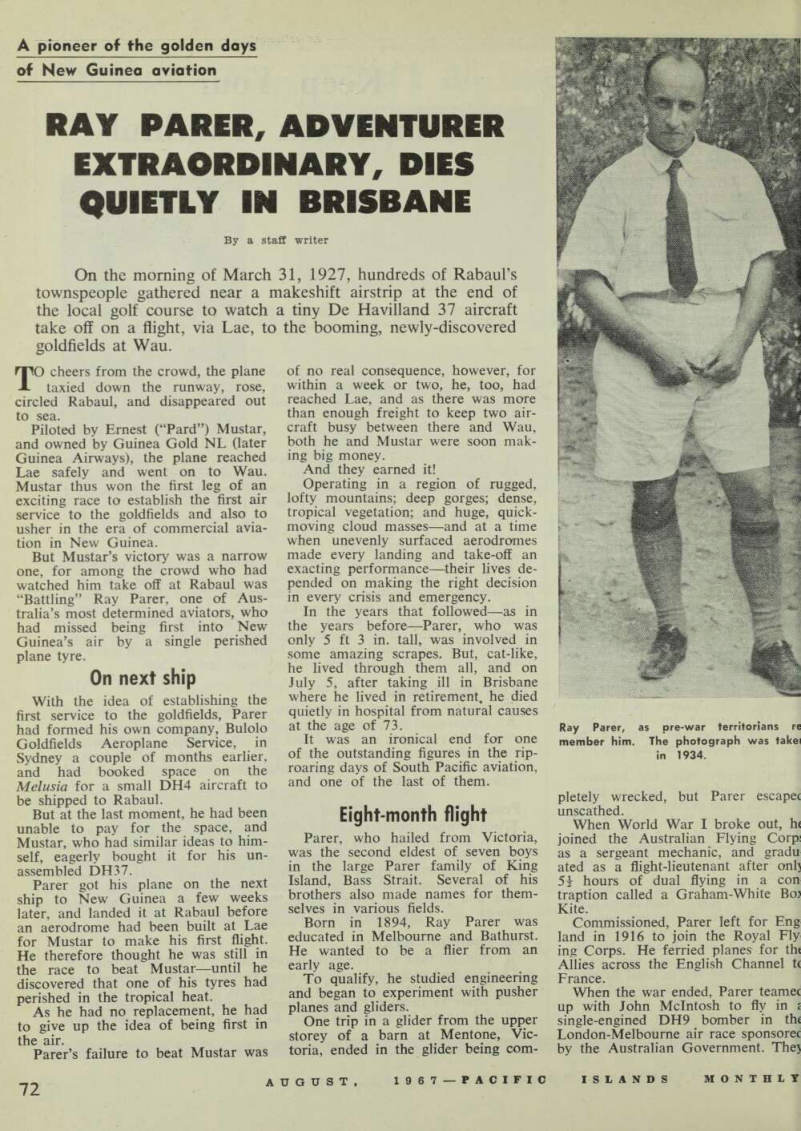 76
76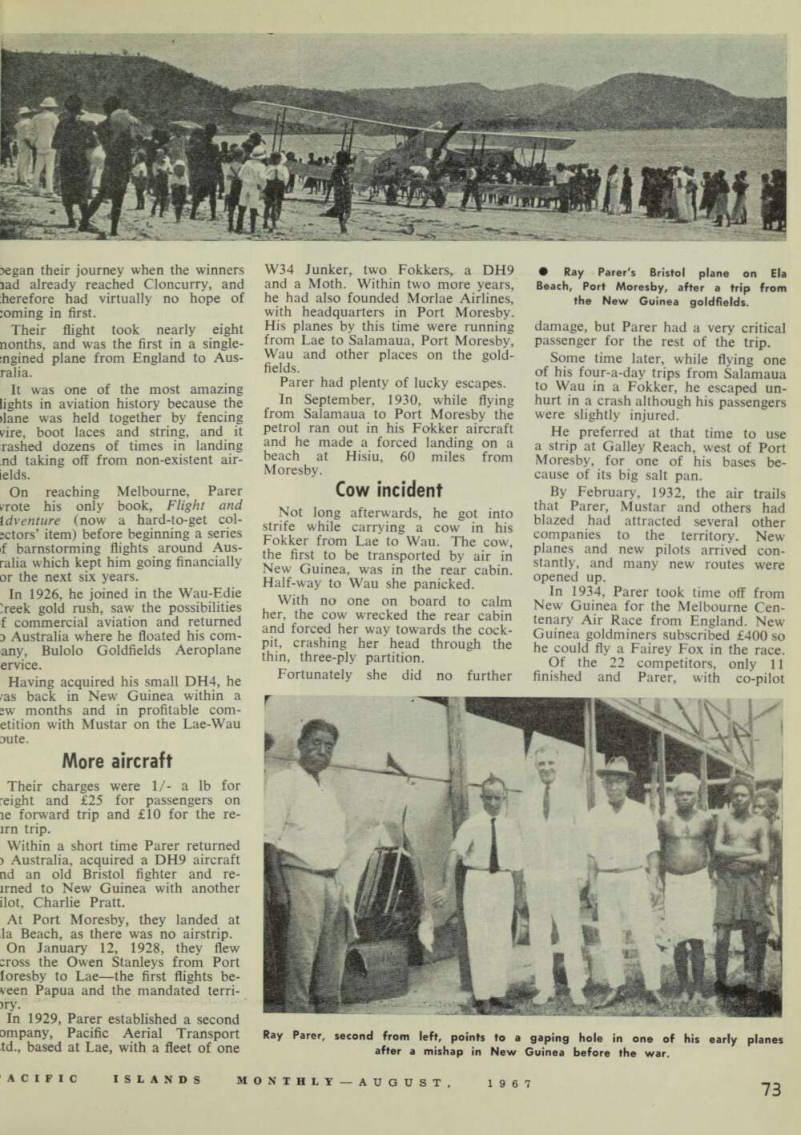 77
77 78
78 79
79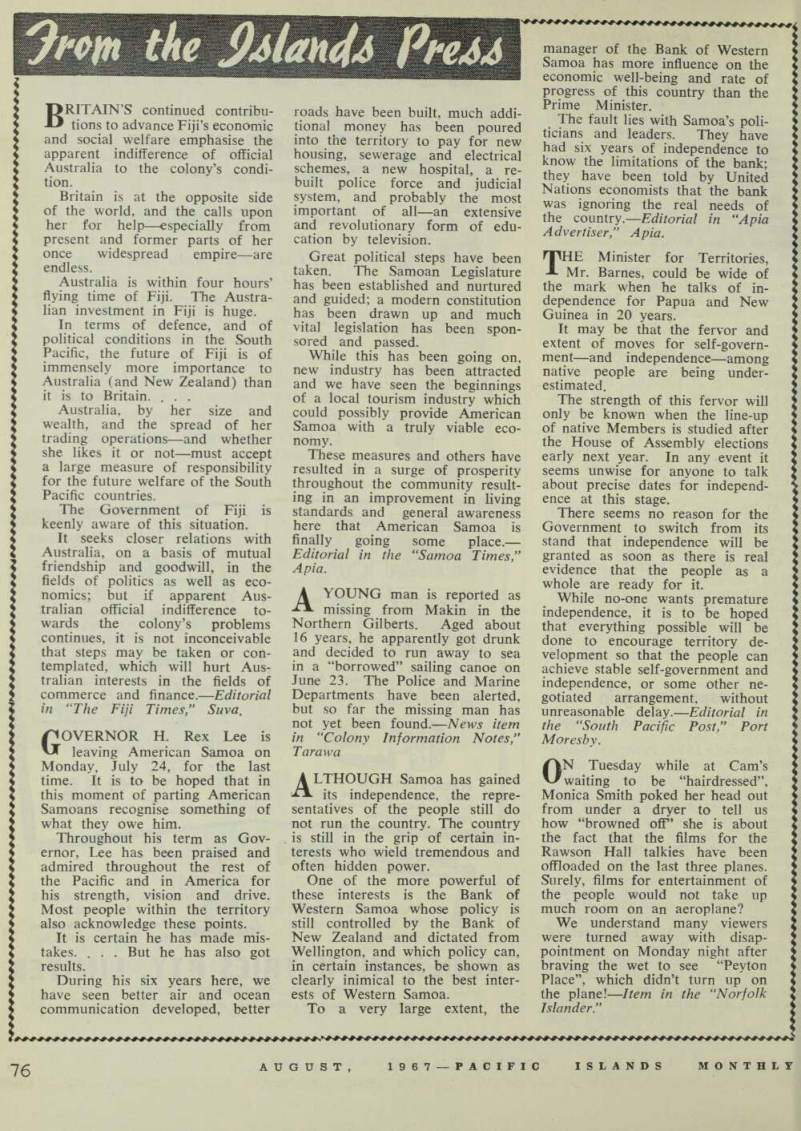 80
80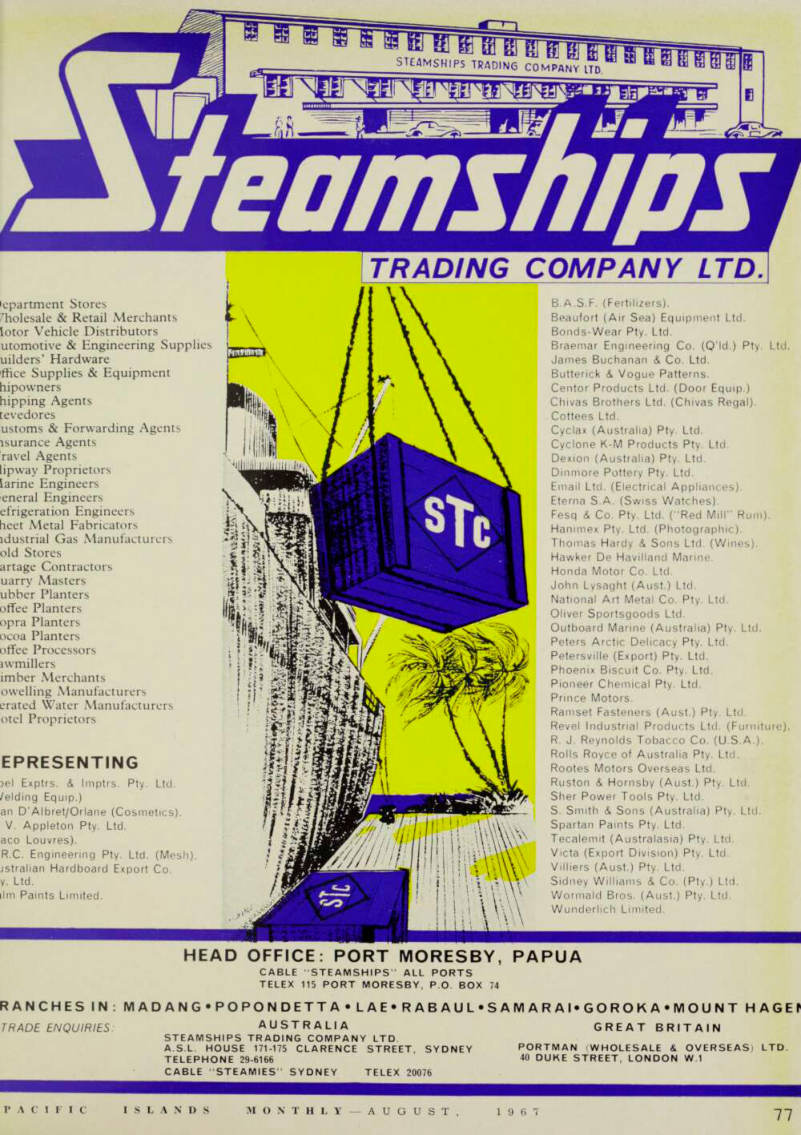 81
81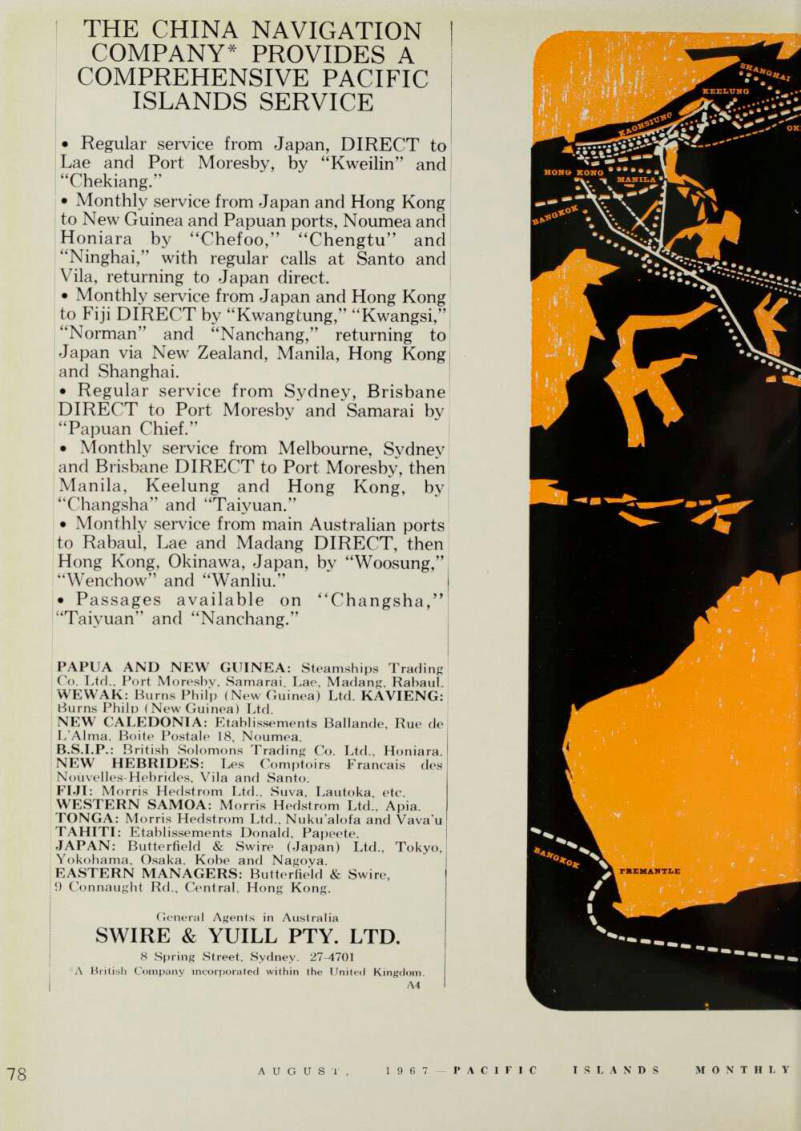 82
82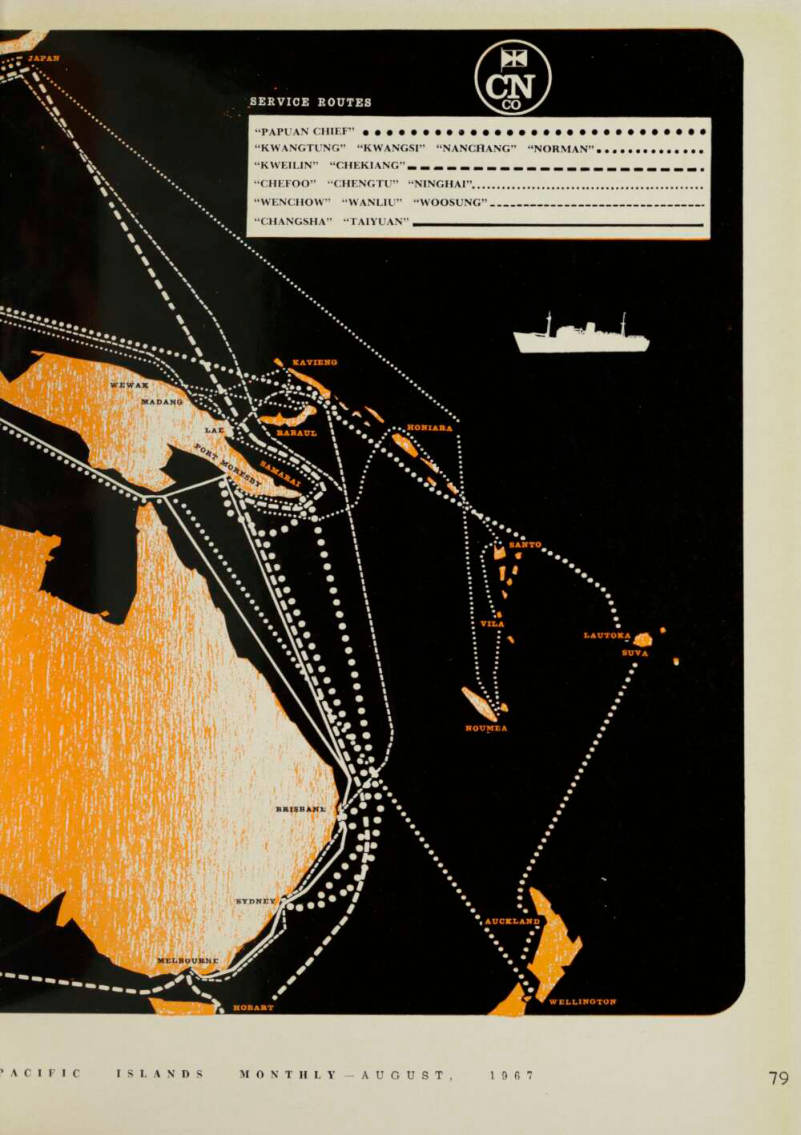 83
83 84
84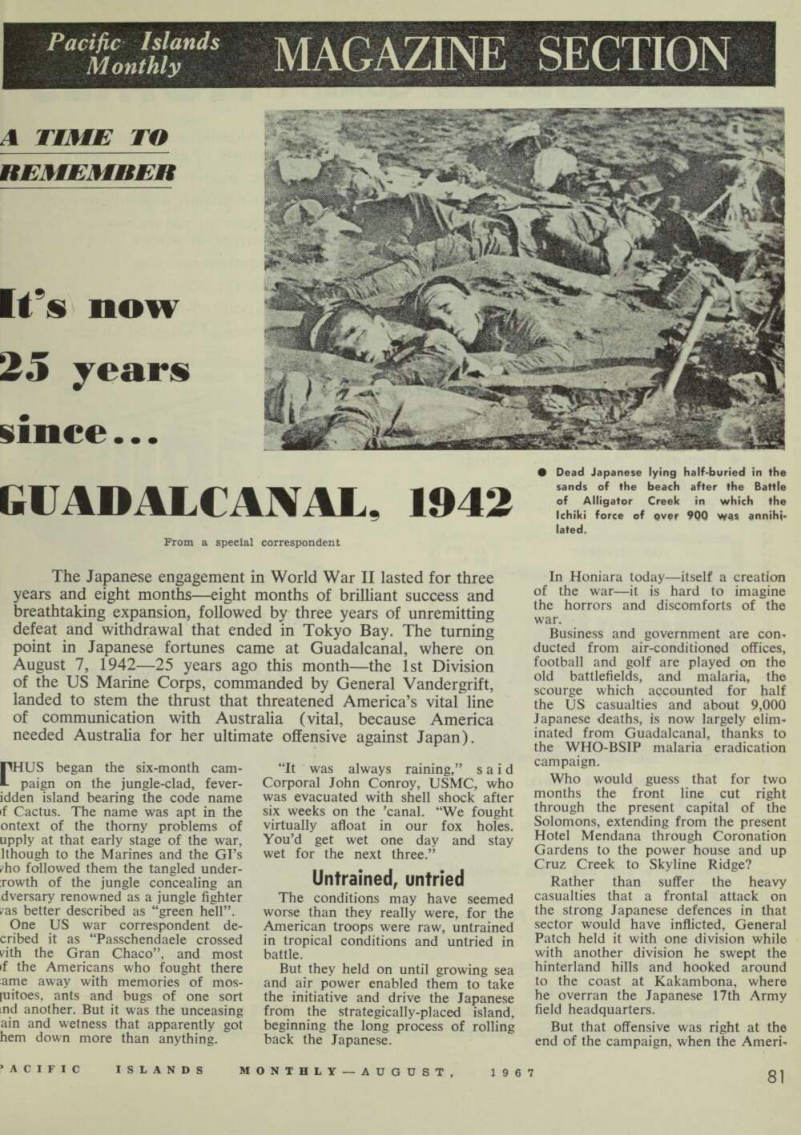 85
85 86
86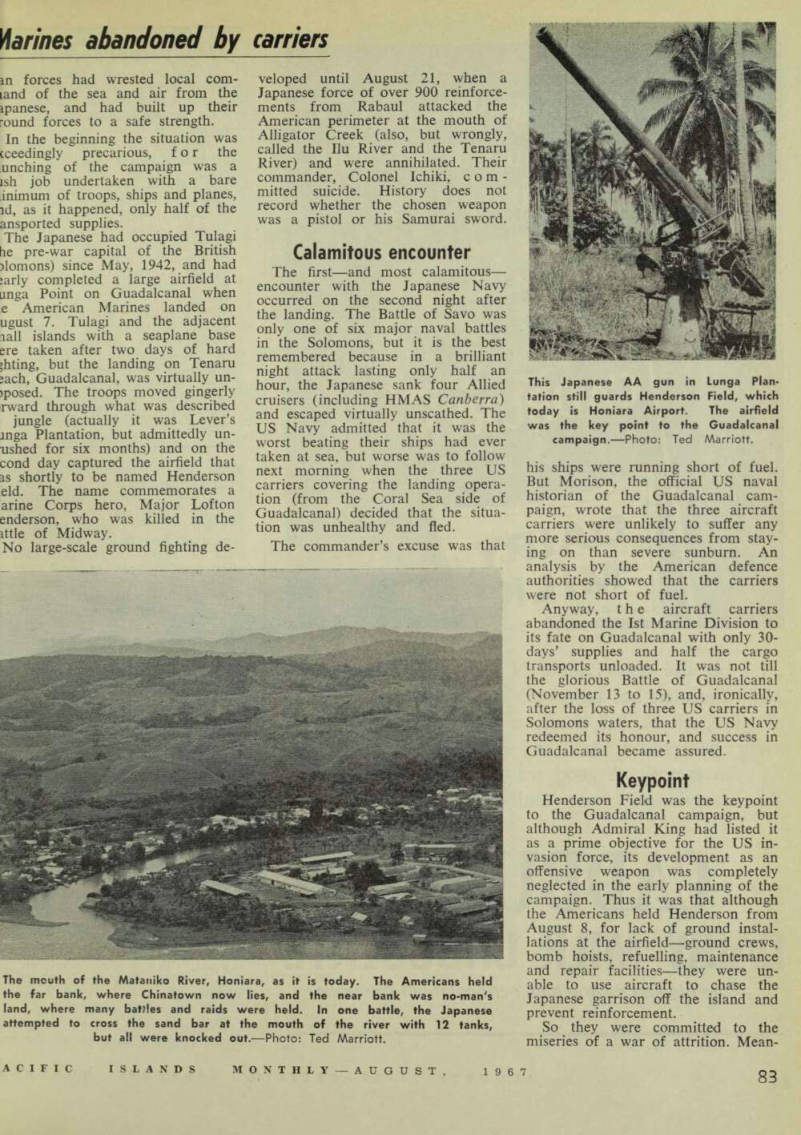 87
87 88
88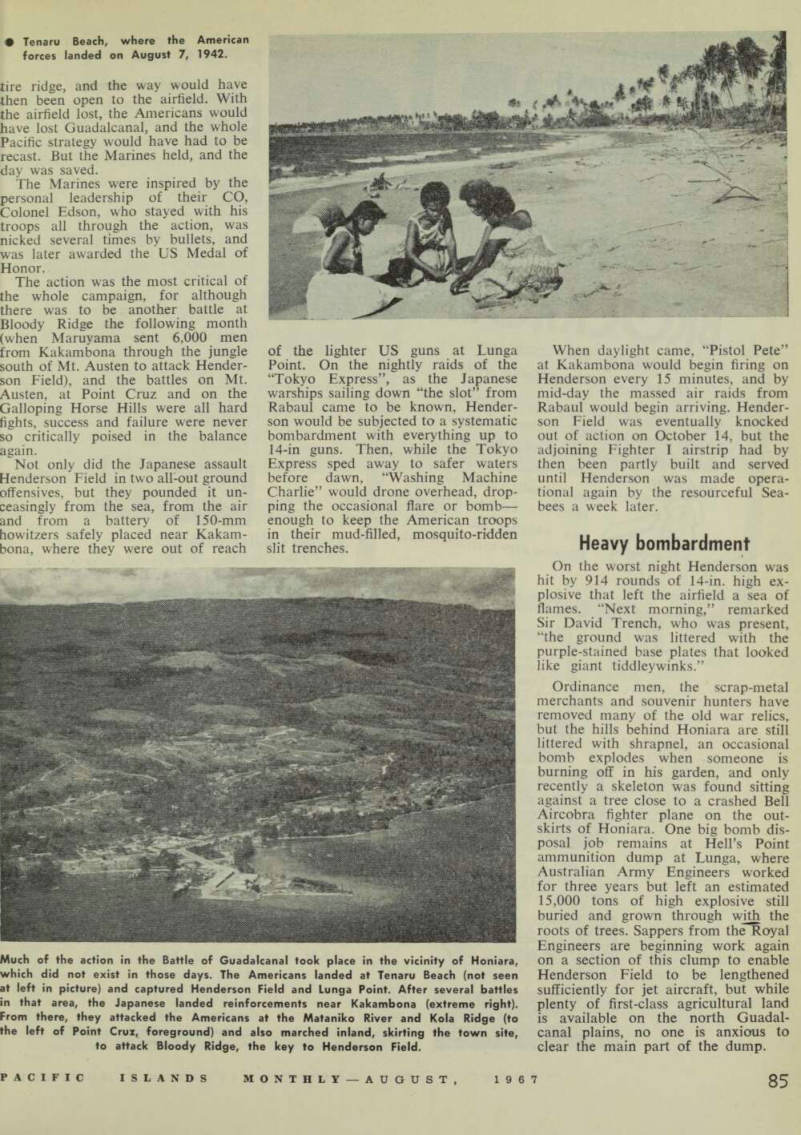 89
89 90
90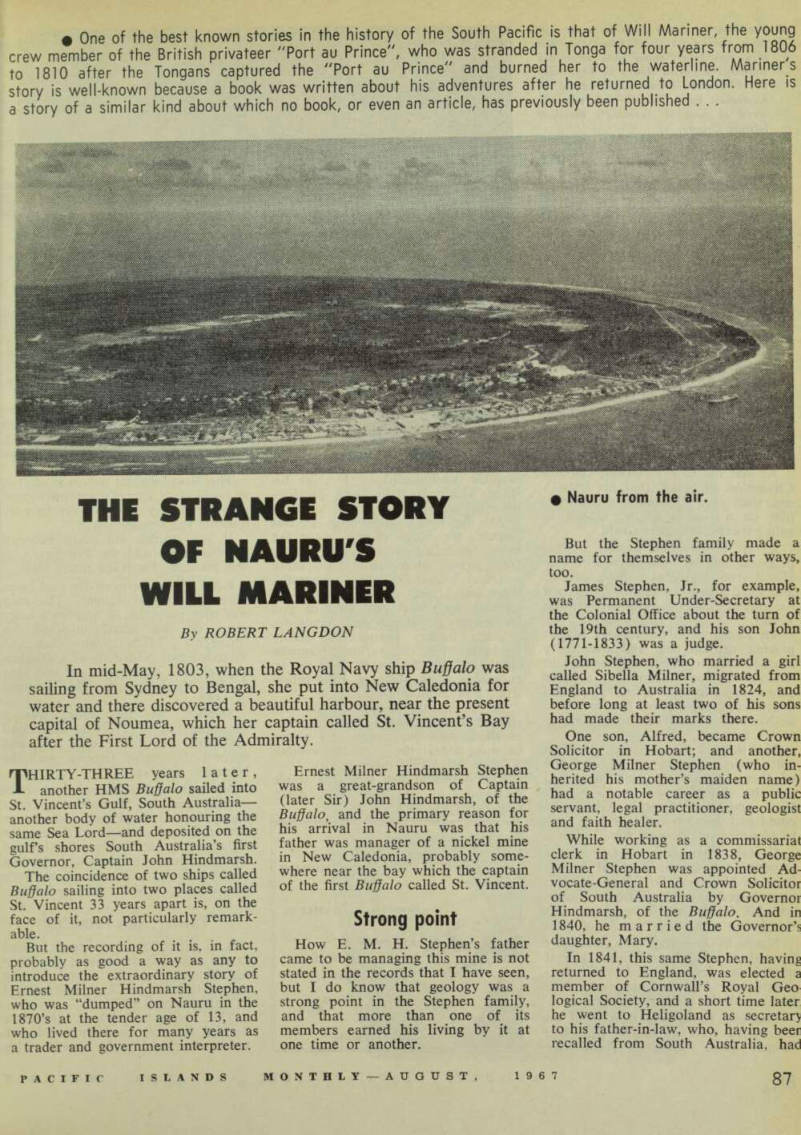 91
91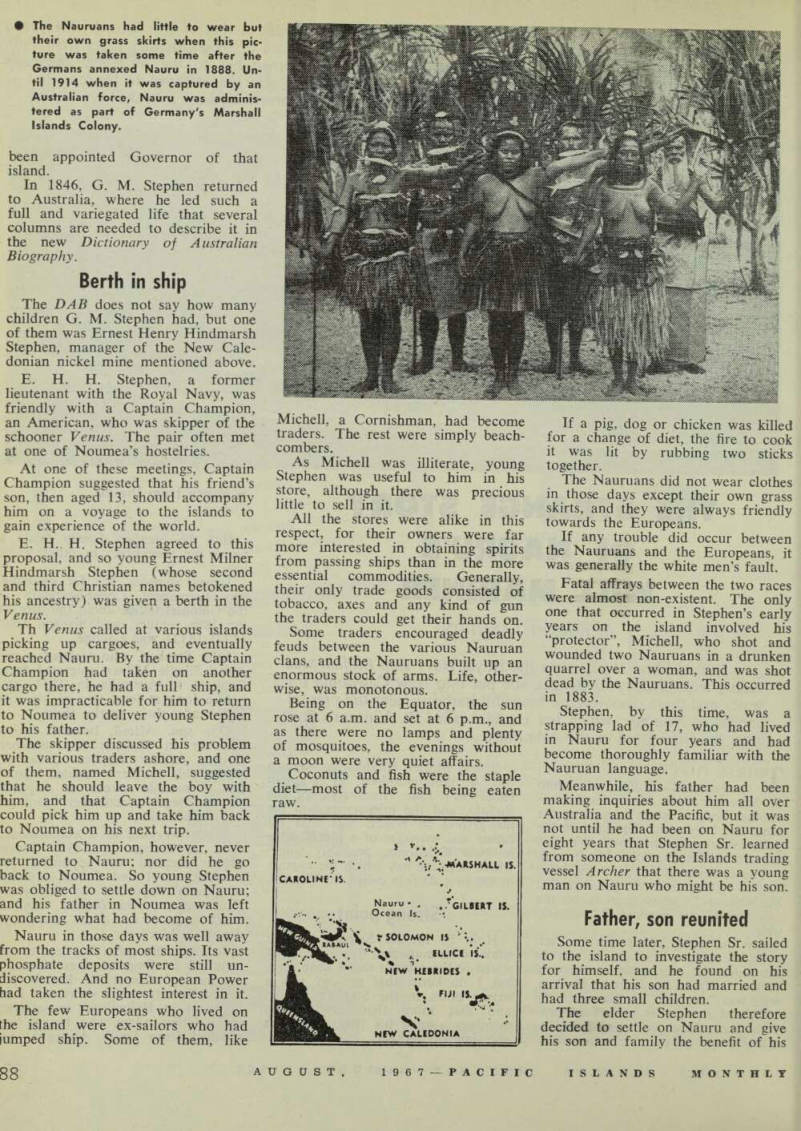 92
92 93
93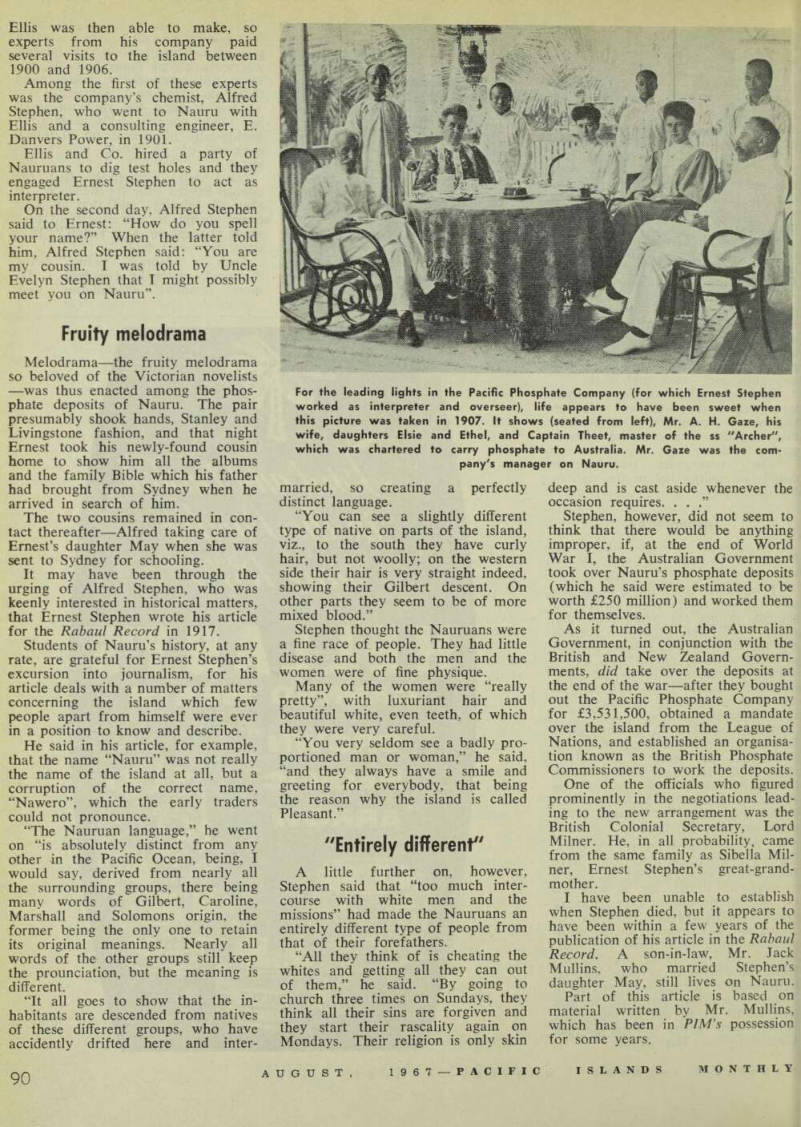 94
94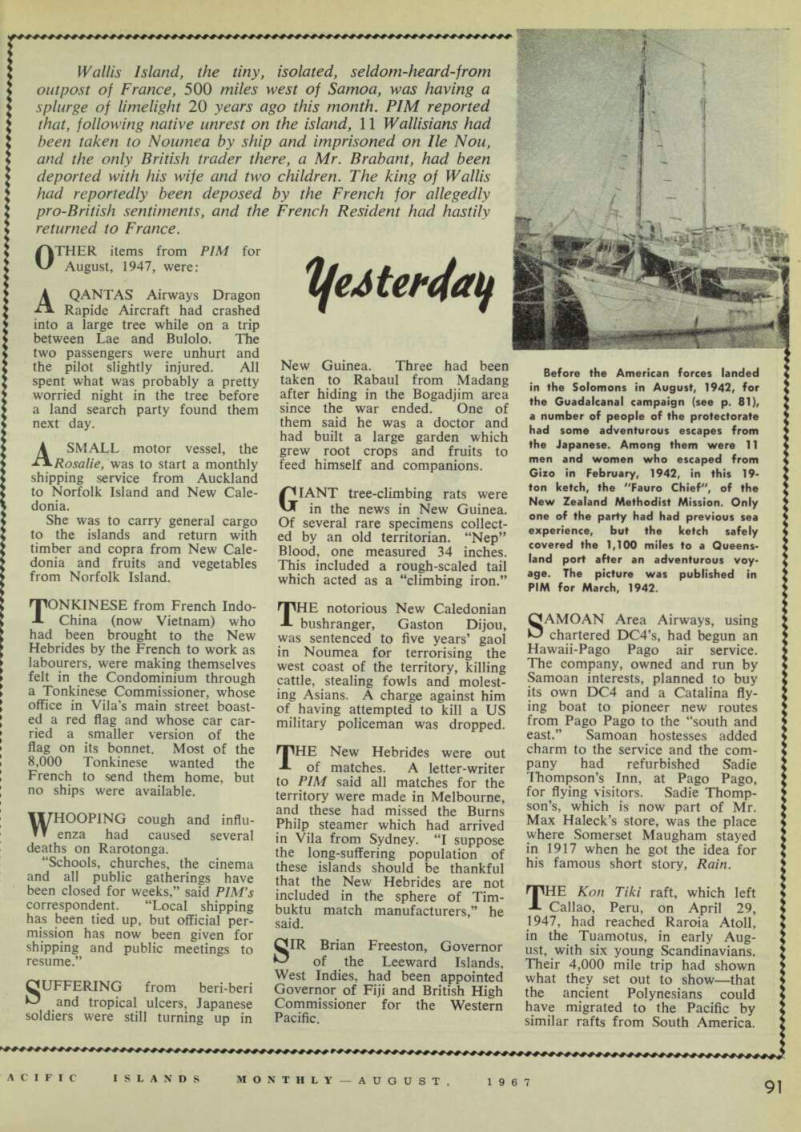 95
95 96
96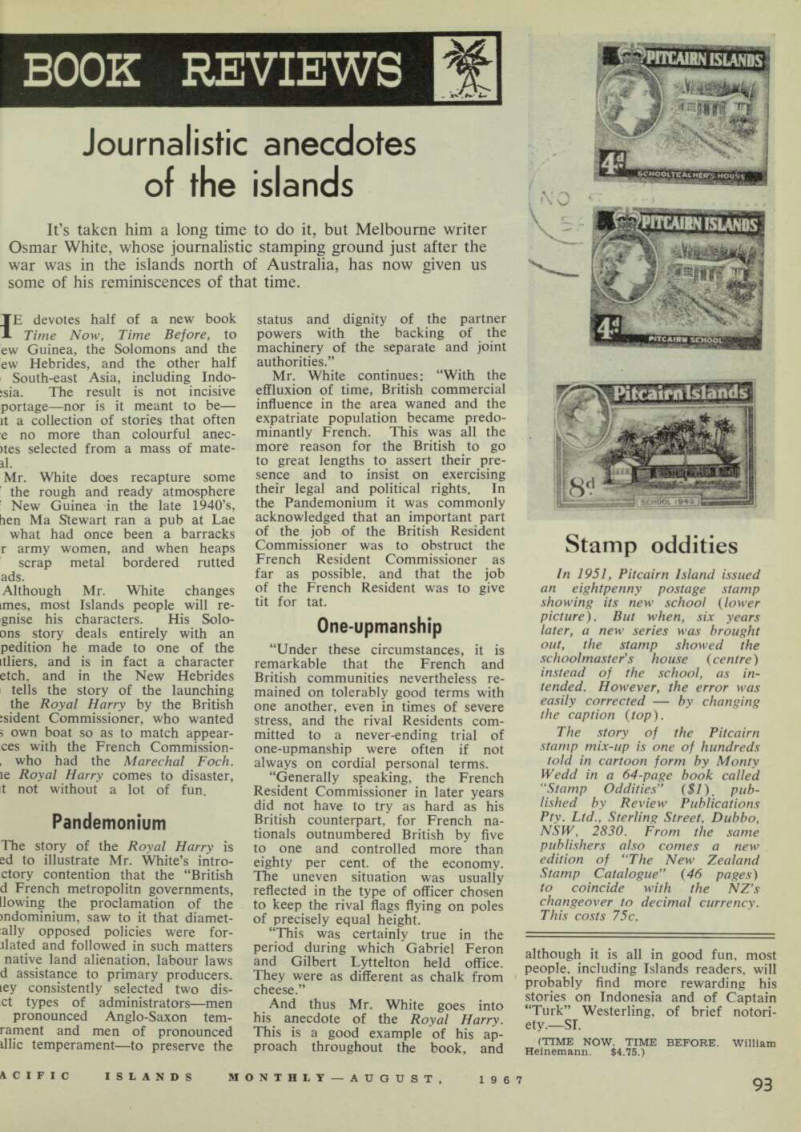 97
97 98
98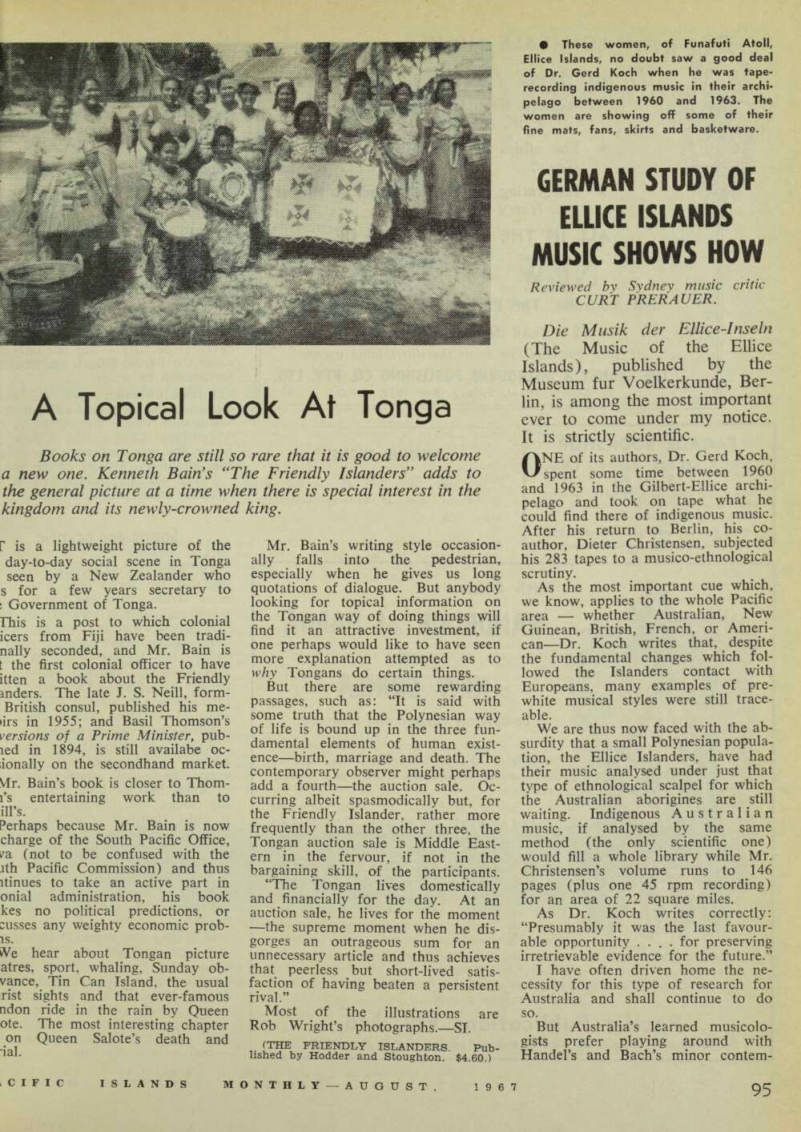 99
99 100
100 101
101 102
102 103
103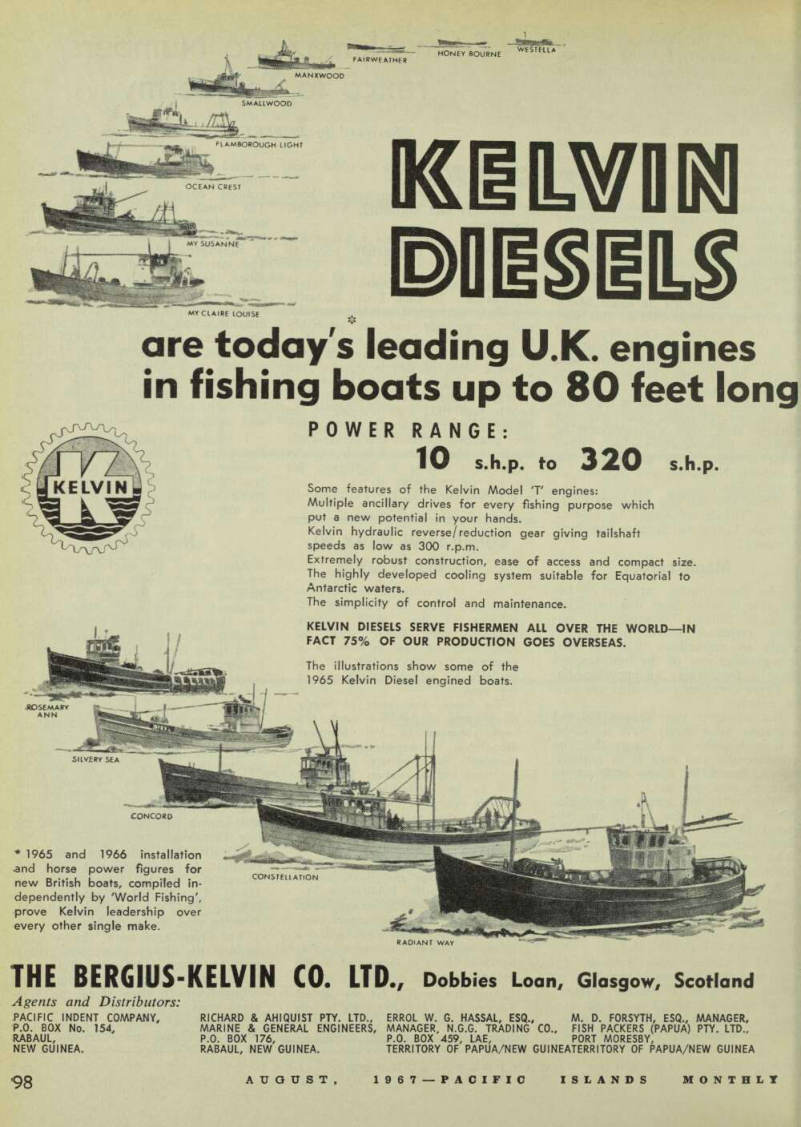 104
104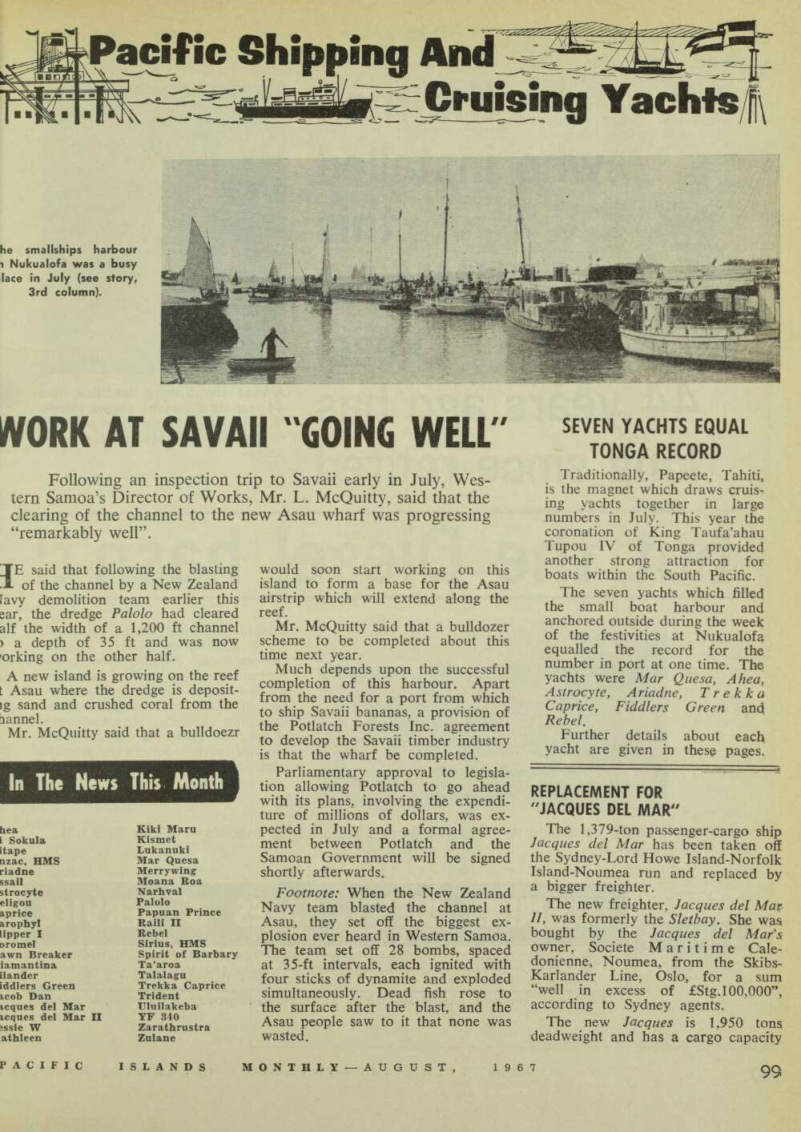 105
105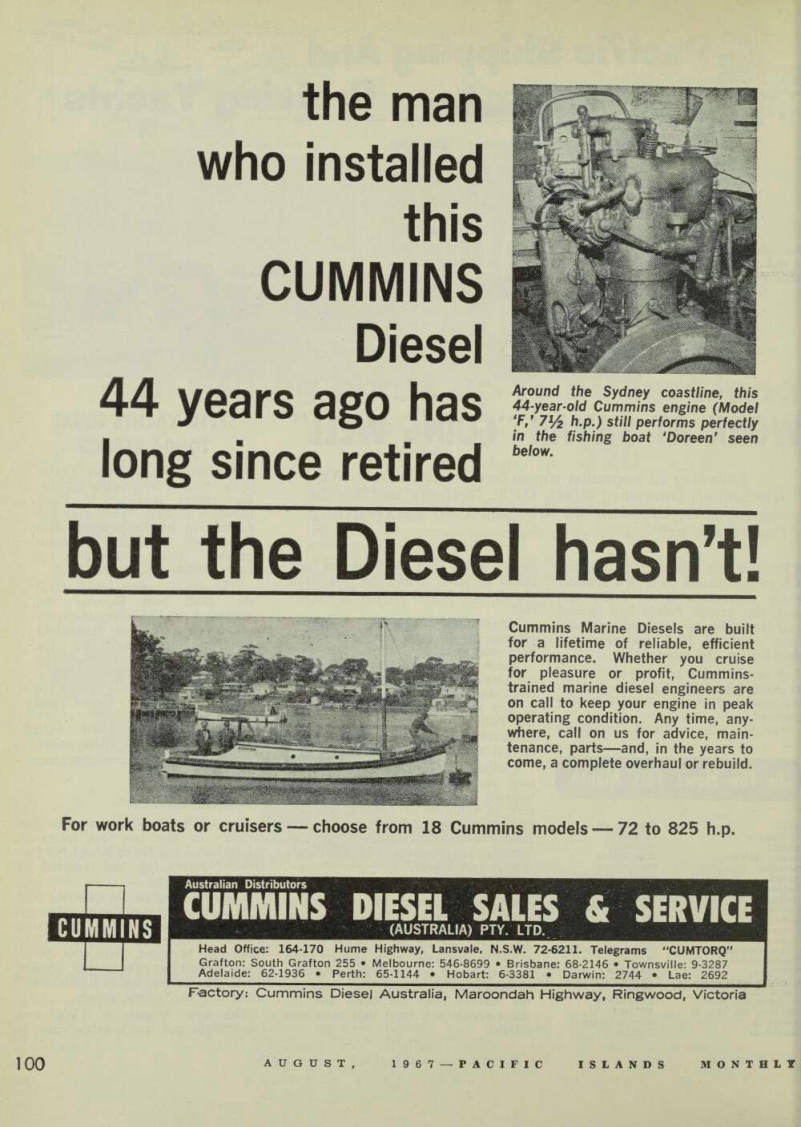 106
106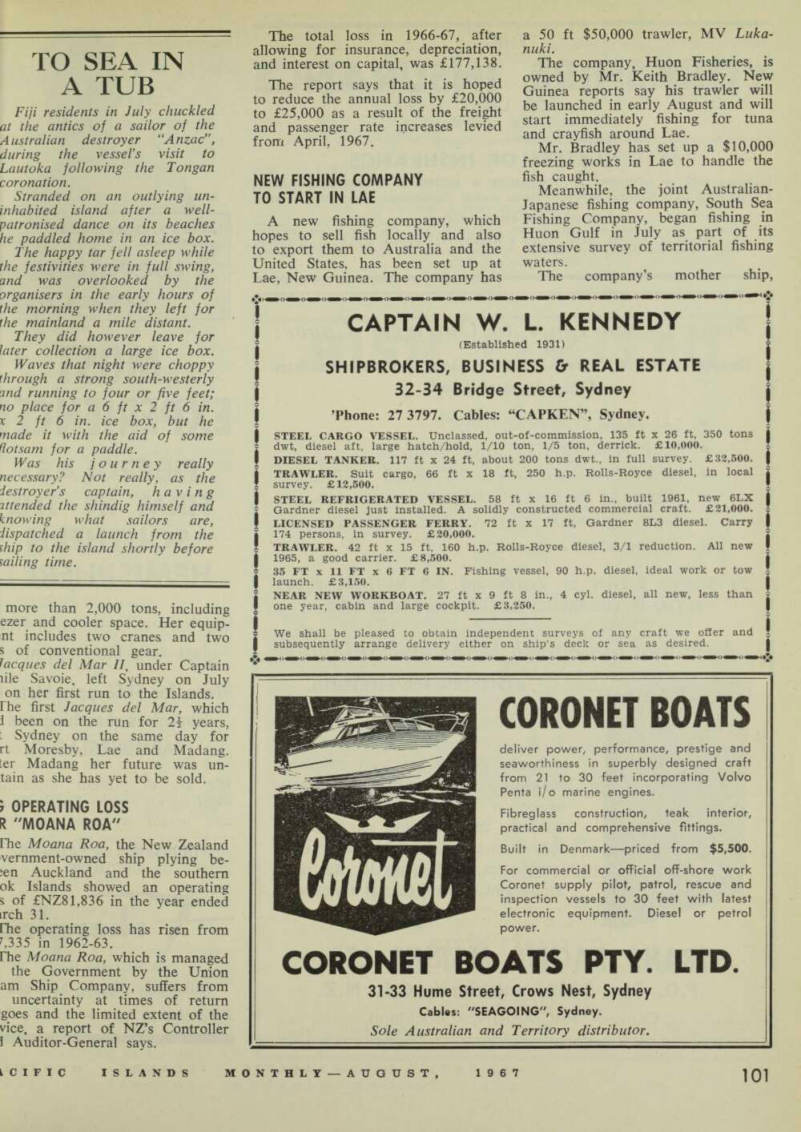 107
107 108
108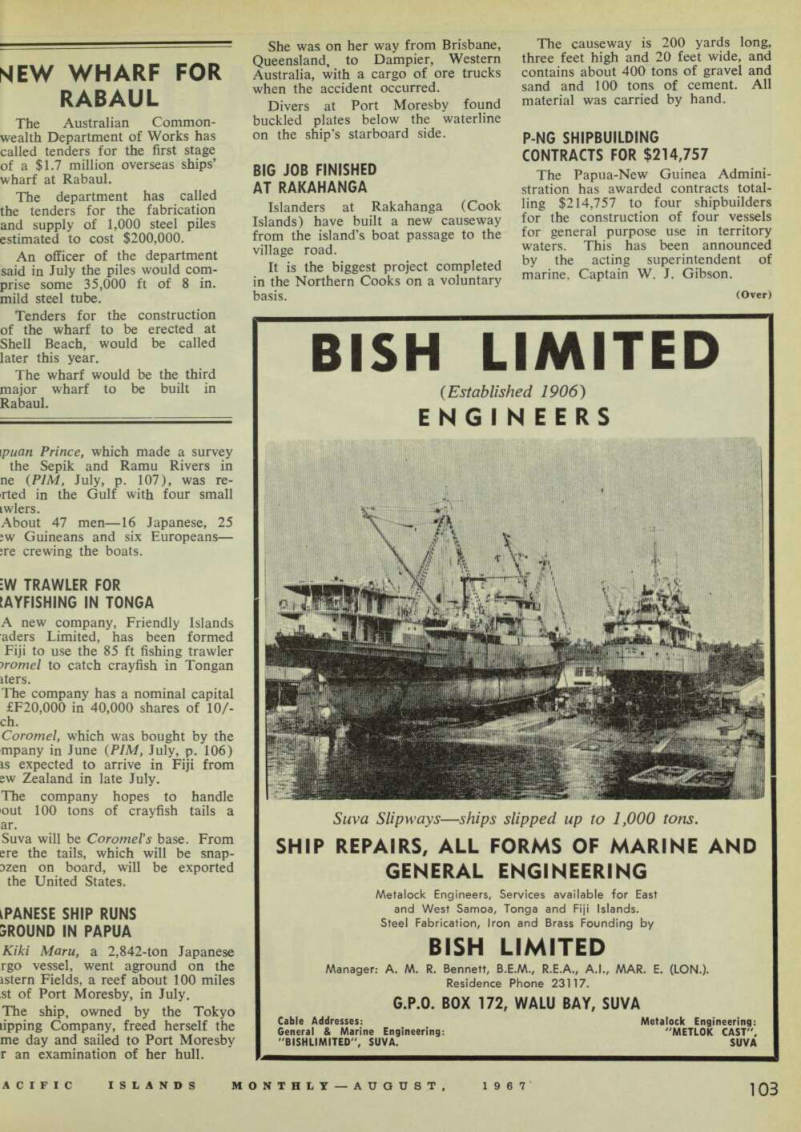 109
109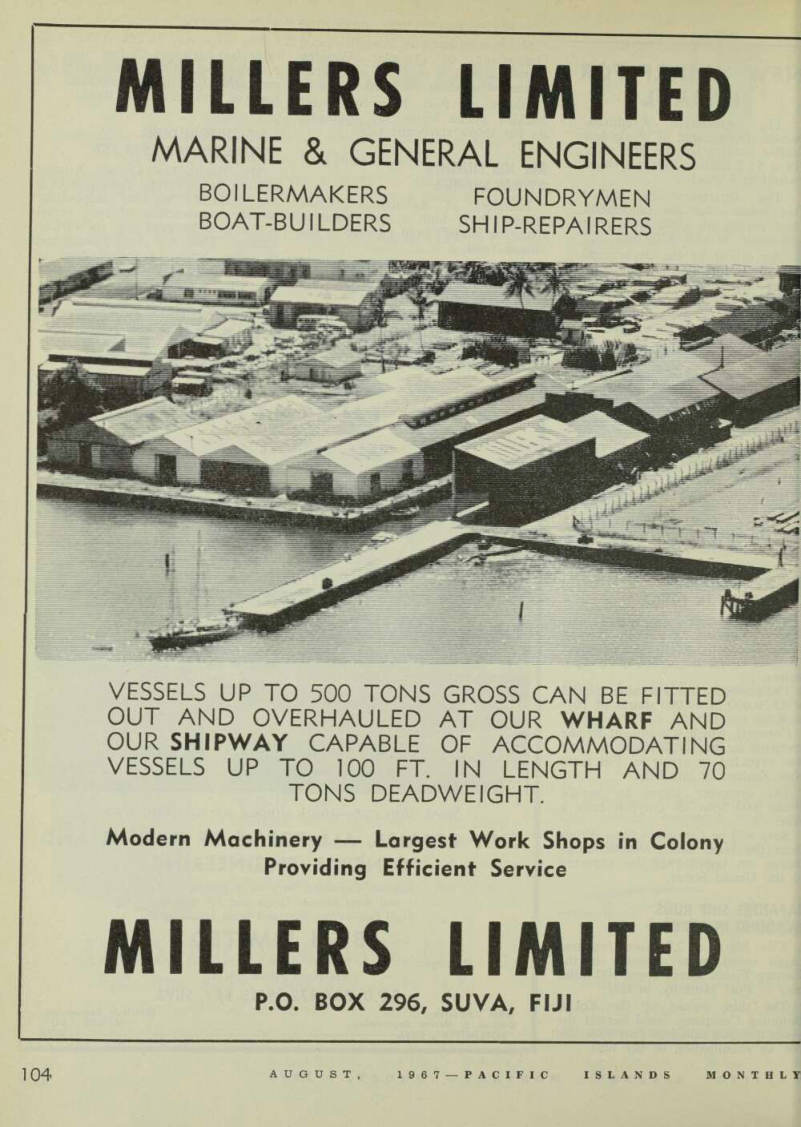 110
110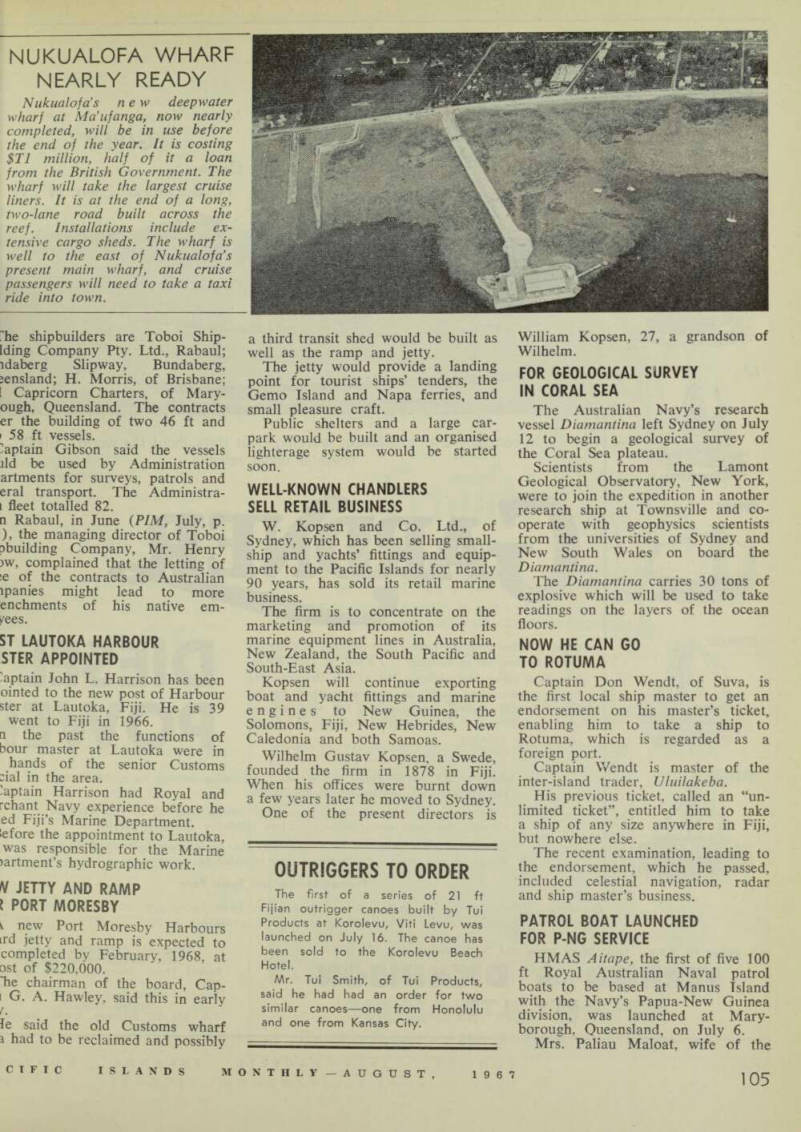 111
111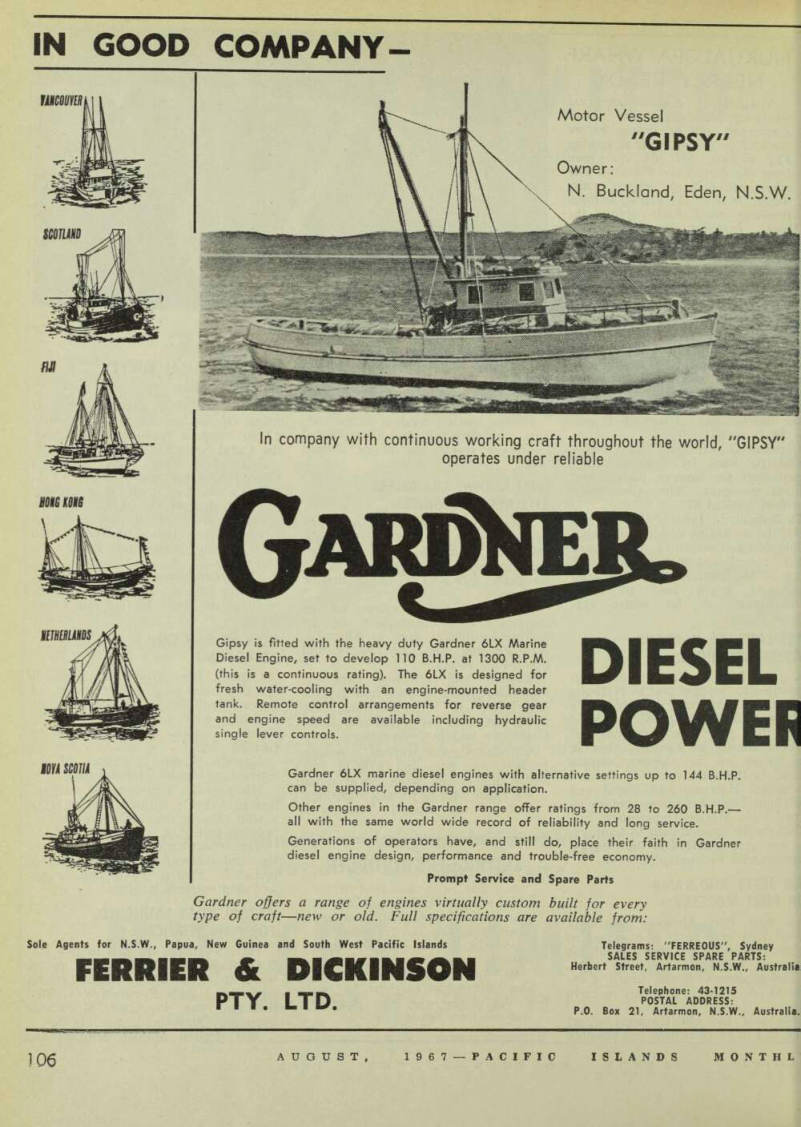 112
112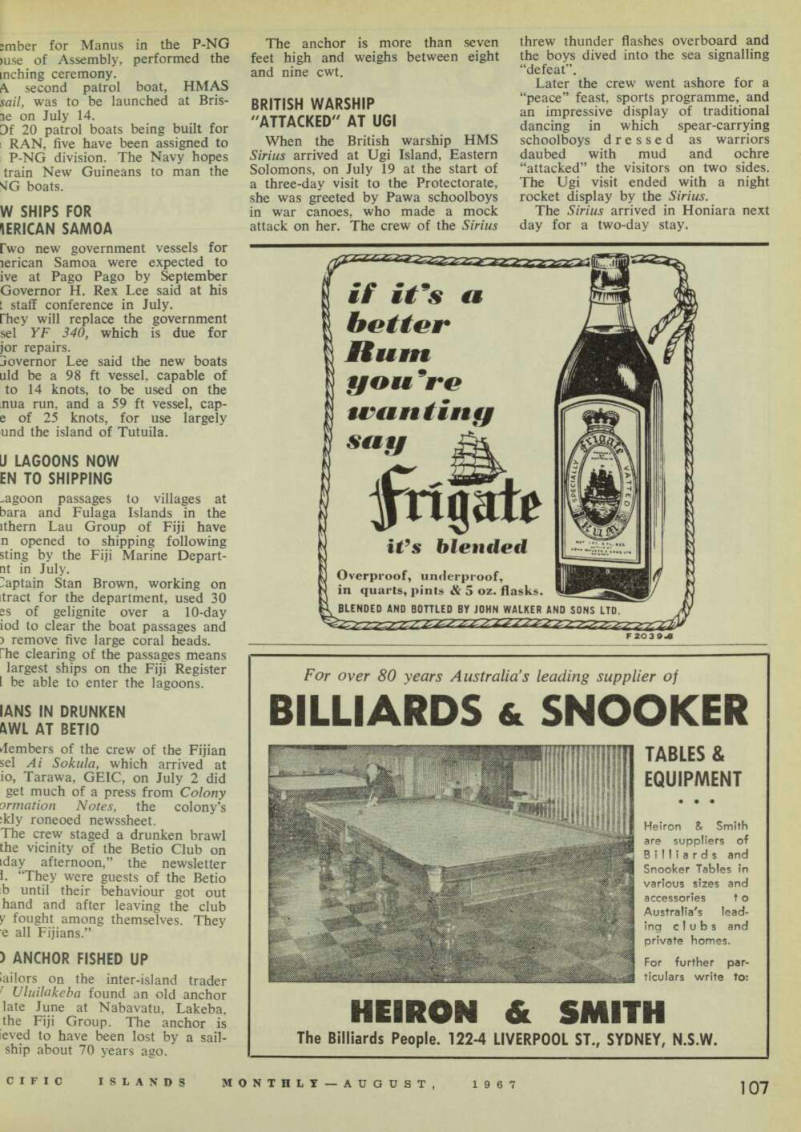 113
113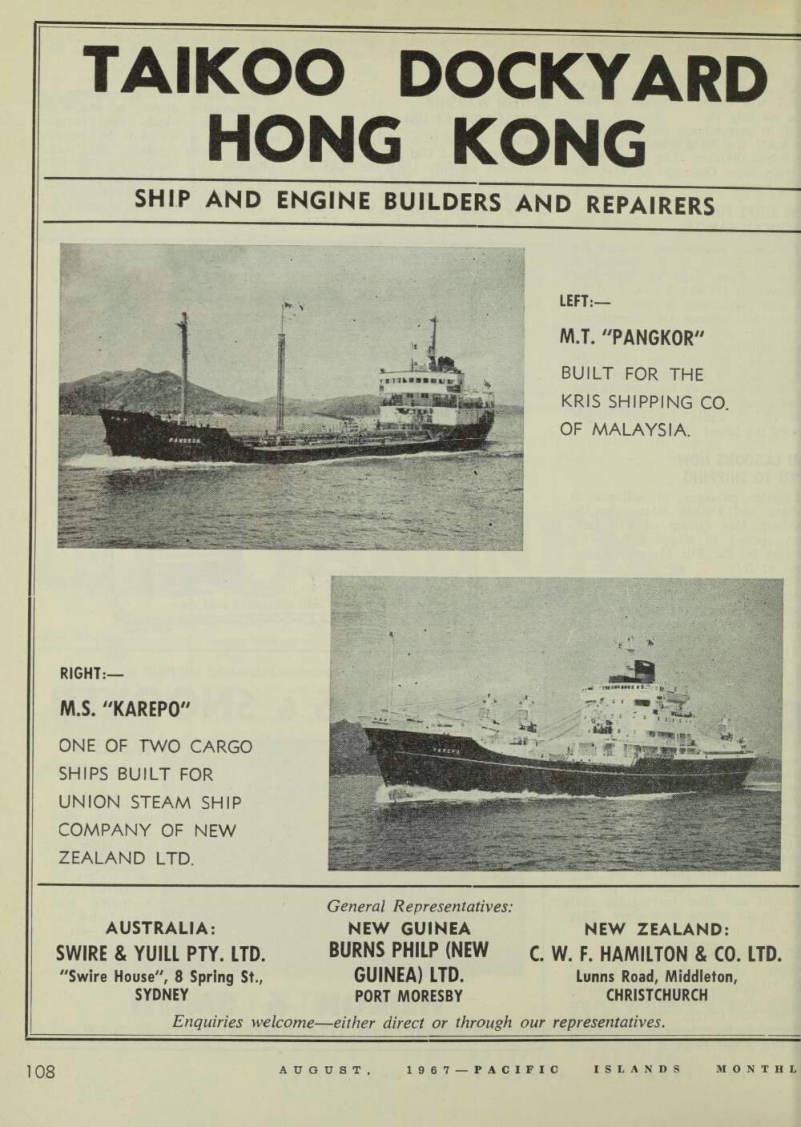 114
114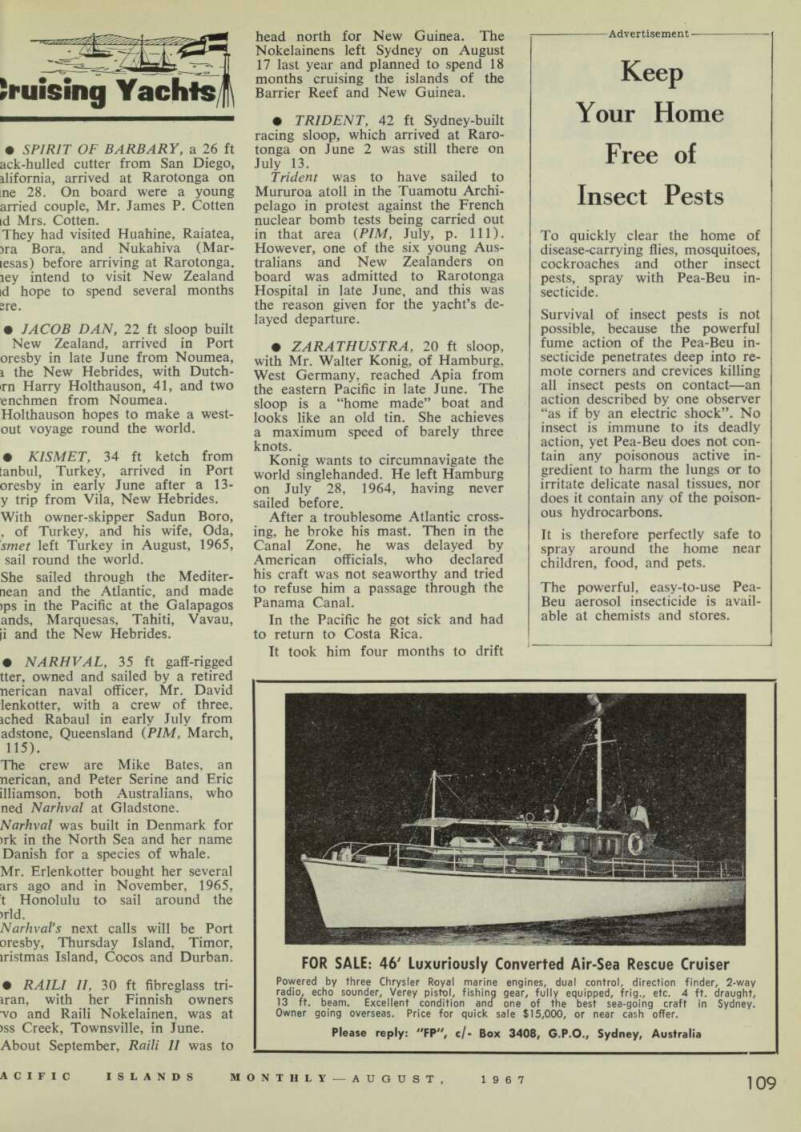 115
115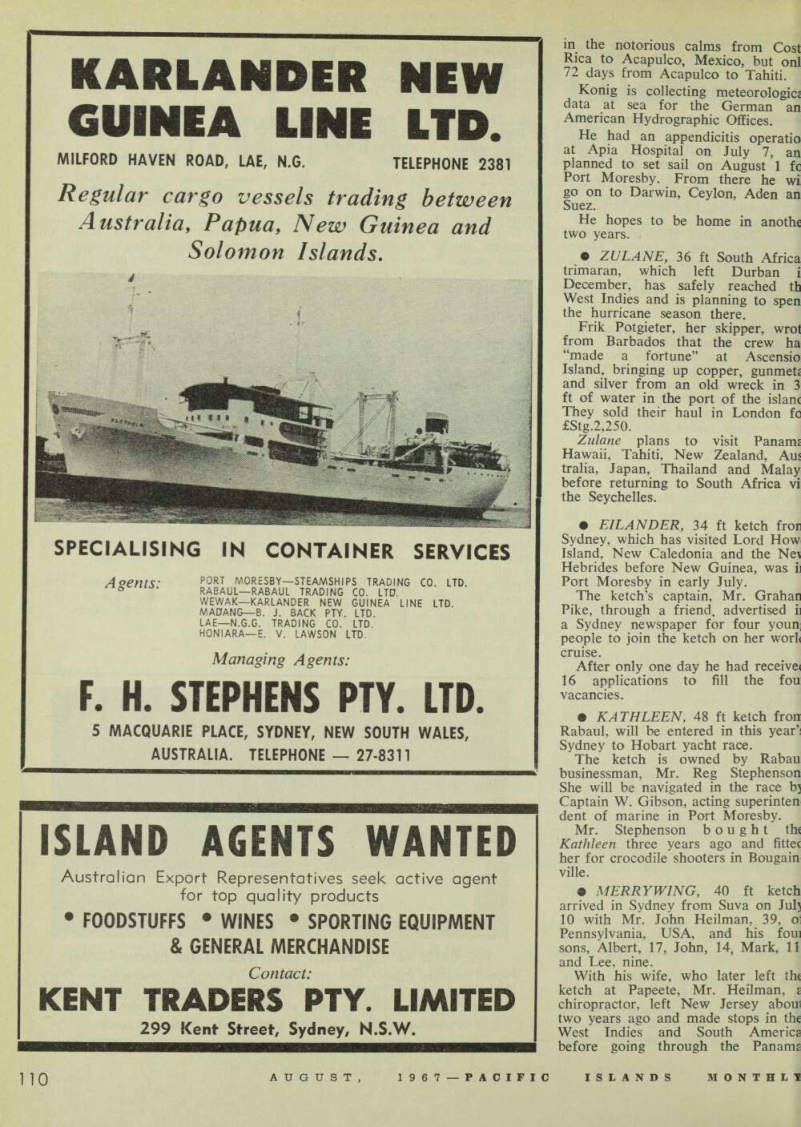 116
116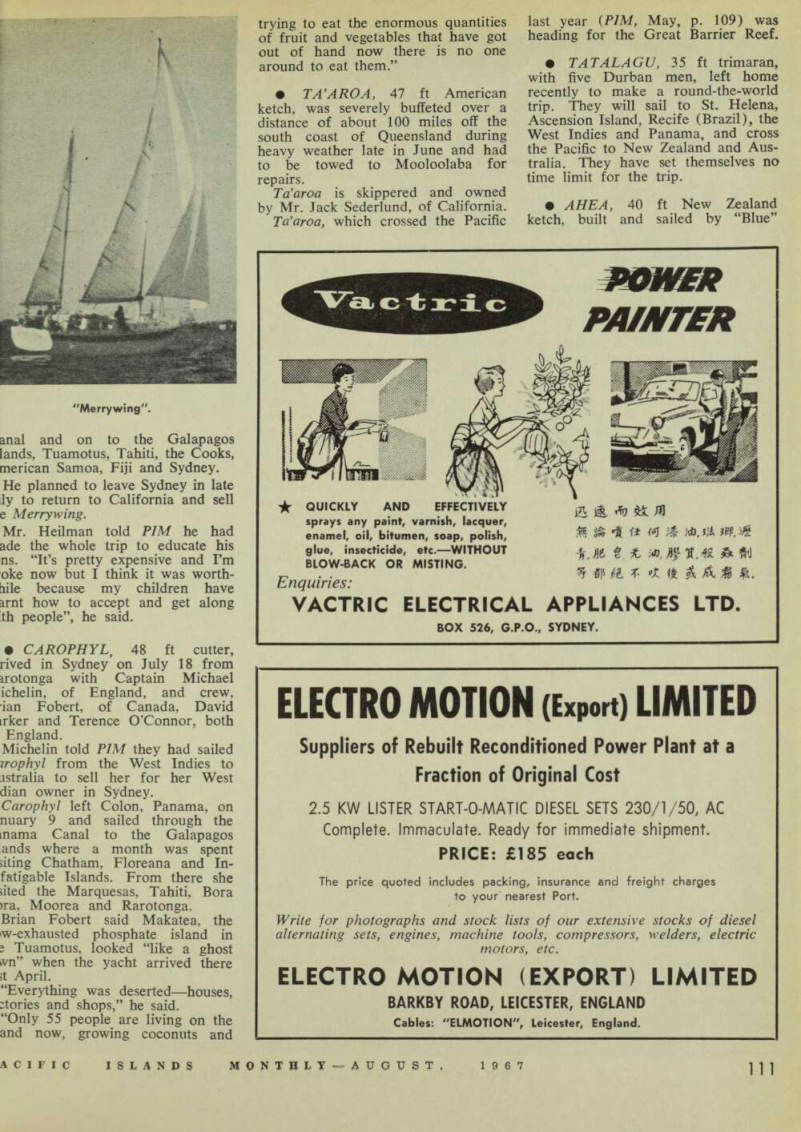 117
117 118
118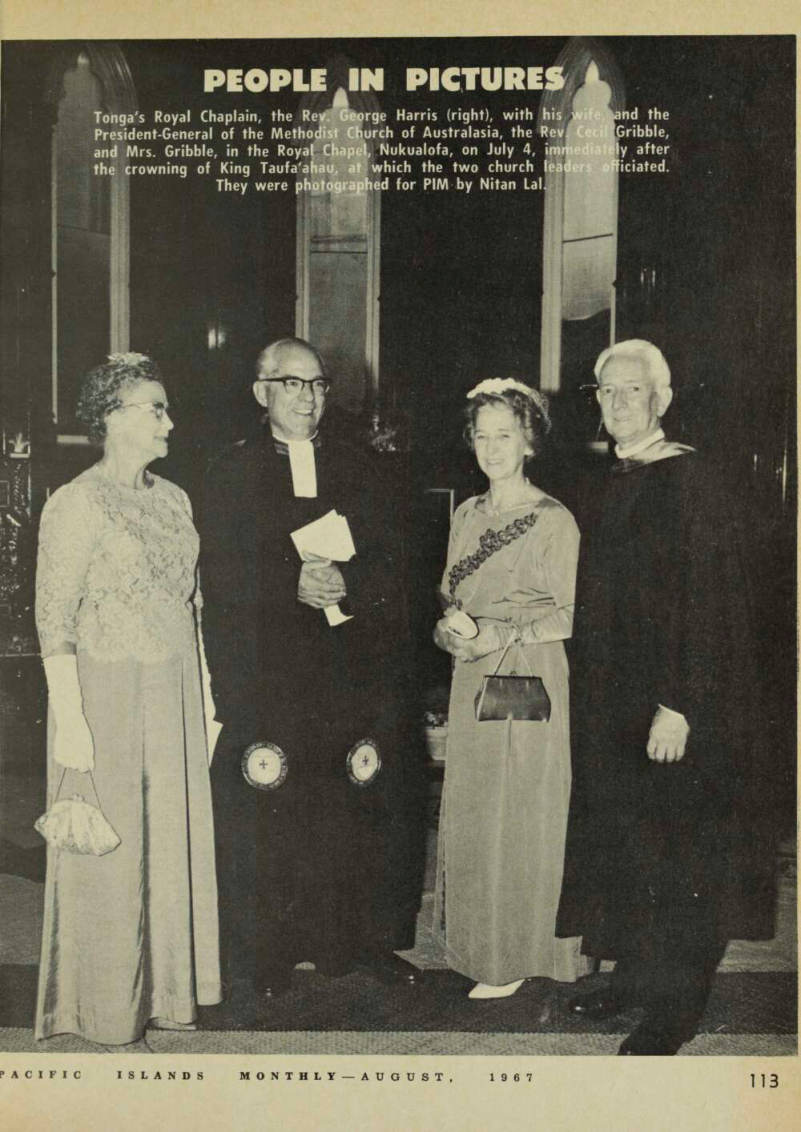 119
119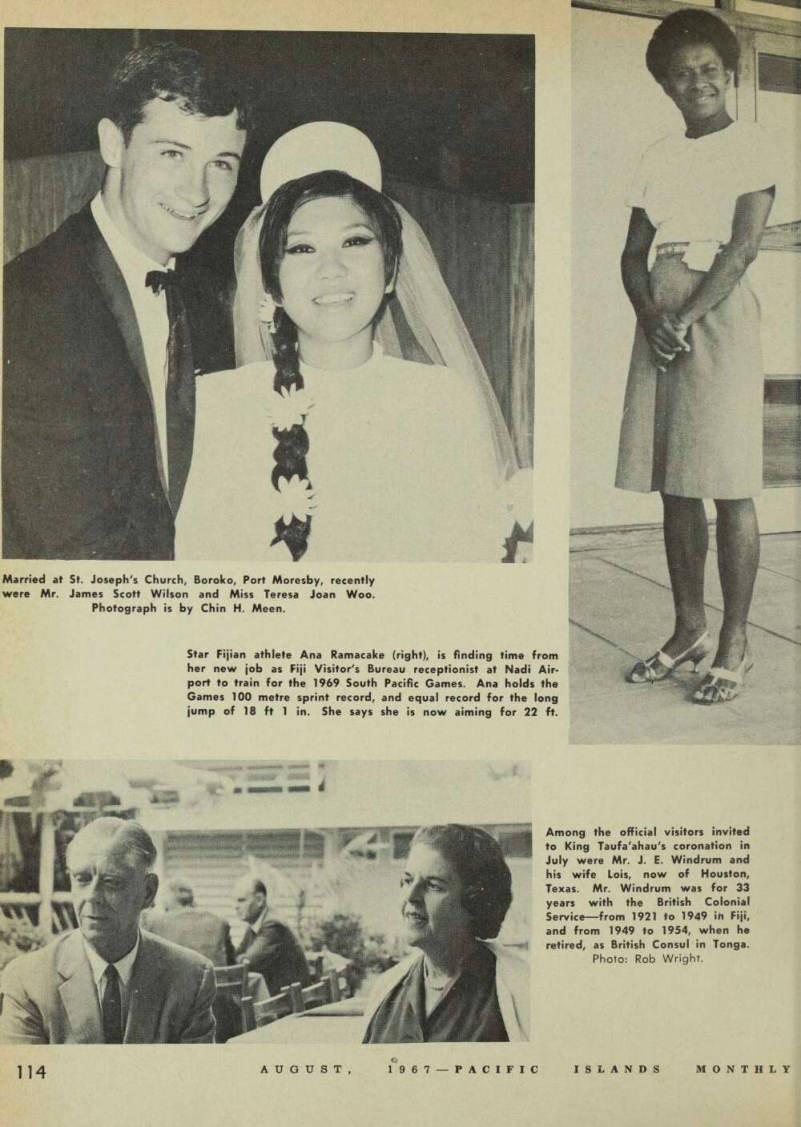 120
120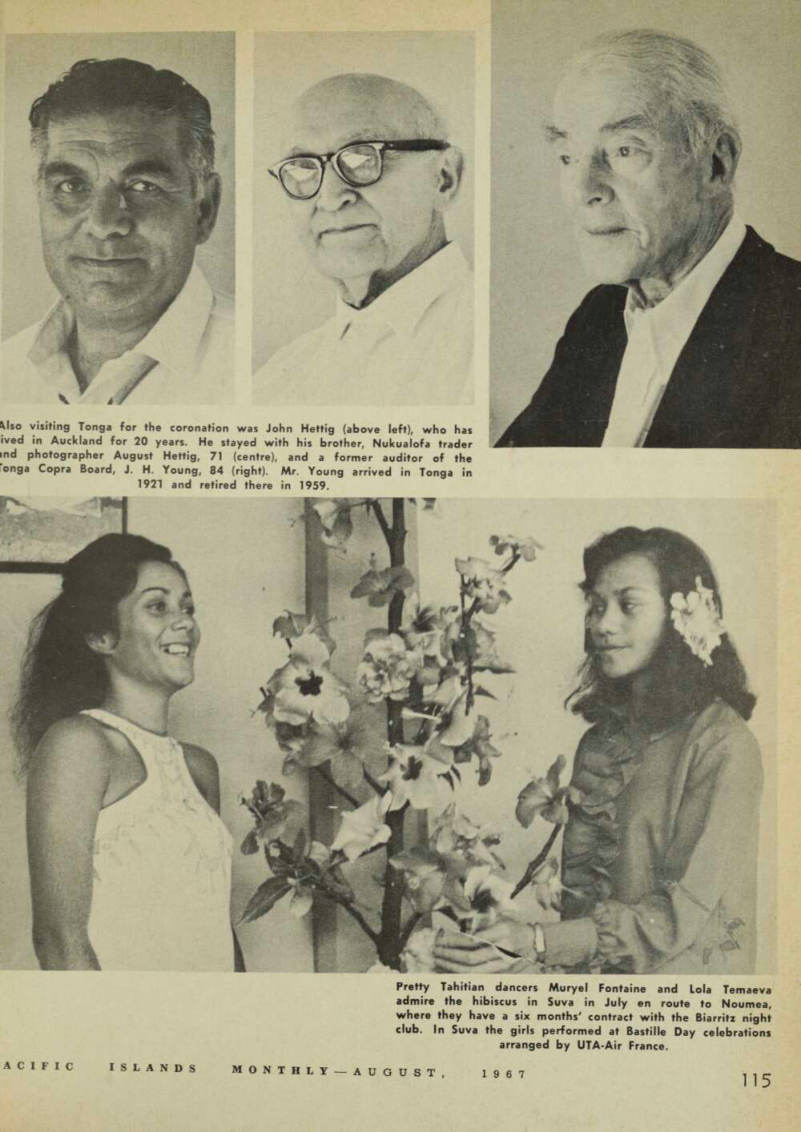 121
121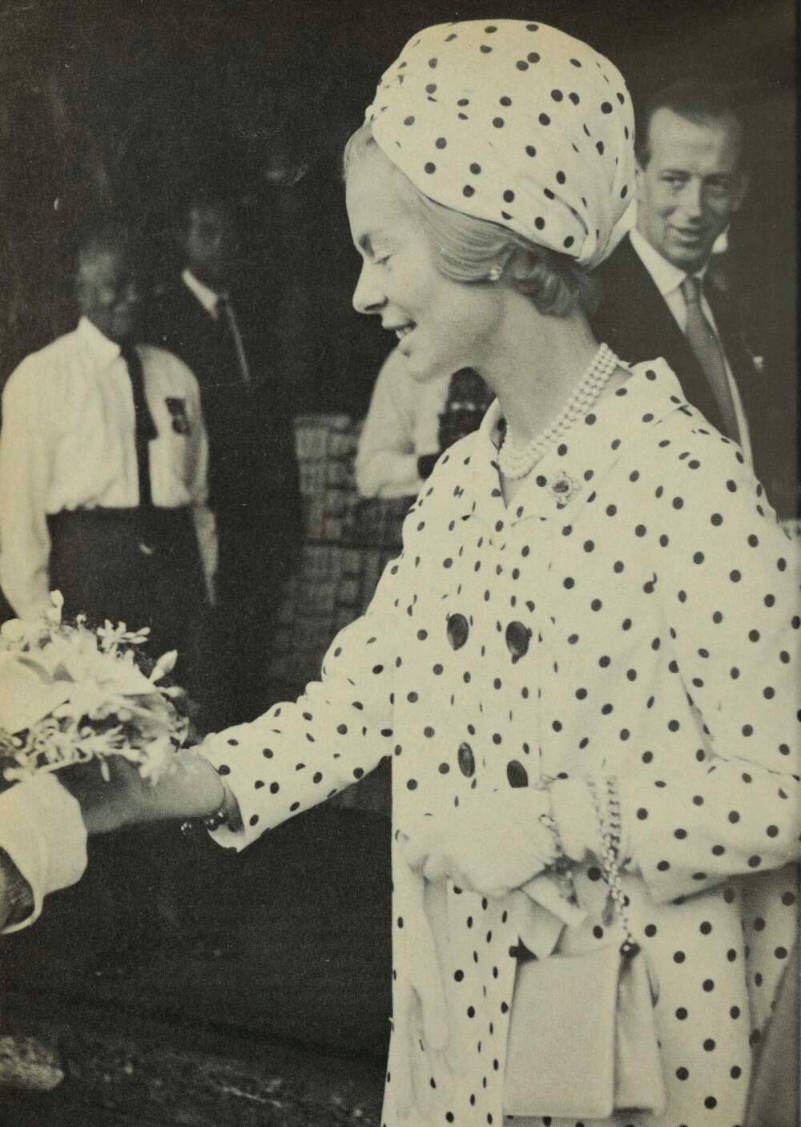 122
122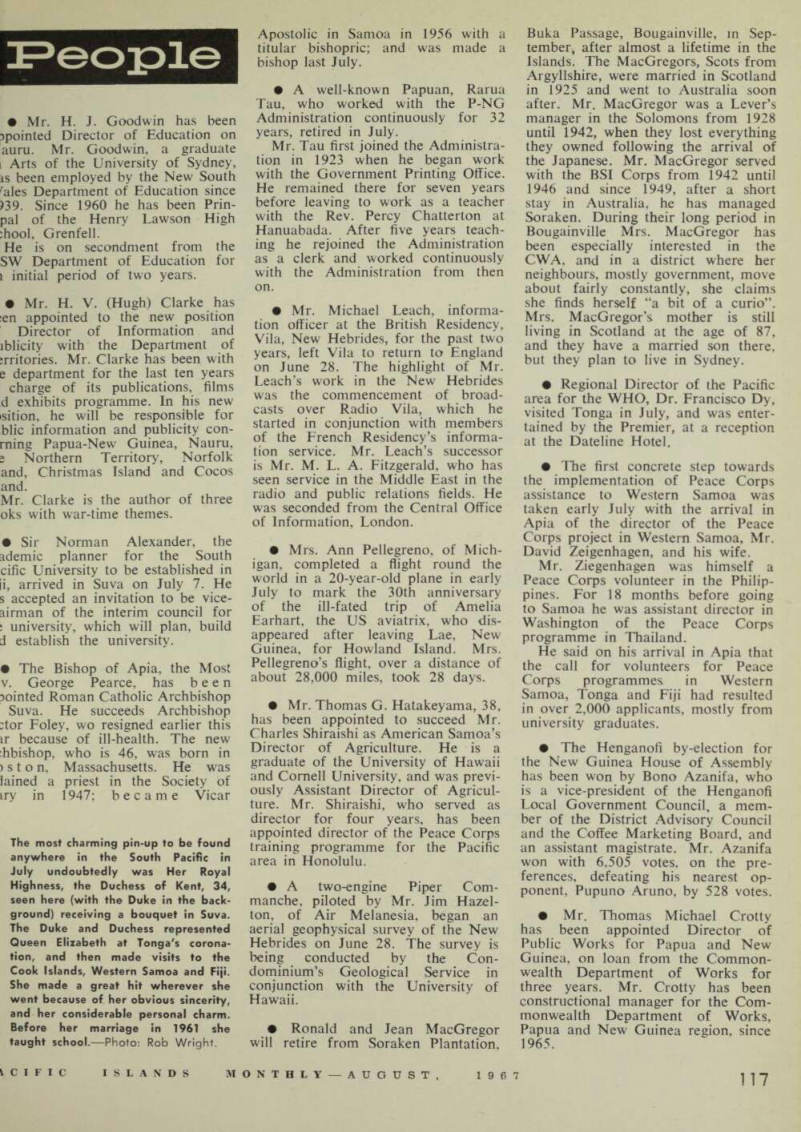 123
123 124
124 125
125 126
126 127
127 128
128 129
129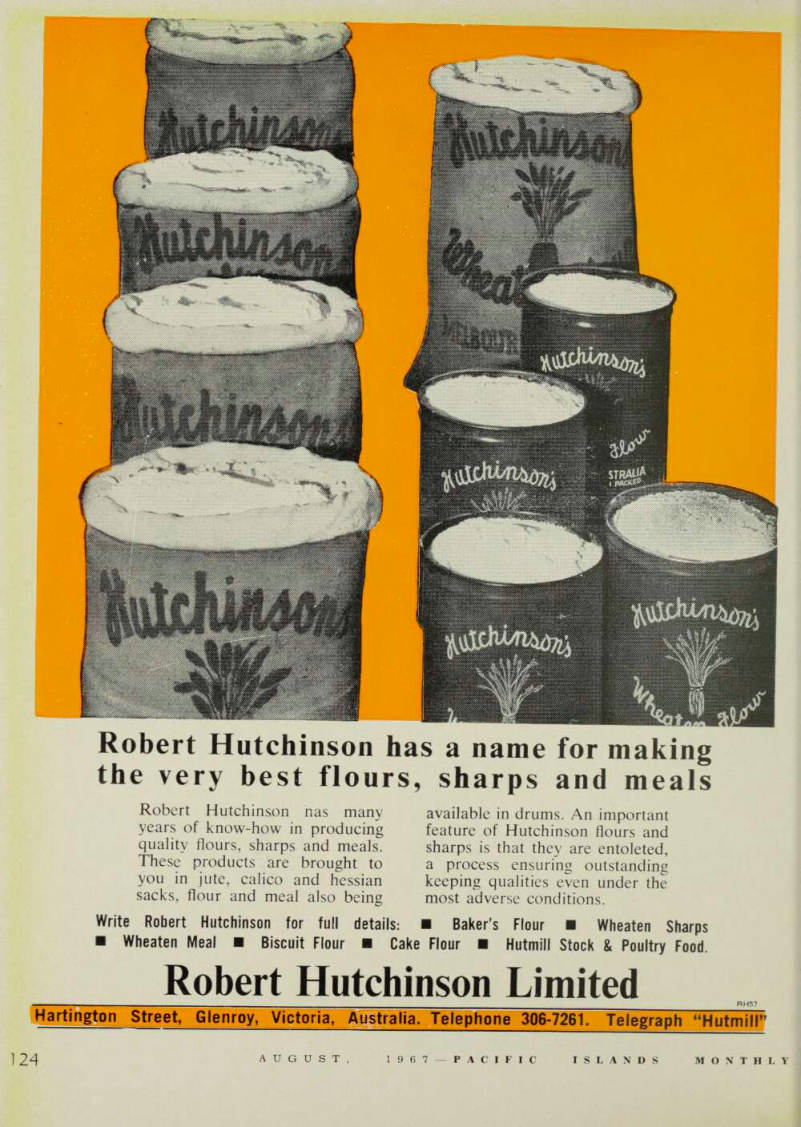 130
130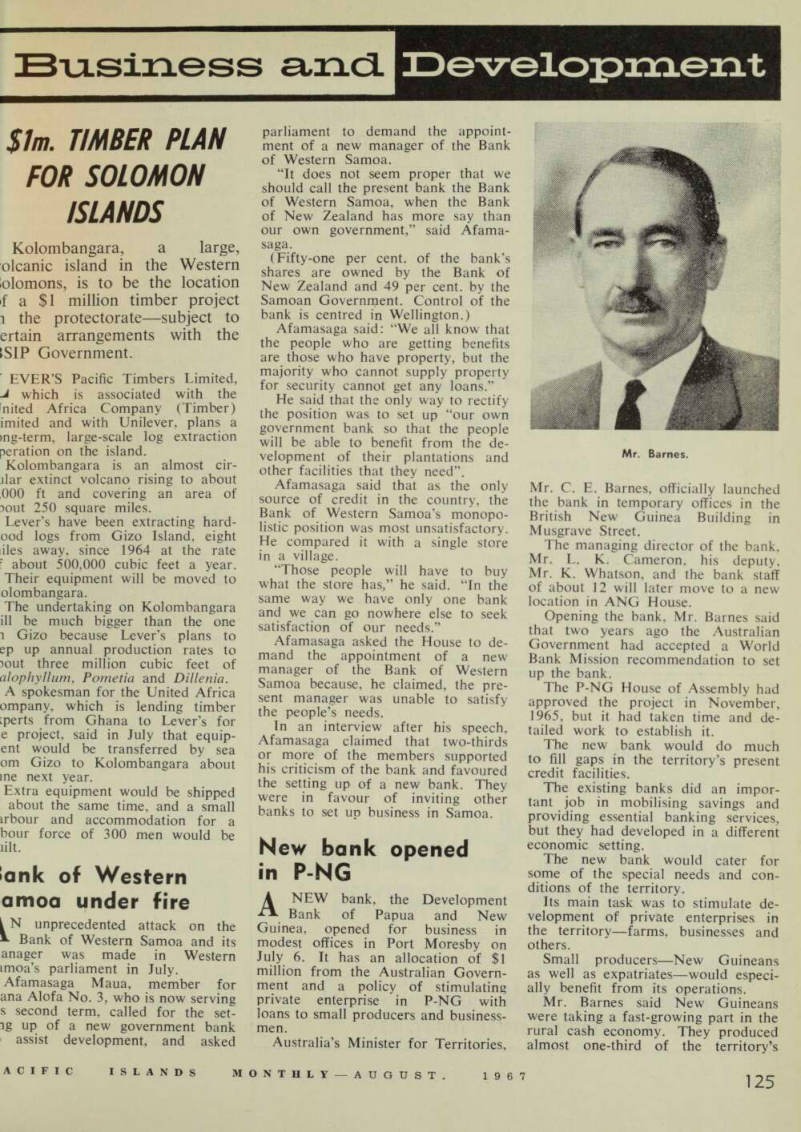 131
131 132
132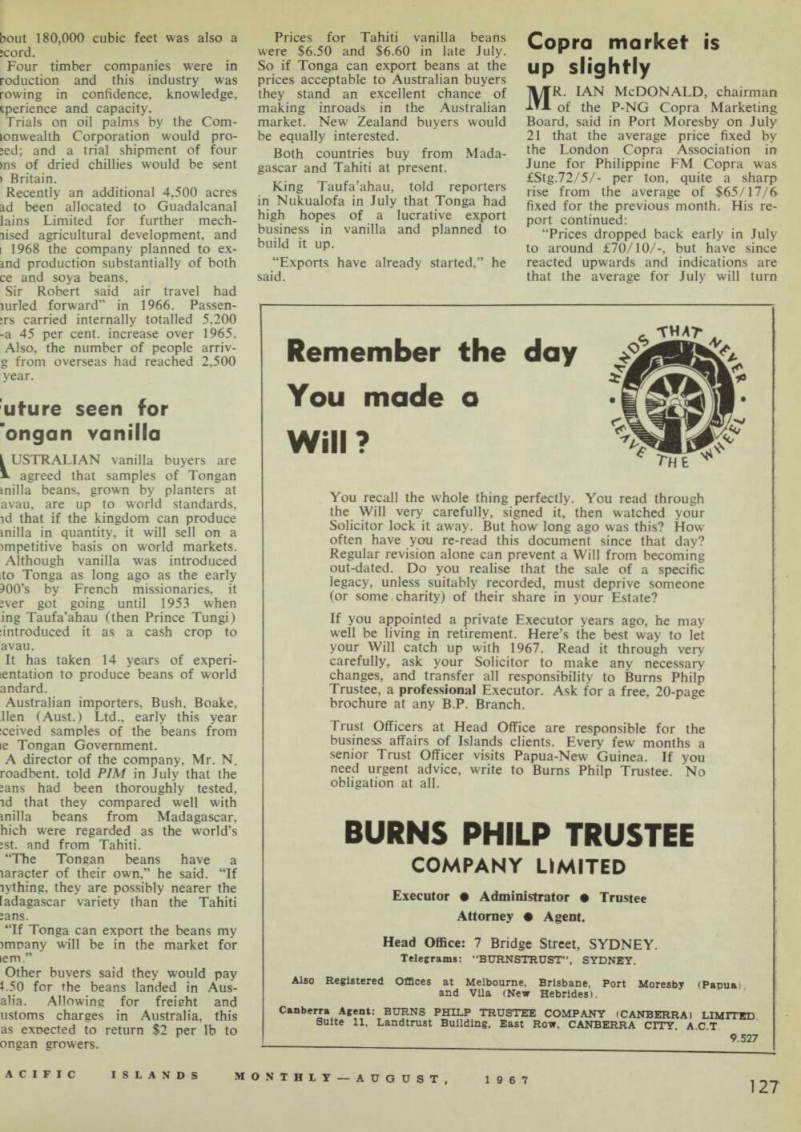 133
133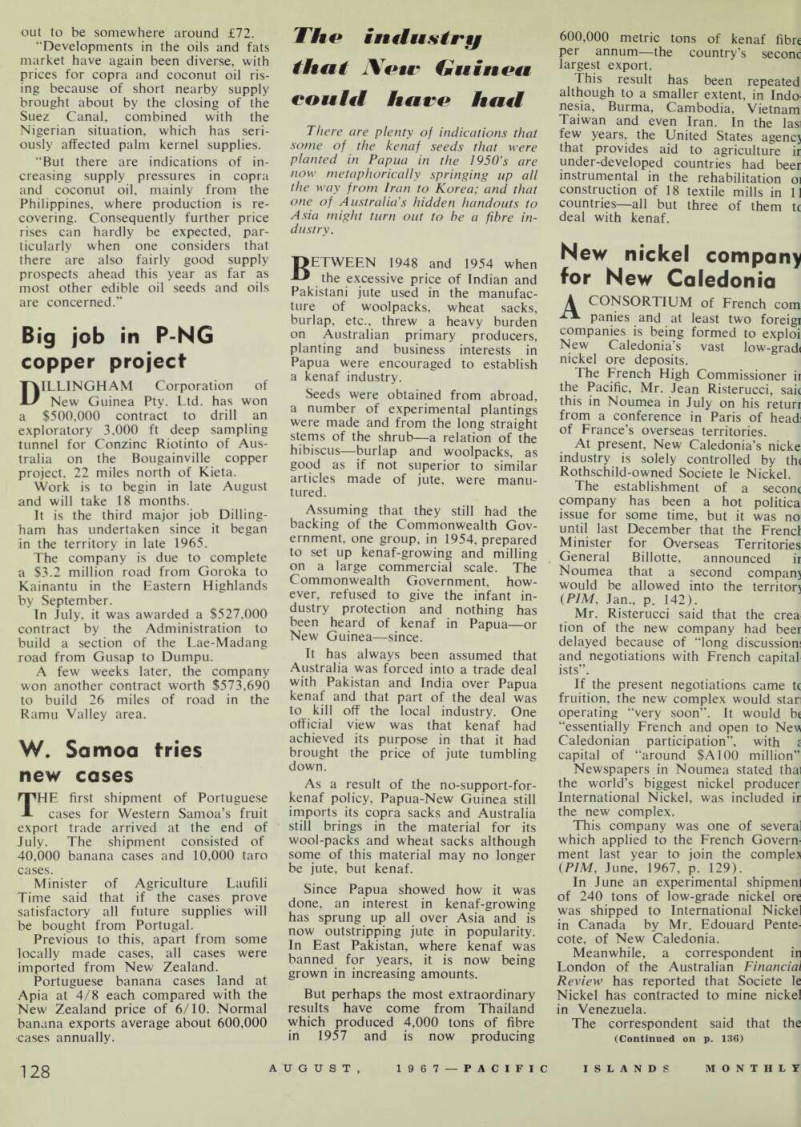 134
134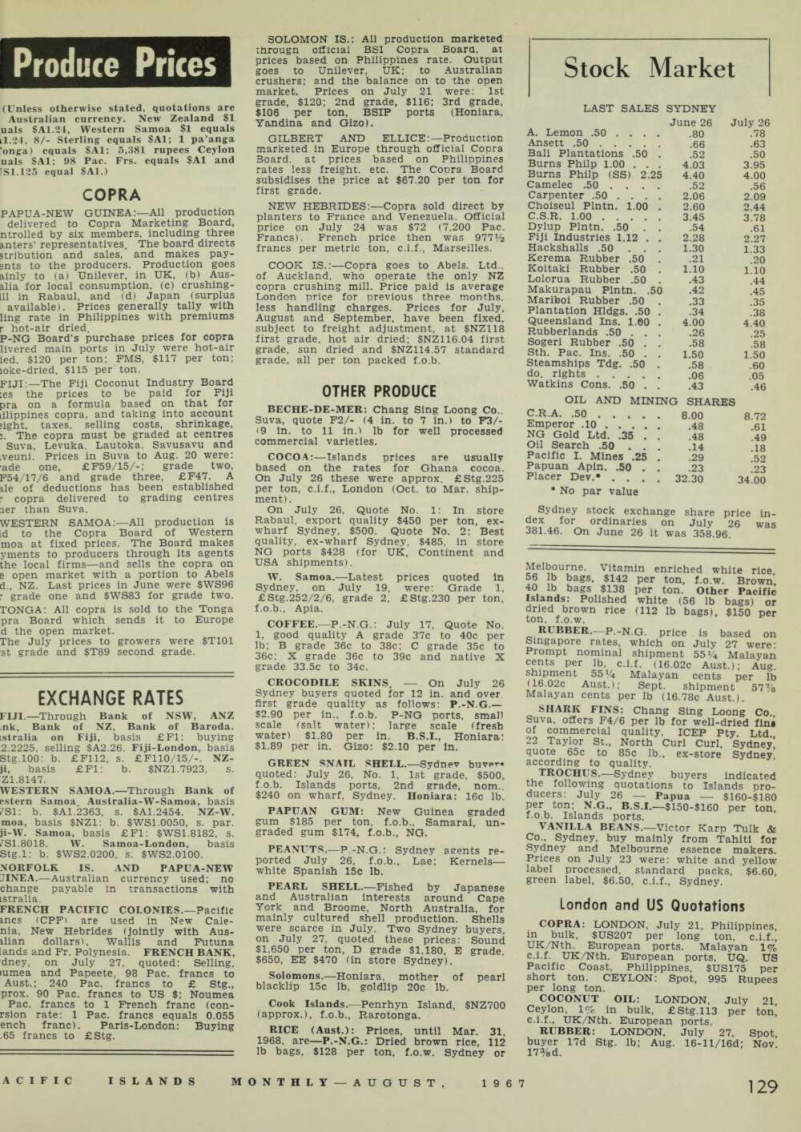 135
135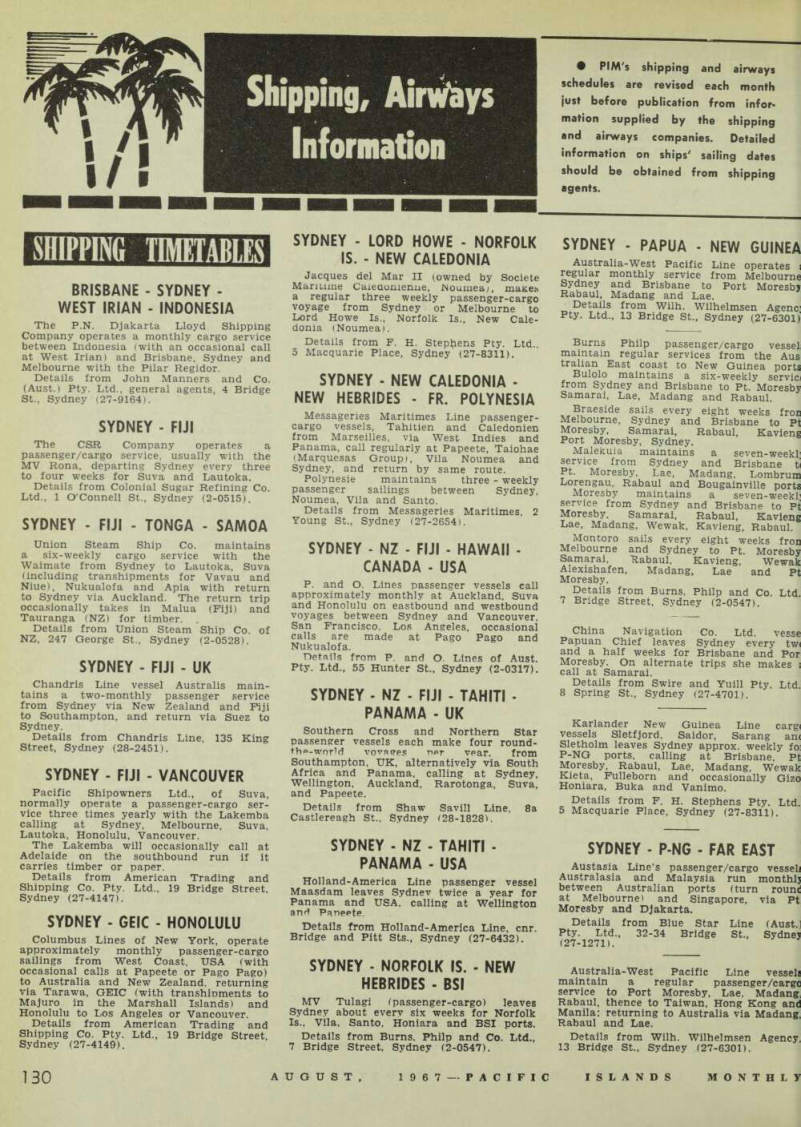 136
136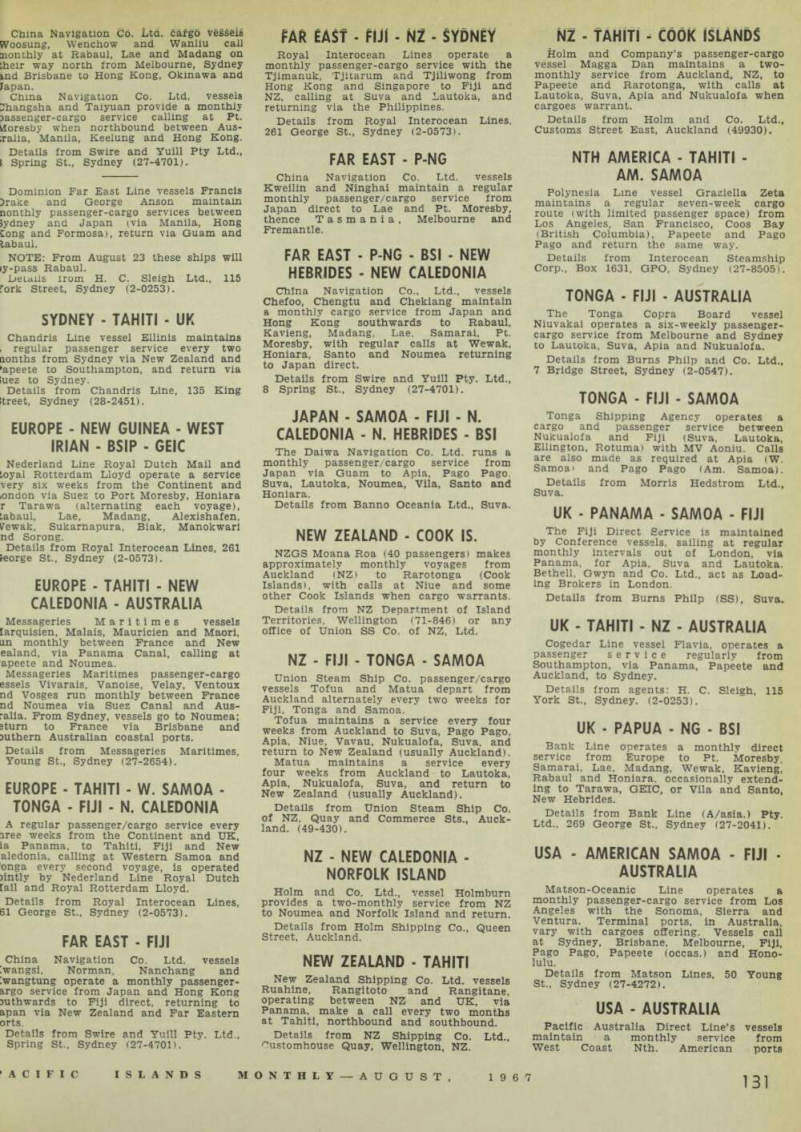 137
137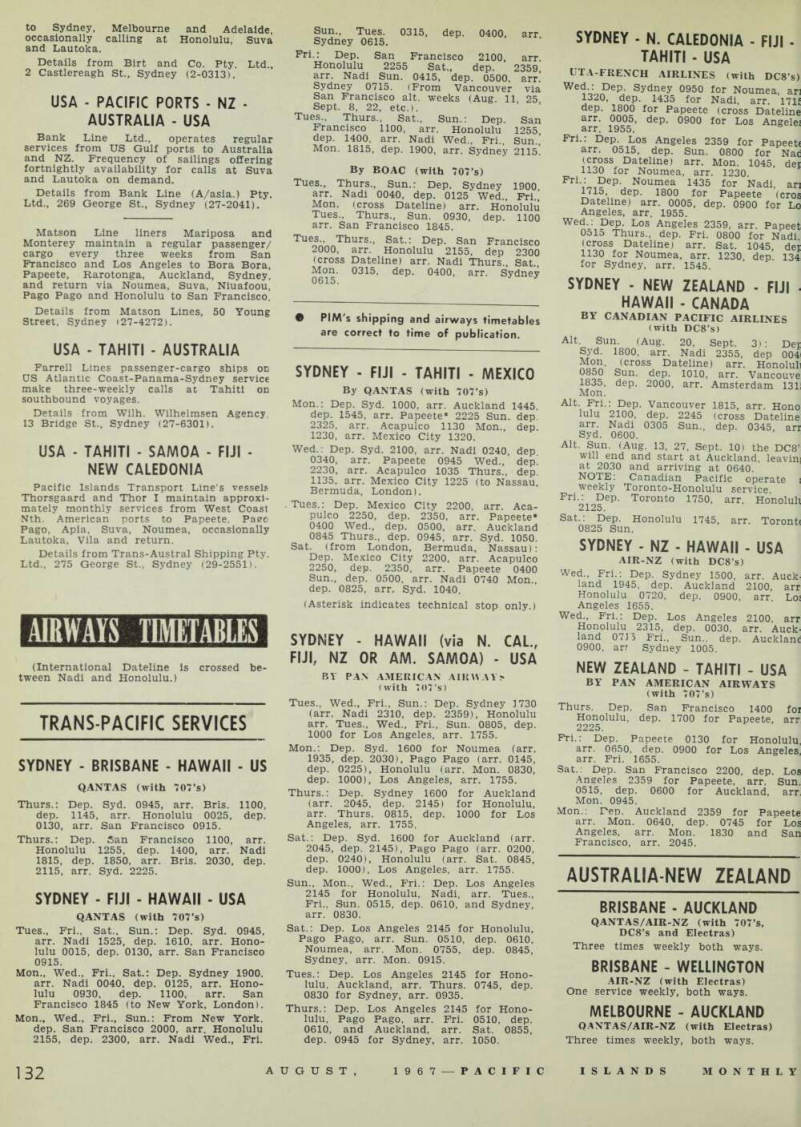 138
138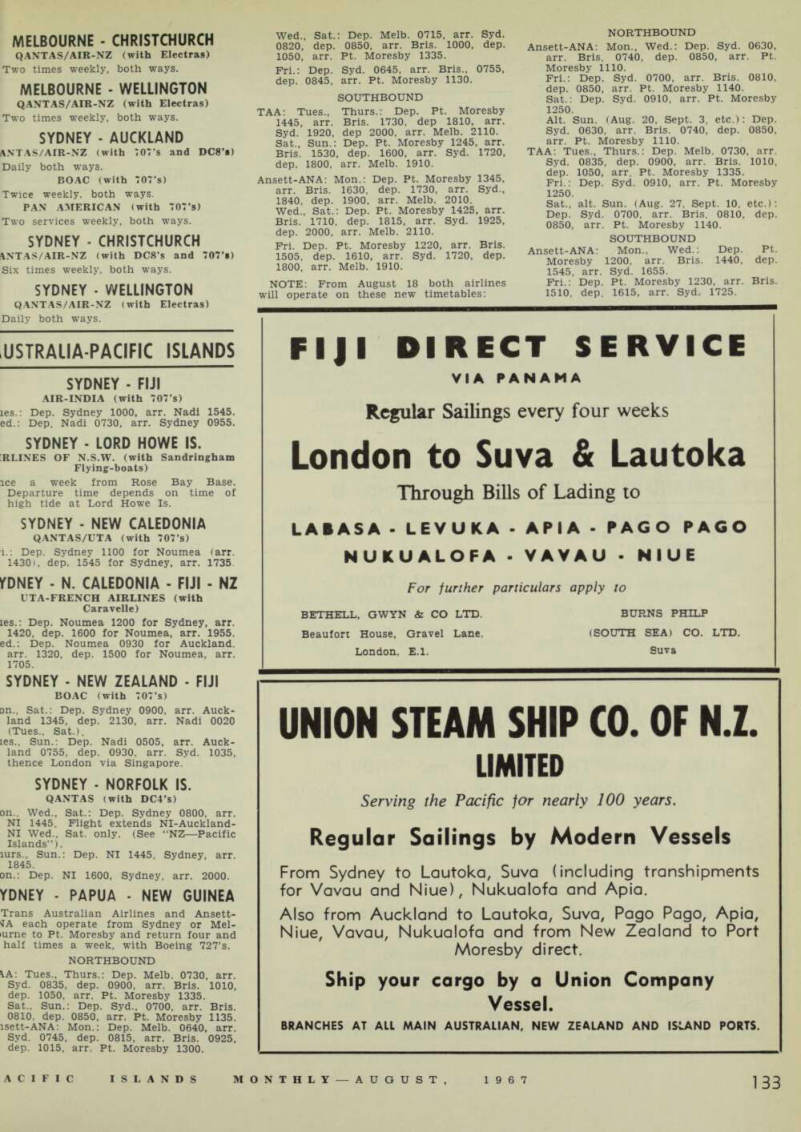 139
139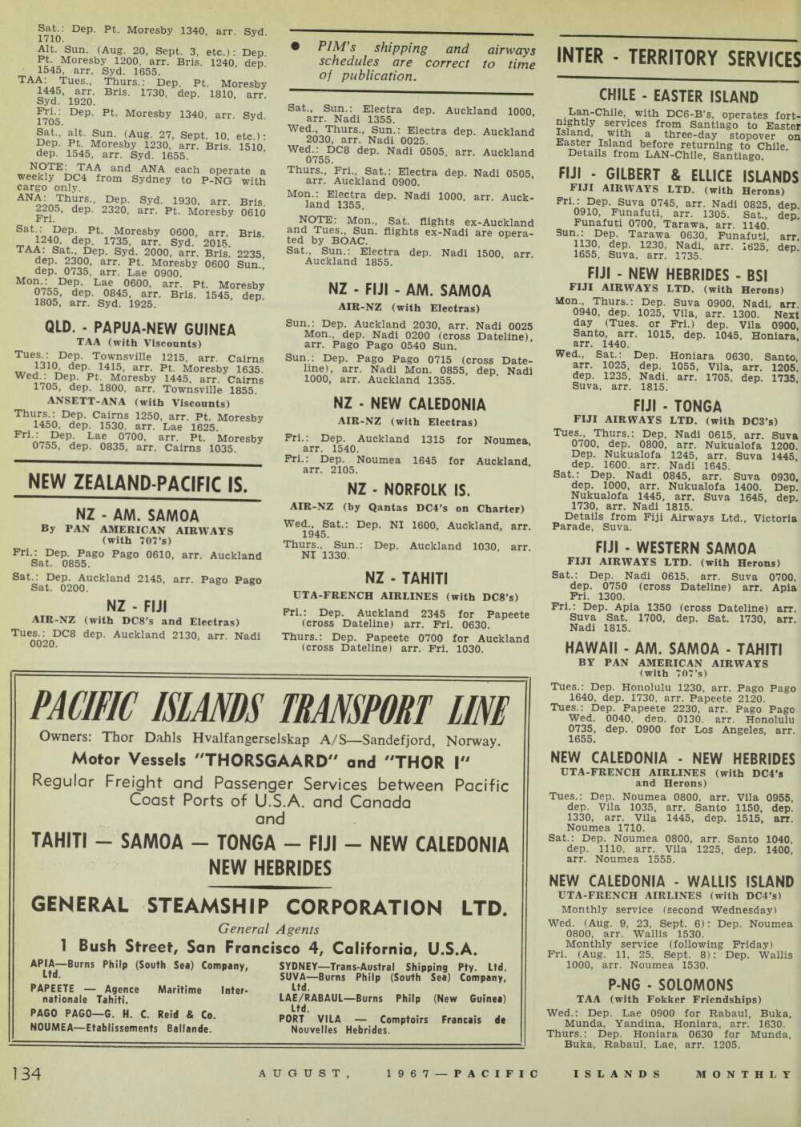 140
140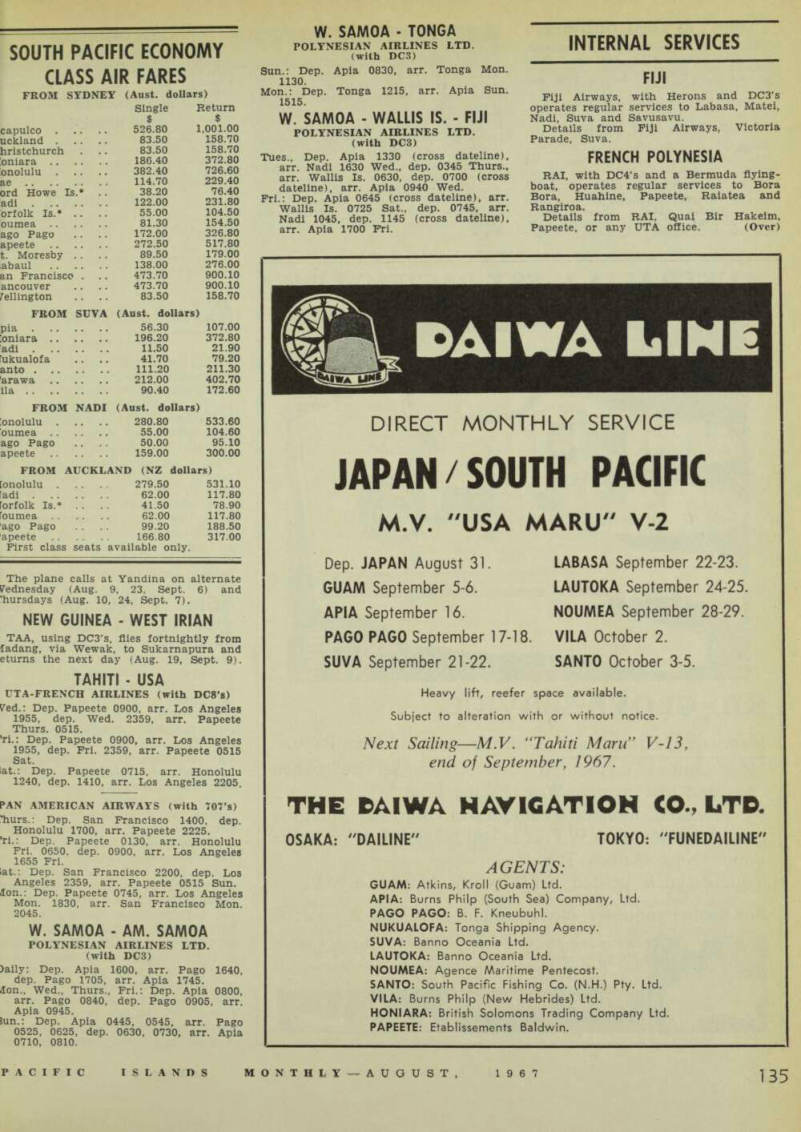 141
141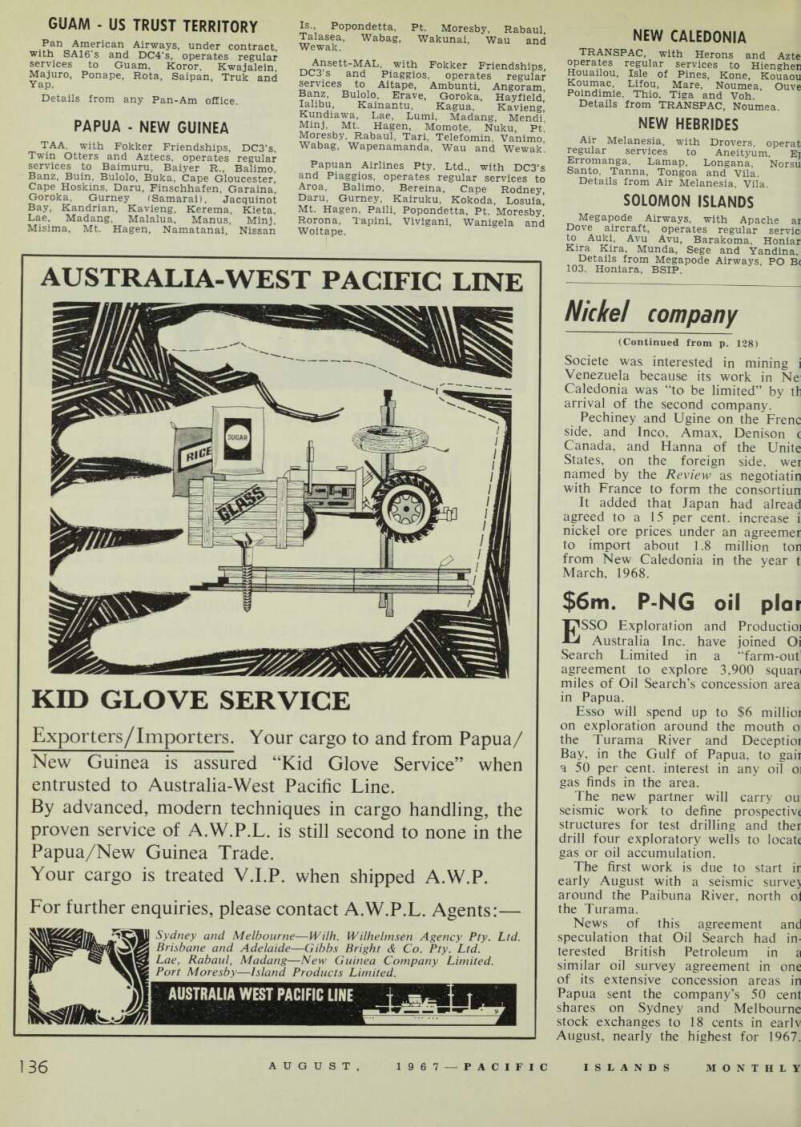 142
142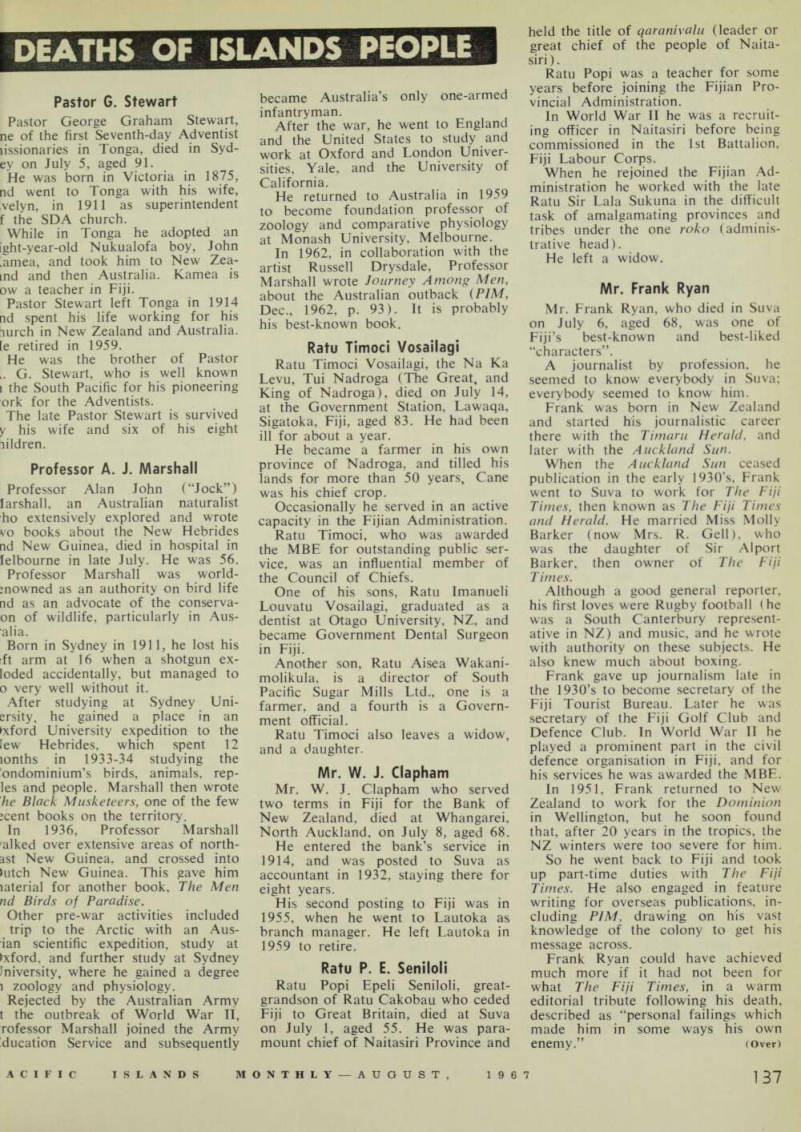 143
143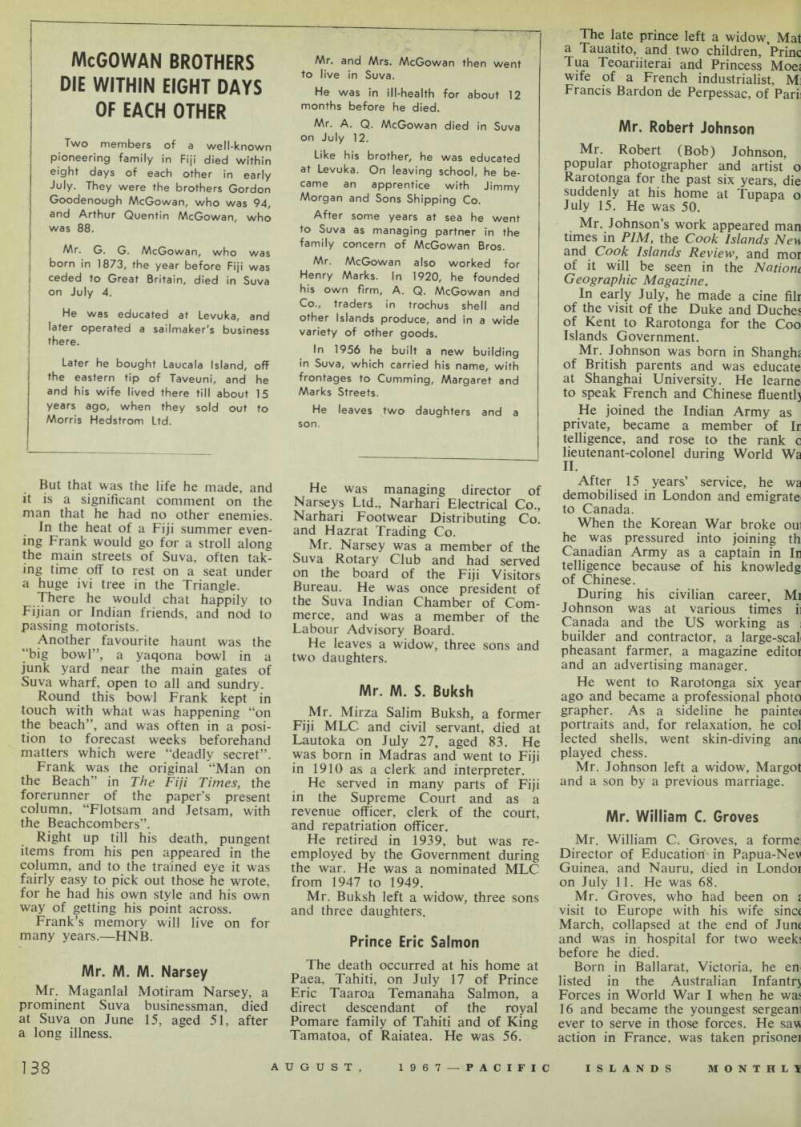 144
144 145
145 146
146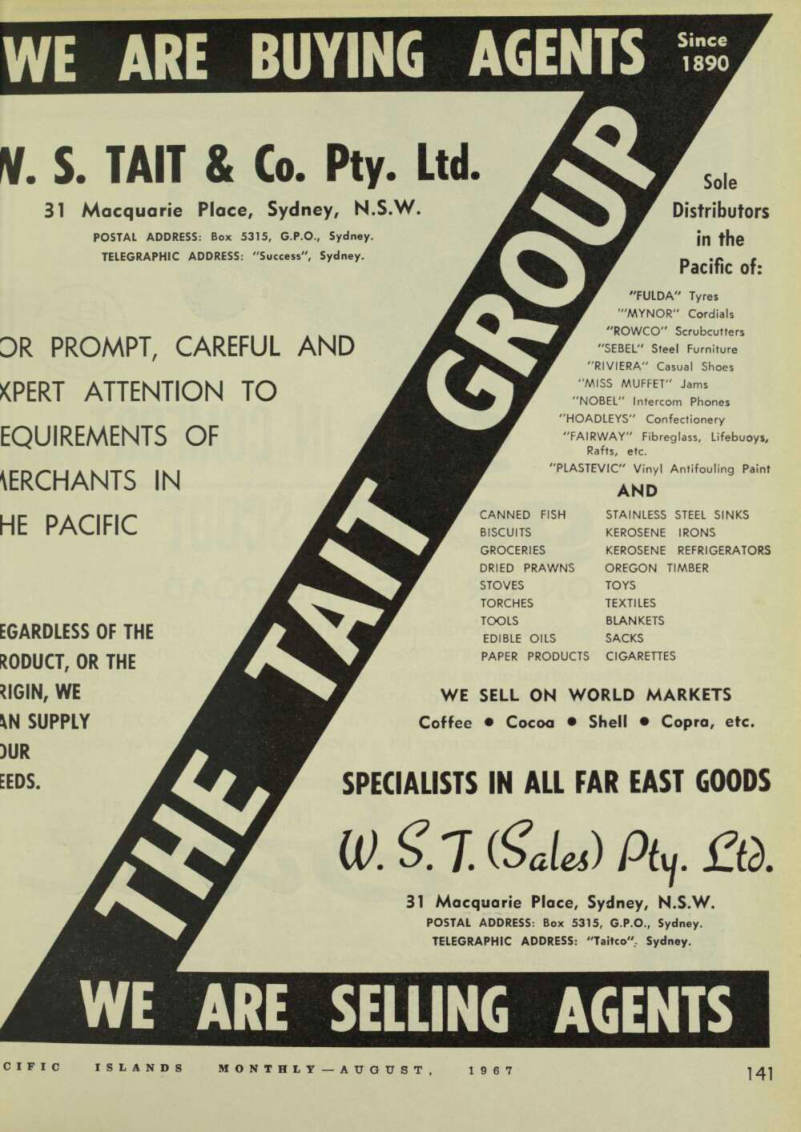 147
147 148
148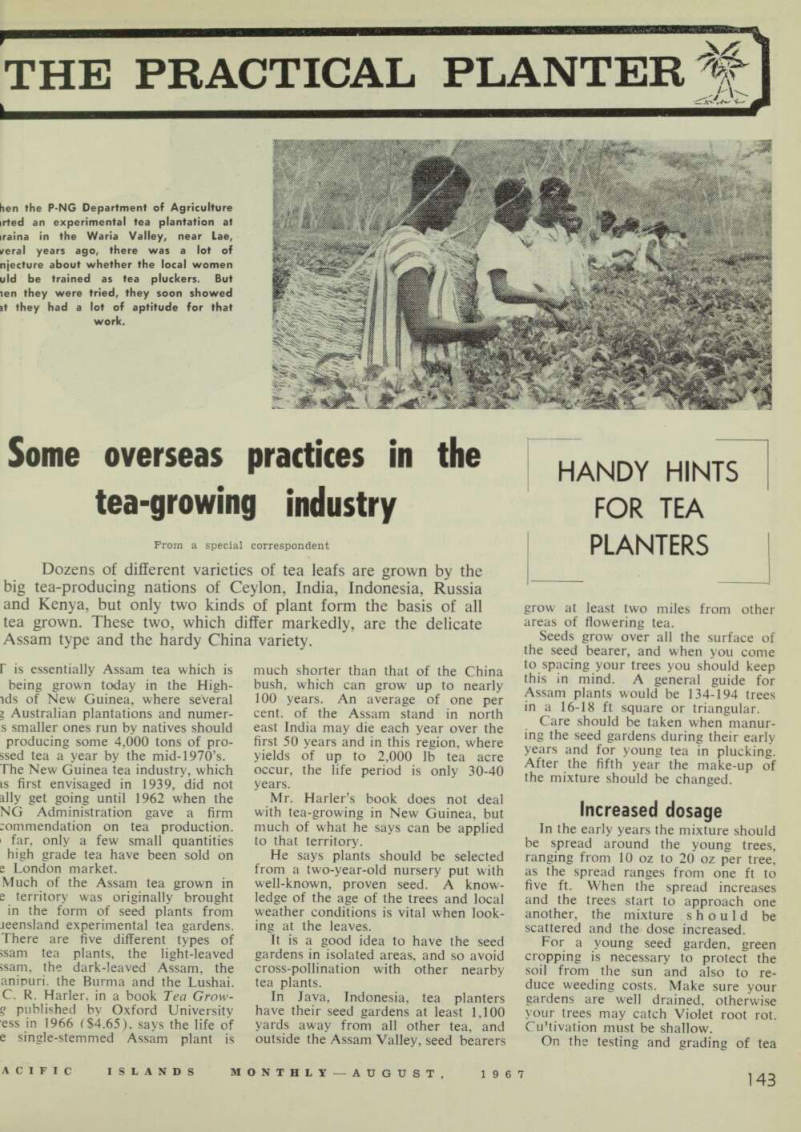 149
149 150
150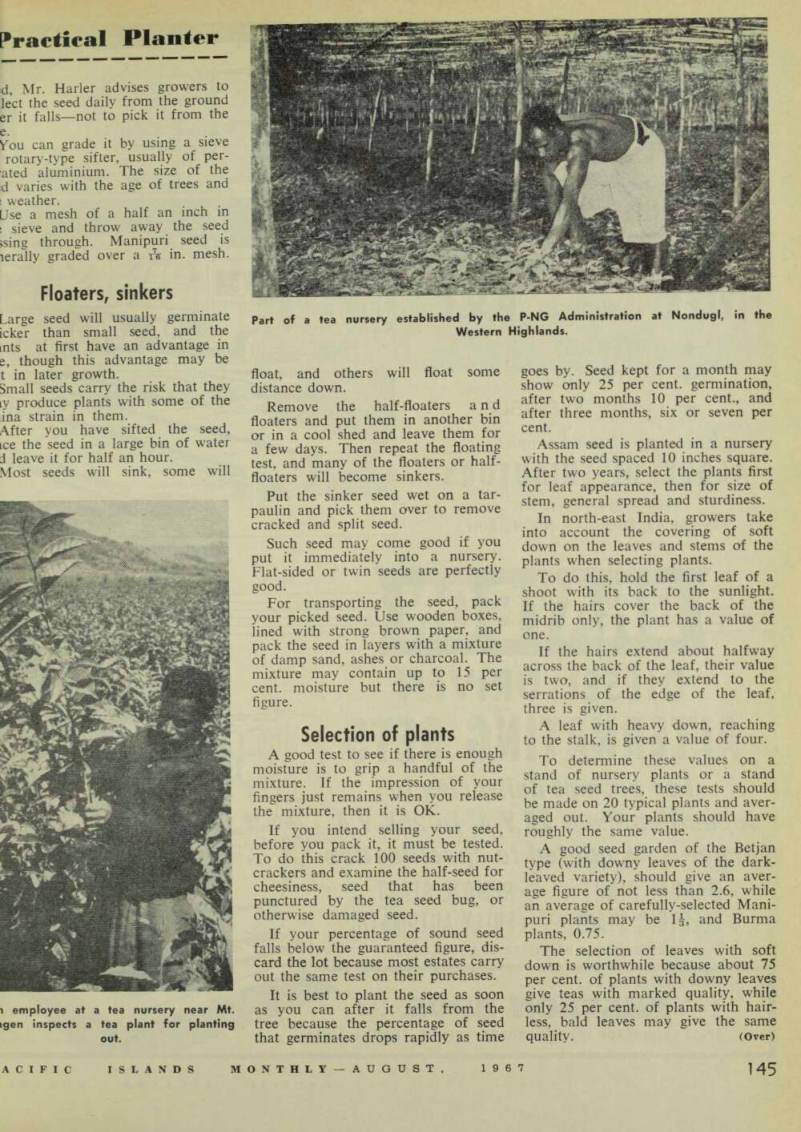 151
151 152
152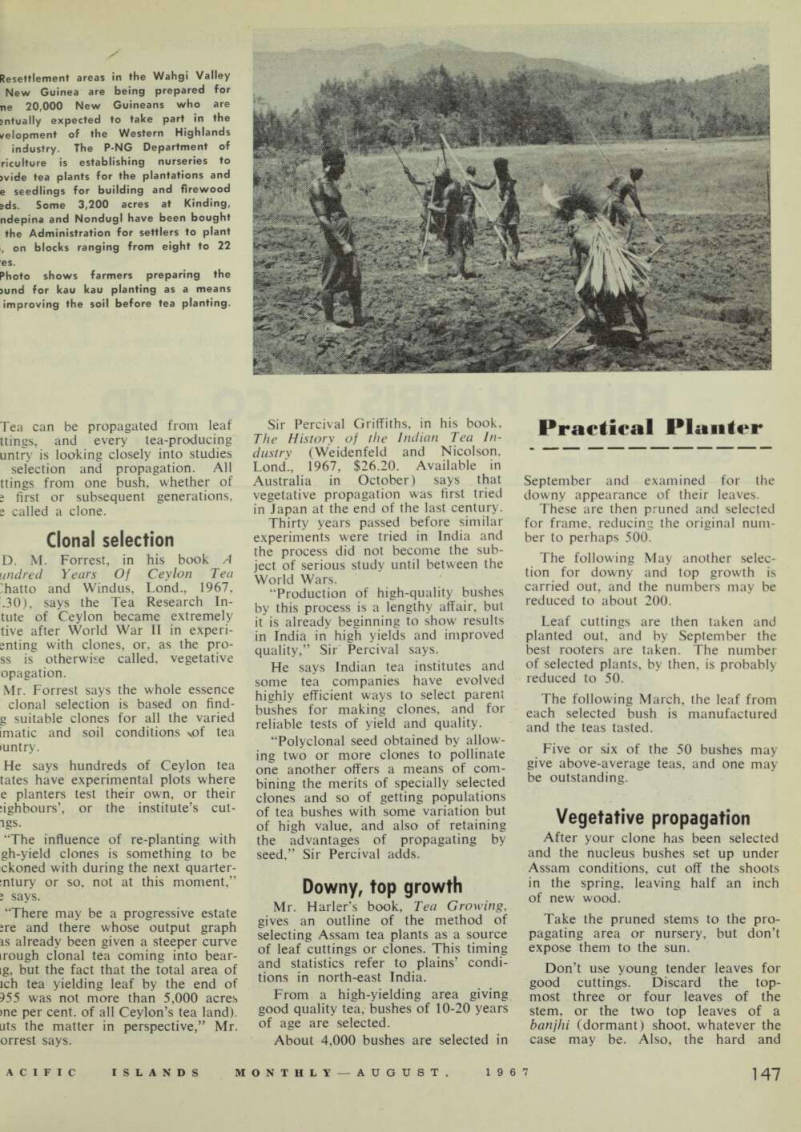 153
153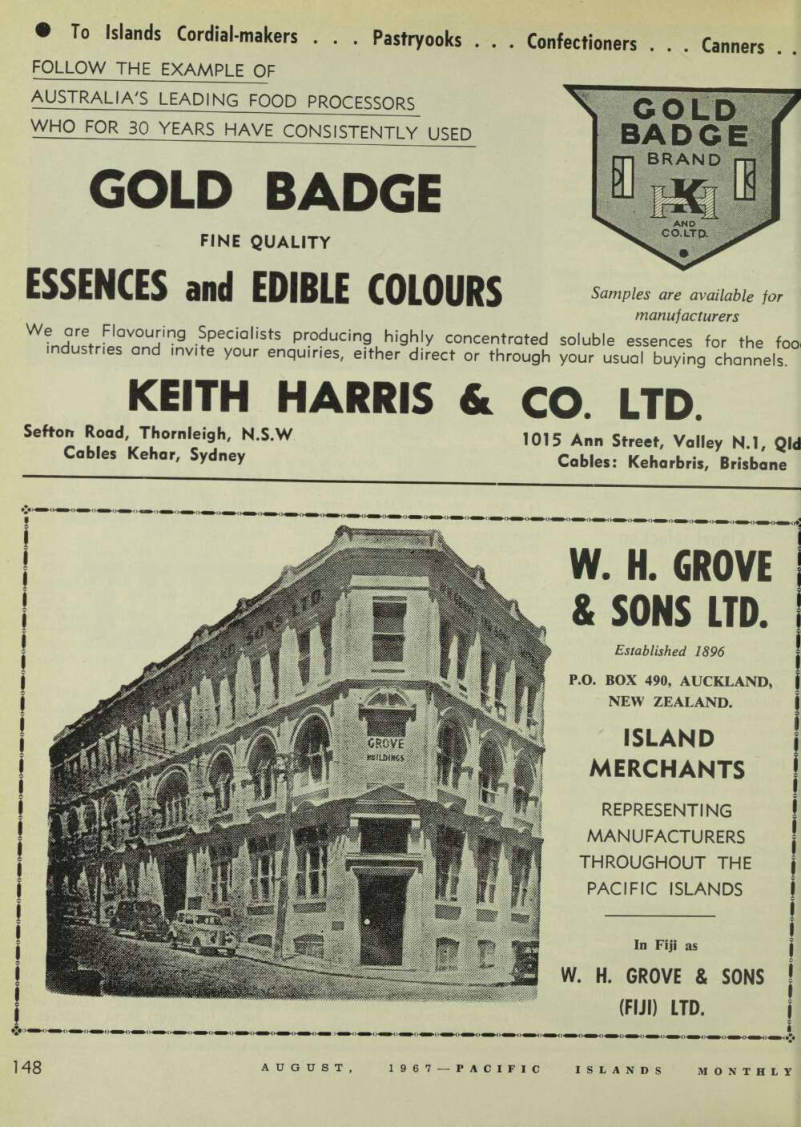 154
154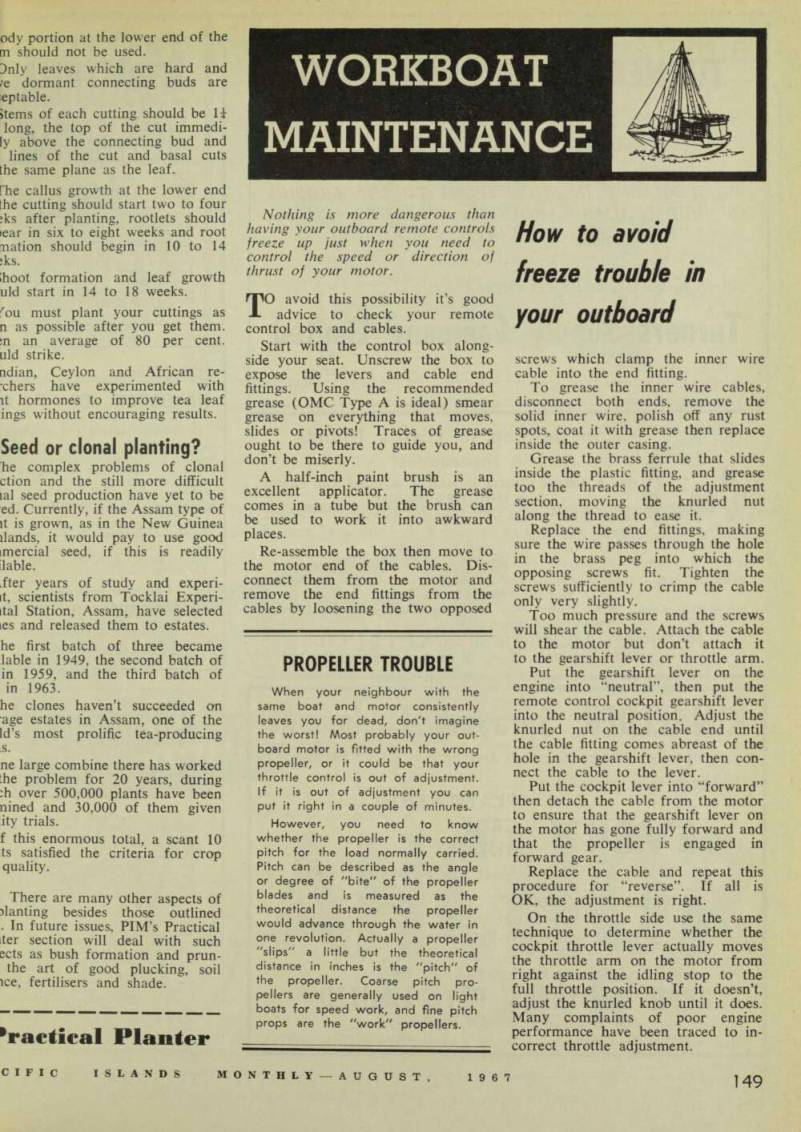 155
155 156
156 157
157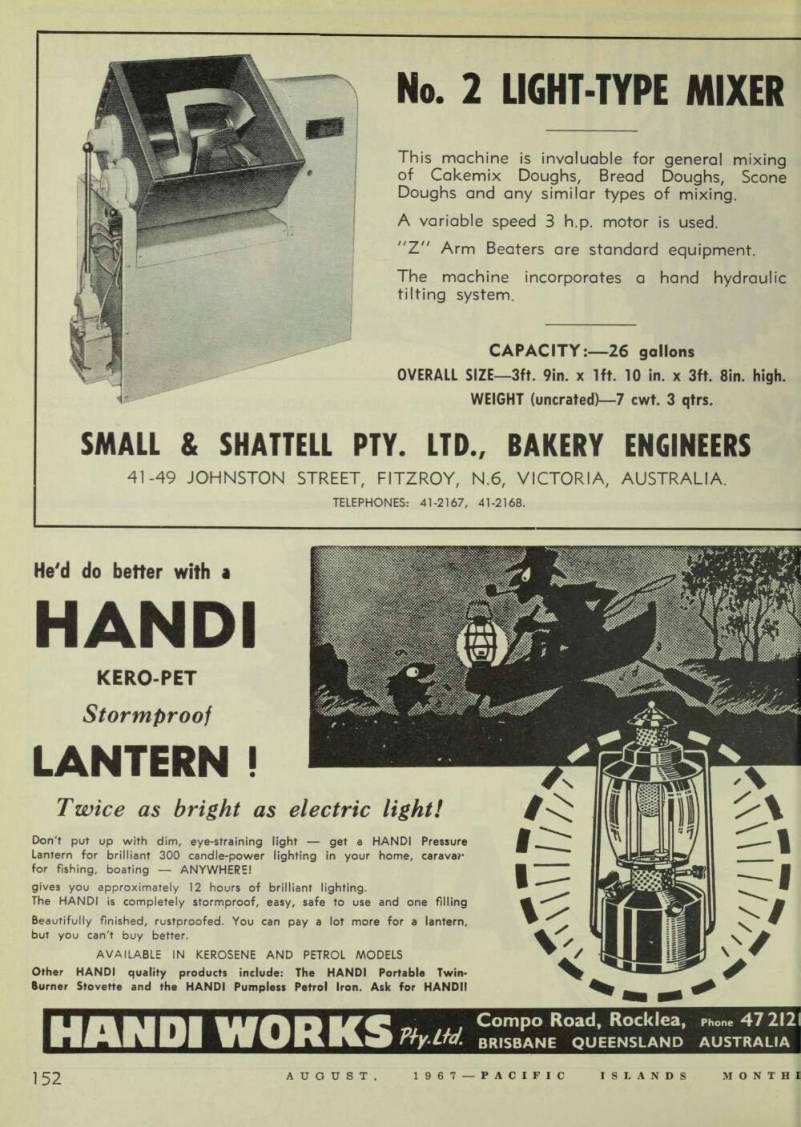 158
158 159
159 160
160 161
161 162
162 163
163 164
164