Advertisements & other items, pp. 2-15 (14 items)
July, 1967 Pacific Islands Mont,
Taa F.
er/j.-yyy-.
NowTAA
727 T-Jets link
Papua/New Guinea
with Australia
TAA’s ‘Bird of Paradise ’ goes jet age! Regular daylight services to and from Australia on Sat., Sun., Tues., and Thurs. Less than four hours flying time from Port Moresby to Sydney in luxurious jet-age comfort.
Fly high above the weather at over ten miles a minute. And be spoilt by TAA’s ‘Bird of Paradise ’ in-flight service. You’ll arrive rested, relaxed and ready to go.
Book now! Contact your nearest travel agent or call TAA: Port Moresby 2101 • Lae 2311 • Rabaul 2567 • Madang 78, 268 • Goroka 8 • Mt. Hagen 4 • Wewak 103.
TAA f.
the Friendly Way
K T A A2945/67
When first-aid is needed
-so Is DETTOL
When your child gets a cut or scratch you need something that is more effective than a household disinfectant.
You need Dettol.
Dettol guards against the risk of penetrates to kill germs and so ( Dettol does not pain or stain y and gentle.
No wonder Dettol is the antise by doctors and nurses and recon more than 450 medical text books recommended antiseptic is available in cream as well as liquid form. A RECKITT & COLMAN PRODUCT For Trade Enquiries: Reckitt & Colman Pty. Limited, Wharf Road' f West Ryde, N.S.W. Australia Cables: Reckitts Sydney
DETTOL
DETtOt
CREAM
The four
exclusive new
soups:
(four more for the Heinz Gourmet range)
COMO
MUO
Soup
urmet
Sou
Gourmet
CONDCNMD
OLD COLONIAL
TOCK P(
Sou
Gourmet
POT
SLICED
BUTTON
CONDBM
MUSHROO
Soup
Gourmet
BUTTERED
MW mrtl
VEGETABL
MILD
choici fml
DUTCH CURRY
wm Sliced Button Mushroom Tiny delicate button mushrooms. Nobody but Heinz uses this kind of mushroom in soup.
Cooked tender, but still firm enough to bite into.
Rich cream stock.
Buttered Vegetable Fresh, crisp vegetables, cut in big pieces. Sauted carefully in butter. Simmered until tender in creamy stock.
Mild Dutch Curry A gentle curry. Tender beef, long-grain rice, garden vegetables. Mildly spiced, rich and hearty.
Old Colonial Stockpot A full-bodied soup that lives up to its name.
Tender lamb, young vegetables, barley and rice.
Exclusive recipe; big oldfashioned flavour.
Heinz Gourmet soups: consumer tested and approved.
Gourmet Soup
Soup
Soup
Soup
Gourmet
Soup
Gourmet Gourmet Gourmet
COVNTWV ■TVLJ I COVWTWV iTYU
CHICKEN I TURKEY
SPLIT
PEA
CHICKEN
BEEF
HZ94I
How to be worldy-wise on one ticket Your AIR-INDIA ticket flies you by daylight through Sydney and Perth to e world. AIR-INDIA is international . . . it's the airline that knnwc tho infamctmn and unusual places you v New York (AIR-INDIA crosse the service you demand, to iri-sheathed hostesses ... si comfort of Boeing 707 jetlim
AIR-INDIA
the airline that treats you like a Maharajah worldwide.
Over 35 years’ experience. /a Office: Victoria Parade, Suva (Tel. 25561, also 25646). Nadi Office: Terminal Building, Nadi Airport (Tel. 72344 also 72552) XA/:»k A:_ Kl t U With Air New Zealand. BOAC and Qantas AF29.87.1005c
So you’re getting
out of repainting
for an extra
4 years?
So is someone
else!
GIXfS
m ssssi^m-
SPRUCE
How long they last is not the only point about Dulux “Lo Gloss” and “Spruce.”
For one thing they both allow you to keep on painting—over masonry, galvanised iron, timber and fibro. No need to change paints for each surface.
Another is that with both “Lo Gloss” and “Spruce,” you’ll paint the outside of a house in about half the lime it takes with ordinary paints. Afterwards, brushes clean-up in cold water.
Mould, tropical sun, high humidity and rain don’t bother “Lo Gloss” or “Spruce” as much as others, either.
The important difference between them is that “Lo Gloss” imparts a low sheen whilst “Spruce” gives the outside of your house a glossy finish.
lIQ2P
8MA.4368.LG/SPI
Here is the ideal vehicle for the toughest island operations ... TREKKA! Designed specifically for South Pacific conditions, TREKKA is a tough, versatile, iow-cost, go-most-anywhere vehicle. TREKKA will do everything a utility wi11... and more .. .for far less money. TREKKA will tow equipment... carry loads (over 20 sq. ft. payload area and half ton payload) ... or people (with optional extra upholstered rear seats up to 8 passengers). TREKKA cruises with car comfort on roads... or takes off over land, up slopes, through slush, over rough tracks or no tracks. New Zealand farmers who work on rugged terrain and in wet conditions have proved TREKKA will go virtually any place a four-wheel drive wi11... yet TREKKA is a two-wheel drive conr r> siderably less in first cost and much lower in \ maintenance and running costs. For example over 33 m.p.g! No wonder they say... TREKKA TER-
RIFIC!
The secret of TREKKA’s performance is the unique IlT\\ design: all wheels are independently sprung for ground grip .. .the rugged 47 BHP motor has dogged climbing power.. .the specially engineered “Balanced Traction’’ differential (optional extra) eliminates most wheel spin. For island conditions TREKKA’s all-welded body is a Zintec zinc coated steel for long life. TREKKA can be used as an open wagon, full canvas canopy, canvas cab or hard top. For further information contact the dealers below:
TBtmm!
WESTERN
SAMOA; Co. Ltd, Apia. FIJI: Morris Hedstrom Ltd. ENQUIRIES: Box 236 ’ Pa/mers,on
TRADE
Motor Lines Ltd, P.O.
Box 236, Palmersi North, New Zealand.
a*# VB Ml
Ilf t il
US OR
FAM
£ $
Victoria
Bitter
Drink a beer that’s really beer Victoria Bitter. Enjoy its clean, keer cold taste. Linger over its full-bodied sparkle and get a lift that makes yo glad you’re thirsty. Victoria Bitter is a man’s drink which refreshes lik nothing else can. Try it. You’ll understand, at once, why Australians an people the world over who know good beer drink “Vic”.
BEEWED BY THE FAMOUS CAELTON
UNITED BEEWEEIES LTD., MELBOUENI
IT’S AUSTRALIA'S INDEED THE WORLD’S BEST BEER C.B 437-41
28 - mm'WSSM ' V.
We created this for the
worlds most experienced airline
We created this as a modern tribute to ancient Greece This one has a bit of both and a substantial character of its own he Day-date . combines the igged precision of the GMTaster with the elegance of the ing Midas from the Benvenuto sllini collection (a limited edition men’s watches...inspired bythe orks of Cellini... very expensive).
And the Day-date has distinctive atures of its own. The Geneva-made yster case is hewn from a solid block gold or platinum. The bracelet, also solid gold or platinum, is designed )ecially forthe case. The movement has on the highest possible distinction for I* t / / I precision and quality a chronometer can normally obtain. A calendar f shows the date and the day of the ; week speltout in full.
The Day-date is available only in gold or platinum and is quite possibly the most brilliant timepiece in the world today. Wear it when you fly your jet to the conference at Brasilia, swim off your yacht in the Aegean, or address the United Nations.
With a Rolex on your wrist, you have entire worlds in your hands. \\ hen a man has a world in his hands, you expect to find a Rolex on his wrist ROLEX
GENEVA
c at +k 6 D ar avai,ab,e t brou 9 h Burns Philp (South Seas) Co. Ltd., Suva, Lautoka and branches throughout the Fiji Islands e South Pacific. In New Guinea through Burns Philp (New Guinea) Ltd., Port Moresby and all branches in Papua/New Guinea.
If you think your
pictures look good
in black and white.
W m j Kodachrome
TRANSPARENCY
PROCESSED BY
Kodak
imagine them in colour!
If you want prints in bright, living colour, sharp and clear then Kodacolor film is the one for you.
If you’d rather see colour slides projected life-size in the same bright living colour— then Kodachrome film is the right choice.
Both films are made in sizes to fit most popular cameras.
And both give you excellent indoor pictures with flash.
With both films the colours you see through the viewfinder are the colours you’ll get. Red is red. Blue is blue. Green is green.
Remember Kodacolor film is a colour negative film for prints. Kodachrome film for slides.
Available from Kodak Dealers throughout the Islands.
HcgxoMk
KODAK (Australasia) PTY. LTD. 379 George Street, Sydney.
K 1471
In this can Is Dairy Frost mix.
It needs no storage refrigeration!
No mixing.
Pour the mix
into this
Dairy Frost
machine...
?:>> m m V* km »>>> **’,*'*' v*v* w.v.w ♦♦♦
Sr.V.V,*.’*'*
» *** *** * ©'.♦.♦.♦.♦.♦V* ♦ ♦ v.v. m,* *.*:* Famous M 100 Counter model.
then lift the lever
and dispense
extra thick Frosty Shakes
or soft serve cones
Simple. Moneymaking!
Thick shakes earn big money.
With this Dairy Frost combination, they’ve never been easier to make.
Everything’s done. The mix is super-pasteurised.
Rich and creamy.
No storage refrigeration needed! No mixing.
No preparation. Nothing to be added.
It’s packed in I gallon cans.
It stays pure and fresh until it’s needed.
The Dairy Frost dispenser is fully automatic.
It’s easy to clean, simple to operate and engineered for a long, trouble-free life. You can rely on that.
It’s made by the largest manufacturer and distributor of thick-shake and soft serve machines in the Southern Hemisphere.
It’s worthwhile getting the full facts about Dairy Frost mix and Dairy Frost dispensers.
Write to the Export Department.
““ ,on *“ ,ou “ know - Dairy Frost 13 South Street, Rydalmere, N.S.W. Phone 638-0401.
IS m i i Corned Beef Corned Mutton Meatreat Sheep and Lamb Tongues Braised Steak Pat Dripping Pat Lard Sandwich Pastes Lamb and Green Peas Steak and Kidney Pudding Kegged Meats Frozen Meats Smallgoods Buik Dripping and Lard
THE CHOICE
OF THE ISLANDS
‘PALM’
AND
Salisbury
CANNED MEATS
SPECIALLY PACKED FOR THE PACIFIC ISLANDS
WESTFIELD FREEZING CO. LTD.
Postal Address i Private Bag, C.P.0., Auckland, N.Z. Cables "FILALORA", Auckland.
PRICE LISTS FORWARDED ON APPLICATION
kJi m m "m m i ■<>
There's more of both in ERINMORE
rinmore makes friends in any company. Smokers welcome its good rich flavour.
Others; womenfolk especially, enjoy its distinctive aroma.
This comes from the century old blending process, secret to the makers of Erinmore. No other
URRAYS
ERINMORE
MIXTURE
tobacco can give you so cool and sweet a smoke.
HPV ERINMORE
FLAKE OR MIXTURE
TOBACCO
IN VACUUM TINS
lADE IN NORTHERN IRELAND BY MURRAY, SONS & CO. LIMITED, BELFAST
MANUFACTURERS OF FINE TOBACCO SINCE 1810
Cheezpop & Chickpop
m nm mm
• ill
>£( 4 ***%>*&
The happiest fun-foods
Cheezpop and Chickpop are great fun. Crisp . . . crackling . . . salty and flavoursome . . . pals to drinks . . . waken your palate . . . sharpen your taste for every frosty sip. Next party, snacktime or barbecue, nibble on Cheezpop or Chickpop. Or both.
They’re pop-pop-popping good fun.
For trade enquiries: Reckitt & Colman Pty. Ltd., Wharf Road, West Ryde, N.S.W., Australia. Cables: Reckitts, Sydney.
A RECKITT & COLMAN PRODUCT
H8162E
ttMium*
: - . . . that’s ICI Sporting Ammunition.
Tops for accuracy tops for reliability tops for hard hitting power and all round peak performance.
There’s an ICI cartridge for every shooter, whether it be ICI shotgun cartridges for dense, even patterns and economy, ICI rimfires for hard hitting accuracy and reliability, ICI centrefire for heavier game, or ICI slugs and pellets for lots of fun at low cost Get with the top shooters load up with the top ammo
SPORTING
AMMUNITION
1
IFIC ISLANDS MONTHLY JULY, 1967
2
JULY, 1967 PACIFIC ISLANDS MONTH]
3
3IFIC ISLANDS MONTHLY JULY, 1967
July, 1967 Pacific Islands Monthl
Dific Islands Monthly July, 1967
6
JULY, 1967 PACIFIC ISLANDS MONTH
Cific Islands Monthly July, 1967
9
CIFIC ISLANDS MONTHLY JULY, 1967
10
JULY, 1967 PACIFIC ISLANDS MONTHL
11
CIFIC ISLANDS MONTHLY JULY, 1967
12
JULY, 1967 PACIFIC ISLANDS MONTHL
13
k C I F I C ISLANDS MONTHLY JULY, 1967
Pacific Islands
Monthly
Established 1930: 37th Year of Publication.
Owned And Published By
Pacific Publications Pty. Ltd.,
29 ALBERTA ST. (G.P.O. BOX 3408), SYDNEY
Telephones: 61-9197, 61-7101, 61-4369.
Telegraphic Adress: PACPUB, Sydney.
Chief Executives
Managing Director: R. W. Robson.
General Manager: Selwyn Hughes.
Book Publishing Division
Editor: Judy Tudor.
Pacific Islands Monthly
Editor: Stuart Inder.
Assistant Editor: Robert Langdon,
Branch Offices
Melbourne; Newspaper House, 247 Collins St.
Tel.: 63-7053.
Fiji: Pacific Publications (Fiji) Ltd., Fiji Times Building, 20 Gordon Street, SUVA. Tel.: 25601 Fiji Times Office, Vidilo Street, LAUTOKA.
Tel.: 60-422.
Papua-New Guinea; Pacific Publications (N.G.) Pty. Ltd. Representatives: Mrs. Joan Carter, P.O. Box 16, PT. MORESBY (Tel.: 2504); Miss Pat Robertson, P.O. Box 227, LAE; Mr. Steve Simpson, P.O. Box 154, RABAUL (Tel.: 2547),
Representatives
New Zealand: J. D. Whitcombe, C.P.O. Box 2229, Queen Street, Auckland, Tel.: 76056.
Hawaii: C. C. Spencer, 203 Yap Bldg., 3465 Waialae Ave., Honolulu. Tel.: 775538.
United States: Mrs. A. L. Craib, 1631 80th Avenue, Oakland, California, 94621.
Tel.: LOckhaven 8-1201.
United Kingdom: S. R. Warman, Candlewick House, 116-126 Cannon Street, London, E.C.4.
Tel,: Mansion 3674/7.
H. A. Mackenzie, 4A Bloomsbury Square, London, W.C.I. Tel,: Holborn 3779.
Agents
All main trading firms and stores in the Pacific Islands.
Pacific Publications Pty. Ltd. is the Australian agent for THE FIJI TIMES.
Subscription Rates:
Australia: 30 cents Aust. ($3.60 Aust. for 12 months). New Zealand, all British Commonwealth South Pacific Territories, Tonga, New Hebrides and Western Samoa; 3A local currency (36/- local currency per annum).
Elsewhere in the South Pacific: 50 French Pacific francs or 70 US cents (600 French Pacific francs or $B.OO US posted per annum).
Posted to USA, $B.OO US per annum. Posted to the UK and all other countries: £Stg.2.
"Pacific Islands Monthly" is air-freighted to all subscribers and agents in the South Pacific; copies to other areas go by surface mail.
Up Front
with the editor
PIM these days views academics with a more mellow ev< 1|: , p nce j dld ’ but whether this is because we now happer to be blessed with a decent bunch in our particular field o interest, or whether academics are changing for the better Fn not prepared to decide.
SOME people might suggest that perhaps PIM itself has mellowed, but 1 hope not. We don’t feel mellow.
There must, of course, still be nests of horrible longhairs in ivory towers of the kind we once shot at, but most of the academics I talk to on Pacific affairs these days are practical, often refreshing bods, with something to say, and a clear way of saying it.
On my desk at the moment I have a whopping volume on Islands shipping and trade by A. D. Couper, master-mariner turned academic; who is a nice bloke. What he has to say in this thesis (he did it for his PhD with the Australian National University) is of real value to the Pacific shipping world. There is nothing starry-eyed here, nor in the separate investigation he did for the Fiji Government in 1965.
Samoa
And there is nothing ivory-towerish in Professor J. W. Davidson’s analysis of Western Samoa’s develop ment to independence, just published as Samoa mo Samoa; which is a work that nobody interested in Samoa should really be without.
What he has to say is, as always, both practical and relevant, for Jim Davidson is one of those behind-the scenes men in the Pacific sphere, always involved with developments in one territory or another, chatting and advising.
Currently he has had a lot to do with the Nauruans; which reminds me that so has another academic whose approach to problems I find is to the point—Dr. Helen Hughes, whose fact-packed paper on Nauru’s economy helped set off the chain reaction on phosphate which has put the Nauruans where they are now.
You don’t have to know Professor
O. H. K. Spate for long before > admire his intellectual abilities a his wit—and, in my case, too, journalistic prowess. A few ye ago I asked this ex-military cen; for a review of the main points the Burns Report on Fiji. In the ti it took others to read the repc he read and digested this complica blueprint, and turned out 10,C words of constructive comment : me plus a 45-minute radio script ; the Fiji Broadcasting Commission,
Plenty of others
These folk—and I could name number of others, and probably v lose some friends because I haven’t have something in common. Tt have the ability to say what th mean. In my experience, 1 academics who know what they i at, usually are the ones able express themselves clearly.
I remember once, as a young : porter on a Sydney newspaper, cov ing a week-long scientific conferee at the University of Sydney, chairm of which was the British scientist !
Edward Appleton.
Sir Edward, with his Mor Woolley build, was a delight to reporters because of the way he coi explain complicated radio develc ments in plain terms. Also outstae ingly endowed in that way was CSIRO radio physicist at the cc ference named W. N. Christians (now Professor of Electrical E gineering at the University Sydney), who summed up a tw hour scientific paper for us in the terms: “The chap said the sun is n round—it’s more like a slight squashed orange!”
At the end of that conference thanked Sir Edward on behalf the Press for all the help he hi
yen us, and mentioned that for ery academic who could, like him, ve clear explanations to the re nters, there was another who ijected that as a scientist he ouldn’t possibly” explain the oblems of his field “to lay persons”.
Toffee-nosed
Sir Edward Appleton’s reply has /en me comfort on the occasions ice that I have run up against
[fee-nosed scientists and professional
ople. He said: “If any man here unable to make his point in terms at you can understand, you can sure he doesn’t undestand it very ;ll himself”.
Those academics who make me d, apart from the fellows who n’t explain themselves clearly, are 3 ones who insist on defending each ;p of their minor theories to the ath, apparently fearing that they ight lose face if their opinions turn t to be untenable in the light of her evidence. Since it is the ademics who most frequently tell that only the truth counts, it ther surprises me to find the imber of them who are sensitive their particular truths being cried. Another academic weakness to be found in the fellows work g in the Islands who see every iropean resident as a white
premicist, and are personally
! ronted at every loose comment at 5 bar.
But that’s just by the way. In my iendly mood, I do want to mention r. John Cumpston, historian th the Australian Department of dernal Affairs, and one-time Consul New Caledonia, who for years >w has been exercising his deep terest in Pacific history and itarctic exploration by digging out urces and truths for other people use, and not troubling to claim 2 credit. Perhaps John Cumpston an intellectual rather than an ademic, but whatever he is, some his shine rubs off on his friends d colleagues.
Stuart Inder
Advertisements & other items, p. 16 (1 item)
14
JULY, 1967 PACIFIC ISLANDS MONTHL
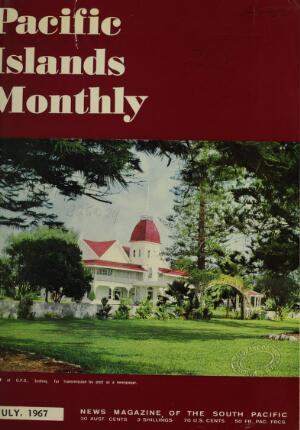
The Cover
he Royal Palace on the waterfront Nukualofa is focal point of Tonga’s tronation. The Royal Chapel is ?,arby in the palace grounds. We ink it is fitting that this splendid cture, taken especially for the Kasion, is by Tonga-born August ettig, 71 year-old Nukualofa trader id photographer, with whom PIM is had a long and warm association.
Advertisements & other items, pp. 17-18 (3 items)
15
ACIFIC ISLANDS MONTHLY— JULY, 1967
developed
now an Australian
Solid State SSB
Transceiver
J: v : : #! > i i
TRA 905
with full 100 watt
P.E.P. 2-12.5 MHz.
The Racal 100 watt transistorised H.F./SSB transceiver covers a frequency range from 2 to 12.5 MHz and is designed for use in radio telephone systems where particularly high reliability and stability are required.
The frequency stability (1 part in 10 6 ) is such that stable operations over periods of several months are possible without need for adjustments of any kind.
The complete unit uses solid state circuitry throughout, providing instantaneous warm up and low power consumption.
Two channels of two frequency simplex or four channels of single frequency simplex are available.
Extended or remote control is available so that the transceiver unit can be situated away from the telephone and control unit. The transceiver requires virtually no attention at all under normal conditions of operation. a name to communicate. nnrann racal ele °tr°nics pty. ltd.
U/UmmaHUl 75-77 Chandos St., CROWS NEST, N.S.W., AUST.
Suite 22, 553 St. Kilda Rd., Melbourne, Vic., AUST.
Triple-wrapped packets
Qrnotts
Biscuits
M O ■ , \ \ N x. -O' C/ <& m i O o . - - for extra energy There is no Substitute for Quality
16
JULY, 1967 PACIFIC ISLANDS MONTHLI
In This Issue
Eneral
;w Novel by Nancy Phelan 97 'thday Honours List 116 ►pra Highest for 16 Months 129
Aerican Samoa
:w Governor Named 22 ity-free Port 32 ►-operation Urged in Tourism 49 atch Industry 129
>Ok Islands
od Short After Floods 75 ;w Shipping Service to NZ 103 agua" Makes Record Trip 105 tches on Avatiu Wharf Extensions . 109
Ister Island
ok by Woman Doctor 96 II •ate Taxis 22
ands Society "Crumbling" 29
mp Sum for Banabans 31 urch Murals at Naiserelagi 61 od Costs Rise 70
ince's Landing, Suva 73
yuka Gravestone Mystery 87 va in 1871 91 rvey of Land-Resources 130 ferest in Palm Oil 130
Ench Polynesia
rritorial Assembly Elections 21 ipping Service to NZ 103 ntenary of Tahiti's Lighthouse ... 107
Gilbert And Ellice Islands Colony
View on Phosphate Royalties 31 Lump Sum for Banabans 31 New Vessel in Service 105 Unidentified Ships, Planes Seen 106 Sick Man Taken to Christmas Is. ... 107
Lord Howe Island
Tourism and the Future 53 Big Fish Catch 103
Nauru
Victory for Head Chief (and Friends) 23 "Little Cuba" 24 Big Ship to be Ordered 101 News in Pictures 117
New Caledonia
Territorial Assembly Elections 21 "Hole" in Seabed Found 107
New Hebrides
That Big Bay Wall 38 Overseas Interest in Resorts 52 More Mysterious Ruins Found 90 Book on Martyred Missionary 97 Missionary Cruise 103
Norfolk Island
New Stamps 22
Papua-New Guinea
New Political Party Formed 20 Political Gradualism Needed 28 Fatal Air Crash 30
Public Service Wage Case 37 Aircraft, Airport Problems 55 Public Service Protest March 57 House of Assembly Meeting 59 Old Sailor Retires 64 John Gilmore 65 Young Cricketer Off to South Africa 69 "Blue" Allan, the Soldier 85 Mysterious Ruins on Witu Island 90 "Queen Emma's" Grave 92 Novel on Cargo Cult 97 New Fishing Company Gets Started .. 107 Protest Over Shipbuilding Contracts 109 Miss Territory 1967 120 Palm Oil Industry Under Way 130 PI Mines Shares Drop 132 Sulphur Deficiency in Coconuts 132
Pitcairn Island
Independence? No Thanks 75 "Bounty" Relics 88 Shipping Service to be Dropped ... 109
Solomon Islands
Legco Elections 30
United States Trust Territory
Mystery of Amelia Earhart 94
Tonga
King's Coronation 18 Peace Corps Plan 32 An Awakening Sleepy Hollow? 39 Abacus System Going Well 39 Pictorial Series 41 Co-operation Urged in Tourism 49 Fishing Prospects at Minerva Reef 107 Overseas Funds Troubles Over 129
Western Samoa
Book by Professor Davidson 26 "Heart of Polynesia" Conference 45 Co-operation Urged in Tourism ... 49 Decimal Currency 129 "Disquieting" Outlook for Future 131
DEPARTMENTS: Up Front with the Editor, 14; Travel, 45; Letters to the Editors, 37; To The Point, with Percy Chatterton, 57; Brett Hilder Profile, 64; From the Islands Press, 76; Magazine Section, 85; Yesterday, 93; New Books, 94; Ship ping, 101; Cruising Yachts, 110; People in Pictures, 118; People, 121; Business and Development, 129; Produce Prices, 133; Shipping, Airways Schedules, 135; Deaths of Islands People, 142; Practical Planter, 147.
Coronation
Tonga Solemn, Then
Gay For King's
From PIM editor STUART INDER and AAP
Nukualofa, July 4
Tonga’s 21-stone King Taufa’ahau Tupou IV was crowned here today in a glittering European-style ceremony in the tiny wooden chapel in the grounds of his Royal Palace. The day was also the King’s 49th birthday. The Paci fic had not seen such pageantry since 1918 when the King’s mother, the late Queen Salote Tupou 111, was crowned in a similar ceremony.
THE King’s coronation was signalled to the thousands of Tongans and European guests in the grounds of the Palace and on the nearby malae (green) by a peal of bells from the chapel’s tall steeple rung by the Keeper of the Palace Records, the Hon Ve’ehala.
The King was crowned officially at 10.26 a.m. local time by the Royal Chaplain, the Rev, George Harris, assisted by the President-General of the Methodist Church of Australasia, the Rev. Cecil Gribble. . ... .
By the shiplOdd
The movement of Tongans into their capital for the great event began a month ago. By coronation eye thousands of Tongans had come in by small ships from the outer islands.
Most of the movements were handled bv the Tongan motor vessel Aoniu, the ocean going tug Hifofua and four smaller craft. They brought people from as far off as Tin Can Island.
As a special gesture by the Tongan Cabinet passengers have had to pay only half fare, and food for the great feasts, gifts of tapa and mats and Tongan handicrafts for sale, plus bed rolls and personal effects, have all been brought in free.
Before coronation week is out at
least 50 scheduled aircraft from Fiji and Western Samoa will have arrived or departed from Tonga, plus numbers of charters. Tonga normally gets four regular services a week.
The visitor list includes all the uncrowned heads of the South Pacific —including West Samoa’s Premier, Fiame Mataafa, Fiji s Leader of Government Business, Ratu K. K. T.
Mara; Governor H. Rex Lee of American Samoa; the Secretary- General of the South Pacific Commission, Sir Gawain Bell.
The list of outsiders come to pay homage is headed by the Duke and Duchess of Kent, representing Britain’s royal family;’ New Zealand’s p r i me Minister, Keith Holyoake, and Australia’s Minister for Education and Science Senator J. G. Gorton. ’
Procgssiod
The Press and TV corps numbers more than 50 and some parties have been camped here for a fortnight.
Thanks to the TV coverage the world will get a better look at Tonga’s coronation than thousands here in Nukualofa. But it’s being here that matters this week, and there’s probably not one of 70,000 Tongans who would give a roomful of TV sets to be anywhere else than Nukualofa for the crowning of Tonga’s
first monarch in almost 50 years, As t jj e King, in processic emerged from the Royal Pah f or t h e coronation ceremony t Tongan Police Band, immaculate white valas (skirts) and shirts, a black slouch hats burst into t Tongan Nati onal Anthem. , , The Kmg V wearm g dark paused on the steps of the Pala verandah facing the band and gue; seated across the front of the Pala grounds under pavilions covered wi canvas.
As a nthem finished, he stepp down on to a long path of ta cloth and walked slowly between lin °f Tongan noblewomen sitting besi the path. , He was , followed b y three pa boys carrying his long scarlet vel\ cape edged with ermine, Then came the King’s son, Crov Prince Tupo’utoa, a cadet at San hurst military academy, who w clad in the black ceremonial unifor of a major, complete with silver spu and ceremonial sword.
The page boys were dressed cream breeches and white stocking purple jackets, white ruffle-collars ai three-cornered hats, The King, wearing a splend general’s uniform, was followed I Queen Mata’aho, also wearing
• With Queen Mata'aho by his side, the King of Tonga, having been crowned, follows the remain der of the coronation service from the throne in the Royal Chapel at Nukualofa. On his left, in the dress uniform of Royal Military College, Sandhurst, is Crown Prince Tupo'utoa—Radio photo.
rlet cloak edged with ermine, and rest of his immediate family.
Beside the Palace on the King’s ht, the Palace guard of 40 men sented arms, their scarlet caps and hes in sharp contrast to their spot -5 white uniforms.
Dutside the Palace ground stood ird detachments from the Aus lian destroyer, Anzac, the British *ate Sirius and the Tonga Defence rces.
Formal recognition
\s the King and Queen entered chapel, the 90-voice mixed choir, ssed in blue gowns and white lars, broke into a song of greet and the guests, including the agan nobles and overseas visitors, □d for the formal recognition, rhe Royal Chaplain presented the ig to the congregation and asked his acceptance by the Tongan )ple.
Mter the congregation spoke its eptance, King Taufa’ahau and the een moved to huge black wooden lirs at the front of the chapel ing the people.
Ylr. Harris then admonished him “maintain inviolably the doctrine, rship, discipline and government” his scattered kingdom, after which King rose, walked to the com mon table, and took the corona i oath before signing it.
Returning to his chair, Mr. Gribble presented him with the Coronation Bible upon which the oath had been sworn as a “rule for the whole life and government of Christian princes”.
Rousing hymn
After a rousing hymn from the choir, Mr. Harris anointed the hands and forehead of the King with holy oil before kneeling to pray for “the assistance of heavenly grace” for the King and his people.
The Royal Chaplain then placed a ring on the King’s hand.
Intoning a prayer, he placed the heavy crown (made in Australia more than 100 years ago) on Taufa’ahau’s head and the congregation roared, “long may the King reign”.
This was the signal for a carillon of bells from the chapel tower and the chain reaction throughout the kingdom.
A coronet was then placed on Queen Mata’aho’s head.
The King rose from his chair and walked to the throne, a smaller carved wooden chair beneath a canopy of polished wood, with his Queen and Crown Prince on either side.
Mr. Harris stood before the newly crowned King and said, “Stand firm and hold fast from henceforth the seat and state of royal and imperial
dignity, which this day is delivered unto you in the name and by the authority of Almighty God”.
The communion prayers were then intoned by the Royal Chaplain and the bread and cup taken to the King and the Queen and the Crown Prince.
The King and Queen rose as the national anthem was sung and a gun salute boomed out across Nukualofa Bay.
As the King emerged from the chapel to return to the Palace, there was silence from the crowd until a solitary cheer broke out from the rows of school children on the edge of the Palace grounds.
Within seconds this was taken up in a wild roar of acclaim, and the King broke into a broad smile as he mounted the steps to the Palace verandah and turned to face the crowd.
Soon Tongans, overseas guests, and photographers were mingling in the Palace grounds before the King, while some 10,000 children marched past, chanting and laughing, accompanied by skin drum bands.
The coronation celebrations will continue throughout the week, with the ancient royal kava installation ceremony being held on July 6.
The week will end with thanksgiv ing church services on Sunday, July 9.
Handstands
Unreality-And
At The Palace
From Stuart Inder
Nukualofa, July 4.
FOR the first hour of Tonga’s coronation today it was as unrealistic as a fairy tale. A sparkling blue Pacific morning; a dazzling wedding cake palace in red and pure white; a king and queen in scarlet, gold and ermine; and page boys in three cornered hats —all observed by important visitors in top hats and striped morning suits. An impossible spectacle .
But it came good when the unaccustomed vomp was over and ordinary Tongans swarmed all over the Palace grounds, cheering, shouting, and con gratulating their newly-crowned monarch.
King Taufa’ahau and Queen Mata’aho, in full robes, but without their weighty crowns, remained almost a full hour on the Palace porch enjoying the demonstration.
For me it was a great relief to see the crowd react and know it was genuine.
Tonga cares for her King and
Queen, and Tongans are en joying their coronation. The King has been enjoying it, too, according to the churchmen who performed the crowning ceremony—the Rev. G. C.
Harris and the Rev. C. F.
Gribble.
“You would expect some thing to have gone wrong in the chapel, but it all went with out hitch,” Mr. Harris said.
That doesn’t mean that everybody is happy with today’s church service, of course.
The chapel is so small that by the time all the important overseas visitors, the nobles and the choir were seated, there were no seats left for leading Tongans, and there is muttering under breaths in some circles, which may neither forgive nor forget.
“Why should the non- Tongans get priority?” it is being asked.
And the overseas Press thought they could have been given greater access to the tight group of Palace officials who
have been stage-managing this spectacle, which is worth millions in publicity. For them, facts have been hard to get on the spot, despite the hard work of the Press liaison officer, Jack Riechelman.
But, overall, these complaints amount to nothing much. If you want an example of popular Tongan reaction, I can offer you nothing better than the man I saw in khaki doing handsprings in the Palace grounds among the top-hatted VlP’s.
His clothing bore the legend “Tongan Prisoner”. He was a gaolbird who had been granted a coronation amnesty.
Advertisements & other items, p. 21 (1 item)
19
CIFIC ISLANDS MONTHLY— JULY, 1967
party after another
In New Guinea They're Having
A Ball . . .
Now it’s just one darn party after another
From a Port Moresby correspondent Party politics have been slow in coming to New Guinea, and up to the time of the June meeting of the House of Assembly attempts to set up parties had not aroused much en thusiasm or achieved much success. A couple of years ago, after an initial burst of publicity, Gala Gala Rama’s New Guinea United National Party lapsed into a coma from which little attempt seems to have been made to rouse it. But the picture
has changed.
EARLY this year a new party got away to rather a fumbling start in the Sepik District. After several changes of name it finally settled for “United Christian Democratic Party”, and announced a platform which combined Seventh-Statism with a promise of cake for all and no clear indication of where the money to buy the cake was to come from.
Although its New Guinean leaders deny that the U.C.D.P. is a church party, it seems clear that it has a Catholic background and has received advice and guidance from Catholic clergy.
After establishing itself in the Sepik area, it has sent out “missionaries” to various parts of the New Guinea mainland and also to New Britain, and claims to have recruited members in these places, though whether these are “locals” or Sepik people working in those areas is not clear.
The party does not appear to have gained any following in Papua, or to have tried to do so, and one gets the impression that its leaders will need to acquire a good deal more political know-how before it can get off the ground.
Seventh State "out"
It got its first real setback on June 22 when the Australian Minister for Territories, Mr. C. E. Barnes, went on record in Lae as saying quite clearly that the Australian Govern ment had ruled out the possibility of the territory becoming Australia’s seventh State.
Mr. Barnes said that what the future might hold he did not know,
but the present government was opposed to seventh statehood. In dependence or some kind of sovereign status with a close association with Australia would, Mr. Barnes indica ted, be more in line with what cabinet expected. Thus an important plank in the United Christian Democratic Party’s platform ran into problems, although the party’s sponsors bravely state that they will go ahead with this part of their policy nevertheless.
Meanwhile, another new party has been mooted—a Local Government Party. This time the initiative came from Toni Voutas, the young ex patrol officer who was elected by a substantial majority in the Kaindi by-election to fill the vacancy caused by the death of Bill Bloomfield last year.
Pangu party
Councils were circularised with the suggestion that they should sponsor candidates for the 1968 elections, who, if elected, would form a Local Government Party in the House.
This proposal was viewed cautiously by most of the councils, and received its death-blow when the Administra tion ruled that councils could not use council tax monies for political objectives.
Perhaps it is as well that nothing came of this idea, as it was difficult to envisage how a platform capable of satisfying the aspirations of all the participating councils could have been worked out.
This was the situation when the Assembly met in June and adopted the third and final report of John
Guise’s Select Committee on Coi stitutional Development.
Then, three days after the Horn had adjourned “to a date to be fixed another new party made a spectacuh debut. The so-called “13 angry men who recently made the headlines wit their demand for home rule in 196 ( PIM, June, p. 63), had coalesce with a group of members of tt House to launch “Pangu Pati (Papua-New Guinea Union Party).
There was no fumbling this tirm Taking as its motto “Humilib Honesty na Hatwok” (and hardwork and as its objective “Evolution nc Revolution”, it announced a wel rounded platform in the followin terms: Home rule leading to ultimal independence.
One name, one country, on people.
Pidgin the principal commo language of communication.
Localisation of the Public Servic and creation of a Public Servic Board.
Security of overseas investments.
Doubling of national income withi 10 years.
National adult literacy prc gramme.
Adequate housing for all worker; urban and rural.
Joining of Papua and New Guine by road.
Land reform through a Land Con version Ordinance.
Improved conditions for rural am urban workers.
Greater subsidies to Missions fo education and health.
Papuan and New Guinea] participation in all economy development schemes.
Mr. Barnes.
Advertisements & other items, p. 22 (1 item)
20
JULY, 1967 PACIFIC ISLANDS MONTHL
[?]umility, honesty, "hatwok” evident
Ihe strengthening of Local Gov ernment Councils, rhe support of Volunteer Service. [s this programme an impatient iction to the cautious proposals of Guise report? The leaders of the v party won’t be drawn on this ;stion. [t is certain that a lot of midnight had been burned and the main ?s of the party’s programme had m worked out before the Guise ort was tabled. But it could well that disappointment with the cen ts of the report decided Pangu’s igenitors to make an immediate louncement of its formation and is.
UNP dead
"he first outcome of the formation Pangu has been that the United lional Party has been given up for d and has been accorded a quiet eral. Gala Gala Rarua, as one the “angry men”, has thrown in lot with Pangu.
Wiere do we go from here? Pangu ady has the adherence of nine [A’s—two Europeans and seven v Guineans—and hopes to have at t 15, and to operate in the House a party at the next meeting in just. he Europeans are Toni Voutas Barry Holloway. Earlier this year M, April, p, 39) these two nbers circulated a five-page docu it on a proposed presidential cture for the territory. They pub jd their paper to stimulate debate, proposed no timetable and made concrete proposals, he basis of their scheme was for residential Head of State to be
elected by a national parliament and to be responsible to it. A cabinet would be chosen from the House but the president would be able to appoint additional men outside the House because of their expertise.
Voutas and Holloway are among the youngest members of the Assembly and have been working together recently. Both are former patrol officers, who hold open seats (that is, they stood for election against New Guinean candidates).
Guise will join
The seven New Guinean members of the Pangu Party who are in the House are Paul Lapun (Bougain ville), Nicholas Brokam (New Ireland), Pita Lus (Dreikikir, Sepik), James Meanggarum (Ramu), Paliau Maloat (Manus), Siwi Kurondo (Kerowagi) and Wegra Kenu (Upper Sepik).
It is of interest that Brokam, Lapun and Kenu were all members of the Assembly’s Select Committee on Constitutional Development.
Mr. John Guise, chairman of the select committee, says he will also join the Pangu Party if he gets the approval of the majority of his electorate, at Milne Bay.
Gala Gala Rarua will be one of four rotating chairmen on the new party’s central executive. Two others are Mike Somare, a journalist, and Joseph Nombri. former patrol officer and now a student at the administra tive college in Port Moresby. All three are New Guineans. A fourth chairman is to be named.
It is clear that behind Pangu there is a measure of political realism and
organisational ability which has not been present in previous attempts at party making.
But what measure of support can it muster for its policies among the common people of the territory? This is anyone’s guess, and with most of the guessers the wish seems to be the father to the thought.
Ballot box will tell
Next year’s ballot boxes should give a reasonably reliable answer.
It is true that in some electorates candidates will win on personality rather than policy. But there is no reason to suppose that Pangu can didates will have a monopoly of personal charm, and we may assume that over a number of electorates the personal factor will cancel itself out.
While the results in any one electorate may not prove anything, the results over a range of 30 or 40 electorates (if Pangu is able to contest that number) should give a pretty accurate indication of how much support there is for the Pangu pro gramme among the people of the villages, from the Bensbach River to Buka.
Humility, honesty na hatwok. It is quite evident that already quite a lot of hatwok has gone into this venture, and there is no reason to doubt that honesty is there too. One is entitled to hope that in the hurly burly of party politics, and in the increased pressure on the political front which is now developing as a result of the nearness of the terri tory’s next general election, humility won’t fly out the window.
Mr. Holloway, one of the European members of Pangu.
French Territories To Go To Polls
JEW CALEDONIANS will go to the polls on July 9 to elect a new v Territorial Assembly. There are 174 candidates for the 35 seats, he main parties are the Union Caledonienne (Nationalist) and the iNR, President de Gaulle’s ruling party in France.
PlM’s Noumea correspondent says that over the last few years le UNR has come “perilously close” to the Union Caledonienne in some t its political planks. Among other things it is calling for a drastic curtail icnt of Parisian rule in New Caledonia, and it has been fighting vigorously )r the introduction of a second smelting company, preferably foreign, to Dmbat the monopolistic Societe le Nickel. “These two ideas, of course, re regarded as pure heresy by the French UNR,” our correspondent Ids.
French Polynesian elections for a new Territorial Assembly will be eld on September 3.
Advertisements & other items, p. 23 (1 item)
21
CIFIC ISLANDS MONTHLY JULY, 1967
American Samoa
New Governor For
Mr. Owen S. Aspinall, who has been Secretary of American
Samoa since November, 1962,
has been appointed to succeed Governor H. Rex Lee from
August 1.
PRESIDENT Johnson announced his appointment on June 28. He said Governor Lee would get a new government position—yet to be an nounced.
Governor Lee, 57, has been Gov ernor of the seven-island, 76 sq. mile territory since May, 1961 —the longest term in the history of US adminis tration of the islands.
Mr. Aspinall, 39, studied at Denver University and the American University (Washington), before serv ing with the 504th Parachute Regi ment, 82nd Airborne Division, in 1945-46. After a short period as a member of the US Capital Police Force, he became deputy district attorney of Mesa County, Colorado.
In January, 1962, he became Attorney-General of American Samoa.
Ten months later he was appointed Secretary (deputy governor) of the territory—a position he has held ever since.
Mr. Aspinall has frequently acted as governor during the absences of Governor Lee.
Last December, Mr. Aspinall married his Samoan secretary, formerly Miss Taotafa Lutu.
Mr. Aspinall.
For Fiji's
Hostile Future
Pirate Taxis
From a Suva correspondent If history takes any notice of
the Fiji Legislative Council’s
June meeting it will record it under the heading of “The battle of the taxis”.
AND it was a battle, with plenty of sniping at the Government from the Opposition Federation Party and at the officials of the Transport Department.
But the Government, determined to be masters in their own house, brushed aside all arguments, and, with what the Attorney-General described as “foresight and courage”, approved a measure which will give Fiji an ordered taxi industry instead of the chaos which has existed for years.
There were two measures, really, a Bill to amend the Traffic Ordinance, which the Member for Communications and Works, Mr.
Charles Stinson, said represented “the declaration of war against pirate taxi operators”, and a motion to approve regulations governing the industry.
Both the Bill and regulations, which will have the effect of control ling the number of taxis in the Colony—eventually cutting it to an economic size—and imposing control on similar lines to that which has created an efficient bus industry, met with frenzied opposition from the Federation Party.
1,300 taxis
There are now 1,300 taxis in the colony compared with 700-odd in 1963.
In the Legco debate. Government speakers accused the Opposition of trying to protect the pirates.
This was indignantly denied by the Opposition which pointed out that, on the word of an accuser, an innocent man could be robbed of his right to own a car—that the Licensing Authority became the accuser, judge and executioner, as Mr. A. D. Patel, the Federation Party Leader, put it.
The Government argued that there was a right of appeal and that drastic measures were needed to cope with what had become an evil.
The Opposition then claimed that there was already a law against “pirating” and that the courts should
deal with such an offence, not Tran port Department officials.
They blotted their copyboo however, by descending, as they fr quently do, to the level of accush Government officials of bribery ar corruption—even that the regulatioi were being pushed through by tl Government to favour vested interes —motor dealers, oil companies ai insurance companies.
Mr. John Falvey (Member witho Portfolio) struck back and the B and the regulations were eventual voted through.
tor Norfolk
More ship stamps tor Norfolk
Norfolk Island will issue four mo stamps in August featuring shi\ associated with the island’s histor Four stamps featuring ships have c ready been issued (“ PIM”, Feb., 13).
THE new stamps are in denomin tions of sc, 7c, 9c and 10c.
The 5c stamp depicts the slot Norfolk, which was built of Norfo pine in 1798.
Late that year Matthew Flinde and George Bass with a small ere left Sydney in her to discover Ba Strait, Norfolk was the first vessel circumnavigate Tasmania.
The 7c stamp will feature H survey cutter Mermaid. This shi with the brig Brutus, left Sydney May, 1825, with a detachment i soldiers, 57 prisoners and a fe women and children to reopen tl island as a penal settlement after had been closed for 11 years.
The barque Lady Franklin w appear on the 9c stamp.
This vessel carried stores and co victs between Hobart and Norfo during the second settlement.
In 1855 the Lady Franklin ma> her last trip to the island to transpc some 60 prisoners to Hobart.
The Morayshire, which is shov on the 10c stamp, was chartered 1 Governor Denison to carry the whe Pitcairn population, numbering 19 to Norfolk in 1856.
Advertisements & other items, p. 24 (1 item)
22
JULY, 1967 PACIFIC ISLANDS MONTHL
friends) won the day
Home, $Weet Home!
How the Head Chief (and friends) won the day
By Stuart Inder
With the ownership of Nauru’s phosphate deposits safely signed over to them, the 3,000 Nauruans now look like becom ing the world’s littlest nation on January 31 next year.
N agreement enabling the L Nauruans to buy the assets of ; British Phosphate Commissioners mstralia, NZ and Britain) was ;ned in a formal but friendly cere my in Canberra on June 15 (see :ture p. 117).
The purchase of the assets will be ide over three years from July 1, 67, at a cost of about $2O million.
The only major point still to be tied by the BPC powers and the mruans is the type of association : new Nauru will continue to have th Australia after independence. :>st probably Australia will take an erest in Nauru’s defence and ex nal affairs through a treaty of mdship .
Nauru’s Head Chief Hammer Roburt is not averse to an ar igement of this kind so long as lependence is granted first and the aty negotiated afterwards. He ows from practical experience in )rld War II that in time of war body takes much notice of scraps paper.
And defence and external affairs I be fairly minor matters for iuru in the next few years, for re are more complex problems in ablishing independence.
Behind the success
however these and other details worked out, little Nauru owes big success in a very big world the leadership of Deßoburt and ability to get people working for i. His victory is the result of his ion, and his personal qualities of verity and honesty, which have racted to him a wide team of >erts in the last few years.
Deßoburt is a man who is harder his friends than his enemies (and o expects his friends to be just as d on him). Working for him, d or unpaid, is an experience only the dedicated. Deßoburt thinks hing of 3 a.m. meetings when the
pressure is on, and will move from Melbourne to Canberra to Sydney and back to Melbourne in the course of a day.
He has made frequent trips to the UN in New York, and has spent long periods away from Nauru in his fight for recognition for Nauru. He is as tenacious as a bulldog, with a strong sense of the “rightness” of things.
Lone battle
The people he has leaned on most are Dr. Helen Hughes, senior re search fellow with the Department of Economics at the Australian National University, Canberra; Sydney economic consultants Philip Shrapnel and Ken Walker; Professor I. W.
Davidson, Professor of Pacific History at the Australian National University; and publicist Keith Madden, an account executive of the public relations firm of Eric White Associates.
Until 1964 Deßoburt fought virtu ally a lone battle in his request for phosphate ownership and indepen-
dence. He was not taken very seriously in Canberra. He was pre vented from making his position public by a form of mild blackmail from the Department of Territories, some of whose officials insisted that the Nauruans could put their case only through official channels if they expected it to be heard. They were not permitted outside advisers at their conferences with the department.
But there were personnel changes in the department, and in addition, in 1964, the Nauruans were allowed their first adviser at the conference table—Dr. Hughes. Now aged 38, she is a former economics consultant in private practice in Melbourne. She was recommended to the Nauruans by the Australian Council of Trade Unions.
The ACTU had earlier taken an interest in the Nauruan request for a basic wage and a Sydney union advocate, Bill Baker, had gone to Nauru to fight, successfully, for this.
Baker had seen that the Nauruans needed professional help if they were to fight the BPC for a fair cut of the phosphate proceeds.
Dr. Hughes decided that facts were wanted on the differences between the costs of production of phosphate on Nauru and the world price. The difficulty was that the BPC was un able to say what the world price was, and its own phosphate economics were so mixed up with those of Christmas Island and Ocean Island that it seemed an impossible task to get an accurate picture. The BPC
(Continued on p. 143)
Dr. Helen Hughes.
Head Chief DeRoburt.
is not co-operative in helping any dy get an accurate picture.
Dr. Hughes was able to show for i first time that there was such a ng as a world price. She pub tied her findings in a paper in the urnal of the Economic Society of istralia and New Zealand, in :cember, 1964.
With the Nauruans still needing Dnomic advice, Dr. Hughes put ißoburt in touch with consultant ilip Shrapnel, 47, a former banker, 10 put the detailed problems in the nds of one of his economists, Ken ilker, 37—slow speaking, con entious, painstaking.
Also into the picture, on the :ommendation of Dr. Hughes and rapnel, came Eric White Associ s, who took on the job of ex tiners of Nauruan attitudes to the istralian and New Zealand public.
Legal ownership
Shrapnel also briefed barrister John dville, whose task it was to query ! legal ownership of the phosphate the BPC. He was unable to prove ; BPC didn’t have legal ownership, t his work threw so much doubt the legal position generally that /er again was it a real issue. The /isers were thus free to get on h the real attack, which was on ; inefficient BPC and its peculiar thods of economics.
Nauruan independence, although a •re popular issue, has been secon -7 to the battle for the phosphate, everybody realised that once the Dsphate battle was settled the ideal situation could be wound easily.
Phe details of this battle—a battle
of figures between economists which lasted three years—would make a book.
The turning point came for the Nauruans when the governments ad mitted that the experts had watertight figures showing there was such a thing as a world phosphate price.
From then on the Nauruan advisers battled in their various ways to get for the Nauruans the difference be tween actual production costs and the world price.
Final success came in Canberra in May, when the BPC partners agreed to hand over the phosphate industry to Nauru ( PIM , June, p. 24). It was still undecided whether the handover would be in five years or three, and whether the BPC would still act as Nauruan agents.
At the end of the June meeting, it was agreed that the Nauruans could pruchase the assets of the BPC for about $2O million over three years from July 1. When the money is paid the Nauruans will enter into complete ownership of the industry, operating it through a Nauru Phos phate Corporation, yet to be set up.
Two million tons a year
The NPC will supply phosphate exclusively to the BPC at the present rate of two million tons a year.
The basic price in each of the three years of the changeover will be $ll per ton, subject to world price adjust ments. However, if the Nauruans have paid off the assets by June 30, 1969, the basic price in the third year will increase to $l2 per ton.
It is open to either the Nauruans or the partners to review the arrange ments for the supply of phosphate in the second year of the agreement.
The partners can thus assure them selves that there will be a continuous supply of two million tons a year.
During the three years of BPC
management, the BPC will hand to the Nauru Phosphate Corporation all their forward developmental, financial and operational budgets; it will com plete all capital works in progress on July 1, 1967; and it will give the NPC regular progress reports and in form it of any management prob lems.
When the NPC takes over, it will enter into a servicing arrangement with the BPC, so that the NPC will continue to use BPC phosphate ships.
The Nauruans also intend to build a ship of their own (see p. 101).
The agreement provides that the Nauruans will make quarterly pay ments of $750,000 over three years towards purchase of the BPC assets.
But it is in Nauruan interests to pay the amount in two years, and to do this they propose to raise an overseas loan.
They will have to borrow some thing like $l7 million, but the Nauruan advisers say there will be no difficulty in this.
The new mini-nation of Nauru will be a rich one, good for a loan.
Current phosphate reserves on Nauru are 59.5 million tons, and at the rate of extraction of two million tons a year, the deposits will last another 30 years.
The agreed price of $ll per ton is a gross figure, and from this must be deducted the cost of extraction and administration. The actual return to the Nauruans will be about $6 a ton, rising to about $7 if the capital assets are paid for in two years.
The $6 a ton is not a direct return to Nauruan landowners. About $4.50
(Continued on p. 143)
Mr. K. Walker.
Mr. J. Melville.
Mr. P. Shrapnel.
(Continued from P . 25) the sum will be paid into a specific id which will cover long-term in- Btments, development of alternative lustries and housing, and give rems to landowners. The largest lount will be set aside for the ig-term investment fund which [mot be used until the phosphate posits are exhausted. The retinder of the $6 will go towards ying off the BPC assets.
This $6 windfall compares with the .75 a ton which the Nauruans have »n getting recently as phosphate The June meeting agreed to rease this royalty for the final it, to June 30, 1967, to $4.50 a i—a figure which Head Chief immer Deßoburt had held out for, ;n against advice.
Fhe only point in the long phosate battle which the Nauruans did t win was the matter of rehabilitan of the one-third of Nauru which > been worked out. The Nauruans J asked the partners to pay for : cost of importing soil to fill, but s now appears to be a dead letter. 3n independence the full issues are t yet settled.
Fhe partners in Canberra in June ; two proposals to the Nauruans, :h friendly, sound, and shrewdly
designed to prove to the Nauruans big B brother. ° They first pro posed internal self-governmen t, P with Australia responsible for external affairs and defence the right G f Nauruans’ entry to Australia and promise of all kinds of other help if needed.
A system of government through committees of the legislature could replace the proposed Nauruan presidential system, with the Assembly acting bo [ h a s executive and legislative bodv.
independence Only, TMankS
An example of the shrewdness of this proposal was an oblique reference to the recent phosphate strike on Nauru, which had Red links ( PIM , June, p. 25). The proposal slyly pointed out that the “occasion may arise when the Nauruan Government might wish to seek assistance in maintaining law and order”—e.g., to control internal civil disorders which might arise from the migrant labour force [of Chinese and Gilbert and Ellice islanders]. The normal work force in the phosphate industry, apart from the Nauruans and Europeans, is about 1,600 adult males; the present establishment of the Police Force is
57, and the number of adult male Nauruans is fewer than 600. There are, in very recent history, indica tions of the difficulties which the Nauru Police Force might expect to encounter if determined action were taken by a substantial body of migrant labour. The partner govern ments suggest that the Nauruan dele gation should give careful considera tion to how they would contemplate a Nauruan Government would deal with such a situation.
But the Nauruans politely sniffed at internal self-government, so the second proposal was placed on the meeting table at the last minute. It was the ace up the partners’ sleeve.
The proposal said archly: “Another possibility would be for Nauru to be accorded full independence and make a Treaty of Friendship with Australia under which responsibility for foreign affairs and defence of Nauru would devolve upon Australia . . . Under this proposal it would be possible to give effect to most of the general constitutional proposals put forward by the Nauruan dele gation.”
And this was the position in late June as Deßoburt went off to talk at the UN Trusteeship Council, which twice already has supported the Nauruan demand for full indepen dence by January 31.
The partners’ ace looks like win ning.
Advertisements & other items, p. 25 (1 item)
23
CIFIC ISLANDS MONTHLY JULY, 1967
of the South Seas!
Oh dear! Where trill it all end ?
Nauru: The little Cuba of the South Seas!
AUSTRALIA’S fears about granting independence to the tiny phosphate island of Nauru and its 3,000 people have been outlined to me by a worried senior official of the Department of Territories. “It could become our Cuba”, he said.
“Of course, we have the assurances of the Head Chief, Mr.
Hammer Deßoburt, that Nauru has no territorial ambitions— yet. . . .”
“You mean he isn’t to be trusted?”
“No, I didn’t say that. But he’s on record as saying that he wants Nauru to be ‘unaligned’ ”.
“Ah, if you’re not with us, then you’re against us?”
“That’s one way of looking at it; but what worries some of us in the department is Deßoburt’s statement that ‘later there could be a Pacific community of islands’ ”.
“That’s bad?”
“Depends. Say, for example.
Deßoburt starts growing a beard the day after independence, January 31, 1968. Get me? Next thing you know is that aggressive Nauruan expansionism has to be stopped somewhere. Can we depend on LBJ in any showdown between Nauru and us?”
“You’re exaggerating, surely?”
“No, we and the EA people are simply realists. We must plan for any eventuality in the Pacific basin . . . like missiles in the Buada Lagoon, a dagger held at the throat of Canberra, as it were, only 2,700 miles away.”
“What’s the alternative to in dependence and us retaining control over Nauru’s defence and external affairs?”
“Well, we’re fully committed in Vietnam now and, frankly, we don’t want to be drawn into a prolonged guerrilla war in the Pacific ”
“You’re not suggesting the Nauruans might take to the hills?”
“Not exactly—there aren’t any.
But it would be no picnic trying to winkle out recalcitrant Nauruan independence fighters from pockets in the coral pinnacles. After all, there are 5,263 acres for them to hide in.”
“Then you mean we have no alternative but to grant indepen dence now?”
“The Minister’s holding his cards close to his vest, but I
By Alan Fitzgerald, “Can
berra Times” humorist and former reporter on “The Fiji Times”.
can say we are formulating con tingency plans in the eventuality of complete Nauruan indepen dence and its emergence on the world stage.”
“What exactly do you mean?”
“Look at it, man. Nauru, lack ing any natural resources other than phosphate, gets a seat in the UN and has something like $2OO million to spend.
“First the Russians offer to build them a salt-water de salination plant for $4OO million to replace the island’s brackish wells. Next thing you know, Russian officers are training the Nauru Volunteer Rifle Brigade. ‘Then in a lightning coup d’etat the wireless station, the London Missionary Society mission, the No. 2 co-operative store, district kindergarten and Administration workshops are seized. Deßoburt is over-thrown and the new man flies to Moscow or, worse, Peking.
They do a deal, and we are cut off from our supplies of super phosphate. Hawks in the Country Party demand war, direct inter vention with or without the UN.
“In a clandestine operation, ASIO mounts a full-scale invasion, using expatriate Free Nauruan students as a cover. They go ashore at night at the boat harbour, and by morning the old BPC messroom and post office are ours.
“Meanwhile, our paratroops dropped on the western side of the island are working their way inland from the Protestant Youth Centre. They are, of course, Aborigines specially recruited by us for fire-brigade work in the Pacific. Before the black paras reach the Buada Lagoon to defuse the Red missiles they turn on their Australian officers and swap sides, chanting ‘A Free Arnhem
Land’ and ‘Long live Nauruan- Australian Aboriginal peace and prosperity!’ ”
“It sounds like a nightmare.”
“Stranger things have happened, believe me.”
“But surely our great and powerful friends would stand by us in such a crisis?”
“It depends. The Nauru delega tion at the UN outsmarts us, and rams through a motion denounc ing us as the aggressors. It’s nonsense, of course. . . .”
“Wait a minute, you said we had mounted a clandestine in vasion. . . .”
“Yes, but that was only because they might have fired the first shot if we hadn’t. There’s a distinction, you agree,”
“Yes, you do have a fine point there.”
“Well, the UN Secretary- General demands a ceasefire. We lobby for time, hoping at least to capture the old BPC staff club and trade store to put us in a better bargaining position. But it’s useless.”
“You mean we lose the beach head and the phosphate?”
“Yes, but there are gains. The Suva conference between us and the Nauruans results in the dis mantling of the missile pads from the Buada Lagoon and the re patriation of the Russian cadres in the Volunteer Rifle Brigade.
We agree to ransom our invasion force for $2OO million and to sign a mutual non-aggression pact.
The Nauruans agree to postpone testing of their own nuclear weapons. But they retain the right to exercise control over our defence and external affairs.”
“Did we win?”
“Not exactly, but losing to the Nauruans would have been worse.
After all, they have upped the price of phosphate from 39c a ton two years ago to $6 a ton today. We are lucky to keep our shirts.” —Reprinted by permission from the “Canberra Times”.
Advertisements & other items, pp. 26-27 (2 items)
24
JULY, 1967 PACIFIC ISLANDS MONTHL
25
ACIFIC ISLANDS MONTHLY JULY, 1967
lessons for Fiji, New Guinea
When ill-equipped minds shouldered the white man's burden . . . lessons for Fiji, New Guinea in story of emerging Samoa
Reviewed by STUART INDER In an emerging territory one of the great difficulties be setting its colonial rulers is to know when internal agitation for political progress is a genuine reflection of local thinking, and when merely the mouthings of minor dissentients.
THE local administration, which most certainly will be dominated by expatriates, needs an efficient and sympathetic intelligence system, and sensitive and sincere public servants able to make proper use of what they find. Even the most immaculate of colonial policies will misfire if the expatriates who are administering it on the spot, and the public servants back in the centre of metropolitan government, have not the intellectual capacity to really understand what is happening.
In his book on the emergence of the independent state of Western Samoa, Samoa mo Samoa (“Samoa for the Samoans”), Professor J. W.
Davidson, Professor of Pacific History at the Australian National University, shows how badly Samoa suffered at the hands of brash and uncouth New Zealand officials oyer a great many years, and how mis handling by a succession of local administrators and expatriate public servants delayed Samoan indepen dence and caused ill-feeling which may still be found in Samoa.
Professor Davidson’s consciousness of the poor quality of expatriate officers does in fact dominate his 500-page history of Western Samoa; but what he has to say is a timely lesson, relevant to present-day de velopments in Pacific territories, par ticularly New Guinea and Fiji.
Modern colonialism
As a first-rate study of the prob lems of modern colonialism in the Pacific, Samoa mo Samoa is a valu able book for anyone working or living in the South Seas. But for Samoa in particular Professor David son, already celebrated as a main architect of the Samoan constitution, has done that country a further erudite service for which the Samoans will have cause to be grateful while history books are still read there; for this is a record of the impact of the
West on Samoa, from 1830 to inde pendence in 1962. A big portion of the book is a detailed account of the behind-the-scenes moves since 1946, in which Davidson himself was closely involved.
This is not to say that his interpre tation of events, especially in that critical period from the end of World War I to the beginning of World War 11, will be accepted in its entirety. His documentation is prodigious and exhaustive, but he himself points out that his position on Samoa has often been that of “a passionate partisan”, and that the “after-glow of past political involve ment has no doubt affected my pre sentation of events”.
Mau troubles
As a true historian he merely im plies that he has done as well as he could (and that is very well indeed) and that others should write their interpretation of the years, because a definitive history “can only be written through the process of pro gressive approximation”.
For me, there is some approxima tion to be found in Professor David son’s interpretation of the official mind during the Mau troubles in the 19205. (The word Mau means testi mony, and used in the sense of a Samoan political movement it means opposition party.) The aspirations of the Mau came to a crisis on “Black Saturday”, December 28, 1929, when a Mau procession in Apia was fired on by the police, and 11 Samoans, nearly all holding important matai titles, were killed or died later from in juries. The Mau was soon afterwards declared a seditious organisation and its members took to the bush.
By 1929 the Mau represented a reassertion of Samoan traditionalism, and by then, Professor Davidson says, it was the dominant factor in the country. The expatriate officers
had believed that the growing agr tion was merely a storm in a teaci whipped up by “agitators” like Nels and Smyth. Professor Davidson is course critical of this attitude, and certainly proves his contention, frc documentary files; that the N< Zealanders in charge were inept a insensitive.
But although he is aware of th< I doubt if he always gives enou weight to the difficulties faced officials at this, and later tim Allowing for the inadequacies of 1 New Zealand public servants, Samo desires and attitudes surely were i always as clear as Professor Dav son’s account implies.
Stimulating
While it is unfair to accuse 1 author of taking advantage of hu sight—he is too experienced an 1: torian for that—his obvious sy pathies for the Samoans perh; carry him further than they shou and thus we are given the impress] that after 1900, the Samoans wi continuously being sinned against completely insensitive idiots a bullies as they struggled for reci nition in a difficult world.
He does, as he himself says, Samoan society in a clear light a not in false colours; his difficu may be that because of this he is ] able to see the colonialists quite sympathetically. There was, after ; a cultural clash too.
This obelisk outside Western Samoa
historic Fono (parliament) house [?]
Mulinu'u marks the spot where t[?]
country's independence was proclaim
5½ years ago.
But one must be careful not to verstress what is merely my own iterpretation of Professor Davidson’s iterpretation. He gives us facts lough to form different opinions we want them, and here is a book ill of stimulating thought.
He explains how constitutional re >rms in dependencies always lack jrmanency; their success being icasured only by whether they pro de a workable sytsem of govern icnt for the time being, and also ave the way open for a further ivance towards independence, in rnal self-government or incorpora on in some larger political unit, ny reforms will quickly be exposed ► criticism, because by providing iportunities for more political ex ;rience they stimulate demands for irther reforms.
He adds, pointedly: “Indeed, :quiescence in the status quo is in self a sign of failure—and of future mger. It most frequently indicates -for example, in colonies (such as iji) where internal divisions have ;en constitutionally recognised and icouraged—that a solution to jlitical problems may eventually be tught through non - constitutional lannels.”
Public Service dangers
Samoa’s experience gives fair arning of how local officers any bere may be expected to react to ediocre expatriates, brought in on •od salaries with fringe benefits such inexpensive government housing, any Samoan junior officials, in the ne Davidson was working in the rvernment, believed that the conded officers would stick together :cause of what they had in common, imoan officers who feared they ight have to shoulder the blame r the errors of their senior expat ite officers gave up rather than ;ht.
The book stresses the dangers of a blic service, such as that consti ted in Samoa in 1949, staffed by ople with wide powers and bureau atic minds. Because of it, Samoa is forced to go forth to indepen nce with an inadequately trained rps of local officers, and there are ecial lessons in this for New ainea.
How familiar, for instance, is his scription of the post-war Public rvice in Samoa. “It was,” he says, n the whole, ill-qualified for the >ks it had to undertake. Before the ir an attempt had been made to :ruit a few university graduates for ministrative service in Samoa; but ose who were actually appointed d found little scope for their talents a service dominated by men of
different background, and resigned.
Samoa had continued to be dependent for its administrative staff on men seconded from the ordinary ranks of the New Zealand Public Service.
“A few of these, indeed, had re sponded to their opportunities and served Samoa with intelligence and sensitivity: they had found their re ward in the respect of the local people, if not always in official approval. But many had lived in Samoa for years without learning anything of importance about the country or the people, having few contacts beyond expatriate circles, and looking forward to the time when they would return to New Zealand suburbs that they looked on as home.
“Many had found a basis for self esteem in the expression of contempt for all Samoans. A few—even more conscious of their worth—had seen themselves as martyrs rendering self less service to an ungrateful people.
Official weaknesses
“One or two had set themselves up as experts in things Samoa, like guests correcting their hosts from a manual of etiquette. None of these men had served in positions of real administrative responsibility outside the New Zealand island territories; few knew—or seemed much to care —about the solution of problems similar to Samoa’s in other parts of the world; their notions of policy and of administration were largely limited to what they had picked up in their own small realm, a construct of red tape and their own illusions.”
Other expatriates will be interested too in Davidson’s summing up of the difficulties of official members in a colonial legislature. Such men are in a difficult position, he says, be cause at best they are seen by the elected members as advocates of a cause that is not their own, and at worst as marionettes who merely rise to vote at their master’s call.
One of their special weaknesses is that because they are not politicians by training or inclination, they tend
to present facts baldly, and avoid relating them to the broad issues of policy which interest elected mem bers.
The personal picture that emerges of Professor Davidson on the job as an official member in Samoa is at times fascinating. Because, he says, he spoke to the Samoans in the Assembly with sympathy, not with condescension, and spoke of co operation and not of the white man’s burden, his own position began to diverge from that of his official colleagues.
He tells how on one occasion he referred, in the Assembly, to the nominal rents charged expatriates for housing as “constituting a concealed increment” to their salaries; and for a long time afterwards, in all sorts of out-of-the-way places, he was regarded by the Samoans with new respect. Since German times the Samoans had been critical of the privileges enjoyed by expatriate officials, and now here was an ex patriate talking about it.
Professor Davidson makes many exceptions in his general criticism of the quality of expatriates—and in particular Sir Guy Powles and Mr.
J. B. Wright. Of Wright, Davidson says that although his background was little broader than that of many others who came from New Zealand, he was a man “with an unusually keen and critical mind; one who was never content to consider only the superficial symptoms of a deep-seated disorder, but sought for its basic cause”.
Samoa mo Samoa makes it clear just how many men of this type are needed in the South Pacific, and how few of them have been available under the Australian and New Zealand system of expecting ill equipped minds to shoulder the white man’s burden—to the despair and anger of the black and brown man.
As one educated Samoan said, “We didn’t meet people like these back in Auckland”. (SAMOA MO SAMOA. Oxford University Press. $9.75.)
One of the postage stamps issued by Western Samoa to celebrate its indepen dence on January 1, 1962, was this one depicting the country's flag.
Advertisements & other items, pp. 28-29 (2 items)
26
JULY, 1967 PACIFIC ISLANDS MONTHI
27
ACIFIC ISLANDS MONTHLY JULY, 1967
sane, political gradualism
Assembly says New Guinea needs sane, political gradualism
From a Port Moresby correspondent The P-NG Select Committee on Constitutional Develop ment presented its final report to the House in June, in an at mosphere of anti-climax. Most people had expected some fairly radical proposals, but what resulted was a conservative, gradual step, which at the same time had just enough adventure in it to keep the more vocal critics in check.
THUS the committee’s proposals will help to put a welcome and reasonable restraint on the political light-headedness that has developed in the territory in recent months — mainly because of the elections due early next year.
It’s all well and good to have political progress, but you don’t progress fast by putting the cart be fore the horse, and to hear some of the urban elite these days one would think that independence will be here tomorrow. You have to follow steps to reach self-government and the steps offered by the select committee’s final report are on a firmer founda tion than those of the Home Rule exponents who want pie in the sky in the morning.
No apologies
The select committee made no apologies for taking the middling view. After having taken a great deal of evidence throughout the territory— and that means in the bush as well as in the towns —it pointed out that “one large sector of the community was against any change and wanted the present position continued, at least until 1972” (when the next House will finish).
There was “also a small group which put forward far-reaching recommendations amounting to limited self-government” (a reference to the Home Rule group). But, said the report, “the majority maintained an intermediate position. They desired a further step forward so that mem bers of the House could participate more in the government”.
And it is a step and not a leap forward that the committee proposes.
It supports a ministerial system following the 1968 elections.
It suggests an Administrator’s Executive Council, to consist of the Administrator, three official members of the Assembly, seven ministers, and one additional member of the As sembly appointed at the discretion
of the Administrator should he decide that the member could be of special assistance.
The members of the council are to be nominated by the Administrator and to hold office during the pleasure of the Minister for Territories.
The executive Council would be the principal instrument of policy in the territory and the seven ministers would be responsible, with the per manent departmental heads, for departmental policy, and represent their departments in the Assembly.
For departments not represented by a minister, assistant ministers (the number is unspecified) would be ap pointed from the House to work with departmental heads.
Budget committee
The new proposals also include appointment of a budget committee of five to provide an additional link between the House and the Admini stration in budgetary matters; it would have no executive authority but be able to make recommenda tions. The Executive Council would have final responsibility of advising the administrator on budget policy and planning.
The ministers are to be selected “without racial qualification”. If the minister and a departmental head dis agreed on policy the matter would be referred to the Administrator for decision.
The report added, “It is realised that at this stage of the territory’s development, conditions could alter considerably over the next four years.
Therefore the framework of any proposals adopted now should make allowance for changing circumstances.
The capability of a minister could develop to the extent that he is able to assume sole ministerial respon sibility for the department”.
Powers and duties of ministers would be reviewed by the House after two years. The responsibility of
nominating ministers and assista] ministers would be shared by the A sembly and the Administrator.
The House would also be involve in the removal of a minister or £ assistant minister.
No decisions now
In its conclusion, the commits stressed that it did not think th a decision on the system of goven ment best suited to the territoi should be made now, so it had n stricted its recommendations to tho; affecting the 1968 Assembly. It pr< posed that a further constitution committee be appointed after tl elections, as constitutional develo] ment “was a continuing process”.
The select committee was aj pointed in May, 1965, to develo for consideration of the House, “a s< of proposals to serve as a guide fc future constitutional development i the territory”.
Two interim reports were pn sented before the final report in Jun —the first in November, 1965, whic was of little importance, and th second in August, 1966, whic recommended that the House size i 1968 be enlarged from the preser 64 to 94 —with 69 open electorate! 15 special “regional” electorates an 10 officials.
These earlier recommendation have been followed by the Australia] Parliament, which virtually is certai] also to follow the recommendation of this final report.
Under chairman John Guise, th committee has comprised Mr. W. W Watkins (deputy chairman), an< Messrs. Tei Abal, Dirona Abe Nicholas Brokam, lan Downs, Edri< Eupu, Sinake Giregire, L. W Johnson, Wegra Kenu, Paul Lapun J. K. McCarthy, Dr, R. F. Scragg
Mr. John Guise, chairman of the Sele[?] Committee on Constitutional Development[?]
•ita Simogen, and John Stuntz. One riginal member, Mr. Bill Bloom eld, died last year and was replaced y Edric Eupu.
The debate in the House on the ommittee’s report was short almost 1 the point of embarrassment. Mr. an Downs complained that “during ae short space of taking a trunk ne call outside the House” he found ae debate was over and the com littee’s report accepted without im having had a say. Mr. Downs ius had to give his opinions during ae adjournment, as did Mr. Don iarrett.
Attack on Canberra
Mr. Barrett’s comments amounted > an attack on Canberra, and they aren’t very enlightening as far as le report was concerned. Mr. Downs lid that in the report the people of le territory had got what they asked ir. And that seemed to be that, xcept that the leader of the louse, Assistant Administrator Frank lenderson, said at another stage that le terms “minister” and “assistant linister” might cause misunderstand igs during the days “of our progress iwards self-government”, as the term linister would have only one mean ig outside the territory.
The implication was that they ouldn’t be really and truly ministers; 2t the committee obviously had in find that the people selected as finisters should take over real athority just as soon as it could 2 given to them.
There was an echo of the decisions f the second interim report when the louse debated an electoral bill which ill make it necessary for a candidate > have lived in the territory for at :ast five years before nominating.
"Served well"
In its original form this bill meant lat Mr. Toni Voutas, the new lember for Kaindi, would not get le opportunity to stand in the next lections. But the House passed an mendment which specifically ex ludes sitting members. As Mr. L. /. Johnson pointed out, last year the eople of Kaindi had elected Voutas y a substantial majority and “he had jrved his electorate well”, so his lectors were entitled to have the pportunity of saying whether they ere still confident in him.
No doubt there were some mem ers of the House who would have een glad enough to see the amend lent lost. After a wobbly start Toni r outas has been making his mark i the House and now some consider im to be a threat to their leadership.
Advertisements & other items, p. 30 (1 item)
28
JULY. 1967 PACIFIC ISLANDS MONTHL
Under The Steamroller
Islands Society "Crumbling
Of Western Industrialism"
By a staff writer
Dr. George Knight, the principal of the Pacific Theological College in Suva—which is the unique ecumenical Pacific train ing ground for clergymen —spoke up on behalf of Fiji in an im pressive television interview in Sydney in June. The Scots-bom clerical leader was forthright, lucid, sound and persuasive in putting a Pacific viewpoint.
DR. KNIGHT was being inter viewed in a 30-minute pro gramme on the Australian Broad casting Commission’s TV network.
He answered questions on his back ground, the aims of the college and his views on particular South Pacific problems.
The Pacific Theological College began in Suva in June last year. Dr.
Knight left a professional post in the United States to become its first principal. The college trains Anglicans, Congregationalists, Methodists and Presbyterians, with French Reforms included, for a diploma in theology (the norm for a ministerial student), or a Bachelor of Divinity (for the more advanced).
Tremendous revolution
There are external examiners from the NZ University of Queensland and the NZ University of Otago.
Dr. Knight, 58, holds doctorates from three universities, including Glasgow University. His first appoint ment was in 1935 in Budapest, as director of the Church of Scotland Schools and Mission to the Jews in Hungary. He is the author of 13 books.
Dr. Knight said that in planning the curriculum for the college he had tried to include the best of the heritages from the parts of the world where he had taught—Scotland, Eastern Europe, America and New Zealand—“always remembering that one has no business to bring a Euro pean or American heritage into the Pacific if it is irrelevant”.
He continued: “The Pacific is going through a tremendous revolution— as all the emerging countries are.
We’ve got fellows coming from re mote islands to study in Suva, which
is to them a pretty big city of 60,000 people with all the problems of a city like Sydney, but perhaps to a lesser degree.
“It is so important they should study in a city like that, because the industrial West is going to hit their islands before they are very much older. We have been slanting the studies towards the immediate needs of the Pacific, but first of all we want to keep them at world level.”
Dr. Knight said that very naturally there was a course in Pacific studies, because a man had to know his own background.
“We have a course in the history and church history of the Pacific, and beyond that we go on to an examination of the rapidly chang ing customs of the Pacific,” he said.
“Anybody who has read any anthro pology knows about the sex problem in the Islands, the question of marriage, the whole structure of society—which is simply crumbling.
Are we to leave people helpless?
“You get stupid people who say, ‘Look what Missions have done in the Pacific—destroying the people’s culture’. It is not missions but the steamroller of Western industrialism.
Racial problems
“The Church is trying to help people to step over into the new world, just as new migrants to Aus tralia always find the Church very much their home until they can integrate into Australian society.”
Dr. Knight said there was no racial trouble in the college. He agreed that in Fiji there had been trouble be tween Fijians and Indians, and added: “Fortunately it has not been acute, but it could be acute in the future, and I believe it is because Fiji is
(Continued on p. 116)
becoming over-populated. It’s already half a million.
“I shouldn’t just speak about Fiji, because the Pacific Theological College deals with the whole Pacific, with students from nine territories, but since the question is asked about Fiji I will answer that it is not going to be easy in the future to absorb the unemployed, unless Fiji in dustrialises quickly.
“People are coming in from the outer islands, becoming Western Man, becoming wage earners, and there are no jobs for them. Fiji hasn’t yet the economic capacity, unless it gets help from outside.
“It has asked for a loan from Australia and so far Australia has said no. I hope this is not a final answer. Australia, very rightly, feels its responsibility to South-East Asia and is focusing all the help it can upon that part of the world, but I would like Australia to realise that if you have a quarter of a million Indians in Fiji you have Asia in the small.
“I would like to think that Fiji could get a loan to get ahead with capital development, and stop un employment and therefore stop racial strife.”
College problems
Discussing the problems of the college, which he said was a new experiment. Dr. Knight said it was very difficult to find external examiners who had a sympathetic interest and could understand what the college was attempting to do.
The college had 30 students, which was its capacity. It would have three empty beds next year and already it had 18 applications for them.
Students worked and worshipped together as one. The churches paid to keep the men at college, and after the man was trained he was sent back to his church. The college had nothing to do with ordination.
Within Protestantism there was no difference in theology but lots in practice and in such things as church government. These additions were given by the churches after the students had left, but the basic theological training was identical for all the churches.
“When I see the students sitting in front of me in a lecture, it doesn’t enter my mind that this one is a Methodist, or that an Anglican,” said Dr. Knight.
Dr. Knight said that what was
being aimed at in the college was unique, and must be done all over the world. In the Pacific Islands there were no words in the languages for many of the key terms of the Christian faith. There was no word for grace and in some islands there was no word for love and no word for God. Yet the men from the college had to return to their own islands and express the Christian gospel in their own languages.
This problem was being overcome by learning to express the great
theological ideas of the Bible in pictorial concept—by expressing ther in such a way that a student coul get them in ordinary story language Jesus didn’t talk in abstraction If somebody asked him aboi brotherhood, he wouldn‘t talk aboi brotherhood—he would tell a pictui story about the Good Samaritai He would give a concrete instance c brotherhood.
“I believe that every single concei of the Christian faith can b portrayed that way,” Dr. Knight sai( “and if we can work it out it ca be used anywhere. That is why believe we in Suva have som relevance even to the old churches,
The men who negotiated the Nauru phosphate agreement in Canberra in June. At the table, from left, Mr. J. C. Morgan, acting British High Commissioner in Australia; Head Chief Hammer DeRoburt; Mr. G. Warwick Smith, secretary of the Australian Depart ment of Territories, who was chairman of the earlier discussions; and Mr. G. K. Ansell, acting High Commissioner for NZ Stand ing from left are James Bop, of the Nauru delegation; Ken Walker, an economic adviser to the Nauruans; T. Doig, Australian Department of External Affairs; B. Detudamo, Nauru delegation; C. Duggan and D. Wyatt, of the UK High Commission, Prof. J.
W. Davidson, constitutional adviser to the Nauruans. Below, Nauru from the air, showing a cantilever and some of the BPC assets which will be bought by the Nauruans for something like $2O million.
LEFT, Pte. Bobby Gimana, of P-NG's Pacific Islands Regiment, with Iru Abonckan and his family at Boram, near Wewak. Pte.
Gimana, 22, has been awarded the Queen's Commendation for Bravery for having rescued Iru from a shark last September.
Iru was injured in the attack, and Pte. Gimana dived in, beat off the shark and brought the injured fisherman to the beach.
They breed dashing young Rugby players at an early age in Fiji. The six to seven-year-olds above, pupils of the Vuda District School, Viseisei, are putting everything they have into a game on a Rugby ground cut from the canefialds. RIGHT, New Hebrides schoolteacher Douglas Kalsaria takes time off to act as enumerator at the first full census of the New Hebrides, now almost completed.
Married in Port Moresby (left), Mr. Colin Mancey and Miss Shirley Chin, with their young attendants Adrian Chin and Denise Beran, and bridesmaids Caren Chow and Lily Chin. Mr. Mancey comes from [?] asmania; the bride is daughter of P-NG identities Mr and Mrs. Chin Hoi Meen, now of Port Moresby.
BELOW, recently married in Apia, Philip Muller, [?] bserver-in-charge of the Apia Observatory, and Miss Marie Churchward, daughter of the deputy Director of West Samoan Public Works, Mr. John Churchward, and Mrs. Churchward.—Photos: Chin H.
Meen and Forsgrens Studio.
Private Rovagipo, of the Eastern Highlands of New Guinea, displays the muscles which won him the shot put event (with a put of 32 ft. 2 in.) at an Army athletics meet ing in Port Moresby in June. LEFT, that's more of the Army, in different roles as it were. Mrs. Jennifer Hearn, Sgt. Graham Lindsay and Mr. Lionel Spencer check the script during the Port Moresby Arts Council production of the comedy, "The Matchmaker". Mrs. Hearn, who with Sgt.
Lindsay had a leading part, is wife of the CO of Ist Bn., Pacific Islands Regiment.
Mr. Spencer, who works in the registry at Murray Barracks, produced the play.
Advertisements & other items, p. 31 (1 item)
29
ACIFIC ISLANDS MONTHLY JULY, 1967
Apathy In Bsip's
First General
Elections
Apathy was the keynote in the general elections in the British Solomon Islands Protectorate from mid-May to mid-June for seats in the Legislative Council.
Only about 16,500 people voted
out a total population of roughly 150,000.
THE elections were the first to be held under a new constitution which provides for elections to 14 unofficial Legco seats. Previously, an election was held only in the town of Honiara, and there were then only eight unofficial seats.
With more than 60 nominations for the 14 seats, it seemed that the Solomon Islanders were beginning to take an interest in politics, and that election fever might be gripping the protectorate.
But this notion was soon dispelled when the results were announced for the Honiara poll, which was the first to be held—on May 16.
With a population of 8,000 and a roll of 1,278 registered voters, only 391 turned out to cast their votes.
Some of the reasons given for the poor showing were: • Most people knew little or nothing about the elections. • Some people, who were registered and voted in the last elec tion, thought they had to re-register to be eligible to vote again, but neither sought to re-register nor to vote. • Some didn’t have any interest in the election. • The time for voting, 8 a.m. to 5 p.m. on a working day, did not suit everybody, and private enterprise did not allow employees time off to vote.
Australian elected
The successful candidate in Honiara was an Australian, Mr.
William Ramsay, who is manager of the BSIP Ports Authority.
He defeated Mr. Bartholomew Buchanan, a Solomon Islander public servant, and Mrs. Lily Poznanski (nee
Ogatina), another Solomon Islander,
who was a member of the last Legco.
The Honiara seat was previously held by Mr. Eric Lawson, who did not stand for re-election.
Only three of the unofficial mem bers of the old Legco gained seats in the new one. They are: Mariano Kelesi (North East Malaita), David Kausimae (South Malaita) and Jack
Campbell (Makira).
In addition to Mr, Lawson and Mrs. Poznanski, there are three other former members who will not be seen in the new council. They are Messrs.
Michael Rapasia, Lucius Noi and J. H. MacDonald, all of whom were defeated in their electorates.
The new Legco is due to hold its first meeting on July 11.
Results of the election were: CENTRAL MALAITA: Peter Taloni, 566 votes (three other candidates, total 367).
NORTH EAST MALAITA; Mariano Kelesi, 615 (three others, 259).
SOUTH MALAITA: David Kausimae, 1,382 (two others, 550).
ISABEL-RUSSELLS: Willie Betu, 1,810 (five others, 453).
NEW GEORGIA; John Wesley Kere, 763 (four others, 1,487).
EASTERN OUTER ISLANDS; Archdeacon Edmund Kiva elected by electoral college (two others).
CENTRAL SOLOMONS: John Plant Hoka, 646 (seven others, 1,102).
North Western Solomons: George
Siama, 1,595 (seven others, 1,102).
NORTH GUADALCANAL: Baddeley Devesi, 1,200 (five others, 407).
HONIARA: William David Ramsay, 211 (two others, 177).
MAKIRA; Jack Campbell, returned un opnosed.
NORTH CENTRAL MALAITA: Archdeacon Peter Thompson, 579 (two others, 310).
South Guadalcanal: Leone Laku, 520
(three others, 770).
NORTH MALAITA: Dr. Celement Ofai, 388 (two others, 400).
Only three of the old familiar faces will be seen among the unofficial members of the new BSIP Legislative Council. One is that of Mariano Kelesi (pictured), who easily won the North East Malaita seat from three other candidates.
Port Moresby
Woman Killed In Air Crash
Mrs. Mary Lalor, wife of Papua - New Guinea’s public solicitor, Mr. Peter Lalor, was to be this month’s “Port Moresby Personality” in the regular PIM series by Sibyl Lloyd.
The drawing, above was al ready in PlM’s pages when news was received on July 1 that Mrs.
Lalor had been killed in a light aircraft crash near Wewak. Also killed in the crash were Father Larry Zampesi, of Wewak, and Father McKenna, a visiting priest from Queensland. The aircraft, piloted by one of the priests, was flying between two mission stations.
Mrs. Lalor was the Commis sioner of Girl Guides in Papua- New Guinea. She joined the Guide Movement soon after ar riving in the territory 14 years ago. In 1966 she was presented with the “Beaver” award for outstanding service to the move ment.
Born in Victoria and married 15 years, Mrs. Lalor enjoyed sailing with her husband in their yacht Westwind, which they bought back from England in 1962, when they spent a year travelling through Europe.
The plane in which Mrs. Lalor was killed was the second to come to grief in P-NG in June.
Earlier, a single-engine Cessna with three passengers, was lost in the Highlands.
Advertisements & other items, p. 32 (1 item)
30
JULY, 1967 PACIFIC ISLANDS MONTHL
Gloomy future for GEIC
as Banabans "get best of two worlds"
By Amara Makaea
The Banaban people of Rabi have gained a good deal of publicity for their complaint about the income from Ocean Island phosphate. It is time that the people of the Gilbert and Ellice Islands Colony gave some kind of answer.
CHE phosphate industry on Ocean Island is controlled by Aus alia, New Zealand and the United
kingdom. The present political
evelopment in this Colony means lat decisions about financial policy re still in the hands of the British rovernment and its servants, so I annot claim to write as a policy laker.
But as a member of the Advisory
Council I have joined in discussion on this subject, and, on behalf of the Gilbertese and Ellice people, I support the decisions that the Gov ernment has made.
As far as I know, the revenues from Ocean Island phosphate are based on two rights—the rights of the Banabans as landowners of the areas that are being quarried, and the rights of the Colony Government to impose taxation on any products from the Colony. Both of these rights are acknowledged by us here, and I hope would be acknowledged also by the Banabans.
Proportions
The amount of the two revenues has been a matter of frequent dis cussion. At the negotiations in Wellington in September, 1966, the only figure agreed on was the total figure per ton of phosphate which was available for both Banabans and
Geic.
The parties could not agree on the proportions each should receive. So it was decided to submit the matter to the Secretary of State for a decision.
This was announced in October, 1966, and the present figures are: 70 cents per ton to the Banabans and $3,50-5/6 per ton to the GEIC (PIM, Nov., 1966, p. 154).
It seems a reasonable proportion.
The amount that the landowner re ceives for quarrying on his land is very rarely a high percentage of the total price per ton, I believe that in the discussion in Port Moresby about Bougainville copper, the percentage for the land owners has been fixed at five per cent., and I wonder what the original landowners of other mining areas in the Pacific receive.
The Banabans, as landowners, re ceive over 16 per cent, of the revenues from Ocean Island phos phate—three times as much as the people of Bougainville.
With the present percentage, the Banabans are doing very well. At 70 cents per ton, their income will be $315,000 per year at an extraction rate of 450,000 tons a year and there are only about 2,000 Banaban people.
In addition, the landowners have received handsome payments for the mining leases on Ocean Island and the phospate industry has given them Rabi Island, which is very fertile, already capable of producing about 800 tons of copra a year and with plenty of areas for development.
They have every opportunity to develop their land economically with the help of the Government of Fiji.
With the money that they have been receiving from the phosphate, they
About the author
Mr. Amara Makaea (left), the author of this article, was one of the two Gilbertese advisers in the United Kingdom delegation , which discussed Ocean Island phosphate revenues in Wellington last September.
Mr. Makaea, who is the acknowledged leader of the un official members of the GEIC Advisory Council, is a lecturer at the Gilbert Islands Protestant Church’s (formerly LMS’s ) theological college at Tangintebu, Tarawa. He is seen with Mr.
Temete Tebetaio, MBE, a retired Co-operative Societies officer, who was the other Gilbertese adviser at the Wellington talks.
should now live far better than most GEIC people as they have been on Rabi for more than 20 years.
The fact that none of them ever dream of returning to live in the Colony indicates that living con ditions in Rabi are more favourable than in the Colony.
The 55,000 people of the GEIC are not in such a favourable position, since their atoll islands are too over crowded and too infertile to raise economic crops other than copra.
Most of them live close to poverty and malnutrition, but are working very hard and being taxed hard to better themselves and their islands.
Just the same, with the phosphate finishing after 11 years, the GEIC is heading towards a rather gloomy future. If we look at comparative need, then the people of Rabi have no cause for complaint.
But we would not wish to base our case on need. As Ocean Island is part of the Colony, we would claim that the Colony Government has a right in this matter, and that its right has been exercised with fairness. It seems that the Banabans, in demanding for more income from the phosphate, are attempting to get the best of two worlds—Fiji and the
Geic.
• Dr. Albert C. Smith, Wilder Professor of Botany at the University of Hawaii, arrived in Suva in June to work on the flora of Fiji in the herbarium and will identify those which have not yet been named.
Banabans
$200,000 in lump sum for Banabans
The 2,000 Banabans of Rabi Island, Fiji, are being given a lump sum of $200,000 “in con sideration of the effects of phos phate mining upon Ocean Island since 1900”. Ocean Island is their former home.
The decision to pay the lump sum was announced in the House of Commons early in June by the Secretary of State for Commonwealth Affairs, Mrs.
Judith Hart.
Her statement followed talks with two Banaban leaders, Rotan Tito, 67, and his son, the Rev.
Tebuke Rotan, who went to London in April to demand more than the 70 cents royalty they now receive. The Banabans were accompanied by their legal adviser, Mr. Mike Saunders, of Suva.
Besides the lump sum of $200,000, Britain agreed to give the Banabans more technical assistance for the economic and social development of Rabi Island, which has been their home since 1947.
The Banabans, in turn, agreed that the division of proceeds from Ocean Island phosphate should continue as at present, but reserved the right to argue for changes later. They also want to retain their rights on Ocean Island, Ocean Island, which is part of Britain’s Gilbert and Ellice Islands Colony, is worked by the British Phosphate Com missioners, who also exploit the phosphate deposits on Nauru.
For Tonga
Peace Corps Group
The Tongan Government has approved a plan for 113 Peace Corps volunteers to work in the kingdom from next January. It will ask for 90 men and 23 women volunteers to work in the fields of education, agriculture and medicine.
More than 70 of the volunteers will be primary school teachers, specialising in English, social studies and science. The re mainder will include 16 nurses.
The only local expense in volved will be the provision of a central headquarters, and low cost housing in the villages where the volunteers will live and work.
In view of Tonga’s traditional relationship with Commonwealth countries, this development in American aid is being regarded as a test scheme.
Duty-Free "Club"
American Samoa
Joins The
A special session of American Samoa’s legislature rushed through a bill in late May to make the territory a “duty-free port”—to use Governor H. Rex Lee’s words—from June 1.
THE legislature hurried the bill through so the new regulations would be in force by the time the heavy annual influx of tourists began arriving by mid-year.
Basically, the new bill allows in duty free a lot of goods like cameras, transistors and radios, which will en courage more visitors to visit American Samoa to pick up such goods at low prices, as in Fiji.
But American Samoa is in no sense a free port like Hong Kong, because, while import duties have been scrapped on all goods, many items previously carrying import duties now carry excise duties, which in most cases, are as stringent as the import duties.
American Samoa, with a handsome subsidy from the US each year and rising revenue from its fish canning works, does not have to rely as heavily upon import duties for revenue as most other South Pacific territories.
"Progressive legislation"
Governor Lee said after he had signed the duty-free bill into law on May 27 that the bill was “the realisa tion of a long-standing desire” to make American Samoa a duty-free port.
The Governor signed nine other bills into law at the same time in a special televised ceremony. Thanking legislators present for their “very progressive legislation,” Governor Lee said the new laws would boost the territory’s economy, lower the cost of living, and promote greater government efficiency for the collect ive benefit of the people of American Samoa.
The bill making American Samoa a duty-free port states that the Governor is authorised to re-impose any import duty that existed pre viously if he determines that the level of retail prices for the reduced articles have not been reduced to the extent warranted by the abolition of duties.
The excise duties which have been
imposed on items previously carryin import duties are: • Light alcoholic liquors, ir eluding beer, wine and ale; ma] extract, tobacco products and smol ing accessories (100 per cent, excis tax). • Firearms and firearms ammuni tion (75 per cent.). • Motor bicycles, trucks and con: mercial vehicles (including taxis' motor vehicles for commercial us weighing more than 4,600 lb, an parts and accessories for all moto vehicles (25 per cent.). • Motor bicycles and automobile imported for personal or family us (10 per cent.).
Various excise duties are also pa> able on petroleum products, certai: construction materials, carbonate* soft drinks and other drinks.
Among the other bills signed int< law by Governor Lee is one whid imposes an excise tax of 30 per cent (of either the price or the fai market value) on second-hand moto vehicles, second-hand machinery, am second-hand household appliance that are imported for resale in Ame rican Samoa.
This tax does not apply to second hand items imported strictly fo personal use, but the tax will h levied if such items are sold withh one year of their importation int< the territory.
The purpose of the bill, which i known as the Junk Bill, is to dis courage the loading up of Americai Samoa with second-hand merchandise A third bill provides punishmen for the possession of discarded o “junked” vehicle bodies.
The bill is designed “to keep Ame rican Samoa clean and thereby pro mote tourism”.
Anyone possessing a “junked’ vehicle, (i.e. one that is incapabh of being licensed for operation ii the territory) can be given 10 day! to get rid of it. Failure to do so aftei 10 days makes one liable to a fine of not less than $lO, up to a maxi mum of $5OO, for every day there after that the vehicle is left in it; original position.
Governor Lee also signed into law a bill designed to break the mono poly of the Standard Oil Company of California in the distribution and storage of petroleum products in American Samoa.
Standard Oil received a lease in 1956—at what Governor Lee called “absurdly low rates”—to operate the government-owned petroleum storage near Pago Pago for up to 50 years.
“This bill is our attempt to lower those prices through fair competi tion,” he said.
Advertisements & other items, pp. 35-38 (3 items)
33
A C I F I C ISLANDS MONTHLY JULY 1967
Enjoy natural tasty foods
while you cut down saturated fats
♦ % / /'i V m > h / \ -f Take these three pleasant steps to positive health while you enjoy tasty, flavourful foods: Miracle Table Margarine, Miracle Safflower Oil and Praise Mayonnaisenatural poly-unsaturated foods.
Why cut down on saturated fats? Many doctors associate serious ailments with fatty deposits (cholesterol) in the bloodstream, built up in part by the absorption of saturated fats. Prudent medical opinion suggests that it’s wise to alance the diet by substituting poly-unsaturates. These can lower the level of blood :holesterol which is thought to be associated with serious ailments. Now-enjoy fried foods, salads, richly spread bread and toast without worry.
3 steps
to cut down
saturated fats
Step 1: Use Miracle' poly unsaturated table margarine. Naturaltasting, spreads straight from the fridge. Developed after years of re search and hospital testing
Miracle
JBR.C.KT
Ssk
(I Step 2: For deep frying, pan frying and salad dressing, use "Miracle'' Safflower Oil. Its pure, golden poly unsaturated goodness is sealed in a can for freshness Step 3: For cold dishes, garnishes, savouries, snacks, use "Praise"the finest mayonnaise you've ever tasted-poly-unsaturated, of course Kt/S'
dyonnav *
52 OIRFT . .
V 27.288
Best results always with
... .Jjk 'MI
iTlothgW CKoigjg.'
FLOUR
Here’s why Mother’s Choice
Self Raising Flour should
be your choice
* It contains a special raising ingredient perfected for the tropics. lt has been famous for its quality for over 60 years in Australia.
There is a delicious pictured recipe on every pack, which is changed regularly, as well as basic baking recipes.
Buy Mother’s Choice Self Raising Flour in 2 lb. packs and tins and 4, lb. polythene jars.
ftptlieKj
LV255
s-m m m
CJtotee.*
FLOUR
p UIN
R 'm.n - .
Mother’s Choice Plain Flour ... vitamin enriched, and entoleted for purity. Makes smoother, creamier sauces, batters and gravies. Mother’s Choice Plain Flour is marvellous for pancakes, too! In 2 lb. & 4 lb. packs.
Mother’s Choice Pure Semolina Suji.., best for making Halua!
Available in 2 lb. packs and 7 lb. plastic bags.
‘Men*
“ u R °lin a Me
New! Easy-to-open can
Now the Carnation can has a raised rim.
It’s easy to open with any can opener.
Double your coffee enjoyment...
Add Carnation Evaporated Milk. Creamy Carnation makes every cup of coffee richer, tastier.
That’s because Carnation Evaporated Milk is twice as rich as ordinary milk. Try Carnation next lime you have coffee.
It’s SO simple to use. Just punch and pour, stir and enjoy.
Carnation . . . the milk ‘from contented cozes’.
A ‘‘< )f-; A
Paris, Rome, Tokyo— wherever the jet routes meet, Peter Stuyvesant is there.
A wide new world of taste.
Rich choice tobaccos.
Miracle Filter — so much more to enjoy! r
Suv
i 20 M kt 4 ten 1591 , E to baccos bich choice 9 * 0 «! •• z £ 0
I*lll
' The International Passport to Smoking Pleasure
WORLD COPYRIGHT.
Vcific Islands Monthly— July. 1967
Sorry, Chaps, But
That Big Bay
Wall Really Is A
Relic Of Quiros!
By Robert Langdon
The south-east corner of Big Bay, Espiritu Santo, New Hebrides, was the scene of unaccustomed activity on Sunday, May 28, when a party of investigators journeyed from the town of Santo to have a look at the strange wall, with its two embrasure-like openings, which was found there in January ( PIM, March, p. 12 and subsequent issues).
rHE party included the American archaeologist, Dr. Richard hutler, from the Bishop Museum, lonolulu; Mr. Albert Rouan, French district Agent on Santo; three other mior French officials; and, I under and, Mr. Brian Kidney, manager of urns Philp in Santo.
Dr. Shutler and Mr. Kidney subse uently sent a telegram to PIM on the arty’s findings; a statement from Dr, butler was published in the British esidency’s Newsletter in Vila; and report from the French officials as published in the Bulletin Information of the French Resi mcy in Vila.
These sources state that the party eared bush in the vicinity of the all and made some excavations.
Modern bricks
No evidence was found to sub antiate my theory that the wall is a lie of the Quiros expedition of )06 —to wit, the “rampart with its nbrasures” forming part of a stock le built by 60 Spaniards on May 9, >O6, with “ballast” collected in the cinity.
On the other hand, the investigators und a number of items which they ought disproved my Quiros theory.
These items were: Some steps lead g towards the wall and a “small in” 35 metres (115 ft) south-west it, which were found to contain odern bricks; a broken slab of ment, bearing what appeared to be e initials CFNH inlaid in small, ack pebbles; some rusty water urns; and some coconut trees. The icks bore the words, “Mont Dore”,
the site of a New Caledonian brick yard.
The discovery of these items in the vicinity of the wall led the investi gators to draw a variety of con clusions about the origin of the wall itself.
Mr. Kidney said he thought the wall had been constructed about 1890 by John Higginson’s Compagnie Caledonienne des Nouvelles Hebrides.
The Frenchmen thought that, be cause of the letters CFNH on the slab of cement, the wall had some thing to do with the French firm, Comptoirs Francais des Nouvelles Hebrides.
And Dr. Shutler said he believed the wall was the “remains of an early trading post or plantation house”, as it was so thick and well-made that 60 Spaniards could not conceivably have built it in a single day.
All this shows that Dr. Shutler and Co. could not deduce anything with certainty about the wall and the other relics simply by looking at them, for Mr. Kidney and the Frenchmen dis agreed as to their origin, and Dr.
Shutler could not make up his mind between a trading post and a planta tion house.
Evidence
Therefore, unless Dr. Shutler and Co. can find documentary evidence to support their various contentions, they are scarcely in a position to say authoritatively what the wall is or what it is not.
As a matter of fact, I can quote chapter and verse to disprove both the Compagnie Caledonienne and the CFNH theories.
On the first question, there is: • A letter dated January 6, 1897, from the Rev. Dr. James Sandi lands, a Presbyterian missionary, who settled at Terebiu, Big Bay, in August, 1896, in which he said that he and his wife were the first Euro peans to settle in the bay. (This letter was published in Quarterly Jottings from the New Hebrides for April 1897.) • A statement in Gustave Glau mont’s book Voyage d’Exploration aux Nouvelles Hebrides, published at Niort in 1899, that Higginson’s com pany was only then planning to start plantations around Big Bay.
On this evidence, therefore, no European planter, trader, sandal wooder, whaler or anyone else (apart from Quiros) could have built anything in the south-east corner of Big Bay before August, 1896, and no Higginson man could have arrived before 1899.
Higginson’s company by that time, incidentally, had become the Societe Francais des Nouvelles Hebrides— the Compagnie Caledonienne having ceased to exist in 1895.
So Mr. Kidney’s theory misses the boat for three different reasons.
On the question of whether any of the relics found by Dr. Shutler and Co. could have had anything to do with Comptoirs Francais des Nouvelles Hebrides, there is this evidence to consider: • In April, 1906, the Presbyterian Mission’s Quarterly Jottings from the New Hebrides reported that the French firm of Ballande et Fils Aine (Ballande and Eldest Son) had just been reconstituted as Comptoirs Francais des Nouvelles Hebrides. • On May 12, 1905, a French priest. Father Eugene Courtais, described how a short time earlier he had come upon a ruined trading station in the south-east corner of Big Bay while walking from Port Olry to the south-west corner of the
(Continued on p. 124)
bay. “The station is abandoned, and nothing remains but the house,”
Father Courtais said in his letter, which was published in Vol. XI of the A/males des Missions de I'Oceanie.
It is evident from this that the ruined building found by Father Courtais could not have had any thing to do with Comptoirs Francais des Nouvelles Hebrides as this com pany would scarcely have been using the initials CFNH before it was even formed!
Mr. Kidney’s French colleagues, therefore, are also barking up the wrong tree.
It is obvious, however, that an explanation must now be found for the rusty water drums. New Cale donian bricks, etc., found by Dr.
Shutler and Co., so I am glad to say that further research on my part has revealed one.
This is that the drums and bricks are the remains of a trading post which the Societe Francais des Nouvelles Hebrides established in Big Bay some time after April, 1900 (when a Presbyterian missionery walked past the spot and saw nothing) and which was abandoned in 1903.
The earliest reference to the station that I have been able to find is mid- August, 1901, when a party of six Frenchmen visited it during an ex ploring expedition and stayed over night.
Of the two accounts of the ex pedition that I have seen, neither of them describes the station and neither of them speaks of anyone being in residence there.
Pillaged
Certainly, the station seems never to have amounted to much, for in November, 1901, Father Pierre Bochu, a Catholic missionary, called there with two of his followers on a walking trip from the western side of Big Bay to Port Olry and found the place guarded by a solitary black man. This man was so happy to have visitors that “he received us impressively”, Father Bochu later wrote.
Fourteen months later, in February, 1903, apparently when the station was unoccupied, and when SFNH had leased it to Alfred Rosiers, it was pillaged by the natives.
Rosiers, a successful French planter at Mele. Efate, later got most of his trade goods back through the intervention of one of the mis
sionaries; but he then abandoned the station. It was never reoccupied.
The station, therefore, did not exist for more than a couple of years or so; and all the indications are that it never housed more than a New Hebridean or two. All that re mained of it when Father Courtais passed by early in 1905 was a single building—a house, which he said was full of mosquitoes.
To me, it is inconceivable (to use Dr. Shutler’s word) that SFNH would have built a solid wall (which Dr. Shutler says 60 men could not build in a day, and, which, by the same token, one man could not build in 60 days) if it was merely to form part of a trading establishment to be occupied by a solitary native, or not to be occupied at all.
Where would SFNH have got the skilled labour to build the wall, any way? And what purpose could it have served?
It certainly could not have been connected physically with the other “small ruin” that Dr. Shutler and Co. found 115 ft away, for if it was, the building seen by Father Courtais would have been a good deal bigger than Woolworth’s in Pitt Street.
Sydney.
Objections
Moreover, a building with a wall of coral rocks faced with mortar would have been completely out of keeping with the type of architecture then employed by SFNH, three photographs of which may be found in Charles Lemire's book, Les Interets Francois dans le Pacifique (Paris, 1904).
These photographs show that the SFNH stores in Vila and the Banks Group at that time were of corru gated iron and timber, and that the one at Segond Channel, Santo, was of wattle and daub, and timber.
There are many other objections I can think of to any theory that the wall was built as part of a trading station. For example: • If walls with embrasure-like openings in them were the fashion in New Hebrides trading stations at the turn of the century, why are no other examples of them to be found in the New Hebrides today? • Why is there only one such wall at Big Bay, and not four, or perhaps three, to form a room? • Why (apart from the wall) are there only a few bricks and water drums left to indicate the former presence of the SFNH store?
• How could the late Captai Frank Whitford, of Vanua Lav; Banks Group, have seen the wall i 1882 or 1883 ( PIM, June, p. 25) the first settler did not arrive in tl bay until 1896?
The obvious explanation for a these factors is that the wall, wit its embrasure-like openings, h< nothing to do with the bricks and tl rusty water drums.
The wall, it is quite plain, is tl “rampart with its embrasures” bui by the Quiros expedition on May 1 1606.
Impermanent material
The bricks, the water drums ar the slab of cement (the initials ai probably “SFNH”) are all that n mains of the SFNH trade post, whic was no doubt made of impermanei local materials that have long sine rotted, disintegrated and blown awa; It is quite likely that the peop who built and ran the store never eve knew of the wall’s existence, sine 115 ft is a very long way in the den< jungle that grows on Santo, The wall, judging from Fathe Manilla’s journal, is exactly whei one would expect it to be, and answers precisely to his descriptioi It is therefore fruitless for D Shutler or anyone else to argue th; 60 Spaniards could not have bui such a wall in a day, for to do s is to deny that the Spaniards did whj they said they did.
To build the wall would scarce! have been a tax on their energit anyway, for the wall is only aboi 25 ft long, four feet high, and 1 inches wide. This works out at onl two cubic feet of wall per man surely a “pushover” even for the moi rabidly go-slow stone mason in thes days of enlightened trade unionisn In short, there is—as I have sai before—absolutely no shadow c doubt that the wall is a relic of th Quiros expedition of 1606, and tha as such, it is the oldest relic c European penetration yet found in th South Pacific-Australia areas.
Footnote: An aerial photograph c part of Big Bay, reproduced fror Father Celsus Kelly’s book Calendo of Documents on Spanish Voyages i the South Pacific, was published i April PIM, p. 41. Father Kelly ha asked PIM to say that this photc graph may not be reproduced in an other publication without permissior His book was published by Fran ciscan Historical Studies (Australia in conjunction with the Archiv.
Ibero-Americano. Madrid.
Advertisements & other items, p. 39 (1 item)
37
ACIFIC ISLANDS MONTHLY JULY, 1967
The Editors' Mailbag
"Distortions, Misinformations"
Sir, —I read with a great deal of misgiving your articles about us on American Samoa. I must say that you are quite prejudiced against us.
If you were not against us you would not have printed the distortions, mis information, innuendos, and, above all, sarcastic remarks.
Your last article “The Case Of The Missing Governor” (April, p. 23) is a prime example of the distortion that dominates your reporting about American Samoa. The article pre sented your feelings about our Gover nor, and the feelings of your “corres pondent” residing among us, and also the feelings of a very few disgruntled non-Samoans who have found it difficult to bring to reality their sel fish ambitions in business, politics, and other opportunities that rightfully belong to us Samoans.
The administration of Governor H.
Rex Lee has been the bulwark against the attempts by the outsiders who want to take what belongs to the Samoans.
Now let me tell you what the Samoans feel about their Governor, H. Rex Lee. On April 11, 1967, every Senator and every Representa tive of the Legislature of American Samoa affixed his signature to a Joint Resolution “expressing the confidence of the people of American Samoa in Governor Lee and requesting his re tention as Governor of American Samoa”.
The second paragraph of the above mentioned resolution states, in part, “The Legislature of American Samoa recognizes and appreciates the time and effort which the Honorable H.
Rex Lee has put forth both in and out of American Samoa to further the economic, social and political de velopment of American Samoa”.
The benefits derived by American Samoa from trips that Governor Lee made to Washington, DC, and to other places, is evident all over our islands. The economy of our islands has improved manyfold since Gover nor Lee came here six years ago.
People from other Pacific Islands are coming here in large numbers for jobs and better living conditions.
We fail to understand why you are so against American Samoa. We hope that some day you will give us a chance by reporting what we Samoans actually feel and what we think about our own government and our islands.
We appreciate your interest in try ing to understand our culture and make changes you think should be made. But please, let us make our own changes. We are quite aware of what is going on, and we are able to adjust to the better American Samoa that is resulting from it.
High Talking Chief
Lauvao-Lolo
Pago Pago, American Samoa. • PlM's report on "the missing governor’, which High Talking Chief Lauvao-Lolo finds a prime example of distortion, stated that Governor Lee was absent from American Samoa for about 200 days last year and had not spent a day in the territory in the first 12 weeks of this year. It was an independent report. After the story was printed, PIM received the official American Samoan "Daily Bulletin’ of March 22, which reported that the American Samoan Senate had voted down a bill to give the Acting Gover nor full powers when the Governor is absent from the territory for more than a month. The "Bulletin’ re ported that the bill claimed the Gov ernment of American Samoa was ‘‘im paired’’ and “neglected” in the Gov ernor’s absence, but quoted Acting Governor Owen Aspinall as saying he didn’t agree. The "Bulletin” added that High Talking Chief Lauvao-Lolo, president of the Senate, said he did not feel the majority of the senators favoured the bill originally, but he thought it at least "expresses the feel ing of the people about the prolonged absence of the governor”. Either High Talking Chief Lauvao-Lolo has changed his stand in the meantime, or he regards the "Daily Bulletin” item as a prime example of distortion also.
New Guinea Wage Case
Sir, —In the course of a generally reasonable article in your June issue on the local officers’ salary case, your Port Moresby correspondent made two remarks upon which 1 should like to comment.
Firstly, he felt predictions that the decision would mean “the end of arbitration in the territory” might be accurate. If they are, T suggest this would be a major set-back to the development of orderly industrial relations in Papua-New Guinea and could have bad effects for the country outside the realm of “industrial relations”.
Certainly the only people to prof from discontinuance of the industry arbitration system would be the larg scale employers, both public an private: the bargaining position c employees in the territory, bot indigenous and expatriate, bein weak vis-a-vis employers—as in Au: tralia the arbitration system coul act to correct the imbalance betwee contending parties to industrial di; putes.
Without an orderly and effectiv means of settling industrial problem even the employers’ profit woul probably be only short-term.
Secondly, having quoted a sul mission by the Administration i the case, your correspondent sorm what sarcastically says: “The PSi did its bit towards dispersing fee ings” by taking certain decision May I point out that in moves quit unconnected with the PSA, alread a thousand Papuans and Ne 1 Guineans have staged a march upo the Administrator’s office t demonstrate their dissatisfaction wit the judgment, and the signatures c over 1,200 indigenous public servan have been affixed to a petitio hinting at serious disillusionmei with the Australian Government.
The PSA decisions were take responsibly, and partly to sto development of more radical actio by Papuan and New Guinean publi servants, talk of which was and commonplace.
In reporting the decisions take by the PSA, owing to some ligl inaccuracies, your correspondei masked the real intent of thos decisions, which in fact were £ follows: 1. the association immediatel ask the Governor-General of th Commonwealth of Australia t disallow the decision of M Matthews. 2. That the Australian Governmer be asked urgently to authorize, £ an interim measure, payment c the increases awarded retrospectiv to the date of the decision. 3. That another arbitration claim b lodged, utilising the provisions c the Arbitration (Public Service Ordinance, for reference of th matter to a body of three men, th President of the Commonwealt Conciliation and Arbitration Con mission and two others to b
(Continued on p. 141)
nominated by him; that the whole transcript of the proceedings be submitted to this body for in vestigation and report; that this body have the opportunity of hearing submissions from the parties based upon the transcript of the previous proceedings, and that the Arbitrator act upon such report. 4. That the association urge the Aus tralian Government to support this attempt to use lawful procedures for a review of the decision. 5. That the association reaffirms its confidence in the system of inde pendent arbitration for Papua and New Guinea, but asks that a Public Service Arbitrator accept able both to the Minister for Ter ritories and to the Public Service Association be appointed without delay, and calls upon the Admin istration to introduce legislation enabling industrial cases of great importance in the territory to be heard by a bench of three ap pointed by the President of the Commonwealth Conciliation and Arbitration Commission. 6. That Mr. L. G. Matthews is no longer acceptable to this associa tion as Public Service Arbitrator for the territory. 7. That the association take all pos sible lawful means to have Mr.
Matthews’ decision reviewed.
J. G. Smith,
President.
Public Service Association of P-NG, Port Moresby.
Stamps For School
Sir, —I am requiring stamps in bulk of all Pacific territories—British Solomons, Nauru, Gilberts, Papua- New Guinea, New Caledonia, Norfolk, Fiji, Tonga, Cooks, Samoa, Tahiti also Australian commems and values from 6d (sc) onwards, and any foreign stamps. These can either be on or off paper and un damaged.
I sell these stamps and the pro ceeds I use to purchase school materials, I am a primary school teacher in charge of five schools— only three receive any help from the government. The funds I get are used to obtain materials for all schools— textbooks, aids, etc.
So any stamps will be gratefully accepted. Perhaps the many readers of PIM can assist.
Allen Soule
Anglican Mission, Aiome, via Madang, NG.
Advertisements & other items, p. 40 (1 item)
38
JULY. 1967 PACIFIC ISLANDS MONTHL
TONGA: An awakening sleepy hollow?
» As Tonga crowns its fourth monarch, the time is apt to take a closer look at how this small independent kingdom is managing in its emergence from a sleepy Polynesian state. It has its problems, and under King Taufa'ahau Tupou IV they will continue to grow—just as they have since King George Tupou I became king of all Tonga in 1845.
By DOROTHY LAVIN, formerly “ PIM” correspondent in Nukualofa
Nobody can begin to understand present-day Tonga under King Taufa’ahau unless he first takes look at the past —for the past is recent enough in Tonga to have a considerable influence on the resent. The past and the present in Tonga are interwoven.
/TNG Taufa’ahau does not have V the power of life and death over is subjects, but only in the last mtury the chiefs, under temporal ings, did have that power, and dngans do not forget it, Tongan vil wars of earlier times were as loody as any in history anywhere.
Christianity came last century as mixed blessing, for the various cts threw themselves into the civil ars—on opposing sides. Peace, an leasy peace, did not come until the 350’s, under King George I.
It was uneasy because the issionaries, too, turned their atten- Dn to affairs of state, and one man particular, the Rev. Shirley Baker,
finally acquired so much influence that he ruined himself, and almost ruined Tonga.
Baker was Premier of Tonga, and in full control of its internal and external affairs, when Britain deported him from the country in 1890—and the mess took a long time to clean up. Christianity and European in fluence thus struck Tonga initially with a decided thump.
Superstitions still
Baker had given the Tongans a European form of government, with a parliament and a constitution, but they had no real experience with it; and the brand of Christianity they were given left room for old super stitions and traditions. These still survive today; some Tongan cere monies have their roots in pre- Christian beliefs.
Incorporated in the Rev. Shirley Baker’s original constitution is the clause, “The Sabbath Day shall be sacred in Tonga for ever and it shall not be lawful to do work or play games or trade on the Sabbath”. This reminder of early missionary days is still strictly enforced for both Tongans and Europeans, and pity help anyone caught fishing, weeding his garden or building a boat on a Sunday.
It is also illegal for any male over the age of 16 to be seen without a shirt, and both sexes swim fully clad in their long valas and shirts or blouses. Tonga of the 20th century still clings to the old brand of Christianity with all its restrictions, to many of her old traditions, and certainly to her hereditary nobles.
This brings us to the power of the nobles in Tonga. Parliament consists of 15 nobles appointed by the monarch, 15 appointed by the nobles and 15 peoples’ representatives. The government of the country is thus very much in the hands of the nobles.
They and their families are still held in considerable awe by the people; the desires of the nobles are too often met at the expense of the people, and in disregard of rules and regulations.
Unrest developing
This may be fine for a community which is happy to serve blindly and to leave the planning of its life in the hands of the noble of the village.
But as higher education becomes more common, so will the desire for individual independence increase, and the people will naturally demand a greater voice in the running of their country. This is already happening.
There are signs of unrest throughout the kingdom, but any solution" will be a peaceful one.
The people are intensely proud of their independence, and they know that any undue internal troubles could
Shirley Baker.
centre unwanted international atten tion on them.
As with most small emerging countries, Tonga has had to rely a great deal on Europeans in key positions.
In the field of education, where the largest group of Europeans is to be found, mission schools have played a big part. But secondary schooling has been in the hands of New Zealand teachers to a great extent, and because of lack of Government finance, it has not always been possible to employ overseas teachers with degrees, or to have many Tongan students brought up to this qualification.
You find a European teacher without a degree teaching high school on an incentive salary considerably higher than the basic salary of a Tongan teacher with a degree. This has caused discontent among Tongans, but until the Government can afford to have sufficient Tongans trained to take over completely, this feeling will persist.
The level of education must mean while suffer, and already it has be come a vicious circle in Tonga, With the population explosion, more and more children are needing schooling, more wanting higher education, but with the employment figure at about 20 per cent., education appears to have no direction for many.
New problems
Although differences in salaries be tween Tongans and Europeans are considerable, so too is the cost of liv ing between the two, and this has brought problems of a different kind.
Despite the British Overseas Service
Aid Scheme, which provides for an increase in salaries for European Government employees, plus an in centive allowance to attract people to work in the developing countries, the past two years has shown an in crease in Europeans in Tonga break ing their contract before their term of employment is completed.
They can get higher salaries else where. Of course, costs are also higher in Australia and New Zealand, but the trouble is that these higher living costs have been reflected in Tonga, which imports such a lot, and where prices for imported food and clothing have jumped, but salaries re mained low. The Tongan, with his very different diet and way of life, has been little affected by this world in crease in prices and freight, but the average European has found his salary won’t stretch.
"The Tongan way"
If Tonga expects to continue using overseas experts, she will have to take a second look at salaries—or accept second best, which seems the trend at the moment.
Today, too many trained Tongans are returning to the kingdom to take up top positions, filled with enthusiasm and the passionate desire to make improvements in their field of work, only to lapse finally into a Polynesian state of somnolence again, with the attitude—“well, this is Tonga, let’s do it the Tongan way”.
It is often difficult to decide whether this attitude is caused by frustration from higher-up, or the inherent Polynesian attitude to life.
Whatever the cause, it’s a sad waste of money and effort.
One of the difficulties of highei education for Tongans is that selectee scholars sent overseas for furthe training seldom have a say in thei chosen careers. To force a man t( do perhaps accountancy when hi inclinations and abilities tend toward agriculture, is to end up with i frustrated individual. And anothe tendency is to give as many a possible a little expert training, rathe than spend the money on getting ; few through to qualifying degrees followed by practical experience over seas.
This is particularly evident ii medicine. With a modern, fully equipped hospital now on the draw ing boards, here again higher salarie will need to be offered if sufficien fully-qualified Europeans are to b attracted to its staff.
Money troubles
Tonga’s ultimate aim is to hav Tongans in all key positions, and i: fact, in all jobs. But until the Gov ernment does more to aid and en courage her own. students, much o the present money spent on highe education is going down the drain.
Economically, Tonga has beei going through a tight spot, and th UK has had to help out. With th inauguration of the Five-yea Development Plan in 1965, practice steps are now being taken to improv the economy, with an expenditure o over ST4 million planned over th five years. Part of the money i provided by the British Governmen in the form of a grant and a loar and the remainder from the Tongai Government and, it is hoped, over seas investors.
Projects under this plan includ the rehabilitation of the coconut in dustry and modernisation and stimu lation of agricultural productioi generally—the basis of Tonga’ economy.
The expansion of educationa facilities includes the Teachers Training College and technical am agricultural training. Hospital service throughout the group, water re sources, tourism, the expansion o public works and modernisation o the police force, are all budgeted fo in the Five-year Plan, and should ii time, bring employment to man; more and better living conditions.
• The only secondary industries of any importance in Tonga are those con[?] ducted by the Tonga Copra Board[?] whose headquarters outside Nuku[?] alofa, are seen here. The board pro duces coconut by-products such a desiccated coconut, coir mats, brushed and ropes, as well as furniture.
‘going well’
Abacus system ‘going well’
introduction of the abacus into the Tonga school curriculum appears to be success ful. Teachers have found it an effective aid to one of the duller subjects. The abacus has been introduced as a result of the personal enthusiasm of King Taufa’ahau, who at the palace not long before the coronation invited school children to give him a demonstration of their progress after one term’s work.
King Taufa’ahau had already personally conducted classes for school teachers in the use of the abacus.
A highlight of the palace demonstration was a competition by pupils in solving problems with the abacus. The King said that several types of abacuses will be used in progression in Tonga, and at the secondary level students would progress to the use of the slide rule as a mathematical aid.
Advertisements & other items, pp. 41-42 (2 items)
39
ACIFIC ISLANDS MONTHLY JULY 1967
40
JULY. 1967 PACIFIC ISLANDS MONTHL
Royal Album
[?]g George Tupou I, on the throne from 1845-93, as the first king of united Tonga.
King George Tupou II, 1893-1918.
Queen Salote Tupou III, 1918-65.
King Taufa'ahau Tupou IV.
King George II, father of Queen Salote, in his coro nation robes after the opening of his first Parliament after accession to the throne in 1893.
Queen Salote in 1958. This is how she will be remembered.
The 18-year-old Queen Salote at her coronation in 1918. With her is her Prince Consort, Prince Tungi, father of King Taufa'ahau.
The King and Queen, as Crown Prince Tungi and Princess Mata'aho, at their wedding in June, 1947.
The King and Queen lead the mourners at the funeral of Queen Salote in Nukualofa in December, 1965.
Members of the Tongan royal family with the Governor of Fiji, Sir Derek Jakeway and Lady Jakeway, taken in Tonga not long before Salote's death.
From left, Tungi, Lady Jakeway, Princess Mata'aho and one of her sons, Prince Aho'eitu, Sir Derek, Princess Melenaite and her husband, Tu'ipelehake, who is Tungi's brother. Tu'ipelehake is now Premier of Tonga.
The Tongan regalia.
The royal chapel, Nukualofa, where the coronation took place.
Inside the royal chapel. A recent photograph by August Hettig.
Advertisements & other items, p. 46 (1 item)
July. 1 9 6 7 Pacific Islands M O N T H L
travel
US travel men cast their eager eyes on Polynesia's bosom
From special correspondents in Apia
The “Heart of Polynesia” visitor development conference held in Apia from May 29 to 31 was, according to almost every one of the 200 participants, a resounding success.
IT was exceedingly well organised; the programme provided stimulat ig discussion; and the various guest id panel speakers were top men terested in the travel industry in this irt of the world.
In his introductory speech Western imoa’s Prime Minister Mataafa ade a policy statement indicating a g switch in official Western Samoan inking on tourism over the past w years.
“While we in Western Samoa have r some time been conscious of e potential of the tourist industry,” ! said, “we have also been con rned at the effect a full-scale pro otion of it would have on the social •ucture.
“We are now satisfied that, with oper organisation and control, the o can co-exist successfully, and in ct give each other added strength.”
Many speakers emphasised the ed to retain the culture, art and iy of life of the area. The head the Pacific Area Travel Associa >n, Mr. Marvin Plake, pointed out, >wever, that any major expansion the tourist industry would bring anges.
Regret
He said adequate facilities and tivities would have to be provided r visitors, most of whom would be ;>m North America and who would pect value for their money.
He said, too, that an influx of mera-toting visitors would demand justments to be made by the native oples.
Some conference delegates ex essed private regret that Mataafa i not commit his government more lly to the development of the in istry, or had not specified more >arly the type of control or or nisation he had in mind.
The very fact of the conference, wever, and the number of top level ople it attracted indicated that fore very long its three co-sponsors, estern Samoa, American Samoa d Tonga, will be getting a bigger
travel
slice of the tourist dollar in the Pacific area.
The flow of visitors over the next few years could well reach tidal wave proportions, bringing with it the same problems that now face Hawaii.
There, said well-known architect, Mr. George Wimberly, they are building hotels faster than they can find Hawaiian dancers to provide entertainment.
American proposal
One thing that was evident very early in the conference was that Hawaii and American Samoa stood to share most of the spoils.
The American delegates worked together, and, in a well arranged lead off panel discussion, made such flowery, lyrical speeches, complete with carefully learnt passages in Samoan and presentations of sacred cups and flowers, that the delegates who had to follow listened with dis may.
The Americans proposed that what they called the Polynesian Necklace —hung from the neck of Hawaii and around the bosom of Samoa and Tahiti—should be the area for major tourist promotion. Funds were avail able, they said.
This idea naturally did not appeal to the delegates from Fiji and New Zealand, who launched a counter attack both in and out of the con ference that American tourists should also be encouraged to visit their countries.
The Americans made a tactical withdrawal and their proposal was widened to admit others.
But American intentions were clear. Committed to relieving the heavily subsidised economy of Ameri can Samoa, they were advancing their planning towards the day when American tourists would sweep up
on to the shores of the remotest of the surrounding islands.
With the low American domestic fare between the United States and Samoa (and outside the fare control of LATA), American tourists would fan out from the majestic and beautiful harbour of Pago Pago to the wider attractions of the larger and more populated South Sea islands.
The immediate objective of the American travel men is the close-by and larger islands of Western Samoa.
Money needed
As one American put it, Ameri can Samoa must ride pick-a-back on Western Samoa’s tourist attractions.
But, at the same time, Western Samoa and other islands in the South Pacific must be carried by Americans in their tourist development.
Forsaken by Britain, ignored by Australia and neglected by New Zealand, many observers find it difficult to see how the practical advice, provision of capital and ex perience, and the dollars of the American tourists can be anything but welcome in these territories with their faltering economies.
Western Samoa’s plight, in fact, is desperate. With a burgeoning birth rate and a coconut economy, they require aid to maintain even sub sistence standards. Some 7,000 new jobs must be found next year.
Self-help is a prerequisite to most aid programmes and they are ideally placed to develop their own tourist facilities along with American Samoa.
But just how far they can go in overcoming the Polynesian paralysis, or the urge not to get things done, remains to be seen.
Hardly mentioned in open con
Western Samoa's Prime Minister Mataafa.
irence was the area’s vital need to svelop local airlines, the key to ly success in supporting a new lurist playground. But there was enty going on in the background, i airlines jostled for position.
Although there is a wide pattern ! trunk route services between Aus alia and North America, soon to be ined by another US airline, the gional feeder air services leave uch to be desired.
Ancient DC3’s and little Herons ■etch themselves over wide areas blue ocean for which they were ver designed.
A welcome improvement will be e introduction by Fiji Airways of HS74B 40-seater, turbo-prop later is year. Further development to ; aircraft is limited by the lack of itable airfields.
In Western Samoa, for example, pia’s Faleolo airport is controlled r New Zealand aviation authorities.
Despite improvements to the strip, jw Zealand has so far not licensed for use by Fiji Airways’ HS74B. it there is a full jet strip at Pago igo not 30 minutes flying time away iere all airlines have been wel med by Governor Lee.
Frustrated
For Pan American, Qantas’ pur ase of Fiji Airways in 1958 and j subsequent sale of shares to )AC and Air New Zealand has ig been a major frustration, which s prevented it from penetrating the ii market and islands to the north.
It is not surprising, therefore, that n-Am now seeks to establish a :al airline in the Central Pacific it would compete with Fiji Air iys, with all the considerable ength and support at its disposal, t for this they need jet airfields d government-approved air routes.
The right to serve such routes are Id mainly by the UK for Fiji Air ys and by Western Samoa for lynesian Airlines.
Faced with the replacement of :ir DC-3s, Polynesian Airlines now ;k financial and technical assistance •m one of the established airlines.
The Americans, particularly, see s as an opportunity to get route hts through the back door; others a means of keeping them out.
Polynesia’s decision is awaited with ne apprehension by the airlines, lose delegates took advantage of i Apia conference to pay court to lynesian’s redoubtable chairman 1 managing director, Mr. Eugene ill.
See, also, "Governor urges Samoas and Tonga to club together on tourism", p. 49.
Advertisements & other items, pp. 47-50 (4 items)
45
ACIFIC ISLANDS MONTHLY JULY, 1967
West
J^kcific
cean n: (starting
SOON
East and the Orient ... bewitching, bargain-packed, best "first base" for your
and
home-run to the U.K. and Europe. Or West to Los Angeles, springboard to the States. Either way. East or West or 'most anywhere in between, if it's 'round the Pacific pick up your AIR NEW ZEALAND ticket and jetaway! Anyplace Hong Kong, New Caledonia, Australia, New Zealand, Norfolk Island, Fiji, Samoa, Hawaii, Los Angeles any playground in the Pacific, jet there with AIR NEW ZEALAND, swiftly, smoothly by luxurious DC-8 Five Star jetliner. And after the Pacific? The rest of the world's awaiting —and so are we, for we'll gladly arrange your onward travel to anywhere in the world. See your local travel agent or nearest AIR NEW ZEALAND office.
West
I
•Hr New Zealand serves
the whole
Pacific
AIR NEW mum
FIVE STAR JETLINE
with QflNTflS and BOAC
Book Your Travel
through N. & R.
☆ We offer a comprehensive travel service covering steamer and air reservations on all principal services for travel anywhere: Pacific Islands, Australia, England, U.S.A., Europe, Canada, South America, South Africa, Japan.
Tour planning, maps and brochures supplied and individual itineraries can be supplied free of charge.
No service fee charged.
Book now through:
Nelson & Robertson Pty. Ltd.
197 Clarence St., Sydney. Phone 29-2871 288 Stanley St., South Brisbane. Phone: 4-3793 Cable: "IVAN", Sydney and Brisbane.
New Guinea Representatives: RABAUL TRADING CO. PTY. LTD., Rabaul, Lae, Madang.
YOUR NEXT LEAVI
Modem up to the minute homes at Palm Beach, Avalon, Newport, Church Point, Mona Vale, etc., available to Island Residents for Holidays. Write for information to:—
J. T. STAPLETON PTY. LTD.
ESTATE AGENTS,
133 PITT STREET, SYDNEY. 25-5305, 25-1737
°r »ny of the Branch Offices located at Mona Vale, Newport, Avalon, Palm Beach.
It takes ns Six weeks
to get Some People
to London
You can get to London in a day. Some people do. Most like to sample the interesting places that Qantas flies to on the way. Hong Kong. New Delhi. Teheran. Rome.
Athens. Vienna . . . lots of fabulous cities to choose from. No extra airfare. And there’ll always be another Qantas jet along. 46 years of flying people have taught us when, where and how you like to fly. Go abroad with Qantas. And take a year if you like. Every day of the week, Qantas V-Jets fly out direct to Europe and London.
Ask your local Travel Agent or Qantas for details. B § AUSTRALIA'S WAY TO THE WORLD: AMERICA, ASIA, EUROPE AND AFRICA QANTAS. with AIR INDIA. AIR NEW ZEALAND. BOAC and S.A.A. 7Q3
MANAGERS :
NEDLLOYD LINES
NEDERLAND LINE ■ ROYAL DUTCH MAIL • AMSTERDAM
ROYAL ROTTERDAM LLOYD ROTTERDAM
REGULAR SAILINGS BY FAST, MODERN, CARGO VESSELS
from CONTINENTAL PORTS via PANAMA to
PAPEETE, APIA, NUKU'ALOFA, SUVA and NOUMEA
from CONTINENTAL PORTS and U.K. via SUEZ to PORT MORESBY, HONIARA, RABAUL, LAE and MADANG
heavy-lift facilities—refrigerated space—cargo deeptanks
excellent passenger accommodation
other ports called at subject to sufficient inducement Ets. Donald Tahiti, Papeete.
W. R. Carpenter & Co., Suva.
Nelson & Co. Ltd., Apia.
Wm. Breckwoldt & Co., Honiara.
For further particulars apply to agents
Ison & Co. Ltd., Burns Philp (South Sea) Co. Ltd., Agence Maritime Pentecost, Noumea.
New Guinea Company Ltd.
Rabaul & Madang.
Nukualofa.
Burns Philp (New Guinea) Ltd., Port Moresby & Lae.
47
ACIFIC ISLANDS MONTHLY JULY, 1967
48
JULY, 1967 PACIFIC ISLANDS MONTHLT
travel
Governor Urges Tonga
And Samoas To Club
Together On Tourism
A suggestion that the triangle consisting of American Samoa, Western Samoa and Tonga should develop and pro mote their tourist resources jointly was put forward by Ameri can Samoa’s Governor H. Rex Lee at the “Heart of Polynesia” tourist conference in Apia at the end of May.
HOVERNOR Lee said that while M any one of the territories could iuild up a reasonably thriving tourist ndustry on its own, the maximum xploitation of their resources could nly be achieved if travellers were ffered the variety which the three reas could provide.
As a start in joint co-operation, rovernor Lee recommended that the iree territories should adopt identical ntry forms, Customs regulations, ealth requirements and visa require lents for visitors.
"Friendly neighbours"
“However ... we should actively remote a wider circle of co-opera on,” he said. “Certainly, if the okelaus, Niue and the Cooks want lurist development, they should be icouraged to join our inner circle.
“This circle, however, should epand and co-operate closely with iji, Tahiti and New Caledonia. Each : us must recognise that a •osperous tourist development in any le of these areas is going to comple ent and improve our own develop ent. One weak section in this circle ill be damaging to all.
“We, of course, would hope that
travel
our ‘big brother to the North’, Hawaii, who has one of the most prosperous and fastest-growing visitor industries in the world, would adopt us and help us develop our infant in dustry. Likewise, we must maintain a very close working relationship with our friendly neighbours to the south, Australia and New Zealand.”
Governor Lee said that to ensure proper development of the tourist in dustry, the Islands governments con cerned had to: • Give guidance by reasonable regulations to the development of hotels and related facilities. • Make life easy and inviting for the tourist, and develop a unified approach. • Establish tourist boards to work in close co-operation. • Protect tourists from exploita tion. • Take care that their countries were clean and healthy. • Maintain the grace, charm and friendliness of Polynesia, but train
those who are to serve in the tourist industry. • Avoid sacrificing dignity and heritage for the sake of tourism.
Governor Lee said that the hotels in the area should reflect the culture and unique characteristics of the Polynesians.
“We must resist the pressures of some developers to build the cheapest and the easiest-built facilities for the sake of rushing into the business,” he said.
“Let’s face it, we cannot hope to match the luxury-style accommoda tions of some of the outstanding hotels in America, Europe or the Orient. Neither can we convince a tourist that he should pay an ad ditional thousand dollars or so in transportation to come to one of our islands to stay in a Western-style hotel that duplicates a second or third-class hotel in hundreds of our cities throughout America.
"Proper start"
“I believe we have made a proper start in this direction with our Pago Pago Inter-continental that is owned by 1,400 Samoans. We are now planning our second hotel, and we hope to improve, if possible, on our Island theme—lsland-style architec ture.
“However, the pressures have been great, and the temptation has been strong, to acquiesce, for the sake of quick and cheap accommodations, to the many dozens of proposals that have been made to build small, pension, Western-style hotels or units
Part of Pago Pago's Samoan-owned Intercontinental Hotel.
Governor Lee.
like we see by the hundreds on Route 101.
“Let me warn you that these pressures and temptations will in crease as the flood of tourists com mence and many people see a chance to make a fast dollar.
“Our development may be slightly more costly and possibly slower, but I am firmly convinced that we must maintain the flavour of our culture if we are to continue to be attractive.
“I think that one of the curses of present-day tourist development around the world is the ‘sameness’ that is developing in tourist accom modations. In some of the exotic and new tourist areas of the world, a tourist, if taken there blindfolded, might find it difficult to determine whether he was in Sacramento, Cali fornia or Hong Kong.”
Governor Lee recommended that Tonga, Western Samoa and American Samoa should adopt a simplified and identical entry form, the same Customs regulations (at least for tourists), the same health require ments, and a 30-day no-visa require ment with proper identification, “I am sure that because of the age old problem of beachcombers and free-loaders wanting to get away from it all,” he said, “that we are going to have to maintain the requirement of a through ticket . . . and put limitations on people who do not remain in hotels, but start living off the land.
Free port
“However, these regulations can be simple and effective and still give the bona fide tourist complete freedom in moving about in our areas.
“The Government of American Samoa is ready to sit down with the Governments of Tonga, Western Samoa and others in the area and start working on a joint set of regula tions and entry cards immediately.”
Governor Lee said that “one of the most irritating things” for tourists was an exhaustive Customs baggage search. He was therefore happy to announce that American Samoa’s Legislature had removed all Customs duties and American Samoa had be come a free port (see p. 129).
As a result, Customs inspections would be only on a “very, very limited basis”, when contraband was suspected.
Governor Lee recommended that Western Samoa and Tonga should study their systems of taxation with a view to working towards a free port area.
“I am sure that the tourist experts in this room will vouch for its value in promoting tourism,” he said. “We
re convinced in American Samoa lat the additional revenues brought bout by the increase in tourism ill more than offset any losses in ustoms revenues.
“Even with heavy Customs duties am convinced that an exhaustive ;arch of all luggage is wasteful and ill, in the long run, cost an area lore than it will produce in Customs ;venue.”
Visitors Bureau
Governor Lee said that in a survey f American Samoa’s requirements Dr starting a thriving tourist in ustry, experts from the Hawaii r isitors Bureau had recommended lat a Visitors Bureau or Tourist oard should be set up in both amoas and Tonga, and that there lould be close co-operation among lese.
Such a board was to be set up nmediately in American Samoa, ith the territory’s Director of burism, High Talking Chief Fofo, s its executive officer.
Governor Lee recommended that /estern Samoa and Tonga should stablish similar boards, and that leir executive directors be named ) a “super board or committee” to aver all three countries.
“As we organise and move ahead, would hope that we could expand lis overall board to include Fiji, ahiti, and other areas in this part f the Pacific,” the Governor said.
“For the ease of the tourist who
comes to the Heart of Polynesia, I would hope that we would develop a common name for our Visitors Bureaus, with each country’s name as a prefix.
“If we are to start joint advertis ing, common regulations, etc., then an overall organisation of this type is essential now.”
Governor Lee said that many a promising tourist area had “withered on the vine” because of failure to protect tourists from exploitation.
“We have an immediate respon sibility to place into effect fair and reasonable regulations on service charges such as taxi fares, bus fares, and fares for every other type of service that a public regulated service normally furnishes,” he said.
Cheating, overcharging
“If there is anything that aggravates the tourists and sours them on the area, it is to be cheated or over charged.
“It is equally important that our merchants provide to the tourists quality merchandise at fair prices, and that they do not get tempted into a policy of charging what they think the traffic will bear.
“Along with this is the need to prevent from developing all forms of begging. This can happen to an area, and there is nothing more degrading to its people or more disgusting to its visitors.
“I also strongly recommend that our three areas develop a joint policy against tipping and that this be part of our sales allure. In my opinion, this would overcome a great deal of irritation on the part of many tourists.”
Governor Lee said that a tourist with an upset stomach was not going to relate the charm of the South Seas to his friends back home.
Therefore, people in the Islands dispensing food and drinks should be well-regulated; and water supplies should be either uncontaminated or clearly labelled “unsafe for visitors”.
Beaches and other public places should be kept clean.
Care should be taken to avoid an outbreak of Western-style signs, which, a few years ago, threatened to turn American Samoa into “a
American Samoa's Director of Tourism, [?]igh Talking Chief Fofo (Joe Sunia), who [?]ttended the "Heart of Polynesia" conference in Apia.
hodgepodge of indiscriminate posters”.
“Our Legislature passed a sign ordinance that permits adequate advertising, but keeps it within the bounds of good taste and in line with our Polynesian atmosphere,” Gov ernor Lee said. “It is much easier to regulate this type of thing before it gets out of hand.”
Governor Lee said it was the obligation of each Islands govern ment to provide training for key employees in the tourist industries; but there was a need to retain the individual characteristics of each country.
No magical cure-all
“Even though Tonga, Western Samoa and American Samoa have many things in common, there are individual personalities that should be maintained and developed if we are to exploit fully the advantages of the multi-island tour approach,” he said. “It serves us nothing if our services and facilities are identical.”
Governor Lee said that although tourism could provide new jobs and many new small business oppor tunities for the Islanders, it was not a magical cure-all for all economic problems, and the development of other resources should not be for gotten.
He urged that the Islands should not sacrifice their dignity and heritage: for the sake of tourism.
“There are some types of tourismi that would pervert and downgrade: our people,” he said. “No industry or enterprise is worth this price.”
Advertisements & other items, pp. 52-54 (2 items)
Fronds
Frauds \ Suva. Offers Duty Free
Shopping by Mail
Single Stone Diamond Engagement Ring. 6 Diamond Eternity Ring \ Omega Seamastet Automatic Watch At Prouds, Suva, you will see the finest collection of watches and jewellery in the Pacific. At Duty Free and low duty prices.
Famous Swiss watches including Patek Philippe, Omega, Tissot and Prouds own Envoy at almost half mainland prices. Fine jewellery including Diamond Engagement, Eternity Rings and Opals. A beautiful Mikimoto Cultured Pearl collection at reduced duty prices. Binoculars from Zeiss and Spectator. Also Opera Glasses. French Perfumes from Christian Dior, Lanvin, Caron, Balenciaga and Le Galeon at reduced duty prices.
Safe delivery guaranteed, write for further information.
Fronds
The Triangle , Suva , Fiji. Telephone 2-2619 P.O. Box 180, Suva A
What a wonderful way to see fascinating, friendly
FIJI !
All year round you’ll find Fiji a wonderful holiday resort, and where better to enjoy it to the fullest than as a special guest of NORTHERN HOTELS!
Tariffs are planned to fit your budget—luxury suites, self-contained “Bures” or comfortable rooms—they’re yours to choose.
At fabulous KOROLEVU BEACH HOTEL —the resort that made Fiji famous— at the air-conditioned CLUB HOTEL, Suva, or at NANDI, LAUTOKA, TAVUA, BA, RAKI RAKI and SIGATOKA, wherever you travel around Viti Levu, the main island in the Fiji Group, you’ll find a warm welcome at a NORTHERN HOTELS hotel. Discuss your tour with your travel agent, he will be happy to make all arrangements, or if you prefer, write to us direct— NORTHERN HOTELS LTD., BOX 285, SUVA, FIJI
How to save on
Sydney holiday transport
Get a Holden on the Norman G.
Booth purchase/resell plan.
It works this simply: You select from a big range of Holden sedans or station wagons and buy the car outright.
At that time Booths will give you a guaranteed re-purchase price.
So you drive anywhere you like for as long as you like and, when you’re through, you simply call back at Booths and collect your re-purchase money. All your holiday car has cost you is the difference between your price and the Booths re-purchase price. Much less than rent-a-car charges.
Write now for full particulars, or call us from your hotel when you arrive in Sydney.
Norman G. Booth
Military Road, Mosman. Phone 96-3015.
Planning a trip to Honiara, Solomon Islands?
CONTACT BLUMS HOMETEL
Self contained modern flats with private toilet, shower, refrigerator and all modern facilities in each room. Low daily, weekly and monthly rates.
Cable or write: Blum's, Honiara, for bookings. Tours arranged.
RAMBLER'S GUIDE TO
NORFOLK ISLAND
78c at bookstalls or from Pacific Publications Pty. Ltd., Box 3408, G.P.0., Sydney (plus 7c postage).
STILL .. • the Territory's
premier camera'radio store!
JUST ARRIVED: The sensational new OKI range of mono/stereo taperecorders—handbuilt by Japan's largest maker of quality telecommunications equipment. Alltransistorised, all solid-state, all QUALITY. Write for details.
CUSTOM DEVELOPING-PRINTING: Dissatisfied with the "sausagemachine"? Send your films to us for hand-processing by skilled European staff.
RABAUL PHOTOGRAPHIC
Box 164, Mango Ave., Rabaul, Papua-New Guinea Tel. 2677
OVERSEAS INTEREST
IN RESORTS IN THE
NEW HEBRIDES
Two property - buying companies from Canada and the United States are to visit the New Hebrides soon to look at land suitable for the establishment of tourist resorts.
The companies are Acres Western, of Vancouver, and the A. and E.
Corporation, of Hawaii.
A spokesman for the New Hebrides Chamber of Commerce said recently that the companies' plans were first disclosed at the Pacific Area Travel Association conference in Seattle a few months ago at which the New Hebrides was represented for the first time.
1
□RAMBUS
Drambuie
PRINCE CHARLES EDWARD’S LIQUEUR
ENGLAND—U.S.A.—EUROPE—CANADA—SOUTH AMERICA
SOUTH AFRICA—JAPAN
Australian International TRAVELCENTRE Pty. Ltd, will arrange steamer and air reservations on all principal services for travel anywhere.
BOOK NOW FOR 1967 AND 1968
STEAMER AIR RAIL MOTOR COACH RESERVATIONS COMPLETED Individual itineraries —a speciality—prepared FREE.
Tour Planning, Maps and Brochures Supplied.
Book Now With
AUSTRALIAN INTERNATIONAL TRAVELCENTRE PTY. LTD.
Carlton Centre, 55-63 Elizabeth Street, Sydney, N.S.W.
Phone; 25-6875 (six lines) Cables: 'TRAVAUST'
OFFICIAL PASSENGER BOOKING AGENTS
travel
"Last of the unspoiled islands"
worries about its future
By staff writer KEN McGREGOR
“Last of the unspoiled islands ... a haven in the world of hurly-burly . . .” is how the travel brochures describe Lord Howe Island, 400 miles north-east of Sydney. You may be cynical, but it’s near enough to being true.
ORD HOWE, boasting the most 4 southerly coral reef in the world, id with a permanent population of me 260, has had the reputation for ;ars of being an away-from-it-all ace, perfect for honeymooners.
It has had the reputation for so ng that you are entitled to suspect at it is not true any more, that e world has long since caught up ith Lord Howe, as the world has ,ught up with many other South icific “paradises”.
On the contrary. There is still no ird sell on Lord Howe; there is not le hotel yet, no cars or motor cles for hire, no pin-ball machines, isitors are not asked to buy any ing, to go anywhere in particular, do anything special.
The attraction of Lord Howe, even lowing for its surprising scenery, is ill that hard-to-define easy-going it-of-the-rat-race charm. Lord Howe land is away-from-it-all.
Yet everyone living there, directly indirectly, depends on tourists for living—whether they are running a ass-bottomed boat for sightseeing i the coral reef or growing potatoes r sale to the eight guest houses.
All of the guest houses are owned and managed by islanders; and more than $1 million has been invested by islanders in the tourist trade. (All the permanent settlers are Australians except a couple of New Zealanders and a Cook Islander, Mrs.
Len Staples, who arrived on my plane in May.)
Guest houses
The guest houses, their owners and the number of beds available, are: Pine Trees, run by Mrs. E. M.
Kirby, with 75 beds, and 10 being installed.
Ocean View, Allen Wilson, 54 beds.
Leanda Lei, Roy Wilson, 45 beds.
Blue Lagoon, Barry Thompson, 30 beds.
Somerset, Alan Williams, 17 beds.
Valdon, Mr. H. O. Payten, 16 beds.
Trade Winds, Jim and Sheila Redhead, 13 beds.
Coral Court, Jim Whistler, eight beds.
Mr. Len Staples and his wife will open another guesthouse, the “Poly
nesian”, in November. This will accommodate 10 people.
There are several flats available for rent and islanders let rooms in their houses if necessary. Sometimes, at Christmas and during school vacations, the island’s population reaches 500 or so—more than double the permanent figure.
Compared with almost all other resorts in the Pacific, accommodation bills are low. The tariffs range from $9 a day for a room with its own shower and toilet to $6 or $7 a day for a room with the use of a communal toilet and bathroom. The tariffs cover all meals, which fre quently include generous helpings of locally-caught fish.
Getting there
While Lord Howe has no licensed hotel and there is not the vaguest possibility of it getting one, this doesn’t mean the island is “dry”.
Every afternoon at 4 o’clock, beer flows, very merrily most times, at the Bowling Club, The occasion is known locally as Choir Practice, so if someone invites you to what sounds like a singing exercise, don’t be fooled!
Half the fun of a trip to Lord Howe is getting to and from the island in the Sandringham flying boats.
These are run by Airlines of New South Wales, up to three times a week at Christmas. The return fare from Sydney is $76.40.
The flying-boats take off from Rose Bay, Sydney, and land three hours later in the island’s lagoon. Schedules are governed by the Lord Howe tides.
In this jet age, the Sandringhams
There is good deep-sea fishing off Lord Howe Island and here a group of happy [?]isitors show the catches they made on [?]launch trip. The launch is in the island's [?]goon. Mt. Lidgbird (left) and Mt.
Gower are in the background.
Photo: Dick Morris.
are sadly outdated. They can fly at only 7,000 feet at about 170 mph and so cannot avoid a few bumps here and there if bad weather comes along. But those serving Lord Howe are now almost unique. Flying-boats of any kind are virtually aircraft of the past.
While Lord Howe Island and spectacular Ball’s Pyramid, rising 1,800 ft out of the sea, are arresting sights for the traveller from the air, the most exciting part of the trip comes when your aircraft lands in the island’s lagoon.
The plane heads into the water at what seems a terrific pace, foam spurts up and the cabin windows are blotted out by spray. Then suddently you are staring at the crystal-clear green water outside and the plane is taxi-ing gently towards a jetty from which boats come out to take you ashore.
Plenty to do
In a quiet sort of way, there are plenty of things to do once you do get ashore.
You can swim, fish, skin-dive, hike, play tennis and bowls, go cycling, look for shells, climb mountains, go for boat trips, or just loaf and admire the scenery.
Lord Howe Island’s guest house owners frequently compare what their island has to offer with the attrac tions of Norfolk Island, 400 miles to the north-east —always to Lord Howe’s advantage.
Visitors who have seen both islands do, too. Of those I have met, all have said that Lord Howe is much cheaper than Norfolk Island and that there is more for children to do there.
All said Lord Howe’s long lagoon, numerous beaches and mountain
walks gave it quite an edge over Norfolk; that its scenery was far superior; and that it had a more relaxed, carefree atmosphere.
One family man from Sydney told me he had brought his family to Lord Howe every year since 1958 despite a trip to Norfolk last year.
“I was unimpressed with Norfolk,” he said. “It’s just a big plateau.
There isn’t a good beach and there is no variation in the scenery. It could be a piece of England dropped into the Pacific. Really it wasn’t my idea of a Pacific island at all.”
Transport doubts
The guest house proprietors say Lord Howe lacks some of Norfolk’s glamour because it is part of a Sydney electorate and a dependency of the NSW Government while Norfolk Island is a territory of Aus tralia.
“Also, the flying-boat service puts a lot of people off coming here because of operational hitches,” one guest-house owner told me. “Some times big air currents build up around Mt. Gower and Mt. Lidgbird and the flying-boats have to return to Sydney without landing, which is six hours’ flight for nothing.
“But these hitches are rare and most visitors feel Lord Howe is worth the small travel risks because it has more to offer than Norfolk Island.
Ours is a more typical Pacific island.”
One topic every islander is liable to talk about at great length is the flying-boat service. No, there are no complaints about it; everyone agrees it has always been good. In fact, if it went on unchanged till kingdom come Lord Howe Islanders wouldn’t bat an eyelid.
But this is not to be. The flying
boats, now as much a part of the island scene as its world-famouj Kentia palms, are to be pulled out ol service in 1970, so the island face: a fast-approaching transport crisis.
In talks with a cross-section ol the islanders, I found them dividec as to what they thought should re place the Sandringhams.
Some plumped for an airstrip am the use of Fokker Friendships; other felt other flying-boats should b< sought. The hopeful believed a shor take-off plane or a suitable amphibiai plane would be developed by 197( to save the day.
An elderly resident felt that Air lines of NSW was bluffing in its pull out announcement because it wa: after an increased government subsidy to operate the service. He though the flying-boats would fly for mam a long day yet.
The guest-house proprietors sai( development of all facilities wa jeopardised because of about the future and that little extri money could be invested until the; knew what would happen.
Influx of workers
It was pointed out to me that i the Government did decide to buih an airstrip, it would either be acres from Blinky’s Beach to the lagooi or from Ned’s Beach to the lagoon.
In either case, land in the lagooi would have to. be reclaimed am some of the very limited flat lam would have to be taken over.
However, the biggest danger ai airstrip would bring would be th< 100 or so workers needed to buih it. They would have to come fron Australia for at least three years With them would come their wive and children and—bingo—the island’ population would be doubled at least I doubt if the social life on Lon Howe could suffer this influx Development would shoot ahead ou of proportion and the place jus wouldn’t be what it was with th< Sandringhams.
The ideal solution, it seems, i no airstrip and an amphibian air craft, taking off from Mascot airpor and landing on the lagoon. But thi gets less likely as time goes on a Airlines of NSW has told th< islanders it has “no interest” in ai amphibian operation.
The guest-house proprietors hop< the NSW Government, the Common wealth Government, the Civil Avia tion Department, Airlines of NS\N and the Lord Howe Island Board wil get together soon to solve the trans port problem.
And that is just what these agencie should do.
Newly-weds of a few hours, Mr. and Mrs. E. Cooper, both 23, of Sydney, went to Lord Howe Island for their honeymoon in early May in the Sandring
ham flying-boat -
like a lot of honey mooners before them.
Photo: Dick Morris.
Advertisements & other items, pp. 55-56 (2 items)
travel
54
JULY, 1967 PACIFIC ISLANDS MONTHLI
Aircraft, airport problems make
New Guinea unhappy
By a staff writer
The new 727 jets which have been operating between Aus tralia and Port Moresby since May 11, bringing a daylight service to the territory for the first time, have brought some joy to Port Moresby people, but little for people in other large centres of the territory. The trouble is that the jets do not now fly through to Lae, formerly the main air feeder point in the territory, and the new feeder services from Port Moresby leave a lot to be desired.
PEOPLE in Lae, Madang and Rabaul are complaining that mail and freight deliveries since May 11 have been at least a day, or even two days late, when compared with the previous through-service by the slower Electras.
Previously mail from Sydney and Melbourne would arrive at both Port Moresby and Lae early in the morning and be delivered the same day. Now, they say, the 727’s don’t reach Port Moresby until up to 2 o’clock in the afternoon and by the time connecting Fokkers bring valuable freight and mail into Lae or Rabaul it’s too late to sort it out and deliver it the same day.
Newsagents in Lae, Rabaul and Madang have also received Australian newspapers two or three days late and sales have dropped considerably.
Mr. B. A. Gluyas, general sales manager for Ansett-ANA, said in Melbourne in June that the territory was “far better off” with the daylight runs to Port Moresby. He was familiar with complaints by Lae residents for through services and said Ansett didn’t go through to Lae because the Lae airport could not handle 727’5. If the airport were upgraded Ansett would fly a Boeing there tomorrow, he said.
a % ■’ I w M.
“Much of the fuss being kicked up in the territory is parochial,” Mr.
Gluyas said. uo ’ ...
P^°P le will never be sa ‘ ls , fied . w “h anything, no matter what we do We know there have been f ome . sl ,‘B ht hold-ups at the Moresby terminal in off-loading cargoes for ? th f r territory destinations but this 18 to ex P ecte d with the start of any new service “We a f e examining ways to over come this and are always looking mto our schedules.”
In Sydney a TAA official had “no comment” to make about improving feeder services in New Guinea. In NG a TAA official said “teething troubles and small difficulties” had been encountered with the first Boeing flights.
What both airlines didn’t say was that they are embarrassed with an equipment shortage in New Guinea, Their Fokkers are hard-pressed to cope with internal freight on many routes and both would like to be
rid of their DC3’s and buy more Fokkers or other modern aircraft, Ansett-MAL has had to cancel its original order for Skyvans, a fat $1 million export sale for British aircraft manufacturers, because, they claim, the Skyvans’ engines do not meet MAL’s specifications and pro vide power for guaranteed perform ance in the territory’s hot weather.
MAL ordered the Skyvans early last year ( PIM, April, 1966, p. 129) instead of following TAA in New Guinea and buying twin-engined Otters of about the same size and cost.
Both planes carry about 18 passengers but the Skyvan’s big front loading door for bulky freight made MAL plump for it.
Mr. Gluyas said that although the original order for the Skyvans was off, MAL could still buy them if an engine could be developed to cope with New Guinea’s heat.
“The manufacturers have told us they have an American-built engine called the Garrett 331-201 which when put in the Skyvan will do the job,” he said.
“If and when this comes along we will look at it.”
No Otters ordered
Mr. Gluyas denied reports that MAL would follow TAA’s example in buying Otters, although he did not rule out the possibility. “We have not placed any orders for Otters or considered them”, he said.
But obviously MAL will have to get something pretty quickly to re place their Piaggios and Cessnas in New Guinea because of increasing freight and passenger loadings on many routes.
It will be interesting, in the light of MAL’s cancelled orders, to see what Papuan Airlines will do with their two ordered Skyvans.
Ansett-MAL was a bit premature last year in releasing this picture of the Skyvan aircraft which it had ordered for New Guinea. The order has now been can celled.
Advertisements & other items, p. 58 (1 item)
Morris
HEDSTROM
LIMITED
HEAD OFFICE: SUVA, FIJI
LONDON OFFICE
Morris Hedstrom Limited Candlewick House, 116/126 Cannon St.,
LONDON, E.C.4.
AUSTRALIAN REPRESENTATIVE
W. R. Carpenter & Co. Ltd. (Merchandise Division) the A.&N.Z. Building 68 Pitt Street, Sydney
REGISTERED CABLE ADDRESS:
DEUMBA—SUVA, AAORRISHED—LEVUKA, CAMOHE
SYDNEY, SUVAAAARK—LONDON, MORRISCO
NUKUALOFA, DEUBA—APIA, CODES: ALL
For Friendly Service and complete satisfaction it's Morris Hedstrom Ltd. in
General Merchants
Produce Buyers
Importers and Exporters
Ship Owners
Plantation Owners Commission and Insurance Agents
AGENTS & DISTRIBUTORS FOR:
Adhesive Tapes, Ltd.
Bush Radios, Ltd.
Bowater—Scott Corporation, Ltd.
China Navigation Co.
John Dewar & Sons, Ltd.
Electrolux Limited.
Evinrude Outboard Motors.
Ford Motor Co.
General Electric Co. Ltd.
Goodyear Tyre & Rubber Co.
Guinness Exports, Ltd.
Medley, Thomas & Co. Ltd.
Imperial Chemical Industries, Ltd.
Matson Navigation Company.
Mobil Oil Australia Pty. Ltd.
Max Factor & Co. Inc.
Napier Bros. Ltd.
Parker Pen Company.
Ransomes, Simms Gr Jefferies, Ltd.
Rootes, Ltd.
Smiths English Clocks, Ltd.
Tanqueray Gordon & Co. Ltd.
Taubmans, Ltd.
Yorkshire Imperial Metals Ltd, Morris Hedstrom Limited are
LLOYD'S AGENTS
in Fiji and Samoa
FIJI - SAMOA - TONGA
To The Point
With
Percy
Chatterton
“What surprised me most about it was its orderliness,” said an experienced Australian press man to me. He was referring to the protest march through the streets of Port Moresby and on to the administrative centre at Konedobu, which took place on the morning of Saturday, June 3.
' TOLD him that I was not ■ surprised. I had expected it to e orderly, and would have been *ry surprised if it had been ether ise. No doubt the police were wise > have a riot squad on hand in case was needed. But it wasn’t needed.
Perhaps it shouldn’t have been died a protest march at all. It was, i its way, something rather unique - a demonstration designed to prove le particular point, and to prove it the most effective way.
Someone in authority had ap irently made a remark to the effect at only a small number of local Ticers (i.e., Papuans and New uineans) in the Public Service were ssatisfied with the recent decision ; the Public Service Arbitrator on eir salary scale. It was a stupid mark, which invited reaction; and got it. Over a thousand Papuans id New Guineans turned out to ove it wrong.
That the occasion was orderly was te in part to the determination of ; organisers that it should be so, id in part to the innate politeness Papuans.
Papuans are polite
There is no doubt that Papuans e, by nature, a very polite people. fact, one of my chief problems in dng and working among them has en that I have never been quite re whether they are telling me lat they really think, or what they ink I would like them to think.
Looking back over my 43 years Papua, I can recall only four oc sions on which Papuans have been ally rude to me. On three of these casions I had provoked and served their rudeness. The fourth an was drunk.
Of course, Papuans can be both de and violent when they are oroughly angry—as most of us n. But except when they have been r too long in contact with some those Australians who mistake deness for frankness and make a It of it, Papuans cannot be rude cold blood. It is a most endearing
Priorities: Pigs and women before parliament
trait. So our recent demonstration was orderly and good humoured.
But I must admit that some of the placards carried by the marchers were very far from polite, and my mind boggles at the thought of what those were like which the organisers censored before the march started.
Susan Young, the Anglican Mis sion’s public relations officer, has warned that the era of orderly and good-humoured demonstrations may not last, that with repetition Papuan politeness may wear thinner and thinner until the organisers of such demonstrations, however well-mean ing themselves, may be unable to keep their followers under control.
If those placards are a foretaste of things to come, she may well be right.
One of the organisers of the recent march was Papua’s most widely known trade unionist, Oala Oala Rarua, As he marched at the head of his cohorts he must. I think, have found himself wishing that he could get that sort of turn-out at meetings of his Port Moresby Workers’ As sociation, which have been known to flop for lack of a quorum.
What the workers do
The Workers’ Associations of the territory have not been a great suc cess in point of numbers, but they have been a remarkable success in point of achievement. Their leaders have shown good sense and modera tion in negotiations with the employ ers, and the result has been a series of reasonable industrial awards and a minimum of industrial unrest.
How different is the picture in the public sector. Yet the same sort of Papuans and New Guineans are found in both camps.
It is true that in the private sector there is a larger proportion of mini mally educated workers than there is in the Public Service. But the leaders in the two camps are people with the same sort of education and the same sort of cultural background— in fact, in some cases they are the same people.
Why then the difference? It is dif ficult to avoid the conclusion that the difference is on the side of the em ployers.
In the private sector, the Employ ers’ Federation has met courtesy with courtesy and moderation with modera tion, and has demonstrated a wil lingness to compromise. In the Public Service there has been a stance of arbitrary and unyielding authority.
In the House of Assembly re cently, the Treasurer was asked whether the Administration would make public the details of the cost of-living assessments on which the
Oala Oala Rarua
“family needs allowances” introduced in July, 1966, were based. The answer was “No”.
Clearly the Administration has learned precisely nothing from the events of the last few years. Clearly too, the Department of the Public Service Commissioner, that last bastion of paternalism, intends to dig its toes in and maintain its rigid, unbending autocracy until Susan Young’s glum prediction comes true and the stones start crashing through its office windows.
In passing, it is interesting to note that, while in the Public Service as a whole the proportion of local to overseas officers is roughly three to one, in the Public Service Commis sioner’s Department it is one to three.
Too many cleavages
But to get back to employer-em ployee relations. In this young country, striving so hard for unity, still struggling to rid itself of tribal cleavages, we have already created a new cleavage, that between educated and uneducated.
This was perhaps unavoidable.
But must we, in addition to this horizontal cleavage, also introduce a vertical cleavage between those who work in Administration and those who work in commerce and industry?
The Administration seems to take a perverse pride in declaring that it is not a party to and is not bound by industrial awards. It owes its im
munity to a let-out clause in the Industrial Relations Ordinance, and between September, 1964, and June, 1966, this let-out clause made it possible for the Public Service to pay its junior local officers working in Port Moresby a wage that was lower than the minimum urban cash wage payable by private employers.
This quite shocking state of affairs was brought to an end by the new wage scale introduced in July, 1966.
But under the present system it could recur at any time.
Anyway, why must we have this cleavage super-imposed on all the other cleavages?
Does it make sense that, when the Administrator by proclamation in the Government Gazette declares an industrial award to be a “common rule”, it should become mandatory upon every employer except the ter ritory’s largest single employer, the Administration, of which His Honour is the head? Why can’t we have a single system of employer-employee relations, under one ordinance, cover ing the whole range of public and
private employment and workin through negotiation of agreed award between employers and employee; with conciliation and arbitration i: the background to be called on whei needed?
If there are good reasons why thi cannot be done, let’s hear them. Bu don’t let’s hear that hoary old ex cuse, “That’s not the way we do i in Australia”.
Parrot cry!
How tired I am of that parro cry. Most of the bills which an introduced into the House of As sembly are just re-hashes of Aus tralian legislation. I well remembe one occasion on which we were givei a table showing where the bill befor< us differed from the corresponding Australian Act, and why the change: had been made. The framers of th( bill seemed to be almost apologising for the differences. I would have much preferred an explanation oi why so many of the clauses were exactly the same.
• This was the scene during the march of public servants in Port Moresby on June 3, when more than 1,000 New Guineans demonstrated against the territory recent wages decision. The signs included, "Wage justice without descrimination' "Equal work for equal pay", "Down with Matthews" (the Public Service Arbitrat[?] who handed down the decision), and "Arbitration decission salary descrimination Black men grow poorer, white men grow richer. We demand decission be dis[?] allowed". The march was more orderly than the spelling on some of the signs.- "Sydney Morning Herald" Photograph
It is clear that both before and after independence Papua and New Guinea will need to import know ledge and skills from overseas, and just as with rice and tinned fish, these things have their market price.
We shall have to pay the market price or go without them.
Visitors from newly independent countries in Africa have made this point repeatedly. But there is just one difference between their situa tion and ours. In the independent countries of Africa it is the Africans who decide what expatriate know how they need and how much of it.
Here it is the expatriates themselves who decide these questions.
It is rather as if the grocer had the job of preparing my shopping [ist and didn’t even ask me what I would like for breakfast. His as surance that he knew best what was »ood for me wouldn’t entirely con sole me. Nor, even, would the fact ;hat he had slipped me two of the :hree dollars in my pocket.
The latest catch-phrase in Kone lobu is “indigenous participation”.
Surely here is an area in which more effort might be made to enlist it.
Papuans and New Guineans would ind differential pay-rates less un jalatable if those on the high rates >f pay were here because the locals lad asked for them.
PHE June meeting of the House of Assembly was both shorter and iprightlier than its predecessor, and
Assembly meeting was s
was mercifully free from those debates on “matters of public im portance” which so rarely generate anything but hot air.
The old saying that the two sub jects on which Papuans are most easily aroused are pigs and women was proved true once again. Sinake Giregire’s bill to amend the Animal Diseases and Control Ordinance dealt only marginally with pigs, but that was enough to touch off a spate of oratory. The Papuan’s attitude to his pig has much of the emotional and mystical quality of the Aus tralian’s attitude to his beer.
Who was indignant?
Listening to the debate, I found myself recalling the seminar which was held at Sogeri in 1964 to initiate us new chums in the intricacies of parliamentary procedure. It was decided to put a dummy bill through all stages as an exercise in the pro cesses involved, and to make the exercise interesting, the subject chosen was a proposal for the compulsory enclosure of pigs.
The ensuing debate was so success ful that it became difficult to dis tinguish between those who were throwing themselves whole-heartedly into the fun and those who were really indignant about what they supposed to be a genuine threat to
the freedom of the pig.
At the end of the exercise great care had to be taken to collect up all copies of the dummy bill, lest some should find their way back to the electorates and be taken seriously.
In this latest House, Tony Voutas’ bill to amend the Child Welfare Ordinance was defeated, but not before those aspects of it which dealt with the frailties of women and their consequences had fired a number of normally inarticulate members to eloquence.
In contrast to these fireworks, the third and final report of John Guise’s Select Committee on Con stitutional Development turned out to be a damp squib. The second report, tabled last year, confined it self mainly to proposals for the number and types of electorates for the new House in 1968, and these recommendations have been in corporated in general terms into Canberra’s Papua and New Guinea Act, and are in process of being legislated for in detail by the House of Assembly itself.
It had been widely expected that the third report would attempt to lay down some guide lines for the long term political development of the territory.
However, it confined itself to 1968, recommending the appointment of some elected members as “ministers” and “assistant ministers” in place of the present under-secretary system (an innovation which could mean anything or nothing), and some very cautious changes in the composition and functions of the Administrator’s Council.
Anti-climax
Perhaps the composition of the Select Committee and the very great diversity of views expressed to it during its tours of the territory made this conservative approach necessary and even desirable. But it could hardly be expected to provoke lively debate.
It certainly didn’t; and one honour able member who dashed out of the chamber to get the notes he had prepared for his speech returned to find that the debate had fizzled out and the report had been adopted.
No doubt this anti-climax was mainly due to the unprovocative nature of the report. But perhaps there is a lesson in it for budding politicians; namely that most Papuans and New Guineans are still more interested in pigs, women and, of course, land than in the niceties of pariamentary government.
P ort Moresby, whose local public servants have protested more strongly against [?] alaries than those anywhere else in the territory, is the territory's biggest town and its administrative centre. It's booming commercially. The yachting season has opened again in Port Moresby harbour, and water skiing is now a popular pastime.
In the background left is A.N.G. House, which will be the territory's tallest building when it is finished about September. It will have two lifts —the only lifts in the territory.— Chin H. Meen, photo.
Advertisements & other items, pp. 59-64 (3 items)
57
ACIFIC ISLANDS MONTHLY JULY, 1967
59
ACIFIC ISLANDS MONTHLY JULY, 1967
In Australia - dairy cows
«• a
are treated like beauty queens-
that is why Australian Butter and Cheese are famous for goodness, energy and flavour Selective breeding and scientific feeding of Australia’s dairy herds, plus the golden sunshine and rich pastures of an ideal dairying climate make the big difference in the flavour and food value of Australian dairy foods. Australian Butter and Cheese are processed by modern, hygienic equipment and strict controls ensure perfect quality.
Australian BUTTER is full of energy, flavour and vitamin A goodness. It is a health food that only Nature can provide. Australian cheese is a concentrated food—full of protein, rich in calcium.
It is available in many types, to suit every taste.
For energy, goodness and flavour, buy Australian Butter and Cheese.
Trade enquiries to: Australian Dairy Produce Board, 406 Lonsdale Street, Melbourne, Victoria, Australia.
V
AUSTRALIA
3SH
TIM" GIVES YOU A COMPLETE
, COVERAGE OF PACIFIC NEWS
r/TK
The Pacific Islands Monthly does more than just record the South Pacific news. PlM’s staff writers analyse significant events from reports received from Islands correspondents, and present the news against the background of the entire Pacific.
Fully illustrated, regular features include all the news of personalities, politics, economics and developments in the South Seas, plus views and comments, and a recently-introduced big section for the practical planter.
The Pacific Islands Monthly also contains authoritative historical features on the Pacific’s turbulent past, a big shipping section with a complete roundup of marine news; plus cartoons and sketches on the lighter side of the Pacific.
If the best in Pacific reading and entertainment is good enough.
USE THE FORM OVERLEAF TO BECOME A REGULAR READER.
hhh SUBSCRIPTION FORM mhbh
ANNUAL SUBSCRIPTION: $3.60 Aust., 36/- N.Z., 36/- Fijian, 600 Fr. Pac. Fes., 40/- Stg., or $B.OO U.S.
Please enrol me as a subscriber to “Pacific Islands Monthly”.
Attached find payment of for years
subscription.
(CAPITAL LETTERS)
NAME
ADDRESS
COUNTRY
PACIFIC ISLANDS MONTHLY
Box 3408, G.P.0., Sydney, N.S.W., Australia. (29 Alberta Street, Sydney.)
JULY, 1967—PACIFIC ISLANDS MONTHLY
Fiji Church Capture
Little-Known Murals Of
Essence Of Countryside
From JANE GREGOR in Suva It was a cup of coffee that led me to one of Viti Levu’s lesser known beauties. Soon after arriving in Fiji I was at a dinner party where I was given a particularly delicious cup of coffee and learned from my hostess that the coffee beans had been grown at a mission station on the north coast of Viti Levu.
T didn’t take me long to become one more customer at the store iere the mission coffee from Nai relagi is on sale and where devotees a cup of good, fresh coffee know at they can get the real McCoy.
But coffee is the lesser of Naise lagi’s claims to fame.
By far its greatest treasure and one lich should be more widely ac crued, is the magnificent mural mpleted two years ago by the mous French painter, Chariot.
It’s a pleasant 50-mile drive along e King’s Road from Suva to Nai relagi, through open pasture land owing vignettes of rural life. The ad is less oppressively bush-hung an the Queen’s Road to the south; d a pleasant stopping place for a Drning refresher is the only hotel e yet encountered which boasts a •ge sign at the foot of its garden, ying, “All Drinks Free”.
The thirsty traveller, spurred on by
this fascinating legend, can hardly be blamed if his laugh is less than whole-hearted when he then reads, on closer inspection, the punch line be low, which proclaims . . . “from contamination”.
A few miles further on, if you’re in no hurry, you can make a detour to visit the Wainivesi Falls and the Wailotua limestone caves.
Naiserelagi lies within sight of the beautiful Viti Levu Bay but you need to keep a sharp lookout for the turn inland, which takes you uphill past neat bures and swarms of bare bottomed babies.
As you draw up before the large grey stone church which dominates
Inspired work of French painter at Naiserelagi
the open grassy square around which the Catholic Mission buildings stand, you are immediately struck by its incongruously European appearance; it might be a church from Austria, from Italy, from Spain, with its gables, stained-glass windows and flight of stone steps. It was, in fact, built some 50 years ago by the French fathers who blasted the whole place level with dynamite to create their mission station. The school buildings, the mission house, the dispensary— all these are weatherboard midgets beside its four-square solidity.
Yet it is this odd migrant from Europe which houses murals which are the most vivid representation of the true heart of Fiji that I have yet seen.
Musical links
Chariot, the French painter, came to Fiji at the invitation of Monsignor Wasner, the Austrian priest whose musical knowledge inspired the crea tion, just before World War 11, of the von Trapp family into a group of travelling singers whose dramatic story has been immortalised in the film, “The Sound of Music”.
An odd coincidence, by the way, is that the name “Naiserelagi” means,
The main mural in the [?] aiserelagi church is in three sections, the central [?] ection being the Christ [?] gure (left) wearing a [?] ngth of tapa. A yaqona [?] kava) bowl stands to [?] ne side. The other [?] ainting seen here is [?] ne of two which [?] eem to be set into the [?] wall on either side of [?]ne main mural. —Photos: Stan Whippy.
Mural figures are real people
n fact, “The Place of Heavenly singing” and certainly the local chil iren’s musical education benefited mormously during Father Wasner’s ime at the mission.
Father Wasner found strong links >etween Fijian mekes and the old Tregorian chants and did a great leal to encourage the Fijian children’s latural aptitude for harmony.
His enthusiasm for Fiji’s other latural beauties of colour and form empted Chariot to come to Naisere agi and, once there, to be fired in lis turn, so that he left the country . priceless heritage in his wall paint tigs.
On entering the church one is im lediately struck by the air of space nd coolness. Walking slowly over tie rush flooring, noting that the oly-water stoup by the door is, ap ropriately enough, a conch shell, nd gazing at the striking frescoes acing one from the altar wall, one ; immersed in the feeling that here, ideed, there is to be found a true lending of Fijian, European and tidian cultures.
The central theme of the panels i the crucifixion, flanked by repre mtative attendants. But wait—these re not the conventional figures rep jsentative of Biblical heroes from le time of Christ.
These are figures representative of iji’s own countryside and the land :ape they inhabit is Fiji’s own rich ipestry of green, brown, purple, [ere is the strength, the drama and ecorative power of Fiji’s native lants; here her symbols, the tabua, le matting.
They aren't remote
Nor are the figures in the murals ;mote, symbolic ones from the his >ry of the past.
What makes Naiserelagi’s frescoes ) totally memorable is their identi :ation with the work and life of Fiji f today. The Christ figure wears at a loin-cloth but a length of tapa; aiding a roll of matting in her arms a Fijian girl such as you might leet in any town or village of the lands; on the opposite panel, an idian woman in her long sari stands jside the patient oxen of the cane slds; and in and around them all e the familiar plants of Fiji—the aid breadfruit leaves, the fretted pioca, the handsome, dramatic anana.
Even more exciting still is the fact at each figure in the murals, with e exception of the Christ, is a re
cognisable person. The Indian farmer in the background of one panel is the local carpenter, and the girl on the wall facing him, in her neat blue uniform, is one of Naiserelagi’s own pupils. This remarkable and lovely piece of art was painted by Monsieur Chariot not only of the people of the country but for them also and is an inspiration indeed.
Dominant panels
These three dominant panels, with their subtle, rich colours, are flanked by two smaller ones above the side altars to St. Joseph and the Virgin; these are in quiet tones of brown and fawn. Trompe I’oeil painting of brickwork surrounds create the im pression that one is actually looking at these scenes through an arch in the wall.
When one has looked one’s fill at these artistic treasures, one notes other, smaller underlinings of the Fijian nature of the church; the up turned coconut shells holding the altar candles, for instance, and the lengths of tapa adorning the lower walls.
Myself a comparative newcomer to Fiji, I yet cannot too strongly em phasise the impression that the murals of Naiserelagi made upon me; I was irresistibly convinced that the artist had captured the very essence of all that is, and could be, best, in Fiji.
It seems a great pity that more visi tors do not reach this tranquil hill side which is the home of a truly re markable piece of art.
From Naiserelagi, it is not more
than a ten minute drive to a shady bare shelter thoughtfully provided on the shore of Viti Levu Bay; it’s an ideal spot for a picnic, looking over the blue waters to the rounded green hills. And from there, the traveller may journey on easily enough to Rakiraki, to Ba or even to Lautoka and Nadi if he is so minded.
However far he travels, it’ll be a long time before he forgets the frescoes of Naiserelagi.
Besides being the man behind the enor mously successful Trapp family singers, Monsignor Wasner was initially respon sible for the murals at Naiseretagi's Roman Catholic church for he invited the French painter Chariot to Fiji to do them. Mon signor Wasner, a tall, sparse Austrian, has been in Fiji since 1960. An article on his career appeared in PIM in February last year.
The grey stone church at Naiseralagi.— Photo: Stan Whippy.
Advertisements & other items, pp. 65-67 (3 items)
61
ACIFIC ISLANDS MONTHLY JULY, 1967
Burns Philp (South Sea) Co. Ltd.
GENERAL MERCHANTS AND SHIPOWNERS
SHIPPING, CUSTOMS AND FORWARDING AGENTS
Fij
i:
SUVA.
LEVUKA.
LAUTOKA.
LABASA.
SAVU SAVU.
BA.
SIGATOKA.
TAVUA.
ROTUMA ISLAND.
TAVEUNI.
BRANCHES
Samoa:
APIA.
PAGO PAGO.
Tonga:
NUKUALOFA.
HAAPAI.
VAVAU.
NORFOLK ISLAND.
NIUE ISLAND.
AGENTS FOR:
QUEENSLAND INSURANCE CO. LTD.
BURNS PHILP TRUST CO. LTD.
SHELL COMPANY (P. 1.) LTD.
OVERSEAS AGENTS
BURNS, PHILP Cr CO. LTD., Sydney.
BURNS, PHILP Cr CO. LTD., London.
BURNS PHILP CO. OF SAN FRANCISCO
SHIPPING AGENCIES
• The New Zealand Shipping Co. Ltd. • Shaw Savill & Albion Co. Ltd. • Port Line Ltd. • Bank Line Ltd. • General Steamship Corporation Ltd. • Blue Star Line • Cunard Line • Compagnte des Messageries Maritimes • British India Steam Navigation Co. Ltd. • Royal Interocean Lines • Nederland Line Royal Dutch Mail/Royal Rotterdam Lloyd.
EXCLUSIVE DISTRIBUTORSHIPS INCLUDE
• AKAI TAPERECORDERS
• DUNLOP PRODUCTS
• EPIGLASS PRODUCTS
• FERGUSON TRACTORS
• HELENA RUBENSTEIN •
• HITACHI ELECTRONICS •
• HOLDEN VEHICLES •
• JOHNSON'S WAXES •
ROLEX WATCHES
REVLON COSMETICS
PENTAX CAMERAS
SUNBEAM APPLIANCES
INTERNATIONAL AIR TRANSPORT ASSOCIATION REPRESENTATIVES for
QANTAS EMPIRE AIRWAYS LTD. :: AIR NEW ZEALAND UNION DE TRANSPORTS AERIENS ALITALIA PAN AMERICAN AIRWAYS
ASSOCIATED COMPANIES
BURNS PHILP (NEW HEBRIDES) LTD.
AUTOMOTIVE SUPPLIES CO. LTD.
CORRIE & CO. LTD. • NARAIN FURNITURE CO. LTD.
SPECIALISED SERVICES
EXPERT ADVICE ON WORLD AND LOCAL TOURS
TRAVEL SHIPPING FORWARDING CUSTOMS
FORMALITIES INSURANCE.
REGISTERED OFFICE: SUVA. FIJI
Code Address; "BURNSOUTH"
63
’ ACIFIC ISLANDS MONTHLY JULY, 1967
Oceans To
Some men of the Islands
Capt. Edmund French Clay (pictured), just retired from the Torres Strait Pilot Service, is a seafarer of wide Pacific experience. He has won affection and respect in his years of service.
A Brett Milder
Profile
From The
Oceans To
The Land
IN his 26 years as a licensed pilot Ted Clay piloted over 800 vessels, in excess of eight million tons gross.
Owing to his specialised knowledge of New Guinea waters he spent most of his time during the war in pilot ing allied merchantmen and warships in those waters under the aegis of the Torres Strait Pilot Service." During the Milne Bay campaign he served for seven weeks as pilot of USS Selfridge, a task force flotilla leader.
Captain Clay was born in Sydney on December 26, 1897. youngest of five children of Dr. and Mrs. W. R.
Clay. In 1911 the family found itself in England, but as Ted didn’t want to stay there he took a job as a deck boy in the small steamer Opouri, landing at Hobart, Tasmania, just after his 14th birthday.
Then he went back to school at Barker College, Hornsby, and at the Monaro Grammar School, Cooma.
In 1915 he tried to enlist in the AIF, but being a small lad was told to “go away and grow up”. He joined the AUSN as an apprentice in the SS Levuka, and spent a year in the banana trade between Sydney and Fiji.
He was then transferred to the Australian Hospital Ship Kanowna, carrying wounded between England, the Middle East and Australia. He passed for Second Mate (Provisional) and became a watchkeeping officer.
In 1920 he transferred to the British India Company, and spent 18 months trading between Africa, India, Burma and the East Indies, before returning to Australia and the Pacific.
He passed for First Mate in Sydney and joined the mission ship John Williams.
In this ship he called at hundreds of mission stations in Papua, Ocean Island, Nauru, the Samoas, Niue, and the Gilberts, Ellice and Tokelau Islands. He then joined the family firm of Handley and Clay (later J.
R. Clay & Co. of Papua), and took charge of four ketches fishing for beche-de-mer.
In 1923 he passed for Extra Master in Sydney, and returned to Papua as master of the auxiliary ketch Varoe , trading and recruiting and freighting along the coast of Papua
and in the intricate waterways of the Fly Delta. There is a reef near Dedele marked “Clay Reef” in his honour.
In 1924, entering hospital at Moresby with tropical ulcers, he met and married Sister Gladys Hutchin.
In 1926 they made a holiday tour of England, Scotland and France, before returning to the Papuan trade.
During the next years Ted served as master of two steamers, seven ketches and the lovely schooner Royal Endeavour.
He and his wife now have three married daughters, Robin (Mrs. Geoff Davis of Canberra); Varoe (Mrs.
Legg of Wahroonga); and Jenny (Mrs. Wanless). In 1935 Ted moved his family to Sydney and joined the Burns Philp Line, serving as second mate and mate of the Macdhui, Mangola, Marella, Neptuna and the old Montoro.
He left the firm at the end of 1940 to begin his long service with the Torres Strait pilots, from which he and two other ex-Burns Philp officers have just retired. The other two are Captain “Tommy” Thompson, pre war master of the Maiwara, Muliama and the first Tulagi; and Captain Jim Campbell, who was master of the Macdhui when she was wrecked by Japanese bombs in Port Moresby in 1942.
Ted Clay has always been a serious student and it is hoped that he will devote his retirement to some literary work on shipping in the Pacific.
Tropics To
And From The
The Snows
By MAX ORKEN, in Goroka
John Louis Gilmore, of Ne\* Guinea, is now mine host of the
Imperial Hotel, Dalgety, in the
snow country of southern Neu South Wales. From the tropics tc the snows is a long hop for Johr Gilmore, but he takes with him the affection he has built up aftei 46 years in this Australian terri tory.
JOHN GILMORE’S story is wortl telling, because he epitomise! the oldhands who have so long beer a part of New Guinea and who ir recent years have decided to “gc south”. There are many of them and quiet, tolerant, generous Johr Gilmore and his hospitable wife Frar are among the most notable.
Forty-six years is a long time tc be associated with any place. In his time in New Guinea, John has known the carefree pre-depressior years, the depression itself, the Pacific war, the reconstruction aftei
The Famed Gilmores
the war, and now the dramatically changing past five or six years.
John, the eldest of the three children of the late “Flo” and “Old John” Gilmore, was born in Sydney in 1918; but was not destined to remain at home very long. His father, after service with the AIF, came to Rabaul early in 1919 as a representative of a tractor firm, and Flo, with young John, came up in the old Marsina just before Christ mas 1920.
So started a link with New Guinea and its people which is still being carried on by the youngest child, Graham, who runs the Hotel Kainantu as a sideline to his political career as the member for the South Markham Special Electorate in the P-NG House of Assembly. The parents were a couple who, over 40 years residence in the territory (broken only by the period of Japan ese occupation) endeared themselves to all.
Old John did not stay long with the tractor firm, taking a job with the Expro Board with whom he stayed until 1926, when he acquired Put Put plantation at the mouth of the Warangoi.
Ran hotels
Flo, at one stage, became the licensee of the Kokopo Hotel and later ran a popular hotel at Vuna watung, some five miles out of Rabaul, which pre-war Rabaul people remember with nostalgic affection.
After the war. Put Put was disposed of to the Sacred Heart Mission, and Flo opened a hotel in Madang which, by common consent, is among the best in the territory. She died in 1963, and her husband in the fol lowing year.
Young John grew up in the Rabaul of the 1920’s and early 30’s. He went to school first at Vunapope and then to the Marist Brothers in Australia. Some of the “kids” around Rabaul in those days were Tom Ellis, now District Commis sioner at Mount Hagen; Tom Garrett of Varzin plantation and his sister Wish, now Mrs. Bill Moore, of Kokopo.
Things were not too good in the territory in the 30’s. The world-wide depression had not left New Guinea unscathed. Copra prices were at an all-time low and in some areas the copra rotted on the beach rather than attract £4 a ton. John, at the
ge of 16, got a job with the Guinea Lirways at Lae (then only an air eld, a couple of hangars and bush laterial houses). He had his first limpse of the Highlands from which e has just retired, when he came 1 as a supercargo with pilots like ack Turner and Bob Gurney to laces like the Upper Ramu Patrol ost (now Kainantu) and Bena Bena.
John recalls that in those days, ngle-engined planes travelling into ncontrolled territory often carried apercargoes like himself to “sit on le wing armed with a rifle, and rotect the pilot when the cargo was eing unloaded”.
In 1936, John Sr. was badly ijured in an accident, so young ahn went back to Put Put to help in the place. In those days a planta on overseer got £l5-£2O a month, manager £2O-£3O, and a real top lanter, men like “B. P. Robbie”, bout £5O a month. But you could ive money without starving your ;lf.
Three months after Word War II roke out in September, 1939. John alisted. His number was NGXI2.
Frank Boisen, now District Educa on Officer at Rabaul was NGXI3, ad the late Frank Burke was
Fgxi).
John was in the AIF detachment hich was diverted around the Cape » England when Italy came into the ar, and he endured some of the orst of the blitz. By Christmas 940, he was in the Middle East ith HQ 9th Division, and saw out le siege of Tobruk and the Battle f El Alamein.
Behind Jap lines
Back in Australia in late 1942, 2 was nabbed for Angau and posted ) Port Moresby. There, Keith IcCarthy saw him and arranged for is transfer to the Australian Intel gence Bureau. He was a member f one of the parties which entered ipanese-held New Britain via Cape rford with the late “Charlie” ates, Alan Roberts, Malcolm /right, John Murphy and Malcolm nglish, and in all spent nearly ine months behind the Japanese nes in the Wide Bay/Open Bay *ea. With characteristic modesty, 2 plays down his part in these azardous operations, but the DCM s wears on Anzac Day is an idication of how valiantly he carried at his task.
With the Japanese surrender in aigust, 1945, John, with the late ack Allen (of Gilalum) was the rst pre-war Rabaul citizen to go shore. One of the first persons he
saw was old Sister Adela from Vunapope, who had been his teacher more than 20 years previously.
After a spell back at Put Put, he started on his own, operating a trawler called the Lady Josephine.
He ran her until 1953, when he responded to the call of the NG Highlands and took up land about 10 miles from Goroka. He farmed coffee until he sold out to Steam ships Trading Company early last year.
Still only a comparatively young man (he is two years this side of 50) he has not had the best of health over the past couple of years, and with the responsibilities of a young family and the ever increasing strains of life in the territory, he is looking forward to his new life in Australia. And nobody in the terri tory begrudges it.
Advertisements & other items, pp. 69-72 (1 item)
Stormhcht Model BR49A
300 candle power lamp fitted
with unique self-priming
Kerosene (paraffin) lighter for simple, convenient pre-heating. Also available Stormlight X 2468 a completely dependable storm and weatherproof
lantern giving
l brilliant all-round a Ik illumination. M BRITISH SOLOMON ISLANDS PROTECTORATE: W.S.T. (Sales) Pty. Ltd., 22 Jamison Street, Sydney, Australia.
NEW GUINEA/PAPUA: W.S.T. (Sales) Pty. Ltd., 22 Jamison Street, Sydney, Australia.
NEW CALEDONIA: W.S.T. (Sales) Pty. Ltd., 22 Jamison Street, Sydney, Australia.
NEW HEBRIDES: W.S.T. (Sales) Pty. Ltd., 22 Jamison Street, Sydney, Australia.
TAHITI: W.S.T. (Sales) Pty. Ltd., 22 Jamison Street, Sydney, Australia.
FIJI ISLANDS; K. Witherington, P.O. Box 293, McGowan Building, Suva, Fiji.
TONGA; K, Witherington, P.O. Box 293, McGowan Building, Suva, Fiji.
Mothers I
twine your children the Group Vitamins
they need for energy-every day!
Give them VEGEMITE! It's absolutely delicious spread on toast or in sandwiches. And just one teaspoonful supplies half their daily requirement of the B Group Vitamins, the energy vitamins their bodies can't store up. It’s so easy to ensure that your family stays happy, healthy and bouncing with vitality, when you give them VEGEMITE every day!
VEGEMITE is pure concentrated yeast extract, the richest natural source of the B Group Vitamins. for good food and good food ideas * Reg d Trade Marks * nmminrniinninHjjj :fll
KRAFT
KRAFT*
i ** »*-■« m ’m ' ■> '>•: m
& Co Ltd % %
S. E. TATHAM
Pty.
MELBOURNE, AUSTRALIA
G.P.O. Box 8, Cables “SET"
Telephone 60-1125
SOME OF THE FIRMS
WE REPRESENT ARE
Sunshine Biscuits Sunrise (Confectionery) Flamenco (Instant Coffee) Cremota (Quaker Oats, Jets) Marchants (Canned Soft Drinks) Hancock's (Spaghetti, Cereals) Melbourne Canning (Jams, Bleach) Water Wheel (Flour, Sharps, Wheat) General Food Corporation (Twisties) Edward Zorn (Margarine, Cooking Fats) Macßobertson’s (Chocolates, Confectionery) Rodd (Cutlery) Palm (Mattresses) Esteel (Cookware) Vendolux (Cafe Bars) Warner-Drayton (Fans) Mitchell’s (Abrasives) Regent (Swiss Watches) Gainsborough (Furniture) Austramax (Pressure Lamps) Preservene (Soap Products) Charles Tims (School Requisites) Ascow and Philadelphian (Shirts) Lawn Chair and Tubco (Garden Furniture) Sunrise Lustretone (S.S. Sinks, Plumbers’ Supplies) Electronic Industries (Electrical Household Appliances)
DIRECT ENQUIRIES WELCOMED
Associate Company
S. E. TATHAM (FIJI) LTD
Suva, G.P.O. Box 671.
Lautoka, P.O. Box 366
EXPORT AGENTS
PACIFIC ISLANDS
AGENTS
Australian buying and shipping agents for the Gilbert and Ellice Islands Colony Wholesale Society % 1 W 3 i %
SINCE 1924
Teleradio GOA
THE LATEST
OF THE FAMOUS
TELERADIO FAMILY
A worthy successor to the famous Model 3BZ, which earned an enviable reputation in a multiplicity of applications during World War 11, including the famous Coast Watching Service.
With the introduction of transistors AWA was able to develop, in the Teleradio GOA, a unit that employs the most modern techniques for battery economy, increased transmitter output and reliability over a wide range of operating and environmental conditions.
The Teleradio GOA is small and lightweight and with available accessories it is ideally suitable for a wide variety of installation arrangements for both mobile and fixed stations.
Dio
Applying radio communication to the
Nation's needs has been the
expressed mission of AWA for over
50 years.
Manufacturers of television and broadcasting equipment; communication transmitters and receivers; radio navigational aids; audio amplifying systems; electronic components; testing instruments; telephones; programme recording; television and broadcast receivers; data transmission systems; operation of space-tracking stations and training in radio technology.
Export Department
47 YORK STREET SYDNEY
GPO BOX 2516
N.S.W. AUSTRALIA
AMALGAMATED WIRELESS (AUSTRALASIA) LTD
GEORGE PAGE PTY. LIMITED
P.O. BOX 25, PORT MORESBY, PAPUA
AWA AVIATION SERVICE
P.O. BOX 13, LAE. NEW GUINEA
INTERNATIONAL AERADIO LIMITED
215 VICTORIA PDE., SUVA, FIJI
And he’s off to South Africa
By Jim Huxley
When Norman O’Neill, the re recently retired Australian Test
:ricketer, was in Papua-New
Guinea two years ago on a :oaching tour for the Rothman
Sports Foundation, he captained
i team of Lae schoolboys, who >vere home on holidays from
/arious colleges in Australia, in
i match against Lae Town XL fVNEILL’S team was beaten because of a miscalculation on his >art. After dismissing the Lae side or 187 and being given 120 minutes o get the runs, O’Neill decided to et a few of the youngsters bat irst, get out, and then attempt him elf to get the remaining runs for a yin.
He did not allow for the possibility hat his openers might put up some :ind of a stand against what was a air-to-middling bowling attack.
45 minutes
But that is exactly what happened, he town bowlers just couldn’t dis adge one of the young openers for 5 minutes, during which time the air added 52 runs. The opening atsmen were Robert Timperley and eff Connell.
O’Neill finished up going in first dcket down with his side needing
135 runs in 45 minutes to win. He set about the bowlers and hit up a breezy 61 (three sixes, five fours) in 30 minutes before becoming a little too venturesome.
He was caught in the outfield when going for another six, and the rest of his batsmen soon followed him back to the “pavilion”—the team being all out for 152.
After the game O’Neill paid tribute to some of the youngsters in his side. He was particularly impressed with the batting of his diminutive opener, the 14-year-old left-hander Timperley, who didn’t stand much higher than the stumps he so stubbonly defended for 75 minutes with what appeared to be an oversized bat.
Timperley, he said, had a bright future in the game, and the lad’s father, Morobe District Com missioner Allan Timperley, himself a fine cricketer in his day, silently wished that O’Neill’s prediction would one day come true.
Robert Timperley, since then, has made good progress as a cricketer, and his efforts have culminated in his selection, at 17, in an Australian schoolboy eleven to tour South Africa later this year.
There was one hitch. Each bov’s parents had to make available $B5O to the organisers. This put Robert in a spot. His father has been ill and this kind of money was not readily available.
But the story didn’t finish there.
The sportsmen and women of Lae quickly saw Robert’s predicament, and headed by local businessman and leading sports identity Eric Whitton, the Lae Women’s Softball Associa tion, the combined Comworks sport ing clubs and the Lae Rugby League raised the $B5O within two days of an appeal being opened.
Robert is now assured of taking his place in the touring side, and he will be making a trip that Norman O’Neill himself missed on two occasions. Two senior Australian teams went to South Africa during O’Neill’s international career. The first was in 1956 when it was claimed he was too young to go, and the second was 10 years later.
Norman O'Neill, centre, is pictured with his schoolboys' team which played Lae Town. Second from the left is Robert Timperley, the boy who is to represent Australia in South Africa.
First of the few
The first Papuan or New Guinean to make a life profession in the Anglican Society of St. Francis will take his final vows in September.
He is Brother Philip, a Papuan from the Mamba district, and a teacher at the St. Francis School, Koki, in Port Moresby.
The Primate of Australia, the Most Rev. Philip Strong, will go to the territory specially to take the service, which will be held at the Franciscan friary near Popondetta.
Brother Philip was doing a teacher’s course at Dogura, the Anglican cathedral station in the Milne Bay District, when he heard a Franciscan friar talking about life in the society.
Fiji must
organise its food supplies'
From a Suva correspondent The economic pincers are c in Fiji, and many people are pa ticularly concerned at the slo but steady increase in food cost It is reflected in the case of son staple foods such as dalo, yan and similar foods sold not I
weight but by bundles, or fi:
sold by size.
THE prices may not have increas< appreciably, but bundles ha decreased in size, and so have tl fish offered at the old prices.
But the real increase is in t] cost of foodstuffs imported from tl increasing cost-of-living countri such as Britain, Australia and Ne Zealand, and in the cost of clothii which comes from the same source Middle and lower wage earners a the people who notice it most.
All this highlights the importan of Fiji’s own food production. R cently some people have been lookii at it, but far more organisation needed.
Beginning of markets
Many years ago now, during t] latter years of his term of offi as Mayor of Suva, the late Sir Alpc Barker was instrumental in erectii the Suva Municipal Market, 5 Alport’s idea being that the produo should rent stalls and sell his produ direct.
It was a good idea but it didi work out, because producers cou not spare the time for themselv or their families to stand behind stall in Suva, and so the middlenw came into the market.
The markets today perform useful service, not the least in cres ing a large and varied display < fruit and vegetables and an eve expanding curio section for tl benefit of visiting tourists. But tl real value of the markets to residen could be greatly increased if s energetic marketing board were be formed, and a comprehensr survey made of the whole system ■
troducing and marketing locally jrown food in Fiji.
Some form of rationalisation in he production and marketing of ood seems to be both necessary and irgent, for it is all very much catch is-catch-can today.
Until fairly recently Fiji had to ely largely on New Zealand for aany of its English style vegetables, uch as cabbage, lettuce, cauliflower, imatoes. Then it was discovered hat from the outer islands such as 'aveuni and Kadavu and from Beqa, hose vegetables could be produced early the whole year round and ometimes all the year round.
Market gluts
One of the results was that the larket in the cool season became lutted with English cabbage (which ould be grown all the year round) nd they had to be unloaded at give way prices or as pig food.
Recently a Fijian agricultural fficer reported that on Kadavu the ijians were concentrating so much n copra that they even had to nport yaqona (kava) from other lands a remarkable development hen you consider how important > the Fijian is his yaqona. A new idustry started on Kadavu had to ;ly on deep-freeze imported vege tbles brought from Suva!
Onions have been imported into iji all the year round from New ealand or Canada. It is only recently lat onions equal to the imported ties have been grown on the east last of Viti Levu, with suitable ;eds provided by the Department £ Agriculture.
Certainly, vegetables grown in the lallow soil on the soapstone hills •ound Suva Peninsula are very ior, which is the reason why hinese shopkeepers advertise their mported vegetables from the vitamin rich soils of New Zealand”, ut it is not everybody who can lord these prices, and thus this not the way to solve the colony’s :onomic problems.
If Fiji had a marketing board it luld ensure that each district planted wording to its own climatic con itions, so that there could be a eady flow of produce. Both con imer and producer could be assured I prices and the producer would ius have an incentive to plant for a lore stable market. ► See also letter from Timoci Radaveta, Beqa, in "From the Islands Press", p. 76.
Advertisements & other items, pp. 74-76 (4 items)
70
JULY, 1967 PACIFIC ISLANDS MONTH L,
Cadbdrys
i When you buy chocolate always say ‘I want Cadbury’s’
Nothing else has got that Cadbury’s taste because there is a glass-and-a-half of pure, fresh, full-cream milk in every half-pound of Cadbury’s Dairy Milk Chocolate.
Look for the famous purple and gold wrapper.
CADBDRYS
DAIRY MILK CHOCOLATE
the biggest selling block chocolate in Australia
•Advertisement- -i
Reveal The Full Beauty
Of Your Complexion
A soft, dewy complexion is a loveliness that every woman desires, and today you can easily achieve that exquisite, petal-smooth look by promoting the natural processes of skin beautification. Try some of these suggestions to help sustain the precious, youthful qualities of your complexion.
Flower-Fresh Skin Give your skin a delightfully toned, clear feeling after cleansing by patting over your face and neck with pure, gentle lemon Delph freshener. The light, tonic effect of Delph is felt immediately because it contains the natural skin refining and cleansing action of lemons. Moisten a pad of cotton wool with this ideal beauty aid and press it lightly to the pores so that the skin is stimulated and blemish-inducing impurities are cleared away. Afterwards, to hold the natural bloom on your complexion, smooth on a film of oil of Ulan.
Tender Care for Eyes The tissue-thin skin area surrounding your eyes needs the gentlest and tenderest of care. Finger-pat moist oil of Ulan around the eyes before you apply make-up, working from the nose and over the upper eyelid, then down and round the eyes towards the nose again. The special isotonic properties of the tropical beauty fluid make it invaluable for keeping wrinkle-dryness at bay and protecting the youthful appearance of pretty eyes.
Constantly Lovely
Keep your complexion constantly beautiful by anointing the skin every day with a film of tropical moist oil. This unique beauty fluid is important to every type of complexion because it assists nature in the maintenance of a natural oil and moisture balance on the skin surface. Stroke the moist oil of Ulan in an upward direction from the neck until the entire complexion is covered with a lovely, dew-like film. Used as a powder-base, you will find that oil of Ulan not only beautifies and protects the skin against drying, wrinkle-making effects of the weather but insures that your make-up smooths on evenly and has a remarkably finer finish.
Margaret Merril Beauty Skin Care Consultant
71
* A C I F I C ISLANDS MONTHLY JULY, 1967
for Marmite,
Marmie says:
Young lions roar
the appetite builder
Finicky eaters soon become hearty eaters when you give them Marmite. On toast. As a hot drink. Blended into your cooking. Marmite is an excellent source of Vitamin B, helps to build vitality while it sharpens their appetites. It’s the little extra something Marmite has.
THE WONDERFUL FAMILY OF
- ■■■. a
HEALTH FOODS
0
SANITARIUM
- * M 3.6
Magic of Prince's Landing
By LEM A LOW, author of “Family in Fiji”
The handsome old Suva Post Office, which stood in the shade of a lovely flamboyant tree, has vanished into the leisured past. The big, shabby Suva Town Hall, with its wrought iron filigree lace trimmings and its ancient associations with early Suva, is doomed to extinction. The Central Buildings are but a vague memory.
EVEN the little shops in the back streets are being face-lifted beyond recognition, as slab-sided, efficient, modern buildings are rapidly taking the place of the wooden struc tures of earlier years, so reminiscent of pukka sahibs, beachcombers, Somerset Maugham plots and true tropical atmosphere.
With Suva’s present fever for demolition and rebuilding, it will soon be hard to find some genuine tropical atmosphere. Perhaps even a coconut palm may become a rarity, only to be found in the Botanical Gardens.
Yet for those who would like to recapture the old South Seas magic, there is still Prince’s Landing to stir the imagination with thoughts of the islands which lie on the misty horizon.
Old friends
Although the wharf has been re built, and there are rumours that more will be done to it, the authentic South Seas atmosphere remains.
To the King’s Wharf and the Walu Bay Wharf, we go to see slick, float ing hotels disgorge thousands of sun burnt tourists, flocking to buy at
Suva’s well-stocked shops and market. We go there to see those familiar old friends, the Tofua and the Matua, lesser in size, but the equal in dignity and usefulness.
But it is to Prince’s Landing that you turn with a sense of adventure and reality, to the smaller ships which call it “home”. Ships from 300 tons, punts with outboard engines, chunky, weather-beaten ships sleek and rakish ships, all congregate around Prince’s Landing from a hundred ports of call in this maritime territory.
Life-lines of trade
Like Kipling’s cargo boats which “rolled up the Channel in the mad March days”, these small ships nose in from the outlying Fiji Islands, bearing essential but often odoriferous cargoes. Not spices, or tin trays, or coal—but pigs, cattle and poultry from Taveuni, rice from Vanua Levu, timber from Kadavu, fish for the clamorous Suva market, and copra, coconuts, vegetables and passengers from almost every island in the group.
The crews of the small ships log
thousands of miles a year, for they are the vital life-lines from Suva to the outer islands. Their holds filled with the necessities of life for the people in far-flung stores and coconut plantations, every day they sail out bravely, like the pioneers of old, into the sunrise or sunset, snugged down for whatever the journey might bring.
Sometimes they toil under rugged conditions, battling with big seas, risking disaster in reef-strewn waters —but sometimes, too, gliding un ruffled under a silvery moon.
In a few days or a week, their goods discharged, back to Prince’s Landing they come, with their in ward cargoes. And as they reach the sanctuary of the harbour, ukulele music may often be heard, and the crew raising their voices in song— a song in a minor key, which tells of the adventures of their journey, and hints in undertones of rustling palms, wind in the rigging, and surf booming on the reef.
At Prince’s Landing, there are always watchers —calm and patient, knowing the moods of the sea waiting for the small ships.
Even before the ship is tied up, the crew is demanding the latest news. The cargoes are unloaded; washing festoons the nearby laundry; and after days of salt spray in their throats, the first kava ashore tastes good.
For the moment, they and their ships enjoy the peace of Prince’s Landing, nestling together like friendly seagulls; a picturesque segment of the true South Seas which one hopes will never change.
The smallships berthed at Prince's Landing, foreground, are dwarfed in size but not in respect by two ocean liners tied up at King's Wharf, the main face of Suva's complex of wharves.
Advertisements & other items, p. 78 (1 item)
brockhoff
Whatever the occasion
there’s one to please y Make friends with biscuits from Brock • from the most wholesome, finesi qo falls's finesi tmemls.
There’s a biscuit to please you . Whatever the occaston.
Here are a few to choose from.
Tf BROCKHOFF
CRACKER’nCHEESE
CRACKER ’n CHEESE
Two tender crackers sandwiched together with a mellow cheese filling. An instant snack from the bright blue pack.
RAIS
LUNCHEON
'BROCKHOFF
Peanut Crisp
CLIX
A tender golden crisp cracker that tastes as if it is already buttered. The cracker you can eat by itself, or with savouries or dips.
BROCKHOFF
WBSB
EDINBURGH
SHORTBREAD
Made in the true Scottish tradition with fresh eggs, sugar and rich dairy butter.
BROCKHOFF
Savoury Shapes
SAVOURY SHAPES
These delicious, one-bite ready-made savouries are ready to serve anywhere, in the convenient tray pack.
Salada
mm %
Sf BROCKHOFF
VERSATILE CRACKER
SALADA
A crisp, light, golden cracker to enjoy with all meals and snacks. The slight touch of salt brings out the full flavour of all spreads, toppings, & cheese.
Australia’s finest biscuits baked oven-crisp by Brockhoff.
Wrapped in MXXT/A, the most moistureproof ‘Cellophane’ in the world.
Look for the baker on the packet.
ARNOTT, BROCKHOFF, GUEST Pty. Ltd.
53-71 Huntingdale Rd., Burwood, E. 13, Victoria, Australia.
Cables ‘Brockbick’ Melbourne.
Telephone 28 2888 m
Rarotonga Floods
Food shortage may follow
Play Havoc With
Food Crops
From W. H. Percival
on Rarotonga Rarotonga may face a serious food shortage in a few months’ time because of serious losses of subsistence crops in two floods during May, the second of which came in the wake of a gale on the night of May 24.
THE gale, which also struck the southern islands of the Cook Group, came as a climax to months of unusually heavy rain.
In April, Rarotonga was soaked with 14.67 inches, and by May 25, there had been a further 25.77 inches.
The two floods caused damage to export crops, roads, houses and com munications estimated at £NZ6O,OOO.
It rained throughout the farewell visit of New Zealand’s Governor- General, Sir Bernard Fergusson, in early May. On May 7, the day the Governor-General and his vice-regal party were due to depart for New Zealand, 8.36 inches of rain flooded the airport, and other parts of Raro tonga, and delayed the party’s de parture by almost 48 hours.
Bridges damaged
Floods badly damaged three bridges, invaded about 100 homes and rendered inland roads impassable. Some families had to be evacuated.
Swollen streams ate away their banks and carried hundreds of tons of valuable soil, banana plants and whole trees out to sea.
All taro plots and some orange plantations were inundated, and canoes were used to harvest some of the citrus crop.
Water intakes were washed out and many water mains were broken, with the result that most Rarotongan homes had to rely for their domestic water on rain water caught in 44-gallon drums and pots and pans. Some schools were closed because there was no water for the toilets.
Hard-working plumbing and bridge gangs from the Public Works De partment had scarcely repaired most of the major damage when Rarotonga was hit by a gale and more floods.
The gale arrived on the night of
May 24. Winds gusting up to 79 mph, uprooted trees, flattened acres of banana plants, tore roofs off houses and completely destroyed 13 dwellings of the more humble type.
Heavy rain once again flooded the low-lying areas of the Arorangi, Matavera and Tupapa districts.
Next morning, the Government set up the Cook Islands Flood and Storm Relief Fund, and made an initial con tribution of £l,OOO.
The public were invited to assist with goods or cash. A few days later almost £lOO had been received.
Crop losses
The Director of Agriculture, Mr.
F. J. E. Jollie, said that at least half of some of Rarotonga’s food crops had been destroyed.
Amoa bananas (export fruit) had suffered 60 per cent, damage; taro (export and subsistence crop) 50 per cent.; tomatoes (export crop) 50 per cent.; and Mario bananas (subsist ence crop) 75 per cent.
However, neither kumara nor taro tarua (both subsistence crops) had suffered, while damage to maniota (cassava) had not then been ascer tained.
Mr. Jollie added that a preliminary estimate of the total loss in food crops amounted to NZ £48,870.
At first it was feared that the damage to citrus crops would be severe, but a survey showed that only tangerines had suffered major loss.
Tangerine growers now expect to lose half their annual output, but orange growers will lose only an esti mated two per cent, and mandarin growers only one per cent.
The other southern islands of the Cook Group escaped with relatively little damage.
Atiu reported winds of 40 knots and some flooding of taro plots, while Aitutaki reported severely damaged roads and flooding.
On Mangaia, an old, disused school at Tamarua was destroyed.
Mauke reported heavy rain, but no serious damage.
At Palmerston Island, high winds destroyed hundreds of drinking nuts ( mi ), breadfruit, banana and papaws.
A shallow lake formed by the heavy rain, on Rarotonga.
Thanks, They
Independence? No
Say On Pitcairn
The 87 people of Pitcairn Island do not want independence for their tiny island, according to Mr. F. E.
Warner, Fiji's former Registrar of Co-operatives, who visited Pitcairn for 10 weeks recently to advise the people on co-operatives, housing and community development.
Mr. Warner said this on his return to Suva in June.
He said the Pitcairners knew all about the United Nations Committee on Colonialism and its call for inde pendence for their island, but they desired no political change what soever.
At present, the Pitcairners administer themselves through their Island Council, under the control of the Governor of Fiji. Of the popula tion of 87, there are 22 children under 15 and 31 adults over 50.
From the Islands Press
LAST Friday afternoon when I was sitting at a Chinese grog shop at the Municipal Market, Suva, I saw many cargo lorries filled with fruit, vegetables, dalo, cassava, bananas, duruka, kumala and coconuts to be sold at the market.
I saw that the drivers were urging the cargo owners to pay them the transport costs but the cargoes heaped around the market verandah were not touched when the market closed.
What happens if these cargoes are not bought? How can these farmers recover the money which has been used for the transport?
How can they go back home?
Tears came from my eyes when I saw these farmers spread empty sacks on the cold verandah of the market and lie there for the whole night beside their cargo.
I, myself, with a woollen singlet and a coat on could not bear to stand on the verandah for one hour. Several old women were lying in the same place. Some of them had brought only five baskets of cassava and two bundles of dalo.
How are they going to eat during their stay at Suva? How are they going to manage their travelling expenses back home?
What are they going to buy for their children?
Now what can the Government do to help these people?— Letter from Timoci Radaveta, Beqa, in “The Fiji Times”, Suva.
NO doubt there were good reasons for changing the bus timetable [on Tarawa] last month, but I am surprised that none of your readers has yet commented on the new arrangements.
For those of us who live east of Bairiki, travel to and from Betio is time wasting to say the least. I live at Bikenibeu. Suppose I wish to visit Betio on business which will take about an hour.
I might take the 2.20 bus from Bikenibeu. This bus arrives at Bairiki at 3.05 and I am luckv enough to see the 3.00 mail launch rounding the corner by the beacon. I wait till 4.00 for the next, and arrive at Betio at 4.40.
I complete by business and return on the 6.00 launch from Betio. I
see the red bus waiting at Bairiki, but joy oh joy, it departs at 6.30 just as my launch is coming round the corner by the beacon. I sit on the wharf, tired and hungry, until 8.00 when I finally leave Bairiki. I arrive home at 8.45 exactly six hours and twenty-five minutes after I left.
But perhaps, after all, it is a good thing that in this hectic life of Tarawa we should be able to sit and meditate on Bairiki wharf? —Letter from Brian Savage in “Colony Information Notes”, Tarawa. • Since Mr. Savage’s letter was published, the Tarawa bus schedules have been changed again.
THE statement by Airlines of New South Wales that flying boats will be withdrawn from service [to Lord Howe Island] in 1970 has not been queried, qualified or denied by any re sponsible authority, including the Minister for Civil Aviation.
In spite of the remote possibilities of a future transport service being operated by a hydro foil, STOL or amphibian aircraft, it is a fact that none of these possibilities is yet beyond the theoretical design stage.
It is imperative that something is done immediately to ensure the very survival of the island as a tourist resort.— Editorial in the Lord Howe Island “Signal”.
INDICATIONS are that the opportunities within Western Samoa for profitable investment are becoming increasingly known overseas and that a great deal more foreign capital will be flow ing into this part of the world over the next few years from both private investors and friendly gov ernments and international or ganisations.
There is little doubt, either, that Samoa is on the brink of a tourist boom and with the impetus given by the Heart of Polynesia con ference . . . the flow of tourists over the next few years is likely to reach tidal wave proportions.
A major resource in forestry is almost certain to be exploited on a large scale within the next year
or so, and other major industrial enterprises in the form of a fish cannery, food processing, etc., are close to realisation.
At the same time replanting pro grammes and better management of plantations have been instituted and are certain to result in greatly increased export of agricultural products within the next few years.
There is obviously going to be a lot more money and many more jobs in this country as each month goes by from now on. People will be better off. The only trouble is that in the process a few people are going to get a lot better off than everybody else and the vast inequity in wealth and opportunity that now exists in the population of this country will be greater still.
What is going to be done to rectify the situation is perhaps the most serious and explosive problem this country has yet to face.— Editorial in the “Apia Advertiser”, Apia.
WHY do some of my own people of Guadalcanal not respect the female teachers of Guadalcanal?
One of the possible reasons for a seeming disrespect is that some men do not understand the dignity of females as equal to males in our present age. Most of our elders and even some young people still think that females are there just to work in the gardens to produce food and in the house to beget children.
If that is the only way they look at females then they have not understood the dignity of women. They are using women merely as a means to an end, namely, to get their bellyful and to satisfy their sexual appetites.
These people must be taught to understand that times have changed and we are not to treat females as though they are second-rate human beings.
Let us today in the Solomons not look on women as belonging to an inferior caste. I said times have changed, but I did not say that we should do away with all our customs because of this. We must understand that some of our customs are good and some are bad.— Letter from Camilus Teke in the “BSIP News Sheet”, Honiara.
Advertisements & other items, pp. 81-88 (1 item)
Trading Company Ltd.
steamships trading company
LTD
'u. r / /
TRADING COMPANY LTD.
)epartment Stores Wholesale & Retail Merchants dotor Vehicle Distributors LUtomotive & Engineering Supplies tuilders’ Hardware )ffice Supplies & Equipment hipowners hipping Agents tevedores Customs & Forwarding Agents nsurance Agents 'ravel Agents lipway Proprietors larine Engineers General Engineers .efrigeration Engineers heet Metal Fabricators idustrial Gas Manufacturers bid Stores Cartage Contractors [uarry Masters übber Planters offee Planters opra Planters ocoa Planters offee Processors awmillers imber Merchants •owelling Manufacturers erated Water Manufacturers [otel Proprietors
EPRESENTING
bel Exptrs. & Imptrs. Pty. Ltd.
Welding Equip.) an D’Albret/Orlane (Cosmetics).
V. Appleton Pty. Ltd. aco Louvres).
R.C. Engineering Pty. Ltd. (Mesh), jstralian Hardboard Export Co. y. Ltd. ilm Paints Limited.
I •a / u V//J. m Ltd.
B.A.S.F. (Fertilizers).
Beaufort (Air Sea) Equipment Ltd.
Bonds-Wear Pty. Ltd.
Braemar Engineering Co. (O'ld.) Pty James Buchanan & Co. Ltd.
Butterick & Vogue Patterns.
Center Products Ltd. (Door Equip.) Chivas Brothers Ltd. (Chivas Regal).
Cottees Ltd.
Cyclax (Australia) Pty. Ltd.
Cyclone K-M Products Pty. Ltd.
Dexion (Australia) Pty. Ltd.
Dinmore Pottery Pty. Ltd.
Email Ltd. (Electrical Appliances).
Eterna S.A. (Swiss Watches).
Fesq & Co. Pty. Ltd. (‘‘Red Mill" Rum).
Hanimex Pty. Ltd. (Photographic).
Thomas Hardy & Sons Ltd. (Wines).
Hawker De Havilland Marine.
Honda Motor Co. Ltd.
John Lysaght (Aust.) Ltd.
National Art Metal Co. Pty. Ltd.
Oliver Sportsgoods Ltd.
Outboard Marine (Australia) Pty. Ltd.
Peters Arctic Delicacy Pty. Ltd.
Petersville (Export) Pty. Ltd.
Phoenix Biscuit Co. Pty. Ltd.
Pioneer Chemical Pty. Ltd.
Prince Motors.
Ramset Fasteners (Aust.) Pty. Ltd.
Revel Industrial Products Ltd. (Furniture) R. J. Reynolds Tobacco Co. (U S A.).
Rolls Royce of Australia Pty. Ltd.
Rootes Motors Overseas Ltd.
Ruston & Hornsby (Aust.) Pty. Ltd.
Sher Power Tools Pty. Ltd.
S. Smith & Sons (Australia) Pty. Ltd.
Spartan Paints Pty. Ltd.
Tecalemit (Australasia) Pty. Ltd.
Victa (Export Division) Pty. Ltd.
Villiers (Aust.) Pty. Ltd.
Sidney Williams & Co. (Pty.) Ltd.
Wormald Bros. (Aust.) Pty. Ltd.
Wunderlich Limited.
HEAD OFFICE: PORT MORESBY, PAPUA
CABLE STEAMSHIPS" ALL PORTS
TELEX 115 PORT MORESBY, P O. BOX 74
RANCHES IN: MADANG»POPONDETTA»LAE'RABAUL*SAMARAI*6OROKA»MOUNT HAGEIS
TRADE ENQUIRIES: AUSTRALIA GREAT BRITAIN
STEAMSHIPS TRADING COMPANY LTD
A S.L. HOUSE 171-175 CLARENCE STREET, SYDNEY PORTMAN WHOLESALE & OVERSEAS; LTD.
TELEPHONE 29-6166
CABLE STEAMIES” SYDNEY
40 DUKE STREET, LONDON W.l
TELEX 20076
new economy
NEW COMPRESSOR REFRIGERATORS
For homes with electricity. These elegant models are fitted with extremely economical cooling units which compress electricity costs to the minimum.
Choose your
size from
the
Electrolux
line
a \ G 9 Full range of models • Low priced • Economic to run • Luxuriously equipped • Efficient 9 Renowned for reliability
KEROSENE REFRIGERATORS
For perfect cooling in non-electrified areas. Electrolux kerosene refrigerators are completely silent and have no moving parts to wear out. & The new Electrolux economy line offers you a full range of refrigerators which caters for everybody—with both compressor models that really economise on electricity and kerosene models.
There's a wide range of sizes, all beautifully equipped, with plenty of space for food and large bottles. You'll find exactly whal you need—in the size that you want —in the Electrolux new economy line.
Distributed by:
W. R. CARPENTER & CO. LTD
and their agents,
NEW GUINEA CO. LTD.
Rabaul, Madang, Lae, Mt. Hagen, Minj, Goroka.
BURNS PHILP (N.H.) LTD., Vila, Santo
MORRIS HEDSTROM LTD.
Fiji, Western Samoa, Tonga.
ISLAND PRODUCTS LTD.
Port Moresby.
E. V. LAWSON, Honiara
> ■ IN v ♦ * Robert Hutchinson has a name for making the very best flours, sharps and meals Robert Hutchinson nas many years of know-how in producing quality flours, sharps and meals.
These products are brought to you in jute, calico and hessian sacks, flour and meal also being available in drums. An important feature of Hutchinson flours and sharps is that they are entoleted, a process ensuring outstanding keeping qualities even under the most adverse conditions.
Write Robert Hutchinson for full details: ■ Baker’s Flour ■ Wheaten Sharps ■ Wheaten Meal ■ Biscuit Flour ■ Cake Flour ■ Hutmill Stock & Poultry Food.
Robert Hutchinson Limited
Hartington Street, Glenroy, Victoria, Australia. Telephone 306-7261. Telegraph “Hutmill”
For connoisseurs onIy...DATSUN SEDAN!
We don’t need to tell you she’s beautiful. It’s obvious.
Just look again. Clean, contemporary, infinitely well-bred.
Yet behind the crisp contours, as every DATSUN driver knows, we’ve also assembled an incomparable wealth of motoring excellence. A rally-proven-1,300cc engine whose 67HP packs a GT punch Utterly dependable, too.
Outback trail or city highway.
Makes no difference. Also 5-passenger comfort, road-hugging suspension and feather-light handling. The proud result of that connoisseur craftsmanship and sophisticated engineering which are so distinctly DATSUN!
DATSUN
NISSAN MOTOR CO., LTD
Available at:
BOROKO MOTORS LTD.
Port Moresby, Lae, Madang, Mt. Hagen.
RABAUL GARAGE LTD, Rabaul.
SUVA MOTORS LTD. Suva, Lautoka.
Pi Sv SA Sr ar-' * - %y
\yrr*
A'. {* V. «S •ste*
Marine
paints
take the
strain
Jm KEEP YOUR BOAT CLEAN WITH INTERNATIONAL MARINE International’s world-wide marine experience has produced a range of paints that really takes the strain . . . that withstands the ravages of sun, salt and spray, international marine paints have been proved to give better gloss retention, brighter colours and longer protection to wood, steel or alloy craft. Choose from the following:
INTERLUX MARINE UNDERCOAT
INTERLUX MARINE GLOSS. 15 COLOURS AND CLEAR
INTERLUX NON-SKID DECK PAINT (7 COLOURS)
INTERLUX SMOOTH DECK PAINT (7 COLOURS)
INTERLUX ENGINE ENAMEL(S COLOURS)
INTERLUX MARINE SURFACER UNDERCOAT-
QUICK DRYING
INTERNATIONAL SUPERFINE YACHT VARNISH
INTERNATIONAL 707 CLEAR LIQUID PLASTIC
SILVEEN ALUMINIUM ENAMEL
A comprehensive range of INTERNATIONAL PRIMERS. UNDERCOATS AND ANTI-FOULINGS is also available.
For application of these products refer to the International Boat Painter’s Manual
"X INTERNATIONAL majora paints pty.ltd.
HEAD OFFICE: PHILLIP ST., CONCORD, N.S.W. ’PHONE 731201 BRANCHES:—. MELBOURNE 30 4831 . BRISBANE 56 4565 . ADELAIDE 4 3435 . FREMANTLE 53291 . NEWCASTLE 2 5669 Over Yj of the world's shipping is painted with International Marine Paints , r #o - •
III?
InjSt
ONE
POLY
ONE
GLOSS
marine
full ■ ■
r~ HONDA P 50 Simple as a bicycle to operate. No gears to change.
Step through styling. Tough 4-stroke OHC engine. Curb weight 99 lbs. The most carefree, uncomplicated transport there is. 5vJ
HONDA 50 STEPTHROUGH
Dependable 4-stroke engine.
Automatic centrifugal dutch.
Kick start. Most popular motorcycle in the world.
HONDA 90 STANDARD Sleek
styling. Overhead cam 4-stroke engine. Safe, easy to ride. 4-speed gear change. Feather-touch dutch. Big brakes. mi HONDA 90 SPORTS Dependable 4-stroke engine. Overhead Cam, 6.5 h.p. Revolutionary T-Bone frame. Oil damped telescopic front fork. Swinging arm rear suspension. Feather-touch dutch. Big Brakes. f x ji r €> w r*
Honda,,two-wheel freedom.
Honda brings a new meaning to freedom. And two new words! Economy and fun. That’s right fun! Sure, a Honda saves you money. And it’s easy to park and handle. And you get so far on a gallon of gas the garage won’t remember you. But the fact remains most people who ride a Honda do so because they find it fun. The self-satisfying kind.
Honda, the engineered motorcycle, the dependable fun way to get anywhere the wind blows. There’s something wonderfully carefree and casual about two wheels. Something escapist about the very idea. Above are four ways to get that Honda “two-wheel freedom”.
COPYRIGHT HONDA MOTOR CO. LTD..TOKYO. JAPAN
British Solomon Islands: British Solomon Islands Trading Co. Ltd.* Fiji; Millers Ltd.* Gilbert & Ellice Islands: Schutz & Wilder Nauru ; Nauru Co-operative Society • Papua & New Guinea : Steamships Trading Co. Ltd.
THE
CHINA NAVIGATION COMPANY LTD.
OF LONDON
♦ % % m n \ ‘ ‘ * ••• * ‘ #i V** M m.s. “CHANGSHA” departing Hong Kong.
PROVIDES A COMPREHENSIVE
PACIFIC ISLANDS SERVICE
• Regular service from Japan DIRECT to Lae and Port Moresby by “Kweilin" and “Chekiang.” 9 Monthly service from Japan and Hong Kong to New Guinea and Papuan ports, Noumea and Honiara by “Chefoo,” “Chengtu" and “Ninghai," with regular calls at Santo and Vila, returning to Japan direct. • Monthly service from Japan and Hong Kong to Fiji DIRECT by “Kwangtung,” “Kwangsi,"
“Norman" and “Nanchang,” returning to Japan via New Zealand, Manila, Hong Kong and Shanghai. a Regular service from Sydney, Brisbane to Pori Moresby and Samarai by “Papuan Chief.” • Monthly service from Melbourne, Sydney and Brisbane DIRECT to Port Moresby, then Manila.
Keelung and Hong Kong by “Changsha 4 ” and “Taiyuan.” • Monthly service from main Australian ports to Rabaul, Lae and Madang DIRECT, then Hong Kong.
Okinawa, Japan by “Woosung,” “Wenchow” and “Wanliu.”
Passages available on “Changsha,” “Taiyuan” and “Nanchang.”
PAPUA and NEW GUINEA: Steamships Trading Co. Ltd., Port Moresby, Samarai, Lae, Madang, Rabaul.
VVEWAK: Burns Philp (New Guinea) Ltd.
KAVIENG: Burns Philp (New Guinea) Ltd.
NEW CALEDONIA; Etablissements Ballande. Rue de L’Alma Boite Postale 18, Noumea. 8.5.1. P.: British Solomons Trading Co. Ltd., Honiara.
NEW HEBRIDES: Les Comptoirs Francais des Nouvelles-Hebrides, Vila and Santo.
FIJI: Morris Hedstrom Ltd., Suva, Lautoka, etc.
WESTERN SAMOA: Morris Hedstrom Ltd.. Apia.
TONGA: Morris Hedstrom Ltd., Nukualofa and Vava’u.
TAHITI: Etablissements Donald, Papeete.
JAPAN: Butterfield & Swire (Japan) Ltd., Tokyo, Yokohama, Osaka, Kobe and Nagoya.
EASTERN MANAGERS: Butterfield & Swire, 9Connaught Rd.,Central, Hong Kong.
General Agents in Australia
SWIRE & YUILL PTY. LTD.,
8 Spring Street, Sydney. 27-4701.
Magazine Section
Pacific Islands Monthly
Blue Allan: A big man who loved soldiering
By R. W. Robson
Only a few weeks had passed, after Hitler had thrown us into World War II in 1939, when big, burly “Blue”
Allan strode into my office and announced he was “await ing word from Victoria Barracks”.
BLUE” then was 44; and the rows of ribbons he carried on his miform on formal RSL occasions ncluded the Military Cross, and hree MlD’s won in distinguished ervice in Europe in 1916-18.
He loved soldiering. He went into Vorld War I in 1916 when he was 2. He then was a BA of Sydney Jniversity, and had been an articled lerk in a law firm. He won quick romotion, and was a well-decorated aptain, only 24, when the war was ver.
After that, the law had no attrac ons. He was in his late twenties hen he went off to New Guinea bout 1921 for the Expro Board, as plantation overseer; and he gave few Guinea a lifetime of service.
Zest for life
“Blue” (his red hair, red moustache id friendly smile made the Aus alian soubriquet inevitable) was a stless fellow, always ready for Iventure; and, if it was attended by ►ystering, so much the better. He as successively a New Ireland trader, Kavieng garage-owner, a gold ospector, a native labour recruiter, schooner captain, a copra inspector, Rabaul shipping agent New uinea veterans of “Time Before” low what those things mean. And ways he was a leading light of the SL.
He was president of the New uinea branch, and the first repre ntative of that branch at the Aus dian Congress.
I met him when on my first visit New Guinea, in the ’thirties. Shut behind that fever-packed barrier jungle and mountains was the
fabulous Edie Creek-Koranga-Bulolo goldfield, and I wanted a factual story for my new Pacific Islands Monthly. The men and women I met on that early visit were very strong types—in fact, only the tough survived.
“Go and see Blue Allan, over at Koranga,” said “Ma” Stewart, at Wau Hotel, when I said I would like to inspect a sluicing show in action.
On one of Warden Taylor’s skittish ponies, I rode across to the Koranga Creek.
From atop a high bank, across a gully of mud, I saw a huge column of water cutting away a 40-feet-high clay bank. A team of native labourers were as busy as ants, holding the nozzle and directing the flow of yellow mullock into a series of wooden races.
After a while a big fellow in a khaki shirt and helmet detached himself from one of the races and came across to me, wading through the muck in waist-high gum-boots.
This was Blue Allan. His smile indicated that any stranger was wel come, in that place.
Memorable evening
I spent a memorable evening with him, in his nearby comfortable house.
The hospitality which I enjoyed showed that, in addition to soldering on the Western Front, Blue had learned the art of choosing good liquor. Friendship, keen soldiering, good liquor—Blue Allan was known all his picturesque life for those.
A book would be neded to describe Allan’s colourful life in New Guinea. It is one of my deep regrets that I never persuaded him to write it.
He was prominent among the scores of remarkable men and women I met in New Guinea between the wars: miners, planters, traders, hotel keepers, airmen, recruiters, schooner captains, administrative officers and plain adventurers. They created an era that never can be repeated. They are now old and rapidly passing away, and no writer yet has done them justice.
It was his war
Blue Allan still was getting worth while gold when war came. He drop ped everything and hurried south.
I am sure he made big personal sacrifices in order to place his military skill and experience at the disposal of the Australia and the Britain that he loved, for all of his life he was an ardent patriot. His first call, in Sydney, was Victoria Barracks. He could not imagine a war going on without him.
I saw him occasionally after that in late 1939 and his friends gradually got the impression that all was not well with Captain H. T. Allan, MC.
The jauntiness and the confident smile faded away.
He had been told that there might be a job for him somewhere around the base, but Top Brass thought he was too old for active service. He scorned the base job, and hung around in Sydney for some weeks, getting fierce and insistent and chewing the ears of old comrades while the new battalions were lined up for transport to the Middle East.
Then he disappeared. (Over)
The late Colonel H. T. Allan.
I never learned exactly what hap pened—Blue was very reticent on ;he subject. But when the ship carry ng his old War I battalion, the 17th, jailed out of Sydney Harbour, Blue vas aboard. His friends said: “They wouldn’t stop old Blue—he stowed iway on the bloody transport!”
However it was done, Top Brass iccepted Blue —he soon was on ictive service as a captain in the 17th.
After that, according to the official ecords, .he was Brigade-Major with he 20th Infantry Brigade during the iege of Tobruk; he was for a time n command (Lieut-Colonel) of his >eloved 17th Battalion; and he was iaison officer with the famous 8th U*my at the beginning of Mont ;omery’s campaign in North Africa.
When Japan entered the war, and he Australian divisions returned and /ent to New Guinea, Lieut-Colonel Ulan, because of his knowledge of he territory, became a very valuable nan. He was liaison officer at the American Forces base at Milne Bay, nd subsequently he commanded a s e s at Finschhafen, Madang, Vewak, Aitape and Jacquinot Bay.
'Masta Blue 7 at home
When it was decided to form the acific Islands Regiment (all New luineans) Blue Allan was placed i command with rank of colonel.
He had kicked himself into the r ar in 1939, as a captain. He came ut of it seven years later as a olonel, with an OBE, another MID nd an ED, to add to his World War decorations. He did not return to fe in New Guinea.
I saw much of Colonel Allan in le ’fifties, when he engaged in arious enterprises. He was ageing, ut still the old restless Blue.
He and his dearly-loved wife ertrude (known to all as “Tommy”) ved for a time on a big houseboat i Middle Harbour, Sydney. I met lem in London in the late ’fifties, )on after they had enjoyed a ngthy spell of caravanning in Spain.
Back in NSW, Blue decided to ivest in a developmental enterprise t Mulloway, on the North Coast, id they were there when Mrs. Allan ied —a loss from which the old war orse never recovered. He faded vay, and himself died there on May 3, aged 72.
He had a million enemies among Germans and Japanese; but I never sard a Briton or American or Aus alian speak an ill word of him; id the thousands of New Guineans ith whom he had contact in his fetime respected and loved “Masta lue”.
Advertisements & other items, pp. 89-90 (3 items)
85
ACIFIC ISLANDS MONTHLY JULY, 1967
86
JULY, 1967 PACIFIC ISLANDS MONTH
Foods
GENERAL
...bring you the good things in life! (€ mm AV, Irvines Pastry, Irvines Cakes, Irvines Cookies, Irvines Frozen Pies . . . more quality General Foods products. They’re made in the most modern factory of its type in the Southern Hemisphere.
Trade enquiries to General Foods Corporation (N.Z.) Ltd., P.O Box 722, Auckland, N.Z.
DIESEL DRIVEN
ALTERNATING SETS
For prompt deliveries in capacities from 2K.V.A. to 25K.V.A.
Larger sets quoted to specification
• MANUAL START .REMOTE START
• ELECTRIC START .FULLY AUTOMATIC
REPRESENTED IN ALL STATES & T.P.N.G.
MANUFACTURED BY
BRATBON BROS.
PTY.
LTD.
7-5 K.V.A. UNIT
ILLUSTRATED
27-33 WASHINGTON STREET, SYDNEY - PHONE: 61 6853 (4 LINES) □
Smith—But Why?
Here Lies Matilda
WHO was Matilda Smith? What was she doing in Levuka a century ago? Why did she die there at the tender age of 22 years?
These questions might never have been asked, nor would Matilda’s tombstone in the sleepy little cemetery at Levuka have been noticed, had she not been buried next to John Brown Williams, the American Consul, who influenced the turn of Fiji history after his house was burned down one unfortunate July the fourth.
For me the inscription on Matilda’s tomb is of particular in terest. It states that Matilda was the sixth and youngest daughter of the Rev. Elijah Smith, of Penrith, New South Wales, and that she died in 1866.
By a coincidence, I have very clearly etched memories of an old monument in the Anglican Church of St. Stephen in Penrith, which is dedicated to Matilda’s father. This reverend gentleman was rector of St. Stephen’s for over 30 years, and died in 1870 in Penrith.
This information immediately dispels the most feasible explana tion of Matilda’s presence in the old capital of Fiji in those blood and thunder days when only missionaries, traders, a handful of administrators and survivors of shipwrecks were to be found there.
Matilda’s father was not a missionary. , Unfortunately, no records of the cemetery exist. According to a church official in Levuka, an in spector of police had a grand bon fire in 1931 of what (the inspector) termed “junk”. This junk consisted of all sorts of valuable records, including marriage and cemetery records.
It would seem that Matilda
A story of old Levuka with only an ending, by JOAN
Hensha W-Lemon.
Smith and her reasons for coming to Ovalau over a century ago are likely to become part of a classical tapestry of unexplained events.
But what is not left to conjecture is the colour and tempo of life in Levuka a century ago.
Undoubtedly Matilda Smith must have been a young woman of courage and fortitude to leave the picturesque little township of Penrith, nestling at the foothills of the Blue Mountains on the wide Nepean River, for a voyage by sail ing ship to the “cannibal islands”, as the Fiji Islands were then popularly known.
There was always the threat of a hurricane or an uncharted reef to terminate the journey prema turely; and in many cases this would have been preferable to end ing up in the stew-pot or becom ing “long pig”.
It was not unusual for a man to rise with the sun, and to be in his grave before it set. Tales of sudden and savage death were common.
In Levuka, the picture was hardly an attractive one. It was a place of ramshackle huts, irregular rows of stores and sheds and a goodly number of escaped convicts, men wanted by the police, and runaway sailors. Drunken chiefs and brawling whites dis figured the foreshore, for rum and gin were readily available and cheap.
This, then, was Levuka, Fiji’s old capital 100 years ago. These were the people Matilda Smith lived among. But why?
Advertisements & other items, p. 91 (1 item)
87
ACIFIC ISLANDS MONTHLY JULY. 1967
Ship’S Gear With A
Tale
To Tell
ONE day in 1933, when Parkin Christian, a descendant of Fletcher Christian of the Bounty, was fishing in a canoe in Bounty Bay, Pitcairn Island, he spotted a metal object on the seabed which had been uncovered by heavy seas. With the aid of a long rope and grappling irons, he and some fellow islanders got the object to the surface—and found it to be part of the Bounty’s gudgeon (the metal thing that fastens the rudder to the ship). This was the first relic to be re covered from the Bounty since she was burnt to the water line in 1790, and it caused great excitement among the Pit cairners. Later, the islanders also suc ceeded in bringing the Bounty’s rudder (right) and the blacksmith’s vice to the surface. The Pitcairners wrote to the
Admiralty to ask what they should do with these relics. But finally, in 19: they were all given to Captain Irving Johnson of the Yankee to dispose < The rudder eventually found its way into the Fiji Museum, in Su 1 where it still is. But what became of the other items? That is somethi that Mr. F. B. Holloway, of Brisbane, who saw the blacksmith’s vice a gudgeon pin (rudder king pin) in Rabaul in 1937, would like to know (s opposite).
All this reminds us about the anchor, pictured at left, which was earn across the Pacific in 1941 and presented to the Auckland War Memor Museum as a Bounty relic.
According to a report from Tahiti in 1937, the Tahitians raised t anchor from the seabed at Matavai Bay in the 1880’s. It was said to the anchor which Fletcher Christian left behind when he cut the cables the Bounty in September, 1789, in his haste to get away from Tahiti w: several Polynesian men and women. The Tahitians were said to ha passed down the knowledge of the anchor’s existence from generation generation, until it finally broke free from the coral embedding it and was possible to raise it. However, after the Tahitians got it ashore, t report said, the anchor lay forgotten in a coconut plantation until abc 1937 when the Chief of Arue, who had helped to raise it, removed it his own property. Four years later, the chief sold it for £25 to Mr. H.
Jenkins, of the yacht Golden Hind, and Mr. Jenkins presented it to t Auckland Museum.
But here’s the catch. In 1791, when Captain Edwards of the Pondc arrived in Tahiti, he bought an anchor which the Tahitians retrieved from t sea after the Bounty’s final departure with Christian and the mutinee Therefore, unless the Bounty left two anchors behind on that occasic the one that was given to the Auckland Museum is a “ring in”.
There is no record of the Bounty losing an anchor during either the other two periods that she spent in Matavai Bay—from October to December 25, 1788, and from June 6 to June 16, 1789.
Advertisements & other items, p. 92 (1 item)
88
JULY. 1967 PACIFIC ISLANDS MONTHL
"Bounty" Relics?
What Became Of These
From F. B. HOLLOWAY in Brisbane A BOUT 1937, I was the guest of Captain and Mrs. rx Electa Johnson on the famous American brigantine r ankee, in Rabaul.
Captain Johnson called me aft. “Please pick up that lacksmith’s vice,” he said. I did so. Then, at his request, put it down.
Then he said, “Take this pin in your hands,” and I id so. “Now”, he went on, “you have handled the black nith’s vice and the rudder king-pin of the ship Bounty ”.
The vice was similar to those used by blacksmiths hen I was a boy in Queensland, and the pin was etween four and five feet long, and apparently made f bronze.
Captain Johnson said that, two or three years before lat he had taken the Yankee to Pitcairn Island. A umber of Pitcairners had gone away in their boat some 30 miles to Henderson Island for timber, and constant ad weather had marooned them there. So Johnson took le Yankee to Henderson and brought them and their □at back home; and, to show their gratitude, the Pit urners gave him those valuable relics from the Bounty.
It will be remembered that the mutineers, after adding to settle on Pitcairn, set fire to the Bounty, id she sank there. Later, the Pitcairners recovered some its and pieces which survived the fire.
Captain Johnson would not accept the relics from lem as a gift. He said they were too valuable. He wrote jrsonally to the British Museum, and urged that the dies be taken to London. But this letter produced no ssults. So when, on his second round-the-world trip, found the relics still at Pitcairn, he took them aboard Is ship to prevent them being lost. He told me he would lace them in an American Museum; and I presume ; did so.
Some time later, I came upon an item in Sydney ulletin, reporting a wail by the British Museum ithorities to the effect that Captain Johnson, of the ankee, had taken the relics away from Pitcairn.
The accompanying drawing, which I made from emory, shows the approximate shape of the two objects.
...And These Of Cart. Bligh?
By Robert Langdon
THE accompanying article by Mr. F. B. Holloway has set me wondering about the whereabouts of several other relics of the Bounty drama. These are the bowl, cup, bullet weight and compass which Captain Bligh used during his famous open boat voyage from Tofua (Tonga) to Timor after the mutiny in 1789.
In July, 1936, PIM reported that the relics were in the possession of one of Bligh’s great-grandsons, Dr. E. S.
Nutting, of Inglewood, near New Plymouth, New Zealand.
Dr. Nutting was also reported to have a collection of sketches by Captain Bligh which had been “artistically and minutely drawn”.
The bowl, cup and bullet were described and depicted more than 100 years ago in the Rev. T. B. Murray’s book Pitcairn: The Island, The People and the Pastor.
Murray borrowed them on one occasion from Bligh’s family to illustrate a lecture, and had a drawing specially made of them for his book. This drawing is reproduced here.
Bligh used the bowl, which was made from a coconut shell, for eating his meals in the open boat. Written in ink near the top are the words: “The cup I eat my miserable allowance out of”. The words: “W. Bligh, April, 1789” were cut with a knife under the string.
The cup is made from an animal’s horn and is about two inches deep. It holds quarter of a pint. Round it, Bligh wrote in ink: “Allowance of water 3 times a day”.
The bullet is set in a small hasp-shaped metal plate.
After Bligh returned to England, he used to wear it suspended by a ribbon round his neck. Above the bullet are the words: “This bullet, 1/25 of a lb., was the allowance of bread which supported 18 men for 48 days, served to each person three times a day”.
On the other side are the words: “Under the com mand of Captain Will. Bligh, from the 28th April, 1789, to the 14th June, following.”
Murray said that, in addition to the bowl, cup and bullet, Bligh’s family also had in their possession the log book which Bligh kept during the open boat voyage.
No mention was made of this in PlM’s report in July, 1936, but the report did state that Dr. Nutting also owned the compass which Bligh used to steer the 3,618 miles from Tofua to Timor.
Perhaps some PIM reader knows where all these Bligh relics are now.
Advertisements & other items, p. 93 (1 item)
89
ACIFIC ISLANDS MONTHLY JULY. 1967
More Mysterious
After Big Bay, the deluge . . .
Ruins Found In
Islands Jungles
By Robert Langdon
Articles in PIM over the last few months about the mysterious
stone wall at Big Bay, Espiritu
Santo (see elsewhere in this
issue) have brought to light some
interesting news of other mys terious ruins in the South Pacific.
ONE lot of ruins is on Witu Island, New Guinea, in the Bismarck Sea north of New Britain. The other is in mountainous jungle country on Malekula, New Hebrides.
The report on the Witu ruins came from Mr. Ashley Sellars, an Aus tralian planter on that island, who told me about them during a recent visit to Sydney. He said they con sisted of a number of anthro pomorphic (man-like) statues, which he had discovered a few months ago in the interior of the island.
The local natives had not previ ously known of their existence, and therefore knew nothing of their origin.
Mr. Sellars added that when he re turned to Witu he would send PIM photographs of the statues, which, as far as I know, are the first anthro pomorphic statues to be found in any part of New Guinea.
Amphitheatre
The news about the Malekula ruins —still “hot” even though more than 20 years old—came from Mr. and Mrs. C. M. G. Adam, and their daughter Mrs. M. J. McCoy, of Norfolk Island.
Their ruins consist of an ancient amphitheatre and some stone carvings which they found in the jungle behind Bushman’s Bay during the war.
Mr. Adam, who was British Dis trict agent on Malekula for more than 30 years, was serving as an Army captain and coast watcher when the amphitheatre was discovered. His wife and daughter were also coast watchers.
“We had a series of small huts up in the jungle from which coast watch ing operations could be carried out,”
Mrs. McCoy told me in a letter.
“These huts were equipped to be used in the event of Japanese occupa tion of the island—firstly as coast watching stations, and also as a means of existing in the jungle if we had to.
“The camps were equipped with light arms and food, and we had teleradio and codes with us all the time. We also had a well-equipped band of native police.
“It was at the site of the second of our jungle outposts that we came across the ruins. The war was at a critical stage at that time, and after the war the matter slipped from mind until I read your articles.”
Mrs. McCoy said that the ruins had seldom been seen and that the local natives knew nothing of their origin.
“Briefly described,” she said, “the ruins were the remains of an ancient amphitheatre—row upon row of stone seats in a semi-circle, with some very good stone carvings scattered about. The carvings were cut, I think, from a type of black stone and were about three feet high.
“The seats were a foot to 18 in. high or thereabouts, and consisted of three stones—two for legs and one across. We cannot remember the type of stone the seats were formed of.”
Mrs. McCoy added that her father, who had retired from the service of the British Government more than 20 years ago, was still very alert; and that her mother was “an active and busy person.”
Mrs. McCoy provided a detailed sketch map showing the location of the Malekula ruins, which I have sent to Dr. Richard Shutler, Jr., an American archaeologist now working in the New Hebrides.
Advertisements & other items, p. 94 (1 item)
Enjoy the
latest in
Road, Grin & Bear It (Jimmy Newman); Your Cheatin’ Heart; Cold, Cold Heart; Lovesick Blues (Hank Williams). Guitar Boogie (Arthur Smith); Once More (Osborne Bros.); You Take The Table & I'll Take the Chairs (Bob Gallion); Life Gets Tee-Jus Don’t It (Carson Robinson); Star Spangled Heaven (Conway Twitty) MGM-02.7590 $4.50
NAT MARA & HIS TAHITIANS "PEEPING
AT PAPEETE" Orohena (Mountain Legend); Poe Taire (Tahitian Flower); I Vini Vini Vana Vana (Tahitian Girls); Tipi Tipe (Tubai My Beloved Island) Rarotonga "Tonga" Drums; A.E.1.0. (Drinking Song); Tiare (Flower Song); Tau Tare Iti (Tahitian Love Song); Morere Iti E (Tahitian Lullaby); Pana Pana Drums; Manuhoe Maa Anani (Life in Early Tahiti); Pee Pee Te Peue (Love Song); Toerau (Trade Wind); Drums of Foone. VIKING 12” L.P. MONO
VP.9B 54.50.
BILL WOLFGRAMME & HIS ISLANDERS "TOMI
TOMI” Tomi Tomi; Hawaiian Love; Kohala Marsh; Beyond the Reef; Kalina Waltz; On the Beach at Waikiki; In the Royal Hawaiian Hotel; Hula Love; Hawaiian Paradise; How Do You Do; I Found A Little Grass Skirt; Farewell Blues.
VIKING 12” L.P. MONO VP.115 $4.50
KEN LEMON, Vocalist "THIS HOMBRE CALLED
I
CONNIE FRANCIS & HANK WILLIAMS, JR.,
SING GREAT COUNTRY FAVOURITES Blue,
Blue Day; Bye, Bye, Love; Mule Skinner Blues; Send Me The Pillow You Dream On; Singing The Blues; and others (Stereo) 5E.4251 Mono E. 4251 $4.50 FIRST OF THE FAMOUS Dear John Letter (Jean Shephard); Divorce Me C.O.D. (Merle Travis): Foolin' Around (Buck Ovens); Coin’
Steady (Faron Young); Gone (Ferlin Husky); Humpty Dumpty Heart (Hank Thompson): One Has My Name, The Other Has My Heart (Jimmy Wakely); Right or Wrong (Wanda Jackson): Shotgun Boogie (Tennessee Ernie Ford); Smoke, Smoke, Smoke (Tex Williams): There’s a New Moon Over My Shoulder (Tex Ritter): Young Love (Sonny James) T. 2275 $4.50
HANK WILLIAMS GREATEST HITS Cold, Cold
Heart; Jambalaya; Kaw-Liga; Your Cheatin’
Heart; Settin’ The Woods On Fire; There’ll Be No Teardrops Tonight; and others Hank Williams, Country & Western E. 3918 $4.50 JUST BETWEEN THE TWO OF US I’ll Never Be Fooled Again; Let’s Be Sweethearts Again; A Little Heartache: You and Me; You Can Say That Again: and others Rick & Thel Carey, Country & Western 3305X.7743 $4.50
MGM MILLION SELLERS, COUNTRY & WESTERN
Volume 1; Gonna Find Me A Bluebird: Half- Breed (Marvin Rainwater); Walking Down the LEMON" Blue Berry Hill; Don’t Forbid Me; Don’t Tell Me Your Troubles; Driftin’ Along; Four Kinds of Lonely: He’ll Have to Go; I’m Leaving Town; In A Mansion Stands My Love; King of the Road; Oh, Lonesome Me; Pearly Shells; Sea of Heartbreak. VIKING 12” L.P.
MONO VP.172 $4.50
JIMMIE RODGERS, Vocalist "15 MILLION SEL-
LERS" Are You Really Mine; Bimbombey; Honeycomb; I’m Never Gonna Tell; Joshua Fit the Battle O’ Jerico; Just A Closer Walk With Thee; Kisses Sweeter Than Wine; Make Me a Miracle: Oh Oh, I'm Falling In Love Again; Ring-A-Ling--ALario; Secretly: Waltzing Matilda; The Wizard: Woman From Liberia. ROULETTE
12" L.P. MONO R. 25179 $4.50
THE TAMANI GIRLS with THE HENRY PURCELL TRIO "BULA MAI VITI" (WELCOME TO FIJI) Lufu Na Yakavi; Na Yalo Rarawa; My Tani; Isa Lei. VIKING 7" E.P. MONO VE.SB $1.35 EDDIE LUND & HIS TAHITIANS (Recorded in Tahiti) "TAHITI . . . MON AMOUR" Taku Moe E; Toku Tokaringa: Pekahi: Totara Tamure. VI-
KING 7" E.P. MONO VE.BO $1.35
PEPE & THE RAROTONGANS "COOK ISLANDS
SONGS FESTIVAL” Do You Understand? (Marama Koe): Searching For You (Kim Ae Tamo); Never Let Us Part (Kia Kope Taua e Tatakake); I Love You (Kau Inangaro Au La Koe). VIKING 7"
E.P MONO VE.IIO $1.35
MAIL ORDERS —PLEASE ADD POSTAGE
rrr.
416 GEORGE ST, SYDNEY
251641 PALINGS BRANCHES AT BANKSTOWN, NEWCASTLE, WEST MAiTLAND, GOULBURN,
WOLLONGONG. ALBURY. ORANGE. TAMWORTH, LISMORE.
NP172.82
Unrecorded Snake
Found On Efate
A small "blind" snake, of a species not previously recorded in the New Hebrides, was found near AAele on Efate recently by a German scientist, Mr. Heinrich Bregulla.
Mr. Bregulla, who has been col lecting birds for the Senckemberg Museum at Frankfurt, West Ger many, found the snake in rotting wood while looking for termites.
Although fully grown, the snake is only three inches long and thinner than an earthworm. It is non venemous and has such poor sight that it is thought that it can only distinguish between darkness and light.
"Blind" snakes occur in Australia and other parts of the South Pacific.
With 60 White Settlers,
"Times" Man Saw Rosy
Future For Suva
From FRANK RYAN in Suva Figures from a census taken in Fiji last September and issued in Suva recently show that the total population for the City of Suva is 54,150. Of this number 5,000 or 6,000 are Euro peans.
THESE figures contrast markedly with those established nearly 100 years ago by the Suva correspondent of The Fiji Times, which was then published in Fiji’s old capital of Levuka.
Writing in The Fiji Times for December 20, 1871, the newspaper’s Suva man said that the European population of Suva was then about 60 and that he had every reason to be optimistic about the town’s future prosperity and progress.
The new cotton plantations were bearing well, and there were good prospects for the recently-established sugar mill.
“The branches of the cotton plants are loaded with pods and promise an excellent harvest,” he said. “On one plantation upwards of five tons of cotton have lately been picked.”
Referring to sugar, the corres pondent said: “The planting of sugar cane has already commenced and a few of the planters have already undertaken to have at least 60 acres
planted before March 1 next. This is in consequence of the establish ment by Brewer & Joske of the Suva Sugar Co., which was so successfully started two months ago.”
Warming to his theme about Suva’s prospects for development, the corres pondent went on: “The shores and the fine Bay of Suva are admirably suited for a large town. There is good natural drainage from the low rolling hills and on the sloping foreshore. And the bay is usually as calm as a mill pond, being protected on the north-east and west by high hills and on the south by the reef forming a natural breakwater.
“Consequently the discharge of cargo is a matter of little or no consequence, as was proved lately by the landing of a heavy engine and machinery for the new Suva Sugar Co.’s mill.”
Still in optimistic vein, but unable to foresee the size of some of the large overseas passenger liners which now berth at King’s Wharf, the
Suva as it is today.—Photo: Rob Wright.
correspondent added: “It is proposed to erect a short jetty, alongside of which vessels of the largest size may be moored”.
The correspondent could not foresee, either, that a number of factors would soon arise that would ruin Suva’s cotton industry along with many of the growers.
These factors included the end of the American Civil War, which saw the resumption of cotton growing in the Southern States; the Franco- Prussian war, which blocked the sale of cotton to Lyons and other manu facturing centres; and the high cost of transport.
Sugar went the same way as cotton, but for another reason. Suva’s climate was too wet and the soil too shallow, and by December, 1875, the crops already standing were abandoned, and the mill was left derelict.
Nowadays, the site of the old mill is marked by a large cog wheel, which was found buried in the earth when foundations were being built for a large modern building.
It has been set in a low concrete wall at the rear of a building erected for the Fiji Development Co. Ltd.
The name given to the old mill site was “Naiqaqi”, which means “to crush, to bruise or to grind”.
Sailor's "tribute"
Some years after the demise of the sugar industry, the area known as Naiqaqi became the site of a settlement of rather ramshackle cottages, where certain ladies of the town lived.
On land inclined to be wet, the cottages had high verandahs with rather steep steps.
Sometimes, under the influence of whisky, rum and yaqona (kava), the male visitors to these ladies would fall off the verandahs, and have to be carried back inside for revival.
Later, that part of Naiqaqi was demolished to make way for the new Government Buildings, which gave rise to a story about an old sailor who had returned to Suva after many years.
He found his way to what had once been the Naiqaqi that he knew only to be confronted with a massive block of buildings.
Dumbfounded for a moment, he then managed to mutter: “My word, those girls have done well!”
Long before that—in 1877—Suva had become Fiji’s capital, thus more than justifying the rosy optimism of The Fiji Times man in 1871.
As trade drifted away from Levuka to Suva, The Fiji Times did too, Suva has been a city since 1952.
Emma, But. ..
They’Ve Remembered Queen
By a staff writer
BEFORE World War I, Mrs. E. E.
Forsayth of New Guinea (better known as Mrs, Kolbe or “Queen Emma”), and her sister, the late Mrs. Phoebe Parkinson, maintained private burial-grounds {matmats) at their respective plantations, Gunan tambu and Kuradui. The headstones over the old graves in those cemeteries provide some valuable data connected with the early history of New Guinea.
In his recent book, Queen Emma, R. W. Robson reported that both of those matmats were overgrown and forgotten. He said he had to fight his way through kunai and scrub to find the headstones and copy some of the inscriptions still decipherable on the headstones.
The other day Mr. Robson received an interesting letter from Mr. L. E.
Clayphan, a director of Coconut Products Ltd., a Carpenter company of Rabaul. Coconut Products now owns Maulapao Plantation, which
once was “Queen Emma’s” famous property, planted in the 1880’s b> Emma Forsayth and Richard Parkin son, Mr. Clayphan reported: “The area containing the historic graves has been cleared up under the able and enthusiastic supervision of oui manager there, Mr. D. P. Veenhuy zen, and the graves restored to as great an extent as possible. A flight of steps has been cut to the cemetery from the Kokopo Road, and thus is now easily accessible to visitors.”
Is it now possible to give the same treatment to the Parkinson cemetery, which is less than a mile from the Queen Emma matmat, and quite close to the Kokopo Road?
The much-loved Phoebe Parkinson (Queen Emma’s sister) died in New Ireland while a prisoner of the Japanese, and is buried in a remote village there; but Mr. R, H. R.
Parkinson, the pioneer of coconut planting in New Guinea, and in his day a famous scientific writer, is buried in the Kuradui matmat.
When R. W. Robson last saw the: matmat , Parkinson’s headstone was lying in the kunai in three pieces.
It would be a graceful act if the: authorities in New Guinea could: restore the Parkinson monument; and an even better thing if a headstone; in memory of Phoebe Parkinsom could be placed beside it.
The Parkinson family cemetery on New Britain as it was about eight years ago Richard (R. H. R.) Parkinson's monument then lay on the ground in four pieces.
Yesterday
“Is Norfolk Island for New Zealand?” was one of the headlines in PIM 20 years ago. The Auckland Chamber of Commerce had requested the Associated Chambers at Welling ton to approach the NZ Government about the possibility of transferring sovereignty of Norfolk Island from Australia to NZ. PIM concurred, and said the transfer “might open a new economic era for Norfolk Island ” and give the island a good reliable market for its produce.
OTHER items in PIM, for July, 1947, included: DOUBLE Royal wedding cele brations in Nukualofa pre sented a marvellous chance for Tonga’s infamous escapee, Mahe, to escape from prison for the sixth time. By June 25 searchers hadn’t found a trace of him in all Tongatapu.
In one of his previous escapes, Mahe had stolen a boat in Nukua lofa, had wrecked it on a reef and had finally reached the Lau Group of Fiji in a dug-out canoe.
GOLD was starting to come out of New Guinea again. Bulolo Gold Dredging Ltd., had restarted dredging and had found gold worth $U5469,153. However, six other dredges were still out of action because of equipment delays from America.
COPIES of Eric Feldt’s book The Coast Watchers were advertised for 17/6. (The book is now a collector’s item and fetches about $2O on the secondhand market—NOT $20,000, as was inadvertently stated in PIM in May).
A Businessman, Mr. Tom
Flower, had started a sawmill 10 miles outside Port Moresby and had shipped 200,000 feet of Ilimo timber to Sydney. Another mill was under construction. Mr.
Flower hoped to begin shipping the much more valuable walnut timber to Australia.
Mr. Pierre Maestracci
had been appointed Gov ernor of French Oceania (now French Polynesia) to succeed Colonel Georges Orselli.
THERE was a plague of giant snails at Hansa Bay, New Guinea. Mr. E. J. Wauchope, of Madang, wrote: “They are dying here by the million—but for every one that passes out, hundreds more appear the reproduction rate appears to be enormous. The only consoling feature that I can see is that there is no housing problem in Hansa Bay for the kuka (land-crab). Snail-shells now provide him with countless ready-made houses”.
ORGANISED trade unions were on the way for Tahiti. Each profession had set up a separate
“syndicate” and the wharfies were divided under two leaders. PlM’s correspondent said there were no May Day parades by the new trade unions.
ABOUT 1,100 former residents of Niuafo’ou (Tonga’s “Tin Can” Island) were to be re settled on Eua, about 30 miles south-east of Tongatapu.
Niuafo’ou was almost devastated by a volcanic eruption in Sep tember, 1946, and most of the inhabitants had later been evacua ted to Tongatapu where they lived on Queen Salute’s estate in a temporary village called Mataliku.
LARGE numbers of natives from Malaita, BSIP, armed with spears and blow-pipes, were reported to have landed on Guadalcanal and threatened about 200 British settlers. The report said the natives were maddened because they had had to live on fish and coconuts for six months because supplies of flour and rice ran out. American airmen had brought the news to Townsville.
PLANS to spend £73,000 on a new hydro-electric scheme and £97,000 on new roads were to be put before the Western Samoan Legislative Council.
New Caledonia had exported 20,000 deer skins to Australia compared with 81,500 in 1940, according to a news item in PIM for July, 1947.
"The deer population of the country by far exceeds the human population," the item said.
Nowadays, deer are still numerous in New Caledonia, and the hunting of them is a popular sport —2,000 licences at $lO each being issued in the first six months of last year.
The deer were introduced to the country many years ago. Our picture was taken in the 1930's.
Advertisements & other items, p. 97 (1 item)
93
CIFIC ISLANDS MONTHLY JULY, 1967
Book Reviews
Was this what happened to Amelia Earhart?
Reviewed by JUDY TUDOR In June, 1937, Lae, New Guinea, consisted of Guinea Airways’ airstrip, Guinea Airways’ workshops and hangars, Mrs.
Flo Stewart’s hotel, Henry Eekhoffs store and not much else.
Nonetheless, when a couple of round-the-world fliers arrived there on June 29, the event was of far greater significance to the sensation-hungry world at large than it was to either Lae or to the rest of New Guinea.
NEW GUINEA, at the time, was far more concerned with the Rabaul eruption that had occurred a month earlier; and with the fire on the Burns Philp Macdhui in mid- June that disrupted communications with Australia and was to put every one on short rations for several months to come.
There was then no local broad casting service in NG, no Australia- New Guinea air service. For many people on isolated plantations, mining leases and in the bush, the first news of the fliers’ visit to Lae and their subsequent disappearance somewhere between there and the tiny equatorial Pacific island of Howland came in Australian newspapers received many months later.
The fliers were Mrs. Amelia Earhart Putnam and her navigator Frank Noonan. If they caused no more than a ripple in New Guinea, they caused a virtual tidal wave of interest in the United States and have continued to do so ever since.
Rumours
In the 1930’s it was not rare for pioneer aviators to come to mysterious ends, to be lost without a trace—Australia’s Kingsford-Smith and Ulm were cases in point—and although Earhart and Noonan dis appeared in a part of the Pacific that Japan had already made mysterious in a different way, no great sig nificance was attached to the fact that they had failed to make Howland and presumably had crashed in the sea. (The Pacific Islands Monthly, which devoted a lot of editorial space to Japanese activities in the Pacific between 1935 and 1942,
reported the fliers’ disappearance briefly and as straight news in the issues of 1937).
Rumours that the fliers might have been taken prisoners by the Japanese were a gradual and later develop ment. and none was ever sub stantiated. The situation might have remained that way had it not been for the efforts of a San Francisco radio newsman, Fred Goerner, who became interested by chance, delved deeper than anyone else and, as he puts it, eventually became hooked.
His book. The Search for Amelia Earhart, in which he catalogues his five years’ of investigation, was pub lished last year.
Saipan woman's story
Goerner’s book is an extraordinary compilation for several reasons. It shows how far a newsman of a big organisation can go to get a story, even when it shows up his own country in a poor or ridiculous light; it shows—or seems to show—how far security and military organisa tions in the United States will go in prevarication, denial and evasion to cover up a chain of events that happened almost 30 years before; and it also provides a lot of incidental ammunition for professional doubters who always see Western power politics as blacker than black.
Goerner did not become interested in the fate of Earhart and Noonan until 1960. At that time he was working on topical news and inter view programmes for San Francisco’s Radio KCBS, a station on the CBS network. One day he read a report from a California newspaper in which a Saipanese woman, then living in
California, had reported seeing two American fliers, a man and a woman, on Saipan in 1937.
At first he was sceptical, but after he had interviewed the woman and her husband, he began to believe that there might be something in the old Earhart-Noonan rumours.
Thousands of interviews
His almost emotional involvement with the Earhart mystery developed in the next five years. It took him to Saipan four times; it took him through interviews with thousands of people from Marine privates to the late Admiral Nimitz. It got him digging up graves on Saipan, sifting bones and teeth of people who turned out to be neither Noonan nor Earhart; it got him in Dutch with the US Navy and the Central Intelligence Agency who regarded his investigations on Saipan with about as much enthusiasm as a cage full of canaries would regard a prowling tomcat.
It gave him, quite incidentally, one of the news beats of the decade— the discovery, during his second, 1961, visit to the Marianas, that the US was using Saipan as a train ing school for Nationalist Chinese infiltrators of China and South-East: Asia.
He did not use this information, on a promise from CIA that he should have that privilege when the wraps came off. In the event, the news was broken in Honolulu by ai journalist who visited Saipan late ini 1962 after the spy-school was closed! and the Marianas returned to Depart ment of Interior control.
But what really happened toi Amelia? At the end of five years,,
red Goerner had the results of a lousand interviews, a thousand inter >cking pieces of the jig-saw that fit ut could not be locked into place ntil someone, high up, produced the ey.
Although Goerner and his CBS iperiors put pressure on those who eld the key, no key was ever pro uced. There was no key, according > the High-Ups. Goerner, therefore, » far as his book is concerned, mnot clinch the matter; cannot say lis is what really happened. In the id he has to fall back on reconstruc on.
Powerful engines
Originally, he believes, the round le-world flight of Earhart and foonan was nothing more than what seemed: A publicity gimmick, or mised by husband George Putnam ho spent most of his time organis ig such stunts for Amelia, his most
iluable property.
But somewhere along the line the unt became more—it became a sort f 1930 version of the U-2 flights f the 1960’5. To this purpose much tore powerful engines than those 3rmal in a twin-engined Lockheed lectra 10-E and radio equipment ipable of sending and receiving over mg distances were installed. In Idition, the US Government built i airstrip especially for these ■ivate fliers on Howland Island, ationed a ship half way between ae and Howland and another be /een Howland and Honolulu to jide them, and placed a small Coast uard vessel at Howland to provide idio homing signals.
Furthermore, when the fliers did Dt arrive, the search instituted was ir beyond anything that could be expected in such an event id was of a nature that drew iticism from the US Congress.
All these factors Goerner found, ith reason, very strange.
There had, he reasoned, to be more jhind the Earhart-Noonan flight than ie establishment of a private endur ice record. Was that something the ict that, for years, the United States id wished to find out what the ipanese were doing with their man fled islands?
To that date no ruse that the US id devised had been able to break
the ring of security that surrounded the Japanese islands. Then, into this situation and offering a solution, came the proposed round-the-world flight of Mrs. Putnam and her navigator.
For 23,000 miles, right up to Lae, the flight proceeded as scheduled. At no time did the plane exceed the 150 mph that the original engines could have produced. But in Lae, surmises Goerner, the fliers departed from the publicised route.
Instead of heading north-east direct to Howland 2,200 miles away they kept radio silence, and flew due north on a pre-arranged secret mission that would take them over Truk in the Japanese mandated Carolines.
Trip to Truk
They probably arrived over Truk without incident, and noted the big Japanese repair docks on Dublon, and the airfields at Etten and Moen islets. Then, late in the afternoon, their mission completed, they changed their course, heading due east at last for Howland at the 200 mph their secret engines could produce.
But now the weather, which to that point, had been clear, took a hand.
All that night the fliers battled against tropical storms, the skies were cloud covered so that star-sights were impossible; and with no way to check wind-components or drift, it was obvious by dawn that they were lost.
Two hours later Amelia decided that she had overshot Howland, turned north and west to pick up the Gilbert Islands and, when almost out of gas, sighted a small island, part of an atoll, and made a wheels-up landing in the lagoon. Noonan had been hit on the head during the landing,
but both got ashore only to find that they had not landed in the Gilberts at all, but at Mili in the Marshalls.
Within two weeks they had been picked up by a Japanese vessel, taken first to Kwajalein then to Saipan for internment.
At some subsequent time, un specified, both were dead either through illness or execution.
Like a thriller
Although some of the reasons for this reconstruction read like thriller material, Goerner’s investigations turned up enough extraordinary facts to make it, or something like it. feasible. But if his theories are correct or near correct, why the passionate attempt by US officialdom to keep the fate of the fliers a top secret almost 30 years after they were dead?
The reason, he believes, started with President Roosevelt, who knew or guessed what happened to Earhart and Noonan as soon as they dis appeared, but did not insist on a US Navy search of the Japanese man dated islands for fear of starting a war and bringing about his own political suicide. From that point, there was a whole chain of political circumstances lasting over 30 years in which the right time to tell just never came up.
Large powerful countries, their presidents, bureaucrats and keepers of public security sometimes act something like Goerner says these did. Nonetheless, it is probably this part of his hypothesis that most people will find hardest to swallow.
(The Search For Amelia Earhart.
Bodley Head. $4.20.)
This is probably the last photograph taken of Amelia Earhart. It shows her and her Lockheed at Lae just before she took off into the unknown. The photograph was sent to PIM some years ago by Mr. Tom Leonard, of Port Moresby.
Late, But...
In April, Judy Tudor went to Saipan and subsequently wrote the article on page 26 of June, PIM. At the time she went to the Marianas, she, personally, had not heard of Goerner or his book. While there, she found the spy-school described in his book still a red-hot subject of conversation, but Amelia Earhart and her fate were not mentioned once.
In early June a copy of Goerner’s book , which was issued last year, was received from the publishers. Although late, we think it is still worth reviewing and certainly worth reading.
Advertisements & other items, pp. 98-99 (2 items)
94
JULY, 1967 PACIFIC ISLANDS MONTHL
95
ACIFIC ISLANDS MONTHLY JULY, 1967
Looks At
Woman Doctor
Easter Island
In mid-November, 1964,
team of Canadian doctors an scientists left Halifax, Nov Scotia, aboard a Canadian navs ship to make a detailed study c the health of the people of Easte Island.
THE expedition, which was finance by the World Health Organisj tion and the Canadian Governmen was Canada’s contribution to th International Biological Year, 1965.
Its purpose was to try to determin what was in store for Easter Island 1,200 people after the opening c an international airport on the islan destroyed their age-old isolation an put them in contact with numeroi travellers from the outside world.
One of the members of th expedition was Dr. Helen Evans Rei( a specialist in child health, who hi written a warm-hearted account c what the expedition did. In the prc cess, she has given the world a vie l of Easter Island that it has seldoi had before. • Unlike most of the previous liters ture on Easter Island, which hs almost invariably been concerne with trying to solve the mysteries c the island’s past, Dr. Reid’s boo deals almost exclusively with th present, and breathes scarcely a wor about ancient statues, rongo-rong boards, and such like.
Letter to President
It makes an agreeable change.
One learns from Dr. Reid, rathu to one’s surprise, that the Easte Islanders are interested in politics lik everyone else, and that only a wee before the Canadian expeditio arrived on the island, a group of th island’s leaders sent an open lette to the President of Chile setting fort a whole series of grievances.
The islanders complained that th Chilean Naval Governor of th island did not treat them with th dignity to which human beinj were entitled; that they were m permitted to travel freely either o their own island or to Chile; thu they could not vote in Chilean ele* tions even though they were citizer of Valparaiso Province; that the could not speak by radio in the
>wn language to their children in etc., etc.
The letter mentioned that the faster Islanders were of Polynesian ilood and it hinted darkly about a Polynesian Union that Tahiti wants o form”.
In conclusion, the letter asked that olonialism should end so that the faster Islanders, as a community, ould sing, “but without being irdered to sing”.
The Chilean Government did not ake the islanders’ letter lightly.
Vithin a few days of receiving it, two /arships, a special commissioner and party of marines were dispatched 0 the island to try to sort things ut.
The situation remained tense for ome days. The islanders spoke of hooting the governor at one stage, nd the Chilean marines went around dth fingers on their triggers.
But peace was finally restored, with he Easter Island ringleader being lected mayor; and the Chilean com lissioner promising to try to get a ew constitution for the island with civil administration.
The Canadian expedition was there y able to get down to the job for fhich it had come.
Besides giving an interesting account f the expedition’s work, Dr. Reid iscusses Chile’s problems in admini tering an island whose only income 1 from wool, and which has always een a financial liability; and the faster Islanders’ problems in being smote and isolated, and dependent n Chile almost for their survival.
Dr. Reid has high hopes for the Liture, with the opening of the island > tourists.
“The airport will end isolation and ependence, the things from which le people now seek to flee,” she says.
It will bring material possessions and ie standards of living for which they ow pine. If somehow they can con nue to keep a little of the island’s eace, if their tourist attractions are eveloped with discriminating good iste instead of blatant com lercialism, they may be successful.”
Dr. Reid’s book was first published i Canada in 1965. Its publication i Australia now is timely in that laster Island’s international airport as just been opened ( PIM , May, p.
3).
RL.
(A WORLD AWAY. Angus & Robertson td., Svdney. $3.)
Advertisements & other items, p. 100 (2 items)
96
JULY, 1 9 6 7 —' PACIFIC ISLANDS MONTHL
Samoa mo Samoa
The Emergence of the
Independent State of Western Samoa
J. W. DAVIDSON
Perhaps the most intimate account that has yet been written of the impact of Western civilization upon any non-European country, this is a study of Samoa’s political evolution by one who was a leading participant in many of the more important events of recent years. Its vantage point is that of Samoan society itself, not that of its invaders.
The title Samoa mo Samoa (Samoa for the Samoans) is a twentieth-century political slogan; but it expresses an attitude that has dominated Samoan thinking since the arrival of the first Europeans. $9.75
OXFORD UNIVERSITY PRESS
Fifth Edition
HANDBOOK of PAPUA
and
NEW GUINEA
Completely revised and enlarged.
It is a reference book for businessmen travellers, schools, universities and libraries, Government departments, tourists and territory residents.
Each district of Papua and New Guinea is treated separately and in detail, showing main centres, industries, roads, commercial houses, etc. There are clear maps of each district.
Other sections deal thoroughly with the history, geography and people of the territory; commerce; trade and banking; law and justice; finance and taxation; primary and secondary industries; communications and transport; land and land policy. plus postage, 20c British Commonwealth, 35c elsewhere, $2.75 U.S. posted.
Order from the publishers or direct from Islands or Australian Booksellers.
Pacific Publications Pty. Ltd.
Technipress House, 29 Alberta Street, Sydney. (G.P.O. Box 3408.) Sells for $2.00 Aust.,
The Pacific, as you like it:
lugubrious or hilarious
The difference between Time Expired, a novel of New Guinea cargo-cult by G. C. O’Donnell, and Serpents in Para dise, a piece of inspired nonsense by Nancy Phelan, is the dif ference between a beef-steak pudding and a souffle. But if such dishes can have messages I’m not too sure that the Phelan variety is not more valid than that of O’Donnell.
LET’S take the beef-steak first.
This somewhat lugubrious tale of Papua-New Guinea follows a now established pattern that the territory is dark with foreboding, fraught with primeval passions rooted back in the Stone Age. The Papuan characters, weighted down with this heritage, play out their allotted roles while the Europeans become props against whom they act or react. ... . .
All this, of course, is authentic enough Papua-New Guinea if you are content to view it through a narrow opening. As author O Donnell has it, the territory certainly is no fun-place.
The period of the story is immediately post-war; the theme is a resurgence of a cult and of a legendary cult hero, the Old Man of Lamon, who had been killed during the war and of a new leader who aspires to take his place.
It is also the story of George Beechcroft, a patrol officer whose knowledge of his native subjects is deep enough to frequently make him appear to do the wrong thing but not deep enough to quell the rumb lings of his own conscience,
Copybook blotted
. Willy-nilly Beechcroft becomes the focal point of the story. He must d ea i with the beefy, bellowing planter Ramsay whose trivial actions bring the story to its c imax; it is Beech . croft who knows what happened to t jj e old Man Q f Lamon during the war an( j w jj o was involved; and it is finally Beechcroft, who, in the Administration’s eyes, blots his copy book and, in the time-honoured fashion of the territory, is transferred to another station (taking with him his native mistress, Mulu).
And it still seems to be a flavour
Cross between Rarotonga, GE/C
of Beechcroft which lingers on into the days of his successor who, also in the tradition of New Guinea, sets about putting everything into reverse, of clapping people into gaol, of rooting out Beechcroft favourites and picking one of his own—Pana, who, unknown to him, happens to be the murderer of the Old Man of Lamon. • G “ s 0 ’5 OI ? ne11 w as a patrol officer in New Guinea from 1937 to the outbreak of the Pacific War and again between 1947 and 1952. He now lives in Sydney. His novel won second prize in the Adelaide Festival of Arts literary competition in 1964.
Islands extravaganza
A XTr , t m ND now to the Phelan souffle, Serpents in Paradise, an extravaganza in which the indigenous inhabitants of the mythical Peaceful Islands Colony are dedicated to the gentle art of pleasing themselves, and the Europeans are given the comedy r °l es - Although the Peaceful Islands seem to be a cross between Rarotonga and
the Gilbert and Ellice Islands no one who pretends to being even a distant relation to an Islands old-hand will fail to recognise the types' There’s His Honour, who is hang ing on to his job as long as the Colonial Office will allow, because there won’t be any more; the hearty medical officer whose jokes are on the anatomical side; the Girl Guides who promise to do their duty to God and the Queen and obey the Guide Law, then wear their uniforms to make love on the beach. There are the British who patronise the New Zealanders; and the New Zealanders who, having been to Samoa, say Sfl-maw, and despise the Australians (not only because of the accent); the two Baha’i ladies who have given up a year of their lives for whatever Baha’i ladies do on Pacific islands and who become a thorn in the side of the established LMS lady who devotes her time to arranging Items, as a bait for her husband’s lectures on the sinfulness of Sunday sport. (Blushingly she remembers “the night her housegirl’s
Tahitian cousin did an Item, un
censored. , . . Crying tamure-tamur
the beautiful creature had wriggle< her hips in a frenzied hula, whippin; off the pareu strip round her ches and rotating each breast, separately together, inwards then out wards. . . .”) Then there was Leicester; sweet naive, sincere, earnest Leicester- New Zealand of course—who go hooked on the Pacific when, afte years in the Education Office o the Islands Territories Departmeni Wellington, he was chosen as ai assistant to a NZ delegate to a Pacifi seminar.
Romantic, democratic
There he had been fascinated t< find that all the Islands delegate were chiefs and princesses, in white with gardenias behind their ear and romantically, graciously demo cratic. When the Peaceful Island Colony advertised a position tha would suit Leicester’s talents (becaus< the Colonial Office would tak anyone these days, even he applied and got it.
As the story opens we find ou
m-hero, Leicester, Colonial Service four months standing, seconded to icific Islands Development League IDL for short), with his enthusiasm ly slightly dented about the edges.
He lives in a small wooden house th a kerosene refrigerator that goes it, and harbours ants; a shower om that harbours cockroaches; a ►usegirl who makes passes and who ,s a fat baby named Daniel and » visible husband. He is deeply love with one of the princesses 10m he met at the seminar but who iw turns out to be the girl who imps registered parcels in the post Pice. And who has a mother and whole host of female relatives who e fat, toothless, dress in shapeless rments with gaping plackets, gging hemlines.
Ben, the princess’ father, wears a reu wrapped round beneath ndant bosoms or, for more formal casions, an athletic singlet, ragged orts and an old felt hat.
While Ben and Leicester eat at table, with the best china, Leicester uirms uncomfortably because the Dmen of the family squat out back (awing cold taro and tinned corned ef.
Leicester’s boss is Mr. Holmes tio has sworn to educate the people me what may, and to this end he is Leicester turning out posters that
Y The Bathhouse Is Not
TE LATRINE, and things called mnelgraphs and film strips on bed
spreads, pit latrines and how to carve tikis.
Also to this end, as the story begins, come three Experts, specially imported Constantopoulous, Egyptian-Greek, who is to set up co-operatives; Miss Arbuthnott, English, spinster, moustached, who is Infant Health and whose hobby is breast-feeding for the masses; and Offenbach, a Dutch fisheries officer, who spends most of his time at the bottom of the lagoon studying the sexual habits of trochus.
Nancy Phelan, who has written two entertaining travel books, another, more serious novel, several books on yoga and who once had something to do with visual aids for
the South Pacific Commission, probably had a lot of fun writing about her Peaceful Islanders and the madly serious Westerners who take their world with them like snails carrying their shells on their backs.
The author’s long association with the Pacific and her piquant sense of humour that made her travel books on the Gilbert Islands and on Turkey so enjoyable, give her all the qualifications for a novel like this.
It is a romp, a laugh from start to finish and—with affection —cuts the
Pacific right down to size.-
JT.
(TIME EXPIRED. Published by Leksand Press, 22 Nelson Street, Woollahra,
Sydney. $3.85. Serpents In Paradise.
Macmillan; $3.85.)
Biography Of Missionary Martyr
LOLOWAI, on the island of Aoba, is nowadays the headquarters in the New Hebrides for the Melanesian (Anglican) Mission. It is also the site of a mission hospital for the training of New Hebrideans called the Godden Memorial Hospital.
The hospital commemorates Charles Christopher Godden, an Aus tralian, who went to Lolowai as a young missionary in early 1901, and was murdered there six years later at the age of 30.
Godden’s murderer was a New Hebridean, who was recruited to work on the sugar plantations of Queensland and who there murdered his overseer. After serving three years in prison, he came out complaining of having been tortured and was shipped back to Aoba. He vowed to murder the first white man he saw; and Godden, who had protested for years over the evil aspects of the labour trade, proved to be his victim.
It was an ironical death, just as was that of Bishop Patteson in the Santa Cruz Group 30 years earlier. The Godden Memorial Hospital was built to commemorate Godden’s martyrdom in 1937.
Now Godden’s daughter Ruth, who was born several months after his death, has created another memorial to him—a biography, based largely on her father’s numerous letters and other writings.
Called Lolowai. the biography has been published by the Wentworth Press, 48 Cooper .Street, Surry Hills, Sydney, at $6.50 per copy. It is printed offset from typescript, and has several photographic illustrations.
Advertisements & other items, pp. 101-102 (2 items)
97
ACIFIC ISLANDS MONTHLY JULY, 1967
for years!"
•'V
Best island novel
That’s what they’re saying about “Serpents in Paradise”, the hilarious new novel by Nancy Phelan. Buy your copy at bookshops now!
MACMILLAN of AUSTRALIA
26 Flinders Street, Melbourne.
FACADE BOOKSHOP
PING'S ARCADE, RABAUL, T.N.G.
P.-O. Box 542 Fiction, Penguins and Pelicans, technical and specialised texts, juvenalia, art cooks, magazine subscriptions.
Write for our comprehensive catalogue.
Rambler's
Guide to
Norfolk Island
A visitor's guide to historic Norfolk Island by an island resident, Mrs.
Merval Hoare, who takes the reader with maps and charts on a stimulating tour of every point of interest on this second-oldest British settlement in the South Seas. Price 78c Aust., plus 7c postage (12c foreign) or $l.OO U.S., post free.
Available from:
Pacific Publications Pty. Ltd.
29 Alberta Street (G.P.O. Box 3408),
Sydney.
A magazine of fact and ideas!
NEW GUINEA
and Australia, The Pacific and South-East Asia Published quarterly by the Council on New Guinea Affairs.
NEW GUINEA, is the first magazine devoted to New Guinea’s economic, social and political problems in development, in a lively but responsible way.
SA2 A YEAR (50 CENTS PER COPY) at your bookstall, or from:
NEW GUINEA QUARTERLY
29 Alberta Street, Sydney (Box 1813, G.P.0.).
For Birdwatchers
One of the best-thumbed volumes ever issued in Australia is Neville Cayley’s What Bird is That, the indispensable hand book for everyone interested in watching Australian birds (ornithological variety).
What Cayley did for Aus tralia, two American ornitho logists, Austin L. Rand and the late E. Thomas Gilliard, have now done for New Guinea bird watchers. In just over 600 pages of clear print, and with the aid of 76 black and white illustra tions and five colour plates, they have given a detailed description of the whole island’s birds, systematically arranged with order and family grouping in dicated, Their book is a major contribution to Pacific bird lore.
RL.
(Handbook Of New Guinea
BIRDS. Weidenfeld and Nicolson. $19.60.)
Advertisements & other items, pp. 103-106 (2 items)
99
ACIFIC ISLANDS MONTHLY JULY, 1967
Hellaby’S
€ c 9 m
CANNED MEATS
ff
CROWN
ff
PACIFIC
*RO ft: ff
ARROW
© tn
HELU^P
m nmi \[] CO
IN GOOD COMPANY-
Motor Vessel
"GIPSY'
Owner:
N. Buckland, Eden, N.S.W.
mcoum sconm i - 3St flJi mem wmm m scorn In company with continuous working craft throughout the world, "GIPSY'
operates under reliable
Gipsy is fitted with the heavy duty Gardner 6LX Marine Diesel Engine, set to develop 110 B.H.P. at 1300 R.P.M. (this is a continuous rating). The 6LX is designed for fresh water-cooling with an engine-mounted header tank. Remote control arrangements for reverse gear and engine speed are available including hydraulic single lever controls.
DIESEL
POWER
Gardner 6LX marine diesel engines with alternative settings up to 144 B.H.P. can be supplied, depending on application.
Other engines in the Gardner range offer ratings from 28 to 260 B.H.P.— all with the same world wide record of reliability and long service.
Generations of operators have, and still do, place their faith in Gardner diesel engine design, performance and trouble-free economy.
Prompt Service and Spare Parts Gardner offers a range of engines virtually custom built for every type of craft —new or old. Full specifications are available from: Sole Agents for N.S.W., Papua, New Guinea and South West Pacific Islands
& DICKINSON
PTY. LTD.
Telegrams: "FERREOUS", Sydney
SALES SERVICE SPARE PARTS:
Herbert Street, Artarmon, N.S.W., Australia.
Telephone: 43-1215
POSTAL ADDRESS:
P.O. Box 21, Artarmon, N.S.W., Australia.
NEW GUINEA
AND AUSTRALIA. THE PACIFIC AND SOUTH-EAST ASIA
A magazine of fact and ideas!
New Guinea is the first magazine devoted to New Guinea’s economic, social and political problems in development.
Included among contributors are top Australian writers on South-East Asia and the Pacific, politicians and New Guinea leaders.
Published quarterly by the Council on New Guinea Affairs, New Guinea covers the vast and complex problems of Papua-New Guinea in a lively but responsible way, not only placing this territory in an Australian context, but in a Pacific and South-East Asian perspective.
Keep informed on New Guinea—wherever you may live.
USE THE FORM OVERLEAF TO BECOME A SUBSCRIBER.
t I
■■■ SUBSCRIPTION FORM
ANNUAL SUBSCRIPTION (4 ISSUES): Australia, New Guinea and New Zealand— s2.oo Aust. post free. Elsewhere —$2.20 Aust. post free.
Please enrol me as a subscriber to “New Guinea Quarterly”.
Attached find payment of for years
subscription.
(CAPITAL LETTERS)
NAME
ADDRESS
COUNTRY
NEW GUINEA QUARTERLY
Box 1813, G.P.0., Sydney, N.S.W., Australia. (29 Alberta Street, Sydney.)
B JULY, 1967—PACIFIC ISLANDS MONTHLY
ship in Germany
Pacific Shipping And Cruising Yachts
Nauruans may buy 6,000-ton ship in Germany
The phosphate island of Nauru, which is now on the way to independence and expects to become a republic soon, is to own and operate its own ship on an inter-islands service which will include New Guinea.
LfEAD chief Hammer Deßoburt is scheduled to visit West jermany in early July, with one of is Sydney economic advisers, to lake arrangements for the building f the ship. She will be owned by he Nauru Local Government 'ouncil, which wants a ship of 6,000 ms deadweight, with refrigerated argo space, and accommodation for 2 passengers. She would be jgistered overseas.
The Nauruans are going to Europe ir the ship because Japanese ship ards are reported to have too much ork on hand to be able to build le Nauruan vessel by the end of 968, when the Nauruans require ir.
Present plans are for the vessel ) carry European deck officers and
a Gilbert and Ellice Islands crew.
She would make a three-weeks run from Sydney to Port Moresby, possibly Rabaul, and then on to Honiara and Nauru. Return trip would be direct to an Australian East Coast port.
The new vessel would carry phos phate on the southbound run, and general and refrigerated cargo north bound. The idea is for a round-trip tourist service, enabling tourists to see New Guinea, the Solomons and Nauru, and then enjoy a pleasant un interrupted sea voyage back to the phosphate discharging point.
Such a service would probably be popular with Islands residents, particu larly those wanting a slow trip to Australia on leave, via Nauru. Nauru, at the moment is a difficult island
to visit as there are no hotels and no commercial transport.
There is no air service, but charter flights are occasionally made from Australia to carry BPC personnel.
The regular BPC phosphate ships, which also carry passengers from Melbourne and are extremely com fortable, are also for BPC personnel and Nauruans, and the ordinary tourist does not find it easy to get a berth.
The BPC ships, whose names all begin with the letters Tri, will con tinue on the Nauru service despite the island’s move towards indepen dence and the establishment of the Nauru Phosphate Corporation to take over the assets of the BPC.
The new NPC will enter into service contracts with the BPC for the charter of these ships, which will continue handling phosphate during the life of the deposits, which is another 30 years. There are 59.5 million tons of phosphate remaining on the island. Under the new phos phate agreement made in Canberra in June, the rate of extraction will be kept down to two million tons a year.
[?]e "Tri-Ellis", one of the ships of the British Phosphate Commissioners' fleet which serves Nauru.
Big Fish Catch At
Elizabeth Reef
Fishermen on the Sydney trawler Binjarra caught more than 3,000 lb of kingfish, shark and cod at Elizabeth Reef, about 100 miles north of Lord Howe Island, recently.
The trawler first tried fishing at nearby Middleton Reef, but after little luck, they moved on to Elizabeth Reef.
Binjarra has made several trips to he reefs, via Lord Howe Island, this fear. After returning to Sydney with ler 3,000 lb catch, plans were to luspend operations during the winter nonths and recommence late this rear.
Iong Kong Riots Delay
'Papuan Chief's" First Voyage
The China Navigation Company’s efurbished freighter Papuan Chief, vhich was to have begun an Aus ralia-Papua service on July 1, has lad her first voyage delayed by two /eeks.
The delay was caused by anti- Iritish riots in Hong Kong, which parked off strikes in the Taikoo )ockyard where finishing touches /ere being made to the ship.
The Papuan Chief will now leave ydney for Brisbane, Port Moresby, amarai and Sydney on July 15.
Another China Navigation freighter Vanliu, which normally calls at Labaul, Madang and Lae en route rom the Far East, will call at Port loresby on July 10 to lift cargo lat would otherwise have been andled by the Papuan Chief.
The Papuan Chief is of 2,439 ms gross. She will have two :hedules every 34 days from Sydney ) Papua.
The first schedule, taking 16 days, ill take in the ports of call of her laiden voyage. The second, taking 5 days, will omit Samarai.
Ew Ship For Papua's
Oastal Trade
Burns Philp (NG) Ltd. have ought a small inter-island trader, iing built in Sydney by Bjarne alvorsen.
The trader, which will be known > Govilon 11, is 56 ft long, and will : equipped with a 113 hp Gardner igine. Her speed is expected to be ght to nine knots.
Govilon II will be based at imarai, and will probably trade ong the south coast of Papua.
She will have an all-native crew : seven or eight.
The delivery voyage is expected to ; made in August.
Missionary Cruise
To Islands
The Australian Methodist Overseas Mission has chartered the China Navigation Company’s liner Kuala Lumpur for a 23-day cruise in September to New Guinea and the New Hebrides.
The liner will leave Sydney on September 9 and call at Cairns, Port Moresby and Rabaul, and will pass through the Duke of York Islands on the way to Santo and Vila.
The aim of the trip is to show the 400-odd passengers Methodist and Presbyterian Mission stations in New Guinea and the New Hebrides.
The Rev. W. F. Pidgeon, the president-general of the Methodist Church of Australia, and his wife. Avis, will he host and hostess.
The Methodist Overseas Mission hired the Kuala Lumpur in June and July last year for a similiar cruise to Tonga, Samoa, Fiji and Noumea.
The Mission told PIM early in June that most berths had been sold for this year’s cruise, but several dormitory berths, at $lBO, and firstclass cabins, at $346, were still available.
New Zealand Company
Begins Service To Tahiti
The New Zealand shipping company, Holm and Company Ltd., has chartered the Danish vessel Magga Dan for a regular service to Tahiti and Rarotonga, and for occasional trips to Lautoka, Suva, Apia and Nukualofa. The charter is for one year, with an option of renewal.
The Magga Dan is a refrigerated vessel of about 1,700 tons deadweight. Built in 1956, she is owned
by J. Lauritzen, of Copenhagen, and will be under a Danish master and ief engineer. Her crew will be Ne ™ f * y Magga Dan will trade mainly vr° m ytt^et ° n m S° ut h Island of t i n f’ Auckland * n the
North Island
a^so su PPl ement another 2, , th ? com P an y s vessels, the MV ?f* m A burn l ° n regular Norfolk Island and New Caledonia run and U T S f d ? n ew Zea^and ‘ Chatham Islands run.
The ship can accommodate 34 passengers, but the company had not decided to the end of May if this capacity will be used to its fullest extent.
The Magga Dan was due in Lyttleton from Denmark about June 20. On her first scheduled Islands trip, she was expected to leave Auck land about June 26 for Papeete and Rarotonga, with calls at Lautoka, Suva, Apia and Nukualofa if cargoes warranted them. She will sail from Auckland every two months there after.
The Papeete newspaper Le Journal de Tahiti has commented enthusiastic ally on Holm and Company’s plans to provide a regular service to Tahiti from New Zealand. , Tn it J s issue f 9 r June 13 > th « paper devoted an entire page to the pro- P osed service most of the material being obtained in an interview with Captain Ron Barnett, of Holm and Company’s ship Holmburn, which arnved at Papeete on June 10.
Captain Barnett is well-known in Tahiti, having visited it regularly in the Namoiata, Aranui, Bodmer and Akatere since 1947. The Holmburn’s
The China Navigation Company liner "Koala Lumpur", which has been chartered by the Australian Methodist Overseas Mission for a cruise to New Guinea and the Ne w Hebrides in September.
it was a forerunner of those of ' Magga Dan.
Captain Barnett told Le Journal Tahiti that he was convinced it both Tahiti and Noumea needed regular shipping link with New aland. This should be at least once nonth.
Fie said freight charges from New aland were cheaper than from any icr country, and that Tahiti rchants could regularly import NZ it, vegetables, meat and dairy )duce at advantageous prices, rhe agents for the Magga Dan Tahiti will be Etablissements nald. besides the Magga Dan’s service the Islands, Holm and Company to use her for two 30-day tourist >s to the Antarctic early next year, 'lew Zealand reports say the trips being filled by United States rist agencies at $7,000 a berth for trips. (If this is correct, the trips I be the most expensive PIM has r heard of—making Matson and md O cruises look like bus rides), fhe Antarctic cruises are scheduled January and February and will ve Lyttelton and Sydney. The pro ed itinerary is Scott Island, Murdo Sound, Cape Hallett, the leny Islands, Macquarie Island, ckland Islands, the Snares and ford Sound. rhe NZ Press has recently quoted company’s managing director, ?t. J. F. Holm, as urging the NZ vernment to do more to encourage shipping in the South Pacific.
If New Zealand is to increase
its markets in the Pacific Islands and do even a fraction of the business that is now being done by Australia in these areas, it is first and foremost necessary to have a reason- Ported h to PP hav 8 e faW * W3S ""
“It should be understood that it is unfair, and, indeed, impossible for any NZ company to lose the amount of money involved in continuing a reasonable service without some help in the form of a subsidy from a Government until the trade is established.”
Referring to the company’s service to Norfolk Island and Noumea, Captain Holm said this had provided
only a “hand-to-mouth existence” because the company had not been able to get a guarantee of a con tinuity from the New Zealand Gov ernment.
“ We understand the Australian " m f h n ‘ a f . or ‘ he here f an be £° , doubt ,hat the Australians ba ™ baaten "? , completely in establishing markets in this and other Paclfic areas > he added rillpl
New Geic Ship
In Service
The GEIC Wholesale Society’s new vessel Moana Raoi arrived in
Tarawa in early May and is now service in the colony. Under tl command of Captain E. V. Ward, tl new vessel brought 650 tons of carj from London and a further 250 to: of cargo from Christmas Island.
The Wholesale Society has bu up a regular trans-shipment send (from Columbus Line freighters fro Australia) to Majuro in the Marsht Islands at about eight-week interval Food from Australia, such as floi tea, rice, canned goods and frui forms the bulk of the cargo. A sm; quantity of specialised technical goo from Britain are also shipped.
Society vessels have also droppt off cargo at Majuro for delivery 1 Trust Territory shipping to the I anti-missile base on Kwajalein.
Scare For Ellice
Islanders
The magistrate at Nukulaelae the Ellice Islands reported on Mi 14 that six unidentified aircraft at one helicopter took off on that di from an aircraft carrier some thn miles from the island and had flov north, occasioning some alarm. T] same aircraft were later seen flyii over Funafuti.
Although there was no confirm tion, the aircraft were thought to 1 from an American aircraft carri returning from a Coral Sea Batl commemoration visit to Sydney.
Ship Sold To
Fiji Syndicate
A small Wellington ship, the 12 ton Coromel, has been sold to Fiji syndicate, according to NZ Pre reports. The reports did not nan the Fiji syndicate.
The Coromel was for years t! main supplier of Chatham Islan blue cod to the NZ market, and w the largest commercial vessel built NZ since the war.
The Strongman Shipping Compai had her built by the Mason Brothe Engineering Company, Auckland, ai ran her for eight years between Auc land and Great Barrier Island.
She had two owners after that the Juri Shipping Company, whit ran her to the Chathams, and Nelsc Fisheries Ltd.
Rabaul To Be Bypassed
On Far East Run
Dominion Far East Line vessels « the Far East-Australia run will st« calling at Rabaul after their 7,50 ton passenger-freighter George Anst calls there on August 23.
The ships have been calling Rabaul for the past four years.
They brought hundreds of touris
0 Rabaul each year and so gave the own many tourist dollars.
The line’s Sydney agents told PIM hat Rabaul would be by-passed in uture because freight carried to the own did not warrant further calls.
Jew P-Ng Fishing
Iompany Under Way
Top executives of the newly-formed outh Sea Fishing Co. Pty, Ltd.
PIM, Apr., p. 101), the most mbitious project yet to exploit '-NG’s territorial fishing waters, met 1 Madang in early June to get plans nderway for surveying coastal raters.
The company’s mother fishing ship, 'apuan Prince, left Madang in early une with four trawlers to make a vo-week survey of the Ramu and epik River mouths.
The venture is a joint Australian- Japanese effort. One of the Japanese directors of South Seas is Mr. D.
Ueda, also managing director of a subsidiary of a company which is claimed to be the world’s largest fishing enterprise with 1,000 ships and capital worth $37.5 million.
Reports say 40 per cent, of South Seas’ profits will remain in P-NG for further development and the company will use New Guineans as much as possible for labour.
An Australian director of the company said the company had “practically decided” on Madang as its main Territory base.
Mercy Call At
Christmas Island
A Japanese fishing vessel Iwakuni maru made an unscheduled call at Christmas Island, GEIC, in early May, to drop her engineer who re quired an emergency operation.
In the absence of proper facilities, anaesthetics and blood for a trans fusion, the District Commissioner for the Line Islands, Mr. D. J. Cook, contacted the Japanese Consulate in Honolulu with a request for a United States Coastguard emergency mercy flight to evacuate the patient to Hawaii.
Crayfish Trip
To Minerva Reef
The Tongan Government fishing vessel Pakeina made a short trip to Minerva Reef from Nukualofa in late May to investigate fishing potential at the reef.
The Pakeina’s commander, Captain George Walters, told Tonga’s Chronicle that fish were not as plentiful as previously thought.
Although hampered by bad weather, the Pakeina caught 398 lb of crayfish, 518 lb of reef fish and 638 lb of clam meat. The fishermen found there were good opportunities of catching reef fish with nets, despite strong currents. They were unable to investigate the crayfish potential of the reef.
On May 31 the Pakeina left for Limu Island in the Ha’apai Group to look at fishing prospects south of that island.
Mysterious "Hole"
In Seabed
A mysterious “hole” in the sea bed, nearly 4,000 fathoms deep, was the major discovery of the Australian naval research ship HMAS Diamantina on a recent 10,000-mile cruise of the South Pacific.
The ship located the “hole” about 400 miles south-east of Noumea in
i area normally no deeper than 000 fathoms. It was not determined the “hole” extended for many miles ■ was merely one great drop in the abed.
The Diamantina left Sydney in pril and cruised to Fiji, where she ?pped for two days, and then aded north-west and straddled the }uator until reaching Manus Island, the Admiralty Group of Papua ;w Guinea.
From there she continued on round 1 coast of West Irian to Darwin, ssed through Torres Strait and re tried to Sydney in early June.
Five marine scientists, all from the >mmonwealth Scientific and In strial Research Organisation, led Mr. H. R, Jitts, made the trip study marine life.
Tcairn Call To
Abandoned
Shaw Savill passenger-cargo vessels, lich have been making periodic Us at isolated Pitcairn Island for )re than 50 years, will stop calling the island in 1968.
The company’s Australian office s told this by its head office in ndon in June.
The Gothic and Ceramic, the rrent Shaw Savill ships involved, ike world-wide trips from the UK, South Africa, Australia, NZ, nama and the UK. On their dlington (NZ)-Panama leg, about ;ry six weeks, they have steamed 3ut a day out of their way to visit cairn and drop off small quantities cargo and give travellers a break m wide expanses of Pitcairn ean.
The Gothic will leave Wellington March 8, 1968, for its final call Pitcairn and Ceramic will leave dlington on May 31 for its last 1.
When the ships arrive at Pitcairn, islanders are allowed to board i sell handicrafts and fruit, pro ing them with a small, but steady h income. \s with Shaw Savill’s two other ps, Corinthic and Athenic, the thic and Ceramic will be converted purely cargo ships with no isengers.
Mplaint On P-Ng
Ipbuilding Contracts
Phe managing director of a Rabaul pbuilding company said in Rabaul June that the letting of three large 'JG Government contracts to com lies in Australia might lead to re retrenchments of his native ployees. fhe director, Mr. Henry Chow, of Toboi Shipbuilding Company,
said the government had let contracts for three trawlers to outside firms although his tenders were up to $lO,OOO lower. His company had been awarded the tender to build a fourth boat.
He said the Toboi company had been established in Rabaul for nine years. Until April it had employed 86 native craftsmen, all trained in its own yards.
Thirty-six had been retrenched, and the new move might lead to further men losing their jobs, he said.
Mr. Chow said his company’s tender for one 58 ft vessel was $61,000. The successful tender was $71,000.
The company sent a strong protest to the Administrator over the alloca tion of the contracts.
Snag In Avatiu
Wharf Extensions
Workmen were having trouble finding sufficient fill for extensions to the Avatiu wharf at Rarotonga in May.
The wharf is being extended 270 feet from the end of the present wharf to allow inter-island trading vessels such as the Holmburn and the Pacific Enterprise to berth.
Thirty feet piles have been driven in near the present wharf, but fill to
build the wharf behind them was scarce because much had already been used in a waterfront beautification project.
Alotau Wharf To
Cost $44,000
The Papua-New Guinea Admini stration has decided to spend $22,000 more than originally planned on a small ships’ wharf now being built at Alotau, Milne Bay, which used to be named Cameron.
The wharf will cost $44,000. The Director of the Department of Public Works, Mr. J. Burns, said recently that the additional money would be used to clear coral nigger-heads from the waters near the wharf.
A small fender system would also be installed to protect the ships’ sides when they came alongside the wharf.
Putting It Briefly
• The Aoba (New Hebrides) Local Council launch Ambae was reported adrift from Narovorovo on Maewo Island in June. She is 17 ft long and painted white. The name Ambae is painted on both sides of the cabin. • The 4,250-ton Union Steam Ship freighter Matua will make monthly calls at Haapai, Tonga, from July 11 until the end of the year on her New Zealand-Fiji-Western Samoa-Tonga run. The Matua will carry cargo to Haapai and pick up bananas, destined for sale in NZ. • The French Government light house ship, the Marius Moutet, called in at Port Moresby in early June for supplies and minor repairs. She is on the way to Tahiti. • A noted Cook Islands diver, Tekake Williams, was to accompany a government survey team to Manihiki in late May in the 200-ton MV Akatere to examine the local shell situation and survey the reef passage, which may have to be en larged.
In The News This Month
Ahea Ahurangi Akatere Ambae Ambess Anzac, HMAS Athenic Binjarra Carophyl Ceramic Corinthic Coromel Dauntless Dawnbreaker Diamantina George Anson Gothic Govilon II Haida Sea Hella Holmburn Idler Innisfail Iwakuni Maru
John Hanna Kaisun II Kelasa Korsar Kuala Lumpur Magga Dan Marius Moutet Mar-quesa Matua Moana Raoi Nirvana Pacific Enterprise Pakeina Papuan Chief Papuan Prince Porpoise Rehu Moana Sirius, HMS South Pacific Tagua Tiki 111 Trident Valhalla Wanliu
Advertisements & other items, pp. 107-110 (4 items)
101
ACIFIC ISLANDS MONTHLY JULY, 1967
102
JULY, 1967 PACIFIC ISLANDS MONTHL
Millers Limited
MARINE & GENERAL ENGINEERS
BOILERMAKERS
BOAT-BUILDERS
FOUNDRYMEN
SHIP-REPAIRERS
VESSELS UP TO 500 TONS GROSS CAN BE FITTED OUT AND OVERHAULED AT OUR WHARF AND
OUR SHIPWAY CAPABLE OF ACCOMMODATING
VESSELS UP TO 100 FT. IN LENGTH AND 70
TONS DEADWEIGHT.
Modern Machinery Largest Work Shops in Colony Providing Efficient Service
MILLERS LIMITED
P.O. BOX 296, SUVA, FIJI
TAIKOO DOCKYARD
HONG KONG
SHIP AND ENGINE BUILDERS AND REPAIRERS
i m •- ■ M i I i < LV ; . -■> * 9 i m iM.
'^l : 'Vi-'. .
I m H 9 9k ««# i2S V 1 x - : v n V - *»• *• ***•>: r-"‘:
till
IH Si |W s w fii
liiSS
I H V £ m I
AUSTRALIA:
SWIRE & YUILL PTY. LTD.
"Swire House", 8 Spring St.,
SYDNEY
Representatives:
NEW GUINEA
BURNS PHILP (NEW
GUINEA) LTD.
PORT MORESBY
NEW ZEALAND:
C. W. F. HAMILTON & CO. LTD.
Lunns Road, Middleton,
CHRISTCHURCH
Enquiries welcome—either direct or through our representatives.
103
ACIFIC ISLANDS MONTHLY—-JULY, 1967
again!
It’s that ship again!
The 100-ton Cook Islands trading vessel Tagua is really getting around these days.
In May she made a “light ning” dash from Rarotonga to Nassau Island and back—l,34o miles—in six days 22 hours 50 minutes to pick up a maternity case with complications and an appendicitis case.
The ship spent only two hours off the Nassau reef while a doctor, nurse and laboratory technician went ashore in a narrow reef-boat and picked up the two patients for Rarotonga.
The 85 ft Tagua is owned by Boyd and Silk of Rarotonga.
In April, the Tagua made a voyage to rarely-visited Beveridge Reef to explore its crayfish potential {PIM, June, p. 55).
Advertisements & other items, pp. 111-112 (3 items)
105
CIFIC ISLANDS MONTHLY JULY, 1967
Trans Pacific Marine Ltd.
From Ocean Liner to Outrigger Canoe:
Through Our World Contacts We Can Arrange the Sale or Purchase of Most Types of Vessels.
• SALVAGE CONTRACTORS
• SHIP AND CARGO SURVEYORS
• NAUTICAL ADVISORS, COMPASS ADJUSTERS
• ADMIRALTY CHART AGENTS
• SHIP, LAUNCH AND YACHT BROKERS
• NAVIGATION TUITION!
We Arrange Delivery of Vessels and Sell NAUTICAL BOOKS,
SEXTANTS, COMPASSES, and LIFESAVING EQUIPMENT.
“Anything to do with Ships and
m ■ It t m * s -s i
NAVIGATION FOR YACHTSMEN
This correspondence course by Captain G. W. Dunsford, M.I.N. (Master Mariner —Square Rigged) has been completely revised. It teaches Ocean and Coastal navigation. Quick, accurate and simple methods, an interesting course beautifully bound and complete with chart instruments, etc. Special Australian Supplement on local coastal navigation. ☆
TRANS PACIFIC MARINE LTD.
P.O. Box 3269, Auckland, C.l. N.Z, Cables: "PACMARINE" Auckland.
SEAR & GUNN SALES PTY. LTD.
44 Hotham Parade, Artarmon, N.S.W., Australia
• Manufacturing specialists of builders' hardware and plumbers' brassware. • Pre-fabricated, pre-tested, bath and shower, shower and sink sets complete with cocks and spouts. • Full range of copper and brass sewerage fittings, low and high pressure brassware, etc. • Quotes quickly supplied for housing projects, motels, hotels and hospitals.
Free Brochures Supplied Upon Request
KARLANDER NEW
GUINEA LINE LTD.
TELEPHONE 2381
MILFORD HAVEN ROAD, LAE, N.G.
Regular cargo vessels trading between
Australia, Papua, New Guinea and
Solomon Islands.
■ % i •-
SPECIALISING IN CONTAINER SERVICES
Agents:
PORT MORESBY—STEAMSHIPS TRADING CO. LTD.
RABAUL—RABAUL TRADING CO. LTD,
WEWAK—KARLANDER NEW GUINEA LINE LTD.
MADANG—B. J. BACK PTY. LTD.
LAE—N.G.G. TRADING CO. LTD.
HONIARA—E. V. LAWSON LTD.
Managing Agents:
F. H. STEPHENS PTY. LTD.
5 MACQUARIE PLACE, SYDNEY, NEW SOUTH WALES,
AUSTRALIA. TELEPHONE 27-8311
106
JULY, 1967 PACIFIC ISLANDS MONTHL
Launch Tragedy
"No One To Blame" In
No one was to blame when 13 people were drowned after the 20 ft launch Ambess sank in a sudden squall between Rabaul and Watom Island, P-NG, on January 5 (PIM, Feb., p. 103).
This was the finding of the coroner, Mr, Paul Quinlivan, at an inquest into the tragedy held in the Rabaul Coroner’s Court in early June. Mr. Quinlivan also found that the 13 people had died from accidental drowning.
The court was told that a group of 43 natives com mandeered the Ambess to take them from Vunamarita Beach, near Rabaul, to Watom Island, 12 miles away, for a Brukim Tambu ceremony.
Mr. Quinlivan compared Brukim Tambu to a State funeral or a sovereign’s corona tion.
Mr. Quinlivan said the sink ing was “one of the greatest tragedies the territory of New Britain had ever known”. The Ambess had been overloaded and the person in charge of the launch, a youth, Benjamin Benson Matetele, had been un willing to put to sea. But the passengers had commandeered the boat.
The coroner did not blame the natives for wanting to go to the ceremony because a tribal leader had died and for many it would have meant great shame if they had not attended.
For Famous Light
Centenary Brush Up
Celebrations in Tahiti in June to commemorate the 200th anniversary of the discovery of the island by Captain Samuel Wallis of the Dolphin ( PIM, June, p. 85) prompted the French authorities to order a coat of paint recently for the well-known lighthouse at Point Venus, near where the Dolphin anchored in Matavai Bay.
The lighthouse deserved a coat of paint, anyway, in that this year is also the 100th anniversary of its construction.
The date, 1867, is on the lintel of the doorway.
The position of the light is exactly 149 deg. 29 min. west of Greenwich and 17 deg. 29 min. south latitude, which makes it a convenient marker for correcting chronometers.
The lighthouse stands within a stone’s throw of a memorial to Captain Cook, who came to Tahiti in 1769 to observe the transit of the planet Venus, and who had his observatory in that vicinity. Also nearby is a monu ment to Tahiti’s first Protestant missionaries, who reached the island in 1797.
A third monument, a plaque commemorating Captain Wallis’ visit in 1767, was unveiled at Point Venus by the British Consul in the Pacific, Mr. A.
C. Reid, on June 18.
Advertisements & other items, pp. 113-116 (4 items)
107
ACIFIC ISLANDS MONTHLY JULY, 1967
108
JULY, 1967 PACIFIC ISLANDS MONTHL
t&c/u&O&cC
"AMONG THOSE PRESENT"
The official story of the Pacific Islands at war.
A fully illustrated edition of the Solomon and Gilbert Islands campaigns.
Now available from:
THE BOOK SHOP,
G.P.O. Box A 145, Honiara, 8.5.1. P.
Price posted: Aust.. Fiji (air) $1.20; N.Z. $1.25; seamail 82 cents.
LOCK UP WITH
t&c/u&O&cC
i SB
qOEV
OOP
mm
for top security.*
Don’t take risks when your valuable and often irreplaceable possessions are at stake. Invest in a first class padlock—
a Lockwood—for “top security”.
Up to 78,000 different key combinations
ensures that only your key will open your padlock. The shackles are of casehardened steel or all brass, and are available in various lengths. Most Lockwood pin-tumbler padlocks can be
“master-keyed”.
CYLINDER MORTI
[TILL 0 LOCKS.
I! doper
ULLS *ecurit
Ijll M Roving pan, , oJ pJJLJ I was. Over 30 a •I I • / p,ica ‘ions in J l]*)L . ; Available a. master-key* ,y, (en 100 101 206 307
SCREEN
°°OR TOUCI
LATCH.
Just Push door « open, pull it to dose to install ant features strong ,ni b . night latches.
Sturdy, reliable mechanism. Available with or without snib. Noe. 100. 201 and 206 illustrated.
NO. 300, 300/101 LATCH
Sturdy. Attract- H 've Can be •nibbed from in- n «dc. 300/101 40 M
STREAM LATCHES.
Many popular durable No. 21 > ihustrated. No. rostilo" also available. 200 "Nar-
PNEUMATIC CLOSER NO.
401. For all doors up to 40 i lbs. weight.
NO’* 401. 404 HYDRAULIC
CLOSERS.
For all doors. Brackets and arms for every mstali_ion.
OGDEN INDUSTRIES PIT. LIMITED
Edward Street, Huntingdale, Victoria.
Largest manufacturert of cylinder locks in the Southern Hemisphere.
For an up-to-date coverage of new and currer plantation equipment. 1966-67 Edition
"POWER FARMING TECHNICAL ANNUAL
Price; $2.50 post free.
Available from; "POWER FARMING", Box 18K G.P.0., Sydney, Aust.
Advertisement
Soften
Those
Forehead
Lines
Cherish the smooth serenity of your forehead by firmly coaxing a film of vitalising night cream into the skin from brow to hairline, using the fingers of both hands in upward movements.
Now, placing the hands on the centre of the forehead with fingers interlocked, pull the fingers apart, so that the Ulan vitalising night cream is smoothed across the forehead to ease away any vertical lines.
CORONET BOATS offer superbly designed and finished craft from 21 feet to 30 feet. Powerful seagoing Day-cruisers for the sports-fisherman or equally seaworthy Cabin Cruisers with practical and beautiful appointments. Built in fiberglass to highest possible specifications by Scandinavian craftsmen.
Performance sufficient to win the "Best All-round Boat" prize in the 1964 Cowes- Torquay ocean race. Seaworthiness in tradition of transatlantic voyaging.
Powered by Volvo Penta inboard/outboards and priced from $5,500.
Sole Distributors for Territory of Papua-New Guinea:
CORONET BOATS PTY. LTD.
31-33 Hume Street, Crows Nest, Sydney.
Cables: "SEAGOING", Sydney.
I* is.
THERE’S AN APEX BELT
FOR EVERY PURPOSE
For obligation-free Advisory
Service contact: —
APEX BELTING (N.S.W.) PTY. LTD.
APEX HOUSE, 496 KENT STREET, SYDNEY.
Phone: 26-6938.
Apex Products are available from leading stockists throughout New Guinea and Papua.
ot* belting
FOR HOPKINS OOLUM LTD.
Branches and representatives throughout Australia.
BUILD YOUR OWN BOAT
from a J. H. YOUNG Easily Built BOAT PLAN Craft of all types and sizes. 2/- 12 page catalogue from;
J. H. YOUNG BOATS LTD.,
P.O. Box 8, Birkenhead, N.Z.
AUSTRALIAN SADDLERY AND
RIDING GEAR
Send for free illustrated catalogue.
JOHN CHARLTON & CO.
PTY. LTD.
168/170 Pacific Highway, St. Leonards, N.S.W., Australia.
VISITING SYDNEY?
You can buy PIM at all big city bookshops and at railway bookstalls.
Price: 30c.
-Advertisement
Keep Your
Home Free Of
To quickly clear the home of disease-carrying flies, mosquitoes, cockroaches and other insect pests, spray with “Safe” Pea-Beu insecticide. The powerful action of Pea-Beu quickly eliminates all insect pests, without harming the lungs. It can be used in the presence of children and pets with complete safety.
Survival of insect pests is not possible, because the powerful fume action of the Pea-Beu insecticide penetrates deep into remote corners and crevices killing all insect pests on contact—an action described by one observer “as if by an electric shock”. No insect is immune to its deadly action.
The powerful safe easy-to-use Pea-Beu aerosol insecticide is available at chemists and stores.
Insect
Where are you
Yachtsman?
Where are you, yachtsman? Where have you been? Where are you going next? For years, PlM's yachting columns have served as a post office to keep everyone interested in cruising yachts in touch. Why not drop us a line from your next port of call?
109
CIFIC ISLANDS MONTHLY JULY, 1967
Cruising Yachts
• AHEA, 40 ft ketch, skippere by Charles Wells and crewed b Max Thomas, John Molloy and Phj Dyer, left Nukualofa on June 6 fc Vavau.
The ketch left Auckland, NZ, fo Aitutaki in the Cooks on April 2' but when heavy seas broke her prc peller shaft, she changed course fo Tonga because it was considered to difficult to negotiate the Aitutak reef without auxiliary power. Ahe reached Nukualofa 27 days out c NZ after local fishermen guided th ketch into harbour. After Vavat Ahea was to return to NZ. • KORSAR, 38 ft sloop, wit Keith Kibler, Felicia Frey and Gay] Chambers, has been in Suva recentb relaxing for a month before sailin for Noumea and Australia.
Korsar, last reported from Pag Pago ( PIM, Mar., p. 113), arrive in Suva from the Samoas on May i: Miss Frey has been Kibler’s sailin companion for the past year. Mi: Chambers joined the sloop in Suvj In a note to PIM, the crew sai Korsar was originally bought i England from the British Navy. Sh left England in 1960, sailing som 40,000 miles to the Caribbean, th west coast of Central America, Cal fornia, Hawaii, the Marquesa Tuamotus, Societies and both Samoa “The last 10,000 miles has foun Kibler with female crews and it reported he is not suffering becaus of it,” the note added. • CAROPHYL, a 48 ft Bermuda: cutter from the West Indies, arrive' at Rarotonga on June 1, She left Nukuhiva, Marquesa Islands, in late April {PIM, June, p 113) and called at Papeete befor making a week-long trip to Rare tonga.
On board were Michael Minchit master, and three crew—Bria; Forbert, from Canada, and Terr O’Connor and David Park, both fror the UK.
CarophyVs destination is Sydney. • MAR-QUESA, 40 ft Newporte ketch, arrived in Apia from Fiji i late May with owner-skipper Harol Wilden and his wife Mary. Th Wildens, who left Hawaii in Augus; 1965, have since visited th
irquesas, Tuamotus, Society ands, Rarotonga, New Zealand and i, where they spent seven months. \fter repairs to Mar-quesa in Apia, Wildens planned to visit Pago go, then Nukualofa for the corona n of King Taufa’ahau Tupou IV. ter that they will return to Hawaii. • PORPOISE, 38 ft Los Angeles ch, was the first cruising yacht to ive at Rarotonga in 1967 when i called in for water on May 15. fhe master is a lady, Mrs. Louise rers, from the US, There were two w—Christian Chernus, from the , and Paul Somers, from the therlands. °orpoise sailed from Sydney in ril (PIM, May, p. 109), and ited Whangaroa, New Zealand, j was proceeding to Tahiti when ihortage of drinking water caused master to put in at Rarotonga. • TRIDENT, a 42 ft Sydney-built op designed for racing, arrived at rotonga from Auckland on June On board were Peter Bryson, ster; Bryan Haas, a printer; Dusan 11s, a bookseller; and D’Arcy Ims, a Post Office technical assis t—all Australians; and two young w Zealanders, Grant Nunes and k Pugh, carpenters from langerei.
Trident planned to sail into the iruroa Atoll area in protest against French nuclear testing there, fhe yacht was behind schedule on ching Rarotonga due to gales :ountered during the voyage from w Zealand. These caused her
master to heave-to twice and blew out some sails and damaged running gear.
The Premier of the Cook Islands, Mr. Albert Henry, appealed to Bryson not to go to the Mururoa area and to return to Australia before a “more serious situation might arise”. But Bryson said he intended to sail for the test area in the middle of June. • INNISFAIL, 45 ft Australian ketch, called at Auckland in May en route to San Francisco, via Tahiti, Bora Bora, Nukahiva and Honolulu.
Skippered and built by an Aus tralian engineer, Peter Kenny, 43, Innisfail reached Russell, NZ, on
January 27 after a nine-day trans- Tasman crossing from Sydney {PIM, Mar., p. 113).
Mr. Kenny left Russell for Tahiti in February but had to return to Whangarei, NZ, when a crew member became ill. All his crew left the boat there and he sailed to Auckland and signed on a new crew.
In 1968, Mr. Kenny hopes to sail Innisfail to Acapulco for the Olympic Games and then sail through the Panama Canal to the West Indies, • NIRVANA, 50 ft ketch, left Suva on June 5 bound for Anzio, Italy. The crew, comprising a
"Mar-quesa"
ungarian, George Balkanyi; his ench wife Iliane; an American, dss Miller; and an English athlete, ichael Joyce, intended to make Dps at Noumea and Australia he re heading for the Mediterranean iere the Balkanyis hope to charter s ketch.
Mr. Joyce, the current holder of 2 Fiji allcomers’ records over 1,500 d 5,000 metres, joined the ketch Suva to return to his home in uthampton for Christmas. After iristmas he hopes to return to Suva continue coaching with the Fiji nateur Athletic Association.
Mr. Joyce lived in Papua-New linea until January last year. He iresented P-NG at the First South cific Games in Suva in 1963. • A HU RANGI, 45 ft New aland ketch, reached Sydney on ne 16 from Noumea, with a week’s ipover in Brisbane.
The ketch left Wellington, NZ, in >ril and took part in the Whangarei mmea ocean yacht race and then used to Vila, Santo and Malekula, :w Hebrides, before heading for the e of Pines and Brisbane.
Five New Zealanders, David Scott, ipper, Alec Relling, Alister :Alister, Eric Ackroyd and Bill lliams were aboard.
Mr. Williams told RIM: “We didn’t i the yacht race by a long shot, t we came away with the prize • the oldest crew”.
Ahurangi was to stay in Sydney for
about a week before heading back to Wellington in late June.
O DAUNTLESS, 28 ft trimaran from Seattle, has been in Tahiti re cently, She was built and is sailed by brothers Errol and Mike Christen.
Dauntless reached Tahiti in March after a 34-day crossing between Los Angeles and the Marquesas.
The Christens intended to have a long stay in Tahiti before heading for New Zealand. • KELASA, 36 ft cutter, has been on a trans-Pacific crossing from Vancouver, British Columbia, to Sydney recently with Mr. Harry Gilbert.
The cutter reached French Poly nesia early this year and made a few stops in the Marquesas before reaching Papeete on February 28.
After a short stay in Tahiti, Kelasa was to “island-hop” southwards to Sydney.
• REHU MOAN A , 40 ft catamaran skippered by New Zealand yachtsman Dr. David Lewis, was due to arrive in Plymouth, England, in late May or early June.
Rehu Moana began a round-the world trip from England in 1964 and was in the Pacific in 1965-66, She was last reported near the Cape Verde Islands, after visiting Banana in the Congolese Republic.
Dr. Lewis is sailing with his wife Fiona, his daughters Susan, 5, and Vicky, 4, and a woman friend, Miss Priscilla Cairns.
The family completed its circum navigation when they crossed their outward track to South America near the Cape Verde Islands.
Besides making the first voyage round the world by catamaran, the Lewis children are the youngest people to have sailed round the world in a yacht.
A review of Dr. Lewis’ book
Islands athlete Michael Joyce, who is sailing to England in "Nirvana".
aughters of the Wind in which he Us of the voyage from England as r as New Zealand was published PIM last month.
A photograph published with the view, showing Dr. Lewis, Miss lirns and the two Lewis children, is inadvertently captioned “Dr. jwis and family”, PIM regrets the ror.
Later this year Dr. Lewis sail his tamaran back to the Pacific to take • a research fellowship with the istralian National University, Can rra. • VALHALLA, 61 ft ketch, rived in Port Moresby in June im Thusday Island on the first I of a round-the-world voyage with ipper-owner Ann Brittain, 23, Greenwich, Connecticut, USA, and :rew of four—Karen Anderson, 20, my Fincham, 28, Bob Hobman, 26, d Charles Williams, 28, Miss Brittain collected her crew in dney early last year and made a »pover at Thursday Island to give a chance to leam the ropes. She ins to take from six to 10 years sail round the world. Valhalla will y in Port Moresby indefinitely until 5 crew has enough to finance the P- Miss Brittain left Sydney in March, 66, to start her ambitious voyage. • HELL A, 45 ft Australian op, reached Taiohae, Marquesas, late March. The sloop, with her dbourne owner, Mr. G. Jakubenko, wife Else, daughter Hella and a ;wman, Don Mossman, reached peete last November on a cruise the Pacific Islands and Vancouver >m Melbourne {PIM, Mar., p. 5). • DAWN BREAKER, an Ameri i trimaran belonging to Russel ircia, of Los Angeles, reached peete in late May via Panama, : Galapagos, Marquesas and mihi Atoll, Tuamotus. Others on ard were Jeanne Garcia, Ronald d Sternen Schneider, and Paul reea, of Manihi.
Dawnbreaker is to make a tour the Polynesian islands. • HAIDA SEA, a yacht out of ncouver, British Columbia, reached iohae, Marquesas, in late March. • JOHN HANNA, 30 ft ketch, s having a refit in Honolulu in ly June before returning to Cali ■nia after a voyage round the •rid.
Skipper C. K. Wing tells us in a te that the ketch completed her cumnavigation in four years, eight
months, 26 days, six hours and 10 minutes when she reach Ua-Huka, Marquesas, on March 12.
John Hanna then made several calls in the Marquesas, including Taiohae, before sailing for Hawaii and arriving at Hilo on May 9.
The ketch turned up in PlM’s yachting columns many times after she left San Pedro, California, on May 4, 1962, on her round-the-world trip. We last reported her leaving Lae for a cruise along the New Guinea coast in March, 1964 (p. 107).
• IDLER, 24 ft Tahitian ketch, left Brisbane on June 14 for Port Moresby with owner and solo yachts man Sherman E. Price, of Las Vegas, US. After Port Moresby, Mr. Price intends to sail back to America via the Indian Ocean. • KAISUN 11, 38 ft masthead sloop, with owner-skipper Wilf Peck, his wife Jess, their son Brian 12, and a cat called “Puddy”, is to leave Cowichan Bay, British Columbia, in August for San Francisco, Mexico and a cruise of the South Seas or the West Indies.
Advertisements & other items, pp. 116-121 (7 items)
110
JULY, 1967 PACIFIC ISLANDS MONTHL
111
CIFIC ISLANDS MONTHLY JULY, 1967
Millers
R-E-L-A-X
in Big City Comfort
( Wherever you are in the Pacific)
IN INVITING FOAM-RUBBER UPHOLSTERED
LOUNGE CHAIRS FROM
MILLERS LIMITED
From their headquarters in Suva Millers are constantly shipping to islands in the Pacific, items of furniture ranging from expertly - sewn cushions to luxurious lounge suites. Convertible divans, cupboard units . . . whatever you require can be made to order by Millers 7 experienced craftsmen. And don't forget MILLERS stock a delightful range of Fijian raintree in tables, trays, bowls and novelties
MILLERS
suva e lautoka G.P.O. Box 296, Suva.
v I a m m.
logger
loader
ONE MACHINE
DOES 4 J 085...
INTERNATIONAL
HOUGH
AH-308 With the International Hough Payloaders and 4-in-l bucket you get. 1. Tremendous lift and carry capacity for logging operations. 2. Bottom dumping through open bucket jaws when loading enabling you to handle the stickiest material easily. 3. Jaws fully open give you a full capacity bulldozer. 4. and jaws nearly closed form a carry-type scraper or spreader. Team the 4-in-l bucket with AH-308, AH-508 or AH-65C for versatility unlimited in the middleweight rubber-tyred loader range.
dozer
scraper
INTERNATIONAL
HARVESTER
DISTRIBUTED BY:
NEW GUINEA: N.G.G. Trading Co., Lae; Steamships Trading Co.
Ltd., Rabaul; New Guinea Goldfields Ltd., Wau; Hagen Autoport, Mt. Hagen; Auto Repairs, Banz.
TAHITI: Hintze & Company, Papeete.
PAPUA: Steamships Trading Co. Ltd., Port Moresby.
SOLOMON ISLANDS: Solomon Motors Ltd., Honiara.
NEW HEBRIDES: Kerr Bros. Pty. Ltd., Sydney.
FIJI: Niranjan's Service Station, Suva.
NEW CALEDONIA: Agence Automobile, Noumea.
H2Ol 1 /PI M
TIMELY BOOK ON OCEAN RACING
WITH Dame Pattie making a challenge for the America’s Cup, interest by Australians in ocean yacht racing has never been higher, and Angus and Robertson Ltd., have picked an apt time to bring out a handsome book, Australian Ocean Racing.
Written by an English-born journalist Murray Davis, the book will suit Australians interested in ocean racing and, to a lesser extent, some cruising yachtsmen.
It takes a long look at Sydney-Hobart races and Australia’s recent abortive attempts to win the America’s Cup. Brief glimpses are included of other ocean races around Australia and NZ.
The book is amply illustrated with many good black and white pictures and sketches of Australian yachts, including several of Gretel and Dame Pattie.
Of greatest interest to cruising yachtsmen plying the South Seas is an article on Mr. Mervyn Davey, full-time secretary of the Cruising Yachts Club of Australia.
Cruising yachtsmen who call at Sydney will probably stay at the CYCA and meet Mr. Davey, who is an experienced ocean racing yachtsman. But they should be warned.
Mr. Davey has definite—and not particularly complimentary—views on cruising yachtsmen, which he states in an interview with author Murray Davis.
“The type of people who can get away for 18 months for a trip round the world are usually either retired businessmen too old to be really active—though they might be alright as owners of the yachts—or fellows who to some extent are ne’er-do-wells without a good job,” Mr.
Davey says.
Does this mean everyone under retiring age who goes cruising is to some extent a ne’er-do-well?
Does it include 18-year-old Lee Graham, sailing his tiny vacht Dove round the world single-handed? Does it include Sir Francis Chichester?
Does it include the “yachties” mentioned in these pages?
Our experience, Mr. Davey, is that many of those who can take 18 months off to sail round the world, and who last the distance, have more purpose to life than a lot of yachtsmen who stay at home.
—KMcG.
(AUSTRALIAN OCEAN RACING. Angus and Robertson Ltd., Sydney. $8.00.)
Increased POWER Greater RELIABILITY and PERFORMANCE
US
Urn CRAMMOND CTR 66 TRANSCEIVER
IT’S all NEW! and features
* Fibreglass printed circuit boards for reliability. * Silicon Transistors.
SILICON Transistors, the latest advance in solid state providing GREATER RUGGEDNESS . . . GREATER . . • You'll like the New Styling, too!
2-TONE BAKED ENAMEL FINISH
• For all Marine and Land based services where reliable long distance communication is essential. • Size 13 in. x 17 in. x 8 in., Weight 30 lbs. 12 or 24 Volts DC.
• P.M.G. APPROVAL
Transmitter input power 70 watts—so watts Aerial Power. Tunini meter, plus tuning light for ease of transmitter tuning. 5 transmitte channels—Receiver tunable 2-10 Megacycles and Broadcast Band witl crystal locking provision on 5 channels. Full 3 Watts Receiver Audi( Power.
Automatic Noise Limiter. Full reverse polarity protection. Low batter drain. Gimbal Mounting Bracket. Fibreglass Whip Aerials and bases.
Model CTR 66 L for services restricted to 25 Watts Aerial Power.
CRAMMOND
HE
Mnfg. Co. Pty. Ltd.
463 VULTURE STREET, EAST BRISBANE.
QUEENSLAND. AUSTRALIA.
Local Agent: AMALGAMATED ELECTRONICS PTY. LTD., P.O. BOX 193, PORT MORESBY.
RECORDS-PARTY-TIME HITS
"53 Party Songs": California Here I Come, Bye-Bye Blackbird, Yes Sir, That's My Baby, etc. (PDS 40) $5.25 "Encore of Golden Hits": Twilight Time, Smoke Gets in Your Eyes, Only You, etc. (The Platters PD 66) $5.25 "Dutch Swing College Goes Western": South of the Border, Don't Fence Me In, Red River Valley, etc. (PDS 157) $5.25 "Live Party" (The Dutch Swing College Band): Charleston, Way Down Yonder in New Orleans, Lazy River, Bye Bye Blues, etc. (PDS 203) $5.25 "The Golden Hits of Leslie Gore": It's My Party, She's a Fool, Sunshine, Lollipops and Rainbows, etc. (PD 182) $5.25 "Julie Rogers": Young and Foolish, Hawaiian Wedding Song, Friendly Persuasion, etc. (PDS 176) ... $5.25 "Lester Lanin Plays the Hits for Dancing": Girl from Ipanema, Chim Chim Cheree, Camelot, Downtown, etc. (PD 186) $5.25 "Songs from Down Under" (The Colonials): Botany Bay, Waltzing Matilda, Wild Colonial Boy, Bonny Jess, etc. (PDS 200) $5.25 "Golden Hits" (Roger Miller): King of the Road, England Swings, In the Summertime, Engine Engine No. 9, etc. (PD 202) $5.25 "Golden Hits" (Patti Page): Mockin' Bird Hill, Tennessee Waltz, Doggie in the Window, Allegheny Moon, etc. (PDS 219) $5.25 "Sentimental Journey" (Teresa Brewer): Lili Marlene, White Cliffs of Dover, Sentimental Journey, When Johnny Comes Marching Home, etc. (PD 227) $5.25 "Marching in Hi-Fi" (R.A.A.F. Central Band): The King's Guard, Sussex by the Sea, Light of Foot, Blaze Away, etc. PL 10819) $5.25 fa Many more Country and Western Records available. fa Latest pamphlets dispatched at your request.
No charge. fa Prompt service and safe arrival guaranteed. fa Most records available in mono or stereo. (Please state when ordering.) ★ Postage charge up to 3 lb. is 80c.
All records available from “The House for Better Music”
437-439 George Street, Sydney. 29-7111
BABY NEEDS THIS HELP
TO KEEP HAPPY & WELL!
Unhappy babies can't tell you what makes them cry with pain and discomfort.
Even the most attentive mother sometimes is at a loss to know how to comfort her little one. So frequently it's teething trouble that causes crankiness, feverishness and other distressing symptoms. You can relieve these troublesome upsets by giving your baby Fisher's Teething Powders. Since 1876 mothers all over Australia have found Fisher's Teething Powders the most effective and soothing aid to baby's sore gums, digestive disturbances and intestinal upsets due to teething. The original Formula is further improved in accordance with the latest medical knowledge.
Another great virtue of Fisher's Teething Powders is their safety. They do not contain Calomel, Opiates, Bromides or any harmful substances. Even if the babe by mischance should eat several, they could do no harm.
By giving your baby a Fisher's Teething Powder as needed, you not only keep the little one happy and well, but save yourself all those upsets and nervous tensions that beset a mother when her baby suffers distress. Be sure to get a supply of Fisher's Teething Powders from your chemist or store. Only 2/6 or 25c for 20. If you have any difficulty buying Fisher's Teething Powders, write direct to Fisher & Co. Manufacturing Chemists, 17 May Street, St. Peters, N.S.W., Australia.
if ii 9 s a better it nut you 're tvuutiuy say f. it’s blended Overproof, underproof, in quarts, pints & 5 oz. flasks.
BLENDED AND BOTTLED BY JOHN WALKER AND SONS LTD.
112
JULY, 1967 PACIFIC ISLANDS MONTHL
113
\CIFIC ISLANDS MONTHLY JULY, 1967
114
JULY, 1967 PACIFIC ISLANDS MONTHL
115
ICIFIC ISLANDS MONTHLY JULY, 1967
Birthday Honours
For Islands
People
More than two dozen Islands
people received major awards
in this year’s Queen’s Birthday
Honours List. They are:
British Solomon Islands
OBE—The Rev. Father J. M. Wall, of the Marist Mission.
MBE—J, L. O. Tedder, administra tive officer; Miss G. G. Davies, headmistress of the South Seas Evangelical Mission School.
Fiji
OBE—John Anthony Moore, Suva, former MLC and business manager in Fiji for CML Assurance Society; Edward John Fox Hackett, Suva, Government Public Relations Officer.
Fiji’s new Commissioner of Police, Mr. R. T. M. Henry, was also made
an OBE in the Queen’s Birthda Honours. Mr. Henry arrived in Fi on June 16. He served in Sarawa before going to Fiji.
MBE Mrs, Jagganath, Labasj Josefa Emosi Rigamoto, MN Rotuma; William Phillip Ragj Suva.
ISO Frederick Ernest Moor Warner, Suva, former Registrar c Co-operative Societies.
Queen’s Police Medal Thome Arthur Handford, Suva, Actin Commissioner of Police.
Gibert And Ellice Islands
BEM—Te Teb’a Rimon, islan magistrate, Nikunau; Fit i 1 a Puapua, island magistrate, Vaitupi
New Hebrides
OBE—Mr. G. S. Kennedy, Cor dominium Treasurer.
MBE—T. Bila, higher clerical office: British Service.
Papua-New Guinea
OBE Frank Cotter Hendersoi B.Sc.Agr. (Syd.), Konedobu, Assi: ta n t Administrator (Econom; Affairs).
MBE—Thomas William Ellis, DEC Mt. Hagen, District Commissione Western Highlands, BEM—Nasare Rabi, Rabaul, P-NC Electricity Commission linesman for rescuing fellow worker s Rabaul, Jan. 12, 1967.
Mr. I. W. Ellis, P-NG "old hand", who was honoured by the Queen.
Mr. F. C. Hen derson, of P NG, who was made an OBE.
Advertisements & other items, p. 122 (1 item)
Economic aid needed in Fiji
116
JULY, 1967 PACIFIC ISLANDS MONTHL
Economic aid needed in Fiji (Continued from p. 29) beino
People
How not to lose Friends, etc.
Ieutenant-Colonel P. W.
J C. STOKES, leader of a six icmber Australian parliamentary arty which visited the Pacific Islands i June, had a pat answer for Press uestioners in Suva when he was deed about Australia’s refusal a ;ar or so back to grant a $7.2 lillion loan that had been requested y Fiji.
It was not Australian Government alicy to make loans, he said, adding: fhis is perhaps on the basis that hen you lend you lose a friend.”
Colonel Stokes said Australia was oking into other ways of helping iji.
The Australian parliamentary party, e first to visit the South Pacific lands, took in the New Hebrides, ew Caledonia, the two Samoas and onga besides Fiji. • The Leader of Government □siness in Fiji, Ratu K. K. T. ara, flew to London in mid-June t high level talks with the British overnment on the government’s oposed entry into the European □mmon Market and the implications is would have for Fiji, • Moaaliitele (Larry) Tu’ufuli, 31, is succeeded Tuia’ana T, Letuli as merican Samoa’s Chief of Police, hief Letuli died in Honolulu on May 5 ( PIM , June, p. 143). • The GEIC Wholesale Society’s avel officer, Mr. P. G. Parker, left jrawa on June 14 for Rome to attend • Papua-New Guinea in June
ilected its Miss Territory—Miss
abyn Neilson, 19 (opposite), who
as Miss Madang in the territory ide contest sponsored by the P- G division of the Australian Red •oss. Robyn was born in the terri fy. Until recently she lived in apondetta and is engaged to atrol Officer Chris Viner Smith. ie new Miss Territory is a typist ith the Education Department in adang. In the background is the NG Administrator, Mr. David Hay, ho crowned the winner.
Photo: Chin H. Meen.
a travel conference organised by Air India. He took with him a small ex hibition of Gilbertese and Ellice Islands handicrafts and large coloured photographs of the Colony. • Mr. Henry Cumines, well known in the Pacific Islands as a represent ative of Sydney-based Islands traders, recently set up in business on his own account in Sydney and will trade in agency lines in all groups from Papua- New Guinea to Tahiti. Mr. Cumines was with Robert Gillespie Pty. Ltd., for 14J years, and before that was with Charles Sullivan and Cos. for 11 years. He is now principal of Henry Cumines and Cos. Pty. Ltd. • At its first session in June.
Western Samoa’s new Parliament selected Polataivao Fosi to represent the country at the annual Common wealth Parliamentary Conference in Uganda in October. • A Papuan, Joseph Stanislaus Aoae, has obtained a Bachelor of Laws degree at the Queensland Uni versity. He is the first Papuan or New Guinean to have qualified in law.
He was born at Yule Island, Kairuku, in 1941 and educated at the De La Salle College, Yule Island, and later at the De La Salle College, Castle Hill, Sydney, where he matriculated in 1960. In 1961 he was employed in P-NG’s Department of Law and was granted a scholarship in 1962 to pursue his law degree at the Queensland University.
After being admitted to the Queens land Bar, Mr. Aoae will return to the territory to take up duties with the Department of Law. • Mr. and Mrs. George Hooker, of Tangis Island, South Santo, New Hebrides, will celebrate their silver wedding anniversary on July 4 on the 30-acre copra plantation they have worked all their married life. (Tangis Island is a 30-acre islet in Baldwin Cove). The Hookers have four chil dren—Shirley, 21, Thelma, 19, and Violet, 35, who live in Australia, and Edward, 23, at present working at Norfolk Island. • Mr. A. E. Adams, who has served with the Australian Depart ment of Primary Industry and the Western Pacific High Commission, has been appointed Fisheries Officer with Fiji’s Department of Agriculture. • Mr. Maurice O’Connor, a director of Burns Philp (South Sea) Cos. Ltd., has been appointed a director of the parent company. Burns Philp and Cos. Ltd. Mr. O’Connor joined the staff of Burns Philp in 1926. He was recently made manager of the South Sea department.
• Papua-New Guinea’s retiring Director of District Administration, Mr. J. K. (Keith) McCarthy, is mak ing a final round of tours before leav ing the territory late in September. He left Port Moresby on June 18 for the Morobe District at the start of a series of extensive trips. • Papua-New Guinea’s Admin istrator. Mr. D. O. Hay, has an nounced the appointment of 12 terri tory residents to the South Pacific Games Trust. Further appointments will be made later. Those already appointed are: Mr. W. Johns, Port Moresby (chairman): Mr. J. Dowling, Rabaul; Mr. B. C. Goodsell, Port Moresby; Capain L. Thrift, Lae; Mr.
Toua Kapena, Port Moresby; Mr. H.
Kienzle, Kokoda; Dr, J. Jacobi, Port Moresby; Mr. H. Underwood. Port Moresby; Mr. I. Manton. Ml. Hagen; Mr. T. Abberton, Madang; Mr. R.
Dixon. Port Moresby; Mr. F. Espie, of Melbourne and Bougainville.
The function of the trust is to at tend to the collection and spending of money required for the Games. • Mr. Arthur Warden, chief of the Geological Service of the British Administration in the New Hebrides, has resigned after five years in the Condominium. His successor is Dr. D.
I. J. Mallick, who arrived in Vila re cently from London, Dr. Mallick has previously served in Zambia and Aden. • Mr. Bert Covit and his wife Sara returned to Papeete, Tahiti, a few months ago to work on a new edition of their Official Directory and Guide Book for Tahiti. The last edition was published in 1965 and the new one, the 5th in this series.
Mr. McCarthy.
bould be available towards the end f this year. The present series of uide books is sponsored by the local yndicat d’lnitiative and the Chamber f Commerce, but Bert, who is an jnerican, has been an on-and-off jsident of Tahiti since before the ar and produced a former series of uide books.
The new edition will be completely wised and will have even more ilour plates than the last. • The engagement was announced i London in June between John enry, only son of Dr. and Mrs. J. . Newton, of Stroud, Gloucester lire, and Mary Hamilton, eldest lughter of Mr. and Mrs. E. T. ulton, former residents of New uinea. The Fulton family lives at aton Square, London, but of recent jars has lived at Mt. Eliza, Victoria, [ary met her fiancee, who was nior surgeon in the Orsova, while i the way to London. They will arry in September and for the time jing will live in Bristol, where Dr. ewton has been appointed registrar : Bristol Hospital. • Mrs. C. McCoy has left the New ebrides to return to Australia after ) years there.
Mrs. McCoy arrived in Vila in M 6 as Miss J. M. Chalk, to take clerical job with the British esidency. Shortly afterwards she et and married Mr. Cecil McCoy id went to live first at the Maske nes, then to Emae, and after a few :ars to the island of Nguna, where ey remained.
Mr. McCoy, who was a member the McCoy family of Norfolk land, a descendant of the McCoy Bounty fame, died two years ago.
Writes a correspondent in Vila: “Both Mr. and Mrs. McCoy will ng be remembered by Islanders and jropeans for their innate honesty all times, their swift, generous help anyone in trouble, and for their nuine interest in, and financial sistance to all good causes, especi ly for any project which helped the ew Hebrideans to help themselves, lose missionaries who lived close to em in the days of isolation will re ember with deep gratitude their arm friendliness and unstinted aterial help given so graciously and generously.” • The Venerable D. A. Rawclilfe, rchdeacon of Southern Melanesia ice 1959, passed through Sydney rly in June on his way to England i leave. Archdeacon Rawcliffe is as e d at Lolowai, Aoba, New ebrides. He is head of the Mel icsian Mission (Anglican Church) the New Hebrides.
Advertisements & other items, pp. 127-134 (8 items)
121
ACIFIC ISLANDS MONTHLY JULY, 1967
122
JULY, 1967 PACIFIC ISLANDS MONTHL
Water
j** .y.
IN THE
HOME
MAKES FOR
PLEASANT
LIVING
Fit a Paterson Candy Water Softener and enjoy these advantages 'k Save large quantities of soap and detergents.
Enjoy lovely hands, healthy skin and beautiful hair.
'A' Eliminate scale from hot water jugs and water heater elements.
Paterson Candy International (N.Z.) Limited produce a range of ruggedly constructed, high performance water softeners for domestic and commercial use in homes, laundries, hair dressing and beauty salons, etc.
Write, phone or call for full details.
PGIz
PATERSON CANDY
INTERNATIONAL (N.Z.) LTD
3-5 Eden Street, Newmarket. P.O. Box 9065, Auckland, 1 Telephone 50-173. Telegrams: Patcandy, Auckland.
New Zealand Associates of: Paterson Candy International Ltd. Chlorination Equipment Ltd.
Bell Brothers (Manchester) Ltd. Metering Pumps Ltd.
Stella-Meta Filters Ltd. British Berkeleld Filters Ltd.
F. 67.
Modem New Packs
FOR
LIQUID DETERGENT
MESSAGE FOR
HOUSEWIVES
“Wash Up in a Wink with Kwit in your Sink”
MESSAGE TO
RETAILERS!
New Golden Kwit Liquid is now available in completely redesigned packs.
Our representative, Jack Smith, will be visiting your area this month—
SPECIAL PROMOTIONAL
OFFERS AVAILABLE
PLACE YOUR ORDERS NOW
THROUGH
TILLOCK & CO. PTY. LTD.
Kwit
J
Super silent Caroma cisterns, proven in over 95,000 homes carry the seal of approval of the Design Council of Australia. Approved by Authorities in every State.
Good
Design
v
LfjanthjbtyleJ,
( Q^imfcdhj
for Ijomeb cf Jfotinetion
MATCHING TOILET SEATS
TOILET ROLL HOLDERS
SHOWER HEADS
caroma
SAN ITARYWARE
Trade Enquiries to:
INDUSTRIAL PRODUCTS (SALES) Pty. Ltd.
9 APPLEBEE ST., ST. PETERS, SYDNEY. N.S.W.
Ce-3®
rOIIOH JOBS CALL FOR
rOIIOHIJt TOYOTAS
Pick out the toughest job you have in sight. Then go and see lat Toyota can do about it. Chances are, it’s plenty. Toyota lilds vehicles for every purpose. Tough, durable vehicles that t the work done . . . economically, dependably. That’s why >yota is the third largest producer of commercial vehicles in e world. And the 9th largest automaker. You know you’re tting quality when you buy a Toyota.
TOYOTA LAND CRUISER PICKUP
A four-wheel drive, all purpose vehicle.
Outclimbs and outruns everything in its class. 65 00 m OYOTA DIESEL TRUCK An all-new diesel engine offers you extra economy and power ««• n
TOYOTA DYNA
A cab-over engine, double-tire truck with a long chassis r
DYOTA STOUT
; four-cylinder, 85 HP engine develops amazg torque: 108 ft-lb at 2,600 rpm
JAPAN S LARGEST AUTO MAKER
Itdyota motor
STRIBUTORS: NEW GUINEA & PAPUA. THE PORT MORESBY FREEZING CO., LTD., MARY ST., PORT MORESBY, PAPUA FIJI ISLAND; AUTOMOTIVE JPPLIES CO.. LTD.. P.0.80X 143, LAUTOKA AMERICAN SAMOA; BURNS PHILP (SOUTH SEA) CO.. LTD.. PAGO PAGO WESTERN SAMOA; BURNS PHILP OUTH SEA CO., LTD., APIA GUAM; RICKY’S AUTO CO.. P.O. BOX 1458, AGANA
Electrolux
Kerosene
Deep Freezer
Electrolux kerosene-operated deep freezer conserves up to 100 lb. dry weight of pre-frozen packaged foods for many weeks in tropical ambient temperatures as igh as 100 deg. Fahr. (38 deg. Cent.) or even higher, provided there is a drop at night. Even fresh foods (mea , game, fish, vegetables, butter, etc.) may be kept or several weeks or many times longer in C 80 than in an ordinary refrigerator.
Uses no ice or electricity. The Electrolux C 80 operates anywhere by kerosene, economically and with high efficiency.
Anywhere
in the Tropics . . 9 (I k I N
W. R. CARPENTER & CO. LTD.
NEW GUINEA CO. LTD., Rabaul, Madang, Lae, Mt. Hage Minj, Goroka.
ISLAND PRODUCTS LTD., Port Moresby.
MORRIS HEDSTROM LTD., Fiji, Western Samoa, Tonga.
BURNS PHILP (N.H.) LTD., Vila, Santo.
E. V. LAWSON LTD., Honiara.
22 nn 33 22
Flour that s
■v.*
MILLED
FRESH
■y&> : - u
*JO?J
* ii I scor-f
HHS
when called for by
your shipping agent
i - M *4 tih % Hi % > Milled fresh—when called for—then packed in clean, strong sacks or drums. That’s the reason why Mungo Scott's have the largest output Bakers Flour of any mill in Australia. Sharps Mungo Scott’s skilled laboratory staff put to practice, Meals every modern method to ensure you receive the finest quality entoleted flour. Cake F,our Since 1894 . . . Mungo Scott “a good firm to do business with.” Biscuit Flour We pride ourselves on documentation. Sponge Flour
MUNGO SCOTT PTY. LTD.
Summer Hill, NS.W., Australia Cable & Telegraphic SUPERB Sydney R8A948
No other spread
at any price
has more goodness
for your family than
ETA Table Margarine.
Here’s why
Energy: No other spread at any food value satisfies appetites too. ingredients and is foil wrapped t price is a better source of energy Vitamins: ETA is a good source of preserve its goodness. Blend than ETA. vitamins A and D. smoothly for cooking, too.
NutritiomNo other spread has more Quality: ETA is a wholesome food When you change to ETA —yo nutritive value than ETA —and its made from carefully processed keep the change.
Margarine 1533
m * 88 N ilii it.
M 27.2
123
ACIFIC ISLANDS MONTHLY JULY 196
Trading station aban in
124
JULY, 1967 PACIFIC ISLANDS M O N T H L
Trading station aban in (Continued from p. 38) sionarips- hut tip flip
125
ACIFIC ISLANDS MONTHLY JULY, 1967
127
CIFIC ISLANDS MONTHLY— JULY. 1967
128
JULY 1967 PACIFIC ISLANDS MONTHI
Development
Business and
[?]It should be [?] lain sailing [?] ow,” says King
rom a Nukualofa correspondent Tonga had “successfully negotiated troubled passage of overseas ids”, and now money shortages re things of the past, King ufa’ahau told the opening of the )7 session of the Tonga Legislative sembly on June 8.
I7E are looking forward to plain T sailing, in beautiful weather,”
J the King. He said that Tonga 1 reason to be pleased with its new jects—including the Dateline Hotel, ich is government-owned, the new ;t office building and the progress the new wharf, which is not yet aplete.
Cing Taufa’ahau pointed out that mated revenue from slipway fees the new year was something like £6O, which was quite insignificant. ; the slipway could take only small 3S and “if it could accommodate 00-ton ships we will then be able dip all our local vessels, except the ivakai, and save about £T564,000.
The slipway could also earn revenue from other vessels .
The king said while in England re cently he had been shown over a slip way capable of accommodating vessels up to 1,000 tons and it was quite possible to build such a slipway in Tonga.
“We must have well-trained en gineers and carpenters to do it,” he said. “But if we make up our minds to do it, no one can stop us. By building a slipway of this nature we could put a stop to the thousands of pa’angas now being spent overseas by the Government and the Tonga Copra Board on the slipping of the Hifofua and the Aoniu.”
Western Samoa
to go decimal
WESTERN SAMOA will convert to decimal currency on July 10, the same day that New Zealand and Niue change over from pounds, shillings and pence.
The new unit of currency in Western Samoa will be the tala (dollar) which will be on a par with the New Zealand dollar. This will be divided into 100 sene.
Banknotes in denominations of one, two and 10 tala will be introduced immediately. Later, there will also be notes for five and 50 tala. There will be coins for 1, 2, 5, 10, 20 and 50 sene.
Copra highest for
16 months
WORLD copra prices rose sharply in late May and early June because of the Middle East crisis.
Prices in London for Philippines FM copra reached a peak of £Stg.7B/6/4 a ton on June 6—the highest price for at least 16 months.
Prices had moved up steadily through May from £Stg.63/4/10 at the start of the month to £Stg.7o/10/- on May 31.
This was the first time for 15 months that copra had been worth more than £Stg.7o a ton.
The following prices show the trend of the market through May and the first half of June.
On June 23, the price stood at £Stg.72/19/l.
Mr. I. McDonald, chairman of the Papua and New Guinea Copra Marketing Board, said at the end of May the rise reflected sellers’ views rather than buyers, and little business
May 1 £Stg.63/4/10 a ton May 17 66/7/1 May 23 68/3/2 May 31 70/10/- June 2 70/10/11 June 5 76/13/8 June 6 78/6/4 June 7 76/13/- June 8 75/0/9 June 9 71/9/2 June 16 71/5/11
in copra was being written by oilseed brokers and dealers in London.
At the end of June, Sydney copra authorities agreed that this was still the case. Only “very miminal” sales had taken place at the top prices in New York, they said. However, they were optimistic on copra prices in the future and predicted that prices would remain firm in the £Stg.7o’s.
Mr. McDonald said that although current copra prices were almost entirely due to political reasons, other factors pointed to a generally steady to firm trend in the market for oil seeds over the next few months.
“There is not only a demand for
oilseeds required to build up con sumers’ stocks at the present time,” he said, “but on the production side pressure of edible oil supplies is lessening as a result of reduced plantings and recent unfavourable weather conditions.”
He said the political situation in Nigeria was also affecting supplies.
Production of Philippines copra was expected to be well below that of 1966, perhaps a drop of 15 per cent., because of typhoon damage and severe drought conditions last year.
Mr. McDonald said the estimate of a 15 per cent, drop could be
“on the high side” but even if were discounted by as much as ha it would still have a big effect c copra and coconut oil availability.
May deliveries of copra to Cop Board depots in P-NG amounted 9,363 tons—the usual tonnage.
Survey of Fiji's
land resources
A BRITISH firm, Fairey Surve] has been awarded a contract make an aerial photographic surv of Fiji as part of a land resourc survey.
The British Government has pi vided the funds for the aerial surve which will be carried out over the ne few months. A DC-3, which h already arrived in Fiji, will be us in the work.
Associated ground surveys are 1 ing carried out by officers of the La Resources Division of Britain’s Din torate of Overseas Surveys.
Meanwhile, a United States fir Crawford Marine Specialists, of S Francisco, have applied for prospecting licences to permit it make underwater surveys for miner: around the coasts of Viti Levu a Vanua Levu.
A representative of the firm s£ recently that preliminary studies h indicated that both islands were higl mineralised, and there was reasonal justification for thinking that depos might extend offshore.
Palm oil: Fiji's
interested again
WHILE work began on setting New Guinea’s palm oil indusl in June, a senior company executi said in Suva that his company mij spend £F2 million over 10 years develop a palm oil industry in F The executive in Suva, Mr. P.
Partridge, is the general manager
the Fiji Development Company,
subsidiary of the Commonweal
Development Corporation.
He said a palm oil project on acres at Navonu in the Buca B area of Vanua Levu was “so prom ing” that the CDC might spend £ million to establish a palm oil dustry at Buca Bay to produce 1 tween 6,000 and 9,000 tons of oil year for export.
The CDC was to review the proj« in 1968 with a view to the develc ment of a major scheme.
If CDC decided to go ahead, A Partridge said, it would use mo than 4.000 acres in the Buca B area. The cost of establishment 10 years would be £2 million. T
Duld include a factory to be built Buca Bay.
The idea of palm oil in Fiji is »t new. W. R. Caipenter and Co. perimented on Viti Levu some ars ago.
Meanwhile, P-NG’s palm oil in istry is under way.
Workers have begun clearing land the Cape Hoskins area of New itain for a joint venture between ; P-NG Administration and an erseas firm, Harrisons and Crosfield dSTZ) Ltd.
It is hoped to have 500 acres ;ared by the end of this year.
Eventually each partner in the nture will clear 5,000 acres of iber country around Cape Hoskins, le combined 10,000-acre plantation considered the ideal size for an mill which Harrisons and Cros- Id have undertaken to build at ipe Hoskins ( PIM , Mar., p. 144).
By the middle of June, palm oil ;d gardens had been set up in dters at Cape Hoskins for the Dject—the first palm oil venture in 5 South Pacific.
Two of Harrisons and Crosfield’s ndon experts, Mr. J. Brown, who maged the company’s plantations in alaya for several years, and Mr. D. tampion, a managing-director, made two-week trip to New Guinea in e June to look at company interests New Guinea and check preliminary >rk at Cape Hoskins.
The two partners in the Cape >skins project have formed a com ny called New Britain Palm Oil velopment Limited.
The directors are Messrs. D. ampion and D. Fleming, nomina -1 by Harrisons and Crosfield (ANZ) 1., and Messrs. W. L. Conroy J A. P. J. Newman, nominated the Administration. Mr. D. ampion is the first chairman of i board.
Disquieting" future
>r W. Samoa
rESTERN SAMOA’S Minister of ' Finance, Mr. G. F. D. Betham, d Parliament in mid-June that the intry faced a “disquieting” financial lation in which little improvement ild be expected over the rest of year. rle was presenting his Supple ntary Estimates in which he has Jgeted for a deficit of £70,000 ving reserves of £200,000.
Vlr. Betham described the fall in country’s exports as “staggering”, blamed the fall mainly on the sr-effects of last year’s hurricane i the ravages of pests and disease. 2opra exports to the end of May
were 4,600 tons and £300,000 below the figures for the same period last year. As against exports of 14,019 tons worth £821,491 last year, pre dictions for this year are 10,000 tons worth less than £600,000.
Cocoa exports to the end of May at 823 tons were down almost 50 per cent, on last year’s tonnage, although improved prices kept earnings at almost the same level. There were, in addition, considerable stocks on hand, and Mr. Betham estimated that last year’s total cocoa earnings of some £600,000 could this year be exceeded by £200,000.
From previous high exports of 800,000 cases and more, banana
exports last year totalled only 62,000 cases and to the end of May this year only 30,000 cases had been shipped.
Mr. Betham said the rehabilitation of the industry since the hurricane has been slow, (Agriculture Department officials estimate increases from now until the end of the year to be about 1,000 cases per ship, with a probable total in the vicinity of 80,000 cases.) On the credit side, Mr. Betham said that Cabinet had been busy lately considering the Potlatch pro posals for the development of the Savaii timber industry.
These offered “tremendous pos sibilities” and it was hoped that
Parliament would reach a firm decision on the proposals during its present session.
He added that the tourist industry stood to gain much from the recent “Heart of Polynesia” visitor develop ment conference (see p. 45).
PI M’s Apia correspondent says that if the public is worried about the country’s economic situation, nobody shows it. The queues at the bank and post office seem to grow longer every day; business still seems buoyant; a start has been made in Apia on a new £20,000 picture theatre; Polynesian Airlines has decided to buy a DC4 to add to its fleet of two DC3’s; the sale of build ing materials is going on at an un precedented rate; and the Public Service Association has asked for a 20 per cent, pay increase.
Islands trading
less buoyant
ARISE of 10.7 per cent, in the net profit of Burns Philp (SS) Co.
Ltd. did not altogether satisfy the directors. They reported a lack of buoyancy as a feature of trading in the year ended January 31.
This trading was a reflection of lower returns from the Fiji sugar in dustry, reduced copra prices, and im port restrictions in Samoa and Tonga.
The net profit for the group was £F224,096 ($A504,216), which was £21,759 more than in the previous financial year.
The company’s profit has risen each year since 1961.
The dividend for the year is 10 per cent., including a final of 5 per cent.
P-NG discovery
on coconuts
THE chief of the division of plant industry, in the P-NG Depart ment of Agriculture, Mr. Allan Charles, said in Port Moresby in June that tests had established that sulphur deficiency was prevalent in many territory plantations.
The research had been undertaken by an officer of the department, senior chemist Mr. P. Southern, who had found also that sulphur deficiency caused low yields and was responsible for the production of abnormal, “rubbery” copra.
Mr. Charles said this was the first time sulphur deficiency had been reported in association with copra production in any of the coconut producing countries.
Mr. Southern, himself commenting on the results of his research pro-
affecting coconut production in the countries.
Mr. Southern will attend a Sou Pacific Commission technical meed] on coconut production to be held Tahiti from August 4 to August 1 He will leave Port Moresby in Ju to start his visits to the South Paci; countries.
PI Mines shares
drop sharply
SHARES in Pacific Islands Min Ltd., which is looking for gc on Misima Island, Papua, with Cult Exploration Ltd., of Canada, fi sharply in June.
This followed an announceme on June 14 that Cultus, which w earn a 60 per cent, interest in ti Misima project when it has spent : million (Canadian) on exploratio said it was “experiencing a shorta of funds and is negotiating for furth finance.”
Cultus has already spent abo $600,000 (Canadian) on the project The announcement also said th Pacific Islands Mines Ltd. had sr ficient funds to complete the prese programme of proving the mine this became necessary.
From a May high of 40 cents « the Sydney Stock Exchange, Pacit Islands Mines 25 cent shares dropp« to a 1967 low of 27 cents on June 2
gramme undertaken over the past four years, said well over 100 plantations in the territory had been recorded as producing “rubbery” copra from time to time.
He said it was estimated that over two per cent, of shipments passing through inspection centres in the territory had contained a significant proportion of this type of copra.
A number of experiments had produced spectacular responses to sulphur. Palms with yellowing foliage had become greener in as short a period as three months, while increased production of nuts and improvement in quality had been obtained in 12 months.
Current research had revealed that sulphur deficiency occurred also in tea and coffee crops.
“This deficiency is one of the limiting factors to healthy growth and good production, particularly in the Highlands areas,” Mr. Southern said. “As a result of our research we have developed methods in the department’s laboratories to diagnose sulphur deficiency in all our territory crops,” he added.
The South Pacific Commission has invited Mr. Southern to act as its consultant on coconut production. In this capacity he has been invited by the Governments of the British Solomon Islands, New Hebrides, Fiji, Western Samoa and Tonga, to visit and advise on nutrition problems
Fiji-Born
Designer
Fiji-born fashion de signer Mr. Ram Samuj shows one of his original fabrics before he left Aus tralia to exhibit them in the US in June.
Mr. Samuj is the brother of Sister Leila Ram Samuj and Mrs. Vera Jayant, of Suva. He was edu cated in New Zealand and studied art in Australia and the UK.
He has since held exhibitions of his fabrics in Australian galleries.
Watch Industry Will
Boost American
Samoa's Economy
American Samoa's Governor H. Rex je left Pago Pago for Washington arly in June to negotiate with the /altham Watch Co., of Waltham, lassachusetts, for a watch assembly lant for American Samoa.
The territory's Daily Bulletin says le plant could "pour hundreds of lousands of dollars into the :onomy of the territory".
The Waltham company won a con act to assemble a quota of some 30,000 watches annually in American amoa under a bill recently approved / US Congress.
The other territories of the United fates —Guam and the Virgin Islands -have also been given quotas.
A tariff loophole permits such oods to enter the US duty free, pro ided modifications are performed in ie US territories.
Publishers’ Higher Costs
Readers and advertisers should note that, as a result of various higher charges announced or indicated by the Australian Government, it may be necessary to increase the subscriptions and advertising rates of this journal before the end of this year.
Higher postage charges as from July 1 were announced in May, but have been held up by the Senate. However, it seems certain that these rates, and other increased charges, affecting all publishers, will come into operation after the Budget is presented in October.
Already, we are paying some recent increases in printing industry wages awards. We shall carry as much of these additional burdens as possible, but it is inevitable that some of them will be passed on in higher charges to our readers and advertisers.
All subscription and advertising contracts, which usually are on a year-in-advance basis, made before the increased rates take effect, will of course be carried on at the present rates—the new rates will affect only new business and renewals.
We regret the imposition of higher rates. They, however, are part of the pattern of modern business life. —The Publishers.
Advertisements & other items, pp. 135-138 (5 items)
129
CIFIC ISLANDS MONTHLY JULY, 1967
July, 1967 Pacific Islands Month
The Steel Tube Age
Steel tube is f almost without exception, the best way to convey things. Oil, gas, chemicals, wires, voices and water —all can be carried equally well.
Steel tube is, also, a most versatile structural medium, especially suited to humid climates with its resistance to corrosion when ends are properly sealed.
Stewarts and Lloyds are also distributors for galvanised Iron, electrodes and welding equipment—John Valves and Saunders Diaphragm Valves.
STEWARTS AND LLOYDS
(DISTRIBUTORS) PTV. LIMITED
For enquiries and supplies, contact any of tha following merchants New Guinea: Burns Phi Ip, Steamships Trading, Island Products Ltd., New Guinea Co., Rabaul Metal Industries.
Fiji Agent: Burns Philp (S.S.) Co. Ltd., Suva.
D lapua new guinea printing co. pty. ltd.
All Types Commercial Job Printing and Paper Ruling Stationery Requirements Mail Orders Invited Rubber Stamp Suppliers Papua New Guinea Printing Co. Pty. Ltd.
P.O. Box 633, Cables & Telegrams: Port Moresby Printer Port Moresby
Can you afford
to have an
Old-Fashioned Will?
THAT"
Even a 1967 date on a Will is not necessarily a guarantee that this document is up-to-date in every important respect. Unless it names a professional Executor, your Will reflects the way most people thought in 1917.
People with a modern outlook never under-estimate the future role that their Executor must play. They want to make sure that their affairs will be handled promptly and efficiently at any time. Can you afford to do otherwise? Play safe. Appoint Burns Philp Trustee and make the most of the professional services it offers to you and your family. Ask for a free, 20-page brochure at any Burns Philp Branch.
The business affairs of Islands residents are the exclusive responsibility of Trust Officers at Head Office.
A senior Trust Officer visits Papua-New Guinea every few months. If you need advice urgently, you are invited to write to Burns Philp Trustee. No obligation for their service.
BURNS PHILP TRUSTEE
Also Registered Offices at Melbourne, Brisbane, Port Moresby (Papua) and Vila (New Hebrides).
Canberra Agent; BURNS PHILP TRUSTEE COMPANY (CANBERRA) LIMITED Suite 11, Landtrust Building, East Row, CANBERRA CITY, A.C.T. 9.518
COMPANY LIMITED
Executor • Administrator • Trustee Attorney • Agent.
Head Office; 7 Bridge Street, SYDNEY.
Telegrams; “BURNSTRUST”, SYDNEY.
131
CIFIC ISLANDS MONTHLY— JULY, 1967
132
JULY, 1967 PACIFIC ISLANDS MONTHL
Produce Prices
(Unless otherwise stated, quotations are Australian currency, Aust. $ equals iproximately 8/- Stg., NZ, or W. Samoa: - Fiji 1 Pa’anga Tonga; 5.381 Ceylon ipees; 98 Pac. Frs.; 5U51.125.)
Copra
PAPUA-NEW GUINEA:—AII production delivered to Copra Marketing Board, ntrolled by six members, including three inters’ representatives. The board directs stribution and sales, and makes pay :nts to the producers. Production goes linly to (a) Unilever, in UK, (b) Aus ilia for local consumption, (c) crushing -11 in Rabaul, and (d) Japan (surplus available). Prices generally tally with ling rate in Philippines with premiums • hot-air dried.
P-NG Board’s purchase prices for copra ivered main ports from March 1 were t-air dried, $l2O per ton; FMS, $ll7 : ton; smoke-dried, $ll5 per ton. ?UI: —The Fiji Coconut Industry Board es the prices to be paid for Fiji )ra on a formula based on that for ilippines copra, and taking into account ight, taxes, selling costs, shrinkage, . The copra must be graded at centres Suva, Levuka, Lautoka, Savusavu and yeuni. Prices in Suva to July 23 were: ade one, £FS9/2/6; grade two, '’s4/2/6 and grade three, £P46/5/-. A le of deductions has been established copra delivered to grading centres er than Suva.
VESTERN SAMOA:—AII production is i to the Copra Board of Western noa at fixed prices. The Board makes r ments to producers through its agents he local firms—and sells the copra on open market with a portion to Abels NZ. Local prices in June were £S4B grade one and £S4I/10/- for grade 'ONGA: All copra is sold to the Tonga ira Board which sends it to Europe, ler arrangement with Unilever, con led by Philippines prices, and the rest s on to the open market.
SOLOMON IS.: All production marketed througn official BSI Copra Board, at prices based on Philippines rate. Output goes to Unilever, UK; to Australian crushers: and the balance on to the open market. Prices on June 19 were: Ist grade, $120; 2nd grade, $116; 3rd grade, $lO6 per ton, BSIP ports (Honiara, Yandina and Gizo).
GILBERT AND ELLlCE:—Production marketed in Europe through official Copra Board, at prices based on Philippines rates less freight, etc. The Copra Board subsidises the price at $67.20 per ton for first grade.
NEW HEBRIDES:—Copra sold direct by planters to Prance and South America.
Official price on May 30 was $6B (6,800 Pac. Francs). French price in May was 890 francs per metric ton, c.i.f., Marseilles.
COOK IS.:—Copra goes to Abels. Ltd., of Auckland, who operate the only NZ copra crushing mill. Price paid is average London price for previous three months, less handling charges. Prices for July, August and September, have been fixed, subject to freight adjustment, at £NZS9 first grade, hot air dried; £NZSB/0/5 first grade, sun dried and £NZS7/5/9 standard grade, all per ton packed f.o.b.
Other Produce
BECHE-DE-MER: Chang Sing Loong Co., Suva, quote F 2- (4 in. to 7 in.) to P3/- (9 in. to 11 in.) lb for well processed commercial varieties.
COCOA:—lslands prices are usually based on the rates for Ghana cocoa.
On June 23 these were approx. £ 5tg.227/10/- per ton, c.i.f., London.
On June 26, Quote No. 1: In store Rabaul, export quality $450 per ton, ex wharf Sydney, $5OO. Quote No, 2: Best quality, ex-wharf Sydney, $490, in store NG ports $443 (for UK, Continent and USA shipments).
W. Samoa. —Latest prices quoted in Sydney, on June 26 were: Grade 1, £ 5tg.267/10/-, grade 2, £ 5tg.242/10/- per ton, f.0.b., Apia.
COFFEE.—P.-N.G.; June 22, Quote No. 1, good quality A grade 37c to 42c per lb: B grade 37c to 40c: C grade 35c to 37c; X grade 36c to 39c and native X grade 33.5 c to 35.5 c.
Crocodile Skins. On June 26
Sydney buyers quoted for 12 in. and over, first grade quality as follows: V -N052.90 $2.90 per in., f.o.b. P-NG ports, small scale (salt water): large scale ffresh water) $l.BO per in. 8.5.1., Honiara: $1.89 per in. Gizo; $2.10 per in.
GREEN SNAIL SHELL.—Sydnev buven quoted: June 27, No. 1, Ist grade, $5OO, f.o.b. Islands ports, 2nd grade, nom. $240 on wharf, Sydney.
PAPUAN GUM: New Guinea graded gum $lB5 per ton, f.0.b., Samarai, un graded gum $174, f.0.b., NG.
PEANUTS.—P.-N.G.: Sydney agents re ported June 26, f.0.b., Lae; Kernels— white Spanish 15c lb.
PEARL SHELL.—Fished by Japanese and Australian interests around Cape York and Broome, North Australia, for mainly cultured shell production. Shells were scarce in May. Two Sydney buyers, on June 27, quoted these prices: Sound $1,650 per ton, D grade $l,lBO, E grade, $650, EE $470 (in store Sydney).
Solomons.—Honiara, mother of pearl blacklip 15c lb, goldlip 20c lb.
Cook Islands.—Penrhyn Island, £NZ3SO (approx.), f.0.b., Rarotonga.
RICE (Aust.); Prices, until Mar. 31, 1968, are—P.-N.G.: Dried brown rice, 112 lb bags, $l2B per ton, f.o.w. Sydney or
Melbourne. Vitamin enriched white rice, 56 lb bags, $142 per ton, f.o.w. Brown, 40 lb bags $l3B per ton. Other Pacific Islands: Polished white (56 lb bags) or dried brown rice (112 lb bags), $l5O per ton, f.o.w.
RUBBER.—P.-N.G. price is based on Singapore rates, which on June 23 were: Prompt shipment 58 Malayan cents per lb, c.i.f. (16.82 c Aust.); July shipment 57Vi Malayan cents per lb (16.60 c Aust.); Aug. shipment 57 5 /s Malayan cents per lb (16.64 c Aust.).
SHARK FINS: Chang Sing Loong Co., Suva, offers F4/6 per lb for well-dried fln« of commercial quality. ICEP Pty. Ltd 22 Taylor St., North Curl Curl, Sydney! quote 65c to 85c lb., ex-store Sydney according to quality.
TROCHUS.—Sydney buyers indicated the following quotations to Islands pro ducers; June 27 Papua $l6O-$lBO per ton; N.G., 8.5.1.—5150-$l6O per ton, f.o.b. Islands ports.
VANILLA BEANS.—Victor Karp Tulk & Co.. Sydney, buy mainly from Tahiti for Sydney and Melbourne essence makers.
Prices on June 27 were: white and yellow label processed, standard packs, $6.55 green label, $6.45, c.1.f., Sydney.
London and US Quotations
COPRA; LONDON, June 23, Philippines, in bulk, SUSI 96 per long ton, c.i.f., UK/Nth. European ports. Malayan 1% c.i.f. UK/Nth. European ports, UQ. US Pacific Coast, Philippines, $U5172.50 per short ton. CEYLON: Spot, 1,010 Rupees per long ton.
Coconut Oil: London, June 23
Ceylon, 1% in bulk, £Stg.ll4 per ton, c.i.f., UK/Nth. European ports.
Rubber: London, June 23, Spot
buyer 20V 2 d Stg. lb; July 17V 4 d: Sept’. 18-9/16d.
Exchange Rates
Ul.—Through BANK OF NSW, ANZ
Bank Of Nz And The Bank
BARODA LTD. Australia on Fiji, is £F100: Buying. $A221.73; Selling, 26. Fiji-London, basis £Stg.loo: £FII2; S. £FIIO/15/-. NZ-Fiji, basis
Z 100: B. £Flll/11/9; S. £Fiio/4/3.
Western Samoa. Through Bank
WESTERN SAMOA. Australia on Samoa basis £WS100: B. $A246.67; £ A 249.08. W. Samoa-NZ, basis
Z 100: B. £ Ws99/11/3; S.
r SIOO/10/-. Fiji-W. Samoa, basis
R Sioo- B. £Fio9/17/6; S. £Fiii.
Samoa-London. basis £Stg.loo: B.
R Sioo/L/3; S. £Wsioi/10/-.
Orfolk Is. And Papua-New
NEA.—Australian currency used; no lange payable in transactions with tralia.
Rench Pacific Colonies,—Pacific
ics I CPF) are used in New Cale ;a, New Hebrides (Jointly with Aus ian dollars), Wallis and Futuna ids and Fr Polynesia. FRENCH BANK nptoir National D’Ecompte de Paris, iey, on June 27, quoted; Selling, mea and Papeete, 98 Pac. francs to iust.; 240 Pac. francs to £ Stg., •ox. 90 Pac. francs to US $; Noumea Pac. francs to 1 French franc (con ion rate; 1 Pac. francs equals 0.055 ich franc). Paris-London: Buying B francs to £Stg.
Stock Market
Sydney stock exchange share price In dex for ordinaries on June 26 was 358.96. On May 26 It was 345.50.
Last Sales
Sydney
May 26 June 26 A. Lemon .50 . . . .78 .80 Ansett .50 ... . .70 .66 Bali Plantations .50 .51 .52 Burns Philp 1.00 . 3.98 4.03 Burns Philp (SS) 2.25 4.40 4.40 Camelec .50 . .56 .52 Carpenter .50 . . 2.01 2.06 Choiseul Plntn. 1.00 2.70 2.60
C.S.R. 1.00 . . . ,
3.34 3.45 Dylup Plntn. .50 . .56 .54 Fiji Industries 1.12 . 2.25 2.28 Hackshalls .50 . . 1.30 1.30 Kerema Rubber .50 .21 .21 Koitaki Rubber .50 1.15 1.10 Lolorua Rubber .50 .45 .43 Makurapau Plntn. .50 .43 .42 Mariboi Rubber .50 .35 .33 Plantation Hldgs. .50 .35 .34 Queensland Ins. 1.00 4.00 4.00 Rubberlands .50 . . .25 .26 Sogeri Rubber .50 . .58 .58 Sth. Pac. Ins. .50 . 1.50 1.50 Steamships Tdg. .50 .68 .58 do. rights ... .06 Watkins Cons. .50 . .42 .43
Oil And Mining Shares
C.R.A. .50 ... .
7.90 8.00 Emperor .10 ... . .42 .48 NG Gold Ltd. .35 . .48 .48 Oil Search .50 . . .13 .14 Pacific I. Mines .25 .40 .29 Papuan Apln. ,50 . .22 .23 Placer Dev.* , . . 31.50 32.30 • No par value
Advertisements & other items, pp. 139-140 (3 items)
133
CIFIC ISLANDS MONTHLY JULY, 1967
134
JULY, 1967 PACIFIC ISLANDS MONTHL
Aa Interocean Steamship
SOUTHERN CROSS-NORTHERN STAR
Linking the
PACIFIC ISLANDS with . . .
England, West Indies, New Zealand,
Australia and South Africa • One Class liners, Southern Cross (20,000 tons) and Northern Star (24,000 tons) —airconditioned with the latest in amenities.
Regular sailings approximately every six weeks via Panama Canal and South Africa, calling at a selection of the following ports: Fiji, Rarotonga, Tahiti, Acapulco, Balboa, Curacao, Trinidad, Barbados, Miami (Pt. Everglades), Bermuda, Lisbon, Southampton, Las Palmas, Cape Town, Durban, Fremantle, Melbourne, Sydney, Wellington, Auckland.
For full particulars apply: — Fiji—Any branch or agency of Burns Philp (South Sea Co. Ltd.).
Cable Address: Burphil.
Tahiti. Messageries Maritimes, Papeete.
Cable Address: Messagerie Papeete.
SHAW SAVILL LINE
aa INTEROCEAN STEAMSHIP
M
GENERAL AGENTS
680 Beach Street, San Francisco, California 94109.
Telephone: 415-771-6400 ITT 910-372-7388 RCA 27-337 Cables: "INTERCO'
POLYNESIA LINE LTD.
MOTOR VESSEL "GRAZIELLA ZETA
n Regular Freight and Passenger Service between Pacific coast Ports of U.S.A. —Canada and Tahiti—Samoa (other ports on inducement)
ERIK MURER,
Box 1631, G.P.0., Sydney, N.S.W., Australia.
Telephone: 27-8505 Cables: "EXPLORER—Sydney".
PORT AGENTS
PAPEETE: Maison Morgan—Vernex, Cables—"Morex".
PAGO PAGO: B. F. Kneubuhl, Cables —"Kneubuhling".
Shipping, Airways
Information
Shipping Timetables
• PIM's shipping and airways schedules are revised each month just before publication from infor mation supplied by the shipping and airways companies. Detailed information on ships' sailing dates should be obtained from shipping agents.
Brisbane - Sydney •
West Irian - Indonesia
Ihe P.N. Djakarta Lloyd Shipping mpany operates a monthly cargo service tween Indonesia (with an occasional call West Irian) and Brisbane, Sydney and ■lbourne with the Pilar Regidor.
Details from John Manners and Co. ust.) Pty. Ltd., general agents, 4 Bridge „ Sydney (27-9164).
Sydney - Fiji
The CSR Company operates a ssenger/cargo service, usually with the 7 Rona, departing Sydney every three four weeks for Suva and Lautoka.
Details from Colonial Sugar Refining Co. 1, 1 O’Connell St., Sydney (2-0515). (DNEY - FIJI - TONGA - SAMOA Union Steam Ship Co. maintains six-weekly cargo service with the limate from Sydney to Lautoka, Suva icluding transhipments for Vavau and ue), Nukualofa and Apia with return Sydney via Auckland. The return trip :asionally takes in Malua (Fiji) and uranga (NZ) for timber.
Details from Union Steam Ship Co. of j, 247 George St., Sydney (2-0528).
Sydney - Fiji - Uk
Chandris Line vessel Australis main ins a two-monthly passenger service >m Sydney via New Zealand and Fiji Southampton, and return via Suez to dney.
Details from Chandris Line, 135 King reet, Sydney (28-2451).
Sydney - Fiji - Vancouver
Pacific Shipowners Ltd., of Suva, rmally operate a passenger-cargo ser ;e three times yearly with the Lakemba lling at Sydney, Melbourne, Suva, mtoka. Honolulu. Vancouver.
The Lakemba will occasionally call at lelaide on the southbound run if it rries timber or paper.
Details from American Trading and lipping Co. Pty. Ltd., 19 Bridge Street, dney (27-4147).
Sydney - Geic - Honolulu
Columbus Lines of New York, operate iproximately monthly passenger-cargo ilings from West Coast. USA (with casional calls at Papeete or Pago Pago) Australia and New Zealand, returning a Tarawa, GEIC (with transhipments to ajuro in the Marshall Islands) and anolulu to Los Angeles or Vancouver.
Details from American Trading and lipping Co. Pty. Ltd., 19 Bridge Street, rdney (27-4149).
Sydney - New Caledonia -
New Hebrides - Fr. Polynesia
Messageries Maritimes Line passenger cargo vessels, Tahitien and Caledonien from Marseilles, via West Indies and Panama, call regularly at Papeete, Taiohae (Marquesas Group), Vila Noumea and Sydney, and return by same route.
Polynesie maintains three - weekly passenger sailings between Sydney.
Noumea, Vila and Santo.
Details from Messageries Maritimes. 2 Young St., Sydney (27-2654).
SYDNEY - NZ - FIJI - HAWAII -
Canada - Usa
P. and O. Lines passenger vessels call approximately monthly at Auckland, Suva and Honolulu on eastbound and westbound voyages between Sydney and Vancouver, San Francisco, Los Angeles, occasional calls are made at Pago Pago and Nukualofa.
Details from P. and O. Lines of Aust.
Pty. Ltd., 55 Hunter St., Sydney (2-0317).
SYDNEY - NZ - FIJI - TAHITI -
Panama - Uk
Southern Cross and Northern Star passenger vessels each make four round the-world voyages per year. from Southampton, UK, alternatively via South Africa and Panama, calling at Sydney, Wellington, Auckland, Rarotonga, Suva, and Papeete.
Details from Shaw Savill Line, 8a Castlereagh St., Sydney (28-1828).
Sydney - Nz - Tahiti -
Panama - Usa
Holland-America Line passenger vessel Maasdam leaves Sydney twice a year for Panama and USA, calling at Wellington and Paneete.
Details from Holland-America Line, cnr.
Bridge and Pitt Sts., Sydney (27-6432).
Sydney - Lord Howe - Norfolk
Is. - New Caledonia
Jacques del Mar (owned by Societe Maritime Caledonienne, Noumea), makes a regular three weekly passenger-cargo voyage from Sydney or Melbourne to Lord Howe Is., Norfolk Is., New Cale donia (Noumea).
Details from F. H. Stephens Pty. Ltd., 5 Macquarie Place, Sydney (27-8311).
Sydney - Norfolk Is. - New
Hebrides - Bsi
MV Tulagi (passenger-cargo) leaves Sydney about every six weeks for Norfolk Is., Vila, Santo, Honiara and BSI ports.
Details from Burns, Philp and Co. Ltd., 7 Bridge Street, Sydney (2-0547).
Sydney - Papua - New Guinea
Australia-West Pacific Line operates a regular monthly service from Melbourne.
Sydney and Brisbane to Port Moresby Rabaul, Madang and Lae.
Details from Wilh. Wilhelmsen Agency Pty. Ltd., 13 Bridge St., Sydney (27-6301).
Burns Philp passenger/cargo vessels maintain regular services from the Aus tralian East coast to New Guinea ports.
Bulolo maintains a six-weekly service from Sydney and Brisbane to Pt. Moresby, Samarai, Lae, Madang and Rabaul.
Braeside sails every eight weeks from Melbourne, Sydney and Brisbane to Pt.
Moresby, Samarai, Rabaul, Kavieng, Rabaul, Port Moresby, Sydney.
Malekula maintains a seven-weekly service from Sydney and Brisbane to Pt. Moresby, Lae. Madang, Lombrum, Lorengau, Rabaul and Bougainville ports.
Moresby maintains a seven-weekly service from Sydney and Brisbane to Pt.
Moresby, Samarai, Rabaul, Kavieng, Wewak, Madang, Lae, Port Moresby.
Montoro sails every eight weeks from Melbourne and Sydney to Pt. Moresby, Samarai, Rabaul, Kavieng, Wewak, Alexishafen, Madang, Lae and Pt.
Moresby.
Details from Burns, Philp and Co. Ltd., 7 Bridge Street, Sydney (2-0547).
China Navigation Co. Ltd. vessel Papuan Chief leaves Sydney every two and a half weeks for Brisbane and Port Moresby. On alternate trips she makes a call at Samarai.
Details from Swire and Yuill Pty. Ltd., 8 Spring St., Sydney (27-4701).
Karlander New Guinea Line cargo vessels Sletfjord, Saidor, Sarang and Sletholm leave Sydney approx, weekly for P-NG ports, calling at Brisbane, Pt.
Moresby, Rabaul, Lae, Madang, Wewak, Kieta, and occasionally Gizo, Honiara, Buka and Vanimo.
Details from F. H. Stephens Pty. Ltd., 5 Macquarie Place, Sydney (27-8311).
Sydney - P-Ng - Far East
Austasia Line’s passenger/cargo vessels Australasia and Malaysia run monthly between Australian ports (turn round at Melbourne) and Singapore, via Pt.
Moresby and Djakarta.
Details from Blue Star Line (Aust.) Pty. Ltd., 32-34 Bridge St., Sydney (27-1271).
Australia-West Pacific Line vessels maintain a regular passenger/cargo service to Port Moresby, Lae. Madang, Rabaul, thence to Taiwan, Hong Kong and Manila: returning to Australia via Madang, Rabaul and Lae.
Details from Wilh. Wilhelmsen Agency. 13 Bridge St.. Sydney (27-6301).
China Navigation Co. Ltd. cargo vessels Woosung, Wenchow and Wanliu call monthly at Rabaul, Lae and Madang on their way north from Melbourne, Sydney and Brisbane to Hong Kong, Okinawa and Japan.
China Navigation Co. Ltd. vessels Changsha and Taiyuan provide a monthly passenger-cargo service calling at Pt.
Moresby when northbound between Aus tralia, Manila, Keelung and Hong Kong.
Details from Swire and Yuill Pty Ltd., 8 Spring St., Sydney (27-4701).
Dominion Far East Line vessels Francis Drake and George Anson maintain monthly passenger-cargo services between Sydney and Japan (via Manila, Hong Kong and Formosa), return via Guam and Rabaul.
NOTE: From August 23 these ships will by-pass Rabaul, Details irom H. C. Sleigh Ltd., 115 York Street, Sydney (2-0253).
Sydney - Tahiti - Uk
Chandris Line vessel Ellinis maintains a regular passenger service every two months from Sydney via New Zealand and Papeete to Southampton, and return via Suez to Sydney.
Details from Chandris Line, 135 King Street, Sydney (28-2451).
Europe - New Guinea - West
Irian - Bsip - Geic
Nederland Line Royal Dutch Mail and Royal Rotterdam Lloyd operate a service every six weeks from the Continent and London via Suez to Port Moresby, Honiara or Tarawa (alternating each voyage), Rabaul, Lae, Madang, Alexishafen, Wewak, Sukarnapura, Blak, Manokwarl and Sorong.
Details from Royal Interocean Lines, 261 George St., Sydney (2-0573).
Europe - Tahiti • New
Caledonia - Australia
Messageries Maritimes vessels Marquisien, Malais, Mauricien and Maori, run monthly between Prance and New Zealand, via Panama Canal, calling at Papeete and Noumea.
Messageries Maritimes passenger-cargo vessels Vivarais, Vanoise, Velay, Ventoux and Vosges run monthly between Prance and Noumea via Suez Canal and Aus tralia. Prom Sydney, vessels go to Noumea; return to Prance via Brisbane and southern Australian coastal ports.
Details from Messageries Maritimes, 2 Young St., Sydney (27-2654).
EUROPE - TAHITI - W. SAMOA -
Tonga - Fiji - N. Caledonia
A regular passenger/cargo service every three weeks from the Continent and UK, via Panama, to Tahiti, Fiji and New Caledonia, calling at Western Samoa and Tonga every second voyage, is operated Jointly by Nederland Line Royal Dutch Mail and Royal Rotterdam Lloyd.
Details from Royal Interocean Lines, 261 George St.. Sydney (2-0573).
Far East - Fiji
China Navigation Co. Ltd. vessels Kwangsi, Norman. Nanchang and Kwangtung operate a monthly passenger cargo service from Japan and Hong Kong southwards to Fiji direct, returning to Japan via New Zealand and Far Eastern ports.
Details from Swire and Yuill Pty. Ltd., 8 Spring St., Sydney (27-4701).
FAR EAST - FIJI - NZ - SYDNEY Royal Interocean Lines operate a monthly passenger-cargo service with the Tjimanuk, Tjitarum and Tjiliwong from Hong Kong and Singapore to Fiji and NZ, calling at Suva and Lautoka, and returning via the Philippines.
Details from Royal Interocean Lines, 261 George St., Sydney (2-0573).
Far East - P-Ng
China Navigation Co. Ltd. vessels Kweilin and Ninghai maintain a regular monthly passenger/cargo service from Japan direct to Lae and Pt. Moresby, thence Tasmania, Melbourne and Fremantle.
FAR EAST - P-NG - BSI • NEW
Hebrides - New Caledonia
China Navigation Co., Ltd., vessels Chefoo, Chengtu and Chekiang maintain a monthly cargo service from Japan and Hong Kong southwards to Rabaul, Kavieng, Madang, Lae, Samarai, Pt.
Moresby, with regular calls at Wewak, Honiara, Santo and Noumea returning to Japan direct.
Details from Swire and Yuill Pty. Ltd., 8 Spring St., Sydney (27-4701).
JAPAN - SAMOA - FIJI - N.
Caledonia - N. Hebrides - Bsi
The Daiwa Navigation Co. Ltd. runs a monthly passenger/cargo service from Japan via Guam to Apia, Pago Pago, Suva, Lautoka, Noumea, Vila, Santo and Honiara.
Details from Banno Oceania Ltd., Suva.
New Zealand - Cook Is.
NZGS Moana Roa (40 passengers) makes approximately monthly voyages from Auckland (NZ) to Rarotonga (Cook Islands), with calls at Niue and some other Cook Islands when cargo warrants.
Details from NZ Department of Island Territories, Wellington (45-117) or any office of Union SS Co. of NZ, Ltd.
NZ - FIJI - TONGA - SAMOA Union Steam Ship Co. passenger/cargo vessels Tofua and Matua depart from Auckland alternately every two weeks for Fiji, Tonga and Samoa.
Tofua maintains a service every four weeks from Auckland to Suva, Pago Pago.
Apia, Niue, Vavau, Nukualofa, Suva, and return to New Zealand (usually Auckland).
Matua maintains a service every four weeks from Auckland to Lautoka.
Apia, Nukualofa, Suva, and return to New Zealand (usually Auckland).
Details from Union Steam Ship Co. of NZ, Quay and Commerce Sts., Auck land. (49-430).
Nz - New Caledonia -
Norfolk Island
Holm and Co. Ltd., vessel Holmburn provides a two-monthly service from NZ to Noumea and Norfolk Island and return.
Details from Holm Shipping Co., Queen Street, Auckland.
New Zealand - Tahiti
New Zealand Shipping Co. Ltd. vessels Ruahine, Rangitoto and Rangitane, operating between NZ and UK, via Panama, make a call every two months at Tahiti, northbound and southbound.
Details from NZ Shipping Co. Ltd., Customhouse Quay, Wellington, NZ.
Nz - Tahiti - Cook Islands
Holm and Company’s passenger-carg vessel Magga Dan maintains a twc monthly service from Auckland, NZ, 1 Papeete and Rarotonga, with calls i Lautoka, Suva, Apia and Nukualofa whe cargoes warrant.
Details from Holm and Co. Ltd Customs Street East, Auckland (49930).
Nth America - Tahiti ■
Am. Samoa
Polynesia Line vessel Graziella Zel maintains a regular seven-week carg route (with limited passenger space) fro: Los Angeles, San Francisco, Coos Ba (British Columbia), Papeete and Pag Pago and return the same way.
Details from Interocean Steamshi Corp., Box 1631, GPO, Sydney (27-8505
Tonga - Fiji ■ Australia
The Tonga Copra Board vessi Niuvakai operates a six-weekly passenger cargo service from Melbourne and Sydne to Lautoka, Suva, Apia and Nukualofa.
Details from Burns Philp and Co. Ltd 7 Bridge Street, Sydney (2-0547).
Tonga - Fiji - Samoa
Tonga Shipping Agency operates cargo and passenger service betwee Nukualofa and Fiji (Suva, Lautoki Ellington, Rotuma) with MV Aoniu. Cal are also made as required at Apia (V Samoa) and Pago Pago (Am. Samoa Details from Morris Hedstrom Ltc Suva.
UK - PANAMA - SAMOA - FIJI The Fiji Direct Service is maintaine by Conference vessels, sailing at reguh monthly intervals out of London, vi Panama, for Apia, Suva and Lautoki Bethell, Gwyn and Co. Ltd., act as Loac Ing Brokers in London.
Details from Burns Philp (SS), Suv; UK - TAHITI - NZ - AUSTRALIA Cogedar Line vessel Flavia, operates passenger service regularly froi Southampton, via Panama, Papeete an Auckland, to Sydney.
Details from agents: H. C. Sleigh, 11 York St„ Sydney. (2-0253).
UK - PAPUA - NG - BSI Bank Line operates a monthly dire< service from Europe to Pt. Moresb; Samarai, Lae, Madang, Wewak, Kavieni Rabaul and Honiara, occasionally extent ing to Tarawa, GEIC, or Vila and Santi New Hebrides.
Details from Bank Line (A/asia.) Pt; Ltd., 269 George St., Sydney (27-2041).
Usa - American Samoa - Fiji
Australia
Matson-Oceanic Line operates monthly passenger-cargo service from L< Angeles with the Sonoma, Sierra an Ventura. Terminal ports, in Australh vary with cargoes offering. Vessels ca at Sydney, Brisbane, Melbourne, Fij Pago Pago, Papeete (occas.) and Hone lulu.
Details from Matson Lines, 50 Youn St., Sydney (27-4272).
Usa - Australia
Pacific Australia Direct Line’s vessel maintain a monthly service froi West Coast Nth. American port
jn., Wed., Fri., Sat.; Dep. Sydney 1900, arr. Nadi 0040, dep. 0125, arr. Hono lulu 0930, dep. 1100, arr. San Francisco 1845 (to New York, London), jn., Wed., Fri., Sun,: From New York, dep. San Francisco 2000, arr. Honolulu 2155, dep. 2300, arr. Nadi Wed., Fri.
Sun., Tues. 0315, dep. 0400, arr, Sydney 0615. i.: Dep. San Francisco 2100, arr.
Honolulu 2255 Sat., dep. 2359, arr. Nadi Sun. 0415, dep. 0500, arr.
Sydney, Melbourne and Adelaide, jasionally calling at Honolulu, Suva d Lautoka.
Details from Birt and Co. Pty. Ltd., Castlereagh St., Sydney (2-0313).
USA - PACIFIC PORTS - NZ -
Sydney - Usa
Bank Line Ltd., operates regular •vices from US Gulf ports to Australia d NZ. Frequency of sailings offering •tnightly availability for calls at Suva d Lautoka on demand.
Details from Bank Line (A/asia.) Pty. 1., 269 George St., Sydney (27-2041).
Vlatson Line liners Mariposa and nterey maintain a regular passenger/ •go every three weeks from San mcisco and Los Angeles to Bora Bora, peete, Rarotonga, Auckland, Sydney, i return via Noumea, Suva, Niuafoou, go Pago and Honolulu to San Francisco.
Details from Matson Lines, 50 Young eet, Sydney (27-4272).
Usa - Tahiti - Australia
Carrell Lines passenger-cargo ships on Atlantic Coast-Panama-Sydney service ke three-weekly calls at Tahiti on ithbound voyages.
Details from Wilh. Wilhelmsen Agency.
Bridge St., Sydney (27-6301).
USA ■ TAHITI - SAMOA - FIJI -
New Caledonia
Pacific Islands Transport Line’s vessels orsgaard and Thor I maintain approxl ,tely monthly services from West Coast ti. American ports to Papeete, Pago go, Apia, Suva, Noumea, occasionally utoka, Vila, Santo and return.
Details from Birt and Co. Pty, Ltd., Castlereagh St., Sydney (2-0313).
Advertisements & other items, pp. 141-142 (2 items)
135
ACIFIC ISLANDS MONTHLY JULY, 1967
136
JULY, 1967 PACIFIC ISLANDS MONTHL
Airways Timetables
[lnternational Dateline is crossed be ;en Nadi and Honolulu.)
Trans-Pacific Services
DNEY - BRISBANE - HAWAII - US QANTAS (with 707’s) urs.: Dep. Syd. 0945, arr. Bris. 1100, dep. 1145, arr. Honolulu 0025, dep. 0130, arr. San Francisco 0915. urs.: Dep. San Francisco 1100, arr.
Honolulu 1255, dep. 1400, arr. Nadi 1815, dep. 1850, arr. Bris. 2030, dep. 2115, arr. Syd. 2225.
SYDNEY - FIJI - HAWAII - USA QANTAS (with 707’s) Tues., Fri., Sat., Sun.: Dep. Syd. 0945, arr. Nadi 1525, dep. 1610, arr. Hono lulu 0015, dep. 0130, arr. San Francisco 0915.
By BOAC (with 707’s) Tues., Thurs., Sun.; Dep. Sydney 1900, arr. Nadi 0040, dep. 0125 Wed., Fri., Mon. (cross Dateline) arr. Honolulu Tues., Thurs., Sun. 0930, dep. 1100 arr. San Francisco 1845.
Tues., Thurs., Sat.: Dep. San Francisco 2000, arr. Honolulu 2155, dep 2300 (cross Dateline) arr. Nadi Thurs., Sat., Mon. 0315, dep. 0400, arr. Sydney 0615.
• PlM's shipping and airways timetables are correct to time of publication.
SYDNEY - FIJI - TAHITI - MEXICO By QANTAS (with 707’s) Mon.: Dep. Syd. 1000, air. Auckland 1445, dep. 1545, arr. Papeete* 2225 Sun. dep. 2325, arr. Acapulco 1130 Mon., dep. 1230, arr. Mexico City 1320.
Wed.: Dep. Syd. 2100, arr. Nadi 0240, dep. 0340, arr. Papeete 0945 Wed., dep. 2230, arr. Acapulco 1035 Thurs., dep. 1135, arr. Mexico City 1225 (to Nassau, Bermuda, London).
Tues.: Dep. Mexico City 2200, arr. Aca pulco 2250, dep. 2350, arr. Papeete* 0400 Wed., dep. 0500, arr. Auckland 0845 Thurs., dep. 0945, arr. Syd. 1050.
Sat. (from London, Bermuda, Nassau): Dep. Mexico City 2200, arr. Acapulco 2250, dep. 2350, arr. Papeete 0400 Sun., dep. 0500, arr. Nadi 0740 Mon., dep. 0825, arr. Syd. 1040. (Asterisk indicates technical stop only.)
Sydney 0715. (From Vancouver via San Francisco alt. weeks (July 14, 28, etc.).
Tues., Sat., Sun.; Dep. San Francisco 1100, arr. Honolulu 1255, dep. 1400, arr. Nadi Wed., Sun., Mon. 1715, dep. 1800, arr. Sydney 2015.
SYDNEY - HAWAII - USA via FIJI,
Noumea, Nz Or Am. Samoa
By Pan American Airways
(with 707’s) Tues., Wed., Fri., Sun.: Dep. Sydney 1730 (arr. Nadi 2310, dep. 2359), Honolulu arr. Tues., Wed., Fri., Sun. 0805, dep. 1000 for Los Angeles, arr. 1755.
Mon.: Dep. Syd. 1600 for Noumea (arr. 1935, dep. 2030), Pago Pago (arr. 0145, dep. 0225), Honolulu (arr. Mon. 0830, dep. 1000), Los Angeles, arr. 1755.
Thurs.: Dep. Sydney 1600 for Auckland (arr. 2045, dep. 2145) for Honolulu, arr. Thurs. 0815, dep. 1000 for Los Angeles, arr. 1755.
Sat.: Dep. Los Angeles 2145 for Honolulu, Pago Pago (arr. Sun. 0510, dep. 0610), Noumea (arr. Mon. 0755, dep. 0845), arr. Syd. 1045.
Sun., Wed., Fri.; Dep. Los Angeles 2145 for Honolulu, Nadi, arr. Tues., Fri., Sun. 0515, dep. 0610, and Sydney, arr. 0830.
Sat.: Dep. Los Angeles 2145 for Honolulu, Pago Pago, arr. Sun. 0510, dep. 0610, and Sydney, arr. Mon. 0915.
Tues.: Dep. Los Angeles 2145 for Hono lulu, Auckland, arr. Thurs. 0745, dep. 0830 for Sydney, arr. 0935.
Thurs.; Dep. Los Angeles 2145 for Hono lulu, Pago Pago, arr. Fri. 0510, dep. 0610, and Auckland, arr. Sat. 0855, dep. 0945 for Sydney, arr. 1050.
SYDNEY - N. CALEDONIA - FIJI -
Tahiti - Usa
Uta-French Airlines (With Dcs’S)
Wed.: Dep. Sydney 0950 for Noumea, arr. 1320, dep. 1435 for Nadi, arr. 1715, dep. 1800 for Papeete (cross Dateline) arr. 0005, dep. 0900 for Los Angeles, arr. 1955.
Fri.: Dep. Los Angeles 2359 for Papeete, arr. 0515, dep. Sun. 0800 for Nadi
(cross Dateline) arr. Mon. 1045, dep. 1130 for Noumea, arr. 1230.
Fri.; Dep. Noumea 1435 for Nadi, arr. 1715, dep. 1800 for Papeete (cross Dateline) arr. 0005, dep. 0900 for Los Angeles, arr. 1955.
Wed.: Dep. Los Angeles 2359, arr. Papeete 0515 Thurs., dep. Fri. 0800 for Nadi, (cross Dateline) arr. Sat. 1045, dep. 1130 for Noumea, arr. 1230, dep. 1345 for Sydney, arr, 1545.
SYDNEY - NEW ZEALAND - FIJI •
Hawaii - Canada
By Canadian Pacific Airlines
(with DCS’s) Alt. Sun. (July 16, Aug. 6, 20): Dep.
Syd. 1800, arr. Nadi 2355, dep 0040 Mon. (cross Dateline) arr. Honolulu 0850 Sun. dep. 1010, arr. Vancouver 1835, dep. 2000, arr. Amsterdam 1315 Mon.
Alt. Pri.: Dep. Vancouver 1815, arr. Hono lulu 2100, dep. 2245 (cross Dateline) arr. Nadi 0305 Sun., dep. 0345, arr.
Syd. 0600.
On alternate Sundays (July 9, 23, Aug. 13) the DCS’s will end and start at Auckland, leaving at 2030 and arriving at 0640.
NOTE: Canadian Pacific operate a weekly Toronto-Honolulu service.
Fri.: Dep. Toronto 1750, arr. Honolulu 2125.
Sat.: Dep. Honolulu 1745, arr. Toronto 0825 Sun.
SYDNEY - NZ - HAWAII - USA AIR-NZ (with DCS’s) Wed., Fri.: Dep. Sydney 1500, arr. Auck land 1945. dep. Auckland 2100, arr.
Honolulu 0720, dep. 0900, arr. Los Angeles 1655.
Wed., Fri.: Dep. Los Angeles 2100, arr.
Honolulu 2315, dep. 0030, arr. Auck land 07)5 Fri., Sun., dep. Auckland 0900, arr Sydney 1005.
New Zealand - Tahiti - Usa
By Pan American Airways
(with 707’s) Thurs. Dep. San Francisco 1400 for Honolulu, dep. 1700 for Papeete, arr. 2225.
Fri.; Dep. Papeete 0130 for Honolulu, arr. 0650, dep. 0900 for Los Angeles, arr. Fri. 1655.
Sat.: Dep. San Francisco 2200, dep. L> Angeles 2359 for Papeete, arr. Sui 0515, dep. 0600 for Auckland, ai Mon. 0945.
Mon.; rep. Auckland 2359 for Papeei arr. Mon. 0640, dep. 0745 for L Angeles, arr. Mon. 1830 and Ss Francisco, arr. 2045.
Australia-New Zealand
Brisbane - Auckland
QANTAS/AIR-NZ (with 707’s, DCS’s and Electras) Three times weekly both ways.
Brisbane - Wellington
AIR-NZ (with Electras) One service weekly, both ways.
Melbourne - Auckland
QANTAS/AIR-NZ (with Electras) Two times weekly, both ways.
Melbourne - Christchurch
QANTAS/AIR-NZ (with Electras) Two times weekly, both ways.
Melbourne - Wellington
QANTAS/AIR-NZ (with Electras) Two times weekly, both ways.
Sydney - Auckland
QANTAS/AIR-NZ (with 707’s and DCS’i Daily both ways.
BOAC (with 707’s) Twice weekly, both ways.
PAN AMERICAN (with 707’s) One service weekly, both ways.
Sydney - Christchurch
QANTAS/AIR-NZ (with DCS’s and 707’i Five times weekly, both ways.
Sydney - Wellington
QANTAS/AIR-NZ (with Electras) Daily both ways (exc. Mondays).
Australia-Pacific Island
Sydney • Fiji
AIR-INDIA (with 707’s) Tues.: Dep. Sydney 1000, air. Nadi 154!
Wed.; Dep. Nadi 0730, arr. Sydney 095!
Sydney - Lord Howe Is.
AIRLINES OF N.S.W. (with Sandringhai Flying-boats) Two times every week from Rose Ba Base. Departure time depends on tim of high tide at Lord Howe Is.
Sydney - New Caledonia
QANTAS/UTA (with 707’s) Fri.: Dep. Sydney 1100 for Noumea (an 1430 i, dep. 1545 for Sydney, arr. 1735 SYDNEY - N. CALEDONIA - FIJI - H
Uta-French Airlines (With
Caravelle) Tues.; Dep. Noumea 1200 for Sydney, an 1420, dep. 1600 for Noumea, arr. 1955 Wed.: Den. Noumea 0930 for Aucklano arr. 1320, dep. 1500 for Noumea, an 1705.
Sydney - New Zealand - Fiji
BOAC (with 707’s) Mon., Sat.: Dep. Sydney 0900, arr. Auck land 1345, dep. 2130, arr. Nadi 0025 (Tues., Sat.).
Tues., Sun.: Dep. Nadi 0505, arr. Auck land 0755, dep. 0930, arr. Sydney 1035 thence London via Singapore.
Sydney ■ Norfolk Is.
QANTAS (with DC4’s) n.. Wed., Sat.: Dep. Sydney 0800, arr.
NI 1445. Flight extends NT-Auckland- NI Wed., Sat. only. (See “NZ—Pacific Islands’’). irs., Sun.: Dep. NI 1445, Sydney, arr. 1845. n.: Dep. NI 1600, Sydney, arr. 2000.
Dney - Papua • New Guinea
'rans Australian Airlines and Ansett \ each operate from Sydney or Mel rne to Port Moresby and return four es a week, with Boeing 727’5.
Northbound
Tues., Thurs.: Dep. Melb. 0730, arr.
Syd. 0835, dep. 0900, arr. Bris. 1010, dep. 1050, arr. Pt. Moresby 1335.
Sat., Sun.: Dep. Syd.. 0700, arr. Bris. 0810, dep. 0850, arr. Pt. Moresby 1135. ictt-ANA: Mon.: Dep. Melb. 0640, arr.
Syd. 0745, dep. 0815, arr. Bris. 0925, dep. 1015, arr. Pt. Moresby 1300.
Wed., Sat.: Dep. Melb. 0715, arr. Syd. 0820, dep. 0850, arr. Bris. 1000, dep. 1050, arr. Pt. Moresby 1335.
Fri.: Dep. Syd. 0645, arr. Bris., 0755, dep. 0845, arr. Pt. Moresby 1130.
Southbound
Tues., Thurs.: Dep. Pt. Moresby 1445, arr. Bris. 1730, dep 1810, arr.
Syd. 1920, dep 2000, arr. Melb. 2110.
Sat., Sun.: Dep. Pt. Moresby 1245, arr.
Bris. 1530, dep. 1600, arr. Syd. 1720, dep. 1800, arr. Melb. 1910. ett-ANA: Mon.; Dep. Pt. Moresby 1345, arr. Bris. 1630, dep. 1730, arr. Syd., 1840, dep. 1900, arr. Melb. 2010.
Wed., Sat.: Dep. Pt. Moresby 1425, arr.
Bris. 1710, dep. 1815, arr. Syd. 1925, dep. 2000, arr. Melb. 2110.
Pri. Dep. Pt. Moresby 1220, arr. Bris. 1505, dep. 1610, arr. Syd. 1720, dep. 1800, arr. Melb. 1910.
OTE: TAA and ANA each operate a kly DC4 from Sydney to P-NG with ?o only.
Thurs., Dep. Syd. 1930, arr. Bris. 2205, dep. 2320, arr. Pt. Moresby 0610 Fri. .: Dep. Pt. Moresby 0600, arr. Bris. 1240, dep. 1735, arr. Syd. 2015.
V: Sat., Dep. Syd. 2000, arr. Bris. 2235, dep. 2300, arr. Pt. Moresby 0600 Sun., dep. 0735, arr. Lae 0900. i.: Dep. Lae 0600, arr. Pt. Moresby 0755, dep. 0845, arr. Bris. 1545, dep. 1805, arr. Syd. 1925.
Old. - Papua-New Guinea
TAA (with Viscounts) .; Dep. Townsville 1205, arr. Cairns 1255, dep. 1325, arr. Pt. Moresby 1525, dep. 1555, arr. Lae 1645. .: Dep. Lae 0835, arr. Pt. Moresby 0925, dep. 0955, arr. Cairns 1155, dep. 1255, arr. Townsville 1345.
ANSETT-ANA (with Viscounts) irs.: Dep. Cairns 1250, arr. Pt. Moresby 1450, dep. 1530, arr. Lae 1625.
Dep. Lae 0700, arr. Pt. Moresby 0755, dep. 0835, arr. Cairns 1035.
«W Zealand-Pacific Is.
Nz - Am. Samoa
By Pan American Airways
(with 707’s) ; Dep. Pago Pago 0610, arr. Auckland Sat. 0855. .; Dep. Auckland 2145, arr. Pago Pago Sat. 0200.
Nz - Fiji
AIR-NZ (with DOS’s and Electras) Tues.: DCS dep. Auckland 2130, arr. Nadi 0020.
Sat., Sun.: Electra dep. Auckland 1000, arr. Nadi 1355.
Wed., Thurs., Sun.: Electra dep. Auckland 2030, arr. Nadi 0025.
Wed.: DCS dep. Nadi 0505, arr. Auckland 0900.
Thurs., Fri., Sat.: Electra dep. Nadi 0505, arr. Auckland 0900.
Mon.: Electra dep. Nadi 1000, arr. Auck land 1355.
NOTE: Mon., Sat. flights ex-Auckland and Tues., Sun. flights ex-Nadi are opera ted by BOAC.
Sat., Sun.: Electra dep. Nadi 1500, arr.
Auckland 1855.
Nz - Fiji - Am. Samoa
AIR-NZ (with Electras) Sun.: Dep. Auckland 2030, arr. Nadi 0025 Mon., dep. Nadi 0200 (cross Dateline), arr. Pago Pago 0540 Sun.
Sun.: Dep. Pago Pago 0715 (cross Date line), arr. Nadi Mon. 0855, dep. Nadi 1000, arr. Auckland 1355.
Nz - New Caledonia
AIR-NZ (with Electras) Kri.: Dep. Auckland 1315 for Noumea, arr. 1540.
FTi.; Dep. Noumea 1645 for Auckland, arr. 2105.
• PI M’s shipping and airways schedules are correct to time of publication.
Nz - Norfolk Is.
AIR-NZ (by Qantas DC4’s on Charter) Dep. NI 1600, Auckland, arr.
Tues.. Thurs., Sun.; Dep. Auckland 1030, arr. NI 1330.
Nz - Tahiti
Uta-French Airlines (With Dcb’S)
Pri.: Dep. Auckland 2345 for Papeete (cross Dateline) arr. Fri. 0630.
Thurs.; Dep. Papeete 0700 for Auckland (cross Dateline) arr. Fri. 1030.
Inter - Territory Services
Chile - Easter Island
Lan-Chile, with DC6-B’s, operates fort nightly services from Santiago to Easter Island, with a three-day stopover on Easter Island before returning to Chile Details from LAN-Chile. Santiago.
Fiji - Gilbert & Ellice Islands
FIJI AIRWAYS LTD. (with Herons) Pri.: Dep. Suva 0745, arr. Nadi 0825, dep 0910, Funafuti, arr. 1305. Sat., dep' Funafuti 0700, Tarawa, arr. 1140.
Sun.: Dep. Tarawa 0630, Funafuti, arr. 1130, dep. 1230, Nadi, arr. 1625, dep 1655, Suva, arr. 1735.
Fiji - New Hebrides • Bsi
FIJI AIRWAYS LTD. (with Herons) Mon., Thurs.: Dep. Suva 0900, Nadi, arr 0940, dep. 1025, Vila, arr. 1300. Next day (Tues. or Fri.) dep. Vila 0900, Santo, arr. 1015, dep. 1045, Honiara arr. 1440.
Wed., Sat.: Dep. Honiara 0630, Santo arr. 1025, dep. 1055, Vila, arr. 1205'. dep. 1235, Nadi, arr. 1705, dep. 1735 Suva, arr. 1815.
Fiji - Tonga
Fiji Airways Ltd. (With Dc3’S)
Tues., Thurs.: Dep. Nadi 0615, arr. Suva 0700, dep. 0800, arr. Nukualofa 1200.
Dep. Nukualofa 1245, arr. Suva 1445 dep. 1600, arr. Nadi 1645.
Sat.: Dep. Nadi 0845, arr. Suva 0930, dep. 1000, arr. Nukualofa 1400. Dep.
Nukualofa 1445, arr. Suva 1645, dep. 1730, arr. Nadi 1815.
Details from Fiji Airways Ltd., Victoria Parade, Suva.
Fiji - Western Samoa
FIJI AIRWAYS LTD. (with Herons) Sat.; Dep. Nadi 0615, arr. Suva 0700, dep. 0750 (cross Dateline) arr, Apia Pri. 1300.
Fri.: Dep. Apia 1350 (cross Dateline) arr.
Suva Sat. 1700, dep. Sat. 1730, arr.
Nadi 1815,
Hawaii - Am. Samoa - Tahiti
By Pan American Airways
(with 707’s) Tues.: Dep. Honolulu 1000, arr. Pago Pago 1410, dep. 1500, arr. Papeete 1850.
Tues.: Dep. Papeete 2230, arr. Pago Pago Wed. 0040, dep. 0130. arr. Honolulu 0735, dep. 0900 for Los Angeles, arr. 1655.
New Caledonia - New Hebride
Uta-French Airlines (With Dc4’S
and Herons) Tues.: Dep. Noumea 0800, arr. Vila 0951 dep. Vila 1035, arr. Santo 1150, dei 1330, arr. Vila 1445, dep, 1515, ar Noumea 1710.
Sat.: Dep. Noumea 0800, arr. Santo 1041 dep. 1110, arr. Vila 1225, dep. 1401 arr. Noumea 1555.
New Caledonia - Wallis Islan
Uta-French Airlines (With Dc4’S)
Monthly service (second Wednesday) Wed. (July 12, Aug. 9): Dep. Noume 0800. arr. Wallis 1430.
Monthly service (following Friday) Fn. (July 14, Aug, 11); Dep. Wallis 0901 arr. Noumea 1530.
P-Ng ■ Solomons
TAA (with Fokkcr Friendships) Wed.: Dep. Lae (Fokker) 0900 fc Rabaul, Buka, Munda, Yandini Honiara, arr. 1630.
Thurs.: Dep. Honiara (Fokker) 0630 fc Munda, Buka, Rabaul, Lae, arr. 1205.
The plane calls at Yandina on alternai Wednesdays (July 12, 26, Aug. 9, 22 and Thursdays (July 13, 27, Aug. 10, 24
New Guinea - West Irian
TAA, using DOS’s, flies fortnightly fro] Madang, via Wewak, to Sukarnapura an returns the next day (July 19, Aug. I etc.).
Tahiti ■ Usa
Uta-French Airlines (With Dcb’S)
Wed.; Dep. Papeete 0900, arr. Los Angele 1955, dep. Wed. 2359, arr. Papeet Thurs. 0515.
Fri.: Dep. Papeete 0900, arr. Los Angele 1955, dep. Fri. 2359, arr. Papeete 051 Sat.
Dep. Papeete 0715, arr. Honolulu 1240, dep. 1410, arr. Los Angeles 2205.
N American Airways (With 707’S)
irs.: Dep. San Francisco 1400, dep.
Elonolulu 1700, arr. Papeete 2225. : Dep. Papeete 0130, arr. Honolulu Pri. 0650, dep. 0900, arr. Los Angeles 1655 Fri. ; Dep. San Francisco 2200, dep. Los \ngeles 2359, arr. Papeete 0515 Sun. i.: Dep. Papeete 0745, arr. Los Angeles Mon. 1830, arr. San Francisco Mon.
J 045.
W. Samoa - Am. Samoa
Polynesian Airlines Ltd.
(with DCS) y: Dep. Apia 1600, arr. Pago 1640, lep. Pago 1705, arr. Apia 1745. 1., Wed., Thurs., Fri.: Dep. Apia 0800, irr. Pago 0840, dep. Pago 0905, arr.
Lpia 0945. .; Dep. Apia 0445, 0545, arr. Pago 1525, 0625, dep. 0630, 0730, arr. Apia 1710, 0810.
W. Samoa - Tonga
Polynesian Airlines Ltd.
(with DCS) Dep. Apia 0830, arr. Tonga Mon. ,130. .: Dep. Tonga 1215, arr. Apia Sun. 515.
V. SAMOA - WALLIS IS. - FIJI
Polynesian Airlines Ltd.
(with DCS) 5., Dep. Apia 1330 (cross dateline), .rr. Nadi 1630 Wed., dep. 0345 Thurs., ,rr. Wallis Is. 0630, dep. 0700 (cross lateline), arr. Apia 0940 Wed.
Dep. Apia 0645 (cross dateline), arr.
Vallis Is. 0725 Sat., dep. 0745, arr.
Tadi 1045, dep. 1145 (cross dateline), ,rr. Apia 1700 Fri.
Internal Services
Fiji
ji Airways, with Herons, Drovers and 's operates regular services to Labasa, si, Nadi, Suva and Savusavu. ;tails from Fiji Airways, Victoria ide, Suva.
French Polynesia
M, with DC4’s and a Bermuda flying , operates regular services to Bora i, Huahine, Papeete, Raiatea and ?iroa. itails from RAI, Quai Bir Hakeim, ;ete, or any UTA office.
Iuam - Us Trust Territory
m American Airways, under contract, SAl6’s and DC4’s, operates regular ices to Guam, Koror, Kwajalein, iro, Ponape, Rota, Saipan, Truk and ;tails from any Pan-Am office.
New Caledonia
lANSPAC, with Herons and Aztecs ates regular services to Hienghene, lilou, Isle of Pines, Kone, Kouaoua, mac, Lifou, Mare, Noumea, Ouvea, dimie, Thio, Tiga and Voh. itails from TRANSPAC, Noumea.
New Hebrides
r Melanesia, with Drovers and cs, operates regular services to tyum, Epi, Erromanga, Lamap, jana, Norsup, Santo, Tanna, Tongoa Vila. itails from Air Melanesia, Vila.
Papua - New Guinea
TAA, with Fokker Friendships, DOS’s, Twin Otters and Aztecs, operates regular services to Baimuru, Baiyer R., Balimo, Banz, Buin, Bulolo, Buka, Cape Gloucester, Cape Hoskins, Daru, Finschhafen, Garaina, Goroka, Gurney (Samarai), Jacquinot Bay, Kandrian, Kavieng, Kerema, Kieta, Lae, Madang, Malalua, Manus, Minj, Misima, Mt. Hagen, Namatanai, Nissan Is., Popondetta, Pt. Moresby, Rabaul, Talasea, Wabag, Wakunai, Wau and Wewak.
Ansett-MAL, with Fokker Friendships, DCS’s and Piaggios, operates regular services to Aitape, Ambunti, Angoram, Banz, Bulolo, Erave, Goroka, Hayfield, lalibu, Kainantu, Kagua, Kavieng, Kundiawa, Lae, Madang, Mendi, Minj, Mt. Hagen, Momote, Nuku, Pt. Moresby, Rabaul, Tari, Telefomin, Vanimo, Wabag, Wapenamanda, Wau and Wewak.
Papuan Airlines Pty. Ltd., with DCS’s and Piaggios, operates regular services to Aroa, Balimo, Bereina, Cape Rodney, Daru, Gurney, Kairuku, Kokoda, Losuia, Mt. Hagen, Paili, Popondetta, Pt. Moresby, Rorona, Tapini, Vivigani, Wanigela and Woitape.
Solomon Islands
Megapode Airways, with Apache and Dove aircraft, operates regular services to Auki, Avu Avu, Barakoma, Honiara, Kira Kira, Munda, Sege and Yandlna.
Details from Megapode Airways, PO Box 103, Honiara, BSIP.
Advertisements & other items, pp. 143-146 (4 items)
137
ACIFIC ISLANDS MONTHLY JULY, 1967
Union Steam Ship Co. Of N.Z.
LIMITED
Serving the Pacific for nearly 100 years.
Regular Sailings by Modern Vessels
From Sydney to Lautoka, Suva (including transhipments for Vavau and Niue), Nukualofa and Apia.
Also from Auckland to Lautoka, Suva, Pago Pago, Apia, Niue, Vavau, Nukualofa and from New Zealand to Port Moresby direct.
Ship your cargo by a Union Company Vessel.
BRANCHES AT ALL MAIN AUSTRALIAN, NEW ZEALAND AND ISLAND PORTS.
FIJI DIRECT SERVICE
VIA PANAMA
Regular Sailings every four weeks
London to Suva & Lautoka
Through Bills of Lading to LABASA - LEVUKA - APIA - PAGO PAGO
NUKUALOFA - VAVAU - NIUE
For further particulars apply to BETHELL, GWYN & CO LTD. BURNS PHILP Beaufort House, Gravel Lane, (SOUTH SEA) CO. LTD.
London, E.l. Suva
PACIFIC ISLANDS TRANSPORT LINE
Owners: Thor Dahls Hvalfangerselskap A/S —Sandefjord, Norway.
Motor Vessels "THORSGAARD" and “THOR I"
Regular Freight and Passenger Services between Pacific
Coast Ports of U.S.A. and Canada
and
TAHITI - SAMOA - TONGA - FIJI - NEW CALEDONIA
NEW HEBRIDES
GENERAL STEAMSHIP CORPORATION LTD,
1 Bush Street, San Francisco 4, California, U.S.A.
APIA —Burns Philp (South Sea) Company, SYDNEY—Birt & Co. (Pty.) Ltd.
General Agents Ltd.
PAPEETE Agence Maritime Inter- SUVA—Burns Philp (South Sea) Company, Ltd.
LAE/RABAUL—Burns Philp (New Guinea) Ltd. nationale Tahiti.
PAGO PAGO—G. H. C. Reid & Co.
NOUMEA—Etablissements Ballande.
PORT VILA Comptoirs Francais de Nouvelles Hebrides.
U*|
OAIWA LINE
..’TV
DIRECT MONTHLY SERVICE
JAPAN/SOUTH PACIFIC
M.V. #/ FIJI MARU" V-l 5
Dep. JAPAN July 31.
GUAM August 5.
APIA August 17.
PAGO PAGO August 18.
SUVA August 22.
LABASA August 23.
LAUTOKA August 25.
NOUMEA August 28. *VILA August 30.
SANTO September 1. * Subject to cargo inducement.
Heavy lift, reefer space available.
Subject to alteration with or without notice.
Next Sailing — M.V. “Tahiti Maru” V-13, end of August, 1967.
THE DAIWA NAVIGATION CO., LTD.
OSAKA: "DAILINE" TOKYO: "FUNEDAILINE"
AGENTS:
GUAM: Atkins, Kroll (Guam) Ltd.
APIA: Burns Philp (South Sea) Company, Ltd.
PAGO PAGO: B. F. Kneubuhl.
NUKUALOFA: Tonga Shipping Agency.
SUVA: Banno Oceania Ltd.
LAUTOKA; Banno Oceania Ltd.
NOUMEA: Agence Maritime Pentecost.
SANTO: South Pacific Fishing Co. (N.H.) Pty. Ltd.
VILA: Burns Philp (New Hebrides) Ltd.
HONIARA: British Solomons Trading Company Ltd.
PAPEETE: Etablissements Baldwin.
AUSTRALIA-WEST
PACIFIC LINE
mm
Linking
PACIFIC ISLANDS
M.V. “SAMOS’
with Hie FAR EAST and AUSTRALIA
MANAGING AGENTS IN AUSTRALIA; WILH. WILHELMSEN AGENCY PTY. LTD., 13-15 Bridge St.. Sydney. Phone: 27-6301 Branch Office at Melbourne; 51 William St. Phone: 61-3031.
AUSTRALIAN AGENTS: Brisbane & Adelaide—Gibbs, Bright & Co. Pty. Ltd.
ISLAND AGENTS: Madang, Lae and Rabaul (New Guinea) —New Guinea Co. Ltd. Port Moresby (Papua)—lsland Products Ltd FAR EASTERN AGENTS: Japan—Dodwell & Co. Ltd. Hong Kong, Manila and Taipei—Everett Steamships Corporation.
138
JULY, 1967 PACIFIC ISLANDS MONTHL’
139
CIFIC ISLANDS MONTHLY JULY, 1967
South Pacific Economy
Class Air Fares
FROM SYDNEY (Aust. dollars)
Single Return $ $ Acapulco . 526.80 1,001.00 Auckland . 83.50 158.70 Christchurch 83.50 158.70 Honiara . . 186.40 372.80 Honolulu . 382.40 726.60 Lae .. 114.70 229.40 Lord Howe Is.* 38.20 76.40 Nadi 122.00 231.80 Norfolk Is.* 55.00 104.50 Noumea . . 81.30 154.50 Pago Pago 172.00 326.80 Papeete 272.50 517.80 Pt. Moresby 89.50 179.00 Rabaul 138.00 276.00 San Francisco . 473.70 900.10 Vancouver 473.70 900.10 Wellington 83.50 158.70
From
SUVA (Aust. dollars) Apia . 56.30 107.00 Honiara . . 196.20 372.80 Nadi . .. 11.50 21.90 Nukualofa 41.70 79.20 Santo . 111.20 211.30 Tarawa 212.00 402.70 Vila . . .. 90.40 172.60
From
NADI (Aust. dollars) Honolulu 280.80 533.60 Noumea 55.00 104.60 Pago Pago 50.00 95.10 Papeete 159.00 300.00
From Auckland (Nz Pounds)
£ s. d. £ s. d.
Honolulu 139 15 0 265 11 0 Nadi 31 0 0 58 18 0 Norfolk Is.' 20 15 0 39 9 0 Noumea 31 0 0 58 18 0 Pago Page 49 12 0 94 5 0 Papeete 83 8 0 158 10 0 • First class seats available only.
Advertisements & other items, p. 147 (1 item)
(contd.)
141
(contd.) - 38 >
CIFIC ISLANDS MONTHLY— JULY, 1967
Deaths Of Islands People
Mr. W. McLachlan Mr. William McLachlan, who took an active part in Norfolk Island community life and was a former president of the island’s Advisory Council, died on the island early in June. He was in his seventies.
Mr. McLachlan served in both World Wars, and was a commissioned officer in the RAN in the second. A native of Scotland, he held a Master of Arts degree from Edinburgh Uni versity.
He had lived on Norfolk for more than 40 years, Mr. H. W. Nicholls Mr. Harold Warne Nicholls, who was associated with the Fiji sugar industry as a CSR Co. official and planter for 36 years, died in Sydney on June 11, aged 87.
He was born in England and arrived in Australia, via Canada, in 1901, to join the CSR Co. His first appointment was at the Victoria mill, North Queensland.
Mr. Nicholls went to the Lautoka mill in March, 1904, working in turn on all the company’s newly established cane estates.
When he first went to Nadi all communication was by horseback or by sea, but the rail link to Navakai just beyond the present site of Nadi Airport was opened in 1904 to trans port the first cane from Nadi to the Lautoka mill, which started crush ing in 1903.
Mr. Nicholls was posted to Ba for a term in 1905, and then went to Nadi.
However, when the CSR Co. leased Tunilia estate to Mr. Mecham, Mr.
Nicholls was transferred to Lautoka office.
Mr. Nicholls later worked in the Rarawai office for five years, and then took over the lease of Solovi estate at Nadi from the CSR Co.
He was a cane planter from 1911 to 1922, when, like many other planters, he was forced by a com bination of circumstances to hand back his estate to the company.
He then rejoined the CSR Co. staff, and continued as a field officer at Solovi until he retired in 1940.
He and Mrs. Nicholls (nee Eileen Elder Smith, of Melbourne, whom he married in 1911) built a house at Bucono, along the Sigatoka coast and lived there till 1960, when they moved to Suva.
Mr. Nicholls, who outlived most of his contemporaries, was widely known and liked as a kindly English gentleman by numerous friends. In his younger days he was an excellent tennis player and cricketer.
A former member of the Planters Association of Fiji, he was probably the last of the many sugar planters, and his passing marks the end of an era.
Mrs. Nicholls died at Suva in 1962.
Mr. Nicholls is survived by a daughter, Mrs. J. C. Potts, Killara, Sydney, and three sons, Mr. H. L.
Nicholls, East Gordon, Sydney, Mr.
E. H. Nicholls, Collaroy, Sydney, and Mr. E. E. Nicholls, Pretoria, South Africa.
Colonel H. I. Allan In the June issue of PIM, in this section, the late Herbert T. Allan was referred to, erroneously, as “Lieut.-Colonel”, and as “the son of the late Percy Allan, a well-known Sydney journalist”. When he retired from military duties, he carried the full rank of Colonel; and his father was a civil engineer, Mr. Percy Allan, AMICE, and not Mr. Percy S. Allen, who was for over 30 years a senior member of the staff of Sydney Morning Herald. The errors are regretted. (See, also, “A big man who loved soldiering”, p. 85).
Mr. H. Whiteside Mr. Henri Whiteside, well known Fiji sportsman and prominent in the commercial world of the Colony as a member of the staff of Morris Hedstrom Ltd., died suddenly on June 15, aged 68.
In his younger days he excelled at cricket, hockey and Rugby.
He “retired” from the service of Morris Hedstrom in the late 1950’5, but within a few weeks returned to that firm in a relieving capacity.
His “relieving” duties lasted for several years, during which he worked in several parts of Fiji, and at Rotuma.
On his second retirement he joined the staff of Fiji Meats Ltd. as man ager of the Tavua branch.
Mr, Whiteside married twice. His first wife died in 1958.
He leaves a widow, three sons by his first marriage and one son by his second marriage.
Maneto Tokuradal A Tolai leader and former member of P-NG’s Legislative Council was
killed on June 5 when the truck which he was travelling overturn* on the Highlands Highway ne Kundiawa, Chimbu District.
He was Maneto Tokuradal fro Reimber, East New Britain, who w an unofficial member of the Fif Council.
Tokuradal was a local govemme assistant with the Department of D: trict Administration. He was workii at Kerowagi at the time of his deal Tokuradal was a prominent i dustrial organiser and a former pr sident of the Madang Workers’ Ass ciation.
Captain S. E. Gaskin Captain Sydney Edward Gaski first secretary and manager of tl Flying Angel Mission to Seamen Suva, died recently at Auckland, agi 80. He was at the mission from : formation in 1959 till he retired.
He was born in England, and the age of 15 started a maritime care which lasted for more than 50 years In World War I he served with tl Royal Navy Reserve at Gallipoli. 1921 he joined the Union Steam Sh Co., and took command of that coi pany’s ship Kaimai in 1935.
In 1953, Captain Gaskin repi sented the New Zealand Mercha Service at the coronation of Que* Elizabeth.
Mr. Noe! Levy Mr. Noel Levy, well-known F mariner and later a businessman, di< at Suva on June 19, aged 73.
He was born in Sydney, and fc lowed a marine career as an engine in Fiji till he took over his fathei watch and jewellery shop in Suva the 1930’5.
During World War 11, Mr. and Mi Levy expanded the business to man facture and sold souveniers to ove seas troops stationed in Fiji.
When Mr. Levy retired, he and h wife went to live at Vulase, abo seven miles from Korolevu.
Mr. Levy was a keen bowler ai was in Suva to play in the annu South Pacific bowling tourname: when he died.
Mr. D. L. Kapadia Mr. Dayabhai Lallubhai Kapadi one of the first Gujeratis to set i in business in Fiji, died recently ; Suva, aged 80.
He was born in Navsari, India, ar arrived in Fiji in 1912, where 1 opened a business in Renwick Roa< Suva.
He retired from active business i 1940 because of ill-health.
Mr. Kapadia leaves a widow ar a son.
Advertisements & other items, p. 148 (1 item)
142
JULY, 1967 PACIFIC ISLANDS MONTHL
Index to Advertisers
ms Industries . 71, 108, 110, 153,158 India International .. 3 New Zealand Ltd. . 46 ilgamated Wireless \ustralasia) Ltd 68 ott, Brockhoff & Guest ty. Ltd 74 ott, Wm. Pty. Ltd. 16 tralian Dairy Produce oard 60 t. International Travel entre Pty. Ltd 52 er, W. Jno 158 M Paints Ltd 4 lell, Gwyn & Co. Ltd. 137
N, A. J. & G 51
fbon Bros. Pty. Ltd. .. 86 :kwoldt & Co. Wm. .. 160 ish Solomons Trading Co. fd 155 iton & Co 159 .. 62, 131, 159, cov. iii oury-Fry-Pascall Pty. Ltd. 70 ton & United Breweries Id 6 tation Company Pty. Ltd. 35 (enter, W. R. & Co. Ltd. 78, 126, cov. iv Iton, John & Co. Ltd. .. 110 sified Advertisements .. 144 nmond Radio Co 114 ex 158 y Frost Pty. Ltd 9 va Shipping Line .. .. 139 lite Electrical Co. Ltd. .. 148
Facade Bookshop 98 Ferrier & Dickinson Pty.
Ltd 100 Filmo Depot Ltd 156 Fisher & Co 115 Frigate Rum 115 General Foods Corp. (N.Z.) Ltd 86 Gillespie Bros. Pty. Ltd. .. 155 Grove, W. H. & Sons Ltd. 157 Handi Works Pty. Ltd. ..160 H. J. Heinz Co. (Aust.) Ltd. 2 Hellaby, R. &W„ Ltd. . . 99 Honda Motor Co 83 Hutchinson, Robert Ltd. . . 79 I. Ltd 13 Industrial Products Pty. Ltd. 123 International Harvester Co. . 112 International Majora Paints Pty. Ltd 82 Johnston, J. Stanley .. ..114 Karlander New Guinea Line Ltd 106 Kerr Bros. Pty. Ltd 156 Kodak (A/asia.) Pty. Ltd. .. 8 Kraft Foods Limited .. 66 Lane's Pty. Ltd 144 Lees Trading Co 154 Macmillan of Australia .. 98 Marrickville Holdings Ltd. 33, 34, 128
Mendaco 159 Millers Ltd 102, 111 Mono Pumps (Aust.) Pty.
Ltd 146 Montres Roles SA 7 Morris Hedstrom Ltd 56 Motor Lines Ltd 5 Mungo Scott Pty. Ltd. .. 127 Murray, Sons & Co. Ltd. .. 11 Nederland Line & Royal Rotterdam Lloyd .. .. 48 Nelson & Robertson Pty. Ltd. 57 N.G. Aust. Line 84 Nicholsons Pty. Ltd 90 Nissan Motor Co. Ltd. . 80, 81 Nixoderm 154 Norman G. Booth 51 Northern Hotels Ltd 50 Ogden Industries Pty. Ltd. 108 Oxford University Press .. 96 Paterson Candy International (N.Z.) Ltd 122 Pacific Islands Society, The 158 Pacific Islands Transport Line 138 Pacific Publications Pty.
Ltd 96, 98, 153 Papua-New Guinea Printing Co. Pty. Ltd 130 Polynesia Line Ltd 134 Qantas 48 Qld. Insurance Co. Ltd. . . 158 Rabaul Photographic .. .. 52 Racal Electronics Pty. Ltd. .. 15 Reckitt & Colman Pty.
Ltd 1, 12 Roof & Building Services Pty. Ltd 150
Rothmans of Pall Mall (Aust.) Ltd 36 Rytime-Robilt Pty. Ltd. . . 153 Sanitarium Health Food Co. 72 Scott's Detergents (A/asia.) Pty. Ltd 122 Shaw Savill & Albion Co.
Ltd 134 Small & Shattell Pty. Ltd. .. 157 Southern Pacific Insurance Co. Ltd 154 Stapleton, J. 1., Pty. Ltd. . 47 Steamships Trading Co.
Ltd 77 Stewarts & Lloyds (Dist.) Pty. Ltd 130 Sullivan (Export) Ltd. . .. 152 T.A.A cov. ii Taikoo Dockyard 104 Tait, W. S. & Co. P/L .. 145 Tatham, S. E., & Co. P/L 67 Tilley Lamp Co. Ltd., The 65 Tooth & Co. Ltd 152 Toyota Motor Sales Co. Ltd. 125 Trans Pacific Marine Ltd. .. 105 Turners Supply Co. Ltd. .. 159 Union Steam Ship Co. of N.Z. Ltd 137 Victa Mowers 158 Vi-stim 156 Watkins-Dow, Ivon Ltd. .. 150 Westfield Freezing Co. Ltd. 10 Weymark Pty. Ltd 156 Whites Aviation 159 Wilhelmsen, W., Agency P/L 140 Yorkshire Insurance Co. Ltd. 156
Advertisements & other items, pp. 149-152 (4 items)
ehabilitation looks a dead letter
143
CIFIC ISLANDS MONTHLY JULY, 1967
144
J U I. X , 1967 PACIFIC ISLANDS MONTHL
Weed
Classified Advertisements
Per line, 50c Aust.; Minimum rate, 4 lines.
BOOKS, MAGAZINES, ETC.
ALL BOOKS AND JOURNALS ON AUS-
TRALASIA AND THE PACIFIC BOUGHT
AND SOLD. Catalogues issued and sent free on application. Correspondence invited. Berkelouw, 114 King St., Sydney.
Telephone: 28-7874.
EXPEDITIONS OF QUI R O S AND MENDANA. For authentic information on their voyages to the South Pacific, read the publications of Celsus Kelly, OFM. (1) “Austrialia Franciscana”, 3 vols. of original Spanish texts, $11.20 each; (2) “Calendar of Documents’’ (in English), describing the preparations for the voyages, the actual voyages and their aftermaths in diary form for 50 years (1565-1615), 470 pp., $18.50; (3) “La Austrialia del Espiritu Santo”, English translations of 30 documents on the Quiros expedition, including the journal of Fray Martin de Munilla, 2 vols., $l2.
Order from: Austrialia Franciscana, Waverley, NSW, Aust.
WANTED TO BUY
NATIVE ARTIFACTS, shields, masks, figures. Primitive and ceremonial objects.
H. M. Lissauer, 17 Burns St., Elwood, Melbourne, Australia.
SEA SHELLS of Pacific Islands. Please write: K. Mijts, Agronomy Department, University of New England, Armidale, N.S.W., Australia.
STAMPS Cr COINS
HIGHEST PRICES paid for Island stamps and all kinds of philatelic covers. P. Lee, P.O. Box 1000, Canberra City, A.C.T., Australia.
TOP PRICES PAID FOR ISLAND
STAMPS. Current issues, old accumulations (used or unused), covers, collections.
Seven Seas Stamps Pty. Ltd., Sterling Street, Dubbo, N.S.W., Aust.
STAMPS, wanted, mint or used, British Solomon Is., Christmas Is., Cook Is., Fiji, Nauru, Norfolk Is., N.Z., Papua-N.G., Pitcairn Is., Tonga. St. George Stamps and Coins, Box 27, P. 0., Beverley Hills, N.S.W., Aust.
STAMPS purchased at highest prices; Lists available—Aust., N.Z., Fiji & Pacific, Papua-N.G., Australian States. Send 1/- Postal Note. P. Downie, 94 Elizabeth St., Melbourne, Vic.
POSITIONS WANTED
ENGLISHMAN, M.H.C.I. 47 years, 18
years’ experience hotel and catering trades. Fluent French. Swiss and Paris hotel, school diplomas, experience Continental and English top class hotels.
Promoter owner first commercially run Tea Bar on lines Tea Centre London; also, first Salad restaurant which won Challenge Trophy Hotel Olympia 1956; foremost self-service health food shop in Britain selling foods from five continents, employed 60 staff. Businesses sold successful going concerns. Lifelong interest geography led to recent training in teaching profession, currently teaching state school. Sailing N.Z. August, ’67. Seeks post New Caledonia either as Teacher Technical Subjects and English or in Commerce. Reply to: Battrick, C/- 27 Rutland Gate, London, 5.W.7, U.K.
Weed
Killers
FROM
Increase
Income!
FOR DAIRYMEN
Nocweed A5O protects cattle and improves pasture by killing lantana, mint weed and tar weed. Treat pastures now with Nocweed A5O for greater profit.
FOR PLANTERS
Coconuts are valuable, if you can harvest them. Kill sensitive plant (or cogadrogadro), devil's fig and tobacco weed with Nocweed 2,4-5-T. Treat now and reap the benefit.
ORDER
NOCWEED
A5O & 2,4,5-T
FROM
FIJI: Suva 2261 P.O. Box 89, Suva.
AUSTRALIA: Sydney 70-3261 P.O. Box 59, Bankstown.
FOR SALE
CONCRETE BLOCK MACHINE. Blocks,
flags, edgings, screen-blocks, garden stools. Make them all with 4-at-once machine. Hundreds a day. Only SASI others from SA2I. Send for leaflets. Forest Farm Research, Londonderry, N.S.W.
SHIPBROKERS (AUCKLAND) LIMITED.
Sale & Purchase Brokers for Island Passenger and Trading Craft, Tugs, Lighters, and Pleasure Craft. Cables - “Shipsales”, Box 1679, Auckland.
BODEN’S BOAT DESIGNS. The well
known Naval Architect, Cecil E. Boden, has compiled two excellent Boatbuilding Books for the amateur builder. One Is a manual on Boatbuilding, the other a Design Book describing and pricing over one hundred boats to build. These books can be yours for 5A3.00 including postage. 3 Rawson Place, Sydney, N.S.W..
Australia.
“SAMOAN SONGS OF LOVE AND
DANCING”. 33-1/3 LP record containing 14 of the most melodic Samoan songs— recorded in Apia. £2/10/- Samoan currency, post paid. Samoa Records, P.O.
Box 139, Apia. Western Samoa.
FLEETS. 36 ft wooden tug, new diesel, in survey, £7,800. 49 ft carvel, general purpose boat, built 1965, in survey, 6LX Gardner, 3:1 reduction, 2 way radio, sounder, cargo space available, £16,500. 150 ton diesel cargo ship, built 1956, £37,500. Fleets, Rowe’s Bldg., Edward St„ Brisbane. Cable: “Fleets”, Brisbane.
HETTIG’S souvenir Tonga Coronation coloured postcard. Write: O. G. Sanft & Sons, Nukualofa, Tonga, for particulars and price.
TRADE ENQUIRIES
MAIL ORDER. Whatever you might want from Hong Kong (Photographic and Cine Equipment. Transistor Radios, Household Appliances, Chinese Brocades, Plastic Flowers, Cultured Pearls, etc.) we can supply you. Right prices and personal care assured. Please write us for quotations. Filmo Depot Ltd., 313 Marina House. Hong Kong. Established in Hong Kong since 1936.
HAND MADE fish net. Please submit nylon size, mesh eye, depth, length. Right price supply. All enquiries welcome.
Mercantile Co., Box 131, Hong Kong.
ACCOMMODATION
SUN, SURF, HOLIDAY. New 8 storey luxury home units. Ocean front, one block from shops, large pool, full service optional, covered car park, elevator, realistic tariffs. Sahara Court, Surfers Paradise, Q’ld.
TO LET
AUSTRALIA, Sydney, Bondi, Waverley area. Furnished holiday flat, accommodation four, also child’s cot. $23 weekly, includes linen, electricity. Write: Mrs.
Kenny, Box 667, P. 0., Griffith, M.1.A.,
N.S.W.
WE ARE BUYING AGENTS
Since 1890
/. S. TAIT & Co. Pty.
22 Jamison Street*, Sydney, N.S.W.
POSTAL ADDRESS; Box 5315, G.P.0., Sydney.
TELEGRAPHIC ADDRESS: "Success", Sydney.
)R PROMPT, CAREFUL AND
PERT ATTENTION TO
OUIREMENTS OF
ERCHANTS IN
IE PACIFIC
A
in the
Pacific of:
GARDLESS OF THE
ODUCT, OR THE
IGIN, WE
N SUPPLY
UR "FUIDA" Tyres '"MYNOR" Cordials "ROWCO" Scrubcutters "SEBEL" Steel Furniture "RIVIERA" Casual Shoes
"MISS MUFFET" Jams
"NOBEL" Intercom Phones "HOADLEYS" Confectionery "FAIRWAY" Fibreglass, Lifebuoys, Rafts, etc.
"PLASTEVIC" Vinyl Antifouling Paint
AND
CANNED FISH
BISCUITS
GROCERIES
DRIED PRAWNS
STOVES
TORCHES
TOOLS
EDIBLE OILS
PAPER PRODUCTS
STAINLESS STEEL SINKS
KEROSENE IRONS
KEROSENE REFRIGERATORS
OREGON TIMBER
TOYS
TEXTILES
BLANKETS
SACKS
CIGARETTES
WE SELL ON WORLD MARKETS
Coffee • Cocoa • Shell • Copra, etc.
SPECIALISTS IN ALL FAR EAST GOODS
W. £>. T. (£ales) Ptij.
22 Jamison Street, Sydney, N.S.W.
POSTAL ADDRESS; Box 5315, G.P.0., Sydney.
TELEGRAPHIC ADDRESS: "Taltco" Sydney.
WE ARE SELLING AGENTS
Interested in
BOREHOLE PUMPING
This is one you
MUST SEE!
The low-cost highly efficient
CDOQ3- lift
BOREHOLE PUMP
HOMO
pumps Mono-Lift Borehole Pumps are made and warranted by Mono Pumps (Australia) Pty.
Ltd. Australia's best known makers of Self-priming Pumps and Pumping equipment.
You’ll save all ways with a Mono-Lift Borehole Pump, because Mono-Lift uses the simplest and most efficient of all pumping mechanisms to:— ★ Minimise Price. ★ Cut maintenance. ★ Simplify installation. ★ Reduce horsepower. ★ Yield more water for every dollar of price and unit of horsepower.
How does Mono do it? . . . By adapting the wellknown principle of Rotor/Stator operation to borehole usage.
The result? ... A simple unit which requires only the wear-resistant rotor and stator element to be immersed at the bottom of the bore. All other drive mechanism locates at ground level, and Mono-Lift achieves full efficiency from minimum horsepower, without the need for pistons, buckets or other wear-creating moving parts.
Stainless steel drive shaft. All sizes from 100 to 10,900 g.p.h.; up to 400 ft. total head. Supplied complete with electric motor and V-drive; available also for petrol, diesel or tractor drive.
I Name I Address
MONO PUMPS (AUSTRALIA) PTY. LTD.
Head Office: Lower Dandenong Road, Mordialloc, Victoria. 90 5211 Please send full particulars of your MONO-lift Bore Hole Pumps.
MAIL COUPON
Agents enquiries invited.
Tick here n if you are a trader interested in securing the Monolift franchise.
AAP66/225/PIAA
146
JULY, 1967 PACIFIC ISLANDS MONTHE
Principles of tobacco planting in Fiji
The Practical Planter
By J. D. YELF, Deputy Director of Agriculture, Fiji.
Tobacco is one of the best paying crops grown in Fiji. But as it is a crop which suffers from many diseases and requires special soil conditions, it needs careful attention to produce a first-class crop.
HE five types of tobacco which have been grown in Fiji are it, burley, twist, Virginia and kish. Only twist and Virginia accos are grown today although erally the soils are more suitable twist, burley or cigar leaf, lie twist is grown on strong soils give it a good flavour but the ginia tobacco must be grown on dy soils to give it the lemon ow-orange colour and flavour ich is desired by the manufac ;rs. lie following procedures should followed throughout the tobacco p and from the start all tobacco 1 beds and fields should be fenced prevent damage from livestock.
Choice Of Land For Seed
BEDS: Because tobacco seed beds need watering they must be sited near a good supply. Preferably this water should be drawn from a well to pre vent the spread of eelworms which may be in the water from a river.
However, if the water is drawn from the middle of a running river it is usually safe. The eelworm is a tiny creature which cannot be seen but enters the roots and causes them to form knots. If seedlings are infected the crop will be ruined.
The seed beds should be on well drained land which will not be flooded by sudden rises of the river.
If no well is available for water, choose a site near a stream which
does not flow from cultivated land where the eelworm may come from potato or tomato crops.
Size of seed beds
Seed beds should be 30 yards long and 3 ft 6 in. wide. Beds this size will give enough plants for one acre and spares for gapping up. It may be more practical to have three beds 10 yards long.
Diseases or eelworms in the soil are killed by burning sticks on top of the beds. The sticks should be 1 ft deep and dry so that the soil will be well heated. The tobacco companies use a chemical, Methyl bromide, to sterilise the beds and this is more
[?]obacco in Fiji's Sigatoka valley. Tobacco companies are experimenting with various types of leaf there.—Photo: Rob Wright.
jctive than the fire method and 3 controls nutgrass for the period uired to raise the seedlings, rhe tobacco seed is very small and icult to sow evenly so it is best water it on the beds with a water can through a rose. One level spoonful of seed is enough for a I 30 yards long x 3 ft 6 in. wide, fhe seed is stirred well into the ;er with a stick and holding the ;ering can in the hand the water stirred vigorously while the seed vatered on to the bed.
SEEDLINGS: Once the seed has n watered on to the bed the bed uld be covered with reed mats or ese cloth or a finely chopped grass Ich. The beds should be watered i-four times a day if rain does not to keep the soil moist but not Vhen the seedlings come up in :t them daily to look for diseases insects.
Vhen working in the seed beds do smoke cigarettes or a pipe be se some plant virus such as Mosaic y be carried on your fingers to leaves of the plants. The hands wery person working with tobacco its should be washed with soap water before they start working he seed beds. f any diseases or insects occur, tact your tobacco advisory officer >nce. f the seed bed has been sown rectly the plants will not be too k and will have leaves 3-4 in. y after six weeks. The plants □ld have a strong stumpy appear e and not be long and leggy. : stalk should be at least as thick a pencil and the growing point more than five inches above □nd.
Field preparation
Reparation Of Field: The
should be a sandy loam and your icco advisory officer will help you ose the best site.
'omatoes, potatoes, cabbage or ;r vegetables should not have n grown on the field for four rs. The weed Prickly Solaneum ► carries the same diseases as icco and these diseases may still in the soil.
Tie worst diseases of these plants Bacterial Wilt, which kills the icco as well as tomatoes and itoes. Do not use fields where know you have had bad results i vegetable crops, clworms are also bad on vege e crops and stay in the soil for ly years so that tobacco and vege es are not good companions in ning practice.
Practical Planter
The field should have been ploughed and harrowed twice to get a good tilth. Then the soil is made up into ridges with a ridging plough.
Depending on the type of tobacco and the soil the ridges should be from 3 ft 6 in. to 4 ft 6 in. apart.
The correct spacing for the soil type is important. The advantage of growing on ridges is that if there is heavy rain the roots of the tobacco will not get waterlogged. If a ridg ing plough is not available a ridge can be made by going in both direc tions with an ordinary plough.
How to transplant
TRANSPLANTING: At six weeks the plants should be big enough for transplanting and are pulled carefully and singly, not disturbing too much soil from the roots. They are placed tightly in baskets with the leaves up wards. Tobacco baskets can be made from bamboo or reeds and should be about 4 ft long by 2 ft 6 in. wide.
The plants in the baskets should be watered and then placed in the shade awaiting planting out in the field.
The planting holes are made with a short stick. It is useful to use a stick which is the length of the spac ing required between the plants in the row then the correct spacing from plant to plant can be checked.
Planting should be done after rain and, if possible, towards evening so that the plants will have time to recover before the sun gets on them next day. A wet day is ideal for transplanting.
If there is no rain for the main planting the plants will need i bottle of water at planting and also at three day intervals until adequate rain falls.
Normally, if the tap root is too long, it should be nipped off, because if the root is twisted in the hole the plant will not grow to its full size.
In areas where wilt disease is pre valent the planting hole should be made extra deep with the small plant ing stick and the top root should be carefully let into the hole so the root is not bent.
When the field has been completely planted it should be carefully in spected every day for the next week to see if any plants have died. These dead plants should be replaced quickly and if necessary watered so that they will catch up with the rest of the plants.
Spacing Along The Row:
Depending again on the variety of tobacco and the strength of the soil
it should be planted at 1 ft 6 in.- 2 ft 6 in. apart along the ridges. You should obtain advice on this point because the quality of the tobacco is very dependent on spacing.
Weeds and pests
WEEDING: Weeding should be carried out once the crop has estab lished and all weeds should be kept down all the time by hand hoeing.
Horse hoes or ridging ploughs can be used for the weeding up to the time that they will not break the leaves.
Remember it is the leaves that are the crop and they must be looked after at all times. Care must be taken at all times not to damage the roots as a damaged root is more likely to get diseases.
Insects And Pests: Cater
pillars, slugs, grasshoppers and cut worms may damage tobacco plants and should be watched for as leaves with holes in will be of less value.
Insects can be treated with DDT or various proprietary pesticides recom mended by the tobacco companies.
PRIMING: Heavily spotted leaves near the ground are taken off when the plant is about 1 ft tall. This is important to prevent disease from the leaves near the soil spreading up the plant. But if the leaves are not diseased they can be left to prevent rain splashing the soil on to the more valuable higher leaves.
TOPPING: Like suckers the flowers will take strength from the main leaves, and thus it is general practice to top the plant by cutting off the flower head when the flowers have started to open. If the plants are growing on very strong land you may be advised to leave the flowers for the first two or three pickings.
SUCKERING: Tobacco plants pro duce suckers in the axils of the leaves and these suckers take a lot of strength from the main leaves which will be sold. It is therefore general practice to break off the suckers care fully. If the crop is too strong your tobacco adviser may tell you to leave one or two on the top, but generally they should be broken off.
Picking and handling
PICKING: The exact time to pick the crop depends on many factors. It is very difficult to describe. Gener ally it is when the leaves become slightly more brittle and a yellowish tinge develops. However, this yellow ing can be caused by false ripening due to drought. After periods of drought sudden rain may cause a flush of new growth and it is advis-
e not to pick them as the leaf will difficult to cure.
Fhe tobacco advisory staff on the )t will give instructions about pick rhe sand lugs which are the bottom ves are reaped first and the uence is followed up the plant ing two or three leaves at each king.
HANDLING LEAVES: Leaves as y are picked should be handled efully as they are brittle and can r easily, which may spoil the ality of the tobacco.
Fhe leaves should be carefully laid baskets made from bamboo or d, covered with leaves and put in shade until they can be carried the tying shed before curing.
Conditions may vary
Ehe above notes are only intended a guide to general tobacco practice, cal conditions may require slight •difications due to varying climate soil and the firm which purchases ; tobacco will advise the altera ns.
Ml workers in tobacco fields should sh their hands with soap before rk and no smoking should be awed near growing tobacco. If
this rule is strictly obeyed many leaf spot diseases and Mosaic virus, which reduce the value of tobacco, will be avoided and the value of the crop will be higher.
When the crop has been reaped all tobacco stalks should be uprooted, dried and then burnt. If tobacco
plants are left in the fields they will carry diseases from one season to the next. It is therefore very important to remove them if tobacco farmers are to ensure that the future crops are of high quality.
Tobacco is a crop in which it PAYS to take care of the details.
Advertisements & other items, pp. 154-156 (4 items)
148
JULY, 1 9 6 7 PACIFIC ISLANDS MONTH
Dunlite
IF ITS POWER YOU NEED
FOR YOUR PLANTATION TO
SUCCEED
THEN INSTALL A
DUNLITE
POWER PLANT
o v :••• mm §. m For over 30 years Dunlite have been recognised leaders in the manufacture and supply of power plants to areas not connected to the main power lines. Now Dunlite plants feature prominently in most outback areas of Australia—and as automatic mains failure plants for industry, hospitals, radio stations, and auxiliary plants for electricity authorities, telephone exchanges, etc. No matter what the power need may be Dunlite is the logical choice. There are over 200 models in the Dunlite range—AC and DC, single and three phase—one of which will suit your power requirements, operate all your appliances, workshop and plantation equipment.
BELT DRIVEN
ALTERNATORS
An easy and economical 240 V AC power supply when connected to present stationary engine. Easy to install, easy to maintain, and with Dunlite reliability.
Will operate all equipment.
From 1-30 KVA single phase; 12-75 KVA threephase.
WIND-DRIVEN
POWER PLANTS
Power free from the wind with a Dunlite geared lighting plant! Provide lighting facilities and operate household appliances. Suitable for all conditions and climates! From 12-110 V; capacities 300-2,000 watts.
DUNLITE ELECTRICAL COMPANY PTY. LTD.
21-27 FROME STREET, ADELAIDE, S.A.
Cables/Telegrams: "DUNUTECO" ADELAIDE.
Distributed by: Rural Services Pty. Ltd., 65 Ipswich Road, Woolloongabba, Brisbane.
N.G.G. Trading Company Ltd., Lae.
New Britain Electrical Co., Rabaul.
Colyer Watson (N.G.) Ltd., Goroka.
LEX
BRAND
WATERPROOF COVERS
Made to any size from:
MYLEX REINFORCED P.V.C.
★ ROTPROOF
★ WATERTIGHT
★ FULLY FLEXIBLE
Write for prices and samples to:
ALDEX DISTRIBUTORS
PHONE: 76-0303, SYDNEY.
P.O. Box 43, Homebush, N.S.W., Aust.
TEMPORARV SHELTER
i. rp 0
TARPAULINS
COFFEE COVERS
Our man In Suva
will salve your
weed and pest problem
If weed or pest infestation is your problem talk to lan Rodger.
He’ll show you the right IWD application equipment and a wide range of proven products. For example ★ Weedone 57 and Weedone Standard for weeds in Sugar Cane. ★ Phytazol D for chemical drains clearance. ★ Weedar 77 and Stam E-34 for weed control in Rice. ★ Nuvan for fly and mosquito eradication. ★ Sprayrite Spraying Machinery.
Contact your Weedone distributor or our Technical Sales Representative lan G. Rodger, 23-996 Suva, Box 840, Suva, Fiji. Now! □ VZ7
NEW PLYMOUTH, NEW ZEALAND.
II r : i t' i
LTD <3tEEDOfe
149
CIFIC ISLANDS MONTHLY JULY, 1967
150
JULY, 1967 PACIFIC ISLANDS MONTHL
Cheap, Practical Solar Still
This solar still is distilling up to 3,000 gallons of fresh water a day at Coober Pedy, a township in South Australia. The water comes from a brackish underground stream. The still was designed by the Division of Mechanical Engineering of the Australian Commonwealth Scientific and In dustrial Research Organisation. It covers 38,000 square feet and provides sufficient water for the township at a cost of $4 a 1,000 gallons. It can be doubled in size.
It is claimed that the still is cheaper in first cost and more efficient in operation than any similar still now operating, including those in the Mediterranean region and Africa. The design includes a series of metal troughs with built-in weirs so that the brackish water can flow into the troughs under gravity from a bore water tank.
The troughs are lined with black polythene to absorb the sun’s heat and also to protect the troughs from the corrosive effects of the water.
A series of glass panels is laid across the tops of the troughs which are sealed at the sides, and at top and ends, with butyl or polythene sealing strips.
The weirs are designed to ensure an even flow of water which evaporates as it receives heat from the sun. It then condenses on the under sides of the glass and trickles down into side channels and so to the tank which receives the fresh water.
The bore water is unfit for human consumption as it contains 24,000 parts per million of salt, but after passing through the still the water collected is purer than that in almost any city and contains less than 50 parts per million of salt.
Advertisements & other items, pp. 157-158 (3 items)
151
I c I F I C ISLANDS MONTHLY JULY, 1967
Practical Planter
152
JULY, 1967 PACIFIC ISLANDS MONTHL
Pilsener
★ SULLIVAN EXPORT SERVICE ★
C. SULLIVAN (EXPORT) PTY. LTD.
Telephone: BL 5071 (6 lines).
66 PITT STREET, SYDNEY
(Corner of O'Connell and Pitt Streets) Telegrams and Cables: CHASULL, Sydney.
C. SULLIVAN (Q'LAND) PTY. LTD.
318 Adelaide Street, Brisbane Telephone: 84958. Telegrams and Cables: CHASULL, Brisbane.
C. SULLIVAN (N.Z.) LTD.
Windsor House, Queen Street, Auckland Telephone: 43-307. Telegrams and Cables: CHASULL, Auckland.
Offices at: LONDON, SAN FRANCISCO,
AND AT SUVA AND LAUTOKA, FIJI;
RABAUL AND LAE, NEW GUINEA.
fresh . ..
sparkling ...
cooling
RESCH'S
SPECIAL EXPORT
PILSENER
Specially brewed for tropical climates ... never affected by even the hottest temperatures . . . refreshing . « • cooling ... Invigorating.
Workboat
Maintenance
How To Control Corrosion
In Your Boats
Specially written for PIM by LEN SPINDLER, technical director of Sample Marine Products Pty. Ltd., Sydney.
I can’t help being amazed at the apparent mystery sur rounding the word electrolysis in boating circles. The simple term covering most of these troubles is corrosion.
VO of the main causes of this corrosion are electrolysis and /anic action. Very often galvanic on is wrongly called electrolysis, us look at each in turn:
Vhat Is Electrolysis? It
cerns chemical changes in metal a solution (saltwater) due to !ow of current (DC battery volt ). It occurs when direct current n a battery or generator passes )ugh the saltwater from one metal t to another. ry this simple experiment: Place copper strips one on each side a glass of saltwater. Connect one the positive and the other to the ative of a battery (6 volts will do).
Jow observe the bubbles at the ative strip and a faint green cloud dng the positive strip. The metal the positive strip is going into solution. If after a short time weigh it with a sensitive scale will notice a loss in weight, ve it long enough and the positive 3 will disappear. This is commonly ed electrolysis. )bviously if you pass battery rent between the metal skin fittings any submerged metal parts, the itive part corrodes away. Stop the r of current and the corrosion >s. ince this passing of current is done intentionally how does it pen? One side of the battery uit to the motor, or to many ine electronic devices—lights, etc. ; connected to frame (earth). If cross-earth any of these circuits, ig a reversed earth polarity gative or positive), by installing
the battery back to front, you immediately set the vessel up for electrolysis.
Remember that the current causing this damage can also flow through the bilge water, as well as the water outside. It will also flow through saturated timbers.
Warning
So be sure all earths are common and don’t ever reverse battery con nections. Negative to frame is obviously preferable. Another way a flow of current is created is by using insufficiently heavy wire to supply devices drawing heavy current.
A voltage drop can occur which gives the same effect as a DC battery voltage, namely, a difference of potential (voltage) between two points underwater.
A good idea is to connect all grounded elements together, inside the boat. This is called earth bond ing. Use very heavy bonding wire, or copper strip as short as possible.
GALVANIC ACTION: Contrary to general opinion, most underwater corrosion has no connection what ever with electrolysis. It is purely a galvanic corrosion. In principle its action is identical with that of the old type primary battery cell.
Two metals are in contact with each other and submerged in salt water. They are of different com position and they are in electrical contact through a metallic path, thus forming a primary battery cell.
Current being generated flows through
(Continued next page)
the metallic path, and the met supplying the current corrodes awa So don’t use ordinary cheap bra for underwater fittings, as it is fi of zinc. Some units such as propelle made from a mixture of actr elements will act on themselves in tl same manner. Obviously you mn use good pure seaworthy metals, e.j bronze, monel, etc. (if money we no object, titanium, gold, platinum and you must be sure all underwat fittings are of the same family.
The following is a list of meta and their corrosive effects under sa] water. When any group of the metals is used under saltwater and interconnected or joined, the met closest to the bottom (Base) corrode The metal closest to the top (Nobl< does not corrode or, if it does, does so at a slower rate.
Top
Stainless Steel Monel Bronze Copper Brass Lead Steel-iron Aluminium (pure) Galvanised steel or iron Zinc Magnesium
Bottom
For example, if stainless steel ai magnesium were placed in saltwat (electrolyte) together, the magnesiu would corrode away much before tl stainless steel showed similar effect If zinc and magnesium were placx in saltwater the magnesium wou corrode away just ahead of the zin which wouldn’t be far behind.
Advertisements & other items, pp. 159-168 (10 items)
153
CIFIC ISLANDS MONTHLY JULY, 1967
Beautify
GEM MAKING
Turn rocks into gems with the Robilt Gem Maker, saws, grinds, polishes, facets.
For Free Pamphlet and Price List
RYTIME-ROBILT PTY. LTD.,
218 Bay Road, Sandringham, Victoria, Australia.
Advertisement)
Beautify
Your Hair
:v Your hair will be alive with highlights and exquisite new beauty. It will look clearer and more youthful, free of all dulling film and glowing with rich deep-down tones and lustre when shampooed with the modern ‘Peek-In’ Glow shampoo by Delph.
Fifth Edition
HANDBOOK OF P-N.G.
Completely revised and enlarged.
It is a reference book for businessmen, travellers, schools, universities and libraries. Government departments, tourists and territory residents. The latest edition contains full details of the structure of the administration including the names of officials, and, of special importance, a summary of the major political developments in the territory.
Price; $2.00 Aust., plus postage, 20c British Commonwealth, 35c Foreign, $2.75 U.S. posted.
From your bookseller or
PACIFIC PUBLICATIONS PTY. LTD.,
29 Alberta Street, Sydney (G.P.O. Box 3408).
Specialising in Pacific Islands
Insurances
FIRE • MOTOR VEHICLE • MARINE • HULLS AND CARGO
• EMPLOYER'S LIABILITY.
Bonds—in accordance with Administration Ordinance—COPßA insured from drier to buyer—and all other classes arranged at lowest current rates.
Established Agencies throughout the Territory of Papua and New Guinea , RABAUL, T.N.G.—Managing Agents: New Guinea Co., Ltd. Island Representative: J. V. Marten, Rabaul Branch.
SUVA, FlJl—Colony of Fiji Branch Office: McGowan's Building, Margaret Street, Suva. Branch Manager: L. M. Rolls.
SOUTHERN PACIFIC INSURANCE CO., LTD.
Head Office: The Wales House, 66 Pitt Street, Sydney.
■gaflY.FMSr.
M M
CIO
PI 4 %E- -<\< •.■ ■ i 1 ■ k
OVEN FRESH
ml Kt R
QUALITY BAKED BY LEES TRADING COMPANY
" 23 NASOKI STREET., LAUTOKA FIJI
Fiery Eczema
OhicklyCurbed
Don't let ugly, disfiguring Pimples, Eczema. Acne, Ringworm, Psoriasis, Blackheads or Itching, Cracking, Peeling, Burning SKln Troubles make life miserable and spoil your fun.
Don’t be embarrassed and feel inferior because of a bad skin.
Now every chemist has a new American Hospital Discovery called Nixoderm that stops the Itch in 7 minutes, kills germs and fungus and in 24 hours begins to heal the skin clGt.r, soft and smooth. No matter how long you have suffered or what you have tried, get Nixoderm from vour chemist to-day under positive guarantee to return your money if not entirely satisfied.
BRITISH SOLOMONS TRADING CO. LTD.
P.O. BOX 94, HONIARA.
GUADALCANAL
GIZO.
WESTERN SOLOMONS.
Wholesale and Retail Merchants, Shipowners, Airline,
Shipping, Customs and Insurance Agents. Importers and Exporters of all Island Commodities and Produce.
CABLES; "TRADE"
OVERSEAS AGENTS
AUSTRALIA:
D. A. Gubbay Pty. Ltd., 149 Castlereagh Street,
SYDNEY.
JAPAN:
Mitsui & Co., P.O. Box 822,
TOKYO.
U.S.A.;
Burns Philp Company, 311 California Street,
SAN FRANCISCO.
UNITED KINGDOM:
Morris Hedstrom, Candlewick House, Cannon Street, LONDON.
Qantas
INTERNATIONAL AIR TRANSPORT ASSOCIATION REPRESENTATIVES FOR:
T.A.A. Ansett-A.N.A. Fiji Airways U.T.A. 8.0.A.C. Alitalia Lufthansa Bank Line Ltd.
China Navigation Co. Ltd.
Daiwa Line Holland Australia Line Karlander Line (Gizo) Lloyds Triestino Messageries Maritimes Pacific Islands Transport P. 0. Orient Line Royal Interocean Lines Shaw Savill & Albion Co. Ltd.
Sitmar Line A.M.P. Life Assurance Lloyd's of London Yorkshire Insurance (Sub- Agents)
AGENTS FOR THE FOLLOWING
Line A.N.Z. Bank (Gizo) British Motor Corporation Honda Scooters & Motor Cycles Fordson Tractors McCulloch Chain Saws Johnson Outboard Motors Shell Oil Co.
Hawker De Havrlland Little Ships Boat Finishes Selleys Products Black & Decker Pty. Ltd.
Coseley Prefab. Buildings C.S.R. Building Materials Cyclone Products Klinkii Plywood AAMM (Aust.) Pty.
Beefeaters Gin Dewars Whisky Gordons Gin Heinekins Beer Martell Brandy San Miguel Beer Tooheys Brewery Long Life Milk Noritake China Willow Ware Mikimoto Pearls Fitwear Knitwear Ltd.
Taft Industries Canon Cameras
EMAIL Ltd.
Hoover Ltd.
Longines Watches Rolex Watches Seiko Watches Philips Electrical Co.
Toshiba Radios, etc.
Weston Electronics 8.5.1. P. Copra Board British Phosphate Commission Burns Philp & Co. Ltd.
Alfred Grant (Real Estate)
50 TR
FOR
Gillespie’s Anchor Flour is milled from selected high quality Australian wheats and is entoleted for purity. Its consistent high quality has made it the best-known, most asked-for brand of flour in the Islands. (Entoletion is a special purifying process which reduces the risk of insect infection.)
GILLESPIE'S
NCHOR
FLOUR
GILLESPIE BROS. PTY, LTD., ANCHOR FLOUR MILLS, SYDNEY. Cable Address: Gillespie, Sydney.
GILLESPIE BROS. (Q'LD.) PTY. LTD., Albion, Brisbane.
Established Cable Address: 1870 “ ’
Place yourselves in the hands of Specialists for your requirements in
FRESH FRUIT & VEGETABLES
POTATOES & ONIONS
★ We invite your inquiries WEYMARK & SON (Overseas) Pty. Ltd.
14-18 STEAMMILL STREET, SYDNEY, N.S.W.
Introducing
CORRASCOPE FILM
in Beautiful Colou:
50 ft. (8 mm.) 100 ft. (16 mm.)
200 DIFFERENT SUBJECT
Japan Hong Kong Philippines Veitnam Bangkok Singapore Borneo Ceylon India Tehe Greece France Italy Sp Switzerland Netherlands Engh U.S.A. Panama Peru —80 l Honolulu Tahiti Fiji; Etc Catalogues Upon Request
FILMO DEPOI
313 Marina House, Hong Kong.
THE
YORKSHIRE INSURANCE
CO. LTD.
(Incorporated in England)
Australian Control Office: 20 Queen St., Melbourne. Manager for Australia: H. N, Crawley
ALL CLASSES OF INSURANCE
Including FIRE • ACCIDENT • GUARANTEE • MOTOR • WORKERS • MARINE PAPUA AND NEW GUINEA BRANCH: James Arcade, Cuthbertson Street, Port Moresby.
Manager, J. L. Walters.
D „ . M . , CHIEF ISLAND REPRESENTATIVES p?v ltH r . M y ;Jn? e r S^ ices Pt fc Ltd ; r? ab^ ul ( 5 A-S.P. (N.G.) Ltd.; Lae, New Guinea Industries Ltd'. Suva w d fr!^c C -fi. S r a^ y; Edgell * Whiteley Ltd.; Honiara, 8.5.1. P., E. V. Lawson. lto., Suva, Williams & Gosling Ltd.; Noumea, R. Laubreaux; Norfolk Island, Martin's Agencies; Apia, E. A. Coxon & Co.
taSMMfIIG
Vigour Renewed
WITHOUT OPERATION
If you feel old before your time or suiter from nerves. brain and physical weakness, you will find new happiness and health in an American medical dloeovery which restores youthful rim and vigour quicker than gland operation. It is a simple home treatment in tablet form, discovered by an American doctor. Absolutely harmless and easy to take, but the newest and most powerful invlgorator known to science. It acts directly on your glands, nerves and vital organs, builds new, pure blood, and works so fast that you can see and feel new body power and vigour in 34 to 43 hours. Because of its natural action on glands and nerves, your power and memory often Improve amaalngly.
And this amazing new gland and rigour restorer, called W Btlm. has been tested and proved by thousands In America, and is now available at aO chemists here. Get Yl-Sthu from your chemist to-day. Put it to the test. See the Mg Improvement In 34 hours. Taks the full bottle under the guarantee that it must make you full at vim, vigour and energy, and feel 10 to 30 years younger, or money back. f T m n « • To restore
Vl-Stim'?y-
KINKELDER Spraying Equipment
Produced by Leading European Specialists in Plant Protection There is a model for
EVERY
PLANTATION,
CROP,
BUDGET and Most makes of Tractors With the "KINKELDER" LOW VOLUME mist blowing system you can SAVE UP TO 40% on your Spraying Costs— Write for free brochure describing this system to: Sole Distributors for Pacific Islands —
KERR BROTHERS PTY. LIMITED
4 O'Connell Street, Sydney.
P.O. Box 3838, G.P.0., Sydney. Cable Address: "Carefulness".
SINGLE ARM BOWL MIXER
This machine is best suited for the mixing of Bread Doughs. The machine is belt driven from a 3 H.P. 3 Phase Electric motor.
All contact faces are tinned for health reasons.
The unit includes facilities for removing the bowl and carriage away from the mixing unit, also the bowl can then be tilted at an angle to suit the operator's requirements. If the dough is to be left in the bowl to proof, then a proofing band would be required for the top of the bowl.
This machine can also be used for mixing shortbread dough.
Average mixing time 25 minutes.
CAPACITY: Approximately 375 lbs. Flour at One Mixing.
DIMENSIONS: Front to Back 4 ft. 9 ins.
Width 3 ft. 9 ins.
Height 5 ft. 6 ins.
SMALL Cr SHATTELL PTY. LTD. BAKERY ENGINEERS 41-49 JOHNSTON STREET, FITZROY, N. 6, MELBOURNE, VICTORIA, AUSTRALIA,
W. H. GROVE & SONS LTD.
Established 1896
Island Merchants
16-18 FANSHAWE STREET, AUCKLAND
Telegraphic and Cable Address: “Grove”, Auckland. P.O. Box 490, Auckland, New Zealand Entrust your requirements to the firm with more than 60 years' practical experience in the Island trade.
REPRESENTING MANUFACTURERS
THROUGHOUT FIJI, SAMOA, TONGA, NEW HEBRIDES, NEW CALEDONIA, SOLOMON ISLANDS, SOCIETY ISLANDS, COOK ISLANDS, NIUE, PAPUA,
NEW GUINEA, ETC.
SHIPPERS OF ALL CLASSES OF NEW ZEALAND MANUFACTURES AND PRODUCE SPECIALLY PREPARED FOR THE ISLAND TRADE WE HANDLE ALL KINDS OF ISLAND PRODUCE IN FIJI as; W. H. GROVE & SONS (FIJI) LIMITED
QUEENSLAND INSURANCE CO. LTD.
(incorporated 1886 in Australia) Assets Exceed $40,000,000.
Head Office: QUEENSLAND INSURANCE BUILDING, 80-82 PITT STREET, SYDNEY.
Specialists in South Sea Fire,
Apply FlJl—Branch Office, Suva: R. Quartermaine, Manager and at
LAUTOKA, BA, LEVUKA, LABASA—Burns
Philp (South Seas) Co. Limited. Resident Officer at Lautoka: S. D. Sharma.
NOUMEA—W. Johnston, VILA Burns Philp (New Hebrides) Limited.
SANTO—Burns Philp (New Hebrides) Limited.
PAPUA & NEW GUINEA, PORT
MORESBY—D. J. Granter, Manager for Papua & New Guinea.
Marine & Accident Insurance
to:—
PORT MORESBY, SAMARAI, LAE,
MADANG, RABAUL, KAVIENG—Burns
Philp (New Guinea) Limited, Resident Officer at Rabaul: R. P. Hiley. Resident Officer at Lae: J, D. Maclean.
HONIARA (8.5.1. P.): Wm. Breckwoldt & Company.
PAGO PAGO: Burns Philp (South Sea) Co. Ltd.
OTHER SOUTH SEA ISLANDS: Burns
Philp (South Sea) Co. Ltd.
Also at any of the Company’s Offices in Australia or N.Z.
Rid Kidneys of
Poisons&Acids
If you suffer from Rheumatism, Sleepless Nights, Leg Pains, Backache, Lumbago, Nervousness, Headaches and Colds.
Dizziness, Circles Under Eyes, Swollen Ankles, Loss of Appetite or Energy, you should know that your system is being poisoned because germs are Impairing the vital process of your kidneys.
Ordinary medicines can’t help much, because you must kill the germs which cause these troubles, and blood can’t be pure till kidneys function normally.
Stop troubles by attacking cause with Cystex—the new scientific discovery which starts benefit in 2 hours. Cystex must prove entirely satisfactory and be exactly the medicine you need or money back is guaranteed. Get Cystex from your chemist or store today.
Turn grass into lawn easier with a ’67
SCTA
Obtainable from: SUVA MOTORS LTD., Suva, Lautoka.
ISLAND PRODUCTS LTD., Port Moresby.
NEW GUINEA CO. LTD., Rabaul, Madang, Lae, Mt. Hagen, Minj, Goroka.
The Pacific Islands Sociel
Box 2434, G.P.0., Sydney.
Phone: 59-1778.
A social and cultural centre for the interested in the Pacific Islands.
Regular meetings and social gatherinf with lectures, are held at the Femin: Club Rooms, 7th Floor, 77 King 8 Sydney, on the last Thursday of eai month, at 8 p.m.
JNO. BAKER
For Veterinary Instuments
BAKERS 4-BLADE STATION-KNIFE
Sheffield made. 4 in. stag haft. $4.45, postage extra.
HODGE PATTERN CALF DEHORNER
Suitable for calves up to 12 months' old. $28.50 postage or freight extra.
KEYSTONE CATTLE DEHORNER
(Not illustrated). For grown cattle, very strong. $31.75, postage or freight extra.
W. JNO. BAKER PTY. LTD.
26 Pitt Street, Sydney, N.S.W., Aost.
Phone: 27-7584
-Advertisement
Lemons
For Beauty
rO keep your skin clear and fair you need the natural leansing and bleaching tonic of emons. Ask your chemist for . bottle of lemon Delph, the atest type skin freshener used iy beautiful women throughout be world. Lemon Delph makes he complexion, neck and boulders fair and lovely as it nelts out plugged pores, closes hem to a beautifully fine exture. Lemon Delph freshener 5 excellent for a quick cleanse ir to quell a greasy nose. A ittle brushed on the hair after our shampoo will give it the lamour of sparkling diamonds. ~his is a luxury skin freshener, leanser and tonic.
TURNERS & GROWERS LTD.
AUCTIONEERS FRUIT & PRODUCE MERCHANTS
AUCKLAND, NEW ZEALAND
WE SPECIALISE IN THE EXPORT TO THE TROPICS
OF NEW ZEALAND PRODUCE, POTATOES, ONIONS,
APPLES AND FRUITS IN SEASON
All Inquiries to our Export Organisation;
Turners Supply Company Limited
Box, 1370 Cables Auckland, N.Z. “Tusco”, Auckland
an up-to-date coverage of new and current plantation equipment. 1966-67 Edition
IWER FARMING TECHNICAL ANNUAL"
Price: $2.50 post free. (able from; "POWER FARMING", Box 1813, G.P.0., Sydney, Aust.
PLAIN AND
ULP RAISING
FLOUR.
ClaA.
ESTABLISHED 1868
Agents (or Fiji, Tonga and Samoa: C. SULLIVAN (PACIFIC ISLANDS) LTD., Suva, Fiji
AIRVIEWS OF
NEW ZEALAND
hotographs of every district . . .
Iso pictorial ground scenes. Repreentative views of South Pacific slands.
'ictures supplied for use in books t feature articles —send for price st.
WHITES AVIATION LTD.
C.P.O. Box 2040, Auckland, New Zealand.
BURNS PHILP (New Hebrides) LTD.
REGISTERED Office: VILA, NEW HEBRIDES
Branch office at SANTO
Exporters, Importers and General Merchants
Commission, Shipping and Custom Agents
Representatives for BURNS PHILP TRUST CO. LTD., QUEENS- LAND INSURANCE CO. LTD., and LLOYD’S OF LONDON, Agents for SOCIETE DES PETROLES SHELL DES ILES FRANCAISES DU PACIFIQUE, and numerous overseas manufacturers of all classes of merchandise.
Sydney Agents; BURNS, PHILP & CO. LTD., 7 Bridge St.
San Francisco Agents: BURNS-PHILP CO. OP SAN FRANCISCO INC., 311 California St.
London Agents: BURNS, PHILP & CO. LTD., 35 Crutched Friars, E.C.3.
Mm
MIM
If you cough, wheeze, can’t breathe or sleep well due to Asthma, Catarrh or Bronchitis attacks, get MENDACO from your chemist or store today.
MENDACO works through the blood and bronchial tubes to dissolve and remove offending phlegm congestion. Then your cough is curbed, you can breathe freely, sleep like a baby, and regain natural energy.
Satisfaction or money back is guaranteed. Save this notice.
Q y^TL
Continental Tyres
Famous throughout the World for Troublefree Service - High Mileage Outstanding Quality - Superior Comfort - Maximum Safety Proved under all climatic conditions on every kind of road in more than a hundred countries Continental Gummi WerKe Aktiengesellschaft Hannover ' Largest and Leading Tyre Manufacturers in the Federal Republic of Germany One of the World’s Oldest, but Most Modern Tyre Factor
Sole Distributors :
Win. Breckwoldt & Co.
RABAUL MADANG
P.O. Box 222. p.O. Box 85.
Tel.: 2143
PORT MORESBY
LAE
P.O. Box 1.
HONIARA
P.O. Box C 5.
Tel: 84
KIETA
P.O. Box.
APIA
P.O. Box 47.
Tel: 76-3 R
SYDNEY
G.P.O. Box 5027.
Tel: 61-7110
He'd do better with a
HAND)
KERO-PET
Stormproof
LANTERN !
Twice as bright as electric light!
Don't put up with dim, eye-straining light get a HANOI Pressure Lantern for brilliant 300 candle-power lighting in your home, caravat* for fishing, boating ANYWHERE! gives you approximately 12 hours of brilliant lighting.
The HANOI is completely stormproof, easy, safe to use and one filling Beautifully finished, rustproofed. You can pay a lot more for a lantern, but you can't buy better.
AVAILABLE IN KEROSENE AND PETROL MODELS
Other HAND! quality products include: The HANOI Portable Twin- Burner Stovette and the HANOI Pumpless Petrol Iron. Ask for HANDII
HANOI WORKS
Compo Road, Rocklea, phone 47 2121
BRISBANE QUEENSLAND AUSTRALIA
lead Office: Port Moresby, Papua
Cable Address: BURPHIL.
AGENTS FOR:
Burns Phiip Trust Co. Ltd.
Queensland Insurance Co. Ltd.
Lloyds of London Stewarts & Lloyds Distributors Pty. Ltd.
Shell Company (Pacific islands) Ltd.
OVERSEAS AGENTS:
Burns Phiip & Co. Ltd., ail Australian States Burns Phiip & Co. Ltd., London Burns-Philp Co. of San Francisco Inc.
TRADE INQUIRIES INVITED
SHIPPING AGENTS FOR:
Bank Line Ltd.
Burns Phiip & Co. Ltd.
Cogedar Line Campagnie Des Messageries Maritimes Crusader Shipping Co. Ltd.
Cunard Steamships Co. Ltd.
Nederland Line Royal Dutch Mail P. & O. Orient Line Royal Rotterdam Lloyd The indo-China Steam Navigation Co. Ltd.
AIR LINE AGENTS FOR:
Ansett-A.N.A.
Trans-Australia Airlines Qanfas Empire Airways International Air Transport Representatives
TRAVEL DEPARTMENT:
Consult our experienced personnel for planning world wide travel.
DISTRIBUTORSHIPS
INCLUDE:
Beresford Pumps Briggs & Stratton Engines British Paints Buckingham & Carnatic Textiles Canon Cameras "Cecoco" Machinery Conditionaire Air Curtain Doors International Majora Paints "John" Valves Joseph Lucas Electrical & C.A.V. Equipment Land Rovers & Rover Cars Massey-Ferguson Tractors and Equipment Mikimoto Pearls National Radios & Appliances Noritake Chinaware Pioneer Chain Saws Rover Power Mowers Sunbeam Appliances Tempair Air Conditioners Vauxhall Cars & Bedford Trucks
EXPORTERS OF:
Coffee & Cocoa Beans, Peanuts, Rubber & Trochus Shell.
BRANCHES ond SHOPPING
CENTRES:
PAPUA; Port Moresby, Boroko, Samarai, Popondetta and Daru NEW GUINEA; Rabaui, Kokopo, Kavieng, Lae, Wewak, Madang, Goroka, Wau, Bulolo, Kainantu and Mf. Hagen.
ilimllil
SHOPPING CENTRE
W.R.CARPENTER B CO.LTD
5/ V *• A*
GENERAL MERCHANTS
For more than 50 years the W. vGo3tu|'4^s
brought progress and service to the/^Sifkr'fslands—as'Vrabfe-
salers and retailers; as buyers as
copra, coffee and cocoa beans,- and industries and
facilities which have contributed to
ment of the area.
The Group is a buyer of merchandise from world markets, and holds many valuable agencies. These include • ELECTROLUX • NISSAN/DATSUN • DEWARS WHISKY • FORD • GORDON'S GIN • VICTA MOWERS
• EVINRUDE OUTBOARD MOTORS • CHRYSLER
Associated companies of t Group in the Pacific Islan include:
PAPUA/NEW GUINEA
Island Products Limited New Guinea Company Limited Coconut Products Limited Boroko Motors Limited
FIJI
W. R. Carpenter & Co. (Fiji) Lt Morris Hedstrom Limited Island Industries Limited Suva Motors Limited
W. R. CARPENTER & CO. LTD
HEAD OFFICE: 68 PITT STREET, SYDNEY, N.S.W., AUSTRALIA
CABLE ADDRESS:
"CAMOHE"
TELEPHONE;
25-5421.
LONDON OFFICE;
116-126 CANNON STREET, E.C.4.
154
JULY, 1967 PACIFIC ISLANDS MONTHL
155
CIFIC ISLANDS MONTHLY JULY, 1967
156
JULY, 1967 PACIFIC ISLANDS MONTHL
157
CIFIC ISLANDS MONTHLY JULY, 1967
158
JULY, 1967 PACIFIC ISLANDS MONTHL
159
CIFIC ISLANDS MONTHLY— JULY, 1967
Published by PACIFIC PUBLICATIONS PTY. LTD.. 29 Alberta Street, Sydney. (Telephone: 61-9197). Wholly set up and printed
printed in Australia by the Sydney and Melbourne Publishing Co. Pty. Ltd., 29 Alberta Street, Sydney.
Cific Islands Monthly— July, 1967
Page scans (168)
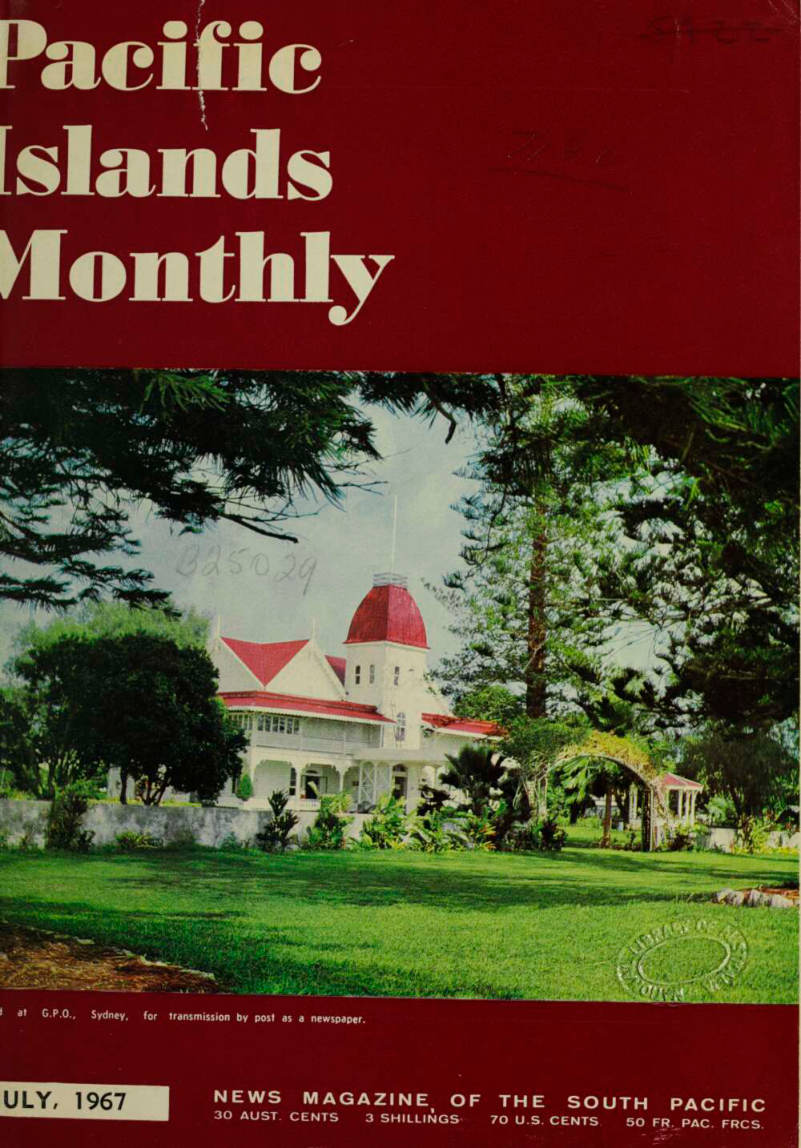 1
1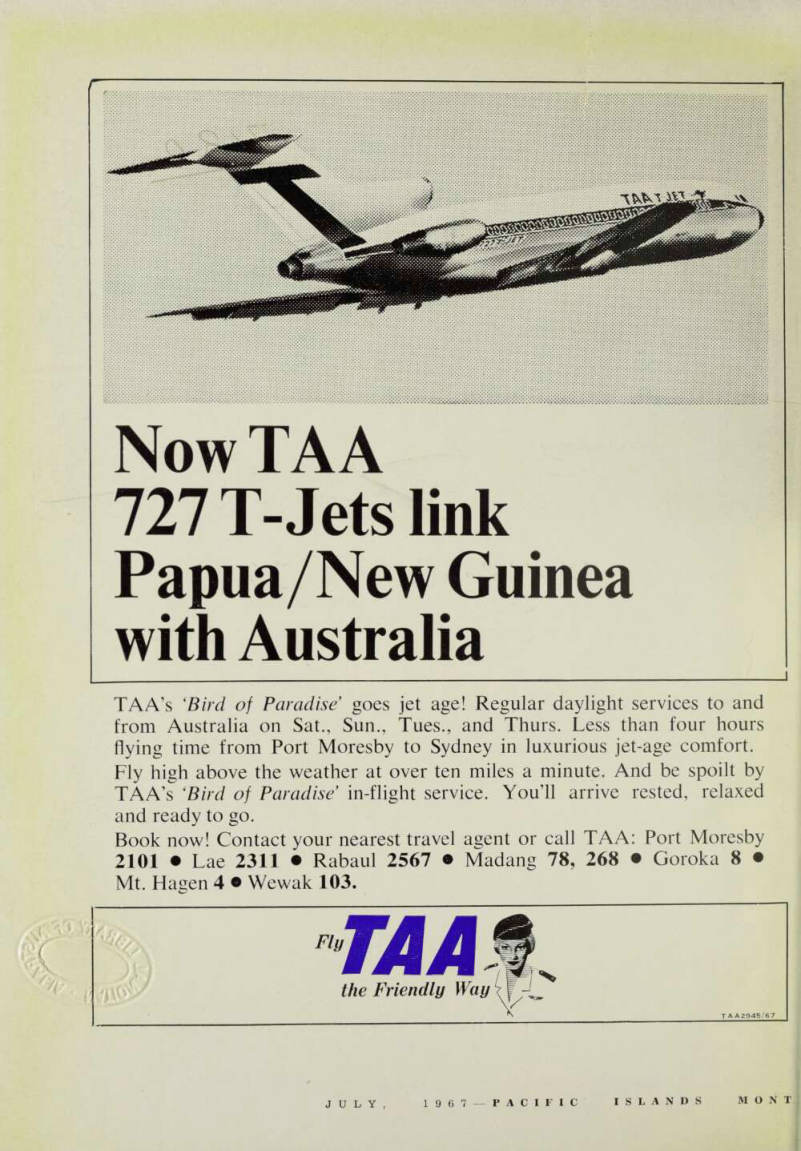 2
2 3
3 4
4 5
5 6
6 7
7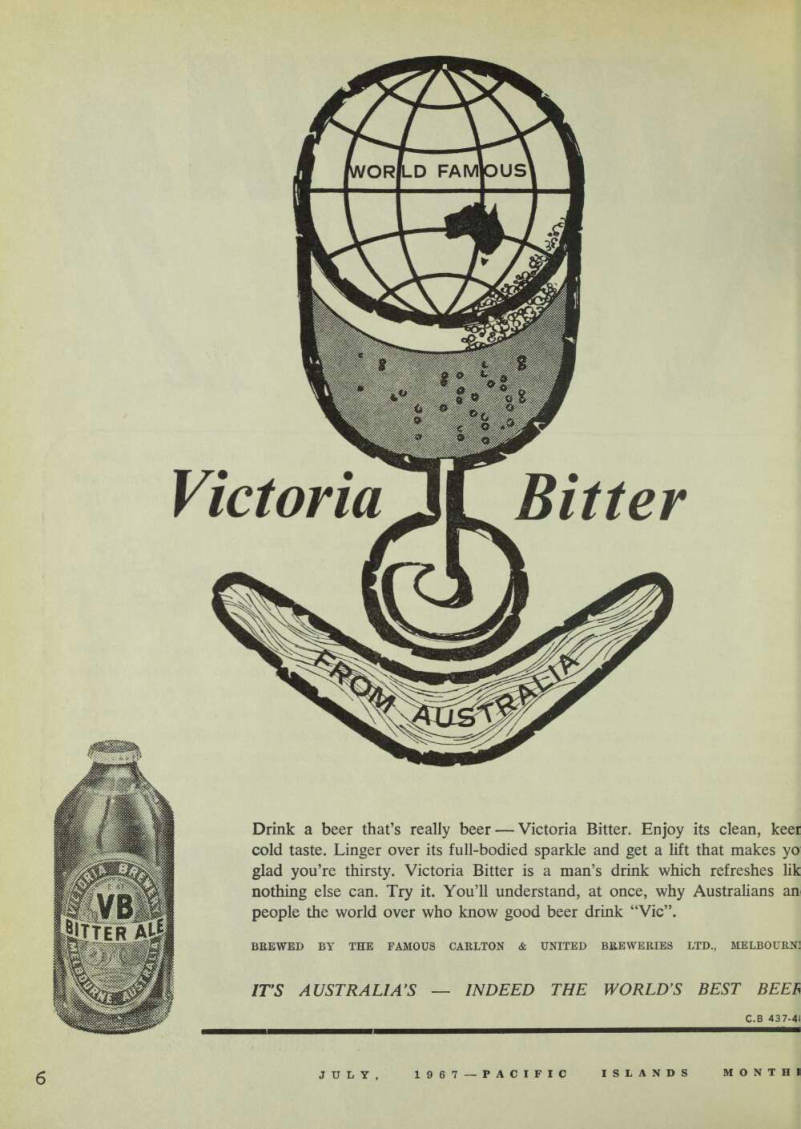 8
8 9
9 10
10 11
11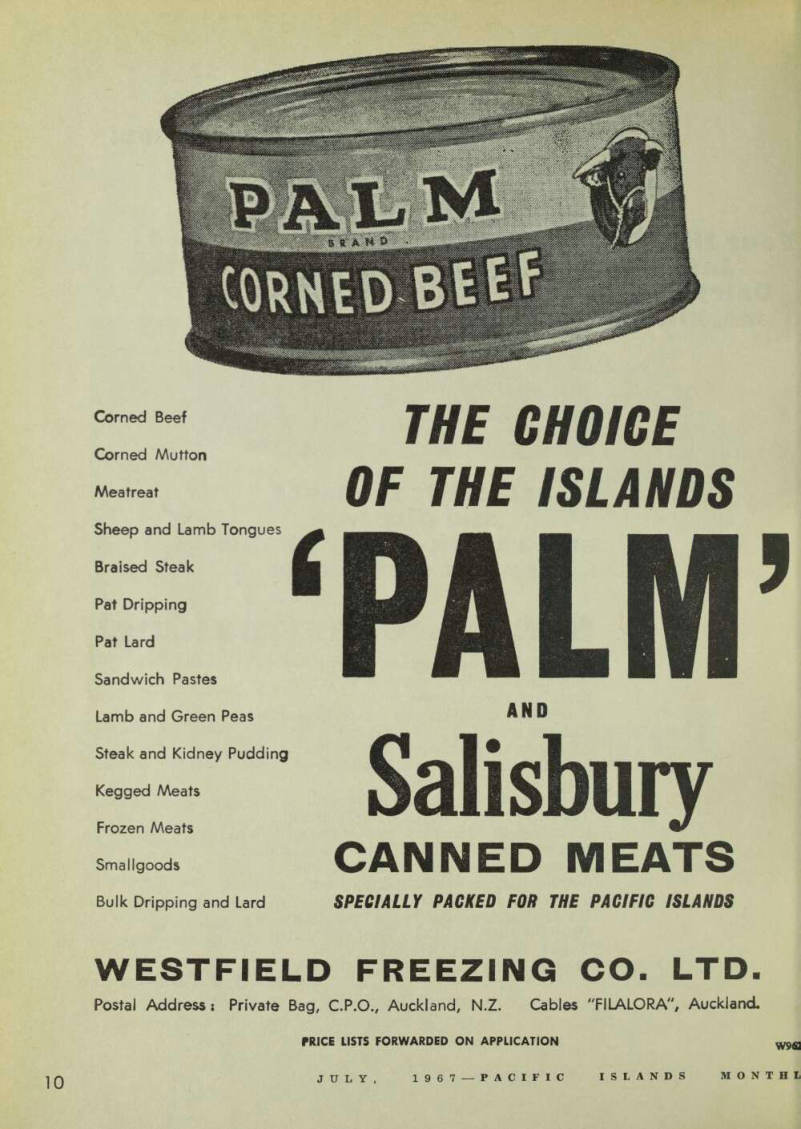 12
12 13
13 14
14 15
15 16
16 17
17 18
18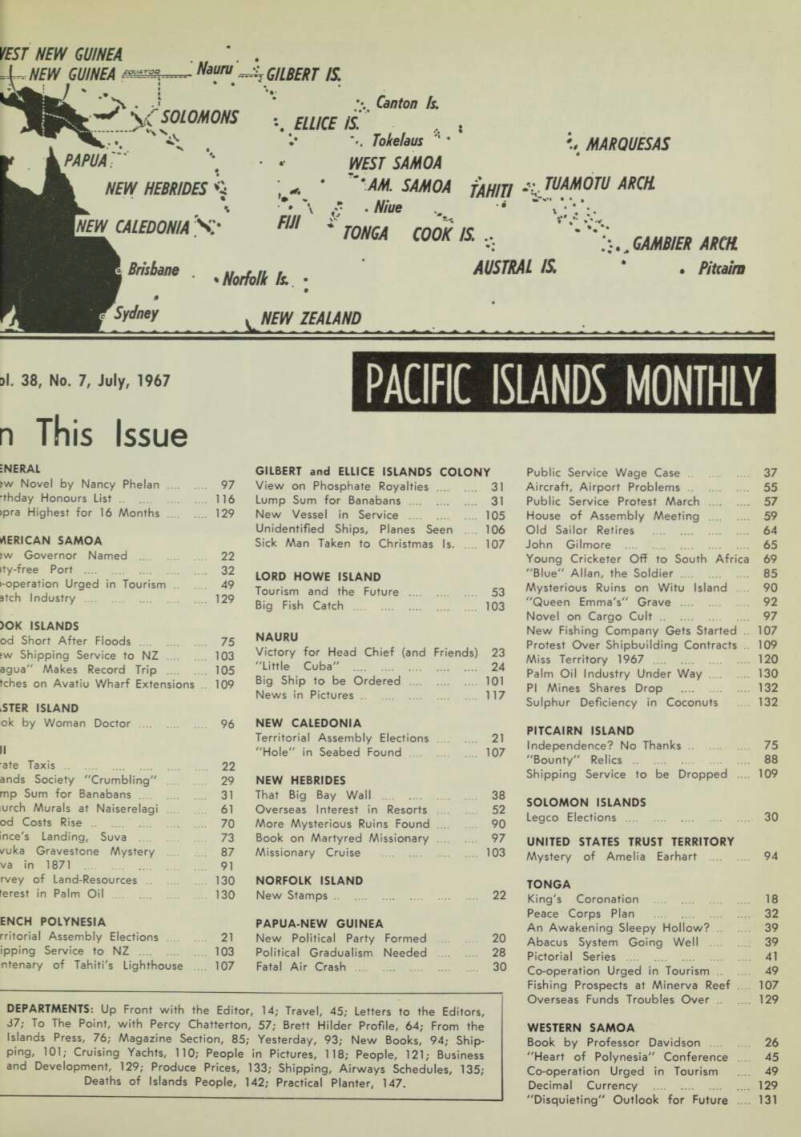 19
19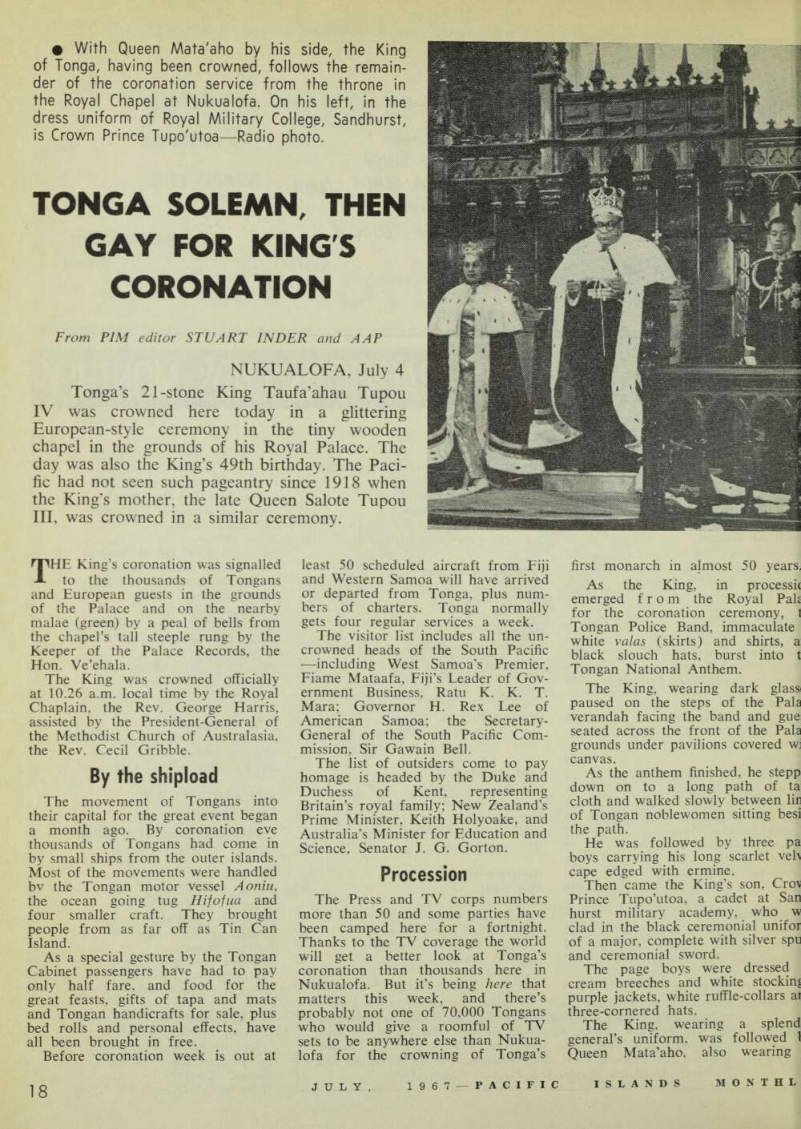 20
20 21
21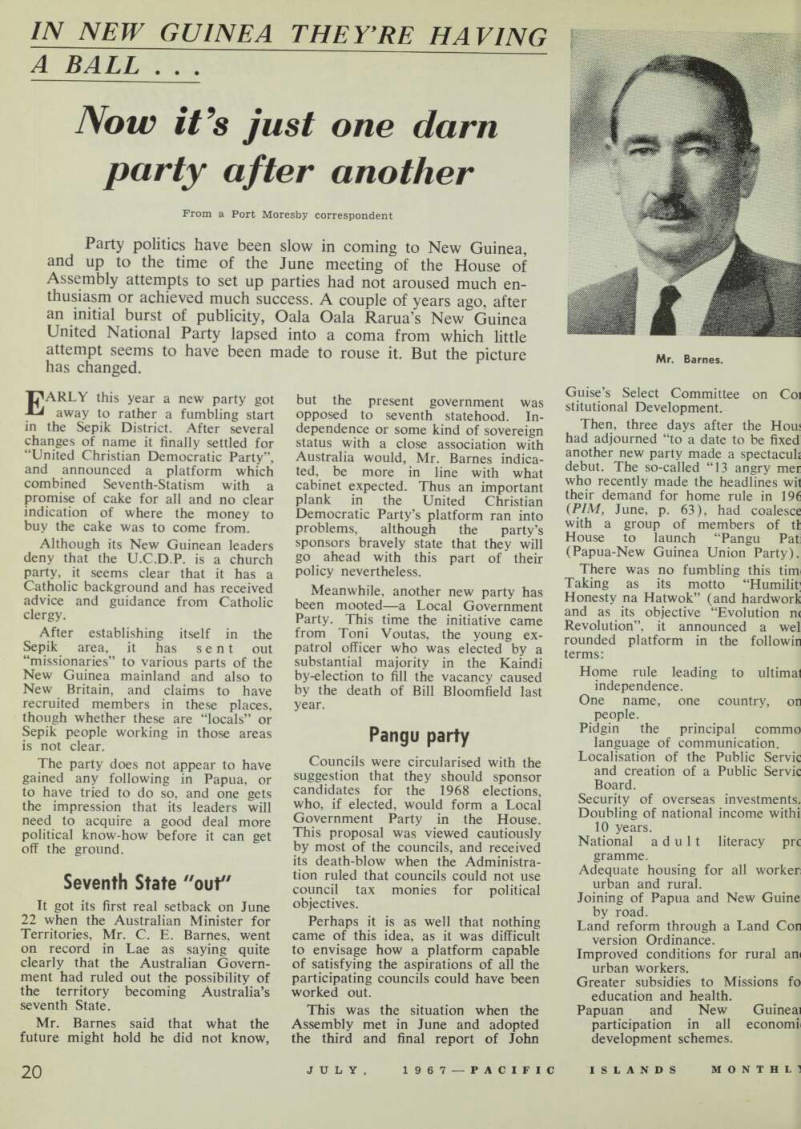 22
22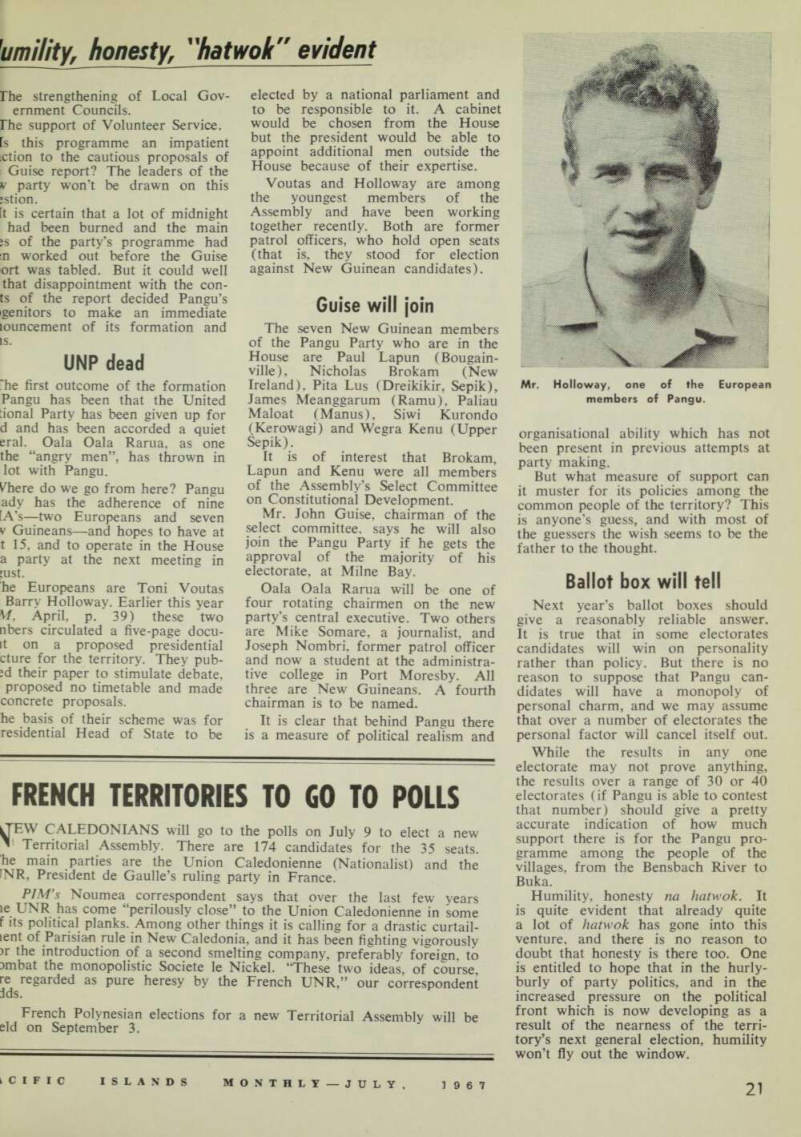 23
23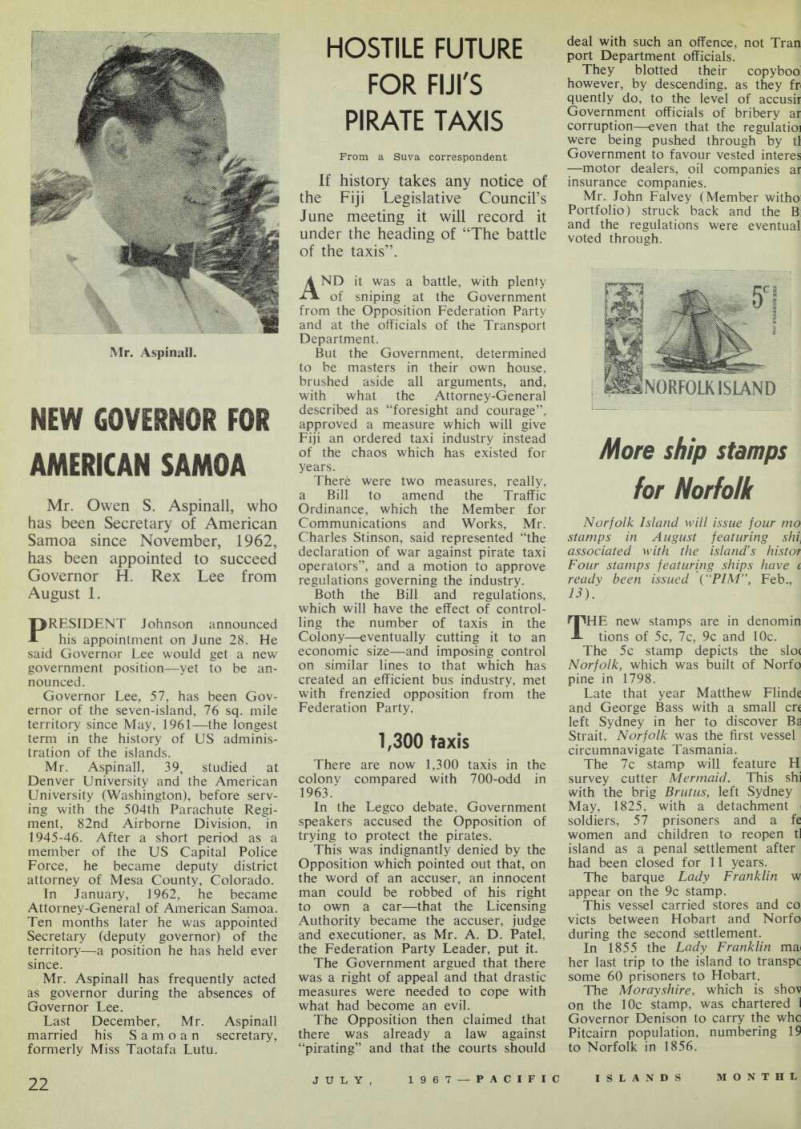 24
24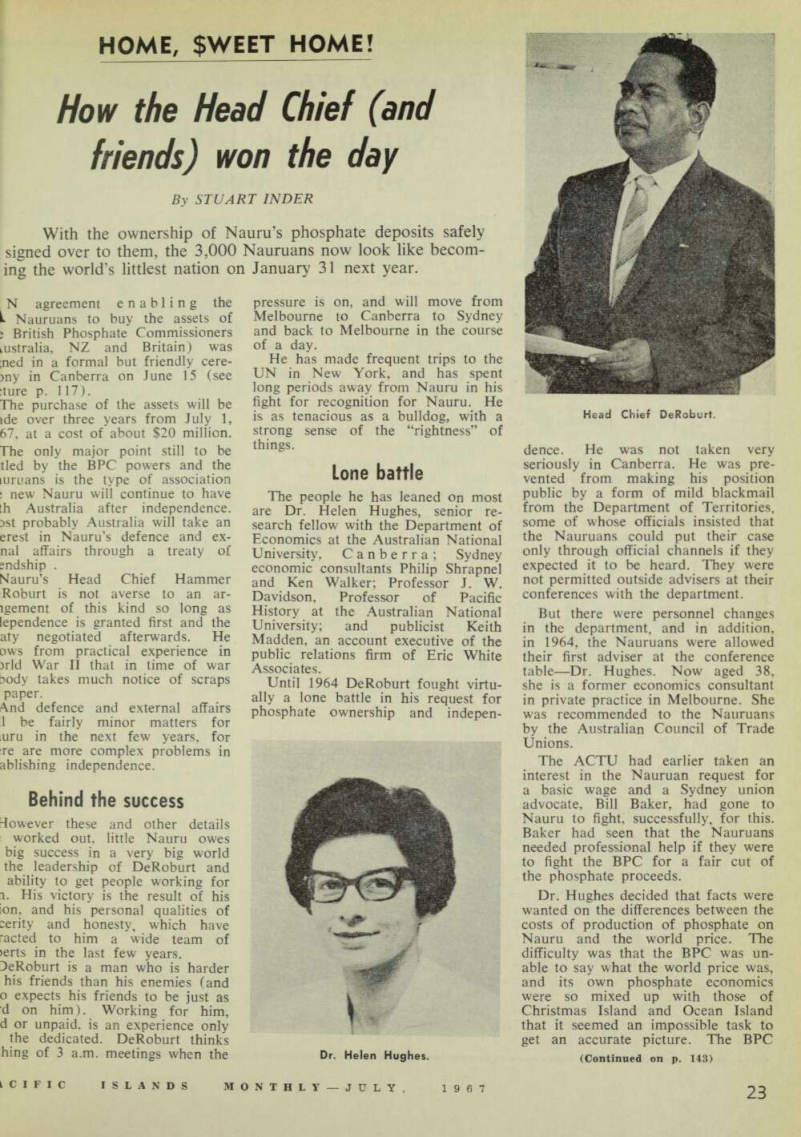 25
25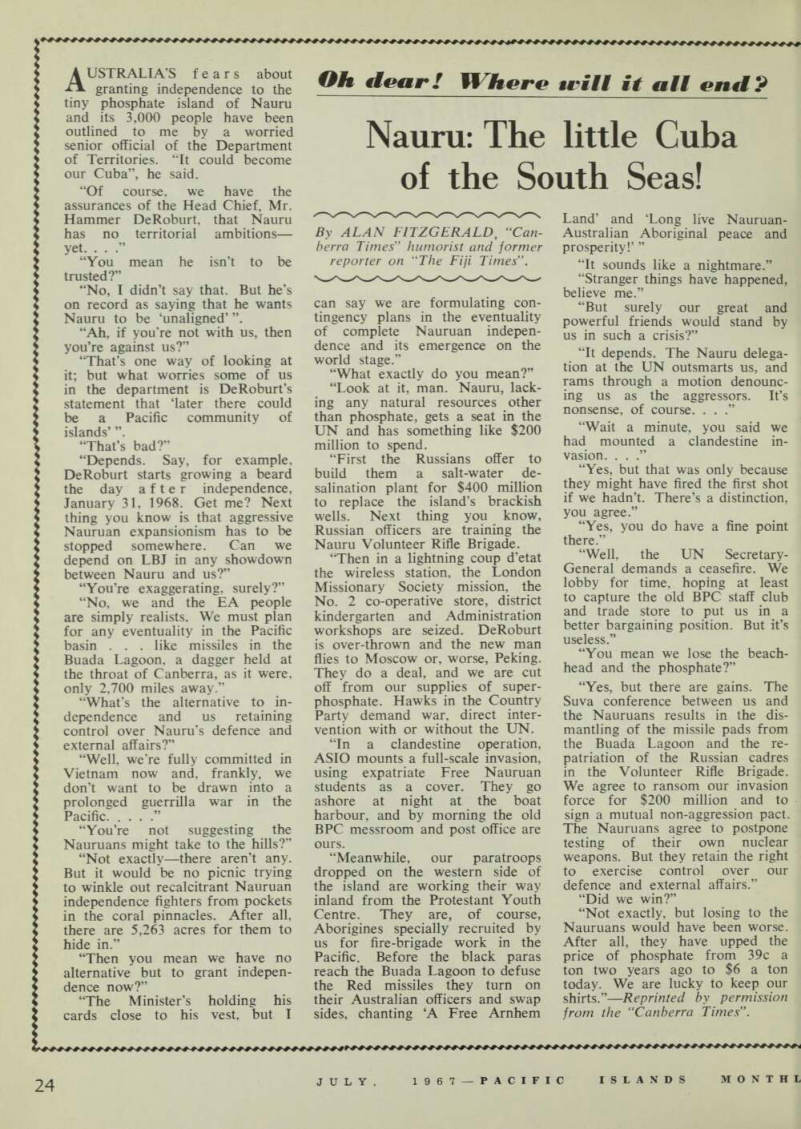 26
26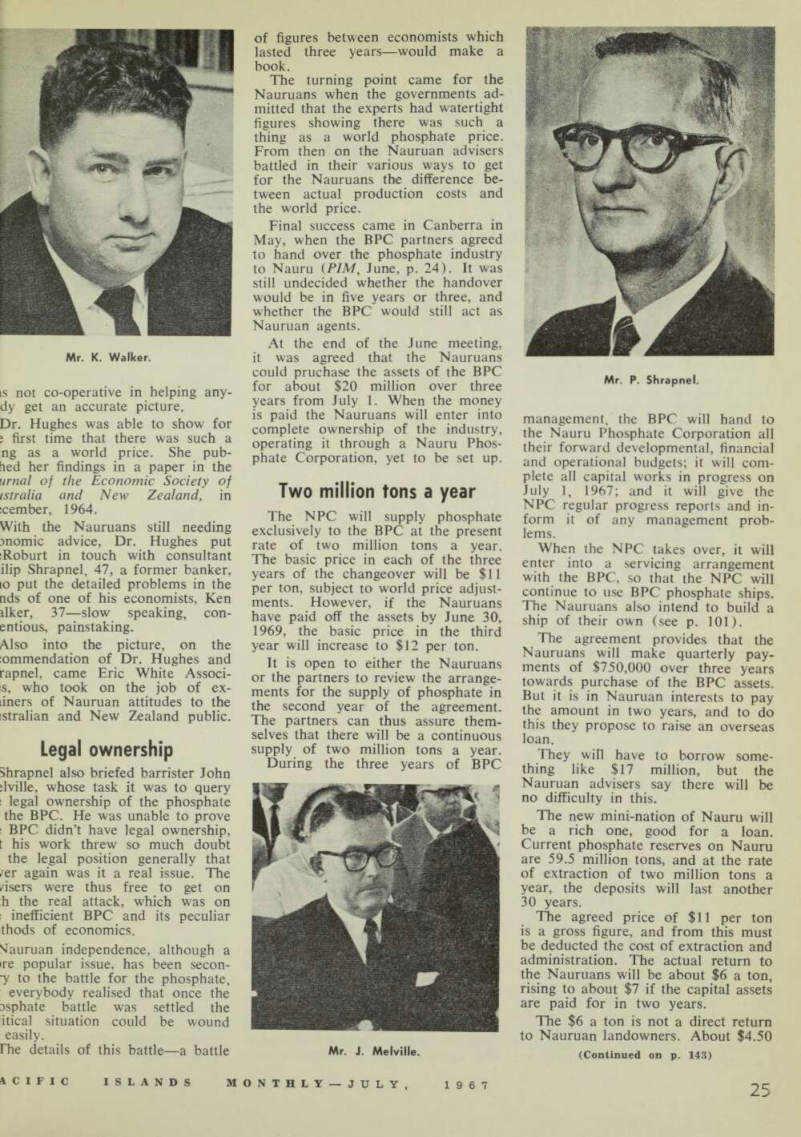 27
27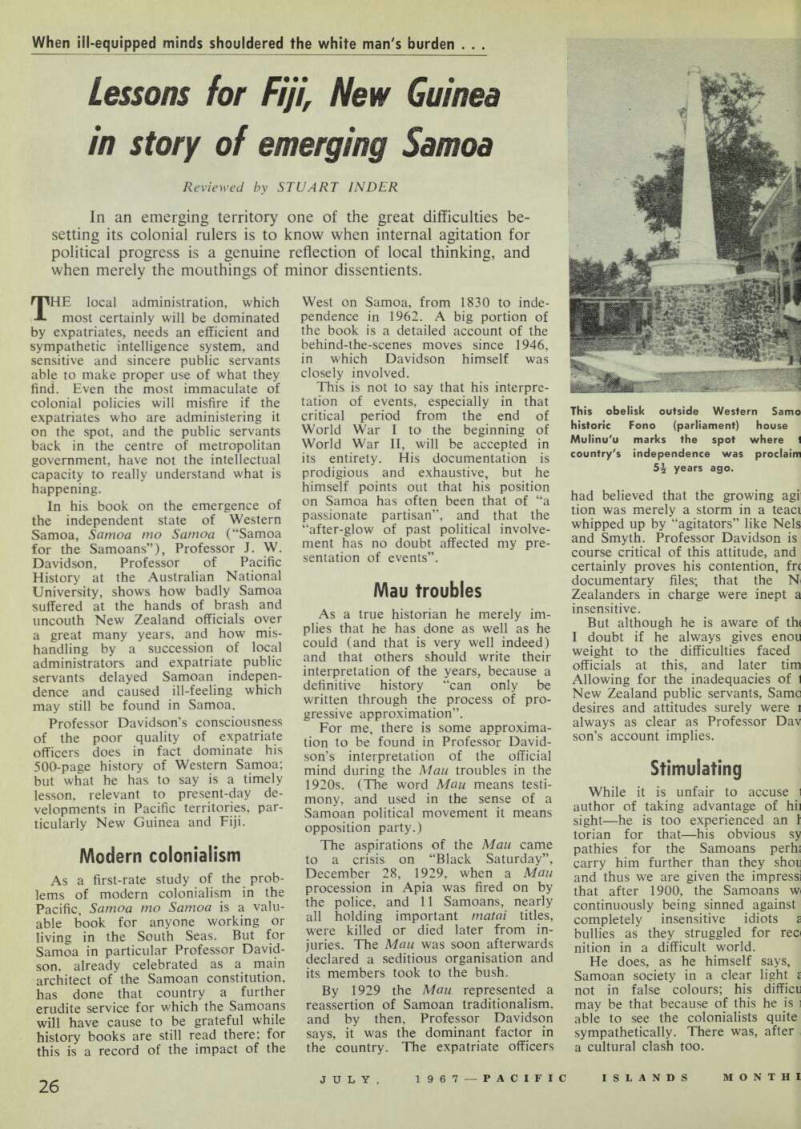 28
28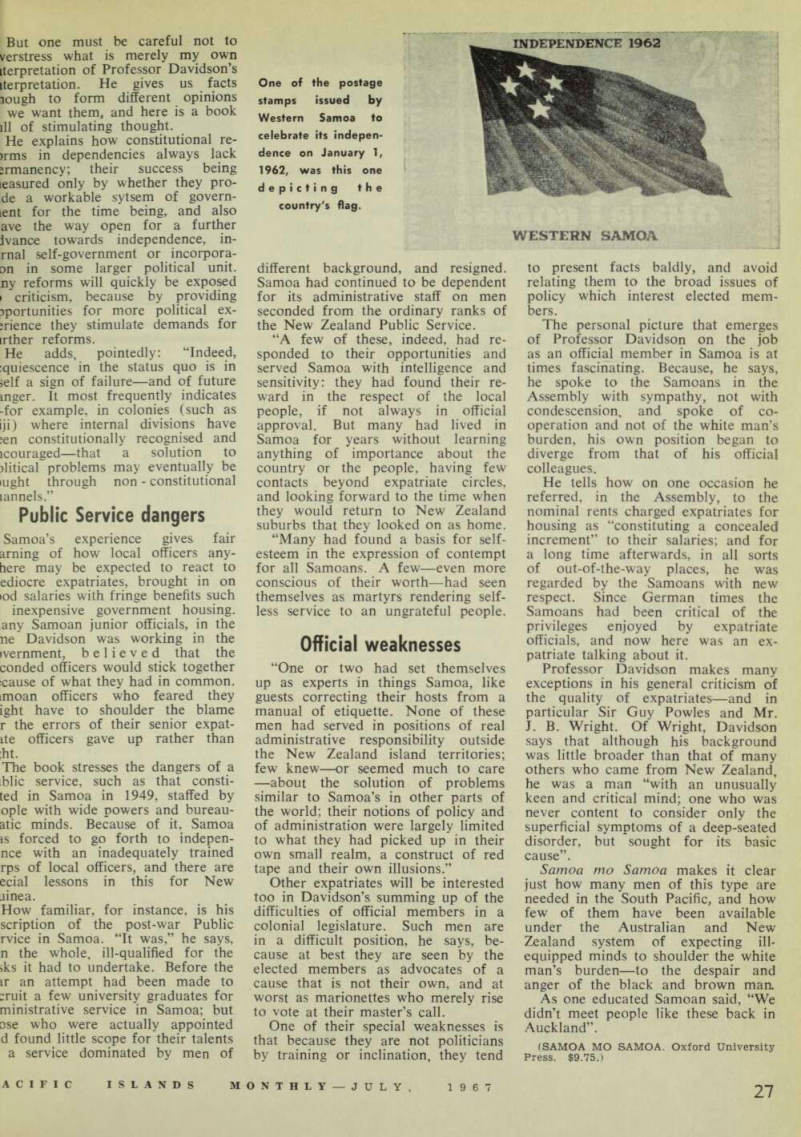 29
29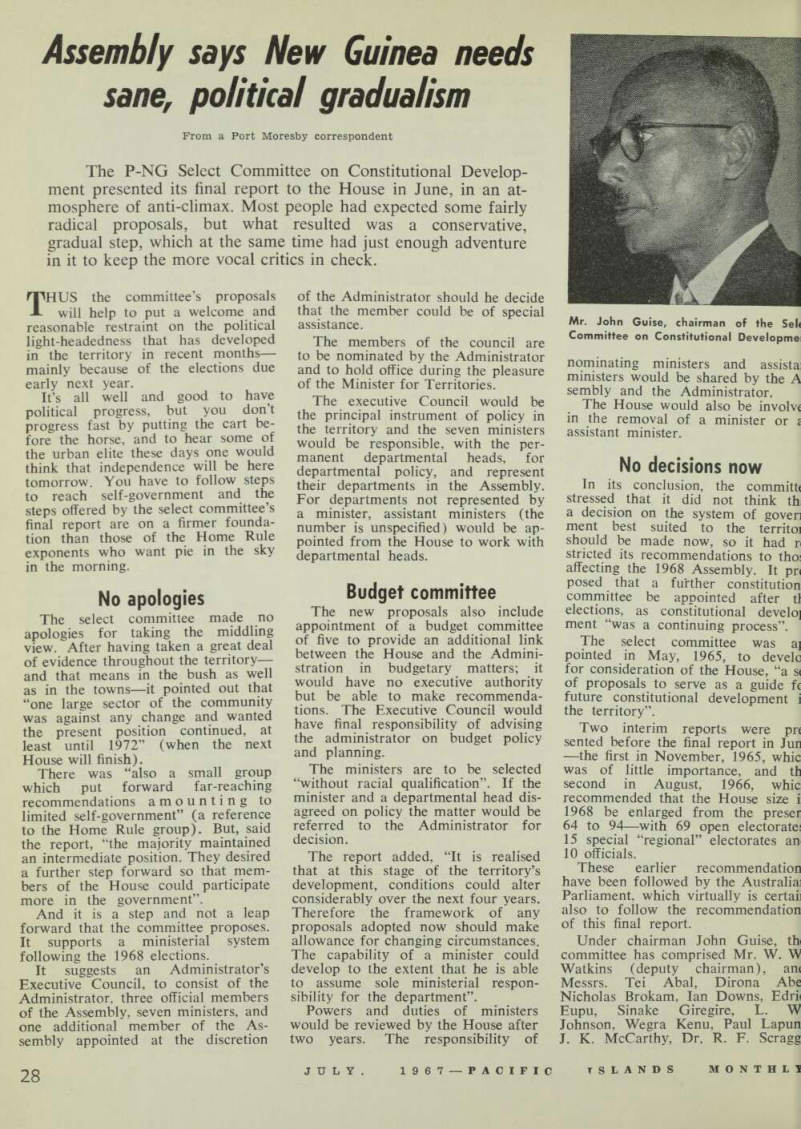 30
30 31
31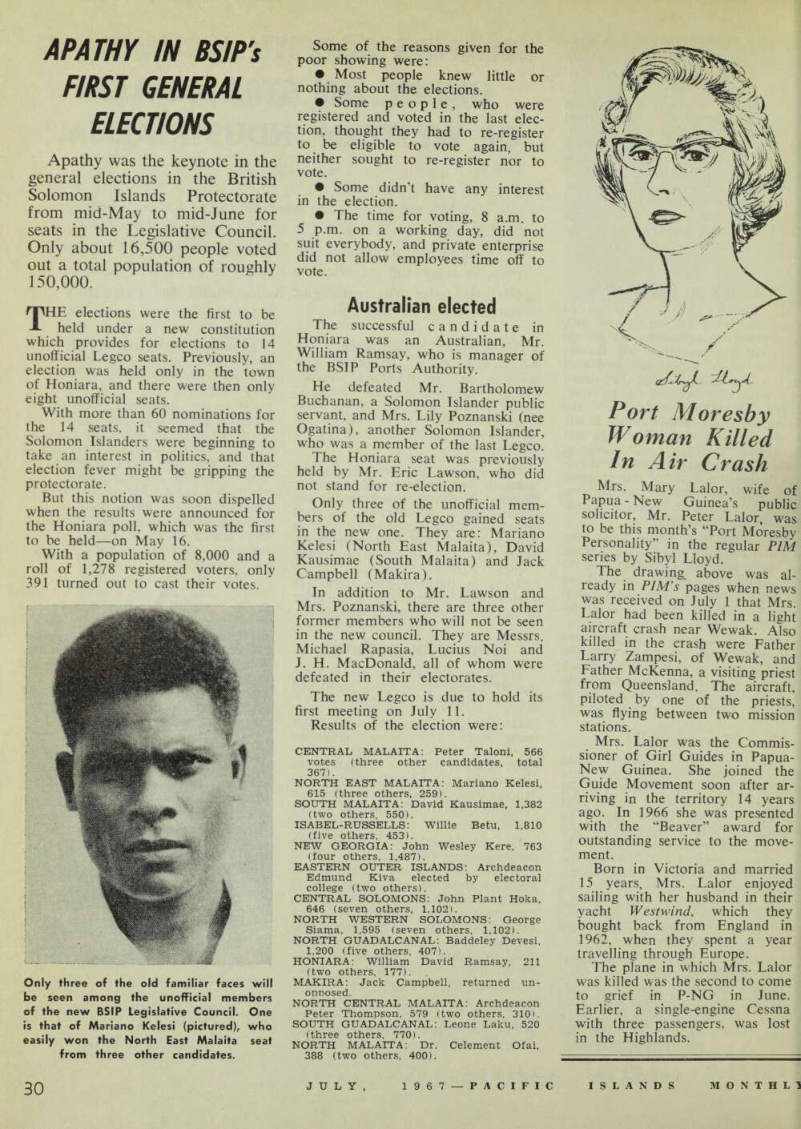 32
32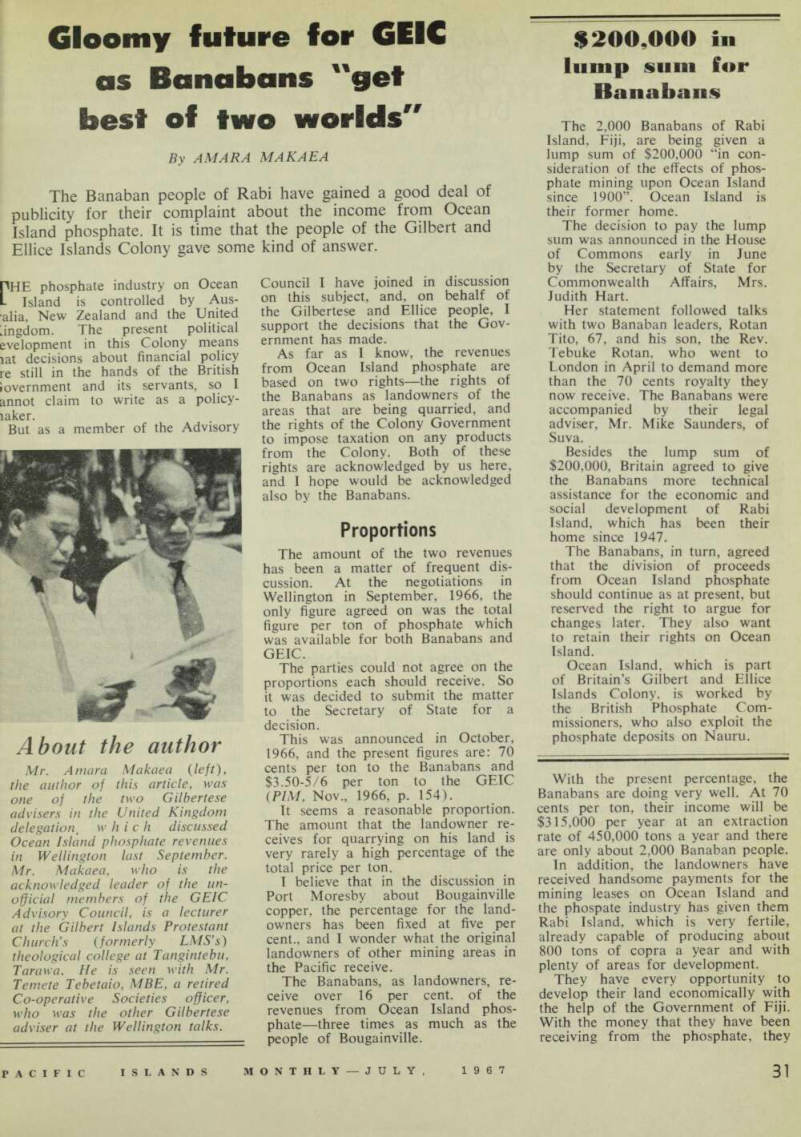 33
33 34
34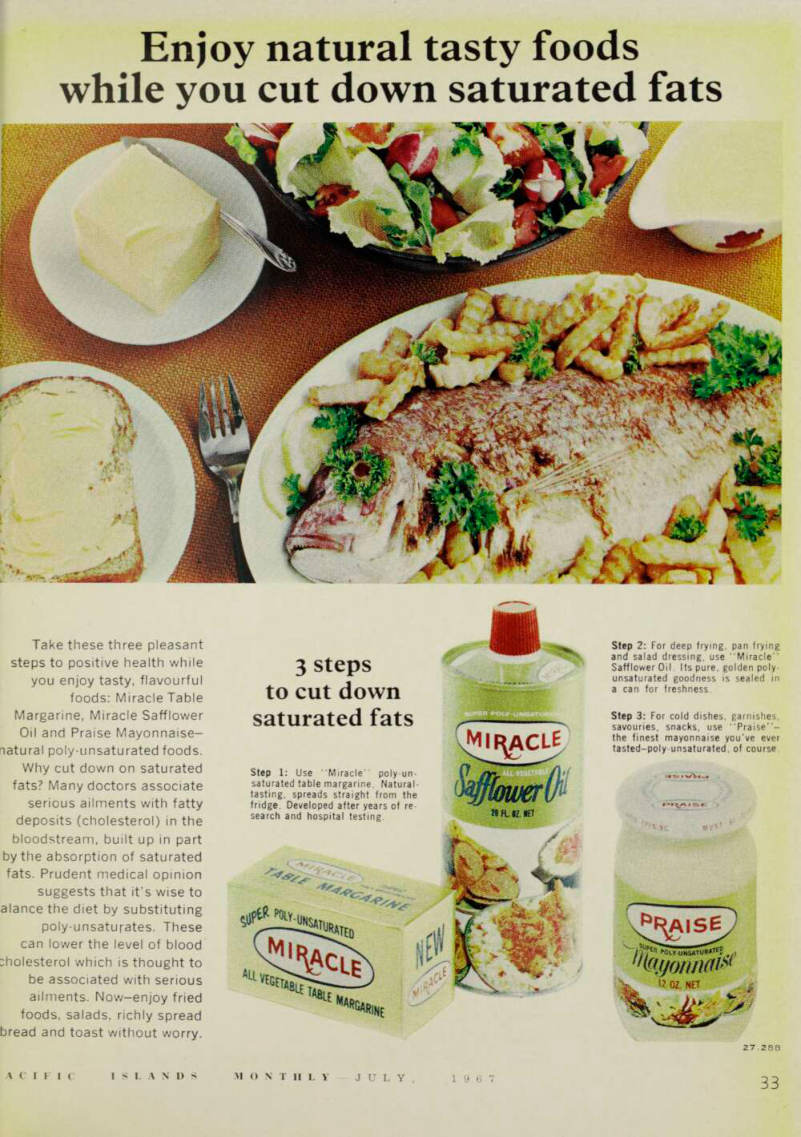 35
35 36
36 37
37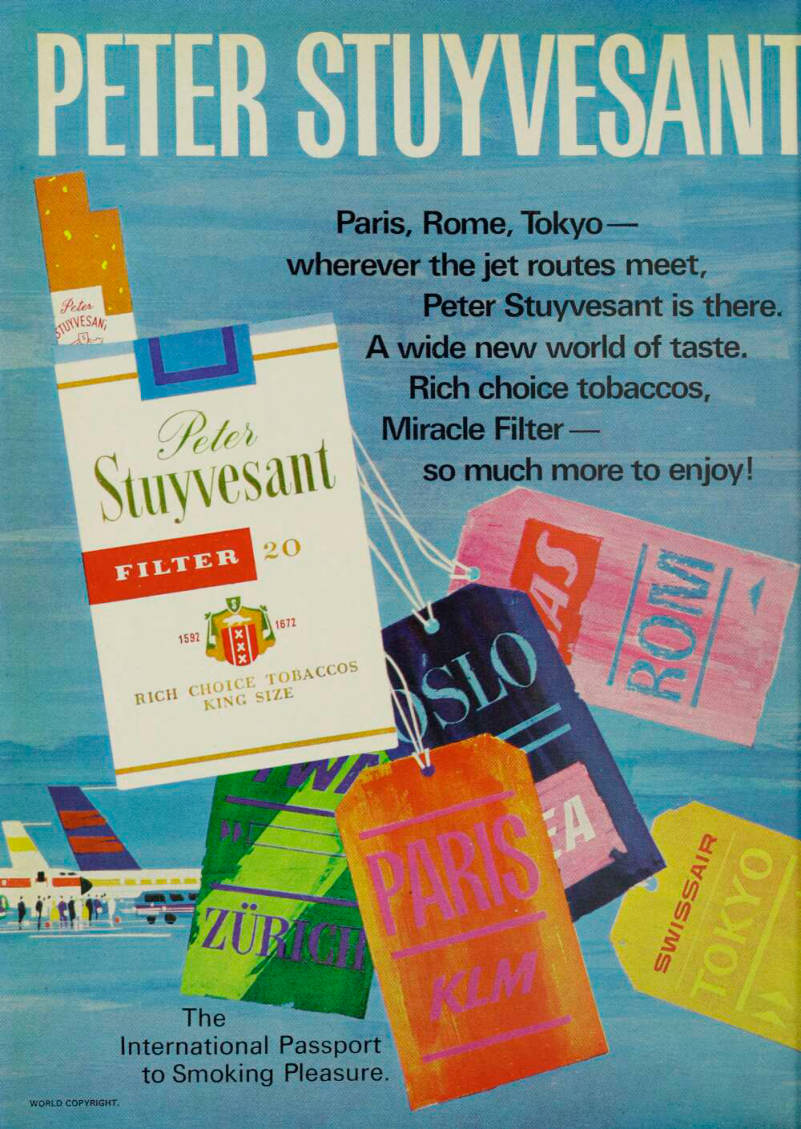 38
38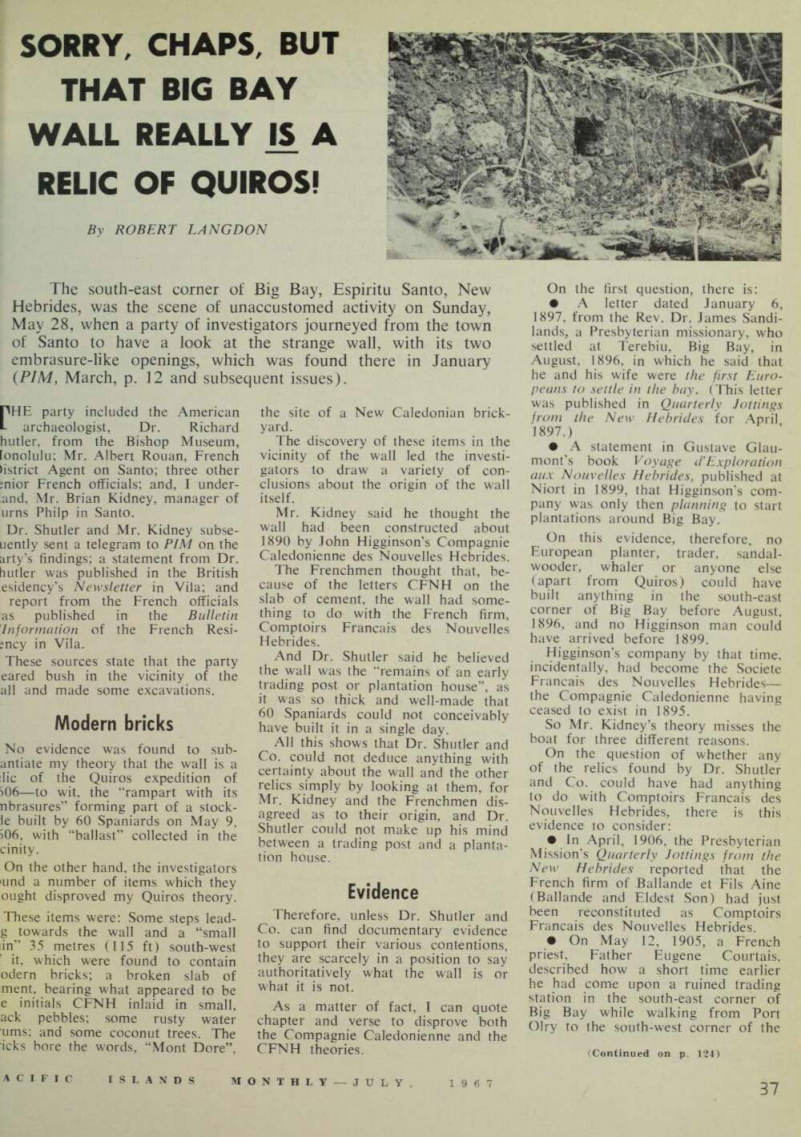 39
39 40
40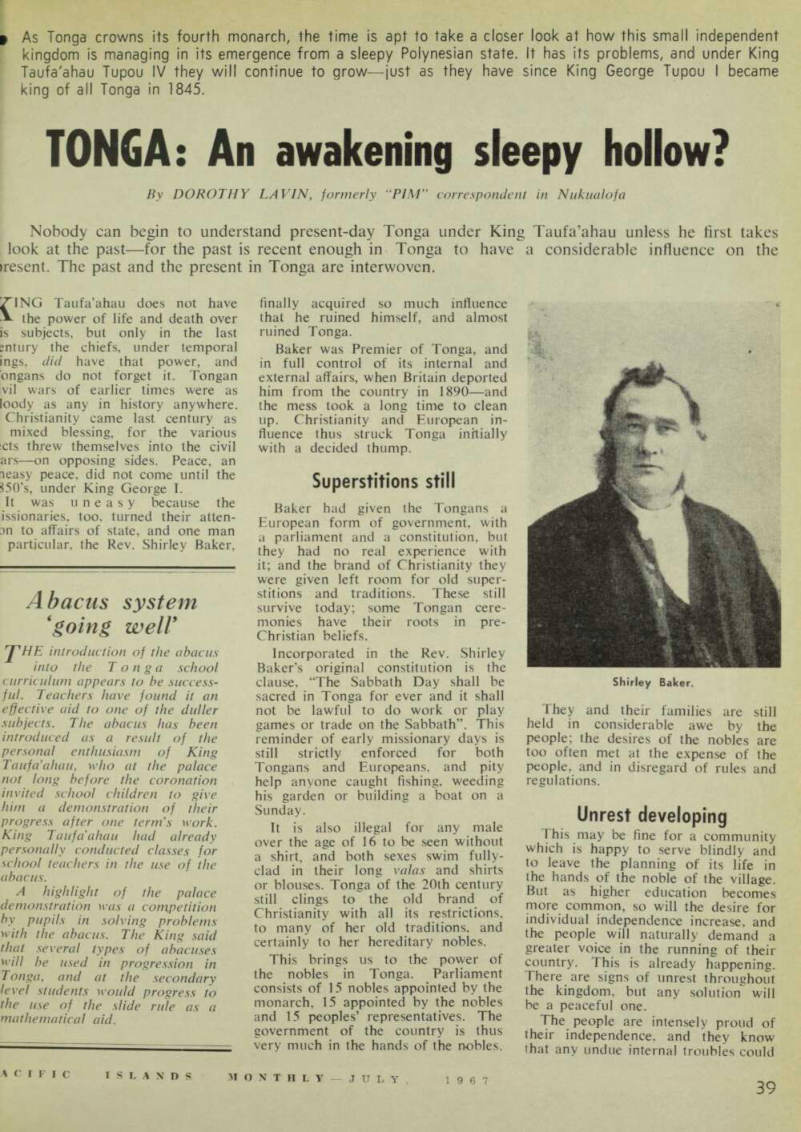 41
41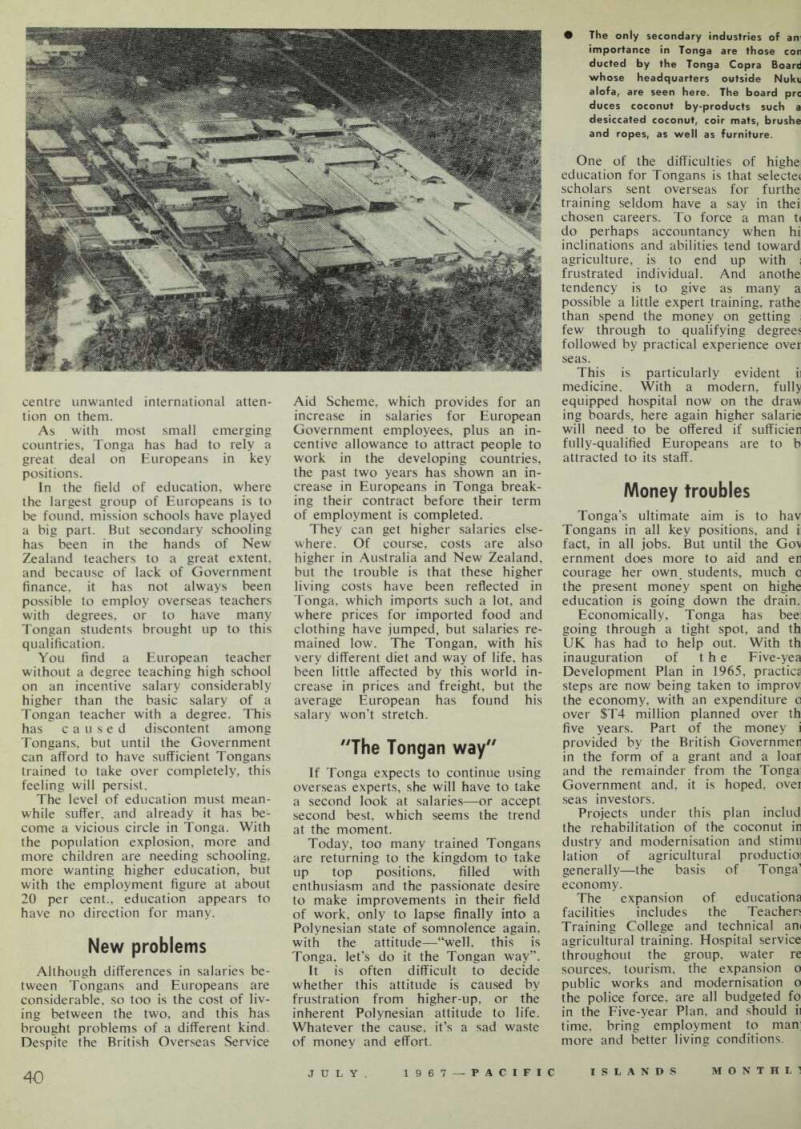 42
42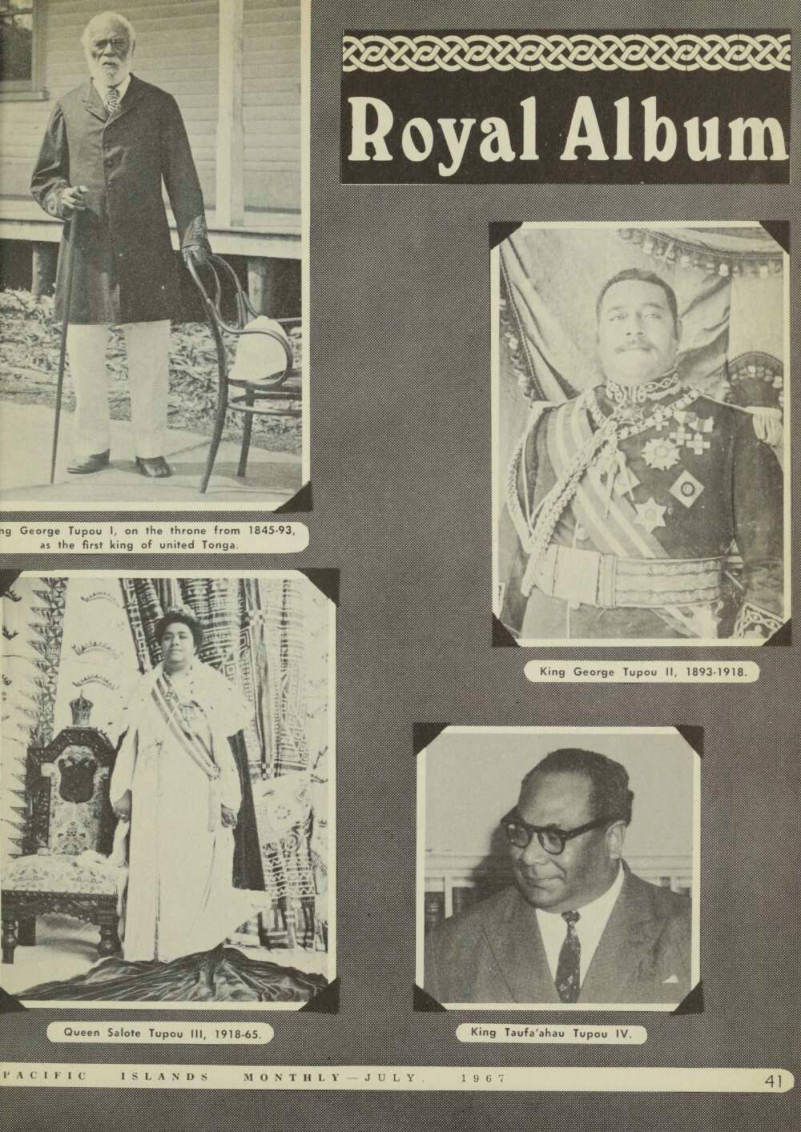 43
43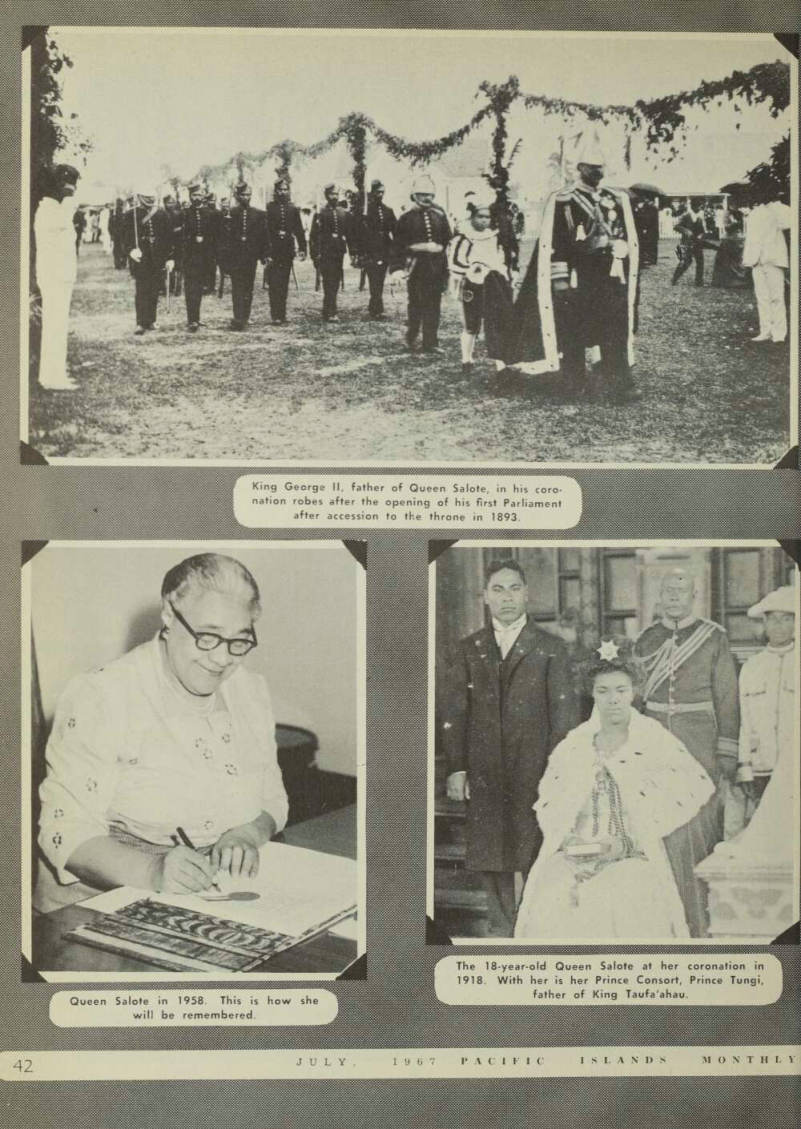 44
44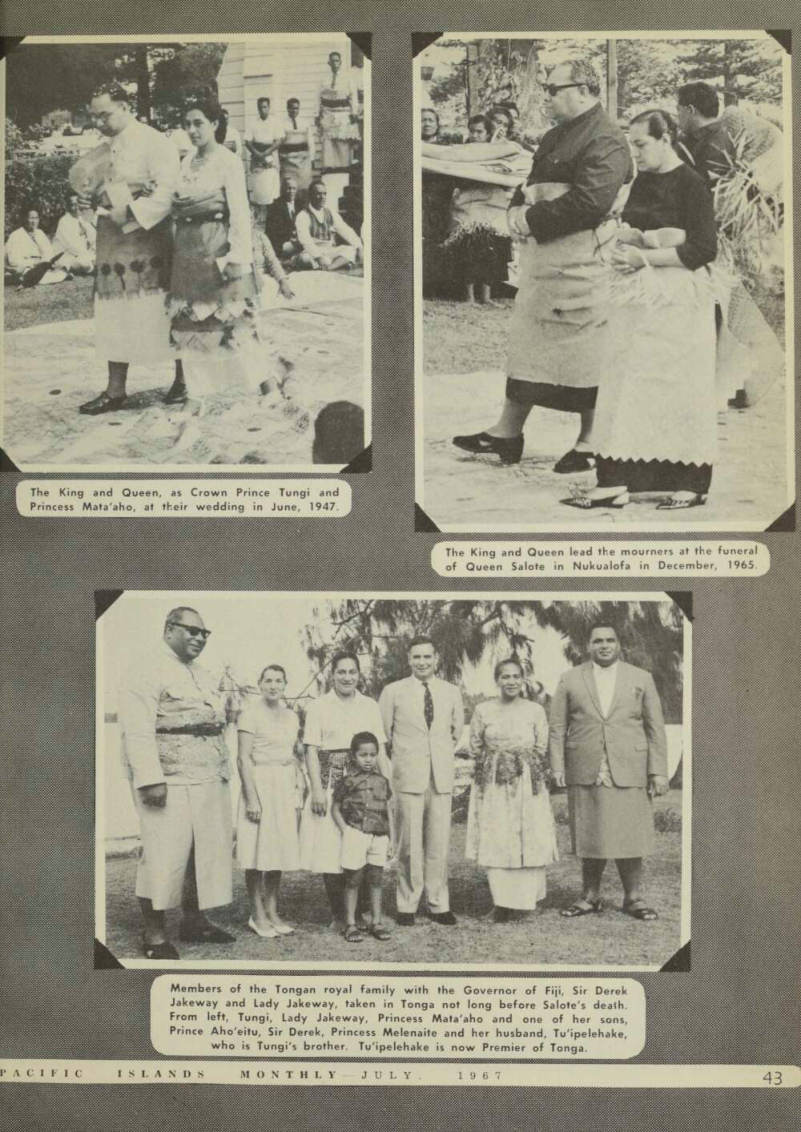 45
45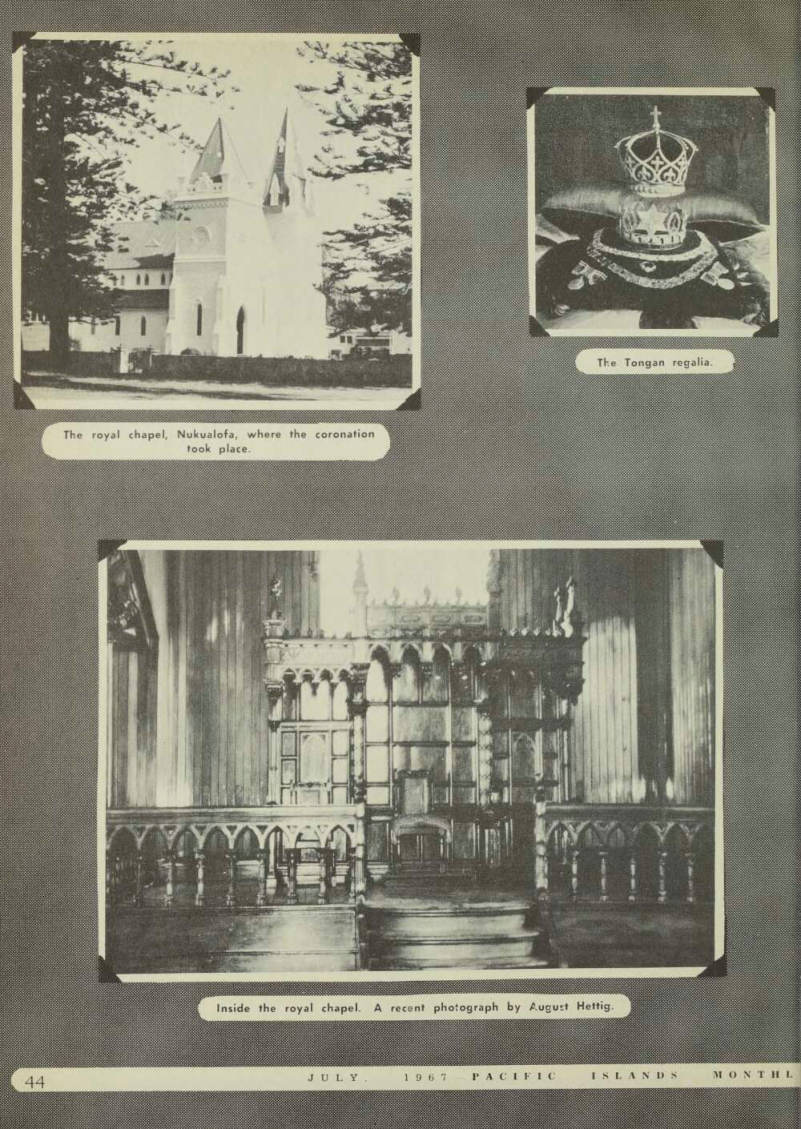 46
46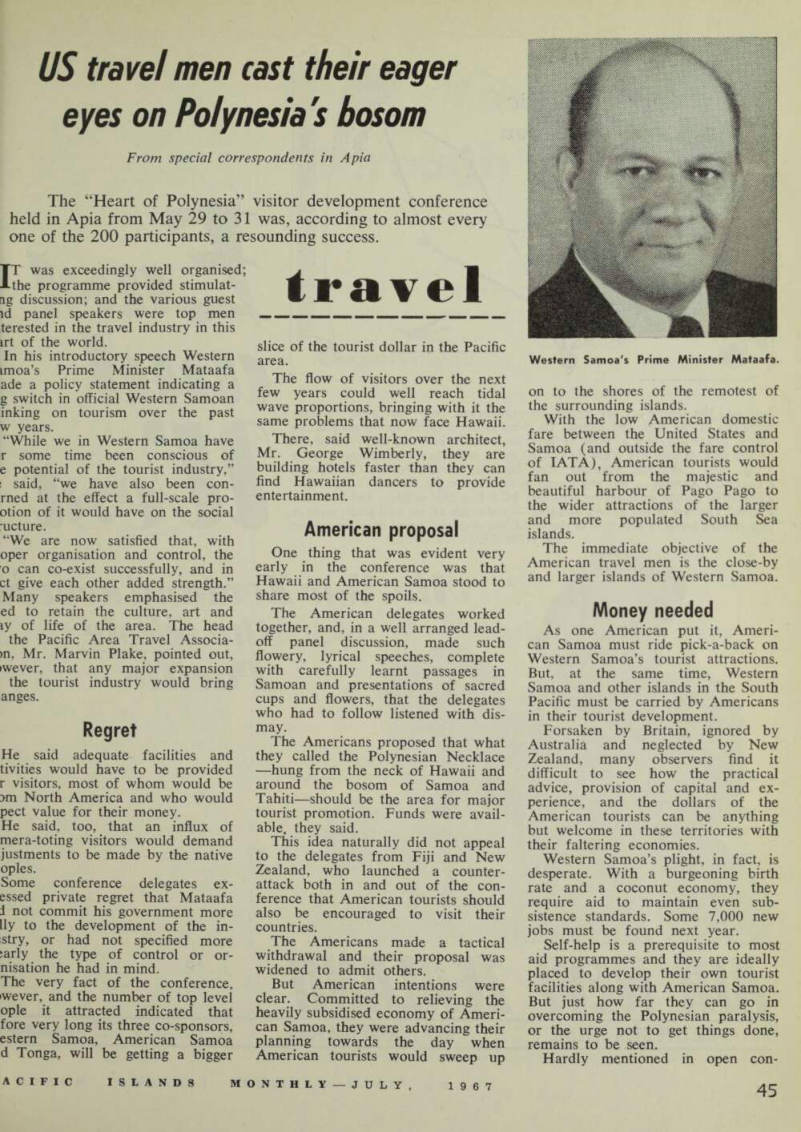 47
47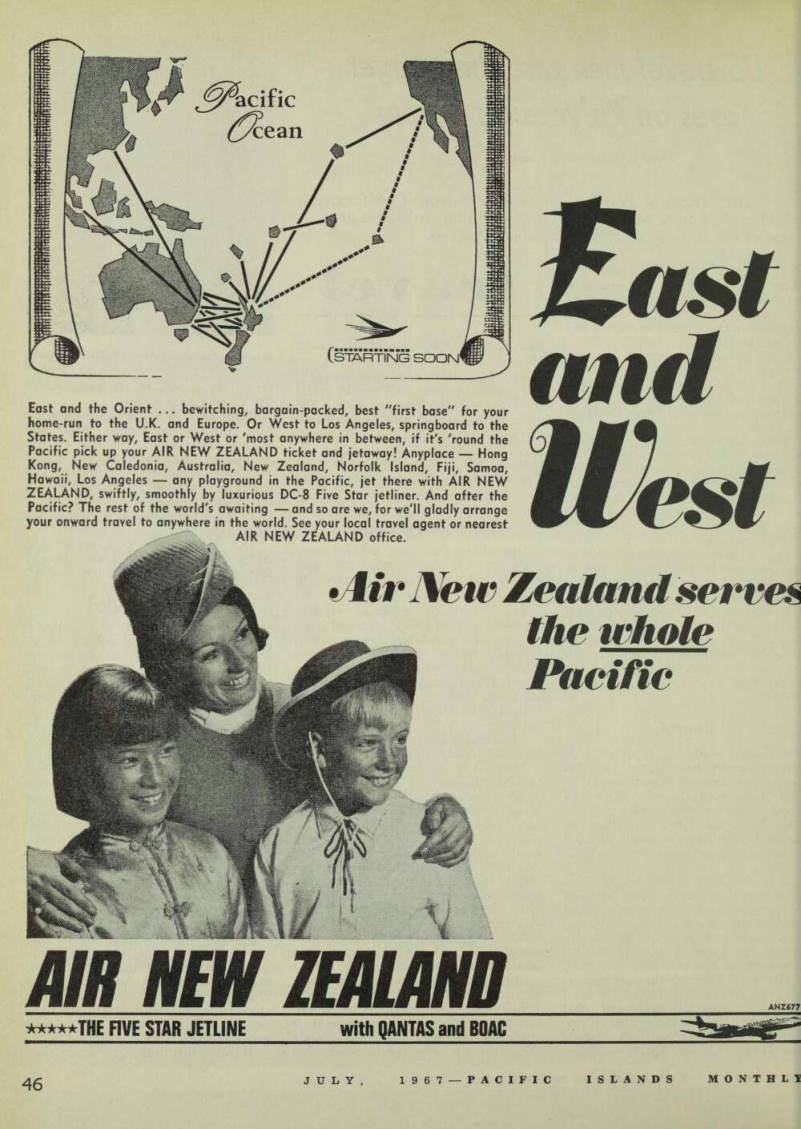 48
48 49
49 50
50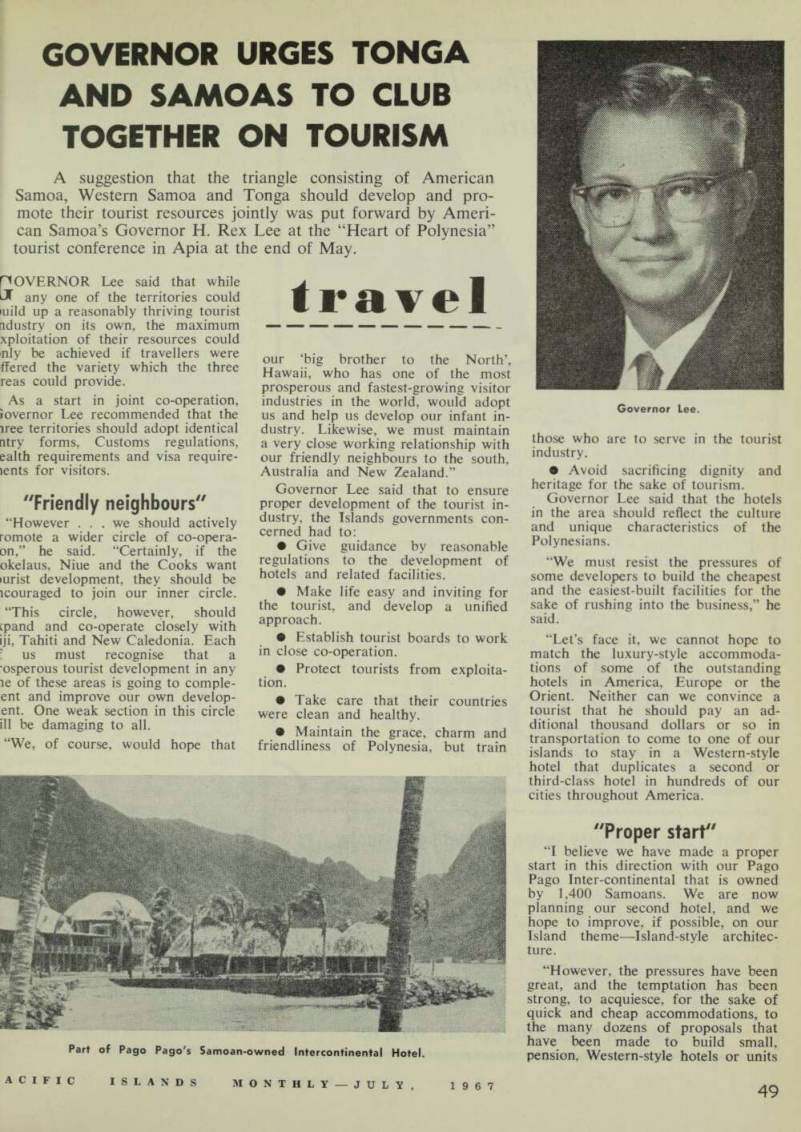 51
51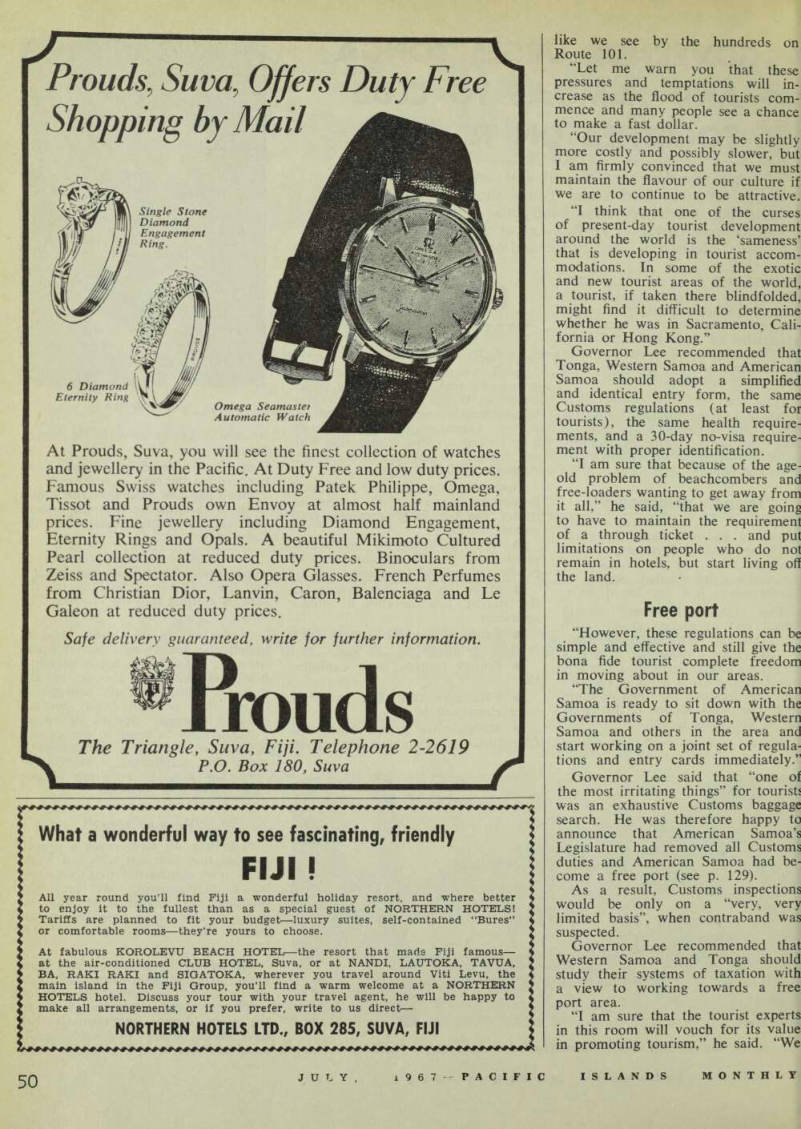 52
52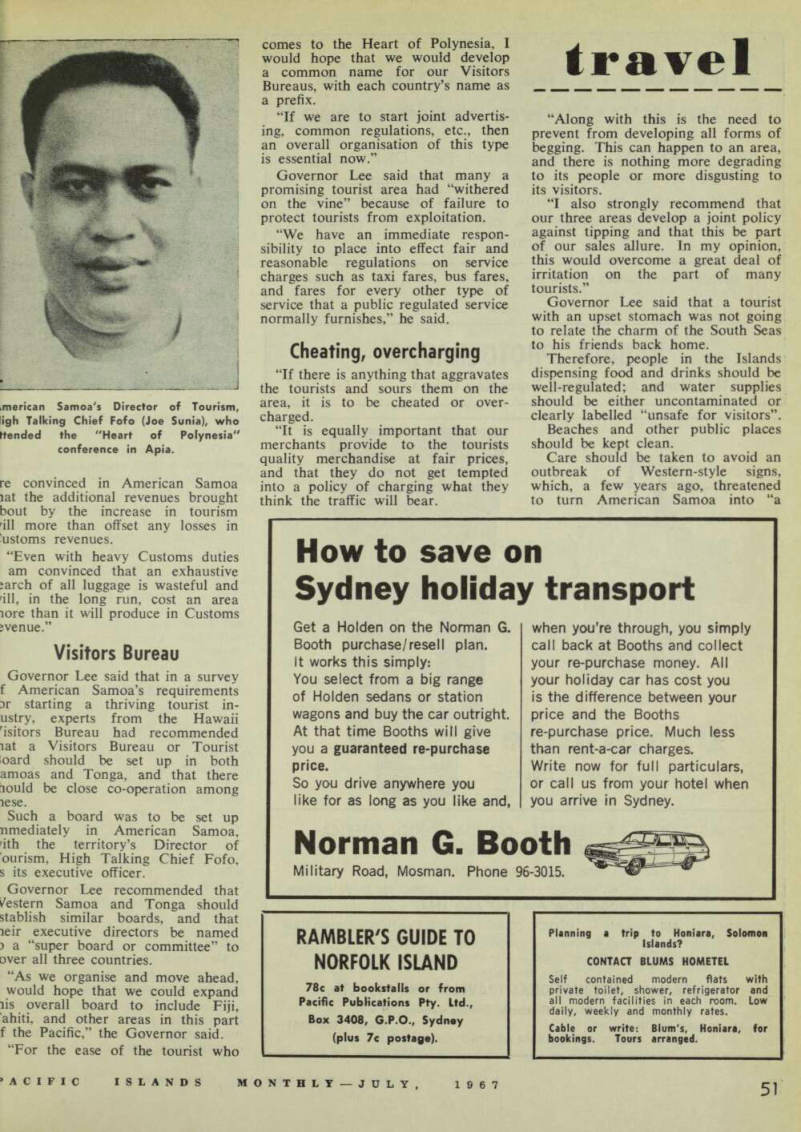 53
53 54
54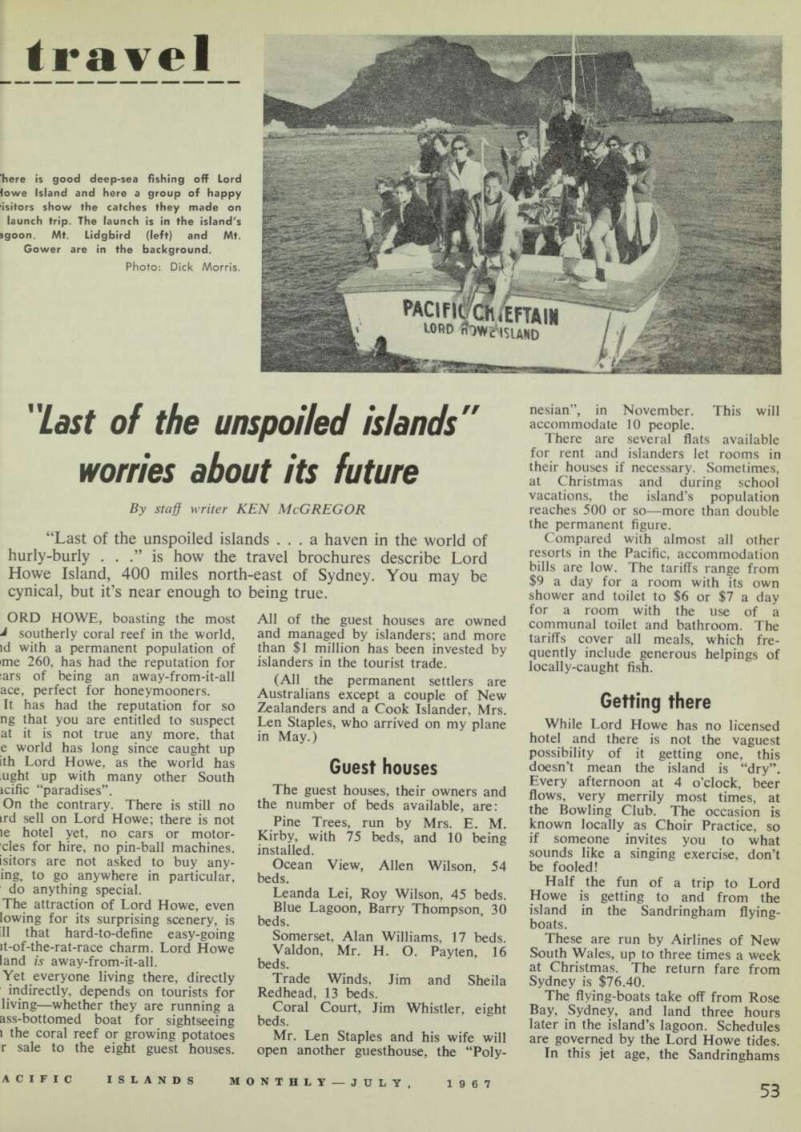 55
55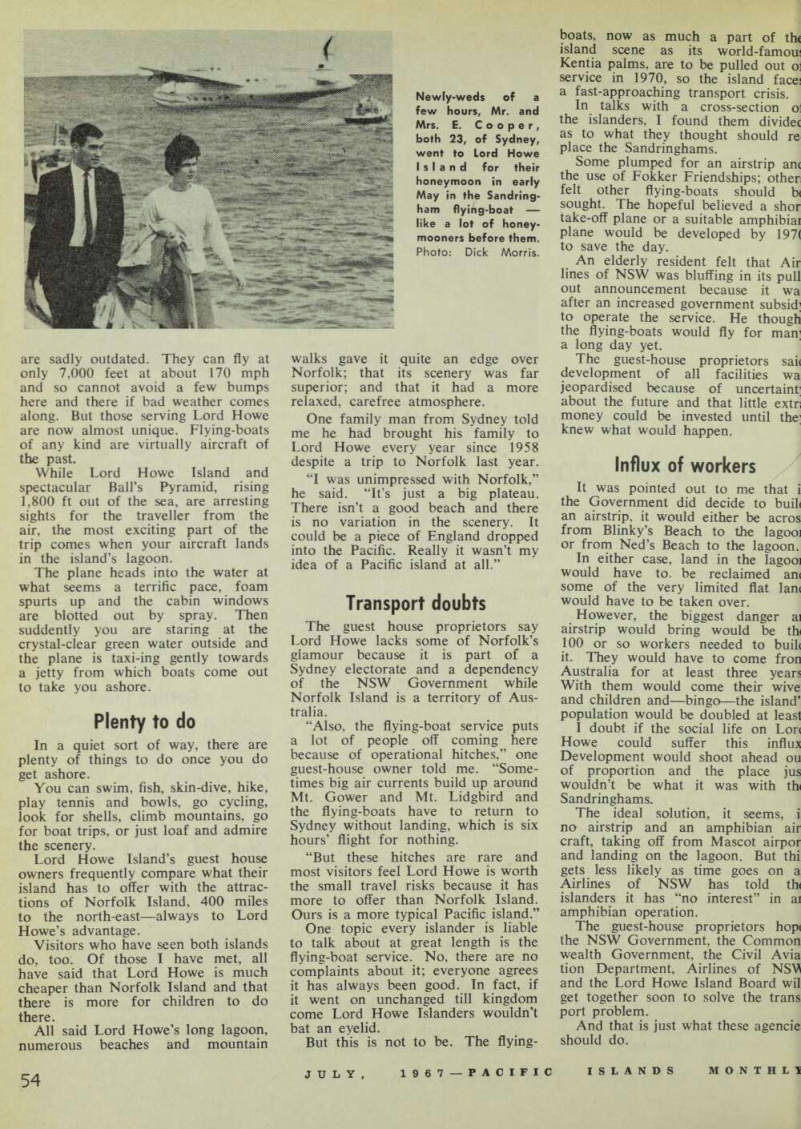 56
56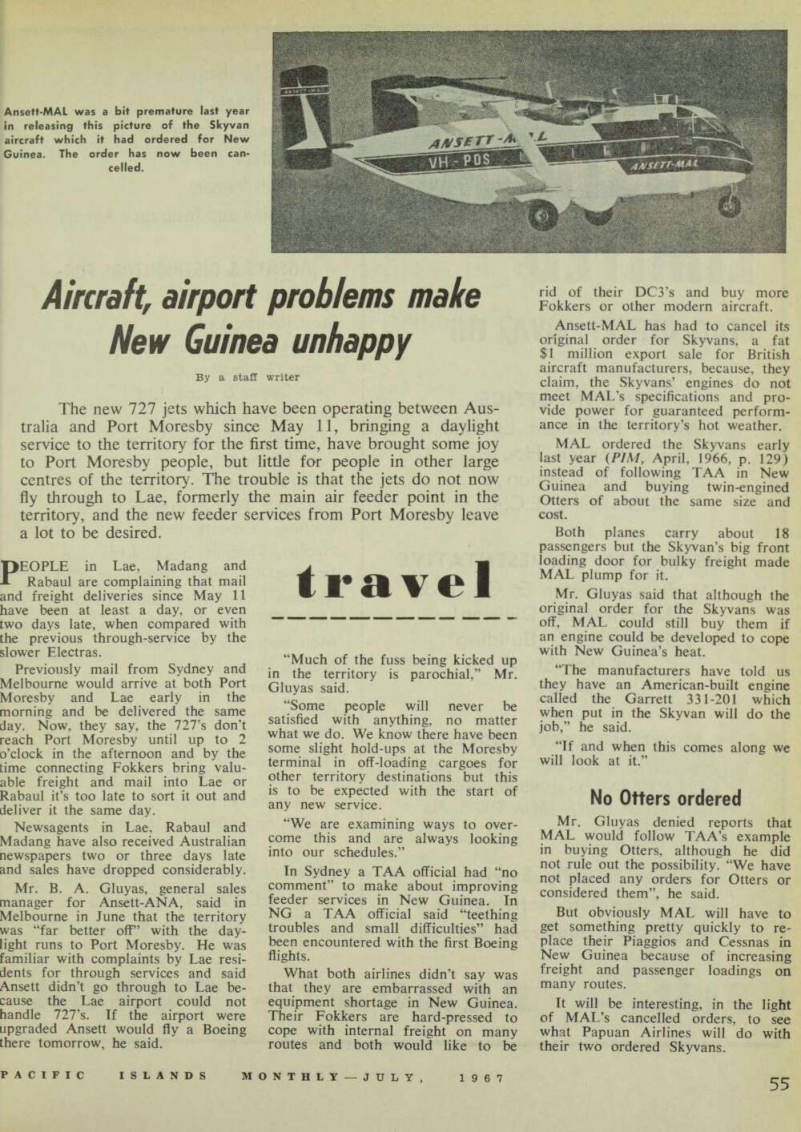 57
57 58
58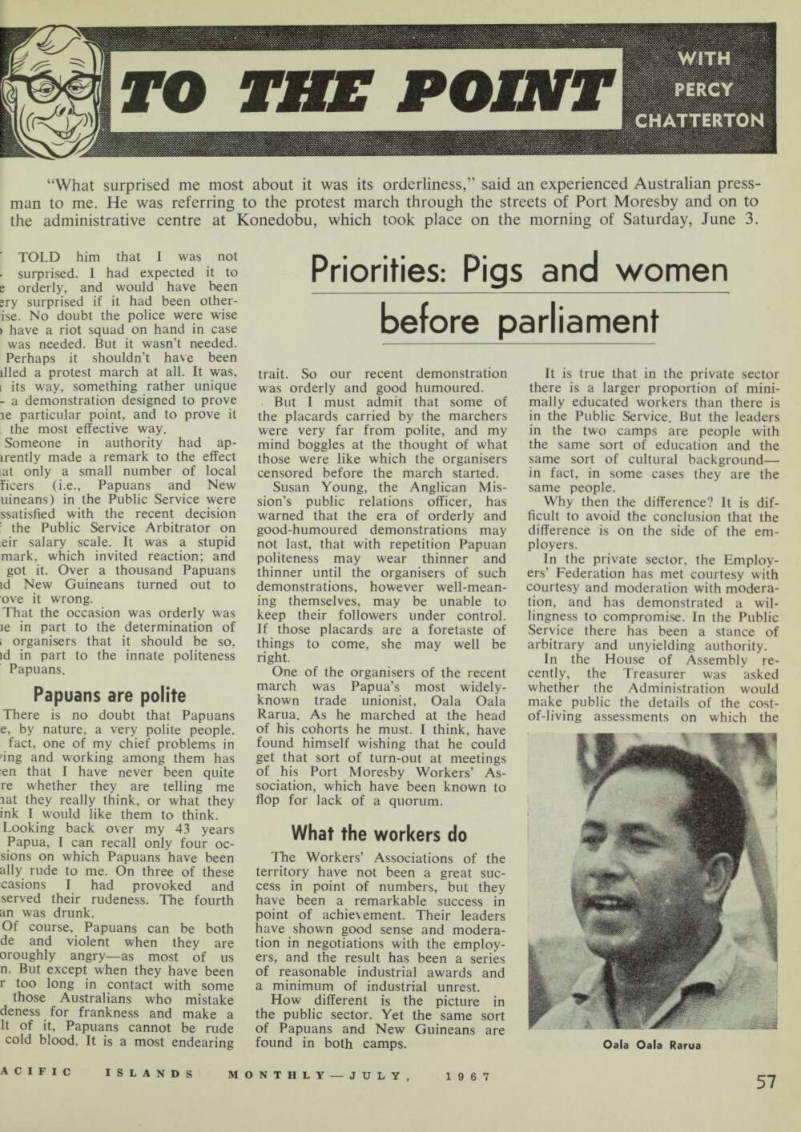 59
59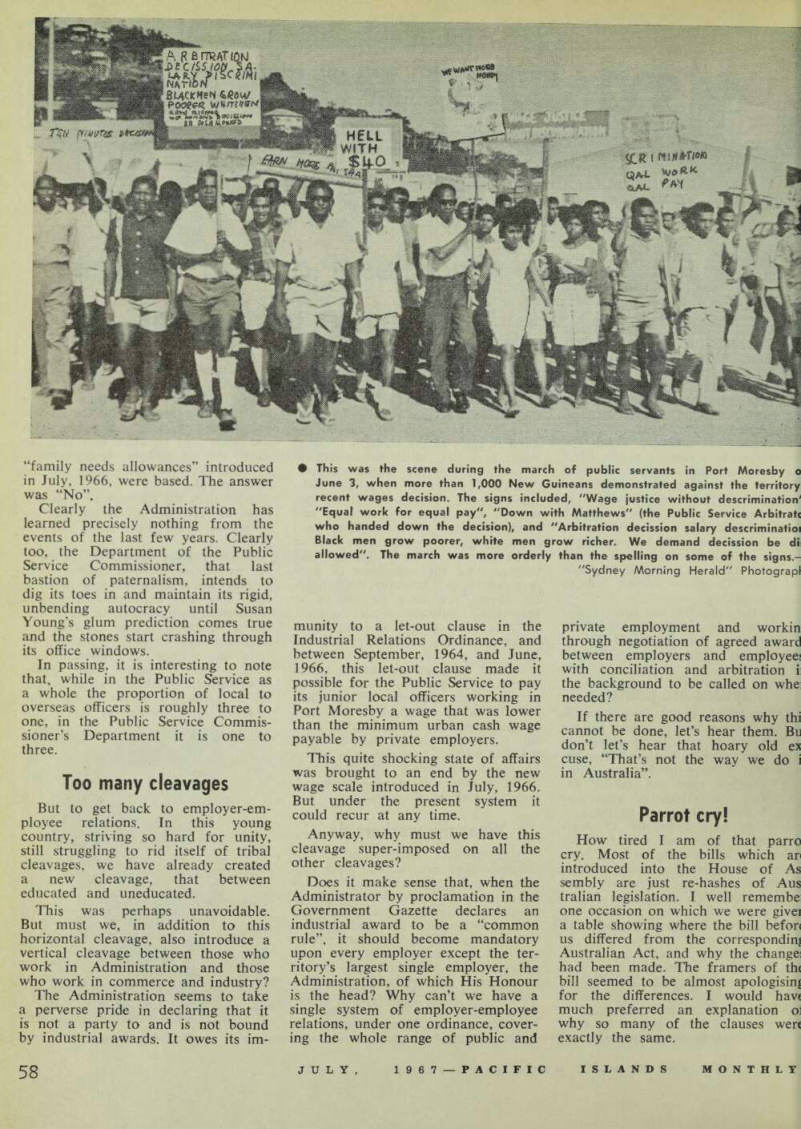 60
60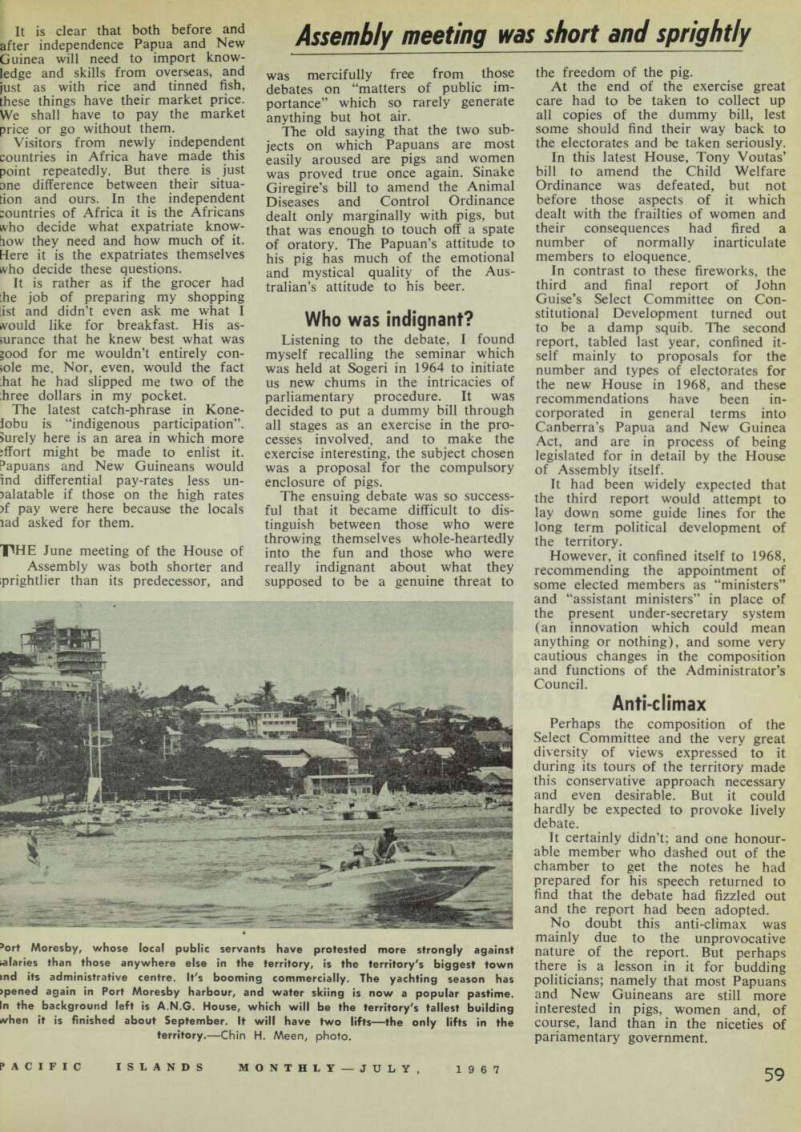 61
61 62
62 63
63 64
64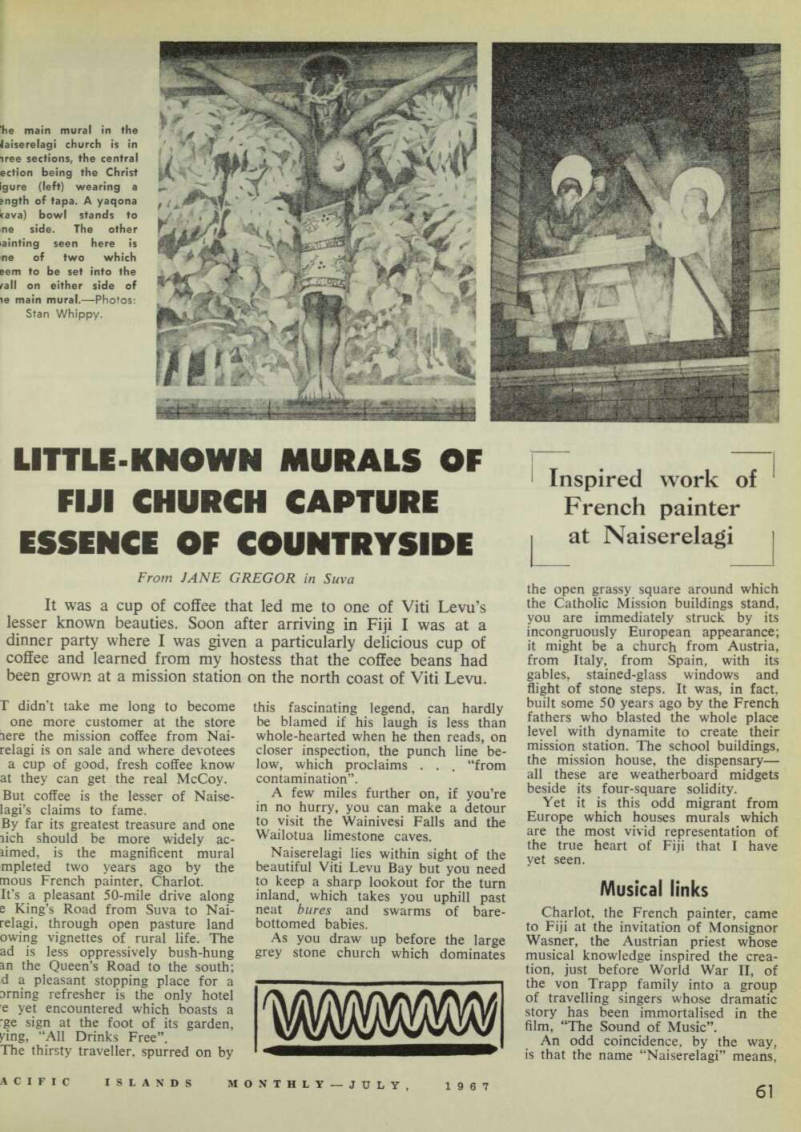 65
65 66
66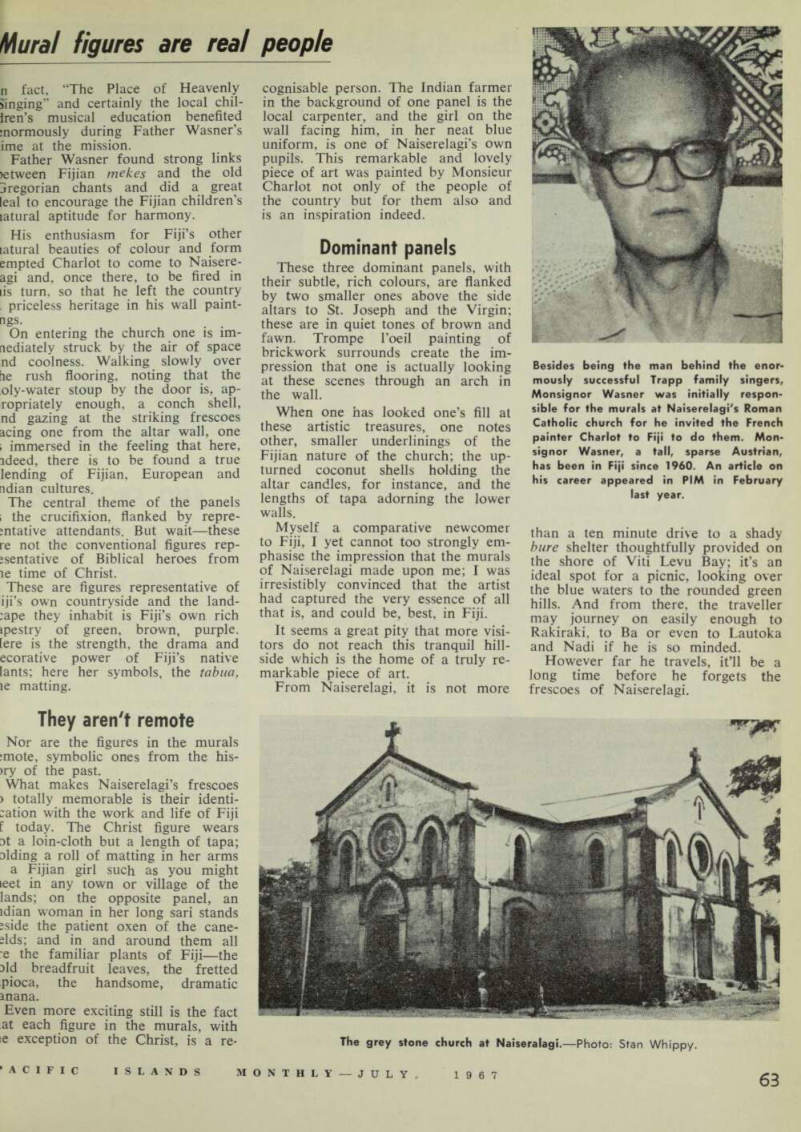 67
67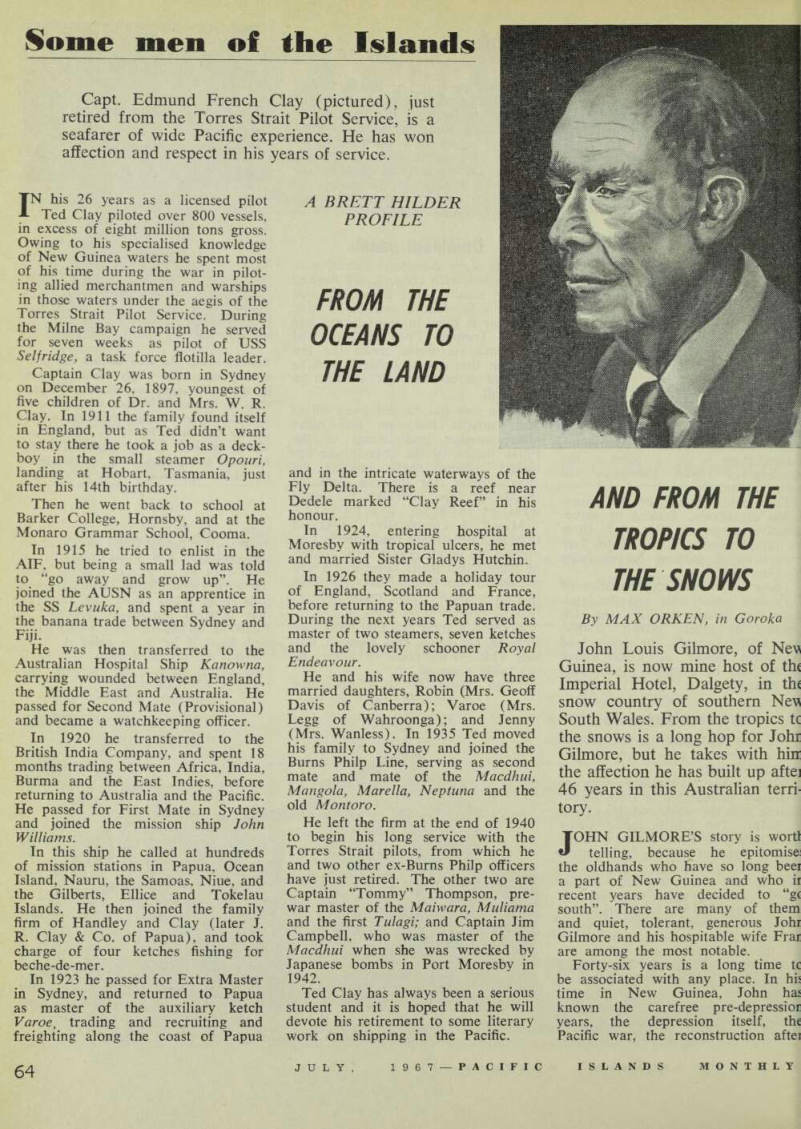 68
68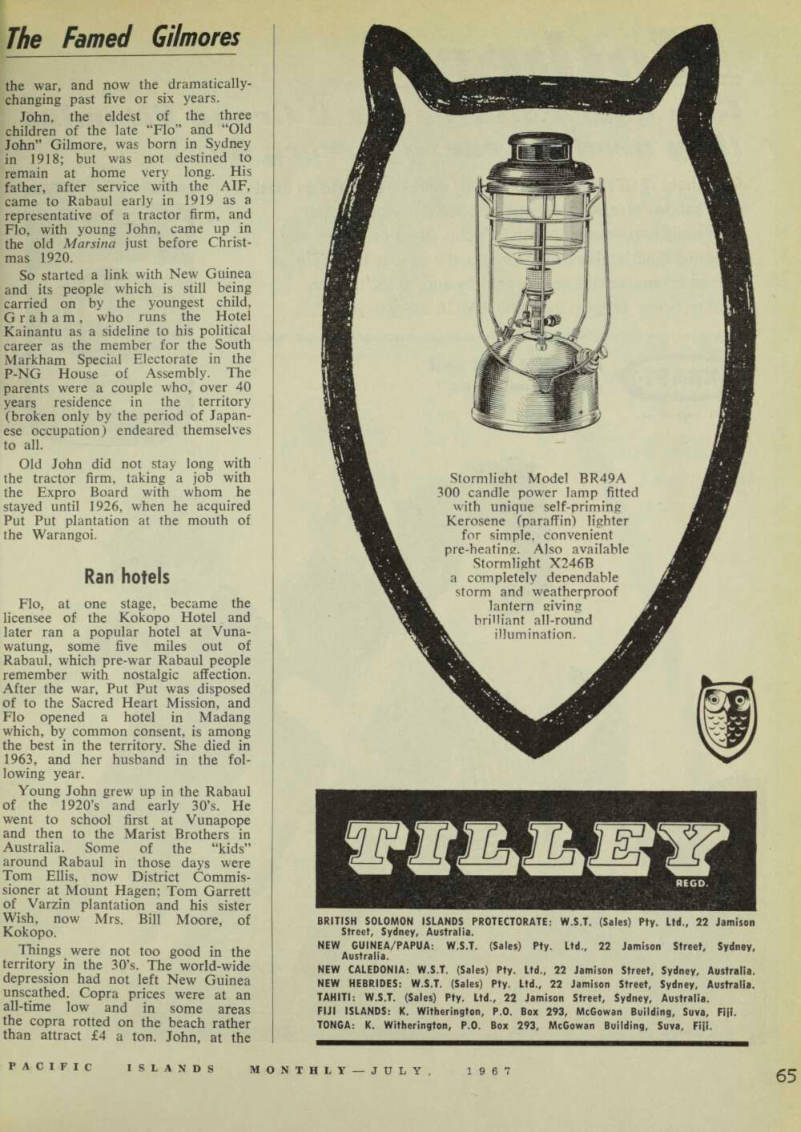 69
69 70
70 71
71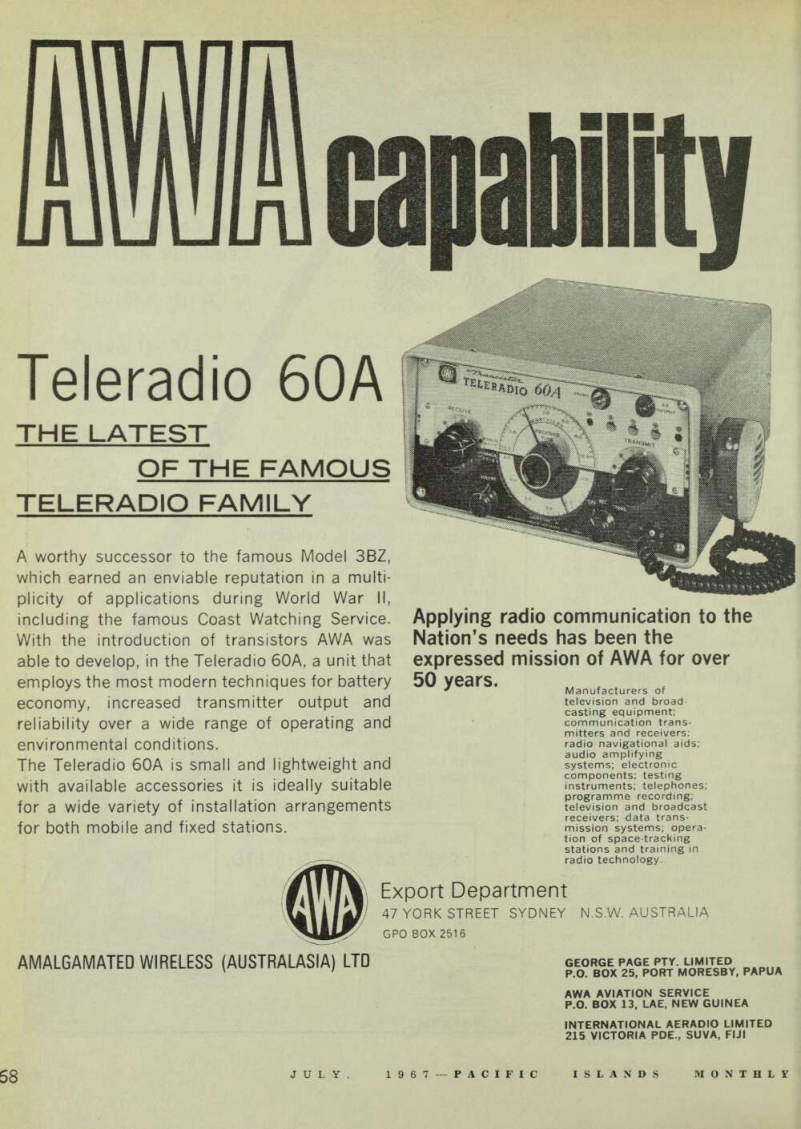 72
72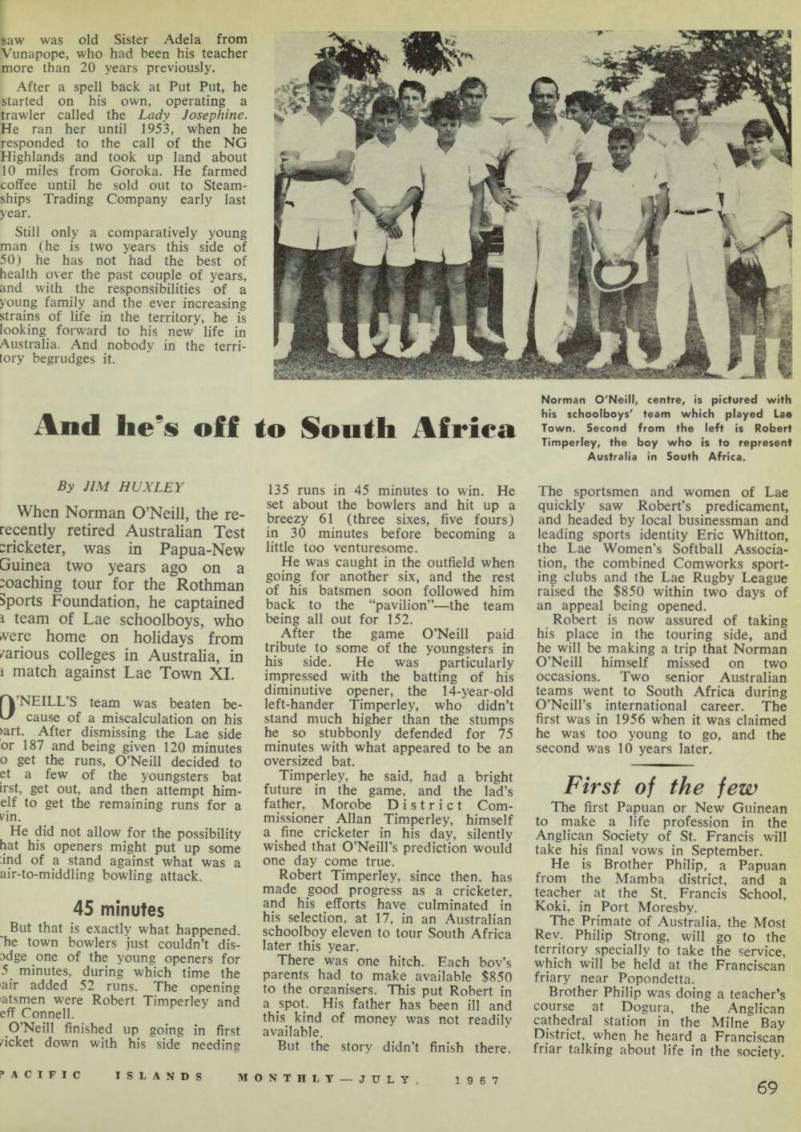 73
73 74
74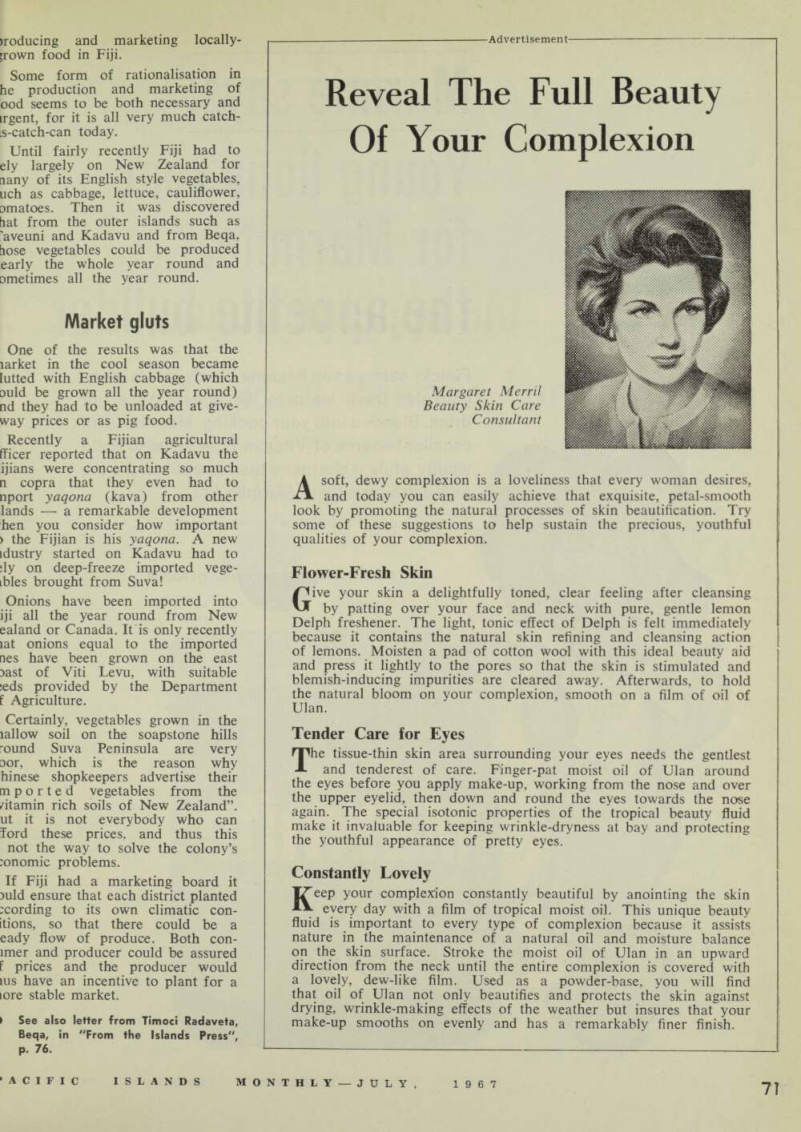 75
75 76
76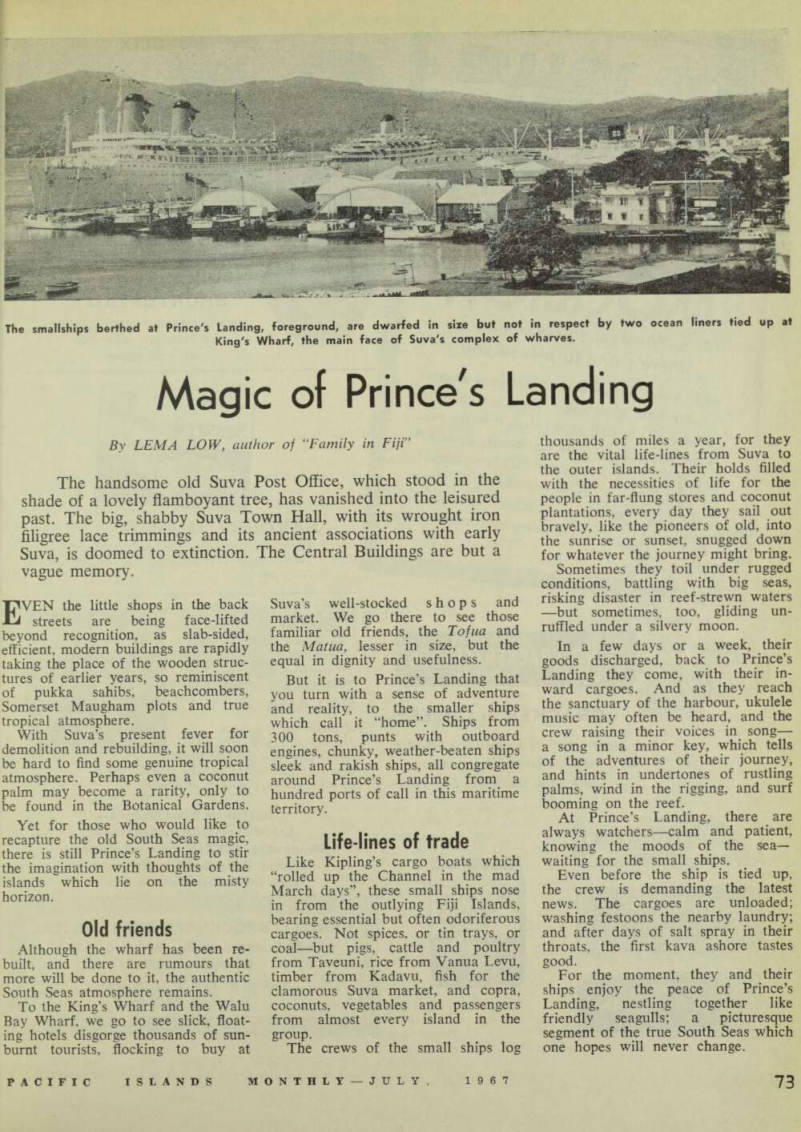 77
77 78
78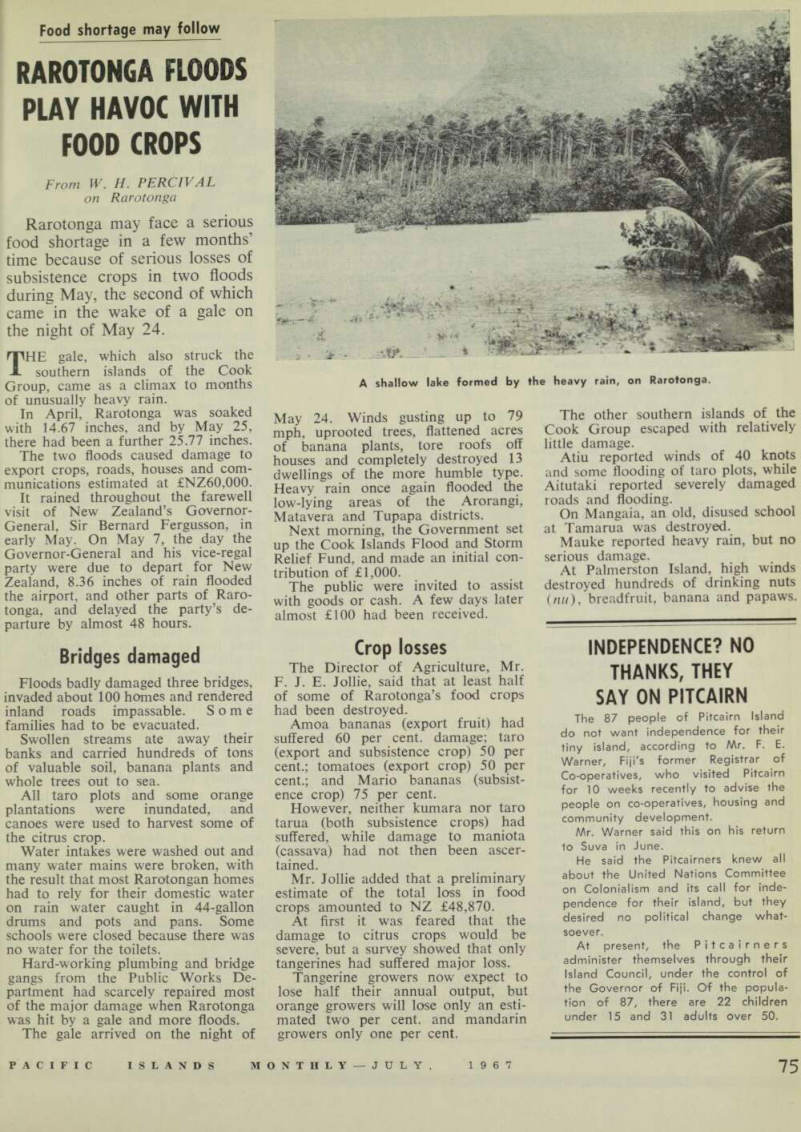 79
79 80
80 81
81 82
82 83
83 84
84 85
85 86
86 87
87 88
88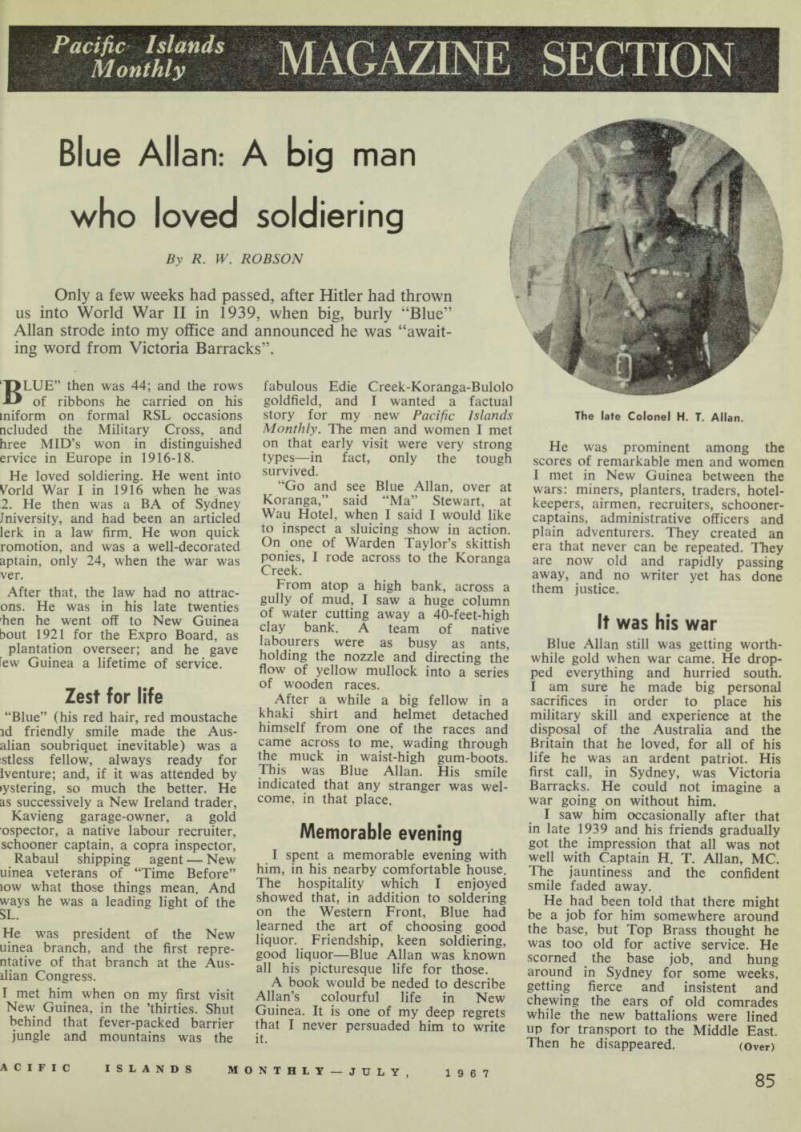 89
89 90
90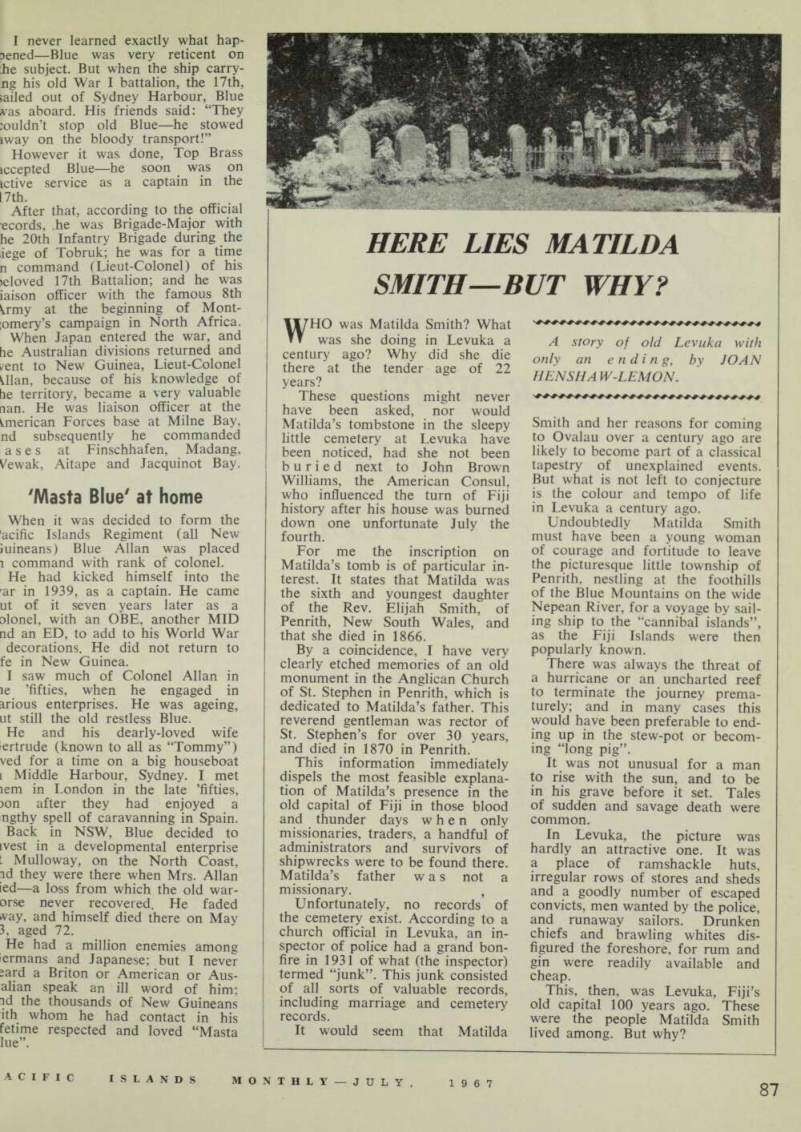 91
91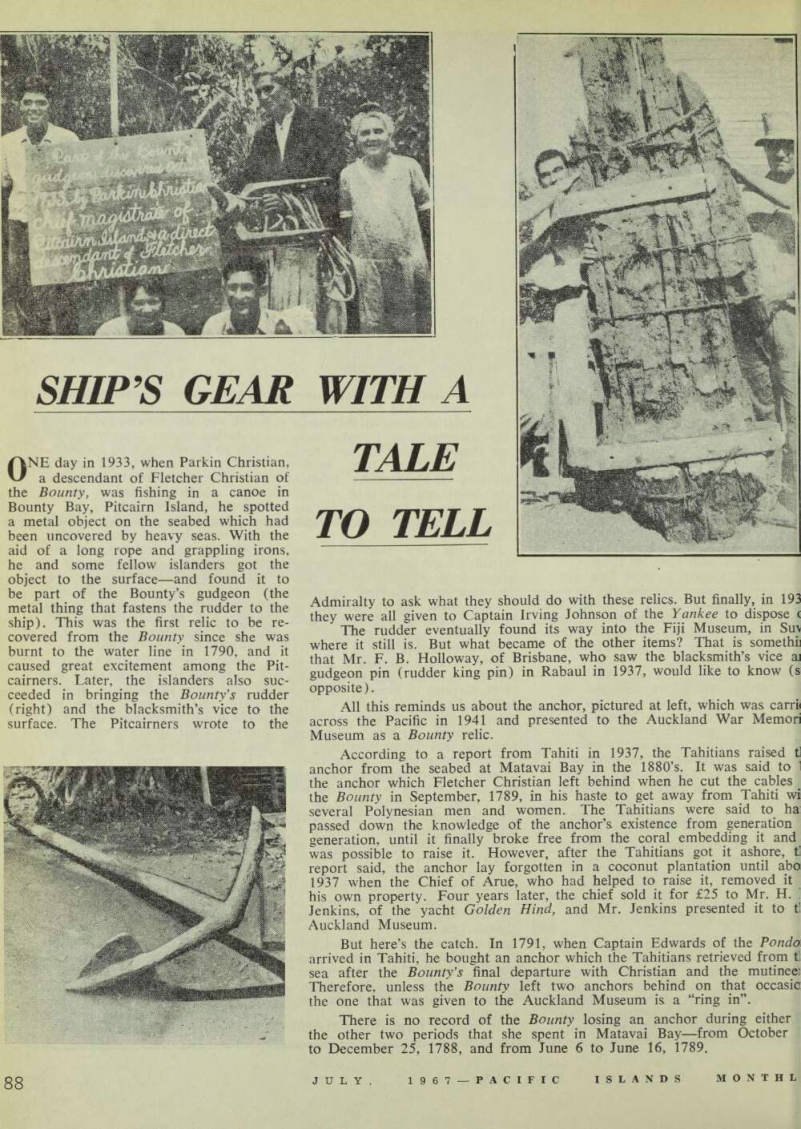 92
92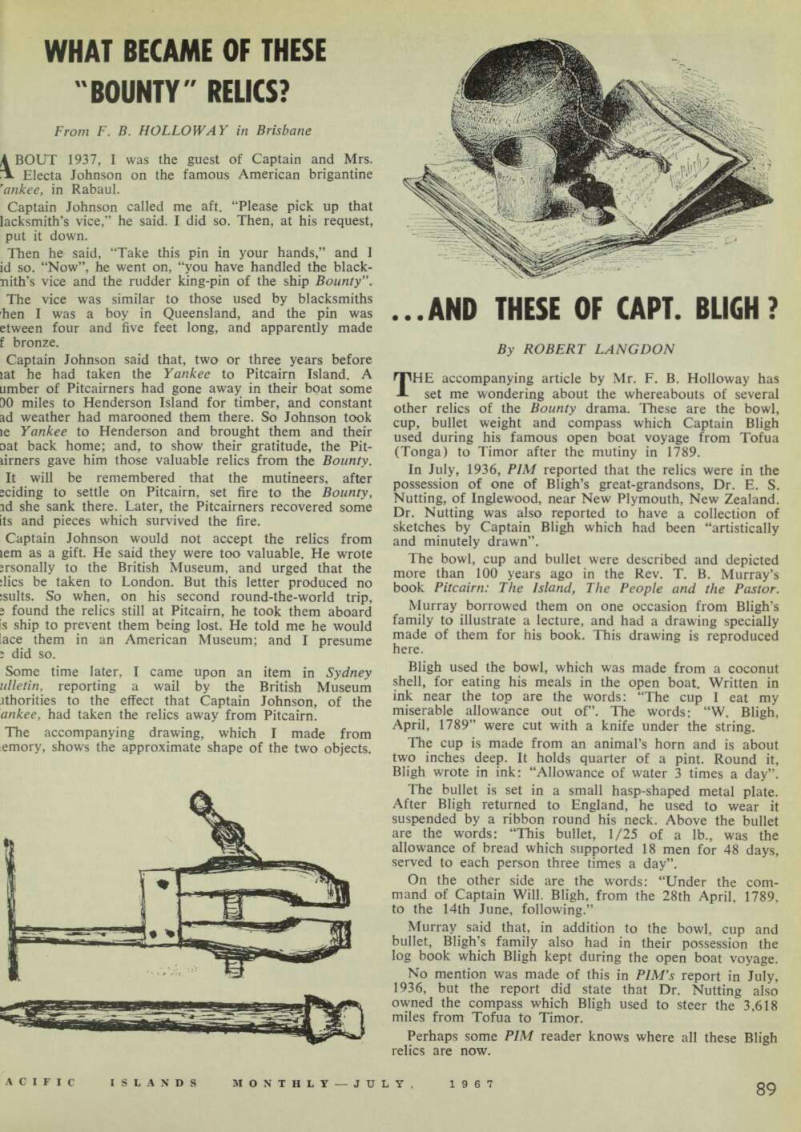 93
93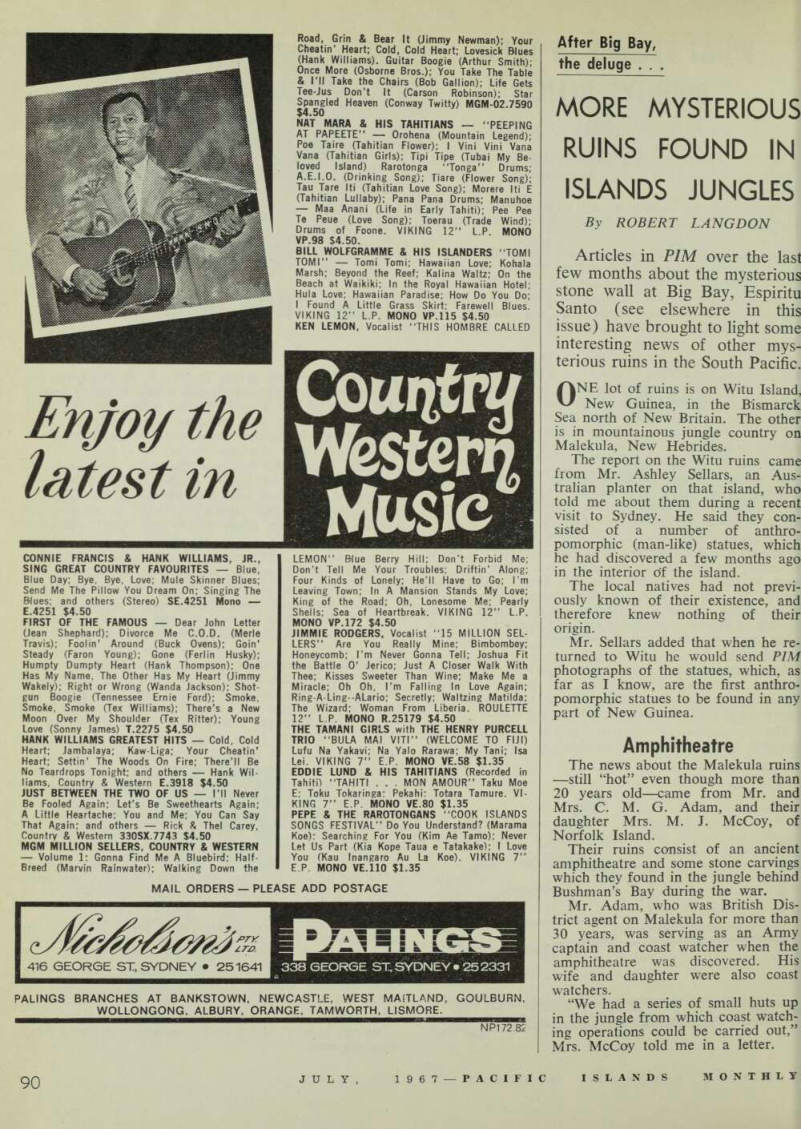 94
94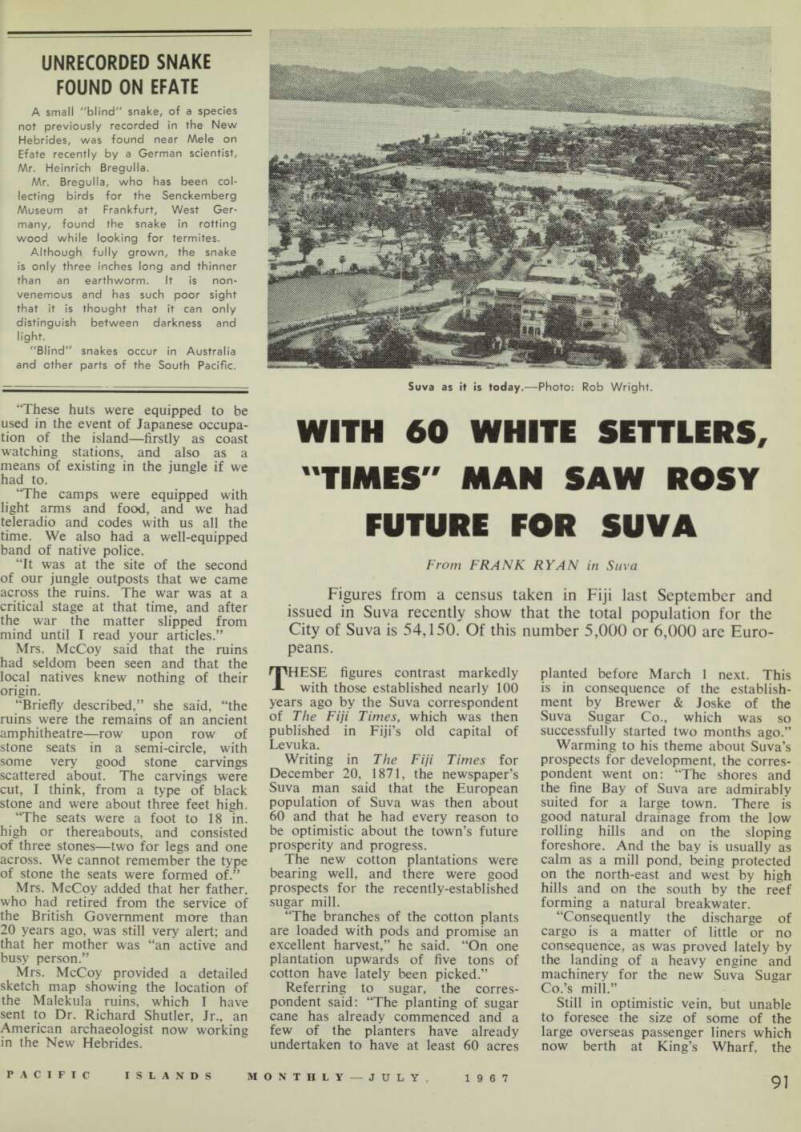 95
95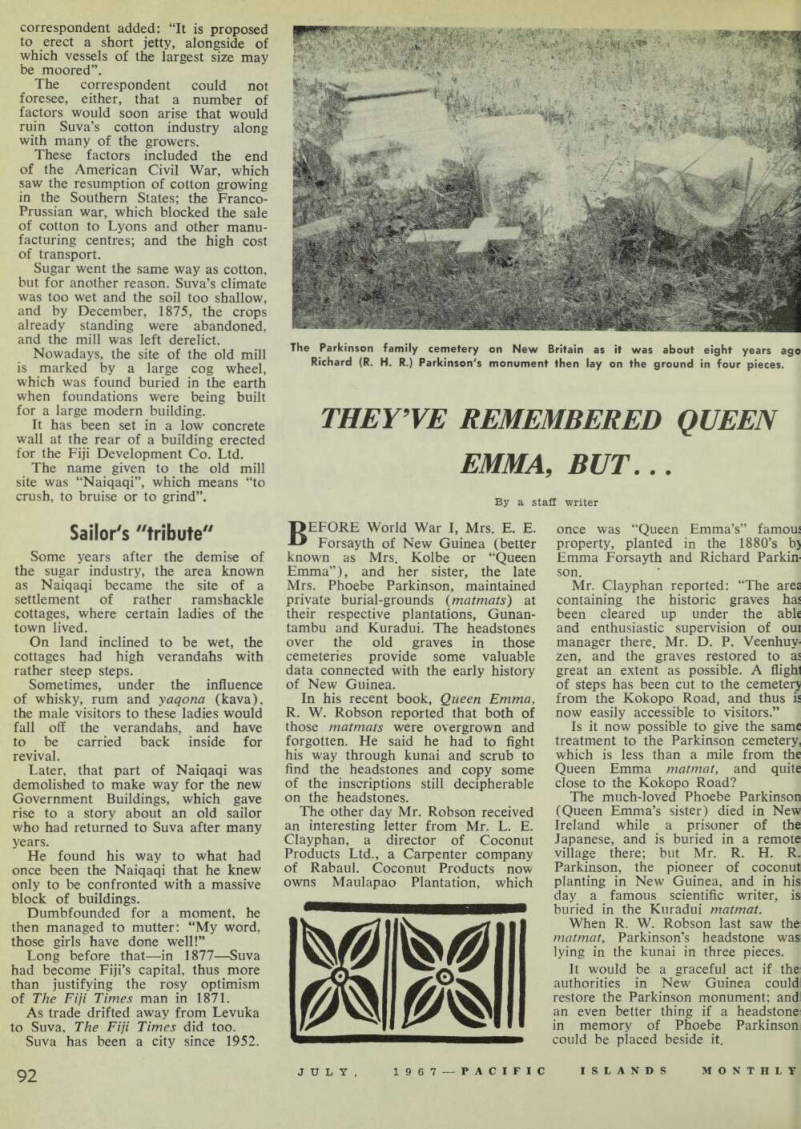 96
96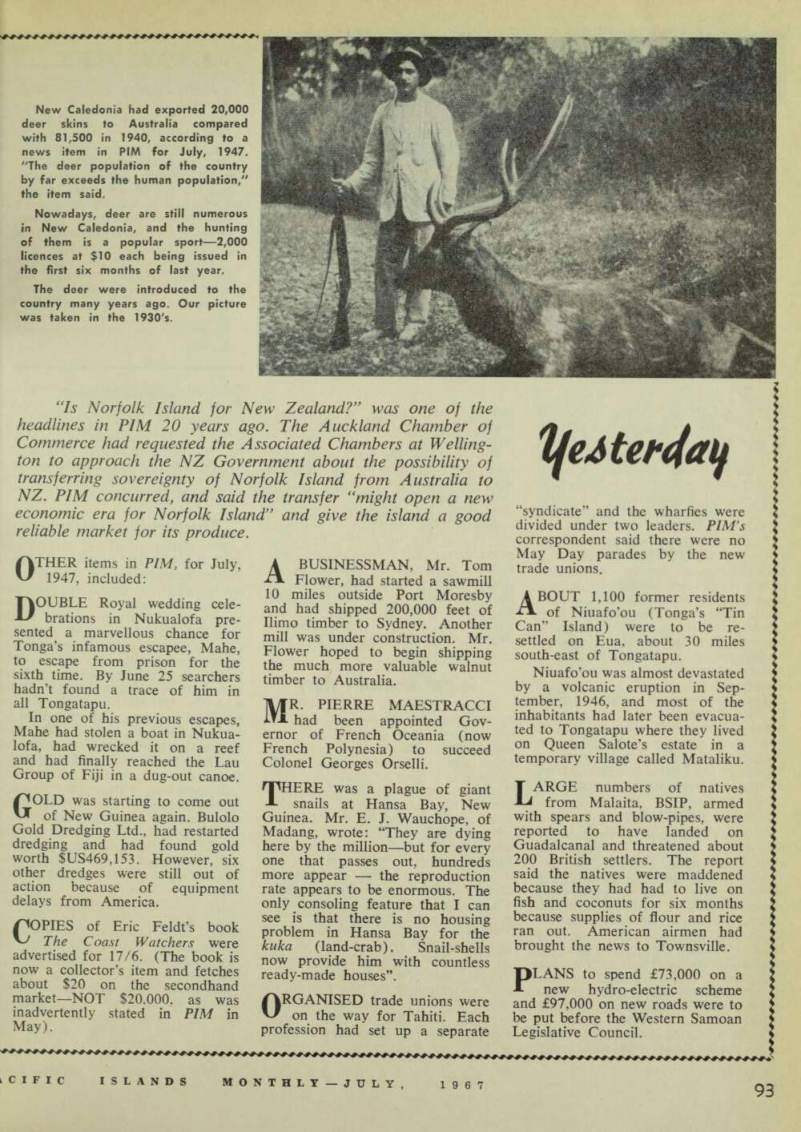 97
97 98
98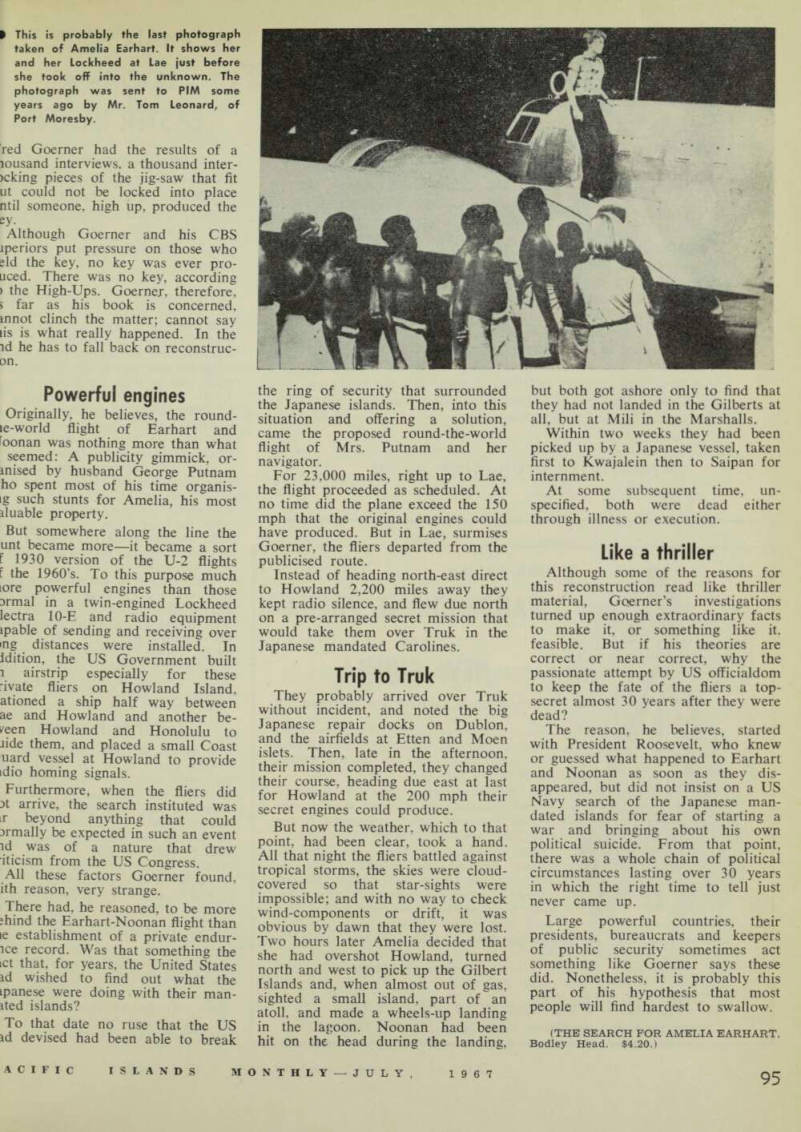 99
99 100
100 101
101 102
102 103
103 104
104 105
105 106
106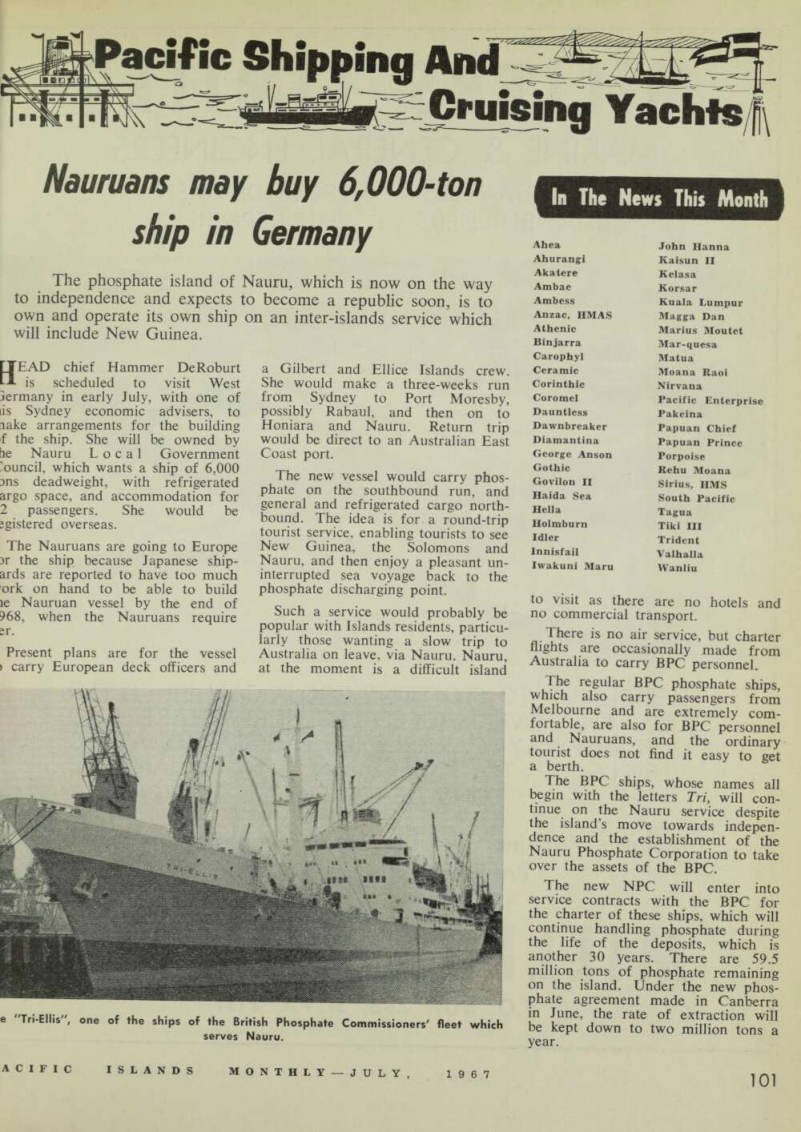 107
107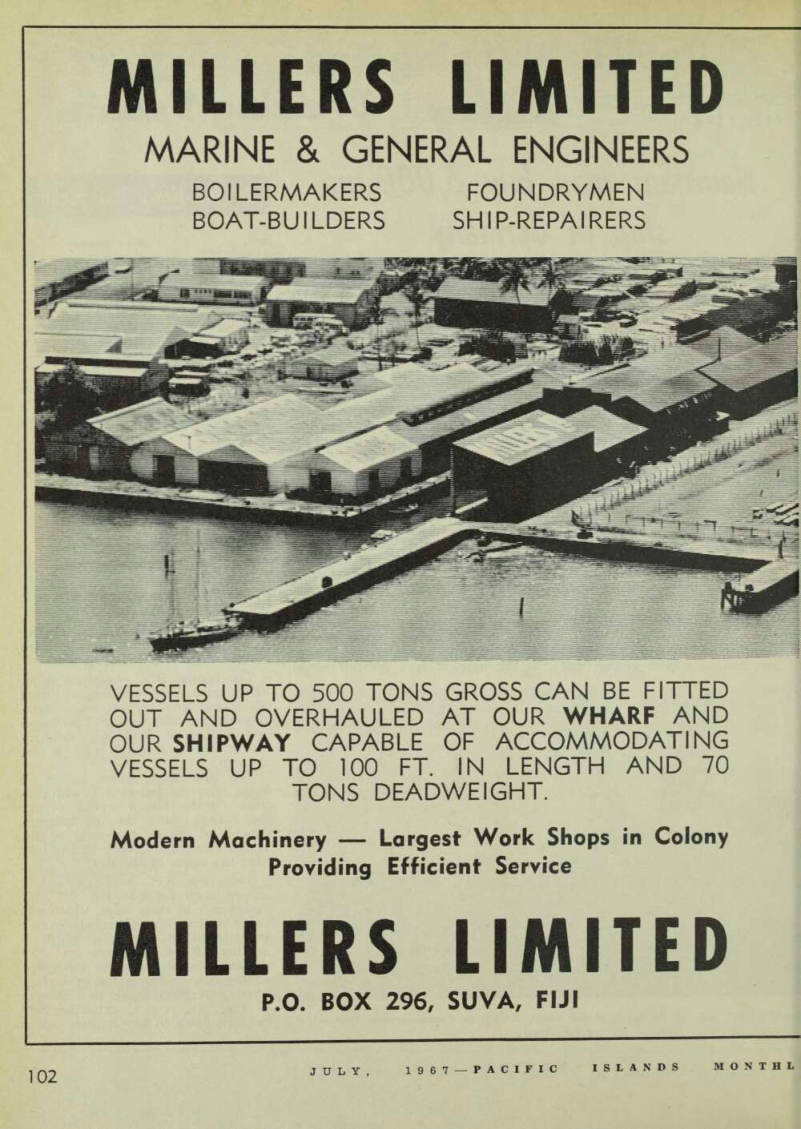 108
108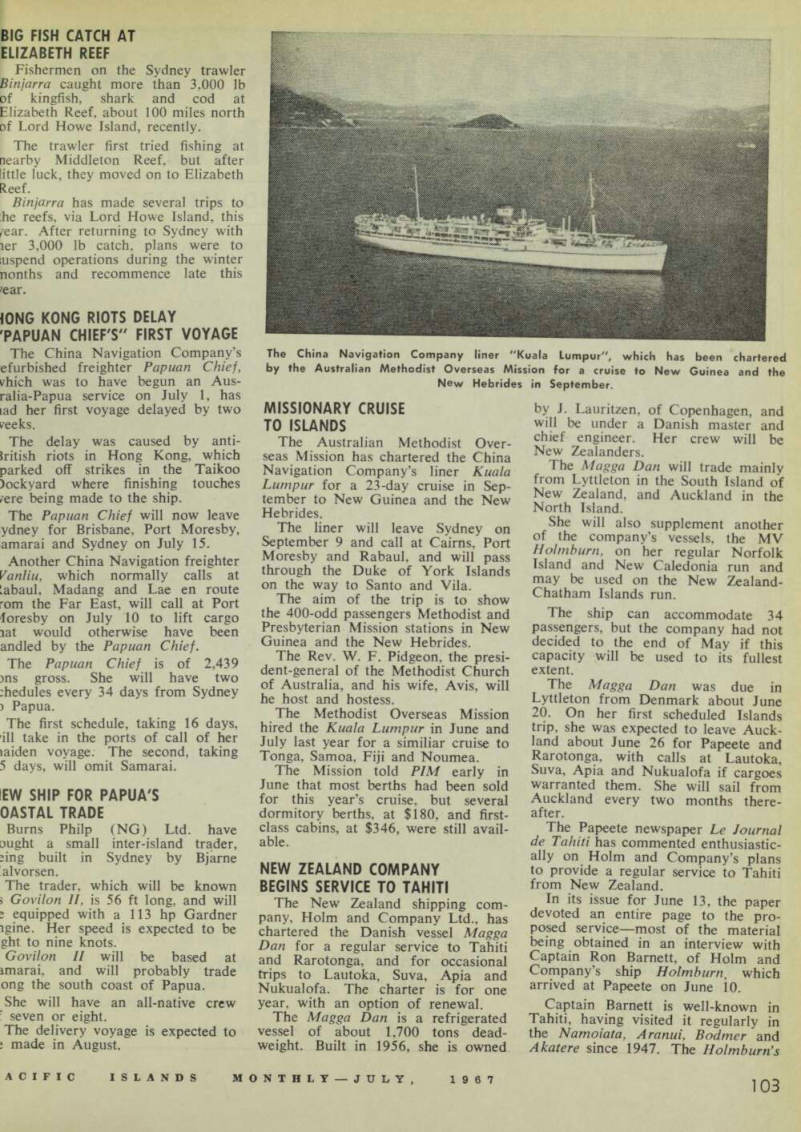 109
109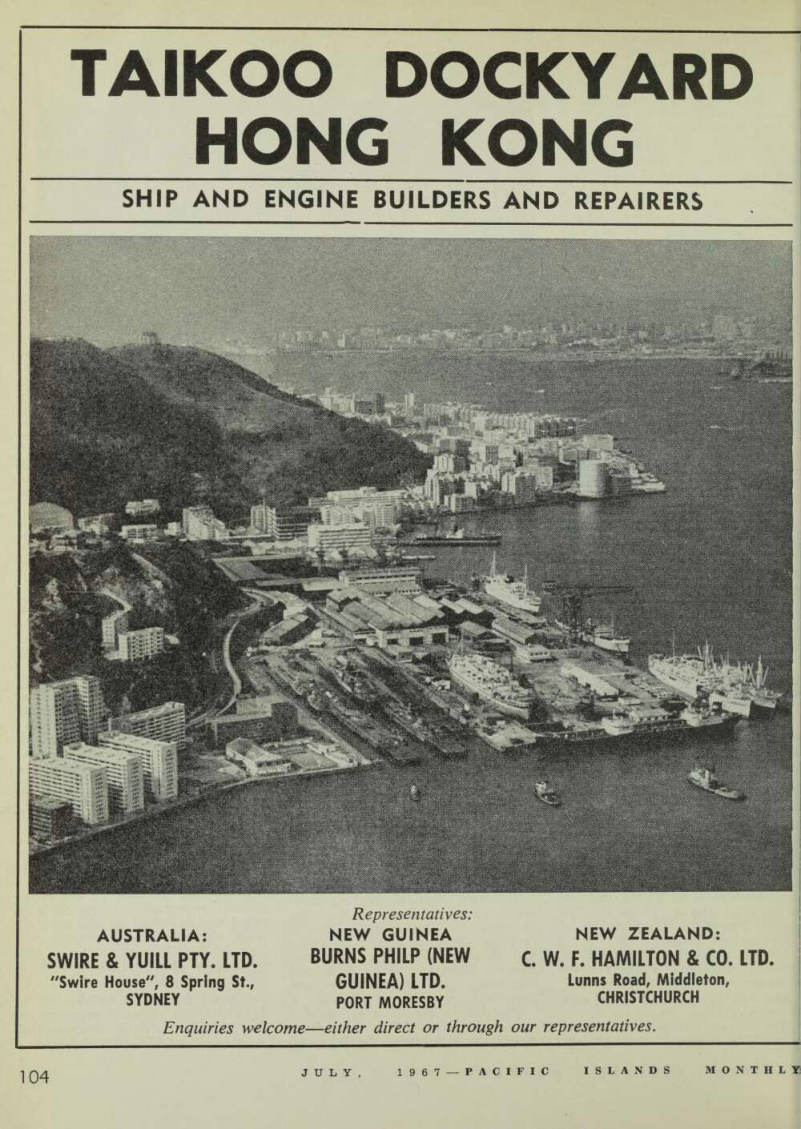 110
110 111
111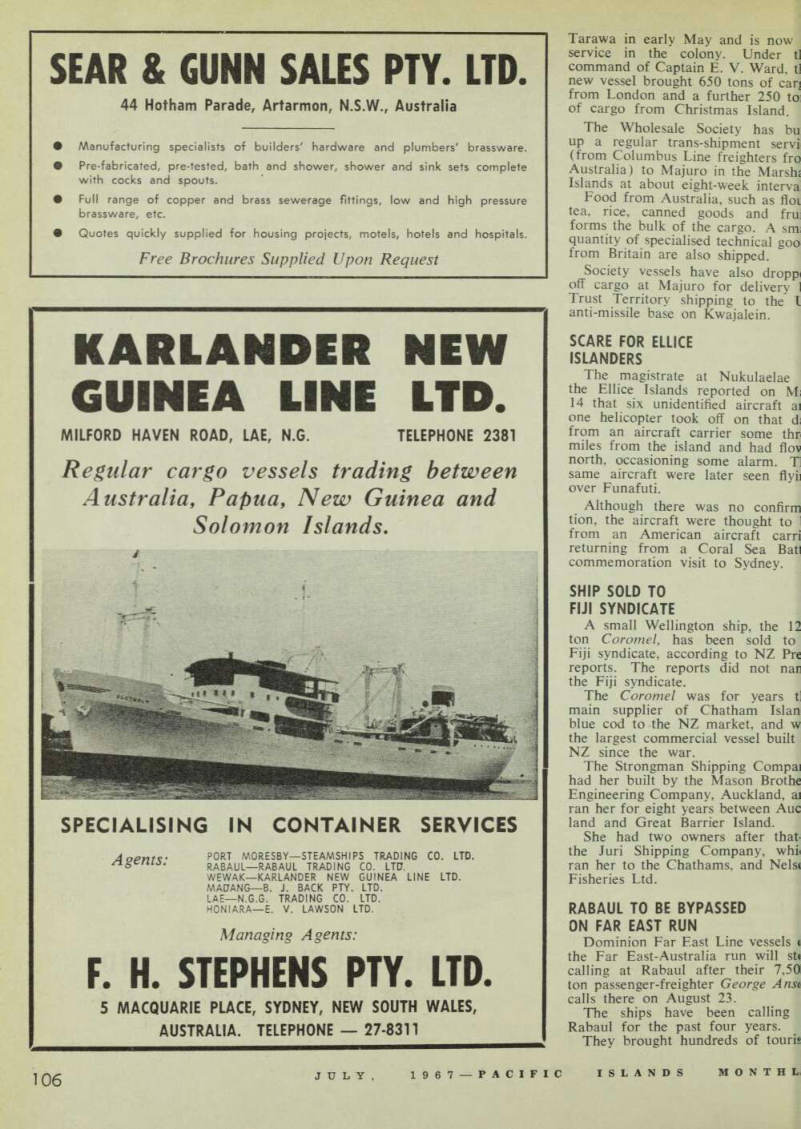 112
112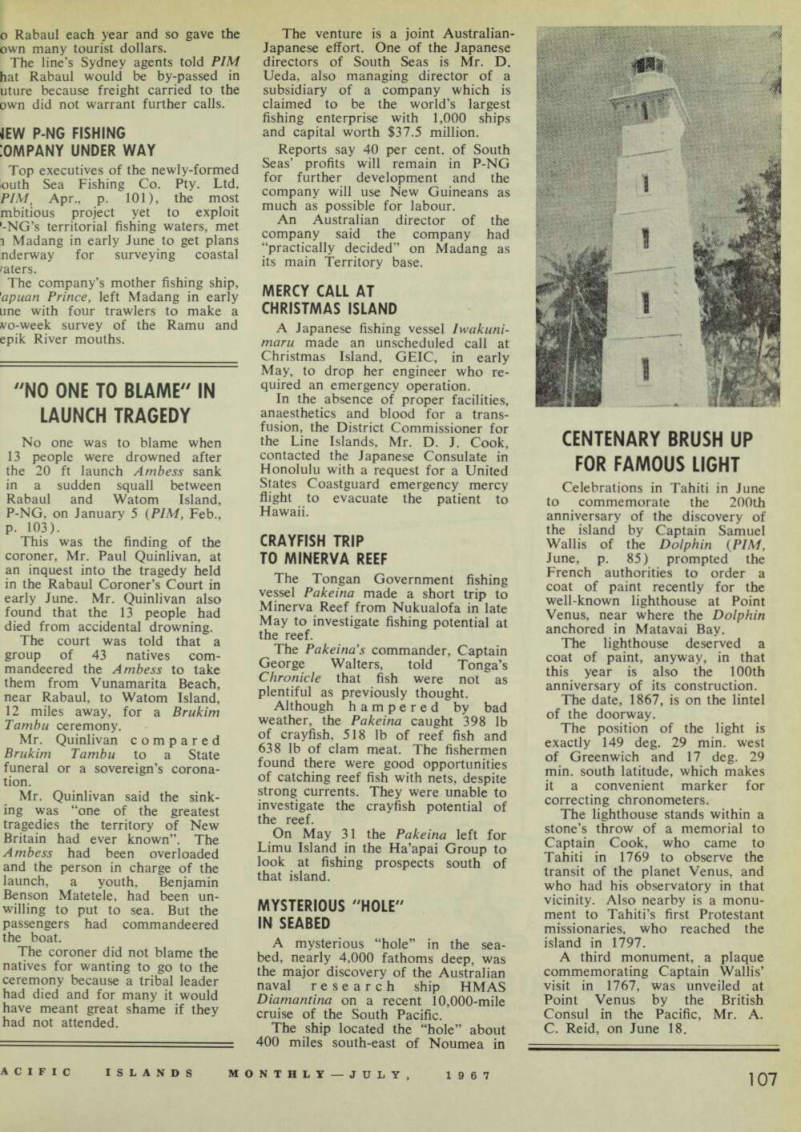 113
113 114
114 115
115 116
116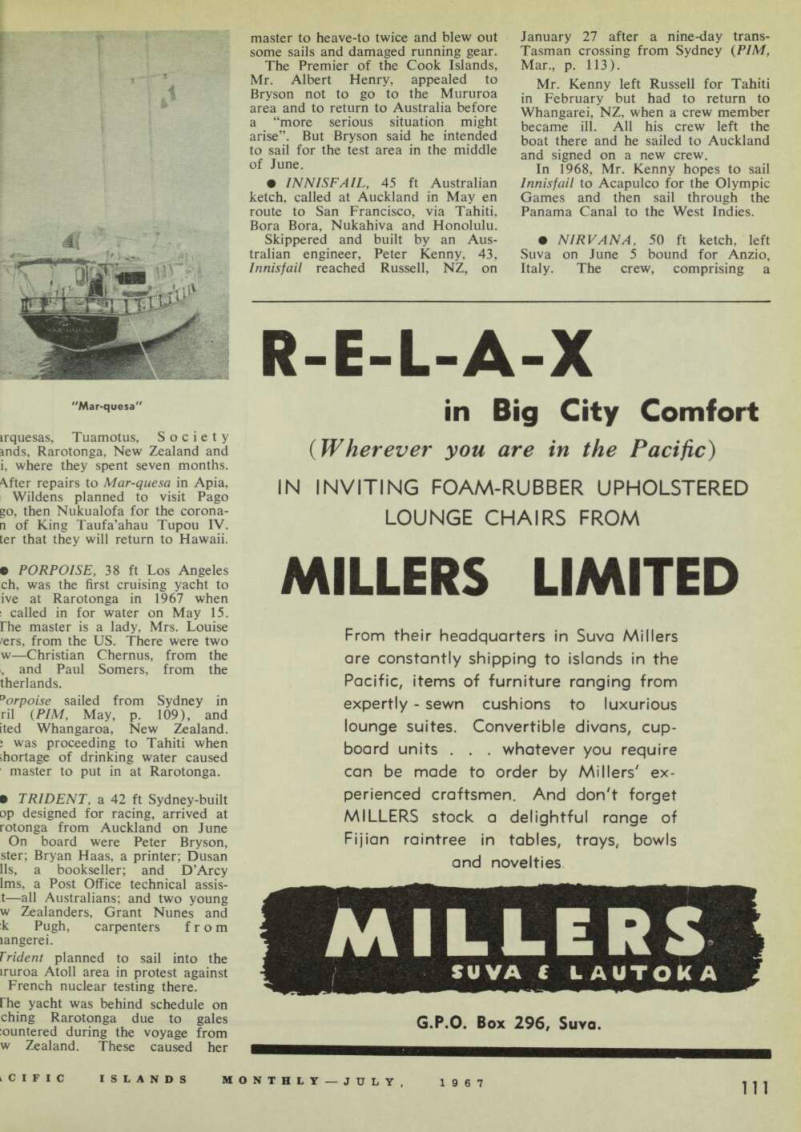 117
117 118
118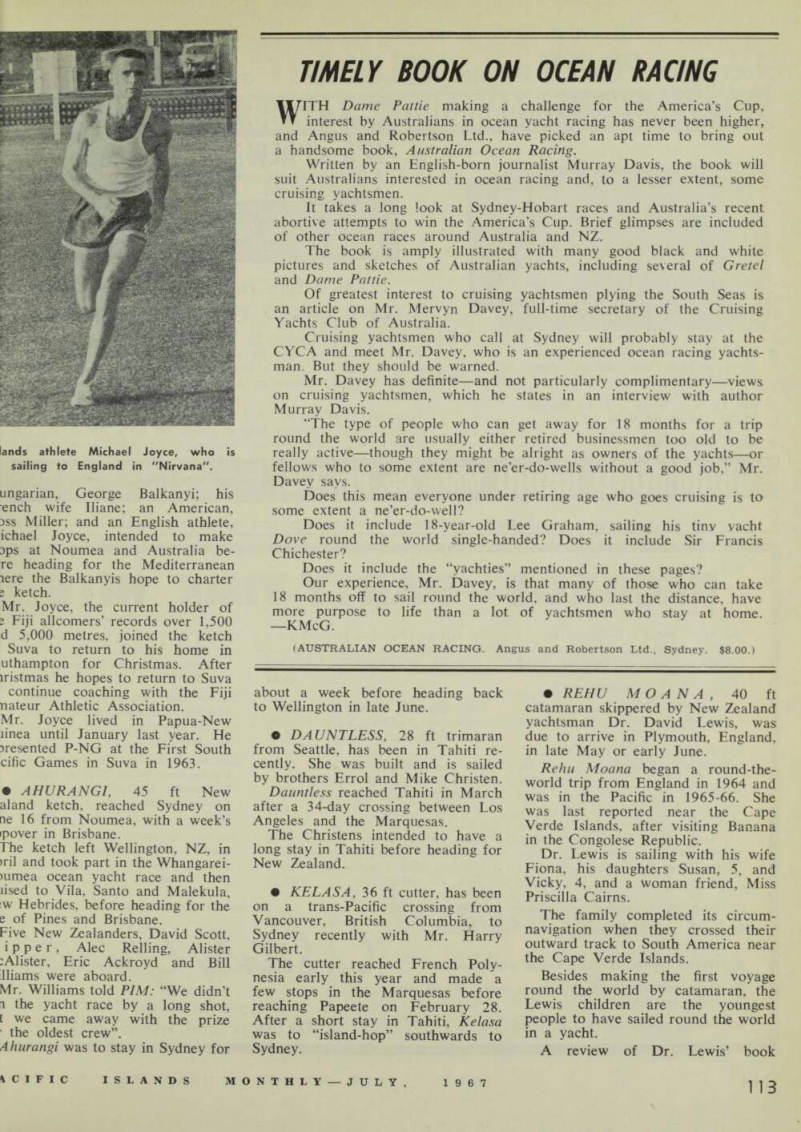 119
119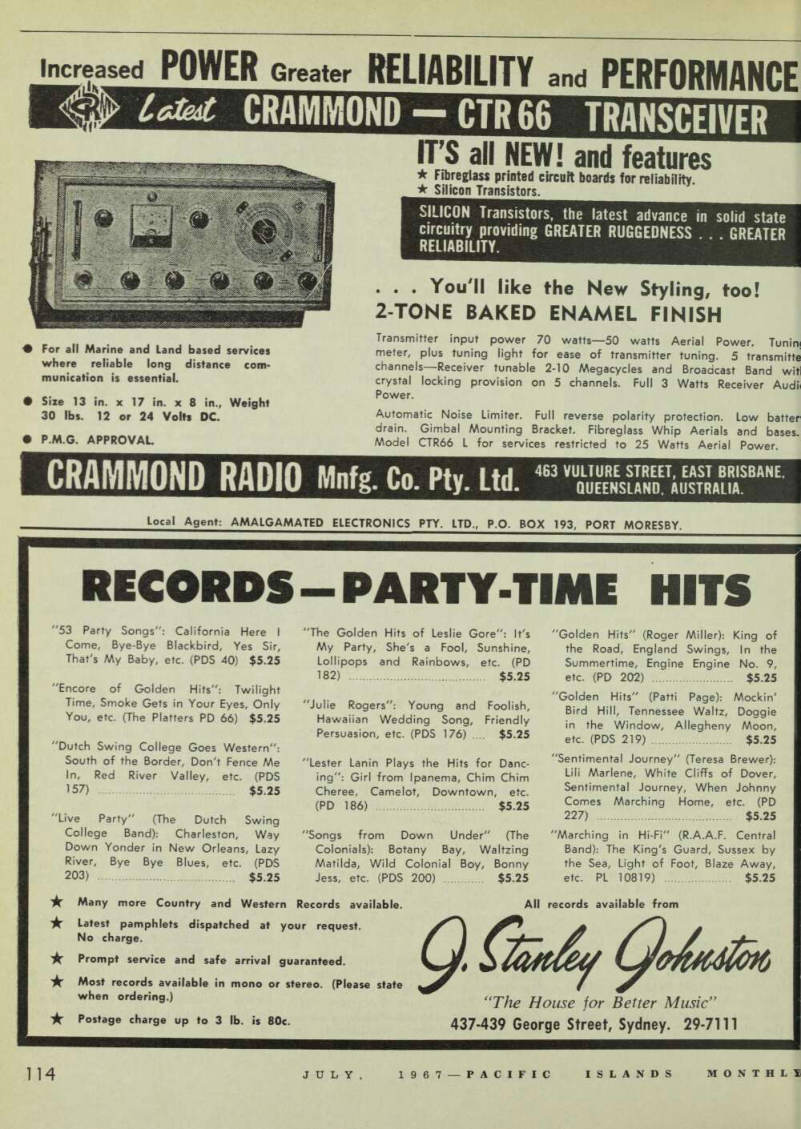 120
120 121
121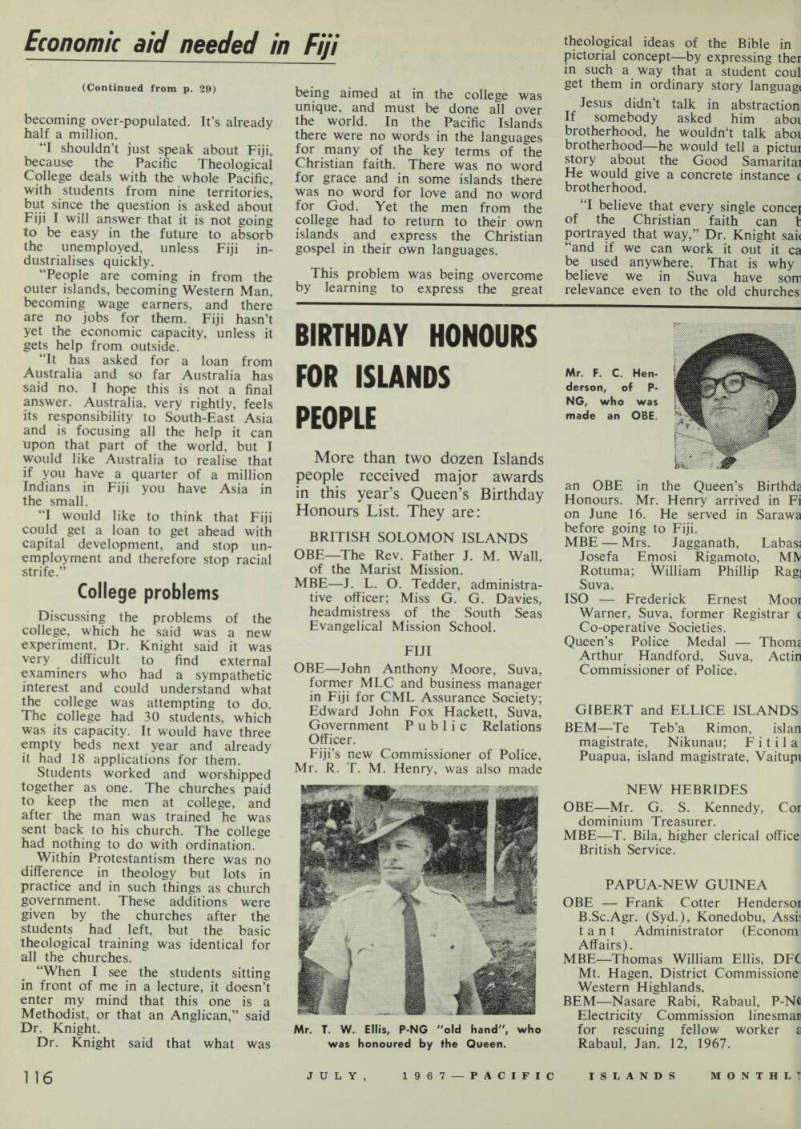 122
122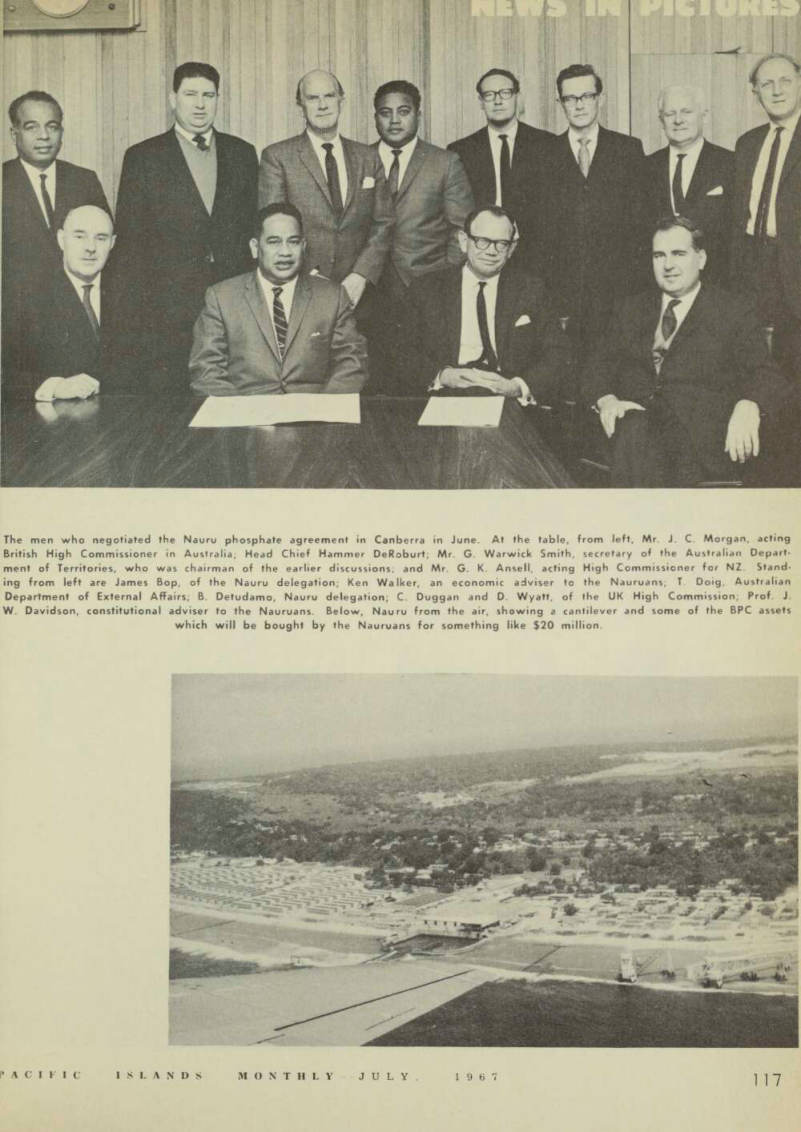 123
123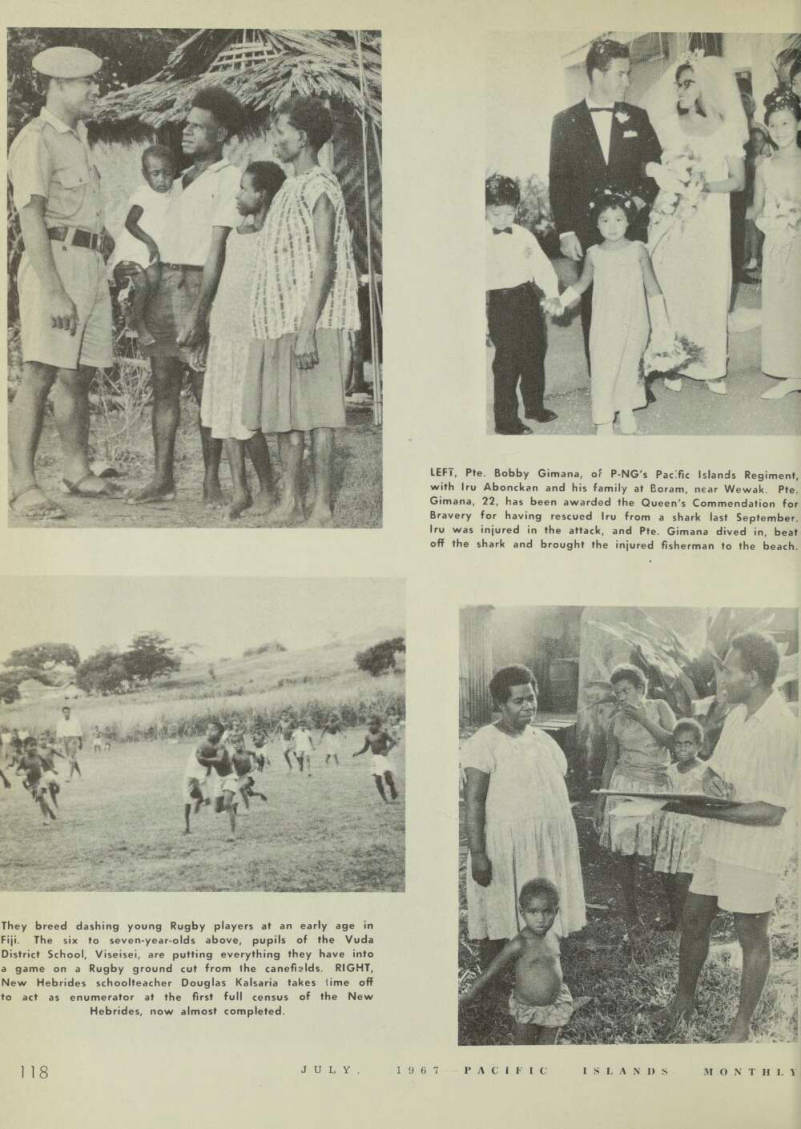 124
124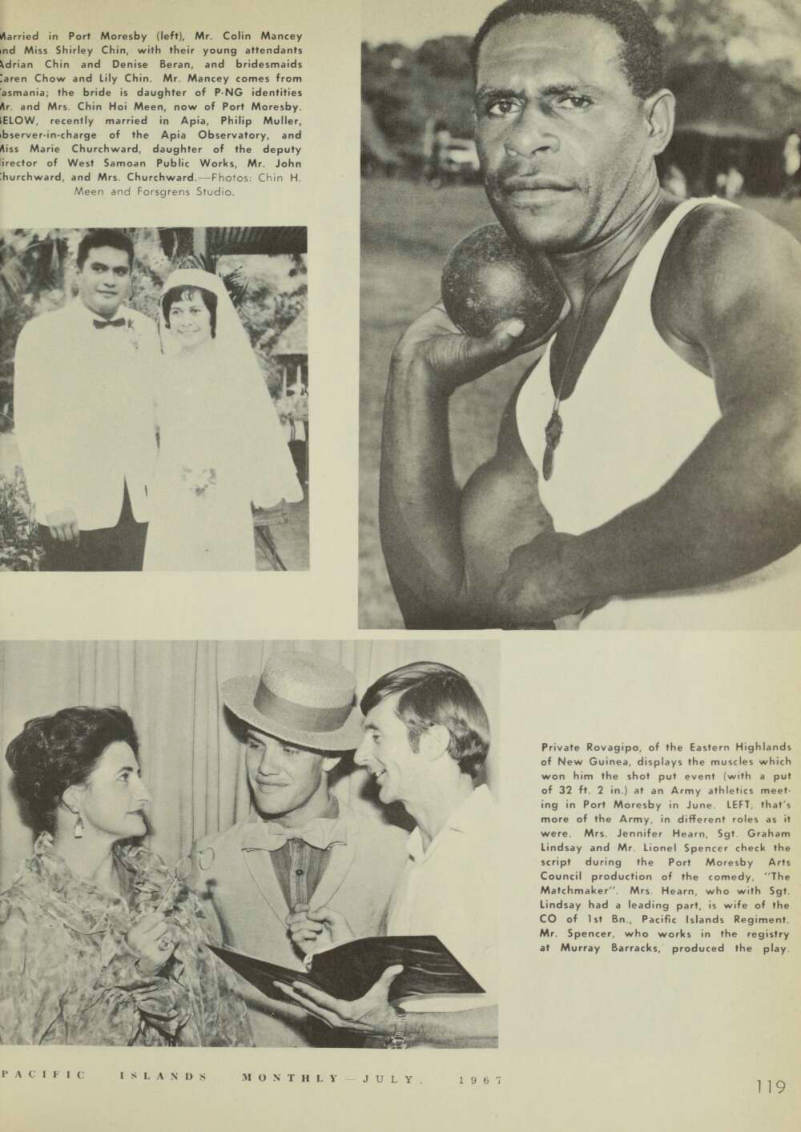 125
125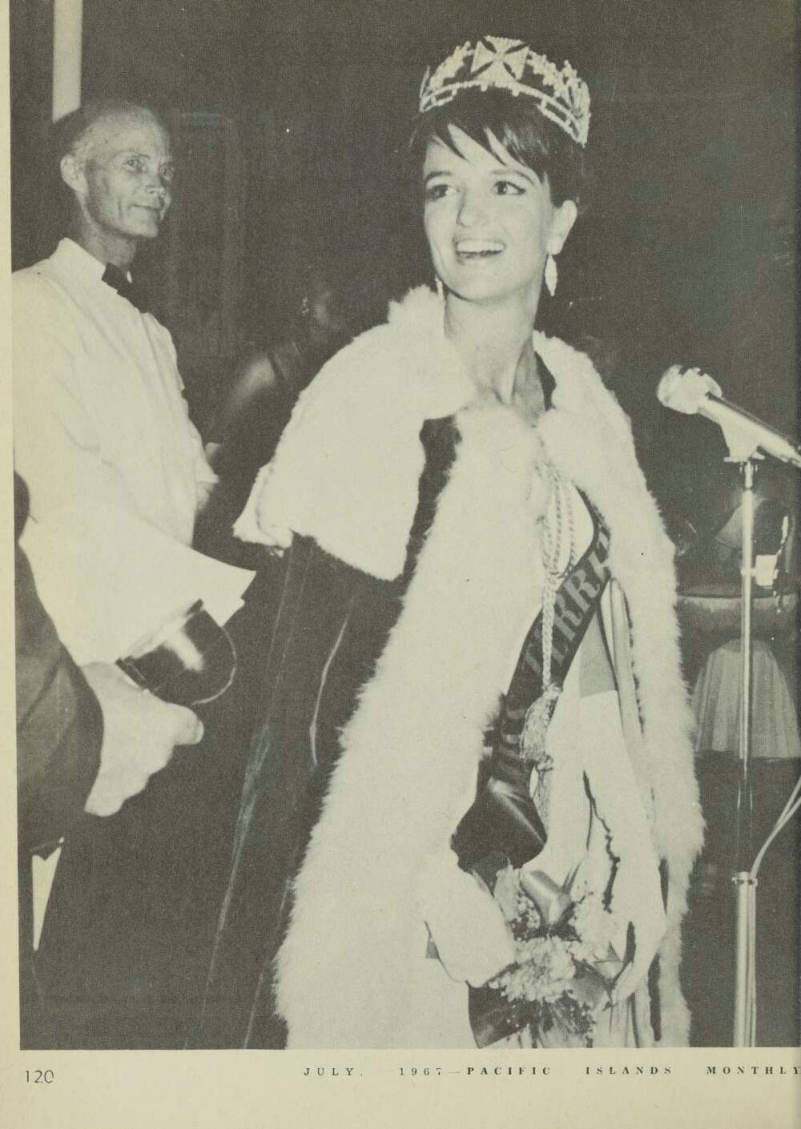 126
126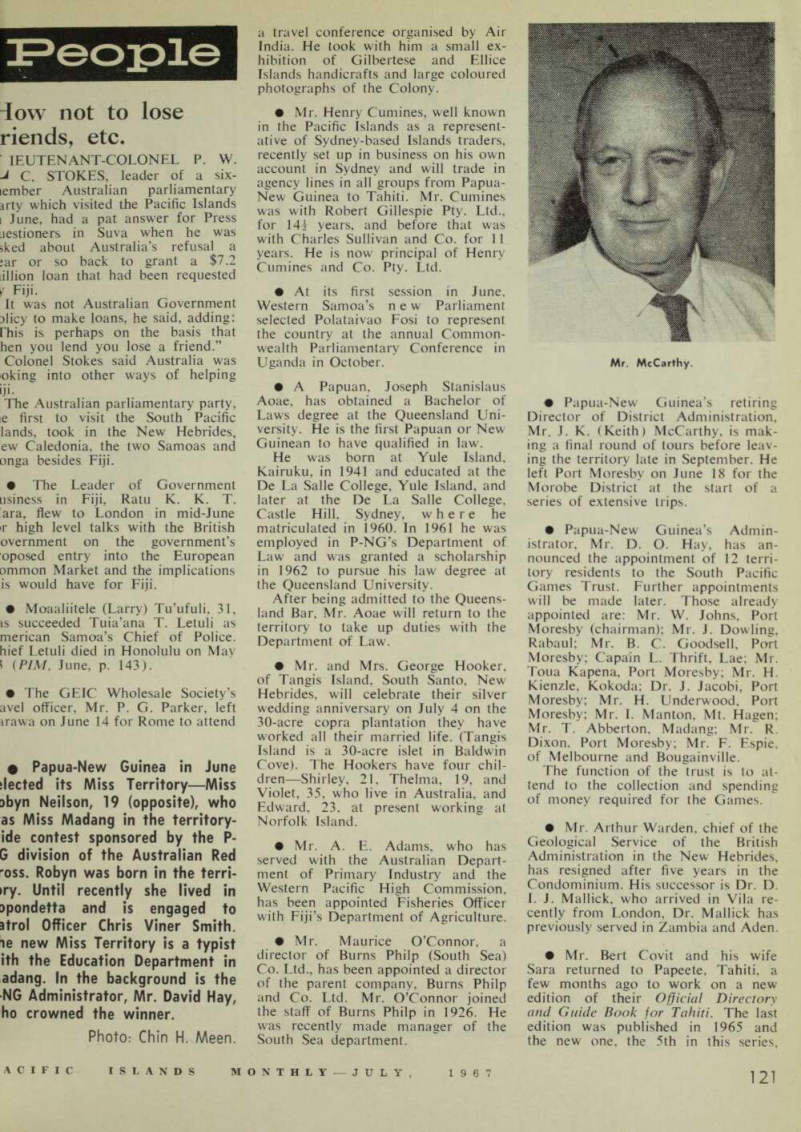 127
127 128
128 129
129 130
130 131
131 132
132 133
133 134
134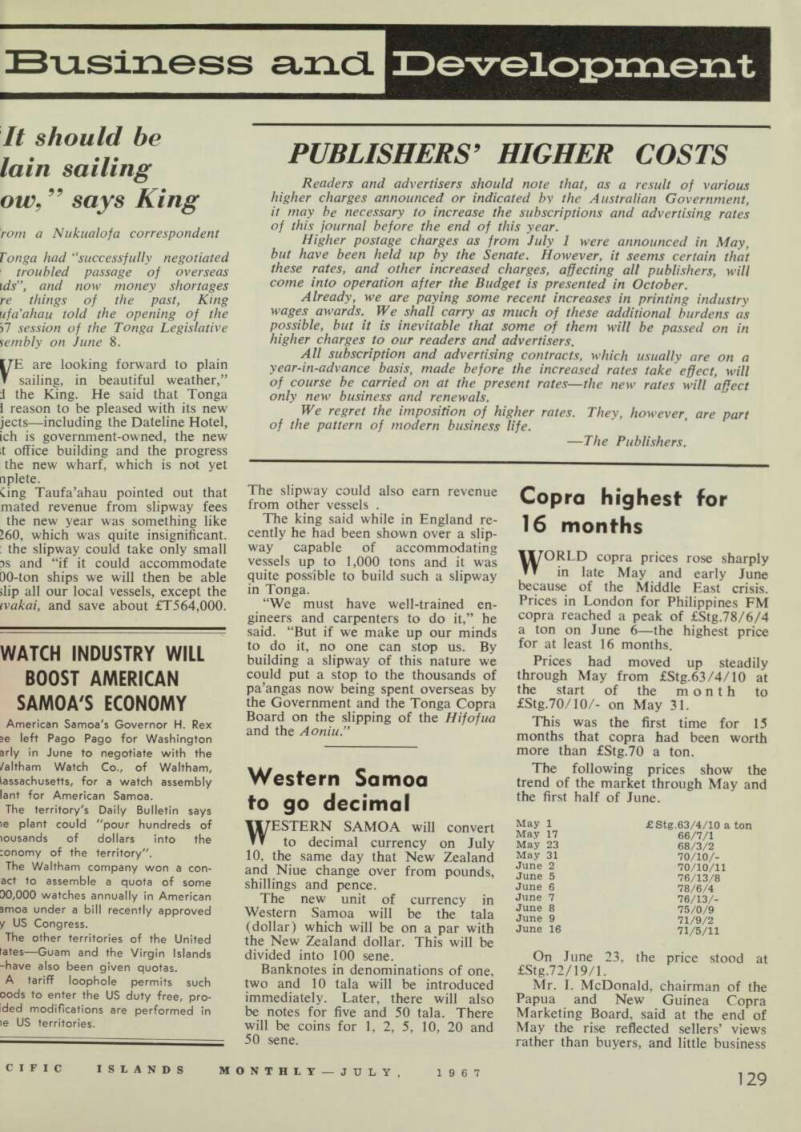 135
135 136
136 137
137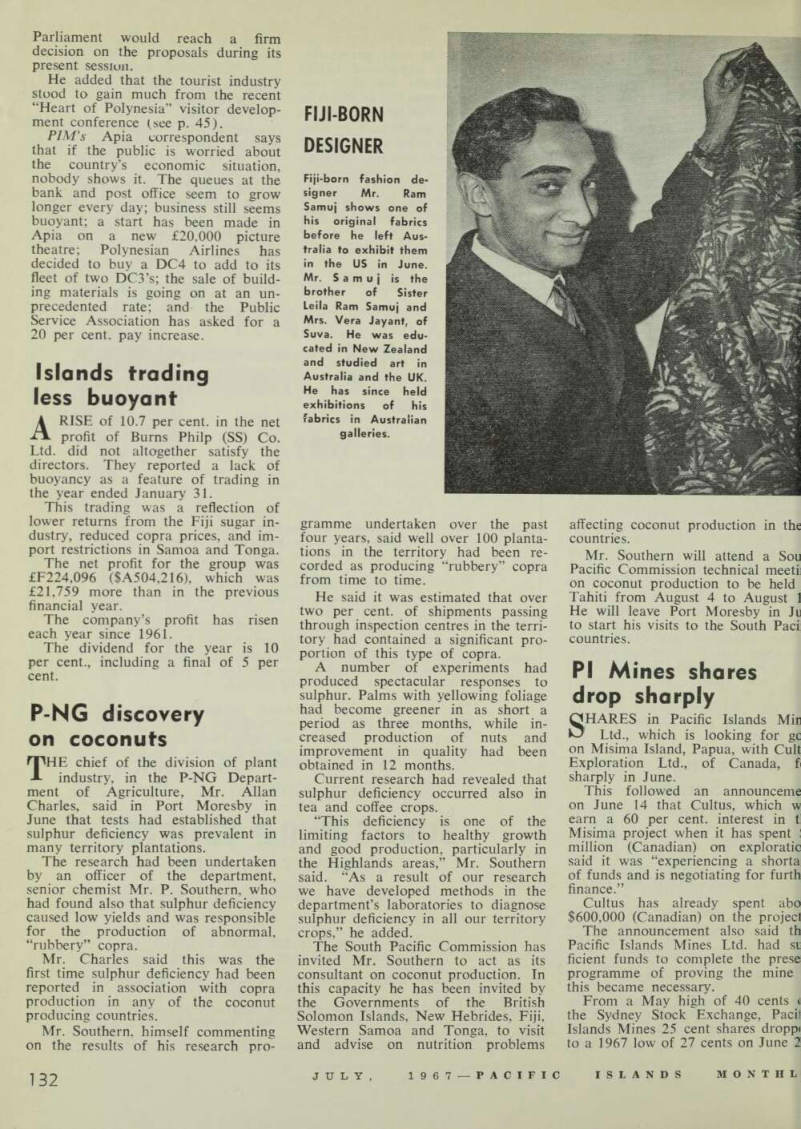 138
138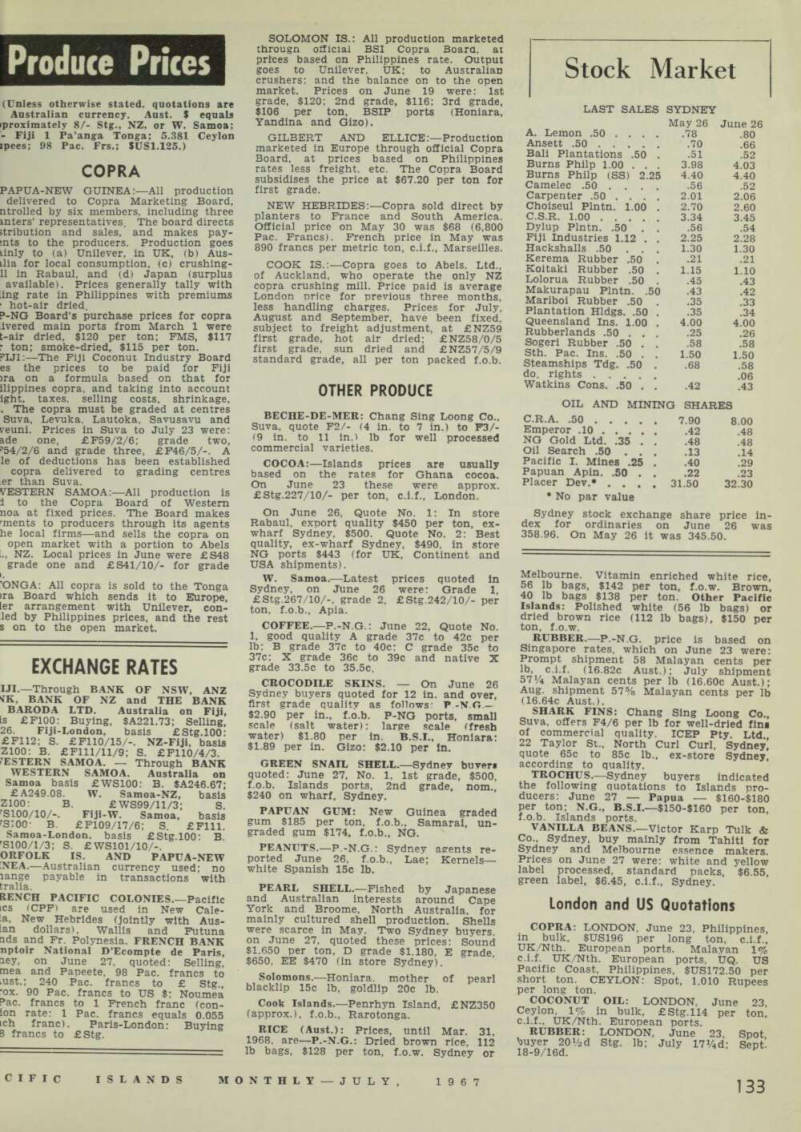 139
139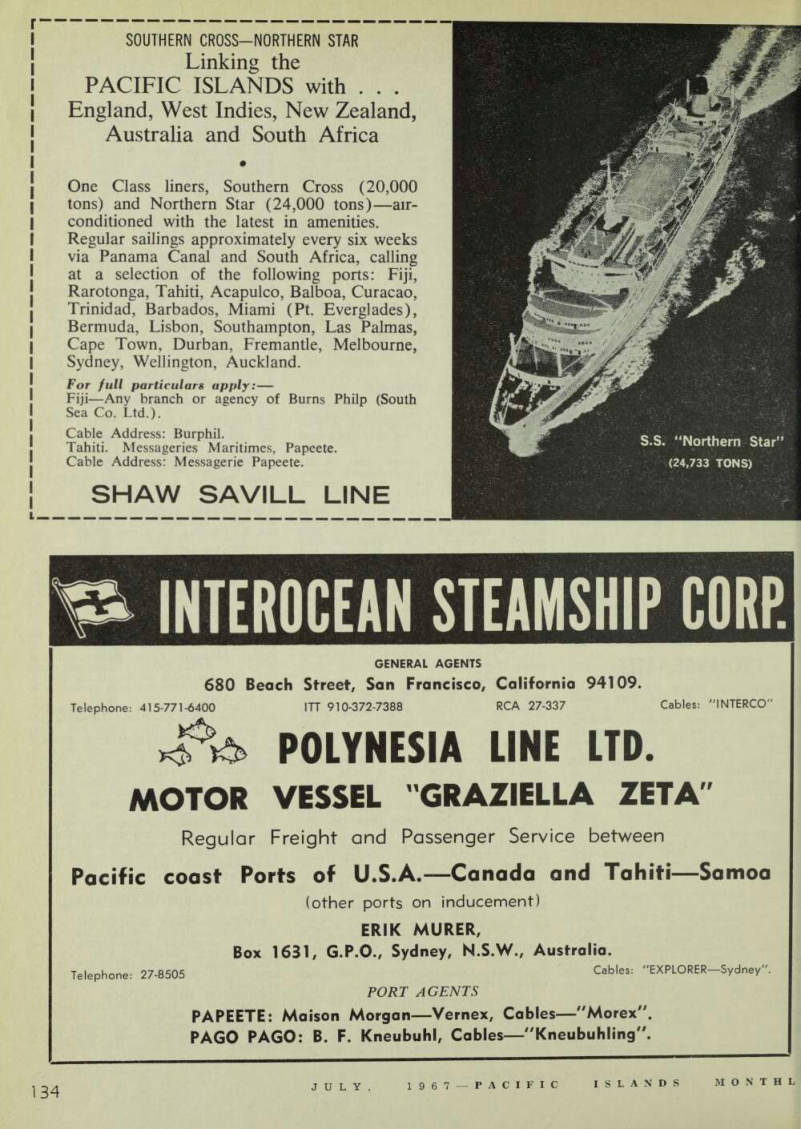 140
140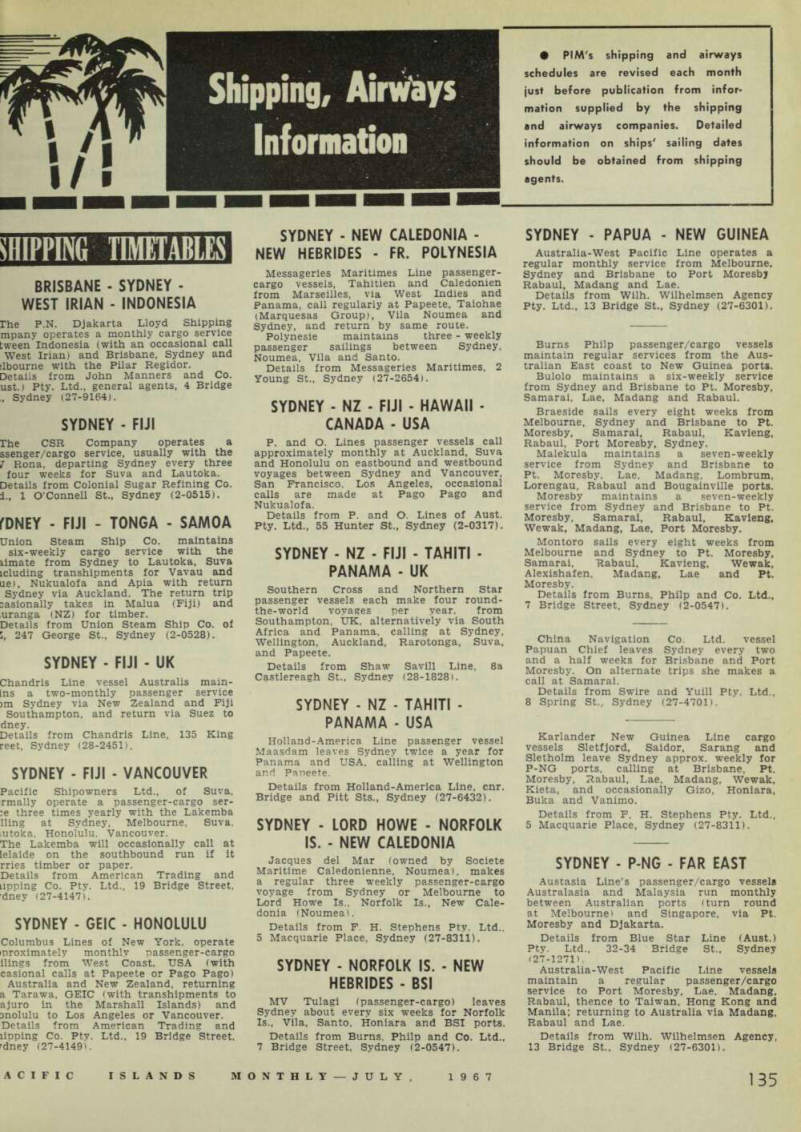 141
141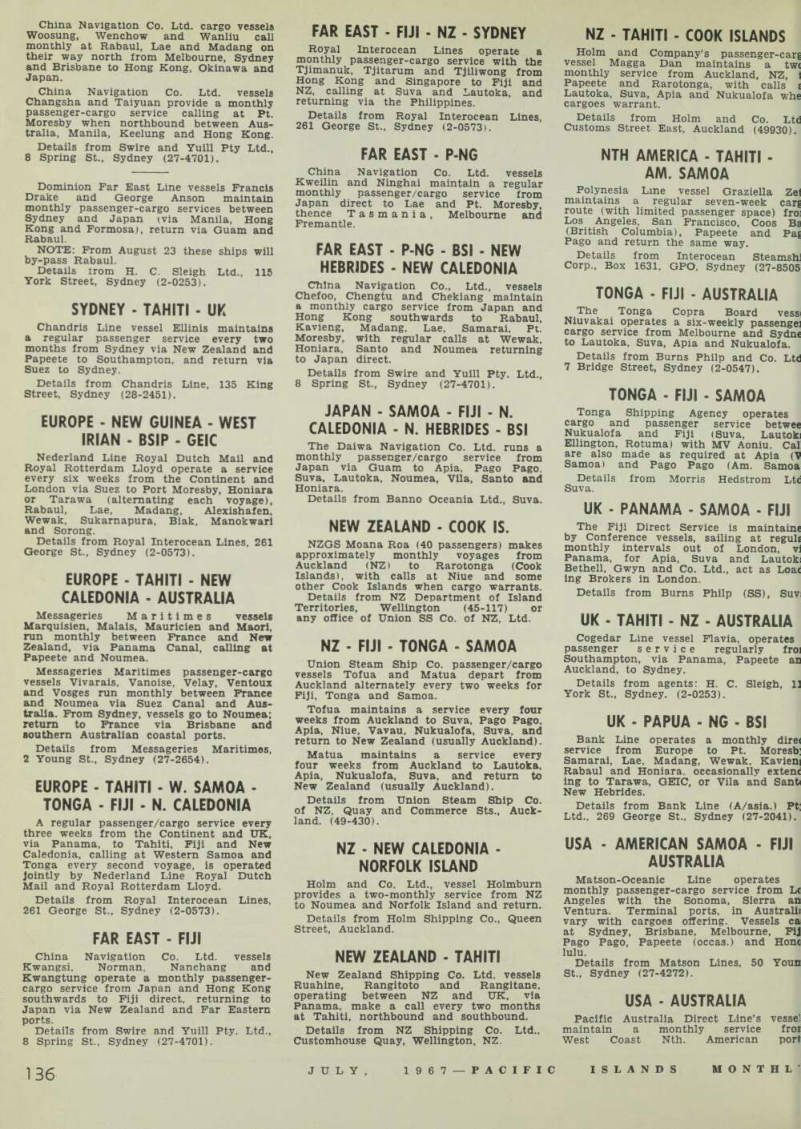 142
142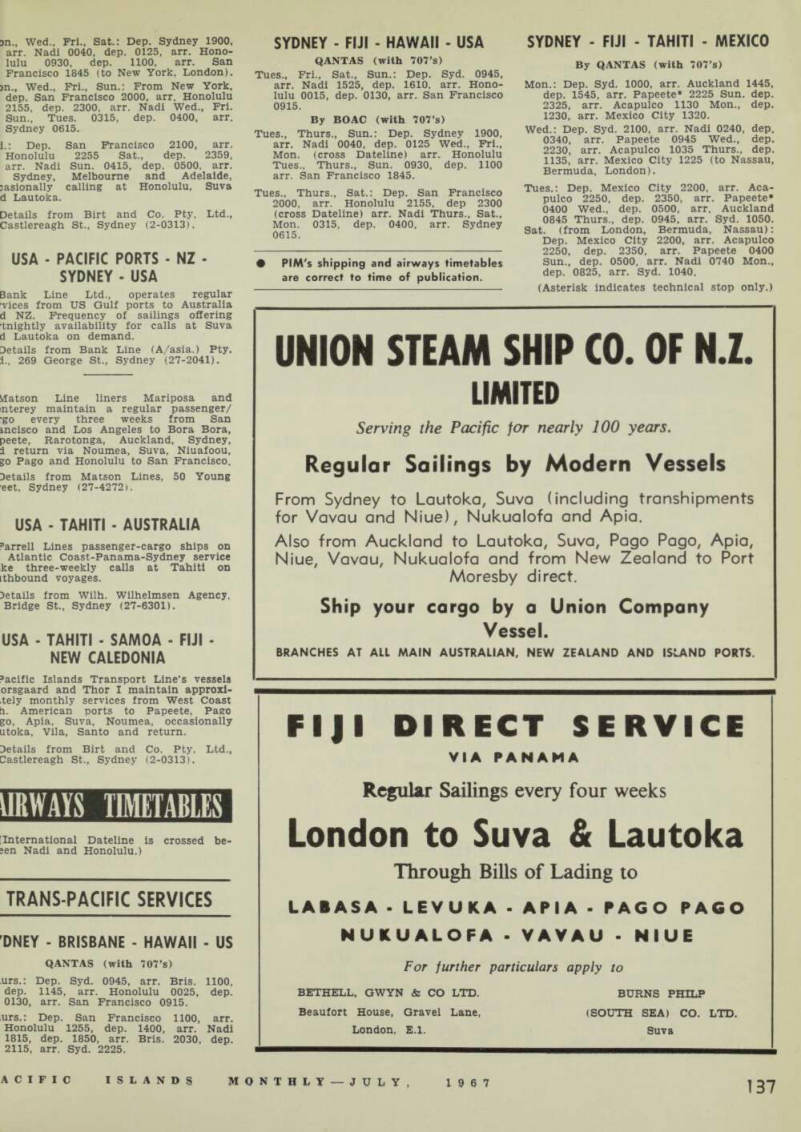 143
143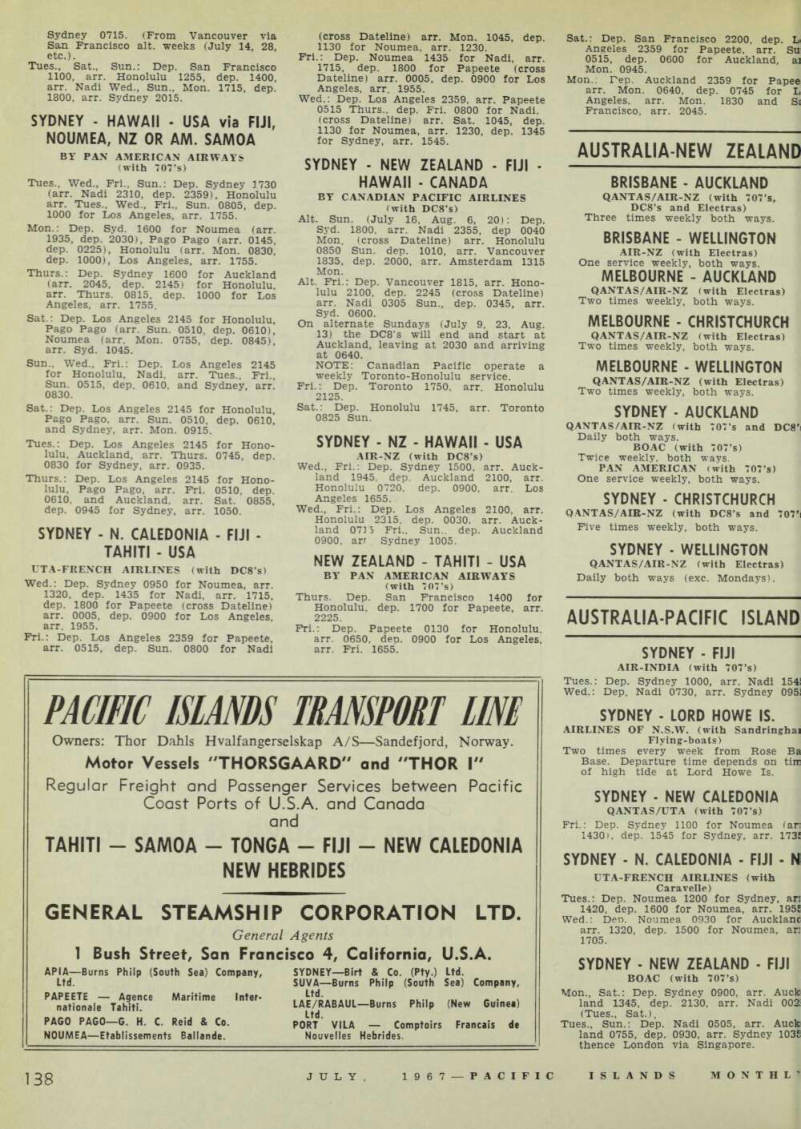 144
144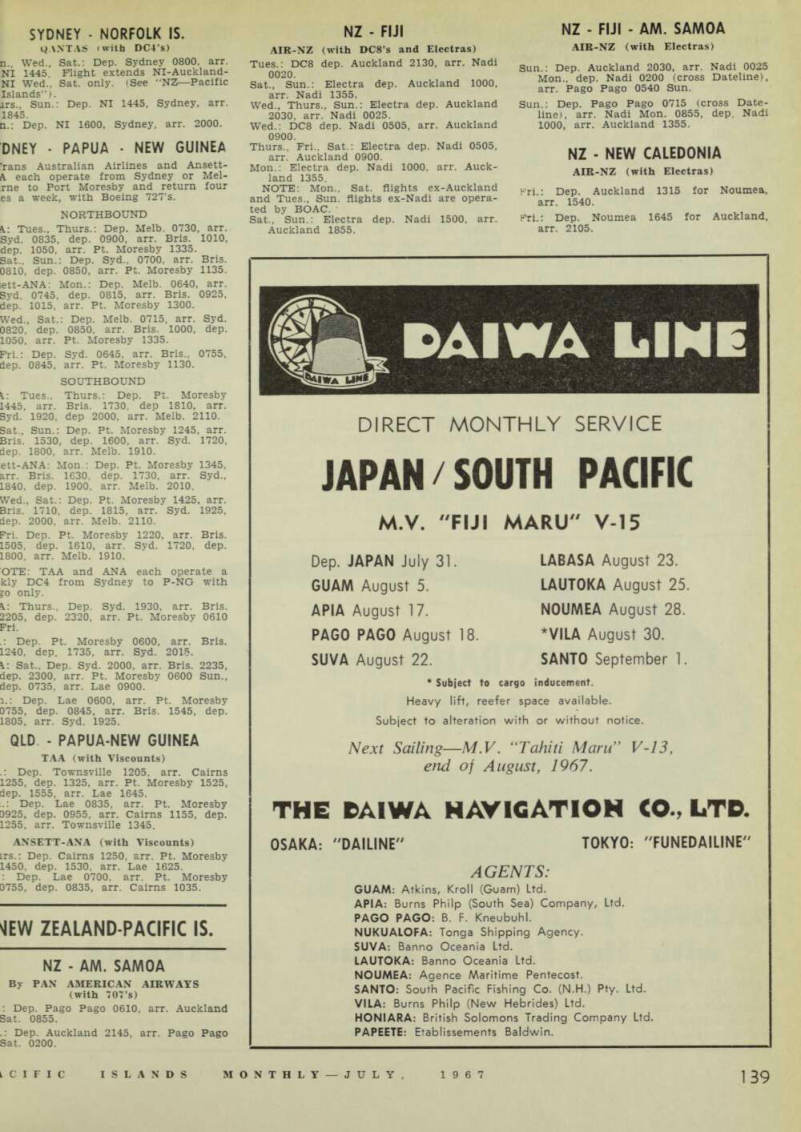 145
145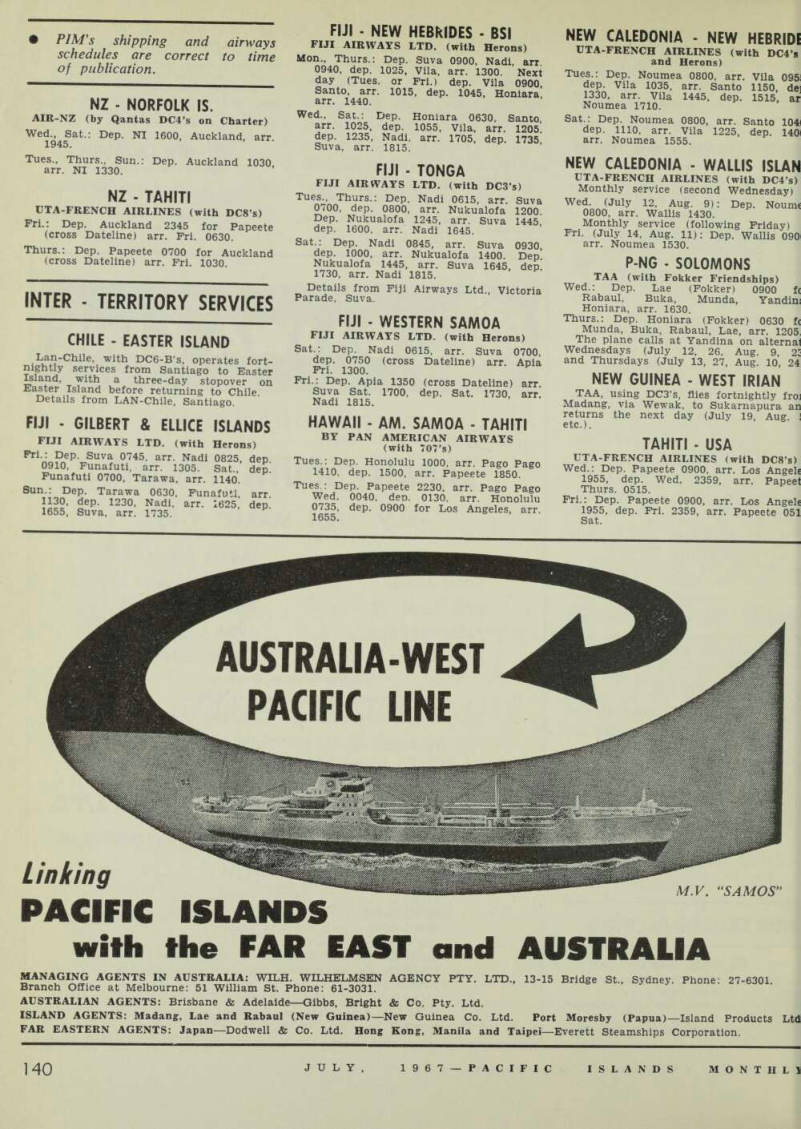 146
146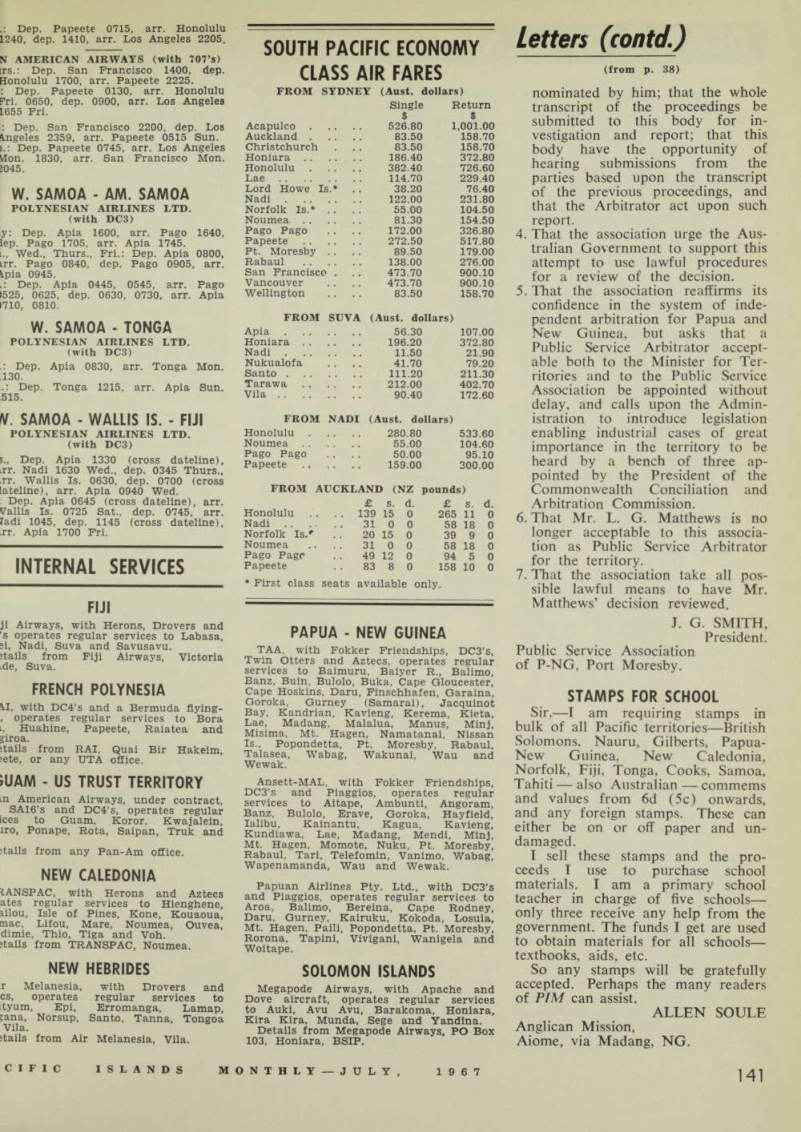 147
147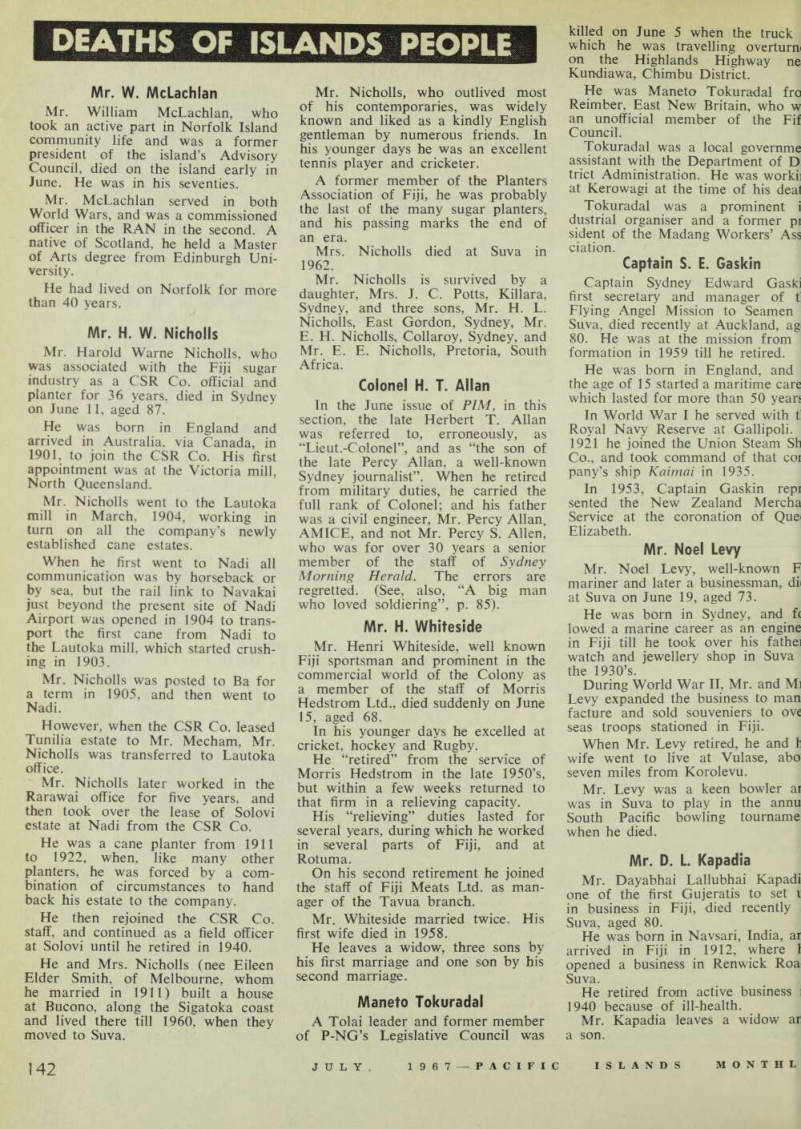 148
148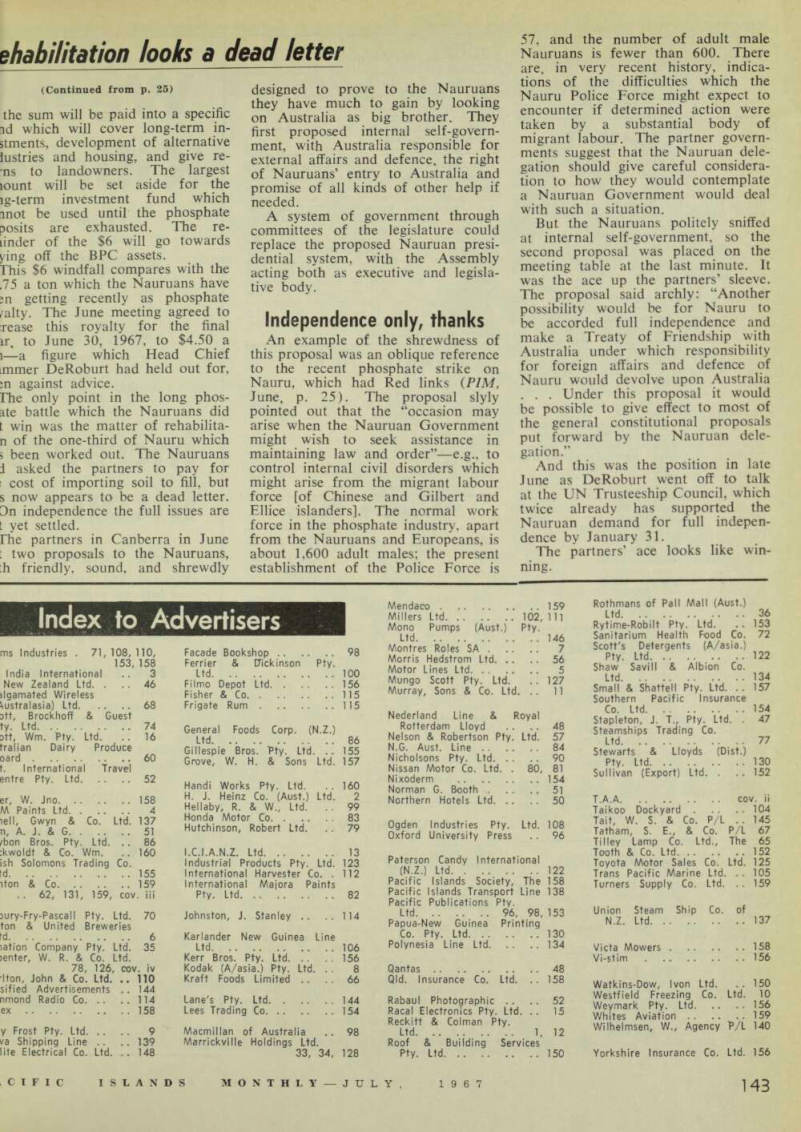 149
149 150
150 151
151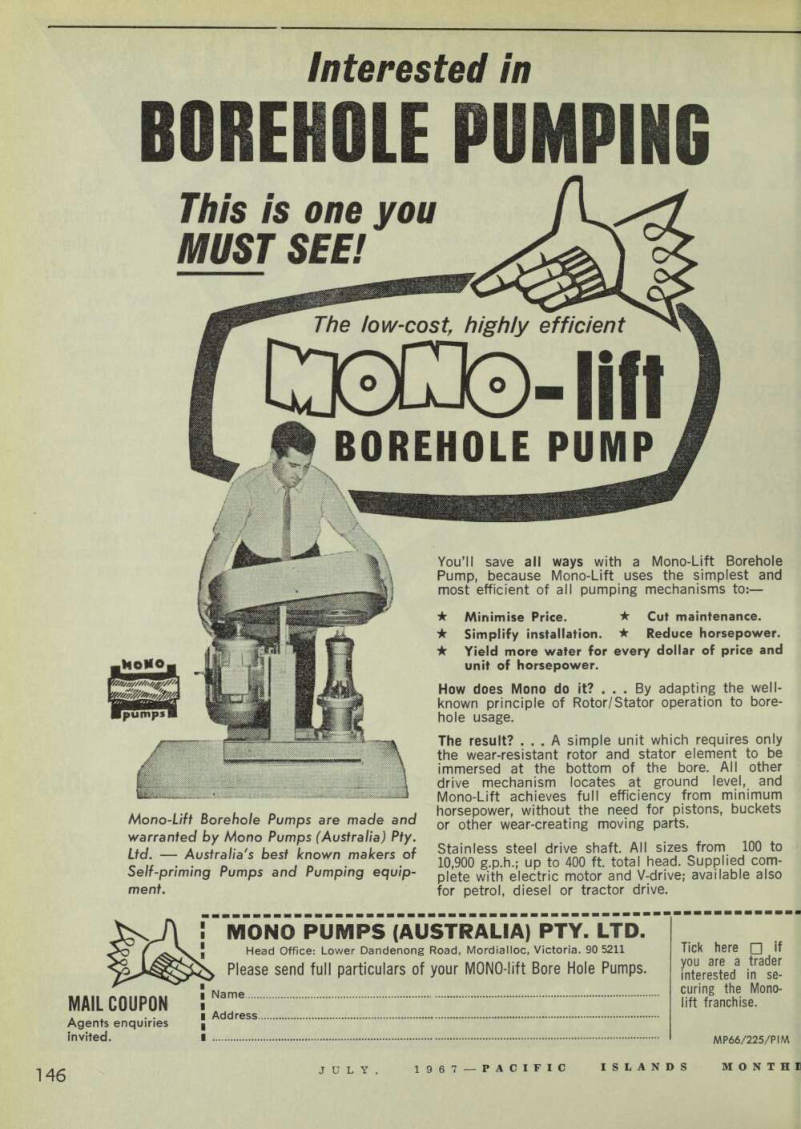 152
152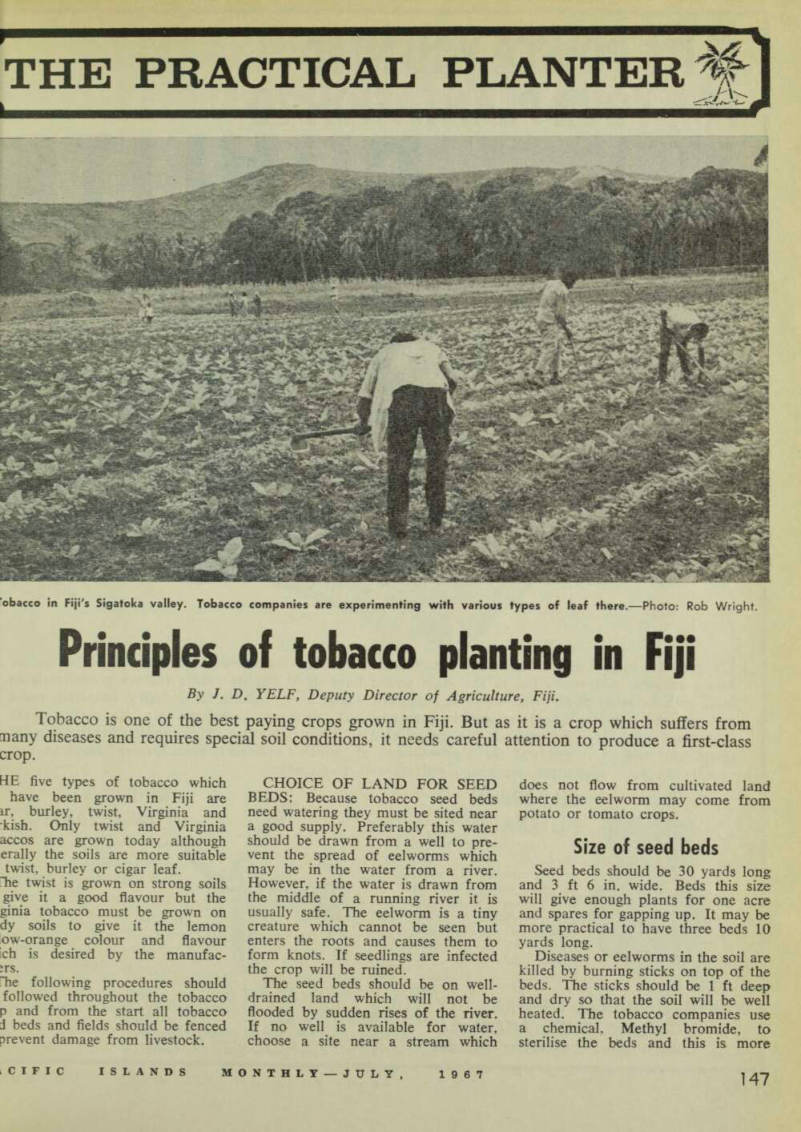 153
153 154
154 155
155 156
156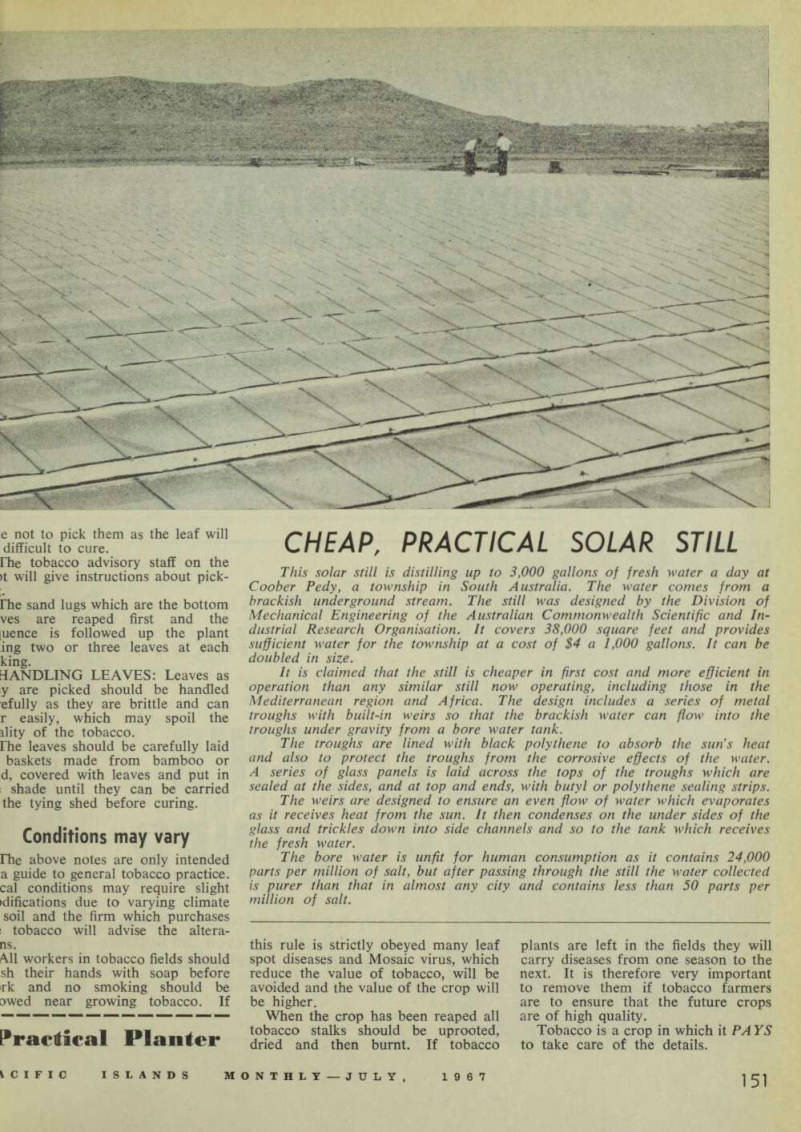 157
157 158
158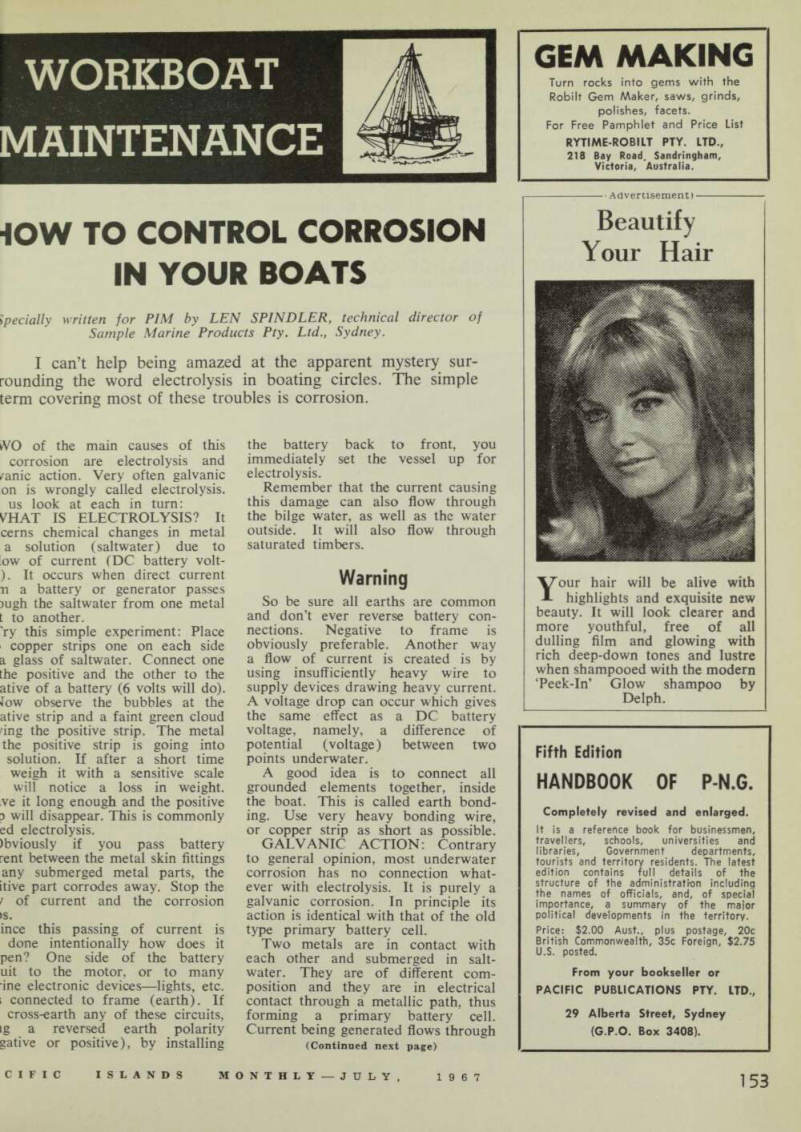 159
159 160
160 161
161 162
162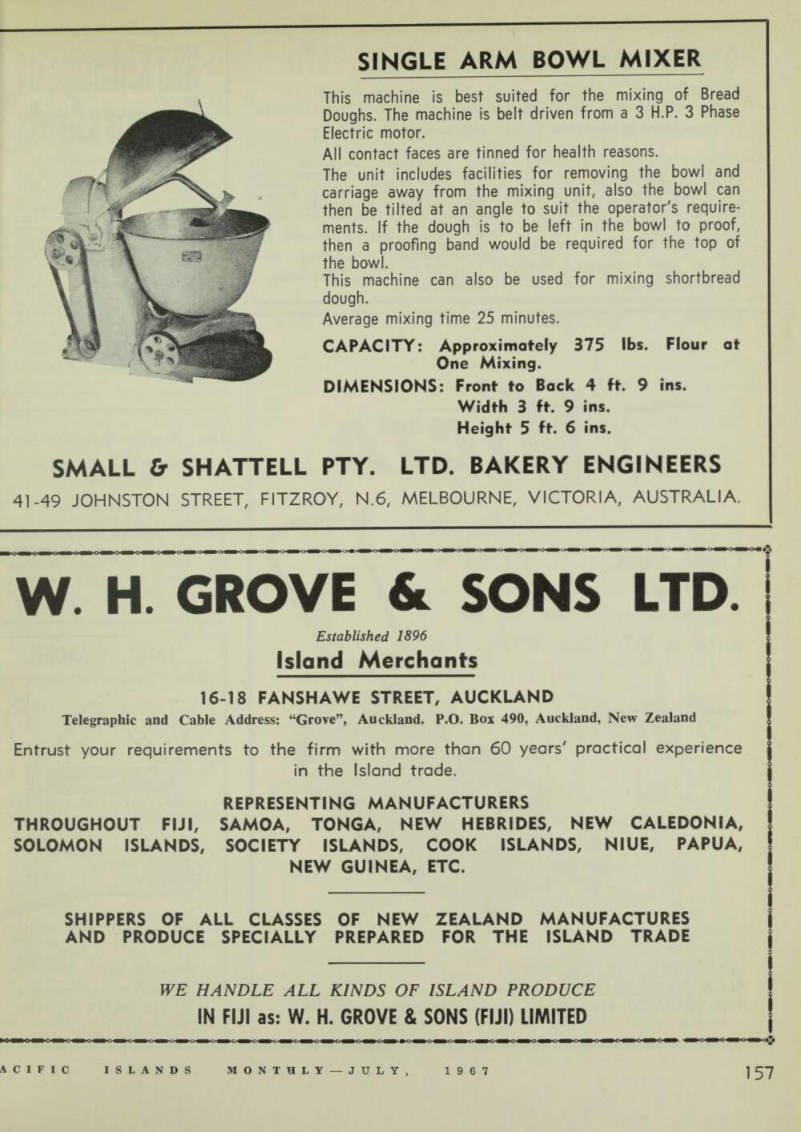 163
163 164
164 165
165 166
166 167
167 168
168