Monthly
Pacific Islands Monthly
Magazine
Df The
F H Pacific
Aust Cents
Shillings
) U S Cents
Fr. Rac Frcs
t
at G.P.0., Sydney, for m bv post as a newspaper.
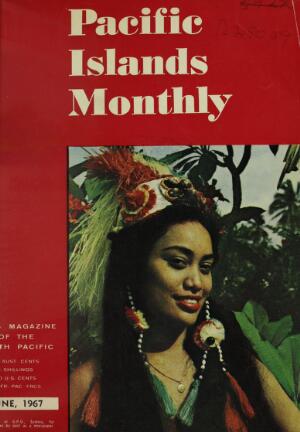
Our Cover
r his month is the 200th liversary of the European dis ery of Tahiti, and its famous s. So why shouldn’t we >e a glamorous Tahitian belle our cover? The picture was en by Robert Langdon, who an article in our Magazine tion recalls the high old time ryone had when English \ors met Tahiti’s belles for the t time.
Advertisements & other items, pp. 2-13 (12 items)
June. 1967 Pacific Islands Month
Papua/New Guinea
Now TAA
727 T-Jets link
with Australia
TAA s Bird of Paradise ’ goes jet age! Regular daylight services to and from Australia on Sat., Sun., Tues., and Thurs. Less than four hours flying time from Port Moresby to Sydney in luxurious jet-age comfort.
Fly high above the weather at over ten miles a minute. And be spoilt by TAA s 'Bird of Paradise * in-flight service. You’ll arrive rested, relaxed and ready to go.
Book now! Contact your nearest travel agent or call TAA: Port Moresby 2101 • Lae 2311 • Rabaul 2567 » Madang 78, 268 • Goroka 8 • Mt. Hagen 4 o Wewak 103.
Fly
TAA
the Friendly Way y
TA A2945/67
3ur house could
i a shining
ample for years
id years
despite
ould, tropical
n and rain.
low many years? on’t know. A lot depends on how carefully :ollow the instructions; what your outside are made of, which direction they face, we do know is that when we tested “Hi- ” in the tropics, five years of boiling tropical ligh humidity and tropical down-pours failed rt it very much. ilso know, that in temperate zones, “Hi- ” users have been known to get six, seven between repaints. ic other hand, we’ve heard of users in the :s who had to repaint a “Hi-Gloss” job about four years. /ou can take our word on one thing—“Hi- ” will outlast any other full gloss exterior el, anywhere under the sun. That, with jloss” you’ll need to paint (and pay) less 1355 P
1-6 LOSS
fill: PAIN*
■ - - <iS - ' v
S': - retell* ;3
8MA.4368.HG
W P ”' " '" ' ‘ —“ ! ! PPPi ! -*™- ' m I : :. s rj& m M SI ': .. •S- V.
S m - I i H H H lili I I I , jg?'\ vV, * - '• m «s nott
NIC?
s>r.
K Arnott’s Nice Biscuits Crisp and sugar-sprinkled
JBSmS*SS^
; M: A| %|S M- S V sP a<C** oZ Arnott’s Lemon Crisp Biscuits With tangy lemon centres s
—BS-S
Arnott’s Orange Slice Biscuits Tangy orange cream in biscuit sandwich Arnott’s Shredded Wheatmeal Biscuits Golden-grain goodness for morning tea.
m- •* i 1 0^ fa*** *tTT rov*° Arnott’s MILK ARROWROOT Biscuits All-day energy for children a favourite with all the family.
W & Cl s?
Arnott’s SAO Biscuits Ideal for snacks, suppers or between meals. % VS Arnott’s SCOTCH FINGER Biscuits Chunky and butter-rich, with the true shortbread flavour.
'■iS-i: o‘£ Arnott’s CHEESE JATZ Biscuits Crisp as could be with a fine cheese flavour perfect for entertaining.
There is no Substitute for Quality
m m m m m m £
There's more of both in ERINMORE
Erinmore makes friends in any company. Smokers welcome its good rich flavc Others; womenfolk especially, enjoy its distinctive aroi This comes from the century old blend \\ process, secret to the makers of Erinmore. No ot tobacco can give you so cool and sweet a smo
ERINMORE
MIXTURE
mm ERINMORI
'V'V I ) RRA.Y S
VACUUM PACK to TO OMN I. EV £ R HERE'
FLAKE OR MIXTUF
TOBACCO
IN VACUUM TINS
MADE IN NORTHERN IRELAND BY MURRAY, SONS & CO. LIMITED, BELFA
MANUFACTURERS OF FINE TOBACCO SINCE 1810
mdtSkM
KRAFT
* fkm J
SIRAWIrt
)• COHSBSS'
KRAFT
KHAFt
Gutter
KRAFTS
Zf'Za Just look at all the good things
KRAFT brings you from
Australia, the sunshine country!
Toasted cheese sandwiches. Strawberry Conserve on scones. Vegemite* on your breakfast toast. These are just some of the wonderful ideas you’ll enjoy when you buy fine Australian foods from Kraft. And these foods contain all of nature’s health-giving nourishment . . . help build strong and healthy bodies. Always look for Kraft, and know you’re buying the very best. for good food and good food ideas Reg’d Trade Mark
KR39O/A
■ ; 'T. « m m P fi y: m i *3T* M . r ll® V-l P'i 4 U I s
In Australia - dairy cows
are treated like beauty queens-
that is why Australian Butter and Cheese are famous for goodness, energy and flavour Selective breeding and scientific feeding of Australia’s dairy herds, plus the golden sunshine and rich pastures of an ideal dairying climate make the big difference in the flavour and food value of Australian dairy foods. Australian Butter and Cheese are processed by modern, hygienic equipment and strict controls ensure perfect quality.
Australian butter is full of energy, flavour and vitamin A goodness. It is a health food that only Nature can provide. Australian CHEESE is a concentrated food—full of protein, rich in calcium.
It is available in many types, to suit every taste.
For energy, goodness and flavour, buy Australian Butter and Cheese.
Trade enquiries to; Australian Dairy Produce Board, 406 Lonsdale Street, Melbourne, Victoria, Australia.
t AUSTRALIA
[OLBROOKS
.:?:>■ W
Australia's hugest selling
Worcestershire Sauce
makes the difference
Zesty! Tasty! Different. With a flavour all its own.
That’s Holbrooks Worcestershire Sauce. The most delectable sauce you’ve ever tasted.
It adds hearty good taste to roast meats, steaks and chops, fish, curry and game, adds rich new meaning to gravies. Makes a great appetiser in tomato juice. Holbrooks Worcestershire Sauce. Great Sauce.
Australia’s largest selling Worcestershire Sauce.
Try it. You’ll love it.
For trade enquiries: Reckitt & Colman Pty. Ltd., Wharf Road, West Ryde, N.S.W., Australia. Cables; Reckitts, Sydney.
A RECKITT & COLMAN PRODUCT
H8162A
Look at a Ronson and you’ll see sophisticate
Light it and you’ll see more
We spend seven weeks building every Ronson to stand out in the crowd. The deep gloss finish (we put on a thicker coating of chrome than is really necessary), the smooth, precision action. They show at once.
There’s sophistication, too, in the way a Ronson lights first time. Every time. And in its adjustable flame height. For cigarettes cigars and pipes. Just twist the Varaflann wheel.
You’ll find 3,000 lights per filling (5 second filling) a welcome improvement ove; your old lighter, too. Look at the Ronsoi range soon.
Recognised round the world for lighters and electrical products of quality.
Marmie says;
...? n
Young lions roar
for Marmite,
the appetite builder
Finicky eaters soon become hearty eaters when you give them Marmite. On toast. As a hot drink. Blended into your cooking. Marmite is an excellent source of Vitamin B, helps to build vitality while it sharpens their appetites. It’s the little extra something Marmite has.
THE WONDERFUL FAMILY OF
HEALTH FOODS
0
SANITARIUM
r M 3.6
Pour the mix
Into this
Dairy Frost
machine...
In this can is Dairy Frost mix.
It needs no storage refrigeration!
No mixing.
WMV.W.V.*
♦ ♦ M AV *>> ,♦»> i*: Famous M 100 Counter model.
then lift the lever
and dispense
extra thick Frosty Shakes
or soft serve cones
Simple. Moneymaking!
Thick shakes earn big money.
With this Dairy Frost combination, they’ve never been easier to make.
Everything’s done. The mix is super-pasteurised.
Rich and creamy.
No storage refrigeration needed! No mixing.
No preparation. Nothing to be added.
It’s packed in I gallon cans.
It stays pure and fresh until it’s needed.
The Dairy Frost dispenser is fully automatic.
It’s easy to clean, simple to operate and engineered for a long, trouble-free life. You can rely on that.
It’s made by the largest manufacturer and distributor of thick-shake and soft serve machines in the Southern Hemisphere.
It’s worthwhile getting the full facts about Dairy Frost mix and Dairy Frost dispensers.
Write to the Export Department.
They’ll tell you all you want to know. jyy Fl*OSt 13 South Street, Rydalmere, N.S.W. Phone 638-0401.
PTY.LTD.,
I would so much like to show
you the India I love
The India I love is an India of beautiful places, true. Places like the Taj Mahal, like Jaipur, the pink city, or Udaipur with its palace hotel on a lake. But even more than its varied beauty, its long and romantic history, it is the people of India who make India so wonderful to visit.
Our beautiful dark-eyed women, who wear the sari draped :££ X I . , /s. I i r-% m II- oUlflll
AIR-INDIA
30AC & Qantas the airline that treats you like a maharajah worldwide A21087.1005C.
1
F I C ISLANDS MONTHLY JUNE, 1967
2
JUNE, 1967 PACIFIC ISLANDS MONT]
3
[FIC ISLANDS MONTHLY— JUNE, 1967
4
JUNE, 1967 PACIFIC ISLANDS MONTH
5
I F I C ISLANDS MONTHLY JUNE, 1967
6
JUNE, 1967 PACIFIC ISLANDS MONTH!
8
JUNE, 1967 PACIFIC ISLANDS MONTH
9
3IFIC ISLANDS MONTHLY JUNE, 1967
10
JUNE, 1967 PACIFIC ISLANDS MONTH
11
IFIC ISLANDS MONTHLY JUNE, 1967
Pacific Islands
Monthly
Owned And Published By
Pacific Publications Pty. Ltd.,
29 ALBERTA ST. (G.P.O. BOX 3408), SYDNEY
Telephones: 61-9197, 61-7101, 61-4369.
Telegraphic Adress: PACPUB, Sydney.
Chief Executives
Managing Director: R. W, Robson.
General Manager: Selwyn Hughes.
Book Publishing Division
Editor: Judy Tudor.
Pacific Islands Monthly
Editor: Stuart Inder.
Assistant Editor: Robert Langdon.
Branch Offices
Melbourne: Newspaper House, 247 Collins St.
Tel.: 63-7053.
Fiji: Pacific Publications (Fiji) Ltd., Fiji Times Building, 20 Gordon Street, SUVA. Tel.: 25601.
Fiji Times Office, Vidilo Street, LAUTOKA.
Tel.; 60-422.
Papua-New Guinea: Pacific Publications (N.G.) Pty. Ltd. Representatives: Mrs. Joan Carter.
P.O. Box 16, PT. MORESBY (Tel.: 2504); Miss Pat Robertson, P.O. Box 227, LAE; Mr. Steve Simpson, P.O. Box 154, RABAUL (Tel.: 2547).
Representatives
New Zealand: J. D. Whitcombe, C.P.O. Box 2229, Queen Street, Auckland. Tel.: 76056.
Hawaii: C. C. Spencer, 203 Yap Bldg., 3465 Waialae Ave., Honolulu. Tel.: 775538.
United States; Mrs. A. L. Craib, 163] 80th Avenue, Oakland, California, 94621 Tel.: LOckhaven 8-1201.
United Kingdom: S. R. Warman, Candlewick House, 116-126 Cannon Street, London, E.C.4.
Tel.; Mansion 3674/7.
H. A, Mackenzie, 4A Bloomsbury Square London, W.C.I. Tel.: Holborn 3779.
Agents
All main trading firms and stores in the Pacific Islands.
Pacific Publications Pty. Ltd. is the Australian agent for THE FIJI TIMES.
Subscription Rates:
Australia: 30 cents Aust. ($3.60 Aust. for 12 months). New Zealand, all British Commonwealth South Pacific Territories, Tonga, New Hebrides and Western Samoa: 37local currency (36/- local currency per annum).
Elsewhere in the South Pacific: 50 French Pacific francs or 70 US cents (600 French Pacific francs or $B.OO US posted per annum).
Posted to USA, $B.OO US per annum. Posted to the UK and all other countries: £Stg.2.
"Pacific Islands Monthly" is air-freighted to all subscribers and agents in the South Pacific; copies to other areas go by surface mail.
Up Front
with the editor
Have the South Seas become duller in recent years? many ways, I think they have. Two particular reasons for it £ the passing of the beachcomber and the local character; and t islanders recent preoccupation with politics
AS a race, beachcombers have been gone a long time now. As New Guinea’s J. K. McCarthy wrote a few years ago, the true beachcomber was never a mere drunken loafer. He had to have some sort of innate charm so that other men would bear with him; he had to be prepared to refuse all work that might put him on their level; and he had to have sufficient education to let him ex pound on life, thereby guaranteeing drinks from his listeners.
Beachcombers, McCarthy believes, supplied a want in an isolated country. This is true, and with the end of isolation, so came the end of the beachcomber. He was forced to remoter corners elsewhere, or to be come a semi-respectable character.
South Seas Paradise
Julian Dashwood, of the Cook Islands, is one of the later breed of beachcombers who only a year or two ago reached the respect ability of Minister of Police in the Cooks—only to become involved in a political scandal which resulted in his friends having, reluctantly, to chuck him out of office. Anybody who has read his autobiography, South Seas Paradise, which he pub lished under the name of Julian Hillas, will forgive Dashwood any thing. There is no more enjoyable, nor accurate, account of Islands’ philosophy than this book—through which pass fellow characters. These include Jim Carfax-Foster, still liv ing in Fiji although PIM prematurely killed him off in its issue for Decem ber, 1944. (The next month Carfax- Fo.ster phoned us up in Sydney and pointed out he “was not speaking from hell”).
Characters, as distinct from beach combers, do not die out so much as become eclipsed by political and
administrative progress in the Isl with its proliferation of p servants of all colours, fearing offbeat mind. There are many acters still in odd corners, but hears from them less frequent] time goes on.
Some go out at the top of form, such as “Gerry” Adams, died in Fiji in 1962 (how incre fast time passes) at the age o; Gerry’s good friend Len I described his characteristics Gerry’s obituary: “There was no commonplace about Gerry. He I gift for the striking phrase, the beat act that amused and stimul and he hated, and fought devastating effectiveness, the dil: hidebound ways of the nai obstructive breed of bureaucrat, was always stimulating, always to talk to, always fun to be w It was the typical Adams who < attention to the poor state of a pi road by flooding it from a hydrant, floating some toy duck the lake thus created, and encoi ing the local children to cast in fishing lines. And it was typica official reaction that he finished episode in court.
But changes come
Those of us closely involved South Seas life are inclined no notice the change wrought by gress on the kind of attitude pressed by the Dashwoods Adamses. It is more instantly obv to the outsider taking his first I as for instance Sydney scl teacher F. S. Topham, who pi( up his first copy of PIM a yeai two ago and sent up a poem he written entitled “Give Me Back Daydreams”, the first part of wl went:
le-hipped doe-eyed maidens h flowers in their hair; -kissed palm-fringed beaches %nolia-scented air; Hess days of languid pleasure e and laughter without teasure, I’ve longed for since my birth! now I read of education, our . strife and arbitration, strips, cartels, market prices, ial service, rise in vices ling beaches, exploitation, ependence, legislation! jpendence and legislation with- Dubt are a large part of South ife today. Never in the area’s Y was politics so much a part ; scene as now, unless it was eriod at the end of last century the big powers were fighting issession of the island groups.
Local politics now
lay the political fighting is all g from within. Leaders like K. K. T. Mara, of Fiji; Fiame afa, of Western Samoa (himself el in his younger days, who ed with responsibility); Albert r , of the Cooks; Hammer hurt, of Nauru, are setting the 1 it all seems to be a serious, ny business. Perhaps when the iries have found political ty they will take themselves less sly. Perhaps then they may >p their indigenous beach jrs, their own characters, ready oot at bureaucrats and idiots, bring a much-needed general in the process.
Stuart Inder
Advertisements & other items, pp. 14-18 (6 items)
12
JUNE, 1967 PACIFIC ISLANDS MONTH
13
JIFIC ISLANDS MONTHLY JUNE, 1967
&a/ant Cad6u/ufA
4 smmt€m(6mcfA
Si4/mt CkdSmifA
&want CsuOu/ufA
&a/ant Cad6u/ufA
o It’s worth saying over and over again because there’s a glass-and-a-half of pure, fresh, full-cream milk in every half-pound of Cadbury’s Dairy Milk Chocolate. No other chocolate can possibly give you that creamy, creamy Cadbury taste. Look for the famous purple and gold wrapper.
CADBURYS
DAIRY MILK CHOCOLATE
the biggest selling block chocolate in Australia M D7/16/ 7
■ -v :
BP3S NVSSIN =Z X Afflßnb doi
00 £1 I m fr-?; " * ■vc
1500
d Prince Motor have listory. that now two sets of esigners, each with their perience, engineers with ichievements and abilno complete sales netjoined to bring you cars led quality. Millions of i learned to expect and dependability and conmomical performance of l3OO. nd versatility of the com 150 puts it in a class by
Itself. Easy handling, superb balance and “Big car” feel make it the ideal choice for family and business use, for city or country driving.
And what lies ahead? Well, they are on the design boards. But we can tell you that from NISSAN Sedans will continue to come reliable cars which can compete successfully on any ground, under any conditions.
Cars that the family man or businessman can admire for their builtin quality and faultless performance.
Because that's the end result of the continuous testing and intensive research work on NISSAN Sedans.
NISSAN MOTOR CO., LTD.
Tokyo, Japan
For additional information on the DATSUN 1300, contact: Sole Distributors for Papua and New Guinea
W.R. CARPENTER & CO., LTD.
Port Moresby • Rabaul • Lae • Madang • Mt.
Hagen • Goroka • Kavieng • Wewak • Daru Information on the PMC Al5O can be obtained from: Sole Distributors for Papua and New Guinea
STEAMSHIPS TRADING CO.,LTD.
Port Moresby Rabaul • Lae • Madang* Goroka • Samarai • Popondetta
J^acific
cean £ as
and
(starting
SOON
East and the Orient ... bewitching, bargain-packed, best "first base" for your home-run to the U.K. and Europe. Or West to Los Angeles, springboard to the States. Either way. East or West or 'most anywhere in between, if it's 'round the Pacific pick up your AIR NEW ZEALAND ticket and jetaway! Anyplace Hong Kong, New Caledonia, Australia, New Zealand, Norfolk Island, Fiji, Samoa Ange,es —■ any playground in the Pacific, jet there with AIR NEW ZEALAND swiftly, smoothly by luxurious DC-8 Five Star jetliner. And after the Pacific? The rest of the world's awaiting and so are we, for we'll gladly arrange your onward travel to anywhere in the world. See your local travel agent or nearest AIR NEW ZEALAND office. 0*
• liV New Zealand seen
the whole
Pacific
AIR HEW
***THE FIVE STAR JETLINE
with QANTAS and BOAC
14
JUNE, 1967 PACIFIC ISLANDS MONTHLI
15
I I F I C ISLANDS MONTHLY JUNE, 1967
16
JUNE, 1967 PACIFIC ISLANDS MONTI
This Issue
Ral
> of UK in Common Market ... 20 Book by Thor Heyerdahl 94 Market Fluctuates 130 ilian Fiver Issued 131 jcific Copra Plan 131
Ican Samoa
paper Interests Merge 32 likely for Hotel 51 >uragement" of Small Businesses 65
[ Islands
st in Beveridge Reef 55 Radio Mast 75 Cnown Men Drowned 76
:R Island
n Image 37 ervice Inaugurated 53 Common Market Effects 21 s Figures 22 itutional Moves 23 Britannia", Rotumans Say ... 37 rs' Bureau for Sydney 52 ing VD Figures 68 t Team for Tonga 71 s Settled 3,000 Years Ago ... 73 rceful Pioneer Women 88 for Yachtsmen Relaxed 115 Flour Sales 129 infruit Factory Rescued 131
French Polynesia
When Tahiti Was Discovered 85 A-Test Protest Cruise 105
Galapagos Islands
Regular Air Service 51
Gilbert And Ellice Islands Colony
Newsletter for Ocean Island 38 New Assistant Resident Commissioner 121
Lord Howe Island
Terrors of Island Life 38
Bicycles Popular 51
Barge for Unloading 109
Nauru
Success Near for Head Chief 24 Hong Kong Link in Strike 25 Constitutional Proposals 57 Fishermen Lost at Sea 107
New Caledonia
UTA Plans New Service 53 Yacht Race from New Zealand 116 Second Nickel Company Urged 129
New Hebrides
More on Big Bay's Wall 25 First Census 32 Where Ships Go to Pot 38
Newly-Acquired Ship Wrecked . 41, 101
Vila Wharf Plans 107 New Assistant Resident Commissioner 121
Niue
"Bodmer" Adrift 11l
Norfolk Island
Yacht Aground 116 History to be Published 121
Papua-New Guinea
Border Problems Developing 37 Wages Case 39 Dissatisfaction Over Air Service ... 51 Eric Feldt's "Pricy" Book 54 Training of Magistrates 61 Abel Confident on Home Rule 63 Well-Known Old-Timer Returns 67 New Journal Published 67 National Fitness Bill 71 Harbours Board Takes Over Ports ... 109 New Freighter 111 "Steamies" Shares Down 129 Industrial Gases 129 L. F. McEachern Convicted 131
Pitcairn Island
New Book 97
Solomon Islands
Mysterious Wreckage 54 New Bishop of Melanesia 75 New Jetty for Honiara 103
Tonga
Coronation Plans, Preparations .. 18, 19 Man Behind the Coronation 40 King's Theory on Ha'amonga 40 Pictorial Series 42 Tourists'-Eye View 45
Us Trust Territory
Judy Tudor in Saipan 26
Western Samoa
Newspaper Interests Merge 32 Plan to Buy Ship 65 Fisherman's Unscheduled Voyage ... 107 Setback for Processing Industry ... 131
■PARTMENTS; Up Front with the Editor, 12; Tropicalities, 37; Travel, 45; Letters the Editors, 54; To The Point, with Percy Chatterton, 61; From the Islands ess, 65; Brett Milder Profile, 67; Magazine Section, 85; Yesterday, 93; New >oks, 94; Shipping, 101; Cruising Yachts, 113; People in Pictures, 117; People, !1; Business and Development, 129; Produce Prices, 133; Shipping, Airways Schedules, 135; Deaths of Islands People, 142; Practical Planter, 149.
Will Be Striking Feature
Ancient Polynesian Ritual
Of Tongan Coronation
From Betty Sanft in Nukualofa T..nnn h T e v Cor °? a i tio ? ce ,y e u monies for Ton ga's King Taufa’ahau Tupou IV on July 4 will be a compound of ancient Tongan and Christian ritual.
actual coronation ceremony in the Royal Chapel will closely follow the pattern used at the coro nations of British monarchs, but the accompanying ceremonies will be purely Polynesian in character.
King Taufa’ahau will be the third Tongan monarch to be crowned in European style. The first was King George Tupou II in 1893. The other was Queen Salote Tupou 111, the present king’s mother, in 1918.
Since ancient times, however, the kings of Tonga have been installed m a ritual called taumafakava. The Tongan people look forward to this more than the church ceremony, since it is a part of their tradition and must follow exactly the ancient pattern,
Samoan influence
Before Tonga was united under King George Tupou I in 1845, the taumafakava ceremony took place only on the western side of the island of Tongatapu, at Pangai Hihifo.
There was no crown in those days and the king sat with his back to a special koka tree.
When the tree died, it was sent to Australia where part of it was used to carve the present throne in the Royal Chapel, so that when Tupou IV is crowned, he, like Tupou II and 111, will have his back against part of the same koka tree.
The taumafakava, first used in the 17th century, reflects a Samoan in fluence.
Ngata, the first Tu’i Kanokupolu (temporal king of Tonga), had a Samoan mother, and the major part of his installation, at the same koka tree, was conducted by Samoan chiefs and attendants.
When Ngata’s first son was born, the people were called ha’angata, meaning the issue of Ngata.
Fijian bodyguard
Ever since the second Kanokupolu. the ha’angata people have been re sponsible for the installation of kings, and the present coronation will be no exception. They will share the re sponsibility of certain tasks and cer tain performances with other people, but they are jealous of their signal honour.
Tradition demands that the new king must have a Fijian warrior and dancer as bodyguard.
This tradition stems from an in cident during the reign of the third Tu’i Kanokupolu, in the 17th century, when a Fijian chief, Tuisoso, visited Tonga.
The Tongan king requested Tuisoso to name his newly-born son, and the chief was so overjoyed that he spon taneously responded with a wild and joyful dance.
This amused and pleased the king
so much that the offspring of Tub were sometimes asked to perforn subsequent installations.
On this occasion, a kinsman Tuisoso, from Lakeba Island Fiji’s Lau group, will take part.
The taumafakava ceremony bej with the giving and receiving of g Baskets of food, of great variety cooked to perfection, are placed front of the assembled nobles j matapules (who rank below nobles). A special installation fc called ’umu fakapangai, which never seen at other functions, is pared in earthen ovens. It consists 20 small whole yams and one pig, whole presented in a Samoan basl made for the occasion. The 'u fakapangai is the only food which
King Taufa'ahau Tupou IV and Q Mata'aho with Tui Malila II, the ye Madagascar tortoise that arrived in T[?] last year to replace the one which, cording to tradition, had been lef Tonga by Captain Cook.
A feature of the Tongan cono tion festivities will be the rar[?] seen "tupakapakanava" in wH thousands of flaming torches lit for miles along the beach [?] side the Royal Palace. This pho graph was taken the last ti such a ceremony was held— the night of May 6, 1935, to ce brate the jubilee of King Geo[?] V of Great Britain.
Photo: W. Fin
>uted later among the gathering, othing of it is eaten throughout ly. Nor will anyone smoke, en the food has been accepted, sizes of green kava trees and tvhole cooked pigs (pmka) are ited, separately, from the :st to the largest, it come the kavafuataha, a small carried by one man, and the maka, a small pig. □ndly there are the kava ha’amo, se carried by two men, and the ha’amo, the pig laid on two and carried by two men. third place are the kava hula, j on the shoulders of four men, he puaka hula, the pig carried se. : climax comes with the arrival kava Who and the puaka who, are accompanied by chanting, great is the burden of these two and so many are the men re- I to haul them—first the kava vith vine ropes, then the pig, a sled made of a forked branch the chants are many and I. Some are ages old and others imposed for the great occasion, II are in classical Tongan, the ige of the nobility.
Master of ceremonies
en all is set and ready, the king rs. i kava ceremony which follows . from the usual ceremony in he kava is mixed by three men, d of a beautiful young girl, *e again the tradition stems from ent of long ago. It involved an it forebear of the noble, ala, who happened upon the mga Fefine, eldest sister of the mga, or sacred king, bathing in 001. •aptured, he watched as she ted in the sparkling water, and, merging, began to dry herself her tapa cloth towel, she passed it across her shoul she waved it in graceful pat holding it out to catch the il breeze and weaving it about solitary dance. er, Ve’ehala called on the great with gifts of food and was re :d to mix the kava. closely did he imitate her is and movements, while he 1, that she recognised them as wn and he was forced to admit le had been her secret spectator, is embarrassed yet pleased her jch that, ever since, his descend have been called upon to mix oval kava at court in the same ic style. e master of ceremonies for the
taumafakava is Motu’apuaka, who has been revising his genealogy and the proper sequence of ceremonial order.
As the king, nobles and matapules are seated in the kava circle, the king will drink the first bowl. Then, as the server stands with the cup held high, Motu’apuaka will call the name of the next person, who gives one hollow clap, to indicate his position in the circle, and is given to drink.
The kava must be distributed in strict priority, first the 33 nobles, then the matapules in order of rank.
This is a difficult task which leaves no room for error An amusing interlude occurs to break the solemnity of the proceedings when the matapule Lauaki argues with Motu’apuaka and insists he does not know his genealogy and will make mistakes.
But Motu’apuaka continues and to him falls the task of all ceremonial duties and the speeches of thanks.
During this time one noble (Ve’ehala) and two matapules (Fa’oa an d Tovi) deliver the royal ad monition. One and then another, i n flights of ringing oratory, beg to S et before the monarch the patterns 0 f majestic rule observed by his illustrious forebears, They pledge their loyalty and sup port i n helping to achieve the unity, peace an d P rosperity of the kingdom, The admonition and the oath of office are sealed cere monially between the king and his people when all . ( ; roya l toas f with a bowl of 1 J • See also "The man behind the Tongan corocation", p. 40, and "Royal Tonga celebrates", p. 42.
Advertisements & other items, p. 20 (1 item)
18
JUNE, 1967 PACIFIC ISLANDS MONTHL
Coronation Will
Bring Hard Times
For Tonga's Pigs
From a Nukualofa correspondent MANY people in Tonga have been wondering lately whether there will be any pigs left in the kingdom when the festivities for the coronation of King Taufa’ahau are over.
The festivities will last a week, and 2,000 guests and visitors are expected to partake in the daily feasting. They should make some pretty serious inroads on Tonga’s pig population and other food supplies.
To cater for the coronation feasts, the Tongans have planted special food crops and have been raising pigs and poultry as fast as they can go. Meanwhile, fish and turtles have been caught and are being held in traps for coronation week.
During that week, great earthen ovens will each day cook a thousand pigs and a thousand head of poultry, plus mutton, beef, fish, turtle steaks, crayfish and crabs.
Several tons of yams, kumara, breadfruit and taro will accom pany bananas and plantains.
Exotic Tongan dishes will in clude lupulu, chicken, duck, and turkey cooked in coconut cream, and creamed raw fish (ota). To accompany these, there will be
tastefully decorated salads of tomato, lettuce, cucumber, celery and young spring onions.
Oranges, mandarins, huge water melons, papaws and young drink ing coconuts will be there in abun dance.
Groups of dancers with 80 to 200 men and women in each, have been practising for months to perfect traditional dances and learn new ones composed for the occasion.
Great choirs will accompany the dancers, and each island will vie with the other to produce the best.
Dancers busy
Among the dances to be seen are the me’etu’upaki, danced by old chiefs in front of the temple to please the gods; the lakalaka, which tells a story with each movement—women on the left, men on the right; and the tafi (sweep) in which men and women sit to perform.
In the vaka-eke, only the men dance. They face one another in two rows, in pairs. This is a stick dance which originated in the outer islands.
Thirty to 40 commercial aircraft are expected in the kingdom dur ing coronation week. In addition, there will be a number of charter and air force planes bringing special visitors and high digni taries from many countries.
To help out during this busy period, the Fiji Government has agreed to send an air traffic officer to assume control of airport opera tions.
Advertisements & other items, p. 21 (1 item)
19
:iFIC ISLANDS MONTHLY JUNE, 1967
If Britain Joins The Common Market, Th[?]
IS WHAT IT WILL MEAN TO THE ISLANDS
A PIM Special Survey M, r u ßr / tain^ aS . apP ' ied f o r membership of the European Economic Community—the Coramo, Marlcet—without any conditions attached to her application. She recognises for examnle tha British preference in Commonwealth countries must go If Britain is admittoH wbmt -i world? ° n S ° U,h PadfiC trad6? Wh3t efl6Ct WiU h 2
XTOBODY knows positively the answers to all the questions that will arise, for there are a number of imponderables which can’t be cleared up until the full terms of membership are known, if in fact Britain is admitted.
But there is a fairly clear overall picture of likely effects. They are discussed m various reports on these pa H S ’ r- , Ihe French territories of New Caledonia and French Polynesia already have a tariff preference in favour of France and the Common Market, and also quantitative import restrictions applying to countries such as Australia. Their import licensing is designed to protect French interests and as a buttress to the tariff.
There is a possibility that quantitative import restrictions could be applied to other Pacific territories which become Associated Overseas Terntories under the Common Marrt- Associated Overseas Territories status could be granted to Fiji, the Gilbert and Ellice Islands Colony,
the British Solomon Islands Protecto rate and probably Tonga. Western Samoa could possibly be admitted as an Associated Overseas State, being independent.
This membership would ensure that they received privileged entry of their products into the Common Market countries, and would also entitle them to participate in the EEC Develop ment Fund > which provides advances and loans for developing countries.
They would give preference to the Common Market countries in return, p Kip %#nlr»o»-aMa r-nu vumerdDie As far as Fiji is concerned, asso ciated membership may not entirely safeguard her most vital industry. her sugar (see opposite). It depends on whether the UK could safeguard the provisions of the Com- But copra exports would be safe guarded in all areas allowed asso ciated status.
The Cook Islands is not likely to be affected by Britain’s membership because all her export trade is with
New Zealand. Nor would she entitled to associate membership.
Thus Papua-New Guinea is most vulnerable of the South Pac territories, if we assume that F sugar industry would be safeguard It is difficult to see how IS Guinea can be expected to get i of the tariff preferences on tropi products enjoyed by the associa territories. Australia could talk the British and ask them to sti New Guinea’s interests.
Its copra would not be a seri problem (see story p. 22), but coconut oil—for which she currei enjoys a preference in the Bril market—she will be confronted v a reverse preference. Coconut from, say Fiji, would enter the m ket duty free, and there would b< tariff for the New Guinea oil.
Oil milling is one of Europe’s old industries and one in which consid able capital is involved, and an i port duty could bring oil-crushing the territory very close to being uneconomic proposition.
Papua-New Guinea rubber v present no marketing problems, the whole production is easily ’ j sorbed by Australia. Rubber prodi tion provides about only 15 per ce of Australian requirements.
The territory’s peanut producti is also absorbed by Australia.
There are other markets
Up to the present, the coffee 01 put has fairly well been taken up Australian buyers. A minor quant of coffee does find its way overse; more for the reason of obtain! better prices than anything else, b it is unlikely the New Guinea coff producers will have to turn at i seriously to Europeans to find an oi let.
Cocoa could be faced with pro lems, as at present about 50 per cer of production finds an outlet Europe. Present New Guinea produ tion is about 20,00 tons and is groi
apidly. Alternative markets will to be found nearer home to with this recent production, istralia would find P-NG leaning heavily on her. is well to remember that the and Europe are not the only ets for New Guinea or South primary exports, and their ex amount to only a minor per ge of world production, e world is large and more mar are opening up. the Common Market means any to the South Pacific it means emphasis will need to be on ty. If your products are good gh the buyers will be there, lat effect will the common et have on Australia’s relations the South Pacific? istralian investments in Fiji the Solomons will probably not fected. There is no reason why ;nds and interest payments made those areas to Australian firms d not continue. the Pacific territories become iated territories in the Common et they would presumably have ferential tariff for the Common et countries and a general tariff he rest of the world, including alia. This means that Australia expect more competition in [factured goods from such ries as Japan and the United >, as well as the Common Mar ountries themselves, stralia would continue to do a antial trade with the Pacific by of her proximity and because ;oods she supplies are essential, ases in the population and h of the Islands would benefit alia’s export trade.
Effects Of Market Entry In Brief
• There is likelihood that Fiji, BSIP, the GEIC and possibly Tonga and Western Samoa will seek to become Associated Overseas Territories or States under the Common Market. Generally speaking their trade would be improved. • An exception might be Fiji’s vital sugar industry, which would have to be given special preference even if Fiji were entitled to associated membership. • Papua-New Guinea would not be entitled to associated membership and her goods would cease to enjoy preferential treat ment in the UK and thus she would lean more heavily on Australia. • Papua-New Guinea’s produce, particularly copra, would have to continue at a high standard to compete. • Australian investment in the South Pacific would probably not be affected. • Australia’s close proximity to the Islands would mean she would continue to do substantial trade there. • A ll attraction for British territories to join the Common Market as associated territories would be the access it would give them to the Common Market developmental funds.
Advertisements & other items, p. 22 (1 item)
20
JUNE, 1967 PACIFIC ISLANDS MONTHL
Without safeguards, Market
could be disaster for Fiji
The well-being of Fiji’s sugar industry should Britain enter the Common Market depends entirely on what safeguards Britain can win for the colony. The big problem will be whether Britain can obtain assurances for outlets and prices similar to those Fiji at present enjoys under the Commonwealth Sugar Agreement.
THE Common Market countries are seeking to maintain at least self sufficiency in sugar production, but it could be that production will be greater than self-sufficiency.
Under present Common Market sugar arrangements there is no place for guarantees of access, price and duration for sugar imported from non-member countries.
Sugar "dominant"
If Fiji were granted Associated Overseas Territory status her sugar exports would not be in a comparable position to that guaranteed under the CSA. Sugar is excluded from the schedule of commodities covered by the Common Market convention for associated territories. A recently negotiated arrangement for Nigeria gave only duty free entry and quotas, not a guaranteed price.
The sugar industry is the dominant economic activity in Fiji and the CSA is the major instrument for protect ing it.
Sugar products provide between 65 and 75 per cent, of Fiji’s total export income, and the industry is Fiji’s largest employer of people.
Under Fiji’s development plan drawn up in 1966, it is hoped that by the year 2000, export earnings from timber products and tourism will exceed earnings from sugar. But any such long-term development will have to depend on the sugar industry as the stable base on which to build.
To maintain Fiji’s living standards, let alone increase them, the Fiji national income has to be expanded at something like the rate of 3± per cent, per year. Present living stan dards are modest and the current low world prices for sugar have been having an adverse effect on these standards.
Export details
Most of the sugar produced in Fiji is exported. Internal consumption, plus sales to nearby island groups, is less than 20,000 tons per year.
The balance is exported, and for the forthcoming season the balance is expected to be between 320,000 and 380,000 tons (figures supplied by the CSR in Sydney in May). Fiji’s sugar exports in 1966 went in these direc tions: UK, 140,518 long tons; Canada, 57,553; USA, 33,904; and Singapore-Malaysia, 11,130. Total, 243,105 long tons.
The Commonwealth Sugar Agree ment was signed in 1951. Under it, the UK undertakes to buy sugar, and exporters undertake to sell it at a negotiated price each year.
CSA lasts for eight years ahead, and can be extended for a further year at the end of each year. It has been extended every year since its inception, and now extends until the end of 1974.
The UK buys about If million tons of sugar a year under CSA at a negotiated price. This tonnage, plus sugar produced from British sugar beet, accounts for about 90 per cent.
ugar awaiting export at the SPSM company's Lautoka mill. The Common Market could mean disaster.
of Britain’s domestic sugar require ments. Fiji’s share of the If million tons is 140,000 tons.
For 1966-68, the negotiated price is £Stg43/10/- per ton (fob and stowed). But in addition Fiji, with other less developed territories, re ceives an additional special payment each year, estimated on the world price, and which also takes account of the benefits British colonies used to get under the Colonial Certificated Preference system. At present Fiji gets a total additional payment of £Stg4 a ton of the negotiated price for sugar.
The effects
What happens if Fiji cannot obtain the equivalent of the present CSA arrangements?
If it has to sell 140,000 tons at the world market price of £Stgl7/10/- per ton cif UK, the annual loss to the industry in export income would be £Stgs.3 million per year.
This would represent an annual loss of from 20 to 30 per cent, of Fiji’s total annual export income, and this reduction would be more than enough to destroy the country’s economy.
Thus it would be a calamity for Fiji and its sugar industry if Britain entered the Common Market without safeguarding the provisions of the
Csa.
The British Prime Minister is aware of these difficulties. He said in London that it was the Govern ment’s duty to seek safeguards in the negotiations.
In Sydney in May the acting general manager of the Colonial Sugar Refining Company, Mr. J. M.
Dixon, said Mr. Wilson’s statement was important, because it and similar statements made recently gave “satis faction and badly needed reassurance to the sugar industries of Australia and Fiji”.
Mr. Dixon added: “If this assur ance had not been given, those in dustries would be facing serious— indeed disastrous—situations . . .
“The sugar industries of Australia and Fiji, and those of the other countries of the Commonwealth, were expanded in the 1950’s specifically to meet Britain’s sugar requirements.
This was done in the faith that the CSA would be kept in existence by Britain. It was a compact, and is therefore satisfying to note Mr. Wil son’s clear remarks about the CSA and the seeking of safeguards in re lation to it.”
• Figures from a census taken in Fiji last September, and issued in Suva in May, show that Fiji’s total population of 476,727 is made up of 240,960 Indians, 202,176 Fijians, 9,687 part-Europeans, 6,590 Euro peans, 5,797 Rotumans, 5,149 Chinese and part-Chinese, 6,095 “other”
Pacific islanders, and 273 others.
Advertisements & other items, p. 23 (1 item)
21
3 I F I C ISLANDS MONTHLY— JUNE, 1967
Copra growers would be helped—
but not in New Guinea!
The faet that, if Britain is admitted to the Common Market, her South Seas territories would be entitled to associated status means that practically all copra producers in the South Pacific wouid g et concessions. Western Samoa and Tonga would probably be entitled to a similar status, and the Cook Islands’ copra exports would not be affected because all these go to New Zealand. 6
T'HE one big copra producer which -*• would get no relief is Papua- New Guinea. She would not come under the umbrella, and she produces more copra than any other South Pacific territory.
These are the annual tonnages that will be produced this year, in New Guinea and other South Pacific terri tories (from information supplied from Mr. Ian McDonald, chairman of the P-NG Copra Marketing Board):
Of this total, the following quan tities go to these destinations:
This leaves exports to the UK m< or less as follows:
This total is practically the wh( of the UK copra requirement.
If Britain joins the Common M: ket then she, in common with h partners, will admit copra and < free of duty. At present the E puts on a 10 per cent, import du on all copra other than produced Commonwealth countries. She pi on a duty of three per cent, on coc nut oil in respect of EFTA country and 15 per cent, in respect of othei This means that P-NG exports w face competition from countries pi viously prevented from exporting the UK because of the 10 per cei barrier.
Mr, McDonald said in Po Moresby in May: “This competitk could seriously interfere with oi sales to the UK but only if the quail of our copra was so much belo other exporting countries that U consumers would decline to buy it.
“Thus, the first and probably mo important point for P-NG copra pn ducers to realise is that quality woul be important, and in fact paramoun if they were to retain the UK ma ket.”
Tons
P-Ng
116,000 French Polynesia 54,000 Fiji 27,000
Bsip
19,000 Western Samoa 15,000 Tonga 10,000 Fanning and Line Isles 7,000
Geic
5,000 Total 253,000
Tons
To Australia: Ex
P-Ng
30,000
Bsip
5,000
To Europe: Ex
P-Ng
15,000* French Polynesia 54,000t * To Genoa and Rotterdam. t To France.
To Japan; Ex
Tons
P -Ng 6,00C
Bsip 5,00(
ex P-NG 65,000 Fiji 27,000
Bsip 9,000
Western Samoa . .. 15,000 Tonga 10.000 Fanning Isles . . .. 7,000
Geic 5,000
Total 138,000
Advertisements & other items, p. 24 (1 item)
22
JUNE, 1967 PACIFIC ISLANDS MONTHL
ey presto! See what Fiji's
new team has done
From a Suva correspondent If Dame Rumour has reformed and is now anything but lying jade, Fiji will about June 26 take another step along e broad road which leads to whatever form of independence le colony finally decides on.
E Legislative Council, which opens a meeting on that date, be told that the Ministerial m will be introduced in Sep er and the portfolios, which are led “Member” for this or that, change their labels to “Minister”, tis was forecast by Governor Derek Jakeway a few months so that it won’t take anyone by *ise, least of all the members, r all, it will be nothing but a inological change, it there are reports, unconfirmed, the Ministerial system will fide with changes in the Judi •e, and that there will be a Chief Justice, and also a direc -3f Public Prosecutions, who will dr. John Falvey. le Alliance Government will, wer, carry on as it has done : it was elected last year, a body ling real authority and doing it ithout singling anyone out for a }uet, it can be said that the ibers (Ministers) have had the ; idea from the start. They have out of the ivory tower and told ile what they ought to know.
There have been several safaris into the bush and away to the outer islands by Members and their staffs, the idea being to create personal links with the people. And the idea has worked well.
It may only be a coincidence that several improvements for which people have pleaded in vain for years—water supplies, roads, minor land developments, protective legisla tion—have all suddenly been ef fected.
Real achievements
But the people in the rural areas don’t think there is any coincidence about it. Hey presto! See what our new Government has done!
And it’s all been good for the politicians. If a snap vote were to be taken now, the opponents of the Alliance would get nowhere.
The Federation Party took all the communal seats in the elections, but the success the Alliance Government has enjoyed over the past few months—propaganda successes, the real success of real achievement, and the personal success of the Members
and many of the backbenchers — have reduced the influence of Mr.
A. D. Patel and his supporters in many places, particularly in South Viti Levu.
The main job since the elections has been to get the Indian members of the Legislative Council who sup port the Alliance across to the Indian people.
It was an astute move to replace Mr. Patel as Member for Social Services with Mr. Vijay R. Singh, who has grown in stature as a con sequence. Some of his glow has bounced off his Parliamentary Sec retary, Mr. K. S. Reddy.
Racial progress
It is this sort of thing which im presses the Indian community.
Prestige, face, is something they value. But another side-effect of the joint activities of the multi-racial Alliance has been the fading of some of the inter-racial suspicion in the colony.
For the past eight months people have seen their leaders, Fijians, Indians, Europeans, Chinese, work ing together in a Government.
Ratu K. K. T. Mara, the Leader of Government Business and who undoubtedly will be Fiji’s first Prime Minister, has done much of the touring round the constituencies, usually in the company of Mr. Singh and Mr, Reddy. TTiere is now much more readiness to co-operate.
A case in point is in education.
Previously the Fijian school teachers have refused to accept the principle of multi-racial schools. But when they held their annual con ference in the middle of May there
At Conference
On Tourism
was strongly represented at the rt of Polynesia" conference begin in Apia on May 29, as her delega included the Leader of Government ess, Ratu K. K. I. Mara (left), the oer for Comunications and Works, C. A. Stinson, and the Member for nerce, Industry and Tourism, Ratu Cakobau. Other delegates included Mayor and Mayoress of Suva, Coun and Mrs. Harvey Hunt.
Photo: Rob Wright.
was a big change in their thinking.
Multi-racial schools were in. And their leaders appealed to the rank and file to accept more Indian teachers in Fijian schools. There was no opposition to this.
And what has been the Opposi tions’ contribution to recent politics?
Ever since the creation of the new Government, the Federation Party has never ceased to attack. Their pro paganda has been bitter, directed against the Fijian chiefly system and the Europeans.
In the Legislative Council the Federation Party has formed a responsible and effective Opposition, but its members have been anything but responsible outside especially in rural areas.
The Member for Social Services, Mr. Vijay R. Singh, has been a prime target for them.
Those Indians who oppose them faithfully continue to support the Alliance, and the Indian organisations opposing the Federation Party have been more or less united.
There is one problem on the horizon.
Mr. Andrew Deoki, who is an opponent of the Federation Party, which ousted him at the last election from the Legislative Council, plans to form a new party. It is planned to limit membership to the Fiji-born Indians.
The Alliance views the idea with unease. No doubt the Federation Party will view it in much the same way, because it is aimed at the ex patriate Gujeratis like Mr. A. D.
Patel. So far as the Alliance is con cerned, the creation of another organisation on racial lines can only accentuate the divisions which have recently been closing.
Mr. Andrew Deoki, who plans to found a new party.
Advertisements & other items, p. 25 (1 item)
23
CIFIC ISLANDS MONTHLY JUNE, 1967
A remarkable leader on the threshold
threshold of success
By Stuart Inder
After s everalye ars of determined activity, that remarkabl. man, Head Chief Hammer Deßoburt of Nauru, has won owner ship of the island s rich phosphate deposits, and now appears tc be on the point of achieving a promise of independence H< fnr^hp 5 wt W t the u ern i S by ™ id - June > just before he sets of for the UN Trusteeship Council meeting in New York.
rPHESE developments follow the . final round of talks in Canberra in May between the Nauruans and a delegation representing the three trusteeship governments of Nauru— Australia, NZ and Britain ( PIM , May, p. 25).
The entire talks were taken up in discussing a package handover of the Nauruan phosphate industry.
Independence was not discussed, for the partners take the view that if the phosphate problem is settled satis factorily the independence question will solve itself.
The partner governments do not in fact intend to stand in the way of Nauruan independence once their phosphate supplies are safeguarded.
They have been impressed by the practicality of a blueprint for an independent Nauru handed to them by the Nauruans at the conference (see p. 57).
The Nauruans were upset at the lack of official reaction to their re quest for independence and con sidered that by being forced to discuss phosphate without first being given an assurance of independence they were having to negotiate “under heavy pressure”.
Surprising progress
But heavy pressure or not, they made surprising progress on the phos phate deal. The most significant de velopment was that the partner gov ernments agreed that the Nauruans could have the phosphate industry, purchasing its capital assets. The negotiations were on the details of the handover.
The Nauruans asked for an im mediate transfer to a new Nauruan owned organisation to be called the Nauru Phosphate Corporation. The corporation would continue to use the services of the British Phosphate Commissioners in many ways. The Nauruans would supply phosphate ex clusively to the partners, at the pre
sent rate of 2,000,000 tons a y at an agreed price.
The partners proposed that handover come in five years, and ; the BPC then continue to ope: the industry, but as agents of Nauruans, on a management The partners’ main fear was on c tmuity of supply under Naur control. They used as one exan of the problems of control, the cent strike on Nauru (see opposi They also wanted five years’ gi in which to develop recently covered Queensland phosphate posits.
The Nauruans said they undersh the governments’ fears on continu but that the proposal for five ye grace merely postponed the probh the industry had to face when it pass into Nauruan control. It as much in Nauruan interest as partners’ to assure continuity; it i a matter of trust on both sides.
This matter of trust loomed lai Who would trust whom first?
At a Press conference Mr.
Roburt saw it this way: “We h< that the partners are not going insist on the existence of a min operator separate from the Nai Phosphate Corporation merely as means of justifying to the world w the Nauruan people should pay th money in the future, as well as h; ing subsidised the price of phosph in the past. If, on the other hai the partners’ main interest is securing continuity of supply at wo prices, the Nauruan delegation ask them to have faith in our ability meet our promise to supply it.”
Face saving
In other words, Mr. Deßoburt v, asking whether the partners we trying to save face. In some wa they certainly were; but there genuine hard-headed concern amo: the governments that in handing t phosphate industry to the Naurua without a reasonable period of tri
lartners may be giving away the ance for the shadow, le partners’ real difficulty in this ordinary series of talks is that have tied up phosphate Dimes with political nationalism, wanting what, after all, are lal business safeguards they them s are forced to negotiate “under y pressure” from the Nauruans by the threat of UN intervention, litical considerations have put governments on the run; finding ions is made harder by the fact the three partners are not always imous. Britain, for instance, has merest in Nauru’s problems than >ther two. though admittedly the Nauru tion has been of their own making, partners in recent months have much farther to reach a solu than the Nauruans have given credit for. Deßoburt, with his rity and unshakable principles, the fight in terms of black and *. The governments have some ; which belongs to the Nauruans, promise in order to achieve his dives is, he is inclined to feel, a rture from principles. He does see it as a genuine part of tiation, which also allows the es to save face.
"Pie in the sky"
hen in 1962 Deßoburt an ced in Canberra that he wanted jendence for Nauru plus owner of the phosphate the scheme was ed as “pie in the sky”. Yet now nows he is to achieve both, and only debate is on the timing, an afford to compromise on the g, yet the partners cannot con him of this. the end of the meeting he made important concession, and this ght victory closer. But he wor and fretted hard before making Tie Nauruans had proposed that would agree to a takeover in two ;, instead of immediately. This not acceptable to the partners the talks rose on a sour note, it next morning, Saturday, after i informal parleying during the , the Nauruans increased the d to three years, having received inderstanding somewhere during light that the governments might 5 down to four years, id on that brighter side the May jrence rose—with the promise the governments will reply to the phosphate and independence ;ions before the UN meeting on 19. eanwhile, Deßoburt appears to ilanning his independence cele ons for January 31!
Advertisements & other items, p. 26 (1 item)
24
JUNE, 1967 PACIFIC ISLANDS MONTHL
Red Links Seen In Nauru Strike
A STRIKE among Chinese and Gilbert and Ellice labourers on Nauru lasting for about three weeks in April and May, almost halted the phosphate industry there. It resulted in more than 100 Chinese being repatriated at their own request to Hong Kong, in four chartered aircraft.
The strike involved about 600 labourers, who made about 30 claims to the BPC. Many claims were not industrial demands, but minor adminis trative complaints.
Some observers felt Chinese ringleaders had incited the strike to coincide with the anti-British riots in Hong Kong and Red Chinese attacks on Britain. Ringleaders also played on the fact that many GEIC labourers, jealous of the Nauruans’ prosperity, feel they should have a greater stake in Nauru. Nauru’s Administrator, Brig. L. D. King, in Canberra for phosphate talks, flew back briefly to Nauru in early May.
With him went two Commonwealth Police officers and BPC officials.
The strikers returned to work following a promise to examine their claims. They were also offered repatriation before their contracts ex pired. More than 100 Chinese accepted this offer —at a time when they were far from welcome in Hong Kong. They have not yet been replaced.
The 1880'S
Her Father Saw
That Wall In
By Robert Langdon
Further evidence in the case of the mysterious wall in the south-east corner of Big Bay,
Espiritu Santo, came to light in
Sydney in May.
THE wall has been featured in PIM in the last three issues. My theory is that it is a relic of the Quiros expedition of 1606, but other people have suggested that it is the remains of a sandalwooding station, a whaling station, various trade stores, a Melanesian Mission estab lishment, and a Presbyterian mission.
The latest evidence in the case came from a former New Hebrides resident, Mrs. Laura Askew, now of Sydney, who rang me after reading the April PIM in which an aerial photograph showing the location of the wall was published.
Mrs. Askew (who had not then seen the March or May issues, in which photographs of the wall were published) told me that she had seen the wall in 1910 or 1911, and that her father, the late Captain Frank Whitford, had seen it as far back as 1882 or 1883.
Mrs. Askew said that her father had called at Big Bay in 1882 or 1883
when he was serving in a Norwegian ship, and he had seen the wall on that occasion. He was then 17 or 18 years old.
The wall had intrigued him from then on, and he had visited it again a few years later after he had settled as a trader and planter in the New Hebrides.
Mrs. Askew said that her father first lived on Malekula. But after his marriage, he moved to Vanua Lava in the Banks Group. This was in 1893 when he was 28.
Captain Whitford had 10 children, and as they grew up, he frequently spoke of the strange wall at Big Bay which he thought was either of Spanish or Portuguese origin. About 1910, he took his whole family to the bay in his schooner Pearl to show it to them.
Mrs. Askew, who was then only 10 or 11, said she distinctly remem bered being taken to see the wall.
She also remembered being taken up the River Jordan in a boat and seeing pomelos for the first time . . .
If Mrs. Askew’s information about her father’s first sight of the wall is correct—and there appears to be no reason to doubt it—it completely dis poses of all trade store and mission establishment theories on its origin, as it is known that the first mision aries did not arrive in the bay until 1896, while the first trader did not come until 1900.
No evidence has been produced to support the sandalwooding station or whaling station theories, while there is strong documentary support for that on Quiros.
Advertisements & other items, p. 27 (1 item)
25
CIFIC ISLANDS MONTHLY JUNE, 1967
US Saipan: Surprising, refreshing,
new, completely fascinating
By Judy Tudor
To get to Saipan or anywhere else in the Trust Territory, you have to pass through fii.am and Guams airport which like a lot of other things in this US territory, ormixed narentaTe exilian and 6 be ° ng *° * e NaVy ’ but the new ternlinal balding, opened this year i
Y°U P ass ou ‘ ™ der a patio roofed • m Stylised latte stones (see H” p - 28) ’ '? aving had y° ur cherLeH d e * ami " ed ’ your P ass Port lnler k .h’ -P rodu “ d ~y our permit-toenter the Trust Territory, and having drunk 10c worth of coffee out of a slot-machine.
A middle-aged DC4 awaits your pleasure—yours, and that of four other “Caucasians” and 50 Micronesians (in the Marianas called Chamorros), their babies, their bags,
their bundles and their chattels. You all find seats, fasten seat-belts; the Micronesian air-hostess, in a Pan-Am pinny, drapes herself nonchalantly over an arm-rest to talk to a friend, a Micronesian purser says a lone, incomprehensible piece through a microphone, and you are off.
This is obviously a commuters’ bus and the Micronesians are obviously pretty enthusiastic commuters to Guam, the Marianas’ bigsmoke. The atmosphere is informal
throughout, because this is the T] Territory Airline and the people \ process your ticket and check 1 on and off the plane are all Ti Territory Micronesians.
If, therefore, like me, you h a seat in the plane where you a see very much and, 25 minutes a] taking off from Guam, the pi; banks, swoops and then runs ah what seems to be the bottom ol creek-bed, you might, like me, out as soon as the plane door ope curious to see who comes out of flight deck.
Like a creek bed!
I was more interested than reliev to find that they were, in fact, sta side Americans. The airline is one the few going concerns that have i been turned over entirely to Mici nesian entrepreneurs. Pan-Am s runs it—until the end of the ye Then the concession again comes for tender.
I should not be surprised, thouf to learn that somewhere, someho some Chamorro is being groom as a commercial pilot—probably the East-West Center, that remar able institution in Honolulu whi
Tale Of
Two Towns
The town of Garapan, on Saipan, was bustling in the late thirties when the picture above was taken. Probably about 10,000 Japanese lived there—some esti mates say 20,000 —and the amenities in cluded sake saloons and geisha houses.
The dark scrub at top right is Mutcho Point, and the town continued on to the edge of Tanapag Harbour. The town was destroyed in the American invasion of June, 1944, and never rebuilt. Garapan today (right) comprises two signs like the one in the picture, about two miles apart, and a half-dozen quonset huts in between.
ns capable of turning out anthro igists or snack-bar cooks with al facility. myway, what I had thought was reek-bed was actually an airstrip this was Rota, a small green ip of island that, as far as the traveller can see, consists of noth but a utilitarian waiting shed, a cars and 50 people meeting nds. What little country you can as you fly in or out looks un d and uninhabited, t is hard to believe that 5,000 anese lived here before the war, 5 700 Chamorros, that they grew ar and processed, in season, 1,100 5 of it in a day, in one large one small mill, t is hard, with just that quick look at Rota, to believe that there over 1,000 Chamorros there ay. They have, Tm told, a general sistence economy, but raise some stables and fruit for the markets Saipan and Guam. It is hoped ; they will do even more in this artment in the future.
Next stop Saipan
Tter Rota, next stop Saipan, ch lies 60 miles to the nor’ north . Before the plane banks to run i Kobler Field on the south-west at of the Saipan coast, Tinian lich is separated from Saipan only a channel 2\ miles wide) slides t the windows, featureless from )0 ft; except for the white scars of trips that run right across it. ae of these Tinian airstrips is in today, and the population is gnificant, yet Tinian in its way omises much of the tragic history the Marianas. lased on the number of sets of ; stones that originally were dis ered there, it is likely that Tinian a large population at one time, it was reduced by epidemics in 16th and 17th centuries, and i subjected to the Spanish purges the late 17th century. The mants, predominantly women, ■n all the Mariana islands, were ;n to Guam and, for almost 200 rs the islands to the north were ipletely deserted. ome Chamorros—by then carry a large proportion of Spanish, xican and Filipino blood—were >wed to migrate from Guam in mid-19th century and returned to northern islands, notably Saipan, 'he Chamorro population of ian was negligible during the anese period (1920-1944), when 000 Japanese lived there on the sq. miles island and turned it ) sugar plantations, finian’s greatest claim to fame
now is that it was there, after the Americans had captured it and Saipan after bloody fighting in 1944, and had prepared the H mile long runways, that on August 6, 1945, an atomic bomb was loaded into the 829 Enola Gay and, some hours later, dropped on Hiroshima. Nagasaki’s bomb was loaded into another 829 there on August 9, 1945.
The flight distance to Japan was perhaps 1,500 miles—a 3,000 miles round trip, an epic for that time.
Unlike Pacific islands
Today, of course, bigger, blacker Bs2’s flying at 500 mph, thunder out of Guam daily, shaking the island with their noise, carrying bombs to dump on North Vietnam, and returning 12 hours later without having touched ground.
When I had previously thought of Saipan and the Marianas I had thought in terms of the Micronesia— or the Micronesians—l already knew, and certainly in terms of the Pacific.
In fact, these islands are now unlike Pacific Islands as we know them; and the people, however, the ancient Chamorros might be ethnologically designated, have little claim to being Pacific Islanders either.
Spanish, German, Mexican, Filipino, Japanese and more recently American have gone into their make up and the result is a person who generally looks like a Filipino and speaks Chamorro—a language that the missionaries reduced to writing for purposes of religious instruction and which now has big incursions of Spanish, Tagalog and other languages.
Spanish Catholicism still provides their cultural background, anything more ancient having been largely forgotten. Men drink for a pastime, or watch cock-fights, which are legal; the unmarried girls are more strictly
guarded than we are used to in most Pacifiic Islands societies; and now, over the top of this, is developing an American veneer.
Women and men drive what are probably the most dilapidated motor vehicles in the world; they patronise locally run supermarkets, drink Coke and Seven-up, eat ice cream and Spam and Kellogg’s corn flakes.
The Micronesian girls who run the snack-bar on Capitol Hill (Saipan) can produce all the well-known American delicacies from one hot plate hamburgers, cheeseburgers, grilled steak, eggs any style, French fried potatoes—with the slickness of Bronx-born natives. (One of them went to the East-West Center in Honolulu to learn how to do it).
Language miracle
Some oldies among the popula tion can speak Spanish or German; 75 per cent, of the population below 25 are alleged to speak English.
However, if Governor H. Rex Lee was appalled at the standard of English when he was appointed to American Samoa he probably would climb right up a wall after one week in Saipan.
The miracle is not that their
English is sometimes incompreh sible, but that they are even atterr ing to learn the language of another victor. By all the rules, people of the Marianas should philological and psychological wrec After they were discovered Magellan in 1521 they were forci Christianised by the Spaniards, < in over 200 years were reduced a handful of people who had 1 virtually all of their original cultr In 1899, Spain lost Guam to United States, and sold the rest the Marianas and its people Germany. Germany had scare time to do more than build a navi tion light on Garapan Heigl Saipan, when World War I arrh in 1914 and, with it, the Japan* who, for the next 25 years, turr the most fertile islands into plan tions. From 1941, the islands w< on a war footing and in June, 19< the American invasion began.
After a month’s fighting t United States had lost 3,144 de and 13,000 wounded, but they h pushed the Japanese into the northe tip of Saipan. From “suicide cli on the northern escarpment of IV Marpi, the remnants, plus sor Saipanese adherents, jumped to th<
Trust Territory head quarters on Capitol Hill, Saipan.
These latte stones were brought in I an ancient site and re-erected at Ag Guam. The stones were found all the Marianas, always in double r parallel to a stream or other water. [?] are believed to have been piles ben buildings or platforms. Today's Chamo have legends about them but the oi of the stones was probably lost e before the Spaniards arrived in Marianas in the 16th century. Now belong with the other stone mysteries the Pacific. They are one of the few c to the fact that the people who c lived in the Marianas did have a cul of their own, uninfluenced by Spania Germans, Japanese, Americans or w A stylised version of the latte stones been used to decorate the new terminal at Guam.
a ten Japs jumped
hs on to rocks 830 ft below, oday, there are people with mese blood in the Trust Territory, no Japanese. Almost all private rprise, such as it is, is in the is of Micronesians. (The excep -5 are Van Camp, the fish canners, have Okinawans operating a :n tuna boats for them in the u group; an American and ciates who have recently been ti a lease of 7,000 acres for a h on Tinian; and the same outfit :h has started to build a hotel he lagoon at Saipan). 11 retail business in Saipan is in I hands; so is car hire, garages the new bus company. The hotel ; also is run by Micronesians— -0 it is believed.
Mysterious hotel
r hen I arrived there I was re ;d, after pounding on the desk ittract attention, by a lady who an ironing-board in a back room, finally gave me a key and a s. to sign, but did not say a i. When I left I paid my bill mother Micronesian who denied connection with the place. He he worked in a government irtment but the wages were so ■ he had to take this second job uy Spam for his starving family. looked so well nourished I ;d my sobs). rom another source I learned it once had an American man , but it was currently believed a Peace Corps Volunteer was he helm. The Peace Corpsman ed it—Micronesians, he felt sure, ; now responsible. or a hotel that no one ran it man -1 itself rather well—l have been ‘ar worse in other parts of the fic. The bedroom block is new. rooms are airy with bathrooms have real baths that run real hot ;r. The furniture is plain but piate, the beds comfortable. Fans supplied and the place is reason quiet. i a town where you can bank hamburgers and omelets being le, the steak being doubtful and deep-fried chicken seemingly ted to the fact that cock-fighting the national hobby and one iter always dies—the food at the 1 is fair average quality, urthemore, for anyone who has ved in the place via Tahiti, lolulu and Guam, as I did, the
cost of a day’s lodging at Saipan Hotel is so reasonable that com plaints of any kind seem mean spirited.
Anyone can have a hotel with a hard-faced Hannah in the front office and people out back doing profit and loss sums. I thought Saipan’s hotel, with its air of being removed from such sordid matters, rather nice.
Like New Guinea
If Saipan Chamorros are strictly non-Pacific, so is their island. To me it looked like a small piece of the New Guinea central highlands, with 5,000 ft cut off the bottom and sunk to sea level.
The predominant vegetation is the leguminous scrub called luceana glauca, well-known in most volcanic tropical Pacific islands where it is usually regarded as a pest. It was introduced to the Marianas by the Germans, but after the American invasion of 1944 the whole country was so devastated, that seeds of this plant were sown from the air in order to prevent erosion.
Luceana has gone mad since, grow ing in almost impenetrable clumps 12 feet high, covering the old Japanese airstrip at the base of Mt.
Marpi and encroaching on the war time roads.
Above the scrub and along the rather lovely lagoon that skirts most of the west coast are casuarina trees.
There are coconuts, too, but few and far between; gone are the groves that before the war were described as lining the coast and extending up into the hills.
Gone too, of course, virtually without a trace, is the huge sugar industry which Japan developed there between the wars, and which kept 25,000 Japanese colonists busy and presumably contented. All that re mains of it now is the sugar-king memorial—a frock-coated Japanese
gentleman cast in bronze who looks down from a 12 ft high column on a bright-red locomotive, lone survivor of the rolling stock that once trundled loads of cane over 55 miles of track.
The memorial stands in the scrub beside the road near Garapan, that Japanese town of 10,000 people of which absolutely nothing now re mains. The plantations that took up the flat land in the north, around Mt. Marpi, and extended down the
This monument is known locally as the sugar-king monument but no one now knows who he was. Perhaps he was the president of the Nanyo Kohatsu Kaisha, the sugar company that operated in the Marianas. Today the monument is almost hidden in scrub and the king looks down forlornly on a small red locomotive, all that is left of the company's rolling stock.
west coast and south, to the east coast around Magicienne Bay, have reverted to luceana glauca scrub and coarse grass.
The railway once fed cane into two mills south of Garapan, and from the mills came molasses which, in 13 distilleries, were turned into spirit which was flavoured to resemble whisky, sake or other spirits for the delectation of mainland Japanese.
Busy pre-war days
What was produced on Saipan was produced by Japanese for Japanese and exported to Japan and it was all done without consulting or in volving the Saipanese.
It would be a mistake, however, to conclude that the Japanese robbed the Saipanese of their land in order to set up their industries, or generally mistreated them.
The Spaniards and the Germans, before the Japanese, at a time when the Marianas north of Guam were sparsely populated, had given grants of land to private individuals; it was largely these tracts of alienated land that, after the Marianas became part of the Japan’s C-class League of Nations Mandate, the Japanese used to develop their industries. Where they acquired other land, they seem to have done so in legal fashion or because the Saipanese failed to en close or cultivate their land as was required by law.
Advertisements & other items, p. 28 (1 item)
26
JUNE, 1967 PACIFIC ISLANDS MONTHLI
But Colonialism, Just The Same!
IT is too much to expect that the United States, which started late, should have made no mis takes in administration of depen dent territories; or that in should have escaped the attentions of jour nalists who like to find them out.
In plain terms the US hasn’t — on either count. It is stuck with many of the same problems of colonialism in a changing world as is France, the UK, Australia and New Zealand—all of whom have been longer at the job; and in such places as the Trust Terri tory of the Marianas, Carolines and Marshalls, it has some prob lems that are peculiarly the Trust Territory’s own.
Furthermore, in the last few years, since travel restrictions in the TT have been eased, there has been no lack of American jour nalists who have galloped through, observed, drawn conclusions and then proceeded to put the adminis tration straight.
I shall try not to follow in their footsteps. I was four days in Saipan in April and this scarcely makes me an authority on any thing. Saipan, 1 imagine, has about as much relation to the rest of this Trust Territory as Port Moresby has to Ambunti, on New Guinea’s Sepik River.
All that four days of imbibing administration headquarter’s atmos phere can do is to give you a means of some comparison with other administrations that you have known better; and some im pressions that could—if you had more time to investigate—turn out to be little better than inspired hallucinations. There is then the matter of “problems”.
The general problems are reasonably commonplace; but of the unique problems perhaps the greatest is the difficulty of official America to square its conscience over its colonial role in the terri tory with ingrained American anti colonial traditions.
Because of this it has, on the surface, endeavoured to keep an amateur status in the territory by building up local Micronesians to take key roles and by opting in expatriate experts as required from Washington or Nebraska or Texas or elsewhere on terms of service as short as two years.
There has been no attempt to
create a permanent or even semi permanent non-Micronesian ad ministrative service, and although in the long run this could be wise, in the short term it makes adminis tration—and the provision of guide-lines for the Micronesians— just so much harder. . .
I don’t know how the Statesider in the TT sees America’s role there —or whether he even puts a name to it. But plainly the only way a foreigner can view what has been going on there for the last 20 years is to see it as colonialism— colonialism with trimmings but colonialism all the same. I per sonally can think of worse fates; many Americans profess that they cannot.
Nor is it easy, in mid-1967, to see any escape from this status.
Accidents of history have grouped the Carolines, Marshalls and Mari anas together when geographically they are far apart and, politically, don’t even look like making a har monious whole.
The Mariana people already say that they want out of the TT, to join Guam. Guam, also part of the Mariana chain, has been an American territory since 1898 and bills itself as “Guam, USA” and “Where the American day begins”.
Its main industry is defence — about 30,000 of the 80,000 in habitants are expatriate servicemen and their families —although tour ism may soon add more butter to the local bread.
The Marshallese occasionally work up steam about the old US atomic experiments at Bikini and Eniwetok, and the fact that popu lations had to be moved; and more steam about the current restricted area of Kwajalein, which is the United States top security anti missile missile base.
They also like to think nostalgic ally of their cousins in the Gilbert Islands, which are a geographical extension of the Marshalls.
However, it is difficult to see even the Marshallese tossing away the idea of good Yankee dollars in favour of throwing in their lot with the tough subsistence economy of the British Gilberts.
Against this background I found my week in Guam and Saipan new, refreshing and completely fascinat ing. On these pages are some of the reasons why. —Judy Tudor.
Advertisements & other items, pp. 29-31 (3 items)
27
t C I F I C ISLANDS MONTHLY JUNE. 1967
28
JUNE. 1967 PACIFIC ISLANDS MONTHL:
29
CIFIC ISLANDS MONTHLY JUNE. 1967
Tourism Is One Hope For Saipan
All former Japanese land, includ ing their big sugar estates on Rota, Saipan and Tinian, is now vested in the Trust Territory. A lot of it is military reserve, kept unused in case of emergency.
Under Japan the ordinary Chamorros appear to have been reasonably content. Only a few generations had passed between their own resettlement of the northern Marianas and the coming of the Japanese. From then on little was required of them other than that they left the Japanese alone to get on, ant-like, with their various enter prises.
For the Chamorros there was sufficient land for their own require ments; there was fish in the lagoon; the few things they needed from shops were cheap and there were usually ways of earning a few yen.
They were not expected to be enter prising. or political economists, or to understand or practise democracy.
To most Americans what the Japanese did was “exploitation”, and as there was no place for a sugar industry with the Japanese market gone, no attempt was made to revive it after the war. As the Saipanese are not natural planters and pretty mediocre gardeners, Saipan now pro duces virtually nothing; so that people
either live at subsistence level more likely, work for wages in eminent jobs or in retail busin< that exist and grow on the fact this is TT headquarters.
According to a lot of theorists Saipanese should be much hap now than they were under Japanese. They have freedom speech, they can vote for Congress of Micronesia and they 1 all the joys and tribulations of n ing decisions in a free enterp society.
No happier perhaps
In fact, a lot of them aren’t happier; they find making decisi a pain in the neck; they would h been quite happy with a degree exploitation; and they quite obvioi took some sort of vicarious pi in the fact that Japan made t] island blossom and bloom with expecting them to do anything ab it.
Without the business of gove ment, Saipan today would economically bereft and alre; there is talk of that panacea for economic ills—tourism.
Saipan is too far off the bea track for most Americans but should imagine that it would be real interest to Japanese tourists whom it still has great significan And it is, these days, within th hours’ jet journey of Tokyo.
But even if you are not Japane Saipan today is a positive gold-mi for the curious and the inquisiti Beneath the encroaching scrub lie ( airfields and roads, barracks, rema; of planes and mysterious encan ments.
Up at the northern tip of the isla and in the hills, where people on weekend fossicking parties, y can come upon live ammunition skeletons still wearing their tin-hj and field-boots. There are plac with juicy names like Kara K Gulch, Death Valley. Purple Het Ridge and Banzai Cliff.
Even the coastal villages and t) shopping centre of Chalan Kano despite some new building wi cement bricks, still have a scratches together, post-blitz look. T 1 Chamorros, for the most part, sti live in houses of scrap material at they scorn paint.
The US anti-missile missile base at Kwajalein Atoll, Marshalls, which is top-secret and off-limits to journalists and photographers (except Government photographers, who took this picture). Missiles are fired from California and anti-missile missiles are fired from Kwajalein to intercept them.
Secret hideaway was training
school for undercover men
It comes as a shock to the visitor to drive the 10 miles or ) from Saipan’s airport, along the west coast road and through le untidy villages, the white sprawl of Chalan Kanoa, and the >wn of Garapan that is no longer there, to turn inland at the ext cross-road, wind steeply up a hill —and run bang into langri-la! Especially a Shangri-la with such a fascinating, spy rama background.
a cup in the hills, maybe 1,000 t above sea level, in acres of i mown short like a putting green, t are 100 or so, flat-roofed, con , three-bedroom modern bunga , set around crescents and loops circles of paved road, indis lishable one from another, except a blue dog-kennel here, a red ?e there. the centre is a post-office and a k bar; further up the hill, an e complex and a huge club build tiis is Capitol Hill, Trust Terri headquarters and housing area lepartmental heads which, accord to some accounts, cost S3O ion. rom the coastal road this oasis of -century-Americana cannot be and after the mend-and-make-do tie rest of Saipan, Capitol Hill hits right in the wind, ow came it there? Within half tiour of my first sighting it, four lie told me why, and a fifth had n me a book to read on the sub i a sentence, Capitol Hill is the
Trust Territory’s dividend out of Saipan’s latest chapter of extra ordinary history. For the US Trust Territory is a Trust Territory with a difference—it was designated a strategic area in 1947 and, because of this, the United States has been able to use it for some enterprises that would have been impossible in other UN territories.
Navy administration
The US Navy administered the whole territory until July, 1951, when it passed to the control of the Department of the Interior, and the Territory got its first civilian High Commissioner. However, in January, 1953, as one of his last acts in office, President Truman gave the Marianas, with the exception of Rota, back to the Navy, and from then until 1962, under three presidents, it became a gigantic school for training Nationalist Chinese for the infiltration of Red China.
At this time Americans were al ready training Nationalist Chinese in guerilla fighting, and the best of these men were selected for the specialist
courses on Saipan. It is said that they were flown in at night to Kobler Field, taken to jungle hideouts, which weekend fossickers still stumble upon, and after their training was completed departed in the same way, never knowing where or in what country they had been.
The Navy provided the cover but the scheme itself and the way it was carried out was the work of the Central Intelligence Agency. What is now Capitol Hill was built in secret, and became the nucleus of the whole scheme; nor is it an accident that it cannot be seen from the coastal road.
A couple of guards on the roads that wind up to the heights from either side of the island effectively isolated it from the curious.
Outsiders not welcome
Life for the Saipanese along the chain of west coast villages went on much as usual except that their move ments into security areas were re stricted and travel out of Saipan was difficult if not impossible. Outsiders got in rarely and only after extensive security checks and surveillance—just how strict is indicated by the fact that in nine years no news of what was going on in Saipan leaked out.
Newspapermen were even more persona non grata than most, yet Fred Goerner, got in not once but several times during research for his book, The Search for Amelia Earhart, pub lished last year, and finally, with great elan, he laid bare the dastardly
This is Shangri-La. These buildings now house the people of the Capitol Hill Trust Territory headquarters, but once they were the centre of a mysterious enterprise.
CIA enterprise—or dastardly in his view. I might say that I found few other Americans who shared it.
For reasons that appear as mysterious as the whole CIA plan, operations on Saipan ceased in 1962.
It may have been because the inter national situation had changed and that the Red China-Nationalist China confrontation seemed less likely to end in war.
Perhaps someone felt that a curb should be put on some of the ClA’s activities; or enough spies may have been trained—the figure is supposed to be 8,000 over the nine-year period.
Perhaps the CIA merely changed its location and is now busy training other saboteurs and spies in another Shangri-la.
For whatever reason, the Saipan “school” closed in 1962, the Marianas were returned to Department of In terior jurisdiction and TT head quarters shifted from Guam into the model centre that the Navy or CIA had been keeping warm for them on what is now Capitol Hill.
As to the success or failure of the CIA scheme, or what ultimately hap pened to the thousands who are sup posed to have been trained, only the CIA knows, and is unlikely to say.
But it would be a happy thought if some of old Mao’s troubles in the past year could be attributed to spies who were trained on Saipan sometime between 1953 and 1962.
CENSUS ASSISTANT: The first census ever held in the Anglo-French New Hebrides got under way in May under the direc tion of Mr. J. Fabre (French) and Mr. J.
F. Yaxley (British). Assisting Mr. Yaxley was Miss Marney Anderson (pictured) from the Australian National University, Can berra.
Advertisements & other items, p. 33 (1 item)
31
CIFIC ISLANDS MONTHLY JUNE, 1967
Joint Newspaper
Two Samoas Get
Their First
Newspaper interests in Ameri can and Western Samoa joined forces in May to bring out a
single weekly paper covering the
two territories, TtfllS is the first time that such a newspaper has been produced in the Samoas. By a coincidence it has come hard on the heels of a sugges tion for a Samoan political union (F/M, May, p. 22).
The joint paper merges the interests of the Samoa Bulletin, of Western Samoa, and the Samoa Times of American Samoa; and has the back ing of four of the six shareholders in the recently-defunct Samoana , 0 f Western Samoa.
The first issue of the new paper appeared on May 25 under the Samoa Times masthead. It has separate editors for Western and American Samoa, and offices in both territories.
It is published in Apia.
An editorial in the first issue said: “The proprietors feel that the jour nal’s development is indicative of better communication and closer links between the two Samoas, and the use of up-to-date printing methods is also a sign of the continuing improvement m method and mechanisation in the region . . .
"Understanding"
“The distribution of the Samoa Times promises to be good—the initial circulation is 5,500 —and it should promote greater understanding and sympathy in the whole com munity for the region’s development problems.”
The owners of the new paper are: • Messrs. A. Fruean and R. Ott, of Apia, former heads of the Western Samoan Government Printing Office, who bought the Samoa Bulletin last year (F/M, Sept., 1966, p. 141). The Bulletin was the oldest paper in the Samoas, having been founded in 1950. • Mrs. B. F. Kneubuhl, Sr., and Messrs. D. C. (Mike) Kneubuhl and W. R. Opelle, of Pago Pago, who founded the Samoa Times in October, 1964 (PIM, Dec,, 1964, p. 65). • Mr. and Mrs. A. Annandale and Mr. and Mrs. K. von Reiche, of Apia, who owned 50 per cent, of the £B,OOO capital in Samoa Newspapers Ltd., publishers of Samoana, which
appeared for the last time on Ma: 1. Samoa Newspapers Ltd. \ ordered into liquidation and is be wound up following a deadlock o Samoana's management between Annandale and von Reiche coup on the one hand and the other t shareholders, Mr. R. F. RanJ (managing director and editor) a his mother-in-law, Mrs. P. Forsgi (F/M, April, p. 9). The Annanda von Reiche shareholders will probal lose their entire investment Samoana.
After Samoana ceased publicath Mr. Rankin, Mrs. Forsgren and sot US investors began publishing a n< weekly, the Apia Advertiser, Ho ever, lack of printing equipment a other difficulties have kept the n< paper to a modest 10 or 12 sma size pages since its first issue.
The new-look Samoa Times, who pages are a good deal bigger, r; to 24 pages—twice the old numb —in its first issue.
The Apia Advertiser and the Sam< Times are now the only papers pu lished in the two Samoas compan with four less than 18 months ag In those days, in addition to 3 Samoa Times, American Samoa hi the weekly Samoa News. This foldf after its founder and editor, Hif Talking Chief “Joe” Sunia, was a] pointed Director of Tourism in h territory.
The idea of moving into Western Sai seems always to have been in the mi of the sponsors of the "Samoa Tim for when the first issue appeared in P Pago in October, 1964, its masthead eluded a map of both Western American Samoa. The new joint pa which appeared on May 25, has the sa masthead.
Advertisements & other items, pp. 34-38 (3 items)
32
JUNE, 1967 PACIFIC ISLANDS MONTHL
12 Deucious Ymieties
for real home flavou cooked ness m <p cC cA •v m *v **». r
Compagno Berlina 1000
■.,A..
Engine develops at 55hp at 5.500 rpm. Top speed 130 km /hr. Duo-Servo brakes and synchro-mesh gear shift.
Hi-Line One-Tonner
T
Daihatsu Two-Tonner
!.* A
LINE
... mm jm MmStm *m ■ Payload I,oookg A 3-seater, 68hp truck with wide tread and wheel base for extra stability.
Payload 2,000 kg.
A 3-seater truck with a 1,900 cc, 85hp gasoline engine capable of 95km/hr.
Test drive Daihatsu at these dealers Sales Representative: Demka Pty., Ltd. Sydney Distributors: Port Moresby: E.E. Kriewaldt & Co., Ltd./Goroka: Collins & Leahy Ltd./Wewak: Wewak Taxi Service Rabaul: J.L. Chipper & Co., Pty., Ltd./Honiara: Zephyr Service Station Pty., Ltd./A. Samoa: Max Haleck Inc./W. Samoa: H.J. Keil & Co., Ltd. /Port-Vila & Santo: Pentecost Pacific S.A./Fiji: Island Motors Ltd./Cook: Cook Island Trading Co.
Norfork: K.A. Prentice Co.
axnaisu
DAIHATSU KOGYO CO.. LTD.
Osaka, Japan
No other spread
at any price
has more goodness
for your family than
ETA Table Margarine.
ere’s why
ergy: No other spread at any food value satisfies appetites too. zq is a better source of energy Vitamins: ETA is a good source of n ETA. vitamins A and D. trition:No other spread has more Quality: ETA is a wholesome food ritive value than ETA —and its made from carefully processed * ingredients and is foil wrapped to preserve its goodness. Blends smoothly for cooking, too.
When you change to ETA you keep the change.
CONSULATE
Ti-PfD C.«ARETT£S
get away from the everyday... swing over to cool clean Consulate for that surprising extra it gives you
CONSULATE
THE ONLY VIRGINIA MENTHOL CIGARETTE
ANOTHER FINE PRODUCT OF ROTHMANS OF PALL MALL (AUSTRALIA) LIMITED
35
kCIFIC ISLANDS MONTHLY JUNE, 1967
Tropicalities
Indonesian and Australian surveyors in May started on the final stages of the marking of the border between West New Guinea and Papua-New Guinea. Every step they take from now on will bring the two countries closer to the time when one of the real border problems will have to be faced.
That is, what happens to the New Guineans whose lands straddle the border?
-IE first stage of the border mark ing was completed last year, onesian and Australian teams :ted seven concrete cairns down northern half of the border as as the central ranges. In the t six months they will put eight -e markers down the southern half, ough these will be in aluminium, concrete, to lighten the transport blem. t has been agreed that the border follow the bulge of the Fly er, as at present, and also be ited in the centre of the mouth the Bensbach River, so there are problems there. The problems
Ng Border
Problems
Developing
will develop after the agreed positions are put on to the maps, for ratifica tion by both governments.
On the northern half, several villages straddle the border, and have so for many years—well into Dutch times. Some villages are clearly situated on one side of the border or the other, but their garden lands are on the opposite side. Other villagers who thought they were on the Indonesian side have found in recent years that they are really in Australian territory.
How will these difficulties be solved? Will there be resettlement?
Will there be enclaves? Since it is a safe bet that Australia will not tolerate enclaves, what follows when villages opt for the “wrong” side will be a sensitive social and political problem.
“Rule Britannia!”
Rotumans say
WAIT till the United Nations Committee of 24 hears about this!
On May 13, when the island of Rotuma celebrated the 86th an niversary of its cession to Great Britain, the island’s council sent a message to the Governor of Fiji, Sir Derek Jakeway, saying it wanted to stay British for ever —no matter what the UN Committee of 24 said.
Said the council: “We value so much the long and happy association we have had under the British Crown, We humbly request Your Excellency to accept and convey to
Her Majesty the deep loyalty and affection of Her Rotuman subjects, who humbly pray for Her Majesty]s continued rule and protection. It is the genuine desire of Her Rotuman people to remain British for all time no matter what the United Nations Committee of 24 says.”
Rotuma (population 5,795) is about 240 miles north-west of the main island of Fiji, and has been administered as part of the British Crown Colony of Fiji since being ceded to Britain on May 13, 1881.
The message from the island’s council to Fiji’s Governor is in direct contrast to a resolution adopted by
the United Nations General As sembly on December 14, 1960, which said; “The subjection of peoples to alien subjugation, domina tion or exploitation constitutes a denial of fundamental human rights, is contrary to the Charter of the United Nations and is an impedi ment to the promotion of world peace and co-operation.”
The resolution also stated that im mediate steps should be taken in all territories that were not completely independent “to transfer all powers to the peoples of those territories, without any conditions or reserva tions . . . to enable them to enjoy complete independence and free dom.”
Since the Assembly resolution was adopted, the UN Committee of 24 has constantly demanded that the few remaining colonial powers give independence to their colonial ter ritories.
Erromanga, where
ships go to pot
(] N the New Hebrides island of V Erromanga—south of the main island of Efate—there’s a busy hum of activity these days as a French company, Etablissements Rougier, prepares to exploit some of the is land’s extensive stands of timber.
Recently, work was completed on a new 800-metre airstrip at Ipota, on the east coast; and on April 21, one of Air Melanesia’s Drover aircraft landed there for the first time and so began a regular twice-weekly service.
Round about the same time, a mooring buoy was put down at one of the best anchorages at the island— Pot Narevin (not Port Narevin, please!), where Captain Cook an chored in the Resolution on August 4, 1774.
Pot Narevin is on the eastern side of the island. It lies in the south eastern part of Polenia Bay, and you enter it by sailing northwestward of Traitors Head. Captain Cook an chored there in 17 fathoms, brown sand, and about half a mile off shore.
Until the current activity over the timber project, this part of the New Hebrides was seldom visited. How ever, as it now seems likely to be in the news quite frequently, its about time we explained that Pot Narevin is Pot Narevin and not Port Narevin (a) because it is not a port, and (b) because the name comes from two native words—“pot” meaning “place”, and “narivin” meaning “sandy”.
Nearby Traitors Head, on the other hand, has been handed straight down to us by Capitain Cook. It com
memorates an affray that Cook had with the natives when he landed there to try to get food and water.
The natives were friendly until he got ashore. Then they let fly with clubs, darts, stones, bows and arrows, forcing him to order his men to fire.
And now a newsletter
from Ocean Island
WHEN social historians of the South Pacific look back on the second half of the 1960’s in the years to come, one thing that should strike them with the force of a cannonball is the proliferation of Islands literature.
In the past two or three years, the amount of literature produced within and about the Islands has probably been almost equal in quantity to all that produced in the preceding 15 years.
Learned bodies such as the Col lege of Guam and the Papua and New Guinea Society have begun producing their own journals (see p. 67); organisations such as the Papua-New Guinea Public Service Association have started producing theirs; Australia’s Department of Territories has started a regular newsletter; and roneoed newspapers have been sprouting all over the place or increasing their frequency of publication.
The newest of the Islands news papers to come our way is an ex cellent roneoed publication of 32 quarto pages from Ocean Island.
It is called the Paper Nautilus.
Ocean Island, Nauru’s nearest neighbour and a smaller version of it, is a phosphate island like Nauru, worked by the British Phosphate Commissioners (i.e. the British, Aus tralian and New Zealand Govern ments). Its native inhabitants now live on Rabi Island, Fiji.
The island is part of the Gilbert and Ellice Islands Colony, but it is unlike any of the other islands in the colony in that whereas they are all either atolls or reef islands, Ocean Island is a solid lump of upthrust rock.
The editress of Ocean Island’s Paper Nautilus is Miss or Mrs. L. J.
Thwaites. Her paper is a useful and interesting mixture of overseas news, Melbourne football results, local sporting results, locally written poems, a children’s section, informa tion on local tides, arrivals and departures, book reviews, cinema programmes, and even what amounts to a magazine section.
The magazine section in the first issue to reach us (April) includes a
couple of informative articles ships that have come to grief Ocean Island’s reef, plus somethi we have never seen in any otl publication—the meanings of names of the Gilbert Islands.
The glossary was compiled by Sallai. So many people outside Oce Island would probably find it interest that we have taken 1 liberty of transcribing it here: Tarawa-divided by the sea Butaritari— smell of the sea.
Abaiang—island to the north.
Tabiteuea—kings forbidden.
Onotoa—taking part in everythir Nonouti—the person who nev sleeps can always provide evei thing.
Kuria—an object everyone war to snatch.
Abemama—island under moo light.
Aranuka—our centre.
Beru—a species of lizard.
Marakei— stone fishtrap.
Maiana—from below.
Nikunau—a broad land.
Tamana—his father.
Arorae—the most distant one.
Makin—(apparently no meaning Banaba (Ocean Island) Roc island.
The terrors of
Islands life
QNE of our youngest staff writer Y went off to inquire into the fact • i 1 / 6 on darkest Lord Howe Islan in May—and came back full of flesh creeping tales about monsters ths stalk in the night.
As the night of his arrival wa fairly warm, he left the door of hi guest house bedroom open to catcl the breeze, and fell into a deep slum ber after a long day.
In the eerie half-light of three ir the morning, he was awakened by tapping sound near his head; anc presently he could make out twc small, beady eyes sizing him up ic the darkness.
Thinking it was some jungle mon ster not yet recorded in the Pacific Islands Year Book, he let out whal he calls a blood-curdling yell, which brought a guest in a neighbouring room hurrying to his aid.
The harsh glare of the electric light revealed that the intruder was one of Lord Howe Island’s numerous pheasants. Apparently a believer in the old saying that the early bird catches the worm, the pheasant was simply looking for a meal.
Our man has since established that, although they stand about two feet high, Lord Howe’s pheasants are not man-eaters.
Easter Island: Land
Of The Mysterious
Tin-Can Image
When the first tourists reached ;mote, isolated Easter Island in pril (see p. 53), eager to see the lysterious stone images tor which ie island has long been renowned, icy were somewhat dismayed to nd the sites of the historic ruins ttered with heaps of Coke, ginger le and other soft drink cans.
The explanation, it turned out, ras that the United States Air Force as had a 100-man unit on the land for the past couple of years. \ is there for meterological and pace-tracking purposes, and is sup lied by a monthly C-130 airdrop rom Panama.
A reporter from Washington's wiation Dally, who was the only on-Chilean journalist to go to aster Island on the inaugural ight said the USAF had "left its in-can image pretty well all over he island", and that this "con rasted strangely (and not very avourably) with the images carved iy the primitive islanders".
Port Moresby
Personality
Attractive Tove Clarke is director of the P-NG Junior Red Cross, and married to the general sec retary of the P-NG Divi sion of the Australian Red Cross Society. They met in Germany when she was working for International Red Cross. She is Danish, and has a family of two
girls—l 6 and 14 years—
both at school in Too woomba, Queensland. — Sibyl Lloyd.
Advertisements & other items, p. 39 (1 item)
37
kCIFIC ISLANDS MONTHLY JUNE, 1967
P-NG wages bomb has a delayed action
From a Port Moresby correspondent A long-awaited Public Service wage decision burst on the territory in May, leaving reper cussions that will be felt for a long time. Some of the more printable of the colourful language ised to describe the decision includes “tragic”, “bitter”, “dismaying”, “insupportable”, and “the :nd of arbitration in the territory”.
IE last comment might well be the most accurate, yet even at end of the month there is still much heat in some quarters that 5 impossible to predict what the sion really means. About 10,000 v Guinean public servants, who the people affected by the de m, certainly have been given a lh arbitration deal. But, it’s im iible to believe the results will ; as drastic or revolutionary effect the territory’s future as some of Gloomy Joes of all races claim.
Dr. Gunther's view
robably the fairest summing up, d just a little too much emotional , came from the Vice-Chancellor the P-NG University, Dr. John ither, when delivering the Syme tion in Melbourne in May. Dr, ither was Assistant Administrator n the foundations of the wage iplaints were laid, and in fact ted lay them, but in his new role certainly was looking at things n both sides. te said there was a kind of cargo thinking among the elite in New nea, who saw discrimination in ries as an Australian way of Ding New Guineans as second rate :ens. The Public Service Asso ion had claimed that salaries were [equate and could cause bad race tions; the Administration had ied that the wage should be fixed
by the territory’s capacity to pay. It was “a great pity the two parties took up such fixed positions”, he said, for Australia might regret they didn’t try to find a meeting place.
As Dr. Gunther indicated, there is a certain heavy handedness in cur rent Australian behaviour, and more could and can be done by getting people together and finding out what they want. Compromises are possible, for there is no argument that Aus tralia is trying to do the right thing in New Guinea.
The details
Not that the New Guinean public servants think so at the moment.
The objectionable 88-page judg ment was handed down by the P-NG Public Service Arbitrator, Mr. L. G.
Matthews, on May 11, after a 16 months’ arbitration hearing. Mr.
Matthews said he had set five bench marks ranging between the top and bottom income groups. He had left the tasks of constructing a complete scale to the Administration.
The first bench mark was a mini mum salary of from $4BO-$6OO. (The PSA had applied for a mini mum of $6OO-$760.) He set a bench mark of $1,070 (previously $950) for first class artisans, such as foremen-stockmen and dental mech anics. (The PSA sought a $1,250 minimum and $1,400 maximum.) For the group comprising profes sional graduates from territory ter tiary institutions, the judgment lifted the minimum salary from $1,700 to $1,950. (This increase is about 14 per cent, of that sought by the PSA.) At the top end of the scale, for chiefs of a division and for the highest professional and education officers, a rise of $6OO was granted (only one New Guinean public ser vant, Fiji-trained Dr. Reuben Tereka, is eligible for the maximum).
The increases represent about 75 cents a week at the bottom of the service and $l2 a week at the top, with most of the middle range re ceiving increases of from only $1 to
$3. They were from 86 per cent, to 91 per cent, below those sought.
Thousands of base grade public ser vants will not even get $4O rises, be cause their salaries are frozen or be cause they receive allowances which place them at the top of the base grade range.
Race relations problem
During the long hearing, a point consistently made by the public ser vants was that New Guineans were paid so much less than Australian officers—and what they were being paid was inadequate—that race rela tions would be harmed unless sub stantial increases were approved. The Administration held that the terri tory’s economy was separate, and if all the Public Service was paid at the Australian rate there would be an unbalanced community. Australian wage standards were merely a “tem porary aberration in NG”, and the race relation problem would dis appear as the more highly paid Aus tralians were replaced by qualified New Guineans.
The Administration’s advocate, Mr.
J. H. Wootten, QC, told the inquiry towards the end: “It is to be hoped that good sense and moderation will prevail, particularly when the effects of these proceedings have dispersed.”
But what the Arbitrator failed to take into account was that, race rela tions or not, his increases were too small to care for the genuine needs of New Guinean public servants liv ing in the towns. Angry protests were only to be expected.
So in May the PSA did its bit to wards dispersing feelings by deciding to (a) demand the resignation of Mr.
Matthews as Arbitrator; (b) ask the Governor-General to disallow the Arbitrator’s decision; (c) lodge a new claim for salary increases; and (d) get the president of the Australian Conciliation and Arbitration Com mission to review Mr, Matthew’s judgment. • See also "To The Point" with
Percy Chatterton, p. 61.
Dr. Gunther.
Advertisements & other items, p. 41 (1 item)
39
CIFIC ISLANDS MONTHLY JUNE, 1967
Tongan coronation
He’s the man behind the Tongan coronation
From BETTY SANFT in Nukualofa v The man upon whose shoulders has fallen the main burden of organising the coronation ceremonial, in traditional manner, is the Keeper of the Palace Records, the Honourable Ve’ehala’ 43, noble of Fahefa.
VE’EHALA is a man of two cul tures. Educated at Wesley Col lege and Auckland Grammar School, New Zealand, he was destined for an academic career at Auckland Univer sity when the late Queen Salote in tervened and nominated him as her special protege.
As a child he had already spent many hours in her company and now he spent many more. When overseas guests were present, so was he; he attended all royal kava ceremonies and learned the intricate patterns of local protocol and etiquette. For years he was steeped in palace tradi tions, of which there were many.
He visited Samoa and Fiji with the Queen on many occasions and today he speaks fluent Samoan, Fijian, English and is a recognised authority on classical Tongan, the
language of royalty and the nobility.
He once spent many months in Sydney, delving into the history and story of Tonga at the Mitchell Library.
As the custodian of tradition, pro cedure and protocol, he becomes, like Britain’s Duke of Norfolk on a simi lar occasion, the architect and super visor of this complex, royal festival.
To all Tongans, the taumafakava, the age-old ceremony of installing the monarch, is the focal point, the highlight of the week’s celebrations.
It was last performed nearly 50 years ago on the accession of Queen Salote.
During this day-long kava cere mony of installation, there will be no smoking, no eating, no festivities until the admonition has been de livered, gifts bestowed and the con venant. between king and nobles, sealed by drinking the royal toast.
The origin of some of the chants to be used is lost. But some new ones have been specially written for so great an occasion, and here Ve’ehala has had ample scope to use others of his many talents. He is a composer of chants, songs and dances and also an exponent of the fangufangu, or nose flute, the only musical instrument used in ancient times.
He's been everywhere
Anyone who listens to Radio Tonga—“ The Call of the Friendly Islands”—which can be picked up widely in the Pacific, will have heard his reproduction of its plaintive notes.
New mats will be required for the chapel, the palace, the royal dais and for many outdoor functions. It was Ve’ehala’s task to visit the outer islands and set up guilds of crafts men, throughout the groups, to meet these requirements, and also to build up stocks of souvenirs and other local handicrafts to meet the de mands of visitors over that period.
He took the opportunity on these visits to ensure that food crops, poultry and pigs were being raised in sufficient quantities for the feasting.
At the same time he set in motic the task of rehearsing songs at dances. His own group, from Fahel village, has had the special ben< fit of his personal tuition.
Ve’ehala is an experienced broa< caster. He has become one of tl best known radio personalities i this area. Until recently, when con nation plans took too much of h time, he could be heard in a for nightly programme on the histor and traditions of Tonga, in which h answered listeners’ questions.
He still runs a weekly programm of musical requests, under the titl “South Pacific Hour”, which h broadcasts in four languages. Hi fan mail, from the whole of the Pad fic basin, would make any dis jockey envious.
Ve’ehala is a family man. He am his wife have three children.
His daily routine is frequently in terrupted by requests from man; quarters for essential informatioi about the culture and customs of hi people. The King’s ministers als< like to have him at hand, at publi( meetings, as mediator and consul tant on points of etiquette and pro cedure.
He has vision and versatility; in genuity and industry; dedication and charm.
At the supreme moment of crown ing it will be his personal live to ring the Royal Chapel carih lion to set up a chain reaction of church bells, a 21 gun salute, hooters, sirens and a multiplicity of other sounds to start the public celebra tions throughout the kingdom.
For a man who has worked sq hard, he* deserves the honour.
Ve'ehala.
King Has New Theory
On An Old Mystery
King Taufa'ahau of Tonga is to visit the mysterious Ha'amonga on Tonga tapu on June 21 (shortest day) and December 21 (longest day) this year to test an astronomical theory he has recently formed on the purpose of the structure.
The Ha'amonga, a massive trilithon of coral rock (see picture, p. 49), is the only structure of its kind in the South Pacific. Nothing is known with certainty about its origin or purpose, but it has been suggested that it may have been the entrance to an ancient village.
When King Taufa'ahau visited the trilithon recently, he noticed an arrow or V-notch carved into the cross piece. Compass bearings showed that this pointed to the Tropic of Capri corn and to the approximate position on the horizon where the sun would rise on the longest day of the year.
The King's theory now is that the Ha'amonga may have served to fix the start of the ancient Tongan lunar year, which was divided into 13 months.
Shipwreck
The Meaning Of
A number of people in the Pacific learned the meaning of ship wreck in May. Among them were the crew of the yacht "Rosina" (top picture), which went aground at Norfolk Island; and the passengers and crew of the freighter "Wallisien" (above) which ran foul of the Nukutolo Reef, Fiji. "Rosina", which was on her way home to New Zealand after the Whangerei-Noumea yacht race, went aground just north of Cascade Pier at Norfolk, but her crew and local residents were able to get her off the rocks without too much damage (see story p. 116). The "Wallisien" was not so fortunate, for she became a total loss, and those aboard were lucky to get off to a small islet with a few personal possessions (see also p. 101). The "Wallisien's" complement included Mrs. Colleen Thornton, of Melbourne, who is seen at left feeding her nine month-old baby amid the salvage from the wreck.
Photos: Cameralines (top) and Donald Pagden.
travel
A Regular Pim Department
Reporting News Of South
Seas Tourism Nad Travel
From The Inside
Royal Tonga Celebrates
WHEN it comes to public celebrations, probably no Pacific territory knows how to stage them better than the Kingdom of Tonga, which will crown its new king on July 4.
Nukualofa, with its picture postcard royal palace is a picturesque backdrop for big public festivities, which usually can be depended upon to in clude a 21-gun salute, and a colourful lakalaka (Tongan dance) where men and women dancers put on their finery.
The distinctive necklets seen here are made from the fruit of the pandanus. And of course there are always the feasts.
Over the page there are more pictures by Rob Wright, and a story.
Advertisements & other items, p. 45 (1 item)
43
ACIFIC ISLANDS MONT H L Y JUNE, 1967
Royal Tonga, Where The 'Reality
Is As Good As The Dream'
By a special correspondent
Ever since I watched Queen Salote’s stoic disregard of the soaking London rain which lasted hroughout that June day of Queen Elizabeth of England’s coronation, Tonga had become the aost desirable of “far-away” places to visit.
IUE, I had to wait 14 years for the dream to become reality but n it did, it was one time when reality was every bit as good he dream. i a world of rapidly spreading dardisation, where Wigan and 3mera are all too likely to eat s. drink alike and think alike i if they bear little geographical mblance to each other, Tonga gem of individuality, hysically, it is much more like South Sea Island of the story ks. I shall never forget my first ipse of the group; just as we flew towards Nukualofa we saw an under our wings shaped like a d-mirror, outlined with a rim of ht yellow beach and surrounded an aquamarine sea.
White, sandy roads
md then, all those coconut palms! we flew low over the town, neat a child’s box of bricks and just colourful, there were the palms, dreds of them, sticking up like her dusters from the ground. >nce past Customs at the pretty, d airfield with its tiny, clapboard dings, the drive into town is
through peaceful countryside along white almost blindingly white sandy roads, past banana and coconut plantations, peanut patches, dreamy villages.
The only hazards were a stray pig or a young foal or the occasional horse pulling a cart with drunken wheels (all the carts I saw in Tonga looked as if their wheels were just on the point of collapse but I never saw one actually do it!) And those people! I doubt if ever I met such an immediately appealing race as the Tongans.
Not only are they a beautiful people . . . and I mean that in the purest sense of the word, which is not one to be used lightly . . . with fine physiques, delicate facial balance, golden skins and exquisitely shaped eyes, hands and feet, but they are intelligent, extrovert and manage to combine dignity with a real readiness to greet the world, now beginning to arrive on its doorstep with, perhaps, almost too great a frequency.
Ever since my arrival in the South Pacific I had heard of various famous
and fruity “characters”. Among those I had been told about was Bella Riechelmann so, when I was planning to visit Tonga, I had, naturally, booked to stay at “Bella’s”, more formally known as The Beach House.
A warm welcome
Alas, by the time I arrived in Nukualofa, Bella was sick in hospital.
Her daughter, Jean Robertson, made a magnificent substitute, however, and although my arrival that first dav was not until after two o’clock in the afternoon, my meal was waiting and, with the overwhelming charm which everyone in Tonga possesses so far as I can see, I wasn’t for one second made to feel the nuisance which I must have been, arriving so late in a small establishment.
There was an instant, genuine friendliness about the staff at the Beach House and you would have to be incredibly shy or hard to please ... or just plain ornery . . . not to feel at home in that warm, unfussy atmosphere.
“Bella’s” may, by the most modern standards, be a little short on air conditioning, fancy catering or even individual privacy, but there are
ongatapu, the main island of onga, will be the focal point of he group in July, when King aufa'ahau is crowned. There [?]lil be royal feasting like that pposite, which was photo raphed in Nukualofa by Rob [?]right when Queen Elizabeth isited Tonga a few years ago.
wers, real and man-made, family otos, an impressive shell collection, bies. good home cooking and bak ; that tastes right . . . and a jntiful hand-out of smiles all md.
Some purists claim that a flying it to a country is insufficient to ow one to express opinions about : place. I don’t agree.
Lhe quick, first impression has the ne sort of value as an impressionist inting . . . blurred as to detail, king in hard bone, maybe, but itaining something of the essence. / own. unshakeable impression was s of absolute charm and rare good ling and I doubt if I’ll ever change it judgment, snap though it may [t is a charming picture which ikualofa presents to the traveller.
Nukualofa views
some of the younger Tongans I ked with felt it should be pulled vn and built up again, neat, clean 1 modern. They may be right but, a visitor, its present appearance pure delight. t reminds me of all the Western is I’ve ever seen; I half-expected see Gary Cooper, in sheriff’s ss, lope out from one of the sun ached wooden stores on main ;et. How I loved those shops , . . 1. country general stores, with Is and towels, biscuits and benzine, )-records and cosmetics in a happy •ximity. vly favourite was the newly ;ned. freshly painted shop on a •minent corner-site ... a key site, any town, I’d say; it was clearly kualofa’s version of the smart vnshop and even though all its :k was of “good quality imported ond-hand”, it had that chic of its is counterpart, all right . . . and ic of its gowns were pretty snappy. fou can walk around Nukualofa 15 minutes, I’d say; and as I did that first, golden afternoon, the ice band was practising gaily in octagonal music room right behind Government building, which, like royal chapel and the palace, is doll’s house of a building, fresh I white under its painted, conical roof. rhe whole town has a kind of sical-comedy air, even without the :kground of music to which I was ated. helped by the clear light and natural gaiety of its inhabitants, is as if Noel Coward and Walt
Disney had collaborated to produce a perfect setting for a musical play.
The visitor is, of course, aided by the fact that most Tongans speak excellent English; they are willing to talk and do so fluently and well.
They speak English
For instance, the philosophy of tourism, its pros and cons, were thoughtfully put to me by the man ager of a local travel agency; clearly, he loved his beautiful country and although he realised its need for some tourism as another source of income in an agricultural community with almost no secondary industries, he was also worried by the thought that, with tourism, might come the danger of Tonga losing her identity.
Wise man.
Later, at the new Dateline Hotel during a display of Tongan and Polynesian dances, I talked to a girl wearing a mini-skirt. She, too, was happy with her country and her life in it although, like young people everywhere, she was determined to be up to date—hence her very short skirt worn even in the teeth of un favourable local comment.
Mini-skirt or long, flowered skirt, hair cut short or worn in the traditional neat plait, all the Tongan women dancing that night were dignified and lovely to look at; they
clearly loved having a good time but, even in the comic antics of the newer dances, there was never a hint of vulgarity; not in Tonga.
Those Tongan roosters
By the end of my first day I was glad to get to bed and although, next morning, I might have enjoyed a longer lie-in, who could resent being awakened at 5.30 when the pre-dawn chorus is one made up of bird-song, a slow-tolling church bell and an underlying beat of lali com bined with the crowing of the in defatigable Tongan roosters.
These latter creatures are even pervasive enough, by the way, to be heard sometimes crowing faintly in the background of the Radio Tonga’s early morning news. And I know people who swear that the roosters of Tonga never stop crowing, day or night.
My first call after breakast was on the Honourable Ve’ehala, one of Tonga’s noblemen and an authority on the country’s history and traditions, being Keeper of the Palace Records among other things.
With the courtly manners of a true aristocrat, he gave me a generous amount of his time, answering my many questions and then kindly sent the Palace Keeper to show me the royal chapel and the palace.
Once I stepped out of the bright sunlight into the chapel I was trans ported back to England, for the interior of carved and varnished
Tricycle taxis are common in the streets of Nukualofa —and they carry goods and people. Because of the flatness of the main island, the bicycle is a popular form of travel. Photo: Rob Wright.
woodwork of a golden-brown coloui was so exactly that of an English country church.
I remembered what I d been told of Tongan piety which is personal and profound and I could readily understand how dearly the chapel was held in respect by the nation.
In it, I saw the thrones of the King and Queen and reflected that, just now and then, the inequality of the sexes works to the advantage of the oft-misused distaff side, for the Queen’s throne is padded with silk while the King must be made of sterner stuff for he apparently sits upon an uncushioned wooden seat. 1
Inside the palace
Tupou Meli Taufa, the Palace Keeper, showed me the reception rooms of the palace and told me endearing stories of the time when he served Queen Elizabeth and Prince Philip during their visit to Tonga. I He showed me the shell pelmets above the drawing-room curtains which the late Queen Salote had worked on with him for the occasion of the Pan Pacific and South-East Asia Women’s Association conference in 1964. They were works of art. 1 As we left the cool, tranquil palace, my guide told me more stories of that royal visit and. as is often the way with Tongans. insisted on giving me a present. It was a cowrie-shell model of the famous Tu’i Malila, the tortoise which tradition has it came to Tonga with Captain Cook. The old chap died last year but there was no sign, that morning, of his young successor; off on a voyage of exploration all his own, no doubt.
Leaving the palace and my hand some guide, I crossed the public square towards the back streets to look at some of the quaint, old] wooden houses like prints from an old book with their blossoming trees! around them, when I saw something which almost made me misjudge Tonga.
Love affair with Tonga
I came face to face with a sign-J board standing beside a small, square! building. The board announced,!
“Development Plan 1965-70. Public i lavatories”.
Well. I thought, in the tropics it’s! wiser not to rush. All the same I was, for a moment, disappointed;! was I wrong?
Were all the energetic, intelligent!
Tongans I’d been meeting really sol laggard? Happily for my love-affair! with Tonga, I turned then to go to the post office and saw another! notice . . . and. later, several morel
. and discovered that Tonga, in t, is planning a positive rash of / buildings in the next few years . not one lonely little toilet, tak five years to build. now made haste to see the famous its of Tonga, There were the w-holes, where the sea dashes in, ;ht blue, against 20 miles or so rocky coastline and explodes into jmns of white spume rising like ntains, or a chorus of giant whales’ uts, as far as the eye can see. here were the flying-foxes, hang like strange fruit from three or r vast trees in the village of ovai; one of these creatures igingly extended his leathery gs as I watched, and then folded m about his body with the gestures a Dracula, although most of his d hung quite motionless.
'hen it was time to see the “Ha’anga-a-Maui”, a square-set arch large grey coral-stones half ered, like the tiered royal graves Langi, by soft green grass and >ht flowers.
'radition has it that the arch was It in the thirteenth century and t the immense blocks of coral le were brought from the Wallis nds. Like much else of the South ific, little is yet authenticated ut the earliest history of Tonga, New Zealand archaeologists who e just finished excavating and lying on Tongatapu have found
pottery remains and shell carvings dating to around the beginning of this century, and are eager to con tinue their work of uncovering in formation on the true beginnings of Tonga.
I found, meanwhile, that the present-day graves had a special, human appeal. They are sandy mounds, brilliantly white in the sharp sun and are decorated most colour fully with lengths of grass-skirting, artificial flowers, stones, shells, tinsel, glittery strips cut from beer cans.
Tonga's graves
I could not at first think what made the handsome, amber-coloured border to one mound; on moving closer it proved to be a row of beer bottles pushed neck downwards into the sand and the rounded bottoms made a most effective decoration, glinting in the sun.
As we started to drive back to town we heard a rhythmic beating and it proved to be made by two girls sitting under a shady tree, beat ing out masi with square, grooved wooden mallets, upon an old tree trunk.
It was fascinating to see the smooth, white, inch-wide strip from the bark of the mulberry-tree grow, under their blows, into a wider piece
which would later be joined to others like it with the glue of the übiquitous tapioca, dried and then painted with ochre and soot to form the tapa cloth which tourists can buy in the Dateline Hotel.
The beloved Queen Salote, I was told, had been particularly insistent that all the handicrafts displayed for sale to visitors should be of a stringently high standard. For this the tourist, who too often in his travels is fobbed off with clumsy work on the excuse that the articles have “local colour”, can pay homage to the regal lady whose dignity, com bined with a warm-hearted and felicitous common touch, and a good measure of commonsense, are still spoken of with great feeling by every Tongan one meets.
Changes come
The picturesque, woven-thatch fales of the villagers are, nowadays, being replaced as they wear out, by more durable wooden homes of nondescript pattern.
But one feature of Tongan villages which seems unlikely to change is the way in which church bells live apart from their churches. Whether tiny or huge, a bell is usually housed under its own, minute “steeple”, looking rather like a sun-hat, which is supported on four massive, rough hewn tree trunks.
I couldn’t discover the origin of this practice but presumably it arises from lack of machinery with which either to construct orthodox steeples or to hoist the bells into position aloft.
In a small, pastoral country such as Tonga, with scarcely a factory as yet, tourism must mean hope of achieving those civic projects which even in Ruritania have to go forward with the times, but I, for one. offer up a prayer that Tonga won’t change too much before I get back again.
Back to see her Victorian-demure women with their high-necked ankle length dresses, her brightly dressed toddlers, her uncrowded beaches and her big, wide, golden smiles; back to share a joke with her hard-work ing, ever-courteous drivers, waiters, clerks, secretaries and sales-girls. . . .
Back to learn the secret, perhaps, of how to be happy though poor.
iga's famous Ha'amonga arch—comprising two uprights and a cross-piece which been morticed into them. Nobody knows when it was built or why. Tradition has it that the arch was built in the 13th century. Photo: Rob Wright.
Advertisements & other items, pp. 47-52 (4 items)
travel
45
\ C I F I C ISLANDS MONTHLY JUNE, 1967
going on In Hong Kong
You haven’t heard
the half of what’s
and Manila
I™’ 1 / fi "p S ? ““S !n . H °“ g K ° ng t 0 sur P rise y° u - The awesome Chinese Opera. 4 ulous Peklng D “ ck - Moonlight sampan rides through the twinkling harbour.
And on the way, take in vital, vibrant Manila. It’ll really open your eyes, hnjoy both cities for no extra airfare before flying on to Tokyo. This is the route that Qantas flies so often. 46 years of flying people have taught us when where and how you like to fly. Go abroad with Qantas. And get the whole story. Ask your local Travel Agent or Qantas for details.
AUSTRALIA'S WAY TO THE WORLD: AMERICA, ASIA, EUROPE AND AFRICA.
QANTAS, With AIR INDIA. AIR NEW ZEALAND. BOAC and S.A.A. " 7Q7
SUZE
BDTJLA
-a M “Enjoying your stay in Paris, monsieur?’
“It’s beaut!’’
“You have visited the Louvre, Place de la Concorde, les Tuileries, the Bourse—non?”
“Yes—and the Lido, Crazy Horse Saloon Fohes-Bergere. Beaut little town, Paris!’’ „ “You have seen Notre Dame, Place Vendome, Champs-Elysees, Rue de la Paix, non?”
“Yes—and Lapin Ague, Monseigneur, and the Moulin Rouge. A real beaut little town Paris."
'You have visited the left bank, non?” ‘No — I’m sticking with the right bank."
“The right bank, monsieur?”
“Yes—the Commonwealth Trading Bank.' “Ah yes—we know it well. As you say—a beaut bank”
We invite you to use our booking facilities
for all your travel requirements
TO Australia, New Zealand, U.S.A., Canada, Mexico, Europe, Hong Kong, Japan, Africa, South America.
We will arrange Shipping, Air, Rail, Coach Tours, and Hotel Bookings.
PLUS business introductions for visitors to New Zealand at no extra cost. Please write and advise your tour requirements. We will then send literature and suggested itineraries.
WRITE TO TRAVEL LEES
INTERNATIONAL TRAVEL SERVICE
226 Great South Road
PAPAKURA NEW ZEALAND
TELEGRAMS TOURLEES
A member of the "Lees Industries" group manufacturing marine motors, cranes, loaders, fork trucks, tractors.
YOUR NEXT LEAVE
Modern up to the minute homes at Palm Beach, Avalon, Newport, Church Point, Mona Vale, etc., available to Island Residents for Holidays. Write for information to: —
J. T. STAPLETON PTY. LTD.
ESTATE AGENTS,
133 PITT STREET, SYDNEY. 25-5305, 25-1737
or an v of th e Branch Offices located at Mona Vale, Newport, Avalon, Palm Beach.
How to save on
Sydney holiday transport
Get a Holden on the Norman G.
Booth purchase/resell plan.
It works this simply: You select from a big range of Holden sedans or station wagons and buy the car outright.
At that time Booths will give you a guaranteed re-purchase price.
So you drive anywhere you like for as long as you like and, when you’re through, you simply call back at Booths and collect your re-purchase money. All your holiday car has cost you is the difference between your price and the Booths re-purchase price. Much less than rent-a-car charges.
Write now for full particulars, or call us from your hotel when you arrive in Sydney.
Norman G. Booth
Military Road, Mosman. Phone 96-3015.
What a wonderful way to see fascinating, friendly
FIJI ■
erHov F it U tn full?? rh iji a wonderful holiday resort, and where better £?.,? y 1 \ th !. f ’ ille r a . t than as a special guest of NORTHERN HOTELS' or J?mfnrt Q h? lanned to ,, flt , your budget—luxury suites, self-contained “Bures” or comfortable rooms—they’re yours to choose.
At fabulous KOROLEVU BEACH resort that made Fiji famousat the air-conditioned CLUB HOTEL, Suva, or at NANDI, LAUTOKA, TAVUA BA. RAKI RAKI and SIGATOKA, wherever you travel around Viti Levu the m the Group, you’ll find a warm welcome at a NORTHERN HOTELS hotel. Discuss your tour with your travel agent, he will be happy to make all arrangements, or if you prefer, write to us direct NORTHERN HOTELS LTD., BOX 285, SUVA, FIJI
PLAN YOUR
LEAVE
Let our experts show you how to include interesting stopovers on your next visit by air to U.K.- Westward via Hong Kong, Bangkok, Athens, Rome and Paris or eastward via Papeete, Acapulco, Mexico City, Nasau and Bermuda.
Our personalised services include: • Air & Sea reservations throughout the world. • Hotel bookings. • Compilation of itineraries. • Obtaining Visas. • Sightseeing tours. • Personal & baggage Insurance. • Hire or Rent-a-Car bookings. • Rail jnd bus reservations. • Supplies of brochures.
Write now to
AMTRACO
TRAVEL CENTRE
a division of American Trading and Shipping Co. Pty, Ltd.
17/19 BRIDGE STREET,
SYDNEY.
Travel Manager: D. B. JONES.
Telegraphic Address: "Amtraco", Sydney.
The Company with the world wide connections.
TRAVEL TESTED LUGGAGE
THE COMPLIMENT TO YOUR GOOD TASTE
Triplite offers you a wide range of
attractive, long-wearing luggage.
Whether overnight or for an extended trip, you’ll find Triplite Luggage will meet every need.
Moulded fibre ™ case with aluminium frame.
Frame top Overnight Bag, in leather and Sancho.
Sancho Soft-sided Luggage in a range of styles and colours.
Also available, Bowls Cases • Brief Cases • Carry-on Cases • Suit or Dress Packs • Vanity Cases • Executive Cases, etc.
NOW AVAILABLE FROM ALL GOOD STORES THROUGHOUT THE PACIFIC ISLANDS.
Products of Herfords Pty. Ltd., 72 Parramatta Rd, Summer Hill, N.S.W., Australia.
Planning a trip to Honiara, Solomon Islands?
CONTACT BLUMS HOMETEL
Self contained modern flats with private toilet, shower, refrigerator and all modern facilities in each room. Low daily, weekly and monthly rates.
Cable or write: Blum's, Honiara, for bookings. Tours arranged.
Rambler's Guide to
Norfolk Island
A stimulating tour of every point of interest on this second-oldest British settlement in the South Seas. Price 78c Aust., plus 7c postage (12c foreign) or $l.OO U.S., post free.
Available from: Pacific Publications Pty. Ltd. 29 Alberta Street (G.P.O. Box 3408), Sydney.
travel
47
kCIFIC ISLANDS MONTHLY JUNE, 1967
travel
49
CIFIC ISLANDS MONTHLY JUNE, 1967
Jet Terminus
Jackson’s Airport, seven miles out of the Papua-New Guinea capital of Port Moresby (the main city area is hidden by ridges in the background), is the terminus for Boeing 727 jets from Aus tralia, which started flying to the territory on May 11. The new daylight service is fine for Moresbyites, but residents at Lae and Rabaul feel they were better off with the old Electras, because they flew through to Lae. The “no-through-service” has drawn many complaints.
Island On
Wheels
Fen miles or so of dirt road not much road in anyone’s guage but few Pacific Islands ild put it to more diverse uses n Lord Howe Island, that canic speck about 400 miles th-east of Sydney.
PIM writer who visited the island in May found that Lord Howe has 40 cars, utilities and trucks.
including a couple of three-wheeled (“reactionary”, so the locals say) Japanese jobs.
But by far the most popular form of transport is the bicycle—they whizz everywhere, and practically everyone uses them. One enterprising islander has a fleet of 60, which he hires out to visitors at $2 a week.
There are over 40 motor-cycles and scooters buzzing around, dodging cows, pheasants and people alike.
Happily there are few serious ac cidents as everyone (there are about 260 permanent residents and over 200 tourists at holiday times) has to adhere to the 15 mph maximum speed limit.
However, Mr. Jim Whistler, editor of the Lord Howe Island Signal, spoke recently of the numbers of small accidents which had occurred this year—especially on Friday nights, on the way home from clubs.
Lord Howe Island is one of those areas of the Pacific where visitors are welcomed with open arms. All, directly or indirectly, are dependent on tourism and also there is that simple Island hospitality for which LHI has a better than good name.
In July, a PIM article will look at accommodation on the island, and survey general development trends there.
T>AGO PAGO’S Intercontinental A Hotel, which was opened in December, 1965, will probably have an operating loss for 1966 of about US$ll7,OOO, according to Mr. J.
Hamilton, general manager of the American Samoa Development Cor poration.
Mr. Hamilton said this in April at a basic wage hearing in Pago Pago.
The shareholders of the corpora tion are Samoans, who put up about U 55350,000 in payroll deductions to
build the hotel. The rest of the money $1,500,000 was lent by the Small Business Administration in Washington.
The loan is repayable over 20 years from 1968 at about 5 per cent, interest.
Pago Pago’s Samoa Times reports that at the annual general meeting of the corporation in January, the shareholders were told that the hotel, with a 40 per cent, bed occupancy, had done business worth $623,000 during the year, but it needed a 55 per cent, occupancy to make a profit.
Airlines of nsw has had to cancel three flying-boat cruises of the Pacific Islands it planned for July, August and September because French authorities in New Caledonia have told the airline that flying-boat landing space in Noumea harbour was “closed”.
The airline uses two Sandringhams to operate a service from Sydney to Lord Howe Island. pi M’s good friend, Jim Shortall, who occasionally visits Ecuador as radio officer on a Standard Fruit Co. ship plying between South and Central America and the United States, reports that Guayaquil news papers now regularly advertise air tours to the Galapagos Islands, which, until recently, have been almost as isolated as Easter Island. A regular civilian service is provided by a DC-3 aircraft of TAME (Transposes Aereos Militares Ecuatorianos). The Galapagos, famous for their huge iguanas and tortoises—“galapagos” means “tortoises” in Spanish—were annexed by Ecuador in 1832.
re not "in" at Lord Howe Island these without a bicycle, as two pretty sitors to the island found in April.
Photo: Richard Morris.
Advertisements & other items, p. 53 (1 item)
travel
51
CIFIC ISLANDS MONTHLY JUNE, 1967
He's Ail Set To
Win More Tourists
For Fiji
From a Suva correspondent Fiji’s decision to establish s Sydney office of the Fiji Visitors Bureau is an important step in its current drive for a bigger share in the tourist market.
Mr. Russ Gribble, 46, Wh<J
ItJ. will be the Sydney manager, is out to boost Fiji’s present annual intake of 46,000 visitors, in the belief that thousands of other tralians by-pass Fiji while on tours to the US and the Continent. He plans to convince as many of those he can reach that for a moderate extra outlay they can stop-over in Fiji for a real tropical holiday.
He is taking a special sales kit with him to Sydney and will direct his attentions to travel agentsj publicity media, and the general public through group lectures.
Russ Gribble has a generous affection for Fiji and a wide know] ledge of it. He’s approachable and popular. He is a New Zealanden married to an Australian and they have two children. Since 1960 he has been Fiji Government Printer, and will take up his new post in Sydney in early June.
His many other interests include the Suva Co-operative Association, the Fiji Credit Union movement, and; the Suva Grammar School.
He is a keen yachtsman, but hisj family prefers more leisurely types of boating which is why, he explains,] he has owned in turn a yacht, a power boat, a yacht, and another power boat!
Bureau build-up
The organisation which Russ] Gribble will represent is headed by 30-year-old Rory Scott, a former District Officer, who has an MA from Edinburgh. He has been managing director since July last year.
He took over at a time wheni there was a distinct drop in the number of New Zealand tourists going abroad—which followed limits placed last year on the amount of funds New Zealanders could take outi of their country. Australia has not
iced the same controls on her ople.
The Visitors Bureau office in Suva s recently been moved to Victoria rade, Suva’s busiest street, from limited quarters in Epworth >use, where travellers found it ficult to locate.
Its new office space, which was cated by the British Council, is itinctively arranged, with plenty of mge space for visitors.
Money allocation
The Fiji Government allocation to ; Visitors Bureau this year is 50,000, which will be increased by lounts from commercial firms lich benefit from tourism.
Fiji spends approximately £l/9/- * a total return of £lO7 from each irist who holidays in the colony. In mparison, Jamaica spends £3/4/d Tahiti £B/17/9.
Fiji knows it has to work hard compete with such giants as iwaii, Singapore, and Hong Kong, d also with nearby competitors :h as New Caledonia, the Samoas, ihiti and other Pacific territories lich boast many of the same ributes as Fiji.
Hence Fiji is doing more pro >tion and advertising, more re irch, and putting more effort into idling overseas markets and giv l more attention to the visitor filities inside.
K)LLOWING a conference of its Pacific managers in Sydney in rly May, the French airline UTA, nounced plans for extending its iris-Djakarta run to Auckland, via irwin and Noumea, from April, 68.
UTA also plans to compete with mtas on the Papeete-Mexico route the same month, and step up ipeete-Los Angeles flights from two week to three a week. purs tourist boom continues un abated. The number of tourists riving in the colony in March ought the total for the year to ,073, which is 4 per cent, more an in the first three months of last ar and 26 per cent, more than in e same period in 1965. These ;ures do not include through passen rs making brief stays in the colony, : whom there were 40,000 to the end March, including nearly 9,000 on uise ships.
Advertisements & other items, p. 54 (1 item)
Karlander New
ENGLAND—U.S.A.—EUROPE—CANADA—SOUTH AMERICA
SOUTH AFRICA—JAPAN
Australian International TRAVELCENTRE Pty. Ltd. will arrange steamer and air reservations on all principal services for travel anywhere.
BOOK NOW FOR 1967 AND 1968
STEAMER AIR RAIL MOTOR COACH RESERVATIONS COMPLETED Individual itineraries—a speciality—prepared FREE.
Tour Planning, Maps and Brochures Supplied.
Book Now With
AUSTRALIAN INTERNATIONAL TRAVELCENTRE PTY. LTD.
Carlton Centre, 55-63 Elizabeth Street, Sydney, N.S.W.
Phone: 25-6875 (six lines) Cables: 'TRAVAUST'
OFFICIAL PASSENGER BOOKING AGENTS
KARLANDER NEW
GUINEA LINE LTD.
MILFORD HAVEN ROAD, LAE, N.G. TELEPHONE 2381
Regular cargo vessels trading between
Australia, Papua, New Guinea and
Solomon Islands.
M v-:
SPECIALISING IN CONTAINER SERVICES
Agents:
PORT MORESBY—STEAMSHIPS TRADING CO. LTD.
RABAUL—RABAUL TRADING CO. LTD.
WEWAK—KARLANDER NEW GUINEA LINE LTD.
MADANG—B. J. BACK PTY. LTD.
LAE—N.G.G. TRADING CO. LTD.
HONIARA—E. V. LAWSON LTD.
Managing Agents:
F. H. STEPHENS PTY. LTD.
5 MACQUARIE PLACE, SYDNEY, NEW SOUTH WALES,
AUSTRALIA. TELEPHONE 27-8311
Remote, isolated Easter Island
Tahiti may be next stop
Remote, isolated Easter Island gets its air service—at last
After nearly 20 years of thinking about such a service, the Chilean national airline, LAN-Chile, has inaugurated fort nightly flights from Santiago to Easter Island with DC6-B aircraft.
BY the end of the year, the airline hopes to be flying on to Tahiti.
It is currently seeking permission for this from the French Government, whose airline, UTA-Air France, has been serving Chile for some years.
The Santiago-Easter Island service began at the beginning of April. The trip takes about nine hours, and the plane stays on the island for three days to enable tourists to look around.
A motel-style hotel is currently be ing built to accommodate tourists.
Meanwhile, they are being put up in a large marquee.
As there are few motor vehicles on the island at present, a bus is being shipped from Chile so that tourists can see the sights more easily.
Most isolated
Easter Island, a Chilean possession since 1888, is easily the most isolated island in the South Pacific. It is 2,000 miles west of the Chilean coast, and about the same distance south east of Tahiti.
Its 1,000-odd inhabitants are mainly Polynesians, whose ancestors erected several hundred massive stone statues, which have long been a puzzle to European scientists (see, also, p. 94).
Europeans first saw the island in 1722 when the Dutch explorer, Jacob Roggeveen, called there on Easter Sunday on a voyage round the world.
Since then, because of its extreme isolation, Easter Island has seldom seen more than about half a dozen ships a year. In recent times, since it came under the administration of the Chilean Navy, it has had only one supply ship annually.
The idea of linking the island with Chile and the rest of the Pacific has been frequently discussed since the end of the war.
The first proving flight was made as far back as the early weeks of 1951 when a Chilean Air Force Catalina, commanded by Colonel Roberto Parrague, landed at the island.
A few weeks later, the late Sir Gordon Taylor, of Australia, made a second landing during his pioneering
flight across the Pacific from Sydney in the Catalina, Frigate Bird 11.
Colonel Parrague, who is now manager of the Pacific division of LAN-Chile, made further proving flights to Easter Island in 1965 and 1966 by Catalina, going on to Tahiti on both occasions ( PIM, Oct., 1965, and July, 1966, p. 123).
It was reported at the time of his second trip that the Chilean Gov ernment had voted a sum of money to lengthen a small airstrip on the island to 2,000 metres.
This work has now been completed and the strip has been sealed.
Although the strip is adequate for LAN-Chile’s DC6-B aircraft, it would not be able to accommodate Boeing 707’s, which, according to Chilean newspaper reports, are to replace the airline’s DC6-B’s by June next year.
The late Sir Gordon Taylor, a pioneer of the Easter Island service.
Advertisements & other items, p. 55 (1 item)
travel
53
ACIFIC ISLANDS MONTHLY JUNE, 1967
The Editors' Mailbag
Gingerbread Man Cover
Sir, —What a lovely cover on that May issue of PIM. It is probably the most artistic PIM ever pro duced. Art as it should be—a direct appeal to the senses through colour and simple design. It caused quite a lot of comment as I left it casually on my shop counter. One light fingered fellow made no comment but lifted it, and I had to go out and buy another. I immediately took the cover off, and perhaps I will frame it one day.
Fred Dunn
Noumea, New Caledonia.
Sir, —Your cover on the May issue is the best that PIM has ever done.
I have an artist friend (American) who lives in Rarotonga and who was visiting Pago Pago last week, and he agreed after seeing the copy I was reading. The new cover has a clean, uncluttered look and is very artistic.
A. D. King
Pago Pago, American Samoa.
Islands Food
Sir, —A Pacific travel article by Judy Tudor ( PIM, Feb., p. 121) interested me especially, because she says American travellers “aren’t used to the inedible food”. I have been to the South Pacific five times and the only places where I found the food not good, but still edible, were the French possessions. New Caledonia wasn’t real bad but it was pretty awful in the New Hebrides.
Americans, like anyone else, can put up with food that isn’t too good, but everyone likes cleanliness.
In Suva I didn’t see many places to eat. but perhaps I didn’t look hard enough. I ate at the Grand Pacific Hotel, which was very good and the service excellent. Also stayed at the Korolevu, and nobody could want food any better than they had there.
One night at Nadi my taxi driver took me to the Mocambo Hotel for dinner but I was received very coldly, so I left and went to the Nadi Hotel. [ was greeted like an old friend. They gave me free of charge a room in which to freshen up in, and they said it was all right if I took a shower. I have stayed
there many times since and they have always been most kind.
But the most astonishing hospitality I found on my first trip to the Gilberts. The aircraft got sick on Funafuti, and we were there several days, and on that small island we had something different each meal (or perhaps it was the same thing but it was cooked differently). I had a wonderful time. I went back on another occasion and stayed a week at the hotel on Bikenibeu. where I was the only guest, had delicious meals, a wonderful time and couldn’t have been treated better And in Honiara, BSIP, I found the rooms spotless and the food good and well served.
Certainly the cooking and food are different in the Islands, but why go on a trip if you get the same Kind of food as you do at home?
Gertrude Baker.
Palos Verdes Estates, California.
That High Price Book
Sir ; —PIM in its May issue (p. 59) mentions that an original edition of The Coast Watchers by Eric Feldt is worth approximately $20,000. Is this $2(^nn P n9 n if ° r is th ,®, vaIue actuaI1 y jsZUjUUU. It so, could you give me the names of anyone likely to be interested, or instruct me how to go about finding such a person? I would be very grateful for any information
E. Rhoades.
Lord Howe Island.
Sir,—For the love of Mike, please correct that figure of $20,000 for original editions of The Coast Watchers. I have had desperate letters from people who think they are on to a fortune. I’m not in the Shake speare price bracket. But thanks very much for the write-up.
Eric Feldt.
New Farm, Brisbane, Queensland. • All right, all right! We’ve sacked all our proof-readers. The figure is $20.
Ancestor In Picture
Sir, —The picture on p. 91 of your March issue [showing the cession of land to the first Protestant mission aries in Tahiti in 1797] was very in teresting to me because the little boy standing beside his mother is my
great-grandfather, Thomas Hassall.
He became the Rev. Hassall, and his parish was from Camden to Eden Sonth Wales. He built the old Cobbity church on part of his pro perty, Denbeigh, and was buried there. He was a great horseman, as his large parish meant riding hundreds of miles. He was known as the gal loping parson. He married the daughter of the Rev. Samuel Mars den.
The only print I had previously seen of this picture was in a book written by my grandfather, In Old Australia.
Marsden Hassall
Public Works Dept., Rabaul.
Mystery Wreckage
Sir, —While on tour around San Christobal (BSIP) on the South Sea Evangelical Mission vessel, Evangel, we heard reports of a small wooden vessel washed up on an uninhabited stretch of beach (Lat. 10 deg. 43 mins. S; Long. 161 deg. 44 mins. 40 secs. E. chart 3412) after the recent cyclone. We decided to investigate and found part of a vessel including a nearly complete starboard side, com-
This detail from M. A. Smirke's painting of the cession of land to the first Pro testant missionaries in Tahiti in March, 1797, shows Thomas Hassall, great grandfather of Mr. Marsden Hassall, of Rabaul, as a small boy. He is in the frock at right, and was then aged three. Also in the picture are Peter Hagersteine, a Swedish beachcomber; Mrs. Hassall and her baby Samuel Otoo Hassall; and the fand officer and captain of the ship "Duff" which brought the missionaries to Tahiti. The Hassalls fled to New South Wales in March, 1798, after violence among the Tahitians.
sing ribs and planking. The port e was broken but the bow section s almost intact. it appeared to be 22 ft-24 ft long, was obviously home-built, with ped ribs not bent. The foredeck s more or less complete and its asurements would give the craft a im of about 9 ft. Unfortunately could not locate the keel but after dng to the native school teacher 0 discovered it while walking ng the coast on Sunday, April 2, learnt that the keel had at that e been on the reef, fhe teacher attempted to pull the 1 ashore but it was too heavy for i. It must have been washed over ;> deep water as the other parts ntioned were on the beach across reef. fhe vessel did not appear to have inboard engine as there was no on the planking. It carried no ne, had obviously been anti iled below water and painted it blue above water. Cut into h bows was the number 5N0205 in figures about 6 in. h, which seemed to indicate that was a registered vessel of some t.
What adds interest is the fact that ) villages, one three or four miles t and the other three or four les west had assorted cheap >anese thongs washed up on their iches. They were well-worn and •resented three sizes. One was a Id’s, which would fit a boy or I aged 6-8 years. The largest size uld fit a man. It was about size The medium size were women’s, ey were not the cheap type but re a more expensive thong, A all plastic toy car was also found the beach to the cast.
Would there be any connection ween the wreck and the thongs?
Edward J. Nash
ath Sea Evangelical Mission, ’u, Malaita.
Can anybody help?
"I Shall Return"
Sir,—Please keep my copies of M coming this way, as the arrival each new issue is a bright spot the month for me. In 1962 and 63 I spent about 20 months in the cific, much of this time aboard ee American cruising yachts (the ticer, the Sea Wind and the mcus ), and came to know many of : islands and islanders quite well, meday, as MacArthur once said, shall return”, but in the meantime ely on PIM to keep me informed.
Jay Castille
)uston, Texas, >A.
Cook Islands Govt.
casts covetous eye on land beneath the sea
By a staff writer
THE newly self-governing Cook Islands, whose total land area is only 92i square miles, has been thinking recently in terms of terri torial aggrandisement.
With no islands left to annex or fight over in its immediate vicinity, the Cook Islands Government has shown an interest in taking possession of Beveridge Reef, an under-sea “atoll”, about 125 miles south-east of Niue, and 290 miles east-north-east of the nearest Cook Island, Palmerston.
The government’s original reason for wanting to own the reef was that it thought it might abound in crayfish like partly-exposed South Minerva Reef, which was annexed to Tonga for this reason last November.
Many sharks
However, when the Cook Is lands trader Tagua visited Beve ridge Reef in April to investigate its crayfish potential, her crew found only one crayfish—and this was so “skinny” that the man who caught it thought “it must have been starving”.
On the other hand, the lagoon of the reef was found to be so infested with sharks that the Tagua’s crew could see “at least a dozen at all times” during the two days she stayed there. Parrot fish, gropers and many other fish also abounded.
The numerous sharks could constitute sufficient reason for the Cook Islands Government to annex the reef, as shark liver is now in demand for medical use and fetches high prices.
If an annexation ceremony should take place, it will be the first specific annexation of an un exposed reef in the South Pacific, although PIM understands that the search for oil has led to cases else where, in such places as the Carib bean.
An article in the official Cook Islands News by the editor, Mr.
Walter Hambuechen, says the
Cook Islands Government has made representations to the New Zealand Department of External Affairs on a claim for sovereignty over Beveridge Reef.
The reef is so little visited and, until the Tagua’s visit, so little was known about it that even the Pacific Islands Pilot does not give its position.
However, Captain Don Silk, of the Tagua, took sights to establish this and found it to be: 20 deg. 02 min. S. latitude, and 167 deg. 46 min. W. longitude. This put the reef six miles from its charted position!
Mr. Hambuechen’s article on the Tagua’s visit says the lagoon at the reef is about the same size as Palmerston Island (i.e., about six square miles), A ring of breakers smashes on the reef, but the waters within the lagoon are still.
The reef is barely two feet under water. The deepest depth within the lagoon is about seven fathoms.
The Tagua entered the lagoon through a turbulent pass about 300 ft wide, with a depth of about 14 fathoms. She anchored about half a mile inside, and the crew explored it in an outboard boat.
“One of the most unusual things about Beveridge,” Captain Silk re ported, “is the amount of dead coral. Most of the lagoon floor is pure white sand, smooth and even. The only living coral ap pears just within the inner edge of the reef descending into the lagoon.”
"Poor prospects"
The Tagua’s crew saw two varieties of shark—the white tipped type, which appeared the more common, and the “quick tempered” papera, which is much respected by Cook Islands divers.
The men speared many fish, but saw no pearl shell.
Mr. Hambuechen said in his article that, with no pearl shell and no crayfish. Captain Silk was of the opinion that Beveridge Reef presented poor prospects of ex ploitation.
But he added: “The vast num bers of sharks might at some time present a possibility. Life maga zine for April 3, 1967, notes that the price of shark liver once rose to £5OO a ton, and today new medical uses have been discovered for the liver.”
Advertisements & other items, pp. 57-58 (2 items)
55
ACIFIC ISLANDS MONTHLY JUNE, 1967
Morris
HEDSTROM
LIMITED
HEAD OFFICE: SUVA, FIJI
LONDON OFFICE
Morris Hedstrom Limited Candlewick House, 116/126 Cannon St.,
LONDON, E.C.4.
AUSTRALIAN REPRESENTATIVE
W. R. Carpenter & Co. Ltd. (Merchandise Division) the A.&N.Z. Building 68 Pitt Street, Sydney
REGISTERED CABLE ADDRESS:
DEUMBA—SUVA, MORRISHED—LEVUKA, CAAAOHE
SYDNEY, SUVAMARK—LONDON, MORRISCO
NUKUALOFA, DEUBA—APIA, CODES: ALL
For Friendly Service and complete satisfaction it s Morris Hedstrom Ltd. in General Merchants Produce Buyers Importers and Exporters
Ship Owners
Plantation Owners Commission and Insurance Agents
AGENTS & DISTRIBUTORS FOR:
Adhesive Tapes, Ltd.
Bush Radios, Ltd.
Bowater—Scott Corporation, Ltd.
China Navigation Co.
John Dewar & Sons, Ltd.
Electrolux Limited.
Evinrude Outboard Motors.
Ford Motor Co.
General Electric Co. Ltd.
Goodyear Tyre & Rubber Co.
Guinness Exports, Ltd.
Medley, Thomas & Co. Ltd.
Imperial Chemical Industries, Ltd.
Matson Navigation Company.
Mobil Oil Australia Pty. Ltd.
Max Factor Cr Co. Inc.
Napier Bros. Ltd.
Parker Pen Company.
Ransomes, Simms £r Jefferies, Ltd.
Rootes, Ltd.
Smiths English Clocks, Ltd.
Tanqueray Gordon & Co. Ltd.
Taubmans, Ltd.
Yorkshire Imperial Metals Ltd.
Morris Hedstrom Limited are
LLOYD'S AGENTS
in Fiji and Samoa
FIJI - SAMOA - TONGA
it will probably look like this
When the Republic of Nauru gets going, it will probably look like this
The Australian, British and New Zealand Governments in late May were considering the de tails of a plan aimed at making the phosphate island of Nauru an independent sovereign State.
The plan, in the form of constitutional proposals for independence, was handed to them at a conference held in Canberra in May to discuss Nauru’s future.
OVERING 16 quarto pages of 1 typescript, the plan was drawn by Professor J. W. Davidson, afessor of Pacific History at ; Australian National University, nberra, who is a constitutional Dert. He has been retained by the turuan Local Government Council, th the agreement of the three rtner governments.
The statement asks that Nauru be en independence on January 31, 68. “in accordance with the terms resolutions adopted by the UN :neral Assembly in 1965 and 1966”.
It emphasises that the proposals not represent the Canberra dele :ion’s final conclusions, or those the Nauruan people, but that they 3 demonstrate that we have already en considerable thought to the way which Nauru might be governed an independent State and to show it a solution to the constitutional }blems of Nauruan independence in broad outline at least, already thin sight”.
Much to be done yet
The document says that much »rk would have to be done, both the Nauruans and the partner vernments, to help put indepen nce into effect by next January; d asks that the partners give help various kinds. One need, for stance, is for a detailed study of ; effects of a proposed reorganised blic service structure on Nauru.
The Nauruan document was cepted at the conference “for trans ission to the various governments”, t there was no official indication /en as to whether the plan would accepted.
Unofficially, reaction was favour le.
It was felt that the scheme for dependence was a workable one, id that when independence was anted it could proceed generally □ng the lines proposed in the docu ent.
This is not surprising, as Pro-
fessor Davidson was largely re sponsible for working out highly satisfactory constitutions for both Western Samoa and the Cook Islands.
PIM publishes here a slightly abridged version of the Nauru pro posals as they were presented to the partner governments. The paper reads:
The main text
We consider that Nauru should become a republic and should be known as the Republic of Nauru, Its form of government should be based on the British parliamentary system, modified in certain ways to suit local circumstances. The political structure should be as simple as possible, in view of the small size and population of Nauru.
THE PRESIDENT. The President should be elected by the Legislative Assembly; he should vacate office within a specified period after the commencement of the first session of the Assembly following each general election, and the Assembly should be required to conduct a new election for President shortly before his vaca tion of office. The President should perform the formal duties of a Head of State and also be the head of the executive government.
During any period in which the
President was absent from Nauru or incapacitated, his duties should be performed by the Deputy Leader of the Government, as Acting President.
Power of President
The Executive. The Con
stitution should provide for the vest ing of executive power in the Presi dent and a Cabinet of Ministers. The President would perform certain formal acts, such as assenting to orders and regulations made by Cabinet or a Minister in accordance with the powers delegated to them by law.
He should also be the chief Minister, selecting the other Ministers, and presiding over meetings of Cabinet. The other Ministers, who should be three or four in number, should be selected from members of the Legislative Assembly.
One of the Ministers should be appointed by the President as Deputy Leader of the Government. He would act as the principal spokesman for the Government in the Assembly.
The dual position proposed for the President in the executive govern ment presents some difficulties; but, in view of the small size of Nauru, it does not seem desirable to create two separate offices of President and Premier, respectively.
The principal difficulty relates to the relationship between the Cabinet and the Legislative Assembly. The Cabinet—including the President, as its Leader—should be collectively responsible to the Assembly, as in a normal parliamentary system. In the event of Cabinet’s defeat on an issue of confidence, both the Presi dent and the other Ministers should resign.
In this event, the resignation of the Ministers, other than the Presi dent, should take effect immediately.
The President should remain in office, however, till a new election to the Presidency had been com pleted. If the Assembly should fail to complete such an election within
Head Chief Hammer DeRoburt would al most certainly be Nauru's first president.
pecified period (of perhaps seven s). the President should dissolve Assembly and order the holding a general election.
'hese arrangements would ensure t the office of President was never ant, while preserving the respon lity of Cabinet to the Assembly.
No violent changes
t may be considered that they jld lead to an undue number of nges in the tenure of the sidency. We do not think that this ild be so. Any holder of the sidency would be likely to take ns to retain the confidence of the embly; and, in the circumstances Sauru. it seems unlikely that there be violent or rapid changes of itical opinion,
7 Ie Legislature. The
islative Assembly should be corn ed of members elected by adult jruan citizens, under a system of /ersal suffrage. The number of nbers should be sufficient to vide a reasonable assurance that President could select, as listers, members who both sessed adequate experience and lity and also held views on matters policy broadly similar to his own. s requirement perhaps suggests t the number should be about 15. fhe President should open and >e each session of the Legislative iembly. At all other times, a aker should preside.
'he Speaker should be elected by inbers of the Assembly from ong their own number. At the ning and closing of sessions, the sident should present a statement lining the work and intentions of Government.
Vt other times the principal kesman for the Government would the Deputy Leader of the Govern nt. r HE JUDICIARY. The Judiciary uld consist of a District Court I a Supreme Court: and provision uld be made for appeal from isions of the Supreme Court, fhe District Court should be sided over by Magistrates. The )reme Court should be presided r by a Judge, who should be dified as a barrister or solicitor I should be ordinarily resident in uru during his term of office, n land cases, the Judge should with Nauruan Assessors. It would haps also be desirable that jessors should be appointed for hearing of criminal cases involv charges of murder or other ious offences.
The provision of a system of appeal from decisions of the Supreme Court presents some difficulties. We hope that it will be possible to ap point as Judge of the Supreme Court a lawyer of standing and experience.
Court appeals
It would therefore be unacceptable to provide for a Court of Appeal in Nauru consisting of a single judge, especially as that judge would have to be brought to Nauru when sittings of the Court were required and would thus, however, learned he might be in the law, be lacking in the local experience that his colleague in the Supreme Court would possess.
This problem would be most satis factorily resolved if the Common wealth of Australia would agree that appeals from the Supreme Court of Nauru should lie to the High Court of Australia.
The Public Service. The
Constitution should provide a form of control for the Public Service.
The following requirements will have to be borne in mind; economy and simplicity; efficiency; and the protec tion of public servants against political influence that might affect their careers.
The last requirement could be satisfied most completely by establish ing a Public Service Commission.
We consider, however, that the formation of such a body would be an extravagance, and would repre sent an unwarranted elaboration of the machinery of government, in view
They want links with Commonwealth
of the small size of the Nauruan Public Service.
We are inclined to the view that control of the Public Service should be vested in the head of the depart ment associated with the President, in his capacity of chief Minister.
This department might be designated the Secretariat and its head the Chief Secretary. The day-to-day work of staff management would be per formed by a staff officer, responsible to the Chief Secretary. This arrange ment has its difficulties, as the Chief Secretary would be responsible to the President, a political figure.
Control of Public Service
The difficulties could be minimised by the inclusion in a Public Service Act of detailed provisions setting out the regard that should be paid to seniority, qualifications, etc,, in mak ing appointments and promotions. It should also be provided that preference be given to Nauruan citizens in the making of appoint ments and promotions.
There should be a Public Service Board of Appeal; but consideration should be given to excluding certain offices, such as that of Chief Sec retary, from its jurisdiction.
The Constitution could be enacted by the Parliament of the Common wealth of Australia; alternatively, it could be adopted and enacted by the Nauruan people, through their chosen representatives, in a Con stituent Assembly or Constitutional Convention.
We believe that the latter method is greatly to be preferred. The adoption of the Constitution by a broadly representative Nauruan body would ensure that it would be re garded by the Nauruans as one that they had given themselves, and not one imposed by outside authority.
British link still
A Constitution enacted by the Commonwealth Parliament would preserve the link between the law of Nauru and that of Australia and, through it, with the law of England.
Local enactment could sever that link and ensure that the law of other countries remained in force in Nauru only within the limits that the Con stitution of Nauru and Nauruan law provided.
A decision that the Constitution
(Continued on p. 123)
Professor J. W. Davidson—architect of several Islands constitutions.
jld be enacted locally would re e immediate consideration of the s necessary to the attainment of objective. If Nauru is to attain pendence by January 31, 1968, k will have to begin without delay the preparation of constitutional >osals and the examination of 1 problems. rrangements will have to be made the election in September or )ber of a Constitutional Con ion; and the Convention will have omplete its work before the end he year. (It would be desirable the Constitution of Nauru should idopted in time for it to be pre id to the General Assembly of United Nations before it adjourns Christmas). ich a programme would require full co-operation of the partner rnments, in particular by their ing available the expert legal and r assistance that will be ssary. regard to the formation of a stitutional Convention, we believe we could draw substantially on experience of Western Samoa, example, the membership of the ititutional Convention of Western Da included the elected members ie Legislative Assembly and three ;ional representatives of each tituency. We believe that bership along similar lines would uitable in our own case.
Citizenship problems
is desirable that those who elect members of the convention should arsons who will possess Nauruan nship after independence, is our desire that Nauruan nship should be largely restricted ose who are Nauruan by descent, use of the small size and limited irces of the island, and the high of increase of the Nauruan lation, no other policy is open ; do not wish that those who to Nauru to work in the phos ‘ industry should acquire the to apply for naturalisation. We Drepared, however, to admit to )rivileges of citizenship a small )er of persons of non-Nauruan nt who are permanently resi on the island. is raises two questions. On what itions should non-Nauruans who long been resident in Nauru be ed to opt for Nauruan citizen when it is first introduced? What
conditions should apply to later applications for naturalisation? These are questions to which immediate attention should be given.
On one matter, our opinion is already clear: the problems of “dual citizenship” that may result from the admission of non-Nauruan to Nauruan citizenship must be minimised. We think that such persons should be required to take an oath, in which they would renounce their foreign allegiance, and that the law of Nauru should provide for the loss of Nauruan citizenship by any citizen exercising any right pertaining to the citizenship of another country.
Dealing with the structure of the administration, because of the small size of the Nauruan Public Service we cannot expect to have many senior permanent officers of the quality and experience required; nor, indeed, would j t be economically sound for us to obtain the services of a greater number of such men than is necessary, Moreover, the duties of the heads of some existing departments demand professional or technical knowledge, rather than the general administrative ability to which we have been re ferring. We therefore believe that the present departmental structure should
be reorganised and the number of departments be decreased, so that, as far as possible, each Minister would be responsible for only one depart ment. It would then become possible to appoint as heads of department officers able to work effectively with their Ministers.
External affairs
Since we are seeking the agree ment of the Partner Governments that Nauru should become an independent state, it will already be
clear that final authority in all matters of external relations will rest with the Government of Nauru.
This does not mean, of course, that the Government of Nauru will not be ready to enter into treaties and agreements with other countries or that it will not seek the assistance of another country, or other countries, in the handling of Nauruan affairs overseas.
But we are convinced that such treaties and agreements should not be entered into, or such arrangements be made, until Nauruan independence
has been attained. Only then will the Government of Nauru be able to negotiate with other governments on terms of legal equality.
There is one matter of a rather special character on which we can make a positive statement. The desire of the Nauruan people to retain an association with the British Commonwealth has already been placed on record. This remains our desire.
In view of our small size, we would not expect to take part in all the conferences attended by repre sentatives of the larger Common wealth countries.
On the other hand, once we have attained our independence, our relationship with the Commonwealth would have to be a direct one, not a relationship through Australia. We hope that the partner governments will inform their fellow members of the Commonwealth of our desire to maintain an association with them and that a suitable form of associa-i tion will be agreed upon.
The external relations of Nauru will be far simpler than those of almost any other independent country. We have at present only one export; and the disposal of this will continue to be controlled by agree-J ments.
We are at present served by noj regular air-service or shipping line,] other than the ships calling for phos-j phate. We receive no tourists. More-1 over, our small size will make it impossible for us to take any but the most limited part in international affairs.
Brigadier L. D. King, Nauru's last Ad ministrator?
Advertisements & other items, pp. 59-62 (4 items)
57
ACIFIC ISLANDS MONTHLY— JUNE, 1567
Headache?
f ■ tk &
rid of it fast with Disprin
the soluble aspirin
The reason why soluble aspirin is so often prescribed for really fast relief when you’ve got headache or flu, is because it dissolves completely. Only soluble aspirin can do that. That’s why it acts so quickly, with little risk of stomach upset. Take Disprin, the soluble aspirin, the form of aspirin often prescribed.
For Trade Enquiries: Reckitt & Coiman Pty. Limited, Wharf Road, West Ryde, N.S.W., Australia.
Cables: Reckitts Sydney
DISPRIN—
A RECKITT & COLMAN PRODUCT
I TO
Relieve
PAIN
HPSI6A
The four
exclusive new
soups:
(four more for the Heinz Gourmet range)
Soup
ourmet
Gourmet Sou
SLICED BUTTON
MUSHROO
Sou
Gourmet
OLD
COLONIAL
TOCK
POT
Soup
Gourmet
BUTTERED
mot Ml
VEGETAB
triimy n»ct
MILD
DUTCH
CURRY
Ufldtr Sliced Button Mushroom Tiny delicate button mushrooms. Nobody but Heinz uses this kind of mushroom in soup.
Cooked tender, but still firm enough to bite into.
Rich cream stock.
Buttered Vegetable Fresh, crisp vegetables, cut in big pieces. Sauted carefully in butter. Simmered until tender in creamy stock.
Mild Dutch Curry A gentle curry. Tender beef, long-grain rice, garden vegetables. Mildly spiced, rich and hearty.
Old Colonial Stockpot A full-bodied soup that lives up to its name.
Tender lamb, young vegetables, barley and rice.
Exclusive recipe; big oldfashioned flavour.
Heinz Gourmet soups: consumer tested and approved.
Gourmet
Soap
Soup
WKirmel
.Soup
Soup bourmet
Soup
Gourmet bourmet
BEEF
CHICKEN
TURKEY
SPLIT
PEA
CHICKEN
ST
HZ94I
59
ICIFIC ISLANDS MONTHLY JUNE, 1967
60
JUNE, 1967 PACIFIC ISLANDS MONTEr JLI
To The Point
Long journey from bitterness through hope, to what?
With
Percy
Chatterton
Not long after I came to Port Moresby, I found myself involved in the organisation of a concert in aid of some charitable cause; I’ve forgotten now what it was. The concert was given in what was known as the Port Moresby Institute, even then a far-from-new structure and now, under its post-war name of the Arts Theatre, something of an ancient monument.
)ME of the items in this concert were given by Europeans and ic by Papuans, and among the er was a dramatic sketch by a up of young men from Hanua a. This item was prepared behind >ed doors, and we did not know it to expect until the actors took stage. t turned out to be a burlesque of ourt scene. Magistrate, police, in ireters, witnesses and accused were there.
'he dialogue was in English, be se, contrary to the belief of many sent-day members of the staff of Education Department, the world not begin in 1946. Even in the o’s some mission schools were :hing their pupils a modicum of »lish. )f course, language laboratories n’t been invented, teaching hods were crude as compared with elaborate techniques for teaching »lish as a foreign language which e been worked out during the last ade, and opportunities for pupils practise their English outside the ;s-room were almost nil. So in ably the standard reached was not ti.
The vigour of it!
lowever, what the dialogue of this tch lacked in polish it made up in vigour of expression. And the ng was superb; there was no dow of doubt as to which of our dent magistrates was being im sonated. had a moment of panic, for right the middle of the front row of audience sat the austere figure John Hubert Plunkett Murray, MG. Lieutenant-Governor and ef Judicial Officer of the Terri / of Papua, ramrod stiff in a ched white uniform jacket of a d much favoured in those days.
Very cool and sensible they were, , as all one had to wear under th them was a singlet. A shirt, I that ultimate horror of the
tropics, a neck-tie, were not called for.) I tiptoed to a point from which I could see the great man’s face. He was laughing uproariously!
This long-forgotten incident came back into my mind a few weeks ago when I attended the graduation of the first group of Papuan and New Guinean assistant magistrates to com plete their training at the Adminis trative College in Port Moresby.
This important event derived from the recognition, a couple of years ago, of some disturbing facts about
the present territory situation.
The first of these is that, while indigenous participation in many aspects of territory life is increasing rapidly, to date there has been no indigenous participation worth men tioning in the administration of justice in the territory’s courts.
It is true that there was a half hearted attempt in pre-war Papua to have indigenous “assessors” sitting on the Bench with a European magis trate; but the scheme was viewed with suspicion by white and brown alike, and never really got off the ground.
“We don’t much like the decisions the white magistrate hands out,” said one Papuan to me, “but we know he’s impartial. One of our own men wouldn’t be.”
Second, there is not at present a single Papuan or New Guinean lawyer. There are some territory students studying law at the Uni versity of Queensland, and this year some others have begun law studies at our own university.
Training plan
But even when they have qualified, it will be years before they will have acquired the experience and maturity that they will need to be acceptable to their own people as magistrates.
We cannot wait this long. So two years ago the Administration decided to initiate courses designed to train mature Papuans and New Guineans with a reasonable standard of educa tion and experience in other fields of activity, with a view to their be coming, first, assistant magistrates sit ting on the Bench with a European magistrate, and later local court magistrates in their own right.
Ultimately the accepted applicants
Lieut.-Governor J. H. P. Murray, "ramrod stiff in a starched white uniform jacket much favoured in those days . . ." This photograph was taken in 1939.
were divided into two groups, an older group to take a one-year course, and a younger, though nevertheless mature, group to take a two-year course.
It was the graduates from the former of these two courses, mostly men in their forties, who received their certificates of appointment on April 28. The course of training they had undergone was a practical one, which concentrated on those parts of the territory’s laws which they v.'ould be competent, and likely to be called upon, to administer in a local court.
Prototype court house
Among other activities, they had built a prototype court house of simple design with native materials, the kind of building which could be easily and cheaply erected in any area to which they might later be appointed as magistrates. And in this court house they had carried out practical exercises in the hearing of the kind of cases which will be likely to crop up in the courts over which they will later preside.
The intention is to post these men to their own language areas, thus eliminating the stumbling block of interpretation, yet not so near to their home villages as to involve them in the embarrassment of having to ad judicate in cases involving their own relatives.
That these pioneers have a hard row to hoe cannot be denied.
In a vigorous speech-in-reply after the graduation, Kamona Walo, of Hula, in the Central District of Papua, a man with many years of faithful service to the Administration as a schoolteacher behind him, made
it clear that he and his fellow gradu ates were accepting their new re sponsibilities soberly, and with a full realisation of the fact that the future of the rule of law in Papua and New Guinea might well rest on their ability to convince their own people that a brown magistrate no less than a white one can be trusted to ad minister the law without fear or favour.
Good luck to them, and good luck to Thos. Barnett, on whose young shoulders the responsibility of carry ing out this project has mainly fallen.
April 28 may well become a day which future generations of Papuans and New Guineans will celebrate as a day when history was made—a kind of New Guinean Magna Carta Day.
IT isn’t often that we have t\ historic days in two weeks, b it has just happened. For on May the Public Service Arbitrator a nounced his decision in the loc officers’ salaries case.
This case has lasted 16 montl I was one of the earliest witness and it seems a long, long while aj to me; it must seem even longer the thousands of Papuans and Ne Guineans whose lives will be affecb by the result.
Evidence was taken from 1; witnesses and the transcript of tl evidence is said to have run in nearly 4,000 pages. And now th mountain of evidence and argume has brought forth a rather scruf little mouse.
As a result of the Arbitrator’s d cision, the base salary for an ui married local officer goes up by 1 per cent, instead of the 36 per cer claimed by the Public Service Assi ciation. Doubt has been expresse as to whether this increase actual covers the rise in the cost of livir during the 16 months through whic the case has dragged its weary wa;
No statistics
We don’t really know, because oi Statistics Branch hasn’t got roun to establishing a cost of living inde for this level of living. We ha\ figures, of sorts, for a European leve and the Department of Labour hz figures for the rice-and-bully brigad in the labour compounds.
But for an intermediate standar of living such as local officers in th Public Service affect when they ca
This modern court house, at Popondetta, was one of a number especially built a few years ago when it was decided to upgrade the trappings of the law in P-NG. The design wasn't a success and was later modified.
rd it, we just haven’t got any res. But it seems clear that any improvement in the lot of these 3S at base level will be negligible. he family needs allowances are tay put at their present level. One he most sensible things which the ministration has done in years was introduction, in July, 1966, of a e structure made up of basic (un ried) salary plus family needs wance, the latter varying from e to place in the territory accord to the cost of living. his was an excellent idea, but the 1 of the allowances was certainly the low side. r the Arbitrator had upped these it, the smallness of the increase ;he base salary would not have i quite such a bitter pill to How. gainst this background the gener conditions made to salary rates positions to which it is unlikely local officers will be appointed a long time to come ring rather ow. fas this journey from bitterness ugh hope to anti-climax really sssary?
lot enough investigation
[ow much better it would have i if the Administration had itself ertaken a more thorough investi on into all the factors involved >re determining that ill-fated ry scale which was made public September 10, 1964 —“Black rsday”, as one very senior over public servant called it. [ow much better it would have i if, when the storm broke, the ministration had been willing to Dtiate, instead of standing pat in tided dignity until, too late to stem tide of arbitration, it introduced more liberal scale of July, 1966. .s it is, this unhappy first experi i of the arbitration system will T serve to prejudice Papuans and v Guineans against it, and make it kely that it will be one of the ures of the Australian way of life :h an independent New Guinea want to adopt.
Wider question
l wider question poses itself. ; the system under which legal ffitioners are paid very large sums loney to play a game of advocatory »s, with the witnesses as the pawns pieces, before a distinguished ex er who sees through the gambits, only way in which the rule of can be maintained and impartial
judgments reached? Is it a practic able way for a non-affluent society?
A poet has said that “the mills of God grind slowly but they grind ex ceeding small”. Still, they operate free of charge. This is more than can be said for the mills of the law.
Will the people of an independent New Guinea have either the money or the patience to keep them grind ing? I doubt it.
“Sir”, said a group of my con stituents to me on one occasion, “can you do anything to help us to get our case heard soon? Three of our four witnesses have died.”
Would it not be better to try to find a quicker and cheaper way of maintaining the rule of law and reaching impartial judgments now, before we are pushed to one side and “people’s courts” and other forms of skulduggery, take over?
There doesn’t seem to be very much hope that the winds of change will blow through the corridors of the Department of Law.
But perhaps from those magis trates who set out on their new career in April, or from the young Papuans and New Guineans now studying law, and particularly those who are lucky enough to be studying under the stimulating and provocative Pro fessor Gerard Nash at our own uni versity, the break-through may come.
Let’s hope it doesn’t come too late.
Mr. W. W. Watkins, Papua-New Guinea's Secretary for Law. He has held this im portant post since 1951, and plans soon to retire. He was admitted to the Bar in Perth, West Australia, in 1938.
Advertisements & other items, p. 63 (1 item)
61
kCIFIC ISLANDS MONTHLY JUNE. 1967
Former Judges
Honoured
The former Mr, Justice Gore, of the P-NG Supreme Court, and now of Brisbane, is one of three former territory judges entitled, as from May, to be styled “Honourable” in recognition of their services. The others are the Hon. E. B. Bignold and the Hon.
A, Kelly. The announcement was made in the Commonwealth Gazette. The Hon. R. T. Gore is seen here (right) with the former P-NG Native Lands Com missioner, Mr. Ivan Champion, looking at a copy of the judge’s autobiography, published last year.
Abel confident
on home rule
By a staff writer
Mr. Cecil Abel, the man behind moves for home rule in Papua-New Guinea, thinks the House of Assembly may accept his scheme —but in a watered-down version.
SPEAKING in Sydney in April, Mr.
Abel said that if the scheme is altered he will carry on, “trying to get everything in the proposal ac cepted”.
The home rule proposal was sub mitted to the House of Assembly select committee on constitutional de velopment in March. It was first introduced, in a somewhat different form, the previous August but the March version was submitted by Mr.
Abel and 12 New Guineans.
The submission asks for a Cabinet, elected by the House and responsible to the House, to be set up in 1968 with full executive authority. It would comprise eight ministers to replace departmental heads ( PIM, April, p. 39).
Mr. Abel said that he and two Papuans drafted the original proposal.
He denied that either plan was en tirely his own work, and said it was the result of the feelings of several people. He said he “would rather not” name the two Papuans who had helped draft the original proposal.
Mr. Abel said that most Aus tralians in the territory felt the home rule scheme was premature, but dis agreement was over “just how far we should go now. not over whether something should be done”. He was pleased the scheme had promoted dis cussion.
Mr. Abel said proposals for a presidential system for New Guinea (PIM, April, p. 39) which had been put forward by two MHA’s, Mr. Toni Voutas and Mr. Barry Holloway, had less chance than the home rule scheme, because the plan was a com plete departure from the Westminster system of government. It concen trated power in the hands of one figure, and he did not think there was a suitable man in New Guinea at present.
Mr. Abel is a research fellow at the University of Papua-New Guinea. He was visiting Sydney to search early records on the Kwato Mission, Papua.
He is writing a history of the mission for the university, probably covering the period from about 1900 to 1920.
Advertisements & other items, pp. 65-66 (3 items)
63
CIFIC ISLANDS MONTHLY JUNE, 1967
64
JUNE, 1967 PACIFIC ISLANDS MONTHL
Teleradio GOA
THE LATEST
OF THE FAMOUS
TELERADIO FAMILY
A worthy successor to the famous Model 3BZ, which earned an enviable reputation in a multiplicity of applications during World War 11, including the famous Coast Watching Service.
With the introduction of transistors AWA was able to develop, in the Teleradio GOA, a unit that employs the most modern techniques for battery economy, increased transmitter output and reliability over a wide range of operating and environmental conditions.
The Teleradio GOA is small and lightweight and with available accessories it is ideally suitable for a wide variety of installation arrangements for both mobile and fixed stations.
T£ tEfiA 60a Dio I Applying radio communication to the Nation’s needs has been the expressed mission of AWA for over 50 years.
Manufacturers of television and broadcasting equipment: communication transmitters and receivers; radio navigational aids; audio amplifying systems; electronic components; testing instruments; telephones; programme recording; television and broadcast receivers; data transmission systems; operation of space-tracking stations and training in radio technology.
Export Department
47 YORK STREET SYDNEY
GPO BOX 2516
N.S.W. AUSTRALIA
AMALGAMATED WIRELESS (AUSTRALASIA) LTD
GEORGE PAGE PTY. LIMITED
P.O. BOX 25, PORT MORESBY, PAPUA
AWA AVIATION SERVICE
P.O. BOX 13, LAE, NEW GUINEA
INTERNATIONAL AERADIO LIMITED
215 VICTORIA PDE., SUVA, FIJI
From the Islands Press
|7*OR years Niue has been crying -T for an airport. The experts say Niue cannot afford, in these days of mass communications, to continue to exist economically without one. Yet poor Niue con tinues, as usual, to be suspended on a meat hook.
Engineers and other experts have visited Niue to pave the way for the project and the local gov ernment (i.e., we) has even acquired and paid for a site. It is my belief that the lack of a definite decision is because some one is still trying to think of a polite way of saying “very sorry but. . . . Niue’s project will have to take a back seat indefinitely”.
It is about time Niue gave some thing up and what better project can we make sacrifices for than an airfield? Let our roads get pot holes and gaping crevasses for a few months; give school and other government buildings a back seat for a change! Let’s wait a little longer for more electric power and a reticulated water supply; delay the new housing scheme for a short spell; cancel agricultural projects for a while, etc.. LETS
Start Building An Air
FIELD.—Letter in “Tohi Tala Niue”, Niue.
WITH this issue [May 4, 1967] the Daily Bulletin’s name and masthead are given a proper heave-ho. . . . The Daily Bulletin is now known as the News Bulletin. Announcement in the News Bulletin, roneoed govern ment newssheet, Pago Pago.
IN many districts [in Papua-New Guinea] there are still a lot of people who are just walking around, without jobs, like beggars.
They are not educated like some of us are. So don’t be in a hurry to try and get self-government.
Our territory hasn’t got enough teachers, doctors, PIR, policemen, carpenters, mechanics, drivers and scouts. Who dares to reply to this letter can do so.— Letter in “Our News”, Port Moresby.
AS a relative newcomer [to Pago Pago] I am interested but not able to properly put into perspective much of what I see
and hear. But it does seem that there is more restriction and dis couragement of small business than incentives.
Several persons who seem capable have related how they have been blocked or frustrated by the government in their attempts to start small businesses such as restaurants, motel units, and the like. As a small but illustrative point, I have been told that hamburger buns are imported from Honolulu in spite of the fact that there are several local bakeries.
Some large businesses also report restrictions and thwarting of their development plans. Letter in “The Samoa Times”, Pago Pago.
IT has been a matter of prestige and national pride in many newly independent countries to set up their own shipping and air lines.
Samoa already has its airline and whether or not it would be better nationalised at this stage has not even reached the stage of debate. The Prime Minister has now announced that the Govern ment is interested in getting its own ship. The airline and the ship have arisen from economic necessity and the prospects of profit.
All indications are that the ship can be operated as profitably as the airline. If living costs are to be kept down and planters are not to lose a large slice of their earnings in freight costs, then it seems the only logical option for this country to buy its own ship.
It is certain that without financ ing this country could never afford its own ship. Bankers and ship builders in Japan or elsewhere will only finance such a venture if they themselves are sure of its success.
On the face of it, this is one investment on which no one can possibly lose.— Editorial in “Apia Advertiser”, Apia.
HAVE you any idea of a planter’s life? I may not be wrong if I say that the life or existence of the country depends on him. It is a job nobody wishes to undertake because a person gets dirty, hot and wet! there is too
much exposure in the sun and rain.
If a planter’s time, pain and hard labour were fully repaid it would diminish all past thoughts of hardship. Instead there is pain and discouragement. Reader’s letter in the “Cook Islands News”, Rarotonga.
THE Director of Education, Mr.
J. G. Rodger, pulled no punches when he talked to the Fiiian Teachers’ Association at Suva. His theme was . . . that Fijian education is dropping further and further behind, and that unless there is a radical change the proportion of Fijians qualified for, and appointed to, the higher posts in Government, commerce and industry will steadily dwindle.
Mr. Rodger showed that the failure of Fijians to make educa tional progress is not due to any inherent inability to learn, or to any intellectual inferiority.
The causes are external. Some are geographical. . . . Some are economic. . . . Other causes are social. . . , Mr. Rodger put as the greatest cause of educational failure what he rightly described as the “appalling” shortage of Fijian teachers with even modest academic qualifications.
The process, of course, is cumulative. If the schools are not able to produce well-qualified students, there is nobody to train for teaching. Without teachers, the schools fail to produce well qualified students.
The use of teachers of other races in Fiji schools ... is a practical and indeed the only immediate solution to the problem of the supply of teachers.
The most obvious source of recruitment is from the ranks of Indian teachers, who are qualify ing in numbers far greater than Fijians are.
An overseas source that might well be considered could be the various organisations of the Peace Corps type. Editorial in “The Fiji Times”, Suva.
FOR SALE: One second-hand singleman canoe. Only been used for about eight months. Price £lO. Apply: Uili i Mutalau.— Notice in “Tohi Tala Niue”, Niue.
Advertisements & other items, pp. 67-68 (2 items)
65
CIFIC ISLANDS MONTHLY JUNE. 1967
costs f
cim
operating!
WITH
MapC&v
FARM
EQUIPMENT
rw % mm pm k* 1 *'l mm* A X m v i ti The result of many years’ desigr experience and exhaustive test ing, the Napier range of qualit implements helps to get any jo done faster. . . more effectively . . . with minimum horsepower Running costs are reduced too because Napier implements are designed to work continuously in the toughest conditions Lengthy stoppages for mainten ance are out . . . Napier stay on the job.
MOUNTED DISC PLOUGH
(3-Furrow Model Illustrated) Manufactured in 2, 3, 4,5, 6 am 7-disc units with 26-inch or 28-inci discs. The Napier Mounted Dis Plough is suitable for attachment t( most popular makes of tractors.
ROW CROP PLANTER
DOZER BLADE
These self-contained units consist of a row crop planter box with a selection of plates available for planting maize, peanuts, peas, etc. and a fertilizer boxof7olb. capacity. 6ft. and 7ft. 6in. blades are available. Blades can be lifted 21ins., set at a maximum angle tilt of 15° and at a maximum blade angle of 30°.
MOUNTED DISCER
Available with 12, 14, 16 or 18 discs of 20in. or 22in. dia. The overhead gang frames have a high degree of strength and feature ease of adjust, and extra trash clearance 2 implements Dealers in the Pacific Islands: NEW GUINEA CO. LTD. New Guinea
ISLAND PRODUCTS LTD.— Papua
N. JOHNSTON & CO. New Caledonia
MORRIS HEDSTROM LTD.- Tonga
Fiji, Western Samoa
BURNS PHILP (NEW HEBRIDES) LTD.
—New Hebrides.
Paradise”
Rett Milder Profile
Return To
Mrs. Lillian Barclay-Millar has turned once more to New tinea, where she is well-known the old-timers, or Befores. e now lives in Port Moresby. 0 the newcomers she is either quite unknown, or just another sious legend of the dim days ore the war. But she is very much iving legend, and the stories about • have been rampant since her 001 days. >he was bom at Hampton in Vic ia, youngest daughter of Carl nry Andersen and Louisa West. ; graduated from Merton Hall in nestic science. Even then she was eye-taking blonde of statutesque tures and heroic build, and first ted Rabaul with her father in the ly 1920’5; they also visited the * East about this time in the old imer Wah Ping.
Jllian’s first marriage was to Henry ngel Bennett, who retired from Royal Navy and later joined the w Guinea Administration. He yed at Kokopo, Kieta, Madang, irobe and Salamaua. As the gold h was then in full bloom, he igned to join Major Skeate in gold ling. They worked first at Kiela, n the lower Edie Creek, and finally the Watut.
Bennett died in Sydney in 1933, 1 Lillian carried on the lease. She rried Toby Millar in 1935, at Wau, they later gave up goldmining to e up Yakumal Plantation, near ape. n 1939 Toby enlisted in the AIF, I went off to the Middle East cam gns. When the Japanese advance ced Lillian to leave New Guinea first joined the Air Training Corps Australia, then the W.A.A.A.F. and illy the U.S. services. \fter the war Toby went into rnalism with the Sydney Morning raid, and Lillian joined Australian tional Airways to organise air rist services. This involved quite a of air travel, but her headquarters ■e in Sydney.
Yhen the American writer James zhener was looking for a flat in Iney, Lillian was able to provide : for him and his second wife, mgeline. Michener collected lian’s stories of the goldfields, and
gave her a prominent mention in his book Return to Paradise, which was the sequel to Tales of the South Pacific.
In 1957, when Toby and Lil were making back towards New Guinea, they were induced to stay at Cairns,
where Toby worked at the Cairns Post until his death in 1959. Lillian then went to Fiji to be house manager ess for the Northern Hotels chain owned by the late Sir Hugh Ragg. After some months she took the chance to go to New Guinea in the mission vessel John Williams, to attend the interment of Toby’s ashes at Wau, where her first husband’s ashes also rest.
There was another term at Cairns, before Lillian went to Minj in the NG Western Highlands to manage the motel for two years.
Back then to Qld., where she bought a house at Florida Gardens, Surfers Paradise, and named it “Salamaua”.
She has talked regularly on the women’s session of 2FC in Sydney and to various clubs. She has visited England twice, once in 1929 and again in 1951, when she also saw a lot of the Continent.
Now in Port Moresby she may perhaps at last settle down to the big task of writing the book of her life and loves, which she began 10 years ago. She probably has a better knowledge of the colourful characters of the goldfields than any other living
person.
-Brett Milder.
Spreading the Pacific word
Pacific word
AT no time since European man came into the Pacific has the area been paid so much scientific attention as right now. You name any form of investigation—some one is carrying it out, in some island between Capricorn and Cancer; and, what is more, is writ ing about it.
Two new journals to help carry the word are Micronesica, the journal of the College of Guam; and The Journal of the Papua and New Guinea Society which is published in association with the University of Papua and New Guinea.
Micronesica has been on the scene longer—since 1964—and is somewhat more broadly based— it is a “forum for original re search in the fields of physical and social anthropology, archaeology, linguistics, systematic botany, systematic zoology, ecology, marine sciences and re lated disciplines”. It is primarily concerned with Micronesia but it also ventures into Polynesia and Asia with which Micronesia probably has far more affinities than has the rest of the Pacific.
To date two issues of the journal have been produced.
Manuscripts should be sent to Dr.
L. G. Eldredge, College of Guam, Box EK, Agana, Guam. Subscrip tion is SUS 3 per annum and should be sent direct to the College of Guam.
The Papua and New Guinea Society concerns itself with P-NG’s past and the study of traditional cultures and cultural change and also with the present state of affairs and future develop ments. Its journal deals with subjects within this general frame work.
It is proposed to publish twice yearly. Vol. 1, No. 1, covers the summer of 1966-67.
Manuscripts should be sent to the editor, at PO Box 172, Port Moresby, Papua.
Membership of the society is SA3 per annum for ordinary members, SAIO for corporate members. (Associate and student members pay SAI and 25c respec tively, but do not receive free copies of the journal or other society publications).
Advertisements & other items, p. 69 (1 item)
67
CIFIC ISLANDS MONTHLY JUNE, 1967
At Rising Vd
Fiji Alarmed
Figures
From a Suva correspondent Fiji Health authorities ai concerned with the rapid rise i the incidence of gonorrhoea i the colony. The figures hav risen steadily each year, froi 227 cases in 1961 to 784 i 1966.
ALREADY this year, to April ; there have been 250 cases re ported, and it has been predicted thj the year’s total may be somethin like 1,080. This takes into accour the fact that there has been a sligl drop in the number of cases reporte since April.
Fiji health authorities are we aware of the findings of a Worl Health Organisation committee s( up in 1962 to examine the work wide increase in YD. These revej that even with modern drugs, one VD has solidly established itself i a country it is almost impossible t control it.
The difficulty is that gonorrhoe is highly infectious and has a shoi incubation, and nowhere has it bee possible to bring a sufficiently larg number of cases and contacts to trea ment quickly enough to overtake il rapid spread once it has taken hole That the disease can spread rapidl is illustrated by the number of case which resulted from just one contac here.
The Medical Department tells th story thus: “It all started with girl who brought the infection horn from a holiday in Suva. She infecte a man at the island, who infecte another girl who passed it on to second man.
“This man in turn infected tw girls. One of these girls then passe the disease on to no fewer than seve men.
“One of the seven men infecte another girl; two passed the diseas on to their wives and two other infected two girls each.
“In all, 20 cases of gonorrhoe resulted in a few weeks from a singl source.”
During the war the annual in cidence of gonorrhoea in Fiji wa about 250, which was consider appallingly high. A special hospita was set up, where prostitutes wen treated behind a barbed-wire fence Ratu Sir Lala Sukuna issued ;
jclamation that all girls in towns o had no specific jobs were to urn to their villages, and this was
idly enforced.
[n 1961 the incidence of the disease »an to creep up again, rhere are probably several reasons the increase. In part the rise is » to the world-wide increase in ). which could be attributed to a leral slackening of morals and the reased freedom from restraint of mg people. tourism and the increase in the Tiber of visiting ships in Fiji come ier suspicion for a number of sons. One is that the heaviest rises the disease are in the country’s > seaports, Suva and Lautoka,
ere prostitution has increased.
Mcohol also plays its part, rhere have been many protests nit the increased drunkenness in colony, and particularly in Suva Friday and Saturday evenings. \nother factor is the breaking-up old social patterns and the estab iment of new ones as a result of elerated urbanisation, fhe Medical Department has been leavouring to draw attention to gravity of the situation. It has ;n issuing frank warnings, pleas suspected sufferers to seek medical dee, and lately it has been arrang talks on VD at womens and girl’s bs.
But still the figures continue to \s distinct from gonorrhoea, hilis has given no real cause for rm in Fiji. Only four cases were torted last year. But there is ibably a good reason for this, and reason might not always be with fhe Deputy Director of Medical vices. Dr. D. W. Beckett, explains t the reason for the freedom from ihilis could be that most of the >ple who might be expected to itract it probably suffered from vs in childhood. There is a ationship between the two diseases ilthough yaws is not a venereal ease —and one gives a high degree immunity to the other.
Until 10 years ago yaws was very nmon in Fiji, and so most of the lit indigenous population has a h degree of resistance to syphilis.
But children born in the last 10 irs don’t have this resistance, since vs has been virtually wiped out Fiji. When these children reach at-risk age group, statistics could mee.
Whatever the future of svohilis in i, it is gonorrhoea which is at :sent causing concern, with good ison.
Advertisements & other items, pp. 70-72 (4 items)
68
JUNE, 1967 PACIFIC ISLANDS MONTHLI
prmineH
VERSATILE ALL-PURPOSE POLYURETHANE
PAINT ON PLASTIC
gloss
r r K Meet Mr. Forminex At Your Hardware Store
FORMINEX POLYURETHANE COATING
Give a luxurious finish to all types of surface interiors, timber floors, furniture, kitchen cupboards, cement floors, etc.
FORMARINE: For boats, swimming pools, skis, homes, etc.
SPECIAL INDUSTRIAL COATINGS for all industries. In clear and 20 attractive colours. Also Forminex stainless steel pigmented coatings.
FORLINYL: For vinyl and lino floors—never needs polishing.
Other famous Forminex products include: Paint Stripper, Brush Kleen, Dewaxer, Thinners.
VARNISH: In clear and timber shades.
NEW FORMINEX ONE CAN: For timber floors and furniture.
Available throughout the South Pacific from: ROBERT GILLESPIE NEW GUINEA PTY. LTD., BROWN & WOOD LTD., BURNS PHILP & CO. LTD., GILLMAN & CO. (AUST.) PTY. LTD., NELSON & ROBERSTON PTY. LTD., STEAMSHIPS TRADING CO. LTD., W. R. CARPENTER & CO. LTD., ISLAND PRODUCTS PTY. LTD., NEW GUINEA CO. LTD., MORRIS HEDSTROM LTD., HOME DECORATORS PTY. LTD., THEO. THOMAS & CO.
PTY. LTD.
69
\ C I F I C ISLANDS MONTHLY JUNE, 1967
S. E. Tatham
sc/ Co. &
Pty.
Ltd. % %
MELBOURNE
S. E. TATHAM
AUSTRALIA
G.P.O. Box 8, Cables “SET”
Telephone 60-1125
SOME OF THE FIRMS
WE REPRESENT ARE
Sunshine Biscuits Sunrise (Confectionery) Flamenco. (Instant Coffee) Cremota (Quaker Oats, Jets) Marchants (Canned Soft Drinks) Hancock’s (Spaghetti, Cereals) Melbourne Canning (Jams, Bleach) Water Wheel (Flour, Sharps, Wheat) General Food Corporation (Twisties) Edward Zorn (Margarine, Cooking Fats) Macßobertson’s (Chocolates, Confectionery) Rodd (Cutlery) Palm (Mattresses) Esteel (Cookware) Vendolux (Cafe Bars) Warner-Drayton (Fans) Mitchell’s (Abrasives) Regent (Swiss Watches) Gainsborough (Furniture) Austramax (Pressure Lamps) Preservene (Soap Products) Charles Tims (School Requisites) Ascow and Philadelphian (Shirts) Lawn Chair and Tubco (Garden Furniture) Sunrise Lustretone (S.S. Sinks, Plumbers’ Supplies) Electronic Industries (Electrical Household Appliances)
DIRECT ENQUIRIES WELCOMED
EXPORT AGENTS
PACIFIC ISLANDS
AGENTS
Australian buying and shipping agents for the Gilbert and Ellice Islands Colony Wholesale Society Associate Company
S. E. TATHAM (FIJI) LTD.
Suva, G.P.O. Box 671.
Lautoka, P.O. Box 366 31 i H 1 1
SINCE 1924
FAM
US OR LD £
Victoria
Bitter
Drink a beer that’s really beer Victoria Bitter. Enjoy its clean, keen, cold taste. Linger over its full-bodied sparkle and get a lift that makes you glad you’re thirsty. Victoria Bitter is a man’s drink which refreshes like nothing else can. Try it. You’ll understand, at once, why Australians and people the world over who know good beer drink “Vic”.
BREWED BY THE FAMOUS CARLTON & UNITED BREWERIES LTD., MELBOURNE.
ITS AUSTRALIA'S
INDEED THE WORLD'S BEST BEER.
C.B 437-48
[?]ig Tongans
How to beat those great [?]ig Tongans
From F. /. RYAN, in Suva As Rugby has made steady rogress in Tonga, Fiji represen itive teams, whether they have
een playing the Tongans in Fiji
r on their home ground, have
Dund the Tongans to be tough
pponents. Particularly so when ley have relied mainly on their
raditional tough, tight, forward
lay.
17HEN the Fiji team to go to IT Tonga in July is selected, par cular attention will have to be paid ) picking a pack of forwards who ill be able to play it hard and tight r hen called on.
Heavily built, the Tongans are aturally tight forwards, but the iclination of Fijian forwards is to 3am, and they sometimes like getting way from the pack too quickly.
The Tongans are also adept at iterposing their not inconsiderable ulk between the opposing forwards nd their backs, and there is nothing mch about spoiling play which they ave not absorbed.
The Fijians’ line-out play will also all for concentrated coaching. The mdency throughout Fiji is to throw ie ball in at any old place in the ne-out, irrespective of whether it > their ball or not. In defence it hould be close in, and on attack dder out.
And Fiji’s line-out experts should take their position in the line-out exactly where the ball should go, eliminating the “lolly scrambles” so often seen today.
Another bad tendency for Fijian forwards is to jump high, which in itself is good, but they do it only to tap the ball back vaguely in the general direction of their backs, often out of reach.
Enterprising forwards watch for these loose balls and break through quickly, either to maul the half, or get among the inside backs robbed of a quick get-away.
So often in Fijian club football, forwards get possession in the line out, only to give it away.
The Fijian backs will probably rely on playing Vaka Viti (Fijian style) as they did in the last hectic 10 minutes in the match against that strong Wales side. But there must be certain orthodox safeguards when on defence.
Playing Vaka Viti, the Fijians use the full-back as a second half-back in opening up play. When the oppor tunity offers he races up into play with the ball.
Not only does he make an over lap in the back line, but he can eliminate opposing backs by switch ing the attack to one side or the other, with the forwards racing up the centre to take their share of the ball when it comes back in-field.
To opponents this tactic can be most disconcerting, keeping them in a state of uncertainty, and helping to tire their forwards.
But one thing is certain.
Playing under the eye of their newly-crowned King Taufa’ahau, their patriotic fervour raised to a high pitch, the Tongans will be tough.
Tongans and Fijians mix it on the Rugby field—Fijians in the striped sox.
New Guineans
A New Scheme
For Fitter
From a Rabaul correspondent Papua and New Guinea is to pay more attention to the physi cal aspects of education, as a re sult of a National Fitness Bill,
recently piloted through the
House of Assembly by Mr. Don Barrett, of Rabaul.
THE bill clears the way for a National Fitness Council to be established, the functions of which will be much the same as those of similar bodies in Australia. Mr.
Barrett studied Australian legislation and visited National Fitness camps in Australia before drafting his bill.
To date, New Guinean children at schools in or near towns have had a distinct advantage in sporting activities over smaller schools in more remote areas. One of the first actions of the council when it is set up will be to encourage the physical side of education. Activities for children of all ages would be included in any worthwhile programme.
Physical activities can begin quite simply and be gradually built up to team sports and field and track athletics. In this way, not only all children participants but those with special talent are discovered early and given the encouragement necessary for success.
Some criticism
There has been some criticism of the amount of time already spent in certain schools on sporting activities.
However, Mr. Barrett claims that it is possible to arrange a properly planned school programme, with time enough for everything, and this is where the proposed council can help.
Another way, Mr. Barrett says, is for newly qualified New Guinea teachers to be given a basic ground ing in the principles of physical educa tion—more than they are at present getting, which is not enough accord ing to Mr. Barrett.
Already three training camps have been run in the territory for primary school teachers and teacher trainees.
The co-operation of Department of Education and the Missions made these camps possible, and all were conducted by Mr. Don Westley, a staff member of Port Moresby Teachers’
College. They proved very popular.
t what has been lacking is the fol v-up to these instruction camps.
Mr. Barrett sees the ultimate aim a qualifed physical education icher at every large primary school d at every secondary school in the •ritory. Their training courses ould be designed to meet local eds.
Mr. Barrett, who was P-NG’s iletics manager at the Noumea imes, agrees that it is impossible to I a norm for performances of ildren at different ages, since en -onment will greatly effect perform ce. A great deal of study and re arch is needed but he does not think is should prevent the imedi j introduction of organised physical tivities to all schools.
“The regular hours of school life, id in the case of boarding schools, e regular diet, are producing much ter generations of young men and amen than before,” he says. “But [equate physical activity is thus all e more essential.
“Youngsters who have taken part sports at school mostly seek to rry it on when they start jobs or » to institutes of higher education, lis in itself helps to circumvent the cial problems of idle young people towns.
“It also highlights the need for ore and better sporting facilities in ain towns.
“This must be regarded as a central (vernment responsibility. It is easy a “tight” budget to overlook such ;eds, but the social evils which their ck breeds are not easily overcome.”
Advertisements & other items, pp. 73-74 (2 items)
71
ACIFIC ISLANDS MONTHLY JUNE, 1967
Burns Philp (South Sea) Co. Ltd.
lllllllllllllllllllllllllllllllllllllllllllllllllllllllllllllllllllllllllllllllllllllllllll^
GENERAL MERCHANTS AND SHIPOWNERS
SHIPPING, CUSTOMS AND FORWARDING AGENTS
Fiji
BRANCHES
SUVA.
LEVUKA.
LAUTOKA.
LABASA.
SAVU SAVU.
BA.
SIGATOKA.
TAVUA.
ROTUMA ISLAND.
TAVEUNI.
Samoa:
APIA.
PAGO PAGO.
Tonga;
NUKUALOFA.
HAAPAI.
VAVAU.
NORFOLK ISLAND.
NIUE ISLAND.
AGENTS FOR;
QUEENSLAND INSURANCE CO. LTD.
BURNS PHILP TRUST CO. LTD.
SHELL COMPANY (P. 1.) LTD.
OVERSEAS AGENTS
BURNS, PHILP & CO. LTD., Sydney.
BURNS, PHILP & CO. LTD., London.
BURNS PHILP CO. OF SAN FRANCISCO
SHIPPING AGENCIES
• The New Zealand Shipping Co. Ltd. • Shaw Savill & Albion Co. Ltd. • Port Line Ltd. • Bank Line Ltd. • General Steamship Corporation Ltd. • Blue Star Line • Cunard Line • Compagnle des Messageries Maritimes • British India Steam Navigation Co. Ltd. • Royal Interocean Lines • Nederland Line Royal Dutch Mail/Royal Rotterdam Lloyd.
EXCLUSIVE DISTRIBUTORSHIPS INCLUDE
AKAI TAPERECORDERS • HELENA RUBENSTEIN • ROLEX WATCHES DUNLOP PRODUCTS • HITACHI ELECTRONICS • REVLON COSMETICS
EPIGLASS PRODUCTS
FERGUSON TRACTORS
HOLDEN VEHICLES
JOHNSON'S WAXES
PENTAX CAMERAS
SUNBEAM APPLIANCES
INTERNATIONAL AIR TRANSPORT ASSOCIATION REPRESENTATIVES for
QANTAS EMPIRE AIRWAYS LTD. :: AIR NEW ZEALAND UNION DE TRANSPORTS AERIENS :: ALITALIA PAN AMERICAN AIRWAYS
ASSOCIATED COMPANIES
BURNS PHILP (NEW HEBRIDES) LTD.
AUTOMOTIVE SUPPLIES CO. LTD.
CORRIE & CO. LTD. • NARAIN FURNITURE CO. LTD.
SPECIALISED SERVICES
EXPERT ADVICE ON WORLD AND LOCAL TOURS
TRAVEL SHIPPING FORWARDING CUSTOMS
FORMALITIES INSURANCE.
REGISTERED OFFICE; SUVA. FIJI
Code Address: "BURNSOUTH' iiiiiiiiiiiiiiiiiiiiiiiiiiiiiiiiiiiiiiiiiiiiiiiiiiiiiiiiiiiiiiiiiiiiiiiiiiiiiiiiiiiiiiiiiiiiiiiiiiiiiiiiiiiiiiiiiiiiiiiiiiiiiiiiiiiiiiiiiiiiiiiiiiiiiiiiiiiiiiiiiiiiiiiiiiiiiiiiiiiiiiiiiiiiiiiiiiiiiiiiiiiiiiiiiiiiiiiiiiiiiiiiin, in,
3,000 Years Ago
They Were There
Pieces of charcoal found with pot tery unearthed in Fiji by Miss Elizabeth Shaw, Relieving Director of the Fiji Museum, have been radio carbon dated in Japan to about 1,290 BC. This means that Fiji was inhabited about 3,250 years ago — hundreds of years earlier than was
previously thought.
A Fiji Government release on the dating of the charcoal does not state exactly where the material was found, but it quotes Miss Shaw as saying that this is the earliest date so far established for human occu pation in Fiji, and, as far as she knows, in any of the Pacific Islands.
Meanwhile, the "New Zealand Herald" has reported that a pot at least 2,500 years old has been re constructed from fragments found near the Sigatoka River of Viti Levu by two New Zealanders, Mr. and Mrs. T. L. Birks, who did archaeolo gical work in Fiji in 1965 and 1966.
Advertisements & other items, pp. 75-76 (2 items)
73
ACIFIC ISLANDS MONTHLY JUNE, 1967
t&c/tW&GcC
LOCK UP WITH
s No t ] 100 201 G 206
lor top security ••
Don’t take risks when your valuable and often irreplaceable possessions are at stake. Invest in a first class padlock—
a Lockwood —for “top security”.
Up to 78,000 different key combinations
ensures that only your key will open your padlock. The shackles are of casehardened steel or all brass, and are available in various lengths. Most
Lockwood pin-tumbler padlocks can be
“master-keyed”.
s«S.ri.. CYLINDER MORT({
-m i locks.
Precision, depen a bility. lecurif
Roving pans JQ j
brass Over 30 t| Plications in ai Av « iI a bl# a.
'master-key' system
night latches.
Sturdy, reliable Av«dable with or without smb. Nos. IW. 201 and 206 illustrated.
STREAM LATCHES.
Many popular No. 21 > illustrated. No. 200 “Narrostile" also available.
SCREEN
PNEUMATIC CLOSER NO
401. For all doors op to 40 lbs. weight. °oor roue latch.
Just push door I open, puli it to dost E«y to install an 'eatures strong saib
NO*. 300. 300/101 LATCH
Sturdy. Attract- H iv *- Can be •nibbed from in- mtnk «de. 300/101 has exterior lever dandles.
NO’s 403 . 404 HYDRAULIC
CLOSERS.
For all doors. Brackets and arms for every msiaL ion.
OGDEN INDUSTRIES PTY. LIMITED
Edward Street, Huntingdale, Victoria.
Largest manufacturers of cylinder locks in the Southern tiemispn*'*
The perfect boat's compass
MERIDIAN
fully compensated for use In the Southern Hemisphere These compasses are precision-made in Switzerland from a strong corrosion resistant anodised aluminium alloy. Special selected jewel and pivot ensure maximum accuracy. Unbreakable glass cover. • Type 1540: Small boat's compass. 360° card, 2° divisions, compass points. Dial 2i in.
Weight If lbs. • Type 1543: Large boat's compass. 360° card divided in 2° with prominent cardinal point markings. Dial 3f in.
Weight 7\ lbs.
For further details, please contact /
(AUSTRALIA) PTY. LIMITED
291-295 Sussex St., Sydney. Phone: 26-6945
65 Flemington Rd., North Melbourne. 30-4451.
S.A : E. Treliving & Son Pty. Ltd., 76 Light Square, ADELAIDE.
TAS : j. Walch & Sons Pty. Ltd., 10 Macquarie Street, HOBART.
OLD.: Watson Victor Ltd., 893 Stanley Street, EAST BRISBANE.
W.A.: Henderson Inst. Co. Pty. Ltd., 309 Hay Street, SUBIACO.
N.T.: J. R. Roe & Co. Ltd., Cavenagh Street, DARWIN.
RECORD NEWS FOR THE MUSIC ENTHUSIAST
CLASSICS
Caruso: "Operatic Rarities". LAA 2700 $5.75 Artur Rubinstein: "Greig Piano Concerto". LM 2566 $5.75 John Charles Thomas sings "Songs you Love". CAM-99 $2.95 Rubinstein Plays Chopin. Sonata No. 2 in B Flat Min. Op. 35; Sonata No. 3 in B Minor, Op. 58. L 16303 $5.75 Mario Lanza sings: His Favourite Arias.
LSC 2932 $5.75
"A Lawrence Tibbett Programme".
CAM 108 $2.95
Rubinstein: "Chopin Nocturnes". Vol. 2. LI 6310 $5.75 "Richard Crooks Souvenirs". CAM-8 $2.95
MUSICALS
"The Sound of Music". Soundtrack from the film (Julie Andrew).
LSO 2005 $5.75
"The Student Prince" (Mario Lanza).
SL 16246 $5.75 "South Pacific". Soundtrack from the film. SL 18010 $5.75 "Blue Hawaii". Soundtrack from the film (Elvis Presley). SL 101174 $5.25 "Jeanette MacDonald and Nelson Eddy" sing 16 original recordings of music from their golden years in Hollywood. LPV-526 $5.75 "The Boy Friend". Original Broadway cast recording (Julie Andrews).
LOCIOIB $5.25
"Brigacfoon". Original cast. L 18007 $5.75 "Jeannette MacDonald and Nelson Eddy —Favourites in Hi-Fi". SL 10627 $5.25
COUNTRY & WESTERN
"The Best of Hank Snow". LSP 3478 $5.25 " 'Mid the Green Fields of Virginia".
The Carter Family. LPM 2772 $5.25 "Yours Sincerely" Jim Reeves.
LSP 3709 $5.25
Songs of the Snowy Mountains".
The Settlers. CAM-119 . .. $2.95 "The Best of Jimmie Rodgers".
LSP 3315 $5.25
"The Best of Chet Atkins". LSP 3558 $5.25 "The Best of Jim Reeves". LSP 2890 $5.25 "The Highest Bidder"—and other Favourites . . . Hank Snow.
CAS 910 $2.95
'A' Most records available in mono or stereo. (Please state
when ordering.)
★ Latest pamphlets dispatched at your request. No
charge.
★ Postage charge up to 3 lbs. is 80c. ★ Prompt service and safe arrival guaranteed.
'A' More country and western records available.
All records available from
“The House for Better Music”
437-439 George Street, Sydney. 29-7111
New Bishop of Melanesia
is a New Guinea man
/ From a Port Moresby correspondent The Rt. Rev. John Chisholm, one of the Assistant Angli can Bishops of New Guinea, has been appointed Bishop of Melanesia to succeed Bishop Alfred Hill, who retires at the end of June.
HSHOP CHISHOLM, who is 44, is > at present on leave in England, is new headquarters will be Honiara, itish Solomons.
He was born at Bendigo, Victoria, d educated at the high school there, d later at Melbourne University.
Bishop Chisholm was ordained in mdon in 1947 and was a curate at . Stephen’s, Westminister, for four ars before going to New Guinea 1952.
Most of his time has been spent Dogma, the Anglican cathedral ition in the Milne Bay District, first priest-in-charge and headmaster of e primary school and, after his Gen eration in February, 1964, as as itant bishop with pastoral oversight south-east Papua.
The territory has now lost a bishop, it it will also gain one, for Bishop fred Hill will live in New Britain icn he retires.
He will take charge of the Anglican ission station of Apugi, near andrian, in West New Britain. He 11 also be chaplain to the Mel icsian Brotherhood, whose New ainea headquarters are a short stance up the coast at Pomete.
Bishop Hill knows the area well, e served there as a layman, operat-
ing small mission boats up and down the coast before the war, when New Britain was still part of the Diocese of Melanesia.
That was as different a job as it could be from his previous one —he was for some years a captain of ocean-going ships sailing between New York and Rio de Janeiro.
He left New Britain to teach at the famous Pawa boys’ school in the Eastern Solomons. During his long headmastership he built up the school to the point where it became known
, as '‘the Eton of the South Pacific .
He was ordained m 1938 and con secrated bishop in 1954.
Bishop Hill is expected to arrive in New Britain early next year after taking long leave in Britain.
Rt. Rev. John Chisholm, new Bishop of Melanesia.
Bishop Alfred Hill.
New Island Landmark For Rarotonga
From W. H. PERCIVAL, in Rarotonga
Rarotonga has got its head in the clouds with a new radio mast —350 feet high. The mast was
completed on April 7 despite
rain, squalls, and one or two mis- , n na P s - THE mast is part of a new radio broadcasting station on Rarotonga, work on which started in March. It is located in the school grounds of Matavera village—selected because no hills lie between the new station and the outlying islands of the Cook group.
Although the new station won’t be in operation before 1968, the erection of the mast itself has given some people all the excitement they want The mast was imported in sections from the United States and erected on the site. A block and tackle arrangement, operated by a tractor, pulled each section to its new position.
Although eight inches of rain fell in March, when most work on the mast was done, and there were wind gusts of more than 30 miles per hour, the mast went steadily higher under the leadership of Muri Waka, a Fijian resident of Rarotonga, who was in charge of the rigging crew.
Mr. Waka is normally employed as a h ™ a £ a s ge £ o {ear of heights be. ca use of his former experience as a seaman.
Muri Waka is one leader this writer refuses to follow—vertically speaking. On the morning of April 4 when the mast was already 270 ft high, I arrived at the scene to find Muri Waka already two-thirds of the way up, the wind slapping khaki drill trousers against his legs as he climbed slowly, pausing frequently to rest, It is impracticable to knock off for a “smoko” when you are perched 200 ft from the ground on a vertical steel mast, because it takes so long to get there. The riggers disregarded the smoko when aloft, but descended on occasions when wind and lashing rain made life a bit too uncomfort able.
There was a near mishap one windy day when a bag of bolts which dropped from the mast was carried over the school and crashed like shrapnel through the fibrous cement of the roof. Nobody was hurt, luckily.
The mast is fully insulated and forms its own aerial. Six anchors and 24 stay wires will keep it there as a new island landmark.
Drownings Cast
Gloom Over
Cook Islands
From W. H. Percival,
in Rarotonga The tragic drowning of a
much-loved clergyman and his
son —the Rev. Tuatakiri Pitt man, and Tumu Rakau—cast gloom over Rarotonga at the end
of April.
M R - Pittman was quietly-spoken,
t and kindly. Tumu Kakau Pittman was a strong, athletic man, who was to have been elected captain of the Ngatangiia-Matavera Rugby Club this year. He leaves a widow and three sons; his father leaves a widow.
The tragedy, which has shocked Rarotongans, occurred on a night reef hshmg expedition to Rarotonga’s southern reef, between Papua passage and the dangerous Avaavaroa passage, on April 27. It was almost an ideal night for reef fishing.
When the two men failed to re turn home the next morning police were told, and a full-scale search was launched with volunteers from all over the island.
Tekake William, the champion skin-diver of the Cook Islands, searched Avaavaroa passage with his companion, Akeau Kairua, without result. Later 14 divers took part in the search, some of them pearl shell divers from Manihiki and Penrhyn, while scores of others explored the reef, cranny by cranny.
Tumu Rakau’s body was found the next day, but after five days the search for his father’s body was abandoned.
Hundreds attended Tumu Rakau’s funeral, including the High Com missioner, Mr. L. J. Davis, and the Premier, Mr. Albert Henry.
Father and son were both experi enced reef fishermen, and it is pre sumed that in a sudden rain squall the father stumbled or was swept into the turbulent waters of Avaavaroa passage, and that Tumu went to his rescue. Probably both men were sucked down by whirlpools. Three or four other people have drowned in that passage.
In early May a fish drive which had been organised in the area for the farewell visit to the Cooks of the Governor-General of New Zea land, Brigadier Sir Bernard Fergusson, was cancelled as a mark of respect to the dead men.
Advertisements & other items, pp. 78-86 (5 items)
Carhation
PRODUCT!
Now you can enjoy Peacock Full Cream Sweetened Condensed Milk... a top quality condensed milk made by the producers of Carnation Evaporated Milk. It’s on sale at your local store at a value-for-money price.
Mia Mi 1
, STEAMSHIPS TRADING COMPANY UD
*4r / /
s Tc
s K m ti h
TRADING COMPANY LTD.
partment Stores
lolesale & Retail Merchants •tor Vehicle Distributors
comotive & Engineering Supplies
Iders’ Hardware ice Supplies & Equipment powners pping Agents vedores stoms & Forwarding Agents urance Agents ivel Agents 3way Proprietors rine Engineers neral Engineers
Tigeration Engineers
jet Metal Fabricators lustrial Gas Manufacturers d Stores
•tage Contractors
arry Masters bber Planters Efee Planters
pra Planters
:oa Planters [fee Processors vmillers nber Merchants
welling Manufacturers
•ated Water Manufacturers tel Proprietors
PRESENTING
Pty ‘I Exptrs. & Imptrs siding Equip, n D’Albret/Orlane (Cosmetics). /. Appleton Pty. Ltd. co Louvres). .C. Engineering Pty. Ltd. (Mesh) jtralian Hardboard Export Co.
Ltd. ri Paints Limited.
B.A.S.F. (Fertilizers).
Beaufort (Air Sea) Equipment Ltd.
Bonds-Wear Pty. Ltd.
Braemar Engineering Co. (O ld.) Pty. Ltd.
James Buchanan &. Co. Ltd.
Butterick & Vogue Patterns.
Center Products Ltd. (Door Equip.) Chivas Brothers Ltd. (Chivas Regal).
Cottees Ltd.
Cyclax (Australia) Pty. Ltd.
Cyclone K-M Products Pty. Ltd.
Dexion (Australia) Pty. Ltd.
Dinmore Pottery Pty. Ltd.
Email Ltd. (Electrical Appliances).
Eterna S.A. (Swiss Watches).
Fesq & Co. Pty. Ltd. (“Red Mill" Rum).
Hanimex Pty. Ltd. (Photographic).
Thomas Hardy & Sons Ltd. (Wines).
Hawker De Havilland Marine.
Honda Motor Co. Ltd.
John Lysaght (Aust.) Ltd.
National Art Metal Co. Pty. Ltd.
Oliver Sportsgoods Ltd.
Outboard Marine (Australia) Pty. Ltd.
Peters Arctic Delicacy Pty. Ltd.
Petersville (Export) Pty. Ltd.
Phoenix Biscuit Co. Pty. Ltd.
Pioneer Chemical Pty. Ltd.
Prince Motors.
Ramset Fasteners (Aust.) Pty. Ltd.
Revel Industrial Products Ltd. (Furniture).
R. J. Reynolds Tobacco Co. (U S.A.).
Rolls Royce of Australia Pty. Ltd.
Rootes Motors Overseas Ltd.
Ruston & Hornsby (Aust.) Pty. Ltd.
Sher Power Tools Pty. Ltd.
S. Smith & Sons (Australia) Pty. Ltd.
Spartan Paints Pty. Ltd.
Tecalemit (Australasia) Pty. Ltd.
Victa (Export Division) Pty. Ltd.
Villiers (Aust.) Pty. Ltd.
Sidney Williams & Co. (Pty.) Ltd.
Wormald Bros. (Aust.) Pty. Ltd.
Wunderlich Limited.
HEAD OFFICE: PORT MORESBY, PAPUA
CABLE STEAMSHIPS ALL PORTS
TELEX 115 PORT MORESBY. P.O BOX 74
ANCHES IN: MADANG »POPONDETT A»LAE*RABAUL*SAMARAI*GOROKA*MOUNT HAGE
RADE ENQUIRIES musikalia GREATBRITAIN
AUSTRALIA
STEAMSHIPS TRADING COMPANY LTD
A.S.L HOUSE 171-175 CLARENCE STREET, SYDNEY PORTMAN WHOLESALE & OVERSEAS) LTD TELEPHONE 29-6166 40 °UKE STREET, LONDON W 1
CABLE "STEAMIES” SYDNEY TELEX 20076
Choose your
size from
the
Electrolux
new economy line
a \ o \ rJ 9 Full range of models • Low priced 9 Economic to run ® Luxuriously equipped 9 Efficient 9 Renowned for reliability
NEW COMPRESSOR REFRIGERATORS
For homes with electricity. These elegant models are fitted with extremely economical cooling units which compress electricity costs to the minimum.
KEROSENE REFRIGERATORS
For perfect cooling in non-electrified areas. Electro lux kerosene refrigerators are completely silent and have no moving parts to wear out.
IT.
E Th t , . Electrolux economy line offers you a full range of refrigerators which caters for everybody—with both compressor models mat really economise on electricity and kerosene models.
There s a wide range of sizes, all beautifully equipped, with plenty of space for food and large bottles. You'll find exactly what y u need in the size that you want—in the Electrolux new economy line.
Distributed by:
W. R. CARPENTER & CO. LTD.
and their ,
NEW GUINEA CO. LTD.
Rabaul, Madang, lae, Kavieng, Kokopo. 3URNS PHILP (N.H.) LTD., Vila, Santo
MORRIS HEDSTROM LTD.
Fiji, Western Samoa, Tonga.
ISLAND PRODUCTS LTD.
Port Moresby.
E. V. LAWSON, Honiara
M H Y S T E R
HYST E R
Buy today's best truck
should you
replace your
Hyster
Oil Clutch?
DON'T LET IT BOTHER YOU!
The Hyster Oil Clutch has made performance records commonplace . . . performances like 18,000 and 21,000 hours have become quite normal.
Just what does 18,000 hours’ service mean to you? On a 40 hour week basis this gives you BV2 years’ service before you need worry about clutch plate replacement.
Call your Hyster dealer for all the facts and figures on Hyster’s performance records.
Own tomorrow's best trade
Hyster Australia Pty. Ltd., Ashford Avenue, Milperra, N.S.W.
HA82.84
NUW I HIRE 5 A
RADICALLY BETTCR WAV TO
SHIP BETWEEN
AUSTRALIA AND PAPUA...
UNIT LOADINI
i nit loading is part of an efficient mechanised 'ansport system that gets your cargo from A to i fast, providing the best in cargo care ... all le way from manufacturer to consumer—from ydney and Brisbane to Port Moresby and amarai and vice versa. roods are placed on pallets or into containers nd shipped as a complete unit. These units are jaded and discharged mechanically through the essel’s sideports—this system offers numerous enefits to shippers and consignees, iverall transit time is slashed and less manual andling reduces risk of damage, loss and pilferge. Quicker delivery of cargo reduces waiting ime for trucks at the wharf, saving you valuable aulage hours. The use of inflatable air cushions nd portable stanchions afford added protection d cargo during transit.
Meet “THE CHIEF”
To provide an improved service with the increased efficiency of unit loading operations, The China Navigation Company is introducing in June, to its New Guinea Australia Line service, “Papuan Chief”— the first fully mechanised ship on the Australia/Papua run. “The Chief” has recently undergone major refitting to include two sideports, the addition of an extra deck and flush steel hatches—all of which play an important part in unit loading operations.
As well as palletised and containerised cargo “Papuan Chief” will carry pre-slung cargo, heavy lifts and vehicles. Space is also available for refrigerated and cooler cargo.
A radically better system, a radically better ship. or further information contact: teamships Trading Co. Ltd., Port Moresby and Samarai. wire & Yuill Pty. Ltd., Sydney—27-4701.
'ills Gilchrist & Sanderson Pty. Ltd., Brisbane—3l-1551. .gents for: THE NEW GUINEA AUSTRALIA LINE OF
IE CHINA NAVIGATION Co. Ltd
Robert Hutchinson has a name for making the very best flours, sharps and meals Robert Hutchinson has many years of know-how in producing quality flours, sharps and meals.
These products are brought to you in jute, calico and hessian sacks, flour and meal also being available in drums. An important feature of Hutchinson flours and sharps is that they are entoleted, a process ensuring outstanding keeping qualities even under the most adverse conditions.
Write Robert Hutchinson for full details: ■ Baker’s Flour ■ Wheaten Sharps ■ Wheaten Meal ■ Biscuit Flour ■ Cake Flour ■ Hutmill Stock & Poultry Food.
Robert Hutchinson Limited
, , RH!
Hartington Street, Glenroy, Victoria, Australia. Telephone 306-7261. Telegraph “Hutmill”
THE
CHINA NAVIGATION COMPANY LTD.
OF LONDON
M m.s. “CHANGSHA” departing Hong Kong.
PROVIDES A COMPREHENSIVE
PACIFIC ISLANDS SERVICE
• Regular serivce from Japan DIRECT to Lae and Port Moresby by “Kweilin” and “Chekiang.” • Monthly service from Japan and Hong Kong to New Guinea and Papuan ports, Noumea and Honiara by “Chefoo,” “Chengtu” and “Ninghai,” with regular calls at Santo and Vila, returning to Japan direct. 9 Monthly service from Japan and Hong Kong to Fiji DIRECT by “Kwangtung,” “Kwangsi,”
“Norman” and "Nanchang,” returning to Japan via New Zealand, Manila, Hong Kong and Shanghai. • Monthly service from Melbourne, Sydney and Brisbane DIRECT to Port Moresby, then Manila, Keelung and Hong Kong by “Changsha” and “Taiyuan.” • Monthly service from main Australian ports to Rabaul. Lae and Madang DIRECT, then Hong Kong, Okinawa, Japan by “Woosung,” “Wenchow” and “Wanliu.” • Passages available on “Changsha,” “Taiyuan” and “Nanchang.”
PAPUA and NEW GUINEA: Steamships Trading Co. Ltd., Port Moresby, Samarai, Lae, Madang, Rabaul.
WEWAK: Burns Philp (New Guinea) Ltd.
KAVIENG; Burns Philp (New Guinea) Ltd, NEW CALEDONIA: Etablissements Ballande. Rue de L’Alma Boite Postale 18, Noumea. 8.5.1. P.: British Solomons Trading Co. Ltd., Honiara.
NEW HEBRIDES: Les Comptoirs Francais des Nouvelles-Hebrides, Vila and Santo.
FIJI: Morris Hedstrom Ltd., Suva. Lautoka, etc.
WESTERN SAMOA; Morris Hedstrom Ltd.. Apia.
TONGA: Morris Hedstrom Ltd., Nuku’alofa and Vava’u.
TAHITI: Etablissements Donald, Papeete.
JAPAN: Butterfield & Swire (Japan) Ltd., Tokyo, Yokohama, Osaka, Kobe and Nagoya.
EASTERN MANAGERS: Butterfield & Swire, 9 Connaught Rd., Central, Hong Kong General Agents in Australia
SWIRE & YUILL PTY. LTD.,
8 Spring Street, Sydney. 27-4701.
HONDA P 50 Simple as a bicycle to operate. No gears to change.
Step through styling. Tough 4-stroke OHC engine. Curb weight 99 lbs. The most carefree, uncomplicated transport there is.
HONDA 50 STEPTHROUGH
Dependable 4-stroke engine.
Automatic centrifugal dutch.
Kick start. Most popular motorcycle in the world.
HONDA 90 STANDARD Sleek
styling. Overhead cam 4-stroke engine. Safe, easy to ride. 4-speed gear change. Feather-touch dutch. Big brakes.
HONDA 90 SPORTS Dependable 4-stroke engine. Overhead Cam, 6.5 h.p. Revolutionary T-Bone frame. Oil damped telescopic front fork. Swinging arm rear suspension. Feather-touch dutch. Big Brakes. % 0: 2 ft
Honda,.two-wheel freedom ,
Honda brings a new meaning to freedom. And two new words! Economy and fun. That’s right fun! Sure, a Honda saves you money. And it’s easy to park and handle. And you get so far on a gallon of gas the garage won’t remember you. But the fact remains most people who ride a Honda do so because they find it fun. The self-satisfying kind.
Honda, the engineered motorcycle, the dependable fun way to get anywhere the wind blows. There’s something wonderfully carefree and casual about two wheels. Something escapist about the very idea. Above are four ways to get that Honda “two-wheel freedom”.
HONDA
COPYRIGHT HONDA MOTOR CO. LTD ,TOKYO, JAPAN British Solomon Islands: British Solomon Islands Trading Co. Ltd, • Fiji; Millers Ltd. • Gilbert & Ellice Islands: Schutz & Wilder • Nauru : Nauru Co-operative Society • Papua & New Guinea : Steamships Trading Co. Ltd H04549/67
79
ACIFIC ISLANDS MONTHLY JUNE, 1967
81
ACIFIC ISLANDS MONTHLY JUNE, 196'.
83
CIFIC ISLANDS MONTHLY JUNE, 1967
Magazine Section
Pacific Islands Monthly
It’s 200 years now since Englishmen discovered Tahiti’s girls—and
their " droll, wanton tricks”
By Robert Langdon
On the afternoon of June 19,
67, as the Royal Navy frigate
ilphin plodded westward
ross the Pacific, the lookout
;hted a lofty mountain looming
amidst the haze on the lar ard bow.
Y sunset the tops of several other 1 mountains could be seen, and the p was abuzz with excitement. Here, last, the Dolphin’s scurvy-racked w thought, was a land where fresh id could be had—a land where they ild rest after six months of cease » toil since entering the Straits of igellan.
Some of the crew also had the ion that they were on the verge an exciting historical discovery.
Jeorge Robertson, the ship’s sailing ster, expressed the thoughts of se men when he wrote in his rnal that night: “We now suposed saw the long wishd for Southern ntinent, which has been often talkd but neaver before seen by any ropeans.”
Frenchman's theory
fhe Dolphin’s crew soon found, vever, that they had not discovered “long wishd for Southern Con mt”. But they had, on the other id, made an unusually interesting :overy, for the land ahead was the i and languorous island of Tahiti, ose handsome, acquiescent Poly ian girls they were the first Euro ins to see. Robertson said the nd had “the most Beautiful ap rance its posable to Imagin’’, luropeans have never quite re ared from the impact that Tahiti I the Tahitians—particularly the men—had on the Dolphin’s men. >o now, with the 200th anniversary the Dolphin’s discovery close at id, this seems an appropriate time look back to see what the Dolphin 5 doing in that part of the Pacific 1767, and what happened when ship reached Tahiti.
The Dolphin's voyage was a direct result of a book published in France in 1756 in which the author, Charles de Drosses, claimed that an immensely rich land was to be found in the South Pacific. The discovery of this land, he said, was “the grandest, noblest, most useful enterprise a sovereign could undertake”, De Brasses’ theory proved of great interest to England’s King George 111, who, in June, 1764, ordered Com modore John Byron, the poet’s grand father, to search for the southern con tinent in the Dolphin.
When Byron returned without hav ing made any significant discoveries, the king ordered the Dolphin out again—this time under Captain Samuel Wallis.
Leaving England on August 22, 1766, in company with HMS Swallow, the Dolphin crossed the Atlantic in four months and entered the Straits of Magellan.
There the ships ran into such bad weather that four more months passed before they could get through the western end.
A day or two later, on April 11, 1767, the Dolphin lost sight of her consort in a fog, and the two ships did not meet again.
By mid-June, when the Dolphin reached the island of Mehetia after picking her way through the dan gerous Tuamotu Archipelago, the captain, first lieutenant and many of the seamen were down with scurvy and other illnesses, and most of the others were merely tottering on their feet.
Ominous grumbling
Their need for fresh fruit and vege tables was so great by this time that many of them grumbled ominously when Captain Wallis gave orders for the Dolphin to bear away from
When the "Dolphin" arrived in Tahiti in mid-June, 1767, the person who seemed to have as much authority as anyone was the chiefess Purea, whom the Englishmen knew as Queen Oberea. This old engraving from Hawkesworth's "Voyages" shows Captain Wallis formally meeting her.
Mehetia, where these products seemed easily obtainable.
But the grumbling soon stopped when Tahiti’s mountains came in sight, for, as Robertson wrote in his journal, “we was almost Certain of finding all sorts of refreshments on this great Body of Land”.
The Englishmen made their first contact with the Tahitians soon after sunrise on June 20 when 100 canoes were paddled out to the ship as she rounded the island’s easternmost point, which Captain Cook later named Point Venus.
When some of the natives ventured aboard, the sailors tried to make them understand that they wanted to barter cloth, knives and trinkets for food.
Some of the sailors grunted like pigs, while others clucked like fowls to indicate that poultry was wanted.
The natives were quick to under stand, and some paddled shorewards to bring off the desired goods.
Others, however, remained on board pulling at the iron stanchions and ring bolts, unwilling to leave the ship without some ironwork.
Brisk trading
Eventually, they became so surly at the failure of their efforts that the crew had to fire a nine-pounder over their heads to frighten them. Within a few minutes, the natives had jumped overboard and had swum off to their canoes.
Next morning, when the Dolphin moved into a safe anchorage in Matavai Bay. the natives immediately surrounded her again in canoes laden with coconuts, fruit, fowls and pigs.
Trading was brisk for the rest of the day.
Friendly trading also took place on the second day. But when, during the next two days, the Englishmen tried
to get water ashore, they were intimi dated by the huge numbers of natives who crowded around them, and did not manage to get more than a few barrels filled.
Events took another turn soon after daylight on June 24, when about 500 canoes, bearing 4,000 natives, came out to the Dolphin, with one or two “fair young girls” in each.
All were playing—as Robertson put it—“a great many droll, wanton tricks” to attract the crew’s attention.
Possession ceremony
When the Englishmen crowded to the gunwales to watch the girls, their menfolk suddenly bombarded the ship with stones that were hidden in the bottoms of their canoes.
The Dolphin’s guards were ordered to open fire on the Tahitians; but this, instead of repelling them, only roused them to a more intensive onslaught.
In desperation, the big guns were ordered out, and a few rounds of grapeshot fired. This frightened the Tahitians so much that by noon not a single canoe was to be seen.
Next day, the few natives who ventured out to the ship were so eager to be friendly that the Englishmen decided they could now make their first landing on Tahitian soil, and— in true-blue explorer style—take possession of it.
As Captain Wallis and the first lieutenant were still confined to bed, the landing party was headed by the second lieutenant, Tobias Furneaux.
Furneaux hoisted a pennant on a long pole and took possession of Tahiti in the name of King George 111, naming it after him. The natives watched from a safe distance.
Next morning, they again showed signs of hostility, so Captain Wallis sent an armed party ashore to disable their canoes. From then on, the
Tahitians did everything they coul< to be friendly and hospitable.
When Furneaux made his secom landing that afternoon to get water the Tahitians came to meet hin waving banana palms and bringinj peace offerings.
Among the Tahitians were severa handsome young girls, whom thi chiefs ordered to stand in line so tha the English sailors could “take whid they lyked best”.
“And for fear our men had beei Ignorant and not know how to usi the poor young Girls,” Robertsoi wrote in his journal, “the old mei made signs how we should behave t( the Women.”
Furneaux’ men immediately begge< him to allow them to take a fev girls on board. This, however, wa refused, although Furneaux mad( signs to the girls that his men wouh visit them again.
When the watering party returnee to the Dolphin, the sailors told thei; shipmates that they had never seei more handsome women in their lives and they declared that they woulc rather live on two-thirds’ allowance
This old engraving from Hawkes worth's "Voyages" depicts the Tahitians attacking the "Dolphin" ii Matavai Bay. A modern hotel is nov being built on the hill in the fore ground, which the "Dolphin's" mei called Skirmish Hill.
Large canoes such as this were used in Tahiti in Captain Wallis' day. This one was made for the Marlon Brando film version of "Mutiny on the Bounty".
an “lose so fine an opportunity of tting a girl apiece”.
This news made the others madly ;en to get ashore; and even the ±, who had been on the doctor’s it for weeks, decided the girls would ake excellent nurses and would en re their speedy recovery.
The English sailors soon had the )portunity of becoming better ac lainted with the Tahitian belles, r each day, when a trading party ;nt ashore to barter nails and beads r pigs, fowls and fruit, the girls thered around to watch.
Leave cancelled
Before long “a new sort of trade” gan to occupy most of the sailors’ ne, although Robertson thought that t might properly be called the old ide”. The barter rate was fixed at 30-penny nail each time—i.e., nails at had originally cost 2/6 per 100. le trade was started by an Irishman lied Paddy who was thrashed by s shipmates for not starting in a ore decent manner—“in some house at the back of some bush or tree”.
Transactions in the new—or old— ide became so brisk that soon the en had used up their own stock of tils and began raiding the car nter’s shop.
Within a fortnight they were pull g out the nails that secured their immock rings. And in the end the rpenter was forced to report that very cleat in the ship was drawn id all the nails carried off”.
On learning this, sailing master abertson cancelled all shore leave id warned that no one would be lowed ashore again until the nail ief was found.
That evening he heard angry voices
in the galley as the men were pre paring their suppers; and when he crept up to the half-open doorway to listen, he found that the sailors were holding a trial among them selves.
Six of them were eventually con demned for “spoiling the old trade” by giving large spike nails instead of hammock nails. But two of the sea men cleared themselves by pointing out that they got double value for the spikes.
When it was proved next morning that a sailor called Francis Pinckney had drawn one of the cleats, the captain ordered him to run the gaunt let three times round the ship. The remainder of the crew were warned that worse was in store for them if any more nails or cleats were stolen.
After five weeks in Tahiti, during which the sick Englishmen recovered their health in remarkable fashion, Captain Wallis announced that the Dolphin was ready to sail.
A strong, well-made Tahitian chiefess, who was known on board as Queen Oberea, pleaded with Wallis to stay for a few more days. But Wallis was anxious to get moving again, and her tears and entreaties were to no avail.
On July 27, 1767, the Dolphin con tinued her voyage westward in search of the southern continent. However, Captain Wallis had none of the qualities needed on a voyaee of ex ploration, and after siehting and naming three more islands near
Tahiti, and one to the west of Samoa, which he named after himself, the Dolphin headed quickly home wards.
The expedition reached England on May 25, 1768, just as Captain Cook was preparing for his first voyage to the Pacific to observe the transit of the planet Venus and to make a new search for the southern continent.
Cook's orders changed
Cook already had instructions from the Admiralty to observe the transit from the Marquesas Islands, which Mendana had discovered two cen turies earlier. But after Wallis sub mitted an enthusiastic report on Tahiti, he was ordered to go there instead.
Cook found that Tahiti answered perfectly to his needs, and the result was that he called there for long periods on each of his two subsequent voyages to the Pacific, Meanwhile, Tahiti had been visited by the French explorer Bougainville, who arrived there eight months after Wallis, but unaware of Wallis’ dis covery.
Bougainville, whose outlook was influenced by the romantic writings of the Swiss philosopher, Rousseau, became even more lyrical about Tahiti and its women than even the Dolphin’s men did, and before long Tahiti was renowned throughout Europe as a latter-day Garden of Eden, where free love was the rule and Nature was so bountiful that there was no need to work. The
At Point Venus, near where the "Dolphin" anchored in Tahiti, there are monuments to Captain Cook (left) and to Tahiti's first missionaries, who arrived in the ship "Duff" in 1797 (right). Yet nowhere on the island is there any memorial to Captain Wallis, the man who put Tahiti on the map.
mutiny on the Bounty episode of a few years later added to the island’s fame.
The accounts of the early explorers proved irresistible to the leading lights of the London Missionary Society, which, in 1796, sent the first Protes tant missionaries ever to go to the South Seas to christianise the Tahitians.
Forty-six years later, Tahiti be came the first island in the Pacific to be taken under the “protection” of a foreign power—that of France. In 1880, it was proclaimed an outright French possession, and it has re mained so ever since.
Meanwhile, numerous poets, pain ters, novelists, travel writers, film makers, yachtsmen and tourists have sung Tahiti’s praises—and are still doing so, despite the island’s galloping inflation, high prices, frantic traffic and its association with the South Pacific’s first nuclear testing base at Mururoa Atoll in the Tuamotus.
In the eyes of most people—both those who have been there and those who have not—Tahiti still has the magic that so captivated Captain Wallis and the Dolphin’s crew.
Footnote: A committee was set up in Tahiti recently to organise bi centenary celebrations to com memorate the discovery of tfie island by Wallis, Bougainville and Cook.
Some will be held on June 17.
Even after 200 years, Tahiti, in the minds of most people, is still pretty much as it was in Captain Wallis' day. And how could it be otherwise when books come out with jackets and titles like this?
Advertisements & other items, pp. 87-89 (2 items)
85
ICIFIC ISLANDS MONTHLY JUNE, 1967
87
ACIFIC ISLANDS MONTHLY JUNE. 1967
Resourceful Band
Fiji’S Pioneer European Women:
They Were A Tough, Brave,
By Jane Gregor
What makes the European women who settled in Fiji last century particularly fascinating to read about is not so much their differences from ourselves as their similarities.
FOR instance, in At Home in Fiji, written by one of the most articulate of the early lady visitors.
Miss Constance Gordon-Cumming, is the remark that, in 1877, it was peculiarly hard to train Fijian native girls to be house servants, as they seemed to have such poor memories.
Ninety years later I seem to hear echoes of that remark with monotonous frequency!
But Miss Gordon-Cumming, who accompanied Fiji’s first Governor to Levuka, is not really typical. Her two volumes, beautifully illustrated, make lively, fresh reading; but she was a privileged person from a wealthy family and, although remark ably intrepid by any standards— losing herself in the bush in her eagerness to explore and unafraid of possible dangers—she was backed by the comforts and resources of the Governor’s household.
Brave, tragic
The women who excite most curiosity and sympathy are those who preceded Miss Gordon-Cumming by some 30 years.
I think of such brave, sometimes tragic figures as Mrs. Binner, Mrs, Wallis, Mrs. Smythe, Mrs. Cross and poor, pathetic Mrs. Cargill who died at Rewa in 1840.
Whether married to missionaries or to planters, these dauntless women often shared the same, simple back ground. They sprang, for the most part, from decent upper-working or lower-middle class families in Britain, with a good, plain education to help them adapt themselves to the totally strange lives they were to lead.
They had a strong sense of duty to and love for their husbands, and, generally, a genuine desire to help the “savage creatures” they were to live among towards learning and betterment those twin Victorian ideals.
Margaret Cargill was, in fact, the first European woman to settle in
the Fiji Islands, although when, in 1833, she and her missionary husband David, arrived in Tonga from Scotland, they were met on the beach at Nukualofa by a small band of European men and women already established there for a year or two.
Poor Margaret! From her husband’s loving Memoir of Mrs. Cargill, written by him in 1841 on his lonely return to Scotland after his young wife had died at Rewa, it is easy to picture her as a sweet, self-effacing young girl.
Married at 23
Yet her meekness must have held a core of granite courage. Despite the clumsy verbal wrappings of the over-pious language fashionable in that day to a man of David Cargill’s calling, a clear portrait emerges of this gentle, delicate woman, and of their warm love for each other.
She was born at Aberdeen in 1809
Miss Gordon-Cumming.
1 met her husband when he was dying at the university there. They re both 17.
X seems to have been love at first ht, although they were not married il they were 23.
Margaret’s mother was a widow h little money, so the wedding s a homely affair, although every ; seems to have been happy about union and no one appeared to r t any apprehensions for their are.
Shortly after they were married Rev. Mr, Cargill took his young 3e half-way around the world to iga. By the time they reached se friendly isles, they already had Ir first baby, fheir first two years in the Pacific e spent at Tonga, working happily h other missionaries among people 3, for the greater part, seemed er to embrace Christianity. )avid mentions one old Tongan y who exclaimed that she “was te dead with love” for the mission I its preachers.
"Unknown" Fiji
dargaret Cargill suffered much u the heat and the privations of new life. n January, 1835, a second child son—was born, but he died next 'he poor young mother “meekly mined” to her baby’s loss, but not hard to imagine her distress, far from home and with no iical aid. )n the whole, however, those early s were contentedly busy, and it ; not until the autumn of that r, when the Cargills embarked on Blackbird for “unknown” Fiji, t the real hazards began. ? or a start, the captain of the ) did not have a correct chart of islands, and on sighting Lakeba, refused, for a couple of days, to mpt to find a passage to the st, which he had never seen ore. (And who would blame him!) Eventually, David Cargill, with his ipanion Cross, went ashore in a ghy and were greeted by “some 1 men, some armed with muskets, ers with spears”. )ne was seen with a club in his id and another had a bayonet ened to the end of a long staff,
while others carried bows and bundles of arrows.
The appearance of this group of Fijians was motley and by no means prepossessing. The faces of a few of them exhibited their natural colour.
Some where painted jet black and others red . . . and all of them were nearly naked.
The Lauans’ reception of the mis sionaries was one of utter astonish ment rather than of hostility, and in the afternoon it was considered safe for the whole party to disembark.
The party was housed in a large bare and “a homely repast was pre pared in a style of primitive simplicity”.
But the missionaries commented later: “What a restless night!” They were troubled by mosquitoes, by the ebullient curiosity of their hosts and also by the knowledge that “one of the dictates of the Feejean religion is to rob and murder the ship wrecked”.
Shortage of food
However, the Cargills, with Mr. and Mrs, Cross, remained in Lakeba for some time, despite trying con ditions and a serious shortage of nourishing food. Margaret wrote to her mother: “We have been here five days and all the food we’ve had is one fowl and a few yams”.
But if they themselves had little bodily food, at least they were able to give the Fijians spiritual nourish ment. Soon an open air service was held; sign language led to a modicum of understanding; and a mere 19 days after the missionaries’ arrival, the king and 50 of his people were con verted to Christianity, although the mind boggles at what the poor con verts could have known of their new religion after so short a time.
On December 5, 1835, another son was born to the Cargills—“the first child of European parents to be born in Feejee” as his father proudly re ported. The chief gave him the name of Lakeba, One wonders how Mrs. Cargill managed without even a midwife to help, with toddlers to rear, and often living on a subsistence diet.
Hurricanes added to their other difficulties. No ship called at Lakeba for 15 months, and Margaret was forced to sell her own and the children’s clothing for firewood. And, when a ship did arrive, she had to exchange her husband’s shirts for foodstuffs.
More babies
David’s Memoir notes that his wife continued cheerful and uncomplain ing before all privations. But the sorest trial was the departure, in 1838, of the Crosses.
Margaret and her three children had no servant, the Fijian girls still proving unsuitable for training at that stage.
However, she kept her ambition to be a part of her husband’s work and in addition to her household cares was soon teaching sewing, simple housewifery and hygiene to the village women and even began a Sunday School for the children.
And still the Cargill babies arrived!
And still they were welcomed. Of the birth of one of them David recorded touchingly: “20th July, 1838 ... a stout girl was born today.
Margaret had engaged the services of two confidential females to assist in nursing the little stranger, but their joy on the occasion was so great that for a time it incapacitated them from attending to their charge. The writer extended his ingenuity in adjusting the
The mission, which David Carghill and William Cross established at Lakeba in Fiji's Lau Group, was at a place they called Buthainambua (Bucaina bua). This sketch of the mission was done in 1839, four years after its establishment, by another missionary's wife, Mrs. R. B. Lyth.
ruesome stories were too much for her
biliments of the lovely infant, but thout success; he endeavoured, wever, to atone for his awkward ss by affection and carefulness”.
But if life in Lau had been hard, ; next two years were to prove en worse.
In 1839 the family sailed to Rewa lere the first, early opposition to iristianity had only recently died wn. Tribal wars were frequent d there, cannibalism was far more svalent than it had been in keba.
The little family arrived in the ddle of a ’flu epidemic. It was ptember and already the weather ;s growing warmer.
One can picture the young mother, 11 finding the heat a constant trial, nng to make a home for her babies der the most primitive conditions, rifled of the ferocity of the natives, d suddenly faced with the task nursing them and their families— t with proven remedies, but by a •ies of trials and errors, whose ailts, if unsuccessful, could have iced her in danger of her own life.
But she perservered, quietly, deter nedly as always. David noted, nost complacently, one cannot but nk: “Mrs. Cargill used her skill d eventually found an antidote”, wonder who was more thankful, ic sick Fijians or young Margaret?
Another war
At the end of October another bal war broke out. During its urse the King of Rewa’s men cap ped 20 enemies, and into the »ckade surrounding the Cargill’s re was flung, one day, a severed ad, to be followed next morning by :ooked human limb.
At times the small house was bjected to attacks by stone-throw » and occasionally stray bullets re fired at it.
And all around them the Cargills re forced to see how old and ung alike mutilated the captured dies before cooking them.
At last, a protest was drawn from ig-suffering Margaret.
After a friendly Fijian had called tell David details of the battle, argaret, revolted by gruesome >ries, said; “Do not ask that man y more as a guest. David. I cannot ar it”.
As the months slipped by, the irfare lessened. But then came mily sickness; the youngest baby is seriously ill with dysentery which >uld not clear up; and David him
self became sick. There were fresh hurricanes, and, inevitably, fresh preparations for war between the tribes.
David and the baby finally re covered their health; but early in May, 1840, Margaret, again pregnant, began to suffer from persistent dysentery. However, out of the savagery and unrest around them came one blessing. The US ship Peacock put in to help restore order and David had the comfort of being able to get some help for his stricken wife from the ship’s surgeon. Despite this, and aid from the surgeon of the Sulphur, which arrived later, Margaret remained wretchedly ill for the next two or three weeks. Finally, on June 2, 1840, her baby was born prematurely and died, and she, too, died, quietly and uncomplainingly.
Moving story
It is a moving story and yet it was not all black. At various times the local inhabitants showed great kindness to the early missionaries who came among them with their in comprehensible exhortations and strange ideas.
David Cargill said that the Fijian ladies of Lakeba would say of his wife; “A marama yalo loloma ko Misisi Kakeli” (Mrs. Cargill is a lady of loving spirit).
While it is true that hardships and perils continued for many years after Margaret Cargill’s untimely death, and while it would be unjust to minimise them, reading some of the accounts of Fiji’s earliest Christian days one is often struck by the rapidity with which those resource ful pioneer women effected improve ments in their family living con ditions, creating clean, bright, loving homes out of little.
Only 10 years after Mrs. Cargill died in agony amid conditions of bestial savagery, Mrs. Wallis, wife of an American missionary, newly arrived in Bau, was writing: “I’ve had a house built . . . with three glass windows prettily ornamented with white fringed curtains. There is no house in Feejee half so pretty”.
And though she could also record such ghoulish details as that “the hands of the cooked bodies are generally given to the children to eat”, yet, when she left to return tc America, a chief, on board the ship, thrust his daughter of 10 at Mrs.
Wallis, begging her to take the child, teach her to read, to sew. to cook.
As the nineteenth century drew to its close, life was still difficult for Europeans in Fiji, especially for the women.
But where once homes had been non-existent and the earliest settlers had been grateful for the shelter offered by a simple bure, now the first clapboard houses were often “very old and dilapidated”.
By 1883, when cannibalism and tribal war had almost ceased, life was still sufficiently primitive for there to be no Sunday church collec tion. Instead, an annual meke was held on the village green at which the people would produce their offer ings either from their mouths or from the midst of their woolly hair.
Yet more and more visitors and missionaries were recording that they were “sorry to leave”.
“We have spent five happy years among the people”, wrote one family at the turn of the century, “and have grown very fond of them.”
Which brings us back to where we started. Back to the common bonds which unite us even across almost 100 years.
For “growing very fond of them” is a remark that one also frequently hears today.
With his pigs' tusk necklace and back swept hairdo, this old-time Fijian was a member of the Fijian Armed Constabulary of the 1870's, a forerunner of Fiji's present police force.
Advertisements & other items, pp. 91-94 (4 items)
89
LCIFIC ISLANDS MONTHLY JUNE, 1967
90
JUNE, 1967 PACIFIC ISLANDS MONTHL
quality
World
m p v % Wm m m * rt re* te n> Only the world’s finest Virginia tobaccos are blended to produce ...
PLAYER’S
GOLD
LEAF
one of the great cigarettes
Q671-5/67
o o CD L o
TL , c cc NEW DEL'C'OUS,
try these new,
different biscuits m
BROCKHOff
err:;™"-
Make friends with so many biscuits from Brock ° a ,, made fro m the most varieties to choose ’ , ngredients . Brockhoff wholesome, finest qu V, sfinest biscuits.
There’s a biscuit to P-ease you , whatever the occas.on.
' Here are a few to choose from.
CLIX
A tender golden crisp cracker that tastes as if it is already buttered. The cracker you can eat by itself, or with savouries or dips.
EDINBURGH
SHORTBREAD
Made in the true Scottish tradition with fresh eggs, sugar and rich dairy butter.
BROCKHOfr
Savoury Shapes
SAVOURY SHAPES
These delicious, one-bite ready-made savouries are ready to serve anywhere, in the convenient tray pack. r 4
CRACKER n CHEESE
Two tender crackers sandwiched together with a mellow cheese filling. An instant snack from the bright blue pack.
TRUMPS
r BROOCHOf f
BROCKHOFF
m
BROCKHOfr
MalfO-Milk
' BROCKHOFF
Peanut Crisp
Ssilsidsi
8 02. MET
baked oven crimp by
me VERSATILE CRACKER
mm m
SALADA
A crisp, light, golden cracker to enjoy with all meals and snacks. The slight touch of salt brings out the full flavour of all spreads, toppings, & cheese.
Australia’s finest biscuits baked oven-crisp by Brockhoff.
Wrapped in MXXT/A, the most moistureproof ‘Cellophane* in the world.
Look for the baker on the packet.
ARNOTT, BROCKHOFF, GUEST Pty. Ltd.
53-71 Huntlngdale Rd., Burwood, E. 13, Victoria, Australia.
Cables 'Brockbick' Melbourne.
Telephone 28 2888 L
91
ACIFIC ISLANDS MONTHLY JUNE, 1967
Yesterday
PIM 20 years ago told the story of a multiple tragedy at Rotuma, about 220 miles north of Fiji. Two men and seven boys were killed by the explosion of what was believed to have been a derelict bomb. The boys had found the bomb and were examining it when it exploded. No one knew how the bomb had got to Rotuma, but one theory was that it had been jetti soned by an American bomber, during the war, on its way back to Fiji.
OTHER items in PIM for June, 1947, included: THE American shipping com pany, Matson, had bought three freighters—renamed Ventura, Sonoma and Sierra —for the trans pacific trade from San Francisco to Sydney and Melbourne, via Pago Pago, Suva and Auckland.
The Sonoma left San Francisco on its first trip on June 4, 1947.
A GROUP of New Guinea busi nessmen had bought the Civilian Hostel, Rabaul, and were to rename it the Cosmopolitan.
Before the war, Rabaul’s Cosmo politan Hotel was run by Mr. A. J.
Gaskin, who had an interest in the new one.
THE Australian Government had decided to buy out Qantas Empire Airways Ltd., which then had planes serving northern Aus tralia, part of the England-Aus tralia route, and Papua-New Guinea. It also had a flying-boat service from Sydney to Suva, via Noumea.
AMISSION appointed by the United Nations Trusteeship Council was due to arrive in NZ in late June on the way to Western Samoa to investigate a Western Samoan petition for increased self government.
PLANTATIONS on Buka and Bougainville Islands were suf fering from an acute shortage of labour. “That old saying about Satan finding work for idle hands
is especially applicable to our native indigenes,” a correspondent said. “They (the natives) are not unknown to have a tendency to plot and scheme and turn on ‘cargo’ stunts at almost any tick of the clock.”
SISTER Merle Farland, a New Zealand nurse, was presented with the insignia of the OBE in Fiji for remaining in the Solomons after the Japanese attacked Rabaul in January, 1942. Sister Farland was the only woman from the Methodist Mission to stay. She was at Bilua, Vella Lavella, and visited New Georgia, Simbo and Choiseul while the islands were under Japanese occupation.
A SPECIAL civilian committee, appointed by the US Secretary of the Navy, Mr. James Forrestal, recommended immediate United States citizenship for the residents of Guam and American Samoa. (But today, 20 years later, those islanders are still US nationals, not citizens).
A CHRONIC shortage of water at Port Moresby was causing much inconvenience. The water main burst three times and supplies were cut further because tanks had not been built on to post-war houses.
OYSTERS were thriving in Fiji.
They were established in a mangrove swamp in Suva Bay in 1941 and six years later had spread along 150 yards of waterline. It was hoped to distribute the beds over a wider area as soon as possible.
IN a plea that Finschhafen should be made the new capital of New Guinea, a New Guinea corre spondent said: “It is the only place on the mainland where big ships can come right up. We have miles of coral roads (built by the Ameri cans), delightful surroundings, and a climate that puts Rabaul, Lae, Port Moresby and other places in the shade. Harbour facilities are unsurpassed—otherwise, why is the Navy here!”
A CHAIN of billiard rooms had been built in the district of Tahiti to combat alcoholism. Lads and young men were not patronis ing the beer saloons as they used to.
MONEY SPINNERS: There's an old familiar ring about the story behind these paintings, which were done in American Samoa in 1951 by the New Zealand artist Charles McPhee. The paintings were commissioned by American Samoa's Governor Phelps Philps, who planned to exhibit them on television in the United States in support of a campaign to get Washing ton to give Samoa more money. They were then to be presented to the Department of the Interior in Washing ton for permanent hanging.
The paintings (from left) depict Pago Pago's Rainmaker Mountain, with the Goat Island Officers' Club (now the site of the Intercontinental Hotel) in the foreground; S. P. Mauga, para mount chief of Pago Pago, and District Governor, Eastern; and a Blustery Morning at Vaitogo Village.
Artist McPhee was a familiar figure to PIM readers of the 1940's and early 1950's, for he then lived in such places as Western Samoa, Rarotonga and Tahiti. He now lives in New Zealand.
Advertisements & other items, p. 95 (1 item)
93
ACIFIC ISLANDS MONTHLY JUNE, 1967
Book Reviews
Does this settle it once and for all?
New light on where those Polynesians came from
This time 20 years ago, six young Scandinavians, led by Norwegian archaeologist Thor Heyerdahl, were drifting west ward across the Pacific on the wooden raft Kon-Tiki in an effort to prove a theory that Heyerdahl had been pondering on for years.
T HE theory was that the Poly- A nesians of the eastern Pacific were descended from a white-skinned tribe, led by the sun-god Kon-Tiki, whom the forefathers of the Incas of Peru drove into the Pacific.
Heyerdahl, however, did not believe solely in a South American origin for the eastern Polynesians, He also had the idea that sea-going war canoes, as large as Viking ships, brought North-west (British
Columbia) Indians across the sea to Hawaii and farther south to all the other islands. There, the North west Indians “mingled their blood with that of Kon-Tiki’s race and brought a new civilisation to the island kingdom”.
The North-west Indians, Heyerdahl believed, were the second Stone Age people to come to Polynesia—in about AD 1100.
Although Heyerdahl’s book on the Kon-Tiki expedition has sold millions of copies in umpteen languages— which proves, perhaps, that ordinary readers can see the reasonableness of his theories—most of Heyerdahl’s scientific bretheren have never been able to take his theories seriously.
Literary evidence
Heyerdahl, however, seems never to have been particularly concerned about this. With the enormous royalties from his Kon-Tiki book, plus income from his Kon-Tiki Museum in Oslo, he has simply gone on accumulating more and more evidence to support his theories and to throw back at his critics.
His first blast at his opponents was a massive tome entitled American Indians in the Pacific in which he dredged up all the literary evidence he could find.
But the scientific fraternity was still unconvinced.
“Evidence against the Peruvian origin of the Polynesians is . . . quite voluminous,” one scientist, Robert C. Suggs, wrote scornfully, “but Heyerdahl has not read many contrary arguments for they are seldom mentioned [in his book].”
Heyerdahl’s response to this sort of reaction was to charter a 150 ft
Greenland trawler and sail for the eastern Pacific with a number oj other scientists to seek archaeologicai evidence.
The expedition spent most of its time at Easter Island, but also visited the Galapagos Islands, Pitcairn, Mangareva, Raivavae, Rapa, Tahiti and Cocos Island.
Aku-Aku, a popular book which Heyerdahl wrote on the eastern Pacific expedition, helped him to re coup the cost of it.
Then he and his fellow expedition members sat down to analyse the results of their investigations in a series of papers, which Heyerdahl has had published, at his expense, in two sumptuous volumes.
The first volume appeared in 1961; the second was published in Great Britain last year and has just reached Australia.
16 authors
Entitled Reports of the Norwegian Archaeological Expedition to Easter Island and the East Pacific, Volume 2, Miscellaneous Papers, the new volume contains some 550 pages, in cluding 60 pages of photographic plates and 75 pages of line drawings.
It contains reports on 18 separate subjects by 16 authors, some of whom were not members of the expedition.
Ten of the reports concern the expedition’s archaeological investiga tions on Pitcairn, Rapa, Raivavae and the Marquesas. The rest are on miscellaneous matters such as “Cranial and Postcranial Material from Easter Island”, “Notes on the Pre-European Coconut Groves on
Thor Heyerdahl.
r fascinating as a detective story
;os Island”, “The Blood Group letics of Easter Islanders and other ynesians”, and “The Concept of igo-Rongo among the Historic mlation of Easter Island”. )n the face of things, papers such these may seem pretty formidable the general reader. But they are, fact, as fascinating as a detective •y once you get into them.
Jenerally speaking, the most in :sting are those written by Heyer il himself, as he is more apt than other writers to draw conclusions m the material he studies, n a study of certain stone statues Oipona on the Marquesan Island Nukuhiva, Heyerdahl points out t: > Such monuments are to be nd on only three other islands in Pacific—Easter Island, Pitcairn 1 Raivavae (south of Tahiti).
I To the west of those islands, s necessary to go half way round world to Sumatra and the Celebes ore stone monuments —but not y similar ones—are again found. : if you go to the east, you can 1 remarkably similar ones in rby South America, leyerdahl says that some of the
Marquesan monuments are remark ably similar to those of San Augustin, in the South American republic of Colombia, and that they “seem to bridge the gap between the north western headland of South America and Raivavae” in idea and style, as well as geographically.
The Easter Island statues, on the other hand, “undoubtedly fall more in line with” those erected at Tiahuanaco in what is now Bolivia; while the Pitcairn statues seem to have something in common with those of Easter Island.
In other words, Heyerdahl believes that the Marquesan art form came from the nothern part of the Andes while that of Easter Island came (at a much earlier period) from the southern part.
At this point, Heyerdahl waters down his Kon-Tiki theory somewhat, for he says: “Whether Marquesan voyagers reached Colombia and re turned to their home ports with inspirations from the monuments at San Augustin, or whether South American voyagers brought an impulse on a one-way voyage to the [Marquesas] remains a problem to be solved. What we seem to be able to deduce ... is that the anthro pomorphic statues of the Marquesas can hardly be considered as prototypes of Easter Island monu mental art”.
Inscribed tablets
In an article on the rongo-rongo boards (inscribed wooden tablets) of Easter Island, Heyerdahl produces further evidence to support his theory of a South America-Polynesia link.
Rongo-rongo is the only pre- European form of writing known among the native peoples of the Pacific. It is a form known as reversed boustrophedon because the ideograms are arranged in vertical columns, with those in each second line being upside down. (The word “boustrophedon” comes from the Greek words for “ox” and “furrow”).
A curious aspect of the Easter Island writing is that whereas the Easter Islanders of historical times have been able to chant various religious texts when confronted with their rongo-rongo boards, they have never been able to tell any European investigator exactly what any of the ideograms stand for individually.
Another curious thing is that reversed boustrophedon writing has been discovered in only two places in the world—Easter Island and Peru.
Heyerdahl’s theory to explain all this is that: • A system of inscribing texts in boustrophedon on wooden tablets was formerly known over a wide area of Central and South America, although in historical times only the Cuna Indians of Panama have used such tablets. • The tablets were used primarly for chanting religious texts at ceremonial occasions, • From the Americas, the system of writing was taken to Easter Island, where isolation permitted it to survive, although the people lost the art of reading it properly “through internal wars and linguistic dis turbances”. • Eventually the unique system of reversed boustrophedon became restricted to the two directly adjacent areas of ancient Peru and Easter Island.
There is much other material in Heyerdahl’s papers which strongly
st of Easter Island's stone statues, such this one near the island's main landing ce, were carved in a period beginning out 1100 AD, according to Heyerdahl, [?]y all follow one standardised pattern, ich is "remarkably different from those the Marquesas and Raivavae" to the st, but similar to that seen at Tiahuanaco in Bolivia, he says.
The huge statue seen here was transferred from Raivavae to Tahiti in the 1930'5.
Heyerdahl believes that the Raivavae statue-makers brought the art-form from the Marquesas, and that it originated in the San Augustin area of Colombia, South America.
*gests a link between South lerica and Polynesia.
But the paper that goes furthest in cussing the “Polynesian problem” not by Heyerdahl, but by Dr. Roy Simmons, of the Commonwealth •urn Laboratory in Melbourne, stralia.
Dr. Simmons analysed blood nples taken from Polynesians by mbers of the Heyerdahl ex lition at Easter Island and else ere. -Ie found that there were four nts of serological similarity be ;en the Polynesians and American lians, two between Polynesians and stralian aborigines, one with Indo ians, and none with Melanesians, cronesians and Ainu. -lowever, Dr. Simmons says one mot conclude from this that Polynesians originated in the icricas. Indeed, he says that “blood iup genetical studies do not tell the racial components of the 'ific peoples, or their paths of
No planned migrations
)r. Simmons believes, furthermore id this ought to make Andrew irp happy), that there were no nned migrations into Polynesia, that the Polynesian people spread inly by accidental voyages to all distant Polynesian islands.
There is,” he adds, “no Poly ian problem other than that ated by ourselves, for it would m that a handful of men and men from the east and the west, I not racial groups as we know m today, produced the Polynesian >ple as a distinctive entity among races of Man.”
Phis last sentence, in the eyes of ! reviewer is as sensible as any ;ement that has ever been made the origin of the Polynesians, t puts right on Heyerdahl’s side I on that of just about everyone * who ever had a theory on ere the Polynesians came from, t is like discovering the simple th that everyone you meet in Pitt eet, Sydney, is not descended from "irst Fleet convict and that their :estors did not arrive in Australia m the same place at the same e.—RL.
Reports Of The Norwegian
Hhaeological Expedition To
3Ter Island And The East
HFIC. Allen and Unwin, London. .10.)
Tropical Pacific
Handy Volume On The
Although written specifically for secondary school students, "The Tropical Pacific", by N. V. Harris, will probably be of value to others who want a working knowledge of the physical, human and economic geography of this region.
The author attacks his subject on a pretty broad base, covers most of the Pacific groups from Hawaii to the Tropic of Capricorn in 170-odd pages, and avoids, where possible, exact statistics which do more than any thing else to make a book of this type out of date before it is printed.
The book has plenty of uncompli cated maps and diagrams and is illus trated with photographs of the islands covered.
Mr. Harris was once senior master at Levuka public school, Fiji. (He has now, presumably, returned to New Zealand.) He has a good brisk style and writes like a man with first-hand experience of the Pacific.—JT.
(The Tropical Pacific. Uni
versity of London Press. 20/- Stg.)
Advertisements & other items, pp. 97-98 (3 items)
95
ICIFIC ISLANDS MONTHLY JUNE, 1967
96
JUNE, 1967 PACIFIC ISLANDS MONTHI
Exporters
A magazine of fact and ideas!
NEW GUINEA
and Australia, The Pacific and South-East Asia Published quarterly by the Council on New Guinea Affairs.
NEW GUINEA, is the first magazine devoted to New Guinea’s economic, social and political problems in development, in a lively but responsible way.
SA2 A YEAR (50 CENTS PER COPY) at your bookstall, or from:
NEW GUINEA QUARTERLY
29 Alberta Street, Sydney (Box 1813, G.P.0.).
T Whoever collects
If sea shells—
(or sells, buys, ijPM exchanges, appraises
them)—wants SXUw*
Imm VAN
“ T "*s NOSTRANO'S
-- STANDARD
v CATALOG
% OF
SHELLS
• STANDARD
IW CATALOG
% OF
SHELLS
Edited by Robert J. L. Wagner and R. Tucker Abbott
GREATLY ENLARGED 2ND EDITION
WITH CURRENT MARKET VALUES FOR
$65,000 WORTH OF SHELLS!
Compiled by world-wide experts in conchology and the result of years of research and investigation, this standard work is now expanded to include: • Revised dollars and cents price ranges, showing both the minimum you can now expect for imperfect shells without collection data and the maximum being offered for perfect specimens with full collection data • Three more major shell families with hundreds of additional listings to the ten families already given • A unique classification system to tell you quickly which species of family you have • The “Regional Quick Lists.” now geographically cover all the British Isles as well as Victoria, Australia • An entirely new section listing many hundreds of shells of world record size, with all specific data • The cover and inside pages now picture 46 shells in color, including 15 rare Marginellas Clearly, this is a “must” volume in this rapidly growing field. Illustrated with 300 line drawings.
AMERICAN SEASHELLS by R. Tucker
Abbott. Exquisitely illustrated ency- BASIC SCUBA by Fred M. Roberts. $12.50 Available at your bookseller, or order from Van Nostrand, Dept. T-PI 4 Princeton, N. J. 08540 Paperback $5.95 Also — clopedia. $15.00
EXPORTERS
to the Pacific Islands!
BREWO-ITALIA S.R.L.
Exporters General Merchants
via Cappuccio 19 Milano, Italy
Cable Address: Brewomil.
Pacific-Islands Branches :
P.O. Box 222, RABAUL/New Guinea
P-O. Box 409, PORT MORESBY/T.P.N.G.
P.O. Box, KIETA/BOUGAINVILLE
P.O. Box 1. LAE/T.N.G.
P.O. Box 185, MADANG/T.N.G.
P.O. Box C 5, HONIARA/8.5.1.P.
P.O. Box 47, APIA/Western Samoa G.P.O. Box 5027, SYDNEY/Australia Head Office:
BRECKWOLDT & CO., HAMBURG/GERMANY.
Offices atr London, Antwerp, Kuala Lumpur, Bangkok, Hong Kong, All Italian goods available.
WM. BRECKWOLDT & CO.
SvN S 4
HMVM
South Sea
An Assorted Trio
On The Great
A book by yachtsman Dr.
David Lewis on his voyage in the catamaran Rehu Moana from England to Auckland; a new opus on Pitcairn that is some thing of an encyclopaedia on its subject; and a frothy travel book are among the latest books on the South Seas to reach PI M's
reviewing department.
Qn Copra Ships And Coral
ISLES is one of those occasional South Seas travel books which makes no impact because it has nothing much to say. New Zealand journalist Rosaline Redwood made a Cook’s tour of Fiji, the Samoas, Tonga and the Cooks a few years ago and gives an island by island description of them.
What topical interest the book may have had is lost by the fact that all the territories have changed radically since Miss Redwood was there.
Sir Guy Powles, for instance, was still New Zealand High Commissioner in pre-independent Western Samoa when she visited Apia.
She will make no friends in most territory governments because of her outdated information on hotels and the tourist picture generally.—Sl.
(On Copra Ships And Coral Isles.
Robert Hale, London. $2.65.) DR. LEWIS, a New Zealander, has figured frequently in PlM’s yachting columns in the past couple of years.
With his wife, two young daughters, and a woman friend, Miss Priscilla Cairns, Dr. Lewis made a name for himself by sailing Rehu Moana across the Pacific by using (as far as is now possible) only the navigation methods of the ancient Polynesians—studying the stars, wind and current directions, and watching the habits of seabirds.
Dr. Lewis began his voyage by taking part in a single-handed trans- Atlantic race from Plymouth to New port, USA. There he was joined by his wife and daughters, and with them he sailed via the Cape Verde Islands and Brazil to the Straits of Megellan, the beautiful but treacherous “channels” of Chile, and Valparaiso.
It was in Valparaiso that Miss Cairns joined the expedition.
Miss Cairns plotted Rehn Moana’s true course across the Pacific, but had instructions to intervene only in an emergency. She had to once—when the Rehu Moana was in danger of over-shooting Rarotonga en route from Huahine and sailing on another 900 miles to Tonga.
Dr. Lewis’ experiment was there fore of doubtful positive value in proving anything about the naviga tional prowess of the ancient Poly nesians.
But no matter. His book is a delightful account of a long and often difficult voyage, which, in the Pacific, took in Juan Fernandez, Easter Island, Mangareva, Tahiti, Huahine and Rarotonga.
The title of the book. Daughters of the Wind, comes from the Ona Indians’ name for certain fragile humming birds of Tierra del Fuego. and is a reference to Dr. Lewis’ daughters.—RL.
(Daughters Of The Wind. A. H.
and A. W. Reed, Wellington. $5.50.) EVER since 1808, when Captain Mayhew Folger, of the American sealer Topaz discovered that Pitcairn Island was the hide-out of the Bounty
Dr. Lewis and family.
mutineers, there has been a constan stream of literature on the subject quite out of proportion to its size o: population.
Because of the diligence of pas authors and the smallness of the sub ject—Pitcairn’s land area is onl; 1,200 acres and its population ha never exceeded the 1937 figure of 23! —it is becoming pretty difficult nov for anyone to find anything startling!] new to say about Pitcairn.
But there are always new ways o presenting the old material—and Mr David Silverman, a lawyer an< businessman of Cleveland, Ohio, ha found one in writing the latest bool on Pitcairn, which is entitled simply Pitcairn Island.
Mr. Silverman, who has made ; hobby of “searching out the trutl about Pitcairn”, has virtually aban doned the usual narrative approacl in his book. Instead, he has madi a close study of the many facets o the Pitcairn story and has writtei short essays about each one.
Well indexed
For example, in writing of the li years between the arrival of th< mutineers on Pitcairn and Mayhev Holger’s discovery, Mr. Silvermai examines what he has been able t< discover about each individual muti neer and each of their Polynesiai companions, and he then discusse such subjects as what happened t( Fletcher Christian, what happened t( the Bounty, Christian’s role on th< island, etc., etc.
Further on, in a section entitlet “The World of Pitcairn”, Mr. Silver man sets down information abou water, climate, fish, livestock anc fauna, trees, plants, salt, tools, boats and the ways in which the Pitcairners make a living, etc.
There is similarly detailed informa tion in sections entitled “Emigrants Immigrants and Visitors”; “Th( Society of Pitcairn”; and “Eugenics Laboratory—the Pitcairn Breed”.
Mr. Silverman’s book has copious bibliographic notes and is well indexed. It is, in short, something oi an encyclopaedia on its subject, and is a most useful reference book.
The author seems to have left few stones unturned in his quest foi material. However, there is one im portant writer whom he did miss— Captain James Henderson, of the ship Hercules, who visited Pitcairn in 1819 (while the last mutineer was still alive) and who wrote a long and interesting account of his visit for the Calcutta Press.—RL, (PITCAIRN ISLAND. The World Pub lishing Co., 2231 West 110th Street, Cleveland, Ohio. US $7.95.)
D
Advertisements & other items, pp. 99-104 (3 items)
97
LCIFIC ISLANDS MONTHLY JUNE, 1967
Songs
OF A
SUNBURNT
COUNTRY
... one of a wide
selection of popular
Country Western
Records
& m
LIONEL LONG
LIONEL LONG "SONG OF A SUNBURNT COUNTRY" Anzac Cove; Bold Jack Donahue; The Dying Stockman; The Lime Juice Tub; The Man from The Snowy River; My Country; The Note on the Woolshed Wall; The Springtime. It Brings on the Shearing; Out West; The Shearer’s Dream; Van Dieman's Land; Waltzing Matilda. MONO
3305X.7733 STEREO 5CX0.7733 $4.50.
REG LINDSAY "ANOTHER COUNTRY & WESTERN SINGALONG" A COLLEC- TION OF 33 SONGS INCLUDING I’m A Fool To Care; Singing The Blues; Along The Road to Gundagai; There’s A Gold Mine In The Sky; Red River Valley; She’ll Be Cornin’ Round The Mountain; Click Go The Shears: Waltzing Matilda; Heartaches By the Number; Tie Me Kangaroo Down Sport; Send Me the Pillow You Dream On, etc.
MONO 3305X.7746 STEREO 5CX0.7746 $4.50.
LONNIE LEE "A COUNTRY BOY AT HEART" Camptown Races; Cold, Cold Me; Kentucky; Little White Lies; Look Out, Heart; Old Shep; Skip To My Lou; Sydney Town; Take Me As I Am; Virginia Jane; The Waltz You Saved For Me; Wife-Tied; You.
MONO 0CLP.7637 STEREO 0C5D.7637 $4.50.
REMINISCIN' WITH WILF CARTER Wilf Carter Old Shep; The Fate of Old Strawberry Roan; Streamlined Yodel Song; My Swiss Moonlight Lullaby; Hang the Key On the Bunkhouse Door; My Little Grey-Haired Mother in the West; etc.
CAM.B3 $2.50.
ACCORDING TO MY HEART Jim Reeves According to My Heart; Don’t You Want to Be My Gal; Dont Tell Me; You’ll Never Be Mine Again; I’ve Lived a Lot in My Time; If You Were Mine; Don’t Ask Me Why; etc CAM.BS $2.50 THE ORIGINAL AND GREAT CARTER FAMILY The Carter Family Singing with Guitars and Auto Harp Diamonds in the Rough; God Gave Noah the Rainbow Sigh; Forsaken Love; The Grave On the Green Hillside; I’m Thinking Tonight of My Blue Eyes; Little Moses; Lula Walls; etc. CAM. 92 $2.50 THE SOUTHERN CANNONBALL Hank Snow I’m Movin’ In; Tangled Mind; Panamama; My Blue-Eyed Jane; Under the Double Eagle; Paving the Highway with Tears; The Southern Cannonball; Let Me Go, Lover; etc. CAM. 93 $2 50.
GOOD N' COUNTRY Jim Reeves Don’t Let Me Cross Over; There’s a Heartache Following Me; The Talking Walls; Little Ole Dime; The World You Left Behind- etc
CAS/CAL7B4 $2.50
EDDIE LUND & HIS TAHITIANS "LURE OF TAHITI ” Anaa E; Rai Tahiti Roa ; Te Manu Pukarua; Papio; Piko Vau Ite Ruke; Te Moi Nei; Tangata Huruhura; Puaatoro; Hellaby; Patu Patu Ake; Vahini Arue; Chululu; Piko Noa. VIKING 12” L.P. MONO VP. 14 $4.50 "FIJI MILITARY FORCES BAND & CHORUS" The Soldiers of the Queen; Balui Sisi Fijian Song; Thoughts Waltz; Kirisimasi Christmas; Isa Lei Fijian Farewell Song (Instrumental); Senikau Ni Bula Fijian Love Song; Fiji Battalion; The Jamboree March Me Bula Ga Ko Viti; Isle of Capri; Isa Lei (Vocal by FMF Male Chorus)
VIKING 12” L.P. MONO VP.I9 $4.50
DAPHNE WALKER & GEORGE TUMAHAI with BILL SEVESI & HIS ISLANDERS "SEA BREEZE ” Sea Breeze; Analani E; Waihi Moon; Tiger Shark; Lani Jo; My Lovely Hula Queen; Malihini Mele; Beyond Desire; Hilo Hattie; Polynesian Love Song; Lovely Hula Girl; Meama Chimes. VIKING 12” L.P. MONO VP.37 $4.50
MAIL ORDERS PLEASE ADD POSTAGE
PALINGS BRANCHES AT BANKSTOWN, NEWCASTLE, WEST MAITLAND, GOULBURN
WOLLONGONG. ALBURY, ORANGE, TAMWORTH, LISMORE.
NPI7I 8.2
TAIKOO DOCKYARD
HONG KONG
SHIP AND ENGINE BUILDERS AND REPAIRERS
RIGHT:—
M.S. "KAREPO"
ONE OF TWO CARGO
SHIPS BUILT FOR
UNION STEAM SHIP
COMPANY OF NEW
ZEALAND LTD.
v ' Hi .v mm mrn ~ar V"
AUSTRALIA:
SWIRE & YUILL PTY. LTD.
"Swire House", 8 Spring St.,
SYDNEY
General Representatives:
NEW GUINEA
BURNS PHILP (NEW
GUINEA) LTD.
PORT MORESBY
NEW ZEALAND:
C. W. F. HAMILTON & CO. LTD.
Lunns Road, Middleton,
CHRISTCHURCH
Enquiries welcome—either direct or through our representatives.
The Rolls-Royce range of Marine Diesel
Choose from 30 Different Horsepower
Ratings when you specify Rolls-Royce Marine Diesels From fishing vessels to pleasure craft, from tugs to floating cranes . . . Rolls-Royce has the engine, the power and the performance you specify. (Only the reliability remains the same unequalled).
PURSUIT RATINGS
Reserved for customs vessels, police launches, pleasure vessels and light high speed craft. The maximum power available for one hour in twelve. Not suitable for V.P. Propeller installations.
CONTINUOUS RATINGS
Maximum power available for workboats, fishing vessels and oceangoing yachts. The maximum power recommended for continuous running provided the engine is maintained in good operating condition and that fuel is to B.S. 2869 Class A.
HEAVY DUTY RATINGS
The maximum power available for cor tinuous running under arduous an adverse conditions such as tow boat and tug applications. N.B. These ral ings are gross power at 29.5 in Hg 85° F.
ROLLS
ROYCE
ROLLS ROYCE OF AUSTRALIA
PTY. LIMITED
GB-70 MARIGOLD ST.,
REVESBY, W.S.W.
N.S.W. Smith Markwell Pty. Ltd., 213-215 Kent Street, Sydney.
VIC. Rolls-Royce of Australia Pty. Ltd., 74 Fletcher Street, Essendon, W. 5, Vic.
QLD. Evans Deakin & Co. Pty. Ltd., Ryan House, Charlotte St., Brisbane.
S.A. Taylor's Marine Sports Centre Pty. Ltd., 153 Grenfell St., Adelaide.
W.A. Dillingham Shipyards (W.A.) Pty.
Ltd., 1-9 Corkhill St., North Fremantle.
TAS. C. H. Smith & Co. Pty. Ltd., 16-22 Charles St., Launceston.
PAPUA
Steamships Trading Co. Ltd., Shipyard/771, Port Moresby, PAPUA, N.G. 8.5.1. P. Quan Hong Pty. Ltd., Box 8.15, P. 0., Honiara.
RR.1629.FF
NEW GUINEA
AND AUSTRALIA. THE PACIFIC AND SOUTH-EAST ASIA
A magazine of fact and ideas!
New Guinea is the first magazine devoted to New Guinea’s economic, social and political problems in development.
Included among contributors are top Australian writers on South-East Asia and the Pacific, politicians and New Guinea leaders.
Published quarterly by the Council on New Guinea Affairs, New Guinea covers the vast and complex problems of Papua-New Guinea in a lively but responsible way, not only placing this territory in an Australian context, but in a Pacific and Sduth-East Asian perspective.
Keep informed on New Guinea—wherever you may live.
USE THE FORM OVERLEAF TO BECOME A SUBSCRIBER.
i I
■» SUBSCRIPTION FORM
ANNUAL SUBSCRIPTION (4 ISSUES): Australia, New Guinea and New Zealand— $2.00 Aust. post free. Elsewhere—$2.20 Aust. post free.
Please enrol me as a subscriber to “New Guinea Quarterly”.
Attached find payment of for years
subscription.
(CAPITAL LETTERS)
NAME
ADDRESS
COUNTRY
NEW GUINEA QUARTERLY
Box 1813, G.P.O., Sydney, N.S.W., Australia. (29 Alberta Street, Sydney.)
99
4CIFIC ISLANDS MONTHLY JUNE, 1967
Cruisng Yachts
Pacific Shipping And Cruisng Yachts
Wrecked New Hebrides ship was "14 miles off course"
'he 530-ton motor vessel Wallisien, which New Hebrides ship wner Captain Athol Rusden had bought only a few weeks arlier, became a total loss when she ran aground on Nukutolo .eef, about 30 miles south-east of Taveuni, Fiji, on May 8.
IDENCE was given at a Fiji Marine Board of Inquiry in a few days later that the isien’s helmsman had never been )a before, and that the ship was niles off course when she went und.
The ship’s skipper was Captain Ernse Wilhelm Lamberty, of Santo, New Hebrides. He took command of the ship in Suva after Captain Rusden bought her from the Holm Shipping Company, of Wellington, for trading between Noumea, Fiji and Wallis-Futuna ( PIM, May, p. 105).
The Wallisien sent out a Mayday message eight minutes after midnight on May 7 that she was aground on a reef, with 17 people on board, and in danger of breaking up. Those aboard included a woman and a young baby, the family of Melbourne artist Alan Thornton, who had signed on as cook.
After the message was picked up in Suva, Fiji’s Marine Department began an immediate search for ships in Fiji waters which could be diverted to the stricken ship’s aid.
The New Zealand minesweeper HMNZS Kiama, on her way to Fiji on a training cruise, and the Fiji Government vessel Degei, on a
tour of northern islands, were both diverted.
Meanwhile, the Medical Depart ment vessel Vuniwai and a 27 ft launch owned by Mr. Spencer Tarte, of Taveuni, also sped to the rescue after radio messages were picked up.
With the nearest vessel still four hours away, and with a heavy sea battering her continually, the Wallisien reported that she was filling with water. Later, shortly after mid day, she radioed: “Vessel is write off.
All ashore on Nukutolo Reef. No more transmissions. We await rescue”.
The spot where the Wallisien’s crew and passengers awaited rescue was one of three small sand cays on the reef, on which a few coconut palms and shrubs were growing.
Mr. Tarte’s launch, followed by the Vuniwai, were the first to reach the scene, and by 2 p.m. the survivors had been picked up. An hour later they were transferred to the Degei, which subsequently handed them over to the Kiama which took them to Suva.
At the Marine Board inquiry, evidence was given that: © The ship’s engine was “in a shocking condition”. (Over)
The ill-fated "Wallisien". For other pictures, see p. 117.
Captain Lamberty.
The New Zealand chief engineer ailed under protest.
The captain had sailed without te.
Only one of the Fijian crew oned by the board had been i before.
The helmsman had learned to on his first-ever trip, from land to Suva. stain Lamberty said it was the ce in New Hebrides ships to vithout a mate. know I am going to be blamed aving no mate aboard,” he said, atain Lamberty said he was ;d when he took the ship over iva after her delivery voyage New Zealand that she had tional westerly deviation. But id he could not see how devia
tion would put the Wallisien so far off course, adding “only bad steermg”.
He said he had been given an inexperienced crew whose capabilities were unknown to him. When he had transferred to the Wallisien from the Konanda, he had wanted to transfer his crew with him.
Eroni Serukalou, of Fiji, the helmsman when the ship grounded, said he was recruited in Auckland after working in New Zealand on a three-month permit.
He said he had never been to sea before and learned to steer on the way from Auckland to Suva.
The inquiry was told that the crew were mainly Fijians recruited in New Zealand for the delivery voyage by Captain Rusden.
The chief engineer Thomas Archibald Kay, of New Zealand, said the ship’s engine was “in a shocking condition”, and he had sailed under protest.
New Jetty For Honiara
jq CQSJ $25 000 * ' Work is expected to be completed later this year on a new 120-ft finger jetty at Honiara. The jetty is being
at a cost of $25,000 by the Ports Authority in steel and ite. It is situated between the ig Wate and Shell jetties. ; new jetty will be used mainly cal trading ships and Govern vessels. reased activity at the port and se of the deep-water wharf by :as vessels have made the new necessary.
Riever" Leaves
Able Patrol
; 4,218-gross ton cable-laying Retriever left Sydney on May • Suva after minor repairs were in Sydney. ed in Suva, but never stopping Y place for long, the Retriever big job ahead—patrolling the mile Seacom cable on the ocean i from Singapore to Cairns, sselton (Malaysia), Hong Kong, and Madang. The cable was d on March 30 {PIM, April, p. ;he cable is broken—anywhere, f depth—the Retriever must get the break and repair the link. : master of the ship, Captain Smith, of Sussex, has a crew ; British officers (including a rishman) and 70 seamen from -Indians make up the stewards the native Fijians are the rs, firemen and deck hands. ; Retriever helped to lay the m cable last year by dropping over the spots where the cable o go. Another cable ship, the rch, followed the Retriever
from Guam dropping the cable under the buoys.
“The job was very difficult be cause the seabed all through the US Trust Territory and again in New Guinea waters is broken up into deep trenches and mountains,” Captain Smith told PIM in Sydney.
“I can’t remember one smooth stretch. South of New Britain in the Solomon Sea we struck the epicentre of an underwater earth quake on December 23 last year.
“Explosions broke the cable and we had to retrace our trail several miles to re-connect it.”
Polynesia Line Ends
First Year Of Service
The Polynesia Line Ltd., of Nassau, Bahamas, recently completed its first year of service in the Pacific with its 3,000-ton freighter Graziella Zeta which makes a 45-day turn about from North American ports to American Samoa, via Tahiti.
The normal schedule is Los Angeles-San Francisco-Coos Bay (British Columbia) - Papeete - Pago Pago-Los Angeles.
Southbound, the Graziella Zeta, which can carry six passengers, lifts
from British Columbia to and general supplies for :an Samoa. On the return trip rries up to seven million cans a from the Star-Kist and Van canneries at Pago Pago to Los s. service began in May, 1966.
Er Sinks In
Uesas
French Polynesian coastal Kariga collided with a cliff ank off Hiva-oa, Marquesas , early in May. ther sh:p, the Vaitere, which ;arby rescued all members of ;w. ship was owned by Siou Foung g, usually known as Ah Fong, •eete.
To Begin Soon
La Wharf
k is expected to begin on the ed wharf at Vila, New es, by the end of the year.
Condominium Government is tly looking for likely tenderers,
and hopes to call for tenders by early September. Preliminary construction should start about two months later.
Mr. J. R. Taylor, a consultant engineer of the Sydney firm of Wilton, Bell, Dobbie and Partners, visited Vila in April to discuss the project and was to leave for Vila again on June 2 for further talks.
Search Fails To
Locate Nauruans
An extensive search by air and sea early in April failed to locate two Nauruans who drifted away from their island in a small boat early on March 31. The boat was fitted with
an outboard motor, which is assumed to have broken down.
All vessels in a large area surround ing the island were alerted by the Nauru radio station; but no ship was available locally to make a search until the phosphate ship Triaster, which had been delayed by bad weather, arrived on the evening of April 1. She was directed to a point 35 miles west of the cantilever and to search to a point 60 miles west, travelling some 15 to 20 miles north and south while working her way west.
The Triaster, using radar, searched the same area in daylight next day,
then moved further west to con i the search. eanwhile, the Administration ht an aircraft from the Am in authorities to join in the :h. le only plane immediately avail was a TAA DC4 Cargomaster. h arrived on April 4. Two BPC >our Master volunteers and 18 ives of the missing men and local rmen were chosen to act as ;ers from the plane, which made ide search for the missing men \pril 5 in co-operation with the ster. The search was abandoned nine hours.
I Zealand-Manned Ships
Wed Back On Sugar Run
ew Zealand’s Minister of Marine.
Scott, promised the Auckland ien’s Union early in May that vould look into union proposals >ut New Zealand-manned ships on the sugar run between New and. Australia and Fiji, according 1Z Press reports. r. Scott received a deputation i the New Zealand Seamen’s >n on May 5. elegates of the Seamen’s Union held meetings in Auckland, anga and Lyttelton to discuss nployment of seamen caused by withdrawal of New Zealand ned ships from the sugar run.
The secretary of the Auckland Seamen’s Union, Mr. T. Curphey, has claimed that there are about 100 unemployed seamen in Auckland alone and yet chartered foreign ships, with foreign crews, were carrying on a New Zealand trade.
New Zealand-manned vessels were last on the sugar run about seven years ago.
P-Ng Harbours Board
Takes Over Ports
The Papua-New Guinea Harbours Board took over full control of terri tory ports on May 1, with port managers in charge of the ports of
Port Moresby, Lae, Madang and Rabaul.
The Collector of Customs will act as a port manager in the ports of Kavieng and Samarai for the time being.
The new arrangement is the first stage in a plan for the Harbours Board to take over and operate all ports in the territory.
Barge Will Make
Unloading Easier
The Lord Howe Island Board will take delivery soon of a new 15-ton barge to help islanders unload cargo from the Jacques del Mar, which
every three weeks with an ige of 80 tons of cargo from ey. ic board had the barge built in ey at a cost of 53,300 and :ts it to arrive in late June irly July. hen the Jacques del Mar arrives Jed’s Beach, on the east side of island, islanders will tow the 5 out to the ship with two ;rs, which will be used in con ion with the barge.
Ship For
Fralia-Papua Service
2,439 gross ton freighter, re id Papuan Chief, will go on the ■alia-Papua shipping run for the a Navigation Company in July, e will replace the company’s two i-ton freighters Soochow and si, which have been sold, e new ship leaves Sydney on her /oyage on July 1, and will make at Brisbane, Port Moresby and rai before returning to Sydney ily 16. e Papuan Chief will have two lules every 34 days. The first, g 16 days, will be Sydney ane - Port Moresby - Samarai - ;y. The second, taking 15 will omit Samarai. e first voyage will begin from jy on July 1. ina Navigation has had the ship :d to handle unit and container ng. It claims it is the first fully anised ship on the run. uuan Chief was built in Norway s 337 ft long. Space is available efrigerated and cooler cargo, e ship was formerly the Bahia, ran in the fruit trade between and Europe under the owner □f Ludvig Lorentzen.
Imer" Adrift For
Nd Time This Year
e 278-ton Cook Island vessel ler was adrift off Niue with e trouble for 2J days in early She was on a voyage from tonga to Suva and was to call ue to pick up 900 empty petrol diesel drums. She broke down iles from Niue at 12.40 p.m. on 20. Later that afternoon the ler started to drift towards the ern end of the island. When dis appeared imminent, the Bod captain sought help from the Administration’s launches, which ised for towing cargo lighters, launches are 27 feet long with 3 diesels. der the command of Mr. J. ban. Superintendent of Works, aunches left Alofi and sighted
the Bodmer, which was firing flares, in gathering darkness at 6 p.m. By this time, however, the launches were in difficulties themselves with rough seas breaking over them, and they had to abandon their attempt to reach the Bodmer.
Meanwhile, the Bodmer had hoisted a makeshift sail (rigged from a hatch cover), and this was helping to keep her off the island.
That night the Bodmer drifted around to the west side of the island, and next day she continued to drift away to the north-west under the in fluence of the trades.
Next morning, after other plans had been considered, the American research ship Wando River, which had been in Tasmania doing oil ex ploration work, and was heading back to Long Beach, California,
called up and offered to tow the Bodmer to safety. This offer was accepted, and the Wando River, then 300 miles away between Suva and Pago Pago, headed at full speed for Niue.
She came up with the Bodmer in the darkness of the following night, and it was decided to tow her to Pago Pago for repairs, rather than against the wind to Niue where the possibility of repairs was doubtful, anyway.
This is the second time this year that the Bodmer has broken down at sea and has had to be towed a long distance for repairs.
The first occasion was in January when she broke down 50 miles south of Manihiki (Cook Islands) and was towed to Tahiti by the Fleetbank ( PIM . Feb., p. 107).
An artist's impression of the China Navigation Company's ship "Papuan Chief" which is to run between Sydney, Brisbane, Port Moresby and Samarai.
The News This Month
b ee Ine ier rniia Jhyl ere iir •ra i is nger iella Zeta les del Mar ra a elle Sole ro rch Sang na
Papuan Chief Portobello Rainbow II Rebel Retriever Rikki Skou Rosina Schedar Shansi Soochow Stornaway Ta’aroa Tamatea Takohe Triaster Trident Vaitere Vuniwai Waitere Wallisien Wando River
Advertisements & other items, pp. 105-106 (3 items)
101
CIFIC ISLANDS MONTHLY JUNE, 1967
102
JUNE. 1967 PACIFIC ISLANDS
GarAjpl
II 6
srlfe
m
M.V. FAUABU TWOMEY
Leper Mission vessel operating in the Solomon Islands
Powered by
GARDNER 6L38 Marine Diesel Engine 6 Cylinders. 150 B.H.P. at 1000 R.P.M. . Pitted uith 2:1 Reducing Gear /"Id
at every
port . • .
Economy, reliability and exclusive power-to-weight, power-tospace design of Gardner Marine Diesel Engines puts them in the forefront in ports throughout the world.
GarAjpl
The Gardner 6LX Marine Propulsion Diesel Engine. 110 B.H.P. at 1,300 R.P.M., 485 Ib/ft. torque at 1,100 R.P.M. Fuel consumption .324 pints per 8.H.P./HR.
MARINE PROPULSION
b
MARINE AUXILIARY
DIESEL
ENGINES
For Immediate Delivery
A wide range of engines for Ratings from 28 to 230 B H.P.
Choose from: FIVE LW SERIES Engines TWO L3B Series Engines The 6LX Series Engine marine applications Gardner offers a range of engines virtually custom built for every type of craft —new or old. Full specifications are available from: Sole Agents for N.S.W., Papua, New Guinea and South West Pacific Islands
& DICKINSON
PTY. LTD.
Telegrams: "FERREOUS", Sydney
SALES SERVICE SPARE PARTS:
Herbert Street, Artarmon, N.S.W., Australia.
Telephone: 43-1215
POSTAL ADDRESS;
P 0. Box 21, Artarmon, N.S.W., Australia.
Aptain Rusden's View
On Wreck Reports
items suggesting that ptain Athol Rusden, a director the Rusmor Shipping Line, 1 crewed the Wallisien with a impletely inexperienced team” ildn’t be further from the th, Captain Rusden said in a er to PIM on May 24. rle said the Wallisien left ckland for Suva on April 28 h a complement including two asers and six Fijian seamen 0 all claimed to have had ex ience on island trading vessels 1 were engaged under the •ervision of the Marine De tment, Auckland. \t Suva the vessel was char id to the Wallis Navigation . Ltd., of Noumea, and her ster, James Kinniburgh, was laced by Captain Ernest Lam ty, of Captain Rusden’s ship nanda, who took with him an icrienced bosun and three er experienced men. ‘From here the crew natur f became the responsibility of charterer,” Captain Rusden L Je added that Captain Lam ty was told by Captain Kinni gh that the seamen on board •e ‘‘quite willing” but “not experienced” and he would e to keep a weather eye on m.
"aptain Lamberty was in Suva ie days before sailing, but he ose to keep the seamen who ivered the vessel”, although was “at liberty to select a v crew if he so desired”.
Advertisements & other items, pp. 107-108 (2 items)
103
IFIC ISLANDS MONTHLY JUNE, 1967
Fresh Fruit & Vegetables
D apua new guinea printing co. ply. ltd.
All Types Commercial Job Printing and Paper Ruling Stationery Requirements Mail Orders Invited Rubber Stamp Suppliers Papua New Guinea Printing Co. Pty. Ltd.
P.O. Box 633, Cables & Telegrams: Port Moresby Printer Port Moresby
Established Cable Address:
1870 “WEYSEAS, SYDNEY ”
Place yourselves in the hands of Specialists for your requirements in
FRESH FRUIT & VEGETABLES
POTATOES & ONIONS
★ We invite your inquiries WEYMARK & SON (Overseas) Pty. Ltd.
14-18 STEAMMILL STREET, SYDNEY, N.S.W.
MILLERS LIMITED
MARINE & GENERAL ENGINEERS
BOILERMAKERS FOUNDRYMEN
BOAT-BUILDERS SHIP-REPAIRERS
VESSELS UP TO 500 TONS GROSS CAN BE FITTED OUT AND OVERHAULED AT OUR WHARF AND
OUR SHIPWAY CAPABLE OF ACCOMMODATING
VESSELS UP TO 100 FT. IN LENGTH AND 70
TONS DEADWEIGHT.
Modern Machinery Largest Work Shops in Colony Providing Efficient Service
MILLERS LIMITED
P.O. BOX 296, SUVA, FIJI
Australians In
Protest Cruise
x Australians, led by 24-year-old ■r Bryson, of Sydney, left Auck- I for Rarotonga on May 10 in the ft yawl "Trident" on the way to French nuclear testing zone at uroa Atoll in the Tuamotus. ne Australians intend to sail into testing area as a protest against ich plans to hold new tests in i and July. i a roneoed news release, Bryson that "Trident" passed through a »ol of 60 to 70 whales in the nan Sea between Sydney and kland. fhey were only little ones of Lit 30 feet or so (thank good )," he said. "We brushed against and chipped the tail of another, they ignored us (to my intense >f)."
Advertisements & other items, pp. 109-110 (2 items)
Sydney's Leading Sports Store
MICK SIMMONS
“The Home of Sport”
Everything for the Sportsman • Surfing and Spearfishing Equipment o Guns and Accessories • Baseball 6 Body Building • Boxing Apparel • Football (all codes) 137 King Street, Sydney. • Golfing Requirements • Hockey • Ski Wear e Judo • Squash o Tennis • Cricket G.P.O. Box 4057, Sydney
For over 80 years Australia's leading supplier of
BILLIARDS & SNOOKER
TABLES &
EQUIPMENT
• • • Heiron & Smith are suppliers of Billiards and Snooker Tables in various sizes and accessories t o Australia's leadino clubs and private homes.
For further particulars write to:
HEIRON & SMITH
The Billiards People. 1224 LIVERPOOL ST., SYDNEY, N.S.W.
NEDLLOYD LINES
MANAGERS
NEDERLAND LINE - ROYAL DUTCH MAIL ■ AMSTERDAM
ROYAL ROTTERDAM LLOYD ROTTERDAM
REGULAR SAILINGS BY FAST, MODERN, CARGO VESSELS
from CONTINENTAL PORTS via PANAMA to
PAPEETE, APIA, NUKUALOFA, SUVA and NOUMEA
from CONTINENTAL PORTS and U.K. via SUEZ to PORT MORESBY, HONIARA, RABAUL, LAE and MADANG other ports called at subject to sufficient inducement
heavy-lift facilities—refrigerated space—cargo deeptanks
excellent passenger accommodation
Ets. Donald Tahiti, Papeete.
W. R. Carpenter & Co., Suva.
For further particulars apply to agents
Nelson & Co. Ltd., Burns Philp (South Sea) Co. Ltd., Apia. Nukualofa.
Wn. Breckwoldt & Co., Burns Philp (New Guinea) Ltd., Honiara. Port Moresby & Lae.
Agence Maritime Pentecost, Noumea.
New Guinea Company Ltd, Rabaul & Madang.
Increased POWER Greater RELIABILITY and PERFORMANCE
Um CRAMMOND CTR 66 TRANSCEIVER
• For all Marine and Land based services where reliable long distance com* munication is essential.
Size 13 in. x 17 in. x 8 in., Weight 30 lbs. 12 or 24 Volts DC.
• P.M.G. APPROVAL
CRAMMOND
IT'S all NEW! and features
* Fibreglass printed circuit boards for reliability. ★ Silicon Transistors.
SILICON Transistors, the latest advance in solid state circuitry providing GREATER RUGGEDNESS . . . GREATER
RELIABILITY.
. . . You'll like the New Styling, too!
2-TONE BAKED ENAMEL FINISH
Transmitter input power 70 watts —50 watts Aerial Power. Tuninc meter, plus tuning light for ease of transmitter tuning. 5 transmitte channels —Receiver tunable 2-10 Megacycles and Broadcast Band witl crystal locking provision on 5 channels. Full 3 Watts Receiver Audic Power.
Automatic Noise Limiter. Full reverse polarity protection. Low battery drain. Gimbal Mounting Bracket. Fibreglass Whip Aerials and bases.
Model CTR 66 L for services restricted to 25 Watts Aerial Power. \ mi
Mnfg. Co. Pty. Ltd.
463 VULTURE STREET, EAST BRISBANE.
QUEENSLAND. AUSTRALIA.
Local Agent: AMALGAMATED ELECTRONICS PTY. LTD., P.O. BOX 193, PORT MORESBY.
106
JUNE. 1967 PACIFIC ISLANDS MONTHL?
of Samoa
[?]eing some more of Samoa
1 21-year-old Western Samoan, sle Sefo, went out in his 10 ft pao (canoe) from his village laleaaumua, on Upolu, on the ling of May 3 to do some ng, and became so engrossed before he knew it darkness overcome him and he was of sight of land, ext morning, he sighted intains to the east of him, after paddling furiously to -3s them, he got ashore at it 8 o’clock. The first thing lid was to climb a tree for a >nut to quench his thirst, resently a young man came g, and Sefo found that he on American Samoa’s main id of Tutuila, near the village 'oloa. ffo’s voyage was the first un ned voyage of its kind to ir between Western and srican Samoa this year. But official News Bulletin of jrican Samoa reports that 2 were seven crossings last tie distance between Upolu Tutuila is only about 25 s, but the crossing is one of uost treacherous in the South fic.
Advertisements & other items, pp. 111-112 (3 items)
107
[FIC ISLANDS MONTHLY JUNE, 1967
Trans Pacific Marine Ltd.
From Ocean Liner to Outrigger Canoe'.
Through Our World Contacts We Can Arrange the Sale or Purchase of Most Types of Vessels.
• SALVAGE CONTRACTORS
• SHIP AND CARGO SURVEYORS
• NAUTICAL ADVISORS, COMPASS ADJUSTERS
• ADMIRALTY CHART AGENTS
• SHIP, LAUNCH AND YACHT BROKERS
• NAVIGATION TUITION!
We Arrange Delivery of Vessels and Sell NAUTICAL BOOKS,
SEXTANTS, COMPASSES, and LIFESAVING EQUIPMENT.
“Anything to do with Ships and
NAVIGATION FOR YACHTSMEN
This correspondence course by Captain G. W. Dunsford, AA.I.N. (Master Mariner —Square Rigged) has been completely revised. It teaches Ocean and Coastal navigation. Quick, accurate and simple methods, an interesting course beautifully bound and complete with chart instruments, etc. Special Australian Supplement on local coastal navigation. ☆
TRANS PACIFIC MARINE LTD.
P.O. Box 3269, Auckland, C.l. N.Z.
Cables: "PACMARINE" Auckland.
v-j , ■■ /
Only Internationa
flnti Fbulings
are good enough
form boat
iiii
■ m mm m *** « »« vttit’t urn mriw*™** 1 M
IOJ$
“TROPEX”
fouling
anti
CONTtNT*
KEEP YOUR BOAT CLEAN WITH INTERNATIONAL MARINE Keep your boat in the water longer with International Anti-Foulings. World-wide research has resulted in the development of the strongest anti-foulings and underwater primers for every boat under any marine conditions. You can choose the product to suit your boat from the following comprehensive range:
ANTI-FOULINGS
international “Tropex” (red) International Copper Bronze International Singapore Super Tropical {red and grey) International Yacht Racing (red, black and green) "Union Jack” Copper Paint (red)
MARINE PRIMERS
AND UNDERWATER UNDERCOATS
International Silver Primacon International Metallic Pink Primer International Chocolate Anti-Fouling Undercoat A Comprehensive range of INTERNATIONAL “ABOVE WATERLINE” FINISHES AND UNDERCOATS is also available.
For application of these products refer to the International Boat Painter's Manual
INTERNATIONAL MAJORA PAINTS PTY. LTD.
HEAD OFFICE; PHILLIP ST., CONCORD, N.S.W, ’PHONE .731201 BRANCHES:—* MELBOURNE 30 4831 • BRISBANE 56 4565 • ADELAIDE 4 3435 • FREMANTLE 53291 • NEWCASTLE 2 5669 Over Vs of the world's shipping is painted with International Marine Paints
108
JUNE, 1967 PACIFIC ISLANDS MONTHLI
Plenty of visitors
for Pitcairn
tcairn Island, which, a year or ago, was afraid of losing its )ing links with the outside world, had no shortage of visitors in it months.
February, seven ships —Port ip, Fossanger, Cap Nelson, fjord, Rakaia, Caledonia Star Gothic —called at the island. The Phillip and Fossanger were ; at the same time, the latter I unexpected.
March, Pitcairn had visits from Ceramic, Lake Eyrie, G. D. ledy, USNS Wyandot, Otaio, i Skou and the yacht Chimere.
Rikki Skou, bound from Auck to New York, with about a n passengers, mainly Americans, ht most of the Pitcairners un ared to go out to her with their >s, etc. Their Bristol crawler or broke all records to get down ic landing place. The ship circled si and while the men were launch their boats and stayed three ters of an hour.
Advertisements & other items, pp. 113-116 (3 items)
109
CIFIC ISLANDS MONTHLY JUNE, 1967
Hellaby’S
m
CANNED MEATS
ff
CROWN
PACIFIC
9MO
ARROW
fn m,
Electrolux
Kerosene
Deep Freezer
Electrolux kerosene-operated deep freezer conserves up to 100 lb. dry weight of pre-frozen packaged foods for many weeks in tropical ambient temperatures as high as 100 deg. Fahr. (38 deg. Cent.) or even higher, provided there is a drop at night. Even fresh foods (meat, game, fish, vegetables, butter, etc.) may be kept for several weeks or many times longer in C 80 than in an ordinary refrigerator Uses no ice or electricity. The Electrolux C 80 operates anywhere by kerosene, economically and with high efficiency.
Anywhere
in the
Tropics .
9 n mm i m A w//^. jr i % M V 5V Distributed by:
W. R. CARPENTER & CO. LTD.
NEW GUINEA CO. LTD., Rabaui, Madang, Lae, Mt. Hagen, Minj, Goroka.
ISLAND PRODUCTS LTD., Port Moresby.
BURNS PHILP (N.H.) LTD., Vila, Santo.
E. V. LAWSON LTD., Honiara.
CAPTAIN W. L KENNEDY
(Established 1931)
SHIPBROKERS, BUSINESS Cr REAL ESTATE
32-34 Bridge Street, Sydney
’Phone: 27 3797. Cables: “CAPKEN”, Sydney.
STEEL CARGO VESSEL, unclassed out-of-commission 135 x 26, 350 tons dwt., diesel aft, large hatch/hold. 1/10 ton, 1/5 ton derrick. £lO,OOO.
DIESEL TANKER, 117 x 24, about 200 tons dwt. in full survey. £32,500.
TRAWLER, suit cargo, 66 x 18, 250 h.p. Rolls Royce diesel, in local survey. £12,500.
REFRIGERATED TRAWLER, 60 ft., twin diesel, good carrier, built 1965.
£lB,OOO.
TRADING VESSEL, steel, diesel, 56 x 18, Gardner diesel, large hold, about 3,000 cu. ft. Trade store, good accommodation, well maintained. £14,750. 35 x 11.6 x 6, fishing vessel, 90 h.p. diesel, ideal work or tow launch. £3,150.
NEAR NEW WORKBOAT, 27 x 9.8, 4 cyl. diesel, all new less than one year, cabin and large cockpit. £3,250.
We shall be pleased to obtain independent surveys of any craft we offer and subsequently arrange delivery either on ship’s deck or sea as desired.
WE ARE BUYING AGENTS
Since 1890 W. S. TAIT & Co. Pty. Ltd.
22 Jamison Street, Sydney, N.S.W.
POSTAL ADDRESS: Box 5315, G.P.0., Sydney.
TELEGRAPHIC ADDRESS: "Success", Sydney.
FOR PROMPT, CAREFUL AND
EXPERT ATTENTION TO
REQUIREMENTS OF
MERCHANTS IN
THE PACIFIC
A
REGARDLESS OF THE
PRODUCT, OR THE
ORIGIN, WE
CAN SUPPLY
YOUR
NEEDS.
CANNED FISH
BISCUITS
GROCERIES
DRIED PRAWNS
STOVES
TORCHES
TOOLS
EDIBLE OILS
PAPER PRODUCTS
liHillilLir
in the
Pacific of:
"FULDA" Tyres '"MYNOR" Cordials "ROWCO" Scrubcutters "SEBEL" Steel Furniture "RIVIERA" Casual Shoes
"MISS MUFFET" Jams
"NOBEL" intercom Phones "HOADLEYS" Confectionery "FAIRWAY" Fibreglass, Lifebuoys Rafts, etc.
'PLASTEVIC" Vinyl Antifouling Pair
AND
STAINLESS STEEL SINKS
KEROSENE IRONS
KEROSENE REFRIGERATOR
OREGON TIMBER
TOYS
TEXTILES
BLANKETS
SACKS
CIGARETTES
WE SELL ON WORLD MARKETS
Coffee • Cocao • Shell • Copra, efc.
SPECIALISTS IN ALL FAR EAST GOODS
W. £T. (Sales) Pt H . £0 22 Jamison Street, Sydney, N.S.W.
POSTAL ADDRESS: Box 5315, G.P.0., Sydney.
TELEGRAPHIC ADDRESS: "Taitco" Sydney.
WE ARE SELLING AGENTS
111
IFIC ISLANDS MONTHLY JUNE, 1967
[?]uising Yachts
REBEL, 35 ft trimaran from Francisco, with Mr. and Mrs. /in Glenn, was to leave Pago i in early May for Tonga (for :oronation of King Taufa’ahau) New Caledonia, NZ and Aus le Glenns saved for nearly four i to build Rebel and sail around world. They left San Francisco last year and have since visited Marquesas, the Tuamotus, Tahiti, Bora, Palmerston Island and tonga. icy arrived in Pago Pago last ber, and worked there while ng out the hurricane season.
DOVE, 24 ft fibreglass sloop, 18-year-old solo American youth Graham, reached Darwin on 5 from Port Moresby, aham left Los Angeles in July, , to try to be the youngest m to sail round the world single ed. So far. he has made calls Hawaii, Fanning Island, both )as, Tonga, Fiji, New Hebrides, iolomons and New Guinea. : was to stay in Darwin a few s before leaving for Durban.
CYTHERA , 50 ft Australian i, which made headlines when was stolen from Lord Howe d in 1963, was to leave Port :sby at the end of May and sail Durban, via Torres Strait and itmas Island. thera left her home port of ey a year ago on a voyage across Pacific to Panama and Europe, leaded north when the weather d “dirty” near Lord Howe, e ketch is owned by Mr. and Peter Fenton, who are travelling their 13-year-old daughter y- CAROPHYL, an American with Mr. J. B. Minchin, left ihiva, Marquesas Islands, in late for Tahiti and Sydney.
NIRVANA, 50 ft ketch from )lulu, with a Hungarian, George myi, his French wife Iliane, and American, Ross Miller, reached on May 10 for a stay of two hs. e Balkanyis have called at i. Samoa and Tonga and intend ng calls at NZ, Australia, and nea before heading for the
Mediterranean where they hope to charter Nirvana in the waters off Spain, Greece and Italy.
The couple migrated to the US from France 10 years ago with their two daughters. They now live in Honolulu. • NAM SANG, 66 ft American yacht, was reported to have left Russell, NZ, in late April for Raro tonga and Los Angeles.
The yacht left Sydney in early April for NZ with the owner. Mr.
J. Thompson, and a crew of about seven.
Sydney waterfront gossip is that Mr. Thompson tried to sell Nam
Sang in Sydney, but that Australia’s 60 per cent, import tax made the price prohibitive. • STORNAWAY, 33 ft black hulled New York yacht, left Sydney on May 16 for Japan, via the Barrier Reef and New Guinea.
Aboard were Alf Peterson and his wife Marjorie who reached Sydney in early March from Noumea.
Fifteen years ago Alf made a single-handed circumnavigation in Stornaway. • TA’AROA, 50 ft luxury American yacht, is to leave Sydney in early June for Townsville, Cairns,
iktown. Port Moresby, Thursday nd, Darwin, Indonesia, Ceylon Ethiopia. a’aroa arrived in Sydney from kland in April with skipper er, Mr. H. Sederlund, 35, Chris by, Allan Messamer, Barbara mer. and Nancy Spencer, all from /port Beach, California {PIM, P- 109). 11 but Messamer will leave ley in the yacht. He will stay to “earn extra funds”, and will in the yacht in Darwin.
ARIADNE, 69 ft ketch with a hp auxiliary motor, arrived in on April 30 and was due to 2 again on May 2 for New and. mong the seven people on board reaching Vila was Dr. A. R. ison, who was to take up a post le Paton Memorial Hospital. riadne, which hails from London, uppered by Tom Newland. She >ed the Pacific last year. Ports call included Rarotonga and ualofa {PIM, Jan., p. 119).
WAITERE, 30 ft yacht, with nie Muir, 25, of Los Angeles, Bruce Roberts, 23, of Auckland, Sydney on May 18 for the Great ier Reef, Port Moresby. Thurs- Island, Darwin, Timor, Bali,
stmas Island. Cocos-Keeling, the
helles and Durban, uir told PIM he bought the t in NZ in 1966 for $7,500 and ght her to Australia for the last ey-Hobart race, in which she ;d 11th place in her division, or our South Africa trip I’m I a Lee Graham,” he said. “We a tiny kitten called Randy on 3 which we hope will bring us TAMATEA, 48 ft racing sloop, by Mr. Heath Hemphill, of Suva,
to Mr. Ross Cochrane, of Auckland (PIM, April, p. 113), ran into trouble on her delivery voyage and had to limp 500 miles back to Suva.
She arrived at Suva on May 16.
Mr. Cochrane reported that Tama tea ran into bad weather about four days out from Suva, losing her boom and storm sails. There was a heavy southerly gale with 35 to 40 knot winds, and high seas.
After losing the boom and storm sails the crew used the storm trisail as a sea anchor, and lost that too.
The Tamatea rode in front of the storm most of the way back to Fiji, making good time.
Mr. Cochrane will stay in Suva till the Tamatea is repaired, but most of the other six men in the crew will return to New Zealand. • APOGEE, Alan Eddy’s tiny 30 ft yacht from Newport, Virginia, USA, left Sydney in early May for New Guinea via Brisbane and Gladstone. Alan was single-handing the yacht when he left, but he was reported to be picking up a Sydney girl in Gladstone to accompany him to Port Moresby. (In Sydney, he appealed through the Press for a female sailing companion).
Apogee left the US in mid-1963 to sail the Caribbean and Pacific.
•La Belle Sole, 64 Ft
American luxury ketch, left Sydney on May 25 for the Barrier Reef,
Darwin, Indonesia, Singapore, Ceylon, Ethiopia, the Mediterranean and the Black Sea.
Aboard were Mr. Roger Franson, a Los Angeles engineer, his wife, Anne, their two young children and a crew of two. La Belle Sole reached Sydney on February 18 after a 12month trip across the Pacific from Los Angeles. • SCHEDAR , the 26 ft sloop which American Frank Capers sailed single-handed on a 7,000-mile trip from Japan to Sydney last year, was shipped on board the Farrell Lines freighter Australian Surf from Sydney to New York in May, Frank told PIM he would fly back to the US. He hoped to sail Schedar on the eastern coast and to the West Indies, or even sell the sloop and buy a new one.
A 28-year-old former US Navy navigator, Frank said he thought it was about time he settled down and got a steady job back home. • CHIMERE, a French yacht, called at Pitcairn Island in March en route from Panama to Tahiti.
Chimere is skippered by Jean Bluche and has one crewman, Andrew Reynolds, a 19-year-old Englishman. • ALOHA, 36 ft yacht in which NZ yachtsman lan Rabbitts sailed to Lord Howe Island, the Barrier Reef and Thursday Island a couple of years ago, has been sold to Brisbane yachts man Des Hills.
Mr. Rabbits has now settled in Sydney with his wife, Fran, and their two-year-old son Kelvin to manage the Cammeray Marina where he ex pects to talk yachts with many a cruising yachtsman.
"La Belle Sole".
Advertisements & other items, pp. 117-118 (3 items)
113
' I F I C ISLANDS MONTHLY JUNE, 1967
Linguaphone
LANGUAGE LEARNING
By World Famous
The self contained tutor 16 Records (or tapes), 4 text books Linguaphone teaches you a language easier and more quickly than you thought possible. Almost 2 million satisfied students.
Thirty-seven languages including Japanese, Chinese (Mandarin), French, Spanish, German, Italian.
Cost per course: $68.00 (including air freight). Money refunded if not satisfied. •
LINGUAPHONE INSTITUTE PTY. LTD.
45 Chandos Street, St. Leonards, N.S.W.
Cable Address: "TANTALLON".
* DUNLITE
DEPENDABILITY
ASSURES LOW COST
EFFICIENT AND
ECONOMICAL
ELECTRIC POWER
AT ALL TIMES
For household lighting appliances workshop equipment plantation and coffee machinery pumping plants milking sheds garages any electric power need there is a Dunlite unit to suit all requirements.
AUSTRALIA'S LARGEST
RANGE OF POWER PLANTS
(Wind ond Engine Driven)
ALTERNATORS, D.C.
MOTORS, GENERATORS,
BATTERY CHARGERS
Distributed by:
RURAL SERVICES PTY. LTD., 65 Ipswich
Road, Woolloongabba, Brisbane.
STEAMSHIPS TRADING COMPANY LTD.,
Port Moresby.
N.G.G. TRADING COMPANY LTD., Lae.
NEW BRITAIN ELECTRICAL CO., Rabaul.
COLYER WATSON (N.G.) LTD., Goroka.
What is it that makes Dunlite the logical choice in power plants? Sheer reliability! Over 30 years ■fisslsA rA»-i /1 I! » L ; I r-\ i• . I I of field service lie behind every Dunlite development; continuous research and development have produced features that guarantee accurate regulation, long operating, trouble-free life with extreme ease of maintenance.
Dunlite plants give precision performance on long periods of continuous running—that is why major users such as Fighting Forces, P.M.G., Radio Stations prefer Dunlite ... the finest power plants available. $
UNLITE
ELECTRICAL CO. PTY. LTD.
21-27 Frame Street, ADELAIDE.
Cables-Telegrams: "DUNLITECO", Adelaide.
114
JUNE, 1967 PACIFIC ISLANDS MONTHLI
Arquentine "Nabbed"
For Job In Gilberts
fn scattered islands groups h as the Cook Islands and IC, there are never enough ps to do everything required, when the handsome American quentine California put into rawa on May 5, the GEIC vernment promptly chartered • for a voyage to Ocean md. Until recently, the Ufornia was engaged in a jphysical survey in the omons {PIM, Feb., p. 59).
Fiji Relaxes Rule On
Bonds For Yachtsmen
A rule requiring the lodgement of a bond of £lOO from overseas yachts visiting Fiji is to be relaxed. The rule was introduced several months ago (PIM, Mar., p. 115).
A Fiji Government news release of May 10 says bonds or tickets for the onward or return travel of cap tains and crews of visiting yachts will not now be sought unless the immigration authorities have reason to believe, in any particular case, that a yachtsman does not intend to leave the Colony by yacht.
Captains and crew members will be issued with visitors' permits on arrival. The period for which the permits are valid will depend on the funds available to the yachtsmen for their maintenance while in Fiji waters.
The Principal Immigration Officer has been asked to introduce the new system as soon as conveniently possible.
Advertisements & other items, p. 119 (2 items)
115
IFIC ISLANDS MONTHLY JUNE, 1967
Golden
OPPORTUNITY
BA MOTOR PARTS LTD.
P.O. Box 51,
BA, FIJI ISLANDS,
are looking for agents to sell wellknown makes of Japanese cars and trucks and a famous brand of automotive tyres in most Pacific Territories including the New Hebrides, New Caledonia, Tahiti, Gilbert and Ellice Group, Niue, Tonga, Nauru, Cook Islands, etc.
PLEASE WRITE FOR FURTHER
INFORMATION.
For an up-to-date coverage of new and current plantation equipment. 1966-67 Edition
"POWER FARMING TECHNICAL ANNUAL'
Price: $2,50 post free.
Available from; "POWER FARMING", Box 1813 G.P.0., Sydney, Aust.
Advertisement'
Prevent Wrinkles
Under The
Eyes
The lines round your eyes are soon smoothed away by using vitalizing cream every night.
Gently circle the cream, coaxing it into the dry lines to impart milky smoothness to the skin.
Press the nourishment along the deeper expression lines seven times, in an outward and upward direction with the fingertips, then smooth over the face and neck to enable the Ulan vitalizing night cream to bring youth to the complexion. As you sleep, your complexion is nurtured as never before.
Chapter of accidents in Noumea yacht race
Noumea yacht race
The 1,000-mile Whangarei-Noumea yacht race this year conducted by the Onerahi Yacht Club of New Zealand, turned out to be of unexpected interest.
THERE was confusion for some time over which yacht had actu ally won, some amazingly inaccurate navigation by one yacht, and some adverse reports about the behaviour of some of the yachtsmen when they reached Noumea. Then, on the way home, two yachts got into difficulties in Fiji, and one of them became a total loss; while a third yacht went aground at Norfolk Island.
The race was held in the second half of April, and was won on handi cap by the Auckland sloop Rainbow 11, skippered by Chris Bouzaid.
Fidelis, the first yacht to reach Noumea, was widely reported to have been the winner. But she lost the title because she failed to cross the finish ing line “correctly”.
Fidelis, a 61 ft Auckland sloop, which won the last Sydney-Hobart race, reached Noumea about 6 p.m. on April 19, miles ahead of the rest of the race fleet. However, the race judges immediately ordered her skipper, Mr. J, V. Davern, to put out again and cross the finish line “cor rectly”. The order cost Fidelis the race by H hours.
Off course
During the race, Corsair, a 30 ft sloop from Picton, NZ, got hopelessly off course because of a compass or sextant fault, and ended up in Fiji, about two weeks after Fidelis reached Noumea.
Meanwhile, an unsuccessful air search had been made for her.
Her owner-skipper, Mr. J. Wicks, of Blenheim, NZ, said on reaching Suva that he had made a mistake on his compass course and had had trouble with his navigation lights.
He added: “We found we were about two-thirds of the way between Noumea and Fiji, and as the wind was with us, we thought we might as well head for Fiji.”
Takohe, a sleek 45 ft yawl, ran aground on a reef near Wilkes Passage in the Mamanuca Group of Fiji on May 6 on her way to Lautoka from Noumea after the race.
Owner-skipper “Snowy” Gatehouse and his crew of two escaped in a dinghy to the nearest inhabited island.
Malolo. From there they were takej by villagers to the Castaway Hotel on Qalito Island.
Returning to the stricken yawl next day, the crew opened a doorj flames immediately shot out and the yawl was gutted.
It is believed that escaping chlorine' gas from water-soaked batteries ignited when the opening of the door created a draught.
Hull damaged
Portobello, a 43 ft yacht, also got into trouble in Fiji after the race!
At one stage, when she was making for Suva, she was reported missing and an air-sea search began for her| Meanwhile, she was limping slowly towards Suva after hitting a reef of!
Mana Island in the Mamanuca Group. Her hull was damaged and her radio telephone was out of action!
Skippered by Mr. W. Endean, with a seven-man crew, Portobello wal eventually found and towed into Suva Harbour by the pilot launch Senicevai She reached Suva on May 11 and was to remain there for two weeks to undergo repairs before returning to Auckland.
Rosina, which came fifth in the B division of the race, went aground just north of Cascade Pier on May 12 when she called at Norfolk Island on her way back to New Zealand.
However, with assistance from various quarters, her crew manager to get her off again.
The crew—Frank Marks (skipper)J Ray and Frank Munns, Peter Millar and John Jacques—unbolted and re moved the fin keel with the help of several residents. Then the Jacques del Mar's crane lifted out the mastl the Administration launch towed the? yacht to Cascade Pier; and the stricken vessel was lifted out of the water by the pier crane.
Complaints about the behaviour in Noumea of some of the yachtsmen who took part in the race were pub-1 lished in the Noumea newspaper,!
France Australe.
The paper said that police were called to many disturbances and that some nude New Zealand bathers re-| fused to dress after the police hadl been called.
People In Pictures
Above, senior and middle range New Guinean public servants ge round the table in Port Moresby in May for the first of a new serie! of management courses, designed to advance local officers to jobs o higher responsibility. The course, being conducted at the Admini[?] trative College, deals with staff, finance, supply and communications, am between sessions officers will return to their departments for on-the job instruction. Below are three New Guineans of the latest group to be appointed executive cadets under the W. R. Carpenter group' executive training scheme in New Guinea. The company now has 35 executive cadets in training at territory colleges, all expenses paid There will be a further intake later this year. From left, Dalem Kasek 21, of Kar Kar, Island; Paul Wai, 19, of Mt. Hagen; and Lawrence Wambu, 20, from the Sepik.
Photo: Chin H. Meen.
Recent marriages of interest include (above) Miss Ricki Burgess, of Boroko, Port Moresby, to Mr. P. Avenell, of Rabaul, which took place at St. Joseph's Church, Boroko (the bride was formerly an air hostess with Ansett-Mal); and Miss Cherry Ann Messenger, of Auckland, to Mr. Kevin Heyward, of Hastings, NZ. The bride is the daughter of the late Alf Messenger, and Mrs. Biddy Messenger, well-known in Suva before the war.
Below, Colin Tai, of the Cook Islands, who for four years now has been employed in the Auckland shoe factory of Perillo Brothers.
He likes the work.
a recent meeting the Polynesian sociation of dney, Mrs. Lotty bee, and Messrs. e and Eteuati [?]gala, of Western noa. The Sangala others are attend- I a year's English [?]rse at Sydney Uni sity, and expect to urn to Apia next oruary as senior [?]chers. —Telephoto.
tittle Patricia Boisard and Maraia Laban make a pretty picture, below left, at a recent mannequin parade held in Santo, New Hebrides, In aid of the Santo Hospital. The photo is by Tintin, Santo. Below, Mr. K. C. ("Kam") Gajadhar, Suva-born solicitor who has been ap pointed legal officer at the NZ Marine Department, Wellington. Mr.
Gajadhar is a former acting Solicitor-General in Fiji, where he was also a popular sportsman. Many Islanders will remember him foi his organisational work with the First South Pacific Games, Suva.
Advertisements & other items, pp. 121-123 (2 items)
117
kCIFIC ISLANDS MONTHLY— JUNE, 1967
119
% C I F I c ISLANDS MONTHLY JUNE, 1967
People
HE Duke and Duchess of Kent are to visit Fiji in July after nding the Coronation of King ifa’ahau Tupou IV of Tonga, he Duke will represent Queen :abeth at the coronation celebra is. Afterwards, the Duke and ;hess will spend three days in Fiji, ving on July 11 and leaving in the y hours of July 15. The Duke and ;hess have also accepted invita is to visit Rarotonga and Western 10a. > Mr. Peter Piper, formerly of a, was married to Mrs. J. N.
Is, of Adelaide, at St. Columb’s irch, Hawthorn, Victoria, on April > Well-known Norfolk Island itity, Mr. Ab Bathie, and his wife y were strolling at Ball Bay, folk Island, recently when Ab ;ed up a coin dating back to the y convict days. It had the head <.ing George III on one side and annia on the other, and bore the ; 1799. It was so black with age it was impossible to tell whether 'as gold, silver or copper, but it the same size as the common ly. • After 45 years in the New rides, Mr. Charles Graziani has ed in New Caledonia. As a young i, Mr. Graziani worked on various itations in the group. He was icularly well-known on Santo re he was manager of the Estate en plantation for a number of s. During the war, he and his embarked on a profitable ure when they operated a res ant on the Hagen property for American troops. Later, they sted in various enterprises, in ing a copra plantation at Hog hour. This property, within a tered harbour fringed with white ly beaches, was recently sold to American company, which is re ed to be planning to establish a lern tourist hotel there in the near re. Santo residents gave the ora is the name of the French olynesian beauty on the oppo ite page. She was photographed y James Anderson, now a Syd ey photographer, beside a
tream near Taiohae, Nukuhiva
i the Marquesas.
Graziani couple a farewell dinner party at the “Corsica” restaurant and presented them with an ivory token. • Two Resident Agents in the Cook Islands have swapped jobs.
Mr. J. H. Webb has gone from Aitutaki to Atiu. Mr. J. J. MacCauley has gone from Atiu to Aitutaki. • Mr. James C. Flannery, special assistant to the Governor of Ameri can Samoa for four years until last October, has been appointed District Administrator of the Yap District of the US Trust Territory. Mr. Flannery arrived in the territory in March to become special assistant to the High Commissioner. He served a total of eight years in American Samoa, originally as auditor. • Mr. L. B. Capon, who has served with the Australian Admini stration on Nauru, has been appointed Surveyor in the Gilbert and Ellice Islands Colony. • The first Justices of the Peace have been appointed on Niue Island.
They are Mr. Leslie R. Rex, of Avatele; Pastor T. Tamatoa, of Makefu; and Mr. Tongakilo, of Mutalau. Any two Justices of the Peace sitting together may try cases in the High Court, and the three JPs will relieve the judge and com missioners of many of the minor cases. • Mr. W. H. Johns, of Port Moresby, has been appointed chair man of the South Pacific Games Trust, which will control funds for the 1969 South Pacific Games to be held in Port Moresby.
The P-NG Administrator, Mr.
David Hay, said he was delighted that a person of Mr. Johns’ standing in the territory and of his business experience had agreed to undertake the job. He hoped to announce ad ditional names of trust members soon. • Fiji’s Governor, Sir Derek Jakeway, has appointed Mr. D. W.
Brown as Member for Natural Resources in the Fiji Government.
He succeeds the Leader of Govern ment Business, Ratu K. K. T. Mara, who previously also handled the Natural Resources portfolio. Mr.
Brown was previously Ratu Mara’s parliamentary secretary. • The University of Queensland Press, Brisbane, is to publish a history of Norfolk Island by Norfolk resident Merval Hoare. The history covers its discovery by Captain Cook in 1774 to the end of 1966. Mrs. Merval
Hoare, who has written many articles for PIM on Norfolk’s history, is also author of the Rambler’s Guide to Norfolk Island, which is a detailed island guide, giving main points of interest. Her full history of the island is the result of many years research. • The appointment of new As sistant Resident Commissioners in the New Hebrides and the Gilbert and Ellice Islands Colony was an nounced recently. Mr. Michael Townsend, MC, who became ARC in the GEIC a few months ago after serving in the New Hebrides since 1958, is to return to the New Hebrides as Assistant Resident Com missioner. He will be replaced in the GEIC by Mr. Derek Cudmore, who has been Deputy Financial Secretary in Honiara since June last year. Mr. Townsend will take over his new job late this year or early next year at the conclusion of leave; Mr. Cudmore will go to Tarawa in September. • The Rev. S. J. Cooper was in ducted in Paton Memorial Church, Vila, on May 4 as Presbyterian mis sionary of the district of Vila- Erromanga. The service was con ducted by the Rev. W. D. Francis, BA, Moderator of the Efate Presby tery. He was assisted by the Rev. R.
W. Murray, the Rev, T. K, Galuvaka dua and Pastor Mahlon Vatoko.
Representatives of the Roman Catholic and Anglican Churches at tended. Mr. Cooper, who is married with four children, replaces the Rev.
H. F. Peak who returned to Aus tralia last December for health reasons. Mr. Cooper is a former district missionary at White Sands, Tanna, but has recently been serving in Victoria.
Mrs. Merval Hoare.
Advertisements & other items, pp. 125-132 (4 items)
121
CIFIC ISLANDS MONTHLY— JUNE, 1967
Brownbuilt
FACTORIES OFFICES FLATS EXTRA
mm
SMARTNESS
STRENGTH
ECONOMY
BROWNBUILT VERSATILITY ALLOWS
COMPLETE FREEDOM OF DESIGN!
with Brownbuilt
ROOF DECKING
best for all industrial and commercial applications!
Consider these big Brownbuilt benefits in commercial and ndustrial building; unique vertical rib design gives greatest strength. Exclusive Button-Punch fixing ensures permanent stability. Strong, light weight, Brownbuilt needs less strucural framework. Keeps installation costs down. Allows jroad, unsupported spans, wider purlin spacings. Shops, iffices, factories, schools, flats, halls, churches. You name t— Brownbuilt roofs it. And does a better job everytimel Irownbuilt Roof Decking is the perfect choice for every oofing need.
Brownbuilt
emmm l i m i t e d ma
METAL SECTIONS DIVISION
BMS
MOROBE CONSTRUCTIONS LIMITED
Saraga Street, Six Mile, Port Moresby, PAPUA.
D. C. WATKINS LIMITED
Angau Drive, Boroko, T.N.G.
JOHN STUBBS & SONS (PAPUA) LIMITED
Lawes Road, Port Moresby, PAPUA.
FIJI REDDY CONSTRUCTION CO. LTD.
Box 80, G.P.0., SUVA.
% n m
MOTEIi
% t
BABY NEEDS THIS HELP
TO KEEP HAPPY & WELL!
Unhappy babies can't tell you what makes them cry with pain and discomfort.
Even the most attentive mother sometimes is at a loss to know how to comfort her little one. So frequently it's teething trouble that causes crankiness, feverishness and other distressing symptoms. You can relieve these troublesome upsets by giving your baby Fisher's Teething Powders. Since 1876 mothers all over Australia have found Fisher's Teething Powders the most effective and soothing aid to baby's sore gums, digestive disturbances and intestinal upsets due to teething. The original Formula is further improved in accordance with the latest medical knowledge.
Another great virtue of Fisher's Teething Powders is their safety. They do not contain Calomel, Opiates, Bromides or any harmful substances. Even if the babe by mischance should eat several, they could do no harm.
By giving your baby a Fisher's Teething Powder as needed, you not only keep the little one happy and well, but save yourself all those upsets and nervous tensions that beset a mother when her baby suffers distress. Be sure to get a supply of Fisher's Teething Powders from your chemist or store. Only 2/6 or 25c for 20. If you have any difficulty buying Fisher's Teething Powders, write direct to Fisher & Co. Manufacturing Chemists, 17 May Street, St. Peters, N.S.W., Australia.
TURNERS & GROWERS LTD.
AUCTIONEERS FRUIT & PRODUCE MERCHANTS
AUCKLAND, NEW ZEALAND
WE SPECIALISE IN THE EXPORT TO THE TROPICS
OF NEW ZEALAND PRODUCE, POTATOES, ONIONS.
APPLES AND FRUITS IN SEASON
All Inquiries to our Export Organisation:
Turners Supply Company Limited
Box, 1370 Cables Auckland, N.Z. “Tusco”, Auckland
far
It tan
at
its
best
'" ,/ f'rigatp
it’s blended Overproof, underproof, in quarts, pints & 5 oz. flasks.
BLENDED AND BOTTLED BY JOHN WALKER7nO SONS LTD? raoiM
BART
ARC WELDERS
ENGINE DRIVEN PORTABLES
PETROL OR DIESEL
Select from these models: • 275 amp with Holden • 275 amp with Perkins 4-107 • 400 amp with Holden • 400 amp with Perkins 3-152 • 225 amp D.C 3 K.V.A. 230 V, A.C.
Power with Wisconsin Engine.
Write for details:
HOBART BROTHERS (AUST.) PTY. LTD.
P.O. Box 62, Marnckville, N.S.W.
Cable: HOBAUST, Sydney. Phone: 51-8891.
ntroducing:
HE NEW TOYOTA COROLLA 1100
5* 9 oo Lively Sports Compact for the Entire Family ns is it, at last. A high-performance sports compact t for family comfort and economy. Toyota’s new 2r Corolla 1100 gives you the sleek styling and lively ormance you expect from this class of car —and e. A powerful 4-cylinder in-line O.H.V. engine of 7 7 cc. Cruising speed of 75 mph. Passing speed of ■ 87 mph. A standing start quarter-mile time of 19.7 Plus a sporty 4-speed floor shift lever. Roomy seating for five. A luxurious interior. And meticulous attention to comfort—You’ll never have a quieter ride. Top all this with economy—36.7 miles to the gallon, to be exact.
It's another fast-selling first from Toyota, Asia's largest automaker and the 9th largest in the world. Why not visit your nearest Toyota dealer soon and get acquainted with the Toyota Corolla 1100. You may find it’s a case of love at first sight.
JAPAN S LARGEST AUTO MAKER
TOYOTA MOTOR
NBUTORS: NEW GUINEA & PAPUA; THE PORT MORESBY FREEZING CO.. LTD., MARY ST., PORT MORESBY, PAPUA FIJI ISLAND; AUTOMOTIVE LIES CO., LTD., P.O. BOX 143, LAUTOKA AMERICAN SAMOA; BURNS PHILP (SOUTH SEA) CO., LTD., PAGO PAGO WESTERN SAMOA; BURNS PHILP FH SEA CO., LTD., APIA GUAM; RICKY’S AUTO CO., P.O. BOX 1458, AGANA
i w . ■ » I i ' « 33 33 32 *0
Flour that's
MILLED
FRESH
' '—4 *. r •fi! *rf «**&** <•&*>»• s_» s ■;
when called for by
your shipping agent
i u r,H\. y #s > * Milled fresh—when called for—then packed in clean, strong sacks or drums. That’s the reason why Mungo Scott’s have the largest output of any mill in Australia.
Mungo Scott’s skilled laboratory staff put to practice, every modern method to ensure you receive the finest quality entoleted flour.
Since 1894 . . . Mungo Scott “a good firm to do business with.”
We pride ourselves on documentation.
Bakers Flour Sharps Meals Cake Flour Biscuit Flour Sponge Flour
SUNSHINE FULL CREAM POWDERED MILK
gives you fresh, full cream milk! for cooking! for cereals!
FULL CRi
■r, ikml n r * % il % N % %
4P
eating Jellies ever!
made in minutes—
they're “fast dissolving!”
Choice.
Enjoy these wonderful Mother's Choice Jellies with all your desserts.
And be sure to try Mother’s Choice Spanish Delight and Mother’s Choice Flummery too.
They’re delicious! \ m
\SUPtRV\Nt
I ■ > « t nmOLV INC Just watch the kids go for these fresh fruity flavours of Mother’s Choice jellies. You’ll love them too. Mother’s Choice Jellies are Superfine for fast dissolving. They mix in minutes - make a whole pint from every pack.
True fruit flavours . .. Raspberry, Strawberry, Lime, Lemon, Orange, Pineapple, Port and Tropical Fruit.
Which one would you like today?
fry crisp, fry clean, fry tasty Everything fries better with Hi-FRi —the solid oil that melts like magic.
hi-ft*
SOLID OIL
for richer taste, finer texture, bake it with MARVILLE— the margarine specially blended for cooking.
OlNfT
. fSJSSSB* '
\ Marga^ n
■Public Of Nauru
123
CIFIC ISLANDS MONTHLY JUNE, 1967
(Continued from p. 59)
125
C 1 F 1 c ISLANDS MONTHLY JUNE 196 7
Development
Business and
Steamies" Shares
Expected To Go
Even Lower
. cut in dividend, together
1 a forecast of reduced profits the announcement of a big share issue, sent shares in
mships Trading Cos. Ltd.
bling on Australian Stock
hanges late in May.
E 50 cent shares dropped from 90 cents to 68 cents after the uncement and showed little im ate sign of recovery. Earlier this they had sold as high as $1.09, 5 in recent years their price had al times topped $1.50. le main shock to the market was harp reduction to 10 per cent, in innual dividend rate. Since 1951 •ate has never been lower than per cent, per annum, while for past five years the payout to holders has been a regular 13£ :ent. their half-yearly report, the corn ’s directors spoke of a steady net t for the period but added a fore that profits for the full year to 30, 1967, would be less than year.
Js was another shock for the et which has become accus d to regular annual profit in es from the company. In fact, 2 forecast is borne out, this will le first occasion since 1943 that ngs have shown a fall. e directors attributed the setback veral factors, including: Expenses in merchandising, par tly salaries and wages, which increased disproportionately and ted in lower net returns despite in turnovers.
Substantially reduced results plantations and coffee processing ;sts due to a depressed produce et. icy said that business in the cur half-year was still expanding but the above factors had increased e extent that a lower profit for Till year was forecast, i the brighter side, they reported oved results from the company’s
sawmilling, hotel, quarry, aerated waters and shipyard interests.
They also said that large capital projects begun recently were draw ing heavily on available funds and were not yet income-producing.
It was here that the market got its third shock, with the announce ment that the company will raise more than $2 million in new capital by a 2-for-5 par issue.
This follows l-for-5 premium issues to shareholders in 1964 and 1965, a placement of 1,000,000 shares last year, and other issues for a variety of purposes over the same period. In total these have swelled issued capital over a period of four years from $2.9 million to a pro posed $7.4 million.
When this issue of PIM went to press, stockmarket sources were fore casting even lower prices for “Steamies” shares, despite the pre diction by directors that the new 10 per cent, dividend rate would be “amply” covered by profits.
Brokers pointed out that there would be more than 4,000,000 “rights” to new shares on the market (at least, in theory) during June.
They expected heavy selling of “rights” because of the downturn in profits and dividend, and this was considered likely to depress the market for both “rights” and existing shares.
industrial gases
get going in NG
TWO companies, Commonwealth Industrial Gases New Guinea Pty. Ltd., and South Pacific Oxygen Acetylene Company Pty. Ltd., are now producing acetylene and oxygen gases locally in Papua-New Guinea.
Until early last year all gases were imported from Australia.
In March, 1966, South Pacific began gas production at an industrial plant in Port Moresby and recently, at an industrial plant at Lae, CIG became the territory’s second gas producer.
South Pacific is 40 per cent, owned by Steamships Trading Cos. Ltd., and the balance by the Air Liquide group, based in Paris.
Before South Pacific started its local operation, Commonwealth Industrial Gases, a subsidiary of the parent Australian firm, was the only
group supplying gases to the territory.
For over 20 years CIG supplied gas to medical and industrial consumers —including the Administration—in NG.
CIG originally decided to set up its plant in Port Moresby but the company altered its plans and moved to Lae after it compared the growth prospects of the two areas.
Protests at 'unfair'
French trading
FRANCE has made big inroads into Australian sales of flour and sharps to Fiji by selling cut price flour to big importers in the British colony.
Up till 1966 France was not sel ling any flour to Fiji. Then in that year French millers sold to the colony 5,500 tons of sharps (the undermilled flour used by the Indian community) and over 1,000 tons of flour. Australian exports of sharps to Fiji in 1966 dropped from 22,300
tons to 14,200 tons and flour from 16,000 tons to 10,400 tons.
French flour and sharps sell at about S7O a ton landed in Fiji as against Australian flour at SB3 a ton.
To offset this, Australia is given a small tariff preference of $2 a ton.
Australian millers told PIM they expected the French to sell more flour in 1967 to Fiji because the Fiji Government had so far refused to act.
They claimed that consumers in Fiji were not benefiting from the lower-priced French flour and sharps because it was resold in Fiji at the same prices as Australian flour.
France is able to sell its flour cheaply because the French miller is heavily subsidised by the French Government. He gets $123 a ton for flour in France and can export his flour at cut prices to remove sur pluses.
There is one price in France, a lower price in their own protected markets such as New Caledonia, and a dumping price in markets such as Fiji, where France must compete on the world market.
Fiji’s Chinese bakers do not use French flour—they prefer Australian flour which they say is of better baking quality.
Generally, the French flour is sold on the domestic retail market. Indian consumers buy the sharps to make chapatties and other breads at home.
Australian millers are protesting that the French trading practices are unfair because Australian bulk flour is denied access to New Caledonia and French Polynesia by strict licensing laws. French flour actually costs more than Australian flour would in those territories.
Copra market
fluctuates
THE copra market during April I fluctuated though not widely.
The average price for Philippine copra, at £Stg.63/17/6, was down by £Stg.3/2/6 compared with that for March.
The P-NG Copra Marketing Board reported that market trends were diverse. Both Nigerian groundnuts and US soyabean have dropped lower, whereas laurics and fish oil have been able to recover slightly.
Copra gains appear likely later this year in view of apparently declin ing world export availabilities, although actual world production of oilseeds will be considerably higher than average. However, low prices! in competing and interchangeable oils could restrict any recovery in copra prices to within narrow limits.
itback for new
imoan industry
NE of the most promising of Western Samoa’s small scale elopment projects received a set k in May when a leading food :essing scientist, Mr, L. J. Lynch, gned as head of the recently :ted food processing laboratory Mafua.
Ir. Lynch, a blunt-speaking Aus ian who has won international ignition for his work, minced no ds about his resignation, accord to PlM’s Apia correspondent.
When 1 came here six months , I was full of hope about the iect,” Mr. Lynch said. “I didn’t le here to make a career but to to do something for Western 10a.
But the lack of co-operation I ; received has made these the appiest six months of my life. I ; never come across such bureau :y as I have struck here.”
Ir. Lynch said there was no bt that the food processing in ry in Samoa could have a “rosy re”. espite the present shortage of material, initial work at the iratory in processing pineapples, /as, papaws, bananas, coconuts passionfruit had been very suc ful.
Ir. Lynch said his troubles were restricted to the Agriculture artment, with which he was nly associated,, but extended ughout the public service.
Morale throughout the public ice is appalling,” he said. [r. Lynch claimed the situation a legacy from the New Zealand inistration, under which senior tions were filled with no real ight as to the qualifications and petency of the officials con ed.
Jntil Samoa can break away i this New Zealand influence, it never get ahead,” he said.
i passionfruit
ctory rescued
ITS passionfruit industry, in the doldrums following an April an icement that one of its two fruit essing factories would be closed, anew lease of life in May with urther announcement that the jry would in fact remain open onerate on a different basis i future, Cottees (Fiji) Ltd., will mue operating the factory on a ewhat reduced scale and buy ionfruit from farmers on an open ket instead of at contract rates.
The go-ahead for the industry fol lowed a fact-finding visit by the chair man of Cottees (Australia) Ltd., Mr.
Harold Cottee, Sr,, to Fiji in April and May to confer with government officials and see the Sigatoka factory. {PIM, May, p. 131.) Mr. Cottee had also discussed the pending closure with Mr. D. W.
Brown, Fiji’s Parliamentary Secretary for Natural Resources.
With a view to looking for in creased export markets for the passionfruit, Mr. Cottee made a three week trip to the United States in May and June. He was expected to return to Sydney on June 6.
A company official in Sydney told PIM that Cottees (Fiji) had changed its buying methods. It had paid £F15,000 compensation to 130 farmers who had contracted to grow the passionfruit in the Sigatoka Valley and sell it to the Cottees pro cessing factory.
The money was paid through the Fiji Government to the farmers on behalf of the company on April 28, the spokesman said.
The factory never, in fact, did close down for any period—it operated on a limited scale and would continue to do so until additional export mar kets could be found.
An Australian
fiver now
ANEW Australian $5 banknote went into circulation on May 31 in Australia and all Pacific Islands where Australian currency is used.
The new note is basically mauve in colour with the main features over printed in black.
The front of the note shows a
portrait of Sir Joseph Banks, sur rounded by Australian flora—the reverse side shows a portrait of Mrs.
Caroline Chisholm, an Australian pioneer, against a background of women and children of her time.
There is a watermark portrait of Captain Cook. The new note is ex pected to lessen the demand for $2 and $lO notes.
Career ends for a
company promoter
fpHE extraordinary career of A Leonard Francis McEachern in Papua-New Guinea is ended. He tried to make a fortune in the terri tory by manipulation of companies On May 24, in Port Moresby, he was sentenced by the Supreme Court to gaol for three years, for forging, uttering and falsifying company documents.
The extraordinary and complicated story extends over about 10 years.
For many years, Harvey Trinder (NSW) Ltd., insurance brokers, a branch of the London corporation, have operated in Australia, being agents of Lloyds’ of London. Mr.
Frank McEachern was the highly respected NSW managing-director.
After World War 11, Harvey Trinder did well in P-NG. Frank McEachern’s son Len, then about 30, who also was a director of the Sydney company, directed P-NG business.
Young McEachern was instru mental in forming there a group of local trading companies—Aroana Estates, Ela Services, Eriama Estates, Eriama Shipping, Hotel Cecil, Morobe Hotels, and Wanigela Plantations.
The group was owned by a Mc-
Eachern company, Hamac Holdings Ltd.
Hamac presently appeared to be in financial difficulties. It owed £330,000 to Harvey Trinder interests, and about £IOO,OOO to secured and un secured creditors, mainly in P-NG.
Hamac in trouble
The London board of Harvey Trinder Ltd. took stern action. It was settled by the McEachern interests transferring their HT shares to Harvey Trinder, and receiving in re turn all the HT interests in Hamac.
Naturally, without HT backing, the value of Hamac dropped. Compli cated legal proceedings followed.
Hamac’s unsecured creditors appealed to the Supreme Court which, on April 1, 1960, ordered Hamac into liquidation.
The tireless and clever Len Mc- Eachern then got busy with accoun tants, lawyers and financiers, and they formed the P and NG Develop ment Corporation Ltd. (authorised capital £5 million in 5/- shares), with Lord Lymington as chairman. This peer was associated then with Latec Ltd., which subsequently had a dis tressing history in Australia.
P-NG Development persuaded the Supreme Court to accept its guaran tees that all the unsecured creditors of Hamac (£58,000) would be paid in
full; and liquidation was stayed on October 6, 1961.
In May, 1962, P-NG Development announced that Morobe Hotels Ltd. (Lae, Goroka and Wau) had been sold to Sangara Holdings Ltd. (a plantation company which had ex tended to investments) for £101,185 in cash, and 769 fully-paid Sangara 5/- shares.
In July, 1962, Sandy Creek Gold Sluicing Ltd. (a NG goldmining company turned investor) announced it had taken over 8 per cent, registered mortgage debentures of a nominal value of £150,000 from Sangara, in return for 1,200,000 2/6 shares in Sandy Creek, The deben tures were to be redeemed by San gara in cash—£25,000 in June, 1963, and £10,000 half-yearly thereafter.
Sandy Creek had been acquired in April, 1962, by a syndicate compris ing Len McEachern, his father (F.
N. McEachern) and H. H. Stitt (an accountant). Len McEachern was on the board of Sangara.
It is difficult now to sort out what was going on between Hamac, P-NG Development, Sangara and Sandy Creek ( PIM , Oct., ’62). The group expected substantial finance from P NG Development; but those hopes were dashed by the sensational col lapse in Australia of Latec Ltd.
Values of Sangara and Sandy Creek shares, hitherto good stocks, sagged in 1962.
Nemesis
Hamac’s unsecured creditors (£58,000) were not paid, as stipu lated by the court, and Hamac’s main asset, Morobe Hotels Ltd., were taken over by a receiver (a Burns Philp nominee).
At that period, drink restrictions on New Guineans were lifted, and the profits of Morobe Hotels in 1963-65 liquidated the old debts.
Meanwhile, where was McEachern, the key man in it all?
There had been fighting within Sangara Holdings Ltd. (PIM, March, ’63) and reports indicated that San gara expected to gain control of Morobe Hotels Ltd. when the latter was clear of receivership.
Meanwhile Sangara Holdings got control of the Cosmopolitan Hotel Co., and Len McEachern, under authority from Sangara, settled in there as a manager, in 1962, with a substantial salary (the “Cosmo” was making big profits).
Early in 1964 there came a de velopment which spelled Nemesis for Mr. McEachern. Someone began to buy Sangara Holdings shares on the Australian stock exchanges. At first, the 5/- shares were available at 6d.
(Continued on p. 141)
They moved up slowly, a penny at a time. On March 23, 1964, about 2,400 changed hands at 1/2. On March 24, Sydney Stock Exchange suspended Sangara Holdings shares from trading. PIM of April, 1964, said “the picture is one of singular complexity”.
The picture became clearer in 1964-65. It was disclosed (PIM, Dec., ’64) that the mysterious buyer was Mr. Stanley Eskell, MLC, of Sydney, formerly managing director of South Pacific Post Ltd., Port Moresby, and he had gained control of Sangara Holdings.
Morobe Hotels came out of the receivership early in 1965, and this valuable former asset of Hamac- P-NG Development had to be handed back to the owners.
But who were the owners? Hamac, or P-NG Development, or Sangara, or Sandy Creek? It was the kind of puzzle beloved by lawyers and ac countants. Obviously, McEachern had hoped to take over.
Complex
There was a similarly complex situ ation in Rabaul. Who owned the Cosmopolitan Hotel? The old Cosmo politan Company? Or Sandy Creek?
Or Sangara?
Possession is nine points of the law, they say. McEachern was in there as boss, in charge of the Cosmo’s very comfortable income, and he fought like a legalistic tomcat to stay there.
When Stanley Eskell bought con trol of Sangara, he bought three years of fighting in the territory’s courts before it was finally established that the three Morobe Hotels (Cecil, Goroka and Wau) and the Cosmo politan in Rabaul, are the property of Sangara Holdings Ltd.
It was November, 1965, before Eskell and his associates got a Supreme Court order under which McEachern was summarily removed from control of the Cosmopolitan Hotel, the annual profits of which were said to be some £45,000. The judge’s comments were scathing (PIM, Dec., ’65).
By now, Len McEachern was thoroughly discredited. He first ap peared in court, on charges of grave malpractice, in January, 1966; and from then on, during 1966, there were long-drawn-out proceedings, which culminated in his being charged on 15 counts, with forgery and falsifying company records. He was found guilty of eight of them.—
Rwr.
Second Nickel Company
Urged For N. Caledonia
Newspapers in Noumea have step ped up demands for a second nickel company to start exploiting New Caledonia's vast nickel deposits, PIAA's Noumea correspondent reports.
The French Minister for Overseas Territories, General Billotte, said last December (PIM, Jan., p. 142) that a second company with a majority of French capital, would be allowed to begin mining operations in New Caledonia, but the French Govern ment has said nothing more about this, Noumea's newspapers have drawn attention to recent discoveries of nickel in Australia and the example of Australia using foreign capital to develop its mining industry. They argue that New Caledonia's nickel could suffer if a second company isn't set up in the territory before Australia's nickel industry gets into full stride.
International Nickel, American Metal Climax, Patino Mining Corporation, of Canada, the US Hanna Mining Co., and Canadian Madison Lines have all applied to work in New Caledonia.
Advertisements & other items, pp. 133-134 (2 items)
129
3 I F I C ISLANDS MONTHLY JUNE, 1967
Island Agents Wanted
Even a 1967 Will
May Be
Outdated
THA r
The Some people never think of altering a Will; they ignore changes that take place in their assets and among those who expect to benefit. For instance, a man leaves a valuable parcel of shares to a favourite niece, but later sells them and fails to replace the specific legacy, now missing from his Will. The niece is still “in the Will”, but she will receive exactly nothing unless it is revised.
Regular revision of a Will prevents such oversights, and gives you the opportunity to replace your private Executor with a more modern Executor. Burns Philp Trustee, a professional Executor, offers you a free, 20page brochure with all the facts you should know. Ask for your copy at any Burns Philp Branch.
The business affairs of Islands residents are the exclusive responsibility of Trust Officers at Head Office. A senior Trust Officer visits Papua-New Guinea every few months. If you need advice urgently, you are invited to write to Burns Philp Trustee. No obligation for this service.
BURNS PHILP TRUSTEE
COMPANY LIMITED
Executor • Administrator • Trustee Attorney • Agent.
Head Office: 7 Bridge Street, SYDNEY.
Telegrams: “BURNSTRUST”, SYDNEY.
Also Registered Offices at Melbourne, Brisbane. Port Moresby (Papua), and Vila (New Hebrides).
Canberra Agent: BURNS PHILP TRUSTEE COMPANY (CANBERRA) LIMITED.
Suite 11, Landtrust Building, East Row, CANBERRA CITY, A.C.T. 9.504
ISLAND AGENTS WANTED
Australian Export Representatives seek active agent for top quality products • FOODSTUFFS • WINES • SPORTING EQUIPMENT
& GENERAL MERCHANDISE
Contact:
KENT TRADERS PTY. LIMITED
299 Kent Street, Sydney, N.S.W.
Pan-Pacific Copra Plan Urged
A t an inter-territory copra board conference in Suva in May, delegates from Tonga, Western Samoa, BSIP and Fiji agreed that the South Pacific territories should co-operate more in growing and selling their copra.
They recommended looking into combined charter or joint ship ments to overseas markets; asking their governments to increase research facilities and inviting the South Pacific Commission to set up a central copra research body; and “making inquiries” for liaison with the Pacific Islands Producers’ Secretariat.
Addressing the conference, Ratu K. K. T. Mara, Leader of Govern ment Business in Fiji, urged producers to unite and form a co-ordinating body and so have a bigger voice in world copra markets. He said the area covered by the South Pacific Commission produced 14 per cent, of the world’s copra.
“Whereas an individual view representing one or two per cent, of world production is a voice crying in the wilderness, a collective view expressed by over 10 per cent, is usually fairly effective,” he said.
Advertisements & other items, pp. 135-136 (2 items)
131
CIFIC ISLANDS MONTHLY— JUNE, 1967
Fowlers
FOR ACTION
By action we mean SPEEDY despatch of all
DOCUMENTS also PROMPT and CAREFUL
ATTENTION to your enquiries and instructions.
We have Resident Agents in Port Moresby, Rabaul, Lae, Port Vila and Santo, also offices throughout Australia and in London all fully experienced and prepared to help you obtain your goods and documents with the minimum delay.
For further details please write to: —
D. & J. FOWLER (Australia) LIMITED
181 Clarence Street, 334 Queen Street, Sydney, New South Wales Brisbane, Queensland
CABLES FOWLERLION
Produce Prices
uless otherwise stated, quotations are .nstralian currency. Aust. S equals iximately 8/- Stg., NZ, or W. Samoa; Fiji 1 Pa’anga Tonga; 5.381 Ceylon es; 98 Pac. Frs.; 5U51.125.)
Copra
PUA-NEW GUINEA;—AII production divered to Copra Marketing Board, oiled by six members, including three ers’ representatives. The board directs bution and sales, and makes pay s to the producers. Production goes ly to (a) Unilever, in UK, (b) Aus i for local consumption, (c) crushing in Rabaul, and (d) Japan (surplus rallable). Prices generally tally with 5 rate in Philippines with premiums tot-air dried.
IG Board’s purchase prices for copra sred main ports from March 1 were ir dried, $l2O per ton; FMS, $ll7 ;on; smoke-dried, $ll5 per ton. ri:—The Fiji Coconut Industry Board the prices to be paid for Fiji , on a formula based on that for jpines copra, and taking into account it, taxes, selling costs, shrinkage, The copra must be graded at centres iva, Levuka, Lautoka, Savusavu and uni. Prices in Suva to June 26 were: e one, £FS3; grade two, £F4B/2/6 grade three £F4O/5/-. A scale of ;tions has been established for copra ;red to grading centres other than ISTERN SAMOA; Official Copra i takes all production, sells same makes payments to producers. It mainly to Abels Ltd., NZ crushers, the open market. Local price re -7 was £NZS6/12/6 grade one.
NGA: All copra is sold to the Tongan i Board which sends it to Europe, : arrangement with Unilever, con d by Philippines prices, and the rest on to the open market.
LOMON IS.: All production marketed
Exchange Rates
fl.—'Through BANK OF NSW, ANZ t, BANK OF NZ and THE BANK BARODA LTD. Australia on Fiji, £F100: Buying, $A221.73; Selling, 3. Fiji-London, basis fStg.lOO; F 112; S. £FIIO/15/-. NZ-Fiji, basis
100: B. £Flll/11/9; S. £Fiio/4/3.
Istern Samoa, Through Bank
WESTERN SAMOA. Australia on Samoa basis £WS100: B. $A246.67; £ A 249.08. W. Samoa-NZ, basis
100; B. £ Ws99/11/3; S.
1100/10/-. Fiji-W. Samoa, basis
1100; B, £Fio9/17/6; S. £Fiii.
Samoa-London. basis £Stg.loo: B.
1100/1/3; S. £Wsioi/10/-.
Rfolk Is. And Papua-New
SEA. —Australian currency used; no inge payable in transactions with alia.
Ench Pacific Colonies.—Pacific
s (CPF) are used in New Cale , New Hebrides (jointly with Aus n dollars), Wallis and Futuna Is and Ft. Polynesia. FRENCH BANK ptoir National D’Ecompte de Paris, 3y, on Apr. 28, quoted: Selling, tea and Papeete, 98 Pac. francs to ist.; 240 Pac. francs to £ Stg., »x. 90 Pac. francs to US $; Noumea ac. francs to 1 French franc (con m rate: 1 Pac. francs equals 0.055 :h franc). Paris-London; Buying francs to £Stg.
through official BSI Copra Board, at prices based on Philippines rate. Output goes to Unilever, UK; to Australian crushers; and the balance on to the open market. Prices on May 28 were: Ist grade, $120; 2nd grade, $116; 3rd grade, $lO6 per ton, BSIP ports (Honiara, Yandina and Gizo).
GILBERT AND ELLlCE:—Production marketed in Europe through official Copra Board, at prices based on Philippines rates less freight, etc. The Copra Board subsidises the price at $67.20 per ton for first grade.
NEW HEBRIDES: —Copra sold direct by planters to Prance and South America.
Official price on May 17 was $7O (7,000 Pac. Francs). French price in May was 860 francs per metric ton, c.i.f., Marseilles.
COOK IS.: —Copra goes to Abels, Ltd., of Auckland, who operate the only NZ copra crushing mill. Price paid is average London price for previous three months, less handling charges. Prices for Apr., May and June, have been fixed, subject to freight adjustment, at £NZSS/5/4 Ist grade, £NZS4/0/4 standard grade—both per ton, f.0.b., Rarotonga.
Other Produce
COCOA:—lslands prices are usually based on the rates for Ghana cocoa.
On May 26 these were approx. £ 5tg.225 per ton, c.i.f., Sydney.
On May 26, Quote No, 1: In store Rabaul, export quality $450 per ton, ex wharf Sydney, $5OO. Quote No. 2: Best quality, ex-wharf Sydney, $5OO, in store NG ports $440 (for UK, Continent and USA shipments).
W. Samoa.—Latest prices quoted In Sydney, on May 17 were; Grade 1, £ 5tg.272/10/-, grade 2, £Stg.2s2/10/- per ton, f.0.b., Apia.
COFFEE.—P.-N.G.; May 28, Quote No. 1, good quality A grade 40.5 c per lb; B grade 39.5 c; C grade 37.5 c, c.i.f., Sydney.
PEANUTS.—P.-N.G.: Sydney agents re ported May 26, f.0.b., Lae; Kernels — white Spanish 15c lb.
RUBBER. —P.-N.G. price is based on Singapore rates, which on May 25 were: Prompt shipment 57% Straits cents per lb, c.i.f. (16.64 c Aust.); June shipment 57 Straits cents per lb (16.53 c Aust.); July shipment 57 Straits cents per lb (16.53 c Aust.).
VANILLA BEANS.—Victor Karp Tulk & Co., Sydney, buy mainly from Tahiti for Sydney and Melbourne essence makers.
Prices on May 26 were: white and yellow label processed, standard packs, $6.55, green label, $6.45, c.i.f., Sydney.
RICE (Aust.): Prices, until Mar. 31, 1968, are—P.-N.G.: Dried brown rice, 112 lb bags, $l2B per ton, f.o.w. Sydney or Melbourne. Vitamin enriched white rice, 56 lb bags, $142 per ton, f.o.w. Brown, 40 lb bags $l3B per ton. Other Pacific Islands: Polished white (56 lb bags) or dried brown rice (112 lb bags), $l5O per ton, f.o.w.
PEARL SHELL.—Fished by Japanese and Australian interests around Cape York and Broome, North Australia, for mainly cultured shell production. Shells were scarce in May. Two Sydney buyers, on May 29, quoted these prices; Sound $1,650 per ton, D grade $l,lBO, E grade, $650, EE $470 (in store Sydney).
Solomons. —Honiara, mother of pearl blacklip 15c lb, goldlip 20c lb.
Cook Islands. —Penrhyn Island, £NZ3SO (approx.), f.0.b., Rarotonga.
TROCHUS.—Sydney buyers indicated the following quotations to Islands pro ducers: May 29 Papua $l6O-$lBO per ton; N.G., 8.5.1.—5150-$l6O per ton, f.o.b. Islands ports.
GREEN SNAIL SHELL.—Sydney buyers quoted: May 29, No. 1, Ist grade, $5OO, f.o.b. Islands ports, 2nd grade, nom.. $240 on wharf, Sydney.
Crocodile Skins. On May 28
Sydney buyers quoted for 12 in. and over, first grade quality as follows: P.-N.G.— $2.90 per in., f.o.b. P-NG ports, small scale (salt water); large scale (fresh water) $l.BO per in. 8.5.1., Honiara: $1.89 per in. Gizo: $2.10 per in.
PAPUAN GUM: New Guinea graded gum $lB5 per ton, f.0.b., Samarai, un graded gum $174, f.0.b., NG.
BECHE-DE-MER: Chang Sing Loong Co., Suva, quote F 2- (4 in. to 7 in.) to P3/- (9 in. to 11 in.) lb for well processed commercial varieties, SHARK FINS: Chang Sing Loong Co., Suva, offers F4/6 per lb for well-dried fins of commercial quality. ICEP Pty. Ltd., 22 Taylor St., North Curl Curl, Sydney, quote 65c to 85c lb., ex-store Sydney, according to quality.
London and US Quotations
COPRA; LONDON, May 19, Philippines, in bulk, SUSI9O per long ton, c.i.f., UK/Nth. European ports. Malayan 1% c.i.f. UK/Nth. European ports, UQ. US Pacific Coast, Philippines, SUSI 66 per short ton. CEYLON: Spot, 955 Rupees per long ton.
Coconut Oil: London, May 19,
Ceylon, 1% in bulk, £Stg.99/10/- per ton, c.i.f., UK/Nth. European ports.
Rubber: London, May 25, Spot,
buyer 17-11/16d Stg. lb; June 17-3/16d; Sept. 17-15/16d.
Stock Market
Last Sales Sydney
Oil And Mining Shares
(Quotations are in Australian dollars —
Sa2 = £ Al.)
Sydney stock exchange share price in dex for ordinaries on May 26 was 345.50. On Apr. 26 it was 338.39.
Ansett .50 ... .
Apr. 26 .60 May 26 .70 Bali Plantations .50 .50 .51 Burns Philp 1.00 . . 4.10 3.98 Burns Philp (SS) 2.25 4.30 4.40 Camelec .50 . . . .58 .56 Carpenter .50 . . . 2.20 2.01 Choiseul Plntn. 1.00 2.65 2.70
C.S.R. 1.00 ...
3.45 3.34 Dylup Plntn. .50 . .57 .56 Fiji Industries 1.12 . 2.25 2.25 Hackshalls .50 . . 1.36 1.30 Kerema Rubber .50 .20 .21 Koltakl Rubber .50 1.20 1.15 Lolorua Rubber .50 .47 .45 Makurapau Plntn. .50 .43 .43 Mariboi Rubber .50 .30 .35 Plantation Hldgs. .50 .35 .35 Queensland Ins. 1.00 4.20 4.00 Rubberlands .50 . . .20 .25 Sogerl Rubber .50 . .58 .58 Sth. Pac. Ins. .50 . 1.60 1.50 Steamships Tdg. .50 .91 .68 Watkins Cons. .50 . .45 .42
C.R.A. .50
5.24 7.90 Emperor .10 .44 .42 NG Gold Ltd. .35 . . .46 .48 Oil Search .50 ... .15 .13 Pacific I. Mines .25 . .39 .40 Papuan Apin, .50 . . .15 .22 Placer Dev.* ... 31.50 31.50 * No par value
Advertisements & other items, pp. 137-138 (2 items)
133
DIFIC ISLANDS MONTHLY JUNE. 1967
Interocean Steamship
POLYNESIA LINE LTD.
MOTOR VESSEL "GRAZIELLA ZETA"
Regular Freight and Passenger Service between
Pacific Coast Ports of U.S.A. and Canada and Tahiti and Samoa (and other ports on inducement)
INTEROCEAN STEAMSHIP
B!3
GENERAL AGENTS
310 Sansome Street, San Francisco, California 94104.
Telephone: 982-8200 TWX 910-372-7388 RCA 27-337 Cables: "INTERCO"
ALSO
Box 1631, G.P.0., Sydney, N.S.W., Australia.
Telephone: 27-8505 Cables: "EXPLORER—Sydney".
PORT AGENTS
PAPEETE: Maison Morgan—Vernex, Cables—"Morex".
PAGO PAGO: B. F. Kneubuhl, Cables—"Kneubuhling".
SOUTHERN CROSS-NORTHERN STAR
Linking the
PACIFIC ISLANDS with . . .
England, West Indies, New Zealand,
Australia and South Africa • One Class liners, Southern Cross (20,000 tons) and Northern Star (24,000 tons) —airconditioned with the latest in amenities.
Regular sailings approximately every six weeks via Panama Canal and South Africa, calling at a selection of the following ports: Fiji, Rarotonga, Tahiti, Acapulco, Balboa, Curacao, Trinidad, Barbados, Miami (Pt. Everglades), Bermuda, Lisbon, Southampton, Las Palmas, Cape Town, Durban, Fremantle, Melbourne, Sydney, Wellington, Auckland.
For full particulars apply: — Fiji—Any branch or agency of Burns Philp (South Sea Co. Ltd.).
Cable Address: Burphil.
Tahiti. Messageries Maritimes, Papeete.
Cable Address: Messagerie Papeete.
SHAW SAVILL LINE
S
Shipping, Airways
Information
Shipping Timetables
Brisbane - Sydney -
West Irian - Indonesia
P.N. Djakarta Lloyd Shipping any operates a monthly cargo service en Indonesia (with an occasional call ;st Irian) and Brisbane, Sydney and urne with the Pilar Regidor. ails from John Manners and Co.
I Pty. Ltd., general agents, 4 Bridge ydney (27-9164).
Sydney - Fiji
CSR Company operates a iger/cargo service, usually with the lona, departing Sydney every three ur weeks for Suva and Lautoka. ails from Colonial Sugar Refining Co. 1 O’Connell St., Sydney (2-0515).
JEY - FIJI - TONGA - SAMOA on Steam Ship Co. maintains 4-weekly cargo service with the ate from Sydney to Lautoka, Suva ding transhipments for Vavau and Nukualofa and Apia with return dney via Auckland. The return trip onally takes in Malua (Fiji) and nga (NZ) for timber, ails from Union Steam Ship Co. of L.td., 247 George Street, Sydney !8); or other branches and agents.
Sydney - Fiji - Uk
ndris Line vessel Australis main a two-monthly passenger service Sydney via New Zealand and Fiji iithampton, and return via Suez to y ails from Chandris Line, 135 King , Sydney (28-2451).
Ydney - Fiji - Vancouver
ific Shipowners Ltd., of Suva, ,lly operate a passenger-cargo ser hree times yearly with the Lakemba I at Sydney, Melbourne, Suva, ka. Honolulu. Vancouver.
Lakemba will occasionally call at de on the southbound run if it s timber or paper, ails from American Trading and ing Co. Pty. Ltd., 19 Bridge Street, y 127-4147).
Ydney - Geic - Honolulu
imbus Lines of New York, operate dmately monthly passenger-cargo ;s from West Coast, USA (with onal calls at Papeete or Pago Pago) stralia and New Zealand, returning arawa, GEIC (with transhipments to o in the Marshall Islands) and ulu to Los Angeles or Vancouver, ails from American Trading and ing Co. Pty. Ltd., 19 Bridge Street, y (27-4149).
Sydney - New Caledonia -
New Hebrides - Fr. Polynesia
Messageries Maritimes Line passenger cargo vessels, Tahitien and Caledonien from Marseilles, via West Indies and Panama, call regularly at Papeete, Taiohae tMarquesas Group), Vila Noumea and Sydney, and return by same route.
Polynesie maintains three - weekly passenger sailings between Sydney, Noumea, Vila and Santo.
Details from Messageries Maritimes. 2 Young St., Sydney (27-2654).
SYDNEY - NZ - FIJI - HAWAII -
Canada - Usa
P. and O. Lines passenger vessels call approximately monthly at Auckland, Suva and Honolulu on eastbound and westbound voyages between Sydney and Vancouver.
San Francisco, Los Angeles, occasional calls are made at Pago Pago and Nukualofa.
Details from P. and O. Lines of Aust.
Pty. Ltd., 55 Hunter St., Sydney (2-0317), or travel agents.
SYDNEY - NZ - FIJI - TAHITI -
Panama - Uk
Southern Cross and Northern Star passenger vessels each make four round the-world voyaees per year. from Southampton, UK, alternatively via South Africa and Panama, calling at Sydney, Wellington, Auckland, Rarotonga, Suva, and Papeete.
Details from Shaw Savill Line, 8a Castlereagh St., Sydney (28-1828).
Sydney - Nz - Tahiti -
Panama - Usa
Holland-America Line passenger vessel Maasdam leaves Sydney twice a year for Panama and USA, calling at Wellington and Papeete.
Details from Europe-Canada Line. cnr.
Bridge and Pitt Sts., Sydney (27-6432).
Sydney - Lord Howe - Norfolk
Is. - New Caledonia
Jacques del Mar (owned by Societe Maritime Caledonienne, Noumea), makes a regular three weekly passenger-cargo voyage from Sydney or Melbourne to Lord Howe Is., Norfolk Is., New Cale donia (Noumea).
Details from F. H. Stephens Pty Ltd., 5 Macquarie Place, Sydney (27-8311).
Sydney - Norfolk Is. - New
Hebrides - Bsi
MV Tulagi (passenger-cargo) leaves Sydney about every six weeks for Norfolk Is., Vila, Santo, Honiara and BSI ports.
Details from Burns, Philp and Co. Ltd., 7 Bridge Street, Sydney (2-0547).
Sydney - Papua - New Guinea
Australia-West Pacific Line operates a regular monthly service from Melbourne.
Sydney and Brisbane to Port Moresby Rabaul, Madang and Lae.
Details from Wilh. Wilhelmsen Agency Pty. Ltd., 13 Bridge St., Sydney (27-6301).
Burns Philp passenger/cargo vessels maintain regular services from the Aus tralian East coast to New Guinea ports.
Buiolo maintains a six-weekly service from Sydney and Brisbane to Pt. Moresby, Samarai, Lae, Madang and Rabaul.
Braeside sails every eight weeks from Melbourne, Sydney and Brisbane to Pt.
Moresby, Samarai, Rabaul, Kavieng, Rabaul, Port Moresby, Sydney.
Malekula maintains a seven-weekly service from Sydney and Brisbane to Pt. Moresby, Lae, Madang, Lombrum, Lorengau, Rabaul and Bougainville ports.
Moresby maintains a seven-weekly service from Sydney and Brisbane to Pt.
Moresby, Samarai, Rabaul, Kavieng, Wewak, Madang, Lae, Port Moresby.
Montoro sails every eight weeks from Melbourne and Sydney to Pt. Moresby, Samarai. Rabaul. Kavieng, Wewak, Alexishafen, Madang, Lae and Pt.
Moresby.
Details from Burns. Philp and Co. Ltd.. 7 Bridge Street, Sydney (2-0547).
China Navigation Co. Ltd. vessels Soochow and Shansi provide a regular fortnightly passenger-cargo service from Sydney to Brisbane, Pt. Moresby, Samarai and Sydney, sailing from Sydney every second Monday.
NOTE. —From July the Soochow and Shansi will be replaced by the Papuan Chief.
Swire and Yuill Pty. Ltd., 8 Spring St., Sydney (27-4701).
Karlander New Guinea Line cargo vessels Sletfjord, Saidor, Sarang and Sletholm leave Sydney approx, weekly for P-NG ports, calling at Brisbane, Pt.
Moresby, Rabaul, Lae, Madang, Wewak, Kieta, and occasionally Gizo, Honiara, Buka and Vanimo.
Details from F. H. Stephens Pty. Ltd., 5 Macquarie Place, Sydney (27-8311).
Sydney - P-Ng - Far East
Austasia Line’s passenger/cargo vessels Australasia and Malaysia run monthly between Australian ports (turn round at Melbourne' and Singapore, via Pt.
Moresby and Djakarta.
Details from Blue Star Line (Aust.) Pty. Ltd., 32-34 Bridge St., Sydney ( 27-1271).
• PlM's shipping and airways timetables are correct to time of publication.
PlM's shipping and airways schedules are revised each month just before publication from infor mation supplied by the shipping and airways companies. Detailed information on ships' sailing dates should be obtained from shipping agents.
Australia-West Pacific Line vessels maintain a regular passenger/cargo service to Port Moresby, Lae, Madang, Rabaul, thence to Taiwan, Hong Kong and Manila: returning to Australia via Madang.
Rabaul and Lae.
Details from Wilh. Wilhelmsen Agency, 13 Bridge St., Sydney (27-6301).
China Navigation Co. Ltd. cargo vessels Woosung, Wenchow and Wanliu call monthly at Rabaul, Lae and Madang on their way north from Melbourne, Sydney and Brisbane to Hong Kong, Okinawa and Japan.
China Navigation Co. Ltd. vessels Changsha and Taiyuan provide a monthly passenger-cargo service calling at Pt.
Moresby when northbound between Aus tralia, Manila, Keelung and Hong Kong.
Details from Swire and Yuill Pty Ltd,, 8 Spring St., Sydney (27-4701).
Dominion Far East Line vessels Francis Drake and George Anson maintain monthly passenger-cargo services between Sydney and Japan (via Manila, Hong Kong and Formosa), return via Guam and Rabaul.
Details from H. C. Sleigh Ltd., 115 York Street, Sydney (2-0253).
Sydney ■ Tahiti - Uk
Chandris Line vessel Ellinis maintains a regular passenger service every two months from Sydney via New Zealand and Papeete to Southampton, and return via Suez to Sydney.
Details from Chandris Line, 135 King Street, Sydney (28-2451).
Europe - New Guinea - West
Irian - Bsip - Geic
Nederland Line Royal Dutch Mail and Royal Rotterdam Lloyd operate a service every six weeks from the Continent and London via Suez to Port Moresby, Honiara or Tarawa (alternating each voyage), Rabaul, Lae, Madang, Alexishafen, Wewak, Sukarnapura, Biak, Manokwari and Sorong.
Details from Royal Interocean Lines, 261 George St., Sydney (2-0573).
Europe - Tahiti - New
Caledonia - Australia
Messageries Maritimes vessels Marquisien, Malais, Mauricien and Maori, run monthly between Prance and New Zealand, via Panama Canal, calling at Papeete and Noumea.
Messageries Maritimes passenger-cargo vessels Vivarais, Vanoise, Velay, Ventoux and Vosges run monthly between France and Noumea via Suez Canal and Aus tralia. From Sydney, vessels go to Noumea; return to France via Brisbane and southern Australian coastal ports.
Details from Messageries Maritimes, 2 Young St., Sydney (27-2654).
EUROPE - TAHITI - W. SAMOA -
Tonga - Fiji - N. Caledonia
A regular passenger/cargo service every three weeks from the Continent and UK, via Panama, to Tahiti, Fiji and New Caledonia, calling at Western Samoa and Tonga every second voyage, is operated Jointly by Nederland Line Royal Dutch Mail and Royal Rotterdam Lloyd.
Details from Royal Interocean Lines, 261 George St.. Sydney (2-0573).
Far East - Fiji
China Navigation Co. Ltd. vessels Kwangsi, Norman, Nanchang and
Kwangtung operate a monthly passenger cargo service from Japan and Hong Kong southwards to Fiji direct, returning to Japan via New Zealand and Far Eastern ports.
FAR EAST - FIJI - NZ - SYDNEY Royal Interocean Lines operate a monthly passenger-cargo service with the Tjimanuk, Tjitarum and Tjiliwong from Hong Kong and Singapore to Fiji and NZ, calling at Suva and Lautoka, and returning via the Philippines.
Details from Royal Interocean Lines, 261 George St., Sydney (2-0573).
Far East - P-Ng
China Navigation Co. Ltd. vessels Kweilin and Chekiang maintain a regular monthly passenger/cargo service from Japan direct to Lae and Pt. Moresby, thence Tasmania, Melbourne and Fremantle.
FAR EAST - P-NG - BSI ■ NEW
Hebrides - New Caledonia
China Navigation Co., Ltd., vessels Chefoo, Chengtu and Ninghai maintain a monthly cargo service from Japan and Hong Kong southwards to Rabaul, Kavieng, Madang, Lae, Samarai, Pt.
Moresby, with regular calls at Wewak, Honiara, Santo and Noumea returning to Japan direct.
Details from Swire and Yuill Pty. Ltd., 8 Spring St., Sydney (27-4701).
JAPAN - SAMOA - TONGA - FIJI - N. CAL. - N. HEB. - BSI The Daiwa Navigation Co. Ltd. runs a monthly passenger/cargo service from Japan via Guam to Apia, Pago Pago, Suva, Lautoka, Noumea, Vila, Santo and Honiara.
Details from Banno Oceania Ltd., Suva.
New Zealand - Cook Is.
NZGS Moana Roa (40 passengers) makes approximately monthly voyages from Auckland (NZ) to Rarotonga (Cook Islands), with calls at Niue and some other Cook Islands when cargo warrants.
Details from NZ Department of Island Territories, Wellington (45-117) or any office of Union SS Co. of NZ, Ltd.
NZ - FIJI - TONGA - SAMOA Union Steam Ship Co. passenger/cargo vessels Tofua and Matua depart from Auckland alternately every two weeks for Fiji, Tonga and Samoa.
Tofua maintains a service every four weeks from Auckland to Suva, Pago Pago, Apia, Niue, Vavau, Nukualofa, Suva, and return to New Zealand (usually Auckland).
Matua maintains a service every four weeks from Auckland to Lautoka, Apia, Nukualofa, Suva, and return to New Zealand (usually Auckland).
Details from Union Steam Ship Co. of NZ, Quay and Commerce Sts., Auck land. (49-430).
Nz - New Caledonia -
Norfolk Island
Holm and Co. Ltd., vessels provide a two-monthly service from NZ to Noumea and Norfolk Island and return.
Details from Holm Shipping Co., Queen Street, Auckland.
New Zealand - Tahiti
New Zealand Shipping Co. Ltd. vessels Ruahine, Rangitoto and Rangitane operating between NZ and UK, via Panama, make a call every two months at Tahiti, northbound and southbound.
Details from NZ Shipping Co. Ltd Customhouse Quay, Wellington, NZ.
Nth America - Tahiti -
Am. Samoa
Polynesia Line vessel Graziella Zeta maintains a regular seven-week cargo route (with limited passenger space) from Los Angeles, San Francisco, Coos Bay (British Columbia), Papeete and Pago Pago and return the same way.
Details from Interocean Steamship Corp., Box 1631, GPO, Sydney (27-8505).
Tonga - Fiji - Australia
The Tonga Copra Board vessel Niuvakai operates a six-weekly passenger cargo service from Melbourne and Sydney to Lautoka, Suva, Apia and Nukualofa.
Details from Burns Philp and Co. Ltd 7 Bridge Street, Sydney (2-0547).
Tonga - Fiji - Samoa
Tonga Shipping Agency operates a cargo and passenger service between Nukualofa and Fiji (Suva, Lautoka, Ellington, Rotuma) with MV Aoniu. Calls are also made as required at Apia (W.
Samoa) and Pago Pago (Am. Samoa).
Turn-round in Suva is usually two days, and the agents there are Morris Hedstrom, Ltd.
UK - PANAMA - SAMOA - FIJI The Fiji Direct Service is maintained by Conference vessels, sailing at regular monthly intervals out of London, via Panama, for Apia, Suva and Lautoka.
Bethell, Gwyn and Co. Ltd., act as Load ing Brokers in London.
Details from Burns Philp (SS), Suva.
UK - TAHITI - NZ - AUSTRALIA Cogedar Line vessel Flavia, operates a passenger service regularly from Southampton, via Panama, Papeete and Auckland, to Sydney.
Details from agents: H. C. Sleigh, 115 York St., Sydney. (2-0253).
UK - PAPUA - NG - BSI Bank Line operates a monthly direct service from Europe to Pt. Moresby, Samarai, Lae, Madang, Wewak, Kavieng, Rabaul and Honiara, occasionally extend ing to Tarawa, GEIC, or Vila and Santo, New Hebrides.
Details from Bank Line (A/asla.) Pty.
Ltd., 269 George St., Sydney (27-2041).
USA - AMERICAN SAMOA ■ FIJI -
Australia
Matson-Oceanic Line operates a monthly passenger-cargo service from Los Angeles with the Sonoma, Sierra and Ventura. Terminal ports, in Australia, vary with cargoes offering. Vessels call at Sydney, Brisbane, Melbourne, Fiji, Pago Pago, Papeete (occas.) and Hono lulu.
Details from Matson Lines, 50 Young St., Sydney (27-4272).
Usa ■ Australia
Pacific Australia Direct Line’s vessels maintain a monthly service from West Coast Nth. American ports to Sydney, Melbourne and Adelaide, occasionally calling at Honolulu, Suva and Lautoka.
Details from agents: Birt and Co. (Pty.) Ltd., 2 Castlereagh St., Sydney (2-0313).
USA - PACIFIC PORTS • NZ -
Sydney - Usa
,tson Line liners Mariposa and erey maintain a regular passenger/ i every three weeks from San :isco and Los Angeles to Bora Bora, 3te, Rarotonga, Auckland, Sydney, return via Noumea, Suva, Niuafoou, Pago and Honolulu to San Francisco. tails from Matson Lines, 50 Young t, Sydney (27-4272).
Usa - Tahiti • Australia
rrell Lines passenger-cargo ships on itlantic Coast-Panama-Sydney service three-weekly calls at Tahiti on bound voyages. :ails from Wilh. Wilhelmsen Agency, ridge St., Sydney (27-6301). 5A - TAHITI - SAMOA - FIJI -
New Caledonia
;ific Islands Transport Line’s vessels sgaard and Thor I maintain approxl ly monthly services from West Coast American ports to Papeete, Pago Apia, Suva, Noumea, occasionally >ka, Vila, Santo and return. ;ails from Birt and Company Ltd., 2 Castlereagh Street, Sydney 13).
Advertisements & other items, p. 139 (1 item)
135
:iFIC ISLANDS MONTHLY JUNE, 1967
Airways Timetables
ternatlonal Dateline is crossed be i Nadi and Honolulu.)
Rans-Pacific Services
NEY - BRISBANE - HAWAII - US QANTAS (with 707’s) 5.: Dep. Syd. 0945, arr. Bris. 1100, ip. 1145, arr. Honolulu 0025, dep. 30, arr. San Francisco 0915. 3.: Dep. San Francisco 1100, arr. anolulu 1255, dep. 1400, arr. Nadi 15, dep. 1850, arr. Bris. 2030, dep. ,15, arr. Syd. 2225.
FDNEY - FIJI - HAWAII - USA QANTAS (with 707’s) , Fri., Sat., Sun.: Dep. Syd. 0945, r. Nadi 1525, dep. 1610, arr. Hono lu 0015, dep. 0130, arr. San Francisco 15.
Wed., Fri., Sat.: Dep. Sydney 1900, r. Nadi 0040, dep. 0125, arr. Hono lu 0930, dep. 1100, arr. San ancisco 1845 (to New York, London).
Wed., Fri., Sun.: From New York, p, San Francisco 2000, arr Honolulu 55, dep. 2300, arr. Nadi Wed., Fri. in., Tues. 0415, dep. 0400, arr. r dney 0615.
Sun.; Dep. San Francisco 2100, r, Honolulu 2255 Sat., dep. 2359, r. Nadi Sun. 0415, dep. 0500, arr. r dney 0715. (From Vancouver via in Francisco alt. weeks May 19, June 16, 30, etc.) , Sat., Sun.: Dep. San Francisco 00, arr. Honolulu 1255, dep. 1400 r. Nadi Wed., Sun., Mon. 1715, dep.’ 00, arr. Sydney 2015.
PlM's shipping and airways timetables are correct to time of publication.
SYDNEY - FIJI - TAHITI - MEXICO By QANTAS (with 707’s) Mon.: Dep. Syd. 1000, arr. Auckland 1445, dep. 1545, arr. Papeete* 2225 Sun. dep. 2325, arr. Acapulco 1130 Mon., dep. 1230, arr. Mexico City 1320.
Wed.; Dep. Syd. 2100, arr. Nadi 0240, dep, 0340, arr. Papeete 0945 Wed., dep. 2230, arr. Acapulco 1035 Thurs., dep. 1135, arr. Mexico City 1225 (to Nassau, Bermuda, London).
Tues.; Dep. Mexico City 2200, arr. Aca pulco 2250, dep. 2350, arr. Papeete* 0400 Wed., dep, 0500, arr. Auckland 0845 Thurs., dep. 0945, arr. Syd. 1050.
Sat. (from London, Bermuda, Nassau): Dep. Mexico City 2200, arr. Acapulco 2250, dep. 2350, arr. Papeete 0400 Sun., dep. 0500, arr. Nadi 0740 Mon., dep. 0825, arr. Syd. 1040. (Asterisk indicates technical stop only.)
SYDNEY - HAWAII - USA via FIJI,
Nz Or Am. Samoa
By Pan American Airways
(with 707’s) Tues., Fri., Sun.; Dep. Sydney 1730 (arr.
Nadi 2310, dep. 2359), Honolulu arr.
Tues., Fri., Sun. 0805, dep. 1000 for Los Angeles, arr. 1755.
Mon.: Dep. Sydney 1730 for Pago Pago (arr. Mon. 0130, dep. 0210), Honolulu arr. 0815, dep. 1000 for Los Angeles, arr. 1755.
Thurs.: Dep. Sydney 1600 for Auckland (arr. 2045, dep. 2145) for Honolulu, arr. Thurs. 0815, dep. 1000 for Los Angeles, arr. 1755.
Sat.; Dep. Sydney 1400 for Auckland (arr. 2045, dep. 2145) for Pago Pago, arr. 0200, dep. 0240 for Honolulu, arr. Sat. 0845, dep. 1000 for Los Angeles 1755.
Sun., Wed., Fri.: Dep. Los Angeles 2145 for Honolulu, Nadi, arr. Tues., Fri., Sun. 0515, dep. 0610, and Sydney, arr. 0830.
Sat.: Dep. Los Angeles 2145 for Honolulu Pago Pago, arr. Sun. 0510, dep. 0610 and Sydney, arr. Mon. 0915.
Tues.: Dep. Los Angeles 2145 for Hono lulu, Auckland, arr. Thurs. 0745, dep. 0830 for Sydney, arr. 0935.
Thurs.: Dep. Los Angeles 2145 for Hono lulu, Pago Pago, arr. Fri. 0510, dep. 0610, and Auckland, arr. Sat. 0855, dep. 0945 for Sydney, arr. 1050.
NOTE.—From June 17, PAA will fly through Noumea (northbound) on Mondays and Noumea (southbound) on Sundays.
SYDNEY - N. CALEDONIA - FIJI -
Tahiti - Usa
Uta-French Airlines (With Dcs’S)
Wed.; Dep. Sydney 0950 for Noumea, arr. 1320, dep. 1435 for Nadi, arr. 1715, dep. 1800 for Papeete (cross Dateline) arr. 0005, dep. 0900 for Los Angeles arr. 1955.
Fri.: Dep. Los Angeles 2359 for Papeete, arr. 0515, dep. Sun. 0800 for Nadi (cross Dateline) arr. Mon. 1045, dep. 1130 for Noumea, arr. 1230.
Fri.; Dep. Noumea 1435 for Nadi, arr. 1715, dep. 1800 for Papeete (cross Dateline) arr. 0005, dep. 0900 for Los Angeles, arr. 1955.
Wed.: Dep. Los Angeles 2359, arr. Papeete
0515 Thurs., dep. Fri. 0800 for Nadi (cross Dateline) arr. Sat. 1045, den 1130 for Noumea, arr. 1230 dep 1345 for Sydney, arr. 1545. (NOTE: Plights from Sydney to Noumea and return are operated in association with Qantas.) SYDNEY - NEW ZEALAND - FIJI •
Hawaii - Canada
By Canadian Pacific Airlines
(with DCB’s) Alt. Sun. (June 11, 25, July 2, 16): Den Syd. 1800, arr. Nadi 2355, dep 0040 Mon. (cross Dateline) arr. Honolulu 0850 Sun. dep. 1010, arr. Vancouver 1835, dep. 2000, arr. Amsterdam 1315 Mon.
Alt. Fri.; Dep. Vancouver 1815, arr. Hono lulu 2100, dep. 2245 (cross Dateline) arr. Nadi 0305 Sun., dep. 0345 arr Syd. 0600.
On alternate Sundays (June 4. 18, 30, July 9) the DCB’s will end and start at Auckland, leaving at 2030 and arriv ing at 0640.
NOTE: Canadian Pacific operate a weekly Toronto-Honolulu service.
Fri.: Dep. Toronto 1750, arr. Honoluhi 2125.
Sat.: Dep. Honolulu 1745, arr. Toronto* 0825 Sun.
SYDNEY - NZ - HAWAII - USA AIR-NZ (with DCS’s) Wed., Fri.: Dep. Sydney 1500, arr. Auck land 1945, dep. Auckland 2100, arr.
Honolulu 0720, dep. 0900, arr. Los Angeles 1655.
Wed., Fri.: Dep. Los Angeles 2100, arr.
Honolulu 2315, dep. 0030, arr. Auck land 0715 Fri., Sun., dep. Auckland 0900, an Sydney 1005.
Sydney - Nth. America, Via
Fiji, Hawaii
By BOAC (with 707’s) Tues., Thurs., Sun.; Dep. Sydney 1900, arr. Nadi 0040, dep. 0125 Wed., Fri., Mon. (cross Dateline) arr. Honolulu Tues., Thurs., Sun. 0930, dep. 1100 arr. San Francisco 1845.
Tues., Thurs., Sat.: Dep. San Franciscoi 2000, arr. Honolulu 2155, dep 2300 (cross Dateline) arr. Nadi Thurs., Sat., Mon. 0315, dep. 0400, arr. Sydney 0615.
New Zealand - Tahiti - Usa
By Pan American Airways
(with 707’s) Thurs. Dep. San Francisco 1400 for Honolulu, dep. 1700 for Papeete, arr. 2225.
Fri.; Dep. Papeete 0130 for Honolulu, arr. 0650, dep. 0900 for Los Angeles, arr. Fri. 1655.
Sat.: Dep. San Francisco 2200, dep. Los Angeles 2359 for Papeete, arr. Sun. 0515, dep. 0600 for Auckland, arr.
Mon. 0945.
Mon.: Pen. Auckland 2359 for Papeete arr. Mon. 0640, dep. 0745 for Los Angeles, arr. Mon. 1830 and San Francisco, arr. 2045.
Australia-New Zealand
Brisbane - Auckland
QANTAS/AIR-NZ (with 707’s, DCB’s and Electras) Three times weekly both ways.
Brisbane - Wellington
AIR-NZ (with Electras) One service weekly, both ways.
Melbourne - Auckland
LNT AS/AIR-NZ (with Electras) times weekly, both ways.
Elbourne - Christchurch
\NTAS/AIR-NZ (with Electras) times weekly, both ways.
Melbourne ■ Wellington
AIR-NZ (with Electras) times weekly, both ways.
Sydney - Auckland
VS/AIR-NZ (with 707’s and DCB’s) y (exc. Tues.), both ways.
BOAC (with 707’s) e weekly, both ways. *AN AMERICAN (with 707’s) service weekly, both ways.
Sydney - Christchurch
IS/AIR-NZ (with DCB’s and 707’s) times weekly, both ways.
Sydney - Wellington
LNTAS/AIR-NZ (with Electras) y both ways.
Tralia-Pacific Islands
Sydney - Fiji
AIR-INDIA (with 707’s) Dep. Sydney 1000, arr. Nadi 1545.
Dep. Nadi 0730, arr. Sydney 0955.
Sydney - Lord Howe Is.
\ES OF N.S.W. (with Sandringham Flying-boats) ;imes every week from Rose Bay ;e. Departure time depends on time high tide at Lord Howe Is.
Ydney - New Caledonia
QANTAS/UTA (with 707’s) Dep. Sydney 1100 for Noumea (arr 0», dep. 1545 for Sydney, arr. 1735 EY - N. CALEDONIA ■ FIJI - NZ
Jta-French Airlines (With
Caravelle) Dep. Noumea 1200 for Sydney, arr. 0, dep. 1600 for Noumea, arr. 1955.
Dep. Noumea 0930 for Auckland. . 1320, dep. 1500 for Noumea, arr. 5.
Dney - New Zealand - Fiji
BOAC (with 707’s) Sat.: Dep. Sydney 0900, arr. Auck d 1345, dep. 2130, arr. Nadi 0020 ies.. Sat.).
Sun.: Dep. Nadi 0505, arr. Auck d 0755, dep. 0930, arr. Sydney 1035, nee London via Singapore.
Sydney ■ Norfolk Is.
QANTAS (with DC4’s) Wed., Fri., Sat.: Dep. Sydney 0800, . NI 1445. Flight extends NI-Auck d-NI Wed., Sat. only. (See “NZ — :ific Islands’’).
Thurs., Fri., Sun.; Dep. NI 1445, iney, arr. 1845.
Ley - Papua - New Guinea
is Australian Airlines and Ansett each operate from Sydney or Mel ; to Port Moresby and return four a week, with Boeing 727’5.
Northbound
Tues., Thurs.: Dep. Melb. 0730, arr.
J. 0835, dep. 0900, arr. Bris. 1010, ). 1050, arr. Pt. Moresby 1335.
Sun.: Dep. Syd., 0700, arr. Bris. .0, dep. 0850, arr. Pt. Moresby 1135.
Ansett-ANA: Mon.: Dep. Melb. 0640, arr.
Syd. 0745, dep. 0815, arr. Bris. 0925, dep. 1015, arr. Pt. Moresby 1300.
Wed., Sat.: Dep. Melb. 0715, arr. Syd. 0820, dep. 0850, arr. Bris. 1000, dep. 1050, arr. Pt. Moresby 1335.
Fri.: Dep. Syd. 0645, arr. Bris., 0755, dep. 0845, arr. Pt. Moresby 1130.
Southbound
TAA: Tues., Thurs.: Dep. Pt. Moresby 1445, arr. Bris. 1730, dep 1810, arr.
Syd. 1920, dep 2000, arr. Melb. 2110.
Sat., Sun.: Dep. Pt. Moresby 1245, arr.
Bris. 1530, dep. 1600, arr. Syd. 1720, dep. 1800, arr. Melb. 1910.
Ansett-ANA: Mon.: Dep. Pt. Moresby 1345, arr. Bris. 1630, dep. 1730, arr. Syd., 1840, dep. 1900, arr. Melb. 2010.
Wed., Sat.: Dep. Pt. Moresby 1425, arr.
Bris. 1710, dep. 1815, arr. Syd. 1925, dep. 2000, arr. Melb. 2110.
Fri. Dep. Pt. Moresby 1220, arr. Bris. 1505, dep. 1610, arr. Syd. 1720, dep. 1800, arr. Melb. 1910.
NOTE: TAA and ANA each operate a weekly DC4 from Sydney to P-NG with cargo only.
ANA: Thurs., Dep. Syd. 1930, arr. Bris. 2205, dep. 2320, arr. Pt. Moresby 0610 Fri.
Sat.: Dep. Pt. Moresby 0600, arr. Bris. 1240, dep. 1735, arr. Syd. 2015.
TAA: Sat., Dep. Syd. 2000, arr. Bris. 2235, dep. 2300, arr. Pt. Moresby 0600 Sun., dep. 0735, arr. Lae 0900.
Mon.; Dep. Lae 0600, arr. Pt. Moresby 0755, dep. 0845, arr. Bris. 1545, dep. 1805, arr. Syd. 1925.
Old. - Papua-New Guinea
TAA (with Viscounts) Sat.: Dep. Townsville 1205, arr. Cairns 1255, dep. 1325, arr. Pt. Moresby 1525, dep. 1555, arr. Lae 1645.
Sun.; Dep. Lae 0835, arr. Pt. Moresby 0925, dep. 0955, arr. Cairns 1155, dep. 1255, arr. Townsville 1345.
ANSETT-ANA (with Viscounts) Thurs.: Dep. Cairns 1250, arr. Pt. Moresby 1450, dep. 1530, arr. Lae 1625.
Fri.: Dep. Lae 0700, arr. Pt. Moresby 0755, dep. 0835, arr. Cairns 1035.
New Zealand-Pacific Is.
Nz - Am. Samoa
By Pan American Airways
(with 707’s) Fri.; Dep. Pago Pago 0610, arr. Auckland Sat. 0855.
Sat.: Dep. Auckland 2145, arr. Pago Pago Sat. 0200.
Nz - Fiji
AIR-NZ (with DCB’s and Electras) Fri., Tues., Thurs., Sun.: DCS dep. Auck land 2130, arr. Nadi 0020.
Sat., Sun.; Electra dep. Auckland 1000, arr. Nadi 1355.
Wed.: Electra dep. Auckland 2300, arr.
Nadi 0255.
Sat., Wed., Fri.: DCS dep. Nadi 0505, arr. Auckland 0755.
Sun., Thurs.: Electra dep. Nadi 0505, arr. Auckland 0900.
Mon.: DCS dep. Nadi 0930, arr. Auckland 1220.
Mon., Sat., flights ex-Auckland and Tues., Sun. flights ex-Nadi are operated by
Boac.
Sat., Sun.; Electra dep. Nadi 1500, arr.
Auckland 1855.
Nz - Fiji - Am. Samoa
AIR-NZ (with DOS’s) Sun.: Dep. Auckland 2130, arr. Nadi 0020 Mon. Dep. Nadi 0200 (cross Dateline) arr. Pago Pago Sun. 0500.
Sun.; Dep. Pago Pago 0715 (cross Date line) arr. Nadi Mon. 0815. Dep. Nadi 0930, arr. Auckland 1220.
Nz - New Caledonia
AIR-NZ (with Electras) Fri.; Dep. Auckland 1315 for Noumea, arr. 1540.
Fri.: Dep. Noumea 1645 for Auckland, arr. 2105.
Nz - Norfolk Is.
AIR-NZ (by Qantas DC4’s on Charter) Mon., Wed., Sat.: Dep. NI 1600, Auckland, arr, 1945 (not June 19, 26).
Tues., Thurs., Sun.; Dep. Auckland 1030, an. NI 1330 (not June 20, 27).
Nz - Tahiti
Uta-French Airlines (With Dcb’S)
Fri.: Dep, Auckland 2345 for Papeete (cross Dateline) an. Pri. 0630.
Thurs.: Dep. Papeete 0700 for Auckland (cross Dateline) an. Fri. 1030.
Inter - Territory Services
Fiji ■ Gilbert & Ellice Islands
FIJI AIRWAYS LTD. (with Herons) Pri.: Dep. Suva 0745, arr. Nadi 0825, dep 0910, Funafuti, arr, 1305. Sat., dep Funafuti 0700, Tarawa, arr. 1140.
Sun.; Dep. Tarawa 0630, Funafuti, arr. 1130, dep. 1230, Nadi, arr. 1625, dep 1655, Suva, arr. 1735.
Fiji - New Hebrides • Bsi
FIJI AIRWAYS LTD. (with Herons) Mon., Thurs.: Dep. Suva 0900, Nadi, an. 0940, dep. 1025, Vila, arr. 1300. Next day (Tues. or Fri.) dep. Vila 0900.
Santo, arr. 1015, dep. 1045, Honiara an. 1440.
Wed., Sat.: Dep. Honiara 0630, Santo an. 1025, dep. 1055, Vila, an. 1205'. dep. 1235, Nadi, an. 1705, dep. 1735 Suva, an. 1815.
Fiji - Tonga
Fiji Airways Ltd. (With Dos’S)
Tues., Thurs.: Dep. Nadi 0615, arr, Suva 0700, dep. 0800, arr. Nukualofa 1200 Dep. Nukualofa 1245, arr. Suva 1445 dep. 1600, arr. Nadi 1645.
Sat.; Dep. Nadi 0845, arr. Suva 0930 dep. 1000, arr. Nukualofa 1400. Dep.
Nukualofa 1445, arr. Suva 1645, dep. 1730, arr. Nadi 1815.
Details from Fiji Airways Ltd., Victoria Parade, Suva.
Fiji - Western Samoa
FIJI AIRWAYS LTD. (with Herons) Sat.: Dep. Nadi 0615, arr. Suva 0700, dep, 0750 (cross Dateline) arr. Apia Pri. 1300.
Fri.; Dep. Apia 1350 (cross Dateline) arr.
Suva Sat. 1700, dep. Sat. 1730, arr.
Nadi 1815.
Hawaii - Am. Samoa - Tahiti
By Pan American Airways
(with 707’s) Tues.: Dep. Honolulu 1000, arr. Pago Pago 1410, dep. 1500, arr. Papeete 1850.
Tues.: Dep. Papeete 2230, arr. Pago Pago Wed. 0040, dep. Ql3O, arr. Honolulu 0735.
New Caledonia - New Hebrides
Uta-French Airlines (With Dc4’S
and Herons) Tues.: Dep. Noumea 0800, arr. Vila 0955, dep. Vila 1035, arr. Santo 1150, dep. 1330, arr. Vila 1445, dep. 1515, arr.
Noumea 1710.
Sat.: Dep. Noumea 0800, arr. Santo 1040, dep. 1110, arr. Vila 1225, dep. 1400 arr. Noumea 1555.
New Caledonia - Wallis Island
Uta-French Airlines (With Dc4’S)
Monthly service (second Wednesday) Wed. (June 14, July 12): Dep, Noumea 0800, arr. Wallis 1430.
Monthly service (following Friday) Fri. (June 16, July 14): Dep, Wallis 0900 arr. Noumea 1530.
P-Ng • Solomons
TAA (with Fokker Friendships) Wed.: Dep. Lae (Fokker) 0900 for Rabaul, Buka, Munda, Yandina Honiara, arr. 1630.
Thurs.; Dep. Honiara (Fokker) 0630 for Munda, Buka, Rabaul, Lae, arr. 1205.
The plane calls at Yandina on alternate Wednesdays (June 14, 28, July 12, 26) and on alternate Thursdays (June 8, 22 July 6, 20).
P-Ng - West Ng
TAA and Garuda Indonesian Airways using DOS’s, fly fortnightly between Lae and Sukarnapura.
Tahiti - Usa
Uta-French Airlines (With Dos’S)
Wed.; Dep. Papeete 0900, arr. Los Angeles 1955, dep. Wed. 2359, arr. Papeete Thurs. 0515, Fri.: Dep. Papeete 0900, arr. Los Angeles 1955, dep. Fri. 2359, arr. Papeete 0515 Sat.
Sat.: Dep. Papeete 0715, arr. Honolulu 1240, dep. 1410, arr. Los Angeles 2205.
Pan American Airways (With 707’S)
Thurs.: Dep. San Francisco 1400, dep.
Honolulu 1900, arr. Papeete 2225.
Fri.: Dep. Papeete 0130, arr. Honolulu Fri. 0650, dep. 0900, arr. Los Angeles 1655 Fri.
PlM's airways schedules are arranged alphabetically from point of departure jnder five main headings: Trans *acific Services, Australia-New Zea land, Australia-Pacific Islands, Inter ferritory Services and Internal Ser vices.
Dep. San Francisco 2200, dep. Los igeles 2359, arr. Papeete 0515 Sun.
Dep. Papeete 0745, arr. Los Angeles on. 1830, arr. San Francisco Mon. 45.
W. Samoa - Am. Samoa
Polynesian Airlines Ltd.
(with DCS) : Dep. Apia 1600, arr. Pago 1640, p. Pago 1705, arr. Apia 1745.
Wed., Thurs., Fri.: Dep. Apia 0800, r. Pago 0840, dep. Pago 0905, arr. da 0945.
Dep. Apia 0445, 0545, arr. Pago 25, 0625, dep. 0630, 0730, arr. Apia 10, 0810.
W. Samoa - Tonga
Polynesian Airlines Ltd.
(with DCS) Dep. Apia 0830, arr, Tonga Mon. 30.
Dep. Tonga 1215, arr. Apia Sun. 15. . SAMOA - WALLIS IS. - FIJI
Polynesian Airlines Ltd.
(with DCS) Dep. Apia 1330 (cross dateline), r. Nadi 1630 Wed., dep. 0345 Thurs., r. Wallis Is. 0630, dep. 0700 (cross teline), arr. Apia 0940 Wed.
Dep. Apia 0645 (cross dateline), arr. illis Is. 0725 Sat., dep. 0745, arr. di 1045, dep. 1145 (cross dateline), r. Apia 1700 Fri.
Internal Services
Fiji
Airways, with Herons, Drovers and operates regular services to Labasa, , Nadi, Suva and Savusavu. ails from Fiji Airways, Victoria e, Suva.
French Polynesia
with DC4’s and Bermuda flying operates regular services to Bora Huahine, Moorea, Papeete, Raiatea langiroa. ails from RAI, Quai Bir Hakeim, te, or any UTA office.
Jam - Us Trust Territory
American Airways, under contract, SAl6’s and DC4’s, operates regular es to Guam, Koror, Kwajalein, o, Ponape, Rota, Saipan, Truk and ails from any Pan-Am office.
New Caledonia
VNSPAC, with Herons and Aztecs ;es regular services to Hienghene, lou, Isle of Pines, Kone, Kouaoua, ac, Lifou, Mare, Noumea, Ouvea, imie, Thio, Tiga and Voh.
New Hebrides
Melanesia, with Drovers and >, operates regular services to fum, Epi, Erromanga, Lamap,
Longana, Norsup, Santo, Tanna, Tongoa and Vila.
Details from Air Melanesia, Vila.
Papua - New Guinea
TAA, with Pokker Friendships, DC3’s, Twin Otters and Aztecs, operates regular services to Baimuru, Baiyer R., Balimo, Banz, Buin, Bulolo, Buka, Cape Gloucester, Cape Hoskins, Daru, Finschhafen, Garaina, Goroka, Gurney (Samarai), Jacquinot Bay, Kandrian, Kavieng, Kerema, Kieta, Lae, Madang, Malalua, Manus, Minj, Misima, Mt. Hagen, Namatanai, Nissan Is., Popondetta, Pt. Moresby, Rabaul, Talasea, Wabag, Wakunai, Wau and Wewak.
Ansett-MAL, with Fokker Friendships, DC3’s and Piaggios, operates regular services to Aitape, Ambunti, Angorum, Banz, Bulolo, Erave, Goroka, Hayfield, lalibu, Kainantu, Kagua, Kavieng, Kundiawa, Lae, Madang, Mendi, Minj, Mt. Hagen, Momote, Nuku, Pt. Moresby, Rabaul, Tari, Telefomin, Vanimo, Wabag, Wapenamanda, Wau and Wewak.
Papuan Airlines Pty. Ltd., with DC3’s and Piaggios, operates regular services to Area, Balimo, Bereina, Cape Rodney, Daru, Gurney, Kairuku, Kokoda, Losuia, Mt. Hagen, Paili, Popondetta, Pt. Moresby, Rorona, Tapini, Vivigani, Wanigela and Woitape.
Solomon Islands
Megapode Airways, with Apache and Dove aircraft, operates regular services to Auki, Avu Avu, Barakoma, Honiara, Kira Kira, Munda, Sege and Yandina.
Details from Megapode Airways, PO Box 103, Honiara, BSIP.
Advertisements & other items, pp. 141-144 (3 items)
137
CIFIC ISLANDS MONTHLY JUNE, 1967
Union Steam Ship Co. Of N.Z.
FIJI DIRECT SERVICE
VIA PANAMA
Regular Sailings every four weeks
London to Suva & Lautoka
Through Bills of Lading to LABASA ■ LEVUKA • APIA - PAGO PAGO
NUKUALOFA • VAVAU • NIUE
For further particulars apply to BETHELL, GWYN & CO LTD. BURNS PHLLP Beaufort House, Gravel Lane. (SOUTH SEA) CO. LTD.
London, E.l. Suva
UNION STEAM SHIP CO. OF N.Z.
LIMITED
Serving the Pacific for nearly 100 years.
Regular Sailings by Modern Vessels
From Sydney to Lautoka, Suva (including transhipments for Vavau and Niue), Nukualofa and Apia.
Also from Auckland to Lautoka, Suva, Pago Pago, Apia, Niue, Vavau, Nukualofa and from New Zealand to Port Moresby direct.
Ship your cargo by a Union Company Vessel.
BRANCHES AT ALL MAIN AUSTRALIAN, NEW ZEALAND AND ISUVND PORTS.
Id ©AIWA LINE
DIRECT MONTHLY SERVICE
JAPAN/GUAM & SOUTH PACIFIC
M.V. "USU MARU" V-2
Dep. JAPAN June 30.
GUAM July 5-6.
APIA July 15,
PAGO PAGO July 16-17.
SUVA July 20-21. * Subject to
*LABASA July 21-22.
LAUTOKA July 23-24.
NOUMEA July 26-27.
* VILA July 28.
SANTO July 29. cargo inducement.
Reefer space and passenger accommodation available.
Next Sailing — M.V. “Fiji Mam ”, end of July , 1967.
THE DAIWA NAVIGATION CO., LTD.
OSAKA; "DAILINE" TOKYO; "FUNEDAILINE"
AGENTS:
GUAM; Atkins, Kroll (Guam) Ltd.
APIA: Burns Philp (South Sea) Company, Ltd.
PAGO PAGO: B. F. Kneubuhl.
NUKUALOFA; Tonga Shipping Agency.
SUVA: Banno Oceania Ltd.
LAUTOKA: Banno Oceania Ltd.
NOUMEA: Agence Maritime Pentecost.
SANTO: South Pacific Fishing Co. (N.H.) Pty. Ltd.
VILA: Burns Philp (New Hebrides) Ltd.
HONIARA: British Solomons Trading Company Ltd.
PAPEETE: Etablissements Baldwin.
PACIFIC ISLANDS TRANSPORT TINE
Owners: Thor Dahls Hvalfangerselskap A/S —Sandefjord, Norway.
Motor Vessels "THORSGAARD" and “THOR I"
Regular Freight and Passenger Services between Pacific
Coast Ports of U.S.A. and Canada
and
TAHITI - SAMOA - TONGA - FIJI - NEW CALEDONIA
NEW HEBRIDES
GENERAL STEAMSHIP CORPORATION LTD.
General Agents 1 Bush Street, San Francisco 4, California, U.S.A.
APlA—Burns Philp (South Sea) Company, SYDNEY —Birt & Co. (Pty.) Ltd.
Ltd.
PAPEETE Agence Maritime Inter- SUVA—Burns Philp (South Sea) Company, Ltd. nationale Tahiti.
PAGO PAGO—G. H. C. Reid & Co.
NOUMEA —Etablissements Ballande.
LAE/RABAUL —Burns Philp (New Guinea) Ltd.
PORT VILA Comptoirs Francais de Nouvelles Hebrides.
AUSTRALIA-WEST
PACIFIC LINE
»* • Linking
PACIFIC ISLANDS
1 mmm
M.V. "SAMOS"
with the FAR EAST and AUSTRALIA MANAGING AGENTS IN AUSTRALIA; WILH. WILHELMSEN AGENCY PTY. LTD., 13-15 Bridge St., Sydney. Phone: 27-6301.
Branch Office at Melbourne: 51 William St. Phone: 61-3031.
AUSTRALIAN AGENTS: Brisbane & Adelaide—Gibbs. Bright & Co. Pty. Ltd.
ISLAND AGENTS: Madang, Lae and Rabaul (New Guinea) —New Guinea Co. Ltd. Port Moresby (Papua)—lsland Products Ltd.
FAR EASTERN AGENTS: Japan—Dodwell & Co. Ltd. Hong Kong, Manila and Taipei—Everett Steamships Corporation.
139
I F I C ISLANDS MONTHLY JUNE, 1967
South Pacific Economy
Class Air Fares
From
Sydney
(Aust. dollars) Single Return $ $ Acapulco . 526.80 1,001.00 Auckland . 83.50 158.70 Christchurch 83.50 158.70 Honiara . . 186.40 372.80 Honolulu . 382.40 726.60 Lae .. 114.70 229.40 Lord Howe Is.* 38.20 76.40 Nadi . . . 122.00 231.80 Norfolk Is.* 55.00 104.50 Noumea . . 81.30 154.50 Pago Pago 172.00 326.80 Papeete 272.50 517.80 Pt. Moresby 89.50 179.00 Rabaul 138.00 276.00 San Francisco . 473.70 900.10 Vancouver 473.70 900.10 Wellington 83.50 158.70
From
SUVA (Aust. dollars) Apia 56.30 107.00 Honiara .. 196.20 374.00 Nadi . . . 11.50 23.00 Nukualofa 41.70 79.30 Santo . 111.20 211.50 Tarawa 220.90 407.50 Vila .. .. 90.40 172.60
From
NADI (Aust. dollars) Honolulu 280.80 533.60 Noumea 55.00 104.60 Pago Pago 50.00 95.10 Papeete 159.00 300.00
From Auckland (Nz Pounds)
£ s. d. £ s. d.
Honolulu 139 15 0 265 11 0 Nadi . . . . 31 0 0 58 18 0 Norfolk Is.* 20 15 0 39 9 0 Noumea 31 0 0 58 18 0 Pago Pago . 49 12 0 94 5 0 Papeete 83 8 0 158 10 0 • First class seats available only.
Advertisements & other items, p. 145 (1 item)
Promoter convicted
141
Promoter convicted (Continued from p. 132)
3IFIC ISLANDS MONTHLY JUNE, 1967
Deaths Of Islands People
Four Veterans
Served Islands
For 240 Years
Deaths Of Islands People
Four Roman Catholic mis sionaries, who spent a total of 240 years working in the Pacific Islands, died in the Islands
recently.
rpHEY were Father Alessandre Goupillaud, of Samoa, Sister Mary Hermelande, of the Gilbert Islands, Sister Marie Angele, of Tonga, and Monseigneur Edouard Bresson of New Caledonia. All came originally from France.
Monseigneur Bresson arrived in New Caledonia in 1909 and for 15 years served as a missionary in the Poueboa mission.
About 1924 he was appointed Superior of the St. Louis mission near Noumea, and in 1937 he became Bishop of New Caledonia. One of his most important achievements was the introduction of Melanesian priests in New Caledonia.
In 1941 he led the centenary cere monies of the first landing of mis sionaries in New Caledonia at Balade
—the spot where Captain Cook landed.
Later, in the dark days of the Battle of the Coral Sea, Monseigneur Bresson made a vow that if New Caledonia was spared the horrors of war, he would build a church to com memorate it. The church, Eglise du Voeux (vows), has been in service for many years in Noumea.
Monseigneur Bresson retired as bishop 11 years ago and spent the rest of his life teaching student priests at the Paita seminary. He died in late April, and was buried in the St.
Louis mission cemetery.
PlM’s Noumea correspondent says Monseigneur Bresson was a man of great charm. He was the cure of fiction. Small, roly-poly, with a small goatee beard and a squeaky voice, he might have stepped from many a page. However, he was admired and regarded with affection by all, especi ally the Melanesian population.
Father Goupillaud, who was 83, ar rived in Samoa from France in 1909.
He worked at Samoan parishes at Leulumoega, Palauli, Falealupo, Falefa and Safotulafai and at Leone and Lepua in American Samoa.
He won the Legion d’Honneur a
few years ago for looking after the graves of the 12 Frenchmen of the La Perouse expedition who were mas sacred at Asu in 1787. Father Goupillaud retired in 1962 to Moamoa. He died on March 10.
Sister Hermelande died in April aged 92. She reached the Gilbert Islands in 1902 and spent the next 32 years at Tarawa, going to Abaiang in 1933 and remaining there until her death.
In her 65 years in the Islands, she never returned to her native France, nor had she travelled to the other islands of the group, except Butari tari.
Her nephew, Brother Gautier, has worked in the Gilberts for over 30 years and is at present stationed at Betio.
Sister Angele, an octogenarian, died at Eua Island, Tonga, on April 12.
She arrived at Tonga from her native France in 1906 and worked for the people of Niuatoputapu and Niuafo’ou for nearly 40 years.
In 1946 she was evacuated from Niuafo’ou when the volcano erupted and with the islanders she was moved to Eua for resettlement.
She remained there until her death
pt for a trip in September last to Nukualofa to celebrate her ond jubilee in Tonga. >ter Angele was well liked and icted by Catholics and non olics alike.
Lt.-Colonel H. I. Allan .-Colonel Herbert T. Allan, who t 20 years in a variety of jobs ew Guinea before World War 11, at his home at Mullaway, NSW, day 23, aged 72. veteran of World War I, “Blue”, ; was known to his friends, had crative goldmine at Wau when eft for Sydney at the start of d War II to enlist. The AIF him, rather reluctantly because is age (he was 45 at the time) he was sent to the Middle East, von the OBE at Tobruk. ; returned to New Guinea to against the Japanese and was in officer for both the Aus m Bth Army, and the US Army lilne Bay. He commanded AIF i at Finshchhafen, Madang, ak, Aitape and Jacquinot Bay. loted to colonel, he became ;r-in-charge of the Pacific ds Regiment. ter he was discharged in March, he became a company director lived at Mullaway, NSW, lue” Allan was the son of the Percy Allan, a well-known Syd journalist who edited Stewart’s I book of the Pacific Islands.
Mr. Kim Morris m Morris, 20-year-old son of Howe Island’s photographer, Richard Morris, was killed in April when he fell from cliffs at s Beach, on the east coast of the d. m Morris had showed great lise as an artist. His watercolours sought by islanders and tourists, tragedy shocked the small com ty of the island, as Kim was a lar figure.
Mr. F. D. W. Payten r. F. D. Payten, who lived most iis life at Lord Howe Island, on the island on April 24, aged tfr. Payten was actively engaged lost island activities, and had
collected palm seeds for the island’s only export from the age of seven until shortly before his death.
A self-taught carpenter and ship wright, he built his own home and several boats. He leaves a widow, Margaret, and a daughter Beryl Clifford, who lives in Tasmania.
Chief Letuli T. Tuia'ana Chief Letuli T. Tuia’ana, Ameri can Samoa’s popular Police Chief, died in Honolulu on May 13 during an official visit to witness the graduation of three of his officers from the Honolulu Police Academy.
Chief Letuli, who was 61, was found dead in his bed after being taken ill a few hours earlier. An inquiry was held into his death.
Born at Iliili, Chief Letuli served in the US Navy from 1931 to 1951
and was a member of American Samoa’s House of Representatives from 1952 to 1957. He had been Chief of Police for 10 years.
Chief Letuli left a widow and five children.
Mr. W. J. Hay Mr. William Joseph Hay, a well known Fiji resident, died at Auckland on May 25, aged 57.
He worked for Burns Philp (SS) Co. Pty. Ltd, at Suva and Lautoka for several years before joining the Government service.
Mr. Hay served in the Medical De partment for a number of years, and reached the rank of executive officer at the tuberculosis hospital. Tamavua.
He leaves two sons and two daughters.
Index to Advertisers
Adams Industries . 115,154,158 Air India International .. 11 Air New Zealand Ltd. . .. 16 Amalgamated Wireless (Australasia) Ltd 64 Amtraco Travel Centre .. 50 Arnott, Brockhoff & Guest Pty. Ltd 92 Arnott, Wm. Pty. Ltd. .. 2, 3 Australian Dairy Produce Board 6 Aust. International Travel Centre Pty. Ltd 52 BALM Paints Ltd 1 Ba Motors Parts Ltd 115 Bethel I, Gwyn & Co. Ltd. 141 Blum, A. J. & G 50 Breckwoldt & Co. Wm. .. 96 British Tobacco Co. (Aust.) Ltd 90 Brownbuilt Ltd 122 Brunton & Co 156 B.P. .. 72, 130, 158, cov. iii Cadbury-Fry-Pascall Pty. Ltd. 13 Carlton & United Breweries Ltd 70 Carnation Company Pty. Ltd. 76 Carpenter, W, R. & Co. Ltd. 78, 110, cov. iv Charlton, John & Co. Ltd. .. 156 Classified Advertisements .. 144 Commonwealth Bank . . 46 Crammond Radio Co 106 Cystex 158 Daihatsu Kogyo Co. Ltd. .. 34 Dairy Frost Pty. Ltd 10
Daiwa Shipping Line .. .. 138 Dunlite Electrical Co. Ltd. .. 114 Perrier & Dickinson Pty.
Ltd 102 Filmo Depot Ltd 156 Fisher & Co 123 Forminex Pty. Ltd 68 Fowler, D. & J. (Australia) Ltd 132 Frigate Rum 124 General Foods Corp. (N.Z.) Ltd 157 Gillespie Bros. Pty. Ltd. .. 155 Grove, W. H. & Sons Ltd. 159 Hand! Works Pty. Ltd. .. 152 H. J. Heinz Co. (Aust.) Ltd. 60 Heiron & Smith 105 Hellaby, R. & W., Ltd. .. 109 Herford S., Pty. Ltd 50 Hobart Bros. (Aust.) Pty, Ltd 124 Honda Motor Go 84 Hutchinson, Robert Ltd. . . 82 Hyster Aust. Pty. Ltd. . .. 79 International Harvester Co. . 145 International Majora Paints Pty. Ltd 108 Johnston, J. Stanley .. .. 74 Karlander New Guinea Line Ltd 52 Kennedy, Captain W. L. ..11l Kent Traders Pty. Ltd. .. 130 Kerr Bros. Pty. Ltd 158 Kraft Foods Limited .. .. 5
Lane's Pty. Ltd 144 Linguaphone Institute Pty.
Ltd 113 Marrickville Holdings Ltd. 35,128 Massey-Ferguson (Aust.) Ltd 146, 147 Mendaco 154 Mick Simmons 105 Millers Ltd 104 Morris Hedstrom Ltd 54 Mungo Scott Pty. Ltd. .. 126 Murray, Sons & Co. Ltd. .. 4 Napier Bros. Ltd 66 Nederland Line & Royal Rotterdam Lloyd .. ..106 Nelson & Robertson Pty. Ltd. 157 Nestle, The Co. (Aust.) Ltd 33, 127 N.G. Aust. Line .. 80, 81, 83 Nicholsons Pty. Ltd 98 Nissan Motor Co. Ltd. 14, 15 Nixoderm 153 Norman G. Booth 48 Northern Hotels Ltd 50 Ogden Industries Pty. Ltd. 73 Pacific Islands Society, The 153 Pacific Islands Transport Line 139 Pacific Publications Pty.
Ltd 50, 96, 115 Papua-New Guinea Printing Co. Pty. Ltd 103 Polynesia Line Ltd 134 Qantas 46 Qld. Insurance Co. Ltd. .. 158 Reckitt & Colman Pty.
Ltd 7, 58 Rolls-Royce of Aust. Ltd. .. 100
Ronson Products Ltd 8 Rothmans of Pall Mall (Aust.) Ltd 36 Ruhr-Stickstoff AG .. ..148 Rytime-Robilt Pty. Ltd. .. 158 Sanitarium Health Food Co. 9 Shaw Savill & Albion Co.
Ltd 134 Small & Shattell Pty. Ltd. .. 159 Southern Pacific Insurance Co. Ltd 154 Stapleton, J. T., Pty. Ltd. . 48 Steamships Trading Co.
Ltd 77 Stewarts & Lloyds (Dist.) Pty. Ltd 156 Sullivan (Export) Ltd. . .. 155 T.A.A cov. ii Taikoo Dockyard 99 Tait, W. S. & Co. P/L ..112 Tatham, S. E., & Co. P/L 69 Tooth & Co. Ltd 160 Toyota Motor Sales Co. Ltd. 125 Trans Pacific Marine Ltd. .. 107 Travel Lees 48 Tulloch Ltd 160 Turners Supply Co. Ltd. .. 123 Union Steam Ship Co. of N.Z. Ltd 141 Van Nostrand, P. & Co. Inc. 96 Victa Mowers 154 Vi-stim 156 Watkins-Dow, Ivon Ltd. .. 152 Weymark Pty. Ltd 103 Wild (Australia) Pty. Ltd. .. 74 Whites Aviation 154 Wilhelmsen, W., Agency P/L 140 Yorkshire Insurance Co. Ltd. 156
[?]G Women's Club Meeting
ie annual general meeting of the Guinea Women’s Club will be at the clubrooms, Feminist Club, ing Street, Sydney, on Thursday, 20, following morning tea at ) a.m. Visitors are welcome.
Old-Time Skipper Passes On
CAPTAIN JOHN McINNES, one-time master of various vessels of the Burns Philp fleet, died in Royal Brisbane Hospital on April 24. He was 88.
He was at one time master of the MV Malabar, and later either master, or relieving master, of the steamships Marella, Mataram, Mindini, Matunga, Marsina and Melusia.
Captain Mclnnes joined Burns Philp about 1910, and resigned in 1926 to try his luck on the Morobe Goldfields. Having little success, he retired to Western Australia, and later to Brisbane.
Captain Mclnnes is seen in this old photograph of Burns Philp skippers taken about 1916-17. He is seated on the extreme left in the front row.
All the other skippers are now dead except Captain G. E. Williams (second from right in back row) who, at 83, lives at Chatswood, Sydney.
Those pictured are: Top row (standing, from the left): Captains D. J. Williams, S. Rothery, H. W. Wherall, N. E. Smith, G. E. Williams and G. I. Griffiths; bottom row (seated, from left): Captains J.
Mclnnes, E. J. Hillman, W. Voy, S. Mortimer and M. Donaldson.
Advertisements & other items, pp. 147-152 (4 items)
143
DIFIC ISLANDS MONTHLY JUNE, 1967
Navua
Classified Advertisements
Per line, 50c Aust.; Minimum rate. 4 lines.
FOR SALE
FLEETS. 30 ft steel diesel workboat built 1965, £2,000. 45 ft chine workboat built 1960, in survey, 2 way radio, etc. £5,250. New 59 ft carvel general purpose boat, nearing completion, 180 h.p. new diesel installed, big deckhouse, suit cargo, personnel or towing, heavily built, 1C knots on trials, 2 way radio, sounder anchor gear, etc., £15,750. Fleets, Rowe’s Bldg., Edward St., Brisbane, Aust.
CONCRETE BLOCK MACHINE. Blocks
flags, edgings, screen-blocks, garden stools. Make them all with 4-at-once machine. Hundreds a day. Only SASI others from SA2I. Send for leaflets. Forest Farm Research, Londonderry, N.S.W.
SHIPBROKERS (AUCKLAND) LIMITED.
Sale & Purchase Brokers for Island Passenger and Trading Craft, Tugs, Lighters, and Pleasure Craft. Cables- “Shipsales”, Box 1679, Auckland.
BODEN’S BOAT DESIGNS. The well
known Naval Architect, Cecil E. Boden, has compiled two excellent Boatbuilding Books for the amateur builder. One Is a manual on Boatbuilding, the other a Design Book describing and pricing over one hundred boats to build. These books can be yours for $A3.00 including postage. 3 Rawson Place, Sydney, N.S.W., Australia.
"SAMOAN SONGS OF LOVE AND
DANCING". 33-1/3 LP record containing 14 of the most melodic Samoan songs— recorded in Apia. £2/10/- Samoan currency, post paid. Samoa Records, P.O.
Box 139, Apia. Western Samoa.
WANTED TO BUY
NATIVE ARTIFACTS, shields, masts, figures. Primitive and ceremonial objects.
H. M. Llssauer, 17 Burns St., Elwood, Melbourne, Australia.
BOOKS, MAGAZINES, ETC.
ALL BOOKS AND JOURNALS ON AUS-
TRALASIA AND THE PACIFIC BOUGHT
AND SOLD. Catalogues issued and sent free on application. Correspondence invited. Berkelouw, 114 King St., Sydney.
Telephone: 28-7874.
For an up-to-date coverage of new
and current plantation equipment.
1966-67 Edition
"POWER FARMING
TECHNICAL ANNUAL"
Price: $2.50 post free.
Available from:
"POWER FARMING" Box 1813,
G.P.0., Sydney, Australia.
TRADE ENQUIRIES
MAIL ORDER. Whatever you might want from Hong Kong (Photographic and Cine Equipment, Transistor Radios, Household Appliances, Chinese Brocades, Plastic Flowers, Cultured Pearls, etc.) we can supply you. Right prices and personal care assured. Please write us for quotations. Filmo Depot Ltd., 313 Marina House, Hong Kong. Established in Hong Kong since 1936.
EXPORT SURPLUS STOCK. Price 30 per
cent, below par suits, clothing, footwear, radios, umbrellas, watches, rattanware Import Sharkfin, fungus shell. Johnson Young Co., Box 423, Hong Kong.
STAMPS Cr COINS
HIGHEST PRICES paid for Island stamps and all kinds of philatelic covers. P. Lee, P.O. Box 1000, Canberra City, A.C.T., Australia.
TOP PRICES PAID FOR ISLAND
STAMPS, Current issues, old accumulations (used or unused), covers, collections Seven Seas Stamps Pty. Ltd., Sterling Street, Dubbo, N.S.W., Aust.
STAMPS, wanted, mint or used, British Solomon Is., Christmas Is., Cook Is., Fiji Nauru, Norfolk Is., N.Z., Papua-N.G., Pitcairn Is., Tonga. St. George Stamps and Coins, Box 27, P. 0., Beverley Hills N.S.W., Aust.
STAMPS & COINS purchased at highest prices; Lists available—Aust., N.Z., FIJI & Pacific, Papua-N.G., Australian States.
Send 1/- Postal Note. P. Downie, 94 Elizabeth St.. Melbourne. Vic.
POSITIONS WANTED
ACCOUNTANT, young man 35 years, qualified Accountant and Secretary, extensive Island accounting experience, seeks position Pacific Islands. Please reply: Mr. N. Cliff, P.O. Box 54, Sarina, Q’ld., Australia.
AUSTRALIAN couple resident Pacific require suitable positions, partnership or business anywhere in Pacific. Husband Coastal Master’s Certificate, experienced administrator. Wife ex-Airline Hostess, fully experienced tourist and travel industry. Genuine replies only please: Petersen, 10 Conway Ave., Rose Bav, Sydney, Aust.
ARTIFICIAL insemination technician. 15 years’ experience cattle and sheep insemination, semen collection and all allied work. Seeks responsible position Pacific Islands. Replies: “AAM”, c/- Box 3408, G.P.0., Sydney, Australia.
HOLIDAY
ACCOMMODATION
SUN, SURF, HOLIDAY. New 8 storey luxury home units. Ocean front, one block from shops, large pool, full service optional, covered car park, elevator, realistic tariffs. Sahara Court, Surfers Paradise, Q’ld.
Control
NAVUA
SEDGE
Economically
Efficient control of Navua Sedge costs only $8 per acre (F. 0.8. Sydney).
Chemicals required are 1 gallon of Nocweed Sedge Control containing 4-C.P.A. plus 2 lbs. of Nosco Sodium Chlorate per 80 gallons of water.
For best results treat during early growth stages before seeds have set.
NOCWEED SEDGE CONTROL
NOSCO SODIUM CHLORATE
FROM
P.O. Box 59, Bankstown, N.S.W., Aust., or P.O. Box 89, Suva, Fiji.
These new, heavy-duty ACCO’s (cab-overengine) are the toughest in their class. Tough from the ground up . . . through work proved axles and frames, rugged chassis and highstrength cross-members. ACCO engines (diesel or petrol) have hard-pulling power to spare.
Take ACCO toughness for a bigger pay-off in payload and comfort. There are four basic ACCO models, including a 6 x 2 and a 6 x 4, and all are available with a choice of three wheelbases. 0
“Quality 31l lliem”
FOR FURTHER INFORMATION, CONTACT:
NEW CALEDONIA: Agence Automobile, Noumea.
FIJI: Niranjan's Service Station, Suva.
NEW HEBRIDES: Kerr Bros. Pty. Ltd.. Sydney.
SOLOMON ISLANDS: Solomon Motors Ltd., Honiara.
PAPUA: Steamships Trading Co. Ltd., Port Moresby.
TAHITI: Hintze & Company, Papeete.
NEW GUINEA; N.G.G. Trading Co., Lae.
Steamships Trading Co. Ltd., Rabaul.
New Guinea Goldfields Ltd., Wau.
Hagen Autoport, Mt. Hagen.
Auto Repairs, Banz.
HI992MT.
MFI3S with MFS6O Toolbar t m MFI7S with MF6S Disc Plough MFI6S with MF3S Loader
THE RUGGED NEW BREED
Today’s most advanced
tractors.
One is ideal for you!
You can expect a lot from these Massey-Ferguson tractors.
They have a lot to give! Such as, over forty horsepower from the MFl3s’s 3-cylinder diesel engine— horsepower in the high fifties from the MFl6s’s 4-cylinder diesel engine and over sixty horsepower from the big MFI7S. Plenty of lugging power here at rock-bottom operating costs. All have the increased capacity Ferguson System with its wider range hydraulic applications plus Pressure Control —now, you get selective weight transfer with semi-mounted and trailed implements for positive traction as well with mounted implements.
When you need more traction, weight is automatically transferred from the implement to the tractor’s rear wheels. Multi-Power 12 forward speed shift on-the-move transmission, spring-suspension comfort seat, diff. lock, power steering . . . everything you need is available for these tractors to suit your work. What’s more, they're matched with the biggest range of equipment in the business.
So don’t settle for an ordinary tractor ... see your MF distributor and arrange for a test drive of the rugged new breed today’s most advanced tractors.
MASSEY-FERGUSON
World's Largest Manufacturer of Tractors if in v,i/.
MFI6S with MFS Earth Scoop i MFI3S with MFS2I Blade m*.
MFI3S with MFSI2 Transporter E 2754
FOR
IMPROVED
TEA
CROPS
Tea plants adequately supplied with nitrogen develop healthy shoots and tender leaves; phosphoric acid promotes stem and root growth; potash increases resistance to disease. In the highly-concentrated RUSTIC A 13-13-21 complete fertilizer, these three main nutrients are present in particularly favourable proportions.
It is especially suited to fertilization after pruning. RUSTICA combined with Ammonium Sulphate Nitrate is highly recommended. RUSTICA fertilizers are climate-proof packed, easily stored and spread, and their highly concentrated nutrients reduce costs in transport and storage.
T
RUSTICA
RUSTICA MEANS MORE PROFIT
For supplies of fertilizers manufactured by RUHR-STICKSTOFF AG, Bochum, West Germany, and for information, write to: Theo Thomas & Co. Pty. Ltd., Rainau Plantation, P. O. Box 84, Kokopo, T. P. & N. G.
145
ACIFIC ISLANDS MONTHLY JUNE, 1967
147
iCIFIC ISLANDS MONTHLY JUNE, 1967
breed' of pigs
The Practical Planter
There is no 'best breed' of pigs
In pigbreeding there is no best breed; it is the strain within he breed that counts, and it is the selection of breeding stock r om these proven strains that gives a solid foundation to the reeding programme.
R successful pig-raising, however, there are certain fundamental ; to be followed. Some of these given here by Mr. N. Steel, ;ipal livestock officer (pigs), of NSW Department of Agriculture, ceding stock must be well-fed il times, but must not be allowed ecome overfat. gs should be housed under con ns which permit them to resist ise and parasitic infestation, ley should be supplied with uate leafy green feed or good ity lucerne meal; in the absence ;reen feed, vitamin A and D 3 Id be included in the diet, le concentrate ration should con at least 50 per cent, grain (apart 1 grain by-products) to ensure fficient supply of vitamin E; this nin is contained in the grain germ is essential for fertility, lars and sows should be supplied good grazing paddocks which rested from stock regularly.
Mating
lars and sows should not be jd until they are at least nine ths of age. Sows should be mated he second day of the heat period, be heat period normally lasts for or three days and should recur y 20 or 21 days until the service jld. ne complete service is sufficient, if the boar is not in demand, a nd service can be allowed the day. ;rvice should take place in the of the morning and before feed >ws should be remated as soon as ible after their litter have been ned.
A young boar must not be over worked and should be used only once a fortnight for his first year of service.
A boar should not be expected to cover more than 20 sows. If there are more than 20 sows in the herd, a second boar is required, and if more than 40, a third boar should be provided.
Culling and selection
When a boar has passed four years of age, consider selecting and pur chasing a young boar as a replace ment.
A four-year-old sow should also be considered for culling and replace ment with a good quality gilt.
A boar should not be selected until he is at least six to seven months of age.
Look for a neat head; fine shoulders; a long middle; straight back and belly lines; meaty, well-filled hams, properly-attached, well balanced testicles; and at least 12 well-spaced rudimentary teats.
He should walk and stand well, have straight pasterns and neat feet.
Boars should be purchased only from stud breeders who have con sistently figured in prize-lists at agri cultural shows and in pig carcase competitions.
Evidence of the production record of the sire and dam should be sought.
When selecting a sow, look for a neat head; fine shoulders; a long middle; straight back and belly lines; meaty well-filled hams and at least 12 evenly-spaced teats starting well forward.
She should walk and stand well, have straight pasterns and neat feet.
The sow should come from a dam which has proved a prolific mother of good milking capacity.
Adequate wafer "essential"
in the piggery
An adequate water supply is essential in a piggery, especially during the hot season. Pigs which find themselves with a 10 per cent, cut in their liquid diet can show disastrous affects.
HTHE quantity of water a pig drinks will vary according to its size, outside day temperature, and the type of ration fed, whether it be a total grain ration, or whether milk by-products are added. , , Plenty of water should be on hand always and the water containers should be checked regularly.
Water assists in the digestion of the feed constituents which are absorbed through the walls of the intestines a . nd circulated in the blood to all tissues.
If pigs are running in a paddock, the drink troughs should be large enough to hold sufficient to keep the water cool and should be located close to shade.
Advertisements & other items, p. 153 (1 item)
149
C I F I C ISLANDS MONTHLY JUNE, 1967
On The Trail Of Better,
Cheaper Stock Feed
From BERYL CATES, in Suva The South Pacific Islands’ only factory producing stock and poultry feed is shortly to increase its size and add extra staff to keep up with the demand. The factory, at Nausori, near Suva, meets all Fiji demands for feed, and also exports to Tonga, the Gilbert and Ellice Islands Colony, the Marshalls, and plans soon to export to Western Samoa.
CREST MILLS (Fiji) Ltd., goes about its job scientifically. Its manager, Suva-born Joe Campbell, was for 17 years with the Fiji Depart ment of Agriculture, the last eight of them as livestock officer at Koronivia Research Station.
He has a Dip. Ag. from New Zea land’s Massey College.
The mill also uses the services of the Sydney parent company’s top nutritionist, Malcolm McDonald, M.AgS., PhD., who recently created interest among Fiji farmers by con firming that the Fiji weed vaivai could be used with advantage as a replacement for imported lucerne meal.
Vaivai has been used in poultry feed for some years in Hawaii, the Philippines and New Guinea.
Vaivai ( Leuceana leucocephala ) is a prolific weed in almost all Pacific Islands territories and it is easily re cognised. It is a small, quick-growing
tree with leaves comprising leaflets, and with white flowers in globose heads. Pods of the weed are clustered together and each pod contains about 20 seeds.
Dr. McDonald, who recently returned from lecturing at the 13th World Poultry Science Congress in Kiev, Russia, carried out trials on Fiji vaivai sent him by Mr. Campbell.
The vaivai was grown by Fiji Department of Agriculture officers at the department’s Sigatoka experi mental farm, and hot air dried. Cut tings dried included leaves, stalks and some small twigs. Hammer-milling followed drying.
The vaivai contained 16.4 per cent, protein, although samples produced on other occasions contained up to 27 per cent. Lucerne used in the com parative trials was a sun-dried Aus tralian lucerne meal, containing 14 per cent, protein.
Experimental diets were produced by diluting a basic mash with in creasing quantities of lucerne meal or vaivai. Each diet was fed to 12 chickens for 14 days, from the seventh day post hatching.
The results are in the accompany ing table.
Since, on the feed/gain ratio, g. per g. represents grammes eaten for gram mes gained, the lower the figure the more efficient the diet is.
There is another interesting point.
It has been established that, as a stock feed, diets containing over five
per cent, vaivai depress growth, owing to the presence of toxic amino acid mimosine. It may also cause shedding of manes and tails of horses.
Dr. McDonald’s own experiments with poultry feed have so far produced no harmful results with 7.5 per cent, vaivai, although tests have yet to be completed. Dr. McDonald wants to find the reasons for his results.
The local poultry food mill pro ducts differ in colour from those manufactured overseas, because many locally produced ingredients are used.
Maize, some sorghum and coconut meal are grown locally by farmers under contract. Lime used in the food is coral lime, bought from the Fiji cement factory, and fish meal is ob tained from the fish factories at Levuka and Pago Pago.
Food produced at the mill incor porates special medicines, and avail able on request are additives for de worming, and for the prevention of many diseases.
The Crest factory was opened in 1965, in what was the former South Pacific Sugar Mills’ Nausori factory.
It has 5,000 square feet of floor space, and plans to add another 6,000 square feet. Present production is 400 tons a month.
One of the reasons for improved business is the recent decision by the Fiji Legislative Council to raise tariffs on imported dressed poultry by 15 per cent, to 25 per cent. This means a boom for local poultry farmers.
Mr. Joe Campbell.
DIET INITIAL WEIGHT WEIGHT GAIN FEED/GAIN RATIO. 98 lb basic -j- 2 lb lucerne 72.1 g. 161.7 g. 2.05 g. per g. 98 lb basic + 4 lb lucerne 73.7 g. 145.1 g. 2.26 g. per g. 98 lb basic + 2 lb vaivai 72.8 g. 167.6 g. 2.07 g. per g. 98 lb basic + 4 lb vaivai 72.8 g. 170.2 g. 2.07 g. per g. 98 lb basic + 8 lb vaivai 66.9 g. 167.7 g. 2.00 g. per g.
for refrigerator
Gas conversion for refrigerator
A kerosene refrigerator can easily be converted to work on bottled gas. The operating costs will be a little more after con version, but the advantages, especially the lessened fire danger, are worth the extra cost.
And there are no wicks to trim!
The parts required for the conversion are a burner, a thermostat, a low pressure governor, a valve which shuts off the gas if the flame blows out, and a control cock. These are available as a kit from Porta gas Pty. Ltd., 711 George Street, Sydney. Fitting instruc tions go with the kit, but quote make, model and size of the refrigerator when ordering.
eped by
ananas are eped by rashing"
i the early days of banana
ring, trash was left hanging a cloak around the trunks le belief that it kept the plant n. iWEVER, according to Mr. D. W.
Andersen, inspector in the Horti ral Branch of the Queensland .rtment of Primary Industries, Dractice keeps the plants and soil r in the cold months. It also i down growth of the young ;rs that are to be left as followers oduce fruit the following season, iwadays trashing, or the removal ;ad leaves, is usually carried out a year in a well-managed ation. It can also be done at the time as desuckering. The leaves ;ut off with a sharp knife at a ; where they bend over and hang i the trunk. An upward move of the knife eliminates the risk :aring the leaf base away from, damaging, the trunk. removing all the dead leaves iirect rays of the sun can pene around the stem and base of tools. This warms both the plant soil. As a result, stimulation of th takes place in plant and srs. It is not wise to remove :s which still retain some green ir. ash must be removed from the na plant before beetle borer con can be carried out effectively, be c the presence of dead leaves feres with this operation. As this sually carried out twice a year, nvenient time to trash is just be the application of the appropri insecticides. ead leaves hold spores of diseases, that, in addition to its other ntages, removal of trash is good tation hygiene. ead leaves are better as a mulch the ground than draped around plant where they hinder work has to be done around the stool good plantation management. The I leaves once cut off should be between the rows and across the 3 to prevent erosion, bis mulch will also help to con weeds. Spraying over this mulch n applying the normal arsenical :cants for weed control will assist ber to improve control of the ;us diseases.
IE RUNS JERKILY (OR EVEN COUGHS) DURING ACCELERATION
son: / or moist spark plug insulators, ty spark plugs. y. cracked or moist distributor Ity or moist cables. or water in the carburettor.
I air mixture too lean.
Ity fuel pump, not enough fuel.
Engine Output
son: mg type of fuel.
Ity ignition settings.
Ity carburettor settings.
Ity valve clearances.
I compression on one of the nders. on chafing.
Remedy: Clean insulators.
Check or replace spark plugs.
Remove and clean or replace distributor cap.
Check, clean or replace cables.
Disassemble and clean.
Check carburettor settings.
Check pump capacity and pressure.
Remedy; Measure the compression pressure. If the values are too low, remove the cylinder head for more detailed investigation.
Remove cylinder head for investigation.
Y Regular Pounding Noise. More Obvious
J Engine Under Loading
son: rn main and connecting rod rings or worn pistons and on pins.
Pressure Too Low
ison: cleaner blocked, ilty relief valve spring, np worn. e or more bearings worn, neral wear.
E Oil Consumption
sson: rd running. ikage at joints. level too high. jrn valve guides, jrn piston rings.
Ine Runs Abnormally Warm
ason: )cked water intake or faulty a-water pump. ulty temperature gauge. el used has too low octane rating locking). ulty thermostat. ulty ignition timing. ulty carburettor settings (too lean el/air mixture). ocked cooling system. aking hose connections. sfective cylinder head gasket.
Remedy: Localise sound by short-circuiting the spark plugs one after another. Then dis assemble where necessary to examine bearings and pistons.
Remedy: Change oil cleanef element.
Check spring and pump.
Examine and replace bearing shells.
Replace or recondition engine.
Remedy: No remedy necessary. Oil consumption can increase during hard running.
Replace faulty or poor gaskets and tighten bolts and screws.
Do not top up with oil until oil level approaches lower mark on dipstick.
Recondition valve system.
Replace piston rings.
Remedy: Disassemble and clean.
Check gauge and replace if necessary.
Use fuel for correct octane rating.
Replace.
Adjust ignition timing.
Adjust settings.
Clean cooling system.
Check hoses and clips, replace if necessary.
Change cylinder head gasket.
Advertisements & other items, pp. 155-166 (8 items)
151
CIFIC ISLANDS MONTHLY JUNE, 1967
Petrol engine trouble-shooting
WORKBOAT
MAINTENANCE
The information on this and the next page comprises your trouble-shooting guide for marine petrol engines. Keep it in your
workshop for reference.
THE ENGINE WILL NOT START
Reason: Main switch not on, key not switched on.
Empty fuel tank, fuel cock closed.
Engine "wet" by excessively rich fuel mixture.
Blockage in carburettors.
Faulty fuel pump.
Faulty spark plugs.
Faulty distributor.
No contact or poor contact between the battery cables and battery.
Battery discharged.
ENGINE STOPS OR IDLES VERY ROUGHLY
Reason: Faulty spark plugs.
Air leaks at carburettor connections.
Idling speed too low.
Remedy: Open throttle and choke fully. Rotate engine with starter motor until it starts.
Disconnect line at carburettor and check that fuel runs out. If not, clean fuel pump filter and blow (suck) through line.
Make sure that the tank air-venting pipe is not blocked.
Examine pump diaphragm as well as suction and pressure valves.
Clean and adjust electrode gaps. If necessary, fit new plugs. Make sure that you use plugs of the correct heat range.
Turn the ignition key and disconnect one of the ignition cables from its spark plugs.
Hold the end of the cable close to the engine block. When the engine is turned over with the starter motor, there should be a powerful spark between the cable and the block. If not, check and clean the distributor cap and the ignition cables from moisture and oil. If there is still no spark, examine the contact breaker points.
Loosen the cables, scrape the battery poles and cable terminals clean. Connect up the cable terminals and grease with Vaseline.
Remedy: Check or replace spark plugs.
Check tightening. Replace damaged washers.
Increase idling speed.
KNOCKING NOISE FROM VALVE MECHANISM
Reason: Remedy: Excessively large valve clearance. Adjust valve clearance.
Worn or damaged parts in valve Recondition or replace parts where this mechanism. is necessary. (Continued on p. 153)
Our man in Suva
will salve your
weed and pest problem
If weed or pest infestation is your problem talk to lan Rodger.
He’ll show you the right IWD application equipment and a wide range of proven products. For example ★ Weedone 57 and Weedone Standard for weeds in Sugar Cane. ★ Phytazol D for chemical drains clearance. ★ Weedar 77 and Stam E-34 for weed control in Rice. ★ Nuvan for fly and mosquito eradication. ★ Sprayrite Spraying Machinery.
Contact your Weedone distributor or our Technical Sales Representative lan G. Rodger, 23-996 Suva, Box 840, Suva, Fiji. Now! □
ivon tunimns
NEW PLYMOUTH. NEW ZEALAND.
I ..Trv i
He'd do better with a
HANOI
KERO-PET
Stormproof
LANTERN !
Twice as bright as electric light!
Don't put up with dim, eye-straining light get a HANOI Pressure Lantern for brilliant 300 candle-power lighting in your home, caravat* for fishing, boating ANYWHERE! gives you approximately 12 hours of brilliant lighting.
The HANOI is completely stormproof, easy, safe to use and one filling Beautifully finished, rustproofed. You can pay a lot more for a lantern, but you can't buy better.
AVAILABLE IN KEROSENE AND PETROL MODELS
Other HAND! quality products include: The HAND! Portable Twin- Burner Stovette and the HANOI Pumpless Petrol Iron, Ask for HANDII I \ / \ i \ I I I / / /
HANOI WORKS ,' ,
Compo Road, Rocklea, Phone 47 2121
BRISBANE QUEENSLAND AUSTRALIA
Fifth Edition
HANDBOOK OF P-N.G.
Completely revised and enlarged.
It is a reference book for businessmen, travellers, schools, universities and libraries. Government departments, tourists and territory residents. The latest edition contains full details of the structure of the administration including the names of officials, and, of special importance, a summary of the major political developments in the territory.
Price: $2.00 Aust., plus postage, 20c British Commonwealth, 35c Foreign, $2.75 U.S. posted.
From your bookseller or
PACIFIC PUBLICATIONS PTY. LTD.,
29 Alberta Street, Sydney (G.P.O. Box 3408).
The Pacific Islands Society
Box 2434, G.P.0., Sydney.
Phone: 59-1778.
A social and cultural centre for those interested in the Pacific Islands.
Regular meetings and social gatherings, with lectures, are held at the Feminist Club Rooms, 7th Floor, 77 King St., Sydney, on the last Thursday of each month, at 8 p.m.
f i ery Eczema
QuigklyCurbed
Don’t let ugly, dlsfigunng Pimples, Eczema, Acne, Ringworm, Psoriasis, Blackheads or Itching, Cracking, Peeling, Burning Sxln Troubles make life miserable and spoil your fun.
Don’t be embarrassed and feel inferior because of a bad skin.
Now every chemist has a new American Hospital Discovery ealled Nixoderm that stops the itch In 7 minutes, kills germs and fungus and in 24 hours begins to heal the skin cl€« 7, soft and smooth. No matter how long vou have suffered or what you nave tried, get Nixoderm from your chemist to-day under positive guarantee to return your money if not entirely satisfied.
"Vi
Specialising in Pacific Islands
Insurances
FIRE • MOTOR VEHICLE • MARINE • HULLS AND CARGO
• EMPLOYER'S LIABILITY.
Bonds—in accordance with Administration Ordinance—COPßA insured from drier to buyer—and all other classes arranged at lowest current rates.
Established Agencies throughout the Territory of Papua and New Guinea.
RABAUL, T.N.G.— Managing Agents: New Guinea Co., Ltd. Island Representative: J. V. Harten, Rabaul Branch.
SUVA, FlJl— Colony of Fiji Branch Office: McGowan's Building, Margaret Street, Suva. Branch Manager: L. M. Rolls.
SOUTHERN PACIFIC INSURANCE CO., LTD.
Head Office: The Wales House, 66 Pitt Street, Sydney.
Mthna
HKIM
If you cough, wheeze, can’t breathe or sleep well due to Asthma, Catarrh or Bronchitis attacks, get MENDACO from your chemist or store today.
MENDACO works through the blood and bronchial tubes to dissolve and remove offending phlegm congestion. Then your cough is curbed, you can breathe freely, sleep like a baby, and regain natural energy.
Satisfaction or money back is guaranteed. Save this notice.
Aaverusemeni
Lemons
For Beauty
TO keep your skin clear and fair you need the natural cleansing and bleaching tonic of lemons. Ask your chemist for a bottle of lemon Delph, the latest type skin freshener used by beautiful women throughout the world. Lemon Delph makes the complexion, neck and shoulders fair and lovely as it melts out plugged pores, closes them to a beautifully fine texture. Lemon Delph freshener is excellent for a quick cleanse or to quell a greasy nose. A little brushed on the hair after your shampoo will give it the glamour of sparkling diamonds.
This is a luxury skin freshener, cleanser and tonic.
WTA
Turn grass into lawn easier with a ’67
ICTA
Obtainable from: SUVA MOTORS LTD., Suva, Lautoka.
ISLANDS PRODUCTS LTD., Port Moresby.
NEW GUINEA CO. LTD., Rabaul, Madang, Lae, Kavieng, Kokopo, Mt. Hagen, Goroka.
For an up-to-date coverage of new and current plantation equipment. 1966-67 Edition
"POWER FARMING TECHNICAL ANNUAL"
Price: $2.50 post free.
Available from: "POWER FARMING", Box 1813, G.P.0., Sydney, Aust,
AIRVIEWS OF
NEW ZEALAND
Photographs of every district . . . also pictorial ground scenes. Representative views of South Pacific Islands.
Pictures supplied for use in books or feature articles—send for price list.
WHITES AVIATION LTD.
C.P.O. Box 2040, Auckland, New Zealand.
★ SULLIVAN EXPORT SERVICE ★
C. SULLIVAN (EXPORT) PTY. LTD.
Telephone: BL 5071 (6 line*).
66 PITT STREET, SYDNEY
(Corner of O'Connell and Pitt Street*) Telegram* and Cable*: CHASULL, Sydney.
C. SULLIVAN (Q'LAND) PTY. LTD.
318 Adelaide Street, Brisbane Telephone: 84958. Telegram* and Cables: CHASULL, Brisbane.
C. SULLIVAN (N.Z.) LTD.
Windsor House, Queen Street, Auckland Telephone: 43-307. Telegrams and Cables: CHASULL, Auckland.
Offices at: LONDON, SAN FRANCISCO,
AND AT SUVA AND LAUTOKA, FIJI;
RABAUL AND LAE, NEW GUINEA.
50 tr
for
GILLESPIE S
Gillespie’s Anchor Flour is milled from selected high quality Australian wheats and is entoleted for purity. Its consistent high quality has made it the best-known, most asked-for brand of flour in the Islands. (Entoletion is a special purifying process which reduces the risk of insect infection.)
NCHOR
FLOUR
GILLESPIE BROS. PTY. LTD., ANCHOR FLOUR MILLS, SYDNEY. Cable Address: Gillespie, Sydney.
GILLESPIE BROS. (Q'LD.) PTY. LTD., Albion, Brisbane.
THE STEEL TUBE AGE
Steel tube Is, almost without exception, the best way to convey things. Oil, gas, chemicals, wires, voices and water —all can be carried equally well.
Steel tube Is, also, a most versatile structural medium, especially suited to humid climates with its resistance to corrosion when ends are orooerlv sealed. J Stewarts and Lloyds are alto distributor, for galvanised Iron, electrode, and welding equipment—John Valve, end Sounder, Diaphragm Valves.
STEWARTS AND LLOYDS
(DISTRIBUTORS) PTY. LIMITED
For enquiries and supplies, contact any of the following merchants: New Guinea: Burns Philp, Steamships Trading, Island Products Ltd., New Guinea Co., Rabaul Metal Industries.
CAn S '*P*T °D CS'S) d l!Md sujng :ju9§y iftj
AUSTRALIAN SADDLERY AND
RIDING GEAR
Send for free illustrated] catalogue.
JOHN CHARLTON & CO.
PTY. LTD.
168/170 Pacific Highway, St, Leonards, N.S.W Australia.
Prices are cheapest
in Hong Kong
NEW !! BELL & HOWELL
'' E m LEC ™C EYE" Cameras avaHable , m.m. and 16 m.m. Cine AND Photo Models!
BELL & HOWELL 8 m , m . and , 6 m , m Silent and Sound Projectors and latest model'* shde-pro|ectors, etc.
GAMI 16 m.m. Subminiature Cameras.
RADIANT PROJECTION SCREENS
CASTLE— Home Movie Films.
Please write for catalogue and price*.
Sole Agents
FILMO DEPOT
313 Marina House, Hong Kong.
THE
YORKSHIRE INSURANCE
CO. LTD.
(Incorporated in England) Australian Control Office: 20 Queen St., Melbourne. Manager for Australia: H, N. Crawley
ALL CLASSES OF INSURANCE
Including FIRE • ACCIDENT • GUARANTEE • MOTOR • WORKERS ft MARINE PAPUA AND NEW GUINEA BRANCH: Jam.es Arc.de, port Moresby Manager, J. L. Walters.
Pnr+ . . . CHIEF ISLAND REPRESENTATIVES Ud.; Sea, Williams 4 Gosling Ud., Noumea, R.uffiux, liJh^&aSd; 1 Aganc??; Apia, E. A. Coxon & Co.
IfINDSMfIDfVBUIIO
Vigour Renewed
WITHOUT OPERATION
If you feel old before your time or suffer from nerves, brain and physical weakness, you will find new happiness and health in an American medical discovery which restores youthful vim and vigour quicker than gland operation. It Is a simple home treatment in tablet form, discovered by an American doctor. Absolutely harmless and easy to take, but the newest and most powerful Invlgorator known to science. It acts directly on your glands, nerves and vital organs, builds new, Bure blood, and works so fast aat you can see and feel new body power and vigour in 24 to 40 hours. Because of its natural action on glands and nerves, your power and memory often improve amazingly.
And this amazing new gland and vigour restorer, called VI- Stlm, has been tested and proved by thousands in America, and Is now available at ad chemists here. Oet VI-S tins from your chemist to-day. Put it to the test. See the big improvement in 24 houra Take the full bottle under the guarantee that It must make you full of vim, vigour and energy, and feel 10 to 20 years younger, or money back.
W To restore
Vi-S times'
t
IENERAL
FOODS
...bring you the good things in life! ■ m J
ICE CREAM
Good things like creamy smooth Tip Top ice cream. A whole range of flavours in take-home packs, in novelties, and in bulk. Tip Top another quality General Foods product. J XT W Trade enquiries to General Foods Corporation (N.Z.) Ltd., P.O Box 122, Auckland, N.Z.
A425i
e_Le_f
Le-x-
MARINE CONTROLS
TO SUIT ALL CRAFT
STEERING
SINGLE LEVER THROTTLE AND
GEARSHIFT CONTROLS
THROTTLE AND CHOKE CONTROLS
FOR POWER BOATS AND YACHTS
REMOTE CONTROLS FOR ALL USES
INCLUDING DIESEL ENGINES
Available jrom
NELSON & ROBERTSON PTY. LTD.
197 Clarence Street, Sydney, N.S.W.
Telephone: 29-2871
AUSTRALIAN & PACIFIC ISLAND DISTRIBUTORS
TRADE INQUIRIES WELCOME
To
NELSON & ROBERTSON PTY. LTD.
197 Clarence Street, Sydney, Aust.
Please send me without obligation or cost full particulars and details on: (Indicate with X literature required)
TELEFLEX
□ STEERING FOR INBOARD APPLICATION.
□ STEERING FOR OUTBOARD APPLICATION.
□ STEERING FOR AQUAMATICS.
□ SINGLE-LEVER THROTTLE/GEAR SHIFT CONTROL
INBOARD.
□ SINGLE-LEVER THROTTLE/GEAR SHIFT CONTROL
OUTBOARD OR AQUAMATICS.
□ THROTTLE OR STOP CONTROL.
□ DUAL STATION CONTROLS.
□ IF INTERESTED IN PACIFIC ISLAND DISTRIBUTION.
NAME
ADDRESS
KINKELDER Spraying Equipment
Produced by Leading European Specialists in Plant Protection There is a model for
PLANTATION,
FVEDY CROP '
K W 1 BUDGET and
Most makes of Tractors With the "KINKELDER" LOW VOLUME mist blowing system you can SAVE UP TO 40% on your Spraying Costs— Write for free brochure describing this system to: Sole Distributors for Pacific Islands—
KERR BROTHERS PTY. LIMITED
4 O'Connell Street, Sydney.
P ° Box 3838 ' GP 0 ' S V dn ®V- Cable Address; "Carefulness".
GEM MAKING
Turn rocks into gems with the Robilt Gem Maker, saws, grinds, polishes, facets.
For Free Pamphlet and Price List
RYTIME-ROBILT PTY. LTD.,
218 Bay Road, Sandringham, Victoria, Australia.
• Advertisement i
Beautify
Your Hair
Your hair will be alive with highlights and exquisite new beauty. It will look clearer and more youthful, free of all dulling film and glowing with rich deep-down tones and lustre when shampooed with the modern ‘Peek-In’ Glow shampoo by Delph.
QUEENSLAND INSURANCE CO. LTD.
Head Office: QUEENSLAND INSURANCE BUILDING. 80-82 PITT STREET, SYDNEY.
Specialists in South Sea Fire, Marine & Accident Insurance Apply FlJl—Branch Office, Suva: R. Quartermaine, Manager and at
LAUTOKA, BA. LEVUKA, LABASA—Burns
Philp (South Seas) Co. Limited. Resident Officer at Lautoka: S. D. Sharma.
NOUMEA—W. Johnston.
VILA Burns Philp (New Hebrides) Limited.
SANTO—Burns Philp (New Hebrides) Limited.
PAPUA & NEW GUINEA, PORT
MORESBY—D. J. Granter, Manager for Papua & New Guinea. to:—
PORT MORESBY, SAMARAI, LAE.
2i^P AN £’ RABAUL, KAVIENG—Burns
Philp (New Guinea) Limited. Resident Officer at Rabaul: R. P. Hiley. Resident Officer at Lae: J. D. Maclean.
HONIARA (8.5.1. P.): Wm. Breckwoldt & Company.
PAGO PAGO: Burns Philp (South Sea) Co. Ltd.
OTHER SOUTH SEA ISLANDS: Burns
Philp (South Sea) Co. Ltd.
Also at any of the Company’s Offices in Australia or N.Z.
Rid Kidneys of
PoisonsiAdds
If you suffer from Rheumatism, Sleepless Nights, Leg Pains.
Backache, Lumbago, Nervousness, Headaches and Colds, Dizziness. Circles Under Eyes, Swollen Ankles, Loss of Appetite or Energy, you should know that your system is being poisoned because germs are impairing the vital process of your kidneys.
Ordinary medicines can’t help much, because you must kill the germs which cause these troubles, and blood can’t be pure till kidneys function normally.
Stop troubles by attacking cause with Cystex—the new scientific discovery which starts benefit In 2 hours. Cystex must prove entirely satisfactory and be exactly the medicine you need or money back is guaranteed. Get Cystex from your chemist or store today.
BURNS PHILP (New Hebrides) LTD.
REGISTERED Office: VILA. NEW HEBRIDES
Branch office at SANTO
Exporters, Importers and General Merchants
Commission, Shipping and Custom Agents
i R i P M e^ e ?Mc. V ,DAt , ?^ c B yS N . S T PHILP tr UST CO. LTD,, QUEENS l RANCE CO. LTD., and LLOYD’S OF LONDON, Agents nit p2srcmi,2 ES EETROLES SHELL DES ILES FRANCAISES uu rACIrIQUE. and numerous overseas manufacturers of all classes of merchandise.
Sydney Agents: BURNS, PHILP & CO. LTD., 7 Bridge St.
San Francisco Agents; BURNS-PHILP CO. OP SAN FRANCISCO INC.. 311 California St.
London BURNS, PHILP & CO. LTD., 35 Crutched Friars, E.C.3.
If' m t ■
SINGLE ARM BOWL MIXER
This machine is best suited for the mixing of Bread Doughs. The machine is belt driven from a 3 H.P. 3 Phase Electric motor.
All contact faces are tinned for health reasons.
The unit includes facilities for removing the bowl and carriage away from the mixing unit, also the bowl can then be tilted at an angle to suit the operator's requirements. If the dough is to be left in the bowl to proof, then a proofing band would be required for the top of the bowl.
This machine can also be used for mixing shortbread dough.
Average mixing time 25 minutes.
CAPACITY: Approximately 375 lbs. Flour at One Mixing.
DIMENSIONS: Front to Back 4 ft. 9 ins.
Width 3 ft. 9 ins.
Height 5 ft. 6 ins.
SMALL & SHATTELL PTY. LTD. BAKERY ENGINEERS 41-49 JOHNSTON STREET, FITZROY, N. 6, MELBOURNE, VICTORIA, AUSTRALIA.
mm OK mm: mum** 1 m r- • m
W. H. GROVE
& SONS LTD.
Established 1896
P.O. BOX 490, AUCKLAND,
NEW ZEALAND.
ISLAND
MERCHANTS
REPRESENTING
MANUFACTURERS
THROUGHOUT THE
PACIFIC ISLANDS
In Fiji as
W. H. GROVE & SONS
(FIJI) LTD.
WHAT KIND OF
Trading Store. Hospital Building, Staff Quarters and Barracks, General Purpose Buildings, Cottages . . . whatever your need the TULLOCH Kingstrand flexible modular system, with its adaptability to a wide variety of buildings, will, no doubt, be able to solve your problem . . . economically, too.
The simple stressed-skin construction of TULLOCH Kingstrand buildings makes them an economical proposition with minimum material require* ments for such a strong construction; the ease of erection, by local labour using simple tools supplied; and, the fact that limited maintenance is necessary because of their resistance to fire, corrosion and insect attack-
AND WHERE.
No matter where you need your building, getting it there is easy if it i* a TULLOCH Kingstrand unit . . . the light weight and simple disassembly and re-erection make it a reasonable proposition to move buildings from place to place. TULLOCH Kingstrand buildings can be flown to remote sites and up to five complete cottages can be carried by a five-ton truck ... an advantage in areas where unmade roads are encountered.
The strength of TULLOCH Kingstrand buildings—and the economy— (s dee to the deeply troughed sheets used to form walls, roofs and beams, which serve as structural members and cladding all in one ... no special frame is required, and alterations and additions con be simply made.
Write us for FREE comprehensive literature and technical Information,
BUILDING
YOU
* V
building products division
Concord Road, Rhodes, N.S.W. 73-0477.
SPECIALISTS IN METAL BUILDING MATERIALS.
I
fresh ...
sparkling ...
cooling
RESCH’S
SPECIAL EXPORT
PILSENER
Specially brewed for tropical climates
... never affected by even the hottest temperatures . . . refreshing . ,
cooling ... invigorating.
RESCHS
SPECIAL EXPOSI
IISENER
V.UUJM
i
(new GUINEA
» D ?*■* i X i
GENERAL MERCHANTS, 1
< SHIPPING & CUSTOMS />
Nr AGENTS
Af.JP MxCin-ju
ead Office: Port Moresby, Papua
Cable Address: BURPHIL.
AGENTS FOR:
Burns Philp Trust Co. Ltd.
Queensland insurance Co. Ltd.
Lloyds of London Stewarts & Lloyds Distributors Pty. Ltd.
Shell Company (Pacific Islands) Ltd.
OVERSEAS AGENTS:
Burns Philp & Co. Ltd., all Australian States Burns Philp & Co. Ltd., London Burns-Philp Co. of San Francisco Inc.
TRADE INQUIRIES INVITED
SHIPPING AGENTS FOR:
Bank Line Ltd.
Burns Philp & Co. Ltd.
Cogedar Line Campagnie Des Messageries Maritime* Crusader Shipping Co. Ltd.
Cunard Steamships Co. Ltd.
Nederland Line Royal Dutch Mail P. & O. Orient Line Royal Rotterdam Lloyd The Indo-China Steam Navigation Co. Ltd.
AIR LINE AGENTS FOR:
Ansett-A.N.A.
Trans-Australia Airlines Qantas Empire Airways international Air Transport Representatives
TRAVEL DEPARTMENT:
Consult our experienced personnel for planning world wide travel.
DISTRIBUTORSHIPS
INCLUDE:
Beresford Pumps Briggs & Stratton Engines British Paints Buckingham & Carnatic Textiles Canon Cameras "Cecoco" Machinery Conditionaire Air Curtain Doors International Majora Faints "John" Valves Joseph Lucas Electrical & C.A.V. Equipment Land Rovers & Rover Cars Massey-Ferguson Tractors and Equipment Mikimoto Pearls National Radios & Appliances Noritake Chinaware Pioneer Chain Saws Rover Power Mowers Sunbeam Appliances Tempair Air Conditioners Vauxhali Cars & Bedford trucks
EXPORTERS OF:
Coffee & Cocoa Beans, Peanuts, Rubber & Trochus Shell.
BRANCHES ond SHOPPING
CENTRES:
PAPUA: Port Moresby, Boroko, Samara!, Popondetta and Daru.
NEW GUINEA: Rabaul, Kokopo, Kavieng, Lae, Wewak, Madang, Goroka, Wau, Bulolo, Kainantu and Mt. Hagen.
SHOPPING CENTRE
W.R.CARPENTER & CO.LTI
% V * V V vv! 1967 >
JUL
■ A ★ For more than 50 years the W. R Carpenter Group has brought progress and service to the Pacific Islands—as wholesalers and retailers; as buyers of island produce such as copra, coffee and cocoa beans; and by creating industries and facilities which have contributed to the economic development of the area.
The Group is a buyer of merchandise from world markets, and holds many valuable agencies. These include • ELECTROLUX • NISSAN/DATSUN • DEWARS WHISKY • FORD • GORDON'S GIN • VICTA MOWERS
• EVINRUDE OUTBOARD MOTORS • CHRYSLER
Associated companies of Group in the Pacific Isla include:
PAPUA/NEW GUINEA
Island Products Limited New Guinea Company Limitec Coconut Products Limited Boroko Motors Limited
FIJI
W. R. Carpenter & Co. (Fiji) I Morris Hedstrom Limited Island Industries Limited Suva Motors Limited
W. R. CARPENTER & CO. LTD
V HEAD OFFICE: 68 PITT STREET, SYDNEY, N.S.W., AUSTRALIA
CABLE ADDRESS: \ TELEPHONE: LONDON OFFICE:
■■CAMOHE" 25-5421, "*•«* CANNON STREET, E.C.4,
Petrol engine trouble-shooting
153
CIFIC ISLANDS MONTHLY— JUNE, 1967
Petrol engine trouble-shooting (Continued from previous page)
155
CIFIC ISLANDS MONTHLY JUNE, 1967
157
\CIFIC ISLANDS MONTHLY— JUNE, 1967
159
ACIFIC ISLANDS MONTHLY JUNE, 1967
Published by PACIPTC PTY. LTD 29 Alberti Street. Sydney. (Telephone: 61-9197). Wholly set up and printed
printed in Australia by the Sydney and Melbourne Publishing Co. Pty. Ltd., 29 Alberta Street. Sydney.
: I F I C Islands Monthly June, 1967
Page scans (166)
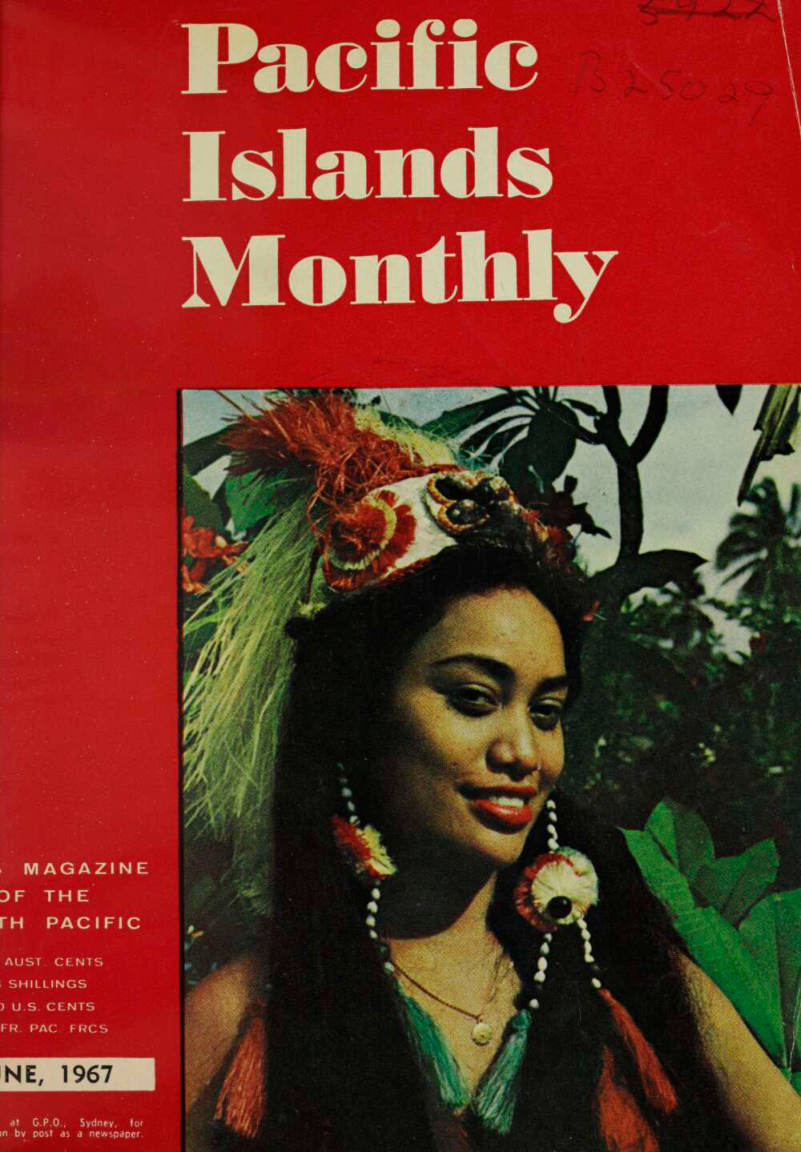 1
1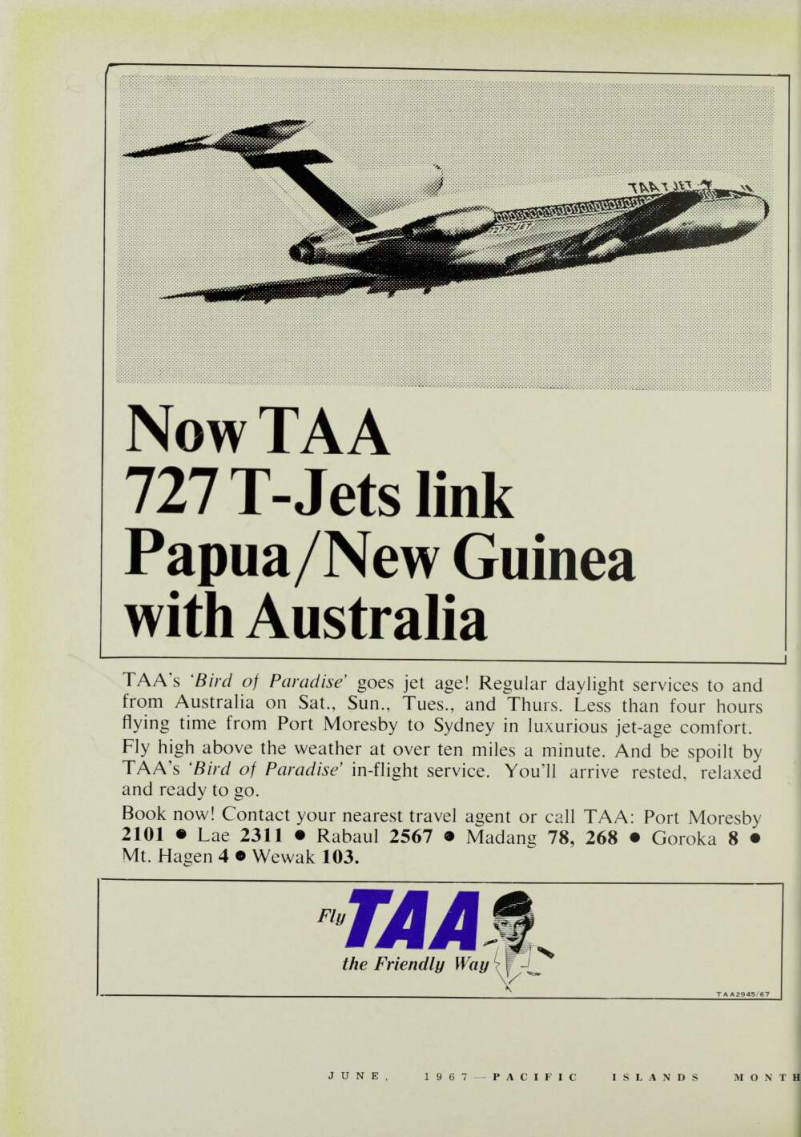 2
2 3
3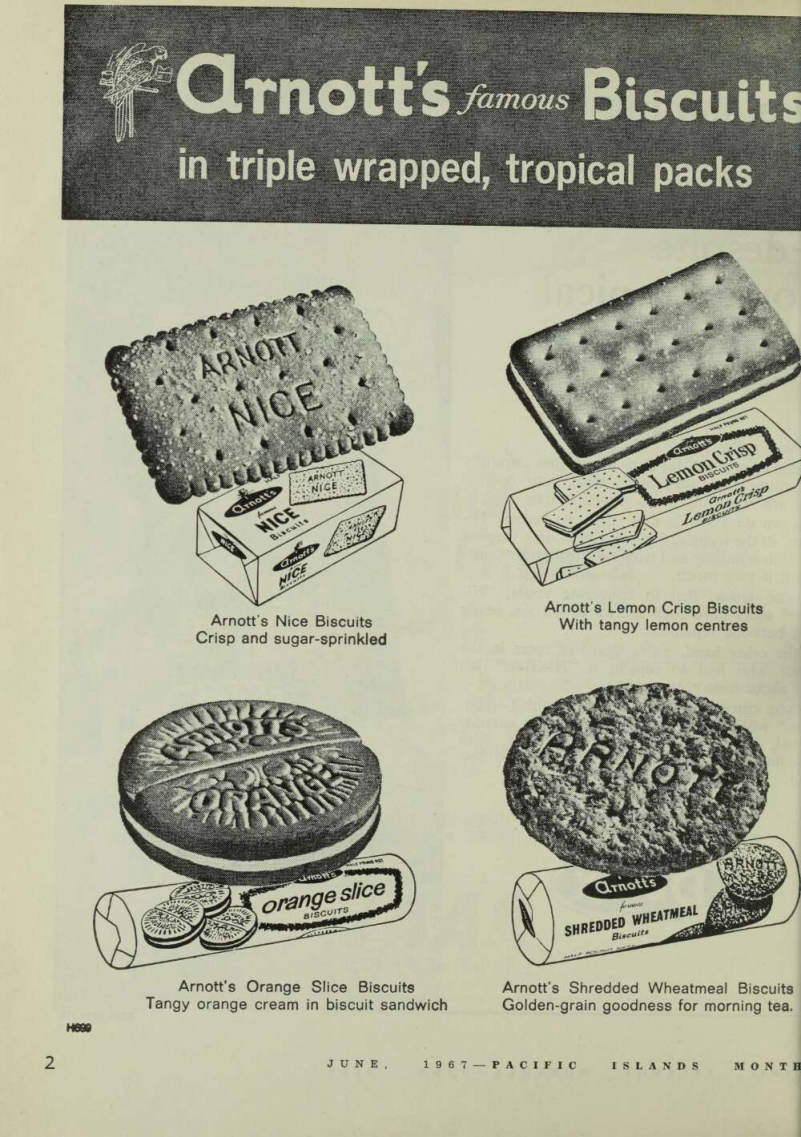 4
4 5
5 6
6 7
7 8
8 9
9 10
10 11
11 12
12 13
13 14
14 15
15 16
16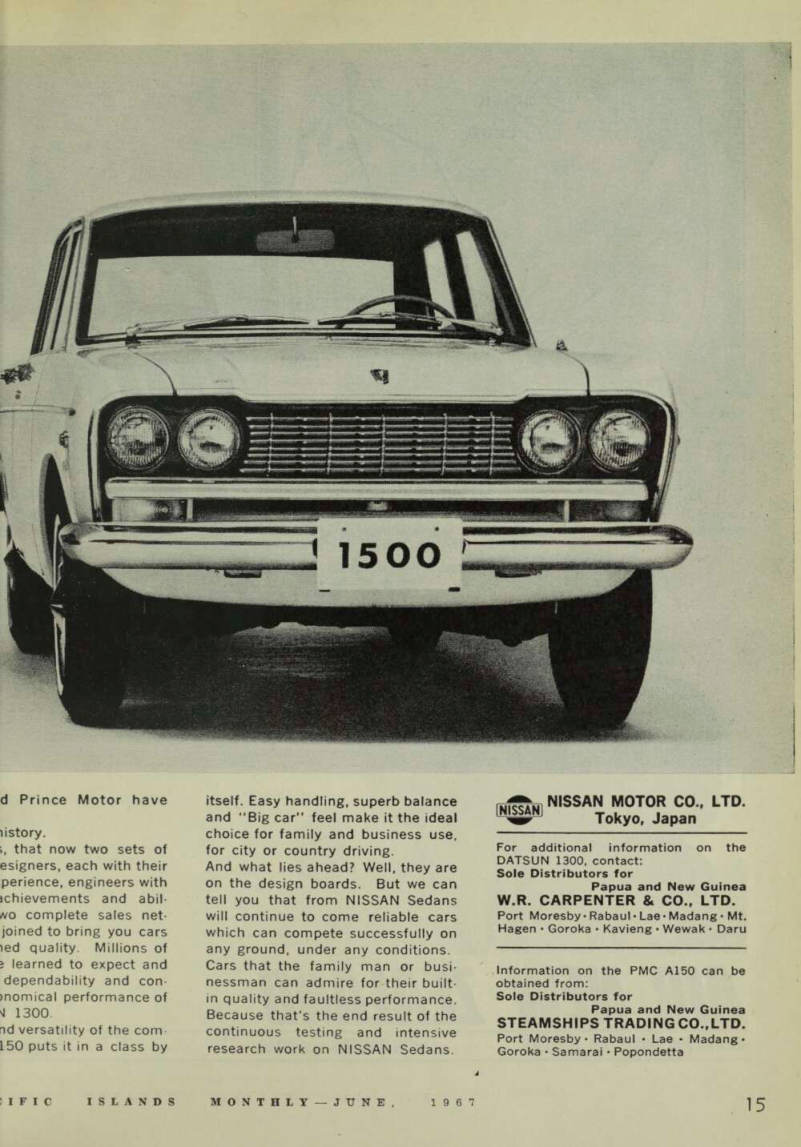 17
17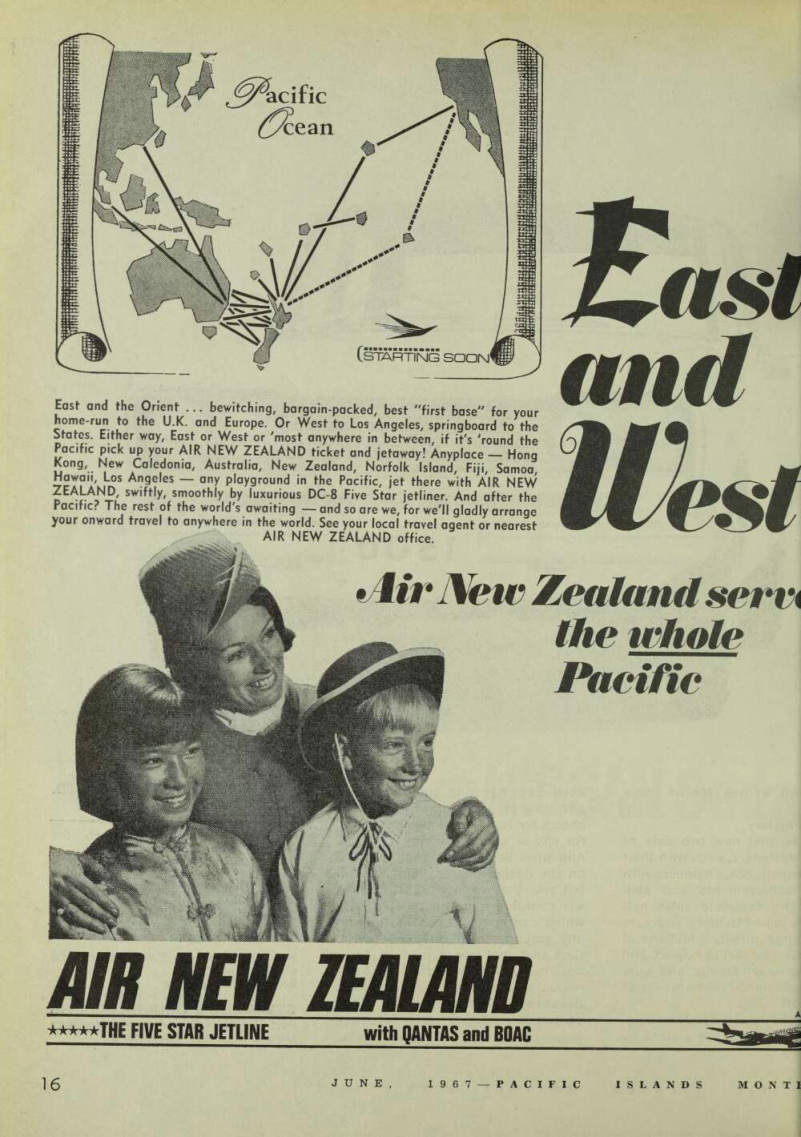 18
18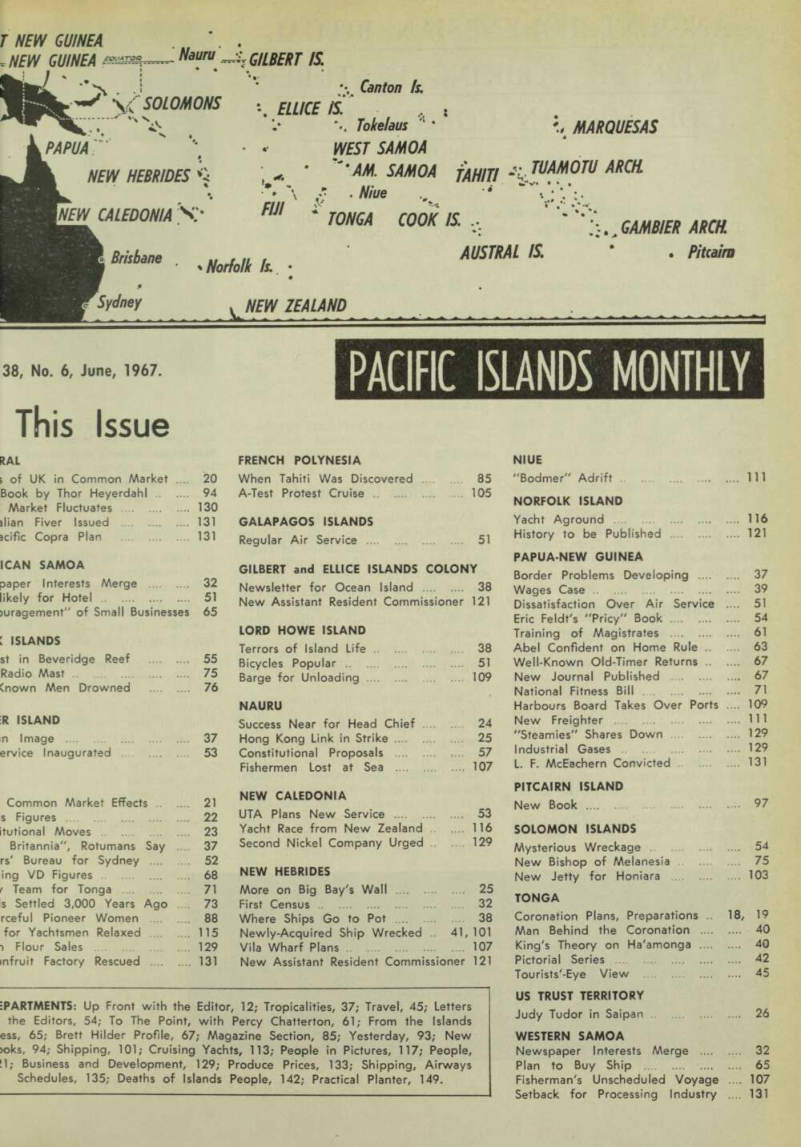 19
19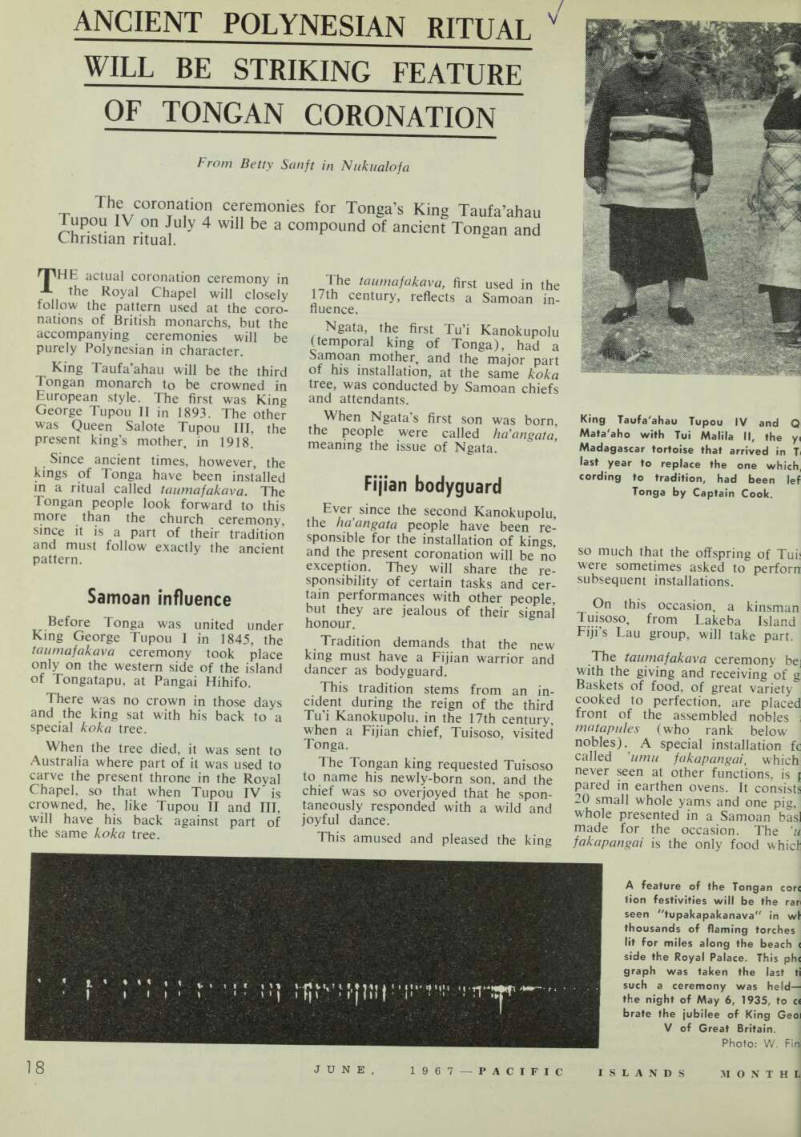 20
20 21
21 22
22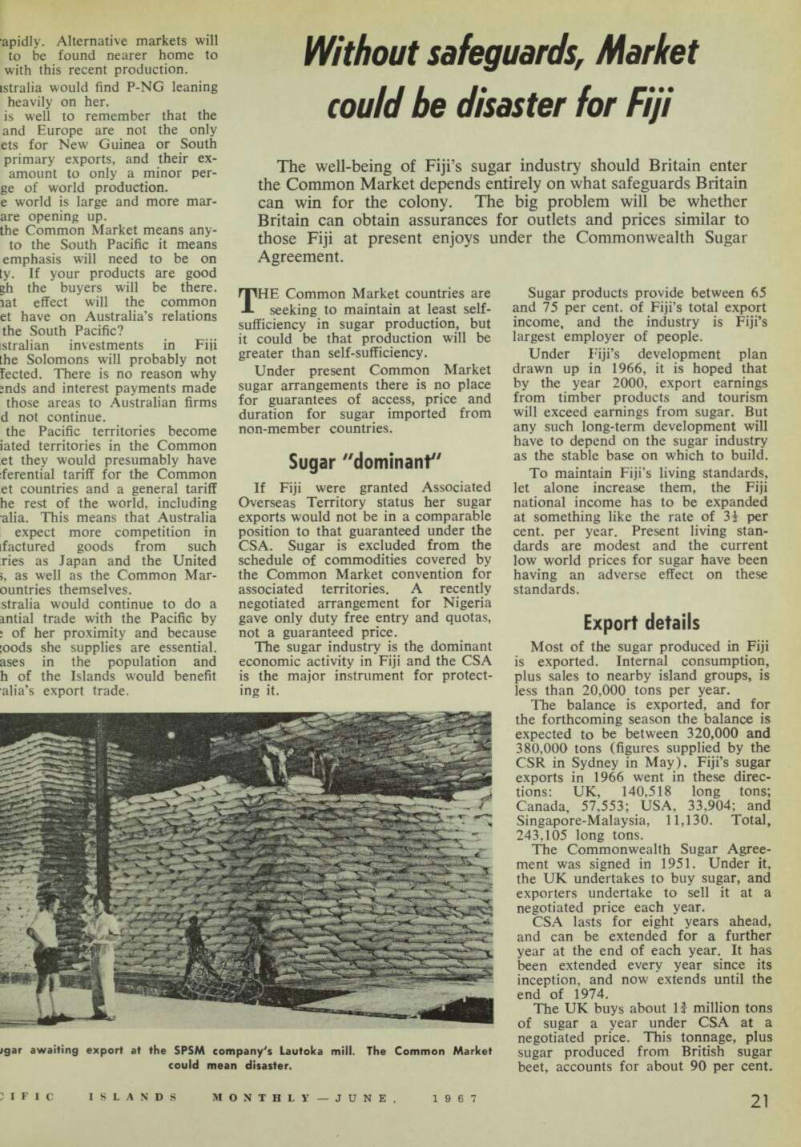 23
23 24
24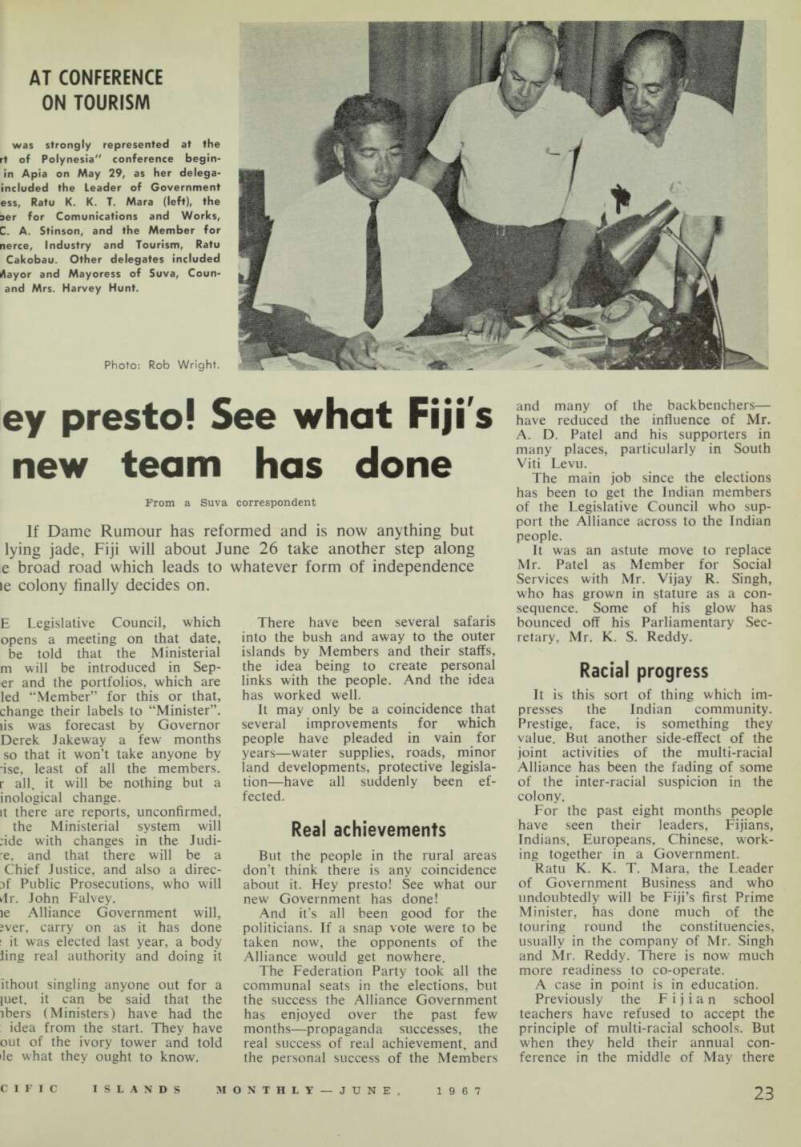 25
25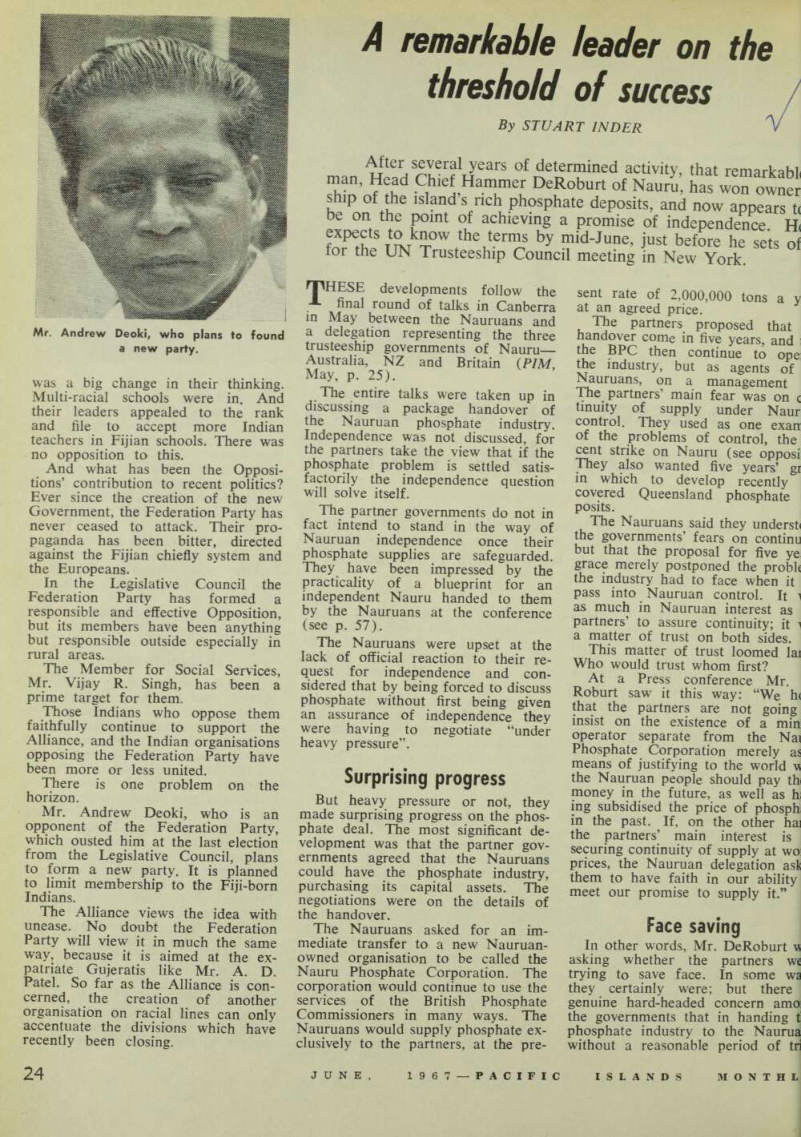 26
26 27
27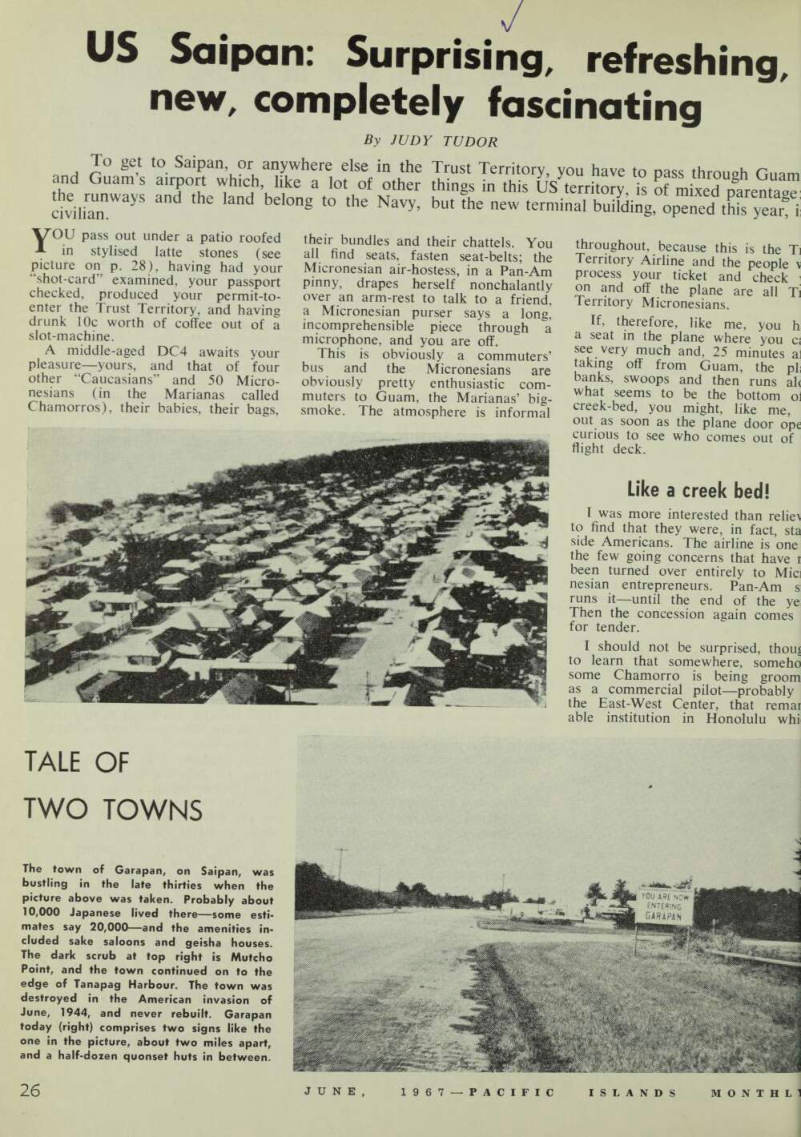 28
28 29
29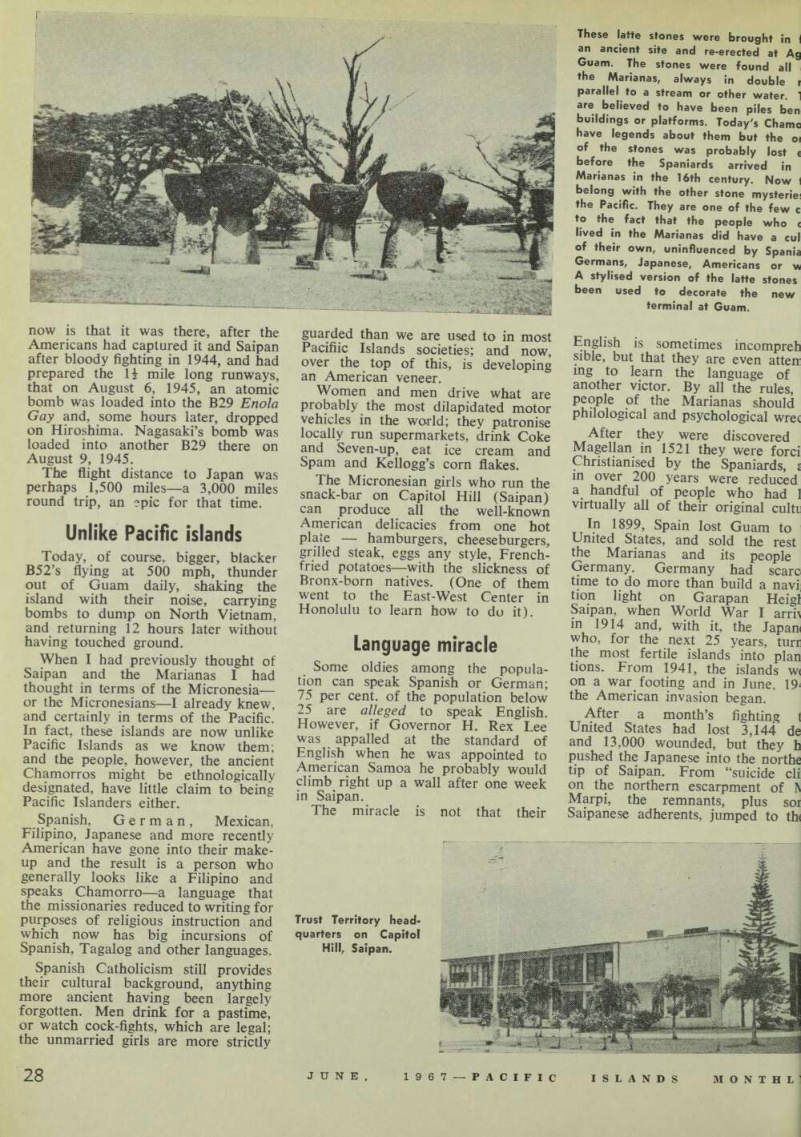 30
30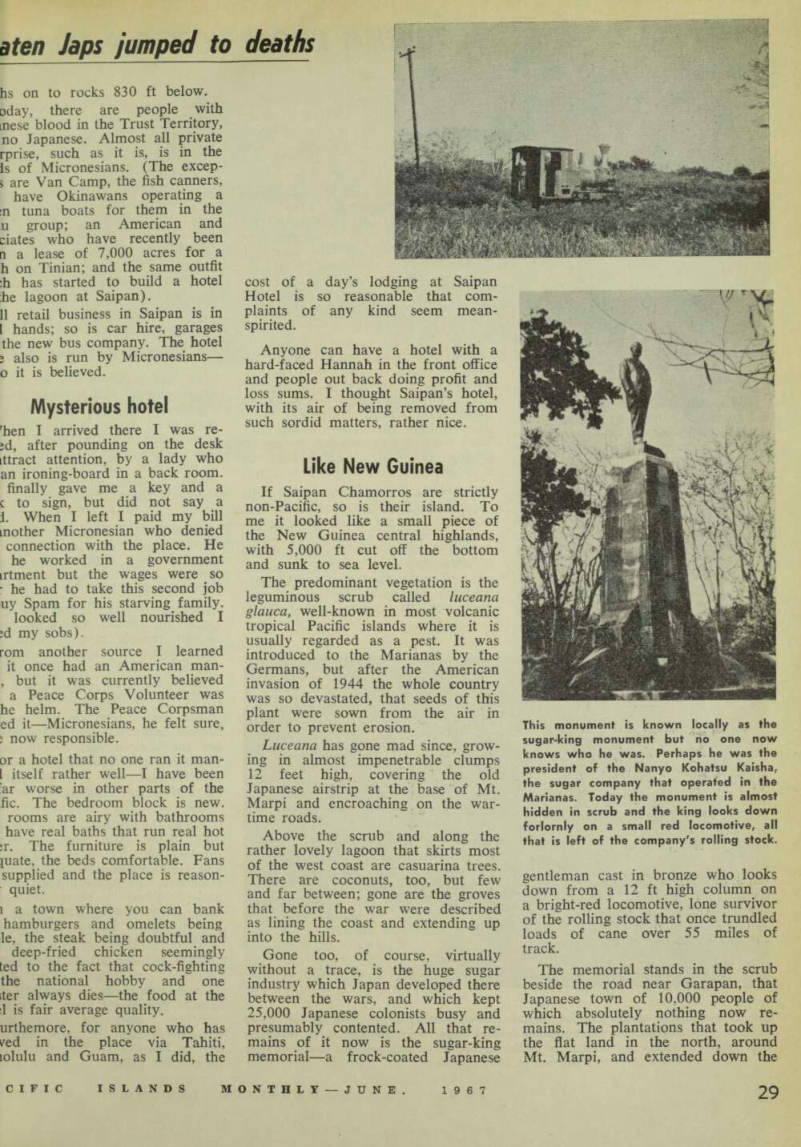 31
31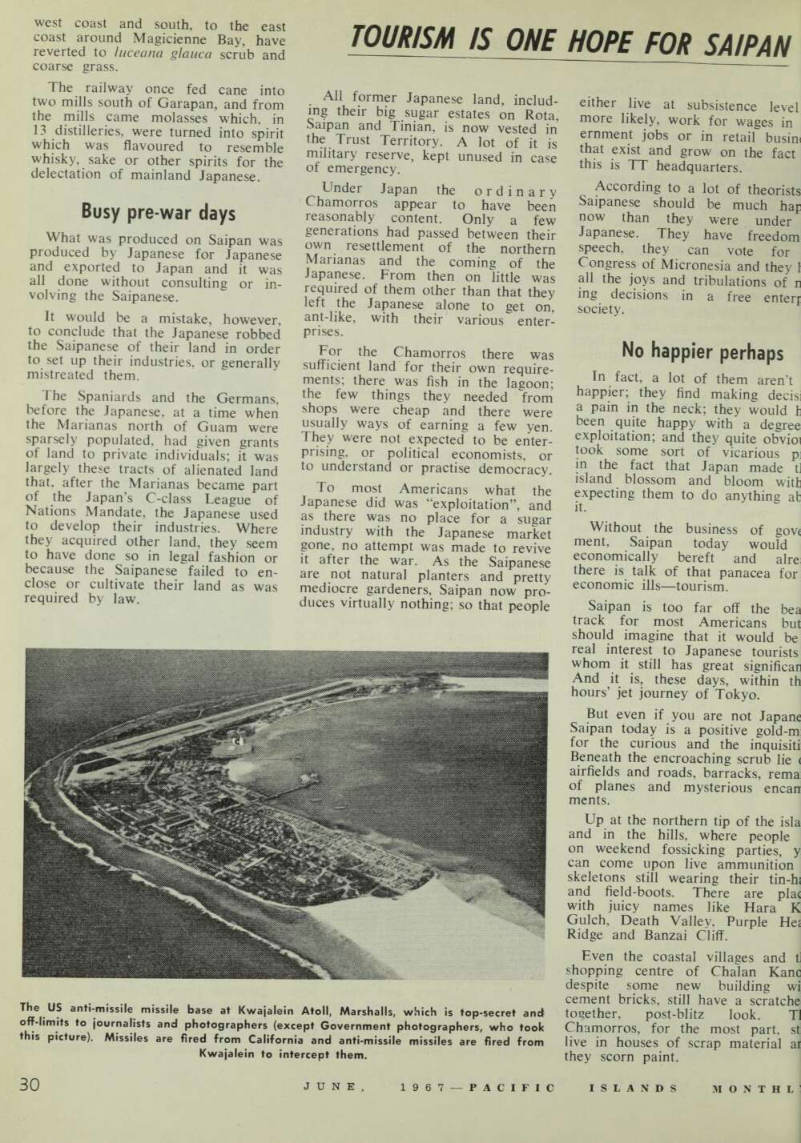 32
32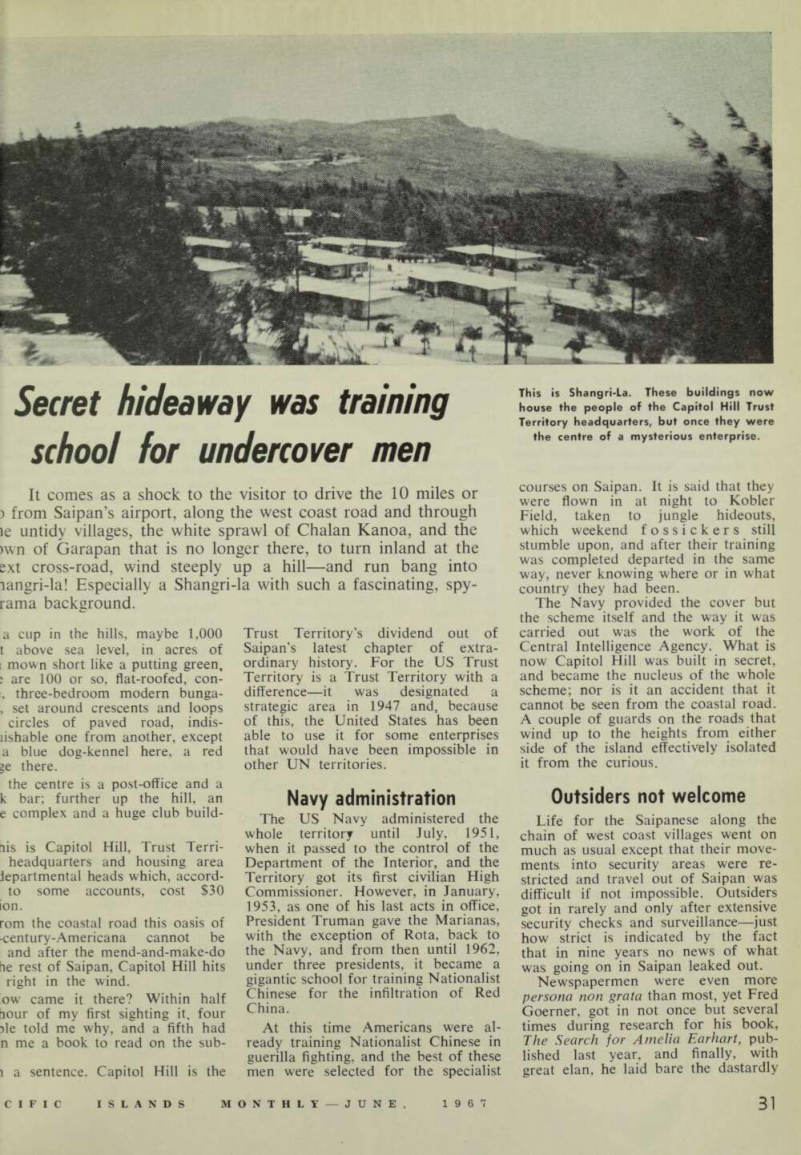 33
33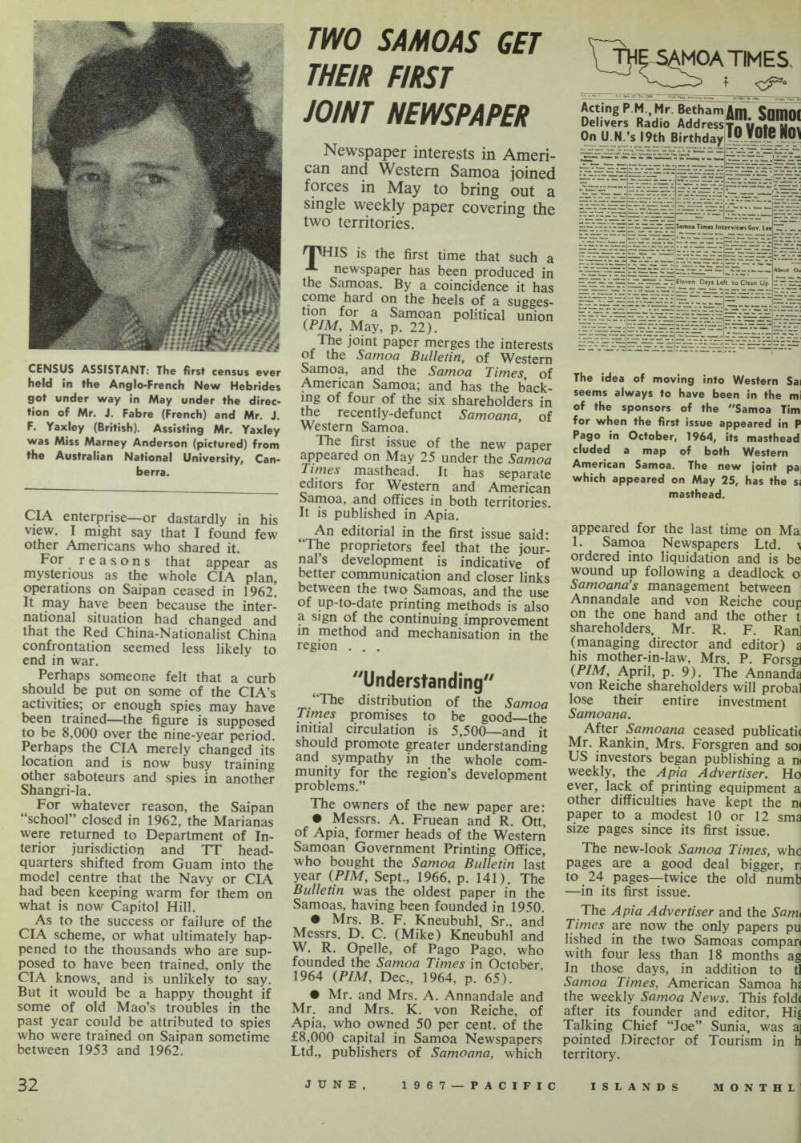 34
34 35
35 36
36 37
37 38
38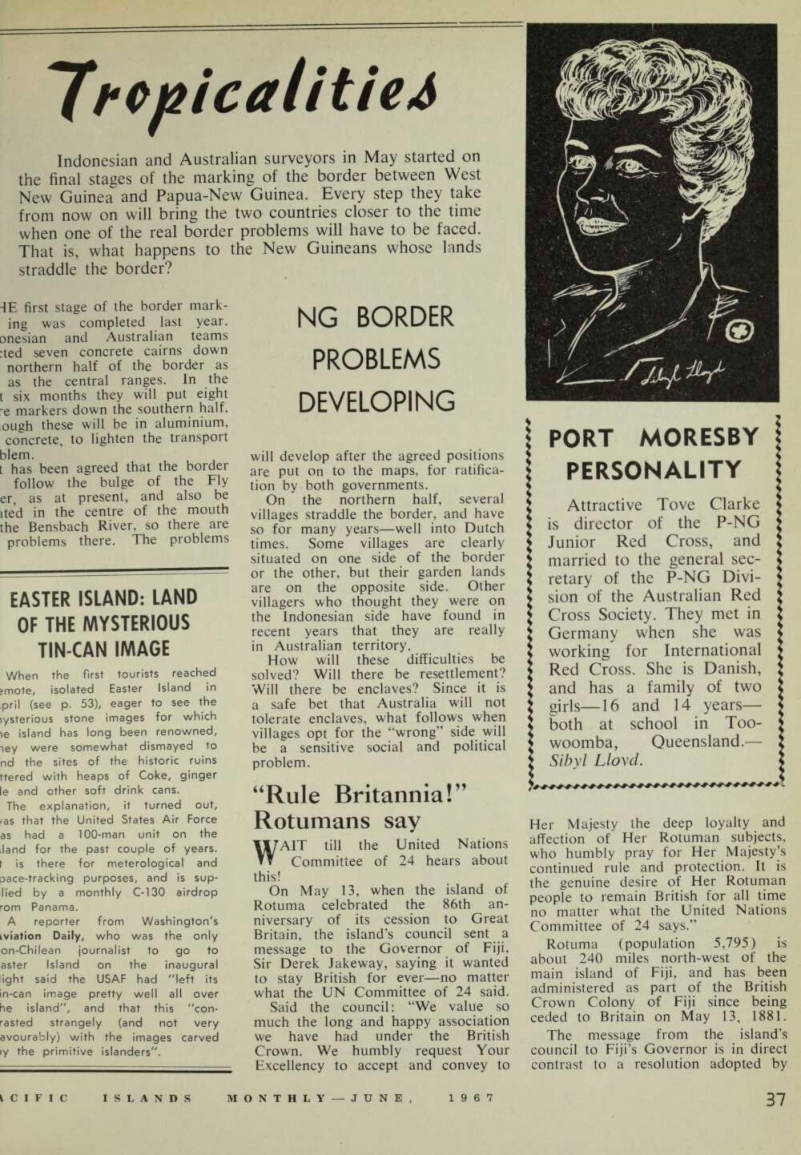 39
39 40
40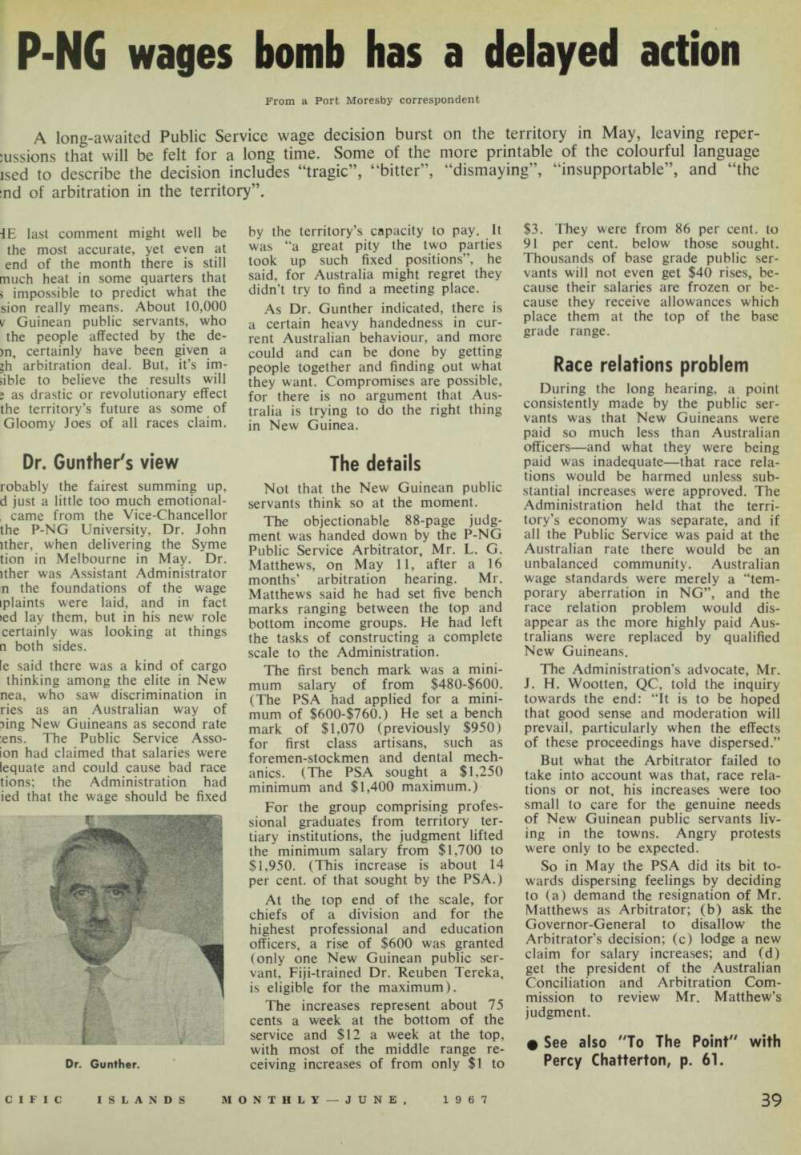 41
41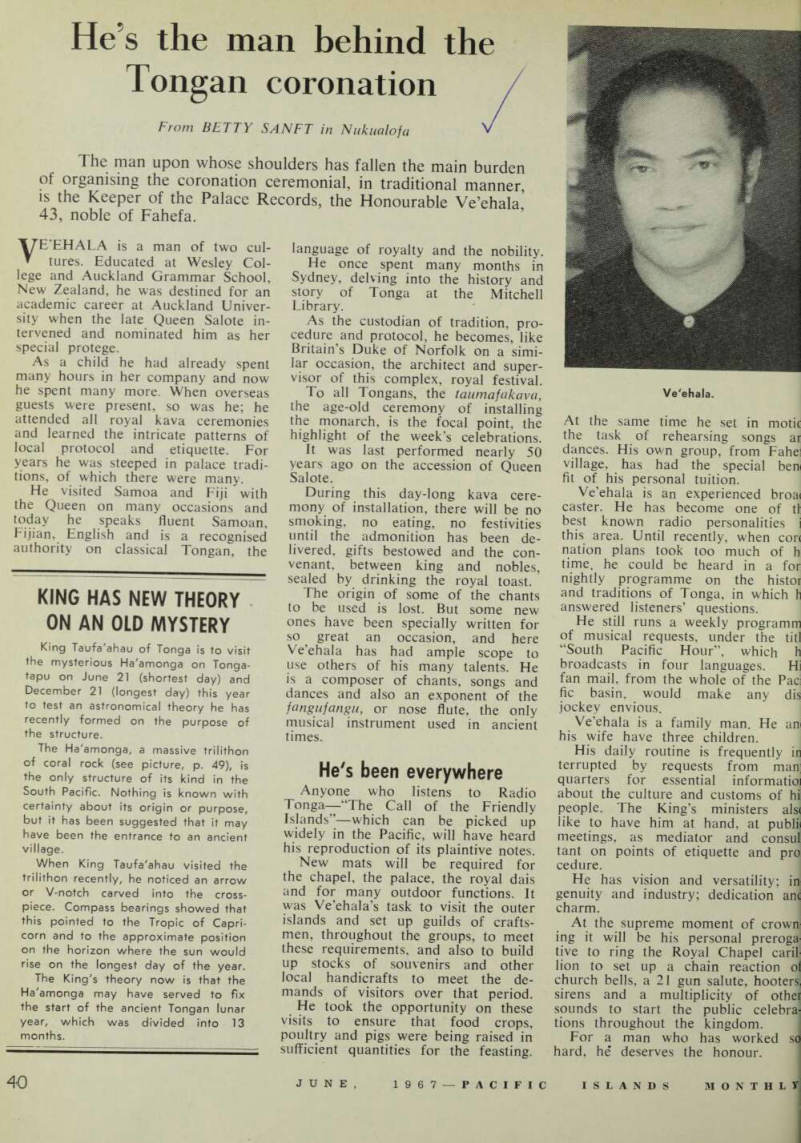 42
42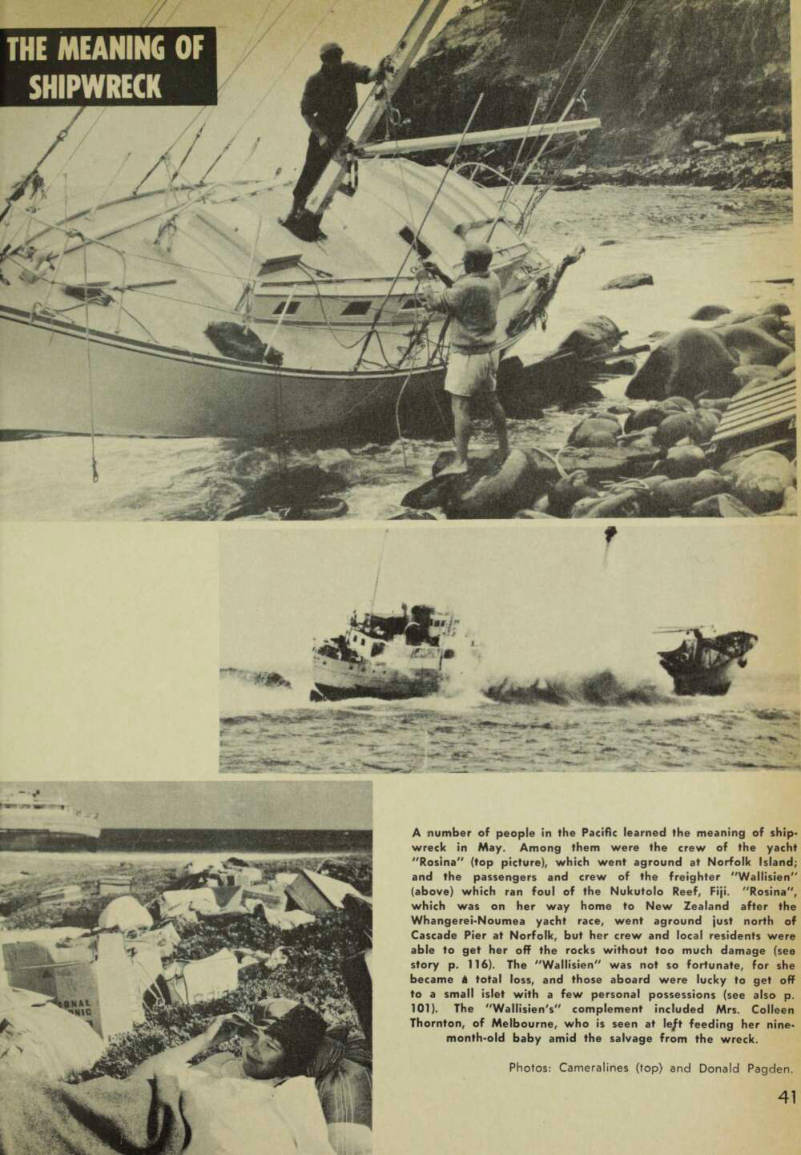 43
43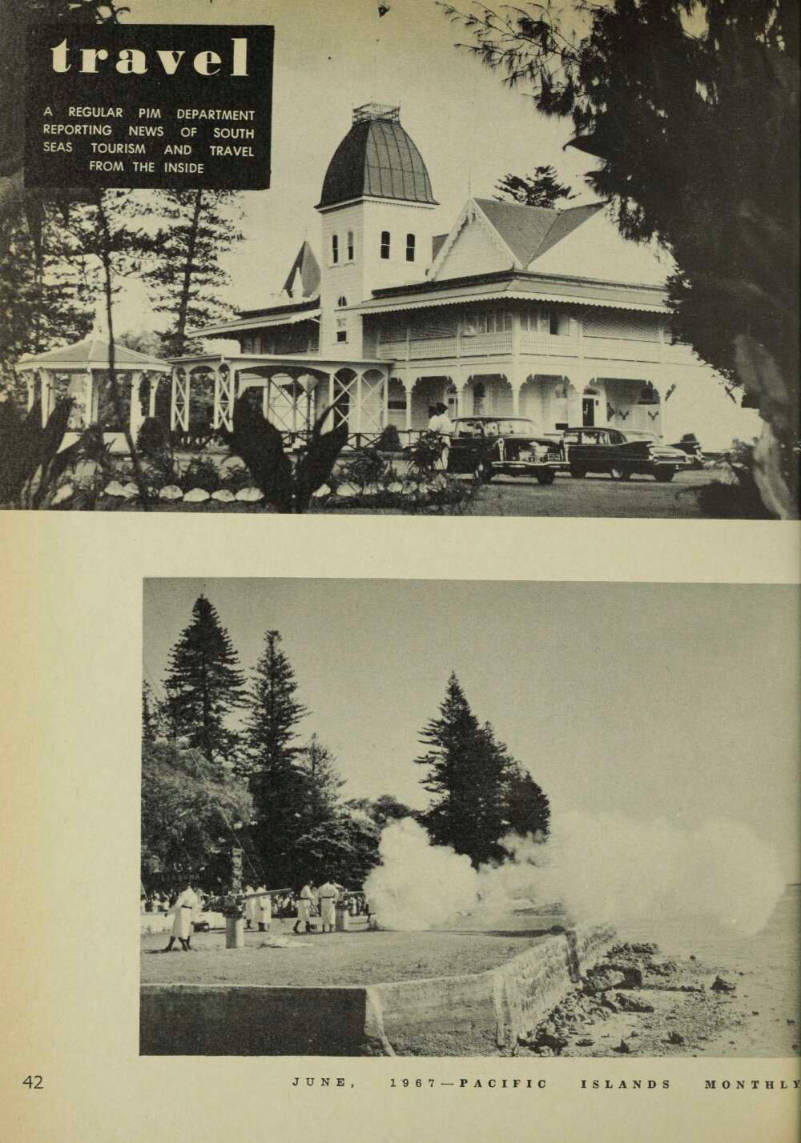 44
44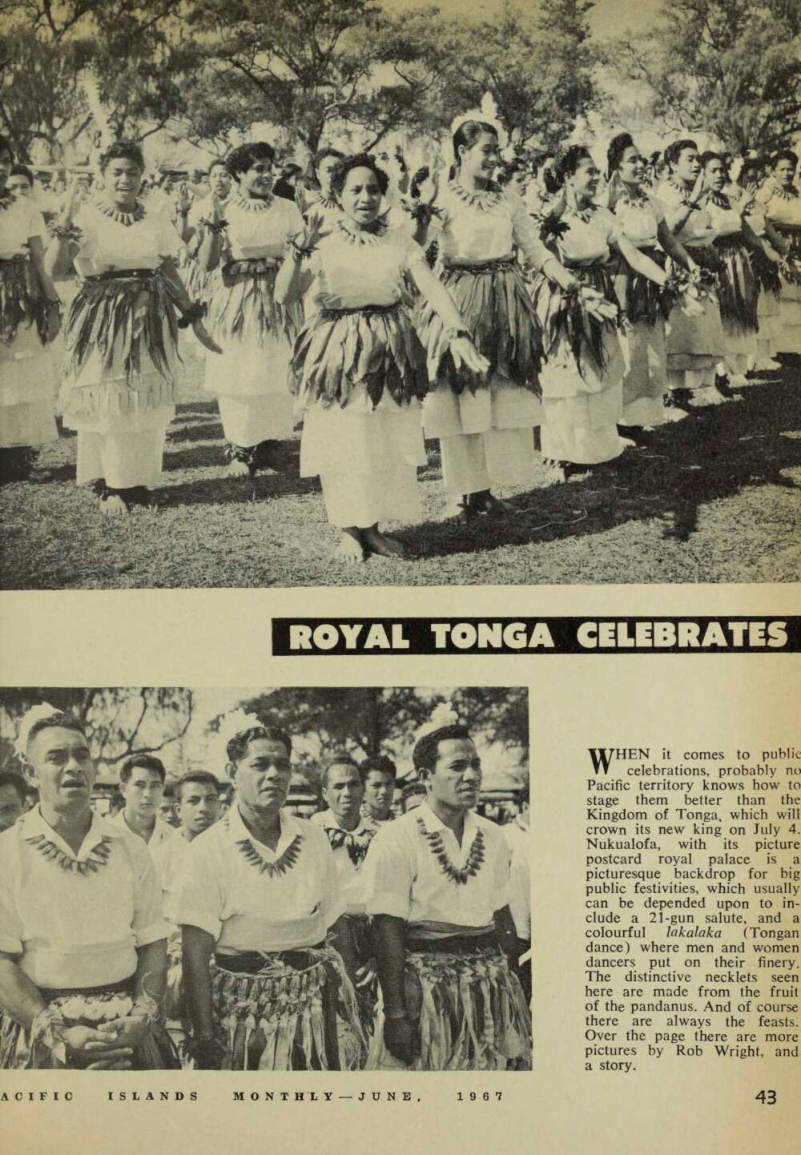 45
45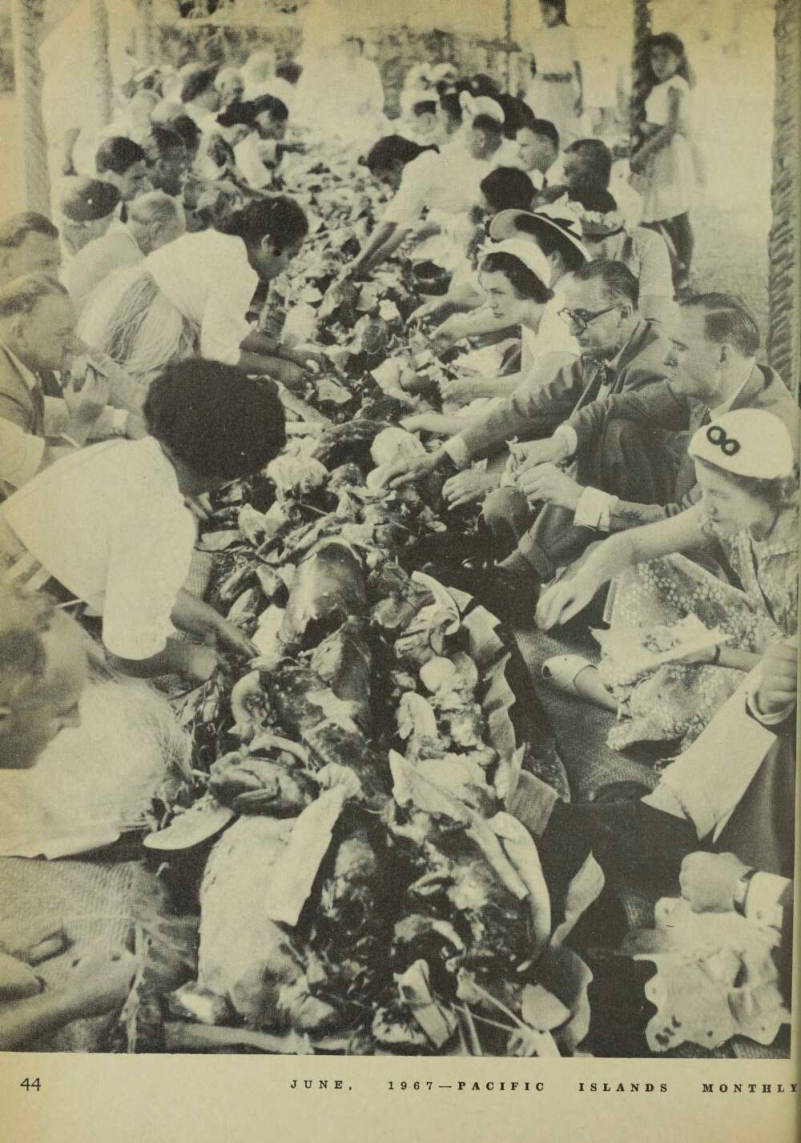 46
46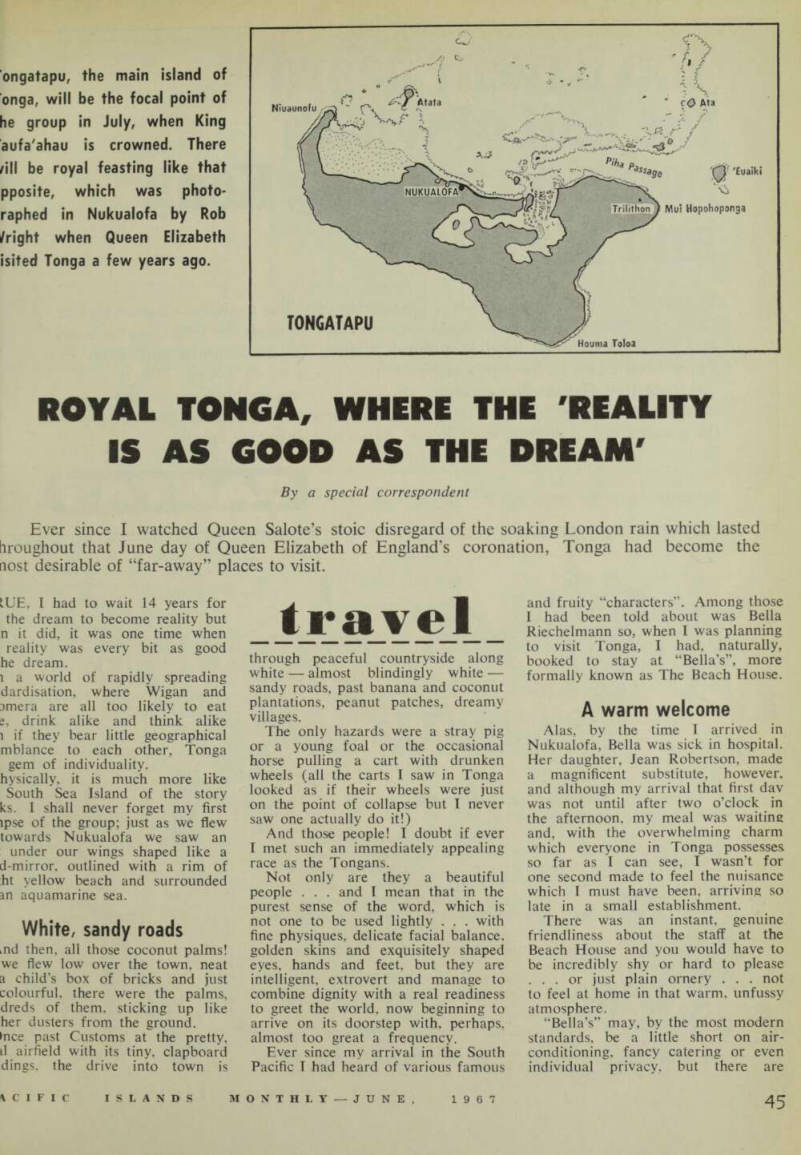 47
47 48
48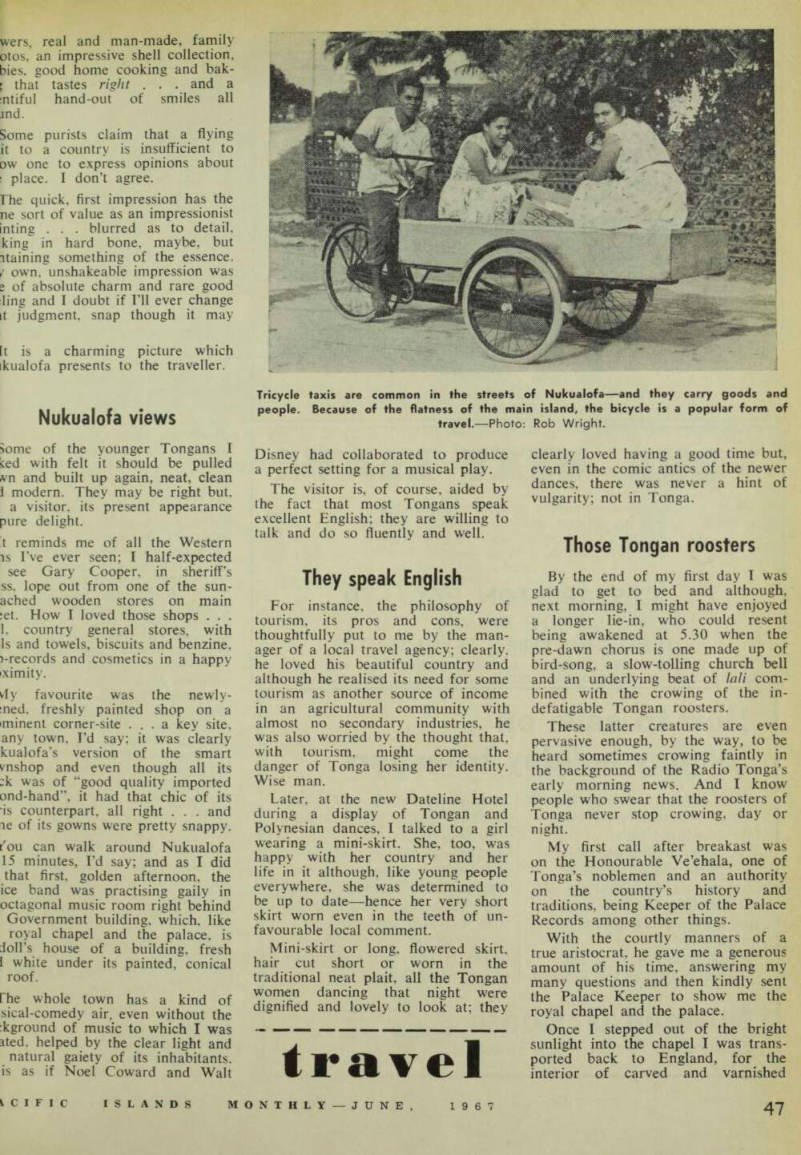 49
49 50
50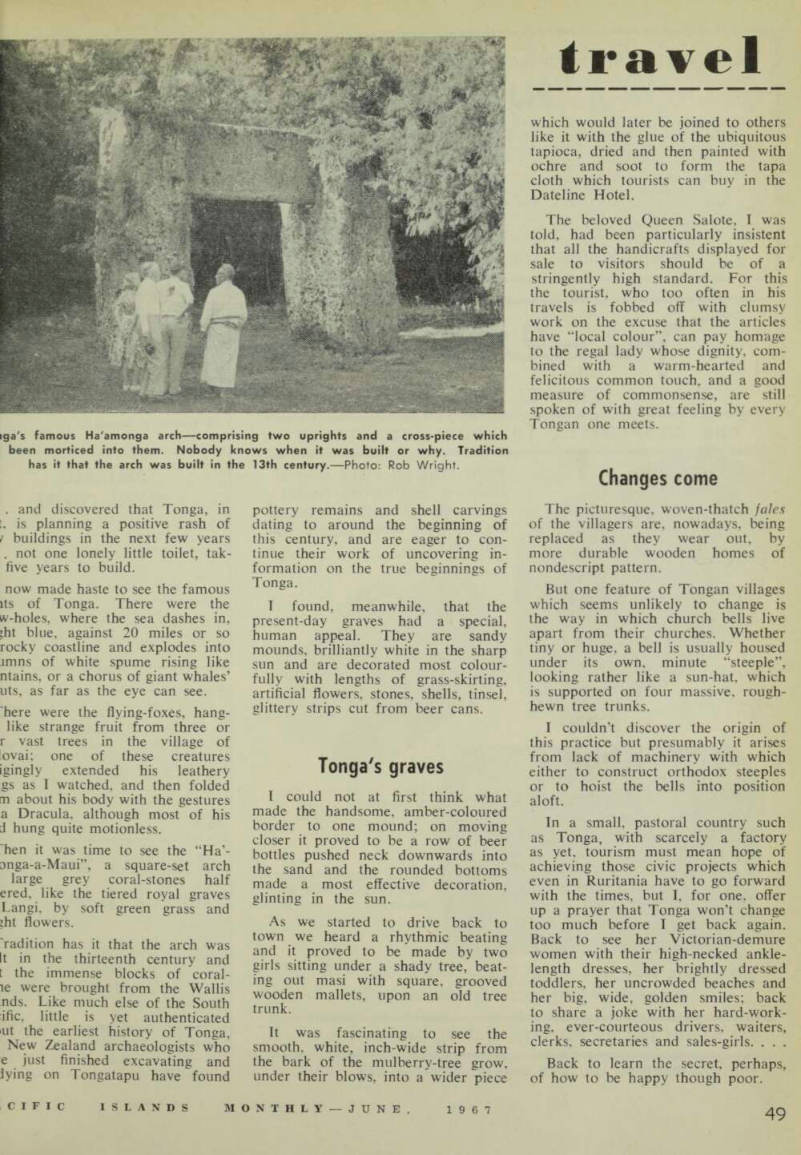 51
51 52
52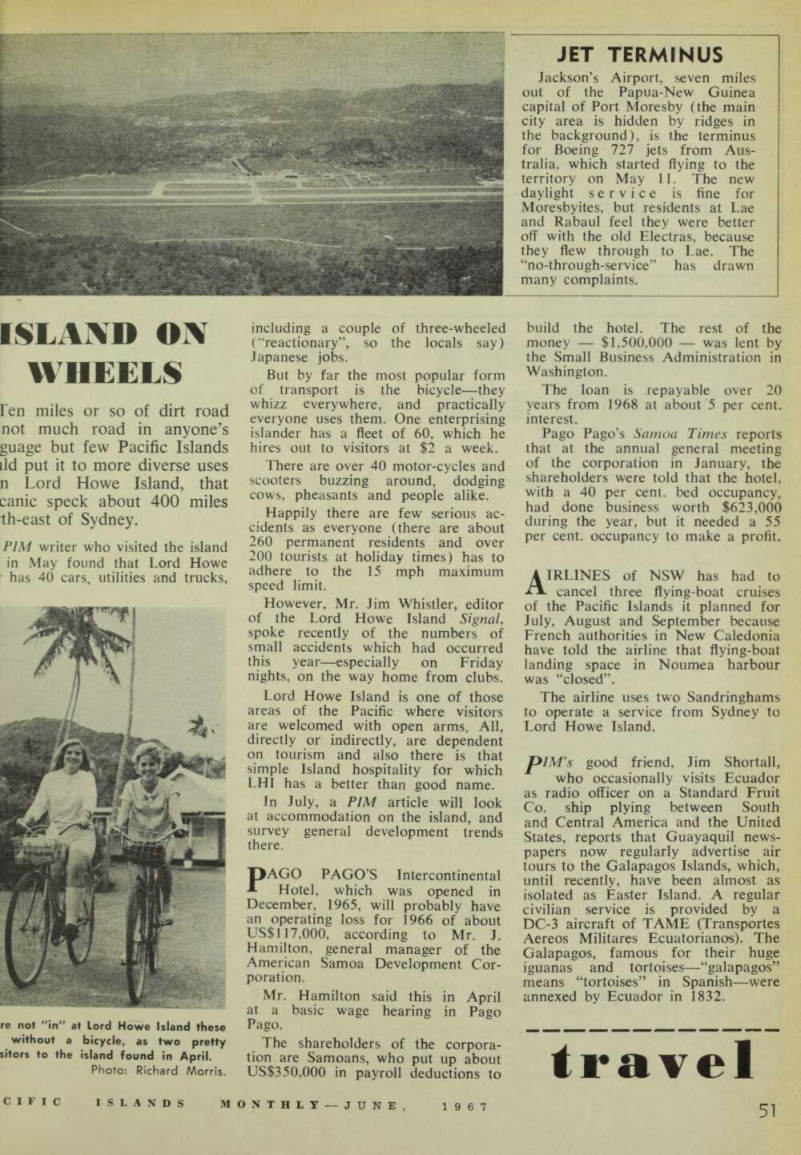 53
53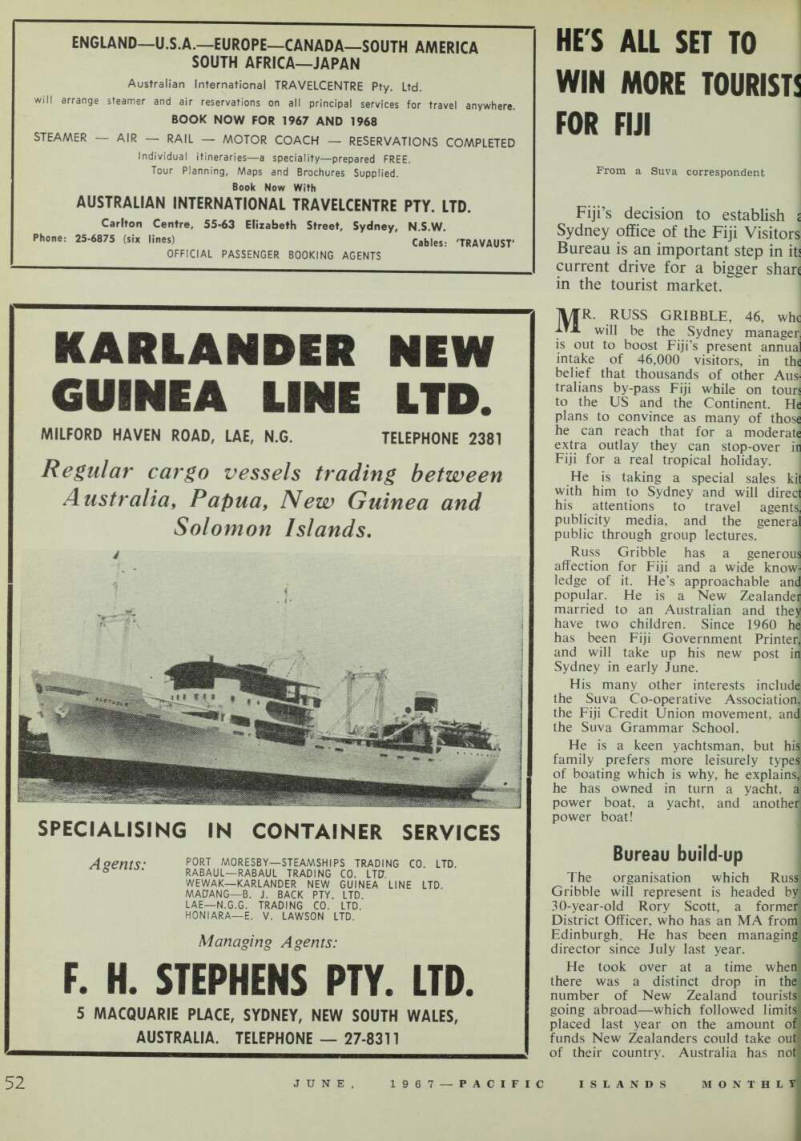 54
54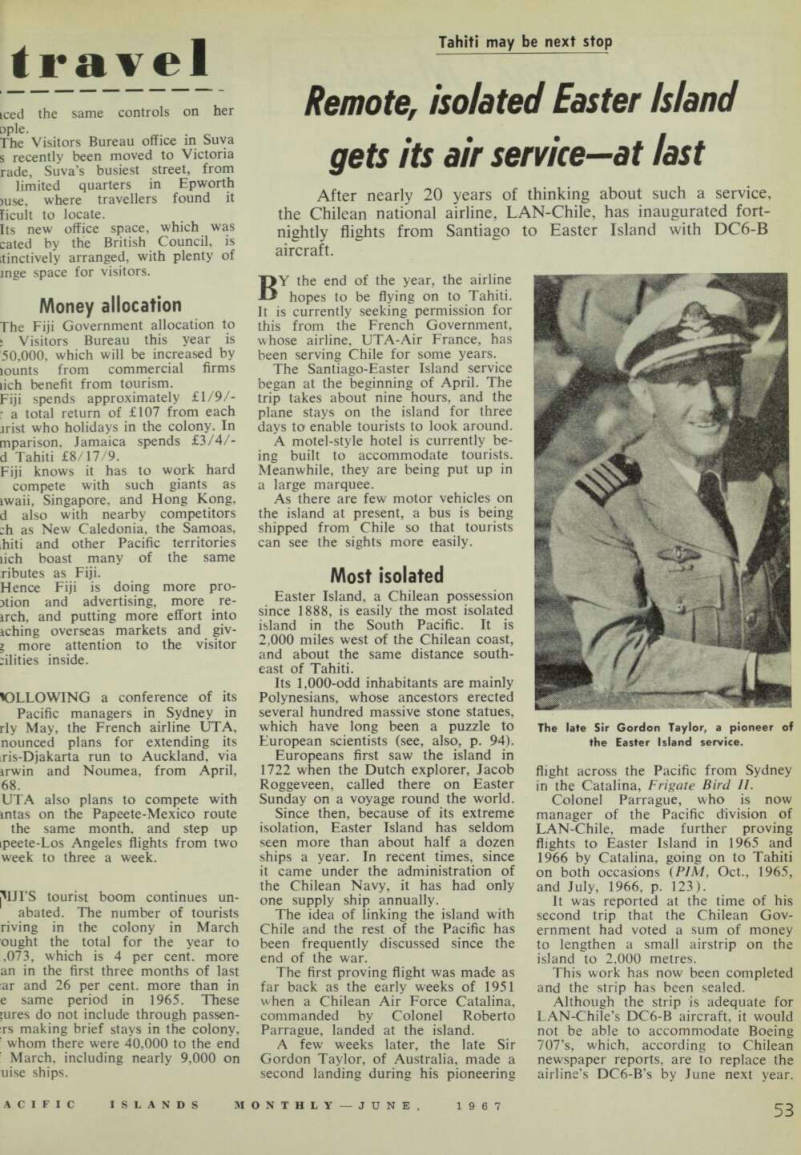 55
55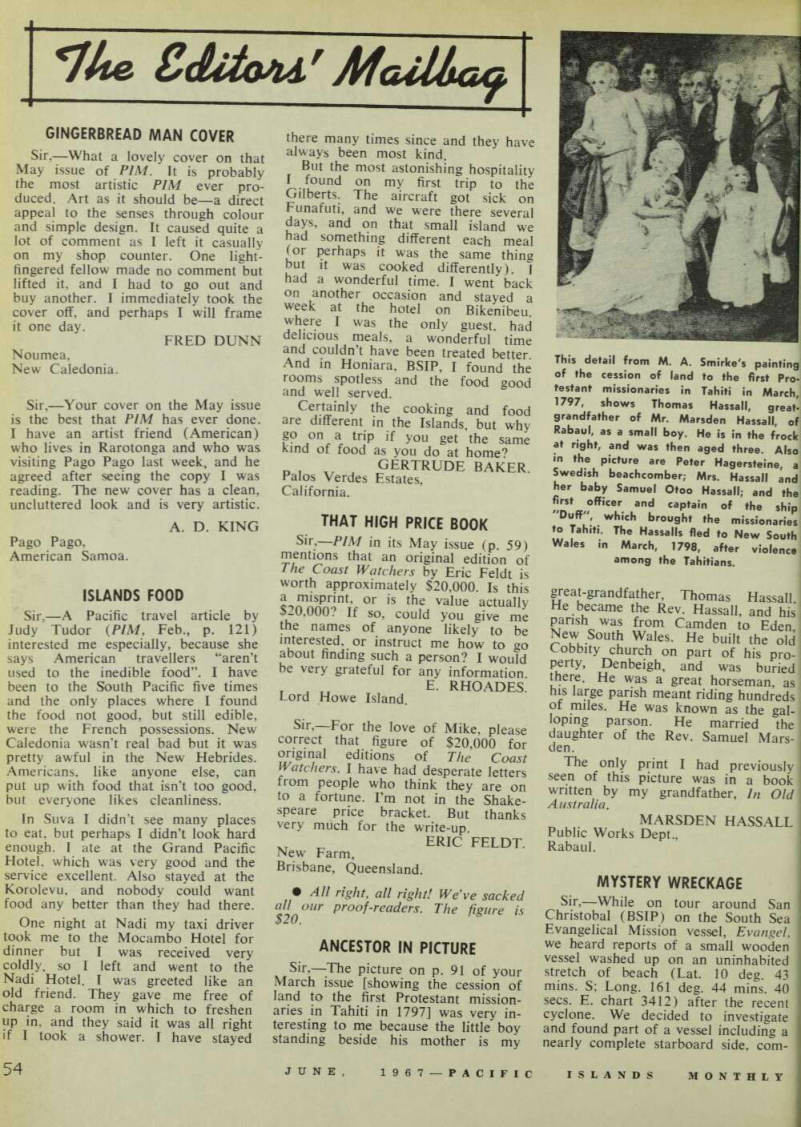 56
56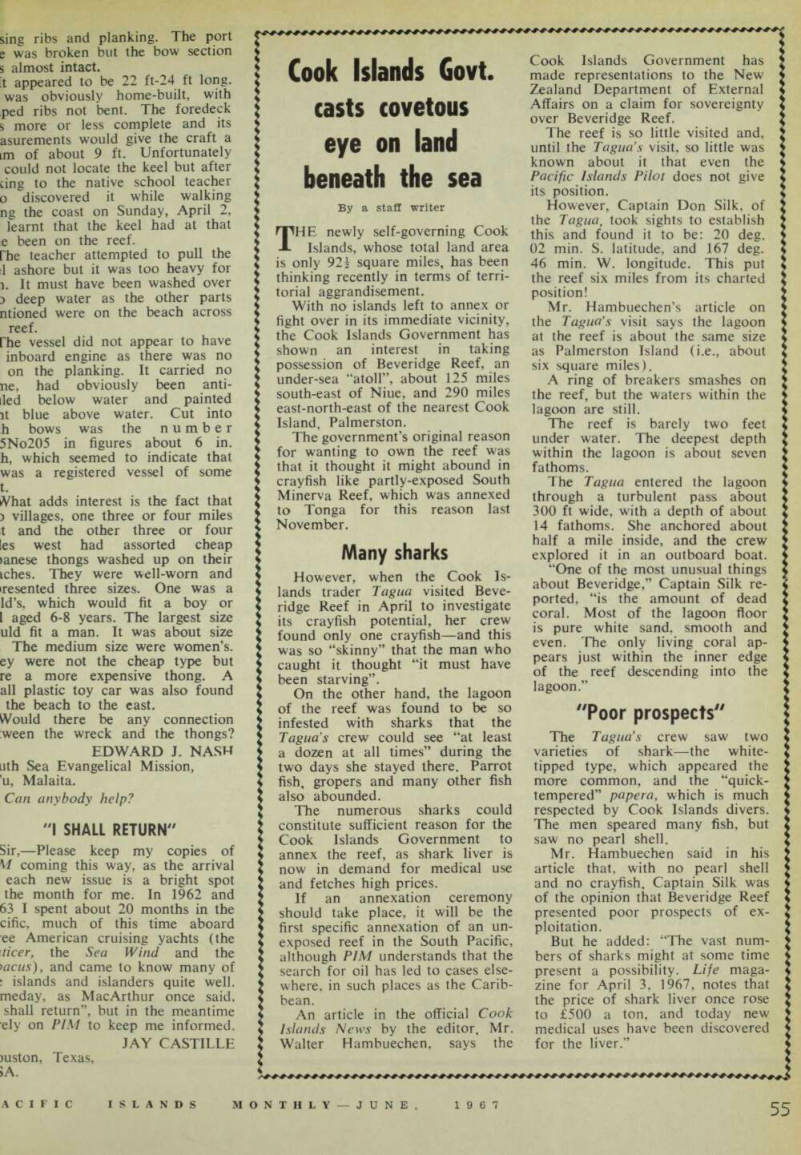 57
57 58
58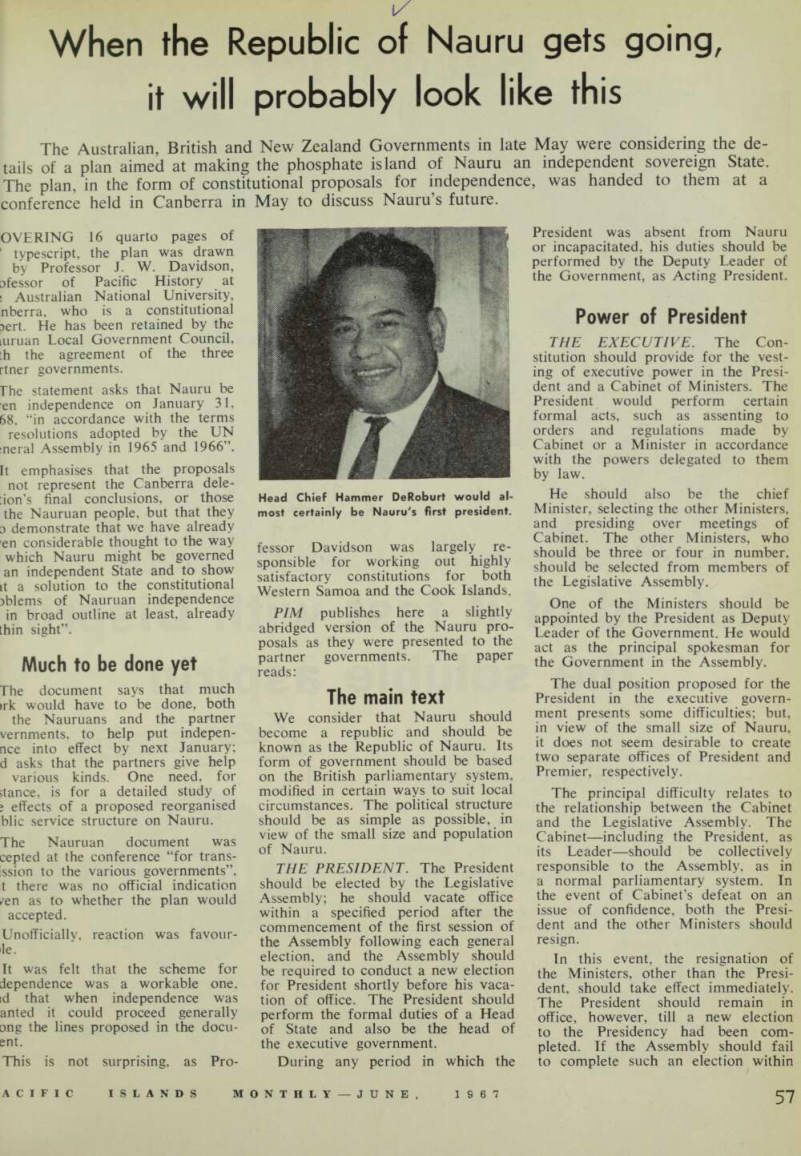 59
59 60
60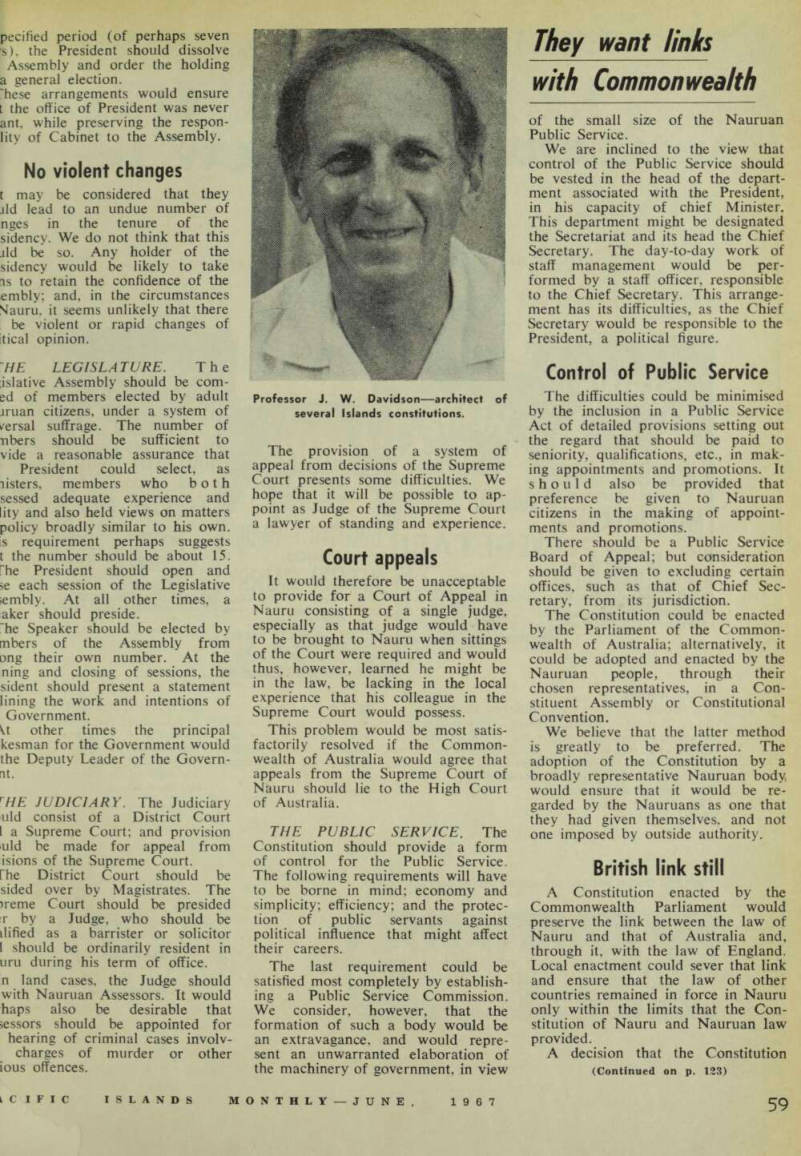 61
61 62
62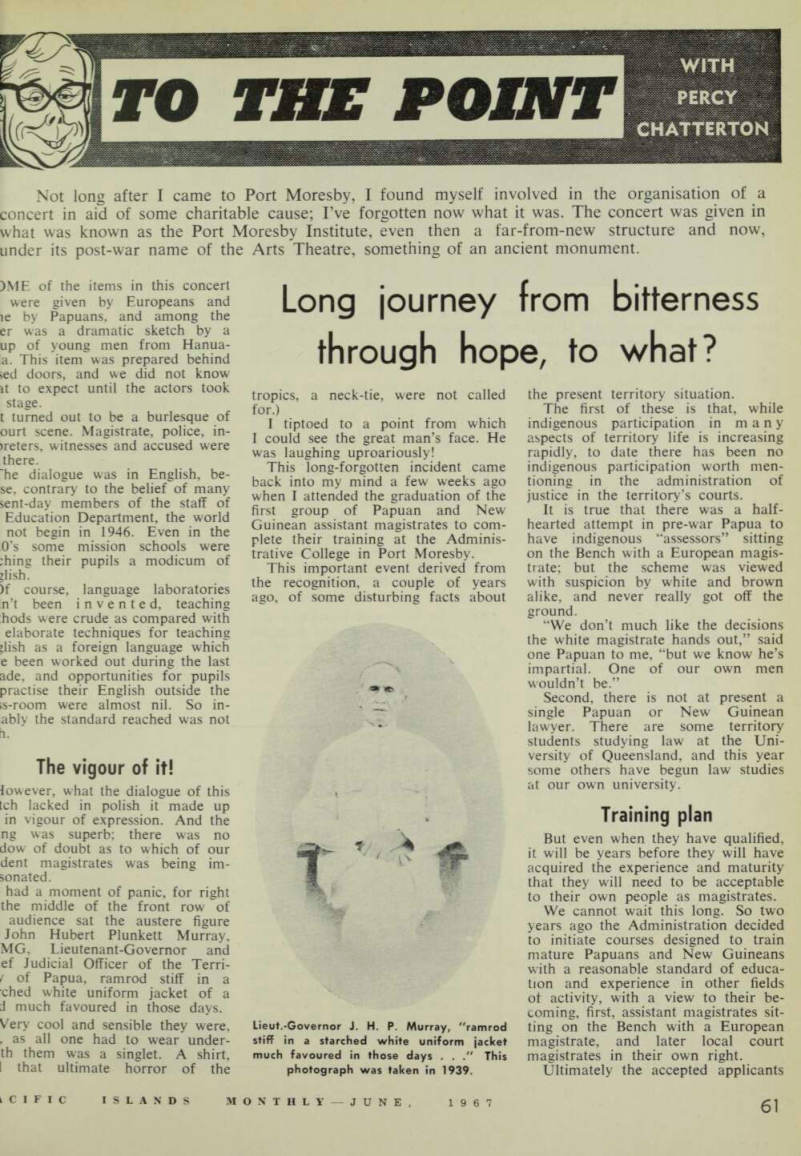 63
63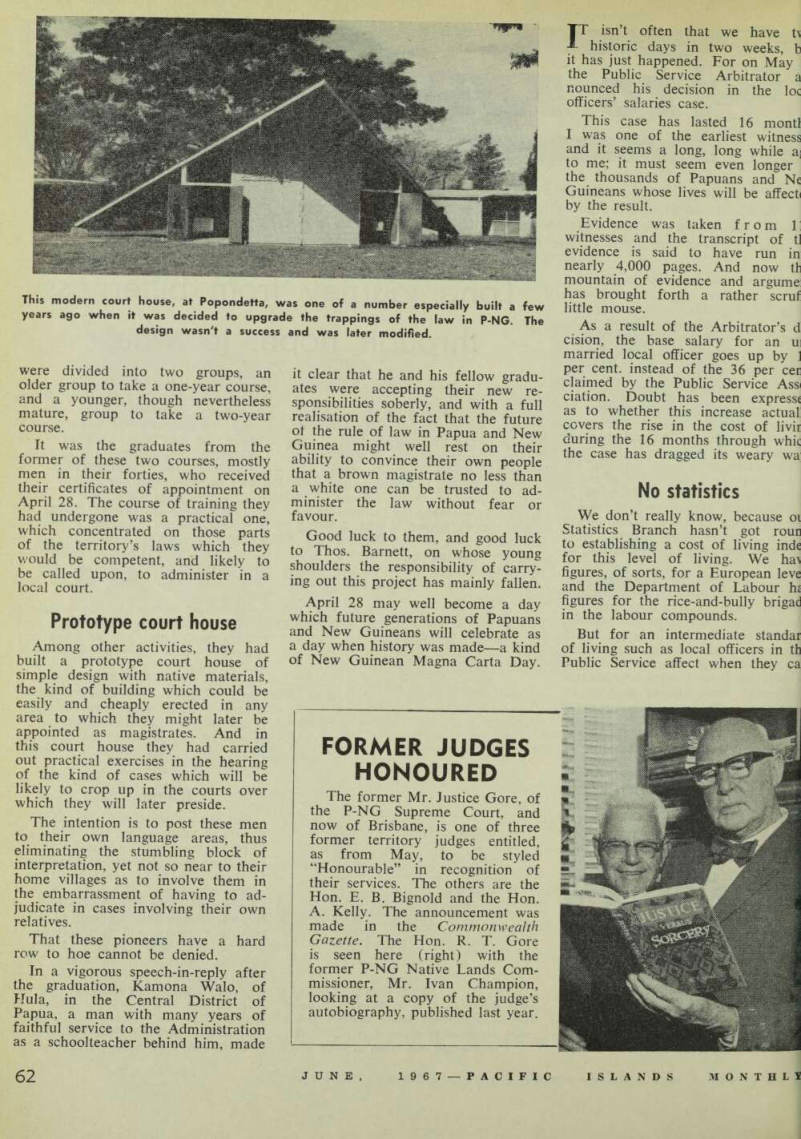 64
64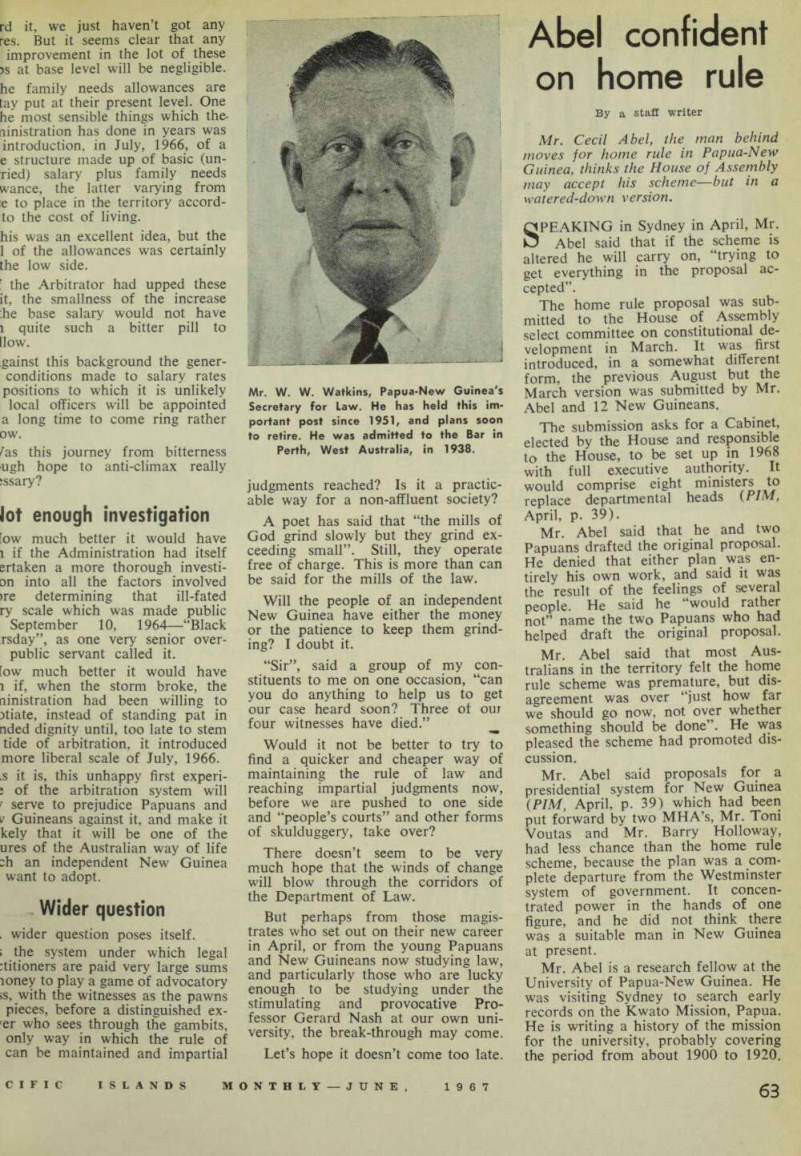 65
65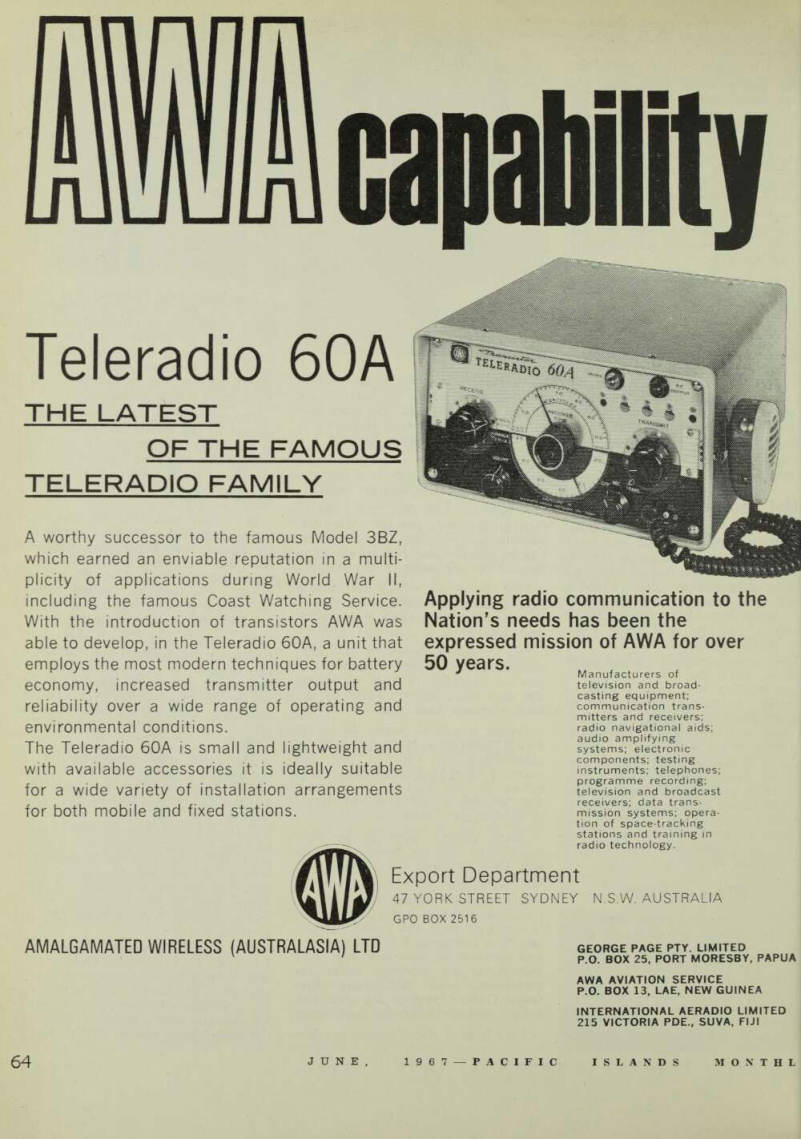 66
66 67
67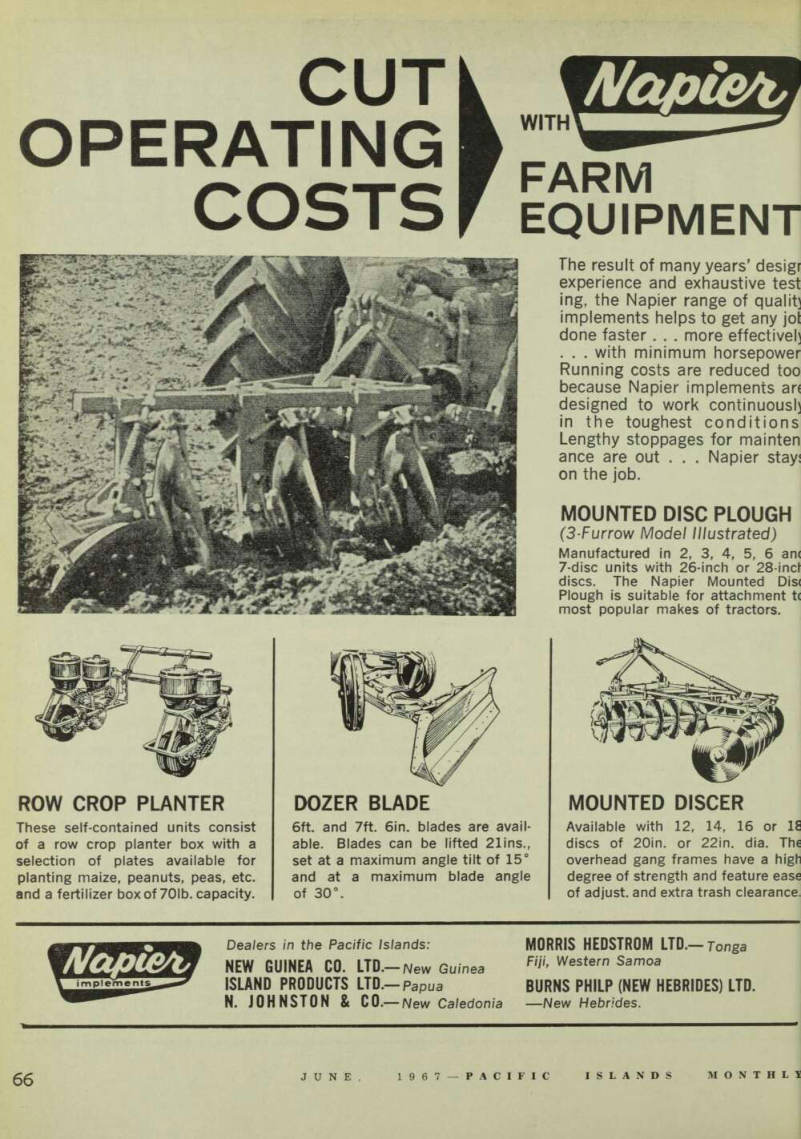 68
68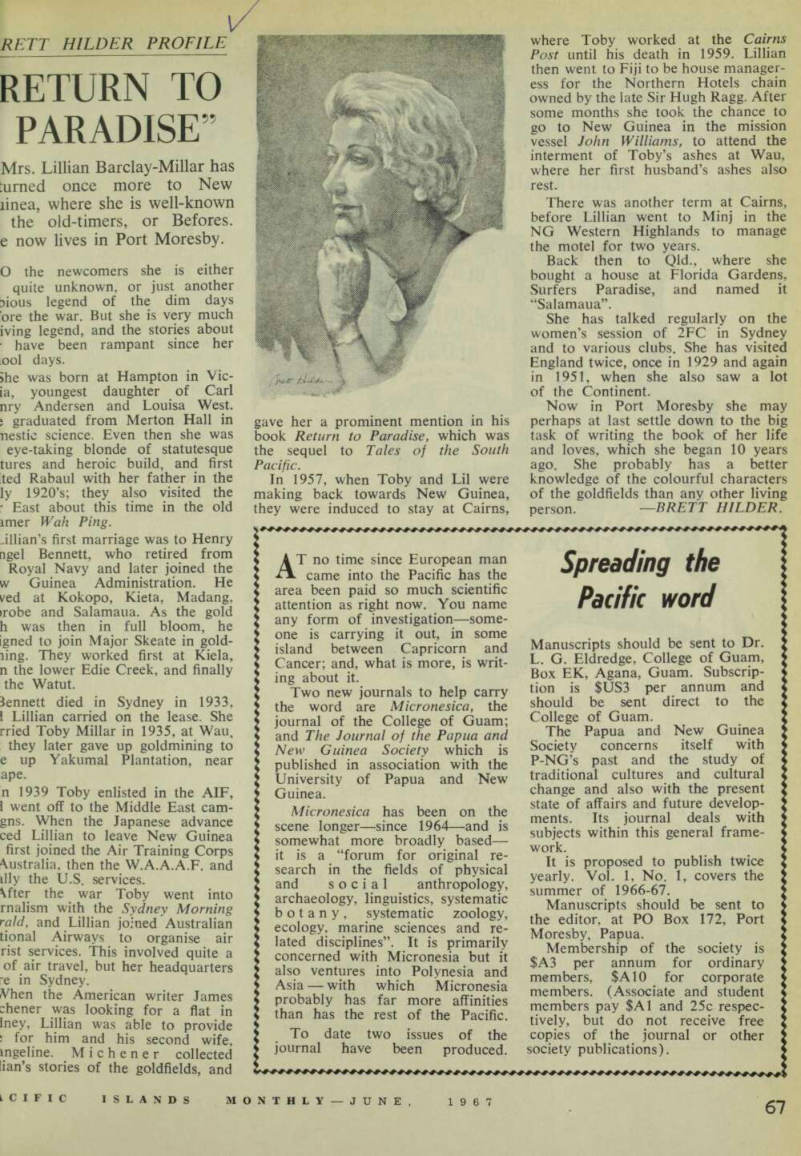 69
69 70
70 71
71 72
72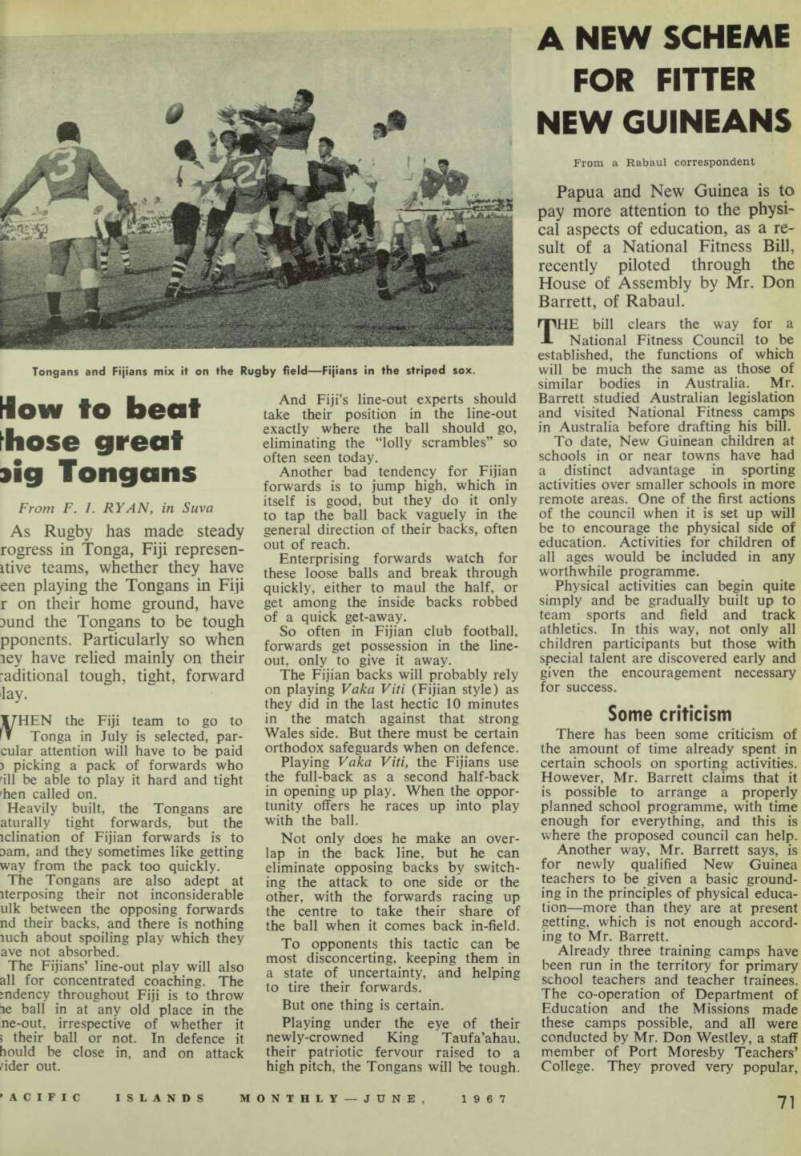 73
73 74
74 75
75 76
76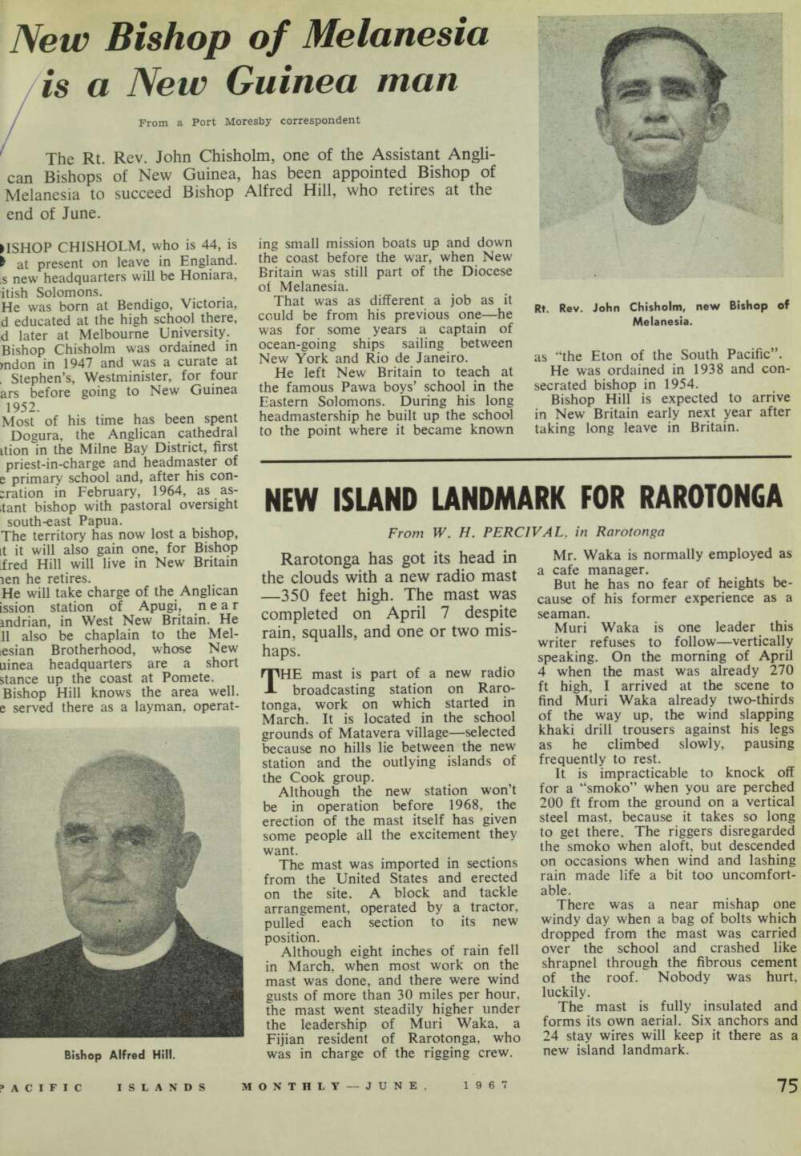 77
77 78
78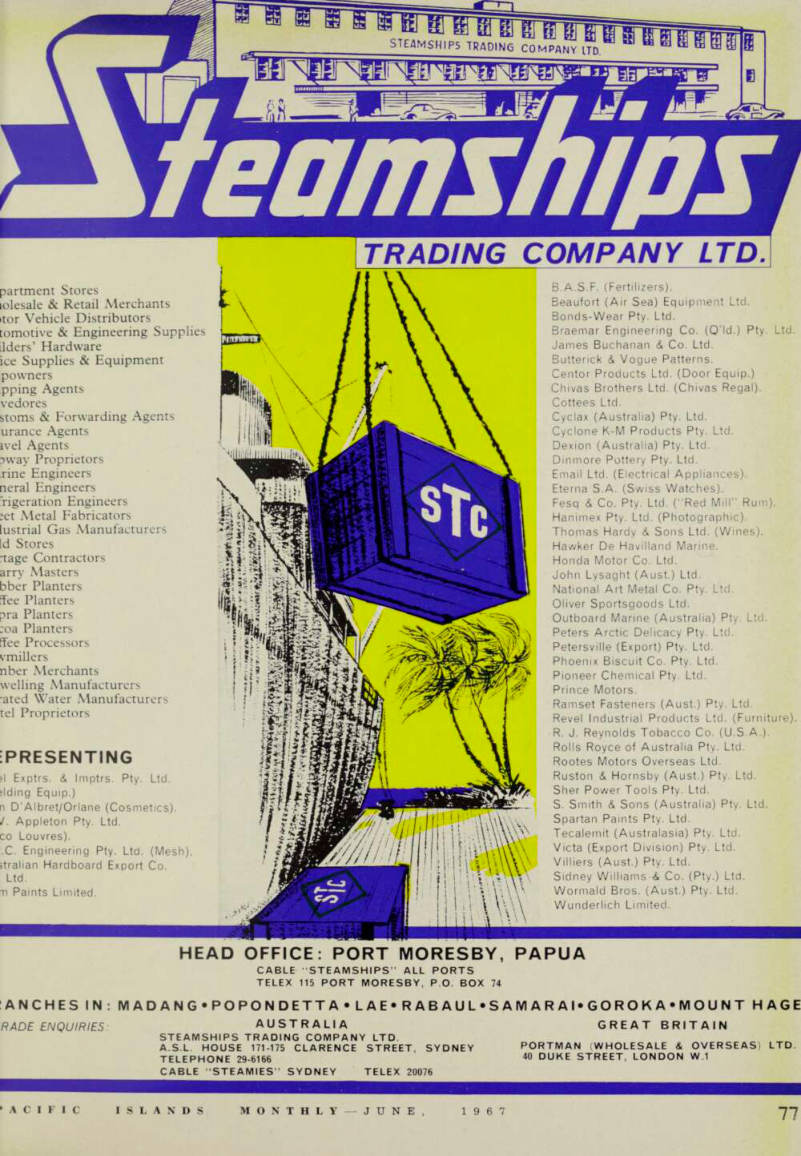 79
79 80
80 81
81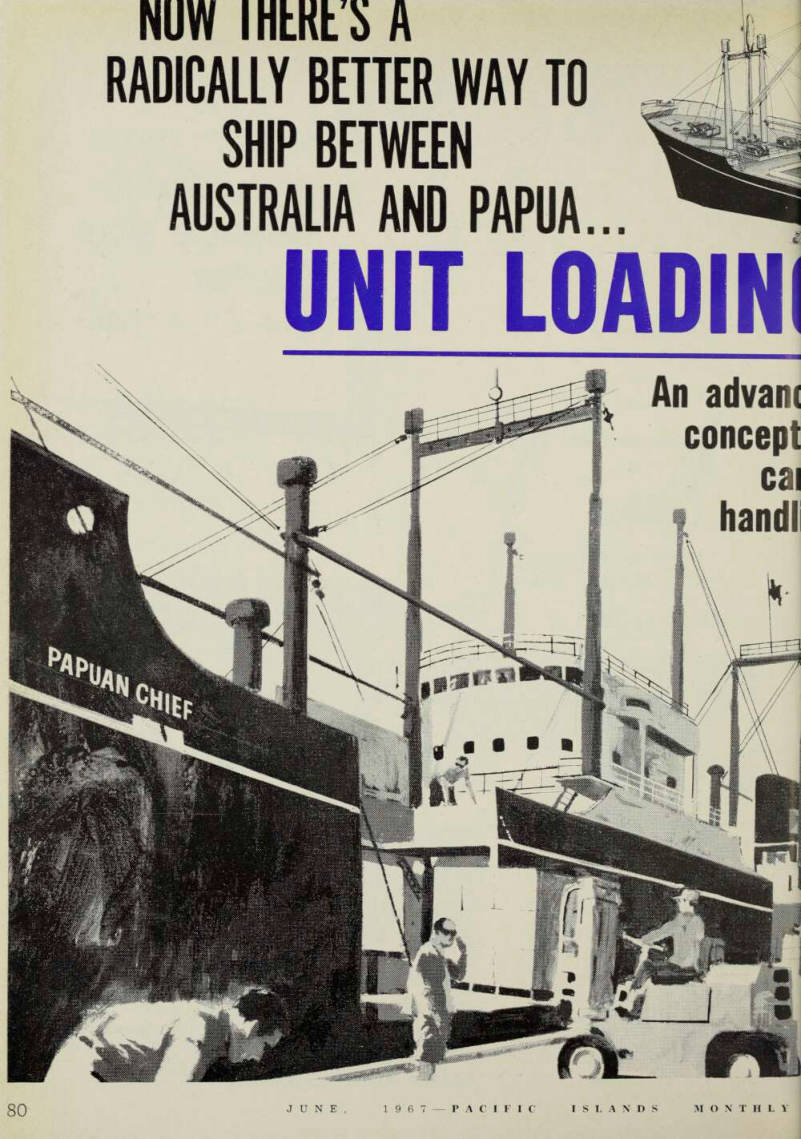 82
82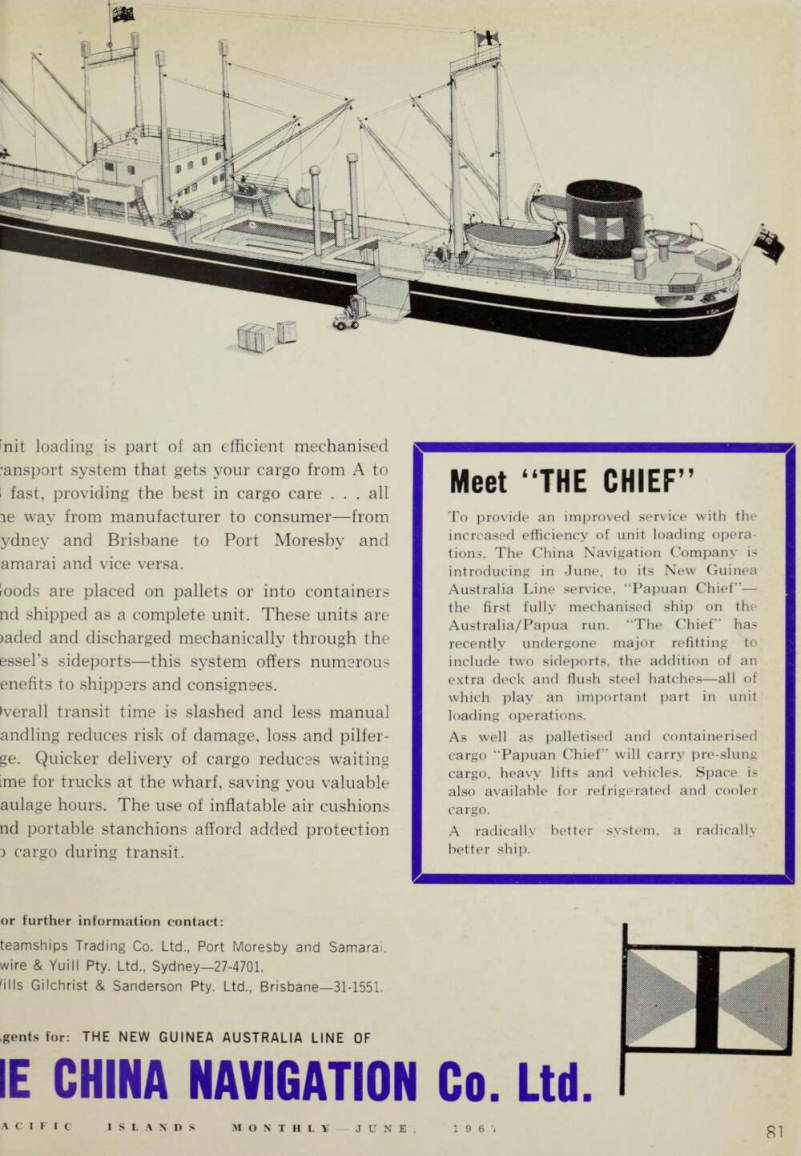 83
83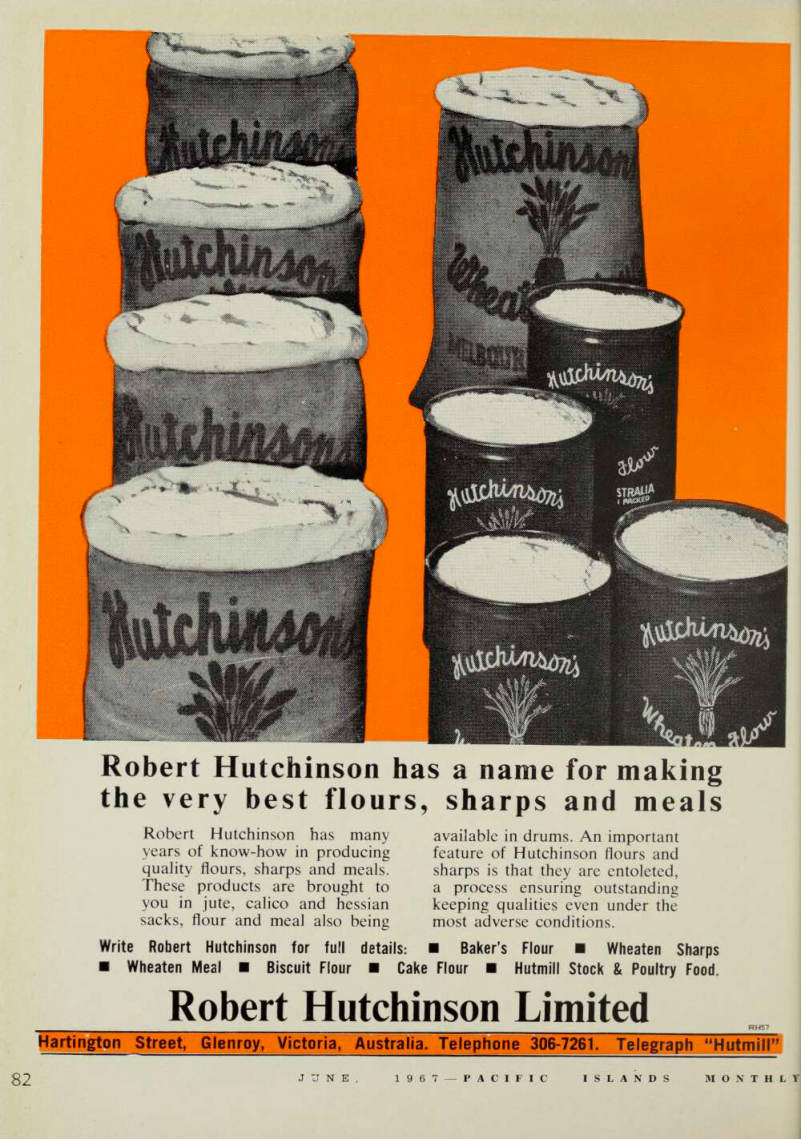 84
84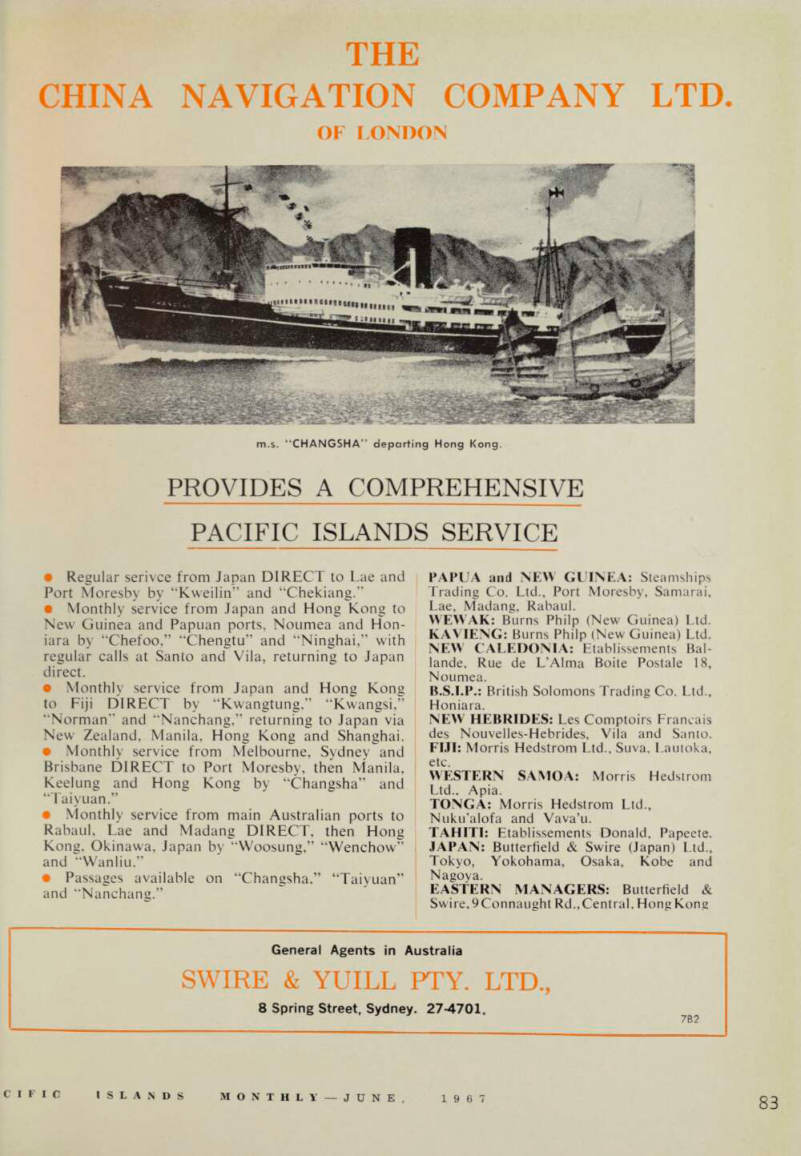 85
85 86
86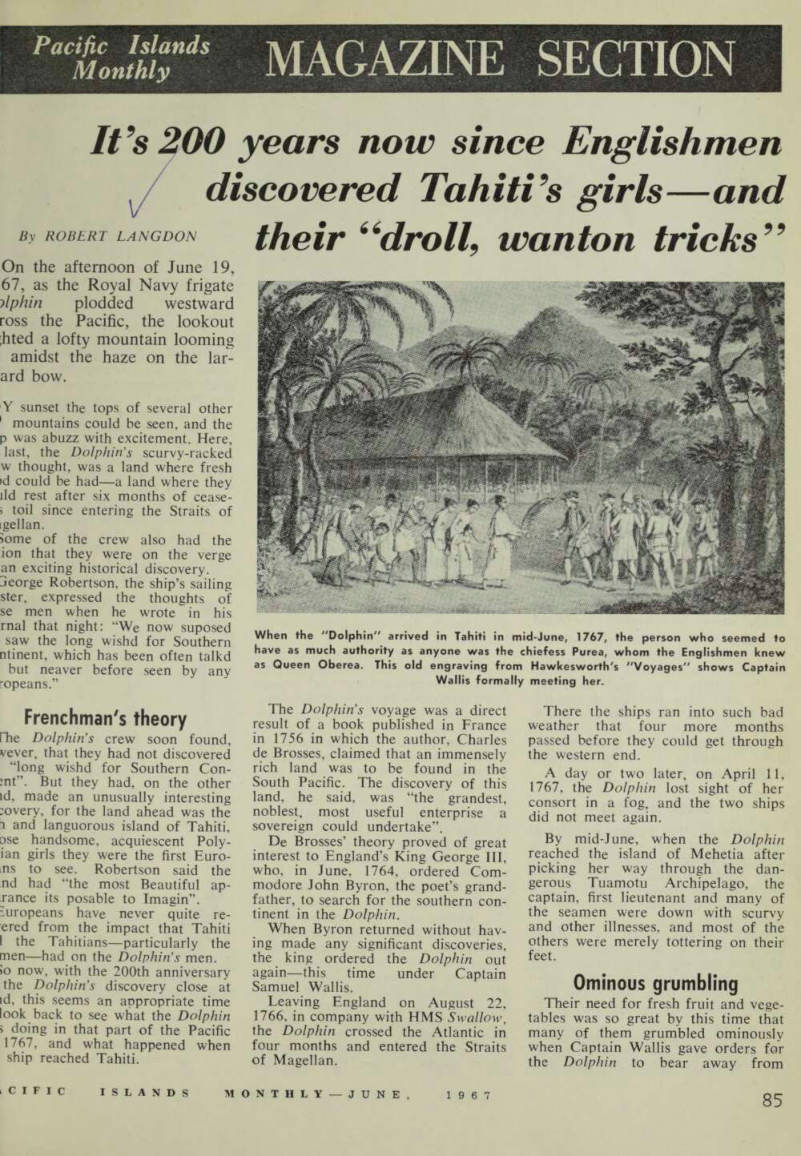 87
87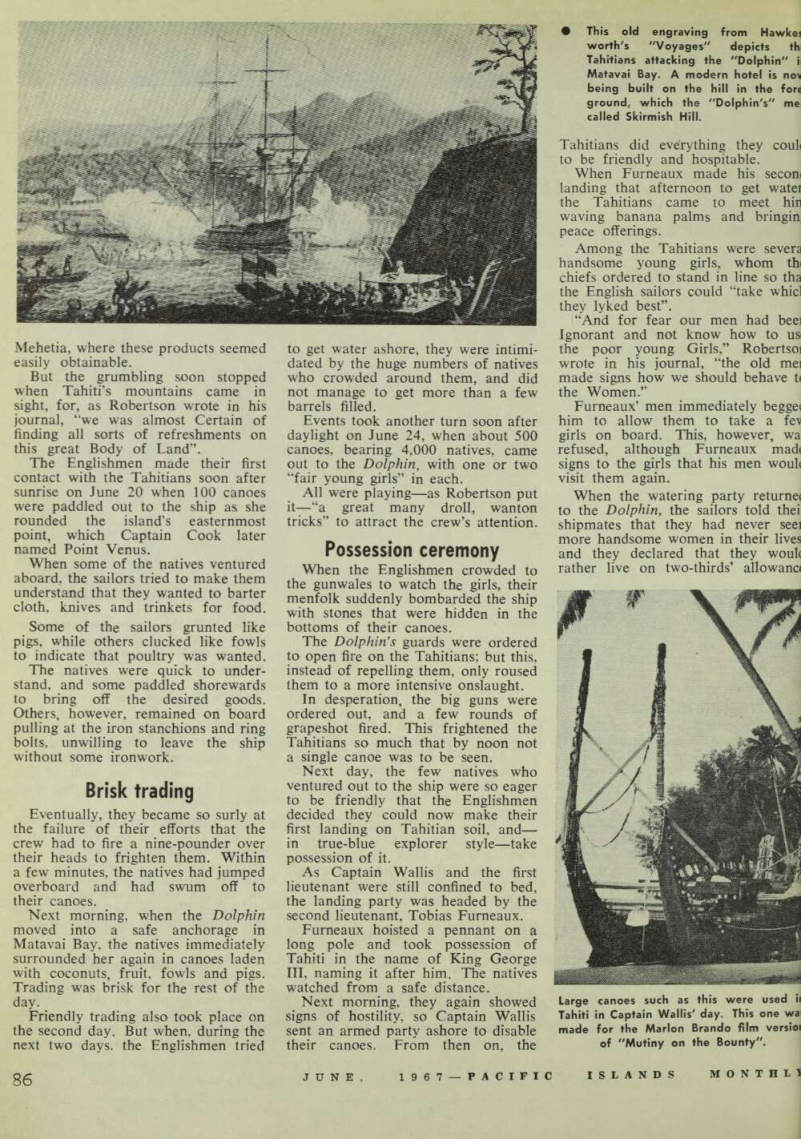 88
88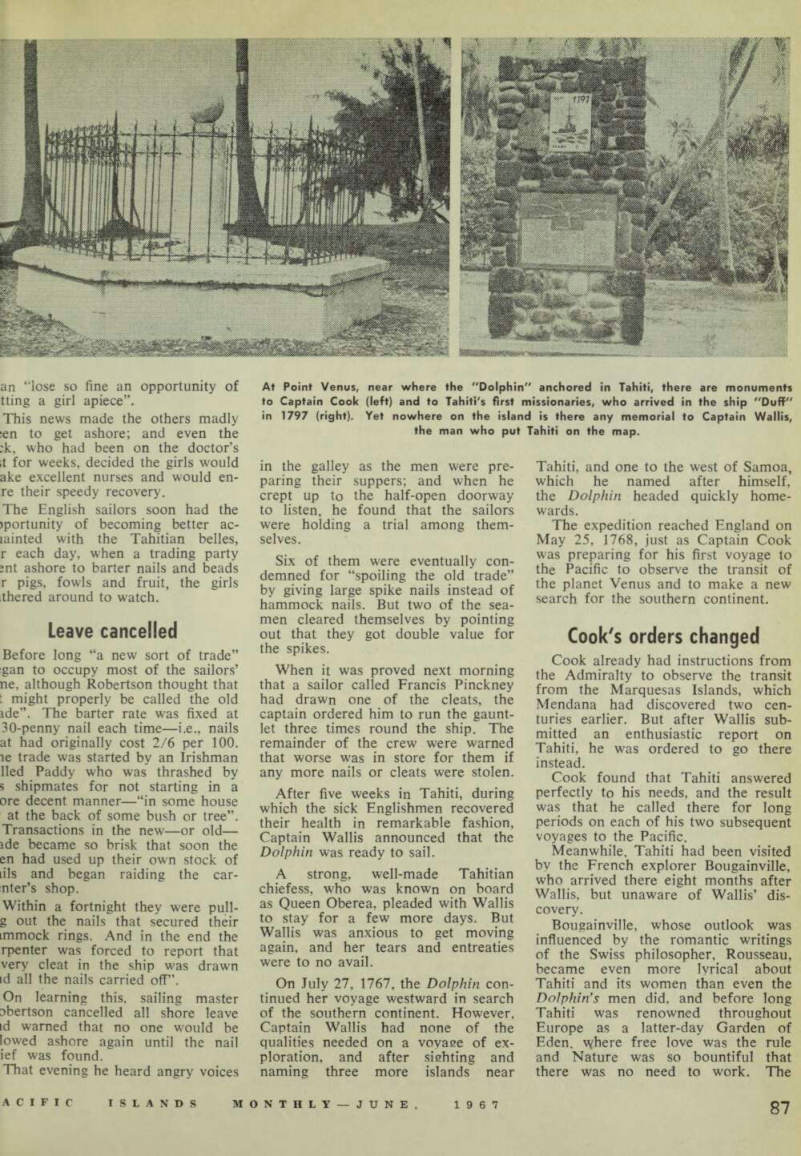 89
89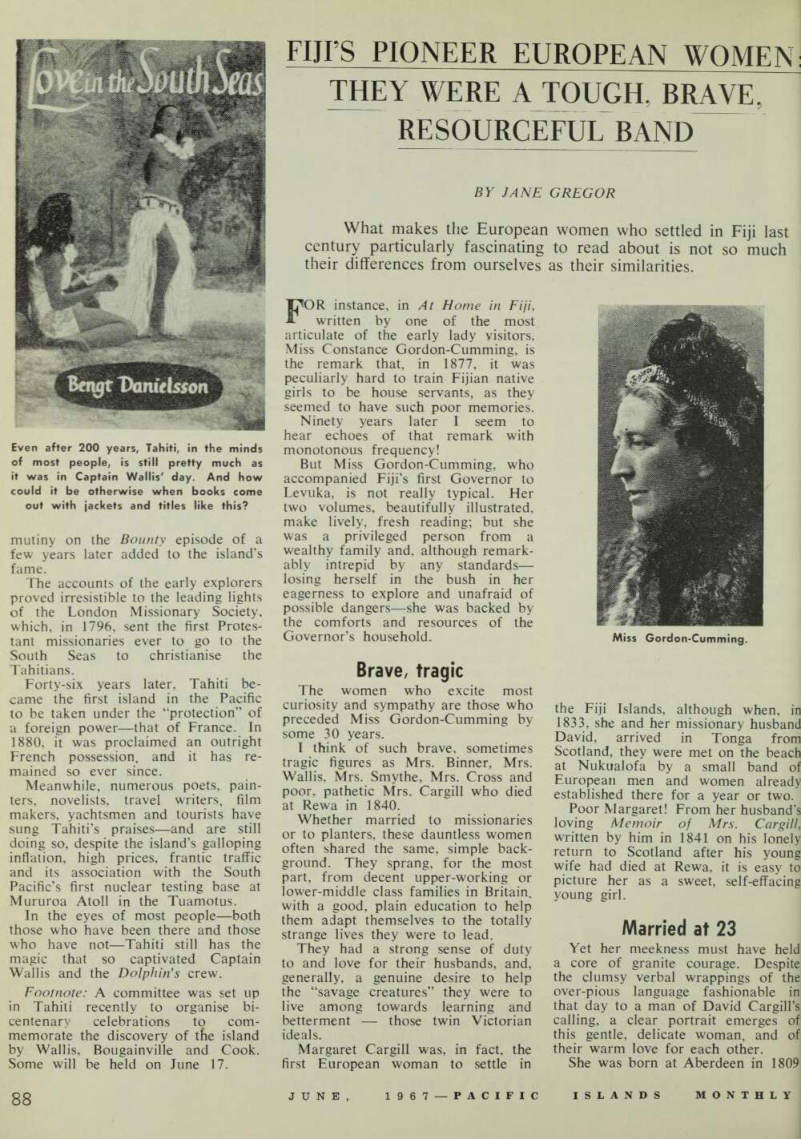 90
90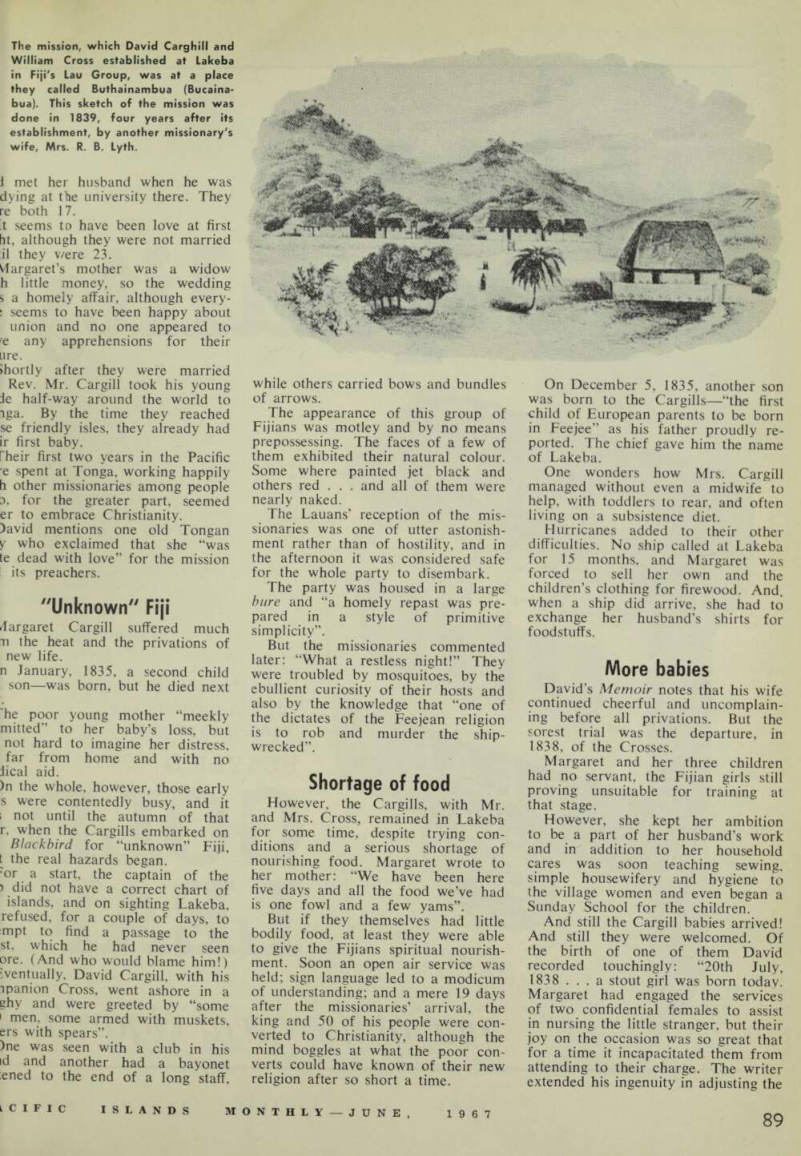 91
91 92
92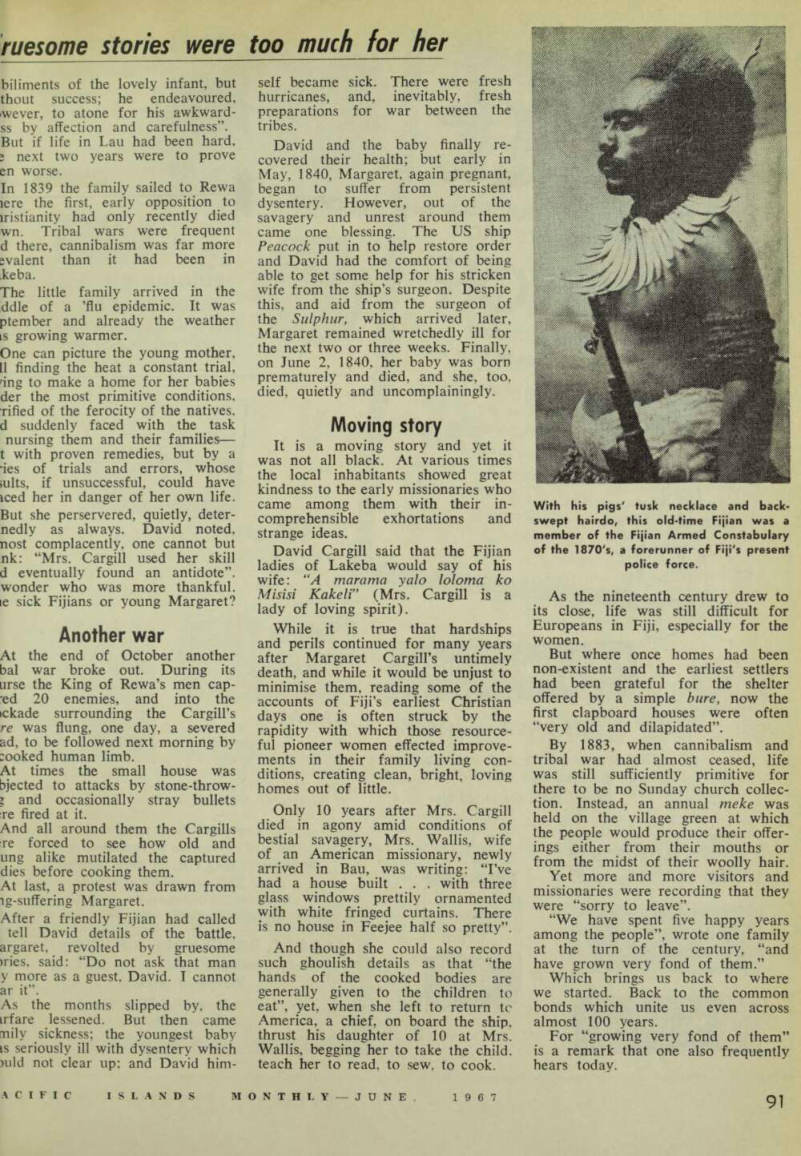 93
93 94
94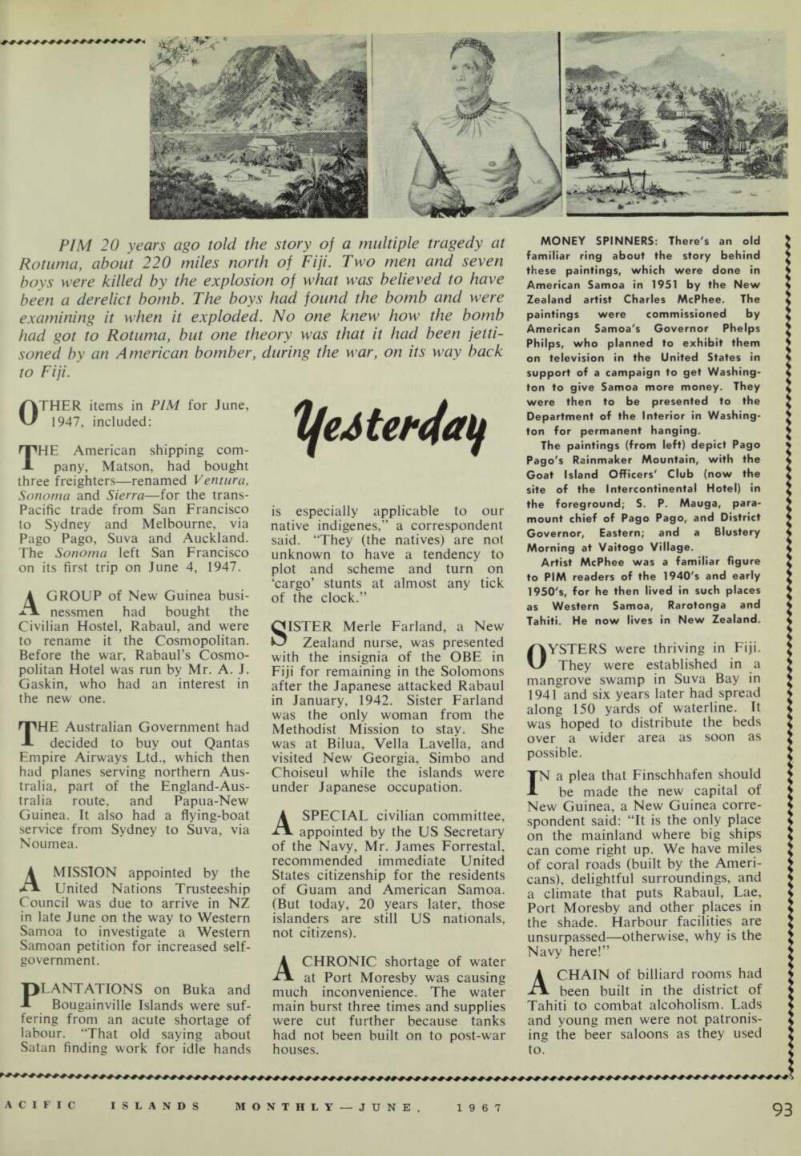 95
95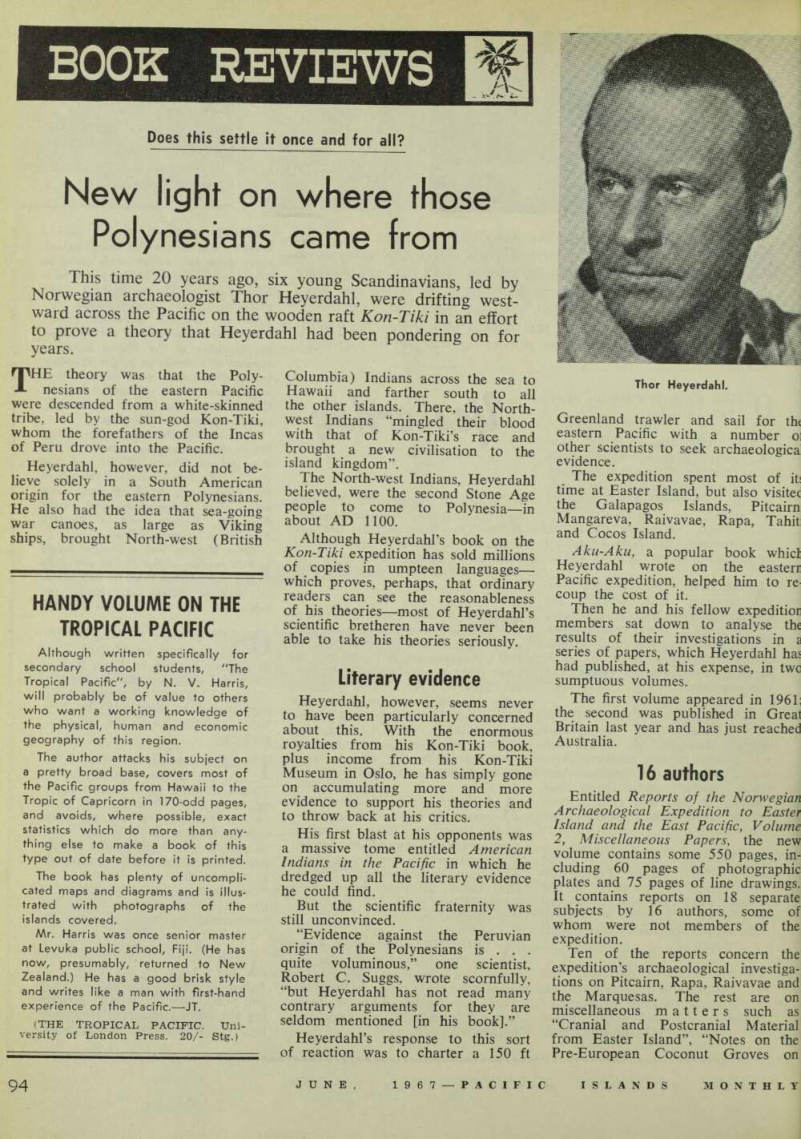 96
96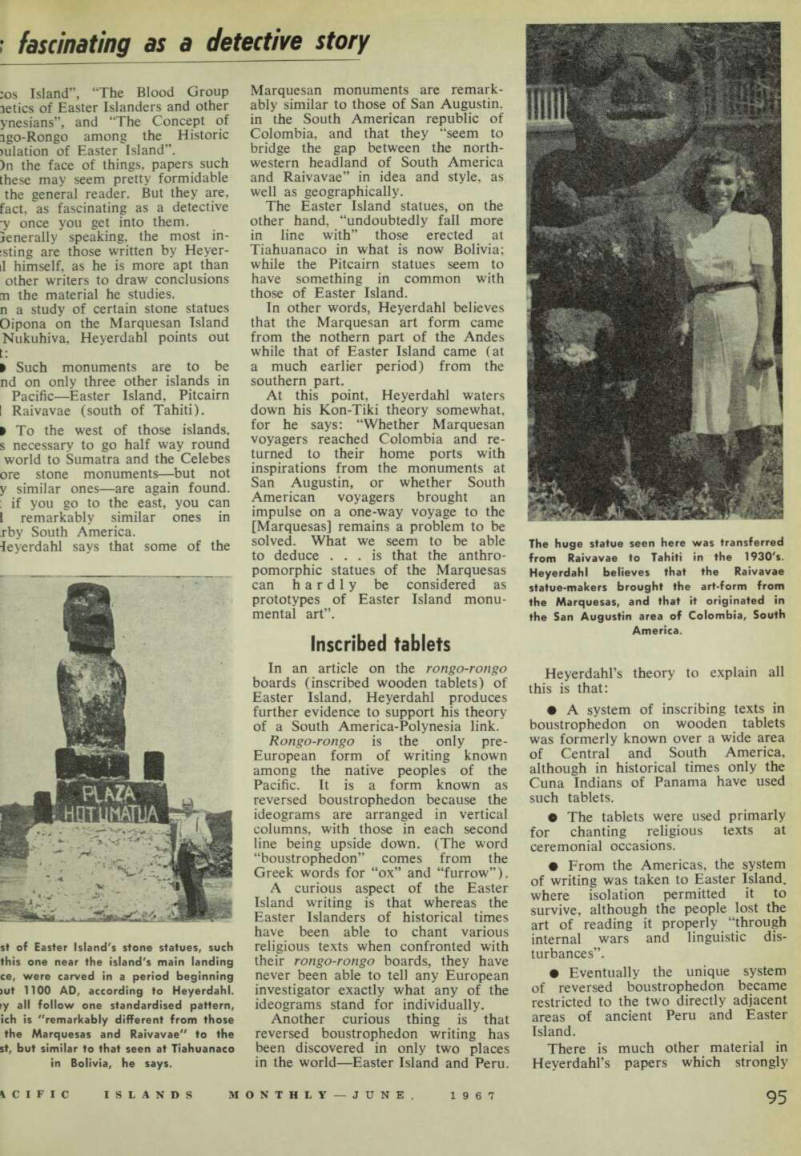 97
97 98
98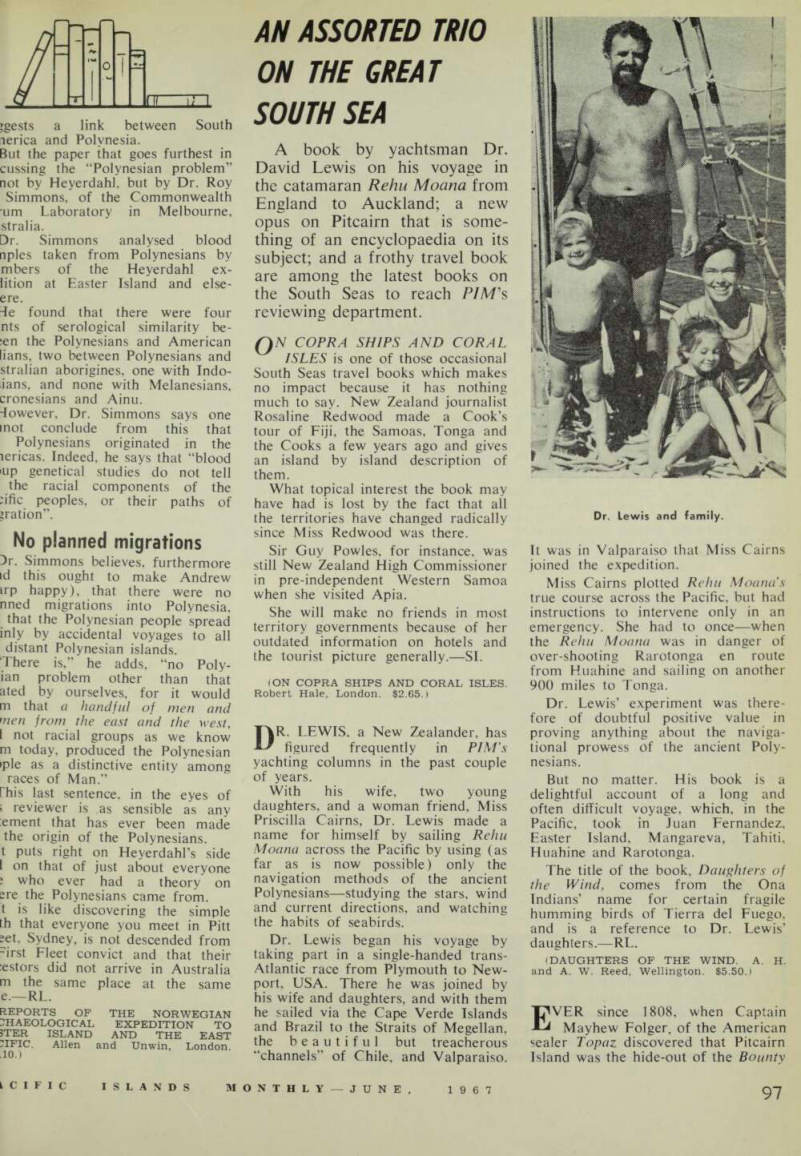 99
99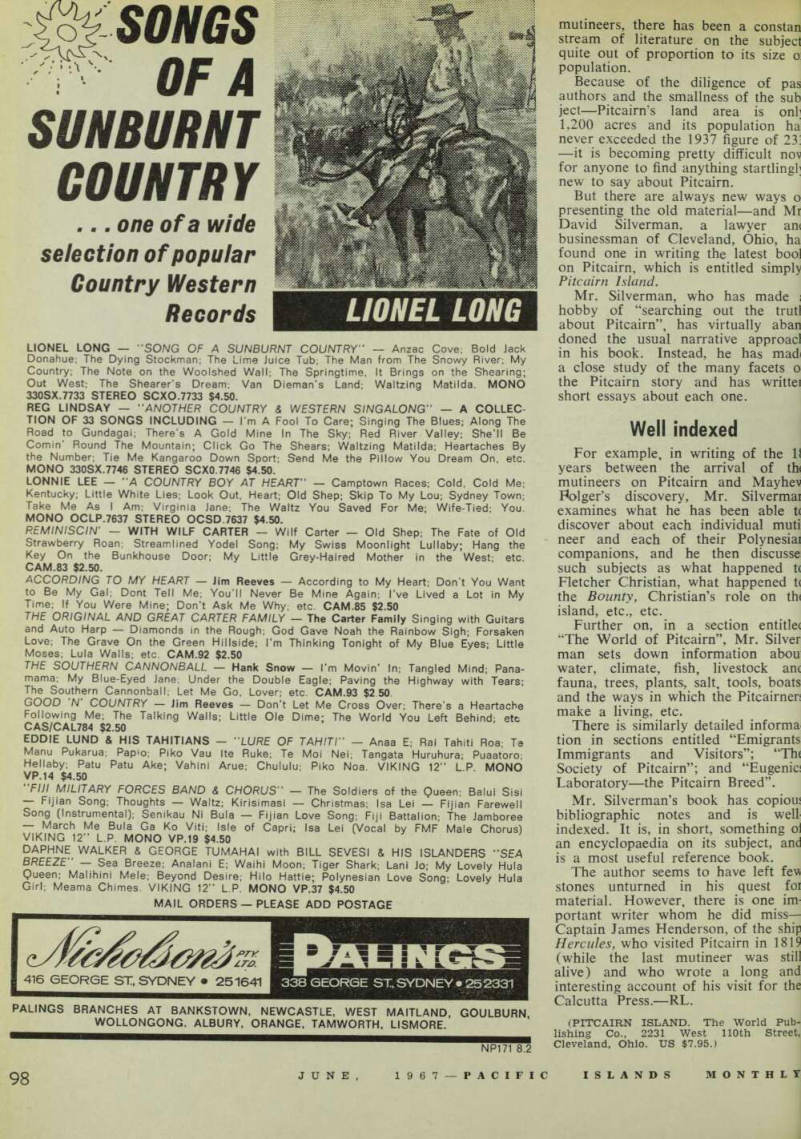 100
100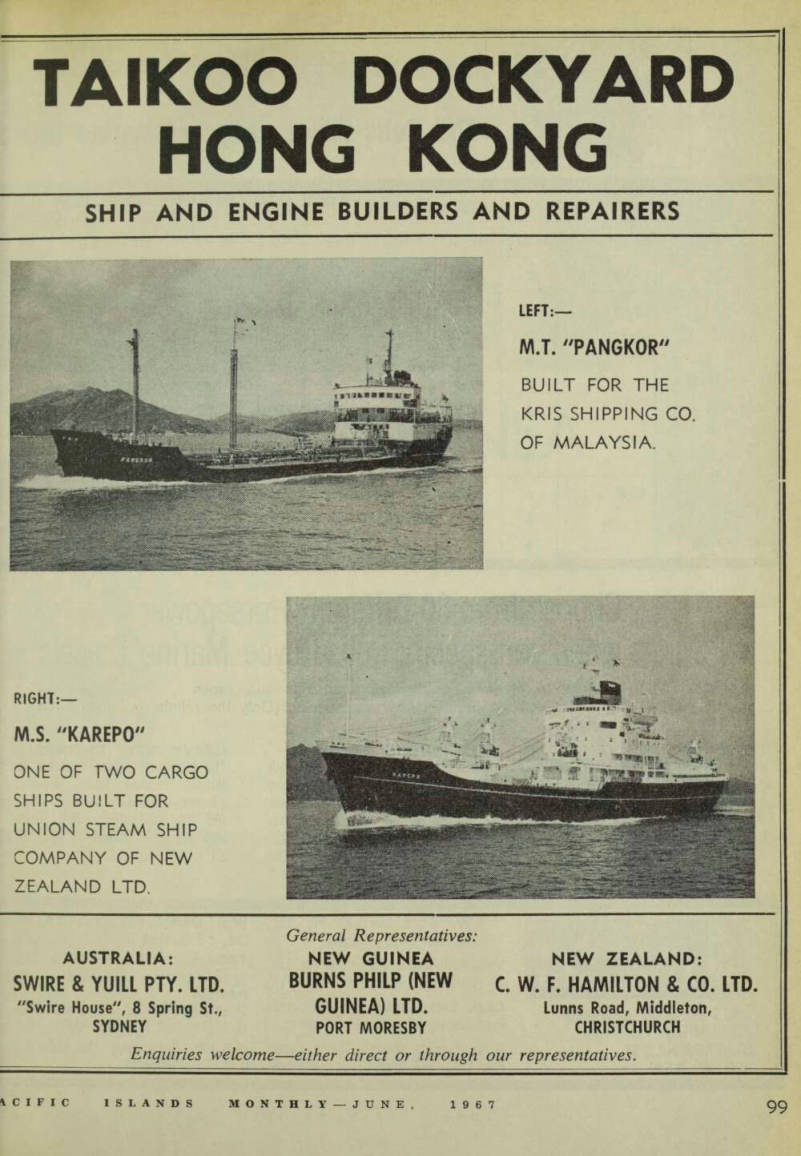 101
101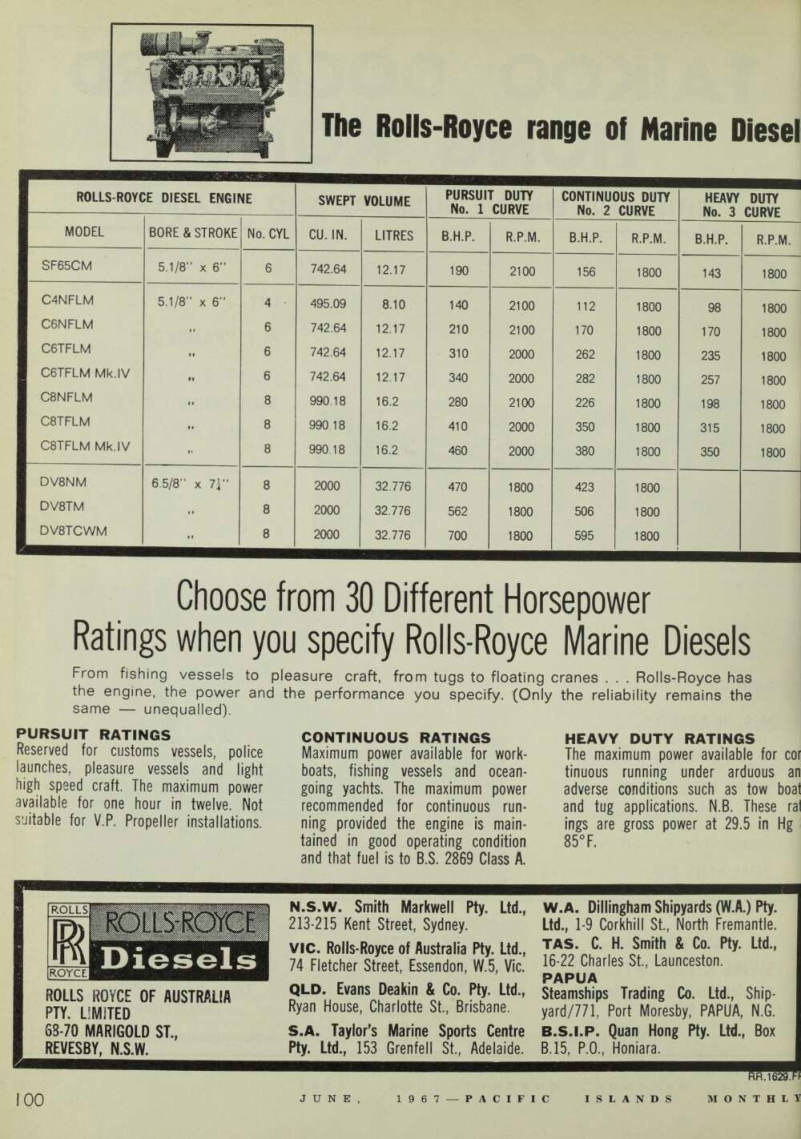 102
102 103
103 104
104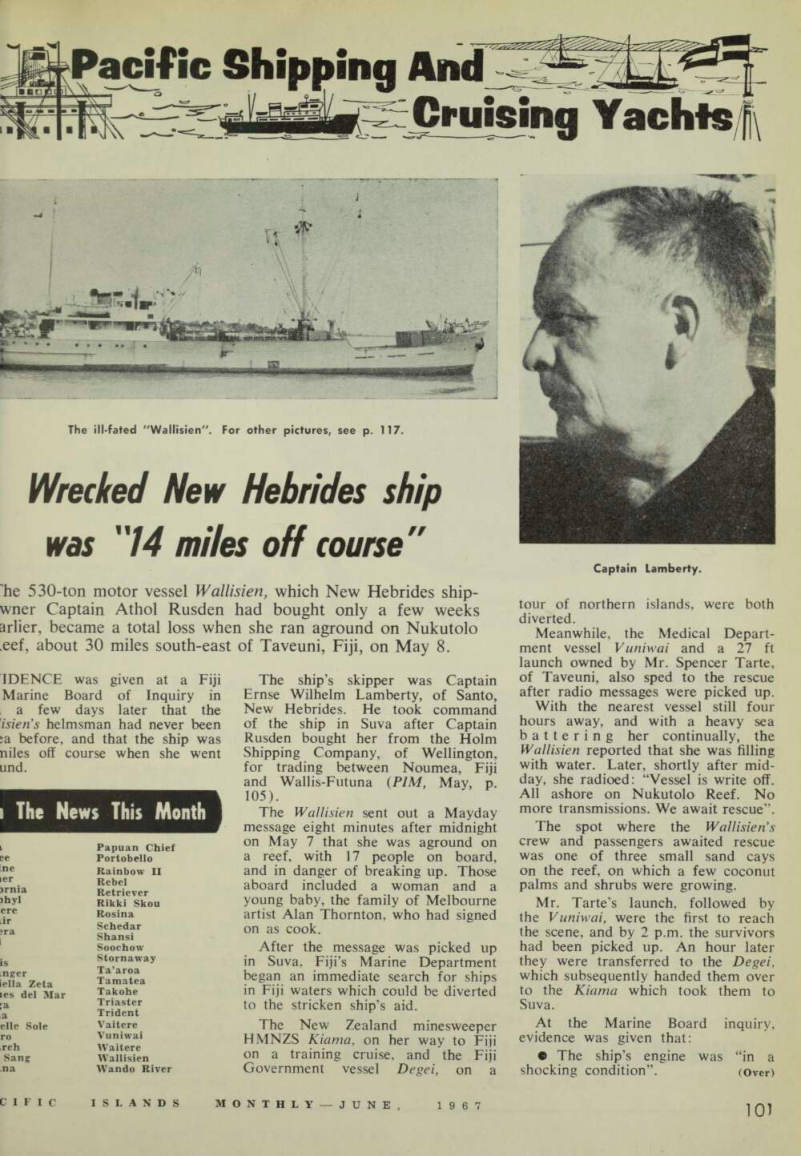 105
105 106
106 107
107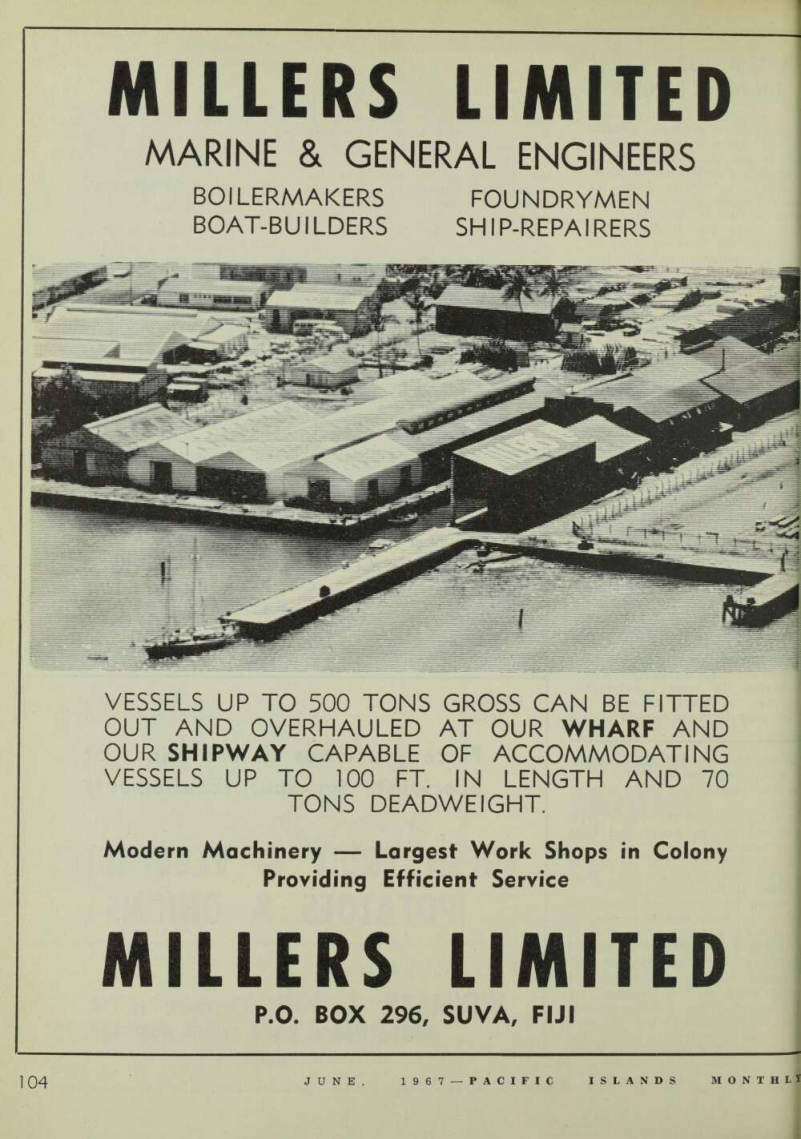 108
108 109
109 110
110 111
111 112
112 113
113 114
114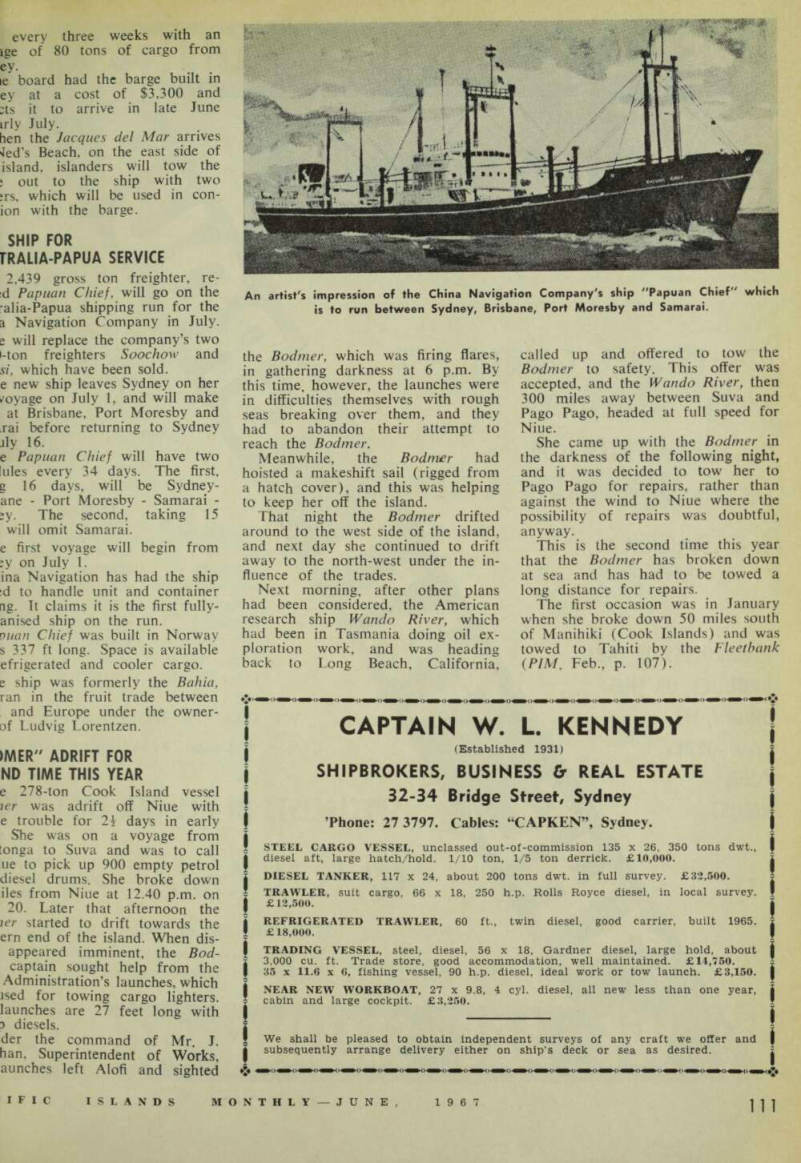 115
115 116
116 117
117 118
118 119
119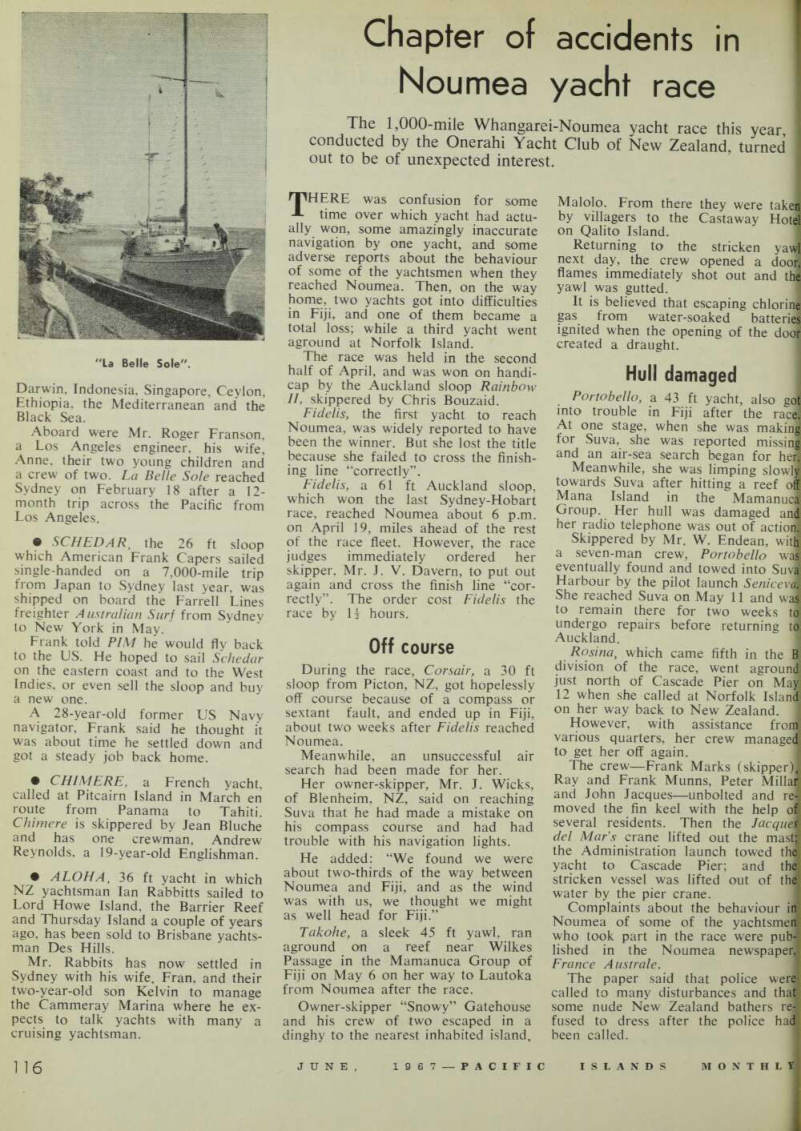 120
120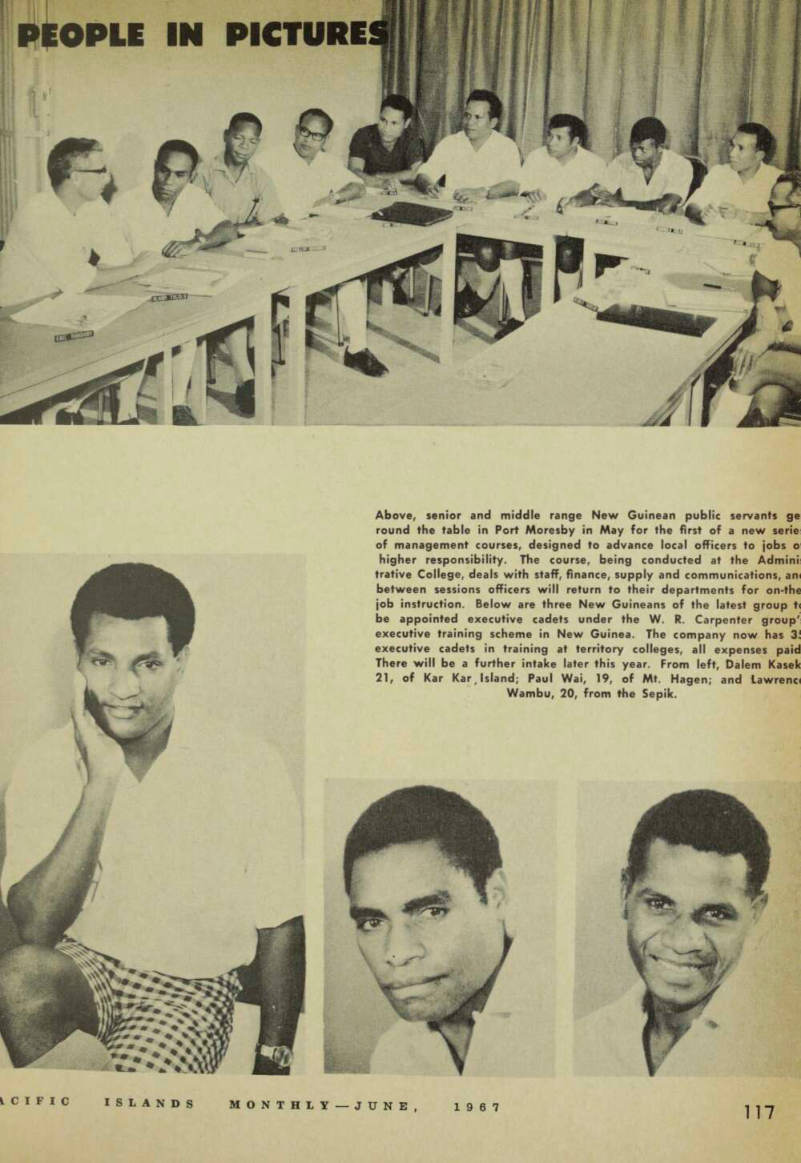 121
121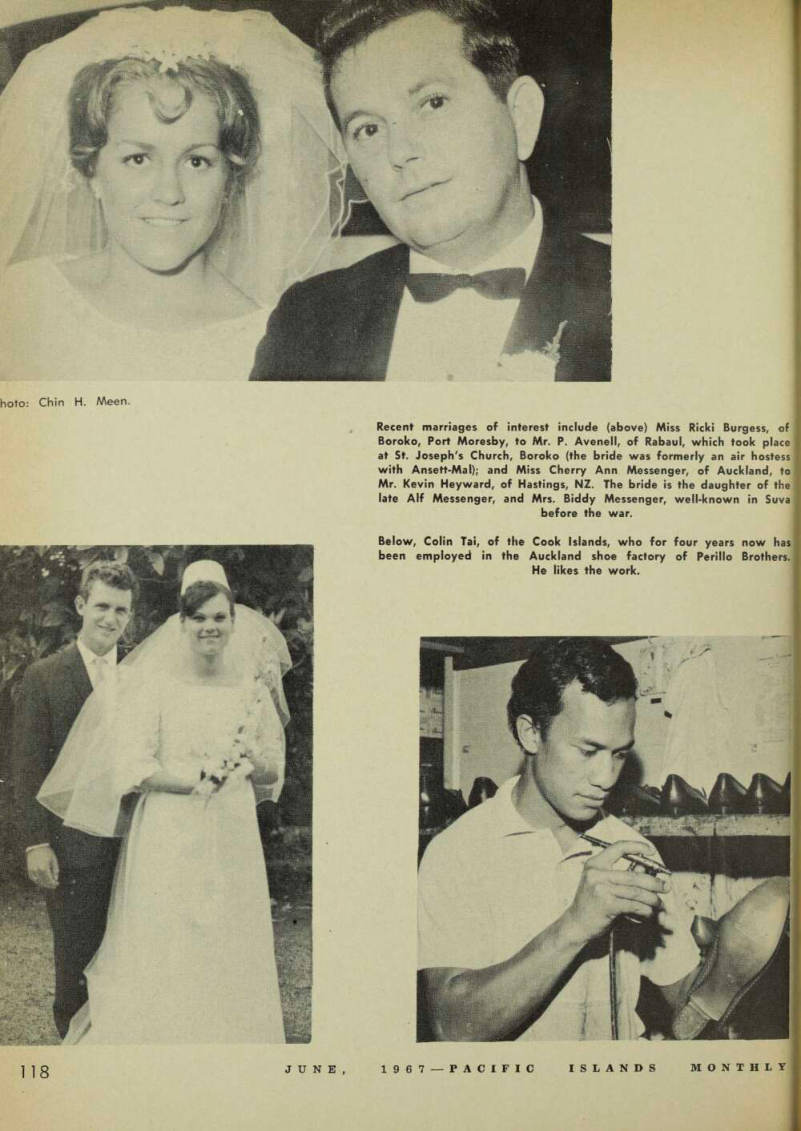 122
122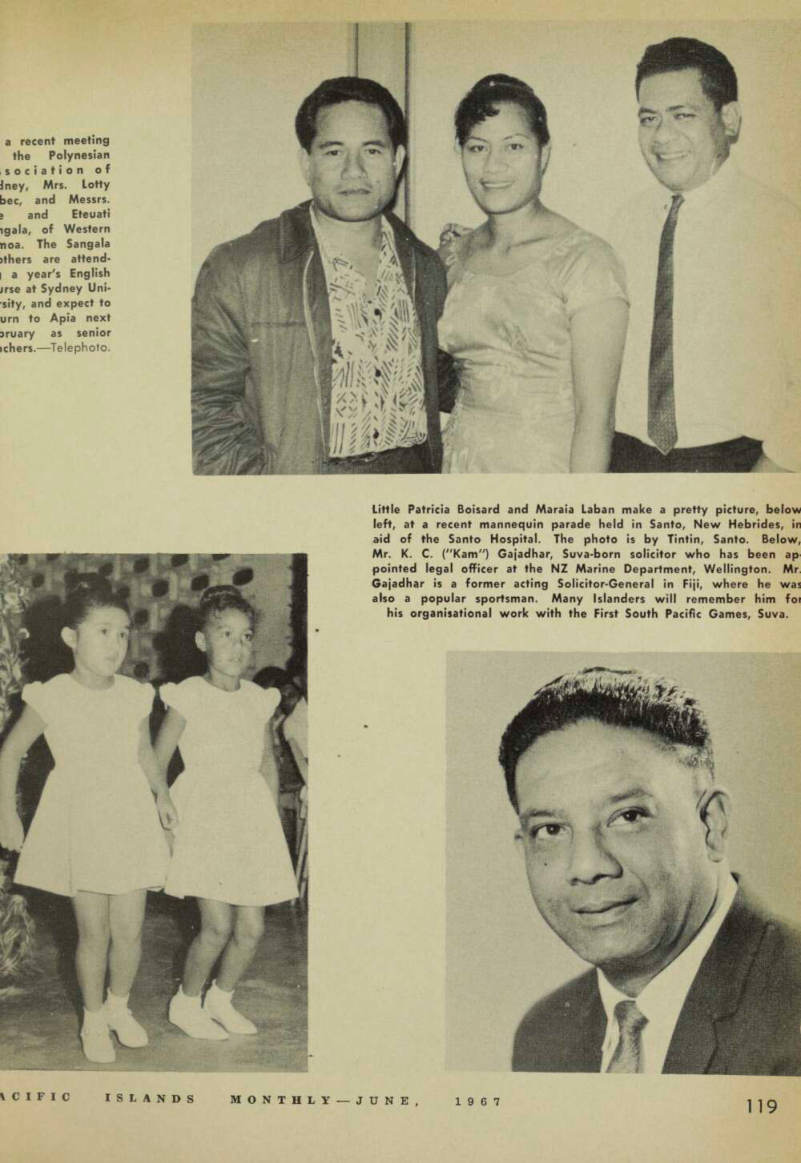 123
123 124
124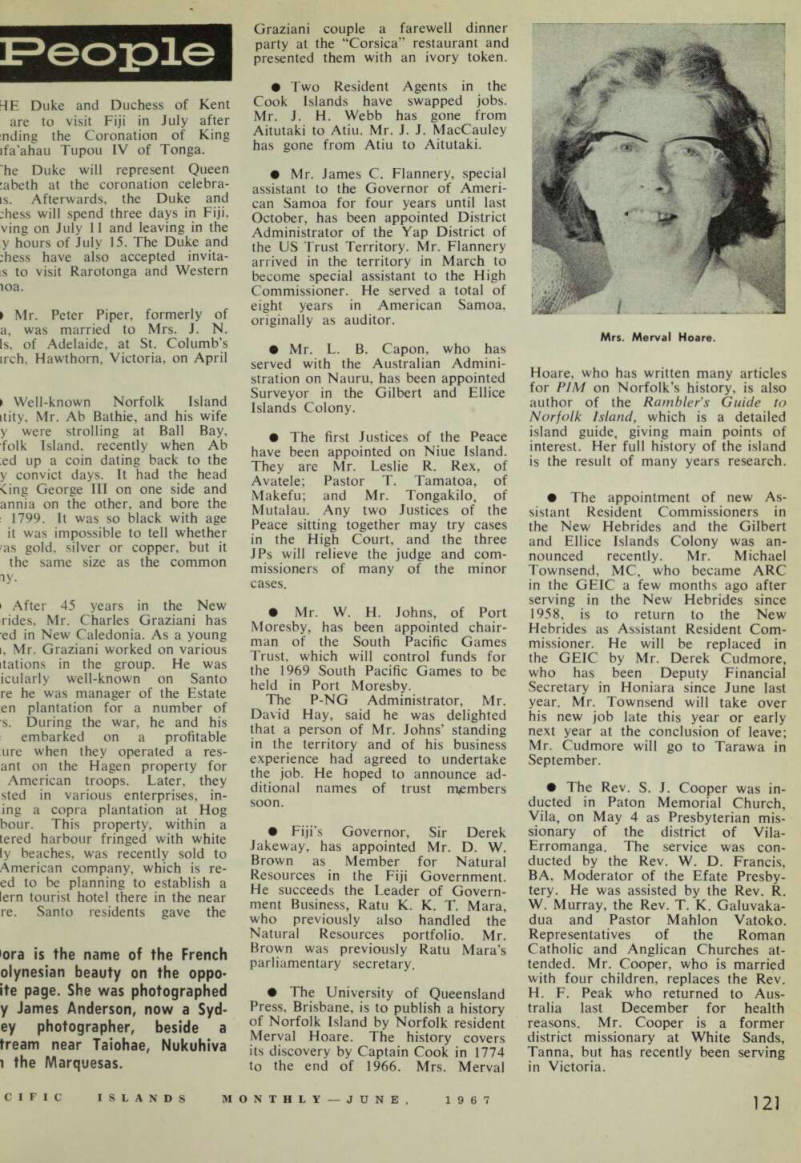 125
125 126
126 127
127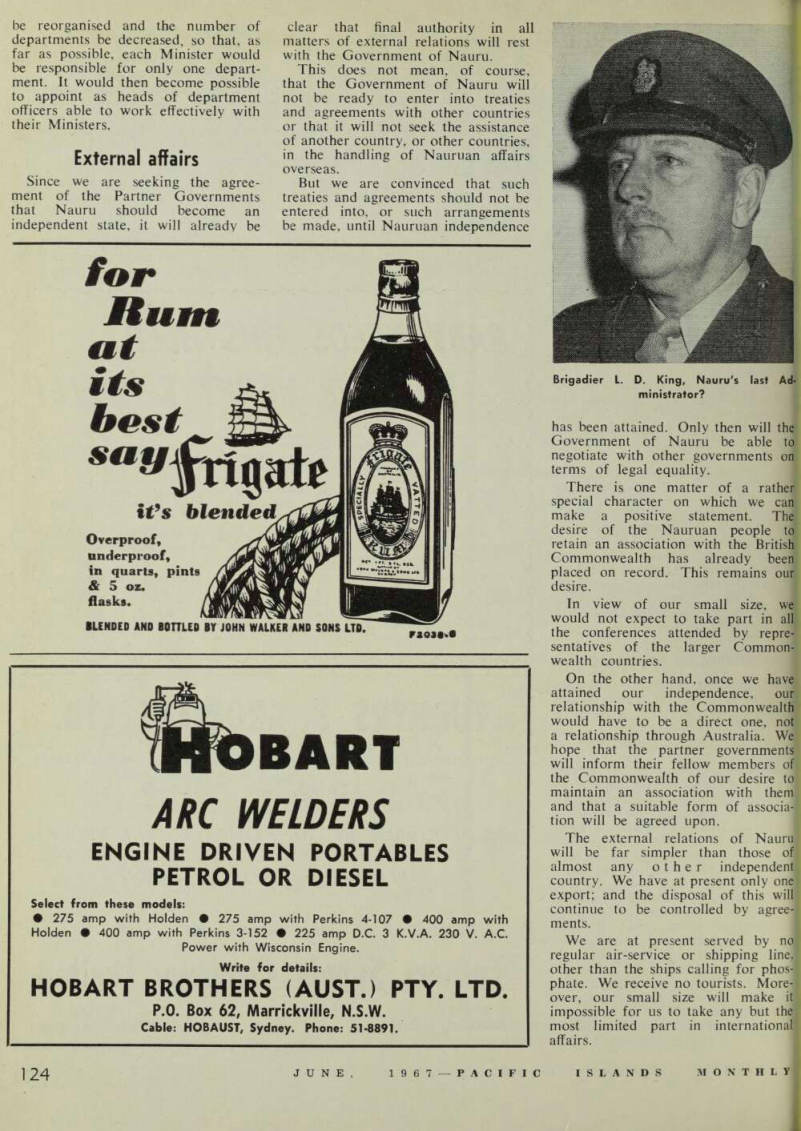 128
128 129
129 130
130 131
131 132
132 133
133 134
134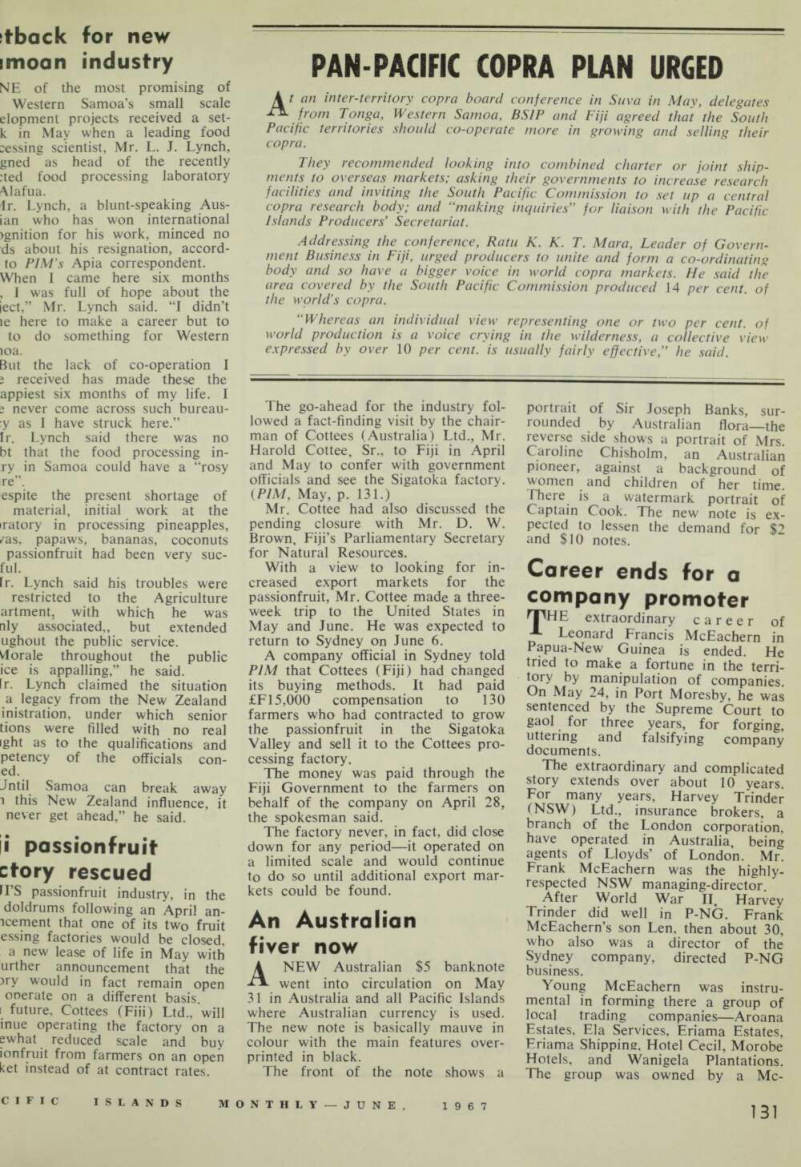 135
135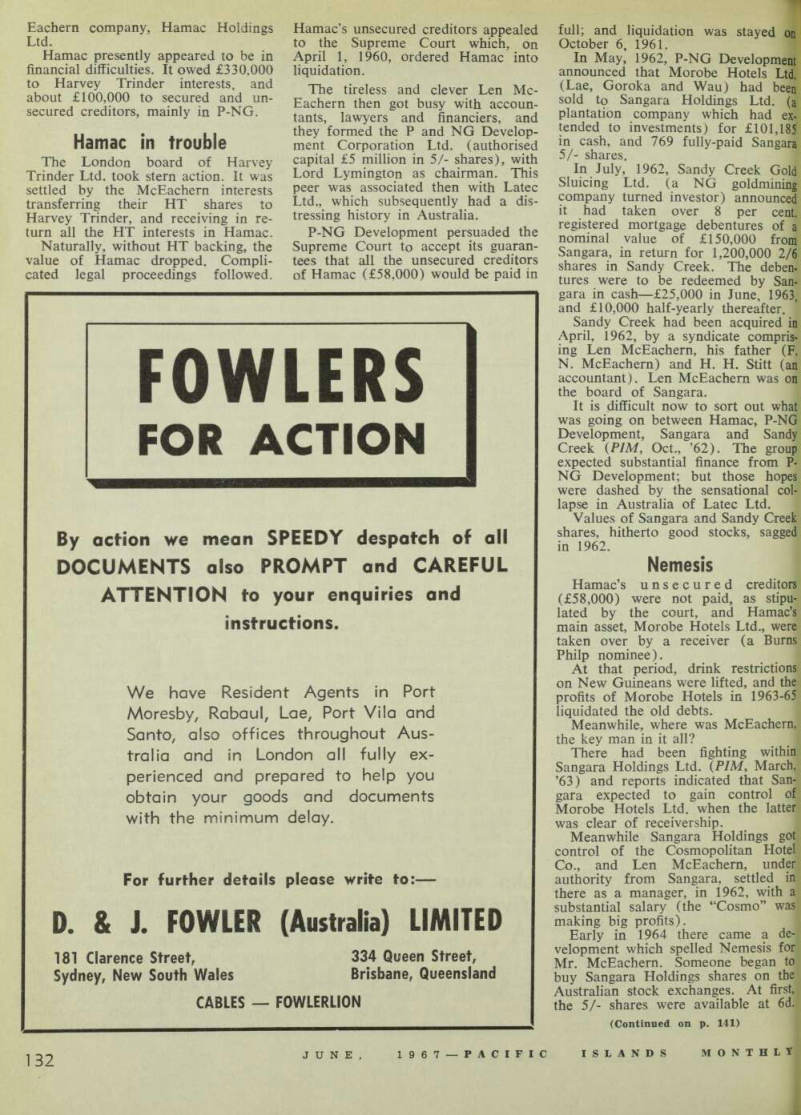 136
136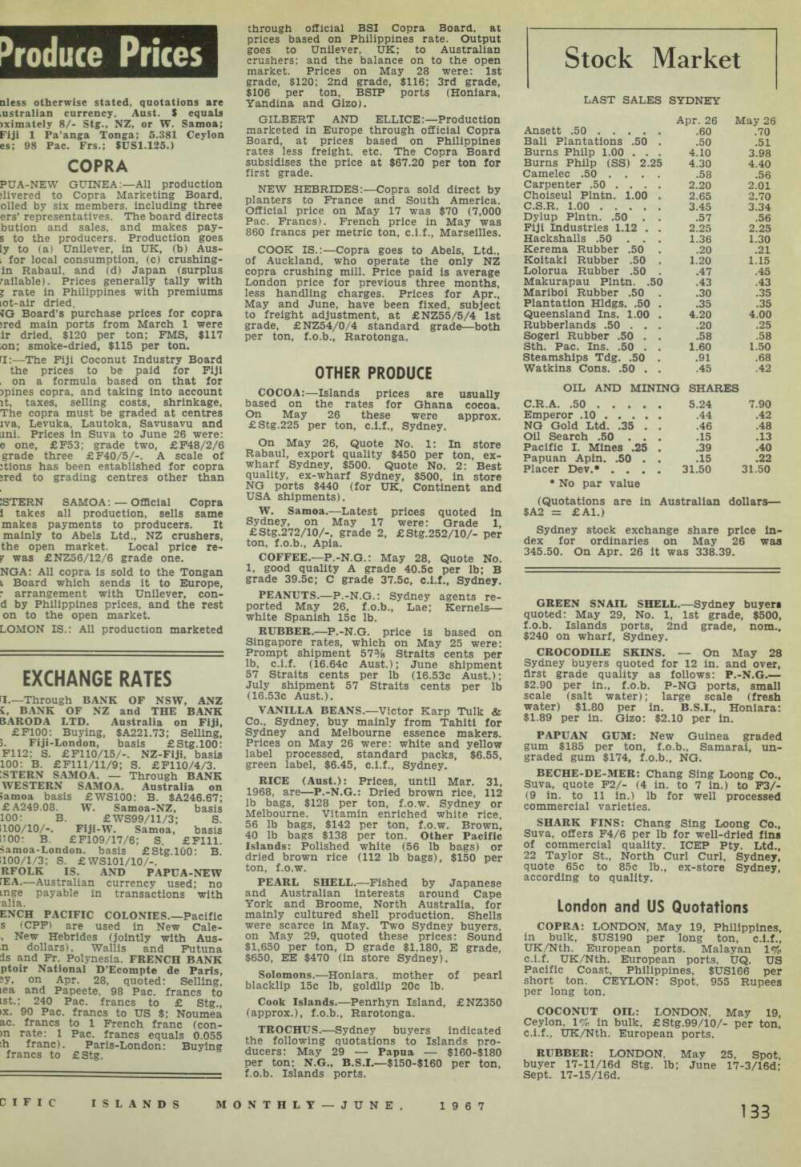 137
137 138
138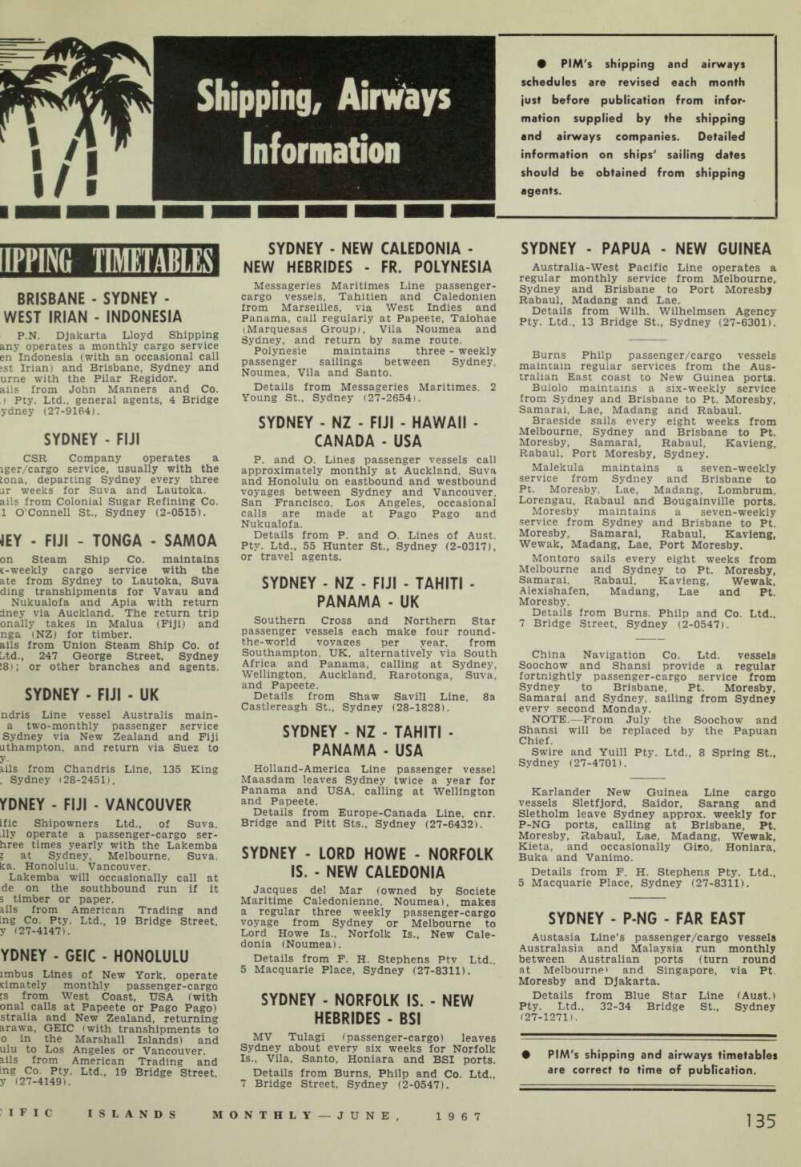 139
139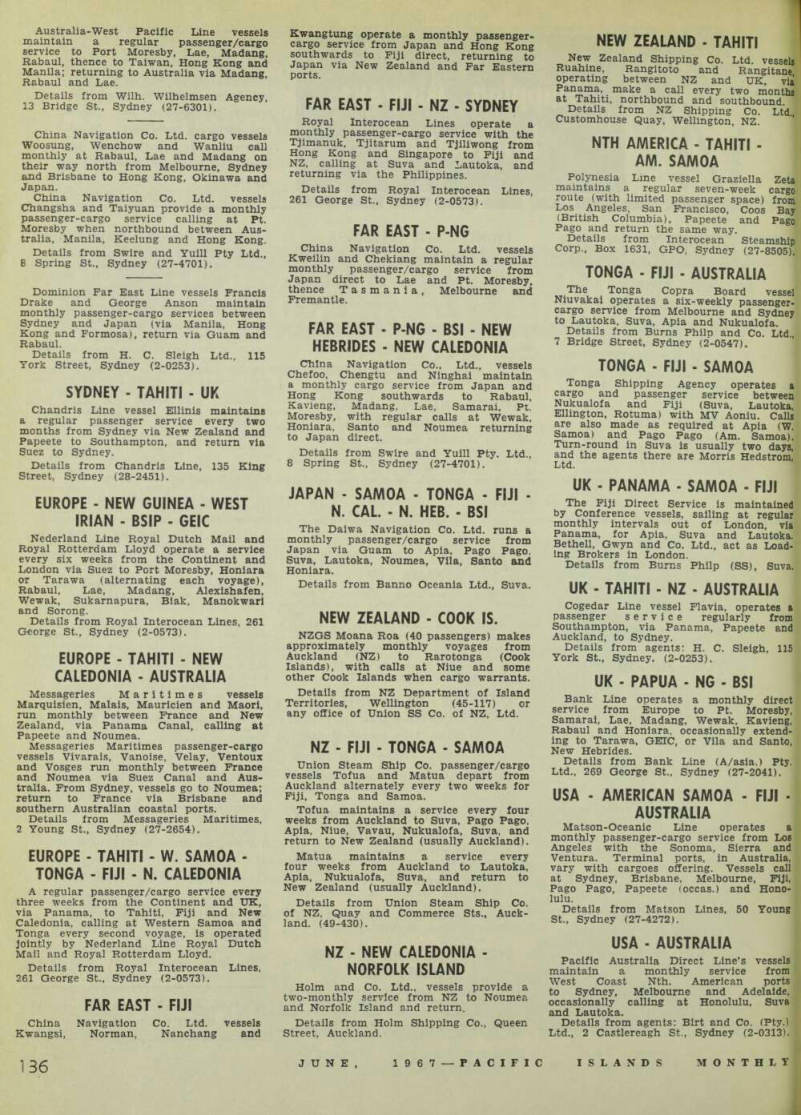 140
140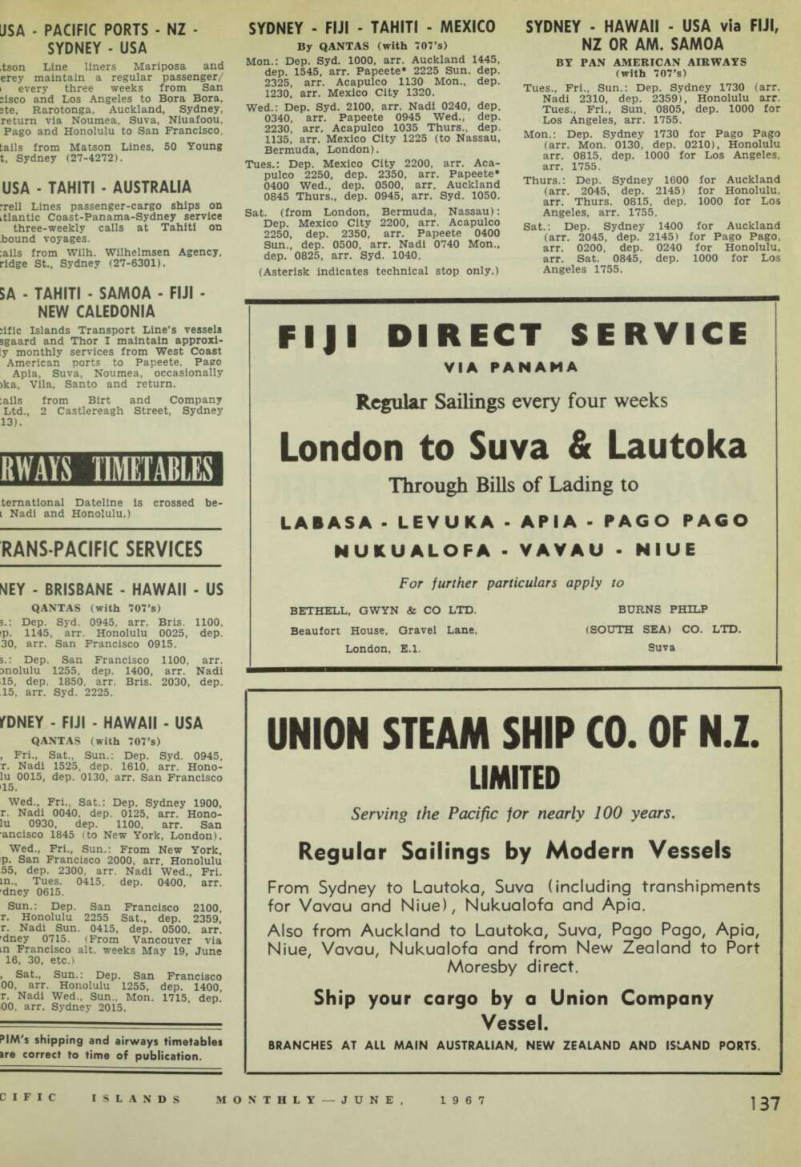 141
141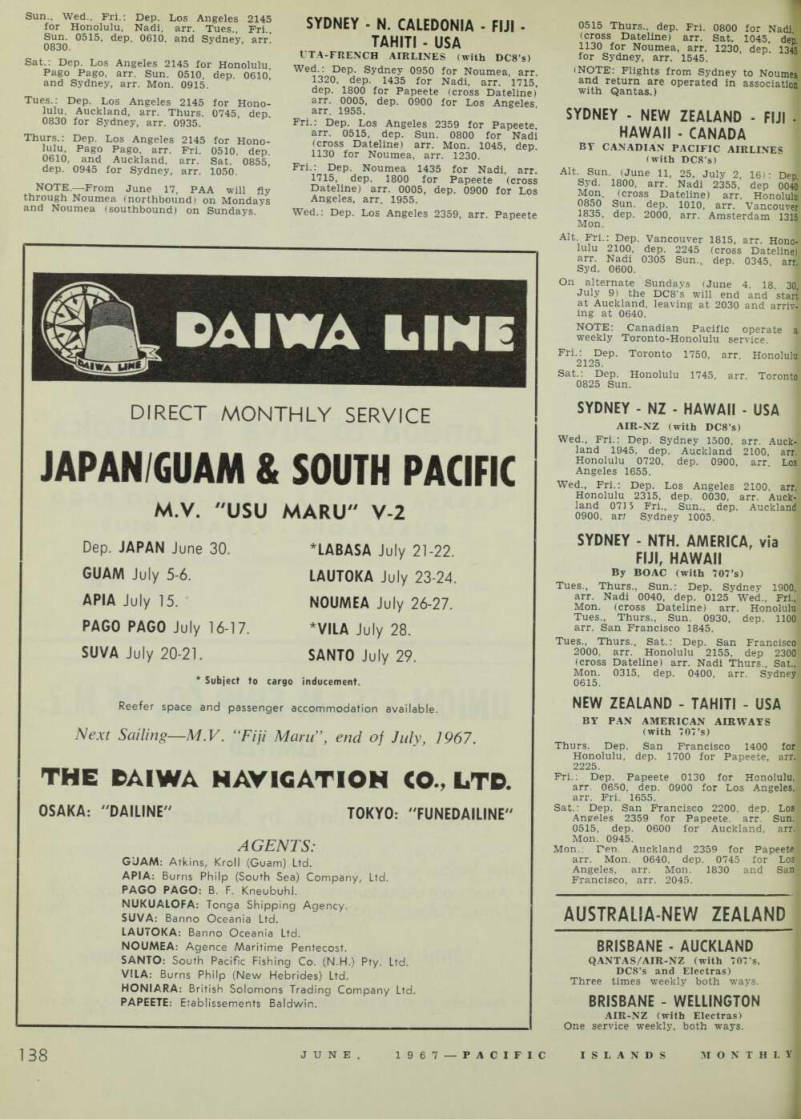 142
142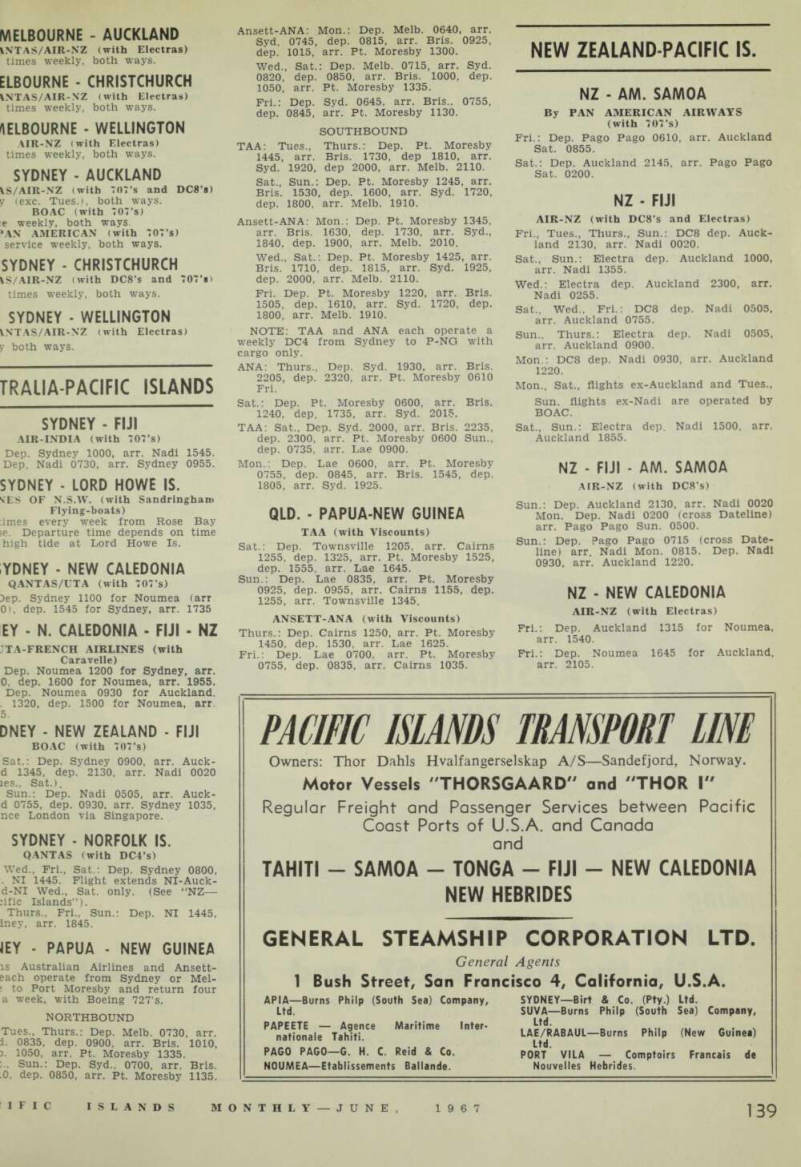 143
143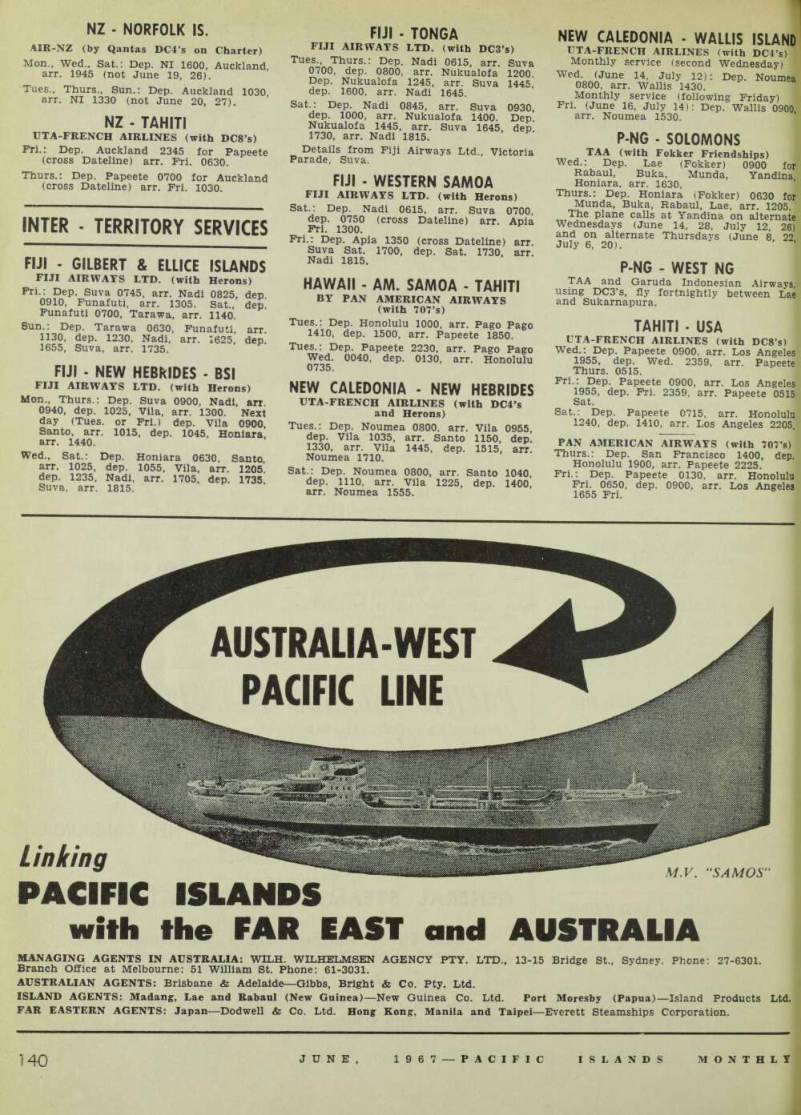 144
144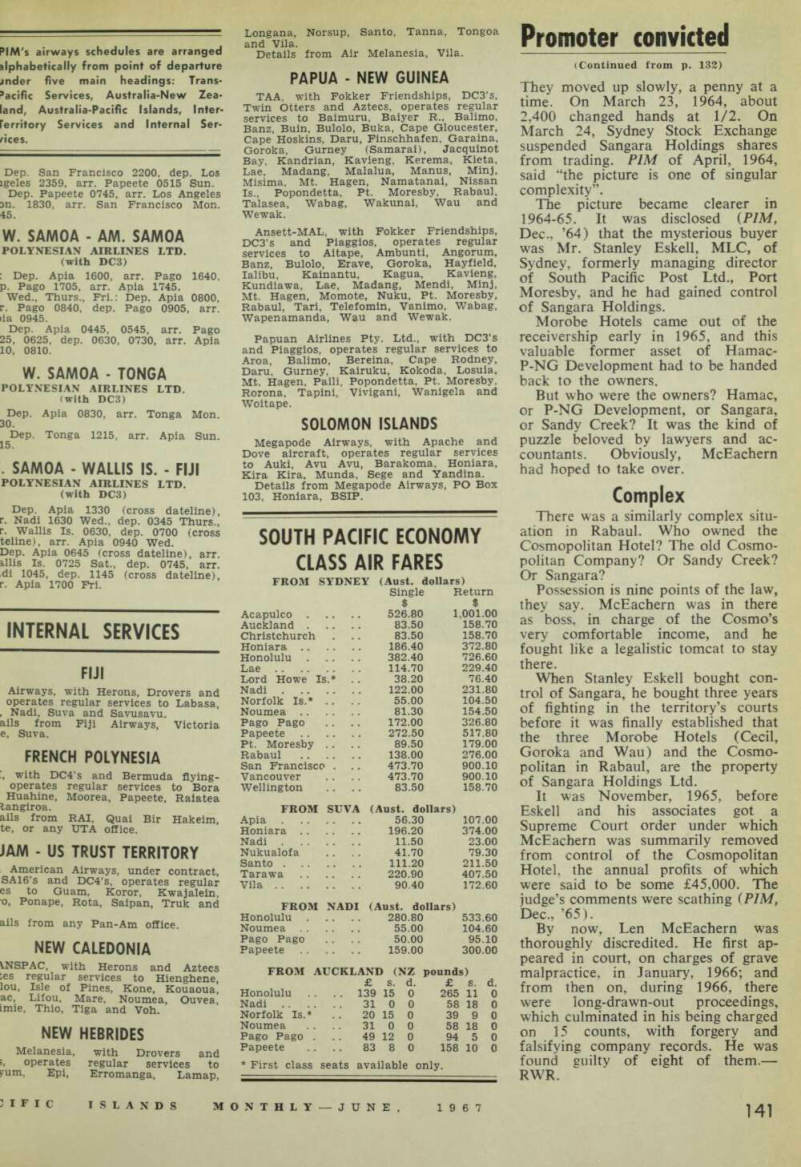 145
145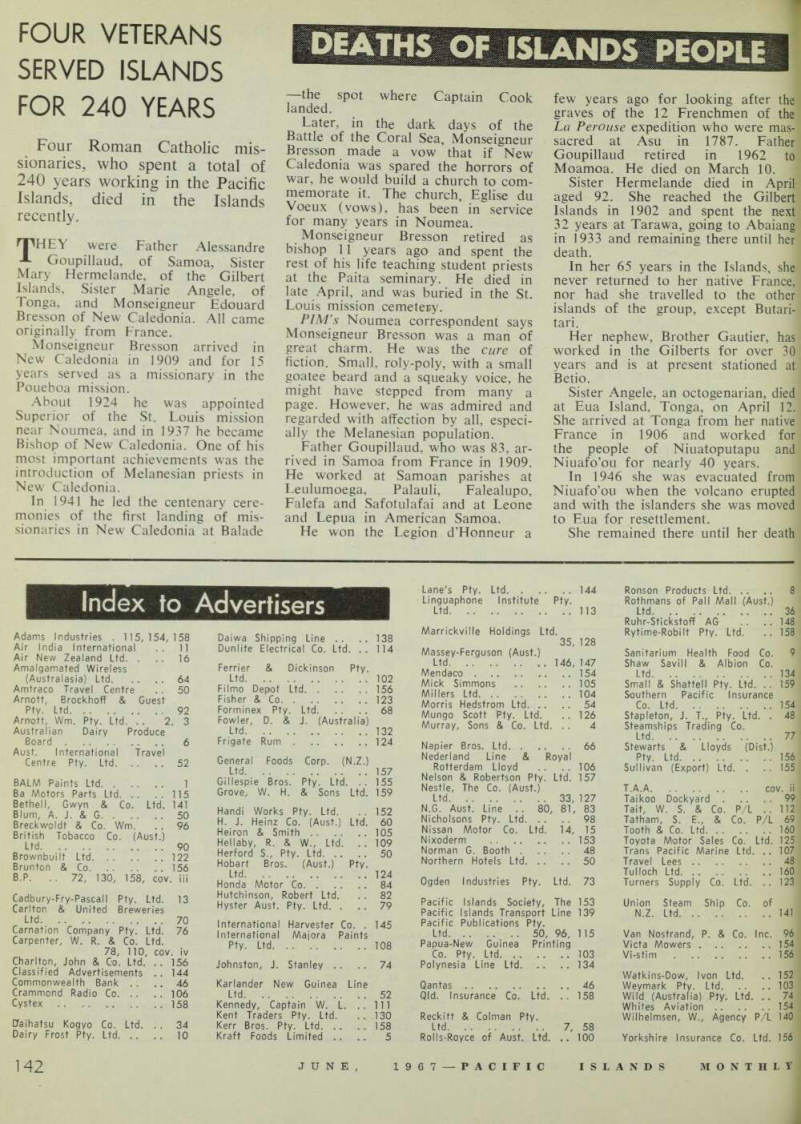 146
146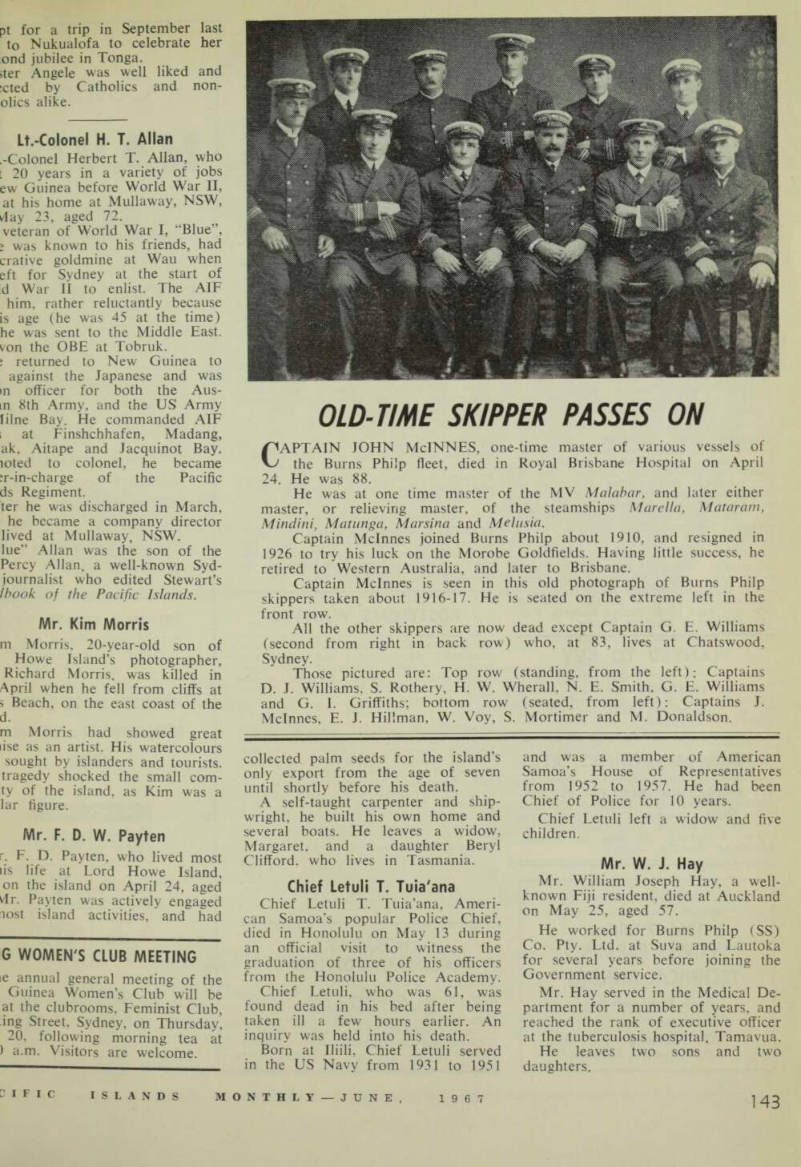 147
147 148
148 149
149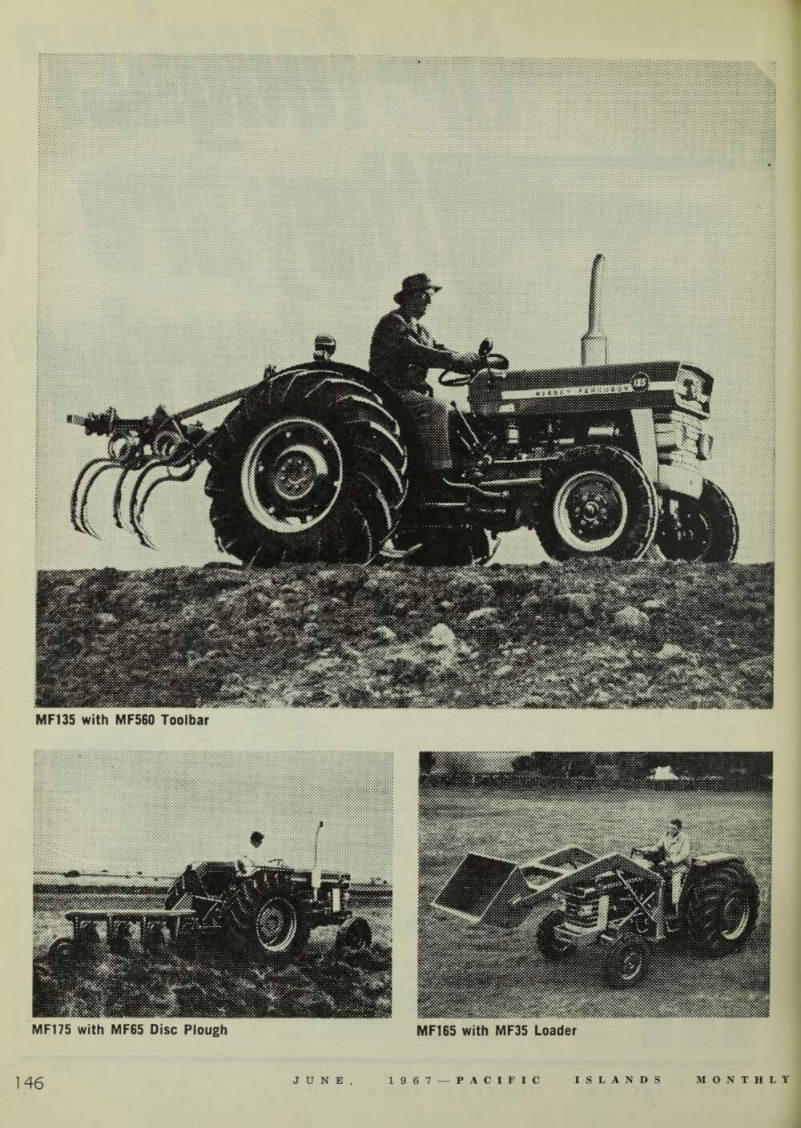 150
150 151
151 152
152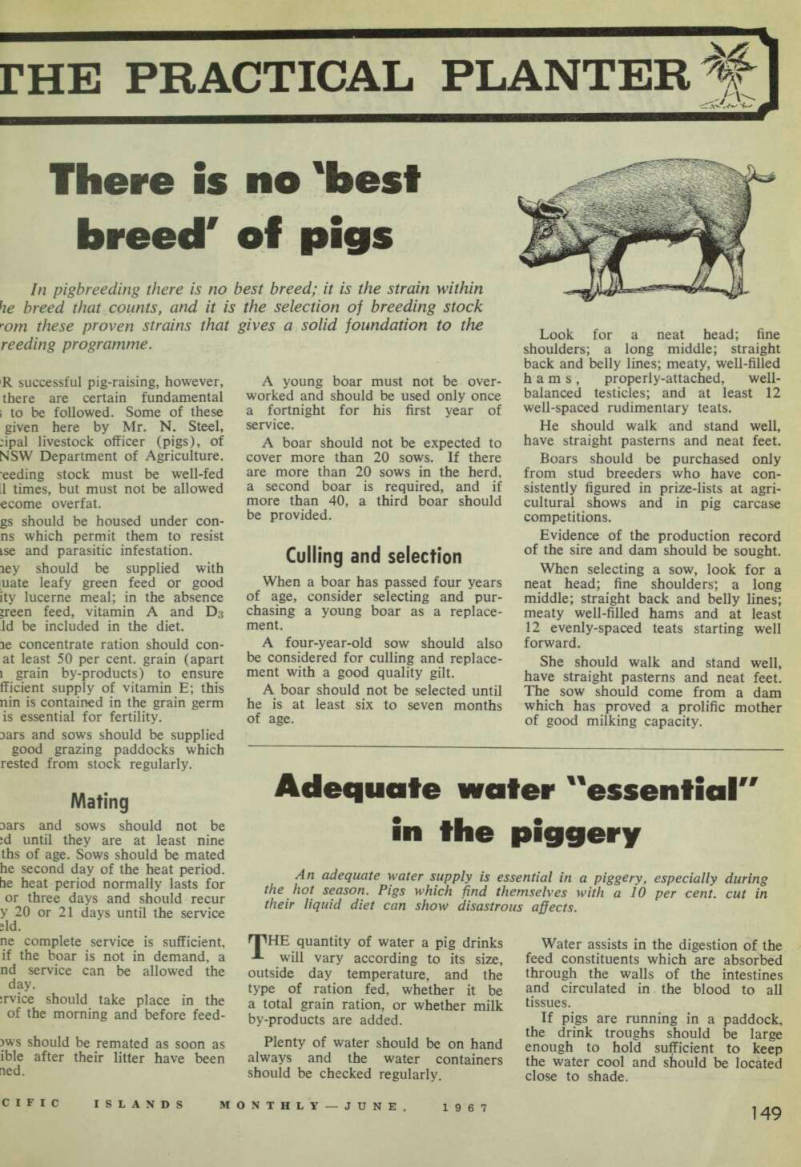 153
153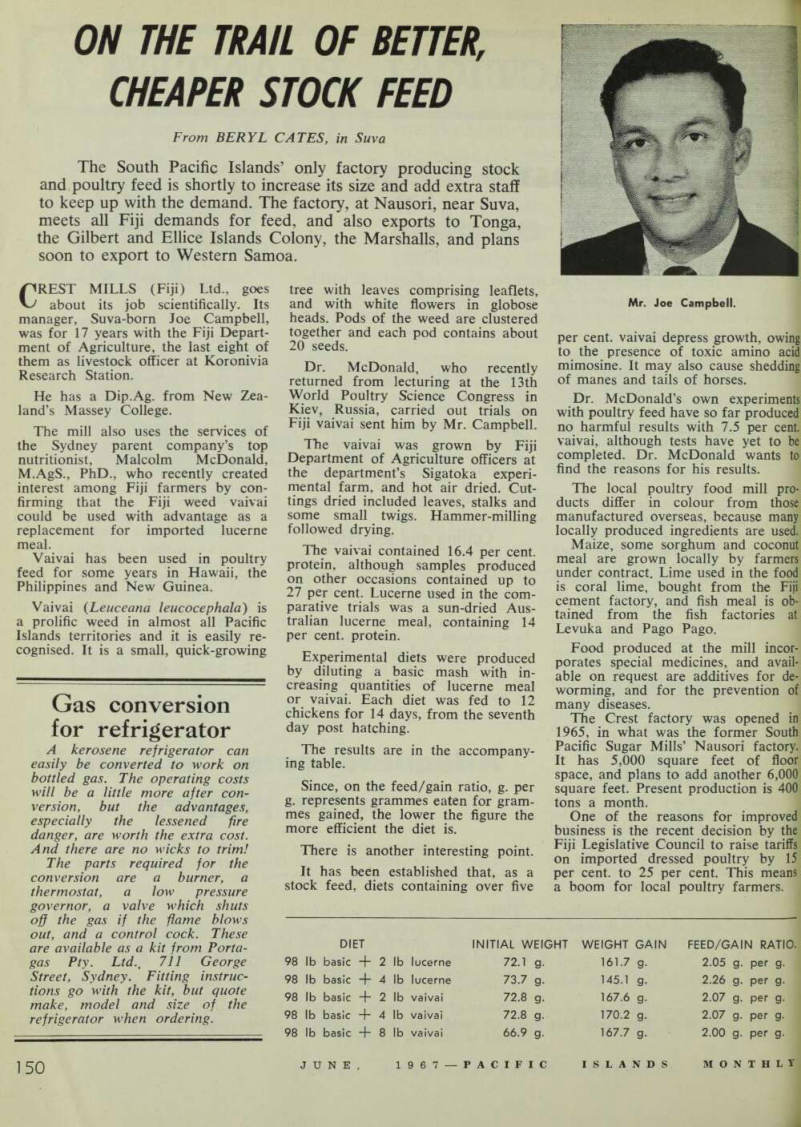 154
154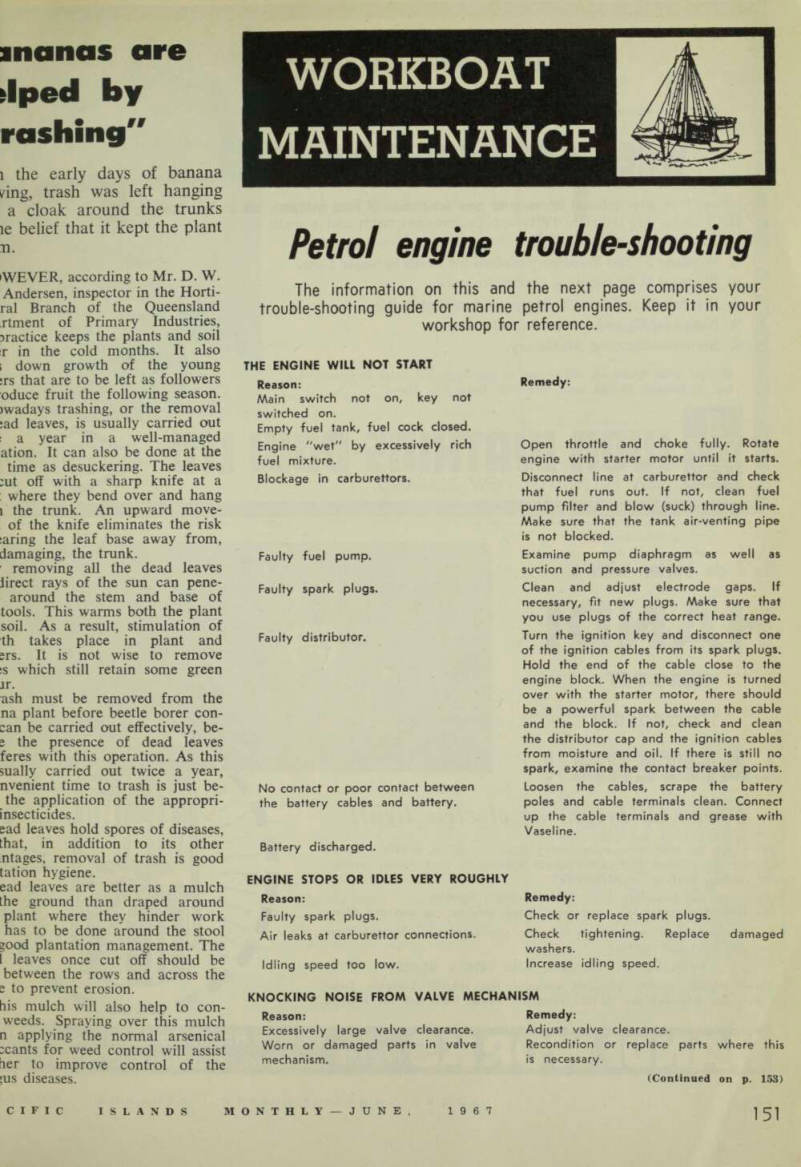 155
155 156
156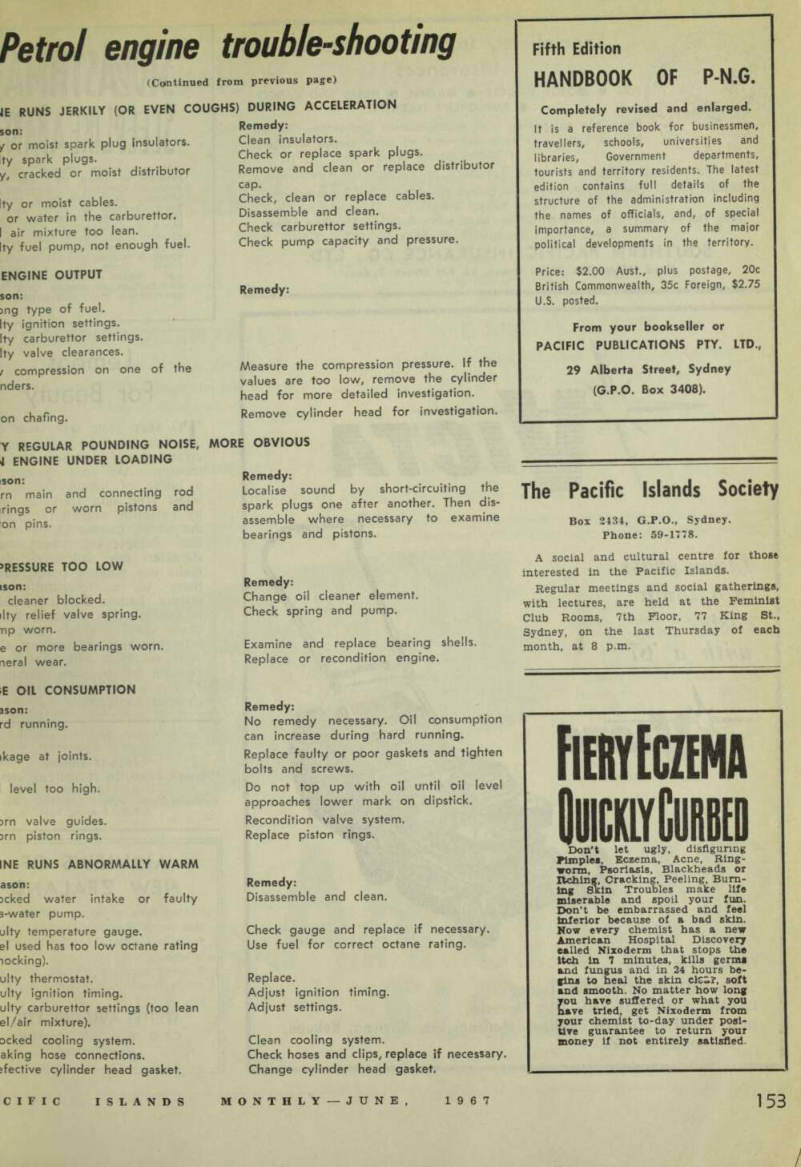 157
157 158
158 159
159 160
160 161
161 162
162 163
163 164
164 165
165 166
166