Monthly
Pacific Islands Monthly
stered at G.P.0., Sydney, for transmission Dy post as a newspaper.
May, 1967
News Magazine Of The South Pacific
30 AUST. CENTS 3 SHILLINGS 70 U.S. CENTS 30 FR. RAC. FRCS.
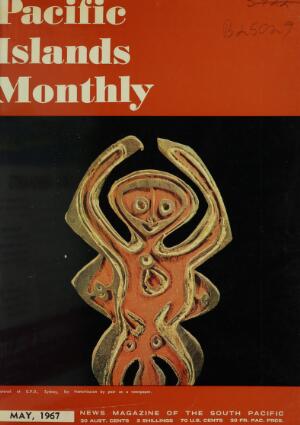
Our Cover
Not a gingerbread man, but i “Bioma”, a sacred wooden i oar d representing a man, originally from a men’s house in he Gulf District of Papua, and low in the Papua-New Guinea Museum, Port Moresby. The original is two ft high. The colour transparency was taken oy Neville Moderate, of the a -NG Administration. In this ssue, “PIM” staff writer Ken McGregor surveys the New Guinea artifacts business.
Advertisements & other items, pp. 2-13 (11 items)
May. 1967 Pacific Islands Mont Hi
Taa§ X
NowTAA
727 T-Jets link
Papua/New Guinea
with Australia
TAA’s ‘Bird of Paradise goes jet age! Regular daylight services to and from Australia. Less than four hours flying time from Port Moresby to Sydney in luxurious jet-age comfort.
Fly high above the weather at over ten miles a minute. And be spoilt by TAA’s ‘Bird of Paradise ’ in-flight service. You’ll arrive rested, relaxed and ready to go.
Book now! Contact your nearest travel agent or call TAA: Port Moresby 2101 • Lae 2311 ® Rabaul 2567 ® Madang 78, 268 • Goroka 8 • Mt. Hagen 4 • Wewak 103.
TAA§ x
the Friendly Way
K f S /
In Australia - dairy cows
are treated like beauty queens-
that is why Australian Butter and Cheese are famous for goodness, energy and flavour Selective breeding and scientific feeding of Australia’s dairy herds, plus the golden sunshine and rich pastures of an ideal dairying climate make the big difference in the flavour and food value of Australian dairy foods. Australian Butter and Cheese are processed by modern, hygienic equipment and strict controls ensure perfect quality.
Australian butter is full of energy, flavour and vitamin A goodness. It is a health food that only Nature can provide. Australian cheese is a concentrated food—full of protein, rich in calcium.
It is available in many types, to suit every taste.
For energy, goodness and flavour, buy Australian Butter and Cheese.
Trade enquiries to: Australian Dairy Produce Board, 406 Lonsdale Street, Melbourne, Victoria, Australia.
AUSTRALIA
m
ip i
c m m o s m m o n i n r* O Z z : -:i:S >* ' m m I V m m S; ■ H n i W ■ i I I m ■ V' . mm ■
Greenlites are the only matches
in the world that light when wet... they're made for your part of the world Greenlites are tropical matches, waterproof. Ask for them.
Made in Australia by Bryant & May.
wo ways you
an succeed at an
inside job”
ithout really
Ting.
SUPER
ENAMEL
WU fit LO SS . en it comes to interior painting “Spring” and “Super Enamel” are an )elievably hard-to-toss partnership. They have so much in common. • instance, on repaint jobs both “Super Enamel” and “Spring” flow easily r most surfaces (on a new wall you don’t need sealers or undercoats —only •ring”) to hide existing colours beautifully, h dry-off to a tough, mould-resistant finish. you’d expect, the ultra hard glossy finish of “Super Enamel” also defies ffing, chipping, moisture and steam. while you’ll use “Super Enamel” mostly in bathrooms, laundries and :hens, it’s also good for architraves and skirting boards. Its glossy finish trasts beautifully with the elegant plastic matt finish of “Spring.” at else have these two in common? A quick wipe-over with a cloth brings m up fresh and clean. And both come in hundreds of longer lasting colours, w much longer lasting? The chances are that you’ll “get tired” of the colours g before either “Super Enamel” or “Spring” grow weary. So choose the Durs carefully.
i3ip>
8MA.4368.5/SE.I
mil arm • 7 l-V#*. vv v?
PIP
SP £
There's more of both in ERINMORE
Erinmore makes friends in any company. Smokers welcome its good rich flavou Others; womenfolk especially, enjoy its distinctive arom This comes from the century old blendii process, secret to the makers of Erinmore. No othj tobacco can give you so cool and sweet a smok
ERINMORE
m ERINMORE
MIXTURE
FLAKE OR MIXTUR
TOBACCO
IN VACUUM TINS
MADE IN NORTHERN IRELAND BY MURRAY, SONS & CO. LIMITED, BELFAS
MANUFACTURERS OF FINE TOBACCO SINCE 1810
ICI
ICI
m w»«!
HiCH SPEED
top of
the tree
* . . . that’s ICI Sporting Ammunition.
Tops for accuracy tops for reliability tops for hard hitting power and all round peak performance.
There’s an ICI cartridge for every shooter, whether it be ICI shotgun cartridges for dense, even patterns and economy, ICI rimfires for hard hitting accuracy and reliability, ICI centrefire for heavier game, or ICI slugs and pellets for lots of fun at low cost.
Get with the top shooters load up with the top ammo
SPORTING
AMMUNITION
m
Men of tomorrow need
(that goes for all the family, too) Every minute they’re awake, they’re on the go.
Where do they get the energy? From the honest-to-goodness, natural foods they eat.
Foods like Weet-Bix at breakfast time. Every golden Weet-Bix flake is a whole wheat grain, mellowed by the sun and loaded with the energy that growing youngsters need.
Pour on icy cold milk. Top with fruit.
Breakfast’s ready a breakfast that helps to build men of tomorrow.
Weet-Bix
BCUITB
*** N7A
Capture all the action...
Save all the colour...
KODAK INSTAMATIC
Movie Cameras.
m Kodak Instamatic M 2 Movie Camera Just drop in the film and it’s loaded. Has a sharp fixedfocus f/1.8 lens to get clear super 8 movies from a few feet to infinity. Manual exposure control is so simple that everything you need to know is pictured right on the camera.
Has battery-powered film winding. m W 0 Kodak Instamatic M 5 Movie Camera With this movie camera, you just drop in the super 8 film cartridge and start shooting. No film threading, no complications. Has fully automatic exposure control, fast f/1.9 zoom lens it zooms from 13mm wide angle to 28mm telephoto. With battery-power winding. %
Kodak Instamatic M 4 Movie Camera Loads instantly, automatically. It has a sharp fixedfocus f/1.8 lens to give you brilliant exciting movies in full natural colour. The fully automatic, battery-operated electric-eye sets exposures for you. Viewfinder signal warns when the light is too dim for good movies Kodachrome II Super 8 Movie Film Makes movies more lifelike than ever, because the film image is 50% larger than regular Bmm film. It is an improved finer-grain Type A film pre-loaded in 50 foot drop-in cartridges for instant loading. Can be used only with super 8 equipment.
Kodak M55-L Movie Projector Automatic threading all the way onto the take-up reel. A single knob controls forward projection and power rewind. Has 200 foot reel capacity. With f/1.5 lens. Is built into its own carrying case with preview screen inside lid.
From Kodak dealers throughout the Islands.
KODAK (Australasia) PTY. LTD.
379 George Street, SYDNEY
K1469/R
Just what you’d expect from
the world’s largest manufacturer of
Outboard Motors. The best spare parts
organization in the Pacific!
Nauru Lorengau
WEST
IRIAN
NEW >
GUINEA
PAPUA
_ae Port
WELLE
QUEENSLAND
This is where you buy spare parts for
10HNS0N & EVINRUDE Outboard Motors.
TERRITORY OF PAPUA AND
NEW GUINEA
KAVIENG: •Burns Philp (New Guinea) Ltd.*Kavieng Slipway & Workshop.*New Guinea Company Ltd.
KIETA • Whitney & Green.
LAE • Burns Philp (New Guinea) Ltd.* New Guinea Company Ltd. • Steamships Trading Company.
LORENGAU •Manus Transport.
MADANG; • Burns Philp (New Guinea) Ltd.* New Guinea Company Ltd. • Steamships Trading Company.
PORT MORESBY:* Burns Philp (New Guinea) Ltd. • Island Products Ltd. • Steamships Trading Company.
RABAUL: • Burns Philp (New Guinea) Ltd.* New Guinea Company Ltd. • Steamships Trading Company.
SAM ARAL • Burns Philp (New Guinea) Ltd.* Steamships Trading Company.
WEWAK: • Bums Philp (New Guinea) Ltd*Catholic Mission of the Divine Word,* Wewak Taxi Service.
PACIFIC ISLANDS
GlZO*British Solomon Trading Co.
HONIARA *British Solomon Trading Co.* Solomon Motors.
NAURU: • Capelle & Partner. • Jenetta Store.
NORFOLK ISLAND *lrvine Building Supply Centre, • K. A. Prentice & Company.
NOUMEA :*Agence Alma. Pacific Motors.
PORT VlLA*Pentecost Pacific S.A.
SANTOS:*Pentecost Pacific S.A.
©OUTBOARD MARINE AUSTRALIA PTY.
LIMITED 84 Canterbury Road, Bankstown, Sydney, New South Wales, Australia.
.ook at a Ronson and you’ll see sophistication
Light it and you’ll see more
We spend seven weeks building every Ronson to stand out in the crowd. The deep gloss finish (we put on a thicker coating of chrome than is really necessary), the smooth, precision action. They show at once.
There’s sophistication, too, in the way a Ronson lights first time. Every time. And in its adjustable flame height. For cigarettes, cigars and pipes. Just twist the Varaflame wheel.
You’ll find 3,000 lights per filling (5second filling) a welcome improvement over your old lighter, too. Look at the Ronson range soon.
Recognised round the world for lighters and electrical products of quality.
Mothers 1
Give your children the It Group Yhumins
they need for energy-every
Give them VEGEMITE! It's absolutely delicious spread on toast or in sandwiches. And just one teaspoonful supplies half their daily requirement of the B Group Vitamins, the energy vitamins their bodies can’t store up. It’s so easy to ensure that your family stays happy, healthy and bouncing with vitality, when you give them VEGEMITE every day!
VEGEMITE is pure concentrated yeast extract, the richest natural source of the B Group Vitamins.
KRAFT
•Reg d Trade Marks for yood food and good food ideas
KRAFT*.
m m mm fm m
In this can is Dairy Frost mix.
It needs no storage refrigeration!
No mixing.
Pour the mix
into this
Dairy Frost
machine...
S .V* i m ...
V. » S »»' •v.v v.v. ♦V. *» y.v.vv; Famous M 100 Counter model.
then lift the lever
and dispense
extra thick Frosty Shakes
or soft serve cones
Simple. Moneymaking!
Thick shakes earn big money.
With this Dairy Frost combination, they’ve never been easier to make.
Everything’s done. The mix is super-pasteurised.
Rich and creamy.
No storage refrigeration needed! No mixing.
No preparation. Nothing to be added.
It’s packed in I gallon cans.
It stays pure and fresh until it’s needed.
The Dairy Frost dispenser is fully automatic.
It’s easy to clean, simple to operate and engineered for a long, trouble-free life. You can rely on that.
It’s made by the largest manufacturer and distributor of thick-shake and soft serve machines in the Southern Hemisphere.
It’s worthwhile getting the full facts about Dairy Frost mix and Dairy Frost dispensers.
Write to the Export Department.
They’ll tell you all you want to know. JJ FfOSt 13 South Street, Rydalmere, N.S.W. Phone 638-0401.
PTY. LTD.,
1
3 I F I C ISLANDS MONTHLY MAY, 1967
2
may, 1967 PACIFIC ISLANDS MONTH
3
I F I C ISLANDS MONTHLY MAY, 1967
5
ACIFIC ISLANDS MONTHLY— MAY, 1967
6
MAY. 1967 PACIFIC ISLANDS MONTHL
7
CIFIC ISLANDS MONTHLY MAY, 1967
8
may, 1967 PACIFIC ISLANDS MONTHL
10
MAY, 19 67 PACIFIC ISLANDS MONTH II
11
’ ACIFIC ISLANDS MONTHLY MAY, 1967
Pacific Islands
Monthly
Owned And Published By
Pacific Publications Pty. Ltd.,
29 ALBERTA ST. (G.P.O. BOX 3408), SYDNE'
Telephones: 61-9197, 61-7101, 61-4369.
Telegraphic Address: PACPUB, Sydney.
Chief Executives
Managing Director: R. W, Robson.
General Manager: Selwyn Hughes.
Book Publishing Division
Editor: Judy Tudor.
Pacific Islands Monthly
Editor: Stuart Inder.
Assistant Editor: Robert Langdon.
Branch Offices
Melbourne: Newspaper House, 247 Collins St Tel.: 63-7053.
Fiji: Pacific Publications (Fiji) Ltd., Fiji Time; Building, 20 Gordon Street, SUVA, Tel.: 25601 Fiji Times Office, Vidilo Street, LAUTOKA.
Tel.: 60-422.
Papua-New Guinea: Pacific Publications (N.G.) Pty. Ltd, Representatives: Mrs. Joan Carter, P.O. Box 16, PT. MORESBY (Tel.: 2504); Miss Pat Robertson, P.O. Box 227, LAE; Mr. Steve Simpson, P.O. Box 154, RABAUL (Tel.; 2547).
Representatives
New Zealand: J. D. Whitcombe, C.P.O. Box 2229, Queen Street, Auckland. Tel.: 76056.
Hawaii: C. C. Spencer, 203 Yap Bldg., 346* Waialae Ave., Honolulu, Tel.: 775538.
United States: Mrs. A. L. Craib, 1631 80tt> Avenue, Oakland, California, 94621.
Tel.: LOckhaven 8-1201.
United Kingdom: S. R. Warman, Candlewick House, 116-126 Cannon Street, London, E.C.4 Tel.: Mansion 3674/7.
H. A. Mackenzie, 4A Bloomsbury Square London, W.C.I. Tel.: Holborn 3779.
Agents
All main trading firms and stores in the Pacific Islands.
Pacific Publications Pty. Ltd. is the Australian agent for THE FIJI TIMES.
Subscription Rates:
Australia: 30 cents Aust, ($3.60 Aust. for 12 months). New Zealand, all British Commonwealth South Pacific Territories, Tonga, New Hebrides and Western Samoa: 3/local currency (36/- local currency per annum) Elsewhere in the South Pacific: 50 French Pacific francs or 70 US cents (600 French Pacific francs or $B.OO US posted per annum).
Posted to USA, $B.OO US per annum. Posted to the UK and all other countries: £Stg.2.
"Pacific Islands Monthly" is air-freighted tc all subscribers and agents in the South Pacific; copies to other areas go by surface mall.
Up Front
With The Editor
Now that there are new people in Port Moresby’s Govern ment House, I predict we will be hearing about the need for a new and better Government House overlooking that historic harbour. And with it, I predict, will come some words in the Assembly about the cost of it all, and whether the country can afford to spend anything on a Government House while it still needs roads to Hagen and more golden handshakes for public servants.
YOU’LL never avoid that kind of comment. Which is a pity, be cause a new Government House is needed. The Hays can only hope— presuming they are still there when this prediction of mine comes good —that the issue won’t raise heat enough to cause embarrassment when the appropriation has to be approved.
When it comes to Government Houses, it’s easy to forget that those who might best know the dis advantages of such establishments are the people who live in them. And if one of the occupants also happens to be the country’s chief executive with responsibility for spending a few score millions, it doesn’t neces sarily follow that his brain ceases to function responsibly when he is faced with the decision of having to spend some of it right on his own threshold.
The Fosters
Yet there is always the innuendo.
Some nearby colleagues of the Hays, Sir Robert and Lady Foster, probably were aware of it over recent proposals to replace Government House, Honiara, which was built in 1943 as part of a New Zealand military hospital, and occupied by Army nurses before a succession of Western Pacific High Commissioners were promoted to that privilege.
Last year Gabrielle Lawson, of Honiara, referred to it in one of our issues as a “patched up army hut with a leaf roof, fighting white ants, in a hot and steamy location by the water”. She said it was a sore point with Melanesians that the Queen’s representative lived in a slum house; and PlM’s heading (not Gabrielle’s) suggested Sir Robert was losing face.
The attack on Government Hous was, I suspect, inspired by somethin said by the refreshingly frank Lad Foster, bless her, and I agreed wit) it in principle and in fact. I haj pened to be in Honiara at the tim our piece was published, returnin from a visit to Nauru, and develoj ing, so it turned out, a wog whic sent me to bed at the New Guine Club in Rabaul, where I survive only because of the sympatheti ministrations of that kindly factotui Pang Chung Sing (whose dead tragically, has recently been reported
A lot of interest
PlM’s few paragraphs abon Honiara’s slum house had caused a inordinate amount of interest i some Honiara quarters, which is th way it is in small territories withon newspapers of their own, and despit my wog I took part in a rad! interview with a bloke whom gathered hadn’t long been out fron London.
I didn’t make much of a fist of th interview, and I gather my intei; viewer wasn’t much happier himsell having failed to get across the me;; sage that he thought the PIM repoii was “scurrilous” (as he confide afterwards). I allowed myself to g on record as inferring that it wa important for money to be spent cr economic development before Got eminent House—which was onl part of the point I wanted to make.; The point is, where does economi development priority stop?
When I made my first visit tt Honiara some years ago the broao casting station consisted of a poke; announcer’s room and an ope;; verandah for guest broadcasters, bu
one we then were broadcasting m was part of a modern air-con oned complex. On another visit, secretariat offices still consisted of oden and tar-paper huts, with tions, I seem to remember, of dirt )rs —and this inconvenience the cers were prepared to put up with :ause it was felt that other develop nt had higher priority. Today the niara secretariat has modern ces.
Regrets
But Government House has not lly changed much, and this re ids me of something said by rrie Niall, after he relinquished long-held post of District Com jsioner of New Guinea’s Morobe strict to take on his present he dged post of Speaker of the P-NG use of Assembly. Horrie had been md of the fact that he worked for g as DC in Lae in quarters which re sub-standard and inadequate, :ause he wanted the money to be :nt on local developments of a her priority. tfe came to regret it, because the mey that Peter was being robbed to pay Paul, actually got spent John and Luke in Port Moresby i Rabaul, and the Morobe District ; neither a decent administrative tiding nor anything much else. 5o it would be, I think, in Honiara 1, if the Government hadn’t re itly decided to go ahead anyway J spend money on a new Govern :nt House —tenders for which •sed the other day.
What the new two-storey building U cost I don’t yet know, but if :re is to be any more argument, it be on details of cost and con uction, not on the principle of orities. And that would go for Port aresby too.
Stuart Inder
Advertisements & other items, pp. 15-18 (3 items)
13
4CIFIC ISLANDS MONTHLY MAY, 1967
Eoedb
reliable communications
in the field
transistorised HF
a> *
n SlMPLE—
anyone can operate it.
□ LIGHTWEIGHT
—weighs less than 20 lb. including batteries.
□ LOW COST—
sells for less than $l,OOO.
□ 29 CHANNELS.
□ WATERPROOF
and ROBUST.
□ SSB/AM/CW,
Now available for early delivery, the Racal ‘Squadcal' TRA 906 Packset has been developed for use throughout the world wherever there is a need for mobile communications. Already tested and proven under all environmental and climatic conditions, the unit is lightweight yet strong enough to take the roughest treatment. In addition it will survive complete immersion in water. Range of up to 200 miles can be achieved and the unit can be maintained by relatively untrained personnel. Built to the same high standards for which RACAL is renowned. ‘Exclusive of any applicable Duty and Sales Tax.
A NAME TO COMMUNICATE
EOEDB
RACAL ELECTRONICS PTY. LTD .
HEAD OFFICE: 75-77 Chandos Street, Crows Nest, N.S.W. Telephone 43 0664, BRANCH OFFICE: Suite 22, 533 St. Kilda Rd., Melbourne, VIC. Tel. 51 5726,
Jb£ls&4Ci
palm
I
PALM” and “SALISBURY
99 CANNED MEATS ARE SPECIALLY PACKED FOR THE PACIFIC ISLANDS
CORNED BEEF
CORNED MUTTON
MEATREAT
SHEEP AND LAMB TONGUES
BRAISED STEAK
PAT DRIPPING
PAT LARD
SANDWICH PASTES
LAMB & GREEN PEAS
STEAK & KIDNEY PUDDING
Also KEGGED MEATS
FROZEN MEATS
SMALLGOODS
BULK DRIPPING AND LAH
Price Lists: We will be pleased to forward price lists on application
WESTFIELD FREEZING CO. LTD.
Postal Address: Private Bag, C.P.0., Auckland, New Zealand. Cables: "FILALORA", Auckland
We created this for the
world’s most experienced airline
We created this as a modern tribute to ancient Greece This one has a bit of both and a substantial character of its own ’he Day-date combines the ugged precision of the GMT faster with the elegance of the I ung Midas from the Benvenuto 'ellini collection (a limited edition f men’s watches... inspired by the vorks of Cellini... very expensive).
And the Day-date has distinctive eatures of its own. The Geneva-made )yster case is hewn from a solid block if gold or platinum. The bracelet, also n solid gold or platinum, is designed ;pecially for the case. The movement has von the highest possible distinction for
i is
»» £ i ' rv\ a / precision and quality a chronometer can normally obtain. A calendar shows the date and the day of the week spelt out in full.
The Day-date is available only in ■ gold or platinum and is quite possibly the most brilliant timepiece in the world today. Wear it when you fly your jet to the conference at Brasilia, swim off your yacht in the Aegean, or address United Nations.
With a Rolex on your wrist, you have entire worlds in your hands. fr When a man has a world in his hands, you expect to find a Rolex on his wrist ROLEX
GENEVA
Rolex watches are available through Burns Philp (South Seas) Co. Ltd., Suva, Lautoka and branches throughout the Fiji Islands and the South Pacific. In New Guinea through Burns Philp (New Guinea) Ltd., Port Moresby and all branches in Papua/New Guinea.
Otrnotts
famous
Biscuits
TRIPLE
<» ■S'
PACKS
% it
Serve simply
with Sao...
There is no Substitute for Quality
15
LCIFIC ISLANDS MONTHLY MAY. 1967
This Issue
Eral
; Co-operation Plan 19 ral History of Palm Trees 94 by Francois Doumenge 97 an Fishermen for Pacific 101 a Price to Rise 131
Rican Samoa
s for Union with Neighbour ... 22 rnor Lee on Land 22
K Islands
s Go Up 18 ps Delay Explained 32 rial Series 41 r Problems 75 cal Shopkeepers 20 tel TV Documentary 24 Air Services to Tonga 49 fog a Cabins 49 Lodge Manager 49 st Office for Sydney 50 marau Island 53 r Mill Safety Record 69 dchair Sportswoman 73 ries Officer Leaves 73 id of Tagimaucia 91 onfruit Troubles 130 d Breeding 147
Ch Polynesia
Deputy 32 ; Starts on Taharaa Hotel 50 sries of the Bass Islands 95 m Carriers Caught 103 Nuclear Tests 124
Gilbert And Ellice Islands Colony
It's Boom Time 61 Watches for Islanders 61 Tourist Potential 65 New "Moana Raoi" 107 Training Vessel Arrives 109
Nauru
Independence Talks 25 Way Cleared for Air Services 49
New Caledonia
Prison Scandal 24 PanAm for Noumea 49 Messageries Passenger Service 105 New Shipping Service 107 NZ, Norfolk Island Service Retained . 109
New Hebrides
"No Doubt" on Big Bay Wall 29 Key to Wall's Identity 30 Santo Land Disputes 31 Big Meat Exports 64 Tall Tales of Big Bay 85 "Tutuba" Sinks 103 Another Freighter for Rusden 105 New Marine Head 105
Niue
Prices Go Up 18 Rough Weather for "Tofua" 53
Norfolk Island
NZ, New Caledonia Freight Service .. 109
Papua-New Guinea
Need for New Government House ... 12 Giant Snails Loose in Moresby 25
Artifacts Survey 26 Work of Special Branch 37 1969 Games Site 47 Daylight Air Services 47 Role of Police 55 Port Moresby Personality 57 1919-39 Era "Misunderstood" 58 Jap Plane Found in Sepik 60 Fuss Over Decentralisation 69 Native Author 97 Moresby-Kerema Yacht Race 101 New Port Managers 103 Manus Island Plans 105 Economic Progress 129 Coffee Planting to be Discouraged ... 130 Bougainville Copper 131 Tips on Cattle-raising 151
Solomon Islands
Government House 12 Relics of the War 49 Cyclone Brings Damage 116 Airstrip Will Aid Nickel Company ... 131
Tonga
Filming the Coronation 23 Mystery of 30-Seniti Stamp 37 Abacuses for Schools 38 Peace Corps Survey 40 Coronation Expected to Boost Tourism 52
U.S. Trust Territory And Guam
SEACOM Cable Station 38 Judy Tudor on Peace Corps 39 Commercial Air Services 51
West New Guinea
Border Troubles 28
Western Samoa
Move for United Samoa 22 Peace Corps Coming 39 Tourism Conference 52 Independence Celebrations 53 Mata'afa to Seek Aid in Japan .. 75, 105 Protests on Chinese Fishermen 76 Fruit Sent to NZ by Air 131
EPARTMENTS: Up Front with the Editor, 12; Travel, 41; Percy Chatterton, 55; lands Press, 67; Magazine Section, 85; Yesterday, 93; Book Reviews, 94; flipping, 101; Cruising Yachts, 109; People in Pictures, 118; People, 121; usiness and Development, 129; Produce Prices, 133; Shipping, Airways Schedules, 135; Deaths of Islands People, 143; The Practical Planter, 147.
spiralling prices
Niue feels the spiralling prices breeze, too
Prom a Niue correspondent £fVERYONE on Niue, par ticularly low paid workers, has been noticing a marked in crease in the cost of living.
This is partly due to the recent removal of consumer subsidies in New Zealand on flour and butter, and partly due to other factors.
In late March, for example, the Niue Island Assembly doubled the “aid to revenue tax”, which all employees have to pay on all income. It also raised other taxes, such as those on overseas insurance companies, and companies and public authority taxes.
The recent removal of con sumer subsidies in New Zea land has sent the price of bread up by 50 per cent, and has increased the price of butter from 1/- to 4/- a lb.
Some Niueans have been fighting the price rise on bread by buying cabin bread—which is expensive anyway. But the bakers are still baking the same quantity of bread, so somebody must be eating it.
Some bakers are baking loaves of a smaller size and selling them at the old price.
There is also to be an increase in the price of cigaret tes due to a tax increase on them; and an increase in freight rates will mean increases in prices of almost everything ar riving on the island.
On the other hand, Niueans have had some relief from the general increase in prices through being able to buy fresh milk for the first time.
The first milk went on sale in March. It comes from a herd of cattle that were imported to run on the coconut plantations which are being established.
The milk is being sold at 6d a pint. It has become very popular with the Niueans, who no doubt find it easier to find the money for it than for a large tin of powdered milk.
Cost Of Living Increase
Cook Islands Hard Hit By
From W, H. Percival in Rarotonga Recent heavy increases in the cost of living in the Islands are expected to become an added incentive to many \ Cook Islanders to emigrate to the El Dorado of New Zealand, f where unskilled and semi-skilled workers can earn at least five t or six times as much as they do at home.
SHORTLY after the New Zealand Government vessel Moana Roa arrived at Rarotonga on March 22, the prices of basic food lines such as bread, butter, and canned meat rose alarmingly.
The cause of this was the New Zealand Government’s decision to remove subsidies from wheat, flour and butter.
The New Zealand price increases were naturally passed on to the Cook Islands.
Many other food lines, such as biscuits, breakfast foods, milk powder, evaporated milk, vermicelli and spaghetti, were also affected.
Cook Islanders with large families and low incomes were the hardest hit, especially outer islanders living in Rarotonga. These people have no land on which to plant, and most of their income goes on food and rent.
Tougher still
Ironically, the people who will have to pay the highest prices for basic food lines will be the inhabitants of the northern atolls who can export only limited amounts of copra and dwindling supplies of pearl shell. In addition to paying the highest freight rates in the Cook Group, boating charges from ship to shore and extra cartage costs are added to the already high costs of the canned food they buy.
Life in the outer islands has always been tough, especially in the northern group—and these sudden price increases can only accentuate the people’s problems.
The first price increases to be announced were: Flour in 160 lb sacks, £2B/7/6 per ton (an increase of £2/11/6); butter, lOd per lb.
The Premier, Mr. Albert E.
Henry, said in early March that to alleviate and stabilise prices, the Cook Islands Price Tribunal would
be brought into operation immeo ately.
All prices for goods and servio were to be maintained at existiiJ levels until increases had bea< authorised by the tribunal.
Mr. Henry also made these pointn • Although the Government w firmly of the opinion that wage an salary levels should be stabilised, J acknowledged that workers on ba:£ rates of pay might have stroD grounds for an increase. • Old age pensions, which & fixed by enactment, would be i viewed when the Legislative A sembly met later this year.
O The position of Public Serviv salary earners would be discusses with the New Zealand Governmeie which had met the cost of ruliil rate survey increases in past years..e • Everything possible would done to mitigate the effect of tt inevitable increases in the cost living.
The Premier went on to request tJ
Mr. Albert Henry, Premier of the Co Islands. Photo: W. H. Percival.
peration of traders and bakers in mising price increases in basic commodities. Planters and copra ucers were asked to make every t to increase production.
"here is,” he said, “an unsatisfied and for many export products for fruit for processing. Every t should be made this year to est our crops. By this means :an recover more than the extra of the essential foodstuffs on h subsidies have been lifted.”
Prices pegged
ie Cook Islands Price Tribunal for the first time on March 16, issued a Price Order pegging prices of all goods and services le prices charged on that date, ie tribunal made it illegal for is not covered by Price Orders >e increased without its prior oval. lis action ensured that prices d not be increased until after the al ol new stocks on the March na Roa.
Because price control covered
"*sees ".he inviteJ “the
services, the tribunal invited the chamber of Commerce to present a st S ooc * s and services that they considered should be exempted, To save time and frustration in the outer islands, the tribunal dele gated its powers to the Resident Agents and Clerks-in-Charge, enabl ing them to deal with applications for price increases on the spot, The next Price Order issued showed that bread prices on Raro tonga had jumped by 50 per cent, A 24 to 27 oz loaf now costs 1/6 instead of 1/-, and smaller sized loaves have become correspondingly dearer.
After the Moana Roa shipment was received, shoppers discovered a few more hard facts.
Butter had leapt from 2/8 to 3/7 per lb; a 12 oz tin of first grade corned beef now costs 4/9 against the previous 4/-, and a 12 oz tin of second grade corned beef costs 3/8 instead of 2/8. A 2i lb tin of full cream milk powder, which is essential for rearing infants when the mother cannot provide breast milk, rose from 9/6 to 10/5.
Breakfast foods had also risen. A li lb packet of malted whole wheat biscuits now costs 3/9 against the former price of 3/3. There were many other price rises.
Passenger fares up
Even before the increases, the four-fifths of Rarotonga’s working population, which existed and perhaps supported a wife and four children on the basic wage—about £5 per week—had found the going more than tough.
The going, it need not be said, is going to be a lot tougher now.
But that is not all.
On April 13, the NZ Department of Island Territories announced that freight rates and passenger fares to and from the Cook Islands in the Moana Roa would be increased the following day.
The cargo charges would go up by 15 per cent, and the fares by 10 per cent. —due to the rising cost of running the ship.
This means, of course, that it’s going to be even more expensive to get to El Dorado than it used to be. • For another angle on high prices and the problems of Islands women working to a budget, see p. 20, "The pirates are not all dead!"
he arrival of the New Zealand overnment vessel "Moana Roa" [?] the Cooks in March was a [?]gnal for basic food prices to
se alarmingly. Will Cook
landers now use the same ship ) flee to the greener fields of ew Zealand?
Advertisements & other items, p. 20 (1 item)
18
MAY. 1967 PACIFIC ISLANDS MONTHLJ
uropean AND Pacific Common Market ?
Islands territories are studying possible trade effects as a result of itain’s announcement in April that it will bid for membership of the iropean Economic Community. But too few details are available for y real assessments to be made. The Fiji sugar industry could be the ust vulnerable—unless Fiji can also be admitted to the Common Market an associated British territory, and this is possible.
Meanwhile, moves for a Pacific trade federation came from two rections in April—from Tokyo at a meeting of the Japan-Australia isiness Co-operation Committee and from Sydney at the Pacific In strial Conference, sponsored by the US Stanford Research Institute.
The question of a Pacific trading federation was one of the main ms discussed in Sydney. Top businessmen from the Pacific Basin ssed the subject around quite a lot. There were several Islands business m present, including Mr. lan Downs, MHA, of New Guinea.
Nothing definite was decided on but it was agreed to leave the matter the hands of the Stanford Institute to see if it could get something ing along the lines of increased Pacific commercial co-operation.
The point was repeatedly made that commodity prices in the Pacific d on world markets had not increased by the same proportions as mufactured goods—and that this was handicapping primary producers ch as coffee growers, banana, orange and copra planters.
At Tokyo, Australia, New Zealand and Japanese business leaders t up a Pacific Basin Economic Co-operation Committee, open to mibership by American and Canadian businessmen.
The body will aim to expand trade, encourage the exchange of pital and technological information, promote tourism, joint studies, Rural and scientific exchanges.
Advertisements & other items, p. 21 (1 item)
L C I F I C Islands Monthly May, 1967
But the pirates are not all dead!
• Happy with your local shopkeepers? Get a fair deal from them always? Get good, friendly servlv that makes you want to go back again? Retorts this Suva housewife, "Not on your life!" If you agree wiv her, wherever you live, and have some pet hates of your own, let off steam through RIM. It may help to o things changed.
From JANE GREGOR, in Suva Ask the female residents of Fiji about shopping and you will see flashing eyes and hean indignant stories. The males of the community, coming less frequently into contact with the shops, t may make tolerant noises in the background and endeavour to ensure that their womenfolk only \ fume gently. . . .
BUT, for once, the women are right; there’s cause for com plaint.
Too many housewives around Fiji can tell tales of old stock, particularly of foodstuffs, being sold without due warning or a price reduction; of prices which are far in excess of what they need be; of unfair methods in too many shops.
Most people are aware of the high cost of freight and duties. And most people who can afford to buy im ported goods at all are willing enough to give the merchant his fair mark up. But fair is the operative word.
Take the case of a young Nausori wife who, recently back from a trip overseas, gasped at the Suva price of breakfast cereal . . . three times what she’d been paying while on leave. Meeting a local citizen who also happened to be a reporter, she exploded her righteous indignation at him. Next morning, The Fiji Times told the story, asked why such a popular food should need such an elevated mark-up and . . . happy ending ... the day after, that break fast cereal in one particular store, at least, was cheaper by quite a substantial amount.
Daylight robbery!
The humble but essential plastic laundry basket, too, can be picked up overseas for a few shillings in any popular-price chain store but after it has travelled a few hundred miles to Fiji it costs something like four times the amount it retails at “back home”. Now that seems to me just a little on the greedy side.
And for sheer daylight robbery, another case takes one’s breath away.
In a Suva shop you can have the choice of a bottle of milk or a bottle of cold milk from the fridge; but you’ll have to pay fourpence extra for the cold one!
There are dozens of similar stories
being told by the shoppers of Fiji, who are growing so resentful of being taken for suckers that a Con sumers’ Association has now been established to try to create a better state of affairs between shopper and shopkeeper.
Another anomaly which strikes me as odd, in this land of the widely proclaimed “duty-free” bargains, is that some transistors and cameras, as well as perfumes, prove to be far more expensive if bought in Fiji than if bought in their country of origin.
Bitter complaint
One bitter complaint of Suva residents in particular is the often too short shrift given to locals in the teeth of competition from the tourists.
Especially frustrating in this respect are the Indian tailors who will blithely keep a regular customer
dangling for weeks while they rm off orders for tourists.
I see their point . . . tourists doo have time to be critical about altoJ ations; they’re not in a mood to finicky, they pay up and they g Which is good if your businer method is merely to take as muir as you can get the easiest way poc sible.
I think, and so do many Suu residents, that it would be muu smarter to pay attention . . . real ; tention ... to building up a nuclei of good, satisfied, regular customes through them, as many merchasi kings of the past have found, comtn eventually, the best foundation ft profits.
The same grumble over tourih preference applies to shop hours. H maddening for working wives . i, or husbands, for that matter . , . .
Shopping in the busy streets of Suva is a tough enough problem without it beilis made more difficult by some of the commercial practices Jane Gregor complains
lable to shop during lunch hours to have shop doors shut in our as we try to make the most lucky break in finishing work minutes early some afternoon, often our clock-beating spurts to that essential forgotten item end But it’s even more :ing when you see that shop ts find no difficulty whatsoever ening at the most unlikely hours if there’s a tourist ship in. ere are many lesser complaints.
Dr service is one you hear over over again; here, I blame the :eepers . . . not the sales staff, itions of service for most sales and women are not good and ng appears to be, in most cases, lal. i you, then, blame the counter who can’t be bothered to even what they do stock, let alone d find out if and when a specific :an be obtained? Like the young /ho, pointing to three scraps of ling, curling-edged ham on a tray, the other morning, ly informed me that was all the the supermarket had. tunately for me, a senior sales whom I have often dealt with, nost happily, came along and le matter right. as lucky, but too often shoppers 3t. And, merchants please note, >nly is the would-be shopper ited, but she’s just slightly more against that particular store time such an encounter occurs, at it’s not only the immediate /hich is lost. ie of these incidents can, of :, be put down to the growing natural among an emerging
country’s peoples.
But other trading practices are carried on by people who should know better.
Why, for instance, do shops sell inferior quality “seconds” without always telling the shopper what he’s really getting for his money?
A friend of mine discovered a piece of cloth, bought in good faith as first quality material, had, in fact, a large fault in it; when she returned it to the shop where it had been bought she was told she should have noticed it at the time.
When I heard this story I remembered that, as a newcomer to Fiji, I was warned by an “old-hand” that much of the merchandise sold was, in fact, seconds and to
beware. Unhappily, my informant was not wrong.
But when you move into the big money items and still find they are too often faulty, you really do begin to wonder if the days of piracy will ever end.
It is a sad fact that every major item I’ve bought in Fiji, that “shopper’s paradise”, has proved faulty. Sometimes seriously so, some times only to the extent, for example, that a slide-projector had a large smear across the lens which I could not get at.
Being a resident, I can get these things rectified by taking my purchases back, which is tiring and time-con suming. But one doesn’t expect to pay £5O for a tape recorder, let us say, only to have the mike pack up on you a month or two later; or for a record-player which unaccountably changes speed in mid-record.
Maybe there are good, simple answers to much of this . . . like packages being clumsily handled . . . but after a run of unsatisfactory buying of what to me are major items, I begin to harbour dark thoughts.
Can it be . . . even in this price bracket . . . the tailor/tourist story all over again . . . “Sell ’em any thing . . . they’ll never be back to complain”?
(Continued on p. 132)
Tourists off the ships flock around one of the stalls at the Suva markets.
Service is good. But when the cruise ships are in, it's not always so good in Suva for the locals, who complain they get short shrift while the visitors get the attention.
Delicate mechanical toys such as we all love to acquire in this gadget happy age can, obviously, be easily damaged in transit to our “far-away” isle but isn’t it the vendor’s respon sibility to inspect such items before he sells them? Or . . , surely it can’t be that, in this field too, there are devious ways of buying-up inferior quality goods which can then be passed on to an unsuspecting public at top-quality prices?
Surely not. Such thoughts are onl>
the feverish aftermath of a dose < Fiji shopping?
And yet, the episode which ii flamed me most, in recent weeks, wi certainly not imaginary.
I bought a new camera with a flas attachment especially because wanted to record the imminent bloon ing of a nights-flowering cereus i the garden. All went well until I signed the cheque. Only then did tl salesman “remember” to tell me th: the shop was out of the batterii needed to operate a flash earner But they’d be in soon.
I was disappointed but ui suspicious, I watched the buds c my cactus grow fat and went in agai for the batteries. This time I wj told by another salesman that n< only were the batteries not obtainah but were unlikely to be so . .
“nobody has them at present” I w« told blandly . , . “not even Ne Zealand”.
“It may be weeks or months,” I went on. But at that point I cease to be a polite but disappointe customer. 1 informed the young ma that I had handed him the full pric for a camera including batterie flash and film ... in exchange he' only sold me what amounted, for m purpose, to half a camera and he' better do something about it!
He did. But why not in the fir place? Was this “sale” worth tl reaction?
Then there’s the matter of pric differential. Brand goods are so] with huge differences in various shoi not yards from each other, in mo; of Fiji’s towns. In Suva, for instano a certain roll of film is obtainab] at three different prices, and th variation is eight shillings!
“Caveat emptor” is a time-honoure Latin phrase meaning that it’s up t the buyer to take reasonable pr< cautions to see that he’s not handin over his hard-earned cash foolishly You will tell me that buying an selling still retain something of sporting element all over the work All right, fair enough!
But I can’t suppress a sneakin suspicion that some of the tradin habits operating currently in Fi; smack too much of the method brought here by the 18th centur pirates. They made their profits b trafficking in sandalwood, beche-de mer, mother-of-pearl, and, when i suited them, human beings.
Those pirates may be dead, bn something of their spirit lingers.
Advertisements & other items, p. 22 (1 item)
20
MAY, 1967 PACIFIC ISLANDS MONTHL
There Are Some Bouquets
Just in case you think that what I have had to say about Suva shopkeepers is all brick bats, I would like to throw a bouquet, aimed at some of the stallholders at the Suva market. I have had excellent service and fair prices from some of these people and from many of the other one-man businesses around Suva.
Week in, week out, the bulk of the fruit and vegetable buying for our household has been done at one particular stall in the market owned by a Chinese family. Never have I had better, friendlier service or fairer prices from anybody in any country. Not only can I hand pick my tomatoes, my apples and oranges, but I can pinch the cucumbers as much as I like until I find one firm enough to my liking, and if, for reasons beyond their control, my stallholding family feels that their pro duce hasn’t been quite up to scratch, or if they are just feeling good anyway, I get a little gift—perhaps a couple of bananas, a coconut, a mango or two.
Shopkeepers like these, and those I knew on the Continent, and the old-fashioned Scots shopkeeper, know the value of a little “come-back again” present dropped into the basket of a regular customer. But not,
it seems, Fiji’s bigger boys of the merchandise world.
JG.
Advertisements & other items, p. 23 (1 item)
21
IFIC ISLANDS MONTHLY MAY, 1967
West-And, Oh, That
Move For Union In Samoa
East Is U.S. And West Is
The Twain Shall Meet!
By a staff writer
A move by two American Samoan senators in late March to seek ways of welding Western and American Samoa into one political unit appears to have fallen on rather stony ground— at least for the time being. But it shows that, even after three generations of separation, there is still a strong feeling of kinship among the people of those islands.
THE two Samoas have been politic ally separate since 1899, when Germany annexed Western Samoa and the United States assumed sovereignty over the eastern islands.
The eastern islands have remained under the US flag ever since; but Western Samoa was under New Zealand control—first as a League of Nations mandate and later as a United Nations trusteeship territory— from World War I until it achieved independence in 1962.
"Immediate exploration"
The move for a union of the two Samoas was made by Senators Rapi Sotoa and Mulitauaopele by means of a joint resolution introduced in the Tenth Legislature of American Samoa.
The resolution says it would be im perative that the political union should be under the protection of the United States, but it does not make any suggestions on the nature of this protection.
If passed, the resolution would ask the United States Secretary of the Interior to negotiate with the State Department “the immediate explora tion of all possible means” of uniting the two Samoas.
The resolution is the first attempt for many years on the part of Samoans in either Western or American Samoa to have the union of the two Samoas discussed on an official level.
There was a mixed reception to it among politicians in American Samoa; and almost complete silence about it elsewhere.
The main points of the resolution are that: • There is a strong desire on the part of many people of American Samoa to form a union with the people of Western Samoa, with whom they have many ties of kinship and culture. • A union of Samoa is the ulti mate desire of the people as a race, inasmuch as American Samoans and Western Samoans are one people and
one colour, with the same langusi and culture—“an existing race of tt Great Polynesia”. • No matter when Samoa w united, American Samoans would n consent to any union without the pic tection of the United States.
In a discussion on the resolutit in the American Samoan Senate, t president, Lauvao-Lolo, said he w sure that some Western Samcoi
The dividing line be tween the two Samoas was man-made, and has only existed since 1899.
ials would not be receptive to idea. He added that there would nore support for it in Western oa on Savai’i than on the main d of Upolu. ther comments were that while idea behind the resolution was Ilent, it would have been better andle the matter fa’a Samoa (in Samoan way) than through the ; Department and the New and Government (which would to become involved because it lies Western Samoa’s external rs). ae American Samoan senator “The official approach would specially unfortunate considering t’afa’s recent remarks on Dean ;, and his attitude of ‘no money, riendship’. It would be better if lington and Wellington were told decision by the Samoan people, ad of being asked to conduct ligations.” te Samoa Times, of Pago Pago, i editorial on the resolution, said: hould be the occasion for wide, st discussions on the hopes and tions of the whole Samoan race.”
"Silly barrier"
e idea that the two Samoas Id be united was strongly urged IM in January, 1955, when the editor, Mr. R. W. Robson, said “if the silly political barrier were m down” and American Samoa’s )my were joined to that of the , the problem of how to provide ■ican Samoa with an overseas ne would be solved overnight, nerican Samoa, at that time, was e financial doldrums because of vithdrawal, a few years earlier, e US Navy from the Pago Pago base. Western Samoa, on the hand, was “rich and comfort ’ because cocoa-production had established as the chief industry ddition to coconut-growing long ago”. >w, however, the boot is on the foot. :stem Samoa, with a population 140,000 and a land area ore than 1,100 square miles, is g a lean time because of ageing mt plantations, crop pests and factors. :anwhile, the 20,000 American ans are having a reasonably easy of things thanks to massive Duts from the United States for us projects over the past six
than Palagis think "
They re “shrewder than Palagis think "
Pago Pago’s weekly Samoa r Times was quick to notice the a discrepancy in two important Ji statements made by Governor H., Rex Lee in discussions with the a local Legislature on his return toe American Samoa in April.
One statement was that “ifi the door was wide open” fori American citizens to enter andb settle in American Samoa, thea Samoan people would “lose thein land, dissipate the money ob—< tained from selling it, and havea nothing”.
The other statement, in effect,,! was that the Samoans were in—i dined to “stifle progress” in thein country because they would noth willingly surrender their land too the • Government for schools,,? roads, etc.
Pointing out that “Samoa must!? be shrewder than palagis (Euro~< peans) think,” the Samoa Timesv added: “With only 76 squarea miles of land in the . . . the chances of replacingg family land after condemnationn are very slim indeed ... It mayy well come out that the Samoam people would rather risk loss ofh progress than loss of their most!? precious possession.”
Advertisements & other items, p. 24 (1 item)
22
MAY, 1967 PACIFIC ISLANDS MONTH It
Tonga’s coronation
They all want to film Tonga’s coronation
From “PlM’s” Nukualofa correspondent Arrangements for the world-wide television and film coverage of King Taufa’ahau’s coronation in Nukualofa on July 4 have reached an interesting stage.
THE Kingdom of Tonga intends to make the most of the publicity this important and glittering event in her history will bring; for with her five-year development plan develop ing well and the South Pacific being discovered by world travellers, Tonga —like other territories nearby—is anxious to cultivate the tourist in dustry and to get her share of people and profits.
The forthcoming celebrations are a better occasion than most to focus attention on the Friendly Islands.
First on the scene was the New Zealand Broadcasting Commission, based in Wellington and with a traditional link with Tonga broad casting. It showed keenness to do the job.
Then the BBC representative in Australia and New Zealand, the Hon.
Humphrey Fisher, on a tour of radio stations in the Pacifiic area, visited the kingdom, and undertook
to discuss the publicity problem with the head of the Commonwealth Tele vision Services in London, in April.
The Hon. Humphrey’s father, Archbishop Lord Fisher, was the man who crowned Queen Elizabeth.
Meanwhile, an independent Ameri can television producer and writer, Mike Grillikhes, arrived in Tonga seeking exclusive rights to do a main coverage for world cinema and tele vision. He planned to have named Hollywood stars to host and narrate the films. But it seems the “exclusive rights” clause was regarded as a stumbling block to the negotiations.
The Fiji Public Relations Office has offered to do the film work for her smaller neighbour, and several other European and Australian or ganisations are also interested.
It seems likely that much of the distribution (whoever does the actual filming) may be arranged by the
King Taufa'ahau at Pago Pago airport, American Samoa in April, after seeing off Queen Mata'aho on an Air NZ flight to Auckland. With him is Mrs. Owen S. Aspinall, wife of American Samoa's then-Acting Governor, and a Samoan policeman.
BBC and a major American organisa tion.
Press and magazine writers and cameramen from many countries, in cluding Australia, New Zealand, America and Britain, have booked accommodation for the celebrations.
Arrangements for cabling and tele phoning news, and the dispatch of photographs have been made.
In April, Radio Australia, from their Melbourne studios, instigated a radio circuit through Sydney, Suva and Nukualofa to carry a report on the currency changeover, as a test for similar on-the-spot reporting during the coronation.
King back from London
Radio New Zealand has already reserved daily radio-telephone links with the Tonga Telephone and Tele graph Department for the coronation.
King Taufa’ahau returned home in April from a visit to the United Kingdom, after an absence of seven weeks, and was given a traditional welcome. While in London he was fitted for his coronation robes.
Schoolchildren lined the route from wharf to palace and as the King stepped ashore, a 21 gun salute was fired. His brother, Tu’ipelehake, the Premier, who was Prince Regent during his absence, was there to meet him; also the British Consul, Cabinet Ministers, and members of the clergy and judiciary.
As the royal car passed, the chil dren cheered and threw flowers. The Police Band led the parade, followed by the Palace Guard, Boy Scouts and then the schools in their gaily coloured uniforms of blue, green, red, maroon, khaki and white.
That afternoon, despite a heavy
tropical downpour, a Royal ks: ceremony was held in the palsl grounds. This ancient ceremony is 1 same that will be performed, onn grander scale, during the Tongi version of the coronation.
It included the ha’unga. or pq sentation of foodstuffs, the centti piece of which was a huge cooked n accompanied by a large root of grei kava. About 100 chiefs drank ks: with, and paid homage to, thrl monarch.
It was significant that, for t first time since Queen Salote’s dess in December, 1965, the King was i wearing mourning.
One man in the crowd remarkd loudly, “When our King is away, o right hand is cut off; when he is hoic again, it is restored”.
The Tongan Government is buyiy a big house in London to houses; diplomatic representative and an Tongan students under training in t United Kingdom. On his visit, t King inspected a number of statdj homes near London and located b 10-bedroom mansion set in acres of grounds, approximately miles north-west of the city.
The purchase offer of £34,000 H been accepted by the owners, as following a survey by Crown agene negotiations will be completed for t purchase of the estate.
• See, "Coronation expected
boom tourism", p. 52.
Advertisements & other items, p. 25 (1 item)
23
' I F I C ISLANDS MONTHLY MAY, 1967
New Caledonia's
New Sensation In
Prison Scandal
From Fred Dunn in Noumea THERE was a new sensation in New Caledonia’s sensational prison scandal on April 26 when the death was announced of Roger Maylie, head of New Cale donia’s prison department.
An official statement said, enigmatically, that Maylie had died “during an acute crisis of depression”.
Maylie, a fonctionnaire from France, who had been in Noumea since 1954, was responsible, among other things, for the ad ministration of Noumea’s Nouville Prison, whose chief warder, Henri
Pommelet, is at present in custody awaiting trial.
Pommelet and six assistants were arrested and imprisoned following the death in January of a prisoner, Marx Arsapin, 25, who was beaten up at Nouville ( PIM, Feb., p. 15).
Two other prisoners, who had escaped from the prison with Arsapin, and who had been re captured on New Year’s Eve, were also beaten up.
At the height of the Arsapin scandal, Noumea newspapers clamoured loudly for Maylie’s head, attributing to him the final responsibility for Pommelet’s actions.
Subsequently, a report of a two man commission of inquiry into conditions at Nouville stated that “Pommelet’s superiors knew noth ing of the continued brutalities taking place at the prison”.
However, one of the two members of the commission—a
Melanesian, Theophile Wakolo Puye—refused to sign the report.
The other member was Mr.
Arnold Daly, a European lawyer.
Attacks by the Press on Maylie and others were cited by the French High Commissioner, Mr. Jean Risterrucci, in a speech to open the current session of the Territorial Assembly when he bitterly criticised New Caledonians over their attitude towards Metro politan Frenchmen, particularly fonctionnaires.
Members of the Assembly were astonished by the speech, and bitterly counter-attacked. The president of the Assembly, Mr.
Ohlen, said it was only the dignity of parliamentary procedure which prevented him from walking out.
The Nouville prison scandal has thus grown into something far bigger than it was at first. It has fanned flames of resentment of the New Caledonians towards their imported administrators.
Intertel Will
Survey Fiji
A television documentary with a world-wide distribution will shortly take a hard look at Fiji.
The documentary will be one of a series produced by Intertel, and sponsored by the BBC, the ABC, the Canadian Broadcasting Com mission and the Westinghouse Corporation of the United States.
Members of Intertel take it in turns to produce hard core docu mentaries of international in terest.
The Fiji film has been allotted to the ABC, and in May Sydney writer Keith Adam and director Ken Hannan will make a pre liminary survey of Fiji before filming begins about June. Adam has made frequent visits to the South Pacific Islands in recent years and has produced radio documentaries on their problems.
Advertisements & other items, p. 26 (1 item)
24
MAY, 1967 PACIFIC ISLANDS MONTH LJ
Snails got ’em moving!
Giant Japanese snails such as these, brought to New Guinea during the war, caused a mild panic in Port Moresby in April when nine of them escaped from a tin in which they had been put by an agricultural officer who planned to destroy them.
They cause serious damage to gardens, but are not yet a pest in Moresby, as in some other parts of New Guinea. Seven snails were recovered. The remaining two were suspected of having taken refuge in grass near the Treasury, so a make shift flame-thrower was brought in to raze the area. No dead bodies were seen, but officials are keeping their fingers crossed.
Nauruan Cat Among
The Pigeons
By Stuart Inder
The showdown talks held in Canberra in April to decide /hether the Nauruans will achieve their aim of independence •y next January, and/or ownership of the rich phosphate de posits, put the cat among the pigeons properly. And there are lore ruffled feathers to come.
IE talks were between Nauru’s three trusteeship powers—Aus a, Britain and New Zealand—led the secretary of the Australian artment of Territories, Mr. G. wick Smith; and a Nauruan dele an led by Head Chief Hammer oburt, and including the mans’ economic advisers, he April talks, which discussed >phate only, lasted about a fort t and then adjourned to early , when the parties will also iss independence. But the two lets are vitally connected.
Hard view
he Nauruans in April took the I view and threw overboard their proposals of last year that the sh Phosphate Commissioners, work the Nauruan phosphate on ilf of the three governments, ild act as the Nauruans’ managing its and continue to operate the stry for them for a fat fee. istead they proposed they take possession, establish their own man Phosphate Corporation to ace the BPC, and buy the BPC’s 1 Nauruan assets. Present BPC would be re-engaged, and the ner governments would be guaran a regular phosphate supply at than the world price, he details of the Nauruan Cor ition were planned many months by the Nauruans and their
economic advisers, but they took the partners by surprise. The partners saw clearly enough in April that if they handed over the phosphate they might just as well give the Nauruans independence, for the Nauruans would have a richer economy than say, independent Western Samoa or the self-governing Cook Islands.
Thus, upon the decision of the partners on this question of phos phate ownership will depend the result of the May talks on Nauru’s freedom. The partners could, of course, hold up the independence talks.
The Nauruans also in April drove a hard bargain on phosphate royalties for 1966-67. They are being paid 17/6 a ton for 1965-66.
Two years ago the Nauruans pro posed that they should get 35/- a ton for 1966-67, a figure which made the partners’ hair stand on end, but in April the partners offered to pay just that amount. But then Hammer Deßoburt wouldn’t accept it—he held out for 45/-! He explained that the extra 10/- was to meet the needs of housing and water on Nauru, which really were a Government re sponsibility, he said. The talks reached no decision on the figure.
It is a measure of Hammer Deßoburt’s toughness that it was he who first decided to ask for 45/-.
To some of his associates the request didn’t seem entirely wise, but a closer
look at the figures showed that on a payout of 45/- the BPC would still make a very handsome profit.
The Nauruans also continue to press for rehabilitation of the one third of the island which has been mined. “The rehabilitation of Nauru [in the long term] will be an arduous and costly process,” said DeRoburt at the end of the April talks, “and we will need all the money we can get, even if the partner governments do accept their share of rehabilitation costs.”
What now? At the resumed talks in May the Nauruans will no doubt come up with a draft constitution to show the partner governments how they intend to manage independence.
Work on it is being done by Pro fessor I. W. Davidson, Professor of Pacific History at the Australian National University, who presumably won’t make any final decisions until he visits Nauru.
A Nauru constitution probably would look something like Western Samoa’s. Nauru would be an inde pendent State linked by a treaty of friendship with Australia; with a President (obviously Hammer De- Roburt), a Legislative Council, as it has now, and three or four ministers in charge of key depart ments.
By wedding the American and British systems, which would seem to suit the Nauruan environment, it would not be necessary for the ministers to be elected by popular vote. Expatriates with administrative experience could be used if necessary.
With the huge returns from phos phate there would be no need for any grants from the partner govern ments.
If the Nauruans do not achieve their objectives at the resumed May talks then they plan to put on the pressure when the UN Trusteeship Council meets soon. • See, also, "New Nauruan Post for Mr. Leydin", p. 30.
Advertisements & other items, p. 27 (1 item)
25
CIFIC ISLANDS MONTHLY MAY, 1967
Culture Drain
Brings New Look
To Ng Artifacts
Trade
By staff writer KEN McGREGOR
The drain overseas of primitive New Guinea artifacts, which has been going on at an ac celerated rate over the last 10 years, has finally had its effect. Large areas of the territory, parti cularly the artistically-rich Sepik, have now been almost washed out of items worth preserving, and the whole pattern of artifacts collecting in New Guinea has been changed. These are the conclu sions I reached after investigating the situation with dealers and traders, anthropologists, museum officials and P-NG Government officers.
New Guinea and Australia must face it —most of the worthwhile items of primitive New Guinea culture are today in museums abroad, in Europe and America .
And in getting there they have often made fat profits for middlemen.
SOME experts I talked to in Sydney believe that, as a centre of culture and art, the territory has simply had it.
“Anything left is very hard to find, because it would have to be in an isolated region,” said one dealer. “1 have had to go farther afield, and now I am interested only in the Solomons, where it is still possible to get genuine old material.”
Professor R. W. Geddes, Professor of Anthropology at the University of Sydney, told me that old Sepik masks and several other types of native carvings were impossible to find in New Guinea.
The biggest Sydney dealer, Mr.
Stephen Kellner, who has been re exporting artifacts from Sydney for 10 years, estimated that artifacts worth $50,000 had been leaving Sydney every year—and at least $150,000 worth left the territory every year, most of it direct from the territory.
A big Sydney forwarding agent, Youngs Pty. Ltd., in 1965 exported 608 artifacts for Sydney dealers.
Their value varied from $2 to several hundred dollars for a fertility statue.
More than 40 per cent, went to the United States and about 35 per cent, to Japan.
The firm told me of one big pur chase a year ago, when the American department store, C. S. Roebuck, collected 700 artifacts for the Ameri can market.
Official P-NG figures put the value of “native curios” exported in 1964- 65 at $83,900, but the Department of Territories, Canberra, says this figure will be greatly exceeded when the 1965-66 figures are released. And it does not include artifacts taken by travellers in their luggage.
Sepik drums fetch $4OO to $5OO overseas, Mai masks no longer than 24 inches are worth $lOO to $2OO, and big canoes, which have extensive carvings on their sides, have sold for well over $l,OOO, but would be worth a lot more now if you could get them.
Big prices for originals
Private European and American collectors are prepared to pay big sums for original material. Sepik masks, world-famous because of their colour and carving, are constantly in demand.
Until two years ago there was nothing to stop anyone buying genuine old New Guinea art in New Guinea and selling it overseas.
Many Administration officers in the
outback areas have made good mom doing this. Most of the artifae were, and still are, exported throm Madang and Wewak—probably aboc 80 per cent, of them.
In 1965 the National Cultuu Property (Preservation) Ordinam came into force, after it had b©( considered since 1959.
Under this ordinance the trustU of the Papua-New Guinea Museuu Port Moresby, are responsible i issuing permits to export and hsi wider powers of acquisition tW: existed under previous laws.
The trustees can delegate thd authority to District Commissioner and there is a weakness here, becaur the system needs to be policed museum staff members, or others to know their artifacts. District Coo missioners are already heavily bid dened with work without worrya^
Genuine old artifacts of museum qua[?] are scarce now in New Guinea. So[?] changing pattern is to make new on[?] which sell as readily and more cheap.[?] Some of the new art is junk, but most[?] it is good, and is as entitled to be cals[?] "genuine New Guinea art" as the ol[?] pieces. It is, after all, made in N[?] Guinea by New Guineans, to New Guin[?] designs.
siting collectors will be checked in future
ut the finer points of permits, so 5 still possible to export rare items lout real difficulty.
E the museum decides that any facts are of unique cultural value / can ban their export. The Ad istration has not in fact withheld nits from accredited museum col ors for export of pieces collected e the ordinance was introduced.
Jenuine museum collectors and ntists have donated many pieces the territory museum and have a willing to collect artifacts for museum when they have been ;d to do so.
Tiat does not mean that all over ; collectors in New Guinea have a honest. renuine artifacts have been ex ted under permits issued for non nine ones, and natives have been ped by dishonest dealers. But the ves today know values. l ruse which has frequently been ;tised in the past is for visitors daim they are collecting for over i museums when in fact they are ely middlemen who will offer Pacts for sale to the museums, filer overseas museums have often a glad enough to give these dlemen letters of accreditation, e they stood to gain some pieces n the expedition, even if only a .11 portion of what is collected. middleman has sold most of it the highest bidder.
No Australian interest
Inly recently there was an example his which has so annoyed territory dais that future collectors can be ired that their credentials will be dully scrutinised. lost material goes overseas be se Australian agents claim there no genuine private collectors in tralia, where, they say, little is wn about New Guinea primitive mstralian museums, the dealers aren’t interested. A big Sydney ler said he offered a rare canoe to a Melbourne university. The /ersity said it would pick up the ae from New Guinea through the ler’s agent. But the university i’t contact the agent and as a lit the canoe was given to some else. mother Sydney dealer, Mr. Robert ;s, said he offered a 14 ft Upper ik canoe to the Australian seum, Sydney, for ssoo—after an erican proposed giving him $l,OOO
for it. The museum turned him down and the canoe is now in Alabama. , The museums say that they haven t got the money, and that they are overstocked anyway. The Australian Museum has far more New Guinea material in its vaults than it can find room to display.
Mr. Roy Mackay, preparator-mcharge of the Papua-New Guinea Museum said that the museum could not afford to buy all the material available to it at present but added: “I should like to point out that as a result of the museum’s development over the past two years, since it has had effective staff, the acquisition of artifacts last year totalled 1,500, which is three times the total of acquisitions for any previous year, Already, the material to be brought in from New Guinea outstations— at great cost—points to this being another very productive year.
“The museum has no field staff and cannot afford them. To be able to compete with overseas museums we must be in a position either to pay the same prices or to restrict dealers to the sale of newly manufactured items.”
A spokesman for the New Guinea Administration in Port Moresby, said native artifacts were prone to decay in their normal state, “and in
a changing society such as New Guinea today it is better for genuine articles to be preserved in museums rather than be left to rot”. Adminis tration patrols often collect artifacts as part of their routine.
He added: “The Administration has never been in a position where it could afford to purchase every piece of museum quality collected. In any case there is no reason why it should do this, as most cultures produce only a few different articles. For example, the Elima people produce literally hundreds of different designs on Gope boards, but they are all Gope boards. No one museum could have the finance available to purchase everything offering.
Costs go up
“Although a piece may be pur chased for a small sum in a remote village, by the time the cost of the patrol is added, the cost of getting each piece to the post may be 10 or 20 times the price paid for it. Break ages and losses could bring this figure even higher.”
The official said that of every 100 pieces exported there would be fewer than one of museum quality. The Administration was satisfied if genuine pieces went to other museums.
He added, “The vast majority of pieces are today made purely for commercial purposes. The Adminis tration is interested in building up trade in this field as it offers a source
There are good craftsmen left in New Guinea but more official moves must be made to en courage them. These splendid carvings are by the Bipi Islanders, Manus. Their prices are from $20 to $30.
Genuine artists should be helped'
of income for many New Guinea people who have little opportunity otherwise for a cash income.”
The official thus put his finger on the changing trend.
The days of large-scale collections of NG artifacts are over. Of the old pieces of individual art still left even the big dealers find the prices beyond their means. Commercial curios are now the vogue.
Mr. Mackay put it this way: “At the same time as these collec tions were made and taken to over seas countries a fashion or cult of primitive art evolved. This fashion appears to be reaching its peak and with it the commercialisation of the traditional art forms is rapidly de veloping to meet the demand of primitive art galleries, private collec tors and tourists.
“Much of this can be very good for the native manufacturers, as it tends to maintain their skill in carving and their knowledge of form and colour.
“This side of things might be con sidered distinct from the requirements of art museums and ethnographic or ethnological museums, where the material culture of peoples is pre served for serious study and for everyone to see and admire.
"A major crime"
“One of the major crimes com mitted by dealers has been the trans fer of unique carvings, paintings and other artifacts into the hands of private individuals who, for their own lifetime, might enjoy having the specimens hanging up on their sitting room walls, collecting dust and gradu ally being destroyed by termites or borers.
“Eventually these specimens lose their value with the loss of docu mentation and so become entirely lost to science, to the people’s own cultural heritage and to public educa tion.”
Mr. John Pasquarelli, well-known Sepik trader and member of the P NG House of Assembly, who is the official collector for the Sepik District for the Territory Museum, believes the last really big shipment of genuine pieces left the Sepik six months ago, headed for the Basle Museum.
He said. “In the Sepik today the large-scale manufacture of new ‘tourist’ material is the vogue. The smaller dealers tend now to concen trate on the purchase of this newer material and some of them have tried
to pass off this new material as a genuine article. This has led to a somewhat diminishing reputation for Sepik art.
“The local government councils are also to blame, as young unin formed native clerks and European patrol officers have over-zealously purchased large quantities of this new art, and have paid prices out of all proportion. The inflationary trend has led to a fall-off in quality and has encouraged faking.”
Mr. Pasquarelli said that the Sepik missions had helped mass-production take place. The Catholic Mission at Wewak (which is certainly the largest single exporter) had “virtually a mass-production workshop” and cer tain controls should be introduced in the Sepik to help preserve the repu tation of Sepik art.
Education needed
Mr. Pasquarelli said the trustees of the museum had been approached on the matter and it had been suggested by the P-NG Chief Justice, Sir Alan Mann, that it would be beneficial if native local government clerks could be educated in the purchase of Sepik art, so they could differentiate between a good or bad article.
All agree that missions in the past have destroyed much genuine art in their zeal to civilise the people, but attitudes have now changed. Some Sepik natives have even been to the missions in an effort to obtain some sort of reparation for artifacts and ceremonial houses destroyed by mis sionaries before the war.
But neither Mr. Pasquarelli nor any other experts in New Guinea see the position as hopeless, and that’s the important thing. There are still a large number of genuine native artists at work in the Sepik, and these must be encouraged so they can hand on to the next generation.
There's hope left
Mr. Pasquarelli suggests that genuine artists could be assisted if the Territory Museum could provide some sort of scholarship to augment their supply of tools, or to help them travel.
He adds: “The Territory Museum still has a long way to go, but with the co-operation of local and overseas dealers, and the missions, all need not be lost.
“Overseas authorities have told me that the Territory Museum now has a great collection of Melanesian art.
The museum simply needs more finance and more space to preserve what it has and what is left in the territory.”
Advertisements & other items, p. 29 (1 item)
27
IFIC ISLANDS MONTHLY— MAY, 1967
Indonesia's
More trouble in Indonesia's West N. Guinea
About 1,200 people had crossea from West New Guinea into Papwv New Guinea since Indonesia tow over control of West New Guinu from Holland in 1963, the Australia Minister for External Affairs, Paul Hasluck, said in April.
ON humanitarian grounds a “ven very small number” of tM people had sought and been gives asylum by the Australian Administrsi tion of Papua-New Guinea, Ml Hasluck said.
He was commenting on recen; reports of big numbers of people crossing the border from West Ne*: Guinea. His statement followed whistle-stop tour of the main centre of P-NG by the Indonesian Ambasr sador to Australia, Major-General A Kosasih.
The visit was far from uneventful! as in Port Moresby he was conn fronted by 13 energetic demonstrate™ carrying banners demanding IndcD nesia’s immediate withdrawal from West New Guinea.
The leader of the demonstrator: - ! a West New Guinean refugee, Mil Jerard Kondjol, thrust a papes demanding independence for Wes: New Guinea into Major Kosasih*: hands, and cried: “Don’t kill nrr people. ... go back to your country. 5 .
Manokwari trouble
Later, in Port Moresby, Generaa Kosasih denied that 2,000 peopld had been killed at Manokwari by air Indonesian bombing raid but he! admitted that “maybe some people! were killed”.
The Ambassador also visited theri West New Guinea capital, Sukarnas pura. As a result, liaison officer:! may be exchanged between the two'territories.
Unrest in West New Guinea made! news in Australian, and even Indoo nesian newspapers in April.
One Indonesian paper said ther trouble was caused by “dissatisfaction: with Indonesian Administration”.
Later, in Djakarta, the West New Guinea military commander.!; Brigadier-General Bintoro, admitted): that 40 Arfak tribesmen had beem: killed in three air strikes by Indo-o nesian aircraft on January 18 whem 1,000 “rebels” were strafed for hav-v ing taken up arms against the gov-v ernment.
"No Shadow Of Doubt"
ew Hebrides Govt. "should act"
Over Origin Of
That Big Bay Wall
By Robert Langdon
Despite no less than seven theories to the itrary, there is now no shadow of doubt in mind that the strange wall found at Big Bay, ?iritu Santo, is—as I suggested in PIM in irch —a relic of the Spanish expedition of Pedro rnandez de Quiros of 361 years ago.
JE wall was discovered in January by Mr. Ted Hebble te, of Sydney, and reported to i in February. However, several pie in the New Hebrides have e claimed that they have known ut the wall for years.
'he wall is in the south-east ier of Big Bay, about three miles of the River Jordan. It is 175 200 yards from the coast and ut the same distance from a small r, unnamed on modern maps, but ch the Spaniards called El /ador. It is about 25 feet long, r to five feet high, and 15 inches e, with two bevelled apertures ch answer to the description of
embrasures in fortresses of former times.
After a lot more research and a good many inquiries since writing my original article, I can think of at least 17 good reasons for believing that the wall is a relic of the Quiros expedition.
17 reasons
On the other hand, I cannot think of one good reason for pinning my faith in any of the seven theories (see panel) put forward by other people.
My 17 reasons for sticking to the Quiros theory are: • The wall is exactly where you
would expect a relic of the Quiros expedition to be, as it is on record that the Spaniards’ anchorage was “almost a stone’s throw from a small river, which they called El Salvador”. • It is known that, in that vicinity, the Spaniards cut down trees, made a clearing and built a stockade to protect themselves against attacks by the natives. • It is known that the Spaniards had good reason for wanting to protect themselves with a stockade or fortress. But I can find no docu mentary evidence that anyone else visiting that area did. • The wall answers in every way to the description of the “rampart with its embrasures” mentioned in the journal of Fray Martin de Munilla, one of the Spanish chroniclers (see story p. 30). • The Spaniards had men in sufficient numbers to build such a wall, whereas most of the people suggested in the seven other theories would not have had them. • The wall looks like a Spanish wall, being similar in appearance to many such structures that I have seen in Spain and South America. • If the wall is not the “rampart with its embrasures” described by Fray Munilla, what has become of the Spanish rampart? As stone does not dissolve or melt, it should be around somewhere. • For the wall to be anything but a Quiros relic, it is necessary to suppose that the builder of it built it exactly where the Spaniards built theirs and to exactly the same specifications. • Although seven counter-theories have been put forward, no docu mentary evidence has been provided
to prove or support any of them-i except by the Newletter of the Britisi Residency in Vila, which said: “** map of the Big Bay area shows thd not very long ago there was omr an SFNH store on the site whe;s the wall was found”. This, howev© does not prove that the wall is NO a relic of the Quiros expedition; ndi that, if a store did exist there ono the wall was built as part of tU store. • Until the Hakluyt Society puu lished a translation of MunillsJ journal last year, together with tU narrative of Juan de Iturbe, it w,v always assumed that Quiros’ Ne Jerusalem was on the banks of till River Jordan. Therefore, anyone finding Quiros relics anywhere eli would naturally have tried to fini some other explanation for them. •.W there were enough Nes Hebrideans living in the vicinity « the wall to make it worthwhile fo] someone to open a trade store then why considering the good anchoragi nearby did all the Presbyterian Roman Catholic and Seventh-dsJ Adventist missionaries neglect the:a people and establish their missioit miles away on the opposite side c the bay? (See map p. 86). • Near the wall, on what wouk have been the inner side of it, theia is a heap of stones, which weis almost certainly dumped there, bic were not used in the building opern tion. These stones, being an untitbi heap, would scarcely have been les where they are if that side of tH; wall had been the interior of a ston But their presence is understandabid if a Spanish origin is attributed to tH: wall, as the Spaniards used thee stockade but seldom after building i • The lack of unanimity amonn the anti-Quiros theorists—even ii official circles—makes one doubt tM validity of any of their theories. (TM Bulletin d’lnformation of the Frence Residency in Vila has a differem theory from its British counterpart) (
i All the documentary evidence t I have been able to find on the tory of Big Bay (see p. 85)
:ually eliminates the possibility
t anyone but the Quiros expedition ild have built the wall. » There is no physical evidence t any European planter has had plantation in the vicinity of the [1 in the past 70 years. There no coconut trees in that area, rough the effective life of a onut tree is about 70 years. » If the wall was built as a tress in the past 70 years, or at r other time since it is rcely possible that its existence 5 never recorded by any visitor to Bay, or that knowledge of its »in should now be confused or gotten. i If the wall was not built as t of a fortress, what are the brasures in it for? n the light of all the foregoing, iclieve that no reasonable person continue to argue that the wall y not be of Spanish origin— ess he has positive, concrete proof the contrary. am certain that no such proof i be found.
Jowever, as some people will bably not be satisfied merely by :umentary evidence or the lack it, I hope that the American haeologist, Dr. Richard Shutler, 0 is working in the New Hebrides, 1 go ahead with his plans to iduct a “dig” at the wall site, and t he will be lucky enough to find nething of indisputably Spanish gin.
There may be one really convinc ing item awaiting a finder—and that is a bottle, or some other container, enclosing a copy of the document by which Quiros took possession of the land he called Austrialia del Espiritu Santo and founded the city of New Jerusalem.
Dr. Shutler could therefore be on the verge of making an exciting historical discovery.
But whether he makes such a dis covery or not, it seems to me that the New Hebrides Government should immediately take steps to safe guard the treasure that has already been found.
This, by a long stretch, is the oldest relic yet found of European penetration in the South Pacific. It antedates by 10 years the oldest relic ever found in Australia —the Dirk Hartog plate, which was nailed on a tree in 1616, and which is now in an Amsterdam museum.
Ted Hebblewhite’s discovery is therefore something quite extra ordinary.
In future years it could well be a popular tourist attraction and moneyspinner for the New Hebrides.
If legislation does not already exist in the New Hebrides to protect sites of major historical interest, I believe it behoves the Administration to enact some quickly—before some rich and enterprising American buys “the rampart with its embrasures” and ships it off to a museum or sideshow in the United States! • See also "Land of Tall Tales/' p 85.
Eight people with seven other theories
iITHEN these pages went to press, PIM knew of eight people who had » t put forward anti-Quiros theories on the origin of the Hebblewhite /all at Big Bay. Some of their theories were mentioned in last month’s *IM (p. 40); others have come to our notice since.
The theories are that the wall is or may be the remains of: • A sandalwood trader’s station of the 1850’s or 1860’s. (Put orward by Dr. Dorothy Shineberg, a research fellow at the Research chool of Pacific Studies, Australian National University). • A whaling station. (A New Hebrides resident in a letter to Ted Jebblewhite.) • A Melanesian Mission establishment. (Mr. Reece Discombe, of fila). • A Presbyterian Mission establishment. (Chief Buluk, of Santo). • A trading store built by the Compagnie Coloniale des lies the manager of which was a Mr. M. M. Witts. (Mr. E. W. of Santo, who leases a property at Big Bay; and Mr. Brian Cidney, manager of Burns Philp & Co., Santo). • A trading store built by the Societe Francaise des Nouvelles lebrides. (The British Newsletter issued by the British Residency in ?ila). • A store built by the Compagnie Coloniale des lies Banks.
Bulletin d’lnformation of the French Residency in Vila).
Advertisements & other items, p. 31 (1 item)
29
CIFIC ISLANDS MONTHLY MAY, 1967
Spanish priest's
journal "holds key to wall's identity"
The precise interpretation and translation of a single sentence in the journal of Fray Martin de Munilla is the key factor, in my opinion, in establishing the identity of the strange wall found at Big Bay, Espiritu Santo, in January.
FRAY MUNILLA, the father commissary of the Quiros expedition, is the only one of the seven known chroniclers of the expedition to leave more than a vague description of the fortress which the Spaniards built at Big Bay.
Fray Munilla said that some 60 men went ashore and built the fortress on May 9, 1606. His words, in Spanish, describing the erection of the building were: Y hizieron el lastre y la barraca fortaleziendola de muy buenas estacas y faxina terraplenada con sus troneras.
In an English translation of Fray Manilla’s journal, made by Father Celsus Kelly, OFM, and published by the Hakluyt Society last year, the foregoing sentence is rendered to read: Then they collected ballast and built a stockade, fortifying it with sturdy stakes, and earthworks with loop holes.
However, Father Kelly, in a letter from London, has since in formed me that—“as a working hypothesis” — the sentence in Manilla’s journal could also read; And they collected ballast (heavy stones or i even coral rocks ) and built a stockade, fortifying it with sturdy stakes and a rampart with its embrasures.
“I should mention,” Father Kelly said in his letter, “that else where I have pointed out that some passages [in Manilla’s journal] could be rendered in two or even three ways.”
Anyone with a knowledge of Spanish will readily agree with, and sympathise with, Father Kelly, for the key words in the Munilla passage— faxina terra plenada con sus troneras — are extraordinarily difficult to trans late into readily understood modern English.
The literal translation of the five words is: ramparted fascine with its embrasures (or loop holes).
The above sketch is my idea of what the Spaniards’ stockade at Big Bay would have looked like.
The guns would have been point ing inland, into the bush seen in the picture on p. 29. (The bush is NOT between the wall and the sea, as was erroneously stated in a caption in March PIM). —
Robert Lang Don.
• Father Celsus Kelly, OFM. Photo: "Catholic Weekly", Sydney.
Mr. Leydin
New Nauru Post For
A surprise development in Nauruan affairs in early May was the appoint ment of Mr. R. S. Leydin, Adminis trator of Nauru from 1954 to 1958 and from 1962 to 1966, as Nauru's representative in Australia. Announc ing the appointment in Canberra, Nauru's Head Chief Hammer De- Roburt said: "Mr. Leydin will repre sent the Nauru Local Government Council in all activities in Australia that it would handle itself if it were here".
Daughter denies M. M. Witts had store
MRS. B. L. TYLER, of Berrima Road, Moss Vale, New South Wales, told PIM in April that her father, the late Mr. Maurice Myles Witts, never at any time owned or managed a store at Big Bay, Espiritu Santo.
Mrs. Tyler was commenting on a statement by Mr. E. W. Lamberty, of Santo, who said in a letter to PIM that the ruins discovered in the iouth-east corner of Big Bay in January were the remains of a trading store built by the Compagnie Coloniale des lies Pacific in 1902 or 1903, and that the manager of the store was “a certain Mr. Witts or similar name” (PIM, April, p. 40).
Mr. Brian Kidney, of Santo, has also told PIM by telegram that he has supported Mr. Lamberty’s trade store story, and that he is “awaiting :onfirmation” of the names of the owner and manager, who “may be M. M. Witts, possibly living Bowral or Moss Vale area”.
Mrs. Tyler told PIM that her father, who died last year at the age nf 89, went to the New Hebrides just after the Boer War (about 1901 nr 1902) and left there after his marriage about 14 years later.
In partnership with two cousins, Arthur and Theo Thomas, and a friend, Ewen Corlette, he established a plantation at Hog Harbour.
Mrs. Tyler said she was certain that her father never owned or managed a store anywhere in the New Hebrides.
Big Bay Story
Brings Land
Tiffs Into Open
A chief of the island of Espiritu Santo has appealed to the South Pacific Commission to
stop Europeans from encroaching
on land in the Big Bay area, which he claims is the property of himself and people.
THE appeal is a direct result of the story published in PIM in March about the discovery in January, by Mr. Ted Hebblewhite, of a mysterious wall in the south-east corner of the bay.
The New Hebridean who made the appeal is Chief Buluk, who directed a letter to the SPC from Panvo, Santo. The letter was written in broken English by another New Hebridean, D, K. Olsen, of North Ambrym.
After claiming that the wall found by Mr. Hebblewhite was built “just after three Presbyterian missionaries were there,” Chief Buluk said that, following Mr. Hebblewhite’s visit, a European had landed 100 rolls of wire in that area of Big Bay.
In gaol
As a result of a clash over this, five local natives had finished up in the French District Agent’s gaol in Santo.
Chief Buluk claimed that “all the dark bush” in the area belonged to him and “our coming native children”.
He said he had “reported” this dark bush over 10 years ago to both the French and British Agents, but that “all the planters” were still cutting the bush without giving notice to “us the people of Santo”.
“Please stop these planters not to do this thing any more,” he added.
With Chief Buluk’s letter came a letter written on February 8 by Jimmy Tubo, of Panavo, Santo, which claimed that there was trouble between himself and a French com pany over the ownership of “dark bush land” at a place called Matantas.
The French company, which claimed the land, asserted that the land had been paid for, whereas Tubo said he knew from his grandfather and father that no payment had ever been made.
Tubo said that all the members of his family had lived on the Matantas land years ago. But as many of them
had died of sickness, his grandfather had made the land tabu and the people had left it.
Although there has always been an undercurrent of discontent among the New Hebrideans over past land transactions with Europeans, it is only in recent years, as the population in the Group has begun increasing sharply, that the New Hebrideans have become outspoken on the subject.
Probably the most outstanding example of their outspokenness was at a meeting of the Advisory Council in Vila in December, 1965.
On that occasion, Dr. Philip Ho, speaking on behalf of all the native members and claiming to be putting the views of all New Hebrideans, told the Joint Administration that the New Hebrideans regarded all pre vious land registrations as “im proper”.
Advertisements & other items, p. 33 (1 item)
31
ACIFIC ISLANDS MONTHLY MAY, 1967
Joint Court's view
AS these pages were going to press, PIM received a letter dated April 18 from the Registrar of the Joint Court in Vila, New Hebrides, replying to an inquiry from us on titles to land in the south-east corner of Big Bay.
The Registrar’s letter said that the Societe Francaise des Nouvelles Hebrides (commonly referred to as SFNH) had applied on July 23, 1913, for the registration of a Big Bay property called Jourdain, of a declared area of 162,472 acres.
The letter continued: “The applica tion was based on deeds of purchase from natives, dating back to 21st/ 23rd June, 1883, and on occupation, consisting of the drawing up of a plan and the building of an ‘Ancient Agency of the SFNH at Big Bay’. On the plan annexed to the application for registration the location of this ‘Ancient Agency’ is shown at the exact position of your ‘site of wall, near rivulet’ on your plan ( Pacific Islands Monthly, April, 1967, page 41).
“. . . the property, Jourdain, has been registered by judgment of the Joint Court, No. 668 of November 17, 1956, for an area—on expert’s advice—of 66,718 acres.” • Commenting on the above, Robert Langdon says: “Nothing in the Registrar's letter alters my opinion that the 'Hebblewhite wall ’ at Big Bay is of Spanish origin. But I would very much like to know what evidence SFNH has of its occupation of the south-east corner of Big Bay— beyond the plan showing its ‘ancient agency ’ there”.
Dissolution Of
New Deputy Seeks
Tahiti's Assembly
By a staff writer
Mr. Francis Sandford, the new deputy for French Polynesia in die French Parliament, had talks in Paris in mid-April with the French Minister for Overseas
Territories, Mr. Pierre Billotte,
on the possibility of dissolving French Polynesia’s Territorial
Assembly.
11/fR. SANDFORD claims that the -tTA Assembly no longer represents the people of French Polynesia and should be dissolved.
He said after his election on March 19 that this would be the first task he would attempt to achieve.
At the last count, the composition of the 22-member Assembly, which was elected for five years in October, 1962, was: 14 former members of the banned RDPT, a party usually described as leftist; and eight members of two moderate parties known as UTD and UNR.
Election results
The UTD-UNR candidate in the March election, Nedo Salmon, polled only 1.232 per cent, of the total votes, so it would certainly appear that the UTD-UNR is over-represent ed in the Assembly.
The complete election results were; Sandford, 13,633 votes; John Teariki, 13,285; and Salmon, 336.
Mr. Teariki, who is chief of Afareaitu, Moorea, and an inter island shipowner, had been French Polynesia’s deputy since 1961. He has been a frequent and outspoken critic of France’s nuclear testing project at Mururoa Atoll.
His narrow defeat in the election seems to have been mainly due to a desire for change rather than to any real dissatisfaction with him among the electorate.
The new deputy, Francis Sandford, is a locally-born man whose paternal grandfather was an American.
He has gained a reputation as a dynamic administrator since he be came mayor of the newly-created municipality of Faaa (Tahiti’s inter national airport district) two years ago.
Mr. Sandford was born on May 11, 1912. He began his career as a dock
worker and waiter, and eventual!! became a schoolteacher.
In 1939, he was chef de paste ii the Gambier Archipelago, which hi rallied to the Free French flag o de Gaulle after the fall of Franco: He subsequently volunteered fey service overseas in the French Arnm but was sent instead to Bora Born to act as French liaison officer witli the American forces stationed them His work won him America’s Medal of Freedom.
After the war, Mr. Sandford roi mained on Bora Bora as a schoolc teacher until 1956, when he becamn Director of Primary Education in thri territory.
From 1959 until his election as mayor of Faaa, he occupied senioo positions in the government.
He married Elisa Snow in 1939 anm has seven children, of whom thd eldest is 25.
Mr. Sandford has never been , member of the Territorial Assembly! and was little known in the public life until two years ago.
His line appears to be that French Polynesia suffers from too mamn sterile discussions, too much politico and not enough action.
Footnote: In the election in New: Caledonia and the New Hebrides foio a new deputy in the French Parliae ment, the sitting member, Mr. RocHc Pidjot, of the Union Caledoniennen (nationalist party) had a comfortablel* win.
Cook Islands Stamps
Delay Explained
The Philatelic Bureau at Rarotonga in April explained and apologised to the numerous overseas stamp dealers and collectors who had not received the Cook Islands Christmas stamps they had ordered nor their money back (PIAA, April, p. 8).
The bureau said reasons for delays in filling orders were: The disruption of normal air services to the Cook Islands, infrequent shipping services, the "unexpected, ever-growing, over whelming international demand" for Cook Islands stamps, the necessity to deposit foreign exchange in an Auckland bank because of the lack of banking facilities in Rarotonga, shortage of staff, and the delayed arrival in Rarotonga of some of the Christmas stamps.
It added that million stamps had been shipped out in the past three months.
Advertisements & other items, pp. 35-38 (3 items)
Sunshine Full Cream Powdered Milk
gives you fresh, full cream milk! for cooking! for cereals!
FULLCREAr
i #0 w m \ r
THE
CHINA NAVIGATION COMPANY LTD.
OF LONDON
SS**SSM„
mm Hit m.s “CHANGSHA" departing Hong Kong
PROVIDES A COMPREHENSIVE
PACIFIC ISLANDS SERVICE
• Regular service from Japan DIRECT to Lae and Port Moresby by ‘ Kweilin” and “Chekiang.” • Monthly service from Japan and Hong Kong to New Guinea and Papuan ports, Noumea and Honiara by “Chefoo,” “Chengtu” and “Ninghai,” with regular calls at Santo and Vila, returning to Japan direct. • Monthly service from Japan and Hong Kong to Fiji DIRECT by “Kwangtung,” “Kwangsi,”
“Norman” and “Nanchang,” returning to Japan via New Zealand, Manila, Hong Kong and Shanghai. • Fortnightly service—Sydney, Brisbane to Port Moresby and Samarai by “Shansi” and “Soochow.” • Monthly service from Melbourne, Sydney and Brisbane DIRECT to Port Moresby, then Manila, Keelung and Hong Kong by “Changsha” and “Taiyuan.” • Monthly service from main Australian ports to Rabaul, Lae and Madang DIRECT, then Hong Kong, Okinawa, Japan by “Woosung,” “Wenchow” and “Wanliu.” • Passages available on all sailings except “Wenchow,” “Wanliu” and “Woosung.”
PAPUA and NEW GUINEA: Steamships Trading Co. Ltd., Port Moresby, SamaraJ, Lae, Madang, Rabaul.
WEWAK: Burns Philp (New Guinea) Ltd.
KAVIENG: Burns Philp (New Guinea) Ltd.
NEW CALEDONIA: Etablissements Ballande. Rue de L’Alma Boite Postale 18, Noumea. 8.5.1. P.: British Solomons Trading Co. Ltd., Honiara.
NEW HEBRIDES: Les Comptoirs Francais des Nouvelles-Hebrides, Vila and Santo.
FIJI: Morris Hedstrom Ltd., Suva, Lautoka, etc.
WESTERN SAMOA: Morris Hedstrom Ltd.. Apia.
TONGA: Morris Hedstrom Ltd., Nukualofa and Vava’u.
TAHITI: Etablissements Donald. Papeete.
JAPAN: Butterfield & Swire (Japan) Ltd., Tokyo, Yokohama, Osaka, Kobe and Nagoya.
EASTERN MANAGERS: Butterfield & Swire, 9Connaught Rd.,Central. Hong Kong.
General Agents in Australia
SWIRE & YUILL PTY. LTD.,
8 Spring Street, Sydney. 27-4701.
. * Robert Hutchinson has a name for making the very best flours, sharps and meals Robert Hutchinson nas many years of know-how in producing quality flours, sharps and meals.
These products are brought to you in jute, calico and hessian sacks, flour and meal also being available in drums. An important feature of Hutchinson flours and sharps is that they are entoleted, a process ensuring outstanding keeping qualities even under the most adverse conditions.
Write Robert Hutchinson for full details: ■ Baker’s Flour b Wheaten Sharps B Wheaten Meal a Biscuit Flour b Cake Flour a Hutmill Stock & Poultry Food.
Robert Hutchinson Limited
RHS7
Hartington Street, Glenroy, Victoria, Australia. Telephone 308-7261. Telegraph “Hutmill”
11 a
liii
/j eM m
ece/i
I Hi'
V 20 m 1592 1672
RICH CHOICE TOBACCOS
KING SIZE
34
MAY. 1967 PACIFIC ISLANDS MONTHLH
35
ACIFIC ISLANDS MONTHLY MAY 1967
Tropicalities
If officials of the French company, Compagnie Francaise de I’Oceanie still take an interest in Pacific phosphate matters, they must frequently heave a sigh of relief that the deposits they worked at Makatea, French Polynesia, for 53 years have now given out.
HE fact is that exploiting—and you can put your own interpreta i on that word—a Pacific phos te island is not what it used to ione are the fine old carefree s when it was just a matter of ging the phosphate out and ship g it away; when the happy-go cy local inhabitants were content i a 6d a ton royalty you paid them, s compensation for any trees you troyed.
'he time has now come when the Us —having woken up to the im ise value of their islands’ deposits re demanding, at every oppor ity, that they be paid a fair price their phosphate.
'he world—Australia and New land, in particular—has heard a d deal these last few years of the :ess of the persistent people of jru. he Banabans, from neighbouring, •sphate-rich Ocean Island, have been able to make their presence to anywhere near the same effect the Nauruans, or to make any ire near the same financial pre ss.
Getting noisier
lut they have been moving fast 1 getting noisier in the last two rs. in April, Banaban leaders ded for London to demand more n the 7/- a ton they are getting. ; delegation comprises Rotan Tito, Banabans’ veteran leader, his son, Rev. Tebuke Rotan, and their U adviser, Mike Saunders, of r a.
Ve’ve seen the Banabans’ prepared 2. It says that “a just and equit -2 distribution” of the financial efits derived from their island’s tsphate would be half to them, and f to the Gilbert and Ellic Islands ony, of which Ocean Island is a t. it present, 88 per cent, of the money
Plain Talking
From The
Banabans
available for distribution to them goes to the GEIC Government as tax.
This tax, the Banabans say, “is in equitable, wrong in principle, wrongly assessed, and based on figures reached by breaches of trust.”
These are strong words from polite people like the Banabans. But they believe the time has come for plain speaking.
Mystery of Tonga’s
30-seniti stamps
THE current mystery among the South Pacific’s increasingly cynical stamp-collecting fraternity is: What has become of all the over printed 30-seniti stamps which the Tongan Government issued recently?
According to the Pacific Stamp Journal issued by John J. Bishop Ltd., of Auckland, there are supposed to be 28,800 30-seniti stamps, over printed on the 2/- values in the 1953 definitive series. They are part of what the Journal describes as “an emergency provisional set necessitated by technical delays in the production of the new decimal definitives”. There are 16 other over printed stamps in the set.
A friend of ours in Nukualofa, who tried to buy a couple of the 30-seniti stamps locally, finished up writing to a contact in New Zealand in an effort to get some from an NZ stamp dealer.
But the nearest he got to setting eyes on his quarry was a statement, received at about third-hand, that an Auckland dealer had had two
sheets of the stamps, but had sold them to an overseas client.
Meanwhile, another friend of ours in Auckland has written to say that, after much trouble, he has managed to get one 30-seniti stamp, and that it has an error on it. There is an odd “3” at each end, so that the overprinting reads: “3 . . . 30 seniti . . . 3”.
Grassy green Norfolk
IN spite of the scepticism of one interested reader, that grassy green picture of cattle grazing contentedly on Norfolk Island used on our March cover, is typical of Norfolk Island scenery. Norfolk is one South Seas island which does not greet the visitor with a vista of waving coconut palms.
The transparency, by the way, was taken by Mr. Wykeham Perry, private secretary to the Australian Minister for Territories, Mr. C. E. Barnes, and it was used on Mr. Barnes’ per sonal Christmas card this year. Mr.
Perry is a keen colour photographer.
P-NG Intelligence
at work
WHILE we are in this explanatory mood, now seems a good time to say something about the back ground and the purpose of the New Guinea Special Branch. The branch has got a great deal of publicity in New Guinea lately and Percy Chatter ton discusses it in his column this month {To the Point, p. 55), The Special Branch is part of the Papua-New Guinea Constabulary, and created as a result of a decision by a former Minister for Territories,
Tebuke Rotan.
Mr. Paul Hasluck. It’s creation was notified in the P-NG Government Gazette of October 15, 1964.
The present strength of the branch is 11 overseas officers, two New Guinean officers, four New Guinea sergeants and 18 constables.
We now take words out of the mouth of the P-NG Secretary for Law, Mr. W. W. Watkins, speaking in the House of Assembly; “The functions of Special Branch are the same as in Australia and most other countries of the world, including developing countries. Its responsibility is to detect subversive activities and thus contribute towards the maintenance of internal security.
Subversive activity is activity aimed at disrupting the work of Govern ment by unconstitutional means.
“Officers of Special Branch are in fact Government Intelligence officers.
They collect information and make it available to the appropriate authority in Government who decides what action, if any, should be taken. They do not take any action themselves.
“Procedures for obtaining and pro cessing intelligence are modelled on those used by Special Branches throughout the British Common wealth. They are standard procedures and our Soecial Branch is not a clan destine organisation. It acts overtly and collects the greater part of its intelligence from District Intelligence Committees, which are comprised of the District Commissioner and his District staff.
“The Constabulary at present is concerned with the development of an efficient and effective Special Branch organisation which when pro
perly established, will be capable of forewarning the Government of the day of any serious threat to its security which may arise.
“It is hoped that such an organisa tion will be operating in its intelli gence gathering role well before -sub version is practised in the territory.
It is too late to start setting up such an organisation after the Government is subverted.”
That’s the background. For some of the practical problems and dangers, read Percy Chatterton.
A little bit of
Australia
THEY call it Guam, USA, and it is just about as American as an unincorporated territory of the United States can get. But one small part of it, high on the cliffs above Agana, is to all intents and purposes Aus tralian.
It is the new SEACOM cable station operated by the Overseas Tele communications Commission (Aus tralia). The unusual looking station building and the staff houses behind it were designed and built in Guam but the personnel is Australian—a minor victory for the Common wealth because the United States, naturally enough, would have pre ferred to work the station on an agency basis.
Guam is the only SEACOM station on non-British soil. It is connected to the south with Madang in P-NG, and to the west with Hong Kong.
Terminal points of SEACOM are Singapore and Cairns, Queensland.
Landlines then Jink the cable wi Sydney and COMPAC.
Although Guam OTC station dc not accept business it works wi United States communications opei tors who are joint-owners of t Guam-Philippines-Japan cables ai it also gives Guam and the USA new cable communication link wi Australasia and South-East Asia.
Including wives and children the are about 20 Australian residents the OTC compound—an Australia accent oasis in a sea of Americ; and Chamorro. The manager is W C. Hale; most of the personnel ha served in other Pacific cable statior including Suva and Fanning. Son knew New Guinea in the pre-w days before AWA was swallowed \ by nationalised OTC.
In April Mrs. Betty Wood w filling-in as receptionist in the fro office in Guam. She used to be Bet Holland of Rabaul. Her father, 01 of the best-known pre-war AWA rm in the territory was lost in tl Montevideo Maru.
Niueans can get
into debt now
jl/TANY years ago, when jobs an money were scarcer than the are today, a man on Niue who g( into debt would have found it almo: impossible to get out of it.
For this reason, the Niue Del Limitation Ordinance was introduce in 1923 to prohibit traders from e? tending credit to the Niueans, an so protect them from running int debt.
But conditions have changed o Niue, and those who could perhap run themselves into debt, now hav a chance of eventually paying it ofl In keeping with the changing times the old ordinance has been repealed and a new one enacted.
The new ordinance allows credi sales, provided that the purchase has sufficient ability to pay the ful purchase price. And provided he cai pay, on most items, 50 per cent deposit.
Gable from Honian
Your April Story Report
Tng “Dismal” Solomons
Political Scene Stop Out
LOOK U N D I S M A L ANE
Political Scene Dawning
Brightly Stop Over Forty
Nominations So Far For
Twelve Of Fourteen Seats.
Information Officer
Guam's new SEACOM cable static
Advertisements & other items, pp. 39-40 (2 items)
37
CIFIC ISLANDS MONTHLY MAY, 1967
38
MAY, 1967 PACIFIC ISLANDS MONTH LI
W. Samoa To Get
200 Peace Corps
Volunteers
From R. F. Rankin in Apia Western Samoa’s Prime Minister Mata’afa announced n April that about 200
Jnited States Peace Corps
olunteers would soon be /orking in the country.
IE said that the first group of about 140 volunteers, assigned i health, agriculture and public 'orks would arrive in November, nd another group of about 60, ssigned to education, would rrive in February. All will be niversity graduates.
They will serve for a two-year extendable) term after three lonths’ training in the Samoan mguage and culture, probably at le University of Hawaii. They ill live in Samoan villages as rdinary villagers.
About 80 of the volunteers will ssist in rural health and sanita on. Of the education volunteers, ve will go to government ;condary schools and about 50 to lission primary and secondary :hools.
Education "crisis"
Agriculture will get about 20 olunteers for extension work, and ic rest will go to Public Works > water supply, road and ectrical engineers.
Some eyebrows were raised in pia at the low numbers re jested by the Education Depart ed, especially in view of msistent claims over the past few :ars that education was in a ate of crisis because of lack of lance and insufficient qualified aff. However, the Director of ducation, Mr, I. E. Dorman, said lat the primary school system as now adequately staffed and ;eded no European teachers.
Prime Minister Mata’afa said at Peace Corps assistance would :celerate the country’s drive wards economic, social and lucational improvement, which, itil now, has been hampered by ck of finance and insufficient ghly trained personnel.
needs aid at the grass roots
Peace Corps? Fine! But Micronesia needs aid at the grass roots
By JUDY TUDOR, just returned from Saipan
At present there are about 450 Peace Corps volunteers working in the U.S. Trust Territory of Micronesia and before the end of 1967 there will likely be 250 more. There then will be one volunteer to every 150 Micronesians and one and a half volunteers to every regular expatriate public servant.
THE volunteers are mostly young, mostly inexperienced, mostly eager—and therein lies the strength as well as the weakness of the system.
Although American Peace Corps volunteers have been going to other under-developed countries for years, they did not move into the US’s own Trust Territory of Micronesia until late last year.
Micronesia asked for volunteers in May, 1966. A team of PC experts immediately went into operation in the US on a recruitment drive through 65 major colleges and universities.
They distributed thousands of attrac tive booklets that were entitled, pre dictably enough, The Peace Corps goes to Paradise.
The first paragraph in the booklet said: “Tropical islands. Enchanted even ings. Swaying palms and sunkissed maidens. Under-staffed schools. Bad
roads. Insufficient medical facili ties. Inadequate water and sanitary systems. An island territory that has to import its seafood. In short, there are problems in paradise.”
Some of the usual tests were dis pensed with, applications were called for through newspapers and television advertisements and the usually ex haustive application form was cut down to suit. As a result the Trust Territory may have got a few more misfits than normal.
In no time at all, 3,000 applications were in from people who wanted to go to Micronesia and set paradise right. By August, 1966, 500 had been selected and were in training pro grammes in the United States or Hawaii. By the end of October the first 300 volunteers were in business in the Trust Territory.
The average age of the volunteers is 24; 70 per cent, are recent college graduates although some have inter-
The Director of the US Peace Corps in the US Trust Territory is Mr. John Pincetich, who is seen here explaining a problem to members of his office staff, Joan M.
Rekemesik (left) and Margarette Agulto. Photo: "Micronesian Reporter".
Saipan: Until recently, a school for spies
rupted college courses for financial or other reasons. (Service in the Peace Corps can earn deferment from mili tary service but does not carry exemp tion; while I was in Saipan two volunteers were, in fact, drafted.) About 70 per cent, of the corps are what are termed “generalists”. They have a BA degree and the theory is that they are, at this stage, easily trained for a variety of jobs—health work, social work, teaching English as a second language (which was the main aim of the programme in the initial stages).
Some are trying—and I say “try ing” advisedly—to show Micronesians how to run hotels and small busi nesses.
Each volunteer is paid $BO a month plus $lO a month rental allowance.
A further $75 per month “readjust ment allowance” is paid to them in a lump sum when they get home.
Washington foots the bill. Corpsmen serve for two years, including the initial training period.
Altruistic ideals
Directing the volunteers, who are scattered over the territory’s 2,100 islands (total dry land area 687 square miles, afloat on three million square miles of water), is a head quarters staff in Saipan of about 13 who are on normal salaries.
The whole scheme is based on altruistic ideals, but it allows great scope for initiative and original think ing among these young volunteers, so it can have a practical value to them as well.
There are, for example, quite a pro portion of young lawyers fresh out of law-school who would probably be sitting on their behinds in offices for some years before cases came their way.
In an undeveloped country like the Trust Territory, with no non government legal opinion available, they have a ready-made clientele.
They get good experience and, as someone pointed out to me, they may even get to write the constitution in some emerging country and get a good background knowledge of inter national law.
The same goes for budding en gineers. architects, surveyors and others who have already assisted the Trust Territory and its people in practical ways.
Nonetheless, the bias up to date has been on social services and as the whole basis of the scheme is for the volunteers to get right down to grass
roots level with the indigenous people, this gives plenty of scope for starry eyed and impractical idealism in all its aspects.
It is this which occasionally pro duces friction between the volunteers and the more mature public servants on Saipan’s Capitol Hill, and out in the District Headquarters.
The volunteers are not subject to public service discipline, although it is laid down in their agreement that the High Commissioner must approve the number sent to the territory and the type of service to be performed by them. Otherwise, it seems up to the corps to decide what to do and how to do it. There appears to be a great deal of scope for both the corps and also individual members of it to initiate programmes or abandon them.
Some energy is thus dissipated in unproductive directions and there are complaints that because service is “voluntary” some corpsmen feel that they can fix their own hours of work, and also the kind of work, regardless of departmental or anyone else’s con venience.
The 1967 intake of volunteers is to be trained in Truk and not the United States; there has been time to screen them better and, I believe, there has been some effort made to recruit those with agricultural, horti cultural and other scientific skills.
No veterinarians
There is, at present, not one veterinarian in the whole of the Trust Territory, although private enterprise has now set up a ranch that occupies a quarter of Tinian and has stocked it with imported cattle.
There is a lamentable lack of tradesmen of the ordinary motor mechanic, carpenter, plumber type and—with respect—it appears to me that this is the class of help the Trust Territory needs rather than an endless stream of young academics.
Peace Corps volunteers in the Trust Territory, at present, do in fact re flect the American education system that seems to turn out BA’s ad nauseam —graduates with often no place to go.
The civilian administration of the Trust Territory has had a tough time since the end of the Pacific war. It inherited three completely different groups of islands and people, scattered over vast areas of ocean.
The most governable islands, the Marianas, had been literally beaten into the ground by active warfare;
its people bewildered after havii been adminstered by Spain, German Japan and then the United States, less than a century. The Mariam Carolines and Marshalls are n economically rich and the annu budget of the civil administration h never been of a size capable of cove ing more than essential expenditure Furthermore, from the early 195( to the early 1960’5, the main islan of the Marianas were again tak< from the civil administration. Behii the facade of the US Navy, th< were used by the US Central Intel gence Agency as a huge school f training master-spies from National] China for the infiltration of R( China.
During this time the Trust Ten tory headquarters operated fro Guam.
It is only in very recent years th the government has been gettir around to grappling with the re problems of the territory and no> of course, it is doing it in a Pacif that is alive with new politic thought.
The territory needs practical hel quickly and to this extent the Pea( Corps volunteers are an expedien But I doubt that they can ever I more than that.
The people of the territory are HI unwanted orphans who have bee handed around among indifferei relatives too long. What they wai now is some sort of fixed fathe; figure; someone whom they can curs* damn and blame, if they wish, bi essentially someone who will sta put and not go off after two years.
In short, they need well-traine field officers, permanent, mature e? patriate public servants and practicj technical experts.
They probably also need outsid private enterprise to come in and prc vide a living example of how efficier businesses operate—but that is ar other story, I don’t see the Peace Corps volur teers, idealistic although their motive are, fulfilling any of these vital an< down-to-earth needs.
Advertisements & other items, p. 41 (1 item)
39
CIFIC ISLANDS MONTHLY MAY, 1967
Corps For Tonga?
Three members of the United States Peace Corps visited Tonga in April and had discussions with members of the Government and church leaders "to define"—as Tonga's "Chronicle" put it—"the areas in which the Peace Corps may possibly be of assistance to the kingdom".
Advertisements & other items, pp. 43-44 (2 items)
Explore the fascinating South seas
fascinating South seas
Ft /1 i*l W § uW!*l*l § Jj^wm
from Pacific Publications Pty. Ltd.
General
MANY A GREEN ISLE, by Judy Tudor Too many peregrinating writers on the South Seas provide pictures which are out of foe To them, palm fringed shores and smiling brown islanders conform to a pattern, and noth emerges of the real Islands atmosphere. Now in “Many A Green Isle” experienced Paci editor, Judy Tudor, presents a different survey—diverting, light-hearted, packed with incide embellished with dry humour and cynical insight, but, above all, different because it authentic. Illustrated 256 pages cloth bound. Price: $3.50 Aust., plus postage 12 cents Brit Commonwealth, 34 cents Foreign, $4.50 U.S. posted.
QUEEN EMMA, by R. W. Robson
This is the romantic story of Emma Coe, daughter of an American father and a Same mother, who married an Englishman but who sailed away from Apia in the 1870’s w her Australian lover. In then Guinea, in the next 30 years, she fount a commercial empire; married a German officer before the turn of the century; and d tragically in Monte Carlo in 1913. This book is the result of 20 years of research by 1 author in New Guinea, Samoa, the United States, Europe and Australia. Illustrated; : pp., cloth binding. Price: $3.00 Aust., plus postage, 15 cents British Commonwealth, 27 cei Foreign, $4.25 U.S. posted.
PIM'S PACIFIC
A collection of stories that have appeared in the “Pacific Islands Monthly” in the last 15 years, written by people intimately connected with the area. Their subjects range through history, adventure, personal experience, travel; and, because the authors are as interesting as their subjects, a feature has been made of short biographical and background introductions to each story. This is the Pacific from the INSIDE looking OUT! PlM’s kind of Pacific. Illustrated, 220 pages, cloth binding. Price: $2.75 Aust., plus postage, 15 cents British Commonwealth, 27 cents Foreign. $4.00 U.S. posted RAMBLER'S GUIDE TO NORFOLK ISLAND, by Merval Hoare A history and visitor’s guide to historic Norfolk Island, the result of years of resear by an island resident, Mrs. Merval Hoare. With the aid of large-scale sectional maps tl valuable and fascinating book takes today’s visitors to every point of interest on tl tourist-conscious island—colonised in 1788 as the second British settlement in the Sou Seas. With six maps, a fold-out chart and attractive two-coloured cover. Price: 78 cen Aust., plus postage, 7 cents British Commonwealth, 12 cents Foreign, $l.OO U.S. posted.
A FAMILY IN FIJI, by Lema Low A delightful story of a family growing up on a copra plantation in Fiji, written by o of the family. A book that will please youngsters as well as adults. Price: $l.BB Aust., pi postage, 12 cents British Commonwealth, 22 cents Foreign, $2.50 U.S. posted.
travel
A Regular Pim Department
Reporting News Of South
Seas Tourism And Travel
From The Inside
keep your
eye on the Cooks
rpHE atolls and islands of the Gool A Group are small and isolated, j far flung aggregate of only 93 squan miles of land rising out of 850,0(M square miles of ocean. There are U islands, lying almost exactly in th( centre of the South Pacific—astridt the 160th meridian and 1,660 mile: nor’east of New Zealand. Tahiti i: some 650 miles to the east of the main island of Rarotonga, and Samo< is 750 miles in the other direction To the south the ocean stretches awaj to the Roaring Forties and tc Antarctica.
Cook Islanders are New Zealand citizens, but since Atigust, 1965, they have been internally self-governing with a New Zealand High Commis sioner representing the Queen. A Premier and a Cabinet handle the business of the day.
You travel by ship
The traveller gets to the Cooks by ship—either in the 2,750-ton Moanc Roa, which makes monthly calls tc Rarotonga from New Zealand, or ir the Matson liners Mariposa and Monterey, which call alternatively every three weeks on the south-bound voyages from the US. There are occasional cruise ships, such as the Bergensfjord, which makes a dramatic picture on p. 41 as it anchors off Rarotonga against a remarkable moutainous backdrop.
No regular air service these days calls at the Rarotonga airstrip (below), for it is too short for the commercial aircraft available to use it. But there are plans to extend that strip so that more travellers may see the Cooks, and the Cook’s official policy now is to encourage them. So keep your eye on the Cooks.
Extended airstrip or not, the visitor will still need to travel by sea to reach the fascinating outer islands such as Mauke (right top), and Mitiaro (right, below). In the outer islands you land through the surf and take your chances with the rest. But what’s a little tropical rain? The photos are by Van Eijk and Meers. ■
When work began recently on the foundations of the new Travelodge Hotel, next to the Grand Pacific, at Suva, a problem was to locate wartime tank traps, of steel rails embedded in concrete, which were thrown into the area for fill after the war. They were pinpointed in this aerial photograph, taken by the Fiji PRO in 1946; then carefully counted and removed without further trouble (right).
Hotel Takes
Shape
Work is going ahead steadily on Fiji's late luxury hotel, the Fijian Hotel, on the beach Yanuca, about two hours from Nadi internation airport. This is the unusual dining room, bui on a rocky promontory, overlooking the reef ar beach. The photograph was taken from the r ception area. All photographs on this page ai by Rob Wright.
Advertisements & other items, pp. 47-48 (2 items)
43
ACIFIC ISLANDS MONTHLY MAY, 1967
44
MAY, 1967 PACIFIC ISLANDS MONTHLI
Pacific Air Services Will Soon Be
Like Heyday Of Trans-Atlantic'
By a staff writer
The South Pacific air travel boom, which has been predicted for years, is right on the door step now according to three airline chiefs who all visited Sydney in April. They said the next few years would be “like the heydays of the trans-Atlantic run”, and economies of the Islands terri tories could expect to benefit in a big way.
OWER return fares and more to I come; package air tours, faster mbo jets, plus the lure of the cific as a different kind of holiday im Europe, will mean tourists in iter numbers.
Phe three top executives were all Sydney to arrange for a bigger :e of the new business.
Phe executives, Sir Giles Guthrie, tirman of BOAC, Mr. J. C. Gilmer, sident of Canadian Pacific Airlines, 1 Mr. J. G. O’Donnell, a vice sident, Pacific sales, of PanAm, ned up in Sydney within days of i another.
Jir Giles was inaugurating BOAC’s t service across the South Pacific m San Francisco to Sydney ough Nadi and Honolulu. It rted on April 1, with Boeing 707’s.
lATA fares
BOAC flew out nearly 60 travel ters from Europe and the United tes to promote the flight and pub se the South Pacific. At a Sydney ss conference, none of the writers flayed the slightest interest in the ith Pacific, and instead bombarded Giles with questions about the icorde and the Boeing 747. Never less, the Pacific travel build-up has too much money behind it to dr. Gilmer was in Sydney to :nd the Pacific Industrial Con mce held at Qantas’ new Went -th Hotel. dr. O’Donnell flew to Sydney for lAm’s celebrations of its 20 years trans-Pacific flights to Sydney.
'he three discussed their reactions the new lATA fares, the 747 ibo jets and what each airline had mind in the way of South Pacific /ices. ir Giles Guthrie said BOAC ex ted revenue from its new run dss the South Pacific to be worth i. 10 million by 1972-73. This ued to indicate that BOAC has is. not in the too-distant future.
for increasing its three-a-week flights to make that sort of money.
Sir Giles felt travel potential in the South Pacific was “fantastic” and noted that two-way passenger traffic in the air between Australia and the United States was growing at a rate three times greater than that of the Atlantic run.
The lATA fares were “pretty reasonable” and the new package deal fares would be a major factor in the big travel increase.
Later, speaking in Melbourne after he had noted that cheaper fares were an important question to Australia and the Islands, Sir Giles said that a further cut of 25 per cent, in Pacific fares could occur within two years.
The cuts would be discussed by lATA within 12 to 18 months.
Sir Giles also had a word to say about hotel investment, and said that
while BOAC was not committed like some big airlines, such as PanAm, it was looking at the hotel situation in Fiji with the British Development Corporation.
There was need for more hotels there, he said. He added that he could say no more.
Canadian Pacific’s Mr. Gilmer said the lATA fare reductions, which had taken effect in April, had not gone far enough. He believed that ordinary fares and return fares, without any conditions, could have been lowered by at least 45 per cent, and up to 50 per cent.
Another 25 pc cut?
The new fares could be cut by a further 25 per cent, and airlines could still make a profit. Mr. Gilmer went on: “We want to get the wage earner or the average man to fly and for this the existing fares are still too high. Canadian Pacific operates a fortnighly service from Vancouver to Sydney and can make a profit on this run. We would be prepared to cut our fares more if lATA would agree to it.”
He said Canadian Pacific had been overruled by the six other inter national air carriers at last year’s lATA conference when it urged 45 and 50 per cent drops in fares.
“All we managed to do was force the operators to reconvene the con ference in 1968,” Mr. Gilmer said.
Canadian Pacific, although in the South Pacific for 18 years, is still small fry in this area. In May it was negotiating with the Australian Gov ernment for a weekly air service across the Pacific. Mr. Gilmer met the Prime Minister, Mr. Holt, in Can berra and no doubt raised the matter.
He said in Sydney he was “honeful” the weekly service would be apnroved because the current fortnightlv run was not a service, but an “infre quency”.
Canadian Pacific wants a greater
Sir Giles Guthrie.
frequency on its present run and m new stops at present in the Sout] Pacific.
It will continue using DCB’s am has not ordered any Jumbo jets. Lat this year it expects delivery of th new DCB-63 jets, which will carr 205 passengers (the present DCS’ carry 141 people).
However, the DCB-63’s will fl south only as far as Hawaii and ther are no plans to put them in the Sout] Pacific.
Jumbo Jet Boeing 747’5, capable o carrying 350 passengers, will fly th South Pacific in 1970, possibly lat 1969, on a United States-Australi run if Pan Am’s current applicatioi to the US Civil Aeronatics Board i approved.
Mr. O’Donnell said as PanAm wa the first airline to order the Jumbi jets it will get the first delivery am so be ahead of its six rival inter national air carriers in the Sout] Pacific.
Hie Jumbos, so called because o their immense size, are being built a the Boeing company’s plant nea Seattle. They will be the world’ biggest commercial jet airliner am fly at 625 mph. The first prototyp is scheduled to be ready early nex year and fly before the end of 1968 Cabin arrangements at presen include nine-abreast seating, split b two aisles.
The 747 is seen as an air-bus o the future on long-distance route around the globe, although thi problem of airports to take them ha not yet been solved.
Jumbos daily
Mr. O’Donnell, said the Jumb< 747’s would fly daily from Lo Angeles to Sydney and Melbourm via Honolulu and return.
“Hie 747’s will only need the om stopover on the run from the UJ and we are hopeful they will neec only one stopover, at Honolulu, oi the way back to the States, but thi: is not certain yet,” he said.
PanAm at present stops off at Fiji American Samoa and New Zealanc on its trans-Pacific runs with Boeing 707’s and in June will also operafi through Noumea. (See p. 49).
Mr, O’Donnell said 707’s would b( retained when the 747’s went intc service and the 707’s would continue stopping off in the South Pacific.
To PIM questions, Mr. O’Donnel said PanAm had examined the idee
a triangle route from Honolulu to go Pago and then on to Guam, or yajalein in the Marshall Islands of : US Trust Territory. The three ps were well within the flying ige of a Boeing 707, he said. ‘We just don’t have any immediate ns to fly a commercial service 0 the Trust Territory because flic doesn’t warrant it,” he said, ut we certainly haven’t ruled out ; idea.”
Te said the lATA air fares, which ne into operation in April, were ;11 of a good progress” towards jviding cheaper fares for trans :ific travellers, but he had nothing say about moves to lower them 1 further.
Meanwhile, with all fares pegged der the lATA agreement, and liliar jets in service on all lines, thing which will win or lose itomers in the South Pacific is the ndard of service. [n a battle for the tens of thousands travellers who will spend millions dollars in the South Pacific, some ng like an original menu, a genuine ile or a comfortable seat could ke an awful lot of difference.
Footnote : Pacific managers of the inch airline UTA were to meet in dney early in May to discuss plans ■ coping with the increasing tourist crest in the region. The airline’s siness manager, Mr. Gilbert Mas , was to come from Paris for the :eting.
Advertisements & other items, pp. 49-50 (2 items)
travel
CIFIC ISLANDS MONTHLY MAY, 1967
Drambuie
How to save on
Sydney holiday transport
Get a Holden on the Norman G.
Booth purchase/resell plan.
It works this simply: You select from a big range of Holden sedans or station wagons and buy the car outright.
At that time Booths will give you a guaranteed re-purchase price.
So you drive anywhere you like for as long as you like and, when you’re through, you simply call back at Booths and collect your re-purchase money. All your holiday car has cost you is the difference between your price and the Booths re-purchase price. Much less than rent-a-car charges.
Write now for full particulars, or call us from your hotel when you arrive in Sydney.
Norman G. Booth
Military Road, Mosman. Phone 96-3015.
What a wonderful way to see fascinating, friendly
FIJI !
All year round you’ll find Fiji a wonderful holiday resort, and where better to enjoy it to the fullest than as a special guest of NORTHERN HOTELS!
Tariffs are planned to fit your budget—luxury suites, self-contained “Bures” or comfortable rooms—they’re yours to choose.
At fabulous KOROLEVU BEACH HOTEL—the resort that made Fiji famous— at the air-conditioned CLUB HOTEL, Suva, or at NANDI, LAUTOKA, TAVUA, BA, RAKI RAKI and SIGATOKA, wherever you travel around Viti Levu, the main island in the Fiji Group, you’ll find a warm welcome at a NORTHERN HOTELS hotel. Discuss your tour with your travel agent, he will be happy to make all arrangements, or if you prefer, write to us direct— NORTHERN HOTELS LTD., BOX 285, SUVA, FIJI
Drambuie
PRINCE CHARLES EDWARD’S LIQUEUR
More and more people are asking for the historic liqueur from Scotland.
The ancient recipe for Drambuie includes old Scotch whisky, heather honey and delicate herbs I
DRAMBUJt
Site Of South
This Is The
Pacific Games
1969
This is where the 1969 South Pacific Games will be held. On the Sir Hubert Murray Memorial Reserve at Konedobu, Port Moresby, this big section of the foreshore is being reclaimed, and only about three acres remain to be filled to complete the seven acre project. The arena faces the harbour and is seven miles from Jackson’s Airport. The area will later become Port Moresby’s main park. For size, note the group of men working in the foreground.
On Ng Services
At Last, Airlines
Let In The Daylight
By a staff writer
The introduction of pure-jet
Boeing 727 s on the Australia-
New Guinea route cuts the re turn flying time by three hours and enables travellers, at last, to visit New Guinea and return to Australia in daylight hours.
IN addition, on some days each week the New Guinea service will begin from Melbourne. Until now all NG services have originated and ended in Sydney.
From May 11 the two Australian airlines, TAA and Ansett-ANA, will replace their Electras with the 727’5, which carry up to 116 people.
The 727’s will terminate in Port Moresby instead of Lae; and onwards passengers will travel either by Viscount or Fokker Friendship. This is a backward step for Lae travellers, made necessary by airport restric tions.
Flying time of an Electra on a single trip from Sydney to Port Moresby will be cut from five hours 35 minutes to about three hours 55 minutes with the 727’5.
For example, the 727 will leave
Sydney at 7 a.m., arrive at Brisbane at 8.10 a.m., leave Brisbane at 8.50 a.m, and arrive at Port Moresby at 11.35 a.m.
After over an hour’s break, the 727 will leave Port Moresby at 12.45 p.m., arrive at Brisbane at 3.30 p.m., leave Brisbane at 4.11 p.m. and return to Sydney at 5.20 p.m,—only a couple of hours more than a day’s work.
Ansett-ANA will make 727 flights to Port Moresby from Melbourne, via Sydney and Brisbane, on Mon days, Wednesdays and Saturdays; on Fridays the airline will fly to Port Moresby from Sydney via Brisbane.
All flights will return to Sydney or Melbourne the same day.
TAA will make two flights a week to Port Moresby, starting at Mel bourne (Tuesdays and Thursdays) and two from Sydney (Saturdays and Sundays).
From May 11 both airlines will introduce Viscounts on their Queens land-Port Moresby runs to replace Fokker Friendships. The Viscounts will cut flying time on the Cairns-Port Moresby hop by about 20 minutes.
The new daylight schedules between Australia and P-NG have been long awaited, and are long overdue.
Present services make it necessary for midnight departures from Sydney, and flights through the night ending in dawn arrival at Port Moresby.
All very well for airline traffic scheduling offices, but plane-hell for NG travellers, whose needs have been made subservient to the glamour inter-capital runs.
Advertisements & other items, pp. 51-52 (2 items)
47
ACIFIC ISLANDS MONTHLY MAY, 1967
Air Hbhiiaiaho
acific cean
I li
(starting
SOON
East and the Orient ... bewitching, bargain-packed, best "first base" for your home-run to the U.K. and Europe. Or West to Los Angeles, springboard to the States. Either way. East or West or 'most anywhere in between, if it's 'round the Pacific pick up your AIR NEW ZEALAND ticket and jetaway! Anyplace Hong Kong, New Caledonia, Australia, New Zealand, Norfolk Island, Fiji, Samoa, Hawaii, Los Angeles any playground in the Pacific, jet there with AIR NEW"
ZEALAND, swiftly, smoothly by luxurious DC-8 Five Star jetliner. And after the Pacific? The rest of the world's awaiting and so are we, for we'll gladly arrange your onward travel to anywhere in the world. See your local travel agent or nearest AIR NEW ZEALAND office.
and
Wes,
•Ait
» 5 \
New Zealand serves
the whole
Pacific
AIR HBHIIAIAHO
★★★THE FIVE STAR JEJUNE
with QANTAS and BOAC
Nay For Regular
Nauru Clears
Air Services
An Air Navigation Bill, paving
te way for regular air services ) Nauru, was introduced at a leeting of the island’s Legisla ve Council in March by the
'fficial Secretary, Mr. Vizard.
LT present, the only aircraft visit ing Nauru are those on charter ghts—usually to take official >itors or schoolchildren to and from jstralia.
However, the United States Gov ament has recently shown interest establishing an air link between mru and the Marianas District of ? US Trust Territory. ( PIM, Nov,, 131).
Explaining the Air Navigation Bill the Nauru Legco, Mr. Vizard said it before any regular air service to d from the island could be estab )ed, control over the aerodrome d any air service that would operate auld be placed on a proper legal sis.
Control
He said the bill provided for such itrol and incorporated the basic nciples of Australian legislation on ■ subject.
It provided for the establishment an aerodrome and associated ser es and facilities to be under the ieral control and management of Administrator, yir. Vizard said it was extremely ikely that any aircraft operator uld be prepared to fly aircraft ularly to and from Nauru unless sort facilities were of an acceptable idard of safety. He added that the did not provide for any particular e of aircraft to be operated.
SYDNEY surgeon, Mr. N. H.
Morgan, and his wife, have in ted £8,500 in three beach cabins, 1 a house at Korotoga, near the end of Fiji’s “Golden mile”.
Tie manageress in charge of the ject, known as Korotoga Cabins, s in one of the cottages, which is available for letting. cottage has a bed-sitting m, with sleeping accommodation four, a kitchen and bathroom i-toilet.
'here are three double bedrooms
in the house, and a big living room, about 40 ft by 40 ft, plus kitchen, bathroom, toilet and laundry.
The buildings are only 15 ft from the sea, and about three-quarters of a mile from the Reef Lodge Hotel.
Mr. and Mrs. Morgan expect that electricity will be installed within six months.
Each unit is fully self-contained. All a tenant has to provide is food.
The rent for the cabins is £l2/10/a week, and the house is available at £l5/10/-.
Hunts Travel Service is in charge of bookings.
FROM May 6, subject to Govern ment approval, Fiji Airways will have three weekly services between Nadi, Suva and Nukualofa instead of two. The existing services are on Tuesdays and Thursdays; the new service will be on Saturdays.
On Saturdays, the plane will leave Nadi at 0845 and Suva at 1000, arriving in Tonga at 1400. The return flight will begin at 1445, reaching Suva at 1645 and Nadi at 1815.
Pan American Airways From
June 17 will fly through Noumea on Mondays on its trans-Pacific runs and so provide a daily trans-Pacific service in both directions.
The Noumea run will leave Sydney on Monday at 4 p.m., and arrive at Noumea at 7.35 p.m., leave at 8.30 p.m., arrive at Pago Pago at 1.45 a.m. Monday (having crossed the International Dateline), leave at 2.25 a.m. and reach Honolulu at 8.30 a.m.
The return flight will leave Hono lulu on Sunday at 1 a.m., arrive at Pago Pago at 5.10 a.m., leave at 6.10 a.m., arrive at Noumea on Monday at 7.55 a.m., leave at 8.45 a.m. and reach Sydney at 10.45 a.m.
Pan Am from June will operate to the US West Coast from Sydney on Mondays via Noumea and Pago Pago, Tuesdays via Nadi, Wednesdays via Nadi, Thursdays via Auckland, Fri days via Nadi, Saturdays via Auck land and Pago Pago and Sundays via Nadi All flights will go through Hono lulu.
LES PEARSON, one of Fiji’s best known businessmen, was to take over as mine host at one of the colony’s leading resort hotels at the beginning of May.
Mr. Pearson severs a long con nection with Burns Philp (South Sea) Co. Ltd. to take up an appoint ment as sole executive manager of the Reef Lodge Hotel, at Korotoga.
Built four years ago by New Zea land financiers on property purchased from Barry Philp, the hotel has had several managers. Until lately it was administered by Fiji chartered ac countants R. S. Kay and Company, who have now handed control over to a firm of accountants in Christ-
church, NZ. They have employed M Pearson.
Mrs. M. Hardwick, well-known i Fiji’s hotel industry, who has manage the hotel for the past year on beha of the Fiji accounting firm, is t make a world-tour before rejoinir the staff of the Fiji Mocambo Hob from which she was seconded at th request of R. S. Kay & Co.
For the past six and a half yeai Mr. Pearson has been Burns Philp manager at its large Lautoka brand and for several years before was 11 assistant manager at the Suva hea office of the company.
Mary Pearson will join her husban at the Reef Lodge.
Following her marriage she wj with the Fiji Mocambo, and befoi her marriage she worked for mar years with the Northern Hot Limited chain as a receptionist an tours director.
AN indication of the growing in portance of tourism in the Ne l Hebrides was seen in mid-April whe Miss Tessa Franklin, who is i; charge of the Tourist Enquiries Offic set up by the Chamber of Con merce in Vila, left for Seattle t attend a conference of the Pacifi Area Travel Association. Mr. Fieri Bourgeois, of Coral Tours in Vih is also attending the conference.
THE foundation stone of the 20( room hotel to be built a Taharaa, about 2i miles east c Papeete, was laid on April 20 in th presence of about 500 invited guest; The hotel is being built by French-registered company, Societ Hoteliere de Taharaa, of which Mi Joseph M. Long, of San Franciscc is president ( PIM, Mar., p. 135).
THE Fiji Visitors Bureau expecl an increase in travel to Fiji as result of the establishment of a nei
Mr. L. Pearson.
ice in Sydney. The office will be ened shortly.
Tourist inquiries are at present tidied by the Fiji Government Rep icntative’s office in Sydney, which s had such an increase in requests it it became obvious that a special ice was required. Sydney manager 1 be Mr. Russ Gribble (pictured), o has been Fiji Government Printer ce 1960. His first task will be to iduct a market survey.
TVITATIONS to more than 25 prospective contenders among ding air carriers to submit •posals for the operation of com rcial air services in the Trust ritory of Micronesia were sent out April. Advertisements in aviation, le and financial journals will invite other interested parties to make offer for at least five years of /ice. *an American Airways has served Territory since July 1, 1960, and present agreement will expire on member 31, 1967. Because of the ence of local commercial facilities, Trust Territory is contracting for imercial air transport. ‘resent commercial service consists
of a daily DC-4 service, except Sun days, between Guam and Saipan; bi-weekly DC-4 service between Guam, Yap and Koror, Palau; and weekly DC-4 flight service between Guam, Truk, Kwajalein and Majuro, Marshall Islands. Weekly service be tween Truk and Ponape, and Ponape- Kwajalein, is provided by SA-16 amphibian aircraft making connec tions at Truk and Kwajalein with weekly eastbound and westbound
DC-4 flights. The current air service system consists of 2,589 unduplicated route miles and it is expected by the Administration that approximately 30,000 revenue passengers will be served during the current fiscal year.
THE Matson company next year is to re-schedule its ports of call in the South Pacific as a result of increased traffc between Australia and the US.
For the first time the Monterey and Mariposa will each make a call at Melbourne. The Monterey will be the first to call, in September next year, arriving from Auckland and sailing on to Sydney and then Vila, New Hebrides.
Vila has been added to the schedule for the first time, and this port is being visited instead of Noumea.
The Mariposa will visit Melbourne later in that month and from Sydney will sail direct to Suva, missing the Noumea stop again.
The things
you find!
Although more than 20 years have passed since World War II ended, visitors to the Solomons can still find plenty of evidence of the fierce battles that raged there. Here Rhondda Wraith, 20-year-old member of the crew of the Australian ketch “Eilander”, holds a shell that she picked up on Guadalcanal.
The BSIP is currently making a drive for tourists.
Advertisements & other items, pp. 53-56 (4 items)
travel
49
CIFIC ISLANDS MONTHLY MAY, 1967
50
MAY. 1967 PACIFIC ISLANDS MONTHL
Book Your Travel
ENGLAND—U.S.A.—EUROPE—CANADA—SOUTH AMERICA
SOUTH AFRICA—JAPAN
Australian International TRAVELCENTRE Pty. Ltd. will arrange steamer and air reservations on all principal services for travel anywhere.
BOOK NOW FOR 1967 AND 1968
STEAMER AIR RAIL MOTOR COACH RESERVATIONS COMPLETED Individual itineraries —a speciality—prepared FREE.
Tour Planning, Maps and Brochures Supplied.
Book Now With
AUSTRALIAN INTERNATIONAL TRAVELCENTRE PTY. LTD.
Carlton Centre, 55-63 Elizabeth Street, Sydney, N.S.W.
Phone: 25-6875 (six lines) Cables: 'TRAVAUST'
OFFICIAL PASSENGER BOOKING AGENTS
Book Your Travel
through N. & R.
☆ We offer a comprehensive travel service covering steamer and air reservations on all principal services for travel anywhere: Pacific Islands, Australia, England, U.S.A., Europe, Canada, South America, South Africa, Japan.
Tour planning, maps and brochures supplied and individual itineraries can be supplied free of charge.
No service fee charged.
Book now through:
Nelson & Robertson Pty. Ltd.
197 Clarence St., Sydney. Phone 29-2871 288 Stanley St., South Brisbane. Phone: 4-3793 Cable: "IVAN", Sydney and Brisbane.
New Guinea Representatives: RABAUL TRADING CO. PTY. LTD., Rabaul, Lae, Madang.
You haven’t heard
the half of what's
going on in Hong Kong
and Manila
You’ll find so much in Hong Kong to surprise you. The awesome Chinese Opera.
Fabulous Peking Duck. Moonlight sampan rides through the twinkling harbour.
And on the way, take in vital, vibrant Manila. It’ll really open your eyes.
Enjoy both cities for no extra airfare before flying on to Tokyo. This is the route that Qantas flies so often. 46 years of flying people have taught us when, where and how you like to fly. Go abroad with Qantas. And get the whole story. Ask your local Travel Agent or Qantas for details.
AUSTRALIA'S WAY TO THE WORLD: AMERICA, ASIA, EUROPE AND AFRICA.
IANTAS, with AIR INDIA, AIR NtW ZEALAND. BOAC and S./4./4. 7Q/
Famous author sails P & 0
- % ~—.r-" M«o«sr^
World’s best way to travel
Famous author Nicholas Monsarrat recently travelled P & O and, in a log of his journey, wrote: “It’s the only way to travel. One should never think of a sea voyage simply as a way to get from A to B, but rather as a perfect way to spend part of your life (or your vacation).”
Take a voyage to adventure with P & O, for sea travel in its finest form. That part of your life - be it a few days or several weeks - will be perfect indeed, thanks to their vast experience, learned in more than a century of carrying travellers all over the world.
Nine big, fast, comfortable ships (all stabilized and fully air-conditioned) sail regularly from Australian ports to Europe, via Suez and Panama; to Canada and the United States; the Far East; on holiday cruises. In fact, with P & O, you can sail right round the world!
YOUR NEXT LEAVE
Modern up to the minute homes at Palm Beach, Avalon, Newport, Church Point, Mona Vale, etc., available to Island Residents for Holidays. Write for information to: —
J. T. STAPLETON PTY. LTD.
ESTATE AGENTS,
133 PITT STREET, SYDNEY. 25-5305, 25-1737
or any of the Branch Offices located at Mona Vale, Newport, Avalon, Palm Beach.
travel
51
C I F I C ISLANDS MONTHLY MAY. 1967
Coronation
Expected To
Boost Tourism
From a Nukualofa correspondent The big “Heart of Polynesia tourist conference to begin i Apia on May 29, which is aime at finding ways of attracting visi tors into the Polynesian triangl of Western and American Samo and Tonga, is proof that this pai of the world is taking tourisr seriously at last.
THE details of the conference wer given in PIM in March (p. 121] The Heart of Polynesia Conferenc is designed to prove to the masse that authentic Polynesians don’t a come from over-publicised Tahiti.
Certainly there is no doubt tha there is a new consciousness o tourism in the kingdom of Tonga Tourism is a much discussed subjeci Work on the new deepwater whar at Nukualofa is progressing and soo: modern ships will be able to com alongside instead of being anchored i: the stream with passengers bein lightered ashore, and subjected to a: occasional drenching.
Most local Tongans are aware tha the new wharf will mean a steppin up in the cottage industry business with still more souvenirs, shells, hats shoes, baskets, maps and tapa bein required.
This will suit the local residents who now await the arrival of cruis* ships to make their own purchases ii the malae, since on boat days th selection of native ware is far greate and the price cheaper than on ordi nary days.
But the biggest publicity splurg< for Tonga will not come from th( Heart of Polynesia Conference bu from something much nearer homt and dearer to Tongan hearts—th< coronation of King Taufa’ahau 01 July 4.
At the end of April this broac outline of the coronation programme was released in Nukualofa, and give; visitors an idea of what to expect: JULY 4: Morning; Coronatior service Royal Chapel. Evening: Choir festival, and Tupakapakanava
remony (thousands of flaming rches outside the palace).
JULY 5: Afternoon: Royal Feast id dancing festival. Evening: Brass md concert, and Tupakapakanava.
JULY 6: Tongan Traditional Dronation, and the Taumafakava, or 3yal Kava Ceremony—all day.
'ening: Tupakapakanava.
JULY 7; Afternoon: Royal Feast d dancing festival. Evening: ipakapakanava.
JULY 8: Morning: Yacht Regatta. r ternoon: First of three Rugby ;sts between Tonga and Fiji.
JULY 9: Morning; Combined lanksgiving Service.
UESTERN SAMOA’S annual in » dependence celebrations, to be Id this year from June 1-3 promise be the brightest since they were 5t held in 1962, PIM correspondent F. Rankin reports. He adds: “The Thursday, Friday and Satur y have as usual been declared blic holidays. The celebrations will irt with a parade from town to ulinuu for the flag raising cere- Dny. This will be followed in the ernoon by traditional singing and ncing competitions.
“Friday will see the annual regatta th its spectacular racing of long
boats carrying up to 46 oarsmen.
Following the regatta there will be a parade of decorated floats through Apia. This will be sponsored by Retzlaffs Samoan Tour and Travel Co.
“Friday afternoon and Saturday will be taken up by activities by the Sports Federation, the Turf Club, the Rugby Union and the Tennis Associa tion. In addition, over the three days there will be arranged a display of Samoan artifacts, an agricultural dis play and an art display by local artists who have reached a surprisingly high standard under instructor Fr. George.”
FOR the first time in many years, through passengers were not allowed ashore when the Tofua called at Niue in March. The weather was too rough. The weather, however, was not bad enough to stop cargo opera tions, but it would have made landing conditions for passengers difficult.
The sellers of baskets and hats and fans, and other Niue woven ware, who sell to passengers on boat day, had a disappointing day.
During the day, one of the launches used for towing lighters between the wharf and the ship went aeround on the reef and was badly damaged. Its keel was partly ripped off, it was holed and its rudder was bent.
Quiet Spot On Suva Cruise
Hundreds of tourists visiting Suva each month take advantage of Storck Cruises visit the main reef fringing Suva Harbour in glass bottom-boats, "Oolooloo" and [?]olala". On the way back to Suva a call is paid at Nukumarau Island, in Suva arbour's colourful Bay of Islands, for about an hour of swimming. An attendant eets the launches by beating a big lali (Fijian drum), shown in the foreground here, e "Oolooloo" and the "Oolala" are seen in the background. Storck Cruises have [?]ded another craft, a double-hulled launch called "Lagoonda", for their cruises.
Advertisements & other items, pp. 56-58 (4 items)
travel
52
MAY, 1967 PACIFIC ISLANDS MONTHL
53
ACIFIC ISLANDS MONTHLY MAY. 1967
Rambler's
Planning a trip to Honiara, Solomon Islands?
CONTACT BLUMS HOMETEL
Self contained modern flats with private toilet, shower, refrigerator and all modern facilities in each room. Low daily, weekly and monthly rates.
Cable or write: Blum's, Honiara, for bookings. Tours arranged.
Introducing
CORRASCOPE FILMS
in Beautiful Colour!
50 ft. (8 mm.) 100 ft. (16 mm.)
200 DIFFERENT SUBJECTS
Japan Hong Kong Philippines Veitnam Bangkok Singapore Borneo Ceylon India Teheran Greece France Italy Spain Switzerland Netherlands England U.S.A. Panama Peru Bolivia Honolulu Tahiti' Fiji; Etc Catalogues Upon Reauest
FILM© DEPOT
313 Marina House, Hong Kong.
Rambler's
Guide to
Norfolk Island
A visitor's guide to historic Norfolk Island by an island resident, Mrs.
Merval Hoare, who takes the reader with maps and charts on a stimulating tour of every point of interest on this second-oldest British settlement in the South Seas. Price 78c Aust., plus 7c postage (12c foreign) or $l.OO U.S., post free.
Available from:
Pacific Publications Pty. Ltd.
29 Alberta Street (G.P.O. Box 3408),
Sydney.
MORRIS
HEDSTROM
LIMITED
HEAD OFFICE: SUVA, FIJI
LONDON OFFICE
Morris Hedstrom Limited Candlewick House, 116/126 Cannon St.,
LONDON, E.C.4.
AUSTRALIAN REPRESENTATIVE
W. R. Carpenter & Co. Ltd. (Merchandise Division) the A.&N.Z. Building 68 Pitt Street, Sydney
REGISTERED CABLE ADDRESS:
DEUAABA—SUVA, MORRISHED—LEVUKA, CAMOHE
SYDNEY, SUVAMARK—LONDON, MORRISCO
NUKUALOFA, DEUBA—APIA, CODES: ALL
For Friendly Service and complete satisfaction it's Morris Hedstrom Ltd. in General Merchants
Produce Buyers
Importers and Exporters
Ship Owners
Plantation Owners Commission and Insurance Agents
AGENTS & DISTRIBUTORS FOR:
Adhesive Tapes, Ltd.
Bush Radios, Ltd.
Bowater—Scott Corporation, Ltd.
China Navigation Co.
John Dewar Gr Sons, Ltd.
Electrolux Limited.
Evinrude Outboard Motors.
Ford Motor Co.
General Electric Co. Ltd.
Goodyear Tyre Gr Rubber Co.
Guinness Exports, Ltd.
Medley, Thomas Gr Co. Ltd.
Imperial Chemical Industries, Ltd.
Matson Navigation Company.
Mobil Oil Australia Pty. Ltd.
Max Factor Gr Co. Inc.
Napier Bros. Ltd.
Parker Pen Company.
Ransomes, Simms Gr Jefferies, Ltd.
Rootes, Ltd.
Smiths English Clocks, Ltd.
Tanqueray Gordon Gr Co. Ltd.
Taubmans, Ltd.
Yorkshire Imperial Metals Ltd.
Morris Hedstrom Limited are
LLOYD'S AGENTS
in Fiji and Samoa
FIJI - SAMOA - TONGA
54
MAY, 1967 PACIFIC ISLANDS MONTHL'
To The Point
With
Percy
Chatterton
I sensed that I had lost the attention of my pupils and looked round to discover why. The reason was immediately apparent. The village constable was standing in the doorway, and he didn’t look at all pleased. I took him into my office to find out what was the matter. He was very hot and very annoyed, and he plunged straight into his story.
i N overseas vessel had been in port x over the weekend, and, as was ic custom in those days, a number I small boys from the village had liled across the harbour in a canoe i provide the passengers with enter inment, and themselves with pocket oney, by diving for pennies. Stand g on their canoe or splashing about the water they shouted “Throw e”, “Throw me”, to the passengers tiing the rail. (Incidentally this practice added neologism to the Motu language, iha teroumi”, volunteered a young lice in explanation of a fellow-pupil’s isence from roll call . . . “He’s gone i dive for pennies”. Puzzling at st hearing, but simple enough when lu’ve worked it out).
A quarrel
Presently a quarrel had arisen nong the young divers, and they had arted abusing one another in good, ilourful Australian. Unfortunately •r them, our Resident Magistrate he pre-war Papuan equivalent of istrict Officer) had been on board siting friends among the passengers, id he had overheard them.
Now, our RM had been recently ansferred to Port Moresby from an itstation, and was unaware that the ustralian expressions he had over jard were among the small change : Hanuabadan conversation. He was locked.
So on this Monday morning, as »on as the village constable had ported at the RM’s office, he was ■dered back to the village to scover the young culprits and bring iem in for a magisterial reprimand.
The VC was not amused. He had ready walked the 2i miles from anuabada to the RM’s office in iwn; there was no motor transport i speak of in those days.
He had had to retrace his steps, id he would now have to return to iwn with the culprits, and finally
Role of the New Guinea police
trudge back to the village in the afternoon —ten miles instead of five.
I assembled the school, between 400 and 500 young Papuans of both sexes and all ages from six to 16, and handed over to him. From my own experience in similar situations, I ex pected that it would take him several hours to uncover his victims.
I misjudged him; it took him five minutes.
The seven small swearers were lined up in front of the school, the cynosure of all eyes. Then the VC turned to the assembled pupils and addressed them.
The use of European swearwords, he said, was reserved for Europeans only. Europeans did not like to hear Papuans, and particularly Papuan children, using them.
Their use was forbidden by the Government and (with a deferential
gesture in my direction) frowned on by the Church. Moreover it was quite unnecessary.
As his hearers well knew, the Motu language contained some expressions quite as abusive, and reflecting quite as unfavourably on the abused person’s parentage, as any of those introduced by the white men.
These could safely be used in front of, and even about, Europeans, as very few Europeans understood what these expressions meant except (with another deferential gesture in my direction) quite unusual ones such as their missionary.
But the use of European swear words was an offence against God and the Establishment, and worse still, caused him, their constable, a great deal of trouble. This must not occur again.
His eyes travelled slowly over the
Hanuabada is still the same distance from the Port Moresby District Office as it ever was—and still built for the most part over the sea, although the houses themselves have been rebuilt since the war.
This photograph was taken in March.
lines of children, producing an effect reminiscent of a gust of wind passing over a wheatfield. Then he turned menacingly on the luckless seven.
“Now”, he roared, “you come with me, you little b s”.
The cortege withdrew. The sudden expulsion of air from the lungs of nearly 500 children who had all been holding their breath at the same time dislodged a large map of the world, which fell to the floor with a crash. Peace reigned.
He wasn't a bad VC, though, that chap; and Hanuabada was a better behaved village then than it is today.
Village constables are a dying race. As local government comes in, the VC’s are retired. Many of their former functions are now performed by local government council officials, while their purely police functions have been taken over by regular police of the Royal Papua and New Guinea Constabulary.
'Amateur' village constable
In an increasingly sophisticated society in which the force of “tribal law” is fading, it is probably just as well that the professional policeman should take over from the amateur, which is what the village constable generally was.
Of course, it did occasionally hap pen that an ex-regular policeman
But is Port Moresby really so lawless?
was appointed as VC of his home village. But often village constables were chosen for qualities which were not immediately apparent.
“He was my cook for years and looked after me well,” said an ADO of one of these. “When he decided to go back to his village I thought it would be fair enough to make him VC”. He may have been a good cook, but he was a very indifferent village constable.
As I have said, Hanuabada was a more law-abiding place in pre-war days than it is now. So, for that matter, was Port Moresby town, with its one European policeman, Tom Gough, assisted by a small squad of Papuan constables.
True, there were only about 400 Europeans in the place, and a mere handful of non-local Papuans, mainly cooks from Suau and wharfies from Goaribari. And Tom, trudging around on foot, gentle and soft-spoken, managed to keep us in order without too much trouble.
Today, with 10,000 Europeans and 30,000 Papuans and New Guineans, it takes a small army of police— European and indigenous—dashing around in patrol cars equipped with sirens and searchlights, to keep the
place under control; and according to some of my fellow MHA’s the control is not too good.
At the last meeting of the House of Assembly, some members had hard things to say about what they regarded as the lawlessness of Port Moresby, the inadequacy of the police, the too lenient sentences passed on offenders, and the too luxurious conditions in the gaols.
On the last point, our Controller . Corrective Institutions has reacted with vigour, commenting tartly that the honourable member who com pared our Port Moresby Gaol with the Chevron-Hilton Hotel had pro bably never stayed in either.
I certainly haven’t, so I refrain from comment. But I do think that a point made by the Controller, that the most rigorous and austere con ditions which our civilised consciences will allow us to impose may well appear luxurious to some of the ter ritory’s more primitive citizens is well taken.
No easy solution
There doesn’t seem to be any easy solution to this difficulty, short of acceding to the demands of those Highlands leaders who cry with Alice’s Duchess, “Off with their heads!”
On the general question of law lessness, we cannot expect as low a crime rate now as we had when the town population was numbered in hundreds and tribal sanctions were still strong in the neighbouring villages. Lawlessness has been on the increase during the intervening years not only in Port Moresby, but throughout the “civilised” world.
Is Port Moresby really so lawless?
To date we have had no bank hold ups, and I have heard of only one mass-rape case.
We don’t have raids on betting offices, because, fortunately, we don’t have any TAB offices to be raided.
We have our occasional murder, but so have Australian cities.
Not a high crime rate
I have no'figures to go on, but I would venture to guess that, in pro portion to population, our rate for murder, rape and other crimes of violence is not higher than that for Sydney or Melbourne.
My wife and I live in an area which was shown by the 1966 census to be the most thickly populated
In an increasingly sophisticated society it is just as well the "professional police man" should be trained to take over from the "amateur"—the old village constable —says Percy Chatterton in this article. Here, one of the new profes sionals, a police recruit, gets his first instructions at the P-NG Constabulary training centre, Port Moresby.
:ctor of the town, and the popula on of this area is predominantly idigenous. But we have no worries; e feel at least as safe as we would [ a Sydney or Melbourne suburb, irhaps safer.
Our nights are quiet enough too, Lcept for an occasional guitar party i pay night. Occasionally a brawl •eaks out, and then, as we have le of the very few telephones in e area, I am generally asked to ng for the police.
My experience is that on such oc isions they arrive with a minimum ; delay and, contrary to criticism hich has been levelled at them from me quarters, deal with the situation omptly and effectively.
It is an advance in relations ;tween police and public that in ich situations the police are called r at all. Only a few years ago, if had approached the scene of a awl, half-a-dozen of the brawlers ould have rushed up to me and id, “Don’t call the police, we’ll ttle this ourselves”.
So on the whole I don’t go along ith the critics.
Police are improving
I think that the police are not too id, and are steadily improving in ficiency and, in spite of some dis mtent over pay and working con tions. improving in morale.
The change to a more sensible if 5S picturesque, uniform, and the lining of Papuans and New uineans as sub-inspectors, has a t to do with this. And I think that ly increase in lawlessness which s taken place here is far less serious an the increase in lawlessness which is taken place in Australia, or in most any country you could name the “western world”.
Anyway, our police force is now nipped with all mod cons, includ g photography, ballistics and finger inting. We have police dogs too, id by all account these live in some easure of luxury even if the gaol rds don’t.
Finally we have a Special Branch, lould we have a Special Branch? so, what should it do and how ould it go about it?
Individual freedom
That enterprising body, the Papua id New Guinea Society, recently aged a panel discussion in Port oresby on “Individual Freedom and e Police Special Branch”.
Two of the three speakers who )ened up the subject were lawyers, ae being the Professor of Law at
the University of Papua and New Guinea. The third speaker was a Papuan high school teacher who is also a part-time student at the univ ersity.
The stream of questions which fol lowed their addresses reflected the keen public interest in this subject.
It appeared to be generally agreed that in this age of conflicting ideo logies we have got to learn to live with a “special branch”; though the Papuan member of the panel had reservations about this, and thought that Australia should have waited until the indigenous people asked for
Particular 0/ the Special Branch
one instead of wishing one on to them.
The lawyers made great play with the fact that members of the Special Branch have no powers over and above those possessed by other members of the police force, but some members of the audience seemed sceptical about the value of this safeguard.
It emerged very clearly that what Papuans and New Guineans fear is not that the Special Branch will take them to court, where their guilt or innocence can be established before an impartial tribunal, but that it won’t.
Instead, so the fear goes, it will communicate inadequately substan tiated reports on its files to employers, to the detriment of the employee’s chances of promotion, op portunities for educational visits overseas, and even continued employ ment.
This fear undoubtedly, and under standably, looms large in a situation in which a very large majority of educated and politically aware indigenes are employed by the Administration itself.
Assurance needed
An assurance that the contents of the Special Branch’s files will not be divulged either to Government departments or to outside employers unless and until it has been decided to institute court proceedings against the persons to whom the files refer, would do much to reconcile Papuan and New Guinean public opinion to the existence of the Special Branch.
A second point which emerged from the discussion was that special branches throughout the Common wealth seem to have adopted “Eyes Left” as their motto, and don’t seem to be much worried about threats to security from other sources than Communism.
Is this attitude realistic in the ter ritory situation? In the light of events in other parts of the world, is not an army take-over at least as likely as a communist one?
And in our local situation, is a seizure of power by a communist minority more likely than a coup d’etat by fanatical seventh-staters, or a secession plot by Western High landers bent on establishing a Rajahdom of Pyrethrumia?
Advertisements & other items, p. 59 (1 item)
55
ACIFIC ISLANDS MONTHLY— MAY, 1967
Port Moresby
Personality
Ex-nurse Pam Kirke has been living in Port Moresby since her marriage 14 years ago. She belongs to Inner Wheel and the Victoria League —owns a fashion shop at Boroko and a children’s wear shop at Badilli. Her husband is a Port Moresby solicitor.
They have a family of two boys and two girls, aged 13, 12, 11 and 8 years.
The three eldest are school ing in Sydney.
Sibyl Lloyd
Advertisements & other items, p. 61 (1 item)
57
ACIFIC ISLANDS MONTHLY MAY, 1967
New Guinea's Between-Wars Administration
Eric Feldt believes ( and he was there)
Is Too Frequently Misunderstood
By ERIC FELDT, pre-war District Officer
A new edition of Dr. Peter Lawrence’s, Road Belong Cargo, issued in paperback by the Melbourne University Press in April, will give many people the chance to read the work of an anthropologist who applies his specialist knowledge to New Guinea as it is, and does not inhabit an ivory tower in a static native society.
DR. LAWRENCE’S book is an investigation of cargo cult in the southern part of the Madang District, and he derives most of his informa tion from natives. To do so he had to win their confidence, and thus his book is not only a work of anthropo logy but a valuable account of the course of native thought.
As such, it is a book that I wel come and it should, I think, be re quired reading for all at the United Nations who make trusteeship decisions.
Dr. Lawrence traces the rise of cargo cult from the landing of Baron Miklouho-Maclay on the Rai Coast in 1871 to the beliefs which have persisted to the present day.
When Maclay landed, the white man’s goods—firearms, knives, axes, cloth, ships, shoes and sealing wax— were so far beyond native com prehension that they could only ascribe the creation of such goods to magic. And yet today the beliefs persist despite the evidence of the participants’ own eyes that bullocks can be turned into tinned meat.
Future not easy
Dr. Lawrence points out that cargo cult can become an important feature in the political relationship between Australia and Papua-New Guinea, and discusses ways in which the belief may be guided into an evolution towards modern thinking.
But in my view it will not be easy.
The native has such an ability to twist anything he is told into his own dif ferent version that no one can be assured of the outcome.
It is, for instance, because Dr.
Lawrence has derived so much of his information from native sources that he is, I think, less than iust to the between-wars Administration of New Guinea. For the record. I would like to say something on these aspects.
In the early twenties, our first con
cern was to avoid the drastic decline in population which had taken place in every other Pacific area after contact with western culture. Anthropological advice at the time was to leave the native, as far as possible, to lead his own life in his own way until he adjusted himself to a commercial world.
There was no real fall tion in New Guinea, but for this we get no thanks.
Dr. Lawrence reports the plea that natives were deprived of their land.
I do not defend the acquisitions by the Germans in the early days, but it should be pointed out that all of
these were investigated and the wrong righted as far as possible.
Today in New Guinea the plea i being raised that natives did no understand the transaction and s< the land should be restored to them First of all, such a small proportioi of land has been alienated that thi cannot be a general claim.
Further, it is noteworthy that nativi claims to restoration are almos always for valuable land—land whicl has only become valuable by reasoi of European development. There an claims today for land at Lae, bu none for land at Morobe and Sala maua.
We had no financial assistance fron the Commonwealth in those earlj days but lived on our own revenue Our first duty was to bring the country under control and so establish a peaceful order. This with the super vision of native labour and the supply of medical services (which themselves cost more than the head-tax col lected), left no money for anything else.
Cultural indigestion
We could have done more in education, but not much more in view of the cultural indigestion of the natives.
Opportunities were there for the native to make money if he would.
He had his own land, he knew how to grow coconuts and make copra, as he had worked at it on plantations, and there was a ready market. But only rarely would he do it.
In the early twenties, I remember that Goi, of Namatanai, was one man who did so, and he had a European style cottage. His wife would not live in it, and occupied a native material hut alongside.
Some officers, at the risk of being accused of having used forced labour, ordered natives to plant coconuts on the excuse that they were food crops,
>ut really with the object of increas ng their money income. But the latives were lethargic.
It has been pleaded that the natives lad no money, but it was later ;stimated that 10 million shillings vere hoarded in villages by the time Vorld War II broke out. Another :xcuse is that they did not know ;nough about money, but anyone who ried to take it off them found, finally, hat they knew something.
When the depression came, many >f us believed that the native producer, laving no overhead, would weather t better than the planter. But it did lot work out that way. Native-pro luced copra was of such poor quality hat it could not be sold, and copra nspection had to be introduced to irotect the market. There was no inister plot to prevent the native naking copra.
Wages compared well
Incidentally, native wages were not educed during the big economic de iression—a rare distinction. Overall, he wages of the unskilled worker :ompared well with those in such :ountries as the Philippines, Hong £ong, Malaya and Java. And there vere so few skilled native workers n New Guinea that no comparison :an be made at this level.
But copra production was for the :oastal natives. For the inlanders
there was no economic solution apart from going off to work, unless the country round was auriferous. Though hundreds of them had worked alluvial gold, they would not work their own areas. Both as DO and as Warden, I tried to induce them to do so without success. The Waria Valley was perfect for it.
Today natives are working gold but there is no reason why they should not have done so 30 years ago— nothing except conservatism and laziness.
Our Administration was admittedly paternal. But I still believe it was
the most humane way of governing the country at the time. If we had forced the native into a civilised commercial way of life then, he would have died off in thousands. The other alternative was to have imported Eastern coolie labour, in which case the result would have been worse still.
Such a long time
We waited for the native to adjust himself to modern life, giving him the opportunity to learn from what went on around him, and from activities in which be participated.
But we did not realise that it would take such a long time.
While we were doing what we could with a shortage of money and staff, cargo cult waxed and waned through the years, as Dr. Lawrence now tells us. It never died out, even with missionary influence—for Christianity had them searching for a new way to break the white man’s hold on cargo—the search for the correct ritual.
Most whites knew nothing of any of this at the time. In the two years I was District Officer at Madang I heard not a whisper of it (although, admittedly DO’s, like husbands, are the last to hear).
Might I make a comment about Yali, that native of great courage and strong character, who became the
A recent photo of Yali.
cult leader? He claimed that promises were made during the war but were not kept.
Colourful but vague promises were made, but it is just possible that Yali asked someone if ships would bring cargo (in the cult sense) and had got an affirmative reply meant in the ordinary commercial sense.
I think it is important to remember that Yali gave his story after his failure, when he was an embittered man following his savage gaol sentence (and he has my full sympathy for what happened to him there). But after failure we all enhance points which protect our self esteem.
There is criticism of our Admin istration that any District Officer could legally put any native in gaol if he set out to do so; for that matter any traffic cop can catch any motorist in Sydney or Brisbane if he tries hard enough.
Cargo cult is, basically, a belief in a ritual solution of a practical problem. But ritual cannot be dis missed altogether; we have our own people who believe in it. Apart from religious ritual, some people vote for the same political party every elec tion; some attend universities and acquire degrees they will never use; others collect orders and decorations.
In Road Belong Cargo, Dr.
Lawrence shows how native thought works when confronted by the modern world, which is a step towards know ing why he thinks that way, and so combating it.
But it remains to be explained why, in areas as far apart as Bougainville and the Vailala. whose myths are quite different, the same cargo cult beliefs have appeared. I hope that Dr. Lawrence will be able to apply himself to this problem.
“Road belong
cargo”
Peter Lawrence, author of “Road Belong Cargo”, is Pro fessor of Anthropology at the University of Queensland. The new paperback edition of his book (published by Melbourne University Press in April at $3.00) follows the original hard cover of 1964, with the excep tion of a brief preface in which he makes one or two corrections, and a two-page “Postscript for 1966”, which brings cargo cult development in the Madang area up-to-date. In the postscript he says that since 1958 many natives in southern Madang seem to have accepted develop ment as a potentially satis factory alternative to cargo cult.
The main problem is still how far progress is being impeded by a series of small but active cargo cults, or by diffuse cargo think ing.
Man Behind The Coatwatchers
ERIC FELDT was an officer of the New Guinea Administra tion from 1923 to World War 11.
As a wartime commander with the Australian Navy, he was re sponsible for the organisation and supervision of the Coastwatcher intelligence network. He now lives in Brisbane. Mr. Feldt takes advantage of the publication of Peter Lawrence’s “Road Belong Cargo” in paperback to explain and defend some of the attitudes of the pre-war New Guinea Ad ministration. In some things, he feels, the Administration is not given sufficient credit for attempt ing to do a difficult job with in sufficient resources. By happy coincidence, the Australian pub lication of Lawrence's “Road Belong Cargo” coincides with the release of the first Australian paperback of Feldt’s own book, “The Coast Watchers’ * (Angus and Robertson, $1.25). “The
Coast Watchers” has had only one hard-cover edition, the original one of 1946, which is now a collector’s item, likely to fetch as much as $20,000 on the second-hand market. There have been two previous paperback editions —one published in America and another in France, in French. The Ameri can paperback is a more concise edition of the original; and the French one is not a literal trans lation, and also it has been re arranged. The new Australian paperback is thus the closest to the original 1946 edition, and therefore of special interest. It is a reprint of it, omitting the foreword, the photographs and the lists of those Coastwatchers who served—but it has a final chapter bringing the story to the end of the war, as have the French and American editions. Some contro versial items about the com-
mandos at Kavieng, and Coast watcher Murphy at Rabaul have been amended or omitted, on legal advice, in this new edition as in the others.
Advertisements & other items, p. 63 (1 item)
59
ACIFIC ISLANDS MONTHLY MAY, 1967
(1) Out Of
The Past
A wartime Japanese fighter plane of the type known as “Tony” has recently been dis covered in the Sepik jungle about 40 miles from Ambunti. Cadet Patrol Officer Alan Stevens in April reported it in “exceptional condition” with the rear controls still working smoothly, the air frame sound, and the ammu nition still good and covered with a thin film of grease.
All ammunition trays were full.
Advertisements & other items, p. 64 (1 item)
Reveal The Full Beauty
Advertisement-
Of Your Complexion
Margaret Merril Beauty Skin Care Consultant W A soft, dewy complexion is a loveliness that every woman desires, and today you can easily achieve that exquisite, petal-smooth look by promoting the natural processes of skin beautification. Try some of these suggestions to help sustain the precious, youthful qualities of your complexion.
Constantly Lovely
IZeep your complexion constantly beautiful by anointing the skin XV every day with a film of tropical moist oil. This unique beauty fluid is important to every type of complexion because it assists nature in the maintenance of a natural oil and moisture balance on the skin surface. Stroke the moist oil of Ulan in an upward direction from the neck until the entire complexion is covered with a lovely, dew-like film. Used as a powder-base, you will find that oil of Ulan not only beautifies and protects the skin against drying, wrinkle-making effects of the weather but insures that your make-up smooths on evenly and has a remarkably finer finish.
Flower-Fresh Skin Give your skin a delightfully toned, clear feeling after cleansing by patting over your face and neck with pure, gentle lemon Delph freshener. The light, tonic effect of Delph is felt immediately because it contains the natural skin refining and cleansing action of lemons. Moisten a pad of cotton wool with this ideal beauty aid and press it lightly to the pores so that the skin is stimulated and blemish-inducing impurities are cleared away. Afterwards, to hold the natural bloom on your complexion, smooth on a film of oil of Ulan.
Tender Care for Eyes The tissue-thin skin area surrounding your eyes needs the gentlest and tenderest of care. Finger-pat moist oil of Ulan around the eyes before you apply make-up, working from the nose and over the upper eyelid, then down and round the eyes towards the nose again. The special isotonic properties of the tropical beauty fluid made it invaluable for keeping wrinkle-dryness at bay and protecting the youthful appearance of pretty eyes.
It's Boom Time In The
Gilbert, Ellice Islands
From a Tarawa correspondent Nobody, it seems, quite knows why, but in recent months an era of rapid development has begun in the Gilbert and Ellice Islands Colony such as the colony has never known before.
rHE colony’s Marine Department is getting more and bigger ships; he Public Works Department is acing ahead with all sorts of pro ects; the Wholesale Society has >egun several ambitious schemes; the Uopra Board and the co-operative ocieties are on the march; and the -oans Board seems anxious to pro ide funds to promote new fields of >usiness.
The opinion is widely held that the arious developments are part of a Jovernment scheme to prepare the olony for eventual independence; yet otal independence seems unlikely, as t is hard to see that the colony can ver stand on its own feet without nancial aid.
Whatever the answer is, the new ra has brought increased wages and n abundance of work; more motor chicles and more traffic offences; nd more of the various other social roblems that go hand in hand with regress.
New ships
Until recently, the Marine Depart ment controlled three vessels—the ister ships Nivanga and Ninikoria, ach of 140 cubic ton capacity; and le 50 ft survey craft Nei Auti. Now le Ninikoria has been sold, and the epartment is to get two new 85 ft assenger vessels, a 50 ft landing arge, a 200-passenger vessel, a assenger ferry for lagoon service, nd a training ship.
With flexibility the keynote to current lanning, the larger passenger vessel 'ill be reconvertible to a freighter, necessary; and the landing craft 'ill be capable of ploughing through pen seas as well as on the calm 'aters of the lagoon.
Meanwhile, the Wholesale Society as sold the Moana Raoi to Noumea iterests and has replaced her with faster vessel of twice the capacity.
The new Moana Raoi is expected ) be able to handle all inter-island •eight as well as recently promoted
transhipments to Majuro in the US Trust Territory.
The Government training vessel mentioned above is to become the home for 90 students, each to under take a year of instruction as seamen, greasers, or caterers. Running ex penses and instructors will be pro vided by the Columbus Line, of Hamburg, and graduating cadets will be offered employment contracts with Columbus at the same pay rates as the German crewmen they will re place.
It seems likely that port facilities at Betio will be improved soon fol lowing a recent engineer’s survey under Australia’s South Pacific Technical Assistance Programme.
Mushrooming houses
The odds are Betio to a brick that substantial capital will be shortly poured into port improvements by all interested parties and that a competent port authority will be established.
It is also expected that much thought will be given to the old question of moving the government stores to Betio or building a cause way to link Betio with Bairiki and Bikenibeu.
Meanwhile, Public Works are racing ahead with various projects.
Contemporary homes are mush rooming throughout Tarawa; modern
workshops are churning out school, office and hospital furniture; build ing materials, prefabricated frames, and skilled construction teams are flowing to the outer islands; heavy equipment for road, airfield and causeway construction are beginning to arrive; and four additional power generators are to brighten the lights of Tarawa.
In addition, an expatriate officer has been appointed to control outer island development.
Wholesale society
Communications deserve special mention too for the three “B” head quarters (Betio, Bairiki, Bikinibeu) are almost isolated by the limitations of the existing systems. Installation of a new seven channel VHP link up will be completed before 1968 dawns.
The Residency may even boast a “Hotline”.
Early last year, the Wholesale Society began several ambitious schemes which broke colony tradition.
Its scattered offices are now joined
Copra Board on march
>y a 25-extension telephone service; md the new wing of their general >ffice —the envy of all white collar vorkers —was smartly completed.
A partly-erected, two-storey office, lore and amenities block at the boat yard, has already assumed “sky craper” proportions; foundations lave been laid for a workship Com dex to house mechanics, joiners, dumbers and shipwrights; a new imber store has been completed; lipping facilities will shortly be ivailable for craft up to 100 tons; nd the roofing of all these build ngs will drain to a huge under jound water storage.
Not satisfied with all this home ront activity, the society has under aken contracts to erect copra stores or various island co-ops. One store ias been completed, and two more re under construction.
The Copra Board is on the march, 30, for an experiment has been onducted in producing copra at anely Gardner Island in the Phoenix iroup.
Similar schemes elsewhere in the ninhabited Phoenix Islands may allow.
Meanwhile, the various co-operative ocieties are almost reeling under ae introduction of modern manage lent ideas. They are gradually dopting the idea of allocating re ;rve funds for future capital de elopment.
Pushing hard on their doorstep to icrease copra production and to itroduce new food crops, chicken ;ocks and better bred swine is the igricultural Board. Additional funds ave just been granted for agricultural 'ork.
Fisheries, tourism
The Loans Board, financed by the 'opra Board, appears to be anxious ) provide funds to promote new elds of business. Expert advice has een sought on various schemes, in luding fisheries and tourism.
Recent shipping developments, the ecision to proceed with construction f airfields for an internal service, nd dreams of a through air link dth Guam and Honolulu, could give irth to a tourist trade (see p. 65).
British Petroleum have already lade a survey for the installation f proper refuelling equipment at onriki.
Apart from all these physical de elopments, there have been pro osals for a new constitution from
the Administration, local government elections and the appointment of Island Executive Officers to the newly created Local Government Service Board. The board is destined to be the backbone of an independent ad ministration.
All appointees are graduates of the first course in basic law and accoun tancy run by the Local Government Training School.
One condition of service is that appointees will not be permitted to serve the local government of their home islands, for the Gilbertese and Elice Islanders are followers of the old adage, “blood is thicker than water”.
Another new development is the proclamation of the colony’s first registrar of trade unions, which could inject increased enthusiasm into the colony’s political parties.
Until now the colony has boasted only one union, that formed by Wholesale Society employees some time ago.
All of these briefly outlined changes have wrought an effect on the community.
Increased wages and an abundance of work have naturally followed; pur chasing power and taste are altering dramatically.
Cars doubled
Private car registrations on Tarawa almost doubled in 1966 while regis trations of new motor cycles soared to 129.
In 1967, registrations will greatly exceed the 1966 total as the Whole sale Society is now importing machines for sale in all of the islands.
The extra motor vehicles have brought more convictions for traffic offences, and drunken driving has caused three fatalities.
There are now more prisoners in HM gaols than there used to be; and drunken brawls and organised crime have appeared and trespassing and delinquency have become part of the GEIC scene.
On the credit side missions. Red Cross, youth movements and adult education programmes are rapidly expanding.
Just like a Christmas pudding, sleepy hollow has been well stirred. • The development of cattle rais ing and the establishment of canning factories at Santo and Vila, New Hebrides, have become significant factors in the Condominium’s economy. Nearly 100,000 cans of meat worth over seven million NH francs were exported in the year ended July, 1966.
(2) Out Of
The Past
Two Gilbert and Ellice is landers have recently received unexpected gifts of wrist watches from a former American service man who found he was unable to forget.
The American, Mr. Felix Fox, of Bloomfield, New Jersey, wrote to the Resident Commissioner, GEIC, that he had been in charge of GEIC labour during World War 11, under the command of Colonel Fox-Strangway. He added, “Many times my thoughts go back to those days and it makes me feel happy to recall the loyalty and devotion of the Gilbertese and Ellice. Two of them particularly stand out in my memory, losefa and Peter Kanere. Will you please send on to them watches I am enclos ing”. losefa Lameko, BEM, is these days Headmaster of the Ocean Island Primary School, and Peter Kanere Koru lives on Tabiteuea.
The Colony Information Notes commented: “Mr. Fox’s generous gesture is a reminder of the firm bonds uniting these old wartime friends, and at the same time reflects great credit on losefa and Peter, held in such regard after over twenty years.”
Advertisements & other items, pp. 65-68 (4 items)
61
ACIFIC ISLANDS MONTHLY MAY, 1967
Consumers
UNITE!
Efforts are being made to organise a Consumer Association in the GEIC. Its aims are to improve the general standards of retailing in the colony; and to pass complaints and suggestions from customers to retailers.
There is no membership fee.
Brownbuilt
FACTORIES OFFICES FLATS
SMARTNESS
STRENGTH
ECONOMY
BROWNBUILT VERSATILITY ALLOWS
COMPLETE FREEDOM OF DESIGN!
with Brown built
ROOF DECKING
best for all industrial and commercial applications!
Consider these big Brownbuilt benefits in commercial and industrial building; unique vertical rib design gives greatest strength. Exclusive Button-Punch fixing ensures permanent stability. Strong, light weight, Brownbuilt needs less structural framework. Keeps installation costs down. Allows broad, unsupported spans, wider purlin spacings. Shops, offices, factories, schools, flats, halls, churches. You name it—Brownbuilt roofs it. And does a better job everytimel Brownbuilt Roof Decking is the perfect choice for every roofing need.
Brownbuilt
limited*
METAL SECTIONS DIVISION
BMs
• MOROBE CONSTRUCTIONS LIMITED
Saraga Street, Six Mile, Port Moresby, PAPUA.
• D. C. WATKINS LIMITED
Angau Drive, Boroko, T.N.G. • JOHN STUBBS & SONS (PAPUA) LIMITED Lawes Road, Port Moresby, PAPUA.
• FIJI REDDY CONSTRUCTION CO. LTD.
Box 80, G.P.0., SUVA.
BB.PB
m » ■vt 6R wore % t m 0 w
No other chocolate can possibly give you
THAT CREAMY, CREAMY
CADBURY TASTE!
' "1 LJ Nothing else has got that Cadbury taste because there’s a glass and a half of pure, fresh, full-cream milk in every half-pound of Cadbury’s Dairy Milk Chocolate. Another good reason for saying
swa*t CadSmc/A
MDB/2FC/5
THE BIG6EST SELUN6 BLOCK CHOCOLATE IN AUSTRALIA
[Formmex
VERSATILE ALL-PURPOSE POLYURETHANE
PAINT ON PLASTIC
ft
jormmeH
■WHS*
r r -• K brilliant
gloss
Meet Mr. Forminex At Your Hardware Store
FORMINEX POLYURETHANE COATING
Give a luxurious finish to all types of surface interiors, timber floors, furniture, kitchen cupboards, cement floors, etc.
FORMARINE: For boats, swimming pools, skis, homes, etc.
SPECIAL INDUSTRIAL COATINGS for all industries. In clear and 20 attractive colours. Also Forminex stainless steel pigmented coatings.
FORLINYL: For vinyl and lino floors—never needs polishing.
Other famous Forminex products include: Paint Stripper, Brush Kleen, Dewaxer, Thinners.
VARNISH: In clear and timber shades.
NEW FORMINEX ONE CAN: For timber floors and furniture.
Available throughout the South Pacific from: ROBERT GILLESPIE NEW GUINEA PTY. LTD,, BROWN & WOOD LTD., BURNS PHILP & CO. LTD., GILLMAN & CO. (AUST.) PTY. LTD., NELSON & ROBERSTON PTY. LTD., STEAMSHIPS TRADING CO. LTD., W. R. CARPENTER & CO. LTD., ISLAND PRODUCTS PTY. LTD., NEW GUINEA CO. LTD., MORRIS HEDSTROM LTD., HOME DECORATORS PTY. LTD., THEO. THOMAS & CO.
PTY. LTD.
63
•ACIFIC ISLANDS MONTHLY MAY, 1967
Strong Point
Atoll Life
Of Geic
The Gilbert and Ellice Islands
Colony Government in April
was considering the report of Mr. P. Wales-Smith, a tourist consultant who was asked to investigate tourist potential in the
Colony.
AMONG the proposals made in the report are the suggested construction of a 32-bed tourist hotel on South Tarawa, and the establish ment of “atoll camps” at Abaokoro, Abemama and Funafuti.
The report says an improved air service is needed, as the present necessity for visitors to backtrack to Fiji is “frustrating and expensive”.
With a better, and preferably, through air service, enough traffic might be generated to warrant hotels and atoll holiday camps, which ‘would really get the colony’s infant industry under way”.
Mr. Wales-Smith said tourism should be one of several means of strengthening the colony’s economy against the day when the phosphate sland of Ocean Island was abandon ed. The tourist potential of the area vas “both novel and adequate enough” to warrant the creation of he facilities required at an early date.
Fine fishing
He said no islands in the Mediter ranean or the Caribbean had anything similar to offer in the way of scenery, md none of the islands in either the s acific or Indian Oceans which were ilready discovered by tourists was of he atoll type. The atoll was a strong idling point. On a flying visit to the :olony nobody could fail to marvel it their beauty from the air, and on he ground the atolls had an intimacy vhich must appeal to visitors.
About sport, the consultant said: “Marlin, sail-fish, tuna, king-fish md other big game have been caught )ff the Gilbert and Ellice Islands, isually by the islanders in canoes, construction of these canoes, in mrticular the carved-plank canoes of he Gjlbertese, requires real crafts manship, The fishing trip arranged or my visit was rewarded by a fine :atch of a 42 lb bluefin tuna and a '8 lb king-fish, before breakfast, mder overcast conditions and with joor visibility.”
Advertisements & other items, pp. 69-70 (2 items)
Name It
YOU
You name it and Smirnoff Vodka does wild things with it.
Like? Orange juice (Smirnoff makes it a swinger) tomato Juice (watch it kick up its heels). Cocktails proper? With Vermouth it makes a martini that’s more of a martini than a martini is. It’s called a Vodkatini.
MIRNOFF
DOE
6728
when
the heat's
f an * time in I lr## I the tropics I
you need
the better
protection
0f... (Johnson wax for your floors, furniture and car!
In hot and humid
climates floors,
furniture and cars need the extra protection of Johnson rapid-dry wax pro-
ducts! (With
beauty that shines
right thru.)
JOHNSON WAX
39 Mentmore Ave.,
Rosebery, N.S.W.
Johnson
one
WASH&SHINE
AT THE VERY
SAME TIME
Women on the go need One-Go to wash and shine at the very same time. Miracle mixture ef super cleaner and tough, high-shining wax.
Johnsons N v
j OHNSON/S^ wA,<
The push-button way to give famous Johnson Wax protection and real wax beauty to everything in your home.
Cleans, shines, protects.
JOHNSONS
This easy-to-use, longlasting polish gives you a shine that looks a foot deep. Available in liquid, spray or paste wax.
JW6589
66
MAY, 1967 PACIFIC ISLANDS MONTH I Y
from the Islands Press
THIS afternoon, an RNZAF Sunderland will fly over Suva for the last time as an operational aircraft based on Laucala Bay.
It is not easy for the people of Fiji, and particularly those of Suva, to realise that Sunderlands will be seen no more overhead or at their moorings in Laucala Bay, and that the last training exercise, the last air-sea rescue search and the last mercy flight have been made from the Bay, The gratitude of the people of Fiji for the protection given in time of war, and the service freely offered since then to meet needs and to cope with emergencies out side the military sphere, will re main for a very long time in the hearts of the Colony’s people.
So they will say good-bye this afternoon with sadness, the sadness with which one parts from a true friend. Editorial in the “Fiji Times”, Suva.
LOOKING for a good invest ment? Observer in charge of Mulinuu Observatory, Phillip Muller, suggests that there is no better investment for the future than a club, for there is every chance that in another fifteen years Apia will be seriously short of water, and beer may well be the only thing fit to drink.
According to Mr. Muller’s figures, at the present time Apia has about three times as much water available than the town needs—but with the rapid growth of population this surplus will soon disappear.
In most countries no one is allowed to set foot in water catch ment areas. In Samoa people pass through these areas with their animals daily, hunters kill pigs leaving the entrails to rot and seep into reservoirs, and farmers use dangerous sprays above the areas.
Mr. Muller said that after the French nuclear test last year, radio active contamination of Apia’s water for a week went five times above the permissible safety level. —ltem in “Advertiser", Apia.
IT is now a popular habit of small children (mainly on Betio) to stay awake all night, which is not very wise. This habit
will certainly bring the children to a poor education, and which will not raise their people to a higher standard. If these children are left neglected they will never learn what life means to them in the future. It would be advisable for parents to stop their children from roaming about at night doing things that are not very pleasant.
Children should be reminded that life during their childhood is very *precious and it would seem worthwhile for parents to com sider and improve their children’s lives.
If, however, mothers take time to explain, patiently and lovingly, the child will listen and soon will learn what he does not under stand.— Letter in the GEIC “Colony Information Notes".
FOUND: One bar of laundry soap outside the Post Office last Thursday. Claimants please enquire at the Post Office.— Notice in “Tohi Tala Niue”, Niue.
I AM writing to ask why do people who work in District Headquarters (like Buka, Manus, Kavieng, Daru, Wewak and other places) receive many allowances and also get higher wages than people who work in the out stations?
I think most of the money comes into the Territory from the work of people outside the Dis trict Headquarters, from the plan tations and out-stations. I think that in a few years people might not want to work in these places any more. They will want to work in towns and get bigger pays.
There should not be a big dif ference between our wages. We have the same knowledge, we work the same, we all have wives and children to look after.
It also costs more to live outside the towns. A trade store at Kunua in Bougainville, where I work, sells a tin of corned beef for 60 cents. The same tin costs 45 cents in town.— Letter in “Our News", administration newspaper, Port Moresby.
A NEWSPAPER report from New Plymouth (NZ) gives what appears to be some alarming
statistics on the motor traffic here [on Niue]. Interviewing Con stable Viliamutama while he was undergoing part of his training as a traffic officer, the reporter has elicited the amazing news that 15 new cars arrive on Niue every month from New Zealand.
What we would like to know is where do all these shining new vehicles go to and how do they come? Unless they are the kind of car that comes in a box the size of a match box the Tofua would arrive here every fourth Saturday absolutely chocka-block.
Visions of queues of happy owners lining up at the Treasury to take delivery, the problems of finding parking space each morning, traffic lights at Utuko Corner, rise before our eyes. Alas, the vision fades.
Investigation shows that about 15 new cars arrive each year, not each month. And they come from Suva, where delivery is given promptly and cheaply—all we get from New Zealand are a few old fourth-hand rattletraps that should never have been allowed into the country.— Editorial in “Tohi Tala Niue", Niue.
AN octopus caught an eagle in a West New Britain river last week. A correspondent, Mr. James Tomalagene, said he was walking near the Russemi River with a friend when he saw the eagle swoop down into the river, ap parently to catch a fish.
When the eagle did not come up again, the two men went to find out what had happened.
They found that an octopus had caught the bird.
Mr. Tomalagene said he and his friend killed both the eagle and the octopus.— News item in the “Times Courier", Lae.
It/TAY I inquire when, if ever, . "*■ w . e are . to h av e tele vision in this country? I believe television has great educational value. If American Samoa can have it. why can’t we?— Letter in the “Fiji Times".
WANTED: A regular supply of hen eggs to enhance the growth of a small child. Apply Peterson. Notice in “Pinnacle Post”, Nauru.
Advertisements & other items, p. 72 (1 item)
Bums Whip (South Sea) Co. Ltd.
M ■
GENERAL MERCHANTS AND SHIPOWNERS
SHIPPING, CUSTOMS AND FORWARDING AGENTS
Fiji:
SUVA.
LEVUKA.
LAUTOKA.
LABASA.
SAVU SAVU.
BA.
SIGATOKA.
TAVUA.
ROTUMA ISLAND.
TAVEUNI.
BRANCHES
Samoa:
APIA.
PAGO PAGO.
Tonga:
NUKUALOFA.
HAAPAi.
VAVAU.
NORFOLK ISLAND.
NIUE ISLAND.
AGENTS FOR:
QUEENSLAND INSURANCE CO. LTD.
BURNS PHILP TRUST CO. LTD.
SHELL COMPANY (P.l.) LTD.
OVERSEAS AGENTS
BURNS, PHILP Cr CO. LTD., Sydney.
BURNSr PHILP Cr CO. LTD., London.
BURNS PHILP CO. OF SAN FRANCISCO
SHIPPING AGENCIES
• The New Zealand Shipping Co. Ltd. • Shaw Savill & Albion Co. Ltd. • Port Line Ltd. • Bank Line Ltd. • General Steamship Corporation Ltd. • Blue Star Line • Cunard Line • Compagnte des A/lessageries Maritimes • British India Steam Navigation Co. Ltd. • Royal Interocean Lines • Nederland Line Royal Dutch Mail/Royal Rotterdam Lloyd.
EXCLUSIVE
AKAI TAPERECORDERS •
DUNLOP PRODUCTS •
EPIGLASS PRODUCTS •
DISTRIBUTORSHIPS INCLUDE
HELENA RUBENSTEIN
HITACHI ELECTRONICS
HOLDEN VEHICLES
FERGUSON TRACTORS
• JOHNSON'S WAXES
ROLEX WATCHES
REVLON COSMETICS
PENTAX CAMERAS
SUNBEAM APPLIANCES
INTERNATIONAL AIR TRANSPORT ASSOCIATION REPRESENTATIVES for
QANTAS EMPIRE AIRWAYS LTD. :: AIR NEW ZEALAND UNION DE TRANSPORTS AERIENS ALITALIA PAN AMERICAN AIRWAYS
ASSOCIATED COMPANIES
BURNS PHILP (NEW HEBRIDES) LTD.
AUTOMOTIVE SUPPLIES CO. LTD.
CORRIE & CO. LTD. • NARAIN FURNITURE CO.
LTD.
SPECIALISED SERVICES
EXPERT ADVICE ON WORLD AND LOCAL TOURS — TRAVEL — SHIPPING — FORWARDING — CUSTOMS
FORMALITIES — INSURANCE.
REGISTERED OFFICE: SUVA. FIJI
Code Address: "BURNSOUTH" illllllllllllllllllllllllllliillllilllillillllillillillllllllillllllllllllllllllilllllllllllllllllllllllllllllllllllllllllllllllllllllllllillilllllllllilllllllllllllllllillilllllllilllillllllllllllllllllllllllllllllllllllillllilllllllllllllilllililllllllHIIIIIIIIIIIHIIIIIilllllllllHIIIIIII^
Rarawai breaks a record
Fiji's Rarawai mill in April broke the safety-first record for sugar mills in the Southern Hemisphere. At 5 p.m. on April 7 its workers had clocked 3,000,000 man hours without a single lost-time accident. Rarawai is owned by South Pacific Sugar Mills, a subsidiary of the CSR.
One of the oldest mills in the South Pacific it began crushing on July 12, 1886. The nearby plantation which served the mill was originally owned by partners Spiers and Mclntosh, who were murdered in 1871 by Fijians from the middle of Viti Levu who grew cotton. They were buried on the site of the present Ba Post Office and Court House. The plantation was the scene later of the planters’ revolt against the Cakobau Government, which resulted in the deportation of De Courcey Ireland.
Oh , what fuss and bother
over decentralisation!
From a Port Moresby correspondent Papua-New Guinea’s Institute of Higher Technical Educa tion, educational companion to the University of Papua-New Guinea, has also opened for business this year—and found itself with more growing pains than the university.
rHE institute is currently in temporary accommodation at dubada, Port Moresby, because plans o give it a permanent home in the erritory’s capital have been upset by >ressure from the House of Assembly o decentralise.
Thus the institute is to be moved o the New Guinea side of the terri ory, on a site five miles outside of .ae, next to an area where the Aus ralian Army is spending a few trillion dollars on barracks for the rd Battalion of the Pacific Islands legiment.
Nobody can say exactly when it dll be moved.
The Administration, in a deliber tely blunt statement of the facts, Did the House of Assembly’s March leeting that the move to Lae would ost at least an additional $417,000 -plus another whopping sum for acilities which in Port Moresby it rould have been able to share with ae university.
The 'Assistant Administrator Services) Mr. L. Johnson, pointed ut that it had been planned to share oads, sewerage, electricity and other jrvices between the institute and uni ersity, and in the early years it rould have been possible for the two ;udent bodies to share the library, porting fields and dining rooms.
Now the basic engineering facilities
needed at Port Moresby would not be “significantly reduced”, even though the institute wouldn’t share the site. Therefore the cost of establishing both the institute and the university “would be increased by a substantial amount”.
Facilities to be built at Lae in place of those the institute would have shared with the university would require an additional $360,000 in the
next three years, although this may not have been necessary for some time later.
Mr. Johnson said all the extra money needed to relocate at Lae would have to be met from territory revenues. Money would have to be diverted from other projects, or else both the institute and the university would have to be developed at a slower rate.
Mr. Johnson then twisted the knife: “When the bill to alter the location of the institute to Lae was before the House it was proposed (by the Administration) that consideration of the amendment be postponed until the effects of the possible change could be examined, so that the House could make its decision in the light of the implications of the proposals.
The House did not accept this suggestion. . . .
“The purpose of this statement is to draw the attention of the House to the financial consequences which the House did not consider at the time it passed the amending ordinance.”
Dismissed with a sniff
The Assembly appeared not to be impressed, and virtually dismissed Mr. Johnson with a sniff.
The decision to move the institute to Lae was made as a result of a private member’s bill, introduced by Mr. Don Barrett, of Rabaul, into an Assembly whose members fre quently deplore the development of Port Moresby ahead of other territory centres. Thus it was obvious the bill would be supported.
And despite the extra cost, Lae is a better site. There is likelihood of considerable industrial expansion in Lae or Madang if the Ramu River hydro electric scheme goes ahead, and there is also a greater volume of road construction going forward on the New Guinea side, requiring
Mr. L. W. Johnson.
Moresby not popular
survey and design work. Students will be closer to fields of practical train ing.
But more importantly, institute students, most of whom will come from the New Guinea side, will prefer Lae. Port Moresby has never been popular with New Guineans because of its long dry seasons and the lack of native foods and vege tables.
In the current wet season Port Moresby is positively beautiful, with the hills and valleys green, but this is an unusually wet wet and for most of any year Port Moresby looks like the brown North Queensland out back.
Like the university, the institute was established by an ordinance in 1965. It is governed by a council, two of whom are members of the House of Assembly.
Chairman is Dr. Louis Matheson, vice-chancellor of Monash Uni versity, Victoria, who is also a member of the Papua-New Guinea University’s interim council. Director of the institute is Dr. W. E.
Duncanson, who was director of a similar institute in Ghana and later moved to India where he was chiefly responsible for establishing a tech nical institute.
Has 32 students
The P-NG Institute opened its classrooms at Idubada this year with 32 students. Six of them had begun last year on a surveying course con ducted by the Department of Lands, and they will now complete it as students of the institute.
The other 26 have started basic studies which will lead some of them to a Diploma in Civil Engineering and others to a Diploma in Survey ing.
The decision to start with these two courses makes sense. The terri tory is in urgent need of local surveyors in considerable numbers— whether employed by the Administra tion or on their own account.
The institute also plans to under take research into hydraulics, soil structure and stability, and the impor tance of these subjects is underlined when one looks at the huge annual sum spent on road construction and maintenance in the territory.
Professor John Lavery, who heads the civil engineering division at Queensland University, is a founda tion member of the institute’s council.
Next year there will be a course
in business and accountancy—a field which needs attention in the territory.
The House of Assembly public accounts committee has reported on the serious lack of trained accounting staff, which has handicapped admini stration departments. (This year for the first time there is a course for clerks at the Administrative College in Port Moresby).
Mechanical and electrical courses should start at Lae by 1969 if the building programme goes to plan.
The P-NG Electricity Commission is already training its own staff and will want to put its best trainees into a diploma course.
Most of the new institute’s students will study under Administra tion scholarships, but this year’s first intake includes two students sponsored by Conzinc-Riotinto, the company involved in copper exploita tion on Bougainville. More privately sponsored students will no doubt follow.
The Council of the Institute of Higher Technical Education is also concious that standards have to be high. No institute or university is of value unless it accepts, and pro duces, students with proper qualifica tions.
The present territory secondary school system allows of only four years leading to a school certificate.
English, surprisingly enough, is not compulsory for a school certificate, but the institute demands good passes in English, mathematics and science, with at least one other subject, for those seeking entry.
Mr. Don Barrett.
Advertisements & other items, pp. 73-76 (2 items)
69
ACIFIC ISLANDS MONTHLY— MAY. 1967
t&c/uv&ocC
LOCK UP WITH
OE\
for top security
• • No C 100 night latches.
Sturdy, reliable AvaUable with or without *nib. Nos. iw. 201 and 206 illustrated.
STREAM LATCHES-
Many popular durable finwhjj: No. 21 f ihustrated. No. 200 Narrostile’* also available.
Don’t take risks when your valuable and often irreplaceable possessions are at stake. Invest in a first class padlock—
a Lockwood—for “top security”.
Up to 78,000 different key combinations
ensures that only your key will open your padlock. The shackles are of casehardened steel or all brass, and are
available in various lengths. Most
Lockwood pin-tumbler padlocks can be
“master-keyed”. -
™ S.ri„ CYLINDER MORTI
-rii * LOCKS.
Precision, depe ability, securi Moving pans sc brass Over 30 plications in
Available »s
‘master-key* Iyst « 5,7 SCRKN door toJ. latch. lust push door °Pen, puilittoclo Easy to install a features strong 8n
NO*. 300, 300/101 LATCH
Sturdy Attract- TCH 1 v .e• Can be •mbbed from in- ‘ ,de - 300/101 P a * exterior lever handies.
PNEUMATIC CLOSER NO.
401. For all doors up to 40 lbs. weight.
NO’s 403 , 404 HYDRAULIC
CLOSERS.
For all doors. Brackets and arms for every install ion.
OGDEN INDUSTRIES PTY. LIMITED
Edward Street, Huntingdale, Victoria.
Largest manufacturers of cylinder locks in the Southern Hemisphere.
PAPUA-NEW GUINEA AGENT: Territorial Enterprises, P.O. Box 700, Port Moresby; P.O. Box 166, Madang.
NEW ZEALAND AGENT: G. D. Little, P.O. Box 973, Wellington.
Super silent Caroma cisterns, proven in over 150,000 homes carry the seal of approval of the Design Council of Australia. Approved by Authorities in every State.
Good
Design
Lijnnthj b
( Q/tirrrfeethj (juid—
for fomeb of
4r
MATCHING TOILET SEATS
TOILET ROLL HOLDERS
SHOWER HEADS
SAN ITARYWARE
Trade Enquiries to:—
CAROMA SALES PTY. LTD.
83 Sydenham Rd., Marrickville, Sydney, N.S.W. 51 1341 Co.il
BABY NEEDS THIS HELP
TO KEEP HAPPY & WELL!
Unhappy babies can’t tell you what makes them cry with pain and discomfort. Even the most attentive mother sometimes is at a loss to know how to comfort her little one. So frequently it’s teething trouble that causes crankiness, feverishness and other distressing symptoms. You can relieve these troublsome upsets by giving your baby Fisher’s Teething Powders. Since 1876 mothers all over Australia have found Fisher’s Teething Powders the most effective and soothing aid to baby’s sore gums, digestive disturbances and intestinal upsets due to teething. The original Formula is further improved in accordance with the latest medical knowledge.
Another great virtue of Fisher’s Teething Powders is their safety. They do not contain Calomel, Opiates, Bromides or any harmful substances. Even if the babe by mischance should eat several they could do no harm.
By giving your baby a Fisher’s Teething Powder as needed, you not only keep the little one happy and well, but save yourself all those upsets and nervous tensions that beset a mother when her baby suffers distress. Be sure to get a supply of Fisher’s'Teething Powders from your chemist or store. Only 2/6 or 25c. for 20. If you have any difficulty buying Fisher’s Teething Powders, write direct to Fisher & Co. Manufacturing Chemists, 17 May Street, St. Peters, N.S.W., Australia.
fresh ...
sparkling
cooling
RESCH'S
SPECIAL EXPORT
PILSENER
Specially brewed for tropical climates ... never affected by even the hottest temperatures . . . refreshing . . . cooling ... invigorating.
RESCHS
SPECIAL EXPORT
PILSENER
BP.4SUJHPA
Fiji's
Wonder In A
Wheelchair
From Beryl Cates, in Suva Joint holder of Fiji’s Sportswoman of the Year award is archer Mrs. Margaret Ross, mother of three teenage boys. She’s a wonder in a wheel chair!
MRS. ROSS shares the award with Tarika Varo, the 30-year-old mother of five, who during the past year made an astonishing comeback to Fiji athletics, to carry off the national and allcomers record for the 100 metres.
Eight years ago Mrs. Ross’ life was typical of that of the wife of a South Pacific Sugar Mill official living on one of the company’s estates on the north-west of Viti Levu.
She had no wheelchair then, nor suspected she would ever need one.
Born in Fiji, she was educated in Australia, and her education included five years at East Sydney Technical College, studying textile design and crafts.
She returned to Fiji as soon as she achieved her diploma, married David Ross shortly after her return, and settled down to marriage. She spent her leisure hours not in paint ing but at basketball, hockey and tennis, at all of which she excelled.
At first, despondent
About 1959 she became aware of a persistent backache, which began hampering her activities. Eventually she went to Australia, where doctors discovered a tumour in the spinal column, inoperable because of pos sible damage to nerves.
Two years of pain and distressing treatment followed, and Mrs. Ross returned to Fiji in a wheelchair.
Doctors said the tumour was arrested, but beyond that they could do nothing.
She was despondent at having to give up her active outdoor life but the founder of the Nadi Archery Club, Arnie Anfinson, told her she should try the sport, and one day her husband wheeled her chair to the ground, they gave her a bow, showed her how to set the arrow and she fired.
The sport gripped her imagination, and she and her husband soon were regular shooters with the Nadi Archery Club.
Meanwhile, in other ways Mrs.
Ross was successfully rebuilding her life. She began giving art lessons, and in so doing revived her own desire to paint.
She began making pictures of dried flowers and wood, which find sale with tourists to Lautoka. She also drives the car, shops, sews, and takes an active part in her church guild and Nadi Multi-racial Women’s Club.
Between times she practises her archery. “As with most sports you have to keep at it,” she says. “Playing only weekends you’d get nowehere.”
During her husband’s after-work hours the pair make arrows, buying the shafts and doing the assembling themselves.
Uor kin rlianro ner Dig Cnance She got her big chance while on leave in Australia in February last year. She shot in the NSW State paraplegic competitions and bettered by one the Commonwealth record for the Columbia Round. The record had been set at the Perth Games at 507, With that success, Commonwealth Games officials invited her to go to Jamaica to compete in last year’s Commonwealth Paraplegic Games.
The Archery Club at Nadi soon
had organised an appeal for funds, and Mrs. Ross began practising with grim determination to keep faith with the people who were financing her trip.
Her determination paid off. From Jamaica she brought back a gold medal for a score of 564 for the Columbia Round, the one in which she had scored 508 in Australia, Life today is full for Margaret Ross. She rises at 5.30 a.m., sees her husband off at 6 a.m. to start the labour on the sugar company estate, and is ready to breakfast with him when he returns to the house at 8 a.m.
She sees him off again 8.30 a.m., and at 9 a.m. is ready for her art students, who arrive three mornings each week, She’s a fine choice for Fiji Sports woman of the year, o Mr. L. Devambez, Fisheries Officer in the Fiji Department of Agriculture since early in 1965, left Fiji in April to take up a new appointment as Fisheries Training Officer for a Food and Agricultural Organisation project in the Caribbean. He will be based at Barbados. Before going to Fiji, Mr.
Devambez spent 15 years with the South Pacific Commission.
Margaret Ross, joint holder with Mrs.
Tarika Varo, of Fiji's Sportswoman of the Year award, has not allowed a wheelchair to keep her from a busy and successful life. Photo: Nitin.
Advertisements & other items, p. 78 (1 item)
We Are Buying Agents
Since 1890 W. S. TAIT & Co. Ply. Ltd. ft
22 Jamison Streep Sydney, N.S.W.
POSTAL ADDRESS: Box 5315, G.P.0., Sydney.
TELEGRAPHIC ADDRESS: "Success", Sydney.
FOR PROMPT, CAREFUL AND
EXPERT ATTENTION TO
REQUIREMENTS OF
MERCHANTS IN
THE PACIFIC
Distributors
in the
Pacific of:
REGARDLESS OF THE
PRODUCT, OR THE
ORIGIN, WE
CAN SUPPLY
YOUR
NEEDS.
"FULDA" Tyres ’"MYNOR" Cordials "ROWCO" Scrubcutters "SEBEL" Steel Furniture "RIVIERA" Casual Shoes
"MISS MUFFET" Jams
"NOBEL" Intercom Phones 'HOADLEYS" Confectionery 'FAIRWAY" Fibreglass, Lifebuoys, Rafts, etc.
PLASTEVIC" Vinyl Antifouling Paint
AND
STAINLESS STEEL SINKS
KEROSENE IRONS
KEROSENE REFRIGERATORS
OREGON TIMBER
TOYS
TEXTILES
BLANKETS
SACKS
CIGARETTES
CANNED FISH
BISCUITS
GROCERIES
DRIED PRAWNS
STOVES
TORCHES
TOOLS
EDIBLE OILS
PAPER PRODUCTS
WE Coffee
SPECIALISTS
22 Jamison Street, Sydney, N.S.W
POSTAL ADDRESS: Box 5315, G.P.0., Sydney.
TELEGRAPHIC ADDRESS: "Taitco", Sydney.
SELL ON WORLD MARKETS
• Cocoa • Shell • Copra, etc.
IN All FAR EAST GOODS
W.Z.I.&aU Ptu. fa
He's Helping Islanders Solve
Their Water Problems
From W. H. PERCIVAL, in Rarotonga One of the major handicaps to agricultural development in the southern islands of the Cook group is the inadequate water supply.
IN the Legislative Assembly last December, a Member for Aitutaki, Mr. Matai Simiona, said that Aitutaki “was a dry island” and that agricultural production had suffered because of lack of water.
An increased water supply on Aitutaki is certainly necessary if the Banana Replanting Scheme, to be carried out there at the cost of £53,000, is to be successful.
In another southern island, Atiu, where coffee is being grown as an export crop, modern processing machinery and factory equipment is ready to be installed —but the factory cannot be built until a site with a water supply can be found.
In Mangaia, some of the pineapple growers are bitter about losses due to their fruit ripening before it can be uplifted to the fruit juicing factory in Rarotonga. The pineapples have to be delivered to the Rarotongan factory in a half-ripe condition, and the growers feel that if a small fruit juicing factory could be established on Mangaia their losses would be avoided.
Again, the chief objection raised against the establishment of such a factory is the lack of an adequate supply of water.
Three generations
So it was good news for a lot of people when in late March, Mr. D.
J. Gilberd, who is an expert on the practical side of obtaining good water supplies, arrived at Rarotonga. His grandfather founded a water en gineering firm in New Zealand, and his firm was the first to use a water drill in that country.
He is here to decide on the type of machinery required to drill water wells on some of the southern group islands.
He works from information supplied by previous water surveys and then decides whether to dig or drill for water.
Once he knows what type of machinery is required he has the habit of scouting around until he
locates it at the cheapest price. He will overhaul it if necessary.
Mr. Gilberd has already visited Aitutaki and Mangaia and he told us in Rarotonga that there is plenty of water available on both islands.
There should be enough for a fruit producing factory on Mangaia.
Aitutaki, he mentioned, was “very hard” and would require the use of diamond-tipped drills.
Water is dug for when the required depth of a well is between 20 and 30 ft, and sometimes when it is impossible or impracticable to get machinery ashore. Wells that have to reach depths of between 120 and 160 ft require machinery to bore them.
Success elsewhere
Mr. Gilberd carries out his water procuring activities for six months of the year, and spends the remaining six months working on his farm near Whangarei, on the northern finger of New Zealand’s North Island.
He has had considerable success at drilling for water on remote Pacific islands. Due to his initial efforts, 20 wells are now being drilled on Niue Island, and four in American Samoa.
He trained the Niue people in the use of the drilling rig and now they do all their own water drilling.
Cook Islanders, Mr. Gilberd told us, need educating in the treatment of drinking water. They should also be shown where to dig so as to obtain the best water available. Parents should be made aware that when their children swim in reservoirs they contaminate the water and render it unsuitable for human consumption— even if it does look clean.
Mr. Gilberd was due to leave Raro tonga by air in early April and plans to spend five months on Niue where he will continue his work on water supplies.
He will make recommendations to the Cook Islands Government on his findings at Aitutaki and Mangaia.
Says Mata'afa:
‘Aid, and more aid! '
From an Apia correspondent Prime Minister Fiame Mata’afa will probably leave Apia for Japan in June in an effort to seek more foreign aid for independent Western Samoa.
HE said this in April following his re-election as Prime Minister for a third three-year term.
He reiterated the statement which caused some slight panic in some places last year, that if “he cannot get help from the West he will be forced to seek aid from the Com munist bloc”.
“This does not mean we are turn ing Communist. But we must get help from somewhere to maintain our development programme,” he said.
The Prime Minister said the Samoan Government over the next three years would concentrate its main efforts on seeking economic aid and investment, “through which the standard of living of the ordinary people can be improved”.
He said he was not satisfied with the achievements of the first five years of independence.
“Much more was needed than we
Flame Mata'afa
Approaching Bank
were able to do,” he said. “All our efforts have been hampered by lack of finance.”
Western Samoa intends to seek a development loan this year from the newly formed Asian Development Bank, of which she is a member.
Informed local sources say about $1 million will be sought.
Prime Minister Mata’afa added that in the six years of independence he had noticed a marked increase in political awareness among the Samoan people. In this the Prime Minister was supported by Samoa’s retiring Financial Secretary, Dr. P.
P. Heller, who returned to New Zealand in April.
Dr. Heller said before his departure that Samoa faced the future now with more confidence than had been possible six years ago. There was greater appreciation for the need of development and of the efforts being made to increase and diversify pro duction.
SP Games aid?
The question of aid in its various forms was again underlined in April with the arrival of Mr. Gordon Skipper, director of the Volunteers for Service Abroad organisation in New Zealand. He was visiting the 13 New Zealand volunteers who are currently serving in Western Samoa.
He said that like all developing countries Samoa had shown growing appreciation of the effectiveness of volunteers and was asking for more.
“In view of the special relationship between NZ and Western Samoa, the VSA intends to give Samoa all the assistance it possibly can,” he said.
The day that Mr. Skipper flew to Tonga, by coincidence a three man team of officials from the US Peace Corps arrived in Apia to talk about aid prospects with the Samoan Gov ernment.
With an eye on the next South Pacific Games, one request that Samoa intends making to the Peace Corps is for athletics and sports coaches. • The Western Samoan Govern ment recently asked the New Zealand authorities to inform the National Chinese Ambassador in Wellington of the government’s concern over an increasing number of reports of Chinese fishing boats, stationed at Pago Pago, illegally entering places in Savai’i.
Advertisements & other items, pp. 80-88 (5 items)
Enjoy the
mm ft
latest in
Road, Grin & Bear It (Jimmy Newman): Your Cheatin’ Heart; Cold, Cold Heart; Lovesick Blues (Hank Williams). Guitar Boogie (Arthur Smith)- Once More (Osborne Bros.); You Take The Table & I I Take the Chairs (Bob Gallion); Life Gets Tee-Jus Don’t It (Carson Robinson); Star Spanned Heaven (Conway Twitty) MGM-02.7590 $4.50
NAT MARA & HIS TAHITIANS “PEEPING
AT PAPEETE’’ Orohena (Mountain Legend); Poe Taire (Tahitian Flower): I Vini Vini Vana Vana (Tahitian Girls); Tipi Tipe (Tubai My Beloved Island) Rarotonga “Tonga” Drums- A.E.1.0. (Drinking Song); Tiare (Flower Song); Tau Tare Iti (Tahitian Love Song); Morere Iti E (Tahitian Lullaby); Pana Pana Drums; Manuhoe Maa Anani (Life in Early Tahiti); Pee Pee Te Peue (Love Song); Toerau (Trade Wind)- Drums of Foone. VIKING 12” L.P. MONO
BILL WOLFGRAMME & HIS ISLANDERS “TOMI
TOMI” Tomi Tomi; Hawaiian Love; Kohala Marsh; Beyond the Reef; Kalina Waltz; On the Beach at Waikiki; In the Royal Hawaiian Hotel; Hula Love; Hawaiian Paradise; How Do You Do- I Found A Little Grass Skirt; Farewell Blues
VIKING 12” L.P. MONO VP.115 $4.50
KEN LEMON, Vocalist “THIS HOMBRE CALLED
I
CONNIE FRANCIS & HANK WILLIAMS, JR.,
SING GREAT COUNTRY FAVOURITES Blue,
Blue Day; Bye. Bye, Love; Mule Skinner Blues; Send Me The Pillow You Dream On; Singing The Blues; and others (Stereo) 5E.4251 Mono E. 4251 $4.50 FIRST OF THE FAMOUS Dear John Letter (Jean Shephard); Divorce Me C.O.D. (Merle Travis); Foolin’ Around (Buck Ovens); Coin' Steady (Faron Young); Gone (Ferlin Husky); Humpty Dumpty Heart (Hank Thompson): One Has My Name, The Other Has My Heart (Jimmy Wakely); Right or Wrong (Wanda Jackson); Shotgun Boogie (Tennessee Ernie Ford); Smoke, Smoke, Smoke (Tex Williams); There’s a New Moon Over My Shoulder (Tex Ritter); Young Love (Sonny James) T. 2275 $4.50
HANK WILLIAMS GREATEST HITS Cold, Cold
Heart; Jambalaya; Kaw-Liga; Your Cheatin’
Heart; Settin’ The Woods On Fire; There’ll Be No Teardrops Tonight; and others Hank Williams, Country & Western E. 3918 $4.50 JUST BETWEEN THE TWO OF US I’ll Never Be Fooled Again; Let’s Be Sweethearts Again; A Little Heartache: You and Me; You Can Say That Again; and others Rick & Thel Carey, Country & Western 3305X.7743 $4.50
MGM MILLION SELLERS. COUNTRY & WESTERN
Volume 1: Gonna Find Me A Bluebird; Half- Breed (Marvin Rainwater): Walking Down the LEMON” Blue Berry Hill; Don’t Forbid Me; Don’t Tell Me Your Troubles; Driftin’ Along; Four Kinds of Lonely; He’ll Have to Go; I’m Leaving Town; In A Mansion Stands My Love; King of the Road; Oh, Lonesome Me; Pearly Shells: Sea of Heartbreak. VIKING 12” L.P.
MONO VP.172 $4.50
JIMMIE RODGERS, Vocalist “15 MILLION SEL-
LERS” Are You Really Mine; Bimbombey; Honeycomb; I’m Never Gonna Tell; Joshua Fit the Battle O’ Jerico; Just A Closer Walk With Thee; Kisses Sweeter Than Wine; Make Me a Miracle: Oh Oh, I'm Falling In Love Again; Ring-A-Ling--ALario; Secretly: Waltzing Matilda; The Wizard; Woman From Liberia. ROULETTE
12” L.P. MONO R. 25179 $4.50
THE TAMANI GIRLS with THE HENRY PURCELL TRIO “BULA MAI VITI” (WELCOME TO FIJI) Lufu Na Yakavi; Na Yalo Rarawa; My Tani; Isa Lei. VIKING 7” E.P. MONO VE.SB $1.35 EDDIE LUND & HIS TAHITIANS (Recorded in Tahiti) “TAHITI . . . MON AMOUR” Taku Moe E; Toku Tokaringa; Pekahi: Totara Tamure. VI-
KING 7” E.P. MONO VE.BO $1.35
PEPE & THE RAROTONGANS “COOK ISLANDS
SONGS FESTIVAL” Do You Understand? (Marama Koe): Searching For You (Kim Ae Tamo); Never Let Us Part (Kia Kope Taua e Tatakake): I Love You (Kau Inangaro Au La Koe). VIKING 7”
E.P, MONO VE.IIO $1.35
MAIL ORDERS PLEASE ADD POSTAGE
■> r v iro
416 GEORGE ST, SYDNEY • 251641
338 GEORGE ST, SYDNEY* 252331
3 ALINGS BRANCHES AT BANKSTOWN, NEWCASTLE, WEST MAITLAND, GOULBURN,
WOLLONGONG, ALBURY, ORANGE. TAMWORTH, LISMORE.
NP172.82
TRADING COMPANY LTD
s Tc
fin
I?
ill®
1 m. ti mt i \ S '■ \ •■ A 'epartment Stores Wholesale & Retail Merchants lotor Vehicle Distributors utomotive & Engineering Supplies uilders’ Hardware ffice Supplies & Equipment hipowners hipping Agents :evedores ustoms & Forwarding Agents isurance Agents ravel Agents ipway Proprietors Larine Engineers eneral Engineers Engineers leet Metal Fabricators idustrial Gas Manufacturers aid Stores irtage Contractors uarry Masters abber Planters affee Planters apra Planters acoa Planters affee Processors iwmillers mber Merchants Dwelling Manufacturers crated Water Manufacturers atel Proprietors
EPRESENTING
el Exptrs. & Imptrs. Pty. Ltd. elding Equip.) jn D'Albret/Orlane (Cosmetics).
V. Appleton Pty. Ltd. ico Louvres).
R.C. Engineering Pty. Ltd. (Mesh), stralian Hardboard Export Co.
'. Ltd.
Im Paints Limited.
B.A.S.F. (Fertilizers).
Beaufort (Air Sea) Equipment Ltd.
Bonds-Wear Pty. Ltd.
Braemar Engineering Co. (O’ld.) Pty. Ltd.
James Buchanan & Co. Ltd.
Butterick & Vogue Patterns.
Center Products Ltd. (Door Equip.) Chivas Brothers Ltd. (Chivas Regal).
Cottees Ltd.
Cyclax (Australia) Pty. Ltd.
Cyclone K-M Products Pty. Ltd.
Dexion (Australia) Pty. Ltd.
Dinmore Pottery Pty. Ltd.
Email Ltd. (Electrical Appliances).
Eterna S.A. (Swiss Watches).
Fesq & Co. Pty. Ltd. (“Red Mill" Rum).
Hanimex Pty. Ltd. (Photographic).
Thomas Hardy & Sons Ltd. (Wines).
Hawker De Havilland Marine.
Honda Motor Co. Ltd.
John Lysaght (Aust.) Ltd.
National Art Metal Co. Pty. Ltd.
Oliver Sportsgoods Ltd.
Outboard Marine (Australia) Pty. Ltd.
Peters Arctic Delicacy Pty. Ltd.
Petersville (Export) Pty. Ltd.
Phoenix Biscuit Co. Pty. Ltd.
Pioneer Chemical Pty. Ltd.
Prince Motors.
Ramset Fasteners (Aust.) Pty. Ltd.
Revel Industrial Products Ltd. (Furniture).
R. J. Reynolds Tobacco Co. (U.S.A.).
Rolls Royce of Australia Pty. Ltd.
Rootes Motors Overseas Ltd.
Ruston & Hornsby (Aust.) Pty. Ltd.
Sher Power Tools Pty. Ltd.
S. Smith & Sons (Australia) Pty. Ltd.
Spartan Paints Pty. Ltd.
Tecalemit (Australasia) Pty. Ltd.
Victa (Export Division) Pty. Ltd.
Villiers (Aust.) Pty. Ltd.
Sidney Williams & Co. (Pty.) Ltd.
Wormald Bros. (Aust.) Pty. Ltd.
Wunderlich Limited.
HEAD OFFICE: PORT MORESBY, PAPUA
CABLE STEAMSHIPS ALL PORTS
TELEX 115 PORT MORESBY, P O. BOX 74 RANCHES IN; MADANG'POPONDETT A • LAE* RABAUL*SAMARAI*GOROKA»MOUNT HAGEN
'RADE ENQUIRIES: AUSTRALIA GREAT BRITAIN
STEAMSHIPS TRADING COMPANY LTD.
A.S.L. HOUSE 171-175 CLARENCE STREET, SYDNEY PORTMAN WHOLESALE & OVERSEAS, LTD TELEPHONE 29-6166 40 DUKE STREET, LONDON W.l
CABLE • STEAMIES” SYDNEY TELEX 20076
YOU
BETTER DEAL
WITH
m I
IF YOU WISH TO
DEAL BETTER
with the manufacturers of the wide range of commodities listed on the opposite page.
ARMSTRONG CROWN SEALS
ALCAN'S HOUSEHOLDWARE
ARTZNER'S FOIE GRAS
BALMORAL CIGARS
BAXTER'S STONECRUSHERS
BERKEL'S SCALES
BUSH ESSENCES
BELGIAN MATCHES
BALLOGRAF BALLPOINT PENS
BAYER'S PESTICIDES
BENECKE'S PLASTICS
BOECKEL'S ALSACE WINES
BOLIDEN DRYCHARGED BATTERIES
BOSAL EXHAUST SYSTEMS
BUSHMAN SAWS
BORDEAUX WINES
BANKO AXES
BESS TOILET PAPER
C.F.G. PLYWOOD
COW BRAND GHEE
CAMELIA SANITARY NAPKINS
CITO CAREZZA SANITARYWARE
CASSIN'S FRENCH WINES
CORINTHIAN READY-MADE DOORS
CROWNBOARD HARDBOARD
COOPER'S TOOLS
L
LINDNER PIANOS
MILLARS' CONCRETE MIXERS
MIREILLE'S SAUSAGES
MMEISTER SEWING MACHINES
MIEDEMA'S AGRICULTURAL EQUIPMENT
MOTALA'S STAINLESS STEEL SINKS
MIROX LOUVRE GLASS
MOLKENBOER'S DRESS MATERIAL
N O
NORDEX HARDBOARD
NIEMEYER'S TOBACCOS
NIESCHER'S BISCUITMAKING MACHINERY
NOVA ELECTRIC IRONS
OBERG'S FILES
P
PERMACEM CEMENT PAINTS
PERSTORP LAMINATED PLASTIC SHEETS
PARRAMORE TOOLS
PERFONIT ACOUSTICS
PROBA CANNED VEGETABLES
PULLMAX MACHINERY
PIONJAR DRILLING EQUIPMENT
PRODENTA TOOTHPASTE
PAPER SERVIETTES
DANISH "DAK” SAUSAGES
DAIHATSU VEHICLES
DACORA CAMERAS
DEJA FURNISHING FABRICS
DELAS FRENCH WINES
DANISH CLOTHES PEGS
ERDAL SHOE CREAM
ELGA WELDING ELECTRODES
EYEWITNESS SHEFFIELD CUTLERY
ESCACRYSS ACOUSTIC TILES
EMBORG'S DEEPFROZEN FISH
FRATELLI ONOFRI'S BUTANE GAS STOVES
FUNKE'S RYE BREAD, HONEY BARS
G.S.K. BED SHEETS/PILLOW CASES
GOTTSCHALK'S CANVAS MATERIALS
HEMPEL'S MARINE PAINTS
HERMLE'S CLOCKS
HOLDER TRACTORS
HUSQVARNA SEWING MACHINES
HONGKONG RUBBER SHOES
HART'S KITCHENWARE
HOLZHER WOODWORKING MACHINERY
HSINCHO LOUVRE AND WINDOW GLASS
ITMA TOOLS
ILSE'S GERMAN FURNITURE
JAMIN'S CONFECTIONERY
JORZALINO BEACH TOWELS
JUPITER KITCHEN APPLIANCES
JABOULET VERCHERRE'S WINES
KING ERIK CIGARILLOS
KATRINITE HARDBOARD
DE KUYPER LIQUEURS
R
RUINART CHAMPAGNE
RITTER'S HOUSEHOLD APPLIANCES
RIMMEL COSMETICS
REMPLOYS INNERSPRING MATTRESSES
RADIUM LATEX'S "PERFOLATEX” MATTRESSES
S
SWANTEX POPELINE
SUNCHARM CANNED SOFT DRINKS
SIMPLALUX KNOCKDOWN FURNITURE
SIEGAS BOTTLE COOLERS
STEINBOCK FORK LIFTS
STENMAN'S BUILDERS' HARDWARE
SPLENDOR ELECTRIC LAMPS
SWEDISH STAINLESS STEEL HOUSEHOLD WARE
SIGLA GLASS
SUPRA KNAPSACK SPRAYERS
SANITAS TOILET PAPER
SCHOLTEN'S TEXTILES
I
TINTAWN MATTING
TREWHELLA EQUIPMENT (JACKS, MONKEY
GRUBBERS, etc.)
TABLELINEN AND SERVIETTES
U V
UYTTEWAAL'S COCKTAIL ONIONS, GHERKINS, etc.
VALMA'S AUTO CLEANSING MATERIALS
VORWERK'S FLOOR POLISHERS, CARPETS, VACUUM
CLEANERS, ETC.
VERKADE'S BISCUITS
VIBROBLOCK BLOCKMAKING MACHINERY
WIRE NETTING
WALLACE'S SCOTCH
WIKSFORS' SPADES
W WILLIAMS' WHEELBARROWS
WASUM'S GERMAN WINES
WEYROC CHIPBOARD
WHITE ASH CIGARS
Z
ZEV BRUSHWARE
2-12 CARRINGTON STREET, SYDNEY. Cable Address: "DEIWKAY", Sydney.
nuw i ntitt a m
RADICALLY BETTER WAV TO
SHIP BETWEEN
AUSTRALIA AND PAPUA...
UNIT LOADINI
An advanc concept car handli / : ; % MW *» m *i V. r J
Unit loading is part of an efficient mechanised ;ransport system that gets your cargo from A to B fast, providing the best in cargo care ... all :he way from manufacturer to consumer—from Sydney and Brisbane to Port Moresby and Samarai and vice versa.
Boods are placed on pallets or into containers md shipped as a complete unit. These units are oaded and discharged mechanically through the vessel’s sideports—this system offers numerous benefits to shippers and consignees.
Overall transit time is slashed and less manual landling reduces risk of damage, loss and pilferige. Quicker delivery of cargo reduces waiting ime for trucks at the wharf, saving you valuable laulage hours. The use of inflatable air cushions md portable stanchions afford added protection o cargo during transit.
Meet “THE CHIEF”
To provide an improved service with the increased efficiency of unit loading operations, The China Navigation Company is introducing in June, to its New Guinea Australia Line service, “Papuan Chief”— the first fully mechanised ship on the Australia/Papua run. “The Chief” has recently undergone major refitting to include two sideports, the addition of an extra deck and flush steel hatches—all of which play an important part in unit loading operations.
As well as palletised and containerised cargo “Papuan Chief” will carry pre-slung cargo, heavy lifts and vehicles. Space is also available for refrigerated and cooler cargo.
A radically better system, a radically better ship. further information contact: steamships Trading Co. Ltd., Port Moresby and Samarai.
Swire & Vuill Pty. Ltd., Sydney—27-4701.
Vi lls Gilchrist & Sanderson Pty. Ltd., Brisbane—3l-1551.
Agents for: THE NEW GUINEA AUSTRALIA LINE OF
IE CHINA NAVIGATION Co. Ltd.
Electrolux
Kerosene
Deep Freezer
Electrolux kerosene-operated deep freezer conserves up to 100 lb. dry weight of pre-frozen packaged foods for many weeks in tropical ambient temperatures as high as 100 deg. Fahr. (38 deg. Cent.) or even higher, provided there is a drop at night. Even fresh foods (mea‘, game, fish, vegetables, butter, etc.) may be kept for several weeks or many times longer in C 80 than in an ordinary refrigerator.
Uses no ice or electricity. The Electrolux C 80 operates anywhere by kerosene, economically and with high efficiency. 9 Anywhere in the Tropics .
I I
Choose your
size from
the
Electrolux
line
a \ G
new economy
9 Full range of models • Low priced • Economic to run e Luxuriously equipped • Efficient • Renowned for reliability
NEW COMPRESSOR REFRIGERATORS
For homes with electricity. These elegant models are Pitted with extremely economical cooling units which :ompress electricity costs to the minimum.
KEROSENE REFRIGERATORS
For perfect cooling in non-electrified areas. Electrolux kerosene refrigerators are completely silent and have no moving parts to wear out.
IsHB
IS L he new Electrolux economy line offers you a full range of refrigerators which caters for everybody—with both compressor models hat really economise on electricity and kerosene models. here s a wide range of sfzes, all beautifully equipped, with plenty of space for food and large bottles. You'll find exactly what ou need in the size that you want —in the Electrolux new economy line.
Distributed by.
W. R. CARPENTER & CO. LTD
and their agents ,
NEW GUINEA CO. LTD.
RABAUL, MADANG, LAE, KAVIENG, KOKOPO.
BURNS PHILP (N.H.) LTD., Vila, Santo
ISLAND PRODUCTS LTD.
PORT MORESBY.
E. V. LAWSON, Honiara
m m i 22 22 22 33 3
Flour that's
MILLED
-*r ' « -
?Sf? |^j^-, i -~-—_»
£~ft .- 4 S_* r- ».. . . .
I*l i*i
FRESH
®® % Korrs
«UNCO
when called for by
your shipping agent
OM * ' » % % % & Milled fresh—when called for—then packed in clean, strong sacks or drums. That’s the reason why Mungo Scott’s have the largest output of any mill in Australia.
Mungo Scott’s skilled laboratory staff put to practice, every modern method to ensure you receive the finest quality entoleted flour.
Since 1894 . . . Mungo Scott “a good firm to do business with.”
We pride ourselves on documentation.
Bakers Flour Sharps Meals Cake Flour Biscuit Flour Sponge Flour
MUNGO SCOTT PTY. LTD.
Q!Qsg
Summer Hill, NS.W., Australia Cable & Telegraphic SUPERB Sydney R8A948
* A C I F I C Islands Monthly May. 1967
79
ACIFIC ISLANDS MONTHLY MAY 1967
81
ACIFIC ISLANDS MONTHLY— MAY, 1967
83
ACIFIC ISLANDS MONTHLY MAY , 1967
Magazine Section
Pacific Islands Monthly
Big Bay, Espiritu Santo:
Land Of Tall Tales
And Weird Imaginings
By Robert Langdon
Ever since April, 1606, when the Spanish navigator, Pedro Fernandez de Quiros discovered and named St. Philip and St. James Bay at Espiritu Santo, New Hebrides, the bay has been a place of weird imaginings and very tall stories.
HIS is one of the conclusions I have come to after reading ough such literature on the bay I have been able to find, following discovery there in January of a ange wall, which I have suggested y be a relic of the Quiros edition (PIM, Mar., p. 13). \nother of my findings is that, ept for the Quiros expedition, re is no documentary evidence of r Europeans ever having lived in south-eastern corner of the bay, ere the strange wall is situated, ■ of having attempted to establish mselves there. (Some people have gested that the wall is the remains a trade store). fhe European history of the bay ually known these days as Big 0 is, in fact, quite brief, for lough the bay was one of the t places in the Pacific to be dis ered, it is only in the last 70
years that Europeans have been liv ing in any part of it.
The tall stories and weird imagin ings, however, have been going on for much longer than that. Indeed, it was Quiros, himself, who started them, for on the very day that he sailed into the bay, he imagined that the outcroppings of white coral rock that he could see on his port side were deposits of the finest marble, and he immediately had visions of building a huge cathedral with it.
Later, when he got back to Spain, Quiros insisted, among many other fantasies, that the land he had seen abounded in gold, silver and pearls, and he implored the king to allow him to lead another expedition to Espiritu Santo to exploit them. The king refused, fortunately, as no gold, silver or pearls have been found there to this day.
For the next century and a half,
thanks to Quiros’ fantasies, Big Bay remained in the realm of the semi fabulous.
Then, in 1774, it was visited again by the down-to-earth Captain Cook, whose descriptions of the bay con tained none of the fairy-tale qualities of his Spanish predecessor.
"Ruined edifices"
But fantasy again crept in when an anonymous seaman, who visited the New Hebrides several times in whalers between 1828 and 1834, wrote about the Cape Cumberland peninsula of Big Bay in the Sandwich Island Gazette for February 10, 1839.
“Not far from Cape Cumberland,” this man said, “are to be seen appear ances of several antiquities in the shape of ruined edifices of great size, pillars of regular shape composed of large stones, and detached portions of wall.
“Fragments of cemented masonry are scattered over a plain about three miles in extent. The mortar with which the stones appear to have been connected resembles chenam. . .
The writer went on to speak of ruined cities in various parts of the world, and so gave the impression
Sah Pedroy Pablo 1606
Pedro Fernandez de Quiros and his flag ship "San Pedroy Pablo", as they appear on a new Pitcairn postage stamp. Quiros dis covered Ducie and Henderson Islands on his voyage across the Pacific to Espiritu Santo.
These islands are now under British sovereignty as units of the "Pitcairn Islands".
Captain Cook.
that Cape Cumberland had once been the centre of a great civilisation.
His descriptions were later in corporated into the sailing directories for the South Pacific, whose com pilers had no way of knowing that the “ruined edifices of great size”, that the writer had described were merely huge white rocks, strewn about extravagantly, by landslides.
Faith in those “ruined edifices” persisted in some quarters well into the present century. Meanwhile, other writers had added their mite to the legends of Big Bay.
Gold dust
One of the most blatant liars of them all was an American, Thomas Jefferson Jacobs, who published a book called Scenes, Incidents and Adventures in the Pacific Ocean, in New York in 1844.
In this book, Jacobs claimed that he was a member of the crew of the brig Margaret Oakley, which sailed from New York in March, 1834, on a trading and exploratory voyage under Captain Benjamin Morrell.
In the course of the voyage, Jacobs
claimed, the Margaret Oakley anchored in Big Bay, where she was soon surrounded by canoes full of natives —“stout, well-made Negroes, who wore nothing but the cocoa girdle or sash around the waist”.
Next day, some of the natives were retained on board as hostages, and Jacobs and his friends went ashore to a village.
“I showed a loquacious young woman some samples of gold and gold-dust,” Jacobs wrote, “though they happened to be brass and brass filings. “She said the latter abounded in a mountain stream in the interior and promised to send her brother to get some for me, “The next day, when the anchor was apeak, she came alongside and presented me with a folded banana leaf that contained what W. . . . and myself firmly believed to be gold dust, mixed with sand.
“We intended to keep it to our selves, but the captain, who was on the lookout for such things, politely pocketed it, and pleased the young woman greatly by presenting her a beautiful gold (brass) earring by way of payment. . . .”
Almost immediately after this, th< Margaret Oakley set sail and wa “soon coasting northward”—surely ai extraordinary proceeding for a shi] on a trading voyage when gold couh be obtained so easily!
It was not until 1864-65 that Bi; Bay is definitely known to have seei its first authentic European ship sine Captain Cook’s.
Mission ship
This was the Melanesian missioi vessel Southern Cross, under Captaii T. C. Tilley, which called at the ba in the course of a tour of the Ne\ Hebrides and Southern Solomons.
The southern islands of the Ne> Hebrides, by this time, had bee settled for 20-odd years by a numbe of Presbyterian missionaries, sandal wooders and other Europeans, wh travelled frequently from island t island. Yet, strangely, none of ther ever seems to have visited Big Ba before the 1870’s, although th sandalwooders are known to hav had stations in various parts c Espiritu Santo in the 1850’s an 1860’s.
Captain Albert Hastings Markhan in his book, The Cruise of th Rosario, published in London i 1873, stated categorically that Bi Bay had “only twice been visite since the days of Quiros —once by a officer and boat’s crew sent on shor by Captain Cook in 1773, and agair a few years ago, by Bishop Patteso in his mission schooner, the Souther Cross”.
Labour trade
Markham’s statement, made afte an extensive tour of the Ne> Hebrides from November, 1871, t January, 1872, to police the ofter nefarious labour trade, suggests ths Big Bay was still a closed book t the labour recruiters who were the operating in the group.
The shipment of native labou from the New Hebrides to plants tions in Queensland, Fiji and Caledonia began in 1863.
By 1870, between 3,000 and 4,00' New Hebrideans are estimated t have been abroad; but the first one to go from the Big Bay area do nc seem to have been recruited unti two or three years later.
The first writer to mention th recruitment of labour from there wa Commodore J. G. Goodenough, th senior naval officer on the Australia] station, who visited Big Bay ii August, 1875, en route to Santa Cm to investigate the murder of Bisho] Patteson.
Commodore Goodenough steamei
ito the bay in HMS Pearl on August and stayed three days.
Less than two weeks later he was ortally wounded by a poisoned row.
He was therefore unable to pudiate the fantastic claims about mself and Big Bay, made by a •enchman, Henri Le Chartier, in book called La Nouvelle Caledonie les Nouvelles Hebrides, published Paris in 1885.
Le Chartier, a fonctionnaire in jw Caledonia, claimed that he had sited Big Bay in the recruiting ssel Tanna at the same time as jmmodore Goodenough, that he ;nt on board the Pearl, and that Dodenough had told him, in effect, at Britain would not object if ance annexed the New Hebrides.
"Colonnades of bricks"
Le Chartier also claimed that he d discovered the ruins of Quires’ :w Jerusalem in Big Bay.
“Nothing remains but colonnades bricks, where that fervent iristian must have erected the arch that he built before every ng else,” Le Charter said—bliss ly unaware that Quiros had never lit a church at all. (Le Chartier’s book was published a time when Australian feeling was :h on the possibility of French aexation of the New Hebrides, is therefore interesting to note that ontemporary French writer, Alfred gen, described it as “a tissue of i”).
A reporter of a completely different stamp from Le Chartier was Dr Bolton Glanyill Corney, an Englishman who visited Big Bay m August, 1876, aboard the 260-ton barque Prospector.
Recrmtmn shin
9 P This ship had been chartered by the Fiji Government to return 476 New Hebrideans to their homes after working on the cotton, maize or coconut plantations of Fiji.
Dr. Corney described his visit 28 years later in the Hakluyt Society edition of The Voyages of Pedro Fernandez de Quiros.
He said the Protector anchored about 300 yards west of the River Jo y dan - .
We recruited four men to go with us to Fiji for three years,” Dr.
Corney wrote.
I cannot say if they were the true ” h ‘f' s ° f r *{“ as we saw V *\ or . huts ’ they may have teHnr mou , l ? tameers from the m “ Fy * I,; exactly two years after Dr. rey s visit, some Presbyterian missionaries called at Big Bay for the DalsDriil m heiF toUrmg vesse1 ’
Uaysprmg.
Tbe anchored m the bav th ’whlVe (^ Ul m° n S n COmer * f - the oay, where a man came off m a
canoe who had been in Fiji and knew a little English.
“We took him ashore with us and saw his place, and also visited another village where we were very well received,” the missionaries said in their annual report. “Only one I ? lan knew a little English, and through him we explained who we • • • Thls . whole bay contains a large population who seem quite tractable an . d . friendly and anxious to have missionaries. This is the true key to Santo, and should be occupied as . ? oon as possible by two missionaries.” fhartc nronarorJ
LnarTS prepared
Despite this promising report, the Presbyterian missionaries were unable to send anyone to Big Bay until 1896 because of lack of staff and more urgent commitments elsewhere Meanwhile, the bay was apparently visited with increasing frequency by labour recruiters, and the French Navy decided it was worthwhile to send a survey team there aboard the Estrees to prepare charts of the two best anchorages Table Anchorage (where Quiros’ ships anchored) aid Talomako Anchorage (near where the French Catholic missionaries subse£ l uently established a mission), , ' (Over)
Commodore Goodenough.
This native of the Sakau penin sula of Big Bay was photo graphed 30 or 40 years ago by one of the SDA missionaries working in the area. His fire arm probably came from one of the early labour recruiters.
These charts were prepared in 1882 and published in 1884. No buildings are shown on the one of Table Anchorage, which is still in use.
It was in 1884 that Douglas Rannie, author of My Adventures Among South Sea Cannibals, called at Big Bay aboard the ship Flora, which was recruiting and returning labourers for the Colonial Sugar Refining Co. in Queensland.
Rannie, a labour inspector, re corded that the Flora landed a few return islanders at the mouth of the River Jordan, but that few of their friends came down to meet them.
“The country had every appearance of being fertile and the soil very prolific,” Rannie said, “but there was little sign of life.
“After landing our returns, we went for an exploring trip up the River Jordan, accompanied by a few of the natives of the locality. By boat and foot we got inland about 15 miles, but saw nothing of any ancient ruins, except the foundations of some old native fences, which, in ages past, had been erected by the ancestors of the natives with us for the purpose of keeping pigs out of their yam patches.”
Rannie added that the River Jordan was “named by Don Quiros, when he is said to have founded the city of New Jerusalem in 1606, the ruins of which city are said to still exist, although in all my researches I have never been successful in find ing them”.
Visit by Higginson
In 1890, Big Bay was visited by the spectacular John Higginson, of New Caledonia, whose Compagnie des Nouvelles Hebrides was interested in acquiring land in the bay to link up with its holdings on the other side of Espiritu Santo.
There were still no European settlers in the bay at that stage, but the recruitment of labour was still going on, as the Australian labour vessel Archimede arrived at Talomako Anchorage during Higgin son’s stay.
Some of Higginson’s party made an excursion up the River Jordan in search of traces of New Jerusalem, but found nothing.
Eleven years later, in 1901, Higginson sponsored another ex pedition to Big Bay—beginning this time at the Segond Channel and marching overland.
The expedition consisted of six Frenchmen and 26 porters, who took
six days to traverse the island. This expedition also made an'nnsuccessful search for Quiros relics and visited the French Roman Catholic mission at Talomako.
The Talomako mission had been established the previous year by Father Pierre Bochu, who moved soon afterwards to Port Olry. He was succeeded by Father Casimir Bancarel, who remained at Talomako from 1901 to 1905, when he was transferred to Ambrym.
The French Catholics were pre ceded in Big Bay by a Presbyterian missionary, the Rev. Dr. James Sandilands, who established a mission at Terebiu, a few miles north of Talomako, in 1896.
Unhealthy
Terebiu, however, proved to be a most unhealthy place, and the reports of Dr. Sandilands during nearly eight years he stayed there almost invariably referred to bouts of fever and deaths among the natives from consumption and dysentery.
It was during Dr. Sandilands’ sojourn that the first European planters came to Big Bay. One of these was a Frenchman called Rosier, who established himself there in 1900; another was an Englishman called Scott.
Both Rosier and Scott were still in the bay in November-December, 1902, when the Acting Governor of New Caledonia, Mr. E. Picanon, visited the New Hebrides in the cruiser Protet and made a list of all European inhabitants. Picanon, un fortunately, did not state where the European plantations were; but there
is no evidence that they were ea of the River Jordan.
The Rev. Dr. Sandilands w; succeeded at the Presbyterian missic in the early years of the century 1 the Rev. C. E, Yates, an expe linguist, who translated several boo] of the Bible into the language of B Bay. He was followed in 1909 by tl Rev. W. Mackay.
The latter missionary was apparent not so good at keeping the nativ under control as was his predecess* —at least, not in the opinion of tl Swiss scientist, Dr. Felix Speiser, wl saw a good deal of Big Bay in 191 Dr. Speiser recorded in his bo( Two Years with the Natives of t) Western Pacific that there we hardly any natives left in the sou of Big Bay.
Only to the north of Talomal were there a few villages. There, tl remnants of a once-numerous popul tion, mostly converts of the Presb terian mission, had collected.
No organisation
“It is a very mixed crowd witho organisation other than that whic the mission has created, and that not much,” Dr. Speiser said.
“A few years ago, the populatic had been kept in order by a Presb terian missionary of the stern ar cruel type; but he had been recalle and his place was taken by a ms quite unable to cope with the lawles ness of the natives. . .
In 1915, when J. M. Anderson pul lished a book called What a Touri Sees in the New Hebrides, the: were only three Europeans in B Bay—one missionary and two trader The oldest, in terms of residenc was J. E. Fysh, who had a plant tion between the mouths of tl Tawoli and Hapuna Rivers.
It was J. E. Fysh who enable the Seventh-day Adventists 1 establish a mission in Big Bay, f< in 1916, he sold part of his proper! to Pastor A. G. Stewart, represents the SDA Church.
Pastor Stewart, who now lives i retirement in Sydney, told me recent] that the first SDA missionaries i the bay were Pastor Ross James an his wife, who arrived in 1916 ( 1917 and stayed until the ear] 1920’5. They were followed t Pastor Weil and his wife, then t Pastor J. H. Perry and his wife.
The Presbyterian missionaries wit] drew from Terebiu before Worl War I ended, so the SDA repr< sentatives were the only Europea missionaries in the bay from Paste James’ time onwards.
John Higginson.
Meanwhile, J. E. Fysh’s plantation is taken over by a former bosun of ; Makambo, “Hookrope” Robert n, and a New Zealander, P. L. in, started a plantation half way the west coast.
Robertson’s plantation was stroyed by a tidal wave in March, 34, as was the SDA mission. >bertson left Big Bay soon after irds to manage a plantation at Port ry, but the SDA missionaries re ilt their station and stayed on until 38.
Since 1938, there have been no iropean missionaries of any kind in 5 Bay as far as I can establish, ropean planters have been almost aally scarce.
At present, the only European inter there is Mr. Joseph Santino, 10 works a property which Mr. E.
Lamberty has had since 1955. is property, like all the other mtations and missions of which I i find a record, is on the western e of the bay.
Not much business
Phis, therefore, brings the history Big Bay down to the present day. does not prove any particular ory about the wall in the south tern corner. But it does, I suggest, row down the period in which could have built a store in it locality.
Phat period would have been be jen 1902 (when Acting Governor :anon listed the European in stants) and 1910 (when Dr. user said there were hardly any ives left in the south of the bay). [n view of Dr. Speiser’s remarks, •ugh, I cannot imagine that any re in that vicinity would have had ich business to do.
Pastor Stewart.
• In an item on the Fiji island of /euni in PIAA for January (p. 133), mtion was made of a rare flowering mt called "tagimaucia", which, we said, ourishes only on the shores of a lake Taveuni's mountains". This statement > drawn a friendly letter from Mr. S.
Modzelewski, of Encino, California, who ints out that botanists have also re ded finding "tagimaucia" on Mt. Seatura Vanua Levu. Another reader, Mrs. nifred McHugh, of Auckland, has itten to tell us the legend of "tagi ucia", which, she says was originally led "kau ni drano" (tree by the lake).
Advertisements & other items, pp. 89-94 (6 items)
85
CIFIC ISLANDS MONTHLY MAY, 1967
87
CIFIC ISLANDS MONTHLY MAY, 1967
88
MAY, 1967 PACIFIC ISLANDS MONTHL
89
LCIFIC ISLANDS MONTHLY MAY, 1967
the Safe Way"
Advertisement
Pest Proof your Home
pACIFIC Island homes are continually confronted by the A irritating menace of flies, mosquitoes, cockroaches and innumerable other insects, which invade the home to present a dangerous threat to your family’s good health. It is in the interests of Public Health to ensure that homes are effectively
proofed against disease-carrying insect pests.
Flies are recognised by leading entomologists as the carriers of such dread diseases as typhoid, dysentry, tuberculosis, cholera and possibly hepatitis. Their favourite haunts are fresh manure heaps and garbage cans, and the germs of these diseases may be carried into your home on their ! hairy bodies or through their digestive systems. Simply by walking over a surface or using the proboscis like a straw, a fly deposits or transfers bacteria onto uncovered food or drink.
The mosquito is another very prevalent pest. Although the male is generally harmless, the female of the various species is known throughout the world for spreading malaria, yellow fever, dengue and other diseases. Because mosquitoes are particularly active in hot weather, Territorian householders should take steps to ensure that there are no likely breeding spots in or around the yard, such as tree hollows, old cans, in fact anything filled with stagnant water, all are favoured by the mosquito.
Fortunately, the discomforts of insect invasion can now be safely controlled and eliminated, thanks to the accidental discovery made by a dedicated young scientist some years ago. His experiments were to reveal that a particular powder, although quite harmless to humans, was a powerful killer of all types of insects and of great value in ‘insect-proofing’ premises over long periods.
When sprinkled into drawers, cupboards and other areas where cockroaches may be lurking, Pea-Beu cockroach powder is the safe, quick and easy method of destroying the roach population in your home.
Continued chemical research by A.N.I. Laboratories in England, America and Australia in the insecticide field resulted in the development of a powerful liquid spray with a unique ‘umbrellaspreading’ action which penetrates every nook and cranny. Because this insecticide does not contain poisons such as DDT, BHC, and Chlordane, it cannot harm the lungs and has been classified by authorities in countries where the laws governing insecticides are strict as a ‘safe’ insecticide. Because Pea-Beu aerosol spray is safe and non-poisonous, it can be used in the house with complete safety even with young children and food in the same room. Flies, mosquitoes, cockroaches, bugs and other insect pests are quickly eliminated with safe Pea-Beu aerosol spray and it is proving of immense value to Pacific Island householders. Regular spraying with safe, fresh, pleasantly perfumed Pea-Beu aerosol, which is now obtainable from chemists and stores, will combat the Pacific Islands’ pest invasion. * Condensed from a recent report issued by A.N.I. Chemical Research, England, Australia, U.S.A. and Africa.
AV V Good things like creamy smooth Tip Top-ice cream. A whole range of flavours in take-home packs, in novelties, and in bulk. Tip Top another quality General Foods product.
Trade enquiries to General Foods Corporation (N.Z.) Ltd., P.O Box 722, Auckland, N.Z.
W. H. GROVE & SONS LTD.
Established 1896
Island Merchants
16-18 FANSHAWE STREET, AUCKLAND
Telegraphic and Cable Address; “Grove”, Auckland. P.O. Box 490, Auckland, New Zealand Entrust your requirements to the firm with more than 60 years' practical experience in the Island trade.
REPRESENTING MANUFACTURERS
THROUGHOUT FIJI, SAMOA, TONGA, NEW HEBRIDES, NEW CALEDONIA, SOLOMON ISLANDS, SOCIETY ISLANDS, COOK ISLANDS, NIUE, PAPUA,
NEW GUINEA, ETC.
SHIPPERS OF ALL CLASSES OF NEW ZEALAND MANUFACTURES AND PRODUCE SPECIALLY PREPARED FOR THE ISLAND TRADE WE HANDLE ALL KINDS OF ISLAND PRODUCE IN FIJI as; W. H. GROVE & SONS (FIJI) LIMITED
90
MAY, 1967 PACIFIC ISLANDS MONTHL
[?]Lower Is Called
Why Fiji's Lake
Tagimaucia
By Winifred McHugh
T the village of Drano, on Taveuni, in the olden days, a Son s born to Tui Drano, and was led “Ravouvou ni Drano” (Prince Drano). His plaything was thing but the “flower of the lake”. 3ne day Tui Drano and his wife, di ni Drano, quarrelled and the ter ran away with her son to her her, Tui Vione. They stayed there some time, when the son began miss his plaything, the flower of lake, as it did not exist at Vione.
Phe mother brought him all the vers she could think of, but no icrs would satisfy him.
Eventually, after the child had :n restless and had been crying for ne time, the mother said: “My son i are crying in vain. There are no vers here which resemble the vers by the lake, which were your ythings at Drano. Climb on my :k and we will return to Drano ere your favourite flowers grow.”
Vlother and son then returned to i Drano who said: “I did not send i away. You went of your own ord.” iadi ni Drano then explained that ir son was very unhappy at Vione, :ause of the absence of his favourite ythings, whereupon Tui Drano t for some of the flowers, and soon as the boy saw them he pped crying.
Yom that day the name kau ni mo was changed to tagimaucia, ich is made up of three words— i (cry), maumau (in vain), and a (resemble) —the words uttered Radi ni Drano just before return to her husband.
Advertisements & other items, pp. 95-96 (2 items)
91
c I F I c ISLANDS MONTHLY MAY, 1967
S. E. Tatham
& Co
Pty.
Ltd.
% % m
S. E. TATHAM
MELBOURNE, AUSTRALIA
G.P.O. Box 8, Cables “SET"
Telephone 60-1125
SOME OF THE FIRMS
WE REPRESENT ARE
Sunshine Biscuits Sunrise (Confectionery) Flamenco. (Instant Coffee) Cremota (Quaker Oats, Jets) Merchants (Canned Soft Drinks) Hancock's (Spaghetti, Cereals) Melbourne Canning (Jams, Bleach) Water Wheel (Flour, Sharps, Wheat) General Food Corporation (Twisties) Edward Zorn (Margarine, Cooking Fats) Macßobertson’s (Chocolates, Confectionery) Rodd (Cutlery) Palm (Mattresses) Esteel (Cookware) Vendolux (Cafe Bars) Warner-Drayton (Fans) Mitchell’s (Abrasives) Regent (Swiss Watches) Gainsborough (Furniture) Austramax (Pressure Lamps) Preservene (Soap Products) Charles Tims (School Requisites) Ascow and Philadelphian (Shirts) Lawn Chair and Tubco (Garden Furniture) Sunrise Lustretone (S.S. Sinks, Plumbers’ Supplies) Electronic Industries (Electrical Household Appliances)
DIRECT ENQUIRIES WELCOMED
Associate Company
S. E. TATHAM (FIJI) LTD
Suva, G.P.O. Box 671.
Lautolca, P.O. Box 366
EXPORT AGENTS
PACIFIC ISLANDS
AGENTS
Australian buying and shipping agents for the Gilbert and Ellice Islands Colony Wholesale Society % % 5* I 1 1
SINCE 1924
IH
WILD (AUSTRALIA) PTY. LIMITED
Construction
Projects
of our age . . .
WILD Surveying Instruments give the necessary results for the planning of projects in the shortest time and with the highest precision their precision is world famous.
291-295 SUSSEX STREET, SYDNEY. 26-6945.
65 FLEMINGTON ROAD, NORTH MELBOURNE, VIC. 30-4451.
or from
S.A.: E, Treliving & Son Pty. Ltd., 76 Light Square, ADELAIDE. TAS.: J. Walch & Sons Pty. Ltd., 130 Macquarie Street, HOBART. Q'LD.: Watson Victor Ltd., 893 Stanley Street, EAST BRISBANE. W.A.: Henderson Inst. Co. Pty. Ltd., 309 Hay Street, SUBIACO, N.T.; J. R. Roe & Co. Ltd., Cavanagh Street, DARWIN.
Write for
Descriptive
Literature
WILD
HEERBRUG'
★ SULLIVAN EXPORT SERVICE *
C. SULLIVAN (EXPORT) PTY. LTD.
66 PITT STREET, SYDNEY
(Corner of O'Connell and Pitt Streets) Telephone: BL 5071 (6 lines). Telegrams and Cables: CHASULL, Sydney.
C. SULLIVAN (Q'LAND) PTY. LTD.
318 Adelaide Street, Brisbane Telephone: 84958. Telegrams and Cables: CHASULL, Brisbane.
C. SULLIVAN (N.Z.) LTD.
Windsor House, Queen Street, Auckland Telephone: 43-307. Telegrams and Cables: CHASULL, Auckland.
Offices at: LONDON, SAN FRANCISCO,
AND AT SUVA AND LAUTOKA, FIJI;
RABAUL AND LAE, NEW GUINEA.
yesterday
There was no world-shattering news coming out of the South Pacific 20 years ago this month but an epic voyage from South America to French Polynesia had begun which would revive universal interest in the enigma: Where did the Polynesians come from? Thor Heyerdahl, in his raft, Kon-Tiki, had left Callao, Peru, on April 22 and by May 10 had drifted 500 miles westwards towards the Tuamotus.
Other items in PIM for May, 1947, were; SEVEN overseas airlines term inated at or passed through Fiji. On April 25 the first Sky master on a new Auckland- Vancouver run operated by Aus tralian National Airways landed at Nadi. Qantas Empire Airways ran a fortnightly flying-boat service between Sydney and Suva and Pan-Am planes were expected to start a Sydney-San Francisco service via Nadi.
NATIVES on Bougainville were reported to be starving. “They are too lazy to plant their own gardens and have arrived at the state when they are quite satisfied to sit down and be dependent on the Government which has been supplying food to them at inter vals,” a PIM correspondent claimed.
MORE frequent cargo services between the United States and Australasia were planned fol lowing the announcement that the Oceanic Steamship Co., of San Francisco, had been granted sub sidies from the US government.
The company planned eventually to operate 13 round trips a year making calls at Pacific Islands ports en route.
THE Burns Philp ship Malaita, after suffering much damage when she was hit by a Japanese torpedo in Port Moresby during the war, returned to the Sydney- New Guinea run in April.
DESPITE difficulties and dis ruptions in trade during the war, Burns Philp, Sydney and its subsidiary, Burns Philp (South Sea) Co., Ltd., both reported good profits. The Sydney company made £258,063 and the Fiji company, £89,085, both for the year ended January 31.
A COMMISSION of the Trustee ship Council of the United Nations was to visit Western Samoa to investigate requests by a number of Western Samoans for self-government.
“POLYNESIANS Are Threat- A ened With Nakedness” ran a PIM heading inspired by the fact that not enough cloth was available to provide the Tahitians with their famous wrap-around garment, the pareu.
THE people of the Manua dis trict of American Samoa were to have their own merchant marine—a refitted 256-ton former minesweeper renamed the Manua Tele. The Manua Tele was due to sail from Hawaii in late April to begin services between the villages of the Manua district and Pago Pago.
IN Fiji there was dengue in epidemic proportions over the larger part of the colony. The Suva Mosquito Control officer appealed to householders to eradicate all possible mosquito breeding places and the British Government made an additional grant for the anti mosquito battle.
AREALLY weird epidemic of some sort had ended on Mangaia, in the Cooks. “The female patients who had it, and have recovered, have found that their once abundant tresses, came right away, leaving only a downy growth between them and a humiliating state of baldness,”
PI M’s correspondent at Mangaia wrote. “It’s a major disaster to Islands girls, proud as they are of their crowning glory.”
SUVA’S month-long beer drought was broken when supplies ar rived at the end of April. Said our report: “There may be some con nection between this and the fact that although HMAS Bataan was recently in Suva for a four-days visit, the occasion gave rise to not a single ‘incident’ worthy of com ment.”
THE South Seas writer, Charles B. Nordhotf, the collaborator of James Norman Hall, died in California. Both lived for many years in Tahiti.
THERE was quite a bit of insect watching going on. The war and the speeding-up of plane services had brought at least 28 new immigrant insects to the Pacific area, and entomologist had their work cut out discovering what the insects were like. Three were classed as major pests, five were listed as beneficial and seven had “an unknown effect on agri culture”.
This picture of the South Seas writer, Charles B. Nordhoff, as a young man, appeared in PIM of May, 1947, when his death was reported from California.
Advertisements & other items, p. 97 (1 item)
93
CIFIC ISLANDS MONTHLY MAY, 1967
Book Reviews
On the track of the mysterious coconut
The South Seas are filled with coconut palms. Most of the population, one way or another, earns a living from them. But have you ever stopped to ponder where the coconut palm comes from? Frankly, we haven’t, and thus we were all the more fas cinated to learn that botanists have as much unanimity on how the coconut got here as anthropologists have on where the Poly nesians came from.
IN The Natural History of Palms the author, Professor E. J. H.
Corner, of the University of Cam bridge, suggests the coconut’s origin was the Indo-Pacific east of Borneo.
But he admits nobody knows for sure.
He argues that monkeys, bears, squirrels and rats would have pre vented it surviving in Asia, west of Borneo.
The theories
“Its survival until the coming of primitive man must have been out side the range of these intelligent mammals, eastwards in the ancient Pacific,” Professor Corner says. He adds: “In 1906, H. B. Guppy suggested that the palm was native to the Pacific coast of tropical America and that it had been carried westwards by ocean-currents or sea-rovers to Polynesia, and, thus, to Asia away from the Cocoid home in South America.
“The nut is capable of floating for three or four months without the growing seedling being destroyed— and during that time it might have drifted 3,000 miles. Native craft nearly aways carry coconuts on their journeys for use or to plant at their destination, “In 1910, O. F. Cook developed this idea of Cubby’s but gave it an improbable turn by supposing the palm to have had an inland origin, quite contrary to its nature.
“There is some evidence that the palm was on the Pacific coast of Panama in pre-Columbean days. It is certain that it was not in the Caribbean area, the Guineas, or the Amazon region when Columbus
arrived, but the Spanish and the Portuguese quickly brought it there from India.
“There is the question how the palm got to Cocos Island which lies 250 miles west of Panama.
“That it thrives on the Cocos- Keeling Islands of the Indian Ocean is sure because they lay in the path of the Malaysian sea-rovers that went to Madagascar.
“The Kon-Tiki expedition proves that all round the world there has been ‘Westward Ho!’ to the setting sun. For the Amazon region, Wallace wrote of the coconut; ‘lt is in a foreign land. It flourishes . . . but no part of it is applied to any useful purpose, the fruit only being con sumed as an occasional luxury. ‘ln the towns and larger villages where the Portuguese have settled it has been planted, but among the Indians of the interior it is still quite unknown.’
“Beccari replied to these ideas in 1917 by marshalling an amount of evidence in favour of the Old World origin of the palm. He suggested the Cocos-Keeling Islands, Ceylon, or some extinct island of the Indian Ocean.”
Professor Corner says the recent discovery of small fossil nuts, in the form of small coconuts, in the North Island of New Zealand, indicates that coconuts existed in this part of Poly nesia long before it was reached by man.
Coconuts no longer grow in Ne Zealand, which is far too south fi their cultivation, but the fossil di coveries are important because tl possibility of migration to the Pacil from Gondwanaland or Antarctii cannot be ruled out.
And so the argument continues botanical circles, as does the Pol nesian question in anthropologic ones.
Its habits
About its habits, Professor Corn, tells us that the coconut palm canm tolerate drought or cold. Dry weath* impedes its growth. The productic of leaves, roots and nuts declin< as rain becomes infrequent. If tl water-table is not near the surfac the roots must get continual rail heavy water-logged soils are unsui able.
“It can be grown up to son: two thousand feet in altitude an< though fairly tall palms may be see at four thousand feet, they do n< flower,” he says.
“It has been said that it will m fruit far inland, but this may be question of dry seasons rather tha distance from maritime conditions.
“The coconut water in the fres green nut is remarkably cool, slightl aromatic, and saturated with carbo dioxide, derived from the interns tissues of the nut . . . and this sell effervescence, though slight, adds t its delectableness.”
According to the professor th
Id’s annual harvest of copra is nated at more than three million ric tons, three-quarters of which east comes from the Far East.
Production figures
or comparison, palm-kernels and n-oil are estimated at two million i, mostly from Africa; and olive mostly from Europe, at a little than a million tons each year, his copra is produced from over million acres of plantations, or at 600 million palm trees—and e figures he thinks are probably underestimate. ftth a world population of three isand million, there is thus a mut palm for every five persons, •oughly, one per family. As the a bears 50 to 100 nuts annually, e should be 10 to 20 nuts for yone every year, f palm trees generally, the test number of species in the Id are in the Asia-Australasia ;io n s (including the Pacific
Islands). Here there are 1,150 species. A big majority of these would be coconut trees—but certainly not all.
This great number of species in Asia and on islands in the Pacific and Indian Oceans could mean the area is the origin of the whole palm tree family, not merely the coconuts, Professor Corner seems to believe.
Dozens of drawings of nuts and leaves, several photographs and an appendix of palm tree species and where they are found, makes this work a fine reference book for the botanist, if a bit heavy-going for the layman.
The book is, after all, a history of all palms, and Pacific planters may be a little disappointed there is not more about coconuts in their area, especially as Professor Corner made a recent study of coconuts in the Solomon Islands.—K. McG.
(The Natural History Of Palms.
Weidenfeld and Nicolson, London. $16.30.) Our copy from Hicks Smith & Sons, Kent St., Sydney.
[?]e are various ways of climbing palms, as these illustrations from "The Natural ary Of Palms" show. Upper figures, left to right, are: African going up an oil [?]n; mid-17th century drawing of a native climbing a coconut tree in the Moluccas; [?]ng-legged Tamil of Madras climbing sideways up a coconut; a trained coconut [?]key, used in lower Burma, Thailand, Malaya and Sumatra. Lower figures show [?]azilian climbing the coconut in the improved African way, using horizontal braces [?]ged into two stirrups, one for the thigh and the other for the foot; and Singhalese rope-work, linking adjacent trees.
the right price
Sir Francis at the right price
With Sir Francis Chichester and his Gipsy Moth very much with us, a paperback of his auto biography, The Lonely Sea and The Sky, has come at the right time.
The Pan edition, selling for 90 cents, is illustrated with the many pictures that were in the hard cover including those historic ones _of his aircraft at Cascade Landing, Norfolk Island, in 1931, and upside down in the Lord Howe Island lagoon the same year. He can also be seen rebuilding the fuselage on Lord Howe, helped by the islanders— who reminded him of that incident during his recent dramatic return to the South Pacific.
A fascinating, remarkable book about a British all-rounder.
Advertisements & other items, p. 98 (1 item)
94
MAY, 1967 PACIFIC ISLANDS MONTHL
Mysteries Of
The Bass
Islands
If you cast your eye over a map of the South Pacific, find Tahiti, and run your finger downwards an inch or two to the south-west, you may or may not find a scarcely visible dot labelled Bass Islands, or, per
haps, Marotiri.
THE Bass Islands (alias Marotiri) are not the sort of islands that most cartographers bother about.
They consist merely of nine rocky crags, jutting out of the sea like giant fingers. They are miles from anywhere (lonely Rapa, 50 miles to the west is their nearest neighbour); nobody lives on them; and few people, apart from the Rapans, ever visit them or even sail past them.
Yet for anyone who likes to worry his head with intriguing, but profitless problems, the Bass Islands have a lot to recommend them.
For one thing, no one has yet been able to establish with certainty who the European discoverer of the Bass Islands was, nor how they came to get on the map for the first time.
George Bass
Sailing directories and handbooks on the Pacific usually attribute their discovery to George Bass, the dis coverer of Bass Strait, who made a voyage to the Eastern Pacific in the brig Venus at the turn of the 19th century in quest of salted pork for the infant colony of New South Wales.
Bass, however, seems never to have been any closer than about 400 miles to the islands that bear his name.
On his outward voyage from Sydney, it is on record that he left Dusky Bay, New Zealand, on December 21, 1801; that he “dis covered an island near Tubuai” on January 13, 1802, and stayed there for two days; and that he reached Tahiti on January 24.
Details of his homeward voyage are less explicit, but it is known that he left Tahiti for Moorea on August 19, 1802; that he called at other islands in the Society Group, Samoa and the Friendly Islands, and reached Sydney on November 14, 1802.
Tubuai, or the island near it— probably Rurutu or Raivavae—there-
fore seems to have been Bass’ nearest landfall to the Bass Islands, and that is some 400 miles away.
So why are the Bass Islands called what they are? By whom were they discovered? And when?
Australian author Frank Clune raised these intriguing questions in his recent book Journey to Pitcairn (P/M, Jan., p, 105) without being able to solve them. Now another author, Edwin Ferdon, has raised an even more baffling one about those same islands.
Ferdon, an American archaeologist, was a member of Thor Heyerdahl’s archaeological expedition to Easter Island and the Eastern Pacific, which Heyerdahl described in his best selling book Aku-Aku some 10 years ago.
Ferdon’s book. One Man's Log, is an extremely belated account of the same expedition; and while it is not in the same literary street as Heyerdahl’s often-exciting story, it does contain some interesting material that Heyerdahl did not touch on at all.
Ferdon describes, for example, how the expedition visited the Bass Islands after several men on Rapa (where the expedition conducted an extensive “dig”) had insisted that archaeological remains were to be found there.
“The morning was delightfully clear as we approached the Marotiri
(Bass) islets,” Ferdon says.
“It was immediately apparent that eight of the nine pinnacles could not possibly contain anything archaeological, for they rise sheer from the water and their tops have no real surface.
“This is not true, however, for the remaining islet. It is far more massive than the others, and instead of rising in a single peak, it has two tall pro jections with a broad saddle between.
“Its sides are excessively steep, but around its base is a wave-cut terrace, the outer edge of which drops abruptly into the sea.”
Ferdon says that the archaeological remains are on the saddle of this
sheer rock, and that sevei members of the Heyerdahl expedite landed on it and climbed to t ruins, where they mapped, measur and sketched what they found.
Some of the buildings were 1c platforms, but others had been bu up high to form miniature towe: It was by no means clear what th< purpose was.
Although they had probably be used as lookouts in times of dang( it seemed that they might also ha had a religious function.
In fact, Ferdon believes that ti towers may have started off as lo religious platforms, and, when the secondary value became apparent years of strife, they rose in heig to become towers.
Whatever their function, “th must certainly have been designed f temporary use”, Ferdon says, “f there is no fresh water, no soil f gardening, and . . . not even a bead on the island on which they stand
Spelling errors
About half of Ferdon’s 200-pa; book deals with Easter Island. Ti rest is divided fairly equally betwe< the Galapagos Islands, Pitcair Mangareva, Raivavae, Rapa ai Tahiti.
A noteworthy feature of the boc -—and this is almost a recommend tion—is that it contains more spellii errors than any book this review* has ever read.
The author spells words with Shakespearean disregard for tl dictates of dictionaries or commc usage, and the publishers, eitb through awe, ignorance, laziness ( pressure of work, have not brush* him up for the “gentle reader”.—R] (ONE MAN’S LOG. George Allen ai Unwin. $5.15. Our copy from Australasis Publishing Co. Ltd., Sydney.)
Raivavae, one of the islands described in Edwin Ferdon's book "One Man's Log", was a rich field for archaeological research. Its highest point, 1,434 ft Mt. Hiro (seen here), overlooks Raiurua Bay. Photo: David Fletcher.
Advertisements & other items, p. 99 (1 item)
95
CIFIC ISLANDS MONTHLY— MAY, 1967
Book Notes From The Islands
• Copies of Vols. 2 to 8 of the transactions of the Fiji Society are still available, according to the president's report for 1966. Vols. 2 to 4 cost £FI/1/each, and Vols. 5 to 8 £FB/3/- each. Vol. 2 covers transactions for the years 1940-44; Vol. 8 those for 1960-61. The society's council is now considering reprinting Vol. 1 and bringing out Vol. 10. A list of the contents of the available volumes can be had from the secretary, Mr. A. I. Diamond, P.O. Box 2025, Suva. • The British Government has presented £250 worth of books to the Cook Islands Library and Museum Society. The British High Commissioner in New Zealand, Sir lan MacLennan, was responsible for the gift. When he visited Rarotonga for the internal self-government celebrations in September, 1965, Sir lan said the British Government would make the gift to show its continuing goodwill towards the Cook Islands. The books reached Rarotonga in March.
Advertisements & other items, p. 100 (1 item)
96
MAY, 1967 PACIFIC ISLANDS MONTHL
New Guinean
author: first of his kind?
A 14-page booklet, which the blishers believe is the first by a live New Guinean to be pub ied, has been brought out by ford University Press, Mel urne.
Die booklet is called Kum mun of Minj. Its author is ulias Matane, who was the first w Guinean to be awarded a urchill scholarship, With the help of several photo iphs and a map on the back ftv, Matane tells, in simple glish, the life of a New linean, Kum Tumun.
ECum lives in the Western High ids district of Minj and works his own coffee plantation. After four children have finished iool, Kum insists that they leave the big coastal centre such as rt Moresby to train as a teacher, missionary, a nurse and, of irse, a coffee grower. [raining completed, the children urn to lead useful lives near nj. \n interesting aspect of the 3klet is the author’s enthusiasm white man’s ways. He makes clear that the New Guineans mid adapt themselves to his ys.
Kum Tumun of Minj is the first a series that OUP intends to blish called “Stories of Our aple”. The next one will be okaiva, by another islander, icKenzie Jovopa.
ver drawing from "Kum Tumun of Mini".
An Encyclopedia
Of Pacific
Knowledge
VHomme dans le Pacifique Sud, one of the most compre hensive and valuable books on the South Pacific ever published, is the latest of the steady stream of publications to be issued by the Societe des Oceanistes in Paris.
WITH 640 pages of heavy paper measuring roughly 10 inches by eight, the book is also the weightiest to come our way for some time.
Its author, Francois Doumenge, a 40-year-old Frenchman, obviously has an encyclopedic approach to life, a sponge-like ability to soak up facts, a computer-like facility to sort them into order, and the knack of regurgitating them on paper with the speed of an Edgar Wallace.
Limitations
Although his book frequently touches on New Guinea, it is mainly concerned with the islands from the Solomons to Easter Island.
The book is divided into three main parts.
The first describes the physical nature of the Pacific Islands—
geology, climate, botany, animal life, etc.
The second part describes the native people, their origin and mode of life; the history of European and Asiatic penetration in the area; the Islanders’ search for a new “equilibrium”, their new migrations, etc.
And the third part is an account of the modes of making a living in the various islands—agriculture, fish ing, mining and manufactures— together with the story of the development of administrative and economic services, transport, and tourism.
The book is profusely illustrated with excellent photographs (many taken by the author), maps, draw ings, and tables.
The last 40 pages are taken up with bibliographical material and indexes.
The book contains an enormous amount of up-to-date material on a great many facets of Islands life, much of which is not easy to find elsewhere.
Not surprisingly, it is particularly strong on the French territories— New Caledonia, French Polynesia, Wallis and Futuna—and the Anglo- French New Hebrides.
But it is hard to think of any
subject on which the author does n< have copious and useful informatioi If you want to know, for exampL how many New Zealand planes calle at Nadi in 1965, how many cai Western Samoa had in 1962, ti history of the Star Kist tuna canner in Pago Pago, or of the developmei of the phosphate deposits o Makatea, Ocean Island or Nauru it is all there in detail.
L’Homme dans le Pacifique Su is a remarkable achievement for single author. The only matter fc regret is that it is not in English.
On masks
Another recent publication by th Societe des Oceanistes is Mythologi du Masque en Nouvelle-Caledonu by the indefatigable French anthrc pologist of the Pacific, Jean Guiart.
The author says in an introductio that, except for a little known stud by Maurice Leenhardt, the “sombr and terrifying masks” of the nativ New Caledonians have previous! received little attention from scholars Guiart’s work certainly make amends for this neglect, for it cover the subject in detail from every angle and it is illustrated with numerou fullpage colour and black and whit photographs of the wide variety o masks, plus several old-time drawing of them.—RL.
(L’Homme Dans Le Pacifique Sui
And Mythologie Du Masque El
NOUVELLE - CALEDONIE. Societe de Oceanistes, Musee de I’Homme, Paris France. Prices not available.)
Advertisements & other items, pp. 101-102 (2 items)
97
I F I C ISLANDS MONTHLY MAY, 1967
“Time Expired”
AUTHENTIC NEW GUINEA! A novel about Cargo Cult
2nd PRIZE $BOO ADELAIDE FESTIVAL, 1964
Of “Time Expired” the judges said: “The author is clearly very well acquainted with the facts . . . and has recorded perceptively what he saw. . . .
It is a book whose warmth and sincerity commend it strongly. . .
“Time Expired” is a story of Cargo Cult, that mysterious political and religious movement that underlies so much of New Guinea life.
It is the story of a Patrol Officer, and Magistrate, George Beechcroft, and of the problems the Cargo Cult causes at a small outpost Naviu during and after the war.
It is the story of Americans as soldiers and missionaries, of the loyalty and devotion of Sergeant Adisa of the Royal Papuan Constabulary, of Beechcroft’s mistress Mulu and of the Ramsays who own Naviu plantation; but above all “Time Expired” is the story of that legendary cult hero the Old Man of Lamon and the new leader Tanadia and what happened to them.
G. C. O’Donnell (Gus O’Donnell), the author, served in Papua-New Guinea from 1937 to 1952 and is well known in Sydney to people interested in New Guinea affairs.
ON SALE AT ALL BOOK STORES IN
ALL TERRITORIES.
Published by:
THE LEKSAND PRESS
22 Nelson Street, Woollahra, Sydney, Australia.
AGENTS, PACIFIC TERRITORIES: W.S.T. (Sales) Pty. Ltd., G.P.O. Box 5315, Sydney.
From Ocean Liner to Outrigger Canoe:
Through Our World Contacts We Can Arrange the Sale or Purchase of Most Types of Vessels.
• SALVAGE CONTRACTORS
• SHIP AND CARGO SURVEYORS
• NAUTICAL ADVISORS, COMPASS ADJUSTERS
• ADMIRALTY CHART AGENTS
• SHIP, LAUNCH AND YACHT BROKERS
• NAVIGATION TUITION!
We Arrange Delivery of Vessels and Sell NAUTICAL BOOKS,
SEXTANTS, COMPASSES, and LIFESAVING EQUIPMENT.
“A nything to do with Ships and ■r. i
NAVIGATION FOR YACHTSMEN
This correspondence course by Captain G. W. Dunsford, M.I.N. (Master Mariner —Square Rigged) has been completely revised. It teaches Ocean and Coastal navigation. Quick, accurate and simple methods, an interesting course beautifully bound and complete with chart instruments, etc. Special Australian Supplement on local coastal navigation. ☆
TRANS PACIFIC MARINE LTD.
P.O. Box 3269, Auckland, C.l. N.Z.
Cables: "PACMARINE" Auckland,
QUEENSLAND INSURANCE CO. LTD.
(Incorporated 1886 in Australia)
Head Office: QUEENSLAND INSURANCE
Specialists in South Sea Fire,
Apply FIJI —Branch Office, Suva; R, Quartermaine, Manager and at
LAUTOKA, BA, LEVUKA, LABASA—Burns
Philp (South Seas) Co. Limited. Resident Officer at Lautoka: S. D. Sharma.
NOUMEA—W. Johnston.
VILA Burns Philp (New Hebrides) Limited.
SANTO—Burns Philp (New Hebrides) Limited.
PAPUA & NEW GUINEA, PORT
MORESBY —D. J. Granter, Manager for Papua & New Guinea.
Assets Exceed $40,000,000.
BUILDING, 80-82 PITT STREET, SYDNEY.
Marine & Accident Insurance
to:—
PORT MORESBY, SAMARAI, LAE,
MADANG, RABAUL, KAVIENG—Burns
Philp (New Guinea) Limited. Resident Officer at Rabaul: R. P. Hiley. Resident Officer at Lae: J. D. Maclean.
HONIARA (8.5.1. P.): Wm. Breckwoldt & Company.
PAGO PAGO: Burns Philp (South Sea) Co. Ltd.
OTHER SOUTH SEA ISLANDS: Burns
Philp (South Sea) Co. Ltd.
Also at any of the Company’s Offices in Australia or N.Z.
For youngsters
If you have a child between the ages of seven and 10, who can look on Siamese cats with affection (some kids can’t abide the creatures), then The Wish Cat, by Jean Chapman, looks a good bet for a birthday present. It’s about a girl called Margaret who wishes for a Siamese cat and gets a very mischievous one called Lisa.
With photographic illustrations, it costs $2.25.
Also by Jean Chapman and from the same stable (Angus and Robertson) is Sandy the Cane Train ($1.75), an opus for four to-sevens, set in North Queens land, with drawings by Walter Cunningham. Also for the “littlies” at the same price and from A. and R. is Wake Up!
It’s Night, by Carol Odell, with clever illustrations by Penelope Janie.
Advertisements & other items, pp. 103-104 (2 items)
Brockhoff
o o a L o
zzzxzz-
',h the wonderful range of delicious Make friends with There are s 0 many biscuits from Brockho . ftom the most varieties to choose fr . . ngredients . Brockhoff wholesome, finest qu fines t biscuits.
There's a biscuit to P' e *« yo u. whatever the occaston Here are a few to choose from!
CLIX
A tender golden crisp cracker that tastes as if it is already buttered. The cracker L- ■ can eat by itself, or with savouries or dips.
BROCKHOft
EDINBURGH
SHORTBREAD
Made in the true Scottish tradition with fresh eggs, sugar and rich dairy butter.
BROCKHOFF
Savoury Shapes
SAVOURY SHAPES
These delicious, one-bite ready-made savouries are ready to serve anywhere, in the convenient tray pack.
CRACKER ’n CHEESE
Two tender crackers sandwiched together with a mellow cheese filling. An instant snack from the bright blue pack.
Sslsicls.
‘ V BROCKHOFF
rut VtRSA TILE CRACKER I
SALADA
A crisp, light, golden cracker to enjoy with all meals and snacks. The slight touch of salt brings out the full flavour of all spreads, toppings, & cheese. m
TRUMPS
RAISIN t
. LUNCHEON
BROCKHOFF
■ BROCKHOFF
Peanut Crisp Australia’s finest biscuits baked oven-crisp by Brockhoff.
Wrapped in MXXT/A, the most moistureproof ‘Cellophane* in the world.
Look for the baker on the packet.
ARNOTT, BROCKHOFF, GUEST Pty. Ltd.
53-71 Huntingdale Rd., Burwood, E. 13, Victoria, Australia.
Cables ‘Brockbick’ Melbourne.
Telephone 28 2888 1 945/P
TAIKOO DOCKYARD
HONG KONG
SHIP AND ENGINE BUILDERS AND REPAIRERS
r ■ , ... J?*? ' ... ■ ■ m MW m i ■■ i !
Hi H i m m ft m : ST? m m V . m m i ' % ■ ■ SB ■ **» a v " *v? m ■ i s » i #N 5 ■ V X. in U m. ■i ■ ■ f ' 181 l St 11 ■ m '
AUSTRALIA;
SWIRE & YUILL PTY. LTD.
"Swire House", 8 Spring St.,
SYDNEY
Representatives:
NEW GUINEA
BURNS PHILP (NEW
GUINEA) LTD.
PORT MORESBY
NEW ZEALAND;
C. W. F. HAMILTON & CO. LTD.
Lunns Road, Middleton,
CHRISTCHURCH
Enquiries welcome—either direct or through our representatives.
100
MAY, 1967 PACIFIC ISLANDS MONTH
Cruising Yachts
pacific Shipping And Cruising Yachts
Russian fishing fleet to move into South Pacific
Russia’s Far East fishing fleet, which now produces about a third of the fish and marine products sold in the Soviet Union, is expected to begin fishing on a large scale in the South Pacific before long.
IVERAL New Zealand newspapers have recently quoted reports in Soviet Press on plans to send ts of the Far East fleet to the th Pacific. )ne report quoted Dr. I. Kizevetter stating in Pravda that as Russia’s consumption went up, it was in isingly difficult to meet the de id from the established fishing ands. )r. Kizevetter said that the Pacific itute of Fisheries and Oceano 3hy in Vladivostok was surveying is in the South Pacific most suit
: for commercial fishing,
be work began in 1956, but until ntly it had been carried out nly in the area around the ator. However, in the past two s ships from the institute had
made investigations not far from Aus tralia and New Zealand.
“The penetration of the Soviet fish ing fleet into the South Pacific is only just beginning,” Dr. Kizevetter was quoted as saying, “for up to now the Pacific institute has not had a sufficient number of ships for survey ing.
“There are only 29 research ships for 22.4 million square miles of the Pacific, whereas in the Atlantic three times as many ships of the same type are working over an area of 17.8 million square miles.”
In a comment on Russia’s new fish ing plans, the First Secretary of the Russian Legation in Wellington, Mr.
H. E. Shliapnikov, said: “We use all the world’s ocean resources because we need them.”
He added that Russian fishing vessels’ skippers had received very strong warnings not to intrude inside the fishing zones of any country.
Union Company Ends
Trans-Pacific Service
The 7,364-ton steamer Waitemata, run by the Union Steam Ship Company for 21 years between North America and New Zealand, has been sold to a Panamanian company, the Compania Naviera Pearl SA.
The ship was to be delivered to her new owners at the completion of her last voyage in Dunedin about the middle of April, She will be renamed the Amelia. Her disposal will bring an end to the trans-Pacific service which the Union company began more than 80 years ago.
The Waitemata is the last of five ships the Union company acquired in 1946 to maintain a regular monthly freight service across the
Pacific. The ships called at various Islands ports.
Two of the five ships— Waikawa and the Wairuna —were sold in 1962.
Waitomo was sold in 1963 and the Waihemo late last year.
The company began running to the United States in December, 1885, when its steamer, Mararoa, left Sydney for San Francisco.
Many well-known ships, such as the Makura, Niagara, Marama and Aorangi, were introduced on the run.
Its Deep Out There!
The French oceanographic research and survey vessel Coriolis, attached to ORSTOM (Office de la recherche scientifique et technique outre-mer), has recently been carrying out a
survey in the New brides.
Soundings were taken in the deep nch which separates the New brides and New Caledonia, and Mhs of 6,500 to 7,500 feet were ;orded.
Die greatest depth recorded in w Hebridean waters was 7,800 t, about 100 miles west of eityum.
Rt Managers Appointed
Papua-New Guinea
rwo more port managers were jointed in Papua-New Guinea re itly. rhey are Mr. R. S. McCoshim, 0 is to go to Lae, and Mr. G.
Pullen, who is expected to go to idang. rhe new port managers will take irge of the ports after the rbours Board assumes respon ility for territory ports on May 1. rtr. McCoshim, 37, comes from itland. He holds a first mate’s tificate of competency and has nt seven years at sea on a number routes including the Far East. * the past nine years he has held nagerial positions with commercial erprises. rtr. Pullen, 41, is from Norfolk, gland. He has worked in Japan, laysia and West Africa. He has 1 considerable experience in the idling of materials, movement of 'es, and the general direction of idling organisations. More recently was cargo surveyor and port cer in Tripoli. dr. P. A. J. Warman was ap nted port manager for Port resby in February. fourth port manager will control 1 administer the port of Rabaul.
Isore-Hazard In
Saul To Go
'he remains of an old wharf at jaul, considered a hazard to jping and an eyesore, will soon demolished by a Navy demolition n.
'he wharf is more than 50 years , having been built when Rabaul ; German territory. It extended jral hundred feet into the harbour. l fire before World War II burned much of the wharf and the rest dually fell apart till about 200 s were left standing above water.
Lors Caught With
Um In Tahiti
'wo Malayan sailors from the senger-freighter Thorsgaard were :sted in Papeete on April 8 for
attempting to smuggle nearly 5 lb of opium ashore.
The sailors, both from Singapore, were stopped for questioning when it was noticed that their shirts were unusually bulgy.
A paper found on them suggested that the opium was to be delivered to a Chinese temple at Mamao, but police later searched the temple without finding any indication that anyone connected with it was in volved in the drug traffic.
Because of the sailors’ lack of knowledge of French, English and Chinese, the police could gain no clue from them as to the origin nor destination of the opium.
New Hebrides Trader
Sinks Off Erromanga
The 464-ton New Hebrides trader Tutuba was reported to have sunk 18 miles off Erromanga early in April.
The reports said the engine’s con necting rod broke, shattering the engine casing and making a hole in the ship’s side.
Passengers and crew had to abandon ship when the pumps could not cope with the water. They reached Dillon’s Bay, Erromanga, in two of the ship’s boats.
The Tutuba, which was not carry ing cargo of any value at the time,
; recently transported heavy equip nt from Vila to Pot Narevin, omanga, for a new airstrip at ta. fhe airstrip is being built to serve new forestry industry which is be developed on Erromanga ( PIM, P. 51).
Ig Trader Sinks
'he Josie, a 48-ton P-NG trader, k off Kar Kar Island, Madang trict, on April 8. The master, )tain A. Gilbert, and a crew of were reported safe. ’he ship was owned by the North >t Trading Co,
Her Freight Rates
Union Company Ships
hipping freights between New land and ports in the Pacific iced by the USS Company’s ships, ua and Mania, have been lifted about 15 per cent, he USS Co. manager in Fiji, Mr. t St. Julian, announcing the new s, said that rising costs had caused increase.
Western Samoa’s Prime Minister a’afa said on April 22 that was “deeply disturbed” at the ease, and that he would look the possibility of buying a ship Samoa during his proposed aid ing trip to Japan in June.
Nus Naval Base
Be Restored
he Royal Australian Navy is to d $3.5 million to restore part of huge wartime defence complex Manus Island as a patrol boat plans to base five of 20 new ft patrol boats at Manus, which Imost 200 miles north of New lea mainland. he Chief of the Naval Staff, Vice firal Sir Alan McNicoll said in sane recently that the patrol boats Id mainly be used for training air-sea rescue work.
Jch Line May Stop
Rying Passengers
Noumea newspaper reported Uly that Messageries Maritimes i may stop carrying passengers between Marseilles and Sydney, issenger-carrving would be left 'utch or Italian interests, le paper said the rumour was stent, but that nothing of the sort intimated by Mr. Gilbert idval during a recent visit to mea. r. Grandval is Director-General fessageries Maritimes.
His company operates only two passenger liners on the run at present, Caledonien and Tahitien. A chartered Italian vessel, Oceanien, was taken off the run last year. The Caledonien and Tahitien carry 100 first class passengers, 100 tourist class and 200 third class. Freighters of Messageries Maritimes operating on the Suez and Panama Canal routes carry a limited number of passengers.
The MM service was once the Public Service line as all government officials, including military personnel, used it of necessity.
However, with the development of air services, the sea lane has taken a secondary place. Even conscripts serving their military time in New Caledonia are now flown out from France, and New Caledonians wish ing to serve their military time in France are also shuttled by air. The time factor offsets the extra costs.
The Messageries Maritimes line is subsidised by the French Govern ment.
New Ship For P-Ng
Coastal Trade
A Port Moresby shipping man, Mr. Bill Cunningham, has taken delivery of the cargo vessel Frisia for use on the coastal run in com petition against vessels from overseas lines.
The Dutch-built Frisia will operate between Port Moresby, Rabaul, Kavieng, Manus Island and Lae.
She will carry timber and general cargo.
Cannon Used As
Keel In New Boat
The barrel of a Japanese cannon, cut to 10 feet in length, filled with and encased in concrete, is the keel of a 26 ft yacht built by a lav missionary, Mr. Peter Meunnich, of Vunapope, Kokopo, New Britain.
The cannon was a war relic found near the Junior Technical School at Vunapope.
The yacht has been named the
Tavurvur and will be used for fish ing and pleasure cruising around Kokopo and Rabaul.
She is built of local timber to a Swedish Royal Yacht Club design and is equipped with three sails and a 3 hp diesel engine.
Trials at sea have proved the keel to be most efficient and satisfactory, according to the South Pacific Post.
New Master For New
Hebrides Touring Vessel
Commander F. W. Hunt, MBE, has arrived in Vila from the United King dom to take up an appointment with the Marine Section of the British Residency as successor to Captain H.
Kirkwood, QBE, DSC, RN (Ret.).
Commander Hunt will be super intendent of the Marine Section and master of the Euphrosyne 11.
Commander Hunt served in South
acific waters several years ago as Dmmanding officer of the Royal favy’s survey ship, HMS Cook.
Captain Kirkwood left the New [ebrides on March 15. He arrived i the group in 1961.
Captain Kirkwood established the ritish Marine Service which now as three ships, Euphrosyne 11, fangaru and Lopevi. He also took keen interest in the training of New ebridean seamen.
Two of his sailors attained their 50- >n master’s certificate after a course : study in Papua-New Guinea. One ? them, Mr. A. Kalchichi, subse aently took command of the touring ;ssel Mangaru.
Farewell parties to Captain Kirk ood were held at Santo and Vila f members of the British Marine id Police Services. Among the pre ntations made to him was an un ;ual wooden carving from Mota ava representing two policemen, one ritish and one French, standing side i side.
Intenary Cruise For
•Search Vessel
The 120 ft vessel Charles H. ilbert began her 100th scientific search cruise in the waters of the mtral Pacific in mid-April.
Her mission included the use of two-man underwater sea sled to rry scuba divers through feeding hools of skipjack tuna ( aku ). The ;d is towed by the ship.
The Charles H. Gilbert is owned id operated by the Bureau of
Commercial Fisheries Biological Laboratory of the US Department of the Interior in Honolulu.
Specially designed for research in the Central Pacific, the ship was completed in 1952 and carried out her first research mission on her voyage from San Diego to her home port of Honolulu in June, 1952, In her first 99 voyages she sailed 324,254 nautical miles, and has made eight cruises to the Marquesas and Tahiti, two to the Mexican coast, two to San Francisco, two to New Caledonia, six to the Line Islands, and three to the Leeward Islands.
A whole generation of oceanographers and fishery biologists have received their training in prac tical research at sea aboard the Charles H. Gilbert.
New Wholesale Society
Ship Due In May
The GEIC Wholesale Society’s new vessel Moana Raoi, which left the United Kingdom on March 6 for its voyage to the colony via Panama and Christmas Island, is expected in Tarawa early in May.
The new vessel was due at Christmas Island in mid-April to load 125 tons of electrical-generating equipment and other stores for the Public Works Department.
New Role For Former
G.E.I.C. Ship
The former GEIC Wholesale Society ship Moana Raoi, which has been sold to New Caledonian in terests, has been renamed Moana and will run a passenger-cargo service from Noumea to the New Hebrides, Fiji and the Wallis Islands.
The new owner is the Societe Francaise de Navigation, the leading lights of which are Captain H. J.
Helme and Mr. S. Leeman.
The new service, which will start immediately, will help greatly to ease the isolation of Wallis and Futuna.
More Care Needed In
Fruit, Vegetable Shipments
Australian and New Zealand fruit and vegetable exporters should exercise a little more care in their shipments to New Caledonia, accord ing to PI M’s correspondent in Noumea, Fred Dunn.
“A recent shipment of potatoes from New Zealand arrived in Noumea showing signs of deteriora tion,” he said. “Before they could be sorted and packaged the whole shipment suddenly collapsed like pricked balloons releasing an evil smelling liquid.”
In a similiar shipment of fruit from Sydney many cases of plums
"Charles H. Gilbert".
jre found to be rotten when they ;re opened.
The potato incident cause a minor mine In Noumea because there was tie local production.
Ineral Survey Ship
■Fitted
MV Craestar, Conzinc Riotinto’s ineral exploration ship, sailed from isbane to the Solomons early in 3ril after being refitted and having air-conditioned assay laboratory stalled.
She reached Honiara on April 15 collect sediment samples from aadalcanal and was then to sail for alaita to collect samples from the and’s river system.
A landing base has been built on ; Craestar’s deck for a helicopter.
I Government Retains
)Rfolk, N. Caledonia Service
The New Zealand Government has reed to continue the freight service [>vided by Holm and Company, d., to New Caledonia and Norfolk and for a further year.
The NZ Minister of Overseas ade, Mr. Marshall, said this in >ril.
NZ Press reports say the Govern ;nt’s agreement with the company avides for six trips at two-monthly ervals. Last year the company pro ed nine trips at six-weekly intervals.
Mr. Marshall said the Govern :nt’s action had been strongly sup rted by commercial interests, who re confident that, given a regular d more frequent service, trade uld be built up.
Jd A Few
Lef Items
• A new Chinese fishing vessel, ong Kuo, reached Santo from rmosa recently to join the fishing it operating from Palekula. • Mr. P. Corbett left Sydney in : Nuivakai on April 14 for ikualofa, where he will become sistant Superintendent of Marine. : planned to spend a week in Suva peering local shipping. Mr. Corbett s engaged in shipping management »rk in British territories on the st coast of Africa for several ars. • Mr. K. Payne, an instructor ide available by the China Naviga n Line for the GEIC’s new irchant Marine Training School, ived at Tarawa a few weeks ago. ie training school’s vessel Teraka •ived in Tarawa on April 7.
[?]n The News This Month
ika bus on Dea [onien made les H. Gilbert lis itar i Breaker rosyne II i % Kuo ight lea i Dan vake nda lia ;lle Sole ma rikl a a a Raoi
Nuivakai Oceanien Pavana Porpoise Privateer Procax Red Boomer Snoris Ta’aroa Tahitien Tamure Taurangi Tavurvur Thorseaard Thumberlina Tofua Treasure Triton Tutuba Valiant Valkyrie Verona Waitemata Wallisien World Cat Yankee Youth
"Pavana" Wins Second
Papuan Yacht Race
The 1967 Port Moresby to Kerema yacht race over the Easter weekend was won by the 52 ft staysail schooner Pavana which covered the 160-mile course in 47 hours 30 minutes.
Pavana was skippered by owner Bill Brown.
Second was the 35 ft mast head sloop Manuriki, skippered by Jim Wright, with a time of 62 hours 40 minutes. The 42 ft Fremantle ketch Red Boomer, skippered by Bill McNeill, was third with a time of 65 hours 12 minutes.
Pavana is a veteran of two Sydney-Hobart races and two trans-Pacific races. She holds the record for the fastest time from Honolulu to Los Angeles—l 2 days and 10 hours.
The race started in good weather, but there were heavy rain squalls west of Yule Island, and four yachts were forced to retire to Port Moresby. Only two yachts besides the place getters reached Kerema.
The first Port Moresby- Kerema race was held last year ( PIM , June, 1966, p. 111).
Advertisements & other items, pp. 105-108 (5 items)
Cific Islands Monthly May, 1967
102
MAY. 1967 PACIFIC ISLANDS MONTHL
GarAtcs,
mm 1 i > r'A
M.V. PAVLA GAY
75-ft. General Purpose Vessel
Powered by
GARDNER BL3B Marine Diesel Engine
200 B.H.P.
\ FilUd u ith 3:1 Keducinu Gear & Heat Exchanger \ Owner: Mr. J. A. THURSTON, R4RAUL. A .' •%\ V-' *
at every
port . . .
V Economy, reliability and exclusive power-to-weight, power-tospace design of Gardner Marine Diesel Engines puts them in the forefront in ports throughout the world.
GarAtcs,
vk m The Gardner 6LX Marine Propulsion Diesel Engine. 110 B.H.P. at 1,300 R.P.M., 485 Ib/ft. torque at 1,100 R.P.M. Fuel consumption .324 pints per 8.H.P./HR.
MARINE PROPULSION
MARINE AUXILIARY
ENGINES
For Immediate Delivery A wide range of engines for marine applications Ratings from 28 to 230 B H.P.
Choose from: FIVE LW SERIES Engines TWO L3B Series Engines The 6LX Series Engine Gardner offers a range of engines virtually custom built for every type of craft —new or old. Full specifications are available from: Sole Agents for N.S.W., Papua, New Guinea and South West Pacific Islands
6l DICKINSON
PTY. LTD.
Telegrams: "FERREOUS", Sydney
SALES SERVICE SPARE PARTS:
Herbert Street, Artarmon, N.S.W., Australia.
Telephone: 43-1215
POSTAL ADDRESS:
P.O. Box 21, Artarmon, N.S.W., Australia.
BISH LIMITED
(Established 1906 )
ENGINEERS
l\ VYi Suva Slipways—ships slipped up to 1,000 tons.
SHIP REPAIRS, ALL FORMS OF MARINE AND
GENERAL ENGINEERING
AAetalock Engineers, Services available for East and West Samoa, Tonga and Fiji Islands.
Steel Fabrication, Iron and Brass Founding by
BISH LIMITED
Manager: A. M. R. Bennett, 8.E.M., R.E.A., A. 1., MAR. E. (LON.).
Residence Phone 23117.
G.P.O. BOX 172, WALU BAY, SUVA
Cable Addresses: General & Marine Engineering:
"BISHLIMITED", SUVA.
Metalock Engineering:
"METLOK CAST",
SUVA
. . . THE BIG SELLING MARINE PRODUCTS IN AUST./ASIA
COME FROM W. KOPSEN & CO.
‘From a sail needle to an anchor”
C R
ANCHORS
“The Plow Anchor with Biggest Holding Capacity” ★ BIGGEST SELLING ANCHOR IN AUSTRALIA .
In Sizes: 5 1b—10 —15 —20—27—35—45 —60—80—140 —170 lbs.
“One C.Q.R. anchor for every boat”
HENDERSON
MARINE BILGE
PUMPS
‘The Big mover, waterwise, i.e. 1 MARK 3 T/A MODEL— Weight 4 lbs. in nylon, capacity 12 G.P.AA.
MARK 3 D/A MODEL A— Weight 5* lbs.
Nylon covered aluminium, 22 G.P.AA.
MODEL "K" —Weight 4 lbs. in Nylon Covered Alloy—7 G.P.AA. i
KENT
CLEARVIEW SCREENS
‘For clear view in all weather conditions”
KENT
6 MODELS: In Screen Sizes 11 in. 9 in. 13 in. and 15 in. New centre motor version now available.
LARGEST RANGE OF MARINE GEAR IN THE PACIFIC Including Island Workboats O Marine Engines O Outboards O Stainless Steel and Brass Fittings Ropes • Wire Done • Paints • "Pams-Wessex" Distress Signals • Fastenings • Oars • Heavy Ships Chandlery • Lightweight Yachting Equipment. • Splicin' and Heav
FROM:—
Australia’s leading Marine Specialists
SINCE 1878
Write for Further Details
W. KOPSON & CO. Pty. Ltd
376-382 Kent Street’, Sydney, N.S.W.
PHONE: 29-6331
Cific Islands Monthly - May, 1967
104
MAY, 1967 PACIFIC ISLANDS MONTHL
Captain Rusden
Another ship for Captain Rusden
New Hebrides shipowner Captain Athol R. Rusden has bought the MV Holmlea from the Holm Shipping Company, of Wellington.
The ship was to leave Auck land for the New Hebrides on April 25 and then take over a Noumea - Fiji - Wallis and Futuna Island trading run from another of Captain Rusden’s ships, the MV Konanda, which is to return to the New Hebrides to work within the group.
The Holmlea can carry 800 tons and has a speed of 11 knots. She will be renamed Wallisien.
Captain Rusden’s fleet now comprises the motor vessels Altair, Darnley, Konanda, Paulmarkson, Colorado del Mar, and Tui Cakau in ad dition to the Holmlea.
Advertisements & other items, pp. 109-110 (3 items)
105
CIFIC ISLANDS MONTHLY MAY, 1967
106
MAY. 1967 PACIFIC ISLANDS MONTHL
Millers Limited
MARINE & GENERAL ENGINEERS
BOILERMAKERS FOUNDRYMEN
BOAT-BUILDERS SHIP-REPAIRERS
VESSELS UP TO 500 TONS GROSS CAN BE FITTED OUT AND OVERHAULED AT OUR WHARF AND
OUR SHIPWAY CAPABLE OF ACCOMMODATING
VESSELS UP TO 100 FT. IN LENGTH AND 70
TONS DEADWEIGHT.
Modern Machinery Largest Work Shops in Colony Providing Efficient Service
MILLERS LIMITED
P.O. BOX 296, SUVA, FIJI
Us Barquentine Sinks Off Africa
The 161 ft American barquentine Verona, which cruised the Pacific in 1965-66 under Captain Christopher Sheldon and with a paying crew of 24 young Americans, burned and sank off the island of Fernando Poo, in the Gulf of Guinea, on February 21.
An account of the disaster was sent to PIM in April by Miss Joan Apfelbaum, of Wyncote, Pennsylvania, who joined the barquentine in New York last September for a cruise round Africa and through the Caribbean.
Miss Apfelbaum was also aboard the famous brigantine Yankee when that vessel was wrecked at Rarotonga in July, 1964 ( PIM, Sept., 1964, p. 63). She lost everything in the Verona disaster, including her clippings from PIM on the wreck of the Yankee and its aftermath.
Miss Apfelbaum said that the fire on the Verona broke out just after the barquentine had sailed for Nigeria from Fernando Poo, a Spanish possession. She was then about 12 miles from the island.
After the fire was twice brought under control, it flared up strongly again and Captain Sheldon gave orders for the 25 people on board to abandon ship. They drifted in two inflatable life rafts for 2i hours before being picked up by a Spanish Navy launch. The Verona sank shortly afterwards.
All but nine of the 25 survivors were Americans. One was a Suva man, John Naryan. the Verona’s cook.
Advertisements & other items, pp. 111-112 (2 items)
107
ACIFIC ISLANDS MONTHLY MAY, 1967
paints
Marine
take the
strain
m m KEEP YOUR BOAT CLEAN WITH INTERNATIONAL MARINE International's world-wide marine experience has produced a range of paints that really takes the strain . . . that withstands the ravages of sun, salt and spray.
International marine paints have been proved to give better gloss retention, brighter colours and longer protection to wood, steel or alloy craft. Choose from the following:
INTERLUX MARINE UNDERCOAT
INTERLUX MARINE GLOSS, 15 COLOURS AND CLEAR
INTERLUX NON-SKID DECK PAINT (7 COLOURS)
INTERLUX SMOOTH DECK PAINT (7 COLOURS)
INTERLUX ENGINE ENAMEL (5 COLOURS)
INTERLUX MARINE SURFACER UNDERCOAT-
QUICK DRYING
INTERNATIONAL SUPERFINE YACHT VARNISH
INTERNATIONAL 707 CLEAR LIQUID PLASTIC
SILVEEN ALUMINIUM ENAMEL
A comprehensive range of INTERNATIONAL PRIMERS, UNDERCOATS AND ANTI-FOULINGS is also available.
For application of these products refer to the International Boat Painter’s Manual
SI INTERNATIONAL majora paints pty.ltd.
HEAD OFFICE: PHILLIP ST., CONCORD, N.S.W. 'PHONE 73 1201 BRANCHES:—. MELBOURNE 30 4831 • BRISBANE 56 4565 • ADELAIDE 4 3435 . FREMANTLE 5 3291 • NEWCASTLE 2 5669 Over Yj of the world's shipping is painted with International Marine Paints
lII*
interim
ONE
POLY
ONE
marine full gloss
Cruising Yachts f
• WORLD CAT, 44i ft cata maran, was to leave Auckland in April for Noumea to continue a round-the-world trip begun last July in Los Angeles. Aboard will be Guergen Wagner, the owner-skipper, and Holger Rahlff, both from Hamburg, Germany.
The catamaran reached New Zealand last December after stops at Hawaii, Tahiti, Raiatea, Penrhyn Island, Rarotonga, Tonga and Fiji.
World Cat will call at New Guinea after Noumea and then Darwin, Durban, the Cape of Good Hope, Rio de Janeiro, the West Indies and back to Hamburg.
Wagner and Rahlff write for German yachting magazines and are making a movie of their trip. • PORPOISE, 38 ft ketch, with Mrs. Louise Myers, of Illinois, USA, and two new crew members, left Sydney in mid-April for Honolulu.
Mrs. Myers had originally intended to sail for Japan via the Barrier Reef and New Guinea.
She has been sailing the South Pacific in Porpoise since she left California in 1964, • YOUTH, 35 ft South Aus tralian steel-hulled sloop, was due to continue a cruise of the Pacific Islands in April after waiting out the hurricane season in Auckland.
With skipper-owner Allan Quigley, of Adelaide, and a crew of four or five. Youth visited the Society Islands, Tonga, Niue, and the Cook Islands last year, starting from Sydney in March.
• Highlight, 35 Ft New
Zealand trimaran, reached Lord Howe Island from Sydney on April 9. The owners are John and David Glennie, of Blenheim, NZ, who have been cruising the Pacific since May, 1965. On their latest trip they had with them three New Zealand girls.
Highlight will stay at Lord Howe for several weeks before returning to NZ via Norfolk Island. • DOVE, 24 ft fibreglass sloop, with 18-year-old solo American yachtsman Lee Graham, left Port Moresby on April 18 for Darwin and then South Africa on his round the-world voyage.
Graham left Los Angeles in July,
1965. He has called at Hawaii, Fanning Island, both Samoas, Tonga, Fiji, the New Hebrides and the Solomons.
After South Africa, he plans to return to California via the Panama Canal, • TREASURE, 45 ft cutter from Southampton. England, reached Russell, NZ, from Sydney at the end of January with John Guzzwell, his wife Maureen, and their twin sons, John and James.
Guzzwell first visited Russell in 1956 in the 20 ft Trekka in which he was the first Englishman to sail round the world single-handed.
Trekka was also the smallest yacht ever to do the trip.
The Guzzwells intend to settle in New Zealand. • TA’AROA, 50 ft luxury American yacht, reached Sydney on April 13 from Auckland.
On board were Mr. H. Sederlund, 35, an investor and the skipper owner, and crew Barbara Zimmer, Chris Dalby, Allen Messamer, 28, and Nancy Spencer. All are from Newport Beach, California.
The five-year-old yacht, built in a classic design, left Newport Beach, California, on February 23, 1966, and made stops at Acapulco, the Marquesas, the Tuamotus, the Societies, Rarotonga, both Samoas, the Vavau group of Tonga, Suva and Astrolabe Reef, 50 miles south of Suva, before reaching NZ.
She will stay in Sydney about two months before setting out for the
"Dove".
irrier Reef, Port Moresby, Darwin Timor, Indonesia or Singapore, ;ylon and an Ethiopian port on the ;d Sea.
Mr. Sederlund told PIM he bought \’aroa in 1965. Her name is that a Tahitian god of the sea.
“I liked the Astrolabe reef best of the stops we made because it is so remote,” he said. “The natives :re particularly friendly and the ly visitors were yachtsmen like us. • VALIANT, 40 ft ketch, with ixie and Bill Hoving, picked up ck Ferguson at Matahiva Atoll in e Tuamotus in January and took m to Honolulu.
Jack was stranded on Matahiva opulation 158) last July when his ft ketch Te Matangi ran aground ere {PIM, Feb., p. 113). High seas oved the ketch 150 feet across gged coral making salvage ipossible. • JACOB DAN, a tiny yacht of c metres, left Noumea in mid-April attempt a westabout voyage round e world. The yacht is owned by a utchman, Mr. Holthauson. Two >ung New Caledonians, the Bargi mt brothers, are with him.
• KITTIWAKE, yacht with Ed Bowen aboard, was to leave Papeete in late April for the Cook Islands, Tonga, Fiji and then New Zealand.
The yacht left the Virgin Islands last year and made stops at Panama, the Galapagos Islands and Nukuhiva (Marquesas). She reached Tahiti early in January. • PROCAX, 33 ft Belgian cutter, on a world cruise with Dr. Guy Cappeliez and his wife Viviane, will be seen in the Islands soon.
She was due to leave Panama on March 29 for Buenaventura (Colombia) and then the Galapagos, Marquesas, Tahiti and points west.
• La Belle Sole, 64 Ft
American luxury ketch, will sail from Sydney for the Barrier Reef, Darwin, Indonesia, Singapore, Ceylon, Ethiopia, the Mediterranean and the Black Sea early in May.
The ketch’s complement comprises Mr. Roger Franson, a Los Angeles engineer, his wife Anne, their two children and a crew of two.
La Belle Sole reached Sydney on February 18 after a 12-month trip across the Pacific from Los Angeles ( PIM, Mar., p. 113).
Mr. Franson told PIM he was confident of obtaining a clearance to visit two Russian ports when his
;tch reached the Black Sea, although i did not know of any privately vned American yacht visiting Russia Tore. • VALKYRIE, 31 ft ketch, with 1-year-old American lone-handed ipper John Goetzcke, left Durban •r Cape Town in March. Mr. oetzcke spent about a year in the icific Islands in 1963-64. He is i a world trip which began in the irgin Islands.
In Durban he underwent appendix id hernia operations ( PIM, April, 115). • HOPE, 29 ft gaff-rigged cutter, hich left Sydney in April, 1966, ached Durban in late March after aps at Brisbane, Thursday Island, hristmas Island, Cocos, Diego arcia, the Seychelles and Mombassa.
On board were her owners, Jutta id Graham Townes, from Sydney, eir pet cat Jinky, and a Californian tchhiker, Tom Money.
The Townes plan to leave Durban September and visit Cape Town, 10 de Janiero, the West Indies id finally Miami, where they hope sell the cutter. Then they intend travel through Europe in a motor uiser before settling down in awaii. • T AMU RE, 37 ft New Zealand )op, left Durban on March 18 to ntinue her world trip, via the Cape Good Hope to Britain.
The crew are New Zealanders ;rry Chaillet, Dave Baxter, Mac.
HI, and English school teacher 11 Fuller who arrived in Durban 1965 aboard the yacht Salamaat.
The New Zealanders plan to stay Britain and Europe several months earn money and see the sights fore pushing off again. Their trip gan in Auckland last April at the irt of the Auckland-Suva yacht ce. • THUMBERLINA, 20 ft yacht, lich reached Auckland last ecember after a 7,000-mile trip am Vancouver, began the long lyage back again in mid-April with ne yachtsman Ken Weis.
Mr. Weis, 40, plans to call at oumea, Papua and the Orient on e way. • BONA DEA, 40 ft sloop, left 'dney on April 16 for Darwin on e first leg of a round-the-world >yage with three New Zealanders -brothers Fred and Andrew Price, id Dick Thornbury, • TRITON, 35 ft Australian imaran, left Sydney on March 27 sail around the world with three lung bachelors, Don Marno, 24, lan
Eeles, 27, and Tony Spooner, 26, all of Sydney.
Triton cost $9,000 to build and was completed 15 months before the departure.
The crew, there is no skipper, plan to stop at Auckland first and work for six weeks and then continue on to Tahiti, Hawaii, San Francisco, Mexico, the Caribbean, Europe, the Mediterranean and return to Aus tralia via the Suez Canal.
• Carronade, 32 Ft Aus
tralian cutter, rounded Cape Horn in early April with three Australians aboard and reached Port Williams in Chile a few days later.
The cutter left Sausalito, Cali fornia in January (P/M, Mar., p. 115) and only stopped at Papeete before the Horn. Aboard were Andrew Wal, Robert Nance and Desmond Kearns, who are making a round-the-world trip.
They were to stay at Port Williams for a few days and then head for Ushuaia and Buenos Aires in Argentina. • ATARUKA, 32 ft ketch, reached Auckland from Sydney in late March with owner-skipper Rollie McManus, his wife Judy, and crew member Paul Leusche.
Mr. McManus tells us in a note
it he will remain in NZ for about year converting Ataruka from a ch to a cutter, and adding wind le steering. He will then return Sydney en route to New Guinea 1 “further afield”. • TAURANGI, 35 ft New iland Lodestar trimaran, arrived Yung Tau, South Vietnam on irch 30, with Frank Melhop and nry Potter, two Auckland en eers. fhe trimaran left NZ in May, >6, and has visited Fiji, New Cale lia, New Hebrides, Solomon mds (PIM, Oct., 1966, p. Ill), w Guinea, the Philippines and ng Kong. n a note to PIM, Frank Melhop s: “Sailing around the China Sea a has not proved to be as easy ng as the South Pacific. This s due to some rather tricky sailing iditions, dishonest personnel and venturous Chinese junk operators”, 'text stop for the Taurangi will Cambodia, Bangkok, Singapore, ikarta, then through the Indian san, the Red Sea and Mediter ean to Britain. • BACCHUS, 40 ft ketch, with ptain A 1 Liggett and his wife ;h, of Newport Beach, California, re due to leave Panama on March for the Galapagos Islands, irquesas, Tahiti, Cook Islands, nga, New Zealand and Australia. ‘We will stay about one year in stralia, if we can find work, ore completing our world cruise,” ptain Liggett tells us in a note m Balboa. “Beth is a school cher and I am a surveyor.”
Captain Liggett kindly sent us vs of six other yachts, mentioned these pages, that were moored at iboa at the same time as Bacchus.
» Dawn Breaker . 41 Ft
lerican trimaran from Florida, is iding from Panama for the lapagos Islands, Tahiti, Samoa, ice and Gilbert Islands, Fiji, New dand, Australia and onwards east, e skipper is Russell Garcia. Also board are his wife Gina Valentina, Ronald Schneider, and ineider’s son Steve. Mrs. Schneider to join the trimaran in Tahiti. • KYRENIA, 26 ft British sloop, s to leave Panama on March 24 New Zealand via the Galapagos, irquesas, Tahiti and Cooks. The pper is Alastair Robertson, whose : e Beth and two-year-old child
have flown on to NZ. A Frenchman, Luc de Saint Seine, completes the crew. • MANUMA, 32 ft British sloop, with solo yachtsman Eric Hall, is heading from Panama for New Zealand via the Islands from England, which he left on June 28 last year. • SNORIS , 37 ft Swiss ketch, also on a world cruise, has been on her way since June, 1964, with Robert Haymoz and his wife Claire.
After stops at Las Palmas and Barbados, the Haymoz couple worked in Martinique for a year before cruis
ing the Windward Islands and going on to Curacao and Panama.
Their departure date from Panama was set for March 25. They are bound for the Galapagos, Marquesas, Tahiti, Samoa, Fiji, New Hebrides, Torres Strait and onwards. • BELIGON, 35 ft French cutter, owned and jointly skippered by Guy Quiesse, Claude Quiesse and J, Claude Bazoin, was due to leave Panama on March 25 for the Galapagos and Tahiti. She is on a world cruise, which has included stops in Spain, Portugal, Madeira, the Canaries and West Indies.
Advertisements & other items, pp. 113-114 (2 items)
109
iCIFIC ISLANDS MONTHLY MAY, 1967
'"''frigate
far
Mtuwn
at
its
best
'"''frigate
t Vs blended Overproof, underproof, in quarts, pints & 5 oz. flasks. <1 & -•V. piit-* ll BLENDED AND BOTTLED BY JOHN WALKERXnD SONS UoT paoiM
"PIVER"
{the only truly ocean tested and proved)
TRIMARAN - YACHTS
SAFE COMFORTABLE FAST
UNSINKABLE
Write for valuable free book on sailing, handling, amateur building, loading, rigging, 100 illustrations, etc., and brochure on designs and price lists. (End. 75c mailing expenses.) $1.50 Airmail.
INTERNATIONAL TRIMARAN
INDUSTRIES (AUSTRALASIA)
"Rysdyk House", Pacific Highway, Gosford, N.S.W, Sole Builders for S.E. Asia — Pacific —A ustralasia (Covered by International Copyrights and Patents)
BUILD YOUR OWN BOAT
from a J. H. YOUNG Easily Built BOAT PLAN Craft of all types and sizes. 2/- 12 page catalogue from:
J. H. YOUNG BOATS LTD.,
P-O. Box 8, Birkenhead, N.Z.
RAMBLER S GUIDE TO NORFOLK ISLAND
78c at bookstalls or from PACIFIC PUBLICATIONS PTY LTD., Box 3408, G.P.0., Sydney. (plus 7c postage).
Increased POWER Greater RELIABILITY and PERFORMANCE
m
CRAMMOND CTR 66 TRANSCEIVER
IT’S all NEW! and features
★ Fibreglass printed circuit boards for reliability. ★ Silicon Transistors.
SILICON Transistors, the latest advance in solid state circuitry providing GREATER RUGGEDNESS . . . GREATER
RELIABILITY.
. . . You'll like the New Styling, too!
2-TONE BAKED ENAMEL FINISH
• For all Marine and Land based services where reliable long distance communication is essential. • Size 13 in, x 17 in. x 8 in., Weight 30 lbs. 12 or 24 Volts DC.
• P.M.G. APPROVAL.
Transmitter input power 70 watts—so watts Aerial Power. Tuning meter, plus tuning light for ease of transmitter tuning. 5 transmitter channels—Receiver tunable 2-10 Megacycles and Broadcast Band with crystal locking provision on 5 channels. Full 3 Watts Receiver Audio Power.
Automatic Noise Limiter. Full reverse polarity protection. Low battery drain. Gimbal Mounting Bracket. Fibreglass Whip Aerials and bases.
Model CTR 66 L for services restricted to 25 Watts Aerial Power.
CRAMMOND
ill
Mnfg. Co. Pty. Ltd.
463 VULTURE STREET, EAST BRISBANE.
QUEENSLAND. AUSTRALIA.
ALL ENQUIRIES DIRECT OR SEE YOUR LOCAL CRAMMOND AGENT
For Missing
Hope Still Held
Yachtsman
Mr. Hunter Nicol, father of Hedley Nicol, skipper of the 36 ft trimaran Privateer, which vanished after leaving Brisbane for Los Angeles last August, has appealed to Suva asking for inquiries to be made.
Mr. Nicol, of Princess Street, Cleveland, near Brisbane, said in a letter to the Senior Harbour master at Suva, Captain P. G.
Hough, that he believed his son might still be alive.
Mr. Nicol said Privateer left Brisbane on August 17 on an ESE course, intending to pass to the north of the North Island of New Zealand and to follow the Great Circle to the south east of Tahiti and onwards.
The last contact was a radio telegram on August 19 saying his son and crew of two were 300 miles out and all was going well.
“My opinion is that in the event of mast trouble my son may have drifted to some un inhabited island and be held up there,” Mr. Nicol said.
Advertisements & other items, pp. 115-120 (5 items)
111
ACIFIC ISLANDS MONTHLY MAY. 1967
Karlander New
GUINEA LINE LTD.
MILFORD HAVEN ROAD, LAE, N.G. TELEPHONE 2381
Regular cargo vessels trading between
Australia, Papua, New Guinea and
Solomon Islands.
» I &
SPECIALISING IN CONTAINER SERVICES
AoPntv PORT MORESBY—STEAMSHIPS TRADING CO. LTD.
RABAUL—RABAUL TRADING CO. LTD.
WEWAK—KARLANDER NEW GUINEA LINE LTD.
MADANG— B. J. BACK PTY. LTD.
LAE—N.G.G. TRADING CO. LTD.
HONIARA—E. V. LAWSON LTD.
Managing Agents:
F. H. STEPHENS PTY. LTD.
5 MACQUARIE PUCE, SYDNEY, NEW SOUTH WALES,
AUSTRALIA. TELEPHONE 27-8311
Vo K |!i B « y o b 0? ? elf - re gulated alternator, flange mounted to Lister SR2 Twin cylinder air-cooled diesel engine. / 3 KVA Braybon self-regulated alternator, flange mounted to a Lister single cylinder air-cooled diesel engine. j&mm- ># I
Braybon
PETROL AND DIESEL DRIVEN
GENERATOR
SETS
Models to meet all light and power
reqmrements on farms, plantations,
camps, etc.
Over the course of 30 years, Braybon selfcontained power plants have come to be recognised as the most efficient units of their kind available in Australia. Braybon Bros, and State distributors can promptly deliver the following range of sets —
PETROL DRIVEN
1,000 watt, 2,000 watt, 3,750 watt.
DIESEL DRIVEN
1.5, 2,3, 4, 7.5 and 15 KVA with manual, electric, or fully automatic start, and 22, 30 and 40 KVA as electric start.
DISTRIBUTORS:—
BATTERY CHAKGEK. Braybon petrol driven 450 watt and 750 watt self-contained units now available. Write for details.
STEAMSHIPS TRADING (0. LTD.
Popua/New Guinea Adelaide: Proline Industries Pty. Ltd. Perth; J. Hallam Motors.
Darwin: Boscaini & Sons. Cairns: Thomas F. Webb. South Brisbane: L. P. Jensen Machinery.
Write now outlining vour requirements.
Recommendations and quotations supplied without obligation.
BRAYBON BROS. pty. ltd.
27 Washington Street, Sydney.
€ • x • & m
HELLABY’S
CANNED MEATS
ff
CROWN
" PACIFIC
ARROW
m m 'x'Wn :*
HIE
heiUsC nf* ' m co
Interested in
BOREHOLE PUMPING
This is one you
MUST SEE!
The
low
highly
cost
efficient
CJ3C3Q
ft O
BOREHOLE
PUMP
*o*o pumps Mono-Lift Borehole Pumps are made and warranted by Mono Pumps (Australia) Pty.
Ltd. Australia's best known makers of Self-priming Pumps and Pumping equipment.
You’ll save all ways with a Mono-Lift Borehole Pump, because Mono-Lift uses the simplest and most efficient of all pumping mechanisms to:— ★ Minimise Price. ★ Cut maintenance. ★ Simplify installation. ★ Reduce horsepower. ★ Yield more water for every dollar of price and unit of horsepower.
How does Mono do it? . . . By adapting the wellknown principle of Rotor/Stator operation to borehole usage.
The result? ... A simple unit which requires only the wear-resistant rotor and stator element to be immersed at the bottom of the bore. All other drive mechanism locates at ground level, and Mono-Lift achieves full efficiency from minimum horsepower, without the need for pistons, buckets or other wear-creating moving parts.
Stainless steel drive shaft. All sizes from 100 to 10,900 g.p.h.; up to 400 ft. total head. Supplied complete with electric motor and V-drive; available also for petrol, diesel or tractor drive.
MONO PUMPS (AUSTRALIA) PTY. LTD.
Head Office: Lower Dandenong Road, Mordialloc, Victoria. 90 5211 Please send full particulars of your. MONO-lift Bore Hole Pumps.
MAIL COUPON
Agents enquiries invited.
I Name I I Address Tick here □ if you are a trader interested in securing the Monolift franchise.
MP66/225/PIM
R-E-L-A-X
in Big City Comfort
{Wherever you are in the )
IN INVITING FOAM-RUBBER UPHOLSTERED
LOUNGE CHAIRS FROM
MILLERS LIMITED
From their headquarters in Suva Millers are constantly shipping to islands in the Pacific, items of furniture ranging from expertly - sewn cushions to luxurious lounge suites. Convertible divans, cupboard units . . . whatever you require can be made to order by Millers 7 experienced craftsmen. And don't forget MILLERS stock a delightful range of Fijian raintree in tables, trays, bowls and novelties.
G.P.O. Box 296, Suva.
AUSTRALIAN SADDLERY AND
RIDING GEAR
Send for free illustrated catalogue.
JOHN CHARLTON & CO.
PTY. LTD.
168/170 Pacific Highway, St. Leonards, N.S.W., Australia.
Rid Kidneys of
Msonsifldds
If you suffer from Rheumatism, Sleepless Nights. Leg Pains, Backache, Lumbago, Nervousness, Headaches and Colds.
Dizziness, Circles Under Eyes, Swollen Ankles, Loss of Appetite or Energy, you should know that your system Is being poisoned because germs are Impairing the vital process of your kidneys.
Ordinary medicines can’t help much, because you must kill the germs which cause these troubles, and blood can’t be pure till kidneys function normally.
Stop troubles by attacking cause with Cystex—the new scientific discovery which starts benefit In 2 hours. Cystex must prove entirely satisfactory and be exactly the medicine you need or money back is guaranteed. Get Cystex from your chemist or store today.
I Advertisement
Prevent Wrinkles
Under The
Eyes
The lines round your eyes are I soon smoothed away by using j vitalizing cream every night. Gently circle the cream, coaxing ! into the dry lines to impart milky smoothness to the skin.
I Press the nourishment along the deeper expression lines seven times, in an outward and upward direction with the fingertips, then smooth over the face and neck to enable the Ulan vitalizing night cream to bring youth to the complexion. As you sleep, your complexion is nurtured as never before.
113
ACIFIC ISLANDS MONTHLY MAY, 1967
114
MAY. 1967 PACIFIC ISLANDS MONTHL
115
kCIFIC ISLANDS MONTHLY— MAY, 1967
Solomons Cyclone
Trail Of Wreckage From
An 80 miles per hour cyclone, one of the worst to hit the area for many years, did widespread damage in the Central Solomons at the end of March
VVfORST damage was in the ” Honiara area, where seafront gardens were destroyed, the fishing village of Kukum was flattened, buildings of the Marine Training School washed away, and wharves damaged, including Honiara’s main one at Point Cruz.
In late April estimates were still being made of the total damage, particularly to coconuts, as reports continued to come in from outer islands.
The cyclone ripped across Guadal canal and went on to T»an Cristoval.
Malaita, which was badly damaged in a cyclone last year, seemed to miss the worst of this one.
Henderson, Honiara’s international airport, was flooded with water just up to the engine nacelles of the parked Megapode Airway’s aircraft!
A TAA Fokker Friendship from Aus tralia had to land at nearby Kukum, and Herons from Fiji Airways also were diverted.
Henderson damaged
When the floodwaters had sub sided it was found that there was an eroded patch across the middle of the Henderson runway, exposing coral pinnacles.
Just before the cyclone struck, the Dart bank moored alongside the Point Cruz wharf, got her engines going, and cut her mooring hawsers with axes and cleared out to sea, to ride out the worst of it.
Typical of the general picture was this report from a Honiara corres pondent: “The waves swept across the coast road at Rove and at Kukum, eroding it and leaving great logs lying about. Soil and vegetation were ripped from foreshores and swaths of broken, stinking coral were deposited.
Power lines and telephone lines were down everyhere. Trees were up rooted and those still standing were left bare of leaves.
“At nightfall in Honiara, people were searching for candles or hurri cane lamps to light their way to a meal of sandwiches. The morning
light revealed a botanically flatten town.”
The house of Mr. Dick Johnsc of the Colonial Developrm Corporation, seems to be a write-c Mr, and Mrs. Johnson lost many their personal belongings. Peoi rallied around and saved what th could.
Mr. G. F. C. Dennis, of Honiai said two days afterwards: “Honia now represents a scene of desolati in the bright sunshine, with t coastline changed by sea erosii and storm debris everywhere”.
Three days after the hurrica struck Honiara was humming wi the sound of power saws cutting t blown down trees into moveat pieces. People were back in the seafront houses cleaning up, and tl smell of dead crabs and other si creatures made conditions diffici for the housewife—apart from clea ing up what was left of the gardens.
The grounds of Governme; House, on the waterfront, were lake during the hurricane and san filled petrol drums on the sea wa gradually drifted out to sea as tl cyclone grew in intensity. The Hi£ Commissioner and his househol moved out, to leave Governmei House to its fate. But the old hou: withstood the cyclone, although tl gardens are a shambles. 9 The fury of the big seas whippe up by the cyclone can be see
in the top picture oppositi
taken at Kukum fishing villag near Honiara. The seas swef away the village. Below, th scene the morning after, a small craft cling together fo shelter at Point Cruz. The cutte "Marata", centre of picture, ha sunk and a wharf has collapsec Photos: Ted Marriott.
Advertisements & other items, p. 120 (1 item)
116
MAY, 1967 PACIFIC ISLANDS MONTHLI
Storm
Fury
Recruits of the Pacific Islands Regiment took part in a five mile raft race down the Goldie River, near Port Moresby in April, as a test of their fieldcraft.
Above is the winning raft, with crew members Corporal Kione, and Privates Wartovo, Soba, and Sarea. Below, Corporal Roy Gillett, of the P-NG Volunteer Rifles, on an exercise staged by "B"
Company on Watom Island, near Rabaul, in April.
Mr. Louis Frouin (centre), one of the best known French planters in the New Hebrides, has been awarded the French Ordre de L'Etoile Noire for his service overseas. Here he celebrates with the French Resident Commissioner in the New Hebrides, Mr. J. Mouradian, and Mrs. Frouin.
Mr. Frouin, aged 87, has been in the Condominium since 1895. From 1909 to 1945 he was editor of the newspaper "Le Neo-Hebridais". He was condemned to death by a Saigon courtmartial in 1942 for sup porting De Gaulle. Photo: C. Mitride.
These soldiers of the Fiji Military Forces are dressed in grass skirts [?]vith a tapa midriff for a ceremony of welcome to Field Marshall Sir Richard Hull, Chief of Britain's De [?]ence Staff, who visited Fiji in March. Photo: Rob Wright.
grand old man of the Catholic Missions in the Pacific is shop John Aubin, Bishop of the South Solomons from 1935 [?]til his retirement in 1958. He still lives on Guadalcanal, id will be 85 in December. He arrived in the Solomons in 1907. This study is by Ted Marriott.
Brother Geoffrey (below), guardian of the Anglican Franciscan Friary, Popondetta, Papua, has been elected first Father Minister of the order's new Pacific Province, which means he is head of the Society of St. Francis in Australia and P-NG.
Advertisements & other items, pp. 123-126 (2 items)
119
ACIFIC ISLANDS MONTHLY-MAY, 1967
International
Trade Fair
1967
Sydney, Australia
19th-28th October
The 1967 International Trade Fair will present, for the benefit of Trade buyers, a selected range of manufactured goods and equipment as needed for the growing industries and national development projects of Australia and the South Pacific area.
Sponsored by:— The Sydney Chamber of Commerce, Incorp.
The Chamber of Manufactures of N.S.W.
The Retail Traders’ Association of N.S.W.
Enquiries to:— Industrial and Trade Fairs Pty. Limited, 3rd Floor, A.D.C. House, 77 Pacific Highway, North Sydney, N.S.W. AUSTRALIA. ’Phone: 929 8977 Cables: INDATFA, Sydney.
r Children
TIE CHIMBU, by Nancy Curtis
This Is the story of a small boy who lives in a round house at the bottom of a tall mountain on the big Island of New Guinea. He has a father called Big Chimbu and' a mother called Bigger Chimbu, and lots of little brothers and sisters. Nancy Curtis’ story and inimitable drawings in colour and black and white provide a new and different book for children and the first one to come out of the Territory. Price: $1.95 Aust., plus postage 8 cents British Commonwealth, 12 cents Foreign, $2.50 U.S. posted
ference
HANDBOOK OF PAPUA AND NEW GUINEA
pie sth edition, completely revised and enlarged to 440 pages, is a reference book for businessmen, travellers, schools, universities and libraries, Government departments, tourists and territory residents. Details of structure of the administration and a summary of recent political developments. Other sections cover the Territory’s history, geography, commerce trade and banking; law and Justice; finance and taxation, etc., and there is a valuable list of names, addresses and occupations of more than 15,000 non-native residents Also an expanded tourist section with full range of maps. Price: $2.00 Aust., plus postage 20 cents British Commonwealth. 35 cents Foreign, $2.75 U.S. posted.
JDBOOK OF FIJI
Second edition published 1965 —completely revised and up-to-date information on the Crown Colony of Fiji. 272 pages of data on history, structure of the administration, geography, finance, taxation, communications and social services. A full tourist guide. Price: $1.50 Aust., plus postage, 15 cents British Commonwealth, 25 cents Foreign, $2.00 U.S. posted.
IFIC ISLANDS YEAR BOOK AND WHO'S WHO The world’s standard reference book on all Islands of the Pacific. The 9th edition contains 650 pages of information on commerce, tourism, geography and the political structure of each of the Islands groups in the Pacific. The Who’s Who section contains biographies of 1,500 people Important in the Pacific. Price: $5.00 Aust., plus postage, 28 cents British Commonwealth, 50 cents Foreign, $7.00 U.S. posted. The 10th edition is now in preparation and should be available in mid-1967. The price for the 10th edition will not be less than $6.00 Aust.
LINE SHELLS OF THE PACIFIC, by Walter 0. Cernohorsky.
This authoritative handbook describing approximately 500 shells found in the Pacific area and how to find, arrange and photograph them, etc., is for the collector who takes his hobby seriously. Fine plates of all shells described; numerous diagrams; over 240 pages. Now in preparation. Price will not be less than $6.00 Aust.
Use the form overleaf for ordering
ORDER FORM
TO: PACIFIC PUBLICATIONS PTY. LTD.
Technipress House, 29 Alberta Street (G.P.O. Box 3408) Sydney, AUSTRALIA.
OR THE FOLLOWING AGENTS
• “Fiji Times” Office, Gordon Street, Suva • Desai Book Shop, Suva, and Lautoka • and at other booksellers and stores in the Colony • New Zealand Mr. I. D. Whitcombe, C.P.O. Box 2229, Queen Street, Auckland • United Kingdom S. R. Warman, Candlewick House, 116-126 Cannon Street, London, E.C.4 • United States Mrs. A. L. Craib, 1631 80th Avenue, Oakland, California, 94621 • Tri-Ocean Books, 44 Brannan St., San Francisco, 94107.
Booksellers in Australia. Or complete the order form below.
Please send copies of the following publications for which payment S is enclosed.
NAME
ADDRESS
PLEASE MARK BOOKS REQUIRED
□ MANY A GREEN ISLE
□ QUEEN EMMA
□ RIM'S PACIFIC
□ RAMBLER'S GUIDE TO NORFOLK ISLAND
□ A FAMILY IN FIJI
□ LITTLE CHIMBU
□ HANDBOOK OF PAPUA AND N
GUINEA
□ HANDBOOK OF FIJI
□ PACIFIC ISLANDS YEAR BOOK
□ MARINE SHELLS OF THE PACIFIC
People
i MAN who left many friends be hind him has just left Noumea Fter a stay of three years. He is ie Indonesian Consul, Mr. Tarmudji, ho has returned to Djakarta.
During his stay in Noumea, Mr. armudji attended French classes ven by the New Caledonian Cham ;r of Commerce. The result is that ; now has a considerable command I the French language. Mr. Tar ludji’s successor is Mr. Achmed loegalih. • There was a number of New uinea people at the wedding in on April 28 between Mr. oel Serafini and Miss Jennifer Aplitt, ith of Lae. They included Mr. and [rs. W. A. Kelly, Mr. and Mrs. A. inner, Mr. Tony Botsman, all of ae, and Mr. and Mrs. George [anson, of Port Moresby. Best man as Mr. Robert Ferraris, of Lae, and nior bridesmaid was Miss Rena irafini, daughter of Mr. Ernest ;rafini, of Lae. Mrs. Mary Zuydam, irmerly of Lae, came down from risbane. Besides the bridegroom’s irents, Mr. and Mrs. Greg Serafini, e bridegroom’s two brothers, Paul id Carl, were also at the wedding ior to leaving Sydney together on three months’ world tour. The bride id bridegroom will return to live Lae after a world tour of their vn. • William A. McGrath, his wife, leaner, and their sons, Rod and on, who have been in Saipan, US *ust Territory, since February, 1966, e still enjoying life and their new ivironment. Bill McGrath joined the dministration of Papua-New Guinea 1953, and between 1959 and 1961 as with the Native Lands Commis- Dn.
In the Trust Territory he is Lands anagement Officer, and Eleanor is pharmacist in the Health Depart ed.
They now collect and read books on icronesia as eagerly as they once d on Papua-New Guinea—and II is preparing a bibliography. Their le nostalgic lapse is to occasionally ten-in to 9PA-VLT6 Port Moresby, hich is received very clearly in lipan. The two children, aged eight id six, now speak American with a hamarro accent. • Miss Dorothea Tomkins, who 2kked for two weeks over New uinea’s Owen Stanley Range to
escape the advancing Japanese in 1942, has left Papua after nearly 30 years with the Anglican Church there.
She is retiring to Brisbane, where she was born.
Miss Tomkins nursed and taught at half a dozen Anglican mission stations throughout Papua. During the past two years she has been acting as an occupational therapist at Embi T.B. hospital near Popondetta.
She encouraged the people to revive their native arts and crafts which were dying out and has now estab lished a small showroom at the hospital where the patients’ work is on display. • Governor H. Rex Lee returned to American Samoa on April 4 after being absent from the territory since before Christmas. Governor
Lee has been busy in the United States mainly with hearings in the Pacific air routes case and American Samoa’s congressional appropriation request for the 1968 financial year. • Dr. John Harold, Director of Education in American Samoa since 1965, was to begin a new job with the National Association of Educa tional Broadcasters on May 1. He is to make a feasibility study of educational television programmes, such as American Samoa’s, for use in developing countries. • Lafaele Fonoti, a Samoan, has been appointed acting principal of Sili’aga School in American Samoa.
He is the first Samoan to take complete charge of a consolidated school in the territory. • Mr. Gordon Skipper, Director of the New Zealand Volunteer Service Abroad, visited Tonga and Western Samoa recently in the course of a Pacific tour. The aim of the service is to help developing countries in Asia and the Pacific by sending New Zealanders with skills needed in those areas to use and teach those skills. Mr. Skipper had talks with the Tongan Government, and saw possibilities of assisting Tonga in education, agriculture, forestry, public health and public relations. At present there are eight volunteers working in Tonga. Others are serving in other Pacific islands. The New Zealand Government pays for administrative costs and travelling expenses for the volunteers, but remuneration and out of pocket expenses are met by NZ
(Continued on p. 124)
Miss Dorothea Tomkins.
sponsorships, public subscriptions and donations. The host countries supply accommodation, • Mr. Jim Anderson, a 25-year old freelance photographer from Kansas, USA, who has appeared in PlM’s yachting columns over the past three years, was working in Sydney in April. He left Hawaii in December, 1963, as a crewmember of the 40 ft ketch Mar-Quesa and visited many islands in French Poly nesia before signing off to join the
100 ft schooner Dante Deo in Raro tonga.
From Rarotonga he sailed to Niue, Tonga, and Fiji before arriving at NZ where he stayed for most of last year. He plans to marry a NZ girl soon and perhaps head for NG. • Mr. Graham Parmenter, of Rabaul, NG, has started what is be lieved to be the territory’s most unusual occupation—flying plumber.
Parmenter, who operates his own plane, will fly to outstations in New Britain and on nearby islands to answer the call for his services. He has been a plumber in Rabaul for several years but only recently bought his own plane. • The Senior Assistant Secretary (Finance) in the GEIC, Mr. D. M, Freegard, left Tarawa in April on transfer to the British Solomon Islands Protectorate. Mr. Freegard had spent a total of nine years in
the GEIC over the past 14 year: In this time he held a variety of post both in the Secretariat and in Distru Administration. • The newly-appointed Com[ troller of Posts and Telecommunicc tions in the GEIC, Mr. C. S. Loade was expected to arrive in Tarawa o April 29. • Mr. Paulius Matane, a distru inspector with the New Guinea EH partment of Education, is on a five months’ tour of African States unde a Churchill scholarship. He will 100 at the problems of supervision an inspection of schools in a number c countries, including Uganda, Kenyj Tanzania, Zambia, Ghana, Nigeru Malawi and Sudan. He will retur in September. • New nuclear tests—the fir; since October—are to be held in Jun and July at the French nuclear tesi ing centre at Mururoa Atoll, Frenc Polynesia, according to an officu French announcement in April. Ir formed sources in Paris expect th new tests to involve the explosion c small atomic bombs suspended fror balloons. These bombs are being de veloped as the trigger for France" first hydrogen bomb.
Advertisements & other items, pp. 127-129 (2 items)
121
ACIFIC ISLANDS MONTHLY MAY, 1967
Bart
ARC WELDERS
ENGINE DRIVEN PORTABLES
PETROL OR DIESEL
Select from these models: • 275 amp with Holden • 275 amp with Perkins 4-107 • 400 amp with Holden • 400 amp with Perkins 3-152 • 225 amp D.C. 3 K.V.A. 230 V. A.C Power with Wisconsin Engine.
Write for details:
HOBART BROTHERS (AUST.) PTY. LTD.
P.O. Box 62, Marrickville, N.S.W.
Cable: HOBAUST, Sydney. Phone: 51-8891.
* m m i 1300 w
Top quality X 2=NISSAN Sedan
M 15 00 and Prince Motor have 's history. it is, that now two sets of s designers, each with their J experience, engineers with il achievements and abili two complete sales netive joined to bring you cars ibined quality. Millions of lave learned to expect and :he dependability and coneconomical performance of
SUN 1300.
ound versatility of the com ✓ Al5O puts it in a class by itself. Easy handling, superb balance and “Big car" feel make it the ideal choice for family and business use, for city or country driving.
And what lies ahead? Well, they are on the design boards. But we can tell you that from NISSAN Sedans will continue to come reliable cars which can compete successfully on any ground, under any conditions.
Cars that the family man or businessman can admire for their builtin quality and faultless performance.
Because that’s the end result of the continuous testing and intensive research work on NISSAN Sedans. r To r co - ltd -
V Tokyo, Japan
For additional information on the DATSUN 1300, contact: Sole Distributors for Papua and New Guinea
W.R. CARPENTER & CO., LTD.
Port Moresby Rabaul* Lae*Madang • Mt.
Hagen • Goroka • Kavieng • Wewak • Daru Information on the PMC Al5O can be obtained from: Sole Distributors for Papua and New Guinea
STEAMSHIPS TRADINGCO.,LTD.
Port Moresby* Rabaul • Lae • Madang* Goroka • Samarai • Popondetta
Gastro kills 26
An outbreak of gastro-enteritis which began slowly in the Rabaul area of New Guinea in February had resulted in the deaths of 26 babies by the end of April. The deaths occurred from about 210 native children admitted to hos pital; doctors said that never be fore in that area had they ex perienced an epidemic with such a high mortality rate. All the babies were less than 12 months old.
By the end of April it ap peared that the epidemic had weakened.
No Connection
Pacific Publications Pty. Ltd., Syd ney, has no connection in any way with an organisation called Pacifica Publications Ltd., of Hong Kong, at present circularising some Pacific ter ritories offering Hong Kong com mercial reference guides.
Advertisements & other items, pp. 130-134 (4 items)
124
MAY, 1967 PACIFIC ISLANDS MONTHL
Stolen Launch
Description of Vessel
50 ft. long, 14 ft. beam, 6 ft. draft.
Powered by 6LX Gardner diesel engine.
Hull painted white. Large wheelhouse, glass all around.
Wheelhouse top and top of aft cabin painted light blue. 2 Masts and 3 Sails.
Ladders up masts.
Tubular railing each side bow to stern. 2 ft. wide side decks.
Exhaust funnel through wheelhouse.
Davits on stern with 12 ft. white fibreglass dinghy—blue top.
VESSEL MAY HAVE BEEN DISGUISED
Australian Police are hunting for this missing $40,000 Luxury Launch stolen from its moorings on the Brisbane River, Queensland, Australia, on 15th April, 1967. An Englishman and an American may be on board.
Owner —Mr. H. C. Jenyns, Coorparoo, Brisbane, Queensland, Australia.
Anyone knowing the whereabouts of this yacht Please Contact The Nearest Police Station or Police Officer.
No other spread
at any price
has more goodness
for your family than
ETA Table Margarine.
[ere’s why
ergy: No other spread at any ce is a better source of energy in ETA. itrition: No other spread has more tritive value than ETA—and its food value satisfies appetites too.
Vitamins; ETA is a good source of vitamins A and D.
Quality: ETA is a wholesome food made from carefully processed ingredients and is foil wrapped to preserve its goodness. Blends smoothly for cooking, too.
When you change to ETA you keep the change.
S3 s*B S'2?- 5* m m m X *3 % h m L % I *v * •isW, 27.278
1 * V
Ulothaha etiwA
FLOUR
Mother’s Choice Plain Flour ... vitamin enriched, and entoleted for purity. Makes smoother, creamier sauces, batters and gravies. Mother’s Choice Plain Flour is marvellous for pancakes, too! In 2 lb. & 4 lb. packs.
Mother’s Choice Pure Semolina Suji... best for making Halua!
Available in 2 lb. packs and 7 lb. plastic bags. &
SU JI
Me M A
PLAIN
f lod h i
•V a* >
TEA TIME
Enjoy the fresher, livelier flavour!
There’s nothing so refreshing as a cup of Kinkara Tea! Kinkara has a fresher, livelier flavour ... and you can enjoy it often because Kinkara gives you more cups to the pound. Kinkara has been preferred in Australia for over 60 years... try it and you’ll see why so many families "start the day well with Kinkara”.
Now
available
in
the fresher, livelier tea
quarter
pound
packs
vu.o
KINKARA
Every day there are so many ways to use and enjoy
NESTLES DEAL MILK
s /yss. r/7? * /
Which
is the Tcycta
f or you ?i
TOYOTA CROWN DELUXE
Spacious, luxurious an aristocrat in all but expense and upkeep 23-00
TOYOTA SPORTS 800
Light and lively an amazing 2-cylinder economy-minded cai which has a top speed as high as 97 mph.
TOYOTA CORONA DELUXE Most peop.e s favor,.e ro omy . s!eeK. powerful and sturdy, ye. very economical T - ‘ I Whatever Toyota you choose you'll be making the right move.
For performance with economy you can't beat any of them.
But more! Every Toyota is backed by the quality which is making Toyotas a sensation the world over... the fast-growing company that is now ninth in world automakers (first in Asia\ with export sales in over 80 countries.
m JAPAN’S LARGEST AUTO MAKER
TOYOTA MOTOR
SU?PLIES T Cn S I Tn W^n lN ßny & irT AP U^iWnk E A P °A I IIi:Dir RESBY FREEZING C °' LTD ’ MARY ST ’ PORT MORESBY ’ PAPUA FIJI ISLAND - AUTOMOTIVE sS E E C A >n LTD .-Vn PO A p X SAMOA: BURNS PHILP (SOUTH SEA) CO -- LTD ’ PAGO PAGO WESTERN SAMOA; BURNS PHILP (SOUTH SEA) CO., LTD., APIA GUAM; RICKY'S AUTO CO., P.O. BOX 1458, AGANA
C I F I C Islands Monthly— May, 1967
126
MAY, 1967 PACIFIC ISLANDS MONTHL
rapidly developing economies'
Business and
Development
New Guinea has one of the most rapidly developing economies'
According to Papua-New Guinea’s Economic Adviser, Mr.
A. W. McCasker, the territory’s rate of economic growth is about 12 per cent, a year—which places it among the most rapidly developing economies in the world. Furthermore the erritory’s comparative degree of dependence on Australian aid lias been declining; the Commonwealth grant fell from 64.9 per :ent. of total receipts in 1960-61, to 58.3 per cent, in 1966-67.
FR, McCASKER gave these L figures, and some more, when aking at the annual territory trict Commissioners’ conference in t Moresby in April. He admitted t it wasn’t possible to be very :ise about the economic develop it of the territory because suf :nt information about production income was not yet available for poses of comparison, loreover, such a large proportion territory income was in the form subsistence income, on which it almost impossible to place a sfactory value, so any totals de d for the territory must be re ied as suspect. khout 60 per cent, of the people e still almost entirely in the sub mce section, Mr. McCasker said, made these further points: > There is an extremely heavy endence on imports which pro : about 42 per cent, of supplies the monetary sector, and greatly ;ed exports (by $80.5 million in 5-66). > The public sector largely domi ;s the economy, particularly in tion to capital formation of which rovides more than half. > Industry and commerce are iparatively little developed. > The transport and communica systems are still rudimentary. > The Administration budget still mds on a very heavy contribution n Australia (58.3 per cent, of 1 expenditure in 1966-67).
Many other indicators of the lively early stage of the territory’s dopment will readily come to d,” he said.
“Nevertheless, despite these humble beginnings the rate of progress of the economy to date has been remarkably fast. For example, total indigenous employment increased by 20 per cent, to 92,000 between 1961-62 and 1964- 65.
“The value of buildings completed increased 2i times to $22 million.
Electricity generally increased by over one-half to 92 million kilowatt hours.
“There was a marked expansion of the urban areas, which had a population of 129,000 by mid-1966.
“Exports have been increasing at the high average annual rate of 11.4 per cent.”
Mr. McCasker said the future de velopment of the territory must be based primarily on its agricultural and forestry resources. But mineral development, which was “the great unknown” at the present time, might well prove to be of “enormous im portance in the long run”.
The problems
He said recent research suggested a figure for known crop land of about 3.3 million acres, which was more than enough to support a rapid rate of agricultural development.
There were also large areas, thought to amount to some 10 million acres, that could be used for animal production and there was an assessed forest potential of between 20 and 30 million acres.
Some of the most important prob lems to be faced were provision for investigations and surveys; arranging for purchases of land and timber rights in sufficient quantities and in
the right places; achieving large scale native land tenure conversion; planning, organising and establishing resettlement schemes to expand the area of commercial cropping; and the provision of roads and other facilities.
World Bank mission
In the same week that Mr.
McCasker was talking another mission from the World Bank was completing a tour of the territory.
Leader of the mission, Mr. R. J.
Goodman, who is deputy director of the Bank’s Asia department, said in Port Moresby that members of the mission had been “encouraged by the evidence of solid progress in the terri tory” since the first World Bank mission was there four years ago.
He said that although an economic development plan for the territory had yet to be drawn up, the main priorities were already clear. These were: Improved transport and communi cations; more electric power capacity; and fuller exploitation of the terri tory’s resources for primary produc tion, especially production for ex port.
Mr. Goodman said the mission had looked at all these matters, and in particular had endorsed the need for a comprehensive survey of transport, upon which a co-ordinated pro gramme for the development of the territory’s transport system could be based. Such a programme would be an essential part of the general de velopment plan for the next few years.
The mission had also suggested further studies of the Ramu hydro electric scheme to establish the most effective and economic way of de veloping the river’s potential.
Other members of the mission were: Dr. C. P. McMeekan, who covered primary production; Mr. E. Minnig, who covered electric power; Mr. H.
Van Helden, who covered transport; and Mr. Gunter Reif and Mr. Ernest Earners, both general economists.
The mission was accompanied throughout the tour by Mr. Gordon Low, of the Commonwealth Treasury, Canberra; and Mr. Garth Mansfield, of the Department of Territories, Canberra.
Advertisements & other items, p. 135 (1 item)
129
CIFIC ISLANDS MONTHLY— MAY. 1967
Dilemma of
Fiji passionfruit industry
By a staff writer
Fiji, which can well use every export penny it can get, received an economic setback in April i f-y /T 7 - \ r 4. j when Cottees (Fiji) Ltd. an nounced the closure of its
passionfruit processing factory,
because, as directors of the com ’ . .. „ , . pany put it, overseas markets had not developed to the extent
originally envisaged”. But there
is hope that something may be J rescued.
T , „ , , HE Cottees factory has been pro cessing passionfruit from the Sigatoka Valley for the past two seasons.
Altogether 130 farmers have been affected by the close down 110 Fijians and 20 Indians, who have planted large areas.
There is another factory owned by South Pacific Foods Pty. Ltd., at Nadroga, which will continue to operate. The farmers supplying the Cottee’s factory will be compensated by Cottees, and are expected to receive about £F 15,000.
The sudden announcement of the closing down of Cottees in Fiji came as a shock to the Fiji Government, The decision comes on the heels of the sale last October of Cottees to
corporated.
Apparently, poor lines of com munication, or poor planning, re suited in the over-supply with no one to tbe P as sionfruit to. Who’s to blame for expecting too much? The Fiji Government or Cottees? In the end result it is the Fiji farmer who stands to lose, Mr - Harold Cottee, chairman of ?°5 tees < Australia ) Lt d-> fr ° m Sydney to Suva on April 29 for talks with the Fiji Government about the passionfruit situation, He told PIM before he left Sydney Jj® say 1 j n u ch about the talks because it would be premature, “I intend to use my best endeavours to keep our passionfruit interests going in Fiji. This job is in my hands for moulding,” he said.
Only persistence, hard work and pioneering is going to find us new markets for passionfruit. Taiwan, the West Indies, South Africa and particularly Hawaii are all producing passionfruit for a limited world market—competition is tough and the markets small, “We feel it is in the interests of the people of Fiji to keep the passion fruit processing going and we would like to find a solution to the problem.
“We are doing all we can.”
Mr. Cottee said he could not comment on reports received by PIM that he would make a personal invest ment in the Fiji passionfruit industry, He said he was acting only as a representative of Cottees.
Total exports of passionfruit pulp and juice from Fiji last year amount ed to 35,505 gallons, which earned £F44,196.
will discourage
New Guinea will discourage coffee planting
The Papua-New Guinea Admit stration has agreed to actively di courage any further coffee plantin, in the New Guinea Highlands—ti territory’s coffee area. It will mai “>a maximum effort” to encourai economic diversification there.
THIS is the result of high lev talks at Goroka on March : between Administration officials ar members of the Highlands Farme and Settlers’ Association. The plante asked for the meeting because < concern for over-production of Ne Guinea coffee.
Highlands’ farmers say that thw understood as far back as 1960 th the administration would actively di courage indigenous coffee planters j that the territory would not produ( more coffee than that allowed by ti International Coffee Agreement. TI agreement allowed for existing nath plantings, plus 20 per cent., but ne native plantings since then have bee considerably higher than that perhaps 200 per cent.
Last year New Guinea exporte about 12,000 tons, and it is unde stood that this year, to Septemtw 30, the export figure will be 15,0 C tons.
New Guinea coffee is now sellir at 37c per pound FOB as a be quote, which is about five to seve cents a pound less than it was receb ing 12 months ago.
Administration officers at th Goroka meeting were the Assistar Administrator (Economic Affairs] the Director of Trade and Industr the Director of Agriculture and th Director of Lands.
At the conclusion of the talks th Assistant Administrator, Mr. Fran Henderson, and the acting presider of the Farmers and Settlers’ Associa tion, Mr. J. L. Leahy, made a join Press statement saying that it wa generally agreed that new coffe plantings should not be encouraged.
Both emphasised the need for in creased kau kau and other fooi production and said kau kau wa “at least as profitable as coffee am there was a considerable unsatisfie< market”.
They also emphasised the value o passionfruit and cattle to the 20!
New Guinean members of the asso ciation attending the conference.
opra prices
rill recover'
HAIRMAN of the P-NG Copra Marketing Board, Mr. lan Donald, gave the following report the world copra market on April ‘The general trend in the market edible oils since the end of March i been towards lower prices, de :e earlier indications that prices ild firm as a result of falling pro :tion in some sectors, particularly »ra.
As usual, the trend can be traced k to US soyabeans, for which re has been little demand in recent ;ks.
Strong competition has come d China, where Japan recently chased a large quantity of soya n, and from Russia, where large ntities of sunflower seed and oil available. Sunflower seed is also viding strong competition in ope.
As a result of this competition, vy price declines have occurred groundnuts, also Peruvian fish oils , of course, in Philippine copra.
However, with the exception pos y of groundnut oil and palm oil, st food oils are now at such low :e levels that one can only expect further declines either to be very ht, or not at all.
As far as copra is concerned, prices >t recover shortly because of the nite drop which will soon occur export supplies, mainly from the lippines, and which will probably ome more pronounced during the t month or so.”
Dpper 'greater
an expected'
NO Australian mining companies, Conzinc Riotinto and New •ken Hill Consolidated, will spend million this year investigating the per deposits on Bougainville, NG. ir Maurice Mawby, chairman of Bougainville development section CRA, said in April that two ds of this cost would be borne CRA and one-third by New ken Hill. le said cost would rise from 54.2 [ion at December 31, 1966, to .2 million on the same date this r. )nly large organisations with great ncial resources and with world e contacts can afford to engage exploration programmes of this gnitude,” Sir Maurice said.
“Success could cause many other companies to become interested and speed the development of the Territory of Papua-New Guinea to which Australia has very special obligations.” .
He disclosed that recent diamond drilling on Bougainville had shown copper deposits were “considerably greater” than earlier estimates of at least 90 million tons.
The ore had an average assay of 0.63 per cent, copper and 0.58 dwt per ton gold. Grade of the additional ore was expected to be of the same general order as that already reported.
Sir Maurice said this assay was usual for large deposits found in the US and the Philippines. And at present copper prices this grade was economical—“or we would not proceed with the prospect”.
But because of the difficult terrain, high rainfall and other factors, the establishment of a mining enterprise in the area would involve “many complexities and require many considerations”. By “other factors” Sir Maurice no doubt had in mind the objections of some of the local New Guineans to exploration in their area.
This problem has not yet been solved. 3 Sir Maurice said the increase in reserves was the result of more diamond drilling since the annual report had been written. Detailed calculations of the deposit would be revised shortly when the testing work had been further advanced.
DC ID nircfrln will airarnp Will
aid nickel Company
■ 7 A NEW 2,000-foot long airstrip for use by an international nickel company is nearing completion on San Jorge Island, in the Central District, British Solomon Islands Protectorate.
The use of aircraft will reduce delays in the delivery of spares and ‘° fidd f ° rCe 8 on Santa Isab f’company recently shipped a c^rn 'l^ Sl^ ln ?u nt tOnS ? f 2T e s / ? mp 1 Yunnc n Canada, where it is to be tested and analysed for mineral content.
A decision on whether it will be economic to mine nickel deposits in Isabel, San Jorge, and the Choiseul area is expected before the end of this year,
SoVTIOQII fruit s6lit
- k. 7 ,
To In A By Qit
mwn tor.c of a
T F *-°. P A P
Tf pia t( ? Auc ¥ anc * m April. 2? r e t l^ ar f !st consignment of its kind ever to come from the Islands tF< yffj* a ♦ *ew Zealand reports say the Samoan Government hopes ultim ately to send 3i tons of fruit a week by air to Auckland, The Western Samoan Minister for Agriculture, Laufili Time, and the Trade and Development Corn missioner, Mr. E. Stehlin, visited the city’s markets during the month to discuss air freighting.
Advertisements & other items, pp. 136-137 (4 items)
130
MAY, 1967 PACIFIC ISLANDS MONTHLI
D
apua new guinea printing co. ply. ltd.
All Types Commercial Job Printing and Paper Ruling Stationery Requirements Mail Orders Invited Rubber Stamp Suppliers Papua New Guinea Printing Co. Pty. Ltd.
P.O. Box 633, Cables & Telegrams: Port Moresby Printer Port Moresby
Cific Islands Monthly-May, 1967
KINKELDER Spraying Equipment
Produced by Leading European Specialists in Plant Protection There is a model for
PLANTATION,
cycpY crop,
B V Kl% 1 BUDGET and Most makes of Tractors With the "KINKELDER" LOW VOLUME mist blowing system you can SAVE UP TO 40% on your Spraying Costs— Write for free brochure describing this system to: Sole Distributors for Pacific Islands —
KERR BROTHERS PTY. LIMITED
4 O'Connell Street, Sydney.
P.Q. Box 3838, G.P.0., Sydney. Cable Address; "Carefulness".
First Fiji copper
by end of year
THE first commercial copper mine to be opened in Fiji will prob ably be exporting ore soon.
It is an open-cut mine started by a Japanese consortium, which expects to ship 2,500 tons of ore a month to Japan by the end of the year.
The partners in the venture, Banno Mining Company, Dowa Mining Company and Daiwa Bank, spent about £15,000 on preliminary investi gations before deciding to mine at Nukudamu. near the northernmost point of Vanua Levu.
Advertisements & other items, p. 138 (2 items)
But the pirates are not all dead!
132
MAY, 1967 PACIFIC ISLANDS MONTHL3
But the pirates are not all dead! (Continued from p. 21)
Burns Philp Trustee
Unless you are a beneficiary, the appearance of your name in even one Will could be unfortunate, to say the least of it. You could be its Executor, an unenviable responsibility even for the comparatively few people who know how to handle this extremely awkward task.
If you have agreed to act as a private Executor, it is essential to know exactly what are your obligations. Ask for a free copy of the Burns Philp Trustee 20-page brochure at your nearest B.P. Branch. This will give you a very good idea of the task ahead, together with convincing reasons why you should transfer this burden to a professional Executor, Burns Philp Trustee.
The business affairs of Islands residents are the exclusive responsibility of Trust Officers at Head Office. A senior Trust Officer visits Papua-New Guinea every few months.
If you need advice urgently, you are invited to write to Burns Philp Trustee. No obligation for this service.
BURNS PHILP TRUSTEE
COMPANY LIMITED
Executor • Administrator • Trustee Attorney • Agent.
Head Office: 7 Bridge Street, SYDNEY.
Telegrams: “BURNSTRUST”, SYDNEY.
Also Registered Offices at Melbourne, Brisbane, Port Moresby (Papua), and Vila (New Hebrides).
Canberra Agent: BURNS PHILP TRUSTEE COMPANY (CANBERRA) LIMITED.
Suite 11, Landtrust Building, East Row, CANBERRA CITY, A.C.T. 9.504
Produce Prices
Unless otherwise stated, quotations are Australian currency. Aust. $ equals roximately 8/- Stg., NZ, or W. Samoa; Fiji; 10/- Tonga; 5.381 Ceylon lees; 98 Pac. Frs.; 5U51.125.)
Copra
APUA-NEW GUINEA:—AII production delivered to Copra Marketing Board, trolled by six members, including three iters’ representatives. The board directs ribution and sales, and makes pay its to the producers. Production goes nly to (a) Unilever, in UK, (b) Aus ia for local consumption, (c) crushing in Rabaul, and (d) Japan (surplus ivailable). Prices generally tally with ig rate in Philippines with premiums hot-air dried. ■NG Board’s purchase prices for copra rered main ports from March 1 were air dried, $l2O per ton; FMS, $ll7 ton; smoke-dried, $ll5 per ton. [JI: —The Fiji Coconut Industry Board 5 the prices to be paid for Fiji a on a formula based on that for ippines copra, and taking into account ;ht, taxes, selling costs, shrinkage.
The copra must be graded at centres Suva, Levuka, Lautoka, Savusavu and mni. Prices in Suva to Apr. 30 were: ie one, £FS4/15/-; grade two, 19/17/6 and grade three, £F42. ale of deductions has been established copra delivered to grading centres r than Suva.
BSTERN SAMOA: Official Copra d takes all production, sells same makes payments to producers. It mainly to Abels Ltd., NZ crushers, the open market. Local price re ly was £NZS6/12/6 grade one, INGA: All copra is sold to the Tongan a Board which sends it to Europe, r arrangement with Unilever, con- Jd by Philippines prices, and the rest on to the open market. (LOMON IS.: All production marketed
Exchange Rates
ll.—'Through BANK OF NSW, ANZ K, BANK OF NZ and THE BANK BARODA LTD. Australia on Fiji, £F100: Buying, $A221.73; Selling, 6. Fiji-London, basis £Stg.loo: ‘FI 12; S. £FIIO/15/-. NZ-Fiji, basis
1100: B. £Flll/11/9; S. £Fiio/4/3.
Sstern Samoa. Through Bank
WESTERN SAMOA. Australia on Samoa basis £WS100: B. $A246.67; £ A 249.08. W. Samoa-NZ, basis
100: B. £ Ws99/11/3; S.
5100/10/-. Fiji-W. Samoa, basis
5100: B. £Fio9/17/6; S. £Fiii.
Samoa-London, basis £Stg.loo: B,
5100/1/3; S. £Wsioi/10/-.
•Rfolk Is. And Papua-New
*EA. —Australian currency used; no inge payable in transactions with •alia.
Ench Pacific Colonies.—Pacific
is (CPF) are used in New Cale i, New Hebrides (Jointly with Aus in dollars), Wallis and Futuna ds and Fr. Polynesia. FRENCH BANK ptoir National D’Ecompte de Paris, ey, on Apr. 28, quoted: Selling, xea and Papeete, 98 Pac. francs to ist.; 240 Pac. francs to £ Stg., )x. 90 Pac. francs to US $; Noumea ac. francs to 1 French franc (con m rate: 1 Pac. francs equals 0.055 :h franc). Paris-London: Buying francs to £Stg.
through official BSI Copra Board, at prices based on Philippines rate. Output goes to Unilever, UK; to Australian crushers; and the balance on to the open market. Prices on Apr. 21 were: Ist grade, $120; 2nd grade, $116; 3rd grade, $lO6 per ton, BSIP ports (Honiara, Yandina and Gizo).
GILBERT AND ELLlCE:—Production marketed in Europe through official Copra Board, at prices based on Philippines rates less freight, etc. The Copra Board subsidises the price at $67.20 per ton for first grade.
NEW HEBRIDES: —Copra sold direct by planters to Prance and South America.
Official price on Apr. 19 was $6B (6,800 Pac. Francs). French price in Apr. was 815 francs per metric ton, c.i.f., Marseilles.
COOK IS.: —Copra goes to Abels, Ltd., of Auckland, who operate the only NZ copra crushing mill. Price paid is average London price for previous three months, less handling charges. Prices for Apr., May and June, have been fixed, subject to freight adjustment, at £NZSS/5/4 Ist grade, £NZS4/0/4 standard grade—both per ton, f.0.b., Rarotonga.
Other Produce
COCOA:—lslands prices are usually based on the rates for Ghana cocoa.
On Apr. 28 these were approx. £ 5tg.222/10/- per ton, c.i.f., Sydney.
On Apr. 28, Quote No. 1: In store Rabaul, export quality $440 per ton, ex wharf Sydney, $490. Quote No. 2: Best quality, ex-wharf Sydney, $5OO, in store NG ports $433 (for UK, Continent and USA shipments).
W. SAMOA:—Latest prices quoted in Sydney, on Apr. 19 were: Grade 1, £ Stg.3o2/2/6, grade 2, £Stg.27s per ton. f.0.b., Apia.
COFFEE.—P.-N.G.: Apr. 28, Quote No. 1, good quality A grade 40.5 c per lb; B grade 39.5 c; C grade 37.5 c, c.i.f., Sydney.
PEANUTS.—P.-N.G.; Sydney agents re ported Apr. 28, f.0.b., Lae; Kernels— white Spanish 15c lb.
RUBBER.—P.-N.G. price is based on Singapore rates, which on Apr. 26 were: Prompt shipment 57% Straits cents per lb, c.i.f. (19.87 c Aust.); May shipment 57% Straits cents per lb (19.87 c Aust.); June shipment 57% Straits cents per lb (19.74 c Aust.).
VANILLA BEANS.—Victor Karp Tulk & Co., Sydney, buy mainly from Tahiti for Sydney and Melbourne essence makers.
Prices on May 1 were: white and yellow label processed, standard packs, $6, green label, $5.90, c.i.f., Sydney.
RICE (Aust.): Prices, until Mar. 31, 1968, are—P.-N.G.: Dried brown rice, 112 lb bags, $l2B per ton, f.o.w. Sydney or Melbourne. Vitamin enriched white rice, 112 lb bags, $142 per ton, f.o.w. Other Pacific Islands: Polished white or dried brown rice, $142 per ton, f.o.w.
PEARL SHELL.—Fished by Japanese and Australian interests around Cape York and Broome, North Australia, for mainly cultured shell production. Shells were scarce in May. Two Sydney buyers, on May 1, quoted these prices: Sound $1,650 per ton, D grade $l,lBO, E grade, $650, EE $470 (in store Sydney).
Cook Islands. —Penrhyn Island, £NZ32O (approx.), f.0.b., Rarotonga.
TROCHUS.—Sydney buyers indicated the following quotations to Islands pro ducers: Apr. 28 Papua $l6O-$lBO per ton; N.G., 8.5.1.—5150-$l6O per ton, f.o.b. Islands ports.
GREEN SNAIL SHELL.—Sydney buyers quoted: Apr. 28, No. 1, Ist grade, $490, f.o.b. Islands ports, 2nd grade, nom., $240 on wharf, Sydney.
Crocodile Skins. On Apr. 28
Sydney buyers quoted for 12 in. and over, first grade quality as follows; P.-N.G.— $2.90 per in., f.o.b. P-NG ports, small scale (salt water); large scale (fresh water) $l.BO per in. 8.5.1., Honiara: $1.89 per in. Gizo: $2.10 per in.
PAPUAN GUM: Scarce supply in May— sl9o per ton, del. Sydney; New Guinea graded gum $lB5 per ton, f.0.b., Samarai.
BECHE-DE-MER: Chang Sing Loong Co., Suva, quote F 2- (4 in. to 7 in.) to P3/- (9 in. to 11 in.) lb for well processed commercial varieties.
SHARK FINS; Chang Sing Loong Co., Suva, offers F4/6 per lb for well-dried fins of commercial quality. ICEP Pty. Ltd., 22 Taylor St., North Curl Curl, Sydney, quote 65c to 85c lb., ex-store Sydney, according to quality.
London and US Quotations
COPRA: LONDON, Apr. 28, Philippines, in bulk, $U5178.50 per long ton, c.i.f., UK/Nth. European ports. Malayan 1% c.i.f. UK/Nth. European ports, UQ. NEW YORK: Apr. 28, Philippines, c.i.f.. Pacific Coast ports, nom. SUSI6I per short ton CEYLON: Spot, 940 Rupees per long ton.
Coconut Oil: London, Apr. 28,
Ceylon, 1% in bulk, £Stg.96 per ton, c.i.f., UK/Nth. European ports.
Rubber: London, Apr. 26, Spot
lYVsd Stg. lb; May shipment 17yad Stg. lb; contract June shipment 17 3 /ad Stg. lb.
Stock Market
Last Sales Sydney
Oil And Mining Shares
(Quotations are in Australian dollars— sA2 = £ Al.) Sydney stock exchange share price in dex for ordinaries on Apr. 26 was 338.39, on Mar. 23, it was 322.58.
Mar. 23 Apr. 26 Ansett .50 ... . .57 .60 Bali Plantations .50 .53 .50 Burns Philp 1.00 . . 3.71 4.10 Burns Philp (SS) 2.25 4.22 4.30 Camelec .50 , . . .54 .58 Carpenter .50 . . . 2.15 2.20 Choiseul Plntn. 1.00 2.82 2.65
C.S.R. 1.00 . . . .
2.90 3.45 Dylup Plntn. .50 . .59 .57 Fiji Industries 1.12 , 2.25 2.25 Hackshalls .50 . . 1.32 1.36 Kerema Rubber .50 .22 .20 Koitaki Rubber .50 1.20 1.20 Lolorua Rubber .50 .40 .47 Makurapau Plntn. .50 .43 .43 Mariboi Rubber .50 .33 .30 Plantation Hldgs. .50 .34 .35 Queensland Ins. 1.00 4.20 4.20 Rubberlands .50 . . .20 .20 Sogeri Rubber .50 . .60 .58 Sth. Pac. Ins. .50 . 1.60 1.60 Steamships Tdg. .50 .96 .91 Watkins Cons. .50 . .43 .45
C.R.A. .50
5.20 5.24 Emperor .10 .38 .44 NG Gold Ltd. .35 . . .47 .46 Oil Search .50 ... .17 .15 Pacific I. Mines .25 . .44 .39 Papuan Apin. .50 . . .19 .15 Placer Dev.* ... 29.20 31.50 • No par value
Advertisements & other items, pp. 139-140 (3 items)
133
CIFIC ISLANDS MONTHLY MAY, 1967
134
MAY, 1967 PACIFIC ISLANDS MONTHL
Linking the
NEDLLOYD LINES
MANAGERS - NEDERLAND LINE - ROYAL DUTCH MAIL ■ AMSTERDAM
s ' ROYAL ROTTERDAM LLOYD ROTTERDAM
REGULAR SAILINGS BY FAST, MODERN, CARGO VESSELS
from CONTINENTAL PORTS via PANAMA to
PAPEETE, APIA, NUKUALOFA, SUVA and NOUMEA
from CONTINENTAL PORTS and U.K. via SUEZ to PORT MORESBY, HONIARA, RABAUL, LAE and MADANG other ports called at subject to sufficient inducement
heavy-lift facilities—refrigerated space—cargo deeptanks
excellent passenger accommodation
Ets. Donald Tahiti, Papeete.
W. R. Carpenter & Co., Suva.
For further particulars apply to agents
Nelson & Co. Ltd., Burns Philp (South Sea) Co. Ltd., Apia. Nukualofa.
Wn. Breckwoldt & Co., Burns Philp (New Guinea) Ltd., Honiara. Port Moresby & Lae.
Agence Maritime Pentecotl Noumea.
New Guinea Company Ltd Rabaul & Madang. m W m
Linking the
PACIFIC
ISLANDS
with...
EUROPE, WEST INDIES,
NEW ZEALAND, AUSTRALIA and STH. AFRICA
One Class liners, Southern Cross {20,000 tons) and Northern Star (24,000 torts) air-conditioned with the latest in amenities.
Regular sailings approximately every six weeks via Panama Canal and South Africa, calling at a selection of the following ports: Fiji, Rarotonga, Tahiti, Acapulco, Balboa, Curacao, Trinidad, Barbados, Miami (Pt. Everglades), Bermuda, Lisbon, Southampton, Las Palmas, Cape Town, Durban, Fremantle, Melbourne, Sydney, Wellington, Auckland, For full particulars apply Fiji—Any branch or agency of Bums Philp (South Sea Co. Ltd.) Cable Address: Burphil Tahiti Messageries Ma'ritimes Papeete, Cable Address; Messagerie Papeete.
SHAW SAVILL LINE
Shipping, Airways
Information
Shipping Timetables
PIM's shipping and airways schedules are revised each month just before publication from infor mation supplied by the shipping and airways companies. Detailed information on ships' sailing dates should be obtained from shipping agents.
Brisbane - Sydney -
West Irian - Indonesia
[■he P.N. Djakarta Lloyd Shipping npany operates a monthly cargo service ween Indonesia (with an occasional call West Irian) and Brisbane, Sydney and Ibourne with the Pilar Regidor. letails from John Manners and Co, ist.) Pty. Ltd., general agents, 4 Bridge Sydney (27-9164).
Sydney - Fiji
?he CSR Company operates a isenger/cargo service, usually with the Rona, departing Sydney every three four weeks for Suva and Lautoka. letails from Colonial Sugar Refining Co. 1 O’Connell St., Sydney (2-0515).
DNEY - FIJI - TONGA - SAMOA Jnion Steam Ship Co. maintains six-weekly cargo service with the imate from Sydney to Lautoka, Suva eluding transhipments for Vavau and ,e), Nukualofa and Apia with return Sydney via Auckland. The return trip asionally takes in Malua (Fiji) and iranga (NZ) for timber. )etails from Union Steam Ship Co. of Ltd., 247 George Street, Sydney 0528); or other branches and agents.
Sydney - Fiji - Uk
lhandris Line vessel Australis main is a two-monthly passenger service n Sydney via New Zealand and Fiji Southampton, and return via Suez to Iney. letails from Chandris Line, 135 King Bet, Sydney (28-2451).
Sydney - Fiji - Vancouver
’acific Shipowners Ltd., of Suva, mally operate a passenger-cargo ser -3 three times yearly with the Lakemba ling at Sydney, Melbourne, Suva, itoka, Honolulu, Vancouver.
Tie Lakemba will occasionally call at daide on the southbound run if it ries timber or paper. )etails from American Trading and pping Co. Pty. Ltd., 19 Bridge Street, Iney (27-4147).
Sydney - Geic - Honolulu
lolumbus Lines of New York, operate iroximately monthly passenger-cargo ings from West Coast, USA (with asional calls at Papeete or Pago Pago) Australia and New Zealand, returning Tarawa, GEIC, and Honolulu to Los jeles or Vancouver. (etails from American Trading and pping Co. Pty. Ltd., 19 Bridge Street, Iney (27-4149).
PlM's shipping and airways timetables are correct to time of publication.
Sydney - New Caledonia -
New Hebrides - Fr. Polynesia
Messageries Maritimes Line passenger cargo vessels, Tahitien and Caledonien from Marseilles, via West Indies and Panama, call regularly at Papeete, Talohae (Marquesas Group), Vila Noumea and Sydney, and return by same route.
Polynesie maintains three - weekly passenger sailings between Sydney, Noumea, Vila and Santo.
Details from Messageries Maritimes, 2 Young St., Sydney (27-2654).
SYDNEY - NZ - FIJI - HAWAII -
Canada - Usa
P. and O. Lines passenger vessels call approximately monthly at Auckland, Suva and Honolulu on eastbound and westbound voyages between Sydney and Vancouver, San Francisco, Los Angeles, occasional calls are made at Pago Pago and Nukualofa.
Details from P. and O. Lines of Aust.
Pty. Ltd., 55 Hunter St., Sydney (2-0317), or travel agents.
SYDNEY - NZ - FIJI - TAHITI -
Panama - Uk
Southern Cross and Northern Star passenger vessels each make four round the-world voyages per year, from Southampton, UK, alternatively via South Africa and Panama, generally calling at Sydney, Wellington, Rarotonga, Papeete and Fiji (Southern Cross only).
Details from Shaw Savill Line, 8a Castlereagh St., Sydney (28-1828).
Sydney - Nz - Tahiti -
Panama - Usa
Holland-America Line passenger vessel Maasdam leaves Sydney twice a year for Panama and USA, calling at Wellington and Papeete.
Details from Europe-Canada Line, cnr.
Bridge and Pitt Sts., Sydney (27-6432).
Sydney - Norfolk Is. -
New Caledonia
Jacques del Mar (owned by Societe Maritime Caledonienne, Noumea), makes a regular three weekly passenger-cargo voyage from Sydney or Melbourne to Lord Howe Is., Norfolk Is., New Cale donia (Noumea).
Details from F. H. Stephens Pty. Ltd., 5 Macquarie Place, Sydney (27-8311).
Sydney - Norfolk Is. - New
Hebrides - Bsi
MV Tulagl (passenger-cargo) leaves Sydney about every six weeks for Norfolk Is., Vila, Santo, Honiara and BSI ports.
Details from Burns, Philp and Co. Ltd., 7 Bridge Street, Sydney (2-0547),
Sydney - Papua - New Guinea
Australia-West Pacific Line operates a regular monthly service from Melbourne.
Sydney and Brisbane to Port Moresby Rabaul, Madang and Lae.
Details from Wilh. Wilhelmsen Agency Pty. Ltd., 13 Bridge St., Sydney (27-6301).
Burns Philp passenger/cargo vessels maintain regular services from the Aus tralian East coast to New Guinea ports.
Bulolo maintains a six-weekly service from Sydney and Brisbane to Pt. Moresby, Samarai, Lae, Madang and Rabaul.
Braeside sails every eight weeks from Melbourne, Sydney and Brisbane to Pt.
Moresby, Samarai, Rabaul, Kavieng, Rabaul, Port Moresby, Sydney.
Malekula maintains a seven-weekly service from Sydney and Brisbane to Pt. Moresby, Lae, Madang, Lombrum, Lorengau, Rabaul and Bougainville ports.
Moresby maintains a seven-weekly service from Sydney and Brisbane to Pt.
Moresby, Samarai, Rabaul, Kavieng, Wewak, Madang, Lae, Port Moresby.
Montoro sails every eight weeks from Melbourne and Sydney to Pt. Moresby, Samarai. Rabaul, Kavieng, Wewak, Alexishafen, Madang, Lae and Pt.
Moresby.
Details from Burns, Philp and Co. Ltd., 7 Bridge Street, Sydney (2-0547).
China Navigation Co. Ltd. vessels Soochow and Shansi provide a regular fortnightly passenger-cargo service from Sydney to Brisbane, Pt. Moresby, Samarai and Sydney, sailing from Sydney every second Monday.
Swire and Yuill Pty. Ltd., 8 Spring St., Sydney (27-4701).
Karlander New Guinea Line cargo vessels Sletfjord, Saidor, Sarang and Sletholm leave Sydney approx, weekly for P-NG ports, calling at Brisbane, Pt.
Moresby, Rabaul, Lae, Madang, Wewak, Kieta, and occasionally Gizo, Honiara, Buka and Vanimo.
Details from F. H. Stephens Pty. Ltd., 5 Macquarie Place, Sydney (27-8311).
Sydney - P-Ng - Far East
Austasia Line’s passenger/cargo vessels Australasia and Malaysia run monthly between Australian ports (turn round at Melbourne) and Singapore, via Pt.
Moresby and Djakarta.
Details from Blue Star Line (Aust.) Pty. Ltd., 32-34 Bridge St., Sydney (27-1271).
Australia-West Pacific Line vessels maintain a regular passenger/cargo service to Port Moresby, Lae, Madang, Rabaul, thence to Taiwan, Hong Kong and Manila: returning to Australia via Madang, Rabaul and Lae.
Details from Wilh. Wilhelmsen Agency, 13 Bridge St., Sydney (27-6301).
China Navigation Co. Ltd. cargo vessels Woosung, Wenchow and Wanliu call monthly at Rabaul, Lae and Madang on their way north from Melbourne, Sydney and Brisbane to Hong Kong, Okinawa and Japan.
China Navigation Co. Ltd. vessels Changsha and Taiyuan provide a monthly passenger-cargo service calling at Pt.
Moresby when northbound between Aus tralia, Manila, Keelung and Hong Kong.
Details from Swire and Yuill Pty Ltd., 8 Spring St., Sydney (27-4701).
Dominion Far East Line vessels Francis Drake and George Anson maintain monthly passenger-cargo services between Sydney and Japan (via Manila. Hong Kong and Formosa), return via Guam and Rabaul.
Details from H. C. Sleigh Ltd.. 115 York Street, Sydney (2-0253).
Sydney - Tahiti - Uk
Chandris Line vessel Ellinis maintains a regular passenger service every two months from Sydney via New Zealand and Papeete to Southampton, and return via Suez to Sydney.
Details from Chandris Line, 135 King Street, Sydney (28-2451).
Europe - New Guinea - West
Irian - Bsip - Geic
Nederland Line Royal Dutch Mail and Royal Rotterdam Lloyd operate a service every six weeks from the Continent and London via Suez to Port Moresby, Honiara or Tarawa (alternating each voyage), Rabaul, Lae, Madang, Alexishafen, Wewak, Sukarnapura, Biak, Manokwarl and Sorong.
Details from Royal Interocean Lines, 261 George St., Sydney (2-0573).
Europe - Tahiti - New
Caledonia - Australia
Messageries Maritimes vessels Marquisien, Malais, Mauricien and Maori, run monthly between France and New Zealand, via Panama Canal, calling at Papeete and Noumea.
Messageries Maritimes passenger-cargo vessels Vivarais, Vanoise, Velay, Ventoux and Vosges run monthly between France and Noumea via Suez Canal and Aus tralia. From Sydney, vessels go to Noumea: return to France via Brisbane and southern Australian coastal ports.
Details from Messageries Maritimes, 2 Young St., Sydney (27-2654).
EUROPE - TAHITI - W. SAMOA -
Tonga - Fiji - N. Caledonia
A regular passenger/cargo service every three weeks from the Continent and UK, via Panama, to Tahiti, Fiji and New Caledonia, calling at Western Samoa and Tonga every second voyage, is operated Jointly by Nederland Line Royal Dutch Mail and Royal Rotterdam Lloyd.
Details from Royal Interocean Lines, 261 George St., Sydney (2-0573).
Far East - Fiji
China Navigation Co. Ltd. vessels Kwangsi, Norman, Nanchang and Kwangtung operate a monthly passenger cargo service from Japan and Hong Kong southwards to Fiji direct, returning to Japan via New Zealand and Far Eastern ports.
FAR EAST - FIJI - NZ - SYDNEY Royal Interocean Lines operate a monthly passenger-cargo service with the Tjimanuk, Tjitarum and Tjiliwong from
Hong Kong and Singapore to Fiji and NZ, calling at Suva and Lautoka, and returning via the Philippines.
Details from Royal Interocean Lines, 261 George St., Sydney (2-0573).
Far East - P-Ng
China Navigation Co. Ltd. vessels Kweilin and Chekiang maintain a regular monthly passenger/cargo service from Japan direct to Lae and Pt. Moresby, thence Tasmania, Melbourne and Fremantle.
FAR EAST - P-NG • BSI ■ NEW
Hebrides - New Caledonia
China Navigation Co., Ltd., vessels Chefoo, Chengtu and Ninghai maintain a monthly cargo service from Japan and Hong Kong southwards to Rabaul, Kavieng, Madang, Lae, Samarai, Pt.
Moresby, with regular calls at Wewak, Honiara, Santo and Noumea returning to Japan direct.
Details from Swire and Yuill Pty. Ltd., 8 Spring St., Sydney (27-4701).
JAPAN - SAMOA - TONGA - FIJI - N. CAL. - N. HEB. - BSI The Daiwa Navigation Co. Ltd. runs a monthly passenger/cargo service from Japan via Guam to Apia. Pago Pago.
Suva, Lautoka, Noumea, Vila, Santo and Honiara.
Details from Banno Oceania Ltd., Suva.
New Zealand - Cook Is.
NZGS Moana Roa (40 passengers) makes approximately monthly voyages from Auckland (NZ) to Rarotonga (Cook Islands), with calls at Niue and some other Cook Islands when cargo warrants.
Details from NZ Department of Island Territories, Wellington (45-117) or any office of Union SS Co. of NZ, Ltd.
NZ - FIJI - TONGA - SAMOA Union Steam Ship Co. passenger/cargo vessels Tofua and Matua depart from Auckland alternately every two weeks for Fiji, Tonga and Samoa.
Tofua maintains a service every four weeks from Auckland to Suva, Pago Pago, Apia, Niue, Vavau, Nukualofa, Suva, and return to New Zealand (usually Auckland).
Matua maintains a service every four weeks from Auckland to Lautoka, Apia, Nukualofa, Suva, and return to New Zealand (usually Auckland).
Details from Union Steam Ship Co. of NZ, Quay and Commerce Sts., Auck land. (49-430).
New Zealand - Tahiti
New Zealand Shipping Co. Ltd. vessels Ruahine, Rangitoto and Rangitane. operating between NZ and UK, via Panama, make a call every two months at Tahiti, northbound and southbound.
Details from NZ Shipping Co. Ltd., Customhouse Quay, Wellington, NZ.
Tonga - Fiji - Australia
The Tonga Copra Board vessel Niuvakai operates a six-weekly passenger cargo service from Melbourne and Sydney to Lautoka, Suva, Apia and Nukualofa.
Details from Burns Philp and Co. Ltd., 7 Bridge Street, Sydney (2-0547).
Tonga - Fiji - Samoa
Tonga Shipping Agency operates a cargo and passenger service between
Nukualofa and Fiji (Suva, Lautok Ellington, Rotuma) with MV Aoniu. Cal are also made as required at Apia (\ Samoa i and Pago Pago (Am. Samoa Turn-round in Suva is usually two day and the agents there are Morris Hedstror Ltd.
UK - PANAMA - SAMOA - FIJI The Fiji Direct Service is maintaine by Conference vessels, sailing at reguli monthly intervals out of London, v; Panama, for Apia. Suva and Lautok Bethell, Gwyn and Co. Ltd., act as Loa< ing Brokers in London.
UK - TAHITI - NZ - AUSTRALIA Cogedar Line vessel Flavia, operates passenger service regularlv fro Southampton, via Panama, Papeete ar Auckland, to Sydney.
Details irom agents: H C. Sleigh, i: York St., Sydney. (2-0253).
UK - PAPUA - NG ■ BSI Bank Line operates a monthly direi service from Eurone to Pt. Moresb Samarai. Lae, Madang. Wewak, Kavien Rabaul and Honiara occasionally extern ing to Tarawa, GEIC, or Vila and Sant New Hebrides.
Details from Bank Line iA/asia.) Pt Ltd., 269 George St.. Sydney (27-2041),
Usa • American Samoa - Fiji
Australia
Matson-Oceanic Line operates monthly passenger-cargo service from L( Angeles with the Sonoma, Sierra ar Ventura Terminal ports, in Australi vary with cargoes offering. Vessels ca at Sydney. Brisbane, Melbourne, Fi; Pago Pago. Papeete (occas. i and Honi lulu.
Details from Matson Lines. 50 Your St., Sydney (27-4272).
Usa - Australia
Pacific Australia Direct Line’s vesse maintain a monthly service fro West Coast Nth. American por to Sydney, Melbourne and Adelaid occasionally calling at Honolulu, Sm and Lautoka.
Details from agents: Birt and Compar (Pty.) Ltd., 2 Castlereagh Street, Sydn« (2-0313).
USA - PACIFIC PORTS - NZ -
Sydney - Usa
Matson Line ships Mariposa ar Monterey maintain a regular passengei cargo every three weeks from Sa Francisco and Los Angeles to Bora Bor Papeete, Rarotonga, Auckland, Sydne and return via Noumea, Suva, Niuafoo Pago Pago and Honolulu to San Francisc Details from Matson Lines, 50 Your Street, Sydney (27-4272).
Usa - Tahiti - Australia
Farrell Lines passenger-cargo ships c US Atlantic Coast-Panama-Sydney servi< make three-weekly calls at Tahiti o southbound voyages.
Details from Wilh. Wilhelmsen Agenc; 13 Bridge St., Sydney (27-6301).
USA ■ TAHITI - SAMOA - FIJI -
New Caledonia
Pacific Islands Transport Line’s vessel Thorsgaard and Thor I maintain approx mately monthly services from West Coai Nth. American ports to Papeete. Pag Pago, Apia, Suva, Lautoka, Noumei occasionally Vila, Santo and return.
Details from Birt and Compan
Advertisements & other items, pp. 141-142 (2 items)
135
CIFIC ISLANDS MONTHLY MAY, 1967
136
MAY, 1967 PACIFIC ISLANDS MONTHL
Airways Timetables
[International Dateline is crossed be ;en Nadi and Honolulu.)
Trans Pacific Services
Dney ■ Brisbane - Honolulu •
North America
By QANTAS (with 707’s) urs.; Dep. Sydney 0900, arr. Brisbane 1015, dep. 1100, arr. Honolulu Wed. 2340, dep. Thurs. 0045 for San Francisco, arr. 0830. urs.: Dep. San Francisco 1000, arr.
Honolulu 1155, dep. 1300, arr. Nadi Fri. 1715, dep. 1750, arr. Brisbane Fri. 1915, dep. 2015 for Sydney, arr. 2125.
SYDNEY - FIJI - HAWAII - USA By QANTAS (with 707’s) ;s., Fri., Sat., Sun.: Dep. Sydney 0900, arr. Nadi 1440, dep. 1525, arr, Hono lulu Mon., Thurs., Fri., Sat. 2330, dep. Tues., Fri., Sat., Sun. 0045, arr.
San Francisco 0830. n., Wed., Fri., Sat.: Dep. Sydney 1900, arr. Nadi 0040, dep. 0125, arr. Hono lulu 0930, dep. 1100, arr. San Francisco 1845 (to New York, London), n., Wed., Fri., Sun.: From New York, dep. San Francisco 2000, arr. Honolulu 2155, dep. 2300, arr. Nadi Wed., Fri.
Sun., Tues. 0415, dep. 0400, arr.
Sydney 0615. „ Sun.: Dep. San Francisco 2100, arr. Honolulu 2255 Sat., dep. 2359, arr. Nadi Sun. 0415, dep. 0500, arr.
Sydney 0715. (From Vancouver via San Francisco alt. weeks May 19, June 2, 16, 30, etc.) !S., Sat., Sun.: Dep. San Francisco 1000, arr. Honolulu 1155, dep. 1300, arr. Nadi Wed., Sun., Mon. 1715, dep. 1800, arr. Sydney 2015.
DNEY - FIJI - TAHITI - MEXICO By QANTAS (with 707’s) a.; Dep. Syd. 1000, arr. Auckland 1445, dep. 1545, arr. Papeete* 2225 Sun. dep. 2325, arr. Acapulco 1130 Mon., dep. 1230, arr. Mexico City 1320. i.: Dep. Syd. 2000, arr. Nadi 0140, dep. 0225, arr. Papeete 0830 Wed., dep 2230, arr. Acapulco 1035 Thurs., dep. 1135, arr. Mexico City 1225 (to Nassau, Bermuda, London). is.: Dep. Mexico City 2200, arr. Aca pulco 2250, dep. 2350, arr. Papeete* 0400 Wed., dep. 0500, arr. Auckland 0845 Thurs., dep. 0945, arr. Syd. 1050. . (from London, Bermuda, Nassau): Dep. Mexico City 2200, arr. Acapulco 2250, dep. 2350, arr. Papeete 0400 Sun., dep. 0500, arr. Nadi 0740 Mon., dep. 0825, arr. Syd. 1040.
Asterisk indicates technical stop only.) DNEY - HAWAII - USA via FIJI,
Nz Or Am. Samoa
By Pan American Airways
(with 707’s) is., Fri., Sun.; Dep. Sydney 1730 (arr.
Nadi 2320, dep. 2359), Honolulu arr.
Tues., Fri., Sun. 0805, dep. 1000 for Los Angeles, arr. 1655. i.: Dep. Sydney 1730 for Pago Pago (arr. Mon. 0140, dep. 0230), Honolulu arr. 0835, dep. 1000 for Los Angeles, arr. 1655.
Thurs.: Dep. Sydney 1630 for Auckland (arr. 2110, dep. 2215) for Honolulu, arr. Thurs. 0845, dep. 1000 for Los Angeles, arr. 1655.
Sat.: Dep. Sydney 1530 for Auckland (arr. 2010, dep. 2115) for Pago Pago, arr. 0150, dep., 0240 for Honolulu, arr. Sat. 0845, dep. 1000 for Los Angeles 1655.
Sun., Wed., Fri.: Dep. Los Angeles 2100 for Honolulu, Nadi, arr. Tues., Fri., Sun. 0545, dep. 0645, and Sydney, arr. 0900.
Sat.: Dep. Los Angeles 2100 for Honolulu, Pago Pago, arr. Sun. 0540, dep, 0640, and Sydney, arr. Mon. 0930.
Tues.: Dep. Los Angeles 2100 for Hono lulu, Auckland, arr. Thurs. 0815, dep. 0900 for Sydney, arr. 1000.
Thurs.: Dep. Los Angeles 2100 for Hono lulu, Pago Pago, arr. Fri. 0540, dep, 0630, and Auckland, arr. Sat. 0915, dep. 1000 for Sydney, arr. 1100.
SYDNEY - N. CALEDONIA - FIJI -
Tahiti - Usa
Uta-French Airlines (With Dos’S)
Wed.: Dep. Sydney 0950 for Noumea, arr. 1320, dep. 1435 for Nadi, arr. 1715, dep. 1800 for Papeete (cross Dateline) arr. 0005, dep. 0900 for Los Angeles, arr. 1955.
Fri.; Dep. Los Angeles 2359 for Papeete, arr. 0515, dep. Sun. 0800 for Nadi (cross Dateline) arr. Mon. 1045, dep. 1130 for Noumea, arr. 1230.
Fri.: Dep. Noumea 1435 for Nadi, arr. 1715, dep. 1800 for Papeete (cross Dateline) arr. 0005, dep. 0900 for Los Angeles, arr. 1955.
Wed.: Dep. Los Angeles 2359, arr. Papeete 0515 Thurs., dep. Fri. 0800 for Nadi, (cross Dateline) arr. Sat. 1045, dep. 1130 for Noumea, arr, 1230, dep. 1345 for Sydney, arr. 1545. (NOTE: Flights from Sydney to Noumea and return are operated in association with Qantas.) SYDNEY - NEW ZEALAND - FIJI -
Hawaii - Canada
By Canadian Pacific Airlines
(with DCB’s) Alt. Sun. (May 14, 28, June 11, 25): Dep.
Syd. 1800, arr. Nadi 2355, dep 0040 Mon. (cross Dateline) arr. Honolulu 0850 Sun. dep. 1010, arr. Vancouver 1835, dep. 2000, arr. Amsterdam 1315 Mon.
Alt. Fri.: Dep. Vancouver 1815, arr. Hono lulu 2100, dep. 2245 (cross Dateline) arr. Nadi 0305 Sun., dep. 0345, arr.
Syd. 0600.
On alternate Sundays (May 21, June 4, 18) the DOS’s will end and start at Auck land, leaving at 2040 and arriving at 0640.
NOTE: Canadian Pacific operate a weekly Toronto-Honolulu service.
Fri.: Dep. Toronto 1750, arr. Honolulu 2125.
Sat.: Dep. Honolulu 1745, arr. Toronto 0825 Sun.
Sydney - Nth. America, Via
Fiji, Hawaii
By BOAC (with 707’s) Tues., Thurs., Sun.: Dep. Sydney 1900, arr. Nadi 0040, dep, 0125 Wed., Fri., Mon. (cross Dateline) arr. Honolulu Tues., Thurs., Sun. 0930, dep. 1100 arr. San Francisco 1845.
Tues., Thurs., Sat.; Dep. San Francisco 2000, arr. Honolulu 2155, dep 2300 (cross Dateline) arr. Nadi Thurs., Sat., Mon. 0315, dep. 0400, arr. Sydney 0615.
New Zealand - Tahiti - Usa
By Pan American Airways
(with 707’s) Thurs. Dep. San Francisco 1400 for Honolulu, dep. 1815 for Papeete, arr, 2340.
Pri.: Dep. Papeete 0130 for Honolulu, arr. 0650, dep. 0900 for Los Angeles, arr. Pri. 1555.
Sat.; Dep. San Francisco 2200, dep. Los Angeles 2359 for Papeete, arr. Sun. 0615, dep. 0700 for Auckland, arr.
Mon. 1050.
Mon.; Dep. Auckland 2359 for Papeete arr. Mon. 0655, dep. 0800 for Los Angeles, arr. Mon. 1750 and San Francisco, arr. 2005.
Australia-New Zealand
Brisbane - Auckland
QANTAS/AIR-NZ (with 707’s, DCS’s and Electras) Three times weekly both ways.
Brisbane - Wellington
AIR-NZ (with Electras) One service weekly, both ways.
Melbourne - Auckland
QANTAS/AIR-NZ (with Electras) Pour times weekly, both ways.
Melbourne - Christchurch
QANTAS/AIR-NZ (with Electras) Four times weekly, both ways.
Melbourne - Wellington
AIR-NZ (with Electras) Three times weekly, both ways.
Sydney - Auckland
QANTAS/AIR-NZ (with 707’s and DCB’s) Daily, both ways.
BOAC (with 707’s) Twice weekly, both ways.
PAN AMERICAN (with 707’s) One service weekly, both ways.
Sydney - Christchurch
QANTAS/AIR-NZ (with DCS’s and 707's) Daily, both ways.
Sydney - Wellington
QANTAS/AIR-NZ (with Electras) Daily both ways.
Australia-Pacific Islands
Sydney - Fiji
AIR-INDIA (with 707’s) Tues.: Dep. Sydney 1000, arr. Nadi 1545.
Wed.; Dep. Nadi 0730, arr. Sydney 0955.
Sydney - Lord Howe Is.
AIRLINES OF N.S.W. (with Sandringham Flying-boats) Three times every week from Rose Bay Base. Departure time is dependent on time of high tide at Lord Howe Island.
Sydney - New Caledonia
QANTAS/UTA (with 707’s) Fri.: Dep. Sydney 1100 for Noumea (arr. 1430), dep. 1545 for Sydney, arr. 1735.
SYDNEY - N. CALEDONIA - FIJI - NZ
Cta-French Airlines (With
Caravelle) Tues.; Dep. Noumea 1200 for Sydney, arr. 1420, dep. 1600 for Noumea, arr. 1955.
Wed.: Dep. Noumea 0930 for Auckland, arr. 1320, dep. 1500 for Noumea, arr. 1705.
Sydney - New Zealand - Fiji
BOAC (with 707’s) Mon., Sat.: Dep. Sydney 0900, arr. Auck land 1345, dep. 2130, arr. Nadi 0020 (Tues., Sat.).
Tues., Sun.: Dep. Nadi 0505, arr. Auck land 0755, dep, 0930, arr. Sydney 1035, thence London via Singapore.
Sydney ■ Norfolk Is.
QANTAS (with DC4’s) Wed., Fri., Sat.: Dep. Sydney 0800, arr.
NI 1445. Flight extends NI-Auckland- NI Wed., Sat. only. (See “NZ—Pacific Islands”).
Thurs., Fri., Sun.; Dep. NI 1445. Sydney arr. 1845.
Sydney - Papua - New Guinea
Trans Australian Airlines and Ansett- ANA each operate from Sydney or Mel
bourne to Port Moresby and return four times a week, with Boeing 727’5.
Northbound
TAA: Tues., Thurs.: Dep. Melb. 0730, arr.
Syd. 0835, dep. 0910, arr. Bris., 1025. dep. 1100, arr. Pt. Moresby 1345.
Sat., Sun.: Dep. Syd., 0700, arr. Bris. 0810, dep 0850, arr. Pt. Mroesby 1135.
Ansett-ANA: Mon.; Dep. Melb. 0640, arr.
Syd. 0745, dep. 0815, arr. Bris. 0925, dep. 1015, arr. Pt. Moresby 1300.
Wed., Sat.: Dep. Melb. 0715, arr. Syd. 0810, dep. 0850, arr. Pt. Moresby 1135. 1050, arr. Pt. Moresby 1335.
Fri.: Dep. Syd. 0645, arr. Bris., 0755, dep. 0845, arr. Pt. Moresby 1130.
Southbound
TAA: Tues., Thurs.: Dep. Pt. Moresby 1445, arr. Bris. 1730, dep 1810, arr.
Syd. 1920, dep 2000, arr. Melb. 2110.
Sat., Sun.; Dep. Pt. Moresby 1245, arr.
Bris. 1530, dep. 1611, an*. Syd. 172 dep. 1800, arr. Melb. 1910.
Ansett-ANA: Mon.: Dep. Pt. Moresby 134 arr. Bris. 1630, dep. 1730, arr. Syc 1840, dep. 1900, arr. Melb. 2010.
Wed., Sat.: Dep. Pt. Moresby 1425, ar Bris. 1710, dep. 1815, arr. Syd. 192 dep. 2000, arr. Melb. 2110.
Pri. Dep. Pt. Moresby 1220, arr. Bri 1505, dep. 1610, arr. Syd. 1720, de 1800, arr. Melb. 1910.
NOTE: Ansett-ANA also operate weekly DC4 from Sydney to Pt. Merest with cargo only.
Thurs.: Dep. Syd. 1930, arr. Bris. 220 dep. 2320, arr. Pt. Moresby 0610 Fi Sat.: Dep. Pt. Moresby 0600, arr. Bri 1240, dep. 1735, arr. Syd. 2015.
Old • Papua-New Guinea
TAA (with Viscounts) Sat.: Dep. Townsville 1135, arr. Cain 1225, dep. 1325, arr. Pt. Moresby 152 dep, 1555, arr. Lae 1645.
Sun.: Dep. Lae 0835, arr. Pt. Merest 0925, dep. 0955, arr. Cairns 1155, de 1255, arr. Townsville 1345.
ANSETT-ANA (with Viscounts) Thurs.; Dep. Cairns 1250, arr. Pt. Merest 1450.
Fri.: Dep. Pt. Moresby 0835, arr. Cain 1035.
New Zealand-Pacific Is.
Nz - Am.Samoa
By Pan American Airways
(with 707’s) Fri.: Dep. Pago Pago 0630, arr. Aucklan Sat. 0915.
Sat.: Dep. Auckland 2115, arr, Pago Pag Sat. 0150.
Nz - Fiji
AIR-NZ (with DCS’s and Electras) Fri., Tues., Thurs., Sun.; Dep. Aucklan 2130, arr. Nadi 0020.
Sat., Sun.: Electra dep. Auckland 100( arr. Nadi 1355 (not May 13).
Wed.; Electra dep. Auckland 2300, an Nadi 0255.
Sat., Wed., Fri.: Dep. Nadi 0505, an Auckland 0755.
Sun., Thurs.: Electra dep. Nadi 050£ arr. Auckland 0900 (not May 14, 28) Mon.: Dep. Nadi 0930, arr. Aucklan 1220.
Mon., Sat., flights ex-Auckland and Tues Sun. flights ex-Nadi are operated b
Boac.
Sat., Sun.: Electra dep. Nadi 1500, an Auckland 1855 (not May 13).
Nz - Fiji - Am. Samoa
AIR-NZ (with DCB’s) Sun.; Dep. Auckland 2130, arr. Nadi 0021 Mon, Dep. Nadi 0200 (cross Dateline arr. Pago Pago Sun. 0500.
Sun.: Dep. Pago Pago 0715 (cross Date line) arr. Nadi Mon. 0815. Dep. Nad 0930, arr. Auckland 1220.
Nz - Hawaii - Usa
AIR-NZ (with DOS’s) Wed., Fri.: Dep. Sydney 1500, arr. Auck land 1945, dep. Auckland 2100, arr Honolulu 0720, dep. 0900, arr, Loi Angeles 1655.
Wed., Fri.: Dep. Los Angeles 2100, arr Honolulu 2315, dep. 0030, arr. Auck land 0715 Fri., Sun., dep. Aucklam 0900, arr. Sydney 1005.
Nz - New Caledonia
AIR-NZ (with Electras) ,: Dep. Auckland 1315 for Noumea, arr. 1540. ,: Dep. Noumea 1645 for Auckland, arr. 2105.
Nz - Norfolk Is.
IR-NZ (by Qantas DC4’s) (Charter) 1., Wed., Sat.: Dep. NI 1600, Auckland, arr. 1945. is., Thurs., Sun.: Dep. Auckland 1030, arr. NI 1330.
Nz - Tahiti
Ta-French Airlines (With Dcs’S)
: Dep. Auckland 2345 for Papeete (cross Dateline) arr. Fri. 0630. irs.: Dep. Papeete 0700 for Auckland (cross Dateline) arr. Fri. 1030.
Ter - Territory Services
Ii ■ Gilbert & Ellice Islands
TJI AIRWAYS LTD. (with Herons) : Dep. Suva 0745, arr. Nadi 0825, dep. 0910, Funafuti, arr. 1305. Sat., dep.
Funafuti 0700, Tarawa, arr. 1140. ..; Dep. Tarawa 0630, Funafuti, arr. 1130, dep. 1230, Nadi, arr. 1625, dep. 1655, Suva, arr. 1735.
Fiji - New Hebrides - 6Si
TJI AIRWAYS LTD. (with Herons) I., Thurs.; Dep. Suva 0900, Nadi, arr D940, dep. 1025, Vila, arr. 1300. Next day (Tues. or Fri.) dep. Vila 0900, Santo, arr. 1015, dep. 1045, Honiara, arr. 1440. 1, Sat.: Dep. Honiara 0630, Santo, arr. 1025, dep. 1055, Vila, arr. 1205, dep. 1235, Nadi, arr. 1705, dep. 1735, Suva, arr. 1815.
Fiji - Tonga
Fiji Airways Ltd. (With Dos's)
is.. Thurs.; Dep. Nadi 0615, arr. Suva 0700, dep. 0800, arr. Nukualofa 1200.
Dep. Nukualofa 1245, arr. Suva 1445, dep. 1600, arr. Nadi 1645. •etails from Fiji Airways Ltd., Victoria ade, Suva.
Fiji ■ Western Samoa
-TJI AIRWAYS LTD. (with Herons) .: Dep. Nadi 0615, arr. Suva 0700, dep. 0750 (cross Dateline) arr. Apia Fri. 1300. : Dep. Apia 1350 (cross Dateline) arr.
Suva Sat. 1700, dep. Sat. 1730, arr.
Nadi 1815.
Hawaii - Am. Samoa ■ Tahiti
By Pan American Airways
(with 707’s) !S.: Dep. Honolulu 1000, arr. Pago Pago 1410, dep. 1500, arr. Papeete 1850. ;s.; Dep. Papeete 2230, arr. Pago Pago Wed. 0040, dep. 0130, arr. Honolulu 0735.
W Caledonia - New Hebrides
Fta-French Airlines (With Dc4’S
and Herons) ;s.: Dep. Noumea 0800, arr. Vila 0955, dep. Vila 1035, arr. Santo 1150, dep. 1330, arr. Vila 1445, dep. 1515, arr.
Noumea 1710. ;.; Dep. Noumea 0800, arr. Santo 1040, dep. 1110, arr. Vila 1225, dep. 1400, arr. Noumea 1555.
New Caledonia - Wallis Island
Uta-French Airlines (With Dc4’S)
Monthly service (second Wednesday) Wed. (June 14): Dep. Noumea 0800, arr.
Wallis 1530, Monthly service (following Friday) Fri. (June 16): Dep. Wallis 1000, arr.
Noumea 1530.
P-Ng - Solomons
TAA (with Fokker Friendships) Wed.: Dep. Lae (Fokker) 0900 for Rabaul, Buka, Munda, Yandina, Honiara, arr. 1630.
Thurs.: Dep. Honiara (Fokker) 0630 for Munda, Buka, Rabaul, Lae, arr. 1205.
The plane calls at Yandina on alternate Wednesdays (May 31, June 14, 28) and on alternate Thursdays (May 18, June 8, 22).
P-Ng - West Ng
TAA and Garuda Indonesian Airways, using DC3’s, run services between Lae and Sukarnapura Both services are fortnightly.
Tahiti - Usa
Dta-French Airlines (With Dcb’S)
Wed.: Dep. Papeete 0900, arr. Los Angeles 1955, dep. Wed. 2359, arr. Papeete Thurs. 0515.
Fri.; Dep. Papeete 0900, arr. Los Angeles 1955, dep. Pri. 2359, arr. Papeete 0515 Sat.
Sat.: Dep. Papeete 0715, arr. Honolulu 1240, dep. 1410, arr. Los Angeles 2205.
Pan American Airways (With 707’S)
Thurs.: Dep. San Francisco 1400, dep.
Honolulu 1815, arr. Papeete 2340.
Fri.; Dep. Papeete 0130, arr. Honolulu Fri. 0650, dep. 0900, arr. Los Angeles 1555 Fri.
Sat.: Dep. San Francisco 2200, dep. Los Angeles 2359, arr. Papeete 0615 Sun.
Mon.: Dep. Papeete 0800, arr. Los Angeles Mon. 1750, arr. San Francicso Mon. 2005.
W. Samoa - Am. Samoa
Polynesian Airlines Ltd.
(with DCS) Sun.: Dep. Apia 0445, 0515, 1600; Mon. and Thurs.; 0800; Tues., Fri.: 0800, 1600; Sat.; 0800, 1300.
Sun.: Dep. Pago Pago 0615, 0645, 1715; Mon. and Thurs.: 0915; Tues., Wed., Fri.: 0915, 1715; Sat.; 0915, 1415.
W. Samoa - Tonga
Polynesian Airlines Ltd,
(with DCS) Sun.; Dep. Apia 0800, arr. Tonga Mon. 1115.
Mon.: Dep. Tonga 1215, arr. Apia Sun. 1530.
W. SAMOA - WALLIS ISLAND ■ FIJI
Polynesian Airlines Ltd.
(with DCS) Sat.: Dep. Apia 1030, arr, Nadi 1345 Sun.
Wed.; Dep. Apia 1030, arr. Wallis 1115 Thurs., dep. 1145, arr. Nadi 1445 Thurs.
Fri.: Dep. Nadi 0815, arr. Wallis 1130, dep. 1215, arr. Apia 1500 Thurs.
Sun.: Dep. Nadi 1445, arr. Apia 2015 Sat.
Internal Services
Fiji
FIJI AIRWAYS (with Herons, Drovers, and DC3’s) Suva-Nadi-Suva: Daily.
Suva-Labasa-Suva: Mon., Sun.
Suva-Savusavu-Matei-Suva: Mon.
Suva-Matei-Savusavu-Suva; Sat.
Suva-Labasa-Matei-Labasa-Suva; Tues., Wed., Fri.
Suva - Labasa - Savusavu - Labasa - Suva; Sat., Thurs.
Suva - Savusavu - Labasa - Savusavu - Suva: Tues., Wed., Thurs., Fri., Sun.
Details from Fiji Airways Ltd., Victoria Parade, Suva.
French Polynesia
RAI (with DC4 and Bermuda Flying-boats) Papeete-Moorea-Papeete: Mon., Tues., Thurs., Sat.
Papeete - Raiatea - Bora Bora; Mon., Tues., Wed., Thurs., Fri., Sat., Sun.
Papeete - Huahine - Raiatea - Bora Bora: Thurs.
Bora Bora-Raiatea-Papeete: Daily.
Bora Bora - Raiatea - Huahine - Moorea - Papeete: Thurs.
9 PlM's airways schedules are arranged alphabetically from point of departure under five main headings: Trans pacific Services, Australia-New Zea land, Australia-Pacific Islands, inter- Territory Services and Internal Ser vices.
Bora Bora-Rangiroa-Papeete; Thurs.
Details from RAI, Quai Bir Hakeim Papeete, or any UTA office.
Guam - Us Trust Territory
Trust Territory Air Service
(with SAl6’s and DC4’s)
Guam-Marianas
Guam - Saipan - Rota - Guam: Mon., Wed. (DC4).
Guam - Rota - Saipan - Guam; Tues.
Sat. (DC4).
Guam - Saipan - Guam: Thurs., Fri (DC4).
Guam-Carolines
Guam-Yap-Koror: Thurs. (DC4).
Koror-Yap-Guam; Fri. (DC4).
Guam - Yap - Koror - Yap - Guam: Sun. (DC4).
Guam-Carolines-Marshalls
Guam-Truk-Kwajalein: Tues. (DC4).
Kwajalein - Majuro - Kwajalein - Truk - Guam; Wed. (DC4).
Truk - Ponape - Kwajalein: Tues. (SAI6).
Kwajalein - Ponape - Truk: Wed. (SAI6).
New Caledonia
TRANSPAC (with Heron and/or Aztec) Noumea - Mare - Noumea: Mon., Tues,, Thurs., Fri.
Noumea - Lifou - Noumea: Mon., Tues., Wed., Fri., Sat, Noumea - Ouvea - Noumea: Mon., Thurs.
Sat.
Noumea-Isle of Pines-Noumea; Daily, Noumea-Thio-Noumea: Daily.
Noumea-Houailou-Noumea: Daily.
Noumea-Poindimie-Noumea: Daily.
Noumea-Hienghene-Noumea: Daily.
Noumea-Kouaoua-Noumea: Daily except Sun.
Noumea - Kone - Voh - Koumac - Voh - Kone-Noumea: Mon., Wed., Fri., Sat.
Noumea - Tontouta - Noumea: Charter only.
New Hebrides
Air Melanesia
(New Hebrides Airways and Hebridair) (with NHA Drover and Aztec) Mon.: Vila - Lamap* - Norsup - Santo - Norsup-Lamap*-Vila.
Vila-Tanna-Vila.
Vila - Erromango* - Tanna - Vila - Tongoa - Epi* - Vila.
Tues.: Vila - Lamap - Norsup* - Santo - Norsup*-Lamap-Vila.
Wed.; Vila - Tongoa* - Longana Walaha-Santo.
Vila-Tanna-Vila.
Thurs.: Santo - Walaha - Longana - Tongoa*-Vila.
Fn.; Vila-Tanna-Erromango*-Vila.
Vila - Lamap* - Norsup - Santo Norsup-Lamap*-Vila.
Fortnightly; Tanna - Aneityum Tanna (May 19, June 2, 16, etc.).
Sat.: Vila - Lamap - Norsup* - Santo Norsup* -Lamap-Vila.
Vila-Tongoa-Vila-Epi-Vila.
NOTE: Walaha and Longana are < Aoba; Lamap and Norsup are on Maleku and an asterisk means optional sto Details from Air Melanesia, Vila, or loc agents.
Papua - New Guinea
Operated by TAA
Lae-Rabaul-Lae (Fokker
Friendships and DCS) Daily (exc. Wed.): Lae-Rabaul.
Daily (exc. Mon., Wed.): Rabaul-Lae.
Port Moresby-Dard (Twin Otter)
Sat.: Pt. Moresby -Dana - Balimo - F Moresby.
Mon., Pri.: Pt. Moresby - Dana - F Moresby.
Pt. Moresby-West Papua
(Twin Otter) Tues., Fri.: Pt. Moresby-Malalua-Keremi Baimuru - Kerema - Malalua - F Moresby. Reservations beyond Keren subject to administration requirement
Pt. Moresby-East Papua
(Twin Otter) Tues.: Pt. Moresby - Gurney - Misima Gurney-Pt. Moresby.
Wed.: Pt. Moresby - Gurney* - Misima Pt. Moresby. • Launch connects at Gurney to ar from Samarai on Wed. only.
Lae-Madang-Wewak-Manus
KAVIENG-RABAUL (Friendships) Mon., Thurs.: Lae - Madang - Wewak Manus-Kavieng-Rabaul.
n.: Rabaul-Kavieng-Manus-Wewak.
Jy (exc. Wed.): Lae-Madang-Wewak. ly (exc. Wed,): Wewak-Madang-Lae. a., Wed., Thurs.: Kavieng-Rabaul. a., Tues., Pri.: Rabaul-Kavieng.
ABAUL-NEW IRELAND (Beechcraft) : Rabaul-Namatanai-Rabaul.
Central Highlands (Dcs)
a.: Madang - Baiyer R. - Hagen - Banz-Minj-Goroka-Lae. is.: Lae - Goroka - MinJ - Banz - Mt. Hagen - Baiyer R. - Madang. i.: Madang - Wabag - Hagen - Banz - Minj-Goroka-Lae. , Sat.; Lae-Goroka-Madang-Wewak. irs.; Lae - Goroka - MinJ - Banz - Hagen-Wabag-Madang. s., Sat.: Mt. Hagen-Goroka-Lae.
Lae - Goroka - MinJ - Banz - Mt. Hagen-Madang.
Pt. Moresby-Highlands
(Dcs)
rs., Pri.: Mt. Hagen - Pt. Moresby - Mt. Hagen.
Pt. Moresby-Popondetta-Lae
(Dcs)
: Pt. Moresby-Kokoda (opt.)-Popon ietta-Garaina-Lae. : Lae - Garaina - Popondetta - Sokoda (opt.)-Pt. Moresby.
Pt. Moresby-Lae-Pt. Moresby
(Viscount) : Pt. Moresby-Lae.
Lae-Pt. Moresby.
Pt. Moresby-Bulolo-Lae (Dcs
and Twin Otter) rs.: Pt. Moresby-Bulolo-Lae. rs.: Lae-Bulolo-Pt. Moresby. : Pt. Moresby-Wau-Bulolo-Lae, ; Lae-Bulolo-Wau-Pt. Moresby.
Pt. Moresby-Wau-Bulolo
(Twin Otter) : Pt. Moresby - Wau - Bulolo - Pt.
Moresby.
Madang-Goroka-Lae (Dcs)
5.: Lae - Goroka - MinJ - Banz lagen - Baiyer R. - Madang. .: Madang - Baiyer R. - Hagen - Janz-MinJ-Goroka-Lae.
Moresby-Goroka-Madang (Dcs)
Sun., Tues., Thurs.: Madang-Goroka *t. Moresby-Goroka-Madang.
Lae-Rabaul-Lae (Dcs)
;., Thurs., Pri., Sat., Sun.: Lae-Rabaul.
Sat., Sun., Tues., Thurs.: Rabaul-Lae. rs.: Lae - Pinschhafen - Cape lloucester - Talasea - Hoskins cquinot Bay-Rabaul. : Rabaul - Jacquinot Bay - Hoskins - ’alasea - Kandrian - Cape Gloucester - 'inschhafen-Lae.
Rabaul-Bltn-Rabaul (Dcs)
Wed., Pri.: Rabaul - Nissan Is. optional Pri. only) Buka-Wakunai lieta - Buin - Kieta - Buka - Nissan s. (optional Mon. only) - Rabaul.
Tabaul-Talasea-Rabaul (Dcs)
Rabaul - Jacquinot Bay - Hoskins alasea. : Talasea-Hoskins-Rabaul. .: Rabaul-Hoskins-Talasea. •s.: Talasea - Hoskins - Jacquinot ay-Rabaul.
Papuan Airlines Pty. Ltd.
(with DCS’s and Piaggios) Dep. (DCS) Pt. Moresby-Popon etta-Kokoda-Pt. Moresby. (Piaggio) Pt. Moresby-Rorona (opt.)roa (opt.)-Kairuku (opt.)-Bereina- Toitape - Tapini - Bereina - Kairuku opt.)-Aroa (opt.)-Rorona (opt.)-Pt. [oresby. (Piaggio) Pt. Moresby - Tapini faitape (opt.)-Pt. Moresby. .: (DCS) Pt. Moresby - Popondetta - :okoda-Pt. Moresby.
(DCS) Pt. Moresby - Daru - Balimo - Daru-Pt. Moresby. (Piaggio) Pt. Moresby-Cape Rodney- Paili (opt.)"Pt. Moresby. (Piaggio) Pt. Moresby - Woitape - Tapini-Pt. Moresby. (Piaggio) Pt. Moresby-Rorona (opt.) Aroa (opt.) - Kairuku - Bereina - Pt.
Moresby. (DC3) Pt. Moresby-Mt. Hagen-Pt.
Pt. Moresby - Gurney (Samarai) - Pt. Moresby. wed.: ,DC3, Pt Moresby - Ko.oda fplareloT Pt. SorMby - Tapml .
Woitape-Pt. Moresby. (Piaggio) Pt. Moresby-Rorona-Aroa- Kairuku-Pt. Moresby. (DCS) Pt. Moresby - Bereina - Pt.
Moresby.
Thurs. (Piaggio): Pt. Moresby - Woitape - Tapini-Pt. Moresby.
(Piaggio) Pt. Moresby-Rorona (opt.)- Aroa (opt.) - Kairuku - Bereina - Kairuku (opt.)-Pt. Moresby.
Alt. Thurs . ( May n, 25, June 8, etc.): (DCS) Pt. Moresby - Popondetta - Wanigela - Vivigani - Losuia Popondetta-Pt. Moresby.
Mt Thurs . (May is, June 1, 15, etc.): (DCS) Pt. Moresby-Popondetta-Losuia- Vivigani-Popondetta-Pt. Moresby.
Pri.: (DCS) Pt. Moresby - Popondetta - Pt.
Moresby, S' ’ GUrneJ p^pfMorabf 3resby -° ape Rodn'y ’._ . . (Piaggio) Pt. Moresby - Tapinl - Woitape-Pt. Moresby. (Piaggio) Pt. Moresby-Rorona-Aroa- Kairuku-Pt. Moresby. (DCS) Pt. Moresby - Bereina - Pt.
Moresby.
Advertisements & other items, pp. 143-147 (5 items)
137
iCIFIC ISLANDS MONTHLY MAY. 1967
138
MAY, 1967 PACIFIC ISLANDS MONTHL
Baiwa Line
DIRECT MONTHLY SERVICE
JAPAN/GUAM & SOUTH PACIFIC
M.V. "TAHITI MARU" V-13
Dep. JAPAN May 31.
GUAM June 7.
APIA June 19.
PAGO PAGO June 20.
LAUTOKA June 28.
NOUMEA July 1.
*VILA July 13.
SANTO July 15.
*HONIARA July 18.
SUVA June 24. * Subject to cargo inducement.
Reefer space and passenger accommodation available.
SUBJECT TO ALTERATION WITH OR WITHOUT NOTICE.
Next Sailing — M.V. “Usu Mam”, end July, 1967.
THE DAIWA NAVIGATION CO., LTD.
OSAKA: "DAILINE" TOKYO: "FUNEDAILINE"
AGENTS:
GUAM: Atkins, Kroll (Guam) Ltd.
APIA: Burns Philp (South Sea) Company, Ltd.
PAGO PAGO: B. F. Kneubuhl.
NUKUALOFA: Tonga Shipping Agency.
SUVA: Banno Oceania Ltd.
LAUTOKA: Banno Oceania Ltd.
NOUMEA: Agence Maritime Pentecost.
SANTO: South Pacific Fishing Co. (N.H.) Pty. Ltd.
VILA: Burns Philp (New Hebrides) Ltd.
HONIARA: British Solomons Trading Company Ltd.
PAPEETE; Etablissements Baldwin.
PACIFIC ISLANDS TRANSPORT LINE
Owners: Thor Dahls Hvalfangerselskap A/S —Sandefjord, Norway.
Motor Vessels "THORSGAARD" and 'THOR l #/ Regular Freight and Passenger Services between Pacific
Coast Ports of U.S.A. and Canada
and
TAHITI - SAMOA - TONGA - FIJI - NEW CALEDONIA
NEW HEBRIDES
GENERAL STEAMSHIP CORPORATION LTD.
General Agents 1 Bush Street, San Francisco 4, California, U.S.A.
APlA—Burns Philp (South Sea) Company, SYDNEY—Birt & Co. (Pty.) Ltd.
Ltd.
PAPEETE Agence Maritime Inter- SUVA—Burns Philp (South Sea) Company, Ltd. nationale Tahiti.
PAGO PAGO—G. H. C. Reid & Co.
NOUMEA —Etablissements Ballande.
LAE/RABAUL—Burns Philp (New Guinea) Ltd.
PORT VILA Comptoirs Francais de Nouvelles Hebrides.
AUSTRALIA-WEST
PACIFIC LINE
Linking
PACIFIC ISLANDS
with the FAR EAST and AUSTRALIA
M.V. “ SAMOS’
MANAGING AGENTS IN AUSTRALIA: WILH. WILHELMSEN AGENCY PTY, LTD., 13-15 Bridge St., Sydney. Phone: 27-6301.
Branch Office at Melbourne: 51 William St. Phone: 61-3031.
AUSTRALIAN AGENTS: Brisbane & Adelaide—Gibbs, Bright & Co. Pty. Ltd.
ISLAND AGENTS: Madang, Lae and Rabaul (New Guinea) —New Guinea Co. Ltd. Port Moresby (Papua)—lsland Products Ltd FAR EASTERN AGENTS: Japan—Dodwell & Co. Ltd. Hong Kong, Manila and Taipei—Everett Steamships Corporation.
FIJI DIRECT SERVICE
VIA PANAMA
Regular Sailings every four weeks
London to Suva & Lautoka
Through Bills of Lading to LA RASA - LEVUKA - APIA - PAGO PAGO
NUKUALOFA - VAVAU - NIUE
For further particulars apply to BETHELL, GWYN & CO LTD. BURNS PHILP Beaufort House, Gravel Lane, (SOUTH SEA) CO. LTD.
London, E.l. Suva
UNION STEAM SHIP CO. OF N.Z.
LIMITED
Serving the Pacific for nearly 100 years.
Regular Sailings by Modern Vessels
From Sydney to Lautoka, Suva (including transhipments for Vavau and Niue), Nukualofa and Apia.
Also from Auckland to Lautoka, Suva, Pago Pago, Apia, Niue, Vavau, Nukualofa and from New Zealand to Port Moresby direct.
Ship your cargo by a Union Company Vessel.
BRANCHES AT ALL MAIN AUSTRALIAN, NEW ZEALAND AND PORTS.
139
CIFIC ISLANDS MONTHLY MAY, 1967
141
CIFIC ISLANDS MONTHLY— MAY, 1967
Index to Advertisers
Adams Industries 60, 116, 154, 156, 158 Air New Zealand 48 Apex Belting (Aust.) Pty.
Ltd 158 Arnott, Brockhoff, Guest Pty.
Ltd 99 Arnott, Wm. Pty. Ltd. .. 16 Australian Dairy Produce Board 1 Aust. International Travel Centre Pty. Ltd 50 Baker, W. Jno. Pty. Ltd. .. 159 BALM Paints Ltd 3 Bethel I, Gwyn & Co. Ltd. 141 Bish Ltd 103 Blum, A. J. & G 53 Booth, Norman G 46 Braybon Bros. Pty. Ltd. .. 112 Breckwoldt & Co. Wm. .. 157 British Solomons Trading Co Ltd ..152 Brownbuilt Ltd 62 Brunton & Co 156 B.P. .. 68, 132, 159, cov. iii Bryant & May Pty. Ltd. .. 2 Cadbury-Fry-Pascall Pty. Ltd. 63 Carpenter, W. R. & Co. Ltd. 82, 83, cov. iv Carnation Co. Pty. Ltd. .. insert Charlton, John & Co. Pty.
Ltd 115 Classified Advertisements .. 144 Crammond Radio Co. .. . no
Cystex . H 6
Dairy Frost Pty. Ltd. . .. 11 Daiwa Shipping Line .. .. 138 Demka Pty. Ltd 78, 79
Drambuie Liqueur Co. . .. 46 Uunlite Electrical Co. Ltd. .. 150 Ferrier & Dickinson Pty.
Ltd 102 Filmo Depot Ltd 53 Fisher & Co 72 Forminex Pty. Ltd 64 Frigate Rum no General Foods Corporation (N.Z.) Ltd 90 Gilbey, W. & A., Ltd. . . 65 Gillespie Bros. Pty. Ltd. .. 157 Grove, W. H. & Sons Ltd. 90 Handi-Works Co 155 Harris, Keith & Co. Ltd. .. 160 Hellaby, R. & W., Ltd. ..113 Hobart Bros. (Aust.) Pty. Ltd. 124 Hutchinson, Robert Ltd. .. 35
1.C.1.A.N.Z. Ltd 5
Industrial Products Pty. Ltd, 71 International Harvester Co. . 146 International Majora Paints Pty. Ltd 108 International Trade Fairs .. 120 Johnson, S. C. & Son Pty.
Ltd 66 Johnston, J. Stanley .. .. 160 Karlander New Guinea Line Ltd m Kerr Bros. Pty. Ltd 131 Kodak (A/asia.) Pty. Ltd. .. 7 Kopsen & Co. Pty. Ltd. .. 104 Kraft Foods Limited .. .. 10 Lane's Pty. Ltd 149
Lecksand Press, The .. .. 97 Macquarie Boundy Pty. Ltd. 148 Marrickville Holdings Ltd. .. j 125 ' 126 Mendaco 154 Mick Simmons 124 Millers Ltd 106,115 Mono Pumps (Aust.) Pty,
.Ltd 114
Montres Rolex S.A 15 Morris Hedstrom Ltd 54 Mungo Scott Pty. Ltd. .. 84 Murray, Sons & Co. Ltd. .. 4 Nederland Line & Royal Rotterdam Lloyd .. ..134 Nelson & Robertson Pty.
Ltd 50 Nestle Co. (Aust.) Ltd..
The 33,127 Nicholsons Pty. Ltd 76 Nissan Motor Co. Ltd. . 122, 123 Nixoderm 159 Northern Hotels Ltd 46 N.S.W. Timber Industries Pty. Ltd no Ogden Industries Pty. Ltd. . 70 Outboard Marine Aust. Pty.
Ltd 8 Pacific Islands Transport Line 139 Pacific Publications Pty.
Ltd 53,159 Pacific Islands Society .. 156 P.-N.G. Printing Co, Pty. Ltd. 130 P. & 0.-Orient Lines of Aust.
Pty. Ltd 52 Qantas 51 Old. Insurance Co. Ltd. .. 98 Racal Electronics Pty. Ltd. . 13 Ronson Products Ltd 9
Rothmans of Pall Mall (Aust.) Ltd Ruhr StickstofF, AG .. .. 1 Rytime-Robilt Pty. Ltd. .. 1 Sanitarium Health Food Co.
Sear & Gunn Sales Pty. Ltd. 1 Shaw Savill & Albion Co.
Ltd i Small & Shattell Pty. Ltd. .. 1 Southern Pacific Insurance Co. Ltd 1 Stapleton, J. T., Pty. Ltd. .
Steamships Trading Co.
Ltd Stewarts & Lloyds (Dist.) Pty. Ltd 1 Sullivan (Export) Ltd. .
Swire & Yuill Pty.
Ltd 34, 80, T.A.A cov.
Taikoo Dockyard 1 Tait, W. S. & Co. P/L ..
Tatham, S. E., & Co. P/L Tooth & Co. Ltd Toyota Motors Sales Co. Ltd. 1 Trans Pacific Marine Ltd. ..
Turners Supply Co, Ltd. .. 1 Union Steam Ship Co. of N.Z. Ltd 1 Victa Mowers 1 Vi-stim 1 Watkins-Dow, Ivon, Ltd. .. 1 Westfield Freezing Co. Ltd.
Weymark Pty. Ltd 1 Whites Aviation 1 Wild (Aust.) Pty. Ltd.
Wilhelmsen, W., Agency P/L 1 Yorkshire Insurance Co. Ltd. 1 Young, J. H. Boats Ltd. . . 1
Timetables continued
Sat.: (DC3» Pt. Moresby - Popondetta - Kokoda-Pt. Moresby. (Piaggio) Pt. Moresby - Woitape - Tapini-Pt. Moresby.
ANSETT-MAL (with Fokker Friendships, DC3’s and Piaggios) Mon.: Rabaul-Lae-Rabaul.
Madang-Lae.
Lae-Goroka-Mt. Hagen.
Goroka-Pt. Moresby.
Pt. Moresby - Bulolo - Lae - Bulolo - Pt. Moresby.
Lae-Madang-Wewak.
Mt. Hagen-Goroka-Lae.
Mt. Hagen - Wapenamanda - Wabag - Mt. Hagen.
Mt. Hagen-Goroka-Mt. Hagen.
Mt. Hagen-Mendi-Mt. Hagen.
Wewak-Maprik-Angoram-Wewak.
Wewak-Vanimo-Mt. Hagen.
Tues.: Rabaul-Lae-Rabaul.
Wewak - Madang - Lae - Madang - Wewak.
Rabaul - Kavieng - Momote - Wewak - Madang-Lae.
Madang - Mt. Hagen - Banz - Minj - Goroka-Madang.
Mt. Hagen - Erave - Kagua - lalibu - Mt. Hagen.
Mt. Hagen - Goroka - Lae - Goroka - Mt. Hagen.
Wewak - Lumi - Nuku - Wewak - Hayfield-Yangoru-Wewak.
Wewak-Telefomin-Ambunti-Wewak.
Wewak-Angoram-Wewak.
Mt. Hagen - Goroka - Kainantu - Goroka-Mt. Hagen.
Mt. Hagen-Mendi-Mt. Hagen.
Wed.: Rabaul-Lae-Rabaul.
Lae-Madang-Wewak.
Wewak-Madang-Lae.
Lae-Wau-Bulolo-Lae.
Lae - Madang - Wewak - Momote - Kavieng-Rabaul.
Goroka - Pt. Moresby - Bulolo - Lae - Bulolo - Pt. Moresby.
Wewak - Angoram - Maprik - Wewak.
Mt. Hagen - Goroka - Lae - Goroka - Mt. Hagen.
Mt. Hagen-Mendi-Mt. Hagen.
Mt. Hagen - Wapenamanda - Wabag - Mt. Hagen.
Thurs.; Rabaul - Kavieng - Momote - Wewak-Madang-Goroka-Lae.
Mt. Hagen-Mendi-Mt. Hagen.
Wewak - Hayfield - Yangoru - Wewak.
Mt. Hagen-Goroka-Mt. Hagen.
Pt. Moresby-Goroka.
Wewak-Aitape-Dagua-Wewak Madang-Wewak-Vanimo-Wewak.
Wewak-Angoram-Wewak.
Wewak-Ambunti-Wewak.
Madang - Mt. Hagen - Banz - Minj - Goroka-Madang.
Pri.: Rabaul-Lae-Rabaul.
Wewak-Madang-Lae.
Lae-Wau-Bulolo-Lae.
Goroka - Pt. Moresby - Bulolo - Lae - Bulolo-Pt. Moresby.
Mt. Hagen - Goroka - Lae - Goroka - Mt. Hagen.
Mt. Hagen-Pt. Moresby-Mt. Hagen.
Mt. Hagen - Erave - Kagua - lalibu - Mt. Hagen.
Mt. Hagen-Tari-Mt. Hagen.
NOTE: Ansett-MAL services listed will apply to May 12. From that date passengers should consult their local air line agency for new schedules. Boeing 727 services from May 12 will terminate at Pt. Moresby so all internal feeder services will operate to this port; previously Lae was the terminal for flights from Aus tralia.
Mt. Hagen - Wapenamanda - Wabag Mt, Hagen.
Lae - Madang - Wewak - Vanimo Wewak.
Rabaul-Kavieng-Rabaul.
Mt. Hagen-Mendi-Mt. Hagen.
Mt. Hagen-Goroka-Mt. Hagen.
Wewak - Lumi - Nuku - Wewak Hayfield - Yangoru - Wewak Angoram-Wewak.
Madang-Pt. Moresby-Lae.
Sat.: Rabaul-Lae-Rabaul.
Wewak-Madang-Lae-Madang.
Rabaul - Kavieng - Momote - Wewak Madang-Lae.
Mt. Hagen - Goroka - Lae - Goroka Mt. Hagen.
Mt. Hagen - Mendi - Mt. Hagen.
Mt. Hagen-Goroka-Mt. Hagen.
Port Moresby-Goroka.
Sun.: Lae - Madang - Wewak - Momote Kavieng - Rabaul - Goroka Madang-Goroka.
Solomon Islands
MEGAPODE AIRWAYS (with Apache and Dove) (NOTE: See P-NG-Solomons timetab under Inter-Territory Services fi connecting flights.) Honiara-Auki (Malaita)-Honiara: Tue!
Fri.
Honiara-Yandina (Russell Is.)-Honiar Thurs.
Honiara - Yandina (Russell Is.) - Sege Munda, and return: Wed.
Honiara-Kira Kira-Honiara: Wed. rfoniara-Munda (New Georgia) -Barakon (Vella La Vella)-Munda-Honiara: Pi Honiara - Yandina - Munda - Barakoma Munda-Yandina-Honiara: Mon.
Honiara-Avu Avu-Honiara: Thurs.
Details from Megapode Airways, P Box 103, Honiara. BSIP.
Advertisements & other items, p. 148 (1 item)
142
MAY, 1967 PACIFIC ISLANDS MONTHL
Wis Lett,
Kplorer, Author
Entleman
Deaths Of Islands People
By R. W. Robson
Lewis Lett, dead on April 23,
the advanced age of 88, >bably knew as much as any
s about Hubert Murray’s
pua. Yet, although he wrote
)iously and interestingly about
t primitive territory, he never med to be accepted as an
hority.
R.OBABLY that was because he was a modest gentleman, and no ister. He stayed in the background, le others gathered kudos. ,ett was the product of an English lie school, and had had experience a qualified civil and marine ineer before he went to Papua in 1, at the age of 32, to the service the British-New Guinea Develop it Co. He did not remain in that ice. /ith a partner (Mr. G. H. Thomas, > lost his life during one expedi ), he went almost immediately Papua’s unknown jungles, ex ing and prospecting. He is credited i the first discovery of oil, in the f Division. Many millions have i spent since then in the vain ch for a commercial oilfield, ut oil and gold were elusive, and ight exploration returns no profits; Vlr. Lett settled very early in the f Division, near the Vailala River, was a planter, trader, lumber i. He was head of Maira Estates (1916-1925) and Romilly Saw s Ltd. (1925-1930).
Ir. Lett was about 52 when I met him and his talented wife, lie, in Port Moresby, in 1932. y then were close associates of Hubert Murray—in fact, I got the ression that the lonely Lieut.r ernor discussed some of his ;hest administrative problems with lie. She was the Papuan cor ondent of Pacific Islands Monthly a its first issue in 1930 until she [ in 1945. Mr. Lett retained some his Gulf Division interests, and ied out commissions for the r ernor. Mollie and Lewis were abers of the only cultural set wn in Port Moresby in those years before World War 11. hiring World War 11, Mr. Lett ed, to reside in Roseville, Sydney son and a daughter live in Aus
tralia), and to devote himself to journalism and authorship.
Altogether, six of his books, all dealing with P-NG history and problems, were published. Most were warmly praised and all went into the libraries as valuable reference works.
I think that his biography of Sir Hubert Murray, and his careful, skilled analysis of what that much publicised administrator accomplished —and tried to accomplish—is easily the best work on the Murray regime.
Stories of his own jungle ex periences, between 1911 and 1925, told in his books modestly and with out fuss, suggest that Lewis Lett should have had a higher place than has been accorded him in Papua’s chronicle of pioneer explorers.
Mr. Nick Penglase Nick Penglase, who spent about l c years as a patrol officer and then a district officer in New Guinea before and during the World War 11, died in Brisbane on April 12 aged about 64.
“Pen”, as he was known to his friends, first arrived in New Guinea as a teller with the Commonwealth Bank at Rabaul in 1925.
Two years later he gave banking away and began working as a patrol officer at Salamaua.
He served in New Ireland, Manus, and then the Morobe District when, in 1929, he led a patrol into the primitive Kukukuku region after the prospector, Helmut Baum, was killed.
The patrol was successful and “Pen” arrested several natives for the murder.
He was moved to the Markham Valiev, the Wau goldfields, Madane and Finschhafen.
Because of illness he left the ter ritory in 1945 for Canberra and worked as an administrative officer with the Department of Territories until his retirement about three years ago.
Said Mr, Eric Feldt in Brisbane: Pen did sterling work in the Morobe District in the early days”.
He leaves a widow, Mollie, and a married daughter, Mrs. D. Gough.
Mr. J. P. Katrei A man who was a credit to his race and to the nation under whose protection he lived and worked, died in Noumea early in April. He was Jewine Paul Katrei, High Chief of Medu, on Mare Island. He was 57 and the father of 10.
A member of the Territorial As sembly since 1957, he had been re elected three times —always under the Union Caledonienne banner.
A special plane carried his body back to Mare for burial.
Pastor Gerald Peacock Pastor Gerald Peacock, a man well known in many parts of the Pacific Islands, died at the Newcastle (NSW) Hospital recently, aged 76. Born in Durham, Victoria, Pastor Peacock, from 1920 until his retirement in 1960 was a minister and missionary of the Seventh-day Adventist Church.
His first Islands appointment was as a missionary to Papua in 1923.
He later served in the Solomon Islands, New Hebrides and New Guinea, returning to Australia in 1946 to serve as Superintendent of Seventh-day Adventist aboriginal mis sions in Queensland.
Pastor Peacock leaves a widow, Winnifred, and two married daughters.
Serupepeli Rokotuiloma
Serupepeli Rokotuiloma, a Metho dist missionary in Fiji and Papua- New Guinea, died at Tamavua Vil lage, near Suva on April 19, aged 98.
He spent seven years in P-NG, and the remainder of his missionary career in Fiji.
Mrs. A. G. Mansell, MBE Mrs. Anne Grace Mansell, who was closely associated with the Scout, Cub and Girl Guide movements in Fiji for many years, died on April 13, aged 68.
When she retired from the Girl Guide movement in 1950 she offered her services to the Scouts and Cubs.
She was responsible for raising the standard of both movements through out Fiji, and held high appointments.
She is survived by her husband, a daughter and a son.
Mr. W. J. May Mr. Willard (Bill) James May, who died at Brisbane on March 14 after a long illness, was one of the first soldier settlers at Kerema in the Gulf District of P-NG.
He served with the 6th Division AIF in the Middle East, Greece and Crete, and later in New Guinea.
Mr. May was a foundation member of the Port Moresby Sub-Branch of the RSL, and was well known in other activities.
He leaves a widow and two children.
(Continued next page)
Captain F. B. Smith The death occurred on March of Captain Fred B. Smith, well-kno master of several inter-island ships Fiji. He had been ill for seve months.
Captain Smith, who was 54, v a member of a Vanua Lava fami and spent almost all his life at s Ships of which he was master eluded the Fijian Princess, Niki Zephyr 11, Yanawai and Ratanui.
He left a widow and six childn Mr. G. L. Maharaj Mr, Guljari Lai Maharaj, belie\ to be the oldest man in Fiji, died April at the age of 105 at Suva.
He was born on September ! 1861, at Handai, India, and v educated at Vanarsi Kasi Universi where he took a Brahmin religic course, regarded as the high course in the Hindu religion.
After finishing his studies, whi took 25 years, he went to Fiji unc the indenture system.
He leaves a wife and two sons.
Mr. Leslie Crofts Mr. Leslie Crofts, manager Arigua plantation, Bougainville, w killed in a Land-Rover accident < the plantation on March 24. He w 33. Mr. Crofts was born in Edi burgh, Scotland, and joined Choise Plantations Limited in June, 195 He was appointed manager of Arigi plantation in May, 1963. He leav a widow and two young sons.
Advertisements & other items, pp. 149-152 (3 items)
143
CIFIC ISLANDS MONTHLY MAY. 1967
Deaths
144
Deaths (Continued from previous page)
MAY, 1967 PACIFIC ISLANDS MONTHL
Classified Advertisements
Per line, 50c Aust.; Minimum rate, 4 lines.
FOR SALE
FLEETS. 36 ft wooden tug, new diesel, in survey, £8,500. 60 ft carvel trawler, built 1964, suit cargo, in survey, £15,250. 59 ft carvel luxury motor ketch, twin SLW Gardners, automatic pilot, 2 way radio, shower, 2 toilets, Master’s stateroom aft, fully found, £16,000. Rigid inspection invited all listings. Can offer prompt delivery new 30 ft steel workboat hull, £1,500. Fleets, Rowe’s Bldg., Edward St., Brisbane, Australia. Cable: “Fleets”, Brisbane.
FREEHOLD at Bingil Bay, Nth. Q’ld. 2 houses on IVi acres land. Both have hot water, electricity, septic, laundries own water supply. Overlooking Pacific Ocean. Large garage/workshop to each house. No. 1 house: 2 bedrooms, 1,137 square. No. 2 house: 3 bedrooms, 1,204 square. For further particulars apply: Maxwell Smith, Box 12, El Arish, Nth.
Qld., Australia.
BODEN’S BOAT DESIGNS. The well
known Naval Architect, Cecil E. Boden, has compiled two excellent Boatbuilding Books for the amateur builder. One is a manual on Boatbuilding, the other a Design Book describing and pricing over one hundred boats to build. These books can be yours for $A3.00 including postage. 3 Rawson Place, Sydney, N.S.W., Australia.
“SAMOAN SONGS OF LOVE AND
DANCING”. 33-1/3 LP record containing 14 of the most melodic Samoan songs— recorded in Apia. £2/10/- Samoan currency, post paid. Samoa Records, P.O.
Box 139, Apia, Western Samoa.
SHIPBROKERS (AUCKLAND) LIMITED,
Sale & Purchase Brokers for Island Passenger and Trading Craft, Tugs, Lighters, and Pleasure Craft. Cables; “Shipsales”, Box 1679, Auckland.
M.D. ROUND, bilge carvel built hull, 53 ft. x 15 ft. x 6 ft., from finest North Coast spotted gum throughout, planked heel. Write: Box 84, Ballina, N.S.W., Aust., or phone Ballina 86-2222.
SEA SHELLS, all shells are live-collected specimens in perfect condition. Order direct and cash by return mail. S.
Faiva’ilo, Fangatongo, Neiafu, Tonga Is.
TRADE ENQUIRIES
MAIL ORDER. Whatever you might want from Hong Kong (Photographic and Cine Equipment, Transistor Radios, Household Appliances, Chinese Brocades, Plastic Flowers, Cultured Pearls, etc.) we can supply you. Right prices and personal care assured. Please write us for quotations. Filmo Depot Ltd., 313 Marina House, Hong Kong. Established in Hong Kong since 1936.
HAND MADE FISH NET. Giving nylon size mesh, depth length. Price quote, other goods supplied. Mercantile Co., Box 131, Hong Kong.
PROPERTY FOR EXCHANGE
WANTED a hotel or marina anywhere in the South Pacific area. Have a property and business in Vancouver, B.C. For further details please write: Fred Rae, 2247 West 10th Ave., Vancouver 9,8. C., Canada.
STAMPS & COINS
HIGHEST PRICES paid for Island stamps and all kinds of philatelic covers. P. Lee, P.O. Box 1000, Canberra City, A.C.T., Australia.
TOP PRICES PAID FOR ISLAND
STAMPS. Current issues, old accumulations (used or unused), covers, collections.
Seven Seas Stamps Pty. Ltd., Sterling Street, Dubbo, N.S.W., Aust.
WANTED TO BUY. Used Stamps of Pacific Islands in any quantity cash by return mail. Petterd’s Stamp Depot, Box 221 C, G.P.0., Hobart, Tasmania.
STAMPS & COINS purchased at highest prices; Lists available—Aust.. N.Z., Fiji & Pacific, Papua-N.G., Australian States.
Send 1/- Postal Note. P. Downie, 94 Elizabeth St., Melbourne, Vic.
STAMPS wanted, used, on or off paper.
Papua-New Guinea and Pacific. Prompt payment. R, H. Saint, Box 27, Beverley Hills, N.S.W., Aust.
WANTED TO BUY
NATIVE ARTIFACTS, shields, masks, figures. Primitive and ceremonial objects.
H. M. Lissauer, 17 Burns St., Elwood, Melbourne, Australia,
BOOKS, MAGAZINES, ETC.
ALL BOOKS AND JOURNALS ON AUS-
TRALASIA AND THE PACIFIC BOUGHT
AND SOLD. Catalogues issued and sent free on application. Correspondence invited. Berkelouw, 114 King St., Sydney.
Telephone: 28-7874.
FIJI SOCIETY TRANSACTIONS. Volume
9 of the Society’s Transactions will be available in the near future, and preparations are being made for the publication of volume 10 and the re-printing of volume 1. Volumes now available: 2-4: £l/1/- ea. 5-8: £l/5/- ea. The Council has authorised the sale of a limited number of sets comprising volumes 2-8 at the reduced price of £6/10/- per set.
Apply: Secretary, Fiji Society, Box 2025, Government Buildings, Suva, Fiji.
HOLIDAY
ACCOMMODATION
SUN, SURF, HOLIDAY, New 8 storey luxury home units. Ocean front, one block from shops, large pool, full service optional, covered car park, elevator, realistic tariffs. Sahara Court, Surfers Paradise, Q’ld.
FLORIDA COURT luxury flats. Surfers Paradise, Q’ld. Near beach, heart of Surfers, every amenity, sensible tariff.
Reduction for period, brochure on request.
Apply: Florida Court, 9 Markwell Avenue, Surfers Paradise, Q’ld.
POSITION WANTED
ACCOUNTANT, young man 35 yei qualified Accountant and Secrets extensive Island accounting experier seeks position Pacific Islands. Pie reply: Mr. N. Cliff, P.O. Box 54, Sari Q’ld., Australia.
AUSTRALIAN couple resident Pac require suitable positions, partnership business anywhere in Pacific. Husbs Coastal Master’s Certificate, experien administrator. Wife ex-Airline Host( fully experienced tourist and travel dustry. Genuine replies only pies Petersen, 10 Conway Ave., Rose B Sydney, Aust.
PEN FRIENDS
MAKE NEW FRIENDS. Pen-pals WOl
wide would like to correspond with y For full details write to: Internatio Correspondence Club, P.O. Box Camberwell, E. 6, Vic., Aust.
FOR
IMPROVED
COFFEE
CROPS
High coffee yields depend on correct supplies of nutrients to the plant, and Complete Fertilizer RUSTICAIS-15-15 is especially recommended to ensure fruitful trees on potash-rich soils. It provides simultaneously nitrogen, phosphoric acid, potash and important trace elements. RUSTICAIS-15-15 promotes uniform fruit growth and ripening, thus improving quality. RUSTICA 15-15-15 is climate-proof packed, easily stored and spread, and its highly concentrated nutrients make it economical in transport, storage, and spreading.
RUSTICA
z
USTICA MEANS MORE PROFIT
•or supplies of fertilizers manufactured by RUH R-STICKSTOFF AG, Bochum, West Germany, and or information, write to: he° Thomas & Co. Pty. Ltd., Rainau Plantation, P. O. Box 84, Kokopo, T. P. & N. G.
These new, heavy-duty ACCO’s (cab-overengine) are the toughest in their class. Tough from the ground up . . . through work proved axles and frames, rugged chassis and highstrength cross-members. ACCO engines (diesel or petrol) have hard-pulling power to spare.
Take ACCO toughness for a bigger pay-off in payload and comfort. There are four basic ACCO models, including a 6 x 2 and a 6 x 4, and all are available with a choice of three wheelbases. ©
Imall IHe my"
FOR FURTHER INFORMATION, CONTACT:
SOLOMON ISLANDS: Solomon Motors Ltd., Honiara.
NEW GUINEA; N.G.G. Trading Co., Lae.
Steamships Trading Co. Ltd., Rabaul.
New Guinea Goldfields Ltd., Wau.
Hagen Autoport, Mt. Hagen.
Auto Repairs, Banz.
TAHITI: Hintze & Company, Papeete.
PAPUA: Steamships Trading Co. Ltd., Port Moresby.
NEW HEBRIDES: Kerr Bros. Pty. Ltd., Sydney.
FIJI: Niranjan's Service Station, Suva.
NEW CALEDONIA: Agence Automobile, Noumea.
H I 992 MT.
of sheep breeding
The Practical Planter
How Fiji tackles the problem of sheep breeding
From Jane Gregor, in Suva Nadi, to most people these days, means aircraft and tourists. But to the Fiji Agriculture Department it means sheep, and has done so for the past two years. Under the Colonial De velopment and Welfare Scheme, financed by the British Government, a total of some £Stg.3o,ooo has been granted, to be expended over a first period of five years.
HE experiment of rearing sheep in Fiji was initiated in December, >4, and got off to an unfortunate rt, for the 90 half-bred ewes, eight rriedale rams and five half-bred is which had been purchased in nterbury, NZ, arrived in the middle a hurricane, and getting them to experimental farm was not easy, rhe farm is situated about 14 es south east of Nadi airport at I ft above sea-level. In the tropical i and malevolent winds of a South :ific hurricane, neither animals nor n relished the herding to their v home. fhat home is some 425 acres of country in the Nausori High ds, known to tourists for their turesque contours.
Little rain
"he western side of Viti Levu is drier side of the island but over last two years rainfall has been isually scanty and in addition to expected dry seasons between ril and December, have received y scanty rain in the normal wet son; the average rainfall is around inches per year; in 1966 this ire was halved and at no time ing the two years that the farm been established has the wet son’s average of between five and inches been reached, lo that, once the imported live ;k recovered from its initial shock, lid not even face good pasture. ; cover on the Highlands varies veen Mission grass, a species ch can grow up to some six feet i, reeds which reach a height of ;n or eight feet, and Nadi blue ss on the more extensive, open as.
Previous controlled grazing had helped to eliminate the taller species and had allowed the shorter sheep type, Nadi blue grass, to spread.
But one major problem was the infestation of guava; in this case it was a particularly persistent species which could grow to 20 feet in height and could form bush verging on forest. There was a continual balance to be held between over grazing, thus allowing the guava to infiltrate, and the danger. of erosion from heavy, tropical rains.
The man with this load of problems was Mr. G. Colledge, a New Zea
lander with extensive experience of sheep farming.
Initially, the sheep had not grown out too well and it was decided to put only the 35 choicest animals to the ram in 1965. As a result, there had been about an 80 per cent, lamb ing.
In April, 1966, all ewes had been put to the ram but, due to the con tinuance of the exceptionally dry weather, there had only been a 50 per cent, lambing.
The first lot of sheep had been shorn in December, 1965, yielding an average of about eight pounds a head, which had sold in Australia
This is the country behind Nadi where Fiji's sheep experiments are going on, and these are some of the sheep.
an average net return per ewe bout 20/- (NZ). le wether lambs from this first had been killed at about five ;hs and, when dressed, had aver some 26 lbs, and two of these sved fame by being served at a ;r party given by Fiji’s Governor, Derek Jakeway, to Queen beth the Queen Mother when visited the islands last year. ie remainder of the lambs were on the local market at 2/6 per ressed weight and their meat I have been sold many times so high was local interest in appreciation of the venture.
Estimate of return
seems that, this year, the lambs be taken to a heavier weight when ready will again be sold ie local market, to the cheers of housewives. me of these lambs will be sold e Indian population, to test that et and, from the previous year’s ation, it would seem that a re of between £Stg.s and £Stg.B head might be expected. It is ional for Indians to buy a whole , keep it, feed it and kill it selves and ram lambs have been bt for as much as £9 or £lO intended for a religious festival.
Particular difficulties
;arly, problems are tough when mes to sheep rearing in Nadi.
Colledge, whose ideas of the ads best employed did not, un nately, chime with those of the mltural Department, has now pushed his post, which is being over by Mr. A. M. Phillip, a of Fiji.
Phillip is curently in New Zea gaining experience of sheep gement; he has spent time in iland and in North Canterbury ell as at Lincoln College with ssor J. W. McLean and no doubt Phillip will have his own ideas the best way to overcome Fiji’s :ular difficulties. )m the wide selection of sheep tally introduced at Nadi within breed, it seemed that the ?er wooled beasts would probably ie most suitable type from the of view of actual wool produc and of fertility in breeding, e search for the best breed goes nd on a recent visit to New nd, Mr. Baker, of the Agri •al Department, bought two
more Corriedale rams from Bushey Park estate and a half-bred ram from C. T. Burrows, of Culverden.
Experiments are now going ahead to discover the best time for lamb ing, among other things such as the overcoming of internal parasites ... a particular hazard of the wet season —the best types of fertiliser and pasture required, the introduction of legumes such as siratro, all adding up to a thorough evaluation of the situation.
Sheep have been successfully reared in the New Hebrides for a
The Practical Planter is a new section in PIM. It is written by people with practical experience, and is published each month. Queries on technical matters are invited.
relatively long time and, in the past, Fiji had sheep—up to about 12,000 of them in the early 1900’s, in fact. Niue has also experimented with a small number of sheep.
Although there have been dif ficulties and diverging opinions as to the best way to tackle them, actual losses of sheep over the past two years have been very light—no more than some 20 ewes.
With the extensive trials planned for the next two or three years, hopes are high and it is planned to give small numbers of ewes to Fijian and Indian farmers so that they may start their own flocks, once rearing has been successfully established.
These initial flocks would number no more than 20 or 30 ewes but even these small numbers would help the small land owner to diversify his agriculture and to augment the in comes of those arable farmers whose leases include a portion of hill country. Such small holdings at pre sent normally grow rice, tobacco, sugarcane, maize, sorghum and passionfruit.
Sheep husbandry would be a new departure for many of these small holders.
Saw chatter prevention IN order to prevent saw chatter when cutting thin timber, a pair of lockable pliers can prove most useful. By firmly clamping the pliers over the saw cut, chatter is eliminated and the left hand remains free to cope with the breakthrough at the end of the timber. This also permits cuts to be made neatly with no splintering on either side.
Advertisements & other items, pp. 153-156 (5 items)
147
CIFIC ISLANDS MONTHLY MAY, 1967
148
MAY. 1967 PACIFIC ISLANDS MONTHI
Macquarrie Boundy Pty. Lid.
GET GREATER RECOVERY FROM
LOGS IN THE FOREST . ; . • OBVIATE EXPENSIVE HANDLING OF LOGS • REDUCE TIMBER TO EASILY HANDLED SI • SIMPLIFY TRUCKING PROBLEMS • ONLY TWO MEN REQUIRED FOR ALL OPERATK
WITH A
“FORESTMIL” PORTABLE VWI
The "Forestmil" is portable and completely selfcontained including saw teeth sharpener.
Two inserted tooth saws cut at right angles removing the flitch in one operation, maintaining extreme accuracy.
Any size timber up to 12 in. x 6 in. including boards can be cut from logs any diameter. Resawing or edging not required.
V!
IS : ' ■ll * w?. .r % m m av m M m Illustration shows the machine cutting a flitch. The four s corner posts are fitted with winches for raising and loweri desired cutting depth. The operator is holding the power feed which is variable speed.
Standard machine cuts from logs up to 18 ft. long. Special unil available for cutting longer than 18 ft. The cutting head and are moved sideways for desired width of cut by means of syr nised chain and sprockets. Graduated dial face indicates exact ■ of cut.
The "Forestmil" will cut timber 12 in. x 6 in. at 40 F.P.AA. remove the cut section at 50 F.P.M. i Illustration shows the feed control lever in upward position reti M the power unit along the boom, at the same time removing tl timber.
Manufactured by:
MACQUARRIE BOUNDY PTY. LID.
111-115 BAKERS ROAD, NORTH COBURG, VICTORIA—Phone: 35-4012, 35-61
Get year long
protection from
Mematodes
with
FUMAZONE
Ensure top yields of export quality ginger and bananas by controlling root knot and burrowing mematodes with Fumazone. Only one application per year needed.
For further information
FUMAZONE
from *T.M. The Dow Chemical Company.
PUT A SMALL
POWER STATION
on your PROPERTY
with this
PUNT
MODEL LSR/9—powered by 3 cylinder 15 h.p. Lister air cooled diesel engine and producing an output of 9 KVA.
This Dunlite plant will cover all the power requirements of even large properties. It will operate shearing gear, milking plants, workshop tools, full size welders, coldrooms, pumping plants, domestic range, hot water system, as well as the lighting requirements of several large homes.
Available with manual, remote control and automatic starting.
Provides steady light and power of constant voltage • Exceptional running economy • Long life and
trouble-free performance.
DUNLITE—The Finest Power Plants Available
include as standard equipment features that have proved themselves by years of testing and use throughout Australia —Engine Hour Meter indicates when to carry out maintenance and oil changes.
Single Unit Design for longer life and safer operation. Oil Pressure Safety Shut Down prevents costly breakdowns. Automatic Type Starter eliminates decompressor solenoids, linkages, etc. Simplified Control Panels for easy installation. No D.C. Windings banishes commutator and brush gear problems.
Static Voltage Control maintains voltage within close limits under all load conditions. 0.8 Power Factor Alternator eliminates costly power factor correction condensers.
The Dunlite range of power plants—the largest in Australia —has now been enlarged even further by the introduction of the first Australian produced Brushless Alternator units for engine and wind driven plants. Ask your nearest distributor to show you why Dunlite is the plant to buy—he knows.
Manufactured by:
DUNLITE ELECTRICAL CO. PTY. LTD.
21-27 Frome Street, ADELAIDE Cables-Telegrams: "DUNLITECO", Adelaide.
Distributed by:
Rural Services Pty. Ltd., 65 Ipswich Road, Woolloongabba, Brisbane.
Steamships Trading Company Ltd., Port Moresby.
N.G.G. Trading Company Ltd., Lae.
Mew Britain Electrical Co., Rabaul.
Colyer Watson (N.G.) Ltd., Goroka.
149
I F I C ISLANDS MONTHLY MAY, 1967
radical Planter
150
MAY, 1967 PACIFIC ISLANDS MONTH
Pastures were important for this
New Guinea cattle man
By Bruce Sutherland
Beef cattle can be raised very successfully in a tropical environment with a 200 inch plus ainfall —provided the right type of cattle are selected and an appropriate system of pasture aanagement is followed.
>R the last two years I managed i copra plantation on the coast New Guinea, 20 miles east of where we ran a herd of Zebu s cattle on land which was almost for half of the year, i 1964 the herd numbered about head and included: 30 pure bred “Javanese” Zebu 5 and one “Javanese” bull; 35 imported registered Drought ;er cows; About 50 crossbred Zebu cows; About 80 crossbred heifers in About 80 calves; One |th Brahman bull and n fth Brahman crossbred bulls, bout 10 years ago the “Javanese” e were brought to this plantation i the Madang district where they proved themselves extremely suit to the excessively wet conditions, [though they are very fine boned, in appearance usually somewhat nble a Jersey cow, they have the rent ability, when crossed with rahman bull, to produce a steer an extremely high growth rate to two years of age, when >ed weight averaged 550 lb to 600
Javanese adapt
iis compares more than favour with the rest of the herd, where bought ourselves lucky to get an age of more than 85 per cent, drop. ie “Javanese” stock are thought ave come from Java but no one vs just when they entered New lea. They have been known to aent the low-lying swampy areas ie Madang district for more than ears. tieir wonderful adaption to the tally inaccessible swamp country Madang allowed many to survive lapanese occupation during World 11. Relatively large herds were id living unattended after the war. jcause of their obvious advantages ir very wet conditions, we started
a breeding programme aimed at in fusing the “Javanese” blood into our whole herd—which had grown to over 500 in October, 1966.
We found that if the percentage of Zebu blood in the herd fell below 50 per cent, the ability of the animals to cope with the conditions rapidly deteriorated. Their growth rate would become retarded and they rarely de veloped into a desirable type.
Screw worm problem
The only real health problem to the cattle is the screw worm.
It is common throughout the tropics and New Guinea, but it is prevalent around Lae, with its con sistently high rainfall and heavy humidity.
The screw worm is a live maggot which is laid in large numbers by a blowfly on to any open wound or injury on cattle—such as barbed wire cuts and scratches. It screws itself directly into the animal’s muscles and quickly forms a very deep-seated wound, the effect of which can, under some conditions, kill a cow in a couple of weeks if left untreated.
Newly-born calves are most susceptible to the worm and are in the greatest danger.
Unless they are treated within hours of birth, nine times out of 10 they are attacked by the worm in their navel cord. The worm gains access to the abdomen from the navel cord and the animal is often beyond help in a couple of days.
About five years ago a veterinary drughouse developed a substance to treat these “strikes”. The preparation resembles grease in appearance and is known as Screw Worm Smear.
When applied to the animal’s wound, it kills the maggots present, promotes healing, and is an excellent fly re pellent.
This process has completely revolutionised the treatment of the wounds—previously the usual practice was to remove each screw worm in dividually and prevent reinfection by use of some kind of fly repellant, none
of them being very suitable for this particular application.
We ran the herd among the coco nut palms on natural pastures based on an indigenous paspalum into which was introduced the legumes, Calipo and Peuaria.
The legumes were harvested and planted into new areas throughout the year by hand.
We added Para grass in swampy areas. This proved very successful.
With year-round rain the pastures were always green and a constant growth rate was assured. However, this also created a problem as where heavy stocking rates applied and there was no adequate subdivision, the cattle seriously damaged the pasture by trampling.
Consequently we undertook a pro gramme of extensive subdivision and commenced a system of rotational grazing. We felt the extra work and expense involved was economically sound, as the stocking rate, even in the very wet months of June, July, August, when 30 in. of rain per month is usual, was maintained at one head per acre.
As our stock increased toward the 600 head mark and the total amount of land available for grazing (600 acres) grew limited, it was obvious to me we would have to increase the carrying capacity of the land or limit the size of the herd.
Leuceana helps
The solution seemed to be the in troduction of Leuceana glauca to the existing pasture. The best way to do this is to plant the Leuceana densely in rows about 15 ft apart.
When the Leuceana trees reached a height of about 10 ft we cut them back to about 3 ft, and maintained them at this height.
By doing this a prolific re-growth of foliage was quickly produced. It had a very high protein content and was very palatable. Cattle ate it in
Practical Planter
preference to anything else in the paddock and it was obvious manage ment would play a vital role in the successful use of this legume.
In this locality I prefer the Peruvian strain of Leuceana glauca, as it gave a better ratio of leaf to wood, and did not tend to run to seed so quickly as the local varieties.
The rotational grazing system is essential to allow for re-growth of the Leuceana and prevent excessive damage to the grass pasture by trampling.
The two drawbacks of Leuceana are that it can get out of control because of its prolific seeding and it can cause temporary loss of hair if eaten by horses, but these drawbacks can be controlled by efficient manage ment.
Advertisements & other items, pp. 157-158 (3 items)
151
CIFIC ISLANDS MONTHLY MAY, 1967
152
MAY. 1967 PACIFIC ISLANDS MONTH
weed and pesl problem
Our man in Suva
will salve your
If weed or pest infestation is your problem talk to lan Rodger.
He’ll show you the right IWD application equipment and a wide range of proven products. For example ★ Weedone 57 and Weedone Standard for weeds in Sugar Cane. ★ Phytazol D for chemical drains clearance. ★ Weedar 77 and Stam E-34 for weed control in Rice. ★ Nuvan for fly and mosquito eradication. ★ Sprayrite Spraying Machinery.
Contact your Weedone distributor or our Technical Sales Representative lan G. Rodger, 23-996 Suva, Box 840, Suva, Fiji. Now! □ W I , 1 %|N 7**' ,|: *F■* ' , *
luon uinimnsDoui ltd <mm
NEW PLYMOUTH, NEW ZEALAND.
BRITISH SOLOMONS TRADING CO. LTD
P.O. BOX 94, HONIARA.
GUADALCANAL.
GIZO.
WESTERN SOLOMONS.
Wholesale and Retail Merchants, Shipowners, Airline
Shipping, Customs and Insurance Agents. Importers am Exporters of all Island Commodities and Produce.
CABLES: "TRADE"
OVERSEAS AGENTS;
AUSTRALIA:
D. A. Gubbay Pty. Ltd., 149 Castlereagh Street,
SYDNEY.
JAPAN: U.S.A.; UNITED KINGDOM:
Mitsui & Co., Burns Philp Company, Morris Hedstrom, P.O. Box 822, 311 California Street, Candlewick House,
TOKYO. SAN FRANCISCO. Cannon Street, LONDON.
INTERNATIONAL AIR TRANSPORT ASSOCIATION REPRESENTATIVES FOR:
Qantas
T.A.A.
Ansett-A.N.A.
Fiji Airways
U.T.A.
8.0.A.C.
Alitali Lufthan: Bank Line Ltd.
China Navigation Co. Ltd.
Daiwa Line Holland Australia Line Karlander Line (Gizo) Lloyds Triestino AAessageries Maritimes Pacific Islands Transport Line P. 0. Orient Line Royal Interocean Lines Shaw Savill & Albion Co. Ltd.
Sitmar Line A.M.P. Life Assurance Lloyd's of London Yorkshire Insurance (Sub- Agents)
AGENTS FOR THE FOLLOWING
A.N.Z. Bank (Gizo) British Motor Corporation Honda Scooters & Motor Cycles Fordson Tractors McCulloch Chain Saws Johnson Outboard Motors Shell Oil Co.
Hawker De Havilland Little Ships Boat Finishes Selleys Products Black & Decker Pty. Ltd.
Coseley Prefab. Buildings C.S.R. Building Materials Cyclone Products Klinkii Plywood MMM (Aust.) Pty. Ltd.
Beefeaters Gin Dewars Whisky Gordons Gin Heinekins Beer Martell Brandy San Miguel Beer Tooheys Brewery Long Life Milk Noritake China Willow Ware Mikimoto Pearls Fitwear Knitwear Taft Industries Canon Cameras
EMAIL Ltd.
Hoover Ltd.
Longines Watches Rolex Watches Seiko Watches Philips Electrical Co.
Toshiba Radios, etc.
Weston Electronics 8.5.1. P. Copra Board British Phosphate Commission Burns Philp & Co. Ltd.
Alfred Grant (Real Estate)
Maintenance
[?]W To Check
Tboard Ignition,
[?]El Systems
Workboat
Maintenance
s part of your regular dry
checks to ensure proper ation of your outboard br in the water, look at your ion system and your fuel ;m. 3K at the ignition system from the ignition key (if you have an ic start motor) right through to park plug. eck under the dashboard and ;n all wiring connections, then ;ct the battery and try the starter several times to check that salt asn’t corroded the contacts. ►n’t connect the fuel line to the r for this check—someone could their fingers if they happen to ;ar the propeller and the motor gear.
Special warning
member, too, not to run the r for more than a second or unless you have attached a 'ng device coupled to a hose— even then don’t run the motor ; idle. Otherwise you may seize ngine or at least ruin the water > impeller. iw check the high tension leads the magneto (or from the butor) to the spark plugs. They d be free of cracks in the ition —if you find cracks or tig bind them with electricians’ but replace them as soon as san. e high-tension lead and fittings d fit snugly into the distributor, ;ed, and onto the spark plugs— ubber boots at the spark plug should be sound and not tied. move the plugs. If they are and oily or covered with sh deposits it may be that you ising too much oil in the fuel ire, not using outboard oil, or super grade petrol (which often i high lead content). ;an the plugs by wiping away ;ummy deposits, or scraping off baked-on carbon gently with a ;t knife. en set the gap between the fir ip and the prong on the plug, a feeler gauge of the thickness
recommended in your owner’s manual. Correct the gap by gently prising up the prong with a screw driver, or gently tapping it down, until the gauge just slides through the gap. And make sure you’re using the recommended type of spark plug.
With the plugs out, attach the high tension leads to them, then pull the motor over a few times to check that each plug is firing. If one plug won’t fire, take the lead off and repeat the performance with the lead held near the powerhead. It should spark—if it does the plug is faulty and should be replaced—if it doesn’t spark the points may be pitted.
It could be one high tension lead is not making contact inside its terminal. Check that the lead is hard home into the terminal and contact ing the terminal prong inside.
While you’re at it, “Vaseline” the battery connections, and check the level of acid in the battery. If the starting seemed a bit reluctant it’s time you charged the battery.
Now let’s check the fuel system.
Start with the fuel itself. Is it standard grade petrol? Did you use
outboard oil, in the right quantity— and was it shaken to make sure it blended thoroughly?
Don’t use stale fuel—if it’s been standing around for a month or more it’s safer not to use it. If it’s a few days old make sure you shake the tank vigorously to re-mix the petrol and oil.
Should you be heading off for distant parts for several days it may be wise to take some outboard oil with you—just in case you can’t get it where you’re going. It’s important to use outboard oil—automotive oils are not recommended for modem two-stroke outboard motors, one of the reasons being that they cause excessive fouling of the spark plugs.
Are the fuel tank connections tight, not leaking? Is the fuel gauge accurate?
Fuel danger
Has the fuel line any splits? You can make temporary repairs with electricians’ tape but don’t forget to shorten the line or replace it before the next trip. Leaking fuel is a fire hazard.
Are both connectors OK? Squeeze the priming bulb to make sure fuel passes freely through the line. Also check that the line isn’t being kinked or pinched by seats, batteries or fuel tanks.
Check that the filter in the glass fuel bowl is free of gummy deposits.
Clean it if necessary, before you start out. Make a note to keep a spare filter handy.
If the fuel tank connections leak, the usual fault is a perished rubber O ring, which can easily be removed and replaced.
Connect the fuel line to the motor then squeeze the bulb to see that fuel reaches the filter bowl. Go over the fuel hoses from the filter bowl to the fuel pump to the carburettor to check they are not kinked or split.
After you’ve packed up for the day it’s a good idea to disconnect the fuel line from the motor and allow the engine to run the carburettor dry—a precaution against oil settling in the carburettor and causing hard starting next time you want to use the motor.
Advertisements & other items, pp. 159-168 (10 items)
NG Cattle
153
NG Cattle (from p. 151)
JIFIC ISLANDS MONTHLY MAY, 1967
154
MAY, 1967 PACIFIC ISLANDS MONTH
Scta
Specialising in Pacific Islands
Insurances
FIRE • MOTOR VEHICLE • MARINE • HULLS AND CARGO
• EMPLOYER'S LIABILITY.
Bonds —in accordance with Administration Ordinance —COPRA insured from drier to buyer—and all other classes arranged at lowest current rates.
Established Agencies throughout the Territory of Papua and New Guinea.
RABAUL, T.N.G. —Managing Agents: New Guinea Co., Ltd. Island Representative: J. V. Marten, Rabaul Branch.
SUVA, FlJl —Colony of Fiji Branch Office: McGowan's Building, Margaret Street, Suva. Branch Manager: L. M. Rolls.
SOUTHERN PACIFIC INSURANCE CO., LTD.
Head Office: The Wales House, 66 Pitt Street, Sydney. &
Mmu
HUM
If you cough, wheeze, can’t breathe or sleep well due to Asthma, Catarrh or Bronchitis attacks, get MENDACO from your chemist or store today.
MENDACO works through the blood and bronchial tubes to dissolve and remove offending phlegm congestion. Then your cough is curbed, you can breathe freely, sleep like a baby, and regain natural energy.
Satisfaction or money back is guaranteed. Save this notice.
Advertisement
Lemons
For Beauty
TO keep your skin clear ai fair you need the natur cleansing and bleaching tonic ( lemons. Ask your chemist f< a bottle of lemon Delph, tl latest type skin freshener use by beautiful women througho the world. Lemon Delph mak( the complexion, neck ai shoulders fair and lovely as melts out plugged pores, clos them to a beautifully fii texture. Lemon Delph freshen) is excellent for a quick clean: or to quell a greasy nose, little brushed on the hair afti your shampoo will give it tl glamour of sparkling diamond This is a luxury skin freshene cleanser and tonic.
For an up-to-date coverage of new and cu plantation equipment. 1966-67 Edition
"POWER FARMING TECHNICAL ANNI
Price: $2.50 post free.
Available from: "POWER FARMING", Box G.P.0., Sydney, Aust.
Turn grass into lawn easier with a ’67
SCTA
Obtainable from: SUVA MOTORS LTD., Suva, Lautoka.
ISLANDS PRODUCTS LTD., Port Moresby.
NEW GUINEA CO. LTD., Rabaul, Madang, Lae, Kavieng, Kokopo, Mt. Hagen, Goroka.
AIRVIEWS OF
NEW ZEALAND
Photographs of every district . . also pictorial ground scenes. Repr sentative views of South Pacit Islands.
Pictures supplied for use in bool or feature articles—send for pric list.
WHITES AVIATION LTD.
C.P.O. Box 2040, Auckland, New Zealand.
* * m 9i
SINGLE ARM BOWL MIXER
This machine is best suited for the mixing of Bread Doughs. The machine is belt driven from a 3 H.P. 3 Phase Electric motor.
All contact faces are tinned for health reasons.
The unit includes facilities for removing the bowl and carriage away from the mixing unit, also the bowl can then be tilted at an angle to suit the operator's requirements. If the dough is to be left in the bowl to proof, then a proofing band would be required for the top of the bowl.
This machine can also be used for mixing shortbread dough.
Average mixing time 25 minutes.
CAPACITY; Approximately 375 lbs. Flour at One Mixing.
DIMENSIONS: Front to Back 4 ft. 9 ins.
Width 3 ft. 9 ins.
Height 5 ft. 6 ins.
SMALL & SHATTELL PTY. LTD. BAKERY ENGINEERS 41-49 JOHNSTON STREET, FITZROY, N. 6, MELBOURNE, VICTORIA, AUSTRALIA.
r / / m i mi m
Tl/MPtfMpefro! IRON I st over r
ralia's best selling non-electric Iron! For reliability, ease of King, and excellence of quality at a low price, you can't beat HANOI. It's simplicity itself to operate—NO PUMPING IS UIRED. IT'S IMPOSSIBLE TO OVERFILL THE FUEL TANK and filling does approximately 2 hours effortless ironing. Attractively ihed in nickel plate. Spare parts always available.
The PORTABLE OUTDOORS COOKER at a sensible price!
Twin independent burners for fast cooking. Twin tanks for double capacity. Steel case, when opened, acts as triple-wind shield. Rustproof. Noisy or silent burners as required. Small or large porcelain enamel ovens also available separately. HANOI —the lowest priced QUALITY Twin Burner Portable!
Better buy HANDI! Available at leading stores or direct from manufacturers: —
WORKS Viy.Ltd.
Compo Road, Rocklea, phone 47 2121
BRISBANE QUEENSLAND AUSTRALIA
Advertisement
New Way
To Reduce
Weight
A tablet specially designed f sweet tooths that aids weight reduction is now availabl You can now slim and stay sli by taking one or two table after the main meal each day dispel and neutralise the fat unsaturated content of the fo< eaten and lessen body weig until normal.
Excessive weight, besides ro bing one’s youth and beauty, so( leads to the risk of developme of high blood pressure, hype tensive heart disease and ciro lative, coronary, and intern disorders. A sensible diet of le£ meat, fish, fruit and vegetable avoiding excesses of sugary ar starch content foods and the u: of poly-unsaturated oils in tl preparation of food, togethi with Mevon Extract tablets eac day is the safe and easy way 1 reduce excess weight.
These Mevon Extract table quickly sweeten the bread hasten digestive processes of a foods and contribute to healthier, happier enjoyment ( daily living. They are so easy t take and are sucked like sweet. These Mevon Extra< tablets do not need a doctor prescription and are available i most leading pharmacies.
Established Cable Address:
1870 “WEYSEAS, SYDNEY"
Place yourselves in the hands of Specialists for your requirements in
FRESH FRUIT & VEGETABLES
POTATOES & ONIONS
★ We invite your inquiries WEYMARK & SON (Overseas) Pty. Ltd.
14-18 STEAMMILL STREET, SYDNEY, N.S.W.
PRE-ASSEMBLED PLUMBING SUPPLIES
The Sear & Gunn Group of companies are known as Manufacturers of high quality plumbers and builders’ hardware, specialising in prefabricated plumbing that reduces costs and is supplied to you pre tested for trouble-free installation.
We would welcome enquiries for pre-fabricated plumbing for Housing Projects, Motels, Hotels and Hospitals, etc. Quotes quickly supplied on a C.I.F. basis.
SEAR AND GUNN SALES PTY LTD.
44 Hotham Parade, Artarmon, N.S.W., Australia
A member of the S. & G. Group of Companies.
PLAIN AND
DiLP RAISING
FLOUR,
Cidk fcU#/
ESTABLISHED 1868
Agents for Fiji, Tonga and Samoa: C. SULLIVAN (PACIFIC ISLANDS) LTD., Suva, Fiji
The Pacific Islands Seen
Box 2434, G.P.0., Sydney.
Phone: 59-1778.
A social and cultural centre for tl interested in the Pacific Islands.
Regular meetings and social gatherl with lectures, are held at the Femi Club Rooms, 7th Floor, 77 King Sydney, on the last Thursday of month, at 8 p.m.
50 TR
FOR
island 5
GILLESPIE S
Gillespie’s Anchor Flour is milled from selected high quality Australian wheats and is entoleted for purity. Its consistent high quality has made it the best-known, most asked-for brand of flour in the Islands. (Entoletion is a special purifying process which reduces the risk of insect infection.)
NCHOR
FLOUR
GILLESPIE BROS. PTY. LTD., ANCHOR FLOUR MILLS, SYDNEY. Cable Address: Gillespie, Sydney.
GILLESPIE BROS. (Q'LD.) PTY. LTD., Albion, Brisbane.
FIRST QUALITY
\ T I li m
For further particulars contact:
WM. BRECKWOLDT & CO.
RABAUL—P.O. Box 222. Tel.: 2143
MADANG— P.O. Box 185.
PORT MORESBY—P.O. Box 409.
LAE—P.O. Box 1.
KIETA—P.O. Box.
HONIARA—P.O. Box C 5. Tel.; 84
APIA—P.O. Box 47. Tel.: 76-3 R
SYDNEY—G.P.O. Box 5027.
Tel.: 61-7110.
(Advertisement)
Beautify
Your Hair
Your hair will be alive with highlights and exquisite new beauty. It will look clearer and more youthful, free of all dulling film and glowing with rich deep-down tones and lustre when shampooed with the modern ‘Peek-In’ Glow shampoo by Delph.
THERE’S AN APEX BEET
FOR EVERY PURPOSE
For obligation-free Advisory
Service contact: —
APEX BELTING (N.S.W.) PTY. LTD.
APEX HOUSE, 496 KENT STREET, SYDNEY.
Phone: 26-6938.
Apex Products are available from leading stockists throughout New Guinea and Papua.
> OPERATING COMPANY
FOR HOPKINS ODLUM LTD.
Branches and representatives throughout Australia.
THE STEEL TUBE AGE
Steel tube is, almost without exception, the best way to convey things. Oil, gas, chemicals, wires, voices and water —all can be carried equally well.
Steel tube is, also, a most versatile structural medium, especially suited to humid climates with its resistance to corrosion when ends are properly sealed.
Stewarts and Lloyds ere also distributers for galvanised Iren, electrodes and welding equipment—John Valves and Saunders Diaphragm Valves.
STEWARTS AND LLOYDS
(DISTRIBUTORS) PTY. LIMITED
For enquiries and supplies, contact any of tha followin« merchants: New Guinea: Burns Philp, Steamships Trading, Island Products Ltd., New Guinea Co., Rabaul Metal Industries.
Fiji Agent: Burns Philp (S.S.) Co. Ltd., Suva.
IwlMbio
Vigour Renewed
WITHOUT OPERATION
II you feel old before your time or suffer from nerves, brain and physical weakness, yon will And new happiness and health In an American medical discovery which restores youthful vim and vigour quicker than gland operation. It is a simple home treatment in tablet form, discovered by an American doctor. Absolutely harmless and easy to take, but the newest and most powerful invlgorator known to science. It acts directly on your glands, nerves and vital organs, builds new.
Bure blood, and works so fast lat you can see and feel new body power and vigour in 34 to 43 hours. Because of its natural action on glands and nerves, your power and memory often improve amaalngly.
And this amazing new gland and vigour restorer, called VI- Stlm, has been tested and proved by thousands in America, and is now available at ad chemists here. Get Vl-Stlm from your chemist to-day. Put it to the test. See the Mg improvement in 34 hours. Take the full bottle under the guarantee that It must make yon full of rim, vigour and energy, and feel 10 to 38 years younger, or money back. « ye g'W * • Id restore
Vi-Stim
THE
YORKSHIRE INSURANCE
CO. LTD.
(Incorporated in England)
Australian Control Office: 20 Queen St., Melbourne. Manager for Australia: H. N. Crawley.
ALL CLASSES OF INSURANCE
Including FIRE • ACCIDENT • GUARANTEE • MOTOR • WORKERS • MARINE PAPUA AND NEW GUINEA BRANCH: James Arcade, Cuthbertson Street, Port Moresby.
Manager, J. L. Walters.
CHIEF ISLAND REPRESENTATIVES
Port Moresby, James Services Pty. Ltd.; Rabaul, A.S.P. (N.G.) Ltd.; Lae, New Guinea Industries Pty. Ltd.; Madang, C. Sidaway; Manus, Edgell & Whiteley Ltd.; Honiara, 8.5.1. P., E. V. Lawson, Ltd.; Suva, WiHiams & Gosling Ltd.; Noumea, R. Laubreaux; Norfolk Island, Martin's Agencies; Apia, E. A. Coxon & Co.
JEM making
Turn rocks into gems with the Robilt Gem Maker, saws, grinds, polishes, facets.
For Free Pamphlet and Price List
RYTIME-ROBILT PTY. LTD.,
218 Bay Road, Sandringham, Victoria, Australia.
TURNERS & GROWERS LTD.
AUCTIONEERS FRUIT & PRODUCE MERCHANTS
AUCKLAND, NEW ZEALAND
WE SPECIALISE IN THE EXPORT TO THE TROPICS
OF NEW ZEALAND PRODUCE, POTATOES, ONIONS,
APPLES AND FRUITS IN SEASON
All Inquiries to our Export Organisation:
Turners Supply Company Limited
Box, 1370 Cables Auckland, N.Z. “Tusco”, Auckland
JNO. BAKER
7 or Veterinary Instuments
(AKERS 4-BLADE STATION-KNIFE
effield made. 4 in. stag haft. $4.45, postage extra.
)DGE PATTERN CALF DEHORNER
table for calves up to 12 months' old. $28.50 postage or freight extra.
KEYSTONE CATTLE DEHORNER
)t illustrated). For grown cattle, very ong. $31.75, postage or freight extra.
W. JNO. BAKER PTY. LTD.
Pitt Street, Sydney, N.S.W., Aust.
Phone: 27-7584
BURNS PHILP (New Hebrides) LTD.
REGISTERED Office: VILA, NEW HEBRIDES
Branch office at SANTO
Exporters, Importers and General Merchants
Commission, Shipping and Custom Agents
Representatives for BURNS PHILP TRUST CO. LTD., QUEENS- LAND INSURANCE CO. LTD., and LLOYD’S OF LONDON, Agents for SOCIETE DES PETROLES SHELL DES ILES FRANCAISES DU PACIFIQUE, and numerous overseas manufacturers of all classes of merchandise.
Sydney Agents: BURNS, PHILP & CO. LTD., 7 Bridge St.
San Francisco Agents: BURNS-PHILP CO. OP SAN FRANCISCO INC., 311 California St.
London Agents: BURNS, PHILP & CO. LTD., 35 Crutched Friars, E.C.3.
Fiery Eczema
QuicklyCurbeo
Don't let ugly, disflgunng Pimples, Eczema, Acne, Ringworm, Psoriasis, Blackheads or Itching, Cracking, Peeling, Burning Skin Troubles make life miserable and spoil your fun.
Don’t be embarrassed and feel inferior because of a bad skin.
Now every chemist has a new American Hospital Discovery called Nixoderm that stops the itch ha 7 minutes, kills germs and fungus and in 24 hours begins to heal the skin clS£?, soft and smooth. No matter how long you have suffered or what you nave tried, get Nixoderm from Smr chemist to-day under posive guarantee to return your money if not entirely satisfied
Fifth Edition
HANDBOOK OF PAPUA AND NEW GUINEA
A reference book for businessmen, travellers, schools, universities and libraries. Government departments, tourists and territory residents. The latest edition contains full details of the structure of the administration including the names of officials, and, of special importance, a summary of the major political developments in the territory.
Price: $2.00 Aust., plus postage, 20c British Commonwealth, 35c Foreign, $2.75 U.S. posted.
From your bookseller or
PACIFIC PUBLICATIONS PTY. LTD.
29 ALBERTA STREET, SYDNEY (G.P.O. Box 3408).
RECORDS—GoId Star Series only $2.95
CLASSICS
RAVEL'S "Bolero" (London Phil. Orch.)
GGS 594.
BEETHOVEN'S Piano Concerto No. 5 (Emperor) GGS 676. Mindru Katz at the piano.
GROFE'S "Grand Canyon Suite" (The 101 strings). GGS 592.
TCHAIKOWSKY'S "1812 Overture" and Capriccio Ittal". The Nord Deutches Symph.
Orch. GGS 575.
STRAUSS WALTZES ... The Danube Strings.
GGS 631.
LISZT "Hungarian Rhapsodies" and ENESCO Rumanian Rhapsodies" (Vienna State Opera Orch.). SRV 160.
OPERA . . . Favourite Arias In Opera, without words, by the 101 Strings. GGS 622.
JAZZ
KENNY BALL'S "Golden Hits" Kenny and His Jazzmen. PLP 1120.
ELLA IN BERLIN. "Mack the Knife" and other hits. MGV 4041.
WOODY HERMAN'S WOODCHOPPERS AND
THE FIRST HERD. (Live at Carnegie). VSPS 26.
STAN GETZ, CHARLIE BYRD, "Jazz Samba".
V 8432.
OSCAR PETERSON TRIO. "We get
Requests". (Girl from Ipanema, etc.). V 6 8606.
THE DARGIES ON STAGE . . . Well known favourites. ALP 1023.
ELLA FITZGERALD "Hello, Dolly!" V 6 4064.
BUDDY RICH AND GENE KRUPA in
"Burnin'—Beat". MGV 8471.
POPS
PAUL ROBESON at Carnegie. VRS 9051.
WINNIE AND JOE (Mr. Piano) HENDERSON.
An album called "Party Time". GG 510.
"MILLION SELLER HITS of '66". Lara's
Theme, Spanish Flea, Zorba the Greek, and by the 101 Strings.
JIM MACLEOD AND HIS BAND. In "More Sounds of Scotland". PLP 1126.
HANK WILLIAMS (and other Country Greats). With the 101 Strings. S 5013.
"I MORE!" (Theme from Mondo Cane).
Featuring Kenny Burrell. V 8551.
"BILL McCORMACK SINGS . . PLP 1097.
"MAX AT THE MET". Max Miller. GG ★ Latest pamphlets dispatched at your request. No
charge.
★ All records available in mono or stereo (please state
when ordering).
★ Prompt service and safe arrival guaranteed. ★ Postage charge up to 3 lb. is 80c. ★ Large collection of country and western records available.
All records available at The House for Better Music
437-439 GEORGE STREET, SYDNEY. 29 7111
• To Islands Cordial-makers . . . Pastryooks . .
FOLLOW THE EXAMPLE OF
Confectioners . . . Canners
AUSTRALIA'S LEADING FOOD PROCESSORS
WHO FOR 30 YEARS HAVE CONSISTENTLY USED
GOLD BADGE
FINE QUALITY
ESSENCES and EDIBLE COLOURS
COI
BAD
BRAND
AND
. OCX LTD.
Samples are available for manufacturers We are Flavouring Specialists producing highly concentrated soluble essences for the foo industries and invite your enquiries, either direct or through your usual buying channels.
KEITH HARRIS & CO. LTD
Sefton Road, Thornleigh, N.S.W Cables Kehar, Sydney 1015 Ann Street, Valley N.l, Qld Cables: Keharbris, Brisbane
Burns Phils
NEW GUINEA
Aa JEn btiSd |i . «■* «.«&,
GENERAL MERCHANTS'
SHIPPING & CUSTOMS
AGENTS
lead Office: Port Moresby, Papua
Cable Address: BURPHIL.
AGENTS FOR:
Burns Philp Trust Co. Ltd.
Queensland Insurance Co. Ltd.
Lloyds of London Stewarts & Lloyds Distributors Ply. Ltd.
Shell Company (Pacific Islands) Ltd.
OVERSEAS AGENTS:
Bums Philp & Co. Ltd., all Australian States Burns Philp & Co. Ltd., London Burns-Philp Co. of San Francisco Inc.
TRADE INQUIRIES INVITED
SHIPPING AGENTS FOR:
Bank Line Ltd.
Burns Philp & Co. Ltd.
Cogedar Line Campagnie Des Messageries Maritime* Crusader Shipping Co. Ltd.
Cunard Steamships Co. Ltd.
Nederland Line Royal Dutch Mail P. & O. Orient Line Royal Rotterdam Lloyd The Indo-China Steam Navigation Co. Ltd.
AIR LINE AGENTS FOR:
Ansett-A.N.A.
Trans-Australia Airlines Qantas Empire Airways International Air Transport Representatives
TRAVEL DEPARTMENT:
Consult our experienced personnel for planning world wide travel.
DISTRIBUTORSHIPS
INCLUDE:
Beresford Pumps Briggs & Stratton Engines British Paints Buckingham & Carnatic Textiles Canon Cameras
"Cecoco" Machinery
Conditionaire Air Curtain Doors International Majora Paints "John" Valves Joseph Lucas Electrical & C.A.V. Equipment Land Rovers & Rover Cars Massey-Ferguson Tractors and Equipment Mikimoto Pearls National Radios & Appliances Noritake Chinaware Pioneer Chain Saws Rover Power Mowers
Sunbeam Appliances
Tempair Air Conditioners Vauxhall Cars & Bedford Trucks
EXPORTERS OF:
Coffee & Cocoa Beans, Peanuts, Rubber & Trochus Shell.
BRANCHES and SHOPPING
CENTRES:
PAPUA: Port Moresby, Boroko, Samara!, Popondetta and Daru.
NEW GUINEA: Rabaul, Kokopo, Kavieng, Lae, Wewak, Madang, Goroka, Wau.
Butolo, Kainantu and Mt. Hagen.
SHOPPING CENTRE
WR.CARPENTER & CO.LTD
F J ■ a. < ★
GENE
RCHANTS
For more than 50 years the W. R. Carpenter Group has brought progress and service to the Pacific Islands—as wholesalers and retailers; as buyers of island produce such as copra, coffee and cocoa beans; and by creating industries and facilities which have contributed to the economic development of the area.
The Group is a buyer of merchandise from world markets, and holds many valuable agencies. These include • ELECTROLUX • NISSAN/DATSUN • DEWARS WHISKY • FORD • GORDON'S GIN • VICTA MOWERS
• EVINRUDE OUTBOARD MOTORS • CHRYSLER
Associated companies of t Group in the Pacific Islar include:
PAPUA/NEW GUINEA
Island Products Limited New Guinea Company Limited Coconut Products Limited Boroko Motors & Transport Pty. Ltd.
FIJI
W. R. Carpenter & Co. (Fiji) Lt Morris Hedstrom Limited Island Industries Limited Suva Motors Limited
W. R. CARPENTER & CO. LTD
HEAD OFFICE: 68 PITT STREET, SYDNEY, N.S.W., AUSTRALIA
CABLE ADDRESS;
"CAMOHE"
TELEPHONE:
25-5421.
LONDON OFFICE:
116-126 CANNON STREET, E.C.4.
155
CIFIC ISLANDS MONTHLY MAY. 1967
156
MAY, 1967 PACIFIC ISLANDS MONTH]
157
LCIFIC ISLANDS MONTHLY— MAY, 1967
158
MAY, 1967 PACIFIC ISLANDS MONTHL
159
CIFIC ISLANDS MONTHLY MAY. 1967
Published by PACIFIC PUBLICATIONS PTY. LTD., 29 Alberta Street, Sydney. Telephone: 617-9197. Wholly set up and printed
printed in Australia by The Sydney and Melbourne Publishing Co. Pty. Ltd., 29 Alberta Street, Sydney.
Ific Islands Monthly May, 1967
Page scans (168)
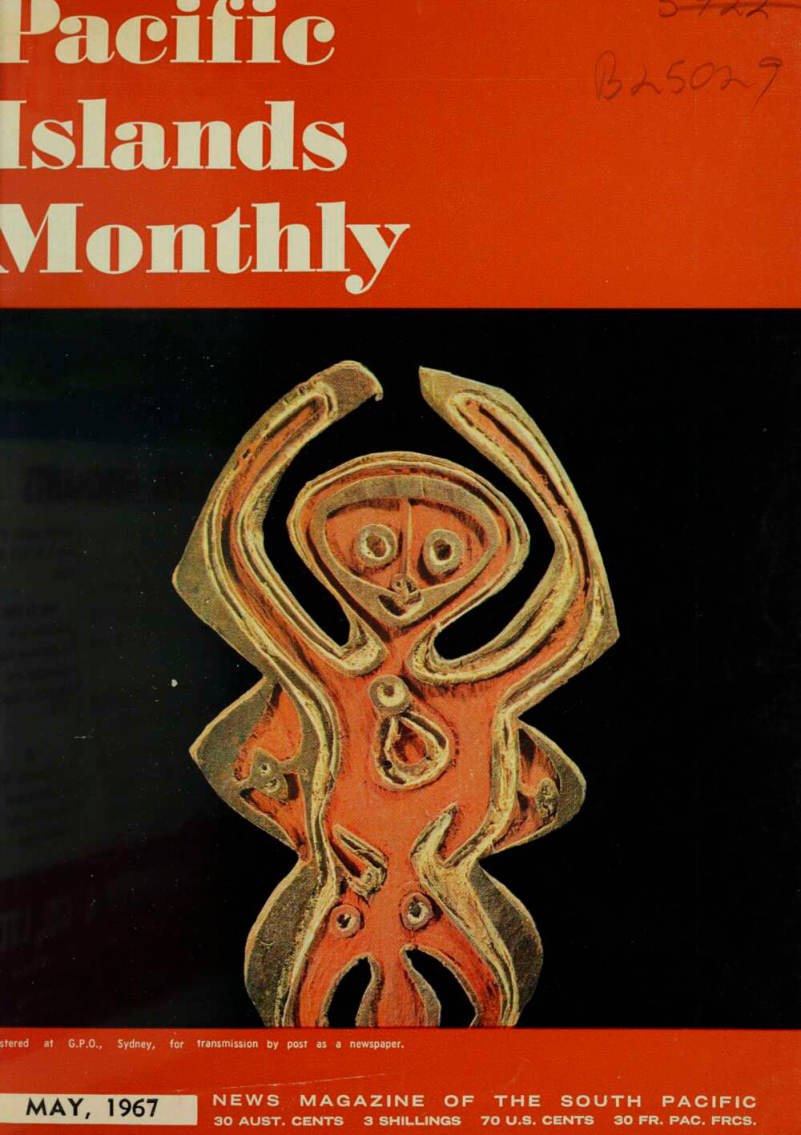 1
1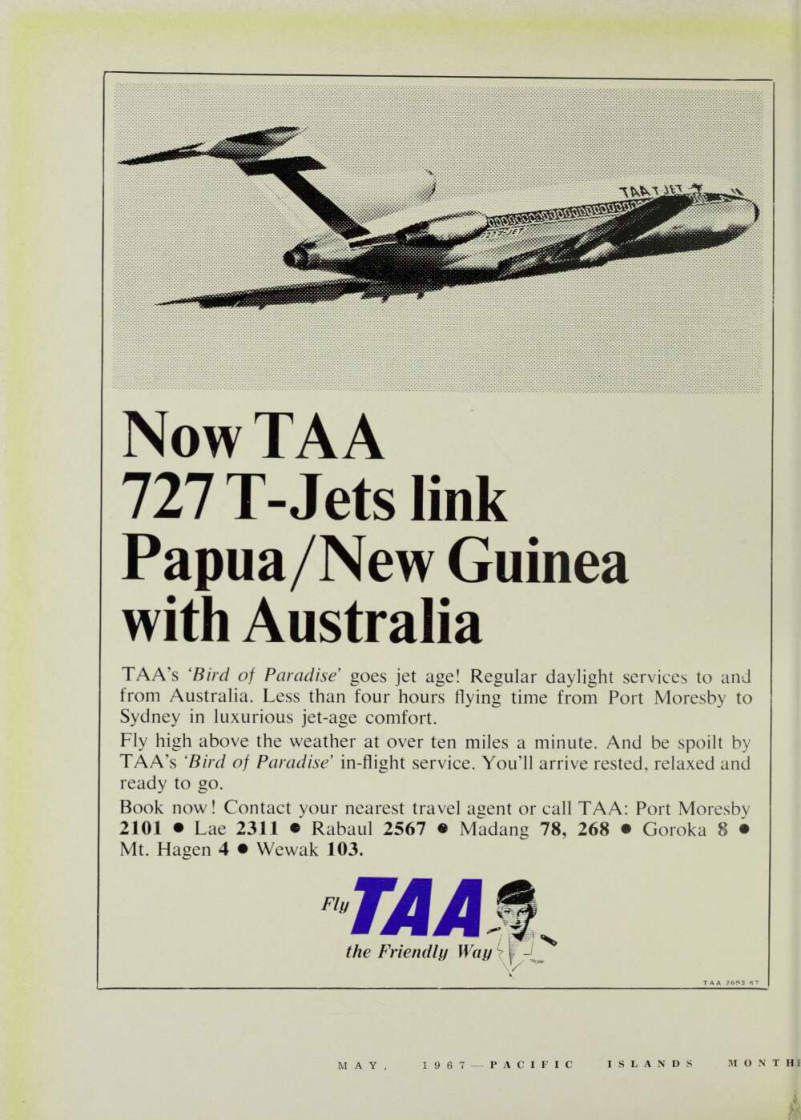 2
2 3
3 4
4 5
5 6
6 7
7 8
8 9
9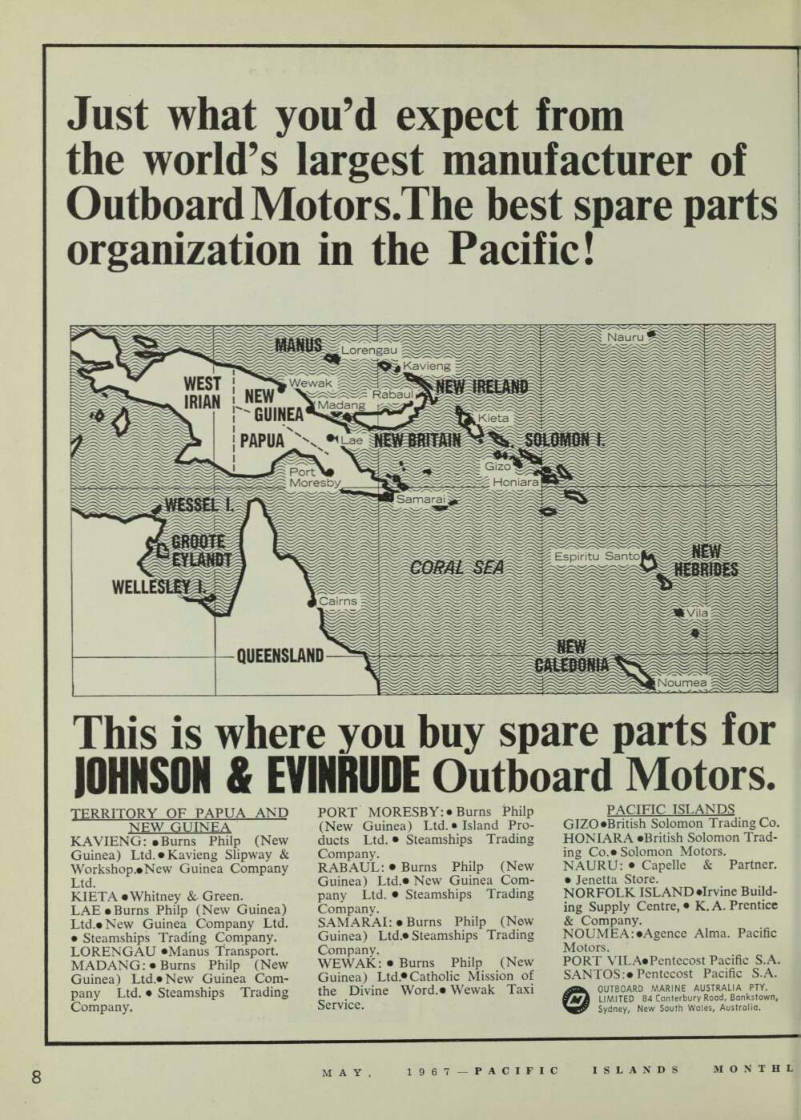 10
10 11
11 12
12 13
13 14
14 15
15 16
16 17
17 18
18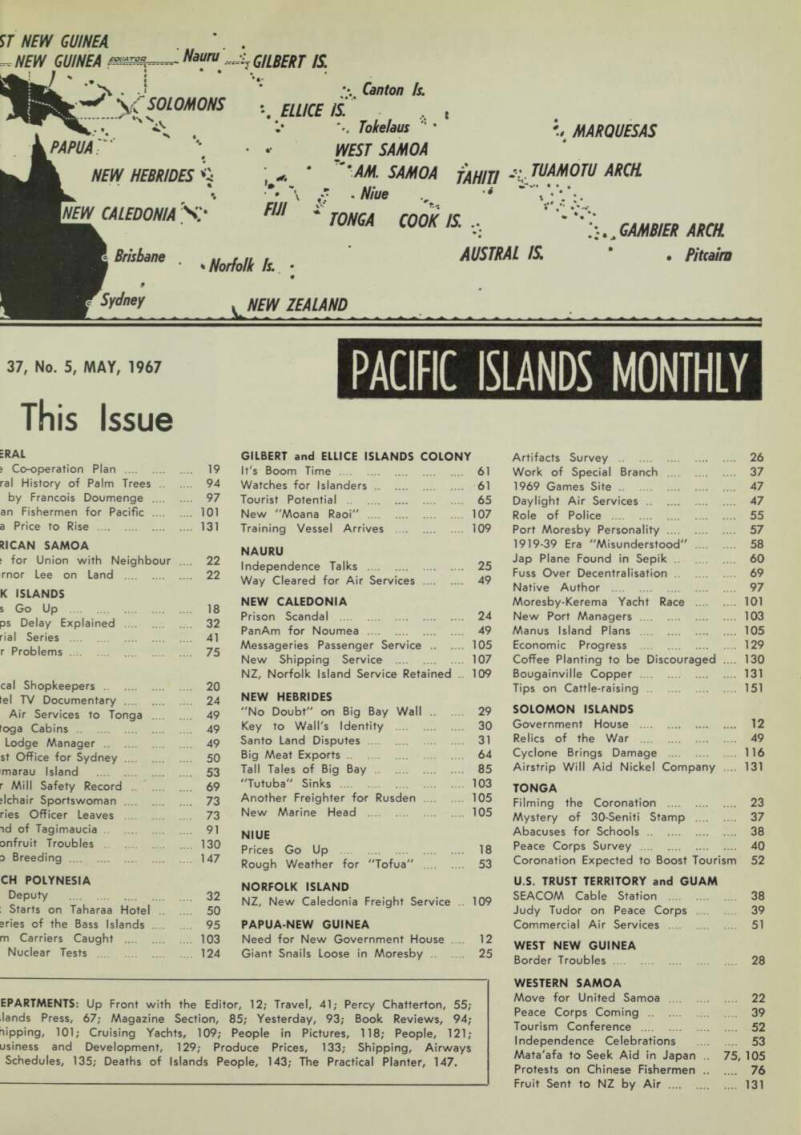 19
19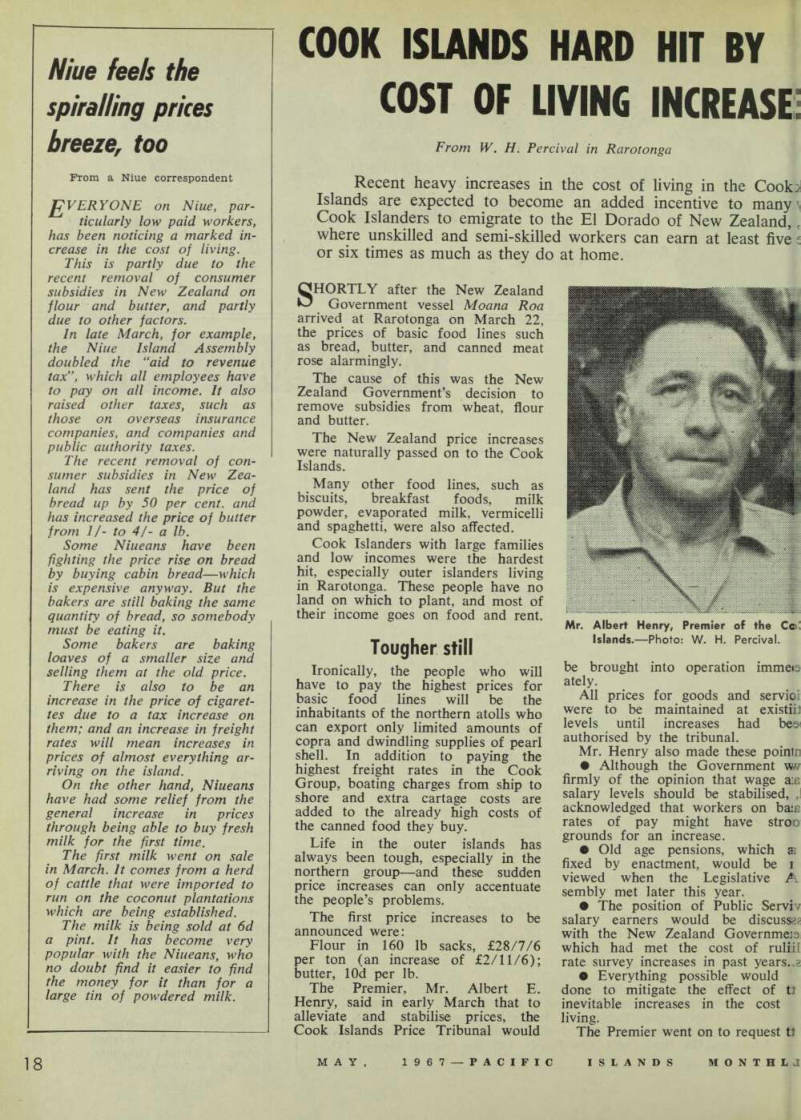 20
20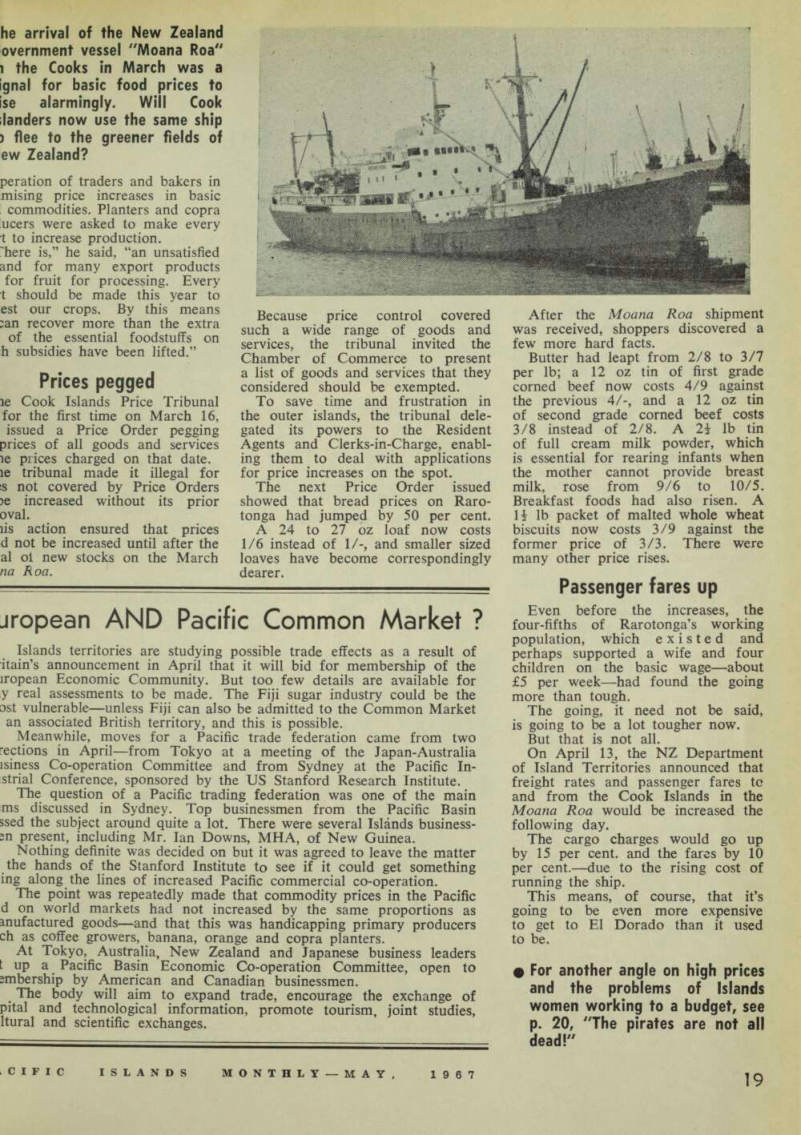 21
21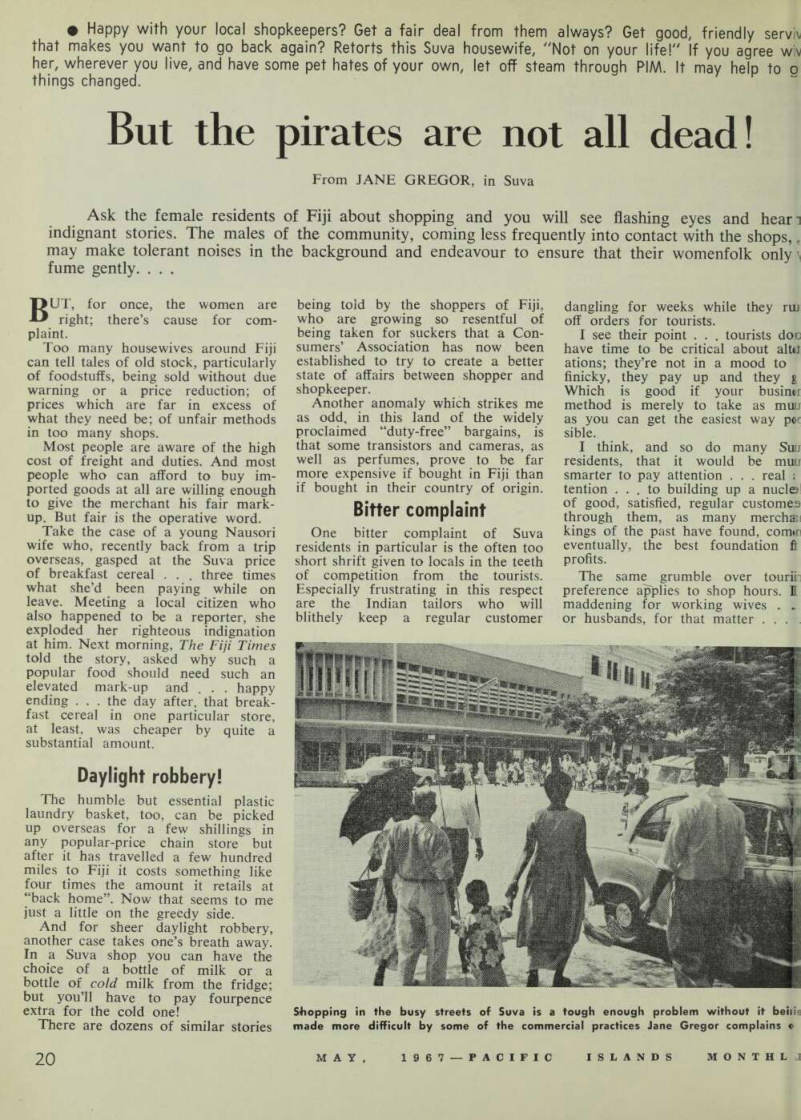 22
22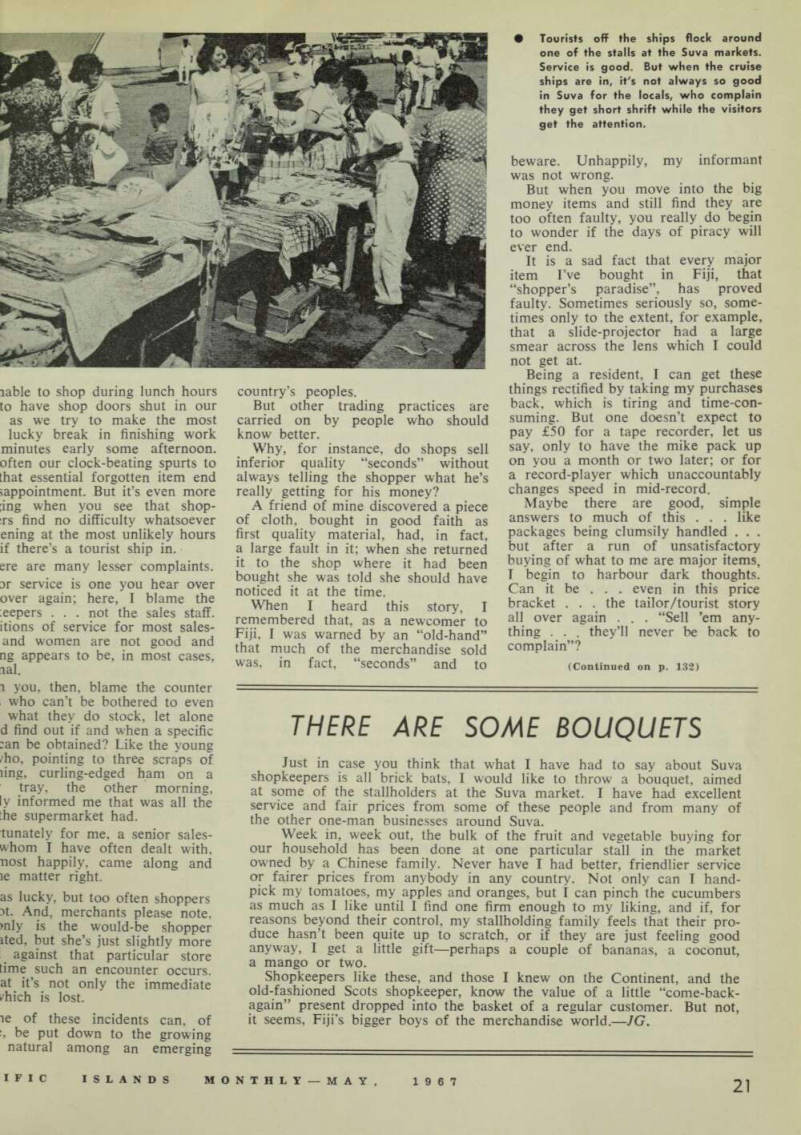 23
23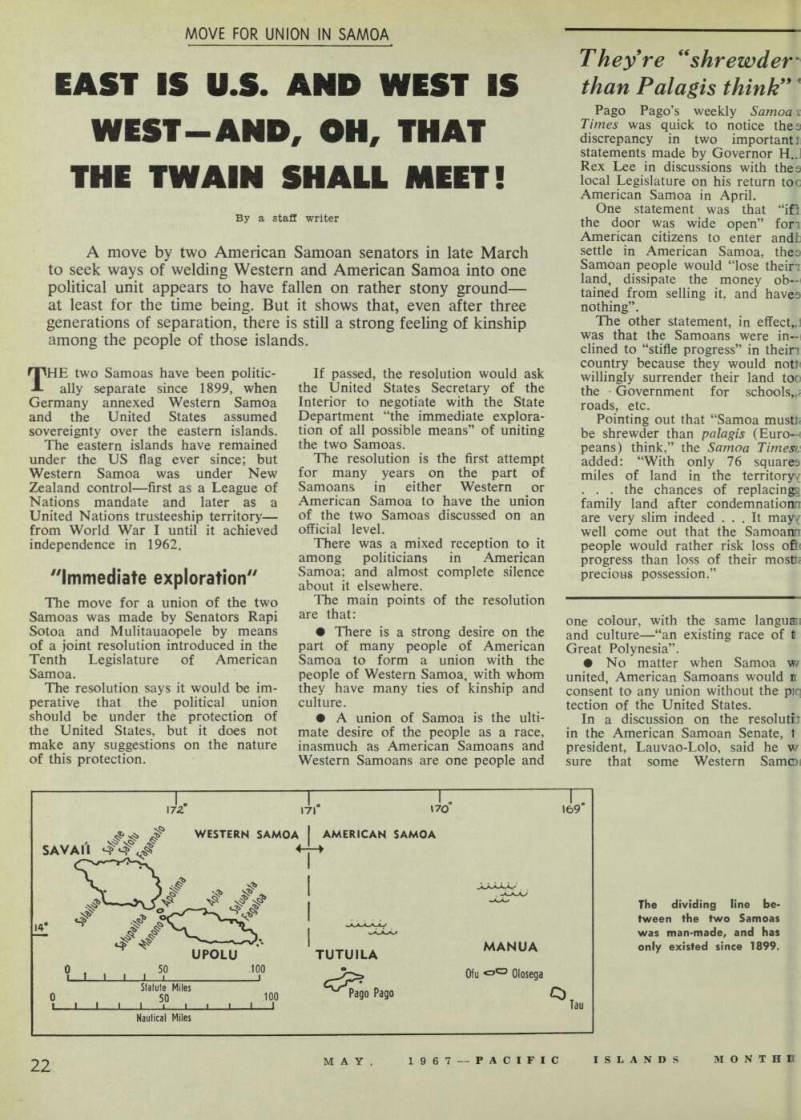 24
24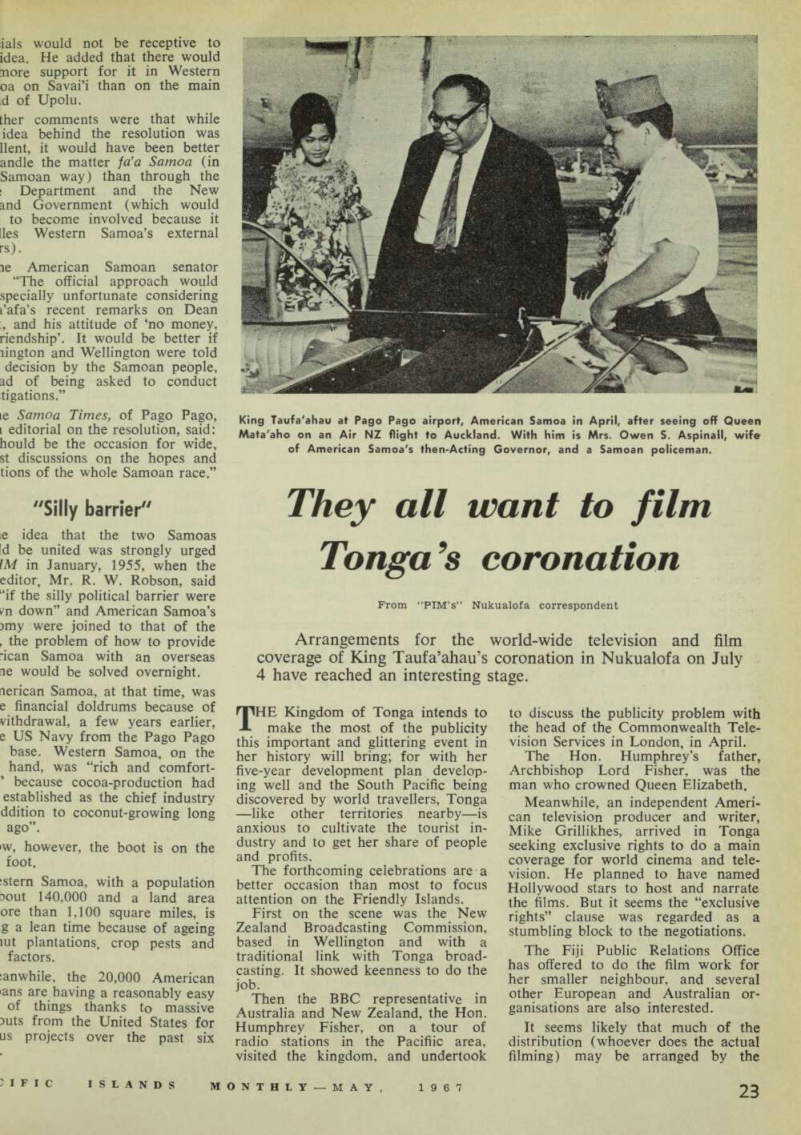 25
25 26
26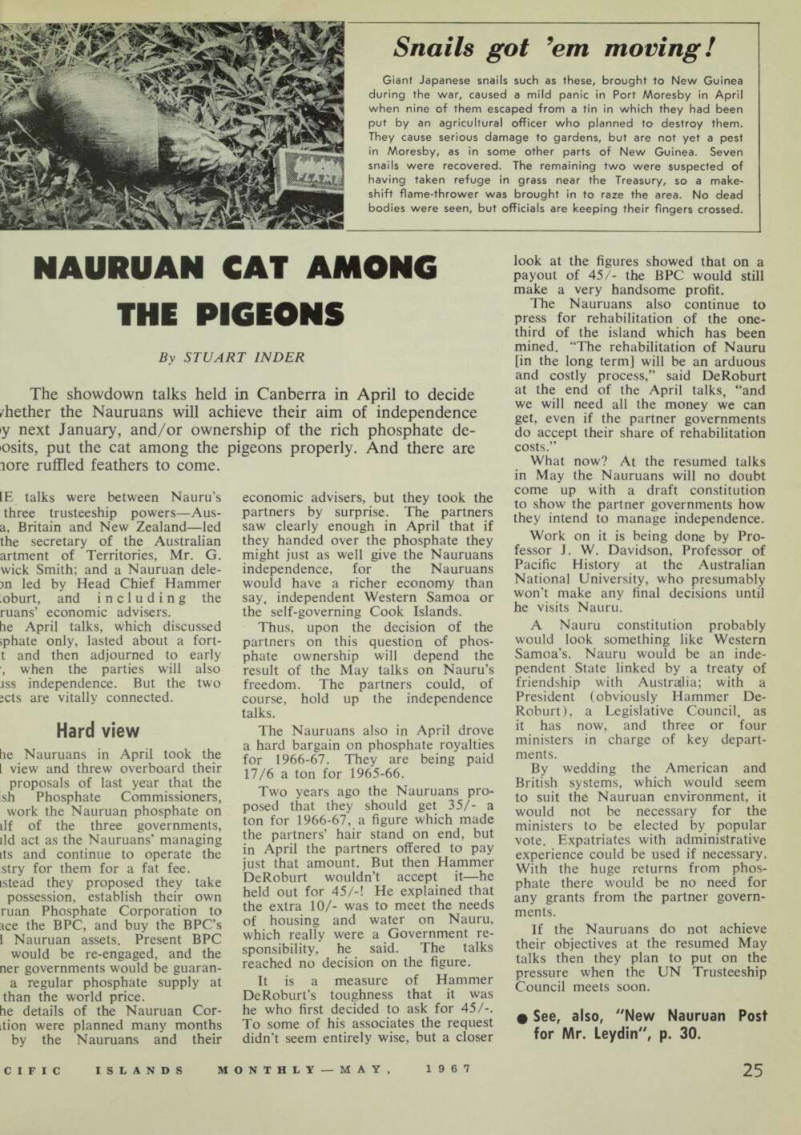 27
27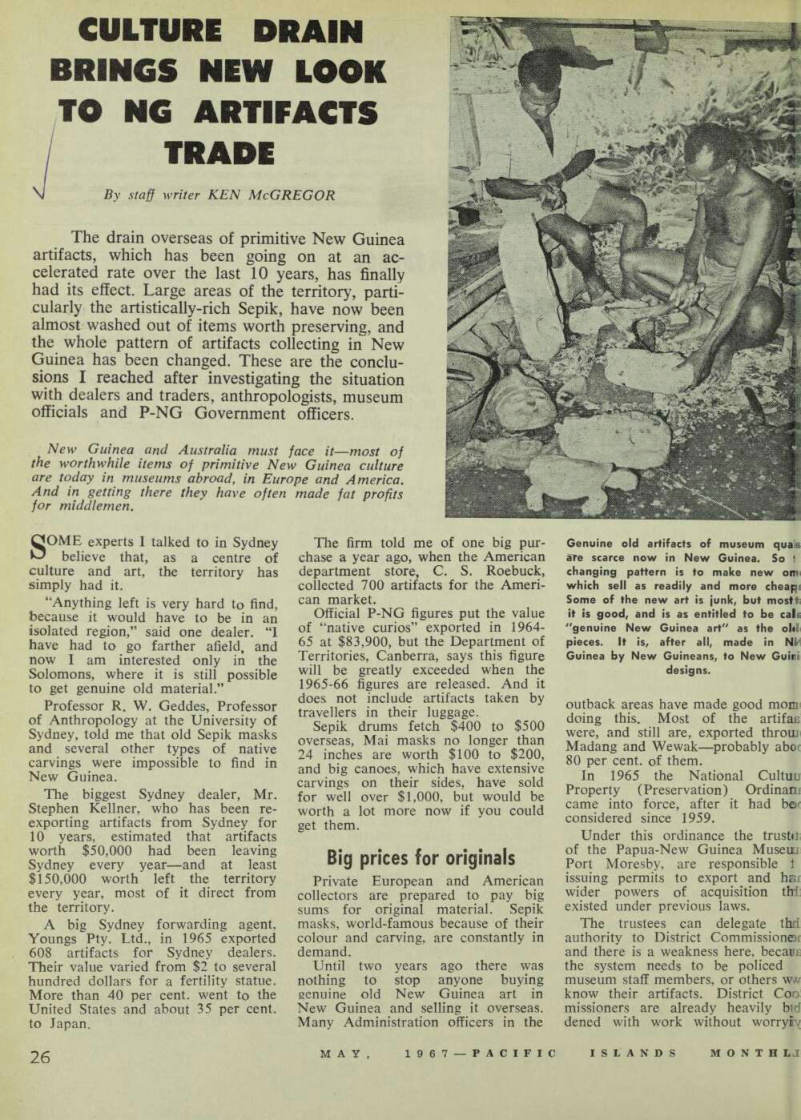 28
28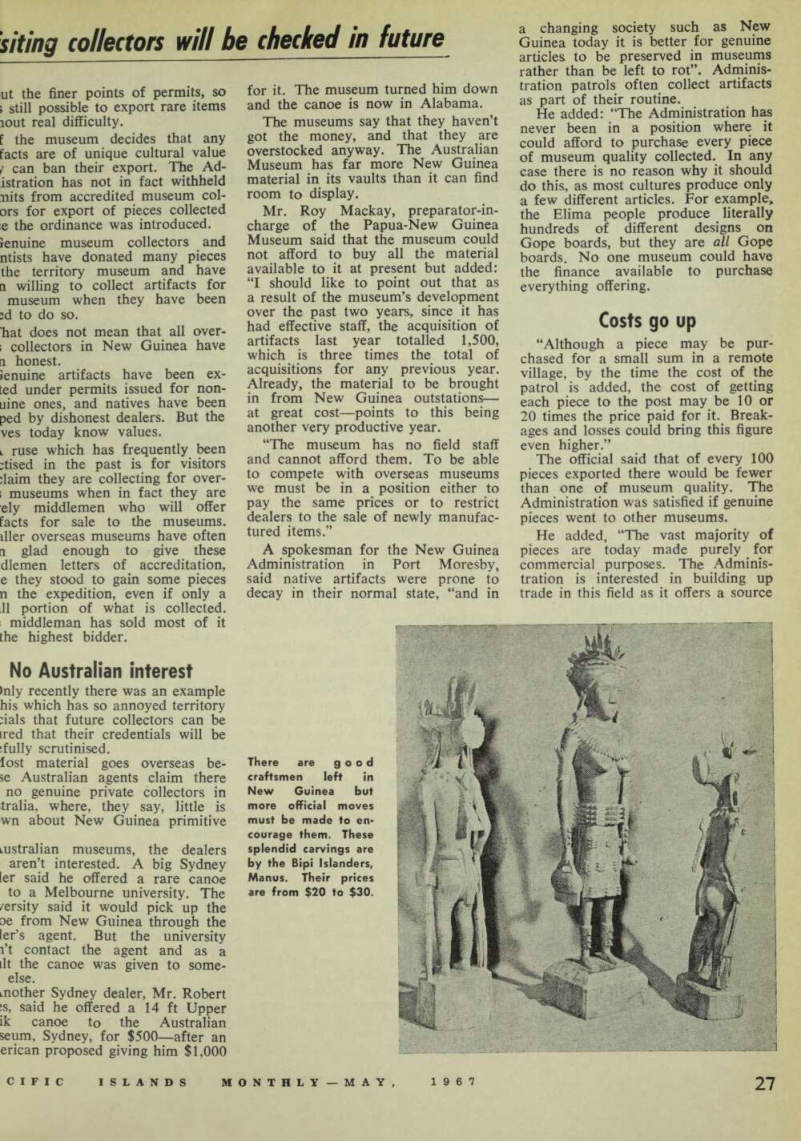 29
29 30
30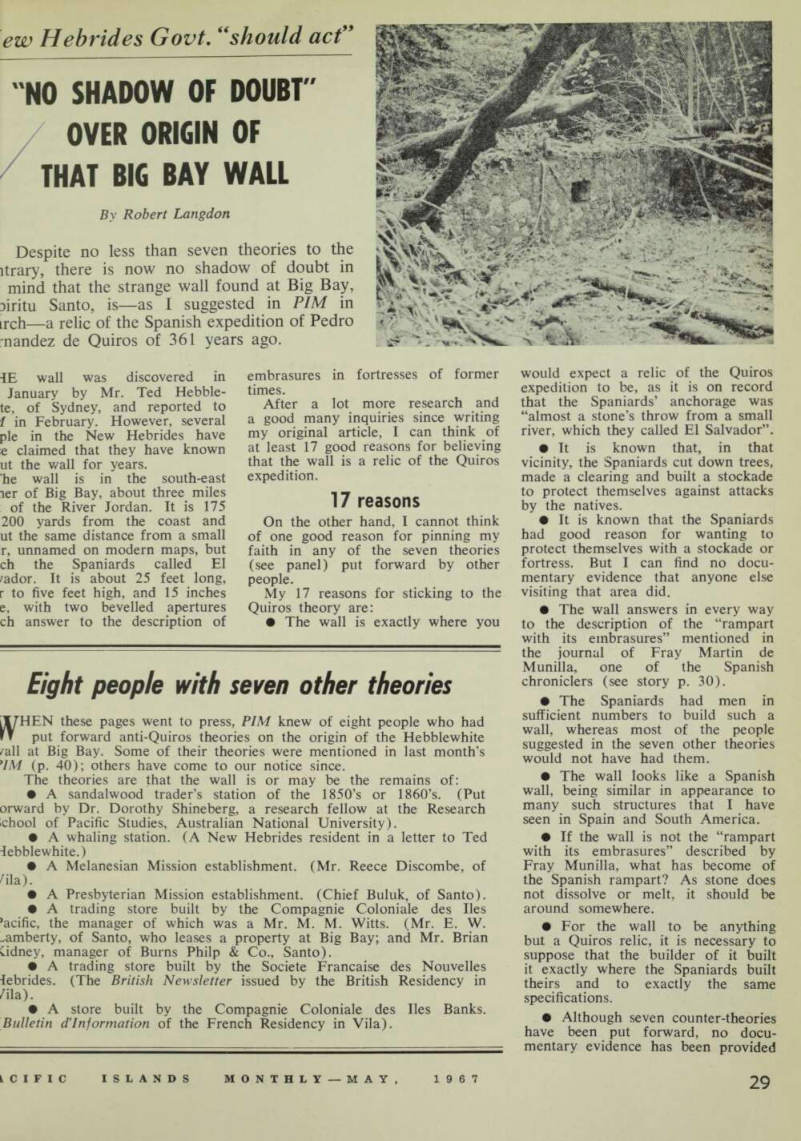 31
31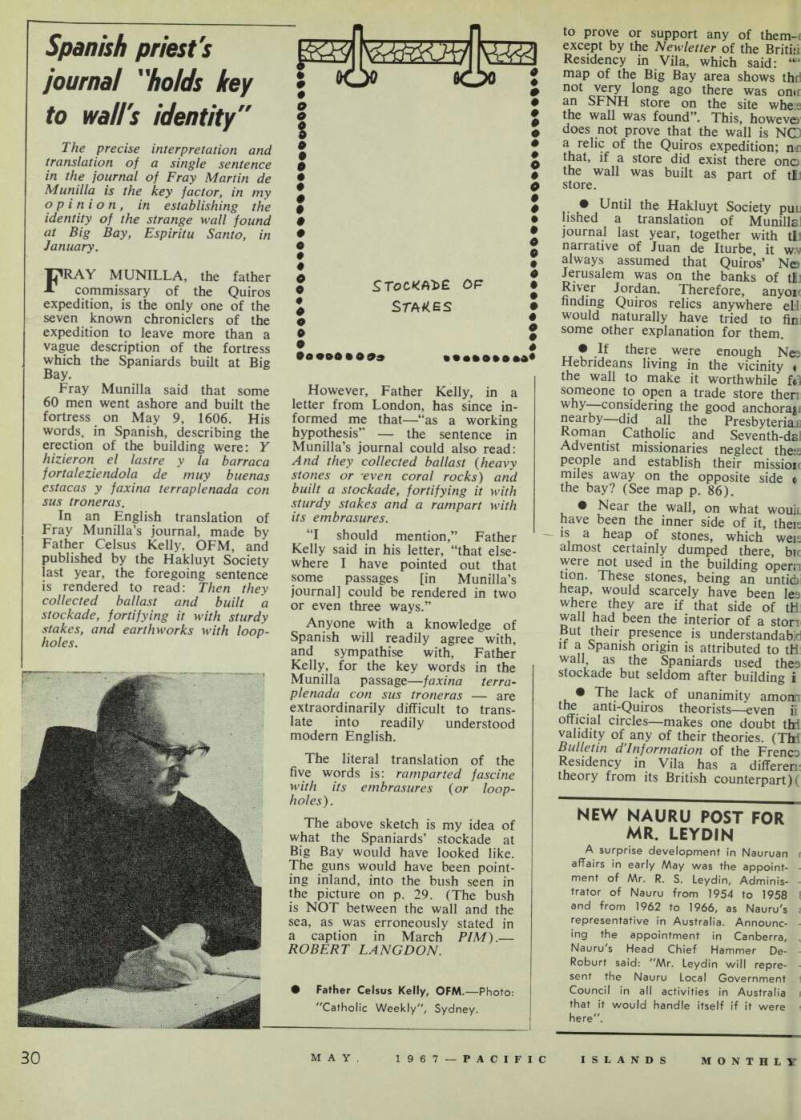 32
32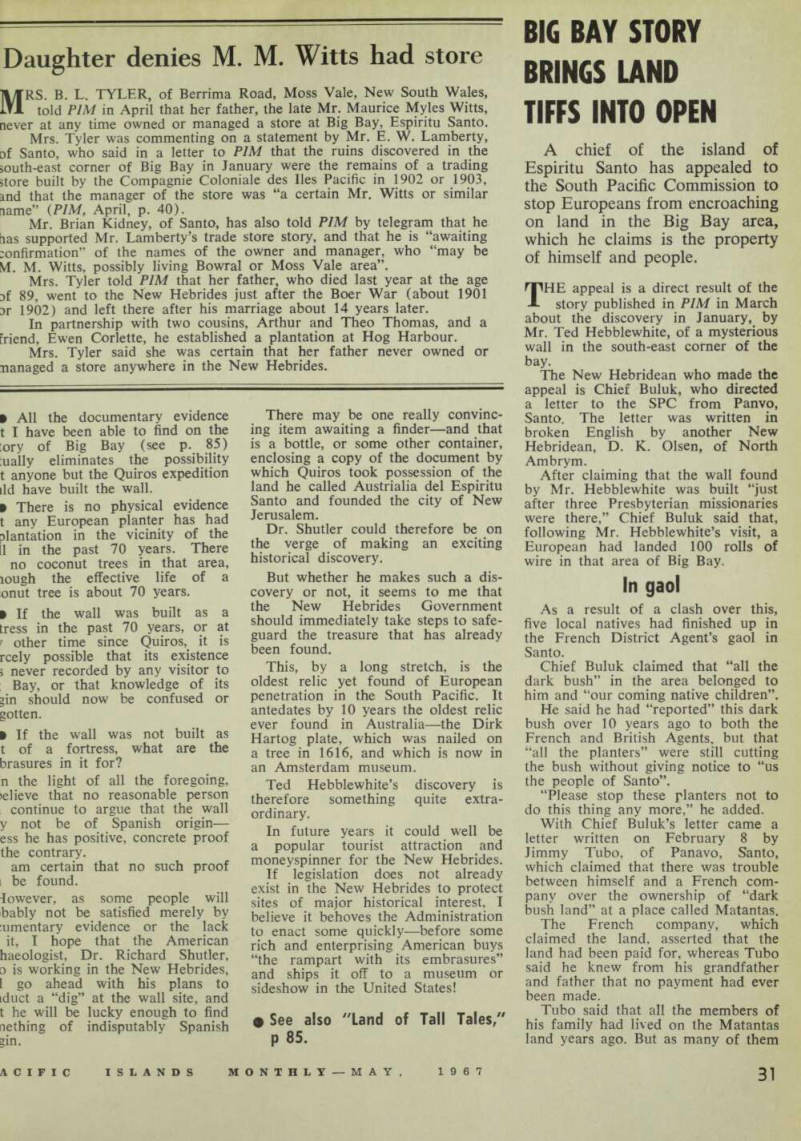 33
33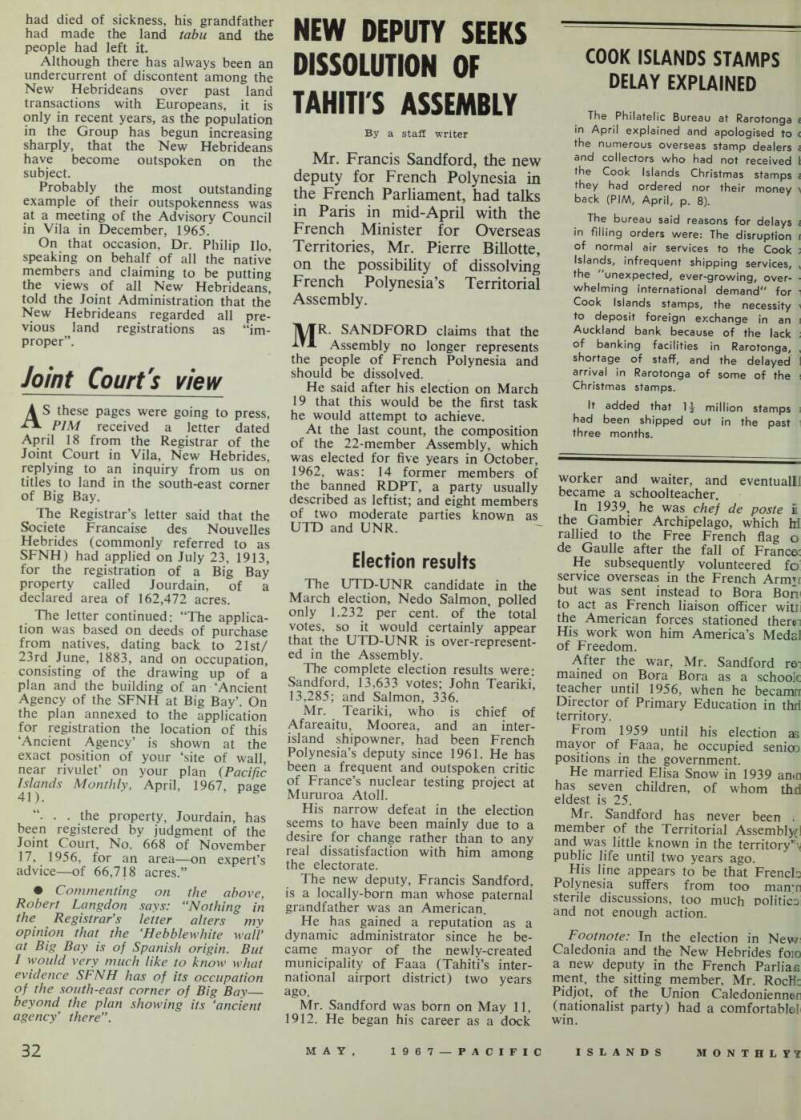 34
34 35
35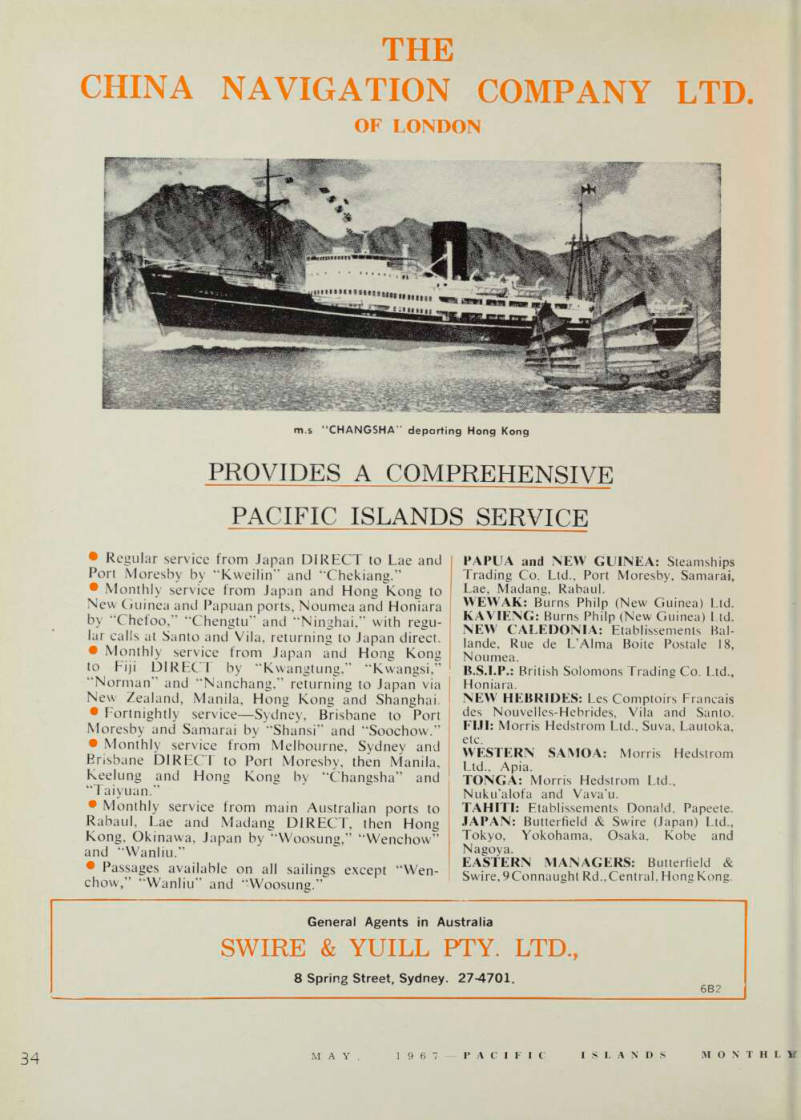 36
36 37
37 38
38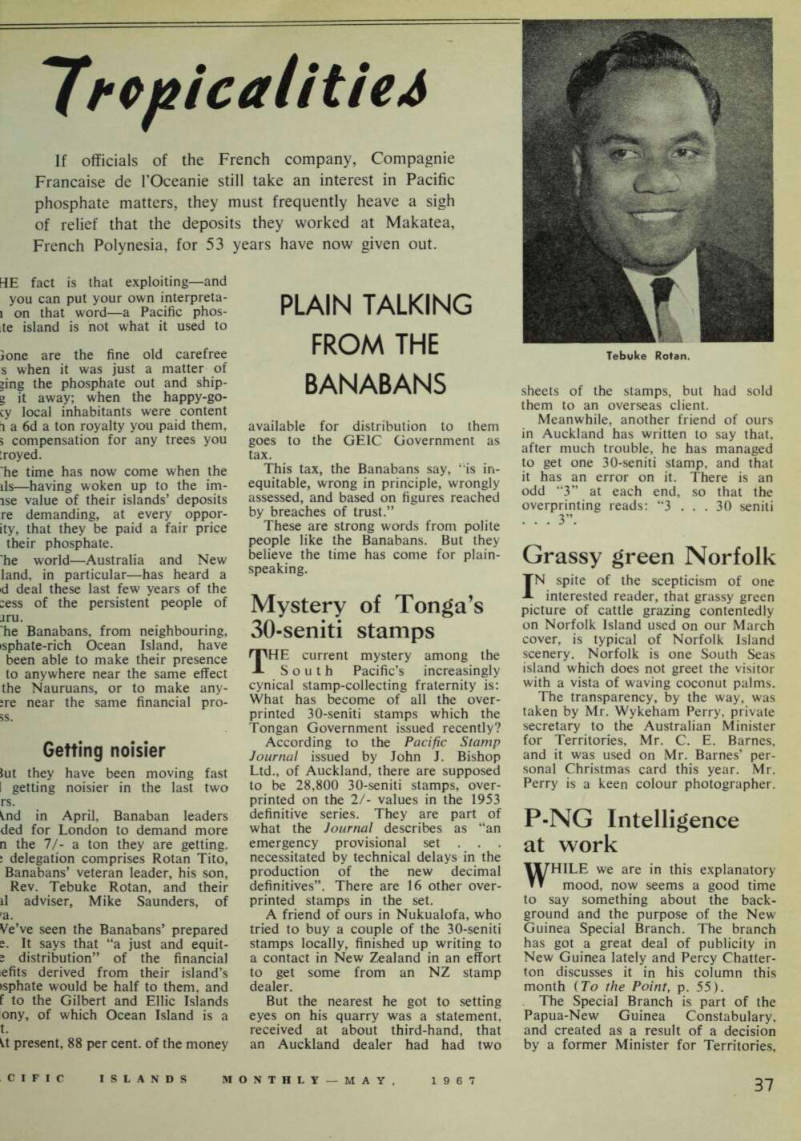 39
39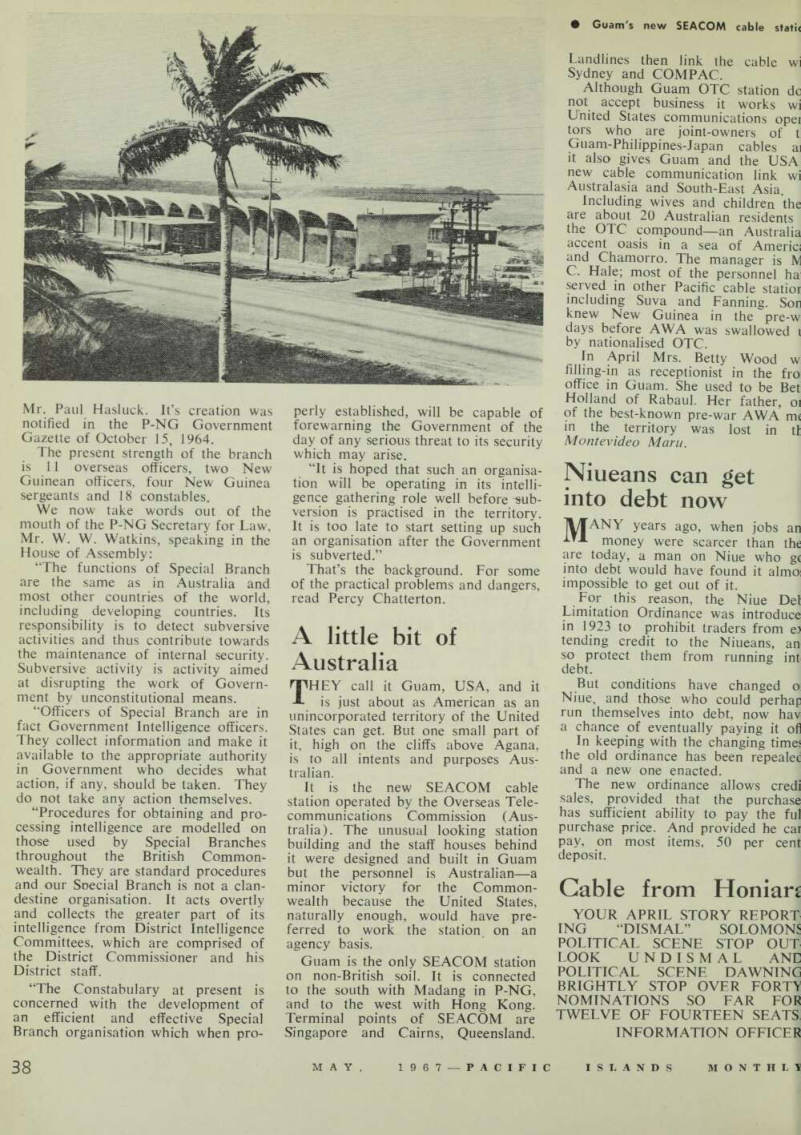 40
40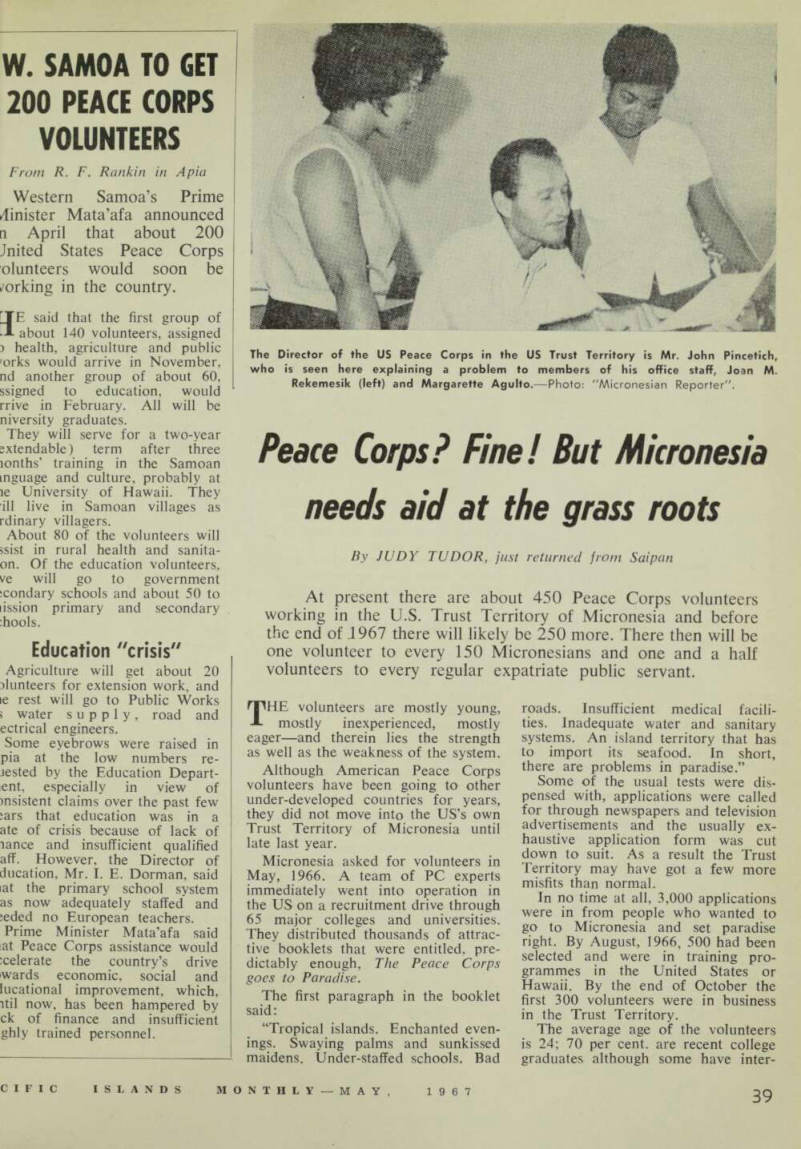 41
41 42
42 43
43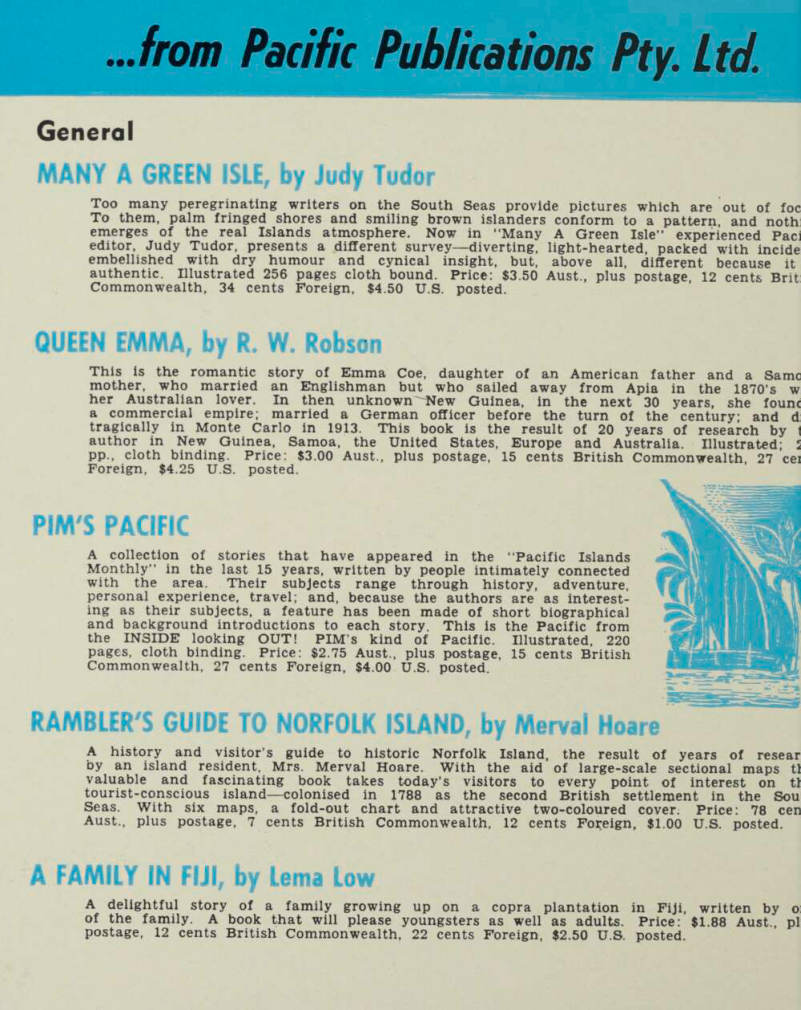 44
44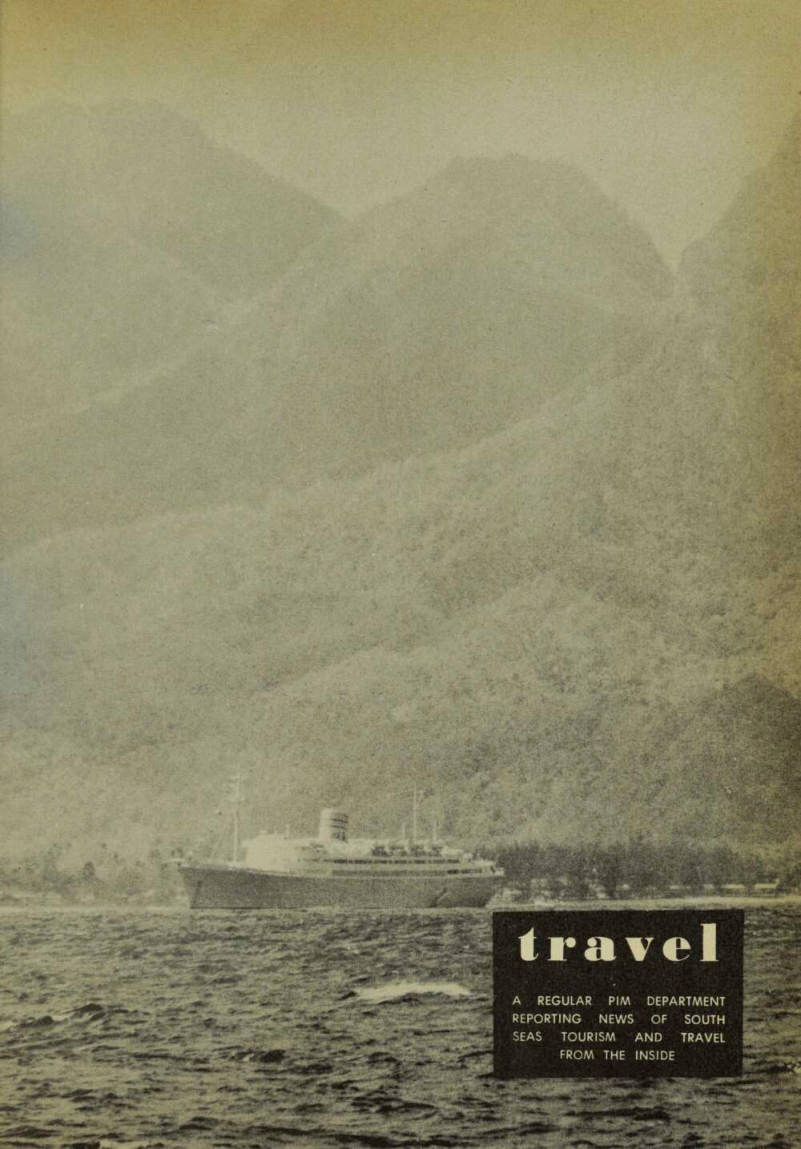 45
45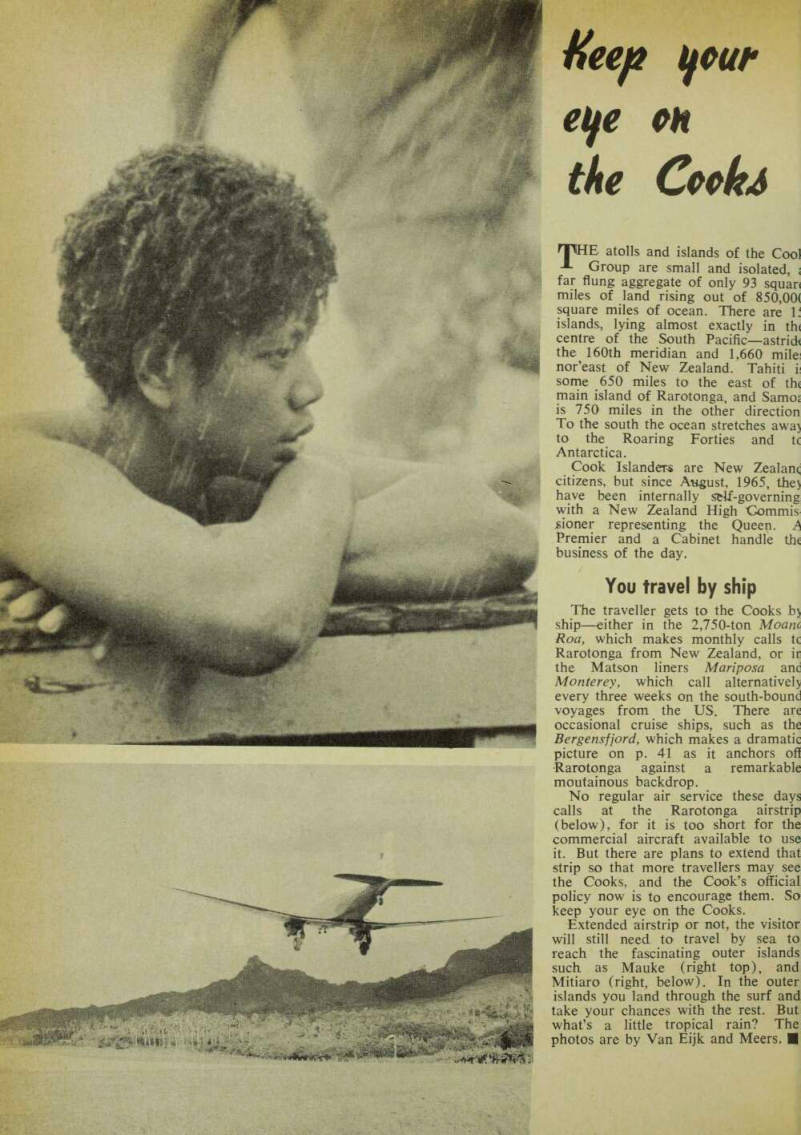 46
46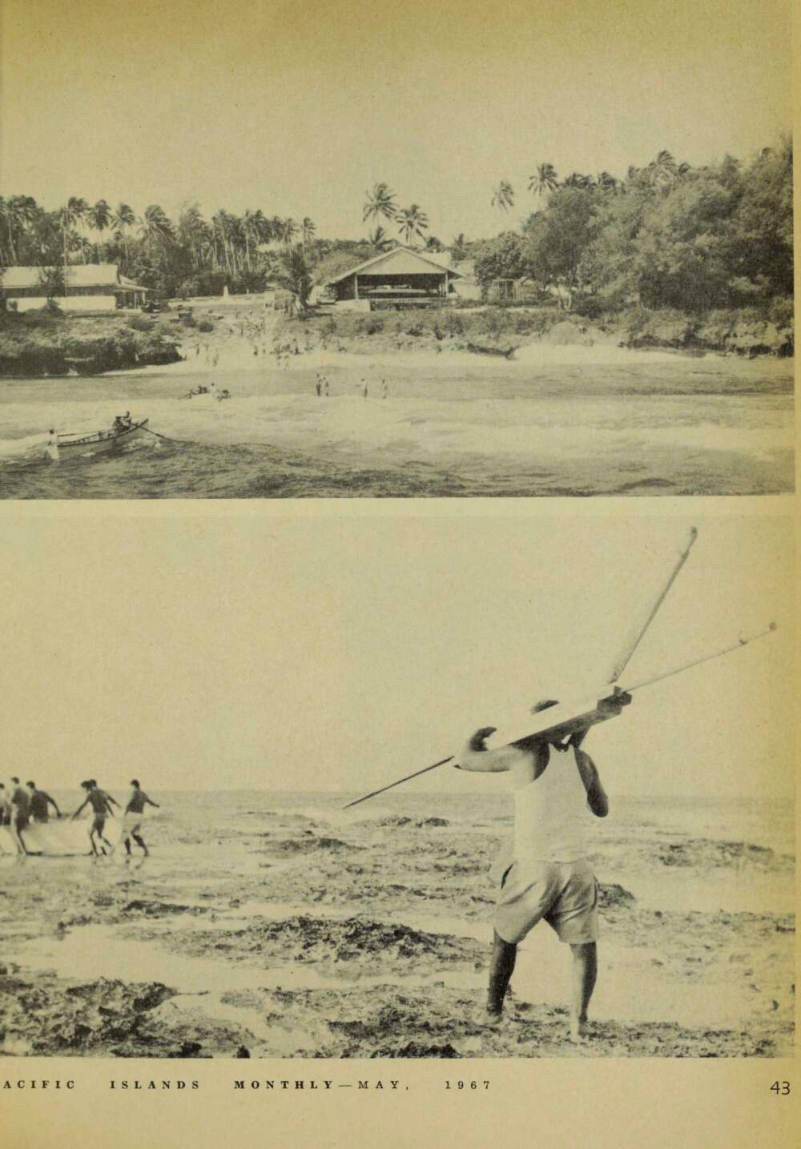 47
47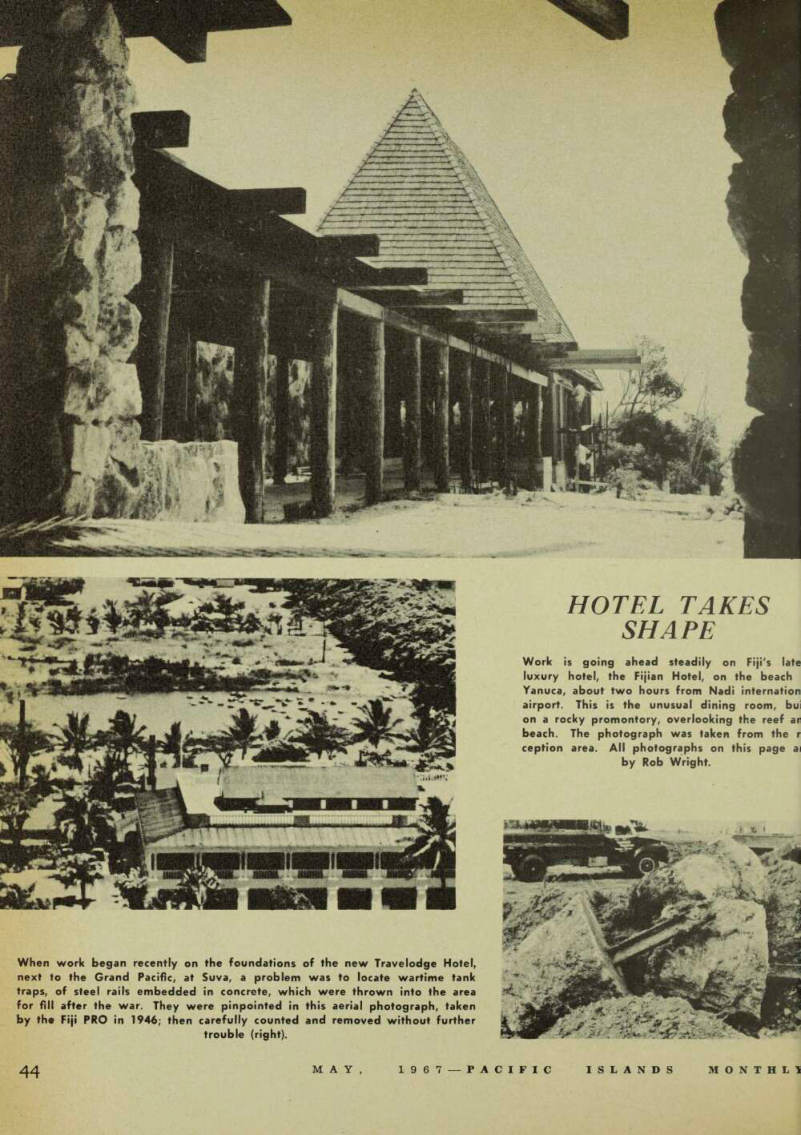 48
48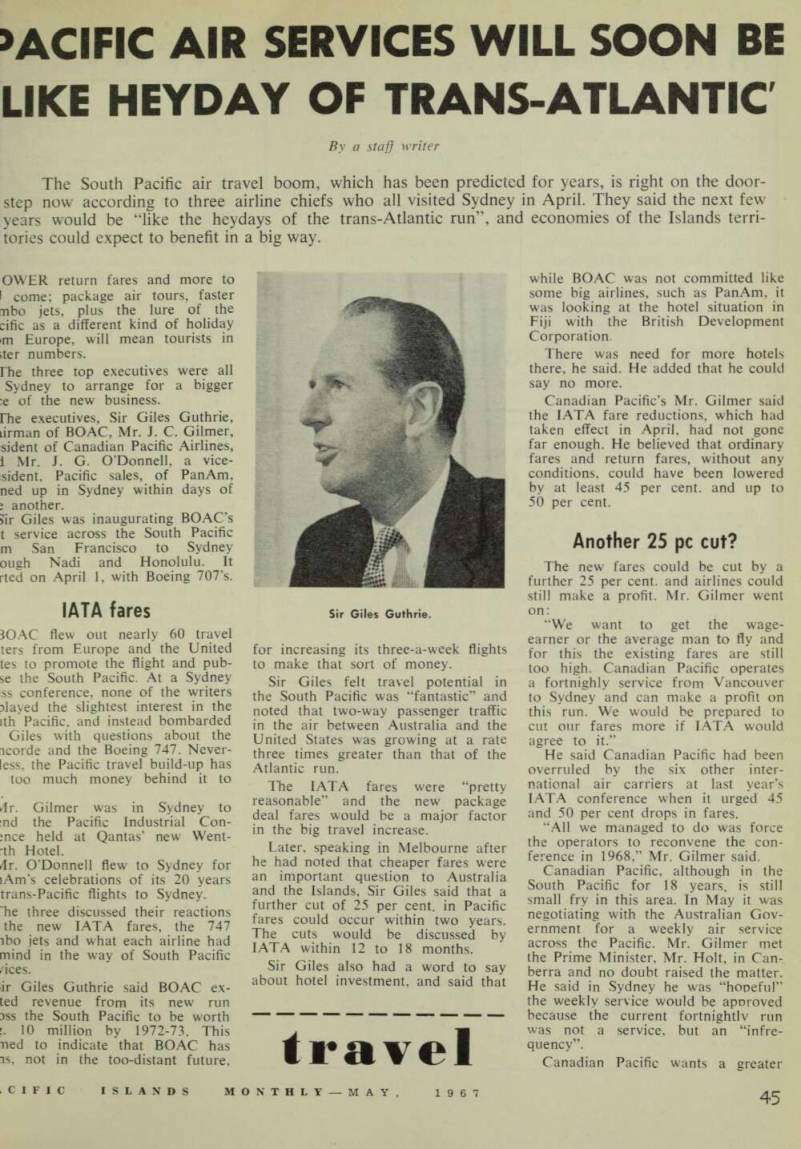 49
49 50
50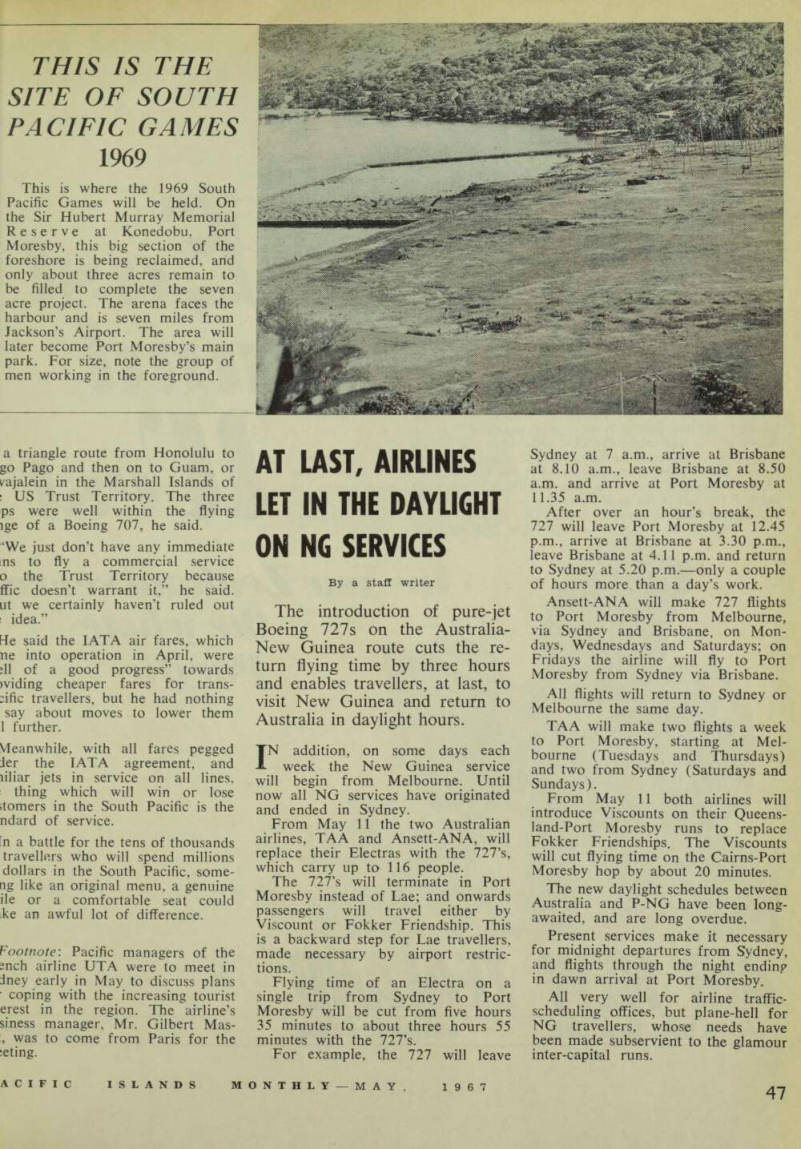 51
51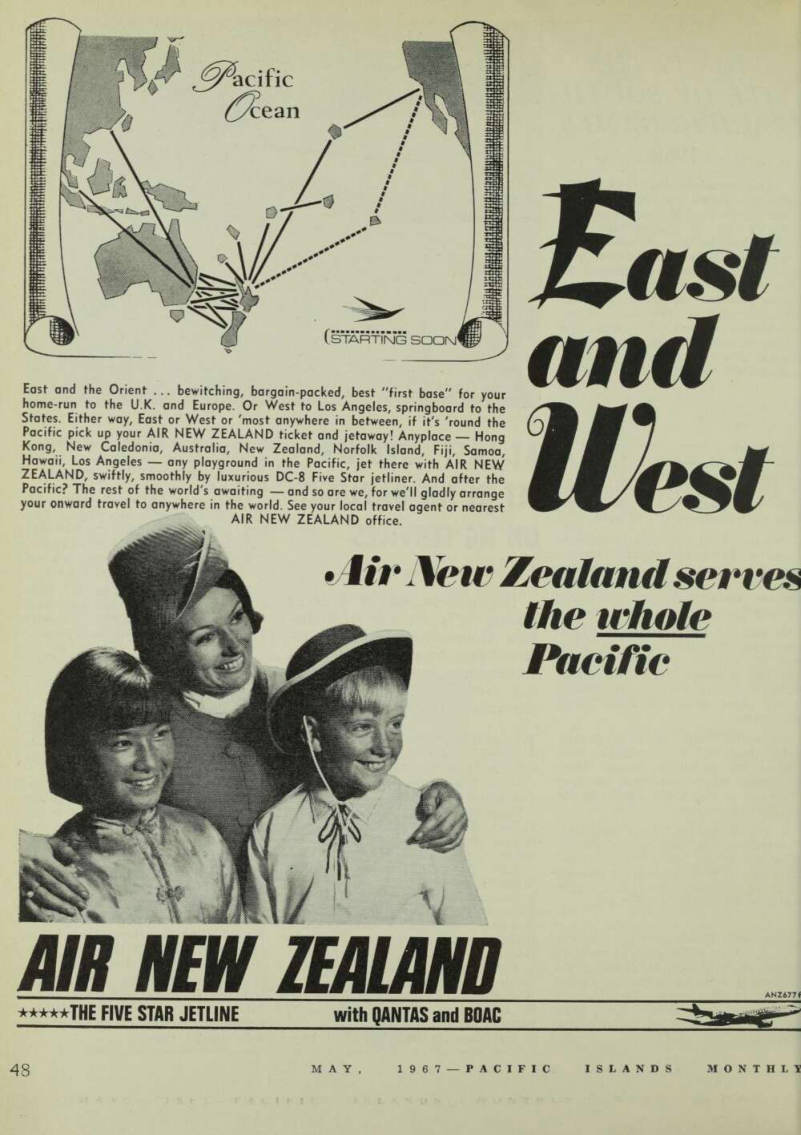 52
52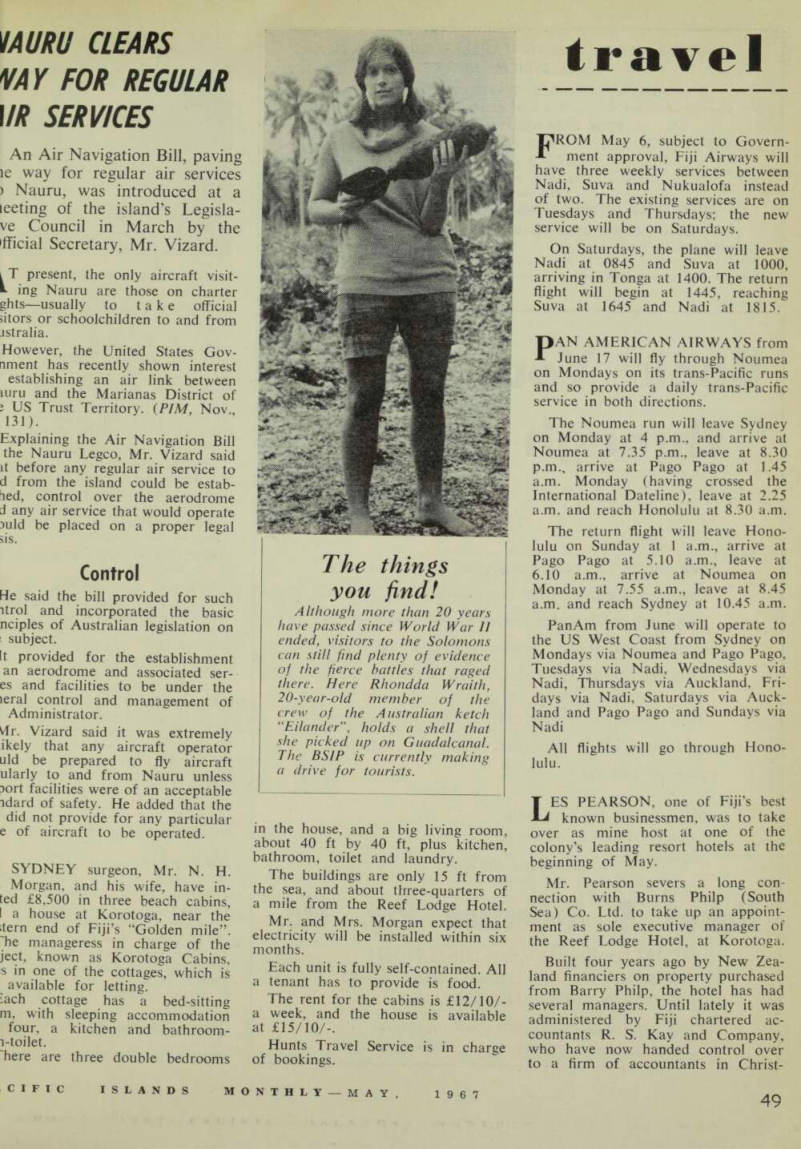 53
53 54
54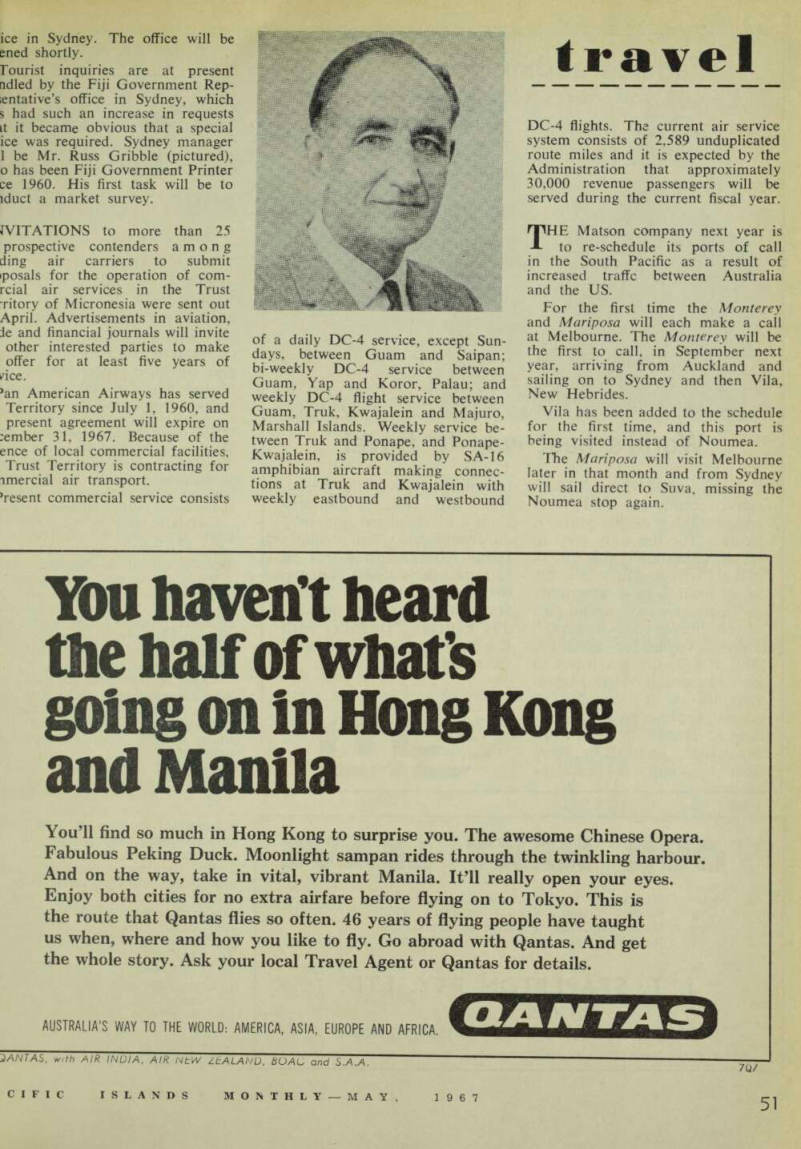 55
55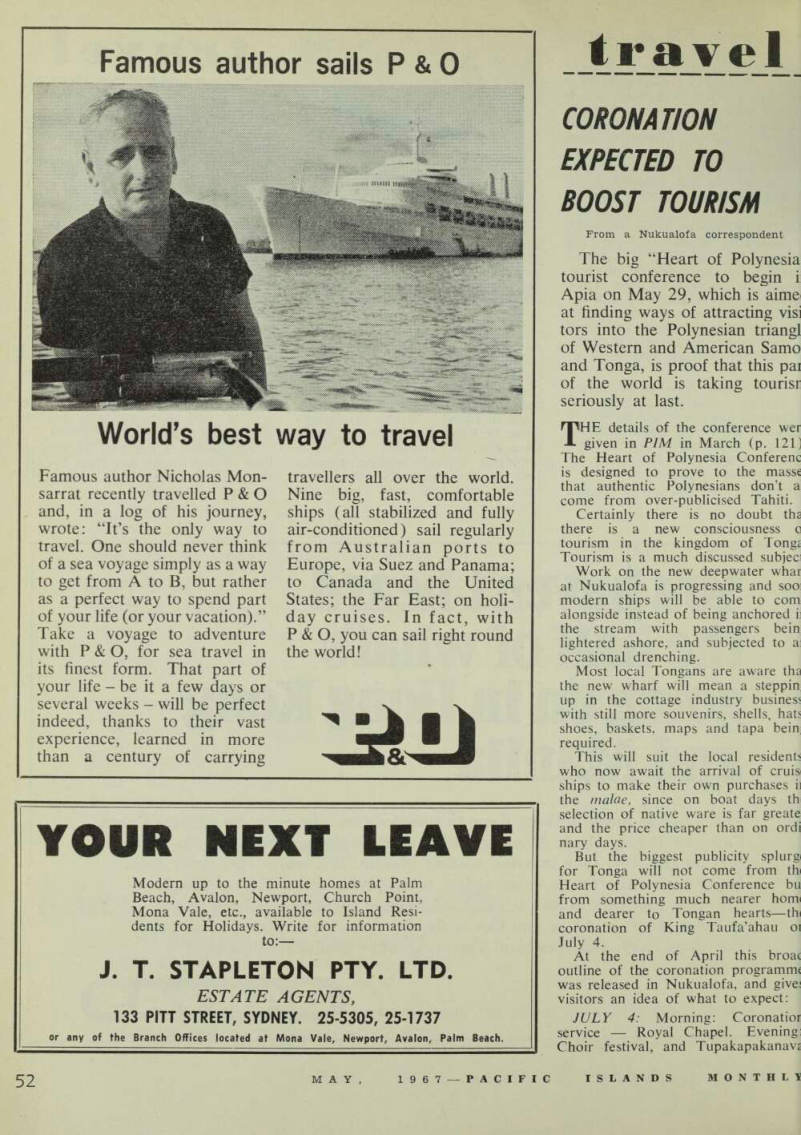 56
56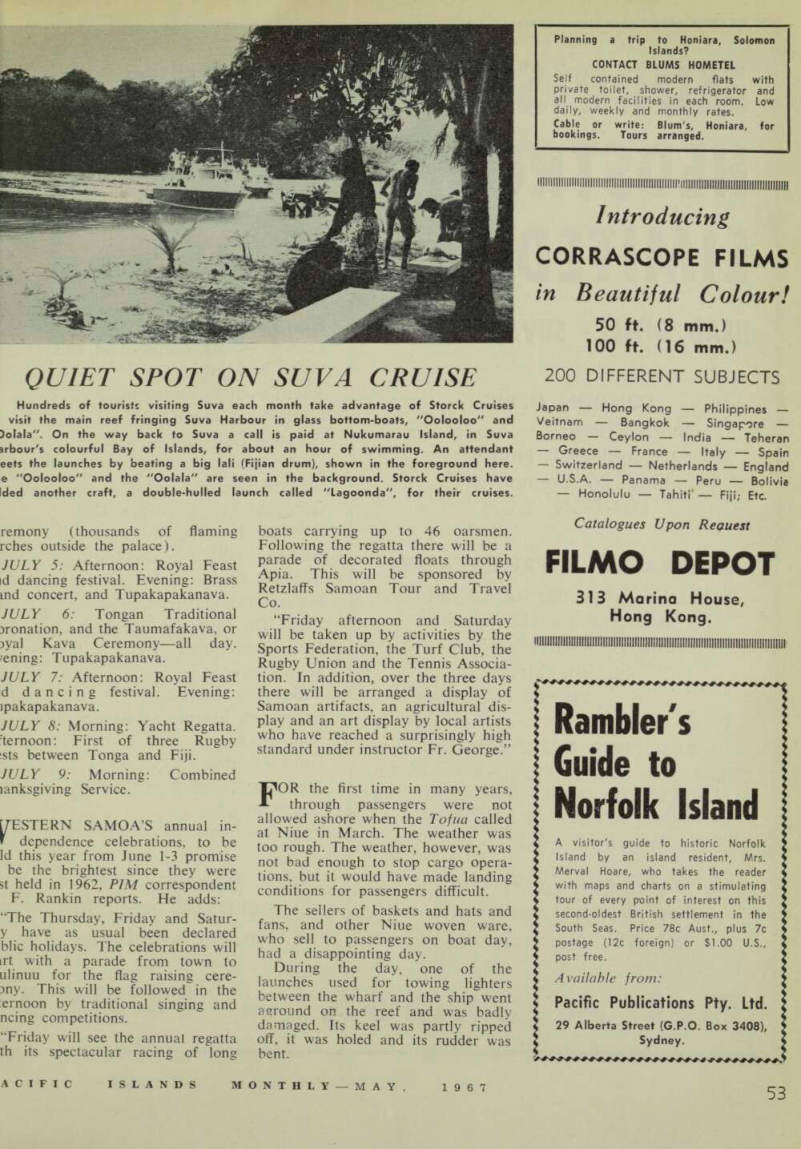 57
57 58
58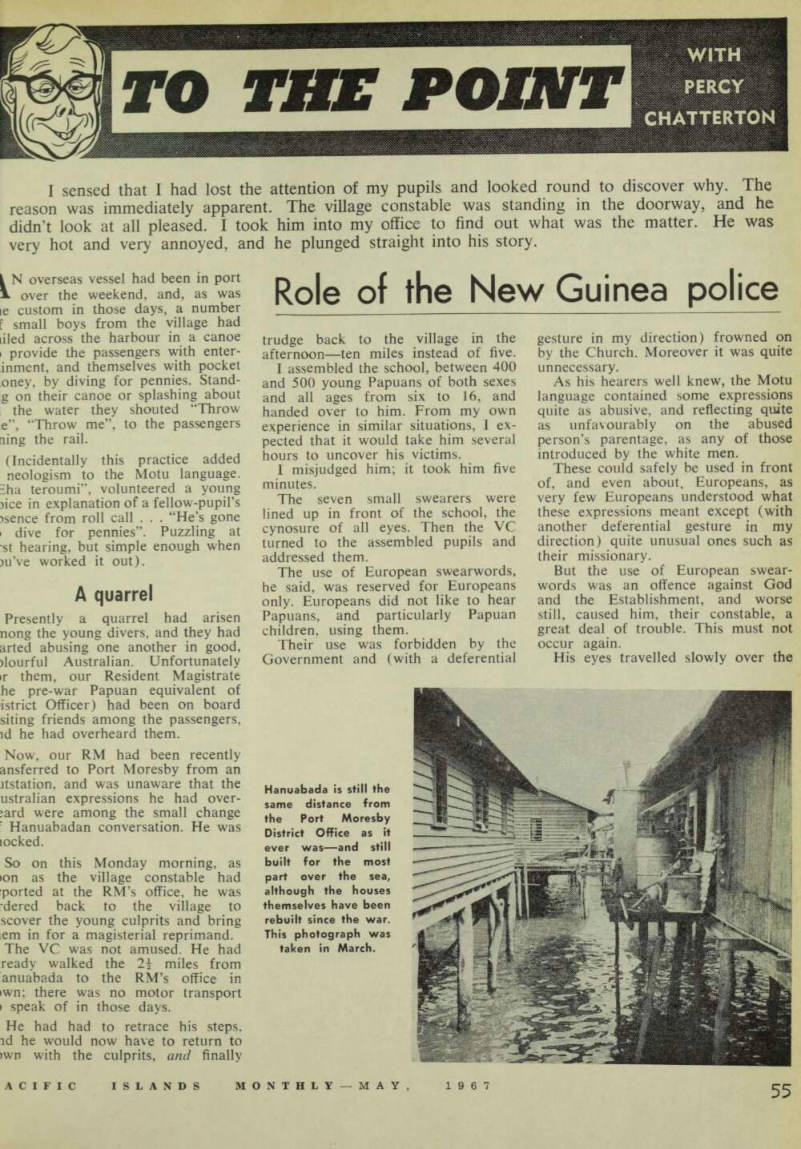 59
59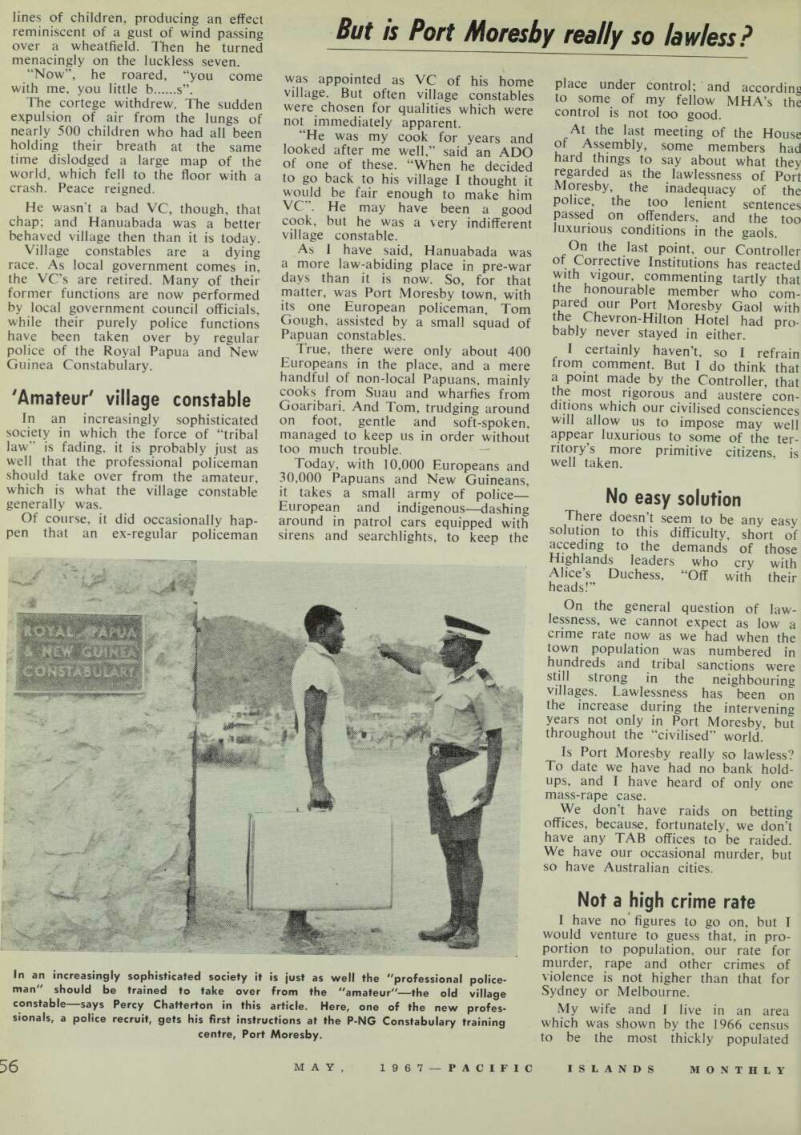 60
60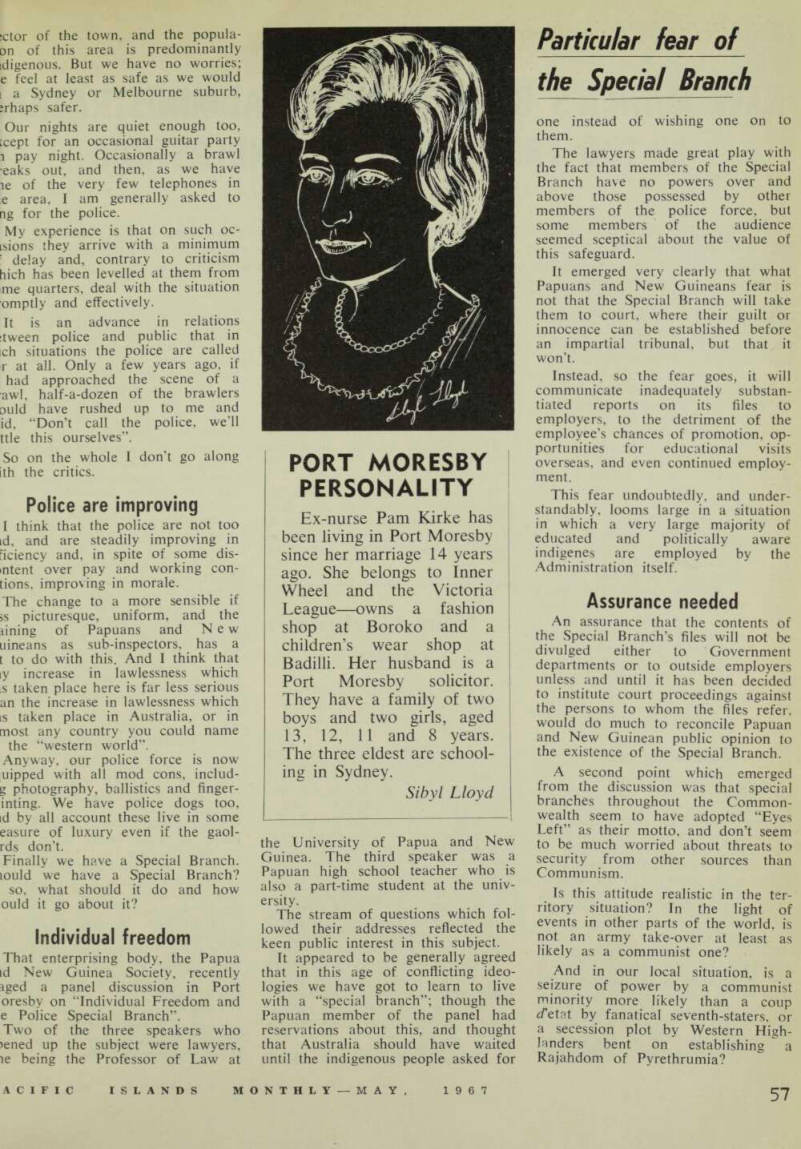 61
61 62
62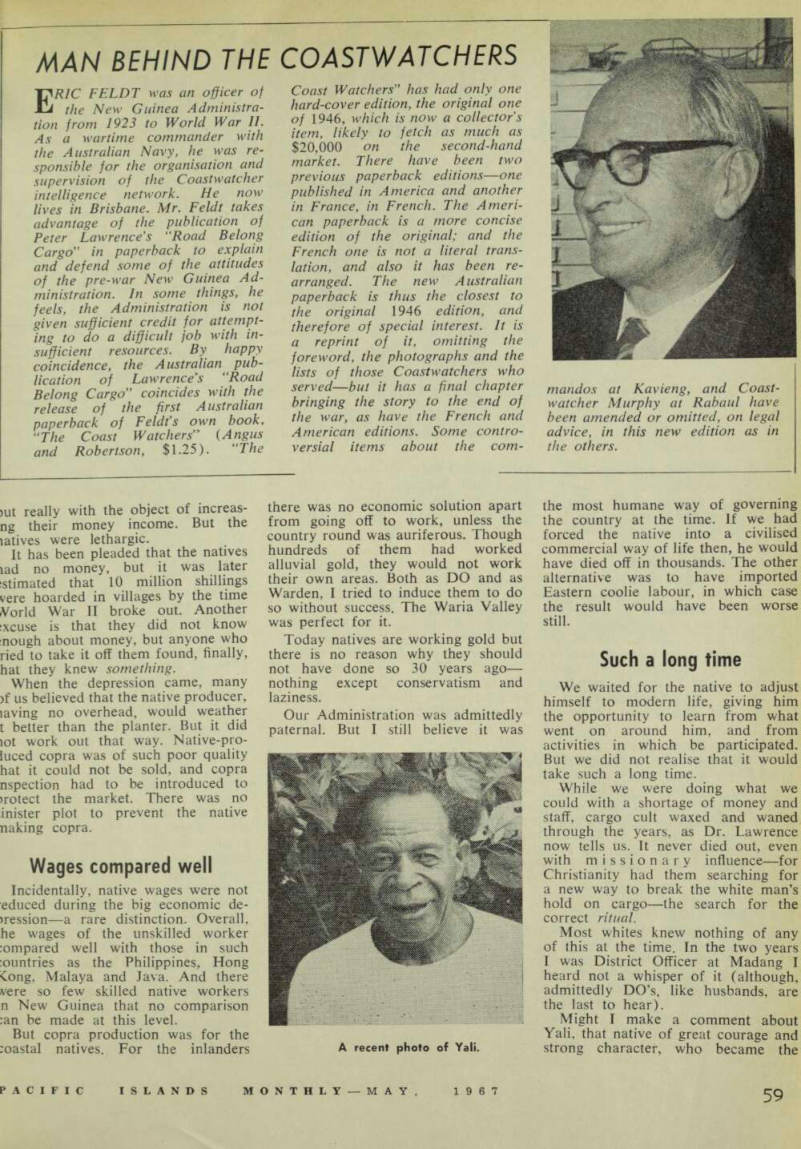 63
63 64
64 65
65 66
66 67
67 68
68 69
69 70
70 71
71 72
72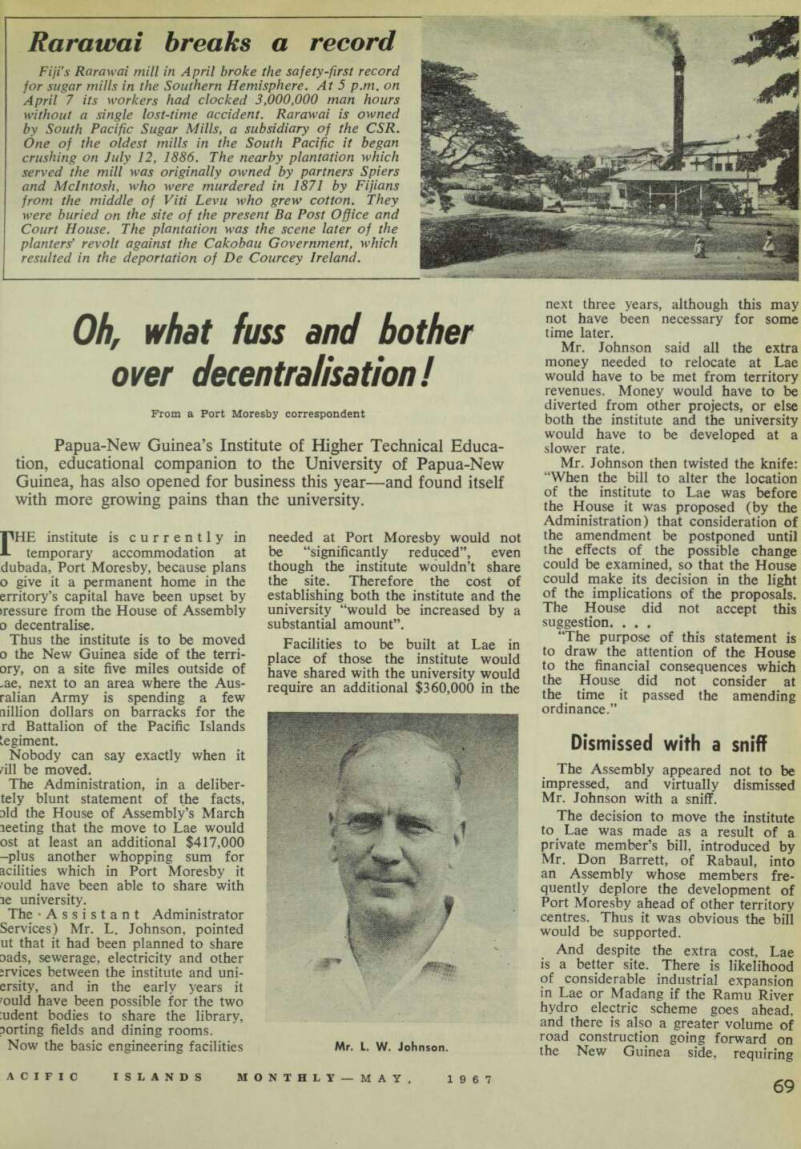 73
73 74
74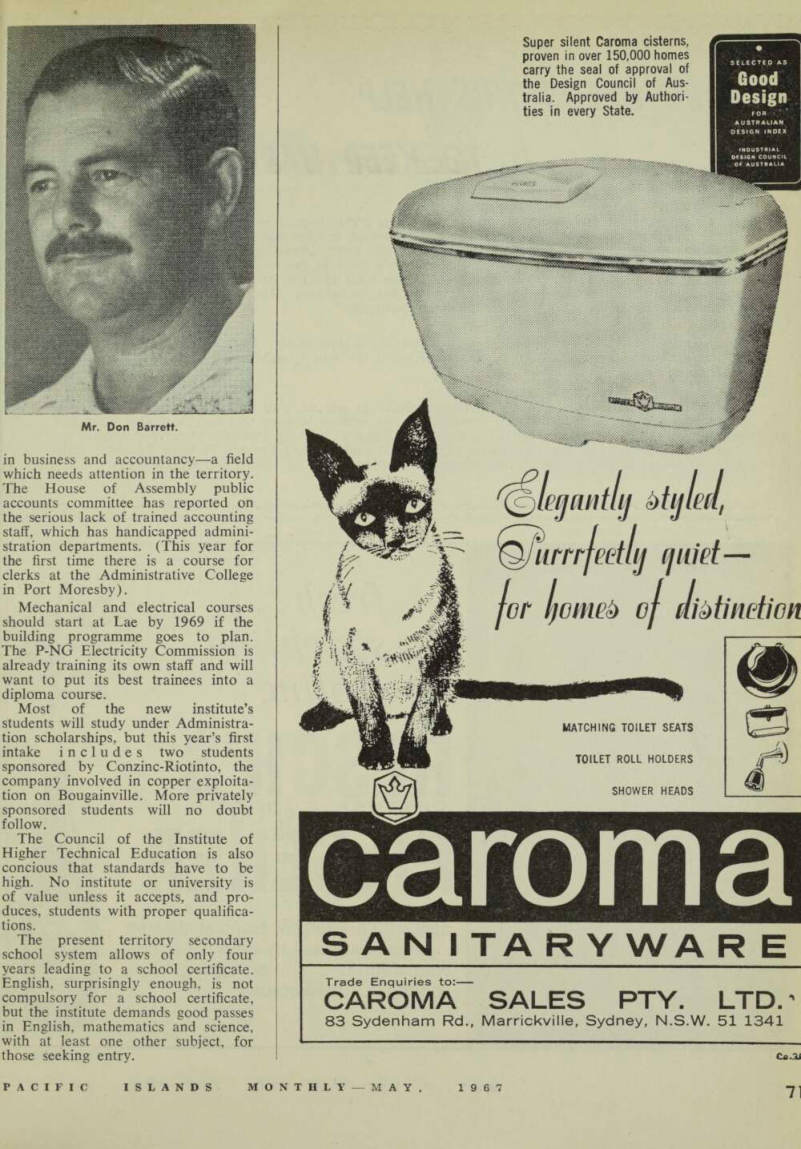 75
75 76
76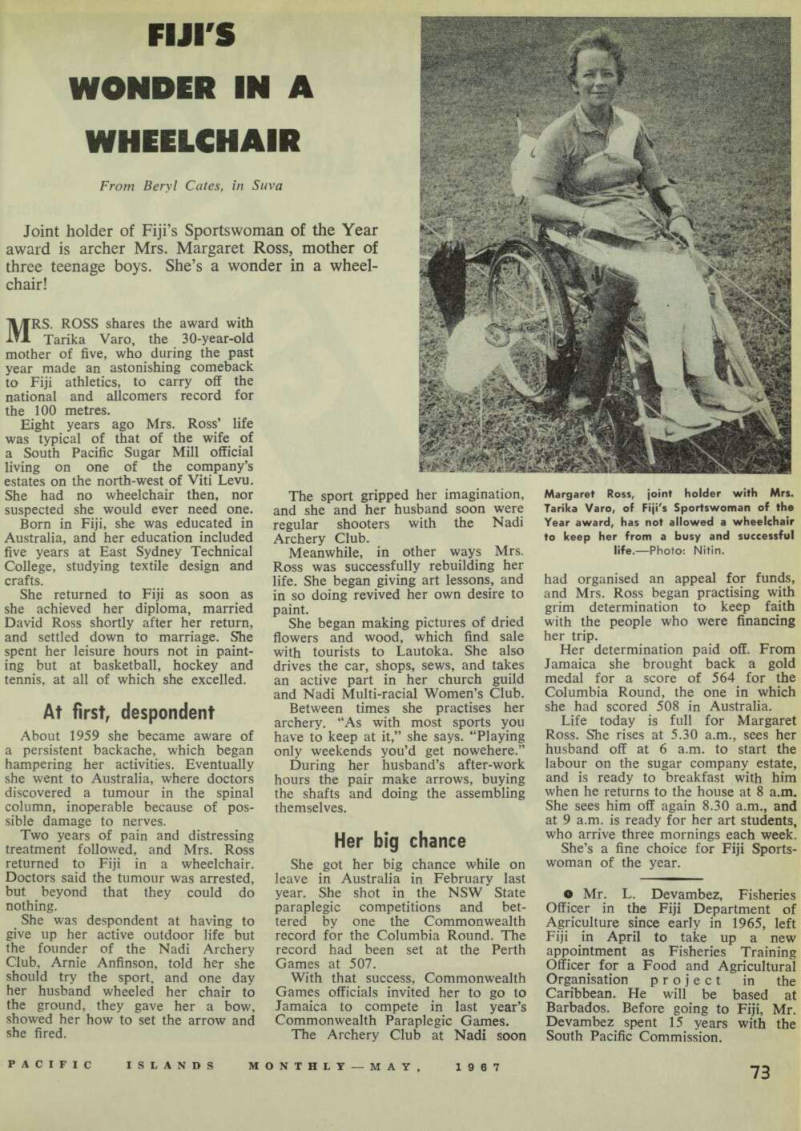 77
77 78
78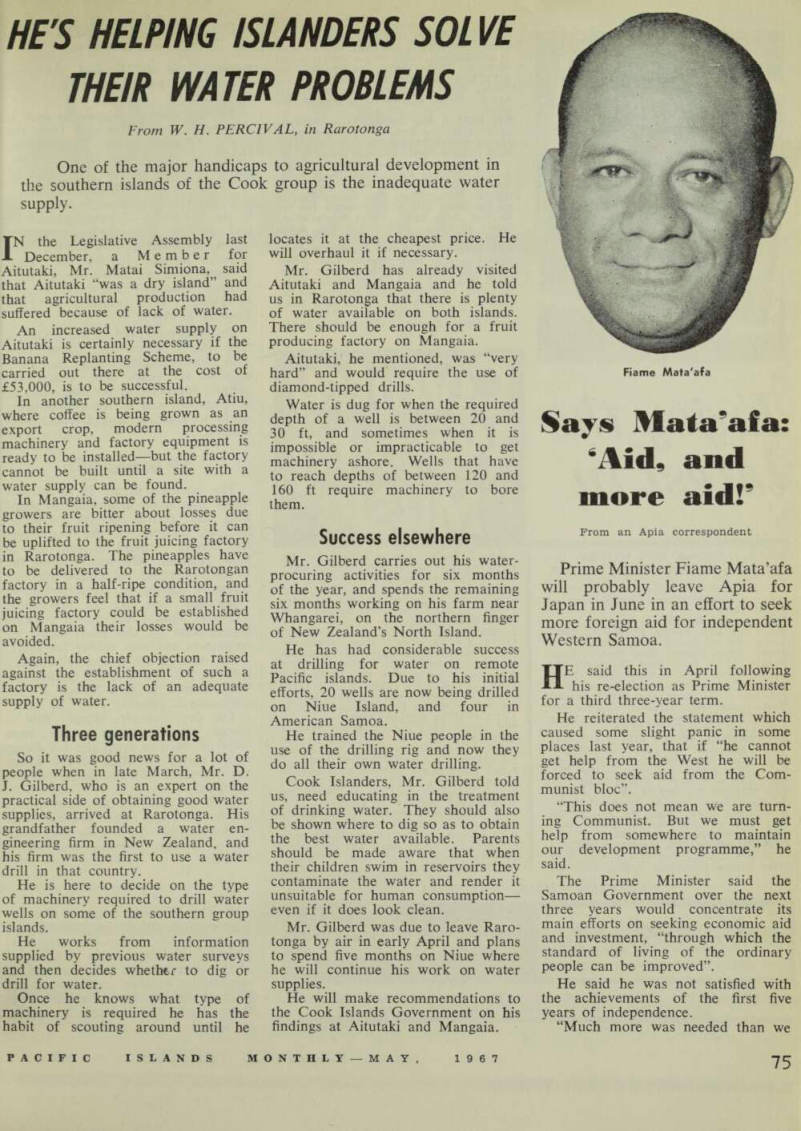 79
79 80
80 81
81 82
82 83
83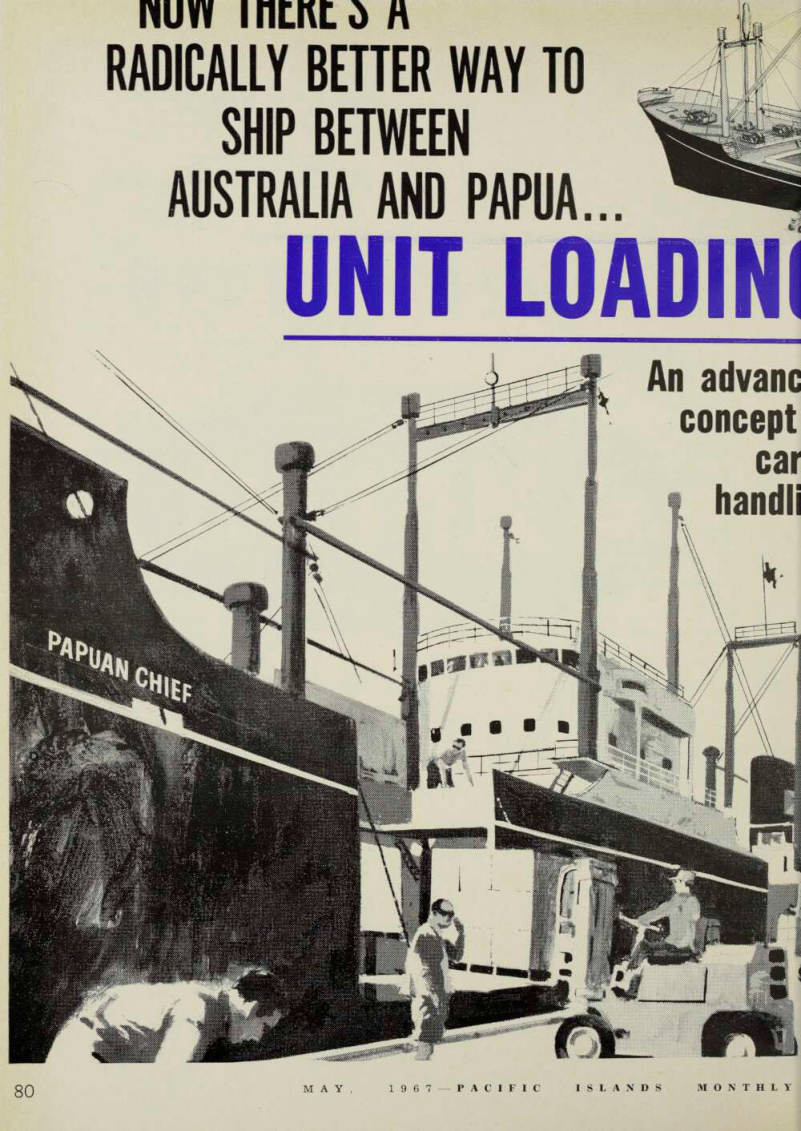 84
84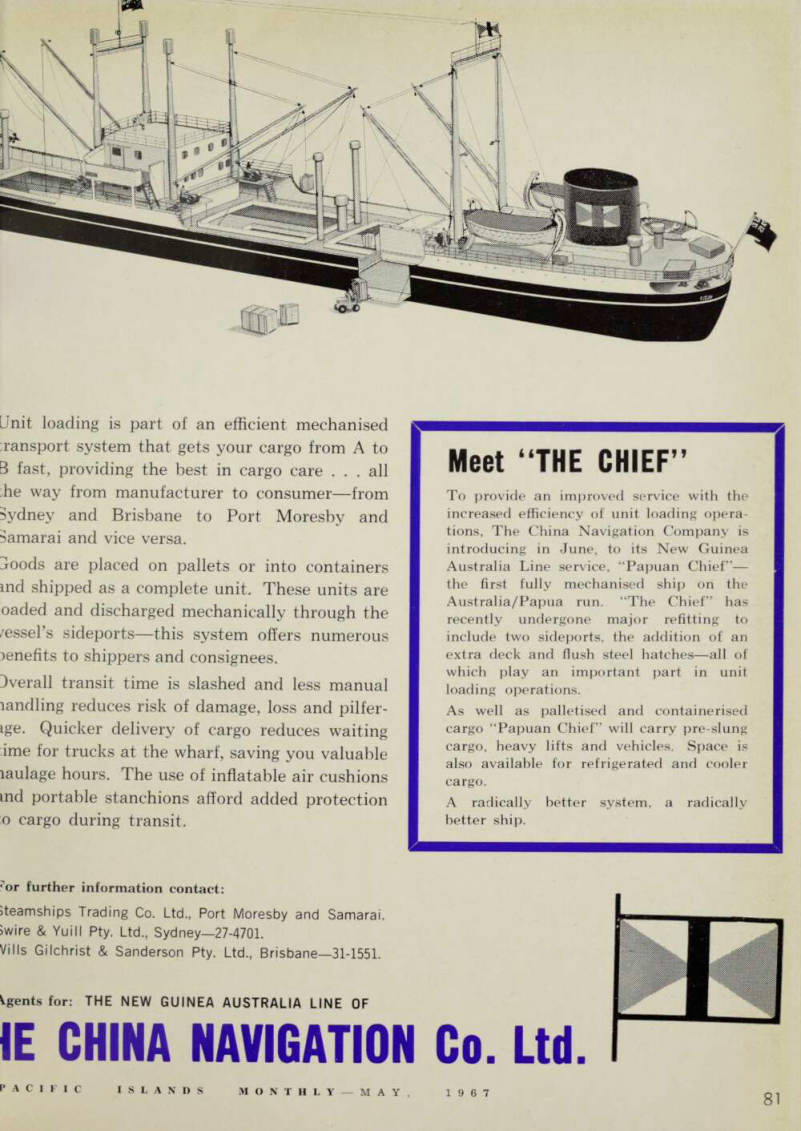 85
85 86
86 87
87 88
88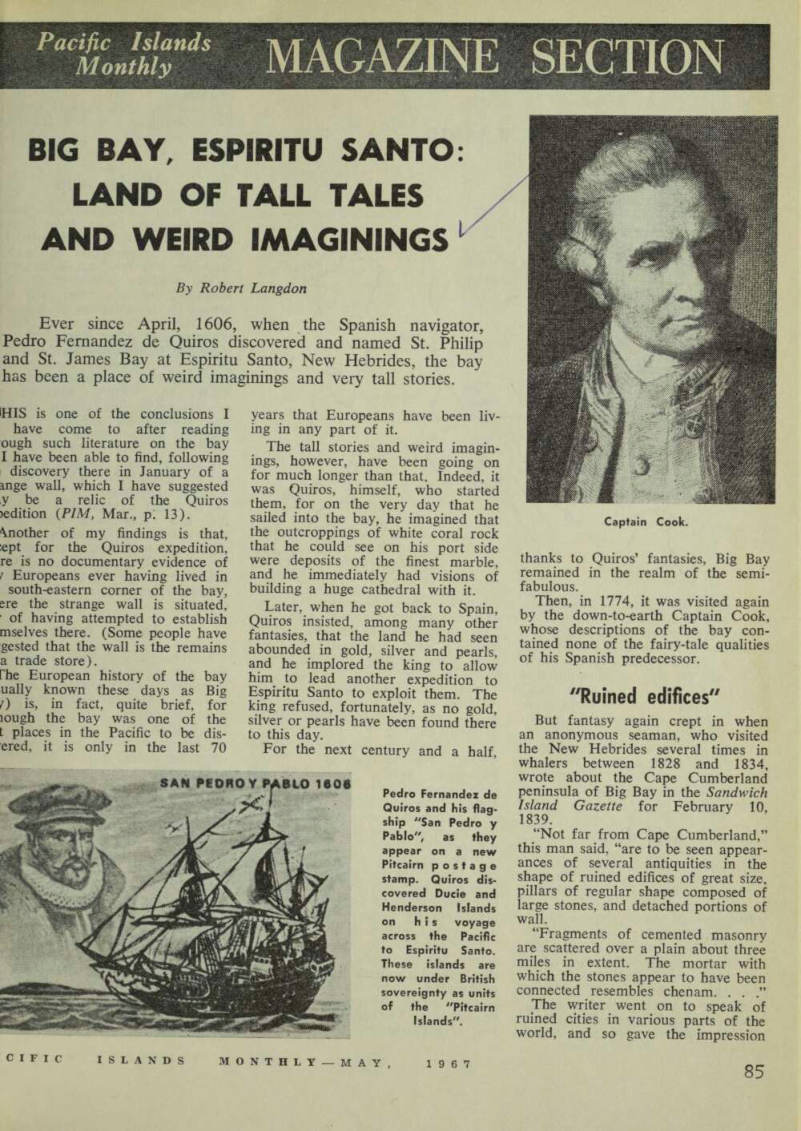 89
89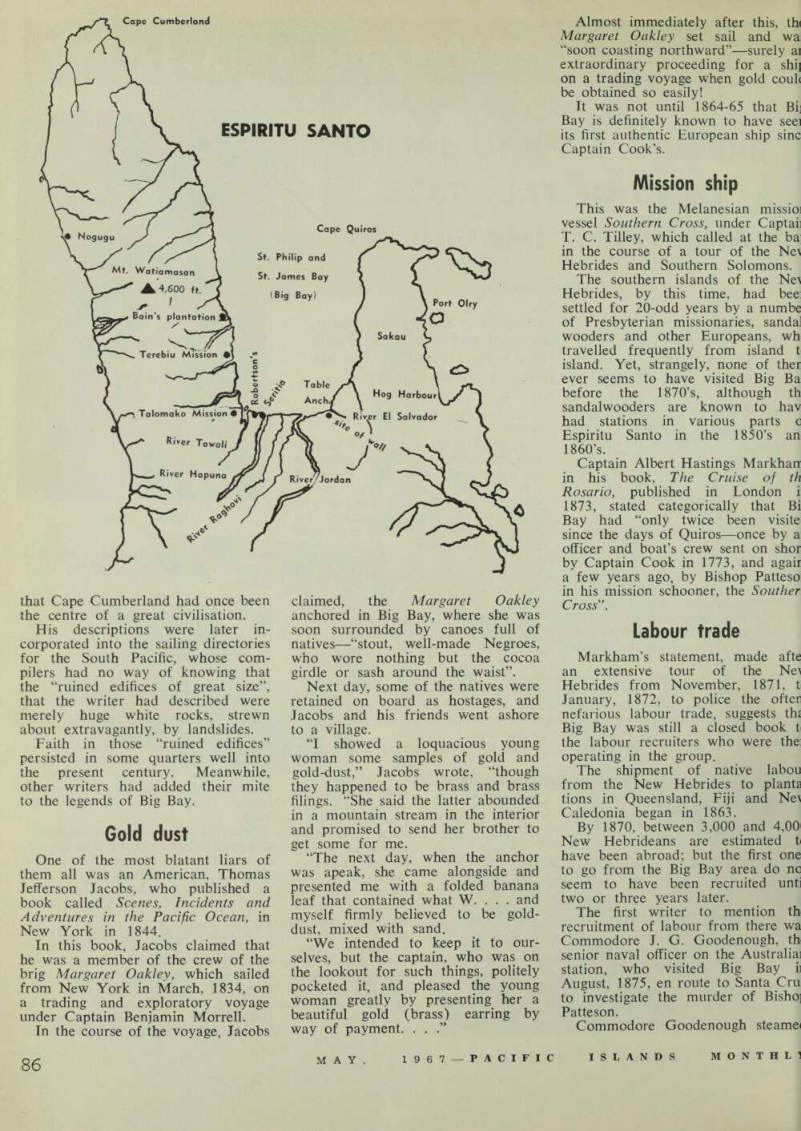 90
90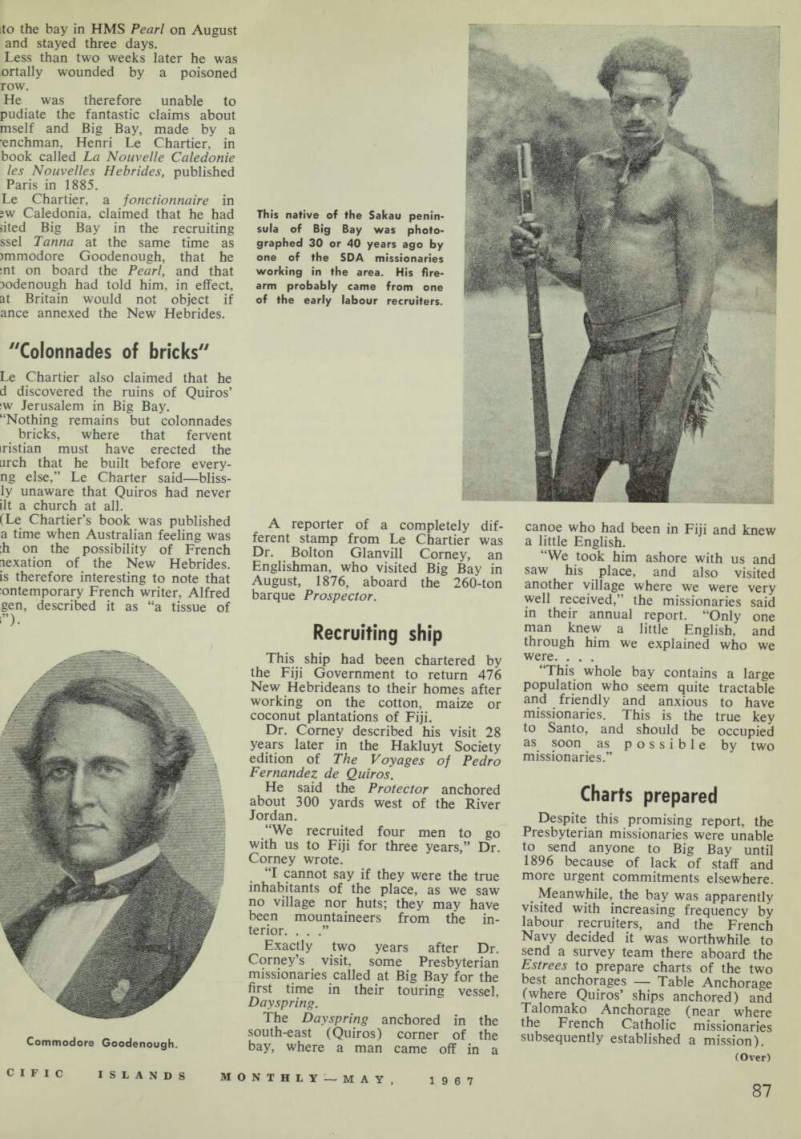 91
91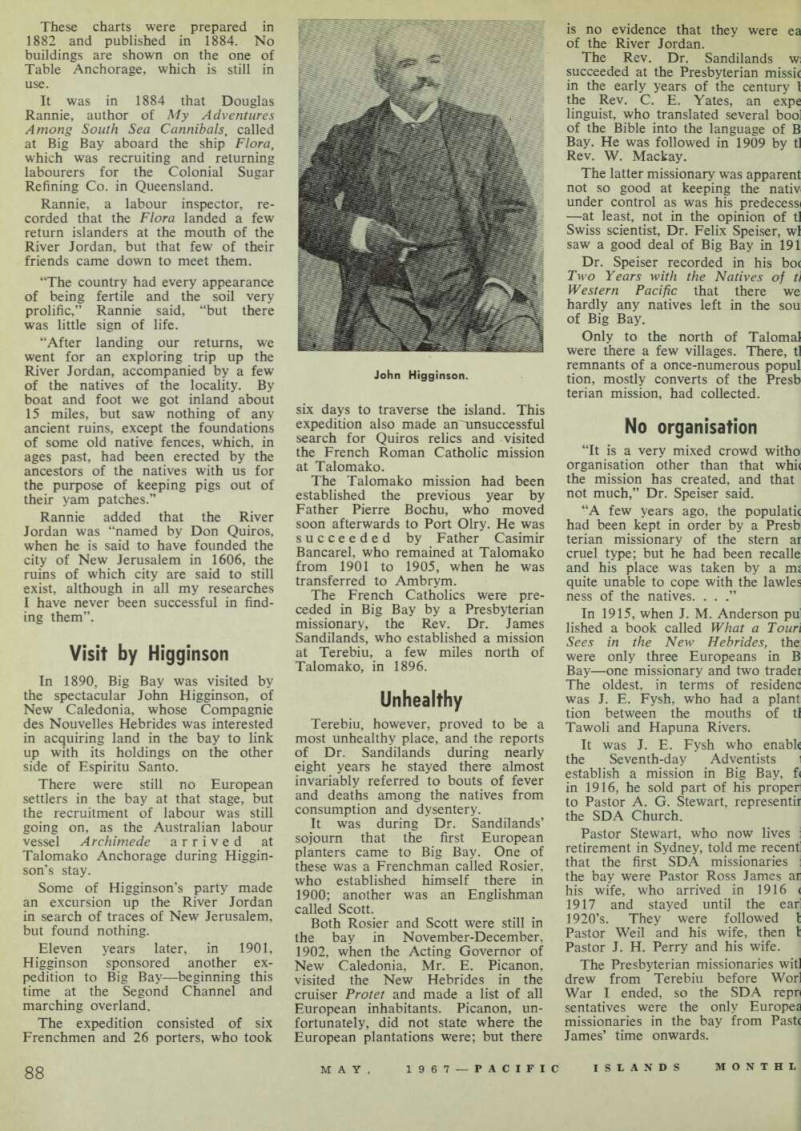 92
92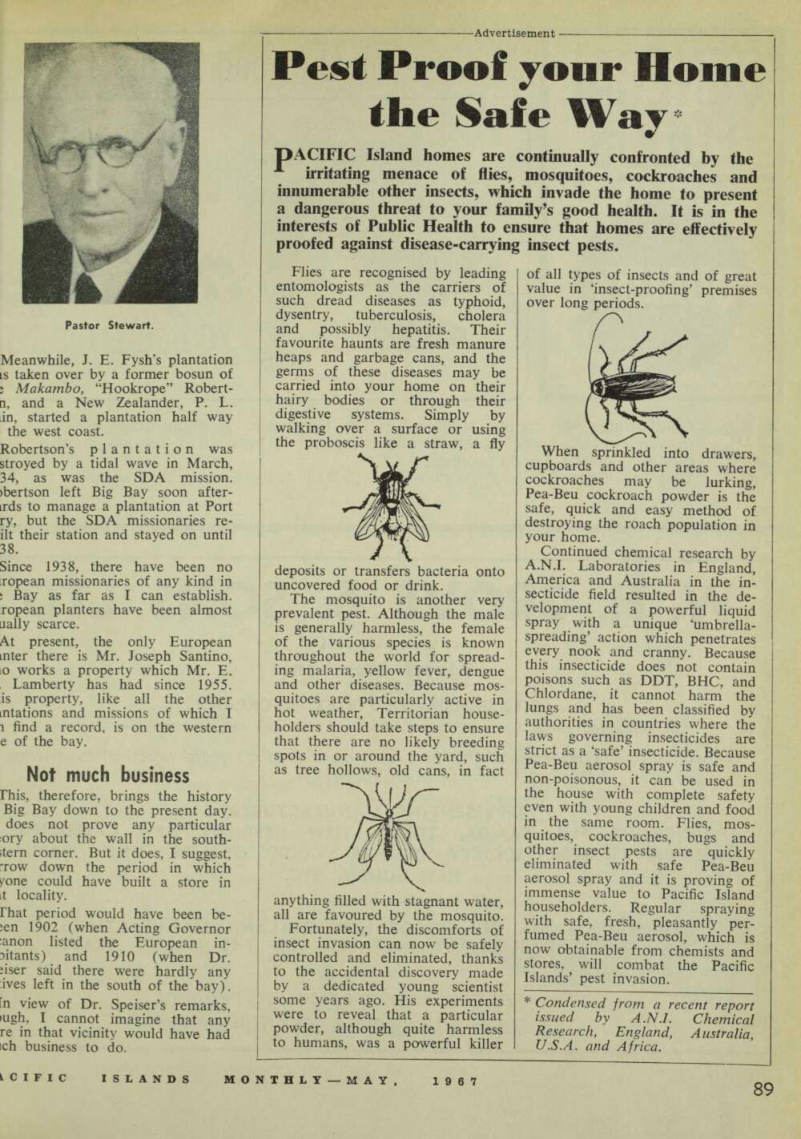 93
93 94
94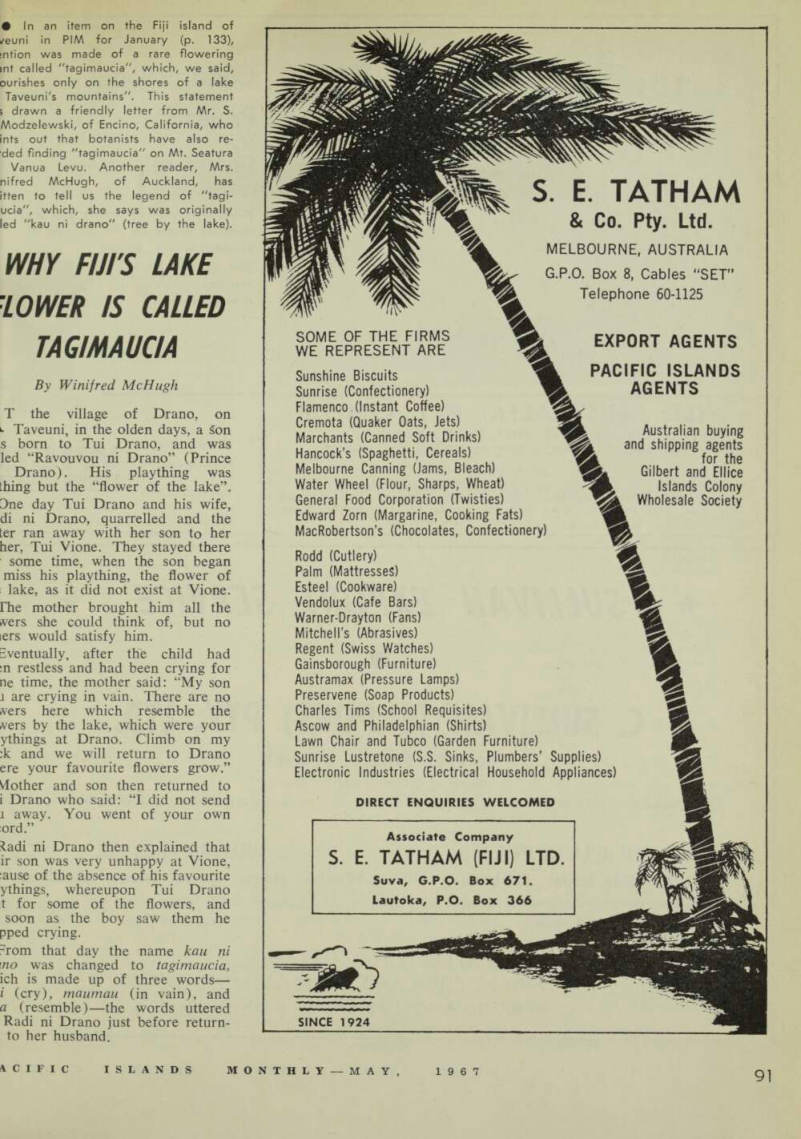 95
95 96
96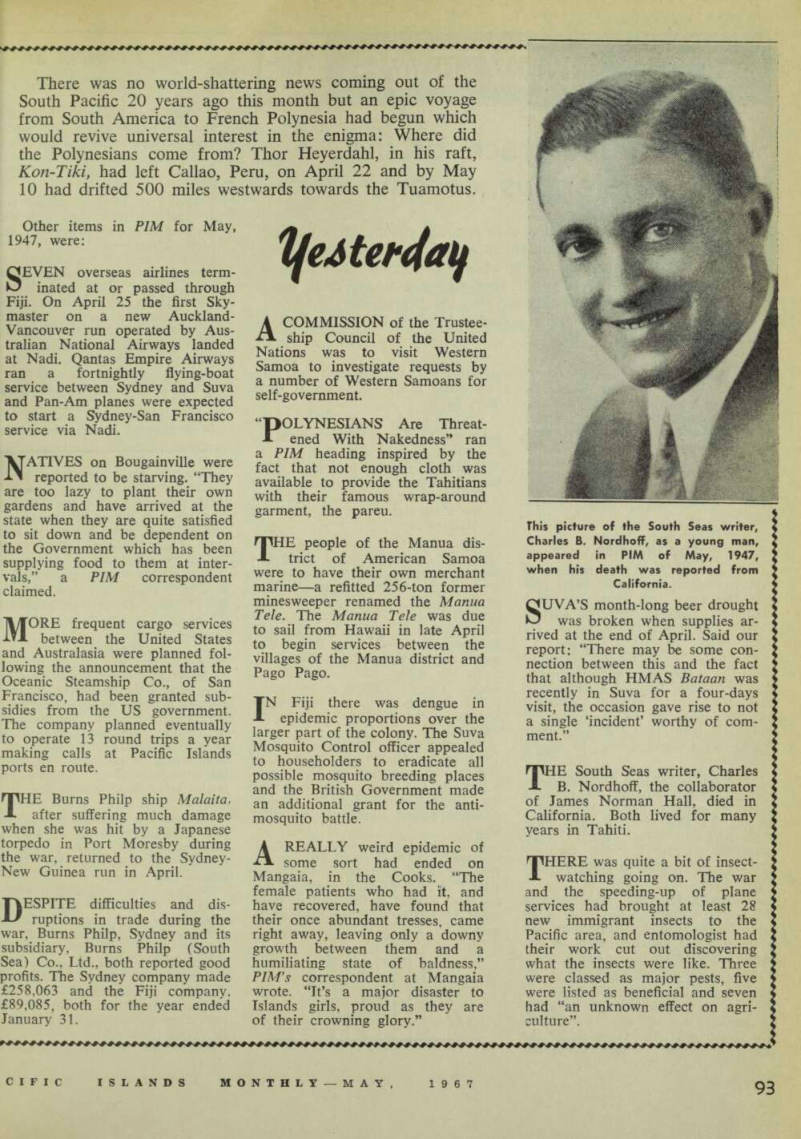 97
97 98
98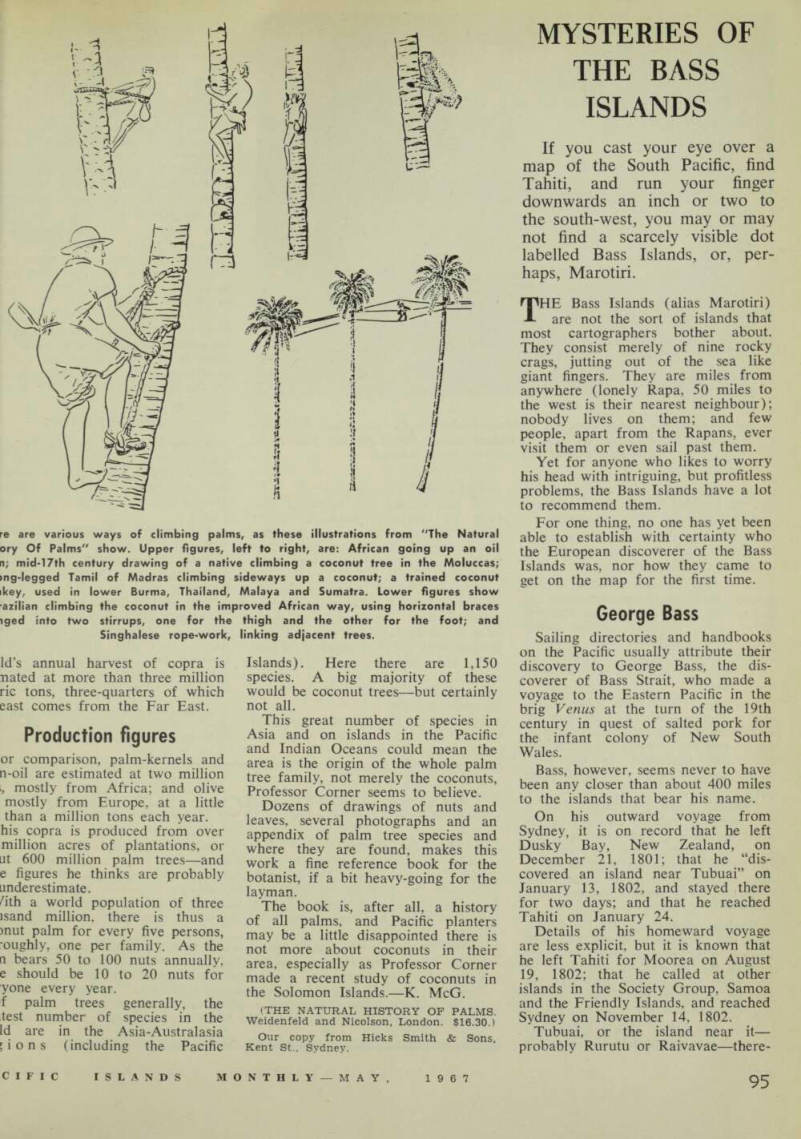 99
99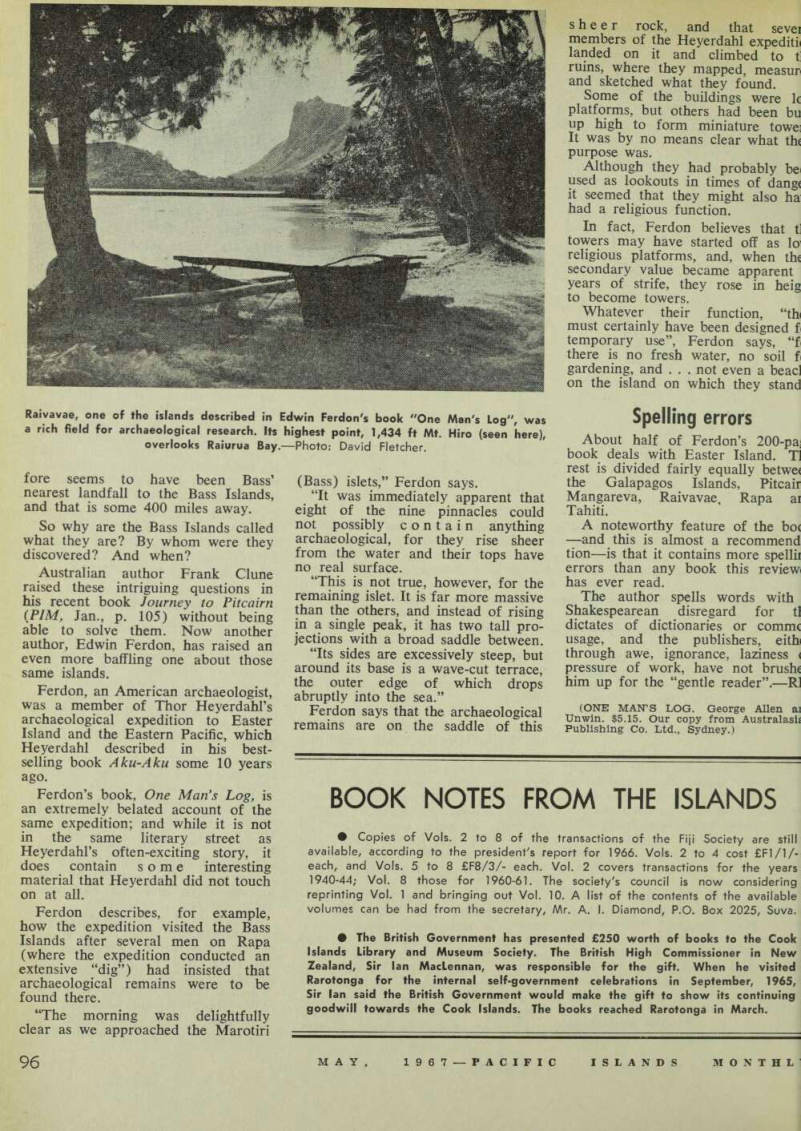 100
100 101
101 102
102 103
103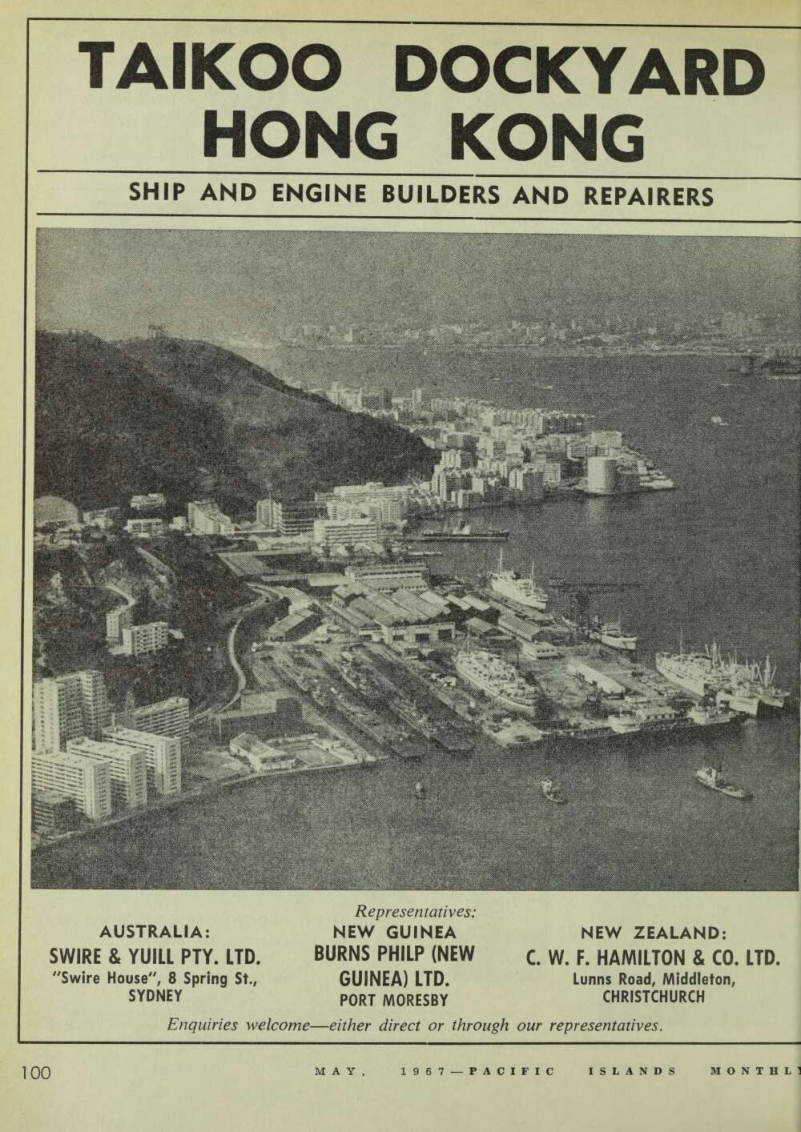 104
104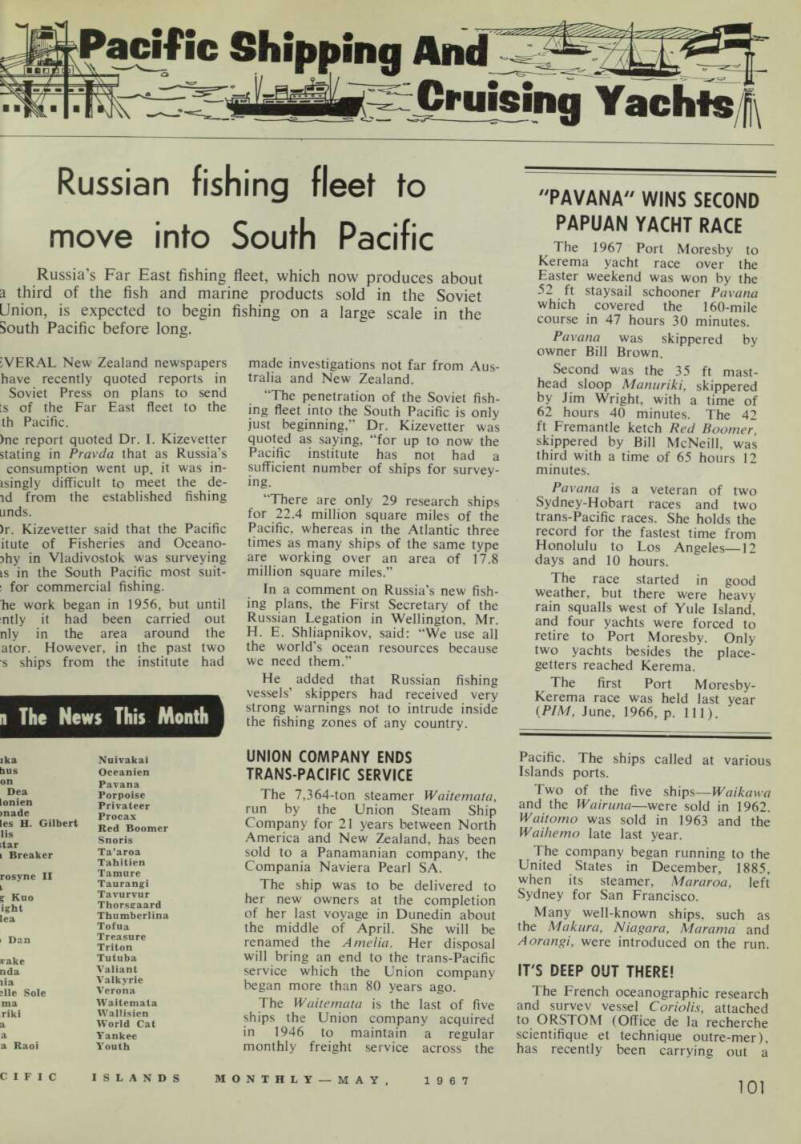 105
105 106
106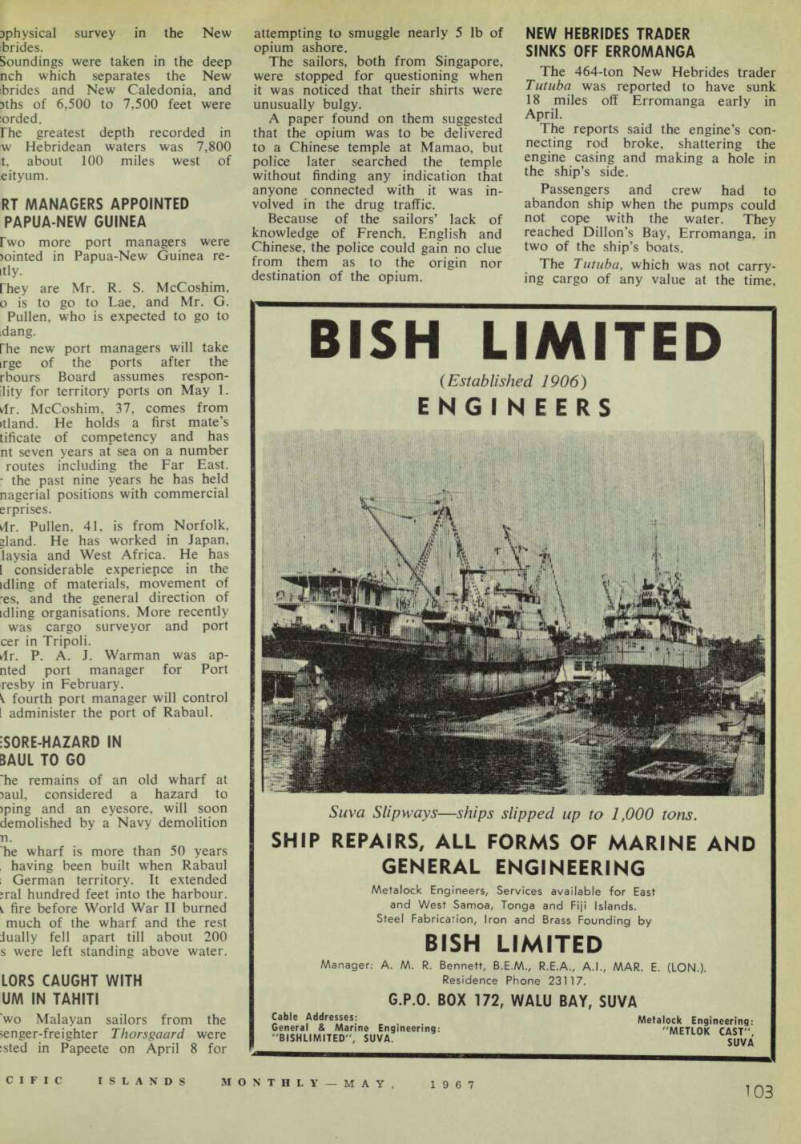 107
107 108
108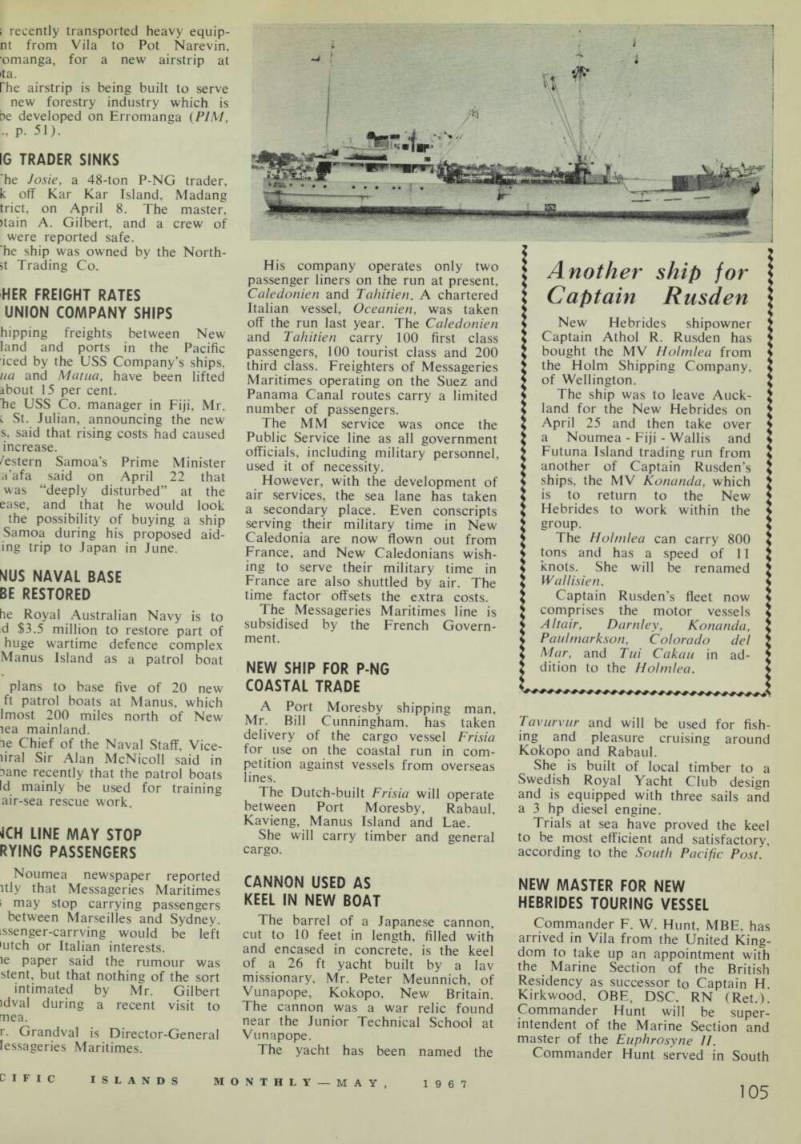 109
109 110
110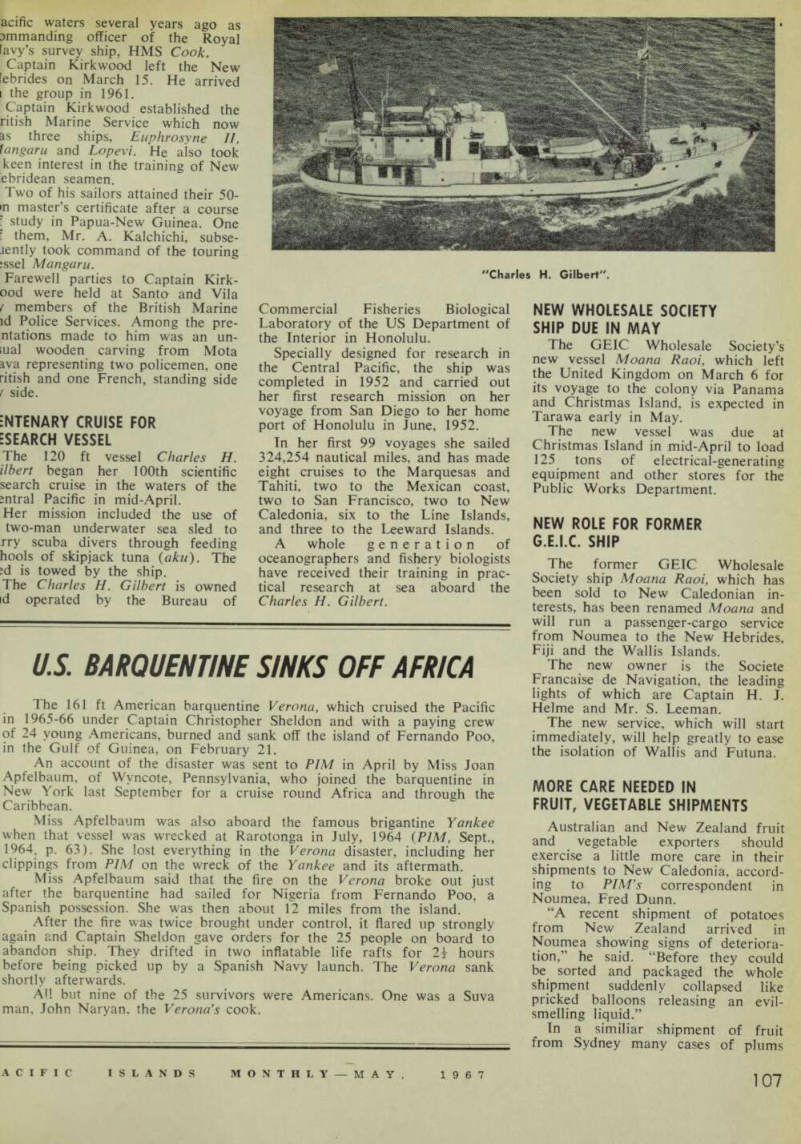 111
111 112
112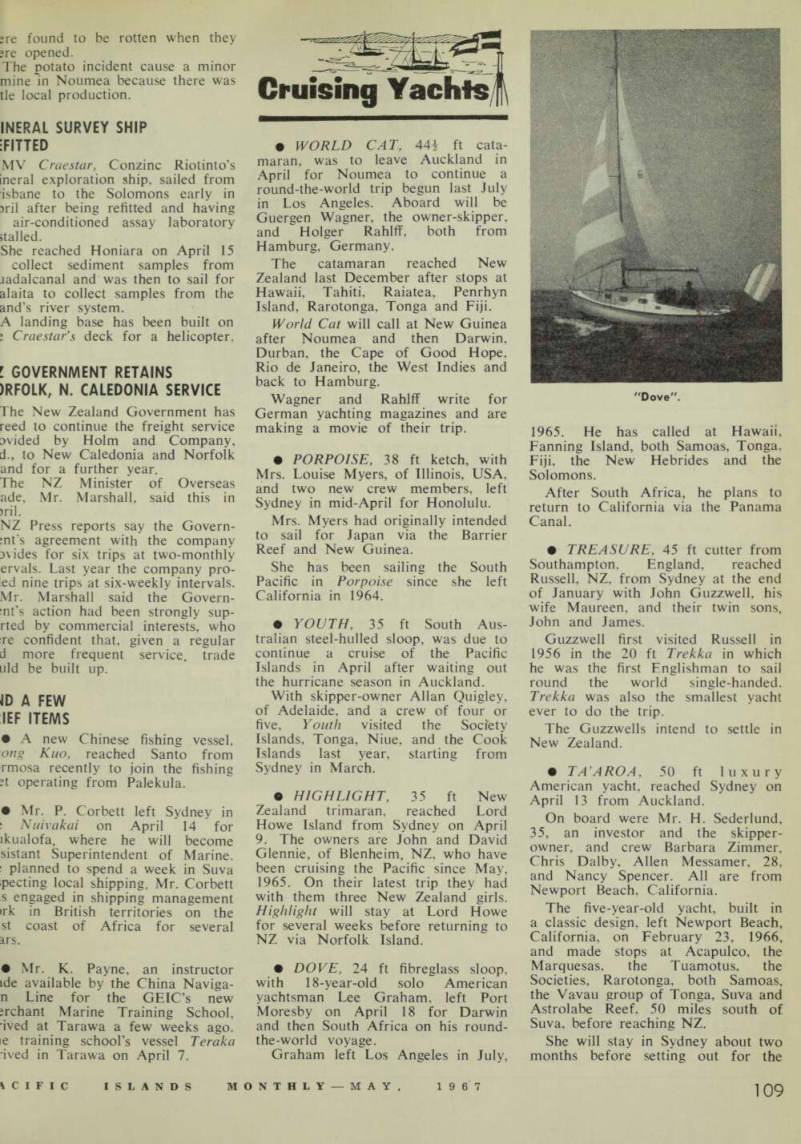 113
113 114
114 115
115 116
116 117
117 118
118 119
119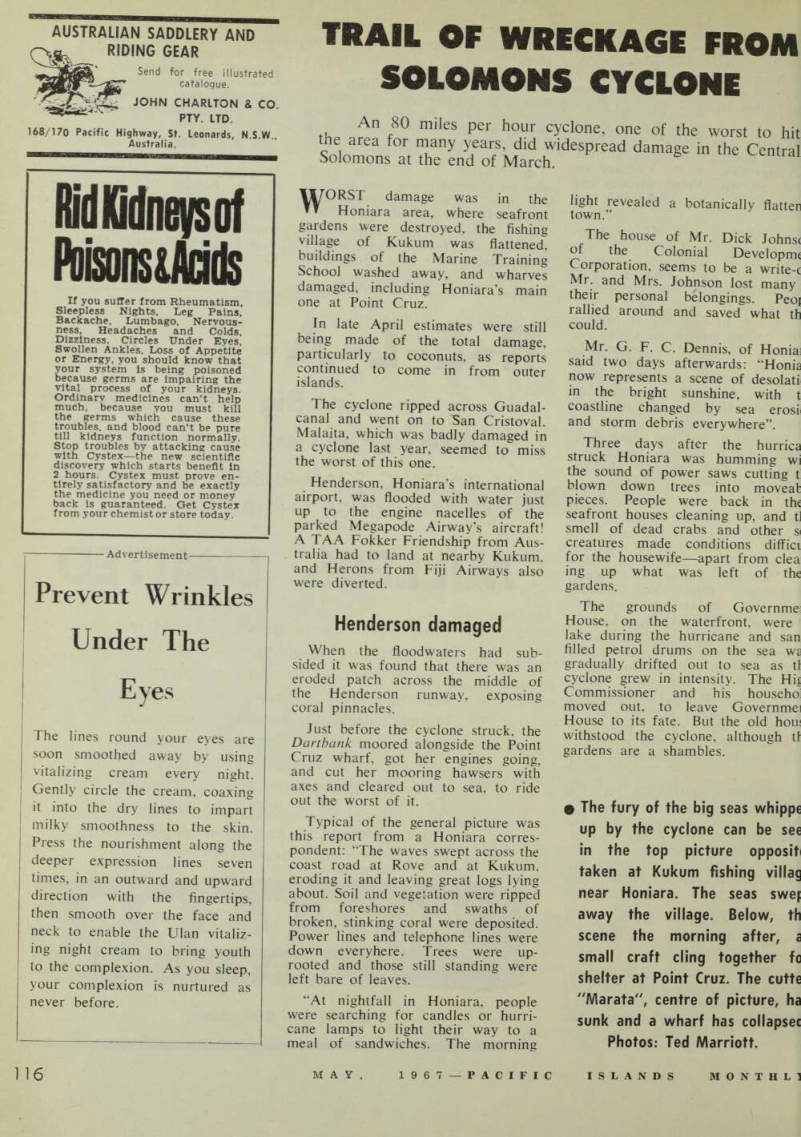 120
120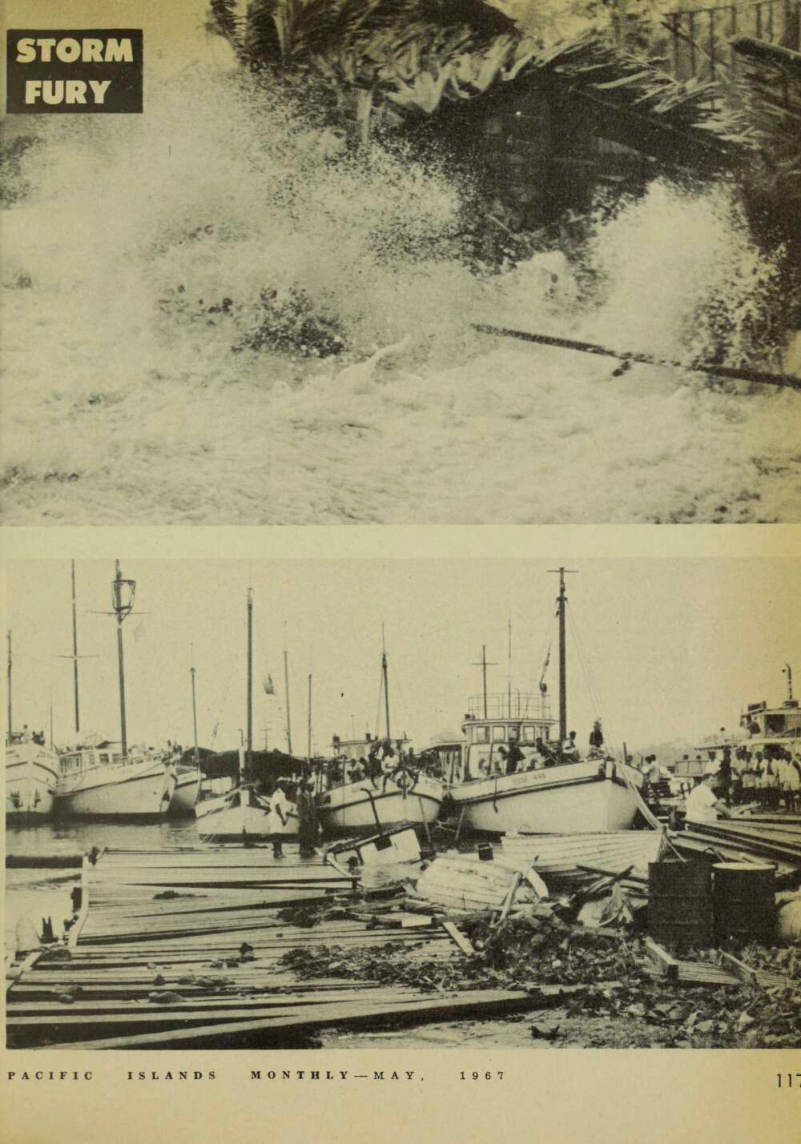 121
121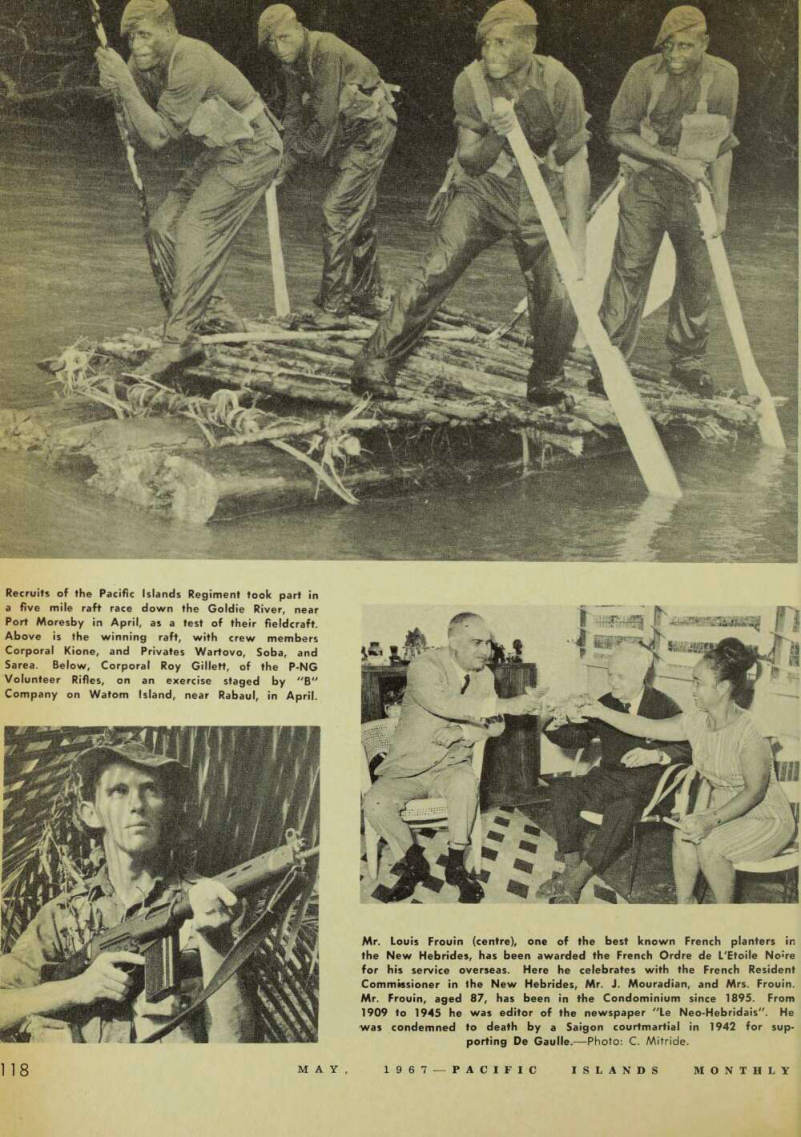 122
122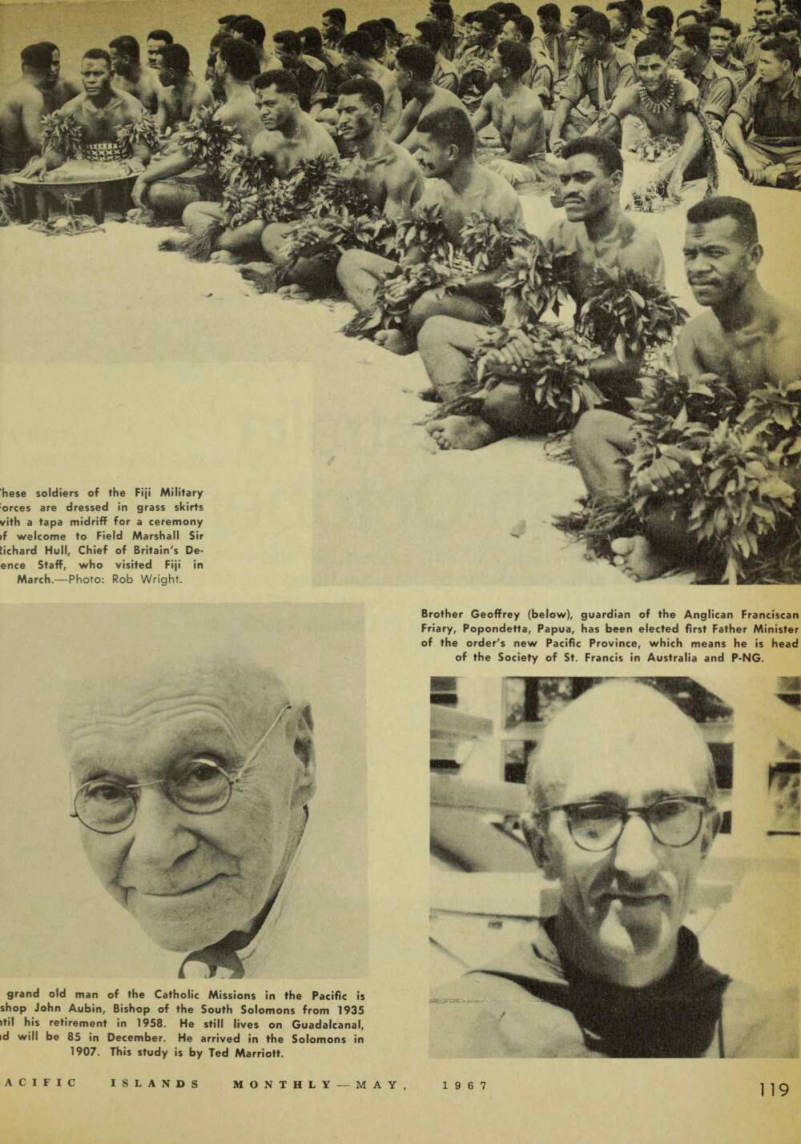 123
123 124
124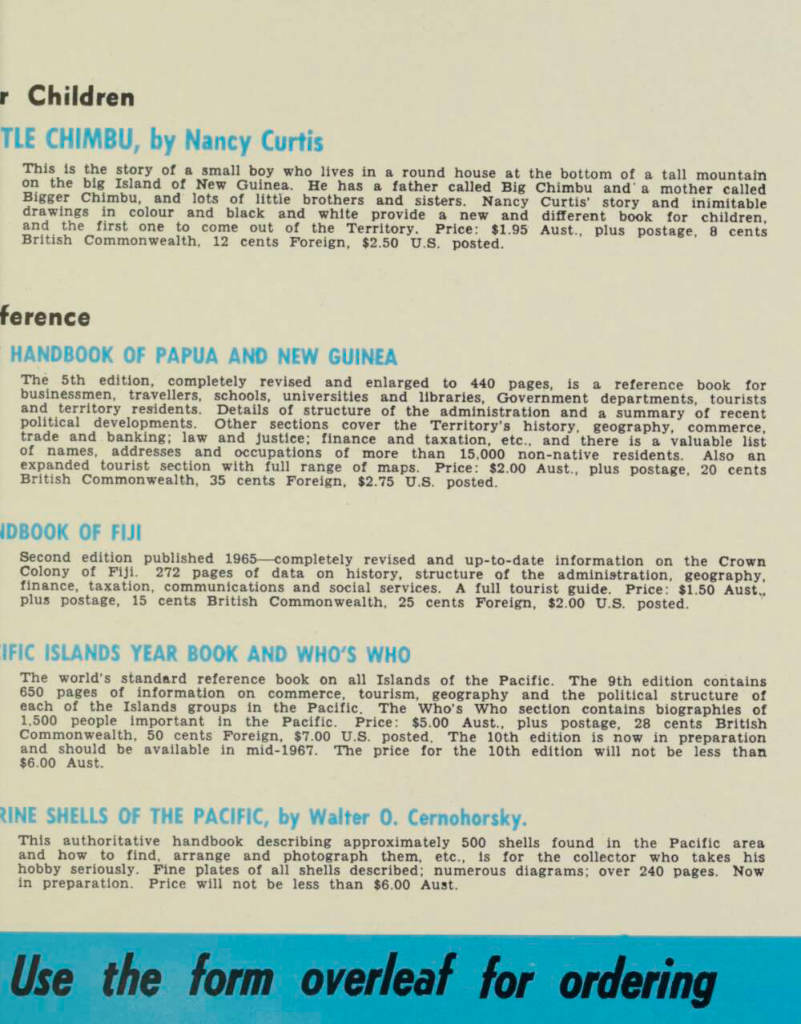 125
125 126
126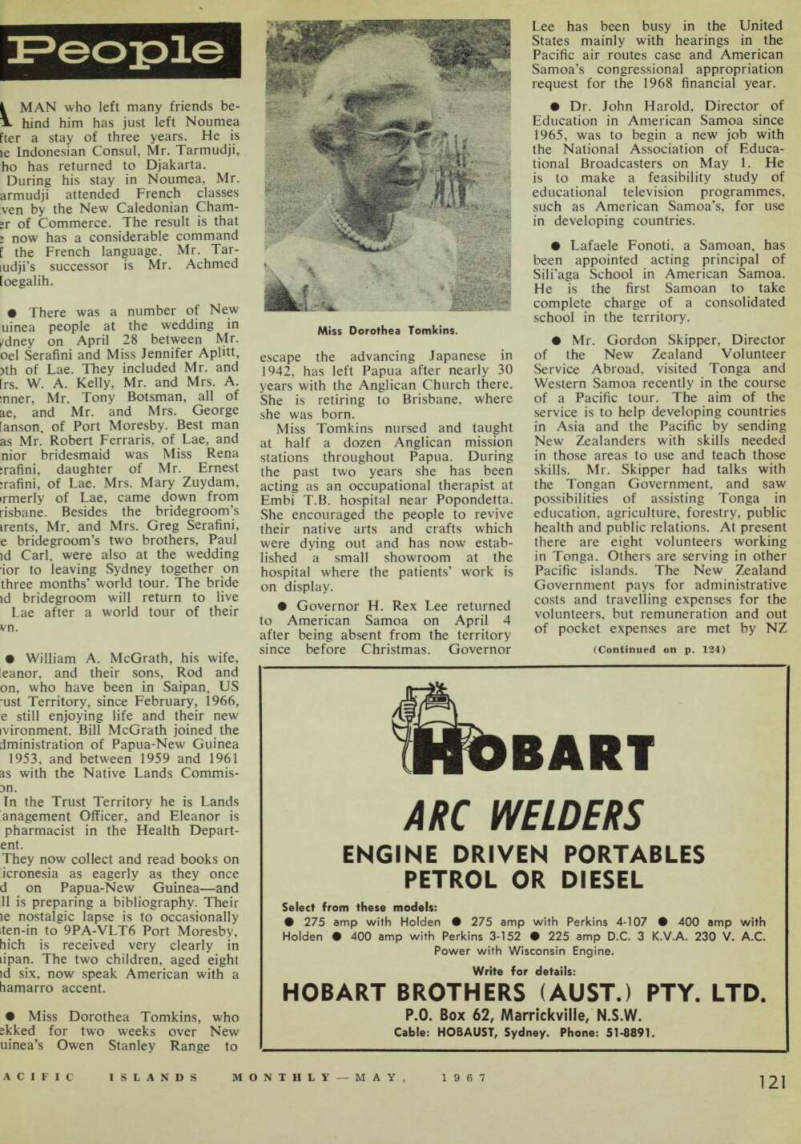 127
127 128
128 129
129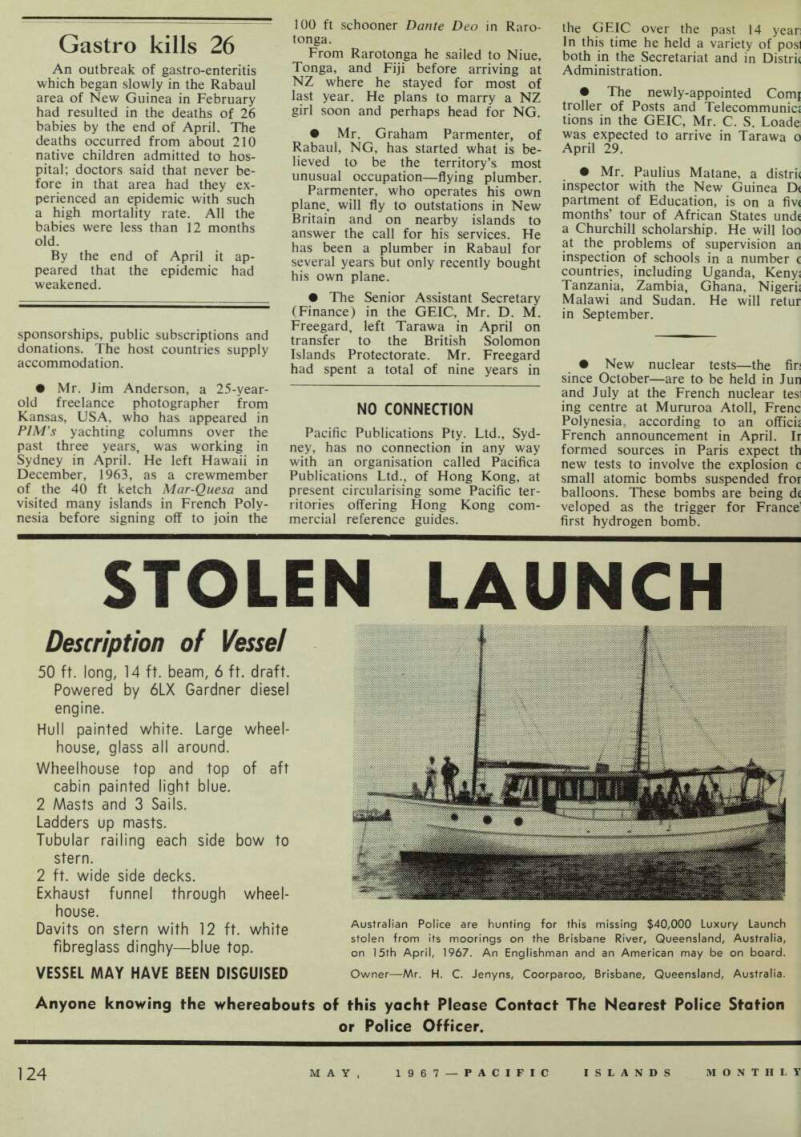 130
130 131
131 132
132 133
133 134
134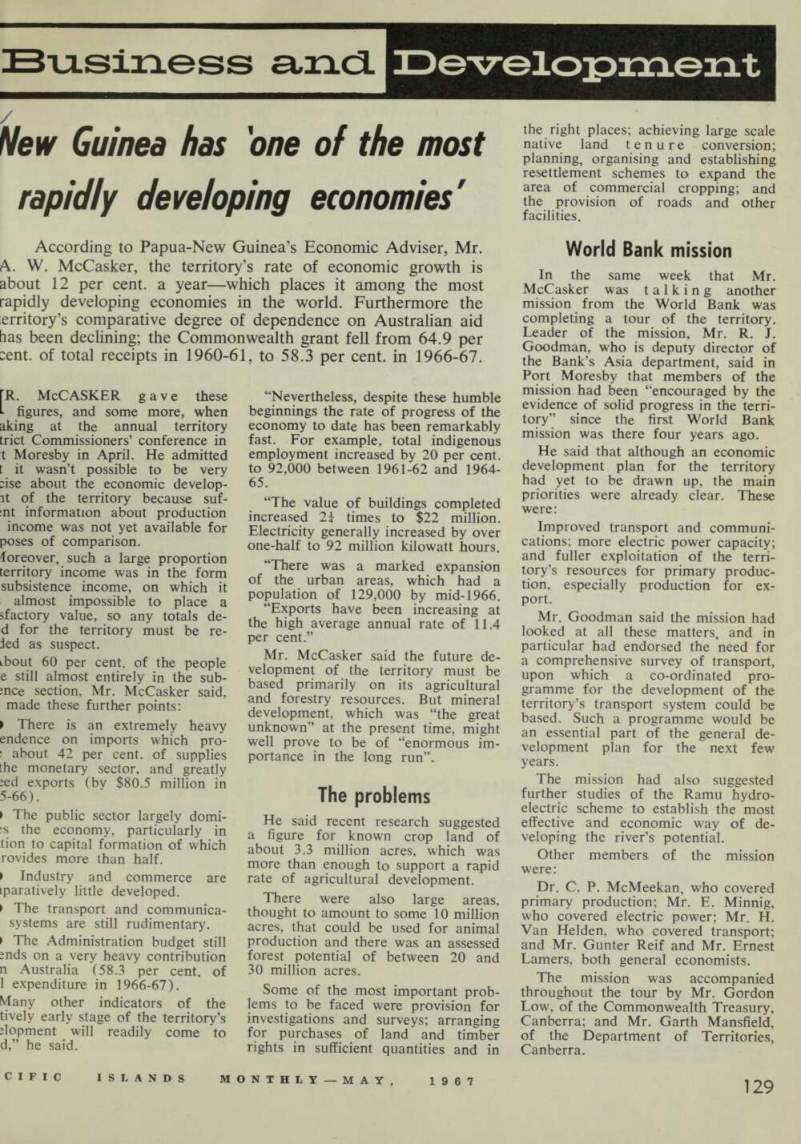 135
135 136
136 137
137 138
138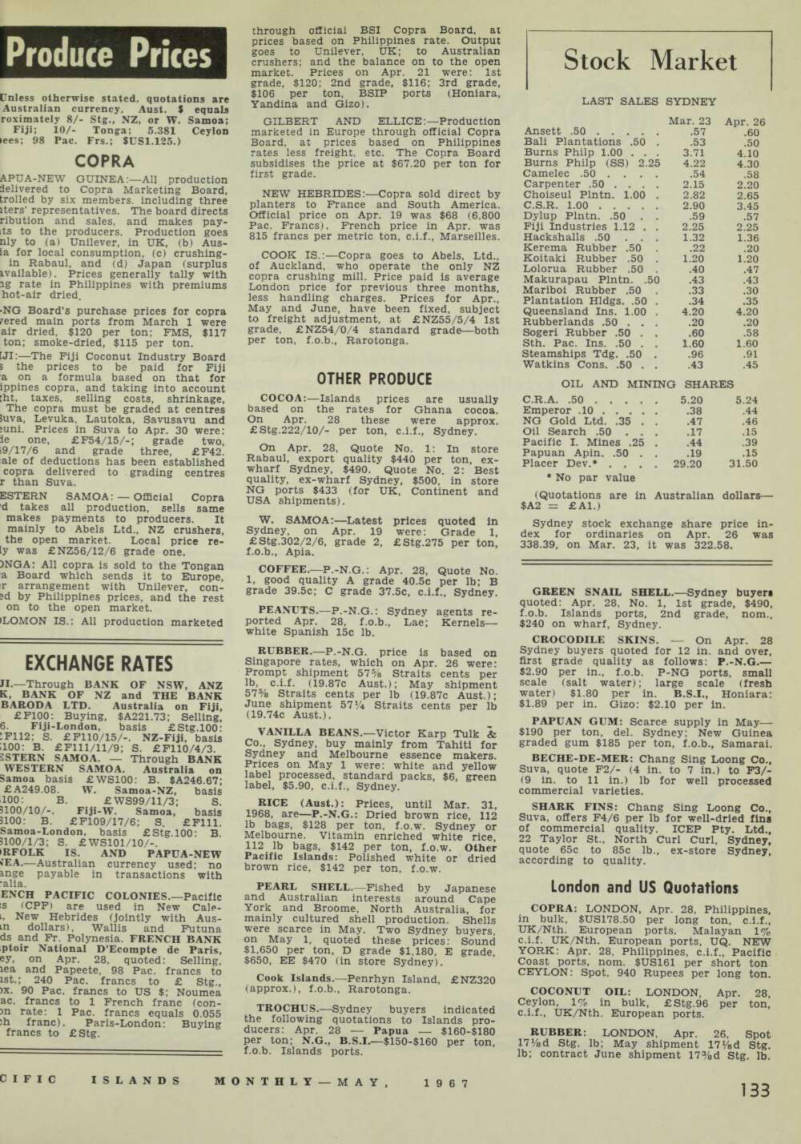 139
139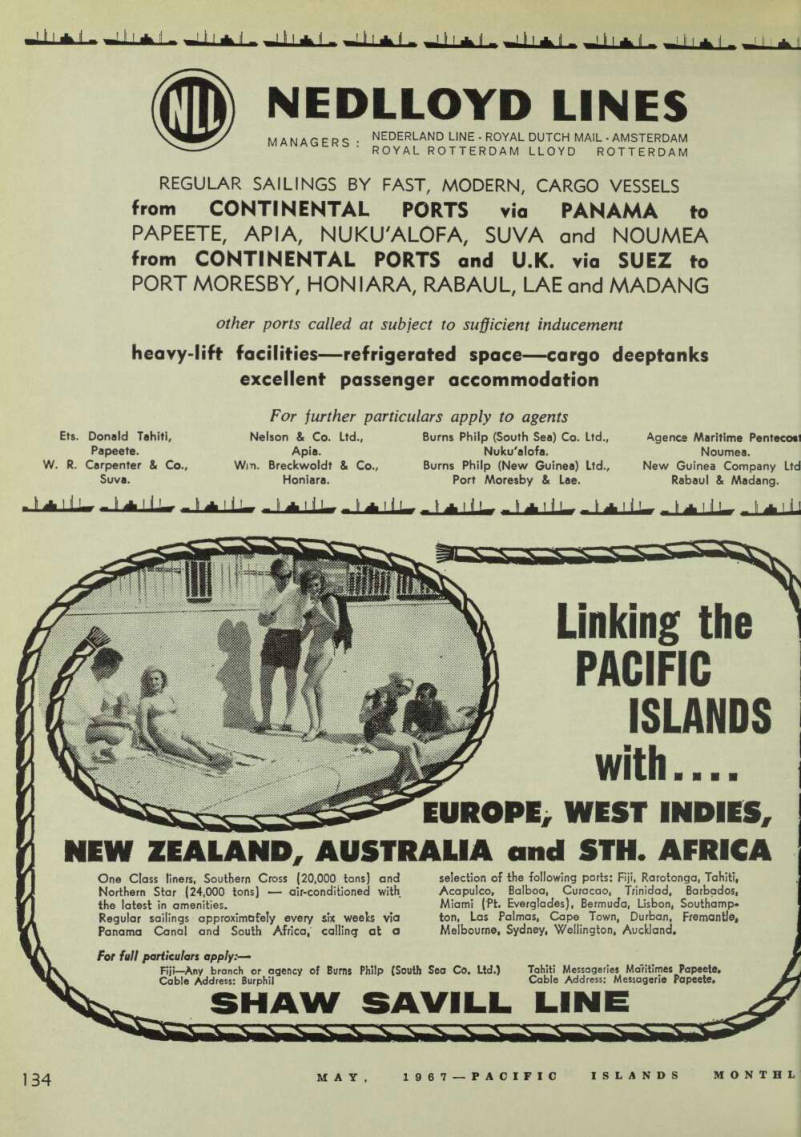 140
140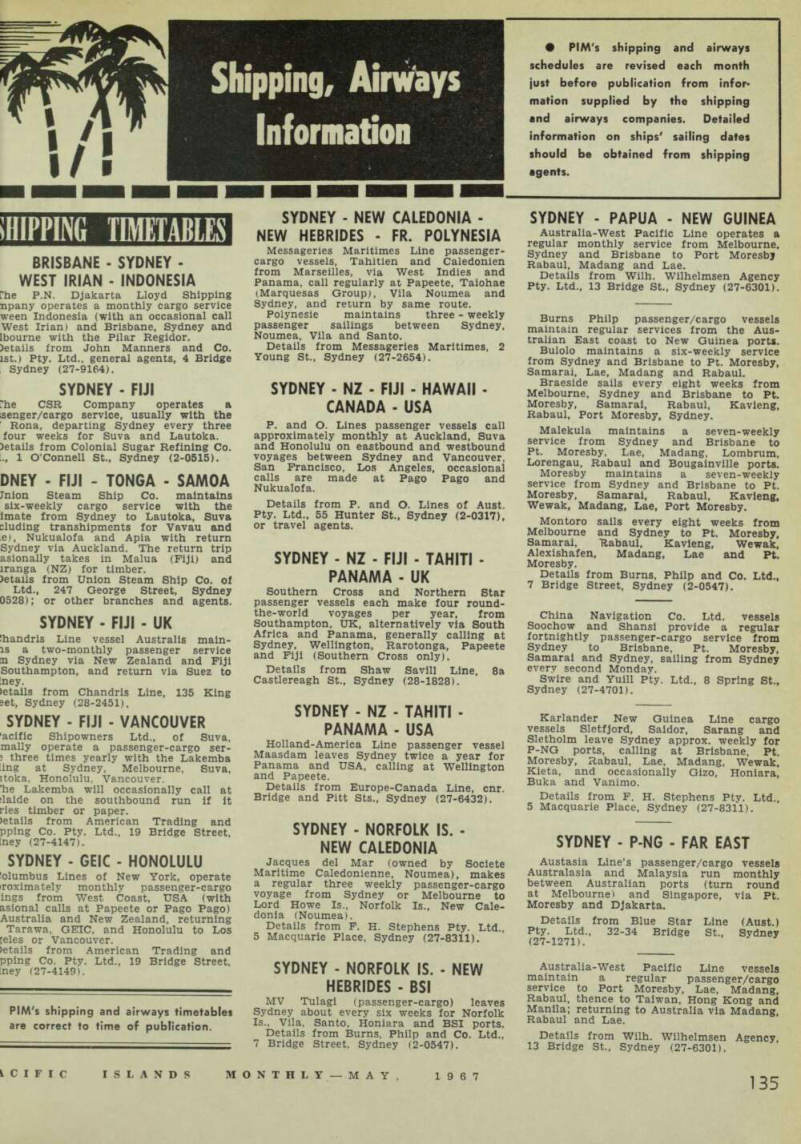 141
141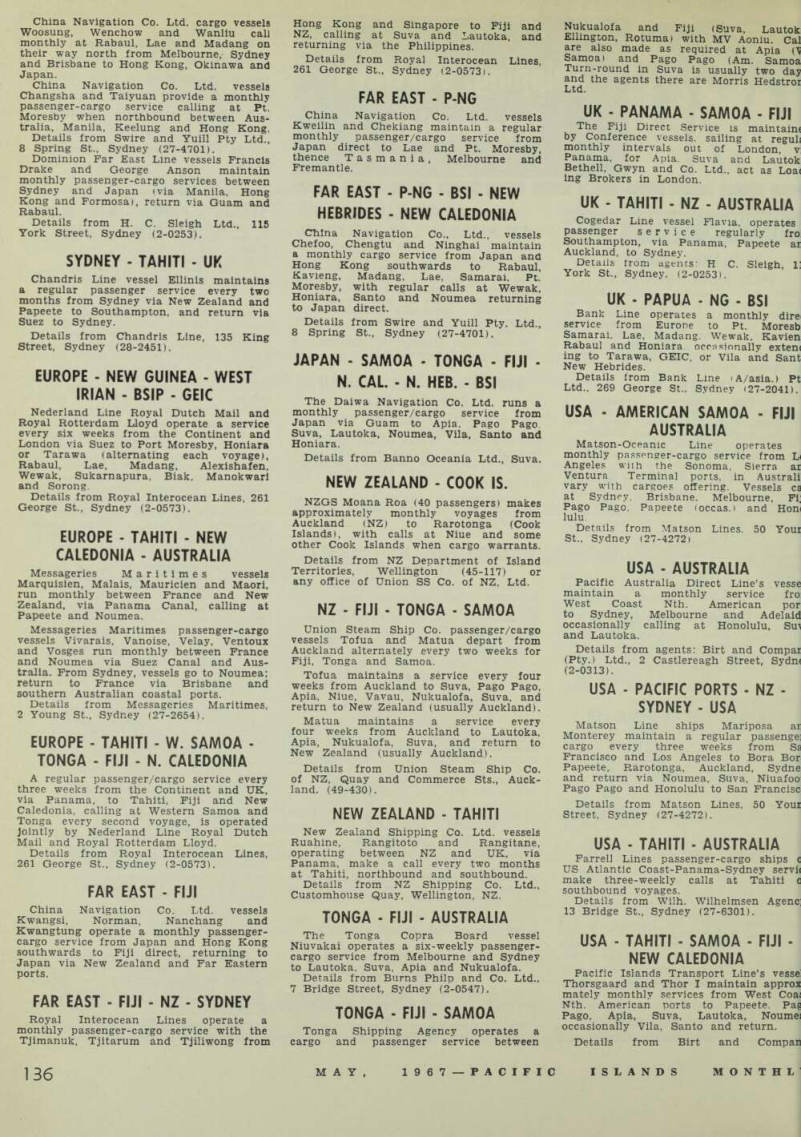 142
142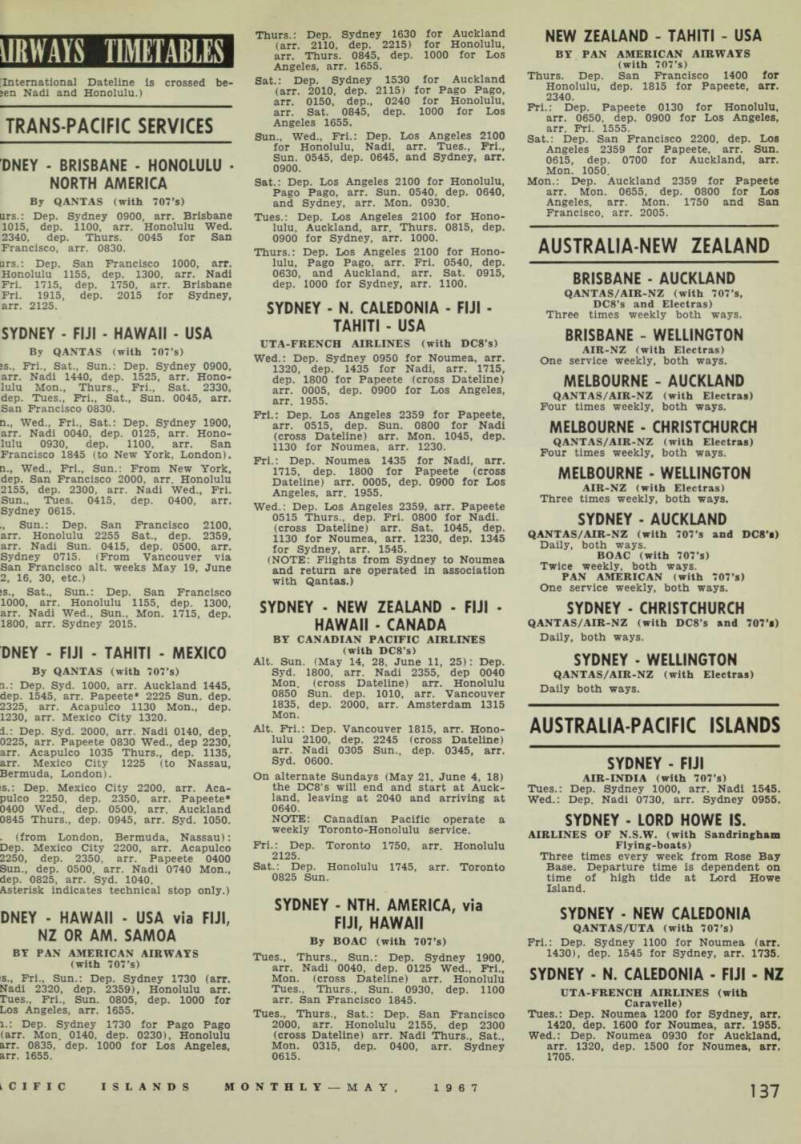 143
143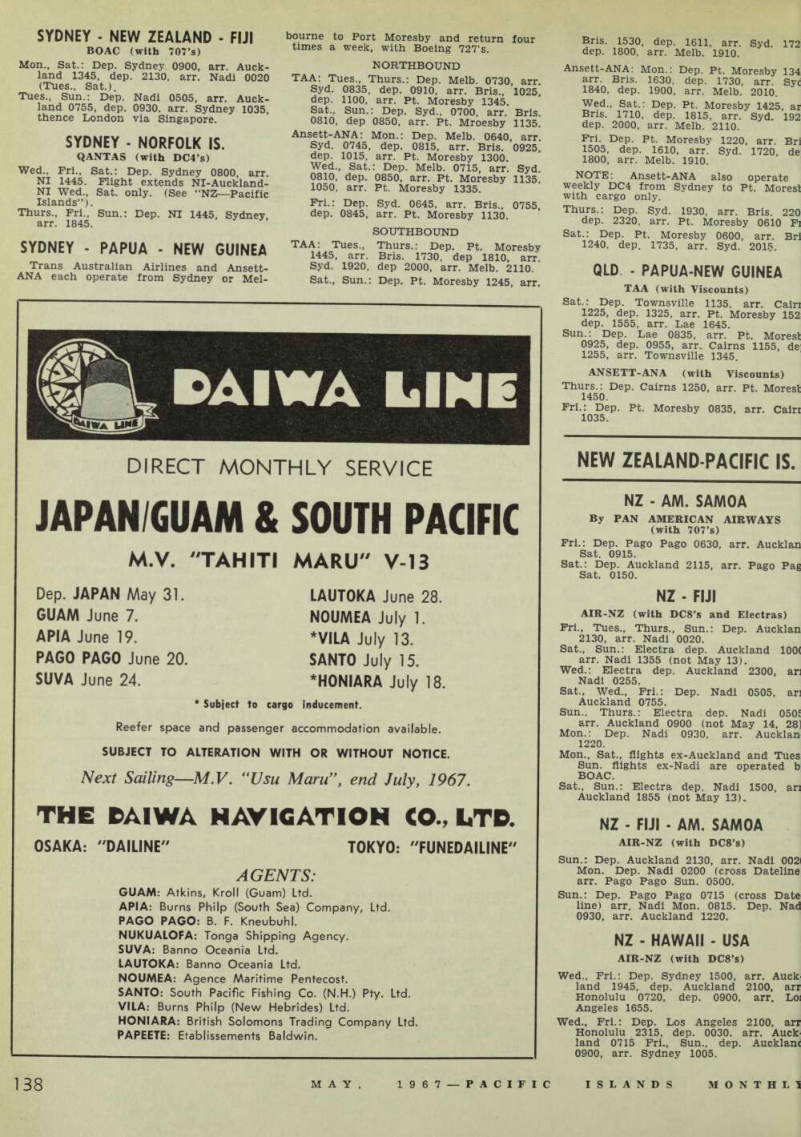 144
144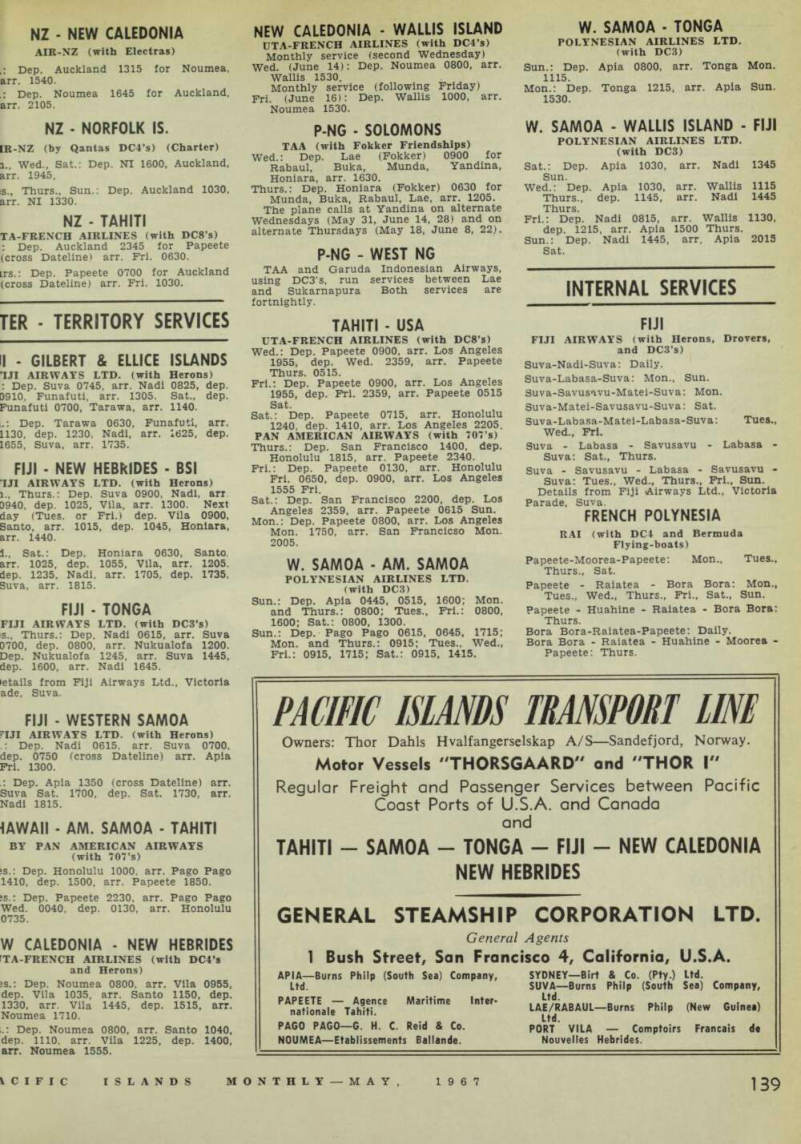 145
145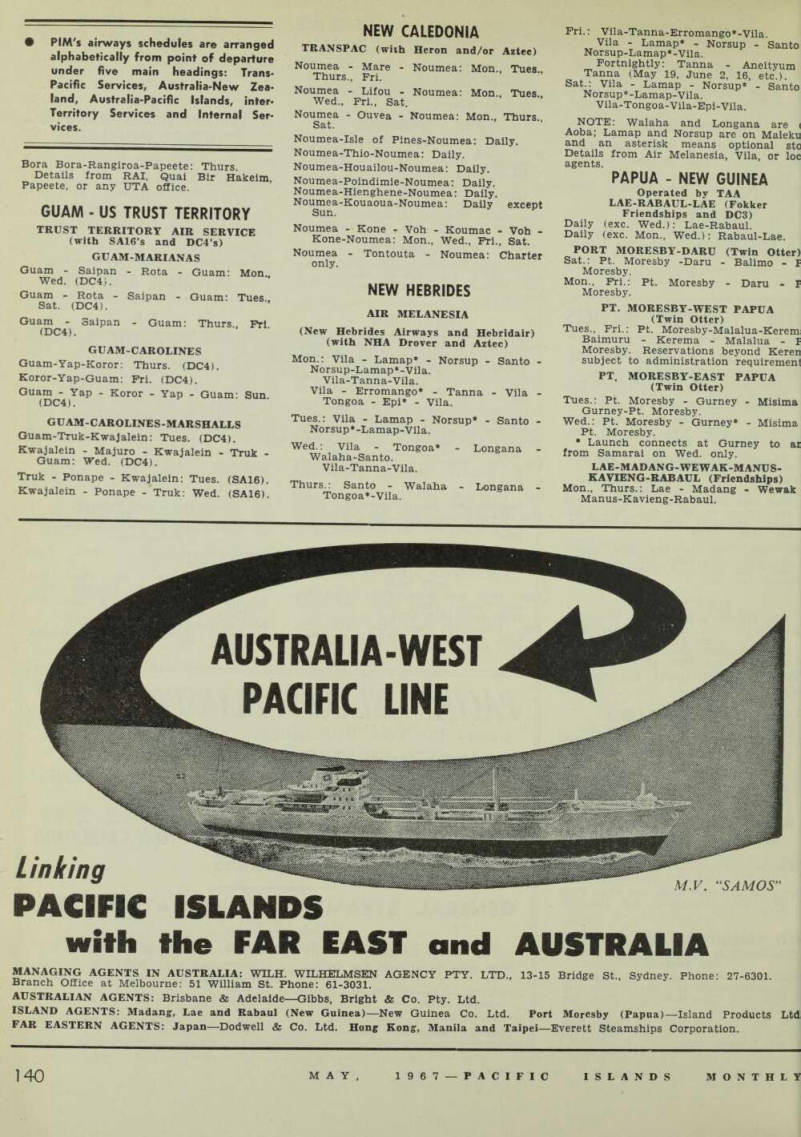 146
146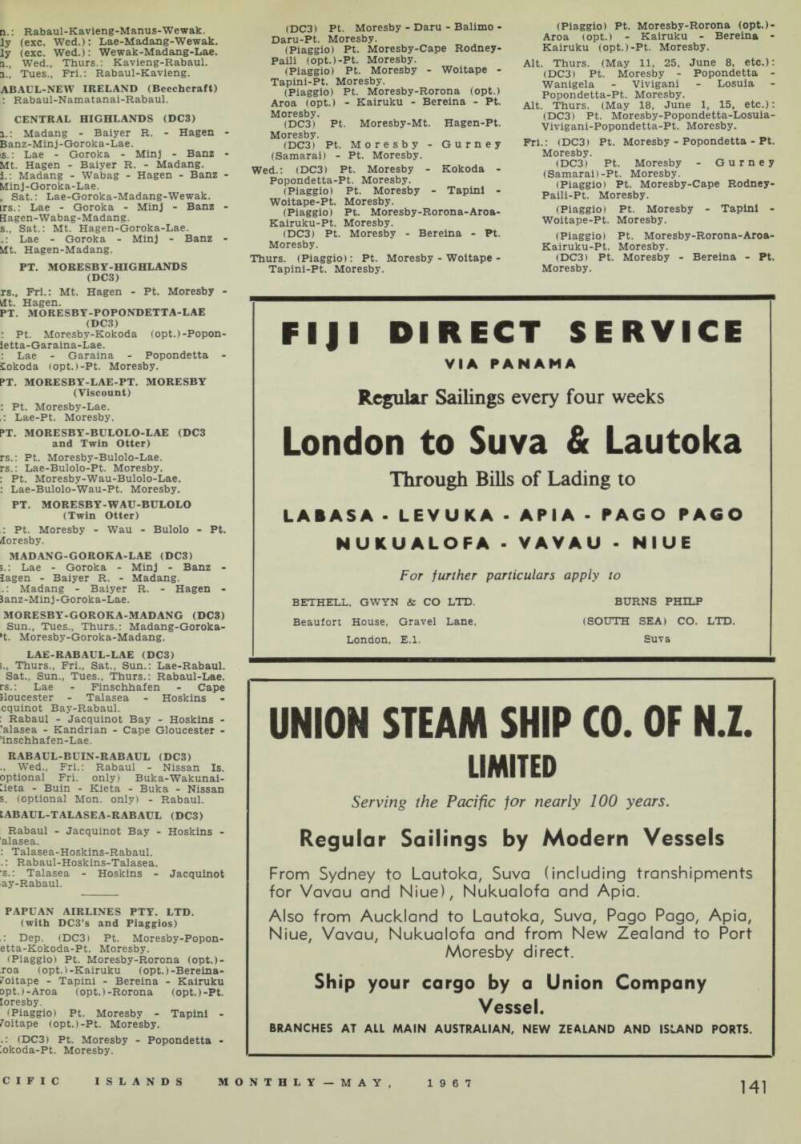 147
147 148
148 149
149 150
150 151
151 152
152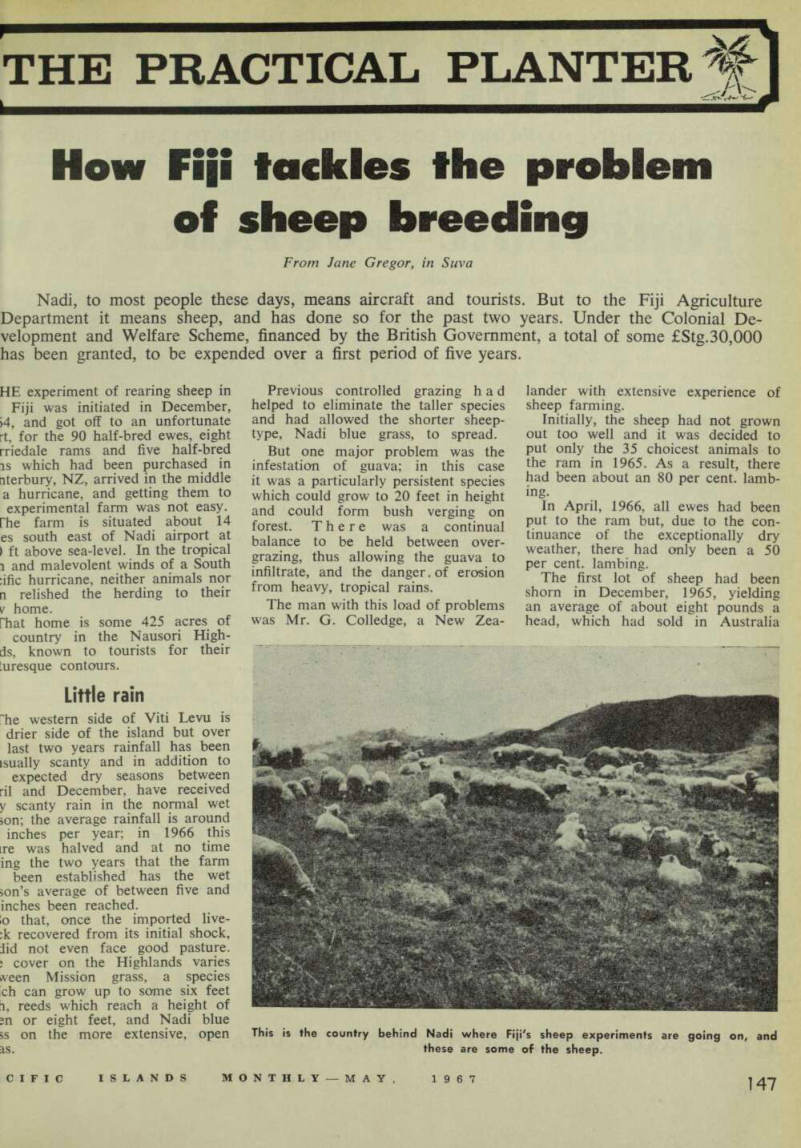 153
153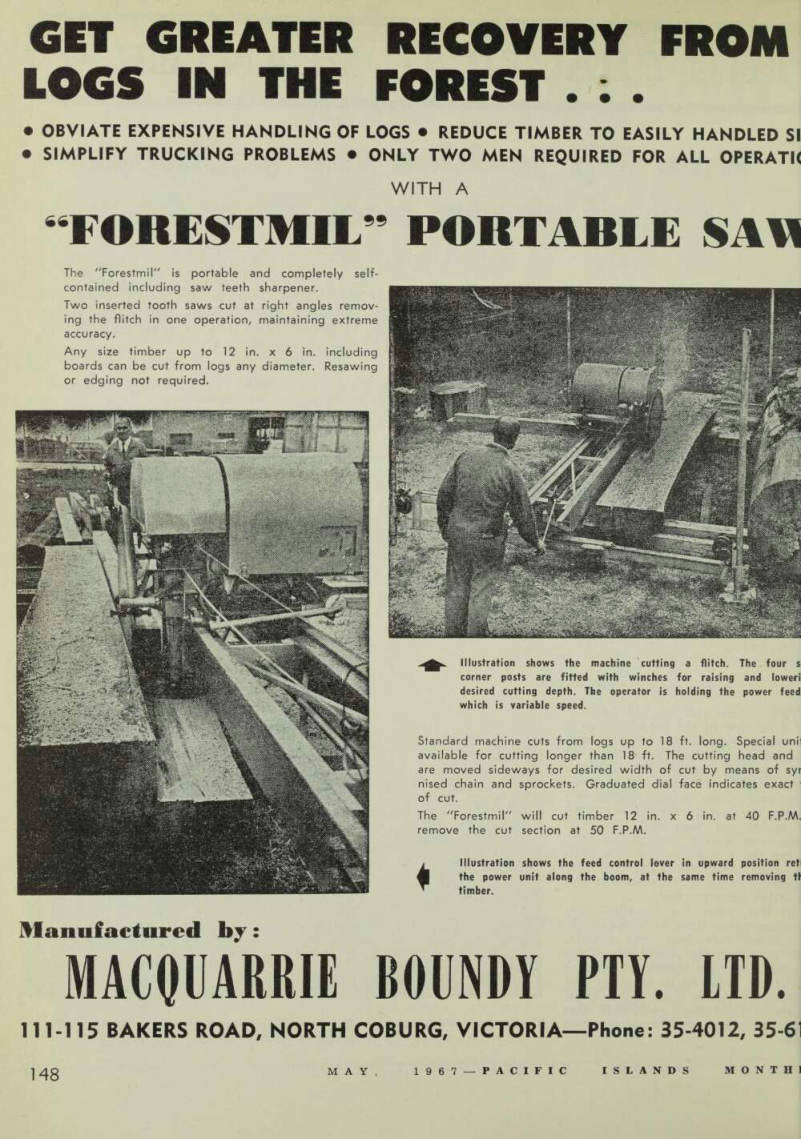 154
154 155
155 156
156 157
157 158
158 159
159 160
160 161
161 162
162 163
163 164
164 165
165 166
166 167
167 168
168